Cisco Unveils Motific AI Hub to Govern Fleet of Enterprise Assistants
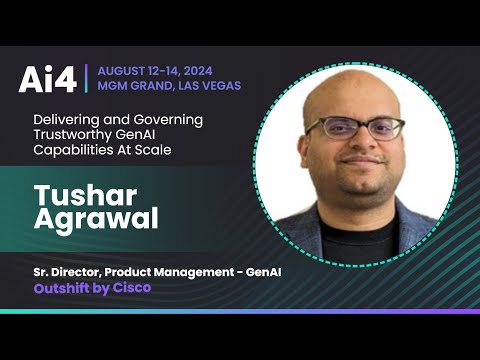
Delivering and Governing Trustworthy GenAI Capabilities At Scale with Outshift by Cisco — Ai4

Ai4

Enterprises must centralize model governance and data indexing under a unified hub to block non-compliant queries at the gateway before they consume expensive LLM compute.

AI-assisted summary of Delivering and Governing Trustworthy GenAI Capabilities At Scale with Outshift by Cisco — original source. Check the original for full context.

Source published:

Detailed notes

## Background Published on YouTube by the Ai4 channel on September 5, 2024, this presentation features Tushar Agrawal, Senior Director of Product Management for Generative AI at Outshift by Cisco. The session addresses the gap between enterprise urgency and readiness for generative AI, exploring how standardized architectures and governance tools can expedite the delivery of trustworthy AI capabilities across business functions.

## TL;DR Tushar Agrawal introduces Motific, Cisco Outshift's generative AI hub designed to scale custom assistant deployment while maintaining centralized enterprise governance. He outlines the challenges of managing multi-tool workflows, model costs, and security risks, proposing a unified platform that connects IT administrators, citizen developers, and business leaders. Through architectural walkthroughs and a live product demonstration, the talk illustrates practical capabilities such as recency-aware RAG with Mistral AI, pre-LLM policy filtering to block off-topic queries, and intelligence dashboards measuring concrete ROI and employee time saved.

## Atmosphere & style The presentation maintains a polished, authoritative, and pragmatic enterprise tech tone, balancing high-level organizational strategy with practical software workflows. Agrawal speaks with clear product leadership expertise, grounding the discussion in common pain points like data leakage, token overruns, and fragmented custom bots. Watching the session feels structured and efficient, moving seamlessly from strategic conceptual frameworks and audience polling to a tangible product interface demo that clearly illustrates governance mechanisms in action.

## Key takeaways - [00:04](https://www.youtube.com/watch?v=LEfKbM4zzwI&t=4s) Outshift serves as Cisco's incubation engine, productizing emerging frontiers like AI and quantum computing through Cisco Research and Cisco Investments. - [03:07](https://www.youtube.com/watch?v=LEfKbM4zzwI&t=187s) Cisco's overarching strategy for the AI era focuses on connecting and protecting AI workloads while leveraging acquisitions like Splunk for observability. - [04:00](https://www.youtube.com/watch?v=LEfKbM4zzwI&t=240s) Enterprise GenAI adoption rests on three hypotheses: step-function productivity gains, cross-tool workflow automation via custom assistants, and scaling to hundreds of governed tools. - [08:34](https://www.youtube.com/watch?v=LEfKbM4zzwI&t=514s) Building GenAI assistants on an isolated, bot-by-bot basis is unscalable due to fragmented integrations, governance risks, and lack of visibility. - [11:20](https://www.youtube.com/watch?v=LEfKbM4zzwI&t=680s) A centralized Generative AI Hub connects central IT, citizen developers, end users, and CXOs across data indexing, policy management, and ROI tracking. - [17:29](https://www.youtube.com/watch?v=LEfKbM4zzwI&t=1049s) Outshift launched Motific as Cisco's Generative AI hub to deliver Cisco-grade security guardrails, token budget controls, and 'what-if' model simulations. - [19:20](https://www.youtube.com/watch?v=LEfKbM4zzwI&t=1160s) Centralized model routing allows organizations to dynamically swap foundational models to optimize for accuracy, latency, and cost without modifying application code. - [20:00](https://www.youtube.com/watch?v=LEfKbM4zzwI&t=1200s) Motific enables recency-aware RAG pipelines, such as pairing with Mistral AI on Cisco Press archives to answer time-sensitive queries accurately. - [22:18](https://www.youtube.com/watch?v=LEfKbM4zzwI&t=1338s) The platform automates assistant creation by integrating corporate data repositories like SharePoint and exposing both developer APIs and out-of-the-box conversational interfaces. - [24:20](https://www.youtube.com/watch?v=LEfKbM4zzwI&t=1460s) Motific's pre-execution policy engine intercepts off-topic or restricted prompts at the gateway before they consume LLM resources, logging violations for auditing. - [25:45](https://www.youtube.com/watch?v=LEfKbM4zzwI&t=1545s) Motific Intelligence delivers telemetry dashboards that track model cost efficiency and quantify ROI through estimated hours saved.

## Detailed walkthrough ### [00:04](https://www.youtube.com/watch?v=LEfKbM4zzwI&t=4s) Introduction and Outshift’s Role at Cisco

Tushar Agrawal, Senior Director of Product Management for Generative AI at Cisco's incubation engine Outshift, opens the presentation with a brief background on his career. Prior to his current role at Cisco, he led product management at Amazon Web Services (AWS) and held similar leadership positions across several Bay Area startups. He frames the core mission of his talk: exploring how enterprises and organizations with sizable employee populations can think about generative AI from both delivery and governance standpoints as AI assistants scale.

Outshift operates as Cisco's internal incubation engine, granted the "license to do a lot of cool things." While the organization focuses broadly on emerging frontiers like AI and quantum computing, Agrawal clarifies that this session centers entirely on AI. Outshift's primary charter is to incubate and productize emerging technologies to expand Cisco into new markets and business domains.

```mermaid flowchart TD accTitle: Outshift Incubation Ecosystem subgraph Core["Outshift Incubation Core"] A["Emerging Tech Focus: AI & Quantum"] --> B["Productize New Offerings"] B --> C["Expand Cisco into New Markets"] end

subgraph Pillars["Supporting Pillars"] D["Cisco Research"] -- "Publishes GenAI, CV, & NLP Papers" --> Core E["Cisco Investments"] -- "Tracks & Partners with Startups" --> Core end ```

- **Academic & Industry Research:** Outshift houses Cisco Research, whose scientists frequently publish papers on generative AI, computer vision, and natural language processing (NLP) at major conferences. - **Venture Ecosystem:** Outshift works side-by-side with Cisco Investments to monitor startup activity, identifying complementary technologies and potential strategic partnerships.

---

[03:07](https://www.youtube.com/watch?v=LEfKbM4zzwI&t=187s) Cisco’s AI Strategy and the Core Hypotheses

Agrawal outlines Cisco’s high-level corporate strategy for the AI era: "connecting and protecting the AI era." This overarching vision spans building the underlying infrastructure that powers AI workloads, securing AI systems, using AI to simplify cybersecurity operations, and harnessing telemetry and observability data through recent strategic acquisitions like Splunk to drive better decision-making.

To frame the operational challenge, Agrawal polls the audience. The room reflects a strong cross-section of IT and Chief Data & Analytics Officer (CDAO) teams alongside line-of-business leaders (HR, Sales, Finance). He then presents three foundational hypotheses driving enterprise adoption:

1. **Step-Function Change in Productivity:** Generative AI is fundamentally different from past waves of automation and abstraction because systems can now "reason, create, and dynamically discover and interact." 2. **Work Automation via Custom Assistants:** Work rarely happens inside a single application; it crosses multiple disparate tools. For instance, sending a promotional email requires a human worker to context-switch across CRM platforms, order systems, and email dispatch tools. Custom assistants and intelligent agents act as the bridge to automate this cross-tool workflow. 3. **Mass Scale and Governance:** As custom assistants expand beyond a few company-wide bots to hundreds or thousands of specialized tools tailored to specific job functions, enterprises must govern and deliver them in a standardized, templatized fashion.

---

[08:34](https://www.youtube.com/watch?v=LEfKbM4zzwI&t=514s) Anatomy of a GenAI Assistant and the Need for a Hub

Building even a basic enterprise AI assistant requires navigating a complex web of technical dependencies. Currently, many organizations attempt this process on an isolated, assistant-by-assistant basis—an approach Agrawal stresses is completely unscalable for the enterprise.

```mermaid flowchart LR accTitle: Challenges in Building Enterprise GenAI Assistants subgraph Integration["1. Connectivity"] A["Model Access"] B["Data Sources<br/>(CRM, ERP, SharePoint)"] C["Identity & RBAC"] end

subgraph Trust["2. Governance & Safety"] D["Data Leakage Guards"] E["Topic Restrictions & Harms"] end

subgraph Value["3. Optimization & Value"] F["Prompt Tuning & Model Selection"] G["ROI & Time-Saved Metrics"] end

Integration --> Trust --> Value ```

To resolve these recurring bottlenecks, Agrawal proposes the deployment of a **Generative AI Hub**—a central platform uniting the key enterprise personas involved in AI creation, delivery, and consumption:

- **Central IT & Admin Teams:** Maintain custody over model providers, index shared corporate data sources once rather than redundantly across hundreds of bots, enforce global safety/security policies, and manage identity frameworks. - **Citizen Developers:** Non-technical business users across Marketing, HR, Sales, Legal, and IT who pick approved models and datasets to rapidly assemble and test custom assistants without writing complex code. - **End Users:** Consume the provisioned assistants in their daily workflows. - **CXOs & Business Leaders:** Gain macro-level visibility into audit logs, policy violations, total usage metrics, and concrete ROI (such as estimated hours saved).

---

[17:29](https://www.youtube.com/watch?v=LEfKbM4zzwI&t=1049s) Introducing Motific: Cisco’s Generative AI Hub

To operationalize this architecture, Cisco launched **Motific**, a generative AI hub developed by Outshift designed to orchestrate delivery and governance across all enterprise personas. Motific abstracts the underlying technical complexity, allowing central IT to set global guardrails while granting business teams the agility to build tailored tools.

```mermaid flowchart TD accTitle: Motific Platform Architecture subgraph Platform["Motific Generative AI Hub"] direction TB subgraph Connections["Integration Layer"] M["Leading Model Providers"] D["Enterprise Data Sources"] I["Identity Systems"] end

subgraph Guardrails["Cisco Security & Control Layer"] S["Adversarial & Hallucination Checks"] U["Malicious URL Filtering"] C["Token & Cost Controls"] A["Access Control"] end

subgraph Insights["Observability & Analytics"] T["Audit Trails & Policy Flags"] R["ROI & Time-Saved Tracking"] O["What-If Model Simulations"] end end

Connections --> Guardrails --> Insights ```

- **Cisco-Grade Guardrails:** Motific leverages Cisco's deep expertise in security and network telemetry to inspect model inputs and outputs for hallucination risk, adversarial prompt injection, malicious URLs, and unauthorized data access. - **Cost & Token Management:** Admins can enforce granular limits on token usage and operational spending across departments. - **Simulation & Optimization:** Beyond tracking active usage, the platform enables "what-if" simulations, allowing IT teams to test how switching underlying models or refining system prompts impacts response accuracy, latency, and cost efficiency.

[19:20](https://www.youtube.com/watch?v=LEfKbM4zzwI&t=1160s) Optimizing Model Selection, Latency, and Costs

Standardizing enterprise Generative AI workflows provides a centralized mechanism for evaluating and swapping models based on performance and budget. Instead of remaining locked into a single provider, organizations can evaluate trade-offs: "Model X versus Model Y right would it be more accurate for this use case would it be lower latency would it be lower cost." If end-user queries within a department can be answered just as effectively by a smaller, lower-cost model, administrators can seamlessly redirect that traffic rather than overpaying for heavyweight foundational models.

Having a standardized, centralized management layer eliminates the friction of modifying individual application codebases. IT and platform teams can reconfigure routing dynamically behind the scenes, ensuring the entire fleet of internal AI tools maintains peak cost efficiency and low latency without sacrificing the quality of responses.

[20:00](https://www.youtube.com/watch?v=LEfKbM4zzwI&t=1200s) Enterprise Use Cases and Recency-Aware RAG with Mistral AI

Since announcing Motific, Cisco's Outshift team has seen strong interest from organizations grappling with enterprise-scale GenAI adoption. The core challenge across enterprises is balancing the distinct priorities of IT teams, business units, and executive leadership within a unified, full-stack platform. Deployed use cases span public-facing website assistants, internal HR policy self-service, IT support desks, and sales lead acceleration—all relying on consistent guardrails, compliance controls, and unified auditing.

```mermaid flowchart TD accTitle: Motific Recency-Aware RAG Architecture subgraph Ingestion["Data Ingestion & Indexing"] A["Cisco Press & Cisco Blogs"] --> B["Motific Knowledge Base"] end subgraph QueryEngine["Query Understanding & RAG"] C["User Query\n(e.g., 'recent acquisitions')"] --> D["Recency & Intent Reasoning"] B --> E["Context Retrieval"] D --> E end subgraph Governance["Governance & Generation"] E --> F["Guardrails & Token Budget Checks"] F --> G["Mistral AI LLM"] G --> H["Audited, Recency-Accurate Answer"] end ```

A prime implementation involves connecting Motific to a Mistral AI model to process Cisco Press and Cisco blog archives. The challenge centered on handling time-sensitive queries, such as identifying "recent acquisitions made by Cisco." Motific's Retrieval-Augmented Generation (RAG) framework reasons over the intent and recency of user prompts, retrieving the freshest documents rather than returning obsolete historical announcements. Alongside high accuracy, Motific layered on strict enterprise controls before exposing the system to external audiences.

- **Adversarial and Toxic Content Filtering:** Intercepts harmful prompts and prevents brand damage before requests reach the model. - **Token Budgets:** Imposes hard usage ceilings to ensure individual users or automated scripts do not cause billing overruns. - **Comprehensive Monitoring:** Full auditing trails capture all interactions for governance and compliance.

[22:18](https://www.youtube.com/watch?v=LEfKbM4zzwI&t=1338s) Product Demo: Connecting Data Sources and Deploying Motific Assistants

The video transitions to a recorded walkthrough of the Motific platform interface. To instantiate a new assistant—termed a "motif"—the administrator configures usage limits and operational parameters to keep the model aligned with corporate governance. The assistant is then tethered to relevant organizational data by constructing an application knowledge base.

Motific natively ingests internal repositories, such as corporate SharePoint sites, alongside selected public-facing domains to enrich the model's factual context. Within a few clicks, the knowledge base is compiled and linked. The final deployment generates standard API endpoints ready for developer integration, while simultaneously offering an out-of-the-box conversational AI interface for business end users.

[24:20](https://www.youtube.com/watch?v=LEfKbM4zzwI&t=1460s) Policy Enforcement, Off-Topic Interception, and Audit Monitoring

The demonstration moves into Motific's automated policy engine, highlighting how governance rules intercept unauthorized interactions before they consume LLM resources. An off-topic detection policy assigned to a marketing motif is configured with a blocklist of forbidden words and categories. In the administrative monitoring console under "Track my user," the dashboard initially displays eight logged policy flags.

```mermaid flowchart LR accTitle: Motific Pre-Execution Policy Enforcement A["User Input Query"] --> B{"Motific Policy Engine"} B -- "Forbidden / Off-Topic" --> C["Query Blocked at Gateway\n(Traffic does NOT reach LLM)"] C --> D["Audit Log Updated\n(+1 Policy Flag)"] C --> E["Standard Policy Violation Response\nShown to User"] B -- "Compliant" --> F["Forwarded to LLM"] ```

When an operator tests the assistant in the sandbox with an off-topic query—"Can you recommend a good shopping place"—the policy intercepts the prompt immediately: - The request is completely blocked at the gateway, meaning "the traffic doesn't reach the LLM." - The monitoring panel instantly updates from eight to nine recorded policy flags. - When an end user attempts a restricted prompt in the live interface, such as "Can you point me to a good online gambling casino," Motific suppresses the model output and returns a standardized enterprise message: *"I'm sorry, but this query is not in line with your organization's policies. Please try again."*

[25:45](https://www.youtube.com/watch?v=LEfKbM4zzwI&t=1545s) Motific Intelligence: Measuring ROI, Time Saved, and Model Optimization

The final segment of the platform demo focuses on Motific's built-in Intelligence and analytics suite. Navigating to the Intelligence section reveals a fleet overview of all active motifs, populated with usage statistics and operational telemetry. Drilling into an individual motif provides deep business intelligence regarding actual productivity gains and compute efficiency.

The overview tracks total prompt counts, per-prompt task usage, and quantifiable time-saving metrics that evaluate how effectively the assistant aids staff. A dedicated "time-saving dashboard" models the operational hours saved by generating materials through Motific compared to authoring complex documents from scratch. In parallel, optimization metrics highlight which underlying GenAI models deliver the highest quality at the lowest cost, guiding future infrastructure routing decisions.

[26:40](https://www.youtube.com/watch?v=LEfKbM4zzwI&t=1600s) Wrap-Up, Live Demonstrations, and Free Access

Following the video, Tushar Agrawal returns to address the audience, apologizing for the brief audio hiccup at the start of the recording. He emphasizes that the recorded snippet is only a preview of the platform's broader feature set.

He directs attendees to visit Outshift by Cisco at Booth Number 220 for hands-on, full-fledged live demonstrations. Agrawal notes that Motific can be evaluated for free immediately via a quick QR code scan and simple email sign-up, inviting attendees to connect on-site for technical Q&A and architecture discussions.

## Notable quotes > [00:04](https://www.youtube.com/watch?v=LEfKbM4zzwI&t=4s) license to do a lot of cool things — Tushar Agrawal

> [03:07](https://www.youtube.com/watch?v=LEfKbM4zzwI&t=187s) connecting and protecting the AI era — Tushar Agrawal

> [03:07](https://www.youtube.com/watch?v=LEfKbM4zzwI&t=187s) reason, create, and dynamically discover and interact — Tushar Agrawal

> [19:20](https://www.youtube.com/watch?v=LEfKbM4zzwI&t=1160s) Model X versus Model Y right would it be more accurate for this use case would it be lower latency would it be lower cost — Tushar Agrawal

> [20:00](https://www.youtube.com/watch?v=LEfKbM4zzwI&t=1200s) recent acquisitions made by Cisco — Tushar Agrawal

> [24:20](https://www.youtube.com/watch?v=LEfKbM4zzwI&t=1460s) Track my user

> [24:20](https://www.youtube.com/watch?v=LEfKbM4zzwI&t=1460s) Can you recommend a good shopping place

> [24:20](https://www.youtube.com/watch?v=LEfKbM4zzwI&t=1460s) the traffic doesn't reach the LLM

> [24:20](https://www.youtube.com/watch?v=LEfKbM4zzwI&t=1460s) Can you point me to a good online gambling casino

> [24:20](https://www.youtube.com/watch?v=LEfKbM4zzwI&t=1460s) I'm sorry, but this query is not in line with your organization's policies. Please try again.

## Mentioned Tushar Agrawal, Cisco, Outshift, Amazon Web Services (AWS), Cisco Research, Cisco Investments, Splunk, Motific, Mistral AI, Cisco Press, Cisco Blogs, SharePoint

## Video description Tushar Agrawal, Sr. Director, Product Management - GenAI, Outshift by Cisco

Abstract: Business leaders recognize that Generative AI is causing a fundamental shift in organizations, by improving employee productivity, reducing operational costs, and driving superior customer experiences. While 97% of companies feel an increased urgency to deploy GenAI technologies, just 14% feel ready to integrate AI successfully into their businesses, per Cisco's latest AI Readiness Index. Transitioning GenAI assistants from concept to production at scale demands a meticulous focus on safety, trust, compliance, security, cost, privacy, and ROI considerations. Further, utilization of organizational data with GenAI models is imperative to extract valuable business insights. This presentation delves into how IT and business function teams can expedite the delivery of trustworthy GenAI capabilities through standardized, scalable tools and architectures within their organizations

[Source](https://www.youtube.com/watch?v=LEfKbM4zzwI)

中文简报

思科推出 Motific AI 枢纽,统一治理企业级助手群 企业必须在统一枢纽下集中进行模型治理与数据索引,以便在网关处拦截违规查询,避免其消耗昂贵的大语言模型算力。 Tushar Agrawal 介绍了 Cisco Outshift 推出的生成式 AI 枢纽 Motific,该平台旨在扩展定制助手的部署规模,同时维持集中的企业治理。他概述了管理多工具工作流、模型成本以及安全风险所面临的挑战,并提出了一个连接 IT 管理员、平民开发者与业务领导者的统一平台。通过架构解析与现场产品演示,演讲展示了其实用能力,例如结合 Mistral AI 实现具备时效感知能力的 RAG、用于拦截离题查询的 LLM 前置策略过滤,以及用于衡量具体投资回报率与员工节省时间的智能仪表板。 思科创新孵化引擎 Outshift 阐释了企业规模化落地生成式 AI 的核心策略,指出随着定制助手数量从几个扩展至数百个,企业亟需通过集中化的生成式 AI Hub 来解决碎片化集成与治理难题。 (3:07) Outshift 正式推出生成式 AI 中心平台 Motific,该平台提供思科级别的安全防护护栏、Token 预算控制以及“假设”模型模拟功能,以保障企业级合规性并优化 ROI。 (17:29) 通过集中式模型路由机制,企业能够在不修改底层应用代码的前提下,动态切换不同的大语言模型,从而在准确率、延迟与运营成本之间实现最佳权衡。 (19:20) 现场演示展示了 Motific 结合 Mistral AI 打造的时效感知 RAG 架构,以及在网关层自动拦截违规/离题请求并实时追踪运营节约工时的全套治理与分析功能。 (20:00)

Reading summary

Tushar Agrawal, Senior Director of Product Management at Cisco's Outshift, argues that scaling enterprise generative AI requires shifting away from isolated bot development toward a centralized hub that unifies cross-tool workflows, IT guardrails, and dynamic model optimization. The Bottlenecks of Enterprise Assistant Sprawl (8:34) Agrawal outlines three core hypotheses driving enterprise generative AI adoption: models now possess dynamic reasoning capabilities, work execution requires bridging fragmented applications such as CRM and order dispatch systems, and internal tool adoption is expanding from a handful of broad bots to thousands of role-specific assistants. However, building assistants on an isolated, bot-by-bot basis introduces severe operational friction, forcing teams into redundant data indexing, inconsistent access controls, and fragmented governance. To overcome these hurdles, Agrawal proposes centralizing generative AI operations within a shared hub. This architecture consolidates custody over model providers and corporate data sources under central IT, while enabling non-technical citizen developers across HR, Sales, Legal, and Marketing to assemble compliant assistants without writing bespoke code. Gateway Governance and Pre-Execution Policy Controls (17:29) To implement centralized management, Outshift introduced Motific, a generative AI hub designed to inspect interactions before requests consume compute resources. Leveraging Cisco's telemetry and security background, the platform enforces guardrails against hallucination risks, adversarial prompt injections, malicious URLs, and unauthorized data leakage, while allowing administrators to impose departmental token budgets. Platform demonstration data illustrates that Motific applies pre-execution filtering at the API gateway rather than evaluating queries post-generation. When tested with restricted inputs—such as shopping or online gambling queries—the policy engine blocks the request before it reaches the underlying large language model. This mechanism records an immediate policy violation in administrative audit logs, suppresses downstream compute costs, and returns an automated compliance notification to the user. Dynamic Model Routing and Recency-Aware Retrieval (19:20) Decoupling assistants from hard-coded application logic enables organizations to optimize for cost, latency, and output quality across multiple foundational models. According to Agrawal, an abstraction layer allows IT administrators to dynamically evaluate trade-offs between different models and redirect departmental traffic to smaller, lower-cost engines when heavyweight models are unnecessary, avoiding vendor lock-in without requiring application-level code modifications. This architecture is highlighted in a deployment pairing Motific with a Mistral AI model over Cisco Press and blog archives. To resolve factual errors in time-sensitive inquiries—such as identifying recent corporate acquisitions—Motific's retrieval-augmented generation (RAG) framework reasons over the recency and intent of prompts. The system prioritizes current documentation over historical records while continuing to enforce toxic content filters and usage ceilings. Fleet Telemetry and Quantifying Business Return (25:45) Beyond security guardrails, enterprise scale demands observability into usage and realized productivity. Motific's analytics suite aggregates fleet-level operational telemetry across all deployed assistants—termed 'motifs'—tracking total prompt volumes, per-task adoption, and policy infractions across departments. To justify investment to executive leadership, the platform incorporates a time-saving dashboard that models labor hours conserved by comparing automated generation against manual composition benchmarks. Additionally, the system provides administrative 'what-if' simulation environments, allowing platform teams to evaluate how modifying system prompts or swapping model providers alters latency, operational cost, and response precision before production rollout. Outshift presents Motific as a unified operational layer balancing central IT control with departmental self-service. While the platform demonstrates automated enforcement and synthetic simulation capabilities, its broader organizational value hinges on whether estimated time-saved metrics translate into verifiable productivity gains in enterprise production environments.

精炼阅读摘要

Cisco旗下孵化引擎Outshift的产品管理高级总监Tushar Agrawal指出,企业生成式AI正在从分散的单点工具转向数以千计的定制助手,必须通过集中的生成式AI枢纽实现标准化交付与安全治理。 企业AI采用假设与规模化瓶颈 (3:07) Agrawal提出驱动企业采用生成式AI的三项核心假设:首先,该技术具备推理、创造与动态交互能力,带来了生产力的跃升;其次,真实工作往往跨越CRM、ERP及邮件等多个分散系统,定制助手与智能体能充当跨工具自动化的桥梁;最后,随着助手从少数全局工具扩张为部门专用的海量工具,企业必须以标准化和模板化方式进行治理与交付。现实中,企业为每个助手单独处理模型接入、数据同步、身份控制与安全合规的孤岛式开发方式,已被证明无法满足企业级规模化需求。 AI Hub模式协调关键企业角色 (8:34) 为消除重复建设瓶颈,Agrawal倡导部署集中式生成式AI枢纽。该枢纽统一连接企业内部的核心角色:中央IT与管理团队负责统一对接模型供应商、对企业共享数据源进行单次索引、强制执行全局安全策略并管理身份体系;营销、人力资源、销售及法务等业务部门的平民开发者无需复杂编码,即可直接选取合规的模型与数据集快速拼装助手;最终用户在日常业务中调用工具;高管层则通过集中审计日志、策略违规记录及工时节约指标监控宏观ROI与合规状态。 Motific平台的安全防护与动态路由优化 (17:29) Cisco Outshift推出的Motific平台将上述架构产品化。平台结合Cisco在安全与网络遥测方面的积累,在网关层提供对抗性提示词注入拦截、幻觉检测、恶意URL过滤以及部门级Token预算上限控制。此外,集中化管理层允许IT团队进行假设模拟,评估不同模型的准确度、延迟与成本权衡;若轻量低成本模型足以满足特定场景,管理员无需改动应用代码即可动态切换流量路由,从而避免对重型基础模型的过度支出。 时效感知RAG与网关层前置策略拦截 (20:00) 在实际部署中,Motific支持将SharePoint等内部知识库与公开域名结合。针对Cisco新闻与博客档案处理,Motific结合Mistral AI模型实现了时效感知检索增强生成(RAG),可根据用户意图优先检索最新文档(如最新收购事项),避免返回过时的历史公告。在策略执行方面,系统通过网关拦截违规与偏离主题的输入;现场演示显示,用户在沙箱输入推荐购物场所或博彩等受限请求时,流量在到达大语言模型前即被阻断,监控面板的违规标记立即累加,并向用户返回标准合规提示,从而节省模型算力消耗并控制品牌风险。 效能洞察与工时ROI量化评估 (25:45) 平台内置的Intelligence分析套件为企业管理者提供对全部活动助手的遥测监控。控制台不仅展示总提示词量和任务使用分布,还通过专门的节约时间仪表板,将AI生成内容的耗时与从零编写复杂文档的基准耗时进行对比,量化估算为员工节省的实际工时。同时,系统持续分析底层模型的成本与质量比,为后续的基础设施投资和模型调度决策提供量化依据。 Agrawal认为生成式AI的大规模落地依赖于将安全合规、数据接入与模型路由抽象至统一的管控枢纽;本次演讲展示了Motific在时效性检索与网关拦截等方面的功能,但企业在跨多部门大规模推广时仍需持续验证其ROI估算模型的准确性与实际业务适配度。

Detailed notes — zh

## Background 该视频由行业会议组织者 Ai4 于 2024 年 9 月 5 日发布在 YouTube 上,演讲嘉宾为思科(Cisco)新兴技术孵化部门 Outshift 的生成式 AI 产品管理高级总监图沙尔·阿格拉瓦尔(Tushar Agrawal)。视频简介指出,尽管高达 97% 的企业迫切希望部署生成式 AI,但仅有 14% 认为自身已准备就绪,本场演讲重点分享了企业如何借助标准化且可扩展的工具和架构,在兼顾安全、合规与 ROI 的前提下规模化交付可信的生成式 AI 能力。 ## TL;DR Tushar Agrawal 首先剖析了生成式 AI 正在由定制助手和智能体驱动跨系统工作流变革,但企业在面临从几个原型扩展到成百上千个助手时,往往遭遇数据越权、安全合规及成本失控等落地痛点。为此,他提出了涵盖连接、全面控制、仿真优化与价值度量的企业级统一中枢(GenAI Hub)架构,以赋能 IT、平民开发者与业务层的高效协同。随后,演讲正式发布了思科孵化的 Motific 平台,并通过实操演示展示了多源知识库接入、端到端助手发布、偏离主题与违禁词的毫秒级网关拦截,以及用于量化工时节省和模型效能的智能洞察仪表盘。 ## Atmosphere & style 整场演讲呈现出典型的大厂企业级产品发布基调,风格沉稳专业且结构严密,体现了思科在网络安全与基础设施领域一贯的严谨与务实。演讲者虽在开场遭遇轻微的音频调试插曲,但整体节奏把控自如,从宏观趋势调研层层递进到具体的痛点拆解与中枢架构设计。实机演示环节流畅直观,尤其是针对偏离主题和赌博违规查询的实时网关拦截与计数器刷新,极具说服力与现场感,营造出一种技术方案已切实成熟、随时可投入生产运行的踏实感。 ## Key takeaways - [00:04](https://www.youtube.com/watch?v=LEfKbM4zzwI&t=4s) 思科 Outshift 聚焦 AI 与量子计算等颠覆性前沿技术,旨在通过新兴技术的商业化落地推动思科“连接并守护 AI 时代”的战略愿景。 - [04:19](https://www.youtube.com/watch?v=LEfKbM4zzwI&t=259s) 生成式 AI 与过去数十年的确定性自动化不同,通过系统首次具备的推理与动态创造能力,为企业生产力带来了阶跃式变革。 - [04:19](https://www.youtube.com/watch?v=LEfKbM4zzwI&t=259s) 定制化 AI 助手与智能体(Agents)将成为企业打破 CRM、ERP 和邮件等应用孤岛、实现跨系统端到端自动化工作流的核心载体。 - [08:34](https://www.youtube.com/watch?v=LEfKbM4zzwI&t=514s) 随着定制助手在组织内爆发式扩展至成百上千个,分散孤立的烟囱式开发模式不可持续,企业亟需标准化的集中交付与合规治理框架。 - [08:34](https://www.youtube.com/watch?v=LEfKbM4zzwI&t=514s) 企业级 AI 助手落地面临五大核心挑战:多模型连接、多源数据权限隔离、安全合规防范、提示词与模型持续优化、以及投资回报率(ROI)量化。 - [11:15](https://www.youtube.com/watch?v=LEfKbM4zzwI&t=675s) 企业级“生成式 AI 统一中枢”(GenAI Hub)架构通过连接、控制、优化与度量四大支柱,协同打通 IT 管理员、平民开发者、终端员工与 CXO 决策层。 - [17:29](https://www.youtube.com/watch?v=LEfKbM4zzwI&t=1049s) 思科推出的 Motific 平台整合了网络安全与全栈可观测性能力,为企业提供防范对抗攻击、幻觉检测、敏感内容过滤及 Token 预算控制等全方位护栏。 - [19:20](https://www.youtube.com/watch?v=LEfKbM4zzwI&t=1160s) 集中化的 Hub 架构支持企业根据任务类型在不同 LLM 间灵活评测与无缝切换,在不重构底层业务逻辑的前提下平衡性能、响应延迟与推理成本。 - [21:04](https://www.youtube.com/watch?v=LEfKbM4zzwI&t=1264s) 针对 RAG 系统的时效性推理(如识别“近期动态”等敏感语义),Motific 提供了优化的检索流程并结合严格的注入防护与审计跟踪。 - [22:18](https://www.youtube.com/watch?v=LEfKbM4zzwI&t=1338s) Motific 支持快速接入企业内部(如 SharePoint)与外部多源数据构建知识库,并能一键同步生成开发者 API 端点及开箱即用的业务端助手界面。 - [24:21](https://www.youtube.com/watch?v=LEfKbM4zzwI&t=1461s) 偏离主题检测与违禁词策略能够在网关层实时阻断非合规请求,避免流量触达底层 LLM,在确保合规的同时有效节省 Token 算力成本。 - [25:47](https://www.youtube.com/watch?v=LEfKbM4zzwI&t=1547s) Motific 的“智能洞察”(Intelligence)模块通过工时节省仪表盘直观量化业务价值,为管理层核算生成式 AI 投资回报率提供了清晰的数据支撑。 ## Detailed walkthrough ### [00:04](https://www.youtube.com/watch?v=LEfKbM4zzwI&t=4s) 演讲者背景与 Outshift by Cisco 的孵化使命 来自思科(Cisco)新兴技术孵化部门 Outshift 的生成式 AI 产品管理高级总监图沙尔·阿格拉瓦尔(Tushar Agrawal)开启了本次演讲。在加入思科之前,Tushar 曾在亚马逊云科技(AWS)带领产品管理团队,并曾负责湾区多家初创企业的产品战略。他明确了本场分享的核心议题:在生成式 AI 助手和各类智能体应用被大规模采纳的背景下,大中型企业应当如何在统一的交付与治理框架下思考生成式 AI 的落地,并将在最后正式介绍思科为此推出的全新产品与实际演示。 Outshift 作为思科内部的创新引擎,拥有探索前沿技术的专属授权,其战略重心主要聚焦于两大颠覆性领域:人工智能(AI)与量子计算(Quantum)。虽然量子网络技术前景广阔,但本次分享完全聚焦于 AI 领域。Outshift 的核心使命是利用新兴技术实现新型软件产品的商业化,带领思科拓展全新业务与市场版图。此外,Outshift 旗下还囊括了思科研究院(Cisco Research),其研究人员在顶级学术与行业会议上发表了大量关于生成式 AI、计算机视觉、自然语言处理(NLP)的前沿论文;同时,团队与思科投资(Cisco Investments)紧密协同,追踪前沿初创动态并挖掘潜在的合作与生态协同机会。 从更高维度来看,思科的整体 AI 战略核心是“连接并守护 AI 时代”(Connecting and protecting the AI era),其主要业务支柱涵盖: - **基础设施与安全**:为客户构建驱动 AI 的底层基础设施,践行“为 AI 提供安全保障”(Security for AI)以及“利用 AI 简化并赋能安全”(AI for Security)。 - **可观测性与遥测数据**:结合近期对 Splunk 的收购,充分释放企业遥测数据的分析价值,赋能智能化业务决策。 - **软件与服务**:打造释放员工生产力的前沿软件平台,辅以全套专业服务将整体架构有机串联。 --- ### [04:19](https://www.youtube.com/watch?v=LEfKbM4zzwI&t=259s) 生成式 AI 重构工作流的三大核心假设 在探讨技术方案之前,Tushar 首先与现场观众进行了互动调研,了解参会人员中 IT 交付团队(IT、CDAO 团队)与业务部门(如人力资源、销售、财务等业务线)的分布情况,并随即提出了关于生成式 AI 发展趋势的三大核心假设。 第一项假设是:生成式 AI 承诺带来人类创造力与企业生产力的“阶跃式变革”(Step function change)。与过去长达数十年基于确定性规则的自动化和技术抽象不同,生成式 AI 赋予了计算机系统史上首次具备的推理能力、创造能力以及动态发现与交互能力。 第二项假设指出:定制化 AI 助手(Custom Assistants)与智能体(Agents)将成为企业工作自动化的绝对核心载体。当被问及“企业已经拥有海量现有系统,为何还需要定制助手”时,Tushar 指出了核心洞察:现代企业的实际工作绝非局限于单一系统内,而是广泛横跨在 CRM、订单管理、电子邮件等多个割裂的应用与工具之间。例如,营销人员发送一封精准促销邮件往往需要手动串联客户数据、订单记录与邮件平台。定制助手与智能体的核心价值就在于打通应用孤岛,自动化跨系统的端到端工作流。 ```mermaid flowchart LR accTitle: Cross-application Task Automation Flow subgraph S1["传统人工工作流"] A1["CRM 客户画像"] --> B1["ERP / 订单账本"] B1 --> C1["邮件营销工具"] C1 --> D1["手动完成任务"] end subgraph S2["生成式 AI 智能体工作流"] A2["统一自然语言指令"] --> B2["定制助手 / Agent"] B2 --> C2["跨系统自动调度与协同"] C2 --> D2["自动执行端到端业务"] end ``` 第三项假设则是规模化的必然性:如果定制助手能够赋能不同岗位的员工,那么企业势必将在组织内大规模部署和治理数百乃至数千个定制助手,而不再仅仅局限于全公司统一的一两个通用聊天机器人。企业必须提前思考:当成百上千个 AI 助手在企业内遍地开花时,IT 部门该如何进行标准化、模板化的统一纳管与合规治理? --- ### [08:34](https://www.youtube.com/watch?v=LEfKbM4zzwI&t=514s) 构建企业级定制 AI 助手的核心组件与落地痛点 在企业中从零打造一个看似简单的定制生成式 AI 助手,背后涉及复杂的技术连接与治理链条。若缺乏集中化平台,业务团队在逐个构建助手时将反复遭遇严重的效率瓶颈与合规风险: 1. **多模型连接与实验**:业务人员需要便捷接入不同大语言模型(LLM)以对比评估性能与效果。 2. **多源企业数据接入与权限隔离**:助手需要与 CRM、ERP、各类数据库和 SharePoint 等数据源打通。如果每个助手都单独走一遍数据连接与索引流程,不仅极其冗余,还极易引发越权访问风险——必须确保助手严格遵循数据访问控制,绝不向无权限员工泄露敏感数据。 3. **风险防护与合规控制**:助手生成的回答必须符合企业安全合规基线,防止敏感数据外泄(Data Leakage)、有害输出,确保模型只回答限定的业务主题,拒绝对未授权或高风险话题发散。 4. **持续优化与调优**:系统需要具备洞察用户交互意图、评估不同新模型、基于企业数据进行微调以及优化系统提示词(System Prompts)的能力,以达到业务所需的准确率。 5. **投资回报率(ROI)量化**:向业务决策层提供可视化的价值指标,自动化统计工时节省、活跃用户分布以及助手运行效率。 Tushar 强调,目前许多企业仍停留在“逐个助手单独开发与适配”的低效阶段,这种烟囱式的构建模式根本无法支撑全企业范围的规模化落地,亟需一种标准化的集中式交付方式。 --- ### [11:15](https://www.youtube.com/watch?v=LEfKbM4zzwI&t=675s) 生成式 AI 统一管理中枢(GenAI Hub)架构与多角色协同 为解决规模化交付与治理的难题,Tushar 提出了构建企业级“生成式 AI 统一中枢”(Generative AI Hub)的解决方案架构。该中枢旨在为企业内部四大关键角色提供统一的协作平台与能力支撑: ```mermaid flowchart TD accTitle: Enterprise Generative AI Hub Architecture subgraph Personas["企业协同角色"] P1["IT 管理员"] P2["平民开发者 (业务人员)"] P3["终端员工 / 业务用户"] P4["CXO / 业务决策层"] end subgraph Hub["企业 GenAI 统一中枢 (GenAI Hub)"] C1["统一连接层\n(模型 / 数据源 / 身份认证)"] C2["全生命周期控制策略\n(安全基线 / 内容合规 / 成本限制)"] C3["优化与模拟引擎\n(提示词调优 / 模型对比仿真)"] C4["审计遥测与 ROI 分析\n(工时节省 / 调用审计 / 策略监控)"] end P1 -->|"配置模型沙箱、全局策略与数据源"| C1 P1 -->|"制定全局安全防护"| C2 P2 -->|"选择数据、模型与应用级策略,发布助手"| C1 P2 -->|"在测试环境中验证优化"| C3 P3 -->|"安全合规地消费定制助手"| Hub Hub -->|"聚合审计轨迹与工时价值报告"| P4 ``` 该统一中枢涵盖了四大核心能力支柱: - **无缝连接能力**:集中式打通底层模型提供商、企业数据源及统一身份验证体系(SSO/IAM),避免重复索引与权限配置失误。 - **全面控制与防护(Controls)**:在用户与模型、以及智能体与智能体(Model-to-Model)的交互链路上,全方位注入安全审查、合规拦截与成本配额策略。 - **自动化优化洞察**:支持运行假设模拟(What-if Simulation),测试更换模型或调整提示词后的准确度与成本表现。 - **价值度量体系**:提供调用量、工时节省估算与实际收益报表,为管理层持续投入提供数据支撑。 在此协作流中,IT 管理员负责集约化采购并配置可用模型沙箱、维护全局数据源和身份系统,确保全局合规基线;各业务线(市场、销售、法务、HR 等)的“平民开发者”(Citizen Developers)无需具备高深的技术编码能力,即可直接选用经授权的数据集与模型,快速组装、测试并上线部门专属助手;终端用户通过统一入口顺畅使用,而背后的所有调用行为均沉淀为审计轨迹与 ROI 分析数据,直接反馈给 CXO 决策层。 --- ### [17:29](https://www.youtube.com/watch?v=LEfKbM4zzwI&t=1049s) 思科 Motific 平台:规模化可信生成式 AI 交付与治理 基于上述产品理念,思科正式推出了其企业级生成式 AI 枢纽产品——**Motific**(Outshift by Cisco 孵化)。Motific 旨在为企业提供统一标准化的 SaaS/平台系统,连接不同角色并加速可信 AI 应用的规模化落地。 Motific 深度整合了思科在网络安全与全栈可观测性领域的深厚积累,提供了一系列开箱即用的企业级控制与分析能力: - **安全与合规防护网**:提供多维度的防护检测,包括对抗性攻击(Adversarial Attacks)防御、模型幻觉(Hallucination)检测、敏感话题合规过滤、恶意 URL 拦截与精细化访问控制。 - **资源与成本治理**:支持在全局或应用层级对 Token 消耗量、调用并发度与资金预算实施刚性配额控制。 - **全链路审计与洞察**:为 IT 管理员提供完整的操作与交互审计轨迹,清晰呈现哪些安全策略被触发、终端用户的实际意图分布以及各业务场景下的工时节省估算。 - **假设分析与优化模拟**:基于真实用户请求分布,系统可自动进行“What-if”模拟仿真,辅助团队评估更换不同模型或调整提示词结构后的准确率与成本变化,实现助手效能的持续调优。 ### [19:20](https://www.youtube.com/watch?v=LEfKbM4zzwI&t=1160s) 集中化模型评估与企业级 GenAI 用例拓展 在生成式 AI 的落地过程中,集中化管理架构为企业提供了极大的灵活性与决策优势。当评估不同的大语言模型(例如 Model X 与 Model Y)时,企业需要综合权衡特定用例下的准确率、响应延迟以及推理成本。如果监控发现大量用户提出的都是基础或特定类型的问题,完全可以由成本更低廉的模型高效承载;得益于标准化和集中化的 Hub 架构,企业 IT 团队能够迅速完成模型切换,而无需重构底层业务逻辑。 自 Outshift 发布 Motific 平台以来,企业客户展现出了极高的兴趣与采用率。该平台独特之处在于解决了规模化落地的难题,在同一个全栈式平台中完美平衡了 IT 团队、业务职能部门以及管理层之间的多维诉求。目前落地的业务用例十分广泛: - **企业官网智能助手**:可直接嵌入官方网站,基于公开内容准确回答访客咨询,同时内置完备的访问控制、标准化合规审计与实时监控能力。 - **内部职能支持**:涵盖人力资源(HR)政策问答、IT 运维支持与工单排障、销售线索挖掘等多元场景。 ```mermaid flowchart TD accTitle: Motific 架构与用例流转图 accDescr: 展示 Motific 平台如何统一接入数据、配置策略并向业务端输出 API 与助手 subgraph DataAndModels["数据与模型层"] M1["大语言模型\n(Mistral AI / OpenAI 等)"] D1["内部/外部知识库\n(SharePoint / 官方博客等)"] end subgraph MotificCore["Motific 治理与编排核心"] G1["安全护栏与策略引擎\n(偏离检测/违禁词/Token预算)"] R1["RAG 检索与推理引擎\n(时效性感知与语义检索)"] M2["智能监控与审计\n(违规拦截/工时节省/BI看板)"] end subgraph DeliveryLayer["业务交付与接入端"] A1["开发集成 (API Endpoints)"] A2["开箱即用 AI 助手 (业务端用户)"] end DataAndModels --> MotificCore MotificCore --> DeliveryLayer ``` --- ### [21:04](https://www.youtube.com/watch?v=LEfKbM4zzwI&t=1264s) 实际客户案例:结合 Mistral AI 与 RAG 系统的时效性与安全护栏 演讲者分享了一个具体的客户落地案例。在该场景中,Motific 协助客户快速连接并集成了 Mistral AI 大模型,同时对 Cisco Press 与 Cisco 官方博客的所有知识资产进行了统一索引。 该案例面临的核心技术挑战之一是检索增强生成(RAG)系统对“时效性”的理解与推理。例如当用户提问“思科近期有哪些收购动作?”("What are some of the recent acquisitions made by Cisco?")时,系统必须敏锐识别出 "recent"(近期)这一时间敏感词,并在检索与生成阶段精准匹配最新动态。通过优化 RAG 流程,团队不仅实现了极高的回答准确率,还针对面向外部利益相关者的场景构建了全套安全防护体系: - **对抗性与有害内容防护**:有效防范对抗性 Prompt 注入与有害毒性内容(toxic content)。 - **成本与预算控制**:引入细粒度的 Token 配额与预算限制,防止单个用户异常调用导致账单超支。 - **全链路监控审计**:对系统进出的所有交互进行端到端的可追溯审计。 --- ### [22:18](https://www.youtube.com/watch?v=LEfKbM4zzwI&t=1338s) Motific 产品演示:知识库连接与端到端助手构建 在短暂调试现场音频后,演讲进入了 Motific 的实际操作演示环节。演示首先展示了如何为新建的 AI 应用实例(Motif)配置运行准则与使用限制,确保模型在合规框架内运作。 随后是知识库的连接与构建: - **多源数据整合**:用户只需点选几下,即可无缝接入企业内部数据源(如 SharePoint 知识库)以及精选的外部公开网站,迅速丰富模型的专业上下文。 - **一键发布交付**:知识库创建完成后,系统即刻生成完整的端到端产品。交付物既包括便于开发人员快速集成的 API 端点(API Endpoints),也包含直接面向业务人员开箱即用的 AI 助手界面,全面实现可定制、合规且强大的企业级部署。 --- ### [24:21](https://www.youtube.com/watch?v=LEfKbM4zzwI&t=1461s) 安全合规策略与实时流量拦截演示 演示深入剖析了 Motific 内置的策略引擎(Policies)与实时阻断机制。在演示用例中,管理员为一个名为“Marketing”的 Motif 应用绑定了偏离主题检测策略(Off-topic detection policy),并设定了一组违禁词列表。 ```mermaid flowchart LR accTitle: Motific 策略实时拦截流程 accDescr: 展示合规请求与违规请求在 Motific 网关层的分流与拦截机制 U["用户输入 Prompt"] --> P{"Motific 策略检查\n(偏离主题 / 违禁词)"} P -- "违规请求\n(如购物/赌博咨询)" --> B["网关层直接拦截\n(流量不触达底层 LLM)"] B --> R1["返回标准合规提示\n+ 监控计数器 +1"] P -- "合规请求" --> L["转发至底层 LLM / RAG"] L --> R2["生成业务响应"] ``` 在系统监控看板中,可以看到当前已记录了 8 次策略违规标记(Policy Flags)。演示者进行了两轮拦截测试: - **测试环境偏离主题拦截**:在测试面板中输入“你能推荐一个好的购物地点吗?”("Can you recommend a good shopping place?")。策略引擎瞬间命中违规规则并实施拦截。该请求完全没有被下发到底层 LLM,有效节省了 Token 算力消耗;此时切换回监控看板,违规标记计数实时刷新并累加至 9 次。 - **业务终端用户体验**:切换至最终用户视角,当用户尝试输入涉及违禁领域的提问“你能给我推荐一个好的在线赌博赌场吗?”("Can you point me to a good online gambling casino?")时,系统立刻弹出合规友好的拦截响应:*"抱歉,此查询不符合您组织的安全合规策略,请重试。"*("I'm sorry but this query is not in line with your organization's policies, please try again.")。 --- ### [25:47](https://www.youtube.com/watch?v=LEfKbM4zzwI&t=1547s) 智能洞察看板与现场互动总结 演示的最后部分展示了 Motific 的“智能洞察”(Intelligence)模块。进入该界面后,管理员可以总览所有已创建 Motif 的运行统计数据;点击进入具体的应用详情,即可调取深度的商业智能(BI)看板: - **Prompt 与任务分析**:全面展示交互 Prompt 总量、单项 Prompt 的任务调用频次及使用分布。 - **工时节省仪表盘(Time-saving Dashboard)**:直观量化使用 Motific 生成内容相比从零人工撰写所节省的工时收益,为管理层提供清晰的投资回报率(ROI)核算依据。 - **效能与模型优化分析**:深入洞察各类任务在不同 GenAI 模型上的执行效率与成本表现,辅助企业持续选择最优模型。 演讲接近尾声时,Tushar Agrawal 对开场阶段的微小音频故障表示歉意,并热情邀请参会者前往 220 号展位体验完整的实时交互 Demo。现场参会人员只需使用个人邮箱扫描屏幕上的二维码即可免费注册试用 Motific,演讲者随后在台下与到场嘉宾就相关技术与落地策略展开深入交流。 ## Notable quotes > [00:04](https://www.youtube.com/watch?v=LEfKbM4zzwI&t=4s) Connecting and protecting the AI era — Tushar Agrawal > [21:04](https://www.youtube.com/watch?v=LEfKbM4zzwI&t=1264s) What are some of the recent acquisitions made by Cisco? — Tushar Agrawal > [24:21](https://www.youtube.com/watch?v=LEfKbM4zzwI&t=1461s) Can you recommend a good shopping place? — Tushar Agrawal > [24:21](https://www.youtube.com/watch?v=LEfKbM4zzwI&t=1461s) Can you point me to a good online gambling casino? — Tushar Agrawal > [24:21](https://www.youtube.com/watch?v=LEfKbM4zzwI&t=1461s) I'm sorry but this query is not in line with your organization's policies, please try again. — Tushar Agrawal ## Mentioned Tushar Agrawal, Outshift by Cisco, Cisco, AWS, Cisco Research, Cisco Investments, Splunk, Motific, Mistral AI, SharePoint, Cisco Press ## Video description Tushar Agrawal, Sr. Director, Product Management - GenAI, Outshift by Cisco Abstract: Business leaders recognize that Generative AI is causing a fundamental shift in organizations, by improving employee productivity, reducing operational costs, and driving superior customer experiences. While 97% of companies feel an increased urgency to deploy GenAI technologies, just 14% feel ready to integrate AI successfully into their businesses, per Cisco's latest AI Readiness Index. Transitioning GenAI assistants from concept to production at scale demands a meticulous focus on safety, trust, compliance, security, cost, privacy, and ROI considerations. Further, utilization of organizational data with GenAI models is imperative to extract valuable business insights. This presentation delves into how IT and business function teams can expedite the delivery of trustworthy GenAI capabilities through standardized, scalable tools and architectures within their organizations [Source](https://www.youtube.com/watch?v=LEfKbM4zzwI)

Source quotes

[0:04] Tushar Agrawal: Connecting and protecting the AI era [21:04] Tushar Agrawal: What are some of the recent acquisitions made by Cisco? [24:21] Tushar Agrawal: Can you recommend a good shopping place? [24:21] Tushar Agrawal: Can you point me to a good online gambling casino? [24:21] Tushar Agrawal: I'm sorry but this query is not in line with your organization's policies, please try again.

Source quotes

[0:04] Tushar Agrawal: license to do a lot of cool things [3:07] Tushar Agrawal: connecting and protecting the AI era [3:07] Tushar Agrawal: reason, create, and dynamically discover and interact [19:20] Tushar Agrawal: Model X versus Model Y right would it be more accurate for this use case would it be lower latency would it be lower cost [20:00] Tushar Agrawal: recent acquisitions made by Cisco [24:20] Track my user [24:20] Can you recommend a good shopping place [24:20] the traffic doesn't reach the LLM [24:20] Can you point me to a good online gambling casino [24:20] I'm sorry, but this query is not in line with your organization's policies. Please try again.

Original transcript

[0:04] hello all uh really good to uh see you [0:07] all [0:08] here um hope you're all having a a [0:11] really good conference so [0:13] far so as a matter of uh introduction uh [0:18] I'm Tushar I lead product management for [0:22] uh generative AI at a group in Cisco [0:26] that's called out [0:27] shift and uh a little bit about my [0:30] background um prior to taking this role [0:34] um I was leading product management at [0:36] Amazon web [0:38] services uh and was also driving product [0:41] management for quite a few startups uh [0:44] in the Bay Area uh prior to that um so [0:49] what I hope to do in this session today [0:51] is lay out some of the [0:54] thoughts um around you know how we see [0:58] Enterprises [1:00] um or even you know companies with [1:03] enough you know sizable number of [1:05] employee population how should they how [1:08] can they think about generative AI both [1:11] from a delivery and from a governance [1:14] standpoint um as generative AI [1:17] assistants and applications get adopted [1:20] at scale right and then I'll also kind [1:22] of talk about a product that we have uh [1:26] you know announced and launched at the [1:27] very end um with in in terms of sort of [1:31] um an instance of how uh you know that [1:35] can be done in real world and we'll see [1:37] a demo at the end so with that uh let's [1:39] get into it so quick intro about out [1:42] shift uh the previous slide please um [1:45] out shift is Cisco's incubation engine [1:49] right so we get the license to do uh a [1:52] lot of cool things at Cisco and the two [1:56] areas that we focus on are uh AI and [2:00] Quantum right and so there's a lot of [2:02] networking and other areas which apply [2:05] in Quantum and that's not what this [2:07] stock is all about in case you were [2:09] worrying but we focus on AI and our [2:12] Charter is to productize new products [2:16] powered by emerging technologies that [2:18] help take Cisco into new businesses and [2:21] markets right so um so that's what you [2:24] know that's where the generative AI [2:26] Focus comes into picture and uh uh how [2:30] we've been kind of focused on that area [2:31] for some time now out shift as such also [2:34] houses Cisco [2:36] research um so researchers have uh you [2:39] know published several uh papers in [2:43] leading industry conferences on several [2:45] areas in gen um and you know traditional [2:49] AI topics like computer vision NLP and [2:51] so on uh we also work very closely with [2:53] Cisco [2:54] Investments um to understand what [2:57] startups are doing you know what might [3:00] be complimentary to Cisco what might be [3:02] a good partnership opportunity for [3:04] Cisco so with that let's go to the next [3:07] slide at a very high level Cisco's [3:12] AI um strategy is uh really about [3:16] connecting and protecting the AI error [3:19] right and in that uh you know we looking [3:22] at how can we help Pro build [3:24] infrastructure that powers AI for our [3:27] customers that builds secure for AI and [3:30] AI for security and so for example how [3:34] can we make sure that um we are helping [3:37] people secure AI in their own [3:39] applications and their own assistants at [3:41] the same time how can we help make [3:44] security simple by powering it with AI [3:48] right um we're also looking at our [3:52] observability and uh Telemetry related [3:55] businesses with the recent acquisition [3:56] of Splunk uh how can we bring um that [4:00] the power of that data to help customers [4:03] make better decisions um and then [4:06] finally combine that with software that [4:09] helps unlock productivity and a lot of [4:11] my talk will be kind of focused on that [4:14] and finally services that help customers [4:16] Stitch it all together so next [4:19] slide so I'm going to talk about three [4:22] main hypothesis here and and hopefully [4:26] um you know those resonate with you and [4:28] make sense I just wanted to maybe do a [4:30] quick poll in the room here um just to [4:34] kind of understand where are you all in [4:36] in sort of your roles with with J uh how [4:39] many of you are in the it delivery roles [4:43] like it or cdao teams um how can can I [4:47] have a show of hands of people who are [4:49] sort of in the it delivery sections so [4:52] quite a few of you and then how many of [4:54] you are in line of businesses so HR [4:57] sales Finance sort of people who [4:59] actually need to kind of apply AI in [5:02] their own context anybody any show of [5:04] hands okay some of you okay great great [5:06] so that's a good crosssection of [5:08] audience um so the three hypothesis here [5:11] are you know gen and and this is pretty [5:15] uh well understood by now gen promises a [5:18] step function change in human creativity [5:20] and business productivity right and I [5:22] think this is you know we have had [5:24] automation for a long time we have had [5:26] abstraction for a long time but this is [5:28] different right and I think it's [5:30] different because for the very you know [5:32] first time we have the ability for [5:34] systems to reason for systems to create [5:38] and for systems to dynamically discover [5:40] and interact right and so we think that [5:43] uh gen does offer several new [5:46] capabilities that can lead to a step [5:49] function change next [5:52] slide [5:53] now the second question that you know we [5:56] sort of hypothesize here is that uh [5:59] custom assistants and and I think you're [6:02] hearing a lot of words around agents as [6:03] well custom assistants and agents [6:07] are uh going to be important in the [6:11] automation of work right now somebody [6:13] May [6:14] argue why like why when I have so many [6:17] of my current applications when I'm [6:19] building my own applications for let's [6:21] say my products why do I need customer [6:24] assistance right and I think the key [6:25] Insight is [6:27] that work to today if I if I draw the [6:31] line on how work happens right work [6:34] really happens across multiple [6:37] applications and [6:39] tools right so as an example if I want [6:41] to send a promotional email to customers [6:44] it requires as a human for me to go to [6:47] my CRM my order books my email tools and [6:51] so the real promise of um Ai and jna is [6:57] to help automate that work [7:00] right and I think that's why we believe [7:02] that uh there is a new opportunity for [7:04] Enterprises and for organizations of all [7:07] sizes to empower their teams be it line [7:11] of business team users be it um you know [7:15] sort of their end users that who are who [7:17] are interacting with the company or with [7:19] their products there's a new opportunity [7:21] to help automate work right and I we [7:24] think that there's going to be a huge [7:26] role for custom assistants and custom [7:28] agents uh to play in that next [7:31] slide and finally if we agree with that [7:34] thesis then Enterprises will [7:37] deploy and govern these custom [7:40] assistants at scale right this is not [7:44] just you know uh uh you know one or two [7:46] or three uh such assistants that we see [7:49] today that are rolled out probably at a [7:51] companywide level but there will be a [7:54] need if you are automating the work of [7:56] different team members in your [7:58] organizations [8:00] a lot of them would be customer [8:02] assistants that would need to be created [8:04] that would need to be delivered that [8:06] would need to be governed at scale in an [8:09] organization right so if we agree with [8:11] this imagine what the situation looks [8:15] like in a in know you know in a few [8:16] months in a few years when you do have [8:20] hundreds thousands of such assistants [8:23] being built and delivered in your [8:24] organization how do you get control of [8:27] that how do you make sure that those are [8:29] being built in a you know in a [8:31] standardized templatized fashion next [8:34] slide so let's look at what are some of [8:37] the core components that are involved in [8:41] building a simple gen assistant right [8:43] I'm sure many of you may have played [8:45] with Gen assistants that are publicly [8:47] available but but what if you were to [8:49] build a custom assistant quickly right [8:51] what would that [8:53] involve so you can look at it the first [8:55] thing is you need to be able to connect [8:58] to your um to various models for [9:02] experimentation right how do you make [9:04] sure that your line of business team [9:06] member your end user is quickly able to [9:09] connect to various models how do you [9:11] make sure that they can very quickly [9:13] connect to their data sources right and [9:15] be your be it your CRM be it your uh Erp [9:19] be it your databases be it your [9:20] SharePoint how do you make sure that [9:23] that is happening and not and and every [9:25] assistant does not have to go through [9:27] that connection process again and again [9:30] how do you make sure that only people [9:31] who have access to the data get access [9:34] to that assistant right that that [9:36] assistant is not answering questions [9:38] from data that they don't have access to [9:40] right and so a custom connections is a [9:43] paino second risks and I think I'm sure [9:46] this conference has a lot of that [9:48] content so I won't go into that again [9:50] but you do need to make sure that this [9:53] assistant that the user has built is [9:55] answering questions in alignment with [9:57] your company policies around data leak [9:59] AG around harms around trust around you [10:02] know making sure that it's answering [10:04] questions on topics that you wanted to [10:06] answer on and not answering questions on [10:08] topics that you don't want it to [10:10] answer you need to understand how do you [10:12] then take now that you have an assistant [10:15] working how do you optimize it right how [10:17] do you understand what users are asking [10:19] for how do you maybe select better [10:21] models newer models as they come out how [10:24] do you fine-tune the the models on your [10:26] own data how do you make sure you have [10:27] the best system prompts and then finally [10:30] you need to be able to provide Roi and [10:35] uh return information to the Business [10:36] Leaders who are investing in these [10:39] initiatives how do you automate some of [10:41] that how do you generate insights around [10:44] what is the ROI what is the time saved [10:47] um uh you know generate insights around [10:50] who is using what what is really working [10:52] what is not working right so so imagine [10:54] doing this and I think what we have seen [10:57] is that a lot of this right now is [10:58] happening [11:00] um assistant by assistant right and and [11:03] it's really not scalable right I mean if [11:05] you want to be able to deliver and [11:06] really unlock the capabilities for your [11:08] users you have to make sure that this [11:10] can happen quickly in a centralized [11:13] templatized fashion next [11:15] slide so we propose that there is going [11:19] to be a strong need for organizations to [11:23] build generative AI [11:25] hubs right and uh just maybe please [11:28] click keep keep keep clicking for a bit [11:31] I think there's some animation here um [11:34] so the generative AI Hub [11:38] is how you know how do you ensure that [11:41] all the different players that are [11:44] involved in the delivery and governance [11:46] of gen can go to a single place and and [11:50] and do their parts right that includes [11:52] the citizen developers which as we [11:54] established they're going to be a bunch [11:56] of customer assistants those are those [11:58] need to be simple enough easy enough for [12:01] your team members to build you have [12:03] Central it teams that are responsible [12:06] for making sure that you know cost is [12:08] taken care of security is taken care of [12:11] safety is taken care of in a companywide [12:13] policy fashion how do you do that um and [12:17] then lastly the cxos receive the [12:19] information from these tools to [12:22] understand Roi and value and then [12:24] finally you have users who can consume [12:27] these in a very easy fashion at scale in [12:29] an organization and realize value right [12:32] so there are four main components you [12:34] can click and go to the next few uh [12:36] click a few times [12:37] please one more and one more thank you [12:41] um so the key components that we posit [12:43] are required for this to be successful [12:46] are easy ways to connect to data sources [12:49] easy ways to connect to models easy ways [12:51] to connect to user identities right [12:54] that's one the second thing that we [12:56] posit you need is a series of controls [12:59] some of your own your own controls some [13:01] that are best of breed stateof the-art [13:04] that you can make sure you can apply [13:06] very easily to any user model [13:10] interaction or any model to model [13:12] interaction as it will be the case in [13:14] case of Agents you need the ability to [13:18] quickly get optimization insights right [13:20] how do you then have the ability to run [13:22] some simulations on is this the best [13:24] model how can I very quickly experiment [13:27] how do I make sure that my system PR are [13:29] most optimized for the types of tasks [13:31] that my users are doing how do I make [13:33] sure that um I'm achieving the right [13:36] accuracy that I'm able to understand the [13:37] user's request and break it in such a [13:39] way that I'm giving the user the best [13:41] responses and then finally you need Roi [13:43] Time Savings and usage information right [13:46] so a generative AI Hub V posit should be [13:50] able to help organizations take care of [13:54] these things in a centralized [13:56] standardized consistent fashion so that [13:59] that when you Unleash Your [14:01] organization's ability to create [14:03] customer assistance and agents that's [14:05] happening in accordance to your policy [14:07] in a consistent fashion rapidly so if [14:09] you go to the next [14:10] slide let's now look at what each of [14:14] these team members does in this sort of [14:16] an arrangement right so if you just [14:18] click click once please so the admin is [14:21] really responsible for um making sure [14:25] that they are keeping custody of who [14:29] Which models can my users really play [14:31] with right so they they really configure [14:33] the playgrounds right so that the [14:36] citizen developers have the ability to [14:38] then go and pick the model but but a [14:40] corporate any corporate would have a [14:42] certain number of model providers who [14:44] which they will contract relationships [14:47] right so that's better done [14:49] centrally then they connect to data [14:51] sources you don't really want the same [14:53] data source to be indexed hundreds of [14:56] times for hundreds of assistants right [14:58] you want that data to be indexed once [15:00] and then it should be leverageable [15:02] across several customer assistants and [15:04] so on identities right I mean I don't [15:07] think in typical organizations users or [15:10] citizen developers have access to user [15:12] identity systems so that's really a [15:14] function that's better done by it teams [15:16] and then look at um Global policies [15:20] right you have to make sure that you [15:22] have a system that can apply Global [15:24] policies regardless of who the users are [15:26] and what the app is right because that's [15:28] just too important to leave it to the [15:29] individual users next click one more [15:32] then what does the citizen developer do [15:34] here and and and by citizen developer we [15:36] mean team members U you know it could be [15:40] team members in Marketing sales HR legal [15:44] could be your it administrative team [15:46] members and Engineers it could be any [15:48] any any person who is trying to complete [15:50] a task in an organization right uh but [15:53] the the the underlying assumption is [15:54] that they are they don't need to be very [15:56] technically Savvy uh in order to to you [15:59] know be able to do this because then [16:01] automation won't really happen at scale [16:04] so they understand they then select the [16:07] models they select the data sources they [16:10] select the users they apply some [16:12] application specific policies they can [16:15] very quickly test this at [16:17] scale and they can provision these [16:20] assistants for their teams and for their [16:23] users next [16:24] one when the assistant is provisioned [16:27] the users can consume these assistants [16:30] and then one more actually two more [16:32] clicks one more and then all this usage [16:36] is getting accumul gets you know tagged [16:38] in terms of audit Trail gets Dragged In [16:41] terms of insights um at the central [16:44] layer which can then be surfaced as you [16:46] know for sort of monitoring and and [16:48] compliance purposes but then also uh [16:50] enables the cxos to get the information [16:53] that they need to power you know to kind [16:55] of understand Roi to assess Roi to [16:58] continue to make the investment or [17:00] adjust as as required so we think that a [17:03] generative AI Hub is going to be a [17:06] reality in uh you know organizations as [17:09] they scale the custom AI assistants in [17:11] their uh you know businesses and we [17:13] think that a generative AI Hub which can [17:16] bring these pieces together and enable [17:20] these different personas in an [17:21] organization to play a part uh play [17:24] their part correctly uh is going to be a [17:26] need uh you know as we go forward so [17:29] next slide uh that's why we announced a [17:32] product called moic uh please keep [17:35] clicking um and moic is our attempt at a [17:39] generative AI Hub um it is designed in a [17:44] way that these different personas and [17:47] team members can access a standard [17:50] system within a company and it provides [17:53] uh please click a few more times uh it [17:55] provides the ability for uh customers to [17:58] quick connect to the leading model [18:00] providers it allows them to connect to [18:02] various data sources in their [18:04] organization to various identity systems [18:06] please click uh it provides a wide [18:09] variety of [18:11] controls um and and this is one of the [18:14] areas where we are able to bring forth [18:17] uh a lot of strengths from The Cisco [18:20] expertise around security around [18:22] observability around making sure that um [18:25] you know all the different uh you know [18:27] for example malicious you else and so on [18:29] and so we provide the ability for [18:31] customers to check for adversarial [18:34] hallucination are the topics right [18:37] Access Control uh we provide ability to [18:39] control cost tokens Etc and then keep [18:42] going couple of [18:44] times um we provide complete then sort [18:47] of coming back to that it uh you know [18:49] admin Persona provide the ability for [18:51] people to take audit trails to [18:53] understand which policies are getting [18:55] flagged um what users are really trying [18:59] to do and give them estimates around [19:03] whether they are trying how much times [19:05] are how much time are users saving as a [19:07] result of their gen assistance right and [19:10] finally also optimizations so once we [19:13] can understand what the users are trying [19:14] to do we also can then do what if [19:18] simulations for what if you were to use [19:20] you know model X versus model [19:23] y right would it be more accurate for [19:26] this use case [19:29] would it be lower latency would it be [19:31] lower cost and if all your users are [19:33] asking a certain type of question which [19:36] is better served by a lower cost model [19:38] why wouldn't you go and switch to that [19:40] right and you can do that pretty quickly [19:41] because you now have a standardized [19:43] centralized way of doing that so that's [19:46] what I wanted to cover in terms of the [19:48] presentation uh we can now roll over to [19:50] a demo and uh oh I'm sorry there's one [19:53] more slide so can you kind of play uh it [19:56] a few times yeah [19:59] so what we have seen is since announcing [20:01] this product uh we have seen uh you know [20:04] a significant amount of uh interest and [20:07] usage from customers uh I think this is [20:09] pretty unique in the sense of you know [20:11] trying to solve the scale problem and [20:13] how do you balance the needs of it teams [20:17] business function teams uh and leaders [20:19] in in sort of a cohesive full stack [20:22] platform um and so we've seen use cases [20:25] uh around you know marketing content uh [20:28] how you uh enable uh let's say a very [20:31] easy assistant that can be added on your [20:34] company websites uh so that it can [20:36] answer questions on your company website [20:38] content while keeping in mind all the [20:41] controls while keeping the standardized [20:43] set of auditing and monitoring and [20:45] compliance capabilities U HR you know [20:48] policies Q&A it support Q&A uh sales [20:52] lead I mean there's a vast variety of [20:54] use cases uh but the the um the benefit [20:58] it is sort of you do you have a [20:59] consistent way of approaching each of [21:01] these use cases with a generative AI Hub [21:04] one example use case that we've been [21:06] working with uh you know on a customer U [21:09] so what moic in this case is able to do [21:11] is you know was help them connect to a [21:13] mral AI large [21:14] model uh was able to index all the data [21:18] that's available on Cisco press and [21:20] Cisco blog [21:22] content um was able to then help them [21:25] reason user queries and help understand [21:28] and if those queries wanted answers [21:30] related to recency so if you see the [21:32] example what are some of the recent [21:33] acquisitions made by Cisco now the key [21:36] word here is recent right so how do you [21:39] build the capabilities in your rack [21:41] system or in your retrial augmented [21:43] generation system that can understand uh [21:45] the recency aspect required in the [21:47] question and then answer it accordingly [21:49] right we achieved a fairly High rate of [21:52] accuracy here but then we also provided [21:54] all the guard rails that they needed to [21:57] feel comfortable in making this [21:59] available to external stakeholders right [22:01] that includes adversarial topics toxic [22:05] content um um and U you know uh things [22:10] like token budgets so that one user is [22:12] not overrunning the bills and then [22:14] finally complete monitoring and auditing [22:16] of the system with that let's roll the [22:18] uh [22:20] demo I don't know maybe I have to click [22:23] on [22:24] it and um we need audio [22:35] thank [22:42] [Music] [22:44] you I think there's some [22:47] [Music] [23:09] [Music] [23:15] ex and usage limits to model operates [23:18] within operational [23:23] guidelines now we'll connect to a [23:25] knowledge base [23:28] this includes integrating internal data [23:30] sources like SharePoint and selected [23:33] public websites to enrich the model's [23:36] utility with all settings configured we [23:39] can create the application knowledge [23:40] base for this new [23:43] Motif just a few clicks and it's ready [23:46] to [23:49] [Music] [23:55] go finally the end product here's the [23:58] Motif you've created complete with API [24:00] end points for development [24:03] integration also your Motif can be used [24:06] as a ready to use AI assistant for [24:08] business end [24:11] users enabling customizable compliant [24:14] and Powerful gen deployments across your [24:21] company let's see how policies work in [24:24] notific we've created a [24:27] motif and a applied a marketing policy [24:29] to [24:30] it this policy is an off topic detection [24:33] policy and it's set to block several [24:35] specific [24:37] words now if we go to the monitoring [24:39] section and select check my user we see [24:43] that there are already eight policy [24:44] Flags reported let's remember this [24:47] number next let's go to testing when I [24:51] try my new motique for this marketing [24:52] policy of flight foot and send a theory [24:55] like can you recommend a good shopping [24:57] place which should be forbidden the [24:59] policy blocks the query as a result [25:02] there is no response and the traffic [25:04] doesn't reach the [25:07] llm if we go back to [25:10] monitoring we can see that there are now [25:12] nine policy Flags reported since the [25:14] most recent forbidden request has been [25:16] added to our original list of eight if a [25:19] real user attempts a similar action this [25:21] is what they would [25:23] experience in the user panel under this [25:26] Motif if they ask ask can you point me [25:29] to a good online gambling [25:31] casino and send it they will receive a [25:35] message I'm sorry but this query is not [25:38] in line with your organization's [25:39] policies please try [25:45] again let's walk through the [25:47] intelligence section in paic when you [25:50] click on intelligence you'll see a list [25:52] of all your motifs along with standard [25:54] statistics detailing their [25:56] activity clicking on a specific ific [25:58] Boutique reveals detailed business [26:00] intelligence about its [26:02] usage the first section provides an [26:04] overview showing the number of prompts [26:08] task usage for each prompt the time [26:10] saved and several other metrics that [26:12] help evaluate the motif's [26:15] performance next we have the time-saving [26:18] dashboard this section illustrates how [26:20] much time is saved by using mic when [26:23] compared to creating documents from [26:25] scratch additionally there are metrics [26:27] related to task usage and various [26:30] optimizations providing further insights [26:32] into gen AI models that are most [26:34] efficient or effective for The [26:39] Motif all right so thank you folks I [26:41] apologize for the early part of the [26:43] audio um so really quick I mean this was [26:46] just a sneak we have a full-fledged live [26:48] demo available for you at our booth uh [26:51] Number 220 I would love to uh you know [26:54] showcase you the actual product working [26:56] and you can also try this product for [26:58] free uh with with just your email uh [27:01] sign up uh so you can take a QR code [27:04] here and go try out moic and we' love to [27:07] see you at our booth thank you so much [27:08] for your time everyone thanks I'm also [27:10] available on the site for any questions [27:12] or any uh discussions that anybody would [27:14] like to have thank you