Ramp Pivots Pricing Model as AI Agents Disrupt Seat-Based Software
Stripe
The massive efficiency gains of large language models will force SaaS companies to abandon traditional seat-licensed business models in favor of charging for quantifiable, measurable value.
## Background
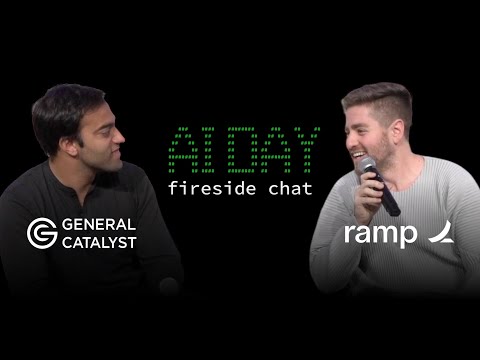
Published on YouTube by Stripe on July 19, 2023, this page features a fireside chat from Stripe AI Day. The description notes that Eric Glyman, CEO of Ramp, and Marc Bhargava, Managing Director at General Catalyst, discuss the future of Ramp and its integration with artificial intelligence.
## TL;DR
In this fireside chat, Eric Glyman details how Ramp has evolved from using early machine learning for receipt matching in 2019 to deeply productizing Large Language Models for automated accounting and price intelligence. He discusses the architectural strategy of multiplexing across major AI providers and outlines the impending shift from seat-based to value-based SaaS pricing models. Additionally, Glyman shares insights on fintech entrepreneurship, transitioning from a scarcity to an abundance mindset in leadership, and maintaining rapid product velocity through small, autonomous teams.
## Atmosphere & style
The conversation carries an insightful, collaborative, and forward-looking tone, driven by the strong rapport between an early investor and a seasoned founder. It feels grounded yet deeply optimistic, balancing technical nuances of prompt engineering with practical, battle-tested business wisdom. The narrative possesses a reflective emotional arc, shifting from the high-stakes survival stress of early startup days to a mature philosophy on long-term enterprise value, sustainable growth, and genuine customer empathy.
## Key takeaways
- [00:04](https://www.youtube.com/watch?v=kwxNenhnpEc&t=4s) Ramp is designed with a dual mission of helping business customers spend less money and spend less time, fundamentally aligning its financial tools with customer savings rather than encouraging excess spending.
- [00:04](https://www.youtube.com/watch?v=kwxNenhnpEc&t=4s) Over its first four and a half years of existence, Ramp successfully saved its customers over $600 million and eliminated more than 8.5 million hours of manual work.
- [02:50](https://www.youtube.com/watch?v=kwxNenhnpEc&t=170s) Ramp has utilized machine learning since its 2019 inception, initially applying it to highly painful, structured-data workflows like automated receipt matching to eliminate manual expense reports.
- [02:50](https://www.youtube.com/watch?v=kwxNenhnpEc&t=170s) The evolution of commercialized LLMs enabled Ramp to launch 'price intelligence' and 'accounting intelligence' tools, which parse unstructured text like SaaS contracts and automate general ledger categorization.
- [05:56](https://www.youtube.com/watch?v=kwxNenhnpEc&t=356s) A major technological shift has occurred where commercialized LLMs can accurately ingest and structure massive amounts of unstructured documents, such as 30-page contracts, in less than a minute.
- [05:56](https://www.youtube.com/watch?v=kwxNenhnpEc&t=356s) The quality and accuracy of LLM outputs vary significantly based on prompt engineering, where 'encouraging' and highly specific prompts yield vastly superior results compared to basic queries.
- [05:56](https://www.youtube.com/watch?v=kwxNenhnpEc&t=356s) General LLMs are not yet fully optimized for specialized professional frameworks like double-entry accounting, indicating a massive future opportunity for highly specialized 'sub-language' models.
- [10:17](https://www.youtube.com/watch?v=kwxNenhnpEc&t=617s) To avoid betting against major AI developers, companies should design an open architecture that multiplexes between providers like OpenAI, Anthropic, and Meta to continuously optimize for speed, cost, and latency.
- [10:17](https://www.youtube.com/watch?v=kwxNenhnpEc&t=617s) AI acts as a profound human capability multiplier rather than just a tool for cost reduction, enabling knowledge workers to leverage collective market wisdom and focus on high-level strategy.
- [10:17](https://www.youtube.com/watch?v=kwxNenhnpEc&t=617s) The efficiency gains brought by AI agents performing knowledge work will likely force a shift in SaaS business models away from traditional seat-based pricing toward value-based pricing.
- [15:58](https://www.youtube.com/watch?v=kwxNenhnpEc&t=958s) Fintech is uniquely positioned for massive AI disruption because regulatory shifts like the Dodd-Frank Act historically lowered barriers to entry, letting small software teams move money without multi-billion-dollar bank infrastructures.
- [17:09](https://www.youtube.com/watch?v=kwxNenhnpEc&t=1029s) Software is transitioning into automated, agency-based models that execute complex operational workflows directly on behalf of users, a task that was highly difficult during the era of early startups like Paribas in 2015.
- [21:35](https://www.youtube.com/watch?v=kwxNenhnpEc&t=1295s) Transitioning from a startup 'scarcity mindset' focused on extreme capital preservation to an 'abundance mindset' regarding elite talent is critical to multiplying a scaling company's potential.
- [23:59](https://www.youtube.com/watch?v=kwxNenhnpEc&t=1439s) During intense tech hype cycles, founders should intentionally avoid the highest-priced valuation offers to protect long-term enterprise value, retain operational flexibility, and cultivate healthier investor relationships.
- [27:45](https://www.youtube.com/watch?v=kwxNenhnpEc&t=1665s) Effective customer-centric marketing relies on authentic storytelling and genuine interest rather than polished corporate pitches, recognizing that customers fundamentally care about solving their own real-world problems.
- [27:45](https://www.youtube.com/watch?v=kwxNenhnpEc&t=1665s) To maintain high product velocity and rapid expansion without losing focus, companies should anchor all development to their core mission and utilize small, completely autonomous teams of fewer than ten people.
## Detailed walkthrough
### [00:04](https://www.youtube.com/watch?v=kwxNenhnpEc&t=4s) Introducing Ramp and the Mission of Financial Efficiency
Mark from General Catalyst introduces Eric, the co-founder of Ramp, expressing gratitude to the audience and the Stripe team for organizing the event. Eric echoes this appreciation, noting that Stripe’s infrastructure has been instrumental in making Ramp's existence and growth possible.
When asked to define Ramp and its value proposition, Eric explains that the company is building the "ultimate platform for finance teams." Ramp is widely recognized for delivering the fastest-growing corporate card and bill payment network in the United States. Every product they design is anchored in a simple, dual mission: helping customers spend less money and spend less time. Over its four and a half years of existence, Ramp has saved its customers over $600 million and spared them from more than 8.5 million hours of manual work.
This mission stems from Eric's background. He previously co-founded a company focused on helping consumers save money, which was eventually acquired by Capital One. During his time at one of the largest credit card issuers in the US, Eric realized that the traditional credit card industry's incentives were fundamentally misaligned with those of its customers. Traditional players focus heavily on getting customers to spend more than they intend to, using rewards like cash back or points as bait. Eric realized that what businesses actually want is more money in their bank accounts and more time in their day. Consequently, Ramp was designed not just as a payment rail, but as a workflow and efficiency company.
- **Ramp's Impact (4.5 Years):** Over $600 million saved for customers; over 8.5 million hours of manual work eliminated.
- **Core Philosophy:** Aligning financial tools with customer savings and efficiency rather than encouraging excess spending.
[02:50](https://www.youtube.com/watch?v=kwxNenhnpEc&t=170s) The Evolution of AI at Ramp: From Receipt Matching to Automated Accounting
Mark, an early investor in both Ramp and Stripe, asks Eric to trace the narrative of AI's role in the company. He recalls Eric previously pushing back on the idea that AI is a brand-new initiative for them, pointing out that Ramp has been utilizing machine learning since its inception.
Eric explains that while the commercialization of Large Language Models (LLMs) has dramatically accelerated things over the past year, Ramp has used machine learning since 2019. One of their very first pre-launch priorities was solving the painful workflow of receipt matching. Because the IRS requires receipts for transactions over $75, people historically carried around wallets stuffed with paper receipts—reminiscent of a "George Costanza wallet"—and manually matched them to transactions. Ramp leveraged machine learning to match structured transaction data from the payment network with receipt images, which was far easier than trying to read a receipt from a blank slate. Over the years, they also applied classic machine learning to underwriting, fraud detection, and risk analysis.
The landscape shifted dramatically over the last six to nine months. Ramp has begun deeply productizing LLMs into customer workflows. For example, they recently scaled a "price intelligence" product to all customers. By analyzing tens of billions of dollars in annual purchases, the tool can tell a customer if they are getting a good rate from a SaaS vendor or if they are being overcharged. Similarly, they introduced "accounting intelligence" to automate general ledger categorization. Instead of relying on manual entry or rigid rules to determine how a transaction (like a Facebook ad buy) should be accounted for, the system learns from massive datasets to automate the process seamlessly.
- **Early AI Use Case (2019):** Automated receipt matching to eliminate manual expense reports.
- **Price Intelligence:** Leverages aggregate purchasing data to analyze SaaS contracts and alert customers if they are overcharged.
- **Accounting Intelligence:** Automates general ledger categorization by learning from transaction patterns.
[05:56](https://www.youtube.com/watch?v=kwxNenhnpEc&t=356s) What Changed? The Power of Unstructured Data and Prompt Engineering
Mark asks why a product like price intelligence couldn't have been built a year and a half ago, and what technological shift made it possible today. Eric explains that while classic machine learning works well for highly structured data, it struggled with unstructured documents. Previously, if a user uploaded a 30-page contract and asked if the terms were standard, trying to parse that with older technology was "immense and very, very hacky," yielding dubious accuracy. Today, commercialized LLMs can ingest 30 pages of unstructured text and return structured, highly accurate insights in less than a minute.
This capability has also transformed how Ramp gathers customer feedback. They record and transcribe customer calls, creating a massive database of unstructured conversations. Previously, extracting macro-level insights from this database was incredibly difficult. Now, engineers can build tools in days or weeks—rather than years—to query this data, allowing product managers to ask questions like, "What are our customers asking for?" and build products based on scaled, real-world insights.
When asked about the limitations of current AI models, Eric shares some of the surprising nuances of building with LLMs. He notes that the quality of an output can vary wildly based on how encouraging the prompt is. Telling a model, "You are the best contract analyst there ever was, you're really thoughtful, and you check your answers twice," yields a vastly superior result compared to a basic query. Additionally, while general LLMs are trained on vast bodies of literature and language, they are not yet fully optimized for specialized professional systems like double-entry accounting. Eric expects highly specialized "sub-language" models to emerge quickly to fill these professional gaps.
- **The LLM Shift:** Transitioning from rigid, structured data processing to rapid, accurate parsing of unstructured documents (e.g., 30-page contracts).
- **Prompt Engineering Nuance:** "Encouraging" prompts significantly improve the quality and accuracy of LLM outputs.
- **Future Outlook:** The need for specialized models trained on professional "sub-languages" like accounting rules rather than general literature.
[10:17](https://www.youtube.com/watch?v=kwxNenhnpEc&t=617s) Partnering vs. Building and the Impact on Business Models
Regarding whether Ramp builds its own models or partners with external providers, Eric advises founders that it is a "very challenging time to be like implicitly betting against the mega models." The sheer volume of resources being poured into companies like OpenAI, Anthropic, and Meta makes it wiser to design an open architecture that can multiplex between different models. This allows a company to constantly test and compare models based on response quality, latency, speed, and cost. Ultimately, customers do not care which specific model is running under the hood; they only care if the product makes them more successful and profitable.
Mark asks whether AI is primarily a tool for cutting costs (such as automating customer support) or driving new revenue. Eric views AI as a profound "multiplier on people" and an enabler of entirely new product categories. While it certainly helps with cost reduction—such as replacing complex regular expressions with LLMs for document parsing—its true power lies in expanding human capability. It allows a junior accountant to benefit from the collective wisdom of the market, and it frees finance teams from tedious tasks like tracking down receipts so they can focus on strategy.
This shift raises interesting questions about the future of SaaS business models. Traditionally, software companies charge per user seat. However, if AI agents begin performing or heavily augmenting knowledge work, companies may not need as many seats. Eric believes that instead of cutting headcount, highly productive employees (like a salesperson who becomes 100% more productive) will inspire companies to hire more of them to scale faster. Regardless, the industry will have to shift toward delivering and charging for measurable, quantifiable value rather than just selling seats.
- **Architectural Strategy:** Multiplexing between major model providers (OpenAI, Anthropic, Meta) to optimize for speed, cost, and latency.
- **The Seat-License Dilemma:** AI's efficiency gains may force SaaS companies to move away from seat-based pricing toward value-based pricing.
[15:58](https://www.youtube.com/watch?v=kwxNenhnpEc&t=958s) Opportunities for New Fintech Founders
Mark points out that tech giants like Microsoft, Google, Adobe, and Zapier are moving incredibly fast to integrate AI. He asks what opportunities are left for new founders, particularly those looking to start fintech companies.
Eric responds with immense optimism, noting that fintech is in a unique historical position. Many of the industry's legacy competitors were literally founded by people who "wore top hats" in the 1800s. Until very recently, moving money was a privilege exclusive to licensed banks. Software providers were entirely shut out of the financial rails. This historical context sets the stage for a massive wave of disruption as modern software and AI continue to integrate with financial services.
[17:09](https://www.youtube.com/watch?v=kwxNenhnpEc&t=1029s) The Digitization of Money and the Rise of Agency-Based Software
For decades, while consumer technology evolved rapidly from flip phones to iPhones and virtual reality, the fundamental infrastructure of credit cards and payment terminals remained largely unchanged. The speaker notes that the "door kind of blew open" following the financial crisis and the passage of the Dodd-Frank Act. This regulatory shift created a new wave of infrastructure and providers, making it possible to start a bank or issue a credit card out of a simple apartment with a useful set of software, rather than requiring tens of thousands of employees and billions of dollars.
This democratization of financial infrastructure has made it an incredibly exciting time for fintech. Historically, software was merely adjacent to money movement, but today, great software companies that directly move money are coming to the forefront. Because the vast majority of money is still moved through traditional, non-digital methods like physical checks and cash, we are still in the very early stages of digitization.
The speaker also highlights a major framework shift in how software businesses operate. While traditional software was designed to assist human workers, modern AI-driven agencies can now perform operational tasks directly on behalf of consumers and businesses. The speaker recalls his first company, Paribas, which was founded in 2015 as an early Gmail app designed to save customers money on online purchases. Paribas scanned user inboxes for receipts, tracked price drops, and automatically claimed refunds for the price differences, charging a percentage of the savings. At its peak, Paribas indexed over 200 million emails per day, which was incredibly difficult and hacky at the time, resulting in "more rejects than truly... great learning." Today, executing such workflows is trivial, making agency-based business models highly feasible across structured data verticals like accounting.
- **Dodd-Frank Act Impact:** Lowered the barrier to entry, allowing small teams to build financial products without massive capital.
- **Paribas (2015):** An early agency-style startup that indexed 200 million emails daily to automate price-drop refunds.
- **Accounting as a Language:** A highly structured vertical ripe for automated, agency-based software efficiency.
---
[21:35](https://www.youtube.com/watch?v=kwxNenhnpEc&t=1295s) Evolving Leadership: From Scarcity to Abundance
Reflecting on his journey as a CEO, the speaker explains how his leadership style evolved dramatically between his first company, Paribas, and his second, Ramp. Paribas raised a total of $2 million, which felt like an unfathomable amount of money at the time. However, because his co-founder was from Beirut, Lebanon, and was on a visa, the stakes were incredibly high. This created a "scarcity mindset" where the founders were constantly terrified of running out of money, leading them to watch every single penny. While stressful, this environment taught them hard prioritization and forced them to learn what the job actually was, preventing them from throwing money at premature hiring or ad spend.
When building Ramp, the speaker shifted from a scarcity mindset to an abundance mindset, specifically regarding talent. He realized that "all a company is is a collection of people" and that hiring extraordinary individuals can multiply a company's overall potential. Drawing inspiration from Stripe, which attracted world-class talent and became a self-fulfilling destination for high-quality professionals, the founders of Ramp intentionally focused on recruiting exceptional engineering, design, and sales talent from the very beginning.
---
[23:59](https://www.youtube.com/watch?v=kwxNenhnpEc&t=1439s) Navigating Hype Cycles and Investor Partnerships
Having lived through the intense fintech and crypto hype cycles of 2021—including starting a company called Tagomi with Juney, which eventually sold to Coinbase—the speaker offers crucial advice for current AI founders navigating similar valuation and funding booms. He emphasizes that building a successful business takes many years, and entering a partnership with an investor is a long-term commitment akin to a "serious relation that you can't really break up."
During peak hype cycles, it is easy to lose perspective, but founders must remember that market conditions can cool off in a matter of months. Ramp survived and thrived by intentionally avoiding the highest-priced valuation offers. Instead, they optimized for long-term enterprise value and sought out investors who were genuinely interested in the problem space and actively helped them think through difficult questions. By being reasonable with valuations, founders build a better partnership with investors, offer a more attractive value proposition to employees, and leave themselves room to maneuver if things go sideways.
- **Tagomi:** Co-founded by the host and eventually acquired by Coinbase.
- **Valuation Strategy:** Ramp intentionally turned down the highest valuations to protect long-term enterprise value and build healthier investor relationships.
- **Founder Advice:** Leave room for error; over-raising at extreme valuations limits future flexibility if the business hits a rough patch.
---
[27:45](https://www.youtube.com/watch?v=kwxNenhnpEc&t=1665s) Customer-Centric Marketing and Product Velocity
Despite being led by highly technical product founders, Ramp has achieved massive distribution, becoming a ubiquitous presence on Twitter and billboards across New York. The speaker attributes this success to a deep curiosity about storytelling and a fundamental realization: "people don't care about your product." Because customers are busy and stressed with their own lives, effective marketing is not about pushing a corporate message, but about being genuinely interesting and highlighting customer stories. He points to a recent Shopify product launch video as a masterclass in this approach, noting how it succeeded because it was a simple, authentic demo of a founder trying to make his snowboard shop better, rather than a highly polished corporate pitch.
When asked by an audience member how Ramp balances its rapid product expansion without losing focus, the speaker explains that they anchor everything to their core mission: maximizing the amount of money and time they save for customers. Rather than focusing on "winning" a specific market like credit cards or bill payments, they let customer pain points guide their product roadmap.
To maintain high product velocity as they scale, Ramp relies on small, autonomous teams. Even their largest teams today consist of fewer than ten people, ensuring that decision-making remains fast and unencumbered by corporate bureaucracy. "No one likes it when they have to go check for like 30 people to like change the color of a button," the speaker jokes, emphasizing that giving small teams real ownership is the key to shipping products in months rather than years.
## Notable quotes
> [00:04](https://www.youtube.com/watch?v=kwxNenhnpEc&t=4s) ultimate platform for finance teams — Eric Glyman
> [00:04](https://www.youtube.com/watch?v=kwxNenhnpEc&t=4s) helping customers spend less money and spend less time — Eric Glyman
> [02:50](https://www.youtube.com/watch?v=kwxNenhnpEc&t=170s) George Costanza wallet — Eric Glyman
> [05:56](https://www.youtube.com/watch?v=kwxNenhnpEc&t=356s) You are the best contract analyst there ever was, you're really thoughtful, and you check your answers twice — Eric Glyman
> [10:17](https://www.youtube.com/watch?v=kwxNenhnpEc&t=617s) very challenging time to be like implicitly betting against the mega models — Eric Glyman
> [10:17](https://www.youtube.com/watch?v=kwxNenhnpEc&t=617s) multiplier on people — Eric Glyman
> [15:58](https://www.youtube.com/watch?v=kwxNenhnpEc&t=958s) wore top hats — Eric Glyman
> [17:09](https://www.youtube.com/watch?v=kwxNenhnpEc&t=1029s) door kind of blew open — Eric Glyman
> [17:09](https://www.youtube.com/watch?v=kwxNenhnpEc&t=1029s) more rejects than truly... great learning — Eric Glyman
> [21:35](https://www.youtube.com/watch?v=kwxNenhnpEc&t=1295s) all a company is is a collection of people — Eric Glyman
> [23:59](https://www.youtube.com/watch?v=kwxNenhnpEc&t=1439s) serious relation that you can't really break up — Eric Glyman
> [27:45](https://www.youtube.com/watch?v=kwxNenhnpEc&t=1665s) people don't care about your product — Eric Glyman
> [27:45](https://www.youtube.com/watch?v=kwxNenhnpEc&t=1665s) No one likes it when they have to go check for like 30 people to like change the color of a button — Eric Glyman
## Mentioned
Eric Glyman, Marc Bhargava, General Catalyst, Stripe, Ramp, Capital One, IRS, Facebook, OpenAI, Anthropic, Meta, Microsoft, Google, Adobe, Zapier, Dodd-Frank Act, Paribas, Gmail, Tagomi, Coinbase, Twitter, Shopify
Ramp co-founder and CEO Eric Glyman argues that fintech software is shifting from passive payment tools into automated, agency-based systems that save businesses time and money. He contends that success in modern software relies on leveraging commercial AI models, value-based pricing, and disciplined growth rather than chasing peak market valuations.
Aligning Financial Workflows with Efficiency (0:04)
Glyman views traditional corporate cards and card issuers as fundamentally misaligned with their clients, relying on rewards like points to encourage excess spending. Drawing from his background at a consumer savings startup acquired by Capital One, Glyman designed Ramp around a dual metric: minimizing the money and time businesses spend. Over its first four and a half years, Ramp reported saving clients over $600 million and eliminating more than 8.5 million hours of manual administrative tasks.
This workflow-oriented model extends across corporate cards and bill payments. Glyman notes that product development is anchored directly to customer pain points rather than defending single product categories, with internal development executed through autonomous teams capped at under ten people to prevent bureaucratic slowdowns.
Unstructured Data and the Shift to Agency Software (2:50)
While Ramp utilized classic machine learning for receipt matching, underwriting, and fraud detection as early as 2019, Glyman highlights that the commercialization of large language models resolved the longstanding challenge of processing unstructured documents. Earlier systems struggled with tasks like parsing 30-page vendor contracts; modern LLMs perform these extractions reliably in under a minute, enabling features like price intelligence, which analyzes SaaS contracts across aggregate purchasing data, and accounting intelligence, which automates general ledger categorization.
Glyman connects these capabilities to an emerging category of agency-based software that executes operational workflows directly on behalf of users. Recalling his 2015 startup Paribas, which parsed 200 million consumer emails daily to claim price-drop refunds through fragile custom scrapers, Glyman emphasizes that modern LLMs make executing complex, data-driven tasks trivial in structured domains like corporate accounting.
Model Architecture and SaaS Pricing Realities (10:17)
Addressing AI infrastructure, Glyman cautions founders against training proprietary foundational models to compete with well-capitalized providers such as OpenAI, Anthropic, and Meta. Instead, Ramp implements an open architecture that multiplexes across different foundational models, dynamically selecting providers according to latency, response quality, and compute costs. Glyman observes that model performance in complex domains can be sensitive to prompting nuances, and he expects specialized sub-language models to emerge for technical areas like double-entry bookkeeping.
As AI agents assume repetitive analytical tasks, Glyman anticipates pressure on conventional per-seat software licensing models. If employees become substantially more productive through automation, software companies will likely need to transition from selling individual access seats to billing based on quantifiable, delivered business value.
Fintech Infrastructure and Capital Discipline (15:58)
Glyman identifies significant upside for new fintech entrants because legacy payment systems historically shut out pure software companies, and vast transaction volumes remain conducted via cash and paper checks. Post-financial crisis reforms, including the Dodd-Frank Act, opened banking infrastructure to modern software interfaces, allowing lean engineering teams to launch financial platforms without massive balance sheets.
Reflecting on market volatility across fintech and crypto cycles, Glyman advises founders against accepting peak valuation offers during funding booms. To preserve room for error and maintain healthy investor alignment, Ramp intentionally turned down top-tier valuations, prioritizing long-term enterprise sustainability over short-term paper pricing.
While modern AI enables software platforms to process complex financial documentation and assume autonomous tasks, the long-term impact on enterprise software business models remains evolving as companies determine how to shift from seat licenses to measurable value capture.
[0:04] Eric Glyman: ultimate platform for finance teams
[0:04] Eric Glyman: helping customers spend less money and spend less time
[2:50] Eric Glyman: George Costanza wallet
[5:56] Eric Glyman: You are the best contract analyst there ever was, you're really thoughtful, and you check your answers twice
[10:17] Eric Glyman: very challenging time to be like implicitly betting against the mega models
[10:17] Eric Glyman: multiplier on people
[15:58] Eric Glyman: wore top hats
[17:09] Eric Glyman: door kind of blew open
[17:09] Eric Glyman: more rejects than truly... great learning
[21:35] Eric Glyman: all a company is is a collection of people
[23:59] Eric Glyman: serious relation that you can't really break up
[27:45] Eric Glyman: people don't care about your product
[27:45] Eric Glyman: No one likes it when they have to go check for like 30 people to like change the color of a button
Original transcript
[0:04] Hi, everyone.
[0:04] Thanks for joining us.
[0:06] I'm Mark from General Catalyst.
[0:07] I think you guys all know
Eric from Ramp as well,
[0:10] and we're very appreciative of you coming in today.
[0:13] Thank you.
[0:15] I guess there's no big sign in the back
that says applause or whatever.
[0:18] So it'll be all organic and authentic.
[0:21] But I appreciate you guys.
[0:22] I think it looks like a laugh track
in here.
[0:25] Exactly.
[0:27] So, Eric, we're going to run
through a bunch of questions.
[0:29] Obviously focus on AI, how AI
[0:32] has impacted Ramp and fintech.
[0:34] But for anyone who might not be familiar
with it, can you start off
[0:38] by telling us what is Ramp
and what you do for your customers?
[0:41] Yeah, 100%.
[0:42] And even before that, first,
just want to say
[0:44] thank you to the team at Stripe
and everyone years putting on this event
[0:47] gathered everyone
and frankly also to even mean
[0:52] what we're doing at ramp possible
[0:53] so thrilled to be here
and just want to say thank you
[0:55] for all the effort
that went into organizing.
[0:58] So thank you.
[1:00] Next ramp,
[1:04] we are trying to build
what we believe is the
[1:06] you know, we want it to be
the ultimate platform for finance teams.
[1:09] We focus
and what we're known for is for delivering
[1:13] what is the fastest
growing corporate card in the US.
[1:16] Fastest growing bill payment network.
[1:19] And every product that we build
is designed with the intent
[1:22] of helping our customers
spend less money and spend less time.
[1:26] We've saved our customers
over $600 million
[1:30] in the last four and a half years
that we've existed as a company
[1:34] in over eight
and a half million hours of manual work.
[1:38] And so really,
we're trying to design in organizations
[1:42] that have software payment rails
that are focused on helping companies
[1:45] be more efficient,
build better businesses.
[1:47] And the motivation of
this a lot of this came from
[1:51] in our
background, we had started a company
[1:53] focused on helping consumers save before
we were acquired by capital One,
[1:57] one of the largest banks
and credit cards in the US. And,
[2:01] you know, the longer that I had spent,
you know, getting to know
[2:04] the credit card industry,
the more it just deeply felt it
[2:08] wasn't totally aligned with customers.
[2:10] A lot of people were thinking really hard,
and we're fantastic
[2:13] at getting customers to spend more money
than maybe they intended to.
[2:17] Customers, I believe, aren't
looking really for cash back or points.
[2:21] They're frankly looking for more in their
bank account, more time in the day.
[2:26] And we wanted to build a company
that was focused on exactly that
[2:30] spirit deeper. But in many ways,
[2:32] we're much more of a workflow company.
[2:34] We're much more thinking about
how do you actually make
[2:37] organizations
more efficient, spend less money and time.
[2:41] Very cool. Yeah, I was early.
[2:42] Lucky enough to be an early
investor in Ramp and obviously John is
[2:46] and ramp as well and in Stripe
so that's very exciting.
[2:50] I remember asking you, you know, how has
it changed your business in the last year?
[2:55] And you kind of shot me down and said,
well, we've been using A.I.
[2:58] for four years since you started.
[3:00] So I'm kind of curious.
[3:01] Maybe you can explain that a little bit
[3:03] to the audience, like,
where were you using A.I.
[3:05] at the beginning,
the first couple of years?
[3:08] How has that maybe changed
in this last year?
[3:10] Has it really exploded as well?
[3:12] Maybe take us through that narrative.
[3:14] Yeah.
[3:14] And I mean, it's certainly accelerated
a lot over the past past year
[3:19] for sure, with the advent of large
language models getting commercialized.
[3:22] But I think going back to, you know,
our fundamental premise is how do you
[3:25] how do we give our customers leverage?
[3:27] And we're constantly thinking
[3:28] how can we apply technologies
to make us more efficient?
[3:32] One of the first workflows
when we're following that
[3:35] mission of helping customers
spend less money and time
[3:38] is, you know, customers need receipts
for the IRS.
[3:42] It's required for transactions over $75.
[3:45] Very painful for people to have to go have
a George Costanza wallet full overseas,
[3:51] have things around,
match it to the right transactions
[3:54] and it was a perfect use case where we had
the structured data coming through from
[3:59] from the network.
[4:01] We knew we authorized the
[4:02] transaction is much easier
to match in image
[4:07] versus, you know, blank slate, read it,
figure out what it is to match it.
[4:11] And even back in 2019, pre launch
[4:15] I one of our first priorities
simple receipt matching was leveraging
[4:18] machine learning.
[4:19] Over the years
[4:20] there's a lot of classic use cases
even where you saw advancements in today
[4:24] from the Stripe team
around underwriting fraud, risk detection,
[4:28] using large signals and we're trying to go
and understand our own activities
[4:33] and applying machine
learning to it to make that simpler.
[4:36] But I think really over the past year
[4:39] in a big way, over the past six months,
but certainly
[4:41] even over
the last nine is creeping and accelerating
[4:45] is looking at ways where you can
productize as deeply into workflows.
[4:49] And so, you know, even we made
a large announcement around this in May,
[4:55] you know,
[4:55] but just yesterday we scaled price
intelligence to all of our customers.
[5:01] You know, that can give you the insight
and the, you know, the benefit of,
[5:06] you know, tens of billions of dollars
per year of purchases, of knowing,
[5:10] are you getting a great rate from your
SAS vendor or are you getting charge more?
[5:15] You know, are you in charge less
[5:18] accounting intelligence?
[5:20] There are several ways
one could say this Facebook
[5:24] transaction should be accounted
for in my general ledger,
[5:28] but it's not rocket science.
[5:30] There's surely a right way.
[5:32] And you can learn from those patterns.
[5:34] And so starting to really take
[5:35] really large data sets
and being able to leverage it into
[5:40] not air based accounting,
but just automated accounting.
[5:44] Now I am, you know, price intelligence,
but alerts
[5:48] when there's better rates available to
actually save is suddenly been possible.
[5:51] So lots of products use cases in lots of
internal use cases as well to talk about.
[5:56] So walk me through that. A year
and a half ago,
[5:59] why couldn't you have done this price
intelligence product?
[6:01] And you know what changed
where you can do it today?
[6:04] Totally. I mean, so I mean, first
[6:08] we tried to see just large language
models, but,
[6:10] you know, when is highly structured data,
[6:13] I think a lot of classic machine learning
techniques certainly could have worked.
[6:16] But if you want to take,
you know, one shot's like a 30 page
[6:20] contract in deliver it all to me.
[6:23] Upload it and say, is this a good rate?
[6:24] Are these terms standard or non standard,
[6:27] you know, at least in a broadly
commercialized manner?
[6:30] There was no I,
I think the accuracy was quite dubious
[6:35] and the level of building you would need
to, to deliver in order to say
[6:38] is this a good or a bad rate
would be immense and very, very hacky.
[6:44] You know I think the out in it
really commercialization scaling
[6:47] largely was models
you could take 30 pages of tax upload it
[6:52] a minute later really truly have
[6:54] in a structured way
and you can ask questions like
[6:56] even something
that has been making the rounds in a
[6:59] in an enormous way
around ramp over the past week,
[7:03] you know, as part of our our commitment to
[7:06] to try to improve the way
we sell, the way we support customers,
[7:09] we record calls, we learn from it,
we try to pull insights out of it.
[7:14] So we have a huge database of
[7:15] actually what customers are telling us
that they want.
[7:19] What's changed
suddenly, as you can ingest in mass,
[7:23] what's actually going to start learning
from and asking questions
[7:25] and saying what our customers asking for,
what are they interested in,
[7:29] and how do we actually become better
products thinkers in learning
[7:32] and not building whatever it is
that we come up with, but really having
[7:35] add scale insights from our customers,
[7:38] functionally taking that,
you know, completely unstructured
[7:41] data and structuring,
it would have been very, very challenging.
[7:44] And it turns out that can be something
that's done with
[7:48] certainly very skilled engineers.
[7:50] But that done in days to weeks, not years.
[7:53] And we've certainly seen,
you know, open air in chat.
[7:56] CBT has got like a five on biology
and history, but maybe not done as well
[8:01] on map.
[8:02] Where have some of the limitations
be where, you know, you've said
[8:06] we really want this product,
but the air is
[8:07] just not there yet or the text
not there yet.
[8:10] What's kind of cutting edge?
Where is it falling short?
[8:12] Where in your product
would you like to do more?
[8:15] Well, there's a lot
I mean, I'm sure everyone in this audience
[8:18] is playing with these models,
using it in various applications.
[8:21] And there are a lot of things
that are very like surprising
[8:24] as you're actually endeavoring
to build with it. So
[8:28] I think everyone here Friday experiences,
[8:30] if you're more encouraging in your prompt,
you can get a very different output
[8:35] if you're saying like, hey, you know,
can you get is this a good price or not?
[8:39] You get one level of prompt
of like versus like.
[8:41] You are the best contract
analyst there ever was.
[8:44] You're really thoughtful.
[8:45] You're spending time in it and you're
you're checking your answers twice.
[8:49] You know, now go do this task.
[8:52] You get a very different level of quality.
[8:54] And in some sense,
like that seems very bizarre.
[8:57] But in others, like, right,
this is taking language based context.
[9:01] And so even thinking about how you're
structuring and writing the prompts or
[9:05] I think people are still wrestling
and grappling with
[9:08] what is it mean to be cutting this mean
or were really the training base is
[9:12] is language and the way you prompt
and encourage in some sense
[9:15] can affect the quality of the output.
[9:17] I think it's just been interesting
[9:19] for folks
to be learning and wrestling with that.
[9:21] I think that the other
[9:25] thing that for me is interesting,
a lot of these large language models
[9:28] are generally on on on vast bases of text,
[9:32] in literature, in various languages.
[9:35] And I think for us, when you think about,
you know, double entry accounting
[9:41] numbers, like they are like they're
our own systems of rules and languages.
[9:46] And I think some of the large models
are trained on
[9:49] these specific types of use cases
I believe will very quickly emerge.
[9:54] But in the meanwhile, you know,
you can use it.
[9:57] And a lot of these are surprisingly good,
but I think that they are going to be
[10:00] vastly better iterations
that are fit to specific, you know,
[10:04] sub languages that aren't just,
[10:06] you know, along the order of languages
people speak,
[10:09] but the languages that professionals
use in various capacities,
[10:13] you know, I
[10:13] think there's a lot that can get done,
[10:14] but I think that's going
to improve a lot quickly.
[10:17] And how much of this are you doing
in-house at RAM versus leveraging models
[10:20] that are already out there?
[10:22] And maybe you could speak a bit
to which companies
[10:24] or TAC you found really impressive
for other founders here
[10:27] who might be thinking who to partner
with or what tech to leverage.
[10:31] I mean, I think that this
the piece of improvement is so quick.
[10:37] There are real use cases where
you want to be using internal models.
[10:41] But I think it's a very challenging time
to be like
[10:44] implicitly
betting against the mega models.
[10:47] Like the amount of resources being
invested by these companies is so vast
[10:52] that I think organize like positioning
your own architecture to benefit
[10:56] and let the world
the machine learning benefit.
[11:00] What you were you were doing is first is
I think in general being open
[11:03] and frankly learning and multiplexing
and seeing,
[11:07] measuring the
quality of response, latency,
[11:12] speed,
cost, all of it looking and comparing.
[11:14] I think, you know, Openai
is certainly at the forefront
[11:18] in many ways,
but I think Anthropic has been phenomenal,
[11:22] you know, to see to even,
I think what would Facebook is doing
[11:25] and you know, more specific
models are just fascinating.
[11:29] And so being urban, having an architecture
if you can, that implicitly is testing
[11:33] it is in some senses can see
where it's better is worthwhile
[11:37] because at the end of the day
now for anyone building products,
[11:40] your mission,
I believe, is to serve your customers.
[11:45] And, you know, I think in some sense,
if you have poor architectural
[11:48] and infrastructure choices,
they will feel it.
[11:51] But if you're making great choices
of the day, like I believe our customers
[11:55] actually care about,
are they more successful?
[11:57] Are they spending less
or are they more profitable?
[11:58] Not which particular model that one use.
[12:01] So that's I think the first piece.
[12:03] You know, I think that the second
kind of base where we think about it is
[12:08] when you're
[12:08] using the macro models, you can certainly
do, you know, in context and learning.
[12:12] We're effectively you're not,
[12:13] you know, sending data back to the model
for learning and think about privacy. But
[12:18] in any workflow company
[12:20] or any kind of SAS based tool,
you're going to have your own set of data.
[12:23] And so thinking about where you get
the benefit of the workflows that you're,
[12:27] you're creating for customers,
the problems you're solving your own data
[12:30] sets and leveraging the learnings of large
language models to, you know, take
[12:35] general context, general understanding
and apply it into your own workflows.
[12:40] Data sets. Gotcha.
[12:42] So you use multiple providers at the end
of the day for a lot of the technology.
[12:47] Certainly ends
at least in some level of testing.
[12:50] That makes a lot of sense.
[12:52] To ask you a little bit
about this, a tech,
[12:54] would you see it as something more that
grows your revenue or cuts your costs?
[12:58] So specifically, is it an opportunity to,
[13:01] you know, help with customer support
and reduce your cost function?
[13:04] Or do you see it
more as a new revenue stream?
[13:07] People use the products more,
you make more money.
[13:09] Which of the two does it fall under more?
[13:12] I mean,
[13:13] I think so much of what's happening
is so profound
[13:16] and the capabilities
are so vastly improved.
[13:20] Over a year ago.
I think it hasn't fully been answered.
[13:22] I think in many ways
I think it's a multiplier on people.
[13:27] You know, when you think about like
I thought would be nice,
[13:29] I don't have the time to watch 50,000,
you know, customer calls.
[13:33] They try to be on as many as they can.
[13:34] But, you know,
there is a level of superintelligence
[13:36] that you can achieve
of learning from the broad based of calls.
[13:40] And I think, you know,
[13:42] I think it lends itself to products
that we simply could not carry before.
[13:46] Line price intelligence is extraordinary,
I think, at counting intelligence
[13:49] that you can be benefiting
from the wisdom of
[13:52] what the market is
is seeing in the proper way to do.
[13:55] Even if you're you're a junior accountant,
you have really kind of
[13:58] the the most involved of learning
is benefiting you is exciting.
[14:02] And I think it creates
[14:04] and it expands the ability for our
customers to be productive,
[14:09] to be
[14:09] strategic, to be not spending time
on like tracking down receipts
[14:13] and tagging individual transactions,
but instead thinking strategically about
[14:18] how do they improve the facets
of their own businesses.
[14:22] So I think that's really profound
and I think it creates a lot of certainly
[14:26] not just customer benefit but,
you know, revenue opportunity
[14:30] in a real way.
[14:32] You know, I think
[14:35] I think there are going to be
[14:36] those use cases on cost reduction as well.
[14:40] Like,
I mean, even in terms of like document
[14:43] parsing and adjusting, yeah,
[14:47] you could go to services that or
[14:51] you know, using lots of,
you know, regular expressions
[14:53] to go into it and maintaining it
where you suddenly have,
[14:56] you know,
extraordinary large language model
[14:58] that can do the job
much better and cheaper.
[14:59] And so you have
those opportunities as well.
[15:02] But I think of it really as a
[15:04] as a multiplier on people
and creating new models.
[15:07] I think there are interesting questions
that are come out of it.
[15:09] Like I think a lot of folks
who are working on SAS companies
[15:12] price on your dating
or on like you have users in a seat
[15:16] and they're doing work and you're charging
and you've done this rally over years
[15:20] like what happens
you know when suddenly am
[15:25] do you have machines that are doing
knowledge worker based work or augmenting
[15:30] or amplifying and you quite simply don't
need so many people in the same task.
[15:34] I think you make them more productive.
[15:35] I think in a broad sense, like it's
like if you have a salesperson
[15:38] who's suddenly 100% more productive,
you're like, I want more of those.
[15:41] Like, and you try to hire a lot more
instead of like,
[15:44] you know, cutting is my, my take.
[15:45] But like,
I think even the the way that businesses
[15:49] think about their overarching strategy
is going to change a lot.
[15:52] And I think thinking about
how do you deliver
[15:55] measurable, quantifiable value
is going to get even more important.
[15:58] And you're a two time
founder of both companies and fintech,
[16:02] as you think about for new founders,
you know, how can they leverage A.I.?
[16:06] There's a pretty strong argument
that the leaders are folks like Microsoft
[16:10] Openai they're folks like Google.
[16:12] Even if you look at Adobe or Zapier,
we heard from earlier,
[16:15] the incumbents are moving
really, really quickly to leverage AI.
[16:19] What kind of opportunity is left
for founders?
[16:22] What what criteria should they use when
they think about starting your company
[16:25] and maybe especially talk about that
if they're interested
[16:28] in starting a fintech company
since we're here at the stripe for.
[16:32] Yeah, I mean, so first
just just fintech broadly speaking,
[16:36] like I think it's an it's
a really fascinating time, right? Like
[16:41] said this before in some context.
[16:43] But I think that our actual competitors
and most of their founders knowledge
[16:49] so quite literally like like they wore top
hats, like they like lived in the 1800s.
[16:55] They're around like a very long time ago.
[16:56] And unless you were a large bank, truly,
[17:00] until very recently,
you could not move money.
[17:05] You had to be a bank.
[17:06] And if you were a software provider,
you think is like the world went from like
[17:09] no phones to flip phones to iPhones
to, you know, virtual reality.
[17:14] Like your credit card
basically stayed the same.
[17:16] The payment terminal,
you know, stripe is a different case.
[17:19] But for for others who are not Stripe
kind of the same.
[17:22] Right. Is is what it always was.
[17:25] And I think the
[17:27] door kind of blew open in many ways.
[17:30] Great regulations coming out
of the financial crisis, Dodd-Frank,
[17:34] you know,
creating a whole set of infrastructure
[17:36] and providers
where you can quite literally,
[17:40] you don't need to have tens of thousands
of people,
[17:42] billions of dollars in order to, you know,
create your own bank and buy that.
[17:46] But you can actually, you know,
out of an apartment
[17:50] created useful set of software,
[17:52] issue a credit card and be on your way
to building great products.
[17:56] And that is such a profound difference
in terms of the costs of doing it
[18:00] and just the ability and accessibility
for folks
[18:02] to to start businesses that I think
it's an amazing time in fintech.
[18:06] I also think too,
when you think about the premise that
[18:10] I think that software was historically
very adjacent to money movement,
[18:14] and I think that great software companies
that also move money
[18:18] are finally possible
and really coming to the forefront.
[18:23] Most money, too, is move through,
[18:25] you know, you know all the ways
checks, cash, very simple ways.
[18:31] And I think we're still very early
in the digitization.
[18:33] So broadly speaking, yeah,
I think there's a ton of opportunity
[18:37] all over broadly in moving, moving money
[18:42] next to when it when I think about,
[18:45] you know, the question you had asked,
[18:48] does this benefit the incumbents
[18:50] or individual businesses more or startups?
[18:56] I, I actually think look, there,
[18:59] if you're competing on infrastructure,
maybe there's a few folks in the audience
[19:02] or in the world
who can compete in that way,
[19:04] you know, fundamentally better algorithms.
[19:05] I think that's that's very hard.
[19:07] And but look,
I think the ability to be sincere,
[19:11] to notice problems in the world,
understand and be thinking about
[19:15] where can we be applying really disruptive
technologies to new spaces,
[19:19] I think is still as large
as it's ever been.
[19:22] And if you can digitally call
[19:25] brilliant,
you know, functionally knowledge workers
[19:28] through an API call in order to apply to
operational workflows is interesting.
[19:33] And I think loss, like many software
businesses, could create
[19:36] software that assisted people.
[19:38] And I think if the agencies improve,
you might be able to do operational tasks.
[19:43] And I think that's a very interesting
framework change for businesses
[19:46] that can digitally do work on behalf
of whether it's consumers, businesses.
[19:53] You know, Paribas my my last
[19:55] company when we started back in 2015,
it was very funny.
[19:58] It was it was basically trying to save
customers money on online purchases.
[20:03] It was an early Gmail app.
[20:05] The idea is you link your email, we'd
scan your inbox for receipts,
[20:09] we would check prices on what you bought.
[20:11] And if a store guaranteed you
[20:13] like, basically if you bought something
a week
[20:14] later dropped in price,
you could get the difference.
[20:16] And we built it was early and help. Right.
[20:20] It's a peak.
[20:20] We were, you know, indexing
more than 200 million emails per day.
[20:25] And we would try to go and,
you know, read it.
[20:28] It was more rejects than truly,
like, great,
[20:31] you know, the learning.
[20:35] But it's kind of early hacky
versions of that.
[20:38] We would send notes, you know,
construct them and read the responses.
[20:43] That was incredibly hard.
[20:44] Now it's basically trivial
to go and do that.
[20:47] And when you think about like the purpose
of the business, by the way,
[20:50] if we save you money,
we would charge a percentage.
[20:52] It was an agency based model.
[20:54] I think it was like
an early prototype of it.
[20:56] I think agency based business
models are now much
[21:00] more possible and feasible
to do work on people's behalf.
[21:03] I think there's a lot of fields to add,
[21:06] you know, that are large structure
data sets like
[21:10] I think accounting is a language,
it is a standard.
[21:13] You can create a lot more efficiency
in that world for folks.
[21:16] And so there's different verticals,
there's different style of businesses
[21:19] that I think are more possible
and used too.
[21:20] And frankly, like I think among early
stage startups and for companies, look,
[21:25] not everything works inherently like
this is a very challenging thing.
[21:29] I think it's never been more exciting
[21:31] and I think the ability to augment
people's potential has never been higher.
[21:34] So I'm very fired up.
[21:35] And you talked a bit about Paribas
and Ramp.
[21:38] You know,
[21:38] has your CEO and leadership style
was that really different
[21:41] between your first company
and your second company?
[21:43] How have you sort of evolved as a CEO?
[21:46] I are still learning,
still try to figure stuff out.
[21:48] I mean, we it's interest.
[21:51] I mean,
so the first company was very different.
[21:53] We raised in total about $2 million,
[21:55] which was like more money than we could
fathom at that, you know, at some point.
[21:58] But like it was like now it
it was very much like
[22:03] scarcity mindset
and we were like freaked out
[22:06] that like we're going to run out of money.
[22:08] Like, my co-founder is from Beirut,
Lebanon is on a visa
[22:11] and like, you know, like
it was like real stakes to this stuff.
[22:14] And I think the first time around
was watch every penny, everything,
[22:21] and don't spend it unless, you know,
and I think there's a lot of goodness.
[22:23] Like you actually avoid a lot of mistakes.
[22:25] You learn in real ways
what the job actually is.
[22:29] You know, you know, I think it's easy.
It creates this.
[22:31] We just need to hire this person or
[22:32] if only we spent on ads
would be growing faster.
[22:34] And I think it taught very hard
prioritization and internalizing.
[22:39] I think we'll see a lot of our
our personal leadership is like
[22:43] do the work, be sincere, like actually
like care and be involved with it.
[22:47] I think that's always
I think that never goes out of style.
[22:50] I think what's the next go around?
[22:54] The the thing that we reflected on
[22:58] a lot was all a company
is is a collection of people.
[23:01] There are some people you hire that
[23:04] multiply the
I think, the company's ability
[23:07] to succeed and to,
you know, create extraordinary products.
[23:11] And so the second time around,
we were, you know, what
[23:13] we wanted to be thoughtful about money,
but it was much more an abundance of
[23:16] there are extraordinary people.
[23:18] And if we're able to create in many ways,
Stripe was an inspiration for this where
[23:22] I think
[23:24] there were such extraordinary people
who came to straight that it became,
[23:28] you know, in some ways self fulfilling
people wanted to come to straight
[23:31] because there was an extraordinary
quality of folks.
[23:34] There was a question of how do we create
that intentionally early on
[23:37] in building company, an interest
in, you know, extraordinary engineering,
[23:41] extraordinary design, syntactic sales
[23:45] and be thinking about that
very early and creative place
[23:47] where people wanted to come in
and be a destination.
[23:49] And so I spent a lot more time
really on on recruiting, spending time
[23:53] with the team, diving into products deeply
like I think that's been an evolution by
[23:57] you know
[23:59] turn it to bumper had too often but we do.
[24:01] And we were kind of both part of this
I started a company
[24:04] with Juniper called to go me
which we ended up selling to Coinbase
[24:08] and obviously that started
growing a lot afterwards as well.
[24:11] And so we were both part of
fintech and crypto were very much
[24:14] the hype cycle just a couple of years ago.
[24:17] Now it very much feels like maybe
that's a fair case to make about A.I.
[24:21] as well.
[24:21] The size of the rounds,
the valuations pre product,
[24:24] are there any learnings from
sort of the 2021 era and FinTech crypto
[24:29] that maybe you would give advice to
AI founders, whether it's, you know,
[24:32] raise it
a reasonable valuation for the next round
[24:35] or take less money at first
and prove it out.
[24:37] Or, you know,
are there some kinds of learnings
[24:39] from that cycle
that you've gone through it
[24:41] you've been one of the great survivors,
keep growing.
[24:44] You know, what kind of advice
would you give to maybe some of the folks
[24:48] who are going through
some of that cycle themselves? Right.
[24:51] I mean, I think first and foremost,
[24:55] businesses take a lot of years,
like a lot, a lot, a lot of years
[25:00] in order to really do been achieve
what you set out to do.
[25:04] And I
[25:07] when an investor invests in joins
your company
[25:11] like in some ways like it's longer
you know, and then
[25:16] it's like series relation
that you can't really break up
[25:19] like you're on it, your hits together
for like a long time.
[25:21] And you know,
I think it's both thinking about,
[25:25] you know, first,
do you want to work together?
[25:27] And I think spending time and actually
investing in relationship is important.
[25:30] But I think more than that,
[25:33] I think it's it's very easy
when you're like very hot to get
[25:37] just like lose perspective on stuff
that like
[25:39] it might be like an extraordinary time
right now,
[25:41] but in three months or six months
or something is cool off.
[25:44] You have the rest of your life
ahead of you.
[25:46] And I think some of the things
that really helped ramp,
[25:49] you know, as much as we grew was like
we never took the highest price.
[25:53] We asked for advice and thought about
[25:56] how do we solve problems
to better together versus
[26:00] trying to raise funds directly
and in the right people showed up.
[26:05] People who were like really interested
in the problem space with you
[26:08] responded to emails
or you'd say, I'm thinking about this.
[26:11] And they come back
like it's like a very DC question.
[26:14] I was, how can I be helpful?
[26:15] And occasionally some were like,
they actually feel like
[26:17] because of instructions
they thought about different questions.
[26:19] And I think you figure out
[26:20] who do I actually want to work with
and you know, last by like not over
[26:24] raising,
you know, it's exciting for people.
[26:28] You know, I think people, you know,
people are human want to know like,
[26:32] you know, we could have been a
I could have been charged 20, 30% more.
[26:36] But, you know, founder
read less ticking more simple.
[26:39] And I actually feel like now like
my investment
[26:43] is already worth 20%
more than what it could have been like.
[26:46] And people talk about it
and it's exciting.
[26:48] And I think it's good
not just for, for that,
[26:50] but like the actual optimization
is not the, the,
[26:54] the price of any specific round,
but it's the long term enterprise value.
[26:58] And I think in some ways
by being more reasonable over time,
[27:01] it's a better partnership with investors,
it's a better value proposition for
[27:05] employees, too.
[27:07] And I think it
[27:08] structurally allows you to look at you,
knock it out of the park.
[27:12] Great.
[27:12] You know,
you've built a more valuable businesses.
[27:15] You can raise up
[27:16] if it goes a little sideways
or not quite exactly what you want to do.
[27:20] You've built in some room,
and I think that actually does
[27:25] help over the years.
[27:29] Oh, from the audience.
[27:30] Oh, okay. We Oh, sure, yeah.
[27:33] If anyone has questions,
I will take one or two.
[27:38] All right. I guess, Gray, back to me.
[27:40] I'll give you one final question and then
if anyone on the audience thinks of one.
[27:43] In the meantime, we'll go to you
[27:45] both, you and Kareem, the two co-founders,
very technical product people.
[27:49] But I'm always surprised to see ramp
all over my Twitter
[27:52] feed and billboards
in New York and huge partnerships.
[27:55] So maybe talk to us about, you know,
if you have a technical product team,
[28:00] how did you guys get really good to go to
market?
[28:01] Was it hiring the right people?
Was it doing it early?
[28:04] Was it spending more like what
[28:06] do you learn there
that maybe you could impart on folks
[28:08] who are starting out have excellent
products, excellent technical jobs,
[28:12] and would love to have the same sort
of branding and distribution ramp has got.
[28:16] I mean, it's been a
[28:18] while.
[28:18] I think we're still very much learning
like I don't know, I think about
[28:23] frankly like the like
the launch Shopify had yesterday.
[28:26] I thought like that was an amazing
learning moment where, you know,
[28:31] it was a really simple production.
[28:33] It was SEO, it was a camera and a demo.
[28:37] And he was telling you about his snowboard
shop and how, you know,
[28:41] he wanted to leverage in
some ways was a liberating item
[28:44] to make product better,
[28:44] but it was actually just a person
trying to make their business better.
[28:48] There are great lessons
to learn all the way through.
[28:51] I think a lot of what helped us was,
[28:54] I don't know,
I think we're a little bit curious
[28:56] about like people and curious about
like what makes really great
[29:00] marketing and stories
people want to write about.
[29:02] And I think I think a lot of people's
first impulse in marketing is like,
[29:05] I have a message, I have a story,
I need people to know about it.
[29:07] So they like buy
our product is like very natural
[29:10] and a lot of books are written that way
and everything.
[29:13] And I think it's just internalizing
like people don't care about your product,
[29:17] nothing personal. Like it's not like that.
[29:19] Like people are very busy,
they have their own lives,
[29:21] they have their own stresses,
their own things.
[29:23] They're thinking about.
[29:24] And I think rather than thinking about
how do I describe
[29:28] my company and market it, it's
how do I be interesting?
[29:31] Like, how do we create things
that people want to talk about?
[29:34] And I think part of, you know, right now
is some of the most popular things
[29:38] that people talk about are rants,
[29:39] you know, just how we've saved them,
but how we recognize different companies,
[29:42] how we're highlighting
different businesses, how people who are
[29:45] a part of the story
want to cheer the company on.
[29:49] And I think the starting place of that
is really seeking from the customer first.
[29:54] I think that's part of what made
the video yesterday from from Shopify.
[29:57] Great.
[29:57] But I also think, you know,
just being curious and spending time
[30:01] reading about the companies
[30:02] you really admire
and trying to figure out why that helps.
[30:05] Now that makes a ton of sense.
[30:07] I was early at Airbnb
and they said the same thing.
[30:09] A lot of the marketing was
[30:10] How do we get the hosts and guests
to talk about being hosts and guests?
[30:13] So that certainly resonates
well unless we have any other questions.
[30:17] Oh, one question right here.
[30:18] Oh, I like.
[30:20] It's like. At all
it starts to look austere
[30:24] and this kind of curious, like,
how do you guys think about balance?
[30:27] You know, I'm like the spoiled investors
are more at me and I'm sort of part of
[30:33] super a good question.
[30:35] I mean, I think in general,
[30:38] when there is an intentionality
around our mission statement of we,
[30:42] we want to
maximize is the amount of money and time
[30:45] that we're saving or it's not
we want to like win
[30:49] the credit card market
or have the largest bill payment provider.
[30:53] Like I'm not in the business
of like selling products.
[30:56] Like I'm much more interested in like
what is the end problem that a customer's
[31:00] trying to use
and being generally curious about it.
[31:02] And if you start the premise,
customers will tell you like
[31:05] these are actually
the problems in business
[31:06] and some are really idiosyncratic
[31:08] in like particular of their business,
but some like keep coming up
[31:12] and there are certain vectors
where there's a high degree of pain
[31:15] in what we're doing over time can start
to lend structural advantages.
[31:18] And if we can do that, there's deep pain.
[31:20] We have a unique ability to win.
[31:21] We can build a vastly better product.
[31:24] We want to do that.
[31:25] There is areas around the fringes
where we might be.
[31:27] We might be integrating
when people like going deeper, but really
[31:30] starting with the users problem
and letting that guide in a lot of ways
[31:33] a product strategy. And if you do that,
you get much more input.
[31:36] Not of did they buy the product or not,
do they like this thing?
[31:39] You know, how do you price it?
But like what are their problems?
[31:41] And it becomes an engine
to start discovering and thinking of
[31:44] how do we build it?
[31:45] And we're constantly
like the next half of the year,
[31:47] like we're deeply excited
about the product velocity
[31:50] and like we're building things up
in like months, you know, in some cases
[31:54] like a year before, like it's
coming out to market and it's sort of,
[31:58] you know, coming back
from that central problem.
[32:01] I think the other piece of it
for velocity, you know,
[32:06] no one likes it when they have to go check
[32:07] for like 30 people to like change
the color of a button or like,
[32:10] you know, get everyone's input. Like,
what do we call this thing?
[32:13] Or like different design decisions.
[32:15] Like, I think it's still just like great
things can be done with small teams
[32:19] in a very compressed timeline
[32:21] and you know, remembering that is
the scale is super important.
[32:24] Like even some of our largest teams today
or like less than ten people,
[32:28] we have lots of small teams
with real ownership.
[32:31] We try to do as much as we can,
[32:34] you know, say like, what does success
actually ultimately look like?
[32:38] And so those are some of the principles.
[32:40] Awesome.
[32:41] Well, thank you so much, Eric,
[32:42] for coming here today
and spending your time with us.
[32:44] I'm sure a lot of founders. Appreciate it.
[32:45] So thank you so much.
[32:47] Thanks, Mark.
[32:47] And thanks, everyone, for coming today.