Dust Pivots From Dev Tools to Internal Data Over Tech Moat
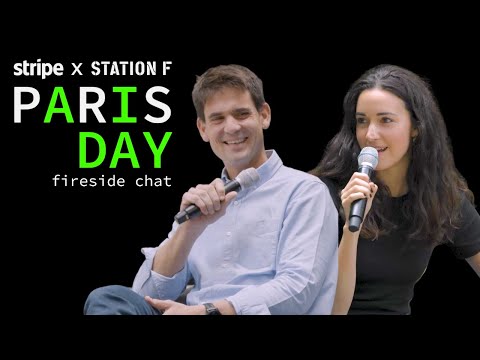
Stanislas Polu (Dust) and Roxanne Varza (Station F) fireside chat | Stripe AI Day—Paris — Stripe

Stripe

Software fragmentation across modern tech firms creates a defensive moat for AI startups against single-ecosystem giants like Microsoft and Google.

AI-assisted summary of Stanislas Polu (Dust) and Roxanne Varza (Station F) fireside chat | Stripe AI Day—Paris — original source. Check the original for full context.

Source published:

Detailed notes

## Background Published by Stripe on YouTube on October 6, 2023, this video features a fireside chat with Dust cofounder Stanislas Polu and Station F director Roxanne Varza. According to the page description, the discussion centers on Dust's core mission and the rapidly emerging AI ecosystem in Paris.

## TL;DR In this fireside chat, Stanislas Polu discusses the evolution of Dust from a developer framework into a productivity platform focused on internal company data for modern, tech-forward businesses. He outlines why Paris has become a premier global hub for AI talent, attributing its success to a strong mathematical foundation and unique programs like the CIFRE system. Polu also shares insights on pushing the boundaries of raw frontier models through clever orchestration rather than just raw scale. Finally, he addresses structural ecosystem challenges, the limits of conversational interfaces, and how operating across fragmented tech stacks creates a natural defensive moat against tech giants.

## Atmosphere & style The conversation carries a casual, intimate, and collaborative energy, balancing the visionary enthusiasm of cutting-edge tech with the candid realism of early-stage startup life. There is a lighthearted rapport between the speakers, marked by witty comparisons, inside jokes about developer tools, and vivid gaming metaphors. The narrative arc captures an exciting, contrarian 'David vs. Goliath' spirit, evoking the energizing feeling of building something substantive from Paris while defying traditional Silicon Valley expectations.

## Key takeaways - [00:02](https://www.youtube.com/watch?v=CoJs1hjfCU8&t=2s) Dust is operating in stealth, working exclusively with three or four design partners in Paris to refine its product. - [00:53](https://www.youtube.com/watch?v=CoJs1hjfCU8&t=53s) The company pivoted away from developer framework tools after realizing that developers graduate from orchestration frameworks when going into production. - [00:53](https://www.youtube.com/watch?v=CoJs1hjfCU8&t=53s) Dust's early product is compared to LangChain, but the founders discovered developer infrastructure lacks the social stickiness of a platform like GitHub. - [04:15](https://www.youtube.com/watch?v=CoJs1hjfCU8&t=255s) The founders chose to base Dust in France because they were physically located there, and global investors no longer care deeply about geographic location. - [04:15](https://www.youtube.com/watch?v=CoJs1hjfCU8&t=255s) Paris offers an exceptional talent pool that is highly skilled and significantly less expensive and hyper-competitive than San Francisco. - [05:55](https://www.youtube.com/watch?v=CoJs1hjfCU8&t=355s) French AI research talent thrives due to a strong mathematical foundation and the CIFRE system, which embedded PhD students within major labs like Meta AI and DeepMind. - [08:44](https://www.youtube.com/watch?v=CoJs1hjfCU8&t=524s) Structural challenges remain in the French ecosystem, particularly the lack of incentives to operate GPUs locally to leverage R&D tax credits. - [08:44](https://www.youtube.com/watch?v=CoJs1hjfCU8&t=524s) Building a startup in Paris provides an exciting, contrarian 'David vs. Goliath' mindset, though fundraising a billion dollars remains harder than in the US. - [11:38](https://www.youtube.com/watch?v=CoJs1hjfCU8&t=698s) Significant AI progress is being made outside of frontier labs by orchestrating, prompting, and running consensus algorithms across existing model APIs. - [13:19](https://www.youtube.com/watch?v=CoJs1hjfCU8&t=799s) Conversational chat is not the final interface for AI, with the current state of conversational APIs being compared to the 'Pong' of AI design. - [13:19](https://www.youtube.com/watch?v=CoJs1hjfCU8&t=799s) Chat remains a forced starting interface for agents because users expect it, but the future lies in complex, multi-action background orchestration. - [15:25](https://www.youtube.com/watch?v=CoJs1hjfCU8&t=925s) Dust prioritizes proprietary frontier models like GPT-4 and Claude 2 over open-source options because professional productivity requires high accuracy and reasoning power. - [15:25](https://www.youtube.com/watch?v=CoJs1hjfCU8&t=925s) Dust focuses strictly on internal team data for knowledge workers to help avoid an immediate distribution battle against entrenched software incumbents. - [17:46](https://www.youtube.com/watch?v=CoJs1hjfCU8&t=1066s) Targeting external use cases like customer support immediately pits startups against platforms like Salesforce and Intercom, which possess massive distribution advantages. - [18:47](https://www.youtube.com/watch?v=CoJs1hjfCU8&t=1127s) Dust aims directly at modern, 'techish' companies with fragmented stacks rather than massive legacy enterprises. - [18:47](https://www.youtube.com/watch?v=CoJs1hjfCU8&t=1127s) The fragmentation of modern company data across various platforms like Slack, Notion, and Google Drive creates a protective moat for a neutral startup like Dust.

## Detailed walkthrough ### [00:02](https://www.youtube.com/watch?v=CoJs1hjfCU8&t=2s) The Dust Demo and Early Adopters

The host kicks off the discussion by praising a recent live demo, noting that it was the first time the public has seen what the team at Dust has been building behind closed doors. The host jokes that the presentation was "75% British accents, 75% product," highlighting the polished yet international feel of the showcase.

Stan reveals that Dust is currently keeping its operations relatively quiet, working closely with a select group of design partners in Paris. These partners are tech companies ranging from 100 to 500 employees. The list is highly exclusive, consisting of only three or four companies, as Dust continues to refine its product before a broader release.

[00:53](https://www.youtube.com/watch?v=CoJs1hjfCU8&t=53s) The Backstory and Pivot from Developer Tooling

Stan shares the origin story of Dust, which began a year prior, in the pre-ChatGPT era. At the time, powerful models like GPT-3 were already accessible via APIs, yet very few people were actually utilizing them. Stan realized that bridging this gap was "as much a product problem as it was a research problem." Initially, Dust launched as a developer-focused platform designed to chain model calls and external APIs together to create LLM applications.

However, they quickly realized the difficulty of capturing long-term value with developer infrastructure tools. Stan compares their early product to Lang Chain, which was gaining massive traction at the same time. While Stan jokes that they "could make a long argument of why the dust of the time was much better than Lang chain," he noticed a fundamental flaw in the developer framework model. He compares developer tools to GitHub, where the true value and user lock-in come from the social layer of the "pull request"—the space where developers comment and review code. In contrast, developers using LLM orchestration frameworks tend to "graduate" from them when moving to production, stripping away the framework to interact directly with the raw models for highly specific, silent use cases. This realization prompted Dust to pivot and reinvent itself when Gabriel joined the project.

[04:15](https://www.youtube.com/watch?v=CoJs1hjfCU8&t=255s) Choosing Paris Over Silicon Valley

The host points out a growing trend of AI companies choosing to base themselves in France rather than Silicon Valley, citing companies like Poolside and Mistral. Although Stan was working at OpenAI and Gabriel was at Alan—and both had previously worked at Stripe in the United States—Stan clarifies a common misconception: he was actually working remotely from France while employed by OpenAI.

When deciding where to establish their topco, they chose France simply because they were physically located there, making it easier to build a local team. Stan notes that the global investment landscape has shifted significantly, stating, "investors do not care that much anymore about where the company is," and that France has successfully passed that hurdle. Furthermore, Paris offers an exceptional talent pool that is highly skilled yet far less competitive and expensive than the hyper-saturated San Francisco market.

[05:55](https://www.youtube.com/watch?v=CoJs1hjfCU8&t=355s) The Secret Behind French AI Talent

Stan attributes the strength of French AI talent to two distinct factors. First, French engineering schools and universities provide a rigorous mathematical foundation that is highly valued globally. Second, Stan proposes a unique hypothesis for why Paris has developed such a deep pool of AI research talent: "the match made in heaven between the CIFRE system and the gaffas."

This unique combination allowed young French doctoral students to complete their PHDs while embedded within major tech companies like Meta AI (FAIR) and DeepMind, both of which established prominent research labs in Paris. This setup gave researchers early access to massive compute clusters and resources, transforming them into international leaders in the AI community. Additionally, the scaling of successful French tech startups over the last decade has cultivated a strong, independent pool of full-stack and product engineers. Stan emphasizes how easy hiring has been for them, remarking that trying to build their current eight-person team in San Francisco "would have been a nightmare, total nightmare."

- **The CIFRE System:** A French program that co-funds PhDs conducted in partnership with a company. - **Key Paris Labs:** Meta AI and DeepMind served as the primary training grounds for local research talent. - **Team Size:** Dust currently operates with a lean team of eight people.

[08:44](https://www.youtube.com/watch?v=CoJs1hjfCU8&t=524s) Ecosystem Strengths, GPU Bottlenecks, and the "David" Mindset

When discussing the limitations of the French startup ecosystem, Stan points out that while the talent is world-class, structural challenges remain. For companies focused on heavy R&D, accessing and operating GPUs locally lacks strong incentives. While the French "Crédit d'Impôt Recherche" (CIR) tax credit is excellent, "nobody wants to operate gpus right, not even open AI wants to operate gpus." Relying on cloud providers means companies cannot easily leverage these local R&D tax incentives, though the government is actively working on reforms.

Despite not being in Silicon Valley, Stan feels that platforms like Twitter make it easy to stay informed. He believes the projects being built in Paris are often deeper and more substantive than those in San Francisco. He compares building a startup in Paris today to being in Silicon Valley ten years ago, when going against the grain was exciting and contrarian. Working from Paris makes them feel like "the David going against them," which he finds incredibly energizing. The primary downside remains funding, as raising a billion dollars is still far more difficult in Europe than in the US.

[11:38](https://www.youtube.com/watch?v=CoJs1hjfCU8&t=698s) Pushing the Boundaries of Raw Models

Stan expresses immense excitement about the untapped potential of existing raw models. He notes that developers do not need to be inside DeepMind or OpenAI to push the boundaries of AI. Instead, incredible progress is being made simply by orchestrating, prompting, and playing with models via APIs.

While scaling laws guarantee progress from GPT-4 to GPT-5, Stan points out that some of the most interesting breakthroughs have come from clever orchestration, such as using "chain of thought" prompting or running consensus algorithms across multiple API calls. He is thrilled by how much can be achieved by simply finding new ways to prod and play with the technology we already have.

[13:19](https://www.youtube.com/watch?v=CoJs1hjfCU8&t=799s) Conversational Interfaces: From Pong to Doom

During the audience Q&A, a researcher asks about the cognitive load of conversational interfaces compared to traditional buttons. Stan agrees that chat is not the final interface for AI. He envisions a future where a single button click might trigger hundreds of background model calls to deliver instant, highly intelligent feedback tailored to the user's context.

Stan uses a vivid gaming metaphor to describe the current state of AI design: "the conversational API is to LLM what pong is to gaming." What the industry really needs to build is the "Doom," the "Quake," or the "Civilization III" of AI—complex, multiplayer, highly interactive experiences. However, because the public has become accustomed to chat interfaces, it is difficult to backtrack. Chat remains a forced starting point, especially for direct agent interactions, because "if you don't show a chat to begin with, people are going to be like [confused]."

[15:25](https://www.youtube.com/watch?v=CoJs1hjfCU8&t=925s) Frontier Models vs. Open Source and Dust's Use Cases

Another audience member asks about the trade-offs between integrating proprietary frontier models versus open-source models. Stan explains that while open-source models are exciting to experiment with, Dust sticks to frontier models like GPT-4 and Claude 2 for productivity use cases.

In a professional setting, accuracy is paramount. Stan notes that even moving from GPT-3.5 Turbo to GPT-4 is a game-changer because smaller or older models hallucinate too frequently. While running a 7-billion-parameter model on a laptop is impressive, asking it to reason through complex company data will often cause it to "just spew." Finally, addressing a question about analyzing website data, Stan clarifies that Dust is currently focused strictly on internal team data to boost the productivity of knowledge workers.

[17:46](https://www.youtube.com/watch?v=CoJs1hjfCU8&t=1066s) The Distribution Fight Against Incumbents

The discussion shifts to the strategic challenges of focusing on external data versus internal data. While having capabilities for externally facing teams is a valuable asset to develop, it is not the core focus of the product. The speakers explain that targeting a specific external use case, such as customer support, immediately pits a startup against massive, entrenched incumbents like Salesforce and Intercom.

These established giants have large, dedicated teams of 20 or more people working specifically on these features. Even if a startup can move faster, the incumbents possess massive distribution advantages. Because the underlying LLM technology is relatively accessible and "not that hard to use," these large platforms will inevitably figure it out quickly, turning the competition into a brutal distribution fight that is incredibly difficult for a young startup to win unless they possess a radically new angle.

- **Incumbent Advantage:** Companies like Salesforce and Intercom have massive distribution networks and dedicated teams. - **Technology Accessibility:** Because LLM technology is relatively easy to implement, incumbents can close the feature gap quickly. - **Strategic Focus:** Prioritizing internal data helps avoid an immediate, uphill distribution battle against established platforms.

[18:47](https://www.youtube.com/watch?v=CoJs1hjfCU8&t=1127s) Defensibility and the Fragmented Tech Stack

An audience member asks about the company's long-term defensibility over the next two years as LLMs continue to rapidly evolve. The speaker candidly admits that they try not to overthink this issue at such an early stage. Instead, they focus on their target market: "techish" companies. Their product stack is uniquely suited for modern tech companies rather than legacy, 5,000-person enterprises—though they joke that a massive tech company like Stripe is "not old" and runs on a compatible modern stack.

For tech companies where management wants to roll out LLM tools to boost employee productivity, the addressable market is already humongous. While single-ecosystem giants like Microsoft can lock users into an all-Microsoft suite (Teams, Outlook, etc.), most modern tech companies run on highly fragmented stacks. They use Google Drive, but they also rely heavily on Notion and Slack. This fragmentation creates a protective moat for a neutral startup.

- **Target Audience:** Modern tech-forward companies rather than legacy enterprises. - **The Fragmentation Moat:** Google or Microsoft cannot easily provide a unified search or assistant if a company's data is scattered across Slack, Notion, and Google Drive. - **Market Depth:** The market is currently so deep that the founders have yet to encounter a prospect comparing them directly to a competitor. "That's a problem basically for future us," they conclude, emphasizing the need to sequence their challenges rather than worrying about two years down the line today.

## Notable quotes > [00:02](https://www.youtube.com/watch?v=CoJs1hjfCU8&t=2s) 75% British accents, 75% product — The host

> [00:53](https://www.youtube.com/watch?v=CoJs1hjfCU8&t=53s) as much a product problem as it was a research problem — Stanislas Polu

> [00:53](https://www.youtube.com/watch?v=CoJs1hjfCU8&t=53s) could make a long argument of why the dust of the time was much better than Lang chain — Stanislas Polu

> [04:15](https://www.youtube.com/watch?v=CoJs1hjfCU8&t=255s) investors do not care that much anymore about where the company is — Stanislas Polu

> [05:55](https://www.youtube.com/watch?v=CoJs1hjfCU8&t=355s) the match made in heaven between the CIFRE system and the gaffas — Stanislas Polu

> [05:55](https://www.youtube.com/watch?v=CoJs1hjfCU8&t=355s) would have been a nightmare, total nightmare — Stanislas Polu

> [08:44](https://www.youtube.com/watch?v=CoJs1hjfCU8&t=524s) nobody wants to operate gpus right, not even open AI wants to operate gpus — Stanislas Polu

> [08:44](https://www.youtube.com/watch?v=CoJs1hjfCU8&t=524s) the David going against them — Stanislas Polu

> [13:19](https://www.youtube.com/watch?v=CoJs1hjfCU8&t=799s) the conversational API is to LLM what pong is to gaming — Stanislas Polu

> [13:19](https://www.youtube.com/watch?v=CoJs1hjfCU8&t=799s) if you don't show a chat to begin with, people are going to be like — Stanislas Polu

> [15:25](https://www.youtube.com/watch?v=CoJs1hjfCU8&t=925s) just spew — Stanislas Polu

> [17:46](https://www.youtube.com/watch?v=CoJs1hjfCU8&t=1066s) not that hard to use — The speakers

> [18:47](https://www.youtube.com/watch?v=CoJs1hjfCU8&t=1127s) not old — The speaker

> [18:47](https://www.youtube.com/watch?v=CoJs1hjfCU8&t=1127s) That's a problem basically for future us — The founders

## Mentioned Stanislas Polu, Roxanne Varza, Dust, Station F, Stripe, GPT-3, ChatGPT, Lang Chain, GitHub, Gabriel, Poolside, Mistral, OpenAI, Alan, San Francisco, Paris, CIFRE, Meta AI, FAIR, DeepMind, Crédit d'Impôt Recherche, Twitter, GPT-4, GPT-5, Pong, Doom, Quake, Civilization III, Claude 2, GPT-3.5 Turbo, Salesforce, Intercom, Microsoft, Teams, Outlook, Google Drive, Notion, Slack

[Source](https://www.youtube.com/watch?v=CoJs1hjfCU8)

中文简报

Dust从开发工具转向内部数据以建立技术护城河 现代科技公司内部的软件碎片化,为AI初创企业构筑了抵御微软和谷歌等单一生态巨头的防御护城河。 在这场炉边谈话中,Stanislas Polu探讨了Dust如何从一个开发者框架演进为一个专注于为现代科技前沿企业处理内部公司数据的生产力平台。他阐述了巴黎何以成为全球领先的AI人才中心,并将其归功于深厚的数学底蕴以及CIFRE体系等独特项目。Polu还分享了如何通过巧妙编排而非单纯依靠扩大规模来突破原始前沿模型边界的见解。最后,他探讨了结构性的生态系统挑战、对话界面的局限性,以及跨碎片化技术栈运作如何形成抵御科技巨头的天然防御护城河。 Dust目前处于隐形运作状态,仅与巴黎的三到四家设计合作伙伴合作以打磨其产品。 (0:02) 在意识到开发者在进入生产阶段时往往会脱离编排框架后,该公司放弃了开发者框架工具并进行了转型。 (0:53) Dust的早期产品被拿来与LangChain相提并论,但创始人发现开发者基础设施缺乏类似GitHub等平台的社交粘性。 (0:53) 创始人选择将Dust设在法国是因为他们身处当地,且全球投资者已不再特别看重地理位置。 (4:15) 巴黎拥有卓越的人才储备,不仅技术高超,而且成本明显低于旧金山,竞争激烈程度也远不及后者。 (4:15)

Reading summary

Dust co-founder Stanislas Polu argues that building defensible generative AI applications requires moving beyond developer orchestration frameworks and avoiding direct distribution battles against enterprise incumbents. In a fireside chat with Roxanne Varza, Polu outlines why Dust focuses on internal productivity across fragmented software stacks, the structural advantages of the Paris AI ecosystem, and why current conversational interfaces are only the beginning of AI product design. Pivot from Developer Tooling to Applications (0:53) Dust initially launched before ChatGPT as a developer-oriented framework designed to chain LLM calls and APIs together, paralleling tools like LangChain. However, Polu observed a core vulnerability in developer infrastructure: unlike GitHub, where the social layer of pull requests drives durable retention, software engineers using LLM frameworks tend to graduate away from them when transitioning to production. To optimize specialized use cases, developers strip out intermediary frameworks and interact directly with raw model APIs. Recognizing that capturing long-term value in developer tooling was difficult, Polu and co-founder Gabriel pivoted the company toward user-facing enterprise workflows. Dust transitioned into a stealth productivity tool, currently testing with three to four design partners among Paris tech companies of 100 to 500 employees. Paris AI Talent Advantages and Structural Bottlenecks (5:55) Operating an eight-person team in France rather than Silicon Valley offers major hiring efficiencies. Polu notes that global investors no longer penalize companies for basing top entities in France, and Paris provides a dense talent pool without the hyper-saturated recruitment pressures of San Francisco. He attributes this depth to rigorous French mathematics training and the CIFRE system, which allowed doctoral researchers to co-train inside Paris labs run by Meta AI (FAIR) and DeepMind, giving them early access to high-end compute. Conversely, structural limitations persist around infrastructure and late-stage capital. France's Crédit d'Impôt Recherche (CIR) tax credit does not easily apply to rented cloud compute, posing an issue since modern AI startups do not want to operate physical GPUs. Polu also acknowledges that raising mega-rounds (such as a billion dollars) remains significantly more difficult in Europe than in the United States. Model Selection, Orchestration, and Interface Limits (11:38) Polu asserts that significant performance gains can be achieved without training foundation models in-house. By using API-driven techniques like chain-of-thought prompting and consensus algorithms across multiple calls, developers can uncover substantial latent capabilities within existing models. Dust exclusively uses frontier proprietary models like GPT-4 and Claude 2 for internal productivity, noting that smaller open-source models (such as 7-billion-parameter variants) hallucinate too frequently on complex internal data. On user interfaces, Polu compares contemporary chat interfaces to the game 'Pong,' calling them an initial, crude stage of AI interaction. While chat remains a necessary entry point because users expect it from agents, Polu envisions future interfaces functioning more like 'Doom' or 'Civilization III'—where a single user action silently triggers hundreds of specialized background model calls to deliver direct context and feedback. Defensibility Across Fragmented Tech Stacks (17:46) Dust deliberately focuses on internal knowledge work rather than externally facing applications like customer support. Polu warns that addressing external workflows immediately invites distribution battles against entrenched incumbents like Salesforce and Intercom. Because the underlying LLM technology is accessible, incumbents can quickly build comparable features and leverage massive distribution advantages to crowd out startups. Instead, Dust builds defensibility by serving modern, tech-forward companies operating across fragmented toolsets. While ecosystem giants like Microsoft dominate unified, single-vendor corporate environments, modern tech companies routinely distribute data across Google Drive, Notion, and Slack. Because no single incumbent can seamlessly integrate a rival's platform, a neutral startup that unifies these fragmented knowledge repositories gains a practical protective moat. Polu concedes that the long-term defensibility of application-layer software against rapidly advancing frontier models remains an unsolved industry question, but argues that early-stage startups must sequence their challenges and prioritize executing within the deep, unserved market for modern tech stacks today.

精炼阅读摘要

Dust 联合创始人 Stanislas Polu 指出,大语言模型创业的破局点在于找准产品形态而非单纯依赖底层基础设施;团队放弃了易被开发者抛弃的编排框架,转向利用前沿模型连接企业碎片化数据以提升团队内部生产力,同时依托巴黎的工程人才红利与中立生态应对分发巨头的竞争。 从开发者工具转向内部生产力应用 (0:53) Dust 始于 ChatGPT 诞生之前。Polu 观察到,当时 GPT-3 等模型已具备强大能力,但由于缺乏产品化路径而极少被实际采用。Dust 最初定位为面向开发者的模型与外部 API 编排平台,类似于同期快速崛起的 LangChain。然而,团队很快意识到开发者基础设施在商业化上的天然缺陷:与依靠“Pull Request”等社交协作层建立用户黏性的 GitHub 不同,开发者在使用 LLM 编排框架构建应用时,往往在进入生产阶段后选择“脱壳”,绕过框架直接调用底层原始模型接口以满足特定性能需求。 意识到这种底层编排工具难以沉淀长期商业价值后,Dust 在联合创始人 Gabriel 加入时果断推行战略转型。团队放弃了纯开发者框架定位,转向打造专注于企业知识工作者生产力的应用,目前与巴黎 3 至 4 家员工规模在 100 至 500 人的科技公司展开闭门合作,通过严密的设计伙伴机制持续打磨产品核心功能。 巴黎人才红利与欧洲生态的现实权衡 (4:15) 针对将总部设立在法国而非硅谷的选择,Polu 澄清自己此前在 OpenAI 即为远程办公,回法创业主要因为创始团队身处本地。他认为全球风险投资环境已发生结构性转变,投资人不再过度执着于企业是否设立在加州。相比于人才竞争极度白热化且成本高昂的旧金山(Polu 称在当地组建当前的 8 人团队将是“一场噩梦”),巴黎提供了极具成本效益且顶尖的工程师储备。 Polu 将法国的人才优势归结为严苛的高等数学教育,以及工业界产学研结合的 CIFRE 博士培养体系——该体系让法国研究人员在 Meta FAIR 和 DeepMind 等顶尖本地实验室中,早期便能直接使用超大规模算力集群进行训练,同时过去十年法国本土科技生态的成熟也培育了大量全栈产品工程人才。不过,法国生态仍面临挑战:云端租用算力难以充分受益于本地的研发税收抵免政策(CIR),且欧洲筹集 10 亿美元级别资金的难度远高于美国。但 Polu 强调,身处巴黎反而赋予团队一种类似早期硅谷的“大卫对抗歌利亚”式的反共识创业激情。 模型编排潜力与对话交互的初级阶段 (13:19) 在模型技术演进方面,Polu 强调探索前沿技术并不局限于尖端研究机构内部,开发者通过 API 调用、精心设计的提示词工程以及思维链(Chain of Thought)和多 API 调用的共识算法,完全能够在现有模型上取得突破性进展。底层模型的能力拓展依然广阔,巧妙的系统编排能够激发出远超单次请求的推理能力。 针对交互界面的认知负荷,Polu 提出对话式界面在 LLM 领域的作用仅仅相当于游戏史上的《乓》(Pong)。行业最终需要构建的是《毁灭战士》(Doom)、《雷神之锤》(Quake)或《文明III》(Civilization III)级别的高度沉浸、交互式与多智能体协作系统——未来用户只需点击一次按钮,系统后台即可并发数十乃至上百次模型调用以输出精准结果。然而,鉴于当前大众已被训练习惯于聊天框形态,过早移除对话界面会引发认知混乱,因此聊天框仍是现阶段不得不采用的过渡入口。 前沿模型选型与碎片化技术栈壁垒 (15:25) 在模型选择上,Dust 明确聚焦于 GPT-4 和 Claude 2 等前沿专有模型,而非开源小模型。Polu 解释称,在专业严谨的工作场景中,准确性是决定性指标;将 7B 参数量的开源模型部署在本地虽然具备极客吸引力,但在处理企业复杂的推理任务时容易产生严重的逻辑混乱与模型幻觉,因此现阶段必须依赖顶级前沿模型的强推理能力。 在商业防御性方面,Dust 刻意避开客服支持等面向外部数据的应用场景,以此避免过早撞上面临 Salesforce、Intercom 等成熟巨头的残酷分发竞争。巨头拥有数十人的专属团队且同样能快速调用 LLM,初创团队在外部场景将深陷分发劣势。Dust 选择专注于现代科技公司的内部协同场景,这类企业极少将数据完全集中于微软体系,而是高度依赖由 Google Drive、Notion 和 Slack 等构成的异构软件栈。单一平台巨头难以打破生态壁垒实现全局检索,这种技术栈的碎片化恰恰为中立初创公司构筑了天然的防御护城河。 Polu 总结认为,面对底层大模型持续演进的不确定性,初创团队不必在极早期过度推演两三年后的终局防御壁垒。当前的首要任务是服务好采用现代软件栈的中型科技公司,解决跨平台数据割裂下的内部生产力痛点,按节奏推进产品验证,在巨头生态缝隙与异构办公网络中确立立足点。

Source quotes

[0:02] The host: 75% British accents, 75% product [0:53] Stanislas Polu: as much a product problem as it was a research problem [0:53] Stanislas Polu: could make a long argument of why the dust of the time was much better than Lang chain [4:15] Stanislas Polu: investors do not care that much anymore about where the company is [5:55] Stanislas Polu: the match made in heaven between the CIFRE system and the gaffas [5:55] Stanislas Polu: would have been a nightmare, total nightmare [8:44] Stanislas Polu: nobody wants to operate gpus right, not even open AI wants to operate gpus [8:44] Stanislas Polu: the David going against them [13:19] Stanislas Polu: the conversational API is to LLM what pong is to gaming [13:19] Stanislas Polu: if you don't show a chat to begin with, people are going to be like [15:25] Stanislas Polu: just spew [17:46] The speakers: not that hard to use [18:47] The speaker: not old [18:47] The founders: That's a problem basically for future us

Original transcript

[0:02] [Music] [0:04] Stan great to have you with us thank you [0:06] you told me I could ask you anything for [0:08] this discussion we didn't prepare [0:09] anything so you can go wild excellent I [0:12] will do that just that um first of all [0:14] great demo that was incredible where's [0:17] he that was amazing can you guys just [0:19] applaud one more time I loved it [0:23] um that was like the first time we seen [0:26] 75% British accents 75% product it's [0:29] true no that's like the first time we've [0:31] seen anything from dust because everyone [0:33] knows you guys have been around nobody [0:35] has really known what you guys have been [0:36] up to so now we're seeing it nobody [0:38] asked this but who's using the product [0:40] today so we're working with uh as [0:42] Gabrielle said with a few design [0:43] Partners in Paris uh between 100 500 [0:46] people tech companies three or four of [0:48] them I mean the list is not that long so [0:50] you have a good idea from there all [0:51] right so still kind of keeping it secret [0:53] um but I want to also know the backstory [0:56] to this I know a little bit about the [0:57] backstory but definitely not enough and [0:59] I'm imagining other people people here [1:00] don't know enough you were at stripe or [1:02] you had a company was acquired by stripe [1:04] you were at stripe you went to open AI [1:06] how did you end up doing this today what [1:08] what at what point did you say I need to [1:10] build this yeah I think the uh original [1:13] motivation is one year ago um seeing [1:17] that those so it was preach at GPD uh [1:20] seeing that those models are already [1:21] extremely powerful they're available [1:23] through an API at the time gd3 was [1:26] available through the API and realizing [1:29] at the same time that that not many [1:31] people were actually using them so as [1:34] much a product problem as it was a [1:36] research problem of course the research [1:37] problem is still a big problem you want [1:39] to make them better but the fact that it [1:41] was those models were already at the [1:43] level of Strat GPT today and nobody was [1:45] realizing how useful they can be and so [1:47] that meant that they were there was kind [1:49] of a big product issue to be solved that [1:52] was kind of a triggering motivation to [1:54] go explore that so you could have gone [1:56] so many different ways what brought you [1:58] to this yeah we we started very [2:01] differently the the first um iteration [2:04] of dust was more developer focused uh it [2:08] was a platform to create llm apps so by [2:11] LM app I mean chaining of calls to [2:14] models and external [2:16] apis um and I think it it created a lot [2:20] of interest from [2:21] developers uh but the question is why [2:24] didn't we stick with that I guess which [2:26] is an interesting [2:27] one and at the same time L chain was [2:30] popping up and L chain is probably much [2:33] more well known than dust was even if we [2:36] could make a long argument of why the [2:39] dust of the time was much better than [2:40] Lang chain um but I think the uh working [2:44] on that for something like six months my [2:47] gut feeling was that it would it would [2:48] be very hard to capture uh long-term [2:52] value from a product like that um for [2:56] basically if you think about developer [2:58] tools that create value for developers a [3:01] good example is obviously GitHub and in [3:04] GitHub the uh the one thing that hooks [3:06] you to the platform is the pool request [3:08] the PO request kind of the social aspect [3:10] on top of git uh this is where you [3:12] comment and you can review code etc etc [3:16] and when you see git and you see GitHub [3:18] you see exactly where the value accurs [3:22] and I think in the world of infra [3:24] tooling and developer tooling on top of [3:26] LMS I couldn't quite see such a wrong [3:30] value creation or value proposition and [3:33] so there was always the expectation that [3:35] people would probably graduate from the [3:38] platform uh and I think that's what to [3:41] some extent we kind of see uh for our [3:44] users that has been using Us in the past [3:47] and also Lang chain L chain has been [3:49] great for demos but it's much harder [3:51] question on whether you want to stay on [3:53] such a framework when you go to [3:54] production when you go to production [3:56] your use case can kind of becomes more [3:59] specific more silent and so you you [4:02] generally want to just remove the [4:04] framework and go towards the the RO [4:06] model so that's that's what is kind of a [4:08] main fear that led us to reinvent [4:11] ourself as Gabriel joined the project [4:13] super all that in just one year that's [4:15] that's pretty incredible um and you guys [4:18] I mean we're seeing this trend kind of [4:20] trend of companies deciding to come from [4:24] abroad and base themselves here um we've [4:26] seen that with poolside I don't know if [4:28] we can say we saw that with M but [4:29] obviously M's here which is awesome um [4:32] but you guys actually were in the Bay [4:34] Area both of you you picked up and you [4:36] came here to build the company tell me [4:38] what that's about so that's not entirely [4:40] true oh it's not true all right uh I was [4:44] at open AI but I was working remotely [4:45] from France so technically I was [4:47] physically in France even if my brain [4:49] was maybe there uh and Gabriel was Alan [4:52] so pure French company we were both at [4:54] stripe in the US before but so it it was [4:57] still a very clear question on whether [5:00] we wanted to build a company there on [5:02] whether we wanted to build a company as [5:04] a French or us topco um and I think for [5:09] us uh there's many factors the fact that [5:12] we were physically present in France [5:13] made just sense to build a French topco [5:15] and build a French team it's just [5:17] simpler uh we live in a world where I [5:20] think [5:21] investors do not care that much anymore [5:24] about where you the company is there's a [5:26] few countries where it's not true but I [5:27] think France is pass that stage for good [5:31] which is great um and at the same time [5:35] uh there's an incredible Tannon pool in [5:38] Paris um whether it's on the product [5:41] engineering side or on the research side [5:44] uh the tanon pool is pretty deep and uh [5:47] much less competitive than in the US so [5:50] I think it's a much favorable much more [5:52] favorable place to start a a startup [5:55] especially in AI okay so everyone talks [5:58] about talent talent AI Talent you lived [6:01] in the US you studied in the US you [6:02] studied at Stanford you studied at py [6:04] technique tell me what is so incredible [6:07] about our talent here what what are they [6:09] teaching here that they're not teaching [6:10] somewhere else what's what's this thing [6:12] about Talent so I mean there's two [6:15] things there there's the French Talent [6:18] which is global and is in the US as well [6:20] and I think we've very well recognized [6:22] due to the way we've been taught during [6:25] our studies uh so there's a bunch of [6:27] engineering schools universities in [6:29] France with a with a very strong [6:31] mathematical background that's being [6:33] that's being indicated to to everyone [6:35] and so French Talent is has been super [6:38] well recognized in the UA world in the [6:40] AI world because of that kind of Mass E [6:43] influence compared to uh the us or [6:47] Britain um and then there's the talent [6:49] that is in Paris if you want to start a [6:51] company in Paris and there uh I have a [6:53] theory about how we came to have a very [6:57] deep AI research talent pool and my [7:01] hypothesis is the uh match made in [7:05] heaven between the CIF system and the [7:07] gaffas basically it kind of created a a [7:10] large numbers of young researchers that [7:14] were embedded during the uh phds inside [7:18] of gaffas with access to very large [7:21] clusters so they kind of did their PHD [7:24] with access to resources which led them [7:26] to become leaders of the AI research [7:30] uh community and so that is incredible [7:32] because the it's funny that it is the C [7:35] French system meeting the basically [7:39] Facebook meta Ai and deep M because [7:41] these are the two big labs in Paris that [7:44] created like a very large group of very [7:47] strong [7:47] and internationally recognized [7:50] researchers incredible so it's the [7:51] research the research element that's [7:53] strong I think the research for that [7:54] tent pool okay and then we've we've [7:57] we've gone from so we started our first [7:58] company in Paris 10 years ago I think [8:01] the the talent pool for product [8:03] engineering let's call it that way kind [8:05] of a full stack type of Engineers or [8:07] Engineers that are very good at building [8:08] good product was uh almost in existence [8:13] 10 years ago and now we've seen a bunch [8:15] of very nice scaled up and large [8:18] companies uh going through that phase [8:20] and that created a talent independent of [8:23] research but also present here for us [8:26] it's been incredibly easy to hire which [8:29] is is great uh if we had wanted to build [8:31] the same team that we have today there [8:33] are eight of us it's not that big but if [8:35] we had wanted to build the same team uh [8:37] in the US in in in San Francisco it [8:39] would have been a nightmare total [8:41] nightmare I think I'm pretty sure [8:44] interesting and so you so obviously I [8:46] think everyone here agrees with you on [8:48] the talent piece what are the other [8:50] strengths of this ecosystem for AI what [8:53] do you feel that France really has to [8:55] offer for somebody that would be coming [8:56] from [8:57] abroad uh so that's the [8:59] some more complex questions uh so other [9:03] than Talent yeah that's it that's all we [9:05] got [9:07] yeah um I think it's basically it's [9:11] still a walk in progress like this I [9:14] mean the government is working out on [9:15] trying to create uh [9:17] structural uh reforms that will help on [9:21] that [9:21] front um if you think about it today um [9:25] if you're building a startup where [9:26] you're going to have to do R&D so the I [9:29] think the talent pool is really good but [9:31] if you want to use gpus uh you don't [9:34] have any you don't have a lot of [9:36] incentives to do that in France because [9:38] you generally don't want to operate [9:40] those gpus yourself if you want to if [9:43] you were to be able to operate them then [9:45] you would have the cier which would kick [9:47] in which is awesome but I mean nobody [9:51] wants to operate gpus right not even [9:53] open wants to operate gpus and so if you [9:56] if you fall back to operate to using [9:57] gpus through a clo provider you don't [9:59] don't have that yet so hopefully we'll [10:02] get into world where even that will be [10:05] uh kind of incentivized by friends uh [10:07] for you to create a company but they [10:10] they're working out on it so okay super [10:11] and what is like the main downfall of [10:14] this ecosystem what do we what is the [10:16] one thing we have to fix here uh it [10:19] depends on which side you are of the [10:21] research boundary uh for us I don't see [10:24] that many downfall I mean you you always [10:26] have the kind of hey I'm not in s I'm [10:29] not in the known on everything happens [10:32] there but to some [10:33] extent uh a lot of that can be followed [10:37] on Twitter I think uh there is much [10:39] deeper pro project here than most of the [10:43] project that may be happen in SF right [10:45] now um and it it's almost feel like I [10:49] mean to me it feels like being in Paris [10:51] is a bit like being in the Silicon [10:52] Valley of 10 years ago I mean it being [10:55] in s Valley building a startup 10 years [10:56] ago was contan you were going against [10:59] against the flow uh and was exciting and [11:01] tough and now walking in a startup in [11:04] Silicon Valley is like the kind of [11:06] standard way of thinking basically and [11:10] so doing that from Paris is almost like [11:13] being the uh the David uh going against [11:15] them which is extremely exciting and [11:18] energizing um then if you yeah if you [11:21] fall uh if you fall so on the product [11:24] side I think I don't see that many [11:25] downfalls and on the research side uh [11:28] obviously it's access to [11:30] funding it's much harder to find a [11:32] billion dollars here than it is in US [11:34] basically very true very true I love [11:37] that you picked this contrarian spot to [11:38] build your company stand um before I [11:40] open it up to questions from everybody [11:42] else I just want to ask one last [11:43] question um you have seen I mean you see [11:47] everything that happens in Ai and [11:48] Innovation what is getting you really [11:50] excited right now besides dust obviously [11:52] dust is the most exciting what gets you [11:54] really excited and thrilled besides dust [11:57] yeah I [12:00] nothing in particular right now but I [12:02] think what gets me the most excited is [12:03] the fact that this technology those role [12:05] models that we all have access to [12:07] through apis are still brand new and we [12:10] haven't even started scratching uh [12:13] exploring their capabilities in a sense [12:15] and [12:16] so what I think exract me the most is [12:19] that you don't need to be embedded [12:21] within deep mind you don't need to be [12:22] embedded within openi to actually push [12:24] the boundary of what you can do with [12:25] that technology I think there's so much [12:27] that can be done by using the model [12:29] through API prompting orchestrating its [12:32] use in many different ways uh many of [12:35] the most [12:36] interesting papers lately have or last [12:40] year have been around that exactly yes [12:43] it's awesome to go from G 3 to gp4 it's [12:45] awesome to go from gp4 to gp5 but the [12:47] scaling lows tells us exactly what's Tak [12:50] what what we're going to get and it [12:52] feels like we've been getting even more [12:55] by doing train of Sals we've been we've [12:57] got even more by doing doing consensus [13:00] with chain of thoughts which is just [13:01] doing more APA calls to the same model [13:03] but like orchestrating how you use that [13:05] in a different way and so I'm really [13:08] excited to see what we'll be able to do [13:09] with the technology by just proding it [13:12] playing with it and I think there's [13:15] still lots to do super well I imagine [13:18] you guys have some [13:19] questions hello yeah so my question is [13:23] about conversational interfaces so I'm [13:25] sure you know in human computer [13:26] interaction research they are kind of [13:28] skeptical about this mode of interaction [13:31] because there's higher cognitive charge [13:34] for the user than interacting with the [13:36] button so I would be really interested [13:38] to know what you think about it to which [13:40] extent it's Central to llms to be [13:44] conversational [13:47] um when we were raising money or a [13:49] couple months ago whatever and still no [13:51] but we were pitching that the [13:53] conversation interface is not the final [13:56] interface uh I agree with that you can [13:58] imagine a world where even a a simple [14:01] button click when the cost of models [14:02] will go down even more a simple button [14:05] click could generate hundreds of calls [14:08] to a model to do an action and have an [14:10] instant feedback you can imagine [14:12] interfaces that are based on llms that [14:14] react much more intelligently to where [14:16] the user is what they want to do who [14:19] they are etc etc so I completely buy the [14:23] fact that the conversational API is kind [14:25] of a to me the conversational API is [14:28] like the pom is to llm what pong is to [14:31] gaming right and so what we really want [14:34] is the is the Doom toe what we want is [14:36] the Quake what we want is the [14:38] civilization tree like crazy where [14:41] uh you're doing multiplayer and all the [14:43] kind of crazy stuff happen that we want [14:46] for sure but the the the train left the [14:49] station a bit early and so today people [14:52] are accustomed to conversational API to [14:55] interact with those models so it's it's [14:56] a bit hard for us as an example it's a [14:59] bit hard to try to backtrack from that [15:01] so it kind of it's a forced starting [15:03] point but completely agreed that there's [15:05] probably much more to be to be explored [15:07] and if you if you're building a product [15:09] that integrates AI inside an existing [15:11] product maybe there the opportunity to [15:13] create newer interfaces even stronger [15:16] it's when you interact directly with [15:18] agents if you don't show a chat to begin [15:21] with people are going to be like [15:22] [Music] [15:24] H all right another question just a [15:27] question and your uh [15:29] an expert in this so I value your [15:31] feedback but it feels like a lot of the [15:33] cool models that are being released [15:34] today are open source so what's your [15:37] take on integrating thirdparty [15:38] Technologies from private companies [15:39] versus implementing open source models [15:41] that are being released so the the the [15:44] they cool because you can act on them [15:46] and you see a lot of excitement around [15:48] that uh the reason why we stick with [15:51] front let's call them Frontier models [15:53] like gp4 and clo 2 is there is simply [15:56] because when you're in the productivity [15:58] setup up and you have a a Rital based [16:01] answer that's getting generated as an [16:03] example going from even GP 3.5 turbo to [16:05] gp4 is a game changer GB 315 turbo is a [16:08] great model by open source standard uh [16:11] but it hallucinates a lot and so if [16:14] you're really going for [16:16] productivity you still kind of in the [16:19] current state of affairs you still need [16:20] to go for the largest models obviously [16:23] that it'll hopefully converge at some [16:26] point but right now I don't think we're [16:28] quite right there uh it's super exciting [16:31] to be able to run a 7 billion model on [16:33] your laptop but if you ask uh something [16:36] slightly complex uh about data coming [16:39] from a company to a 7B model it'll just [16:43] spew and so I think we need [16:46] that that kind of convergence to happen [16:48] uh [16:49] for open source models to really be [16:52] useful when you need a bit of reasoning [16:54] basically if I can ask just a short [16:56] small question um you mentioned pong [16:59] versus civilization or Doom building a [17:01] metaphor if convers conversational AI is [17:07] p what is Doom [17:09] to it's up to us to figure it out I [17:12] guess thanks my question is more about [17:15] the use case it's for example I have a [17:18] website am AAS company or another one [17:21] and I want to do to analyze my website [17:25] do I need to upload my whole content or [17:29] I don't know is if it's possible also [17:31] first of all is it possible to make it [17:33] and if it's possible how yeah so right [17:35] now we've been focusing on internal data [17:37] first uh the reason why is because we're [17:40] really excited about helping the [17:41] productivity of the knowledge worker or [17:43] the people working as teams uh if we had [17:46] focused on external data first naturally [17:49] the Feit becomes something like [17:51] externally facing teams so I think [17:54] that's something that we will want to [17:56] have as a capability but it's not [17:57] necessarily a CO Focus because the [18:00] reason why we've we've been excited [18:02] about like internal data as well is [18:05] because if you focus on a particular use [18:08] case like customer support which is kind [18:10] of where that your question kind of [18:12] leads a little bit uh then it's going to [18:14] be super hard to fight against [18:17] incumbents I mean Salesforce intercom [18:20] all of that they all have a team of 20 [18:22] people working on [18:23] that maybe they won't go as fast as a [18:26] startup but the distribution is going to [18:28] be massive and so the moment they figure [18:31] it out and it won't take a lot of time [18:32] because at the end of the day this [18:33] technology is not that hard to use uh [18:36] you're going to be fac in a distribution [18:38] fight with them and so that's going to [18:40] be a tough one to crack unless you have [18:42] something very new [18:45] but well [18:47] thanks yes right right here um thanks so [18:51] I was a bit um curious about how you see [18:55] your defens ability in maybe two years [18:58] uh how is was llm growing and so y uh [19:03] that's a obviously an interesting [19:05] question [19:06] um to be honest we don't try to think [19:09] too much about it because if you think [19:11] who do we want to address with that [19:13] product it's pretty simple want to [19:14] address techish company because our [19:17] stack the stack we target is better fit [19:20] for tech companies than old 5,000 people [19:23] companies that stripe is fine stripe is [19:26] not [19:27] old [19:29] and they run on that stack but um and if [19:31] you think about tech companies where the [19:34] management wants to roll those models to [19:37] their employees because they believe [19:39] it's going to be a change a game changer [19:41] in in terms of productivity if you think [19:44] about that market it's a humongous [19:46] Market already so [19:48] obviously there's a lot of competition [19:50] already from startups there's going to [19:53] be competition from platforms that on [19:56] which business runs almost entire so if [19:58] you you think about Microsoft when you [20:00] run on Microsoft generally you run on [20:02] Microsoft only you have teams you have [20:04] whatever outlock blah blah blah when you [20:06] run on Google most of the time you if [20:09] you're a tech company you also have [20:11] notion you also have slack so for all [20:14] those companies that do not run on a [20:17] single infrastructure I think there's [20:19] going to be a a need to have access to [20:22] both slack and Google Drive so there [20:25] there probably a long time before we'll [20:27] see uh competition from let's say Google [20:30] on all specific use case because if you [20:32] have if you have drive but you don't [20:34] have notion and you don't have slack it [20:35] kind of sucks and so I think there's a [20:39] there's going to be a lot of competition [20:40] there's a lot of competion from startups [20:42] but at the same time the uh the market [20:43] is so so so so so so deep that our main [20:48] problem for us today is really try to [20:51] find the product that clicks with our [20:53] users and even if there are five other [20:55] startups doing the same time in the same [20:57] Market we we won't see each others [20:59] basically and today we haven't seen any [21:01] case of people we talk to and they say [21:04] oh we're comparing you with that of a [21:06] product because that market is so big so [21:09] that's a problem basically for futur us [21:11] I think I agree that it's a very [21:12] important problem but we try to sequence [21:15] them in a way that is not too crazy [21:18] super that's all the time we have thank [21:19] you so much so [21:27] much [21:38] than