Runway Automates Hollywood VFX as AI Shifting Film Pre-Production
Stripe
Generative AI will fundamentally expand the creative economy by lowering iteration costs rather than replacing human filmmakers, mimicking the historical evolution of the motion picture camera.
## Background
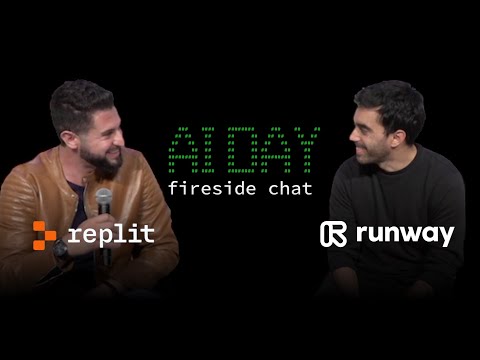
Published on July 19, 2023, by Stripe on YouTube, this video captures a fireside chat from Stripe AI Day. The page description highlights a conversation between Cristóbal Valenzuela (Runway CEO) and Michele Catasta (Replit VP of AI) focused on creativity in the AI space and the journey of founding a startup from an unconventional background.
## TL;DR
In this discussion, Runway CEO Cristóbal Valenzuela shares the origins of his company, which began at NYU around 2015 with a core mission to augment rather than replace human creativity. He explains Runway's 'stepping stones' philosophy for navigating rapid tech shifts, blending applied research directly with real-world filmmaking workflows like the automated rotoscoping used in the Oscar-winning film *Everything Everywhere All at Once*. Looking ahead, Valenzuela compares generative AI to the early '1910s era' of the camera, emphasizing an organic, iterative creative process and an internal 'figure it out' mindset to push past current industry anxieties.
## Atmosphere & style
The conversation feels deeply intellectual yet grounded and accessible, marked by an easy, collaborative chemistry between the two AI leaders. Michele injects moments of lighthearted humor, such as joking about Runway 'winning seven Oscars in the back room,' while Chris responds with thoughtful, philosophical frameworks and compelling historical analogies. There is an inspiring, gritty energy to the dialogue, moving from the excitement of early user adoption to a calm, nuanced reassurance against Hollywood's AI anxieties, ultimately evoking a sense of artistic wonder and creative possibility.
## Key takeaways
- [00:00](https://www.youtube.com/watch?v=NkvjVTza8FI&t=0s) Runway is both a research and product company founded on the core mission of augmenting human creativity rather than replacing it.
- [00:00](https://www.youtube.com/watch?v=NkvjVTza8FI&t=0s) The company dates back to 2015–2016 at NYU and was incorporated in 2018, making it a generative AI company that preceded the current industry hype cycle.
- [04:59](https://www.youtube.com/watch?v=NkvjVTza8FI&t=299s) Runway operates under a philosophy inspired by Kenneth Stanley's book 'Why Greatness Cannot Be Planned,' focusing on laying down 'stepping stones' rather than adhering to rigid, long-term frameworks.
- [04:59](https://www.youtube.com/watch?v=NkvjVTza8FI&t=299s) To accelerate real-world testing, Runway deeply integrates product and research by positioning its applied research team right next to its in-house production agency.
- [09:59](https://www.youtube.com/watch?v=NkvjVTza8FI&t=599s) The value of large models like Gen-2 stems from creating interactive feedback loops between the artist and the model, rather than from the model in isolation.
- [09:59](https://www.youtube.com/watch?v=NkvjVTza8FI&t=599s) The visual effects team for the seven-time Oscar-winning film 'Everything Everywhere All at Once' consisted of only seven people and heavily relied on Runway's automated rotoscoping tool.
- [14:59](https://www.youtube.com/watch?v=NkvjVTza8FI&t=899s) Generative models function as a new kind of camera, and cinema is currently in its '1910s phase' where the unique language and aesthetics of the medium are still being discovered through artistic experimentation.
- [19:59](https://www.youtube.com/watch?v=NkvjVTza8FI&t=1199s) CEO Cristóbal Valenzuela applies an immigrant-driven 'systems thinking' mindset to company building, leading to an internal culture and mantra defined by the phrase 'figure it out.'
- [22:42](https://www.youtube.com/watch?v=NkvjVTza8FI&t=1362s) Public anxiety and regulatory fear surrounding AI are heavily driven by extreme pop culture narratives, like 'Terminator' tropes, rather than realistic assessments of AI as a creative tool.
- [22:42](https://www.youtube.com/watch?v=NkvjVTza8FI&t=1362s) The current AI disruption draws a strong historical parallel to the cinema transition from silent films to 'talkies,' where specific legacy jobs disappeared but the creative and economic medium expanded exponentially.
- [25:54](https://www.youtube.com/watch?v=NkvjVTza8FI&t=1554s) Runway's early user acquisition was highly community-driven and based on close personal proximity, to the point where Valenzuela personally knew the names of their first 200 users.
- [25:54](https://www.youtube.com/watch?v=NkvjVTza8FI&t=1554s) AI tools are shifting creative workflows from post-production into early pre-production, allowing directors to instantly turn early script drafts into living mood boards.
- [25:54](https://www.youtube.com/watch?v=NkvjVTza8FI&t=1554s) Lowering the cost and time of creative iteration enables an 'equals odd rule' where increased quantity of experimentation ultimately leads to higher quality output.
- [28:35](https://www.youtube.com/watch?v=NkvjVTza8FI&t=1715s) Successful community building in generative AI relies on encouraging users to push the technology in unintended, organic directions within public spaces like Discord.
## Detailed walkthrough
### [00:00](https://www.youtube.com/watch?v=NkvjVTza8FI&t=0s) The Origins and Mission of Runway ML
Michele, the AI team lead at Replit, welcomes Chris from Runway, who flew in from New York for the conversation. Michele kicks off the discussion by asking Chris to explain what Runway ML is and why it is so important in the creative AI space. Chris explains that Runway is both a research company and a product company, building core algorithms and systems that are deployed into products used by millions of people. The company's origins date back to 2015, when the founders began building computer vision algorithms to apply AI systems to artistic tools.
From the very beginning, Runway's core belief and vision has been to "augment human creativity" rather than replace it. Michele jokes that he is glad Runway is helping people like him, who lack creative skills, to become more expressive. Michele points out that Runway started in 2018, making it a generative AI success story from well before the current hype cycle began. Chris reflects on the early days in 2016 when he and his co-founders met at NYU. At the time, TensorFlow was only a year old, PyTorch had not yet been released, and the field was referred to as "deep learning" or "synthetic media" rather than generative AI.
- **Founding Timeline:** Runway's origins date back to 2015–2016 at NYU, with the company officially incorporating in 2018.
- **Early Tech Landscape:** In 2016, TensorFlow was a year old, PyTorch was not yet released, and GANs (Generative Adversarial Networks) were just becoming commonplace.
- **Target Audience:** Runway works closely with filmmakers, artists, agencies, and production teams to meet their specific creative requirements.
---
[04:59](https://www.youtube.com/watch?v=NkvjVTza8FI&t=299s) Why Greatness Cannot Be Planned
Chris emphasizes that the infrastructure, frameworks, and systems of the early days were nowhere near what they are today. Surviving and thriving through this evolution has given Runway a deep well of institutional knowledge and heuristics about how to approach research and product development in a fast-moving space. When Michele asks if Chris could have predicted five years ago that they would be where they are today—delivering models like Gen-2—Chris admits that predicting speed is incredibly difficult.
To explain Runway's philosophy on navigating this rapid progress, Chris recommends a book by Kenneth Stanley titled *Why Greatness Cannot Be Planned*. The core takeaway of the book is that instead of trying to create rigid, long-term frameworks or highly defined objectives, a team should focus on laying down "stepping stones." This approach allows a company to move ahead, look around, understand new behaviors and possibilities, and then take the next step. Chris argues that because frameworks and technologies change overnight, a company must devote itself to its customers rather than the technology itself.
At Runway, this philosophy is realized by deeply integrating the product and research teams. Rather than keeping research in an isolated silo, Runway maintains an applied research team that sits right next to their in-house production agency. This setup allows a researcher working on cutting-edge models to sit next to a visual effects veteran with 20 years of industry experience. Chris considers everyone at Runway to be a "research scientist" because the entire company operates on systematic, data-driven hypotheses that are tested rapidly in real-world creative contexts.
---
[09:59](https://www.youtube.com/watch?v=NkvjVTza8FI&t=599s) Gen-2 and the Oscar-Winning Success of *Everything Everywhere All at Once*
The conversation shifts to Runway's recent release, Gen-2, a powerful video generation model. Gen-2 allows users to generate video using various input mechanisms, including video-to-video, text-to-video, and image-to-video. Chris explains that reaching this point required massive infrastructure to train a model of this size, alongside deep insights into how to control the model. He notes that a model in isolation does very little; the real value comes from creating positive feedback loops between the artist and the model.
Michele jokingly brings up the fact that Runway "just won seven Oscars" in the back room. He is referring to the film *Everything Everywhere All at Once*, which won seven Academy Awards and utilized Runway's tools during post-production. Chris shares the fascinating story of how this collaboration came to be. After watching the visually intense movie, Chris read a tweet from the directors (the Daniels) stating that the entire visual effects team consisted of only seven people. Skeptical of this incredibly small number, Chris searched Runway's user database for the editors' names and discovered they all had accounts.
Chris emailed them, and one of the editors replied immediately, confirming they had used Runway for several shots in the film. Because the small team had to learn and perfect complex post-production processes on the fly, they sought out automation tools. They specifically relied on Runway's rotoscoping solution, which automates a notoriously tedious and fundamental filmmaking process. Chris views this as a perfect real-world validation of Runway's mission:
> "These tools are tools. When I go back to like the mission, it's like tools to augment human creativity, to take your ideas and execute them faster than ever before."
- **VFX Team Size:** The visual effects team for *Everything Everywhere All at Once* consisted of only six or seven people.
- **Key Feature Used:** The film's editors used Runway's automated rotoscoping tool to speed up the post-production process.
- **Gen-2 Capabilities:** Gen-2 supports video-to-video, text-to-video, and image-to-video generation, with continuous improvements made almost weekly.
---
[14:59](https://www.youtube.com/watch?v=NkvjVTza8FI&t=899s) The Future of AI in Cinema and the "1910s of the Camera"
Michele asks the inevitable question: when will we watch movies that are almost completely AI-generated? Chris cautions against a common misconception held by people who have never used these models—the idea that you can simply type in a word and get a finished *Star Wars* movie. He asserts that "that will never happen" because, from a creative standpoint, such a process would be incredibly boring. Filmmaking is an interactive, iterative craft of constant feedback loops.
To put generative AI into perspective, Chris compares generative models to the invention of the camera:
> "The best analogy that I find myself coming back to all the time to make sense of this is to think about really generative models as a new kind of camera. And really, you're not going to become a filmmaker just by taking a camera and pressing record... in the same way that you're not going to make great art just by typing a word."
Chris points out that we are currently in the "1910s of the camera" for video generation. In the early days of cinema, when cameras were first invented, people's first instinct was simply to point the camera at a theater stage to record a live play. It took time for early filmmakers like the Lumière brothers to realize the medium's unique language—taking the camera outside to record workers leaving a factory, placing it in front of an arriving train, or inventing editing and compositing. Similarly, the true language and aesthetics of generative AI will only emerge as more artists experiment with the technology and push its boundaries. Just as someone in the 1910s could never have predicted TikTok, we cannot easily predict the cultural shifts and formats that generative AI will bring.
[19:59](https://www.youtube.com/watch?v=NkvjVTza8FI&t=1199s) The Shift in Mental Models and the "Figure It Out" Immigrant Mindset
Five years ago, Cristóbal Valenzuela visited a highly famous ad agency in New York to present to a room of creatives. He pitched them on a radical concept: using language to generate images and videos. At the time, the idea was incredibly difficult for them to grasp. They kept asking if he was using a rendering system or collaging existing images, unable to comprehend a system that worked entirely on its own logic. While collective understanding of AI has matured significantly over the last few years, Valenzuela notes there is still a very long way to go.
As an immigrant from Chile who has built a highly successful AI company outside of Silicon Valley, Valenzuela views life and business through the lens of "systems thinking." For him, everything—from learning English to fundraising, building a company culture, and developing a product—is a system with feedback loops and mechanisms that can be studied and mastered. This relentless drive to navigate unfamiliar systems has deeply permeated Runway's company culture. Valenzuela even designed a t-shirt for his team featuring the company's ultimate mantra: "figure it out." He believes that once you realize you can figure out anything, you develop the grit necessary to create truly great things.
- **The Runway Mantra:** "Figure it out" is the core cultural value and internal mantra at Runway, born from the grit of navigating systems as an immigrant.
- **Systems Thinking:** Valenzuela approaches fundraising, product design, culture, and language acquisition as structured systems with learnable feedback loops.
[22:42](https://www.youtube.com/watch?v=NkvjVTza8FI&t=1362s) Rewriting the AI Narrative Amid Industry Anxiety
When asked about the impact of tools like Runway on the creative industry—especially in light of the Hollywood writers' and actors' strikes—Valenzuela advocates for a more nuanced conversation. He laments that the public discourse is currently dominated by extreme "horror stories or fairy tales," rather than realistic assessments. He points out that pop culture reinforces these anxieties, noting that "the new Mission Impossible movie is about like destroying an AI." This "us versus them" framing makes people feel like researchers are building a "Terminator" destined to destroy society, rather than a liberating tool for creators.
To put the current technological shift into perspective, Valenzuela draws a historical parallel to the transition from silent films to "talkies." When movies with synchronized audio first became possible, the prevailing panic was about what would happen to the live orchestras playing in movie theaters. While those specific jobs did eventually disappear, the introduction of sound exploded the creative and economic possibilities of cinema. Valenzuela, who comes from an artistic background himself, emphasizes that technological change is rarely a binary, zero-sum game; instead, it is a gradual, evolutionary process.
- **Pop Culture Influence:** Valenzuela points to films like *Mission Impossible* as drivers of the "Terminator" narrative that fuels regulatory and public anxiety.
- **Historical Parallel:** The transition from silent films to talkies serves as a historical precedent where old jobs (theater orchestras) were lost, but the creative medium expanded exponentially.
[25:54](https://www.youtube.com/watch?v=NkvjVTza8FI&t=1554s) Early User Acquisition and Shifting Creative Workflows
Reflecting on Runway's early days, Valenzuela explains that their user acquisition strategy relied on shipping products rapidly, being highly open, and maintaining extreme proximity to their early community. In the beginning, Valenzuela personally knew the first and last names of their first 200 users. By tapping into their immediate creative networks and staying close to early adopters, they built a highly dedicated feedback loop that shaped the product.
The discussion then turns to how AI tools are actively restructuring traditional filmmaking workflows. Much like how the virtual production screens used in *The Mandalorian* shifted compositing from post-production to active principal photography, Runway is shifting creative labor from post-production to early pre-production. Valenzuela shares an example of a director using Runway to instantly turn early script drafts into "living mood boards." Traditionally, storyboarding is a slow, expensive loop of drawing, feedback, and revision. By allowing directors to visualize scenes instantaneously, AI tools eliminate the constraints of time and cost, allowing for rapid iteration. Valenzuela notes that "quantity will lead to quality," because when creators can iterate faster, they ultimately make better work.
- **Early Growth:** Valenzuela personally knew the first and last names of Runway's first 200 users.
- **Pre-Production Revolution:** Runway is primarily being adopted in early-stage storyboarding and "living mood boards," allowing instantaneous visualization of scripts.
- **The Iteration Rule:** Valenzuela subscribes to an "equals odd rule" where lowering the cost of iteration allows creators to produce more, eventually leading to higher quality output.
[28:35](https://www.youtube.com/watch?v=NkvjVTza8FI&t=1715s) Cultivating Weirdness in the Runway Community
When asked about how the Runway community shares prompting techniques, styles, and templates, Valenzuela emphasizes the importance of "embracing the weird stuff." In the early stages of community building, the most exciting developments come from users pushing the technology to do things it was never explicitly designed to do.
Rather than heavily policing or strictly structuring these interactions, Runway has allowed organic sub-communities to form within their Discord server. For example, users independently created a "Gen 2 science lab" dedicated entirely to generating and sharing microscopic, simulated worlds. Valenzuela believes that fostering these self-emergent, highly public, and accessible spaces is the key to successful community building in the generative AI space.
- **Community Hub:** Runway's primary community engagement and prompt-sharing occur organically within dedicated Discord channels.
- **The "Gen 2 Science Lab":** A user-created sub-community on Discord focused exclusively on generating microscopic and scientific aesthetic worlds.
> [09:59](https://www.youtube.com/watch?v=NkvjVTza8FI&t=599s) These tools are tools. When I go back to like the mission, it's like tools to augment human creativity, to take your ideas and execute them faster than ever before. — Cristóbal Valenzuela
> [14:59](https://www.youtube.com/watch?v=NkvjVTza8FI&t=899s) The best analogy that I find myself coming back to all the time to make sense of this is to think about really generative models as a new kind of camera. And really, you're not going to become a filmmaker just by taking a camera and pressing record... in the same way that you're not going to make great art just by typing a word. — Cristóbal Valenzuela
> [14:59](https://www.youtube.com/watch?v=NkvjVTza8FI&t=899s) 1910s of the camera — Cristóbal Valenzuela
> [19:59](https://www.youtube.com/watch?v=NkvjVTza8FI&t=1199s) figure it out — Cristóbal Valenzuela
> [22:42](https://www.youtube.com/watch?v=NkvjVTza8FI&t=1362s) horror stories or fairy tales — Cristóbal Valenzuela
> [22:42](https://www.youtube.com/watch?v=NkvjVTza8FI&t=1362s) the new Mission Impossible movie is about like destroying an AI. — Cristóbal Valenzuela
> [25:54](https://www.youtube.com/watch?v=NkvjVTza8FI&t=1554s) quantity will lead to quality — Cristóbal Valenzuela
> [28:35](https://www.youtube.com/watch?v=NkvjVTza8FI&t=1715s) embracing the weird stuff — Cristóbal Valenzuela
## Mentioned
Cristóbal Valenzuela, Michele Catasta, Runway, Replit, Stripe, Stripe AI Day, NYU, TensorFlow, PyTorch, Kenneth Stanley, Why Greatness Cannot Be Planned, Gen-2, Everything Everywhere All at Once, Daniels, Lumière brothers, TikTok, Mission Impossible, The Mandalorian, Discord
AI重塑电影前期制作,Runway推动好莱坞视觉特效自动化
生成式AI将通过降低迭代成本从根本上拓展创意经济,而非取代人类电影创作者,正如电影摄影机当年的历史演进过程一样。
在本次讨论中,Runway首席执行官Cristóbal Valenzuela分享了公司的起源。该公司于2015年左右在NYU创立,核心使命是增强而非取代人类的创造力。他阐释了Runway应对快速技术变革的“垫脚石”哲学,将应用研究直接融入实际电影制作工作流,例如奥斯卡获奖影片《瞬息全宇宙》(Everything Everywhere All at Once)中采用的自动动态遮罩技术。展望未来,Valenzuela将生成式AI比作电影摄影机早期的“1910年代”,强调有机、迭代的创作流程以及内部“摸索搞定”的心态,以跨越当前行业的焦虑情绪。
Runway既是一家研究型公司也是一家产品型公司,其创立的核心使命是增强而非取代人类的创造力。 (0:00)
该公司的历史可追溯至2015至2016年在NYU的时期,并于2018年正式注册成立,是一家早于当前行业炒作周期的生成式AI公司。 (0:00)
Runway的运营理念受到Kenneth Stanley著作《为什么伟大不能被计划》(Why Greatness Cannot Be Planned)的启发,专注于铺就“垫脚石”,而非拘泥于僵化的长期框架。 (4:59)
为加速实际测试,Runway通过将应用研究团队与内部制作机构紧密结合,实现了产品与研究的深度融合。 (4:59)
像Gen-2这样的大模型的价值,源于艺术家与模型之间构建的交互式反馈闭环,而非单独来自模型本身。 (9:59)
Reading summary
Runway CEO Cristóbal Valenzuela argues that generative AI functions as a new creative medium—analogous to the early invention of the camera—designed to augment human artists through rapid iteration rather than fully automate filmmaking.
Stepping Stones and Iterative Development Culture (4:59)
Runway was founded out of NYU between 2015 and 2016 and incorporated in 2018, predating recent generative AI hype cycles when frameworks like TensorFlow and early GANs were still nascent. Because predicting technological timelines is difficult, Valenzuela rejects rigid long-term planning, citing Kenneth Stanley’s book Why Greatness Cannot Be Planned. Instead, the company prioritizes laying down "stepping stones," navigating technological changes by staying committed to user workflows rather than specific model architectures.
To bridge research and application, Runway pairs its applied researchers directly with its in-house creative agency, placing engineers next to veteran visual effects artists. Valenzuela links this problem-solving orientation to a systems-thinking immigrant mindset, encapsulating the company's internal culture in the mantra to "figure it out."
The 1910s of the Camera Metaphor (14:59)
Valenzuela disputes the expectation that generative models will soon produce complete feature films from a single text prompt, arguing that single-click automation eliminates the feedback loops central to creative work. He compares generative video to the "1910s of the camera." In cinema's earliest era, creators initially pointed cameras at stage plays before realizing film possessed its own visual language involving camera movement, outdoor scenes, and editing; generative AI must similarly discover its own distinct formats over time.
Addressing public and industry anxieties surrounding the Hollywood strikes and apocalyptic pop-culture depictions of AI, Valenzuela points to historical transitions such as the arrival of synchronized sound ("talkies"). While the shift displaced theater orchestra jobs, it vastly expanded the overall creative and economic scale of cinema. He contends that AI adoption will represent a gradual creative evolution rather than a zero-sum replacement of artists.
Workflow Shifts from Post-Production to Pre-Production (9:59)
Runway demonstrated the utility of its tools when the six-to-seven-person visual effects team behind the seven-time Oscar-winning film Everything Everywhere All at Once adopted Runway's automated rotoscoping to accelerate complex post-production tasks. With the release of its Gen-2 model—which enables text-to-video, image-to-video, and video-to-video generation—the company focuses on developing granular control mechanisms for artists rather than standalone generation.
Rather than solely replacing manual post-production tasks, Valenzuela notes that generative AI is increasingly moving upstream into pre-production. Directors use the platform to convert early scripts directly into "living mood boards" and dynamic storyboards. By lowering the cost and time required for iterative experimentation, Valenzuela maintains that higher output volume during early conceptual phases ultimately raises final artistic quality.
Community Experimentation and Emergent Creative Formats (28:35)
Runway's initial growth relied on maintaining extreme proximity to early adopters, with Valenzuela personally knowing the first 200 users. As the user base has scaled, the company continues to foster unexpected use cases by encouraging users to "embrace the weird stuff" and push the tools beyond their intended boundaries.
This dynamic relies heavily on self-emergent community hubs, primarily housed in Runway's Discord server. Rather than rigidly dictating use cases, Runway allows organic groups—such as a user-run "Gen 2 science lab" dedicated to synthesizing microscopic, simulated environments—to drive prompt discovery and shape the evolution of new media aesthetics.
Valenzuela emphasizes that establishing generative video as a legitimate medium will require continued experimentation by artists, asserting that the ultimate formats, workflows, and cultural impacts of AI cinema cannot be fully anticipated in advance.
精炼阅读摘要
Runway首席执行官Cristóbal Valenzuela认为,生成式AI的核心使命是增强人类创意而非替代创作者;当前的生成式视频技术正处于如同电影初创时期的“照相机1910年代”,真正的艺术语言需要通过人机之间的持续交互与迭代来逐步建立。
踏脚石演进与产研一体化架构 (4:59)
Runway的技术探索始于2015至2016年的纽约大学,并于2018年正式成立公司。Valenzuela回顾指出,早期行业尚处于TensorFlow刚问世一年、PyTorch未推出的阶段,技术被称为“深度学习”或“合成媒体”。面对底层架构和框架的快速迭代,他认为预测技术演进的具体速度极其困难。团队因此采纳了Kenneth Stanley在《为什么伟大不能被计划》一书中的理念,不预设僵化的长期目标,而是通过建立一个个“踏脚石”,前进一步、观察新的可能性,再走下一步。这种以用户为中心而非单纯以技术为中心的定位,使公司得以建立起深厚的行业洞察。
在组织架构上,Runway打破了研究与产品的隔离壁垒。公司让应用研究团队与拥有20年视觉特效经验的内部制作工作室并肩工作,使尖端模型研发能即时接入一线创作场景。Valenzuela将全体员工均视为以系统化、数据驱动假设为导向的“研究科学家”。这一协同体系直接支撑了包括Gen-2在内的视频生成模型开发,使其具备了视频转视频、文本转视频和图像转视频等多种输入模态。
奥斯卡获奖实践与全新媒介隐喻 (9:59)
针对生成式AI在真实影视制作中的应用价值,Valenzuela以斩获7项奥斯卡奖的电影《瞬息全宇宙》(Everything Everywhere All at Once)为例说明。该片整个视效团队仅有6至7人,由于需要在后期制作中快速掌握复杂流程,团队引入了Runway的自动化动态遮罩(rotoscoping)工具来加速繁重且基础的抠像工作。Valenzuela指出,单靠孤立的模型无法产生价值,核心在于建立艺术家与模型之间的正向反馈闭环,将创作者的想法以更高效率落地执行。
对于“何时能完全依靠AI一键生成电影”的疑问,Valenzuela断言“通过输入一个词直接生成完整大片”的情况绝不可能发生,因为从创作逻辑来看这种非交互式流程毫无乐趣。他将生成式模型比作一种“新型照相机”,并认为当前的视频生成仍处于“照相机的1910年代”。正如早期电影人最初只是拿摄像机对着剧场舞台拍摄戏剧、后来才逐步探索出工厂大门纪实、剪辑和合成等独特镜头语言一样,生成式AI的专属美学与叙事方式也需要艺术家在长期探索中逐步成型。
跨越恐惧与重构前期制作流程 (22:42)
在好莱坞编剧与演员罢工引发行业焦虑的背景下,Valenzuela主张以理性视角替代“恐怖故事或童话”这两种极端叙事。他批评部分流行文化(如将AI描绘成毁灭目标的《碟中谍》等影视作品)加剧了“对抗”和“终结者式”的社会恐慌。他借用无声电影向有声电影(talkies)转型的历史说明:虽然当年为无声电影伴奏的剧场交响乐手职位随着声音技术的出现而消失,但有声技术从根本上爆发式拓宽了电影产业的创意和经济空间,技术演进绝非非黑即白的零和博弈。
在具体的制作管线变革上,AI工具正在将传统的后期劳动前移至前期制作阶段。类似于《曼达洛人》利用虚拟制作屏幕将合成工序前置到实机拍摄中,Runway正被导演广泛应用于剧本初期的“动态情绪板”(living mood boards)绘制和即时分镜预览。相比于传统绘制与修改的高昂时间与资金成本,瞬时可视化使创作者能以极低成本进行海量尝试。Valenzuela指出,创作中往往“数量催生质量”,迭代成本的大幅下降最终会促成更高水准的作品诞生。
解决问题的韧性与自发社群生态 (19:59)
作为来自智利的移民,Valenzuela将“系统思考”贯彻到公司运营的各个维度。在他看来,无论是语言学习、融资、企业文化还是产品设计,都是由反馈回路构成的系统,可以被研究并攻克。这种背景塑造了Runway“去搞定它”(figure it out)的核心内部信条与坚韧文化。早期获取用户时,团队通过极高的产品发布频率与开放度维系用户紧密度,Valenzuela甚至能记住最初200位用户的全名,借此构建出最直接的产品反馈渠道。
在社群建设方面,Valenzuela主张“拥抱怪异与异常”。在技术应用初期,最有价值的突破往往来自用户探索模型设计初衷之外的边缘用法。Runway没有对社群进行严格管控或预设死板框架,而是依托其Discord平台鼓励自发秩序的形成。例如,用户自发建立了名为“Gen 2科学实验室”的独立讨论组,专门生成并分享微观世界与科学模拟视效。Valenzuela认为,构建这种去中心化、开放且可自由进入的实验空间,是生成式AI生态持续繁荣的关键土壤。
Valenzuela强调,生成式AI技术在影视与创意产业中的演进将是一个渐进的长期过程。行业需要走出极端恐慌的非理性对立,理解工具对于降低试错成本、重构前后期流程的实际效用;但新技术能否催生出完全独立于传统视听语言的全新文化形态与交互机制,依然有待创作者群体在持续实践中给出答案。
Source quotes
[0:00] Cristóbal Valenzuela: augment human creativity
[9:59] Cristóbal Valenzuela: These tools are tools. When I go back to like the mission, it's like tools to augment human creativity, to take your ideas and execute them faster than ever before.
[14:59] Cristóbal Valenzuela: The best analogy that I find myself coming back to all the time to make sense of this is to think about really generative models as a new kind of camera. And really, you're not going to become a filmmaker just by taking a camera and pressing record... in the same way that you're not going to make great art just by typing a word.
[14:59] Cristóbal Valenzuela: 1910s of the camera
[19:59] Cristóbal Valenzuela: figure it out
[22:42] Cristóbal Valenzuela: horror stories or fairy tales
[22:42] Cristóbal Valenzuela: the new Mission Impossible movie is about like destroying an AI.
[25:54] Cristóbal Valenzuela: quantity will lead to quality
[28:35] Cristóbal Valenzuela: embracing the weird stuff
Original transcript
[0:00] Hi everyone, I'm Michele, I lead the AI team at Replit, and I'm excited to talk with Chris today from Runway. Welcome, and you still will do it. Yeah, thank you for having me. Ah, yeah, I flew in yesterday from New York. Thanks for making it. Why don't we start from, of course, what is Runway ML? Perhaps many people you already know, but you know, it always helps to understand exactly what you're building and why it's so important in the creative space in AI? Sure, yeah. So Runway is both a research company and a product company. We build core algorithms and systems that we can then deploy into products that are now used by millions of people for all sorts of different things. Actually, the origins of Runway and this idea of building this full-stack company it date back to like 2015 where we really started like building algorithms and and understanding mostly in the computer vision side of things so we can take ai systems and apply them inside the context i think that the kind of like key um overlap of of what we do at Runway kind of like combining a bit of the research with like artistic tools And so we been doing this for some time and we're kind of like proud of making a bit of expressive new systems for creativity. We were basically helping, I would say, and I like to think about it in the best way possible, augmenting kind of like human creativity has been the core belief and vision of the company since the very beginning i'm glad you're helping people like me who don't have any creative skills become you know well more expressive and if i could correctly runway has started in 2018 right so you're a gen ai success story even before the gen ai hype even started yeah we've uh yeah as i said before the company's like origins dates back to 2015, 2016. At the time, I think our fascination was with understanding algorithmic ways of both generating and automating content. And we started doing a lot of like mostly contribution work where me and my co-founders met at school at NYU. And then that was 2016. TensorFlow was like a year old iTurge I don think it was released at the time So it was like very early days of I would say the new wave of I guess Gen3 BI It wasn't called Gen3 BI at the time, I think. Just deep learning, right? It was deep learning, yes. And then guns became very commonplace and relevant, and we're referring to it as synthetic media. But it was very different. I think it was the infrastructure required, the frameworks, the systems were nowhere near where we are today. There were so many things that had to be built to get to the point where we're seeing today. And I think it was a good reminder to think that a lot of the things that we're seeing now actually have been built during like decades of work behind the scenes. And so for us, I think something that we've learned, I guess, over time is this institutional knowledge and accumulated know-how or heuristics about how to best think about both research. Because things, as everyone has been kind of like hearing and saying, have been moving super fast. And so things change a lot. And it requires new mental states. And at the same time, you understand good practices on how to build products for your users and customers. In our case we work a lot with filmmakers with parties with agencies with both production teams They have specific requirements and needs that they need to meet to be able to use stuff that we building And so what we've done over time is really, since the very beginning of both the company and my personal fascination with this intersection of both AI and creativity, has been understanding all those kind of in-betweens and those things do take time. Could you imagine back then, like, could you connect the dots and see the future, like, all the way to today, for example? The fact that it would have taken you just five years to go from where incorporated to where Runway is today. Like, did you expect AI to move so fast in parallel and you've been able to deliver, like, Gen 2, for example? Or did you have a much longer timeline in mind back in the days? I think it's hard to predict speed. specifically early on, I think the vision of the company hasn't really changed. Like we still devoted to the same like core mission, which drives everything we do. I think what we've learned is that it's really hard to understand the magnitude of the things that you'll need along the way, because things do matter, do change a lot. And there's, there's, it's actually
[4:59] This book I tend to recommend to everyone, which is phenomenal, that has been a huge inspiration for us early on the teams, for building the team and the company. It's a book by Kenneth Stanley that I think opened. I also was a perfect inspiration for them as well. White greatness cannot be planned. And the core takeaway from that is really like start putting stepping stones into building your ultimate goal and start like understanding that more than like trying to create frameworks or systems or like long term like objectives that are very well defined. really right now what you need in this industry is like a lot of like stepping stones that allow you to like move ahead look out look around where you can do where you can move understand behaviors and possibilities and then move again and again and again um and i think a lot of what we're used to right now frameworks and i don't know mental models and technologies might change tomorrow and if you're building a company i think you should devote yourself to your customers more to them, the technology itself. Totally. And I think that is probably the reason why at Runway you can make coexist people building product but also your research harm Um I think both of them have almost the same importance and perhaps a very similar account from what i heard so you have a lot of people devoted just doing research and thinking about the future how do you make this effective how hard it is to make them do them correctly yeah um i like to think that um we have we have core research as you mentioned but i like to think about it as as an integrated like company that does both like apply research, but also deep understanding of like product and like UIs and experiences that are core to that research. And so we have, besides a core research team in the company, we have an agency, a production agency in the company. And so you have a very unique combination of skills and backgrounds where you have researchers that are also very sensible to like art and creativity and filmmaking and have a deep understanding and passion around it, sitting right next, and this is like true on the office, like sitting right next to someone who's been working on visual effects for the last 20 years, right? And so the level of like sharing and like insights that happened and like emerged from those kinds of things is very unique and it very much And so our applied research team is not just the researchers who are technical research on paper, but I consider everyone in Runway a research scientist because we're all taking very systematic, data-driven hypotheses and thesis and experimenting with them, testing them really fast. What the ultimate goal is, as we've been before, of like building tools that help augment human creativity and that requires um a cultural mindset like a cultural like way of operating um and so research team is not only a separate division or like a research lab that like we never that operates on its own actually operates pretty much with the team with the product and with the rest of the kind of like agency production side of things yeah so research is really baked in into runway is not like a secondary thought and that run there and it makes a lot of sense and it drives product all the time yes exactly so given that we're speaking about research why don't we go to uh coding a bit gen 2 which is your very recent release a lot of amazing features i think we've all seen viral tweets how amazing is the content that you can create why don you tell us more like why is it so powerful and how long did it take you also to make it happen yeah so uh gen 2 if seen it is one of our latest models that we released inside both the product and our app It's a video generation model that allows you to create or generate video condition and different input mechanisms. So you can do video to video or text to video or image to video and you can combine them in all sorts of different ways. it's taken us a bit of time to get to a point where you can build something like that on the one hand as I was saying before there are infrastructure like requirements to get to train a model of that of that size and there's also like insights of how you control these models which I think is the key next step towards making this very much usable among the creative community a model on its own that's able just to train a video it's not enough you need to be able to go back to it and create positive feedback loops between the artists and the creators and the model itself. And so Gen2 represents like a step forward and builds upon the research of Gen1, but really more than the model itself, which changes like constantly, I would say almost every week there's an improvement on it. It represents, I would say, a milestone, a stepping stone, as I said before, right? So you're putting stepping stones into the
[9:59] Goal of, again, the mission of the company. So one thing that we do keep in mind always is not trying to obsess too much with the models and with the state of the models. Because it's not about the models for value derives. It's around what you can do with those models over time and how you fine-tune them and improve them consistently either with human feedback or with other mechanisms. And so that's what we do kind of like all the time. tooling is probably equally important like how accessible they are how easy they are to use you know modeling isolation does relatively little if then the human can't use them correctly exactly yeah yeah yeah so i was making this joke before and when we're in the back room that you just won seven oscars of course no stages at home yes okay um but you know we we know we heard that everything everywhere all at once just won seven oscars and runway played a role in the movie why don't you tell us more, you know, we talk about how good are your models now and we should talk about a success story. Yeah. Um, that's a very fascinating story. Actually. I'm not sure if everyone here has seen the movie, everything everywhere, other ones, if you haven watch it highly recommended Beautiful I don know how to describe it Someone telling me like what the movie about it like i don i don know just watch it um it very hard to describe it beautiful um and so i watched the movie like two and a half years ago and i was like amazed by it um and i research i suddenly kind of like understand a bit more who was behind the movie like of course it's an a24 movie so probably like it's good um and then uh the daniels who's uh who the directors were uh tweeting that um the bfx team or the visual effects team it's a you haven't seen it's a very visually intense movie there's a lot of like effects um they were tweeting or saying that the movie was uh the team behind the editing side was just seven people and when i read there were seven people i'm like that i'm sure like they're exaggerating a little bit like it doesn't make it out yeah um and no it was true it was just seven people like i think six or seven um Six was then a contractor. And so I couldn't believe it. I started searching for these talented people were. And for a minute, I remember I was in the airport taking a plane. And I had the random thought of searching for them in our database. And all of them had accounts. I'm like, oh, that's interesting. I might just email them And I emailed them And they replied immediately one of them and he just like yeah we used Runway for a few shots in the film And so we tied it and then we learned that most of them have never had the experience of building feature films to that level. So a lot of the processes of post-production had to be learned or have to be like perfected. And along the way, they were trying to search for systems and solutions that could help them automate or simplify really that that process and so that's how they came with runway specifically with a rotoscoping solution that we have that automates um a process in filmmaking called rotoscoping which is which is kind of like very very fundamental in in post-production um and then we became kind of like friends we've we keep in touch with davan who is one of the the editors there um and i think one of the key i guess lessons for me or like takeaways from from that story is that that's probably a sign of what's to come or like these tools are tools. When I go back to like the mission, it's like tools to augment human creativity, to take your ideas and execute them faster than ever before. Right. And this is a perfect example. Like that movie won seven Oscars. It was edited by seven people that were very talented that knew how to automate or simplify and change what was perhaps the common standard in the industry And so other editors are amazed at the things they did because they really questioned everything and were able to take a different approach that was very successful. And for us, that's a bit of what's to come where if this will become so natural and usable and adoptable more people were able to make movies like that without having to have huge production houses or budgets or a lot of technical knowledge or institution knowledge and how to do it and that for me is like that that in itself is a beautiful and very like a great outcome of building the models you're helping create great stories like those that's an incredible story i knew the team was more but not this high you know seven people that's yeah incredible for real the why don't we I'm going to be guilty of asking you this question. When do you think are we going to be watching movies that are almost completely high-generated? I know we're going to be on YouTube, so this prediction is going to be proven wrong soon, but let's leave it there for the future. I mean, there's already short films that are entirely generated. But I mean entirely generated, and just to make sure, because I feel there's like a
[14:59] a good clarification to be made which is when i mean generated it's not that you type in a word or a sentence and like it might be a great film so long yes which i think it's it's a common misconception of sometimes uh folks who have never used a video generation model or gd model that might think that you're going to type in a word you're going to get like a star wars movie right um i think that will never happen and i think that from from a human and from a creative standpoint it's kind of like born actually um and and so what we see when we have very talented filmmakers using our tools is that it's a very much an interactive process right like any other creative endeavor it's about like loops it's about like going one after the other after they're learning a lot about about their craft in this case creating videos of craft on its own and so the best analogy that i find myself kind of like coming back after all the time to make sense of this is to think about really dreading models as a new kind of camera right um and really you're not going to become a filmmaker just by taking a camera and pressing record right you're not going to win an oscar just by pressing record in the same way that you're not going to make great art just by typing a word um and so when are we going to see i guess to go back to your question when are we going to see films that are generated I think you can already see films that are generated today that are like winning awards and they're touring around. We hosted a film festival in February of this year and we exhibited 10 of those films. They were partially or entirely using kind of like AI techniques behind the scenes. But I think the goal is not really to like have films that are solely generated with no human input, which is, I guess, some of the confusion around like AI-generated films. I think it's more, again, when are we going to see more future films that are using AI-generated media? And I think we're already seeing those and we're starting to see even more coming soon. So we don't want to outsource creativity to AI. Those would be very boring movies. We want to enhance the creativity of the movie makers. And that's something that is already happening today. Maybe where do you see things being in one year or two years today? Like right now, Runway contributed a few scenes, special effects. You know, what do you think is the next step? You know, it's hard to predict. So I'll go back to that. But one thing that I think a lot in the history of filmmaking is that and the history of art in general is that tools that have changed art have also changed narratives and aesthetics themselves right They've opened new possibilities of things that were kind of like unthinkable before. So if you think about, for example, the history of cinema, when cameras were able to record more than just one singular image and like a bunch of frames were able to collect and were able to be like recorded. the people who were using cameras at the time's first intuition was to go into a theater and record a theater right like a play a live play and so a lot of the films of the time of the early early early eras of the cinema were were like theater plays right because that's the one of the things people had in mind that you could do with tools like this and then they suddenly realized that was like it's much more flexible than that it has a language of its own you can take the camera and maybe take it outside let's start recording people coming out of the factory and that's one of the most like early movies it's like actually called people coming out of the factory workers coming out of a factory by the lumiers or let's put the camera in front of the of a train and so that another early movie the train arriving to the station right like neorealism it but it a way of like i have this i have this technical thing that we created that insane I don know what to do with it I going to put it outside I'm going to record life, right? And you start realizing that you can do more than that. You can like start creating effects and like start editing, compositing shots. And maybe you do it like a first person shot. And so like all this language emerged from having artists interact and use and decompose the technology, right? And so right now, when I think about video generation and just your device in general, we're in the 1910s of a camera, right? So you're able to generate something, you're able to play around with it. Really what we need to do to see what's going to be next is that we need to put it in the hands of more artists so they can figure out what languages, what narratives, what mediums might emerge from it. And why I say it's really hard because it's really hard to understand or predict in the 1910s that you will be watching videos on TikTok, right? Because it's a camera, it's the same technical device, but like so much had to happen to get to it. point. So the cultural shift in the way in which we record videos today, right? Of course. I think there's mental models and like an understanding of technology that needs to be like present that we're seeing right now, which is great because more people get exposed to it. A lot of the, I remember a story when I was building the first versions of Red
[19:59] I mean, like five years ago, I went to this huge ad agency in New York, a very like famous ad agency and presented to like a bunch of creatives there. And I told them like you can, the idea is that you can perhaps take language and use the language to generate images and videos. And it was very hard to understand for all of people like that, that like, so are you using like a rendering system or are you like collaging images or like, no, none of those things. This just works differently. It works in a system of its own and requires a mental model that works differently. I think where we have collectively walked over the last couple of years is a better understanding of the AI, but I think there's still a long way to go. Totally. I know we are running out of time for the Q&A. I just want to ask one last quick question, which I really love because I'm an immigrant here as well. You're from Chile, if I recall correctly, right? Yes. So you've been an amazing success story in AI. And I think you're the quintessential example that you don't have to live in cerebral ballet to make, you know, something amazing AI. So do you have any recommendations for founders that are, you know, from South America or like foreigns? What are some of the hurdles you went through and some of the recommendations you can give them Um I mean this could be like three hours long So I going to try to make it short But I really like to think about systems. I think everything in life is a system. And system thinking is a way for approaching everything. And so for me, really, everything I've been doing for building the company to doing the research we're doing is new. Even speaking in English is new. Like, so understanding that, that you can, if you figure out how to learn stuff, that's a very powerful trait. It's kind of like a superpower on its own, like learning how to learn. And you can learn systems and fundraising is a system and building a company is a system and building our culture is a system and building our product is a system. And if you're going to learn the feedback loops and the mechanisms that those systems are like built upon, then you can do great stuff. And so I think what has taken us some time has been understanding those systems, understanding how to navigate those systems, but ultimately knowing that like, you can figure it out. And it funny that that idea and I guess that trait of being an immigrant and I always have to like go through so many hurdles to just just build runway has actually permeated in the culture of runway And the idea of figuring things out is not one of our values. I made a shirt the other day that just says, figure it out. That's the mantra of runway. Because in a way, when you realize you can figure out anything, that's how you make great stuff. I think it teaches you a level of grit. It's very inspiring. Chris, thanks a lot. Let's have a round of applause and then we'll kick it. Thank you. Thank you. Any questions? Let's start from the front and then we move back. Say it all out. So the screen after skill to send to Stripe today, the writers yelled at half of them on Stripe months and a lot of the industry is obviously dealing with technology right now and I was curious how you see tools like keywords uh impacting the industry for it's leading now I think the optimistic view is that your tool maybe helps up and coming writers uh free their their films without being to go to big studios but the other version I guess can you just get studios up Yeah I think a couple of things The first one is that it important that we more nuanced on understanding how different tools help change and transform different aspects of the industry. And so I think the collective discourse has been dominated by horror stories or fairy tales. And the truth is that not everything is like a language model and not everyone is trying to automate everything for the sake of automation, right? And that's where I go by, I think one of the key things that we need right now in the industry is like better narratives. Like the new Mission Impossible movie is about like destroying an AI. Like, and so this us versus them type of like narrative really, really informs everything from regulation to discourses. And it puts everyone in a position of like, understanding that we're building, everyone's building some sort of Terminator that's gonna like destroy everything. And the truth is that it's not. And if you speak with like filmmakers and creators themselves who've embraced or starting to experiment with the technology, it's a very liberating technology, right? It's different. Changes will come for sure, but changes have always come in the history of like art and cinema. And for example, film used to be silent.
[24:59] And then talkies, which is like you can make films with audio, became possible. And all of the questions people had at the time was like, what's going to happen with the orchestras that are in the theaters? Right. And sure. I mean, no one has orchestras in the theater anymore. And so those jobs like eventually evolved. But the possibilities and the things that emerged on top of like being able to have audio in movies was like massive. Right. And so on the one end, I empathize with those things because I'm also coming from an artistic background. and very sensible to like the things that you're making and the tools you're using at the same time not everything is like a zero-sum game or binary it's like way more like like gradual like anything everything in life um and so i think what we what we hopefully will need is like a bit more of that like different set of stories and narratives how did you get your first set of users That's a great question. So by shipping a lot and just being very open with the product and then being very insistent with folks that showed some level of interest I think we I personally knew like first name and last name of like our first 200 users They were like among our creative community So we created our first version of the product and then just like show it around and then try to ping people and just to like to like build a network of users over time. I think there are different strategies. I think the one that worked for us is like tap into your networks and show the product and be very close, like extremely close to early customers because those matter a lot. Yeah, thanks for the ask the question. Like I'm a big fan of your work. So I have like a bajillion questions to ask you, but I'll just ask you one. Have you noticed changes in the workflows for artists and filmmakers when working with your tools? Cause like I have one example is like in the Mandalorian, like they have like, like Sony made that giant like screen and reflexive and what it did for them is like it moved compositing to like the production as opposed to leave it at the very end. Right. And so have you seen like opportunities with runway to like maybe move a lot of the work from like post to maybe pre or maybe things like that like uh like opportunities that were not available previously yeah absolutely there there one that comes to mind we working with this director on helping him realize early scripts into like uh living mood boards and so a lot of the early parts of pre-production are like you script you test some ideas and then someone like has to like draw the scenes and then there's a feedback process and a loop there imagine a world where you as a filmmakers a director can visualize uh scripts and ideas and scenes like almost instantaneously right so you're not talking about like final comps or final renders you're talking much more at the early stages and one of the key limitations of any creative endeavor i would say is time and cost like a lot of times you're constrained because you have a great idea but like you can execute it because it's so expensive and because you don't have time and so that's where like these tools become so liberating because you can iterate faster on those and i think in a way great work is like an equals odd rule where the more you make the the better stuff that you'll eventually make so quantity will lead to quality in a way um and that what we seen a lot just early pre early story burning has has been particularly interesting and something i didn predict a couple of months ago Take it to one Thanks for the... Hi. I was curious if you could talk a little bit about the community and the community features. Like how are people sharing best practices of prompts that work very well, styles that work very well, remixing each other's like templates or are there any sort of unique features that you see in the space of video generation and more globally like video creation with AI? I think in the community side, embracing like the weird stuff, it's always like interesting because there's something unique about things that have never been done before that at the first time it could become like strange, but then eventually they start to master them. And some of the best communities we have, we have a Discord and a few channels of where our community engages, is that they start to form their own sub-worlds. So there's a Gen 2 science lab where people are creating just like microscopic worlds. And just having it emerge on its own, and of course,
[29:59] foster it and promote it has been great and make it as public, as accessible as it can. I think that's been kind of a core value within early stages of community building inside Runway. All right. Thanks everyone for your engaging questions with Chris. Thank you.