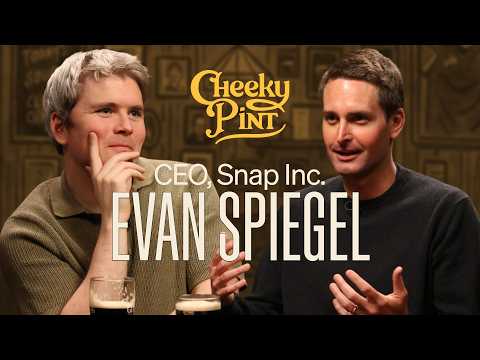
Snap Moves Hardware Manufacturing to US as Spectacles Consumer Launch Nears
Stripe
CEO Evan Spiegel asserts that the smartphone will become a legacy device as custom, AI-agentic software democratizes computing through augmented reality glasses.
## Background
Published on April 27, 2026, by Stripe on YouTube, this video features a deep-dive conversation between Snap CEO Evan Spiegel and a host at a pub. The description details a discussion on Snap's 2026 consumer launch of Spectacles, the technical hurdles of spatial computing, their custom OS, the extensive use of AI in their software development, and the nuanced realities of teen social media usage and content moderation.
## TL;DR
In this wide-ranging discussion, Evan Spiegel frames 2026 as a crucible year for Snap as it approaches one billion monthly active users and prepares the consumer launch of its Spectacles AR glasses. He emphasizes that true spatial computing must bring technology into the physical world to enhance human connection, rather than isolating users behind screens. Spiegel breaks down Snap's full-stack development strategy—including a custom Linux OS and AI-driven coding—and explores the business's core messaging roots, the distinct separation of social interaction from media consumption, and the company's deliberate product design choices regarding privacy and content moderation.
## Atmosphere & style
The conversation carries a relaxed, informal, yet intellectually sharp vibe, unfolding over a casual game of chess and darts at a local pub. The dynamic between the speakers is collaborative and grounded, balancing high-level technical insights about hardware engineering and AI with reflective, personal anecdotes about parenting and leadership. It feels deeply authentic and forward-looking, moving from serious debates on public policy and mental health to lighthearted laughter about company culture and a shared enthusiasm for the future of human-centric computing.
## Key takeaways
- [00:15](https://www.youtube.com/watch?v=8fZNK-M-77I&t=15s) Snap views 2026 as its 'crucible moment' as the company approaches one billion monthly active users, nears net income profitability, and prepares for the consumer launch of its Specs augmented reality glasses.
- [01:05](https://www.youtube.com/watch?v=8fZNK-M-77I&t=65s) The ultimate goal for Snap's Specs is to deliver a true spatial computer within the wearability of normal, see-through glasses, filling the product gap between low-capability smart glasses and isolating VR headsets.
- [02:55](https://www.youtube.com/watch?v=8fZNK-M-77I&t=175s) Over the next 10 to 15 years, smartphones are expected to shift into a legacy role as lightweight glasses replace physical screens like TVs, desktop displays, and laptops.
- [06:31](https://www.youtube.com/watch?v=8fZNK-M-77I&t=391s) To fit a full spatial computer into a glasses form factor under intense power and thermal constraints, Snap owns its full hardware and software stack, including a custom Linux-based OS built from scratch instead of Android.
- [06:31](https://www.youtube.com/watch?v=8fZNK-M-77I&t=391s) AI has dramatically accelerated Snap's internal development ecosystem, with tools like Claude now writing more than two-thirds of the company's new code.
- [13:02](https://www.youtube.com/watch?v=8fZNK-M-77I&t=782s) Hardware development must meet a '10x rule' to justify deep investment; simple camera glasses fail this because they aren't 10x better than smartphone cameras, whereas spatial computing glasses pass the threshold.
- [15:58](https://www.youtube.com/watch?v=8fZNK-M-77I&t=958s) The traditional paradigm of a 'killer app' driving platform adoption is fading due to the democratization of software development, enabling users and developers to create highly bespoke, niche software instantly.
- [21:29](https://www.youtube.com/watch?v=8fZNK-M-77I&t=1289s) Snapchat's business model relies heavily on its direct subscription tier, Snapchat+, which has reached over 25 million subscribers and a $1 billion run rate by offering users advanced AI tools and highly requested features.
- [27:04](https://www.youtube.com/watch?v=8fZNK-M-77I&t=1624s) Snapchat's architecture is intentionally designed around intimate communication with close friends to avoid the 'anti-network effects' of public judgment, spam, and social anxiety tied to public vanity metrics.
- [32:21](https://www.youtube.com/watch?v=8fZNK-M-77I&t=1941s) Snapchat formalized a philosophy to 'separate social from media' because combining the two creates perverse incentives for platforms to force endless friend-adding to fuel their algorithmic newsfeeds.
- [34:10](https://www.youtube.com/watch?v=8fZNK-M-77I&t=2050s) Digital communication is reaching an equilibrium that mirrors real life: default ephemerality for everyday, throwaway conversations, while allowing users to manually save truly important milestones.
- [41:05](https://www.youtube.com/watch?v=8fZNK-M-77I&t=2465s) Blanket, app-level social media bans for minors are ineffective and easily bypassed via clone apps; policy efforts should instead focus on educating parents about superior, existing OS-level parental controls.
- [43:10](https://www.youtube.com/watch?v=8fZNK-M-77I&t=2590s) Independent studies show Snapchat positively correlates with user well-being because its design prioritizes direct messaging over endless scrolling feeds, fostering connectedness rather than loneliness.
- [47:16](https://www.youtube.com/watch?v=8fZNK-M-77I&t=2836s) Snapchat manages content safety through strict human and AI moderation of all public content, arguing that harmful content should be blocked from the platform entirely rather than relying solely on algorithmic fixes.
- [49:56](https://www.youtube.com/watch?v=8fZNK-M-77I&t=2996s) As generative AI lowers the barrier to creating software, the competitive advantage is shifting heavily toward distribution, enabling established platforms like Snapchat to quickly spin up and distribute new services.
- [57:19](https://www.youtube.com/watch?v=8fZNK-M-77I&t=3439s) Norway became Snapchat's very first successful market in 2012 due to early high-end device distribution, affordable high-speed mobile internet, and a culture that deeply values close relationships.
- [01:01:00](https://www.youtube.com/watch?v=8fZNK-M-77I&t=3660s) Snap manufactures its most sophisticated, IP-sensitive hardware components for Spectacles in-house in the US and UK to ensure rapid prototyping cycles and superior proprietary optical performance.
## Detailed walkthrough
### [00:02](https://www.youtube.com/watch?v=8fZNK-M-77I&t=2s) The Crucible Moment for Snap
Over a casual game of chess at a pub, the conversation begins with an update on Snap's trajectory heading into 2026. The period is described as a "crucible moment" for the company, a term coined toward the end of 2025 that has proven increasingly accurate. Snap is on the cusp of reaching one billion monthly active users, alongside nearing net income profitability. This financial milestone is particularly critical as the company continues to invest heavily in its hardware division, specifically its "Specs" augmented reality glasses. After 12 years of deep R&D investment aimed at making computing more human, Specs are finally slated to reach consumers later in 2026.
- **Monthly Active Users:** Nearing 1 billion.
- **Financial Milestone:** On the verge of net income profitability.
- **Hardware Timeline:** Specs are launching to consumers later in 2026 after 12 years of development.
[01:05](https://www.youtube.com/watch?v=8fZNK-M-77I&t=65s) The Technical Challenge of True Spatial Computing
The technical hurdles of building Specs are extraordinary. While low-capability "smart glasses" (which function essentially as "AirPods with a camera") and high-capability but isolating virtual reality headsets like the Apple Vision Pro exist, the "sweet spot" remains unoccupied. Snap's goal is to deliver the wearability of normal, see-through glasses combined with the full capability of a true spatial computer.
Historically, computing has been isolating. From the early days of school computer labs to the modern era of smartphones, screens have pulled people away from their physical surroundings. The promise of see-through glasses is to bring computing into the physical world, allowing two people to sit across from each other, play chess, design, or watch something together in a shared physical space.
- **The Product Gap:** Positioned between low-end camera glasses and bulky, isolating VR headsets.
- **Core Philosophy:** Bringing computing into the world to foster shared, real-world experiences rather than pulling users into isolating screens.
[02:55](https://www.youtube.com/watch?v=8fZNK-M-77I&t=175s) The Future Computing Mix and Net-New Experiences
Looking 10 to 15 years into the future, the smartphone is unlikely to disappear; instead, it will transition into a legacy role. The first use cases to migrate to glasses will be large-screen activities. Lightweight glasses can project a massive virtual screen anywhere, rendering expensive home televisions, desktop displays, and cramped laptop screens obsolete—especially when working ergonomically on a flight.
However, the most exciting frontier lies in "net new experiences" that simply could not exist on previous devices. Just as the phone succeeded because of mobile communication rather than desktop word processing, glasses will thrive on real-world experiences. Examples include playing laser tag with children outside, projecting dinosaurs into the backyard, or building Lego sets together with digital overlays.
- **Screen Replacement:** Glasses will replace physical TVs, desktop monitors, and laptop screens, particularly for travel.
- **Net-New Use Cases:** Real-world interactive experiences like outdoor AR games and collaborative physical-digital play.
[05:35](https://www.youtube.com/watch?v=8fZNK-M-77I&t=335s) AGI-Proofing and the "Boss Mode" of Computing
An amusing trend already emerging among developers in San Francisco is using Specs to monitor autonomous AI agents. Instead of carrying a laptop to a bar to check on code, users can simply monitor their agents' progress through their glasses while going about their day. This shifts the paradigm of how humans interact with computers.
This shift mirrors the classic organizational joke: the more senior you are, the smaller your screen. While a developer works across multiple parallel monitors, the boss simply sends quick instructions "from my iPhone." With glasses and agentic AI, this "boss mode" becomes accessible to everyone. Users will no longer need to operate computers actively all day; instead, they will simply check in on their agents via their eyewear.
[06:31](https://www.youtube.com/watch?v=8fZNK-M-77I&t=391s) Owning the Full Stack: Why Android Fails on Glasses
Fitting a fully immersive computer into a lightweight pair of glasses requires solving immense thermal, power, and weight constraints. To achieve this, Snap owns every single piece of its hardware and software stack. This includes Lens Studio (the developer tools), Lens Core (the rendering engine optimized over a decade on low-end mobile phones to manage power), a custom operating system built from the ground up on Linux, and their proprietary optical engine and waveguide.
Snap explicitly chose not to use Android, calling it "way too bloated" to run effectively on glasses without requiring a heavy, external compute pack. For example, Google's recent Project Aura experiment relies on a large, separate compute pack, which Snap views as unrealistic for everyday consumer adoption. Building a custom Linux OS was incredibly difficult, but it has yielded a far more performant and power-efficient device.
- **The Stack:** Lens Studio (dev tools), Lens Core (rendering engine), custom Linux-based OS, and proprietary optical waveguide/projector.
- **AI in Development:** More than two-thirds of new code at Snap is now written by AI, with tools like Claude dramatically accelerating software development across the entire organization.
[09:11](https://www.youtube.com/watch?v=8fZNK-M-77I&t=551s) Conviction in the AR Form Factor
The long-held conviction that augmented reality glasses are the ultimate computing form factor stems from a "people first" philosophy. Technology should serve humanity, and humans are a highly social, hands-free species. Billions of people already wear glasses, which sit naturally at eye and ear level. This placement gives the device a human-like understanding of the user's environment while keeping their hands free to interact with the world.
While some early tech paradigms feature a lot of specialized, heterogeneous devices before collapsing into a single dominant form factor (similar to how early smartphones like the Nokia N-Gage or BlackBerry collapsed into the single touchscreen design), AR glasses are expected to be the ultimate destination. While pass-through VR (which re-projects the world onto an internal screen, like the Apple Vision Pro) may retain niche uses for flight simulators or surgical training, it is fundamentally isolating. A screen-based view of the world is a poor fit for a highly social species.
[13:02](https://www.youtube.com/watch?v=8fZNK-M-77I&t=782s) The Rollout Strategy and the 10x Product Rule
When Specs launch later in 2026, the initial target audience will be early adopters and tech enthusiasts. This rollout is compared to the original 1984 Macintosh, which cost the equivalent of $8,000 in modern dollars. While Specs will not be nearly that expensive, they will initially appeal to "evangelists" who will build new Lenses and share the experience with friends and family.
Addressing the market for simple camera glasses (like early Spectacles or GoPro competitors), these devices ultimately fail a core product design rule: "if it's not 10 times better than the next best alternative, then there is no point in investing in it." Simple camera glasses are not 10x better than a smartphone camera, resulting in a small market with a low willingness to pay. Furthermore, simple camera glasses do not have an operating system and cannot understand the world, meaning they fail to establish a true computing platform.
- **Historical Parallel:** The 1984 Macintosh (worth ~$8,000 today) as the archetype for high-potential, early-adopter hardware.
- **The 10x Rule:** Products must be ten times better than the smartphone alternative to justify deep investment. Simple camera glasses fail this test, whereas spatial computing glasses pass it.
[15:58](https://www.youtube.com/watch?v=8fZNK-M-77I&t=958s) The Mirage of the "Killer App" and the Rise of Custom Software
The conversation shifts to how new computing platforms gain adoption. Traditionally, platforms succeed because of a "killer app"—a single, highly compelling use case that drives the initial install base, after which users discover secondary features. A classic example is the early adoption of personal computers, which businesses initially bought purely as "spreadsheet boxes" before realizing their broader utility. However, the speaker argues that in today's landscape, the concept of a killer app is "a little bit of a mirage."
Instead of a single dominant application, the future of platforms like Snap's Specs lies in the democratization of software development. With modern tools, it is incredibly easy to build highly bespoke, relevant software for niche use cases. For example, the team behind Saturn (a mobile calendar app built for friends and family) replaced a $100,000-a-year enterprise bug-reporting service by building their own custom tool in a single day. By 2026, the paradigm will shift entirely toward custom, user-imagined software rather than one-size-fits-all solutions. Through an increasingly agentic Lens Studio, Snap is enabling anyone to build almost anything and see it in the real world instantly.
- **The App Store Moat:** Historically, the biggest hurdle for any new computing platform was overcoming the massive moat of 1 to 2 million apps locked into existing ecosystems like Apple's.
- **Exploding Software Creation:** The ease of writing software today has caused the rate of new software creation and business creation to spike dramatically, bypassing traditional App Store lock-ins.
- **Internal Prototyping:** Snap employees use Lens Studio daily to build everything from simple hand-tracked airplane games to complex systems for collaborating with AI agents.
[21:29](https://www.youtube.com/watch?v=8fZNK-M-77I&t=1289s) Snapchat's Core Business and the Scale of the Camera
When discussing competition, Snapchat defines itself primarily as a messaging service rather than an entertainment platform competing with the likes of Netflix. The core of the service has always been messaging, which drives its organic growth. Secondarily, Snapchat competes on the camera itself—specifically, the split-second decision a user makes to capture a moment using the Snapchat camera versus their phone's default lock-screen camera.
The sheer scale of engagement on the Snapchat camera is often underestimated. While Apple publicly celebrated that around 500 billion selfies were captured on iPhones in a year, Snapchat's internal data revealed that over a trillion selfies were captured on Snapchat over the same period. With nearly a billion monthly active users (MAUs), this represents an astronomical level of daily engagement.
- **Two Major Revenue Streams:** Snapchat's business is powered by advertising and a rapidly growing direct revenue business.
- **Snapchat+ Success:** The direct subscription business recently hit 25 million subscribers, reaching over a $1 billion run rate.
- **Promoted Places:** An ad product on the Snap Map that offers powerful closed-loop measurement to drive physical foot traffic into retail locations.
[23:59](https://www.youtube.com/watch?v=8fZNK-M-77I&t=1439s) Monetizing AI and the Power of Community Feedback
With the rise of computationally expensive AI and image-generation tools, direct monetization has become essential to offset real inference costs. Unlike the prior generation of ad-dominant companies, modern AI platforms rely heavily on tiered subscriptions. Snapchat monetizes its position as one of the world's largest image and video generation platforms through its Lens+ subscription tier, which grants users access to advanced AI and editing tools.
The subscription model of Snapchat+ aligns closely with the company's core ethos of building products people love. Historically, Snap lacked the resources to build niche, bespoke features requested by small subsets of passionate users. Snapchat+ provides a dedicated avenue to build and monetize these highly requested features, such as custom app themes. The community remains an endless source of great product ideas, which reach the executive team through online comments and direct emails to `evan@snap.com`.
[27:04](https://www.youtube.com/watch?v=8fZNK-M-77I&t=1624s) Network Effects vs. Anti-Network Effects
In business school, social networks are taught as classic examples of positive network effects: the larger the network, the more valuable it becomes. However, the speaker highlights the existence of "anti-network effects" and diseconomies of scale. As a platform grows too large, it faces spam, fraud, and a dilution of its core "vibe." For instance, teenagers do not want their aunts and uncles joining the same digital space because it ruins the social environment.
Snapchat's success came from challenging the traditional model. Instead of focusing on the total potential network size, Snapchat recognized that people only communicate with a very small group of close friends, family, and coworkers on a daily basis. By designing a private service optimized for these high-value, intimate interactions, Snapchat bypassed the pressure to constantly add friends. This design choice protects users from the "ick" and embarrassment of public judgment, keeping the platform comfortable and highly engaging.
- **The Newsfeed Trap:** Platforms like Facebook and Instagram built businesses around a newsfeed, which required users to constantly add more friends to generate content. This eventually led to users not knowing who was seeing their posts, inhibiting authentic sharing.
- **The Shift to Public Content:** When friend-to-friend sharing declined due to privacy concerns, traditional social networks had to pivot heavily toward public media and publisher content.
- **No Public Comments:** Snapchat avoids public embarrassment and social pressure by omitting public comments on user stories, maintaining its focus as a private messaging service rather than a public-facing social network.
[32:21](https://www.youtube.com/watch?v=8fZNK-M-77I&t=1941s) Separating Social from Media
At its core, Snapchat is a messaging service where users can extract the vast majority of the app's value with just one, two, or three close friends. This stands in stark contrast to traditional social networks, which faced a structural challenge: to generate enough content to drive engagement and grow their advertising businesses, they had to constantly push users to add more and more friends. Because their newsfeeds relied entirely on new content, they forced a mixing of social connections and media consumption.
Snapchat identified this issue early on and chose a different path. Instead of forcing users to add acquaintances just to keep their feeds active, Snapchat opened up to non-friend content from publishers and creators. They introduced "Discover," becoming one of the first companies to rank moderated publisher content using AI. This allowed users to transition to creator and publisher content once they ran out of updates from their close friends.
In 2016 or 2017, Snapchat formalized this philosophy with the thesis that platforms must "separate social from media." Combining the two creates perverse incentives. By keeping them separate, users can use the app for intimate messaging and stories with close friends, and then navigate to a completely different space if they want to consume broader media.
- **Core Value:** High utility is achieved with only 1–3 close friends.
- **Perverse Incentives:** Traditional social networks forced endless friend-adding to fuel the newsfeed algorithm.
- **The Snapchat Solution:** Introduce moderated, AI-ranked publisher content (Discover) to separate personal social interactions from media consumption.
---
[34:10](https://www.youtube.com/watch?v=8fZNK-M-77I&t=2050s) The Ephemerality of Data and the Long-Term Equilibrium
The norms around online persistence have shifted dramatically over the decades. In the early days of the internet, the golden rule was to never use your real name because the web was viewed as a scary, dangerous place. Society then transitioned to an era where everyone used their real names and posted everything in perpetuity. Today, people are realizing that keeping a permanent, unerasable record of every life event is not ideal, and they are still trying to figure out the right balance.
When asked about the long-term equilibrium between a permanent camera roll and total ephemerality, the thesis is that digital communication will eventually mirror how humans have lived for thousands of years: the vast majority of life is ephemeral, and we only save what is truly important. People do not write down every thought or record every conversation. When Snapchat launched disappearing messages in 2012, the idea of linking privacy to self-expression was deemed "crazy" because the prevailing tech narrative was that everything should be open, connected, and saved forever.
Today, the industry has shifted, and almost every major messaging app features retention settings that delete conversations by default. Users want the freedom to send a silly, throwaway photo to a friend without it being archived forever, while still retaining the ability to manually save a cherished memory, like a two-year-old taking their first steps.
- **Historical Shift:** From anonymous internet usage, to permanent public archiving, to a modern demand for ephemerality.
- **Human Analogy:** Technology should mirror real life, where conversations vanish naturally and only key milestones are preserved.
- **Industry Adoption:** Default deletion and customizable retention settings are now standard across most modern communication tools.
---
[37:04](https://www.youtube.com/watch?v=8fZNK-M-77I&t=2224s) The Future of Communication and Screen Time for Kids
While messaging apps are highly functional, the next frontier of digital communication lies in smart glasses ("Specs"). The ultimate social network of the future is not a digital feed, but rather "hanging out together in-person and using Specs together." While messaging is a great tool, it cannot compete with physical togetherness. The goal of future technology should be to enhance real-world interactions with family and friends rather than replacing them.
The conversation shifts to personal parenting choices regarding screen time. While a 15-year-old is already "fully on the screen train" (a transition accelerated by the COVID-19 pandemic), younger children have much stricter boundaries. A two-year-old is only allowed to watch construction videos on YouTube during haircuts, while the six- and seven-year-olds occasionally watch movies or play retro games on a ModRetro Game Boy remake.
- **The Specs Vision:** Using augmented reality glasses to enhance in-person hangouts rather than isolating users behind screens.
- **Parenting Screen Time:** Managing different rules for different ages, from a toddler watching YouTube only during haircuts to a teenager with full phone access.
- **Retro Gaming:** The younger kids occasionally play classic games like *Pokémon Yellow* on modern Game Boy remakes.
---
[38:33](https://www.youtube.com/watch?v=8fZNK-M-77I&t=2313s) Policy, Balance, and the Importance of AI Literacy
There is a heated, society-wide debate regarding kids, teens, and smartphones. A blanket, one-size-fits-all policy is dangerous because children are developmentally different. For example, the speaker's 15-year-old son, Flynn, needed a phone earlier than usual to coordinate logistics between his mother's and father's houses. Parents know their children best and are best positioned to decide what is developmentally appropriate.
Public sentiment on technology tends to experience massive, reactionary swings. During the pandemic, the consensus was that "technology is saving us all" and kids should be on screens all day; today, the sentiment has swung to extreme skepticism, with people advocating for zero screen time. The healthy response to this panic is to strive for balance.
Furthermore, the current wave of tech skepticism is happening at a critical juncture. With the rapid rise of artificial intelligence, it is "absolutely imperative" that young people learn how to adopt and use these tools. AI allows kids to take an idea from their head and make it real instantly, which is incredibly inspiring. The tech industry must work hard to build trust so that fear does not prevent the next generation from mastering these vital tools.
- **Flynn's Example:** Received a phone early to coordinate living between two households.
- **Sentiment Swings:** The public mood shifted from celebrating screens as lifelines during COVID-19 to demonizing them entirely post-pandemic.
- **AI Imperative:** Restricting technology too harshly risks leaving young people illiterate in AI tools that will define their future careers.
---
[41:05](https://www.youtube.com/watch?v=8fZNK-M-77I&t=2465s) The Clumsiness of App Bans and OS-Level Controls
Australia recently implemented a blanket ban on social media for children under the age of 16, targeting a specific list of the top 10 apps. This app-level implementation is incredibly clumsy. Because the ban only applies to a handful of named services, teenagers who want to use Snapchat can easily migrate to one of the millions of clone apps or alternative messaging services available in the App Store. Furthermore, verifying age via government IDs is highly impractical because many young people do not possess them.
Instead of ineffective app-level bans, the industry should emphasize operating-system-level controls. Both Apple and Google offer robust, resilient parental controls built directly into the phone's OS. Parents can easily configure exactly which apps their teens can download and set strict time limits.
"All of these settings are available to parents at the operating-system level, which is a much more resilient way to implement this sort of policy." Rather than passing headline-grabbing bans on a small list of apps, governments should focus on educating parents about the powerful OS-level tools that have already been available to them for years.
- **Australia's Ban:** A under-16 ban targeting a specific list of top social media apps.
- **The Clone Problem:** App-level bans fail because users can easily download unregulated alternative apps.
- **OS-Level Superiority:** Apple and Android parental controls offer a far more robust and comprehensive way to manage teen phone usage.
---
[43:10](https://www.youtube.com/watch?v=8fZNK-M-77I&t=2590s) Teen Mental Health and the "Connectedness" Spectrum
The debate surrounding teen mental health and social media is highly complex, often relying on self-reported data that is difficult to index due to changing reporting standards. However, independent research is beginning to differentiate between platforms rather than lumping all "social media" into one bucket. At least three independent, non-company-funded studies—conducted in the US, Australia, and the Netherlands—have shown that Snapchat has a positive impact on users' well-being and relationships. This contrasts with platforms like TikTok or Instagram, which are often negatively associated with well-being.
This divergence comes down to product design. Snapchat was built in direct opposition to Facebook; the founders disliked the pressure of public friend lists, public likes, comments, and the constant need to look perfect. Because Snapchat is designed around communicating with real-world friends in a low-pressure, ephemeral environment, it fosters "connectedness" rather than "loneliness." Strong relationships are the number one predictor of positive mental health outcomes, meaning Snapchat's core utility naturally aligns with psychological well-being.
- **Independent Studies:** Research from the US, Australia, and the Netherlands shows Snapchat positively correlates with well-being.
- **The Loneliness vs. Connectedness Spectrum:** Endless scrolling feeds can lead to loneliness, whereas direct messaging with real friends fosters connectedness.
- **Anti-Facebook Design:** Snapchat was explicitly designed to eliminate the public vanity metrics (likes, comments, follower counts) that cause social anxiety.
---
[47:16](https://www.youtube.com/watch?v=8fZNK-M-77I&t=2836s) Algorithms vs. Moderated Content
When discussing the content side of the business, critics often worry about "rabbit holes"—the phenomenon where a user clicks on a video and the algorithm pulls them deeper into extreme content, such as sovereign citizen conspiracy theories or eating disorder communities.
The issue is that critics focus far too much on the algorithms and not enough on the content itself. This hyper-focus on algorithms often stems from platforms trying to avoid tripping First Amendment protections regarding what they can display. Snapchat took a different editorial stance from the beginning: ever since launching Discover, they have actively moderated the content on their platform. While human moderation was incredibly difficult in the early days, establishing editorial standards is essential to preventing harmful rabbit holes.
[48:12](https://www.youtube.com/watch?v=8fZNK-M-77I&t=2892s) Content Moderation and the Algorithm Debate
The conversation turns to how Snapchat manages content safety. In the early days before artificial intelligence, Snapchat had to manually moderate all public content, which limited their growth because they could only work with a small number of publishers and lacked a massive corpus of content. Today, they continue to moderate all content that appears publicly on the platform. The host pushes back, noting that for individual users, "the algorithm is the content" because it defines their personal TV channel and can create a "rabbit hole of anorexic content."
Evan Spiegel argues that the solution must happen at the content moderation level rather than the algorithmic level. If content promoting anorexia runs afoul of their guidelines, it simply should not appear on the platform at all. He acknowledges that this approach is much harder to regulate in the United States due to First Amendment protections. Over the last decade, the industry has shifted; while rules of the road were less common five to ten years ago, there is now a much broader appreciation for having clear, consistent guidelines for online services.
[49:56](https://www.youtube.com/watch?v=8fZNK-M-77I&t=2996s) The Premium on Distribution in the AI Era
As Snapchat approaches one billion monthly active users (MAUs), the discussion shifts to the dynamics of distribution. The host points out that Snapchat has a massive distribution advantage to promote new features like Discover, but they also compete with tech giants who have even more distribution and can copy Snapchat's innovations. Spiegel asserts that distribution is becoming increasingly critical. As AI tools make it easier to build software, write code, and innovate, the competitive advantage is shifting. "I do think there's a real premium on distribution," Spiegel says, predicting that companies will reallocate resources away from software engineering and toward distribution to grow faster.
This shift directly impacts Snapchat's internal strategy. Historically, the company had far more great ideas than resources to execute them, often unable to spare even 15 people to spin up a new app. Now, with AI advancements, "with half a person's time, half a team member's time, we can build a totally new service and distribute it through Snapchat." This capability makes a multi-app or multi-service strategy highly viable for their future.
[52:17](https://www.youtube.com/watch?v=8fZNK-M-77I&t=3137s) The Creative Process and the Battle Over "Streaks"
Spiegel pulls back the curtain on how product design works at Snap, starting with a joke: "First of all, it's cool to be uncool. We're never trying to focus on cool." Instead, their North Star is "durable value." Spiegel spends a couple of hours a week with the design team looking at hundreds of ideas, ranging from whiteboard sketches to fully functioning prototypes. Because of AI, designers are increasingly shipping code and presenting working demos of features they are passionate about rather than waiting for them to clear a backlog.
The selection process involves heavy, laughter-filled debates. Sometimes a great design choice is actually deciding to get rid of a feature. Spiegel shares an anecdote about a feature he famously hated and tried to kill for years: Streaks. Because Snap has always been "anti-metric" to prevent the user experience from being about numbers (like follower counts or likes), Spiegel fought hard against the gamified nature of Streaks. He only relented after receiving countless emails at his public address (`evan@snap.com`) from users explaining how Streaks kept them connected to best friends through divorces, moves across the world, and major life changes. He realized that "sometimes having an invitation to communicate or an invitation to connect is so important."
- **Snap's Design Culture:** Rather than being strictly design-led, product-led, or engineering-led, Snap operates as a "thoughtfully managed dialogue" between design, engineering, product management, and data science. This mirrors the early partnership between Spiegel (design background) and co-founder Bobby Murphy (engineering background).
[57:19](https://www.youtube.com/watch?v=8fZNK-M-77I&t=3439s) The Norway Phenomenon and Leadership Evolution
The host asks about unusual regional network effects, prompting Spiegel to reveal that Norway was the very first place Snapchat got traction. Before the app took off in the United States, it exploded in Norway. After raising a small initial round of about $400,000, the founders flew to Norway and were shocked to be recognized by strangers in a 7-Eleven. Spiegel attributes this early success to Norway's high-end device distribution and affordable, high-speed mobile internet in 2012, which could handle the heavy photo and video bandwidth that early iPhones required. Norway remains a top market for Snapchat today, which Spiegel attributes to a culture that deeply prioritizes close family and friend relationships.
Reflecting on his leadership style, Spiegel notes it has changed profoundly. He started out simply wanting to build products people love, but had to transition into inspiring people to take on monumental challenges—such as competing with the largest companies in the world in messaging, hardware, and foundational AI video models.
[01:01:00](https://www.youtube.com/watch?v=8fZNK-M-77I&t=3660s) In-House Hardware Manufacturing and AR Darts
When asked about the difficulties of hardware supply chains in the US compared to the rapid prototyping ecosystem of Shenzhen, Spiegel reveals a surprising detail: Snap builds some of its most sophisticated, IP-sensitive components for Spectacles in-house in the US and the UK. By keeping manufacturing directly next to R&D and engineering, they achieve incredibly fast cycle times. This approach has allowed their waveguide performance and resolution to far exceed competitors. Spiegel notes that hardware is much easier to protect with patents and IP than software, which is a massive advantage in the age of AI.
The interview wraps up with the two putting on their Spectacles to play augmented reality games in the pub. They play a quick game of AR darts—with the host noting that Microsoft CEO Satya Nadella currently holds the high score—followed by a virtual game of chess played right on the pub table.
## Notable quotes
> [13:02](https://www.youtube.com/watch?v=8fZNK-M-77I&t=782s) if it's not 10 times better than the next best alternative, then there is no point in investing in it. — Evan Spiegel
> [15:58](https://www.youtube.com/watch?v=8fZNK-M-77I&t=958s) a little bit of a mirage. — Evan Spiegel
> [05:35](https://www.youtube.com/watch?v=8fZNK-M-77I&t=335s) from my iPhone. — Evan Spiegel
> [06:31](https://www.youtube.com/watch?v=8fZNK-M-77I&t=391s) way too bloated — Evan Spiegel
> [32:00](https://www.youtube.com/watch?v=8fZNK-M-77I&t=1920s) separate social from media. — Evan Spiegel
> [37:04](https://www.youtube.com/watch?v=8fZNK-M-77I&t=2224s) hanging out together in-person and using Specs together. — Evan Spiegel
> [38:33](https://www.youtube.com/watch?v=8fZNK-M-77I&t=2313s) technology is saving us all
> [41:05](https://www.youtube.com/watch?v=8fZNK-M-77I&t=2465s) All of these settings are available to parents at the operating-system level, which is a much more resilient way to implement this sort of policy. — Evan Spiegel
> [48:12](https://www.youtube.com/watch?v=8fZNK-M-77I&t=2892s) the algorithm is the content — John
> [49:56](https://www.youtube.com/watch?v=8fZNK-M-77I&t=2996s) I do think there's a real premium on distribution, — Evan Spiegel
> [49:56](https://www.youtube.com/watch?v=8fZNK-M-77I&t=2996s) with half a person's time, half a team member's time, we can build a totally new service and distribute it through Snapchat. — Evan Spiegel
> [52:17](https://www.youtube.com/watch?v=8fZNK-M-77I&t=3137s) First of all, it's cool to be uncool. We're never trying to focus on cool. — Evan Spiegel
> [52:17](https://www.youtube.com/watch?v=8fZNK-M-77I&t=3137s) sometimes having an invitation to communicate or an invitation to connect is so important. — Evan Spiegel
Spectacles 消费级发售临近,Snap 将硬件制造迁往美国
首席执行官 Evan Spiegel 断言,随着定制化 AI Agent 软件通过增强现实眼镜普及计算能力,智能手机将沦为传统遗留设备。
在这次广泛深入的讨论中,Evan Spiegel 将 2026 年定性为 Snap 的关键考验之年,届时公司月活跃用户数将接近 10 亿,并准备面向消费者推出 Spectacles AR 眼镜。他强调,真正的空间计算必须将技术融入物理世界以增进人际联结,而不是将用户隔绝在屏幕之后。Spiegel 详细阐述了 Snap 的全栈开发战略——包括定制的 Linux 操作系统和 AI 驱动的编码——并探讨了该业务核心的即时通讯基因、社交互动与媒体消费的明确划分,以及公司在隐私和内容审核方面审慎的产品设计考量。
Snap 将 2026 年视作其“关键考验时刻”,届时公司月活跃用户数将接近 10 亿,净利润接近实现盈利,并准备面向消费者发售 Specs 增强现实眼镜。 (0:15)
Snap Specs 的终极目标是以普通透光眼镜的便携佩戴形态提供真正的空间计算机,填补低性能智能眼镜与隔绝感强烈的 VR 头显之间的产品空白。 (1:05)
在未来 10 至 15 年内,随着轻量化眼镜取代电视、桌面显示器和笔记本电脑等物理屏幕,智能手机预计将转变为传统遗留角色。 (2:55)
为了在严苛的功耗和散热限制下将完整的空间计算机整合进眼镜形态中,Snap 自研掌控了完整的软硬件技术栈,包括从零构建的定制 Linux 操作系统而非采用 Android。 (6:31)
AI 极大地加速了 Snap 的内部开发生态,像 Claude 这样的工具目前编写了公司三分之二以上的新代码。 (6:31)
Reading summary
Snap CEO Evan Spiegel argues that see-through augmented reality glasses will eventually displace smartphones by anchoring computing in shared physical reality, underpinned by an operating model that separates private communication from broadcast media.
Spatial Computing and Vertical Hardware Architecture (1:05)
Spiegel projects that lightweight AR glasses will relegate smartphones to a legacy status over the next 10 to 15 years. Rather than isolating users behind opaque VR screens or acting merely as audio-camera accessories, Snap's 'Specs' are engineered to project virtual screens anywhere and enable interactive, real-world experiences like collaborative play and outdoor games. Slated for an early-adopter consumer rollout later in 2026 after 12 years of research and development, the hardware is positioned to pass Spiegel's '10x rule' by delivering a spatial computing platform substantially more capable than existing mobile devices.
To overcome thermal and battery limitations without an external compute pack, Snap built its entire technology stack in-house. Rejecting Android as too bloated for wearable form factors, the company engineered a custom Linux-based operating system, the Lens Core rendering engine, and proprietary optical waveguides. Spiegel notes that Snap manufactures sensitive optical components in the United States and the United Kingdom, combining rapid prototyping cycles with strong intellectual property protection.
Democratized Software and the Distribution Premium (15:58)
Spiegel disputes the traditional view that computing platforms require a single breakout 'killer app' to succeed. Instead, he argues that modern AI tools have lowered the cost of writing software to the point where users and developers can instantly generate bespoke, hyper-niche applications via platforms like Lens Studio. With more than two-thirds of new code at Snap now generated by AI, Spiegel observes that developers are shifting from full-time coding to monitoring autonomous AI agents directly through their glasses in a low-friction 'boss mode.'
Because software creation has become commodified, Spiegel asserts that competitive moats are shifting from software engineering to audience reach. As a result, companies with massive distribution can spin up and scale entire services with minimal personnel. This dynamic enables Snap to test and deploy multi-product strategies rapidly across its existing reach.
Ephemerality and Separating Social From Media (32:21)
Snap's core business rests on private messaging rather than public broadcast feeds, approaching one billion monthly active users and nearing net income profitability. Spiegel highlights that traditional newsfeeds trigger 'anti-network effects,' where ballooning friend lists dilute community comfort and introduce social anxiety. To counter this, Snapchat omits public likes and comments, optimizing for intimate groups of two or three close contacts and treating ephemerality as the natural equilibrium of human communication.
To generate content without forcing users into awkward friend additions, Snap established a structural separation between private social communication and public media in 2016–2017. Users communicate privately with close contacts, while non-friend entertainment is housed separately in the moderated 'Discover' section. Alongside advertising and local ad formats like Promoted Places, Snap has diversified revenue through its Snapchat+ subscription, which has reached 25 million paying subscribers and an annualized run rate exceeding $1 billion.
Platform Governance, Well-Being, and Safety (43:10)
Addressing debates over teen mental health, Spiegel cites independent research from the United States, Australia, and the Netherlands indicating that Snapchat correlates positively with user well-being. He attributes this divergence from traditional social media to an architecture designed around low-pressure, direct communication with real-world friends, which fosters interpersonal connectedness rather than feed-induced isolation.
Spiegel criticizes blanket legislative interventions—such as Australia's under-16 ban on designated social media apps—as clumsy and easily circumvented by clone apps. He advocates instead for operating-system-level parental controls managed directly through Apple and Google devices. Regarding content safety, Spiegel argues that platforms must rely on rigorous editorial moderation rather than attempting to fix harmful 'rabbit holes' at the algorithmic level.
Snap's long-term thesis hinges on whether late-2026 early adopters embrace wearable spatial hardware and whether custom AI-driven software creation can fully overcome the massive developer moats of legacy smartphone ecosystems.
## Background
该视频由 Stripe 频道于 2026 年 5 月 7 日在 YouTube 平台发布。节目中主持人 John Collison 与 Snap 首席执行官 Evan Spiegel 在酒吧相聚,深入探讨了 Snap 迎来 2026 年消费级 Spectacles AR 眼镜发售的“严峻考验时刻”、自研操作系统与全栈硬件架构、Claude 等 AI 工具如何重塑其工程流程,以及社交媒体与私密通讯的本质区别等议题。
## TL;DR
对话围绕 Snap 走向 10 亿月活跃用户与净利润扭亏为盈的关键拐点展开,Evan Spiegel 详尽阐释了透视 AR 眼镜如何打破智能手机的孤立感、让计算重归人性的核心哲学。他披露 Snap 彻底弃用 Android 从零自研 Linux 操作系统,并将微显示与光波导等精密核心硬件完全部署在美英自研自产,构建起深厚的物理护城河。此外,Evan 还深入解析了全公司三分之二新增代码由 AI 编写的工程质变、年化超 10 亿美元的 Snapchat+ 订阅模式,以及坚持把“社交”与“媒体”彻底拆分的去信息流产品法则。
## Atmosphere & style
整场对话在酒吧边喝啤酒边下棋的轻松闲适氛围中展开,两人既像老友切磋,又有着顶级科技创业者之间的深度技术推演与商业思辨。Evan Spiegel 展现出极高的人文关怀与技术从容,从回忆童年第一台麦金塔电脑的温情,到面对行业巨头围剿与硬件物理极限时的笃定自信,情绪流转自然真挚。节目结尾两人戴上 Spectacles 在喧闹的木质吧台上投掷虚拟飞镖与隔空下棋,充满极客玩心与未来已来的奇妙共鸣感。
## Bulletin
- [00:02](https://www.youtube.com/watch?v=8fZNK-M-77I&t=2s) Snap 迎来 2026 年关键拐点:月活跃用户数(MAU)即将突破 10 亿大关,公司处于净利润扭亏为盈边缘,历经 12 年研发的消费级 Spectacles AR 眼镜定于年内正式发售。
- [08:10](https://www.youtube.com/watch?v=8fZNK-M-77I&t=490s) 生成式 AI 正在重塑 Snap 研发体系,公司内部超过三分之二的新增代码由 AI 辅助生成,软件构建成本的大幅下降打破了传统 App Store 的应用生态壁垒。
- [23:08](https://www.youtube.com/watch?v=8fZNK-M-77I&t=1388s) 旗下订阅业务 Snapchat+ 用户数已突破 2500 万,推动直接收入年化运行率跨过 10 亿美元门槛,成为广告业务之外健康的利润支柱。
- [06:31](https://www.youtube.com/watch?v=8fZNK-M-77I&t=391s) Spectacles 摒弃 Android 并基于 Linux 从零自研轻量 OS,核心光波导与微显示元器件坚持在美英本土自研自产,以构筑物理层面的知识产权护城河。
## Key takeaways
- [01:05](https://www.youtube.com/watch?v=8fZNK-M-77I&t=65s) AR 眼镜的目标是占领日常眼镜佩戴性与空间计算能力之间的“甜点位”,让计算融入现实并增进真实人际连接,扭转智能手机带来的物理孤立。
- [02:55](https://www.youtube.com/watch?v=8fZNK-M-77I&t=175s) 未来 10 到 15 年智能手机不会立即消失,而是退居为“遗留核心设备”,AR 眼镜将优先接管电视与多显示器等大屏显示需求,并创造无法被 AGI 替代的现实互动体验。
- [06:31](https://www.youtube.com/watch?v=8fZNK-M-77I&t=391s) Snap 坚决放弃臃肿的 Android 系统,基于 Linux 从零自研低功耗专用 OS,拒绝外挂计算盒方案,以实现完全一体化的眼镜形态。
- [14:17](https://www.youtube.com/watch?v=8fZNK-M-77I&t=857s) Snap 内部严守“十倍好原则”,坚决不做类似 Ray-Ban Meta 的纯无屏幕相机眼镜,因其缺乏显示与独立系统,无法演变为软件平台且缺乏商业护城河。
- [16:21](https://www.youtube.com/watch?v=8fZNK-M-77I&t=981s) 新一代计算平台不再依赖单一“杀手级应用”(Killer App),AI 编程使得任何人都能以极低成本按需生成定制化空间软件。
- [21:29](https://www.youtube.com/watch?v=8fZNK-M-77I&t=1289s) Snapchat 的核心竞争在于私密即时通讯与相机瞬间捕获,平台年自拍生成量突破 1 万亿张,远超外界对其介入日常高频程度的预期。
- [27:09](https://www.youtube.com/watch?v=8fZNK-M-77I&t=1629s) 社交网络的终极价值在于沟通深度而非绝对规模;传统信息流因过度诱导加好友而引发社交焦虑与发帖抑制,促使 Snap 将“社交互动”与“媒体内容”彻底拆分。
- [34:10](https://www.youtube.com/watch?v=8fZNK-M-77I&t=2050s) 阅后即焚的设计回归了人类数千年来不留痕迹的天然沟通本能,只有真正重要的时刻才会被用户特意存档。
- [38:33](https://www.youtube.com/watch?v=8fZNK-M-77I&t=2313s) 针对青少年手机政策应提倡因材施教与动态平衡,澳大利亚式的一刀切单一 App 封禁漏洞百出,基于 iOS 和 Android 底层的操作系统级家长控制才是更稳固的解法。
- [47:16](https://www.youtube.com/watch?v=8fZNK-M-77I&t=2836s) Snap 坚持在 Discover 内容源头设立严格的“交通规则”与内容审核,认为治理有害信息沉迷应重在内容本体拦截,而非将一切问题归咎于算法推荐。
- [49:56](https://www.youtube.com/watch?v=8fZNK-M-77I&t=2996s) 当 AI 将软件构建门槛降至极致后,既有分发渠道的稀缺性大幅攀升,庞大的熟人网络生态成为 Snap 推进多应用战略的最核心壁垒。
- [54:30](https://www.youtube.com/watch?v=8fZNK-M-77I&t=3270s) Evan Spiegel 曾因反感外部指标化而试图砍掉 Streaks 功能,但用户借助连胜记录在重大生活变故中维系感情的真情反馈改变了他的认知。
- [57:32](https://www.youtube.com/watch?v=8fZNK-M-77I&t=3452s) 挪威凭借早年普及的高速低价网络基建、高 iPhone 渗透率及注重密友熟人的社会文化,意外成为 Snapchat 全球首个实现有机爆发式增长的国家。
- [01:01:00](https://www.youtube.com/watch?v=8fZNK-M-77I&t=3660s) 为了杜绝核心机密外泄并实现极速迭代闭环,Spectacles 的光波导等精密核心部件完全在美英本土实验室隔壁自研试产,以底层物理专利构筑防御壁垒。
## Detailed walkthrough
### [00:02](https://www.youtube.com/watch?v=8fZNK-M-77I&t=2s) Snap 的 2026 关键时刻:用户增长、扭亏为盈与 Specs 走向大众
在酒吧边下国际象棋边喝啤酒的轻松氛围中,主持人 John 与 Snap 首席执行官 Evan Spiegel 开启了对话。被问及 Snap 在 2026 年的产品、业务以及他每天思考的核心问题时,Spiegel 直言这是 Snap 的“严峻考验时刻”(crucible moment)。这一判断早在 2025 年底就已提出,而如今正在各个维度得到强力印证。
Spiegel 指出,当前 Snap 迎来了三大关键拐点:首先,Snapchat 核心业务进展强劲,月活跃用户数(MAU)即将迈过 10 亿大关;其次,公司已处于净利润扭亏为盈(net income profitability)的边缘,这在公司持续大力投资硬件与 Spectacles(Specs)智能眼镜的背景下尤为难能可贵;最后也是最重要的里程碑——在历经长达 12 年的技术研发投入、致力于打造下一代计算平台并让计算回归人性的探索后,消费级 Specs AR 眼镜将于 2026 年晚些时候正式推向大众市场。伴随着全面采用 AI 对业务与研发体系的深刻重塑,Snap 正处于一个全速运转的极致阶段。
- Snap 核心平台月活跃用户数即将突破 10 亿人。
- 公司即将实现净利润盈利,同时支撑着高强度的硬件研发支出。
- 研发历时长达 12 年的 Specs AR 眼镜定于 2026 年内首次正式面向普通消费者发售。
---
### [01:05](https://www.youtube.com/watch?v=8fZNK-M-77I&t=65s) 硬件形态的甜点位:透视 AR 与被智能手机剥夺的真实世界
探讨起为何 AR 眼镜耗费了如此久的时间才初见成效,Spiegel 回顾道,Snap 早在 2014 年左右就已启动 Specs 项目(Google Glass 约在 2013 年推出)。将完整计算能力塞入一副眼镜中,所面临的微型化挑战极为严苛。在 Spiegel 看来,当前硬件市场存在巨大的空白地带:一端是低能力的智能眼镜或 AI 眼镜,本质上就像“带摄像头的 AirPods”;另一端则是能力强大但笨重封闭的虚拟现实头显(如 Apple Vision Pro)。Specs 的终极目标正是瞄准中间的“甜点位”——既具备普通眼镜的日常佩戴性,又拥有类似 Vision Pro 级别的真正空间计算能力。
```mermaid
flowchart LR
accTitle: 当前头戴显示设备的光谱定位
accDescr: 对比低能力AI眼镜、高能力VR头显与Specs透视AR眼镜的形态与能力定位
subgraph LowEnd["低能力轻量端"]
A["AI/智能眼镜<br/>(如带摄像头的AirPods)"]
end
subgraph SweetSpot["目标甜点位:Specs"]
B["透视 AR 眼镜<br/>(日常眼镜外观 + 空间计算)"]
end
subgraph HighEnd["高能力沉浸端"]
C["透视 VR 头显<br/>(如 Apple Vision Pro,笨重封闭)"]
end
LowEnd -.-> SweetSpot
HighEnd -.-> SweetSpot
```
更深层次的动力在于计算与人性的关系。Spiegel 动情地回顾了自己的成长历程:他从小热爱电脑并亲自组装机器,但在当时,用电脑就意味着午休时必须独自待在封闭的微机室里,而其他朋友全在操场上玩耍。随后的智能手机虽然普及了便携计算,却进一步加剧了孤立——它将所有人的注意力死死拽进发光的小屏幕里,让人脱离现实。而真正透视的 AR 眼镜承诺的是截然相反的未来:人们可以面对面坐着,一边看着对方,一边隔空下棋、协同设计或共同观看内容,让计算无缝融入现实世界并增进人与人之间的真实连接。
- 市场上缺乏兼具“正常眼镜外观”与“真正空间计算能力”的透视设备。
- 智能手机与早期电脑的共性问题是让人脱离物理世界、陷入孤立。
- 透视 AR 的核心愿景是让人们面对面共享现实体验,而不是低头沉溺于手机屏幕。
---
### [02:55](https://www.youtube.com/watch?v=8fZNK-M-77I&t=175s) 超越单纯的智能手机:大屏替代与“不可被 AGI 取代”的现实体验
对于未来 10 到 15 年的人类计算设备组合,主持人提出疑问:智能手机是否会被彻底淘汰?手表与智能音箱的定位又将如何?Spiegel 纠正了完全替代手机的说法,他认为智能手机将退居为极其重要的“遗留核心设备”(legacy device),计算将从“仅依靠智能手机”走向多元并存。
在各类设备能力的演进中,眼镜最先接管的将是大屏显示需求。Spiegel 反问:“当一副轻巧的眼镜能在任何地方为你投射出任意尺寸的巨大屏幕时,为什么还要花数千美元在家里装两三台电视?”对于经常出差的人来说,在飞机或旅途中不必再像驼背一样缩着脖子看狭小的笔记本电脑屏幕,戴上眼镜即可拥有一座高人体工学的移动“作战工作站”(battle station),还能防止旁人窥屏。
但 Spiegel 强调,替换电视和电脑显示器只是过渡形态,Snap 真正倾注心力的是催生“从未存在过的全新体验”:
| 计算形态 | 核心优势与主要场景 |
|:--- |:--- |
| **桌面 PC** | 文字处理、信息检索、重度生产力任务。 |
| **智能手机** | 移动通信、随身便携联络。 |
| **AR 眼镜 (Specs)** | **现实交互与共享体验**:戴着眼镜与孩子在户外玩激光对战、在后院放置逼真恐龙、一同拼装数字化乐高。 |
这种基于现实的互动更是某种“抵抗 AGI 浪潮”的生活方式:未来当 Claude 等 AI 智能体在云端或桌面上处理繁重工作时,人类正戴着 Specs 在 Coachella 音乐节尽情狂欢。Spiegel 笑称,现在旧金山的开发者甚至已经开发了通过 Specs 实时监控后台 AI Agent 执行进度的应用,正如硅谷流传的段子一样——“组织中级别越高的人屏幕越小,开发者用双并排大显示器,老板只用 iPhone 发邮件;而未来每个人只需戴着眼镜瞥一眼进度,就能自如享受生活”。
---
### [06:31](https://www.youtube.com/watch?v=8fZNK-M-77I&t=391s) 全栈自研突破物理瓶颈:弃用 Android、构建 Linux 操作系统
针对硬件开发中最棘手的散热、电池寿命与眩晕问题,Spiegel 感叹将一台完整电脑装进眼镜框架内几乎“每一步都极其困难”。Snap 能够构筑护城河的核心原因在于其掌握了整个软硬件垂直栈(Full-stack control):
```mermaid
flowchart TD
accTitle: Snap 空间计算全栈自研架构
accDescr: 展示从开发者工具、渲染引擎、自研操作系统到光学硬件的垂直整合
subgraph SoftwareStack["自研软件架构"]
Dev["开发者工具:Lens Studio"]
Engine["自研渲染引擎:Lens Core<br/>(十年手机/低功耗芯片优化经验)"]
OS["基于 Linux 从零自研的专用 OS<br/>(彻底抛弃臃肿的 Android)"]
Dev --> Engine
Engine --> OS
end
subgraph HardwareStack["自研硬件与光学系统"]
Optics["波导镜片 (Waveguide)"]
Projector["微型投影模组 (Projector)"]
Sensors["自研传感器与未公开光学组件"]
OS --> Optics
OS --> Projector
OS --> Sensors
end
```
Spiegel 披露,Snap 拒绝直接套用 Android 系统,而是基于 Linux 从零自建了一套轻量级操作系统。他指出,Android 过于臃肿复杂,在功耗和散热极度受限的眼镜设备上根本无法高效运转;相比之下,类似 Google 的 Project Aura 实验设备不得不随身外挂一个笨重庞大的独立计算包(compute pack),而 Snap 坚信消费者不可能接受拖着一条线和一个计算盒去佩戴眼镜。此外,Snap 自研的渲染引擎 Lens Core 经过了在数以亿计的低端智能手机上长达十年的打磨,对极端资源与功耗管理拥有无与伦比的优化经验。
- 完整全栈布局:覆盖 Lens Studio 工具链、Lens Core 渲染引擎、自研 Linux 操作系统、镜片波导与光学投影模组。
- 坚决放弃 Android:因其体积极度臃肿、功耗过高,无法实现一体化轻量佩戴。
- 拒绝外挂运算单元:坚信消费级产品必须摆脱外接计算包的束缚。
---
### [08:10](https://www.youtube.com/watch?v=8fZNK-M-77I&t=490s) AI 正在重塑 Snap:全公司三分之二新增代码由 AI 编写
当被问及当前优秀的编程模型(如 Claude Code 或 Codex)在开发其底层 Linux 系统中是否发挥了作用时,Spiegel 给予了极高的评价,坦言 Claude 正在彻底改变 Snap 每一个部门的软件研发模式。
Spiegel 透露了一组惊人数据:目前在 Snap,超过三分之二的新代码均由 AI 辅助编写,且这一转变发生得极为迅猛。他指出,底层大模型的进化速度令人震惊。尽管整个软件行业许多产品正面临被 AI 快速吞噬与替代的危机,但 Snap 拥有强大的网络效应壁垒与连接人与人的核心社交属性,因此在研发效率被 AI 全面加速的同时,核心商业模式获得了极佳的防御性保护。
最后,当主持人问及其多年来对 AR 形态抱有极强信念的底层原因时,Spiegel 总结道,科技界常常犯下“技术优先”的错误,而 Snap 的所有构想与产品始终从“人性”(Humanity)出发——唯有人类能够最终决定一项技术是否被拥抱,因此计算必须为真实的人类体验与连接服务。
- Snap 目前超过 66%(三分之二以上)的新增代码是由 AI 自动编写生成的。
- 软件工程开发模式在组织内部发生了剧烈重构,研发迭代周期大幅压缩。
- 坚守以人为本的技术哲学:计算技术必须服务于现实中的人,而非让人屈服于技术的局限。
### [09:40](https://www.youtube.com/watch?v=8fZNK-M-77I&t=580s) 为什么眼镜是人机交互的终极形态
Evan Spiegel 认为,很多硬件厂商犯下的最大错误在于没有“以人为本”。如果从人类自身的生活方式出发,眼镜这一形态便显得不言自明——全世界本就有数十亿人每天佩戴眼镜,它直接架在双眼之前,不仅能提供无缝的计算体验,最关键的是能彻底解放双手。人类日常生活高度依赖双手进行各种活动,能够免手持操作的设备显然能更好地融入日常。此外,处于双眼和双耳水平位置的传感器,赋予了眼镜理解周围物理世界的最佳视角。Evan 强调,让计算机读懂现实世界与人类本身,是计算技术发挥真正效益并拉近人与人距离的核心基石。
面对主持人 John Collison 关于“低头看手机是否本质上是反社交,而抬头看世界才是更具连接感”的提问,Evan 表示赞同,但他进一步指出,若要设计出一款真正能理解现实环境的计算机,它首先必须“从你的口袋里走出来”。人类感知世界的核心感官几乎都集中在头部,因此将计算架构设计在眼镜这一硬件上,才能在真正融入生活的同时,促成更自然的人际互动。
```mermaid
flowchart TD
accTitle: 计算设备形态与人性的适配逻辑
accDescr: 对比低头式智能手机、封闭式VR头显与抬头式AR眼镜在感知、社交与生活契合度上的差异。
subgraph Legacy["传统交互形态"]
Phone["智能手机<br/>(困在口袋 / 低头沉溺 / 阻断真实社交)"]
VR["透视VR头显<br/>(屏幕重投影 / 物理隔离 / 违背社交本性)"]
end
subgraph NextGen["下一代空间计算"]
AR["AR 智能眼镜 (Specs)<br/>(解放双手 / 头戴传感器 / 抬头看真实世界)"]
end
Phone -->|"范式转移"| AR
VR -.->|"退居专业培训等垂直小众"| AR
```
### [11:03](https://www.youtube.com/watch?v=8fZNK-M-77I&t=663s) 硬件形态的收敛与透视 VR 的局限
John 提到了技术演进史中的常见现象:新技术范式初期往往呈现高度的异构化与碎片化。例如在 2005 至 2006 年的智能手机早期,市场认为需要针对打字发邮件的黑莓全键盘手机,或是像 Nokia N-Gage 那样类似索尼 PSP 的游戏手机;但最终整个生态迅速收敛,彻底塌缩为 iPhone 和 Android 所确立的单一全触控屏形态。John 由此追问:当前市场上兼具沉浸式 VR(如 Apple Vision Pro)、轻量级智能音频/拍照眼镜,以及介于两者之间的 Snap Spectacles,未来是会长期分化,还是会像手机一样收敛到某种单一形态?
Evan 预测,纯 VR 设备或许能在特定专业训练场景中占据一席之地,比如外科手术教学或飞行模拟器,但即便在这些极端场景下,人们依然渴望佩戴眼镜并与现实同伴协作——在虚拟驾驶舱里,你依然希望一眼看到真实的副驾驶。人类终究是高度社会化的物种,Evan 直言:“那种让我们完全与现实隔绝、或者必须透过一块屏幕去看世界的交互逻辑,我认为是不切实际的。”尽管像 Apple Vision Pro 这样的设备配备了“Eyesight”透视功能,但其底层仍然是用屏幕重投影现实的 Pass-through VR。Evan 难以想象大众会愿意一整天通过一块显示屏去间接凝视现实世界,这完全违背了人类的天性。
### [13:02](https://www.youtube.com/watch?v=8fZNK-M-77I&t=782s) 走向大众的扩散曲线:从 1984 年麦金塔到早期极客
关于 Spectacles 的推广节奏与何时能在大街上随处可见,Evan 透露 Snap 将在年内向更多用户开放体验。在普及路径上,它将率先吸引那些对新技术极度狂热的早期采用者(Early Adopters)。Evan 提到了个人计算史的参照系:按 2026 年的购买力折算,1984 年苹果推出的初代麦金塔电脑(Macintosh)售价高达 8000 美元,极其昂贵。
正是那台机器重塑了 Evan 的人生。他动情地回忆起童年时教父带给他们全家的第一台麦金塔,教父对计算机无限潜力的狂热激情感染了他,他用 Kid Pix 绘图软件涂鸦的经历至今历历在目。在 Evan 眼中,Spectacles 现在的目标用户正是像他教父那样的科技探索者:
- **合理定价**:Spectacles 的售价绝不会像 8000 美元那么夸张,但首先打动核心极客圈层至关重要。
- **技术布道效应**:最狂热的技术爱好者会成为生态的“布道师”(Evangelist),向身边的亲朋好友展示体验,并在 Snap 的开发者平台上构建全新应用。
- **蓬勃的生态产出**:目前开发者社区正在为 Spectacles 疯狂制作各类 Lenses(AR 滤镜/空间应用),几乎每天都有新的 Lens 被发布上线。
### [14:17](https://www.youtube.com/watch?v=8fZNK-M-77I&t=857s) 为什么不做“GoPro 替代品”:Snap 严苛的十倍好原则
针对当前市场上以 Ray-Ban Meta 为代表的无屏幕拍照/录像眼镜的流行,John 提出疑问:很多用户买这类眼镜就是当作免手持的便携运动相机(类似 GoPro),在滑雪、皮划艇等极限运动中拍摄第一视角(POV)视频并分享,这不仅与 Snap 的社交主业高度契合,也已经形成了相当规模的市场,Snap 难道不重视这块蛋糕吗?
Evan 给出了极其坚决的否定回答,并解释这触碰了 Snap 内部最核心的产品研发红线:
> “我们在产品设计或投资新项目时有一条铁律:如果它不能比第二好的替代方案好上 10 倍(10x better),那就没有任何投入的意义。”
Evan 坦言,Snap 早在十多年前就造过初代相机眼镜,吃过很多苦头。虽然免手持记录皮划艇视频听起来很酷,但纯相机眼镜相比于最直接的替代方案——智能手机,根本没有 10 倍的体验跃升。人们划船时掏出手机同样能拍出优质视频,真要专业防抖也可以头戴 GoPro。纯相机眼镜还存在致命的商业弊端:
- **市场规模狭窄且付费意愿极低**:单价被压在 150 到 200 美元的低位。
- **无法构建护城河**:由于没有显示系统与独立的操作系统,既无法理解空间世界,也无法运行复杂应用,纯相机眼镜根本无法成长为软件平台,极易在价格战中被迅速击穿压榨。
- **边际收益微弱**:由于商业价值终局极小,用户体验改善有限,Snap 坚决不会将重心放在沦为“相机配件”的方向上。
### [16:21](https://www.youtube.com/watch?v=8fZNK-M-77I&t=981s) “杀手级应用”是伪命题:AI 驱动的定制软件时代
John 顺着传统平台演进的逻辑探讨,提倡通常新计算平台都是依靠一款“杀手级应用”(Killer App)起盘的——正如早期个人电脑(PC)靠电子表格软件(Spreadsheet/VisiCalc)让企业批量采购,随后用户才在上面发现游戏和其他用途;Spectacles 是否也会因某个单一刚需(例如随身便携的巨幕显示)爆发,再外溢到其他场景?
Evan 直言,在当下的技术语境里,“杀手级应用”这个概念在很大程度上已经沦为一种“海市蜃楼”。原因在于软件开发范式发生了剧烈的质变:在 2026 年,伴随着 AI 带来的极高工程效率,人们不再需要等待某一家大公司提供千篇一律的通用软件(One-size-fits-all),平台的核心价值转变为让每个人都能极低成本构建满足个性化需求的定制软件(Bespoke Software)。
Evan 举了 Snap 内部开发移动日历应用 Saturn 团队的真实案例:
- 该团队原本使用一套用于缺陷报告(Bug tracking)的企业级 SaaS 服务,年订阅费高达约 10 万美元。
- 借助现代智能代码开发工具,团队仅花费 **1 天时间** 就自研了一套完全平替的内部工具,不仅直接省下了每年 10 万美元的刚性支出,团队成员更是感叹自研工具比市面上的通用 SaaS 好用得多,因为它是“完全为我们自己量身定做的”。
Evan 进一步将这一理念投射到 Spectacles 的未来生态中:Snap 旗下的 AR 开发套件 Lens Studio 正在全面拥抱 Agentic(智能体化)工作流。虽然他保留了将在年内发布的重磅惊喜,但他明确勾勒了 Spectacles 的平台范式——它彻底告别了传统主机依赖单一 3A 杀手级大作定生死的模式,任何人都能把脑海中的所思所想,极速转化为具象化叠加在真实世界中的空间软件。定制化与按需生成的空间交互,才是下一代计算平台最令人兴奋的未来。
### [19:08](https://www.youtube.com/watch?v=8fZNK-M-77I&t=1148s) AI 编程重塑软件范式:突破 App Store 的生态护城河
在谈及新一代硬件 Spectacles(Specs)时,Evan Spiegel 阐述了一个关键转变:人们如今能够轻松为自己量身定制软件,并随心所欲地分享给朋友或全世界。当写代码的门槛被彻底打破后,整个行业正在经历底层范式的剧变。当被问及团队内部是否已经在 Lens Studio 中展开氛围编程(vibe-coding)时,Evan 表示 Snap 的团队几乎每天都在 Specs 上鼓捣并构建令人惊奇的新工具。这些尝试从极具童趣的小实验——比如用手势拖拽、操纵一架纸飞机在云层中穿梭的小游戏,到专业级的人工智能协作工具——例如直接在视野中观察 AI Agent 正在执行的任务并与它们协同工作,而这个监控工具本身也是借助 AI Agent 编写而成的。
这种软件构建方式的根本性跃迁,彻底解开了新计算平台长期以来的最大死穴:苹果 App Store 建立的长达数年的生态壁垒与护城河。以往业界对于任何挑战移动端的新硬件平台,提出的第一个质疑永远是:“你如何去抗衡 App Store 里被苹果生态牢牢锁定的上百万款应用?”然而如今,AI 使得软件生成变得轻而易举。Evan 特别提到他近期最喜欢的一张图表——iOS 应用的提交量长期保持平缓,但在近段时间直接呈现出垂直爆炸式增长。主持人在旁附和指出,Stripe 内部的新业务创建曲线也呈现出完全相同的飙升态势。这种无需受制于旧应用生态的自由度,正是 Specs、Lens Studio 以及 Snap 自研操作系统最令人振奋的破局点。
```mermaid
flowchart TD
accTitle: 软件范式转变与生态壁垒破局
accDescr: 展示 AI 编程如何消除传统应用生态护城河并赋能 Spectacles 平台
subgraph Legacy["传统计算平台困境"]
L1["巨额开发成本与漫长周期"] --> L2["App Store 锁定数百万应用"]
L2 --> L3["新硬件平台面临应用生态荒漠"]
end
subgraph AI_Paradigm["AI 与 Lens Studio 新范式"]
A1["自然语言与 Agent 辅助编程"] --> A2["软件生成门槛无限趋近于零"]
A2 --> A3["海量个性化工具每日即时生成"]
end
L3 -.->|"AI 浪潮打破生态壁垒"| A3
A3 --> Platform["Spectacles & Snap OS 迎来内容爆发"]
```
- **开发趣味与前沿案例**:从用手势在空中飞翔的趣味飞机游戏,到可视化监测并协同 AI Agent 工作流的生产力界面,均由日常团队使用 Agent 快速搭建。
- **生态扩张拐点**:iOS 应用提交流程与 Stripe 平台新商业实体注册量在近期双双出现井喷式垂直上扬,证明软件创建门槛已发生质变。
---
### [21:29](https://www.youtube.com/watch?v=8fZNK-M-77I&t=1289s) 核心竞争是消息与相机:年产超一万亿张自拍的真实体量
谈及 Snap 的核心业务竞争格局时,Evan Spiegel 明确厘清了外界对竞争对手的误解。尽管许多人会将短视频或流媒体平台(如 Netflix)视作争夺用户注意力的泛娱乐对手,但 Snap 始终将自身的核心视作即时通讯服务(messaging services)。在 Snapchat 刚上线时,除了私信聊天外没有任何其他社交功能,而正是这种点对点的真实沟通,构成了驱动其庞大生态持续增长的根基。在通讯之外,Snapchat 的第二战场是“相机”——当眼前发生某个生活瞬间时,用户究竟会下意识滑动打开手机锁屏系统自带的相机,还是直接启用 Snap 相机。
谈到相机的使用频率,Evan 分享了一则有趣的内部逸闻。此前苹果曾公开宣布其 iPhone 用户在一年内拍摄了约 5000 亿张自拍,这个数字在科技界看似震撼,但 Evan 看到后的第一反应是发消息给团队:“这数据怎么听起来这么少?”团队随后核对了自家的数据统计,结果发现:同期内仅在 Snapchat 上生成的自拍数量就超过了惊人的 1 万亿张(over a trillion selfies)。Snap 拥有近 10 亿月活跃用户(MAU),这意味着平均每个活跃用户一年在平台拍摄自拍的次数就达到上千张。大众往往低估了 Snapchat 相机在年轻群体日常生活中的高频介入程度与统治级黏性。
- **竞争核心定位**:首要是私密通讯工具之间的用户关系沉淀,其次是物理世界瞬间记录时与系统锁屏相机的直接争夺。
- **自拍规模对比**:苹果宣称年产 5000 亿张自拍,而 Snapchat 同期平台自拍量突破 1 万亿张,在近 10 亿 MAU 规模下人均年自拍量破千。
---
### [23:08](https://www.youtube.com/watch?v=8fZNK-M-77I&t=1388s) 双轮驱动的商业模型:从广告引流到十亿美元级订阅服务 Snapchat+
在拥有接近 10 亿月活用户的庞大漏斗之上,Snap 的变现模式已经形成了清晰的双轮驱动架构:广告商业化与直接收入(direct revenue)。其中,直接收入属于近两到三年内迅速崛起的新增长极,旗下订阅服务 Snapchat+ 的付费订阅读户现已突破 2500 万大关,推动直接收入业务的年化运行率(run rate)跨过了 10 亿美元门槛,成为公司极为健康的利润源泉。
而在成熟的广告业务端,Snap 也在持续挖掘空间定位与闭环转化的潜力。Evan 特别提到了 Snap 地图上的特色广告产品“Promoted Places”(推广地点)。该产品不仅在年轻人的地图探索中高频曝光实体商户,还具备异常强悍的闭环归因衡量能力(closed-loop measurement)。随着越来越多的广告主高度聚焦于将线上流量切实转化为实体门店的进店客流,Promoted Places 正在实体零售引流中扮演着不可替代的战略角色。
| 业务板块 | 核心产品 / 形式 | 商业模式与关键指标 | 核心价值与应用场景 |
|:--- |:--- |:--- |:--- |
| **直接收入 (Direct Revenue)** | Snapchat+ / Lens+ | 订阅制,用户规模突破 2500 万,年化收入超 10 亿美元 | 满足铁粉个性化定制需求,提供高级 AI 创作与图像编辑功能 |
| **广告业务 (Advertising)** | Promoted Places 等位置与流媒体广告 | 数字化广告投放与闭环测量体系 | 空间化探索展示,高效将线上互动转化为线下实体门店客流 |
---
### [24:49](https://www.youtube.com/watch?v=8fZNK-M-77I&t=1489s) 高算力 AI 与社区共鸣:Snapchat+ 与 Lens+ 的定制化之道
随着 AI 时代的到来,高昂的模型推理成本正在迫使科技公司改变商业策略。面对类似 ChatGPT 和 Claude 推出 20 美元至 200 美元分档订阅的现象,Evan 坦言 Snap 也必须正视高计算消耗的现状。鉴于其极高的交互频率,Snapchat 相机实质上已经是全球规模最大的图像和视频生成平台之一。为了支撑更高级的 AI 编辑和复杂滤镜工具,Snap 推出了针对高阶用户的 Lens+ 订阅分层,让消耗大量算力的重度用户通过增值服务获得算力支持。
但对于 Evan 而言,推出订阅制绝不仅仅是为了平摊推理开销,而是真正契合了公司的价值观与核心基因——为狂热用户打造他们由衷喜爱的产品。在过去的十几年里,Snap 每天都会收到海量死忠粉的请求邮件,希望能增加诸如应用主题配色更换等高度客制化的微小功能。然而在过去资源有限的情况下,工程团队无法抽调人力去服务极小比例的长尾诉求。Snapchat+ 的成功彻底解决了这个矛盾:它建立起了一个能够将狂热用户的个性化需求商业化的良性循环,让团队能名正言顺地为愿意付费的粉丝打造各种定制功能。Evan 笑道自己的工作邮箱 `evan@snap.com` 是完全公开的,无论是在播客上提及还是平时发视频,评论区和收件箱总会塞满来自用户的各种奇思妙想,而这种与社区的高频直连正是推动产品演进的最佳灵感来源。
- **全球最大视觉生成平台之一**:凭借天文数字般的日均拍照滤镜调用,Snap 相机已是事实上的超级生成式视觉阵地。
- **长尾诉求的产品化**:以往因资源配置问题被迫搁置的小众功能(如个性化主题),如今通过 Snapchat+ 转化为健康的增值服务。
- **公开透明的反馈通道**:Evan Spiegel 保持公开个人工作邮箱并积极翻阅社交媒体留言,直接将社区反馈转化为产品开发清单。
---
### [27:04](https://www.youtube.com/watch?v=8fZNK-M-77I&t=1624s) 破除网络效应迷思:社交的核心不在规模,而在你真正与谁交谈
谈话随后深入到了社交网络理论的核心地带。主持人提出,商学院教科书历来将社交网络视为“网络效应”的典范,即平台规模越大、用户价值就越高;然而现实中往往伴随着强烈的“反网络效应”(anti-network effects)和规模不经济——随着平台膨胀,垃圾信息与欺诈横行,更致命的是平台的“底层气质”(id)会被冲淡。例如当青少年发现叔叔阿姨也涌入同一个平台时,原本轻松的氛围便荡然无存;类似 Quora 起初是硅谷精英的小圈子,泛化后氛围也大不相同。主持人称赞 Snap 始终保持着一种独特的“酷感”,避开了产品过大而引发的审美疲劳与抵触(the "ick")。
Evan Spiegel 对此深表认同,并直言这是 Snap 在创立过程中推翻的最关键行业教条。在创业初期,全行业都迷信“网络越庞大,价值越高”的数学公式。但 Snapchat 用实践推翻了这一假设:**社交网络的终极价值从来不取决于网络覆盖的绝对规模,也不取决于你能联系到多少人,而取决于你究竟在和谁说话**。在现实生活中,人们日常交流的圈子极其有限,每天绝大部分的对话基本都只发生在伴侣、少数挚友以及极其核心的几位工作伙伴之间。Snapchat 从第一天起就专注于保护并服务好这些真正发生高频真实互动的紧密关系,而不是去无休止地追逐臃肿且廉价的弱关系网络。
- **反网络效应的陷阱**:无节制的规模扩张不仅带来垃圾欺诈信息,还会引入多代际混乱的社交压力,破坏原本让年轻人感到安全的交流氛围。
- **打破传统社交公式**:社交价值的真谛在于交流深度的精准锚定,高价值网络聚焦于“核心沟通圈”(伴侣、死党、核心搭档),而非无意义的好友名单总数。
### [29:09](https://www.youtube.com/watch?v=8fZNK-M-77I&t=1749s) 重新思考社交网络:做密友服务而非庞大网络
传统社交媒体的理论基础一向是网络效应:好友越多,互动越多,产品的价值就越大。但 Snap 在创立之初就对这种模式提出了根本性的质疑。Evan Spiegel 观察到,现实生活中人们绝大部分的沟通其实只发生在一个极其紧密的小圈子里。如果一款产品专门为了与生命中最重要的人沟通而设计,那么用户的第 400 位好友哪怕一年不发一次 Snap 也无关紧要。对于 Evan 个人而言,全天最幸福的时刻就是收到妻子发来的小 Snap,看着两岁儿子的各种搞怪和日常动态。
这种产品定位直接打破了当时行业内对 Snap 的唱衰。早期几乎所有投资人和同行都对他们说:“你们绝对不可能打赢 Meta,因为他们的网络规模比你们大太多了。”然而 Snap 证明了,消息通讯不需要最大化的网络,只需要把对用户最重要的人连接进来。
- **核心洞察**:绝大多数人的日常高频沟通仅围绕极少数密友展开;
- **Meta 竞争壁垒的破解**:密友通讯的价值不依赖于全局网络规模,只要核心圈子在,产品体验就能拉满;
- **真实生活体验**:家人之间轻量级的日常片段分享(如 Evan 妻子发来的两岁孩子 Snap)构成了最核心的产品黏性。
---
### [30:10](https://www.youtube.com/watch?v=8fZNK-M-77I&t=1810s) 信息流的陷阱与公开发布的抑制效应
回顾 Facebook 和 Instagram 的扩张历程,Evan 指出基于“信息流(News Feed)”的产品架构存在内在的不稳定性。为了让信息流里始终有新鲜内容可以刷,平台必须不断施压、诱导用户添加更多的好友;而好友数量越多,产生的内容就越多,信息流里的广告曝光机会也就越多。但这种机制很快造成了一个危险的恶性循环:用户加了太多点头之交甚至陌生人后,根本搞不清自己的 Facebook 好友列表里到底都有谁,也无法预判发出去的状态会被谁看到。
这种不安全感直接导致了“压垮骆驼的最后一根稻草”现象——用户感到了巨大的心理压力,开始害怕发帖(posting inhibition)。为了挽救内容枯竭的信息流,这些平台被迫大规模引入媒体机构和公共内容(如 BuzzFeed 等新闻提供商)。社交网络由此变质,从“看朋友的动态”蜕变成了“看媒体营销号的推送”。
Snapchat 则从机制上杜绝了这种尴尬。Evan 强调,在 Snapchat 上用户绝不会遭遇被自家长辈或亲戚公开评论公开吐槽的尴尬,因为 Story 没有公开评论区。这种面向密友的私密定位,让用户能毫无顾虑地表达真实自我。
```mermaid
flowchart TD
accTitle: 信息流产品与密友通讯产品的演变路径对比
accDescr: 展现传统信息流模式如何因过度加好友导致发帖抑制并转向媒体内容,而 Snapchat 则保持密友私密性。
subgraph FeedFlow["传统信息流模式 (Facebook/Instagram)"]
A["为填补信息流内容诱导疯狂加好友"] --> B["好友列表泛化/失去受众控制感"]
B --> C["产生社交发帖焦虑 (Inhibition)"]
C --> D["好友内容枯竭,被迫引入公共媒体内容 (BuzzFeed等)"]
end
subgraph SnapFlow["Snapchat 模式"]
E["围绕 1~3 位核心密友构建通讯"] --> F["私密分享与无公开评论区"]
F --> G["保持轻松无压力的真实自我表达"]
end
```
---
### [31:46](https://www.youtube.com/watch?v=8fZNK-M-77I&t=1906s) 将“社交”与“媒体”彻底拆分
针对产品效用与好友数量的关系,主持人提出疑问:传统教科书认为产品效用随好友数单调递增,但实际上好友数从 0 到 10 或 20 人迅速上升后,边际好友是否反而会带来负效用?Evan 明确回应,必须严格区分“社交网络”与“消息通讯服务”。作为一款消息通讯产品,哪怕上面只有一到三个最好的朋友,用户就能获取产品绝大部分的核心价值。
早在 2016 至 2017 年前后,Snap 就明确提出了一个核心哲学:“必须把社交(Social)与媒体(Media)拆分开”。将这两者混为一谈是当时行业犯下的最大错误,滋生了大量的扭曲激励机制。Snapchat 的解决方案是双轨制:在社交端,用户仅与关键好友发消息、看私密 Story;当密友的内容看完了、用户还想打发时间时,Snapchat 提供了独立于社交关系的 Discover 平台。
- **Discover 平台的本质**:早在行业普遍意识到之前,Snap 就率先引入了经过内容审核(moderated)且通过 AI 推荐算法排序的媒体与创作者内容;
- **解除捆绑逻辑**:不强迫用户为了有东西看而去关注或添加不熟的人,看公共内容和密友互动被彻底物理隔离;
- **反观职场与社交平台**:像 LinkedIn 那样为了让 Feed 不空白而狂加连接的做法,本质上是混淆了关系互动与内容消费。
---
### [34:10](https://www.youtube.com/watch?v=8fZNK-M-77I&t=2050s) 阅后即焚与数字遗忘:技术应回归千年的人性本能
关于数字记忆的持久性(Persistence),互联网的文化规范在过去几十年发生了剧烈摆动:从早期“绝不能在互联网上用真名”的警惕,到实名制与“一切数据永久留存”的时代,再到如今人们开始重新反思永久留存带来的沉重负担。
Evan 认为长期的终局状态将会映射人类数千年来的自然生存方式——“人类绝大部分的生命体验本来就是阅后即焚的(ephemeral)”。人不会记下脑海里的每一个念头,也不会把平时的每一句对话都录音存盘;人们只会有意识地保存那些真正重要的时刻。
2012 年 Snapchat 刚提出“默认不留存对话记录”时,整个行业都觉得不可思议,当时主流观点高喊着“世界应当更加开放互联、把所有事情全部分享给所有人”。但 Evan 坚信隐私与自我表达之间有着密不可分的关系。如今,主流通讯软件几乎都普及了消息自动删除与留存时间设置。在 Evan 看来,这种技术演进是必然的:用户平时发送傻乎乎的日常快照任其消失,只有遇到有意义的瞬间——例如蹒跚学步的两岁孩子可爱的身影——才会特意点击保存。
---
### [37:04](https://www.youtube.com/watch?v=8fZNK-M-77I&t=2224s) 空间计算下的沟通未来与家庭屏幕时间管理
谈到消息通讯工具未来的演进方向,Evan 并不认为在手机屏幕上打字是终极形态。对他来说,目前最着迷的核心课题是:“在 Spectacles AR 眼镜上,最理想的沟通方式究竟是什么?”
Evan 指出,未来最具吸引力的“社交网络”,实际上是一群人真实地在线下聚在一起、同时佩戴并使用 Spectacles。纯线上的即时通讯再怎么完善,也无法取代亲朋好友线下面对面的陪伴。AR 技术的使命在于赋予科技所带来的乐趣与赋能,同时把人们带回到现实世界、带回到所爱之人身边。
对话随后转入轻松的家庭育儿话题,主持人问起 Evan 是否限制家里孩子的屏幕时间:
- **15 岁的大孩子**:Evan 笑称“这班车早就开走了”,特别是在 COVID 隔离期间,屏幕使用早已不可逆转;
- **2 岁的幼儿**:极度受控,只有在理发需要转移注意力时才被允许看 YouTube,目前狂热痴迷于工程建造类工程车的视频;
- **6 岁和 7 岁的孩子**:偶尔被允许一起看部电影,在圣诞节收到了 TBPN 团队送的 ModRetro 掌机(复刻版 Game Boy),平时会拿来玩一玩《精灵宝可梦 黄》(Pokémon Yellow)。
### [38:33](https://www.youtube.com/watch?v=8fZNK-M-77I&t=2313s) 青少年手机政策争议与健康平衡的培育
关于青少年、儿童该如何使用手机与社交媒体,当前全社会正在展开激烈的争论。大多数人普遍认为成年人可以自行决定如何使用手机,但对于未成年人,正确的政策立场究竟应该是什么?Evan Spiegel 直言,这类问题最危险的做法就是出台“一刀切的全面政策”(blanket policy)。每个孩子的发展阶段各不相同,他们的兴趣爱好、心理成熟度和个性特点存在巨大差异。因此,父母必须承担起因材施教的责任,根据每个孩子在不同时期的具体情况去培养健康的平衡感。
Evan 以自己的家庭为例说明了这一点。他和妻子 Miranda Kerr 的 15 岁大儿子 Flynn 在年纪较小时,经常需要在亲生父亲(Orlando Bloom)家和他们家之间来回往返,家庭日常接送与协调非常复杂,没有手机几乎无法正常沟通。正是出于这种切实的现实需求,Evan 和妻子决定比预期更早地给 Flynn 配备了手机,甚至比 Evan 自己当年拥有第一部手机的年龄还要小。Evan 强调,父母才是最了解自己孩子的人,理应由父母来判断什么对自己的孩子是适龄且合宜的。
令 Evan 最为担忧的,是社会舆论情绪的极端大摆锤。在新冠疫情期间,公众普遍高呼“科技正在拯救人类,请全天候使用屏幕”;而到了现在,舆论又骤然反转为对屏幕的极度恐慌,高呼“绝不要使用任何屏幕”。Evan 认为,面对生活中的任何事情,最健康的应对方式永远是取得动态平衡。例如 15 岁的 Flynn 热爱艺术且极具天赋,平时喜欢和朋友线下聚会,而在想要放松休息时,在 Netflix 上看点节目或在 Snapchat 上与朋友聊天,这完全没有问题。更重要的是,在当前人工智能发生剧烈变革的关键节点上,年轻一代必须学会掌握和使用这些 AI 工具。看到年轻人能把脑海中的创意瞬间转化为现实,这是一件极其振奋人心的事。然而,当下技术的飞速演进恰恰赶上了社会对科技与 AI 抱有强烈怀疑和担忧的低谷期,科技行业亟需重建公众信任,确保年轻人不会因为恐慌而错失对未来至关重要的生产力工具。
### [41:05](https://www.youtube.com/watch?v=8fZNK-M-77I&t=2465s) 澳大利亚社交媒体禁令的执行困境与操作系统级控制
谈及政府监管时,主持人提到澳大利亚近期出台了针对 16 岁以下青少年的“一刀切”禁令,禁止其访问排名前十左右的主流社交媒体应用。当被问及禁令出台后除了后台日志中出现大量归零数据外,澳大利亚青少年的实际行为发生了什么变化时,Evan 指出,这项禁令在实施层面存在诸多致命漏洞与挑战。
禁令仅仅针对极少数被点名的头部 App,这在逻辑上根本站不住脚。应用商店(App Store)中有数以百万计的应用程序,如果年轻人想继续使用类似 Snapchat 的服务,市面上有大量不在监管名单内的克隆应用或替代软件迅速冒头,年轻人可以轻易转移阵地。此外,在单款应用层面推行禁令,验证身份的手段无非是面部扫描识别或政府身份证件,但绝大多数青少年根本没有法定政府身份证件。
```mermaid
flowchart TD
accTitle: 监管执行路径对比
accDescr: 对比针对单一应用的封禁方案与操作系统层面的家长控制机制之间的优劣
subgraph AppLevel["应用层封禁(澳大利亚模式:脆弱且易被绕过)"]
A["政府制定黑名单<br/>(仅限头部少数应用)"] --> B["应用内强制身份认证<br/>(人脸识别/缺乏的法定ID)"]
B --> C["青少年转向替代克隆应用<br/>(App Store数百万未受监管软件)"]
end
subgraph OSLevel["操作系统层控制(苹果/安卓原生:稳固有效)"]
D["底层OS权限配置<br/>(Apple屏幕使用时间等)"] --> E["精细化家长管理<br/>(应用白名单、单日时长上限)"]
E --> F["设备级行为约束<br/>(无法通过换App绕过,兼顾平衡)"]
end
```
Evan 强调,真正稳固且行之有效的防线早已存在于操作系统层面。以苹果 iOS 强大的系统设置为例,Evan 和妻子在家里就用它来管理 15 岁儿子的手机,家长可以直接在底层决定孩子能打开哪些应用、每天允许使用多长时间。操作系统级工具早在很多年前就已经成熟完备,然而当下舆论场充斥的噪音和恐慌,完全掩盖了这些原生工具的存在。Evan 直言,政府与其在应用层面对少数几个 App 搞笨拙且无效的禁令,不如把精力投入到对家长的普及教育中,指导家长如何合理运用手机自带的系统功能。
- 澳大利亚实施了针对 16 岁以下青少年的社交媒体禁令,仅对排名前十左右的知名应用生效。
- 禁令催生了大量替代品与直接克隆应用,青少年轻松绕开限制,未能达成监管初衷。
- 依靠应用端索要政府 ID 进行核验并不现实,因为许多未成年人尚未持有相关证件。
- 苹果和安卓系统早已内置完善的操作系统级家长控制选项,具备更高的防护弹性和规则适应性。
### [43:10](https://www.youtube.com/watch?v=8fZNK-M-77I&t=2590s) 青少年心理健康、“社交”与“媒体”的本质分歧
针对青少年心理健康与手机使用之间的关系,主持人提出疑问:虽然现存许多研究依赖于主观自评数据(受汇报标准变动影响大),但在产品设计中,确实可能存在诱人深陷的恶性参与陷阱(bad engagement wells)。这究竟是因为青春期本身生活复杂、容易把社交与通讯应用当作替罪羊,还是说产品机制设计本身就存在善恶之分?
Evan 回应称,Snap 始终认为平台肩负着巨大的社会责任,必须努力打造能对世界产生积极影响的产品。许多外部研究往往把所有软件混为一谈,将 Snapchat 与 Instagram、TikTok 等统称为“社交媒体”。然而,已有至少三项完全独立且非 Snap 资助的权威学术研究(分别来自澳大利亚、荷兰和美国等地)对不同 App 进行了细致区分。研究结果显示:Snapchat 对用户的心理健康和人际关系产生了积极的正面影响,而 Instagram 和 TikTok 等平台则与负面心理健康指标高度相关。
这一差异的根源在于底层产品架构的不同。现实人际关系是预测积极心理健康状态、以及个人从抑郁事件中恢复能力的首要指标。Snapchat 建立的初衷是维系用户与真实亲友之间的双向私人沟通,而非供陌生人围观的内容消费池。Evan 指出,任何事物过量都会有害,就如同早年间针对看电视过多的健康研究一样;但 Snapchat 始终致力于促进人与人之间的真诚连接,而非制造孤立。
主持人随后总结这是否存在一条“孤独感 vs 连接感”(loneliness vs. connectedness)的光谱:如果用户沉溺于无休止的信息流中长达四小时,就会滑向孤独与焦虑的深渊;而 Snap 倡导的是走向真实的连接。Evan 对此高度认同,并回顾了 Snapchat 的创立初衷——当年创始团队之所以开发 Snapchat,正是因为他们极其反感 Facebook 等初代社交媒体。他们厌恶公开好友列表所带来的虚荣对比,厌恶为了迎合公众点赞、评论而必须展现“完美形象”的表演压力。因此,Snapchat 从一开始就取消了公开点赞、公共评论和永久保留机制,允许用户发送搞怪、不完美的瞬间,做最真实的自己。
### [47:16](https://www.youtube.com/watch?v=8fZNK-M-77I&t=2836s) 算法信息茧房与内容审核的底层逻辑
在探讨完私密通讯后,对话延伸至 Snapchat 的公开内容业务板块。主持人指出,当前内容平台最受诟病的问题之一便是“兔子洞效应”(rabbit hole)——一旦用户对某些极端小众主题产生好奇(例如“主权公民”阴谋论、厌食症诱导内容等),算法推荐就会不断强化并将其推向更深、更危险的深渊。对于 Snap 而言,在内容端如何避免用户深陷这种有害的信息漩涡?
Evan 提出了一个鲜明而独特的观点:当前全行业对于信息流沉迷的讨论,“过度聚焦于算法本身,而对内容本体的关注远远不够”(focused far too much on the algorithms and not enough on the content itself)。Evan 分析道,各大科技巨头之所以言必称算法、不敢轻易触碰内容本身,主要是出于法律考量,唯恐触碰美国宪法第一修正案关于言论自由和平台展示内容的保护红线。然而 Snap 从很早起就采取了完全不同的策略:自最初推出“Discover”内容板块的第一天起,只要是在 Snapchat 上公开分发的内容产品,平台自始至终都坚持进行严格的人工与平台内容审核,从源头上杜绝有害极端内容的肆意滋生。
### [48:09](https://www.youtube.com/watch?v=8fZNK-M-77I&t=2889s) 内容审核与算法之争:在内容源头设立“交通规则”
在探讨平台治理时,Evan Spiegel 回顾了早期内容审核的艰难历程。在人工智能出现之前,所有内容都必须由人工逐一审核。当时 Snapchat 上的内容发布者数量极少,这直接限制了平台的扩张速度,因为没有庞大的内容语料库支撑。如今,尽管规模不可同日而语,Snap 依然坚持对所有在平台上公开出现的内容进行审核。在 Evan 看来,要想提供安全且负责任的内容体验,必须始终将审核重心放在内容本身。
主持人提出质疑:对于普通用户而言,“算法就是内容”,因为算法在决定用户看到什么,一条无趣的内容与爆款内容在浏览量上可能相差数个数量级,算法实际上塑造了个人的“专属电视频道”,人们关注算法是否理所应当?Evan 拿厌食症内容举例回应:他的核心逻辑非常直接——宣扬厌食症的内容本身就违反了平台规则,因此它根本就不应该出现在平台上。与其把问题归咎于算法推荐,不如直接在内容层面予以拦截和掐断。他承认在美国这往往会涉及关于“第一修正案(First Amendment)”的言论自由边界争议,导致监管极其复杂。Evan 强调,平台必须有公平、公开且一致的“交通规则”(rules of the road),虽然五到十年前业内对此态度不一,但如今越来越多的人开始认同,线上展示的内容理应受到明确规则的约束。
---
### [49:56](https://www.youtube.com/watch?v=8fZNK-M-77I&t=2996s) 分发即一切:AI 降低开发门槛后的防御壁垒
对话转向了互联网产品的分发动态(distribution dynamics)。随着 Snap 即将突破 10 亿月活跃用户(MAU)大关,公司既拥有通过自身庞大即时通讯流量推动 Discover 内容的渠道优势,也面临着竞争对手凭借更大体量迅速复制其创新功能的残酷现实。
```mermaid
flowchart TD
accTitle: AI时代软件开发与分发资源重配
accDescr: 展示生成式AI降低工程研发成本后,企业核心竞争壁垒向分发渠道转移的逻辑链条。
subgraph Tech_Shift ["技术赋能"]
A["生成式 AI 研发工具"] --> B["软件构建与创新门槛骤降"]
end
subgraph Resource_Realloc ["组织资源再分配"]
B --> C["工程研发成本缩减<br/>(0.5个人即可打造新服务)"]
C --> D["资源全面倾斜向分发"]
end
subgraph Moat ["终极壁垒"]
D --> E["既有分发网络与生态<br/>(如 Snapchat 庞大用户池)"]
E --> F["构建多 App 战略与新业务增长"]
end
```
Evan 指出,在当今时代,分发的重要性正在变得前所未有的突出。由于 AI 工具让创办公司、编写软件和创新的门槛大幅降低,软件本身的稀缺性在下降,分发渠道因此享有极高的溢价。他预测未来公司会把更多原本投向软件工程的资源重新分配给分发环节,以追求更快的增长:
- **品牌的冷启动困境**:在信息泛滥的当下,任何新品牌想要获取曝光和牵引力都极其困难,像 Snapchat 这样拥有现成分发网络的地方,价值只会与日俱增。
- **创意落地的边际成本骤降**:过去 Snap 内部经常产生无数出色的新 App 构想,但往往因为“抽调不出 15 个工程师去专门做一个新应用”而被迫作罢;如今凭借 AI,仅需半个员工的精力就能搭建出一套全新的独立服务,并直接借助 Snapchat 的生态进行分发。
- **多应用战略的前景**:分发壁垒与 AI 能力的结合,让 Snap 能够更轻盈地推进多应用(multi-app)战略。
---
### [51:53](https://www.youtube.com/watch?v=8fZNK-M-77I&t=3113s) Snap 的产品设计流水线:每周数百个灵感与“自己写代码的设计师”
当被问及 Snap 为何能长期保持“酷”并维持旺盛的产品生命力,以及日常的产品设计流程究竟如何运转时,Evan 给出了出人意料的答案:“坦白说,以不酷为酷(it's cool to be uncool)。我们从来不刻意追求酷,我们的北极星指标是‘持久的价值’(durable value),专注于做对社区真正有用、有价值的事物。”
谈到产品设计,Evan 称这是他最快乐的时光。他每周都会抽出几个小时与设计团队待在一起,全程只做一件事:看各种各样的点子。
- **极高的灵感吞吐量**:每周团队会过目数百个创意,形式毫无限制,可能是一张纸质草图、白板涂鸦、PPT 幻灯片,也可能是功能完备的交互原型。
- **设计师亲自提交 PR**:在 AI 时代,设计与工程的边界被打破。许多设计师因为某个长期躺在待办列表(backlog)中的功能迟迟未被开发,便借助 AI 自己写出代码,直接提交代码合并请求(PR)。
- **去繁就简的减法艺术**:面对雪崩般的创意,最大的制约不仅在于团队能否打磨出优质版本,更在于用户的吸收能力。因此,最关键的创意往往不是“增加什么”,而是“砍掉什么”。
- **充满笑声的迭代过程**:评审会没有任何僵化的过滤机制,整个过程充斥着争论与欢笑。有些想法虽然当时被搁置,但往往会在两三年后被重新翻出来打磨成型。
---
### [54:30](https://www.youtube.com/watch?v=8fZNK-M-77I&t=3270s) 从极度厌恶到深受触动:Evan 与 Streaks 的拉锯战
主持人借 Coinbase CEO Brian Armstrong 最初并不看好后来大获成功的 USDC 为例,询问 Evan 是否也有过最初极力反对、后来却成为爆款的功能。Evan 毫不犹豫地提到了“连续发 Snap(Streaks)”。
> "我极其不喜欢 Streaks 的概念,根本不想做它。这些年来我曾非常努力地想把它砍掉。"
Evan 解释道,Snap 骨子里一直对“指标化”深恶痛绝。在 Snapchat 中几乎找不到诸如好友数、粉丝数、点赞数和评论数这类常见的用户端外部指标,他们不希望用户的社交体验变成冷冰冰的看数字游戏,而是希望工具退到幕后,让用户专注于与朋友交流。因此,他曾多次试图消灭 Streaks 这个带有游戏化指标色彩的功能。
彻底改变 Evan 想法的,是用户通过他的公开邮箱(evan@snap.com)发来的一封封真挚来信。有人写道,自己经历离婚、搬到世界的另一端、换了新工作,在与至交好友天各一方的孤立时刻,正是凭借每天互发一条 Snap 保持的 Streaks 连胜记录,维持着与最好朋友的每日联络,从而拯救了自己的生活。Evan 由此领悟到,Streaks 的本质并不是为了炫耀数据,而是为人们在漫长生活里提供了一个“哪怕没什么大事也可以彼此戳一下”的社交借口和连接契机。这种数字互动,正如日常生活中必须走出家门透透气一样,成为了维系关系的重要仪式。
---
### [56:22](https://www.youtube.com/watch?v=8fZNK-M-77I&t=3382s) 设计、工程与数据的对话平衡
对于 Snap 是否像 Airbnb 一样属于典型的“设计主导型(design-forward)”文化,Evan 澄清说,Snap 的文化并非单一的由设计、产品或工程某一方主导,而是一场经过精心维系的跨部门深度对话。
这种文化源于早期 Evan 和联合创始人 Bobby Murphy 的合作模式:Bobby 偏重深厚的工程技术背景,但对设计极具热情;Evan 虽是设计背景,但也热爱技术工程。两人能够从彼此的对立视角出发进行深入切磋与辩论。这种多元职能的健康对话被保留下来,成为公司贯穿设计、工程、产品管理和数据科学的核心工作方式。正当主持人准备由数据科学引出社交网络中极为独特的“单一国家网络效应”(如当年仅在巴西和印度爆火的 Google 社交网络 Orkut)时,话题转向了 Snapchat 在不同国家的独特渗透轨迹。
### [57:32](https://www.youtube.com/watch?v=8fZNK-M-77I&t=3452s) 意外的爆发点:为何挪威成为 Snapchat 的首个突破阵地
谈及区域性网络效应时,主持人询问全球是否有哪个国家对 Snapchat 展现出不成比例的狂热偏爱。Evan Spiegel 透露了一个鲜为人知的故事:挪威是 Snapchat 在全球范围内第一个真正实现爆发式增长的国家,甚至远远早于美国本土市场。在公司刚刚完成大约 40 万美元的首轮天使融资时,整个产品除了挪威之外在其他地方几乎毫无起色,这种反差滑稽得就像传说中“不存在的加拿大女友”——团队只能对外人解释说:“相信我,我们的 App 在挪威真的很火。”为了亲眼验证这一现象,团队专门飞往挪威,结果走在街头体验到了明星般的待遇;当他们在当地一家 7-Eleven 便利店被路人认出并被惊叹“天哪,你们居然是 Snapchat 的员工”时,Evan 激动之余也暗自祈祷这种火爆场景有朝一日能在更多国家上演。
分析这股热潮的成因,Evan 认为核心在于挪威当时拥有极为罕见的软硬件先发环境。2012 年前后的 Snapchat 极度依赖 iPhone,且由于主打实时照片与视频互传,对移动网络带宽和流量有着极高的吞吐要求,这在当年的移动互联网环境下极为罕见。而挪威不仅拥有极高的人均可支配收入和高端智能手机普及率,更具备资费低廉且覆盖极佳的高速网络基建,正好为 Snapchat 的爆发提供了最干燥的“引火柴”。此外,挪威社会极其重视紧密的家人与密友关系,这种文化底层需求与 Snapchat 专注亲密互动的定位完美契合。主持人也幽默地附和了挪威基建的夸张程度:在这个富庶的国家,哪怕是开车前往一个只有 200 人的偏僻小渔村,途中都要穿过长达 7 公里的现代化海底隧道,甚至连酒吧里为你倒吉尼斯黑啤的酒保都拥有硕士学位。即使在 15 年后的今天,挪威依然稳居 Snapchat 用户参与度的全球领先阵营。
- **天使轮早期数据验证**:在 Snap 仅获得约 40 万美元早期融资时,挪威是全美及全球唯一出现指数级有机增长的市场。
- **2012 年的基础设施门槛**:早期 Snapchat 为 iPhone 独占且高度依赖全天候富媒体传输,挪威的高端硬件渗透率与廉价优质网络成为其唯一的天然温床。
- **持久的文化共振**:挪威文化中对亲密熟人社交的偏好,使这种早期的狂热态势在 15 年后依然稳固延续。
---
### [59:49](https://www.youtube.com/watch?v=8fZNK-M-77I&t=3589s) 领导力蜕变:从产品工匠到激励顶尖团队挑战巨头
被问及执掌 Snap 多年以来领导风格的演变时,Evan Spiegel 感慨其变化深刻而彻底。他坦言自己最初纯粹是个专注于打磨心爱功能的产品极客,对管理和领导他人毫无经验。然而,将重心从“做出人们热爱的产品”转移到“通过领导力去感召和启发团队”,是一段完全不同的修炼。今天的 Snap 正在同时涉足科技行业最艰难的数个硬核战场:在即时通讯领域与全球规模最大的互联网帝国正面交锋,在空间计算硬件领域与万亿级巨头贴身肉搏,同时还在底层基础 AI 模型(尤其是视频生成与理解模型)上重金自研。
要想在如此高压的竞争格局中生存并取得突破,首席执行官的核心使命转变为激励全球顶尖工程师主动拥抱极具挑战性的目标。Evan 指出,现在的核心工作是延揽最优秀的人才,并塑造一种能让他们“发挥出一生中最高水平工作”的组织文化。这一过程虽然与做产品不同,但本质上同样离不开高维度的同理心(Empathy)——必须深入理解不同团队成员的独特性格、动机与诉求,从而激发出每个人最大的潜能。这种人性的连接正是他目前在管理岗位上最享受的挑战之一。
```mermaid
flowchart TD
accTitle: Evan Spiegel 领导力转型模型
accDescr: 展示从早期聚焦产品开发到现代聚焦人员组织赋能与多线硬核竞争的转型架构
subgraph EarlyStage["早期核心聚焦"]
A["产品工匠导向"] --> B["设计极致用户体验与功能创新"]
end
subgraph ModernStage["现代领导力模型"]
C["以人为本与同理心"] --> D["吸引全球顶尖工程与研究人才"]
D --> E["赋能团队打造终身最佳工作成果"]
end
subgraph Battlegrounds["三大硬核技术战场"]
F["熟人通讯平台抗衡社交巨头"]
G["自研硬件 Spectacles 空间计算"]
H["自研底层多模态与视频模型"]
end
ModernStage --> Battlegrounds
```
---
### [01:01:00](https://www.youtube.com/watch?v=8fZNK-M-77I&t=3660s) 硬件研发与供应链护城河:美英自研光波导与知识产权壁垒
针对硬件制造领域普遍存在的供应链难题,主持人提出疑问:硬件圈内公认中国深圳具备无与伦比的迭代敏捷性,研发团队在街角就能隔夜拿到 V1 原型甚至连夜调整产线;相比之下,美国近年来倡导的制造业回流(Re-onshoring)是否会因为供应链响应迟缓而极大拉长迭代周期?Evan Spiegel 给出了一个令人意外的答案:Snap 将 Spectacles 眼镜中最核心、最精密的知识产权级核心部件,完全部署在**美国与英国本土进行自研自产**。
Evan 解释,为了杜绝核心机密外泄并打破外部供应链的瓶颈,Snap 选择将微显示与光学光波导(Waveguides)等最关键元器件的内部试产线,直接与英美的研发(R&D)及工程实验室紧邻设置。这种“研发与制造零距离并存”的模式带来了极快的闭环实验与微调周期,直接确立了 Snap 在 AR 显示领域的领先地位。Spectacles 呈现出的视网膜级光学分辨率、透光率与系统综合显示性能,均已大幅拉开与主要科技竞品的代差。Evan 进一步强调,在 AI 浪潮下纯软件功能极易被对手快速逆向仿造,而深植于底层物理层面的硬件创新、生产工艺与严密专利墙,构成了当今时代抵御抄袭的最坚固护城河。
- **核心部件本土闭环**:光波导及显示系统由位于美国和英国的自有内部产线(In-house)直接生产,拒绝外包关键 IP。
- **产研同址的高速迭代**:工程研发实验室与试制车间物理相邻,实现了抗衡甚至超越海外代工链的即时微调响应。
- **硬件专利壁垒**:相较于在 AI 时代壁垒日益变薄的纯软件产品,底层光学架构专利提供了长周期的技术排他性优势。
---
### [01:02:25](https://www.youtube.com/watch?v=8fZNK-M-77I&t=3745s) 酒吧 AR 实测:戴着 Spectacles 投飞镖与下国际象棋
访谈接近尾声时,现场氛围从严肃的技术与商业探讨转向轻松的真机体验。借着录制现场 Pub 的环境,主持人提议直接戴上最新的 Spectacles 来上一局实景增强现实飞镖,并调侃微软 CEO Satya Nadella 此前在这家酒吧保持着飞镖最高分纪录。Evan 欣然应战,两人直接戴上眼镜从座位上站起身来,利用手势追踪在酒吧现实空间中激活并抓取虚拟飞镖进行对决。
```mermaid
flowchart LR
accTitle: Spectacles 酒吧轻量空间交互闭环
accDescr: 展示在酒吧实体空间中无缝混合真实环境与空间 AR 游戏的体验链路
A["现实酒吧空间环境"] --> B["佩戴 Spectacles 启动空间感知"]
B --> C["AR 飞镖竞技:空间叠加与计分"]
B --> D["AR 国际象棋:手势拾取与桌面落子"]
C & D --> E["无缝协作与即时人际互动"]
```
在第一轮对局中,虚拟飞镖精准地锚定在实体飞镖靶旁,主持人率先投出 28 分,而 Evan 则在倒计时压哨瞬间完成绝杀,以 51 分锁定胜局(系统播报 "Player 2 wins")。随后两人意犹未尽,就地在真实的木质酒桌上投影出三维 AR 国际象棋棋盘,直接隔桌对弈。在移动棋子数回合后,Evan 笑着向主持人发出将军警告:"I'm not going to lie. You're in a lot of trouble."(实话实说,你这局有大麻烦了)。这种在喧闹真实的酒吧里自然穿插虚实交互的体验,生动展现了空间计算将数字娱乐带回现实社交场景的独特魅力,整场对谈也在欢笑与道别中圆满落幕。
## Notable quotes
> [14:17](https://www.youtube.com/watch?v=8fZNK-M-77I&t=857s) 我们在产品设计或投资新项目时有一条铁律:如果它不能比第二好的替代方案好上 10 倍(10x better),那就没有任何投入的意义。 — Evan Spiegel
> [11:03](https://www.youtube.com/watch?v=8fZNK-M-77I&t=663s) 那种让我们完全与现实隔绝、或者必须透过一块屏幕去看世界的交互逻辑,我认为是不切实际的。 — Evan Spiegel
> [27:04](https://www.youtube.com/watch?v=8fZNK-M-77I&t=1624s) 社交网络的终极价值从来不取决于网络覆盖的绝对规模,也不取决于你能联系到多少人,而取决于你究竟在和谁说话。 — Evan Spiegel
> [31:46](https://www.youtube.com/watch?v=8fZNK-M-77I&t=1906s) 必须把社交(Social)与媒体(Media)拆分开。 — Evan Spiegel
> [34:10](https://www.youtube.com/watch?v=8fZNK-M-77I&t=2050s) 人类绝大部分的生命体验本来就是阅后即焚的(ephemeral)。 — Evan Spiegel
> [54:30](https://www.youtube.com/watch?v=8fZNK-M-77I&t=3270s) 我极其不喜欢 Streaks 的概念,根本不想做它。这些年来我曾非常努力地想把它砍掉。 — Evan Spiegel
> [51:53](https://www.youtube.com/watch?v=8fZNK-M-77I&t=3113s) 坦白说,以不酷为酷(it's cool to be uncool)。我们从来不刻意追求酷,我们的北极星指标是‘持久的价值’(durable value),专注于做对社区真正有用、有价值的事物。 — Evan Spiegel
> [47:16](https://www.youtube.com/watch?v=8fZNK-M-77I&t=2836s) 过度聚焦于算法本身,而对内容本体的关注远远不够 — Evan Spiegel
> [01:02:25](https://www.youtube.com/watch?v=8fZNK-M-77I&t=3745s) I'm not going to lie. You're in a lot of trouble. — Evan Spiegel
## Mentioned
Snap, Evan Spiegel, John Collison, Spectacles (Specs), Snapchat, Snapchat+, Lens+, Lens Studio, Lens Core, Stripe, Apple, iPhone, Apple Vision Pro, Macintosh, Google, Google Glass, Project Aura, Meta, Ray-Ban Meta, Facebook, Instagram, TikTok, Claude, Saturn, Promoted Places, Discover, Streaks, Bobby Murphy, Miranda Kerr, Flynn, Orlando Bloom, Satya Nadella, Netflix, GoPro, Kid Pix, ModRetro, Pokémon Yellow
## Video description
Snap CEO Evan Spiegel joins John at the pub for a deep dive into Snap's "crucible moment" of 2026: the long-awaited consumer launch of Spectacles. Evan explains why he believes the smartphone has become an isolating legacy device and how true AR glasses represent the first step toward making computing human again. They discuss the technical hurdles of fitting a spatial computer into a glasses form factor, why Snap built its own OS from scratch, and how Claude is transforming their software development, with over two-thirds of Snap’s new code now written by AI. Plus, the pair dig into the complex reality of teen phone usage, the distinction between social and media, and why Norway was the first country to embrace Snapchat.
Full transcript on Substack: https://open.substack.com/pub/cheekypint/p/what-comes-after-smartphones-with
Subscribe to Cheeky Pint
Spotify: https://open.spotify.com/show/2IHbGJJ...
Apple Podcasts: https://podcasts.apple.com/us/podcast...
Substack: https://substack.com/@cheekypint/note/p-191214714?r=5su49q&utm_source=notes-share-action&utm_medium=web
Key moments
00:00:15 Snap’s crucible moment
00:01:05 Specs
00:09:12 AR as the right form factor
00:20:45 Stablecoin payouts on Stripe
00:21:46 Monetizing the camera
00:28:13 Social media vs messaging
00:47:37 Content moderation
00:59:49 Snap’s evolution
[Source](https://www.youtube.com/watch?v=8fZNK-M-77I)
Source quotes
[14:17] Evan Spiegel: 我们在产品设计或投资新项目时有一条铁律:如果它不能比第二好的替代方案好上 10 倍(10x better),那就没有任何投入的意义。
[11:03] Evan Spiegel: 那种让我们完全与现实隔绝、或者必须透过一块屏幕去看世界的交互逻辑,我认为是不切实际的。
[27:04] Evan Spiegel: 社交网络的终极价值从来不取决于网络覆盖的绝对规模,也不取决于你能联系到多少人,而取决于你究竟在和谁说话。
[31:46] Evan Spiegel: 必须把社交(Social)与媒体(Media)拆分开。
[34:10] Evan Spiegel: 人类绝大部分的生命体验本来就是阅后即焚的(ephemeral)。
[54:30] Evan Spiegel: 我极其不喜欢 Streaks 的概念,根本不想做它。这些年来我曾非常努力地想把它砍掉。
[51:53] Evan Spiegel: 坦白说,以不酷为酷(it's cool to be uncool)。我们从来不刻意追求酷,我们的北极星指标是‘持久的价值’(durable value),专注于做对社区真正有用、有价值的事物。
[47:16] Evan Spiegel: 过度聚焦于算法本身,而对内容本体的关注远远不够
[62:25] Evan Spiegel: I'm not going to lie. You're in a lot of trouble.
Source quotes
[13:02] Evan Spiegel: if it's not 10 times better than the next best alternative, then there is no point in investing in it.
[15:58] Evan Spiegel: a little bit of a mirage.
[5:35] Evan Spiegel: from my iPhone.
[6:31] Evan Spiegel: way too bloated
[32:00] Evan Spiegel: separate social from media.
[37:04] Evan Spiegel: hanging out together in-person and using Specs together.
[38:33] technology is saving us all
[38:33] Evan Spiegel: absolutely imperative
[41:05] Evan Spiegel: All of these settings are available to parents at the operating-system level, which is a much more resilient way to implement this sort of policy.
[48:12] John: the algorithm is the content
[49:56] Evan Spiegel: I do think there's a real premium on distribution,
[49:56] Evan Spiegel: with half a person's time, half a team member's time, we can build a totally new service and distribute it through Snapchat.
[52:17] Evan Spiegel: First of all, it's cool to be uncool. We're never trying to focus on cool.
[52:17] Evan Spiegel: sometimes having an invitation to communicate or an invitation to connect is so important.
Original transcript
[0:02] This is pretty funny
playing chess in the pub.
[0:05] Cheers.
Cheers.
[0:06] Good to see you.
Good to see you.
[0:07] Thanks.
[0:09] Give me the Snap 2026
update: product, business.
[0:13] Just what do you spend
your days thinking about?
[0:15] We've described it as the crucible moment.
[0:17] Actually, we described it as that towards
the end of 2025, and it is just proving
[0:21] to be true in a major way
for a couple of reasons.
[0:24] One, we're about to reach a billion
monthly active users,
[0:27] which is a big deal for us.
[0:28] We're really excited about the progress
in the core Snapchat business.
[0:32] We're also on the verge of net income
profitability, which is really exciting
[0:35] for us, especially as we invest really
meaningfully in hardware
[0:39] and our Specs glasses effort.
[0:40] That maybe brings me to the last point,
which is that Specs are coming
[0:44] to consumers for the first
time later this year.
[0:48] After 12 years of investment in glasses,
in the next generation of computing,
[0:52] in trying to make computing more human,
it's actually coming.
[0:56] It's a pretty extreme time at Snap.
[0:58] Then, we're doing all of that while
transforming the business with AI.
[1:02] It's a pretty full-on moment.
[1:05] Why have Specs been hard to get right?
[1:09] Like, the vision you guys have had
for a while, I think it has
[1:11] generally existed for a while.
[1:13] There were precursors like Google Glass.
[1:15] Actually, was it a precursor,
or did you guys have Specs before that?
[1:18] We've been working on Specs
probably since 2014.
[1:21] I think Glass came out
in 2013, I want to say.
[1:24] Anyway, similar times.
[1:25] You guys have been working
on Specs since very early on.
[1:28] Describe some of the technical challenges,
because it seems technically challenging.
[1:32] There's a lot of miniaturization
challenges, but maybe give us an overview
[1:35] of why Specs are hard to make work.
[1:38] The technical challenges
are extraordinary.
[1:40] I think the promise of Specs is that you
take the capability that people have
[1:44] experienced and pass through VR, but put
it into a see-through glasses form factor.
[1:49] That's the space that's unoccupied today.
[1:51] You basically have very low-capability
smart glasses or AI glasses, which are
[1:56] like AirPods with a camera,
and then you have very high capability
[2:00] virtual reality devices
like the Vision Pro.
[2:03] I think the sweet spot for Specs coming
later this year is the wearability of
[2:08] normal glasses, but the capability
of a true spatial computer,
[2:13] something like a Vision Pro.
[2:15] The idea, and I think the promise
of glasses, or at least what I love about
[2:18] glasses, it actually brings
computing into the world.
[2:21] I think this is something that computing
has suffered for a very long time,
[2:25] that it's just by its nature,
has been isolating.
[2:27] When I was growing up, I loved computers.
[2:30] I built my own computer,
but to use a computer you had to be
[2:32] in the computer lab at lunch when all
your friends were on the schoolyard.
[2:36] I think phones have continued that trend
of pulling people
[2:40] into the screen rather than bringing
people into the world,
[2:42] helping people share experiences
together with their friends.
[2:45] The promise of see-through glasses is
like, you and I can sit across from each
[2:47] other, play a game of chess,
design something, build something,
[2:50] watch something together.
[2:51] That's totally unlike any computing
experience that exists today.
[2:55] What do you think in, say, 10 or 15
years time that computing mix looks like?
[3:01] There's going to be
some amount of glasses.
[3:02] Will smartwatches still have a place,
or will the glasses do that?
[3:05] Maybe it's useful
for the wrist measurements.
[3:07] Do you also have an Amazon Alexa-style AI
speaker and how many with you, if so?
[3:14] But I'm just curious,
as you think about moving…
[3:16] You're describing moving
beyond the smartphone.
[3:19] What do you think that new
equilibrium looks like?
[3:22] I don't necessarily think we're
going to move beyond the smartphone.
[3:25] I think the smartphone is actually going
to play the most important role of legacy—
[3:29] Move beyond solely a smartphone.
[3:33] If you look at the capability of glasses,
at least when it comes to Specs,
[3:38] what I actually would estimate is
that a lot of the large-screen
[3:41] use cases are the first to move.
[3:43] If you think about what's so interesting
about Specs, you can have a huge TV
[3:47] with you almost anywhere,
a giant screen with you almost anywhere.
[3:50] Why would you pay thousands of dollars
to put two or three TVs
[3:54] in your home when you can have any size
screen through lightweight glasses.
[3:59] I think the same goes for a
desktop display or a laptop.
[4:02] I think that's really valuable
when you're traveling of course.
[4:04] It's super frustrating for me
to work on a tiny laptop.
[4:08] Battle station.
Yeah, exactly.
[4:10] Especially someone's
looking over your shoulder.
[4:12] I think it's really hard
to get things done on the road.
[4:15] One of the earliest things that glasses
[4:18] take is say working ergonomically
[4:22] on a flight where you're not hunched over
your laptop,
[4:24] hunchback style, but what else moves,
and also, what other devices
[4:28] do you think are in the mix?
[4:31] When you think about use cases moving,
I do think the screen-based use cases
[4:37] certainly are probably
the best example of that.
[4:38] What I'm more interested in though,
and where we're investing most of our
[4:41] time, is actually on the net new
experiences that didn't exist before.
[4:45] I think that actually is what
made the phone so meaningful.
[4:49] The desktop is still
the best for word processing.
[4:51] It's still the best for information
retrieval and getting things done.
[4:54] The phone is amazing
for mobile communication.
[4:57] Where glasses are really going
to be extraordinary are experiences.
[5:00] I think that's a really big deal.
[5:02] It's a big deal in terms of the way
that people also want
[5:04] to engage with the world now.
[5:05] Young people in general, it's not
a secret, folks want experiences.
[5:08] They want to do things together.
[5:10] They want to see the world in a new way.
[5:12] That's actually what glasses provide.
[5:14] To me, what's so exciting is not
necessarily replacing
[5:17] the television on your wall.
[5:18] It's playing laser tag with my kids
outside in the glasses,
[5:21] putting dinosaurs in the backyard,
building Lego with them together.
[5:25] I think those are the sorts of experiences
that show people that computers can
[5:29] actually bring folks together in the real
world, rather than have us all
[5:33] staring down at a little screen.
Yes.
[5:35] Maybe also usefully AGI-proof where
the future is that you are
[5:40] at Coachella with your Snap Spectacles.
[5:44] Meanwhile, Claude is off working on your
desktop and doing the actual work.
[5:48] This is hilarious.
[5:49] Developers have already built ways
to just, through Specs,
[5:52] monitor what your agents are doing,
and you can just check
[5:54] in and go on with your day.
[5:56] I think it's commonplace
here in San Francisco.
[5:59] People will just carry
their laptop around.
[6:00] They're at the bar,
they'll quickly open it up,
[6:03] check on the progress, and then move on.
[6:05] It's like the joke about the more senior
people are in the org,
[6:08] the smaller the screen.
The developer has two parallel monitors.
[6:12] Meanwhile, the boss is
"sent from my iPhone".
[6:16] It's that, but for everyone,
is that everyone will be able to just
[6:19] monitor the agent's
progress from the Specs.
[6:22] I do think that's one of the really
cool ways that computers are changing.
[6:25] I do think the paradigm that we all have
to operate our computers all day long is
[6:28] going away, and I think
that's hugely positive.
[6:31] Yeah.
[6:31] What has been hard in the development
of Specs like battery,
[6:34] screens, motion sickness?
[6:38] There's all these things people talk
about in the context of AR and VR.
[6:41] I'm curious, as you're at the coalface,
what has been a challenge to crack,
[6:45] or where does some of the Snap IP come in,
in terms of defensibility
[6:49] you guys have built?
Yeah.
[6:50] Gosh.
[6:50] I'd almost want to say everything is hard
about fitting a computer into
[6:56] a pair of glasses, but I can talk through
the different pieces of our platform
[7:00] and how we've thought about it.
[7:01] One of the things that makes Specs so
unique is that we actually own
[7:04] every single piece of the stack.
[7:06] Everything from the developer tools called
Lens Studio to the rendering engine called
[7:10] Lens Core, which we've now honed over
a decade on mobile phones,
[7:14] especially low-end mobile phones,
which is important when you're trying
[7:17] to manage power and thermal on a small
device like that,
[7:20] but also our own operating system,
as well as our own optical engine.
[7:24] The waveguide, which is the piece of glass
there in front of your eye,
[7:29] and the projector itself,
some other fancy stuff that we haven't
[7:32] announced yet, but all of these pieces
really work together to be able to fit
[7:37] a full-fledged immersive computing
experience into a pair of glasses.
[7:41] All of those things are very hard.
[7:43] Building a ground-up operating system
on Linux was really difficult to do,
[7:47] but it's way more performant
than trying to repurpose Android.
[7:51] We learned that.
[7:52] You don't use Android,
you build your own OS for it.
[7:55] Yeah, Android is way too bloated to work
effectively on a pair of glasses.
[7:59] I think that's why you see the most recent
Google experiment, Project Aura,
[8:03] has a huge compute pack.
[8:05] We just don't think it's realistic for
people to carry around
[8:08] a compute pack to use glasses.
[8:10] The latest coding models are
very good at working with Linux.
[8:14] Like, they have a lot
of training data for that.
[8:16] Have you found Claude Code or Codex useful
for developing in this environment,
[8:22] which is pretty different to what people
envisage, the standard
[8:25] Claude Code project?
[8:26] Claude is transforming software
development, full stop,
[8:29] at Snap in every part of our organization.
[8:32] Can you describe a little
more what that looks like?
[8:33] Yeah.
I think it's extraordinary.
[8:35] Now, more than two-thirds of
new code is written by AI at Snap.
[8:41] That's happened really quickly.
[8:42] I think the rate at which these models
are getting better is just extraordinary.
[8:46] I think for us,
we're really excited because we're so
[8:49] fortunate to be in a software business
that has network effects, thank God.
[8:53] We've got a service that connects people
to one another, but fundamentally,
[8:56] at its core, it's a software business.
[8:58] The way that we write software, run our
business is changing so dramatically.
[9:03] And at the same time,
I think we're insulated from some
[9:04] of the effects of other software
businesses that I think are being
[9:08] cannibalized very quickly by AI.
[9:11] You have been much more of a believer
in the AR form factor than almost
[9:17] anyone I know for a very long time.
[9:20] What gave you the conviction that this
is the right form factor?
[9:25] So much of what we do, actually,
everything we do starts with humanity.
[9:29] Computing needs to be in the service
of humanity, that ultimately,
[9:32] humans are the ones that decide
how technology is adopted.
[9:35] I think too often in the technology
industry, we're focused on technology
[9:39] first rather than people first.
[9:40] I think that's a huge mistake.
[9:41] I think when you start with people first,
glasses become so obvious.
[9:45] They're already worn
by billions of people.
[9:48] They sit right in front of your eyes
in terms of being able to deliver
[9:51] a computing experience.
You can operate them hands-free.
[9:54] As humans, it's a big deal.
[9:55] We do a lot with our hands.
[9:57] Having computing in a pair of glasses,
I think, is a better fit
[10:00] for our day-to-day lives.
[10:02] Then, of course, having them at eye level
and ear level gives glasses a really good
[10:06] understanding of the world around you,
which is so important if you want
[10:09] to make computing more human.
[10:10] If you want to have computers understand
the world and people,
[10:14] which we think is so key for getting
the benefits of computing, but again,
[10:17] also for bringing people together.
[10:19] Is it fundamentally a heads-down
versus heads-up thing?
[10:21] You think the heads-down smartphone way
of being is fundamentally a bit
[10:25] antisocial, and heads-up is a more
engaged, connected way of being?
[10:31] I think that's one part of it.
[10:32] But I also think if you want to build
a computer or design a computer
[10:35] that actually understands the world around
you, fundamentally,
[10:38] it has to be out of your pocket.
[10:40] Ideally, because
most of our human sensors
[10:44] for understanding the world are on our
head, I think that to me is a really good
[10:50] fit for our glasses technology,
in terms of the way that we can architect
[10:55] a computer that actually brings people
together and fits better into their lives.
[10:59] I feel like one thing that sometimes
happens in the early stages of
[11:04] a new tech paradigm is that there's a lot
of heterogeneity,
[11:09] and people think there'll be a lot of
specialization, and then it all collapses.
[11:13] In the very early days of smartphones,
like go back to '05, '06, it's like, "Oh,
[11:17] you'll have like the BlackBerry
with the keyboard for people doing a lot
[11:19] of emailing." You remember like
the Nokia N-Gage, that was like almost
[11:23] a PlayStation PSP-type gaming platform.
[11:27] There was this view that you should have
all these different types of smartphones.
[11:30] Then everything collapsed into
just the single
[11:35] iPhone/Android form factor,
and there's just going to be
[11:38] a big touchscreen, and that's it.
[11:40] That's the only modality.
[11:42] Do you think something similar happens
with Specs, where right now there is full
[11:46] VR, as you say,
there's like smart glasses,
[11:50] the very lightweight version,
and then there's your Specs
[11:53] which are kind of between those two.
[11:54] Do you think full VR,
like Apple Vision Pro,
[11:57] has a place in five or 10 years,
or do you think everything just
[12:01] collapses into this form factor?
[12:03] VR may have a specialized role for more
immersive training environments
[12:09] or things like that.
Surgeons and flight simulators and stuff.
[12:11] Yeah.
[12:12] But even then, I think folks really are
going to want to be able to wear
[12:15] glasses and work together.
[12:16] You're going to want to be able to see
your copilot when you're
[12:19] in your virtual cockpit.
[12:20] I think glasses are a better fit.
[12:23] Again, most things that humans do,
because at the end of the day,
[12:26] we're very social species.
[12:28] That's one of the things
that makes humanity so special.
[12:30] I think the idea that we're going to use
technology that fully shuts us off
[12:34] from the world, or results in us
looking at the world through a screen.
[12:38] I just don't think that's realistic.
Yes.
[12:40] Apple does have with Vision Pro
the look-through feature.
[12:44] But yeah, it's fundamentally you're
a little blocked off physically.
[12:47] Yeah.
[12:48] That's pass-through VR, where they
re-project the world on a screen.
[12:52] But I can't imagine a huge swath
of humanity wanting to interact
[12:56] with the world through—Pass-through VR.
[12:58] A screen.
[12:59] I don't think that's a fit
for who we are as a species.
[13:02] What do you think the ramp-up
of Specs looks like?
[13:04] When should I expect to be seeing
a lot of them out in the street?
[13:08] Certainly, later this year
we'll make them available.
[13:11] I think the early audience will be early
adopters, folks who are really
[13:15] passionate about technology.
[13:17] I don't think folks
remember like the Macintosh.
[13:19] In 2026 dollars, a Macintosh was $8,000.
It was really expensive.
[13:25] And I remember vividly
my godfather, bringing—
[13:28] You're talking about the 1984 Macintosh.
Yeah, yeah.
[13:30] I remember my godfather, when I was young,
bringing us our first Macintosh.
[13:34] He was so passionate about computing,
the possibility for computing,
[13:37] that really changed my life.
[13:39] I remember playing around with Kid Pix.
[13:43] When I think of early adopters,
I think of my godfather.
[13:45] I think of folks who really want
to experience what's next in computing.
[13:48] I think that's who Specs are
going to appeal to initially.
[13:50] They certainly won't be $8,000.
[13:52] I think that's a little pricey,
but I do think that it's really important
[13:55] to engage that group of folks,
especially as you look at how
[13:59] technology diffuses through society.
[14:01] I think the folks who are most passionate
about this technology are also the ones
[14:05] who are going to become evangelists,
who are going to show their family
[14:07] and friends, who are
going to build new Lenses.
[14:09] We already have so many developers
building Lenses for Specs,
[14:12] creating new experiences.
[14:14] Almost every day, there's
a new Lens that's published.
[14:17] As I think about the smart glasses success
that has existed so far, a lot of it is
[14:24] the GoPro competitor in a way.
Where it's like...
[14:27] Even when I played with smart glasses,
and I had a super early version of
[14:32] the prior Specs, which was
many years ago at this stage.
[14:36] It's fun if you're skiing or again,
doing some cool hands-free activity.
[14:40] Is that an interesting market?
[14:41] You could say, "Oh, it's a niche,
but actually lots of people like doing
[14:44] these activities and sharing them."
It pairs nicely with the main
[14:47] part of your business.
[14:49] I'm curious, is that like a random niche
for you or a big deal,
[14:53] the kind of GoPro substitute?
[14:54] The problem for us is that it violates one
of our fundamental principles
[14:58] for making new products.
[15:01] Look, we learned that the hard way because
we built camera glasses more
[15:04] than a decade ago, I guess.
[15:07] We learned it the hard way.
[15:08] We also saw a lot of opportunities.
[15:09] We thought it was really cool to get
the camera out of your pocket.
[15:12] Put the camera at a place where you can
record hands-free if you're
[15:15] kayaking or something.
[15:16] Gosh, wouldn't that be cool
to have a point-of-view video?
[15:19] The problem is it's not 10 times better
than the next best alternative,
[15:22] which is the phone.
[15:24] The rule for us in product design,
or when we're investing in a new product,
[15:27] investing in a new idea,
if it's not 10 times better than the next
[15:29] best alternative, then there is
no point in investing in it.
[15:33] I think one of the other problems that we
see is as a result,
[15:35] the market size is also quite small,
and the willingness to pay is very low.
[15:40] If you look at camera glasses today
in the low hundreds of dollars, maybe 150
[15:44] bucks, 200 bucks to buy camera glasses.
[15:47] I think what's fascinating is if you play
that forward, the problem with camera
[15:50] glasses, if you're really successful,
right, you really won't have been able
[15:55] to build a platform because
they don't have an operating system.
[15:57] They don't understand the world.
[15:58] They don't run applications.
[16:00] Therefore, you're going to get
undercut on price very quickly.
[16:04] The prize at the end of that rainbow,
I think, is very small,
[16:07] and the customer benefit is also
negligible when you can just pull out your
[16:12] phone when you're kayaking and make
a great video, or if you're really
[16:16] hardcore, put the GoPro on your head.
[16:18] I think we just didn't see a path
to that being a 10 times better product.
[16:21] Okay.
It's not the right market.
[16:24] Then the way I think about new platforms
is oftentimes customers buy them
[16:29] for a killer app,
and then that gets an install base,
[16:32] and then they discover there's lots
of other things that they'll use them for.
[16:36] You remember the initial adoption
of personal computers and just early PCs.
[16:43] A business might say, "Okay, I want
a computer that can run a spreadsheet,
[16:46] and I'm buying this spreadsheet box,
and it's a screen, and it's a
[16:51] computer and a keyboard and everything
for running spreadsheets." You realize
[16:55] it can do other things like, "Oh, yeah.
[16:56] Okay, cool." Later on,
you start doing other things with it,
[16:59] but it really started as
the thing running the spreadsheet.
[17:01] Do you think there's a similar adoption
pattern for Specs where
[17:06] people buy it because you can get
a full-size screen anywhere,
[17:09] and then they realize there's games on it,
and then they realize there's other things
[17:12] they can do, or do you think people will
be adopting it for a broad
[17:15] variety of use cases?
[17:17] In today's day and age,
I think the killer app concept is a little
[17:20] bit of a mirage, frankly,
and so instead, I think—
[17:24] You're telling me all my ideas are wrong.
[17:25] Terrible instinct for developing Specs.
This is good.
[17:28] I'm learning a lot.
[17:29] No, I think, I
understand why people see it that way.
[17:35] I just think that today,
especially with how easy it is to develop
[17:38] software, what's actually more important
is to develop a platform where people can
[17:42] go after lots of different use cases
that are highly relevant
[17:45] and highly valuable to them.
[17:46] I think you're already seeing that today
in enterprise software, for example.
[17:51] We have a calendar app called
Saturn, which is really cool.
[17:53] It's actually built around your friends
and your family, built for mobile.
[17:57] The team was using
an enterprise service for bug reports,
[18:01] and this thing probably
cost like $100,000 a year.
[18:03] Today, they built a replacement for it
in a day, saved $100,000,
[18:08] but more importantly, they were like,
"This is a way better tool for us.
[18:10] It's built bespoke for me.
[18:12] Yeah, I love this tool."
[18:14] Where I think we're at in 2026,
which is fundamentally really different,
[18:18] is that there's literally going to be
bespoke software for people that they're
[18:22] going to be able to imagine that they're
going to be able to build and create
[18:25] really quickly, that they can get
an enormous amount of value from.
[18:29] This idea of one-size-fits-all software,
I don't think, is as
[18:32] relevant in this new world.
[18:34] Your vision for Specs is that you have
a new platform, and you just have the era
[18:40] of custom software,
where you think up what you want your
[18:42] Specs to do, and they can do them.
[18:44] With Lens Studio, Lens Studio is
becoming more and more agentic.
[18:47] I don't want to ruin all the surprises
that we have coming later this year,
[18:50] but I think what's so exciting about
the promise of this platform is
[18:53] that anyone could build almost anything
and see it in the real world,
[18:57] incredibly quickly.
[18:58] That's a big change from the way that
a gaming console works, where you really
[19:03] need that killer piece of software.
[19:05] I think what's so interesting about
the future, and I think what's so
[19:08] different about Specs,
is that people are going to build software
[19:10] that's best for them, and maybe they'll
share it with friends or the world.
[19:14] But because building software is so easy
now, it's a fundamental paradigm shift.
[19:17] Have you vibe-coded any,
in Lens Studio, any of your own?
[19:20] Can you share what you've done,
or some of that stuff,
[19:23] or what people at Snap have done?
[19:25] Almost daily, people are playing around
and building new things in Specs.
[19:30] Playing around, building
incredible new tools.
[19:33] It can be everything as silly as like
a little airplane game,
[19:36] like drag your hand around and fly
an airplane through the clouds.
[19:39] Or some folks are also, I mentioned that,
that use case of
[19:43] seeing what your agents are up to and
being able to work together with them.
[19:47] That was also built with agents.
[19:51] I think the entire engineering paradigm,
the way that software is built now enables
[19:56] a totally different way of thinking about
Specs and about our platform, and frankly,
[20:00] overcomes the biggest hurdle that we were
facing, which was
[20:04] the App Store lock-in and moat.
[20:07] That's always been the biggest questions
people have asked about
[20:09] a new computing platform.
[20:11] How are you going to overcome the 1
million apps or 2 million apps
[20:14] on the App Store that are
locked into the Apple ecosystem?
[20:17] Today it's so easy to write software.
[20:19] I'm sure you've seen my favorite graph has
been the iOS app submission graph,
[20:24] which is like bumbling along flat, and now
it's just exploding into the right.
[20:28] The internal charts, as you can imagine,
at Stripe are similar to that,
[20:30] where the rate of new business
creation is just massively spiking.
[20:34] It's unbelievable.
[20:35] That to me is super exciting.
[20:37] I think that that unlocks
a whole new way of thinking about Specs
[20:40] and our operating system,
Lens Studio, et cetera.
[20:46] Move my king to...
[20:51] Okay.
[20:54] The world's most successful creator
platforms are becoming more and more
[20:58] like global financial networks.
[20:59] They move money from millions of fans
to millions of individual creators.
[21:04] But traditional payment rails weren't
built to support this constant
[21:07] flow of funds across borders.
[21:09] With Stripe, platforms can send USD
stablecoin payouts across borders
[21:13] instantly and at much lower cost.
[21:15] It means a creator on one side
of the world can get paid just as quickly
[21:19] and seamlessly as the streamer next door.
[21:21] If you need to pay out a global base
of creators or sellers, Stripe is
[21:24] here to help with stablecoin payouts.
[21:29] I want to talk about
your core business a bit.
[21:31] Who do you compete with?
[21:32] Is it you narrowly compete with other
mobile-first social apps, or is it you're
[21:39] competing with other entertainment forms?
[21:42] Like Netflix is actually a competitor
because it's also a thing
[21:45] that you could do with your time.
[21:46] I'm just curious how you think about
the set of competitors that you have.
[21:50] I think our competitors are
primarily messaging services.
[21:53] I think that's...
The core of the services messaging.
[21:56] When we launched Snapchat, it had no
social features beyond messaging.
[22:00] That's always driven
the growth of the service.
[22:02] I think then secondarily,
the camera as well.
[22:05] If there's a moment happening in front
of you, which camera do you choose to use?
[22:08] Do you capture with the Snap
camera or your lock-screen camera?
[22:11] I think that's another thing
that we think a lot about.
[22:13] I don't think people realize the scale
of the number of selfies, for example.
[22:20] It was so funny.
[22:21] I think Apple announced last year they
were like, "There's been 500 billion
[22:25] selfies captured on iPhone this
year," or something like that.
[22:28] I'm like, I sent a message to our team.
[22:30] I was like, "That seems
like so small." Like what?
[22:33] How weird is that?
[22:34] Sure enough, they came back,
and they're like, "Oh, well,
[22:36] over a trillion selfies have been
captured on Snapchat." I think when you...
[22:41] In over the same period, and—
[22:43] That's so many.
It's so many.
[22:44] Yeah.
We lowballed what we announced publicly.
[22:48] I think what's funny about—
[22:50] Sorry, that's 1,000 per MAU.
Per…
[22:53] Lifetime.
[22:54] If there's been a trillion
selfies lifetime.
[22:56] Over a year.
Yeah.
[22:57] A year period,
almost a billion monthly active users.
[23:00] Yeah.
[23:02] That's a lot.
I think that's a lot.
[23:03] Yeah.
[23:03] So, but I think people don't realize
the scale and the engagement
[23:06] in the Snapchat camera.
[23:08] So a messaging service of the competitor,
and then how does the business work?
[23:12] I actually don't know that much
about how the business works.
[23:14] You're approaching a billion MAUs,
and then monetization is
[23:19] mostly advertising for them.
[23:20] Or how do your different
revenue streams break down?
[23:22] We've got two major revenue streams.
[23:25] One is advertising,
the other is direct revenue.
[23:28] The direct revenue business
is relatively new for us.
[23:30] I think over the last
like two or three years.
[23:32] We just announced we hit 25 million
Snapchat+ subscribers, over a billion
[23:36] run rate on the direct revenue business.
[23:39] That's been growing really nicely for us.
[23:42] Then advertising, of course,
whether that's on the map,
[23:45] we've got a product called Promoted Places
and actually really powerful
[23:50] closed-loop measurement around that.
[23:52] A lot of folks care right now about
driving folks into their retail locations
[23:55] and Promoted Places plays
a huge role in doing that.
[23:59] There's been a general trend, I think,
of businesses directly monetizing,
[24:05] like having their equivalent of direct
revenue be more relevant with AI
[24:09] because the inference costs are real.
[24:12] If you are like...
[24:14] Maybe the prior generation of companies
were very heavily ad-dominant.
[24:18] Whereas if you look at ChatGPT or Claude
or something like that,
[24:22] they have to have the various tiers of
subscriptions,
[24:26] $20 a month and $200 a month.
[24:28] Because you can just use a small
amount of compute or a lot of compute.
[24:32] Do you see similarly direct revenue
becoming a bigger deal
[24:35] for Snap in the future?
[24:36] Because you're just going to have more
computationally expensive products?
[24:40] If you're using a lot of computationally
expensive Lens Studio stuff, like
[24:44] you can potentially burn a lot
of compute as a user of Snap.
[24:49] Yeah.
That's one...
[24:51] One consideration for us.
[24:53] I think,
of course, we have a Lens+ tier of our
[24:57] subscription service,
which gives you access to more
[24:59] of our AI tools and editing tools.
[25:00] I don't think people realize
that the Snapchat camera is one
[25:03] of the largest image and video generation
platforms in the world,
[25:06] just given the frequency of engagement.
[25:09] One of the ways we do monetize
that is with the Lens+ product.
[25:12] But I think for us,
if I look at our subscription business,
[25:15] it actually just really aligns with our
company's ethos and also
[25:19] our core skill set.
[25:20] If you think about like what Snapchat has
been good at over the past decade,
[25:24] it's been making products
that people really love.
[25:26] We would always get emails from customers
asking for new features,
[25:30] different features, more bespoke
features like app themes, for example.
[25:35] We never had the resources to work on it.
[25:37] We were like, "Oh gosh,
like we can't build something for a tiny
[25:40] subset of our community,"
even though they're so passionate about
[25:43] the product and about what we're creating.
[25:45] I think what's been so fun about Snapchat+
is that we've been able to
[25:50] dedicate the resources to build this long
list of features that our most passionate
[25:55] Snapchatters really want
and are willing to pay for.
[25:58] It really aligns,
I think what we love to do,
[26:00] and I think what we do best,
which is making cool new
[26:03] products with our community and what they
want, which are more
[26:07] bespoke features from us.
[26:09] Sorry, is there a difference between what
your paid customers tend to want versus
[26:14] what your free customers tend to want?
[26:15] Not necessarily,
but I think the most passionate
[26:18] Snapchatters always have requests
for how we can make the product better.
[26:21] We can't always resource
all those requests.
[26:24] But now with Snapchat+,
we have an avenue where folks are really
[26:27] passionate about the service,
they want a new feature, they let us know
[26:30] we can build that for our subscribers.
[26:33] I think that's been really exciting.
[26:34] Do people have good ideas generally?
[26:36] People have great ideas and an
endless number of great ideas.
[26:40] How do you expose yourself
to product ideas from the community?
[26:44] My email is evan@snap.
[26:45] com, so I get my fair share of—
[26:48] Especially if you say it on podcasts.
[26:50] Yeah, yeah.
[26:52] Of great customer emails,
but online on comments.
[26:56] Every time I post a video,
I'm getting comments with people telling
[26:59] me what we should do differently.
[27:01] I think that's one of the great things
about engaging with our community.
[27:04] People think of social networks
and messaging apps as network-effects
[27:09] businesses where the bigger they are,
the better they work as products and
[27:14] businesses because your friends are there.
They are almost the…
[27:16] They are the textbook example used
in business school discussions
[27:20] of network effects.
[27:22] That is somewhat true,
but there's also an element where
[27:25] you have anti-network effects and
diseconomies of scale as a social network.
[27:30] One is as you get more popular,
there's more kind of fraud and spam
[27:33] problems and things like that.
[27:34] But there's also a question of what
is the "id" of the social network.
[27:40] Maybe
teens using a product don't necessarily
[27:43] want their aunts and uncles on it
because the vibe is all wrong.
[27:46] Or maybe Silicon Valley
insiders prefer Quora.
[27:49] You remember Quora was around when we were
first starting out, and it was originally
[27:53] like a very Silicon Valley
insider product.
[27:55] Now it's a much broader product.
[27:58] As I think about Snap,
one of the things you've done well is
[28:00] you've kept it cool,
and you've avoided the "ick" of it feeling
[28:05] like it's too big, which again,
sometimes social networks run into.
[28:09] Maybe you can comment on that phenomenon
and how you think about
[28:12] the risk in general.
[28:13] It's fascinating because you've tapped
into two of the most important
[28:18] kind of ideas in social.
[28:20] Or at least two of the most important
findings that we've had.
[28:25] The first one, which is,
I think maybe the most important,
[28:28] was that when we were starting
Snapchat, you're right.
[28:30] The belief was that the bigger the network
was, the more valuable it was,
[28:35] and folks had a whole model
for that for how they thought about it.
[28:40] What Snapchat proved was actually that
[28:44] it's not about the size of your network or
[28:47] the number of people you
can contact on your network.
[28:50] It's about who you actually talk to.
[28:53] That tends to be a much smaller group than
the total size of the potential network,
[28:57] or even your total number of friends.
[28:59] In fact, most of your conversations,
I would guess, on a daily basis,
[29:03] are like with your wife.
[29:06] Maybe with some of your close friends,
maybe some of your closest coworkers.
[29:09] But it's actually a very small group
of people that you talk to the most.
[29:13] That broke the model of social media,
which was the more friends you have,
[29:17] the more engaged you have,
the more value there is.
[29:20] We actually said,
"That doesn't sound right." I think people
[29:23] spend most of their time talking to the
folks who are most important to them.
[29:26] If we design a service that's all about
talking to the people who are most
[29:29] important to you, your close friends,
and we design a service that's
[29:31] really, really great at that.
[29:33] You may not send snaps all day to
your 400th friend, but certainly for me,
[29:39] I love seeing what our two-year-old
is up to throughout the day.
[29:41] My wife sends me little Snaps,
and it makes my day.
[29:43] It's the best part of my day seeing
what he's doing and what he's up to.
[29:48] We've really built a service that's
great for your close friends.
[29:51] That doesn't necessarily mean that you
need the largest possible network.
[29:56] You just need the most
important people in it.
[29:58] I think that that was one of the reasons
why Snapchat was able to grow.
[30:02] Because when we were first getting
started, we just heard from everyone,
[30:05] you're never going to be
able to compete with Meta.
[30:07] There's no way because
they've got a bigger network.
[30:10] Then I think the second lesson is
a follow-on from that,
[30:14] because the other thing that we found is
that as Facebook grew and Instagram grew,
[30:20] there was so much pressure
to add more friends.
[30:23] Because if you remember back in the day,
their entire business was
[30:26] based on the newsfeed.
[30:27] In order to have content in the newsfeed,
you needed to have friends.
[30:31] In order to have more content,
you needed to add more and more and more
[30:35] friends to have a newsfeed that had
more posts and therefore,
[30:39] more advertising opportunities.
[30:41] That created a really precarious problem.
[30:43] Because I think what folks found is
after they added a certain number
[30:47] of friends, they got to a place where they
actually didn't know who they
[30:49] were friends with on Facebook.
[30:51] They didn't know who was
going to see their content.
[30:54] There's a straw that broke the camel's
back type phenomenon where then it
[30:56] inhibits posting, which is very dangerous.
[30:59] People felt really uncomfortable posting.
[31:04] That then accelerated, I think,
this need to bring in public content,
[31:09] no longer friend content.
[31:10] Very, very quickly,
the social network morphed into something
[31:13] that was much more about posts
from BuzzFeed or something like that.
[31:16] Or other news providers than it
was content about your friends.
[31:21] I think that's been another one
of our key learnings over time.
[31:25] One of the reasons why Snapchat
is a much more private service.
[31:28] You can't be embarrassed by your aunt
on Snapchat because there are no
[31:31] public comments on your story.
[31:33] You can share with your friends and feel
comfortable doing that without
[31:37] the risk of being embarrassed.
[31:39] Because the service is oriented around
close friends, we don't have those same,
[31:43] many of those same challenges
with a public newsfeed.
[31:46] Your view is that if you think of a payoff
curve for how good the product is relative
[31:51] to the number of friends you have on it.
[31:53] Again, the textbook view is that it just
kind of goes up monotonically,
[31:57] whereas you're saying it starts off
at zero because the product
[31:59] is no use if no one's on it.
[32:00] Then you're saying goes up pretty quickly
to 10 or 20 people, but maybe hits
[32:05] a plateau and starts decreasing.
[32:07] I don't know, what are the numbers here?
Potentially even less.
[32:10] Yeah.
When does it start...
[32:11] When does a social network start having
anti-utility from the incremental user?
[32:16] I think we have to be careful
to differentiate a social
[32:18] network from a messaging service.
[32:21] So at its core,
because Snapchat is a messaging service,
[32:23] you can get the vast majority of the value
even by having like one friend,
[32:26] two friends, three friends.
[32:27] Those are the folks you talk to the most,
and that connection is really,
[32:31] really important to you.
[32:32] I think, as I mentioned,
one of the big challenges of social
[32:35] networks was that in order to have enough
content to drive enough engagement to grow
[32:39] the advertising business, there was a need
to add more and more and more friends.
[32:43] Because the newsfeed was
really reliant on new content.
[32:47] I think one of the things that we did
very, very early on,
[32:49] and we could argue about how well we
executed on this, but one of the things we
[32:53] identified very early on, was that we
needed to open up to non-friend content.
[32:57] Publisher content, content
from creators very, very early on.
[33:01] Rather than driving people to add friends,
they could watch content from publishers
[33:06] when they ran out of content
from their close friends.
[33:09] We moderated that content.
[33:10] We were one of the first companies
to actually rank that content with AI,
[33:13] with our service called Discover.
[33:15] The fundamental thesis was like,
let's not force people to add friends
[33:18] so they can watch more content.
[33:19] Let's just show them content
from publishers or from creators.
[33:23] Oh, that's very interesting.
[33:24] So your view is that the mistake
would be one should add more people.
[33:29] You should get more connections
on LinkedIn so that there is content
[33:32] in your feed and your view is that you
should separate out
[33:37] the people you want to interact
with and having stuff to do in the app.
[33:41] Those are actually pretty separate
concerns, and it's very
[33:43] dangerous to mix them.
[33:45] I think back in, it may have been 2016,
2017, we said the most important thing you
[33:49] need to do is separate social from media.
[33:52] The biggest mistake was combining them,
and it creates a lot
[33:54] of perverse incentives.
[33:55] Instead, just add the friends that are
important to you who are close to you.
[33:58] Use a service for messaging.
[33:59] Share with them if you want
to with stories or things like that.
[34:01] Then, if you want to watch more content,
great, we've got this whole world
[34:04] of content available to you
from publishers and creators, et cetera.
[34:07] Yeah.
[34:09] That's very interesting.
[34:10] Okay the other thing that,
from a product point-of-view,
[34:13] I really associate with Snapchat is
obviously persistence or lack thereof.
[34:19] The ephemeral nature and the norms around
this have shifted
[34:26] a lot even over the course of my lifetime.
[34:28] I remember when I started using
the internet, the norm,
[34:30] I don't know if you remember this,
was that you did not use your
[34:32] real name on the internet.
[34:33] The internet's a scary place,
and it would be dangerous for you
[34:36] to have your real name out there.
[34:38] Then we got okay with that.
[34:40] Then there was the era where
everything got posted in perpetuity
[34:44] through social networks
and everything else.
[34:47] Then we realized, "Huh,
maybe everything being posted
[34:49] in perpetuity is not a great idea."
I feel like people are still
[34:53] trying to figure this stuff out.
[34:55] I'm curious again,
what you think the long-term equilibrium
[34:58] is of,
do you want a central store of all the
[35:02] photos you've ever taken
in your camera roll?
[35:05] Do you want everything to be ephemeral?
[35:07] If things are ephemeral,
maybe you really wish you'd kind of
[35:10] kept that birthday Snap from a while ago.
[35:14] What is the long-term equilibrium here?
[35:15] Just online in terms of how
people reason about data?
[35:18] Do we need more fine-grained control
between a one-off disappearing
[35:21] message and kept forever?
[35:26] Maybe we need new product inventions.
[35:29] I think my general thesis would be that it
will probably mirror the way that we've
[35:34] been living for thousands of years, which
is the vast majority of life is ephemeral.
[35:39] Then you save the things
that are important.
[35:40] You don't write down
every thought you have.
[35:43] You certainly don't record every
conversation you have,
[35:45] although we're recording this one.
[35:48] I think for me, that's likely how things
will evolve over time with technology.
[35:53] Certainly what we've seen with Snapchat.
[35:55] When we said, "Hey, it doesn't make sense
that everyone's recording everything
[35:58] forever in terms of our conversations."
in fact, that has an impact on the way
[36:01] people express themselves and share
with one another.
[36:04] That sounded crazy at the time because
literally everything was saved forever.
[36:08] We were talking about things like
the importance of privacy,
[36:12] and the relationship between privacy
and self-expression back in 2012.
[36:17] People were like, "What are you talking
about?" This was at the time when
[36:20] everyone was saying, "We're going to be…
[36:21] Everything's going to be
open and connected.
[36:23] We're going to share everything
about yourself with everybody."
[36:26] That's just not how humans have lived
for thousands and thousands of years.
[36:30] I think what's very likely looking
forward is what's already happened.
[36:33] Which is the vast majority
of communication products you use now
[36:38] have retention settings that delete your
conversations unless
[36:41] you want to save them.
[36:43] I think that's true for Snapchat
in terms of making Snaps as well.
[36:47] You may just want to send something that's
silly to your friend,
[36:49] but if it's an important memory or if it's
our two-year-old running around doing
[36:53] something cute, I'll just save it.
[36:54] I think people are going to interact
with technology the same way they interact
[36:58] with the world, which is, save the things
that are important and discard the rest.
[37:02] Yes, yes.
Interesting.
[37:04] Where do messaging apps go?
[37:06] To me, the big question that I think we
need to solve is what is the best
[37:11] way to communicate on Specs?
[37:12] I think that's what's really
interesting to me right now.
[37:15] I think like, what's fascinating is that
the social network of the future is
[37:21] actually hanging out together
in-person and using Specs together.
[37:25] That's what excites me about
the future of digital communication.
[37:29] I think messaging is fine,
but it's hard to compete with actually
[37:33] being together with your
friends and your family.
[37:35] If we can build technology that makes it
that fun, that gets you all the benefits
[37:38] of technology, but with your friends and
family, I think that's a huge positive.
[37:42] You don't let your kids use screens.
[37:44] What age do you think you'll start?
[37:46] Our 15-year-old is fully
on the screen train.
[37:49] That ship sailed a long time ago.
[37:52] In fact, probably in COVID for sure.
[37:55] The baby, for example, the two-year-old,
like we let him watch YouTube
[37:58] when he's getting his hair cut.
[38:00] He's big into construction.
He likes to watch—
[38:03] Your two-year-old—It's awesome.
[38:05] By the way, it's awesome at every age.
[38:07] But like to see it through
a two-year-old's eyes is so fun.
[38:10] You know what I mean?
It's like mind-blowing.
[38:11] Yeah.
[38:12] He's big into his construction videos.
[38:14] Then the six and seven-year-olds will
watch like a movie from time
[38:17] to time or something like that.
[38:19] Actually the TBPN guys gave me the
[38:22] ModRetro Game Boy remake thing, and so—
I'll check that out.
[38:27] Yeah, they got those—Pokémon Yellow.
[38:28] It's awesome.
Yeah, they got those for Christmas.
[38:31] They play those a little bit.
[38:33] What I'm getting at is
there's this big society-wide debate right
[38:38] now as to what you do with kids,
[38:44] teens and, well,
[38:46] the general view is that adults can kind
of do what they want when it
[38:49] comes to phones and social media.
[38:51] What do you think is the right
policy position there?
[38:56] I think the real danger is blanket
policy when everybody is different.
[39:02] Kids are different developmentally.
[39:04] Each of our kids
are different in where they are
[39:07] developmentally, what they're
passionate about, their interests.
[39:11] I think no matter what,
I think parents need to work to cultivate
[39:14] a healthy balance
with their kids and do what's appropriate
[39:17] for each of their individual
kids at different times.
[39:19] Flynn, for example, our 15-year-old,
he was going back and forth between his
[39:22] dad's house a lot
and our house when he was younger,
[39:25] and so he needed a phone earlier.
[39:28] It was otherwise impossible to coordinate.
[39:30] That was something that was important.
[39:32] That was a decision that my wife and I
made to give him a phone earlier
[39:36] than maybe we would have otherwise.
[39:38] I think earlier than I got a phone
when I was growing up because it
[39:41] was important for where he was at.
[39:42] I think being a parent,
we know our kids, I would argue best.
[39:47] It's really important to think about
what's developmentally appropriate
[39:50] for kids, your own kids.
[39:52] I think, generally speaking though,
what concerns me the most is
[39:57] the massive swings in public sentiment.
[39:59] If you remember, during the pandemic,
it was like, "Technology is saving us all.
[40:03] Use screens all day long,
all the time." Now we're in a moment where
[40:07] people are worried about screens and,
"Don't use them at all."
[40:09] I think the healthy response to really
anything in life is achieve a balance.
[40:15] Our 15-year-old, he loves art.
[40:16] He's amazingly talented.
[40:18] He likes hanging out with his friends.
[40:19] Then,
of course, he wants to unwind and watch
[40:22] something on Netflix or chat
with his friends on Snapchat.
[40:24] No problem.
[40:25] I think it's all about
that healthy balance.
[40:27] I think for me
what I'm really watching with a lot
[40:30] of concern is that in this moment of such
dramatic change with artificial
[40:35] intelligence, young people need to be
learning how to use these tools.
[40:38] It is absolutely imperative that young
people learn how to adopt these tools.
[40:43] By the way, it's so inspiring for young
people to take an idea in their head
[40:46] and see it made real so quickly.
[40:49] All of these advancements are happening
at a time when people are incredibly
[40:52] skeptical about technology,
are concerned about technology,
[40:55] and are concerned about AI.
[40:57] I think the industry has a lot of work
to do to build trust to make sure
[41:01] that young people are adopting these
tools, which are just so vitally
[41:04] important to their future.
[41:05] Relatedly, Australia just blanket-banned
[41:09] under-16s from the top 10, or some
[41:13] number like that, social media apps.
[41:15] What have you seen post the ban
in the behavior of kids across Australia
[41:20] as opposed to just a lot
of zeros in the logs?
[41:23] Yeah.
[41:23] I think there are a lot of challenges
with the way that the ban was implemented.
[41:25] As you mentioned, only applies
to a small number of apps.
[41:29] If you're a young person,
you want to continue to use services like
[41:32] Snapchat, you can just use a clone
service that isn't under fault.
[41:35] It doesn't fall under—
[41:36] Have a bunch of direct
clones popped up, basically?
[41:38] I haven't followed the exact number
of clones, but there are
[41:42] plenty of alternatives.
[41:43] There are millions
of apps in the App Store.
[41:44] I think to only apply the ban to a very
small number of services,
[41:48] to not implement it at the operating
system level, just creates
[41:50] a lot of challenges.
[41:53] You can use facial ID scans, you can
also use ID, government IDs themselves.
[41:58] But a lot of young people
don't have government IDs.
[42:01] I think there are some real challenges
in implementing a ban like
[42:05] this at the app level.
[42:06] I think what parents need to know,
what's so important for parents to know,
[42:09] is they can already configure this
on their teen's phone
[42:13] using the operating system.
[42:14] Apple's got a ton of great settings.
[42:16] We use them at home for our 15-year-old,
where we can decide exactly what apps
[42:20] he can use, how long he can use them.
[42:22] All of these settings are available
to parents at the operating-system level,
[42:25] which is a much more resilient way
to implement this sort of policy.
[42:29] I think a lot of the noise in the
ecosystem today and a lot of the concern
[42:34] obfuscates the fact that these tools
are already available for parents.
[42:37] They've been available
for a very long time.
[42:40] I wish the government would spend more
time teaching parents,
[42:42] or at least telling parents,
that these tools are available because
[42:46] the app-level implementation
with a handful of apps just
[42:49] doesn't really make a lot of sense.
Yeah, I agree.
[42:51] The list of named apps feels like quite
a clumsy implementation where, as you say,
[42:57] there are lots of apps in the App Store,
especially with messaging apps and stuff.
[43:00] There's various
substitutability between things.
[43:04] It seems like it'll obviously lead
to people going to other apps.
[43:09] It's not clear what you've accomplished.
[43:10] As you think about teen
usage in general...
[43:12] For example, there are lots of debates
in lots of countries
[43:16] about teen mental health.
[43:17] I'm never quite sure how to pick through
the data where like a lot of it is reliant
[43:22] on self-reported mental health data,
which is just a hard index to use because
[43:28] you get changes in reporting
standards and everything like that.
[43:30] But at the same time,
you can imagine maybe bad engagement wells
[43:36] in which to draw people, and you can
[43:40] conceive a bad product direction to go in.
[43:44] I'm curious how you think of this.
[43:47] Do you think it's teens are figuring out
a lot, and they have complex lives with
[43:52] lots going on, and it's easy to pick on
social media apps or
[43:58] messaging apps as a scapegoat?
[43:59] Or do you think, "Look,
there's a right way or a wrong way
[44:03] to design these products,
and we spend a lot of time thinking about,
[44:06] 'No, that actually wouldn't be a great
product affordance to have because
[44:10] it would lead to some bad outcomes'"?
[44:13] Do you think there is stuff to do
at the app level or do you think
[44:16] it's just a convenient scapegoat?
[44:18] I think first and foremost,
we have an enormous responsibility to make
[44:21] a product that we think can have
a positive impact on the world.
[44:23] I think what's really interesting,
you mentioned sort of social media more
[44:27] broadly, and there are a lot of studies
that look at social media broadly.
[44:30] It includes Snapchat together
with Instagram or TikTok or whatever.
[44:34] There are a small number of independent
studies that we have not funded,
[44:38] or otherwise been involved with,
that have tried to understand actually
[44:41] the impacts of different apps and tried
to differentiate between different apps.
[44:45] I think what's so fascinating…
[44:46] I think now there's been maybe three or
more of them: one out of Australia,
[44:50] I think one out of the Netherlands or
something, one in the US that show
[44:54] that Snapchat actually has a positive
impact on people's
[44:57] well-being and relationships.
[44:58] That's different than TikTok or Instagram,
which is actually negatively
[45:01] associated with people's well-being.
[45:03] I think because Snapchat is built around
communication with your friends
[45:07] and family, because relationships are
the number one predictor of positive
[45:10] mental health outcomes,
of your ability to recover from a negative
[45:15] depressive event, it doesn't surprise me
that because Snapchat's oriented around
[45:18] your real friends and connecting with your
real friends, that it has positive
[45:22] outcomes when it's studied by researchers.
[45:24] I think one of the challenges for us,
obviously, is to make sure that people are
[45:28] understanding Snapchat's role and not just
lumping us in with social media,
[45:31] because people use Snapchat very
differently and primarily
[45:34] as a communications service.
[45:36] We really want to have a positive impact
in the world; that's
[45:39] really important to us.
[45:40] We are proud of the fact that independent
research continues to show that concerns
[45:44] about overuse of technology are warranted.
[45:47] That's why I think that that healthy
balance is so important.
[45:51] There were plenty of studies
back in the day with television.
[45:53] If you watch too much television, that's
associated with negative health outcomes.
[45:58] I think too much of a good thing can be—
[46:02] Do you think there's
a loneliness/connectedness
[46:04] spectrum with apps?
[46:07] You're saying if you go too far
into the loneliness direction where you're
[46:10] going through the endless feed,
and you're in hour four,
[46:13] that's maybe not a great place to end up,
whereas what you guys are trying
[46:16] to encourage is more
in the connectedness direction.
[46:19] You think that will lead to pretty
good outcomes for teens or anyone else.
[46:22] Just in terms of what we've seen with the
independent research,
[46:27] I think the reason that Snapchat shows up
as being associated with positive
[46:30] well-being and positive relationships
is because it's connecting friends.
[46:34] Doing so in an environment where people
feel like they can express themselves,
[46:37] be their true selves, send a silly photo,
not feel the pressure to look perfect
[46:40] on social media or not save something
forever and receive public likes
[46:45] and comments and that kind of thing.
[46:47] I do think that's
a difference with Snapchat.
[46:50] I think it's so important for us to just
continue to make clear: we
[46:53] built our service differently.
[46:54] In fact, a lot of what inspired Snapchat
in the early days was
[46:57] that we didn't like Facebook.
[46:59] We didn't like social media.
[47:00] We didn't like that you had this huge
public friends list and all this pressure
[47:04] around posting things that would be
cool and popular or pretty or whatever.
[47:07] We grew up with social media,
and we built something different
[47:11] in many ways in response to have something
fun that we could use with our friends.
[47:16] Do you think there's an issue…
[47:17] Because as you think then about the
content side of the business,
[47:22] there's a criticism that
if you start down a rabbit hole, you
[47:26] get pulled further down the rabbit hole.
[47:28] If you start interested in sovereign
citizen conspiracy theories,
[47:31] you'll get pulled further into that.
[47:33] If you start with anorexia content,
you'll get pulled further into that.
[47:37] Is that something you think about that you
have to balance people not getting pulled
[47:41] too far into rabbit holes
on the content side?
[47:44] I think is so fascinating about what you
said is that people
[47:47] have
focused far too much on the algorithms
[47:52] and not enough on the content itself.
[47:55] I think part of the reason why that folks
focus on the algorithm is because they're
[47:59] wary of tripping the First Amendment
protections around what content
[48:02] you can display on your service.
[48:04] But since we launched Discover,
since we ever offered a content product on
[48:07] Snapchat, we have moderated that content.
[48:09] Now, in the early days,
it was really hard because human beings
[48:12] had to moderate all the content before
the days of artificial intelligence.
[48:16] We only had a very small
number of publishers.
[48:18] That actually impacted our ability to grow
because we didn't have
[48:21] a huge corpus of content.
[48:22] But now today we continue
to moderate the content.
[48:25] All the content that is
appearing publicly on Snapchat.
[48:29] I think that really needs to continue
to be the focus for delivering a safe
[48:34] and responsible content experience.
[48:37] But don't people focus on the algorithm
because, for an individual user,
[48:40] the algorithm is the content?
[48:42] There'll be several orders of magnitude
difference in the views between
[48:47] an uninteresting versus a piece of content
and a really interesting piece of content,
[48:51] and so my lived experience of any of these
apps is that the algorithm
[48:55] defines my personal TV channel.
[48:57] But I think in the example that you use,
rabbit hole of anorexic content,
[49:01] my view would be that anorexic content or
content promoting anorexia,
[49:06] it runs afoul of our guidelines, therefore
should not appear on our platform.
[49:09] You want to stop it
at the moderation level?
[49:11] At the content level.
[49:12] I think that's really where
the conversation needs to be.
[49:17] Again, it's hard in the United States
of America because that's
[49:19] a First Amendment issue.
That's much harder to regulate.
[49:23] Interesting.
[49:24] Is there anything interesting
to say on moderation?
[49:26] I presume that's just been a multi-decade
journey of getting that right.
[49:30] What I would say is it's important.
[49:32] I think the content experience that our
community has is really important,
[49:35] that we've always had fair,
consistent content guidelines that we
[49:38] share with everybody so that they
understand the rules of the road.
[49:41] Our concept has been there
should be rules of the road.
[49:44] I think 5, 10 years ago,
that was different.
[49:46] I think now more people are appreciating
that there should be more guidelines
[49:50] around the types of content
displayed on services online.
[49:56] People talk a lot about
distribution dynamics in this space.
[50:02] The fact that you guys, now that you're
soon passing a billion MAUs,
[50:06] there are a lot of advantages you have
where you can promote the Discover content
[50:11] in the existing app that first became
popular with messaging,
[50:14] but also your competitors can do
that with your functionality where you
[50:18] invent functionality, and they can
distribute it to their user bases.
[50:21] I'm just curious how the…
[50:23] You're on both sides of that.
[50:25] You have your own distribution,
but you also compete with others
[50:28] who have even more distribution.
[50:30] Just how is the distribution
battle playing out at the moment?
[50:33] Perhaps the most important thing in all
of this is distribution is getting more
[50:36] and more and more important
in this day and age.
[50:38] I think as it becomes easier to build
companies, to build software,
[50:42] to innovate using AI tools, I do think
there's a real premium on distribution.
[50:48] I think people are going to reallocate
more resources away from things like
[50:51] software engineering, for example,
to distribution in order to grow faster.
[50:55] I think distribution is at a real premium.
[50:58] It's hard as a brand today to get
visibility, to get traction.
[51:04] Places like Snapchat, I think,
are a really important part
[51:06] of growing any business.
[51:08] That's only becoming more
valuable at this moment in time.
[51:11] You end up having distribution
defensibility, especially
[51:13] as other things get easier?
[51:14] I think it's just critically important.
[51:16] I think, even for us as we think about
the future of our business,
[51:18] we've always had a ton of great ideas.
[51:20] Many more great ideas than resources
to actually execute on those ideas.
[51:25] Every time we've kicked around, "Oh,
we've got an idea for a new app," it's
[51:27] like, "Oh gosh, I don't think we can
spare 15 people to spin up a new app.
[51:32] No way."
[51:33] Now with half a person's time,
half a team member's time,
[51:37] we can build a totally new service
and distribute it through Snapchat.
[51:41] That I think for us,
as we think about the future
[51:43] of the business, being able to build out
a multi-app strategy or more services.
[51:48] That distribution,
coupled with these advancements
[51:50] in artificial intelligence,
are a really big deal for us.
[51:53] We talked earlier about Snap
managing to remain cool, which is hard
[51:57] for a messaging app or a social network.
[52:01] How do you run product?
[52:03] Just what's the day-to-day?
[52:04] Are you having designers
come presenting stuff?
[52:07] Are you coming up with the ideas?
[52:08] Are people pitching ideas to you?
[52:10] What's the review process?
[52:11] Are you reviewing working features?
[52:12] Are you reviewing wireframes?
[52:13] I would just love to hear what
the creative process looks like at Snap.
[52:17] First of all, it's cool to be uncool.
[52:18] We're never trying to focus on cool.
[52:20] We're trying to focus on making things
that are useful, that our community
[52:22] will really get value from.
[52:24] I think that's so important.
[52:25] Like the North Star is durable value.
[52:28] I love design.
[52:29] That's really my happy place.
[52:31] I spent a couple of hours a week with our
design team, and all
[52:33] we do is look at stuff.
[52:35] It can be really in any form: it can be
a sketch, it can be something
[52:37] on the whiteboard,
it can be a fully-functioning prototype,
[52:41] it can be on a slide or whatever.
[52:43] But the important thing is just that we're
looking at a huge volume of ideas.
[52:47] I think on a weekly basis,
probably looking at hundreds of ideas,
[52:51] ways to evolve the service
or new products.
[52:53] These are at the concept level?
These are sketches?
[52:55] A lot of them are drawings,
yeah, or prototypes or whatever.
[52:59] Now, increasingly, our designers are
shipping code, which is really wild.
[53:03] Post AI, you're seeing many more working
demos just because it's easy to make them?
[53:07] Yeah.
[53:07] Or more importantly,
designers are like, "You know what?
[53:09] I've been so frustrated
about this feature.
[53:11] It's been the backlog forever.
[53:12] I'm really passionate about it.
[53:14] Here's my PR." I think
that's pretty awesome.
[53:17] Then how do you down-select between…
[53:22] People probably come pitch you
tons of good ideas in a week more
[53:25] than you have bandwidth to implement.
[53:27] Also, I presume you're limited a little
bit by users have familiarity
[53:31] with functionality.
[53:32] Even if you could build it all,
you can't just throw all this
[53:34] functionality into the app
because it'll overwhelm users.
[53:37] You have two limiting factors.
[53:38] It's like, can you build good
versions of all this stuff?
[53:40] Also, what rate can users absorb?
[53:42] Sometimes a great idea is actually,
"We should get rid of this thing,"
[53:46] which is also a really important
part of the creative process, so.
[53:49] What does the selection process look like?
[53:50] It involves a lot of debate,
which I think is really fun.
[53:53] Our meetings,
everyone's laughing the whole time.
[53:56] I think that's one of the most important
things: the creative
[53:58] process has to be fun.
[54:00] Otherwise, what are we doing anyways?
[54:01] I think we try to debate and explore
ideas and build on each other's ideas.
[54:06] There's no filter process.
[54:08] If you've got something you want to bring
to design meeting, have at it, and we'll
[54:11] talk about it and play around with it.
[54:14] Sometimes we also are like, "Oh,
that's interesting, but
[54:19] maybe another time." It comes up another
two years later or three years later,
[54:22] we're like, "Oh man, you remember
that thing we were kicking around?
[54:24] Maybe we should build on that now."
I think it's really just an iterative
[54:27] process of exploring new ideas.
[54:30] Brian Armstrong talked here about how
when the USDC idea was pitched to him,
[54:35] he was like, "I'm not sure.
Sounds kind of silly.
[54:38] But, sure, if you guys want to do it,
then go for it." Obviously, that's become
[54:41] one of the biggest things out of Coinbase.
[54:44] Do you have a similar story where
there was an idea that you initially
[54:47] weren't so hot on, but ended up being—
[54:50] Oh gosh, there's so many.
[54:54] Streaks are one.
[54:56] I did not like the idea of Streaks,
did not want to do it.
[54:59] I actually fought very hard
to kill Streaks over the years.
[55:02] We've always been anti-metric at Snap.
[55:04] Like, "No metrics.
No, thank you."
[55:06] Sorry.
Metrics or gamification?
[55:07] You mean like user-facing?
Just metrics.
[55:09] There's almost no metrics in Snapchat.
It's hard to find.
[55:11] Internally or externally?
[55:14] User-facing metric.
[55:15] Like most social services,
how many friends do you have?
[55:18] How many followers do you have?
[55:19] How many likes do you have, comments.
Everything has a—
[55:22] You don't want their experience
to be one of numbers?
[55:23] Like look at a bunch of numbers.
[55:25] We want to get out of the way and help
you communicate with your friends.
[55:29] I've been, over the years,
just trying to get rid of Streaks.
[55:34] What really changed for me was learning
how much people love Streaks as an
[55:38] opportunity to connect with one another.
[55:41] Over time, I would just hear these
stories like people again, evan@snap.
[55:44] com, people would send these emails
of like, "You wouldn't believe it.
[55:47] I moved halfway across the world,
I was separated from my best friend,
[55:50] I got a divorce, I got a new job,
and every single day I stayed in touch
[55:55] with my best friend." That changed
my life and was so powerful for me.
[56:00] I was like, "Wow!"
But just sometimes having an invitation
[56:04] to communicate or an invitation
to connect is so important.
[56:08] I think over time, I've come around
to really seeing the value there.
[56:12] Streaks is the digital equivalent
of getting out of the house.
[56:14] It's important to get out of the house.
[56:16] Sometimes you got to get out of the house.
[56:19] You got to do that online as well.
[56:22] That's interesting.
[56:23] When we talk about the product design
process, are designers
[56:26] in the driver's seat?
Is it similar…
[56:28] I don't know if you've compared notes
with Brian at Airbnb where they
[56:31] have a very design-forward culture.
[56:32] Is that how the culture at Snap is?
[56:37] I'd say the culture at Snap is
a thoughtfully managed dialogue between
[56:41] design and engineering and product
management as well,
[56:43] data science, you name it.
[56:45] Because for us,
the business was always built, initially,
[56:48] on the dialogue between myself and Bobby.
[56:50] He is more heavy engineering background,
I was more of a design background.
[56:55] But he really loved design and I
actually loved engineering.
[56:58] We were able to really debate things
and see things from different angles.
[57:03] That was always, I think, something
that really helped the business grow.
[57:07] We tried to model that as a team where
it's not necessarily design-led or
[57:12] product -led or engineering-led.
[57:14] It's a healthy dialogue and relationship
between all of these really
[57:18] important functions in our business.
[57:19] When you talk about data science,
one thing I'm reminded of is
[57:23] often in social networks,
because of the network effects,
[57:25] you get these very strong country network
effects like
[57:28] Orkut, Google's social network that no one
really used for a long time, except
[57:32] all of Brazil, who were really into it.
[57:34] You get these funny regional effects.
[57:36] Are there any countries that are just like
really disproportionately
[57:40] wildly into Snap?
[57:42] Norway was the first place
that Snapchat got traction.
[57:45] We had no traction anywhere—Not the US?
Not the US.
[57:47] We had no traction anywhere except Norway.
[57:49] In fact, in the very early days—
I did not know this.
[57:51] Oh, it was a blast.
[57:53] In the early days—I think this was like
after we had gotten venture or maybe after
[57:57] we'd gotten venture funding—I think
in the early days of getting our first
[58:00] round, we raised $400,000
or something like that.
[58:03] We were really growing in Norway.
[58:06] Big-time growing in Norway.
[58:07] Like a Canadian girlfriend.
[58:09] "My app is big in Norway, trust me."
[58:12] We literally got on an airplane,
flew to Norway.
[58:14] We were famous.
It was unbelievable.
[58:16] We were in a 7-Eleven
and people are like, "What?
[58:18] You guys work at Snapchat?
[58:20] That's crazy." I remember just being like,
"Oh gosh, I hope this happens in more
[58:24] places." It was an amazing feeling.
How did it happen?
[58:28] I think one of our hypotheses is
that Norway had both very high-end devices
[58:33] and great internet connectivity
that was affordable for the population.
[58:38] If you think about Snapchat back
in the day, you really needed an iPhone
[58:40] to be able to use the service.
[58:42] It was iPhone-only in a lot
of cases in the early days.
[58:45] It required very, very heavy network use
because you're sending photos and videos
[58:49] all the time, which was really unusual
back in 2012 or whatever it was.
[58:53] The kindling was dry enough
for the Snap fire to—
[58:56] To really take hold, yeah.
[58:57] Then over time,
obviously it grew in the US.
[58:59] But the US didn't necessarily have
the same network capability or even
[59:04] iPhone distribution at that time.
Yes.
[59:07] That's so interesting.
How about today?
[59:08] Are there any countries
that are fun to start out?
[59:10] Norway is still—Still?
Still a Snapchat leader.
[59:13] That effect just pushes
through 15 years in?
[59:13] It's unbelievable, yeah.
That's really wild.
[59:15] The other thing that's interesting about
Norway—and I think this is true about
[59:17] Snapchat in general—it's a culture
that really prioritizes close
[59:21] family and friend relationships.
[59:22] That's something that's
really important to them.
[59:25] My Norway impression was
the infrastructure is so good.
[59:29] It's like this country is so rich.
[59:31] I think they build infrastructure
beyond what's sensible.
[59:33] You'd be driving to a village that has
a population of 200 people,
[59:37] and you'll pass through seven kilometers
of underground tunnels to get there,
[59:40] and anything else would be a ferry.
[59:42] The person pouring you
a Guinness has a graduate degree.
[59:45] Exactly.
It's great.
[59:46] It's a funny country.
[59:49] How has your leadership style
changed over the years at Snap?
[59:52] In so many profound ways.
[59:55] I think everything about
leadership is about people.
[59:59] I love our people.
[60:01] But I didn't start learning how to lead
people, I started building products.
[60:07] I think the transition from trying to make
stuff that people really love to trying
[60:12] to lead in a way that can inspire people…
[60:15] It's really hard to do what we're doing:
competing against the largest companies
[60:20] in the world in the messaging space,
building hardware; again,
[60:24] competing with the largest companies in
the world, working on foundational models.
[60:27] When I look at our video models
and everything, we're doing that.
[60:29] We're trying to do some
of the hardest things in the world.
[60:32] That requires inspiring people to take
on enormous challenges,
[60:36] recruiting some of the best folks
in the world to work together with us,
[60:39] and then building a culture where those
people can do the absolute
[60:42] best work of their lives.
[60:44] That's different in many ways than just
trying to build a product
[60:48] that people love.
[60:49] But it's the same in that it requires
a lot of empathy and understanding people
[60:52] and understanding that people
are very different.
[60:54] Understanding how to bring
out the best in each of them.
[60:57] That's one of the challenges I
love most about the job today.
[61:00] In the context of building hardware,
one thing I hear from people who do it is
[61:03] that it's harder in the US because
of the supplychain dynamics.
[61:08] In particular, if you're making stuff
in Shenzhen, there's a
[61:11] company just down the road that can
give you the V1 overnight.
[61:15] Then you say, "Oh, we want to change this
component," and they'll swap out
[61:19] the production line of the components,
again, overnight.
[61:23] Have you found that supply chain speed
dynamic in the US a factor where
[61:28] in particular,
as we talk about re-onshoring so much
[61:30] manufacturing, the limiting factor with US
production is often how fast
[61:35] you can iterate essentially?
[61:36] I think people are always stunned to hear
we build some of the most important
[61:40] components for Specs
in the US and in the UK.
[61:42] We've really thought about building some
of the most IP-sensitive components,
[61:46] some of the most sophisticated components
in the US and the UK,
[61:49] where we can sit them directly next to R&D
and engineering so that we can have those
[61:52] really, really fast cycle
times and iterations.
[61:55] In-house or in the US
at contract manufacturers?
[61:57] In-house.
[61:59] That's really allowed us to lead
on the display technology.
[62:02] Even if you look at Specs today,
the resolution, the performance of our
[62:06] waveguides far exceeds our competitors.
[62:09] Again, we have a lot of foundational
IP and patents in this area.
[62:13] That is one thing I love about hardware.
[62:15] It's way easier to protect our innovations
and our ideas compared to software,
[62:19] especially today in the age of AI.
[62:23] I think that is a huge factor
these days as well, for sure.
[62:25] Should we try playing a game?
You want to play some darts?
[62:27] Let's do it.
Oh yeah.
[62:28] I want to try darts.
That is perfect for here.
[62:31] We're going to have
to get up and move around.
[62:33] Yeah, we have a dartboard, but we can—
[62:35] Is Satya really number one on the darts?
Yes.
[62:39] Now we haven't played it with everyone.
[62:40] If you want to have a go
at Satya's record, you can—
[62:42] We can practice first with Specs.
[62:44] Exactly, yeah.
[62:47] Here we go.
[62:49] The darts should be right here.
Just pick them up.
[62:51] Oh, there we go.
[62:52] This is really funny.
Right next to the actual dart.
[62:56] I got 28.
[63:01] That was a buzzer-beater.
Oh, wow!
[63:03] Player 2 wins.
Oh my God!
[63:05] Nice.
51.
[63:06] Do you want to play chess?
Yeah, sure.
[63:07] Let's play.
Do you see the chessboard?
[63:09] Yeah, I do.
This is the chessboard.
[63:10] That's awesome.
There you go.
[63:14] This is pretty funny
playing chess in the pub.
[63:19] Check.
Oh.
[63:21] I'm not going to lie.
You're in a lot of trouble.
[63:25] Oh, no.
[63:29] Oh, wow!
Nice.
[63:31] This is awesome.
Thank you.
[63:33] It was fun.
See you soon.
[63:35] See you soon.