Newfront Deploys AI Placement Agent to Boost Broker Capacity 100-Fold
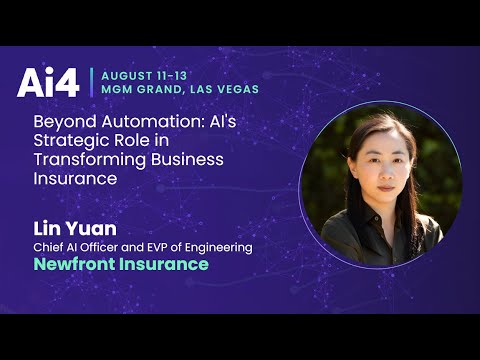
Beyond Automation: AI's Strategic Role in Transforming Business Insurance With Newfront Insurance — Ai4

Ai4

Commercial insurance brokerages gain durable operational leverage only by standardizing unstructured policy data into unified platforms and embedding engineers with licensed brokers, rendering basic LLM wrappers obsolete.

AI-assisted summary of Beyond Automation: AI's Strategic Role in Transforming Business Insurance With Newfront Insurance — original source. Check the original for full context.

Source published:

Detailed notes

## Background Published on YouTube by Ai4 on August 29, 2025, this presentation features Lin Yuan, Chief AI Officer and EVP of Engineering at Newfront Insurance. According to the description, the session explores how AI adoption is reshaping commercial insurance brokerage, offering practical lessons on driving real business impact, build-versus-buy trade-offs, cross-functional collaboration, and talent dynamics.

## TL;DR Lin Yuan argues that applied AI in business insurance must move beyond superficial clerical automation to transform the entire brokerage value chain. She outlines Newfront's suite of AI applications—including automated coverage gap diagnostics, multi-week contract review compressed to minutes, and an autonomous AI placement agent that provides 10x to 100x capacity leverage. Defensibility at the application layer relies on proprietary data, foundational ingestion platforms like TurboQuote, and deep embedded collaboration between technical engineers and licensed domain experts. By meeting operational teams inside existing workflows and maintaining agile feedback loops, brokerages can turn complex, opaque risk management into scalable peace of mind.

## Atmosphere & style The presentation carries an authoritative, pragmatic, and engineering-disciplined tone, stripping away generic AI hype in favor of hard-won operational realities. Yuan speaks with calm confidence and Silicon Valley product clarity, demystifying the traditionally opaque, high-stakes commercial insurance sector with approachable analogies and direct structural breakdowns. It feels like an insider masterclass on enterprise digital transformation, balancing technical architectural depth with deep empathy for both overworked corporate finance clients and frontline insurance brokers.

## Key takeaways - [01:34](https://www.youtube.com/watch?v=Q2twPCj3zgM&t=94s) True strategic value in commercial insurance comes from integrating AI across the entire value chain rather than merely automating clerical tasks like forms and emails. - [02:23](https://www.youtube.com/watch?v=Q2twPCj3zgM&t=143s) Commercial insurance historically operates as an opaque 'dark box' for finance teams, plagued by heavy administrative overhead, SLA delays, and human error. - [04:52](https://www.youtube.com/watch?v=Q2twPCj3zgM&t=292s) AI-powered coverage gap diagnostics and predictive loss modeling shift client relationships from reactive fire-fighting to proactive risk management. - [06:30](https://www.youtube.com/watch?v=Q2twPCj3zgM&t=390s) AI contract review compresses multi-week legal and compliance reviews into 1–2 minutes, using human-in-the-loop validation for high-stakes accuracy. - [10:37](https://www.youtube.com/watch?v=Q2twPCj3zgM&t=637s) End-to-end agentic placement workflows provide 10x to 100x operational capacity leverage without requiring linear headcount expansion. - [13:44](https://www.youtube.com/watch?v=Q2twPCj3zgM&t=824s) A sustainable competitive advantage at the vertical AI layer requires embedding software engineers directly alongside domain experts to manage probabilistic LLM risks. - [16:21](https://www.youtube.com/watch?v=Q2twPCj3zgM&t=981s) Proprietary operational data creates an unfair advantage only after decades of unstructured, heterogeneous policy documents are standardized into machine-actionable data. - [17:05](https://www.youtube.com/watch?v=Q2twPCj3zgM&t=1025s) Maximizing user adoption requires integrating AI capabilities directly into existing daily tools—such as email inboxes—rather than introducing disruptive new interfaces. - [17:46](https://www.youtube.com/watch?v=Q2twPCj3zgM&t=1066s) AI development velocity relies on agile, non-linear collaboration between product, design, and engineering teams to deploy milestones in weeks rather than months. - [18:32](https://www.youtube.com/watch?v=Q2twPCj3zgM&t=1112s) Foundational data platforms generate compounding returns across multiple downstream applications, outperforming fragmented point solutions over time. - [19:24](https://www.youtube.com/watch?v=Q2twPCj3zgM&t=1164s) Engineering and product teams should aggressively adopt AI assistance across the entire software delivery lifecycle, from initial scoping to testing and deployment.

## Detailed walkthrough ### [00:04](https://www.youtube.com/watch?v=Q2twPCj3zgM&t=4s) Introduction and Background

Lin Yuan opens the session with a lighthearted observation that insurance is rarely considered an exciting topic for most audiences. Serving as the Chief AI Officer and Executive Vice President of Engineering at Newfront, Yuan introduces the core theme of the presentation: moving beyond basic automation to explore AI's strategic role in fundamentally transforming the commercial insurance brokerage model.

Yuan's background is rooted in Silicon Valley product and platform engineering. Prior to Newfront, she held leadership roles at Meta, where she worked on search products; Coursera, where she focused on data-driven personalized learner experiences; and Lyft, where she led the insurance tech engineering organization. At Lyft, her team tackled claims cost reduction—the single largest operational expense for sharing-economy platforms—alongside driver and rider safety initiatives across physical driving and community safety. At Newfront, Yuan oversees an organization spanning core product development, infrastructure, platform engineering, data, and enterprise AI.

- **Career Path:** Leadership positions at Meta (Search), Coursera (Personalization), Lyft (Head of Engineering for Insurance Tech), and Newfront (Chief AI Officer & EVP of Engineering). - **Scope at Newfront:** Unified oversight of product development, infrastructure platform, data engineering, and applied AI systems.

---

[01:34](https://www.youtube.com/watch?v=Q2twPCj3zgM&t=94s) Beyond Task Automation: Full Value Chain Integration

When people think about AI in the context of insurance, initial assumptions almost always gravitate toward clerical task automation: filling out standard forms, sending automated reminders, or drafting and polishing outbound emails. While Yuan acknowledges that these basic efficiencies provide a valuable entry point, she stresses that stopping there misses the broader strategic opportunity.

The true potential of applied AI lies in integrating intelligence across the entire brokerage value chain—from proactive risk management to end-to-end service delivery. Instead of solely shaving minutes off individual internal tasks, deep integration transforms the actual business outcomes for both the client and the brokerage itself.

---

[02:23](https://www.youtube.com/watch?v=Q2twPCj3zgM&t=143s) The Dark Box of Business Insurance

Commercial insurance is rarely a favored topic for corporate leadership. For most clients, responsibility defaults to the finance department, landing on the desk of a CFO or VP of Finance as the very bottom priority on their to-do list. The dynamic is unforgiving: "Insurance is something that if you manage it well no one will notice at all, but if you blow up, it's going to be very, very bad consequences."

Historically, commercial insurance has operated as an opaque "dark box" for buyers. Finance leaders struggle to decipher what coverages they hold, why specific terms exist, whether their limits are adequate, and how ongoing business growth or historical claims will alter their total cost of risk over time. Simultaneously, managing the operational burden requires dedicated internal staff to handle certificates of insurance, policy summaries, ongoing claims, and yearly renewals. Despite expanding these administrative teams, clients frequently encounter service-level agreement (SLA) delays and human error—friction that directly undermines the core promise of insurance, which is to deliver genuine peace of mind so companies can focus on their core operations.

```mermaid flowchart TD accTitle: The Traditional Insurance Friction Loop subgraph ClientFriction["Client-Side Pain Points"] A["Finance & CFO Responsibility<br/>(Bottom of Priority List)"] --> B["Opaque 'Dark Box'<br/>(Unclear Limits & Pricing Impact)"] B --> C["Heavy Admin Overhead<br/>(COIs, Summaries, Renewals)"] end subgraph OperationalImpact["Brokerage Operational Bottlenecks"] C --> D["SLA Delays & Human Errors"] D --> E["Erosion of Core Value<br/>('Peace of Mind' Lost)"] end ```

---

[04:52](https://www.youtube.com/watch?v=Q2twPCj3zgM&t=292s) Understanding Risk: Gap Analysis and D&O Loss Prediction

To restore peace of mind, Newfront focuses first on helping clients thoroughly understand their risk profiles. Yuan highlights two specific analytical tools designed to establish this data-driven foundation:

The first is an **AI-powered coverage gap analysis** deployed during prospecting and annual renewals. Rather than relying on manual document audits, client insurance contracts are ingested by the AI engine, which generates a comprehensive diagnostic within minutes. The tool evaluates the client's current coverage against their evolving business needs, operational risk changes, and industry benchmarking data. This allows clients to take proactive remediations before an uninsured event occurs, shifting the relationship away from reactive fire-fighting.

The second solution is **AI-powered Directors and Officers (D&O) loss prediction**. Initiated before the widespread adoption of large language models, Newfront engineered custom machine learning models trained on over 20 years of historical industry data. The tool models diverse insurance structure alternatives, demonstrating how different policy configurations impact total covered risk and enabling clients to optimize their executive management liability towers.

---

[06:30](https://www.youtube.com/watch?v=Q2twPCj3zgM&t=390s) Rapid Contract Review and Third-Party Vendor Management

Beyond structural risk analysis, corporate clients rely heavily on their broker for transactional risk guidance during major inflection points—such as fundraising, mergers and acquisitions, IPO preparations, or launching major operational projects requiring hundreds of subcontractors. In these moments, clients routinely submit complex contracts to verify insurance compliance right before deal closing.

Because insurance is often addressed at the final hour, clients demand rapid compliance sign-offs to prevent closing delays. Traditionally, reviewing these 50-to-100-page legal documents requires multi-team internal coordination, often dragging out turnarounds across multiple days or weeks. Newfront’s **AI-powered contract review** compresses this multi-week cycle into one to two minutes, followed by human-in-the-loop expert validation to guarantee accuracy.

Building upon contract review, Newfront developed an **AI-powered vendor and third-party risk management platform** tailored for industries with extensive subcontractor ecosystems, such as commercial real estate, construction, and franchise networks. Instead of managing static spreadsheets and disparate insurance certificates, the system centralizes documentation and proactively flags coverage gaps, missing endorsements, and potential liabilities in real time.

- **Contract Review Turnaround:** Compressed from multi-week manual routing to 1–2 minutes with automated extraction and human verification. - **Third-Party Risk Automation:** Moves beyond document storage to proactive gap detection across large subcontractor pools.

---

[10:37](https://www.youtube.com/watch?v=Q2twPCj3zgM&t=637s) Employee Benefits (Benji) and the End-to-End AI Placement Agent

Newfront has applied the same AI paradigm to employee benefits and core brokerage operations:

* **Benji (Benefits Assistant Chatbot):** Designed for Total Rewards and Employee Benefits clients, Benji serves as an automated frontline assistant for employees navigating complex corporate benefits. By resolving employee policy questions instantly, Benji saves client HR teams hundreds of administrative hours each year. * **AI Placement Agent:** Commercial policy placement has historically been the most labor-intensive bottleneck within an insurance brokerage. Traditionally, scaling placement volume required a linear increase in headcount (e.g., doubling staff from 5 to 10 to handle double the policy load).

Newfront’s AI Placement Agent provides an end-to-end agentic workflow that delivers 10x to 100x capacity leverage without expanding team size. The autonomous agent orchestrates the placement lifecycle across intake evaluation, submission material generation, carrier and client negotiation management, quote comparison, binder tracking, and post-binding policy auditing. Because carrier marketing is no longer constrained by manual broker bandwidth, clients receive broader market access and superior execution.

```mermaid flowchart LR accTitle: End-to-End AI Placement Agent Workflow subgraph IntakePrep["Intake & Material Prep"] A["Intake Evaluation"] --> B["Submission Materials Prep"] end subgraph MarketExecution["Carrier Negotiation & Analysis"] B --> C["Multi-Carrier Negotiation"] C --> D["Submission Tracking & Quote Comparison"] end subgraph DeliveryBinding["Delivery & Servicing"] D --> E["Client Delivery & Signature"] E --> F["Post-Bind Policy Tracking"] end ```

---

[13:44](https://www.youtube.com/watch?v=Q2twPCj3zgM&t=824s) Application-Layer Advantage: Tech and Domain Expert Collaboration

With frontier foundational LLMs becoming universally accessible, Yuan addresses the fundamental strategic question: *How can a vertical AI product create a durable competitive advantage at the application layer?*

The core differentiator lies in deep cross-functional collaboration between elite technical talent and seasoned domain experts. Because LLMs are inherently probabilistic and occasionally hallucinate, consumer-grade wrappers cannot satisfy the demands of a high-stakes, highly regulated industry where minor errors trigger severe financial and legal liabilities.

To bridge this divide, Newfront embeds software engineers, product managers, and UI designers directly alongside insurance brokers, requiring tech teams to perform operational placement workflows under expert supervision. Simultaneously, Newfront trains insurance professionals to become technically proficient, running annual internal hackathons where cross-disciplinary teams co-create practical applications. Key products—including the AI Contract Review engine and the Benji chatbot—originated directly from these bottom-up hackathons.

- **High-Stakes Compliance:** Commercial insurance requires robust human-in-the-loop intervention and guardrails to meet strict regulatory standards. - **Embedded Apprenticeship:** Technical engineers sit with licensed brokers and manually execute insurance workflows to understand edge cases. - **Bottom-Up Innovation:** Flagship AI applications originated from internal hackathons pairing domain experts directly with engineers.

---

[16:21](https://www.youtube.com/watch?v=Q2twPCj3zgM&t=981s) Proprietary Data as an Unfair Advantage

A secondary pillar of defensibility is proprietary vertical data. Echoing the classic machine learning maxim "garbage in, garbage out," Yuan emphasizes that advanced model architectures cannot compensate for poor data quality.

Brokerages hold a natural advantage because they own rich, vertical-specific operational data. However, the critical engineering challenge lies in standardizing and structuring decades of highly heterogeneous loss runs, claims records, and carrier policy forms into machine-actionable intelligence.

[17:05](https://www.youtube.com/watch?v=Q2twPCj3zgM&t=1025s) Leveraging Existing Workflows and Systems

A critical foundation for deploying effective AI in insurance brokerage is ensuring that varied, messy policy document formats can be ingested and converted into pristine, high-quality data. Without clean underlying data, building reliable downstream AI products is impossible. When introducing these capabilities, the best approach is to meet operational teams where they already spend their workday rather than forcing them into entirely new interfaces.

Instead of disrupting daily routines, organizations should integrate AI directly into existing tooling. If brokers and service teams live inside their email inboxes, AI capabilities should be brought straight into the inbox itself. Meeting users within their established habits minimizes friction, fosters adoption, and enhances workflows without demanding a jarring operational overhaul.

- **Data Integrity:** High-quality AI products depend directly on the ability to standardize and process complex, diverse policy formats into high-fidelity data. - **Workflow Preservation:** Integrate AI into existing platforms (such as email inboxes) rather than replacing existing tools or disrupting day-to-day habits.

---

[17:46](https://www.youtube.com/watch?v=Q2twPCj3zgM&t=1066s) Agile Product Development and Rapid Feedback Loops

When building AI applications, development speed is paramount—though speed encompasses far more than simply writing code faster. Real speed requires establishing a rapid, positive, and scientifically disciplined product development feedback loop.

At Newfront, this process operates collaboratively rather than as a rigid, sequential pipeline. Opportunity identification, product design, software development, and performance measurement happen in tight cross-functional coordination. The goal is to deploy functional milestones in a matter of weeks—not months, quarters, or years—enabling teams to gather rapid user feedback and iterate continuously on real-world findings.

- **Non-Linear Collaboration:** Cross-functional teams work concurrently across discovery, design, development, and evaluation. - **Rapid Release Cycles:** Projects target milestone deliveries measured in weeks to ensure quick validation and continuous improvement.

---

[18:32](https://www.youtube.com/watch?v=Q2twPCj3zgM&t=1112s) Point Solutions vs. Integrated Platforms: The TurboQuote Example

While standalone point solutions can solve narrow problems, they fall short of delivering long-term transformational value. True organizational leverage comes from the "compound interest" generated by investing in a unified, integrated platform.

Newfront’s proprietary platform, TurboQuote, illustrates this compound value. Well before the recent LLM hype, TurboQuote began as a manual system designed to capture limits, terms, and endorsements from insurance documents into a centralized data model. With the advent of modern large language models, that foundation evolved into an AI-powered policy ingestion engine capable of transforming thousands of non-standard, unstructured documents into structured data. Once structured, that single data layer powers a wide array of downstream applications, including Statements of Values (SOVs), Certificates of Insurance, carrier benchmarking, and automated contract reviews.

```mermaid flowchart LR accTitle: TurboQuote Ingestion and Downstream Platform Architecture subgraph Ingestion["AI Policy Ingestion"] A["Non-Standard Policy Documents"] --> B["TurboQuote AI Engine"] end subgraph Core["Structured Data"] B --> C["Standardized Limits & Endorsements"] end subgraph Downstream["Downstream Applications"] C --> D["SOVs & Certificates"] C --> E["Benchmarking"] C --> F["Contract Review"] end ```

- **Compound Architecture:** Investing in an integrated foundational platform pays compounding dividends compared to disconnected point solutions. - **TurboQuote Evolution:** Scaled from pre-LLM manual data capture to automated multi-document ingestion powering downstream broker tools.

---

[19:24](https://www.youtube.com/watch?v=Q2twPCj3zgM&t=1164s) Engineering Productivity and AI-Assisted Development

AI transformation extends internally to engineering and product teams themselves. Building AI applications goes hand-in-hand with adopting AI tools to accelerate the internal development lifecycle.

Engineering productivity gains are not limited to code generation; AI can assist across every phase of product delivery, from scoping and design to testing and deployment. The overarching takeaway is simple: adopt AI aggressively across every available stage of the development process, provided that appropriate operational safeguards are in place.

- **Full-Lifecycle Acceleration:** AI tools should enhance scoping, design, coding, testing, and deployment workflows across engineering teams. - **Guided Adoption:** Integrate AI broadly across internal workflows while maintaining necessary security and quality safeguards.

## Notable quotes > [02:23](https://www.youtube.com/watch?v=Q2twPCj3zgM&t=143s) Insurance is something that if you manage it well no one will notice at all, but if you blow up, it's going to be very, very bad consequences. — Lin Yuan

> [01:34](https://www.youtube.com/watch?v=Q2twPCj3zgM&t=94s) The true potential of applied AI lies in integrating intelligence across the entire brokerage value chain—from proactive risk management to end-to-end service delivery. — Lin Yuan

> [13:44](https://www.youtube.com/watch?v=Q2twPCj3zgM&t=824s) How can a vertical AI product create a durable competitive advantage at the application layer? — Lin Yuan

> [16:21](https://www.youtube.com/watch?v=Q2twPCj3zgM&t=981s) garbage in, garbage out — Lin Yuan

> [17:05](https://www.youtube.com/watch?v=Q2twPCj3zgM&t=1025s) If brokers and service teams live inside their email inboxes, AI capabilities should be brought straight into the inbox itself. — Lin Yuan

> [17:46](https://www.youtube.com/watch?v=Q2twPCj3zgM&t=1066s) The goal is to deploy functional milestones in a matter of weeks—not months, quarters, or years—enabling teams to gather rapid user feedback and iterate continuously on real-world findings. — Lin Yuan

> [18:32](https://www.youtube.com/watch?v=Q2twPCj3zgM&t=1112s) True organizational leverage comes from the "compound interest" generated by investing in a unified, integrated platform. — Lin Yuan

> [19:24](https://www.youtube.com/watch?v=Q2twPCj3zgM&t=1164s) adopt AI aggressively across every available stage of the development process, provided that appropriate operational safeguards are in place. — Lin Yuan

## Mentioned Lin Yuan, Newfront, Meta, Coursera, Lyft, Ai4, Benji, AI Placement Agent, TurboQuote

## Video description Lin Yuan, Chief AI Officer and EVP of Engineering, Newfront Insurance

Abstract

As AI adoption accelerates, insurance brokerage faces a pivotal moment to rethink how value is created and delivered. In this talk, I’ll share reflections from leading AI initiatives in business insurance brokerage, with a focus on practical lessons in building AI applications that drive real impact. The session will also explore build vs. buy decisions, cross-functional collaboration, and the evolving talent landscape.

[Source](https://www.youtube.com/watch?v=Q2twPCj3zgM)

中文简报

Newfront部署AI投保智能体,经纪人产能提升百倍 商业保险经纪机构唯有将非结构化保单数据标准化归入统一平台,并让工程师与持牌经纪人紧密协作,才能获得持久的运营杠杆,而单纯的LLM套壳应用将因此被淘汰。 Lin Yuan认为,商业保险领域的应用型AI必须超越浅层的文书自动化,进而重塑整个经纪业务价值链。她概述了Newfront的一系列AI应用——包括自动化的保障缺口诊断、将耗时数周的合同审查压缩至数分钟,以及带来10到100倍产能杠杆的自主AI投保智能体。应用层的行业壁垒依赖于专有数据、如TurboQuote等底层数据接入平台,以及技术工程师与持牌行业专家之间的深度嵌入式协作。通过在现有工作流程中贴合运营团队需求并保持敏捷的反馈闭环,保险经纪公司可以将复杂且不透明的风险管理转变为可规模化的安心保障。 商业保险 AI 的战略价值在于深度整合至整个业务价值链,而非仅仅用于表单填写或邮件润色等表面化的文书任务自动化。 (1:34) 通过 AI 驱动的保障缺口分析与 D&O 损失预测模型,企业保险管理正从事故发生后的被动救火转向前置化的主动风险管控。 (4:52) AI 合同审查将原本长达数周的法务与合规审查压缩至 1–2 分钟,并结合人机协同(Human-in-the-loop)确保高风险场景下的极高准确率。 (6:30) Newfront 构建的端到端智能投保(Placement)工作流提供了 10 倍至 100 倍的运营吞吐杠杆,彻底打破了必须线性增加员工人数才能扩展业务的瓶颈。 (10:37) 垂直领域 AI 的长期护城河在于让软件工程师与资深经纪人紧密共事以克服大模型幻觉,并将数十年非结构化保单沉淀为高质量专有数据,同时无缝嵌入邮件等日常工作流中。 (13:44)

Reading summary

Lin Yuan, Chief AI Officer at Newfront, argues that commercial insurance brokerage must move beyond basic clerical automation toward full value-chain integration, using proprietary vertical data and embedded domain expertise to solve systemic operational friction. Opening the Dark Box with Risk Analytics (2:23) Yuan observes that commercial insurance typically defaults to corporate finance leaders as a low-priority, opaque "dark box" where routine competence goes unnoticed but coverage failures carry severe legal and financial fallout. Buyers struggle to decipher policy terms, confirm limit adequacy, or project how operational growth will alter their total cost of risk, while internal teams endure administrative delays on policy summaries and renewals. To replace reactive firefighting, Newfront deploys AI tools focused on upfront risk diagnostics. An automated coverage gap analysis ingests client policies during prospecting and renewals, comparing them against operational profiles and industry benchmarks within minutes. For executive liability, Newfront utilizes proprietary Directors and Officers (D&O) loss prediction models trained on more than 20 years of historical industry data to simulate alternative policy structures and optimize coverage towers. Accelerating High-Stakes Review and Policy Placement (6:30) During major corporate milestones such as fundraising, acquisitions, or subcontractor onboarding, insurance verification frequently creates last-minute transactional friction. Newfront’s contract review engine compresses 50-to-100-page compliance evaluations from multi-week manual routing cycles down to one to two minutes, followed by human expert validation. A corresponding third-party risk tool centralizes subcontractor tracking, proactively identifying missing endorsements and coverage gaps. In core brokerage operations, where scaling historically required linear headcount expansion, Newfront deployed an end-to-end AI Placement Agent. Yuan claims this agentic workflow unlocks 10x to 100x capacity leverage by managing intake evaluation, carrier negotiations, quote comparisons, and post-bind policy tracking without growing team size. On the client side, Newfront's benefits assistant, Benji, resolves employee benefits inquiries directly, saving corporate HR teams hundreds of administrative hours annually. Defensibility Through Embedded Expertise and Data Discipline (13:44) Because foundation models are probabilistic and prone to hallucinations, Yuan argues that generic consumer wrappers cannot meet the strict compliance demands of high-liability commercial insurance. Newfront establishes defensibility at the application layer by embedding software engineers and product teams directly alongside licensed brokers to observe operational edge cases firsthand. Flagship systems, including the contract review tool and Benji, originated directly from internal cross-disciplinary hackathons. This workflow integration is reinforced by proprietary vertical data. Advanced model architectures fail without clean inputs, making it essential to standardize decades of heterogeneous loss runs, claims files, and carrier policy forms into structured records. Yuan emphasizes integrating these AI capabilities into established habits—such as broker email inboxes—rather than forcing staff into unfamiliar interfaces. Compound Value via Unified Architecture and Velocity (18:32) Yuan distinguishes isolated point solutions from integrated platforms, asserting that durable operational leverage stems from foundational data investments that compound over time. Newfront’s TurboQuote platform began prior to large language models as a manual system to extract terms and limits; it subsequently evolved into an AI ingestion engine converting unstructured documents into a shared data layer that powers Certificates of Insurance, Statements of Values, benchmarking, and contract audits. Maintaining delivery speed requires a non-linear development cycle where opportunity identification, design, coding, and evaluation occur in parallel, aiming to ship functional milestones in weeks rather than months. Yuan also advises brokerage engineering organizations to deploy AI tools across the entire product lifecycle—from scoping and design to testing and deployment—under robust operational safeguards. Yuan concludes that moving beyond basic administrative task automation enables commercial brokerages to achieve significant operational scale and client transparency. However, realizing this potential requires managing the risks of probabilistic models through human-in-the-loop validation, unified data platforms, and close alignment between software engineers and licensed insurance practitioners.

精炼阅读摘要

Newfront首席AI官兼工程执行副总裁Lin Yuan指出,商业保险经纪行业的AI应用必须超越零散的文书自动化,通过全价值链智能化重构经纪业务与风险管理模式。 打破商业保险的黑盒与运营摩擦 (2:23) 在传统企业管理中,商业保险通常由财务总监或财务副总裁负责,但在日常事务中优先级极低。Lin Yuan指出,保险业务的特征是“若管理妥当则无人问津,一旦发生风险失控则后果极为严重”。企业客户往往难以厘清自身的具体承保范围、条款设定依据、限额是否充足,以及业务扩张和历史索赔如何影响总体风险成本,商业保险因而沦为一个缺乏透明度的“黑盒”。 为了处理保险凭证(COIs)、保单摘要、索赔事务及年度续保,企业必须设立专职行政人员。然而,经纪机构频发的服务等级协议(SLA)延迟和人为失误持续存在。这些运营摩擦破坏了保险本应为企业提供的核心价值——即通过转嫁风险来赋予企业专注于核心主营业务的确定性。 基于垂直数据的风险洞察与履约审查 (4:52) 为了在出险前主动识别风险,Newfront开发了贯穿客户服务周期的分析工具。在客户拓展与年度续保阶段,AI保障缺口分析系统直接摄取客户保单合同,在数分钟内结合业务变动、运营风险及行业对标数据完成全面诊断,改变了以往出险后被动应对的局面。此外,针对高管责任险(D&O),公司基于超过20年的行业历史数据训练定制化机器学习模型,测算不同保单结构方案对总体承保风险的影响,协助客户优化保障架构。 在融资、并购、上市筹备及大型项目开工等关键交易节点,企业需要迅速验证多方合同的合规性。过去针对50至100页法律合同的人工交叉审查耗时数天乃至数周,Newfront的AI合同审查系统将初步处理压缩至1到2分钟,并由专业人员完成最终复核。针对商业地产与建筑等高度依赖分包商的行业,第三方风险管理平台取代了静态电子表格,实时监测大型分包商群体的保障漏洞与背书缺失。 重塑经纪运力:从客服到全流程承保 (10:37) 在员工福利领域,Newfront推出了面向全面薪酬与福利体系的智能助手Benji,通过即时解答员工复杂的保单疑问,每年为客户的人力资源团队节省数百小时的行政处理时间。这项应用降低了企业内部沟通成本,使福利管理流程更加顺畅。 更为关键的突破在于经纪核心承保流程的重组。传统商业保单的推介与撮合(Placement)高度依赖人工,承保规模的扩张必须线性增加团队人力。Newfront构建的端到端AI承保智能体(AI Placement Agent)覆盖了需求评估、材料生成、保司与客户协商、报价比对、暂保单追踪及保单后审全流程。Lin Yuan表示,该自动化工作流在不扩张团队的前提下实现了10倍至100倍的运力杠杆,打破了传统人工经纪的带宽瓶颈。 垂直壁垒:专家共创与集成式数据底座 (13:44) 在基础大语言模型日趋同质化的背景下,应用层产品的护城河依赖于专业技术人才与保险业务专家的协同。鉴于大模型的概率性特征及潜在幻觉,在强监管且容错率极低的保险领域,简单的通用封装无法满足合规要求。Newfront要求软件工程师和产品经理与持牌经纪人并肩作业,直接执行一线承保流程;同时通过年度内部黑客松鼓励跨学科协作,AI合同审查与Benji均孵化于这一机制。 与此同时,整合垂直数据是保障AI可靠性的前提。相对于孤立的单点工具,投资集成式数据底座能带来持续的复合价值。以TurboQuote平台为例,其最初为手动提取保单限额与条款的数据架构,随后演进为支持非标保单文档解析的AI摄取引擎。该系统将海量非结构化文档转化为清洗后的标准数据层,并直接赋能下游的财产明细清单(SOV)、保险凭证开具、保司对标及合同审查等业务场景。 敏捷研发与嵌入式工作流实践 (17:05) 在落地层面,Lin Yuan强调AI工具的引入应契合团队既有的工作习惯,而非强行替代业务系统。若经纪与服务团队日常深度依赖电子邮件,AI能力就应当直接嵌入邮箱界面,通过零门槛交互降低抵触情绪、提升采纳率。技术团队的开发同样遵循这一逻辑,将非结构化文档高质量转化为标准数据,作为一切下游AI工具的先决条件。 在研发机制上,Newfront采取非线性的跨职能敏捷模式,业务机会识别、产品设计、软件构建与效果评估紧密同步进行,以周为单位交付可用功能并收集真实反馈。同时,技术团队在需求规划、界面设计、编码、测试与部署全周期广泛采用AI辅助工具,在设置必要操作护栏的前提下,实现了内部交付效能的全面提升。 Lin Yuan总结强调,商业保险AI的长期胜负取决于企业是否具备将杂乱的历史单据转化为高质量结构化数据的底层工程能力,以及能否将技术深度嵌入现有经纪业务流程。然而,在强监管与高赔付风险的约束下,大语言模型的幻觉抑制以及人机协同边界的划分,仍是垂直领域AI持续扩张必须面对的核心课题。

Detailed notes — zh

## Background 该内容由 Ai4 频道于 2025 年 8 月 29 日发布在 YouTube 平台。视频记录了 Newfront Insurance 首席人工智能官兼工程执行副总裁 Lin Yuan 的主题演讲,主要探讨了人工智能如何从保险经纪视角重塑商业保险行业,并分享了构建高价值 AI 应用、技术与业务跨职能协作以及人才演进方面的实践经验。 ## TL;DR 演讲指出,商业保险领域的 AI 战略机遇绝非局限于自动填表或起草邮件等单点任务自动化,而是要深度融入风险管理、服务交付与承保投放的端到端全价值链。Newfront 研发了 AI 保障缺口分析、D&O 损失预测、将审查周期从数周压缩至数分钟的人机协同合同审查工具,以及能够实现团队产能 10 至 100 倍跃迁的端到端承保投放智能体(AI Placement Agent)。Lin Yuan 强调,在基础大模型能力趋同的背景下,应用层的核心壁垒源于顶尖技术专家与业务专家的深度共创、专有非标数据的高质量治理、无缝嵌入现有工作流的敏捷迭代机制以及一体化集成平台的长期复利价值。 ## Atmosphere & style 整场演讲呈现出兼具硅谷技术视野与传统垂直行业深耕的务实风格。讲者以幽默自嘲的语调开场,随后以清晰干练、层层递进的逻辑将繁琐晦涩的商业保险痛点与前沿 AI 架构拆解得通俗透彻。叙事既展现了技术打破传统低效瓶颈的颠覆性势能,又处处体现出对强监管行业准确性与人机协同(Human-in-the-loop)的严谨敬畏,给听众带来极具实操参考价值与战略启发性的沉浸体验。 ## Key takeaways - [00:04](https://www.youtube.com/watch?v=Q2twPCj3zgM&t=4s) 商业保险领域的 AI 应用不应仅停留在自动填表或邮件润色等单点浅层任务,而应贯穿风险管理与服务交付的端到端全生命周期价值链。 - [02:23](https://www.youtube.com/watch?v=Q2twPCj3zgM&t=143s) 传统商业保险对企业及 CFO 而言如同一个难以理解且运维繁重的“黑盒”,常年伴随 SLA 延误与人为差错,背离了提供“内心安宁”的本质价值。 - [04:23](https://www.youtube.com/watch?v=Q2twPCj3zgM&t=263s) 通过 AI 保障缺口分析与基于 20 多年数据训练的 D&O 损失预测模型,企业能够化被动理赔为主动预防,实现保额架构与风险覆盖的最优化。 - [06:30](https://www.youtube.com/watch?v=Q2twPCj3zgM&t=390s) AI 驱动的合同审查工具结合 Human-in-the-loop 人机复核机制,将原本需跨部门耗时数天至数周的复杂保单合规审查极限压缩至 1-2 分钟。 - [09:20](https://www.youtube.com/watch?v=Q2twPCj3zgM&t=560s) 针对建筑、地产和连锁等高外部风险场景,AI 供应商与第三方风险管理工具实现了对海量保单凭证的自动化集中提取、校验与全生命周期监控。 - [10:11](https://www.youtube.com/watch?v=Q2twPCj3zgM&t=611s) 员工福利智能助手 Benji 能够秒级解答复杂的福利政策,不仅提升了员工体验,更每年为客户 HR 团队节省数百小时的重复沟通工时。 - [11:28](https://www.youtube.com/watch?v=Q2twPCj3zgM&t=688s) AI 承保投放智能体(AI Placement Agent)构建了端到端 Agentic 工作流,彻底打破人力规模对业务扩张的物理瓶颈,实现 10 到 100 倍的产能跃迁。 - [13:44](https://www.youtube.com/watch?v=Q2twPCj3zgM&t=824s) 在底层大模型能力趋同的背景下,应用层的核心竞争壁垒在于顶尖技术专家与行业领域专家之间的深度协同及沉浸式业务体验。 - [16:21](https://www.youtube.com/watch?v=Q2twPCj3zgM&t=981s) 企业构建 AI 壁垒需要依托高质量专有非标数据的结构化治理、与一线人员现有工作流(如邮箱)的无缝集成,以及以“周”为维度的敏捷迭代闭环。 - [18:32](https://www.youtube.com/watch?v=Q2twPCj3zgM&t=1112s) 相较于单点工具,投资一体化集成平台(如 TurboQuote)能够将非标保单转化为统一数据基座,为上层所有业务应用带来持续的复利与协同红利。 ## Detailed walkthrough ### [00:04](https://www.youtube.com/watch?v=Q2twPCj3zgM&t=4s) 讲者背景与演讲主题:超越简单的任务自动化 演讲开场时,讲者 Lin Yuan 以一句幽默的自嘲切入:“正如我所料,其实没多少人对保险真正感兴趣。”作为 Newfront 的首席人工智能官(Chief AI Officer)兼工程执行副总裁(EVP of Engineering),Lin Yuan 专注于探索人工智能如何从保险经纪(Brokerage)的视角深度重塑商业保险,发挥其战略价值,而不仅仅停留在浅层的流程自动化上。 Lin Yuan 的整个职业生涯都扎根于硅谷。在加入 Newfront 之前,他曾先后在 Meta、Coursera 和 Lyft 等科技巨头担任核心领导职务,主导过多项前沿 AI 与核心产品体系的研发:在 Meta 负责搜索相关业务,在 Coursera 负责数据驱动的个性化用户体验。在加入 Newfront 前,他在 Lyft 担任保险科技(Insurance Tech)工程负责人,专注于降低车辆事故理赔成本——这也是所有共享经济模式中最大的成本痛点,同时全方位提升网约车驾驶员与乘客在行车与社区维度的整体安全。目前在 Newfront,他全面统管涵盖产品开发、基础设施平台、数据与 AI 在内的整个技术与工程组织。 当人们谈起“AI + 保险”时,脑海中首先浮现的往往是表层的单点任务自动化,例如自动填表、发送跟进提醒、起草或润色邮件等。Lin Yuan 指出,这些应用虽然很有价值,也是绝佳的切入点,但这绝非 AI 的终局。真正的战略机遇在于将 AI 深度融入风险管理、服务交付等端到端全价值链中。通过这种深度融合,技术不仅为内部员工节省工时,更能从根本上改变客户以及保险经纪公司自身的商业成果。 - **过往经验**:Meta(搜索)、Coursera(个性化体验)、Lyft(Insurance Tech 负责人,主攻降低理赔成本与行车安全)。 - **当前职责**:在 Newfront 统管产品研发、基础设施、平台工程以及数据与 AI 团队。 - **核心理念**:超越自动填表与邮件润色等浅层自动化,将 AI 贯穿整个保险业务全生命周期价值链。 --- ### [02:23](https://www.youtube.com/watch?v=Q2twPCj3zgM&t=143s) 商业保险的行业痛点:财务团队的“黑盒”与运维负担 Lin Yuan 坦言,商业保险对客户来说从来都不是一件有趣的事。在绝大多数企业中,商业保险通常由 CFO、财务副总裁(VP of Finance)或财务团队负责。与 Lin Yuan 交流过的所有 CFO 几乎没人真正喜欢处理商业保险,它往往常年处于待办清单的最底部。然而,财务团队又不得不硬着头皮管理,因为商业保险的特性在于:如果一切运转良好,平时根本无人问津;但一旦出现疏漏或危机爆发,企业将面临极其惨痛的灾难性后果。 长期以来,商业保险对于企业客户和 CFO 而言就像一个难以看透的“黑盒”(Dark Box)。企业通常很难直观理解自己究竟买了什么保障、为什么需要这些保障、现有保额是否充足,也难以量化评估历史理赔记录会对未来的保费及保额产生何种连锁反应,更无法算清业务规模扩张如何影响整体综合风险成本(Total Cost of Risk)。 随着企业规模扩张,繁重的行政琐事接踵而至,企业不得不招募专门团队来疲于应对出具保险凭证(Certificates of Insurance)、制作保单摘要(Summary of Insurance)、处理理赔申报以及应对年复一年的保单续约(Renewal)。哪怕企业配备了专属团队,依然不可避免地面临服务等级协议(SLA)延误和各类人为差错。这一系列痛点不仅让企业耗费大量精力,更背离了保险行业最本质的核心价值——原本应当为企业提供“内心的安宁与从容”(Peace of mind),让客户能够专注于发展核心业务,而非每天为风险管理提心吊胆。AI 的战略使命,正是要打破这一行业顽疾,将这份安心重新还给客户。 ```mermaid flowchart TD accTitle: 传统商业保险黑盒困境 subgraph ClientPain ["企业客户与财务团队痛点"] A["保险属于底层待办事项<br/>极度不受 CFO 欢迎"] --> B["保单信息不透明<br/>难以理解保障与保费逻辑"] B --> C["沉重行政运维压力<br/>凭证制作/理赔/续约"] end subgraph Breakdown ["传统模式后果"] C --> D["频繁出现 SLA 延误与人为错误"] D --> E["偏离保险核心价值:失去'内心的安宁'"] end ``` --- ### [04:23](https://www.youtube.com/watch?v=Q2twPCj3zgM&t=263s) 赋能客户体验:AI 保障缺口分析与 D&O 损失预测 为了彻底改善客户体验,Newfront 的首要发力点是帮助客户清晰洞察自身所面临的风险,因为这是建立高效风险管理体系的基石。在诸多落地的产品中,Lin Yuan 重点介绍了两款代表性工具: 1. **AI 驱动的保障缺口分析(AI-Powered Coverage Gap Analysis)**: 该工具在客户续约和新客户拓展(Prospecting)阶段发挥着关键作用。业务人员只需将客户现有的保单与保险文档上传至 AI 系统,几分钟内便能生成一份详尽的评估分析报告。AI 会结合客户动态变化的业务需求、风险画像(Risk Profile)演变以及行业基准数据(Benchmarking),精准识别出当前保险方案中潜藏的保障漏洞。这是一种高度数据驱动的评估机制,让经纪团队能够主动出击协助客户决策,而不是等到事故发生造成损失后才被动应对。 2. **AI 驱动的 D&O 损失预测(AI-Powered D&O Loss Prediction)**: 针对董事及高级管理人员责任险(D&O),Newfront 早在现代大语言模型(LLM)爆发之前,就基于超过 20 年的行业历史数据自主训练了机器学习模型。该工具能够直观演示不同的保险组合替代方案,测算并向客户展示不同选择对总风险覆盖敞口的影响,最终帮助企业以极具针对性且高性价比的方式,优化其管理层责任风险保障塔(Management Liability Towers)。 - **保障缺口分析核心机制**:上传文档后数分钟内出具报告,融合业务演进、风险变动与行业 Benchmarking 数据,化被动理赔为主动预防。 - **D&O 损失预测核心机制**:基于 20 多年沉淀数据自研 ML 模型,可视化拆解责任险组合方案,精确优化保额架构。 --- ### [06:30](https://www.youtube.com/watch?v=Q2twPCj3zgM&t=390s) 颠覆性效率:AI 合同审查将数周流程缩短至数分钟 除了理解风险,保险经纪公司日常还要为客户提供大量的专业咨询与服务支持,其中最具代表性且痛点极深的就是**合同审查(Contract Review)**。Lin Yuan 解释说,合同审查并非高频日常任务,通常只在企业发生重大资本运作或关键业务节点时集中爆发,例如进行并购(M&A)、准备首次公开募股(IPO)、或启动涉及上百甚至数百家分包商(Subcontractors)的大型工程项目。 在这些关键场景下,合同中的保险合规条款往往成为交易推进的卡点。然而,正如前文所提,商业保险是财务团队最不愿触碰的琐事,客户往往在交易即将敲定、项目临近截止日期的最后一刻,才猛然意识到合规要求,慌忙将厚厚的合同文件丢给经纪人:“我下周就要闭门签约了,快帮我看看现有保单合不合规,有没有卡点!” 在传统经纪模式下,一份长达几十甚至上百页的复杂商业保单,往往需要经纪公司协调法务、承保支持等多个内部跨部门团队协作审查。各个团队平日已有繁重的日常工作,面对突如其来的插单,审查周期往往被拖长至数天甚至数周。这导致客户抱怨“下周就要交差”,而经纪人则委屈“为何不提前几周发来”。针对这一尖锐矛盾,Newfront 研发了 AI 驱动的合同审查工具,将原本耗时数周的处理周期极限压缩至短短 1 到 2 分钟。系统秒级输出审查结论后,再由专业人工团队(Human-in-the-loop)介入进行最终校对与核验,确保结果百分之百准确可靠,彻底化解了客户在关键商业交易节点的燃眉之急。 ```mermaid flowchart LR accTitle: 传统合同审查与 AI 驱动审查流程对比 subgraph Traditional ["传统审查模式(耗时数天至数周)"] T1["紧急合同需求<br/>(M&A/IPO/大项目)"] --> T2["保单长达数百页<br/>跨多个内部团队流转"] T2 --> T3["流程严重积压<br/>错失签约截止期"] end subgraph AIPowered ["AI 赋能审查模式(耗时 1-2 分钟)"] A1["上传大体量保单合同"] --> A2["AI 智能秒级提取<br/>与合规比对 (1-2分钟)"] A2 --> A3["专业人工复核校验<br/>(保障结果绝对准确)"] A3 --> A4["快速交付合规结果<br/>助力客户顺利签约"] end ``` --- ### [09:20](https://www.youtube.com/watch?v=Q2twPCj3zgM&t=560s) 扩展风险防线:AI 驱动的供应商与第三方风险管理 在突破了合同审查的效率瓶颈后,Newfront 进一步将 AI 技术向外延伸,推出了 **AI 驱动的供应商与第三方风险管理(AI-Powered Vendor Management / Third-Party Management)**。Lin Yuan 指出,企业面临的不仅是一手/第一方风险(First-Party Risks),随着业务的高速扩张,第三方风险(Third-Party Risks)的管理压力呈指数级上升。 对于大型建筑施工企业、商业地产开发商以及连锁加盟(Franchise)品牌等组织而言,企业日常需要对接海量的外部供应商、分包商和加盟商。以往,这些企业通常不得不组建专门的人工团队,利用电子表格(Spreadsheet)、零散文档或基础归档系统,机械地收集、录入并比对海量的第三方保险凭证(Certificates of Insurance)。由于流程繁琐杂乱,人工处理不仅效率低下,还极易遗漏过期的保单或缺失的关键条款,留下巨大的合规与赔偿隐患。通过引入专门构建的 AI 第三方管理工具,企业能够实现对各类第三方保单凭证的自动化集中提取、校验与全生命周期监控,为高速增长的企业筑牢坚实的外部风险防线。 ### [10:11](https://www.youtube.com/watch?v=Q2twPCj3zgM&t=611s) 主动式保险管理与员工福利助手 Benji AI 在商业保险中的应用正在从“被动响应”转变为“主动防御”。通过对保单凭证(Certificates)和相关文档的深度梳理,系统不仅能集中管理所有文件,更能借助 AI 主动预警潜在的保障漏洞与承保缺口,并实时给出应对建议,帮助客户防患于未然。 在员工福利(Total Rewards / Employee Benefits)领域,企业员工通常对雇主提供的各项福利政策感到困惑,即便从业多年的资深员工也很难完全理清条款细则,这导致客户公司的 HR 团队每年需要花费海量时间回答重复性咨询。为此,Newfront 打造了名为 **Benji** 的福利智能助理聊天机器人。员工只需花上几秒钟即可获取精准的福利解答,不仅极大地提升了员工体验,更为客户的 HR 团队每年节省了数百小时的繁琐工时。 --- ### [11:28](https://www.youtube.com/watch?v=Q2twPCj3zgM&t=688s) AI 承保投放智能体(AI Placement Agent)与生产力跃迁 在商业保险经纪业务中,保单投放(Placement)一直以来都是最耗时、对时间最敏感的核心环节。传统模式下,经纪业务的扩张完全受限于人力规模——要想承接更多客户请求、投放更多保单或处理续保,就必须同比例扩充团队人数。而 Newfront 研发的 **AI 承保投放智能体(AI Placement Agent)** 并非单点任务的简单自动化,而是一个贯穿始终的端到端 Agentic 工作流,能够将团队产能提升 10 倍乃至 100 倍。过去由 5 人团队支撑的业务体量,现在无需额外招聘即可承接 10 倍的业务增长,彻底打破了团队规模对经纪业务扩张的物理瓶颈。 ```mermaid flowchart TD accTitle: AI Placement Agent Workflow accDescription: 展示从需求接入、物料准备、市场谈判到保单绑定的端到端全流程 AI 智能体工作流。 subgraph Phase1["需求接入与物料准备"] A["评估客户需求与申请数据 (Intake Evaluation)"] --> B["自动化准备投保物料 (Submission Materials)"] end subgraph Phase2["市场交互与比对"] B --> C["保司多方互动与谈判 (Carrier Interaction)"] C --> D["报盘跟踪与比价分析 (Quote Comparison)"] end subgraph Phase3["交付与投保后追踪"] D --> E["生成客户交付方案 (Client Delivery)"] E --> F["客户签署与投保确认 (Sign & Bind)"] F --> G["出单后保单跟踪与服务闭环 (Post-Binding Tracking)"] end ``` 该智能体覆盖了从需求评估、投保材料准备、经纪人与保险公司(Carriers)及客户之间的多方沟通谈判,到报盘跟踪比价、交付方案生成、签署出单,乃至投保后保单追踪的全部环节。这一变革不仅在根本上重塑了经纪公司的成本结构,而且让市场选择不再受限于团队精力,使客户得以触达更广泛的承保市场与更优质的保单方案。 --- ### [13:44](https://www.youtube.com/watch?v=Q2twPCj3zgM&t=824s) 打造应用层竞争壁垒:技术专家与领域专家的深度融合 在基础大语言模型(LLM)迭代极其迅猛的背景下,每个企业所能访问的底层大模型能力基本趋同。面对“如何构建 AI 应用层竞争壁垒”这一核心命题,真正的护城河来源于**顶尖技术专家与行业领域专家之间的深度协同**。构建优质的 AI 应用绝非简单地把文档输入大模型再获取输出那么轻巧;由于 LLM 本身存在不可靠与幻觉问题,必须针对性地设计精密的交互界面与人机协同机制(Human-in-the-loop)。商业保险属于强监管且容错率极低的行业,一旦发生差错后果极其严重,合规性与准确性至关重要。 为了实现跨领域深层协作,Newfront 采取了双向渗透的策略: - **技术人员沉浸式业务体验**:让工程师、产品经理和设计师坐到一线保险经纪人身旁,不仅是旁观,更在业务专家的指导下亲手操作保险业务流程,第一手体验真实的业务痛点与操作阻力。 - **业务专家技术赋能与黑客松**:对领域专家进行技术意识培训,并每年举办由技术专家与业务专家联合组队的黑客松(Hackathon)。诸如 AI 合同审查、Benji 福利助手等众多落地产品,均诞生于这种自下而上的跨界碰撞。 --- ### [16:21](https://www.youtube.com/watch?v=Q2twPCj3zgM&t=981s) 高质量专有数据、无缝集成与敏捷开发飞轮 除人才协同外,企业构建 AI 壁垒还需要在数据、系统集成以及研发速度上形成综合合力: * **专有数据与数据治理(Proprietary Data)**:机器学习领域常说 "Garbage in, garbage out"(垃圾进,垃圾出)。商业保险行业虽然天然沉淀了海量垂直数据,但这些索赔单据与保单条款格式极度非标、高度非结构化。如何将杂乱的文档提炼转化为高质量的结构化数据,是决定 AI 产品成败的关键基石。 * **依托现有系统赋能(Leverage Existing Systems)**:AI 的落地切忌强行颠覆一线团队的工作习惯。如果团队日常高度依赖邮件收件箱(Email Inbox),最有效的方式是在现有收件箱内做 AI 嵌入式赋能,而非强推全新的独立软件打破其日常节奏。 * **以“周”为维度的敏捷迭代(Product Development Speed)**:研发速度并不仅指写代码快,更体现在科学的产品反馈闭环上。在机会识别、方案设计、研发和评估阶段,跨职能团队高度协同推进,以“周”(而非数月、季度甚至年度)为周期交付里程碑版本,快速吸收真实反馈并持续迭代。 --- ### [18:32](https://www.youtube.com/watch?v=Q2twPCj3zgM&t=1112s) 单点工具与集成平台的复利价值,以及全流程工程提效 在工具选择上,单点解决方案(Point Solutions)虽然能解决特定问题,但长期来看只有投资**一体化集成平台(Integrated Platform)**才能产生复利效应。以 Newfront 早在 LLM 热潮前就布局的 **TurboQuote** 平台为例,该平台起初依靠人工录入保单限额与批单条款,引入 LLM 后全面升级为 AI 驱动的非标保单自动解析流水线。一旦将成千上万份非标保单转化为统一的底层结构化数据,上层的所有业务应用——包括可保利益说明(SOI)、保单凭证、市场基准对比(Benchmarking)及合同审查——都将持续享受统一数据基座带来的协同红利。 最后,AI 的价值不仅体现在外部客户产品上,也深度渗透到了内部产研全流程之中。工程团队在整个产品生命周期中广泛采用 AI 辅助工具来倍增生产力。其核心策略就是“在设有安全护栏的前提下,尽可能在每一个环节拥抱 AI”,以此驱动组织整体效率的全面飞跃。 ## Notable quotes > [00:04](https://www.youtube.com/watch?v=Q2twPCj3zgM&t=4s) 正如我所料,其实没多少人对保险真正感兴趣。 — Lin Yuan > [00:04](https://www.youtube.com/watch?v=Q2twPCj3zgM&t=4s) 这绝非 AI 的终局。真正的战略机遇在于将 AI 深度融入风险管理、服务交付等端到端全价值链中。 — Lin Yuan > [02:23](https://www.youtube.com/watch?v=Q2twPCj3zgM&t=143s) 如果一切运转良好,平时根本无人问津;但一旦出现疏漏或危机爆发,企业将面临极其惨痛的灾难性后果。 — Lin Yuan > [02:23](https://www.youtube.com/watch?v=Q2twPCj3zgM&t=143s) 原本应当为企业提供‘内心的安宁与从容’(Peace of mind),让客户能够专注于发展核心业务,而非每天为风险管理提心吊胆。 — Lin Yuan > [06:30](https://www.youtube.com/watch?v=Q2twPCj3zgM&t=390s) 我下周就要闭门签约了,快帮我看看现有保单合不合规,有没有卡点! — Lin Yuan > [11:28](https://www.youtube.com/watch?v=Q2twPCj3zgM&t=688s) 过去由 5 人团队支撑的业务体量,现在无需额外招聘即可承接 10 倍的业务增长,彻底打破了团队规模对经纪业务扩张的物理瓶颈。 — Lin Yuan > [13:44](https://www.youtube.com/watch?v=Q2twPCj3zgM&t=824s) 构建优质的 AI 应用绝非简单地把文档输入大模型再获取输出那么轻巧;由于 LLM 本身存在不可靠与幻觉问题,必须针对性地设计精密的交互界面与人机协同机制(Human-in-the-loop)。 — Lin Yuan > [16:21](https://www.youtube.com/watch?v=Q2twPCj3zgM&t=981s) Garbage in, garbage out — Lin Yuan > [16:21](https://www.youtube.com/watch?v=Q2twPCj3zgM&t=981s) 如果团队日常高度依赖邮件收件箱(Email Inbox),最有效的方式是在现有收件箱内做 AI 嵌入式赋能,而非强推全新的独立软件打破其日常节奏。 — Lin Yuan > [18:32](https://www.youtube.com/watch?v=Q2twPCj3zgM&t=1112s) 在设有安全护栏的前提下,尽可能在每一个环节拥抱 AI — Lin Yuan ## Mentioned Lin Yuan, Newfront, Meta, Coursera, Lyft, Benji, TurboQuote, AI Placement Agent, D&O 责任险, Ai4 ## Video description Lin Yuan, Chief AI Officer and EVP of Engineering, Newfront Insurance Abstract As AI adoption accelerates, insurance brokerage faces a pivotal moment to rethink how value is created and delivered. In this talk, I’ll share reflections from leading AI initiatives in business insurance brokerage, with a focus on practical lessons in building AI applications that drive real impact. The session will also explore build vs. buy decisions, cross-functional collaboration, and the evolving talent landscape. [Source](https://www.youtube.com/watch?v=Q2twPCj3zgM)

Source quotes

[0:04] Lin Yuan: 正如我所料,其实没多少人对保险真正感兴趣。 [0:04] Lin Yuan: 这绝非 AI 的终局。真正的战略机遇在于将 AI 深度融入风险管理、服务交付等端到端全价值链中。 [2:23] Lin Yuan: 如果一切运转良好,平时根本无人问津;但一旦出现疏漏或危机爆发,企业将面临极其惨痛的灾难性后果。 [2:23] Lin Yuan: 原本应当为企业提供‘内心的安宁与从容’(Peace of mind),让客户能够专注于发展核心业务,而非每天为风险管理提心吊胆。 [6:30] Lin Yuan: 我下周就要闭门签约了,快帮我看看现有保单合不合规,有没有卡点! [11:28] Lin Yuan: 过去由 5 人团队支撑的业务体量,现在无需额外招聘即可承接 10 倍的业务增长,彻底打破了团队规模对经纪业务扩张的物理瓶颈。 [13:44] Lin Yuan: 构建优质的 AI 应用绝非简单地把文档输入大模型再获取输出那么轻巧;由于 LLM 本身存在不可靠与幻觉问题,必须针对性地设计精密的交互界面与人机协同机制(Human-in-the-loop)。 [16:21] Lin Yuan: Garbage in, garbage out [16:21] Lin Yuan: 如果团队日常高度依赖邮件收件箱(Email Inbox),最有效的方式是在现有收件箱内做 AI 嵌入式赋能,而非强推全新的独立软件打破其日常节奏。 [18:32] Lin Yuan: 在设有安全护栏的前提下,尽可能在每一个环节拥抱 AI

Source quotes

[2:23] Lin Yuan: Insurance is something that if you manage it well no one will notice at all, but if you blow up, it's going to be very, very bad consequences. [1:34] Lin Yuan: The true potential of applied AI lies in integrating intelligence across the entire brokerage value chain—from proactive risk management to end-to-end service delivery. [13:44] Lin Yuan: How can a vertical AI product create a durable competitive advantage at the application layer? [16:21] Lin Yuan: garbage in, garbage out [17:05] Lin Yuan: If brokers and service teams live inside their email inboxes, AI capabilities should be brought straight into the inbox itself. [17:46] Lin Yuan: The goal is to deploy functional milestones in a matter of weeks—not months, quarters, or years—enabling teams to gather rapid user feedback and iterate continuously on real-world findings. [18:32] Lin Yuan: True organizational leverage comes from the "compound interest" generated by investing in a unified, integrated platform. [19:24] Lin Yuan: adopt AI aggressively across every available stage of the development process, provided that appropriate operational safeguards are in place.

Original transcript

[0:04] Well, uh, good morning everyone. Uh, [0:06] thanks for attending the session. Uh, as [0:08] I expected, not many people are actually [0:10] interested in insurance at all. Uh, my [0:12] name is Lin Yuan. I'm chief AI officer [0:15] and the EVP of engineering at Newfront. [0:18] Uh, today I'm going to give a talk about [0:20] beyond automation. AI is a strategic [0:22] role in transforming business insurance. [0:24] And, uh, to be specific more coming from [0:27] the brokerage perspective. [0:30] First just a little about me. [0:33] Uh my entire career has been in Silicon [0:36] Valley and before Newfront I took a [0:38] couple of roles at uh companies like [0:40] Meta, Corsera and Lyft where I took [0:42] leadership roles for various AI and [0:45] nonAI related products like search at [0:48] Meta and also um datadriven [0:50] personalization experience at Corsera. [0:53] And my previous job at Lyft, I was head [0:55] of engineering for a team called the [0:56] insurance tech where we uh focus on [0:59] tackling reducing uh claims cost uh for [1:02] Lyft which is actually the biggest cause [1:04] for any shared economy. And uh we also [1:07] focus on improving uh safety of Lyft [1:10] obviously for both driver safety and [1:12] also rider safety for both from the [1:15] driving perspective and also the [1:16] community perspective. Uh my current [1:19] role at the new front I oversee an [1:21] organization that includes product [1:23] development uh you know the future [1:25] development infrastructure platform uh [1:28] and also data and AI [1:34] speaking of AI insurance uh the first [1:37] thing like coming up in most of people's [1:39] mind is to use it for some task [1:41] automation of course like you can use it [1:43] to fill forms for you can use it to send [1:46] reminders and drafting emails at etc or [1:48] edit your emails and modify your content [1:51] and make it like look better um in many [1:54] different ways and those are all [1:56] valuable and all good and actually very [1:58] good uh starting point but that's not [2:00] the end of that uh the the tr the the [2:02] real opportunity uh is to integrate AI [2:05] into the full value chain uh from risk [2:07] management to service delivery etc etc [2:10] so we're not just saving the time for [2:12] our colleagues and for our employees but [2:15] also we can change the outcome right for [2:16] clients and also for the brokerage [2:19] business ourselves. [2:23] Uh business insurance is not a fun [2:25] business at all. So to many of our [2:28] customers and our clients uh it is [2:30] typically the finance team's job right [2:32] and it is typically CFO or any you know [2:36] uh head of a finance VP of finance's job [2:38] and no one likes it like for all of the [2:41] CFOs I talked with uh in the past couple [2:44] years no one really likes business [2:45] insurance at all is typically the bottom [2:48] like task on their task list but they [2:51] have to take care of it because [2:53] insurance is something that if you [2:54] manage it well no one will notice at [2:56] all, but if you blow up like it's going [2:58] to be very very bad consequences and [3:01] unfortunately for this industry [3:03] historically business insurance is a [3:05] dark box to most of our clients and most [3:07] of our uh CFOs and uh also uh they have [3:11] a very hard time like normally like [3:13] understand what they get and why and uh [3:15] if their coverage is good enough and how [3:17] the claims impact their future coverage [3:19] and the premium how their growing [3:21] business will impact the you know the [3:23] cost of the insurance and the potential [3:25] total cost of a risk etc. And also for [3:27] business insurance normally as a growing [3:30] business or large business it's [3:32] typically like they need to hire up the [3:34] team to manage the administration you [3:36] know tasks and the challenges and also [3:39] it's not fun like from generating your [3:40] certificates to generating your summary [3:43] of insurance and like tackle claims and [3:46] then policy changes year-over-year [3:48] renewal like none of that is for fun [3:50] experience at all and uh even they have [3:52] a growing like team just to focus on [3:55] tackling this it's still quite often [3:57] face SLA challenges and also human [3:59] errors here and there and all of those [4:01] problems unfortunately actually against [4:04] the spirit and the core value of [4:05] insurance which is supposed to be to [4:08] give peace of mind to our customers and [4:10] clients so that they can focus on [4:12] thriving their core business not [4:14] worrying about risk management at all [4:16] but unfortunately for this industry [4:18] historically that was not the case at [4:20] all. [4:23] So how AI can make the impact here is to [4:26] actually bring the peace of mind back to [4:29] uh our customers and with like 20 [4:31] minutes talk I'm not intended to present [4:33] a very comprehensive strategy deck uh [4:36] but rather I wanted to use some examples [4:38] to illustrate how AI can make the impact [4:41] to transform business insurance and [4:43] client experience and also at the same [4:45] time materially change the cost [4:47] structure for a brokerage like us. [4:52] Well, speaking of a client experience, [4:55] uh the first thing we focus on is to [4:56] help client understand their risk better [4:58] because that is the foundation to set up [5:00] so that the clients can manage their [5:02] risks better and we c we have a quite a [5:05] few you know a set of products focus on [5:07] this area. I'll just pick a few to [5:10] illustrate today. So the first is the AI [5:12] uh powered coverage gap analysis. So [5:15] this is something we run with our client [5:16] for both the renewal process and also of [5:18] course prospecting and uh it helps like [5:21] it use AI tool like you put the uh [5:23] insurance document into the AI tool and [5:25] in minutes it generate you know a [5:28] results page that identify potential [5:31] gaps in the client's current insurance [5:33] program and that is based on their [5:35] evolving business needs and based on [5:37] their risk of profile changes and based [5:38] on the industry benchmarking etc. It is [5:41] a pretty datadriven assessment and the [5:43] clients can take proactive actions and [5:45] make decisions accordingly. It's not [5:47] like that something going wrong and they [5:49] come to us but rather we run this very [5:52] proactively with our existing clients [5:53] and run it proactive of course for [5:55] prospecting as well. [5:58] The next one is uh DN AI powered DNO [6:01] loss prediction. Uh so for this one it [6:04] was uh before the age of LLM. We [6:07] actually built our own machine learning [6:08] model based on over 20 years of a data [6:11] and the tool can illustrate the [6:13] different uh insurance alternatives and [6:15] showcase how they impact the amount of [6:17] total uh risk covered uh for our clients [6:21] and ultimately the goal here is to help [6:23] clients optim optimize management [6:25] liability towers more effectively. [6:30] Uh going next is a very interesting one. [6:32] It is the contract review. Uh like we [6:35] mentioned before like beyond [6:36] understanding risks better insurance [6:38] brokerage also constantly deliver [6:41] insurance related service to our clients [6:43] and the clients account on their [6:44] brokerage for their any day-to-day risk [6:47] management. And one interesting thing [6:48] here is like a contract review because [6:51] this is not like something that happens [6:52] every day. It normally happens when a [6:55] customer or client they have a needs in [6:57] their financing activities like M&A like [7:00] a you know ready uh prep for going [7:02] public uh or like when they want to [7:05] launch like a big uh project uh where [7:07] they need to subcontract you know 100 [7:09] contractors 300 contractors etc. And uh [7:13] normally when it happens they will send [7:15] their insurance documents to their [7:18] brokerage asking like oh I'm going to [7:19] have this finance uh activity is [7:22] actually blocking you know me like [7:24] closing the deal which is supposed to [7:25] happen next week and can you give me [7:27] some results on if my current insurance [7:29] program is good enough and am I going to [7:31] be compliant and for that type of a task [7:34] normally it happens you know not in the [7:38] middle of the event and normally it [7:39] happens at near the end of the event [7:41] because like I that like insurance is [7:43] normally finance teams bottom list task. [7:46] they're not like happy about thinking [7:47] about it every day and there only when [7:50] they focus on their core business and [7:51] most of the time and only when it's near [7:53] the end of the deal they're like oh my [7:55] god I need to make sure that my [7:56] insurance is compliant and then I need [7:58] to get it right away but unfortunately [8:00] traditionally for any insurance [8:02] brokerage it is can be like multi-day [8:04] tasks or even multi-weeks tasks and the [8:07] reason is simple because business [8:08] insurance documents are usually uh tens [8:11] of a pages and some of hundreds of pages [8:14] and then when a client send such [8:16] requests to their brokerage. their [8:18] brokerage need to organize several [8:19] different internal teams collaborating [8:21] together to you know put the results [8:24] back to the client and then of course [8:27] they have their day job as well right [8:29] this is just additional task all of a [8:31] sudden put on their plate and then [8:33] normally it takes like a multi- weeks [8:34] and then clients are like I need to get [8:36] it next week and the brokerage will be [8:38] like then why didn't you send me this [8:40] like a couple weeks ago for this like AI [8:42] powered contract review we can actually [8:45] deliver this service in a fashion of [8:47] minutes, right? Not days, not weeks. But [8:49] the AI powered uh AI powered contract [8:52] review we build, you get the results uh [8:54] in in a fashion of a minute. So why this [8:56] is important is because like I said, [8:58] normally it is near the end of the deal [9:00] and this is near the end of a very [9:02] important event for our clients. And [9:03] this is a real game changer when you [9:05] shorten multi-weeks, you know, turnover [9:08] time into just one to two minutes. Of [9:10] course like after the one to two minutes [9:12] we still have human chiming in and make [9:14] sure that the AI producer results are [9:16] correct and uh reliable [9:20] and uh beyond contract review we also [9:22] take a step further to build this what [9:25] we call AI powered uh vendor management [9:28] right it is not for manage not just for [9:31] managing clients first party risks but [9:33] also help them manage their third party [9:35] risks again this is for any kind of a [9:38] growing fast business and also business [9:40] that needs a lot of thirdparty risk [9:42] management uh uh liability there and uh [9:46] firms like a big construction real [9:47] estate the franchise right as an example [9:50] they often have a team just focus on [9:52] doing the third party risk management [9:54] and there's still like arrows handed [9:56] there like traditionally they use uh [9:58] spreadsheets documents or some other [10:01] type of a tools that put uh try to put [10:03] the documents and the certificates at [10:06] the same place and then the tool that we [10:08] developed called AI power the vendor [10:10] management and third party management. [10:11] It is not only help you organize all of [10:14] your certificates and the documents at [10:16] the same time but more importantly it [10:18] leverage AI to very proactively alert [10:22] any potential holes any potential gaps [10:24] and then give you suggestion to take [10:26] actions immediately. [10:28] It is another example of problems can be [10:31] solved proactively with AI like not [10:33] reactively. [10:37] Uh the next example is is Benji. Uh this [10:40] is a uh benefit assistant chatbot that [10:43] we developed for our total rewards uh [10:46] employee benefits clients employees. Uh [10:48] then uh this is a basically uh to give [10:51] you like uh answers for any benefits. uh [10:55] the questions that an employee can have [10:57] and benefits like similar to the other [10:59] type of business insurance is also [11:01] mystery to many people and many people [11:02] like even they are in their career for [11:04] years but still have a very hard time [11:06] understanding the benefits that their [11:08] employer provide to them and normally [11:10] this is the question they ask their HR [11:12] teams and then with this chatbot again [11:15] you not only the employees can get the [11:17] results in just a fashion of a minute [11:19] but also it saves HR teams at our [11:22] clients like hundreds of hours of time [11:24] like every year [11:28] and take a step further we've also been [11:31] develop developing this like AI [11:33] placement agent and it is not like just [11:36] any single task automation at all it is [11:38] a full end to end agentic uh workflow [11:42] powered by AI where it takes care of a [11:44] placement which is again like [11:46] traditionally the most time consuming [11:48] and the most time-sensitive tasks for [11:51] any insurance brokerage and uh For an [11:54] insurance brokerage, normally when you [11:56] grow your business, you need to grow [11:57] your team and you need to grow your team [11:59] like so that they can tackle more client [12:01] requests and they can place more you [12:03] know policies for prospects and for the [12:06] existing clients upon renew and uh with [12:09] AI placement agent we actually 10x to [12:11] even 100x of that team capacity. [12:14] Basically in the past if you have just [12:16] five people you want to double your [12:17] business so into higher ups to 10 and [12:19] now like you have five people you can [12:21] actually 10 next your business without [12:23] hiring more people or without having to [12:25] growing your team size and uh the AI [12:28] placement agent it tackles the end to [12:30] end um placement workflow from [12:33] evaluating an intake to prep like a [12:35] submission materials to the negotiation [12:37] and the interactions between the [12:39] brokerage and the insurance carriers and [12:42] also between the placement team and the [12:44] client team and between client team and [12:45] the clients and they also uh prep for [12:48] like the submission tracking and the [12:50] code comparison till you get uh the [12:52] client delivery ready client assign it [12:55] and then we get a service team feedback [12:57] and also do even policy tracking post [13:00] binding it's like a full end to end AI [13:02] powered agent [13:05] and this is a perfect example for both [13:08] cost material change cost structure at [13:10] the brokerage firm and also deliver a [13:13] better client experience insurance even [13:14] though it is now the client facing UI [13:16] but you know that with this agent it [13:19] doesn't you know the how in terms of how [13:21] many carriers you talk to in terms of [13:23] where you submit which market you submit [13:25] your uh you know your insurance request [13:28] it is not going to be capped by the size [13:32] of the team and the capacity of the team [13:35] at a brokerage firm [13:41] I'll skip this one for the time purpose [13:44] Okay, so many people would ask this [13:47] question and especially as we see more [13:48] and more powerful models just coming up [13:51] every month and sometimes every week. [13:53] It's like everyone, every business has [13:55] access to the same powerful foundational [13:58] LM models and then if that is the case, [14:01] all of us have the same access. How can [14:03] you still build a competitive advantage [14:05] in the application layer with AI [14:08] products? This is a topic that we can [14:10] keep talking for days. uh but I just [14:11] want to have pick like a several um just [14:14] several like points here. Uh the first [14:16] thing is I strongly believe that the [14:18] best AI applications are built by the [14:20] collaboration between the top tech [14:23] experts and also domain experts because [14:26] design the best UI interactions right [14:29] when you build an AI applications is not [14:31] that easy. It's not like as easy as you [14:33] just put some documents or some input [14:35] into LM and you get the results back. [14:37] It's not that easy because you know that [14:38] LM or AI is not that reliable. It's not [14:42] that accurate and then you can keep [14:43] tuning it and then you need to design [14:46] some sort of human intervention and [14:48] human interaction to make sure that it [14:50] do it does the right job. And then for [14:51] the insurance industry that is [14:53] especially important because number one [14:56] this isn't a business like I mentioned [14:57] before if you blow up like it's going to [14:59] be very very bad consequence. And then [15:01] number two is a highly regulated [15:04] industry. And then we've got to make [15:05] sure that everything we do with humans [15:07] or with AI or with the collaboration [15:09] between AI and the humans are all [15:12] compliant. [15:14] And uh so at at a new front like what we [15:17] would do is like we actually send our [15:18] engineers uh product managers designers [15:21] go sit together with our insurance [15:23] professionals and it's not like just [15:25] looking at how they work but they [15:27] actually hands-on work with the [15:30] supervision of the insurance [15:31] professionals so that they learn the [15:32] firstand experience what this workflow [15:35] really means and then what this like [15:37] type of task really means uh you know in [15:39] this industry and in this business and [15:41] we also train our domain experts to be [15:43] more techsavvy. Uh at new front we host [15:46] this um hack on like every year where we [15:49] actually put the domain experts and the [15:51] tech experts together coming up with [15:53] ideas that can have a meaningful impact [15:56] on the business. A lot of examples I [15:59] just showcased before like AI contract [16:01] review uh like the benefit assistant [16:04] chatbot etc. A lot of those ideas are [16:06] actually from bottom up hackathons. It's [16:08] it's from like the brainstorming between [16:11] the tax experts and the domain experts [16:13] together [16:15] and the go sorry forgot to uh do this [16:21] slide. Okay. The second is uh [16:23] proprietary data and this is something a [16:25] new front we started investing uh even [16:28] again like before the LM hypes. So uh in [16:32] the AI world in the machine learning [16:34] world we have a saying that garbage [16:36] garbage in garbage out. Then what that [16:37] means is like uh if your data is a [16:39] garbage and no matter how much effort [16:41] you put on building the applications or [16:43] building you know what do you want right [16:45] your products uh the result is still [16:47] going to be garbage. So high quality [16:49] data is very very important and the [16:51] lucky thing about the insurance [16:52] industries is like the data are actually [16:54] owned by the vertical companies here. Uh [16:57] and then the key there is like how do [16:59] you make sure that the very unstandard [17:01] very unstructured every company has [17:03] different format of claims different [17:05] format of policies like how do you make [17:06] sure that those uh documents can be [17:09] processed in a way that you can use high [17:11] quality data to produce high quality AI [17:14] products [17:18] and the going next is leverage existing [17:21] system uh any of the I believe that most [17:23] of currently using and of course there's [17:26] a longer list than this. Uh to get [17:28] started, it's the probably the best to [17:30] just leverage the existing um systems [17:32] here. If your team already using email [17:34] inbox and they leave it in their email [17:36] inbox and think of some ways to do AI [17:37] integration with the email inbox instead [17:40] of uh just to go d disrupt what they do [17:43] their day-to-day [17:46] and uh product development speed [17:48] matters. Uh and then in terms like [17:51] speed, it's not just like a coding [17:52] faster. It is also like about how you [17:55] are going to build a very quick and uh [17:58] positive product development feedback [18:01] loop uh in a scientific way. And uh at [18:04] new front we we do this agile and then [18:06] uh in terms of a opportunity [18:08] identification design developer measure [18:10] it is not like a a sequential even. So [18:13] most of the times is actually [18:14] collaboration between different teams [18:16] and then we do like all of the those [18:18] together um and then we basically launch [18:21] like a milestones um in a matter of [18:24] weeks right not not months and not [18:25] quarters not years and then we take very [18:27] quick feedback and build on top of that. [18:29] Speed really matters here [18:32] and uh point solution versus integrative [18:35] platform. Uh point solutions are good uh [18:38] but they're also not good enough. Um we [18:41] should always focus on you know not [18:43] focus on but we should always keep it in [18:45] mind that we can always gain compound [18:47] interest from investing in the [18:49] integrated platform. And a very simple [18:51] example here is like turbo code is [18:53] something we started investing again [18:55] before the LM hypes. And then it was [18:58] initially a manual process to help like [19:00] capture the limits and endorsements in [19:02] the proprietary platform that we built [19:04] before. And then with M we started doing [19:06] this AI powered policy injestion where [19:08] we can ingest thousands of very [19:10] unstandard documents into like a [19:13] structured data we built and so that bas [19:15] basically all the the following uh [19:17] downstream applications follows like SOI [19:20] certificates benchmarking contract [19:22] review etc. [19:24] Uh okay, I'll skip this one um because [19:27] we are almost at time. Just one last [19:30] sentence about engineering [19:33] productivity uh with AI tools. It's not [19:35] only we build AI products but we also [19:37] use AI tools to increase the [19:39] productivity with our team. And again [19:41] it's not just about coding. It is [19:43] basically how you can use AI in the [19:45] entire uh product development cycle. And [19:48] uh the long story short like the just [19:51] the one t one sentence conclusion is to [19:53] use it and use it where wherever you can [19:55] uh of course also with some safeguards. [19:59] Okay, that wraps my talk today and I'm [20:01] happy to discuss any interesting topics [20:03] here offline and thank you for [20:05] attending.