SignalFire Tells Startups to Target Feeder Labs to Beat AI Pay Wars
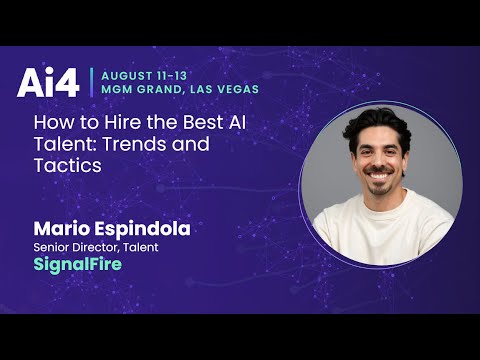
How to Hire the Best AI Talent: Trends and Tactics - A Fireside Chat With SignalFire — Ai4

Ai4

Startups can outmaneuver Big Tech's nine-figure AI compensation packages by recruiting upstream from academic feeder labs and exploiting a 50% collapse in entry-level hiring.

AI-assisted summary of How to Hire the Best AI Talent: Trends and Tactics - A Fireside Chat With SignalFire — original source. Check the original for full context.

Source published:

Detailed notes

## Background Published on YouTube by Ai4 on August 24, 2025, this presentation features Mario Espindola, Senior Director of Talent at venture capital firm SignalFire. The session draws on SignalFire's State of Talent report and proprietary Beacon AI platform to deliver actionable strategies for startups competing against Big Tech and frontier labs to attract, secure, and retain premier AI and machine learning talent.

## TL;DR Mario Espindola outlines how early-stage startups can outmaneuver deep-pocketed tech giants in the battle for AI talent by shifting toward empirical, upstream recruiting strategies. Facing leaner headcount trends across seed and Series A stages, founders are advised to bypass unwinnable nine-figure bidding wars by hiring directly from university feeder labs and seizing an overlooked arbitrage in top-tier new graduate talent. He recommends adopting a hub-and-spoke geographic model anchored in dense epicenters like San Francisco alongside hybrid flexibility. Finally, Espindola advocates front-loading retention into the recruiting funnel by screening rigorously for cultural alignment and mission conviction from the very first interaction.

## Atmosphere & style The presentation maintains a crisp, authoritative, and data-driven tone that strips away the panic surrounding frontier AI compensation packages and replaces it with structured operator playbooks. Espindola delivers his insights with the calm, measured clarity of an experienced venture advisor, blending concrete market benchmarks with strategic frameworks. Watching the talk feels like sitting in on a high-leverage portfolio advisory briefing, leaving technical founders with a grounded sense of optimism and a clear tactical roadmap.

## Key takeaways - [00:04](https://www.youtube.com/watch?v=zDLpYhstBpc&t=4s) Artificial intelligence is fundamentally rewiring the talent ecosystem, shifting candidate supply, expectations, and competitive dynamics across the tech landscape. - [00:04](https://www.youtube.com/watch?v=zDLpYhstBpc&t=4s) Data-driven talent intelligence engines tracking global datasets enable startups to identify and close high-caliber candidates based on empirical market patterns rather than guesswork. - [04:48](https://www.youtube.com/watch?v=zDLpYhstBpc&t=288s) Startups are operating significantly leaner, with average Series A and Seed headcounts dropping ~23% as founders treat hiring as disciplined capital allocation. - [04:48](https://www.youtube.com/watch?v=zDLpYhstBpc&t=288s) Founders are increasingly leveraging fractional advisors and specialized contractors to build capacity before committing to permanent, full-time payroll. - [06:18](https://www.youtube.com/watch?v=zDLpYhstBpc&t=378s) Competing against Big Tech on liquid cash and equity compensation is a losing battle for startups, requiring an upstream sourcing shift directly into academic feeder labs. - [06:18](https://www.youtube.com/watch?v=zDLpYhstBpc&t=378s) Startups successfully attract elite AI engineers by pitching high agency, rapid execution speed, mission alignment, and direct product impact rather than inflated pay packages. - [07:55](https://www.youtube.com/watch?v=zDLpYhstBpc&t=475s) A severe pullback in junior hiring—down 50% across Big Tech and 30% across startups—creates an asymmetric hiring arbitrage opportunity for agile companies. - [07:55](https://www.youtube.com/watch?v=zDLpYhstBpc&t=475s) Evaluating early-career talent through tangible technical signals like open-source contributions, academic research, and practical code execution outperforms relying on static credentials. - [09:16](https://www.youtube.com/watch?v=zDLpYhstBpc&t=556s) AI engineering talent is reconsolidating in primary epicenters like San Francisco and New York, making a hybrid hub-and-spoke location model the optimal geographic strategy. - [11:04](https://www.youtube.com/watch?v=zDLpYhstBpc&t=664s) Leading AI labs like Anthropic achieve industry-leading retention rates (>80%) by front-loading cultural cohesion and mission alignment into the recruiting funnel. - [11:04](https://www.youtube.com/watch?v=zDLpYhstBpc&t=664s) Front-loading retention into targeted outbound sourcing and collaborative interview loops is far more effective than treating retention as a post-onboarding HR initiative. - [12:38](https://www.youtube.com/watch?v=zDLpYhstBpc&t=758s) Sustainable competitive hiring advantages emerge when startups layer lean planning, upstream sourcing, junior talent arbitrage, geographic hubs, and mission-first filtering into a unified engine.

## Detailed walkthrough ### [00:04](https://www.youtube.com/watch?v=zDLpYhstBpc&t=4s) Introduction & SignalFire’s Data-Driven Approach

Mario Espindola opens the session by outlining his background and the core thesis behind his work at SignalFire. As the Senior Director of Talent, Espindola brings over a decade of operating experience in talent acquisition spanning startups to Fortune 500 enterprises like Autodesk. At SignalFire—a venture capital firm investing across AI, healthcare and life sciences, cybersecurity, and vertical SaaS—he partners directly with founders and functional leaders across a portfolio of more than 200 companies from seed to growth stage to design durable talent engines. He stresses that artificial intelligence is not merely providing new recruitment tooling; rather, "it's fundamentally rewiring the way the talent ecosystem and dynamic works today," drastically altering supply, demand, candidate expectations, and competitive levers.

SignalFire differentiates its platform through three foundational pillars: an unwavering "founder first" commitment, an operator-led portfolio success team featuring alumni leaders from companies like Stripe, Netflix, and Reddit (earning the firm a 4.8 CSAT score across founders), and an in-house engineering team. For the past decade, SignalFire has engineered its own proprietary platform, Beacon AI. Beacon AI acts as both an investment engine and a talent intelligence system, continuously tracking 650 million people, 85 million companies, and drawing from 30 distinct worldwide datasets. On the talent side, Beacon powers granular filtering, custom badges, and precision searches to help founders source, engage, and close top-tier candidates rapidly based on empirical market patterns rather than guesswork.

```mermaid flowchart TD accTitle: SignalFire Beacon AI Data Architecture accDescription: Flow showing how Beacon AI ingests global datasets to power venture investments and portfolio talent sourcing. subgraph DataEngine["Beacon AI Data Engine"] A["30 Global Datasets"] --> B["650M+ People Tracked"] A --> C["85M+ Companies Tracked"] end subgraph UseCases["Operational Outputs"] B & C --> D["Proprietary Sourcing & Talent Badges"] B & C --> E["Early Founder & Startup Discovery"] end subgraph Outcomes["Portfolio Impact"] D --> F["Targeted Hiring Across 200+ Portfolio Cos"] E --> G["Seed-to-Scale Venture Investments"] end ```

- **Portfolio Scale**: Over 200 companies supported from seed to growth stage. - **Beacon AI Intelligence Scale**: 650 million individual profiles, 85 million company profiles, and 30 integrated global datasets. - **Firm Satisfaction**: 4.8 CSAT rating across portfolio founders for hands-on operational advisory.

---

[04:48](https://www.youtube.com/watch?v=zDLpYhstBpc&t=288s) Lean Teams and Treating Every Hire Like an Investment

Startups are operating substantially leaner than in previous cycles, transforming hiring into an exercise of strict capital allocation. Data reveals that the average Series A startup currently operates with just over 15 employees, marking a 23% reduction in headcount compared to prior years. According to ecosystem data from Carta, seed-stage headcount has experienced an identical ~23% contraction since 2021. Rather than expanding headcount aggressively, founders are deliberately deferring permanent hires until they establish unambiguous proof of a role’s return on investment.

To bridge operational capacity without bloating payroll, early-stage companies are heavily utilizing fractional advisory circles and specialized contractors. Founders are scrutinizing the fundamental "who, what, why, and how of every single role," ensuring that every addition directly drives enterprise value before an offer is made.

- **Series A Headcount**: Average team size has dropped to ~15 employees (a 23% drop compared to recent years). - **Seed Headcount Contraction**: Down approximately 23% since peak 2021 levels according to Carta data. - **Capacity Strategy**: Founders rely on fractional talent and advisors to fill bandwidth gaps before committing to full-time hires.

---

[06:18](https://www.youtube.com/watch?v=zDLpYhstBpc&t=378s) Upstream Sourcing vs. Competing on Big Tech Compensation

Addressing the elephant in the room regarding compensation, Espindola asks the audience of startup operators if anyone can easily outbid tech titans like Meta, Microsoft, and Google, whose compensation packages for elite AI researchers can reach astronomical nine-figure sums over multi-year commitments. For any startup outside the Magnificent Seven or FAANG tier, attempting to match top-of-market cash or liquid equity is a "losing battle." Instead, founders must shift upstream and recruit directly from the feeder teams and academic labs that the top AI labs rely on.

Beacon data reveals that leading frontier labs—including Anthropic, OpenAI, and Google DeepMind—consistently target specific academic research groups, university programs, and foundational AI labs. By targeting talent at these source nodes before they enter Big Tech bidding wars, startups can successfully compete. The winning pitch does not rely on matching hyper-inflated compensation, but on highlighting high agency, rapid execution speed, mission alignment, and direct product impact within an agile, non-bureaucratic environment.

| Dimension | Big Tech / Frontier AI Labs | Agile Startups | |:--- |:--- |:--- | | **Compensation Strategy** | Massive cash/liquid equity (up to $100M+ packages) | Competitive equity upside with high leverage | | **Sourcing Targets** | Late-stage proven researchers & market leaders | Upstream academic programs, lab feeder teams, open-source builders | | **Work Environment** | Deep resources, heavier organizational bureaucracy | High ownership, direct mission alignment, agile execution |

---

[07:55](https://www.youtube.com/watch?v=zDLpYhstBpc&t=475s) Capitalizing on the Early Career & New Grad Talent Opportunity

The junior talent landscape has suffered massive disruption. Since 2019, entry-level and new graduate hiring has fallen sharply by 50% across Big Tech and 30% across startups. Today, new graduates represent just 7% of all new hires, leaving even top-tier graduates from the top 30 computer science programs facing multi-month unemployment. Espindola emphasizes that this downturn is not due to a lack of capability, but rather hiring managers struggling to evaluate junior skill profiles effectively.

This systemic pullback creates an asymmetric hiring arbitrage for resource-constrained startups. By establishing structured onboarding, mentorship, and assessing candidates on tangible, evidence-based technical signals—such as dedicated AI coursework, open-source repositories, academic research projects, co-ops, and internships—startups can capture world-class emerging talent that legacy organizations are overlooking.

- **Big Tech Junior Drop**: 50% reduction in entry-level hiring since 2019. - **Startup Junior Drop**: 30% reduction in entry-level hiring since 2019. - **Market Share**: New university graduates make up only 7% of total new hires today. - **Evaluation Levers**: Prioritize real open-source contributions, applied AI academic projects, co-op experiences, and practical code execution over static pedigree.

---

[09:16](https://www.youtube.com/watch?v=zDLpYhstBpc&t=556s) Dynamic Location Strategies: The Hub-and-Spoke Model

Geographic talent distribution has entered a new phase of geographic consolidation. While the height of the pandemic spurred fully distributed, work-from-anywhere setups, AI engineering density is recentering around specific epicenters. San Francisco has firmly reclaimed its status as the world's preeminent technical talent hub, followed closely by a rapidly accelerating New York market, alongside high-density secondary hubs such as Miami and San Diego.

```mermaid flowchart LR accTitle: Hub-and-Spoke Location Model accDescription: Diagram showing a primary anchor HQ connecting with emerging talent hubs under a hybrid model. subgraph PrimaryHub["Anchor Epicenter"] SF["San Francisco HQ / Anchor Hub"] end subgraph SecondaryHubs["Emerging Talent Spokes"] MIA["Miami"] SD["San Diego"] ATX["Austin / New York"] end SF <--> MIA SF <--> SD SF <--> ATX ```

To capture this distribution without falling into the pitfalls of a single-office bottleneck or an unfocused fully remote setup, Espindola advocates for a "hub-and-spoke" location strategy. Companies anchor their presence in a tier-one talent market while actively cultivating pipelines in high-growth secondary cities like Austin, Miami, and San Diego. Crucially, this geographic targeting must be paired with hybrid flexibility, as data confirms that flexible work policies remain a deciding factor for top candidates evaluating offers.

- **Leading Epicenters**: San Francisco (reclaimed #1 hub for technical AI talent) and New York. - **Fast-Surging Secondary Hubs**: Miami, San Diego, and Austin. - **Core Tactic**: Implement an anchor-and-spoke model paired with flexible/hybrid work rather than purely fully remote everywhere.

---

[11:04](https://www.youtube.com/watch?v=zDLpYhstBpc&t=664s) Designing Retention Directly into the Hiring Process

Retention is conventionally treated as a post-onboarding HR task, but the most resilient AI companies embed retention mechanisms directly into the top of their recruiting funnel. As a prime example, Anthropic achieves an employee retention rate exceeding 80%, compared to an industry baseline of roughly 66% among competing AI research labs. They accomplish this by evaluating cultural cohesion, mission conviction, and long-term commitment from the very first screening call.

Espindola breaks down this front-loaded retention strategy into three core practices: 1. **Mission as an Evaluative Filter**: Screen rigorously for candidates whose personal motivations align with the company's core mission rather than those simply chasing hype or compensation. 2. **Precision Sourcing Over "Spray and Pray"**: Avoid mass outbound campaigns; identify high-conviction, proven-fit talent from adjacent companies and direct competitors. 3. **Interviews as Culture in Action**: Structure interview loops around real-world collaboration, communication exercises, and shared problem-solving to demonstrate company values dynamically before an offer is extended.

- **Anthropic Retention Benchmark**: Over 80% talent retention versus a 66% peer average across AI labs. - **Hiring Strategy Shift**: Front-load retention criteria into candidate discovery, outbound messaging, and structured technical interviewing.

---

[12:38](https://www.youtube.com/watch?v=zDLpYhstBpc&t=758s) Summary: Layering Sourcing, Location, and Retention Tactics

Espindola concludes the session by reminding founders and hiring leads that these strategies must not be treated as isolated, standalone tricks. "The real power comes when these are layered on top of one another." Building an elite AI engineering team requires synchronizing lean team planning, upstream talent sourcing, junior hiring arbitrage, hub-and-spoke geographic targeting, and mission-first retention filtering into a unified operational strategy. When combined, this framework provides startups with a decisive competitive advantage to hire faster, build resilient teams, and establish lasting organizations.

## Notable quotes > [00:04](https://www.youtube.com/watch?v=zDLpYhstBpc&t=4s) it's fundamentally rewiring the way the talent ecosystem and dynamic works today — Mario Espindola

> [04:48](https://www.youtube.com/watch?v=zDLpYhstBpc&t=288s) who, what, why, and how of every single role — Mario Espindola

> [06:18](https://www.youtube.com/watch?v=zDLpYhstBpc&t=378s) losing battle — Mario Espindola

> [09:16](https://www.youtube.com/watch?v=zDLpYhstBpc&t=556s) hub-and-spoke — Mario Espindola

> [11:04](https://www.youtube.com/watch?v=zDLpYhstBpc&t=664s) Mission as an Evaluative Filter — Mario Espindola

> [11:04](https://www.youtube.com/watch?v=zDLpYhstBpc&t=664s) Precision Sourcing Over "Spray and Pray" — Mario Espindola

> [11:04](https://www.youtube.com/watch?v=zDLpYhstBpc&t=664s) Interviews as Culture in Action — Mario Espindola

> [12:38](https://www.youtube.com/watch?v=zDLpYhstBpc&t=758s) The real power comes when these are layered on top of one another. — Mario Espindola

## Mentioned Mario Espindola, SignalFire, Autodesk, Stripe, Netflix, Reddit, Beacon AI, Carta, Meta, Microsoft, Google, Anthropic, OpenAI, Google DeepMind

## Video description Mario Espindola, Senior Director, Talent, SignalFire

Abstracts

How can I compete with the top AI labs for top talent? How can I win the top AI/ML engineers to join my team over bigger compensation packages elsewhere? In this panel led by AI-powered VC firm SignalFire's Partner, People + Talent, Mario Espindola, engages in a fireside chat with where you'll hear the critical findings from their State Of Talent report, and decades of recruiting experience, that inform how to attract and retain the best minds in AI. This isn't just any fireside chat, you'll walk away with real, tangible strategies that you can use right away to secure that next hard-to-get hire.

[Source](https://www.youtube.com/watch?v=zDLpYhstBpc)

中文简报

SignalFire建议初创公司锁定学术源头实验室以应对AI薪酬战 初创公司可通过深入学术源头实验室进行上游招聘,并利用初级岗位招聘骤降50%的契机,巧妙化解大型科技公司九位数AI薪酬包的竞争压力。 Mario Espindola阐述了早期初创公司如何通过转向基于实证的上游招聘策略,在AI人才争夺战中胜过财力雄厚的科技巨头。面对种子轮与A轮阶段人员编制进一步精简的趋势,他建议创始人避开毫无胜算的九位数竞价战,直接从大学源头实验室招募人才,抓住顶尖应届生人才市场中被忽视的套利机会。他建议采用以旧金山等高密度核心区域为支点、兼具混合办公灵活性的“轴辐式”(hub-and-spoke)地域模式。最后,Espindola主张将人才留存机制前置到招聘漏斗中,从第一次互动开始就严格筛选文化契合度与使命认同感。 SignalFire 依托专有平台 Beacon AI 追踪全球 6.5 亿人才与 8500 万家公司数据,帮助初创公司基于市场客观规律而非盲目猜测来精准招聘顶级 AI 人才。 (0:04) 初创企业正走向极致精简,A 轮与种子轮团队规模较以往收缩约 23%,创始人将招聘视为严格的资本配置,并普遍借力兼职顾问与专业承包商过渡。 (4:48) 初创公司难以在薪酬上与科技巨头竞争,应转向高校与前沿实验室源头挖掘人才,凭借高自主权、敏捷执行力和使命认同吸引核心工程师。 (6:18) 巨头与初创公司的初级岗位招聘分别缩减 50% 与 30%,敏捷型公司可通过考察开源贡献、实战代码与学术科研等硬核信号,抓住低估初级人才的套利机会。 (7:55) 顶尖 AI 机构如 Anthropic 实现了超 80% 的留存率,其核心策略是将留存机制前置于招聘流程中,在初筛阶段便严格考察文化契合度与使命认同感。 (11:04)

Reading summary

SignalFire's Mario Espindola argues that early-stage startups cannot win AI talent through compensation bidding wars against Big Tech, requiring founders to adopt capital-efficient hiring, upstream talent sourcing, and front-loaded retention mechanisms. Capital Discipline and Lean Headcounts (4:48) Startups are navigating hiring through strict capital allocation rather than aggressive headcount expansion. Carta data and SignalFire observations show that average Series A team sizes have contracted by 23% to approximately 15 employees, matching an identical 23% drop in seed-stage headcount since peak 2021 levels. Rather than committing to immediate permanent hires, early-stage founders increasingly defer full-time roles until enterprise value is demonstrated, relying on fractional talent, contractors, and advisory networks to bridge operating capacity. Upstream Sourcing to Bypass Bidding Wars (6:18) Attempting to match compensation from major tech firms—which can reach nine-figure, multi-year packages for top AI researchers—is an unviable approach for early-stage companies. Instead of competing for late-stage, fully vetted market leaders, Espindola advises startups to move upstream into the university research groups and foundational feeder labs targeted by frontier organizations like Anthropic, OpenAI, and Google DeepMind. Startups can compete effectively against Big Tech compensation packages by offering high-agency roles, rapid execution velocity, mission ownership, and non-bureaucratic working environments. Arbitrage in the Junior Hiring Slump (7:55) Junior technical hiring has contracted sharply, with entry-level recruiting falling 50% across Big Tech and 30% across startups since 2019. New university graduates currently account for only 7% of all new hires, leaving graduates from top computer science programs facing extended job searches. Espindola emphasizes that this pullback stems from evaluation bottlenecks rather than candidate capability. Startups can exploit this market gap by evaluating junior candidates through tangible technical evidence—such as open-source code contributions, applied AI coursework, internships, and co-op projects—rather than relying strictly on pedigree. Hub-and-Spoke Geographic Distribution (9:16) Geographic talent distribution is re-concentrating into core hubs after the peak of remote-first hiring. San Francisco has re-established itself as the primary epicenter for AI technical talent, alongside an accelerating New York market and high-density secondary hubs such as Miami, San Diego, and Austin. Espindola recommends a hub-and-spoke model, where companies anchor primary operations in a tier-one center while building targeted talent pipelines in secondary markets, maintaining hybrid flexibility to meet candidate expectations. Front-Loading Retention into Recruitment (11:04) High-performing AI organizations embed retention criteria directly into initial recruiting rather than treating it as a post-onboarding HR function. Espindola cites Anthropic's talent retention rate of over 80%—compared to an industry baseline of roughly 66% among peer AI labs—as evidence for front-loaded screening. This method relies on filtering for mission alignment on the initial call to weed out hype-driven applicants, replacing broad outbound outreach with precision sourcing, and structuring interview loops around live collaboration and shared problem-solving. Espindola concludes that these hiring, geographic, and sourcing levers cannot function as isolated tactics; their effectiveness depends on layering them into an integrated operational engine to build durable, high-performing AI engineering teams.

精炼阅读摘要

风险投资机构 SignalFire 人才高级总监 Mario Espindola 指出,人工智能正在深刻重塑技术人才的供需生态;面对科技巨头的资本壁垒与缩减的团队编制,初创企业需摆脱单纯的薪酬竞争,转向学术源头挖掘、初级人才套利、轴辐式地域布局及前置留存机制构建系统性人才引擎。 团队编制精益化与资本配置式招聘 (4:48) 在当前周期下,初创公司的团队规模相比往年显著收缩,人才招聘已转变为严格的资本配置行为。Espindola 援引生态数据指出,目前 A 轮初创企业的平均员工人数已降至约 15 人,较前几年下降了 23%;Carta 的统计数据亦显示,种子轮企业的团队规模自 2021 年峰值以来同样收缩了约 23%。创业团队不再激进扩张全职名额,而是更加严格地审视每个职位的投入产出比。 为在控制薪酬支出的同时满足业务交付,早期团队普遍采用顾问网络和高专业度合同工来填补业务带宽缺口。创始人对全职岗位设立了更高的验证门槛,必须在角色职责对企业价值的推动机制得到充分确认后,才会正式发起全职录用流程。 绕开巨头薪酬内卷并深挖学术上游源头 (6:18) 面对 Meta、Microsoft 和 Google 等科技巨头为顶尖 AI 研究员开出高达数千万至上亿美元的多年期薪酬包,Espindola 认为普通初创公司在现金和高流动性股票层面的正面竞争毫无胜算。与其在后期竞价战中消耗资源,创始人应将招聘漏斗直接前移至顶尖实验室的人才输送源头。 SignalFire 专有平台 Beacon AI 的追踪数据表明,OpenAI、Anthropic 和 Google DeepMind 等前沿实验室往往长期锁定特定的大学研究团队和基础科研实验室。初创企业应当直接深入这些源头节点,在人才进入巨头视线之前建立联系,并依靠高度自主权、快速执行节奏、使命契合度及核心产品影响力等灵活性优势吸引顶尖人才。 捕获初级人才市场的非对称套利红利 (7:55) 早期职业和应届生就业市场经历了系统性萎缩。自 2019 年以来,科技巨头针对入门级与应届生的招聘量下降了 50%,初创公司的初级岗位招聘也缩水了 30%;当前应届生在整体新入职员工中的占比仅为 7%,导致前 30 名计算机强校的优秀毕业生也面临数月的求职周期。Espindola 强调,这一现象源于用人团队缺乏评估年轻技术人才的有效手段,而非应届生缺乏实际能力。 这种普遍的退缩为资源受限的初创公司创造了非对称的套利空间。通过建立完善的入职培训与导师机制,并重点评估候选人的开源项目贡献、应用型 AI 课程经验、科研项目以及带薪实习表现等实质代码信号,初创企业能够以合理成本吸纳被传统大厂错过的顶尖青年力量。 轴辐式地理布局平衡人才密度与灵活性 (9:16) 技术人才的地理分布正从疫情期间的完全远程办公走向新的区域聚集。San Francisco 已重新确立其全球核心技术人才集聚地的地位,New York 紧随其后且增速显著,Miami、San Diego 和 Austin 等二级高密度枢纽也在加速崛起。完全分散的远程架构可能分散组织合力,而单点办公室又会面临本地供给瓶颈。 Espindola 建议企业推行“轴辐式”(Hub-and-Spoke)布局模型:将总部或核心枢纽锚定在 San Francisco 等一级中心,同时在 Miami 或 San Diego 等高增长城市设立拓展分支。这一策略需配合混合办公制度落地,数据显示兼顾物理聚集与远程弹性的办公政策仍是顶尖候选人决定接受邀约的核心考量之一。 将员工留存评估前置于招聘漏斗顶端 (11:04) 常规的人才管理往往将留存视作入职后的 HR 事务,但顶尖 AI 机构已将留存机制直接嵌入初期的筛选环节。以 Anthropic 为例,其人才留存率超过 80%,显著优于同类前沿 AI 实验室约 66% 的行业基线,其关键在于在初次筛选阶段就深度考核候选人的文化凝聚力与使命认同。 前置留存包含三项核心操作:首先是以公司使命作为硬性过滤指标,剔除单纯追逐行业热度与短期溢价的应聘者;其次是放弃泛化的群发触达,实施基于竞对画像的高精度精准定向寻访;最后是重构技术面试环节,将真实协作场景与问题共创作为考察形式,在发出录用邀约前动态展现并验证团队文化契合度。 Espindola 总结认为,精益编制、学术上游挖掘、应届生套利、轴辐式布局与前置留存并非孤立的招聘技巧,必须将各要素层叠协同以构建持久的团队壁垒。不过,该方案对初创企业的早期导师能力与文化辨识力提出了极高要求;在缺乏专有数据情报系统支持的情况下,资源有限的团队能否低成本识别早期源头人才,仍是留待实践检验的挑战。

Detailed notes — zh

## Background 本内容由 Ai4 于 2025 年 8 月 24 日发布在 YouTube 平台上。视频记录了风险投资机构 SignalFire 的人才高级总监 Mario Espindola 带来的一场炉边对话,重点结合 SignalFire 专有的人才数据报告与数十年的招聘实战经验,探讨初创公司如何在薪酬内卷下与顶尖 AI 实验室及科技巨头竞争,并提供切实可行的 AI 人才吸引与留存策略。 ## TL;DR Mario Espindola 深入剖析了 AI 浪潮下人才生态的底层重构,指出初创企业无法在天价薪酬上硬拼大厂,必须依靠差异化策略破局。他提出了五大核心打法:保持极度精益的团队并基于 ROI 审慎招聘;绕过大厂截流、直接向上游顶尖高校研究组等源头团队(Feeder Teams)溯源寻源;逆向挖掘被市场严重低估但具备实证实操能力的顶尖应届生;采用“中心辐射(Hub-and-Spoke)”结合混合弹性的地域布局;以及将留存机制前置到招聘与文化面试的最前端。最后他强调,唯有多维策略叠加执行,初创公司才能在白热化的 AI 人才争夺战中打造出高韧性、高人效的顶尖团队。 ## Atmosphere & style 整场演讲干货密集、直击要害且极具实战导向,毫无脱离业务的空洞理论。Mario 以自信、接地气且充满行业同理心的语调与现场招聘者互动,既坦诚揭示了大厂薪酬内卷与应届生就业遇冷的严峻现实,又凭借扎实的数据洞察为初创团队指明了破局路径。整个分享节奏明快、逻辑层层递进,让听众在感受到紧迫市场竞争的同时,获得了一整套可立即落地的战略底气与行动指南。 ## Key takeaways - [00:04](https://www.youtube.com/watch?v=zDLpYhstBpc&t=4s) AI 带来的变革正在从根本上重塑整个人才生态系统的底层运作逻辑,人才的供需关系、候选人期望以及企业的核心竞争杠杆都在经历剧烈洗牌。 - [02:18](https://www.youtube.com/watch?v=zDLpYhstBpc&t=138s) SignalFire 依托历时 10 年自研的 Beacon AI 平台,整合全球 6.5 亿+ 人才画像与 30+ 专有数据集,在投资前瞻挖掘与精准人才寻访上提供数据赋能。 - [04:48](https://www.youtube.com/watch?v=zDLpYhstBpc&t=288s) 初创团队走向前所未有的精益运作,A 轮与种子轮平均团队规模缩减约 23%,创始人更倾向于借助外部顾问圈并在 ROI 极度明确时才启动全职招聘。 - [06:10](https://www.youtube.com/watch?v=zDLpYhstBpc&t=370s) 初创公司在纯资金薪酬上无法与头部科技大厂硬碰硬,破局之道在于向上游高校实验室及学术研究组等“源头团队”(Feeder Teams)溯源拦截人才。 - [06:10](https://www.youtube.com/watch?v=zDLpYhstBpc&t=370s) 初创企业应强化差异化价值主张,通过高度契合的使命感、扁平敏捷的团队协作以及直接可见的业务影响力来对抗大厂的薪酬诱惑。 - [07:55](https://www.youtube.com/watch?v=zDLpYhstBpc&t=475s) 初级与应届 AI 人才招聘遇冷,但初创公司可利用实证项目经验和开源社区贡献精准识别人才潜力,通过投入早期培训以低成本锁定未来中坚。 - [09:16](https://www.youtube.com/watch?v=zDLpYhstBpc&t=556s) 全员全远程模式逐步退潮,旧金山与纽约等核心城市重回技术高地,迈阿密与圣地亚哥等新兴城市的人才密度亦在快速攀升。 - [09:16](https://www.youtube.com/watch?v=zDLpYhstBpc&t=556s) 采用“中心辐射模式”(Hub-and-Spoke),在核心人才聚集地设立锚点并搭配灵活的混合办公机制,兼顾团队协作与人才吸引力。 - [11:04](https://www.youtube.com/watch?v=zDLpYhstBpc&t=664s) 顶尖 AI 实验室(如 Anthropic 留存率超 80%)的核心经验是将员工留存机制前置到招聘与面试的最前端,而非入职后的事后补救。 - [11:04](https://www.youtube.com/watch?v=zDLpYhstBpc&t=664s) 留存前置化需落实三大原则:以企业使命作为初筛漏斗、实施定点精准寻访拒绝盲目撒网、以及将面试过程设计为组织文化的现场实测。 - [12:38](https://www.youtube.com/watch?v=zDLpYhstBpc&t=758s) AI 人才争夺战需要采取多维策略的叠加效应(Layered Approach),将精益招聘、上游溯源、逆向挖掘、辐射布局与留存前置有机整合以构筑长期竞争力。 ## Detailed walkthrough ### [00:04](https://www.youtube.com/watch?v=zDLpYhstBpc&t=4s) AI 对人才生态的底层重构与 SignalFire 的数据洞察 在 Ai4 大会的分享开场中,风险投资机构 SignalFire 的人才高级总监(Senior Director of Talent)Mario Espindola 向现场观众致意。SignalFire 是一家专注于人工智能(AI)、医疗与制药、网络安全以及垂直 SaaS 领域前沿科技企业的风投机构。Mario 介绍,机构除了为被投企业提供资本外,更提供深度的实战运营支持,而这些策略与市场趋势很大程度上依托于他们自主研发的 Beacon AI 平台。 Mario 在人才招聘领域拥有十余年深耕经验,曾担任初创公司及 Autodesk 等财富 500 强企业的运营操盘手。在 SignalFire,他的核心工作是与超过 200 家从种子轮到成长期(Scale Stage)的被投公司创始人及职能负责人紧密合作,构建能够穿越周期、并将每个招聘岗位直接与商业价值挂钩的人才战略。Mario 指出,当前 AI 带来的变革远不止是“提供更高效的招聘工具”,而是正在从根本上重塑整个人才生态系统的底层运作逻辑——人才的供需关系、候选人的期望值以及企业的核心竞争杠杆都在经历剧烈洗牌。 - **分享核心导向**:拒绝脱离实际的空谈理论,直接输出源自 SignalFire 投资组合一线实践以及 Beacon AI 专有数据的实操落地策略,供招聘者与创始人即学即用。 --- ### [02:18](https://www.youtube.com/watch?v=zDLpYhstBpc&t=138s) SignalFire 运作支柱与 Beacon AI 数据引擎 Mario 详细阐述了 SignalFire 在风险投资与人才赋能领域的独特性,其底层运作建立在三大核心原则之上: 1. **创始人至上(Founder First)**:自始至终将创始人视为北极星,不仅关注投资成败,更深度陪伴其团队的搭建与壮大。 2. **前实战操盘手组成的投后团队(Portfolio Success Team)**:团队成员均拥有深厚的实战背景,包括曾领导 Stripe、Netflix、Reddit 等知名企业关键职能部门的高管与专家,这种“同行同理心”让投后支持能够直击痛点,也使 SignalFire 在整个投资组合中赢得了高达 4.8 分的客户满意度(CSAT)。 3. **以科技公司模式构建风投机构**:SignalFire 内部配备了专属的常驻工程师团队,历时 10 年自主研发了专有数据平台 Beacon AI。 ```mermaid flowchart TD accTitle: Beacon AI 数据引擎赋能投资与招聘全流程 accDescr: 展示 Beacon AI 数据平台如何汇聚底层数据,并向投资发现与精准招聘两大场景赋能的流程图。 subgraph DataEngine ["Beacon AI 底层数据中台"] D1["6.5 亿+ 全球专业人才画像"] D2["8500 万+ 全球企业档案"] D3["30+ 独立专有数据集整合"] end subgraph Applications ["核心业务赋能场景"] direction TB subgraph Investment ["投资端:抢占先机"] I1["早期初创团队挖掘"] I2["潜在顶尖创始人画像识别"] end subgraph TalentAcquisition ["招聘端:精准触达"] T1["高精度定向人才寻访"] T2["专属标签与筛选徽章 (Badges)"] T3["缩短转化与入职周期"] end end DataEngine --> Investment DataEngine --> TalentAcquisition ``` Beacon AI 构成了 SignalFire 的数据中枢,系统持续追踪全球超 6.5 亿个人才数据、8500 万家企业,并整合了 30 个独特的底层数据集。在投资端,它帮助机构在初创企业和优秀创始人进入公众视野之前提前发掘;在人才端,它支持极高颗粒度的精准搜索、独特的技能标签和候选人筛选模型,帮助企业以更快速度锁定并转化最合适的人才。 --- ### [04:48](https://www.youtube.com/watch?v=zDLpYhstBpc&t=288s) 趋势一:团队极度精益化与按 ROI 规划招聘 当前初创团队正在走向前所未有的“精益运作”。数据显示,如今平均一家 A 轮阶段的初创公司仅拥有略多于 15 名员工,这一规模相比几年前骤降了 23%;在种子轮阶段,根据合作伙伴 Carta 的统计,团队人数自 2021 年以来同样收缩了约 23%。 面对这种市场收紧,创始人们普遍选择推迟永久性招聘(Permanent Hires),力求将核心团队保持在小巧灵活的状态,让每一个入职岗位的边际影响力最大化。为了弥补早期的业务产能缺口,越来越多的创始人开始转向“非全职/顾问圈”(Fractional Advisory Circles),借助高阶外部专家的力量解决短期瓶颈;只有当某个职位的商业投资回报率(ROI)具备绝对明确性时,才会开放全职招聘。现在的创始人对待每一次招募都如同对待一笔严谨的商业投资,极其严苛地审视每个岗位的“Who、What、Why 与 How”。 --- ### [06:10](https://www.youtube.com/watch?v=zDLpYhstBpc&t=370s) 趋势二:避开天价薪酬内卷,向上游源头团队寻源 在 AI 人才争夺战中,头部科技巨头 Meta、微软和 Google 凭借雄厚资本掀起了激烈的薪酬竞赛,部分顶尖职位的薪酬包甚至飙升到了令人咋舌的高度。Mario 现场与台下的初创企业招聘者互动,并直言:非大厂(MAG 10 / FAANG)阵营的初创公司在纯资金比拼上硬碰硬是毫无胜算的。 ```mermaid flowchart LR accTitle: 顶尖 AI 人才上游源头寻源路径 accDescr: 比较大厂天价抢人与初创公司向上游源头团队招聘的两种不同策略路径。 subgraph BigTechWay ["大厂模式:资本截流"] A1["顶尖高校 / 顶级科研实验室 / 学术项目"] -->|"高昂薪酬直接收割"| B1["Meta / Microsoft / Google / 顶尖 AI Labs"] end subgraph StartupWay ["初创公司破局:截胡上游源头 (Feeder Teams)"] A2["同一批高校研究组 / 开源学术团队"] -->|"主打使命驱动 + 扁平敏捷"| B2["高成长初创企业"] end ``` 突破这一困局的关键在于“溯源拦截”。Beacon AI 的数据追踪显示,像 Anthropic、OpenAI 和 DeepMind 等顶尖 AI 实验室,其底层人才均大批来自于特定的“源头团队”(Feeder Teams),即专注于高水准人才培育的特定学术项目与前沿研究小组。 - **薪酬竞争是死胡同**:切忌在薪酬数字上与科技巨头打消耗战; - **打磨差异化价值主张(Pitch)**:重点突出初创企业的独特生态位——高度一致的使命感、极度敏捷协作的团队氛围、无官僚主义的扁平环境以及直接可见的业务影响力,这些精神激励与施展空间在很多关键场景下完全能够压过单纯的现金诱惑。 --- ### [07:55](https://www.youtube.com/watch?v=zDLpYhstBpc&t=475s) 趋势三:逆向布局被低估的应届生与早期人才 与资深 AI 人才的哄抢形成鲜明反差的是,初级与早期人才(Entry-level / New Grad)市场正遭遇寒冬。自 2019 年以来,大厂针对新毕业生的招聘量骤降了 50%,初创公司也缩减了 30%。目前,应届生在整体新入职员工中的比例仅占 7%,甚至许多来自全美排名前 30 顶尖计算机科学(CS)项目的毕业生在毕业 6 个月内仍处于待业状态。 Mario 强调,早期人才的过剩与遇冷绝非因为他们“缺乏才华”,而在于市场缺少精准识别潜力的评估机制。这恰恰为资源受限的初创公司打开了一扇难得的窗口: - **基于实证的技能筛选(Evidence-Based Skills)**:跳过虚浮的简历标签,重点考察候选人实际的 AI 项目经验、开源社区贡献(Open Source Contributions)、硬核实习经历以及工读交替合作项目(Co-ops); - **培训投入换取高额回报**:市场上充斥着渴望施展拳脚的优秀应届生。只要初创公司愿意在入职培训(Onboarding)和早期辅导上投入精力,就能用极具竞争力的成本将这批被大厂忽视的顶尖新秀招入麾下,将其培养为企业的未来中坚。 --- ### [09:16](https://www.youtube.com/watch?v=zDLpYhstBpc&t=556s) 趋势四:中心辐射(Hub-and-Spoke)与兼顾弹性的地点策略 在地理布局方面,完全不受地域限制的“全员全远程”(Purely Remote Everywhere)模式正在退潮,顶尖 AI 人才正加速向核心城市聚集。旧金山(San Francisco)已重新夺回全美技术招聘第一重镇的宝座,纽约紧随其后快速崛起,迈阿密与圣地亚哥等新兴 Hub 的 AI 人才密度也在迅猛攀升。 为了避免单一总部的局限,Mario 建议采用经典的“中心辐射模式”(Hub and Spoke Model): | 布局模式 | 策略定义与实操要点 | 典型落地场景 | |:--- |:--- |:--- | | **中心锚点 (Hub Anchor)** | 在核心人才富集城市设立核心枢纽,沉淀研发核心力量。 | 以旧金山或纽约作为技术核心主阵地。 | | **辐射网络 (Spoke Pipelines)** | 跨区域主动链接高潜力新兴城市,提前建立并培育活跃的人才资源池。 | 针对圣地亚哥、迈阿密、奥斯汀等高密度增长区搭建定向触达通道。 | | **弹性机制 (Flexibility Pairing)**| 将特定 Hub 与灵活的混合办公(Hybrid / Remote)政策深度绑定。 | 提供弹性出勤选择,数据证明弹性模式在争夺顶尖人才时依然具有压倒性吸引力。 | --- ### [11:04](https://www.youtube.com/watch?v=zDLpYhstBpc&t=664s) 趋势五:将留存机制前置为招聘的核心策略 传统观念通常将员工留存(Retention)视为入职培训(Onboarding)完成后的“亡羊补牢”之举,但顶尖公司的做法是将留存考量在招聘与面试的最前端就深度植入。例如,Anthropic 的员工留存率超过 80%,而同业其他 AI 实验室的平均留存率仅为 66%。其核心秘密便在于从最初的寻访邀约到入职第一天,全程将留存指标贯穿始终。 ```mermaid flowchart TD accTitle: 留存前置化招聘策略三步法 accDescr: 展现使命过滤、精准猎聘和面试文化实战这三个留存前置核心动作。 R1["1. 使命即漏斗 (Mission as a Filter)"] --> R2["2. 精准定向寻访 (Precise Poaching & Sourcing)"] R2 --> R3["3. 面试即文化实战 (Interviews as Culture in Action)"] style R1 fill:#f9f,stroke:#333,stroke-width:1px style R2 fill:#bbf,stroke:#333,stroke-width:1px style R3 fill:#dfd,stroke:#333,stroke-width:1px ``` 要实现这一效果,企业必须落实三大实操原则: - **以使命作为初筛漏斗**:只录用那些从心底对公司愿景产生深度共鸣、真正认可长期业务目标的候选人; - **告别广撒网式的盲目寻访**:严禁采用粗放的“撒网式轰炸”(Spray and Pray),而是聚焦竞品或相邻赛道中已被证明契合度极高的高价值目标,实施定点精准寻源; - **将面试作为组织文化的现场演示**:重新设计面试流程,在技术与业务考核中实时嵌入对协作模式、沟通风格及核心价值观的现场实测,让候选人在互动中亲身感受并验证双方的契合度。 --- ### [12:38](https://www.youtube.com/watch?v=zDLpYhstBpc&t=758s) 总结:多维策略叠加构建持久竞争力 在演讲尾声,Mario 强调上述五大策略绝不能孤立使用(Bespoke),其真正的爆发力来自于全方位的“叠加效应”(Layered Approach): - **组建精益战队**:把每一次招聘当成关键投资,精确把控节奏与 ROI; - **向上游溯源寻访**:先于大厂锁定供给核心学术团队与研究圈,抢占先机; - **逆势挖掘应届生**:依托实证项目识别能力,低成本吸纳并培养未来领袖; - **落地中心辐射布局**:深耕高密度 Hub 并配合混合办公弹性,最大化网络覆盖; - **前置留存设计**:依靠深度使命对齐与文化实战面试,构筑稳定忠诚的团队基石。 将这些基于数据与实战的策略层层整合,初创企业方能在白热化的 AI 人才争夺战中弯道超车,以极高的人效打造出一支经得起时间考验的顶尖团队。Mario 随后在全场掌声中结束了本次炉边对话。 ## Notable quotes > [00:04](https://www.youtube.com/watch?v=zDLpYhstBpc&t=4s) 当前 AI 带来的变革远不止是“提供更高效的招聘工具”,而是正在从根本上重塑整个人才生态系统的底层运作逻辑——人才的供需关系、候选人的期望值以及企业的核心竞争杠杆都在经历剧烈洗牌。 — Mario Espindola > [04:48](https://www.youtube.com/watch?v=zDLpYhstBpc&t=288s) 现在的创始人对待每一次招募都如同对待一笔严谨的商业投资,极其严苛地审视每个岗位的“Who、What、Why 与 How”。 — Mario Espindola > [06:10](https://www.youtube.com/watch?v=zDLpYhstBpc&t=370s) 非大厂(MAG 10 / FAANG)阵营的初创公司在纯资金比拼上硬碰硬是毫无胜算的。 — Mario Espindola > [06:10](https://www.youtube.com/watch?v=zDLpYhstBpc&t=370s) 切忌在薪酬数字上与科技巨头打消耗战 — Mario Espindola > [07:55](https://www.youtube.com/watch?v=zDLpYhstBpc&t=475s) 早期人才的过剩与遇冷绝非因为他们“缺乏才华”,而在于市场缺少精准识别潜力的评估机制。 — Mario Espindola > [07:55](https://www.youtube.com/watch?v=zDLpYhstBpc&t=475s) 只要初创公司愿意在入职培训(Onboarding)和早期辅导上投入精力,就能用极具竞争力的成本将这批被大厂忽视的顶尖新秀招入麾下,将其培养为企业的未来中坚。 — Mario Espindola > [11:04](https://www.youtube.com/watch?v=zDLpYhstBpc&t=664s) 传统观念通常将员工留存(Retention)视为入职培训(Onboarding)完成后的“亡羊补牢”之举,但顶尖公司的做法是将留存考量在招聘与面试的最前端就深度植入。 — Mario Espindola > [11:04](https://www.youtube.com/watch?v=zDLpYhstBpc&t=664s) 只录用那些从心底对公司愿景产生深度共鸣、真正认可长期业务目标的候选人 — Mario Espindola > [12:38](https://www.youtube.com/watch?v=zDLpYhstBpc&t=758s) 上述五大策略绝不能孤立使用(Bespoke),其真正的爆发力来自于全方位的“叠加效应”(Layered Approach) — Mario Espindola ## Mentioned Mario Espindola, SignalFire, Ai4, Beacon AI, Autodesk, Stripe, Netflix, Reddit, Carta, Meta, Microsoft, Google, Anthropic, OpenAI, DeepMind ## Video description Mario Espindola, Senior Director, Talent, SignalFire Abstracts How can I compete with the top AI labs for top talent? How can I win the top AI/ML engineers to join my team over bigger compensation packages elsewhere? In this panel led by AI-powered VC firm SignalFire's Partner, People + Talent, Mario Espindola, engages in a fireside chat with where you'll hear the critical findings from their State Of Talent report, and decades of recruiting experience, that inform how to attract and retain the best minds in AI. This isn't just any fireside chat, you'll walk away with real, tangible strategies that you can use right away to secure that next hard-to-get hire. [Source](https://www.youtube.com/watch?v=zDLpYhstBpc)

Source quotes

[0:04] Mario Espindola: 当前 AI 带来的变革远不止是“提供更高效的招聘工具”,而是正在从根本上重塑整个人才生态系统的底层运作逻辑——人才的供需关系、候选人的期望值以及企业的核心竞争杠杆都在经历剧烈洗牌。 [4:48] Mario Espindola: 现在的创始人对待每一次招募都如同对待一笔严谨的商业投资,极其严苛地审视每个岗位的“Who、What、Why 与 How”。 [6:10] Mario Espindola: 非大厂(MAG 10 / FAANG)阵营的初创公司在纯资金比拼上硬碰硬是毫无胜算的。 [6:10] Mario Espindola: 切忌在薪酬数字上与科技巨头打消耗战 [7:55] Mario Espindola: 早期人才的过剩与遇冷绝非因为他们“缺乏才华”,而在于市场缺少精准识别潜力的评估机制。 [7:55] Mario Espindola: 只要初创公司愿意在入职培训(Onboarding)和早期辅导上投入精力,就能用极具竞争力的成本将这批被大厂忽视的顶尖新秀招入麾下,将其培养为企业的未来中坚。 [11:04] Mario Espindola: 传统观念通常将员工留存(Retention)视为入职培训(Onboarding)完成后的“亡羊补牢”之举,但顶尖公司的做法是将留存考量在招聘与面试的最前端就深度植入。 [11:04] Mario Espindola: 只录用那些从心底对公司愿景产生深度共鸣、真正认可长期业务目标的候选人 [12:38] Mario Espindola: 上述五大策略绝不能孤立使用(Bespoke),其真正的爆发力来自于全方位的“叠加效应”(Layered Approach)

Source quotes

[0:04] Mario Espindola: it's fundamentally rewiring the way the talent ecosystem and dynamic works today [4:48] Mario Espindola: who, what, why, and how of every single role [6:18] Mario Espindola: losing battle [9:16] Mario Espindola: hub-and-spoke [11:04] Mario Espindola: Mission as an Evaluative Filter [11:04] Mario Espindola: Precision Sourcing Over "Spray and Pray" [11:04] Mario Espindola: Interviews as Culture in Action [12:38] Mario Espindola: The real power comes when these are layered on top of one another.

Original transcript

[0:04] Hi everyone. Nice to be here today with [0:06] you all. I know that there's a lot of [0:08] great talks and and sessions happening. [0:12] So, I'm very excited to have you all [0:13] today. Uh, as Jess so kindly introduced [0:17] me. I'm Mario Espanola. I am the senior [0:20] director of talent at SignalFire. Uh, [0:22] SignalFire is a venture capital firm [0:25] investing in the most innovative [0:27] companies in tech, uh, with a focus on [0:30] AI, uh, health and pharmaceut, cyber [0:33] security, and vertical SAS. Uh, pairing [0:36] our capital is hands-on support from, [0:39] uh, our team, which I'll get into in a [0:42] bit, uh, as well as our proprietary [0:44] Beacon AI platform, which is the data [0:47] set that a lot of these trends that I'm [0:49] going to talk about originate from. [0:52] So my role I partner with founders and [0:55] functional leaders across our portfolio [0:57] of over 200 companies from seed to scale [1:00] stage and help them build and develop [1:03] talent strategies that are built to last [1:05] uh that really directly tie every role [1:08] to business value. I've spent well over [1:10] a decade in talent acquisition working [1:13] directly as an operator in startups and [1:16] also Fortune 500 companies such as [1:18] Autodesk. [1:20] Now basis of the conversation today is [1:23] talk about how AI isn't just changing by [1:26] the way of tools that is helping us hire [1:28] and recruit the best talent but it's [1:30] fundamentally rewiring the way the [1:32] talent ecosystem and dynamic works [1:35] today. So specifically supply demand [1:39] candidate expectations and competitive [1:41] levers are all shifting very fast. [1:44] So today we'll cover actionable [1:46] insights, [1:48] databacked strategies that you can put [1:50] to work immediately because of course [1:52] who likes sitting here and not having [1:54] strategies to take home with you to your [1:57] job effective immediately after a [1:59] session. Each strategy is drawn from [2:03] direct patterns we see across our [2:05] portfolio and the proprietary data that [2:08] flows through our tool beacon AI. So [2:11] it's not just theory, it's what we're [2:12] seeing across our portfolio and in the [2:14] market today. [2:18] So a little bit more about our firm [2:20] Signal Fire and what differentiates us [2:22] and makes us unique. Uh we really [2:24] operate under three common core [2:26] principles. The first is that we put the [2:29] founder first always. The founder is [2:31] truly our northstar from investment to [2:34] success as well as a team that surrounds [2:36] them and makes the company successful [2:39] and one that is memorable. [2:42] We have a dedicated portfolio success [2:44] team that's comprised of former [2:46] operators like myself as well as folks [2:49] that have led functions at companies [2:51] like Stripe, Netflix, Reddit, and many [2:55] others. making our experience and [2:58] expertise relatable to operators across [3:00] our entire portfolio. [3:02] That has earned us a 4.8 seat score [3:05] across our entire portfolio. And lastly, [3:08] we are built like a tech company because [3:10] we are a tech company. We have a h a [3:14] team of in-house engineers that uh have [3:16] worked very hard over the last 10 years [3:18] in building Beacon AI, our platform that [3:22] I will talk to you about in the next [3:23] slide. But really, this combination of [3:25] our founder first mentality, our [3:27] proactive portfolio support, and leading [3:30] with deep data points is what powers the [3:33] strategies I'm going to walk you through [3:35] today. [3:38] All right. So, a little bit more about [3:39] this tool that I've been referencing, [3:41] Beacon AI. So, uh, Beacon AI is our [3:44] proprietary data platform. Beacon tracks [3:48] actively three 650 million people, 85 [3:53] million companies and draws from 30 [3:56] unique data sets worldwide. [4:00] Beacon AI is our in-house platform and [4:03] is the backbone of how we identify our [4:06] investment opportunities as a venture [4:08] capital firm, but also how our portfolio [4:10] companies and frankly ourselves source [4:13] top talent. On the investment side, it [4:15] helps uncover early stage startups and [4:18] exceptional founders before they're on [4:20] anyone else's radar. And on the talent [4:23] side, it powers highly targeted searches [4:26] and unique filters and badges that allow [4:29] users to find and engage the right [4:31] candidates that become hirers faster. [4:36] So starting off with the strategies that [4:39] we're gleaning and noticing not only [4:42] within our portfolio, not only through [4:43] Beacon Insights, but through the market [4:45] that we keep a close pulse on. [4:48] Now it should be no shock that teams are [4:50] running a lot leaner and the strategy is [4:53] to be lean. One of the biggest shifts [4:56] that we've seen and tracked over the [4:57] years is that startups are running [4:59] leaner than ever. So a few stats. The [5:02] average series A startup today has just [5:06] over 15 employees and that's a 23% [5:10] decrease over just a few years ago. At [5:13] the seed stage, headcount has shrunk [5:15] drastically as well since 2021. [5:18] According to our partners at Carta, seed [5:22] stage, headcount is down approximately [5:24] 23% as well since 2021. [5:28] Now founders are relying and delaying, [5:32] sorry, founders are delaying hires and [5:33] keeping things small, making each role [5:36] more impactful than ever. And what we're [5:38] seeing founders do is rely and tap into [5:42] fractional advisory circles to help them [5:45] fill capacity gaps earlier and holding [5:48] off on permanent hires until there's [5:50] absolute clarity around the role's ROI. [5:53] So the takeaway here is that founders [5:55] treat every hire like an investment more [5:58] than ever. Focusing on the who, what, [6:01] why, and how of every single role that [6:04] is part of their team. [6:10] Oh my slides were a little bit out of [6:12] order. So let give me a second here. Um, [6:15] okay. So sourcing strategies. So, uh, [6:18] sourcing has become more important than [6:21] ever. Um, in this competitive landscape, [6:24] sourcing has become one of the biggest [6:26] challenges of filling and building and [6:28] developing pipeline. [6:30] Um so as you could see here our data [6:34] shows that [6:36] um companies like Meta uh Microsoft and [6:40] Google are competing pretty rapidly [6:42] against the market today with some comp [6:46] packages some comp packages reaching [6:49] over hund00 million in salaries. And [6:53] raise your hand here if you're part of a [6:54] startup that's hiring engineers. Any [6:56] show of hands? So I think you all could [6:58] probably agree that that is out of the [7:00] realm of possibility for any other [7:02] company that isn't part of the mag 10 or [7:04] fang. But what you can do is hire from [7:07] the same feeder teams that these top AI [7:10] labs hire from. So our data shows a [7:12] clear pattern from companies like [7:15] Anthropic, OpenAI, and DeepMind that [7:17] source heavily from these feeder teams, [7:19] specifically research groups and [7:21] academic programs that rely heavily on [7:23] highc caliber talent. So our advice is [7:27] don't compete on compensation because [7:29] that is a losing battle. [7:31] Perfect your pitch and how your company [7:34] is a clear differentiator in the [7:38] ecosystem. Ultimately money matters but [7:41] the chance to build on a connected [7:43] mission, work on with an agile team and [7:47] make an impact in a less bureaucratic [7:49] environment could outweigh cash in some [7:51] scenarios. [7:55] So entry level hiring has dropped [7:57] sharply and I think we've seen that if [7:59] anybody has uh Gen Z children or family [8:03] members, it's a really hard time to join [8:05] the workforce. So much so that entry [8:08] level hiring and early uh new grad [8:12] hiring has dropped as sharply as 50% in [8:15] big tech companies and 30% in startups [8:18] since 2019. [8:21] New grads now account for just 7% of new [8:24] hires. And even alumni from top 30 CS [8:29] programs are facing unemployment in the [8:31] next six months based on data. [8:34] So that scarcity isn't because of a lack [8:36] of talent. [8:38] It's about identifying the right skills. [8:41] And the key is to know what to look for [8:43] in early career talent. Our advice is to [8:46] focus on evidence-based AI focused [8:48] skills in training like a academic [8:51] project work, open source contributions, [8:54] internships, and co-ops. [8:56] For resource constrained startups, this [8:59] can be an opportunity. [9:01] The market is full of eager new grads [9:04] that are looking to get a break. And if [9:06] you're willing to invest in training and [9:07] onboarding, you can win top emerging [9:10] talent from competitors that are often [9:12] overlooking early career talent. [9:16] So, location strategy. I think we can [9:18] all agree that location can be a [9:21] significant factor in a company's [9:23] success. And AI teams are now [9:26] consolidating around certain key hubs. [9:28] It may not be a surprise to many of you [9:30] that San Francisco has reclaimed its [9:32] number one spot for technical hiring. [9:35] New York is rising fast behind and [9:38] emerging hubs like Miami and San Diego [9:41] are seeing surges in AI talent density. [9:44] This shift means that you can no longer [9:46] rely on purely remote everywhere [9:49] approaches. [9:50] The companies winning top talent are [9:52] positioning themselves where talent [9:54] already is. So our advice is to center [9:57] your focus and sourcing strategy on [10:00] meeting talent in these epicenters. [10:03] One way to do this is a traditional [10:05] model of hiring which is a hub and spoke [10:07] model which means to anchor talent [10:10] anchor in a talentrich city and build [10:13] active pipelines in these emerging hubs. [10:15] So for example if you're a San Francisco [10:17] based company you would develop networks [10:20] in cities like San Diego, Miami perhaps [10:23] Austin and you can build and cultivate [10:26] those talent pools over time. oftentimes [10:29] companies that only have one HQ are [10:31] missing out on a number of different uh [10:34] candidates in the talent market. [10:36] Now, importantly, pair this with [10:38] location pair pair your location [10:41] strategy with flexibility. Our data is [10:44] really clear around flexible hybrid [10:45] remote arrangements and that they still [10:47] win top talent. [10:49] So, the takeaway here is not to flag a [10:52] plant in just one city. build a location [10:54] strategy that's dynamic and that targets [10:57] talent where they're at today and where [10:59] talent pools are growing and [11:00] cultivating. [11:04] So the next uh topic is is an [11:06] interesting one because I think it's a [11:08] way where people don't typically think [11:09] about retention. Retention is often [11:12] something that is used post onboarding. [11:15] It's a it's a task and a tactic that's [11:17] thought about after making a hire. But [11:20] the best companies we've seen are [11:21] building this into their hiring process [11:23] at the start. So for example, Anthropic [11:26] achieves an over 80% retention rate as [11:30] compared to 66% [11:33] of other AI lab peers by embedding [11:36] retention into hiring and interviewing [11:38] strategies from the start. [11:41] They prioritize mission alignment, [11:44] culture fit, and candidate commitment [11:46] from first outreach to day one on the [11:48] job. So what does this mean in practice? [11:52] It means use your mission as a filter. [11:55] Hire candidates who are genuinely deeply [11:58] connected to your mission and really [12:00] resonate it with from it from the start. [12:04] Use a precise poaching and sourcing [12:06] strategy. So t high value proven fit [12:11] talent from competitors or adjacent [12:13] organizations. [12:15] Never a broad spray and prey tactic [12:17] because you need to hire fast. [12:20] And last, but certainly not least, use [12:22] interviews as culture and action. [12:25] This means design your interviews that [12:28] demonstrate your values, collaboration, [12:30] and communication skills right from the [12:33] start in real time as part of the [12:35] interview process. [12:38] Now, it's important to remember these [12:40] strategies altogether. They're all [12:42] important, but don't use them bespoke. [12:46] Make sure to use them as a fully [12:48] embedded approach that aren't standalone [12:51] tactics. Uh the real power comes when [12:54] these are layered on top of one another. [12:57] So to recap, build a lean team with a [13:00] strategy where every hire is amplified [13:02] and best utilized at the right time at [13:04] every stage. Use savvy sourcing [13:07] strategies. Go upstream and target the [13:10] feeder companies that competitors rely [13:12] on later and get a step ahead of them [13:16] where possible. Apply a new hire a new [13:19] grad hiring strategy for early career [13:21] talent. Emerging talent can often be [13:23] overlooked and undervalued, but if [13:26] approached appropriately, those folks [13:28] can be the new leaders of your company, [13:30] the future leaders of your company. [13:32] Think of your location strategy deeply [13:34] and pair talent dense hubs with flexible [13:37] work models to expand your reach and [13:40] attraction. [13:42] Use retention as a hiring strategy. You [13:45] should never underestimate the power of [13:47] mission alignment, cultural fit, and [13:50] laser for f focus sourcing. Now, [13:53] layering all these strategies together [13:54] hopefully will allow you the competitive [13:56] advantage to approach your hires in a [14:00] faster, more effective way. build [14:02] stronger teams and create committed [14:04] organizations that are built to last. [14:06] Thanks for having me today and have a [14:09] great rest of your time. [14:12] [Applause]