Lenovo Backs Creative Tools as Automation Shifts Value to Human Taste
Ai4
As artificial intelligence commoditizes technical execution and code syntax, human taste and conceptual framing become the sole competitive differentiators for creators and entrepreneurs.
AI-assisted summary of The Power of Creativity in the Age of AI With Sounds Fun And Lenovo — original source. Check the original for full context.
Source published:
Detailed notes
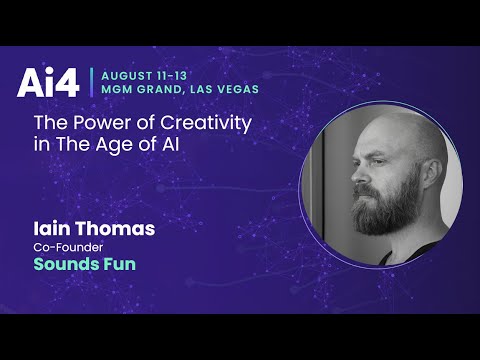
## Background Published on YouTube by Ai4 on August 28, 2025, this presentation features Iain Thomas (Co-Founder of Sounds Fun) and Chin Wu (Head of North America Brand & Consumer Marketing at Lenovo). The session explores why independent thought and human creativity are more critical than ever in the age of generative AI, highlighting their collaborative initiative, Make Space, designed to elevate the next generation of creative makers.
## TL;DR Chin Wu and Iain Thomas explore how generative AI can be leveraged to expand creative opportunities rather than merely drive workplace efficiency. Highlighting their collaborative 'Make Space' platform launched during New York Fashion Week alongside Dazed Media, they examine tangible co-creation projects spanning digital fashion runways, interactive installations, and tailored archives. The speakers argue that as rote technical skills are commoditized by automation, human value will concentrate on high-level taste, problem framing, and 'vibe coding' akin to music producer Rick Rubin. They conclude by encouraging creators to treat creativity as a trainable muscle and to reclaim the intuitive, uninhibited imagination of their inner child.
## Atmosphere & style The presentation carries a warm, conversational, and culturally attuned tone, balancing corporate brand vision with independent artistic philosophy. Thomas and Wu share an easy, collaborative rapport, weaving lighthearted personal anecdotes—such as kids embracing surreal 'Italian brain rot' memes—with serious reflections on cultural renaissance and hip-hop history. The discussion avoids both techno-optimist jargon and AI doomerism, delivering an empathetic and inspiring exploration of human intuition and play.
## Key takeaways - [00:04](https://www.youtube.com/watch?v=VQ8htQM_Vl4&t=4s) Lenovo established dedicated AI Ecosystem Storytelling to translate complex technical architectures into human-centric, accessible narratives under their 'Smarter AI for All' mission. - [03:40](https://www.youtube.com/watch?v=VQ8htQM_Vl4&t=220s) Lenovo and Sounds Fun launched the 'Make Space' platform with Dazed Media to alleviate creative anxiety and provide emerging artists a safe space for AI experimentation. - [05:28](https://www.youtube.com/watch?v=VQ8htQM_Vl4&t=328s) The core benchmark for generative AI in arts should be expanding creative opportunities—whether by automating administrative burdens or inventing entirely new artistic mediums. - [08:29](https://www.youtube.com/watch?v=VQ8htQM_Vl4&t=509s) Projects like Nicola Formichetti's infinite runway and the Dazed Archive tool show how purpose-built, culturally grounded AI tools foster genuine cross-generational co-creation. - [11:10](https://www.youtube.com/watch?v=VQ8htQM_Vl4&t=670s) Historically, creative artists envision technological futures (such as in 'Neuromancer' and 'Her') long before engineers build them, proving that creative direction must guide AI development. - [13:20](https://www.youtube.com/watch?v=VQ8htQM_Vl4&t=800s) Just as early hip-hop remixed turntables into a new genre, current cultural tensions around AI are sparking a creative renaissance, with younger generations natively adopting synthetic media. - [15:38](https://www.youtube.com/watch?v=VQ8htQM_Vl4&t=938s) The emergence of 'vibe coding' mirrors music producer Rick Rubin's model: as technical execution is automated, human value shifts decisively toward high-level taste, vision, and curation. - [18:23](https://www.youtube.com/watch?v=VQ8htQM_Vl4&t=1103s) Generative AI acts as a recursive tutor capable of teaching users how to master it, lowering entry barriers so solopreneurs can build enterprise-scale ventures. - [20:38](https://www.youtube.com/watch?v=VQ8htQM_Vl4&t=1238s) Creativity is a trainable, disciplined muscle rather than a random spark; technologists should study foundational craft texts like 'The Artist's Way' instead of solely reading AI white papers. - [22:05](https://www.youtube.com/watch?v=VQ8htQM_Vl4&t=1325s) The ultimate competitive advantage in an automated landscape is reconnecting with the uninhibited intuition, playfulness, and imaginative instincts of childhood.
## Detailed walkthrough ### [00:04](https://www.youtube.com/watch?v=VQ8htQM_Vl4&t=4s) Introducing AI Storytelling and Lenovo's Vision
The session opens with lighthearted banter as Iain Thomas welcomes the audience to the talk on creativity in the age of AI, thanking attendees for choosing this session over the technical presentation next door. Iain offers congratulations to Chin Wu on her new role at Lenovo as Director of AI Ecosystem Storytelling. Wu emphasizes that while large corporations often have rigid, traditional functional roles, Lenovo recognized an urgent cultural need for dedicated AI storytelling. Her mandate is to translate complex technical architectures and capabilities into "human-centric, customer-centric, human-based outcomes" and narratives that resonate on an emotional level.
Thomas notes that shaping this narrative is vital because generative AI remains deeply polarizing across industries, making it essential for culture to understand the human purpose behind technology. Wu connects this to Lenovo’s core corporate mission, "Smarter Technology for All," which is now expanding into "Smarter AI for All." The phrase "for all" underscores accessibility, ensuring advanced computing is not reserved for an elite few. Lenovo is pursuing this across its hardware portfolio—spanning smartphones, tablets, and personal computers—to weave a cohesive, accessible AI ecosystem.
```mermaid flowchart TD accTitle: Lenovo AI Storytelling and Ecosystem Architecture subgraph Mission["Lenovo Core Vision"] M1["Smarter Technology for All"] --> M2["Smarter AI for All"] end
subgraph Ecosystem["AI Hardware & Ecosystem"] H1["Smartphones"] H2["Tablets"] H3["PC / Yoga Laptops"] end
subgraph Storytelling["AI Ecosystem Storytelling"] T1["Complex Technical AI Capabilities"] --> T2["Human-Centric Narratives & Creative Tools"] end
Mission --> Ecosystem Ecosystem --> Storytelling ```
---
[03:40](https://www.youtube.com/watch?v=VQ8htQM_Vl4&t=220s) The Make Space Platform and NYFW Activation
To explore what smarter technology means specifically for creative communities, Lenovo partnered with Iain Thomas's independent creative studio, Sounds Fun. The creative sector has experienced acute anxiety and skepticism surrounding generative models. To address this friction directly, Lenovo Yoga and Sounds Fun launched **Make Space**, a dedicated collaborative platform built to foster dialogue, experimentation, and opportunity for emerging makers.
The initiative kicked off during New York Fashion Week in partnership with youth culture and style publication *Dazed Media*. The activation brought together established cultural icons and rising talent for hands-on panels and workshops, complemented by a mobile art gallery touring the city and a culminating interactive party in Bushwick, Brooklyn, where attendees used Lenovo Yoga laptops to manipulate and control the venue's live environment with AI.
- **Dazed Media Partnership:** Hosted workshops and panels exploring the intersection of creative craft and generative AI. - **Featured Artists:** Collaborations featured fashion icon Nicola Formichetti alongside emerging digital artists Yehwan Song and Ocean World. - **The Dazed Archive:** *Dazed* debuted an AI co-collaboration engine trained on 30 years of original reporting and interviews, built to help creatives ideate on tasks ranging from launching independent fashion labels to mastering musical albums. - **Bushwick Interactive Event:** New York makers and artists took direct control of the event's visual and auditory environment using AI software running on Lenovo Yoga hardware.
---
[05:28](https://www.youtube.com/watch?v=VQ8htQM_Vl4&t=328s) Navigating Tension: Expanding Opportunities for Young Creatives
Chin Wu explains that the core objective of the Make Space program is understanding the pain points of young consumers who simultaneously feel "excitement and trepidation" about integrating AI into their workflows. Rather than imposing technology from the top down, Make Space acts as a safe testing ground where young creators can tinker, share experiments, and build genuine confidence.
```mermaid flowchart LR accTitle: Make Space Creative AI Spectrum subgraph AdminTrack["Administrative & Workflow Relief"] A1["Automated Invoicing"] A2["Email Management"] A3["Tax Preparation"] end
subgraph ArtisticTrack["Creative Expansion & New Mediums"] B1["Infinite Fashion Runways"] B2["Interactive Screen Installations"] B3["Generative Publishing & Books"] end ```
Thomas stresses that the guiding North Star of the entire initiative is answering a single fundamental question: *How do you make AI mean more creative opportunities, not less?* He highlights that the fear stems from AI demonstrating capabilities in traditional artistic domains like writing songs, painting, and composing poetry. The solution is avoiding the urge to build "a faster horse" and instead discovering completely new mediums:
> "If you as a creative person look at AI and go, 'I want this to do my invoices, handle my emails, and do my taxes for me. I don't actually want to use it for anything else,' that's a very valid use case... If you look at it and you go, 'How is there a new way that I can create an interactive fashion runway? How is there a new way that I can create a book?' What is something different that I can do? And those are really the kinds of moments that we're hoping to instigate."
---
[08:29](https://www.youtube.com/watch?v=VQ8htQM_Vl4&t=509s) Co-Creation Tools, Pitch Sessions, and Infinite Runways
The speakers delve into specific executions within the Make Space activation that demonstrated tangible co-creation between human artists and AI models. Wu details a pitch session hosted with *Dazed* community members where participants submitted wide-ranging proposals integrating AI at different points in their creative pipeline—some using algorithms purely for conceptual ideation, others for workflow automation, and some for final output generation.
Thomas highlights several standout projects showcased during the initiative:
- **The Dazed Archive Tool:** Unlike generic large language models, this specialized co-creation tool is grounded in three decades of proprietary interviews with leading fashion designers, musicians, and artists, providing culturally rich and context-aware creative prompting. - **Nicola Formichetti’s Infinite Fashion Show:** The renowned designer (known for iconic cultural moments including Lady Gaga’s meat dress) utilized generative AI to continuously reinterpret garment fabrics, patterns, and silhouettes along an endless digital runway for New York Fashion Week. - **Yehwan Song's Interactive Installations:** The emerging artist developed physical-digital installations utilizing Lenovo hardware and screens, challenging conventional user interactions with modern digital media.
These projects demonstrated the value of pairing industry veterans with emerging artists, proving how purpose-built AI tools can foster genuine cross-generational collaboration rather than mere automation.
[11:10](https://www.youtube.com/watch?v=VQ8htQM_Vl4&t=670s) Empowering Creatives to Shape the Vision of AI
Reflecting on the contentious cultural moment surrounding media and generative technology, Iain Thomas emphasizes that the dialogue around AI has largely been a one-sided broadcast from technology companies. Silicon Valley frequently drops finished tools onto the public with an attitude of "Look, we've invented this thing and it's yours now," without actively consulting the creators who will actually use them. True cultural guidance, Thomas argues, must come from creative people who understand how to envision possibilities rather than just technical architectures.
```mermaid flowchart TD accTitle: Creative Vision Preceding Technological Reality subgraph CreativeRoots["Creative Imagination & Art"] A["William Gibson's 'Neuromancer'"] --> B["Coining 'Cyberspace'"] C["Spike Jonze's Film 'Her'"] --> D["Vision for Conversational AI Assistants"] end subgraph TechOutput["Technological Milestones"] B --> E["Modern Internet & Virtual Environments"] D --> F["Modern Voice Mode Launches"] end ```
Historically, writers and artists have forecasted technological reality long before engineers built it. William Gibson coined the term "cyberspace" in his seminal sci-fi novel *Neuromancer*, and when modern tech CEOs unveil advanced voice assistants, they tweet references to Spike Jonze's film *Her*. For decades, society imagined AI through the cold, mechanical lens of R2-D2—calculating equations and executing logic. Because modern generative AI unexpectedly entered the human domain of painting pictures and writing poetry, society requires imaginative artists to make sense of this new paradigm.
- Tech developers often build in isolation, missing what artists and everyday users actually need from creative software. - Creative people possess the ability to "kick out the future" and punch out visions of what society could become. - Generative AI writing poetry and creating imagery shatters the traditional sci-fi trope of purely mathematical, robotic machines.
---
[13:20](https://www.youtube.com/watch?v=VQ8htQM_Vl4&t=800s) Cultural Tension, Hip-Hop Parallels, and "Italian Brain Rot"
Chin Wu highlights that modern culture stands on the precipice of a genuine creative renaissance precisely because AI forces humanity to confront deep questions about identity and the self. Periods of societal tension historically birth ground-breaking art forms. Thomas draws a direct parallel to the emergence of early hip-hop, where young artists took existing technology—turntables, sampling gear, and vinyl scratching—to remix the culture around them into an entirely new genre.
The conversation pivots to how younger generations already absorb AI natively without distinguishing it from reality. Thomas shares a humorous anecdote about traveling to Italy, where his children exclaimed they had arrived at the birthplace of "Italian brain rot"—an entire surreal subculture of AI-generated memes featuring bizarre creations like *cappuccino asino*. For kids, AI-generated surrealism is not treated as a novelty or an existential threat; it simply exists as an ambient layer of modern culture.
```mermaid flowchart LR accTitle: Technological Disruption to Cultural Renaissance subgraph Tension["Cultural Catalyst"] A["Emergence of New Tools"] --> B["Identity Questions & Tension"] end subgraph Precedent["Historical Precedent"] B --> C["Hip-Hop Movement: Scratching & Sampling"] end subgraph Present["Generative AI Era"] B --> D["Native Remixing: AI Memes & Surrealism"] D --> E["New Creative Renaissance"] end ```
- **World Economic Forum finding**: Creativity is officially ranked as one of the top five critical skills needed for the future workforce. - Younger generations interact with synthetic and AI-generated media natively, bypassing philosophical debates about the underlying algorithms.
---
[15:38](https://www.youtube.com/watch?v=VQ8htQM_Vl4&t=938s) The Rick Rubin Model: Vibe Coding and the One-Person Billion-Dollar Company
As AI automates procedural and technical tasks that previously required years of specialized training, human value shifts entirely toward taste, conceptual vision, and problem framing. Thomas discusses the rise of "vibe coding" in tech culture, pointing to legendary music producer Rick Rubin (known for producing the Beastie Boys, Slayer, and Johnny Cash) as the ultimate archetype. Rubin cannot play instruments, read musical notation, or handle technical audio engineering, yet his profound creative intuition and cultural sensibility have shaped decades of iconic music.
```mermaid flowchart LR accTitle: The Rick Rubin Paradigm in the AI Era subgraph Automation["Automated by AI"] A["Syntax & Coding"] B["Technical Execution"] C["Process Replication"] end subgraph HumanValue["Human Creative Layer"] D["High-Level Taste & Curation"] E["Uncovering White Spaces"] F["Unique Conceptual Ideas"] end Automation --> G["Democratized Output"] HumanValue --> G ```
Wu links this to the Silicon Valley race toward creating the first "one-person billion-dollar company." While an individual entrepreneur now has an entire enterprise suite of automated capabilities at their fingertips, raw technology cannot pinpoint untapped market opportunities. ChatGPT cannot unilaterally identify original white spaces; success requires human imagination to direct these automated capabilities toward meaningful, unexpected solutions.
- Technical skills that follow repeatable processes will be commoditized, elevating high-level taste and vision. - Rick Rubin exemplifies leading entirely with creative direction rather than mechanical execution. - Small teams and solopreneurs can leverage AI leverage to operate at enterprise scale, provided they supply genuine creative differentiation.
---
[18:23](https://www.youtube.com/watch?v=VQ8htQM_Vl4&t=1103s) Democratized Tools, Self-Teaching LLMs, and Entrepreneurship
The widespread accessibility of generative video, audio, and conversational tools removes historical barriers to entry for small businesses and independent creators. Thomas points out a unique, recursive superpower of large language models: AI is one of the few technologies capable of teaching the user how to master it.
Entrepreneurs no longer need elite consulting firms or extensive teams to launch bold ventures. A founder can interrogate an LLM directly by asking: *"I want to start this specific business—what blind spots am I missing? How can I refine this prompt to get a better outcome? How do I complete this administrative framework?"* This feedback loop empowers small, agile teams with distinct viewpoints to outmaneuver entrenched legacy players.
- LLMs serve simultaneously as an execution engine and an interactive tutor for mastering their own capabilities. - Democratization shifts the competitive advantage from capital scale to intellectual bravery and distinctive perspectives.
---
[20:38](https://www.youtube.com/watch?v=VQ8htQM_Vl4&t=1238s) Training the Creative Muscle: Practical Action and Reconnecting with the Inner Child
In their closing recommendations, Thomas urges the audience to step away from dry corporate research and instead study the foundational craft of creative ideation. Rather than reading another AI white paper, technologists and business leaders should read foundational creative texts to understand how original thinking actually works.
Creativity is not an elusive lightning strike reserved for spontaneous moments in the shower; it is a structured, deliberate muscle that can be strengthened through regular practice and intentional exercises. As technical expertise becomes democratized across every industry, creative application will be the sole differentiator. In an era dominated by hyper-innovation, the most vital skill is reconnecting with childlike wonder, curiosity, and play.
- **Essential Reading List for AI Practitioners**: - *The Artist's Way* by Julia Cameron - *The War of Art* by Steven Pressfield - *Bird by Bird* by Anne Lamott - Creativity is an active practice and discipline rather than an innate, fixed trait. - True innovation in automated environments requires reconnecting with the uninhibited imagination of childhood.
[22:05](https://www.youtube.com/watch?v=VQ8htQM_Vl4&t=1325s) Reclaiming the Intuition of the Child and Closing Thoughts
Reflecting on the deeper wellspring of human creativity, the speaker evokes the idea that an "adult is the child who survived." Within that childlike state lies an innate, effortless intuitiveness and a profound instinct for making and creating that often gets suppressed or forgotten in adulthood. The key to flourishing creatively alongside modern technology is being able to reach back inside oneself, rediscover that untamed imaginative impulse, and bring it forward into one's work—an orientation that will ultimately set creators up for incredible, lasting success.
As the session wraps up, the stage host thanks the speakers, playfully summarizing the core takeaway of their talk as "renewed youth and AI" before thanking the audience and bringing the presentation to a close.
- **The Child Within**: Creativity relies on accessing the survival of childlike wonder, where intuition and profound making naturally reside. - **Path to Success**: Reconnecting with that primal, intuitive impulse is framed as a decisive advantage in navigating the future of AI.
## Notable quotes > [00:04](https://www.youtube.com/watch?v=VQ8htQM_Vl4&t=4s) human-centric, customer-centric, human-based outcomes — Chin Wu
> [00:04](https://www.youtube.com/watch?v=VQ8htQM_Vl4&t=4s) Smarter Technology for All — Chin Wu
> [00:04](https://www.youtube.com/watch?v=VQ8htQM_Vl4&t=4s) Smarter AI for All — Chin Wu
> [05:28](https://www.youtube.com/watch?v=VQ8htQM_Vl4&t=328s) excitement and trepidation — Chin Wu
> [05:28](https://www.youtube.com/watch?v=VQ8htQM_Vl4&t=328s) How do you make AI mean more creative opportunities, not less? — Iain Thomas
> [05:28](https://www.youtube.com/watch?v=VQ8htQM_Vl4&t=328s) If you as a creative person look at AI and go, 'I want this to do my invoices, handle my emails, and do my taxes for me. I don't actually want to use it for anything else,' that's a very valid use case... If you look at it and you go, 'How is there a new way that I can create an interactive fashion runway? How is there a new way that I can create a book?' What is something different that I can do? And those are really the kinds of moments that we're hoping to instigate. — Iain Thomas
> [11:10](https://www.youtube.com/watch?v=VQ8htQM_Vl4&t=670s) Look, we've invented this thing and it's yours now, — Iain Thomas
> [11:10](https://www.youtube.com/watch?v=VQ8htQM_Vl4&t=670s) kick out the future — Iain Thomas
> [13:20](https://www.youtube.com/watch?v=VQ8htQM_Vl4&t=800s) Italian brain rot — Iain Thomas
> [15:38](https://www.youtube.com/watch?v=VQ8htQM_Vl4&t=938s) one-person billion-dollar company — Chin Wu
> [18:23](https://www.youtube.com/watch?v=VQ8htQM_Vl4&t=1103s) I want to start this specific business—what blind spots am I missing? How can I refine this prompt to get a better outcome? How do I complete this administrative framework? — Iain Thomas
> [22:05](https://www.youtube.com/watch?v=VQ8htQM_Vl4&t=1325s) adult is the child who survived — Iain Thomas
> [22:05](https://www.youtube.com/watch?v=VQ8htQM_Vl4&t=1325s) renewed youth and AI
## Mentioned Iain Thomas, Chin Wu, Sounds Fun, Lenovo, Lenovo Yoga, Make Space, New York Fashion Week, Dazed Media, Nicola Formichetti, Yehwan Song, Ocean World, William Gibson, Neuromancer, Spike Jonze, Her, R2-D2, World Economic Forum, Rick Rubin, Beastie Boys, Slayer, Johnny Cash, ChatGPT, The Artist's Way, Julia Cameron, The War of Art, Steven Pressfield, Bird by Bird, Anne Lamott
## Video description Iain Thomas, Co-Founder, Sounds Fun Chin Wu, Head of North America Brand & Consumer Marketing, Lenovo
Abstracts
Why is creativity more important than ever in the age of generative AI?
With the rise of vibe-coding and the coming wave of automation, everyone is trying to understand for themselves what skills matter the most as the world goes through the biggest cultural-shift in a millennium or more. There’s a good reason to believe that independent thought, creativity and a sense of individual purpose will define those that succeed.
Attendees will hear how global consumer brand Lenovo and independent creative studio Sounds Fun think about human creativity and their collaborative platform aimed at elevating the next generation of creatives, Make Space.
AI should be about more than efficiency and this is an unmissable talk for those interested in the future of creativity and how young creatives and makers are approaching new technology.
[Source](https://www.youtube.com/watch?v=VQ8htQM_Vl4)