Superblocks CTO Urges Governance Curbs as AI Builders Near 1B
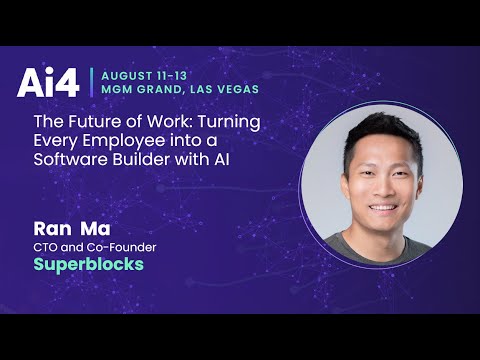
The Future of Work: Turning Every Employee into a Software Builder with AI — Ai4

Ai4

Companies must lock down deterministic security and access controls before democratizing AI development to prevent rogue vibe coding from causing enterprise breaches.

AI-assisted summary of The Future of Work: Turning Every Employee into a Software Builder with AI — original source. Check the original for full context.

Source published:

Detailed notes

## Background Published by Ai4 on YouTube on August 27, 2025, this talk features Ran Ma, CTO and Co-Founder of Superblocks. The session explores how enterprises can turn every employee into a software builder using AI-assisted vibe coding, emphasizing the need to pair creative generation with deterministic guardrails to prevent security vulnerabilities and governance breakdowns.

## TL;DR Ran Ma outlines how AI and vibe coding are poised to expand the global builder base from 70 million engineers to over one billion enterprise employees, triggering a 100-fold increase in internal applications. However, unmonitored grassroots building creates severe shadow AI risks, including data breaches and credential leaks. To scale securely, enterprises must implement an architectural model that isolates probabilistic generative layers (like UI layouts and workflow logic) from deterministic systems (such as SSO, RBAC, and integrations). Leaders must adhere to the fundamental golden rule of sequencing: centralize governance and security controls before democratizing the development process.

## Atmosphere & style The presentation carries the polished, direct tempo of a technical conference keynote, balancing visionary optimism about democratized software creation with a sober, pragmatic assessment of enterprise risk. Ran Ma speaks with structured clarity and strategic urgency, using concrete architectural paradigms and executive anecdotes to anchor his insights. It feels like an authoritative playbook designed to give IT and engineering leaders immediate clarity on harnessing rapid AI adoption without losing institutional control.

## Key takeaways - [00:04](https://www.youtube.com/watch?v=NcQEZbg49sg&t=4s) AI-assisted app generation and vibe coding are projected to drive a 10x increase in workplace builders and a 100x explosion in internal applications and autonomous agents. - [01:39](https://www.youtube.com/watch?v=NcQEZbg49sg&t=99s) Central engineering capacity has traditionally been the primary bottleneck restricting enterprise innovation velocity and internal process automation. - [01:39](https://www.youtube.com/watch?v=NcQEZbg49sg&t=99s) Empowering non-engineering roles like data analysts allows them to build full-stack internal applications independently, multiplying organizational throughput. - [01:39](https://www.youtube.com/watch?v=NcQEZbg49sg&t=99s) Unregulated adoption of consumer AI tools creates widespread shadow AI, exposing sensitive data and creating unmonitored attack surfaces across the enterprise. - [04:22](https://www.youtube.com/watch?v=NcQEZbg49sg&t=262s) Enterprise AI architecture must separate probabilistic features (UI layouts, business logic drafts) from deterministic features (authentication, RBAC, and secret management). - [04:22](https://www.youtube.com/watch?v=NcQEZbg49sg&t=262s) Autonomous agents function as state machines that cycle between probabilistic LLM reasoning and deterministic system calls with continuous verification. - [07:05](https://www.youtube.com/watch?v=NcQEZbg49sg&t=425s) Enterprises must centralize data integrations and connection credentials once so citizen builders can safely query data without exposing production secrets. - [07:05](https://www.youtube.com/watch?v=NcQEZbg49sg&t=425s) Essential platform components like SSO, SCIM provisioning, and centralized audit logging must be provided as deterministic building blocks rather than generated by AI. - [09:12](https://www.youtube.com/watch?v=NcQEZbg49sg&t=552s) Governed AI tooling has the potential to expand the global developer population from roughly 70 million software engineers to more than one billion enterprise builders. - [09:12](https://www.youtube.com/watch?v=NcQEZbg49sg&t=552s) Internal enterprise operating models are transitioning from purchasing fragmented SaaS point solutions to building bespoke internal software tailored to exact team needs. - [09:12](https://www.youtube.com/watch?v=NcQEZbg49sg&t=552s) Organizations must adhere to the non-negotiable rule of sequencing: establish centralized governance, security, and integration guardrails before democratizing development.

## Detailed walkthrough ### [00:04](https://www.youtube.com/watch?v=NcQEZbg49sg&t=4s) Introduction and the 10x Rise of Enterprise Builders

Opening as an unplanned sequel to a prior session by Yosi on "the last mile of vibe coding," Ran Ma, CTO and co-founder of Superblocks, addresses how artificial intelligence is fundamentally transforming the future of work by turning everyday employees into software builders. Superblocks operates as an enterprise vibe coding platform tailored for internal tooling, embedding security, governance, and guardrails to democratize software development across large organizations. The platform works with prominent enterprise brands including SoFi, Carrier, and Instacart to broaden internal building capabilities beyond dedicated engineering teams.

Over the coming years, the workplace will see a 10x increase in software builders, which in turn will trigger a 100x explosion in the sheer volume of internal applications and autonomous agents being generated. This rapid expansion represents an irreversible, steep adoption curve driven by AI app generation and vibe coding patterns that are already proliferating throughout modern enterprises.

- Superblocks functions as an enterprise-grade platform specifically designed to add guardrails, security, and governance to AI-assisted internal tooling. - Major enterprises deploying these platforms include SoFi, Carrier, and Instacart. - The shift is projected to create 10 times more builders in the workplace and a 100-fold increase in the number of active internal apps and agents.

[01:39](https://www.youtube.com/watch?v=NcQEZbg49sg&t=99s) Breaking the Engineering Bottleneck and the Rise of Shadow AI

In traditional enterprise setups, business innovation velocity has consistently been constrained by engineering capacity. While organizations have hundreds of high-value automation opportunities, central engineering teams rarely have the bandwidth to build and maintain them all. As AI empowers non-traditional personas across varied functions, companies are seeing massive throughput increases. A CTO at a healthtech company noted that data analysts are now building and shipping internal applications end-to-end, effectively replacing the workload of five to seven full-time engineers. Similarly, at a fintech data firm, a single business analyst built an application that quickly expanded into widespread operational use across multiple departments.

However, this grassroots shift brings significant enterprise risk. A technology executive at a Global 2000 enterprise highlighted the growing dilemma: "I have hundreds of non-engineers vibe coding with consumer tools while my IT team has zero visibility into the data being used and new attack surface generated. The genie is out of the bottle and it won't go back in. Eliminating shadow AI while securing vibe coding is my number one priority." Because workers find immediate value in AI tooling, IT leadership cannot simply ban the practice; they must secure and guide it without stripping away the productivity gains.

- Legacy constraint: Innovation velocity was strictly bound by centralized engineering team bandwidth. - Emerging paradigm: Non-engineering roles (such as data analysts) independently deploy production tools, multiplying organizational building throughput by 10x to 100x. - Core enterprise threat: Unregulated consumer vibe coding creates unmonitored shadow AI, exposes sensitive enterprise data, and rapidly expands unvetted attack surfaces.

[04:22](https://www.youtube.com/watch?v=NcQEZbg49sg&t=262s) Probabilistic vs. Deterministic Architecture in AI Development

Unrestricted vibe coding in enterprise environments has already led to serious incidents across the industry, including vendor breaches, leaked API keys, dropped production databases, and exposed customer records. To resolve the tension between AI speed and enterprise safety, Superblocks splits all software engineering features and workflows into two distinct operational categories:

1. **Probabilistic Features**: Workflows where creative flexibility and a range of valid outcomes exist, such as generating UI layouts, drafting workflow logic, and summarizing raw content. In this tier, AI is encouraged to iterate, converse, and generate dynamically. 2. **Deterministic Features**: Foundational systems where precision is absolute and zero-deviation is required, including authentication, role-based access control (RBAC), API integrations, and secret management. These components must be verifiable, repeatable, and completely invulnerable to hallucinations.

AI agents function as state machines and loops that continuously coordinate probabilistic LLM reasoning with deterministic tool execution. Verifying this hybrid environment requires multi-layered checks, incorporating automated evaluations, strict integration tests, and human-in-the-loop visual inspections.

```mermaid flowchart TD accTitle: Probabilistic vs Deterministic Workflows subgraph Prob["Probabilistic Tier (AI Generation)"] direction TB UI["UI Layouts & Components"] WFL["Workflow & Business Logic"] SUM["Content Summaries"] end

subgraph Loop["Verification & Agent Loop"] direction TB AGT["Agent State Machine"] VER["Evals & Human-in-the-Loop"] end

subgraph Det["Deterministic Tier (Strict Precision)"] direction TB AUTH["Auth, SSO & RBAC"] SEC["Secret & Key Management"] INT["Enterprise Integrations"] end

Prob --> AGT AGT --> Det Det --> VER VER --> AGT ```

- Probabilistic operations allow wide creative latitude and iterative refinement for layouts and high-level logic snippets. - Deterministic operations demand zero-tolerance security for credentials, access rights, and low-level protocols. - Autonomous agent architectures alternate between probabilistic LLM generation steps and deterministic system calls.

[07:05](https://www.youtube.com/watch?v=NcQEZbg49sg&t=425s) A Governed Blueprint for Enterprise-Scale Vibe Coding

To scale AI application building safely to hundreds or thousands of internal tools, organizations must establish a three-layer foundational architecture before opening access to citizen builders:

1. **Centralized Integration & Data Management**: Securely abstract authentication, data connections, and access configurations. Central engineering configures databases and APIs once with strict RBAC, allowing builders to safely query data without ever directly handling raw database connection strings or production credentials. 2. **Standardized Governance & Platform Framework**: Frame the probabilistic AI engine so it merely "fills in the blanks" for frontend styling, component arrangements, and localized script logic. Enterprise primitives like SSO, SCIM provisioning, RBAC, and observability are provided exclusively as deterministic hosted services. 3. **Enterprise Administrative & Audit Layer**: Provide centralized IT and security teams with global visibility, tracking exactly who built each tool, which data sources are touched, and complete audit logging across all environments.

```mermaid flowchart LR accTitle: Enterprise Vibe Coding Architecture subgraph Builders["Distributed Builders"] B1["Analysts"] B2["Ops Teams"] B3["Product"] end

subgraph Platform["Governed Vibe Coding Platform"] ADM["Admin & Full Audit Layer"] GOV["Governance & Pre-built Building Blocks"] INT["Centralized Integration & RBAC Layer"] ADM --- GOV GOV --- INT end

subgraph EnterpriseData["Enterprise Infrastructure"] DB[("Internal DBs")] API["Internal APIs"] AUTH["SSO & SCIM"] end

Builders --> ADM INT --> EnterpriseData ```

- Data access must follow an "integrate once, reuse everywhere" security abstraction. - Critical platform pillars like SSO, SCIM, and observability must never be left to generative AI generation. - A centralized audit trail ensures complete compliance and visibility across every generated application.

[09:12](https://www.youtube.com/watch?v=NcQEZbg49sg&t=552s) The Next Billion Developers and the Golden Rule of Sequencing

There are roughly 70 million professional software developers in the world today, but governed AI development can expand the builder population by 20x to reach over one billion people. Within Superblocks internally, non-engineering staff already build custom internal software rather than purchasing disparate SaaS point solutions or waiting on engineering tickets.

Ran Ma outlines three closing conclusions for technology leaders navigating this landscape:

1. **Vibe coding is permanent**: The generative application-building workflow is an enduring industry paradigm; manual-only enterprise software development will not return. 2. **The movement is accelerating**: IT organizations cannot afford to wait until hundreds of rogue tools are already built before formulating an operational strategy. 3. **The sequencing rule is non-negotiable**: Organizations must *centralize governance before democratizing the build*. Inverting this sequence inevitably triggers security breaches, data leaks, and operational fragmentation.

- Potential global builder capacity can expand from 70 million traditional engineers to well over 1 billion enabled employees. - Internal operating models are shifting from buying point SaaS tools to building bespoke internal applications across every department. - Core implementation imperative: Build the governed sandbox first; democratize widespread creation second.

## Notable quotes > [00:04](https://www.youtube.com/watch?v=NcQEZbg49sg&t=4s) the last mile of vibe coding — Yosi

> [00:04](https://www.youtube.com/watch?v=NcQEZbg49sg&t=4s) 10x increase in software builders, which in turn will trigger a 100x explosion in the sheer volume of internal applications and autonomous agents being generated. — Ran Ma

> [01:39](https://www.youtube.com/watch?v=NcQEZbg49sg&t=99s) I have hundreds of non-engineers vibe coding with consumer tools while my IT team has zero visibility into the data being used and new attack surface generated. The genie is out of the bottle and it won't go back in. Eliminating shadow AI while securing vibe coding is my number one priority. — Technology executive at a Global 2000 enterprise

> [01:39](https://www.youtube.com/watch?v=NcQEZbg49sg&t=99s) The genie is out of the bottle and it won't go back in. — Technology executive at a Global 2000 enterprise

> [01:39](https://www.youtube.com/watch?v=NcQEZbg49sg&t=99s) Eliminating shadow AI while securing vibe coding is my number one priority. — Technology executive at a Global 2000 enterprise

> [07:05](https://www.youtube.com/watch?v=NcQEZbg49sg&t=425s) fills in the blanks — Ran Ma

> [07:05](https://www.youtube.com/watch?v=NcQEZbg49sg&t=425s) integrate once, reuse everywhere — Ran Ma

> [09:12](https://www.youtube.com/watch?v=NcQEZbg49sg&t=552s) centralize governance before democratizing the build — Ran Ma

> [09:12](https://www.youtube.com/watch?v=NcQEZbg49sg&t=552s) Vibe coding is permanent — Ran Ma

> [09:12](https://www.youtube.com/watch?v=NcQEZbg49sg&t=552s) The movement is accelerating — Ran Ma

> [09:12](https://www.youtube.com/watch?v=NcQEZbg49sg&t=552s) The sequencing rule is non-negotiable — Ran Ma

## Mentioned Ran Ma, Superblocks, Yosi, Ai4, SoFi, Carrier, Instacart, Global 2000, SSO, SCIM, RBAC

## Video description Ran Ma, CTO and Co-Founder, Superblocks

Abstracts

The most innovative enterprises aren’t just using AI to cut costs. They’re giving every function the power to build, unlocking 100x more opportunities to automate operations and drive revenue. With “vibe coding” in employees’ hands, the shift from centralized dev to distributed, AI-powered dev is unstoppable. But without the right guardrails, this transformation can quickly spiral into security gaps, broken systems, and governance nightmares. In this talk, Ran Ma, CTO at Superblocks, will share how leading enterprises are pairing the creativity of AI with the precision of deterministic systems. You will discover how to sandbox AI output, constrain it with verifiable building blocks, and embed governance at the core so teams can innovate at full speed without ever going off the rails.

[Source](https://www.youtube.com/watch?v=NcQEZbg49sg)

中文简报

AI开发者规模逼近10亿,Superblocks CTO呼吁加强治理管控 企业在普及AI开发之前,必须锁定确定性安全与访问控制,以防失控的“氛围编码”(vibe coding)引发企业安全漏洞。 Ran Ma指出,AI与氛围编码(vibe coding)有望将全球开发者群体从7000万工程师扩展至逾10亿企业员工,推动内部应用激增100倍。然而,不受监管的基层自发构建会带来严重的影子AI风险,包括数据泄露与凭证外泄。为了安全扩展,企业必须采用一种架构模型,将概率性生成层(如UI布局和工作流逻辑)与确定性系统(如SSO、RBAC和集成)隔离开来。企业管理者必须恪守先后次序的根本黄金法则:在普及开发流程之前,先行集中治理与安全控制。 AI 辅助开发与 Vibe Coding 正迅速打破工程团队的交付瓶颈,预计将推动企业构建者规模激增 10 倍,并引发内部应用与自主 Agent 的百倍爆发。 (0:04) 员工自发使用消费级 AI 工具催生了难以监控的影子 AI 风险,已引发数据泄露和凭证暴露等严重事件,倒逼企业在保留生产力红利的同时必须加固安全防线。 (1:39) 企业级 AI 架构必须将 UI 布局等概率型功能与认证、RBAC、密钥管理等确定型基座严格拆分,避免模型幻觉威胁核心生产系统的稳定性。 (4:22) 规模化落地的核心准则是“先集中治理,后普及构建”,企业应预先集中配置数据集成抽象层与审计系统,使非技术员工在无需接触生产凭据的前提下安全构建应用。 (7:05)

Reading summary

Ran Ma, CTO of Superblocks, argues that generative AI is transforming non-engineering employees into software builders to solve internal operational bottlenecks, but warns that enterprises must establish centralized governance before democratizing tool creation. Overcoming Engineering Bottlenecks and Shadow AI Risks (1:39) Enterprise innovation has traditionally been constrained by engineering capacity, leaving hundreds of operational automation opportunities unaddressed. By adopting AI-assisted building, non-technical personnel can dramatically raise throughput; for instance, a healthtech CTO cited data analysts shipping applications that absorbed the workload of five to seven full-time engineers. However, ungoverned consumer tool adoption has spawned widespread shadow AI. A Global 2000 executive observed that hundreds of employees are vibe coding without IT visibility into data exposure or attack surfaces, while industry incidents have already resulted in leaked API keys, dropped production databases, and exposed customer records. Bifurcating Probabilistic and Deterministic Architecture (4:22) To reconcile developer velocity with enterprise safety, Superblocks separates application development into probabilistic and deterministic tiers. Probabilistic operations allow creative leeway and dynamic iteration for tasks such as UI generation, business logic drafting, and text summarization. Conversely, deterministic elements require absolute precision with zero tolerance for hallucinations, governing authentication, single sign-on (SSO), role-based access control (RBAC), and secret management. In this architecture, AI agents operate as state machines that pair probabilistic reasoning with deterministic execution, verified through automated evaluations, integration tests, and human review. A Three-Layer Governed Blueprint for Scale (7:05) Safely scaling enterprise application building requires establishing a three-layer foundational platform prior to enabling non-engineers. First, centralized integration abstracts data connections and RBAC once, ensuring builders query systems without accessing raw credentials or database connection strings. Second, a standardized framework constrains AI generation to filling in frontend components and localized scripts, keeping infrastructure primitives like SCIM provisioning and observability fully deterministic. Third, an administrative audit layer provides IT teams with comprehensive visibility into application authorship, environment usage, and affected data sources. Sequencing Governance Before Democratizing Creation (9:12) Ma projects that AI development platforms will expand the global builder population from 70 million professional software engineers to over one billion enabled employees, driving a hundredfold increase in internal applications and agents. Within Superblocks, internal teams already construct tailored software rather than buying external SaaS point solutions. To navigate this shift, Ma stresses a strict sequencing rule: enterprises must centralize governance platforms before democratizing build access, cautioning that inverting this order inevitably triggers data breaches and operational fragmentation. Ma characterizes the transition toward AI-assisted application building as an irreversible shift away from manual-only development, though the model's success hinges on whether enterprise IT departments can establish governed environments before shadow AI becomes entrenched.

精炼阅读摘要

Superblocks联合创始人兼首席技术官Ran Ma指出,生成式AI正在将普通员工转变为软件构建者,未来企业开发者规模预计将增长10倍、内部应用激增100倍;但企业必须在全面放开构建前建立确定性安全架构,以解决“影子AI”失控的隐患。 突破工程瓶颈与影子AI的双重挑战 (1:39) 长期以来,企业业务创新的推进速度受制于中心化工程团队的产能瓶颈,大量高价值的自动化与工具需求因技术排期不足而被搁置。在AI赋能下,非工程技术人员的生产效率出现跃升:某健康科技公司的CTO透露,其数据分析师已能够独立完成内部应用的端到端构建与上线,单人产出相当于五至七名全职工程师;某金融科技数据公司的业务分析师自主开发的应用,也迅速拓展为跨多个部门使用的核心运营工具。 然而,基层员工自发使用消费级AI工具引发了严重的“影子AI”(Shadow AI)隐患。一家全球2000强企业的技术主管指出,数百名非工程师正在使用未受管控的工具编写代码,导致IT团队对底层数据调用和新增攻击面缺乏任何可见性。由于业务人员已经获得了切实的工作收益,单纯封禁工具已不可行,IT领导层必须在保留生产力红利的同时建立安全合规的管控边界。 区分概率性生成与确定性执行 (4:22) 行业实践表明,不受约束的企业级AI编码已引发供应商违规、API密钥泄露、生产数据库被误删以及客户记录曝光等安全事故。为此,Superblocks提出必须将软件工程工作流划分为“概率性功能”与“确定性功能”两个互不干扰的层级。前端界面排版、业务逻辑草稿与内容摘要等具备容错空间的环节属于概率性范畴,允许大语言模型进行灵活交互与自由迭代生成;而身份验证、基于角色的访问控制(RBAC)、API集成以及密钥管理等核心系统,必须保持绝对的确定性,杜绝任何模型幻觉。 在实际运行中,自主AI代理充当状态机与循环控制中枢,交替协调概率性的模型推理和确定性的底层系统调用。为了确保混合架构的安全性与可用性,系统的验证流程必须结合自动化评估指标、严格的集成测试以及人工在环(human-in-the-loop)的视觉检查机制。 企业规模化构建的三层治理蓝图 (7:05) 为了支撑数百甚至数千个内部应用的平稳构建,企业需要在向全员开放权限前搭建三层基础架构。首先是集中化集成与数据管理层,由中心工程团队统一配置数据库与API访问权限,底层屏蔽数据库连接字符串与生产环境凭证,业务人员无需直接接触敏感配置即可安全调用数据,落实“一次集成、全局复用”的安全抽象。 其次是标准化平台框架层,单点登录(SSO)、SCIM用户配置、权限管理和可观测性等系统底层功能必须作为确定性托管服务提供,大语言模型的生成职责被严格限制在界面样式设计与局部脚本编写等“填空式”任务上。最后是企业管理与审计层,为中央IT与安全团队提供全局可视性,完整记录构建者身份、涉及的数据源以及跨环境的审计追踪日志。 扩充十亿构建者与时序管理法则 (9:12) 全球目前约有7000万专业软件开发人员。Ran Ma预测,在受治理的AI开发模式驱动下,企业内部的软件构建者群体有望增长20倍,达到10亿人以上。企业内部的软件使用习惯也在发生转变,员工越来越倾向于针对特定业务流程自行构建定制化内部工具,而不是持续采购分散的SaaS单点软件或等待IT工程排期。 面向这一趋势,Ran Ma向技术管理者强调了不可逆转的三项核心判断:基于AI的应用生成已成为永久性范式;工具自发扩散的速度远快于预期,被动应对将面临巨大风险;必须严格恪守“先集中治理、后开放构建”的时序法则。颠倒这一顺序,过早放开无管控的构建权限,将不可避免地引发数据泄露、安全合规失效与架构碎片化。 Ran Ma所倡导的内部工具民主化建立在严格的平台化集中管控之上。如何在维持中心化安全沙箱、防止影子AI泛滥的同时,不削弱非技术员工基于AI自主构建工具的敏捷度,仍是大型企业在推进这一转型时需要权衡落地的核心课题。

Detailed notes — zh

## Background 2025年8月27日,Ai4 频道在 YouTube 上发布了 Superblocks 联合创始人兼 CTO Ran Ma 的演讲《工作的未来:借助 AI 将每位员工转变为软件构建者》(The Future of Work: Turning Every Employee into a Software Builder with AI)。视频简介指出,企业正通过 Vibe Coding 将软件构建能力下放到各业务职能以释放百倍自动化机会,本场演讲探讨了如何将 AI 创造力与确定性系统相结合,通过沙箱与核心治理机制实现安全可控的全员开发。 ## TL;DR 随着 AI 应用生成技术的普及,软件构建者规模预计将增长 10 倍并催生 100 倍的应用爆发,彻底打破中心化工程团队的交付瓶颈。然而,业务人员使用消费级 AI 工具正引发严重的影子 AI 隐患与生产安全风险,企业无法逆转这一趋势,必须重塑技术架构。Ran Ma 提出将开发解耦为由 AI 负责的“概率性”(UI 编排与逻辑)与平台托管的“确定性”(认证、权限、密钥与数据源),通过统一集成、内建治理与全局审计,践行“先集中治理、再民主化构建”的落地铁律。 ## Atmosphere & style 整场演讲节奏明快、条理清晰,展现出极强的企业级工程洞察与务实严谨的技术专家风格。主讲人从一线真实的影子 AI 危机与灾难性事故切入,在理性冷静的叙述中逐步化解“效率狂欢”与“安全失控”的激烈冲突。听感上既充满对软件开发平民化浪潮的前瞻兴奋感,又时刻透露出对底层确定性架构与安全合规防线的敬畏,为技术管理者带来扎实而具操作性的架构指引。 ## Key takeaways - [00:04](https://www.youtube.com/watch?v=NcQEZbg49sg&t=4s) Vibe Coding(氛围式编码)正在解决企业软件构建的“最后一公里”,将普通员工转化为开发者,推动软件交付吞吐量提升 10 到 100 倍。 - [00:04](https://www.youtube.com/watch?v=NcQEZbg49sg&t=4s) 传统企业内部工具开发受限于中心化工程团队的产能瓶颈,而将构建能力下放至数据分析师与业务人员,可实现端到端应用的独立交付。 - [03:19](https://www.youtube.com/watch?v=NcQEZbg49sg&t=199s) 消费级 AI 工具引发了严重的“影子 AI(Shadow AI)”问题,缺乏防护栏的 Vibe Coding 容易导致数据库被删、密钥泄露与敏感数据外溢等安全事故。 - [05:03](https://www.youtube.com/watch?v=NcQEZbg49sg&t=303s) 企业级 AI 开发架构需解耦“概率性(Probabilistic)”与“确定性(Deterministic)”两个范畴,将 AI Agent 视为构建在确定性工具集之上的状态机循环。 - [05:03](https://www.youtube.com/watch?v=NcQEZbg49sg&t=303s) UI 布局和工作流编排属于具备创造空间的概率性范畴,而认证、RBAC 权限管理、数据源集成与密钥配置属于零容忍的确定性范畴,必须严格分离。 - [05:03](https://www.youtube.com/watch?v=NcQEZbg49sg&t=303s) 企业扩展 AI 应用的三步架构路径为:构建集中管理的数据集成底座、搭建平台级集中治理框架、建立全局管理与审计层。 - [05:03](https://www.youtube.com/watch?v=NcQEZbg49sg&t=303s) AI 只能在既定的安全框架内“填空”生成 UI 与业务逻辑,严禁让 AI 以 Vibe Coding 方式从零编写底层的认证与鉴权逻辑。 - [09:12](https://www.youtube.com/watch?v=NcQEZbg49sg&t=552s) AI 驱动的软件开发有望将全球约 7000 万专业开发者群体扩大 20 倍,赋能“下一个十亿开发者”并重塑企业内部工具构建模式。 - [09:12](https://www.youtube.com/watch?v=NcQEZbg49sg&t=552s) 企业落地 Vibe Coding 的核心法则是“必须先集中治理,再民主化构建”,颠倒顺序将引发系统性混乱与安全灾难。 ## Detailed walkthrough ### [00:04](https://www.youtube.com/watch?v=NcQEZbg49sg&t=4s) Vibe Coding 的最后一公里与全员软件构建者时代 Superblocks 的联合创始人兼 CTO Ran Ma 开场指出,这场分享探讨的是“工作的未来”,也是关于“Vibe Coding(氛围式编码)的最后一公里”以及如何通过 AI 将每一位员工转变为软件构建者。Ran 介绍了 Superblocks 的定位——专为企业内部工具打造的 Vibe Coding 平台,其核心在于内建治理(Governance)、安全机制与防护栏(Guardrails),从而在确保企业安全可控的前提下将软件开发能力下放给全员。目前,SoFi、Carrier、Instacart 等知名企业均已引入 Superblocks 来推动软件开发民主化。 在未来几年内,职场中构建软件的人数预计将增长 10 倍,而借助 AI 应用生成技术,被创建出的应用程序和 Agent(智能体)数量将迎来 100 倍的爆发式增长。传统的企业内部工具开发模式受制于中心化工程团队的产能瓶颈,大量高价值的业务自动化需求因工程资源不足而被长期搁置;而在新兴模式下,数据分析师、业务人员等多元角色可以直接端到端交付应用。一位健康科技公司的 CTO 反馈,其团队中的数据分析师独立交付端到端应用,直接替代了 5 到 7 名工程师的工作量;另一家金融科技数据公司的分析师构建的应用已被全公司多个团队广泛使用。 - **工程产能瓶颈破局**:开发角色泛化使软件交付吞吐量提升 10 到 100 倍。 - **构建者规模跃升**:从中心化专业开发团队向各业务职能(跨职能部门)全面扩散。 --- ### [03:19](https://www.youtube.com/watch?v=NcQEZbg49sg&t=199s) 影子 AI 隐患与 Vibe Coding 的安全困境 随着 Vibe Coding 席卷各行各业,企业 IT 和安全部门面临着前所未有的治理挑战。Ran 分享了一位全球 2000 强企业高管的典型痛点反馈:“公司内部有数百名非工程师正在使用各类消费级 AI 工具进行 Vibe Coding,而 IT 团队对其中使用的数据和产生的新攻击面完全零感知。精灵已经从瓶子里释放出来了,再也收不回去(The genie is out of the bottle and it won't go back in)。消除影子 AI(Shadow AI)并保障 Vibe Coding 的安全性是我当前的第一优先级。” 消费级 Vibe Coding 工具若缺乏防护栏,极易导致严重的安全事故。业界近期频发的典型事故包括:AI 生成的脚本意外删除了生产数据库(Dropping production databases)、泄露 API 密钥以及引发敏感数据外泄。企业既不能因噎废食剥夺员工使用 AI 提升效率的体验,又必须彻底遏制安全风险,因而必须探索一种兼顾创造力与确定性的全新架构。 --- ### [05:03](https://www.youtube.com/watch?v=NcQEZbg49sg&t=303s) 确定性与概率性:构建企业级 AI 应用生成范式 为了在保障生产环境安全的同时释放 AI 的生成效率,Superblocks 在研发中将软件开发的功能与流程划分为两大核心范畴:**概率性(Probabilistic)**与**确定性(Deterministic)**。AI Agent 的本质是一个运行在大语言模型(LLM)与确定性工具集之上的状态机循环(State Machine Loop),通过将两者解耦并协同,才能实现安全可验证的应用扩展。 | 维度 | 概率性范畴 (Probabilistic) | 确定性范畴 (Deterministic) | |:--- |:--- |:--- | | **涵盖模块** | UI 界面布局、工作流业务逻辑编排、内容摘要提炼 | 身份认证 (Auth)、权限管理 (RBAC)、数据源集成、密钥配置 (Secrets) | | **核心特性** | 具备创造性空间,存在多种可行解,支持人机多轮交互迭代 | 精度零容忍(Non-negotiable),必须可验证、可重复、零漏洞 | | **验证方式** | 视觉核验 (Visual Verification)、人工在环 (Human-in-the-Loop) | 自动化测试、Evals 评测框架、静态策略检查 | ```mermaid flowchart TD accTitle: 企业级 Vibe Coding 治理与生成架构 subgraph S1["1. 集中式集成与数据层"] D["企业数据源 / API"] --> I["统一认证、RBAC 与密钥托管"] end subgraph S2["2. 治理与应用运行时"] I --> G["治理框架 (SSO / SCIM / 可观测性)"] G --> P["概率性生成层 (AI 填空 UI 与逻辑)"] end subgraph S3["3. 企业管理与审计层"] P --> M["全局审计日志 (Audit Trail) 与资产监控"] M --> App["100x 业务应用与 Agent 落地"] end ``` 要在企业中将应用规模扩展至数百上千个,必须遵循三步架构路径: 1. **构建集中管理的集成底座**:数据访问是企业最核心的资产。必须将数据源连接、认证、配置与基于角色的访问控制(RBAC)抽象为标准化组件,实现“一次集成,全企业复用”。 2. **构建平台级集中治理框架**:将底层确定性功能(SSO、SCIM、可观测性)作为平台托管服务,AI 只负责在既定安全框架内“填空”(如生成 UI 样式或后端业务代码片段),禁止通过 Vibe Coding 方式编写认证与鉴权底层。 3. **建立全局管理与审计层**:提供完整的审计日志追踪(Audit Trail),全面洞察谁在构建、谁在调用何种数据,确保上层业务场景均构建在受治理、可验证的积木块之上。 --- ### [09:12](https://www.youtube.com/watch?v=NcQEZbg49sg&t=552s) 赋能十亿开发者与关键落地法则 全球目前约有 7000 万专业软件开发者,而 AI 驱动的软件开发有望将开发者群体扩大 20 倍,赋能“下一个十亿开发者”。在 Superblocks 内部,这一变革已经成为现实:工程团队之外的各部门员工不再对外采购现成 SaaS 软件,而是借助 AI 自主搭建定制化的内部业务系统,工程团队无需介入日常支持。 Ran 在演讲最后为企业推进 Vibe Coding 落地提出了三项核心原则: 1. **Vibe Coding 浪潮不可逆转**:这一交互范式将长期存在并成为常态,企业无法再退回纯手工编写代码的旧时代,应尽早拥抱并体验。 2. **应用爆发趋势将极速加剧**:企业不能等到成百上千个失控的应用散落在各个角落后才仓促应对治理,必须提前做好架构布局。 3. **必须严格遵循落地先后顺序**:“必须先集中治理,再民主化构建”(Centralize governance before you can democratize the build)。颠倒顺序必将引发系统性混乱与灾难性安全事故。 ## Notable quotes > [03:19](https://www.youtube.com/watch?v=NcQEZbg49sg&t=199s) The genie is out of the bottle and it won't go back in — Ran Ma > [03:19](https://www.youtube.com/watch?v=NcQEZbg49sg&t=199s) 消除影子 AI(Shadow AI)并保障 Vibe Coding 的安全性是我当前的第一优先级。 — Ran Ma > [05:03](https://www.youtube.com/watch?v=NcQEZbg49sg&t=303s) AI Agent 的本质是一个运行在大语言模型(LLM)与确定性工具集之上的状态机循环(State Machine Loop) — Ran Ma > [09:12](https://www.youtube.com/watch?v=NcQEZbg49sg&t=552s) 必须先集中治理,再民主化构建(Centralize governance before you can democratize the build) — Ran Ma > [00:04](https://www.youtube.com/watch?v=NcQEZbg49sg&t=4s) 专为企业内部工具打造的 Vibe Coding 平台,其核心在于内建治理(Governance)、安全机制与防护栏(Guardrails) — Ran Ma > [00:04](https://www.youtube.com/watch?v=NcQEZbg49sg&t=4s) 在未来几年内,职场中构建软件的人数预计将增长 10 倍,而借助 AI 应用生成技术,被创建出的应用程序和 Agent(智能体)数量将迎来 100 倍的爆发式增长。 — Ran Ma > [09:12](https://www.youtube.com/watch?v=NcQEZbg49sg&t=552s) AI 驱动的软件开发有望将开发者群体扩大 20 倍,赋能“下一个十亿开发者”。 — Ran Ma > [09:12](https://www.youtube.com/watch?v=NcQEZbg49sg&t=552s) 企业不能等到成百上千个失控的应用散落在各个角落后才仓促应对治理,必须提前做好架构布局。 — Ran Ma ## Mentioned Ran Ma, Superblocks, Ai4, SoFi, Carrier, Instacart, Global 2000, SSO, SCIM, RBAC ## Video description Ran Ma, CTO and Co-Founder, Superblocks Abstracts The most innovative enterprises aren’t just using AI to cut costs. They’re giving every function the power to build, unlocking 100x more opportunities to automate operations and drive revenue. With “vibe coding” in employees’ hands, the shift from centralized dev to distributed, AI-powered dev is unstoppable. But without the right guardrails, this transformation can quickly spiral into security gaps, broken systems, and governance nightmares. In this talk, Ran Ma, CTO at Superblocks, will share how leading enterprises are pairing the creativity of AI with the precision of deterministic systems. You will discover how to sandbox AI output, constrain it with verifiable building blocks, and embed governance at the core so teams can innovate at full speed without ever going off the rails. [Source](https://www.youtube.com/watch?v=NcQEZbg49sg)

Source quotes

[3:19] Ran Ma: The genie is out of the bottle and it won't go back in [3:19] Ran Ma: 消除影子 AI(Shadow AI)并保障 Vibe Coding 的安全性是我当前的第一优先级。 [5:03] Ran Ma: AI Agent 的本质是一个运行在大语言模型(LLM)与确定性工具集之上的状态机循环(State Machine Loop) [9:12] Ran Ma: 必须先集中治理,再民主化构建(Centralize governance before you can democratize the build) [0:04] Ran Ma: 专为企业内部工具打造的 Vibe Coding 平台,其核心在于内建治理(Governance)、安全机制与防护栏(Guardrails) [0:04] Ran Ma: 在未来几年内,职场中构建软件的人数预计将增长 10 倍,而借助 AI 应用生成技术,被创建出的应用程序和 Agent(智能体)数量将迎来 100 倍的爆发式增长。 [9:12] Ran Ma: AI 驱动的软件开发有望将开发者群体扩大 20 倍,赋能“下一个十亿开发者”。 [9:12] Ran Ma: 企业不能等到成百上千个失控的应用散落在各个角落后才仓促应对治理,必须提前做好架构布局。

Source quotes

[0:04] Yosi: the last mile of vibe coding [0:04] Ran Ma: 10x increase in software builders, which in turn will trigger a 100x explosion in the sheer volume of internal applications and autonomous agents being generated. [1:39] Technology executive at a Global 2000 enterprise: I have hundreds of non-engineers vibe coding with consumer tools while my IT team has zero visibility into the data being used and new attack surface generated. The genie is out of the bottle and it won't go back in. Eliminating shadow AI while securing vibe coding is my number one priority. [1:39] Technology executive at a Global 2000 enterprise: The genie is out of the bottle and it won't go back in. [1:39] Technology executive at a Global 2000 enterprise: Eliminating shadow AI while securing vibe coding is my number one priority. [7:05] Ran Ma: fills in the blanks [7:05] Ran Ma: integrate once, reuse everywhere [9:12] Ran Ma: centralize governance before democratizing the build [9:12] Ran Ma: Vibe coding is permanent [9:12] Ran Ma: The movement is accelerating [9:12] Ran Ma: The sequencing rule is non-negotiable

Original transcript

[0:04] I want to talk about the future of work. [0:06] Uh or uh if you're here for the last [0:08] session, the the last mile of vibe [0:11] coding. I I promise I I I don't know [0:13] Yosi. I've I've never seen his deck, but [0:15] somehow th this talk is going to be a a [0:18] great sequel to that that conversation. [0:20] So, we're going to talk about how to [0:22] turn every employee into a software [0:24] builder with AI. Um okay. So, uh quick [0:28] intro. So my name is Ran. I'm the CTO [0:30] co-founder of a of a company called [0:32] Superblocks. So Superblocks is the [0:34] enterprise vibe coding platform for [0:36] internal tooling. Um so it's [0:39] specifically designed to have [0:41] governance, security and guard rails so [0:44] that you can democratize software [0:46] development in your company. So we work [0:48] uh with a couple of uh pretty well-known [0:50] brands like SoFi, Carrier, Instacar. [0:53] They're basically trying to bring us in [0:54] to democratize software development and [0:57] allow more people to build software. [1:01] Okay. So, in the next few years, uh [1:04] we're going to see 10 times more [1:06] builders at work. Um this is a trend [1:09] that's already happening. Um I'm sure [1:12] most of you have have experienced this [1:14] uh with you know with vibe coding and [1:16] and you know AI app generation. And [1:19] because of that, there's going to be a [1:21] hundred times more applications and [1:22] agents being built and generated. So [1:25] this is a very steep curve and there's [1:28] no sign of slowing down. So this is uh [1:31] inevitable trend that's going to happen [1:33] and uh we're going to see a lot of [1:36] excitement in in this area. So we've [1:39] been working with a lot of companies in [1:40] different industries. Um you know uh you [1:44] know we've been noticing some [1:46] interesting patterns, right? uh where [1:49] they're really trying to move away from [1:51] the central development team for [1:53] building internal apps and to empowering [1:56] more people to build across many [1:58] different functions in the team. So [2:00] we're hearing you know our our customers [2:02] saying things like data analysts are [2:05] shipping apps end to end replacing work [2:07] of five to seven engineers. This is from [2:09] a CTO of a of a health tech company. Our [2:12] an our analyst built an application and [2:14] now is being used by many teams in the [2:16] in the company. uh from a you know [2:18] fintech uh data company and so on. So [2:21] this is already something that we're [2:23] seeing in the market. Um and um and this [2:28] uh diagram on the on the left is [2:31] basically what the old world looked [2:33] like, right? Um basically the the the [2:37] limitation to innovation velocity has [2:40] always been engineering capacity. Um [2:43] there are many high value automation use [2:46] cases in the company. Um but most [2:48] company cannot build them because uh [2:51] they're they're they're they're [2:52] bottlenecked on engineering. In this new [2:55] world you know uh we're enabling a lot [2:58] more persona to build software which [3:01] means we can 10 to 100x the throughput [3:04] of software development. And this is [3:06] this is the trend I'm talking about. [3:08] This is an exciting thing. It's also [3:10] happening across the board at many [3:12] companies uh that that we're speaking [3:14] to. So, um you know, we most recently uh [3:19] I I I've been talking to uh this this uh [3:22] global 2000 company and uh here's the uh [3:26] interesting uh point of feedback uh [3:29] which also paints a good picture of [3:31] where we are uh and and and and the [3:34] state of vibe coding. So, so they [3:36] mentioned, you know, I have hundreds of [3:38] non-engineers VI coding with consumer [3:40] tools while my IT team has zero [3:43] visibility into the data being used and [3:45] new attack surface generated. The genie [3:49] is out of the bottle and it won't go [3:51] back in. Eliminating shadow AI while [3:55] securing vibe coding is my number one [3:58] priority. So, you know, as you can see, [4:01] this trend is starting to happen. [4:03] There's basically um you know uh we need [4:07] to think about how do we protect against [4:09] this but we also cannot take this [4:11] experience away from people right people [4:14] are using this vibe coding experience uh [4:16] on a daily basis and this is going to be [4:18] the norm in the future we believe [4:22] but like everything you know there's [4:24] always a trade-off you know most [4:26] recently I'm sure most of you have seen [4:28] this uh there's been a lot of uh you [4:30] know incidents and security breaches [4:32] with with vibe coding uh vendors out [4:34] there um you know they're you vibe [4:37] coding tools dropping production [4:39] databases and leaking API keys and and [4:42] you know introducing data breaches uh so [4:45] you know this is basically not the right [4:48] way to do vi coding right um so so how [4:52] do we do this properly how do we um you [4:54] know how do we maintain this uh this uh [4:57] AI app generation experience while [5:00] keeping everything in check So when we [5:03] um build our product, we do a lot of R&D [5:06] around what is the experience, what are [5:08] the features we need in order to vibe [5:10] code and deploy into production. So we [5:12] actually categorize some features and [5:14] processes into two categories. Uh the [5:17] first category is probabilistic, right? [5:20] Things like generating UI layout, you [5:22] know, generating workflow logic, content [5:24] summarization. These are things that [5:26] require some creativity. Usually there's [5:30] a range of answers, right? Not not only [5:32] one. And AI is free to iterate uh to to [5:36] to to to be creative uh and uh can [5:40] interact with you. Um so so so that's [5:43] one one one category. On the other hand, [5:46] there's a deterministic uh process and [5:48] feature category. So things like [5:50] authentication, permission, integration, [5:52] secrets, these are things where you know [5:55] precision is non-negotiable, right? It [5:58] has to be verifiable. It has to be [6:01] repeated and it has to have uh zero [6:04] vulnerability, right? Any deviation to [6:07] the outcome is going to cause security [6:09] issues. So those are the two categories [6:12] of of features we think uh there exists [6:15] in software engineering and uh and there [6:18] are many ways to verify uh the the these [6:21] these set of features. So so things like [6:24] you know testing evals uh even human in [6:27] the loop visual verification is going to [6:29] help us verify uh the features within [6:32] these two categories. [6:34] Okay. So basically when we talk about [6:37] agent it's actually just a giant loop or [6:40] state machine uh which has access to LLM [6:44] and a bunch of tools that are [6:45] deterministic which also fits into this [6:48] uh you know these two categories where [6:50] you're generating some some things and [6:52] then you're calling services which are [6:54] more deterministic [6:56] u and that's what makes up the agent [6:58] loop right and you can run them multiple [6:59] times to increase accuracy uh but it's [7:02] mostly within those two two buckets. So [7:05] um now that we have placed these [7:07] features in in in these buckets, how do [7:10] we scale to hundreds of different [7:12] applications? So so the first thing that [7:15] you have to do is you have to create a [7:17] centrally managed integration and [7:19] management platform. Your data access is [7:22] the most important thing in the company. [7:24] So you need to create uh you know and [7:27] basically abstract away the [7:30] authentication the connection the [7:32] configurations to these data sources the [7:34] the the rolebased access control and [7:37] integrate once once and reuse across [7:40] many different applications. So that's [7:41] the first step you need to do. The [7:43] second step you need to do is you need [7:45] to centralize the governance almost [7:47] building this framework and platform [7:50] around the AI generation which is the [7:53] probabilistic part. uh you can think of [7:56] it as you know asking AI to fill in the [7:58] blank right on you know layouts or [8:01] components or styling or maybe snippets [8:04] of the backend logic but things like [8:06] authentication and you know arbback and [8:09] SSO and skim and observability those are [8:11] things you do not want to vibe code [8:13] right so you would rather use a uh [8:16] hosted service or some deterministic [8:18] service to to power that so um so now [8:23] you have sort of the foundation [8:24] for for running applications. But since [8:28] we said we're going to have a 100 times [8:29] more applications in the in in the [8:32] enterprise, how do we scale to a 100 uh [8:35] you know uh different applications on on [8:37] this on this platform? Well, we need a [8:39] management layer, right? We need to have [8:41] an administrative layer to basically see [8:44] who's using what and have a full audit [8:46] trail of everything that's happening [8:48] within the org. uh it is then you can [8:51] you know start building different use [8:53] cases right on top of these you know [8:56] verified and governed building blocks. [8:58] So this is the architecture that you [9:00] know we would recommend if you want to [9:03] you know take vibe coding into the [9:05] enterprise this is a mustave before you [9:07] can you can uh sort of open the [9:10] floodgate. [9:12] Okay. So, um I'll keep it very quick. Uh [9:15] so, the closing thoughts here. Uh so, we [9:17] believe uh you know the the exciting [9:20] future is to empower the next billion [9:23] developers, right? There's about 70 [9:25] million developers today. What if we can [9:27] 20x that, right? That's a very exciting [9:29] uh you know, future. And we're already [9:31] seeing that internally. So in fact at at [9:34] Superblocks um you know every anyone [9:37] outside of our engineering team is is is [9:39] is not buying software they're building [9:42] it themselves right our engineering team [9:43] is not trying to help them build [9:45] software they're on their own they're [9:47] building their own custom software [9:48] across many different functions so [9:50] that's already happening and I think [9:51] it's going to accelerate so the first [9:53] thing I I want to leave uh you guys with [9:55] is this vibe coding experience I I [9:58] encourage everyone to try this [9:59] experience uh it's here to stay I I [10:03] don't see a world where you know uh [10:05] we're going to go back to the old way of [10:06] manually building software. Some flavor [10:09] of this is going to stay. Uh the second [10:11] point here is uh this trend is going to [10:14] accelerate in in a big way. So we have [10:16] to be ready for that, right? We can't [10:18] wait until there are hundreds or [10:20] thousands of applications you know [10:22] scattered around your your enterprise [10:25] and then try to figure out how to do the [10:26] governance. Uh which leads me to the to [10:29] the third point here. uh you have to [10:31] sequence this properly. You have to [10:33] centralize the governance before you can [10:35] democratize the build in that specific [10:38] order. If you try to flip it, it's going [10:40] to create a lot of chaos and also some [10:42] of the you know the the the incidents [10:44] that that that that came about in in [10:46] some of the vibe coding vendors out [10:48] there. Um so so yeah, I think you know [10:51] the future is very exciting. I think [10:52] this is a a massive transformation in [10:55] the market and I think uh everyone [10:56] should should take note of that and uh [10:58] you know be very close to all the [11:00] innovation in this area. Uh I think it's [11:03] it's a very exciting uh time in [11:05] software. So uh that's it. Thank you and [11:08] uh I'll be around to to answer any [11:10] questions and uh I'm also very happy to [11:12] share all the learnings and the mistakes [11:14] we made uh you know building these [11:16] verification systems these probabilistic [11:19] generation you know connecting that with [11:21] the deterministic uh checkers and [11:23] verification platform level features. So [11:26] uh just find me and uh you know I I love [11:28] to share that with you guys.