Rutgers AI Lab Codes Human Rights Law into Models to Curb Bias
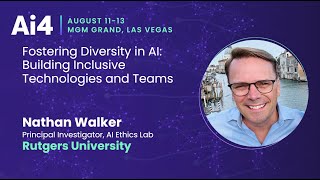
From Moral Distance to Moral Imagination with Rutgers University — Ai4

Ai4

Physical, psychological, and procedural distance separates developers from affected communities, requiring tech companies to embed international human rights law and continuous audits throughout the AI lifecycle to prevent automated harm.

AI-assisted summary of From Moral Distance to Moral Imagination with Rutgers University — original source. Check the original for full context.

Source published:

Detailed notes

## Background Published on YouTube by Ai4 on August 29, 2025, this presentation features Nathan Walker, Principal Investigator at the Rutgers University AI Ethics Lab. The talk addresses the problem of moral distance in AI decision-making and explores how activating moral imagination can close the empathy gap between developers and affected populations.

## TL;DR Nathan Walker examines how AI development suffers from physical, psychological, and procedural moral distance, isolating engineers from the real-world consequences of their algorithms. To address this flaw, he advocates activating moral imagination through humanitarian and vulnerability lenses rooted in international human rights frameworks. He urges the tech industry to transition from merely 'smart' technology to 'wise AI' by embedding sustained ethical ecosystems and continuous care across the entire model lifecycle. Ultimately, applying a structured model of wisdom enables organizations to balance individual, communal, and ecological interests to ensure technology advances human dignity and flourishing.

## Atmosphere & style The presentation possesses an intellectually grounded, philosophical, and ethically impassioned atmosphere that blends academic rigor with moral urgency. Walker delivers his insights with measured eloquence and structured clarity, transitioning from sobering critiques of algorithmic failures to an inspiring vision for cross-disciplinary responsibility. Listening to the talk feels like an elevated keynote address that prompts deep introspection, urging technologists to replace sterile compliance checklists with genuine empathy and wisdom.

## Key takeaways - [00:04](https://www.youtube.com/watch?v=mNHQLppKbLY&t=4s) AI development frequently suffers from reactive governance, where ethical reflection only happens in hindsight after harm has occurred across high-stakes domains like hiring, justice, and surveillance. - [00:04](https://www.youtube.com/watch?v=mNHQLppKbLY&t=4s) Moral distance separates AI creators from affected communities across physical, psychological, and procedural dimensions, weakening empathy and obscuring accountability. - [00:04](https://www.youtube.com/watch?v=mNHQLppKbLY&t=4s) The 'problem of many hands' creates procedural distance by diffusing responsibility across complex development lifecycles, making it difficult to trace institutional accountability. - [03:01](https://www.youtube.com/watch?v=mNHQLppKbLY&t=181s) Moral imagination bridges the ethical divide by enabling developers to inhabit multiple viewpoints and extend empathy to those they disagree with, without conflating understanding with agreement. - [03:01](https://www.youtube.com/watch?v=mNHQLppKbLY&t=181s) Applying a humanitarian lens shifts AI governance from narrow risk mitigation to proactively safeguarding fundamental, inalienable human rights. - [03:01](https://www.youtube.com/watch?v=mNHQLppKbLY&t=181s) Vulnerable populations most impacted by algorithmic harm—including minorities, children, and displaced persons—remain systematically absent from AI design rooms. - [03:01](https://www.youtube.com/watch?v=mNHQLppKbLY&t=181s) The Rutgers AI Ethics Lab is structuring 80 years of international human rights law into a legal and technical taxonomy to train models and guide global AI treaties. - [08:08](https://www.youtube.com/watch?v=mNHQLppKbLY&t=488s) True ethical accountability requires an ecosystem of 'continuous care' integrated into company culture across the entire lifecycle, rather than one-off compliance checklists. - [08:08](https://www.youtube.com/watch?v=mNHQLppKbLY&t=488s) The technology industry must evolve past 'smart tech' optimized for connectivity and convenience toward 'wise tech' that expands circles of compassion and serves the public good. - [13:01](https://www.youtube.com/watch?v=mNHQLppKbLY&t=781s) Operationalizing wisdom in AI requires balancing intrapersonal, interpersonal, and extrapersonal interests over both short- and long-term horizons. - [13:01](https://www.youtube.com/watch?v=mNHQLppKbLY&t=781s) Rapid technological acceleration in artificial intelligence must be matched by commensurate advances in human relations and collective empathy.

## Detailed walkthrough ### [00:04](https://www.youtube.com/watch?v=mNHQLppKbLY&t=4s) AI Pitfalls and the Problem of Moral Distance

When artificial intelligence fails or is misused, society usually reflects only in hindsight, asking what went wrong after the damage has already occurred. Discriminatory outcomes are well-documented across facial recognition systems, human resources screening tools, and judicial sentencing algorithms. Furthermore, unsafe AI deployments have surfaced in autonomous vehicles, interactive characters designed for children, and deepfake-driven election interference. These recurring controversies spark intense debates over who should provide governance and oversight—whether responsibility lies with tech corporations, state and federal agencies, multinational bodies, or professional organizations. Navigating these uncertainties requires two essential lines of sight: "insight" to identify creative solutions and opportunities, and "foresight" to anticipate and prepare for consequences before they materialize.

Both insight and foresight are necessary to confront a fundamental design flaw at the heart of AI development: moral distance. AI decision-making systematically separates the people who build systems from those whose lives are altered by them across three distinct dimensions:

```mermaid flowchart TD accTitle: Dimensions of Moral Distance in AI subgraph MD["Moral Distance"] direction TB P["Physical Distance<br/>• Global separation between developers & affected populations<br/>• Unseen environmental impacts"] PS["Psychological Distance<br/>• Weakened creator empathy<br/>• Harms hidden from developers' field of view"] PR["Procedural Distance<br/>• Complex AI lifecycle & 'Problem of Many Hands'<br/>• Blurred lines of institutional accountability"] end ```

- **Physical Distance**: Evident in the environmental footprint of computing advances and when systems developed in one country are deployed in another, directly impacting communities who have no voice in the decisions shaping their lives. - **Psychological Distance**: Weakens a developer's empathy by concealing real-world harms, making it easy to ignore consequences and difficult to recognize oneself as an active participant in an unfolding moral dilemma. - **Procedural Distance**: Arises from the intricate complexity of the AI lifecycle where the "problem of many hands" disperses accountability across numerous contributors, obscuring who is responsible for specific decisions.

[03:01](https://www.youtube.com/watch?v=mNHQLppKbLY&t=181s) Activating Moral Imagination and the Humanitarian & Vulnerability Lenses

Bridging this divide requires activating "moral imagination"—a concept detailed in Nathan Walker's book *Cultivating Empathy*. Moral imagination is defined as the capacity to place oneself in the center of an ethical dilemma and evaluate it from multiple viewpoints. It functions as a civic virtue wherein individuals extend empathy to those with whom they disagree, operating on the principle that "seeking understanding need not imply agreement." In the context of AI design, practicing moral imagination disrupts divisive scripts and equips teams to build empathetic, accountable systems that genuinely serve humanity.

To operationalize moral imagination, developers can apply two interdependent conceptual frameworks: the humanitarian lens and the vulnerability lens. The humanitarian lens shifts the paradigm from merely managing risks to protecting fundamental human rights—the inalienable liberties possessed by all people that every corporation and nation is obligated to uphold. While AI can infringe on rights to privacy, work, education, healthcare, and free expression, it can also be directed to safeguard and advance those exact rights. This creates a profound paradox: AI operates as both a sword and a shield, and the challenge lies in cultivating the foresight to beat that sword into a plowshare to protect the most vulnerable.

```mermaid flowchart LR accTitle: Research to Implementation Pipeline at Rutgers AI Ethics Lab A["8 Decades of Human Rights Law"] --> B["Legal & Technical Taxonomy"] B --> C["UN Convention on AI, Data & Human Rights"] B --> D["Training Data & Alignment for Wise AI"] ```

- **Underrepresented Voices**: The populations most exposed to AI harms—women, racial and religious minorities, Indigenous communities, children, people with disabilities, displaced persons, and those in poverty—remain chronically absent from corporate design rooms. - **Rutgers AI Ethics Lab Initiative**: Researchers are cataloging eight decades of international human rights law into a unified legal and technical taxonomy. This taxonomy identifies potential AI human rights violations, outlines technical protections, provides input for the proposed UN Convention on AI, Data, and Human Rights, and directly trains AI models on human rights jurisprudence. - **Ethics as Culture**: Core principles like transparency, accountability, human agency, fairness, and privacy must not be treated as a regulatory compliance checklist, but as a strategic advantage and "a way of life."

[08:08](https://www.youtube.com/watch?v=mNHQLppKbLY&t=488s) From Smart Tech to Wise AI Across the Full Lifecycle

While ethics provides the moral compass, organizations must translate high aspirations into concrete, repeatable practices by mapping the distinct sectors where AI operates—including education, finance, housing, law enforcement, and healthcare. Because each domain possesses its own established history of professional ethics, tech teams must examine whose lives are shaped by specific models and how. Achieving true accountability requires establishing a sustained ethical ecosystem throughout the company culture, spanning every phase from initial investment through design, development, pre- and post-training, deployment, use, and ongoing monitoring.

```mermaid flowchart TD accTitle: Sustained Ethical AI Lifecycle subgraph DesignDev["1. Design & Development Stage"] A["Accurate & representative datasets"] --> B["Informed consent verification"] B --> C["Bias minimization & privacy protection"] C --> D["Explainable, fair, fit-for-purpose models"] D --> E["Stakeholder feedback integration"] end subgraph DeployMonitor["2. Deployment & Monitoring Stage"] F["Rigorous real-world audit points"] --> G["Ethical, technical & operational validation"] G --> H["Continuous monitoring for drift, bias & harm"] H --> I["Regular internal & external audits"] I --> J["Model retraining & recalibration"] end DesignDev --> DeployMonitor ```

An ethical ecosystem replaces one-off audit checkmarks with "continuous care." Smart technology—defined by sensors, real-time connectivity, the Internet of Things, expanded data harvesting, and operational convenience—is undeniably capable and "cool," but it is insufficient. The industry must elevate its ambition beyond smart technology toward "wise technology," which actively evaluates societal impacts, expands circles of compassion, and prioritizes the common good.

- **Design & Development Safeguards**: Ensuring data accuracy and representation, validating consent, mitigating bias, securing privacy, guaranteeing explainability, and incorporating stakeholder feedback to challenge internal assumptions. - **Deployment & Monitoring Protocols**: Conducting regular internal and external audits, validating live technical and ethical performance, monitoring for model drift and emergent harms, and retraining algorithms to maintain reliability.

[13:01](https://www.youtube.com/watch?v=mNHQLppKbLY&t=781s) Operationalizing Wisdom in AI and Human Relations

Grounding the transition to wise AI requires a clear framework for wisdom itself. Drawing on psychologist Robert Sternberg's definition, wisdom is understood as the application of intelligence, creativity, common sense, and knowledge, mediated by positive ethical values toward the achievement of a common good. This is accomplished by balancing intrapersonal, interpersonal, and extrapersonal interests across both the short and long terms, while adapting to, shaping, and selecting environments.

If technology companies placed this formulation of wisdom on every engineer's desk and corporate vision board, AI systems would systematically reflect ethical intentionality. By embedding sustained ethical ecosystems into corporate culture, organizations can consistently balance individual, community, and environmental interests. This standard ensures technological tools actively prevent harm, advance equality and fairness, protect personal dignity and privacy, foster socioeconomic and ecological resilience, and cultivate human flourishing across generations. Closing moral distance through moral imagination reveals that individual freedom and collective humanity are inextricably linked. As scholar Huston Smith observed in his work on the world's religions, the technological advances of our century must be matched by comparable advances in human relations.

## Notable quotes > Moral distance in AI refers to the separation (physical, psychological, or procedural) between those who make AI-driven decisions and those who are directly affected by them. — Nathan Walker

> [00:04](https://www.youtube.com/watch?v=mNHQLppKbLY&t=4s) When artificial intelligence fails or is misused, society usually reflects only in hindsight, asking what went wrong after the damage has already occurred. — Nathan Walker

> [03:01](https://www.youtube.com/watch?v=mNHQLppKbLY&t=181s) seeking understanding need not imply agreement — Nathan Walker

> [03:01](https://www.youtube.com/watch?v=mNHQLppKbLY&t=181s) AI operates as both a sword and a shield, and the challenge lies in cultivating the foresight to beat that sword into a plowshare to protect the most vulnerable. — Nathan Walker

> [03:01](https://www.youtube.com/watch?v=mNHQLppKbLY&t=181s) a way of life — Nathan Walker

> [08:08](https://www.youtube.com/watch?v=mNHQLppKbLY&t=488s) continuous care — Nathan Walker

> [08:08](https://www.youtube.com/watch?v=mNHQLppKbLY&t=488s) Smart technology—defined by sensors, real-time connectivity, the Internet of Things, expanded data harvesting, and operational convenience—is undeniably capable and 'cool,' but it is insufficient. — Nathan Walker

> [13:01](https://www.youtube.com/watch?v=mNHQLppKbLY&t=781s) application of intelligence, creativity, common sense, and knowledge, mediated by positive ethical values toward the achievement of a common good — Robert Sternberg

> [13:01](https://www.youtube.com/watch?v=mNHQLppKbLY&t=781s) individual freedom and collective humanity are inextricably linked. — Nathan Walker

> [13:01](https://www.youtube.com/watch?v=mNHQLppKbLY&t=781s) the technological advances of our century must be matched by comparable advances in human relations. — Huston Smith

## Mentioned Nathan Walker, Rutgers University, AI Ethics Lab, Ai4, Cultivating Empathy, UN Convention on AI, Data and Human Rights, Robert Sternberg, Huston Smith, Internet of Things

## Video description Nathan Walker, Principal Investigator, AI Ethics Lab, Rutgers University

Abstracts

Moral distance in AI refers to the separation (physical, psychological, or procedural) between those who make AI-driven decisions and those who are directly affected by them. This gap can weaken decision-makers' empathy since they may not have the vantage point to foresee the real-world impact of their choices. How might we close this gap by activating our moral imagination, the practice of situating oneself in the middle of an ethical dilemma and seeing multiple points of view?

[Source](https://www.youtube.com/watch?v=mNHQLppKbLY)

中文简报

罗格斯AI实验室将人权法写入模型以遏制偏见 物理、心理与程序上的距离使开发者与受影响群体相互割裂,这要求科技公司在整个AI生命周期中融入国际人权法和持续审计,以防范自动化危害。 Nathan Walker探讨了人工智能开发如何受到物理、心理及程序层面道德距离的影响,致使工程师与其算法在现实中造成的后果脱节。为解决这一问题,他主张立足国际人权框架,通过人道主义与弱势群体视角激发道德想象力。他敦促科技行业在整个模型生命周期中植入长效伦理生态与持续关切,实现从单纯的“智能”技术向“智慧AI”的转变。最终,运用结构化的智慧模型可使各机构平衡个体、社群与生态利益,确保技术促进人类尊严与繁荣。 当前 AI 开发普遍存在事后治理的滞后性,物理、心理和程序维度的“道德距离”割裂了研发者与受影响群体的联系,其中复杂的生命周期更因“多手问题”而模糊了问责归属。 (0:04) 激活“道德想象力”促使开发者在分歧中换位思考并多视角审视伦理困境,推动 AI 治理从被动的风险规避升级为对基本人权的主动捍卫。 (3:01) 针对受害最深的弱势群体在算法设计端长期缺席的现状,罗格斯大学 AI 伦理实验室正将 80 年的国际人权法整合为法律与技术分类体系,用以训练模型并服务全球 AI 条约的制定。 (3:01) 企业必须将“持续关怀”融入贯穿设计、训练、部署与监测的全生命周期文化,摆脱敷衍的一次性合规打勾,推动技术从工具层面的“智能”迈向关照公共利益的“智慧 AI”。 (8:08)

Reading summary

Artificial intelligence development suffers from a structural moral distance that separates builders from those impacted by their tools. To counter this, researchers and ethicists argue that organizations must cultivate moral imagination and transition from mere 'smart technology' to 'wise AI' embedded in continuous ethical ecosystems. The Three Dimensions of Moral Distance in AI (0:04) Technological controversies often prompt societal reflection only in hindsight after harm has occurred, as observed in discriminatory outcomes across facial recognition, human resources screening, and judicial sentencing, as well as unsafe deployments in autonomous vehicles and election deepfakes. These failures stem from moral distance, a structural flaw in AI development that detaches creators from impacted populations across three planes: physical, psychological, and procedural. Physical distance manifests through the environmental footprint of computing and the deployment of software in overseas communities that lack input into design choices. Psychological distance obscures real-world consequences, dulling developer empathy and masking their participation in unfolding ethical dilemmas. Procedural distance arises from the complex AI lifecycle, where the 'problem of many hands' disperses accountability among numerous contributors and blurs institutional lines of responsibility. Activating Moral Imagination and Human Rights Frameworks (3:01) Overcoming moral distance requires moral imagination, drawn from Nathan Walker's work in *Cultivating Empathy*, which entails positioning oneself at the center of an ethical dilemma and assessing it from multiple vantage points without equating understanding to agreement. In AI engineering, this mindset operationalizes through two complementary approaches: the humanitarian lens and the vulnerability lens. The humanitarian lens reframes organizational ethics from risk management to upholding fundamental human rights across privacy, work, education, and expression. Concurrently, the vulnerability lens highlights that groups most susceptible to AI harms—such as women, racial and religious minorities, Indigenous communities, children, people with disabilities, displaced populations, and people in poverty—are systematically missing from design spaces. Addressing this gap, researchers at the Rutgers AI Ethics Lab are synthesizing eight decades of international human rights law into a technical and legal taxonomy. This framework is designed to detect rights violations, guide technical safeguards, inform the proposed UN Convention on AI, Data, and Human Rights, and directly train AI models on human rights jurisprudence. Embedding Continuous Ethics Across the AI Lifecycle (8:08) Moving beyond high-level principles requires organizations to treat ethics not as a static regulatory compliance checklist, but as an operational culture spanning the entire product lifecycle—from capital investment and dataset curation to deployment and post-market tracking. Because sectors like healthcare, finance, education, and law enforcement maintain distinct professional traditions, AI systems must be calibrated to the specific populations whose lives they shape. This continuous care model distinguishes 'smart technology'—characterized by sensors, Internet of Things connectivity, and operational convenience—from 'wise technology' that actively accounts for societal impact and the common good. Practical safeguards in design and development include data accuracy, informed consent verification, bias mitigation, and stakeholder feedback integration. Following deployment, systems require continuous technical and operational validation, monitoring for model drift and emergent harms, and scheduled retraining. Operationalizing Wisdom via Sternberg's Framework (13:01) The transition to wise AI draws upon psychologist Robert Sternberg's definition of wisdom: applying intelligence, creativity, common sense, and knowledge, mediated by positive ethical values, to achieve a common good. Sternberg's formulation emphasizes balancing intrapersonal, interpersonal, and extrapersonal interests over both short- and long-term horizons while adapting to, shaping, and selecting environments. Advocates propose embedding this standard directly into engineering workflows and organizational mission statements. Instilling this definition is presented as a method to ensure automated systems protect individual dignity, foster socioeconomic and ecological resilience, and align with Huston Smith's observation that technical advancements must be matched by equivalent advances in human relations. The presentation argues that bridging moral distance requires embedding human rights law and continuous, lifecycle-wide ethical audits into engineering practices. It leaves open the practical challenge of reconciling divergent international regulatory standards as technologies are deployed globally across distinct legal and cultural contexts.

精炼阅读摘要

人工智能研发的核心设计缺陷在于开发者与受影响群体之间的“道德距离”,企业亟需通过激活“道德想象力”,从被动的合规检测转向以人权保护和脆弱群体为核心的“明智AI”,实现技术能力与人类关系的同步演进。 道德距离:开发者与受影响群体的三重脱节 (0:04) 当人工智能引发歧视或安全事故时,社会往往陷入损害发生后才追责的被动局面。人脸识别偏差、人力资源招聘算法、司法量刑系统的不公,以及自动驾驶、儿童交互玩具与深度伪造介入选举等风险,持续引发关于技术公司、政府机构及国际组织应如何实施治理的争论。演讲指出,应对这些不确定性不仅需要发掘解决方案的“洞察力”,更需要预见潜在后果的“远见”,以直面AI系统性割裂研发者与受影响者的核心缺陷——道德距离。 道德距离在AI生命周期中具体表现为三个维度:其一是物理距离,体现在算力扩张带来的隐蔽环境成本,以及一国开发的技术跨国部署时,对毫无决策话语权的当地群体产生直接冲击;其二是心理距离,现实危害的隐蔽性削弱了开发者的同理心,使其难以意识到自身正身处道德困境之中;其三是程序距离,复杂的AI研发流程引发“众人之手问题”(Problem of Many Hands),分散了责任链条,模糊了具体决策的机构问责归属。 激活道德想象力:人权框架与脆弱群体保护 (3:01) 弥合道德鸿沟有赖于激活内森·沃克(Nathan Walker)在《培养同理心》中所定义的“道德想象力”,即置身伦理困境中心、从多元视角审视问题,并践行“寻求理解并不等同于赞同”的公民美德。在AI设计中,团队需要依托人道主义视角与脆弱性视角将这一概念落地:人道主义视角促使企业从单纯的风险控制转向捍卫不可剥夺的基本人权,正视AI兼具赋权之盾与侵权之刃的双重属性,主动将技术导向对人权的保护;脆弱性视角则要求研发团队倾听长期在技术决策中缺席的边缘群体的声音。 目前,妇女、少数族裔、宗教群体、原住民、儿童、残障人士、流离失所者及贫困人口等最易遭受AI侵害的群体,依然被边缘化于企业核心研发部门之外。针对这一现状,罗格斯大学AI伦理实验室正将80年以来的国际人权法编纂为统一的法律与技术分类体系,既用于识别AI侵害风险并构建技术防护、为拟议中的联合国人权公约提供支撑,也直接用于将人权法理融入AI模型的训练与对齐中。演讲强调,透明度、问责制、人类自主权、公平与隐私等核心原则不应被视为应付监管的清单,而应成为企业的战略优势与文化生活方式。 全生命周期治理:从智能科技迈向明智AI (8:08) 崇高的伦理愿景必须落实到具体的垂直领域中,包括教育、金融、住房、执法和医疗等具有深厚专业伦理传统的行业。研发团队必须穿透技术表象,审视特定算法究竟在如何改变哪些群体的生活。为此,机构需要建立贯穿投资、设计、开发、预训练与微调、部署、使用乃至后续监控全过程的持续性伦理生态,用贯穿始终的“持续关怀”(Continuous Care)取代形式化的一次性审计排查。 当前以传感器、物联网、实时互联与大规模数据采集为代表的“智能科技”虽然功能强大且便捷,但并不足以应对深层社会风险。行业应当超越工具层面的智能,转向以增进公共福祉、扩大关怀范围为目标的“明智科技”(Wise Technology)。这要求在设计与开发阶段严格把关数据准确性、代表性与知情同意,最大限度消除偏见并保障可解释性;在部署与运营阶段,则须引入规范的内外部审计,动态监控模型漂移与潜在危害,及时进行再训练与校准。 践行智慧框架:技术演进与人类关系的平衡 (13:01) 向明智AI的转型离不开清晰的理论指导。演讲采纳了心理学家罗伯特·斯腾伯格(Robert Sternberg)关于“智慧”的界定,即在积极伦理价值观的调解下,综合运用智力、创造力、常识和知识以服务于公共利益。在实践中,这一机制要求在短期与长远目标之间,审慎平衡个人内部利益、人际交往利益与外部环境利益,并在适应、塑造和选择生存环境中达成动态均衡。 若技术企业能将此智慧框架融入工程师日常工作规范与企业愿景,AI系统便能具备系统性的伦理自觉。这种机制能促使工具主动防范伤害、捍卫个体尊严与隐私、增进社会与生态韧性,进而赋能跨世代的人类繁荣。正如学者休斯顿·史密斯(Huston Smith)在研究世界宗教时所指出的,技术层面的飞跃必须伴随人类关系层面的同等进步;通过道德想象力弥合道德距离,方能揭示个体自由与人类集体福祉休戚与共的本质纽带。 该演讲勾勒了通过道德想象力与全生命周期伦理生态消除AI道德距离的路径,但如何将涵盖八十载人权法的庞大分类体系及多方利益动态平衡机制,有效标准化并落地于高度商业化的全球竞争环境中,仍是有待技术界与立法机构共同探索的现实课题。

Detailed notes — zh

## Background 该内容由 YouTube 频道“Ai4”于 2025 年 8 月 29 日发布,主讲人为罗格斯大学(Rutgers University)AI 伦理实验室首席研究员内森·沃克(Nathan Walker)。视频简介指出,演讲聚焦于 AI 决策者与受影响群体之间的“道德距离”(包括物理、心理与程序隔离)如何削弱决策者的同理心,并探讨如何通过激活置身于伦理困境的“道德想象力”来弥合这一鸿沟。 ## TL;DR 演讲深入剖析了 AI 系统在设计与部署中普遍存在的“道德距离”缺陷,指出物理、心理与程序隔离割裂了技术构建者与受影响群体的联系。为了弥合这一差距,演讲者提出需从人道主义和脆弱性视角唤醒“道德想象力”,将八十年的人权法智慧转化为技术分类与保护屏障。演讲呼吁企业建立覆盖全生命周期的持续伦理生态,推动技术从单纯追求效率与互联的“智能 AI”迈向服务于共同利益、促进人类关系发展的“明智 AI”。 ## Atmosphere & style 整场演讲洋溢着深厚的人文关怀与严谨的学术思辨气息,语调沉稳、循循善诱且富有启发性。演讲者从现实中的算法偏见与安全隐患层层递进,上升到人权法制与哲学智慧的高度,既有宏观的价值引领,又具微观的生命周期治理构想。聆听体验引人深思,传递出一种呼唤科技向善、要求技术进步必须与人类关系进步同频共振的崇高使命感。 ## Key takeaways - [00:04](https://www.youtube.com/watch?v=mNHQLppKbLY&t=4s) AI 在招聘、司法判决及深度伪造等领域的应用暴露了深层伦理隐患,其根本缺陷在于决策构建者与受影响群体之间的“道德距离”。 - [00:04](https://www.youtube.com/watch?v=mNHQLppKbLY&t=4s) 道德距离具体表现为三种形态:跨国部署导致受影响者失语的“物理隔离”、弱化开发者共情能力的“心理隔离”,以及因“多手问题”造成责任归属模糊的“程序隔离”。 - [03:01](https://www.youtube.com/watch?v=mNHQLppKbLY&t=181s) 弥合道德鸿沟的核心在于唤醒“道德想象力”,即主动置身于伦理困境中,从多元视角审视问题并对不同立场抱持同理心。 - [03:01](https://www.youtube.com/watch?v=mNHQLppKbLY&t=181s) 评估 AI 影响应立足于人道主义视角与人权框架;AI 既是可能侵权的利剑,也是可赋权保护的盾牌,关键在于具备“化剑为犁”的远见。 - [03:01](https://www.youtube.com/watch?v=mNHQLppKbLY&t=181s) 技术研发需重点关注女性、少数族裔、儿童及残障人士等脆弱群体,弥补其在科技巨头与技术决策中声音缺席的现状。 - [03:01](https://www.youtube.com/watch?v=mNHQLppKbLY&t=181s) 罗格斯大学 AI 伦理实验室通过梳理八十年人权法构建法律与技术分类体系,旨在为联合国人权公约提供支撑并将人权智慧融入模型训练。 - [03:01](https://www.youtube.com/watch?v=mNHQLppKbLY&t=181s) 伦理原则不应是一次性的合规勾选清单,而必须成为贯穿开发流程的生活方式与核心战略优势。 - [07:33](https://www.youtube.com/watch?v=mNHQLppKbLY&t=453s) 企业必须构筑贯穿投资、设计、训练、部署及监控全生命周期的“持续伦理生态系统”,实现从应付合规转向“持续关怀”。 - [07:33](https://www.youtube.com/watch?v=mNHQLppKbLY&t=453s) 技术发展不能仅停留在追求效率与连接的“智能技术”,必须超越智能走向审视深远影响、服务共同利益的“明智技术”。 - [07:33](https://www.youtube.com/watch?v=mNHQLppKbLY&t=453s) 全生命周期伦理治理要求在设计开发期保障数据代表性与算法可解释性,在部署使用期持续监测模型漂移并开展常态化独立审计。 - [13:01](https://www.youtube.com/watch?v=mNHQLppKbLY&t=781s) 践行“明智 AI”要求平衡短期与长期的个人内部、人际间与超个人利益,主动捍卫社会尊严与生态韧性,促进人的全面发展。 - [13:01](https://www.youtube.com/watch?v=mNHQLppKbLY&t=781s) 本世纪技术上的飞速进步必须伴随着人类关系上同等程度的进步,唯有消除道德距离才能真正实现技术的向善发展。 ## Detailed walkthrough ### [00:04](https://www.youtube.com/watch?v=mNHQLppKbLY&t=4s) AI 的错误与“道德距离”的设计缺陷 演讲者首先向在场观众表达了敬意与感谢,并期待与大家深入探讨人工智能领域的关键伦理议题。他抛出一个发人深省的问题:当人工智能出现差错,或者当我们以错误的方式使用它时,究竟会发生什么?通常,这些反思往往发生在事后复盘与吸取教训之时。现实中,AI 系统的歧视性应用屡见不鲜,如人脸识别、人力资源招聘以及司法判决中的偏见;同时,在自动驾驶汽车、面向儿童的交互角色以及利用深度伪造(Deepfakes)干预选举等场景中,AI 也暴露出严重的安全隐患。这些争议引发了关于监管主体的广泛讨论——究竟该由企业自身、州或联邦机构、跨国组织还是专业机构来主导监督? 为了应对这些不确定性,个体与集体的“视线”(lines of sight)至关重要。洞察力(Insight)帮助我们发现新机遇和创造性解决方案,而远见(Foresight)则让我们能够在后果发生前进行预判并做好准备。然而,要真正发挥这两种能力,必须解决 AI 系统在设计与部署中普遍存在的一个根本缺陷——“道德距离”(Moral Distance)。AI 的决策机制往往将系统的构建者与直接承受其后果的人群割裂开来。 ```mermaid flowchart TD accTitle: 三种道德距离形态 MD["道德距离 (Moral Distance)"] subgraph G1 ["物理隔离 (Physical)"] P1["环境影响与跨国部署"] P2["受影响人群缺乏发声渠道"] end subgraph G2 ["心理隔离 (Psychological)"] PS1["弱化开发者同理心"] PS2["伤害被隐蔽,责任感脱节"] end subgraph G3 ["程序隔离 (Procedural)"] PR1["AI生命周期复杂性"] PR2["“多手问题”导致责任模糊"] end MD --> G1 MD --> G2 MD --> G3 ``` - **物理隔离**:体现在技术发展对环境的影响,以及 AI 系统在某国研发却部署在另一国时,受影响的当地人完全没有话语权。 - **心理隔离**:削弱了创作者对受影响人群的同理心,潜在伤害在视线之外被掩盖,导致研发者难以意识到自身在这场“道德剧”(Morality play)中的参与者身份。 - **程序隔离**:源于 AI 生命周期的复杂性,众多人员参与设计、开发与部署,造成了“多手问题”(Problem of many hands),使得具体决策的归属与问责变得模糊不清。 --- ### [03:01](https://www.youtube.com/watch?v=mNHQLppKbLY&t=181s) 唤醒“道德想象力”:人权与脆弱性视角 要弥合道德距离的鸿沟,关键在于唤醒“道德想象力”(Moral Imagination)。道德想象力是指将自己置身于伦理困境之中、从多元视角审视问题的能力。它是一种公民美德,体现为对持有不同观点的人给予同理心;它引导人们寻求理解,同时认识到“理解并不意味着赞同”。道德想象力能够打破加深社会分裂的既定思维模式,赋能我们打造出更有同理心、更具问责制且造福全人类的技术。 要将道德想象力付诸实践,可以通过两个相辅相成的概念视角:人道主义视角(Humanitarian lens)和脆弱性视角(Vulnerability lens)。人道主义视角提醒我们不仅要考虑“风险”,更要立足于“人权”这一不可剥夺的自由权利。AI 既可能侵犯隐私权、工作权、受教育权、健康权和言论自由,但在负责任的开发下,它也能反过来保护并促进这些权利。这种双重性构成了鲜明的悖论:AI 既是利剑(Sword),也是盾牌(Shield)。真正的挑战在于我们是否具备远见,“化剑为犁”(turn that sword into a plowshare),特别是为最脆弱的群体开辟保护与发展机遇。 - **最易受影响的群体**:女性、种族与宗教少数群体、原住民社区,以及儿童、残障人士、贫困人口和流离失所者等高风险人群,而这些声音在大型科技巨头中往往处于缺席状态。 - **罗格斯大学(Rutgers University)AI 伦理实验室的研究实践**:正在梳理八十年的人权法,构建法律分类体系(Legal taxonomy),分析 AI 潜在侵权场景并探索其作为保护盾牌的具体途径。 - **研究产出**:不仅为联合国拟议中的“AI、数据与人权公约”(UN Convention on AI, Data and Human Rights)提供支撑,还构建了用于训练 AI 本身的技术分类体系,让模型吸收八十年人权法的智慧。 - **伦理不是死板的合规清单**:透明度、问责制、人类主体性(Human agency)、公平与隐私是前行路上的基石;原则性技术不是勾选框,而是一种生活方式与战略优势。 --- ### [07:33](https://www.youtube.com/watch?v=mNHQLppKbLY&t=453s) 构筑持续伦理生态:从“智能 AI”迈向“明智 AI” 面对如何将伦理转化为具体行动的问题,首先需要对承担保护责任的各个行业进行领域映射(Sector mapping)。AI 的应用贯穿教育、金融、住房、执法和医疗等领域,每个领域都有其特定的伦理风险以及长期形成的职业伦理实践。企业必须建立贯穿内部文化的“持续伦理生态系统”(Sustained ethical ecosystem),将伦理原则无缝融入从投资、设计、开发、预训练与后训练,到部署、使用与监控的全生命周期中。这一机制依赖严谨客观的审计节点,全面评估对用户、非用户、脆弱群体及生态环境的影响,追求持续的关怀(Continuous care)而非一次性的应付合规。 ```mermaid flowchart LR accTitle: 伦理 AI 全生命周期保障机制 subgraph Design ["设计与开发阶段"] D1["数据真实/无偏/代表性"] D2["知情同意与隐私保护"] D3["算法可解释与公平性"] D4["利益相关者反馈融入"] end subgraph Deploy ["部署、使用与监控阶段"] M1["真实场景严格审计测试"] M2["模型漂移与偏差监控"] M3["定期内外部独立审计"] M4["持续重训与可靠性维护"] end Design --> Deploy ``` 演讲者强调,单纯的“智能技术”(Smart technology)——传感器、实时互联、物联网、大规模数据采集和运营效率提升——固然很酷且有价值,但它绝非终极目标。我们必须超越智能,迈向“明智技术”(Wise technology)。明智的技术会审视深远影响,扩大同理心的范畴,并服务于共同利益(Common good)。 - **设计与开发阶段的重点**:确保数据集准确、可信、具有代表性;验证用户知情同意;最小化偏差并保护隐私;确保算法可解释、公平且符合预期用途;吸纳利益相关者反馈打破固有假设。 - **部署与监控阶段的重点**:在真实环境中严密测试;持续监测模型漂移(Model drift)与意外伤害;开展常态化内外部审计并对模型进行再训练。 --- ### [13:01](https://www.youtube.com/watch?v=mNHQLppKbLY&t=781s) 践行明智 AI 与推动人类关系的共同进步 引用心理学家罗伯特·斯滕伯格(Robert Sternberg)对智慧的定义:智慧是个体运用智力、创造力、常识和知识,以积极的伦理价值观为中介,通过平衡短期与长期的个人内部(Intrapersonal)、人际间(Interpersonal)和超个人(Extrapersonal)利益,在适应、塑造现有环境以及选择新环境中达成共同利益。演讲者呼吁,如果每位技术人员的工位上和愿景看板上都写着对“智慧”的追求,整个行业将迎来深刻变革。 明智的 AI(Wise AI)要求企业在文化中深度融合多元利益相关者的洞见,运用正面伦理价值观来规范技术应用,平衡个人、社区与环境的多元诉求。这不仅能防范技术伤害,更能主动增进全民福祉,捍卫正义、平等、尊严与隐私,增强社会与生态韧性,实现跨世代的繁荣与人的全面发展(Human flourishing)。 演讲最后总结道,唯有缩小彼此之间的道德距离、激活道德想象力,我们才能看清“你的自由与人性与我自身休戚相关”。正如休斯顿·史密斯(Huston Smith)在探讨世界宗教的著作中所言:**“本世纪技术上的进步,必须伴随着人类关系上同等程度的进步。”** 唯有从智能系统走向明智系统,人类才能真正实现技术的向善发展。 ## Notable quotes > [00:04](https://www.youtube.com/watch?v=mNHQLppKbLY&t=4s) 当人工智能出现差错,或者当我们以错误的方式使用它时,究竟会发生什么? — Nathan Walker > [00:04](https://www.youtube.com/watch?v=mNHQLppKbLY&t=4s) 洞察力(Insight)帮助我们发现新机遇和创造性解决方案,而远见(Foresight)则让我们能够在后果发生前进行预判并做好准备。 — Nathan Walker > [00:04](https://www.youtube.com/watch?v=mNHQLppKbLY&t=4s) 道德距离是指在做出 AI 驱动决策的人与直接承受其后果的人之间的隔离(物理、心理或程序上的)。 — Nathan Walker > [03:01](https://www.youtube.com/watch?v=mNHQLppKbLY&t=181s) 理解并不意味着赞同。 — Nathan Walker > [03:01](https://www.youtube.com/watch?v=mNHQLppKbLY&t=181s) AI 既是利剑(Sword),也是盾牌(Shield)。真正的挑战在于我们是否具备远见,化剑为犁,特别是为最脆弱的群体开辟保护与发展机遇。 — Nathan Walker > [03:01](https://www.youtube.com/watch?v=mNHQLppKbLY&t=181s) 原则性技术不是勾选框,而是一种生活方式与战略优势。 — Nathan Walker > [07:33](https://www.youtube.com/watch?v=mNHQLppKbLY&t=453s) 单纯的“智能技术”(Smart technology)固然很酷且有价值,但它绝非终极目标。我们必须超越智能,迈向“明智技术”(Wise technology)。 — Nathan Walker > [13:01](https://www.youtube.com/watch?v=mNHQLppKbLY&t=781s) 智慧是个体运用智力、创造力、常识和知识,以积极的伦理价值观为中介,通过平衡短期与长期的个人内部、人际间和超个人利益,在适应、塑造现有环境以及选择新环境中达成共同利益。 — Robert Sternberg > [13:01](https://www.youtube.com/watch?v=mNHQLppKbLY&t=781s) 本世纪技术上的进步,必须伴随着人类关系上同等程度的进步。 — Huston Smith ## Mentioned Nathan Walker, Rutgers University, AI Ethics Lab, United Nations, UN Convention on AI, Data and Human Rights, Robert Sternberg, Huston Smith, Ai4 ## Video description Nathan Walker, Principal Investigator, AI Ethics Lab, Rutgers University Abstracts Moral distance in AI refers to the separation (physical, psychological, or procedural) between those who make AI-driven decisions and those who are directly affected by them. This gap can weaken decision-makers' empathy since they may not have the vantage point to foresee the real-world impact of their choices. How might we close this gap by activating our moral imagination, the practice of situating oneself in the middle of an ethical dilemma and seeing multiple points of view? [Source](https://www.youtube.com/watch?v=mNHQLppKbLY)

Source quotes

[0:04] Nathan Walker: 当人工智能出现差错,或者当我们以错误的方式使用它时,究竟会发生什么? [0:04] Nathan Walker: 洞察力(Insight)帮助我们发现新机遇和创造性解决方案,而远见(Foresight)则让我们能够在后果发生前进行预判并做好准备。 [0:04] Nathan Walker: 道德距离是指在做出 AI 驱动决策的人与直接承受其后果的人之间的隔离(物理、心理或程序上的)。 [3:01] Nathan Walker: 理解并不意味着赞同。 [3:01] Nathan Walker: AI 既是利剑(Sword),也是盾牌(Shield)。真正的挑战在于我们是否具备远见,化剑为犁,特别是为最脆弱的群体开辟保护与发展机遇。 [3:01] Nathan Walker: 原则性技术不是勾选框,而是一种生活方式与战略优势。 [7:33] Nathan Walker: 单纯的“智能技术”(Smart technology)固然很酷且有价值,但它绝非终极目标。我们必须超越智能,迈向“明智技术”(Wise technology)。 [13:01] Robert Sternberg: 智慧是个体运用智力、创造力、常识和知识,以积极的伦理价值观为中介,通过平衡短期与长期的个人内部、人际间和超个人利益,在适应、塑造现有环境以及选择新环境中达成共同利益。 [13:01] Huston Smith: 本世纪技术上的进步,必须伴随着人类关系上同等程度的进步。

Source quotes

Nathan Walker: Moral distance in AI refers to the separation (physical, psychological, or procedural) between those who make AI-driven decisions and those who are directly affected by them. [0:04] Nathan Walker: When artificial intelligence fails or is misused, society usually reflects only in hindsight, asking what went wrong after the damage has already occurred. [3:01] Nathan Walker: seeking understanding need not imply agreement [3:01] Nathan Walker: AI operates as both a sword and a shield, and the challenge lies in cultivating the foresight to beat that sword into a plowshare to protect the most vulnerable. [3:01] Nathan Walker: a way of life [8:08] Nathan Walker: continuous care [8:08] Nathan Walker: Smart technology—defined by sensors, real-time connectivity, the Internet of Things, expanded data harvesting, and operational convenience—is undeniably capable and 'cool,' but it is insufficient. [13:01] Robert Sternberg: application of intelligence, creativity, common sense, and knowledge, mediated by positive ethical values toward the achievement of a common good [13:01] Nathan Walker: individual freedom and collective humanity are inextricably linked. [13:01] Huston Smith: the technological advances of our century must be matched by comparable advances in human relations.

Original transcript

[0:04] It's an honor to be in your presence. [0:06] Thank you so much for being here. I [0:08] can't wait to learn about your insights [0:11] as we engage in this conversation. Um so [0:14] please uh after after this event, stay [0:17] in touch and tell me about what you're [0:19] working on on these important topics. [0:26] So what happens when artificial [0:28] intelligence gets it wrong [0:31] or when we use it the wrong way? [0:34] These are often the questions we ask in [0:37] hindsight when we are looking back and [0:39] trying to learn from our mistakes. We [0:41] already know that AI systems have been [0:43] used in discriminatory ways such as in [0:46] facial recognition, human resources, and [0:49] judicial sentencing. Even we also know [0:52] that AI has been deployed unsafeely with [0:55] autonomous vehicles in interactive [0:58] characters that engage with children and [1:00] in election interference with deep [1:02] fakes. These controversies have fueled [1:05] debates about who should provide [1:07] oversight, the companies themselves, the [1:10] state or federal agencies, multinational [1:13] organizations, professional [1:14] organizations even. Today I will focus [1:17] on how our individual and collective [1:20] lines of sight can guide us through [1:22] these uncertain times. Insight enables [1:26] us to identify new opportunities and [1:29] creative solutions. Foresight helps us [1:32] anticipate consequences before they [1:34] happen and prepare for them. Both [1:38] require us to address a common design [1:40] flaw in the creation and deployment of [1:43] AI systems. I call this flaw moral [1:47] distance. [1:49] AI decision-making often separates the [1:52] people who build systems from those who [1:55] are affected by them. This separation [1:59] can be physical, it can be psychological [2:02] or it can be procedural. Physical [2:05] distance can be seen in the [2:06] environmental impacts of technological [2:08] advances. And when AI systems are [2:10] deployed in one country but developed [2:13] into another and deployed there, they [2:16] affect people who do not have a say in [2:19] the matters that concern them. [2:21] Psychological separation can weaken a [2:24] creator's empathy for those affected by [2:27] their work. Harms can be hidden from [2:29] their view, making it easier to ignore [2:32] them and harder to see oneself as a [2:35] player within the morality play. [2:38] Procedural separation arises from the [2:41] complexity of the AI life cycle. With so [2:44] many people involved in the design, [2:47] development, deployment of AI systems, [2:50] accountability is blurred. This problem [2:53] of many hands can make it unclear who is [2:57] responsible for which decisions. [3:01] How might we close the gaps in this [3:04] moral distance? [3:07] We can begin by engaging our moral [3:10] imagination, a practice I describe in my [3:13] book, Cultivating Empathy. Moral [3:16] imagination is the ability to place [3:18] yourself in the middle of an ethical [3:20] dilemma and see it from multiple [3:22] perspectives. [3:24] It is a civic virtue expressed when you [3:27] extend empathy to someone with whom you [3:30] may disagree. [3:32] It models for you to seek understanding, [3:35] aware that understanding need not imply [3:39] agreement. [3:41] When you apply moral imagination, you [3:44] help disrupt the scripts that deepen our [3:47] divisions. Why does this matter for the [3:50] design and development of AI? Because [3:52] this practice equips us to create more [3:55] empathetic, accountable technologies [3:57] that serve all of humanity. [4:02] To see the power of moral imagination in [4:04] action, we can turn to three [4:08] interdependent conceptual lenses. A [4:11] humanitarian lens offers one set of [4:14] insights. A vulnerability lens provides [4:17] another. Together, they reveal how to [4:20] embed ethics at every stage of the AI [4:24] life cycle. [4:27] The humanitarian lens teaches us to [4:29] think in terms of rights, not only [4:31] risks. These are the inalienable [4:33] liberties of all people hold by virtue [4:36] of being human. They are not granted by [4:39] any nation. Yet every country, every [4:42] corporation has a moral and legal [4:45] obligation to protect them. AI can [4:48] infringe on people's rights to privacy, [4:51] work, education, health, and expression. [4:54] We have plenty of evidence of this. Yet [4:56] when developed responsibly, [4:59] AI can also protect and advance the very [5:03] rights it can threaten. [5:06] It is a striking paradox, isn't it? AI [5:11] can be both a sword and a shield. [5:16] The challenge is to see whether we have [5:18] the foresight to turn that sword into a [5:21] plowshare, tilling the soil to reap [5:24] greater protections and opportunities, [5:27] especially for the most vulnerable among [5:30] us. [5:31] Which populations will be most affected [5:34] by this century's technological [5:37] advances? Often they are the very voices [5:41] missing in big tech. women, racial and [5:44] religious minorities, indigenous [5:46] communities, at risk groups such as [5:49] children, people with disabilities, and [5:51] those living in poverty and displaced [5:53] persons. [5:55] How many of your design rooms include [5:59] the people most affected by technology? [6:03] At the AI ethics lab at Ruckers [6:05] University, we are mapping eight decades [6:07] of human rights law to create a legal [6:10] taxonomy that shows how AI can [6:12] potentially violate the rights of those [6:14] vulnerable populations while also [6:17] identifying concrete ways AI can act as [6:20] a shield to protect them. Our research [6:24] not only helps inform the proposed UN [6:27] convention on AI data and human rights, [6:30] but it also creates a technical taxonomy [6:34] needed to train AI itself. [6:37] We're training it on the wisdom embedded [6:40] in those eight decades of human rights [6:42] law. In doing so, we begin to close the [6:45] moral distance between those who design [6:48] technologies and those who ultimately [6:51] benefit from them. This will be a long [6:54] journey. Yet, by practicing moral [6:56] imagination, we, as they say, will make [7:00] the road by walking. Each step reveals [7:04] new guideposts for the way forward. like [7:07] bricks on a road. Transparency, [7:09] accountability, human agency, fairness, [7:12] and privacy. We cannot see AI ethics [7:15] merely as compliance, but as a strategic [7:18] advantage to build the most trustworthy [7:22] technology available. Principled [7:25] technology is not a checklist. [7:29] It is a way of life. [7:33] These frameworks speak to humanity's [7:36] highest aspirations. The practice of [7:38] moral imagination expands our circles of [7:42] compassion. The humanitarian and [7:44] vulnerability lenses and frameworks show [7:47] us the urgency of our work. AI ethics [7:51] serves as our moral compass to [7:53] investigate the most challenging [7:56] terrain. But the question remains, what [7:59] concrete steps can we take today to [8:02] build responsible technology for [8:05] tomorrow? We begin by mapping the [8:08] sectors accountable for protecting [8:11] people. From there, we build sustained [8:14] ethical ecosystems that carry us beyond [8:17] the goal of simply creating smart [8:20] technology. [8:22] There is a horizon higher than smart [8:26] tech. [8:28] It is higher than what we can currently [8:31] see. How can we move from smart to wise [8:36] technology? We are called to have the [8:38] insight, foresight, courage to move the [8:41] entire industry from smart to wise AI. [8:45] The companies that prioritize wisdom [8:48] will be the most trustworthy change [8:51] agents of our time. To chart this path, [8:55] we begin by mapping the sectors. Where [8:58] do your AI systems operate? Think across [9:01] domains. How is your technology [9:03] affecting education and finance, [9:05] housing, law enforcement, and health [9:07] care? Each sector faces distinct ethical [9:11] risks and each has a long history of [9:14] professional ethics that inform its [9:16] practice. Building upon these [9:18] communities of practice, we ask whose [9:21] lives in which sector are shaped by the [9:25] AI models and in what ways. [9:29] Can our companies see how every decision [9:32] at every stage of the AI life cycle [9:35] matters? to see is to create a sustained [9:40] ethical ecosystem within the company's [9:44] culture. It is a core commitment to [9:46] embed the principles and apply the [9:48] frameworks that we have been discussing [9:50] throughout the entire AI life cycle from [9:52] investment to design and development [9:55] through pre and post training and [9:56] development use and monitoring. Every [9:59] stakeholder participates in this ongoing [10:03] ethical decisionmaking process that [10:06] integrates AI principles, morals, [10:08] values, safety and security protocols, [10:12] legal obligations, and humanitarian [10:14] standards. This process uses objective, [10:17] fair, and rigorous audits points while [10:20] carefully assessing impacts on users, [10:23] non-users, vulnerable populations, and [10:26] the environment. Creating a sustained [10:29] ethical ecosystem is not about passing [10:34] oneoff audits. [10:36] It is about continuous care. [10:43] To create an ethical AI life cycle, we [10:46] specifically [10:48] in the design and development stages [10:50] ensure data sets are accurate, [10:52] trustworthy, and representative. [10:55] Verify that informed consent has been [10:58] obtained. Minimize biases and protect [11:01] users privacy. Confirm algorithms are [11:04] explainable, fair, and fit for purpose. [11:07] Integrate stakeholder feedback to [11:09] challenge assumption and strengthen [11:12] trustworthiness. [11:14] in the deployment and use and monitoring [11:16] phases. We ensure that audit points test [11:19] models rigorously in realworld contexts. [11:22] Validate ethical, technical and [11:25] operational performance. Implement [11:27] monitoring mechanisms to detect model [11:29] drift and bias and unintended harms. [11:33] Conduct regular internal and external [11:36] audits. Retrain models to maintain [11:39] accuracy and reliability. Overall, the [11:42] ethical AI life cycle fosters [11:46] transparency, [11:47] accountability, and public trust to [11:51] ensure that AI not only prevents harm, [11:55] but to actively promote good. [11:59] I articulate these complexities to make [12:01] this simple point. [12:04] Smart technology [12:06] is not the ultimate goal. [12:11] It is more than sensors. [12:14] It is more than real time connectivity [12:16] and data exchange. It is more than [12:19] enhancing the internet of things. It is [12:22] more than expanding data collection, [12:25] improving operational efficiency. It is [12:28] more than adding conveniencies. [12:32] All of that's valuable. [12:34] It's smart. It's intelligent. [12:38] It's cool. [12:40] But why is technology? [12:44] It does so much more. [12:46] It considers impacts. [12:49] It widens circles of compassion. [12:53] It is built for the common good. [13:01] Robert Steinberg defines wisdom as one's [13:06] use of intelligence, creativity, common [13:09] sense, and knowledge [13:12] mediated by positive ethical values [13:15] toward an achievement of a common good [13:18] through a balance of intrapersonal, [13:22] interpersonal, [13:23] and extrapol. interests over the short [13:26] and long terms to achieve a balance [13:30] among adaptation to and shaping of [13:33] existing environments and the selection [13:36] of new environments. [13:39] Imagine if this statement [13:42] were displayed on every technologist's [13:45] desks in your company. [13:48] What if wisdom was on their vision [13:51] board? [13:53] Imagine [13:55] wise AI as a result of your company's [13:59] ability to see by creating sustained [14:02] ethical ecosystems in the entire culture [14:05] of your company. Integrating diverse [14:07] stakeholders insights through [14:09] integrating human intelligence, [14:12] creativity, and common sense and [14:14] knowledge. [14:16] Consistently mediating technologies use [14:19] with positive ethical values. balancing [14:23] individual and community and in [14:25] environmental and community interests. [14:28] This approach ensures that technological [14:31] advances prevent harm and actively [14:35] maximize good for all. Advance the [14:38] ethics of justice, equality, and [14:40] fairness. Preserve every person's [14:43] inalienable rights, especially dignity [14:46] and privacy. strengthen social, [14:49] economic, and ecological resilience. [14:52] Cultivate transparent livability, [14:55] well-being, and prosperity, enabling [14:58] humans to flourish across generations. [15:04] To achieve this vision, [15:06] we must close the moral distance between [15:09] us. We must activate our moral [15:12] imagination. And in doing so, we see [15:14] clearly that your freedom, [15:18] your humanity [15:20] is intimately connected to my own. [15:25] And beyond by moving beyond creating [15:29] only smart technology, we build wise [15:33] systems and we can achieve together what [15:36] Houston Smith said in his book on the [15:38] world's religions. The century's [15:40] technological advances must be matched [15:43] by comparable advances in human [15:46] relations. [15:48] Thank you for your time.