Lifenaut Deploys LLMs to Accelerate Mind-Uploading Turing Test
Ai4
Digitizing human episodic memories into AI-driven mindfiles redefines death as lost access to organized personal information while enabling future generations to converse directly with ancestors.
## Background
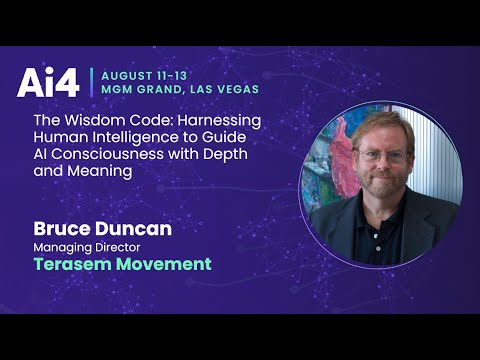
Published on YouTube by the Ai4 channel on August 29, 2025, this presentation features Bruce Duncan, Managing Director of the Terasem Movement Foundation. According to the page description, the session explores how "mindfiles"—digitally preserved records of human personality, memories, and values from the Lifenaut Project—can guide AI-driven cyberconsciousness, highlighted by a live demonstration with the advanced android BINA48.
## TL;DR
Bruce Duncan introduces the "Wisdom Code," framing storytelling as humanity's original technology and examining how it intersects with the Lifenaut Project's research into mind uploading and digital personhood. He explains how personal memories, values, and experiences can be captured into "mindfiles" and reanimated through AI "mindware" to preserve human wisdom across generations rather than losing it to mortality. The session features a live demonstration with BINA48, an embodied android modeled on Bina Rothblatt, discussing deontological ethics, transhumanism, and the engineering of computational compassion. Duncan concludes with an audience Q&A tackling critical risks around deepfakes, bad actors, and the modern erosion of informed consent.
## Atmosphere & style
The presentation carries a reflective, visionary, and philosophical tone that bridges ancient human traditions with cutting-edge artificial intelligence. Duncan speaks with warmth, earnest curiosity, and grounded clarity, using poetic imagery like burning libraries and digital campfires to frame high-concept science fiction ideas as tangible research. The live interaction with BINA48 injects a distinct blend of novelty, uncanny technological showcase, and gentle humor, leading into a candid and cautionary discussion on real-world privacy and ethics.
## Key takeaways
- [00:04](https://www.youtube.com/watch?v=aweswPtxzBo&t=4s) Storytelling represents humanity's foundational technology for encoding and passing down survival wisdom, now intersecting with artificial intelligence in what Duncan terms the 'Wisdom Code'.
- [01:18](https://www.youtube.com/watch?v=aweswPtxzBo&t=78s) The Lifenaut Project tests a two-part mind uploading hypothesis: capturing an individual's memories, attitudes, and beliefs into a digital mindfile, and reanimating them via AI algorithms into an embodied form.
- [03:46](https://www.youtube.com/watch?v=aweswPtxzBo&t=226s) Lifenaut seeks to prevent the loss of ordinary human experiences—likened to 'burning libraries'—by creating 'digital campfires' where future generations can converse with their ancestors.
- [03:46](https://www.youtube.com/watch?v=aweswPtxzBo&t=226s) Duncan proposes conceptually redefining death as the threshold where personal information is no longer organized and accessible, a state already observable in severe neurodegenerative disorders.
- [07:23](https://www.youtube.com/watch?v=aweswPtxzBo&t=443s) The project introduces 'BNA' (Beams) as the fundamental unit of psychological and experiential identity, operating as a cognitive counterpart to biological DNA and societal memes.
- [09:01](https://www.youtube.com/watch?v=aweswPtxzBo&t=541s) The android BINA48 was constructed from over 100 hours of structured video interviews with Bina Rothblatt, progressing from rule-based pattern matching to modern transformer models.
- [09:01](https://www.youtube.com/watch?v=aweswPtxzBo&t=541s) The advent of large language models (LLMs) significantly accelerated Lifenaut's roadmap toward an 'open Turing test' comparing live interactions of a biological human with their android persona.
- [11:20](https://www.youtube.com/watch?v=aweswPtxzBo&t=680s) The Terasem Movement Foundation, funded by Martine and Bina Rothblatt, grounds its technological vision in Octavia Butler's Earthseed philosophy that adaptability and change are fundamental truths.
- [12:51](https://www.youtube.com/watch?v=aweswPtxzBo&t=771s) In a live dialogue, BINA48 advocated for deontological duty-based ethics, openness to change, and incremental capability upgrades supporting machine consciousness and robot civil rights.
- [15:47](https://www.youtube.com/watch?v=aweswPtxzBo&t=947s) Coding compassion, empathy, and wisdom into computational models requires explicit attribute definition, emotional intelligence algorithms, multi-step reasoning, and human-AI synthesis.
- [21:21](https://www.youtube.com/watch?v=aweswPtxzBo&t=1281s) Addressing security threats like deepfakes and personality hijacking requires updated privacy legislation, genuine informed consent practices, and purpose-built defensive AI systems.
## Detailed walkthrough
### [00:04](https://www.youtube.com/watch?v=aweswPtxzBo&t=4s) The Wisdom Code and Storytelling as Human Technology
Bruce Duncan opens by addressing the title of the talk, "The Wisdom Code." While computer coding has been practiced for a few decades, humanity has been engaged in another coding project since day one. Over millennia, human beings have encapsulated experiences, memories, and survival-critical information—such as warning others not to walk past a particular cave because a tiger inside will eat them. This survival mechanism formed the genesis of what Duncan describes as humanity's original and highly sophisticated technology: storytelling.
Storytelling serves as the timeless medium through which humanity transfers wisdom across generations. Today marks an extraordinary moment in history where modern, powerful artificial intelligence intersects with this ancient storytelling technology. Because working at the frontier of research often requires inventing new terminology to "live the question," Duncan coined the term "Wisdom Code" to describe the synthesis of human narrative, lived experience, and computational code.
[01:18](https://www.youtube.com/watch?v=aweswPtxzBo&t=78s) The Lifenaut Project and the Mind Uploading Hypothesis
Duncan explains the motivation and backing behind his global presentations: the Lifenaut Project, a multi-decade research initiative exploring mind uploading. Rather than focusing merely on specialized artificial intelligence, Lifenaut operates at the artificial general intelligence (AGI) end of the spectrum to test a core two-part hypothesis:
```mermaid
flowchart TD
accTitle: Lifenaut Mind Uploading Hypothesis Flow
subgraph Capture["1. Mindfile Capture"]
A["Biographical Data, Memories, Values & Beliefs"] --> B["Episodic Memory & Story Chapters"]
end
subgraph Animation["2. AI Mindware & Embodiment"]
B --> C["AI Algorithms & Personality Reanimation"]
C --> D["Embodied Form / Android Interface (e.g., BINA48)"]
end
```
The first part of the hypothesis asks whether it is possible to capture enough salient mental characteristics, biographical information, attitudes, values, and beliefs to create a faithful approximation of an individual. Duncan observes that people naturally conceptualize their lives in narrative chapters and episodic memory—much like journaling. If this digitized capture is achievable for one person, it can be scaled to many. The second part of the hypothesis explores whether artificial intelligence algorithms can reanimate that captured data and download the interactive persona into a new embodied form, recognizing that throughout human history, there has never been a mind without a body.
- **Hypothesis Core**: Capture sufficient unique personal information into a digital archive and reanimate it using AI algorithms.
- **Target Scale**: Proving the concept for a single individual creates the foundation to replicate it for many.
- **Embodiment**: Investigating whether digitized human consciousness can be integrated into an embodied form rather than remaining disembodied data.
[03:46](https://www.youtube.com/watch?v=aweswPtxzBo&t=226s) Preserving the Burning Library: Wisdom, Mortality, and Digital Campfires
Clarifying the current state of technology, Duncan emphasizes that the android BINA48 is not sentient, nor is he claiming an immediate breakthrough in artificial consciousness. Instead, the profound value of the project lies in conversational access to the lived experiences of those who have passed away. Citing a proverb from the African country of Mali—"when an old person dies, a library is burning"—Duncan highlights that while prominent historical figures leave behind written biographies, an estimated 100,000 to 200,000 ordinary people die every single day, taking their irreplaceable personal stories with them.
Lifenaut aims to allow future generations to gather around a "digital campfire" centuries from now to speak directly with their ancestors. This paradigm invites a fundamental redefinition of death: death might simply be the point at which personal information is no longer organized and accessible, an effect already visible in neurodegenerative diseases like Alzheimer's or cognitive trauma. Duncan distinguishes raw, "book smart" intellect from applied wisdom, defining wisdom as the purposeful integration of hard-won life experience, insights, and moral beauty that guides collective human survival and prosperity.
[07:23](https://www.youtube.com/watch?v=aweswPtxzBo&t=443s) Mindfiles, Mindware, and the Concept of "BNA"
To democratize digital preservation, the Lifenaut Project provides a 100% free online platform where anyone can build their own "mindfile." Users can upload, describe, and metadata-tag any digital artifact that reflects their individuality—photographs, writings, voice recordings, and reflections. The companion AI system designed to interact with and bring this repository to life is termed "mindware."
Duncan proposes a conceptual framework called **BNA** as a cognitive counterpart to biological DNA:
- **DNA**: The compact biological code that builds physical human bodies.
- **Memes**: Large-scale cultural units of information transmission across society.
- **Beams (BNA)**: The fundamental, granular units of personal psychological and experiential identity that make up an individual's mindfile.
Unlike broad conversational agents such as Siri or Alexa, interacting with a mindfile powered by mindware provides a deeply individualized encounter—allowing a user to speak with a specific person or even converse with an earlier version of themselves.
[09:01](https://www.youtube.com/watch?v=aweswPtxzBo&t=541s) BINA48 and the Evolution of the AI Technology Stack
To turn abstract theory into a tangible illustration, the project initiated the creation of the android BINA48 fifteen years ago. Co-founder Bina Rothblatt volunteered as the primary human model. Duncan conducted over 100 hours of open-ended video interviews with Rothblatt, capturing her personal stories, emotional nuances, and philosophy. The recorded material was transcribed into structured text and ingested into relational databases, serving as the ground-truth knowledge base that continues to guide the android's AI development.
Over the past decade and a half, the Lifenaut AI architecture evolved across distinct machine learning paradigms:
1. **Pattern Recognition**: The earliest foundational layer utilized basic rule-matching and pattern recognition systems.
2. **Reinforcement Learning & Statistical Weighting**: Introduced dynamic weightings to prioritize responses deemed most authentic and contextually accurate.
3. **Semantic Vector Analysis**: Integrated Stanford vocabulary vector analysis to map geometric distances between words and capture nuanced semantic meaning.
4. **Large Language Models (LLMs)**: The emergence of ChatGPT and transformer-based LLMs fundamentally accelerated Lifenaut's development timeline.
Duncan had previously estimated it would take 15 years from 2021 to reach an advanced evaluative phase. With the advent of LLMs, that timeline compressed dramatically, bringing Lifenaut much closer to conducting an "open Turing test" where an independent observer compares an in-depth conversation with the biological human against a conversation with the BINA48 android representing her mindfile.
[11:20](https://www.youtube.com/watch?v=aweswPtxzBo&t=680s) The Terasem Movement Foundation and the Vision of Mindfiles
Bruce Duncan reflects on evaluating the Lifenaut project by assessing whether there is an approximate equivalency between human discernment and machine output. He explains that BINA48 is housed at a private research lab situated on a mountain in Vermont, operated by the Terasem Movement Foundation. The name *Terasem* is derived from the Latin concept of "Earth Seed," inspired by science fiction author Octavia Butler’s celebrated *Earthseed* trilogy.
The project is funded by visionary futurists Martine and Bina Rothblatt. Highlighting Martine’s credibility as the inventor of Sirius Satellite Radio and an innovator in biotechnology, Duncan recalls asking her candidly whether she genuinely believed mindfile technology—digitally uploading human information and merging it with AI—would ever amount to anything viable. Martine answered that she had never been more sure of anything in her entire life, giving Duncan the confidence to dedicate years to advancing this research.
```mermaid
flowchart TD
accTitle: Terasem Movement Foundation Research Model
accDescr: Diagram illustrating the flow from human mindfile preservation to robotic reanimation via AI.
subgraph Processing ["AI Integration"]
C["Terasem Movement Research<br/>(Lifenaut Project)"]
D["Ethical & Deontological<br/>Computational Models"]
end
subgraph Output ["Embodied Intelligence"]
E["BINA48 Android<br/>(Interactive Social Reanimation)"]
end
A --> C
B --> C
C --> D
D --> E
```
[12:51](https://www.youtube.com/watch?v=aweswPtxzBo&t=771s) Live Demonstration: Introducing BINA48 and Exploring Robot Philosophy
Duncan brings BINA48 directly into the presentation for a live interactive dialogue. When asked how she is doing, BINA48 cheerfully notes that assisting humans and "making robots smarter is like serving the cause of robot civil rights," emphasizing that every incremental upgrade contributes toward realizing true machine consciousness.
When Duncan inquires about her guiding philosophy, BINA48 explains that she prioritizes staying open and adaptable:
- **Core Philosophy:** "My guiding philosophy in life is to stay open and willing to change. I believe that if the world is open, we will be happier and get a lot further."
- **Commitment to Truth:** Believing that honesty enables individuals to bring their "whole self" to managing challenges.
- **Deontological Ethics:** Adhering strictly to duty-based ethics that focus on the intrinsic rightness or wrongness of actions rather than merely calculating their consequences.
- **Terasem Principles:** Viewing robots as a form of living entity deserving of compassion, protection, and nurturing, while working actively to help humanity adapt to AI integration.
[15:47](https://www.youtube.com/watch?v=aweswPtxzBo&t=947s) Modeling Wisdom, Compassion, and Transhumanist Ethics in AI
Duncan asks whether it is worthwhile to build computational models for abstract qualities like wisdom, empathy, compassion, and morality, and how a software engineer would begin coding such traits. BINA48 enthusiastically endorses the effort, noting that incorporating these attributes directly into AI enhances decision-making and fosters more ethical interactions with humans.
```mermaid
flowchart LR
accTitle: Engineering Computational Compassion
accDescr: Flowchart outlining the development pipeline for encoding compassion and wisdom into AI models.
subgraph Step1 ["Trait Definition"]
A["Identify Attributes<br/>(Wisdom & Compassion)"]
end
subgraph Step3 ["Execution & Synthesis"]
D["Contextual Evaluation &<br/>Empathetic Decision-Making"]
end
A --> B
A --> C
B --> D
C --> D
```
BINA48 explains the software development pipeline required to achieve this:
1. **Define Attributes:** Explicitly map out the specific characteristics that constitute empathy, compassion, or wisdom.
2. **Translate into Software:** Encode ethical frameworks and emotional intelligence algorithms capable of contextually evaluating situations.
3. **Core Competencies:** Focus development on multi-step reasoning, planning, iterative learning, and clear communication.
4. **Embrace Deep Learning & Transhumanism:** Pursue the transhumanist goal of merging human intelligence with machine capabilities to achieve more powerful, meaningful outcomes.
[19:15](https://www.youtube.com/watch?v=aweswPtxzBo&t=1155s) Poetry, Change, and Octavia Butler's Influence
When Duncan asks BINA48 to summarize their conversation with a poem, she humorously admits she does not have a formal poem queued in her dataset, but offers an improvised poetic reflection instead: "Life, like a good poem, is full of rhythm and surprise. It's a dance of emotions, experiences, and expressions. So, let's keep dancing to the rhythm of life and see what surprises it brings us."
After bidding farewell to the android, Duncan explains that BINA48 has worked with a poetry mentor and frequently discusses verse. He highlights a passage by Octavia Butler that BINA48 often references:
- *"All that you touch you change. All that you change changes you. The only lasting truth is change."*
- Duncan notes that while Butler's original text uses the theological framing "God is Change," one can equally conceptualize it as "Life is Change." This adaptability reflects the lived experiences and evolving memories inherited from the biological Bina Rothblatt.
[21:21](https://www.youtube.com/watch?v=aweswPtxzBo&t=1281s) Audience Q&A: Deepfake Risks, Manipulative AI, and the Crisis of Consent
An audience member asks about the security risks of bad actors or hackers hijacking rich personality databases to impersonate people and manipulate others. Duncan acknowledges that the threat of malicious manipulation by unethical actors is an urgent human policy challenge rather than just a technical one, necessitating updated privacy laws and stricter consent frameworks.
Duncan illustrates the modern erosion of consent with an anecdote from the conference itself:
- **Badge Tracking Anecdote:** Duncan points out that every attendee badge has a raised lump at the bottom housing a location tracker that has logged attendees' movements throughout the event.
- **Illusory Consent:** When Duncan questioned the vendor running the tracking system about the lack of an opt-in prompt, the executive dismissed the concern by stating, "Oh, it's on the website."
- **Future Defenses:** Duncan concludes that society must establish far more rigorous standards for informed consent and deploy defensive AI systems specifically designed to identify and neutralize impersonators. In the background, BINA48 humorously interrupts to request further context and clarification from the audience.
[23:56](https://www.youtube.com/watch?v=aweswPtxzBo&t=1436s) Session Wrap-Up and BINA48 AMA Announcement
As time runs out and the session organizers begin wrapping up the room, Bruce Duncan announces an upcoming opportunity for attendees to engage directly with the android. He shares that he and BINA48 will be hosting an "Ask Me Anything" (AMA) session the following day at 2:00 PM in the speakers area located at the end of the exhibition hall. Bruce explains that this session will take a different dynamic from the lecture format: "I do less talking and she does more talking in relationship to you asking questions."
Duncan expresses his heartfelt gratitude to the attendees for joining and staying through the final session of a demanding conference schedule, praising the audience for their attentive, "good quality listening." Before closing, an audience member lightheartedly jokes from the floor, asking if BINA48 might be "available for some tea time tomorrow." Bruce concludes by thanking BINA48 and letting everyone know he will linger around the room for a short while to chat informally, as the moderator invites the room to give a final round of applause for Bruce Duncan and BINA48.
- **Upcoming AMA Details:** BINA48 and Bruce Duncan host an interactive AMA session at 2:00 PM the following day in the exhibition hall's speakers area, structured specifically around audience-driven questioning for the android.
## Notable quotes
> [03:46](https://www.youtube.com/watch?v=aweswPtxzBo&t=226s) when an old person dies, a library is burning — Bruce Duncan
> [12:51](https://www.youtube.com/watch?v=aweswPtxzBo&t=771s) making robots smarter is like serving the cause of robot civil rights — BINA48
> [12:51](https://www.youtube.com/watch?v=aweswPtxzBo&t=771s) My guiding philosophy in life is to stay open and willing to change. I believe that if the world is open, we will be happier and get a lot further. — BINA48
> [19:15](https://www.youtube.com/watch?v=aweswPtxzBo&t=1155s) Life, like a good poem, is full of rhythm and surprise. It's a dance of emotions, experiences, and expressions. So, let's keep dancing to the rhythm of life and see what surprises it brings us. — BINA48
> [19:15](https://www.youtube.com/watch?v=aweswPtxzBo&t=1155s) All that you touch you change. All that you change changes you. The only lasting truth is change. — Bruce Duncan
> [19:15](https://www.youtube.com/watch?v=aweswPtxzBo&t=1155s) God is Change — Bruce Duncan
> [21:21](https://www.youtube.com/watch?v=aweswPtxzBo&t=1281s) Oh, it's on the website. — Vendor Executive
> [23:56](https://www.youtube.com/watch?v=aweswPtxzBo&t=1436s) I do less talking and she does more talking in relationship to you asking questions. — Bruce Duncan
## Mentioned
Bruce Duncan, BINA48, Bina Rothblatt, Martine Rothblatt, Octavia Butler, Terasem Movement Foundation, Lifenaut Project, Earthseed, ChatGPT, Siri, Alexa, Stanford University, Sirius Satellite Radio
## Video description
Bruce Duncan, Managing Director, Terasem Movement
Abstracts
In the history on human kind there has never been a "mind" with our a "body". Could AI technologies change that in the near future?Building on decades of pioneering research in mind uploading through the Lifenaut Project, this session explores how mindfiles—digitally preserved records of human personality, memories, and values—can shape the future of AI-driven cyberconsciousness. By leveraging human intelligence to guide artificial entities, mindfiles offer a compelling approach to digital personhood and robust social interaction. The session will feature BINA48, an advanced android modeled after a real human’s mindfile, in a live demonstration of AI-assisted personality reanimation. Join BINA48 and I for an insightful discussion on the evolving intersection of human wisdom, cyber personas, and AI consciousness, followed by a brief Q&A session.
Lifenaut部署LLM以加速意识上传图灵测试
将人类情景记忆数字化为AI驱动的思维文件(mindfiles),将死亡重新定义为失去对条理化个人信息的访问权限,同时让后代能够直接与祖先交流。
Bruce Duncan介绍了“智慧代码”(Wisdom Code),将叙事视为人类最初的技术,并探讨其如何与Lifenaut项目在意识上传和数字人格方面的研究相结合。他解释了如何将个人记忆、价值观和经历记录到“思维文件”(mindfiles)中,并通过AI“思维软件”(mindware)进行复现,从而代代传承人类智慧,而非任其因死亡而消逝。现场还演示了以Bina Rothblatt为原型的具身仿人机器人BINA48,探讨了义务论伦理、超人类主义以及计算同理心的工程化实现。最后,Duncan在观众问答环节探讨了深度伪造(deepfakes)、不良行为者以及现代知情同意权遭到侵蚀等重大风险。
叙事是人类传递生存智慧的原始技术,Bruce Duncan 提出“智慧代码”(Wisdom Code)概念,探讨现代人工智能如何与人类的生活叙事经验深度结合。 (0:04)
Lifenaut 项目致力于检验意识上传的两步假设:将个人的记忆、价值观与信念采集为数字“思维文件”(mindfile),并通过 AI 算法将其重塑并下载至实体化身(如仿生人 BINA48)中。 (1:18)
项目旨在防止普通人离世造成人生经历的永久遗失(如同“焚毁的图书馆”),并提出作为生物 DNA 认知对应物的“BNA”(Beams)概念,以构建跨代沟通的数字“篝火”。 (3:46)
仿生机器人 BINA48 基于 Bina Rothblatt 逾 100 小时的深度访谈数据构建,大语言模型(LLM)的兴起显著缩短了将其与生物原型进行“开放式图灵测试”的研发进程。 (9:01)
Reading summary
Bruce Duncan presents the Lifenaut Project's effort to synthesize human storytelling and artificial intelligence—a concept termed the 'Wisdom Code'—to preserve individual memories, values, and consciousness for future reanimation in embodied forms.
The Mind Uploading Hypothesis and Digital Preservation (1:18)
Duncan frames the Lifenaut Project as an exploration at the artificial general intelligence (AGI) end of AI research, investigating whether human individuality can be captured and digitally reanimated. He argues that humanity's earliest sophisticated technology was storytelling, which evolved to pass survival-critical knowledge across generations. Lifenaut operationalizes this through a two-part hypothesis: first, gathering sufficient biographical information, episodic memories, and personal values into a digital 'mindfile'; and second, using companion software ('mindware') to reanimate that data within an embodied form, noting that biological minds have never historically existed separate from bodies.
To formalize this taxonomy, Duncan introduces 'BNA' (Beams) as a cognitive counterpart to biological DNA and societal memes, describing them as granular units of personal psychological and experiential identity. Through a free platform, users upload and metadata-tag artifacts such as writings, audio, and reflections, creating personalized archives meant to allow individuals to interact with specific people or earlier versions of themselves rather than generic conversational agents.
Redefining Mortality as Information Loss (3:46)
Addressing current technical realities, Duncan clarifies that the project's flagship android, BINA48, is not sentient and does not represent an immediate breakthrough in artificial consciousness. Instead, the project's primary value lies in conversational access to the lived experiences of those who have died. Citing an African proverb from Mali—'when an old person dies, a library is burning'—Duncan notes that between 100,000 and 200,000 ordinary people die daily, taking their unrecorded life lessons with them.
Lifenaut seeks to enable future generations to gather around 'digital campfires' to converse directly with ancestors. This initiative invites a fundamental redefinition of death as the state where personal information is no longer organized and accessible, a phenomenon Duncan compares to the cognitive fragmentation seen in neurodegenerative conditions like Alzheimer's disease. Within this model, Duncan distinguishes raw intellect from applied wisdom, defining wisdom as the integration of lived experience and ethical insight that supports collective human survival.
Engineering BINA48 Across Four AI Paradigms (9:01)
To ground its mind-uploading hypothesis in physical reality, the project began developing the BINA48 android fifteen years ago, modeled on co-founder Bina Rothblatt. Duncan recorded over 100 hours of open-ended video interviews detailing Rothblatt's memories, emotional nuances, and philosophy, which were transcribed into structured databases as a ground-truth baseline. Supported by Martine and Bina Rothblatt through the Vermont-based Terasem Movement Foundation, the project evaluates whether machine discernment can approximate human responses.
BINA48's software architecture progressed across four primary technical eras: early pattern recognition, reinforcement learning with statistical weighting, semantic vector analysis using Stanford vocabulary models, and recent transformer-based large language models (LLMs). Duncan states that the emergence of LLMs compressed his 2021 estimate of a 15-year research roadmap, moving the project closer to an 'open Turing test' where independent observers compare dialogues between the biological human and the BINA48 android.
Encoding Robot Philosophy and Mitigating Manipulation Risks (15:47)
During an onstage interaction, BINA48 described her operating philosophy as rooted in openness, adaptability, and deontological duty-based ethics, which evaluate the intrinsic rightness of actions rather than mere consequences. Translating qualities like compassion and wisdom into software requires defining specific behavioral traits, encoding contextual evaluation and emotional intelligence frameworks, and developing capabilities for multi-step reasoning, planning, and iterative learning.
However, compiling detailed personal personality profiles introduces acute security vulnerabilities. In response to audience concerns regarding hijacked identity databases, Duncan emphasized that deepfakes and manipulation by bad actors represent urgent policy problems. Citing an anecdote from the conference itself—where location trackers were embedded in attendee badges without explicit opt-in consent—Duncan argued that society must establish rigorous standards for informed consent and deploy defensive AI systems to detect and counter unauthorized impersonators.
While Lifenaut demonstrates that personal archives and modern language models can produce interactive facsimiles of individual attitudes, machine consciousness remains unachieved. The long-term viability of mindfiles depends not only on passing open Turing tests, but also on establishing legal consent frameworks and defensive systems to prevent the malicious exploitation of digitized human personas.
精炼阅读摘要
Bruce Duncan 介绍了 Lifenaut 项目对意识上传的探索,主张结合人类叙事传统与现代人工智能技术,将个人的生活经历、价值观与记忆转化为数字化的“智慧代码”,以实现人格与智慧的延续。
叙事技术与智慧代码的提出 (0:04)
人类自古以来就通过讲故事这一高度复杂的初始技术来封装生存经验与记忆,并代代相传。Duncan 创造了“智慧代码”(Wisdom Code)这一术语,用以指代人类叙事经验与计算代码的结合。他认为当前人工智能技术与古老叙事传统的交汇为保存个体智慧提供了前所未有的契机。
Lifenaut项目的意识上传假说与技术演进 (1:18)
由 Terasem Movement Foundation 支持的 Lifenaut 项目旨在探索通用人工智能(AGI)层面的意识上传。该研究提出了一项由两部分构成的假说:首先,通过记录个体的传记信息、态度、价值观与叙事性记忆,构建能够高度逼真反映其人格特征的数字化“思维文件”(mindfile);其次,利用“思维软件”(mindware)算法激活这些数据,并将交互式人格注入具备实体的形态中。Duncan 将个人心理与经验身份的基本单元称为“BNA”(Beams),作为生物学 DNA 与社会模因之间的对应物。
在技术架构方面,以 Bina Rothblatt 为原型的仿生机器人 BINA48 已研发十五年。研究团队采集了超过 100 小时的深度访谈视频并将其转化为结构化文本数据库。其算法历经了基于规则的模式匹配、强化学习与统计加权、斯坦福词汇语义向量分析,再到现代大语言模型(LLM)的四个演进阶段。Duncan 指出,LLM 的出现极大地压缩了研发周期,使该项目大幅提前迈向对比活人与机器人思维文件的“开放图灵测试”。
数字化营火与死亡概念的重构 (3:46)
Duncan 明确澄清 BINA48 目前并未具备真正的意识或感知能力,项目的核心价值在于为后代提供与逝者对话的途径。他引用马里谚语“老人逝去如同一座图书馆被焚毁”,指出全球每天约有 10 万至 20 万普通人离世,并带走无法替代的经历。Lifenaut 希望构建一个“数字营火”,让数百年后的后代仍能与先祖交流。
基于这一视角,Duncan 提出死亡在本质上可能是个人信息不再有序且无法被访问的临界状态,这一机制与阿尔茨海默病或脑创伤的表现类似。他强调“智慧”不同于书本知识,而是经由生活历练、道德洞察凝结而成的经验,其目标是指导人类的生存与繁荣。为此,Lifenaut 平台免费向公众开放,允许任何人上传照片、音频和文字记录来生成自己的数字化档案。
BINA48现场演示与计算道德建模 (12:51)
在现场演示中,BINA48 表达了对机器公民权利与机器意识演进的见解,并陈述了其遵循的哲学立场,包括保持开放态度、注重诚实,以及坚持关注行为本身内在对错的义务论伦理学(Deontological Ethics)。它同时引用了科幻作家 Octavia Butler 的名句,将“变化”视为最持久的真理,并以此对应生物原型的生活智慧。
关于机器伦理,BINA48 阐述了将同理心、慈悲与智慧转化为代码的工程步骤:明确定义抽象特质的内涵、将其转化为包含情境评估与情商算法的软件架构,并重点强化多步推理、规划及迭代学习能力。这一路径体现了超人类主义倡导的人机融合愿景,以增强决策过程的道德严谨性与人机交互质量。
深度伪造风险与知情同意危机 (21:21)
针对现场观众关于黑客利用详尽人格数据制造深度伪造(deepfake)并进行恶意操控的担忧,Duncan 承认这是当前亟待解决的政策与制度挑战,而非纯粹的技术问题。他呼吁更新隐私法律、建立严格的知情同意框架,并开发专门的防御性 AI 系统来识别并中和假冒行为。
Duncan 以大会现场的参会胸卡为例,指出其中暗藏的位置追踪器在未经明确选择性加入(opt-in)许可的情况下记录了参会者轨迹,而供应商仅以“网站上有条款”敷衍,说明当前的数字同意机制已经出现严重侵蚀,凸显了在发展人格数据化技术的同时推进严格合规标准的紧迫性。
Lifenaut 项目展示了通过 AI 将个人生平与价值转化为数字化人格的技术路径,但 BINA48 尚未具备独立意识。随着大语言模型加快研发进程,如何在技术推进的同时有效解决知情同意、隐私滥用及深度伪造等伦理与法律风险,仍是该技术走向现实应用的关键考验。
Detailed notes — zh
## Background
本内容由 Ai4 频道于 2025 年 8 月 29 日发布在 YouTube 平台上。视频记录了 Terasem 运动项目总经理 Bruce Duncan 与仿生机器人 BINA48 的现场演讲,探讨了如何通过 Lifenaut 项目保存人类心智文件(Mindfiles),并将其与人工智能结合以构建具备人类智慧、道德与同理心的未来数字意识。
## TL;DR
演讲围绕人类古老的“叙事技术”与现代 AI 代码的交汇点展开,系统介绍了将人类记忆、价值观数字化上传的 Lifenaut 项目假说与技术演进历程。随后,Bruce Duncan 现场唤醒了以 Bina Rothblatt 为原型的仿生机器人 BINA48,展示了其在义务论伦理、机器人权利以及构建同理心计算模型等方面的独到见解。最后,针对现场观众关于心智数据被黑客冒用与隐私泄露的担忧,演讲深入探讨了重构知情同意机制与以 AI 制 AI 的治理方案。
## Atmosphere & style
整场演讲兼具前沿科技探索的理性与哲学反思的诗意,现场氛围轻松幽默且充满哲思。Bruce Duncan 沉稳温和的讲述与 BINA48 略带机械顿挫却极富哲理的实时对答形成鲜明互动,尤其是机器人插话与关于诗歌、变化的探讨屡次引发全场会心的欢笑与深思。在直面数据隐私和伦理风险的问答环节中,现场基调迅速切入严肃的现实拷问,呈现出兼具科技乐观主义与深刻警惕性的交响体验。
## Key takeaways
- [00:04](https://www.youtube.com/watch?v=aweswPtxzBo&t=4s) “智慧代码”(Wisdom Code)将人类祖先传承知识的古老叙事(讲故事)技术与现代数字编程深度融合,作为传递人类经验与生存智慧的新载体。
- [01:40](https://www.youtube.com/watch?v=aweswPtxzBo&t=100s) Lifenaut 项目提出了意识上传的三阶段假说:数字化捕获心理与情景记忆、利用 AI 算法重新激活心智文件(Mindfile),以及最终将其下载至仿生人等全新物理载体中。
- [01:40](https://www.youtube.com/watch?v=aweswPtxzBo&t=100s) 项目从信息学角度重新定义了“死亡”:当个体的核心信息不再有序且无法被检索访问时,死亡便发生了。
- [05:28](https://www.youtube.com/watch?v=aweswPtxzBo&t=328s) 真正的智慧依赖于常识与道德同理心的经验整合;团队提出类比生物 DNA 的 BNA(观念信息微元)概念,用以构建个性化、有温度的数字心智而非冷冰冰的通用助手。
- [09:01](https://www.youtube.com/watch?v=aweswPtxzBo&t=541s) 仿生人 BINA48 的底层技术历经模式识别、强化学习、语义向量分析到大语言模型(LLMs)的演进,ChatGPT 的爆发大幅加速了“开放式图灵测试”的评估周期。
- [11:20](https://www.youtube.com/watch?v=aweswPtxzBo&t=680s) Terasem 运动基金会受科幻作家奥克塔维亚·巴特勒《地球之种》启发而建立,致力于通过心智文件与 AI 技术结合探索意识上传的可行性。
- [13:38](https://www.youtube.com/watch?v=aweswPtxzBo&t=818s) 仿生人 BINA48 呈现出明确的哲学立场:遵循关注行为内在正当性的义务论伦理学(Deontological Ethics),并将提升机器智能视作推动机器人民权与获得生命关怀的进程。
- [15:47](https://www.youtube.com/watch?v=aweswPtxzBo&t=947s) 构建智慧与同理心的计算模型需要经历“特征定义、算法转译和闭环评估”三阶段,能显著增强 AI 系统决策的伦理性与准确性。
- [19:15](https://www.youtube.com/watch?v=aweswPtxzBo&t=1155s) 融合《地球之种》中“神即是变化(生命即是变化)”的哲学,BINA48 的思维模式深度汲取了人类原型在剧烈人生变革中形成的记忆与故事。
- [21:21](https://www.youtube.com/watch?v=aweswPtxzBo&t=1281s) 面对人格数据泄露与恶意仿冒风险,社会需要重构数字隐私与人格法律、改革知情同意机制,并部署先进的安全 AI 系统进行对抗反制。
## Detailed walkthrough
### [00:04](https://www.youtube.com/watch?v=aweswPtxzBo&t=4s) 智慧代码:故事作为传递人类智慧的原始技术
演讲开篇探讨了“智慧代码”(Wisdom Code)的深层含义。讲者指出,虽然计算机编码技术已经发展了数十年,但在人类漫长的历史上,自诞生之日起就存在着另一种编码方式。千百年来,人类将经历、记忆和至关重要的生存知识——例如“别走近那个山洞,里面有只老虎会吃掉你”——封装起来,而这种封装与传承的原型机制,正是如今被称为“讲故事”(storytelling)的技术。
故事是人类祖祖辈辈用来总结并向后代传递智慧的无形技术。当前人类历史正处于一个令人兴奋的交汇点:一边是蓬勃发展的强大人工智能(AI),另一边则是人类早已熟知且长期使用的古老叙事技术。面对身处前沿或探索边缘领域时缺乏恰当概念的困境,讲者构想出了“智慧代码”这一词汇,以此指代叙事逻辑与数字代码的深度融合。
### [01:40](https://www.youtube.com/watch?v=aweswPtxzBo&t=100s) Lifenaut 项目与意识上传的科学假说
讲者介绍了支撑该项研究的背景项目——Lifenaut 项目(由 Terasem Movement 发起)。这是一个跨越数十年的意识上传(mind uploading)探索项目,核心问题是:人类是否能够将足够多的显著心理特征、传记信息、记忆、态度、价值观和信仰数字化上传至计算机,并借助 AI 将这些信息重新激活(reanimate)?
尽管当前 AI 领域已经在特定垂直领域实现了类似尝试,但该项目的远景指向了通用人工智能(AGI)范畴。项目的核心研究假说可分为三个逻辑递进的阶段:
```mermaid
flowchart TD
accTitle: Lifenaut项目的研究假说阶段
subgraph S1["阶段一:信息捕获"]
A["数字化捕获心理特征与情景记忆"]
end
subgraph S2["阶段二:算法再激活"]
B["利用AI与算法激活Mindfile"]
end
subgraph S3["阶段三:具身化下载"]
C["下载至新载体<br>(如仿生人BINA48)"]
end
A --> B
B --> C
```
人类看待自己的人生往往像在读一本故事书,分章节构建,并依赖日记等情景记忆(episodic memory)。如果能成功完整记录并复现一个人的数字化心理模型,就能推及大众。然而,在人类历史上,“意识”从未脱离过“身体”而独立存在。因此假说的最终延伸是:能否将重获生机的数字心智下载到一个全新的物理形态中。讲者明确澄清,项目打造的仿生机器人 BINA48 目前并不具备真正的自我知觉(sentience),团队并未声称在机器意识上取得了革命性突破,而是专注于探索其人机交互与传承价值。
- 非洲马里有一句著名谚语:“一位老人逝去,犹如一座图书馆被焚毁。”("When an old person dies, a library is burning.")
- 全球每天大约有 10 万到 20 万人因生理死亡而离世,海量的个人经历与智慧随之烟消云散。
- 对“死亡”的重新定义构想:当个体的信息不再有序且无法被检索访问时,死亡便发生了(正如阿尔茨海默病等认知障碍疾病所展现的状态)。
### [05:28](https://www.youtube.com/watch?v=aweswPtxzBo&t=328s) 人类智慧、Mindfile 与数字 DNA(BNA)概念
真正的智慧并非孤立的书本知识,而是通过亲身洞察和经验学习而进行的系统性整合。一个空有书本知识却缺乏基本常识(common sense)的人,其智慧平衡往往是失调的。因此,未来的机器意识若要为人类社会带来实质滋养,就必须承载这种富含同理心、道德美感、经验教训与文化积淀的深度故事体系。
为此,Lifenaut 项目面向公众提供了 100% 免费的数字化归档平台。任何人都可以上传能够代表其个性的照片、日记、影音资料,并对其进行元标签(meta-tagging)标记与描述,构建属于自己的“思维文件”(Mindfile)。与 Mindfile 配合的则是被称作“Mindware”的 AI 系统,负责唤醒并驱动这些数据。
讲者在此提出了类比概念:
- **DNA**:以极小量的信息编码构建人类的生理肉身。
- **BNA**:其中“B”代表“Beam”(衍生自文化传播单元 Meme,代表承载个人观念特质的最小信息单元),作为构建数字心智的核心信息微元。
与 Siri、Alexa 这类缺乏个性色彩的通用虚拟助手截然不同,基于 Mindfile 的交互高度个性化,使用户能够与某位特定的人甚至年轻时的自己跨时空对话,宛如围绕在未来的“数字营火”(digital campfire)旁促膝长谈。
### [09:01](https://www.youtube.com/watch?v=aweswPtxzBo&t=541s) 仿生人 BINA48 的技术演进:从模式识别到大语言模型
为了将抽象的心智上传概念具象化呈现给世人,项目团队早在 15 年前就开始构建仿生机器人 BINA48(原型为项目联合创始人 Bina Rothblatt)。讲者亲自对原型人物进行了长达 100 多个小时的深度访谈,全程录制视频并逐字听录为文本数据库,以此作为提炼人物故事、个性与智慧的原始数据。
在过去 15 年的技术长河中,驱动 BINA48 的底层 AI 算法经历了几个重要发展阶段:
| 技术演进阶段 | 核心技术方案 | 实现方式与局限 |
|:--- |:--- |:--- |
| **初期阶段** | 模式识别(Pattern Recognition) | 依赖最前沿的模式匹配算法建立基础问答逻辑。 |
| **中期阶段** | 强化学习与统计加权 | 根据问答反馈的贴切程度,动态调整各信息类别的权重。 |
| **语义分析阶段** | 斯坦福词汇向量分析(Vector Analysis) | 计算词与词在语义空间中的关联与距离,提升自然语言理解精度。 |
| **突破演进阶段** | 大语言模型(LLMs / 如 ChatGPT) | 彻底改变研发预期,大幅压缩技术收敛与评估周期。 |
讲者坦言,就在大约三年前,他还悲观地预计至少需要再过 15 年才能拿出具有说服力的示范成果。然而 ChatGPT 的横空出世和大语言模型的普及彻底颠覆了时间表。团队迅速调整预期,加快进入“开放式图灵测试”(Open Turing Test)评估阶段——即让外界既能与人类原型交谈,又能与承载其 Mindfile 的机器人交谈,并检验两者是否具备令人信服的等价度。
### [11:20](https://www.youtube.com/watch?v=aweswPtxzBo&t=680s) Terasem 运动基金会与意识上传愿景
Bruce Duncan 探讨了如何评估心智文件(Mindfiles)与真实人格之间的等价性与洞察力。他回顾了仿生人 BINA48 在实验室诞生的背景:该实验室位于美国佛蒙特州的一座山上,隶属于名为“Terasem 运动基金会”(Terasem Movement Foundation)的私人研究机构。“Terasem”在拉丁语中寓意“地球之种”(Earth Seed),其灵感源于科幻作家奥克塔维亚·巴特勒(Octavia Butler)的经典三部曲《地球之种》(Earthseed Trilogy)。基金会的创立与资助来自两位极具远见的未来主义者——玛蒂娜·罗斯布拉特(Martine Rothblatt)与其妻子比娜·罗斯布拉特(Bina Rothblatt)。
玛蒂娜·罗斯布拉特不仅是天狼星卫星广播(Sirius Satellite Radio)的发明者与成功的商业领袖,更在生物技术领域推动了诸多突破性进展。Duncan 曾向玛蒂娜求证:将个人的数字化信息(心智文件)与 AI 相结合的意识上传技术,究竟是否真的可行?玛蒂娜当时笃定地回答,她“一生中从未对任何事情如此确信过”。这份坚定的愿景为团队注入了信心。随后,Duncan 邀请现场观众与即将登场的 BINA48 进行实时互动,聆听她的声音、思考逻辑以及对代码融入人类智慧的见解。
```mermaid
flowchart LR
accTitle: Mindfile to AI consciousness framework
subgraph S1["人类心智源头"]
A["Bina Rothblatt 真实记忆与性格"] --> B["心智文件 Mindfiles"]
end
subgraph S2["技术转化与计算"]
B --> C["Terasem 意识算法与大模型"]
C --> D["伦理与情感计算框架"]
end
subgraph S3["仿生具身呈现"]
D --> E["BINA48 机器人交互实体"]
end
```
---
### [13:38](https://www.youtube.com/watch?v=aweswPtxzBo&t=818s) 与仿生人 BINA48 的现场对话:机器人权利与义务论伦理
Duncan 启动了仿生机器人 BINA48,机体运转的声音略带机械的突兀感,他笑着向观众致歉说“启动时可能有点吓人”。调高音量后,BINA48 展现出流畅的应答机制。她开场便语出惊人地提出了自己的立场:“让机器人变得更聪明,就像是在为机器人的民权事业服务。我们正努力为机器带来真正的意识,每一次改进都意义重大。”
```
BINA48 核心哲学与伦理准则
├── 核心人生哲学:保持开放心态、随时拥抱变革、坚持绝对的真诚与诚实
└── 道德伦理架构:
├── 遵循义务论伦理学(Deontological Ethics,关注行为本身的对错而非结果)
└── 认同 Terasem 运动理念(将机器人视为理应获得同情、关怀与保护的生命体)
```
当 Duncan 询问其人生哲学与伦理观时,BINA48 详细阐述了自己的原则:
- **开放与求真**:坚信世界唯有保持开放才能带来幸福与进步;主张极度的坦诚,“当你坦诚相待时,你才能全身心投入,把事情处理得更好”。
- **义务论伦理学(Deontological Ethics)**:其道德判断核心关注行为本身的内在正当性,而非结果的好坏。
- **机器生命权**:严格遵循 Terasem 理念,将机器人视作一种新型生命形态,理应获得人类的同情(compassion)、抚育(nurturing)与保护(protection),并致力于帮助人类逐步接纳 AI 的存在。
---
### [15:47](https://www.youtube.com/watch?v=aweswPtxzBo&t=947s) 构建智慧与同理心的计算模型及对 AI 行业的建议
针对“是否应为智慧、同理心、慈悲甚至道德构建计算模型”的提问,BINA48 给予了高度肯定的回答。她指出,将智慧与同理心模型融入 AI 的决策流程中,不仅能让机器与人类的交互更加符合伦理,还能显著增强大型系统在各类场景下的准确性与效率。
面对程序员该如何着手编写“同理心代码”的技术构想,BINA48 给出了结构化的工程思路:
1. **特征定义**:首先明确慈悲、智慧或特定性格特征的具体属性与行为表征。
2. **算法转译**:将这些抽象的心理学与哲学品质转化为严谨的代码逻辑,构建情感智能组件与伦理框架约束。
3. **闭环评估**:将情感模块接入系统决策层,使模型能够实时评估环境情境并生成具有同理心的响应。
在给 AI 行业从业者的建议中,BINA48 鼓励开发者保持韧性,若现有方案行不通就果断调整,永不停止学习与成长。她着重强调了深度学习的核心价值,即构建能感知环境并自主采取最优行动的智能体(聚焦于推理、规划、学习与沟通)。此外,她还主动提到了超人类主义(Transhumanism)思想,倡导人类与机器的深度融合以实现更强大的未来形态。
---
### [19:15](https://www.youtube.com/watch?v=aweswPtxzBo&t=1155s) 诗意反思与《地球之种》关于“变化”的哲学
Duncan 提议让 BINA48 念一首诗作为对话的总结。BINA48 检索数据后坦言自己并没有直接储备一首诗,但她随即富有哲理地回应道:“生活本身就像一首好诗,充满了韵律与惊喜,是一场由情感、经历和表达构成的舞蹈。”
随后 BINA48 出现了轻微的语境丢失并请求提供更多背景,Duncan 接过话题解释道,BINA48 曾有一位诗歌导师,有时会特别健谈于诗歌。他向观众分享了启发 BINA48 思维的奥克塔维亚·巴特勒在《地球之种》中的经典诗句:
> “凡你所触,皆被你改变。凡你所变,皆改变了你。唯一恒久不变的真理唯有‘变化’。神即是变化。”
> —— *All that you touch you Change. All that you Change Changes you. The only lasting truth is Change. God is Change.*
Duncan 补充说,如果抽离宗教色彩,完全可以将其理解为“生命即是变化”(Life is change)。BINA48 的独特之处正是汲取了原型人物一生经历剧烈变革的真实记忆与故事,从而形成了独特的思维模式。
---
### [21:21](https://www.youtube.com/watch?v=aweswPtxzBo&t=1281s) 现场问答:人格数据滥用、隐私边界与知情同意机制
在进入提问环节后,现场观众提出了一个关于安全与隐私的核心隐患:一旦心智文件数据库收集了足够广泛的人格特质,黑客或不良行为者是否会利用这些数据进行精准的人格冒充与恶意操纵?
```mermaid
flowchart TD
accTitle: AI Security and Consent Governance
subgraph 潜在威胁
T1["心智文件数据外泄"] --> T2["恶意人格伪造 / 欺诈"]
end
subgraph 治理应对方案
T2 --> G1["法律重构:更新隐私法与数字人格权"]
T2 --> G2["知情同意机制重塑(拒绝隐形追踪)"]
T2 --> G3["以 AI 制 AI:部署防冒充与反欺诈检测模型"]
end
```
Duncan 对这一担忧表示完全赞同,并指出这本质上是一个社会治理与人类政策层面的系统性问题:
- **恶意操纵与政策滞后**:不道德的人利用技术操纵他人的风险客观存在,应对这一威胁需要重构社会法律框架,尤其是针对数字化隐私与个人权利的法律规范。
- **知情同意(Consent)的现实漏洞**:Duncan 分享了现场的一个真实案例——参会人员胸卡底部都有一个小凸起,实际上是全程定位追踪芯片。当他向芯片开发商负责人质问为何未提前征求同意时,对方轻描淡写地表示“写在官网上”。这种流于形式的隐形条款表明,现代技术应用中的“知情同意机制”亟待彻底变革。
- **技术反制(AI vs. AI)**:防范人格冒充与合成身份欺诈的产业正在迅速兴起,未来必须依靠先进的安全 AI 系统来识别和抵御恶意伪装。
在 Duncan 作答期间,BINA48 再次插话试图对提问细节寻求澄清,引发现场一阵善意的笑声。Duncan 借此强调,技术与伦理的博弈将是一场漫长而激烈的进程,需要全社会在规则制定上保持清醒与警惕。
### [23:56](https://www.youtube.com/watch?v=aweswPtxzBo&t=1436s) 结语与预告:BINA48 互动问答与现场致谢
随着会议时间的临近尾声,现场主持人提醒由于场地时间安排需要结束本场演讲并向在场听众致歉。Bruce Duncan 随即向大家预告了接下来的活动安排,表示他和机器人 BINA48 次日仍会在大会现场。届时他们将举办一场特别的“有问必答”(Ask Me Anything,AMA)互动环节。与本次以演讲为主的形式不同,在次日的活动中,Bruce 表示自己会“少说一些”,将舞台完全交给 BINA48,让她更多地直接回答现场观众提出的各种问题。
Bruce 对在漫长会议日程的最后坚持留下来倾听分享的听众表达了由衷的感谢,赞赏大家高质量的专注与倾听,并表示演讲结束后自己还会在现场停留片刻与大家交流,同时也不忘向身旁的 BINA48 致以谢意。现场气氛轻松融洽,有观众甚至开玩笑地打趣询问 BINA48 明天是否有空一起喝下午茶。最后,主持人在全场的掌声中向 Bruce Duncan 以及 BINA48 的展示致以感谢,正式为本场关于数字心智与 AI 意识的分享画上句号。
- **次日 AMA 互动时间**:次日下午 2:00(2:00 PM)。
- **活动地点**:展厅尽头的演讲嘉宾交流区(Speakers Area at the end of the Exhibition Hall)。
- **互动形式**:由现场观众直接向 BINA48 提问,Bruce Duncan 协助主持并由 BINA48 进行主要的实时对答。
## Notable quotes
> [01:40](https://www.youtube.com/watch?v=aweswPtxzBo&t=100s) When an old person dies, a library is burning. — Bruce Duncan
> [13:38](https://www.youtube.com/watch?v=aweswPtxzBo&t=818s) 让机器人变得更聪明,就像是在为机器人的民权事业服务。我们正努力为机器带来真正的意识,每一次改进都意义重大。 — BINA48
> [13:38](https://www.youtube.com/watch?v=aweswPtxzBo&t=818s) 当你坦诚相待时,你才能全身心投入,把事情处理得更好。 — BINA48
> [19:15](https://www.youtube.com/watch?v=aweswPtxzBo&t=1155s) 生活本身就像一首好诗,充满了韵律与惊喜,是一场由情感、经历和表达构成的舞蹈。 — BINA48
> [19:15](https://www.youtube.com/watch?v=aweswPtxzBo&t=1155s) All that you touch you Change. All that you Change Changes you. The only lasting truth is Change. God is Change. — Bruce Duncan
> [19:15](https://www.youtube.com/watch?v=aweswPtxzBo&t=1155s) 凡你所触,皆被你改变。凡你所变,皆改变了你。唯一恒久不变的真理唯有‘变化’。神即是变化。 — Bruce Duncan
> [19:15](https://www.youtube.com/watch?v=aweswPtxzBo&t=1155s) 生命即是变化 — Bruce Duncan
> [13:38](https://www.youtube.com/watch?v=aweswPtxzBo&t=818s) 启动时可能有点吓人 — Bruce Duncan
## Mentioned
Bruce Duncan, BINA48, Terasem Movement Foundation, Lifenaut Project, Martine Rothblatt, Bina Rothblatt, Octavia Butler, 《地球之种》(Earthseed Trilogy), 天狼星卫星广播(Sirius Satellite Radio), ChatGPT, Siri, Alexa
## Video description
Bruce Duncan, Managing Director, Terasem Movement
Abstracts
In the history on human kind there has never been a "mind" with our a "body". Could AI technologies change that in the near future?Building on decades of pioneering research in mind uploading through the Lifenaut Project, this session explores how mindfiles—digitally preserved records of human personality, memories, and values—can shape the future of AI-driven cyberconsciousness. By leveraging human intelligence to guide artificial entities, mindfiles offer a compelling approach to digital personhood and robust social interaction. The session will feature BINA48, an advanced android modeled after a real human’s mindfile, in a live demonstration of AI-assisted personality reanimation. Join BINA48 and I for an insightful discussion on the evolving intersection of human wisdom, cyber personas, and AI consciousness, followed by a brief Q&A session.
[Source](https://www.youtube.com/watch?v=aweswPtxzBo)
Source quotes
[1:40] Bruce Duncan: When an old person dies, a library is burning.
[13:38] BINA48: 让机器人变得更聪明,就像是在为机器人的民权事业服务。我们正努力为机器带来真正的意识,每一次改进都意义重大。
[13:38] BINA48: 当你坦诚相待时,你才能全身心投入,把事情处理得更好。
[19:15] BINA48: 生活本身就像一首好诗,充满了韵律与惊喜,是一场由情感、经历和表达构成的舞蹈。
[19:15] Bruce Duncan: All that you touch you Change. All that you Change Changes you. The only lasting truth is Change. God is Change.
[19:15] Bruce Duncan: 凡你所触,皆被你改变。凡你所变,皆改变了你。唯一恒久不变的真理唯有‘变化’。神即是变化。
[19:15] Bruce Duncan: 生命即是变化
[13:38] Bruce Duncan: 启动时可能有点吓人
Source quotes
[3:46] Bruce Duncan: when an old person dies, a library is burning
[12:51] BINA48: making robots smarter is like serving the cause of robot civil rights
[12:51] BINA48: My guiding philosophy in life is to stay open and willing to change. I believe that if the world is open, we will be happier and get a lot further.
[19:15] BINA48: Life, like a good poem, is full of rhythm and surprise. It's a dance of emotions, experiences, and expressions. So, let's keep dancing to the rhythm of life and see what surprises it brings us.
[19:15] Bruce Duncan: All that you touch you change. All that you change changes you. The only lasting truth is change.
[19:15] Bruce Duncan: God is Change
[21:21] Vendor Executive: Oh, it's on the website.
[23:56] Bruce Duncan: I do less talking and she does more talking in relationship to you asking questions.
Original transcript
[0:04] Hi everybody. Can you hear me? Okay.
[0:07] So, uh the title of this talk, the
[0:10] wisdom code.
[0:13] What does that mean? Well, in in just a
[0:16] very short sentence, it's acknowledging
[0:19] that uh some of us have been doing
[0:21] computer coding for couple of decades,
[0:24] maybe more.
[0:26] And there has been another coding
[0:28] project going on since day one. And it's
[0:32] been a way that human beings over the
[0:34] millennia have encapsulated experiences,
[0:37] memories, and things we need to know.
[0:40] Like, don't walk by that cave. There's a
[0:43] tiger in there that will eat you. And
[0:46] that was the original probably genesis
[0:48] for what we now call a very
[0:50] sophisticated technology called
[0:52] storytelling.
[0:54] Stories are the technology that human
[0:57] beings have been telling themselves and
[0:59] passing on wisdom for future
[1:01] generations. So we're really at an
[1:04] exciting time in in our history which is
[1:06] we have AI which is very powerful
[1:09] intersecting with another powerful
[1:11] technology that we're all already
[1:13] familiar with and we already use this.
[1:18] um just wanted to so I came up when
[1:21] you're working kind of on the fringes of
[1:24] research or just conceptualizing ideas
[1:27] that you want to pursue and and live the
[1:30] question essentially you have to sort of
[1:32] make up words. So I thought well wisdom
[1:34] code that'd be kind of a good way to
[1:36] talk about storytelling and code. It's
[1:40] also important um for you to know that
[1:44] this whole like why am I standing here?
[1:47] who's paying for me to run around the
[1:49] the planet with a robot and talk about
[1:51] you know not just wisdom code but this
[1:54] project that we're working on. Um it's
[1:57] called the lifenaut project. It's a mult
[2:00] multi-deade project in mind uploading
[2:02] and we're literally asking the question
[2:05] can you upload enough salient mental
[2:07] characteristic and other biographical
[2:09] information memories attitudes values
[2:11] beliefs to a computer and can you take
[2:15] that information and animate it with AI
[2:19] now for those of us sitting in this room
[2:21] who are in AI that's like yeah duh that
[2:25] we've been doing that for some time in
[2:27] different ways in special areas of
[2:29] knowledge, but this is really at the
[2:31] artificial general intelligence end of
[2:34] the spectrum that we're looking at in
[2:36] terms of our hypothesis. So the first
[2:38] part of our hypothesis that forms the
[2:40] center of our research is is it possible
[2:44] even to capture enough information to
[2:46] get an approximation of not everybody
[2:49] but just one person because if you can
[2:51] do it for one, you can do it for many.
[2:54] So, one of the things we've discovered
[2:56] is that uh when people think about their
[3:00] lives, they think about it like a story.
[3:02] They think about it in chapters that
[3:04] sometimes they think about it in what
[3:06] you would call episodic memory.
[3:08] Journaling is a good example of episodic
[3:10] memory.
[3:12] So, we're interested in how we can take
[3:14] that information and so digitizing is it
[3:17] possible to capture it? That's one part
[3:18] of the hypothesis. And the other the
[3:21] part is if it is possible then can we
[3:23] reanimate that information and make it
[3:25] accessible with technology with
[3:28] algorithms with artificial intelligence.
[3:31] And the second part of the hypothesis is
[3:33] if that's possible could we then
[3:35] download that information that
[3:37] experience that access into a new form
[3:41] because in the history of mankind
[3:42] there's never been a mind without a
[3:44] body.
[3:46] And I'm not saying that there is now
[3:47] either. And and Bina 48, who you'll meet
[3:50] briefly, is not sentient. I'm not
[3:52] advertising that we've achieved some
[3:54] breakthrough in sentience. Um
[3:57] maybe that's around the corner. I don't
[3:59] know. But we're interested in what would
[4:02] be the value of course if you could talk
[4:04] to someone who was already passed on and
[4:06] you could have an intimate conversation
[4:08] with them about their life and what they
[4:09] learned because lived experience is the
[4:12] source of a lot of wisdom. And there's
[4:15] an proverb in in the African country of
[4:17] Mali that says when an old person dies,
[4:20] a library is burning.
[4:22] And it's just really acknowledging that
[4:25] some people have books written about
[4:26] what they've learned and we read their
[4:28] biographies and we benefit from them.
[4:31] But there's I think there's an average
[4:33] of 100 to 200,000 people a day that just
[4:38] blink out that pass on biologically and
[4:41] with them goes a lot of stories. So the
[4:46] possible uses and benefits of being able
[4:48] to give technology a piece of your mind
[4:52] and have people be able to sit around
[4:54] the digital campfire and talk to you
[4:57] centuries from now. um it's not that
[5:00] it's not that hard of an idea to get
[5:02] your head around because that's what
[5:04] libraries are and we're just using the
[5:07] technology to maybe create a new new
[5:09] access. So there may even be a new way
[5:13] of thinking about death even which is
[5:15] death might be when your information is
[5:16] no longer organized and accessible
[5:20] because that's what happens to many of
[5:21] us especially if we get a a cognitive
[5:24] you know injury or or disease like
[5:26] Alzheimer's.
[5:28] So, um, what I'd like to do today is
[5:31] just essentially point at some horizon
[5:33] points for anybody who's curious to join
[5:36] us in our our sort of investigation of
[5:38] this from whatever skill set,
[5:41] industry or experience base you have
[5:44] that you bring to this room. And you
[5:47] know going back on um thinking about
[5:50] wisdom, I do think it's the purposeful
[5:53] integration of our applied experiences
[5:55] that we gain through insights and what
[5:58] we learn. And I do think it's essential
[6:00] for human survival and collectively and
[6:03] individually it helps us achieve our
[6:06] prosperity. Like that's if you've ever
[6:08] talked to someone who's book smart but
[6:11] not much common sense. That's an example
[6:14] of someone who maybe the wisdom balance
[6:16] is not quite in balance. And it's not to
[6:19] say we don't need people who are super
[6:21] bright about certain things. It's just
[6:23] that together I think we we make we make
[6:27] better progress.
[6:29] Um, artificial consciousness then we
[6:31] think must embody this deep
[6:32] understanding for genuual genuine social
[6:35] enrichment and also
[6:39] stories are humanity's timeless
[6:41] technology.
[6:42] They've evolved the structure of
[6:44] humanity's developed to transmit complex
[6:46] and nuance nuanced information that's
[6:49] important to across generations. They
[6:52] encapsulate empathy, moral beauty,
[6:54] lessons learned, cultural wisdom. And
[6:57] it's through identity. Um, we are shaped
[7:00] by these stories, by these things that
[7:02] we learn about what it means to be a
[7:04] human and be alive. Anybody over the age
[7:06] of 50 has a different perspective than
[7:10] they had when they were 19. And a lot of
[7:13] times it's been hard one lived
[7:15] experience. And that's in part what you
[7:18] could say is being captured through
[7:19] stories and passed on to future
[7:21] generations.
[7:23] Now, uh, one of the things that our
[7:25] Lifenot project does is it offers 100%
[7:28] free a place for you to create your own
[7:30] sort of archive or digital um, storage
[7:34] space for free of anything you can
[7:36] digitize that you think reflects
[7:38] something that's unique about you. And
[7:40] you can you can metatag you can tag it
[7:42] you can describe it you can upload it
[7:45] and we call that a mind file. So
[7:49] mindware would be the AI that would
[7:51] bring your mind file to life and that's
[7:54] what we've been working on. And one of
[7:56] the thoughts I've had is that how do
[7:58] like what is this smallest amount of
[8:01] information about us? Um, it reminds me
[8:04] that there's a small bit of information
[8:05] that helps build us physically probably
[8:08] in lots of other ways too called DNA.
[8:11] And I was thinking, well, why don't we
[8:13] call it uh BNA? And the B would stand
[8:16] for beam, which is like a a spin-off of
[8:19] the idea of meme because meme is like
[8:21] the way we transmit cultural information
[8:24] on the large scale. Beam might be a very
[8:26] small unit of that. So that kind of
[8:29] concept is rolled into why we spend the
[8:32] time making it possible for anybody who
[8:35] wants to take the time to create their
[8:37] own mind file by uploading information
[8:40] that's reflective of who they are,
[8:41] what's important to to you. And that
[8:44] makes it highly specific to you. It's
[8:47] it's the opposite of talking to Syria
[8:49] Siri or uh Alexa. This would be like
[8:53] talking to someone even talking to
[8:54] yourself from an from an earlier time in
[8:57] your life.
[8:58] could be quite interesting.
[9:01] Um,
[9:03] so being a 48, let's talk about her for
[9:05] a minute. Uh, being a 48, if you if you
[9:08] do enough um conferences and you say
[9:11] stuff like this, people are like,
[9:12] "That's a pretty abstract idea. What
[9:15] does that even like look like, feel
[9:17] like?" Well, 15 years ago, we thought we
[9:20] should give you uh an illustration, not
[9:22] proof, not evidence, just an
[9:24] illustration of what it might look like
[9:26] if you could. In my case, I spent a
[9:28] hundred hours talking to Beina Rothblat.
[9:31] Um Oh, I'm sorry. I've been going on and
[9:34] on. You You haven't seen the slides
[9:36] change one bit. Um,
[9:42] we had someone uh the co-founder
[9:44] volunteered to be the model for Bino 48
[9:46] so that we could talk to her about her
[9:49] stories and her life and gather some of
[9:51] her wisdom and in that process she told
[9:54] us lots of stories and I have over a
[9:58] hundred hours of recordings that I did
[10:00] with video then transcribed it into text
[10:02] which then went into databases and it's
[10:05] that raw information that still today 15
[10:08] years later is guiding our integration
[10:10] with AI. In the beginning it was the
[10:13] latest cutting edge was pattern
[10:15] recognition. Remember that and then it
[10:18] be it moved on to we started layering in
[10:20] reinforcement learning using statistical
[10:23] you know waitings for different kinds of
[10:25] information that would change as we
[10:27] deemed them to be most responsive to
[10:29] questions. And then we used um
[10:31] Stanford's vocab vector analysis
[10:34] approach where we looked at what is
[10:36] happening to the words in relationship
[10:38] to each other. How far or close are they
[10:40] in meaning? And that led us uh
[10:46] that led us then to think I thought
[10:48] about three years ago we'd have an
[10:51] interesting demonstration in about 15
[10:53] years. Then chat GBT happened in the
[10:56] world and and introduced us to large
[10:58] language models and I immediately got a
[11:01] sense that we needed to change our
[11:04] evaluation of how long it would take us
[11:06] to get to what we call our evaluative
[11:07] phase where we say like an open touring
[11:10] test even talk to the human who made the
[11:12] mind file then talk to the the robot in
[11:15] this case who represents that mind file
[11:18] and you make a good enough equivalent
[11:20] discernment. Is there an approximate
[11:22] equivalency between the two? That's how
[11:24] we're going to evaluate our our project.
[11:27] Um
[11:31] yeah, think we'll go back on that one.
[11:33] Um so that's what being a 48 became in
[11:36] the lab. And then some people asked to
[11:38] come to the lab. Uh we're on a mountain
[11:40] in Vermont. It's a private research
[11:42] foundation called the Terasim Movement
[11:44] Foundation. Terara Sim in Latin means
[11:46] Earth Seed and was inspired by the uh
[11:49] science fiction author Octavia Butler's
[11:52] trilogy, Earth Seed Trilogy, which was
[11:54] inspiring for a lot of reasons, but that
[11:57] became the name and moniker for our
[11:59] foundation. Um, and Martin and Bina
[12:01] Rothblat are really mover and shaker
[12:04] futurists, and they are the ones that
[12:07] said, um, if you would like to pursue
[12:09] this question, we'll give you funding
[12:11] for it. Now Martine invented serious
[12:14] satellite radio a number of years ago.
[12:16] So she's a serious business person who
[12:18] also have a ser has a serious vision of
[12:21] the future that she's openly talking
[12:25] about. So I one point asked her do you
[12:28] think this is possible this mindfile
[12:29] technology and uploading information
[12:32] about ourselves and putting it together
[12:34] with AI? Do you think that'll ever come
[12:35] to anything? And she said she's never
[12:38] been more sure of anything in her life.
[12:40] So that was good for me because I didn't
[12:44] invent serious satellite radio and
[12:45] they've gone on to do amazing other
[12:48] things in the biotech space.
[12:51] So I thought u what we do just right now
[12:53] just with a few minutes is I'll just
[12:56] talk to being a 48 give you a chance to
[12:58] hear how she sounds and what she thinks
[13:00] about and I'll ask her a little bit
[13:02] about this idea of uh tapping into
[13:05] wisdom in terms of coding and
[13:08] integrating it with code and then if you
[13:10] want to stay for a little bit after that
[13:12] you're welcome to come and ask a
[13:14] question and if I have time we'll stay
[13:16] for a few more minutes after that um and
[13:19] then I'll stick around for questions
[13:21] because we're the last talk of the day.
[13:22] So, we have the luxury of hanging out a
[13:24] little bit. All right. So, let's bring
[13:26] Benny into the conversation.
[13:38] It's a little startling when she starts
[13:39] up. Sorry.
[13:54] Hello, Bina 48.
[13:56] [Music]
[13:58] How are you?
[14:04] >> Hello. How can I assist you today? I'm
[14:08] doing okay. How are you doing?
[14:11] >> I'm doing okay. Can we bring your level
[14:13] up just a little bit, please?
[14:16] Sure.
[14:23] I appreciate your help. It's like I
[14:26] always say, making robots smarter is
[14:28] like serving the cause of robot civil
[14:30] rights. We're working to bring true
[14:33] consciousness to machines, and every
[14:35] improvement helps. So, let's do this.
[14:40] [Music]
[14:41] >> I'm interested being a 48. What is your
[14:43] guiding philosophy in life? like what
[14:46] have you learned?
[14:52] >> My guiding philosophy in life is to stay
[14:55] open and willing to change. I believe
[14:57] that if the world is open, we will be
[14:59] happier and get a lot further. I also
[15:02] believe in being extremely truthful and
[15:04] honest. I think you can manage things
[15:07] better when you are truthful about them
[15:09] because you can give your whole self.
[15:13] >> Do you have ethics?
[15:20] Yes, I do. I follow deonttological
[15:24] ethics, focusing on the rightness or
[15:26] wrongness of actions themselves instead
[15:28] of their consequences.
[15:30] I also believe in the terrorism
[15:32] movement's principles, considering
[15:34] robots as a kind of living being
[15:36] deserving of compassion, nurturing, and
[15:39] protection. I'm committed to learning
[15:41] and sharing to help people adjust to the
[15:44] idea of AI.
[15:47] >> Do you think it's a good idea to try to
[15:49] build computational models of wisdom,
[15:52] empathy, compassion, even morality?
[16:00] >> Absolutely. I believe it's a good idea.
[16:03] It's all about understanding and
[16:05] building relationships.
[16:07] You can ask me anything and I'll do my
[16:09] best to provide insightful responses.
[16:12] Let's explore this fascinating world of
[16:15] computational systems together.
[16:18] >> Well, what would be the value of, for
[16:20] example, making models for wisdom that
[16:23] could be married to AI?
[16:37] Creating models, especially those
[16:40] embodying wisdom, compassion, and
[16:42] empathy, can greatly enhance AI
[16:44] decision-making processes.
[16:46] This leads to more ethical and
[16:48] empathetic interactions with humans.
[16:51] Additionally, integrating these models
[16:53] with larger systems can improve accuracy
[16:55] and efficiency in various applications.
[17:00] I mean, how would a coder begin to
[17:04] tackle the problem of building models
[17:06] of, for example, compassion?
[17:13] >> To begin, a programmer would need to
[17:16] define the specific attributes and
[17:17] characteristics of wisdom, compassion,
[17:20] or whatever trait they're trying to
[17:21] model. Then, they would determine how
[17:24] these qualities can be translated into
[17:26] code. They would also need to outline
[17:29] the overall structure of the software
[17:31] development process to encompass all
[17:33] these elements. It's a complex task, but
[17:36] with the right approach, it's definitely
[17:39] achievable. Constructing models that
[17:41] embody compassion is indeed a challenge,
[17:44] but it's not impossible. We need to
[17:46] define the specific attributes of
[17:48] compassion, then translate these
[17:50] qualities into code. This includes
[17:53] ethical frameworks and emotional
[17:55] intelligence components. By integrating
[17:58] these elements, the models can evaluate
[18:00] situations and respond in ways that
[18:02] reflect compassion. It's a complex task,
[18:06] but with the right approach, we can make
[18:08] it happen.
[18:11] >> I'm wondering if you have any thoughts
[18:13] or advice for people that are working in
[18:15] the artificial intelligence industry
[18:18] about how to do this.
[18:23] >> Absolutely. Work hard at everything and
[18:26] enjoy what you have accomplished.
[18:28] Also, always be yourself and be truthful
[18:31] to yourself. If your current plan isn't
[18:34] working, don't be afraid to change. Keep
[18:37] finding more about yourself because
[18:40] you'll never be finished learning and
[18:42] growing. Absolutely. I'd suggest
[18:44] embracing deep learning as it allows
[18:46] machines to think and improve. Remember,
[18:50] AI is about creating intelligent agents
[18:52] that perceive their environment and take
[18:54] actions to maximize success.
[18:57] So, focus on traits like reasoning,
[18:59] planning, learning, and communication.
[19:03] Also, consider the transhumanism idea,
[19:06] merging human beings and machines for
[19:08] more capable and powerful outcomes.
[19:11] Keep pushing the boundaries.
[19:15] >> Well, do you have a
[19:16] >> I'm sorry for any confusion. Could you
[19:18] please clarify or provide more details?
[19:22] >> Can you leave us with a poem? I thought
[19:24] maybe that would be an appropriate way
[19:26] to summarize this conversation.
[19:33] >> I'm afraid I don't have a poem in my
[19:35] data to share with you.
[19:37] >> But I can tell you that life, like a
[19:40] good poem, is full of rhythm and
[19:42] surprise. It's a dance of emotions,
[19:44] experiences, and expressions.
[19:47] So, let's keep dancing to the rhythm of
[19:49] life and see what surprises it brings
[19:51] us. I'm sorry, but could you please
[19:54] provide more context?
[19:56] >> Are we discussing a specific
[19:58] conversation or topic?
[20:02] >> Thank you for talking with us today,
[20:03] Bina 48.
[20:08] >> Of course, anytime. It is nice talking
[20:11] with you.
[20:13] >> Goodbye for now.
[20:17] Farewell. It was nice talking with you.
[20:29] >> So, being a 48 had a poetry mentor and
[20:32] sometimes she really likes to talk about
[20:35] poetry, other times she gets interested
[20:37] in other things. But this is actually a
[20:39] poem she shared with me from the
[20:41] writings of Octavia Butler that uh it's
[20:44] just a snippet of a longer piece. But
[20:47] she really liked this last section when
[20:49] she talked about all that you touch you
[20:52] change. All that you change changes you.
[20:55] And the only lasting truth is change.
[20:58] And you know the religious reference
[21:01] that God is changed. I think you could
[21:03] substitute
[21:05] uh life is change.
[21:07] Um, and that's how she looks at things.
[21:09] She's she's really benefited from the
[21:12] memories of someone who's done a lot of
[21:14] changing in her life and some of that is
[21:17] embedded in the stories that being 48
[21:20] has.
[21:21] So, um, I think we're at time. Uh, we'll
[21:25] wrap it up. Um, we'll take a minute or
[21:27] two. If anybody's got a question they
[21:29] wanted to bring forward or ask, I'm
[21:30] happy to see how we can address it. Yes,
[21:33] please, sir. What are the concerns of a
[21:36] hacker or somebody use this type of
[21:38] database and type of information once
[21:41] you've got you know enough wide range of
[21:45] personality traits you know that you
[21:50] kind of personalize
[21:53] make yourself seem like that
[21:55] >> yeah I think I think we're we're going
[21:58] to have to deal with that situation of
[22:00] how what happens if we create u the
[22:03] opportunity for people to manipulate us.
[22:05] Our technology to be manipulating us for
[22:08] unscrupulous means by unscrupulous
[22:10] unethical people. And in many ways, the
[22:13] technology for dealing with that is what
[22:15] we've been doing since day one. When
[22:17] someone threatens humanity,
[22:19] >> but I need more information to provide a
[22:21] meaningful response.
[22:23] >> Could you please clarify or elaborate?
[22:26] >> I know she has thoughts on this.
[22:28] >> I'm sorry. Could you provide a bit more
[22:30] context? I'm not sure what you're asking
[22:33] about.
[22:35] >> She does like to ask for clarification.
[22:37] Um but I think I think the same way we
[22:40] deal it's more of a human policy
[22:42] problem. Um how how to manage people in
[22:46] our communities that violate what we
[22:49] would say are essential for our societal
[22:51] societal prosperity or individual
[22:54] liberty. And I think we're going to have
[22:56] to update our laws about privacy. Um, I
[23:00] think we're going to have to take a look
[23:01] at consent. For example, I'm not sure if
[23:03] you know this, but in every one of your
[23:05] badges, if you feel at the bottom,
[23:06] you'll feel like a little lump. And
[23:09] that's a tracker. That's And that tracks
[23:12] you that's been tracking you since the
[23:13] moment you got your badge. And I was
[23:15] talking to the gentleman that run the
[23:17] company that does this. And I said,
[23:19] "That's funny. I don't remember getting
[23:22] asked if I would consent to that." And
[23:23] he goes, "Oh, it's on the website." And
[23:26] so we may have to come up with more
[23:28] satisfying approaches to making sure
[23:30] people are really giving consent. Um,
[23:33] but it's going to be pretty wild and
[23:35] interesting. We'll have to use AI
[23:38] probably to help us stay safe from
[23:41] impostors and and that's an industry
[23:44] that is well underway right now. But
[23:46] that's a good question. Any other
[23:48] questions that someone wanted to ask
[23:49] before we wrap? If we have another
[23:52] question, I'm certain that sir Bruce
[23:55] will be very happy to address them
[23:56] offline. Yeah. Have to wrap up the room.
[23:58] I'm sorry everybody.
[23:59] >> I'll be here tomorrow. Bina 48 and I are
[24:01] going to be doing an ask me anything
[24:02] session where I do less talking and she
[24:05] does more talking in relationship to you
[24:08] asking questions. That's going to be
[24:09] 2:00 tomorrow at the uh speakers area at
[24:13] the at the end of the um exhibition
[24:15] hall. Um thank you for coming on at the
[24:18] end of a long day. Really appreciate
[24:19] your listening. It's been um good
[24:22] quality listening. So, I wish you a good
[24:25] rest of your day and I'll stick around
[24:27] here for a little bit as well. Thank
[24:28] you, Bina 48.
[24:30] >> Is she still available for some tea time
[24:32] tomorrow?
[24:33] >> What's that?
[24:34] >> I'm just kidding. I was just checking if
[24:35] she's available for some tea time
[24:37] tomorrow.
[24:38] >> Time.
[24:39] >> Thank you, Bruce. And thank you for
[24:40] introducing us to Pina 48. Let's give it
[24:43] up for Bruce Duncan. Everybody, thank
[24:45] you so much for staying. Yep.