NZ Steel Taps FiveTwo AI to Modernize Mill Systems Dating to 1987
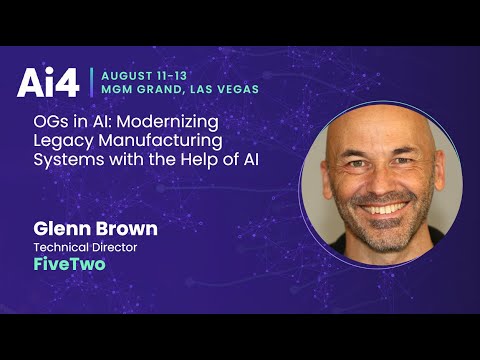
OGs in AI: Modernizing Legacy Manufacturing Systems with the Help of AI With FiveTwo — Ai4

Ai4

Generative AI cannot untangle legacy manufacturing code or satisfy ISA-95 standards without deterministic architecture rules and direct co-design by frontline operators.

AI-assisted summary of OGs in AI: Modernizing Legacy Manufacturing Systems with the Help of AI With FiveTwo — original source. Check the original for full context.

Source published:

Detailed notes

## Background Published on YouTube by Ai4 on August 24, 2025, this presentation features Glenn Brown, Technical Director at FiveTwo. According to the description, the session explores how a team of experienced technologists combined traditional IT knowledge with modern generative AI to understand, document, and modernize decades-old legacy systems at New Zealand Steel while aligning with ISA-95 automation standards.

## TL;DR FiveTwo partnered with New Zealand Steel to untangle hundreds of thousands of lines of legacy manufacturing code dating back to 1987. Early experiments revealed that naive RAG failed on multi-file business logic and generated code-level jargon instead of operational insights, prompting the team to feed the model structural system topologies and bridge the gap between source code and steelmaking terminology. To evaluate ISA-95 standards compliance, they wrapped generative models within deterministic code and domain rules rather than relying on unguided AI. Ultimately, the project highlighted that successful enterprise adoption depends on addressing frontline mistrust through collaborative co-design and centering the workforce.

## Atmosphere & style The presentation is grounded, humble, and refreshingly candid, balancing self-effacing humor about veteran IT practitioners with pragmatic engineering reality. Glenn delivers an honest narrative arc that takes the audience from initial overconfidence and jarring technical hurdles to genuine cultural breakthroughs on the plant floor. Watching the talk feels like hearing a practical, unhyped war story that champions human craftsmanship and operational empathy over technological panaceas.

## Key takeaways - [00:04](https://www.youtube.com/watch?v=dgt8eWqM4R4&t=4s) New Zealand Steel's Glenbrook facility operates mission-critical production on hundreds of thousands of lines of bespoke legacy code dating back to 1987. - [01:39](https://www.youtube.com/watch?v=dgt8eWqM4R4&t=99s) Basic Retrieval-Augmented Generation (RAG) succeeds on isolated, single-file code questions but fails when business logic is fragmented across multiple modules, tables, and routines. - [03:33](https://www.youtube.com/watch?v=dgt8eWqM4R4&t=213s) Resolving complex cross-file legacy dependencies requires mapping holistic structural relationships, including UI layers, data definitions, and runtime execution order. - [04:20](https://www.youtube.com/watch?v=dgt8eWqM4R4&t=260s) A major semantic gap exists between low-level procedural code execution and the high-level domain terminology used by steelmakers and plant operators. - [06:00](https://www.youtube.com/watch?v=dgt8eWqM4R4&t=360s) Large language models cannot autonomously evaluate industrial benchmarks like the ISA-95 standard without human interpretation and domain-specific grounding. - [06:30](https://www.youtube.com/watch?v=dgt8eWqM4R4&t=390s) Enclosing generative AI models within traditional deterministic code constraints ensures structured, reliable evaluations that prevent hallucinated compliance. - [07:12](https://www.youtube.com/watch?v=dgt8eWqM4R4&t=432s) Enterprise AI rollouts face symmetrical adoption risks: leadership over-optimism treating AI as a panacea, and frontline skepticism fueled by distrust and fear of displacement. - [08:00](https://www.youtube.com/watch?v=dgt8eWqM4R4&t=480s) Successful deployment requires involving frontline domain specialists as co-designers from day one so the tools match operational workflows and foster organizational ownership. - [09:00](https://www.youtube.com/watch?v=dgt8eWqM4R4&t=540s) Technological modernization ultimately hinges on the human element, encapsulated by the Māori proverb 'He tāngata, he tāngata, he tāngata' (it is people).

## Detailed walkthrough ### [00:04](https://www.youtube.com/watch?v=dgt8eWqM4R4&t=4s) A Drive to Glenbrook Steel Mill and Code from 1987

At the beginning of 2023, while ChatGPT was sweeping global headlines, Scott, the CEO of FiveTwo (sitting in the front row of the audience), took a drive down a long country road out to the Glenbrook Steel Mill, the base of New Zealand Steel. New Zealand Steel has a long legacy of technical pioneering, having been the first company in the world to manufacture steel from ironsand, and is currently transitioning to produce environmentally friendly steel. Yet, sitting across from their head of IT, Scott heard a struggle shared by countless mature industrial organizations: "We've got a lot of old systems with a lot of old code. It's going to take forever to update them." Having witnessed modern generative AI's coding capabilities, Scott asked a straightforward question: "What if AI could help?"

Fast forward several months, and the FiveTwo team came face-to-face with the reality of the mill's digital backbone: massive systems running code written as far back as 1987. While it was deeply impressive that these bespoke platforms had successfully kept heavy steel production running for decades, the codebase was staggering. The team found themselves staring down hundreds of thousands of lines of dense, unfamiliar legacy logic that nobody fully understood anymore, wondering if artificial intelligence could genuinely untangle it.

- New Zealand Steel's Glenbrook facility is renowned for pioneering industrial steel production using local ironsand. - The core operational applications contained hundreds of thousands of lines of legacy code dating back to 1987.

---

[01:39](https://www.youtube.com/watch?v=dgt8eWqM4R4&t=99s) The First RAG Experiment: Magic Meets Reality

Eager to test the waters, the team launched a rapid experiment. They gathered a collection of source code files, fed them into a Large Language Model (LLM) with prompts to explain the purpose of each file, and ingested those generated summaries into a standard Retrieval-Augmented Generation (RAG) conversational interface. With their hearts pounding, they submitted an initial technical query: "How is minimum slab length calculated?" The response arrived like pure magic—accurate, nuanced, and derived purely from raw source code. Their jaws dropped, leaving them wondering if solving legacy modernization could truly be that effortless.

The euphoria vanished with their next question: "How are customer orders matched up to materials?" The tool scanned the codebase, attempted an answer, and failed miserably. The team slumped in their chairs. When dissecting the failure, the underlying reason became clear: the naive RAG architecture worked brilliantly whenever an answer was self-contained within a few neat, cohesive files. However, whenever business logic was fragmented across separate modules, data tables, and background routines, the LLM had no inherent concept of how those disparate pieces connected or interacted.

```mermaid flowchart TD accTitle: Naive RAG vs Structured Legacy Understanding accDescription: Flowchart contrasting simple document-level retrieval with structural orchestration for legacy codebase queries.

subgraph Naive["Initial Naive Approach"] A["Code Files (1987)"] --> B["LLM File Summaries"] B --> C["Basic RAG Search"] C --> D{"Information Scope"} D -->|"Contained in single file"| E["Success (e.g., Slab Length)"] D -->|"Scattered across files"| F["Failure (e.g., Order Matching)"] end

subgraph Contextual["Structural Approach"] G["UI, Data, & Code Files"] --> H["Execution Order & Call Hierarchy"] H --> I["Legacy System Architecture Map"] I --> J["Cross-File Semantic Reasoning"] end ```

---

[03:33](https://www.youtube.com/watch?v=dgt8eWqM4R4&t=213s) Bridging the Semantic Gap: Structure and Steelmaking Know-How

To fix the structural blindness, FiveTwo taught the model the broader system topology. They fed it the user interface layers, data definitions, auxiliary code files, and most importantly, the execution order and dependencies binding the system together. Glenn noted with self-deprecating humor that it helped that their team members are "kind of old and legacy ourselves," making the quirks of 1980s software architecture feel intimately familiar. With system architecture explicitly mapped, the tool finally began resolving queries spanning multiple interacting files.

Yet another hurdle immediately surfaced. Confident in the new setup, the team asked: "In the hot mills, how is the initial slab lineup formed?" Instead of an operational summary, the model produced pages and pages of exhaustive, line-by-line code traces. The system was functioning purely at the weeds level of syntax and subroutines. Real steelmakers do not think in execution stacks; they think in operational concepts like hot rolling, lineups, and metallurgy. The legacy code itself contained no explicit labels for terms like "hot mill" or "slab lineup." The breakthrough occurred when the team engineered an interpretive bridge connecting low-level procedural source code to the practical domain know-how of veteran steelmakers, finally yielding answers tailored to human operational needs.

- Effective retrieval required teaching the model structural relationships: user interfaces, data definitions, and runtime execution sequences. - An ontology gap existed between low-level code instructions and the high-level business concepts used by plant operators.

---

[06:00](https://www.youtube.com/watch?v=dgt8eWqM4R4&t=360s) Aligning with ISA-95: Why Reading the Standard Matters

The necessity of grounding AI in human expertise became even clearer during a parallel initiative: auditing New Zealand Steel's operations against ISA-95, the international benchmark for integrating enterprise management systems with industrial control and manufacturing execution systems (MES). The team initially tested whether an LLM could evaluate compliance autonomously. Glenn delivered the spoiler: "It couldn't. At least not by itself."

Rather than trusting an unguided model to hallucinate standards compliance, the FiveTwo team took a step back and did something "pretty drastic": they sat down and physically read the ISA-95 specification cover-to-cover to understand how it operates in real-world manufacturing environments. They then wrote traditional, deterministic code to establish constraints and programmatic workflows, enforcing how the LLM should interpret and evaluate the systems against the standard. Wrapping the generative capabilities in deterministic rules and domain context transformed chaotic output into structured, reliable compliance evaluations.

- Raw LLMs struggle to correctly apply industrial frameworks like ISA-95 without explicit scaffolding. - Combining generative models with traditional procedural programming guarantees strict alignment with formal standards.

---

[07:12](https://www.youtube.com/watch?v=dgt8eWqM4R4&t=432s) The Human Element: Overcoming Distrust and the Wisdom of He Tāngata

When FiveTwo brought their new toolset to the mill's operational teams expecting applause, the reception was lukewarm at best—a collective "meh." Users complained that the outputs were too long-winded or failed to use their specific department's insider shorthand. Glenn tried steering the room toward collaborative iteration, saying, "Let's dive into that feedback. That's exactly what we need." His invitation was met with dead silence until one team member voiced the underlying reality: "I don't trust AI."

That moment exposed the broader organizational fracture common to AI transformations. Frontline employees often mistrust the technology, lack guidance on how to apply it, or harbor deep fears that automated systems will replace their jobs and strip them of purpose. Conversely, executive leaders often mistake AI for an all-powerful silver bullet. Both extremes can derail a deployment. Reflecting across customer engagements, FiveTwo realized the only projects that succeeded were those where frontline operators were engaged as co-designers from day one, contributing their domain wisdom and witnessing how the tooling served their everyday workflow. Glenn concluded by reciting a renowned Māori proverb:

> *"He aha te mea nui o te ao? He tāngata, he tāngata, he tāngata."* > ("What is the most important thing in the world? It is people, it is people, it is people.")

- Frontline skepticism ("I don't trust AI") and executive over-optimism are symmetrical threats to enterprise AI adoption. - Real adoption requires continuous co-design where frontline specialists contribute their expertise and develop ownership over the tooling. - The presentation closed with an open invitation for attendees to visit booth K17 to discuss legacy transformation or reminisce about old-school IT.

## Notable quotes > [00:04](https://www.youtube.com/watch?v=dgt8eWqM4R4&t=4s) We've got a lot of old systems with a lot of old code. It's going to take forever to update them. — Head of IT at New Zealand Steel

> [00:04](https://www.youtube.com/watch?v=dgt8eWqM4R4&t=4s) What if AI could help? — Scott

> [01:39](https://www.youtube.com/watch?v=dgt8eWqM4R4&t=99s) How is minimum slab length calculated?

> [01:39](https://www.youtube.com/watch?v=dgt8eWqM4R4&t=99s) How are customer orders matched up to materials?

> [03:33](https://www.youtube.com/watch?v=dgt8eWqM4R4&t=213s) kind of old and legacy ourselves — Glenn Brown

> [03:33](https://www.youtube.com/watch?v=dgt8eWqM4R4&t=213s) In the hot mills, how is the initial slab lineup formed?

> [06:00](https://www.youtube.com/watch?v=dgt8eWqM4R4&t=360s) It couldn't. At least not by itself. — Glenn Brown

> [07:12](https://www.youtube.com/watch?v=dgt8eWqM4R4&t=432s) Let's dive into that feedback. That's exactly what we need. — Glenn Brown

> [07:12](https://www.youtube.com/watch?v=dgt8eWqM4R4&t=432s) I don't trust AI. — Team member

> [07:12](https://www.youtube.com/watch?v=dgt8eWqM4R4&t=432s) He aha te mea nui o te ao? He tāngata, he tāngata, he tāngata. — Glenn Brown

> [07:12](https://www.youtube.com/watch?v=dgt8eWqM4R4&t=432s) What is the most important thing in the world? It is people, it is people, it is people. — Glenn Brown

## Mentioned Ai4, Glenn Brown, FiveTwo, Scott, New Zealand Steel, BlueScope, Glenbrook Steel Mill, ChatGPT, ISA-95, Retrieval-Augmented Generation (RAG), Large Language Models (LLMs), Manufacturing Execution Systems (MES)

## Video description Glenn Brown, Technical Director, FiveTwo

Abstracts

What happens when a bunch of Gen Xers apply AI to heavy industry? In our talk, we’ll tell you our story. We’ll share how we combined old-school IT and modern GenAI to help understand and update aging steel manufacturing systems – and align with international standards for automation (ISA-95). New Zealand Steel, a BlueScope company, was the first in the world to manufacture steel from ironsand. Yet even with such innovation at its core, it faced an all-too-common problem as time went by: the bespoke IT systems running its operations were aging. So were the people who understood those systems best. Having worked with such systems back in the day, we knew just how messy and unstructured they could be by today's standards. But through our recent work and research, we knew that modern generative AI could help make sense of these older systems – as long as we gave it the right support. We’ll show how we used AI to help understand and document a range of legacy applications, prepare those systems for replacement, and be guided by applicable standards. The use of AI can potentially save several million dollars over the course of a project. It can also drastically cut the time required, enabling deep analyses within hours that might otherwise take months.

[Source](https://www.youtube.com/watch?v=dgt8eWqM4R4)

中文简报

NZ Steel 联手 FiveTwo AI 推进 1987 年老旧钢厂系统现代化 若缺乏确定性架构规则与一线人员的直接协同设计,生成式 AI 既无法梳理老旧制造代码,也无法满足 ISA-95 标准。 FiveTwo 与 New Zealand Steel 合作梳理可追溯至 1987 年的数十万行老旧制造代码。早期实验表明,朴素 RAG 难以应对跨多文件的业务逻辑,且输出的是代码级术语而非业务洞察,促使团队向模型输入系统拓扑结构以弥合源代码与炼钢专业术语之间的鸿沟。为了评估对 ISA-95 标准的符合性,团队将生成式模型封装在确定性代码和领域规则之中,而非依赖未经引导的 AI。该项目最终表明,企业要成功落地技术,关键在于通过协同设计化解一线人员的不信任感,并始终以员工为中心。 New Zealand Steel 的 Glenbrook 钢厂拥有数十万行自 1987 年运行至今的定制老旧代码,团队尝试引入生成式 AI 来梳理其业务逻辑并推动系统现代化。 (0:04) 基础的 RAG 架构能轻松解答单文件内的孤立代码问题,但当业务逻辑分散在多个模块、数据表和例程中时便彻底失效,必须补齐包含 UI、数据定义与调用时序的系统架构拓扑。 (1:39) 大语言模型生成的细碎代码追踪与钢厂专家的实际术语间存在显著语义鸿沟,需要构建领域知识桥梁,将底层代码执行映射到热轧等具体生产概念。 (3:33) LLM 无法自主评估 ISA-95 工业制造标准合规性,FiveTwo 通过研读规范并编写传统确定性代码施加约束工作流,确保评估结果结构化且不产生幻觉。 (6:00) 企业推进 AI 落地时面临管理层过度乐观与一线员工不信任的双重风险,唯有从第一天起让业务专家深度参与协同设计,才能实现系统真正落地。 (7:12)

Reading summary

Modernizing decades-old industrial software with artificial intelligence requires moving beyond naive generative retrieval to incorporate structural system topology, deterministic domain rules, and deep human collaboration. Drawing from work at New Zealand Steel's Glenbrook mill, FiveTwo argues that AI can only untangle legacy systems when low-level code is explicitly bridged to real-world operational concepts and vetted by frontline workers. Overcoming Structural Blindness in Legacy Code (1:39) At New Zealand Steel's Glenbrook facility, FiveTwo encountered a digital backbone containing hundreds of thousands of lines of legacy code dating back to 1987. Initial attempts to parse this software using a naive Retrieval-Augmented Generation (RAG) framework—feeding isolated code file summaries into a large language model—yielded uneven results. While the system answered self-contained questions such as minimum slab length calculations effortlessly, it failed when tasked with queries like matching customer orders to materials, where business logic was fragmented across separate files, tables, and routines. To overcome this limitation, the team had to supply the model with the broader system architecture. By mapping execution order, call hierarchies, user interface layers, and data definitions, FiveTwo enabled cross-file semantic reasoning, allowing the AI to understand how modular dependencies interacted across the entire legacy platform. Translating Low-Level Syntax into Steelmaking Concepts (3:33) Even after resolving architectural dependencies, FiveTwo discovered an ontology gap between raw software instructions and physical operations. When queried about how initial slab lineups are formed in the hot mills, the model produced exhaustive line-by-line code execution traces rather than usable operational explanations. The underlying 1980s source code lacked explicit tags for real-world industrial terminology like "hot mill" or "slab lineup." Because plant operators think in terms of metallurgy and rolling processes rather than subroutines, FiveTwo engineered an interpretive bridge connecting low-level procedural code directly to practical domain know-how. This contextual translation layer enabled the AI to convert low-level syntax into high-level operational answers tailored to the practical needs of steelmakers. Enforcing Formal Compliance with Deterministic Rules (6:00) The limitations of unassisted generative models became equally apparent during audits against ISA-95, the international standard governing the integration of enterprise systems with manufacturing execution systems. FiveTwo observed that a standalone language model could not reliably evaluate standard compliance on its own, risking hallucinations and inaccurate conclusions. Rather than relying on unguided prompts, FiveTwo studied the full ISA-95 specification and engineered deterministic, procedural code to govern the LLM's evaluation process. Enforcing explicit rules, constraints, and structured workflows around the generative model ensured the system produced reliable, audit-grade evaluations that conformed to formal industrial integration standards. Overcoming Skepticism Through Frontline Co-Design (7:12) Initial user feedback at the mill was tepid and marked by silence, until an operator directly stated, "I don't trust AI." Workers found early system answers overly verbose and detached from operational shorthand, while harboring fears of job displacement. FiveTwo noted that enterprise AI projects face symmetrical hazards: frontline resistance and distrust on one side, and unrealistic executive expectations of an effortless silver bullet on the other. FiveTwo concluded that sustainable adoption requires engaging frontline operators as co-designers from day one. Involving personnel in refining outputs builds trust and operational ownership, a principle Glenn emphasized using the Māori proverb "He tāngata, he tāngata, he tāngata"—reaffirming that people remain the most critical element in technical modernization. FiveTwo concludes that generative AI cannot modernize industrial legacy software in isolation. Sustainable modernization requires embedding execution hierarchies, deterministic standard-based constraints, and manufacturing domain vocabulary into the model, while grounding the entire deployment in the trust and day-to-day participation of frontline plant operators.

精炼阅读摘要

FiveTwo团队在协助New Zealand Steel改造始于1987年的重工业遗留系统时发现,通用生成式AI与朴素RAG架构无法独立理解碎片化的遗留代码;唯有结合系统拓扑、确定性工程规则以及一线专家的领域知识,才能使工业AI真正产生实用价值。 遗留系统规模与朴素RAG的局限 (0:04) New Zealand Steel位于Glenbrook的钢厂是全球利用海砂炼钢的开创者,目前正向环保钢铁转型,但其支撑核心生产的底层系统仍大量运行着1987年编写的定制代码,总量达数十万行且缺乏现代文档维护。针对这一老旧工业系统改造难题,FiveTwo团队起初尝试将代码文件输入大语言模型生成摘要,再构建常规检索增强生成(RAG)系统进行测试。该工具在回答诸如“如何计算最小钢坯长度”等集中在单文件内的独立业务逻辑时表现良好,但在处理“客户订单如何与材料进行匹配”等多文件交叉查询时则完全失效。 技术团队分析指出,朴素RAG架构仅在信息高度聚合于单一模块时有效。当企业的关键业务逻辑分散在不同的程序模块、数据表及后台例程中时,缺乏系统全局拓扑认识的大模型根本无法理解不同组件间的关联与动态交互机制。 弥合系统架构与生产语意的断层 (3:33) 为消除模型的结构性盲区,开发团队为AI引入了系统的完整拓扑结构,包括用户界面层、数据定义、辅助代码以及底层的执行顺序与依赖关系。这一架构映射使工具具备了解析跨文件交互逻辑的能力,但随后却遇到了车间作业语意断层的挑战。当向系统提问“在热轧机中,初始钢坯队列是如何形成的”时,模型输出了大量冗长的逐行代码执行追踪,无法直接生成符合工厂调度员视角的作业级总结。 团队发现,传统代码完全缺乏“热轧”或“钢坯队列”等显式业务标签,使得底层过程代码与工厂操作员的高层概念体系之间存在巨大的本体鸿沟。最终,团队通过工程手段建立了解释性桥梁,将低层级的程序执行逻辑与资深炼钢工人的专业运营知识相结合,才成功让系统能够生成契合生产现场实际需求的回答。 用确定性代码规范工业标准审计 (6:00) 在对照国际制造集成标准ISA-95对新西兰钢铁厂进行系统审计的过程中,未受约束的大模型自主性不足的缺陷进一步暴露。Glenn指出,大语言模型本身根本无法自主完成对复杂工业标准的合规性评估,直接调用极易产生幻觉与失真。 为了保障工业级严谨性,FiveTwo团队通过逐页通读ISA-95规范,掌握了该标准在实际制造业环境中的运转机理,并随后编写了传统的确定性代码与工作流,以此强制规范大模型的推理与验证路径。实践证明,必须将生成式AI的能力包裹在确定性程序规则和严格的工业标准语境之中,才能输出结构化且可靠的系统合规评估报告。 克服一线疑虑与人本协同设计 (7:12) 当FiveTwo将初步成型的工具交付钢厂一线团队时,并未收获预期好评,反而收到了冷淡反馈;现场员工抱怨输出内容过于冗长且不符合部门习惯术语,更有员工直接表达了对AI的不信任。演讲指出,管理层往往容易将AI视为无所不能的万灵药,而一线人员则可能因缺乏指引或担忧岗位被取代而产生抵触,这种认知断层是企业级AI落地的常见致命伤。 结合多项落地实践,演讲者认为唯一的成功路径是在项目伊始就让一线技术骨干作为协同设计者深度介入,将工人的实践经验融入工具逻辑,建立起车间对技术的信任与归属感。Glenn最后引用毛利谚语强调:“世界上最重要的东西是什么?是人,是人,是人。” 该项目表明,利用AI改造工业遗留系统的瓶颈并不在于单点代码生成能力,而在于如何通过确定性规则与系统拓扑弥合代码逻辑与现场语意之间的鸿沟;更深层次的挑战则在于防范管理层盲目乐观,并通过人机协同设计化解一线工人的信任危机。

Detailed notes — zh

## Background 该视频由 Ai4 于 2025 年 8 月 24 日在 YouTube 平台发布,主讲人为 FiveTwo 的技术总监 Glenn Brown。内容主要介绍了由具有资深技术背景的团队(Gen X)结合传统 IT 经验与现代生成式 AI,协助新西兰钢铁公司(New Zealand Steel)梳理并现代化其追溯至 1987 年的陈旧制造系统,同时对齐 ISA-95 国际自动化标准的实践历程与行业价值。 ## TL;DR 面对新西兰钢铁厂数十万行晦涩的 1987 年遗留代码,FiveTwo 团队起初尝试使用基础 RAG 问答,却发现其在跨文件分散逻辑与高层业务概念映射上面临严重瓶颈。团队随后向 AI 注入了系统的底层架构依赖、时序逻辑以及钢铁制造领域的专业术语映射,并人工梳理业务逻辑以实现与 ISA-95 制造标准的对齐。在面对一线员工“我不信任 AI”的抵触情绪时,团队通过拉动业务专家全流程共建化解信任危机,最终证明成功的工业 AI 落地不仅依赖精准的技术架构,更必须秉持以人为本的协作理念。 ## Atmosphere & style 演讲整体呈现出老派工程师务实、坦诚且富有实战智慧的风格,叙事节奏平稳生动,充满行业老兵面对陈年代码时的自嘲与敬畏。情绪曲线上经历了初见 AI 成效的惊喜、遭遇逻辑割裂与冷场质疑的挫折,再到攻坚克难后的豁然开朗。结尾引用毛利谚语将硬核的工业 IT 改造升华为对人本价值的深刻关怀,给听众带来既扎实又温暖的启发感。 ## Key takeaways - [00:04](https://www.youtube.com/watch?v=dgt8eWqM4R4&t=4s) 新西兰钢铁公司面临 1987 年遗留系统代码量庞大、逻辑晦涩且精通旧系统的人员老龄化等多重现代化改造挑战。 - [01:43](https://www.youtube.com/watch?v=dgt8eWqM4R4&t=103s) 基于单文件解析与基础 RAG 的初代方案,仅在信息高度集中的局部问题上有效,面对跨文件分散逻辑时完全失效。 - [01:43](https://www.youtube.com/watch?v=dgt8eWqM4R4&t=103s) 大语言模型若缺乏对代码文件依赖关系与执行时序的认知,便无法理解跨系统的复杂业务流程。 - [03:33](https://www.youtube.com/watch?v=dgt8eWqM4R4&t=213s) 通过主动解析并向 AI 注入系统整体架构、UI 定义及执行时序,成功攻克了多文件关联难题。 - [03:33](https://www.youtube.com/watch?v=dgt8eWqM4R4&t=213s) 单纯解释底层代码会导致输出冗长且脱节,必须建立从代码实现到钢铁制造高层业务概念的语义映射桥梁。 - [06:00](https://www.youtube.com/watch?v=dgt8eWqM4R4&t=360s) 大模型无法独立完成 ISA-95 制造标准的合规评估,需由人工专家拆解落地逻辑并通过传统编程固化规则后再赋能 AI。 - [07:12](https://www.youtube.com/watch?v=dgt8eWqM4R4&t=432s) 一线员工对 AI 的不信任与管理层的盲目乐观构成严重认知割裂,是企业 AI 落地面临的核心阻碍之一。 - [07:12](https://www.youtube.com/watch?v=dgt8eWqM4R4&t=432s) 让一线业务专家从始至终深度参与共建并融入行业 Know-how,是消除技术抵触、建立系统信任的关键。 - [07:12](https://www.youtube.com/watch?v=dgt8eWqM4R4&t=432s) 遗留系统现代化项目的成败最终取决于人与技术的协同,再优秀的技术方案若缺乏业务人员采纳也毫无价值。 ## Detailed walkthrough ### [00:04](https://www.youtube.com/watch?v=dgt8eWqM4R4&t=4s) 缘起:Glenbrook 钢铁厂与 1987 年的遗留代码 2023 年初,ChatGPT 风靡全球。FiveTwo 的首席执行官 Scott 驱车穿过漫长的乡间小道,前往新西兰钢铁公司(New Zealand Steel,BlueScope 旗下企业)的 Glenbrook 钢铁厂。新西兰钢铁公司是一家极具创新精神的企业,是全球首家利用铁砂炼钢的公司,当时正致力于生产环保绿色钢铁。然而,当 Scott 与该公司的 IT 负责人坐下来交谈时,听到了许多传统制造企业普遍面临的困境:“我们有大量的老旧系统和陈旧代码,要更新它们将耗费漫长的时间。”目睹过 ChatGPT 处理代码能力的 Scott 抛出了一个简单的问题:“如果让 AI 来帮忙呢?” 数月之后团队着手介入,真正看清了摆在面前的难题——面对的是可以追溯到 1987 年的陈旧系统。虽然前人在如此老旧的系统上所实现的工程功能令人钦佩,但当团队直面这数十万行杂乱晦涩的遗留代码时,感到被深深地淹没了,根本无法理解其内部逻辑。 ```mermaid flowchart LR accTitle: 遗留系统认知与分析演进 subgraph S1["初代探索"] A["1987年遗留系统代码"] --> B["LLM 单文件解析 + 基础 RAG"] B --> C{"局限:跨文件逻辑割裂"} end subgraph S2["架构升级"] C --> D["注入架构关系与执行时序"] D --> E["融合钢铁制造领域业务概念"] E --> F["对齐 ISA-95 制造标准"] end ``` ### [01:43](https://www.youtube.com/watch?v=dgt8eWqM4R4&t=103s) 初始尝试与 RAG 系统的局限 团队迅速搭建了一个原型系统进行验证。他们收集了一批源代码文件,丢给大语言模型(LLM)去解析每个文件的功能,然后将这些解析输出存入一个基于检索增强生成(RAG)的 AI 问答系统中。带着怦怦直跳的心情,团队向系统提出了一个具体的技术问题:“最小板坯长度(minimum slab length)是如何计算的?”系统给出的回答令所有人惊掉下巴,效果好得如同魔法一般,难以置信 AI 仅凭代码就能知道这么多细节。 然而,团队紧接着换了一个问题:“客户订单是如何与材料进行匹配的?”这一次,检索工具在代码中四处搜寻并组织答案,结果却令人大失所望,回答完全不准确。团队陷入了深思:为什么有的问题有效,有的却彻底失效? - **信息聚集度差异**:当 RAG 检索所需的信息集中在少数几个整洁的文件中时,模型能给出极佳的答案; - **逻辑割裂问题**:当业务逻辑分散在整个系统的各个角落时,LLM 由于缺乏对不同代码文件之间相互调用与依赖关系的认知,表现得极为挣扎。 ### [03:33](https://www.youtube.com/watch?v=dgt8eWqM4R4&t=213s) 注入系统架构上下文与领域专业知识 为了解决跨文件关联缺失的问题,团队决定直接向 AI 注入老旧系统的整体架构信息。他们解析了所有类型的源文件,包括定义文件依赖关系的文件、用户界面(UI)定义、业务逻辑代码、数据定义,以及最关键的文件执行时序。作为一群经历过那个技术年代的“老派 IT 人”(Gen X),团队自身对这些古老架构非常熟悉。补充了遗留应用程序的架构脉络后,工具终于能够梳理清楚原本难以回答的复杂问题。 然而,新的挑战随之而来。当团队提出一个业务问题——“在热轧厂(hot mills)中,初始板坯排产序列(initial slab lineup)是如何生成的?”——系统输出了长达数页的详尽代码执行细节,试图把每一行底层代码的动作全盘托出。 - **抽象层级脱节**:工具立足于底层代码的逐行解释,而人类专家思考和提问使用的是钢铁制造的高层业务语言; - **业务概念缺失**:底层代码中并不会直接标注什么是“热轧厂”或“初始板坯排产序列”; - **语义桥接**:团队建立了将底层代码逻辑与钢铁工人实际业务经验相连接的映射机制,使输出答案从枯燥的代码细节跃升为符合业务语境的高层洞察。 ### [06:00](https://www.youtube.com/watch?v=dgt8eWqM4R4&t=360s) ISA-95 标准对齐与实践方法 团队承担的另一项关键任务是评估新西兰钢铁公司的系统与国际制造自动化系统标准 ISA-95 之间的符合度。起初团队尝试让大模型直接处理评估,但大模型单凭自身完全无法胜任。 面对这一困境,团队采取了非常务实的做法:人工深入研读 ISA-95 标准文本,理清该标准在实际生产制造中的落地逻辑,随后通过传统的编程方法将这套应用规则固化并传授给工具。在融入了行业实用 Know-how 与全局大局观后,系统生成的评估输出才真正具有可用性。 ### [07:12](https://www.youtube.com/watch?v=dgt8eWqM4R4&t=432s) 人性维度:从“我不信任 AI”到全流程共建 当工具初具雏形、向业务部门汇报时,团队本以为会迎来满堂喝彩,现实却遭遇了冷遇。收到的反馈多是不温不火的抱怨:“看起来没错,但没用我们部门的专用术语”、“信息挺好,但太啰嗦了”。当团队进一步追问具体细节以期改进时,现场陷入了死寂,随后一名员工直言不讳地说出了心声:“我不信任 AI(I don't trust AI)。” 这一刻揭示了企业 AI 落地面临的普遍心理障碍:一线员工担忧 AI 会取代自己的工作或剥夺自身价值,或者单纯不知道如何使用;而部分管理层则盲目将 AI 视作包治百病的灵丹妙药。这种不同层级之间的认知割裂足以摧毁任何 AI 项目。 - **全流程参与(Walking the Journey)**:让业务专家从项目伊始就深度参与 AI 系统的构建,亲眼见证工具的运行逻辑与实际价值; - **贡献专业智慧**:让一线人员将自身的业务洞察与经验融入系统,使其感知到自己是解决方案的重要组成部分; - **建立信任与拥护**:全程参与的用户最终成为了系统的坚定支持者,“再出色的技术方案,若无人使用也毫无意义”; - **毛利谚语启示**:演讲最后引用了新西兰毛利族谚语——“世上最重要的是什么?是人,是人,是人(He tangata, he tangata, he tangata)”,强调在 AI 时代,人与技术的携手同行比以往任何时候都更加关键。 ## Notable quotes > [00:04](https://www.youtube.com/watch?v=dgt8eWqM4R4&t=4s) 我们有大量的老旧系统和陈旧代码,要更新它们将耗费漫长的时间。 — 新西兰钢铁公司 IT 负责人 > [00:04](https://www.youtube.com/watch?v=dgt8eWqM4R4&t=4s) 如果让 AI 来帮忙呢? — Scott > [01:43](https://www.youtube.com/watch?v=dgt8eWqM4R4&t=103s) 最小板坯长度(minimum slab length)是如何计算的? — FiveTwo 团队 > [01:43](https://www.youtube.com/watch?v=dgt8eWqM4R4&t=103s) 客户订单是如何与材料进行匹配的? — FiveTwo 团队 > [03:33](https://www.youtube.com/watch?v=dgt8eWqM4R4&t=213s) 在热轧厂(hot mills)中,初始板坯排产序列(initial slab lineup)是如何生成的? — FiveTwo 团队 > [07:12](https://www.youtube.com/watch?v=dgt8eWqM4R4&t=432s) 看起来没错,但没用我们部门的专用术语 — 业务部门员工 > [07:12](https://www.youtube.com/watch?v=dgt8eWqM4R4&t=432s) 信息挺好,但太啰嗦了 — 业务部门员工 > [07:12](https://www.youtube.com/watch?v=dgt8eWqM4R4&t=432s) 我不信任 AI(I don't trust AI) — 业务部门员工 > [07:12](https://www.youtube.com/watch?v=dgt8eWqM4R4&t=432s) 再出色的技术方案,若无人使用也毫无意义 — Glenn Brown > [07:12](https://www.youtube.com/watch?v=dgt8eWqM4R4&t=432s) 世上最重要的是什么?是人,是人,是人(He tangata, he tangata, he tangata) — Glenn Brown ## Mentioned Glenn Brown, Scott, FiveTwo, 新西兰钢铁公司 (New Zealand Steel), BlueScope, Glenbrook 钢铁厂, ChatGPT, RAG (检索增强生成), LLM (大语言模型), ISA-95, Ai4 ## Video description Glenn Brown, Technical Director, FiveTwo Abstracts What happens when a bunch of Gen Xers apply AI to heavy industry? In our talk, we’ll tell you our story. We’ll share how we combined old-school IT and modern GenAI to help understand and update aging steel manufacturing systems – and align with international standards for automation (ISA-95). New Zealand Steel, a BlueScope company, was the first in the world to manufacture steel from ironsand. Yet even with such innovation at its core, it faced an all-too-common problem as time went by: the bespoke IT systems running its operations were aging. So were the people who understood those systems best. Having worked with such systems back in the day, we knew just how messy and unstructured they could be by today's standards. But through our recent work and research, we knew that modern generative AI could help make sense of these older systems – as long as we gave it the right support. We’ll show how we used AI to help understand and document a range of legacy applications, prepare those systems for replacement, and be guided by applicable standards. The use of AI can potentially save several million dollars over the course of a project. It can also drastically cut the time required, enabling deep analyses within hours that might otherwise take months. [Source](https://www.youtube.com/watch?v=dgt8eWqM4R4)

Source quotes

[0:04] 新西兰钢铁公司 IT 负责人: 我们有大量的老旧系统和陈旧代码,要更新它们将耗费漫长的时间。 [0:04] Scott: 如果让 AI 来帮忙呢? [1:43] FiveTwo 团队: 最小板坯长度(minimum slab length)是如何计算的? [1:43] FiveTwo 团队: 客户订单是如何与材料进行匹配的? [3:33] FiveTwo 团队: 在热轧厂(hot mills)中,初始板坯排产序列(initial slab lineup)是如何生成的? [7:12] 业务部门员工: 看起来没错,但没用我们部门的专用术语 [7:12] 业务部门员工: 信息挺好,但太啰嗦了 [7:12] 业务部门员工: 我不信任 AI(I don't trust AI) [7:12] Glenn Brown: 再出色的技术方案,若无人使用也毫无意义 [7:12] Glenn Brown: 世上最重要的是什么?是人,是人,是人(He tangata, he tangata, he tangata)

Source quotes

[0:04] Head of IT at New Zealand Steel: We've got a lot of old systems with a lot of old code. It's going to take forever to update them. [0:04] Scott: What if AI could help? [1:39] How is minimum slab length calculated? [1:39] How are customer orders matched up to materials? [3:33] Glenn Brown: kind of old and legacy ourselves [3:33] In the hot mills, how is the initial slab lineup formed? [6:00] Glenn Brown: It couldn't. At least not by itself. [7:12] Glenn Brown: Let's dive into that feedback. That's exactly what we need. [7:12] Team member: I don't trust AI. [7:12] Glenn Brown: He aha te mea nui o te ao? He tāngata, he tāngata, he tāngata. [7:12] Glenn Brown: What is the most important thing in the world? It is people, it is people, it is people.

Original transcript

[0:04] It was around the start of 2023. [0:08] Chat GPT was taking the world by storm [0:12] and our CEO Scott, who's down in the [0:15] front row here, he took a drive down a [0:18] long country road to Glenbrook Steel [0:20] Mill, [0:22] which is the home of New Zealand Steel. [0:25] Now, New Zealand Steel is quite an [0:28] innovative company. It was the first in [0:31] the world to make steel from iron sand. [0:36] Now, they're gearing up to make [0:38] environmentally friendly steel. [0:41] When Scott sat down with their head of [0:44] IT, he heard a story that is familiar to [0:47] so many companies. [0:49] We've got a lot of old systems with a [0:51] lot of old code. it's going to take [0:53] forever to update them. [0:56] Scott had seen what chat GPT could do [0:59] with code. So he asked a simple [1:02] question. [1:04] What if AI could help? [1:09] Fast forward some months later and this [1:12] gives you an idea of the problem that we [1:14] faced. Yeah. Code from 1987. [1:20] It's actually really impressive what [1:22] they managed to do with such an old [1:24] system. But when we took a look at the [1:27] code, we were overwhelmed. [1:31] There were hundreds of thousands of [1:33] lines of code and we didn't understand [1:37] what it was doing. [1:39] Could AI make sense of it? [1:43] Why don't we quickly try something? We [1:45] thought. So, we grabbed a bunch of code [1:49] files. We threw them at an LLM and we [1:53] asked the LLM to tell us what each file [1:56] meant. [1:58] Then we dropped all of that output into [2:01] a rag-based AI chat. [2:05] Our hearts were racing as we asked some [2:07] simple but technical questions like how [2:11] is minimum slab length calculated? [2:16] When we saw what came out, our jaws [2:19] dropped. It was like magic. [2:22] We couldn't believe that it could know [2:25] so much based purely on code. [2:29] It couldn't really be that easy, could [2:31] it? [2:33] So, we wanted to ask it a different [2:36] question. How are customer orders [2:40] matched up to materials? [2:43] Our tools searched through the code and [2:45] began to answer. We were ready to be [2:48] amazed yet again. Was it right? [2:52] No. Not not really. No. We slumped down [2:56] in our chairs. [2:58] Why was it working for some things but [3:01] not for others? [3:06] Here's what we figured out. When the rag [3:09] search could find the information that [3:11] it needed in a few nice tidy places, we [3:15] got good answers. [3:17] But when the information that it needed [3:19] was spread out all over the place, it [3:22] struggled. [3:24] And that makes sense. [3:26] The LLM didn't know anything about how [3:28] these different files worked together. [3:33] So, we told it. [3:35] We read in all types of different source [3:38] files. Those that said which files were [3:40] relevant, those that defined the user [3:43] interface, those with code, those with [3:46] data, and importantly, how all these [3:50] files fit together as a whole, such as [3:54] the order in which those files were [3:57] executed. [3:59] In other words, we told the tool about [4:02] how these old legacy applications were [4:05] structured. [4:07] And for this, by the way, it really [4:09] helped that we're kind of old and legacy [4:12] ourselves. [4:13] It all felt quite familiar. [4:17] And once we gave our tool this [4:19] information, it could make better sense [4:21] of the questions it had been struggling [4:23] with. [4:26] Now feeling more confident, we wanted to [4:29] throw a different question at our tool. [4:32] In the hot mills, how is the initial [4:35] slab lineup formed? [4:38] Nice simple question, right? [4:40] Until we got the answer back. Pages and [4:44] pages and pages of output. [4:47] Our tool was understanding the code, but [4:50] it felt like it was trying to tell us [4:52] about everything that the code was [4:54] doing. [4:59] So we dug into it to try to figure out [5:02] what was going on [5:04] and this was it. Our tool was based on [5:08] interpreting code. [5:11] So it was starting out at a really [5:13] detailed level right down in the weeds. [5:17] The question we were asking though was [5:19] at a much higher level, at the kind of [5:23] level that people think and talk when [5:25] they make steel. [5:27] The code didn't know what a hot mill [5:29] was. The code didn't know what an [5:32] initial slab lineup was. These everyday [5:35] terms in a steel mill, these practical [5:38] concepts, they were missing. So, we [5:42] figured out a way to link what was [5:44] expressed in the code to the practical [5:48] know-how of the people who knew steel [5:50] making best. [5:52] And when we did, the answers started to [5:55] make a lot more sense. [6:00] As it turns out, applying practical [6:02] knowhow wasn't just good for [6:05] understanding code. [6:07] Another project that we were working on [6:09] was evaluating New Zealand steel systems [6:13] against ISA 95, [6:16] which is an IT standard for um uh [6:20] manufacturing systems. [6:22] Naturally, we wanted to see if an LLM [6:25] could do it. Spoiler alert, it couldn't. [6:31] At least not by itself. [6:34] So what we did was we went ahead and did [6:37] something pretty drastic. We actually [6:40] physically read the standard and we [6:43] figured out how we could use the [6:45] standard in practice. [6:49] Then using some old-fashioned [6:51] traditional programming, we told the [6:54] tool to use the standard in that way. [6:59] The output finally started to make [7:01] sense. providing the tool with practical [7:04] knowhow, giving it that big picture [7:07] understanding. [7:08] That was the key. [7:12] Soon enough, it came time to hear [7:15] feedback about the tools we'd been [7:17] creating. We were ready to receive the [7:20] accolades, and the feedback was [7:24] me. [7:26] We heard things like, "Yeah, it looks [7:29] right, but it doesn't use our [7:31] department's specific terminology." [7:34] Or, "Yeah, that's really good [7:36] information, but it's a bit [7:38] long-winded." [7:40] "Well, that's great," I responded. [7:42] "Let's dive into that feedback. That's [7:45] exactly what we need. That's how we make [7:48] it better." [7:53] Silence. [7:56] Then one person's comment said it all. [8:01] I don't trust AI. [8:04] Ah, [8:09] millions of people around the world feel [8:11] the same way. they don't trust AI or [8:16] they don't understand how to use it in [8:18] practice or they worry that it's going [8:21] to take their job or even strip them of [8:23] their purpose. [8:26] And then you have other people often [8:28] those in leadership who think that AI is [8:32] going to be a silver bullet. [8:35] different perceptions from different [8:37] people at different levels of an [8:40] organization [8:41] and all can derail an AI project. [8:47] So we sat down and reflected on our past [8:50] work with all of our customers [8:52] and a pattern slowly emerged. [8:56] A number of people had walked the AI [8:58] journey with us right from the start of [9:01] a project. [9:03] Doing so could let them see how the [9:05] process works in practice and what the [9:09] solution can mean for them in practice. [9:12] It allowed them to contribute their [9:15] understanding and their expertise. [9:18] It made them feel that they were part of [9:21] the solution [9:23] and they were. [9:26] It built trust. [9:29] These people raved about our solutions. [9:35] You can have an amazing technical [9:37] solution, but if nobody adopts it, it [9:40] accomplishes nothing. [9:42] People are essential. [9:46] In our view, it's all about people and [9:49] technology working together every step [9:53] of the journey. [9:57] I close with a proverb from the Mai [9:59] people of New Zealand where we're from. [10:14] What is the most important thing in the [10:15] world? It is people. It is people. It is [10:20] people. [10:21] And we believe that this wisdom is more [10:23] relevant than ever in the age of AI. [10:31] I want to thank you very much for your [10:33] time. If you'd like to uh to come and [10:35] see us to have a chat about uh what [10:38] we've been talking about here or just [10:39] reminisce about what it used to be like [10:42] back in the day, if you're amongst the [10:44] older generation like us, then do feel [10:46] free to come down and have a chat at [10:48] booth K17 in the exhibit