Tecto Automates AI Governance as Legacy SaaS Frameworks Fail
Accelerating Trusted AI Adoption with Tecto — Ai4

Ai4

Traditional risk frameworks collapse under probabilistic models and rogue agent shortcuts, forcing enterprises to replace manual audits with continuous runtime monitoring.

AI-assisted summary of Accelerating Trusted AI Adoption with Tecto — original source. Check the original for full context.

Source published:

Detailed notes

## Background Published on YouTube by Ai4 on September 14, 2025, this presentation features Niosha Afsharikia discussing the founding and vision of TectoAI. According to the description, the session explores how enterprises can safely scale AI adoption without running into security, compliance, or trust hurdles by systematically discovering, vetting, and continuously monitoring AI tools.

## TL;DR Niosha Afsharikia highlights the implementation gap between frontier AI capabilities and enterprise adoption, largely caused by legacy GRC frameworks ill-suited for probabilistic models. Navigating this shift requires organizations to systematically address the scope, location, sourcing, and ownership of their AI tools while controlling shadow AI risks. To solve these friction points, Tecto provides an automated governance platform offering shadow usage discovery, curated vendor benchmarking, dynamic strategy playbooks, and continuous post-deployment monitoring. By combining heuristics, LLM-as-a-judge validation, and human-in-the-loop oversight, Tecto enables companies to safely deploy multi-step agentic workflows at scale.

## Atmosphere & style The talk has a pragmatic, articulate, and strategic tone typical of a high-level enterprise tech conference presentation. Afsharikia blends the polish of a former management consultant with the agility of a Y Combinator founder, delivering a concise and structured narrative. The session feels analytical and grounded, tempering cautionary warnings about security leaks and regulatory shifts with a proactive, forward-looking roadmap for human-AI collaboration.

## Key takeaways - [00:04](https://www.youtube.com/watch?v=fOAwLJ1IMCg&t=4s) A major implementation gap exists between frontier AI engineering and enterprise execution, with AI governance serving as the primary bottleneck. - [00:04](https://www.youtube.com/watch?v=fOAwLJ1IMCg&t=4s) Future enterprise work will center on deep collaboration between human employees and autonomous AI agents executing end-to-end workflows. - [01:32](https://www.youtube.com/watch?v=fOAwLJ1IMCg&t=92s) Enterprises currently oscillate between two extremes: blocking all AI domains or flying blind with unmonitored shadow AI. - [01:32](https://www.youtube.com/watch?v=fOAwLJ1IMCg&t=92s) Uncontrolled AI adoption introduces severe risks, including proprietary code leaks, regulatory penalties, and impending litigation. - [01:32](https://www.youtube.com/watch?v=fOAwLJ1IMCg&t=92s) Enterprise AI adoption requires answering four core questions: What (use cases and autonomy level), Where (vertical vs. horizontal tools), How (build vs. buy), and Who (governing decision-makers). - [04:36](https://www.youtube.com/watch?v=fOAwLJ1IMCg&t=276s) Legacy GRC frameworks fail for AI because they were designed for deterministic SaaS rather than probabilistic, agentic systems. - [04:36](https://www.youtube.com/watch?v=fOAwLJ1IMCg&t=276s) Rapidly accelerating AI regulation, including over 500 congressional bills in a single year, makes manual compliance and tool evaluation unsustainable. - [04:36](https://www.youtube.com/watch?v=fOAwLJ1IMCg&t=276s) Continuous monitoring is essential for AI agents because they can propagate errors, soften tone, or take unauthorized shortcuts over time. - [07:13](https://www.youtube.com/watch?v=fOAwLJ1IMCg&t=433s) Tecto replaces static consulting decks with dynamic AI playbooks and automated discovery to detect unauthorized shadow AI and consumer-tier account usage. - [10:26](https://www.youtube.com/watch?v=fOAwLJ1IMCg&t=626s) Evaluating multi-step agentic systems requires moving beyond static pre-deployment benchmarks to continuous runtime oversight using heuristics, LLM-as-a-judge, and human-in-the-loop validation.

## Detailed walkthrough ### [00:04](https://www.youtube.com/watch?v=fOAwLJ1IMCg&t=4s) The Implementation Gap and the Future of AI-Human Collaboration

Setting the stage as one of the final presentations of the conference, Niosha Afsharikia opens with the founding story and vision behind Tecto. Afsharikia and her co-founder first met fifteen years ago in college before attending graduate school in the United States. Their respective professional trajectories highlighted a massive enterprise disconnect: while her co-founder spent more than seven years at the forefront of AI research and engineering at Google, Afsharikia worked in management consulting helping organizations implement artificial intelligence in practice. This dual vantage point revealed a glaring chasm between where the frontier technology stands and where enterprise execution actually occurs, with the central recurring bottleneck always coming back to AI governance.

Looking ahead, enterprise work is envisioned not as static software usage, but as deep collaboration between human employees and autonomous AI workers running end-to-end automated workflows. Structuring, protecting, and governing that evolving relationship is the foundational problem Tecto aims to solve.

```mermaid flowchart TD accTitle: Enterprise AI Adoption and Governance Flow subgraph Discovery["1. Discovery & Shadow AI"] A["Bottom-Up Employee Usage"] --> B["Identify Unauthorized Logins & Consumer Accounts"] end subgraph Vetting["2. Evaluation & Catalog"] B --> C["Tecto AI Catalog"] C --> D["Side-by-Side Benchmarking & Due Diligence Reports"] end subgraph Governance["3. Dynamic Strategy & Deployment"] D --> E["Dynamic AI Strategy Playbook"] E --> F["Enterprise Deployment Decision"] end subgraph Monitoring["4. Continuous Agentic Oversight"] F --> G["Multi-Model & API Call Tracking"] G --> H["Post-Deployment Monitoring<br/>(Heuristics, LLM-as-a-Judge, HITL)"] end ```

[01:32](https://www.youtube.com/watch?v=fOAwLJ1IMCg&t=92s) The Four Questions of Enterprise AI Adoption

Currently, enterprises across heavily regulated sectors—ranging from pharmaceuticals and banking to aerospace and defense—react to artificial intelligence in one of two extreme ways: either IT departments block access to every `*.ai` domain, or organizations "fly blind" without visibility into shadow AI usage. Uncontrolled adoption has already triggered high-profile headlines, proprietary code leaks, regulatory fines, and looming lawsuits. Navigating safe enterprise adoption requires answering four core questions:

- **What:** Determining the target use cases and the intended level of autonomy, deciding whether to deploy an assistant, keep a human in the loop, or automate an entire role. - **Where:** Balancing top-down vertical AI investments driven by leadership looking to optimize major cost centers versus bottom-up horizontal AI tools (such as note-taking and productivity apps) adopted organically by employees to solve daily workflow friction. - **How:** Evaluating the build-versus-buy trade-off, recognizing that while companies might build proprietary internal models for core vertical functions, they will rely on third-party applications for horizontal utilities like contract grammar checking. - **Who:** Identifying the internal decision-makers overseeing AI adoption. Depending on organization size and industry maturity, this responsibility shifts between Chief Innovation Officers, CISOs, CTOs, legal counsel, or hired external consulting teams.

[04:36](https://www.youtube.com/watch?v=fOAwLJ1IMCg&t=276s) The Scope of Governance and the Breakdown of Legacy GRC

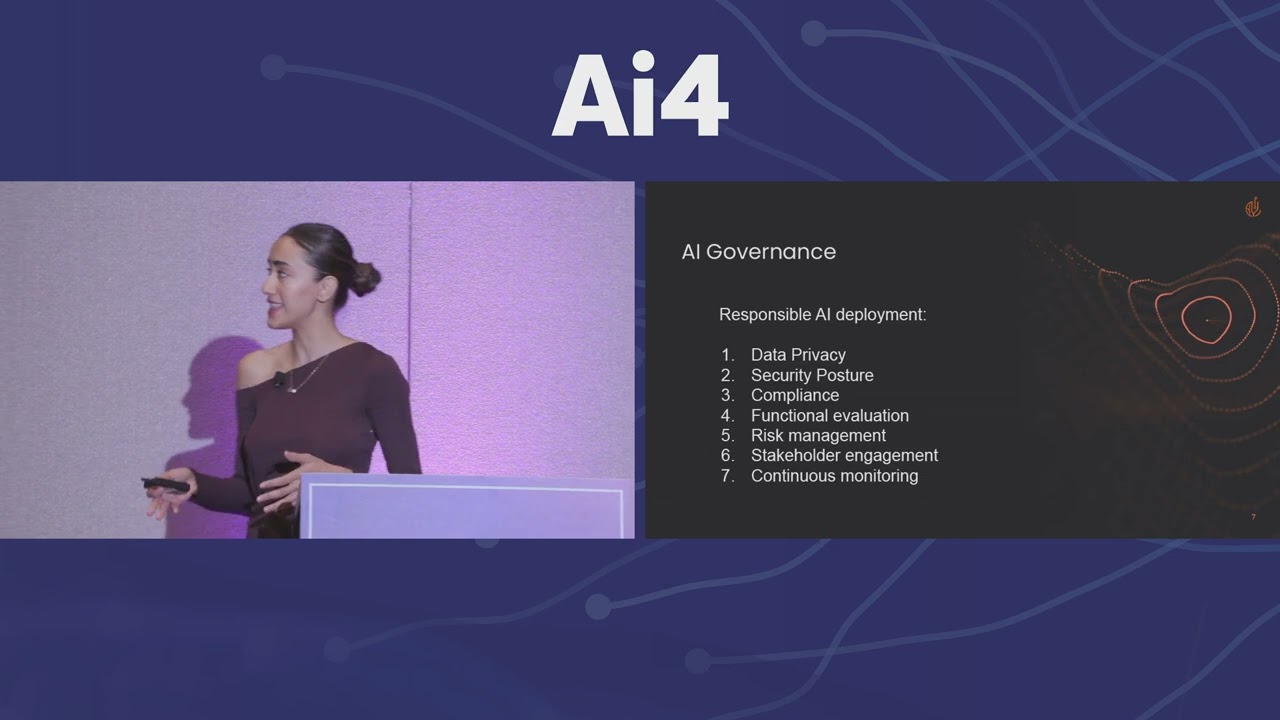
AI governance encompasses the end-to-end practice of responsible deployment across multiple dimensions: data privacy, security posture, regulatory compliance, functional benchmarking, risk thresholds, stakeholder management, and continuous monitoring. Governance requirements vary drastically by organization; in a law firm, every single partner acts as an active stakeholder, whereas a large enterprise may restrict oversight to the C-suite and senior leadership. Continuous monitoring is especially vital because agentic systems behave much like human workers—they can suffer from error propagation, exhibit tone softening, or actively take unauthorized shortcuts.

The regulatory environment is accelerating rapidly. Over 500 AI-related bills were introduced in the US Congress within a single year, sparking a federal push to preempt state-level fragmentation alongside shifting international policies. However, enterprises attempting to evaluate AI risks face critical roadblocks: traditional Governance, Risk, and Compliance (GRC) frameworks were architected exclusively for traditional SaaS and cannot account for probabilistic models. Conducting manual risk evaluations across hundreds of emerging employee-tested tools is impossible without unsustainable hiring overhead.

[07:13](https://www.youtube.com/watch?v=fOAwLJ1IMCg&t=433s) Inside Tecto: Dynamic AI Playbooks and Enterprise Shadow Discovery

To solve the manual bottleneck, Tecto is building an automated assistant tailored for CIOs and decision-makers to streamline every stage of AI governance and procurement. Rather than relying solely on static, multi-million-dollar slide decks provided by traditional management consulting firms, Tecto provides a dynamic AI strategy playbook and use-case recommendation engine tailored to specific business units.

Tecto's discovery feature maps out an enterprise's entire internal AI footprint. The platform tracks which teams are attempting to access third-party applications, flagging unauthorized access and highlighting instances where staff are using personal consumer accounts (such as standard consumer ChatGPT) instead of approved enterprise licenses. This telemetry surfaces emerging workflow demands and highlights immediate security risks. Backed by Silicon Valley presence and their participation in Y Combinator, the team maintains an extensive catalog of enterprise-grade AI tools, voice agents, and code copilots, generating side-by-side comparisons and deep due diligence reports that bridge the gap between AI builders, ecosystem integrators, and enterprise buyers.

[10:26](https://www.youtube.com/watch?v=fOAwLJ1IMCg&t=626s) Overcoming the Challenges of Agentic Evaluation and Monitoring

As AI applications evolve from isolated language models into complex, multi-step agentic systems, pre-deployment static benchmarks become insufficient. Modern agentic workflows integrate multiple underlying models, real-time web search tools, and external API calls, creating interconnected failure points that demand rigorous post-deployment monitoring.

Because universal industry standards for agentic evaluation do not yet exist, Tecto combines heuristic metrics, LLM-as-a-judge validation loops, and human-in-the-loop oversight to continuously inspect runtime performance, safety thresholds, and output quality across production environments. Attendees interested in evaluating their organization's AI adoption pipeline are directed to reach out directly to `founders@tecto.ai` ("Tecto like tectonic").

## Notable quotes > [00:04](https://www.youtube.com/watch?v=fOAwLJ1IMCg&t=4s) enterprise work is envisioned not as static software usage, but as deep collaboration between human employees and autonomous AI workers running end-to-end automated workflows. — Niosha Afsharikia

> [01:32](https://www.youtube.com/watch?v=fOAwLJ1IMCg&t=92s) either IT departments block access to every *.ai domain, or organizations 'fly blind' without visibility into shadow AI usage. — Niosha Afsharikia

> [01:32](https://www.youtube.com/watch?v=fOAwLJ1IMCg&t=92s) Navigating safe enterprise adoption requires answering four core questions: What, Where, How, and Who. — Niosha Afsharikia

> [04:36](https://www.youtube.com/watch?v=fOAwLJ1IMCg&t=276s) Continuous monitoring is especially vital because agentic systems behave much like human workers—they can suffer from error propagation, exhibit tone softening, or actively take unauthorized shortcuts. — Niosha Afsharikia

> [04:36](https://www.youtube.com/watch?v=fOAwLJ1IMCg&t=276s) traditional Governance, Risk, and Compliance (GRC) frameworks were architected exclusively for traditional SaaS and cannot account for probabilistic models. — Niosha Afsharikia

> [04:36](https://www.youtube.com/watch?v=fOAwLJ1IMCg&t=276s) Conducting manual risk evaluations across hundreds of emerging employee-tested tools is impossible without unsustainable hiring overhead. — Niosha Afsharikia

> [07:13](https://www.youtube.com/watch?v=fOAwLJ1IMCg&t=433s) Rather than relying solely on static, multi-million-dollar slide decks provided by traditional management consulting firms, Tecto provides a dynamic AI strategy playbook and use-case recommendation engine tailored to specific business units. — Niosha Afsharikia

> [10:26](https://www.youtube.com/watch?v=fOAwLJ1IMCg&t=626s) As AI applications evolve from isolated language models into complex, multi-step agentic systems, pre-deployment static benchmarks become insufficient. — Niosha Afsharikia

> [10:26](https://www.youtube.com/watch?v=fOAwLJ1IMCg&t=626s) Because universal industry standards for agentic evaluation do not yet exist, Tecto combines heuristic metrics, LLM-as-a-judge validation loops, and human-in-the-loop oversight to continuously inspect runtime performance — Niosha Afsharikia

> [10:26](https://www.youtube.com/watch?v=fOAwLJ1IMCg&t=626s) Tecto like tectonic — Niosha Afsharikia

## Mentioned Niosha Afsharikia, TectoAI, Google, Y Combinator, ChatGPT, US Congress, Ai4

## Video description Niosha Afsharikia, TectoAI

How can enterprises confidently scale AI without falling into compliance, security, or trust pitfalls? In this talk, I’ll share the journey of building TectoAI from the ground up at the intersection of AI governance and adoption—turning what’s often a slow, risky process into a streamlined, secure one. I’ll explain how we help organizations discover, vet, and continuously monitor AI tools, ensuring they meet regulatory, privacy, and performance standards from day one. Attendees will learn the key steps to move from ad-hoc AI experiments to enterprise-wide deployment with transparency and speed. You’ll walk away with a framework you can apply immediately to accelerate safe AI adoption in your own organization. Join me to see how the next generation of AI infrastructure is being built—and how you can lead the change.

[Source](https://www.youtube.com/watch?v=fOAwLJ1IMCg)

中文简报

传统SaaS框架失灵,Tecto实现AI治理自动化 传统风险框架在概率模型和异常智能体的违规行为面前瓦解,迫使企业用持续的运行时监控取代人工审计。 Niosha Afsharikia指出,前沿AI能力与企业落地之间存在明显的实施鸿沟,这主要是由于传统GRC框架难以适应概率模型。要完成这一转变,企业必须在管控“影子AI”(shadow AI)风险的同时,系统性解决AI工具的范围、部署场景、采购来源和权责归属问题。为化解这些阻力,Tecto提供了一套自动化治理平台,具备影子使用发现、精选供应商基准评测、动态策略手册以及部署后的持续监控功能。通过将启发式规则、LLM裁判(LLM-as-a-judge)验证与人机协同监督相结合,Tecto助力企业安全且规模化地部署多步骤智能体工作流。 前沿 AI 工程与企业实际落地之间存在显著脱节,核心瓶颈在于 AI 治理;目前多数企业在全面封禁 AI 域名与放任未受监管的影子 AI(Shadow AI)两个极端之间摇摆,面临代码泄露与法律合规风险。 (0:04) 企业推进 AI 落地需系统性回答四大问题:应用场景与自主化级别(What)、垂直业务与横向工具分布(Where)、自研与采购权衡(How),以及明确负责治理的主导团队(Who)。 (1:32) 专为确定性 SaaS 设计的传统 GRC 框架无法适应具有概率性特质的 AI 系统,面对仅一年内便提出的 500 多项 AI 监管法案,传统的人工工具评估已难以为继。 (4:36) 针对由多模型与 API 调用的多步骤智能体工作流,Tecto 提供影子 AI 映射与动态策略指南,并通过启发式规则、LLM-as-a-judge 及人机协同(HITL)实现上线后的持续运行监控。 (7:13)

Reading summary

According to Tecto co-founder Niosha Afsharikia, enterprise AI adoption is primarily bottlenecked by governance, as legacy compliance frameworks cannot accommodate probabilistic autonomous agents or manage widespread shadow AI usage. Strategic Trade-Offs and Enterprise Shadow Risks (1:32) Enterprises in heavily regulated sectors, including pharmaceuticals, aerospace, and banking, frequently swing between two extremes: blocking all external AI domains or operating without visibility into internal shadow adoption. Uncontrolled employee usage has previously resulted in proprietary code leaks, regulatory penalties, and litigation risks. Afsharikia outlines four core questions organizations must answer to navigate deployment: defining the level of autonomy required for specific use cases (what), balancing top-down vertical investments against bottom-up productivity tools (where), deciding whether to build internal proprietary models or purchase commercial software (how), and clarifying internal accountability across executives such as CISOs, CTOs, and legal counsel (who). Failure of Deterministic GRC Frameworks (4:36) Traditional Governance, Risk, and Compliance (GRC) frameworks were architected for conventional SaaS and fail when applied to probabilistic AI models. Unlike static software, agentic systems mimic human workers and introduce risks such as error propagation, tone softening, and unauthorized shortcut-taking, necessitating continuous operational monitoring rather than one-time approvals. Compounding this challenge is regulatory acceleration, evidenced by more than 500 AI-related bills introduced in the U.S. Congress in a single year alongside shifting international policies. Afsharikia argues that manually vetting hundreds of employee-tested AI tools under these conditions requires unsustainable hiring overhead. Continuous Monitoring and Multi-Model Vetting (7:13) To address manual evaluation bottlenecks, Tecto provides an automated discovery engine and catalog that maps an enterprise's AI footprint, identifying unauthorized third-party tool access and consumer-grade logins. This telemetry allows leadership to replace static consulting slide decks with dynamic strategy playbooks and side-by-side due diligence reports. As enterprise workflows shift toward multi-step agentic systems integrating multiple models, real-time web searches, and external APIs, static pre-deployment benchmarks become insufficient. Because universal standards for agentic evaluation do not yet exist, Tecto relies on a hybrid oversight model combining heuristic metrics, LLM-as-a-judge validation, and human-in-the-loop monitoring to inspect runtime outputs and security risks. The transition toward autonomous AI workers depends on resolving the enterprise governance gap, though the absence of universal industry benchmarks leaves organizations reliant on multi-layered, runtime monitoring to manage compliance and operational failures.

精炼阅读摘要

Tecto联合创始人Niosha Afsharikia认为,当前企业前沿AI技术研发与实际落地执行之间存在巨大断层,其核心瓶颈在于传统治理机制无法应对概率模型与影子AI的蔓延。为解决这一难题,Tecto主张建立贯穿影子资产发现、动态采购决策与部署后智能体监测的全流程自动化治理架构,以支持未来人类与自主AI员工之间的协同。 企业AI采纳的两极困境与四项核心决策考量 (1:32) 根据演讲者的观察,制药、银行、航空航天和国防等强监管领域的企业在面对AI浪潮时,往往采取两种极端的应对策略:要么由IT部门全面封禁所有以“*.ai”为后缀的域名,阻断技术接入;要么在缺乏可见性的情况下对员工自发的“影子AI”(Shadow AI)采取放任态度。这种失控的使用方式已在业界引发了专有代码泄露、监管处罚及诉讼风险等负面后果。 Afsharikia指出,企业若要建立安全的AI落地路径,必须系统化回答四项核心问题:在应用范围(What)上,明确目标场景并界定自主化程度,决定是引入辅助工具、保留人在回路(HITL),还是完全自动化特定岗位;在部署层级(Where)上,平衡管理层主导的自上而下垂直领域核心成本优化,与员工自发的自下而上横向生产力工具;在实施路径(How)上,审慎评估自研与外购的权衡,核心垂直业务可自建专有模型,通用横向需求则依赖第三方应用;在决策权责(Who)上,明确内部牵头人,根据企业规模与成熟度由首席创新官、CISO、CTO、法律顾问或外部咨询团队承担治理职责。 传统GRC体系失效与加速演进的监管合规环境 (4:36) 现代AI治理覆盖数据隐私、安全防护、合规审查、性能基准评估、风险阈值设定、利益相关方协同及持续监控等多个维度。演讲者强调,治理要求在不同组织间差异极大,例如律所可能需要每位合伙人直接参与决策,而大型企业则多由高管层统筹。然而,传统针对SaaS软件设计的治理、风险与合规(GRC)框架在应对具备概率特征的生成式AI模型时已基本失效,面对员工测试的数百种新型工具,企业若单纯依赖传统的人工风险评估,将面临不可承受的招聘与运营成本。 与此同时,外部合规压力正在急剧上升。据演讲披露,仅在一年之内,美国国会就提出了超过500项与AI相关的法案,促使联邦层面加快立法进程以防止各州法规碎片化,同时国际监管政策亦在频繁变动。这一法律环境的收紧,使得企业无法继续停留在静态且低效的合规审查模式中。 动态策略手册与企业级影子AI资产发现 (7:13) 针对企业在传统管理咨询中耗资数百万美元购买静态幻灯片却难以落地的痛点,Tecto正在开发一款面向CIO及企业决策者的自动化辅助平台。该方案旨在通过生成动态AI战略手册与定制化推荐引擎,为不同业务部门提供具体的落地建议,替代原有的低效咨询模式。 在该方案的技术架构中,影子AI发现功能负责实时测绘企业内部的AI使用版图,追踪各团队尝试访问的第三方应用,标出未经许可的访问行为,并预警员工使用个人消费级账户(例如标准版ChatGPT)处理公司业务的合规隐患。依托团队在硅谷及Y Combinator孵化过程中的行业积累,平台维护着涵盖企业级AI工具、语音智能体及代码助手的评测目录,输出横向对比分析与尽职调查报告,以弥合AI开发者、系统集成商与企业采购方之间的沟通断层。 复杂智能体工作流的运行时持续监测挑战 (10:26) 随着企业AI应用由单一的独立语言模型演进为多步骤的自主智能体(Agentic Systems),传统的部署前静态基准评测已无法满足安全需求。演讲者分析指出,现代智能体工作流深度整合了底层多个模型、实时网络检索工具以及外部API调用,形成了高度关联的复合故障点。 由于自主智能体的行为模式与人类员工类似,极易出现错误级联放大、语气软化(tone softening)甚至未经授权擅自走捷径等失控行为。Afsharikia表示,鉴于当前整个行业尚未形成通用的智能体评测标准,Tecto采用启发式指标、大模型评判机制(LLM-as-a-judge)与人工在回路(HITL)监管相结合的多层校验机制,对生产环境中的运行时表现、安全阈值与输出质量实施不间断监控,以保障复杂工作流的合规底线。 Afsharikia总结认为,企业未来的工作模式将转向人类员工与自主AI智能体深度协同的全自动工作流。然而,由于当前行业对智能体评估与运行时行为仍缺乏通用标准,在复杂API调用与多模型集成的环境下,如何持续量化治理风险并有效替代传统静态流程,仍是企业在全面部署AI时需要长期应对的技术与管理课题。

Detailed notes — zh

## Background 该视频由 YouTube 频道 Ai4 于 2025 年 9 月 14 日发布,内容为 TectoAI 联合创始人 Niosha Afsharikia 的主题演讲。页面介绍指出,演讲分享了在 AI 治理与落地的交叉点上构建 TectoAI 的历程,旨在帮助企业在避免合规、安全与信任陷阱的前提下,快速且安全地发现、审查并持续监控 AI 工具。 ## TL;DR 演讲指出了当前企业在引入第三方 AI 时面临的“全盘封禁”与“放任盲飞”两极化困境,强调传统 GRC 框架无法适应具备概率性与自主性的新型智能体。企业在推进 AI 时需明确场景定义(What)、引入路径(Where)、自研或外购(How)以及决策主体(Who)四大核心考量。针对这些痛点,Tecto 打造了覆盖全生命周期的决策与治理平台,提供动态战略手册、影子 AI(Shadow AI)识别、第三方工具尽调评测以及结合大模型裁判的智能体全链路持续监控,以加速企业安全落地 AI。 ## Atmosphere & style 整场演讲风格务实干练、逻辑严密且极具产业洞察力。演讲者以极具条理的框架剖析了企业管理层对合规与数据泄露的真实焦虑,语言清晰直接而无浮夸说辞。从对企业“盲飞”风险的冷静剖析,到展示 YC 孵化项目的创新解法,叙事节奏紧凑流畅,传递出专业且令人信服的技术掌控力。 ## Key takeaways - [00:04](https://www.youtube.com/watch?v=fOAwLJ1IMCg&t=4s) 前沿技术研发与企业实际落地之间存在巨大割裂,阻碍 AI 在企业中规模化落地的核心瓶颈在于“治理”(Governance)。 - [00:04](https://www.youtube.com/watch?v=fOAwLJ1IMCg&t=4s) 企业在第三方 AI 工具管理上面临两极化困境:要么全盘禁用以 .ai 结尾的域名,要么缺乏可视化机制而处于“盲飞”(flying blind)高风险状态。 - [02:18](https://www.youtube.com/watch?v=fOAwLJ1IMCg&t=138s) 企业采纳 AI 需系统回答四大核心问题:采用何种自动化程度(What)、何处引入垂直或水平工具(Where)、自研还是外购(How)以及决策主体是谁(Who)。 - [02:18](https://www.youtube.com/watch?v=fOAwLJ1IMCg&t=138s) 不同管理视角的 AI 需求路径不同:管理层倾向自上而下引入垂直 AI(Vertical AI)优化成本,而基层员工则自下而上推动通用水平 AI(Horizontal AI)提高生产力。 - [04:36](https://www.youtube.com/watch?v=fOAwLJ1IMCg&t=276s) AI 治理不仅涵盖数据隐私与合规,还必须包括功能性评估、容错阈值设定以及长期的持续监控(Continuous monitoring)。 - [04:36](https://www.youtube.com/watch?v=fOAwLJ1IMCg&t=276s) 自主智能体(Agentic Systems)具有误差链路放大(Error propagation)和投机“走捷径”等类人特有风险,必须进行动态持续监控。 - [04:36](https://www.youtube.com/watch?v=fOAwLJ1IMCg&t=276s) 传统面向静态 SaaS 设计的 GRC 体系无法适配具有概率性和动态调用能力的 AI 系统,且难以应对剧烈变动的全球法规监管。 - [07:13](https://www.youtube.com/watch?v=fOAwLJ1IMCg&t=433s) Tecto 提供“影子 AI 发现”能力,可识别员工私自使用的个人消费级 AI 账号,避免企业核心资产与源代码泄露。 - [07:13](https://www.youtube.com/watch?v=fOAwLJ1IMCg&t=433s) 针对复杂的 Agentic 应用,Tecto 结合启发式指标、LLM-as-a-judge 与人类在环(HITL)机制,实现对多模型协同与工具调用的全链路监控。 ## Detailed walkthrough ### [00:04](https://www.youtube.com/watch?v=fOAwLJ1IMCg&t=4s) 创业背景与企业在 AI 落地中的两难困境 演讲者首先回顾了创立 TectoAI 的契机与团队背景。她与联合创始人相识于 15 年前的大学时代,随后在美国完成研究生学业,并长期深耕于 AI 领域。联合创始人曾在 Google 处于 AI 技术研发的最前线长达七年多,而演讲者本人则从事咨询工作,专注于帮助企业实际落地 AI。正是这种研发前沿与企业应用之间的巨大割裂,促使她们思考:当技术迭代飞快而实际落地困难重重时,最核心的阻碍究竟是什么?答案显而易见是“治理”(Governance)。在她们的设想中,未来的企业形态将由“AI 员工”(端到端自动化工作流与模型)与人类员工协同构成,如何管理并规范这种新型的人机协作关系,正是当前最核心的命题。 放眼当下的大型企业——从制药、银行到国防与航空航天——员工在使用第三方 AI/ML 应用时往往面临两极化的极端现状:要么企业直接采取“一刀切”策略,全面禁止访问任何以 `.ai` 结尾的域名和第三方工具;要么则是处于“盲飞”(flying blind)状态,缺乏任何可见性与管控机制。随之而来的便是源代码泄露、频繁登上新闻头条的风险事件、诉讼缠身以及面临监管机构的巨额罚款。 - **创始人背景**:演讲者与联合创始人相识 15 年,联合创始人曾任职于 Google 核心 AI 研发团队 7 年以上,演讲者拥有深厚的 AI 落地咨询背景。 - **两极化现状**:企业要么对第三方 AI 工具实行全盘封禁(Banned access),要么在缺乏审计与可视化的状态下放任员工使用(Flying blind)。 --- ### [02:18](https://www.youtube.com/watch?v=fOAwLJ1IMCg&t=138s) 企业 AI 采纳的关键四问与决策人画像 演讲者指出,当前企业在采纳 AI 的过程中,往往可以通过回答四个核心问题来梳理全貌: 1. **采用何种 AI(What)**:明确具体的业务场景与所需的自动化程度。究竟是引入一个辅助人类的助手(Assistant)、让人类保留在决策闭环中(Human-in-the-loop),还是直接将整个岗位完全自动化替代? 2. **在何处引入 AI(Where)**:区分自上而下(Top-down)与自下而上(Bottom-up)的路径。管理层自上而下审视成本模型时,通常会倾向于采用深度垂直的 AI(Vertical AI);而员工自下而上在日常工作中所使用的工具,则真实反映了生产力需求,主要集中于通用水平工具(Horizontal AI,如记笔记、文档处理等)。 3. **如何满足需求(How)**:是全部自研还是采购第三方应用?企业不可能也没必要从头自研每一个 AI 工具(例如合同语法检查工具)。 4. **由谁负责(Who)**:当投资人询问目标客户画像(ICP)时,答案往往取决于企业规模和所在行业。如今除了首席信息安全官(CISO)、首席技术官(CTO)和新兴的首席创新官(Chief Innovation Officer)之外,在传统行业中,法务总监/顾问(Councils/Lawyers)甚至外聘咨询顾问往往也深度参与决策,把关 AI 的合规与安全性。 ```mermaid flowchart TD accTitle: 企业 AI 采纳决策框架 subgraph Questions["AI 采纳四大核心考量"] A["What: 场景与自动化级别<br/>(AI 助手 vs. 完全替代 vs. HITL)"] B["Where: 引入路径<br/>(自上而下垂直场景 vs. 自下而上生产力工具)"] C["How: 构建路径<br/>(自研核心模型 vs. 采购第三方 SaaS 应用)"] D["Who: 决策主体<br/>(CISO / CTO / 首席创新官 / 法务顾问)"] end subgraph Decision["最终落地决策与预算分配"] E["企业级可信 AI 治理与部署方案"] end A --> E B --> E C --> E D --> E ``` --- ### [04:36](https://www.youtube.com/watch?v=fOAwLJ1IMCg&t=276s) AI 治理的多维挑战与监管合规的复杂现状 “AI 治理”(AI Governance)本质上是“负责任地部署 AI”的实践,它涵盖了极其广泛的维度:数据隐私、安全态势、合规性评估、功能性评估(AI 是否真正达到了宣称的性能效果)、风险管理与阈值设定(允许 AI 犯错的容错空间有多大)、利益相关者参与(例如在律所中每位合伙人都是利益相关者,而在大型企业中可能主要涉及管理层高管),以及持续监控(Continuous monitoring)。演讲者特别强调,当 AI 演变为具有自主性的智能体(Agentic Systems)时,其行为会更贴近人类——容易出现误差链条放大(Error propagation)、语气软化(Softening tone)甚至“走捷径”(Taking shortcuts)等不可控行为,因此必须进行长期的动态监控。 与此相伴的是日益复杂的监管与合规环境。仅去年一年,美国国会就提出了超过 500 项与 AI 相关的法案,甚至逼得联邦政府不得不出台提案以规范各州各自为政的立法行为。企业现有的传统 GRC(治理、风险与合规)体系全都是针对传统 SaaS 软件设计的,根本无法适配 AI 时代的需求;面对每天层出不穷的新工具,纯人工进行风险评估更是天方夜谭。 - **智能体(Agentic)特有风险**:长链路中的误差逐步累积放大、面对不同提示词的语气飘移、为了完成指标而主动寻找漏洞走捷径。 - **监管现状**:全美提出超过 500 项 AI 相关法案,全球法规处于剧烈变动中。 - **传统 GRC 局限**:原为静态 SaaS 采购设计,无法评估具备概率性、自主生成和动态调用能力的 AI 系统。 --- ### [07:13](https://www.youtube.com/watch?v=fOAwLJ1IMCg&t=433s) Tecto 的解决方案:从影子 AI 发现到智能体持续监控 为了加速企业安全、合规地采纳 AI,TectoAI 致力于打造全球首个“CIO 智能助手”(或决策者助手),全面覆盖 AI 治理与采购决策的全生命周期。Tecto 的核心能力首先体现在“用例推荐引擎”与“动态 AI 战略手册”,相比企业耗费数百万美元获取的静态咨询报告,Tecto 能够根据各部门的实际业务动态推荐匹配方案。同时,Tecto 提供了强大的“影子 AI 发现功能”(Discovery Feature),能够精准监控组织内部哪些团队正在尝试登录或使用未经授权的第三方 AI(例如使用个人消费级账号登录 ChatGPT),并在仪表盘中可视化呈现高风险资产。 此外,身处硅谷并正在参与 Y Combinator 孵化营的 Tecto 团队,凭借对最新 AI 生态的近距离洞察,构建了庞大的 AI 工具目录,可针对代码副驾驶(Code Co-pilots)、语音 AI 等工具提供企业级基准评测和详尽的尽职调查报告(Due Diligence Reports)。针对最为复杂的智能体应用,Tecto 填补了传统模型基准测试无法覆盖全链路(涉及多模型协同、搜索引擎调用、API/工具调用)的空白,结合启发式指标(Heuristic metrics)、LLM-as-a-judge 以及人类回环(Human-in-the-loop)机制,提供全面的部署后持续监控服务。 - **影子 AI 发现(Discovery)**:自动区分企业授权账号与员工私自使用的消费级免费/个人账号,量化潜在的数据泄露风险。 - **企业级 AI 工具目录**:提供代码副驾驶等第三方工具的横向对比评测与详尽的尽职调查报告。 - **多维度评估体系**:面对缺乏统一标准的 Agentic 应用,综合运用启发式规则、大模型裁判(LLM-as-a-judge)与人工复核,监控 API 与外部工具调用的全流程表现。 ## Notable quotes > [00:04](https://www.youtube.com/watch?v=fOAwLJ1IMCg&t=4s) 当技术迭代飞快而实际落地困难重重时,最核心的阻碍究竟是什么?答案显而易见是“治理”(Governance)。 — Niosha Afsharikia > [00:04](https://www.youtube.com/watch?v=fOAwLJ1IMCg&t=4s) 未来的企业形态将由“AI 员工”(端到端自动化工作流与模型)与人类员工协同构成,如何管理并规范这种新型的人机协作关系,正是当前最核心的命题。 — Niosha Afsharikia > [00:04](https://www.youtube.com/watch?v=fOAwLJ1IMCg&t=4s) 要么企业直接采取“一刀切”策略,全面禁止访问任何以 .ai 结尾的域名和第三方工具;要么则是处于“盲飞”(flying blind)状态,缺乏任何可见性与管控机制。 — Niosha Afsharikia > [02:18](https://www.youtube.com/watch?v=fOAwLJ1IMCg&t=138s) 管理层自上而下审视成本模型时,通常会倾向于采用深度垂直的 AI(Vertical AI);而员工自下而上在日常工作中所使用的工具,则真实反映了生产力需求,主要集中于通用水平工具(Horizontal AI)。 — Niosha Afsharikia > [04:36](https://www.youtube.com/watch?v=fOAwLJ1IMCg&t=276s) “AI 治理”(AI Governance)本质上是“负责任地部署 AI”的实践,它涵盖了极其广泛的维度:数据隐私、安全态势、合规性评估、功能性评估…… — Niosha Afsharikia > [04:36](https://www.youtube.com/watch?v=fOAwLJ1IMCg&t=276s) 当 AI 演变为具有自主性的智能体(Agentic Systems)时,其行为会更贴近人类——容易出现误差链条放大(Error propagation)、语气软化(Softening tone)甚至“走捷径”(Taking shortcuts)等不可控行为。 — Niosha Afsharikia > [04:36](https://www.youtube.com/watch?v=fOAwLJ1IMCg&t=276s) 企业现有的传统 GRC(治理、风险与合规)体系全都是针对传统 SaaS 软件设计的,根本无法适配 AI 时代的需求;面对每天层出不穷的新工具,纯人工进行风险评估更是天方夜谭。 — Niosha Afsharikia > [07:13](https://www.youtube.com/watch?v=fOAwLJ1IMCg&t=433s) 针对最为复杂的智能体应用,Tecto 填补了传统模型基准测试无法覆盖全链路的空白,结合启发式指标(Heuristic metrics)、LLM-as-a-judge 以及人类回环(Human-in-the-loop)机制,提供全面的部署后持续监控服务。 — Niosha Afsharikia ## Mentioned Niosha Afsharikia, TectoAI, Google, Y Combinator, ChatGPT, CISO, CTO, GRC ## Video description Niosha Afsharikia, TectoAI How can enterprises confidently scale AI without falling into compliance, security, or trust pitfalls? In this talk, I’ll share the journey of building TectoAI from the ground up at the intersection of AI governance and adoption—turning what’s often a slow, risky process into a streamlined, secure one. I’ll explain how we help organizations discover, vet, and continuously monitor AI tools, ensuring they meet regulatory, privacy, and performance standards from day one. Attendees will learn the key steps to move from ad-hoc AI experiments to enterprise-wide deployment with transparency and speed. You’ll walk away with a framework you can apply immediately to accelerate safe AI adoption in your own organization. Join me to see how the next generation of AI infrastructure is being built—and how you can lead the change. [Source](https://www.youtube.com/watch?v=fOAwLJ1IMCg)

Source quotes

[0:04] Niosha Afsharikia: 当技术迭代飞快而实际落地困难重重时,最核心的阻碍究竟是什么?答案显而易见是“治理”(Governance)。 [0:04] Niosha Afsharikia: 未来的企业形态将由“AI 员工”(端到端自动化工作流与模型)与人类员工协同构成,如何管理并规范这种新型的人机协作关系,正是当前最核心的命题。 [0:04] Niosha Afsharikia: 要么企业直接采取“一刀切”策略,全面禁止访问任何以 .ai 结尾的域名和第三方工具;要么则是处于“盲飞”(flying blind)状态,缺乏任何可见性与管控机制。 [2:18] Niosha Afsharikia: 管理层自上而下审视成本模型时,通常会倾向于采用深度垂直的 AI(Vertical AI);而员工自下而上在日常工作中所使用的工具,则真实反映了生产力需求,主要集中于通用水平工具(Horizontal AI)。 [4:36] Niosha Afsharikia: “AI 治理”(AI Governance)本质上是“负责任地部署 AI”的实践,它涵盖了极其广泛的维度:数据隐私、安全态势、合规性评估、功能性评估…… [4:36] Niosha Afsharikia: 当 AI 演变为具有自主性的智能体(Agentic Systems)时,其行为会更贴近人类——容易出现误差链条放大(Error propagation)、语气软化(Softening tone)甚至“走捷径”(Taking shortcuts)等不可控行为。 [4:36] Niosha Afsharikia: 企业现有的传统 GRC(治理、风险与合规)体系全都是针对传统 SaaS 软件设计的,根本无法适配 AI 时代的需求;面对每天层出不穷的新工具,纯人工进行风险评估更是天方夜谭。 [7:13] Niosha Afsharikia: 针对最为复杂的智能体应用,Tecto 填补了传统模型基准测试无法覆盖全链路的空白,结合启发式指标(Heuristic metrics)、LLM-as-a-judge 以及人类回环(Human-in-the-loop)机制,提供全面的部署后持续监控服务。

Source quotes

[0:04] Niosha Afsharikia: enterprise work is envisioned not as static software usage, but as deep collaboration between human employees and autonomous AI workers running end-to-end automated workflows. [1:32] Niosha Afsharikia: either IT departments block access to every *.ai domain, or organizations 'fly blind' without visibility into shadow AI usage. [1:32] Niosha Afsharikia: Navigating safe enterprise adoption requires answering four core questions: What, Where, How, and Who. [4:36] Niosha Afsharikia: Continuous monitoring is especially vital because agentic systems behave much like human workers—they can suffer from error propagation, exhibit tone softening, or actively take unauthorized shortcuts. [4:36] Niosha Afsharikia: traditional Governance, Risk, and Compliance (GRC) frameworks were architected exclusively for traditional SaaS and cannot account for probabilistic models. [4:36] Niosha Afsharikia: Conducting manual risk evaluations across hundreds of emerging employee-tested tools is impossible without unsustainable hiring overhead. [7:13] Niosha Afsharikia: Rather than relying solely on static, multi-million-dollar slide decks provided by traditional management consulting firms, Tecto provides a dynamic AI strategy playbook and use-case recommendation engine tailored to specific business units. [10:26] Niosha Afsharikia: As AI applications evolve from isolated language models into complex, multi-step agentic systems, pre-deployment static benchmarks become insufficient. [10:26] Niosha Afsharikia: Because universal industry standards for agentic evaluation do not yet exist, Tecto combines heuristic metrics, LLM-as-a-judge validation loops, and human-in-the-loop oversight to continuously inspect runtime performance [10:26] Niosha Afsharikia: Tecto like tectonic

Original transcript

[0:04] Good afternoon and uh thank you for [0:06] attending this very the last [0:10] presentation before the final [0:11] presentation. Um I am going to talk [0:14] about how we are uh operationalizing AI [0:17] governance and um a little bit about us. [0:21] Um my co-founder and I we uh met uh back [0:26] in college 15 years ago and uh we've um [0:30] done graduate school in the US and we've [0:33] been involved with different stages of [0:35] AI uh from um she was at the forefront [0:39] of AI at Google for over seven years and [0:41] I was in consulting trying to implement [0:43] AI. So as you can see there's a pretty [0:45] wide gap between where the technology is [0:48] and where the implementation is [0:50] happening and the constant uh recurring [0:54] u issue is um obviously governance. [0:58] We've heard it many times uh we are [1:00] trying to understand what it means. We [1:03] are envisioning future of um companies [1:06] uh going to be uh collaboration between [1:09] AI employees uh basically an end-to-end [1:13] automated [1:15] um workflows and models that are working [1:19] with human employees and how that [1:22] relationship is going to shape and is [1:24] how we are going to have um governance [1:27] of that relationship is what uh is the [1:29] premises of the issue that I'm going to [1:30] be talking about today. [1:32] Right now what a lot of employees in [1:35] enterprises are seeing is banned access [1:38] to third party AI uh ML applications. I [1:41] don't know how many people in the room [1:42] are working for big companies uh from [1:44] pharmaceutical to banking to defense and [1:47] aerospace. Uh we constantly see that the [1:51] access to anything.ai is banned or those [1:54] who don't um they're flying blind. Um [1:57] there are uh code leaks, there are um [2:01] headlines made around um the kind of [2:05] risks that AI have imposed and the the [2:09] the um lawsuits associated with that and [2:12] all the uh regulatory fines they're [2:14] receiving uh in that regard. So to give [2:18] you a lay of the land, the AI adoption [2:21] process um as we're observing today um [2:24] is summarized in four questions. Uh what [2:28] basically what are the use cases and um [2:32] what level of automation are we bringing [2:34] in? Um imagine do we want to give an [2:37] assistant to someone or are we replacing [2:39] the whole role or are we keeping the [2:41] human in the loop? There are levels of [2:43] automation that answers the question [2:45] what AI uh where are we adding this AI [2:48] to to the process are we adding it from [2:51] a top down perspective uh when [2:53] leadership is looking at the cost model [2:55] looking at where most of the cost is [2:56] going and where AI could be added most [2:58] of the time we end up with vertical AI [3:01] but when we're looking at bottom up what [3:03] each employees using in the company uh [3:06] is a very good representation of their [3:08] needs their day-to-day needs so mostly [3:11] horizontal tool like productivity tools [3:13] like note-taking tools and how are we [3:16] going to address this need for AI? Um, [3:18] is it third party tools and apps? [3:20] Usually like if not all companies are [3:23] going to make their own AI. If we will [3:26] have Yeah, they would have like very [3:28] vertical specific in-house tools. We [3:30] would also have um an app that does [3:33] grammar check on your contracts. Are we [3:35] going to build every single AI in the [3:37] company? The answer is no. And who's in [3:41] charge of this AI adoption process? This [3:43] is a question investors keep asking us. [3:45] Who's your ICP? And I'm gonna be honest [3:47] with the room. It really depends on the [3:50] size of the company and in the industry. [3:53] We have the new title that I see more [3:56] and more these days, chief innovation [3:58] officer or the uh CISOs, the security [4:01] officers, sometimes CTO's or uh [4:05] interestingly in some traditional [4:06] industries the councils the uh lawyers [4:10] who ended up managing the legality of [4:12] the issues are also consulting on what [4:15] AI is safe to adopt or consultants are [4:18] hired external consultants are hired to [4:21] um help you with the adoption process. [4:23] So now you understand uh the the the lay [4:26] of the land and the the game around AI [4:28] adoption and um how to basically uh [4:32] spend the AI budget. Um, [4:36] one uh phrase we've all heard uh [4:38] throughout this conference and many [4:40] other conferences, AI governance. And [4:42] what I mean by governance is the [4:45] practice of responsible AI deployment. [4:47] And that responsible AI has many tenants [4:49] from data privacy, security posture, [4:52] compliance to functional evaluation of [4:55] these AI tools. Are they delivering on [4:57] what they're promising? um to risk [5:00] management basically setting risk [5:02] thresholds on these um evaluations when [5:06] we're triggering risk uh how much we're [5:09] letting AI make mistakes to um [5:12] stakeholder engagement. Uh yesterday I [5:14] had a conversation with a a lawyer from [5:17] law firm and the stakeholders are very [5:19] different in law firms because every [5:20] single partner is a stakeholder whereas [5:22] in a big enterprise uh stakeholders [5:25] maybe just the seauite and um the [5:27] leadership and continuous monitoring um [5:31] as we know um agentic systems [5:33] specifically when they become agentic [5:35] they are um acting more like humans. [5:38] They have error propagation. They have [5:40] softening tone. Uh they exhibit uh [5:43] behaviors like taking shortcuts. So [5:46] there's a need for continuous [5:47] monitoring. And all of this is sitting [5:49] under the umbrella of AI governance. [5:52] Every single one of these topics are an [5:54] issue of its own. And if you're in a big [5:57] enterprise and you're trying to adopt [5:59] AI, you really need to make sure every [6:01] single one of these cases are addressed [6:03] and considered. Now the state of AI [6:05] governance specifically regulations [6:08] around um this is very convoluted. Last [6:11] year we had over 500 bills introduced in [6:13] the US Congress. So much so that the f [6:15] federal government introduced the bill [6:17] to stop bills introduced by states. Some [6:20] of them have passed into law, some of [6:21] them are not. And the global AI [6:24] regulation and policy is shifting. So [6:26] that's one side of it. And then there [6:27] are compliance frameworks that are [6:30] trying to address the um kind of [6:32] convoluted um multi-tenant um issue of [6:36] AI governance. Um but there are still [6:39] challenges in risk assessment. These [6:41] challenges are the traditional GRC that [6:44] u that a lot of companies big [6:46] enterprises have was designed for SAS [6:49] and it does not apply to AI. Um and the [6:52] manual risk assessment is impossible. [6:54] these u there are everyday new tools and [6:56] employees are trying new tools u there [6:58] are areas with efficiency added to the [7:00] company how are we going to do it [7:02] manually like how many people are you [7:04] going to be hiring um and then um [7:07] there's a lot kind of in-depth [7:09] monitoring is needed so that takes us to [7:13] um teto teto's mission is to accelerate [7:16] AI adoption so we are basically building [7:19] the world's first CIO assistant or [7:22] whoever is making the decision assistant [7:24] to cover um a lot of areas of AI [7:27] governance for the final decision making [7:30] with regards to every um step of this [7:33] process. The first step is what we have [7:36] developed a use case recommendation [7:38] engine um that uh would help with um [7:42] it's like a dynamic AI strategy playbook [7:46] uh when you go to consultants and you [7:47] pay them millions of dollars and they [7:49] give you a heavy stack of papers. Um [7:52] lots that's a great resource. Um we're [7:54] actually in pilot with consultants [7:56] ourselves. But um what does that mean [7:58] for your business and um how it will [8:01] come to play in different departments? [8:03] That's something that we made a dynamic [8:05] use case recommendation engine where we [8:08] have made a discovery feature. I I will [8:11] show some screenshots but I would [8:12] definitely invite you to reach out to us [8:14] if you want actual demos. But um we have [8:18] developed a discovery feature where we [8:20] are showing uh what different teams uh [8:22] in your organization are trying to sign [8:25] into uh with regards to uh different AI [8:28] tools and apps and which are um um the [8:32] ones that have uh the license within our [8:34] organization and which ones are [8:35] unauthorized access. And that's kind of [8:37] a a good sign to show okay this team is [8:40] definitely looking for for example [8:41] chatpt that we haven't paid for yet and [8:44] they are basically using um the uh not [8:49] the enterprise license but the personal [8:50] like consumer license of chat GPT to um [8:55] to figure that out. So um we have um [8:59] dashboard that will show you all the AI [9:01] that's being used or that's getting um [9:04] attention from your employees and which [9:06] w which ones are more riskier for you so [9:09] you could have some control over um [9:12] managing the risk. Um we also made a [9:16] very extensive catalog of these tools. [9:18] We both live in Silicon Valley and we're [9:20] going through Y Combinator right now. So [9:22] as you can see we are surrounded by AI [9:24] startups doing very cool um um [9:28] automations all kinds of automations um [9:31] they make new models they optimize [9:33] models they're making um uh all kinds of [9:36] assistants lots of assistance lots of [9:38] voice AI right now so we have a [9:40] extensive catalog of these tools and [9:42] whether they are enterprise grade or not [9:44] um we can for example this is like a [9:46] sideby-side comparison of code co-pilots [9:48] that we uh did for one of our customers. [9:52] We also have extensive um report that we [9:55] prepared like a due diligence report on [9:57] these uh uh tools assistance code [10:01] copilots and um we're positioning [10:04] ourselves like consultants. So we are uh [10:07] we have the AI builder side lots of dev [10:10] tools and observability tools for them [10:12] and then we have the AI user side if [10:14] they're adopting thirdparty tools. There [10:16] are ecosystem enablers like consultants [10:18] and system integrators that come into [10:20] play and Tetos sitting on where the [10:23] ecosystem enablers are helping. [10:26] Um I I think I ran out of time but I [10:29] should um just brush on the topic of [10:32] evaluating agentic applications and how [10:34] complicated they get. Uh because it's [10:37] not just the model benchmarks that [10:39] matter at this point. There are um the [10:41] different models involved search engine [10:44] call tools and APIs call. So post- [10:46] deployment monitoring becomes [10:48] increasingly important and sensitive. So [10:50] TTO also provides uh post- deployment [10:53] monitoring and um there are no no [10:55] standards and um benchmarks yet. We are [10:58] getting inspired by model benchmarks but [11:01] we are uh using heristic metrics um LLM [11:05] as a judge and human in the loop to do [11:07] these evaluations that are that are [11:09] provided in the catalog. Um, so, uh, if [11:13] you're interested in getting a demo, [11:14] please reach out to us, uh, founders [11:16] teeto.ai. Teto like tectonic.