## Background
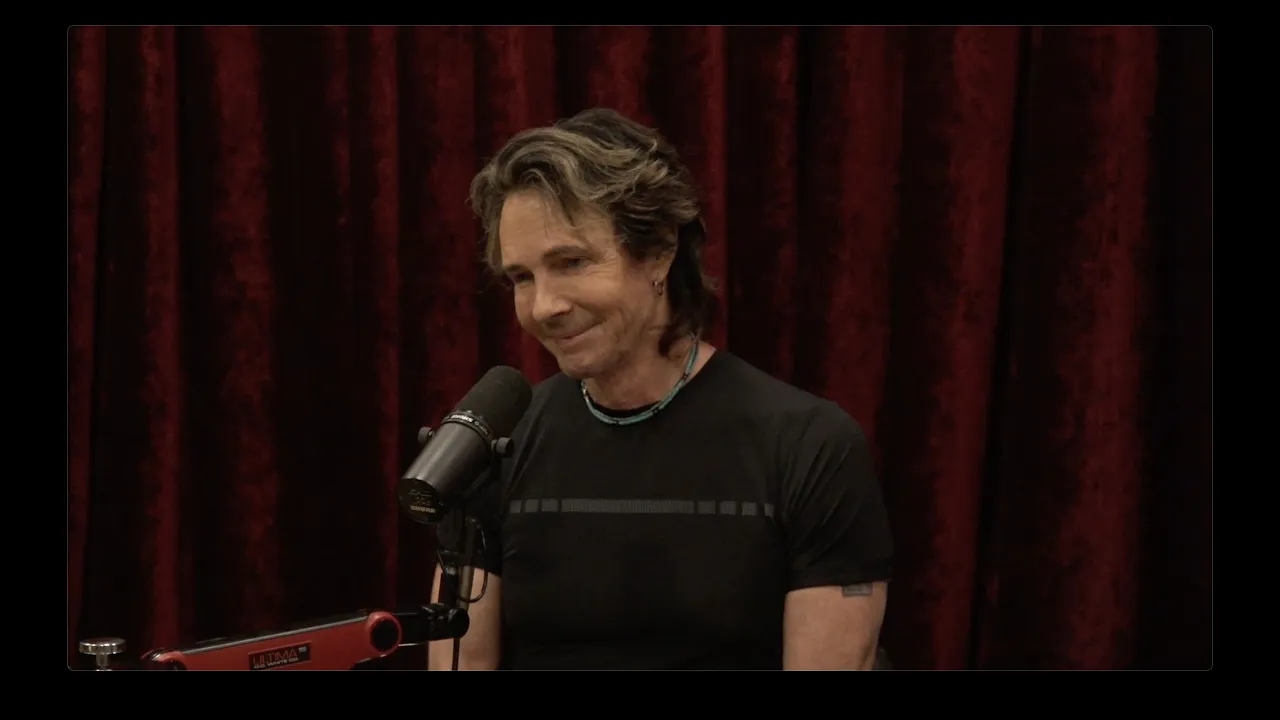
Published on YouTube by PowerfulJRE on September 8, 2026, this episode features Grammy Award-winning musician, actor, and author Rick Springfield, who discusses his career as a solo artist and fronting the rock supergroup The Locustz. The video description highlights Springfield's latest album "Buzzkill" and provides promotional links for his work and sponsors.
## TL;DR
Joe Rogan and Rick Springfield engage in a wide-ranging conversation covering Springfield's early life, touring military bases in Vietnam, and his decade-spanning career in music and acting. Springfield shares stories about meeting icons like Elvis Presley, Keith Richards, and Paul McCartney, as well as his time on 'General Hospital' and the inspiration behind his massive hit 'Jessie's Girl'. The discussion also touches on music history, rock concert dynamics, health and longevity protocols, and collecting historic memorabilia.
## Atmosphere & style
The conversation carries an intimate, conversational tone with Rogan taking a admiring and inquisitive role toward Springfield's storied career. Springfield speaks with grounded nostalgia and self-awareness, balancing gritty rock-and-roll war stories with humor and reflection. The dynamic feels like a relaxed, late-night chat between two seasoned veterans of their respective fields sharing deep appreciation for music and life experiences.
## Key takeaways
- [00:01](https://www.youtube.com/watch?v=BAhcDwMGKYU&t=1s) Advanced alien species may use space-time manipulation like wormholes instead of linear FTL travel to observe Earth during its technological evolution.
- [02:05](https://www.youtube.com/watch?v=BAhcDwMGKYU&t=125s) Rick Springfield used guitar and horror fiction to cope with severe depression and truancy, which led to his expulsion from school at age 15.
- [08:41](https://www.youtube.com/watch?v=BAhcDwMGKYU&t=521s) During a 1968–1969 tour of Vietnam combat zones, Springfield fired mortar rounds in self-defense, leaving him with long-term psychological weight after being told a shell killed an enemy fighter.
- [32:33](https://www.youtube.com/watch?v=BAhcDwMGKYU&t=1953s) Springfield met Elvis Presley during a flight to Australia, but the cassette containing Elvis's signed autograph was later confiscated by Australian customs.
- [42:27](https://www.youtube.com/watch?v=BAhcDwMGKYU&t=2547s) To manage his health and physical longevity, Springfield follows an intense regimen involving 6-day weekly workouts, Prenuvo MRI scans, blood panels, cellular rejuvenation trials, and targeted injections.
- [26:01](https://www.youtube.com/watch?v=BAhcDwMGKYU&t=1561s) Joe Rogan and Rick Springfield view live rock performances as a modern, shared escape akin to church services, bridging individual ego and collective experience.
- [01:11:29](https://www.youtube.com/watch?v=BAhcDwMGKYU&t=4289s) Springfield joined Australian rock band Zoot, which made waves by transitioning from pink suits to heavy rock arrangements, including a Sabbath-style cover of 'Eleanor Rigby'.
- [01:39:34](https://www.youtube.com/watch?v=BAhcDwMGKYU&t=5974s) Accepting the role of Dr. Noah Drake on 'General Hospital' helped Springfield survive financially before radio DJs chose to break 'Jessie's Girl' into a smash hit.
- [01:47:23](https://www.youtube.com/watch?v=BAhcDwMGKYU&t=6443s) Springfield's massive rise to fame included memorable encounters with icons like Paul McCartney, Elizabeth Taylor, and the Beach Boys.
- [02:02:38](https://www.youtube.com/watch?v=BAhcDwMGKYU&t=7358s) Beyond music, Springfield became a bestselling novelist and an avid collector of historical artifacts, including an original handwritten Beatles manuscript and Titanic salvage.
- [02:16:10](https://www.youtube.com/watch?v=BAhcDwMGKYU&t=8170s) 'Jessie's Girl' was inspired by a woman in Springfield's stained-glass class; he renamed the original boyfriend 'Gary' to 'Jessie' for better musical rhythm.
## Detailed walkthrough
### [00:01](https://www.youtube.com/watch?v=BAhcDwMGKYU&t=1s) Deep Space Travel and the Alien Observation Theory
The conversation begins mid-thought with Joe Rogan and Rick Springfield discussing the vast probability hurdles surrounding extraterrestrial life and interstellar travel. Springfield questions whether any species could survive its own evolutionary technological threshold long enough to master faster-than-light speed. Rogan counters that advanced alien civilizations likely do not rely on standard linear acceleration through space, but rather manipulate space-time itself using propulsion concepts like wormholes. They reflect on the human trajectory, noting how close humanity is to self-destruction while remaining centuries away from deep-space traversal.
```
+-----------------+ Fold Space-Time / +-----------------+
| Point A | ===========================> | Point B |
| (Origin System) | Wormhole | (Target System) |
+-----------------+ +-----------------+
| ^
+---- Skip linear physical distance travel -------+
```
Rogan proposes that if intelligent life exists, it may have evolved in a less inherently violent environment—though Springfield points out that conflict and survival are often the primary drivers of technological innovation. Rogan highlights a compelling theory: non-human intelligences may actively monitor Earth to ensure humanity survives its volatile "adolescent phase," pointing to frequent UFO sightings over nuclear installations as evidence of this cosmic babysitting.
- **Key concept discussed:** Relativistic vs. non-linear propulsion (space folding and wormhole theory).
- **Human progress hurdle:** Reaching technical capability before self-extinction.
- **Nuclear base sightings:** Suggested as evidence of alien observation during human developmental adolescence.
---
[02:05](https://www.youtube.com/watch?v=BAhcDwMGKYU&t=125s) Ageless Energy and Early Artistic Origins
Shifting gears to Springfield's career and physical vitality, Rogan expresses admiration for how remarkably youthful the 77-year-old musician looks and performs. Rogan notes how many of Springfield's peers have physically deteriorated or grown jaded, whereas Springfield performs his signature hit "Jessie's Girl" with the same intensity as if he wrote it last week. Springfield explains that the electric crowd reaction keeps the music fresh and prevents performance burnout.
Springfield traces his passion back to age 11, when he first picked up a guitar. His early focus was solely on playing the instrument rather than singing, but discovering songwriting provided a clear forward trajectory. Dropping out—and ultimately being expelled—from the 11th grade at age 15 due to chronic truancy and depression, Springfield turned to the guitar as an escape. During those formative years, he bypassed traditional schooling and educated himself by reading classic horror authors while practicing his craft.
- **Current age:** 77 years old.
- **First guitar encounter:** Age 11.
- **Key influence on youth:** Severe depression and academic struggle in the 11th grade.
- **Self-directed education:** Classic horror fiction by Robert Bloch and August Derleth.
---
[05:42](https://www.youtube.com/watch?v=BAhcDwMGKYU&t=342s) Moving to England and the Vietnam War Band Tour
Springfield recounts his nomadic upbringing, moving from Australia to England at age 10 before returning to Australia a few years later. His time in England in the early 1960s was pivotal—discovering bands like Cliff Richard and the Shadows, which sparked his dual obsessions with "girls and guitars." By late 1968 and 1969, as an 18-year-old playing in an Australian rock band, he accepted an offer from promoters in Saigon and Da Nang to tour military bases across Vietnam during the height of the war.
```
+-------------------------------------------------------+
| Saigon Base Operations |
+-------------------------------------------------------+
|
v
+-------------------------------------------------------+
| Da Nang / Marble Mountain |
+-------------------------------------------------------+
|
v
+-------------------------------------------------------+
| Demilitarized Zone (DMZ) / Active Combat Sectors |
+-------------------------------------------------------+
```
Promoters sought Australian bands with female performers because they offered American GIs a comforting connection to home. What was expected to be a lucrative, polished tour turned into a harrowing four-month journey through active combat zones ranging from Cam Ranh Bay up to the Demilitarized Zone (DMZ). Springfield recalls being positioned just two miles from the DMZ right after the Tet Offensive, watching parachute flares illuminate lines of incoming enemy troops while mortar shells landed around their stage.
- **Timeline in Vietnam:** 1968–1969 (4 months total).
- **Touring locations:** Saigon, Da Nang, Cam Ranh Bay, Marble Mountain, and the DMZ.
- **Band makeup:** Included female singers to satisfy GI demand for home-like entertainment.
---
[08:41](https://www.youtube.com/watch?v=BAhcDwMGKYU&t=521s) Combat Experiences, Bunker Warfare, and War Distractions
Living among soldiers in rat-infested hooches and French colonial villas, Springfield experienced near-constant terror. He recalls visiting a Navy unit at Marble Mountain to play a free set in their tents, jamming to Jimi Hendrix riffs. During an unexpected artillery and ground attack that night, Springfield found himself inside a perimeter radio bunker actively dropping mortar shells down a firing tube while tracer rounds lit up the night sky. On another occasion, the band was taken on an active combat mission aboard an Apache helicopter.
To cope with the pervasive dread, Springfield started smoking marijuana for the first time, noting that nearly all the deployed soldiers were constantly high. He vividly remembers a surreal moment during an impromptu concert on the back of a flatbed truck: a heavily stoned GI put on his helmet, grabbed his M16, and casually announced, "I'm going to go out and see what I can kill now, man," before marching directly into the jungle with his unit.
- **Combat participation:** Fired mortars out of a radio shack during an attack on Marble Mountain; flew on an Apache helicopter mission.
- **Living conditions:** Slept on cots in rat-infested former French villas and dusty GI hooches.
- **Substance use:** First smoked marijuana in Vietnam as a coping mechanism against constant anxiety.
---
[14:56](https://www.youtube.com/watch?v=BAhcDwMGKYU&t=896s) The Trauma of Return and Loss of a Bandmate
Rogan and Springfield discuss the profound### Speculating on Alien Intelligence and Space-Time Travel
Joe Rogan and Rick Springfield kick off their conversation exploring the nature of unidentified aerial phenomena and interstellar travel. Springfield questions whether any alien species could realistically survive long enough to develop faster-than-light capabilities. Rogan proposes that advanced civilizations likely do not rely on conventional directional propulsion, but instead fold space and time through theoretical mechanisms like wormholes to bypass vast cosmic distances.
The conversation pivots to the evolutionary motivations required for such technology. Rogan notes that human innovation has historically been driven by war, survival, and fierce competition, raising the question of whether an alien species would need similar conflict to innovate. Springfield and Rogan discuss the theory that extraterrestrial beings may be monitoring humanity to ensure it safely navigates its current "adolescent phase" of technological and social evolution—a hypothesis often supported by reported UAP sightings over nuclear military installations.
[02:05](https://www.youtube.com/watch?v=BAhcDwMGKYU&t=125s) Lifelong Agelessness and the Mindset of a Rock Veteran
Rogan welcomes Springfield and expresses admiration for his youthful appearance and high energy at 77 years old. Reflecting on watching Springfield perform "Jessie's Girl," Rogan marvels at how he delivers his iconic track with the same vigor as if it were written just a week ago, contrasting his vitality with many of his aging contemporaries in the rock scene.
Springfield credits his enduring enthusiasm to the mutual energy exchanged with his audience. For him, seeing crowds react passionately to his original music makes it impossible to perform half-heartedly. He emphasizes that his life's path was set at age 11 when he first held a guitar, and that transitioning into songwriting provided him with a clear, forward-looking purpose.
- **Age**: Rick Springfield is 77 years old.
- **Key Influence**: Picked up his first guitar at 11 years old; started writing songs shortly after to give his playing a focused direction.
[04:25](https://www.youtube.com/watch?v=BAhcDwMGKYU&t=265s) Escaping School, Early Influences, and Mental Health
Springfield reflects on his childhood, marked by severe depression and difficulties fitting into the traditional schooling system. After finding the guitar, he began missing school frequently because he could no longer face
Here is a detailed, faithful walkthrough of this section of the transcript:
[17:50](https://www.youtube.com/watch?v=BAhcDwMGKYU&t=1070s) Dodging Choppers and Mortars in Vietnam
Rick Springfield recalls his four-month tour performing for American troops in Vietnam, revealing just how dangerously close to the front lines the music group was pushed. At one point, military command attempted to send the band into North Vietnam with the precarious promise that they would keep helicopter engines running continuously on standby, assuring them they could quickly evacuate if things went south. Springfield notes with a sense of relief that their band leadership firmly declined the offer.
The conversation shifts to the heavy psychological burden Springfield carried back from his tour. He describes being stationed at Marble Mountain, a Navy encampment right on the beach near Da Nang. Working inside the radio shack while other band members pulled guard duty on the perimeter, Springfield remembers receiving an urgent call through the radio reporting movement in the dark. After checking and confirming no friendly forces were in the grid, the soldiers playfully invited him to drop rounds down a mortar tube. Enticed by young "John Wayne" bravado and not fully grasping the deadly reality of what he was doing, he dropped five or six mortars down the tube—a reckless move that could have easily blown his hands off. The next morning, officers informed him that one of those shells killed a Viet Cong fighter. Decades later, that moment remains an unresolved, lingering weight on his conscience.
- Springfield spent approximately **4 months** performing in Vietnam during his tour.
- Stationed at **Marble Mountain**, outside of Da Nang, on a Navy beach encampment.
- Fired **5 or 6 mortar rounds** after radio calls confirmed no friendlies were in the target area.
- Expresses the lasting psychological toll of realizing he took a human life at such a young age.
[22:25](https://www.youtube.com/watch?v=BAhcDwMGKYU&t=1345s) Aging, Mortality, and Writing Modern Rock
Although Springfield addressed his Vietnam experience in his autobiography, he shares that he has yet to transform that specific incident into a song because it has never felt like appropriate commercial material. However, he notes that his upcoming music naturally processes similar themes, specifically the heavy reality of getting older and facing mortality. Contrasting his current mindset with his breakout era around *Working Class Dog*—written when he was 29 or 30 and, as he jokes, strictly focused on getting laid—Springfield explains that age forces a songwriter to confront deeper topics now that death is no longer a distant abstraction.
Joe Rogan and Springfield reflect on how unprecedented it is for rock musicians to still be performing at age 76. Historically, rock was viewed strictly as a young man's game, and artists were expected to retire after a certain age. The two credit bands like The Rolling Stones for completely shattering that expectation. Rogan reminisces about seeing The Rolling Stones perform live in Austin at the Circuit of the Americas in front of 100,000 people, marveling at Mick Jagger's insane physical stamina. Springfield notes that Jagger travels with two full tractor-trailers dedicated solely to his mobile gym equipment so he can work out daily. While they note that other icons like Paul McCartney are naturally showing subtle signs of vocal aging, Jagger still sounds and moves on stage like an 18-year-old.
- Springfield's album *Working Class Dog* was released when he was 29–30 years old.
- The Rolling Stones played to roughly **100,000 fans** at the Circuit of the Americas in Austin, Texas.
- Mick Jagger travels with **2 tractor-trailers** converted into mobile gyms to support his grueling tour workouts.
[26:01](https://www.youtube.com/watch?v=BAhcDwMGKYU&t=1561s) The Rock Concert as a Modern Church and Taming the Ego
Reflecting on the psychological separation that extreme fame creates, Springfield references a recent interview where Mick Jagger acknowledged feeling distinctly separate from ordinary people due to a lifetime on stage. Springfield agrees that standing in front of thousands of screaming fans is an abnormal, intoxicating human experience. He and Rogan compare the energy of a live rock concert to a modern-day church service: unlike a sports game where the audience is divided into opposing sides, a concert unites thousands of people facing the same direction, sharing a purely positive 90-minute escape from the daily anxieties and mental noise of real life.
The discussion shifts to the delicate balance between creative drive and the human ego. Springfield argues that while an underlying ego is necessary to get an artist "to the dance"—often born from feeling like an outcast who craves attention—art itself simply needs to exist regardless of whether it is liked. Serving the ego, Rogan adds, is ultimately a fruitless trap. Over time, a mature artist must transition away from performing for personal validation and redirect all their energy toward mastering the craft itself for the sake of the audience.
- Concerts provide **90 minutes to 2 hours** of complete mental freedom for both the audience and the performer.
- Springfield emphasizes that art is created out of inner necessity, whereas the ego is what demands outside approval.
[32:33](https://www.youtube.com/watch?v=BAhcDwMGKYU&t=1953s) Early Hits, Teen Magazines, and Meeting Elvis
Springfield details the rocky start of his career when he first moved from Australia to the United States in 1972. Before "Jessie's Girl," his first breakthrough solo hit was a country-tinged, gospel-inspired song titled "Speak to the Sky," which he originally wrote for his mother. The track reached **Number 10** on the U.S. charts and performed well in Canada, securing his initial record deal in America. However, American teen magazines quickly co-opted his image, publishing sensationalized articles with absurd headlines like "Cuddle Up with Rick" or "Is Rick Too Tall to Love?" rather than focusing on his actual songwriting talents.
Frustrated by managers who wanted him to lean into teen-idol fluff while he was writing serious songs about suicide and marital infidelity, Springfield eventually broke ties with his management team. Among those managers was Steve Binder, famous for directing Elvis Presley's iconic 1968 Comeback Special. Springfield reminisces about a chance encounter with Elvis Presley himself on a flight back to Australia, where he had to return temporarily due to visa complications requiring him to prove he wasn't "putting an American out of work." When Springfield mentioned his manager to Elvis, the King warmly replied, "I love Steve."
- "Speak to the Sky" reached **#10 on the U.S. charts** after Springfield moved to America in 1972.
- Worked with manager **Steve Binder**, director of Elvis Presley's 1968 Comeback Special.
- Personally met **Elvis Presley** on a flight while traveling to resolve U.S. work visa issues during the early 1970s (Nixon administration era).
[35:54](https://www.youtube.com/watch?v=BAhcDwMGKYU&t=2154s) An Encounter with Elvis Presley and the Infamous 1968 Special
Rick Springfield recounts a memorable flight to Australia early in his career. Flying in the back of the plane, he noticed Elvis Presley sitting in first class, looking immaculate in a powder blue suit with jet-black hair and pristine skin. Although Springfield was primarily a fan of the British Invasion bands rather than Elvis, he recognized the legend immediately. Knowing his girlfriend at the time, Allison, was an obsessed fan, Springfield was amazed when Elvis did something rarely seen among top celebrities: before landing during a stopover in Hawaii, Elvis walked back into the main cabin, freely signing autographs and taking photos with passengers.
When Elvis approached him, Springfield mentioned his manager, Steve Binder, who had directed Elvis's famous 1968 Comeback Special. Springfield notes how Binder and Elvis bonded while clashing with Colonel Tom Parker. The Colonel originally envisioned a squeaky-clean, sweater-vested Christmas special, but Binder pushed to film raw, intimate jam sessions in a boxing ring setting. Elvis sided with Binder against the Colonel's wishes. Remembering Binder fondly, Elvis cheerfully signed an autograph for Allison. Springfield placed the autographed paper inside his portable tape recorder, but Australian customs officers confiscated the device under the pretense of checking for contraband, stealing the precious autograph in the process.
- **Steve Binder's Role:** Directed the iconic '68 Comeback Special, fighting off Colonel Tom Parker's request for a wholesome holiday program to instead film Elvis jamming in a ring.
- **Customs Incident:** Australian customs officials confiscated Springfield's cassette recorder (used for writing songs) and stole the personalized Elvis autograph inside.
- **Manager Dynamics:** Joe Rogan and Springfield reflect on the predatory nature of old-school music industry managers like Colonel Tom Parker, pointing to Brian Epstein (The Beatles) as a rare example of a manager driven by genuine intent.
```
[ Colonel Tom Parker ]
│
(Wanted traditional xmas)
│
▼
[ Elvis Presley ] ──► [ Steve Binder (Manager) ]
│
(Created raw ring session)
│
▼
['68 Comeback Special]
```
[39:51](https://www.youtube.com/watch?v=BAhcDwMGKYU&t=2391s) Elvis's Final Era and the Power of Live Raw Talent
Rogan and Springfield discuss Elvis's tragic downward spiral due to prescription drug abuse and isolation enforced by the Colonel. Rogan references the movie *Elvis* and Tom Hanks's portrayal of Colonel Parker, pointing out how the manager shielded Elvis while exploiting his talent to cover massive gambling debts. This dynamic forced Elvis into exhaustive Las Vegas residencies during his later years.
Despite his severe weight gain, sweating, and slurred speech during his final months, Elvis's raw vocal talent remained undeniable. Rogan specifically highlights Elvis's legendary 1977 live performance of "Unchained Melody," where despite appearing visibly high and out of shape shortly before his death, his voice soared the moment he sat at the piano.
- **1977 Performance:** Elvis performed a transcendent version of "Unchained Melody" at the piano just two months before his death.
- **Date of Death:** Elvis Presley passed away on August 16, 1977, at age 42.
[42:27](https://www.youtube.com/watch?v=BAhcDwMGKYU&t=2547s) Health Motivations: Tragic Loss and Longevity Pursuits
Asked how he maintains his health and high energy as he ages, Springfield reveals that his discipline stems from family trauma. His father suffered a massive cardiac arrest caused by a bleeding stomach ulcer on a major artery—an issue he had ignored out of fear that it was terminal cancer. Although emergency doctors revived his heart after 15 minutes of CPR, severe brain hypoxia left his father with the cognitive level of a five-year-old. Springfield spent agonizing afternoons in the backyard trying to re-teach his father basic relationships and family names.
That experience convinced Springfield never to ignore his health. Over the decades, he built a rigorous daily routine to maximize longevity:
- **Daily Exercise:** Works out six days a week, transitioning from a lifetime of running to weight training and low-impact cardio about 15 years ago due to knee wear.
- **Diagnostics:** Regular Prenuvo full-body MRI scans and routine comprehensive blood panels.
- **Clean Eating:** Maintains a clean, organic diet cooked largely by his wife.
- **Early Adoption:** Started long-distance running during the 1970s fitness boom, staying in top condition while touring on the road.
[47:25](https://www.youtube.com/watch?v=BAhcDwMGKYU&t=2845s) Cutting-Edge Cell Therapies, Hyperbaric Chambers, and Health Protocols
Springfield reveals that he has been participating in a four-year clinical trial with a company called BMI for advanced skin rejuvenation. The procedure involves taking a cellular biopsy from behind the ear, culturing the host cells, and extracting self-derived growth factors into a topical serum. Rogan compares this to therapies utilizing newborn foreskin growth factors (such as SkinMedica) or Muse stem cells applied via microneedling and exosomes.
The conversation pivots to orthopedic therapies and advanced recovery modalities. Springfield shares his experience with bone marrow-derived stem cell injections for his hips, as well as Regenokine and Orthokine treatments for wear-and-tear shoulder joint issues caused by heavy weightlifting. Rogan recommends the Austin clinic *Ways 2 Well*, noted for providing advanced stem cell protocols, hyperbaric oxygen therapy, and red light therapy.
- **BMI Cell Trial:** Springfield uses a personalized cellular serum harvested from a tissue sample behind his ear to maintain skin health.
- **Joint Therapies:** Springfield uses Regenokine/Orthokine blood-derived anti-inflammatory injections for shoulder wear from weightlifting.
- **Hyperbaric Oxygen Protocol:** Rogan cites an Israeli clinical study showing that 60 sessions of 90-minute hyperbaric oxygen therapy (HBOT) over 90 days significantly increased telomere length, reversing biological cellular aging by up to 20 years and dramatically improving recovery metrics on wearables like Whoop.
[53:07](https://www.youtube.com/watch?v=BAhcDwMGKYU&t=3187s) Heat Shock Proteins, Cold Plunges, and Recovery
Joe Rogan outlines the health benefits of regular sauna use, referencing a long-term study following a large sample group over 20 years. The study found that individuals utilizing a sauna four times a week for 20 minutes experienced a 40% reduction in all-cause mortality, including lower rates of strokes, cancer, and heart attacks. Rogan explains that this benefit is driven by heat shock proteins and the passive cardiovascular workout created as elevated temperatures raise the heart rate. He also details his personal routine of contrast therapy, pairing his sauna sessions with a 34°F cold plunge. While initially struggling to spend even a minute in freezing water, Rogan built up his tolerance to comfortably complete three-minute plunges.
Addressing optimal workout timing, Rogan advises against cold plunges immediately after resistance training, noting that post-exercise cold exposure blunts muscle hypertrophy by reducing necessary inflammation. Instead, he structures his morning sequence by plunging before exercising, followed by dynamic mobility drills to warm up before lifting weights, and ending his workout session in the sauna.
- Sauna use four times weekly for 20 minutes drops all-cause mortality risk by 40%.
- Cold exposure triggers a release of endorphins along with spikes in norepinephrine and dopamine.
- Taking a cold plunge right after weightlifting hinders muscle growth by dulling natural inflammatory responses.
[0### [53:07](https://www.youtube.com/watch?v=BAhcDwMGKYU&t=3187s) Heat Therapy, Cold Plunges, and Hypertrophy
Joe Rogan breaks down the health benefits of sauna usage, citing a study that followed a large sample size over 20 years. The study revealed that individuals who used a sauna four times a week for 20 minutes experienced a 40% reduction in all-cause mortality, including lower rates of heart attacks, strokes, and cancer. Joe attributes these benefits to heat shock proteins and notes that sauna usage acts as a form of "static cardio," elevating the heart rate and boosting cardiovascular output while sitting still.
Joe explains his contrast therapy routine, which pairs a 34°F cold plunge with the sauna. He clarifies that while jumping into ice-cold water felt impossible at first—lasting only a minute—he now easily completes three-minute sessions. However, Joe warns against doing cold plunges immediately after a resistance workout because suppressing post-exercise inflammation hinders muscle hypertrophy and recovery. To maximize benefits, he plunges first thing in the morning, does dynamic mobility exercises like golf swings and twists, completes his strength training, and finishes in the sauna.
- Cold plunge protocol: 3 minutes at 34°F prior to working out.
- Biological response: Immediate spike in dopamine, norepinephrine, and endorphins.
- Mental benefits: Builds routine mental toughness and discipline by forcing oneself to do uncomfortable tasks.
- Rick Springfield relates the post-plunge endorphin rush to the adrenaline high of performing live on stage.
---
[56:40](https://www.youtube.com/watch?v=BAhcDwMGKYU&t=3400s) Exercise Habits and Supplementation
Rick Springfield shares his perspective on fitness, stating that while he hates walking into the gym, he loves walking out. He keeps a gym close by so he never has an excuse to skip a workout. Transitioning to nutrition, Joe asks Rick about his supplement stack. Rick mentions taking IM8 (an all-in-one supplement), creatine pre-workout, and protein post-workout.
Joe praises creatine for its metabolic and cognitive benefits, highlighting studies on sleep deprivation. He explains that taking creatine helps eliminate brain fog and sustain mental clarity when traveling or running on low sleep.
- Creatine dosage: Joe takes 10 grams in the morning and 10 grams at night (20 grams daily).
- Brain fog protocol: Joe uses creatine to directly combat fatigue and sleep deficit during travel.
---
[59:22](https://www.youtube.com/watch?v=BAhcDwMGKYU&t=3562s) Dietary Preferences and "Buttgate"
Discussion turns to diet, with Joe mentioning that his intake is roughly 80% to 90% meat alongside fermented vegetables. Rick reveals he hasn't eaten chicken since he was 30 years old due to childhood trauma. Growing up, his father would chop the heads off their pet chickens every Sunday and toss them into a boiling washbasin to loosen the feathers; decades later, catching a whiff of that exact smell at a dinner party permanently ruined chicken for him. Rick notes he can still eat turkey, calling turkeys "a little stupider."
The talk turns to Australian wildlife—including camels, kangaroos, and invasive cane toads—before Rick discusses becoming a naturalized U.S. citizen. Rick jokingly claims he became a citizen to do jury duty, then recalls getting dismissed from a jury call because he was embroiled in a bizarre lawsuit known as "Buttgate." A female concert attendee sued Rick, claiming he bumped into her with his rear end while walking through the crowd, causing her to fall and suffer a brain injury. Rick refused to settle and traveled back and forth to New Jersey to fight the claim.
- Joe's diet: 80%–90% meat, supplemented by fermented vegetables, with occasional cheat meals like chicken parmesan or pizza.
- Turkey hunting details: Wild turkeys possess sharp vision, requiring hunters to wear full ghillie suits, sit motionless against trees, and use box/friction calls.
- Australian invasive species: Asian water buffalo in the Northern Territory, cane toads introduced to eat cane field rats, and widespread wild rabbit populations.
- Red Kangaroos: Capable of growing over six feet tall and balancing on their tails to kick and disembowel threats.
[01:08:28](https://www.youtube.com/watch?v=BAhcDwMGKYU&t=4108s) Emigration, Dual Citizenship, and Aging Rockers
The conversation opens with Rick Springfield reflecting on tax implications and his move to the United States. He explains that his decision to become a U.S. citizen roughly 10 to 15 years ago was largely driven by tax considerations regarding inheritance and spousal estates, joking about the scenario of who dies first between him and his wife. Having lived in the U.S. continuously since 1972, Springfield notes that his life, family, and closest friends are firmly rooted in America. He used to travel back to Australia frequently until his mother passed away at the age of 96—a longevity milestone he jokingly hopes passed down to him genetically.
This discussion of aging transitions into marveling at classic rock icons who continue to tour into their late 70s and 80s. Joe Rogan and Springfield discuss how Mick Jagger stays fit to sustain his performances, but they express even greater awe at Keith Richards. Unlike Jagger's rigorous fitness discipline, Richards famously survived decades of drinking, smoking, and heavy drug use while continuing to play guitar effortlessly onstage.
Springfield shares an anecdote from 1983 when he was shooting a movie alongside Richards' then-girlfriend (now wife), Patti Hansen. When Richards came to the movie set to check up on things, Springfield recalls that Keith "looked like Dracula," making for some bizarre-looking photos together. Despite that, Richards is still alive and performing in front of massive stadium crowds today.
- **U.S. Relocation:** Springfield moved to the U.S. in 1972 and obtained U.S. citizenship 10–15 years ago for tax and estate reasons.
- **Family Longevity:** His mother lived to be 96 years old.
- **Keith Richards Encounter (1983):** Met Keith Richards on a film set where Springfield was working with Patti Hansen.
- **Stadium Crowds:** Rogan points out that massive venue shows, like those at Circuit of the Americas in Austin, Texas, draw over 100,000 fans for acts like The Rolling Stones, Post Malone, and Eminem.
---
[01:11:29](https://www.youtube.com/watch?v=BAhcDwMGKYU&t=4289s) Longevity, Passion, and Springfield's Early Days with Zoot
Springfield and Rogan talk about how a deep passion for one's craft acts as an energetic driver for physical and mental longevity. While many people choose career paths purely for stability or retirement benefits, Springfield considers himself fortunate to do what he loves. Rogan agrees, pointing out that fear of failure—and even fear of success—often paralyzes talented individuals from pursuing their dreams or handling the pressure of broad public exposure.
Springfield reveals that despite his long history as a performer, he considers himself a writer first and foremost. He began performing his own material simply because no other artists were covering his songs. He discusses his extracurricular projects, including writing novels, his autobiography, and a health and lifestyle book detailing his personal routines.
The conversation turns to Springfield's early career in Australia with the psychedelic rock band **Zoot** around 1969–1970. Springfield joined the band after his previous group broke up over internal jealousy. Zoot had previously worn matching pink suits as part of a "Think Pink" marketing gimmick, which Springfield insisted on abandoning. He suggested a publicity photo showing the band members nude from behind, dumping their pink suits, intended to be shot in high-contrast silhouette. However, the record label printed the full-color, unedited photo, showing their bare rear ends to the public—to the total shock of Springfield's mother.
```
+-------------------------------------------------------------------+
| ZOOT (1969-1970) |
+-------------------------------------------------------------------+
|
|-- Transitioned from "Think Pink" pop act to heavier rock
|-- Rearranged "Eleanor Rigby" into a heavy, Sabbath-like riff
|-- Members later formed Little River Band or pursued TV/solo
```
- **Band History:** Zoot included Beeb Birtles (who later co-founded Little River Band) and lead singer Darryl Cotton.
- **"Eleanor Rigby" Cover:** Springfield arranged a heavy, hard-rock version of The Beatles' "Eleanor Rigby" that gained significant radio traction in Australia and caught the attention of EMI.
- **Solo Career Push:** Following Zoot's breakup, a female writer fan convinced Springfield to go solo rather than join another group as a sideman, leading to his debut hit single "Speak to the Sky."
---
[01:19:25](https://www.youtube.com/watch?v=BAhcDwMGKYU&t=4765s) The Evolution of 1960s Music and the Rise of Led Zeppelin
Rogan and Springfield examine the rapid cultural and stylistic shift in popular music between 1959 and 1969. They note that the transformation from the early rock-and-roll sound of Buddy Holly to the psychedelic, heavy-guitar experimentation of Jimi Hendrix represents one of the most radical 10-year evolutions in cultural history. Driven by the anti-war movement, drug culture, and rapid social change, music shifted from being viewed as disposable youth entertainment to a serious artistic medium with long-term cultural weight.
Springfield highlights the massive influence of British rock bands on the global music scene, marveling at how a small island produced acts like The Beatles, The Rolling Stones, The Kinks, and Led Zeppelin. He shares the origin story of Led Zeppelin, noting how guitarist Jimmy Page initially sought singer Terry Reid to front the band. When Reid declined due to prior touring commitments with The Rolling Stones, he recommended a young pub-band singer he knew: Robert Plant, who brought along drummer John Bonham.
- **Cultural Shift:** The dramatic musical transition from 1959 (Buddy Holly) to 1969 (Jimi Hendrix, Led Zeppelin).
- **Led Zeppelin Origins:** Jimmy Page initially asked Terry Reid to be Led Zeppelin's lead vocalist; Reid suggested Robert Plant and John Bonham instead.
- **Eric Clapton Trivia:** The hosts briefly verify Eric Clapton's heritage—born in the UK to a Canadian soldier from Montreal and an English mother.
[01:24:04](https://www.youtube.com/watch?v=BAhcDwMGKYU&t=5044s) British Music Invasion, Kennedy's Assassination, and Fame Spectrum
The conversation opens with a historical and genetic take on why the United Kingdom produced so many iconic rock bands. Rick Springfield suggests that ancient invasions—from the Romans, Vikings, and Germans—mixed genetic material across Britain, creating a unique cultural environment. While Europe had many distinct nations, the UK uniquely dominated global music export due in part to the English language, but also because its music scene felt bottled up for generations.
When it finally crossed the Atlantic, it exploded. Springfield points out that after President John F. Kennedy was assassinated, America was shrouded in darkness and looking away from its own internal tragedy. The arrival of four smiling "mop tops"—The Beatles—offered a joyous escape that captured the nation's heart.
```
HISTORICAL INVASIONS POST-1963 TRAGEDY
[ Romans / Vikings / Germans ] [ JFK Assassination ]
│ │
▼ ▼
[ Genetic / Cultural Melting Pot ] [ US Seeks Hope & Escape ]
│ │
└───────────────┬───────────────────┘
│
▼
[ BRITISH INVASION EXPLOAT ]
(The Beatles / Mop Top Era)
```
Rogan and Springfield examine the concept of extreme superstardom through history, noting that mass hysteria wasn't invented in the 1960s. Groupies and fans fainted for Frank Sinatra and even Wolfgang Amadeus Mozart. However, modern mass media elevated fame into something virtually unsustainable. They trace the progression of singular global megastars:
1. **Elvis Presley**: The first modern individual icon who faced unmanageable fame without a blueprint.
2. **The Beatles**: The first true global supergroup.
3. **Michael Jackson**: Took superstardom to unprecedented heights.
- The Beatles and The Jackson 5 both had monumental career starts around 1964.
- Paul McCartney was 22 and George Harrison was only 21 during the peak early Beatles frenzy.
- Before the Beatles, cross-continental hits were rare; Springfield recalls Rolf Harris's novelty track "Tie Me Kangaroo Down, Sport" as one of the few Australian hits in the UK during his school days.
---
[01:28:00](https://www.youtube.com/watch?v=BAhcDwMGKYU&t=5280s) Michael Jackson, "Thriller," and the MTV Breakthrough
The discussion shifts to Michael Jackson and his 2009 documentary *This Is It*. Springfield recalls watching the rehearsal footage, noting Jackson’s brilliant precision paired with a frail physical state that made him wonder if Jackson could have sustained a 50-show residency. The level of public obsession surrounding Jackson was terrifying; he could not step outside without being swarmed.
Rogan illustrates Jackson's cultural ubiquity with a story about Boston's premier rock station, WCOZ ("The Rock of Boston"). Despite being a strict rock station, the program director played "Billie Jean" upon *Thriller*'s release, admitting to listeners that while it wasn't rock, it was simply too good to ignore.
```
[ WCOZ "Rock of Boston" Radio ] ──► Plays "Billie Jean" ──► Transcends Genre
[ MTV Initial Policy ] ──► Blocks Black Artists ──► Label Threatens Boycott ### The British Music Phenomenon and the Cultural Shift of the 1960s
Rick Springfield and Joe Rogan explore why Great Britain has produced a disproportionate number of world-changing rock bands relative to its size. Springfield theorizes that the UK's unique genetic melting pot—formed by centuries of invasions by Romans, Vikings, and Germans—created a dynamic creative spark. Combined with the English language, this allowed British culture to spread rapidly across the globe.
```
Historical Invasions (Romans, Vikings, Germans)
│
▼
Genetic & Cultural Melting Pot
│
▼
Explosion of British Rock ('64)
│
▼
Post-JFK Trauma in US ──> Receptive American Audience
[01:39:34](https://www.youtube.com/watch?v=BAhcDwMGKYU&t=5974s) Taking *General Hospital* and the DJ "Tastemakers"
Facing four failed albums and completely out of money, Rick Springfield made the decision in 1980 to take a role on the soap opera *General Hospital*. His record producer Keith Olsen tried to talk him out of it, insisting he was making a great record and didn't need a soap opera, but the $500-per-episode paycheck was "mind-blowing money" at the time. When his record company was initially hesitant to release his album *Working Class Dog*, radio DJs stepped in and started playing "Jessie's Girl." Olsen had brought in an outside track written by Sammy Hagar—"I've Done Everything for You"—as the lead single because Hagar was already a known quantity. Springfield initially resented taking an outside song as a songwriter himself, but conceded to Olsen's hit-making instincts, and the one-two punch of those singles launched his career.
Joe Rogan and Springfield reflect on how the radio ecosystem used to rely on iconic DJs who acted as real culture "tastemakers"—like Wolfman Jack, Mark Parenteau, Charles Laquidara, or Kevin & Bean—rather than corporate executive pre-programming. Wolfman Jack initially balked at playing Springfield's early song about suicide, but after listening, he championed it and later introduced Springfield at live shows. Both recall the visceral experience of discovering bands pre-internet: buying vinyl albums based on striking artwork created by legendary design studios like Hipgnosis, opening gatefold covers, and reading liner notes. Rogan reminisces about his uncle Vinnie working for Howard Marks Advertising (the firm behind KISS's iconic album covers), which gave Rogan the opportunity as a young kid to visit their offices, see upcoming album art early, and even meet Ace Frehley without his trademark makeup.
- **Soap Opera Pay:** Springfield accepted $500 an episode for *General Hospital* in 1980 purely out of financial necessity.
- **Producer / Writer Strategy:** Keith Olsen picked two songs for the record: Springfield's self-penned "Jessie's Girl" (demoed on a 4-track) and Sammy Hagar's "I've Done Everything for You."
- **Prank on Roger:** Springfield copied Ace Frehley's signature and artwork onto a duplicate red Fernandes guitar and smashed it on stage during a concert, leaving his KISS-obsessed drummer Roger in brief, absolute horror.
---
[01:47:23](https://www.youtube.com/watch?v=BAhcDwMGKYU&t=6443s) Explosive Fame and Meeting Rock Royalty
When stardom hit in the early 1980s, Springfield found the shift exhilarating rather than terrifying because he felt he had paid his dues through a decade of hard work. He channeled his energy strictly into performing and songwriting rather than heavy partying on the road. The chaotic fan reaction—such as 4,000 screaming### Taking the Soap Opera Gig, Sammy Hagar, and DJ Taste Makers
Rick Springfield explains that when he was offered a role on *General Hospital*, a producer told him he was making a mistake because he had a great record coming out and didn't need to do a soap opera. However, Springfield had already released four albums that had stalled, was completely broke, and couldn't pass up $500 an episode—which felt like "mind-blowing money" to him in 1980. While he was filming, the record company delayed releasing the album *Working Class Dog*, making him fear it would land at number 100 on the charts and instantly vanish due to the prevalence of disco and radio ballads. Radio programmers had no idea how to handle a guitar-driven pop record.
```
[4 Stalled Albums / Broke in 1980]
│
▼
[Takes General Hospital ($500/ep)]
│
▼
[Album Delayed: Radio push unclear]
│
▼
[DJs Break "Jessie's Girl" First] ──► [#1 Billboard Hit]
```
When the label finally put out a single, they chose "I've Done Everything for You," written by Sammy Hagar, because Hagar was already an established name. Producer Keith Olsen, who had worked with Hagar, agreed to produce two tracks for Springfield: "Jessie's Girl" (which Springfield wrote on a 4-track recorder) and Hagar's song. Springfield admits he was initially pissed off that Olsen insisted on using an outside song rather than a second original, but he eventually conceded that Olsen knew what he was doing. Though the label pushed the Hagar track first, radio DJs took it upon themselves to start spinning "Jessie's Girl," breaking the song wide open.
Rogan and Springfield mourn the total disappearance of radio DJs as cultural taste makers. In the past, influential personalities like Wolfman Jack, Mark Parenteau, and Charles Laquidara in Boston, or Kevin and Bean in Los Angeles, possessed genuine musical passion and informed their listeners about what was cool. Today, playlists are tightly pre-programmed by corporate executives. Springfield recalls doing an interview with Wolfman Jack for his first album; when Jack hesitated over a dark lyric about suicide, he gave it a listen anyway and ended up championing the track and introducing Springfield at shows.
- **Soap Opera Pay:** $500 per episode on *General Hospital* in 1980.
- **Key Tracks:** "Jessie's Girl" (written by Springfield) and "I've Done Everything for You" (written by Sammy Hagar).
- **Producer:** Keith Olsen produced the two breakout tracks.
- **Famous DJs Mentioned:** Wolfman Jack, Mark Parenteau (Boston), Charles Laquidara (Boston), Kevin and Bean (Los Angeles).
---
[01:44:06](https://www.youtube.com/watch?v=BAhcDwMGKYU&t=6246s) Album Art Nostalgia and Ace Frehley's Unmasked Prank
Reflecting on how music consumption used to be an immersive physical experience, Springfield and Rogan reminisce about buying vinyl albums purely based on striking artwork. Listeners would sit with an album, open the gatefold, and read every single credit and lyric line while listening. Springfield recalls trying to share a new No Doubt CD with a young female friend years ago, only for her to dismiss the physical packaging entirely because she had simply downloaded the digital audio.
Rogan shares a childhood memory involving his Uncle Vinnie, an artist for Howard Marks Advertising, the agency responsible for KISS's legendary album covers. When Rogan was roughly eleven or twelve years old, his uncle took him to the agency's offices, where he unexpectedly met Ace Frehley completely out of makeup during the era when KISS strictly maintained their anonymity. Springfield then shares a hilarious tour story involving Frehley, who had visited Springfield backstage and autographed a red Fernandes guitar for his drummer Roger—a massive KISS fan—writing *"To Roger, rock on, Ace Frehley"* alongside his signature card doodle. Springfield carefully traced and replicated the exact signature onto a second identical guitar. During the show, the guitar tech handed Springfield the replica, and Springfield smashed it to pieces on stage, causing Roger to lose his mind thinking his prized autograph had just been destroyed.
- **Album Art Design Studio:** Hipgnosis (creators of iconic covers including Pink Floyd's *The Dark Side of the Moon*).
- **KISS Ad Agency:** Howard Marks Advertising.
- **Prank Guitar:** A red Fernandes guitar with a forged Ace Frehley signature smashed on stage to prank drummer Roger.
---
[01:47:23](https://www.youtube.com/watch?v=BAhcDwMGKYU&t=6443s) Explosive Stardom, Legend Encounters, and Beatles Memorabilia
When fame finally hit in full force in the early 1980s, Springfield did not find it jarring because he had spent a decade anticipating it. Instead of drowning in wild partying, he funneled his nervous energy directly into writing and performing. He fondly recalls the bizarre sensation of seeing four thousand screaming fans surrounding a police car trying to tip it over, simply thinking to himself, *"Okay, this is what it feels like."* His baseline for crowd reaction had been set as a youth in Australia, where he saw legendary British Invasion acts including The Beatles in '64, as well as The Rolling Stones, The Kinks, and The Who in '65 and '66.
Springfield's first moment of experiencing that exact level of fan hysteria was at a Fourth of July Beach Boys show on the *Queen Mary* in Long Beach, sharing the stage with Three Dog Night and a returning Brian Wilson. After Springfield finished playing "Jessie's Girl" and the crowd erupted, he walked offstage past Wilson, who was sitting at a piano watching him wide-eyed with his mouth hanging open. It turned out Wilson and his wife were massive *General Hospital* fans. Springfield experienced similar surreal encounters with Sammy Davis Jr. pulling on his jacket at a "Night of 100 Stars" event, and later meeting Paul McCartney. McCartney joked about charging him "10 quid" for a picture before posing for a cherished photograph. Springfield also owns an original signed Paul McCartney cardboard cutout of H.G. Wells from the iconic *Sgt. Pepper's Lonely Hearts Club Band* cover art, which hangs in his studio.
- **Concerts Attended in Youth:** The Beatles (1964), The Rolling Stones (1965 & 1966), The Kinks (1965), The Who (1965).
- **Breakout Gig:** The Beach Boys' 4th of July show at the *Queen Mary* in Long Beach, California alongside Three Dog Night.
- **Studio Treasure:** An original Paul McCartney-autographed *Sgt. Pepper's* cutout of H.G. Wells (one of Springfield's favorite sci-fi authors).
---
[01:53:10](https://www.youtube.com/watch?v=BAhcDwMGKYU&t=6790s) The Cultural Phenomenon of General Hospital
Rogan and Springfield examine how *General Hospital* transformed from a typical daytime soap opera into an unprecedented cultural phenomenon. Historically, soap operas were viewed primarily by stay-at-home parents and featured notoriously cheap production values, melodramatic writing, and wooden acting. Yet during the summer of 1981, the show captured the entire nation's attention, drawing three times the viewership of modern day-time soaps.
[01:55:15](https://www.youtube.com/watch?v=BAhcDwMGKYU&t=6915s) Elizabeth Taylor on General Hospital and Soap Opera Lore
Rick Springfield recalls sharing scenes with Elizabeth Taylor during her guest appearance on *General Hospital*, describing the surreal experience of walking past the legendary actress on set. During a break between takes while walking off-camera, Taylor casually turned to him and asked, "Isn't acting stupid?" Springfield also shares how co-star Anthony Geary (who played Luke Spencer) broke the ice during rehearsals by openly blurt-screaming, "Oh my god, it's Elizabeth Taylor!"
The conversation turns to the sheer velocity of daytime television production. To handle massive page counts on tight schedules, Springfield mastered using the camera's red tally light as a cue: while speaking to another actor, he watched for the camera's light to go off, immediately glanced at the teleprompter to memorize his next line, and turned back before the next take. For him, soap acting became a sport of rapid line memorization rather than traditional dramatic craft. He also reflects on passing by the fan phone lines on set, noting how the show's producer listened directly to viewer feedback—such as callers complaining about a young Demi Moore's voice. The host and guest also pause to acknowledge the recent passing of actor Tristan Rogers.
- **Guest Stars & Cast:** Elizabeth Taylor, Anthony Geary (Luke Spencer), Demi Moore, Doug Davidson (Paul Williams on *The Young and the Restless*), Tristan Rogers, and Bryan Cranston.
- **Production Rush:** Springfield was once handed a three-page scene alongside a cast member and told they were shooting in 20 minutes.
---
[01:59:15](https://www.youtube.com/watch?v=BAhcDwMGKYU&t=7155s) The 30 Million Viewer Phenomenon & "Jesse's Girl"
Rogan and Springfield marvel at the unprecedented cultural footprint of *General Hospital* in the early 1980s. The show achieved record-breaking ratings, culminating in 30 million viewers tuning in for the wedding of Luke and Laura—a daytime record that has never been matched. Colleges adjusted lecture schedules because students routinely skipped class to watch, and high schoolers rushed home to tune in.
Springfield explains how producer Gloria Monty helped drive the show's peak success by staying up late with Anthony Geary to rework scripts. When Monty discovered Springfield had a music career, she wanted him to perform "Jessie's Girl" on the show as his doctor character, Dr. Noah Drake. Springfield initially resisted, fearing the overlap would hurt his credibility as a musician, though he eventually returned years later for special anniversary episodes.
- **Record Viewership:** 30 million viewers for the Luke and Laura wedding episode.
- **Underage Star:** Genie Francis (Laura) was under 21 at the height of the show's craze and was not old enough to legally drink champagne at promotional events.
- **Set Anecdote:** On one occasion, the cast—including veteran actor veteran Russell Johnson (famous as The Professor on *Gilligan's Island*, who played Springfield's onscreen father)—drank real alcohol during a party scene, resulting in the entire sequence having to be reshot the next day due to visible drunkenness.
---
[02:02:38](https://www.youtube.com/watch?v=BAhcDwMGKYU&t=7358s) Novelist Career and Handwritten Beatles Memorabilia
Beyond music and acting, Springfield discusses his work as an author. After writing his autobiography, he penned two dark-comedy fiction novels, *Magnificent Vibration* (2014)—which became a *New York Times* bestseller—and its sequel *World on Fire* (2021). Both stories revolve around a catastrophic global plague that wipes out two-thirds of humanity. Springfield describes writing as an essential compulsion when he isn't making music, noting that even while relaxing on the beach in Bora Bora, he has to keep a guitar or laptop nearby.
The discussion pivots to collecting rare physical manuscripts. While Springfield keeps his original handwritten lyric sheet for "Jessie's Girl" tucked away in a closet, he actively collects original handwritten lyrics by The Beatles. Through a contact who authenticates items for major auction houses like Christie's and Sotheby's, he acquired the original manuscript for "Lucy in the Sky with Diamonds."
```
+-----------------------------------------------------------------+
| "Lucy in the Sky with Diamonds" Lyric Sheet |
| |
| [John Lennon & Paul McCartney Handwritten Lyrics] |
| * Features Paul McCartney's original Sergeant Pepper sketch |
| (Victorian concept with curtains) |
| * Features Paul's drawing of "Rocking Horse People" |
| * Includes early draft line from 'She's Leaving Home': |
| "Wednesday morning at 9 o'clock" |
+-----------------------------------------------------------------+
```
- **Published Novels:** *Magnificent Vibration* (2014, *New York Times* Bestseller) and *World on Fire* (2021).
- **Historical Artifacts:** In addition to Beatles lyrics, Springfield collects 1950s robots and owns the original plaque from Titanic Lifeboat No. 2 (currently on display in Branson).
---
[02:07:46](https://www.youtube.com/watch?v=BAhcDwMGKYU&t=7666s) The Inspiration Behind Beatles Songs & The Hamburg Grind
Springfield dispels the common myth that "Lucy in the Sky with Diamonds" was written as a coded reference to LSD. He clarifies that the title came directly from a drawing brought home by John Lennon's young son, Julian, depicting his classmate Lucy O'Donnell. The lyrics were primarily inspired by Lennon's love for Lewis Carroll's *Alice's Adventures in Wonderland* and *Through the Looking-Glass*.
Addressing the role of drugs in creative output, Springfield emphasizes that substances do not create talent; rather, they lower creative resistance for artists who already possess immense skill. Rogan references Malcolm Gladwell's book *Outliers*, bringing up the Beatles' grueling residency in Hamburg, Germany. Playing five to six hours a night, six days a week in gritty venues forced the band to hone their craft, accumulating the 10,000 hours of practice required to transform into a world-class act.
- **Song Origins:** David Gilmour (of Pink Floyd) currently owns the original childhood drawing by Julian Lennon that inspired "Lucy in the Sky with Diamonds."
- **The 10,000-Hour Rule:** The Beatles' endless sets in Hamburg strip clubs forged the tight live dynamics that blew audiences away upon their return to Liverpool.
<ElicitationsGroup message="Explore related topics from the interview:">
<Elicitation label="Discuss Rick Springfield's songwriting process" query="Tell me more about how Rick Springfield approaches lyric writing versus composing music."/>
<Elicitation label="Examine the Hamburg era of The Beatles" query="Detailed history of The Beatles' performance residency in Hamburg, Germany."/>
</ElicitationsGroup>
[02:11:01](https://www.youtube.com/watch?v=BAhcDwMGKYU&t=7861s) The 10,000-Hour Rule and The Beatles in Hamburg
Reflecting on the sheer volume of work required to master a craft, the conversation turns to famous examples of rapid, transformative skill growth. Springfield brings up legendary blues musician Robert Johnson, who was initially an average guitar player until he disappeared for a year and returned as a slide virtuoso, spawning the famous myth that he sold his soul to the devil at the crossroads. Rogan notes that while people attributed it to the supernatural, Johnson was simply "woodshedding"—putting in relentless, isolated practice. They compare this to The Beatles during their stint performing endless hours at strip clubs in Hamburg, Germany, purely trying to make a living and stay alive.
Springfield shares a classic piece of rock history about Paul McCartney, who famously got "lumbered with the bass" after original bassist Stuart Sutcliffe fell in love with photographer Astrid Kirchherr and left the group. When John Lennon and George Harrison both refused to switch to bass, McCartney took over the role, bought a Höfner "violin" bass in Germany, and transformed into one of the greatest bassists in music history. Rogan highlights how fascinating it is to trace back the improbable chain of random events that allowed bands like The Beatles to form and achieve greatness.
- **Robert Johnson Myth**: Johnson went away for about a year and returned with incredible slide guitar skills, giving rise to the legend of selling his soul at the crossroads.
- **McCartney's Bass Transition**: Paul ended up on bass because neither John nor George wanted to play it after Stuart Sutcliffe left the band to stay in Germany with Astrid Kirchherr.
---
[02:12:40](https://www.youtube.com/watch?v=BAhcDwMGKYU&t=7960s) Serendipity, Persistence, and Overcoming Stage Fright
The discussion shifts to how serendipity plays out in everyday life. Springfield reflects on his 42-year marriage, describing a bizarre sequence of geographical near-misses before he and his wife, Barbara, finally crossed paths. He was in Australia while she was in Bow, Wisconsin; he went to England while she moved to California; he returned to Australia, and she moved back to Wisconsin. Eventually, Springfield connected with a manager at Sound City Studios in Los Angeles around the same time Barbara befriended an English woman working at the same studio, leading to their chance meeting. Rogan ponders whether these outcomes are fate or just human minds connecting dots backward, but Springfield emphasizes that luck only works when you "stay in the game" long enough to be prepared when opportunity strikes.
Springfield then candidly reveals the intense stage fright he suffered early in his career, sharing that he played with his back turned to the audience for the first three months in his very first band. He was a 15-year-old kid in a rough, older blues band surrounded by tough 25-year-olds—some of whom had served prison time and frequented Australian pubs where bar fights were so routine that restrooms posted fight response instructions. When the band members asked his mother why he was playing facing away from the crowd, she simply explained that he was shy. He notes that he eventually turned around—likely inspired by a girl—and jokes about being the youngest member and the last virgin in the band.
- **42-Year Marriage**: Springfield and his wife, Barbara, re-located across Australia, Wisconsin, England, and California before randomly meeting through mutual connections at Sound City.
- **Early Stage Fright**: At age 15, Springfield played with his back to the crowd in a blues band full of ex-cons and older guys due to sheer nervousness.
- **Australian Pub Culture**: Springfield recalls Australian men's restrooms having posted signs detailing instructions on what to do if a buddy gets into a fight.
---
[02:16:10](https://www.youtube.com/watch?v=BAhcDwMGKYU&t=8170s) The Story Behind "Jessie's Girl" and Final Goodbyes
Rogan praises Springfield for his enduring energy and longevity, bringing up a recent viral video of a shirtless Springfield energetically performing "Jessie's Girl" as if it were a brand-new song. Rogan is amazed that Springfield still sings it with such genuine passion after roughly 46 years, noting humorously that the song was written closer to the end of World War II than to the present day. Springfield adds that the actual woman who inspired the song is likely in her late 60s now.
Springfield reveals the origin story of "Jessie's Girl," admitting he never actually knew the woman's real name. Between record contracts, he was trying to figure out how to make money to support his family, making ceramic mirrors to sell at swap meets and taking a stained-glass class. There, he was captivated by a beautiful girl who was attending with her boyfriend, Gary. Because Springfield was too shy to approach women directly without a guitar, his attempts at small talk failed, and she remained loyal to her boyfriend. He went home and wrote a song about the situation. He initially tried using the real boyfriend's name, Gary, and then tried Randy, but neither fit the rhythm, so he finally settled on "Jessie." He shares that Oprah Winfrey's show later tried to track down the woman; they located the stained-glass instructor, but he had passed away two years prior and his records had been thrown out, leaving her identity a permanent mystery.
Rogan expresses how much he enjoyed the conversation, praising Springfield as a true badass, while Springfield thanks Rogan and congratulates him on his success. Rogan wraps up the podcast by telling listeners to catch Rick Springfield live in concert as he continues to tour and perform.
- **"Jessie's Girl" Timeline**: The song was written roughly 46 years prior, a period Springfield notes was closer to World War II than to today.
- **Lyrical Iterations**: The original boyfriend's name was Gary; Springfield tried "Gary" and "Randy" in the lyrics before deciding "Jesse" sang best.
- **The Stained-Glass Class**: Springfield met the unnamed crush while taking a stained-glass making class in an effort to find an alternative trade between record deals.
- **Oprah Search**: The *Oprah Winfrey Show* attempted to locate the real "Jessie's girl," but the stained-glass teacher had died two years prior and his client paperwork had been destroyed.
## Notable quotes
> [08:41](https://www.youtube.com/watch?v=BAhcDwMGKYU&t=521s) I'm going to go out and see what I can kill now, man
> [32:33](https://www.youtube.com/watch?v=BAhcDwMGKYU&t=1953s) I love Steve — Elvis Presley
> [32:33](https://www.youtube.com/watch?v=BAhcDwMGKYU&t=1953s) Cuddle Up with Rick
> [32:33](https://www.youtube.com/watch?v=BAhcDwMGKYU&t=1953s) Is Rick Too Tall to Love?
> [01:44:06](https://www.youtube.com/watch?v=BAhcDwMGKYU&t=6246s) To Roger, rock on, Ace Frehley — Ace Frehley
> [01:47:23](https://www.youtube.com/watch?v=BAhcDwMGKYU&t=6443s) Night of 100 Stars
> [01:47:23](https://www.youtube.com/watch?v=BAhcDwMGKYU&t=6443s) 10 quid — Paul McCartney
> [01:55:15](https://www.youtube.com/watch?v=BAhcDwMGKYU&t=6915s) Isn't acting stupid? — Elizabeth Taylor — Elizabeth Taylor
> [01:55:15](https://www.youtube.com/watch?v=BAhcDwMGKYU&t=6915s) Oh my god, it's Elizabeth Taylor! — Anthony Geary — Anthony Geary
## Mentioned
Joe Rogan, Rick Springfield, Robert Bloch, August Derleth, Cliff Richard, The Shadows, Jimi Hendrix, The Rolling Stones, Mick Jagger, Paul McCartney, Steve Binder, Elvis Presley, Colonel Tom Parker, Brian Epstein, Tom Hanks, Prenuvo, BMI, Ways 2 Well, Whoop, Patti Hansen, Keith Richards, Post Malone, Eminem, Zoot, Beeb Birtles, Little River Band, Darryl Cotton, The Beatles, EMI, Buddy Holly, Led Zeppelin, Jimmy Page, Terry Reid, Robert Plant, John Bonham, Eric Clapton, The Kinks, John F. Kennedy, Frank Sinatra, Wolfgang Amadeus Mozart, Michael Jackson, The Jackson 5, George Harrison, Rolf Harris, This Is It, WCOZ, MTV, General Hospital, Keith Olsen, Sammy Hagar, Wolfman Jack, Mark Parenteau, Charles Laquidara, Kevin & Bean, Hipgnosis, Howard Marks Advertising, KISS, Ace Frehley, No Doubt, Uncle Vinnie, Fernandes, Roger, The Who, The Beach Boys, Queen Mary, Three Dog Night, Brian Wilson, Sammy Davis Jr., H.G. Wells, Sgt. Pepper's Lonely Hearts Club Band, Elizabeth Taylor, Anthony Geary, Luke Spencer, Demi Moore, Tristan Rogers, Doug Davidson, Bryan Cranston, The Young and the Restless, Dr. Noah Drake, Gloria Monty, Genie Francis, Russell Johnson, Gilligan's Island, Christie's, Sotheby's, Titanic Lifeboat No. 2, Julian Lennon, Lucy O'Donnell, Lewis Carroll, David Gilmour, Pink Floyd, Malcolm Gladwell, Outliers, Robert Johnson, Stuart Sutcliffe, Astrid Kirchherr, Höfner, Barbara, Sound City Studios, Gary, Randy, Jessie, Oprah Winfrey, The Oprah Winfrey Show
## Video description
Rick Springfield is a Grammy Award-winning musician, actor, and author. In addition to his work as a solo artist, Springfield fronts the rock supergroup The Locustz. Their most recent album, “Buzzkill,” is available now.
Perplexity: Download the app or ask Perplexity anything at https://pplx.ai/rogan.
Don’t miss out on all the action this week at DraftKings! Download the DraftKings app today! Sign-up using https://dkng.co/rogan or through my promo code ROGAN.
This video is sponsored by BetterHelp. Visit https://BetterHelp.com/JRE
Joe Rogan访谈录 #2550 - Rick Springfield
Joe Rogan与Rick Springfield展开了广泛交流,内容涵盖Springfield的早年生活、赴越南军事基地的巡演经历,以及他跨越数十年的音乐与演艺生涯。Springfield分享了与Elvis Presley、Keith Richards和Paul McCartney等标志性人物相遇的往事,回忆了出演《综合医院》(General Hospital)的岁月以及大热单曲《Jessie's Girl》的创作灵感。讨论还涉及了音乐史、摇滚音乐会现场动态、健康与长寿方案以及历史纪念品收藏等话题。
高等外星物种可能利用虫洞等时空操纵手段而非线性的超光速飞行,在地球的技术演进过程中对其进行观察。 (0:01)
Rick Springfield曾借由吉他和恐怖小说来应对严重的抑郁症与逃学问题,这导致他在15岁时被学校开除。 (2:05)
在1968至1969年越南战区巡演期间,Springfield出于自卫发射了迫击炮弹;在得知其中一枚炮弹击毙了一名敌方士兵后,这给他留下了长期的心理负担。 (8:41)
Springfield在飞往澳大利亚的航班上结识了Elvis Presley,但带有Elvis亲笔签名的磁带后来被澳大利亚海关没收。 (32:33)
为了管理健康并延长寿命,Springfield坚持严格的作息与调理方案,包括每周锻炼6天、接受Prenuvo核磁共振扫描、血液检测分析、细胞抗衰老试验及针对性注射。 (42:27)
Reading summary
Musician and actor Rick Springfield and host Joe Rogan explore how persistent artistic drive, deliberate physical longevity protocols, and confronting deep personal trauma have enabled Springfield to maintain vigorous creative output and stage performance at age 77.
Longevity Protocols and Proactive Health Management (42:27)
Springfield attributes his rigorous fitness discipline to family trauma, recalling how his father suffered irreversible brain hypoxia following a cardiac arrest brought on by an ignored bleeding ulcer. To avoid neglecting his own health, Springfield maintains a routine consisting of six workout sessions per week, a clean organic diet, regular Prenuvo whole-body MRI scans, and blood panels. He also participates in advanced regenerative medicine, utilizing autologous cellular serums harvested from a biopsy behind his ear for skin maintenance, stem cell injections for his hips, and blood-derived anti-inflammatory therapies (Regenokine and Orthokine) to treat shoulder wear from weightlifting.
Rogan connects Springfield's regimen to broader longevity science, discussing evidence surrounding heat shock proteins and contrast therapy. Citing long-term observational data, Rogan notes that regular sauna use of four 20-minute sessions per week correlates with a 40% reduction in all-cause mortality. He also references Israeli clinical trials on hyperbaric oxygen therapy that demonstrated measurable increases in telomere length over 60 sessions, while advising that cold plunges be taken before workouts rather than after resistance training to avoid blunting muscle hypertrophy.
Early Adversity and the Trauma of Vietnam (5:42)
Before establishing a professional career, Springfield struggled with severe depression and chronic truancy, which culminated in his expulsion from the 11th grade at age 15. Turning entirely to music and classic horror literature as personal escapes, he began touring professionally as an 18-year-old. Between late 1968 and 1969, his rock band accepted a four-month engagement performing for American troops across active combat zones in Vietnam, including Da Nang, Marble Mountain, and installations positioned near the Demilitarized Zone.
Springfield describes the tour as an environment of pervasive terror, marked by mortar attacks, traveling on combat helicopter flights, and using marijuana to cope with persistent dread. During one nocturnal perimeter attack at Marble Mountain, soldiers invited Springfield to drop live mortar rounds down a firing tube from inside a radio bunker. After learning the next morning that one of the shells had killed an enemy combatant, Springfield experienced long-standing remorse and moral distress, noting that the unresolved weight of that incident influenced his private perspective on mortality and conflict.
Navigating Commercial Breakthroughs and Unprecedented Stardom (99:34)
By 1980, Springfield had released four unsuccessful commercial albums and found himself broke. Facing financial desperation, he accepted a $500-per-episode role as Dr. Noah Drake on the daytime soap opera *General Hospital*, despite his music producer Keith Olsen warning him against taking the job. The program rapidly grew into a national television phenomenon, culminating in an unprecedented 30 million viewers for the wedding of characters Luke and Laura, with prominent guest stars including Elizabeth Taylor.
While filming, Springfield's breakthrough album *Working Class Dog* experienced commercial momentum when radio disc jockeys began aggressively spinning "Jessie's Girl" alongside a lead track written by Sammy Hagar, "I've Done Everything for You." Springfield explains that "Jessie's Girl" was inspired by an unrequited infatuation with a woman he observed during a stained-glass making class between record deals; because he never learned her real name, her identity remains unknown. Having spent a decade trying to break into the music industry, Springfield treated the ensuing mass mania and chart-topping success with disciplined focus rather than destructive excess.
Craft Mastery, Ego, and Live Performance (26:01)
Springfield and Rogan examine the discipline underlying enduring musicianship, pointing to the concept of woodshedding and Malcolm Gladwell's 10,000-hour framework. They highlight The Beatles' residency in Hamburg, Germany—where the group performed grueling six-hour sets in strip clubs—as the crucible that forged their dynamic musicianship, along with historical accidents such as Paul McCartney adopting the bass simply because his bandmates refused to play it.
Addressing the psychology of public performance, Springfield distinguishes between the ego required to initiate an artistic career and the selfless dedication needed to sustain it. While early creative ambition often stems from feeling like an outsider craving attention, mature artistry requires subjugating personal ego to serve the material and the audience. Rogan and Springfield compare live concerts to secular church services, emphasizing that live music unites thousands of attendees in a shared, harmonious 90-minute escape from routine psychological anxiety.
Springfield and Rogan conclude that artistic longevity is not merely a product of chance encounters, but the result of continuous preparation, physical preservation, and the resilience to remain active through prolonged periods of professional obscurity.
精炼阅读摘要
音乐人 Rick Springfield 与主持人 Joe Rogan 展开对谈,围绕其从越战前线的演出阴影、早年事业低谷到凭借经典剧集《General Hospital》和单曲《Jessie's Girl》爆红的历程,探讨了长期创作对心智的支撑以及应对衰老的高强度健康管理方法。
越战前线的真实交火与早期心理创伤 (17:50)
Springfield 回忆了 1968 至 1969 年间在越南为美军巡演四个月的险恶经历。当时年仅 18 岁的他随乐队前往岘港、大理石山以及靠近非军事区(DMZ)的交战区演出。在大理石山基地遭遇的一次夜间迫击炮与地面袭击中,身处无线电掩体的 Springfield 受士兵鼓励,盲目地将五六枚迫击炮弹装入发射管,次日军官告知其中一枚炮弹炸死了一名越共士兵。这段出于年轻无知与虚荣心理的交火经历,成为他数十年未解的沉重心理负担,他也从未将其写进商业歌曲中。
为对抗战区无处不在的死亡恐惧,Springfield 在越南首次尝试吸食大麻,并目睹了战争对年轻士兵心智的残酷扭曲。结合其 15 岁时因严重抑郁与逃学被高中开除的早年背景,Springfield 指出,吉他演奏与歌曲写作自少年时代起便成为他逃避现实苦痛与心理绝望的核心寄托。
职业困境、肥皂剧突破与成名心态 (99:34)
在 1972 年移居美国并接连经历四张商业失利的唱片后,濒临破产的 Springfield 于 1980 年接受了日间肥皂剧《General Hospital》每集 500 美元的演出合同,饰演 Noah Drake 医生。尽管制作人 Keith Olsen 当时极力劝阻他接演电视剧以免损及音乐形象,但该剧在 1981 年迅速演变成全美文化现象,剧中 Luke 与 Laura 的婚礼创下 3000 万人收看的日间收视纪录,甚至吸引了 Elizabeth Taylor 客串。
在此期间,电台 DJ 越过唱片公司的保守策略,率先推广了《Jessie's Girl》,加上翻唱 Sammy Hagar 创作的《I've Done Everything for You》,使专辑《Working Class Dog》大获成功。Springfield 透露,《Jessie's Girl》源于他在彩绘玻璃培训班暗恋的一名学员,因女孩忠于男友 Gary 且自己生性羞怯,便将嫉妒转化为创作,并因音节韵律将名字改为 Jessie。面对骤然降临的狂热名利,Springfield 认为十年低谷的心理积累让自己保持了清醒,避免了药物与派对的消耗。
摇滚黄金时代的技艺锤炼与现场魔力 (131:01)
对谈分析了 1959 至 1969 年间流行音乐从简单流行曲向严肃文化表达的剧变,并讨论了伟大乐队背后的残酷训练。Rogan 与 Springfield 以 The Beatles 在德国汉堡红灯区剧场每周六天、每晚五至六小时的演练为例,印证了“一万小时定律”对职业水准的塑造;正是在这种生存压力下,Paul McCartney 在原贝斯手离队后接手贝斯并逐步成长为大师。Springfield 还分享了早年与 Elvis Presley 的偶遇,回顾了 1968 年电视特辑中导演 Steve Binder 与经纪人 Colonel Parker 的拉锯战,以及 Elvis 晚年即使身体严重恶化仍能展现卓越嗓音的悲剧性才华。
Springfield 将大型摇滚现场比作“现代教堂”,成千上万名观众在 90 分钟内朝着同一方向共享积极情绪,摆脱现实焦虑。他指出,尽管年轻时的自我意识(ego)是驱动艺术家寻求认可的初始动机,但成熟后的艺术创作应当彻底脱离对外界虚荣的依赖,转向纯粹磨练技艺并为观众服务。
家族疾病警示与前沿抗衰老实践 (42:27)
现年 77 岁的 Springfield 之所以长期维持极高的体能和舞台活力,核心动力源于父亲过早离世带来的警示。其父因长期忽视胃溃疡引发出血性心脏骤停,抢救后因脑部严重缺氧导致认知能力退化至五岁儿童水平,这段照护经历促使 Springfield 建立起极度严格的健康防线。他每周坚持力量训练六天,定期进行 Prenuvo 全身磁共振检查,并长期参与自体细胞疗法的临床试验,提取耳后皮肤细胞培育生长因子血清,同时利用骨髓干细胞和抗炎注射疗法维护肩部与髋部关节磨损。
针对运动恢复与抗衰老,Rogan 结合自身经验与临床数据指出,每周四次、每次 20 分钟的桑拿可因热休克蛋白机制显著降低全因死亡率,同时建议将冰水浸泡安排在力量训练之前,避免抑制肌肉肥大所需的急性炎症反应。两人一致认为,前沿医疗手段固然重要,但对创作的执着与精神寄托才是抵御机体衰退的根本支柱。
本期对话揭示了老一辈摇滚音乐人在半个多世纪的行业变迁中建立的生存策略:持续的创作欲望与自律的身体维护是抵抗衰老与精神虚无的关键抓手。然而,早年创伤记忆与对死亡的沉重感知,依然是现代医学与外部世俗成就所无法完全消解的内在课题。
Detailed notes — zh
## Background
本期视频由 YouTube 知名频道 PowerfulJRE(乔·罗根体验)于 2026 年 9 月 10 日发布。节目邀请了格莱美奖得主、传奇音乐人、演员兼作家里克·斯普林菲尔德(Rick Springfield),视频简介提及他除了个人独立音乐生涯外,还是摇滚超级乐团 The Locustz 的主唱,并正在推广其最新专辑《Buzzkill》。
## TL;DR
在长达两小时二十分钟的深度对谈中,77 岁的斯普林菲尔德回顾了他波澜壮阔的传奇一生,包括 18 岁远赴越战前线劳军并险些丧命的战地创伤、早年从澳洲到美国的单飞打拼,以及凭借肥皂剧《综合医院》和传世热单《Jessie's Girl》席卷全美的幕后故事。两人还深入探讨了长达数十年的健康长寿管理、冷热疗法、衰老与自我认同的心理蜕变,并畅聊了披头士、滚石、猫王与迈克尔·杰克逊等摇滚巨星的珍贵历史轶事与创作哲学。
## Atmosphere & style
整场对话气氛松弛亲切、充满老友重逢般的惺惺相惜与敬意,罗根作为资深乐迷时常流露出由衷的惊叹与赞赏。对谈节奏在沉重的战地记忆、深刻的心灵剖析与极其风趣幽默的演艺圈荒诞轶事之间自如切换。斯普林菲尔德言谈间兼具历经沧桑后的谦逊从容与毫无疲态的摇滚活力,呈现出一段既充满怀旧温度又极具生命韧性的动人叙事。
## Bulletin
- [02:05](https://www.youtube.com/watch?v=BAhcDwMGKYU&t=125s) 摇滚传奇里克·斯普林菲尔德(Rick Springfield)做客乔·罗根播客,回顾其跨越半个世纪的演艺生涯,分享了从18岁越战劳军前线险情到年逾七旬依然保持高爆发力舞台状态的个人经历。
- [02:17:00](https://www.youtube.com/watch?v=BAhcDwMGKYU&t=8220s) 斯普林菲尔德详述了代表作《Jessie's Girl》的创作始末:歌曲灵感来自他在手艺培训班暗恋的一位名花有主的女孩,歌词男主角名字历经“Gary”与“Randy”的声韵修改最终敲定为“Jesse”,而当事人至今未知这首冠军单曲因她而生。
- [42:27](https://www.youtube.com/watch?v=BAhcDwMGKYU&t=2547s) 对话深入探讨了抗衰医学与极限自律:斯普林菲尔德因父亲早逝脑损伤警示而践行高频全身核磁与验血监测,罗根则推介了每周4次桑拿降低40%全因死亡率的科学依据及冷水浴配合方案。
- [01:58:20](https://www.youtube.com/watch?v=BAhcDwMGKYU&t=7100s) 斯普林菲尔德披露了早年为生计以每集500美元接演肥皂剧《综合医院》的内幕,该剧不仅创下3000万人收看的全美收视神话,更戏剧性地与他的单曲夺冠形成跨圈层联动。
## Key takeaways
- [00:01](https://www.youtube.com/watch?v=BAhcDwMGKYU&t=1s) 地外文明与生存悖论假说:两人探讨宇宙文明演化,认为生存焦虑催生了人类的科技繁衍,而掌握时空折叠的高等外星智慧或已跨越暴力阶段,密切监视核设施以引导人类度过演化青春期。
- [06:26](https://www.youtube.com/watch?v=BAhcDwMGKYU&t=386s) 越战劳军的荒诞与心理创伤:18岁的斯普林菲尔德赴越战前线巡演,在非军事区亲历火箭弹袭击并在狂热氛围下亲手滑落迫击炮弹毙敌,这份夺走生命的沉重阴影伴随其一生未散。
- [23:45](https://www.youtube.com/watch?v=BAhcDwMGKYU&t=1425s) 摇滚老兵的常青奇迹与舞台精神图腾:以米克·贾格尔和保罗·麦卡特尼为例,高龄摇滚乐手依靠严苛自律打破生理极限,而现场演出在现代社会已实质性承担起凝聚同向共振、疗愈烦忧的精神教堂职能。
- [28:22](https://www.youtube.com/watch?v=BAhcDwMGKYU&t=1702s) 创作者Ego的终极蜕变:年轻艺人初入名利场往往执迷于用公众关注填补内心空洞,但真正的成熟在于破除Ego对创作纯度的侵蚀,将舞台重心由索取赞美彻底转向对观众与技艺本身的奉献。
- [32:33](https://www.youtube.com/watch?v=BAhcDwMGKYU&t=1953s) 早期偶像包装与严肃创作的断层:1972年赴美后,青少年杂志将斯普林菲尔德包装成纯情美少男偶像,这与他探讨男子自杀、婚姻背叛等黑暗现实题材的严肃词作产生剧烈脱节,迫使他脱离原团队转型。
- [38:11](https://www.youtube.com/watch?v=BAhcDwMGKYU&t=2291s) 猫王与帕克上校的控制依附悲剧:帕克上校为偿还自身巨额赌债将猫王隔绝并困在维加斯驻场演出,尽管晚期深受药物摧残,猫王在1977年离世前演奏《Unchained Melody》依然展现出震撼人心的顶级艺术魔力。
- [42:27](https://www.youtube.com/watch?v=BAhcDwMGKYU&t=2547s) 至亲悲剧重塑的健康防御哲学:父亲51岁时因胃主动脉溃疡破裂导致心脏骤停15分钟、心智退化至5岁的惨剧,彻底击碎了斯普林菲尔德的逃避心理,促使其坚持每周六天健身并养成定期全身核磁筛查习惯。
- [53:04](https://www.youtube.com/watch?v=BAhcDwMGKYU&t=3184s) 冷热交替疗法与热休克蛋白机制:罗根结合随访20年的前沿研究,建议每周进行4次、每次20分钟的桑拿以降低40%全因死亡率,并在晨间结合34华氏度冷水浴激活多巴胺与心理韧性,同时需注意力量训练后应避免冷暴露以保护肌肥大效应。
- [57:44](https://www.youtube.com/watch?v=BAhcDwMGKYU&t=3464s) 肌酸对认知脑雾的逆转功效:肌酸不仅能增强肌肉耐力,前沿研究更证实其对睡眠剥夺群体的认知功能具备修复作用,能迅速清除非充足睡眠导致的神经脑雾。
- [01:02:29](https://www.youtube.com/watch?v=BAhcDwMGKYU&t=3749s) 澳大利亚外来物种失衡与野生动物威胁:从海蟾蜍、野猫到亚洲水牛,澳洲历史上失败的生物调控导致外来物种恶性泛滥,而体格强悍的本土成年红袋鼠具备致人开膛破肚的杀伤力,需常年人工捕杀维系平衡。
- [01:14:26](https://www.youtube.com/watch?v=BAhcDwMGKYU&t=4466s) 澳洲乐队Zoot转型与单飞抉择:斯普林菲尔德早年在Zoot乐队经历尴尬的“粉红西装”偶像营销,随后以全裸合影封底打破标签并改编重型版《Eleanor Rigby》,乐队因经纪纠纷解散后,在乐评人鼓励下单飞发行热单《Speak to the Sky》。
- [01:23:04](https://www.youtube.com/watch?v=BAhcDwMGKYU&t=4984s) 英伦入侵的历史契机与社会共振:肯尼迪遇刺使美国陷入集体精神创伤,披头士的阳光活力顺势填补了民众避难需求,1959至1969年十年间反战风潮与药物文化催化了摇滚乐从纯朴乡村向迷幻重型的激进跃变。
- [01:28:00](https://www.youtube.com/watch?v=BAhcDwMGKYU&t=5280s) 《Thriller》打碎种族壁垒与全盛大众文化:迈克尔·杰克逊以电影级短片打破了MTV创台初期抵制黑人歌手的种族藩篱,甚至迫使硬摇滚电台跨界播放《Billie Jean》,建立了碎片化流媒体时代无法复制的全球全民狂热。
- [01:34:06](https://www.youtube.com/watch?v=BAhcDwMGKYU&t=5646s) 《Jessie's Girl》电台逆袭与显化自证:该曲因未受唱片公司重视而由各地电台DJ凭个人品味自主播送并引爆点播热潮,斯普林菲尔德依靠多年脑海中的“显化信念”,在好莱坞破旧公寓吃廉价微波餐的窘境中最终迎来榜首奇迹。
- [01:39:29](https://www.youtube.com/watch?v=BAhcDwMGKYU&t=5969s) 《综合医院》世纪婚礼的3000万收视奇观:斯普林菲尔德为糊口以每集500美元片酬饰演诺亚医生,剧中“卢克与劳拉的婚礼”创下超3000万人收看的日间肥皂剧纪录,更引发各大学调课追剧的现象级狂潮。
- [02:07:47](https://www.youtube.com/watch?v=BAhcDwMGKYU&t=7667s) 披头士《Lucy in the Sky with Diamonds》起源真相:该曲标题并非刻意缩写隐喻LSD,而是直接取自列侬小儿子朱利安描绘同班女生露西的画作名称,并融合了刘易斯·卡罗尔童话式的奇幻意象。
- [02:10:08](https://www.youtube.com/watch?v=BAhcDwMGKYU&t=7808s) 汉堡脱衣舞俱乐部的一万小时苦练:披头士早期在德国汉堡脱衣舞厅以每周6天、每天5至6小时的超高强度驻唱磨砺出绝佳默契,保罗接任贝斯手亦源于原队员退队留德及其他人拒绝转型的历史偶发事件。
- [02:17:00](https://www.youtube.com/watch?v=BAhcDwMGKYU&t=8220s) 《Jessie's Girl》背后的暗恋与韵脚打磨:歌曲源于斯普林菲尔德在工艺培训班暗恋一位有男友女孩的失落嫉妒心,男主角原名Gary因旋律违和最终改为了律动顺口的Jesse,奥普拉栏目组多年后寻找该女孩因培训班名册遗失而线索中断。
## Detailed walkthrough
### [00:01](https://www.youtube.com/watch?v=BAhcDwMGKYU&t=1s) 外星文明与时空跃迁的生存悖论
访谈伊始,两人直接切入对外星生命与未知现象的探讨。乔·罗根(Joe Rogan)直言,虽然不清楚具体真相为何,但宇宙中显然有某种超越人类认知的事情正在发生。里克·斯普林菲尔德(Rick Springfield)提出了一个关于星际文明的技术瓶颈:一个物种要想在宇宙中存续足够长的时间,并最终研发出超光速或光速航行技术,本身就是一件极其艰难的事;正如人类文明目前尚远未触及星际航行,却已经面临毁灭自身的巨大危机。罗根对此表示赞同,但他推测地外文明可能根本不需要依靠常规方向的推进系统,而是掌握了折叠时空甚至虫洞跃迁的能力,从而跳过漫长星际距离的制约。
然而,文明的演化动力引发了更深层的争论。斯普林菲尔德认为,人类绝大多数的创新都源自生存焦虑与竞争,“战争催生了伟大的创新”;如果外星文明没有在残酷竞争的环境中进化,他们又何来推动科技突飞猛进的动机?罗根则提出了另一种更具宿命感的假说:高等地外智慧或许并没有经历人类这般充斥暴力的演化历程,而它们之所以频繁出现在地球的核设施上空,正是在密切监视人类,试图引导并确保我们能顺利熬过当前这个危机四伏的“演化青春期”。
```mermaid
flowchart TD
accTitle: 文明演化与星际航行假说
accDescr: 对比人类文明面临的生存危机与假想中地外文明的技术和演化路径
subgraph 人类文明现实
A["演化青春期:暴力与生存竞争"] --> B["科技创新快速但充满内耗"]
B --> C["自我毁灭风险早于掌握超光速技术"]
end
subgraph 地外文明假说
D["非暴力演化 / 跨越生存危机"] --> E["时空折叠与虫洞跃迁技术"]
E --> F["监视地球核设施并引导人类演化"]
end
```
### [02:05](https://www.youtube.com/watch?v=BAhcDwMGKYU&t=125s) 77岁高龄的舞台活力与永不褪色的音乐热情
罗根将话题拉回嘉宾本人,由衷表达了对斯普林菲尔德的敬佩。他回忆起自己高中时代听对方音乐的岁月,对眼前的斯普林菲尔德如今依然保持着令人惊叹的状态感到不可思议。罗根惊呼,许多比斯普林菲尔德年轻的同辈摇滚乐手身体早已垮掉,但77岁的斯普林菲尔德在舞台上演唱经典代表作《Jessie's Girl》时,其爆发力与感染力却仿佛是“一周前才刚刚写出这首歌一样”。
谈及为何能在表演了一万次同样的歌曲后依然全情投入,斯普林菲尔德将这种力量归功于台下观众的反馈。他坦言,作为创作者,每当看到成千上万的听众依然为这首歌热血沸腾时,那种扑面而来的能量便会瞬间点燃自己,绝不可能麻木地敷衍了事。许多乐手在名利场或日复一日的巡回演出中被消磨殆尽、失去热情,而斯普林菲尔德自11岁第一次握起吉他起,弹琴和写歌就成了他生命的轴心;后来涉足创作,更赋予了他源源不断的向前动力。
### [04:25](https://www.youtube.com/watch?v=BAhcDwMGKYU&t=265s) 青春期的严重抑郁、恐怖小说与逃离学校
虽然斯普林菲尔德在大约15岁时就开始组建学校乐队并登台表演,但他的青少年生活却被严重的阴影笼罩。到了高二(11年级),他被学校彻底开除,原因仅仅是他不再去上学。他透露,自己从小就深陷严重的抑郁症困扰,且这项病症至今仍在伴随着他。在那个年代,学校是年轻人唯一的社交与评价体系,学业的挫败与社交的压力几乎将他压垮,让他根本无法面对踏入校门的日子。
在逃课的日子里,由于当时既没有电子游戏也没有大麻可供消遣,斯普林菲尔德将所有精力倾注在两件事上:练吉他和大量阅读。他疯狂沉迷于恐怖文学,广泛涉猎罗伯特·布洛克(Robert Bloch)和奥古斯特·德莱斯(August Derleth)等大师的作品。斯普林菲尔德感慨,一旦在学校学会了基础的读写,后来的吉他练习与自主阅读便构成了他真正的全部教育。
- **早年漂泊轨迹**:10岁前生活在澳大利亚;10岁至13岁随家人迁居英国,这段经历成为他人生的转折点,也是他接触女孩、吉他以及英国老牌乐队克里夫·理查德与影子乐队(Cliff Richard and the Shadows)的起点;13岁后重返澳大利亚。
- **独特的混合口音**:常年跨国生活使他的口音融合了英音、澳音与美音,罗根直呼其口音“令人琢磨不透”,斯普林菲尔德也笑称自己至今无法用美式发音念出“澳大利亚”(Australia)这个单词。
### [06:26](https://www.youtube.com/watch?v=BAhcDwMGKYU&t=386s) 18岁远赴越战前线劳军:枪林弹雨与战地荒诞录
1968至1969年间,年仅18岁的斯普林菲尔德做出了一个极其疯狂的决定——前往越南战区进行为期四个月的劳军巡演。西贡和岘港的演出经纪人当时正在距离最近的西方国家澳大利亚招募乐队,由于驻越美军迫切希望看到能让他们联想到家乡的女性面孔,只要乐队中有女队员就能获得演出合同。抱着“能大赚一笔”的幻想,斯普林菲尔德踏上了战场,结果微薄的收入全在美军基地小卖部(PX)挥霍一空,等待他们的更是真实的炮火与死亡。
乐队以西贡和岘港为基地,一路巡演至金兰湾甚至非军事区(DMZ)。正值农历新年攻势(Tet Offensive)余波未平之际,乐队驻扎在距离非军事区仅两英里的营地,跨年夜天空中降落伞照明弹四起,甚至能亲眼目睹敌军队伍逼近。巡演过程中,迫击炮在表演场地附近炸响、火箭弹袭击更是家常便饭。在岘港郊外的大理石山(Marble Mountain),他们结识了一群海军士兵并为其义演,在帐篷里弹奏吉米·亨德里克斯(Jimi Hendrix)的音乐、抽大麻,以此抚慰美国大兵的思乡之情。当营地外围遭遇袭击时,斯普林菲尔德甚至躲在无线电通信棚里,亲手帮士兵将迫击炮弹填入炮筒,并见证曳光弹在夜空中交织的震撼场面。
战地的生存环境极其严酷与荒诞,恐惧始终如影随形。斯普林菲尔德他们睡在布满灰尘的美军茅棚营房(hooches)里,身上穿的牛仔裤整整三个月没有清洗,甚至还曾跟着阿帕奇直升机执行飞行任务。身处战争边缘,所有人都会滑入一种“一切皆无规则、万事皆被允许”的末日心理状态,斯普林菲尔德甚至目睹过四十名美军士兵在一间简陋木棚外大排长龙,只为等待同一位当地性工作者服务的战地荒诞景象。
### [11:06](https://www.youtube.com/watch?v=BAhcDwMGKYU&t=666s) 芽庄的吸麻惊魂与破败法式别墅的避难夜
里克·斯普林菲尔德(Rick Springfield)回忆起自己在越南战场上第一次吸食大麻的经历。他坦言自己其实一直算不上一个真正的瘾君子,但在当时的越战前线,吸大麻几乎成了人人的家常便饭,驻地的士兵们时刻都处于恍惚亢奋的状态中。乔·罗根(Joe Rogan)对此感到不可思议,直言在交火战区处于神志不清的状态绝对是他最不想经历的事。
斯普林菲尔德解释道,当时他们驻扎在著名的海滨休假胜地芽庄(Nha Trang,音频中误录为 the train)。美军士兵通常会去那里冲浪并进行休整(R&R),但那座城市其实依然危机四伏。乐队如果没有住进正规陆军基地,就会被安排在当地殖民时期遗留的老旧法式别墅里。那些曾经华丽的宅邸早已破败不堪,到处都是乱窜的老鼠,他们躺在行军帆布床上时,老鼠甚至就在身下穿行。有天晚上大伙刚抽完大麻,屋外突然爆发出刺耳的机枪扫射声,伴随着士兵大喊“关灯!趴下!”(HIT THE LIGHTS. HIT THE FLOOR.)的呼喊,屋内瞬间陷入一片漆黑。在高度致幻的大麻作用下,任何响动都被成倍放大,这种极度恐慌几乎令人窒息。不过斯普林菲尔德也坦言,大麻在某种程度上成了麻痹神经的工具,帮助他们抵抗战地生活中那种无处不在的慢性恐惧。
### [12:35](https://www.youtube.com/watch?v=BAhcDwMGKYU&t=755s) 卡车车厢上的劳军演出与走入丛林的士兵
最初接到越南劳军演出邀请时,斯普林菲尔德还以为这会是一场类似鲍勃·霍普(Bob Hope)那种声势浩大的劳军巡演——乘坐成群的直升机气派降落,面对看台上欢呼鼓掌的官兵弹奏,演完后潇洒飞离。然而现实大相径庭,这只是一位来自西贡的经纪人安排的简陋走穴。由于患有注意力缺陷多动障碍(ADHD),斯普林菲尔德在被罗根工作室里琳琅满目的物件吸引走神后,重新将思绪拉回战地前线。
他提到,乐队当时经常直接在运兵卡车的货箱上或前沿火力基地(Firebases)为士兵演出。台下围坐的官兵戴着头盔、紧握 M16 步枪,神情漠然地坐在倒扣的头盔上观看。有一次演出结束后,一名吸得神志恍惚的年轻士兵径直走上前对斯普林菲尔德说:“我现在要出去看看能杀点什么了,哥们。”(I'm going to go out and see what I can kill now, man.)说完便扣上钢盔,跟随连队一头扎进了茂密危险的丛林深处。这种诡异至极的场景让如今的斯普林菲尔德回想起来仍会冒出冷汗:“我当时到底在想什么?”这种战火记忆极其沉重,斯普林菲尔德借用科幻作家阿瑟·C·克拉克(Arthur C. Clark)的一段轶事来形容:克拉克在飞机上遇到一个人,对方滔滔不绝讲了两个小时自己的战争岁月,可当被问及战后如今在做什么时,那人只淡淡说了一句“我现在是个保险推销员”便再无下文。
- **前线危险交火**:尽管乐队成员并非一线战斗步兵,但他们同样体验了从.45 口径手枪到坦克的各类武器射击,乘车途中也经常遭遇冷枪;甚至在演出正尽兴时,火箭弹或迫击炮弹就会呼啸而至,迫使所有人仓皇逃入防空掩体。
### [14:58](https://www.youtube.com/watch?v=BAhcDwMGKYU&t=898s) 荒谬的越战泥潭、战俘相册与归国后的创伤应激
罗根与斯普林菲尔德深入探讨了越南战争在历史上极其荒诞的本质。斯普林菲尔德指出,他在前线遇到的所有士兵,没有一个人真正明白自己究竟为何而战,所有人都陷入了迷茫与厌战之中;而当他们历经生死回到祖国时,迎来的不是二战式的英雄礼遇,反而是公众的唾弃与敌意。罗根援引电影《拆弹部队》(The Hurt Locker)中男主角从高危拆弹前线回归后、面对货架林立的普通超市感到茫然失措的经典镜头,感叹那种杀戮战场与和平生活之间的剧烈割裂与荒谬。
这种战后创伤应激反应在斯普林菲尔德身上也留下了深刻印记。他回想起自己回国时,母亲前往机场接机,途中一辆汽车突发排气管回火爆鸣(Backfire),斯普林菲尔德本能地剧烈闪避惊跳,母亲当时看着他,直言他的双眼充满了“受尽惊吓的阴郁神情”(haunted eyes),花了好长一段时间才逐渐走出阴影。当罗根询问他是否亲眼见过死人时,斯普林菲尔德提到士兵们手中流传的骇人“战利品相册”——里面充斥着残肢断臂以及头部被大口径弹药贯穿的残酷尸体照片。
### [16:32](https://www.youtube.com/watch?v=BAhcDwMGKYU&t=992s) 乐队队长皮特·沃森的英年早逝
在越南辗转演出了大约四个月后,乐队险些遭遇灭顶之灾。曾有军方人员提出让他们飞往北越地区进行劳军,并承诺“直升机会一直保持引擎运转,一旦遇险即可随时撤离”,所幸乐队当时果断拒绝了这一冒险提议。然而战争的阴影并没有就此放过他们。
回国后不久,乐队的核心队长皮特·沃森(Pete Watson,斯普林菲尔德当时仅是队内的吉他手)突发严重肺部疾病,年仅25岁便不幸离世。医生在诊疗时曾惊异地询问沃森近期是否去过什么奇异偏远之地,沃森回答刚从越南回来;医生表示他在肺部发现了一种极为罕见的病变。斯普林菲尔德推测队长可能在休假期间独自去了其他人没去过的偏僻角落,感染了某种致命丛林病菌,抑或是接触了美军大量喷洒的“橙剂”(Agent Orange)。沃森在确诊后仅撑了一年左右便撒手人寰。这一变故让当时所有同行的乐队成员大惊失色,纷纷赶赴医院排查并进行胸部 X 光透视,所幸其他人均未感染。
### [19:44](https://www.youtube.com/watch?v=BAhcDwMGKYU&t=1184s) 岘港五行山的迫击炮事件与挥之不去的心灵重负
谈及回国后的心理疏解(Decompression),斯普林菲尔德坦言自己的记忆其实有些模糊,但有一件刻骨铭心的往事几十年间始终沉重地压在心头,无法释怀。
那次事件发生在岘港市郊靠近海滩的海军驻地——五行山(Marble Mountain)。当时斯普林菲尔德正身处基地的无线电发报室(Radio Shack),其他乐队成员则分散在周边警戒哨位。电台突然传来前线紧迫的敌情通报,称观测到可疑动静,并向指挥端核实是否有友军在该区域活动。当确认现场“没有友军目标”(no friendlies)后,周围的守军兴奋地冲着斯普林菲尔德喊道:“嘿,想不想往炮筒里扔几颗迫击炮弹?”在那种充斥着约翰·韦恩(John Wayne)式盲目英雄主义的狂热战地氛围下,斯普林菲尔德将迫击炮弹顺着发射筒滑了下去。第二天一早,有人跑来向他报信:“嘿,你干掉了一个!你命中了一个!”(Hey, you got one. You got one.)。时至今日,剥夺他人生命的这一幕依然无法在他内心深处找到安放的角落,如同一块挥之不去的阴影,让他至今感觉那像是另一个时空、另一个人犯下的残酷行径。
### [21:20](https://www.youtube.com/watch?v=BAhcDwMGKYU&t=1280s) 越战经历的阴影与岁月沉淀下的创作转变
里克·斯普林菲尔德(Rick Springfield)回忆起年轻时在越战前线劳军期间一段沉重而荒唐的经历。当时年少轻狂的他根本没有意识到战争的真实残酷,像个以为自己在演约翰·韦恩(John Wayne)西部片的孩子一样兴奋地喊着“来开枪吧”,随后亲手将五六枚迫击炮弹滑入炮管。这种鲁莽的举动不仅极易炸断他自己的双手,更带来了意想不到的严重后果——第二天早晨,军方人员前来通知,其中一枚炮弹击中了一名越共士兵(VC)。乔·罗根(Joe Rogan)询问这件事在他心头萦绕了多久,里克坦言这种沉重感至今仍未消散,面对自己曾终结过一个鲜活生命的事实令人极难释怀,即便那是在遥远战火纷飞的战场,即便自己当时懵懂无知,但冰冷的现实依然压在心头。
虽然里克在自传中详细记录了这起事件,但他至今未将其写进歌里,认为这还不是适合商业化发行的歌曲素材。然而,岁月的沉淀正深刻重塑着他的创作视角。他透露即将推出的新唱片将深入探讨变老与生命终结的主题。他对比道,在二十九、三十岁创作突破性专辑《Working Class Dog》时,脑子里想的全是“如何找姑娘上床”,因为那是年轻小伙子唯一的念头;而随着年岁渐长,死亡不再是遥不可及的抽象概念,创作自然转向了对衰老与生命的体悟。尽管新歌里依然保留了情欲的元素,但那份狂躁与宣泄已被岁月赋予了完全不同的分量。
- 里克年轻劳军时曾盲目发射迫击炮,次日获悉炸死了一名越共,这份心理阴影伴随至今。
- 1981年推出的经典代表专辑《Working Class Dog》以追逐情欲与荷尔蒙为主题,而近期创作则全面转向衰老与直面死亡。
### [23:45](https://www.youtube.com/watch?v=BAhcDwMGKYU&t=1425s) 摇滚老兵的逆生长:滚石乐队与保罗·麦卡特尼的舞台奇迹
罗根指出,在里克刚踏入音乐圈的年代,“76岁的摇滚明星”是不可想象的概念。摇滚乐曾被普遍公认为属于年轻人的游戏,乐手一旦到了特定年龄便会主动退场。然而,滚石乐队(The Rolling Stones)彻底打破了这层天花板。罗根回忆道,早在1988年滚石发布新专辑并宣布巡演时,外界就惊呼这群“高龄老头”简直不可理喻;而几年前,罗根在奥斯汀的美洲赛道(Circuit of the Americas)亲眼目睹滚石面对十万名狂热乐迷的现场演出,水准依旧震撼得令人瞠目结舌。
二人谈到米克·贾格尔(Mick Jagger)数十年如一日的恐怖自律。为了保持顶峰状态,贾格尔巡演时配有两辆专门装载全套健身器材的巨型拖挂卡车,每天坚持高强度训练。罗根称他是人类衰老极限测试中的“煤矿里的金丝雀”,在新专辑中的声音甚至听起来依然像个18岁的小伙子。相比之下,里克崇拜的童年偶像保罗·麦卡特尼(Paul McCartney)虽然声线随年龄增长略显苍老,但依然保持着顶级摇滚歌手的魅力与罕见的谦逊接地气。令罗根与里克最为敬佩的是,贾格尔在舞台上永不停歇地狂奔起舞,充满感染力,就如同里克每次登台演唱《Jessie's Girl》时一样,依旧全心享受并敬畏着演出本身,从未被名利磨灭最初的热爱与锋芒。
- 滚石乐队在1988年发布专辑巡演时曾被视作打破年龄极限的异类,数十年后仍在奥斯汀赛道吸引十万人共襄盛举。
- 米克·贾格尔随巡演配备两辆集装箱拖车组成的专属移动健身房,每日严苛锻炼以维系舞台体能。
### [26:01](https://www.youtube.com/watch?v=BAhcDwMGKYU&t=1561s) 现场演出的精神寄托:取代教堂的集体共鸣与烦恼释放
谈及常年站在神坛上的心境,里克引用了贾格尔最近的一段访谈。面对采访者询问长期作为巨星是否会产生异样感,贾格尔坦然承认自己确实感到“与常人格格不入,彼此之间存在距离”。里克对此深表理解,因为对普通人而言,置身于数千人面前并被狂热膜拜本就不是一种正常的生活状态。与电影演员隔着银幕呈现的表演截然不同,摇滚明星拥有直接而强烈的即时现场连接,正是台下排山倒海的呼应,构成了人人梦想成为摇滚明星的核心诱惑。
在罗根看来,现代摇滚音乐节与演唱会早已实质性地接替了“教堂”的功能,成为人们彼此连接、寻求集体升华的精神栖息地。现场音乐的体验犹如药物般令人陶醉,且与对抗激烈的体育比赛有着本质区别——体育赛事中阵营对立,一半的人终究要沮丧离场;但在音乐会中,全场所有人朝着同一个方向注视,共享百分之百的正向能量。里克非常赞同这种观点,他直言摇滚乐手的真正天职,就是“给台下观众提供90分钟到2小时彻底逃离现实苟且的自由”,而这种释放是相互的,当他站上舞台,脑海中那些平日里喋喋不休狂躁叫嚷的“脑中杂念(monkeys in my head)”也随之烟消云散。
- 相比影视表演的延时反馈,现场摇滚演出提供了一种即时、双向且极度沉浸的情感交互通道。
- 音乐会成为现代社会的精神聚集地:不同于胜负分明的体育比赛,全场观众同向共振,获得完全积极纯粹的情绪疗愈。
- 演出不仅为观众扫清日常生活的琐碎重担,也同样解放了乐手自身,暂时驱散内心的焦虑与杂音。
### [28:22](https://www.youtube.com/watch?v=BAhcDwMGKYU&t=1702s) 自我认同的蜕变:从索取关注到专注纯粹技艺与歌迷
对话随后转向了创作动机与自我意识(Ego)的深度剖析。里克认为,艺术创作本身是源于一种“不得不写”的内在冲动,艺术并非为了讨人喜欢而存在,但人性的 Ego 却渴望获得外界的认可与赞赏。罗根补充道,Ego 固然是带你“入场跳舞(gets you to the dance)”的最初推手——多数踏入演艺行业的年轻人最初都带着被孤立的边缘人心理,渴望通过成名暴赚大量关注来填补内心的巨大空洞,但这个黑洞靠关注永远无法填平。如果乐手始终被 Ego 绑架,一心想着“观众肯定会因为这个爱死我”,反而会彻底毒化创作的源泉。
```mermaid
flowchart TD
accTitle: 艺术家的心理蜕变历程
accDescr: 展示从边缘人寻求关注到摆脱Ego专注技艺与歌迷的阶段转变
subgraph 初始驱动 ["阶段一:Ego入场驱动"]
A["边缘人/缺乏关注的孤独感"] --> B["借由表演填补内心空洞"]
B --> C["渴望被爱与被认可(Ego作祟)"]
end
subgraph 认知破局 ["阶段二:看破虚妄"]
C --> D["意识到外部关注永远无法填满空洞"]
D --> E["警惕虚荣心态毒化创作纯度"]
end
subgraph 精神回归 ["阶段三:沉淀与蜕变"]
E --> F["将全部精力灌注于技艺与作品本身"]
F --> G["心态由以自我为中心转向全然回馈观众"]
end
```
二人都极为赞赏麦卡特尼与贾格尔等传奇人物在历经几十年的狂热崇拜后,依然能保持心智清醒与谦卑自律。罗根指出,真正的成熟在于将原本向外索取关爱的能量,全部掉头注入到对技艺本身的精益求精中,无论创作音乐还是打磨脱口秀段子,只问是否做到了极致。里克由衷感慨,自己刚成名爆红的头两三年里,曾一度膨胀地以为“这一切全都是关于我自己的”;直到后来心智真正成熟落地,他才大彻大悟地明白:舞台与掌声的意义从来不是衬托台上的自己,演出的真正归宿自始至终都是台下的观众与歌迷。
- **艺术与 Ego 的张力**:艺术因表达欲而诞生,而 Ego 妄图以此博取赞美;Ego 虽是迈向舞台的敲门砖,却也是必须克服的心魔。
- **填补空洞的悖论**:多数艺人因渴望关注而入行,但外界掌声无法愈合内心的匮乏感,执迷于索取关注只会损伤艺术纯度。
- **里克的领悟**:从初尝爆红时自恋地认为“一切都是为了我”,最终转变为彻底明白“一切全是为了观众与歌迷”。
### [32:33](https://www.youtube.com/watch?v=BAhcDwMGKYU&t=1953s) 早期的首支金曲与青少年偶像杂志的包装荒诞
当被问及《Jessie's Girl》是否是他最初的大热单曲时,里克·斯普林菲尔德(Rick Springfield)回忆起自己更早的起点。早在 1972 年他刚从澳大利亚来到美国时,就凭借一首写给母亲的歌曲《Speak to the Sky》获得了唱片合约。这首歌是他首支在澳大利亚走红的个人单曲,随后在美国冲上了排行榜前十,并在加拿大也引起了反响。虽然那是他最初成名的契机,但他形容那首歌带着一种略显古怪的“乡村福音”(holy roller)风格,与他后来标志性的摇滚曲风大相径庭。
随之而来的是美国经纪团队的打造,里克开始频繁登上各大青少年杂志(Teen Magazines)。在当时的澳大利亚,全国仅有一份音乐报纸,因此这种充满粉丝向幻想的包装让里克大为震惊。他在采访中认真探讨自己作为创作型歌手的抱负与音乐理念,然而杂志印出来后的标题却荒唐至极:“来和里克依偎在一起”(cuddle up with Rick)、“里克是不是太高了以至于无法去爱?”(Is Rick too tall to love?)。尽管里克对这种内容深感荒谬(“我当时在想,这他妈到底是什么?这根本不是我们聊的内容”),但在自尊心的驱使下,他觉得在美国这个庞大的名利场,既然获得了如此巨大的媒体关注度,或许应该顺水推舟迎合一下。
然而这种偶像人设并未能走通,他的音乐创作与受众预期脱节得非常厉害。当唱片公司和媒体想要类似于《Cherish》那样轻松甜蜜的流行泡泡糖情歌时,里克写出来的歌词却极其沉重——探讨男子自杀的绝望,或是女性在面对丈夫出轨时内心的痛苦抉择。眼见在《Speak to the Sky》之后迟迟无法再诞生下一首热门单曲,里克最终决定离开试图将他推向偶像路线的经纪团队。
- 《Speak to the Sky》(1972 年)是里克·斯普林菲尔德在美国获得的第一个合约敲门砖,位列榜单第 10 位。
- 青少年杂志将里克包装成纯情美少男偶像,与他探讨自杀、出轨背叛等现实黑暗题材的严肃创作形成巨大反差。
---
### [34:42](https://www.youtube.com/watch?v=BAhcDwMGKYU&t=2082s) 飞机上偶遇猫王与被海关顺走的亲笔签名
里克的时任经纪人之一史蒂夫·宾德尔(Steve Binder)也是执导猫王(Elvis Presley)1968 年传奇“复归特辑”('68 Comeback Special)的名导。大约在 1971 至 1973 年尼克松执政期间,里克因为签证问题不得不飞回澳大利亚,当时美国移民法规要求他必须证明自己“不会剥夺美国人的工作岗位”。里克和团队不得不抱着贴满那些幼稚少年杂志报道的剪贴本去当做资质证明。就在从美国飞往夏威夷经停加油的航班上,坐在经济舱后排的里克见到了坐在头等舱的猫王。
当时的猫王身材苗条、头发乌黑,皮肤状态极佳,身着一袭浅蓝色西服。里克本是“英国入侵”(British Invasion)音乐浪潮的追随者,对猫王并不狂热,但他当时在澳大利亚的女友艾莉森(Allison)却是猫王的忠实粉丝。在飞机降落夏威夷前,猫王展现出令里克毕生难忘的一幕:与当今那些戴着兜帽、墨镜低头避开众人的巨星截然不同,猫王主动起身走穿整个机舱,耐心地为沿途每一个人合影、签名。当猫王走到里克跟前时,里克提起了他们的共同好友史蒂夫·宾德尔,猫王热情地回应道:“我爱史蒂夫,他是个大好人。”随后欣然在一张纸上为里克的女友艾莉森写下了专属签名。
然而这份珍贵的礼物却迎来了令人啼笑皆非的结局。里克将这张签名小心翼翼地塞进自己平时用来录制歌曲 Demo 的小型磁带录音机内。当他抵达澳大利亚过海关时,海关人员以“怀疑里面藏有色情物品”为由将录音机扣押检查。等录音机被归还时,里面的猫王签名早已不翼而飞。乔·罗根(Joe Rogan)听闻后忍不住大骂当时没有监控摄像头的海关人员实在太下作。
- 猫王在当年的复归特辑中,顶住其经纪人格鲁姆(“上校”汤姆·帕克,Colonel Tom Parker)想要拍摄合家欢圣诞毛衣节目的压力,坚定支持史蒂夫·宾德尔,才促成了经典的拳击台不插电即兴演奏场面。
- 里克将猫王给女友的亲笔签名藏在磁带机里,入境澳大利亚时被海关借故搜查并偷走。
---
### [38:11](https://www.youtube.com/watch?v=BAhcDwMGKYU&t=2291s) 帕克上校的控制阴影与《奔放的旋律》的终极绝唱
谈话由史蒂夫·宾德尔引申到猫王与其经纪人帕克上校(Colonel Tom Parker)之间令人窒息的畸形依附关系。罗根感叹电影《猫王》(*Elvis*)中汤姆·汉克斯的演绎将这种怪异展现得淋漓尽致,天才艺术家往往会深陷这种剥削性的控制之中。里克对比指出,披头士乐队(The Beatles)是极其罕见的幸运儿,他们的经纪人布莱恩·爱泼斯坦(Brian Epstein)精明且极具善意,将他们推向主流;而帕克上校在业界几乎人人皆知是个自私的混蛋。罗根分析,猫王当时深陷处方药成瘾,帕克上校实际上充当了他的“促成者”(enabler),通过营造闭塞的安全岛与外界隔绝来牢牢掌控他,甚至为了偿还自己的巨额赌债,逼迫猫王常年在拉斯维加斯驻场演出。
```mermaid
flowchart TD
accTitle: 猫王与帕克上校的畸形控制生态
accDescr: 展示帕克上校通过药物促成与信息隔离控制猫王,并以此偿还赌债的结构图。
subgraph 依附与控制
A["帕克上校 (Colonel Parker)"] -->|"药物促成与外界隔离"| B["猫王 (Elvis Presley)"]
A -->|"巨额个人赌债"| C["强推维加斯高频驻场秀"]
C --> B
end
subgraph 悲剧与艺术绝响
B --> D["身体极度恶化 (肥胖/多汗/药物过量)"]
D --> E["1977年绝唱《Unchained Melody》"]
E --> F["震撼人心的绝对艺术纯度"]
end
```
尽管猫王晚期身体极度发福、神志常常处于药物带来的迷离混沌中,但罗根指出,猫王在生命末期的一次现场演出堪称艺术的奇迹。那是他在钢琴前弹唱《奔放的旋律》(*Unchained Melody*)的录像。登台前猫王说话含糊不清、满头大汗、体态臃肿,看似随时都会崩溃,然而一旦他的手指落在琴键上并放声高歌,那种超凡的天赋与感染力瞬间吞噬了一切外在的残破。罗根赞叹道:“那就是纯粹的魔力……所有的吸毒、糟糕状态全都退散了,谁还在乎那些?那才是真正意义上的现场表演化身。”
两人随后试图在演播室的大屏幕上调出那段视频,但罗根无奈表示,由于平台日趋严苛的版权封锁机制,他们已经无法在节目里直接播放音乐原声。制作人杰米(Jamie)查阅资料确认,那场震撼的表演发生于 1977 年,距离猫王去世仅有两个月。猫王于 1977 年 8 月 16 日离世,年仅 42 岁。看着眼前依然精力充沛、身材健硕的里克,罗根不由得感慨人生轨迹的巨大反差,里克也笑着调侃道:“继续冲吧,哥们。”
- 罗根赞叹猫王晚期在钢琴上弹唱《Unchained Melody》的现场,展现了即便被药物摧毁也无法掩盖的顶级音乐魔力。
- 猫王常年在拉斯维加斯驻场演出,部分原因是其经纪人帕克上校欠下了天文数字般的赌债,加之猫王本人恐惧飞行。
- 猫王去世于 1977 年 8 月 16 日,终年仅 42 岁;罗根借此盛赞里克如今依然保持着卓越的身体状态与生命力。
### [42:27](https://www.youtube.com/watch?v=BAhcDwMGKYU&t=2547s) 父亲的悲剧与主动健康的警钟
当被问及平时如何保持健康时,里克·斯普林菲尔德(Rick Springfield)坦言自己每周坚持锻炼六天,并保持极为健康的饮食习惯。他之所以对身体状况如此警惕,很大程度上源于父亲早逝带来的深刻心理阴影。里克的父亲在五十一岁那年曾经历过一次“死而复生”:当时父亲胃部的一条主动脉附近长了溃疡,但他内心极其恐惧,总以为是得了癌症,抱着“眼不见心不烦”的逃避心态迟迟不肯去医院检查。后来父亲在家中晕倒,送医急救时在病床上发生了严重的溃疡破裂,顿时大出血。万幸的是隔壁床位刚好有一位医生,立刻将他推入急诊室抢救。然而在抢救过程中父亲心脏骤停,整整抢救了十五分钟才重新恢复心跳。
心跳虽被救回,但长时间的大脑缺血导致了不可逆的严重损伤。原本在家庭中威严体贴、独当一面的父亲,苏醒后心智却退化成了一个五岁的孩童。里克回忆起当年在后院教父亲重新辨认旧友与亲人的场景,心中至今仍无比心碎——他反复跟父亲解释:“乔治娶了南,米歇尔是乔治的女儿”,父亲却懵懵懂懂地反问:“所以南是女儿吗?”这段痛苦的记忆让里克深刻意识到逃避身体信号的代价,也彻底重塑了他的健康观。现在的他走向了完全相反的极端:他会定期做全身核磁共振扫描(Prenuvo)并频繁抽血检查。就在节目录制结束后,他回家的第一件事就是去抽血化验,时刻监控体内各项指标。
- 父亲在五十一岁因胃主动脉溃疡破裂突发出血,心脏骤停十五分钟导致严重脑损伤,心智退化至五岁水平。
- 里克因父亲未及时就医的悲剧而彻底转变观念,坚持使用 Prenuvo 进行全身核磁筛查,并保持严格的高频验血监测。
---
### [45:07](https://www.youtube.com/watch?v=BAhcDwMGKYU&t=2707s) 从70年代慢跑狂热到终身健身与自律
父亲的变故让里克比同龄人更早地意识到人体也是有“保质期”的,这促使他开始审视自己的饮食和生活方式。恰逢二十世纪七十年代初慢跑运动在全球兴起,而里克在学生时代唯一擅长的科目恰好就是英语和跑步,于是他一头扎进了这项运动中。跑步不仅让他爱上了流汗的感觉,还自然而然地带动了他对健康饮食和上肢力量训练的追求。从那时起,跑步陪伴了他整整大半辈子,直到大约十五年前,他的膝盖终于发出了“抗议信号”,不得不终止高冲击力的长跑。
在当年的巡演岁月中,长跑成了里克保持极佳身体状态的秘密武器。无论巡演大巴停在哪个陌生城市的街头,他早晨一醒来就会换上跑鞋冲出门,雷打不动地往一个方向跑二十分钟再跑回二十分钟。虽然有时会误入治安不佳的危险街区,不得不提防周遭环境,但这种自律让他的乐队在巡演结束时往往比刚出发时还要健康精干。里克透露,自己当时既不沉溺于毒品,也不嗜酒,巡演闲暇时间全用来去各地健身房撸铁。与此同时,他那位厨艺精湛的妻子也深刻影响着他的生活,全家始终坚持纯净的有机饮食;妻子甚至在几十年前就带动他开始注重护肤,这在当时崇尚粗犷硬汉风的摇滚乐坛中堪称异类。
- 二十世纪七十年代开始规律跑步,巡演期间坚持“跑出去20分钟、跑回来20分钟”的例行晨跑习惯。
- 巡演期间拒绝药物滥用与酗酒,靠健身与长跑保持状态,直到大约十五年前因膝盖磨损才停止跑步。
- 妻子是优秀的大厨,主导家庭的纯净有机饮食,并在里克年轻时就引导他养成了每日皮肤护理的习惯。
---
### [46:58](https://www.youtube.com/watch?v=BAhcDwMGKYU&t=2818s) 护肤前沿与自体细胞疗法争议
谈到皮肤保养,里克透露自己年轻时由于担心被乐队成员嘲笑为“怪胎”,甚至不好意思承认自己在护肤。过去他总觉得男人的皮肤长着胡须,肯定跟女人不同,不需要那些瓶瓶罐罐,但后来意识到“皮肤就是皮肤”,保养至关重要。如今他甚至参与了一家名为 BMI 的机构长达四年的临床试验:研究人员从他的耳后提取自体皮肤细胞样本并进行体外培养,随后提取出细胞生长因子血清,再将其涂抹回面部进行抗衰。
乔·罗根随即提到知名护肤品牌 SkinMedica 的类似产品,指出该产品采用的是新生儿包皮成纤维细胞提取的生长因子。里克听后大吃一惊,笑称自己可不想把婴儿包皮相关的提取物抹在脸上,更倾向于使用自己的细胞。然而罗根提出不同的生物学视角:随着年龄增长,人体自身的衰老细胞分泌的生长因子质量并不如年轻细胞,如今前沿医学界正利用微针配合外泌体(Exosomes)以及最新一代的“间充质耐应激干细胞”(Muse 细胞)进行面部修复,这种年轻细胞的再生效果往往远优于提取自老年人自身脂肪或骨髓的细胞。
```mermaid
flowchart LR
accTitle: 面部再生护肤技术路径对比
accDescr: 对比里克参与的自体细胞培养提取物路线与罗根提及的外来前沿干细胞微针导入路线。
subgraph SelfApproach["里克的方法:自体细胞提取"]
A["耳后提取自体细胞"] --> B["实验室培养繁殖"]
B --> C["提取自体生长因子血清"]
C --> D["日常涂抹面部"]
end
subgraph CuttingEdge["罗根提及的前沿路线"]
E["年轻细胞源 / 新生儿包皮"] --> F["外泌体 / Muse 细胞提取"]
F --> G["面部微针打孔导入"]
end
```
- 里克参与了一项为期四年的 BMI 临床试验,提取耳后自体细胞培育生长因子用于涂抹面部。
- 罗根对比了 SkinMedica(利用新生儿包皮组织提取生长因子)以及中东等地兴起的微针结合 Muse 细胞/外泌体抗衰疗法。
---
### [49:10](https://www.youtube.com/watch?v=BAhcDwMGKYU&t=2950s) 关节修复与尖端抗衰科技:Regenokine、高压氧舱与睡眠困扰
两人的话题很快延伸至身体关节的再生修复上。里克提到自己曾做过自体骨髓干细胞注射来治疗髋关节损伤,并且是 Regenokine(或称 Orthokine)疗法的长期受益者。当年科比·布莱恩特(Kobe Bryant)为了做这种白细胞介素拮抗疗法不得不特飞德国,如今该疗法已在美国部分机构普及。里克表示常年撸铁让自己的双肩严重劳损,近期正打算再去接受新一轮关节注射。
听到里克饱受多处伤痛困扰,罗根遗憾地表示里克应该去他在奥斯汀的朋友开设的顶级诊所 Ways2Well 看看,影星罗素·克劳(Russell Crowe)经常专程飞来这里接受尖端干细胞治疗、高压氧舱和红外光疗法。罗根极力向里克推荐家用高压氧舱,称其为“颠覆性的神器(game changer)”。他引用以色列一所大学的突破性临床研究指出,受试者在九十天内完成六十次各九十分钟的高压氧舱治疗后,其染色体端粒明显延长,生物学年龄相当于年轻了整整二十岁。罗根表示,戴上 Whoop 手环或智能指环后,哪怕只做一次高压氧舱,第二天的数据就会显示出惊人的恢复分数。
当里克询问这是否能改善自己多年的睡眠障碍时,他透露自己每隔两小时就会醒来一次,很久未能享受整夜安睡。罗根随后询问他睡前是否有蒸桑拿的习惯。里克表示自己偶尔使用红外光,但很少进传统干桑拿。罗根随即指出,尽管红外线光疗有一定益处,但缺乏芬兰传统干式桑拿那样经过几十年随访、规模极其庞大的硬核医学研究证据支撑。
- 里克曾做过骨髓干细胞髋部注射,并定期接受 Regenokine 关节抗炎治疗,目前计划修复因举重劳损的肩关节。
- 罗根引述以色列大学研究:90天内进行60次、每次90分钟的高压氧舱治疗,可显著延长端粒长度,生物学年龄相当于年轻20岁。
- 里克透露自己面临严重的睡眠维持障碍(每两小时醒来一次),罗根由此开始推介芬兰干式桑拿对深度恢复与健康寿命的明确循证依据。
### [53:04](https://www.youtube.com/watch?v=BAhcDwMGKYU&t=3184s) 桑拿与冷水浸泡的生理效益与每日流程
Joe Rogan 详细阐述了他长年坚持的桑拿与冷水浴(Cold Plunge)习惯及其背后的科学依据。他引用了一项长达 20 年、样本量庞大的长期跟踪研究指出,每周进行 4 次、每次 20 分钟桑拿的人群,其全因死亡率(all-cause mortality)降低了 40%,涵盖中风、癌症和心脏病等各类重大疾病风险的大幅下降。他解释说,这种显著保护效应源于人体在极端高温暴露下产生的热休克蛋白(heat shock proteins);同时,桑拿就像是一种“静态有氧运动”(static cardio),高温促使心率加快,直接提升了心血管输出能力与耐力表现。随后,他谈到了北欧传统的冷热交替疗法(Contrast Therapy)——人们在湖畔的桑拿房蒸完 20 分钟后,直接跳进冰冷的湖水中,再回到桑拿房中循环往复。
为了在日常生活中实践这一点,Joe 在桑拿房旁边放置了一个恒温 34 华氏度(约 1.1 摄氏度)的冷水池。他回忆起最初尝试时的痛苦,当时仅仅泡上一分钟就觉得“糟糕透顶”,恨不得立刻爬出来;然而日复一日的适应之后,他如今可以毫不费力地泡满 3 分钟。关于冷水浴的时机,Joe 特别强调千万不要在力量训练之后立刻泡冷水,因为冷刺激会抑制运动后的炎症反应,从而削弱肌肥大(hypertrophy)效果和肌肉生长的恢复进程。因此,他的晨间工作流是严格按照生理机制编排的。
```mermaid
flowchart TD
accTitle: Joe Rogan 每日冷热晨炼流程
accDescr: 展示从清晨34度冷水浴到热身、力量训练,最后以桑拿收尾的完整流程。
subgraph MorningPrep["晨间启动与冷暴露"]
A["起床即跳入冷水池<br/>(34°F 浸泡 3 分钟)"]
B["分泌去甲肾上腺素、多巴胺<br/>内啡肽飙升与精神唤醒"]
A --> B
end
subgraph WorkoutPhase["身体预热与运动阶段"]
C["户外动态柔韧性热身<br/>(挥臂、转体、仿高尔夫挥杆)"]
D["力量训练(Strength Workout)"]
B --> C
C --> D
end
subgraph RecoveryPhase["终极代谢恢复"]
E["高温桑拿房<br/>(热休克蛋白与心血管静态有氧)"]
D --> E
end
```
- **桑拿研究数据**:每周 4 次、每次 20 分钟,全因死亡率降低 40%,心血管与癌症发病率同步骤降。
- **冷水温度设定**:Joe 的冷水池维持在 34 华氏度(约 1.1 摄氏度)。
- **训练时序逻辑**:晨起冷水浴 3 分钟 $\rightarrow$ 动态挥杆转体热身 $\rightarrow$ 力量训练 $\rightarrow$ 桑拿放松,避免练后冷水抑制肌肥大。
---
### [55:51](https://www.youtube.com/watch?v=BAhcDwMGKYU&t=3351s) 多巴胺喷涌、心理韧性与健身自律的共鸣
谈及从冰水池中走出来的那一刻,Joe 形容那种感觉不可思议:内啡肽疯狂涌动,去甲肾上腺素(norepinephrine)和多巴胺(dopamine)直线上升,整个人感到无比舒爽。他感叹道,如果能把从冷水里爬出来时的愉悦感受做成药丸,“那绝对会摆满每一个货架,遭到所有人疯抢”。除了生理快感,这种自虐式的微小挑战更是磨砺心理韧性(mental toughness)和自律的核心方式——每天强迫自己去做一件潜意识里抗拒、不想做的事,并将其训练成潜移默化的日常习惯。
Rick Springfield 对这种心理机制深有共鸣。他坦言自己对健身的态度也是如此:“我极其讨厌走进健身房的那一刻,但我无比享受走出来的感觉。”他认为对多数人而言,最艰难的往往是迈出第一步的门槛。为了彻底杜绝偷懒的借口,尽管 Rick 家里有健身设备,但他更喜欢出门去外面的健身房锻炼,因此他特地挑选了一家离家极近的场馆,让自己毫无“时间太晚了”之类的借口可找。Rick 还提到,Joe 描述的高潮感很像乐手在舞台上演出时迎来的内啡肽冲击;Joe 则笑着补充,巡演乐手或许能在台上找到这种感觉,但人不可能单靠每天登台表演来维持日常的精神状态,在真实生活中建立稳定的健康习惯至关重要。
---
### [57:44](https://www.youtube.com/watch?v=BAhcDwMGKYU&t=3464s) 补剂哲学:肌酸对睡眠剥夺与脑雾的奇效
话题转向日常补剂,Rick 表示自己尝试过各种营养品,目前主要服用一款名为 IM8 的全合一综合营养粉,并在训练前摄入肌酸(creatine)、训练后补充蛋白质。听闻 Rick 也在用肌酸,Joe 立即分享了肌酸在大脑认知层面的最新研究进展。许多人误以为肌酸纯粹是健美或肌肉补剂,但临床研究表明,肌酸对提升认知表现(cognitive performance)有巨大帮助,尤其是针对睡眠不足(sleep-deprived)的人群。
Joe 解释道,当一个人极度疲劳、处于睡眠赤字状态时,肌酸能立竿见影地扫清脑雾(brain fog),让大脑迅速重焕活力。正因如此,他每次出差、坐长途飞机或巡回演出时,包里一定会随身备着肌酸。在日常用量上,Joe 透露自己早晚各服用 10 克,全天累计摄入 20 克肌酸。
- **Rick Springfield 的补剂组合**:全合一补剂 IM8、练前肌酸、练后蛋白粉。
- **肌酸的神经认知作用**:显著改善睡眠匮乏状态下的认知障碍,快速消除脑雾。
- **Joe Rogan 的肌酸服用方案**:每日早晚各 10 克(共 20 克/天)。
---
### [59:22](https://www.youtube.com/watch?v=BAhcDwMGKYU&t=3562s) 纯肉饮食法与童年杀鸡留下的心理创伤
在饮食结构方面,Joe 透露自己的食谱基本上是 80% 至 90% 的肉类,外加发酵蔬菜。他虽然偶尔也会吃个三明治、披萨或者意面(比如前一天晚上就吃了香酥鸡排意面 Chicken Parmesan),但绝对的主体依然是优质动物蛋白。当 Joe 聊得兴起时,Rick 却斩钉截铁地表示,鸡肉对他来说是绝对的饮食禁忌,他这辈子再也无法碰鸡肉了。
追问之下,Rick 讲述了一段伴随他一生的童年阴影。小时候家里养了鸡,他给每一只小鸡都起了名字并当成宠物。然而每到周日,父亲就会在后院杀鸡供全家食用。幼年 Rick 曾看着父亲一斧头把鸡头剁掉,无头的鸡在地上胡乱扑腾扇动翅膀;更可怕的是,父亲随后把死鸡扔进洗衣房里盛满滚烫沸水的大盆中烫拔羽毛。那种热气混合着湿羽毛与死鸡的恶心气味深深烙印在 Rick 的脑海中。直到 Rick 大约 30 岁时,有一次参加聚餐,现场烤鸡的气味瞬间将他拽回了童年洗衣房那可怕的一幕,自此他闻到鸡肉就反胃,彻底将其移出了菜单。不过奇怪的是,Rick 依然能吃火鸡,他自嘲火鸡跟鸡差不多,只是“看起来更蠢一点”。
---
### [01:00:51](https://www.youtube.com/watch?v=BAhcDwMGKYU&t=3651s) 野生火鸡的敏锐视觉与狩猎经历
Rick 开玩笑称火鸡蠢到在下雨天仰头看天时会被雨水活活呛死。Joe 随即以自己丰富的野外狩猎经验为野生火鸡正名:家养火鸡虽然显得笨拙,但野生火鸡的生存本能极强,它们拥有野生动物中最顶级的视觉系统之一,警惕性异常高。在野外猎火鸡时,猎人哪怕有一丝轻微的晃动都会立刻惊飞猎物。
Joe 绘声绘色地描述了猎捕火鸡的硬核要求:猎人必须全身披挂密不透风的吉利服(ghillie suit),背靠大树纹丝不动地枯坐几个小时,身前摆放着火鸡假诱饵(decoy),手中还得拿着像小提琴发声盒一样的擦板叫音盒(box call),不停摩擦模仿出逼真的火鸡咕咕叫声。Rick 听完后直呼受不了,表示如果非要自己坐在那里学鸟叫伪装几个小时,他宁愿放弃这项运动。Joe 也坦言自己虽然尝试过一次,但体验实在谈不上高效——在山里苦熬好几天,耗费巨大精力最后换来的不过是一顿微不足道的禽肉一餐。相比之下,他更钟情于猎鹿或猎麋鹿(elk),一次收获就能装满冰箱吃上好几个月,而且麋鹿肉的口感和营养价值也远非火鸡所能比拟。
### [01:02:29](https://www.youtube.com/watch?v=BAhcDwMGKYU&t=3749s) 澳大利亚的野生动物、外来物种入侵与袋鼠奇观
二人从饮食偏好聊起肉类的营养价值。Joe Rogan 表示野生火鸡肉虽然还不错,但他自己更偏爱哺乳动物肉,因为哺乳动物肉不仅营养密度更高,而且含有更丰富的铁质和氨基酸。Rick Springfield 问 Joe 是否吃过袋鼠肉,Joe 回忆自己很久以前在澳大利亚时可能吃过,但印象有些模糊,口感确实挺有野味(gamey),相比之下他吃过好几次鸵鸟肉(ostrich),但没吃过鸸鹋肉(emu)。随后,他们的话题很自然地转向了澳大利亚极其荒诞又独特的生态环境。
Springfield 指出,澳大利亚除了本土袋鼠之外,绝大部分造成泛滥的动物其实都是外来引进物种。如今澳大利亚境内的骆驼数量,甚至比任何阿拉伯国家还要多。袋鼠在当地更是随处可见,在网上经常能看到袋鼠大摇大摆闯入高尔夫球场,在球手正准备击球时站在旁边死死盯住对方,场面极为滑稽;Rogan 也提到自己看过成千上万只袋鼠在开阔田野上齐声跳跃奔腾的壮观视频。Springfield 感慨,当年詹姆斯·库克船长(Captain James Cook)发现澳洲大陆并将鸭嘴兽标本带回英国时,英国学者甚至认为这是一场恶作剧,以为有人用鸭嘴、海狸一样的身体和鸭蹼把三种动物硬生生缝合在了一起,尤其是它居然还产卵,完全打破了常识。
谈及澳大利亚“什么动物都能置人于死地”的凶险名声,Rogan 提到了自己的好友亚当·格林特里(Adam Greentree)在澳洲的见闻。澳洲历史上有过大量极其失败的生物引进案例:为了捕杀甘蔗田里的老鼠而引进海蟾蜍(Cane toads),结果蟾蜍泛滥成灾;引进大量野猫去控制其他生物,野猫又泛滥;当年英国殖民者为了食用而引进兔子,如今兔子漫山遍野。甚至在北领地(Northern Territory),还有体型庞大且极具攻击性的外来亚洲水牛(Asian water buffalo),除了人类捕猎之外几乎没有天敌。与此同时,本土袋鼠也常常不得不进行人工扑杀(cull)。在澳洲荒野公路旁经常能看到被车撞死的袋鼠,因为袋鼠体格极大,撞上一只足以彻底报废整辆汽车。Rogan 还提到了那个著名的爆款视频——一名男子为了解救被袋鼠锁喉的爱犬,冲上去给了袋鼠面部一记重拳。Springfield 笑称那名男子命大没被袋鼠撕碎,因为成年红袋鼠能够用强壮的尾巴支撑全身直立跳跃,后腿一脚蹬出足以将成年人开膛破肚(disembowel),它们身高可达六英尺以上,简直就像是“蹲过大牢、满身肌肉的野鹿”(deer that went to prison)。
```mermaid
flowchart TD
accTitle: 澳大利亚外来物种与生态失衡示意图
accDescr: 展现澳大利亚引入外来物种试图控制生态却导致恶性循环的因果链条
subgraph Invasive ["人工引入的外来物种"]
A["引入兔子作为食物来源"] --> A1["兔子野外极度泛滥"]
B["引入海蟾蜍捕杀甘蔗田老鼠"] --> B1["蟾蜍反客为主成为灾难"]
C["引入野猫控制各类有害生物"] --> C1["野猫失控捕食本土物种"]
D["引入亚洲水牛"] --> D1["缺乏天敌,威胁环境与人身安全"]
end
subgraph Native ["本土代表性物种"]
E["本土红袋鼠数量庞大"] --> E1["与人类活动冲突频繁<br/>(高尔夫球场、公路撞击等)"]
E1 --> E2["需要人工扑杀调控"]
end
```
### [01:06:07](https://www.youtube.com/watch?v=BAhcDwMGKYU&t=3967s) 入籍美国的真正原因、陪审团差事与荒诞的“臀部门”官司
Rogan 问 Springfield 如今是否长期定居美国,Springfield 确认自己多年前就已正式加入美国国籍。当被问及入籍初衷时,Springfield 先是开玩笑说自己是因为热爱这个国家且“渴望能履行陪审团义务”(jury duty),并随即分享了一段因为离奇官司而免去陪审团差事的真实经历。Rogan 调侃说,如果 Springfield 坐在陪审席上,受审的被告一旦认出是他,肯定会当场喊话:“天哪,你不是瑞克·斯普林菲尔德吗!我是你的超级歌迷,求求你判我无罪吧!”
Springfield 笑着透露,自己当年确实被传唤去参加陪审员遴选,但最终根本没有入选,因为他当时正深陷一桩被称为“臀部门”(buttgate)的民事诉讼中。当时有一名女观众起诉他,声称 Springfield 在演唱会上与台下观众互动走下舞台时,用屁股撞到了她,导致她摔倒并造成了“脑部受损”之类的创伤。Springfield 坚信对方纯属讹诈,断然拒绝支付和解金花钱消灾,而是选择死磕到底,因此甚至两次专程飞回新泽西州出庭作证。讲述过程中,演播室内的外星人与太空模型一度让他分神忘词,在 Rogan 的提醒下才接回正题:当时法庭遴选陪审员问他是否有任何不适宜履职的偏见或理由,Springfield 直截了当地回答:“我本人刚被卷进一场诉讼,我认为整件事全都是胡扯(all bullshit)。”法官当即表示“你可以离开了”,让他阴差阳错免受陪审折磨。
玩笑过后,Springfield 道出了当年加入美国国籍的真正现实考量——财产继承税:
- 如果夫妻二人有一方不是美国公民,无论谁先去世,未亡人在遗产税务上都会面临极其惨重的经济损失("I'd get screwed by taxes")。
- 夫妻俩日常经常打趣“我一定要死在前面,我可不想成为被留下的那一个”。
- Springfield 大约在十到十五年前正式宣誓入籍,但实际上从1972年起就几乎一直生活在美国,其事业、家庭与朋友圈全都在这里。
- 以前他经常回澳大利亚探亲,直到母亲以96岁高龄辞世后才减少了回去的频率。Springfield 笑称希望自己能继承母亲的长寿基因。
### [01:09:36](https://www.youtube.com/watch?v=BAhcDwMGKYU&t=4176s) 摇滚老炮的生命力:基思·理查兹的“德古拉”气场与巨型演出
谈到寿命与健康,话题很自然地转向了摇滚乐坛的传奇常青树们。Rogan 和 Springfield 感慨米克·贾格尔(Mick Jagger)如今依然生龙活虎,但更让人称奇的是基思·理查兹(Keith Richards)。贾格尔严格自律保养身体,而理查兹却反其道而行之,一生狂饮啤酒、烟不离手、吸食致幻剂,却依然能在舞台上疯狂弹奏。Springfield 回忆起大约在1983年,他拍摄了一部“不提也罢”的电影,当时的搭档女演员正是理查兹当时的女友(如今的妻子)帕蒂·汉森(Patti Hansen)。由于 Springfield 在片场与汉森相处融洽,理查兹亲自来到片场“查岗”,想弄明白这个叫斯普林菲尔德的家伙到底是怎么回事。Springfield 至今仍对那一幕记忆犹新:“他当时看起来就像他妈的德古拉伯爵(looked like fucking Dracula)!我们合了影,他整个人看起来怪诞极了。”
两人感叹,多年来外界年年猜测理查兹撑不过今年,但他依旧精神矍铄;相反,大卫·鲍伊(David Bowie)的离世则令人扼腕神伤。鲍伊虽然也是终生吸烟者,但他的离去依然让人无比痛心。Rogan 指出,这种超越常理的生命力很大程度上源于对舞台的热爱与现场能量的滋养。滚石乐队(The Rolling Stones)如今在得州美洲赛道(Circuit of the Americas, COTA)演出时,依然能轻松吸引超过十万人入场。Rogan 解释,美洲赛道虽然是顶级一级方程式(F1)赛车场,但它配有巨大的露天剧场,同时拥有能够承接超级巨星巡演的开阔场地,像 Post Malone 和 Eminem 在此举办的演唱会现场同样动辄汇聚十万人之巨。
### [01:11:21](https://www.youtube.com/watch?v=BAhcDwMGKYU&t=4281s) 对舞台的热爱、摄影棚流星与“成功恐惧症”
谈到滚石乐队(The Rolling Stones)以及基思·理查兹(Keith Richards)长盛不衰的现场状态时,乔·罗根指出,能够常年在舞台上演出、从台下汲取澎湃的能量,或许正是支撑这群摇滚老将至今充满活力的核心原因。里克·斯普林菲尔德对此深表赞同,直言热爱自己所从事的事业是保持生命力与长寿的关键驱动力。正如米克·贾格尔(Mick Jagger)至今依然坦承自己迷恋台下人群的欢呼呐喊一样。现实中许多人为了丰厚的退休金而选择一份自己毫无热情的差事,相比之下,能够以毕生所爱为职业无疑是极度幸运的。
正当两人感叹这份幸运时,天花板突然划过一道光芒,里克冷不防被吓了一跳,惊呼:“我刚才是不是看到流星了?我还以为自己产生了闪回幻觉。”罗根笑着解释,这间录音室的天花板确实安装了逼真的流星光效系统,很多第一次来的客人都曾被吓到。
回到话题,里克认为光有运气远远不够,人必须付出极致的努力去创造并迎接运气,这样当机会降临时才能稳稳接住。罗根补充道,很多人面对未知的机遇和成功的可能时,会产生极大的焦虑,甚至宁愿选择庸碌避开压力。里克深有感触地指出,“对成功的恐惧”(fear of success)和“在追求成功时面临失败的恐惧”是真实存在的心理枷锁,往往会彻底瘫痪一个人的行动力。
### [01:13:46](https://www.youtube.com/watch?v=BAhcDwMGKYU&t=4426s) 从幕后创作到台前:以写作为核心的演艺生涯
面对挫折与不如意,里克表示自己依然保有强烈的动力与野心。虽然巡回演出是他的日常主业,但他在业余时间投入了大量精力在其他创作领域。当罗根询问他有哪些课外追求时,里克透露自己出版过几部小说,独立撰写了个人的自传,目前还在撰写一本关于自身健康管理与长寿心得的书籍。
在里克的心目中,比起摇滚明星或演员,他首先将自己定义为一名“创作者与作家”。他当年之所以走上台前亲自演唱和表演,纯粹是因为写好的歌曲没人愿意拿去唱,他迫于无奈才心想:“既然没人唱,那我就自己来唱吧。”
### [01:14:26](https://www.youtube.com/watch?v=BAhcDwMGKYU&t=4466s) 澳洲乐队 Zoot 与暗黑版《Eleanor Rigby》的诞生
里克回忆起自己早年在澳大利亚的音乐历程。在1969至1970年前后,他是澳大利亚四人摇滚乐队 Zoot 的吉他手。当时里克为披头士(The Beatles)的名曲《Eleanor Rigby》编排了一版极具实验色彩的重型版本。如今听起来,那版编曲的气质宛如黑色安息日(Black Sabbath),但里克表示自己当时根本还没听过黑色安息日。碎南瓜乐队(The Smashing Pumpkins)的主唱比利·考根(Billy Corgan)后来在采访里克时,就对 Zoot 这段时期的迷幻重摇滚探索推崇备至。
这支乐队后来孕育了多位乐坛人物,例如贝斯手比布·伯特尔斯(Beeb Birtles)后来参与组建了享誉国际的小河乐队(Little River Band),而主唱达里尔·考顿(Darryl Cotton,数年前已去世)后来则成了澳大利亚家喻户晓的电视明星。里克聊到自己加入 Zoot 的奇特契机:他原先所在的乐队因为唱片公司选了里克担任主打单曲的主唱,导致原贝斯手心生妒忌而赌气解散。恢复自由身的里克恰好碰上 Zoot 的吉他手离队,于是顺理成章受邀加盟。
### [01:15:52](https://www.youtube.com/watch?v=BAhcDwMGKYU&t=4552s) 尴尬的“粉红风潮”与引发轰动的全裸唱片封底
刚加入 Zoot 时,乐队正推行一套由澳洲推广人策划的青少年偶像营销策略,名为“Think Pink, Think Zoot”(粉红思维,粉红 Zoot)。乐队成员被迫穿上整套粉红色西装演出,虽然迎合了年轻女粉丝的喜好,但这种风格大约只维持了六个月便令人难以忍受。里克对乐队首张也是唯一一张专辑的封面尤其不满:在那个没有 Photoshop 的年代,制作方手工剪切成员的头部照片拼贴到封面上,把里克的发型边缘剪得一塌糊涂,看起来就像顶着一个老奶奶的发型,被他评为“史上最糟糕的专辑封面之一”。
为了彻底撕掉幼稚的粉红偶像标签,里克提出了一个大胆的点子:成员们脱光粉红西装,背对镜头拍摄一张回头张望的全裸合影,以此象征告别过去。按原计划,这张照片应当做成高对比度的剪影效果以隐去敏感部位。然而唱片公司在印刷时却直接印出了全彩清晰版本,成员们的光屁股一览无遗。里克的母亲看到后当场崩溃,质问他:“理查德,你怎么能做出这种事?”即便到了今天,依然有死忠歌迷会专门带着那张印有裸臀的旧黑胶封套找里克签名,让他哭笑不得。
### [01:17:42](https://www.youtube.com/watch?v=BAhcDwMGKYU&t=4662s) 走向单飞之路与热单《Speak to the Sky》
随着齐柏林飞艇(Led Zeppelin)横空出世,作为吉他手的里克极力推动 Zoot 转向以吉他为核心的硬摇滚路线。他们改编的重型版《Eleanor Rigby》在澳大利亚大获成功,甚至引起了国际唱片巨头 EMI 的兴趣,几乎就要进军英美市场。然而,当时的经纪人谎称乐队在澳洲仍有未履行的合约限制,导致这笔签约泡汤,乐队随后宣告解散。
乐队解散后,习惯了团体合作的里克原本只想再找一支乐队继续弹吉他。但当时一位极为看好他的女性乐评人兼作家坚决劝阻了他,对他说:“不行,你必须单飞,你回到别的乐队当吉他手是屈才,你有更大的潜力和更好的发展前景。”在对方的鼓励下,里克推出了自己创作的单曲《Speak to the Sky》(献给过世的父亲),这首歌不仅在本土爆红,也成功为他赢得了前往美国发展的唱片合约,正式开启了70年代的个人职业生涯。
```mermaid
flowchart TD
accTitle: Zoot乐队转型与里克·斯普林菲尔德单飞历程
accDescr: 流程图展示了Zoot乐队从早期的粉红偶像路线转向硬摇滚改编曲,随后因合约纠纷解散,并最终促成里克·斯普林菲尔德开启单飞生涯的全过程。
subgraph Phase1["早年探索与形象转型"]
A["Think Pink 偶像路线<br/>(粉红西装套件)"] --> B["颠覆形象<br/>全裸背影封套引发轰动"]
B --> C["转向硬摇滚<br/>暗黑版《Eleanor Rigby》大热"]
end
subgraph Phase2["转折与单飞"]
C --> D["经纪纠纷导致进军欧美受阻<br/>Zoot 宣告解散"]
D --> E["乐评人建议不要甘当吉他手<br/>力劝单飞独立发展"]
E --> F["发行单曲《Speak to the Sky》<br/>拿下美国唱片合约"]
end
```
### [01:19:25](https://www.youtube.com/watch?v=BAhcDwMGKYU&t=4765s) 1959 至 1969:十年间摇滚乐与社会浪潮的剧烈裂变
回顾1969年前后的音乐环境,罗根与里克感叹那是一个发生翻天覆地变化的年代。罗根指出,从1959年到1969年的短短十年,见证了人类文化和音乐史上最剧烈的蜕变之一:音乐形态直接从巴迪·霍利(Buddy Holly)式初期的纯朴摇滚,跨越到了吉米·亨德里克斯(Jimi Hendrix)充满爆炸性失真与前卫表现力的迷幻摇滚。
- **文化推手**:这种裂变不仅来自于音乐技巧的演进,更深受迷幻药物文化、反越战民权运动等宏大社会风潮的强力催化。
- **音乐与社会的关系**:在探讨究竟是音乐引领了时代变革、还是社会运动塑造了音乐时,里克认为,社会思潮始终是走在最前面的原动力,而音乐则是那个时代发生的一切最生动的“原声音轨”(soundtrack),大众随后通过拥抱这些旋律来抒发时代共有的心声与诉求。
### [01:20:50](https://www.youtube.com/watch?v=BAhcDwMGKYU&t=4850s) 齐柏林飞艇的诞生与摇滚乐无法撼动的分量
乔·罗根与里克·斯普林菲尔德探讨了经典摇滚乐惊人的“保质期”。罗根指出,与许多容易被时代淘汰的流行音乐或部分80年代摇滚相比,60年代末至70年代初的音乐拥有一种无可比拟的分量与厚重感;时至今日,只要电台响起齐柏林飞艇(Led Zeppelin)的《Whole Lotta Love》或《Kashmir》,他依然会忍不住大喊“把音量调大”。里克感叹吉米·佩奇(Jimmy Page)是这套风格的奠基人——将布鲁斯吉他切分音与深沉嘶吼的蓝调主唱完美融合。
里克随后分享了齐柏林飞艇成军的一段传奇逸事。当年吉米·佩奇最初看中的主唱人选是英国歌手特里·里德(Terry Reid)。佩奇向特里抛出橄榄枝时,特里因即将随滚石乐队(The Rolling Stones)巡演而婉拒,但顺水推舟引荐了一位在当地酒吧演出的歌手——罗伯特·普兰特(Robert Plant),而普兰特的乐队里恰好坐着鼓手约翰·博纳姆(John Bonham)。吉米·佩奇去小酒吧观演后,瞬间意识到他们就是天选之人。里克高度赞誉了约翰·博纳姆的鼓技,认为博纳姆不仅是一个鼓手,他在音色、质感与律动上都独一无二,那种既松弛又极其精准的声场至今无人能够复刻。
两人还在闲聊中调侃了现代互联网的刻薄现象。里克提到特里·里德时下意识担心对方是否健在,坦言自己最讨厌网上乱传“某某明星去世”的假新闻;罗根深有同感地表示,如今在谷歌搜索任何上了年纪的名人,联想词第一条永远是“某某死了吗”。
- **齐柏林飞艇组建原委**:吉米·佩奇原定邀请特里·里德出任主唱,因特里档期冲突,意外挖掘出在酒吧驻唱的罗伯特·普兰特与约翰·博纳姆。
- **约翰·博纳姆的标志性鼓风**:声学质感独特、节奏极具松弛感(laid-back)却又奇准无比,彻底奠定了重摇滚鼓手标杆。
---
### [01:23:04](https://www.youtube.com/watch?v=BAhcDwMGKYU&t=4984s) 英伦三岛的音乐奇迹与大西洋的文化逆流
罗根与里克惊叹于英国这座弹丸小岛竟能接连孕育出披头士(The Beatles)、滚石、齐柏林飞艇、谁人乐队(The Who)以及奇想乐队(The Kinks)等席卷全球的传奇乐团。期间里克提到埃里克·克莱普顿(Eric Clapton)似乎与加拿大有渊源,制作人杰米(Jamie)随即查证证实:克莱普顿本人虽出生在英国,但生父是一名二战期间派驻英国的加拿大蒙特利尔士兵。里克还半开玩笑地提出了一套“历史基因假说”:从罗马人、维京人到日耳曼人,历史上无数征服者踏足不列颠群岛并繁衍生息,多元文化与血统的碰撞融合,或许正是英国音乐爆发力如此惊人的深层原因。
谈及英美文化输出的历史,里克回忆起自己在英国读寄宿学校的童年。当时整个世界流行音乐的流向基本是单向的——美国文化持续灌输给英国和澳大利亚,外来流行乐极难打入英美主流。里克记得唯一一首反向红遍英国的澳洲歌曲是罗尔夫·哈里斯(Rolf Harris)略带滑稽的《Tie Me Kangaroo Down, Sport》。
大西洋两岸音乐格局的彻底颠覆发生在1963至1964年间。肯尼迪总统遇刺后,整个美国社会笼罩在巨大的悲痛与阴霾中,公众急需转移视线、逃离现实创伤。正是此时,“披头士狂热”(Beatlemania)席卷美洲大陆,四个顶着拖把头、笑容灿烂的利物浦青年带着充满朝气的旋律横空出世,以无与伦比的阳光与活力填补了美国人的精神创伤,开启了轰轰烈烈的“英伦入侵”。
```mermaid
flowchart TD
accTitle: 英伦入侵历史成因示意图
accDescr: 展现从历史基因积累到美国社会创伤催化英国摇滚爆发的因果链条
subgraph CultureBase["文化与基因底蕴"]
A["历史征服与血统融合<br>(罗马/维京/日耳曼等)"] --> B["英伦独立音乐风格成型<br>(披头士/滚石/齐柏林)"]
end
subgraph Catalyst["外部契机与逆流"]
C["肯尼迪总统遇刺事件"] --> D["美国社会陷入集体创伤与压抑"]
B --> E["披头士四人组登陆美国"]
D --> F["亟需阳光逃避阴霾"]
E --> F
end
F --> G["英伦入侵全面引爆<br>全球超级巨星时代来临"]
```
---
### [01:26:04](https://www.youtube.com/watch?v=BAhcDwMGKYU&t=5164s) 巨星名望的极限:从猫王、披头士到迈克尔·杰克逊
话题转向了“超级巨星”(Supergroup / Megastar)现象对人性的冲击。罗根指出,披头士是历史上首支引发万人空巷、歌迷集体尖叫昏厥的全球超大型乐队。虽然里克指出这种狂热并非空前——弗兰克·辛纳屈(Frank Sinatra)乃至莫扎特(Mozart)在各自时代都拥有疯狂晕厥的狂热追随者,但大众传媒的普及将这种狂热推向了前所未有的工业量级。
两人分析了超级名望对个体造成的毁灭性心理压力。罗根认为,埃尔维斯·普雷斯利(猫王)是人类历史上第一位承受该级别名望的个体偶像,在没有前人经验作为参考路线图的情况下,那种无休止的簇拥与监视已经超出人类心理承受的极限。而到了迈克尔·杰克逊(Michael Jackson),名利场的聚光灯与压迫感更是被推向了常人难以想象的巅峰,简直是“把酒递给我,让你们见识什么叫更高维度的疯狂(Hold my beer)”。
节目组调出历史时间线发现,披头士进军美国与杰克逊五人组(The Jackson 5)正式起步居然同在1964年。当时保罗·麦卡特尼年仅22岁,乔治·哈里森只有21岁,两个年轻乐团几乎在同一时间节点埋下了改变世界流行乐版图的种子,令里克和罗根感叹不已。
- **超负荷的名望代价**:从猫王到迈克尔·杰克逊,缺乏先例与保护机制的超级名望对个人精神世界构成了不可持续的重压。
- **1964年的历史巧合**:披头士登陆美国掀起全球狂潮的同时,杰克逊五人组在印第安纳州正式成军。
---
### [01:28:00](https://www.youtube.com/watch?v=BAhcDwMGKYU&t=5280s) 《Thriller》打碎藩篱与破格跨界的摇滚台
里克提到了迈克尔·杰克逊生前的彩排纪录片《This Is It》(就是这样)。里克看完后极为震撼,片中杰克逊在排练时哪怕收敛着体力轻描淡写地走位演示,其音乐掌控力与艺术直觉依然登峰造极;但与此同时,里克也能清晰感受到杰克逊身心所承受的极度虚弱与疲惫,怀疑他当时孱弱的身躯是否还能支撑那轮庞大的复出巡演。罗根赞同道,杰克逊走到哪里都会遭遇狂热的人潮围堵,常年处在窒息的高压风暴中心。
杰克逊现象最不可思议的地方在于其打破一切音乐流派界限的统治力。罗根回忆起波士顿著名的硬摇滚电台WCOZ(号称“Rock of Boston”)。当时《Thriller》专辑席卷全球,硬核摇滚电台的DJ甚至在节目中直接对听众坦白:“我知道这绝不是摇滚乐,但这首歌实在太牛了,我必须放给你们听”,随后破天荒地在纯摇滚频段里播放了《Billie Jean》,其影响力彻底跨越了受众圈层。
里克补充了早期MTV电视台的黑历史:在MTV创台之初,台方高层一度以定位为由拒绝播放黑人歌手的音乐录影带。直到唱片业巨头(如哥伦比亚唱片高层等)发出严厉通牒,警告若不在十分钟内播放《Billie Jean》,将撤下旗下所有艺人在该台的录像带,MTV才被迫破例播放,从而彻底打破了种族壁垒。《Thriller》随后成为流行音乐史上最伟大的音乐短片,杰克逊更特意请来执导《伦敦狼人》(An American Werewolf in London)的特效化妆大师里克·贝克(Rick Baker)操刀特效。罗根笑着提到自己的工作室外正好摆放着两具同款狼人雕像道具,里克也兴奋地表示自己刚去拍照留念,还特意把手伸进了狼人嘴里。
- **破格播放的摇滚电台**:波士顿标杆性硬摇滚台WCOZ因《Billie Jean》无与伦比的艺术水准,打破格式壁垒在摇滚频段公开放映。
- **打碎MTV种族藩篱**:早期MTV曾抵制黑人音乐人,唱片公司高层以全线撤销旗下大牌艺人相威胁,才促成了《Billie Jean》的开创性播出。
- **电影级特效短片**:《Thriller》由顶级特效大师里克·贝克打造狼人变身特效,将MV拉升至影院级艺术高度。
### [01:30:21](https://www.youtube.com/watch?v=BAhcDwMGKYU&t=5421s) 狼人道具、里克·贝克与《Thriller》的现象级轰动
两人首先聊起了录音室里摆放的狼人特效模型。特效大师里克·贝克(Rick Baker)此前来到录音室做客播客时,指出了道具师帕特·麦基(Pat Magee)制作的原版道具比例存在硬伤,称其“腿太长、躯干太长,整体比例不对”。帕特·麦基得知后深感抓狂,随即重做了一具全新模型,不仅比例精准,还全部使用了真实的动物毛发。乔·罗根透露自己至今仍保留着那具被挑出毛病的原版旧道具,并打趣道绝不会轻易丢掉狼人,除非送给某个够酷的朋友。
随后两人顺理成章地谈到里克·贝克的封神之作——迈克尔·杰克逊(Michael Jackson)《Thriller》音乐录影带中的怪物变身与丧尸特效。罗根清晰地回忆起当年高中时期,所有同龄人集体守在电视机前等待首播的空前盛况,那种万人空巷的文化震撼是后世难以复刻的。
```mermaid
flowchart TD
accTitle: 录音室狼人道具迭代与特效渊源
accDescr: 展现从初代狼人道具到里克·贝克批评,再到重制版与《Thriller》话题引出的脉络。
A["初代狼人道具<br/>(Pat Magee 制作)"] --> B["Rick Baker 现身播客指出比例缺陷<br/>('腿太长,身躯太长')"]
B --> C["Pat Magee 重新打造纯动物毛发高精度模型"]
B --> D["引出 Rick Baker 执掌的《Thriller》变身特效与丧尸妆造"]
```
---
### [01:31:28](https://www.youtube.com/watch?v=BAhcDwMGKYU&t=5488s) 超级巨星的断代:流行乐坛与碎裂的听众群体
在探讨巨星影响力时,两人一致认为迈克尔·杰克逊、猫王(Elvis Presley)和披头士乐队(The Beatles)构成了现代流行音乐史上跨越一切阶层的三座巅峰。瑞克·斯普林菲尔德感叹披头士惊人的进化速度与创作广度——从早期青涩的《Love Me Do》一路飞跃,几乎把后人能写的歌全写完了。
反观当代乐坛,听众群体已被极度细分与碎片化:十三岁听 K-pop,十五六岁听其他潮流,重型音乐受众则退守自己的小众角落。过去那种全社会共同对抗主流或共享统一审美的凝聚感不复存在。虽然泰勒·斯威夫特(Taylor Swift)展现出了比肩传统的号召力与极佳的作词才华,且女性音乐人正在统治当今流行乐,但两人仍唏嘘纯正摇滚乐与吉他音色在主流电台中的边缘化。瑞克本以为当年吉他在后迪斯科时代伴随 AC/DC 等硬摇滚强势反扑后便永不退潮,没想到如今吉他声在主流媒体中再次退居幕后。
---
### [01:34:06](https://www.youtube.com/watch?v=BAhcDwMGKYU&t=5646s) 《Jessie's Girl》的走红轨迹与地下室里的“显化”
在谈到如今已经名存实亡的电台 DJ 掌控力时,瑞克透露了他的传世名曲《Jessie's Girl》(1981年发行)当年完全是由电台 DJ 凭借自主喜好挖掘出来的,唱片公司起初甚至根本没打算将其选作主打单曲发行。各大电台在未经安排的情况下自发试播,结果听众热线瞬间被蜂拥而至的点歌电话打爆,这才迫使 RCA 唱片将这首歌推向市场——当时 RCA 旗下摇滚领域几乎只靠老猫王和初出茅庐的瑞克支撑。
面对罗根关于当年高中全校女生都为他倾倒的惊叹,瑞克坦言自己成名时已经三十岁左右。长久以来在脑海中不断视觉化、坚信自己必将成功的“显化(Manifestation)”信念,让他在巅峰到来时没有过分迷失,反倒有一种“事情本该如此”的平静。而在聚光灯背后,是极为戏剧化的现实反差:
- 青少年杂志报道铺天盖地时,常有歌迷写信期待拜访他的“豪宅”;
- 实际上他当时寄居在好莱坞一间月租仅 180 美元的破旧小公寓里;
- 靠吃廉价的微波电视快餐度日,甚至得从高飞狗储蓄罐里抠出硬币才能买一瓶牛奶;
- 歌曲在排行榜上攀升异常缓慢,直到 Sound City 录音室老板乔·戈特弗里德(Joe Gottfried)拎着一瓶便宜香槟冲进录音室宣告登顶冠军,奇迹才真正落实。
---
### [01:37:38](https://www.youtube.com/watch?v=BAhcDwMGKYU&t=5858s) 阴差阳错加盟《General Hospital》与传奇制作人助力
由于唱片公司当时迟迟未将专辑列入发行日程,陷入生计危机的瑞克只得另谋出路。在此之前他已有大约九个月无戏可拍;早前他曾试镜过一部全男班版本的《查理的天使》(Charlie's Angels),所幸未能入选。然而负责该项目的选角人员记住了他,直接联系了他那整整一年无所作为的经纪人,邀请他参演长寿日间肥皂剧《综合医院》(General Hospital)。
瑞克起初非常抗拒出演日间肥皂剧,心想“下午看肥皂剧的只有边烫衣服的老太太”,对自己的摇滚音乐事业毫无助益。但为了维持生计,他还是去试了镜,随后拿下了诺亚·德雷克医生(Dr. Noah Drake)这一角色。谁也没料到,随着剧中“卢克与劳拉(Luke and Laura)”故事线的爆火,《综合医院》迎来了收视神话,瑞克也借此红遍全美。与此同时,《Jessie's Girl》的幕后推手则是当时 Sound City 的金牌制作人基思·奥尔森(Keith Olsen)——这位曾操刀 Fleetwood Mac、帕特·贝纳塔尔(Pat Benatar)和 Foreigner 巨额爆款的制作人出于与 Sound City 的情谊,倾力帮瑞克完成了这张改变命运的唱片。
### [01:39:29](https://www.youtube.com/watch?v=BAhcDwMGKYU&t=5969s) 《综合医院》肥皂剧的酬劳与《Working Class Dog》的诞生
录制专辑时,制作人第一次在人声录音中采用了插入拼接(punch in)技术。录完之后,对方直截了当地对 Rick Springfield 说:“你根本没必要去演戏,这是一张非常棒的唱片,你完全不需要去拍那部肥皂剧(《综合医院》General Hospital)。”但 Rick 当时的心态完全不同:“老兄,我之前发过四张专辑,全都石沉大海、毫无水花,我根本不知道这张又会怎样。况且我当时身无分文。”他决定接下这部戏纯粹是为了糊口,剧组开出的片酬是每集 500 美元。在 1980 年,这样一笔稳定且可观的收入对他来说简直是不可思议的天文数字。
然而唱片录完后,唱片公司却迟迟不肯发行。Rick 每天都在担惊受怕,以为历史又要重演——冲到排行榜第 100 名然后迅速销声匿迹。当时电台上充斥着迪斯科舞曲和抒情慢歌,高层们根本不知道该如何推广一张以吉他为主导的流行摇滚唱片。唱片公司最终推出的第一首主打单曲是翻唱自 Sammy Hagar 的《I've Done Everything for You》。制作人 Keith Olsen 曾与 Sammy 合作过多张个人专辑,他很喜欢这首歌,并向 Rick 提出一个条件:可以帮 Rick 制作两首歌,但其中一首必须选自 Rick 自己的四轨录音机 Demo(即后来大红大紫的《Jessie's Girl》),另一首则必须录外曲。作为创作歌手的 Rick 起初心里很不情愿,暗骂“见鬼,我是个写歌的人,我只想唱自己的作品”,但考虑到 Keith 履历上战功赫赫的金曲战绩,他最终选择了妥协。事实证明,正是电台 DJ 们自发相中了《Jessie's Girl》并大力推播,才彻底逆转了整张专辑的命运。
- 肥皂剧《综合医院》片酬:每集 500 美元,是 Rick 在 1980 年赖以生存的重要收入来源。
- 唱片公司最初对吉他流行摇滚缺乏信心,率先发行的单曲是由 Sammy Hagar 创作的《I've Done Everything for You》。
- 制作人 Keith Olsen 从 Rick 的四轨 Demo 中挑中了《Jessie's Girl》,并由各电台 DJ 自主发掘推向巅峰。
---
### [01:41:48](https://www.youtube.com/watch?v=BAhcDwMGKYU&t=6108s) 电台 DJ 的黄金时代与文化品味掌控者(Taste Makers)
两人感叹如今的音乐广播早已变质,播放列表完全由唱片公司高管在幕后操盘,电台被强制要求机械地轮播预设的十来首歌,毫无自主性可言。而在过去,电台 DJ 扮演着真正的“品味塑造者”(Taste Makers)角色,他们不仅有血有肉、个性鲜明,更是对音乐如数家珍的资深鉴赏家。听众打开收音机,就像看电影评论界的 Siskel 与 Ebert 一样,全身心信任 DJ 的专业眼光与个人品味。
Rick 回忆起自己推出首张专辑时接受传奇 DJ Wolfman Jack 采访的趣事。当时 Wolfman Jack 听说歌词讲述的是一个自杀的故事,立刻皱起眉头说:“这不行,Rick,我电台里可不播这种东西。”但当他把唱片放上唱盘听完后,当场改变主意决定播放。两人由此结为好友,Wolfman Jack 幽默风趣,后来还在多场演出中担任 Rick 的开场介绍主持。Joe Rogan 也感慨道,在互联网诞生之前,全美各大城市都有深入人心的早间当家 DJ,比如波士顿的 Mark Parenteau 和 Charles Laquidara,或是洛杉矶的 Kevin and Bean。听众正是透过这些极富魅力的 DJ 接触新音乐、了解流行文化。如今数字流媒体取代了一切,人们不再手捧黑胶唱片细读制作内页和乐手名单,音乐产业与听众之间那种深厚的情感联结也随之淡化。
```mermaid
flowchart TD
accTitle: 电台推广模式的时代变迁对比
accDescr: 对比黄金时代由DJ自主鉴赏推广音乐与现代由高管预设播放列表的差异。
subgraph GoldenAge["黄金时代(1980年代)"]
A["创作歌手 / 唱片 Demo"] --> B["个性化电台 DJ / 品味塑造者<br/>(如 Wolfman Jack)"]
B --> C["DJ 自主鉴赏与筛选"]
C --> D["听众收听广播与购买黑胶<br/>(阅读内页、建立深度认同)"]
end
subgraph ModernAge["流媒体时代(现代)"]
E["唱片公司高管预设"] --> F["算法 / 固定排播列表<br/>(固定轮播10首热歌)"]
F --> G["听众数字下载 / 流媒体播放<br/>(碎片化消费、缺少实体参与)"]
end
```
---
### [01:44:45](https://www.youtube.com/watch?v=BAhcDwMGKYU&t=6285s) 实体黑胶唱片艺术、Hipgnosis 与 Uncle Vinnie 的 Kiss 往事
谈到黑胶时代,唱片封面设计本身就是一门不可替代的视觉艺术,诸如著名的 Hipgnosis 设计团队为 Pink Floyd 打造的封套至今仍被奉为经典。很多人当年仅仅因为封面设计惊艳,就会毫不犹豫地在唱片店掏钱买单。
Joe Rogan 动情地分享了自己童年的一段奇妙经历:他的舅舅 Vinnie 是一名商业艺术家,任职于负责摇滚乐队 Kiss 全部唱片封套设计的 Howard Marks 广告公司。在大约十岁或十一二岁的时候,Joe 跟着舅舅去公司办公室玩,竟然见到了没有化妆的 Ace Frehley。在那个 Kiss 全员誓死保守素颜秘密的年代,目睹未施粉黛的 Ace 走进办公室、周围员工若无其事地打招呼“嗨,Ace”,让年幼的 Joe 震惊得目瞪口呆。当年的唱片设计不仅外封精美,连 Kiss 成员单飞专辑的黑胶盘面上都直接印上了各自的面容头像。
Rick 听到这里也分享了一个关于 Ace Frehley 的爆笑恶作剧:他的鼓手 Roger 将 Kiss 视同自己的披头士,是极度狂热的死忠粉。某次 Ace 前来后台探班,Roger 拿出一把红色的 Fernandes 吉他让 Ace 在上面签名留念,Ace 不仅签了名还特意画了标志性的扑克“A(黑桃A)”。Rick 暗地里将这个签名毫厘不差地仿造临摹到了另一把一模一样的备用 Fernandes 吉他上。在当晚的演唱会演出中途,吉他技工将这把假签名吉他递给台上的 Rick,Rick 顺势当着全场观众的面将其砸得稀巴烂。坐在鼓架后的 Roger 瞬间吓得魂飞魄散、当场抓狂,误以为自己奉若珍宝的签名吉他就此粉身碎骨。Rick 笑着调侃:“那家伙平时在巡演路上整我们整得太惨了,这趟整蛊绝对值回票价!”
- Joe Rogan 的舅舅 Vinnie 曾任职于 Howard Marks Advertising,负责设计 Kiss 乐队的经典专辑封面。
- Joe 在 10 至 12 岁左右亲眼见到了尚未摘下标志性面具和妆容的 Ace Frehley。
- Rick 精准伪造了 Ace Frehley 给鼓手 Roger 的专属签名吉他,并在演出中当众砸碎仿品,完成了一次极具戏剧性的巡演恶作剧。
---
### [01:47:23](https://www.youtube.com/watch?v=BAhcDwMGKYU&t=6443s) 爆红之后的真实感受与创作寄托
Joe 随后将话题引向 Rick 巅峰期的心路历程:从最初被印在青少年流行杂志封面上的俊美偶像,到 80 年代初席卷全球、成为全美家喻户晓的摇滚巨星,那种生活在一夜之间彻底天翻地覆的冲击感究竟是怎样的?
Rick 回顾道,那种感觉固然令人兴奋无比,但他并没有让自己迷失在纸醉金迷的疯狂派对中。尽管巡演路上偶尔也会放松狂欢,但他将内心所有的躁动与亢奋,全部无保留地倾注到了写歌创作和现场演出之中。在那个时期,最让他心潮澎湃的时刻莫过于亲自拨通各地电台 DJ 的电话,听着对方在电话那头兴奋地告诉他:“嘿 Rick,你的唱片排名正在一路往上狂飙!”这种不断攀升的事业势头,化作了源源不断的创作驱动力,推着他写出一首又一首全新的音乐作品。
### [01:48:23](https://www.youtube.com/watch?v=BAhcDwMGKYU&t=6503s) 《Jessie's Girl》与重现英伦摇滚的狂热
当名声如海啸般袭来时,里克·斯普林菲尔德(Rick Springfield)展现出一种异于常人的从容与坦然。乔·罗根(Joe Rogan)感叹他在面对爆红时竟然能如此适应,里克坦言自己其实早有心理准备,甚至在心里对自己说:“妈的,可算来了(about fucking time),我都在这行熬了整整十年了。”当时曾有四千名狂热粉丝把一辆警车团团围住试图将其推翻,坐在车里的他只是平静地体验着这种疯狂。这种准备并没有冲淡激动,但确实让他没有在名利场前手足无措。
乔·罗根好奇地询问,当他第一次在舞台上弹响《Jessie's Girl》的前几个和弦、全场观众瞬间认出这首歌时,内心到底是什么感觉。里克回忆道,他在澳大利亚长大时,所有英伦入侵时期的顶级乐队都会去巡演。他曾在1964年看过披头士乐队(The Beatles),1965年和1966年两次看过滚石乐队(The Rolling Stones),还在1965年看过奇想乐队(The Kinks)与谁人乐队(The Who)。当时The Kinks以经典名曲《You Really Got Me》震撼开场,整座场馆的观众瞬间陷入癫狂状态。那一刻年轻的里克在台下看得目瞪口呆,暗暗发誓:“太他妈酷了,我一定要亲身体验这种全场为我发疯的感觉。”
而他第一次真正尝到这种滋味,是在长滩玛丽皇后号(Queen Mary)举行的独立日(7月4日)大型音乐节上。当时里克还是阵容里初出茅庐的新人,同台的传奇包括三狗之夜(Three Dog Night)以及刚刚重聚归队的海滩男孩(The Beach Boys,布莱恩·威尔逊也在此列)。当里克在台上扫出和弦、全场数万人轰然爆发尖叫与合唱时,他脑海中瞬间闪过当年的誓言,脱口而出:“就是这个!这就是我梦寐以求的感觉!”
### [01:50:28](https://www.youtube.com/watch?v=BAhcDwMGKYU&t=6628s) 巨星的追星瞬间:从布莱恩·威尔逊到保罗·麦卡特尼
走红之后带给里克最大冲击的,反而是那些他奉若神明的巨星们对他的崇拜。在玛丽皇后号演出结束后,海滩男孩刚结束表演,里克走上舞台,而坐在钢琴旁的布莱恩·威尔逊(Brian Wilson)——摇滚乐史上神一般的存在——竟然半张着嘴,眼神寸步不离地跟着里克移动。里克当时心里满是问号,后来才得知,布莱恩和妻子是彻头彻尾的肥皂剧狂粉,每天雷打不动守在电视机前看里克主演的《综合医院》(General Hospital)。两个互为偶像的人就这样在台上目瞪口呆地对视。
类似的超现实场景接连发生。在第一届“百星之夜”(Night of 100 Stars)的红毯上,正走着的里克突然感觉有人在用力拽他的夹克下摆。他转头一看,居然是传奇艺人小萨米·戴维斯(Sammy Davis Jr.),兴奋地对他说:“嘿哥们,我太喜欢你在电视剧里的演出了!”里克当场被震撼得说不出话。多年后,他参加活动遇见了保罗·麦卡特尼(Paul McCartney)。大家都在忙着宣布自己的新项目,保罗问里克是来干什么的,身为超级粉丝的里克直球回答:“我是专门来看你的。”当里克提出合影时,保罗幽默地开玩笑说:“拍照得收10英镑(That'll be 10 quid)。”随后两人笑着合影,这张照片也成了里克一生珍藏的记忆。
- 里克在澳大利亚看过的传奇现场包括1964年的The Beatles、1965/1966年的The Rolling Stones、1965年的The Who和The Kinks。
- 摇滚教父布莱恩·威尔逊和小萨米·戴维斯都是肥皂剧《综合医院》的狂热剧迷。
- 里克至今珍藏着与保罗·麦卡特尼的幽默合影。
### [01:52:13](https://www.youtube.com/watch?v=BAhcDwMGKYU&t=6733s) 披头士封面藏品与《综合医院》的病毒式爆红
谈到披头士,里克透露了一件珍藏在自己录音室里的传奇藏品。作为一名狂热的科幻小说迷,他极其推崇写出《世界之战》和《时间机器》的H·G·威尔斯(H. G. Wells),认为威尔斯作品中深邃的政治隐喻和对原子战争的远见令人震撼。在披头士经典专辑《Sgt. Pepper's Lonely Hearts Club Band》的群像封面中,威尔斯就是其中一个立牌人物。里克后来通过机缘获得了当年拍摄封面所用的那块H·G·威尔斯原始纸板立牌,上面更有保罗·麦卡特尼的亲笔签名,完美融合了他最喜爱的作家与音乐偶像。
两人随后探讨了《综合医院》在当时引发的超自然社会现象。它不仅仅是一部肥皂剧,更是一场真正意义上的全国性“有机病毒式传播”,如今收视率最高的肥皂剧观众数量甚至不及当年该剧的三分之一。当时里克刚凭借BMI的版税预付款在蒙特罗斯(Montrose)买了套小房子。进剧组演出的两周前,他走在大街上完全是个无人问津的普通人;然而仅仅播出两周后,走在同一条街上,所有路人都在指着他窃窃私语。在那个还没有MTV电视网的时代,音乐人通常需要发行至少三张专辑才能积累起脸熟度,而电视肥皂剧带来的瞬间暴红让里克感到极为突兀与措手不及。
### [01:55:17](https://www.youtube.com/watch?v=BAhcDwMGKYU&t=6917s) 与伊丽莎白·泰勒同台与日间肥皂剧的幕后百态
乔·罗根回忆道,当年这种狂热极其荒谬,全家老小包括他自己和姐姐都在追这部剧。按常理,肥皂剧是家庭主妇打发时间的消遣,充斥着廉价的布景、极差的剧本和粗糙的表演。然而,剧中“卢克和劳拉”(Luke and Laura)那段充满争议甚至在今天看来极其荒诞的故事线,却牢牢俘获了全美观众的心。巅峰时期,就连好莱坞传奇影星伊丽莎白·泰勒(Elizabeth Taylor)也亲自客串加盟。里克与玉婆演了几场对手戏,甚至有她在楼梯上呼唤里克角色名“诺亚”(Noah)的桥段;在一场戏拍完、两人并肩走向无人的道具通道等待导演喊卡时,身旁的泰勒突然幽幽地转头对他吐槽了一句:“演戏是不是特蠢?(Isn't acting stupid?)”而在排练时,饰演卢克的托尼·吉尔里(Tony Geary)更是忍不住当场惊呼出声:“我的天,这可是伊丽莎白·泰勒!”
```mermaid
flowchart TD
accTitle: 80年代肥皂剧高压拍摄流程
accDescr: 展示80年代日间肥皂剧从临时下发台词到利用提词器快速录制并最终通过电话热线收集反馈的整个制作流程。
subgraph S1["剧本与准备阶段"]
A["临时下发三页长台词"] --> B["仅给20分钟准备时间"]
end
subgraph S2["现场拍摄机制"]
B --> C["摄像机旁提词器滚动机位"]
C --> D["利用搭戏空档余光偷瞄提词器背下一句"]
D --> E["只要演员不卡壳就一条过 (Print it)"]
end
subgraph S3["观众互动反馈"]
E --> F["设立演播室观众实时热线"]
F --> G["收集剧迷对新演员及声音的喜好评估"]
end
```
里克感叹,当时肥皂剧的制作模式极其流水线化,只要演员能把整场戏顺下来不卡壳,剧组就会直接采用(Print it)。有一次他和搭档演员临时拿到一份三页纸的场景台词,被告知二十分钟后就要开机。在巨大的压力下,里克练就了一套“生存绝技”:摄像机镜头旁装有滚动的提词器,当红灯熄灭、搭档说话时,他便用余光飞快扫过屏幕背下下一句台词,转过头来立刻顺畅接话。对他而言,那根本算不上表演,纯粹是高强度的短时机械记忆。
剧组选角往往只看重年轻漂亮的面孔与镜头气场,演技反而是次要的。不过剧组里也有极其扎实的专业演员,比如他的挚友道格·戴维森(Doug Davidson,在《The Young and the Restless》中出演)。当时剧组甚至设有专职的热线电话接听室,全天候接听观众的实时来电。里克回忆,在年轻的黛米·摩尔(Demi Moore)参演该剧期间,他路过接听室时,正巧听到接线员一边在纸上记录一边重复着观众的来电评价:“噢,这位观众不喜欢黛米·摩尔的声音……”剧组就是通过这种极其直接的方式,根据大众的喜好来微调角色的命运。
### [01:58:20](https://www.youtube.com/watch?v=BAhcDwMGKYU&t=7100s) 《综合医院》与卢克和劳拉婚礼的收视狂潮
两人的话题从当年肥皂剧《综合医院》(General Hospital)的黄金时代切入,屏幕上恰好扫过 1982 年布莱恩·科兰斯顿(Bryan Cranston)与特里斯坦·罗杰斯(Tristan Rogers)同框的旧照,两人忍不住感叹昔日影视圈的奇妙轨迹。谈到传奇影星伊丽莎白·泰勒(Elizabeth Taylor)竟然也客串出演了该剧,乔·罗根感到匪夷所思。斯普林菲尔德解释道,当时的《综合医院》是席卷全美的文化现象,影响力堪比后来的《海滩救护队》(Baywatch);他回忆自己曾读到保罗·麦卡特尼(Paul McCartney)说女儿们痴迷《海滩救护队》,心里忍不住吐槽这股文化浪潮的荒诞。但事实证明,《综合医院》的轰动在电视史上堪称空前绝后的孤例。
当屏幕上调出当年“卢克与劳拉的婚礼”(Luke and Laura's wedding)的收视数据时,乔·罗根惊呆了——全美收看人数竟突破了惊人的 3000 万人次。在日间肥皂剧的历史上,没有任何一部剧集能企及这个数字。更夸张的是,这部剧是在白天播出的,许多大学为了防止学生大面积旷课追剧,甚至被迫专门调整了课程时间表。斯普林菲尔德表示,自己当时完全没有预料到这群守在电视机前的观众,日后竟会与蜂拥至摇滚音乐节的歌迷高度重合。
- 1981年《综合医院》中“卢克与劳拉的婚礼”创下 3000 万观众收看纪录,成为美国日间肥皂剧史上无可企及的高峰。
- 全美各大学为了避免学生逃课看剧,不得不调整日常排课时间。
---
### [02:00:46](https://www.youtube.com/watch?v=BAhcDwMGKYU&t=7246s) 肥皂剧演员登顶榜首与片场醉酒轶事
当时剧组内部也经历了一场戏剧性的交汇:斯普林菲尔德刚进组大约六周,他的单曲《杰西的女孩》(Jessie's Girl)就登顶了全美音乐排行榜。该剧制片人格洛丽亚·蒙蒂(Gloria Monty)眼光极其毒辣,经常在深夜与安东尼·吉尔里(Anthony Geary)逐字研读剧本打磨细节。得知斯普林菲尔德其实是个摇滚歌手后,蒙蒂立刻提议让他在剧里唱歌。斯普林菲尔德当时果断拒绝:“我演肥皂剧就已经挨够骂了,绝不可能在剧里唱歌。”他无法接受自己的医生角色突然在剧集里无厘头地唱起摇滚金曲(直到几十年后的 50 周年纪念集他才客串献唱)。
谈及这场现象级婚礼的两位主角,斯普林菲尔德透露,饰演劳拉的吉妮·弗朗西斯(Genie Francis)当时甚至还不满 21 岁,依旧跟父母住在一起,在片场连拍摄庆祝用的香槟都不被允许喝。然而在其他成年演员的戏份中,规矩就松散得多了。斯普林菲尔德大笑着回忆,当时《吉利根岛》(Gilligan's Island)里饰演“教授”的拉塞尔·约翰逊(Russell Johnson)在剧中客串扮演他的父亲;有一场家庭派对的戏份需要角色举杯畅饮,结果全体演员在片场假戏真做喝了个酩酊大醉,场面彻底失控,剧组第二天不得不把那场戏重拍了一遍。
- 面对制片人格洛丽亚·蒙蒂让其在剧中以医生身份演唱《Jessie's Girl》的请求,斯普林菲尔德当时坚决回绝。
- 吉妮·弗朗西斯在拍摄世纪婚礼时未满 21 岁法定饮酒年龄,按规定无法饮用现场香槟。
- 在一场与拉塞尔·约翰逊合作的家庭戏中,演员们全员喝醉,导致次日不得不完全重拍。
---
### [02:02:35](https://www.youtube.com/watch?v=BAhcDwMGKYU&t=7355s) 黑色幽默小说创作与无法停歇的创作欲
乔·罗根随后问起斯普林菲尔德在小说创作上的探索。斯普林菲尔德介绍,自己写过两本充满黑色幽默的末日题材长篇小说——《Magnificent Vibration》(2014)及其续作《World on Fire》(2021),两部作品探讨了一场席卷全球的瘟疫夺走世界三分之二人口后的荒诞图景。其中第一部作品面世后更是直接登上了《纽约时报》畅销书榜。
斯普林菲尔德坦言,自己从小在学校里除了写作文拿高分外,数学、地理、历史样样一塌糊涂。他独自撰写了自己的自传,写小说和写诗也是水到渠成的事。谈到写作与写歌的区别,他认为音乐往往是一种凭空降临的瞬间灵感,要么立刻产生,要么根本没有;而歌词与文字创作则需要沉淀下来反复推敲斟酌。他是个彻底闲不下来的人,即便去波拉波拉岛(Bora Bora)度假,他也必须带上一把小吉他坐在海滩上,“如果只是坐在海滩上发呆,感觉就像是在浪费生命”。
- 出版两部末世瘟疫背景的黑色幽默长篇小说:《Magnificent Vibration》(2014,登榜《纽约时报》畅销书)与续集《World on Fire》(2021)。
- 自曝学生时代偏科严重,仅在文学写作上有天赋,数理史地成绩一塌糊涂。
---
### [02:05:25](https://www.youtube.com/watch?v=BAhcDwMGKYU&t=7525s) 披头士珍贵手稿与历史收藏狂热
当被问及书写习惯时,斯普林菲尔德表示自己现在完全依靠电脑打字。这引发了他对纸质手稿消亡的感慨——他自己的成名金曲《杰西的女孩》当年的原创手稿仍保存在家里的壁橱里,引得乔·罗根连连惊呼“你真该把它裱起来”。也正是源于对这种“创作瞬间”的敬畏,斯普林菲尔德建立起了一套私人收藏体系。他结识了一位专门为佳士得(Christie's)和苏富比(Sotheby's)等顶尖拍卖行进行藏品鉴定的专家朋友,借此搜罗了众多极具历史分量的珍稀物品,其中包括一块刻有“SS Titanic”字样的泰坦尼克号 2 号救生艇金属铭牌(目前租借在布兰森的展览中展出),以及多款 1950 年代的复古铁皮机器人。
而在他的所有藏品中,最珍贵的莫过于披头士乐队《Lucy in the Sky with Diamonds》的手写歌词原稿。这份手稿非同寻常:在乐队后期各自独立创作的情况下,这张纸上同时留下了约翰·列侬(John Lennon)和保罗·麦卡特尼(Paul McCartney)两人的笔迹;纸张底部还潦草地记着《She's Leaving Home》的第一句歌词("Wednesday morning at 9 o'clock");更绝的是,麦卡特尼还在纸面上绘制了草图——包括他对《Sgt. Pepper》专辑封面的最初设想(带天鹅绒帷幕的维多利亚复古风格),以及充满艺术质感的“摇马人”(rocking horse people)插画。整份手稿凝聚了两位天才创作者的时间与魔力,让乔·罗根连连赞叹。
### [02:07:47](https://www.youtube.com/watch?v=BAhcDwMGKYU&t=7667s) 《Lucy in the Sky with Diamonds》的画作真相与创作灵感
乔·罗根向里克·斯普林菲尔德求证披头士乐队(The Beatles)名曲《Lucy in the Sky with Diamonds》是否真如坊间传言那样是在隐喻致幻剂 LSD。里克解释称,这首歌的真正源头其实是一幅画——这幅画如今由平克·弗洛伊德(Pink Floyd)的吉他手大卫·吉尔摩(David Gilmour)收藏。当年,约翰·列侬的小儿子朱利安·列侬(Julian Lennon)画了他在学校的朋友露西(Lucy,不久前刚去世)。朱利安把画带回家,当列侬问他画的是什么时,孩子回答说这是“Lucy in the sky with diamonds”。列侬随后借用了这个句子,名字的首字母恰巧拼成了“LSD”。里克感叹道,在披头士的生涯中发生过无数次这样不可思议的巧合,让人觉得他们像是被上天注定要成功的“天使”,以至于歌迷总觉得这必然是刻意制造的隐喻,但它确实就这么自然而然地发生了。
```mermaid
flowchart TD
accTitle: Lucy in the Sky with Diamonds Inspiration Flow
accDescr: Flowchart showing how Julian Lennon's painting and Lewis Carroll inspired John Lennon's song.
subgraph Origin["灵感源头"]
A["朱利安·列侬画作<br/>(画的是同学 Lucy)"] --> B["画名: 'Lucy in the sky with diamonds'"]
C["刘易斯·卡罗尔文学风格<br/>(《爱丽丝梦游仙境》)"]
end
subgraph SongCreation["歌曲诞生"]
B --> D["约翰·列侬创作名曲"]
C --> D
D -. 巧合缩写.-> E["L-S-D 巧合误解"]
end
```
列侬虽然当时确实沉迷于药物,但他在这首歌中主要汲取的是刘易斯·卡罗尔(Lewis Carroll)的笔风。乔·罗根随即指出,卡罗尔写《爱丽丝梦游仙境》(*Alice in Wonderland*)时里面的毛毛虫也在吸水烟,本身就充满了迷幻意象。里克承认当时可能存在药物暗示与调侃,但他强调,很多人盲目崇拜药物对艺术的作用,其实是本末倒置——药物本身并不能凭空制造出创造力,它顶多只能暂时解除思维的阻力,艺术家真正能走到前人未至的境地,全凭他们内心早已具备的非凡天赋。
### [02:10:08](https://www.youtube.com/watch?v=BAhcDwMGKYU&t=7808s) 汉堡苦练、一万小时法则与保罗接手贝斯
罗根谈到马尔科姆·格拉德威尔(Malcolm Gladwell)的畅销书《异类》(*Outliers*),书中以披头士在德国汉堡时期的经历阐述了“一万小时定律”。当年披头士在汉堡的脱衣舞俱乐部驻唱,每周演出六天,每天演出五到六个小时。为了生存,他们连续演了数年,这种高强度的磨练让他们在返回利物浦时脱胎换骨,演奏配合紧密得令家乡所有人瞠目结舌。里克补充说,这就像传奇布鲁斯大师罗伯特·约翰逊(Robert Johnson)一样,起初琴技平平,隐匿苦练一年后带着令人惊叹的滑棒吉他技巧重现江湖,甚至引出了他在十字路口“把灵魂出卖给魔鬼”的都市传说。
两人进一步回顾了披头士走向传奇过程中的种种意外转折。比如被公认为史上最伟大贝斯手之一的保罗·麦卡特尼,最初并不是弹贝斯的。保罗曾感叹自己是“硬被塞上了贝斯”("I got lumbered with the bass")。原本乐队的贝斯手是斯图尔特·萨特克利夫(Stuart Sutcliffe),但萨特克利夫在汉堡爱上了为披头士剪出标志性发型的女摄影师阿斯特丽德(Astrid Kirchherr),决定退队留守汉堡。由于约翰·列侬和乔治·哈里森都坚决不愿换弹贝斯,保罗只得妥协。里克提到有一张老照片记录了当年的场景:在汉堡的脱衣舞俱乐部里,保罗还在弹钢琴,墙角边就靠着那把著名的“披头士琴型”霍夫纳小提琴贝斯琴盒。历史中环环相扣的微小偶然,最终铸就了不可复制的披头士传奇。
### [02:12:40](https://www.youtube.com/watch?v=BAhcDwMGKYU&t=7960s) 偶然背后的必然:持续在场与四十载婚姻
斯普林菲尔德感慨这种由偶然事件串联而成的命运几乎存在于每个人的生活中。以他维持了长达42年的婚姻为例:早年他在澳大利亚,而妻子芭芭拉在威斯康星州贝洛伊特;随后他去了英国,芭芭拉搬到了加利福尼亚;后来他重回澳洲,芭芭拉搬回贝洛伊特。直到他前往洛杉矶的声音之城录音室(Sound City Studios)与经纪人签约,巧合的是,芭芭拉当时结识了一位在 Sound City 工作的英国女性,并因为喜欢对方的口音而成为朋友,随后被介绍到录音室工作。两人就在那里戏剧性地相遇并结合。
面对罗根关于“人们是否只是事后寻找模式来自圆其说”的疑问,里克表示,命运虽然看似巧合,但运气只会降临在“坚持留在赛场上”("staying in the game")的人身上。
- **闭关苦练**:必须耐得住寂寞去磨练基本功(woodshed),彻底掌握自己的技艺。
- **业务过硬**:具备扎实的能力,拿出能拿得出手的硬核作品或才能。
- **把握时机**:当机会降临的那一刻,必须拥有坚定的自我信念,敢于站上舞台去展现。
### [02:14:37](https://www.youtube.com/watch?v=BAhcDwMGKYU&t=8077s) 少年时代的舞台恐惧与背对观众演奏
谈到登台演出的心理阻碍与公众焦虑感,里克透露了一个鲜为人知的早年糗事:他在人生加入的第一支乐队里,前三个月完全是背对着观众演奏的。
罗根惊讶地追问原因,里克回忆说自己当时只有15岁,而乐队其他成员全都是25岁左右的粗犷硬汉。那是一支受埃里克·克莱普顿(Eric Clapton)和 B.B. King 影响的布鲁斯乐队。队里有几个成员曾进过监狱,周末习惯在澳洲酒吧里酗酒斗殴——在澳大利亚,酒吧卫生间甚至会贴着“同伴参与斗殴时该怎么做”的指导标语。里克当时面对这群成年人既胆怯又自卑。当乐手们困惑地跑去问里克的母亲“为什么理查德总是背对观众弹吉他”时,母亲只是淡淡地解释:“哦,他可能只是害羞。”乐队成员接受了这个理由,直到后来里克为了吸引台下的女孩才终于鼓起勇气转过身来。作为队里年纪最小的成员,他也是最后一个破处的,为此没少挨其他年长乐手的无情嘲弄。
### [02:16:10](https://www.youtube.com/watch?v=BAhcDwMGKYU&t=8170s) 唱了46年的《Jessie's Girl》与不减当年的活力
乔·罗根由衷赞叹斯普林菲尔德精彩的一生与他在高龄阶段所保持的火热状态。罗根特别提到了网络上疯传的一段病毒式热门视频:年逾七旬的里克在演唱会上脱掉上衣,露出精壮的身材,充满爆发力地高唱代表作《Jessie's Girl》。
罗根兴奋地表示,那段视频非常振奋人心,最让他惊叹的是里克对这首歌的演绎依然像对待一首刚写出来的新歌一样饱含激情。罗根算了一笔时间账,感叹里克唱这首歌已经唱了46年。里克风趣地回应道,回过头看,当年写下和发行这首歌的那个年代,距离第二次世界大战结束的时间点,竟然比距离今天还要更近。罗根不禁连连惊呼这实在太不可思议。
### [02:17:00](https://www.youtube.com/watch?v=BAhcDwMGKYU&t=8220s) 名曲《Jessie's Girl》背后的神秘女孩与创作始末
瑞克·斯普林菲尔德(Rick Springfield)回忆起他传唱度最高的代表作《Jessie's Girl》灵感来源。他推算如果那个女孩现在还健在,应该已经年近七十了。令人意想不到的是,瑞克甚至从未得知过她的真实姓名。当时的他正处于唱片合约的空窗期,生活没有着落,总想着用自己的双手做点手艺活糊口。他曾用黏土捏制过具有科幻风格的镜框,拿到当地的跳蚤市场(swap meet)摆摊变现;后来他又突发奇想,觉得学习制作彩色玻璃(stained glass)是个能养家糊口的好营生——如今回想起来,他自己都觉得这个念头荒谬可笑。
正是在那个彩色玻璃工艺培训班上,瑞克遇到了一个非常性感的年轻女孩。不过,那女孩当时是和男朋友一起来上课的。瑞克坦言自己向来不是那种擅长主动搭讪女性的轻浮浪子,从来不会拽拽地走上去说“嘿,宝贝”,这也是为什么吉他能成为他与异性沟通的重要媒介。他曾试着跟对方搭话,但女孩心里只有身旁的男友,对他完全不理不睬。碰壁回家的瑞克便把这段暗恋与嫉妒的失落情绪写成了这首歌。
现实中女孩的男友其实名叫加里(Gary),但瑞克尝试把“Gary”填进旋律时发现怎么唱都不顺口;随后他又试了“Randy”,同样感觉发音不对味;最终他改成了“Jesse”(录制为《Jessie's Girl》),整个律动才终于完美契合。
```mermaid
flowchart TD
accTitle: Jessie's Girl 创作演变流程
accDescr: 展示从现实暗恋经历到歌词中男主角名字演变的创作历程
subgraph Inspiration ["灵感起因"]
A["彩色玻璃工艺培训班"] --> B["遇见心仪女孩与男友 Gary"]
B --> C["搭讪失败,心生嫉妒与失落"]
end
subgraph LyricsEvolution ["人名韵律打磨"]
C --> D["尝试原名 'Gary'(不合旋律韵脚)"]
D --> E["尝试改用 'Randy'(唱感依然不佳)"]
E --> F["敲定 'Jesse'(旋律朗朗上口)"]
end
F --> G["创作出冠军单曲《Jessie's Girl》"]
```
- **寻人无果的遗憾**:后来脱口秀主持人奥普拉·温弗瑞(Oprah Winfrey)曾做过一期寻找“经典流行歌曲背后的真实女性”的特别策划,节目组顺藤摸瓜找到了当年那位开办彩色玻璃课程的老师。遗憾的是,那位老师在两年前已经离世,而培训班的学员登记资料在老师去世一年后也被全部丢弃,导致线索彻底中断。
- **无人知晓的秘密**:瑞克表示,如果现在遇到那个女孩,他大概也认不出对方了。对方很可能这辈子都完全不知道这首红遍全球的歌曲正是为她而写,至今也从未有任何女性主动向瑞克相认自称是当年的女主角。
---
### [02:19:00](https://www.youtube.com/watch?v=BAhcDwMGKYU&t=8340s) 录制尾声与真挚道别
对谈接近尾声,乔·罗根(Joe Rogan)感叹这段音乐轶事令人惊叹,并真诚地向瑞克表达了敬意与感谢,表示非常享受这场内容丰富的深度交流。瑞克同样向罗根表达了谢意,并恭喜罗根在播客领域取得的巨大成功,赞赏罗根是个极其强悍硬核的狠角色。
最后,罗根对着麦克风向全体听众热情呼吁,鼓励大家走进现场去看瑞克·斯普林菲尔德的巡回演唱会,称赞这位摇滚老炮依然在舞台上大放异彩、火力全开,随后在欢快的气氛中正式为本期节目画上了句号。
## Notable quotes
> [00:01](https://www.youtube.com/watch?v=BAhcDwMGKYU&t=1s) 战争催生了伟大的创新 — 里克·斯普林菲尔德
> [12:35](https://www.youtube.com/watch?v=BAhcDwMGKYU&t=755s) 我现在要出去看看能杀点什么了,哥们。 — 驻越美军士兵
> [19:44](https://www.youtube.com/watch?v=BAhcDwMGKYU&t=1184s) 嘿,你干掉了一个!你命中了一个! — 美军士兵
> [38:11](https://www.youtube.com/watch?v=BAhcDwMGKYU&t=2291s) 那就是纯粹的魔力……所有的吸毒、糟糕状态全都退散了,谁还在乎那些?那才是真正意义上的现场表演化身。 — 乔·罗根
> [55:51](https://www.youtube.com/watch?v=BAhcDwMGKYU&t=3351s) 我极其讨厌走进健身房的那一刻,但我无比享受走出来的感觉。 — 里克·斯普林菲尔德
> [01:06:07](https://www.youtube.com/watch?v=BAhcDwMGKYU&t=3967s) 我本人刚被卷进一场诉讼,我认为整件事全都是胡扯。 — 里克·斯普林菲尔德
> [01:09:36](https://www.youtube.com/watch?v=BAhcDwMGKYU&t=4176s) 他当时看起来就像他妈的德古拉伯爵!我们合了影,他整个人看起来怪诞极了。 — 里克·斯普林菲尔德
> [01:39:29](https://www.youtube.com/watch?v=BAhcDwMGKYU&t=5969s) 老兄,我之前发过四张专辑,全都石沉大海、毫无水花,我根本不知道这张又会怎样。况且我当时身无分文。 — 里克·斯普林菲尔德
> [01:48:23](https://www.youtube.com/watch?v=BAhcDwMGKYU&t=6503s) 妈的,可算来了,我都在这行熬了整整十年了。 — 里克·斯普林菲尔德
> [01:55:17](https://www.youtube.com/watch?v=BAhcDwMGKYU&t=6917s) 演戏是不是特蠢? — 伊丽莎白·泰勒
> [02:00:46](https://www.youtube.com/watch?v=BAhcDwMGKYU&t=7246s) 我演肥皂剧就已经挨够骂了,绝不可能在剧里唱歌。 — 里克·斯普林菲尔德
## Mentioned
乔·罗根 (Joe Rogan), 里克·斯普林菲尔德 (Rick Springfield), 猫王 / 埃尔维斯·普雷斯利 (Elvis Presley), 保罗·麦卡特尼 (Paul McCartney), 约翰·列侬 (John Lennon), 米克·贾格尔 (Mick Jagger), 基思·理查兹 (Keith Richards), 迈克尔·杰克逊 (Michael Jackson), 布莱恩·威尔逊 (Brian Wilson), 伊丽莎白·泰勒 (Elizabeth Taylor), 吉米·佩奇 (Jimmy Page), 罗伯特·普兰特 (Robert Plant), 约翰·博纳姆 (John Bonham), 埃里克·克莱普顿 (Eric Clapton), 艾斯·弗雷利 (Ace Frehley), 萨米·哈格 (Sammy Hagar), 基思·奥尔森 (Keith Olsen), 里克·贝克 (Rick Baker), H·G·威尔斯 (H. G. Wells), 皮特·沃森 (Pete Watson), 史蒂夫·宾德尔 (Steve Binder), 帕克上校 (Colonel Tom Parker), 沃夫曼·杰克 (Wolfman Jack), 披头士乐队 (The Beatles), 滚石乐队 (The Rolling Stones), 齐柏林飞艇 (Led Zeppelin), Kiss 乐队, 海滩男孩 (The Beach Boys), 谁人乐队 (The Who), 奇想乐队 (The Kinks), Zoot 乐队, The Locustz, 《Jessie's Girl》, 《Working Class Dog》, 《Speak to the Sky》, 《Thriller》, 《Billie Jean》, 《Unchained Melody》, 《Eleanor Rigby》, 《Lucy in the Sky with Diamonds》, 《Sgt. Pepper's Lonely Hearts Club Band》, 《综合医院》(General Hospital), 《Magnificent Vibration》, 《World on Fire》, Sound City Studios, RCA唱片, Prenuvo, Ways2Well
## Video description
Rick Springfield is a Grammy Award-winning musician, actor, and author. In addition to his work as a solo artist, Springfield fronts the rock supergroup The Locustz. Their most recent album, “Buzzkill,” is available now.
https://www.youtube.com/@RickSpringfieldOfficial
locustzbuzzkill.bandcamp.com/album/buzzkill
https://linktr.ee/rickspringfield
https://www.rickspringfield.com
Perplexity: Download the app or ask Perplexity anything at https://pplx.ai/rogan.
Don’t miss out on all the action this week at DraftKings! Download the DraftKings app today! Sign-up using https://dkng.co/rogan or through my promo code ROGAN.
This video is sponsored by BetterHelp. Visit https://BetterHelp.com/JRE
[Source](https://www.youtube.com/watch?v=BAhcDwMGKYU)
[8:41] I'm going to go out and see what I can kill now, man
[32:33] I love Steve — Elvis Presley
[32:33] Cuddle Up with Rick
[32:33] Is Rick Too Tall to Love?
[71:29] Think Pink
[71:29] Speak to the Sky
[84:04] Tie Me Kangaroo Down, Sport
[88:00] The Rock of Boston
[99:34] Working Class Dog
[99:34] I've Done Everything for You
[99:34] Jessie's Girl
[104:06] To Roger, rock on, Ace Frehley — Ace Frehley
[107:23] Night of 100 Stars
[107:23] 10 quid — Paul McCartney
[115:15] Elizabeth Taylor: Isn't acting stupid? — Elizabeth Taylor
[115:15] Anthony Geary: Oh my god, it's Elizabeth Taylor! — Anthony Geary
Original transcript
[0:01] Joe Rogan podcast. Check it out.
[0:03] >> The Joe Rogan Experience.
[0:06] >> TRAIN BY DAY. JOE ROGAN PODCAST BY
[0:08] NIGHT. All day.
[0:12] You believe?
[0:15] >> Mhm.
[0:16] >> I think something's going on. I don't
[0:17] know what that something is.
[0:18] >> Yeah, I know. That's the whole argument
[0:21] of um
[0:23] you know a species living long enough to
[0:27] surviving long enough to actually have
[0:30] faster than light or at fast light
[0:32] travel is it's a tough one.
[0:34] >> It is a tough one. Are we rolling? I
[0:37] think um they probably have some unique
[0:40] propulsion system that has nothing to do
[0:42] with moving in one direction to another.
[0:45] I think they fold space and time. Yeah.
[0:47] >> This is what Yeah. the the what is it
[0:49] the the um the wormhole that brings the
[0:54] two things together so you skip all
[0:55] lists.
[0:56] >> Yeah, I think that's the theory, but I
[0:59] mean obviously
[1:01] >> it's them living that's it's that
[1:03] species existing long enough cuz we're
[1:05] like we're getting close to
[1:07] >> Yeah.
[1:08] >> you know and we're nowhere near that. So
[1:10] the species living long enough to
[1:12] achieve that and then come here is the
[1:15] you know that's that's the the stumbling
[1:18] block I have.
[1:19] >> Yeah. Well a lot of people have that a
[1:21] lot of people have that stumbling block.
[1:23] I think there's also the possibility
[1:25] that they didn't evolve in the same
[1:27] violent world that we did.
[1:29] >> But then there's a question well then
[1:30] what gave them the motivation to
[1:32] innovate and move forward? Because for
[1:34] us a lot of it is survival and
[1:37] competition and that's the reason why
[1:39] people innovate in the first place.
[1:42] >> Wars create great innovation.
[1:44] >> I mean the real the the more interesting
[1:46] theory is that they're monitoring us to
[1:49] make sure that we can successfully pass
[1:52] this sort of adolescent phase of
[1:54] evolution that we're currently in.
[1:56] >> Yeah.
[1:57] >> That's why they hover over nuclear bases
[1:59] and [ __ ]
[2:01] >> We hope we hope we get there. It's uh
[2:04] very debatable.
[2:05] >> Yeah. Well, listen, man. Um, thank you
[2:07] for being here. It's kind of cool to
[2:09] meet you. It's fascinating. I mean, I've
[2:12] listened to your music when I was in
[2:13] high school, which is crazy.
[2:15] >> And to see you look as good as you look
[2:18] now. I mean, we played a video. I don't
[2:20] know if you ever saw we played.
[2:22] >> We were freaking out. Like, this guy's
[2:24] like, "How old are you?"
[2:25] >> 77.
[2:26] >> 77. That's [ __ ] incredible, dude.
[2:29] because a lot of your contemporaries
[2:31] when they've, you know, even guys
[2:33] younger than you, they're falling apart
[2:35] and you were out there singing Jesse's
[2:38] Girl like you wrote it a week ago. It
[2:40] was crazy.
[2:41] >> That was actually a great comment. I
[2:42] really appreciate that cuz it's uh
[2:46] I'm I'm still very passionate about
[2:48] playing music and you know and they say,
[2:50] "How do why do you how can you deliver a
[2:53] song that you've played a million
[2:55] times?" It's cuz the the energy of the
[2:58] audience, you know, I mean, I wrote the
[3:00] song and to see an audience react like
[3:02] that to it. It's pretty difficult to
[3:05] just sit back and go, you know, so it it
[3:08] charges me up, too. Well, it's nice that
[3:10] you still enjoy it and appreciate it
[3:13] because I think even though it's the
[3:14] dream for everyone to become a rock
[3:16] star, for some
[3:19] >> I mean for some people something happens
[3:22] along the way and they just get so
[3:25] accustomed to it and they get, you know,
[3:27] worn out by it and then they don't love
[3:31] it anymore,
[3:32] >> which is crazy.
[3:33] >> I know. Well,
[3:36] um I
[3:39] obviously it depends on the person, you
[3:41] know, and it depends on what whatever
[3:43] experiences they have.
[3:45] >> Um I've had pretty good experiences.
[3:49] Um and I just I don't I've always wanted
[3:52] to do it, you know? I mean, I since I
[3:54] was
[3:56] 11 years old when I first saw and held
[3:58] my first guitar, I that was what I
[4:01] wanted to do. And really it's kind of
[4:02] centered around playing guitar, although
[4:05] that's not what I'm necessarily known
[4:06] for, but that's what I enjoy the most,
[4:10] you know, and um and when I started to
[4:13] write that that that
[4:15] kind of changed everything for me, too,
[4:17] you know. It gave me a a great f forward
[4:20] focus rather than just playing, but
[4:23] going somewhere with the writing.
[4:25] >> How old were you when you first started
[4:26] performing in front of people?
[4:28] >> Uh about 15. 15 I started play. I you
[4:31] know I had a school band together and um
[4:35] and then I I got kicked out of school
[4:37] and actually I got kicked out of 11th
[4:39] grade and
[4:39] >> for what what happened?
[4:41] >> I didn't show up anymore. I just you
[4:44] know I show I discovered the guitar and
[4:47] um and and I was having I was I had
[4:50] serious depression when I was a kid. I
[4:52] still deal with it. But but um it I was
[4:56] failing in the only arena that
[5:00] was available to me at the time which
[5:02] was school you know with friends and
[5:04] school and work and all that school work
[5:06] and I just wasn't doing well and it was
[5:08] really dragging me down and I started
[5:11] discovered the guitar started staying
[5:12] away from school because I couldn't face
[5:14] going to school. Um
[5:17] but you know instead of playing video
[5:19] games and getting sewn which wasn't
[5:21] available to me at that point um I was
[5:25] reading
[5:27] um Robert Block and August Derlith and
[5:30] great writers because I loved horror and
[5:34] playing the guitar and that was my
[5:36] education really after once I learned to
[5:38] read and write you know that was what I
[5:41] took out of school.
[5:42] >> Where were you living? Uh, I lived in
[5:45] Australia till I was 10. Then we moved
[5:48] to England till I was about 13. And that
[5:51] was a big that was a game changer for me
[5:52] was
[5:53] >> Yeah, because your accent is weird.
[5:54] >> It's like it's all over the place. It's
[5:56] like trying to I'm trying to lock it in
[5:59] and figure out what the hell's going on.
[6:00] >> I know there's some words I can't say
[6:02] with American accent. I can't say
[6:04] Australia without with an American
[6:05] accent. It's just not possible. Um,
[6:08] yeah, we moved to England. That's when I
[6:10] discovered Girls and Guitars. And that
[6:13] was like this the beginning for me. It
[6:16] was a band called Clifer in the Shadows.
[6:18] Cliff Richard in the Shadows. They were
[6:20] before the Beatles. And um yeah, it was
[6:24] uh and then I moved back to Australia
[6:26] and then I went to Vietnam for a couple
[6:27] of months. And then I was uh you Vietnam
[6:31] >> uh 68 69. I was um there was uh
[6:36] promoters in Saigon and Daang and they
[6:38] were looking for the closest accidental
[6:40] country was Australia. So the GIS wanted
[6:44] to see, you know, girls that reminded
[6:46] them of home. So as long we had a couple
[6:48] of girls in the band, they would hire
[6:50] you and you could tour Vietnam during
[6:53] the war zone. It was it was pretty
[6:55] insane. We were there for about 4
[6:57] months.
[6:58] >> What was that like? Uh it was insane. Uh
[7:01] I I thought, "Oh, great. We'll make
[7:03] money, you know, and of course we didn't
[7:05] make any money. We spent it all at the
[7:07] PX and uh we weren't making much money
[7:10] anyway." But we based out of Saigon and
[7:12] Daang and we toured from Cameron Bay up
[7:14] to uh the DMZ. We were at the DMZ, the
[7:18] Tet after the Tet where they'd crossed
[7:22] over the vehicle and crossed into the
[7:24] cities and everything and like done the
[7:26] big um assault, you know, the Tet
[7:29] assault. We were there. I We're two
[7:31] miles from the DMZ on that next T and I
[7:34] remember New Year's Eve and the flare
[7:37] the, you know, the parachute flare start
[7:38] going off like this and we're and
[7:40] there's like a line of guys heading
[7:43] towards us and it was freaking freaky.
[7:46] They, you know, they kept them at bay,
[7:48] but we got shot at and rocketed and we'd
[7:51] be playing and there'd be mortars
[7:53] landing. stayed over and we we
[7:55] befriended some uh uh Navy guys at uh
[7:58] Marble Mountain, which is outside Da
[8:00] Nang, and we went back there for for uh
[8:04] to give them a free show, you know, cuz
[8:05] they were so appreciative, you know. I
[8:08] mean, they they loved seeing the girls,
[8:10] but they they wanted connection with
[8:13] home, you know, so they to take you into
[8:15] the tents and we'd play Hrix and
[8:17] >> and get stoned and and you know, I mean,
[8:20] even though we're Australian, there
[8:21] still was there was a connection there.
[8:24] And uh so we met these guys and we
[8:26] really got along well and we stayed
[8:27] overnight at the uh with them at the on
[8:29] and we went all got in the bunkers in
[8:32] the perimeter bunkers and I stayed in
[8:33] the radio shack and we got attacked and
[8:36] I'm throwing mortars down the freaking
[8:39] tube of the radio shack and it was
[8:41] >> you were throwing mortars.
[8:42] >> It was freaky. Yeah. This is before you
[8:44] couldn't do any of this now. This is
[8:45] 196869
[8:47] and it was uh the you know you see
[8:49] traces going off the guys the rest of
[8:52] the bambber and perimeter bunkers and it
[8:55] was uh it was pretty insane. Holy [ __ ]
[8:59] >> We actually went up on a mission in
[9:00] Apache helicopter too um cuz they said
[9:04] you guys want to come and we're all like
[9:06] yeah
[9:08] but it was you know we it was uh pretty
[9:11] hairy. Holy [ __ ] man. That's got to be
[9:15] insane. Were you when when you were over
[9:18] there, were you like, "What the [ __ ]
[9:19] have I done?"
[9:20] >> It was fe was fear.
[9:25] Sorry, I went down the wrong way.
[9:30] It was pretty much fear factor the whole
[9:32] time.
[9:33] >> Holy [ __ ] man.
[9:35] >> We be, you know, we slept
[9:37] with um Hang on.
[9:43] As you get older, you get a dry throat.
[9:46] We slept with a lot of the times where
[9:48] the GI slept in their, you know, their
[9:51] hooches and wake up with with dust.
[9:53] >> Is that you over there?
[9:54] >> Oh, yeah. There we are.
[9:55] >> Holy [ __ ] man.
[9:57] >> That's what we slept in, the hooches a
[9:59] lot of the time.
[10:00] >> How old were you then?
[10:01] >> Um,
[10:03] was I uh 67, 68, 69? I was 18.
[10:09] >> Wow.
[10:11] Wow.
[10:13] >> Yeah. And those jeans hadn't been washed
[10:15] in about 3 months.
[10:18] Do you had to be like rethinking that
[10:20] decision to go over there?
[10:23] >> Um I was there and it was okay, we make
[10:26] the best of it. I mean there was you
[10:29] kind of fall into a mindset although I
[10:31] wasn't you know I wasn't going out you
[10:34] know shooting with the GIS and you fall
[10:36] into a mindset there that everything's
[10:39] legal you know you anything anything
[10:41] goes
[10:43] we um we did some pretty nutty things
[10:46] there at one point we were standing in
[10:49] line with 40 other guys in a in a a hut
[10:54] and uh being serviced by this one one
[10:57] Vietnamese hooker and it was just
[10:59] >> 40 guys waiting for one hooker.
[11:02] >> Yeah.
[11:02] >> Holy [ __ ]
[11:04] >> Um and there was nothing much to do but
[11:06] smoke, you know. I smoked dope started
[11:09] smoking dope there.
[11:11] >> That was the first time.
[11:12] >> Yeah. But I haven't I didn't I haven't
[11:15] not really been a doper, you know, but I
[11:17] did there and it was kind of considered
[11:20] just a thing to do. Everybody was
[11:21] stoned. All the soldiers were stoned
[11:23] >> all the time.
[11:24] >> Yep. Yeah.
[11:26] >> Wow.
[11:27] >> You know,
[11:28] >> the last thing I would want to do is be
[11:29] high in a war zone.
[11:31] >> Uh, dude, I we were in a we're in the
[11:34] train, right, which is this beautiful uh
[11:38] beach town and and they go there for RNR
[11:40] cuz they could surf, right? But it was
[11:42] still dangerous. And we were in a uh we
[11:44] stay in these sometimes if we weren't
[11:46] with staying on an army base, we'd stay
[11:48] in these old villas that were old French
[11:51] villas that were once beautiful and now
[11:53] we're ratinfested, you know? I mean,
[11:55] we'd be sleeping on CS and rats would be
[11:57] gone underneath. We we got stoned. I
[12:00] remember one night we got stoned and the
[12:03] next thing you hear machine gun right
[12:05] outside the house and you hear the guy
[12:07] goes, "HIT THE LIGHTS. HIT THE FLOOR."
[12:09] OF COURSE, the lights go out and we all
[12:10] hit the floor and you didn't know what
[12:12] was going on, but when you're stoned,
[12:14] it's like, oh my god, it could have been
[12:17] anything.
[12:18] >> Holy [ __ ] man.
[12:19] >> But it was it was freaky. But the but
[12:21] being stoned helped you
[12:24] deal with it, you know, not have the
[12:26] constant
[12:28] fear. Although when the fear hit, if
[12:30] you're stoned, it's like you go over the
[12:32] over the top, you know, but it was just
[12:35] the way we deal with I I remember um
[12:37] we'd be playing for the troops, you
[12:38] know, we playing on the back of a truck
[12:40] and we played in in um uh uh fire bases.
[12:45] We didn't, you know, I we all thought it
[12:47] was going to be like a Bob Hope tour.
[12:48] You know, you come in a fleet of
[12:49] helicopters. You play they you know,
[12:52] they were sitting in bleaches. I applaud
[12:54] you get in a helicopter, fly away. It
[12:55] was nothing like that. Was just a a guy
[12:58] out of Saigon that that hired uh hired
[13:00] us. And um
[13:03] uh what was I what was I talking about?
[13:05] I get lost very easily. I have ADHD and
[13:08] there's so much awesome [ __ ] around here
[13:09] to look at that I'm kind of
[13:12] >> um we were talking about getting stoned
[13:14] and uh
[13:15] >> Oh yeah. And we were sitting on playing
[13:17] on a on a back of a truck and there's a
[13:20] guy sitting there on their helmets with
[13:22] their M16s, right? Just watching the
[13:24] show and and we finish and this guy
[13:27] comes up to me and he's stoned out of
[13:29] his head. He's go I'm going to go out
[13:30] and see what I can kill now, man. and he
[13:33] puts his helmet on and walks out into
[13:35] the jungle with a with a company. But it
[13:38] was just bizarre experiences like that
[13:40] that now I look back and go, "What the
[13:43] [ __ ] was I thinking?" You know, it was
[13:45] uh it was unreal. And and it's so weird
[13:49] because I've I remember Arthur C. Clark
[13:52] telling the story about how he's sitting
[13:53] with a guy on a plane said, "What do you
[13:55] do?" He said, "Oh, during the war." And
[13:57] he went on for two hours about what
[13:58] happened during the war. He says, "What
[14:00] do you do now?" I says, "I'm a insurance
[14:02] salesman." And that was it. You know,
[14:04] like what he does now was a
[14:07] >> Yeah.
[14:07] >> But the whole the war experience, you
[14:10] know,
[14:12] it's it's it's you could go on forever
[14:15] because it's so much happens and it's
[14:17] such a in a space so much is lived, you
[14:20] know, and it the fear is uh kind of when
[14:25] having that much that much fear
[14:28] constantly is is is pretty taxing. And
[14:30] now it wasn't we weren't even going out
[14:32] and shooting although we did uh we'd
[14:36] shoot everything from 45s to tanks and
[14:38] we and um
[14:40] you know we'd be driving along and get
[14:42] shot at and and like I said we'd be
[14:44] playing and the rockets or the mortars
[14:47] would start landing and they'd hustle us
[14:48] into a into a bunker. But it was uh you
[14:51] know we weren't actually going out like
[14:53] those guys were and
[14:56] walking point you know. Well, that was
[14:58] also one of the strangest wars ever cuz
[15:00] it didn't make any sense that why we
[15:02] were over there and then when the
[15:05] soldiers came home instead of being
[15:06] greeted like heroes like they were in
[15:08] World War II
[15:09] >> spat on. Yeah.
[15:10] >> Yeah. I mean it was uh
[15:12] >> it was really terrible for them cuz no
[15:15] meeting them over there they go no they
[15:18] you think oh when they get over there
[15:20] probably yeah we we're here we'll do a
[15:22] job. You know all the ones I met were
[15:24] dude I don't know why we're here. I
[15:26] don't know what I'm doing here. All of
[15:28] them while they were, you know,
[15:30] fighting. So, it's uh it was it was a it
[15:33] was a bad war for sure.
[15:35] >> No, one of the worst wars ever. And
[15:38] these guys coming back from that. It was
[15:40] it just that that experience must have
[15:42] been so different because you're over
[15:44] there, you're killing people, you don't
[15:46] know why you killed people, and then
[15:48] then you're in the grocery store like
[15:49] that scene from uh what's that movie?
[15:53] >> You know the movie I'm talking about?
[15:55] No.
[15:56] >> Apocalypse.
[15:57] >> No, no, no, no.
[15:59] Um, Hurt Locker.
[16:02] >> Remember when the guy comes back, he was
[16:05] uh, you know, uh, diffusing IEDs. He
[16:08] comes back and he's walking to the
[16:09] grocery store and he's just like, "What
[16:10] the [ __ ] am I doing?" Like the the
[16:12] contrast between the two places just too
[16:14] much. It's too crazy.
[16:16] >> Yeah. That's
[16:17] my mom said when I came back and they
[16:19] picked me up at the airport
[16:22] she said a car backfired and I like
[16:24] jumped and I don't remember it but she
[16:27] said you know my eyes look kind of
[16:28] haunted.
[16:29] >> I could only imagine.
[16:30] >> Took me a while to kind of get through
[16:31] it.
[16:32] >> Did you see people die over there?
[16:33] >> What's that?
[16:34] >> Did you see people die over there?
[16:36] >> Um we saw trophy albums which were kind
[16:39] of scary. They said a lot of the GI kept
[16:41] trophy albums where they'd photograph
[16:44] like body parts or a guy that had a 50
[16:48] mm shell go through his head, you know,
[16:51] and
[16:51] >> it was um pretty freaky. Um the the
[16:55] leader of the band actually died when we
[16:57] got home from a disease he picked over
[16:59] picked up over there, a lung disease.
[17:01] Died at 25.
[17:03] >> What was it?
[17:04] >> Um his name is Pete Watson. He was the
[17:06] leader of the band. I was a guitar
[17:07] player in the band. I wasn't a lead
[17:09] singer or anything and he um we he must
[17:12] have gone somewhere where we didn't go
[17:14] on the days off and you know picked up
[17:16] something
[17:18] >> just some jungle disease.
[17:20] >> Yeah. The guy the doctor said you've
[17:21] been anywhere exotic lately. He said I
[17:23] just got back from Vietnam. Why? He said
[17:25] well you got this thing in your lungs
[17:28] that is pretty rare. So, you know, I
[17:31] don't know if it was Agent Orange or if
[17:32] it was something you picked up from the
[17:35] from, you know, whatever was in Vietnam,
[17:38] but yeah, he lasted about a year.
[17:41] >> Oh, wow.
[17:43] Unfortunately, none of you guys got it.
[17:45] >> Yeah, we all we all raced to the doctors
[17:47] and got, you know, chest X-rays and but
[17:50] it was okay. But, yeah, he it's weird.
[17:52] the um I said I was looking him up the
[17:56] other day and it's uh didn't realize he
[17:58] was so young when he died. You know, he
[18:00] was older than me then. So seemed like
[18:03] an older guy, but he was only 25.
[18:05] >> Wow.
[18:07] How much time in total were you over
[18:09] there for?
[18:10] >> Uh about 4 months.
[18:12] >> Holy [ __ ] man.
[18:13] >> And there was a point where they wanted
[18:14] us to go play in North Vietnam. They
[18:16] said, "We'll keep the choppers going. Uh
[18:18] there's a troop over there that wants
[18:19] you to come and play and we'll keep the
[18:21] choppers going. And so if we if we get
[18:23] into trouble, you can get, you know, and
[18:24] luckily he said, "No, we're not doing
[18:26] that."
[18:29] The wait is over. Football is here and
[18:32] so is DraftKings. The DraftKings sports
[18:34] app is now live in all 50 states. That
[18:37] means from Texas to California to
[18:39] Florida. Every fan is in on the
[18:41] excitement. And this September,
[18:43] DraftKings is giving customers the
[18:44] opportunity to get boosted every
[18:46] football game day. That's right, every
[18:49] game day. All month long, DraftKings
[18:51] customers can get a football profit
[18:53] boost. One app, every sport, all 50
[18:56] states. New DraftKings customers sign up
[18:58] with Code Rogan. Spend just five bucks
[19:01] and get 200 in total rewards within 21
[19:04] days. Includes all markets. That's code
[19:06] Rogan in partnership with DraftKings.
[19:09] The crown is yours. Gambling problem?
[19:11] Call 1800 gambler 1800 my reset.
[19:13] Connecticut, call 888789777
[19:16] or visit ccpg.org. on behalf of Bootill
[19:19] Casino in Kansas. Bet tax pass through
[19:20] may apply in Illinois. 21 and over. Void
[19:22] in Canada. Bet with DraftKings
[19:23] Sportsbook to get bonus bets that expire
[19:25] in 7 days or trade with DraftKings
[19:27] predictions to get predictions dollars
[19:28] that expire in one year. Event contract
[19:30] trading involves risk of loss.
[19:31] Predictions offer void in New York.
[19:32] Non-withdrawable rewards issued as $50.
[19:35] Click to claims every 7 days for 21
[19:37] days. Terms at dk&ng.co/offer.
[19:39] Limited time offer. Nationwide based on
[19:41] sportsbook predictions and free-to-play
[19:42] sports contest availability varies by
[19:44] state.
[19:44] >> We had enough uh you know of that
[19:47] experience. What was the decompression
[19:49] like when you got back home?
[19:51] >> I don't really remember because um it's
[19:54] just one of those I mean I
[19:58] the hardest thing for me was that um I
[20:03] had thrown a mortar down and it had hit
[20:06] somebody and uh they came in the next
[20:09] day and said, "Hey, you got one. You got
[20:11] one." And um
[20:14] that was it still has a place hard place
[20:16] to land in me, you know.
[20:18] >> Yeah.
[20:19] >> And that's really the kind of the one
[20:22] thing I brought back
[20:25] with me that I couldn't really find a
[20:28] place for that to land. And still it
[20:31] still seems like you know years ago
[20:34] another another guy another place.
[20:37] >> So explain to me how this is happening.
[20:40] like where are you where you're throwing
[20:41] these mortars down?
[20:43] >> Place called Marble Mountain Marble
[20:44] Mountain. was outside Da Nang and it was
[20:47] a Navy encampment on the beach and uh
[20:50] and I was in the radio shack and um
[20:55] and the guy the band members were in the
[20:58] perimeter the perimeter boxes you know
[21:02] and they radio you know it was like the
[21:04] movies radio came in uh act we're seeing
[21:08] movement over here check for friendlies
[21:11] uh and they said no no friendlies there
[21:13] so uh they said hey you want throw some
[21:15] mortars down the tube and it was John
[21:18] Wayne time, you know. I mean, I as a
[21:20] young kid, I didn't really understand
[21:23] what I was doing. I said, "Oh, yeah,
[21:25] let's fire a gun, you know." So, I threw
[21:27] the mortars down, about five or six
[21:29] mortars, which I could have easily lost
[21:31] a hand, you know? I mean, you you kind
[21:34] that kind of thing. And and um and they
[21:38] came in the next morning and said one of
[21:40] them had hit a VC.
[21:42] Wow.
[21:45] How long did that sit with you for?
[21:48] >> What's that?
[21:48] >> How long did that sit with you for? Like
[21:50] how long?
[21:51] >> I think it's still there, you know? I
[21:53] mean it doesn't I it's it's
[21:58] hard for me to you know kind of face
[22:01] that I was responsible for the end of a
[22:05] you know a a life even though it's
[22:07] distant and it's war and I didn't really
[22:10] have anything to do with it and didn't
[22:12] really know what I was doing but you
[22:14] know as a kid and playing like I said
[22:17] John Wayne but it was um it's it's
[22:21] pretty heavy when
[22:22] you know, when I think about the reality
[22:24] of it.
[22:25] >> Did you write any songs about that
[22:27] experience?
[22:28] >> Um,
[22:30] no. I wrote about it in my
[22:31] autobiography, but uh
[22:34] it's not really
[22:38] Well, not yet. Hasn't been sold
[22:40] material.
[22:41] >> Yeah,
[22:43] cuz it seems like there's probably
[22:45] something there.
[22:46] >> Oh, yeah. There's definitely some
[22:48] something there for sure. Um,
[22:51] I have a I mean, not to to commercialize
[22:56] it, but I have a a record, a new record
[22:59] coming out that deals with, which
[23:01] probably could be elements from that. It
[23:03] deals with getting older and, you know,
[23:05] like my first album, Working Class Dog,
[23:08] was I was 29, 30. It was all about
[23:11] getting laid, you know, cuz that's all a
[23:13] guy thinks of and that's what you're
[23:15] right about.
[23:16] But as you get older, there's other
[23:19] things to think about. Um, so there's,
[23:23] you know,
[23:26] getting older, you know, the thinking
[23:28] of, uh, death isn't somewhere out there.
[23:32] And so, you write I write about stuff
[23:34] that I think about, and that's what I've
[23:37] been thinking about. Um, you know, sex
[23:39] is still in there, but not as much as it
[23:41] was when I was 29 and 30.
[23:44] >> Of course.
[23:45] Yeah. Well, it's uh kind of amazing
[23:48] because when you were young and when you
[23:51] first started on this musical journey,
[23:53] there were no 76-y old rock stars.
[23:56] >> It didn't exist. And it was thought to
[24:00] be a young man's game, period. And when
[24:02] people got to be a certain age, they
[24:04] just stopped playing.
[24:05] >> Mhm.
[24:06] >> And you know, the Rolling Stones were
[24:08] like sort of the first to defy that.
[24:10] >> Yeah. I remember in uh 88 they put out
[24:14] an album and it was a big deal that God
[24:17] the Rolling Stones put out a new album.
[24:20] This is crazy. These guys are going to
[24:22] go on tour. This is crazy.
[24:26] >> I know. And they just recently said,
[24:27] "Well, I don't know if I can do it
[24:29] anymore." Keith did right.
[24:30] >> I know. Recently now I saw them
[24:33] >> Yeah.
[24:34] >> at Circuit of the Americas, the
[24:36] racetrack out here. It was like a
[24:37] 100,000 people four years ago, three
[24:40] years ago, whatever it was when they
[24:42] they played in Austin. It was [ __ ]
[24:44] incredible, man.
[24:46] >> Mick has two trailers that are just gym
[24:50] equipment.
[24:51] >> He has two huge tractor trailers and the
[24:54] inside of it is just a gym.
[24:55] >> That's awesome.
[24:56] >> And that guy works out every day just so
[24:59] he can keep doing it.
[25:01] >> Yeah. you I mean he's an the inspiration
[25:04] as far as how far you can push it cuz
[25:06] >> he's the canary in the coal mine.
[25:08] >> The last I mean their last album he
[25:10] sounds incredible kind of like he's 18
[25:12] you know
[25:13] >> I mean Paulie is now starting to you
[25:16] know I love Paul McCartney's
[25:19] been he was the guy I looked up to as a
[25:21] kid you know and he's starting to get a
[25:23] little you know a little weaker but um
[25:26] but he's still amazing I mean to me he's
[25:29] one of the great rock voices. Oh, for
[25:31] sure.
[25:31] >> Um, but Jagger is it's crazy. I mean,
[25:34] still sounds the same.
[25:36] >> Not just sounds the same, but when he's
[25:38] on stage, he's moving.
[25:39] >> He's nonstop.
[25:40] >> Nonstop. and dancing and moving and
[25:44] singing with emotion and
[25:46] >> and it seems just like I when I saw you
[25:49] perform Jesse's Girl like he's singing
[25:51] it like he still loves it like he still
[25:55] appreciates the experience
[25:57] >> and never got jaded by it all.
[26:01] >> Yeah. I think um
[26:04] I mean I saw an interview recently with
[26:06] him and he said and the guy said, you
[26:08] know, do you feel different? because it
[26:09] because you know you've been this all
[26:11] your life. He goes, "Yeah, I feel
[26:13] different than other people because of
[26:15] it. You know, I feel separate from
[26:16] them." And I and I understand that there
[26:19] is a degree of that that just happens
[26:22] cuz it's it's not normal to get up and
[26:25] in front of, you know, a thousand a
[26:28] couple of thousand people and
[26:31] have them want to be there and to be
[26:33] with you and to sing. You know, it's
[26:35] it's I guess that's kind of the element
[26:37] of everyone want to be a rock star is as
[26:40] an actor. You're not an actor's done on
[26:43] film or whatever and then played, you
[26:45] know, but the the rock star has it on
[26:47] record plus he's got it live. That live
[26:50] connection is uh I think what everybody
[26:53] kind of looks at in the end as far as
[26:55] that's what I'd love to do
[26:57] >> is have all those people go, "Yeah."
[27:01] Well, it's also that experience is such
[27:04] a positive experience for everyone. For
[27:06] you, for them, it's a when you when I go
[27:09] to a live concert, I I'm always amazed
[27:11] at how good it feels. Like there's a
[27:14] it's like you're on a drug. Like you're
[27:16] feeling it. Like it's like everyone is
[27:18] loving the music, the sound, the
[27:21] performers there, and the fact that
[27:23] they're actually right there. There's so
[27:25] much going on that it's like you walk
[27:27] out, you're like, "That was [ __ ]
[27:29] awesome."
[27:30] >> I know. I I feel like it's uh kind of
[27:32] taken the place of of church, you know,
[27:35] where we go to commune with uh with our
[27:38] fellow, you know, humans and we're all
[27:41] it's different than a sports event
[27:43] because sports event is generally two
[27:44] sides, right?
[27:45] >> But when you're at a concert, everyone's
[27:47] pointing the same way.
[27:49] >> Also, it's all positive. Like if your
[27:51] team loses, you don't leave there
[27:52] dejected. Yeah.
[27:53] >> If you're there to see, you know, fill
[27:56] in the blank, whatever band, and you
[27:57] leave there, you're like, "Fuck, that
[27:59] was awesome." Yeah. Yeah. I I I say
[28:01] actually that our job is to give
[28:04] >> the audience 90 minutes, 2 hours of
[28:07] freedom from the crap that bothers them
[28:09] during the day. Yes.
[28:10] >> And it frees us too, you know, frees me
[28:13] when I don't think of all the [ __ ] that
[28:14] that,
[28:15] >> you know, that the monkeys talk in my
[28:18] head. So, it's uh mutual, you know,
[28:21] mutual good feeling.
[28:22] >> Yeah. 100%. And it's also it's like such
[28:26] a uniquely positive thing that you can
[28:28] give to people.
[28:31] >> And what if you if you can perform to
[28:34] your fans every night, the amount of
[28:37] positivity you're spreading and the
[28:40] amount they're receiving and you're
[28:41] receiving is just what a unique life
[28:45] because the average person will never
[28:47] experience what you experience on a
[28:49] normal night.
[28:50] >> Yeah, that's probably true.
[28:52] Um I I think there are different uh var
[28:56] you know version of that. I mean like
[28:57] you're you know you you understand that
[29:00] you get a lot of attention for what you
[29:03] do you know it's uh basically
[29:07] someone you and somewhere inside you
[29:09] going someone's noticing me what I do
[29:14] uh I'm not just it's not just you know
[29:16] because we create art
[29:20] art we create art um because we just
[29:24] have to
[29:26] And art doesn't exist to be liked. Our
[29:30] ego wants it to be liked.
[29:33] >> And it's our ego. I think that that
[29:36] whole thing uh charges, you know, the
[29:39] whole audiencing charges. But I think if
[29:42] you don't have any any ego, you're not
[29:44] going to get into the business anyway,
[29:46] >> right?
[29:46] >> And I think it feeds that. And I think
[29:49] it's uh it's the smart person who can
[29:53] try and
[29:55] put it into perspective and not you know
[29:58] like certainly MC Jagger has put it into
[30:00] perspective. He certainly had time to
[30:01] put it into perspective and his is you
[30:04] know a huge experience but I think Paul
[30:06] McCartney is same way is very seems
[30:09] >> you know considering what he's done he's
[30:13] amazingly
[30:16] grounded I think. Yeah, for sure. I
[30:19] mean, just to be not completely insane.
[30:21] Yeah. When you're that famous for that
[30:23] many years to
[30:25] >> the most famous.
[30:26] >> I think everyone has to have an ego and
[30:28] the ego kind of gets you to the dance.
[30:31] But if I think if you're objective about
[30:34] it and if you're smart about it, you
[30:36] realize that like serving the ego is uh
[30:40] it's a fruitless effort. It's there's
[30:44] that's not the way to do it. No, I I I
[30:46] agree. I
[30:47] >> think the way to do it is to eventually
[30:50] transfer from I want all these people to
[30:52] like me to I want to put all my energy
[30:55] into the whatever it is, the craft,
[30:58] whatever it is, and making it amazing.
[31:00] >> And don't think about anything else
[31:02] like, oh, they're going to love me for
[31:03] this. That I think that poisons the
[31:05] well.
[31:06] >> I think so. I I agree. And I and I think
[31:08] that's what I meant by, you know, art
[31:11] just is you just create art
[31:14] >> out of, you know, because you have to,
[31:16] because you need to, but but it's the
[31:19] ego that makes it want to be liked, you
[31:20] know, which is not I don't mean that's a
[31:22] good thing. I just mean that's
[31:24] >> it gets you to the dance.
[31:25] >> Yeah.
[31:25] >> There's no without ego, without wanting
[31:28] that. And most most people who start out
[31:30] in it,
[31:31] >> they start out from a place of being an
[31:33] outcast and feeling like they don't get
[31:36] enough attention. So, well, me too. And
[31:38] then you decide, oh, uh, this will get
[31:41] me way more attention than I've ever had
[31:44] in my life, and it'll fill that hole.
[31:45] >> Fill that hole. But it never does.
[31:47] >> Never does. But I think once you
[31:51] become centered or grounded in this
[31:54] experience, then your focus should not
[31:57] be on you and attention. All of your
[32:00] energy should be into what you're doing,
[32:02] whether it's making songs or writing
[32:04] jokes and performing them, whatever it
[32:06] is. It's like then it becomes, okay, now
[32:08] the the new task with all this energy is
[32:11] just let me do the best I can with
[32:14] whatever this thing is that I'm doing.
[32:16] >> Yeah, I agree. I I think like the first
[32:19] I always say the first couple of years
[32:21] when I when it first hit for me,
[32:25] I thought it was all about me and then I
[32:28] realized it was all about the audience,
[32:31] all about the fans.
[32:33] >> Was Jesse's Girl first big hit? Um, I
[32:36] had had one when I first came over here
[32:38] in 72 from Australia. I had a song
[32:40] called Speak to the Sky that was it got
[32:43] me the deal over here. It was a first
[32:45] hit solo hit I'd had in Australia and it
[32:48] was um like number 10 got to number 10
[32:51] over here and was a hit in Canada, but
[32:54] it was it was kind of a weird country,
[32:56] you know, holy roller kind of song. I
[32:59] wrote it for my mom and um
[33:01] >> Oh, that's cool. very different than,
[33:03] you know, what I became known for. But
[33:05] it was uh that was kind of the first
[33:07] hit. And then they kind of they managers
[33:10] I started getting picked up by teen
[33:11] magazines which I'd never seen before.
[33:14] In Australia, they didn't have them.
[33:16] They had one music paper and that was
[33:17] it. and they're asking me, you know,
[33:19] doing all I'm doing all these
[33:20] interviews,
[33:22] music interviews, and I I look at the
[33:24] the finished article and it's like, you
[33:26] know, cuddle up with Rick, you know, is
[33:31] Rick too tall Rick too tall to love? I'm
[33:34] what the [ __ ] is this? This is not what
[33:36] we talked about. I talked about, you
[33:38] know, yeah, I come over here um I'm a
[33:40] songwriter and I want to, you know, all
[33:42] this kind of stuff and I'm going, what
[33:44] is this? So, I started um you know, I I
[33:48] my my ego got the better of me and I
[33:51] started going, well, I'm you know, I'm
[33:53] getting noticed in America. It's a big
[33:55] apple, you know. Um so, I I should I
[33:59] kind of lean into this, I guess, you
[34:01] know, because I'm getting a lot of
[34:01] press. So, I did for a little while and
[34:03] it was going nowhere. was I wasn't
[34:05] writing the music that that you know I
[34:08] was writing songs about a guy that
[34:10] committed suicide, writing songs about a
[34:12] woman that was trying to decide if she
[34:14] should leave her husband cuz he's
[34:16] cheating on her and and they're going
[34:17] where's you know where is Cherish
[34:19] where's doesn't somebody want to be
[34:20] wanted giving him all this press you
[34:23] know and there's no he's there's no hits
[34:25] here after speak to this guy so I
[34:28] eventually left my managers who were
[34:30] kind of pushing me in that direction
[34:32] which was a drag because I loved one One
[34:34] of the guys was Steve Binder, who
[34:36] actually I still talk to, who was the
[34:39] director of the Elvis special, you know,
[34:41] the comeback special.
[34:42] >> Oh,
[34:43] >> and I met Elvis on a plane once and uh
[34:46] and and I said, you know, my manager,
[34:49] Steve Binder, and he go, I love Steve.
[34:52] And
[34:52] >> you met Elvis on a plane?
[34:54] >> Yeah. Yeah. Going back to Australia
[34:56] because I was having uh trouble with
[34:58] with uh
[35:00] getting a visa here. I had to prove I
[35:02] wasn't putting an American out of work.
[35:04] Right.
[35:06] That was that was their phrase.
[35:08] >> Who was president back then in America?
[35:10] >> Uh
[35:10] >> what year was this?
[35:12] >> 7172 73.
[35:13] >> So that was post Nixon. Was that Lyndon
[35:15] Johnson or was that Nixon? When did
[35:18] Nixon get kicked out?
[35:18] >> I think was it still Nixon?
[35:23] >> When was Watergate?
[35:24] >> Uh Watergate was when I was over here.
[35:26] So
[35:27] >> 74. So it was Nixon
[35:28] >> 70s. Yeah. Yeah. So, I had to prove, you
[35:31] know, and we're taking all these like,
[35:33] it was really weird. We're taking these
[35:35] scrapbooks full of this these crappy
[35:37] stories from the teen magazines into
[35:40] >> cuddle up with Rick.
[35:41] >> Yeah. Look here,
[35:42] >> Mr. President.
[35:43] >> Look how much press I'm getting. You
[35:45] know, an American. This is not going to
[35:46] put an American out of work.
[35:48] >> Anyway, so I the plane stopped at Hawaii
[35:52] before to refuel because I couldn't go
[35:54] all the way to Australia back then. And
[35:56] I get on the plane and u I walk in and
[35:58] there's Elvis sitting like right there.
[36:00] I was in the back of the bus back then.
[36:02] Elvis sitting in the in the first class.
[36:04] He looked great. He was skinny, jet
[36:07] black hair. His skin looked great. Uh
[36:09] powder blue suit on. Looked really just
[36:12] I wasn't a fan really back then cuz I
[36:15] was more into the British invasion
[36:16] everything. But he said, "Oh, that's
[36:18] Elvis. That's cool." So, I go back there
[36:20] and um and and I I had a girlfriend in
[36:23] Australia at the time who was a giant
[36:25] Elvis fan. So, he did a thing I've never
[36:27] seen anybody do. Now, when you get in a
[36:29] plane and you see a celeb, they got like
[36:30] a hood on and the glasses and they're
[36:33] like they're looking down. He got up
[36:35] before the plane landed in Hawaii and
[36:36] walked back signing autographs and
[36:38] taking photos with all the all the
[36:40] people in the plane.
[36:42] >> Wow. Wow. And he got to me and I went,
[36:44] "Uh, hey, um, uh, Steve Binder, my my
[36:48] manager." Yeah. Because I know him and
[36:50] Steve got along really well on the on
[36:52] the the Elvis special cuz the Colonel
[36:55] wanted it to be Elvis in a Christmas
[36:57] sweater singing Christmas songs. And
[36:59] Steve walked into the dressing room one
[37:02] time and as Elvis playing with his buddy
[37:04] his buddies, you know, and he goes, "I
[37:06] want to put that on film." Which became
[37:08] the, you know, him jamming in the boxing
[37:10] ring. and uh and and the colonel's
[37:13] going, "Absolutely not. Absolutely not.
[37:14] We're keeping it, you know, a family
[37:16] thing." And we and so they buted heads
[37:18] like crazy, but Elvis was on Steve's
[37:22] side. And for once, Elvis took, yeah, I
[37:25] want to do this, you know, he didn't go
[37:27] with what the colonel said. So, uh I
[37:30] know he got along really well with
[37:31] Steve. So, anyway, I'd heard that before
[37:33] I met him and uh and I and said, "Yeah,
[37:36] I love Steve. He's a great guy." And I
[37:38] said, "Would you sign this to Allison,
[37:39] who was my girlfriend at the time?" And
[37:42] he signed it. And I put I had my little
[37:43] tape recorder that recorded all my songs
[37:45] in. And I put the autograph in there,
[37:47] and we went through Australian customs,
[37:49] and they saw my tape record and said,
[37:51] "Oh, we're going to see what's in this.
[37:52] Might might be porn in here. Who knows?"
[37:55] You know? So, they took it and came back
[37:57] and the Elvis autograph was gone.
[37:59] >> They stole your Elvis autograph. These
[38:02] [ __ ]
[38:02] >> I know. Don't trust them. They're
[38:05] bastards. Oh, back in the day, too. They
[38:07] don't they didn't have any cameras on
[38:08] them either.
[38:09] >> No. Exactly. Right.
[38:11] >> I know.
[38:11] >> Dirty people. Oh, that must have been so
[38:14] wild. His relationship with the Colonel
[38:16] was so creepy. That movie was fantastic.
[38:19] >> What did Tom Hanks kill it as the
[38:21] Colonel?
[38:22] >> Mhm.
[38:22] >> It was just like what a
[38:23] >> I know
[38:24] >> creepy relationship. And it's so common,
[38:27] for whatever reason, for these really
[38:30] talented people to have some person
[38:32] managing them, this like [ __ ] creepy
[38:34] character,
[38:35] >> clueless. Yeah. And weird. I think the
[38:38] Beatles were were rare in the respect
[38:40] that they had Epstein, Epstein, what
[38:44] however you pronounce his name,
[38:46] >> Brian Epstein, that was um
[38:49] a smart guy and on the cusp of like pop
[38:53] really happening and and did good things
[38:56] with them, you know, cleaned them up, uh
[38:58] told them, you know, bow and he the
[39:01] music was the music, but he was one of
[39:03] the really few that really I I don't
[39:07] think he knew what he was doing, but he
[39:08] had a good intent and so he found ways
[39:11] to make, you know, do the right thing.
[39:14] But but I've never met anyone or read
[39:16] anything that the colonel wasn't a
[39:19] freaking jerk, you know.
[39:20] >> Yeah. I just don't understand how Elvis
[39:22] had no one who was capable of separating
[39:24] him from the colonel.
[39:26] >> Yeah. Well, I if anyone could have,
[39:28] Steve Binder could have, but but he I
[39:31] think, you know, he felt secure around
[39:34] the colonel, I guess.
[39:35] >> Yeah. Well, there's certain people that
[39:38] especially because Elvis had a pill
[39:39] problem, right? So, it was probably he
[39:41] was his enabler.
[39:43] >> Yeah.
[39:43] >> He was, you know, shielded everybody
[39:46] from him, kept him safe and kept
[39:49] isolated, you know.
[39:50] >> Yeah.
[39:51] >> Ah, it was great. Elvis, how was the
[39:52] performance, you know, when he was
[39:53] overweight and
[39:54] >> Yeah.
[39:55] >> Ah, it was great, man. You were great.
[39:57] One of my favorite performances of his
[39:59] was when he was really fat when he was
[40:02] singing in Vegas and he sounds like he's
[40:04] mumbling and it's and then what is the
[40:07] song that do you remember the song
[40:09] Jamie? We've played it before.
[40:11] >> But he once he starts once he starts
[40:14] belting out the song you're like my god
[40:17] he's good.
[40:18] >> Oh
[40:20] >> on the piano. He's on the piano.
[40:21] >> What is it?
[40:22] >> Unchain melody.
[40:23] >> Yes. Unchain.
[40:24] >> Unchained melody. My god it's good.
[40:26] Yeah.
[40:27] >> And you just realize like you see him
[40:30] and the way he's talking, he's clearly
[40:31] high as a kite. There's something wrong.
[40:33] He's so fat. It's like so sweaty and he
[40:36] looks terrible. You're like, "Oh my god,
[40:38] poor Elvis. What's wrong with him?" And
[40:40] then you s you hear him sing. You see
[40:42] him sing and it all goes away. You're
[40:45] like, "Who [ __ ] cares? Who cares?" My
[40:48] god, that's magic.
[40:49] >> That's magic. That is live performance
[40:53] like personified. There's something
[40:55] about the magic of an insanely talented
[40:58] person performing live and that one
[41:01] Elvis song was that
[41:02] >> and it came through all the drug use and
[41:04] everything and all the Yeah, it's pretty
[41:07] amazing. I mean I I know exactly the the
[41:09] thing you're talking about.
[41:10] >> Yeah. Here it is.
[41:12] >> I can't play it.
[41:13] >> We're getting It's getting harder and
[41:15] harder and harder.
[41:15] >> Yeah, we keep getting kicked off.
[41:17] >> You can't play the music. We get
[41:19] copyright strikes and [ __ ] you know,
[41:22] which is unfortunate because like look
[41:23] how fat he is.
[41:24] >> Yeah.
[41:26] >> Poor guy. And that's when he was
[41:28] performing. Was that he's living in
[41:30] Vegas?
[41:31] >> Oh. Uh
[41:32] >> getting where it was.
[41:33] >> I think it was probably I think it might
[41:35] have been after that. But he was doing
[41:36] the Vegas things, right? To pay for the
[41:38] Colonel's gambling debt.
[41:40] >> Yeah. Isn't that nuts?
[41:41] >> Wow.
[41:42] >> Well, I bet it also was probably easier
[41:44] for him, too, to not have to go
[41:45] anywhere.
[41:46] >> Yeah. He didn't like planes. I heard
[41:48] that. So
[41:49] >> 1977. My god. So that's right before he
[41:52] died, right? Didn't he die in like 78?
[41:56] When did he die?
[41:57] >> Yeah, I think that's uh
[42:01] Yeah, I know where I was when he died.
[42:03] >> Wait, what day did I say I was? That was
[42:05] two months before he died.
[42:06] >> Wow.
[42:07] >> Two months before he died.
[42:08] >> He died on August 16th, 1977.
[42:11] >> Wow.
[42:12] >> And he And how old was he? like 40
[42:15] >> 42. Ain't that insane?
[42:18] >> That's crazy.
[42:20] >> And look at you.
[42:23] >> Keep on trucking, dog.
[42:27] >> What do you do to stay healthy?
[42:29] >> Um,
[42:31] I work out every day or six days a week.
[42:35] I eat well. My dad died early. My dad
[42:38] died when he was uh well, he died twice
[42:41] actually. He died when he was 51 and
[42:44] they brought him back and um
[42:48] he he he had an ulcer on his uh major
[42:53] artery in his stomach
[42:55] and uh he was worried about it. He
[42:57] didn't he thought it was cancer and so
[42:59] he wouldn't didn't want to go to the
[43:01] doctor. He didn't want to hear the bad
[43:04] news, you know. He thought uh
[43:07] what you don't know, you know,
[43:09] >> right?
[43:10] So, and and he eventually I was at home
[43:13] actually when he passed out and they
[43:15] took him into the hospital and he's in
[43:17] bed and he's the also burst and he start
[43:20] bleeding coming blood coming out
[43:22] everywhere. Luckily, there was a doctor
[43:24] just down a couple of beds down. They
[43:27] rushed him into emergency but he did
[43:29] die. His uh and his heart stopped and
[43:32] they took 15 minutes to get it going
[43:33] again.
[43:34] >> Oh my god. and he came back uh you know
[43:38] he's a real in charge guy just really
[43:40] loving really amazing person he came
[43:43] back as basically a 5-year-old
[43:46] >> oh wow
[43:46] >> and uh I remember sitting in the
[43:49] backyard trying to help him remember who
[43:52] was who in his life and he I go um so
[43:58] Michelle is married to no George
[44:01] Michelle is George's daughter he's
[44:04] married to Nan, you go, "Okay, so Nan is
[44:07] a daughter." No. And it was just it was
[44:10] heartbreaking trying to get him to
[44:13] remember his old friends. And um so I
[44:16] that stuck with me because he hadn't
[44:20] paid attention to it. And so I'm kind of
[44:23] the opposite now. I do pre-nuvo. I do
[44:27] blood draws.
[44:27] >> What's prenuvo?
[44:28] >> Prennuvo is a body scan.
[44:31] >> Uh MRI body scan. I mean you were asking
[44:34] about you know just how I stay in shape
[44:36] but this is all part of it is knowing
[44:38] >> what is going on inside you you know and
[44:41] not ignoring anything
[44:43] >> which is not to say you know I won't sip
[44:45] off a curb and get hit by a bus one day
[44:50] >> but you you know you do what you can as
[44:51] you know you know
[44:53] >> um I have a blood draw as soon as I get
[44:56] home actually just to keep an eye on
[44:58] things and anyway so he so he didn't pay
[45:00] attention and uh and that's that kind
[45:03] stayed with me. And so I started
[45:04] focusing on what I ate.
[45:07] I started um being aware that earlier
[45:11] maybe than normal that you know there
[45:13] there is a used by a date, you know.
[45:17] >> Yeah.
[45:18] >> Um
[45:20] so I guess I started uh I started
[45:22] running. Running just happened to be a
[45:25] new thing uh in the early '7s. So I
[45:28] started that and and I'd always loved
[45:30] running. The only thing I was good at at
[45:32] school was actually was running in
[45:34] English and um so I started running and
[45:39] that kind of got me into the whole
[45:43] well if you're running then you maybe as
[45:45] well eat well and and you want to get
[45:48] some upper body strength and work out.
[45:50] So, I just started doing I've run all my
[45:53] life um until about 15 years ago when my
[45:57] knees suddenly said, "Nah, we're not
[45:59] going to do that anymore."
[46:00] >> That's pretty good.
[46:01] >> Find something else
[46:03] >> to to get that long running is pretty
[46:05] incredible.
[46:05] >> Yeah, it was it was great. I did love
[46:07] running. I'd get like on the tour bus,
[46:09] I'd we I'd get up at the tour bus and
[46:12] wherever we were, I'd just put on clo
[46:14] running clothes and start running. I run
[46:16] 20 minutes one way, 20 minutes back.
[46:18] Sometimes it go into some pretty weird
[46:19] areas, you know, of of a city and uh
[46:24] you start worrying about who was around,
[46:26] but it was uh was, you know, a great way
[46:30] to stay in shape. We actually went on
[46:32] came off the road in more better shape
[46:34] than we went on. We go to gyms and and
[46:37] work out and I wasn't a big druggie or
[46:39] or alcohol guy back then. And uh so it
[46:43] was that was what I did with my time off
[46:45] was uh was stay in shape and and watch
[46:48] what I eat. And my wife's an amazing
[46:50] chef and we always eat real clean
[46:52] organic and uh and I have you know she
[46:55] turned me on to to to skin routine back
[46:59] when uh I was kind of too embarrassed to
[47:01] tell my band members that I took care of
[47:03] my skin
[47:05] call me a a freak, you know. But u
[47:09] I thought skin was, you know, I thought,
[47:11] well, guys skin's different from women's
[47:12] skin, you know, we got whiskers, we
[47:14] don't need all that stuff, but skin is
[47:16] skin. And um and she got me, my wife,
[47:19] she got me, my girlfriend then she got
[47:21] me into, you know, taking care of my
[47:23] skin. And I still do that. I still take
[47:25] care of my skin. And um uh I'm actually
[47:28] in a trial uh with a company called BMI
[47:32] that uh is really unique. And I've been
[47:35] in the trial for four years with this
[47:36] stuff um where they take a a sample of
[47:41] your cells from behind your ear and they
[47:43] grow your cells and the growth serum.
[47:47] They pull the growth serum from that and
[47:48] put it into something that you put back
[47:50] on your face
[47:52] >> and it's Have you heard of Skin Medica
[47:54] has one only they use uh baby foreskins?
[47:59] >> Baby foreskins for real?
[48:00] >> Yeah. Newborn foreskins.
[48:02] >> Really?
[48:02] >> Yeah. That's what they get the the the
[48:04] the growth factors from. But this is
[48:06] your own growth factor. So you're
[48:07] putting that back on your own body back
[48:10] in your, you know, on your on your face.
[48:12] It's been pretty amazing.
[48:13] >> I would prefer your method.
[48:15] >> Yeah.
[48:15] >> Yeah. I'm not into baby fores on my
[48:18] face. I know they're doing it with
[48:19] different stem cells. They're doing it
[48:21] with um
[48:22] >> what they do is they do micro needling.
[48:24] >> Yeah. And so they kind of like micro
[48:26] needle your whole face and then they use
[48:28] exosomes and they also use something
[48:31] called muse cells which is the latest
[48:33] and greatest version of it,
[48:34] >> right? But that's that's outside stuff.
[48:37] This the be stuff is your own cells
[48:39] which is pretty great,
[48:41] >> you know? I think that's a difference.
[48:43] >> I think the thing that's different is
[48:45] that with your own cells as you get
[48:47] older they're just not as good, you
[48:49] know.
[48:50] >> Oh, you think the the younger ones work?
[48:52] Well, it they certainly seem to like
[48:54] muse cells in particular, which is the
[48:56] newest iteration of uh stem cell
[48:58] technology, seems to work much better
[49:02] than cells that cells that they used to
[49:04] get from either u fat. They used to get
[49:06] it from your fat, right? Or they used to
[49:08] get it from bone marrow.
[49:10] >> Yeah, I've had the bone marrow stem
[49:11] cells done. I had that injected into my
[49:13] hips. It was
[49:15] >> was it works?
[49:17] >> Yeah, it Well, it definitely works. It
[49:19] just doesn't work as well. these mucels.
[49:21] I mean, there's people that are going
[49:22] over to Saudi Arabia and doing it in
[49:24] Dubai. And
[49:24] >> that's right. It's always It's never
[49:26] here, man. I I got into Regenicine,
[49:28] Orthocine.
[49:29] >> Mhm. I've done Reenicine.
[49:31] >> Yeah. And uh cuz Kobe used to have to go
[49:34] to Germany for it, right?
[49:36] >> And now they've got bypassed the law
[49:38] somehow. And and so I I get that pretty
[49:40] regular. not regularly because of the
[49:42] last couple of years, but I'm due for it
[49:43] now in my my shoulders cuz you know
[49:46] that's uh
[49:49] lifting weights, you know, no matter
[49:50] what
[49:52] how heavy you go, you still, you know,
[49:54] as you get older, you wear it just
[49:56] happens.
[49:57] >> Um, how long are you in town for?
[49:59] >> I'm leaving actually after this.
[50:01] >> Oh, okay. I was going to send you down.
[50:03] There's a great clinic that my friend
[50:05] owns uh in Austin called Ways to Well,
[50:09] and they do all the latest and greatest.
[50:11] It's like state-of-the-art. All the
[50:14] latest and greatest stem cell
[50:15] technology. They have hyperbaric
[50:17] chambers, red light therapy, all this. I
[50:19] mean, everything that's
[50:21] state-of-the-art, they have.
[50:22] >> Wow.
[50:22] >> Yeah. I wish id known that you had a
[50:24] bunch of injuries. I would have had you
[50:26] come in there.
[50:26] >> I'd make a trip back to check that out.
[50:29] >> Uh Russell Crow comes down all the time.
[50:31] He comes down specifically just for
[50:32] that.
[50:33] >> So they do uh red light and
[50:37] >> Oh, everything. I've done hyperbaric.
[50:40] >> You should get one. You should get one
[50:41] in your house. It's a [ __ ] game
[50:43] changer. Yes. There was a study out of a
[50:45] a university in Israel. They did these
[50:48] um right
[50:49] >> the they did the protocol is 60 sessions
[50:53] of 90 minutes over 90 days. And they
[50:56] show that it lengthens your telomeres.
[50:57] It's equivalent to a 20 year difference
[50:59] in biological age.
[51:00] >> Right. I saw I read that to
[51:02] >> It feels different like when you do it,
[51:04] you feel better.
[51:05] >> Have one at home.
[51:06] >> Yes, I do. And if you have like a Whoop
[51:08] strap or a ring or anything like that,
[51:10] it'll show that you've had an incredible
[51:12] recovery.
[51:14] >> It'll like specifically show from one
[51:16] session, you have an amazing recovery
[51:19] today. And it's specifically because of
[51:21] this hyper oxygen saturated environment
[51:24] of the hyperbaric chamber.
[51:25] >> I wonder if that'll help me sleep. I
[51:27] have I have a trouble sleeping. Trouble
[51:29] sleeping. Yeah.
[51:30] >> Why Why do you have trouble sleeping?
[51:31] What's going
[51:31] >> I don't know. I wake up uh every you
[51:34] know every couple of hours and uh
[51:36] haven't been able to sleep all the way
[51:38] through for quite a while actually.
[51:40] >> Huh. This episode is sponsored by
[51:42] BetterHelp. Imagine waking up tomorrow
[51:44] with perfect discipline. Whatever you
[51:46] decide you're going to do, you just do
[51:48] it. No procrastinating, no negotiating
[51:51] with yourself, no making excuses. Yes,
[51:54] it's a little unrealistic, but everyone
[51:57] wants to be better at something, right?
[52:00] Better is a feeling defined by you. And
[52:03] for better help, it's a better help
[52:06] therapist who really gets you. It's a
[52:08] focus on global emotional well-being
[52:12] with thousands of therapists and
[52:14] millions of members in over 100
[52:16] countries. So, while it can't magically
[52:19] help you keep plants alive, it can help
[52:22] in other ways, like teaching you how to
[52:24] set and stick to goals as you chase your
[52:28] horicultural dreams. Sign up and get 10%
[52:31] off at betterhelp.com/jre.
[52:34] That's betterh elp.com/jre.
[52:40] Do you ever do sauna before you go to
[52:42] bed?
[52:43] >> Mm-
[52:43] >> Do you do a sauna at all? Do you do
[52:45] that?
[52:45] >> Uh, not a lot. No. Okay, that's another
[52:47] one. There was a study out of Finland
[52:49] that followed. No, no, no. Red light,
[52:52] the thing about red light is like um
[52:54] infrared. I don't think there's anything
[52:56] wrong with it. I think it's good for you
[52:57] for sure, but there's not robust studies
[53:00] on it like there is with a dry sauna.
[53:02] So, the Finnish have been using dry
[53:04] saunas forever. And they did a study
[53:07] over 20 years with uh quite a large
[53:10] sample group, and they found that the
[53:13] people that use the sauna four times per
[53:15] week for 20 minutes had a 40% decrease
[53:18] in all cause mortality. 40% less
[53:22] strokes, cancer, heart attacks,
[53:24] everything. And it's because of heat
[53:26] shock proteins that your body develops
[53:28] when you're exposed to that. It's uh it
[53:31] also it has an an effect of increasing
[53:33] your endurance because it's essentially
[53:35] like static cardio because as you're
[53:37] sitting there in that heat your heart
[53:39] beats faster and it actually literally
[53:41] increases your cardiovascular output.
[53:44] >> Wow.
[53:44] >> It's incredible. And I'll
[53:46] >> check into that for sure.
[53:47] >> And one of the way the ways that they
[53:50] use it um is contrast therapy. So, what
[53:53] they do is they'll go in the sauna for
[53:55] 20 minutes and then they they usually
[53:57] have their sauna by a lake and they'll
[54:00] like go in the cold water of the lake
[54:01] and then back into the sauna.
[54:04] >> And so what I do is I have a cold
[54:05] plunge. So I have a cold plunge just
[54:07] right next to my sauna and I go back 34
[54:09] degrees. Wow.
[54:10] >> And so I go back and forth. It's It
[54:12] seems cold, but I'm so used to it. It's
[54:14] not cold anymore. I mean, it is cold.
[54:16] No, no doubt about it. But
[54:18] >> I'm so used to it. I just climb right in
[54:20] and it's nothing. In the beginning, I
[54:22] was like, I can't do this. This is
[54:23] crazy. I think the first time I did it,
[54:26] I did it for like a minute. I was like,
[54:27] this is this sucks so hard. I got to get
[54:29] out of this thing. And then eventually
[54:31] >> do that.
[54:32] >> I got to the point where I do three
[54:34] minutes like it's nothing. It's easy.
[54:36] Yeah.
[54:37] >> Wow.
[54:38] >> But that's also incredible. Not just for
[54:41] your body. You don't want to do it after
[54:44] workout. So, one of the things about
[54:46] after workout is it's bad. It's not
[54:48] good. It's not terrible for you, but
[54:50] it's not good in that it decreases
[54:52] hypertrophy, which is like increasing
[54:54] muscle size because a lot of that is
[54:56] dependent upon the inflammation that
[54:58] happens during exercise. So when you
[55:00] exercise and you you break down your
[55:02] tissue, the the strength comes because
[55:04] your body heals after the exercise. So
[55:07] you blunt a little of that recovery by
[55:09] getting in the cold right after
[55:10] exercise.
[55:11] >> So the way I do it is I get in the cold
[55:13] before I exercise.
[55:15] So, first thing in the morning, I hop in
[55:18] that thing. I do Yeah, I do three
[55:20] minutes and then after I do three
[55:22] minutes, then I start my workout. And
[55:24] the first thing I do is a series of
[55:25] mobility exercises. I usually do those
[55:28] right after I get out. Right outside,
[55:30] right after I get out, I start I do
[55:31] these like swings and twists and all
[55:33] these different things, these like golf
[55:36] swings. And it's all just loosening the
[55:38] body up and getting my heart rate up and
[55:41] cool warming my body up since it's been
[55:43] cooled down. And then I start my
[55:44] strength workout. So I do my workout
[55:46] after that and then after I'm done with
[55:48] my workout, then I get in the sauna.
[55:51] >> Wow.
[55:51] >> Yeah, it's awesome. You feel so much
[55:54] better. First of all, the just the cold
[55:57] when you get out of that cold, your
[55:58] endorphins are flying. Your
[56:01] norepinephrine spikes, your dopamine
[56:03] spikes. You feel [ __ ] amazing.
[56:06] >> It's worth it just for that. It's worth
[56:07] it just for if you could sell a pill
[56:10] that makes you feel as good as I feel
[56:12] when I get out of that cold punch. That
[56:14] [ __ ] would be on every shelf. Yeah.
[56:15] Without the cold punch. But it's
[56:17] available. You just do it. And also it
[56:20] >> it gives you a certain amount of mental
[56:24] toughness. That's about
[56:26] >> Yeah, I know. I get that.
[56:27] >> Yeah. The discipline of it.
[56:28] >> Perseverance. You have There's like
[56:31] there's a thing where you don't want to
[56:32] do it, but you do it. And when you can
[56:35] just train your mind to just do things
[56:37] you don't want to do routinely all the
[56:40] time.
[56:40] >> That's what I do with working out. I I
[56:42] hate I hate walking into a gym and I
[56:44] love walking out.
[56:45] >> Yes. Exactly. Everybody feels the same
[56:48] way. And that's so many people. It's the
[56:50] daunting task is the first few steps.
[56:53] It's just so hard to get going. But once
[56:54] you get going, then it's not hard at
[56:56] all.
[56:57] >> Yeah, I agree. I agree. It becomes the
[56:59] good habit, you know, rather than the
[57:01] >> Yes. and and I and you make it, you
[57:03] know, I I have a gym. I don't like work
[57:06] I've had a gym at home for a while, but
[57:08] I prefer work going to a gym. So, I work
[57:10] out, but I have it close by so I don't
[57:12] have an excuse, you know, to ah it's
[57:14] late, you know.
[57:15] >> Right. Right. Right.
[57:16] >> So, um yeah, I get I get all that. I do.
[57:19] And and being on stage when you said the
[57:22] endorphin hit is kind of I get that on
[57:25] there too. It's
[57:26] >> for sure. Oh, for sure.
[57:28] >> Like, wow.
[57:29] >> Yeah. The thing is like you can't live
[57:31] on that. Like you can't perform every
[57:33] day just to feel better,
[57:34] >> you know?
[57:36] >> Well, you can have I guess if you're on
[57:38] tour, but but it's nice to have that in
[57:41] your actual life as well as your
[57:43] performance.
[57:44] >> I get it.
[57:44] >> Are you a supplement guy? Do you take
[57:46] supplements?
[57:47] >> Yeah, I do actually. Um, I've been
[57:50] through a lot of different uh ones, but
[57:53] uh right now I'm
[57:56] um I'm doing uh I IM8. Is it IM8? It's
[58:02] the one and the one allin-one.
[58:06] >> Oh, okay.
[58:06] >> Um and I do, you know, creatin before
[58:09] workout and the protein after.
[58:12] >> Creatine is actually good just for um
[58:14] mental benefits. Creatine increases
[58:17] cognitive performance and it's really
[58:18] good if you're tired. One of the studies
[58:21] they've shown is that uh people that
[58:22] have sleep deficit like if you're sleep
[58:25] deprived. Um the one of the very best
[58:28] things for performance, mental
[58:29] performance is creatine.
[58:31] >> Oh
[58:32] >> yeah, it does.
[58:33] >> So you take it before you workout too
[58:35] anyway, right? That's what I did.
[58:36] >> It's good for just overall metabolic
[58:38] health. But uh taking it just as a
[58:41] regular part of your day, pre- or
[58:43] post-workout, doesn't matter. Just
[58:44] taking it as a regular part of your day
[58:47] will increase your mental performance.
[58:48] But like if I'm flying and if I have to
[58:51] go somewhere and I'm on the road and I
[58:53] might be tired, I bring I take it every
[58:55] day anyway, but I bring it with me
[58:56] everywhere and I like routinely if I'm
[58:59] tired and I know I'm going to be tired,
[59:01] I take creatine. I can soar through.
[59:04] Really? Yes.
[59:05] >> Has instant uh you feel it right away?
[59:08] >> It completely mitigates any of the sleep
[59:10] deficit brain fog.
[59:12] >> How much you take? take 10 milligrams
[59:14] twice a day or 10 grams rather twice a
[59:16] day. So I take 10 grams in the morning
[59:18] and I take 10 grams at night.
[59:20] >> That's how I usually do it. Me
[59:22] >> I eat mostly protein. My my diet is mo
[59:24] like 90% meat.
[59:27] >> That's mostly what I eat.
[59:28] >> Wow.
[59:28] >> Yeah. I eat meat and fermented
[59:30] vegetables.
[59:31] >> I'll [ __ ] around and have a sandwich or
[59:33] a slice of pizza or some pasta. Like
[59:36] last night I had chicken parmesan. It
[59:37] was great. But most of my diet like 80
[59:40] to 90% is meat. Yeah,
[59:43] >> I can't eat chicken that's off off the
[59:46] off the menu for
[59:47] >> Why?
[59:48] >> I had chickens when I was a kid that I
[59:50] named
[59:51] >> and then we ate them.
[59:54] >> I have chickens now and I still eat
[59:56] them.
[59:57] >> I don't eat my chickens. My chickens are
[59:59] pets. You know, they're wandering around
[60:01] the yard. I talk to them like, "Hey
[60:03] ladies,
[60:03] >> that's what we used to do. I only my dad
[60:06] every Sunday we and I, you know, I was
[60:08] like a kid. Oh, why not chop his head
[60:10] off, Dad?" So, and he'd throw it and it
[60:12] would like flap around and then and then
[60:15] he'd take them and he and he drop we had
[60:17] this laundry room and he'd throw it in
[60:19] the laundry room in the like boil hot
[60:21] water in the laundry room to get the
[60:23] feathers would come out easier and that
[60:25] smell I walked into a a a group dinner
[60:28] somewhere and they were having chicken
[60:30] and that smell came back to me about
[60:33] when I was about 30 and I have not been
[60:35] able to touch chicken ever since.
[60:36] >> Really? Yeah.
[60:37] >> Wow. I have no problem eating chicken. I
[60:40] know it'd be much easier for me. I eat
[60:42] turkey, which is weird because it's not
[60:44] much different, right? It's just a
[60:45] little stupider.
[60:46] >> But but I just the thought of chicken, I
[60:49] just can't, man. I just can't.
[60:51] >> You think turkeys are stupider than
[60:52] chickens?
[60:53] >> Uh they're the one they're the ones that
[60:55] will drown if they hold their look up at
[60:57] the rain and rain will drown them down.
[61:00] Oh, they're stupid, man.
[61:02] >> Well, they're very cautious and they
[61:04] have they have very good eyesight. I've
[61:06] turkey hunted before. It's like
[61:08] >> Oh, really? Yeah. Oh, wild turkeys may
[61:10] be different from, you know, aren't
[61:12] they? I mean, if they're on the wild, if
[61:13] they're wild, they're probably
[61:15] >> Yeah. stay alive. There's a lot of them
[61:17] in my neighborhood, actually.
[61:19] >> But they're uh they they see really
[61:22] well. Like, you can't move at all if you
[61:24] know you're turkey hunting. You have to
[61:25] be very cautious.
[61:26] >> Wow.
[61:27] >> Yeah. They they have some of the best
[61:29] eyesight of any wild animal.
[61:31] >> Really?
[61:32] >> Yeah. Yeah. That's why you see guys when
[61:34] they turkey hunt, they have these crazy
[61:35] ghillie suits where they're completely
[61:37] covered and they sit with like their
[61:39] back to a tree where they're like
[61:40] completely motionless and then and they
[61:43] usually have like a fake turkey, like a
[61:45] turkey decoy sitting out there and they
[61:47] make noises like
[61:51] rather not go turkey hunting if that's
[61:53] what I got to do.
[61:55] >> You'd probably like to go turkey.
[61:56] >> I'd probably not go turkey if I had to
[61:58] sit there and go.
[61:59] >> Yeah. You have like a little box and I
[62:01] have this little box and it has like
[62:03] it's almost like a fiddle
[62:04] >> and it makes this turkey noiseup.
[62:09] >> Yeah.
[62:10] >> And you've done that?
[62:10] >> Yeah. I've only done it once. The thing
[62:12] about it is my thought was we hunted for
[62:15] a few days for one meal and I'm like I
[62:18] would rather go deer hunting or elk
[62:20] hunting or
[62:22] >> months and months of food and you know
[62:25] and it's better food. Like I'd rather
[62:27] way rather eat elk than I would turkey.
[62:29] There's nothing wrong with wild turkey
[62:31] and I certainly would do it again. It's
[62:33] just not what I prefer. I prefer
[62:36] mammals. I eat mammals. I think they're
[62:38] better for you. They're more
[62:39] nutrientdense. There's a lot more iron
[62:41] and a lot more amino acids and all the
[62:44] >> Have you had kangaroo?
[62:46] >> I have had kangaroo. I think I think I
[62:48] had it when I was in Australia.
[62:50] >> Let me make sure I did. No, I hadve I've
[62:54] had ostrich a bunch of times.
[62:56] Emu.
[62:56] >> I haven't had emu.
[62:58] >> I don't think they've
[62:58] >> God. I don't know if I've had kangaroo.
[63:01] >> It was so long ago. The last time I was
[63:03] in Australia. Maybe I did.
[63:04] >> It's gy.
[63:05] >> But uh I have some friends that live
[63:07] over there and they've had it a bunch of
[63:08] times.
[63:09] >> Oh yeah.
[63:10] >> There's an infestation. Australia is
[63:13] crazy how much
[63:14] >> came more camels in Australia now than
[63:17] there are in in like you know any of the
[63:19] Arab states. Kangaroos for sure. And
[63:22] they had rabbit that infestations. Yeah,
[63:24] they bring except for the the the
[63:26] kangaroos, everything's imported, you
[63:28] know, but the kangaroos are like, you
[63:30] know, you've seen the videos on the golf
[63:32] course.
[63:33] >> Yeah.
[63:33] >> They come up and stare stare at you
[63:35] while you're about to whack a ball. It's
[63:37] freaking hilarious.
[63:38] >> Well, I've seen these videos of these
[63:40] fields where you have like thousands of
[63:43] kangaroos bouncing down these fields.
[63:45] >> It's a wild look. It's a wild there have
[63:47] so many wild animals in Australia. I
[63:49] didn't appreciate it when I lived there,
[63:50] but
[63:51] >> it's it's pretty freaky. They brought
[63:53] when Captain Cook uh who you know
[63:55] supposedly discovered Australia brought
[63:57] back a platypus to England. They thought
[64:00] it was they thought they stitched it
[64:02] together from three different animals
[64:03] cuz had a duck bill, a body like a
[64:06] beaver. No, a body like a like a um you
[64:10] know Yeah, I guess like a beaver and web
[64:12] feet
[64:13] >> and it laid eggs and they they thought
[64:16] this is not a real animal.
[64:18] >> Well, it doesn't seem like a real
[64:19] animal. It's such a strange
[64:21] >> everything kills you in Australia.
[64:22] >> Oh yeah. Yeah. I have a good buddy, my
[64:25] friend Adam Greenree. He lives there.
[64:27] And it's uh
[64:29] there's so many weird things they've
[64:31] done in Australia by bringing in
[64:33] invasive animals to deal
[64:35] >> toads.
[64:35] >> Yeah. They brought in a bunch of cats to
[64:38] deal with a bunch of different animals.
[64:40] Then the cats wind up bring something in
[64:42] for that.
[64:43] >> Yeah. It's crazy.
[64:44] >> Yeah. the cane toads where they brought
[64:46] in to get rid of the rats in the in the
[64:48] cane fields and now they're the problem.
[64:50] They're like everywhere.
[64:52] >> Uh they they did that with rabbits.
[64:54] Rabbits the English brought the rabbits
[64:56] in because they wanted, you know, for
[64:58] food and they're freaking everywhere
[65:00] now.
[65:01] >> Yeah. Australia is very strange in that
[65:03] a giant percentage of the animals that
[65:05] are there are completely invasive.
[65:06] >> Yeah.
[65:07] >> The the Asian water buffaloos they have.
[65:09] >> Do they?
[65:09] >> Yeah. The North Territory. Yeah. It's
[65:11] >> Well, the ones that kill you are all the
[65:12] local ones. Well, those water buffaloos
[65:15] will kill you, too. They're huge.
[65:17] >> But they're massive and they're
[65:19] everywhere. And uh you know, they the
[65:22] only way they die is by people hunting
[65:24] them cuz these are just
[65:26] >> they got to call the kangaroos too. They
[65:28] just you know
[65:29] >> I mean there's I would you'd often see
[65:32] uh kangaroos lying on the side of the
[65:34] road out in the bush because you get hit
[65:37] by a car, it would demolish your car.
[65:39] >> Oh yeah. Some of them are huge. And you
[65:42] seen the guy defending his dog with the
[65:46] punch the kangaroo.
[65:47] >> He's lucky that kangaroo didn't [ __ ] him
[65:49] up.
[65:49] >> I know they if they get up the red
[65:51] kangaroos can stand on their tails and
[65:54] with their back legs they can disembowel
[65:56] a guy.
[65:57] >> Those are the big ones, right? Some of
[65:58] those get like six feet tall.
[65:59] >> Yeah. What do they say? They're like uh
[66:01] deer that went to prison.
[66:05] >> That's a good way to describe it.
[66:07] >> Do you live in America now?
[66:08] >> What's that?
[66:09] >> You live in America now?
[66:10] >> Yeah. I'm a citizen. I became a citizen
[66:12] uh bunch of years ago because um I love
[66:16] this country and because I wanted to be
[66:19] available for jury duty.
[66:22] >> Have you done that yet?
[66:24] >> Yeah, I have actually. I was um
[66:27] >> that must have been weird for people.
[66:28] You know, you're getting trial. Is that
[66:29] [ __ ] Rick Springfield? Holy [ __ ]
[66:32] dude. I'm a fan.
[66:34] Please make me not guilty.
[66:35] >> Yeah, don't convict me. I'm a fan.
[66:39] I didn't get selected because I was
[66:41] actually uh in a lawsuit at the time
[66:44] with this woman who claimed that I'd hit
[66:46] her with we called it buttgate. I'd hit
[66:48] her with my ass while I because I go in
[66:50] the audience sometimes and she said I'
[66:53] I'd hit her with my butt and she'd
[66:55] fallen and like hurt her brain or
[66:57] something. So it was obviously [ __ ]
[66:59] But so I they called me back twice to
[67:02] New Jersey to testify because I wasn't
[67:04] going to go down, you know, pay this
[67:06] woman money to go away. I was going to
[67:08] fight it. And um
[67:09] >> how much did she want?
[67:11] >> Uh she didn't have a figure because it
[67:13] didn't get that far. We It was still to
[67:15] find out if of who would win the case
[67:17] first of all. And uh and so um yeah, it
[67:22] was like cra What was I talking about?
[67:24] No. to totally lost. See, it's all this
[67:27] space [ __ ] Oh, buttgate.
[67:31] >> This room is distracting.
[67:34] the best thing for
[67:35] >> I love the whole UFO thing, man. Um
[67:38] >> uh anyway, I forget what I was talking
[67:39] about what I was talking about. And um
[67:42] >> you had to go back to
[67:43] >> Yeah, I had to go back and it was it was
[67:45] uh
[67:46] Oh,
[67:47] >> so that's how you got out of jury duty.
[67:48] >> What's that?
[67:49] >> You were talking about jury duty.
[67:50] >> Yeah. Right. And Oh, that's right. I was
[67:53] called up for jury. See?
[67:56] >> Called up preaching.
[67:58] >> Well, you're used to this room. I'm not.
[68:00] >> I'm used to this room, too. Yeah. and um
[68:02] and and I was called up for jury duty. I
[68:04] said and they said, "Is there any reason
[68:06] you wouldn't you would be, you know, not
[68:09] eligible for this?" And I said, "Oh, I
[68:11] just got called up. I mean, I just got
[68:13] in a lawsuit myself and I think it's all
[68:15] bullshit." And they said, "You're out of
[68:17] here." So, it was great. It was good
[68:18] timing.
[68:19] >> Yeah. Um
[68:21] >> but no, that's not the reason I became a
[68:23] citizen. I'm making that's a joke. I
[68:25] just I mean I uh it's actually because
[68:28] um if I go first or if my wife goes
[68:32] first, I'd get screwed by taxes.
[68:35] >> You mean die first? Is that what you
[68:36] mean?
[68:36] >> Yeah. Yeah.
[68:37] >> Oh, like you say go.
[68:38] >> And we're always saying, you know, I'm
[68:40] going to go first. I don't want to be
[68:42] the one left.
[68:43] >> Oh, that's funny. Well, the last thing
[68:45] I'm worried about if I she goes first or
[68:47] I go first is taxes.
[68:49] >> Yeah.
[68:49] >> But
[68:50] >> No, I know. But I mean, no, that's not
[68:52] why we talk about But that's why I
[68:53] became a citizen was for the tax thing.
[68:56] But yeah, no, it's
[68:57] >> What year was that? When did you become
[68:59] a citizen?
[68:59] >> Um
[69:02] 10 years ago, 15 years ago.
[69:05] >> And were you living over here the entire
[69:06] time?
[69:07] >> Yeah. Yeah, I've been here since 72. I
[69:08] mean, except for the trips back, you
[69:10] know, to meet Elvis on the plane. It was
[69:13] it was um Yeah, I've been here, you
[69:15] know, since ' 72, basically living here.
[69:18] >> Just for your career?
[69:19] >> Yeah. Well, I mean, this is my life. My
[69:22] family's here. My li My friends are
[69:24] here. My life is here
[69:25] >> now.
[69:25] >> Um,
[69:26] >> yeah.
[69:27] >> I used to go back to Australia until my
[69:29] mom died. My mom lived till she was 96.
[69:32] So, I'm hoping some of those genetics
[69:35] are in there. You know,
[69:36] >> I am curious to see how long Mick can
[69:38] keep cracking cuz how long?
[69:40] >> Curious to see how long Keith can keep.
[69:42] >> Right. That's the funny one, right?
[69:44] Because Keith is not doing any of the
[69:45] things that Mick is doing. He's still
[69:47] shredding.
[69:48] >> He was shredding. beer and
[69:50] >> drinking beer, smoking cigarettes, doing
[69:52] acid.
[69:53] >> I I did a movie with uh which we shall
[69:56] not name, but was with um his girlfriend
[70:00] who was Patty Hansen at the time. His
[70:02] girlfriend at the time is his wife now.
[70:05] And uh and we got along really well,
[70:07] right? And so Keith came down to the set
[70:08] to find out what was going on with this
[70:10] Springfield guy and his girlfriend. And
[70:13] he was ah he looked like [ __ ]
[70:15] Dracula, man. It was this is like 83 or
[70:18] something. And this I got we took photos
[70:21] and he looks so bizarre.
[70:26] >> And yet here he is.
[70:27] >> Yep. Here he's still cooking. You know,
[70:29] everyone's going, "Yeah, it's got to be
[70:30] this year it'll be gone." But
[70:32] >> no,
[70:32] >> and all these, you know, Bowie's gone.
[70:34] My god, that one hurt. Bowie gone.
[70:36] >> Yeah, that was a tough one.
[70:38] >> But he, you know, he was a lifelong
[70:39] smoker and uh was okay. You know,
[70:43] >> it's amazing. But I mean, it's gota
[70:45] something's got to be said for the love
[70:48] of what you do and that energy keeping
[70:50] you alive and the fact that there's
[70:52] still, like I said, the Circuit of the
[70:54] America show is over 100,000 people.
[70:56] >> I mean, they're still drawing giant
[70:58] crowds. The Stones
[71:00] >> Stones. Yeah.
[71:01] >> The Circuit of the Americas is the local
[71:03] racetrack.
[71:04] >> Okay. Okay. So, Circuit of the Americas
[71:05] is where they do Formula 1's, this huge
[71:06] racetrack, and they also have a giant
[71:08] theater out there, amphitheater, and
[71:10] then they do concerts out there where
[71:12] they have this a massive concert venue
[71:15] like for huge acts like Post Malone was
[71:17] there. It was like 100,000. Eminem was
[71:19] there. It's it's just a giant
[71:21] performance theater. But seeing the
[71:22] Stones there and seeing Keith there, if
[71:24] he gets to do that all the time, like
[71:26] just the energy from that is probably
[71:28] what's sustaining that guy.
[71:29] >> Absolutely. Yeah. I think it's really
[71:32] really important for your longevity that
[71:34] you love what you do.
[71:36] >> Yeah.
[71:36] >> Uh I think that has been a big driver
[71:38] for me and I've seen it in other people
[71:41] and certainly in someone like you know
[71:42] Mick Jagger he admits you know he still
[71:44] loves that the roar of the crowd. Mhm.
[71:48] >> Um, and it's and a lot of pe so many
[71:51] people
[71:53] do I like I have friends that who did a
[71:57] job because the retirement was was good.
[72:00] >> Mhm.
[72:01] >> And I get that, but I that they don't
[72:04] love the job, you know. It's just uh
[72:07] something that they do.
[72:08] >> Yeah.
[72:09] >> You know, um I'm we're fortunate, you
[72:12] know, that we do something that we love.
[72:14] >> Insanely fortunate. Yeah. And it's very
[72:16] A lot of luck. It really is a lot of
[72:18] luck. And I don't I don't deny that.
[72:20] That's luck with everybody when they
[72:22] they they're lucky enough to Did I see a
[72:24] shooting star up there?
[72:26] >> Yes, you did.
[72:26] >> Oh, that's freaky. Just them in a
[72:28] flashback.
[72:28] >> I should have told you. I should have
[72:30] told you that it does that. I've had a
[72:32] lot of people just go,
[72:33] >> "What's going?"
[72:34] >> Yeah. We have shooting stars on our
[72:36] ceiling.
[72:37] >> Yeah,
[72:38] >> that's freaky. Yeah.
[72:40] >> Um Yeah. I think um it's a lot of luck,
[72:44] but it's also working really hard to
[72:46] make that luck so that when if luck does
[72:49] happen, you're ready for it. Exactly.
[72:51] >> And being able to capitalize on that
[72:54] luck. Some so many people get so
[72:56] terrified of the unknown and the
[72:59] possibility of success that the anxiety
[73:02] of whatever it is, they can't handle it
[73:05] and they'd rather just live a simple
[73:07] life and not have the pressure.
[73:08] >> Fear of success is a real thing. It's a
[73:11] real thing. It's a real thing. Fear of
[73:13] success and and maybe even more fear of
[73:16] failing to succeed when you're
[73:18] attempting to succeed.
[73:20] >> Yeah.
[73:20] >> You know, that cripples people.
[73:22] >> Yeah. No, I get that totally.
[73:24] >> Yeah.
[73:24] >> Um
[73:26] and it does hurt when when things don't
[73:28] go your way, but um
[73:32] it's it still drives me, you know. It's
[73:34] still I mean there's still things I want
[73:36] to do and I think that's you know I mean
[73:39] I love playing but I do that that's kind
[73:42] of my day job you know but the outside
[73:44] extracurricular stuff is
[73:46] >> what do you do extracurricularly?
[73:48] >> Um I write I've had a couple of novels
[73:51] out. I wrote my own autobiography. I'm
[73:53] writing a book on on just you know what
[73:57] I've done with my life to you know be
[74:01] where I am you know health-wise and
[74:04] everything. Um yeah I do and um
[74:09] just you know there's all kinds of
[74:11] things uh on the side that you can do
[74:14] that and I just I just love to write. I
[74:16] mean I consider myself a writer really
[74:18] before anything. I only started
[74:20] performing because
[74:22] >> no one would do my songs. I'll do them
[74:24] >> for real. That's crazy.
[74:26] >> I used to be in a band. Have you ever if
[74:28] you go on YouTube and you look up Zoot Z
[74:31] O T and look up Ellen Riby. I was the
[74:35] guitar player in this band. It was like
[74:36] a three four piece band. And I arranged
[74:39] this version of Ellen Riby that was it's
[74:42] to me now it sounds like Black Sabbath.
[74:44] Although I'd never heard Black Sabbath
[74:46] back then, but it's um uh a lot of like
[74:50] I did Billy Corgan's thing and he was
[74:53] like focused on this on this band
[74:55] because we were kind of like psychedelic
[74:58] before as that was just starting, you
[75:00] know. Oh, there it is. Yeah.
[75:01] >> Wow.
[75:03] >> And that be he became uh part of formed
[75:06] Little River Band actually the bass
[75:08] player.
[75:09] >> What year is this?
[75:10] >> And that was our singer. He passed away
[75:13] few years ago, but uh it was a great
[75:16] band. It was um
[75:18] that's me.
[75:19] >> Look at you, dude. What year is this?
[75:22] >> 6970.
[75:24] >> Wow.
[75:26] >> Yeah, it was uh was kind of ve very
[75:30] heavy. It was much heavier stuff than
[75:32] I'm doing now. Well, maybe not now, but
[75:34] it was for they they'd been a pop band
[75:36] and they dressed in pink and and I'd
[75:39] been in a band and and my band split up
[75:41] cuz I got to sing the single and the
[75:44] bass player was so pissed off they
[75:46] didn't pick him that he broke the band
[75:47] up. So, I was a free agent and they
[75:49] said, "You want to join us cuz our
[75:50] guitar player is leaving." So, I said,
[75:52] "Okay." So, I wore the pink thing for a
[75:54] while and I said, "This has got to go."
[75:56] >> You couldn't deal with pink?
[75:57] >> Yeah. There's photos. It's horrible. But
[76:00] um so I I said, "I got this great idea.
[76:03] We'll we'll get rid of the pink and
[76:05] we'll do a photo of us like looking over
[76:07] our shoulder totally naked like in our
[76:09] original pink suits and we dump the pink
[76:11] thing." So, but we'll have it um uh high
[76:14] contrast so they won't really see
[76:16] anything. But they printed the photo
[76:18] like fullon. Oh, there we are.
[76:21] >> So, what was up with the pink thing?
[76:22] Why?
[76:23] >> Uh they had a theme called Think Pink,
[76:26] Think Zoot. And it was good for the
[76:28] little girls. It was like, you know.
[76:30] Yeah. Oh, I was so pissed at that album.
[76:32] That was the first album, the only album
[76:34] we did. And they cut out our heads to
[76:37] stick. It was before Photoshop.
[76:39] And they miscut my hair on it.
[76:42] >> You got like a granny haircut.
[76:45] >> It looks horrible. What a horrible album
[76:47] cover. One of the worst ever made, I
[76:49] think.
[76:49] >> Well, at least you weren't wearing pink.
[76:52] >> So, but that was such a weird choice
[76:54] that that was a part of the theme.
[76:55] >> It was. Yeah, it was. It was uh this guy
[76:58] in Australia that thought it would be a
[77:00] great and it it caught on for a while
[77:01] but it lasted about
[77:03] >> very strange.
[77:04] >> Yeah. Six months. It was about six month
[77:06] life of six months and then everyone got
[77:08] sick of it. So I told said we got to
[77:10] lose that. So we had this photo taken
[77:12] and they printed it in full color of our
[77:14] bare asses and my mom lost her [ __ ] when
[77:16] she saw it. She go oh Richard how could
[77:19] you do that? I said no mom it was
[77:21] supposed to be like high contrast. You
[77:23] weren't supposed to see all the creases
[77:24] and stuff and you can still see it on.
[77:27] It's still online. The photo is still
[77:28] online.
[77:29] >> Sign that every now and then. I get to
[77:32] sign one. It's be careful what you put
[77:34] on. Hardcore fans bring you that. That's
[77:36] funny. They must know it. It probably
[77:38] bugs you too. They want you to sign it.
[77:39] >> It's It's pretty bad. And so I pushed
[77:42] them more because Led Zeppelin was on
[77:44] the horizon. I pushed him more into the
[77:46] guitar. You know, I play guitar and I
[77:48] wanted the guitar to be the kind of the
[77:50] center of the thing. So I pushed him
[77:52] into a much heavier thing. And this
[77:53] Elner Rigby was was our first really big
[77:56] hit that we had over there that I'd
[77:59] arranged, you know, was like
[78:04] kind of thing. And we actually got a
[78:06] deal. We had a EMI were interested in us
[78:09] over here, but I managed to kind of
[78:11] screwed us by saying, "Oh, you're still
[78:13] under contract here," which we weren't
[78:15] in Australia anyway. So we split up and
[78:17] I came over here and be went on to form
[78:20] Little River Band and the singer became
[78:22] a TV star in Australia.
[78:25] >> Oh wow.
[78:25] >> So it was a we all went on to other
[78:28] things, you know, but it was uh
[78:31] >> God, you've had such a great run, man.
[78:33] You've done so many different things.
[78:35] >> Yeah, I look back and I guess I have.
[78:36] I've I've uh
[78:39] I I always thought I'd be a band guy,
[78:41] you know, and I had this when they split
[78:43] up. I uh I I said, "I'll just join
[78:47] another band." But I had this writer,
[78:50] woman writer, who was a big fan, and she
[78:52] said, "No, you got to go solo." I said,
[78:54] "I don't want to go solo." And she said,
[78:56] "No, you got to you got to go solo."
[78:58] >> Why did she say that?
[78:59] >> I don't know. She just thought it was
[79:00] the next step for me, you know. She
[79:02] thought getting back in another band and
[79:03] being the guitar player was she said I
[79:06] she thought I had more to offer, you
[79:08] know, more going for me and a better
[79:10] career if I if I went solo. So I
[79:12] released this Speak to the Sky song that
[79:15] I wrote for my mommy
[79:18] and became a hit and though that got me
[79:19] the deal over here and you know when
[79:21] they were signing everybody in the 70s.
[79:23] So
[79:25] >> it was the weird time the the when
[79:28] you're the zoot time 1969. So such a
[79:32] strange time musically.
[79:34] >> It was changing pretty drastically.
[79:36] >> Well, I mean I always point to the
[79:38] difference between 59 and 69 as being
[79:40] like one of the most radical changes in
[79:42] culture and music in in in all of human
[79:45] history. It's such a strange if you go
[79:48] like from Buddy Holly to Jimmyi Hendris.
[79:51] I mean is there a more radical
[79:53] transformation of rock and roll music
[79:56] than that time?
[79:57] >> Like there was something amazing. A lot
[79:59] of it was the drugs for sure. It was the
[80:02] the whole psychedelic movement. It was
[80:04] the anti-war movement.
[80:06] >> It was Yeah, it was definitely
[80:08] sociological and I think music is always
[80:10] driven by what what happens
[80:12] >> and it drives what happens too. I mean a
[80:15] lot
[80:16] >> I think I I think I know people think
[80:18] that it I think it's becomes a
[80:20] soundtrack of what's happening. I think
[80:22] more that
[80:23] >> the society drives what's happening in
[80:25] music and then they adopt what the music
[80:28] is, you know, we got a tune, you know,
[80:31] it says what we what we're but it uh
[80:35] >> um you're talking about 59 and you're
[80:38] talking about 69 where the changes
[80:40] happen, right?
[80:40] >> Yeah.
[80:41] >> Well, that 10-year period is just
[80:43] massive.
[80:44] >> Yeah. Yeah.
[80:44] >> It is just an incredible transformation
[80:47] between the 50s and the 60s.
[80:48] >> Yeah. It was and it was considered kind
[80:50] of disposable, you know, well that's the
[80:52] kids do that and by 6970 it was suddenly
[80:56] it had this more more weight.
[80:58] >> Yeah.
[80:58] >> You know, and uh and people got older
[81:00] and they were now almost adults and they
[81:02] still liked it.
[81:03] >> Yes. Well, it's also that music has had
[81:06] a shelf life that is above and beyond
[81:10] anything that came after it. like stuff
[81:12] from like there's a lot of rock and roll
[81:14] music from the 80s that just
[81:17] >> you know it doesn't have the same
[81:18] feeling as like cashmere you know what I
[81:21] mean like if you go and listen to whole
[81:23] lot of love like to this day when whole
[81:25] lot of love comes on I'm like oh turn
[81:27] that up
[81:29] >> they they were the originators of that I
[81:32] mean they would really push that that
[81:34] whole his idea to get the the kind of
[81:38] the bluesy singer and use the blues
[81:40] riffs and was that was all his idea and
[81:43] and it was so faking unique and and uh
[81:48] like he wanted Terry Reid. Do you know
[81:50] Terry? Familiar with Terry Reed?
[81:51] >> No.
[81:52] >> He's great English singer. I think he's
[81:54] passed now. Um I hope I'm not wrong in
[81:56] saying that because I hate it when they
[81:58] say, "Oh, Rick Springfield's dead."
[82:00] >> Um
[82:02] you know, you look up someone, the first
[82:03] thing line that comes up on Google is,
[82:05] "Is so and so dead?"
[82:07] >> Right. Right.
[82:08] >> Anybody.
[82:08] >> Especially when you get older.
[82:09] >> Yep. Yep. Y and um uh yeah, so it was
[82:14] amazing. Terry Reed had this great
[82:16] voice, but he was going to actually tour
[82:17] with the Stones. And Jimmy Paige asked
[82:19] him if he'd be the singer and Led
[82:20] Zeppelin, and he said, "I can't. I got
[82:22] this gig coming up with the Stones, but
[82:24] I know this guy, there's this guy down
[82:26] in this club." And it was freaking
[82:28] Robert Plant and John Bonum in the same
[82:30] band. Wow.
[82:31] >> In a pub band.
[82:32] >> And Jimmy Paige walk uh Paige walks in
[82:36] and he goes, "They might be the right
[82:38] ones.
[82:40] But how amazing. I mean, Bonum, one of
[82:42] the, you know, just a unique feel. He
[82:45] wasn't just a drummer. He was a just an
[82:48] incredible sonically he was different.
[82:51] And the sound of his drums, what he did
[82:52] with them was was unique. His feel was
[82:55] just so laidback but so right on. And
[82:58] his it was just in the same band as
[83:00] Plant. And it was like that's crazy.
[83:03] >> It is crazy.
[83:04] >> Like a little club band. And and I um
[83:07] and you were saying, you know, music has
[83:09] more weight, had more certain music has
[83:12] more weight. And I think England is
[83:14] always amazed me because this little
[83:16] tiny frigin
[83:18] island,
[83:20] >> the Beatles, the Stones, Led Zeppelin,
[83:22] the Whole Kings. Yeah. I mean, well,
[83:25] Klepton actually was Canadian.
[83:28] >> Was he really?
[83:28] >> Yeah. He's born in Canada.
[83:29] >> Oh, I thought he was from England.
[83:30] >> Or he had Canadian parents or something.
[83:33] But he can England.
[83:35] >> I bet he is. Right. I like it. Wendy.
[83:37] >> He's born there. Yes.
[83:38] >> Where?
[83:39] >> He's born in the UK. He was born in the
[83:40] UK in Canadian parents. Right.
[83:43] >> Let's see.
[83:43] >> Am I right on that?
[83:45] >> I'm not sure I'll come up.
[83:47] >> I'm right on that, aren't I? A
[83:49] >> a
[83:49] >> a
[83:53] >> uh born to Canadian soldier from
[83:56] Montreal, Quebec.
[83:57] >> There you go.
[83:58] >> Anyway, but the little island that had
[84:00] all these amazing bands,
[84:01] >> incredible. And I think it's because
[84:04] everyone wanted to conquer Britain. The
[84:06] Romans, the the they all uh uh the the
[84:10] Vikings, they all came in the, you know,
[84:13] the Germans, they all came in and spread
[84:14] their seed. First thing they did was,
[84:17] you know, have sex when they came. And I
[84:19] think all that all that came together.
[84:23] And I think that's a lot of reason there
[84:25] are so many great bands is it's a a
[84:28] collection of all this genetic material
[84:30] from, you know, from Europe and all
[84:33] around. And the Romans, I mean, [ __ ]
[84:36] look what they did.
[84:38] >> Yeah.
[84:39] >> But it is interesting how Europe, if you
[84:43] look at it, the UK uniquely contributed
[84:46] to music
[84:47] >> as opposed to all those other countries.
[84:49] Obviously, they're English speakaking,
[84:51] which helps how it spreads the word, but
[84:53] it's kind of amazing how much of an
[84:55] impact they had on America. I mean,
[84:57] >> and how much how long it didn't have an
[84:59] impact, you know? I mean, it was it was
[85:01] and it was because it was bottled up for
[85:03] so long, I think, that it exploded so
[85:05] much with the Beatles. It was never it
[85:07] never crossed the Atlantic. It was
[85:09] always America. Same with Australia. It
[85:11] was always America to to England. There
[85:14] was America to Australia. There there
[85:16] was one Australian guy that had a hit
[85:19] when I was a kid in England in school
[85:21] named Ralph Harris called uh Tiny
[85:24] Kangaroo Down Sport.
[85:26] Tiny Kangaroo Down Sport. Tiny Kangaroo
[85:30] Down. It was horrible song, but it was a
[85:32] huge hit in England and it was the only
[85:33] one that ever came over from Australia.
[85:36] And the same with England. There was
[85:37] really nothing that crossed over and
[85:39] then suddenly Kennedy Kennedy was killed
[85:43] and America was looking away from
[85:45] America. They didn't want to look I
[85:47] think was a big part of the with the
[85:49] Beatles. They didn't want to look at
[85:51] America right then at that point.
[85:53] Suddenly here were these four mop tops
[85:56] and they came and smiled and sang great
[85:59] music and took our attention away from
[86:02] you know darkness. Well, they were the
[86:04] probably the first real super band,
[86:07] right?
[86:07] >> The Beatles.
[86:08] >> Yeah. That was just so huge that people
[86:12] would faint when they saw them and just
[86:14] scream when they saw them.
[86:15] >> Well, they used to faint for Frank
[86:16] Sinatra.
[86:17] >> That's true.
[86:18] >> They used to faint for for Mozart. I
[86:21] mean, they were, you know, they were
[86:22] they had groupies that would pass out.
[86:24] They were they thought they were so hot.
[86:27] >> Really?
[86:27] >> Yeah. Yeah. Yeah. Yeah. And um they were
[86:29] pop stars, you know. They were pop stars
[86:31] back then. And um
[86:34] >> but it wasn't on television. It wasn't
[86:37] >> I mean the internet's done now. You have
[86:39] a freaking opinion and now you can put
[86:40] it out there and
[86:41] >> welcome to the show.
[86:42] >> Yeah,
[86:47] >> that's what it is.
[86:48] >> Exactly.
[86:49] >> Yeah. It's just um it must have been
[86:52] very strange to be the first global
[86:55] super group like that.
[86:57] >> I think Yeah. I don't think there was I
[86:59] think Elvis was probably the first super
[87:02] famous individual
[87:04] >> where I mean he got to a point first of
[87:07] all I think that level of fame is almost
[87:10] unsustainable for a human being. I think
[87:12] it's just too crazy. I don't I don't
[87:14] think it's manageable and especially
[87:16] when there was no road map
[87:17] >> and he was the first. Yeah.
[87:18] >> Yeah. first and then Michael Jackson for
[87:20] our sins
[87:21] >> was like, "Hold my beer. I'll I'll show
[87:23] you the next level of this shit." And
[87:25] Michael Jackson took it to a place that
[87:26] was just
[87:27] >> totally totally agree. Totally agree.
[87:29] Unbelievable. I
[87:30] >> mean, I'm just young, but the Jackson 5
[87:31] and Beatles both starting off in ' 64 is
[87:34] crazy.
[87:35] >> 64.
[87:36] >> Wow. McCartney was 22 and Harrison was
[87:39] 21.
[87:40] >> Yeah. Wow. Isn't that wild? That's crazy
[87:42] when you think about what you were doing
[87:43] at 21.
[87:44] >> Wow.
[87:46] >> And Jackson 5 is same time.
[87:49] Wow.
[87:50] 64 the Jackson 5. Wow.
[87:54] >> I guess they were I mean it took a year
[87:56] or two I guess before they got famous
[87:57] but still same time.
[87:59] >> Amazing.
[88:00] >> Yeah. I just saw uh this was it is it
[88:04] this is it.
[88:05] >> Oh the Michael Jackson documentary
[88:07] >> where he's preparing for the show.
[88:08] >> Yeah.
[88:09] >> It's pretty wild. It's just amazing. I
[88:11] mean you see him just kind of going
[88:13] through it like you know like it's
[88:15] nothing. I mean, he's cutting back, but
[88:18] he's still doing, you know, he knows
[88:19] what he's doing and just he did seem
[88:22] kind of weak to me and didn't know if he
[88:25] could sustain all of that by that that
[88:27] point, but God, he was amazing.
[88:29] >> Well, I think the pressure and the
[88:31] stress was probably just so overwhelming
[88:33] for him.
[88:34] >> Unbelievable.
[88:35] >> That guy couldn't go anywhere. He would
[88:37] get swarmed like like no one ever
[88:41] >> is. People loved him in a way. He was so
[88:44] big that um I don't know if you're
[88:47] familiar with Boston Radio, but um they
[88:50] had uh WC I think it was WCOZ, Rock of
[88:53] Boston. It was like the big Boston rock
[88:56] and roll station. And when uh Thriller
[88:59] came out, it was such a big album. They
[89:02] go, "Look, I know the the DJ goes, I
[89:04] know this isn't rock and roll, but this
[89:06] is so awesome. I'm going to play it
[89:08] anyway."
[89:10] And uh I I think it was Billy Jean they
[89:14] played and uh I remember like thinking
[89:17] this is crazy. They're playing this on
[89:19] The Rock of Boston. Like this is nuts.
[89:21] But it was that big. It was that big. It
[89:24] transcended everything.
[89:26] >> Well, they wouldn't let him on MTV,
[89:28] right? They uh they wouldn't play it.
[89:31] They said, "We don't play. We can't."
[89:33] You know, they were saying, "Come on,
[89:34] this is huge. You got to play." Said,
[89:35] "We don't play."
[89:35] >> Why weren't they playing?
[89:36] >> We don't play black artists. And really
[89:39] yeah initially and uh I forget who it
[89:42] was one of the the Atlantic someone
[89:45] Atlantic Ahmed Erdigan or somebody
[89:47] called up and said if you don't play
[89:48] this song in MT Billy Gene on the next
[89:51] in the next 10 minutes we're pulling all
[89:53] our artists and they played it and that
[89:56] was that was it. It was just
[89:57] >> that's crazy
[89:59] >> because Thriller was obviously the
[90:01] biggest music video of all time. It was
[90:04] a film. I mean, he got Rick Baker, the
[90:07] guy who did the American Werewolf in
[90:08] London, the You know, I know you're a
[90:10] horror fan.
[90:11] >> Um, that wolf outside. By the way, we
[90:14] have two of those.
[90:15] >> Posted a photo of me with my arm in that
[90:17] in that guy.
[90:19] >> The reason why we have two of those is
[90:21] because uh Rick Baker saw the original
[90:24] one that Pat McGee did that we had back
[90:27] here and he said the proportions were
[90:29] wrong. So Pat McGee, the guy who made
[90:30] that for me, said, "I'm going to make
[90:32] another one that has the right
[90:33] proportions." So Rick Baker saw that
[90:35] one.
[90:36] >> Yes.
[90:36] >> So Rick Baker came to my studio, did my
[90:39] podcast, and said, "That's great, but
[90:41] the legs are too long. The body's too
[90:43] long. This is the wrong proportions."
[90:44] And Pat McGee went crazy. HE'S LIKE,
[90:46] "FUCK."
[90:47] >> And so he made another one. And then the
[90:49] the new one that he made though is even
[90:51] better because it's all animal hair.
[90:53] >> Yeah. I'll show you the other one. The
[90:54] other one's in the other room. The one
[90:56] not the not so good one,
[90:57] >> right? It's in the other room. I both I
[90:59] still have both of them. Um but he saw
[91:02] you
[91:02] >> don't get rid of werewolves.
[91:04] I bet I would give it to someone cool.
[91:05] But the uh he did the special effects
[91:08] for Thriller when he turns into that cat
[91:10] monster thing like he turns and the girl
[91:13] screams ah I mean then he's a zombie
[91:15] like that [ __ ] video was crazy. I
[91:19] remember everybody waiting for the
[91:20] premiere. All my friends in high school
[91:22] like waiting around the TV for the
[91:24] premiere. It was incredible. There was
[91:26] like nothing like it. Yeah.
[91:28] >> And you know, I mean, he was a superstar
[91:31] in a way that like I don't think
[91:32] anybody's ever even come close. Maybe
[91:34] Taylor Swift.
[91:35] >> Like maybe she's in that sort of realm
[91:37] now.
[91:38] >> Yeah. I I I mean, I think it's Elvis,
[91:40] the Beatles, and Michael Jackson were
[91:43] the three that absolutely transcend.
[91:47] >> Yeah.
[91:47] >> I mean, every you know, there've been
[91:49] people as famous, but uh
[91:53] they did something so different. And you
[91:55] know, first of all, Elvis was Elvis.
[91:57] Yeah.
[91:57] >> And the Beatles, they wrote the best
[91:59] songs. They, you know, there's not many
[92:00] songs left to write now because the
[92:02] Beatles wrote them all,
[92:03] >> right?
[92:03] >> And uh and like such a a different range
[92:07] of music, you know, you go from Love,
[92:10] Love Me, Do
[92:12] >> how fast they grew.
[92:13] >> Oh yeah.
[92:14] >> How that's just I mean, I don't even
[92:17] know if that's possible anymore because
[92:20] uh the audience is so fragmented now.
[92:22] Back then it was, you know, your parents
[92:24] or you and your friends. There was
[92:26] nothing, you know, in between. There was
[92:28] no no uh um now it's like, well, if
[92:32] you're 13 years old, you like, you know,
[92:34] uh uh K-pop. If you're, you know, 15,
[92:37] 16, you like this. If you like heavy
[92:40] stuff, then there's this. And everyone's
[92:42] it's so fragmented. There's not like us
[92:45] against them anymore,
[92:46] >> right? And and so it it uh I don't know
[92:50] if it allows for I think Taylor Swift is
[92:52] actually the first one to really get
[92:54] that amount of gigantic following and I
[92:59] I it seems to be a lot of like young
[93:02] girls still.
[93:03] >> Yes.
[93:04] >> Um
[93:05] but I mean I like I like a lot of the
[93:07] songs. I think she's a great writer
[93:09] lyrically. Um I think the girls are
[93:12] killing it in pop right now. You know I
[93:14] miss rock and roll on the radio for
[93:16] sure. It's weird that rock and roll has
[93:18] kind of faded.
[93:19] >> What's that?
[93:19] >> It's weird that rock and roll has kind
[93:22] of faded.
[93:22] >> I never thought the guitar would kind of
[93:24] become uncool. I thought once we got
[93:26] through disco where it would just in the
[93:29] background and suddenly there was AC/DC
[93:31] and you go, "Oh, thank God the guitar is
[93:34] back, you know, now it'll never leave.
[93:36] It's left again, unfortunately." But
[93:38] hopefully it'll, you know, I don't know
[93:39] if it'll come back. I think
[93:40] >> the window's open. What's that?
[93:42] >> The window is open because people still
[93:44] love the old music.
[93:45] >> Yeah. Yeah. But there's I mean I hear
[93:47] great stuff uh from rock bands still,
[93:50] you know, but you don't hear it unless
[93:52] someone sends it to you really or
[93:54] there's a specific old you know rock you
[93:56] you know like I don't know where you
[93:58] hear you know new Foo Fighters other
[94:00] than uh you certainly don't hear it on
[94:02] you know any of the AM stations anymore
[94:05] do you?
[94:06] >> Are there even AM stations?
[94:08] >> Yeah, I know. I mean I don't know what
[94:09] even plays.
[94:11] FM is what played real played big music
[94:14] in this country, but I mean there's no
[94:16] real radio presence anymore as far like
[94:18] I don't know of any my mechanic still
[94:20] listens to a FM music. I know that
[94:23] because uh when he fixes my car when I
[94:25] get it back, the radio's on the local FM
[94:28] rock station, but it's all like there's
[94:30] no DJs anymore. And if there is a DJ,
[94:32] they don't have control of the music
[94:33] anymore.
[94:34] >> Exactly. Right. And and Jesse's Girl was
[94:36] a was a product of the DJs. It wasn't
[94:39] released as a single
[94:41] >> really.
[94:41] >> Yeah. It was uh back when the DJs if
[94:44] they liked a song they'd they'd play it.
[94:46] They said, "Oh, I like this song. Let's
[94:48] put this on." And they started doing
[94:49] that with Justice Girl. And they started
[94:51] getting a lot of phones. And they called
[94:53] up the record the record company and
[94:56] said, "You probably should put this out
[94:57] as a single. Was getting a lot of
[94:58] phones." And the record company goes,
[95:00] "Okay." So they put it out, but it
[95:03] wasn't their choice. I mean, it was it
[95:05] was actually on then back then it was
[95:07] RCA was me and Elvis. So, it was pretty
[95:09] much it.
[95:10] >> Wow.
[95:11] >> It was old old Elvis and you know
[95:14] >> What year was Jesse's girl?
[95:15] >> Uh 81 80
[95:18] 81
[95:20] >> 81
[95:20] >> 81. I throw it over to our uh
[95:22] >> Yeah.
[95:23] >> Um Maestro at the controls over there.
[95:26] >> Yeah. I was a freshman in high school.
[95:29] >> Yeah.
[95:30] >> Wow.
[95:30] >> I was 14 years old when that song came.
[95:32] >> Oh my god. Really? That's wild.
[95:33] >> Yeah. What was that like for you? That
[95:35] that had to be insane. That song was so
[95:38] giant. Every girl in my high school was
[95:40] in love with you. It must have been
[95:42] nuts.
[95:42] >> Um Yeah, it was it was um I mean I I was
[95:47] 29, 30 by the time that happened. 31.
[95:51] And I and I was I'd imagined it for so
[95:54] long cuz I'm very I one of the things I
[95:56] really believe in is you know as I'm
[95:57] sure you do too manifestation believing
[96:00] you know visualization seeing seeing
[96:02] what you want and and committing to it
[96:06] and um and I'd seen it so much so many
[96:09] times in my head that when it happened I
[96:11] went yeah that's how it that's how it
[96:13] is. Okay.
[96:14] >> Really? So you expected it?
[96:16] >> Yeah. I always expected something. I
[96:18] knew something would happen. I had
[96:20] faith. You know, I there was there was
[96:23] times when I was uh because of the teen
[96:25] magazines, I get letters sometimes, I
[96:28] can't wait to come over and meet you and
[96:30] and visit you in your mansion. And at
[96:32] the time, I was living in a a $180 a
[96:36] month apartment in a seedy area of
[96:38] Hollywood, eating TV man dinners and
[96:41] fishing, you know, quarters out of my
[96:43] goofy piggy bank so I could go down and,
[96:45] you know, buy milk. Um, so, uh, yeah, it
[96:50] was, um,
[96:52] was quite a dichotomy, you might say.
[96:54] >> So, when it first started happening, it
[96:57] started happening because of DJs and
[97:00] like, how long was that before it became
[97:02] like a massive hit?
[97:03] >> It was it was quite a quite a hall. It
[97:05] was actually a long time on the charts
[97:07] crawling up. And it was uh I thought,
[97:10] she's never going to make it. You know,
[97:11] it's going so slow. Usually, they go
[97:13] boom boom boom, right? And it it crawled
[97:16] and crawled and crawled and crawled. And
[97:18] I remember Joe um uh Gutreed, who owns
[97:22] Sound City, which is why one of the
[97:24] reasons I happened to be in the in the
[97:26] Dave Groh Sound City documentary, was
[97:29] because I used to hang out there all the
[97:31] time. And um and he came in with this
[97:34] cheap bottle of champagne said, "We just
[97:36] made number one."
[97:38] >> Wow. And it was uh yeah, it was a long
[97:41] time that it climbed and they weren't
[97:44] going to release it. I had actually uh I
[97:47] took General Hospital because I didn't
[97:50] think they were going to release the
[97:51] album.
[97:52] >> That's right. I forgot you were on
[97:54] General Hospital. You were on a [ __ ]
[97:55] soap opera.
[97:56] >> [ __ ] soap opera. And And it was,
[97:58] >> by the way, the biggest soap opera.
[98:01] >> Well, it happened to be
[98:02] >> the whole Luke and Laura thing was
[98:03] crazy.
[98:04] >> Yeah, it was the biggest soap opera's
[98:06] ever got. And I just happened to be on
[98:08] it. that summer and it was um but I I
[98:11] got I this guy called me up. I just I
[98:14] hadn't worked as an actor in like nine
[98:15] months and this guy called me up and
[98:18] he'd seen me for a they were trying to
[98:20] do a male Charlie's Angels thankfully
[98:23] thankfully I didn't get that and that
[98:24] didn't work out but I'd gone up and
[98:26] auditioned for it right and and it
[98:28] didn't work out but this guy obviously
[98:30] remembered me and he he called up my
[98:32] agent who hadn't done a [ __ ] thing
[98:34] for me in 12 months and said uh I
[98:37] remember this guy Springfield we'd like
[98:39] to see him for this part on General
[98:41] Hospital and I said, "General [ __ ]
[98:44] soap opera. I don't want to do that."
[98:46] And he said, "Go in. Just go in." And I
[98:48] and I'm thinking, "Well, it's mostly old
[98:51] ladies ironing in the afternoon. That's
[98:53] not going to have any effect on my music
[98:55] career, I guess, cuz they totally, you
[98:57] know, it's apples and oranges." So, I
[98:59] went up and I wasn't that interested in.
[99:01] I did the reading and then he calls up
[99:03] and says, "You got the part." and Keith
[99:06] Olsen, who was a big producer at the
[99:08] time and who'd produced Jesse's Girl,
[99:10] he'd done me a favor because he was
[99:12] because the Sound City Connection, he'd
[99:14] done uh Flein Mack and and Pat Benitar
[99:17] and um um Foreigner and a lot of big
[99:20] hits. And so I said, I'll do a favor for
[99:22] for Joe and I'll and he'd actually cut
[99:25] together my very first album. He'd been
[99:27] a guy that cut all the clicks out of my
[99:29] first album where they punched me in to
[99:32] the vocals in. And uh and so he did that
[99:34] and he said, "You don't need to do this.
[99:36] This is a great record. You don't need
[99:37] to do this soap opera." I said, "I don't
[99:39] know, man. I've had four albums and
[99:41] they've done nothing. So I'm I don't
[99:44] know what this one's going to do. So I'm
[99:45] going to I had no money." I said, "I'm
[99:47] going to take it for the money because
[99:48] it was 500 bucks an episode, which was
[99:51] like mind-blowing money to me back
[99:53] then."
[99:54] >> Wow. I've never seen regular money and
[99:56] I'd never seen that much reg that was a
[99:59] hell of a lot of money to me back in 19
[100:01] 1980. So I said I'm going to take this
[100:03] show. So I took it and uh and the record
[100:07] company was not releasing the album. I
[100:09] going oh god it's going to happen again.
[100:11] You know it's going to hit 100 in the
[100:14] top 100 and go away because there was
[100:17] disco and there were ballads on the on
[100:19] the radio. They didn't know what to do
[100:20] with a guitar based pop record. So they
[100:22] finally released it and uh and that the
[100:25] whole DJ thing happened and then uh you
[100:28] know
[100:28] >> what was the single that they released?
[100:30] >> What's that?
[100:30] >> What were the singles that they released
[100:32] from that album?
[100:33] >> They released I've done everything for
[100:34] you actually because uh Sammy was a
[100:37] known quantity and I wasn't you know and
[100:40] they and um it uh
[100:44] it didn't do
[100:45] >> Is that Sammy Hagar?
[100:46] >> Yeah, Sammy. Yeah,
[100:48] >> he that's right.
[100:49] >> Yeah, he wrote it. Uh, and Keith would
[100:51] had worked with Keith also had worked
[100:53] with Sammy on bunch of his solo albums
[100:56] and he really liked the song and he
[100:57] brought and he said, "I'll do two songs
[100:58] with Springfield." So, he picked one of
[101:00] mine, Jesse's Girl. I had my my demos
[101:02] that I done on my little four track, you
[101:04] know. And I I was pissed that he didn't
[101:06] pick a second one. He said, "I want to
[101:08] bring an outside song in." I went, "Oh,
[101:10] fuck." Cuz, you know, I'm a writer. I
[101:12] wanted to do my songs. And he brought
[101:14] this song in. I went, "Okay, I you know,
[101:16] he must know what he's talking about.
[101:18] >> He's a got a lot of hits and
[101:19] everything." So I did it and it was
[101:21] happened to be the right second song. It
[101:23] was absolutely the right second song.
[101:25] But but that was the first one and and
[101:27] then I thought a you know and then they
[101:29] picked Jesse's Girl. So fortunately
[101:32] it was the DJ's call and I'm forever
[101:35] thankful for for that. And I don't know
[101:39] what would have happened if you know if
[101:41] they hadn't picked it or if they were
[101:43] still like now they're on you know you
[101:46] play these 10 songs and that's it. You
[101:48] don't deviate. Well, it seems like now
[101:50] it's all sort of pre-programmed by
[101:52] executives. They just decide what is
[101:54] going to be pushed and what's going to
[101:56] be famous.
[101:57] >> Yeah. I mean, I don't really understand
[101:59] it. And I don't know if anybody does why
[102:02] some are are pushed and others aren't,
[102:04] but
[102:05] >> Well, there's no taste makers anymore.
[102:07] That's the thing. Without DJs, without
[102:09] Wolf Man Jack, and these big DJ guys, he
[102:12] was awesome.
[102:12] >> He was so I I did an interview with him
[102:15] with my first album going, "I don't
[102:17] know, Rick. I don't I said this is a
[102:19] song about uh a woman the guy that
[102:22] commits suicide. Oh, I don't I don't
[102:25] think so. Not in my radio station. He
[102:26] puts it on and he and he listens to it
[102:29] and he ended up playing it. It was
[102:31] really great. We actually got along
[102:33] really well and he would introduce me
[102:35] occasionally at shows and things. He was
[102:37] a lovely guy. Funny as hell, man.
[102:39] >> Well, there were taste makers back then.
[102:42] There were people that you believed in
[102:44] that were DJs that were cool
[102:46] >> and could call it.
[102:46] >> Yeah. And they were kind of cool guys
[102:49] who liked cool things like
[102:51] >> and they had personalities and people,
[102:53] you know, Yeah.
[102:54] >> They had personalities and they were
[102:56] interesting to listen to and they would
[102:58] tell you why like you're going to dig
[102:59] this and they would play it and you're
[103:00] like, "Oo, what is this
[103:02] >> and they know [ __ ] about the songs."
[103:04] >> They were real music afficionados and
[103:07] they were, you know, sort of like the
[103:09] Cisco and Eird of of music. Like they
[103:12] would tell you what was cool. That was
[103:13] cool.
[103:14] >> And slowly but surely that all just
[103:16] completely went away. I can't name a DJ
[103:19] currently.
[103:20] >> And I think that's nuts. When I was a
[103:22] kid that you knew everyone, Mark Prento
[103:24] and all these different people and
[103:25] Charles Lockadera, those are the guys in
[103:27] Boston.
[103:28] >> Yeah.
[103:28] >> Everybody knew who they were. And and it
[103:30] was it was a national thing in every st
[103:32] every city. They had your morning DJ
[103:35] guy, you know, and these morning.
[103:37] >> Yes. And all these guys would play Kevin
[103:40] and Bean in LA and all these guys would
[103:42] play cool music and they knew cool stuff
[103:44] and it was like, you know, you learned
[103:46] about culture from these people pre-
[103:48] internet. They were the taste makers.
[103:51] >> Yeah.
[103:51] >> You know, it's it's trippy. I I I mean,
[103:53] I don't know how you fall in love with
[103:55] an artist anymore, you know, cuz uh I
[103:57] you know, it's the old story. You get
[103:59] the record, you open it up and and you
[104:01] could as it's playing, you read who's
[104:03] who's playing what, who wrote what, and
[104:05] you read about them and
[104:06] >> Yeah. And I remember years ago I had a
[104:09] copy of a record like a No Doubt CD or
[104:12] something anyway and a and this young
[104:15] girl friend of mine I said, "Oh, I got
[104:18] the No Doubt CD, the new CD if you want
[104:20] to." He said, "Oh, no, it's okay. I I
[104:22] download it." Well, she got the album
[104:24] cover and everything. He said, "No, it's
[104:25] okay. I just download it."
[104:28] >> And now it's weird. It's weird.
[104:30] >> Yeah.
[104:31] >> Yeah. I used to buy albums based on the
[104:33] cover.
[104:34] >> Yeah. I'd go to the record store and I'm
[104:36] like, "Wow, [ __ ] big."
[104:37] >> I know it's impossible. But you would go
[104:40] and see an album, you're like, "Wow,
[104:41] this looks cool. Cool artwork." You open
[104:43] it up.
[104:45] Hypnosis, hypnosis,
[104:47] whatever. However they've spelled it.
[104:49] Oh, they were brilliant. And look at
[104:50] the, you know, I mean, the the Pink
[104:52] Floyd one is still an epic.
[104:55] >> Yeah.
[104:55] >> Image.
[104:56] >> Yeah.
[104:56] >> Still, you see it everywhere, you know.
[104:58] Well, when I was a kid, my uncle Vinnie
[105:01] was uh he was an artist and he worked
[105:03] for Howard Marks Advertising, which was
[105:07] a a company that did all of the album
[105:09] covers for Kiss.
[105:11] >> Oh.
[105:11] >> And so when I was a kid, uh I was really
[105:15] young. I was like seven or something
[105:17] like that. I got to see I got to go to
[105:20] his office with him and he would take me
[105:22] around and you know,
[105:23] >> see them before anybody did. I met Ace
[105:25] Freely with no makeup on
[105:28] >> back when it was the craziest thing I'd
[105:30] ever seen in my life before. He has no
[105:31] makeup on. This is nuts. This is back
[105:33] before Kiss had taken the se.
[105:35] >> It was It was so insane. Like he came
[105:37] into the office and everybody's like,
[105:38] "What's up, Ace?" I was like, "What?
[105:40] >> That's him?" Cuz I was God, I don't
[105:42] remember how old I was. I couldn't have
[105:44] been more than 10.
[105:45] >> It was It was so strange to me. I was
[105:47] like, "This is crazy. I can't believe
[105:49] he's right there. This is nuts.
[105:51] >> Isn't it wild?" Yeah.
[105:52] >> Actually, I might have been a little
[105:53] older. or might have been 11 or 12. But
[105:55] either way, I was like blown away by it.
[105:56] I couldn't I couldn't believe it was
[105:58] actually meeting Ace Freely with no
[106:00] makeup on. But their advertisement uh
[106:03] company would do all the album covers.
[106:05] And the album covers were a work of art.
[106:08] There was so much going on inside of
[106:09] them. You would open up the album,
[106:10] there's artwork inside. It was like even
[106:13] like when they had their solo albums,
[106:15] the albums themselves had an image of
[106:18] each individual band member printed on
[106:21] the album. Oh, really? Yes. Like the
[106:23] album itself, like when you look at the
[106:26] record, you saw the image of their faces
[106:28] on the record. It was great.
[106:30] >> I remember when they came out, I think
[106:31] this has got to be huge.
[106:33] >> I have a photo I Ace Freely actually
[106:36] came back to see us at a gig we were
[106:38] doing and I had a photo taken with him
[106:39] and my drummer was a stone, you know, a
[106:42] Kiss were his Beatles. So I had I was
[106:45] selling guitars at the time like these
[106:47] uh just these red Fernandez that we had
[106:49] a bunch of. So he had ace sign it and he
[106:52] did you know the ace card and everything
[106:54] to to to Roger rock on whatever ace
[106:57] freely. I copied it exactly onto another
[107:01] one
[107:02] >> exactly like guitar and in the middle of
[107:04] the show a guy the guitar tech brought
[107:07] it out to me and I smashed the [ __ ] out
[107:09] of it like this.
[107:10] >> Oh wow.
[107:10] >> And Roger lost his [ __ ] He go oh my. He
[107:14] thought it was the real one.
[107:16] Oh, it was a He played so many terrible
[107:19] pranks on us that it was [ __ ] worth
[107:21] it.
[107:23] That's hilarious. That's hilarious. So,
[107:26] you kind of knew that eventually it was
[107:30] going to hit, but when it did hit, what
[107:33] was the feeling like to go from being
[107:35] someone, you know, you'd been in pop
[107:37] magazines, but then all of a sudden, you
[107:40] are the guy like for a a year or two,
[107:43] whatever it was, in in the early 80s,
[107:46] you were so huge, man. I mean, it was it
[107:49] was crazy. What was that feeling like?
[107:52] Um, it was I was it was exciting. It
[107:56] drove me to write more and more, you
[107:58] know. I mean, I directed it into
[108:00] performing and writing. I really
[108:03] don't know what else, you know. I didn't
[108:05] uh party a lot, you know. I mean, we did
[108:08] a little bit on the road, but it wasn't
[108:10] I I directed it into what I was doing.
[108:13] And um it was exciting. You know, I
[108:16] remember uh getting on the phone with
[108:18] DJs and saying, "Oh, yeah, the record's
[108:20] going to be it's going up and up." And
[108:21] you know, it was all real exciting
[108:23] stuff, but it was kind of, like I said,
[108:27] I expected it, you know, and uh wasn't
[108:29] like, "Oh my god, this is so weird." I
[108:33] was like, "Yeah, about [ __ ] time."
[108:35] You know, I've been here for 10 years.
[108:38] That's crazy that you like totally were
[108:40] comfortable with it and expected it.
[108:42] Yeah, it was it was uh you know there
[108:44] were you know like 4,000 fans around a
[108:47] police car trying to tip it over and I
[108:49] was like okay this is what it feels
[108:52] like.
[108:56] >> God, that's so wild.
[108:58] >> That's so wild that you were like,
[108:59] "Okay, this is what happening."
[109:01] >> It was exciting, you know. I mean, I
[109:03] didn't lessen the excitement, but but it
[109:05] was uh I prepared myself for it, you
[109:09] know. Do you remember what it was like
[109:11] the first time you started playing the
[109:13] first few chords of Jesse's Girl and the
[109:15] whole crowd knew what it was?
[109:17] >> Yeah, I do actually cuz I' I'd seen uh
[109:21] we saw all these English bands in
[109:22] Australia because they all came to
[109:24] Australia. I saw the Stones twice in '
[109:27] 65 and ' 66.
[109:29] I saw the Beatles in ' 64 and I saw the
[109:32] Kinks in like 65. I saw the Who in ' 65.
[109:37] And um they started out with you really
[109:39] got King started out
[109:42] and the audience went apes [ __ ] I said,
[109:45] "Oh man, that is so [ __ ] cool. I want
[109:49] to feel what that's like."
[109:51] >> Do you remember the first time you felt
[109:53] it?
[109:53] >> And what's that?
[109:54] >> Do you remember the first time you felt
[109:55] that?
[109:55] >> Yeah. And I was we were do we uh we we
[109:58] did the Beach Boys
[110:01] uh Fourth of July show for the Queen
[110:04] Mary and I was like the new artist
[110:07] >> in Long Beach
[110:07] >> on the bill. Yeah. On Long Beach. It was
[110:10] uh the Beach Boys, Street Dog Night. Um
[110:13] and had Brian Wilson was still with the
[110:15] Beach was had come back with the Beach
[110:17] Boys. Right. And uh and I we started we
[110:20] were on there and started playing D and
[110:22] the audience went nuts. I went, "THAT'S
[110:24] IT. THAT'S THE FEELING."
[110:28] And it was so weird because we came on
[110:30] after after the show we after Beach the
[110:33] Beach Boys finished, we walked on stage,
[110:35] right? And Brian Wilson's like a god,
[110:37] right? And I'm I'm walking on stage.
[110:39] He's at the piano and he goes,
[110:43] he follows me like this. I'm going
[110:47] open. What's he following me for? He was
[110:49] a giant soap opera fan. Him and his wife
[110:53] used to sit all and watch [ __ ]
[110:55] General Hospital.
[110:56] >> That's crazy.
[110:58] >> Brian Wilson with his mouth open
[111:01] following me across the stage when I'm
[111:04] doing the same thing going that's Brian
[111:06] Wilson. Holy [ __ ]
[111:08] >> Wow.
[111:09] >> That was pretty. And and same thing with
[111:11] Sammy Davis Jr. where we did the I was
[111:13] done the first night of 100 stars and
[111:16] and I'm walking we're walking along the
[111:18] the the red carpet and I feel someone
[111:20] tugging on my jacket. I go, "What the
[111:22] fuck?" I look around at Sammy Davis Jr.,
[111:24] "Hey man, love you on this show and I'm
[111:27] going, what the fuck?" This that was the
[111:29] stuff that was weird for me was was that
[111:32] kind of thing. And and and like I met
[111:35] Paul McCartney later, like I don't know,
[111:37] maybe 20 15 years ago at a thing and and
[111:41] I went to see him because I'm a Giant
[111:43] fan and he said, "Oh, what are you here
[111:45] for?" meaning, you know, he obviously
[111:47] knew who I was and what was I coming to
[111:49] the event for because everyone was
[111:51] announcing new projects. I just said,
[111:53] "I'm here to see you." He go, "Oh."
[111:56] And I know no one was taking photos and
[111:58] I didn't realize at the time he said, "I
[112:00] want to get a photo." So I said,
[112:01] "That'll be 10 quid." Ah.
[112:03] >> So I go like, they said, "No, I'm only
[112:05] joking. I'm only joking." So we had a
[112:07] photo. It's one of my I keep that photo.
[112:10] It's pretty cool photo.
[112:11] >> Wow. That's awesome. And and speaking of
[112:13] album album covers, this the Sergeant
[112:16] Pepper's cover was was, you know,
[112:18] >> Oh, yeah.
[112:18] >> I have the uh cuz um uh um um um War of
[112:24] the Worlds, Time Machine, HG Wells, one
[112:27] of my favorite writers, right? I love
[112:28] loves sci-fi. Always love HG Wells.
[112:30] They're very political, too. And he
[112:32] wrote some great great great um novels
[112:35] and and articles about uh the war and
[112:38] the possibility of atomic war. I mean,
[112:41] he was really deep guy and he was one of
[112:45] the cutouts, right? Was HG Wells on the
[112:48] Sergeant Pepper figure thing, you know,
[112:50] all the cutouts, the heads on the front,
[112:53] >> you know what I mean?
[112:54] >> Mhm. Sure. Yeah. And he and so I got
[112:56] that actual HG Wells. I got that actual
[112:59] cutout and Paul had signed it. So, I got
[113:02] one of my favorite writers and my
[113:04] favorite artists and it's a really cool
[113:06] thing. I have that in my studio.
[113:08] >> Wow.
[113:10] the the the people don't understand
[113:12] today the General Hospital thing.
[113:15] General Hospital was a soap opera, but
[113:19] it was a soap opera that transcended
[113:22] regular television show somehow.
[113:25] >> Popular show in the summer.
[113:26] >> Very strange. It was very strange and it
[113:29] was a completely It was a organic viral
[113:33] moment
[113:34] >> for whatever reason.
[113:35] >> Yeah. I No idea. Still
[113:37] >> never happened again.
[113:38] >> No, never happened. only happened once.
[113:40] >> The most popular soap now has about a
[113:42] third of the viewership that General
[113:44] Hospital had at the time. And it was,
[113:46] you know, like I I was on it. I'm this
[113:48] one. And you're talking about, you know,
[113:50] new fame and all that kind of stuff. And
[113:52] I was um I was had a little house that I
[113:56] bought on BMI Advances because I had a
[113:58] record deal and which they don't do
[114:01] anymore. But um in Montros in in Lennet
[114:05] and I'm walking down the street one day
[114:06] and you know nobody's looking at me. I'm
[114:08] going walking out and then two weeks
[114:10] later after being on the show for two
[114:12] weeks I'm walking down the same street.
[114:14] people are going, isn't that, you know,
[114:16] and it was like so sudden that that was
[114:20] like, you know, it was before MTV, so
[114:22] you had to have at least three albums
[114:24] out before a musician was recognized. So
[114:27] to get it that fast was was that that
[114:30] was kind of odd and I wasn't ready for
[114:32] that for that amount of recognition.
[114:35] >> Well, it was just so strange. My whole
[114:37] family was watching General Hospital. I
[114:39] was watching it. My sister was watching
[114:41] it. It was like it was a television
[114:44] show, but it was a soap opera and soap
[114:48] operas were like housewives would watch.
[114:50] >> Yeah. It was it was you know your your
[114:53] cousin in the when he invented the
[114:55] toothpaste.
[114:56] >> It was like low production value, shitty
[114:59] writing, bad acting,
[115:00] >> horrible writing, terrible acting.
[115:02] Something about that Luke and Laura
[115:04] storyline
[115:06] >> for whatever reason caught the nation
[115:09] >> and held it captive
[115:11] >> and I believe he raped her and then they
[115:14] became boyfriend and girlfriend.
[115:15] >> Is that really what the story line was?
[115:17] That's
[115:17] >> and Elizabeth Taylor was on the show too
[115:19] and I got to do a scene a couple of
[115:21] scenes with her and that was weird. I'm
[115:23] walking uh down the stairs as she's
[115:26] walking up. She go, "Noah." And like I'm
[115:29] going, "Wait, stop, Elizabeth Taylor."
[115:32] And and we walk we would do a scene and
[115:34] we're walking away together, you know,
[115:37] off to a blank alleyway till they say
[115:40] cut. And she goes, "Isn't acting
[115:42] stupid?"
[115:45] And Tony Giri actually did the best
[115:47] thing. He's doing a scene with her in
[115:49] rehearsal and it and and he goes, "Oh my
[115:52] god, it's Elizabeth Taylor."
[115:55] >> And everyone like, "Yeah, it's what we
[115:57] all wanted to say, right?"
[116:00] >> But it's amazing the people who were
[116:01] fans of the show. It's It's, you know,
[116:04] crazy.
[116:05] >> It was literally the biggest show in the
[116:07] country. Yeah.
[116:07] >> And it was a soap opera and it was on
[116:09] during the day. It may happen sucked and
[116:11] the writing sucked and the writing
[116:13] sucked and the it was if you got through
[116:16] the scene, they printed it.
[116:17] >> Yeah.
[116:18] >> You know, I mean, uh, I I got really
[116:20] good cuz they they handed us a a
[116:23] three-page scene once, me and a
[116:25] character I was working with said,
[116:26] "We're shooting this in 20 minutes."
[116:30] >> So, I I got really good. They'd have the
[116:32] camera here and they'd have the words
[116:34] right, you know, coming down the uh the
[116:37] teleprompter.
[116:38] >> Yeah. with a teleprompter down the
[116:39] screen and a red light. And I got good
[116:42] at at looking at them while I was
[116:44] talking. And soon as they went as soon
[116:46] as I saw the light go off, I'd look at
[116:48] this screen and memorize the words for
[116:50] the next line and look back at them and
[116:52] go, "Yeah." You know, so I be
[116:56] it wasn't it wasn't about acting for me
[116:58] then. It was about line memorization.
[117:00] But there were good people on it. Like
[117:02] my best friend actually, Doug Davidson
[117:04] was was on Young and the Restless is uh
[117:08] Paul God, what's his last name? Sorry,
[117:11] Douggee. But anyway, uh um Paul Drake.
[117:15] No, wait. Oh, there's me and Liz.
[117:18] >> Wow.
[117:19] >> Yeah, babe. Yeah. Let me invite you to
[117:22] You want to come? Oh, that was it.
[117:24] >> Isn't acting stupid. That's the scene.
[117:26] >> Wow.
[117:28] That's nuts. isn't acting stupid. That's
[117:32] so crazy. How weird.
[117:33] >> Yeah. So, he was really good. Doug Duck
[117:35] Davidson played Paul
[117:37] Drake.
[117:39] >> I think that was his name. Sorry, I
[117:41] forgot it. But, um, he was great on it.
[117:43] You know, he would cry and get angry and
[117:46] he was really very very good. And there
[117:48] are some great people that can do it.
[117:50] Not everybody can. And they picked, you
[117:52] know, they picked young pretty people
[117:54] who aren't necessarily the best actors,
[117:56] but they have a presence, you know. And
[117:59] I remember walking by the phones when
[118:01] Dei Moore was on the show and the and
[118:04] they would take calls from everybody and
[118:05] listen to everything. And I walk by as a
[118:07] woman's going, "Oh, doesn't like Deme
[118:10] Moore's voice." And she down.
[118:13] >> They would take calls from the audience
[118:15] to find out what they thought.
[118:16] >> People would call in and say, "Oh, we
[118:18] really like this guy or we don't like
[118:20] this guy or hate this storyline." They'd
[118:23] listen. And Gloria Monty was she was the
[118:26] Oh, Tristan just passed away. and Brian
[118:28] Cranston together.
[118:29] >> That's he just passed away. He's a good
[118:31] a good a cool guy. Another
[118:33] >> Cranston. That's crazy.
[118:37] >> Wow.
[118:37] >> Yeah.
[118:39] >> Lovely. Lovely guy. Funny guy.
[118:42] >> Is that strange?
[118:44] >> Yeah. Yeah. Sorry. It's
[118:45] >> Wow.
[118:46] >> Yeah.
[118:47] >> 1982.
[118:49] Wow. Wow.
[118:51] >> Trippy. Trippy. Yeah.
[118:54] >> That's amazing. I can't believe
[118:55] Elizabeth Taylor was doing a soap opera.
[118:57] That's so strange.
[118:59] >> Yeah, but there were fans and it was a
[119:00] big show and it was like it was like um
[119:03] kind of like Baywatch, how Baywatch
[119:05] became this big cultural thing and I
[119:08] remember reading Paul McCartney saying,
[119:09] "Yeah, my daughters love Baywatch." I'm
[119:11] going, "Fuck that, man."
[119:15] >> It's just so strange that it never
[119:17] happened again. That General Hospital
[119:19] moment is like a a strange anomaly in
[119:22] culture.
[119:22] >> It totally was. Yeah. And it was a
[119:24] combination probably of the characters,
[119:26] you know, I mean it was kind of the the
[119:30] best of the worst story lines, you know,
[119:33] and um and uh there was, you know, a lot
[119:38] of characters, good characters on it.
[119:39] Plus, you know, they were aware by at
[119:41] that point that I had uh a recording
[119:44] career, you know, and they wanted me to
[119:46] sing on the show and I
[119:47] >> There it is.
[119:48] >> There it is.
[119:49] >> Wow. Tony took us around and we were in
[119:52] Amsterdam. 30 million viewers.
[119:55] >> That's insane.
[119:56] >> For Luke and Laura's wedding on General
[119:57] Hospital. I mean, what has even come
[120:00] close to that?
[120:01] >> Yeah.
[120:01] >> What has even come close to that in
[120:03] terms of soap operas?
[120:05] >> Is there anything even close?
[120:07] >> No. No. No. That was a golden age.
[120:09] >> [ __ ] bananas.
[120:10] >> Yeah.
[120:11] >> It's kind of insane.
[120:12] >> Wasn't it during the middle of the day,
[120:13] too?
[120:14] >> Yeah. Still have no real explanation,
[120:17] you know.
[120:17] >> I don't know what time it was on, but I
[120:19] remember it was like right after high
[120:20] school.
[120:21] >> Yeah. They used to um cancel uh um
[120:24] rearrange uh uh classes in in
[120:28] universities because they knew people
[120:29] wouldn't show up.
[120:30] >> That's nuts.
[120:31] >> And I had no idea that these people, you
[120:33] know, they were the same people that
[120:34] come into concerts.
[120:36] >> Wow.
[120:37] >> And I had no idea that would there would
[120:39] be any kind of crossover, you know.
[120:40] >> How crazy is it that the guy from
[120:43] General Hospital all of a sudden has the
[120:45] number one song in the country?
[120:46] >> Yeah. They and they had no idea. I was
[120:49] on the show for like six weeks and
[120:51] Gloria the producer who was really
[120:53] responsible for the for the success of
[120:55] it. She was so smart. Her and Tony used
[120:58] to get together and go over the scripts
[120:59] at night and you know they that had
[121:01] something to do with it. And she came up
[121:03] and said, "I hear you're also a singer."
[121:06] I went, "Yeah, but it's not happening on
[121:08] the show. I've already got enough [ __ ]
[121:10] that I'm on the show." So
[121:11] >> Oh, they wanted you to sing on the show.
[121:13] Oh god. which I did I did I did as kind
[121:16] of a a call back later on way later on
[121:19] you know after I'd left the show and
[121:21] then I came back for like the 50th
[121:23] anniversary or something and did but uh
[121:25] yeah that when it was you know she
[121:27] wanted me to like go up there and sing
[121:29] Jesse's Girl is a doctor suddenly you
[121:32] know that we'll make it work you know
[121:34] how weird must it have been for those
[121:36] Luke and Laura actors
[121:38] because like no one had ever done that
[121:40] before no no so soap opera had ever
[121:42] gotten that huge for and then after it
[121:44] was over nothing.
[121:46] >> Yeah. The girl who played Laura was 21
[121:48] and still lived at home.
[121:49] >> Wow.
[121:50] >> What's that?
[121:51] >> Oh, that's She was 21 and still lived at
[121:54] home at the time.
[121:54] >> Wasn't allowed to drink.
[121:56] >> Wow. Wasn't allowed to drink the bubbly
[121:58] because she was underage. How was she
[122:00] underage?
[122:00] >> Oh, not even 21. It says not.
[122:02] >> Oh, not even not yet 21. Wow.
[122:06] >> Wow.
[122:07] >> Yeah. That didn't stop him from getting
[122:09] drink. We got so drunk on the set one.
[122:12] We had a party. There was supposed to be
[122:14] this party and and the professor from
[122:16] Gilligans Island played my father. I'm
[122:18] going, "Wow, that's [ __ ] cool." And
[122:21] we're sitting around this and we're
[122:23] supposed to be drinking and we all drank
[122:24] and it got was so bad they had to
[122:27] reshoot it the next day cuz you're all
[122:30] drunk.
[122:30] >> But, you know, everyone kind of let's
[122:32] cut loose at the end of the day, you
[122:34] know.
[122:35] >> Wow. Well, that's nuts, man. Tell me
[122:38] about your writing like like the novels
[122:41] like what have you written novels about?
[122:43] >> Um they're very bizarre. Uh one they're
[122:48] the one's uh they're both about um a
[122:52] plague that comes to the world and takes
[122:54] out uh like twothirds of the people. Um
[123:00] >> both of them are about that.
[123:01] >> Yeah. There one the other's a
[123:03] continuation of it. One's called
[123:05] Magnificent Vibration. The other one's
[123:07] called World on Fire and it uh um
[123:12] it's uh it's dark humor. Very dark
[123:16] humor.
[123:17] >> Had you written before that?
[123:20] >> I wrote my autobiography by myself.
[123:21] >> But you had you written any fiction?
[123:23] >> Um yeah. I as a kid that was the only
[123:25] thing I was any good at at school was
[123:27] was I got great marks to my essays.
[123:30] Nothing else was any I was terrible at
[123:34] everything else. math, geography,
[123:36] history, all that [ __ ] And um so you
[123:40] know, I was already doing what I was
[123:43] planning on doing anyway. So um yeah, I
[123:47] was started writing poems and then you
[123:49] know and I songwriting to me the lyrics
[123:52] are are are something I really take
[123:54] time. Yeah, music just comes through. It
[123:56] either is there or it isn't there. But
[123:58] the lyrics you have time to sit back and
[123:59] go, does that work or does that not
[124:01] work? where with music it's kind of
[124:04] instantaneous or it doesn't happen. Um,
[124:07] so yeah, I've always kind of written.
[124:11] >> And when did you write these novels?
[124:14] >> Um, I don't know. Can you tell me that,
[124:17] my friend?
[124:20] >> You don't remember?
[124:22] I don't know. It could have been the
[124:23] '9s. Could have been the 2000s. It was
[124:26] um probably 2000.
[124:27] >> 2014 and 2021.
[124:29] >> What is it?
[124:29] >> 2014 was the first one. follow-up 2021.
[124:32] >> Oh, so 2021's recent.
[124:34] >> Yeah, it was Yeah, fairly recent.
[124:37] >> Yeah.
[124:37] >> Um the first one was on the New York
[124:40] Times bestseller.
[124:41] >> Wow.
[124:43] >> I sign them all the time. You know, fans
[124:44] bring them and that, but uh um yeah, I
[124:48] like writing. I like I'm writing
[124:50] something now, but it's uh just
[124:54] something that I do when I'm not writing
[124:55] songs, you know? I kind of gravitate
[124:57] towards that. I've got to be doing
[124:59] something. And I and it was like I take
[125:01] a guitar to the beach. We go to to Bora
[125:04] Bora and I take a little guitar when I
[125:06] sit on the beach because I can't just
[125:08] sit on the beach. Feels like uh kind of
[125:12] wasted time.
[125:14] >> That's wild. So
[125:15] >> I do relax, but I got to have a guitar.
[125:17] I got to be doing something either
[125:19] writing or, you know, whatever.
[125:20] >> And when you write, do you write
[125:22] longhand? Do you write with a
[125:24] >> No, I write a computer. Write a
[125:25] computer. Yeah.
[125:26] >> Yeah. Yeah. And and that's the thing
[125:27] like I have uh I have a bunch of beetle
[125:29] lyrics, handwritten beetle lyrics,
[125:32] right? And um they don't exist anymore
[125:35] because everyone writes on the computer.
[125:37] >> Mhm.
[125:37] >> I I write I like I have Jesse's Girl. I
[125:40] have the original paper that I wrote
[125:42] Jesse's Girl on. And and and
[125:44] >> what are you doing with that? Is it
[125:45] framed?
[125:46] >> No, I got it I know in a closet
[125:48] somewhere or something.
[125:48] >> Really?
[125:49] >> Yeah.
[125:49] >> Oh god. You should frame that.
[125:51] >> Uh yeah, I probably should. I Yeah, I
[125:53] have all the all my songs really. the
[125:55] ones that some of the the ones that made
[125:57] it and the ones that didn't. I have them
[125:58] all.
[125:59] >> Um, so I got interested in that and I
[126:01] started collecting beetle lyrics because
[126:03] I love that moment of creation.
[126:05] >> How did you get those?
[126:06] >> Uh, through friend I have a friend uh
[126:09] who um trades uh he's the guy that um
[126:15] validates them all for Christies and for
[126:18] um you know SE and all the big auction
[126:21] houses. Um, and he, you know, he knows
[126:24] where all the bodies are buried. So, I
[126:26] collect stuff like you obviously do. You
[126:28] know, I
[126:28] >> Yeah.
[126:29] >> have uh uh the Titanic number two
[126:32] lifeboat plaque. This plaque that says
[126:33] SS Titanic on it and it's in a in a show
[126:36] now on uh Branson or somewhere. We
[126:40] rented it out and
[126:41] >> Wow.
[126:42] >> I loved collecting stuff. I have robots
[126:44] and all 50s robots and
[126:47] >> well there's something about collecting
[126:49] something like Beatles lyrics that you
[126:51] know were written by the Beatles like
[126:53] their hand touched that paper and wrote
[126:55] that down.
[126:56] >> No, it's a as a huge fan. It's it's very
[126:58] powerful stuff. The coolest one I have
[127:00] is Lucy in the Sky with Diamonds.
[127:02] >> Wow. which they both have written on it
[127:05] which it didn't happen much you know
[127:06] towards they mostly they wrote their own
[127:09] songs you know but they both got their
[127:11] hand on this and there's even Wednesday
[127:13] morning at 9:00 written at the bottom
[127:15] too for the first line from she's
[127:17] leaving home but Paul did a drawing of
[127:20] the
[127:22] um the Sergeant Pepper cover when he
[127:24] still pictured it as them in Victorian
[127:27] you know with with curtains he that was
[127:29] his original idea and there's a drawing
[127:31] of that and there's a drawing of rocking
[127:33] horse people which is really good
[127:35] because they were they really good
[127:36] artists him and John and um and that's
[127:40] really cool. It's uh got a lot of mojo
[127:43] you know that looks like there's time
[127:44] been spent on it.
[127:46] >> What was the origin of Lucy in the Sky
[127:47] with Diamonds? Wasn't that supposedly
[127:49] about LSD?
[127:50] >> No thought but it was a painting that
[127:54] actually um Dave Gilmore owns. David
[127:57] Gilmore owns the painting that Julian
[128:00] Lennon
[128:02] did
[128:04] of a painting that a girl of Lucy his
[128:07] friend at school who recently passed
[128:09] away but he brought it home and his dad
[128:12] said what's that and he said and Julian
[128:13] said does Lucy in the sky with diamonds
[128:16] and John took that and it just happened
[128:18] to be almost you know an anagram for LSD
[128:21] which is crazy but it's one of the
[128:23] millions of things that happened in the
[128:24] Beatles lives that you went that didn't
[128:27] really happen. They had to manufacture
[128:29] that. But no, it really faking happened.
[128:31] And that's part of what made them, you
[128:34] know, almost like angels that it was
[128:36] just so supposed to be. And that was one
[128:38] of the things. And it was uh but
[128:40] everyone thought it was LSD cuz Lucy in
[128:42] the sky with diamonds, you know.
[128:43] >> Right. Right. Right.
[128:44] >> But it was really about uh the painting
[128:46] that Julian did. And um John just took
[128:49] it and you know he was doing drugs at
[128:52] the time and but he really he loved
[128:54] Louiswis Carol and it's really what it
[128:56] is is Louisis Carol was is uh the lyrics
[128:59] are Louisis Carol.
[129:01] >> Wow. Wow. That's crazy. But Louisis
[129:04] Carol who wrote Alice in Wonderland and
[129:06] Alice in Wonderland was also about LSD.
[129:10] >> Um I don't know. I mean
[129:12] >> I think there was a lot of influence.
[129:13] >> Yeah. the caterpillar was probably high,
[129:16] you know, and I don't know how much how
[129:18] aware that they all were then, but I
[129:19] know that the Beatle John loved
[129:22] >> him and loved his writing and and he
[129:24] would I mean, I'm sure he had a wink in
[129:27] there somewhere about it being dope, you
[129:29] know, but
[129:30] >> or or
[129:30] >> Well, there was all these substances.
[129:32] >> What's that?
[129:32] >> There was all these substances.
[129:34] >> Yeah. Yeah. In it. Yeah.
[129:36] >> Oh, he was Yeah. They were definitely,
[129:38] you know, high at the time and and high
[129:40] a lot of the time.
[129:41] >> Yeah. But they had that talent and you
[129:43] know a lot of I
[129:46] a lot of people think that you know with
[129:48] the drugs but it wasn't it was they had
[129:51] the talent but the drugs just maybe took
[129:54] that talent somewhere that they maybe
[129:55] wouldn't have gone if they hadn't have
[129:57] done the drugs but it wasn't drugs that
[129:59] make people creative. It's what they
[130:02] have inside them that the drug you know
[130:05] free freeze whatever resistance there is
[130:08] there.
[130:08] >> It was the talent and it was also the
[130:10] volume. Have you ever read Malcolm
[130:12] Gladwell's Outliers?
[130:15] >> No.
[130:16] >> Well, one of the things it talks about
[130:17] is it just talks about it's a great book
[130:20] and um one of the things in the book it
[130:22] talks about why something became
[130:25] extraordinary and they talk he talks
[130:27] about the Beatles and what the Beatles
[130:28] did. Um they were in Hamburg and um they
[130:32] got a gig I think it was at a strip club
[130:35] and so they were like playing every
[130:37] night like five, six hours a night, six
[130:40] days a week and they were constantly
[130:42] playing and so they did this for a
[130:44] couple years and they went back to
[130:45] Liverpool and everyone was like what the
[130:47] [ __ ] happened to you guys? They were
[130:49] just tight. They were just so locked in
[130:53] and so good that that's when they really
[130:55] became the Beatles. And it's just
[130:56] volume. It's where he came up with the
[130:59] concept of 10,000 hours to achieve
[131:01] mastery in something, right? You know,
[131:03] I've heard that. Yeah. And I mean,
[131:04] they're a great example of that. It's
[131:06] just an incredible amount of volume of
[131:08] work.
[131:08] >> It's like Robert Johnson, too. He was an
[131:11] okay guitar player and uh he went away
[131:15] like for a year or something and came
[131:17] back and suddenly he was this amazing
[131:19] slide player, you know, crossroads.
[131:21] >> Yes. And that's why everybody thought he
[131:22] sold his soul to the devil.
[131:24] >> Yeah. Yeah. And uh just happened, you
[131:26] know, but but they I don't real I don't
[131:29] know if they realized they were
[131:30] woodshedding for the great moment, but
[131:33] that's absolutely what they were doing.
[131:34] >> I think they were just doing it to stay
[131:36] alive. It was just it wasn't paying
[131:38] much. It was just I mean they're working
[131:40] at a strip club.
[131:41] >> Paul, one of the greatest bass players
[131:43] of all time. He said, "I got lumbered
[131:46] with the bass." Because he was a guitar
[131:48] player and Stuart Sutcliffe was the bass
[131:50] player, right? and he fell in love with
[131:52] Astrid, what's her name, who gave them
[131:54] the haircuts and he said, "I'm leaving
[131:56] the band." And they said, and and John
[131:59] said, "I'm not playing bass." And George
[132:01] said, "I'm not playing bass." And so
[132:03] Paul said, "I guess I'll play it." So he
[132:06] got the beetle, found the beetle bass in
[132:07] Germany, and there's a photo where you
[132:09] can see it and it's still on his case up
[132:11] against the wall in the where they're
[132:13] playing in the and he's playing the
[132:14] piano in the in the strip club. and and
[132:18] what he became, you know, with that is
[132:20] just freaking unbelievable.
[132:22] >> Incredible. Yeah. It's just a what it's
[132:26] just so strange how after the fact you
[132:28] go back and look back on all the
[132:30] different events that had to take place
[132:32] in order for them to become the Beatles
[132:34] and and many bands would become what
[132:36] they became.
[132:37] >> It's so it's just so fascinating to me
[132:39] to see that
[132:40] >> it happens. I think everyone's life has
[132:42] that, you know, you can look back like I
[132:44] look at my marriage. I've been married
[132:46] for 40 42 years now and you know I was
[132:50] in Australia and my wife was over here
[132:52] in Bo Wisconsin and I went to England
[132:55] and she moved to California and I went
[132:57] back to Australia and she moved back to
[132:58] Bo and I came over here and I happened
[133:01] to hook up with a manager at Sound City
[133:04] and the same time she happened to meet
[133:06] this woman who she liked her accent. She
[133:08] was English woman and she became friends
[133:10] and she was worked at Sound City. So
[133:12] Barbara came in to work at Sound City
[133:14] and I met her there and you know there's
[133:16] all these I mean it happened in
[133:18] everybody's life and it's just amazing
[133:20] that we
[133:22] have successful lives.
[133:25] >> It it all seems like it's meant to be
[133:27] but I always wonder if that's like just
[133:30] you're looking back and you're looking
[133:32] for a pattern why it makes sense.
[133:34] >> You're just tracing what what happened
[133:36] by happen stance, you know.
[133:39] >> Yeah. that that it ended up in a good
[133:41] way, you know.
[133:43] >> Well, when it seems like whenever anyone
[133:46] has had an extraordinary life, there's
[133:48] always this fortuitous series of events
[133:51] that take place that enable this
[133:54] >> to just become what it became.
[133:56] >> Yeah. And I think,
[133:59] you know, you said a lot of it's luck,
[134:01] but but the luck happens when you stay
[134:03] in the game. And I think that is the
[134:06] core of it is staying in the game so
[134:10] that uh you know when the moments
[134:12] happen.
[134:13] >> Yeah.
[134:13] >> That you are ready.
[134:15] >> Yeah. It's certainly not just luck.
[134:17] There's certainly a lot of other
[134:18] elements.
[134:18] >> You got to be ready. I mean you got to
[134:20] woodshed. You got to have your craft
[134:21] down.
[134:22] >> Yeah.
[134:22] >> You got to be competent.
[134:24] >> Yeah.
[134:25] >> You got to have something to offer.
[134:27] >> And you got to be able to believe in
[134:28] yourself enough to perform when the
[134:30] moment is there. Mhm.
[134:31] >> And that's that's this daunting for a
[134:34] lot of people. The anxiety of audience
[134:36] >> very
[134:37] >> I played with my back to the audience
[134:39] for the first three months of being in
[134:41] the first band I was ever in.
[134:43] >> Yeah. Yeah.
[134:44] >> Why?
[134:45] >> I was nervous, you know. I was I was a
[134:48] blues band. And I mean I I kind of was
[134:50] raised my guitar playing was based on
[134:53] you know cuz of Clapton and all those
[134:55] guys was based on a lot of the blues
[134:56] players BB King and you know all the all
[134:59] the uh the early players and and I was
[135:02] in a blues band and I was like 15 and
[135:04] they were they were like 25 and one of
[135:07] them had been in there it was a really
[135:08] rough group. one of them had been in
[135:10] prison and there was one guy that been
[135:12] in prison a couple of times and they all
[135:14] you were the kind of guys that would go
[135:15] to pubs in the weekend and go out and
[135:17] fight and um which is an Australian
[135:19] tradition. It's the only place I've ever
[135:21] been where you you go into the men's
[135:23] restroom and there's a sign says this is
[135:26] what you do if your buddy gets into a
[135:28] fight like in every bathroom. So I play
[135:32] and I was you know I was shy. They were
[135:34] all like seemed like adults to me and
[135:37] they went to my mom and they said, "Why
[135:39] why is Richard play with his back to the
[135:41] audience?" My mom goes, "Oh, he's
[135:43] probably shy."
[135:46] And they accepted that and eventually I
[135:49] turned around.
[135:51] Do you remember the first day you turned
[135:52] around?
[135:53] >> No, I wish I did, but but it must have
[135:55] been a girl or something. Was I? I'm
[135:58] sure it was.
[135:59] >> Wow. I was the last virgin in the band,
[136:02] too, being the youngest.
[136:04] And believe me, did they give me [ __ ]
[136:07] because of that?
[136:08] >> I'm sure.
[136:10] >> Yeah.
[136:10] >> Listen, man, you've had a hell of a
[136:12] life. And it's just awesome to see you
[136:14] out there kicking ass. It really is like
[136:16] uh that video of you that went viral
[136:19] with your shirt off singing Jesse's
[136:21] Girl. Like that pumped me up,
[136:23] >> right?
[136:23] >> I was I watched that. I was like, "Fuck
[136:25] yeah. Good for him." Look how good he
[136:27] looks. Like this kind of crazy. I just
[136:29] love I love first of all that the
[136:32] passion that you had for singing that
[136:34] song was really like it was a new song
[136:36] and the fact that you've been I mean
[136:38] you've been singing that song for how
[136:40] many [ __ ] years man 40 what 46 years.
[136:45] >> Yeah that's closer to the when that was
[136:48] released it was or written it was closer
[136:50] to the end of World War II than it is
[136:51] now.
[136:52] >> That's crazy.
[136:55] That's crazy. And she is probably in her
[137:00] early late 60s now.
[137:03] >> Wow.
[137:04] >> The girl I wrote it about.
[137:05] >> Who is the girl that you wrote it about?
[137:07] >> Well, I never learned her name. She was
[137:09] at a a stained glass class. It was one
[137:11] of those moments where I was between
[137:13] record deals and uh I
[137:17] would always wanted to do things with my
[137:19] hand. I would make things out of clay. I
[137:21] was making mirrors out of clay, like
[137:22] sci-fi things, and and selling them at
[137:25] the local, you know, swap meet and and I
[137:29] started thinking about stained glass,
[137:30] and I thought I could support my family
[137:33] doing stained glass, which was [ __ ]
[137:36] But so I went to this I went to this
[137:39] class, and there was this girl, and she
[137:41] was hot. You know, it's just another
[137:43] girl that I found hot and she had a
[137:45] boyfriend there and I would try and chat
[137:48] with her. I never really had chat with
[137:49] girls. That's one one of the reasons
[137:51] that the guitar really helped there. I
[137:54] was never could go up and go, "Hey,
[137:56] babe." You know, I was not that I was
[137:58] never that guy. So, um, and I tried to
[138:01] talk to her and she had nothing didn't
[138:02] want anything to do with me because she
[138:04] had a boyfriend. And so, I went home and
[138:06] wrote about her in this song. His name
[138:07] was Gary. But, uh, and I tried Gary and
[138:12] didn't sing. So, I tried Randy
[138:15] and that didn't sing right either. So I
[138:18] ended up with Jesse and then that seemed
[138:20] to work. So
[138:21] >> Wow.
[138:22] >> But yeah, she um Oprah went looking for
[138:25] her actually. They she was looking for
[138:27] the the women behind the songs and they
[138:30] found this the stained glass guy and he
[138:33] died two years before and they'd thrown
[138:35] all the paperwork out a year after that.
[138:37] So
[138:38] >> wow.
[138:39] >> But but they could have found her. They
[138:40] missed her. But but I'd be it'd be wild
[138:42] to meet I'd pro I don't know if I'd
[138:43] recognize her now. I remember her her
[138:46] what she looked like, but um
[138:47] >> I wonder if she loved that song.
[138:50] >> Yeah. I mean, she had no idea has no
[138:52] idea it was about us. No one's ever come
[138:54] up and said that was me, right?
[138:56] >> That's crazy.
[138:58] >> Wow.
[139:00] >> Well, listen, man. It has been awesome
[139:01] meeting you. I really enjoyed this very
[139:03] much. Great time.
[139:04] >> Thank you very much. And thanks for
[139:05] everything and congratulations.
[139:07] >> Thank you.
[139:07] >> And you're you're a bad [ __ ]
[139:10] >> All right. Uh, go see Rick Springfield
[139:13] in concert, ladies and gentlemen. He's
[139:15] still out there kicking ass. I love it.
[139:17] All right. Thank you very much. Bye,
[139:19] everybody.