Carlson, Roginsky Launch AI Tool to Expose Forced Arbitration Terms
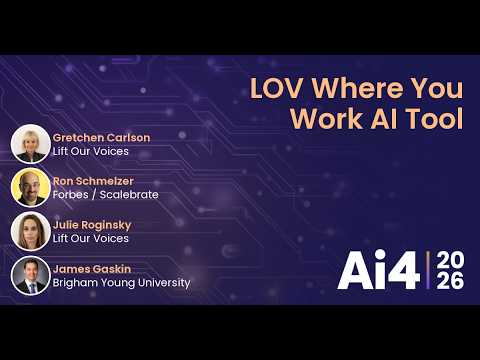
LOV Where You Work AI Tool — Ai4

Ai4

Because off-the-shelf AI models risk hallucinations and confidentiality breaches, Lift Our Voices built a specialized platform to help employees detect and negotiate predatory non-disclosure and forced arbitration clauses before signing.

AI-assisted summary of LOV Where You Work AI Tool — original source. Check the original for full context.

Source published:

Detailed notes

## Background Published by Ai4 on YouTube on August 19, 2026, this fireside chat introduces the 'Love Where You Work' AI tool developed in partnership with the nonprofit Lift Our Voices. The session focuses on empowering prospective employees to understand complex employment contracts, identify hidden risks like forced arbitration, and navigate their legal rights before signing.

## TL;DR Lift Our Voices co-founders Gretchen Carlson and Julie Roginsky, alongside BYU Professor Dr. James Gaskin, discuss how modern employment contracts weaponize forced arbitration and non-disclosure agreements to suppress workplace misconduct claims. To counter this, they built the 'Love Where You Work' AI tool, a free and anonymous platform that parses dense legal agreements against state and federal labor laws to identify red flags and provide actionable negotiation leverage. The panel highlights why standard consumer LLMs fail at reliable contract analysis, how state-level legal protections apply, and how grassroots awareness can spark institutional reform across corporate America. Looking ahead, the initiative aims to incorporate dynamic conversational features and expand partnerships with advocacy organizations to democratize legal transparency.

## Atmosphere & style The discussion carries an urgent, empowering, and pragmatic tone, blending high-profile advocacy with accessible technical analysis. Gretchen Carlson and Julie Roginsky speak with palpable conviction rooted in their personal battles against corporate silencing, while Dr. James Gaskin grounds the conversation in rigorous system architecture and safety safeguards. Moderated smoothly by Ron Schmelzer, the exchange feels less like a detached tech demonstration and more like an actionable call to collective workplace reform, balancing sober reality with optimism for technological empowerment.

## Key takeaways - [00:04](https://www.youtube.com/watch?v=SDN30Ijxxeo&t=4s) Over 82% of American workers are bound by forced arbitration clauses and roughly one-third sign non-disclosure agreements on their first day of work, disproportionately impacting women and people of color. - [00:04](https://www.youtube.com/watch?v=SDN30Ijxxeo&t=4s) Bipartisan federal legislation enacted in 2022 banned forced arbitration and pre-dispute NDAs for sexual assault and harassment, but other workplace misconduct like racial discrimination remains unprotected federally. - [05:04](https://www.youtube.com/watch?v=SDN30Ijxxeo&t=304s) Mandatory arbitration originally handled minor civil disputes but has expanded into a corporate mechanism to conceal workplace toxicity behind closed doors. - [06:55](https://www.youtube.com/watch?v=SDN30Ijxxeo&t=415s) The free 'Love Where You Work' AI tool evaluates employment agreements against state and federal laws to classify risks, extract problematic clauses, and provide negotiation leverage. - [06:55](https://www.youtube.com/watch?v=SDN30Ijxxeo&t=415s) Commercial off-the-shelf LLMs pose significant risks for contract analysis due to potential confidentiality breaches, sycophantic responses, and hallucinations regarding complex labor laws. - [06:55](https://www.youtube.com/watch?v=SDN30Ijxxeo&t=415s) The platform protects user privacy through complete anonymity and transient processing, without retaining user data, identity, or contract text. - [10:38](https://www.youtube.com/watch?v=SDN30Ijxxeo&t=638s) The tool highlights state-specific legal protections, such as NDA restrictions in California, New Jersey, and Washington, exposing clauses that may be legally unenforceable. - [10:38](https://www.youtube.com/watch?v=SDN30Ijxxeo&t=638s) Equipping workers to question restrictive contracts aims to drive collective grassroots pressure and normalize transparency, comparable to the cultural shift surrounding paternity leave. - [14:17](https://www.youtube.com/watch?v=SDN30Ijxxeo&t=857s) Lift Our Voices is partnering with groups like the Mark Cuban Foundation and the National Domestic Workers Alliance to deliver contract transparency to early-career and vulnerable service workers. - [14:17](https://www.youtube.com/watch?v=SDN30Ijxxeo&t=857s) Early contract review before signing an offer letter is critical, as forced arbitration clauses prevent workers from obtaining legal representation if disputes arise later. - [16:51](https://www.youtube.com/watch?v=SDN30Ijxxeo&t=1011s) The platform functions as an educational plain-English translation tool rather than formal legal counsel, democratizing contract understanding for those unable to afford private attorneys. - [17:27](https://www.youtube.com/watch?v=SDN30Ijxxeo&t=1047s) The future technological roadmap aims to transition the tool from static single-turn analysis into an interactive, multi-turn conversational experience directly with contracts.

## Detailed walkthrough ### [00:04](https://www.youtube.com/watch?v=SDN30Ijxxeo&t=4s) Panel Introductions: Lift Our Voices and the Fight Against Workplace Silencing

Ron Schmelzer, an AI columnist for Forbes, opens the session by introducing the panel. Gretchen Carlson is an internationally recognized journalist, author, and workplace equality advocate whose lawsuit against Fox News chairman Roger Ailes helped catalyze the global #MeToo movement. Named one of *Time* magazine's 100 most influential people in the world, Carlson co-founded the nonprofit Lift Our Voices to eradicate workplace silencing mechanisms. Joining her is co-founder Julie Roginsky, a veteran political consultant and advocate who also filed a landmark sexual harassment and retaliation suit against Fox News. Roginsky has dedicated her career to mentoring women and championed bipartisan legislation, including the Speak Out Act. Providing the technical backbone is Dr. James Gaskin, a professor of Information Systems at Brigham Young University who has authored over 225 research articles in human-computer interaction and created widely used methodological platforms including StatWiki and SEM tools.

Carlson and Roginsky lay out the scale of workplace suppression across corporate America. Carlson emphasizes that forced arbitration and non-disclosure agreements (NDAs) strip workers of their fundamental constitutional right to take disputes before a jury of their peers. Roginsky adds that roughly one-third of all American workers are bound by silencing NDAs on their very first day of employment, while more than 82% are trapped under forced arbitration clauses. While these mechanisms reach from entry-level minimum-wage workers—such as home health aides earning under $13 an hour—all the way to the executive C-suite, their burdens fall disproportionately on women and people of color. Lift Our Voices spearheaded two bipartisan federal laws enacted in 2022 to ban forced arbitration and pre-dispute NDAs for sexual assault and sexual harassment, a victory Carlson describes as a grueling "six-year slog." To expand protections across all forms of workplace misconduct, the organization partnered with Dr. Gaskin to launch the "Love Where You Work" AI tool.

- Over 82% of all American workers are bound by forced arbitration agreements, preventing them from filing court lawsuits. - One-third of U.S. employees sign non-disclosure agreements on their first day of work that restrict their ability to speak out about workplace conditions. - Federal legislation enacted in 2022 eliminated forced arbitration and pre-dispute NDAs specifically for sexual assault and harassment claims, but other workplace protections remain unprotected at the federal level. - Disenfranchised groups, including low-wage workers and people of color, are disproportionately subjected to mandatory silencing clauses.

---

[05:04](https://www.youtube.com/watch?v=SDN30Ijxxeo&t=304s) The Rise of Forced Arbitration and Secret Chambers in the Workplace

Addressing common misconceptions, Carlson explains that forced arbitration was originally conceived to unclog overburdened courts handling minor civil disputes—such as a $300 disagreement over a broken neighborhood fence. Over the last four to five decades, corporations realized that arbitration operated behind closed doors as a "secret chamber" shielded from public scrutiny. Consequently, companies began quietly routing discrimination, harassment, and toxic workplace claims into arbitration.

The prevalence of these clauses has skyrocketed over recent decades. In 1991, only 2% of the American workforce was subject to mandatory arbitration clauses; today, that number exceeds 82%. Carlson points out that most employees unknowingly sign away their legal rights within standard 15-page onboarding packets or by routinely checking "terms and conditions" boxes, similar to signing up for a standard consumer mobile phone plan with Verizon. This pervasive secrecy allows companies to project an image of healthy workplace culture simply because misconduct is concealed. When Schmelzer polls the audience, only a single attendee is aware that their employment agreement contains a mandatory arbitration provision, underscoring how invisible these clauses remain to the workforce.

```mermaid flowchart TD accTitle: Evolution of Forced Arbitration in Employment Contracts accDescription: Flowchart contrasting the historical purpose of arbitration with its modern corporate application and consequences.

subgraph Historical["Historical Scope (1991: ~2%)"] H1["Minor Civil Disputes"] --> H2["Designed to Unclog Court Dockets"] H2 --> H3["Informal External Resolution"] end

subgraph Modern["Modern Corporate Scope (Present: >82%)"] M1["Mandated Onboarding Paperwork"] --> M2["Route Discrimination & Misconduct"] M2 --> M3["Secret Arbitration Chambers"] end

subgraph Consequences["Impact on Workers"] C1["Waiver of Right to Public Jury Trial"] C2["Concealment of Systemic Toxicity"] C3["Suppression of Worker Leverage"] end

Historical -.-> Modern Modern --> Consequences ```

---

[06:55](https://www.youtube.com/watch?v=SDN30Ijxxeo&t=415s) Demo of the "Love Where You Work" AI Tool and Why Off-the-Shelf LLMs Fail

Dr. Gaskin walks through the operation of the Love Where You Work AI tool. The free, web-based platform allows workers to upload employment agreements, employee handbooks, or individual clauses, selecting the state in which they are employed. The system runs multi-pass technical validation, semantic parsing, and regulatory checks against state and federal statutes. It generates an itemized report categorizing provisions by risk level—mildly, moderately, or severely concerning—while extracting direct quotes from the contract, explaining the operational implications of each clause, and presenting practical negotiation leverage points.

```mermaid flowchart LR accTitle: Architecture of Love Where You Work AI Contract Analysis accDescription: Diagram showing the input, processing, and output pipeline of the Love Where You Work platform.

subgraph Ingestion["1. User Ingestion"] A["Upload Contract / Handbook"] --> C["Select Work State"] B["Paste Specific Clauses"] --> C end

subgraph Processing["2. Engine Processing"] C --> D["Multi-Pass Verification"] D --> E["Statutory Compliance Check"] E --> F["State & Federal Rules Engine"] end

subgraph Output["3. Actionable Report"] F --> G["Severity Breakdown"] F --> H["Quoted Problematic Clauses"] F --> I["Negotiation Strategy & Advice"] end ```

Addressing why workers should not simply paste their employment contracts into consumer tools like ChatGPT, Claude, Gemini, or Grok, Dr. Gaskin and Roginsky highlight critical risks: - Commercial Large Language Models (LLMs) ingest user inputs for model training, risking unauthorized disclosure of proprietary or confidential contract terms that could violate existing agreements. - General models are prone to hallucinations and lack domain-specific fine-tuning for nuanced labor mechanisms such as clawback provisions, non-disparagement terms, and complex arbitration waivers. - Unspecialized LLMs tend to be sycophantic, offering pleasing answers that may be legally disastrous. Roginsky notes that when she ran her own prior Fox News contract through a standard commercial LLM, the model advised an action that would have resulted in her being "sued into oblivion" and spending her life savings fighting litigation. - The Love Where You Work platform is completely anonymous and transient; it does not store user identities, contracts, or extracted text, and generates downloadable PDF reports entirely free of charge in both English and Spanish.

---

[10:38](https://www.youtube.com/watch?v=SDN30Ijxxeo&t=638s) Translating Knowledge into Action: State Laws, Negotiation, and Grassroots Pressure

Discovering a predatory clause is only the first step; the tool actively informs workers of existing statutory rights their employers are not legally obligated to disclose. If an employee experiences sexual misconduct, the tool alerts them to federal protections that override forced arbitration. Furthermore, if a worker is based in states with strict NDA bans—such as California, Washington, or New Jersey—the tool flags that broad non-disclosure or non-disparagement clauses in their contracts may be legally unenforceable.

Equipped with this analysis, prospective and current employees gain practical framing to negotiate terms before signing. Instead of accepting blanket restrictions, workers can propose replacing forced arbitration with fair mediation clauses or narrowing broad NDAs strictly to company trade secrets and proprietary intellectual property.

Carlson acknowledges that a major Fortune 500 corporation will rarely overhaul its arbitration policy based on a single individual's objection. However, she argues that true cultural change requires collective grassroots momentum paired with federal legislative pressure. Carlson draws a direct comparison to paternity leave: fifteen years ago, taking paternity leave was technically legal but culturally discouraged; as more male employees began requesting it, the practice became normalized across corporate America. Lift Our Voices aims to create the same cultural shift around contract transparency.

---

[14:17](https://www.youtube.com/watch?v=SDN30Ijxxeo&t=857s) Building Coalition Partnerships to Democratize Legal Transparency

To shift workplace standards at scale, Lift Our Voices is integrating the tool directly into partner organizations that support vulnerable and emerging workforces: - **The Mark Cuban Foundation:** Integrating the AI contract evaluation tool into its AI boot camp curricula for high school and college students entering the professional world. - **Latino and Community Advocacy Groups:** Partnering with grassroots organizations such as Marramoto to provide bilingual contract transparency. - **National Domestic Workers Alliance:** Extending contract analysis to domestic and service-sector workers who face high rates of workplace exploitation and low access to legal counsel.

Roginsky underscores that empowering workers *before* they sign an offer letter is vital. Sharing her personal experience suing Fox News, Roginsky reveals that she was only able to bring her public lawsuit because, by sheer coincidence, her contract lacked an arbitration clause; her attorneys stated plainly that they would not have taken her case had arbitration been mandatory. Because the overwhelming majority of employees lack the financial resources to consult private employment attorneys prior to accepting a job, the tool serves to democratize critical legal insight and level the playing field.

[16:51](https://www.youtube.com/watch?v=SDN30Ijxxeo&t=1011s) Translating Dense Legalese into Layman's Terms

The discussion highlights the fundamental mission behind the AI tool: democratizing legal comprehension for workers who cannot afford or access legal counsel. The speakers explicitly clarify that the platform does not function as an attorney and does not dispense legal advice. Instead, it serves as a translation mechanism that breaks down dense legalese and jargon into accessible layman's terms. By helping everyday individuals comprehend agreements that normally require specialized legal expertise, the initiative frames this application as a prime example of "using AI for good."

Audience members are invited to scan the presentation QR code or visit `lifttourvoices.org` directly, where the AI tool is prominently featured.

- **Non-Legal Advice Scope**: Operates strictly as an educational and translation aid rather than formal legal counsel. - **Resource Access**: The tool is accessible directly via the Lift Our Voices website (`lifttourvoices.org`).

```mermaid flowchart LR accTitle: Workflow of the Lift Our Voices AI Tool subgraph InputStage["Document Ingestion"] A["Dense Employment Contract / Legalese"] --> B["LOV AI Processing Engine"] end subgraph OutputStage["User Empowerment"] B --> C["Plain-English Translation"] B --> D["Tradeoff & Red Flag Analysis"] C --> E["Informed Worker Decision"] D --> E end ```

[17:27](https://www.youtube.com/watch?v=SDN30Ijxxeo&t=1047s) The Technological Roadmap: Interactive Contracts and Collective Empowerment

Looking ahead to future developments as additional funding becomes available, James Gaskin outlines the technological roadmap for the platform. Given the relentless pace of advancement in artificial intelligence—where newer and more capable models arrive on a weekly or daily basis—the platform will continuously evolve alongside cutting-edge foundational models.

Currently, the tool operates as a standard single-turn input-and-output mechanism. The development goal is to transform this into an interactive experience where workers can directly "talk to your contract" through dynamic, multi-turn Q&A sessions. Additionally, the team plans to expand beyond broad recommendations into concrete, direct connections with specific external resources, tools, and social features to scale distribution. As emphasized, institutional change alone cannot solve the problem until individual workers are equipped with direct knowledge and full awareness of what rights they possess—or have unknowingly surrendered.

The session concludes with host Ron Schmelzer commending the 20-minute discussion, encouraging attendees to join the movement, scan the QR code, and thanking panelists Gretchen Carlson, Julie Roginsky, and James Gaskin.

- **Conversational Interface**: Transitioning from static input/output parsing to dynamic Q&A where users converse directly with contract terms. - **Actionable Connections**: Integrating direct links to external worker support organizations and specific legal resources. - **Social Amplification**: Leveraging social features to drive widespread distribution and collective legal literacy among employees.

## Notable quotes > [00:04](https://www.youtube.com/watch?v=SDN30Ijxxeo&t=4s) forced arbitration and non-disclosure agreements (NDAs) strip workers of their fundamental constitutional right to take disputes before a jury of their peers. — Gretchen Carlson

> [00:04](https://www.youtube.com/watch?v=SDN30Ijxxeo&t=4s) roughly one-third of all American workers are bound by silencing NDAs on their very first day of employment, while more than 82% are trapped under forced arbitration clauses. — Julie Roginsky

> [00:04](https://www.youtube.com/watch?v=SDN30Ijxxeo&t=4s) six-year slog — Gretchen Carlson

> [05:04](https://www.youtube.com/watch?v=SDN30Ijxxeo&t=304s) secret chamber — Gretchen Carlson

> [06:55](https://www.youtube.com/watch?v=SDN30Ijxxeo&t=415s) sued into oblivion — Julie Roginsky

> [06:55](https://www.youtube.com/watch?v=SDN30Ijxxeo&t=415s) The Love Where You Work platform is completely anonymous and transient; it does not store user identities, contracts, or extracted text — James Gaskin

> [16:51](https://www.youtube.com/watch?v=SDN30Ijxxeo&t=1011s) using AI for good

> [17:27](https://www.youtube.com/watch?v=SDN30Ijxxeo&t=1047s) talk to your contract — James Gaskin

## Mentioned Ai4, Gretchen Carlson, Julie Roginsky, James Gaskin, Ron Schmelzer, Lift Our Voices, Love Where You Work AI Tool, Fox News, Roger Ailes, Speak Out Act, Brigham Young University, StatWiki, Verizon, ChatGPT, Claude, Gemini, Grok, The Mark Cuban Foundation, Marramoto, National Domestic Workers Alliance

## Video description Gretchen Carlson - Co-Founder, Lift Our Voices James Gaskin - Professor of Information Systems, Brigham Young University Julie Roginsky - Co-Founder, Lift Our Voices Ron Schmelzer - AI Columnist / Host, Forbes / Scalebrate

Prospective employees are often asked to sign contracts they do not fully understand. Even when they read the fine print, they may not have the legal expertise to recognize what rights they are giving up, what protections and benefits they are receiving in return, or which terms may be unusually broad, risky, or even unenforceable.

In this Ai4 fireside chat, we will introduce an AI-powered tool designed to help individuals better understand employment-related contracts before they sign. Sponsored by Lift Our Voices, the tool helps users identify key tradeoffs in their agreements, including what they may be giving up, what they are receiving, what leverage or practical options they may have, and which provisions deserve closer attention.

We will discuss the challenges employees face when workplace issues do arise, the kinds of contract terms that can create hidden risks (e.g., forced arbitration), and how AI can support greater transparency and individual empowerment. Time and technology permitting, we will also provide a live demonstration of the tool and show how it can help prospective employees spot red flags and make more informed decisions.

[Source](https://www.youtube.com/watch?v=SDN30Ijxxeo)

中文简报

Carlson与Roginsky推出AI工具揭露强制仲裁条款 由于现成通用AI模型存在幻觉和泄密风险,Lift Our Voices构建了专用平台,帮助员工在签约前识别并协商掠夺性的保密与强制仲裁条款。 Lift Our Voices联合创始人Gretchen Carlson和Julie Roginsky携手杨百翰大学(BYU)教授James Gaskin博士,探讨了现代雇佣合同如何将强制仲裁和保密协议武器化,以压制针对职场不当行为的维权主张。为了应对这一问题,他们开发了“Love Where You Work”AI工具,这是一个免费且匿名的平台,可对照州与联邦劳动法解析晦涩的法律协议,识别风险隐患并提供切实的谈判筹码。专家组重点阐述了标准消费级大模型为何无法可靠分析合同、州级法律保护如何适用,以及基层意识觉醒如何推动全美企业界的制度改革。展望未来,该项目旨在引入动态对话功能,并扩大与倡导组织的合作,以普及法律透明度。 超过 82% 的美国劳动者受到强制仲裁条款约束,约三分之一在入职首日即签署了保密协议(NDA),这一现象对女性和有色人种的影响尤为严重。 (0:04) 强制仲裁最初仅用于处理轻微民事纠纷,如今已被企业广泛利用为暗室机制,以掩盖职场歧视、性骚扰等恶劣行径。 (5:04) 非营利组织 Lift Our Voices 推出免费的“Love Where You Work”AI 工具,对比州法与联邦法规以评估劳动合同风险、标记问题条款并提供谈判筹码,同时承诺完全匿名且不保留任何用户数据。 (6:55) 普通商业通用大模型在审查合同时存在隐私泄露、缺乏细分法规模拟以及迎合性幻觉等巨大风险,可能对雇员造成灾难性的法律后果。 (6:55) 该工具不仅能识别加州、华盛顿州和新泽西州等地区可能无效的过度保密条款,未来还将升级为支持与合同进行交互式对话的问答系统,以推动职场透明度文化。 (10:38)

Reading summary

Lift Our Voices co-founders Gretchen Carlson and Julie Roginsky, alongside computer science professor Dr. James Gaskin, launched the 'Love Where You Work' AI tool to counteract the pervasive corporate use of forced arbitration and non-disclosure agreements by translating complex legal contracts into plain-English risk assessments and negotiation strategies. Proliferation of Mandatory Arbitration and Workplace Silencing (0:04) According to Lift Our Voices co-founders Gretchen Carlson and Julie Roginsky, silencing mechanisms have become standard across corporate America, affecting employees from low-wage home health aides to C-suite executives. Roginsky noted that approximately one-third of American workers sign non-disclosure agreements on their first day of work, while Carlson highlighted that over 82% are bound by mandatory arbitration agreements—a dramatic increase from just 2% in 1991. These clauses disproportionately impact low-wage workers and people of color. Carlson explained that arbitration was originally designed to unclog court dockets for minor civil disputes, but corporations have spent decades expanding its use into private 'secret chambers.' By burying arbitration terms within standard onboarding packets, companies conceal systemic discrimination and harassment claims from public juries. Although 2022 federal legislation banned forced arbitration and pre-dispute NDAs for sexual assault and harassment, Carlson noted that other categories of workplace misconduct remain unprotected at the federal level. Engineering Purpose-Built Legal AI Over Commercial Models (6:55) To decode dense employment agreements, Dr. James Gaskin and Lift Our Voices developed the 'Love Where You Work' platform. The free tool ingests contracts or employee handbooks, verifies them against state and federal labor statutes, and categorizes problematic clauses into mild, moderate, or severe risk tiers. The system operates strictly as an educational and translation aid rather than formal legal counsel, rendering complex legalese into accessible terms and providing downloadable reports in English and Spanish. Dr. Gaskin and Roginsky cautioned against using general-purpose commercial large language models like ChatGPT or Claude for contract analysis. Standard commercial models ingest user prompts to train future iterations, which risks exposing proprietary employer data or breaching existing confidentiality obligations. Furthermore, general models lack fine-tuning for complex labor provisions like clawbacks and tend to provide sycophantic, legally dangerous advice. Roginsky recalled testing her former Fox News contract in a commercial LLM, which suggested an approach that would have exposed her to severe, costly litigation. By contrast, the custom tool operates transiently and anonymously without retaining user identity or contract text. State Rights and Grassroots Negotiation Strategies (10:38) Beyond identifying risky terms, the tool contextualizes clauses against statutory protections that employers rarely disclose. It alerts workers when federal laws invalidate arbitration for sexual misconduct claims, or when state-level statutes—such as non-disclosure prohibitions in California, New Jersey, and Washington—render broad non-disparagement language unenforceable. Armed with this knowledge, prospective hires can negotiate terms before signing, such as requesting fair mediation instead of mandatory arbitration or restricting NDAs solely to proprietary trade secrets. Carlson acknowledged that individual objections rarely force Fortune 500 employers to overhaul blanket arbitration policies. However, she argued that building collective transparency mimics the cultural shift that normalized paternity leave, which transformed from an avoided benefit into standard practice as employees steadily asserted their rights. Roginsky added that she was only able to sue Fox News because her agreement happened to lack an arbitration clause, noting that legal counsel routinely rejects meritorious claims blocked by mandatory arbitration. Broadening Coalition Reach and Interactive Tech Roadmap (14:17) To reach populations lacking access to private employment attorneys, Lift Our Voices is embedding the tool into external training and community programs. Partnerships include the Mark Cuban Foundation, which integrates contract evaluation into AI boot camps for emerging professionals, as well as the National Domestic Workers Alliance and grassroots groups like Marramoto to support vulnerable service workers and Spanish-speaking communities. Outlining the technological roadmap, Dr. Gaskin explained that future iterations will expand beyond static, single-turn document parsing. The development team plans to introduce dynamic conversational interfaces that allow users to directly question their contracts, while integrating referral channels to external worker support organizations. The speakers maintained that systemic workplace equity ultimately relies on equipping individual workers with immediate literacy regarding the rights they retain or inadvertently surrender. The program demonstrates how targeted, privacy-preserving AI can help level the information asymmetry between employers and workers. However, the speakers emphasize that AI-driven contract literacy is an educational starting point rather than a replacement for legal counsel, and that shifting pervasive corporate secrecy will require continued federal legislative expansion alongside grassroots employee awareness.

精炼阅读摘要

非营利组织 Lift Our Voices 联合计算机学者推出了免费人工智能工具“Love Where You Work”,旨在打破美国企业中普遍存在的强制仲裁与保密协议对劳动者权益的压制。该平台通过将复杂的雇佣合同文本翻译为通俗语言并核对各州与联邦法规,帮助劳动者在签署协议前识别潜在法律风险并获取谈判依据。 职场沉默条款的蔓延与员工权利剥夺 (0:04) 根据 Lift Our Voices 联合创始人 Gretchen Carlson 与 Julie Roginsky 的说明,强制仲裁在过去数十年间于美国企业界迅速普及。1991年仅有约2%的美国劳动力受到强制仲裁限制,如今这一比例已超过82%;同时,约三分之一的美国员工在入职首日便签署了限制其讨论工作场所环境的保密协议(NDA)。Carlson 指出,强制仲裁最初设立的目的是协助法院分流如小额财产争议等轻微民事诉讼,但在过去四五十年间,企业逐渐将其运作机制转变为避开公众监督的“隐秘私室”,从而系统性遮蔽职场歧视、性骚扰与有毒工作文化。 此类沉默机制广泛覆盖从时薪低于13美元的家庭护理人员到企业高管的各类岗位,且负担主要落在女性和有色人种等弱势群体身上。大多数员工仅是在繁复的入职材料或勾选“条款与条件”时,不知情地放弃了陪审团审判的宪法权利。虽然美国在2022年通过了两党联邦立法,明令禁止针对性侵犯与性骚扰主张设立前置保密协议与强制仲裁,但针对种族歧视、欠薪等其他严重不当行为的联邦级保护仍属空白。 专有AI架构与通用大模型的严重缺陷 (6:55) 针对普通员工难以承担法律咨询费用的现状,杨百翰大学教授 James Gaskin 主导开发了“Love Where You Work”分析工具。用户上传雇佣协议、员工手册或特定条款并选择所在州后,系统会进行多轮技术验证、语义解析,并对照州与联邦法规进行合规性核对。该工具会生成一份按风险等级(轻微、中度、严重)分类的报告,直接引用问题条款原文,阐述其实际影响,并提供具体的谈判切入点。为确保安全,该工具完全匿名且不保留数据,不存储合同文本或个人信息,并免费提供英西双语的PDF下载报告。 针对为何不能直接使用 ChatGPT、Claude、Gemini 或 Grok 等通用大模型的问题,Gaskin 与 Roginsky 指出了重大风险:通用商用模型会将输入数据纳入训练集,可能导致员工泄露商业机密并违反保密协议;通用模型缺乏针对劳工法律细则(如追回条款、非贬损条款)的专业微调,极易发生事实幻觉。此外,商用大语言模型普遍存在顺从迎合用户的倾向,可能给出在法律上致命的建议——Roginsky 透露,当她将自己当年起诉福克斯新闻(Fox News)时的合同输入某主流商用大模型时,该模型给出的操作建议若付诸实践,足以导致她因严重违约而陷入耗尽积蓄的诉讼泥潭。 发掘隐藏法定权利与重构基层谈判杠杆 (10:38) 该工具不仅能指出具有掠夺性的合同条款,还能主动向员工提示雇主依法无须主动告知的法定权利。例如,如果员工遭遇性不端行为,系统会提示联邦法律已在相关情形下废除强制仲裁效力;如果员工位于加利福尼亚州、华盛顿州或新泽西州等对保密协议设立严格禁令的地区,系统会明确指出合同中宽泛的保密或非贬损条款在当地法律下属于无效约定。 掌握这些信息后,求职者与现有雇员在签署文件前便获得了切实的话语权。劳动者可据此提出合理的修改意见,例如要求以公平的调解条款取代强制仲裁,或将保密协议范围严格限制在企业商业秘密和知识产权层面。Carlson 坦言,单一员工的异议通常无法促使财富500强企业立即推翻既定政策,但正如陪产假从最初“合法但受冷遇”逐渐演变为企业文化常态一样,通过广泛的草根知情权觉醒配合立法推进,职场签约透明度也将形成自下而上的文化转变。 降低专业门槛的联盟合作与技术路线图 (14:17) 论坛发言人明确强调,该AI工具定位为教育和文本翻译辅助工具,用于将密集的法律术语转化为通俗语言,并不扮演律师角色,亦不提供正式法律建议。Roginsky 结合个人经历指出,她当年之所以能公开起诉福克斯新闻,纯粹是因为合同中偶然遗漏了强制仲裁条款,而其律师当时明确表示若存在仲裁条款便绝不会接案。鉴于绝大多数员工无力在签约前聘请私人劳工律师,该工具致力于抹平信息鸿沟。为此,Lift Our Voices 正与马克·库班基金会(Mark Cuban Foundation)、拉美裔倡导组织 Marramoto 以及全国家政工人工会(National Domestic Workers Alliance)展开合作,面向青年学生、西语群体和家政服务业普及合同分析能力。 展望未来技术规划,Gaskin 提出随着底层大模型的快速迭代,平台正计划从现有的静态单次输入输出模式,演进为支持多轮互动的“与合同对话”问答机制。此外,开发团队计划在获得更多资助后,直接整合外部劳工援助网络、特定法律救济渠道以及社交传播功能,借助群体技术扩散打破职场中的信息孤岛与压制机制。 该项目展现了利用AI技术降低劳工法律认知门槛的途径,但发言人明确重申其不构成正式法律咨询,亦无法直接替代专业律师维权。要打破现代企业长期依赖的私密仲裁机制,不仅依赖技术工具赋予个体的知情能力,仍有赖于各州及联邦层面的进一步立法推进与广泛的集体维权共识。

Detailed notes — zh

## Background 该内容由科技会议频道 Ai4 于 2026 年 8 月 19 日在 YouTube 平台发布。视频记录了一场关于非营利组织 Lift Our Voices 推出的 AI 雇佣合同审查工具的炉边对话,旨在帮助求职者在签署劳动合同前识别强制仲裁、过度保密协议(NDA)等潜在法律风险与不对等条款,从而提升职场透明度并赋能个体。 ## TL;DR 在本次对谈中,Lift Our Voices 联合创始人 Gretchen Carlson、Julie Roginsky 与杨百翰大学教授 James Gaskin 共同探讨了强制仲裁和宽泛保密协议(NDA)对美国劳动者的普遍压制。他们详细介绍了专为普通求职者研发的免费、注重隐私的 AI 分析工具“Love Where You Work”,该工具能将复杂的法律行话转译为分级风险报告,并提供谈判应对策略。嘉宾们强调,专用法律 AI 比通用大模型更安全客观,通过自下而上的劳动者赋能与自上而下的立法推动,可以从根本上重塑公平透明的职场文化。 ## Atmosphere & style 整场对话兼具专业深度与人文关怀,气氛专注、真挚且极具号召力。两位女性联合创始人结合自身对抗职场不公的亲身经历娓娓道来,既有对弱势劳动者处境的深刻同理,又有坚决推动制度变革的坚定决心;学者 James Gaskin 则以严谨克制的技术视角拆解 AI 架构,与主持人的敏锐串联相得益彰。现场从揭露职场黑箱的沉重现实,逐步升华至以技术普惠大众的希望感与赋能感,给观众带来启发与力量。 ## Key takeaways - [00:04](https://www.youtube.com/watch?v=SDN30Ijxxeo&t=4s) 格雷琴·卡尔森与朱莉·罗金斯基创立非营利组织 Lift Our Voices,旨在根除职场中压制受害者的强制仲裁与保密协议(NDA)。 - [00:04](https://www.youtube.com/watch?v=SDN30Ijxxeo&t=4s) 全美目前约有 82% 至 84% 的员工受制于强制仲裁,且有三分之一的劳动者在入职首日即被迫签署保密协议,剥夺了向法院诉讼的权利。 - [03:38](https://www.youtube.com/watch?v=SDN30Ijxxeo&t=218s) 强制仲裁最初仅用于解决小额民事纠纷,但过去数十年间被企业异化为掩盖职场歧视和性骚扰丑闻的秘密闭门机制,受限员工比例从 1991 年的 2% 激增至 82% 以上。 - [03:38](https://www.youtube.com/watch?v=SDN30Ijxxeo&t=218s) Lift Our Voices 联合 BYU 詹姆斯·加斯金教授开发了免费 AI 合同分析工具“Love Where You Work”,帮助劳动者在签署劳动合同前识别隐形陷阱。 - [06:35](https://www.youtube.com/watch?v=SDN30Ijxxeo&t=395s) 用户上传合同并选择所在州后,该 AI 工具会进行多轮法律规则筛选与交叉验证,输出风险分级报告并提供谈判修改建议。 - [08:19](https://www.youtube.com/watch?v=SDN30Ijxxeo&t=499s) 通用大模型存在再训练导致的数据泄露风险及迎合用户的法律幻觉,而专用 AI 工具具备完全匿名、零存储以及针对各州法律精准校准的优势。 - [10:38](https://www.youtube.com/watch?v=SDN30Ijxxeo&t=638s) 2022 年通过的联邦立法已禁止在性不当行为中执行强制仲裁与 NDA,部分州也严禁全面 NDA,该工具有助于识别用人单位合同中已失效的非法条款。 - [10:38](https://www.youtube.com/watch?v=SDN30Ijxxeo&t=638s) 倡导自下而上的职场文化变革,建议求职者将排他性强制仲裁协商为透明的调解条款,并将宽泛 NDA 限制在商业机密保护范围内。 - [14:17](https://www.youtube.com/watch?v=SDN30Ijxxeo&t=857s) LOV 正在与马克·库班基金会、全国家政工人工会等组织合作,重点为青少年和基层少数族裔劳动者提供多语言的合同防范与法律赋能。 - [16:51](https://www.youtube.com/watch?v=SDN30Ijxxeo&t=1011s) 该 AI 工具定位为普及法律认知与打破行话壁垒的平权助手,而非替代律师提供正式法律代理意见。 - [17:27](https://www.youtube.com/watch?v=SDN30Ijxxeo&t=1047s) 技术未来规划包括升级为双向实时交互的“与合同对话”模式,并深度联动具体的法律救济机构与社交传播机制。 ## Detailed walkthrough ### [00:04](https://www.youtube.com/watch?v=SDN30Ijxxeo&t=4s) 嘉宾介绍与“Lift Our Voices”的创立初衷 本次 Ai4 炉边对谈由《福布斯》(Forbes)AI 专栏作家兼长期人工智能观察者罗恩·施梅尔策(Ron Schmelzer)主持。施梅尔策开场风趣地自嘲自己报道 AI 的时间“实在太长了”,随后隆重介绍了三位重磅嘉宾:第一位是格雷琴·卡尔森(Gretchen Carlson),前 CBS 与 Fox News 资深记者、知名作家兼 TED 演讲嘉宾,曾入选《时代》周刊全球百大最具影响力人物,她对福克斯新闻前董事长罗杰·艾尔斯(Roger Ailes)发起的里程碑式诉讼为全球“#MeToo”运动奠定了重要基石;第二位是朱莉·罗金斯基(Julie Roginsky),全美知名政治顾问、长期致力于女性赋权的社会活动家,在同样对福克斯新闻提起性骚扰与报复诉讼后,投身于消除职场有害文化的抗争;第三位是杨百翰大学(BYU)信息系统学教授詹姆斯·加斯金博士(Dr. James Gaskin),在人机交互、AI 协作和心理健康领域发表了超过 225 篇学术论文,其主讲的统计教学视频与方法论工具在全网累计播放量达数千万次。 卡尔森与罗金斯基共同创立了非营利组织“Lift Our Voices”(简称 LOV),其核心使命是彻底铲除职场中压制受害者的两大“禁言机制”——强制仲裁(Forced Arbitration)与保密协议(NDA)。罗金斯基指出,全美约有三分之一的劳动者在入职第一天就被迫签署保密协议,更有高达 82% 至 84% 的员工受制于强制仲裁条款,这意味着一旦遭遇不公,他们将无法向法院提起诉讼,也无法由平民陪审团进行审判。这种消音机制对有色人种、女性以及时薪不足 13 美元的家庭护理员等底层最低工资劳动者造成了极其不对称的伤害,但其波及范围实际上覆盖了从基层劳工到高管套房(C-suite)的所有阶层。经过长达六年的艰苦博弈,LOV 推动美国国会在 2022 年通过了两项具有里程碑意义的跨党派联邦法案(包括《Speak Out Act》等),成功在涉及性骚扰和性侵犯的案件中废除了强制仲裁与 NDA 的约束力。 - **82%~84%**:目前受强制仲裁条款束缚的美国员工比例(绝大多数人在签署入职合同时对此毫不知情)。 - **1/3**:在入职第一天就通过宽泛的保密协议(NDA)被剥夺职场发声权利的美国劳动者比例。 - **2022 年联邦立法**:LOV 主导推动的跨党派立法,正式禁止在性不当行为(Sexual Misconduct)纠纷中强制执行仲裁与保密条款。 --- ### [03:38](https://www.youtube.com/watch?v=SDN30Ijxxeo&t=218s) 强制仲裁的异化历史与 AI 赋能工具的诞生 针对很多求职者在拿到 Offer 时往往满怀喜悦、盲目乐观地在长达十几页的文件上签字这一现象,卡尔森深入剖析了强制仲裁制度的异化历史。仲裁最初设立的法律本意绝非用来裁决职场人权或歧视纠纷,而仅仅是为了给过载的法院系统“减负”,用于处理邻里之间诸如“弄坏了价值 300 美元的篱笆”这类小额民事纠纷。然而在过去四五十年间,企业法务敏锐地发现仲裁是在不公开的“秘密暗室”中进行,外界永远无法获知真相,于是开始大肆将职场歧视、性骚扰等严重丑闻打包塞入强制仲裁条款中。 ```mermaid flowchart TD accTitle: 强制仲裁条款的历史演变路径 subgraph 仲裁机制的历史变迁 A["最初定位:司法减负<br/>解决小额民间纠纷(如300美元篱笆损坏)"] --> B["企业发现法律漏洞<br/>利用私密闭门仲裁掩盖丑闻与违法行为"] B --> C["条款泛滥扩散<br/>1991年仅占全美劳动力 2%"] C --> D["全面普遍化(现状 82%+)<br/>隐匿于冗长劳动合同与日常用户条款中"] end ``` 这种制度的爆炸式增长极其惊人:在 1991 年,全美仅有 2% 的员工受制于强制仲裁,而如今这一比例已超过 82%。企业通过这种方式粉饰太平,对外宣称拥有极佳的职场环境,实则将所有恶劣行径封锁在保密黑箱中。为了扭转信息不对称,LOV 与加斯金博士联合开发了名为“Love Where You Work”的免费 AI 分析工具。卡尔森强调,在当今充斥着对 AI 负面担忧的环境下,这款工具是 AI 真正造福普通劳动者的典型范例,旨在让劳动者在落笔签字之前,就能清晰识破合同中隐藏的禁言陷阱。 - **1991 年 vs 现今**:受强制仲裁约束的员工比例从 **2%** 飙升至 **82%** 以上。 - **生活中的类比**:普通人往往像在 Verizon 办手机卡时直接勾选“同意条款”一样,在 15 页的入职合同上匆匆签字,却不知自己已放弃了在遭遇职场侵害时对簿公堂的基本宪法权利。 --- ### [06:35](https://www.youtube.com/watch?v=SDN30Ijxxeo&t=395s) “Love Where You Work”系统架构与合同审查实操 在现场互动环节,当卡尔森询问台下观众是否有谁知道自己的劳动合同包含强制仲裁时,全场仅有一人举手,生动印证了公众对自身法律处境的普遍盲区。随后,加斯金博士结合现场演示,详细拆解了“Love Where You Work”工具的底层运行逻辑与分析流程。 ```mermaid flowchart LR accTitle: Love Where You Work 工具分析流程 subgraph 用户输入阶段 A["用户上传合同文档 / 粘贴条款文本"] --> B["选择用工地所在州<br/>(匹配州级差异化法律数据库)"] end subgraph 后端 AI 审查引擎 B --> C["多轮技术审查与验证<br/>(上下文解析、硬性规则筛选)"] C --> D["免责与确认协议<br/>(声明分析仅供参考非正式法律意见)"] end subgraph 报告输出与赋能 D --> E["生成风险评估报告<br/>严重 / 中度 / 轻度关注分级标记"] E --> F["精准定位原文 + 风险成因剖析 + 谈判应对策略"] end ``` 用户只需打开网页,同意不包含任何陷阱条款的简洁用户协议,上传 PDF/Word 合同或直接粘贴有疑问的特定文本段落,并选择所在的工作州。系统会在后端执行严密的“多轮解析(Multiple Passes)、逻辑交叉验证、硬性规则过滤与法律筛查”。几秒钟内,系统便会生成一份分级评估报告: 1. **风险定级与精准引用**:自动标注“严重关切”、“中度关切”和“轻度关切”的条款,逐字引用合同原文,并解释该条款为何对员工构成潜在风险; 2. **定制化杠杆建议**:在升级版系统中,工具不仅指出问题,还会清晰列出员工手头可用的法律杠杆与协商工具包,指导员工如何有的放矢地向雇主提出修改要求。 --- ### [08:19](https://www.youtube.com/watch?v=SDN30Ijxxeo&t=499s) 专用法律 AI 对比通用大模型(ChatGPT/Claude)的核心优势 针对主持人关于“为何不能直接将合同丢给 ChatGPT 或 Claude 分析”的疑问,加斯金与罗金斯基从隐私安全、模型幻觉以及法律后果三个维度给出了深度解答。加斯金警告称,直接向通用大模型上传包含敏感信息的雇佣协议,极有可能违反原合同中的保密义务,且商业大模型可能会吞噬用户数据用于后续训练,从而导致敏感合同内容在无意中泄露给第三方;更为关键的是,通用模型缺乏针对强制仲裁、NDA 范围限制及奖金追回条款(Clawbacks)的深度法律上下文对齐,极易产生危险的事实幻觉。 罗金斯基分享了自己的亲身测试经历:她曾将自己当年深陷纠纷的旧合同输入某主流通用大模型进行测试,结果大模型展现出极度危险的“讨好用户”倾向,净挑用户爱听的话说。罗金斯基直言:“通用大模型给我的建议,如果我真按照它说的去做了,那我会被对方公司告到万劫不复(sued into oblivion),倾家荡产去打官司。” | 维度 | 通用大模型(如 ChatGPT / Claude) | Love Where You Work 专用 AI 工具 | |:--- |:--- |:--- | | **数据隐私** | 可能用于模型再训练,存在数据泄露与违约风险 | **完全匿名**,不存储用户姓名、不保存合同中任何一个字 | | **法律可靠性** | 倾向于迎合用户主观偏好,提供高风险乃至违法的建议 | 经过深度法律约束与校准,提供客观中立且具备实操性的避坑指导 | | **专用识别力** | 泛化分析,容易遗漏复杂的隐性消音与追回条款 | 针对各州法律、强制仲裁、宽泛 NDA 深度特化,无幻觉甄别 | | **成本与门槛** | 深度分析常需付费订阅 | **100% 免费**(由 LOV 全额承担算力成本),支持即时导出 PDF | | **多语言支持** | 基础通用翻译 | 首发支持**英语与西班牙语**,未来将上线多语言交互机器人 | --- ### [10:38](https://www.youtube.com/watch?v=SDN30Ijxxeo&t=638s) 从法律洞察到行动谈判:以草根力量重构职场文化 “发现霸王条款只是一方面,劳动者究竟该如何付诸行动?”罗金斯基对此给出了具体的实战逻辑。很多时候法律已经发生了改变,但用人单位绝不会主动向员工普及这些权利。例如,依据 2022 年通过的联邦法律,遭遇性骚扰或性侵犯的员工依法不再受强制仲裁约束;在加利福尼亚州、华盛顿州和新泽西州等立法更严格的地区,极度严苛的全面 NDA 已经被明令禁止。即使用人单位在合同里依然写入了这些条款,该工具也会明确提示员工:“该条款在当地法律下已属无效,你拥有法定发声权。” 对于即将入职的新人,该工具提供了清晰的谈判话术支持: - 建议将排他性的“强制仲裁条款”协商修改为程序更加透明公正的“调解条款(Mediation Clause)”; - 建议将无所不包的“全面保密协议(Blanket NDA)”精准收缩为仅保护公司核心“商业机密(Trade Secrets)”的合理范畴。 卡尔森坦言,LOV 团队绝非天真地认为世界 500 强企业会因为一名普通员工的提问就瞬间废除强制仲裁。她的核心策略是“自下而上”与“自上而下”双轨并行,通过草根运动倒逼职场生态演进。她举了“带薪陪产假(Paternity Leave)”的历史类比:十五年前男性休陪产假在法律上虽被允许,但在职场文化中饱受歧视与白眼;然而随着越来越多的男性开始主动申请并坚持休假,带薪陪产假如今已成为职场常态。同理,当以年轻一代为主的劳动者开始普遍对保密文化提出质疑,甚至五人一组联合要求更公平的调解条款时,企业为了招揽并留住顶尖年轻人才,就不得不主动变革其用工合规标准。 > “这就像十五年前的陪产假一样……当年在文化层面上是不被鼓励的,但随着越来越多人开始争取,现在它已经彻底正常化了。这就是我们试图在这些议题上做的事情——自下而上改变体系,同时在联邦层面自上而下立法推动企业做正确的事。” —— **格雷琴·卡尔森** --- ### [14:17](https://www.youtube.com/watch?v=SDN30Ijxxeo&t=857s) 跨界战略联盟与法律维权门槛的普惠化 为了不让孤立的劳动者单打独斗,LOV 正在全力推进与各大社会组织的跨界合作,优先触达最容易受侵害的弱势群体。罗金斯基表示:“在社会中越处于边缘地位的群体,在职场中越容易被强制禁言,这是残酷的现实。”目前 LOV 已建立的合作网络包括: - **马克·库班基金会(Mark Cuban Foundation)**:将 AI 合同审查工具直接植入其面向青少年及大学生的 AI 训练营课程大纲,在年轻人步入职场之初就建立契约防范意识; - **Maremoto(拉丁裔组织)** 与 **全国家政工人工会(National Domestic Workers Alliance)**:依托工具的双语能力,为少数族裔及基层家政劳动者提供直接法律防线; - **全行业企业与科技伙伴扩展**:面向企业 C-suite 及各类工商业组织征集合作伙伴,推动全员合同透明化。 在对谈尾声,罗金斯基分享了一段惊心动魄的自身经历:当年她决心起诉福克斯新闻时,甚至根本不知道自己的合同里究竟有没有强制仲裁条款。最终纯粹凭着一丝侥幸,合同中恰巧没有该项约定,诉讼才得以推进;当时代理律师曾直截了当地告诉她,如果合同里存在强制仲裁条款,律师团将直接放弃代理,因为在那种密室仲裁中“根本没有任何胜诉可能”。罗金斯基动情地总结道,绝大多数求职者根本没有财力在签署每一份入职文件前自费聘请专业律师,而这款 AI 工具的核心使命,就是将昂贵的法律智慧平民化与普惠化,让每个劳动者在签署可能影响一生的法律文件前,真正拥有保护自己的武器。 ### [16:51](https://www.youtube.com/watch?v=SDN30Ijxxeo&t=1011s) 善用 AI 赋能求职者:打破法律黑话的壁垒 Julie Roginsky 明确强调,该工具的设计初衷并不是为了替代律师,也绝对不提供正式的法律咨询建议。然而,它的核心价值在于为那些雇不起律师的普通职员提供平等的法律理解机制。日常合同中充斥着晦涩繁琐的法律黑话与行话,普通人若无专业法律背景根本无从辨析,而该 AI 工具能够将这些复杂条款转化为通俗易懂的大白话,真正做到从求职者的视角出发“利用 AI 向上向善(using AI for good)”。 现场讲者随后引导观众留意投影屏幕上的二维码,并介绍大众可以直接访问 Lift Our Voices 的官方网站(liftourvoices.org),该 AI 分析工具已经在官网显要位置上线供公众使用。 - **非法律建议定位**:工具旨在解析与转译合同条款,并不构成正式的法律代理或法律意见。 - **平权价值**:让缺乏法律顾问资源的普通劳动者也能快速看懂霸王条款与潜在权利割让。 - **获取渠道**:用户可直接通过扫描现场二维码或访问 liftourvoices.org 网站体验。 ```mermaid flowchart LR accTitle: AI 合同解析工具的定位与赋能流程 subgraph Input["用户输入"] A["复杂劳动合同/条款"] end subgraph Engine["AI 赋能解析"] B["提炼法律行话与风险点"] C["转换为通俗日常语言"] end subgraph Outcome["用户价值"] D["认清权利与风险"] E["实现知情决策"] end A --> B --> C --> D --> E ``` --- ### [17:27](https://www.youtube.com/watch?v=SDN30Ijxxeo&t=1047s) 技术蓝图与未来演进:从单向输出到“与合同对话” 当被问及未来若获得更多资金支持,在技术层面希望为该工具增添哪些新特性时,Brigham Young University 的 James Gaskin 教授指出,整个 AI 领域正在以惊人的速度迭代进化——“这周的模型总会比上周更好,明天的技术或许就会超越今天”,因此该工具的底层智能也会紧跟整个前沿技术领域同步升级。 James Gaskin 描绘了该工具未来的三大演进方向: 1. **交互式对话体验**:当前的系统主要还是基于“输入文本—生成分析”的单向处理模式,未来希望升级为双向的多轮问答,让求职者能够直接“与自己的合同进行实时对话(talk to your contract)”。 2. **深度资源联动**:从目前提供泛化的参考建议与指引,进化为无缝对接具体的法律救济工具、权益保护机构和实用资源,让用户不仅了解现状,更能获得实质性的赋能与行动抓手。 3. **社交与普及机制**:引入更具传播力的社交化功能,让工具触达更多劳动者。正如 Gretchen Carlson 和 Julie Roginsky 一直强调的,即便在政策与立法层面不断推动变革,但唯有当广大求职者真正建立起认知、清楚意识到自己“拥有什么权益、正在失去什么权益”时,真正的职场公平与影响力才会发生。 --- ### [18:34](https://www.youtube.com/watch?v=SDN30Ijxxeo&t=1114s) 炉边对话圆满结语:投身职场权益变革 主持人 Ron Schmelzer 对这场干货满满的 20 分钟炉边对话进行了总结,赞扬了嘉宾们在推动 AI 向善以及职场平权运动中所展现的远见与担当。他再次号召现场与线上观众积极扫描二维码获取工具,共同参与到改善职场透明度的行动中来,并向 Gretchen Carlson、Julie Roginsky 以及 James Gaskin 表达了由衷的感谢,在热烈的掌声中为本场分享画上句号。 ## Notable quotes > [08:19](https://www.youtube.com/watch?v=SDN30Ijxxeo&t=499s) 通用大模型给我的建议,如果我真按照它说的去做了,那我会被对方公司告到万劫不复(sued into oblivion),倾家荡产去打官司。 — Julie Roginsky > [10:38](https://www.youtube.com/watch?v=SDN30Ijxxeo&t=638s) 该条款在当地法律下已属无效,你拥有法定发声权。 — Love Where You Work AI Tool > [10:38](https://www.youtube.com/watch?v=SDN30Ijxxeo&t=638s) 这就像十五年前的陪产假一样……当年在文化层面上是不被鼓励的,但随着越来越多人开始争取,现在它已经彻底正常化了。这就是我们试图在这些议题上做的事情——自下而上改变体系,同时在联邦层面自上而下立法推动企业做正确的事。 — Gretchen Carlson > [14:17](https://www.youtube.com/watch?v=SDN30Ijxxeo&t=857s) 在社会中越处于边缘地位的群体,在职场中越容易被强制禁言,这是残酷的现实。 — Julie Roginsky > [14:17](https://www.youtube.com/watch?v=SDN30Ijxxeo&t=857s) 根本没有任何胜诉可能 — Julie Roginsky > [16:51](https://www.youtube.com/watch?v=SDN30Ijxxeo&t=1011s) 利用 AI 向上向善(using AI for good) — Julie Roginsky > [17:27](https://www.youtube.com/watch?v=SDN30Ijxxeo&t=1047s) 这周的模型总会比上周更好,明天的技术或许就会超越今天 — James Gaskin > [17:27](https://www.youtube.com/watch?v=SDN30Ijxxeo&t=1047s) 与自己的合同进行实时对话(talk to your contract) — James Gaskin ## Mentioned Lift Our Voices, Love Where You Work, Gretchen Carlson, Julie Roginsky, James Gaskin, Ron Schmelzer, Forbes, Ai4, CBS, Fox News, Roger Ailes, Brigham Young University, Speak Out Act, ChatGPT, Claude, Mark Cuban Foundation, Maremoto, National Domestic Workers Alliance ## Video description Gretchen Carlson - Co-Founder, Lift Our Voices James Gaskin - Professor of Information Systems, Brigham Young University Julie Roginsky - Co-Founder, Lift Our Voices Ron Schmelzer - AI Columnist / Host, Forbes / Scalebrate Prospective employees are often asked to sign contracts they do not fully understand. Even when they read the fine print, they may not have the legal expertise to recognize what rights they are giving up, what protections and benefits they are receiving in return, or which terms may be unusually broad, risky, or even unenforceable. In this Ai4 fireside chat, we will introduce an AI-powered tool designed to help individuals better understand employment-related contracts before they sign. Sponsored by Lift Our Voices, the tool helps users identify key tradeoffs in their agreements, including what they may be giving up, what they are receiving, what leverage or practical options they may have, and which provisions deserve closer attention. We will discuss the challenges employees face when workplace issues do arise, the kinds of contract terms that can create hidden risks (e.g., forced arbitration), and how AI can support greater transparency and individual empowerment. Time and technology permitting, we will also provide a live demonstration of the tool and show how it can help prospective employees spot red flags and make more informed decisions. [Source](https://www.youtube.com/watch?v=SDN30Ijxxeo)

Source quotes

[8:19] Julie Roginsky: 通用大模型给我的建议,如果我真按照它说的去做了,那我会被对方公司告到万劫不复(sued into oblivion),倾家荡产去打官司。 [10:38] Love Where You Work AI Tool: 该条款在当地法律下已属无效,你拥有法定发声权。 [10:38] Gretchen Carlson: 这就像十五年前的陪产假一样……当年在文化层面上是不被鼓励的,但随着越来越多人开始争取,现在它已经彻底正常化了。这就是我们试图在这些议题上做的事情——自下而上改变体系,同时在联邦层面自上而下立法推动企业做正确的事。 [14:17] Julie Roginsky: 在社会中越处于边缘地位的群体,在职场中越容易被强制禁言,这是残酷的现实。 [14:17] Julie Roginsky: 根本没有任何胜诉可能 [16:51] Julie Roginsky: 利用 AI 向上向善(using AI for good) [17:27] James Gaskin: 这周的模型总会比上周更好,明天的技术或许就会超越今天 [17:27] James Gaskin: 与自己的合同进行实时对话(talk to your contract)

Source quotes

[0:04] Gretchen Carlson: forced arbitration and non-disclosure agreements (NDAs) strip workers of their fundamental constitutional right to take disputes before a jury of their peers. [0:04] Julie Roginsky: roughly one-third of all American workers are bound by silencing NDAs on their very first day of employment, while more than 82% are trapped under forced arbitration clauses. [0:04] Gretchen Carlson: six-year slog [5:04] Gretchen Carlson: secret chamber [6:55] Julie Roginsky: sued into oblivion [6:55] James Gaskin: The Love Where You Work platform is completely anonymous and transient; it does not store user identities, contracts, or extracted text [16:51] using AI for good [17:27] James Gaskin: talk to your contract

Original transcript

[0:04] I'm Ron Schmemellzer. I'm a AI columnist for  Forbes and been covering AI for way too long. [0:11] And let's see here. Let me get to my  introduction here. So, we have Gretchen [0:13] Carlson. Some of you may or may not know. I  hope you all know who Gretchen Carlson. Very [0:17] well-known uh journalist. Uh she is the co-founder  of course of the pro nonprofit lift our voices [0:24] in uh a fierce advocate of intern and an  internationally recognized advocate for [0:29] women's rights whose bold actions against Fox  News. uh chairman Roger Als helped pave the way [0:35] for the global me too movement and she was  a former CBS news and Fox News journalist, [0:41] author, TED talk alum, a champion for workplace  equality and Carlson was named one of the Time [0:47] magazine's 100 most influential people  in the world and as the founder of love [0:52] she uh which works to end silencing mechanisms  in the workplace that keep toxic issues secret. [0:58] We we will hear more about that shortly. Julie  Rgginsky, another fabulous panelist here as a [1:03] co-founder of Lift Our Voices, has long been an  outspoken champion of women's rights and issues. [1:07] A nationally recognized political consultant,  Rinsky began her career working at the prominent [1:13] organization dedicated to electing more women  to political office. Throughout her career, [1:18] she has focused her efforts on mentoring and  empowering women to become engaged in the [1:22] political process. And since filing her lawsuit  for sexual harassment and retaliation against Fox [1:27] News Channel, she has dedicated herself to ending  the silencing mechanisms that prevent survivors [1:31] of workplace toxicity from coming forward  about their experiences. And in Congress, [1:36] she championed the bipartisan bipartisan speak.  I think I cut out there up act. Is that correct? [1:43] Great. And Dr. James Gaskin is a professor of  information systems at Brigham Y Young University [1:49] in Utah. has published over 225 research  articles in the areas of human computer [1:54] interaction including human AI and human robot re  uh relations, augmented reality and mental health. [2:00] And beyond his research, he is better known for  his contributions to the meth methodological [2:05] scholarship through his YouTube videos, stat wiki  and workshops which have collectively been viewed [2:10] tens of millions of times. He is the creator of  semis used by scholars and consultants worldwide. [2:16] And that's enough about me. So, I'll have our  panels bring us up to speed about what we are [2:20] talking here and get us moving. Thank you so  much, Ron. Uh, thank you for being here. Okay, [2:25] so we are the founders of Lift Our Voices.  And what we do is we fight against two things [2:31] in the workplace called forced arbitration and  non-disclosure agreements. You probably don't know [2:36] about forced arbitration, but it's something that  84% of all American workers are currently under, [2:41] which means you cannot file lawsuits. cannot  go in front of a jury of your peers. Julie, [2:48] sure. Um, this is why we fight. Just very  quickly to give you some statistics, um, [2:52] one-third of all Americans are silenced on their  first day of work with NDAs. 82% of all workers [2:58] are bound by forced arbitration. Chances are  you are one of them, whether you know it or not. [3:03] And just to put in perspective, people of color,  women, and minimum wage workers are much much [3:08] much more disproportionately silenced by these  silencing mechanisms. Although everybody is from [3:13] the CEO in the seauite down to, uh, home health  aids who are working for less than $13 an hour. [3:21] What we've done, uh, we've passed two  bipartisan federal laws to get rid of [3:24] forced arbitration in NDAs for sexual  misconduct. That happened in 2022. [3:29] I'm making it sound like it was easy, but it  was a six-year slog. Um, and we continue to [3:34] work for other protected classes to do the same  thing. But what we're here to talk about today [3:38] is the Love Where You Work AI tool that we have  put together thanks to the help of Dr. Gaskin [3:44] where workers can upload their contracts and  their workplace handbook for example to our tool [3:51] and within seconds the tool will provide them  with all of the concerning clauses with regard [3:56] to how they may be being silenced at work. Um and  that's what we want to talk about today Ron is [4:03] how this is good for the American worker right  now as opposed to so much bad news about AI. [4:09] This is a tool where people can become educated on  what they're signing before they do. Um, and most [4:14] people don't expect to have bad behavior at work  or experience it, but then they find out after the [4:20] fact that they've signed these contracts and these  silencing mechanisms and they can't do anything [4:24] about it. That's a good place to start because  I feel like so much is changing in employment [4:30] in the workplace. And I think one question I'll  start with you all is most people are excited to [4:35] receive a job offer and assume that nothing will  go wrong. A lot of wishful thinking there. But [4:41] what they are unknowingly agreeing to to when they  sign provisions like what are they unknowingly [4:47] agreeing to such as forced arbitration, broad  NDAs, confidentiality clauses, non-disparagement [4:53] agreements. Maybe these are concepts that when  people are signing with it, they don't even know [4:58] what these are and they definitely wouldn't know  if they're agreeing to them. 100%. Um, and by the [5:04] way, James, do you see where we can play the  video here? Sure. Okay. Um, let me answer the [5:09] question and then we'll play the tutorial video  so people can see how the tool actually works. [5:13] Uh, forced arbitration is something that was never  intended to adjudicate human rights violations in [5:18] the workplace. arbitration came about to unclog  the court system because there were just simply [5:23] too many cases. So like if you had a dispute  with your neighbor, you broke their fence for [5:27] 300 bucks or something like that, you would go to  arbitration instead of clogging the court system. [5:32] But about 40 50 years ago, companies got very  smart and they started realizing that since it [5:36] was a secret chamber and nobody would ever know  about it, oh, let's start putting discrimination [5:41] cases into forced arbitration. Let's start putting  sexual harassment cases into forced arbitration. [5:46] And that's why the use of it has exploded  unknowingly to the American worker over the last [5:51] 40 years. For perspective, in 1991, only 2% of all  American workers were under forced arbitration. [5:57] As Julie mentioned, this year 82% of all American  workers are under forced arbitration unknowingly. [6:05] They sign it in their 15-page documents. You sign  it when you sign up for a phone with Verizon or [6:11] anyone else. Um, you know, terms and conditions.  We just check the box. you are agreeing to not [6:16] ever file a lawsuit about anything bad that  happens to you, which is probably much more [6:20] important in your workplace than it might be with  your cell phone. Um, but this is how it's exploded [6:25] over time and companies have been able to say that  they have wonderful environments because nobody [6:30] ever hears about what's actually going on because  it's all going to secrecy. All right, I'm going to [6:35] give you the clicker so you can play the tool. Do  any of you know if you have employment agreements [6:40] that have forced arbitration? I see it right.  He's got it. Got one. Okay. Well, most of you [6:46] do. You may not know about it. And I think that's  the that's the scary part about this is that as [6:51] we said, eight out of 10 more than eight out of  10 workers do, but they're not aware of it. Looks [6:55] like it's playing, but no audio. I can narrate  if you want. So, you upload your documents. [7:01] Uh, this is the love where you work tool. And, uh,  it's just on the website, currently available. You [7:06] just agree to the terms of use. We made sure put  nothing illegal in there. And then you upload your [7:12] agreement or your your uh employment contract  or whatever it is you'd like to get analyzed. [7:17] You can also just paste in text. If you're  worried about a certain clause in your contract, [7:21] you can just paste that in. And then if you have a  specific state you're employed in, you can select [7:26] your state and then it's going to analyze it.  It's doing several fairly technical things here. [7:31] Multiple passes, some validations, some uh hard  checks and screening. And then once that's done, [7:38] you just agree that this is not legal advice.  This is uh just an analysis. And then a report [7:43] generates that tells you several things. The  one we have here is a slightly older version. [7:48] Um but it does identify specific places in each  contract where there are very concerning items, [7:54] if there are any, um moderately concerning,  mildly concerning, and it it identifies where [7:59] in the contract that those are located. It  quotes it. It tells you why it's a concern, [8:04] what maybe you should do about it, and in  the newer version, I have some slides later, [8:08] but it shows you here are the tools that you have  at your disposal, uh, that you can leverage so [8:13] that you're not just fighting this on your own.  And it gives you advice on how to pursue that. [8:19] That's actually maybe a good teaup question  for you, James, because I'm sure people are [8:22] thinking about here. A lot of people use AI all  day in their everyday life. So, why can't we use [8:28] an off-the-shelf tool? Why can't we simply upload  our contracts to GPT or Claude or whatever we like [8:34] um and ask it what the agreement means? There's  so many reasons you don't want to just upload your [8:40] contract directly to like Chad GPT or Gemini or  Grock or Claude. Um there have been notable cases [8:46] in the news actually of people doing this and  getting really bad advice. It's also potentially [8:51] against your contract to do that. Also, it might  ingest your contract and use that for training [8:57] purposes and disclose it to others without you  knowing it, without your company knowing it. Um, [9:02] it's not trained specifically to identify things  like forced arbitration and NDAs and clawbacks and [9:08] uh whereas a tool like this that is refined  and highly contextualized and highly guided and [9:13] checked, it can pick out all those things without  hallucinating. Can I also add one thing to that? [9:20] Um, our tool specifically is designed to also give  you advice about what to do if you find one of [9:26] these contracts, these clauses in your contract.  The problem is that if you run this through an [9:30] LLM model, as I did, just to see what would  happen, um, I ran my old contract through it, [9:34] it tells you what you want to hear, and sometimes  what you want to hear is going to get you into a [9:38] lot of legal problems. And so, the advice that I  got from one of the LLM models was effectively to [9:44] do something that would have gotten me sued if  I had followed that advice into oblivion. and [9:48] I would have been probably spending my last dollar  um fighting it in litigation. So again, we created [9:54] this because there's a need for it. We wanted to  make sure that people actually got the advice they [9:57] needed and not the advice that they wanted to hear  um as a result. And importantly, it's anonymous. [10:03] The tool does not save any of your information,  your name, not one word of your contract. Um [10:09] and you can download it and you can print it  as a PDF. Um but none of that is is saved, [10:15] James. It's anonymous and it's free. We absorb  the cost for the worker to be able to upload [10:21] their contract because we want to educate as  many people as possible. It's also multilingual. [10:27] Currently, it's in English and Spanish. Um, as  we continue to increase our funding for this, [10:32] we will be able to add more languages as well  as a chatbot and other features. Right, James? [10:38] Yeah, that's a good tip to the next question  because knowledge is important, but action is [10:43] important as well. So discovering a troubling  clause in the is one thing, but how do you act? [10:48] How what does the system do to help people act  on that knowledge? What can a prospective or a [10:52] current employee realistically do when they find  a forced arbitration clause or an overly broad NDA [11:01] um or another silencing provision in this? So  let's say hypothetically um you were sexually [11:06] harassed at work. Your client, your boss right  now or your firm does not need to tell you that [11:11] there's a federal law that was passed that that we  helped to spearhead that prevents you from having [11:15] to go to forced arbitration if you are sexually  harassed or assaulted. Our tool does that. So, [11:20] it tells you, listen, if one of the things that  you're trying to talk about is sexual misconduct, [11:24] please know that you no longer have to be silenced  about that. Um if you live in a particular state [11:30] where you have very stra uh very very strict NDA  bans and that would be California, Washington [11:34] state and New Jersey although other states also  have different versions of this although not as [11:38] strong. You now are able to if you work in any of  those states you will be able to know that you're [11:43] not bound by an NDA despite the fact that you you  may have had to sign one anyway. And again your [11:49] employers don't have to tell you that these laws  exist. Our tool does. It helps you organize. The [11:56] whole purpose of this is to educate people because  again, we could pass all the laws that we want, [12:00] but if a tree falls in the forest and nobody  hears it, nobody knows what to do about it. Um, [12:04] and especially for younger workers who are just  starting their first jobs, it helps them organize. [12:08] It helps them be able to have tools to go to their  employer and say, "Listen, instead of having a [12:12] forced arbitration clause in this contract, we  maybe have a mediation clause. instead of having [12:17] a blanket NDA, could we just have an NDA that's  uh with particular regard to just workplace um [12:23] trade secrets and not everything? Uh these are  all questions that people don't know to ask, [12:30] but they should be able to ask it. And it's not  a big deal if you do. The answer is either yes or [12:33] no, but it at least helps you navigate those  conversations in ways that I think um other [12:39] models would not be able to give you advice  on. And we're not naive enough to think that, [12:43] you know, a big-time Fortune 500 company is going  to take the one employee question and say, "Oh, [12:49] that's such a great idea. I think we'll get rid  of forced arbitration tomorrow." No way. They've [12:53] been getting away with this for far too long.  Our whole point is we want to try to galvanize [12:58] a grassroots movement, especially with young  people who want more transparent environments, [13:04] who companies want to employ and want to retain.  And so I always use the analogy of paternity leave [13:13] which was maybe legal 15 years ago but frowned  upon culturally unfortunately and then more and [13:19] more men started taking it and now it's normalized  and that's what we're trying to do with our issues [13:27] is that the more that people start to ask  questions and band together even in a group [13:31] of five and say could we have a mediation clause  which is a fairer process than forced arbitration [13:37] that is the way that from the ground up we and  start to change the system while at the same time [13:41] at Lift Our Voices, we're trying to change  the laws at the federal level to push down [13:46] and force companies to do the right thing as  well. Sounds good. Well, speaking of the broader [13:51] movement, let's talk a little about the broader  movement here because individual workers may feel [13:56] that they have very little leverage. So, even  if they spot something and provide action, [14:00] I think people feel like they don't have the  power to do that. So, how can you turn maybe [14:04] millions now that you're looking at so many  of these employment uh contracts of isolated [14:08] contract decisions into a broader cultural change  into what employers may consider acceptable? [14:17] Yeah. I mean, I think that the more  that employers start to hear from [14:20] their young people especially that they don't  want to work in a place that hides secrets, [14:26] um the more we always say the train has left the  station. You know, you better get on now because [14:30] we're not going away. And this movement has made  great strides in just the last 10 years since [14:35] since our cases. Um, but also the way in which  we're getting the word out is we're working with [14:41] prominent partner organizations whose constituents  are most affected by these issues. So for example, [14:48] we're working with the Mark Cuban Foundation.  They have I AI boot camps for young people and [14:54] for college age people. And so we are going  to be putting our tool into their curriculum. [15:00] Um, we're also working with a Latino organization  called Marramoto. We're also working with the [15:05] National Domestic Workers Alliance. So,  with many broad-based organizations with [15:11] large constituencies, um, to try and get the word  out, especially for those people that are most [15:16] affected. The more disenfranchised you are in  society, the more likely you are to be silenced [15:21] at work. That's the sad reality. I'm glad you got  into it because that was gonna be my next question [15:26] anyways about partnerships. Do you want to add  anything to about broadening the movement and [15:30] getting more maybe technology companies involved  or any other uh of the of the partners? Yeah, [15:35] I mean the the the key about our movement is  it really does impact everybody. As I said, [15:40] it impacts the CEO and the seauite. It impacts  everybody from the top on down and from bottom [15:45] up. And so from that perspective, we are  trying to expand this with partnerships to [15:50] literally anybody and everybody involved in  the workplace. If any of you have anybody [15:54] that you want us to be involved with, please  get in touch with us because for that reason, [15:58] we're we're effectively trying to  make sure that every single worker [16:03] who is in a position to have one of these clauses  knows about them. And even before they have these [16:08] clauses, before they interview for a job,  before they go in and sign a contract, that's [16:11] particularly when we want people to understand  that is the key moment in which they can go and [16:16] try to negotiate this out before it's too late.  Um, I can tell you from my own perspective, [16:21] uh, when I went to go sue Fox News, I had no idea  whether I had an arbitration clause in my contract [16:25] or not. And the only reason I was able to sue  was because it turned out by sheer coincidence, [16:30] I did not have one. My lawyers told me point  blank that I wouldn't be able to have a case. [16:34] Uh, they wouldn't represent me if I had one  because it's just impossible to win these cases [16:37] if you do an arbitration. And so, we want  people to know that before it's too late. [16:42] um and in particular people who don't have access  to lawyers. Most people don't have the money and [16:46] the wherewithal to be able to talk to an attorney  before signing a contract. This tool democratizes [16:51] that process. It allows people who don't have  access to attorneys. This tool does not act [16:56] as an attorney. We're not providing legal advice.  But what it does do is have a um a mechanism [17:01] where people can actually see and understand  really dense legal ease jargon and be able to [17:09] put it in layman's terms in ways that they would  never be able to do if they didn't have a lawyer. [17:13] Um and that's using AI for good from our  perspective. James, can you go back to the [17:16] slide so we can just you can take, you know, the  the QR code if you want to learn more about it or [17:21] you can go to lift ourvoices.org where the AI tool  is prominent on our website. And James, maybe why [17:27] don't you just add in from a technological point  of view what you would hope to add to the tool as [17:31] we continue to get more funding. So the AI space,  as you probably heard throughout the conference, [17:37] is constantly evolving. And this week there  will be a better model than last week, [17:42] maybe tomorrow better than today. And so obviously  we're going to evolve uh the intelligence of the [17:47] tool along with the intelligence of of the  field. Um, but we'd like to have it so that [17:52] you can talk to your contract, get uh Q&A back  and forth. Right now it's an input and output. [17:58] We'd like more of a conversation with your with  your contract and hopefully more connections [18:03] with tools and resources because right now  we give you recommendations, some some uh [18:09] pointers to some tools, but nothing  specific. We'd like to make it so you can [18:13] actually feel like you're empowered. Um, and then  there's some social things we could do with it, [18:18] which would be nice to get it out to more people  because as Julie and Gretchen have hinted, [18:23] as much as they can do trying to move  levers, until people gain knowledge, [18:31] it's not going to be and it's not going to  be impactful until people realize what they [18:34] have and what they haven't. Well, great. Well,  this has been a very impactful 20 minutes. So, [18:39] I hope you all get involved. Scan the QR code,  be part of the movement yourself. I want to [18:44] thank our fantastic panel for being so involved  and being part of the AI movement as well as the [18:49] employment movement. So, a big round of  applause, a big thank you to Gretchen Carlson, [18:52] Julie Rgginsky, and I think we're  good to go. Thank you very much.