Rechavi Epigenetics Lab Shows Small RNAs Pass Memory Across Generations
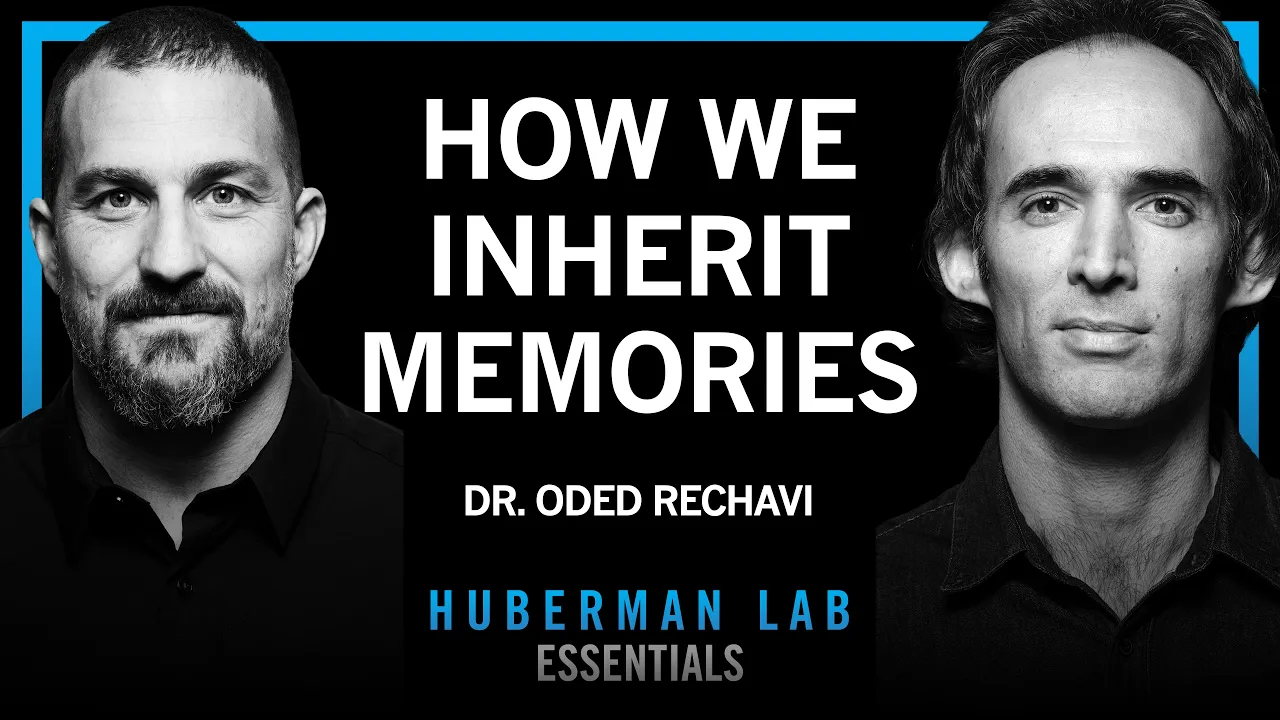
Andrew Huberman
Research in C. elegans proves small RNAs transmit ancestral viral resistance and alter descendant behavior across generations, bypassing traditional DNA inheritance barriers.
AI-assisted summary of Essentials: Genes & the Inheritance of Memories Across Generations | Dr. Oded Rechavi — original source. Check the original for full context.
Source published:
Detailed notes
## Background Published on YouTube on September 10, 2026, by Andrew Huberman on the Huberman Lab channel, this Essentials episode features Dr. Oded Rechavi, a professor at Tel Aviv University studying genetics and epigenetics. The discussion focuses on how DNA, RNA, and epigenetic mechanisms determine transgenerational inheritance, explaining why acquired traits were historically thought non-heritable and detailing *C. elegans* research showing small RNA-mediated transmission of viral resistance and behavior.
## TL;DR The episode explores the longstanding biological boundary between somatic cells and the germline—governed by the Weismann barrier and embryonic epigenetic reprogramming—which historically dismissed the inheritance of acquired traits. Dr. Rechavi demonstrates how non-coding small regulatory RNAs can bypass these barriers in the nematode *C. elegans*, transmitting antiviral immunity and neuronally driven behavioral changes across multiple generations without altering the underlying DNA sequence. While mammals lack the continuous RNA amplification machinery found in worms, parental small RNAs can still influence early developmental and metabolic trajectories as framed by the Developmental Origins of Health and Disease (DOHaD) model. The conversation concludes with the future therapeutic potential of dynamic RNA profiling and lifestyle interventions in reproductive medicine and IVF.
## Atmosphere & style The conversation carries an intellectually rigorous yet approachable tone, enlivened by accessible analogies such as comparing gene expression and epigenetic erasure to marked-up pages in an IKEA assembly catalog. Huberman acts as an engaged, inquisitive guide, while Rechavi delivers clear, grounded explanations that balance groundbreaking paradigm shifts with disciplined scientific caveats. The dialogue feels like an illuminating deep dive into the molecular frontier of genetics, demystifying how environmental experiences might physically echo across generations.
## Key takeaways - [00:24](https://www.youtube.com/watch?v=1_iNTFSw4Nc&t=24s) Protein-coding messenger RNA accounts for less than 2% of the human genome, with the vast remainder generating regulatory non-coding RNAs. - [03:43](https://www.youtube.com/watch?v=1_iNTFSw4Nc&t=223s) The strict biological separation between somatic cells and germ cells prevents learned skills, neural wiring, and acquired physical modifications from transferring into gametes. - [08:27](https://www.youtube.com/watch?v=1_iNTFSw4Nc&t=507s) The Weismann barrier and sweeping epigenetic reprogramming—which erases approximately 90% of chemical tags in early embryos—ensure offspring reset to a baseline genetic blueprint. - [11:46](https://www.youtube.com/watch?v=1_iNTFSw4Nc&t=706s) Non-coding regulatory small RNAs serve as key candidates for bypassing traditional inheritance barriers by modulating gene expression across generations without modifying DNA sequences. - [12:35](https://www.youtube.com/watch?v=1_iNTFSw4Nc&t=755s) C. elegans is an ideal model for epigenetic research due to its defined 959-cell anatomy, mapped 302-neuron connectome, rapid 3-day life cycle, and robust RNA interference pathways. - [15:40](https://www.youtube.com/watch?v=1_iNTFSw4Nc&t=940s) In nematodes, RNA interference (RNAi) operates systemically, allowing silencing signals initiated in somatic tissues or ingested food to enter germ cells and pass to progeny. - [19:49](https://www.youtube.com/watch?v=1_iNTFSw4Nc&t=1189s) Parent worms transmit antiviral small RNAs to their offspring, conferring inherited viral resistance across multiple generations even in progeny genetically incapable of synthesizing new small RNAs. - [22:15](https://www.youtube.com/watch?v=1_iNTFSw4Nc&t=1335s) Transmitting complex memories across generations requires overcoming a language barrier: translating multi-synaptic brain architectures into discrete molecular instructions within a single fertilized egg. - [26:09](https://www.youtube.com/watch?v=1_iNTFSw4Nc&t=1569s) Manipulating small RNAs strictly within parental neurons directly alters germline gene expression (such as saeg-2) and modifies descendant foraging behavior across three generations. - [27:22](https://www.youtube.com/watch?v=1_iNTFSw4Nc&t=1642s) Mammals lack the small RNA amplification enzymes found in nematodes, but small unamplified parental RNA signals can still cascade during early embryonic and placental development to alter lifelong metabolic trajectories. - [27:22](https://www.youtube.com/watch?v=1_iNTFSw4Nc&t=1642s) In rodent models, paternal exercise prior to mating effectively counteracts and rescues metabolic dysfunction inherited from paternal overfeeding. - [29:44](https://www.youtube.com/watch?v=1_iNTFSw4Nc&t=1784s) Unlike static DNA testing, RNA profiles are dynamically plastic and responsive to lifestyle interventions, presenting promising future opportunities for reproductive diagnostics and IVF optimization.
## Detailed walkthrough ### [00:00](https://www.youtube.com/watch?v=1_iNTFSw4Nc&t=0s) The Paradox of Inheriting Traits vs. Knowledge
Andrew Huberman opens the conversation by reflecting on a fundamental paradox of human inheritance. Most people intuitively grasp basic genetics: if two blue-eyed parents have a child, there is a very high probability that the child will inherit blue eyes rather than brown eyes. Yet, if an individual spends decades mastering complex architecture, nobody expects their child to be born with innate architectural blueprints etched into their DNA. While that child might grow up immersed in architectural books or drafting tables in the household—the classic domain of nurture—the knowledge itself is not considered heritable.
This sets the stage for the deeper mystery explored by Dr. Oded Rechavi at Tel Aviv University: why are physical features like eye color passed seamlessly across generations, whereas acquired knowledge, experiences, and learned skills appear strictly locked within the individual who lived them? Huberman frames this not merely as an academic inquiry, but as an entry point into revolutionary research showing that, under certain cellular conditions, specific types of biological memories and adaptations can indeed cross generational boundaries.
---
[00:24](https://www.youtube.com/watch?v=1_iNTFSw4Nc&t=24s) DNA, the IKEA Catalog Analogy, and RNA
Rechavi begins with the foundational machinery of genetics. DNA constitutes the complete set of instructions housed in virtually every cell of the body, collectively termed the genome. Because human cells contain an enormous quantity of DNA, it must be tightly packaged and condensed with structural proteins—comparable to wrapping thread tightly around a spool—forming chromosomes. Every single cell in an organism shares this identical genetic library, raising an obvious question: if a brain neuron and a skin cell possess the exact same sequence of DNA, how do they perform entirely distinct jobs?
```mermaid flowchart LR accTitle: The IKEA Analogy of Gene Expression subgraph Cell ["Every Cell in the Body"] A["Genome (DNA)<br/>'The Entire IKEA Catalog'"] --> B["Messenger RNA (mRNA)<br/>'Torn-out Instruction Page'"] B --> C["Functional Protein<br/>'Assembled Chair / Furniture'"] end ```
To illustrate cell differentiation, Rechavi presents his signature analogy: the IKEA catalog. The entire catalog sits inside every room of a house, detailing how to build every possible piece of furniture—from kitchen counters to bathroom fixtures. However, an occupant decorating a kitchen does not pull out instructions for assembling a toilet; they selectively tear out the single page explaining how to build a kitchen chair. In biological terms, that single torn-out page of instructions is messenger RNA (mRNA), and the resulting assembled chair is the functional protein. Huberman jokes that while IKEA is certainly not an official sponsor of the podcast, the catalog is an exceptionally clear way to visualize gene expression.
Rechavi emphasizes that protein-coding messenger RNA represents less than 2% of the human genome. The vast remainder of the genome does not simply sit idle; a significant portion of it is actively transcribed into non-coding RNAs that carry out diverse, complex regulatory functions—many of which modern science is only beginning to unravel.
- **The Genome**: Present in identical form across nearly every cell in the human body. - **Chromatin & Chromosomes**: Long stretches of DNA compacted around proteins like thread on a spool. - **The Central Analogy**: DNA is the whole IKEA catalog, mRNA is an isolated instruction sheet, and proteins are the finished furniture. - **Coding vs. Non-coding RNA**: Less than 2% of the genome encodes messenger RNA; much of the rest is transcribed into regulatory non-coding RNAs.
---
[03:43](https://www.youtube.com/watch?v=1_iNTFSw4Nc&t=223s) Somatic vs. Germ Cells: Why the Soma Stays Behind
Huberman asks whether there is one critical biological exception to the rule that all cells operate equally, pointing toward the distinction between somatic cells and germ cells. Rechavi affirms that this divide is the most crucial boundary in biology. Somatic cells constitute the entire physical body—cells forming the legs, internal organs, and the brain, including specialized neurons that synthesize dopamine or serotonin. Germ cells, by contrast, consist solely of sperm and egg cells. When a sperm fertilizes an egg, they form a single zygote containing the genetic blueprint from which every somatic tissue of the new organism will develop.
Crucially, standard biological dogma dictates that what transpires in the soma must stay in the soma. Somatic cells do not contribute their own cellular material to the next generation. Rechavi points out that this physical segregation is precisely why acquiring knowledge or skills cannot easily be transmitted to offspring:
> "If I learn about architecture, the information is encoded in my brain. And since my brain cells can't transfer information to the sperm and the egg... what happens in the brain shouldn't be able to transfer to the next generation."
Because learning architecture is encoded within specialized synaptic connections and neural circuits in the brain, there is no conventional biological conduit to copy those neural wiring diagrams into sperm or eggs. Rechavi offers an everyday physical parallel: an individual who spends years lifting heavy weights in the gym cannot pass their newly developed musculature down to their children. Offspring still have to perform the workouts themselves. Even if a somatic brain cell experiences an environmental shift or acquires a localized DNA mutation, that alteration remains trapped within that somatic lineage and cannot travel into the germline.
---
[06:04](https://www.youtube.com/watch?v=1_iNTFSw4Nc&t=364s) Lamarck vs. Darwin and the Giraffe's Neck
Huberman and Rechavi turn to historical evolutionary theory, specifically addressing Jean-Baptiste Lamarck's controversial concept of the "inheritance of acquired traits." Huberman notes that within evolutionary biology, Lamarckian ideas have long been treated with skepticism, if not outright hostility. For instance, if two elite endurance runners log tens of thousands of miles before conceiving a child, belief that their children will inherently run faster strictly because of the miles logged—rather than inherited innate genetic predispositions—is classically viewed as Lamarckian nonsense.
Rechavi explains the debate through the quintessential historical textbook example: the length of the giraffe's neck.
| Evolutionary Model | Mechanism for Long Necks | Transmissibility | |:--- |:--- |:--- | | **Lamarckian Evolution** | Individual giraffes continually stretched their necks upward to feed on high foliage; this physical stretching was believed to be directly imprinted and passed down to their progeny. | Acquired somatic modifications are transmitted directly to offspring. | | **Darwinian Natural Selection** | Natural genetic variation produced some giraffes born with longer necks by random chance. When food was scarce, longer-necked individuals reached leaves, survived, and reproduced, while shorter-necked giraffes starved. | Pre-existing heritable variations are selected by environmental pressures. |
Darwinian natural selection triumphed because it matched the physical reality of heritable variation surviving under environmental selection, whereas Lamarck’s concept lacked a credible physical mechanism to explain how an animal’s somatic effort could modify its offspring.
---
[08:27](https://www.youtube.com/watch?v=1_iNTFSw4Nc&t=507s) The Two Major Barriers: Weismann Barrier and Epigenetic Reprogramming
Historically, the inheritance of acquired somatic traits was dismissed not just because of Darwinian selection, but because of two formidable biological roadblocks that prevent somatic changes from crossing into future generations:
```mermaid flowchart TD accTitle: Two Biological Barriers to the Inheritance of Acquired Traits subgraph Barrier1 ["Barrier 1: The Weismann Barrier"] Soma["Somatic Changes<br/>(Muscle growth, neural learning)"] -- "BLOCKED<br/>No conduit to gametes" --> Germline["Germline Cells<br/>(Sperm & Egg)"] end subgraph Barrier2 ["Barrier 2: Epigenetic Reprogramming"] Germline --> Reprog["Germline & Early Embryo<br/>Chemical modifications erased"] Reprog --> Slate["'Blank Slate'<br/>Only raw DNA sequence passed on"] end ```
The first barrier is the **Weismann barrier**, formulated in the 19th century by German evolutionary biologist August Weismann. Often referred to as the "second law of biology" (with natural selection being the first), it posits that hereditary information flows exclusively from the germline to somatic cells, never in reverse. Somatic cells can alter their gene expression, accumulate cellular damage, or strengthen neural connections during life, but they are completely insulated from communicating these updates to the germline.
The second barrier is **epigenetic reprogramming**. Over a lifetime, an organism's DNA acquires diverse chemical marks—such as epigenetic modifications that dial gene expression up or down in response to diet, stress, or environment. However, during the production of germ cells (spermatogenesis and oogenesis) and immediately following fertilization in the early embryo, the cell executes a rigorous epigenetic reset. These acquired chemical tags are almost completely wiped away, resetting the nascent embryo back to a biological "blank slate" governed purely by the baseline genetic sequence. This dual architecture guarantees that parental somatic wear-and-tear does not accumulate uncontrollably across successive generations.
[09:29](https://www.youtube.com/watch?v=1_iNTFSw4Nc&t=569s) Epigenetic Reprogramming and the Psychological Appeal of Lamarckism
In mammals and humans, the genome undergoes sweeping epigenetic reprogramming between generations. Roughly 90% of epigenetic marks and modifications on sperm and egg DNA are wiped clean so the embryo can develop according to the species' baseline genetic blueprint rather than retaining specialized somatic constraints. Andrew Huberman frames this using an IKEA manual analogy: every cell receives the full master instruction book, but as individual cells specialize into liver, skin, or brain cells, specific pages receive penciled-in notes, highlights, and adjustments. Epigenetic reprogramming acts like an eraser that scrubs out all those user-added pencil marks before handing the book down to the next generation. This biological reset ensures that the offspring retain the full developmental potential to build any cell type, rather than remaining restricted to the narrow modifications made in a specific tissue.
```mermaid flowchart TD accTitle: Epigenetic Reprogramming and Generational Erasure subgraph SOMA["Somatic Specialization"] direction TB A["Master Genome (IKEA Manual)"] --> B["Tissue-Specific Epigenetic Marks (Pencil Notes)"] B --> C["Differentiated Cell Types (Brain, Liver, Skin)"] end
subgraph GERM["Generational Reset (~90% Cleared)"] direction TB C -.-> D["Weismann Barrier / Reprogramming"] D --> E["Sperm & Egg Epigenetic Erasure"] E --> F["Reset Master Blueprint for Offspring"] end ```
Despite the strict evolutionary logic of clearing these marks, human psychology strongly resists the idea of biological finality. People instinctively want to believe in the inheritance of acquired traits because it lends personal agency and purpose to life: the idea that improving your own biology, health, or habits could directly upgrade your children's biological destiny. Dr. Oded Rechavi references Erwin Schrödinger's influential 1944 book *What Is Life?*, where the physicist deemed the inheritance of acquired traits scientifically untenable. Schrödinger lamented this reality as "gloomy," because strict Darwinian natural selection implies that regardless of personal striving, offspring inherit only what is hardcoded in the gametes—leaving parents able to provide money and education, but unable to biologically pass down their self-improvement.
- Roughly 90% of epigenetic modifications in mammalian sperm and eggs are erased during reprogramming. - Epigenetic erasure preserves totipotency, ensuring offspring can build any cell type rather than carrying somatic cell restrictions. - In his 1944 book *What Is Life?*, Erwin Schrödinger described natural selection as "gloomy" because it appeared to rule out parental biological influence over inherited traits.
---
[11:46](https://www.youtube.com/watch?v=1_iNTFSw4Nc&t=706s) Non-Coding RNA as a Transgenerational Messenger
While nuclear DNA modifications are largely reset, non-coding regulatory RNAs have emerged as prime candidates for bypassing traditional inheritance barriers. Beyond classic messenger RNA (mRNA)—which serves as the template for protein synthesis—cells produce diverse classes of small regulatory RNAs that modulate gene expression without altering the underlying DNA sequence. In recent years, mammalian research has increasingly placed small RNAs at center stage as a viable mechanism for transmitting physiological and environmental information across generations, making it the cutting edge of modern transgenerational epigenetics.
---
[12:35](https://www.youtube.com/watch?v=1_iNTFSw4Nc&t=755s) *C. elegans* as a Genetic Model Organism
To untangle these mechanisms definitively, Dr. Rechavi's laboratory turned to the transparent nematode *Caenorhabditis elegans*. Model organisms allow global scientific communities to consolidate resources, standardize genetic nomenclature, and execute precise interventions that are impossible in humans. Despite deep evolutionary divergence, humans and nematodes share a common ancestor, conserved cellular machinery, and many homologous genes, allowing fundamental discoveries in worms to directly inform human biology and disease mechanisms.
*C. elegans* offers unparalleled experimental precision:
| Feature | *C. elegans* Characteristic | Experimental Advantage | |:--- |:--- |:--- | | **Cell Count** | Exactly 959 somatic cells | Precise cellular mapping across every individual | | **Nervous System** | Exactly 302 identified neurons | Globally standardized connectome ("subway map") since the 1980s | | **Optical Clarity** | Completely transparent body | Real-time imaging of neuronal firing and optogenetic control | | **Genomics** | First animal genome fully sequenced (before humans) | Comprehensive catalog of gene expression and silencing pathways | | **Reproduction** | ~250 genetically identical progeny per hermaphrodite | Tight control over nature vs. nurture with robust statistical power | | **Life Cycle** | Rapid 3-day generation time | Hundreds of successive generations can be tracked in a single PhD tenure |
Because laboratory worms are grown on simple agar plates seeded with bacteria, researchers can isolate environmental variables with absolute rigor. Within *C. elegans*, the evidence for transgenerational epigenetic inheritance of acquired traits is so robust and reproducible that it is universally accepted across the epigenetic field.
---
[15:40](https://www.youtube.com/watch?v=1_iNTFSw4Nc&t=940s) RNA Interference and Systemic Gene Silencing
Unlike mammals, *C. elegans* lacks an adaptive immune system with specialized immune cells such as T cells and B cells. Instead, the nematode relies on RNA interference (RNAi) to destroy viral pathogens using small RNAs. In 1998, Andrew Fire and Craig Mello discovered that introducing double-stranded RNA (dsRNA) matching a specific gene target triggers an intracellular catalytic pathway that systematically degrades the corresponding mRNA, completely silencing protein production—work for which they received the 2006 Nobel Prize in Physiology or Medicine.
```mermaid flowchart LR accTitle: Mechanism and Spread of RNA Interference in C. elegans subgraph TRIG["Trigger & Processing"] direction TB A["Double-Stranded RNA (dsRNA)"] --> B["Small Interfering RNAs (siRNAs)"] end
subgraph ACTION["Target Destruction"] direction TB B --> C["Target Matching mRNA"] C --> D["mRNA Cleavage / Gene Silencing"] end
subgraph SPREAD["Systemic & Germline Spread"] direction TB B -.-> E["Somatic Spread (Gut, Head, Body)"] E --> F["Germline Transmission (Eggs/Sperm)"] F --> G["Inherited Silencing in Progeny"] end ```
A remarkable feature of RNAi in worms is its systemic spread across biological barriers. Injecting dsRNA into somatic tissues—even locally into the worm's head—or simply feeding worms bacteria engineered to express dsRNA causes the silencing signal to spread throughout the entire body, enter the germline, and persist into subsequent generations. While feeding or injecting synthetic dsRNA is a powerful, highly artificial laboratory tool that cleanly isolates single variables, Dr. Rechavi set out to discover whether natural, non-engineered environmental challenges also prompt small RNAs to transmit inherited adaptations across generations.
- Andrew Fire and Craig Mello published their foundational RNAi discovery in 1998 and received the Nobel Prize in 2006. - Double-stranded RNA (dsRNA) triggers the generation of small RNAs that identify and degrade target mRNA transcripts, blocking protein translation. - RNAi operates systemically in *C. elegans*: silencing signals travel from ingested bacteria in the gut to somatic tissues, enter the germ cells, and are inherited by offspring.
[19:49](https://www.youtube.com/watch?v=1_iNTFSw4Nc&t=1189s) Inherited Antiviral Resistance and Small RNA Transmission
Small RNAs likely originated as an evolutionary defense mechanism designed to eliminate viruses and parasitic genomic elements. Dr. Rechavi illustrates this defensive function using an experiment with *C. elegans* and a fluorescent viral reporter. Under normal circumstances, when infected with this virus, worms destroy the pathogen and remain black; if the virus replicates unchecked, the worm glows bright green. To test transgenerational transmission, Rechavi’s team took worms, infected them, and neutralized the genetic machinery required to generate small RNAs in their offspring.
```mermaid flowchart TD accTitle: Transgenerational Antiviral Inheritance in C. elegans accDescription: Workflow illustrating how parent worms pass antiviral small RNAs to genetically deficient progeny to silence viral replication.
subgraph Parents ["Parent Worms (P0)"] A["Infected with Fluorescent Virus"] --> B["Generate Viral-Matching Small RNAs"] B --> C["Neutralize Small RNA Synthesis Genes in Progeny"] end
subgraph Progeny ["Descendant Generations (F1+)"] C --> D["Inherit Small RNAs via Gametes"] D --> E{"Exposed to Virus"} E -->|Lacks Synthesis Machinery| F["Inherited Small RNAs Silence Virus"] F --> G["Worms Stay Black (Protected)"] end ```
Even though the progeny lacked the genes needed to produce small RNAs de novo, they stayed black when exposed to the virus. The offspring silenced the infection purely because they inherited antiviral small RNAs directly from their parents. By sequencing these inherited small RNAs, the researchers confirmed they matched the viral genome precisely. This protective silencing was not a one-off event; it persisted across multiple generations.
- **Fluorescent reporter mechanism:** Worms turn green if the virus replicates; worms remain black if the virus is silenced. - **Genetic knockout control:** Offspring lacking the machinery to produce new small RNAs were still protected as long as their parents were infected. - **Molecular validation:** RNA sequencing confirmed that progeny carried specific small RNAs corresponding to the viral sequence inherited from their parents.
---
[22:15](https://www.youtube.com/watch?v=1_iNTFSw4Nc&t=1335s) Neuronal Activity, Memory, and the Language of Inheritance
The conversation turns to whether mammalian small RNAs could mediate the transgenerational transmission of stress, protective adaptations, or complex brain activity. While Rechavi emphasizes that much remains unproven in mammals, *C. elegans* provides clear insights. The brain possesses the unique capacity to integrate environmental cues and internal states to anticipate future conditions—raising the provocative question of whether an organism could biologically "plan" the fate of its descendants without verbal communication, effectively writing parental experience into the offspring's genetic instruction manual.
A fundamental biological challenge is that the nervous system and the germline speak entirely different languages. The brain encodes memories in three-dimensional synaptic architectures—strengthening or weakening connections between neurons. Conversely, heritable information must pass through the strict bottleneck of a single cell: the fertilized egg. Translating complex synaptic wiring into a discrete molecular code within a gamete is a major theoretical hurdle. In simple learning paradigms, such as conditioning *C. elegans* (which have only 302 neurons and thousands of odorant receptors) to avoid an odor by pairing it with starvation, learning might simply involve downregulating a specific receptor rather than complex synaptic remodeling. While mammalian studies have claimed transgenerational inheritance of odor aversion, Rechavi notes that the exact mechanisms by which signals travel from the parent's brain to the germline, and then back from the germline to the offspring's brain, remain incompletely resolved.
---
[26:09](https://www.youtube.com/watch?v=1_iNTFSw4Nc&t=1569s) Neuronal Small RNAs Alter Germline Expression and Progeny Behavior
In a 2019 study published in *Cell*, Rechavi’s lab demonstrated that modifying the production of endogenous small RNAs specifically in the worm's brain altered the foraging behavior of descendants up to three generations later, without any direct manipulation of the descendants' brains. This transmission bypassed the need to translate high-level neural networks into germline instructions. Instead, perturbing neuronal small RNAs in the parents directly altered the expression of specific genes within the germline—most notably a gene called *saeg-2*.
```mermaid flowchart LR accTitle: Soma-to-Germline Signaling Axis accDescription: Mechanism showing how neuronal small RNAs travel to the germline to alter progeny behavior across generations.
A["Parent Neurons: Manipulate Endogenous Small RNAs"] --> B["Soma-to-Germline Signal"] B --> C["Germline Expression Altered (saeg-2 Gene)"] C --> D["Transmission via Specialized RNA Transport Machinery"] D --> E["Progeny Foraging Behavior Altered (Up to 3 Generations)"] ```
Because the entire somatic body—including the nervous system—develops directly from the germ cells, molecular changes established in the gametes naturally influence downstream developmental trajectories and somatic secretion. Proving this was a bona fide epigenetic mechanism, the behavioral shift required the physical protein transport machinery responsible for shuttling RNA across generations; removing these transport proteins abolished the effect entirely.
- **Published landmark study:** Rechavi and colleagues demonstrated soma-to-germline behavioral inheritance (*Cell*, 2019). - **Duration of effect:** Neuronal small RNA perturbations changed progeny food-seeking capacity across three generations. - **Key germline target:** The *saeg-2* gene in the germline mediates this behavioral change. - **Requirement for RNA transporters:** The phenotype relies strictly on proteins that physically carry RNA molecules between generations.
---
[27:22](https://www.youtube.com/watch?v=1_iNTFSw4Nc&t=1642s) Developmental Origins of Health and Disease (DOHaD)
A crucial difference between nematodes and mammals lies in RNA amplification. *C. elegans* utilize dedicated enzymes to continuously amplify small RNAs, preventing signal dilution across successive cell divisions and generations. Mammals lack an equivalent amplification mechanism. Huberman and Rechavi discuss how unamplified parental RNA signals could still exert organism-wide effects in mammals: a small molecular perturbation occurring during early embryonic cleavage or within placental development can cascade, permanently altering metabolic and physiological trajectories. This principle aligns directly with the Developmental Origins of Health and Disease (DOHaD) framework.
Looking toward future applications, Rechavi discusses how lifestyle interventions might counteract adverse epigenetic inheritance. In rodent models, paternal overnutrition leads to metabolic dysfunction in offspring, but paternal exercise prior to mating effectively rescues this inherited defect, restoring normal metabolic programming in the progeny.
- **RNA amplification distinction:** Nematodes continuously amplify small RNAs; mammals lack this amplification machinery. - **Early developmental cascades:** In mammals, small amounts of inherited non-coding RNAs can alter early embryonic or placental development, triggering widespread downstream physiological effects (DOHaD model). - **Interventional rescues:** Paternal exercise in rodents counteracts and corrects metabolic damage inherited from parental overfeeding.
[29:44](https://www.youtube.com/watch?v=1_iNTFSw4Nc&t=1784s) Future Applications: RNA Diagnostics, Plasticity, and IVF
Dr. Oded Rechavi outlines the exciting potential for applying small RNA biology to reproductive medicine, both in the distant future and in the nearer term. Looking far ahead, once the underlying mechanisms are comprehensively understood, it might become feasible to actively engineer or alter the composition of heritable RNAs introduced during in vitro fertilization (IVF). However, a far more immediate and realistic avenue lies in diagnostics. While standard DNA-based screening is already routinely performed for couples planning to have children—such as in Israel, where widespread genetic testing is common to screen for inherited disorders—clinical diagnostics currently ignore the RNA landscape entirely. Deciphering heritable RNA profiles could open up an entire second layer of biological information to identify specific RNA signatures correlated with disease.
The fundamental advantage of RNA over DNA is its dynamic plasticity. DNA sequences are fixed and immutable, meaning parents or clinicians can only screen and choose between different embryos. In contrast, RNA profiles respond dynamically to physiological states and environmental interventions. Dr. Rechavi paints a speculative yet grounded scenario: in the future, if specific RNA profiles correlate with optimal health outcomes, a clinician might advise a parent, "maybe you should run on the treadmill a little bit" to favorably reshape their small RNA profile prior to harvesting sperm or eggs for IVF. While Dr. Rechavi emphasizes the heavy caveat that this remains theoretical "science fiction" today and has not yet been demonstrated in humans, the inherent malleability of RNA offers vast diagnostic and therapeutic promise.
```mermaid flowchart TD accTitle: DNA versus RNA Screening and Intervention Comparison
subgraph DNA_Path["DNA-Based Screening (Fixed)"] D1["Fixed Genome Sequence"] --> D2["Genetic Screening for Disease"] D2 --> D3["Embryo Selection Only"] end
subgraph RNA_Path["RNA-Based Screening (Plastic)"] R1["Dynamic RNA Profiles"] --> R2["RNA Diagnostic Screening"] R2 --> R3["Lifestyle Interventions (e.g., Exercise)"] R3 --> R4["Optimized Profiles for IVF"] end ```
- **Current Screening vs. RNA Screening**: Genetic DNA testing identifies static disease risks, whereas RNA profiling could reveal real-time physiological states and regulatory health signatures. - **The Plasticity Factor**: Unlike the hardcoded DNA genome, small RNA repertoires shift in response to physical activity and environmental conditions. - **Scientific Caveat**: Dr. Rechavi stresses that all human reproductive applications remain hypothetical, as research has yet to determine how these transgenerational RNA mechanisms operate in human biology.
---
[31:06](https://www.youtube.com/watch?v=1_iNTFSw4Nc&t=1866s) Concluding Remarks and Acknowledgements
Andrew Huberman concludes the discussion by thanking Dr. Rechavi for guiding listeners through the intricate biology of the genome, RNA function, and the groundbreaking transgenerational research coming out of his laboratory at Tel Aviv University. Huberman highlights the profound value of using model organisms like *C. elegans* to uncover conserved biological principles that challenge classical dogmas of inheritance. Dr. Rechavi expresses his gratitude in return, noting that exploring the frontiers of non-DNA inheritance and epigenetics makes it an exceptionally fascinating time to study genetics.
## Notable quotes > [03:43](https://www.youtube.com/watch?v=1_iNTFSw4Nc&t=223s) If I learn about architecture, the information is encoded in my brain. And since my brain cells can't transfer information to the sperm and the egg... what happens in the brain shouldn't be able to transfer to the next generation. — Dr. Oded Rechavi
> [03:43](https://www.youtube.com/watch?v=1_iNTFSw4Nc&t=223s) what transpires in the soma must stay in the soma. — Dr. Oded Rechavi
> [08:27](https://www.youtube.com/watch?v=1_iNTFSw4Nc&t=507s) hereditary information flows exclusively from the germline to somatic cells, never in reverse. — Dr. Oded Rechavi
> [09:29](https://www.youtube.com/watch?v=1_iNTFSw4Nc&t=569s) Roughly 90% of epigenetic marks and modifications on sperm and egg DNA are wiped clean so the embryo can develop according to the species' baseline genetic blueprint rather than retaining specialized somatic constraints. — Andrew Huberman
> [22:15](https://www.youtube.com/watch?v=1_iNTFSw4Nc&t=1335s) The nervous system and the germline speak entirely different languages. — Dr. Oded Rechavi
> [22:15](https://www.youtube.com/watch?v=1_iNTFSw4Nc&t=1335s) translating complex synaptic wiring into a discrete molecular code within a gamete is a major theoretical hurdle. — Dr. Oded Rechavi
> [29:44](https://www.youtube.com/watch?v=1_iNTFSw4Nc&t=1784s) maybe you should run on the treadmill a little bit — Dr. Oded Rechavi
> [29:44](https://www.youtube.com/watch?v=1_iNTFSw4Nc&t=1784s) DNA sequences are fixed and immutable, meaning parents or clinicians can only screen and choose between different embryos. In contrast, RNA profiles respond dynamically to physiological states and environmental interventions. — Dr. Oded Rechavi
## Mentioned Andrew Huberman, Dr. Oded Rechavi, Tel Aviv University, IKEA, Jean-Baptiste Lamarck, Charles Darwin, August Weismann, Erwin Schrödinger, What Is Life?, Caenorhabditis elegans, Andrew Fire, Craig Mello, Cell, Developmental Origins of Health and Disease (DOHaD)
## Video description In this Huberman Lab Essentials episode, my guest is Dr. Oded Rechavi, a professor at Tel Aviv University who studies genetics, epigenetics and the inheritance of acquired traits. We discuss how DNA, RNA and epigenetic mechanisms determine what information can pass between generations, and why acquired traits are generally not thought to be inherited. We also explain research in C. elegans showing how small RNAs can transmit antiviral resistance and influence behavior across generations, what these findings might mean for mammals and humans, and potential future applications for reproductive health and diagnostics.
Show notes: https://go.hubermanlab.com/HbTfdok
Full episode with Dr. Oded Rechavi: https://youtu.be/CDUetQMKM6g
Watch more Huberman Lab Essentials: https://youtube.com/playlist?list=PLPNW_gerXa4OGNy1yE-W9IX-tPu-tJa7S&si=a1_sA7rUT-fE0OM5
Huberman Lab Website: https://www.hubermanlab.com Instagram: https://www.instagram.com/hubermanlab Threads: https://www.threads.net/@hubermanlab X: https://x.com/hubermanlab Facebook: https://www.facebook.com/hubermanlab TikTok: https://www.tiktok.com/@hubermanlab LinkedIn: https://www.linkedin.com/in/andrew-huberman
Timestamps 00:00:00 Oded Rechavi 00:00:24 DNA, Genome, RNA & Proteins 00:03:43 Somatic vs. Germ Cells; Inheritance 00:06:04 Lamarck vs. Darwin, Inheritance of Acquired Traits 00:08:27 Weismann Barrier, Epigenetic Reprogramming 00:11:46 RNA & Transgenerational Inheritance 00:12:35 Model Organisms, C. elegans 00:15:40 Inheritance of Acquired Traits in C. elegans 00:16:03 RNA Interference, Small RNAs & Gene Silencing 00:20:08 Viral Resistance Across Generations 00:22:15 Small RNAs, Mammals & Inherited Effects 00:23:23 Brain Activity, Memory & Heritable Information 00:26:09 Neuronal Small RNAs & Behavior Across Generations 00:27:22 Germ Cells, Development & Heritable RNA 00:29:01 Future Applications, Exercise, IVF & RNA Diagnostics 00:31:06 Acknowledgements
#hubermanlab #hubermanlabpodcast #science
Disclaimer & Disclosures: https://www.hubermanlab.com/disclaimer
[Source](https://www.youtube.com/watch?v=1_iNTFSw4Nc)