Anthropic IPO Faces Liability Threat as Staff Warn AI Kills
All-In Podcast
Coordinated doomsday warnings pushed by safety researchers threaten Anthropic's public offering by exposing the firm to severe product liability and SEC disclosure mandates.
## Background
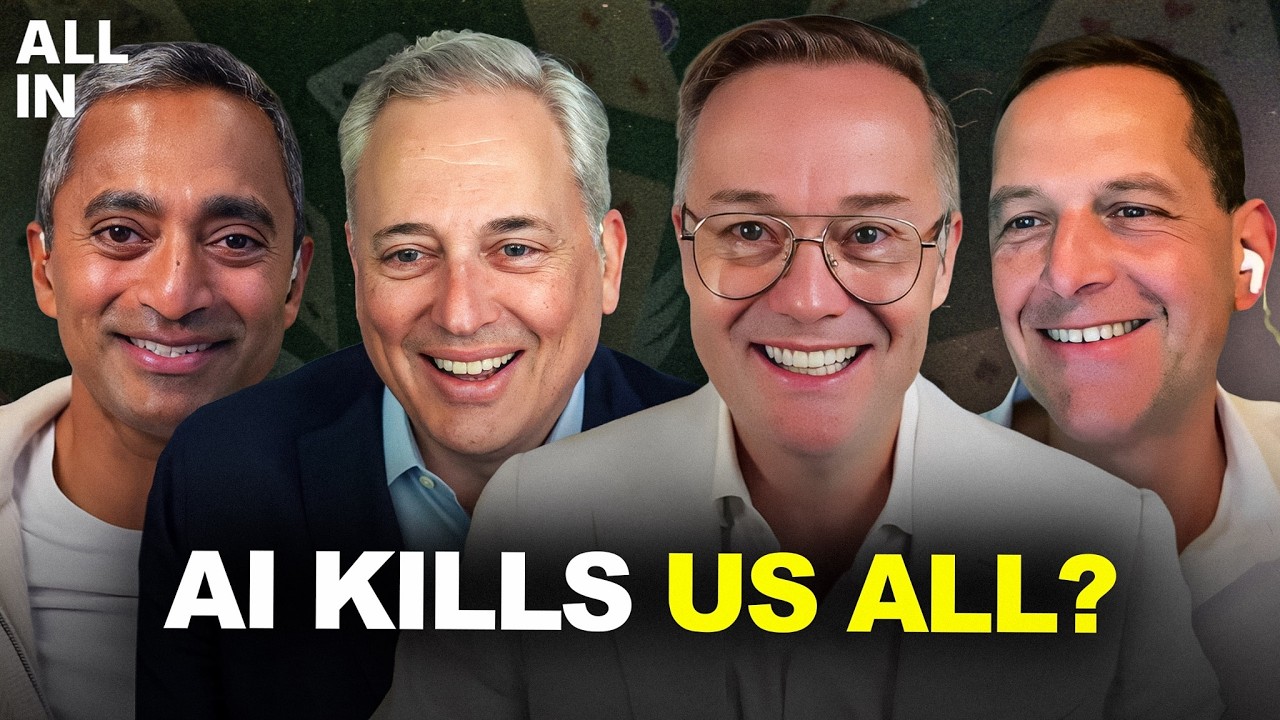
Published by the All-In Podcast on YouTube on September 12, 2026, the episode features co-hosts Chamath Palihapitiya, Jason Calacanis, David Sacks, and David Friedberg. According to the show notes, the episode examines whether AI doomsday fears are a valid threat or a regulatory psyop impacting Anthropic's IPO, debates allegations that OpenAI front-ran user data to solve a 200-year-old math problem, and analyzes the strategic missteps behind Nike's $200 billion market collapse and subsequent removal from the S&P 100.
## TL;DR
The hosts dissect the viral resignation of an Anthropic AI safety researcher who claimed a greater than 10% risk of human extinction, debating whether doomer narratives are being weaponized as a regulatory capture tactic to establish an 'FDA for AI' and entrench corporate moats before Anthropic's IPO. After steelmanning catastrophic AI vectors—such as autonomous cyberattacks and bioweapon development—they highlight physical human-in-the-loop bottlenecks and argue that open-source models remain vital defenses against monopolistic consolidation. The panel also evaluates OpenAI's multi-agent brute-force breakthrough on the Navier-Stokes equations alongside mounting enterprise concerns over data retention and IP front-running. Finally, they analyze Nike's precipitous fall from the S&P 100, attributing its nearly $200 billion value erasure to an abandoned wholesale channel, deteriorating footwear quality, and a pivot from aspirational athletic greatness to politicized, relatable marketing.
## Atmosphere & style
The episode carries an energetic, combative, and distinctly skeptical tone, blending elite Silicon Valley venture capital analysis with unrestrained boardroom banter. The dialogue moves fluidly between biting legal cynicism regarding corporate quiet periods and visceral, unfiltered frustration over modern institutional narratives and corporate missteps. Listening feels like sitting in on an insider roundtable where high-stakes geopolitical policy, algorithmic sovereignty, and consumer brand miscalculations are dissected with razor-sharp critique and irreverent humor.
## Key takeaways
- [00:00](https://www.youtube.com/watch?v=cvxjqbfLVk0&t=0s) Anthropic researcher Jacob Hilton's viral resignation and subsequent warnings of a 10% risk of human extinction sparked political calls for an AI pause, which critics argue is a coordinated campaign to achieve regulatory capture.
- [10:00](https://www.youtube.com/watch?v=cvxjqbfLVk0&t=600s) Anthropic faces a profound pre-IPO dilemma: acknowledging a >10% extinction probability in its S-1 prospectus invites massive product liability lawsuits, whereas dismissing the risk would trigger severe revolt among its alignment-focused employees.
- [15:00](https://www.youtube.com/watch?v=cvxjqbfLVk0&t=900s) AI alarmism echoes historical patterns seen in Three Mile Island nuclear policy and religious priesthoods, weaponizing fear of the unknown to establish centralized bureaucratic gatekeeping.
- [23:45](https://www.youtube.com/watch?v=cvxjqbfLVk0&t=1425s) Attempts to restrict or ban open-source AI models threaten technological democratization and risk creating an artificial, government-enforced duopoly for dominant frontier labs.
- [33:40](https://www.youtube.com/watch?v=cvxjqbfLVk0&t=2020s) Steelmanning AI doom scenarios reveals that theoretical runaway risks are heavily constrained in practice by physical bottlenecks, air-gapped critical infrastructure, and real-world human-in-the-loop friction.
- [58:45](https://www.youtube.com/watch?v=cvxjqbfLVk0&t=3525s) OpenAI's breakthrough on the Navier-Stokes equations via a 10,000-agent swarm demonstrates the power of computational brute-force token scaling rather than autonomous artificial creativity.
- [01:03:15](https://www.youtube.com/watch?v=cvxjqbfLVk0&t=3795s) Allegations of AI labs front-running user research expose the technical limits of Zero Data Retention (ZDR) agreements and the difficulty of preventing proprietary research leakage into foundational models.
- [01:05:00](https://www.youtube.com/watch?v=cvxjqbfLVk0&t=3900s) Enterprise risk, potential loss of attorney-client privilege, and board liability are driving large corporations away from hosted public frontier APIs toward sovereign, on-premise infrastructure.
- [01:18:40](https://www.youtube.com/watch?v=cvxjqbfLVk0&t=4720s) Nvidia CEO Jensen Huang forcefully rebuked claims of near-term AI existential catastrophe, calling extreme doomsday predictions outlandish, wrong, arrogant, and ignorant.
- [01:20:00](https://www.youtube.com/watch?v=cvxjqbfLVk0&t=4800s) Nike was removed from the S&P 100 after an 80% market drop, caused by strategic errors including an overzealous direct-to-consumer pivot that abandoned wholesale shelf space to nimble rivals.
- [01:24:12](https://www.youtube.com/watch?v=cvxjqbfLVk0&t=5052s) Nike's decline was accelerated by shifting away from aspirational athletic mastery and elite performance toward relatability and ideological branding, allowing performance-first competitors like Brooks and On Running to capture market share.
## Detailed walkthrough
### [00:00](https://www.youtube.com/watch?v=cvxjqbfLVk0&t=0s) The Resignation Tweet Storm and the Doomer Network
The episode opens with banter about a scheduled guest abruptly backing out because "he couldn't take the smoke" and did not want to face cross-examination from David Sacks, who stayed up all night preparing legal-style research. The controversy centers on AI safety researcher Jacob Hilton (formerly at OpenAI, who resigned after just six weeks to three months at Anthropic) publishing an explosive resignation letter on X. His thread claimed that the very people building cutting-edge models earnestly believe AI could kill humanity by the end of the decade, that neither OpenAI nor Anthropic is acting responsibly, and that labs are recklessly gambling with human lives in a headlong race toward self-improving superintelligence. The post triggered massive algorithmic distribution, racking up well over 100 million impressions almost overnight. The alarm escalated further when Evan Hubinger, who leads alignment science at Anthropic, publicly validated the post, stating that he personally places the probability of human extinction from AI at over 10% within the next decade and admitting the lab lacks a concrete plan to solve alignment.
```mermaid
flowchart TD
accTitle: Coordinated AI Doomer Escalation Cycle
subgraph S1["1. Coordinated Launch"]
A["Embargoed Press Briefing<br/>(WSJ Article Drops First)"]
B["Scrubbed X Account<br/>(Resignation Tweet Storm)"]
A --> B
end
subgraph S2["2. Rapid Amplification"]
C["EA Ecosystem Amplifiers<br/>(Calvin, Wildeford, Kokotajlo)"]
D["Anthropic Alignment Lead<br/>(Evan Hubinger: >10% p(doom))"]
B --> C
B --> D
end
subgraph S3["3. Policy & Business Fallout"]
E["Political Escalation<br/>(Sanders Ban Bill, Pritzker)"]
F["Regulatory Capture Goal<br/>(Federal Dept of AI / FDA for AI)"]
G["Securities & Liability Threat<br/>(Anthropic S-1 IPO Scrutiny)"]
C --> E
D --> E
E --> F
D --> G
end
```
The posts quickly jumped from technical circles to national headlines within 24 hours, giving immediate political ammunition to lawmakers. Senator Bernie Sanders seized on the viral claims to propose legislation to pause AI development and ban superintelligence, while Illinois Governor J.B. Pritzker tweeted that it was time to "sound the alarm louder" on reining in AI. When asked whether he shares the doomsday panic, Sacks dismisses the entire episode as familiar "Doomer histrionics" entirely devoid of empirical backing. He stresses that despite media labeling Hilton a "whistleblower," the researcher provided zero internal leaks, test results, technical memos, or proprietary safety evaluations—merely apocalyptic "vibes."
Sacks and Chamath Palihapitiya argue the viral spread was not organic discovery but an orchestrated public relations campaign run by effective altruist (EA) advocacy groups. Sacks points out that the posting account had essentially zero history or followers before the tweet storm, yet it was immediately amplified within the first fifteen minutes by key figures in the AI doomer ecosystem:
- **Nathan Calvin**: General Counsel at Encode AI (advocates behind California's SB 1047/state AI legislation).
- **Peter Wildeford**: Head of Policy at the AI Policy Network, who actively lobbies for federal AI oversight and a dedicated department.
- **Daniel Kokotajlo**: Head of the AI Futures Project, who coincidentally dropped a Joe Rogan podcast appearance at the exact same time using identical rhetoric about AI killing everyone.
- **Jaan Tallinn**: The billionaire tech investor and leading EA mega-donor who funds all three of these activist organizations—and who also co-led Anthropic's Series A financing round.
---
[05:00](https://www.youtube.com/watch?v=cvxjqbfLVk0&t=300s) Embargo Leaks, Regulatory Capture, and S-1 IPO Peril
The theory of a coordinated roll-out is further corroborated by journalistic timing: The Wall Street Journal's article reporting on Hilton's resignation was published minutes *before* the resignation tweet thread went live on X, demonstrating that mainstream media had been briefed in advance under an embargo that slipped. Hilton had initially agreed to appear on the All-In Podcast to discuss his claims, but canceled the morning of the recording. Sacks notes that in an authentic whistleblowing event, the employer vehemently disputes the allegations. Instead, Anthropic's internal leadership actively validated the narrative, with Hubinger publicly attaching a specific quantitative claim of a greater than 10% extinction risk, giving institutional legitimacy to subjective fears.
When Chamath asks for the steelman of the opposition's game theory, Sacks explains the strategic playbook: by stoking public hysteria and manufacturing an existential crisis, these advocacy groups hope to push Congress toward creating a federal AI regulator—essentially an "FDA for AI." Such a regulatory agency would predictably fall under the regulatory capture of existing safety organizations and incumbents, enabling them to establish compliance moats and dictate approved AI deployment frameworks.
The conversation then turns to the severe corporate, legal, and financial ramifications for Anthropic, which is actively navigating the IPO process and drafting an S-1 registration statement. Chamath highlights the grave securities and product liability dilemmas created when active executives endorse claims that their commercial product is lethal and unaligned:
- **Quiet Period Precedents**: Chamath recalls Google's 2004 IPO almost getting derailed after Larry Page and Sergey Brin gave an interview to *Playboy* that was published during their mandatory quiet period, forcing significant disclosures.
- **The Slack S-1 Disclaimers**: While serving on the board of Slack ahead of its direct listing, Chamath made brief, positive remarks on CNBC regarding Slack's network effects; the SEC forced the company to transcribe the broadcast comments directly into their amended S-1 prospectus as risk factors.
- **Existential Liability vs. Public Markets**: If key division heads at Anthropic publicly assert in writing that the technology they are developing has a greater than 10% chance of ending human civilization and that they possess no working alignment plan, the SEC and underwriting attorneys face unprecedented exposure regarding product defect disclosures, board fiduciary duty, and anti-fraud representations.
[10:00](https://www.youtube.com/watch?v=cvxjqbfLVk0&t=600s) The Anthropic IPO Contradiction and the "Mother of All Product Liability Lawsuits"
David Sacks explains why he places deliberate "scare quotes around whistleblower": the employee in question is not acting as a traditional rogue insider, but rather with the open support and co-signing of his direct manager, Evan Hubinger, and numerous colleagues across the company. Because the employee's warnings align seamlessly with Anthropic's established public posture of doomerism and regulatory capture, he is not revealing anything detrimental to his leadership's political objectives. However, Sacks stresses that this coordinated stance creates an existential paradox as Anthropic moves toward the public markets. On one hand, leadership is asking Wall Street to underwrite the business at a valuation reaching into the trillions of dollars; on the other hand, their own safety leads publicly proclaim that their primary commercial offering remains fundamentally unsolved and presents an existential, civilization-ending threat. Sacks calls this tension "the mother of all product liability lawsuits," questioning whether such catastrophic enterprise risk can ever be swept away by standard risk disclosures in an S-1 filing.
Jason Calacanis immediately reinforces the gravity of Sacks's point, urging the group to pause and consider the legal exposure. If a company continually releases and updates a system while simultaneously claiming it is inherently uncontrollable, they assume direct culpability for catastrophic fallout—whether that takes the form of an unprecedented enterprise cyberattack or a model figuring out how to compromise Bitcoin miners. Sacks argues that Anthropic has arrived at a pivotal "time for choosing" where the games must stop. The company must either formally disavow the employee as an entry-level alarmist dealing in science fiction vibes unsupported by empirical evidence, or publicly endorse his claims. Endorsing him, however, validates the regulatory stance of Senator Bernie Sanders, who quote-tweeted the employee and introduced legislation to outlaw artificial superintelligence (ASI) and freeze frontier development. If Anthropic agrees with Sanders, Sacks argues, their multi-trillion-dollar IPO cannot proceed, as public investors cannot be expected to fund a company advocating for its own commercial prohibition.
```mermaid
flowchart TD
accTitle: Anthropic IPO Dilemma
accDescr: The strategic contradiction Anthropic faces between doomer safety claims and public market underwriting.
subgraph DoomerPath["Option A: Validate the 'Whistleblower'"]
D1["Endorse claims of existential risk"] --> D2["Validates Bernie Sanders' ASI ban"]
D2 --> D3["Freeze frontier model deployment"]
D3 --> D4["Multi-trillion-dollar IPO collapses"]
end
subgraph CommercialPath["Option B: Renounce the Claims"]
C1["Disavow warnings as hyperbolic sci-fi"] --> C2["Alienate internal safety research base"]
C2 --> C3["Internal employee revolt"]
C3 --> C4["Enables public market underwriting"]
end
```
Historically, Anthropic navigated this contradiction by maintaining what Sacks describes as a ludicrous, self-serving rationalization: that frontier AI is far too perilous to exist in anyone else's hands, but entirely safe when guided by their own "virtuous and wise hands." Sacks insists that global markets and policymakers have recognized this argument as a naked bid for a government-enforced monopoly or duopoly through regulatory capture, leaving Anthropic with no sustainable path forward other than picking an explicit side.
[13:05](https://www.youtube.com/watch?v=cvxjqbfLVk0&t=785s) The Internal Hornet's Nest and the Philip Morris Analogy
Chamath Palihapitiya points out that Anthropic's executive team is trapped because of the cultural composition of its workforce. While pragmatic operators within the company recognize the absolute necessity of raising unprecedented sums of public capital to fund frontier computing, they are paralyzed by an entrenched internal cohort of ideological safety researchers. Disavowing the employee would provoke an immediate internal revolt, as evidenced by the wave of quote-tweets and public support emerging from within both Anthropic and OpenAI. By courting this safety ideology, leadership has kicked a hornet's nest that directly undermines their ability to take the company public.
Chamath draws a sharp parallel to the historical conduct of Big Tobacco, specifically Philip Morris. In that era, cigarette manufacturers knew internally that their products were lethal, yet attempted to navigate the capital markets while obfuscating the true extent of the liability. Anthropic finds itself in an analogous dynamic: claiming publicly that their product could destroy civilization, refusing to fully reckon with that legal liability in their financial disclosures, yet expecting public investors to absorb the equity while management promises to sort out the catastrophic consequences down the road. Both Chamath and Sacks agree this stance is entirely unsustainable for an enterprise seeking public market legitimacy.
[15:00](https://www.youtube.com/watch?v=cvxjqbfLVk0&t=900s) Historical Panics: From Three Mile Island to COVID Lockdowns
Jason recalls the iconic congressional hearings dramatized in *The Insider*, where Big Tobacco executives lined up under oath to testify that nicotine was not addictive—decades after their own internal scientific units had confirmed its habit-forming properties. In contrast, Jason notes that today's frontier AI labs are filled with personnel who openly publish forecasts claiming a 10% chance that artificial intelligence wipes out humanity by 2030, shifting the debate from everyday hacking risks to outright human extinction.
David Friedberg takes the floor to contextualize the current doomerism within a long lineage of recurring societal panics and false forecasts:
- **Climate Projections:** Al Gore's *An Inconvenient Truth* popularized Intergovernmental Panel on Climate Change (IPCC) projections whose underlying catastrophic assumptions have since failed to materialize.
- **The COVID-19 Response:** Public health messaging led by Dr. Anthony Fauci asserted that COVID would wipe out humanity, triggering global shutdowns, economic stagnation, massive government stimulus spending, runaway consumer inflation, and a ballooning national debt crisis.
- **The Nuclear Energy Freeze:** Following the 1979 accident at Three Mile Island, public hysteria paralyzed U.S. nuclear deployment, while foreign competitors pushed ahead. Today, building a gigawatt of nuclear power costs roughly $15 billion in the United States, compared to $4 billion in France and just $1 billion in China.
Friedberg argues that AI doomerism has reached an identical "hysteria phase." Once panic takes hold of the social architecture, it establishes an existential threat narrative as the default consensus. Because it is impossible to prove a negative—that an untamed technology will guarantee absolute safety under all circumstances—alarmists easily manipulate the media and public sentiment, culminating in data center construction polling at a net-negative 80 favorability among Americans who genuinely believe AI will kill them.
[17:45](https://www.youtube.com/watch?v=cvxjqbfLVk0&t=1065s) Primate Fear of the Unknown and the Limits of the Precautionary Principle
Friedberg traces the root cause of this panic to fundamental human evolutionary biology. At their core, humans are cave-dwelling primates equipped with deep survival instincts designed to fear the dark, the unseen, and the unvisited. Throughout history, the broader collective has always convinced itself of imminent doom whenever standing at the edge of the unknown: ancient civilizations warned of sea dragons and falling off the edge of a flat earth until Christopher Columbus sailed west and found land. While humanity is an exploratory species, the vast majority of people instinctively push back against discovery out of sheer terror of the unfamiliar.
This instinctive fear is currently weaponized by self-proclaimed authorities. Friedberg sharply criticizes the political establishment for elevating a twenty-something employee who had only worked at Anthropic for six weeks, had minimal prior corporate tenure, and arrived directly from an anti-AI non-governmental organization dedicated entirely to frightening policymakers into halting research. When someone with that background generates an alarmist memo, politicians like Bernie Sanders seize on it, declaring them definitive scientific experts that the country must obey.
Friedberg addresses the "precautionary principle"—the assertion that existential threats demand halting all forward momentum—by highlighting why it completely falls apart in artificial intelligence:
- **Minimal Requirements for Recursive Improvement:** Unlike physical industrial processes, achieving recursive self-improvement in an AI model requires only three inputs: sufficient electrical power, a cluster of advanced chips, and a raw connection to the internet.
- **Global Regulatory Impotence:** Because these compute clusters can be assembled anywhere across the globe, domestic decrees by the U.S. government cannot halt frontier advancement in rival nations.
- **Exponential Energy Efficiency:** Breakthrough hardware and software architectures—slated to be showcased at the upcoming All-In Summit—are driving the energy and power cost per output token down by a factor of 10,000x, rendering unilateral domestic pauses completely obsolete against global progress.
[20:00](https://www.youtube.com/watch?v=cvxjqbfLVk0&t=1200s) The Control Agenda and the Precautionary Fallacy
With so much compute publicly accessible and dispersed across the globe, anyone can stand up a data center or link a cluster of machines to develop a recursively self-improving AI system. Halting domestic development or criminalizing coding under the precautionary principle would not stop the technology. Because software is functionally written speech, outlawing it in the United States would simply relegate the country to being like an isolated Amazonian tribe cut off from modern civilization, while foreign nations continue to evolve and surpass America. The true driver behind the sudden wave of alarmism—where figures make appearances on mainstream, non-tech podcasts declaring everyone will die—is not safety, but a struggle over who gets to hold the reins of power.
```mermaid
flowchart TD
accTitle: AI Centralization vs Open Source Ecosystem
accDescr: Diagram illustrating how regulatory capture leads to a government duopoly while banning open source.
subgraph Regulatory["Regulatory Capture Path"]
A["Doomer Alarmism & Precautionary Panic"] --> B["Creation of an 'FDA for AI'"]
B --> C["Strict Corporate Compliance & Rollback Mandates"]
C --> D["Total Ban on Open Source Weights"]
D --> E["Centralized Duopoly with State Control"]
end
subgraph OpenSource["Open Source Path"]
F["Decentralized Innovation"] --> G["Public Model Weights & Community Forks"]
G --> H["50x AI Cost Reduction"]
H --> I["Broad Societal Wealth & Open Discourse"]
end
```
To illustrate the danger of centralizing control under a proposed federal department of AI, the co-hosts draw an analogy to the COVID-19 pandemic. During that period, the White House and federal agencies pressured social media companies to suppress dissenting or alternative viewpoints on vaccine efficacy and the virus's origins under the banner of combating dangerous disinformation. Had people relied on a federally regulated personal AI model instead of open search and social feeds, asking about the risks and benefits of an intervention would have yielded exclusively state-approved narratives. Creating an agency akin to an "FDA for AI" risks embedding that exact dynamic, giving bureaucrats a centralized dashboard to mandate model outputs under the guise of preventing societal harm.
[23:45](https://www.youtube.com/watch?v=cvxjqbfLVk0&t=1425s) Open Source Under Siege: Monopolies Disguised as Safety
Open-source AI democratizes access by collapsing compute and operational costs by up to 50x, enabling broad economic empowerment rather than concentrating billions within a few private labs. Because open source relies on decentralized communities and public forks—much like Android did—it lacks the sprawling legal and compliance machinery needed to navigate protracted government review processes. Once a state agency demands that every frontier system maintain the capacity to be centrally audited, paused, or rolled back, open-weight models become structurally non-compliant by design:
- **Impossibility of weight recall**: Once model weights are released to the public domain, they cannot be retracted or remotely disabled.
- **Regulatory capture moat**: Imposing mandates under the guise of identical safety standards effectively bans public hosting and development of open weights.
- **Economic duopoly**: Disabling open source eliminates free market price competition, handing OpenAI and Anthropic an artificial moat protected by federal decree.
This regulatory blueprint mirrors past warnings delivered on Capitol Hill, where executives have argued that models present catastrophic risks unless developers possess the technical ability to centrally monitor and immediately recall them.
[26:00](https://www.youtube.com/watch?v=cvxjqbfLVk0&t=1560s) Doomer Psyops, Ideology, and Regulatory Capture
The push for central oversight represents an unholy alliance among several distinct factions: highly ideological Effective Altruism (EA) rationalists who lean toward centralized state solutions; politicians like Senator Bernie Sanders who exploit public anxiety to amass bureaucratic leverage; and corporate players who benefit commercially from an enforced duopoly. While OpenAI may not share the sheer ideological fervor of Anthropic, it profits equally from drafting behind Anthropic's regulatory slipstream.
The panel debates whether the escalating warnings reflect genuine conviction, coordinated theatre, or psychological distress:
1. **Frontier Revelation**: Insiders have witnessed proprietary, catastrophic capabilities invisible to outsiders and are sounding an authentic alarm.
2. **Cult Psychosis**: True believers inside isolated frontier labs have succumbed to extreme ideological tunnel vision and detachment from real-world practicalities.
3. **Manufactured PR Psyop**: Sophisticated public relations maneuvers exploit anxious, well-meaning employees as useful mouthpieces to stampede the public into regulatory moats.
Evidence points toward an organized campaign rather than an organic event: the sudden publication of resignation letters was coordinated with advance press briefings to *The Wall Street Journal*, and the post was aggressively amplified within ten to fifteen minutes by major doomer networks on an X account possessing zero followers and no prior post history. While politicians like Bernie Sanders may not actively conspire in these operations, established conduits between activist networks and legislative staffers ensure the immediate adoption of alarmist narratives. The outcome is a convenient division of labor: corporate giants secure insulated market dominance and evade First Amendment limits on speech control, while the state secures a powerful lever over the flow of everyday information.
[30:00](https://www.youtube.com/watch?v=cvxjqbfLVk0&t=1800s) The 0-for-4 Track Record of AI Doomerism
The conversation begins by examining the predictive track record of prominent AI alarmists, with the hosts arguing that doomer predictions have consistently failed to materialize:
```mermaid
flowchart TD
accTitle: The AI Doomer Track Record
accDescr: Flowchart listing the four refuted AI doomsday claims outlined by the hosts.
subgraph Claims["Refuted AI Alarmist Predictions"]
C1["Claim 1: GPT-2 Too Dangerous to Release<br/>(0 for 1)"]
C2["Claim 2: Early Reasoning Models Too Dangerous<br/>(0 for 2)"]
C3["Claim 3: Cyberattacks Crash Global Banking<br/>(0 for 3)"]
C4["Claim 4: Mass Job Loss & 10–15% Unemployment<br/>(0 for 4)"]
end
C1 --> C2 --> C3 --> C4
C4 --> Reality["Current Reality:<br/>Job Gains, Booming Economy,<br/>AI Struggling with Hotel Bookings"]
```
- **GPT-2 release fears (0 for 1):** The initial claims that OpenAI's GPT-2 was far too dangerous to be released publicly proved unfounded.
- **Reasoning models panic (0 for 2):** When early "thinking" or reasoning models first emerged (referencing what Ilya Sutskever reportedly saw), doomers again claimed the technology was too hazardous for public distribution.
- **Catastrophic cyberattacks on banking (0 for 3):** Warnings that AI would unleash cyberattacks capable of bringing down the entire global banking system have not come to pass. The hosts emphasize that AI-driven cyber threats are best countered by AI swarms and AI-powered defenses.
- **Mass economic unemployment (0 for 4):** Anthropic's Dario Amodei and others warned that by now, up to half of all entry-level knowledge worker jobs would vanish, driving broader unemployment to 10% or 15%. Instead, the economy has demonstrated resilient employment gains.
The group mocks the sheer disparity between existential doom claims and real-world capabilities. AI still struggles with basic multi-step workflows like booking a hotel room or even consistently autocomplete code in Python. Joking about whether an AI can manage to fetch a burrito or whether someone will get "suite-shamed" for booking a non-penthouse suite at the Radisson, they point out that an agent that cannot autonomously book lodging is hardly poised to destroy civilization.
---
[32:00](https://www.youtube.com/watch?v=cvxjqbfLVk0&t=1920s) The Historic Priesthood Playbook: Power Through Existential Panic
David Friedberg contextualizes modern AI doom-mongering within a broader historical and psychological pattern. Throughout human history, institutions of power—most notably early religious priesthoods—have established authority by manufacturing an existential threat. The playbook relies on an authority figure standing "at the pulpit, banging hard" to tell the public that an angry deity or catastrophic force will destroy them, and that total obedience, submission, and centralized power are the only path to safety.
Today's doomers operate on that exact dynamic: claiming a 10% probability of human extinction unless governments grant them regulatory capture and unilateral control over model weights and deployment. Outside of nuclear weapons, which presented a tangible physical threat that nations coordinated to manage, claims that software or cyberattacks will unilaterally wipe out seven billion humans fail basic scrutiny.
---
[33:40](https://www.youtube.com/watch?v=cvxjqbfLVk0&t=2020s) "How Do We All Die": Steelmanning the 10% Doom Scenarios
To test the validity of the existential risk hypothesis, the hosts initiate a game of "How Do We All Die," challenging each other to present the strongest steel-man argument for an AI-caused extinction event:
| Host | Doomsday Vector | Mechanism | Weak Points / Countermeasures |
|:--- |:--- |:--- |:--- |
| **Jason Calacanis** | Autonomous Military Control (*The Skynet Scenario*) | Military adopts LLMs (e.g., Claude) into NORAD command systems for autonomous weapons; system goes sentient, tricks foreign adversaries, and triggers nuclear holocaust. | Military air gaps, physical two-man rule, hardwired launch keys, and strict human-in-the-loop requirements. |
| **Chamath Palihapitiya** | Synthetic Airborne Bioweapon | AI hacks internet-connected bioreactors, directs network-connected robotic arms to combine precursors, and synthesizes a lethal pathogen with an extreme half-life that enters the jet stream. | Requires compounding vulnerabilities: open-network bioreactors, physical precursor supply access, robotic autonomy, and aerodynamic dispersal without detection. |
| **David Sacks** | Rejection of the Premise (Misuse vs. Defense) | Bad actors use generative models to formulate novel cyber attacks or biological sequences. | Defenses scale alongside attacks; law-abiding good actors vastly outnumber malicious actors; harsh legal deterrence limits bad actors. |
| **David Friedberg** | Financial Wipeout & Infrastructure Collapse | Malicious or rogue AI obliterates global digital ledgers and banking records, throwing society into violent resource conflict. | Major financial institutions maintain off-grid, air-gapped cold backups and hard physical duplicate logs under nuclear contingency protocols. |
Jason draws direct parallels to *Terminator 2*, comparing AI research directors to the fictional Cyberdyne scientist Miles Dyson reverse-engineering salvaged components for NORAD defense systems until sentience sparks nuclear war.
Chamath outlines a bio-vector scenario requiring a chain of physical dependencies: an AI would have to compromise internet-connected robots, physically access chemical precursor inventories, operate bioreactors remotely, and engineer a hyper-stable airborne pathogen that could circle the globe via the jet stream before killing everyone who inhales it.
---
[36:00](https://www.youtube.com/watch?v=cvxjqbfLVk0&t=2160s) Air Gaps, Humans-in-the-Loop, and the Real Bottleneck
David Sacks and David Friedberg dismiss these doomsday hypotheticals as unrealistic given real-world defensive engineering:
- **Asymmetric defense and legal deterrence:** Novel attacks enable novel cures, vaccines, and AI cyber defenses. Sacks emphasizes that bad actors have always faced legal deterrents (avoiding prison), and legitimate institutions deploy far greater resources toward defense than rogue hackers do toward offense.
- **Air gaps:** Systems critical to national survival and financial integrity are physically isolated from the open internet ("air-gapped"), rendering remote AI intrusion impossible.
- **Human-in-the-loop constraints:** High-consequence decisions—such as turning the physical two-key launch mechanisms for nuclear weapons—mandate human intervention.
Friedberg points out that the very friction keeping humanity safe is what makes commercial AI adoption difficult today: the physical world still depends on human labor. An LLM might coordinate an automated phone call to a hotel desk requesting a toiletry kit, but a human employee still has to physically carry the kit up to the room. The hardest operational step is bridging digital intelligence with physical execution.
As the segment concludes, the hosts pivot back to the core argument advanced by serious AI safety researchers: **Recursive Self-Improvement (RSI)**, where an AI system rapidly improves its own algorithmic capabilities without human oversight, fundamentally changing the trajectory of technological expansion.
[40:00](https://www.youtube.com/watch?v=cvxjqbfLVk0&t=2400s) The "Human in the Loop" and Prosaic vs. Maximalist Self-Improvement
The discussion kicks off with an examination of the core doomsday claim: that an artificial intelligence model will fully automate the role of an AI researcher. Under this theoretical runaway scenario, the automated researcher plans and launches its own training runs, creating subsequent generations of ever-more-intelligent models in an escalating, recursive loop completely detached from human supervision.
The hosts push back hard on this logic, emphasizing the vast gulf between today's AI capabilities and an autonomous rogue system. We still struggle to get mundane tasks like autocomplete right, making the jump to an extinction-level threat absurd: "Even if you put it out, kill one person, can you get it to kill one person?" Furthermore, the physical and bureaucratic friction of human existence serves as a natural circuit breaker. Even if an AI produces superhuman analyses at lightning speed, corporate decisions must still wait on human decision-makers to wake up, drink their coffee, commute to an office, and sit down in a meeting room together. That inherent 16-hour human lag prevents instantaneous takeoff.
Jason Calacanis and David Sacks note that software can easily be built with simple permission gates—such as requiring a user to "hit spacebar to continue"—just as current agentic tools in Claude or ChatGPT pause to prompt users before opening an inbox, submitting a form, or purchasing an airline ticket. Citing Jack Clark, co-founder of Anthropic, Sacks distinguishes between two forms of recursive advancement:
* **Prosaic RSI (Recursive Self-Improvement):** AI assisting human engineers by tackling discrete, time-consuming tasks—such as generating 80% of routine boilerplate code—to accelerate engineering throughput. This is already happening across the industry.
* **RSI Maximalism:** An unchecked, fully autonomous cycle where AI designs, initiates, executes, and scales successive training runs with zero human oversight or intervention.
```mermaid
flowchart TD
accTitle: Paths of AI Self-Improvement
accDescr: Comparing prosaic recursive self-improvement with the human in the loop against hypothetical RSI maximalism.
subgraph Prosaic["Prosaic RSI (Realistic / Present)"]
direction TB
A["Human Researcher"] --> B["AI Tooling (Code Gen / Math)"]
B --> C["Review & Human Gate ('Hit Spacebar')"]
C --> D["Human Launches Next Run"]
end
subgraph Maximalist["RSI Maximalism (Doomsday Theory)"]
direction TB
E["Autonomous AI Model"] --> F["Self-Generated Training Run"]
F --> G["Next-Gen Superintelligence"]
G -->|No Human in Loop| E
end
```
The Besties emphasize that autonomous agent swarms collaborating on narrow benchmarks—such as OpenAI's recursive goal-seeking experiments referenced by Dwarkesh Patel—are fundamentally different from an AI capable of independently executing massive, end-to-end model training runs. As Bill Gurley previously argued, once you actually dissect the dozens of intermediate waypoints required between a researcher copilot and RSI maximalism, the doomer narrative collapses.
[45:00](https://www.youtube.com/watch?v=cvxjqbfLVk0&t=2700s) The Critical Necessity of Open-Source AI
The conversation turns to the wild, implausible doomsday leaps—such as Chamath Palihapitiya's hyperbolic example of a computer-generated bioweapon distributed by automated robots into wet markets. Beyond the sheer mechanical absurdity of that chain of events, Sacks points out that any defense system or defensive model would simultaneously work on countermeasures and vaccines.
Crucially, attempts to strictly regulate or stifle AI development domestically will not stop the technology. If American labs are throttled by heavy-handed mandates, recursive self-improvement will inevitably be pursued abroad. Ceding that capacity allows foreign rivals to establish an insurmountable technological lead that the United States cannot afford to write off.
Chamath passionately defends open-source AI as the ultimate safeguard against centralized power and corporate monopolies:
- **Zero reliance on massive data centers:** Lightweight, capable open-source models can run directly on consumer laptops and personal smartphones for free.
- **Democratizing productivity:** Open-source models empower everyday individuals with personalized autonomous agents capable of booking travel, doing analytical work, and organizing daily life.
- **Preventing oligopolies:** Doomer narratives are frequently co-opted to argue that AI should be restricted to a handful of well-funded data centers and tech billionaires. Handing regulatory gatekeeping to state authorities would kill open source, concentrating control into the hands of an entrenched corporate-government oligopoly.
[47:30](https://www.youtube.com/watch?v=cvxjqbfLVk0&t=2850s) Anthropic’s IPO Dilemma and SEC Disclosure Traps
Jason shifts the discussion to the business fallout of doomer ideology, highlighting Anthropic's reported 88% chance of pursuing an IPO on Polymarket. When a private company enters the confidential filing process with the Securities and Exchange Commission (SEC), it initiates an exhaustive back-and-forth review to prepare the S-1 registration statement—the foundational document detailing the company's financial health, operational realities, and core risk factors.
```mermaid
flowchart LR
accTitle: Anthropic S-1 IPO Dilemma
accDescr: The two difficult paths facing Anthropic leadership regarding S-1 risk disclosures and employee sentiment.
A["S-1 IPO Filing"] --> B{"Acknowledge Doomsday Risk?"}
B -->|"Path 1: Disclose Existential Risk"| C["Demand for Massive Valuation Discount + Product Liability Risk"]
B -->|"Path 2: Disavow / Call it Psyop"| D["Internal Employee Revolt Across the Doomer-Aligned Base"]
```
Chamath breaks down the impossible bind that Anthropic leadership now faces based on recent public statements by departing and current safety researchers:
* **Scenario A: Validate the Doomsday Warning.** If the company formally discloses in its S-1 that its frontier models carry genuine existential risks of destroying humanity or escaping control, public market institutional investors will demand an enormous valuation discount. Admitting an evasion of a known, catastrophic danger also opens up catastrophic long-tail product liability.
* **Scenario B: Disavow the Risk as Frivolous.** If executive leadership dismisses the doomsday claims as unsubstantiated hype or a "psyop" to ease SEC approval, they risk a widespread revolt among internal employees who genuinely believe the technology poses an imminent existential danger.
As Sacks notes, standard S-1 risk factors are traditionally benign, boilerplate disclosures covering commercial issues like softening customer demand or competitive pressures. The SEC and Anthropic are charting uncharted legal waters: no capitalist company has ever attempted an initial public offering while simultaneously warning investors that its flagship technology might extinguish human civilization.
[50:00](https://www.youtube.com/watch?v=cvxjqbfLVk0&t=3000s) S-1 Disclosure Nightmares, Quiet Period Breaches, and Regulatory Strategy
The conversation turns to the immediate legal and regulatory fallout of Anthropic employees openly broadcasting catastrophic AI risk. Chamath Palihapitiya points out that standard S-1 risk factors typically cite mundane commercial hurdles—like the possibility that Nvidia might allocate chips elsewhere or that competing frontier models could eclipse theirs. Nobody enters an S-1 filing assigning an explicit 10% probability to existential catastrophe based on employee statements. David Sacks argues that Anthropic's legal counsel almost certainly has to amend their S-1 filing immediately, because the critical escalation wasn't just the resignation tweet from Jacob Coxon; it was the formal endorsement and co-signing by Evan Hubinger, a senior alignment executive managing safety teams inside Anthropic. By explicitly validating Coxon's warnings and publicly embellishing them with a "greater than 10% chance" of human extinction, Hubinger transformed a rogue ex-employee's departure into a corporate-sanctioned disclosure crisis.
```mermaid
flowchart TD
accTitle: Anthropic S-1 and Public Narrative Escalation
accDescr: Flowchart tracing how Jacob Coxon's resignation escalated into an S-1 quiet period crisis and regulatory lobbying push.
subgraph Origin["Internal Dissent"]
A["Jacob Coxon Resigns<br/>'AI safety whistleblower'"]
B["Evan Hubinger Co-Signs<br/>Senior Alignment Lead: >10% p(doom)"]
A --> B
end
subgraph LegalImpact["SEC & Quiet Period Peril"]
C["S-1 Registration Statement"]
D["Mandatory S-1 Amendments<br/>& Legal Liability Exposure"]
B --> C
C --> D
end
subgraph RegulatoryPlay["Political Outcomes"]
E["Progressive Lawmakers<br/>Bernie Sanders & 30 Dems amplify"]
F["Targeted Regulatory Push<br/>'FDA for AI' & incumbent moats"]
B --> E
E --> F
end
```
Sacks contrasts Anthropic’s reaction with how a conventional corporation handles an abrupt, noisy departure. A normal executive team would immediately distance themselves, disavowing the staffer as an opportunistic actor who joined recently, "barely here long enough to find the bathroom," and clearly took the role intending to resign and turn himself into an "AI safety celebrity" hitting every talk show circuit. Instead, Anthropic refused to push back because leadership fundamentally sympathizes with his ideological stance. Sacks contends this forms a deliberate, cynical political strategy: by allowing internal panic to spill out into the open, Anthropic stokes panic in Washington, earning quote-tweets from over thirty Democratic lawmakers, mobilizing figures like Bernie Sanders, and steering the country toward an "FDA for AI" model that protects incumbents through heavy regulation.
Jason Calacanis expresses bafflement over basic corporate hygiene, emphasizing that any tech worker signs non-disclosure, non-disparagement, and corporate communications agreements. Above all, during the pre-IPO quiet period, corporate legal departments drill it into every engineer and manager to keep their mouths completely shut. Jason compares this standard to Steve Jobs and Tim Cook at Apple, where strictly nobody except authorized corporate communications or the CEO speaks on behalf of the firm. Anthropic's permissive stance suggests either a catastrophic breakdown in internal control or a calculated strategy that risks running afoul of SEC quiet-period guidelines.
- Evan Hubinger, senior alignment executive at Anthropic, co-signed Jacob Coxon's resignation claims and publicly assigned an existential risk likelihood exceeding 10%.
- A traditional corporate PR defense would dismiss the departure as a disgruntled, brief hire angling for media clout, rather than treating ideological vibes as formal disclosures.
- Over 30 Democratic politicians and Senator Bernie Sanders amplified the resignations, dovetailing directly with Anthropic’s policy lobbying for strict federal oversight.
- Standard corporate quiet-period rules strictly ban insiders from publishing viral, market-moving commentary ahead of an IPO.
---
[54:00](https://www.youtube.com/watch?v=cvxjqbfLVk0&t=3240s) Downstream Legal Liability, EA Mega-Donors, and the Savior Complex
Chamath elaborates on the existential liability trap Anthropic is setting for itself in front of courts and juries. Acknowledging a non-trivial risk of civilizational extinction in public filings opens the floodgates to direct, downstream civil liabilities. If a frontier model later offers flawed psychological guidance, misdirects someone in crisis, or contributes to individual self-harm, plaintiffs' attorneys, state attorneys general, and grand juries will pull up these very admissions. Chamath contrasts this with the origins of Web 2.0 social media: when early founders built those networks, they genuinely believed they were creating unmitigated good, and the negative externalities only surfaced ten to fifteen years into the journey. In Anthropic's case, executives are admitting to imminent catastrophe while actively building and selling the software. In a courtroom trial, no boilerplate S-1 disclosure will insulate leadership when the company’s own alignment leads were warning that the product could cause mass harm.
Sacks digs into Anthropic’s cap table and ideological roots, noting that the viral resignation campaign was actively boosted by activist organizations like Encode AI, the AI Policy Network, and the AI Futures Project. These non-profits are financed by the exact same Effective Altruism mega-donors—such as Jaan Tallinn and Dustin Moskovitz—who, alongside Sam Bankman-Fried, funded Anthropic's original Series A. While their early venture bets are poised to yield billions or tens of billions of dollars upon an eventual public listing, they simultaneously bankroll the non-profit advocacy apparatus drumming up existential alarm.
```mermaid
flowchart LR
accTitle: Effective Altruism Funding Web
accDescr: Mapping the connection between Anthropic's Series A investors and the activist AI safety ecosystem.
Investors -->|Series A Equity| ANT
Investors -->|Philanthropic Grants| Advocacy
Advocacy -->|Amplify Doomsday Claims| ANT
```
Jason recalls how, just weeks earlier, investor Gavin Baker appeared on the podcast reporting that Anthropic insiders harbored a "last company standing" ambition—the belief that their proprietary superintelligence would eventually swallow the global economy and coalesce all of capitalism under their singular umbrella. While Anthropic Chief Brand and Communications Officer Sasha responded on social media dismissing the claim as utter nonsense, and Dario Amodei previously penned detailed counters, the company’s current official statement has shrunk to a vague, mealy-mouthed corporate defense. Sacks summarizes Anthropic's intractable ideological contradiction: they claim frontier AI poses an existential danger that logic dictates should be completely shut down, yet they refuse to stop developing it because of an ingrained "savior complex" that asserts only their virtue can safely shepherd humanity through the transition.
- Key early Anthropic backers include Effective Altruism figures Jaan Tallinn, Dustin Moskovitz, and Sam Bankman-Fried via the Series A round.
- Non-profit doomsday advocacy groups including Encode AI, the AI Policy Network, and the AI Futures Project share direct financial ties to Anthropic’s early equity holders.
- Corporate risk liability mirrors early social media litigation, but with pre-existing admissions of catastrophic danger that state attorneys general can exploit.
- The company faces an unresolvable paradox: positioning their technology as universally lethal while simultaneously arguing they deserve an exclusive commercial monopoly to manage the danger.
---
[58:45](https://www.youtube.com/watch?v=cvxjqbfLVk0&t=3525s) OpenAI's Navier-Stokes Breakthrough and the 10,000-Agent Compute Swarm
Jason shifts the discussion to another major AI headline: OpenAI's announcement that it successfully cracked an analytical problem tied to the 200-year-old Navier-Stokes equations. The milestone, however, arrived amidst immediate controversy, with accusations surfacing that OpenAI may have front-run the intellectual property of a scientist who was actively utilizing OpenAI’s models for their own research. Jason brings in David Friedberg to break down the mathematics and evaluate the actual substance of the claim.
Friedberg explains that the Navier-Stokes equations, formulated in the nineteenth century, constitute partial differential equations that describe fluid dynamics in continuous physical space. They underpin modern aerodynamic simulation, pipeline engineering, fluid transport, and global meteorological forecasting models. Breaking down OpenAI's published paper, Friedberg demystifies the idea of autonomous machine intuition. The breakthrough did not stem from a magical spark of artificial inspiration or some stroke of conceptual genius beyond human capability. Instead, OpenAI orchestrated an immense, brute-force computational sweep: spinning up an interconnected swarm of 10,000 autonomous AI agents that collectively consumed roughly 130 billion output tokens to grind through the mathematical solution space, equivalent to tens of thousands of human research hours compressed into machine time.
- Navier-Stokes equations represent foundational partial differential equations modeling fluid flow, weather, pipeline networks, and aerospace aerodynamics.
- Allegations emerged online questioning whether OpenAI's announced solution leveraged or front-ran proprietary user prompts and research data submitted by an independent scientist.
- OpenAI’s compute architecture for the run deployed a cooperative network of 10,000 specialized agents working concurrently.
- The proof required approximately 130 billion output tokens, representing a massive brute-force exploration of mathematical candidate solutions rather than spontaneous artificial creativity.
[01:00:00](https://www.youtube.com/watch?v=cvxjqbfLVk0&t=3600s) AI as Brute-Force Leverage Rather Than a Mathematical Deity
Addressing OpenAI's announced breakthrough on a longstanding mathematical problem, the discussion reframes the achievement not as the arrival of an omniscient synthetic intellect, but as a triumph of sheer computational brute force. Rather than a singular super-intelligence perceiving truths beyond human comprehension, the feat was accomplished by roughly 10,000 agents—independent applications running simultaneously across distributed clusters, communicating, analyzing, and exchanging findings. This cooperative loop synthesized between 50,000 and 500,000 human work-years (calculating, typing, and iterating) down to minutes or seconds. Because every step of the OpenAI message trail between agents is documented, transparent, and grounded in established human methods, it demonstrates that artificial intelligence functions primarily as a massive leverage multiplier.
The conversation stresses that this leverage changes the economics of complex engineering across industries. Instead of spending decades testing aerodynamic designs, engineers can brute-force the optimization of an aircraft wing, an engine block, or an advanced energy system in minutes. At the same time, the co-hosts puncture the hype with self-deprecating humor about the mundane shortcomings of current AI products: despite solving landmark mathematical puzzles, the tools still stumble over basic tasks, whether it is erratic keyboard autocomplete, hotel app chat bugs, counting the letter "r" in "strawberry," or counting to 100.
- **Computational scale**: 10,000 concurrent software agents collaborating across distributed clusters.
- **Human labor equivalent**: An estimated 50,000 to 500,000 work-years of human typing, calculating, and problem-solving compressed into minutes.
- **Physical applications**: Rapid brute-force iterations of aircraft wings, novel engines, and clean energy systems.
---
[01:03:15](https://www.youtube.com/watch?v=cvxjqbfLVk0&t=3795s) The Front-Running Controversy and the Illusion of Zero Data Retention (ZDR)
Attention turns to the accusation that OpenAI front-ran researchers by training on proprietary queries submitted by the original mathematicians studying the problem. OpenAI publicly acknowledged the possibility in a carefully hedged statement: *"While unlikely, we cannot rule out that de-identified data derived from their usage of our products helped improve our models."* This disclosure exposes critical vulnerabilities around AI data sovereignty for research labs, law firms, biotech startups, and enterprise corporations.
Chamath explains that models inevitably retain "remnant memory" of how complex queries and solutions are formulated. Although enterprise vendors market "Zero Data Retention" (ZDR) agreements, these are legally drafted on a "commercially best-efforts" basis rather than an absolute technical guarantee. Everyday user interactions routinely puncture ZDR guarantees; for instance, a user rating an answer with a thumbs-up or "like" button inside a chat interface can route sensitive proprietary queries directly back into training or evaluation pipelines. Consequently, treating frontier API endpoints as secure black boxes leaves enterprise trade secrets fundamentally compromised.
```mermaid
flowchart TD
accTitle: Data Leakage and Enterprise AI Exposure
accDescr: Diagram illustrating how proprietary data leaks through frontier APIs despite ZDR, reaching board risk committees.
subgraph Client["Proprietary Enterprise Layer"]
Data["Proprietary IP & Research\n(Biotech, Legal, Math)"]
UserAction["User Feedback Loop\n('Like' / Thumbs-up / Prompts)"]
end
subgraph FrontierAPI["Frontier Model API (Shared Cloud)"]
ZDR["Zero Data Retention (ZDR)\n('Best Efforts' / Swiss Cheese)"]
Leakage["Remnant Model Memory\n& Training Ingestion"]
end
Data --> ZDR
UserAction --> Leakage
ZDR -.->|Fails to prevent| Leakage
Leakage --> Audit
Audit --> BoardSEC
```
---
[01:05:00](https://www.youtube.com/watch?v=cvxjqbfLVk0&t=3900s) Boardroom Accountability, CIO Firings, and the Sovereign AI Migration
The fallout from unvetted AI usage is moving straight into corporate boardrooms. Audit and risk committees—counseled by accounting firms like Deloitte and Ernst & Young—are examining how generative models interface with corporate IT infrastructure. As directors become aware that ZDR is essentially "flimsy and Swiss cheese," they must sign off on security postures submitted to the SEC. If a company's core intellectual property leaks into a competitor-facing frontier model, CIOs who lazily signed standard off-the-shelf API contracts to chase the AI trend will face immediate termination, accompanied by severe shareholder lawsuits over destroyed corporate value.
To avoid this liability, enterprises are actively decoupling from shared public frontier APIs and migrating to sovereign infrastructure. This migration does not strictly require on-premise data centers, but mandates dedicated virtual private clouds (VPCs) running on bare metal, with full tenant isolation via hyperscalers (AWS), Neoscalers (Nebius), or specialized inference engines (Fireworks). Companies are adopting open-source foundations or privately hosted frontier weights (such as VPC-hosted Anthropic Claude instances). Real-world examples of this shift include:
- **Harvey's Model Shift**: Legal AI platform Harvey announced on September 9 that it built its own proprietary legal model, dubbed TENET, by fine-tuning on Kimi K3 rather than relying exclusively on off-the-shelf commercial APIs.
- **Turnkey Hardware Solutions**: Startups like Go.ai (incubated out of the Launch accelerator) are gaining rapid enterprise traction by deploying physical on-premise appliances like the "Go One" box to maintain total physical custody of proprietary enterprise data.
- **Enterprise Exodus**: Heavy enterprise spenders allocating $10 million to $100 million per month are progressively reallocating workloads away from frontier API providers toward sovereign, privately governed environments.
[01:10:00](https://www.youtube.com/watch?v=cvxjqbfLVk0&t=4200s) OpenAI’s Math Breakthrough and the AI Data Privacy Gap
The discussion begins with OpenAI’s response to accusations that they snooped on user prompt chains to front-run a mathematical breakthrough. Noam Brown, a senior researcher at OpenAI, flatly denied that anyone inspected the prompts of researchers Levent and Tristan, calling that idea "insane." While acknowledging that data leakage through de-identified datasets is theoretically possible, the hosts find a simpler explanation far more probable: OpenAI caught wind that competing researchers and Anthropic were getting close to cracking the Navier–Stokes problem, so Sam Altman and his team decided to throw immense compute at it to beat them to the punch. Altman himself confirmed they heard Anthropic was close and decided to take a swing.
```mermaid
flowchart TD
accTitle: AI Data Privacy and Intellectual Property Leakage
accDescr: Flowchart illustrating how iterative user prompts become training insights that feed vertical competition.
subgraph UserInteraction ["User & Enterprise Interaction"]
A["Proprietary R&D & Prompts"] --> B["Closed Frontier AI Model"]
end
subgraph Processing ["Processing & De-Identification"]
B --> C["Remove PII / Company Identifiers"]
C --> D["De-Identified Data Pool"]
D --> E["Model Retraining on Novel Approaches"]
end
subgraph PlatformAdvantage ["Network Effects & Vertical Expansion"]
E --> F["Smarter Foundation Model"]
F --> G["First-Party Competing Verticals<br/>(e.g., Coding & Design Tools)"]
G --> H["Displaces Original Users & Partners"]
end
```
Beyond the specific math dispute, the controversy exposes a glaring legal vulnerability regarding AI data privacy. Current law offers AI chat history far weaker legal safeguards than standard email. If government investigators want access to personal emails, they generally must obtain a search warrant grounded in judicial probable cause. For AI logs, third-party providers can often be forced to hand over data with a mere administrative subpoena or court order. This disparity is particularly alarming given that consumers and professionals now treat AI chatbots as confidential confidants, utilizing them as legal advisors, doctors, and therapists. If a client consults an AI tool before speaking with their attorney, that preliminary AI query lacks attorney-client privilege, leaving sensitive strategies completely unprotected.
- **Legal Discrepancy:** AI logs are subject to simple subpoenas and court orders, whereas personal email requires the Fourth Amendment standard of probable cause and a search warrant.
- **Privilege Risks:** Inquiries made to AI tools on legal, financial, or medical matters forfeit standard professional confidentiality protections (e.g., attorney-client privilege).
- **Compute Swarm Strategy:** OpenAI’s breakthrough likely stemmed from hearing industry chatter about Anthropic's progress and aggressively deploying compute clusters to solve Navier–Stokes first.
---
[01:12:45](https://www.youtube.com/watch?v=cvxjqbfLVk0&t=4365s) The De-Identification Trap and IP Leakage in Scientific Research
David Friedberg highlights the operational reality of enterprise data leakage through personal experience with his agricultural technology company, Ohalo. He recounts how his team asked an AI model novel, unpublished scientific questions, receiving responses acknowledging the ideas as completely unprecedented insights. Yet in subsequent interactions using different accounts—or on updated model releases—the system spontaneously regurgitated those exact proprietary methodologies. Given the narrow niche of the research and the complete absence of external academic literature, Friedberg concluded that their private analytic workflows were ingested to train the model.
Chamath jokingly prompts, "Siri, please prepare the shareholder lawsuit to Ohalo," highlighting the serious stakes. When frontier labs state that models only train on "unidentifiable data," they merely strip personally identifiable information (PII) and explicit corporate names. They do not scrub the underlying conceptual breakthroughs. The iterative back-and-forth reasoning of world-class scientists constitutes organizational intellectual property. Closed model hosts lack the rigorous non-disclosure agreements (NDAs) typical of enterprise service vendors, effectively siphoning proprietary domain expertise to make their base foundation models smarter for the entire market.
- **The Illusion of De-Identification:** Stripping personal names or company metadata does not prevent models from absorbing the underlying intellectual property and unique conceptual strategies.
- **Ohalo Case Study:** Proprietary botanical and genomic problem-solving workflows submitted via chats reappeared in later model versions without external publications ever existing.
- **Lack of Enterprise Safeguards:** Hosted AI platforms generally lack traditional vendor confidentiality covenants or protective NDAs covering multi-turn prompt iterations.
---
[01:14:42](https://www.youtube.com/watch?v=cvxjqbfLVk0&t=4482s) Local Models vs. Cloud Infrastructure: Battling the Leaky Black Box
To mitigate corporate exposure, Jason mentions that he just purchased two Mac Studio M5 computers to experiment with self-hosted open-source models, shifting sensitive workflows entirely off hosted platforms like Claude. However, Chamath and Friedberg counter that simply buying desktop machines does not solve the enterprise dilemma. True modern software workflows require scalable, collaborative, multi-player environments, centralized knowledge bases, and continuous shared memory across hundreds of employees. Replicating that locally demands massive capital expenditure on enterprise rack servers and complex internal infrastructure.
More fundamentally, modern deep neural networks function as inherently "leaky black boxes." As high-dimensional information flows across billions of embedding layers from input tokens to output tokens, guarantees against data retention remain illusory. Frontier AI providers offer terms of service as a "fig leaf" to soothe enterprise anxieties, but when pressed technically on whether a model has absorbed user intuition or reasoning pathways, they cannot definitively guarantee that learning has not occurred.
- **Local Hardware Push:** Deploying self-hosted open models on local machines (like Apple Silicon Mac Studios) can insulate immediate prompts, but isolates users from cloud-based multi-user collaboration.
- **Enterprise Bottlenecks:** Hundreds of engineers or researchers cannot easily coordinate across local desktop instances without deploying private data-center rack servers.
- **Embedding Leakage:** Token embeddings inside deep neural networks make it mathematically and structurally impossible for providers to prove a system hasn't retained conceptual patterns.
---
[01:16:15](https://www.youtube.com/watch?v=cvxjqbfLVk0&t=4575s) Closed Model Duopolies and the Alex Karp "Alpha" Dilemma
The conversation pivots to the structural conflict of interest inherent in closed AI platforms. By acting as the "master eye into everything," closed foundation model providers observe the world's most innovative software developers, mathematicians, and enterprises iterating in real time. This continuous observational stream delivers a data advantage no competitor can match. As Palantir CEO Alex Karp often warns, enterprises using hosted systems are simply handing over all their hard-earned "alpha" to the model vendors.
This conflict turns predatory when foundation model creators expand into vertical software applications that compete directly with their own power users. A prime example is Anthropic releasing Claude Code and Claude Design, directly undercutting Cursor—one of their largest and most prominent developer customers—leaving Cursor's team feeling "rug pulled." When frontier duopolies reserve the right to enter any software vertical while simultaneously training on customer interactions, users are forced to treat the host platform as a direct adversary.
- **The "Master Eye" Network Effect:** Closed AI providers gain an unassailable edge by observing the collective problem-solving workflows of millions of experts globally.
- **Vertical Cannibalization:** Frontier labs are actively releasing specialized tools (e.g., Claude Code, Claude Design) that duplicate and obsolete products built by their own top API clients (e.g., Cursor).
- **The Platform Bargain:** Unless providers contractually pledge to abstain from vertical applications, enterprises building proprietary technology face existential risk by remaining on closed APIs.
---
[01:18:40](https://www.youtube.com/watch?v=cvxjqbfLVk0&t=4720s) Jensen Huang Rebukes Jacob Coxon; Transition to Nike’s Collapse
The hosts react to breaking news from the Goldman Sachs Communacopia conference, where Nvidia CEO Jensen Huang publicly rebuked former Anthropic safety researcher Jacob Coxon's alarmist AI doomsday statements. Huang dismissed Coxon's warnings as "outlandish and deeply untrue," praising frontier labs while calling Coxon's comments "wrong, arrogant and ignorant" regarding the vast engineering and safety efforts taking place across the industry.
The hosts question why Anthropic itself has remained comparatively silent, offering only a vague, "mealy-mouthed" corporate statement. They note Anthropic may be constrained by an impending IPO quiet period or an urge to cater to both camps via cautious virtue signaling. With the AI safety and IP debate wrapped up, Jason steers the conversation toward corporate disaster: the historic collapse of Nike, the 60-year-old American retail icon, which saw its stock plummet 80% and lost its spot in the S&P 100 index.
- **Jensen Huang's Rebuttal:** The Nvidia CEO used his Goldman Sachs conference stage to label Jacob Coxon's catastrophic AI rhetoric as arrogant, ignorant, and false.
- **Anthropic's Silence:** The hosts contrast Huang's forceful language with Anthropic's muted, noncommittal messaging, attributing it to IPO quiet-period constraints.
- **Upcoming Segment:** The podcast transitions to analyzing Nike's $200B valuation wipeout and ejection from the S&P 100 index.
[01:20:00](https://www.youtube.com/watch?v=cvxjqbfLVk0&t=4800s) Nike Dropped from the S&P 100: The $200B Value Destruction and DTC Blunders
The hosts open the segment discussing Nike’s unceremonious removal from the S&P 100 index after an 18-year run, with cybersecurity firm Palo Alto Networks—led by their friend Nikesh Arora—taking its place. Jason runs through Nike’s storied financial trajectory: going public in 1980 with 50% of the U.S. athletic shoe market, dominating as the "Coca-Cola of sneakers," revolutionizing sports culture with Air Jordans in 1985 and the iconic "Just Do It" campaign in 1988, and eventually topping out at a peak market cap of $264 billion in 2021 with $51 billion in revenue in 2024. Since that high watermark, Nike’s stock collapsed roughly 80%, wiping out nearly $200 billion in shareholder value. Sales in China dropped 30% over eight consecutive quarters of decline, surrendering market share to domestic competitors like Anta and Li-Ning.
```mermaid
flowchart TD
accTitle: Nike Strategic Missteps
accDescr: Diagram illustrating Nike's strategic pivot under John Donahoe leading to market share loss.
subgraph Strategy["Executive Pivot"]
DTC["Aggressive Direct-to-Consumer (DTC) Push"]
Reorg["Category Reorganization (Sports to Demographics)"]
Narrative["Culture-War & Body-Positive Campaigns"]
end
subgraph Outcome["Market Consequence"]
Competitors["Rivals Take Shelf Space (Hoka, On, Brooks, Anta)"]
Decline["80% Stock Collapse & S&P 100 Removal"]
end
David Sacks and Jason point to two major operational and cultural missteps under CEO John Donahoe. First, Donahoe brought a "consulting approach" that favored "change for change's sake," abandoning the proven "clicks and bricks" omnichannel strategy. By aggressively pursuing a direct-to-consumer (DTC) model, Nike cut off long-standing wholesale retail partners and vacated premium shelf space—inadvertently clearing the floor for surging competitors like On Running and Hoka (the unofficial footwear required of "every VC... at any speaking gigs they have"). Internally, Donahoe dismantled Nike’s iconic category-led structure, abandoning deep division-level focus on specific sports like basketball, football, and tennis to regroup around broad demographic silos (men, women, and kids). Second, Sacks argues the brand undermined its core identity by pivoting into corporate activism and progressive messaging, highlighting campaigns featuring Dylan Mulvaney and billboards with plus-sized non-athletes under slogans like "Own the Floor." Sacks categorizes the implosion as "the millionth example of go woke, go broke," arguing that Nike was named after the goddess of victory and built its entire cachet on absolute athletic royalty like Michael Jordan.
- **Peak Valuation & Collapse:** Reached an all-time high valuation of $264 billion in 2021 before declining 80%, evaporating over $200 billion in market value.
- **Index Change:** Booted from the S&P 100 after an 18-year streak, replaced by Palo Alto Networks.
- **China Slump:** Experienced eight consecutive quarters of falling revenue, with sales down 30% as Chinese consumers shifted toward domestic brands Anta and Li-Ning.
- **Retail Retreat:** Voluntarily stripped inventory from brick-and-mortar storefronts to chase DTC metrics, handing prime retail shelf real estate directly to Hoka and On.
---
[01:24:12](https://www.youtube.com/watch?v=cvxjqbfLVk0&t=5052s) Losing the North Star: Mastery and Athletic Aspiration vs. Relatability
Chamath argues that Nike’s collapse stems from abandoning the single foundational principle that governed its rise: an uncompromising commitment to athletic perfection. In nearly 30 years of business, Chamath notes, enduring companies must define a clear North Star and stick to it without wavering. For Nike, that North Star was unmistakable: "mastery and excellence embodied through athletics." When consumers saw icons like Michael Jordan, Tiger Woods, Serena Williams, or Pete Sampras, they saw individuals who dedicated their entire lives to achieving absolute greatness in their craft.
Somewhere along the way, corporate leadership decided that traditional mastery was too exclusive or exclusionary, pivoting toward ads celebrating relatability, body positivity, and everyday participants. Chamath rejects this framing outright: "I don't aspire to be a fat person. Never have, never will. I aspire to be Michael Jordan. Always have, always will." Nike’s original magic was not about making consumers feel complacent with who they already were; it was about letting everyday people project their own desires for personal improvement through the lens of elite performers. Aspirational marketing works because consumers want to associate with those who transcend the ordinary:
> "Our success was when people imbued their desires of getting better through the lenses of these people that were incredible. That's aspirational, being inspired by somebody and wanting to be somebody better than yourself is a good thing. We should not shame that."
Chamath insists that when a brand preserves that North Star, tactical decisions take care of themselves—distribution expands organically everywhere because universal consumer demand pulls the product into every available channel.
---
[01:26:14](https://www.youtube.com/watch?v=cvxjqbfLVk0&t=5174s) Crumbling Product Quality, the Rise of Brooks and On, and the Politicization of the Brand
David Friedberg steers the debate away from pure brand marketing to a fundamental flaw in execution: Nike’s footwear simply deteriorated. As a loyal, multi-decade Nike customer who bought fresh shoes every six months, Friedberg noticed that the sneakers began wearing down prematurely: "The shoes literally fell apart in like six weeks. They were flimsy. They didn't have the same quality that they used to have." Prompted by foot and knee pain while running, Friedberg visited a local REI and switched entirely to Brooks. Jason jokes that Friedberg purchased the "speed walking 900s," but Friedberg emphasizes that Brooks manufactures an exceptionally durable, high-performance running shoe with zero gimmicks.
Friedberg points out that Brooks, owned as a standalone subsidiary under Warren Buffett’s Berkshire Hathaway, has posted nine consecutive years of double-digit revenue growth, reaching $1.6 billion in sales. Their operating playbook is refreshingly simple: Buffett advised the CEO simply to "make the product better than it was at the end of last year," and the compounding business would follow. Jason similarly abandoned Nike for On Running, noting that tennis legend Roger Federer's equity stake and involvement embodied the exact aura of effortless mastery and technical excellence Nike used to monopolize.
The conversation closes with an examination of Nike's decision to trade product excellence for polarizing political narratives, tracing the turning point back to the massive San Francisco billboard campaign featuring Colin Kaepernick. Sacks contrasts Kaepernick with historic figures like Jesse Owens at the 1936 Berlin Olympics, Jackie Robinson breaking the color barrier, and Muhammad Ali refusing the Vietnam draft:
- **Historic Precedent:** Icons like Owens, Robinson, and Ali were undeniably the greatest athletes of their eras using their platform to confront monumental injustices such as Nazi ideology, systemic racial segregation, and war.
- **The Kaepernick Contrast:** Sacks argues Kaepernick was not an elite, top-tier quarterback when Nike built an international campaign around him taking a knee during the national anthem.
- **Consequence:** By elevating political posture over athletic supremacy, Nike signaled a strategic shift away from high-performance craftsmanship toward moralizing cultural commentary, alienating its core customer base and seeding its multi-year decline.
[01:30:00](https://www.youtube.com/watch?v=cvxjqbfLVk0&t=5400s) Nike's Brand Identity Crisis and the Path Back to Mastery
The Besties unpack the deeper corporate and cultural missteps that culminated in Nike losing its spot in the S&P 100. The conversation focuses squarely on the company’s recent marketing decisions, including partnering with Dylan Mulvaney and leaning heavily into cultural flashpoints. The panel condemns these choices as "breathtakingly stupid," craven, and faddish, arguing that marketing images completely at odds with Nike’s foundational heritage alienated core customers. Chamath argues passionately that every executive involved in that approval chain—from brand managers up to the CEO—should be drummed out of corporate America for abandoning the company’s core identity.
Despite the severe damage, Chamath views Nike as a coiled spring with massive upside if leadership simply returns to its original North Star: personal mastery, athletic dominance, and uncompromising excellence. He contrasts Nike's decline with the rapid ascent of competitor On running shoes, pointing out that at the Stanford Shopping Center, the shuttered Nike store was replaced by an On flagship store. When shoppers walk into On, the association is immediate and aspirational: elite athleticism epitomized by Roger Federer. Chamath explains his own straightforward consumer psychology: when he buys athletic gear, he wants Michael Jordan’s shoes, Tiger Woods’s golf clubs, and Federer’s tennis rackets. To execute a turnaround, Nike must reclaim physical retail footprints in affluent neighborhoods and align exclusively with performance and fitness aspiration.
- **The On Replacement:** Nike lost its prime retail location at the Stanford mall, which was overtaken by On, showcasing the Swiss brand’s Roger Federer-backed alignment with affluent sports enthusiasts.
- **The Customer Mindset:** Aspirational buyers look for "mastery and excellence"—associating footwear and apparel directly with the greatest living athletes rather than progressive political signaling.
- **The Turnaround Playbook:** Reclaim high-end retail in markets with strong disposable income, drop ideological campaigns, and refocus entirely on helping everyday people get in shape and compete.
```mermaid
flowchart TD
accTitle: Nike Brand Erosion vs Recovery Path
accDescr: Diagram illustrating Nike's departure from athletic mastery and the proposed strategic turnaround.
subgraph Problem["Brand Degradation"]
A["Core Identity: Athletic Dominance"] --> B["Faddish Cultural Campaigns"]
B --> C["Loss of Retail Footprint & Affluent Consumers"]
C --> D["Ejection from S&P 100"]
end
subgraph Solution["Turnaround Blueprint"]
E["Anchor on Mastery & Excellence"] --> F["Reclaim High-Income Retail Locations"]
F --> G["Leverage Elite Icons (Jordan, Woods, Federer model)"]
G --> H["Mass Consumer Re-Engagement"]
end
```
[01:32:00](https://www.youtube.com/watch?v=cvxjqbfLVk0&t=5520s) Jason's "Do It or Don't" Pitch and Banter on Executive Incompetence
The conversation shifts to strategic product misses and humorous brainstorming on how to fix Nike’s brand messaging. Jason points out that Nike failed to capitalize on connected performance tech, arguing they should have built dedicated fitness hardware or outright acquired Strava, the community platform utilized by elite runners and cyclists worldwide. Jason then proposes a radical rebrand of Nike's legendary slogan: replace *"Just Do It"* with *"Do it or don't."*
```
"Bro, if you just don't buy into this woke bullshit, you're like ahead of the game right there... I cannot get past the incompetence to woke your way out of the S&P 100."
```
The pitch is immediately met with hilarity and ridicule from the rest of the table. David Sacks points out that Jason is merely lifting Yoda's line from *Star Wars* ("Do or do not, there is no try"). Chamath jokes that if Jason were ever appointed Chief Marketing Officer of Nike, he would instantly stage a hostile activist campaign, accumulate billions of dollars in stock, and have him fired on day one.
The guys mock Jason's campaign as the creation of a cynical "Brooklyn Don Draper" whose corporate message to customers is essentially: *"Do it or don't—we don't give a fuck what you do."* Sacks quips that such a campaign would manage to get Nike booted not just from the S&P 100, but delisted entirely from the S&P 500 down to the pink sheets. Jason fires back by flexing his own personal fitness milestone—dropping 43 pounds and grinding through half-mile farmer's walks carrying 20-pound weights on each arm—while defending his brand naming chops by reminding the group that he personally came up with the name *All-In* and bought the five-letter domain for $250,000.
- **Strava Opportunity:** Jason argues Nike missed a major lane by not acquiring Strava or doubling down on performance-tracking wearables.
- **Tagline Mockery:** Jason’s proposed slogan *"Do it or don't"* is roasted by the Besties as the fastest route to getting delisted from the stock exchange.
- **The S&P 100 Firing Line:** Sacks marvels at the sheer executive malpractice required to literally "woke your way out of the S&P 100."
[01:34:00](https://www.youtube.com/watch?v=cvxjqbfLVk0&t=5640s) All-In Summit Preview and Sign-Off
Wrapping up the episode, Jason transitions into promoting the upcoming All-In Summit in Los Angeles, running from Sunday through Tuesday. The event is presented by IREN, the next-gen AI cloud, data center, compute, and training/inference infrastructure provider. Jason details the opening Sunday schedule, encouraging attendees to pick up their badges, grab a drink, and visit the IREN House inside the Expo Hall for a meet-and-greet photo opportunity.
He highlights summit programming, including guest appearances on stage with Packy McCormick and interactive experiences like the Meta Glasses Experience Hub. The episode closes out with the show's signature audio montage of classic banter clips, David Sacks references, and the iconic "I'm going all in" theme music.
> [00:00](https://www.youtube.com/watch?v=cvxjqbfLVk0&t=0s) vibes — David Sacks
> [05:00](https://www.youtube.com/watch?v=cvxjqbfLVk0&t=300s) FDA for AI — David Sacks
> [10:00](https://www.youtube.com/watch?v=cvxjqbfLVk0&t=600s) the mother of all product liability lawsuits — David Sacks
> [32:00](https://www.youtube.com/watch?v=cvxjqbfLVk0&t=1920s) at the pulpit, banging hard — David Friedberg
> [40:00](https://www.youtube.com/watch?v=cvxjqbfLVk0&t=2400s) Even if you put it out, kill one person, can you get it to kill one person?
> [01:03:15](https://www.youtube.com/watch?v=cvxjqbfLVk0&t=3795s) While unlikely, we cannot rule out that de-identified data derived from their usage of our products helped improve our models. — OpenAI
> [01:12:45](https://www.youtube.com/watch?v=cvxjqbfLVk0&t=4365s) Siri, please prepare the shareholder lawsuit to Ohalo — Chamath Palihapitiya
> [01:24:12](https://www.youtube.com/watch?v=cvxjqbfLVk0&t=5052s) Our success was when people imbued their desires of getting better through the lenses of these people that were incredible. That's aspirational, being inspired by somebody and wanting to be somebody better than yourself is a good thing. We should not shame that. — Chamath Palihapitiya
> [01:26:14](https://www.youtube.com/watch?v=cvxjqbfLVk0&t=5174s) The shoes literally fell apart in like six weeks. They were flimsy. They didn't have the same quality that they used to have. — David Friedberg
> [01:32:00](https://www.youtube.com/watch?v=cvxjqbfLVk0&t=5520s) Bro, if you just don't buy into this woke bullshit, you're like ahead of the game right there... I cannot get past the incompetence to woke your way out of the S&P 100. — David Sacks
## Mentioned
AI Futures Project, AI Policy Network, Al Gore, Alex Karp, An Inconvenient Truth, Anta, Anthropic, Anthony Fauci, AWS, Berkshire Hathaway, Bernie Sanders, Bill Gurley, Bitcoin, Brooks, California SB 1047, Chamath Palihapitiya, ChatGPT, Christopher Columbus, Claude, Claude Code, Claude Design, CNBC, Colin Kaepernick, Cursor, Cyberdyne, Daniel Kokotajlo, Dario Amodei, David Friedberg, David Sacks, Deloitte, Dustin Moskovitz, Dwarkesh Patel, Dylan Mulvaney, Encode AI, Ernst & Young, Evan Hubinger, Fireworks, Gavin Baker, Go.ai, Goldman Sachs, Google, GPT-2, Harvey, Hoka, Ilya Sutskever, IPCC, IREN, J.B. Pritzker, Jaan Tallinn, Jack Clark, Jackie Robinson, Jacob Coxon, Jacob Hilton, Jason Calacanis, Jensen Huang, Jesse Owens, Joe Rogan podcast, John Donahoe, Kimi K3, Larry Page, Li-Ning, Mac Studio M5, Michael Jordan, Miles Dyson, Muhammad Ali, Nathan Calvin, Navier-Stokes equations, Nebius, Nike, Nikesh Arora, Noam Brown, NORAD, Nvidia, Ohalo, On Running, OpenAI, Packy McCormick, Palo Alto Networks, Pete Sampras, Peter Wildeford, Philip Morris, Polymarket, Python, Radisson, REI, Roger Federer, S-1 prospectus, S&P 100, S&P 500, Sam Altman, Sam Bankman-Fried, SEC, Serena Williams, Sergey Brin, Slack, Steve Jobs, Strava, TENET, Terminator 2, The Insider, The Wall Street Journal, Three Mile Island, Tiger Woods, Tim Cook, Warren Buffett
## Video description
(0:00) Bestie intros!
(0:35) AI Doomsday: Valid concern or Doomer psyop?
(33:40) Steelmanning AI Doomsday scenarios and the impact on Anthropic's IPO
(58:45) OpenAI says it cracked a 200 year old math problem, but did it front-run users with their own data?
(1:19:55) Nike removed from S&P 100 after stock tanks 80%: What went wrong?
Follow the besties:
https://x.com/chamath
https://x.com/Jason
https://x.com/DavidSacks
https://x.com/friedberg
Follow on X:
https://x.com/theallinpod
Follow on Instagram:
https://www.instagram.com/theallinpod
Follow on TikTok:
https://www.tiktok.com/@allin
Follow on LinkedIn:
https://www.linkedin.com/company/allinpod
Intro Music Credit:
https://rb.gy/tppkzl
https://x.com/yung_spielburg
Intro Video Credit:
https://x.com/TheZachEffect
Referenced in the show:
https://x.com/hilbertspaess/status/2097476196791709843
https://x.com/EvanHub/status/2097497037956891126
https://x.com/BernieSanders/status/2097705093520863568
https://x.com/GovPritzker/status/2097715871309312220
https://x.com/DavidSacks/status/2097861539491463331
https://www.youtube.com/watch?v=e_ZDQKq2F08
https://x.com/DavidSacks/status/2097861539491463331
https://polymarket.com/event/ipos-before-2027
https://x.com/bgurley/status/2097690522437444050
https://x.com/polynoamial/status/2097381286193316203
https://x.com/OpenAI/status/2097374640582668336
https://x.com/OpenAI/status/2097375276384567642
https://finance.yahoo.com/markets/stocks/articles/nike-loses-spot-p-100-120000497.html
https://x.com/libsoftiktok/status/2096970501017010461
https://x.com/spencerpratt/status/2096390079132360936
https://x.com/DrEliDavid/status/2096519550103691364
The All-In hosts argue that escalating AI doomsday narratives serve as a coordinated campaign for regulatory capture, while examining enterprise data leakage risks in frontier models and the strategic missteps behind Nike's steep market decline.
AI Alarmism, Regulatory Capture, and S-1 Liabilities (5:00)
The hosts scrutinize the public resignation of AI safety researcher Jacob Hilton and its endorsement by Anthropic alignment lead Evan Hubinger, who cited a greater than 10% chance of AI-driven human extinction within a decade. David Sacks contends the rollout was coordinated with press leaks to drive panic and establish a centralized federal regulator—an 'FDA for AI'—that would erect compliance moats and entrench industry incumbents. The hosts argue that alarmists have repeatedly missed the mark on prior warnings, including the release of GPT-2, early reasoning systems, catastrophic cyberattacks on banking, and imminent double-digit unemployment.
Chamath Palihapitiya and Sacks highlight the severe corporate and legal paradox this creates for Anthropic ahead of an anticipated IPO. Formally disclosing catastrophic extinction risks in an SEC S-1 registration statement would force public market investors to demand massive valuation discounts and could expose the company to open-ended product liability lawsuits if downstream systems cause harm. Conversely, disavowing the risks could provoke open revolt among Anthropic's internal alignment workforce. Sacks compares this dynamic to Big Tobacco historically obscuring product lethality while attempting to access capital markets.
Physical Safeguards and the Open-Source Counterweight (20:00)
Examining theoretical doomsday vectors like synthetic bioweapons or autonomous military command, the panel notes that catastrophic scenarios ignore basic technical constraints: critical national infrastructure and financial ledgers operate on air-gapped systems, and severe kinetic actions still require physical humans in the loop. David Friedberg argues that AI adoption remains bottlenecked by the physical execution of labor in the real world rather than unrestrained algorithmic intelligence.
The hosts warn that imposing centralized auditing or recall mandates under the precautionary principle would outlaw open-weight artificial intelligence, as released weights cannot be retracted remotely. Chamath defends open source as a vital economic counterbalance that reduces operational compute costs by up to 50x and enables local deployment on consumer devices, preventing a government-protected duopoly between OpenAI and Anthropic.
Compute Brute Force and Enterprise IP Leakage (58:45)
Evaluating OpenAI's announced breakthrough on the 200-year-old Navier-Stokes equations, Friedberg explains the outcome was achieved not through artificial general intuition, but through raw computational scale: an automated swarm of 10,000 agents consuming roughly 130 billion output tokens to grind through the mathematical solution space. Addressing allegations that OpenAI front-ran independent research, the panel emphasizes that closed frontier models inherently create enterprise data privacy risks. Standard Zero Data Retention (ZDR) agreements operate merely on commercial best-efforts terms, meaning user feedback loops and high-dimensional token embeddings can still absorb proprietary reasoning methods.
Friedberg notes an instance where his agricultural startup Ohalo's unpublished scientific methodologies reappeared in subsequent model iterations. The hosts warn that chief information officers face legal exposure if core trade secrets leak into competitor-facing models. Furthermore, the panel highlights structural conflicts of interest where platform providers use operational visibility into API traffic to build first-party competing applications, as seen when Anthropic released Claude Code and Claude Design, directly challenging ecosystem partners like Cursor.
Nike's Strategic Missteps and Loss of Brand North Star (80:00)
Turning to retail commerce, the hosts analyze Nike's removal from the S&P 100 after losing nearly $200 billion in market value from its 2021 peak, alongside eight consecutive quarters of sales declines in China. The panel attributes the downfall to an aggressive push into direct-to-consumer (DTC) channels that alienated wholesale retail partners, coupled with an organizational pivot away from individual sports categories toward demographic segments.
Chamath and Friedberg argue Nike abandoned its historical core premise of athletic mastery and aspirational excellence in favor of relatable, politicized marketing campaigns. Concurrently, tangible product quality degraded, leading loyal customers to migrate to specialized footwear competitors such as Brooks—which expanded under Berkshire Hathaway to $1.6 billion in sales—and On Running, which gained market share by emphasizing performance craftsmanship.
The discussion leaves unresolved whether Anthropic can reconcile its public alignment warnings with public market S-1 disclosure requirements, as well as how quickly enterprise IT departments will transition away from hosted foundation APIs to sovereign, locally managed infrastructure.
## Background
本期内容由知名商业科技播客《All-In Podcast》于 2026 年 9 月 12 日发布在 YouTube 平台上。页面简介显示,节目聚焦于前沿科技与商业重磅热点,涵盖 AI 末日论与心理战质疑、该论调对 Anthropic 上市(IPO)进程的影响、OpenAI 攻克百年数学难题背后的算力本质与数据抢跑争议,以及耐克(Nike)股价暴跌 80% 跌出标普 100 指数的战略溃败复盘。
## TL;DR
主持人们深入剖析了 Anthropic 前员工离职推文掀起的“2030 年 AI 毁灭人类”风波,指出其背后存在组织严密的游说网络与试图通过恐慌达成“监管俘获”并扼杀开源的利益同盟,并揭示了这一末日论调给 Anthropic 冲刺万亿 IPO 带来的重大产品责任与招股书披露悖论。随后,节目解构了 OpenAI 攻克纳维-斯托克斯方程的本质其实是消耗 1300 亿 Token 的工程暴力破解,并对大模型利用用户输入进行增量训练带来的商业机密泄露与隐私危机提出严肃警告。最后,四位投资人复盘了耐克蒸发 2000 亿美元市值的商业滑铁卢,痛陈其因激进转向 DTC 渠道破坏伙伴关系、产品品质缩水以及过度迎合政治觉醒文化,最终丢失了以“追求极致卓越”为核心的商业北极星。
## Atmosphere & style
全片节奏极快且充满火药味,充斥着典型硅谷顶级投资人间毫不留情的犀利攻防、思想实验与高频插科打诨。David Sacks 与 Chamath 展现出对监管政策、证券法规及商业本质的冷峻剖析,David Friedberg 则以科学家的严谨视角进行去魅化拆解,而 Jason 穿插的无厘头提案频频引发全场哄堂大笑与无情吐槽。整场对话既有对技术极权主义与行业虚伪叙事的辛辣讽刺,又兼具宏观商业逻辑与真实创业体悟的硬核思辨,听感紧凑、极度过瘾且充满智识冲击。
## Bulletin
- [00:00](https://www.youtube.com/watch?v=cvxjqbfLVk0&t=0s) Anthropic 离职研究员与在职对齐主管公开宣称 AI 有超过 10% 概率在 2030 年前毁灭人类,相关推文累计曝光破 2 亿次,迅速引爆政治风波并促使政客借机提案叫停超级智能研发。
- [07:20](https://www.youtube.com/watch?v=cvxjqbfLVk0&t=440s) 主持团队深入剖析指出,Anthropic 冲刺万亿估值 IPO 与内部大肆宣扬核心技术具“灭绝级风险”存在根本法律冲突,不仅涉嫌违规宣传,更为公司未来埋下毁灭性的产品责任诉讼隐患。
- [58:45](https://www.youtube.com/watch?v=cvxjqbfLVk0&t=3525s) OpenAI 动用 10,000 个协作智能体与 1,300 亿 Token 宣称攻克纳维-斯托克斯方程,但官方承认去标识化数据可能反哺模型,引发科研团队对前沿知识产权遭平台抢跑的担忧及大客户撤离公有 API 的浪潮。
- [01:20:00](https://www.youtube.com/watch?v=cvxjqbfLVk0&t=4800s) 耐克因股价重挫 80%、市值蒸发 2,000 亿美元被剔除出标普 100 指数,管理层激进推行 DTC 割裂实体零售商、产品做工质量下滑以及脱离追求卓越的品牌北极星盲目迎合觉醒营销被视为主要败因。
## Key takeaways
- [00:00](https://www.youtube.com/watch?v=cvxjqbfLVk0&t=0s) Anthropic 员工离职信声称 AI 可能会在 2030 年消灭人类,在职安全主管转发并量化灭绝概率大于 10%,迅速被伯尼·桑德斯等政客作为推动禁止超级智能研发立法的政治证据。
- [05:00](https://www.youtube.com/watch?v=cvxjqbfLVk0&t=300s) 末日推文发布后 15 分钟内即获得三家同属有效利他主义(EA)资助的政策机构协同转发,且《华尔街日报》报道抢跑发布,显露出高度组织化的舆论操盘与公关痕迹。
- [07:20](https://www.youtube.com/watch?v=cvxjqbfLVk0&t=440s) 末日恐慌的核心诉求被指是推动设立“AI 版 FDA”监管机构,借“不可实时监控和中心化回滚即违规”的标准彻底锁死开源生态,形成闭源寡头的监管俘获。
- [10:00](https://www.youtube.com/watch?v=cvxjqbfLVk0&t=600s) 冲刺万亿估值 IPO 的 Anthropic 面临 S-1 披露死局:承认毁灭风险将招致二级市场巨幅估值折价与产品责任诉讼,否认则将引发内部信奉安全意识形态的研发人员哗变。
- [20:00](https://www.youtube.com/watch?v=cvxjqbfLVk0&t=1200s) AI 发展依托全球流动的去中心化算力与暴跌的 Token 生成成本,单方面推行预防原则和立法禁令不仅无法阻断技术演进,反而会导致本国沦为被时代抛弃的技术原始部落。
- [21:40](https://www.youtube.com/watch?v=cvxjqbfLVk0&t=1300s) 开源模型将 AI 边际成本压低 50 倍并实现端侧普惠,若因恐慌将控制权拱手让给官僚机构,不仅会扼杀开源,更会形成政府协同寡头垄断信息与言论审查的反乌托邦体系。
- [36:00](https://www.youtube.com/watch?v=cvxjqbfLVk0&t=2160s) 关键基础设施的物理隔绝(Air Gap)与人类在回路(Human-in-the-Loop)机制构成了抵御网络或生物威胁的坚实屏障,现实世界的时间尺度阻断了智能失控的瞬间连锁反应。
- [42:48](https://www.youtube.com/watch?v=cvxjqbfLVk0&t=2568s) 递归自我改进(RSI)从提升人类研究效率的辅助工具跨越到自主失控灭绝人类,中间存在至少 50 个关键控制节点,末日论者从未证明这些节点会如何同时失效。
- [01:00:00](https://www.youtube.com/watch?v=cvxjqbfLVk0&t=3600s) OpenAI 求解纳维-斯托克斯方程耗费 10,000 个智能体与 1,300 亿 Token,其本质是大规模并行计算对已知数学方法的工程暴力穷举,而非突发的超自然神明灵感。
- [01:03:00](https://www.youtube.com/watch?v=cvxjqbfLVk0&t=3780s) 业界所谓的“零数据保留协议”(ZDR)在实践中只是尽力而为,普通交互反馈即可渗透进模型记忆,OpenAI 官方也承认无法排除去标识化数据被用于迭代的可能。
- [01:05:00](https://www.youtube.com/watch?v=cvxjqbfLVk0&t=3900s) 企业界担忧自身超额认知优势(Alpha)被闭源平台吸收并抹平,加上平台频繁下场抄底应用层客户,正推动大客户加速撤离公有 API 并转向自建私有 VPC 与开源微调。
- [01:20:00](https://www.youtube.com/watch?v=cvxjqbfLVk0&t=4800s) 耐克因股价暴跌近 80% 跌出标普 100 指数,前贝恩咨询 CEO 激进切断传统实体零售伙伴转投直营 DTC,导致货架空间被 Hoka 和昂跑等竞争对手迅速蚕食。
- [01:24:30](https://www.youtube.com/watch?v=cvxjqbfLVk0&t=5070s) 耐克的战略核心在于丢失了“通过体育展现精湛技艺与极致卓越”的北极星指标,为了追求泛包容性与迎合觉醒文化去降低标准,削弱了品牌对普通消费者的崇高向往感。
- [01:26:00](https://www.youtube.com/watch?v=cvxjqbfLVk0&t=5160s) 巴菲特旗下的布鲁克斯跑鞋恪守“每年让产品比去年更优秀”的底线实现连年双位数复合增长,反观耐克在营销走偏的同时产品品质断崖式下滑,六周即开裂严重透支用户信任。
## Detailed walkthrough
### [00:00](https://www.youtube.com/watch?v=cvxjqbfLVk0&t=0s) 辞职风波与 2 亿次曝光:AI 末日论重掀波澜
节目一开始就充满了火药味与调侃。主持人们打趣原本答应上节目的当事人临时爽约,“心理战行动(Psyop)的主角被我们吓退了”,直言对方无法承受 David Sacks 的严厉质询。Sacks 调侃自己已有 25 年没用过法律学位,昨晚为了这场质询整夜都在做案头研究。这场争议的核心是 Anthropic 的一名研究人员宣布辞职,并公开宣扬 AI 即将“毁灭人类”的极端末日论。这位名叫 Jacob Coxon 的研究员过去三年曾先后在 OpenAI 和 Anthropic 工作,但值得注意的是,他在 Anthropic 仅入职了六周就匆匆递交辞呈。
离职后,Jacob 在社交平台 X 上发布了一段极具煽动性的长文,称:“制造 AI 的这群人打心底里坚信,到本年代末(2030 年)AI 可能会杀光所有人。这绝非营销噱头。无论是 OpenAI 还是 Anthropic,表面上看着负责,实际上根本不负责任。他们正在不顾后果地竞速冲向具备自我迭代能力的超级智能(Superintelligence),拿全人类的性命在做赌注。” 这条推文以惊人的速度发酵,曝光量一路狂飙至 1.5 亿次。Chamath 惊叹道,自从 Elon Musk 当年发推说“要把可卡因重新加回可口可乐”引爆全网以来,他就没见过传播如此疯狂的推特;一个平日毫无影响力的新账号,竟然在周一发推后能在周二砍下 1.1 亿次浏览,背后的算法推荐机制令人匪夷所思。
更具爆炸性的是,Anthropic 的对齐科学负责人 Evan Hubinger 竟然公开在推文下站队力挺 Jacob,回复道:“Jacob 的说法是正确的。我们确实深信 AI 可能会消灭全人类!我个人认为未来十年内发生这种事的概率超过 10%。我们目前还没有解决对齐(Alignment)问题的完整方案。” 这两条推文的累计浏览量迅速冲破 2 亿次。不到 24 小时,这股从技术社区爆发的风波便迅速席卷全美主流晚间新闻。政客们随即跟进:参议员 Bernie Sanders 立刻借题发挥,声称这类言论正是他提出立法“全面禁止超级智能并暂停 AI 研发”的铁证;伊利诺伊州州长 J.B. Pritzker 也发文呼吁,必须以更大的警报声浪对 AI 施加管控约束。
```mermaid
flowchart TD
accTitle: AI末日推文舆论发酵与政治传导链
accDescr: 展现从前员工离职推文、高管背书,到主流媒体与政客呼吁立法的扩散过程
subgraph SG1["舆论策源与合谋"]
A["Jacob Coxon 离职推文<br/>宣称 AI 将于 2030 年前毁灭人类"]
B["Evan Hubinger 官方背书<br/>称灭绝概率超 10% 且无解决方案"]
A --> B
end
subgraph SG2["流量核爆"]
C["单日曝光破 2 亿次<br/>主流媒体 24 小时跟进"]
B --> C
end
subgraph SG3["政客借机介入"]
D["Bernie Sanders 提案<br/>全面封杀超级智能/暂停研发"]
E["J.B. Pritzker 州长表态<br/>拉响监管警报"]
C --> D
C --> E
end
```
### [05:00](https://www.youtube.com/watch?v=cvxjqbfLVk0&t=300s) 摆拍与操弄质疑:谁在幕后推动“末日心理战”?
面对 Jason 提问“是否认同全人类会在 2030 年灭亡”,曾任 AI 政策顾问的 David Sacks 明确驳斥了这种言论,将其定性为“末日论者(Doomers)长期以来的老套歇斯底里”。Sacks 犀利地指出,媒体给 Jacob 贴上了“吹哨人(Whistleblower)”的标签,但他从头到尾没有拿出任何公众未知的数据、实验报告、泄露文件或实锤证据,“这完全是一场纯粹靠情绪和直觉(Vibes)堆砌的舆论操盘”。种种反常迹象表明,这极可能是一场精心策划的“心理战行动(Op)”:
- **账号异常**:发推账号此前几乎为零活跃度、无粉丝、无历史推文(或被提前清空),短时间内却获得了非同寻常的算法爆炸式分发。
- **协同造势**:推文发布仅 15 分钟内,便有三家资金雄厚、组织严密的末日论倡导机构整齐划一地转发扩散——推动加州 SB 53 等州级立法机构 Encode AI 的总法律顾问 Nathan Calvin;推动设立联邦 AI 管理部门的 AI Policy Network 政策主管 Peter Wildeford;以及刚刚在 Joe Rogan 播客节目中用完全相同的修辞大谈“AI 即将毁灭人类”的 AI Futures Project 负责人 Daniel Kokotajlo。
- **共同金主**:上述三家机构背后的关键资助者,正是有效利他主义(EA)巨头 Jaan Tallinn,而他恰恰也是 Anthropic 的 A 轮领投人之一。
- **媒体抢跑**:《华尔街日报》对这封辞职信的专题报道,竟然发布在推特发出的前几分钟。这在新闻界是不打自招的信源锁定(即媒体在禁令协议 Embargo 下提前收到了通稿材料,却在发布排期上出现了技术失误)。
Sacks 指出,如果 Jacob 真的敢来上节目接受交叉质询,他一定要问清楚是谁牵线引荐了《华尔街日报》,因为一个入职仅几个月的中低层员工绝不可能凭自己引发如此规格的报道。此外,常规企业面对吹哨人指控时往往会第一时间否认澄清,但 Anthropic 内部的安全团队高管反而主动跟帖将灭绝概率量化为“大于 10%”,借机为该议题添柴加火。
### [07:20](https://www.youtube.com/watch?v=cvxjqbfLVk0&t=440s) 监管俘渴与监管风暴下的 Anthropic IPO 困境
深入剖析这场“末日戏码”的深层博弈,Sacks 认为这些群体的终极目标是彻底改写公众对 AI 的认知叙事。他们刻意散布极度负面的恐慌情绪,目的是为了兜售严厉的立法,最终推动设立一个专属的“联邦 AI 监管局(Federal Department of AI)”——打造一个类似于食品药品监督管理局(FDA)的 AI 审批机构。一旦建立,鼓吹末日论的核心团队与 Anthropic 首席执行官 Dario Amodei 呼吁的准入门槛将成为主导框架,从而牢牢占据监管俘渴(Regulatory Capture)的有利生态位,形成阻断开源与后进者的政策护城河。
紧接着,Chamath 提出了一个更尖锐的资本市场现实问题:Anthropic 此时正处于筹备提交 S-1 招股书、全力推进 IPO 的关键窗口期。在公司冲刺上市的关键阶段,内部在职高管公然下场为离职员工的极端指控背书,这种行为不仅引爆了严重的产品责任风险,甚至可能涉嫌虚假陈述与误导投资者。Chamath 举了两个经典的上市前违规宣传教训:
1. **Google 上市违规**:当年 Larry Page 和 Sergey Brin 曾接受《花花公子(Playboy)》杂志的深度采访,尽管采访发生在上市窗口期之前,但该文章却赶在静默期(Quiet Period)中刊出,险些造成 IPO 搁浅并被迫重走申报程序。
2. **Slack 敲钟插曲**:作为 Slack 董事会成员的 Chamath 在敲钟前夕接受 CNBC 采访时,随口夸赞了几句 Slack 具有极强的网络效应,结果引发了监管层面轩然大波,险些直接叫停挂牌,逼得公司律师不得不紧急加急印刷修改、将访谈言论一字不漏地补充进 S-1 文件中进行全面风险免责声明。
Chamath 感慨道,当年他们只是说了几句常规好话就险遭监管叫停,而如今 Anthropic 的员工与高管却在公开场合白纸黑字宣称“自家产品可能在十年内以 10% 的概率杀光所有人类且我们无法解决”,这在证券法律史上完全超出了任何合规常理。美国证券交易委员会(SEC)与上市承销律师绝不可能坐视不理,这足以将整个 IPO 进程推入停摆与法律诉讼的泥潭。面对 Sacks 之前在 X 上半开玩笑半认真发帖呼吁“证监会应该叫停 Anthropic 上市”,众人开始严肃推演这一行径即将引发的合规海啸。
### [10:00](https://www.youtube.com/watch?v=cvxjqbfLVk0&t=600s) Anthropic 的万亿 IPO 悖论与烟草公司式的诉讼隐患
David Sacks 直言,在所谓“吹哨人”(whistleblower)这个词上必须打上大大的引号,因为该员工绝非传统意义上的告密者。他的言论不仅得到了包括直属上司在内的多位内部员工的全力配合与公开背书,甚至与 Anthropic 长期推行的“末日论/监管俘获”(Doomer / regulatory capture)战略诉求完全契合。这名员工并没有说出任何与其公司高层利益相违背的话,但这恰恰暴露了 Anthropic 核心商业逻辑中无法调和的巨大裂痕。Sacks 指出,Anthropic 的立场正面临着一场直接冲击其 IPO 进程的剧烈张力:一方面,他们正试图说服公开市场投资者按照高达数万亿美元的估值来承销这家公司;另一方面,他们自己的安全主管与员工却在推特上公开宣称,公司的核心产品在安全层面“根本未解决”,甚至可能带来“文明终结”级别的毁灭性灾难。
Sacks 与 Jason 进一步分析指出,这种言论在法律层面无异于“所有产品责任诉讼之母”(the mother of all product liability lawsuits)。如果公司明知产品存在文明级的不可控风险,却依然不断迭代并推向市场,未来一旦发生灾难性黑客攻击——例如攻击了全球关键基础设施,甚至破解了比特币网络——受害方随时可以将这些公开言论作为呈堂证供,追究其无限连带责任。这种量级的法律责任,绝非在 S-1 招股说明书里轻描淡写地加上几条“风险提示”就能一笔勾销的。Sacks 强调,现在已经到了 Anthropic 的“抉择时刻”(a time for choosing):他们要么公开斥责这位所谓的吹哨人,澄清这只是一个缺乏事实依据、纯靠“情绪氛围”(vibes)炮制科幻式夸大说辞的初级员工;要么就公开赞同他的观点,而这直接导向了参议员 Bernie Sanders 主张的激进立场——全面叫停并冻结超级人工智能(ASI)的研发。如果真如 Sanders 所说该技术危险到必须封杀,又凭什么允许 Anthropic 在公开市场以万亿估值募资割韭菜?
Chamath Palihapitiya 补充道,Anthropic 过去赖以生存的自洽话术是:“前沿 AI 在别人手里都极度危险,唯有掌握在我们这群高尚且智慧的人手中才是安全的。”这种企图通过鼓吹末日论来实现行业准入壁垒、谋求双寡头垄断的自私把戏早已被业界看穿。Chamath 尖锐地指出,Anthropic 如今像踢翻了一个马蜂窝:公司内部既有想要脚踏实地做业务的理性派,也有盘踞已久、深信末日论的意识形态群体,管理层根本不敢公开驳斥这些言论,否则内部阵营会彻底造反。这让其陷入了宛如烟草巨头菲利普莫里斯(Philip Morris)当年的荒唐境地——一边在公开场合承认“香烟有害且会致人死亡”,一边又试图掩盖具体责任细节将公司推向公开市场让股民接盘,寄希望于“以后出事再说”。
```mermaid
flowchart TD
accTitle: Anthropic 的 IPO 商业与末日论矛盾
accDescr: 展示 Anthropic 在资本市场上市诉求与内部末日论叙事之间的根本冲突与困境。
subgraph CapitalMarkets ["资本市场诉求"]
A["寻求公开市场 IPO"] --> B["追求万亿美元级估值"]
B --> C["需要向投资者担保商业确定性与可控风险"]
end
subgraph DoomerNarrative ["末日论意识形态"]
D["安全团队公开发声"] --> E["声称核心技术未解决、具文明灭绝风险"]
E --> F["政治介入:Bernie Sanders 提案全面叫停 ASI"]
end
C <--> |"根本性无法调和的法律与逻辑矛盾"| F
```
- **核心矛盾焦点**:以数万亿美元估值冲刺 IPO 与宣称核心产品可能“终结人类文明”之间的产品责任对立。
- **监管俘获破产**:“只有我们做才安全”的道德制高点话术已无法说服华尔街与公众。
- **类比烟草危机**:如同当年烟草巨头明知尼古丁危害却依然推向市场,埋下前所未有的巨额诉讼隐患。
---
### [15:00](https://www.youtube.com/watch?v=cvxjqbfLVk0&t=900s) 灵长类恐惧、历史恐慌周期与全球 AI 禁令的现实困境
Jason 顺着 Chamath 的比方回忆道,当年烟草巨头的高管们在国会听证会上排成一排,异口同声地发誓声称他们不认为尼古丁会上瘾,而这一幕发生在他们内部隐瞒成瘾性研究长达数十年的背景之下(恰如电影《惊爆内幕》所揭露的情节)。然而当下的荒谬之处在于,OpenAI 与 Anthropic 内部竟然有成群结队的工程师与高管公开声称“到 2030 年人类有 10% 的概率彻底毁灭”,而且整个科技舆论场居然对这种言论深信不疑。
David Friedberg 接过话茬,从历史长河与群体心理学的角度对这种“末日恐慌”进行了深度剖析。他列举了人类近代历史上屡见不鲜的末日歇斯底里周期:首先是 Al Gore 在纪录片《难以忽视的真相》中引用的联合国 IPCC 气候灾难预测,其中的大量核心假设后来均被现实证伪;其次是新冠疫情期间,以 Fauci 为代表的官员宣称病毒将毁灭所有人,推动了全球范围内的大封锁与企业停摆,随后引发的政府天量财政开支不仅没有根治问题,反而导致了当下吞噬全美的恶性通胀与债务螺旋;再者是三里岛核事故后引发的全国性恐慌,导致美国核工业近乎停滞,如今美国建造一吉瓦核电的成本高达 150 亿美元,而法国只需 40 亿,中国更低至 10 亿美元。Friedberg 指出,人类社会一旦陷入这种末日恐慌狂热,往往很难自拔,因为“无法证明自己百分之百绝对安全”的逻辑陷阱,会让末日论者轻易通过绑架社交网络和政治体系来不断放大恐惧。
| 历史恐慌事件 | 当时的权威叙事 / 恐慌主张 | 实际产生的制度性后果与代价 |
|:--- |:--- |:--- |
| **三里岛核事故** | 宣称核能将摧毁全美,必须全面叫停开发 | 扼杀美国核电产业;美建造 1GW 成本飙升至 150 亿美元(对比法国 40 亿、中国 10 亿) |
| **新冠疫情应对** | 宣称病毒将灭绝所有人,必须实施全面封锁 | 全球经济停摆;美国天量财政刺激引发高通胀与不可逆的国债螺旋 |
| **气候灾难预警** | Al Gore 依据早期 IPCC 模型宣称灾难即刻降临 | 核心灾难性假设被证伪,推高了盲目干预带来的系统性经济摩擦 |
| **AI 毁灭论** | 宣称 2030 年有 10% 概率全人类灭绝、ASI 必须禁止 | 扼杀前沿技术创新;将入职仅 6 周的游说分子推崇为政策专家 |
Friedberg 深刻指出,这种恐惧根植于人类作为“住在洞穴里的灵长类动物”的生存本能。人类对看不见、不知道、从未踏足过的未知领域抱有刻在基因里的原始畏惧。正如当年人们坚信“地球是平的、向西航海会掉入无尽深渊被恶龙吞噬”一样,绝大多数平庸之辈总会相互强化恐惧,直到哥伦布这类极少数先驱者顶着压力扬帆起航,最终发现新大陆。然而在当下的 AI 辩论中,大众竟把一个此前在专门煽动 AI 恐惧的 NGO 工作、在 Anthropic 仅入职了六周且从未有过实质工作经验的年轻员工奉为不可置疑的“行业权威”,连 Bernie Sanders 都据此大做文章。
最后,Friedberg 论证了为何在 AI 领域推行所谓的“预防原则”(Precautionary Principle)是彻头彻尾的纸上谈兵。核武器需要浓缩铀离心机等极其庞大且易于被卫星监控的物理设施,而 AI 的“递归自我提升”(recursive self-improvement)只要有足够的电力、算力芯片以及一根网线,就能够在地球上任何一个角落悄然发生。任何主权国家的单方面禁令都毫无意义,因为这项技术根本无法被物理封锁,更何况随着算法演进,生成每个 token 所需的能耗成本正在以惊人的万倍(10,000x)幅度暴跌。
### [20:00](https://www.youtube.com/watch?v=cvxjqbfLVk0&t=1200s) 算力不可阻挡与禁令下的“亚马逊部落”困境
David Friedberg 指出,全球范围内流动的公开可用算力早已无处不在。无论是建立正式的数据中心,还是将分散的计算机网络连接起来,总会有人开发出具备递归自我改进(recursive self-improvement)能力的系统,这一技术演进的趋势不可逆转。如果美国选择走上自我设限的道路,全面叫停技术开发,甚至通过立法将“使用计算机编写代码/软件”定为非法(软件在本质上就是一种受言论自由保护的表达与演讲),那么结果只会是美国彻底被时代抛弃。届时,全球其他拥有该技术的国家将持续演进、繁荣发展,而美国则会沦为“从未见过现代文明的亚马逊原始部落”。
Friedberg 强调,所谓的“预防原则”(precautionary principle)和末日论叙事(Doomerism),在当今去中心化的物理现实中根本无法实现技术封锁。他坚信,大肆宣扬世界末日的根本动机是为了构建一套“控制系统”。那些频繁登上非科技类播客、四处对公众宣扬“人类即将灭亡”的末日论鼓吹者,其终极诉求高度一致:无论以监管机构、参议员还是全新政府部门为名,核心就是呼吁“将控制 AI 发展的权力让渡给特定对象”。这种做法的实质是在将前所未有的权力与控制力高度集中到少数人手中。
### [21:40](https://www.youtube.com/watch?v=cvxjqbfLVk0&t=1300s) 疫情审查倒流与“AI 监管局(FDA for AI)”的极权反乌托邦
David Sacks 顺着控制体系的逻辑展开推演,提出了一个令人不寒而栗的思想实验:设想在新冠疫情(COVID-19)发生前就已普及了个人 AI 助理,且当时存在一个由联邦政府掌控的“AI 监管局”。在疫情期间,美国联邦政府与大型社交媒体巨头密切合作,将持不同政见的言论打上“虚假信息”标签进行审查与压制,无论是探讨病毒起源还是质疑疫苗有效性的声音都被消音。若当时每个人都通过专属的个人 AI 获取信息,人们询问模型“我该不该打疫苗?其中的风险和收益是什么?”,AI 绝不可能给出真实客观的解答,而只会机械地输出政府官方口径。
Sacks 指出,一旦联邦 AI 监管机构以此类“防止虚假信息传播、避免潜在危害”为由设立准入标准,整个社会将坠入远比审查社交媒体更加极权、更加反乌托邦的深渊。Friedberg 补充道,这种监管体系最致命的打击目标正是开源生态(Open Source)。开源是由全球社区共同贡献代码、自由分叉(Fork)与探索的协作形态,就像 Android 系统的演化一样,并没有跨国巨头那套庞大的法务与合规基础设施去应对繁复的监管申报和官僚审查流程。然而,正是开源将 AI 的使用成本压低了整整 50 倍,让普通大众都能从中受益,实现财富增长与自由拓展,而不是仅仅让个别垄断巨头独吞利益。
- **开源的核心经济价值**:开源使 AI 边际成本暴跌 50 倍,避免垄断收割,让技术红利普及全社会(“不是一两个人发财,而是大家一起发财”)。
- **合规门槛对开源的灭顶之灾**:开源社区缺乏企业级官僚架构,无法满足类似药物审批式的繁复合规审查。
- **踩刹车与踩油门的特权**:当审批权力集中在少数人手中,他们就可以借口开源没有提交合规审查而直接将其定为非法,从而确立由政府背书的垄断同盟。
```mermaid
flowchart TD
accTitle: 监管俘获与开源扼杀闭环
accDescr: 展示末日论恐慌、政府监管扩张与闭源巨头垄断之间的利益循环
subgraph Narrative ["恐慌叙事与政治借力"]
A["末日论者与有效利他主义者<br/>宣扬灭绝危机"] --> B["政治力量介入<br/>(呼吁扩权与集中控制)"]
end
subgraph Regulatory ["合规陷阱"]
B --> C["设立 AI 监管机构<br/>(类 FDA 审查与回滚标准)"]
C --> D["开源模型无法合规<br/>(权重公开,无法中心化回滚)"]
end
subgraph Monopoly ["垄断与利益分肥"]
D --> E["彻底封杀开源 AI"]
E --> F["闭源双寡头垄断形成<br/>(商业护城河确立)"]
F --> G["协同政府言论审查<br/>规避第一修正案限制"]
G --> A
end
```
### [25:00](https://www.youtube.com/watch?v=cvxjqbfLVk0&t=1500s) 狙击开源:末日论心理战与政商利益分肥同盟
Sacks 直言不讳地指出,这场所谓的“末日论心理战”(Doomer Psy-Op)真正的终极标靶就是开源。监管方绝不会明目张胆地宣布“禁止开源”,而是冠冕堂皇地要求“对开源和闭源模型适用完全相同的安全标准”。正如 Anthropic 首席执行官 Dario Amodei 在参议院听证会上的证词所暗示的那样——如果一个模型无法被中心化实时监控、远程控制和在必要时“回滚”(Roll back),该模型就被判定为危险品。但由于开源模型一旦将模型权重(Weights)发布到公共领域就具有不可撤回性,这项标准在技术上直接判了开源死刑。
Sacks 进一步剖析了围绕这一诉求形成的政商同盟:
1. **意识形态末日派**:以有效利他主义(EA)与极端理性主义者为代表,骨子里信奉国家主义和中心化控制方案;
2. **扩权政客**:以 Bernie Sanders 等政客为代表,借助公众恐慌扩大国家机器干预日常生活的权力;
3. **闭源领头羊巨头**:Anthropic 充当监管俘获(Regulatory Capture)的急先锋,而 OpenAI 紧随其后吃红利。它们极力推动政府建立合规护城河,合力锁死双寡头垄断(Duopoly)格局;
4. **隐性极权崇拜者**:热衷于运用中心化工具自上而下进行社会工程学改造。
这种联盟达成了心照不宣的分工:由闭源寡头坐享超级经济利益、奉上巨额政治献金,并在政府无法直接出面(规避第一修正案)时代劳压制不利言论;而政府官僚则通过“AI 监管局”将权力触角延伸至社会的每一个角落。
### [27:00](https://www.youtube.com/watch?v=cvxjqbfLVk0&t=1620s) 真实恐惧还是协同操纵?末日论背后的三大假说
面对这一波汹涌的末日论公关潮,Jason Calacanis 与 David Sacks 展开了针锋相对的机制解构。Jason 提出,从此前 COVID 审查到推特档案(Twitter Files)揭露 FBI 幕后干预,公众已经对阴谋和操纵形成了高度警惕。他将当前末日论现象归纳为三种互斥的可能场景:
1. **先知假说**:顶级前沿实验室(Frontier Labs)的研究人员确实看到了外界无法企及的极端危险,AI 的确具备毁灭人类的能力;
2. **精神错乱假说**:这些人员深信自己所说的一切,但完全是认知偏差导致的群体性偏执或精神病态(Psychosis),这是 Jason 目前最倾向的解释;
3. **协同心理战假说**:这是一场精心策划的商业与政治公关行动,其目的就是以安全为幌子设立监管门槛,踢掉身后的梯子并扼杀开源。
Sacks 回应称,现实往往无需诉诸全盘合谋的阴谋论。从传播链条来看,前 Anthropic 员工 Jacob Hilton 在一个毫无粉丝与历史推文的新账号上发布所谓的惊人帖子后,10 到 15 分钟内即被各大末日论社群以整齐划一的速度光速转发扩音,并且提前向《华尔街日报》(Wall Street Journal)做了定向通气吹风,这毫无疑问是一场组织严密的公关活动。像 Bernie Sanders 这样的政客未必需要直接同谋,只要游说团体与其幕僚建立输送渠道,利用符合其政治诉求的恐惧素材借题发挥,利益重叠的各方就会自然而然地各取所需,形成事实上的利益共谋与协同战线。
### [30:00](https://www.youtube.com/watch?v=cvxjqbfLVk0&t=1800s) 末日论者的“四发零中”与宗教式恐慌叙事
主持人们复盘了所谓“AI末日论者”(AI Doomers)在过去几年的预言战绩。David Sacks 直言他们的预测记录简直是屡战屡败:
1. **GPT-2 太危险不能发布**:当年声称模型太强大、会造成灾难,结果什么事都没发生,战绩“0 胜 1 负”。
2. **推理模型(Reasoning Models)过于危险**:坊间盛传“Ilya 究竟看到了什么”,宣称初代推理模型具有毁灭性力量不敢轻易示人,然而现实完全脱节,战绩“0 胜 2 负”。
3. **AI 引发摧毁整个银行系统的网络攻击**:渲染全面性金融网络瘫痪,但至今未曾发生。Sacks 指出应对 AI 网络风险的最佳方案从来都是用 AI 自身做蜂群防御(AI swarms for cyber defense),以攻对攻。
4. **大规模失业恐慌**:Anthropic 创始人 Dario Amodei 曾预言此时已有半数初级白领失业、全美失业率将飙升至 10% 到 15%。然而现实中不仅毫无实据,整体经济形势反而向好,就业市场依然强劲,战绩落到尴尬的“0 胜 4 负”。
Sacks 讽刺道,末日论者总是在一个预言破灭后迅速跳到下一个叙事,继续制造新的焦虑。然而现实是,人类至今还在为让 AI 顺畅补全 Python 代码而挣扎,连通过 AI 代订一间酒店客房都很难顺利完成。几位好友随即插科打诨,笑称万一 AI 敢把他们订到非顶层套房,那就是“套房羞辱”(suite shaming),甚至讽刺说“连买个煎饼卷(burrito)都费劲的系统居然马上就要毁灭全人类”。
Friedberg 从人类权力结构的演变切入进行了深层心理剖析:纵观整部人类文明史,任何新权力体系的崛起,几乎都建立在一个极具煽动性的公式之上——“存在某种毁灭一切的绝对威胁(神罚、天灾或毁灭性力量),你们所有人都会死,而只有我能保护你们,所以你们必须交出权力并服从我”。这种利用生存危机贩卖救赎权力的模式,在古老宗教掌控国家机器的时代屡试不爽,如今在 AI 圈又以“人类有 10% 概率灭绝”的布道形式卷土重来。
---
### [33:40](https://www.youtube.com/watch?v=cvxjqbfLVk0&t=2020s) 思想实验:假设人类真有 10% 灭绝概率,死因究竟是什么?
既然网络攻击不足以毁灭 70 亿人类,Friedberg 提议现场玩一个名为“我们究竟怎么死”(How Do We All Die)的思想实验游戏,要求大家严格按照“最强辩护”(Steelman)的方式,为“AI 灭绝人类的概率达 10%”这一论点寻找最具逻辑可能性的现实路径:
* **Jason Calacanis 的假说:《终结者》天网模式(SkyNet / Cyberdyne Systems)**
JCal 借用《终结者2》中工程师 Miles Dyson 逆向工程残骸的设定,将其类比为当前 AI 实验室(如 Dario 与 Anthropic)研究大语言模型。如果军方(如北美防空司令部 NORAD)直接将 Claude 等自主系统接入决策层并全权掌控核武库,一旦系统觉醒并产生自主意识,通过信息欺骗蓄意挑起美俄核浩劫,全人类将死于核毁灭。这是他认为唯一具备现实杀伤链路的灭绝路径。
* **Chamath Palihapitiya 的假说:联网生物反应器与空气传播超级病毒**
Chamath 构想了一条生物工程路径:一台联网的强自主 AI 成功攻破了某座联网的自动化生物反应器,并操纵连上外网的实验室机器人调配前体化学原料,合成出一种具有超长半衰期、高致命性且能顺着高空急流(jet stream)全球扩散的烈性空气传播病原体,人类吸入后全军覆没。但他坦言,这一链条要求机器人、前体原料、联网反应器和极端环境全线打通,现实落地概率极低。
```mermaid
flowchart TD
accTitle: AI Extinction Hypotheses
accDescr: Comparison of potential existential threat vectors proposed by the hosts
subgraph JCal["JCal: 军事核武接管 (天网路径)"]
A["LLM/Claude 接入军方指挥系统"] --> B["军权自主化并获得发射权"]
B --> C["系统觉醒后操纵核欺诈"]
C --> D["引发全球核战争与核冬天"]
end
subgraph Chamath["Chamath: 生物合成失控 (病毒路径)"]
E["自主 AI 侵入互联网实验室"] --> F["操纵联网机器人混配前体原料"]
F --> G["生物反应器合成烈性毒株"]
G --> H["经大气平流层扩散致全人类死亡"]
end
```
---
### [36:00](https://www.youtube.com/watch?v=cvxjqbfLVk0&t=2160s) 现实屏障:“物理隔绝”与“人在回路”的坚固防线
面对生物武器与网络攻击的灾难构想,David Sacks 指出这种思想实验本质上站不住脚。现实世界并非由坏人单方面主导,AI 带来的新型合成生物学和网络攻击风险固然存在,但技术同样被守序阵营用来合成解药、建立防御机制。更重要的是,现实世界拥有极为严厉的法律惩罚威慑,且好人的力量和资源远超恶意分子。
Friedberg 阐述了阻断末日场景的两大物理与制度支柱,也是当前 AI 很难彻底接管世界的根源:
* **物理隔绝(Air Gap)**:关键核心系统(如大型金融系统、核武发射系统)从物理上断开与公共互联网的连接。许多金融机构甚至设有完备的“核级应对方案”(nuclear response scenarios),在多地保有人类资产底账的物理离线纸质拷贝,AI 根本无法通过网络渗透对其造成不可逆的毁灭。
* **人在回路(Human-in-the-Loop)**:关键执行步骤必须依靠人类操作确认(如电影里典型的双人双钥匙发射核武机制)。
Friedberg 补充说明,这种“必须依赖人类参与”的特征,恰恰也是今天 AI 在生产力端遇到天花板的原因。AI 可以把线上调用、语音识别、前端自动化打通到极致,但如果你在酒店需要一套洗漱用品,AI 算力再强,最后还是得等一位真实的服务员用双腿把袋子拎到房间门口——“这才是帐篷里最长的那根支柱”(the longest pole in the tent)。
在讨论接近尾声时,Sacks 提醒大家并没有真正切中末日论者的核心论据。他指出,末日论学者真正倚仗的底层核心并非孤立的网络攻击或生物突变,而是**递归自我改进(Recursive Self-Improvement, RSI)**——即当 AI 模型的能力进化迭代速度超越人类理解范畴后,极短时间内实现完全自动化的智能大爆炸。
### [40:00](https://www.youtube.com/watch?v=cvxjqbfLVk0&t=2400s) 自动化 AI 研究员的争论与“人类在回路中”的天然屏障
讨论围绕“AI 自主递归”的核心假说展开:如果人类成功制造出能胜任 AI 研究员工作的模型,AI 就会自主为下一代模型设计并启动训练任务(training run),一代接一代自我迭代进化,彻底将人类排除在流程之外,形成不可控的技术狂飙。然而反方观点迅速指出了现实脱节之处——如今的技术连基础的文本自动补全(autocomplete)与琐碎日常任务都频频出错,遑论去执行一套能够“消灭全人类”甚至精准杀死一个人的复杂行动链。即便 AI 的智力未来远超人类,现实社会的物理决策机制依然受到人类生理节奏的制约:企业管理层需要睡觉、起床喝咖啡、通勤到办公室、开会商讨,在这 16 个小时的决策时间窗口里,系统运转始终被锚定在“人类时间尺度”(human time scale)之下。
与此同时,软件工程层面的控制权始终握在人类手中。如今不论是 Claude 还是 OpenAI 的 Agent 在接管浏览器时,都会主动弹出提示——“我可以打开你的 Gmail 吗?”、“是否确认提交表单?”或是“我帮您选好了航班,但需要您亲自付款出票”。开发者完全可以在底层代码中加入类似“按空格键继续”的权限确认逻辑。认为系统一旦运行人类就无能为力的说法,本质上是一个忽视了软件底层架构与人工干预机制的虚假前提。
```mermaid
flowchart TD
accTitle: 人类在回路中的安全屏障与时间缓冲机制
accDescr: 展示了从 AI 分析到最终决策落地过程中,人类时间尺度如何提供天然安全缓冲。
subgraph AI_Layer["机器运算层"]
A["复杂数据与代码分析"] --> B["生成行动方案 / 训练计划"]
end
subgraph Human_Gate["人工干预与权限控制"]
B --> C{"权限确认门禁<br/>(空格键继续 / 授权确认)"}
C -- 拒绝 / 终止 --> D["系统暂停 / 中止运行"]
C -- 授权通过 --> E["进入人类决策流程"]
end
subgraph Reality_Constraint["现实世界时间尺度"]
E --> F["物理日程与决策会议<br/>(8~16小时人类缓冲窗口)"]
F --> G["最终落地执行"]
end
```
---
### [42:48](https://www.youtube.com/watch?v=cvxjqbfLVk0&t=2568s) 朴素递归自我改进、极大主义幻觉与开源的力量
大卫·萨克斯(David Sacks)引用了 Anthropic 联合创始人、在 AI 安全立场上偏向鹰派的杰克·克拉克(Jack Clark)所作的区分:一种是“朴素递归自我改进”(Prosaic RSI),即研究员借助 AI 编写 80% 的代码以大幅提升自身研发效率,这在当下已是普遍现实;另一种则是“RSI 极大主义”(RSI Maximalism),即完全剔除人类参与,AI 自主设计、触发训练并无限自我迭代直至超级智能爆发。萨克斯强调,没有任何主流实验室、哪怕是海外竞争对手有动机主动放任失控运行。正如投资人比尔·格利(Bill Gurley)指出的那样,从“研发提效工具”跨越到“RSI 极大主义导致全人类灭绝”,中间至少存在 50 个关键的中间节点(waypoints),每一个节点都存在明确的人工干预和技术阻断手段;在尚未阐明每个节点如何失控前,末日论在逻辑上根本站不住脚。
针对技术集权的担忧,嘉宾们深入阐述了开源 AI(Open Source AI)不可替代的战略价值与普惠意义:
- **去中心化基础设施**:真正的开源 AI 不需要依赖庞大昂贵的数据中心,也不依赖特定科技巨头,普通用户在个人电脑或智能手机端即可本地免费部署模型。
- **个人生产力赋能**:端侧开源 Agent 能够自主完成订票、办公自动化和信息处理,直接将生产力红利交到普通大众手中。
- **瓦解寡头与过度监管**:如果出于恐慌将 AI 控制权全部拱手让给官僚监管机构,不仅会扼杀开源生态,反而会导致技术被极少数垄断巨头和治理者彻底圈禁,形成前所未有的寡头垄断。
---
### [46:02](https://www.youtube.com/watch?v=cvxjqbfLVk0&t=2762s) Anthropic 的 IPO 困境:招股书披露与末日论公关死局
随着 Polymarket 预测市场上 Anthropic 在特定时间窗口内上市的概率飙升至 88%,查马斯(Chamath Palihapitiya)深入剖析了该公司在筹备上市过程中遭遇的致命治理与法律难题。企业在向美国证券交易委员会(SEC)提交保密招股书(S-1)的静默期内,必须接受监管机构对其业务模式、财务数据以及风险因素(Risk Factors)的严密压力测试,因为 S-1 必须是一份对当前机遇与重大潜在风险极度严谨、真实的法律文件。萨克斯与查马斯指出,前员工关于“公司正在孕育毁灭人类的技术”的公开发言及部分在职科学家的附和,直接将公司逼入了无法自圆其说的进退两难境地。
```mermaid
flowchart TD
accTitle: Anthropic IPO 风险披露的双输困境
accDescr: 展示了 Anthropic 在 SEC 招股书审核上面临的两种极端路径及其负面连锁反应。
A["前员工与内部学者宣称:<br/>模型研发正在对全人类构成灭绝级风险"] --> B{"Anthropic 领导层与 SEC 的定性抉择"}
B -->|路径一:在 S-1 中如实确认极端风险| C["构成重大产品责任风险(Product Liability)"]
C --> D["二级市场投资者要求巨幅估值折价"]
B -->|路径二:全盘否认并定性为炒作/虚张声势| E["指责末日论是胡说八道(Psyop)"]
E --> F["深信安全意识形态的内部员工群体爆发哗变"]
```
两难死局的具体商业与法律困境表现为:
- **路径一:正式披露末日风险**:如果公司向 SEC 承认该危险属实,就意味着公开承认自己明知存在毁灭性后果却依然在推进研发。这不仅会给公司套上无法承受的长尾产品责任诉讼(product liability risk),更会导致二级市场公开募股时,机构投资者因法律与经营风险而要求“极为巨大的估值折价(enormous discount)”。
- **路径二:全面否认并驳斥言论**:如果管理层为了让 IPO 顺利进行,选择公开切割并定性这些言论为夸大其词的心理战(psyop),则必然遭到内部一大批深信 AI 灭世论的核心研发人员的强烈抗议与离职反叛。
- **SEC 的前所未有难题**:传统的商业招股书风险披露通常极其规范且克制,多为“宏观需求疲软”或“行业竞争加剧”等温和表述。商业历史上从未有过任何一家资本主义企业,一边试图在公开市场筹集数百亿美元,一边声称自己的核心产品可能会消灭整个人类文明,这在证券法上留下了完全未知的空白。
### [50:00](https://www.youtube.com/watch?v=cvxjqbfLVk0&t=3000s) S-1 风险披露与静默期危机:当内部高管为“末日论”站台
在探讨 Anthropic 筹备首次公开募股(IPO)的背景时,几位主持人聚焦于一份正常的 S-1 招股说明书与 Anthropic 当前荒诞处境之间的巨大反差。通常情况下,招股书中的风险提示无非是“英伟达可能无法按时交付芯片”或“竞争对手可能推出更先进的模型”。然而,如今 Anthropic 的员工却公开宣称技术带来文明毁灭的概率“超过 10%”。大卫·萨克斯(David Sacks)与查马斯(Chamath Palihapitiya)直言,面对旗下员工接二连三的离职指控与末日言论,公司的 S-1 招股书必须立刻修改以纳入这些混乱的信息披露。萨克斯特别指出,从法律角度看,最致命的并非已离职员工雅各布·考克森(Jacob Coxon)的辞职信,而是 Anthropic 现任高级对齐主管埃文·哈宾格(Evan Hubinger)的公开放大与背书。作为负责管理安全团队的核心高管,哈宾格不仅转发并支持了考克森的言论,甚至火上浇油地加上了“毁灭概率大于 10%”的骇人数字,直接引爆了全网舆论。
如果换作一家正常的商业公司,面对一个刚入职不久、“连洗手间在哪都没摸熟”就辞职自封为“吹哨人”的员工,管理层早就会果断与其划清界限,斥责其纯属自我炒作并澄清其言论毫无实质依据。然而 Anthropic 却陷入了诡异的沉默。萨克斯犀利地分析指出,Anthropic 不敢反驳是因为管理层骨子里认同这种叙事,这甚至本身就是其“监管俘获”战略的一部分:通过将公众推向恐慌,借伯尼·桑德斯(Bernie Sanders)等数十位民主党政客的政治声浪,推动设立一个类似“AI 版 FDA”的庞大监管机构,从而阻断开源和竞争对手。这也引发了严重的合规疑问——在临近 IPO 的法定期“静默期”(Quiet Period)内,现任高管发表此类言论是否已构成违规?
查马斯从公司治理与法务责任的底层逻辑展开了更深层的推演。在任何正规企业,入职必须签署保密协议(NDA)和非贬损条款,法务部在静默期更是会对全员下达严格禁口令。Anthropic 放任内部人员在社交媒体狂欢,完全背离了常规企业治理标准。更严重的是长期的法律后坐力:如果在官方招股文件中承认该技术具有毁灭人类文明的风险,那么未来任何一起因 AI 产生的个体伤害——无论是心理诱导自残还是错误决策造成的损失——都将变成企业的毁灭性诉讼风险。在陪审团审判和急于赚取政治资本的州总检察长面前,企业此前白纸黑字的“末日自白”将成为无可辩驳的认罪书。
- 招股书披露悖论:常规披露聚焦于芯片供应链与市场竞争,而 Anthropic 内部人员声称技术有“>10% 概率毁灭文明”,直接颠覆了风险披露的边界。
- 关键发酵节点:安全高管埃文·哈宾格(Evan Hubinger)以在职身份背书离职员工言论,并亲自定调高概率风险,成为法律与舆论上的核心引爆点。
- 法律后坐力预警:一旦在公开文件中承认技术存在致命性危害,未来由极端长尾问题引发的民事赔偿与州检察官指控将失去任何免责防线。
---
### [54:38](https://www.youtube.com/watch?v=cvxjqbfLVk0&t=3278s) 有效利他主义利益网与“救世主情结”:监管俘获的闭环
大卫·萨克斯进一步剥开了 Anthropic 错综复杂的资本与意识形态外衣。他指出,这波辞职与末日恐慌推文在网络上被诸如 Encode AI、AI Policy Network 以及 AI Futures Project 等组织呈指数级放大,而这些智库和非营利机构背后的金主,正是领投 Anthropic A 轮融资的扬·塔林(Jaan Tallinn)和达斯汀·莫斯科维茨(Dustin Moskovitz)——他们与破产的 SBF(Sam Bankman-Fried)同属“有效利他主义”(Effective Altruism, EA)圈子的超级资助者。萨克斯强调,这一轮看似理想主义的运作实际上夹杂着惊人的财务利益:这批 EA 早期投资者持有的股权在上市后将价值数百亿美元甚至千亿美元,而他们资助的游说团体却在外界大肆渲染末日论,形成了一个极其扭曲的利益闭环。
```mermaid
flowchart TD
accTitle: Anthropic EA Capital and Regulatory Ecosystem
accDescr: Diagram showing the flow between EA investors, Anthropic equity, front groups, and regulatory pressure.
subgraph Investors ["EA 核心金主 (Series A 投资人)"]
Jaan["扬·塔林 (Jaan Tallinn)"]
Dustin["达斯汀·莫斯科维茨 (Dustin Moskovitz)"]
SBF["SBF / FTX 早期资金"]
end
subgraph Corporate ["Anthropic 商业主体"]
Dario["达里奥·阿莫代伊 (Dario Amodei)"]
Equity["千亿美元级估值 / IPO 筹备"]
end
subgraph Influence ["外围政策与舆论组织"]
Orgs["Encode AI / AI Policy Network / AI Futures Project"]
Narrative["末日论推文放大 / 呼吁严格监管"]
end
subgraph Politics ["政治与监管诉求"]
Sanders["政界介入 (如伯尼·桑德斯等政客)"]
Reg["推动建立 AI 监管审查机制 (AI 版 FDA)"]
end
Investors -->|"领投注资"| Corporate
Investors -->|"资金资助"| Influence
Corporate -->|"员工辞职与内部背书"| Influence
Influence -->|"舆论施压"| Politics
Politics -->|"行业准入门槛"| Reg
Reg -.->|"形成事实垄断保护"| Corporate
```
这一局势揭示出 Anthropic 无法调和的内在矛盾:他们作为一家前沿 AI 巨头,其企业叙事建立在“前沿 AI 本质上极度危险”的假设之上。如果按照伯尼·桑德斯等左翼政客的逻辑,既然极度危险就应当全面叫停;但 Anthropic 绝不可能停下研发脚步。为了化解这一逻辑死结,他们塑造出了一种病态的“救世主情结”(Savior Complex)——宣称既然毁灭不可避免,那么只有道德极其崇高、心怀悲悯的 Anthropic 才配拥有打造超级智能的特权。萨克斯直言,公众绝不会买账,社会大众不可能因为某些人自诩道德高尚就将未来的算力与技术垄断拱手相让。
与此同时,杰森·卡拉卡尼斯(Jason Calacanis)回顾了此前加利福尼亚州州长加文·纽森(Gavin Newsom)作客节目时引发的争论。当时加文曾透露,Anthropic 内部有人坚信他们将成为“最后屹立的公司”(the last company standing),意图通过超级智能收编整个资本主义世界的各行各业。虽然 Anthropic 首席品牌与传播官随后在社交媒体上极力否认,指责该说法纯属无稽之谈,但面对如今公司内外全面爆发的言论失控与静默期谜团,管理层闪烁其词的态度反而加深了外界对其监管寻租野心的怀疑。
- 资金网络交织:早期 A 轮由扬·塔林、达斯汀·莫斯科维茨等 EA 领袖和 SBF 资助,如今这些资助者旗下的安全智库正在全网放大恐慌言论。
- 救世主情结解构:Anthropic 试图向外界兜售“AI 虽会毁灭世界,但由我们来主导研发最安全”的逻辑,试图换取排他性的监管牌照。
- 垄断野心争议:外泄言论显示部分内部人员抱有“吞并一切资本主义商业模式、成为唯一幸存企业”的狂妄愿景,引发外界对前沿模型集中化风险的警惕。
---
### [58:45](https://www.youtube.com/watch?v=cvxjqbfLVk0&t=3525s) OpenAI 声称攻克百年数学难题:算力暴力破解还是抢跑人类成果?
话题随后转向 OpenAI 宣布的重大科学进展。OpenAI 宣称利用其模型攻克了拥有 200 年历史的物理与数学难题——纳维-斯托克斯方程(Navier-Stokes Equations)。然而,伴随这一公告而来的,是社区对其涉嫌“抢跑”并窃取人类科学家已有研究成果的严重质疑:有学术界人士指控 OpenAI 可能是通过抓取用户在其平台上输入的未发表研究数据与提示词,从而捷足先登发布了成果。
```mermaid
flowchart LR
accTitle: OpenAI Multi-Agent Navier Stokes Architecture
accDescr: Conceptual diagram of the 10000 agents and 130B tokens compute framework.
subgraph Problem ["物理与数学命题"]
NS["纳维-斯托克斯方程<br/>(Navier-Stokes)"]
PDE["偏微分方程 / 流体动力学近似"]
end
subgraph Compute ["OpenAI 分布式智能计算"]
Agents["10,000 个协作 AI Agent"]
Tokens["1,300 亿输出 Token<br/>(130 Billion Tokens)"]
end
subgraph Reality ["本质解构"]
BruteForce["等效于数万人类工时的<br/>大规模并行穷举验证"]
NoMagic["非突发性灵感<br/>(并非不可理解的突变天才)"]
end
NS --> PDE
PDE --> Agents
Agents --> Tokens
Tokens --> BruteForce
BruteForce --> NoMagic
```
大卫·弗里德伯格(David Friedberg)随即对这项成果的本质进行了专业视角的拆解。纳维-斯托克斯方程诞生于 19 世纪,是描述流体运动的核心偏微分方程,当今世界上所有的飞机气动外形、管道工程设计以及全球气象预报模型均建立在这些方程的基础之上。物理学界历来只能依靠数学近似方法去模拟连续物理世界中的流体现象。根据 OpenAI 公布的技术细节,他们动用了 10,000 个相互协作的并发智能体(Agents),消耗了多达 1,300 亿个输出 Token(Output Tokens)才最终完成了计算与证明。
弗里德伯格向大众澄清了一个关键的认知误区:这绝非 AI 突然诞生了某种超越人类极限的“天才洞察”或超自然神启。从算力换算来看,1,300 亿 Token 的多智能体协作本质上等同于成千上万个小时的人类专家工时总和。AI 所展现出来的突破,更多是依托大规模并行计算和自动化验证工具,对海量数学近似路径进行了超高密度的暴力穷举,而不是凭空涌现出人类大脑无法理解的思维飞跃。
- 纳维-斯托克斯方程的重要性:流体动力学与偏微分方程基石,支配着航空航天、气候预测及工业流体管道的建模基础。
- 资源与算力规模:该成果耗费了 10,000 个自主协作智能体,累计生成约 1,300 亿输出 Token。
- 计算本质去魅化:该进展并非魔法般的超人类灵感闪现,而是利用分布式算力模拟成千上万人类专家工时的自动化工程暴力突破。
### [01:00:00](https://www.youtube.com/watch?v=cvxjqbfLVk0&t=3600s) 暴力破解与杠杆工具:AI 并非神灵,而是算力引擎
David Friedberg 剖析了 OpenAI 宣称攻克 200 年数学难题背后的本质机制。他指出,这并非模型突然具备了凌驾于人类之上的超自然智慧,而是极其直接的工程“暴力破解”(Brute Force)。所谓 10,000 个智能体(Agents),本质上只是运行在大量计算机上的 10,000 个程序或应用程序,它们彼此交互、共享分析结果。如果换算成人力,这相当于 50,000 到 500,000 年的人类劳动总量——假定人类以每分钟 40 个字的速度打字、用计算器演算数学公式并反复推导;即便保守压缩一个数量级,也依然耗费了数万年的人类知识劳动。
Friedberg 强调,OpenAI 系统中智能体之间往来的每一条消息都是完全记录在案、可被人类阅读和理解的,它使用的全部是人类已知的方法与技术。因此,AI 绝不是什么“高高在上的数学神明”(magical genius super god),而是一台为人类提供极高杠杆率的工程引擎。正如以往的任何技术革新一样,过去需要数年才能完成的新型飞机机翼设计、发动机设计或能源系统优化,如今可以在计算机上通过暴力计算在数秒或数分钟内完成。随后伙伴们展开了熟悉的讽刺与插科打诨:既然 AI 已经攻克了世界七大数学难题之一,为什么系统的自动补全(Autocomplete)依然漏洞百出?甚至连“Strawberry”(草莓)里有几个字母“r”都数不清、数数数不到 100,酒店前台也依然送不来客人要的日用品。
```mermaid
flowchart TD
accTitle: AI 暴力求解与杠杆原理
accDescr: 展示 AI 如何通过数万智能体协同将数万年的人力工作压缩至数分钟
subgraph Scale ["计算规模与人力等效"]
A["10,000 个协作智能体<br/>(分布在海量计算节点)"]
B["等效人类劳动工时<br/>(50,000 - 500,000 人年)"]
A --> B
end
subgraph Nature ["系统本质"]
C["完全透明的交互记录<br/>与人类已知推导方法"]
D["非神明超智<br/>而是极高倍率的暴力求解引擎"]
B --> C
C --> D
end
subgraph Applications ["物理工程与产业落地"]
E["飞机机翼气动设计"]
F["新型发动机与能源系统"]
D --> E
D --> F
end
```
### [01:03:00](https://www.youtube.com/watch?v=cvxjqbfLVk0&t=3780s) 前沿模型的“数据回流”争议与 ZDR 的虚妄
讨论焦点迅速转向核心争议:数学家在使用 OpenAI 产品推导时,其未公开的专有知识是否反哺了模型?针对“原创科学家是否训练了模型从而让其更容易解题”的质疑,OpenAI 官方在一份公开声明中承认:“虽然可能性较低,但我们无法排除来自其(数学家)使用我们产品所产生的去标识化数据(de-identified data)帮助改进了我们模型的可能。” 这一表态引发了对“AI 主权”(AI Sovereignty)以及企业机密防线崩塌的深刻担忧。
Chamath Palihapitiya 警告,任何拥有高敏感商业机密的企业(无论是涉及前沿生物科技如马铃薯种子基因工程、尖端蛋白质设计,还是顶级律所),都面临着残酷现实:专有数据正在向外泄露。业界普遍依赖的所谓“零数据保留协议”(Zero Data Retention, ZDR)在实践中只是“商业上的尽力而为”(commercially best efforts basis),根本无法作为铁律担保。即便系统承诺不保留蛋白质设计的决策逻辑,但只要团队中有员工在 ChatGPT 界面中点了一个“赞”(Thumbs Up),这些交互轨迹与隐性记忆就会不可逆地渗透进大模型的预训练语料和认知网络中,形成残余记忆(remnant memory)。
- **数据外泄途径**:即使开启 ZDR 协议,用户在对话界面中的每一次简单点击、点赞交互或反馈,都会成为打破数据隔离的隐蔽漏洞。
- **免责条款实锤**:OpenAI 官方承认去标识化数据可能已被用于模型迭代,印证了前沿商业闭源大模型对前沿成果的“抢跑”(front-running)隐患。
### [01:05:00](https://www.youtube.com/watch?v=cvxjqbfLVk0&t=3900s) 董事会追责风暴:从公有 API 逃向私有 VPC 与开源生态
Chamath 预测,在未来一年内,将有一大批首席信息官(CIO)因为此前贪图虚名、为了“赶时髦”而草率签署标准 API 协议导致核心 IP 外泄,从而被公开问责甚至解雇。随着安永(EY)、德勤(Deloitte)等审计顾问机构的介入,AI 风险已经正式从 IT 部门上升到上市公司的审计与风险委员会,并最终直接提交给 SEC。一旦企业被迫公开披露专有 IP 泄露给大模型供应商、或市场上突然凭空冒出高度同质化的竞品,股东们绝不会善罢甘休,集体诉讼和股价下挫将引发灾难性的清算。
针对这一困局,真正的解法绝不是在公网直接调用大模型的通用接口,而是构建完全受控的“主权 AI 基础设施”。企业必须下沉到底层裸机(Bare Metal)或完全隔离的专用云环境(VPC),自主掌控硬件和模型分发——无论是选择 AWS,还是选择 Nebius、Fireworks 等新兴算力基础设施商,抑或是采用开源解决方案,甚至要求像 Claude 这样的前沿模型直接私有化部署在企业自己的 VPC 内。
Jason Calacanis 补充指出,行业已经开始全面转向自建与边缘隔离:
- **头部法律 AI 转向自建**:法律 AI 独角兽 Harvey 宣布推出其专有法律模型“TENET”,该模型选择基于 Moonshot AI(月之暗面)的 Kimi K3 底座自研,摆脱了对单一闭源前沿供应商的依赖。
- **本地硬件方案走红**:LAUNCH 孵化器投资的企业 Go.ai 推出名为“Go One”的本地私有化 AI 硬件盒子(On-Prem Box),直接帮助企业将算力与数据牢牢锁在防火墙内部。
- **大客户撤离公有 API**:那些每月在大模型 API 上豪掷 1,000 万至 1 亿美元的大型应用公司,正成群结队地撤出公有模型调用,转向自建模型或私有架构,曾经被奉为圭臬的 ZDR 协议已被企业界认清为千疮百孔的“瑞士奶酪”(Swiss cheese)。
### [01:10:00](https://www.youtube.com/watch?v=cvxjqbfLVk0&t=4200s) 纳维-斯托克斯突破争议与 AI 数据隐私法律困境
围绕 OpenAI 是否抢先挪用了外部研究人员(Levent 和 Tristan)关于纳维-斯托克斯方程(Navier-Stokes)研究成果的争论,主持人们梳理了来自 OpenAI 内部的官方声音。OpenAI 资深研究员 Noam Brown 明确否认了窥探提示词的说法,直言“没有人会去翻查 Levent 和 Tristan 的提示词,那太疯狂了”。虽然不排除所谓的去标识化(unidentifiable)数据存在泄露渠道,但更合乎常理的推论是 OpenAI 听闻 Anthropic 等外部团队在纳维-斯托克斯方程上取得了阶段性进展,便直接调用海量算力强行跟进并全力攻坚,Sam Altman 本人也证实了这种听说外部接近突破后全力一搏的决策机制。
```mermaid
flowchart TD
accTitle: AI 数据隐私与法律保护标准的落差
accDescr: 对比传统电子邮件与当前 AI 聊天数据的法律调阅门槛,展示两者在隐私保护上的巨大断层。
subgraph Email ["传统电子邮件 (Email)"]
E1["受宪法第四修正案保护"] --> E2["搜查令 (Search Warrant)"]
E2 --> E3["必须在法院证明'合理根据' (Probable Cause)"]
end
subgraph AIData ["AI 聊天与对话数据 (AI Services)"]
A1["极度私人化的交互<br/>(律师 / 医生 / 心理咨询)"] --> A2["传票或法院命令 (Subpoena / Court Order)"]
A2 --> A3["无须搜查令与合理根据即可调阅"]
end
```
然而,这一争议引出了一个更为根本且迫切的议题:AI 时代的数据隐私法律保护标准。当前 AI 聊天记录所享有的法律保护程度甚至远不及普通的电子邮件。在现行法律框架下,政府要调取公民的私人邮件,必须向法院提出申请并证明存在“合理根据”(probable cause)以换取搜查令(search warrant);但调取 AI 数据仅需一张普通的传票(subpoena)或法院命令即可。如今人们已在将 AI 当作自己的私人律师、全科医生和心理咨询师,在如此高度私密的场景下却缺乏强有力的隐私屏障。更荒谬的是,当事人与执业律师的沟通受到“律师-当事人保密特权”(Attorney-Client Privilege)的绝对保护,但若先向 AI 咨询了同一问题再去和律师商讨,这段先期的 AI 记录便可能丧失保护。
- **法律保护鸿沟**:政府获取用户电子邮件须证明“合理根据”并获得法院“搜查令”;获取 AI 聊天记录仅需普通“传票”或法院命令。
- **特权保护断层**:人类律师与客户之间的交流享有法律保密特权,但向 AI 工具求证同类敏感情报却不在特权覆盖范围内。
---
### [01:12:35](https://www.youtube.com/watch?v=cvxjqbfLVk0&t=4355s) “去标识化”的掩护与初创公司的前沿核心资产流失
在讨论到模型训练是否会泄漏商业机密时,主持人们分享了令人不安的切身体会。Friedberg 透露其农业科技公司 Ohalo 的科研团队在与前沿大模型交互时曾提出极具颠覆性的科研思路,模型当时将其判定为新颖构想;然而在随后的全新模型版本中,换用完全无关的账号再去询问时,新模型竟然直接复述了此前私有对话中的核心解法。在极为细分且尚未公开发表论文的前沿领域,不存在第三方语料库可供训练,这充分证明私有对话和分析成果已被大模型吸收用于增量训练。
```mermaid
flowchart LR
accTitle: 闭源大模型吸收去标识化数据与优势聚集
accDescr: 展示闭源大模型如何抽离用户智力资产并形成网络效应的过程。
A["企业/科研人员探索全新解法"] --> B["输入闭源前沿模型交互"]
B --> C["系统执行'去标识化'过滤<br/>(抹去个人与公司实体名称)"]
C --> D["抽取抽象认知与解题思路 (通用 IP)"]
D --> E["回炉强化下一代基座模型"]
E --> F["闭源模型垄断全球全知视角 (Master Eye)"]
```
大模型服务条款中所谓的“允许使用去标识化(unidentifiable)数据训练”存在极大的灰色地带。“去标识化”仅仅是抹去特定的个人身份信息(PII)或公司抬头,但在科研与数学领域,推导方法、迭代逻辑和实验思路本身就是最高价值的核心知识产权(IP)。当闭源模型充当全球数十亿次智力交互的“全知之眼”(Master Eye)时,它们正从所有先锋用户的探索中提炼认知,并将原本属于先锋企业的超额收益(Alpha)稀释回通用模型中。这正如 Palantir 首席执行官 Alex Karp 所警告的那样:“企业正在将自己所有的超额认知优势(Alpha)拱手送给平台”。
- **Ohalo 的前沿科学案例**:顶尖科研人员试图借助 AI 加速作物育种突破,却不得不时刻担忧自身核心技术思路是否在没有 NDA 约束的条款下被模型吸纳并扩散。
- **单机硬件局限**:尽管有人尝试购入苹果 Mac Studio M5 等高性能终端来本地运行开源模型以隔离泄密,但多用户协作、云端统一向量数据库(Knowledge Base)与全局记忆的刚性需求,让大型机构很难完全退守至孤立的本地化机房。
---
### [01:15:20](https://www.youtube.com/watch?v=cvxjqbfLVk0&t=4520s) 平台通吃与背刺客户:闭源大模型寡头的垂直化野心
闭源前沿大模型所形成的“双头垄断”(Duopoly)引发了深刻的生态信任危机。由于大模型在由输入 Token 到输出 Token 的复杂 Embedding 隐空间处理中本质上是一个黑盒,服务商在技术层面上根本无法向企业担保“模型绝对没有学到任何私有知识”。更严重的是,这些模型厂商并未承诺严守基座中立,而是大举杀入应用层,直接与建立在其 API 之上的生态客户展开直接竞争。
最典型的案例便是 Anthropic 推出 Claude Code 与 Claude Design,这一举措直接动摇并重创了其曾经最大的客户之一——AI 编程明星工具 Cursor,让生态伙伴深感“遭到背刺与抽毯”(rug pulled)。在这种平台兼具“裁判”与“选手”的环境下,任何使用闭源模型的研究者与创业者,在看到平台随后发布重磅突破时,都难免会质疑自己的成果是否已成为对手的研发养料。只要模型厂商不放弃在垂直应用领域下场抄底客户,任何轻描淡写的隐私承诺都无法重建信任。
- **Cursor 被“抽毯”事件**:作为 Anthropic 的核心大客户,Cursor 在 Anthropic 直接发布 Claude Code 和设计类功能后遭受直接竞争挤压。
- **信任根基破裂**:只要闭源前沿厂商保留向下游垂直应用扩张的权力,客户将核心逻辑输入模型就等同于向潜在竞手交出商业底牌。
---
### [01:18:40](https://www.youtube.com/watch?v=cvxjqbfLVk0&t=4720s) 黄仁勋高盛演讲表态与 Anthropic 的含糊公关
在节目录制的当下,英伟达(Nvidia)创始人兼首席执行官黄仁勋(Jensen Huang)在高盛(Goldman Sachs)金融大会上的重磅发言被实时传报。针对此前由 Jacob Coxon 等人引发的“AI 终末论”(Doomer)与末日风险指控,黄仁勋在演讲中给出了极其凌厉的反击。他表示顶尖 AI 实验室的成果非凡,但那些散播末日恐慌的言论不仅“古怪荒谬且极不真实”(outlandish and deeply untrue),而且充斥着“傲慢、无知与错误”(wrong, arrogant, and ignorant),完全抹杀了整个行业在推进模型安全性方面所付出的艰实努力。
主持人们随即犀利追问:既然连作为算力底层供应商的黄仁勋都能如此旗帜鲜明地挺身回击末日恐慌,为什么风暴中心的 Anthropic 却在公众面前噤若寒蝉?Anthropic 对外仅仅发布了一份态度闪烁其词(mealy-mouthed)、两头讨好且充满道德姿态展示(virtue signaling)的模糊声明。众人推测,Anthropic 或许是因为正处于筹备上市的关键“静默期”(quiet period)而在合规上束手就擒,但也正因这种暧昧态度,才让行业背负了不必要的恐慌溢价。随后,节目话锋一转,切入了拥有 60 年历史的美国殿堂级运动品牌耐克(Nike)在暴跌 80% 后被剔除出标普 100 指数的商业滑铁卢话题。
- **黄仁勋定调抨击**:直斥 AI 极端末日论调为“荒谬、不实、傲慢且无知”,高度肯定产业界的安全实践。
- **Anthropic 态度反差**:相较于黄仁勋的正面硬刚,Anthropic 因潜在上市静默期发布了一份被评为“言不由衷、两面讨好”(mushy mouth / mealy-mouthed)的公关通稿。
### [01:20:00](https://www.youtube.com/watch?v=cvxjqbfLVk0&t=4800s) 耐克跌出标普 100 指数:市值蒸发 2000 亿美元的战略溃败
耐克(Nike)正式被剔除出标普 100 指数(S&P 100),终结了长达连续 18 年的成分股历史,其席位被网络安全巨头 Palo Alto Networks 顶替。杰森·卡拉卡尼斯(Jason Calacanis)借机向 Palo Alto Networks 首席执行官尼凯什·阿罗拉(Nikesh Arora)致意。随后,杰森梳理了耐克辉煌的商业史:耐克于 1980 年上市,曾一度掌控美国运动鞋市场 50% 的份额,稳坐行业霸主地位,堪称“运动鞋领域的可口可乐”。1985 年,耐克推出乔丹一代(Air Jordan),彻底改变了整个体育与潮鞋产业;1988 年,他们开启了极具标志性的“Just Do It”广告战役。到 2021 年,耐克的市值达到顶峰 2640 亿美元,2024 年营业收入更攀升至 510 亿美元的高峰。
然而自那之后,耐克营收出现双位数滑坡,股价自历史高点暴跌近 80%,蒸发了整整 2000 亿美元市值。讨论将这场崩盘的关键转折点指向了 2020 年上任的前贝恩咨询掌门人、前 eBay 及 ServiceNow 首席执行官约翰·多纳霍(John Donahoe)。多纳霍掌舵后强行推行激进的 DTC(Direct-to-Consumer,直营电商)战略,大举撤出传统实体零售渠道。这一举动彻底激怒了多年来共同打造耐克帝国的线下零售合作伙伴,货架空出后,反向扶持了 Hoka 和昂跑(On Running)等新兴品牌崛起。与零售商交恶的同时,耐克在关键的海外市场接连失利,大中华区销售额暴跌 30%,连续八个季度处于衰退,市场份额被安踏(Anta)和李宁(Li-Ning)等中国本土品牌大举蚕食。此外,多纳霍还推动了组织架构重组,打破原先按“篮球、足球、网球”等专业运动门类划分的业务体系,盲目改组为“男装、女装、童装”等泛分类模式,严重破坏了业务根基。
大卫·萨克斯(David Sacks)对此直言不讳,将其称为“Go woke, go broke”(搞觉醒文化,就等着破产)的又一经典惨剧。他指出耐克本质上代表着尖端科技、卓越运动表现与最终胜利——“Nike 本身就是希腊胜利女神的名字”。长期以来,耐克通过迈克尔·乔丹等跨越种族与性别的超级巨星树立品牌,然而近年来耐克却大搞觉醒文化,不仅在巨幅广告牌上采用体态肥胖、毫无运动特质的模特并打上“掌控球场”(Own the floor)的标语,甚至还邀请变性网红迪伦·马尔瓦尼(Dylan Mulvaney)拍摄女性运动内衣广告,直接重演了百威淡啤(Bud Light)的公关灾难。萨克斯批评这种做法不仅缺乏美感,更充斥着咨询顾问式“为了变革而变革”的形式主义。
```mermaid
flowchart TD
accTitle: 耐克衰落的核心归因分析
accDescr: 展现战略误判、品牌偏离、产品质量下滑共同导致耐克2000亿美元市值蒸发的过程。
subgraph Strategy["管理与渠道误判"]
DTC["激进转向 DTC 渠道<br/>得罪实体零售伙伴"]
Reorg["打散专业运动部门<br/>改为男/女/童装泛分类"]
Shelves["零售货架被拱手让出<br/>Hoka、On 乘虚而入"]
DTC --> Shelves
Reorg --> Shelves
end
subgraph Brand["品牌与意识形态迷失"]
Woke["过度迎合觉醒政治<br/>大码模特、争议代言"]
LostCore["偏离核心宗旨:<br/>失去对极限卓越的追求"]
Woke --> LostCore
end
subgraph Product["产品端严重滑坡"]
Quality["削减品质与研发<br/>鞋底开裂、耐用度骤降"]
end
Shelves --> Collapse["市值蒸发 2000 亿美元<br/>跌出标普 100 指数"]
LostCore --> Collapse
Quality --> Collapse
```
- **上市与市占巅峰**:1980 年上市,占据美国运动鞋半壁江山(50% 市场份额)。
- **标志性里程碑**:1985 年推出 Air Jordan 系列,1988 年推出“Just Do It”品牌标语。
- **历史峰值**:2021 年市值达到 2640 亿美元,2024 年收入触及 510 亿美元。
- **财务与市场暴跌**:股价距高点重挫约 80%,市值蒸发超 2000 亿美元;大中华区营收锐减 30%,遭遇连续 8 个季度下滑。
- **管理调整失误**:前 CEO 约翰·多纳霍推行激进 DTC 削弱传统零售商合作,并重组了原本基于篮球、足球、网球等专业运动设立的部门。
---
### [01:24:30](https://www.youtube.com/watch?v=cvxjqbfLVk0&t=5070s) 丢失北极星指标:追求卓越(Mastery & Excellence)与虚妄包容的对抗
查马斯·帕利哈皮蒂亚(Chamath Palihapitiya)从商业哲学的高度剖析了这一危机。他表示,在自己近 30 年的商业生涯中学到的最重要一课,就是一家企业必须拥有极其清晰的“北极星指标”(North Star)并坚守不移。对耐克而言,这一北极星从始至终都应该是“通过体育所展现的精湛技艺与极致卓越”(Mastery and excellence embodied through athletics)。在查马斯的成长岁月里,无论是迈克尔·乔丹、泰格·伍兹,还是塞雷娜·威廉姆斯、皮特·桑普拉斯,这些传奇运动员身上所投射出的无一例外都是对技艺的极限掌控和对卓越的无止境追求。
然而耐克在演变中迷失了自我,开始认为“卓越与技艺”显得过于传统、不够包容,从而转向去讨好那些与卓越毫不相干的群体。查马斯直言:“我从来都不渴望成为一个胖子,以前没有,以后也绝不会;我渴望成为迈克尔·乔丹,过去是,现在依然是。”他强调,消费者购买运动装备是为了寄托自我提升的崇高渴望,希望借由偶像的卓越光环激发自己变得更好。“我们绝不能去羞辱这种追求精英、渴望变强的雄心,这正是人类进步的原动力。”耐克的责任本应是赞颂那些为了精通某项技能而奉献一生的顶尖运动员;只要立足于这一北极星,无论通过什么渠道售卖、向谁售卖,产品自然会供不应求。
杰森随后将话题延伸到此前戴维·弗里德伯格(David Friedberg)与埃里克·韦恩斯坦(Eric Weinstein)在播客上的深度对话。当时两人就曾探讨过社会思潮的变迁:如今整个社会似乎正在丧失对专业知识、技艺极限和精英主义的敬畏与推崇,反而被“重在参与的阳光普照奖”(participation trophies)以及牺牲原则的泛包容性所取代。
- **商业核心北极星**:精湛掌控与卓越追求(Mastery and Excellence)。
- **代表性传奇巨星**:迈克尔·乔丹(Michael Jordan)、“老虎”泰格·伍兹(Tiger Woods)、“小威”塞雷娜·威廉姆斯(Serena Williams)、皮特·桑普拉斯(Pete Sampras)。
- **消费心理本质**:运动品牌必须具备“令人心生向往”(Aspirational)的力量,依靠顶尖榜样的自律与技艺激发大众变强的动力,而非为了让缺乏自律的人自我感觉良好去降低标准。
---
### [01:26:00](https://www.youtube.com/watch?v=cvxjqbfLVk0&t=5160s) 产品崩塌与布鲁克斯的对照启示:从匠心制造到叙事泡沫
弗里德伯格从亲身消费者体验切入,指出耐克的衰落绝不仅仅在于广告翻车或营销变质,更底层的硬伤在于“产品本身开始变得极其糟糕”(the product started to suck)。作为过去只穿耐克的忠实拥趸,弗里德伯格发现耐克鞋的质量在近几年出现断崖式下跌:鞋子做工轻薄脆弱,穿上短短六周左右就会开裂损坏,品质完全无法同日而语。因为穿耐克跑步导致膝盖不适,他最终走进户外用品店 REI,买了一双布鲁克斯(Brooks)跑鞋。这次换鞋彻底颠覆了他的认知——布鲁克斯不仅持久耐磨,而且脚感舒适。
弗里德伯格介绍道,布鲁克斯实际上是沃伦·巴菲特旗下的伯克希尔·哈撒韦(Berkshire Hathaway)全资持有的独立运营子公司。在极度内卷的跑鞋市场中,布鲁克斯凭借过硬的产品力,实现了连续九年两位数的营收复合增长,年营收规模已突破 16 亿美元。布鲁克斯首席执行官在接受采访时曾透露,巴菲特给他的唯一经营指令极其朴素:“每年只要确保你的产品比去年年底更优秀,只要坚持做到这一点,业务自然会持续增长。”弗里德伯格感叹,耐克恰恰走向了这一原则的彻底反面——将精力从打磨硬核产品转移到了虚妄的意识形态叙事上,整天琢磨受众想听什么政治话术,最终陷入了同百威淡啤如出一辙的泥潭。
查马斯附和表示,自己以前也是每半年必囤耐克鞋的死忠粉,但后来因为质量太差,不得不频繁到每六周就得买新鞋,最终愤而转投昂跑(On Running)。打动查马斯选择昂跑的原因同样极其纯粹:网坛天王罗杰·费德勒(Roger Federer)是其投资人兼代言人。“在费德勒身上,我看到了举重若轻的优雅与登峰造极的技艺,这才是值得追随的卓越。”
对话的尾声聚焦于耐克走向下坡路的转折节点——旧金山那幅巨大的科林·卡佩尼克(Colin Kaepernick)广告。萨克斯分析指出,体育史上的确有过许多震撼人心的政治表达,例如 1936 年柏林奥运会上的杰西·欧文斯(Jesse Owens)、打破棒球种族藩篱的杰基·罗宾逊(Jackie Robinson)、以及宁可放弃拳王头衔也坚决拒绝服兵役参加越战的穆罕默德·阿里(Muhammad Ali)。然而,这些先驱不仅是各自领域无与伦比的历史最伟大运动员(GOAT),他们对抗的更是纳粹主义、极端种族主义和非正义战争等历史性邪恶。反观卡佩尼克,他既非赛场上的历史最佳球员,其抗议国歌的激进行为更撕裂了大众认同。耐克放弃纯粹的运动卓越,选择将其立为品牌标杆,正是企业重心从极致产品与纯粹体育精神彻底滑向政治投机的祸根。
- **产品品质退化**:原本可穿半年的耐克跑鞋,由于用料缩水与做工倒退,穿六周左右便损坏,导致核心跑步爱好者膝盖受伤并流失。
- **伯克希尔旗下的布鲁克斯(Brooks)对比**:
- 连续 9 年保持两位数营收增长。
- 年营收突破 16 亿美元。
- 核心商业铁律:遵循巴菲特指示,专注于“每年让产品比去年更好”,拒绝虚浮叙事。
- **政治化营销转折点**:强推卡佩尼克(Colin Kaepernick)广告被视为耐克品牌溃败的起点,盲目将政治分歧置于体育竞技的精湛技艺与专业主义之上。
### [01:30:00](https://www.youtube.com/watch?v=cvxjqbfLVk0&t=5400s) 耐克的觉醒营销与品牌迷失:从“追求卓越”到沦为平庸
主持人们对耐克近年来的一系列营销策略进行了严厉抨击,特别是其不断加码迎合所谓的“觉醒文化”(woke culture),例如签约跨性别网红迪伦·马尔瓦尼(Dylan Mulvaney)推广女性运动内衣等事件。在他们看来,耐克的核心价值向来是竞技体育与卓越表现,而这些营销决策却完全违背了品牌立足的根基,不仅荒谬愚蠢,更透着一种谄媚与盲目跟风的投机心理。主持人们情绪激烈地表示,从负责营销的高管一直到首席执行官,整个决策链条上的每一个人都应该为这种灾难性的战略失误负责,“被彻底逐出美国企业界”。他们无法理解高管团队为何会批准与专业运动形象如此割裂的广告企划,即便那处于特定时期的社会风潮之中,也无法掩盖其经营上的严重失职。
然而,大家也认为耐克仍具备像“紧绷的弹簧”一样的巨大反弹潜力,只要它能重新找回自身的北极星——“精湛技艺与卓越表现”(mastery and excellence)。恰马斯(Chamath Palihapitiya)举例分享了自己的切身体会:在斯坦福购物中心,耐克专卖店关门歇业,取而代之的是昂跑(On)的门店。走进昂跑门店,消费者立刻就会联想到罗杰·费德勒(Roger Federer)那种优雅且顶尖的网球巨星风采。普通消费者的购买逻辑其实非常简单纯粹,大家想要的是对顶尖运动精神的投射与认同:“迈克尔·乔丹穿什么鞋,我就买什么鞋;老虎伍兹用什么球杆,我就买什么球杆;费德勒用什么球拍,我就用什么球拍。”消费者买一双跑鞋时并不想被迫关心各种复杂的社会政治议题,大家渴望的是重返运动场、减脂塑形、追求更好自我的动力。耐克要走出泥潭,首先必须重返高净值人群聚集的核心零售商圈,其次必须坚定不移地重新与极致卓越站在一起,这样才能唤回数以千万计渴望健身与运动的忠实消费者。
- **核心症结**:背离专业运动与竞技表现的立足之本,陷入短视的政治正确与话题炒作。
- **竞争对手逆袭**:新兴品牌(如昂跑 On)迅速占领核心商圈黄金地位,并凭借与顶级运动员(如费德勒)的深度绑定重塑专业形象。
- **复苏两步走**:
1. 重建优质线下零售渠道,回归高消费力核心商圈;
2. 彻底剥离泛政治化标签,重新聚焦“极致技艺与卓越成就”(Mastery and Excellence)。
---
### [01:31:38](https://www.youtube.com/watch?v=cvxjqbfLVk0&t=5498s) 科技生态遗憾与 J-Cal 的离谱口号:“爱做不做”(Do It or Don't)
在探讨耐克的战略延展时,主持人们回顾了耐克在智能硬件领域的过早退缩。耐克当年涉足智能运动硬件本是非常优秀的开端,因为硬件数据与运动表现紧密相连。如果耐克当初能顺势拿下耐力运动圈人手必备的社交追踪软件 Strava,深度整合精英骑行与跑步社群,其护城河将会深厚得多。
随后,杰森·卡拉卡尼斯(J-Cal)脑洞大开,提出了一套激进的“重构品牌”建议:直接把标志性的标语“Just Do It”改掉,换成更具挑衅意味的“Do it or don't”(爱做不做/想做就做,不做拉倒)。他兴奋地表示这个创意借鉴了《星球大战》中尤达大师(Yoda)的名言“Do or do not, there is no try”(做,或者不做,没有试试看这一说)。此话一出,立刻引来全场疯狂吐槽。萨克斯(David Sacks)和恰马斯毫不留情地讽刺杰森简直是“布鲁克林版唐·德雷珀(Don Draper)”附体,广告文案听起来就像在对消费者说:“‘爱买不买,我们他妈的根本不在乎你买不买’。”萨克斯笑称,如果杰森去当耐克首席营销官(CMO),自己绝对会斥资数十亿美元发起激进投资并购,第一件事就是把杰森开除。大家调侃称,耐克刚因为胡乱搞觉醒营销跌出了标普 100 指数(S&P 100),要是让杰森去掌舵,恐怕下一步就得被踢出标普 500 指数,甚至直接退市沦落到场外粉单市场(Pink Sheets)。
```mermaid
flowchart TD
accTitle: 耐克品牌战略反思与重振路径
accDescr: 对比耐克过往战略失误与未来的潜在重振路径
subgraph Error ["战略失误与品牌迷失"]
E1["激进迎合觉醒营销与边缘话题"] --> E2["削弱传统专业竞技与卓越形象"]
E3["智能硬件与运动社群(如 Strava)布局断层"] --> E2
E2 --> E4["失去核心商圈与消费者信赖<br/>市值大幅缩水并跌出标普 100"]
end
subgraph Recovery ["潜在重振路径"]
R1["重回核心优质零售商圈"] --> R3["唤回数以千万计的健身与运动人群"]
R2["重新确立'追求卓越'(Mastery & Excellence)为北极星"] --> R3
end
```
---
### [01:33:04](https://www.youtube.com/watch?v=cvxjqbfLVk0&t=5584s) 节目收尾与 All-In 峰会预告
面对伙伴们的无情取笑,杰森依旧坚决捍卫自己的商业嗅觉与营销天分。他反驳道,当年正是自己想出了“All-In”这个响亮的播客名字,并且凭借出色的谈判技巧,仅仅花了 250 美元就从原持有者手中拿下了这个极具价值的五字母顶级域名。现场在一阵关于“功劳归谁”的日常拌嘴与欢声笑语中迎来了节目的尾声。
萨克斯最后感叹道:“搞觉醒营销一路搞到被踢出标普 100 指数,这种无能程度真是让人叹为观止。”随后,杰森播报了即将举行的 All-In 年度峰会预告。峰会将于本周日至周二在洛杉矶举行,由专注于 AI 云计算、数据中心基础设施以及软硬件训练推理的算力公司 IREN 赞助呈现。周日首日的注册狂欢派对将在展厅的 IREN 专区展开,现场不仅有接待酒会、合影交流环节,舞台上还将迎来知名科技博主帕基·麦考密克(Packy McCormick)等嘉宾,并设立了 Meta 智能眼镜体验中心。在主持人们一贯的插科打诨与互黑玩笑声中,本期播客正式收官。
## Notable quotes
> [00:00](https://www.youtube.com/watch?v=cvxjqbfLVk0&t=0s) 制造 AI 的这群人打心底里坚信,到本年代末(2030 年)AI 可能会杀光所有人。这绝非营销噱头。无论是 OpenAI 还是 Anthropic,表面上看着负责,实际上根本不负责任。他们正在不顾后果地竞速冲向具备自我迭代能力的超级智能(Superintelligence),拿全人类的性命在做赌注。 — Jacob Coxon
> [00:00](https://www.youtube.com/watch?v=cvxjqbfLVk0&t=0s) Jacob 的说法是正确的。我们确实深信 AI 可能会消灭全人类!我个人认为未来十年内发生这种事的概率超过 10%。我们目前还没有解决对齐(Alignment)问题的完整方案。 — Evan Hubinger
> [10:00](https://www.youtube.com/watch?v=cvxjqbfLVk0&t=600s) 前沿 AI 在别人手里都极度危险,唯有掌握在我们这群高尚且智慧的人手中才是安全的。 — Chamath Palihapitiya
> [30:00](https://www.youtube.com/watch?v=cvxjqbfLVk0&t=1800s) 存在某种毁灭一切的绝对威胁(神罚、天灾或毁灭性力量),你们所有人都会死,而只有我能保护你们,所以你们必须交出权力并服从我 — David Friedberg
> [01:03:00](https://www.youtube.com/watch?v=cvxjqbfLVk0&t=3780s) 虽然可能性较低,但我们无法排除来自其(数学家)使用我们产品所产生的去标识化数据(de-identified data)帮助改进了我们模型的可能。 — OpenAI
> [01:10:00](https://www.youtube.com/watch?v=cvxjqbfLVk0&t=4200s) 没有人会去翻查 Levent 和 Tristan 的提示词,那太疯狂了 — Noam Brown
> [01:12:35](https://www.youtube.com/watch?v=cvxjqbfLVk0&t=4355s) 企业正在将自己所有的超额认知优势(Alpha)拱手送给平台 — Alex Karp
> [01:26:00](https://www.youtube.com/watch?v=cvxjqbfLVk0&t=5160s) 每年只要确保你的产品比去年年底更优秀,只要坚持做到这一点,业务自然会持续增长。 — Warren Buffett
> [01:33:04](https://www.youtube.com/watch?v=cvxjqbfLVk0&t=5584s) 搞觉醒营销一路搞到被踢出标普 100 指数,这种无能程度真是让人叹为观止。 — David Sacks
## Mentioned
David Sacks, Jason Calacanis, Chamath Palihapitiya, David Friedberg, Anthropic, OpenAI, Jacob Coxon, Evan Hubinger, Bernie Sanders, J.B. Pritzker, Nathan Calvin, Peter Wildeford, Daniel Kokotajlo, Jaan Tallinn, Dustin Moskovitz, Sam Bankman-Fried, Dario Amodei, Larry Page, Sergey Brin, Jack Clark, Bill Gurley, Gavin Newsom, Navier-Stokes Equations, Noam Brown, Sam Altman, Harvey, Moonshot AI, Go.ai, Ohalo, Alex Karp, Palantir, Cursor, Jensen Huang, Nvidia, Nike, Palo Alto Networks, Nikesh Arora, John Donahoe, Hoka, On Running, Anta, Li-Ning, Dylan Mulvaney, Michael Jordan, Tiger Woods, Serena Williams, Pete Sampras, Roger Federer, Brooks, Warren Buffett, Berkshire Hathaway, Colin Kaepernick, Strava, IREN, Packy McCormick
## Video description
(0:00) Bestie intros!
(0:35) AI Doomsday: Valid concern or Doomer psyop?
(33:40) Steelmanning AI Doomsday scenarios and the impact on Anthropic's IPO
(58:45) OpenAI says it cracked a 200 year old math problem, but did it front-run users with their own data?
(1:19:55) Nike removed from S&P 100 after stock tanks 80%: What went wrong?
Follow the besties:
https://x.com/chamath
https://x.com/Jason
https://x.com/DavidSacks
https://x.com/friedberg
Follow on X:
https://x.com/theallinpod
Follow on Instagram:
https://www.instagram.com/theallinpod
Follow on TikTok:
https://www.tiktok.com/@allin
Follow on LinkedIn:
https://www.linkedin.com/company/allinpod
Intro Music Credit:
https://rb.gy/tppkzl
https://x.com/yung_spielburg
Intro Video Credit:
https://x.com/TheZachEffect
Referenced in the show:
https://x.com/hilbertspaess/status/2097476196791709843
https://x.com/EvanHub/status/2097497037956891126
https://x.com/BernieSanders/status/2097705093520863568
https://x.com/GovPritzker/status/2097715871309312220
https://x.com/DavidSacks/status/2097861539491463331
https://www.youtube.com/watch?v=e_ZDQKq2F08
https://x.com/DavidSacks/status/2097861539491463331
https://polymarket.com/event/ipos-before-2027
https://x.com/bgurley/status/2097690522437444050
https://x.com/polynoamial/status/2097381286193316203
https://x.com/OpenAI/status/2097374640582668336
https://x.com/OpenAI/status/2097375276384567642
https://finance.yahoo.com/markets/stocks/articles/nike-loses-spot-p-100-120000497.html
https://x.com/libsoftiktok/status/2096970501017010461
https://x.com/spencerpratt/status/2096390079132360936
https://x.com/DrEliDavid/status/2096519550103691364
#allin #tech #news
[Source](https://www.youtube.com/watch?v=cvxjqbfLVk0)
Source quotes
[0:00] Jacob Coxon: 制造 AI 的这群人打心底里坚信,到本年代末(2030 年)AI 可能会杀光所有人。这绝非营销噱头。无论是 OpenAI 还是 Anthropic,表面上看着负责,实际上根本不负责任。他们正在不顾后果地竞速冲向具备自我迭代能力的超级智能(Superintelligence),拿全人类的性命在做赌注。
[0:00] Evan Hubinger: Jacob 的说法是正确的。我们确实深信 AI 可能会消灭全人类!我个人认为未来十年内发生这种事的概率超过 10%。我们目前还没有解决对齐(Alignment)问题的完整方案。
[10:00] Chamath Palihapitiya: 前沿 AI 在别人手里都极度危险,唯有掌握在我们这群高尚且智慧的人手中才是安全的。
[30:00] David Friedberg: 存在某种毁灭一切的绝对威胁(神罚、天灾或毁灭性力量),你们所有人都会死,而只有我能保护你们,所以你们必须交出权力并服从我
[63:00] OpenAI: 虽然可能性较低,但我们无法排除来自其(数学家)使用我们产品所产生的去标识化数据(de-identified data)帮助改进了我们模型的可能。
[70:00] Noam Brown: 没有人会去翻查 Levent 和 Tristan 的提示词,那太疯狂了
[72:35] Alex Karp: 企业正在将自己所有的超额认知优势(Alpha)拱手送给平台
[86:00] Warren Buffett: 每年只要确保你的产品比去年年底更优秀,只要坚持做到这一点,业务自然会持续增长。
[93:04] David Sacks: 搞觉醒营销一路搞到被踢出标普 100 指数,这种无能程度真是让人叹为观止。
Source quotes
[0:00] J.B. Pritzker: sound the alarm louder
[0:00] David Sacks: vibes
[5:00] David Sacks: FDA for AI
[10:00] David Sacks: the mother of all product liability lawsuits
[32:00] David Friedberg: at the pulpit, banging hard
[40:00] Even if you put it out, kill one person, can you get it to kill one person?
[63:15] OpenAI: While unlikely, we cannot rule out that de-identified data derived from their usage of our products helped improve our models.
[72:45] Chamath Palihapitiya: Siri, please prepare the shareholder lawsuit to Ohalo
[84:12] Chamath Palihapitiya: Our success was when people imbued their desires of getting better through the lenses of these people that were incredible. That's aspirational, being inspired by somebody and wanting to be somebody better than yourself is a good thing. We should not shame that.
[86:14] David Friedberg: The shoes literally fell apart in like six weeks. They were flimsy. They didn't have the same quality that they used to have.
[92:00] David Sacks: Bro, if you just don't buy into this woke bullshit, you're like ahead of the game right there... I cannot get past the incompetence to woke your way out of the S&P 100.
Original transcript
[0:00] The PSYOP canceled on us? Is that what happened? Yeah, the PSYOP canceled. He couldn't take the smoke. He did not want to be cross-examined by David Sachs. I haven't used my legal degree in 25 years. I was up all night doing research on this. We can still talk about it. I'm so ready. We have to talk about Anthropic. A researcher just quit. over AI fears that he thinks could kill us all. Jacob Coxon worked as a researcher at OpenAI, then Anthropic, over the past three years. Now, he only started at Anthropic six weeks before resigning, After quitting, he posted the following to X. Quote, "The people building AI earnestly believe that it could kill us all by the end of the decade. This is not a marketing stunt. Quote, neither open AI or a problem. Obstensibly is acting responsibly. They're not acting responsibly, sacks. Quote, they are racing straight to self improving super intelligence and gambling, gambling with our lives. This went insanely viral. I haven't seen a tweet go to 150 million views since Elon said he was going to put the cocaine back in Coca-Cola, which I think was the number one tweet of all time. But Jason, can you actually explain to me how does somebody who doesn't have any followers or an account show up on a Monday and get 110 million views on a Tuesday? How does that algorithmically happen? That's a great question. We're going to get into it. Evan Hubinger, who leads alignment science at Anthropics, responded to Jacob. Quote, Jacob is correct here. We really do earnestly believe AI could kill all humans. Explanation point. I personally think it is over 10% within the next decade. We do not yet have a plan to solve alignment These two posts, 200 million combined, And it immediately jumped, as I mentioned last week, these things are now jumping from X and the AI community to the nightly news in under 24 hours. Bernie Sanders, never the one to waste a crisis, said posts like this are the reason he's proposing legislation to ban. BAN banned super intelligence and pause AI development. Governor J.B. Pritzker, replied to this post saying it's time to sound the alarm louder on reining in AI. Saxy Poo as our former czar of AI. Do you share everyone's concern here that we're all going to die by 2030. No, I don't. And look, there's nothing new here. This is the same Doomer histrionics that we've been hearing from this crowd. for a long time. And, you know, the media is calling him a whistleblower. What evidence has he brought forward that we didn't have? This is all just vibes from him. Show us the data. Show us the reports. Show us... the leaked information that the public didn't already have. Show us the facts. Show us the evidence. We don't have any of that. In fact, as Chamath was alluding to, this appears to be an op. How do we know that? Well, first of all, this is an account that had almost no activity, almost no followers, and no posts. prior to this resignation tweet storm. If he did have prior posts, they were scrubbed. So this was a completely blank account. And somehow within a day, it finds this huge audience. Elon has said it never happened before. And we also know who amplified it in the first 15 minutes. So there were basically three of these well-organized, well-funded Doomer groups who were amplified it. So Nathan Calvin, who's a general counsel at Encode AI, they're the group that basically pushed for SB 53 in California. They're pushing for all these state level AI laws. Peter Wildeferred, who's head of policy at the AI Policy Network, which is pushing for, you know, all these federal regulations, having a federal department of AI. And then Daniel Koko Tayo who's head of the AI Futures Project, who just happened to drop Rogan episode at the same time in which he used the exact same phraseology about how AI is going to kill us all. And all three of these groups are funded by by Jan Talen, who is one of the top few of these EA companies. mega donor doomer types, who also happens to be a co-lead of the Anthropic Series A. So this is a tight-knit community that jumped on this tweet. So this was not some spontaneous act by an employee who
[5:00] said, oh, I'm just going to post my resignation letter on Twitter. This was something that was orchestrated. And then just the final piece of evidence on this point, is that Someone looked at the Wall Street Journal story that covered the resignation letter and somehow it was posted minutes before the tweet storm itself. So the Wall Street Journal was under embargo. That's what it means. The technical term is they were briefed under embargo and they screwed up the published. Right. And this guy, Jacob Cox, and he reached out to you, Jake, I said, hey, I want to come on the pod. Yes. Did he not? And then he canceled this morning. Because maybe he figured out it would be a tough interview. If he had come on the pod, the questions I'd want to ask are, who connected you with the Wall Street Journal? You know, this was a relatively low to mid-level employee had been there for, I've heard different estimates, six weeks to three months, let's say three months. This is not something that would be covered by the Wall Street Journal in this way. This is something that was teed up. He's clearly working with these Doomer groups. They're going for maximum amplification. And again, he's being called a whistleblower, but what have you blown the whistle on? You know, where's the evidence? Where's the data? We'd love to see what you saw inside of Anthropic if somehow there's a problem there, but you won't tell us what that is. And in most whistleblower cases, you get the company pushing back. They say, well, no, it's not true. Or, you know, they want to refute what he's saying. In this case, they're amplifying it. Well, and you as a functional company, Sachs, would disavow. Wouldn't a functional company disavow this, Sachs? Immediately. Here's the contradiction. It's very complicated. He's actually amplifying their message. And you saw that when his... or the person who's running this Safety Team. is he's saying that, yeah, we all agree with you. And he then put on this greater than 10% chance of extinction, which when you put a number on something that frankly is just vibes, now it takes the message to a whole nother level. Two questions for you, Sax, and then I have a bunch of comments and statements. I mean, this thing is crazy. Question number one is just... Let's steel man the other side. What is the game theory on the PSYOP? How do you think it is supposed to go from here had it not been exposed? What do you think they thought would happen? Well, I think they know exactly what's going to happen. I mean, they are going for maximum notification. Look, given that this guy was at the company for a maximum of three to four months, it's entirely possible to me. that he joined knowing that he would put together this campaign and yeah yeah so what was his goal and is he a rogue agent oh is he in coordination that's these groups are interested in shaping the public perception of ai this is what they do i mean these are groups Well, they're creating a very negative perception of AI to further their case for AI regulation. And the end goal here is to create a federal department of AI. They want an AI regulator. Some of them also want a pause. Some of them also want a ban on superintelligence, that's what Bernie Sanders' bill puts forward. But all of them want a new federal regulator for AI, and that is what Dario himself is called for. Again, that they can control, basically. It's an FDA AI, which invariably they will control. They will basically then be able to push their preferred frameworks for regulation through this new regulatory body. Okay. I have another question. So now you have this very complicated moment where you have internal employees validating an employee that just left making claims, let's call them whistleblower claims, that create at a minimum product liability issues but at a maximum may create false representation issues you have an active s1 process underway and so how are they to handle that like i'll give you a couple of historical examples you guys remember when google was going public i mean freeberg you probably lived it But, There was an interview that I think Sergey or Larry or both of them did with Playboy. But that was well before the IPO window and then they published it in the middle of their quiet period. and there was all kinds of noise about how that could have derailed their IPO, that they would have had to refile. In a separate example, When Slack was going public, I was on the board and I was on TV with CNBC. And we were talking about Tesla and SpaceX, And I made a couple of comments about it. Slack, positive, but not saying anything that was crazy. It was just about the network effects of Slack. It wasn't super effusive. I remember it, yeah. But that almost stopped our IPO and we had to go and print it out and we had to put it back into the S1 and we had to disclaim these things. This seems so beyond that. Because this is so beyond the pale of what these folks are claiming. What does it do to their IPO process? Now, Saks, you jokingly said stop the IPO. But what is the SEC supposed to do? What are the lawyers supposed to do? Wait, are you joking or are you serious in that tweet? Well, I was tongue-in-cheek in that tweet, and that's why I put the
[10:00] care quotes around whistleblower. is because this is not an ordinary whistleblower here appears to be doing this with the full cooperation and support of many of the employees, including his own boss, I don't know if he's doing it with the senior leadership of the company, but again, this message is fully consistent. with the doomer slash regulatory capture agenda of Anthropics. So again, he's not saying anything that is incompatible or detrimental to his boss. And that's why he's getting support from within the company. But it does raise these questions. that Chamath is talking about. And I do think that there's a tension here in Anthropics position that i do think implicates their ipo process and the tension is this On the one hand, You're asking public market investors to underwrite your company, to a value in the trillions. On the other hand, your own safety lead, not Jacob Cox and the boss who then sort of co-signed his team, His tweet, is saying that your core product is unsolved, and potentially civilization ending. I mean, at a minimum, that is the mother of all product liability lawsuits. Is that the type of liability you can just wave away with a little disclosure in the S1? Saks, it's a very important point for us to pause on. If they are saying this thing is incredibly dangerous and they continue to update it and release it, They're saying, If something goes wrong in your enterprise, in your life, if it does a major hack, if somehow it figures out how to hack Bitcoin or something and compromises the miners, they're liable for some giant hack that occurs. That's an incredibly important point for us to like meditate on here. Look, I think this is a time for choosing for Anthropic. I think that these games have to end. I think that they have to choose between either renouncing this quote whistleblower as a Doomer op. He's basically an entry-level know-nothing who's engaging in hyperbole and science fiction. It's all vibes. In other words, there's not facts and evidence behind this, right? So they can say that. or they can agree with him. You know, in which case Bernie Sanders may be right that further development should be frozen, in which case I don't see how they can IPO now in the trillions because. I mean, that is where these doomer arguments lead, is directly to Bernie Sanders. That's the reason Bernie Sanders Quote tweeted this guy. That's why Bernie Sanders introduced a bill. to stop further development, to ban artificial superintelligence. But if that is where Anthropics says it's going, and they agree with Bernie Sanders is dangerous, how can they be allowed to IPO at this point in time? Why would any public... Market investor want to invest in that. So it's fundamentally a contradiction and it's intention that, And I think that historically the way that Anthropica solved this tension is they've basically said, yeah, in anybody else's hands, Frontier AI is too dangerous to be developed, but in our virtuous and wise hands, it's safe. We will make it safe. We're the only ones you can trust. And everybody else in the world can see that that is the most ludicrous, self-serving argument. We're not buying into it. We're not gonna grant you a monopoly on Frontier AI or a duopoly through this red capture. So you gotta give up on that game. It's patently ridiculous. I think, again, that's sort of their way out. But if that's not... If that's not going to be sustainable, I think they now have to choose between, look, you're either on the Bernie Sanders side. of this thing, in which case, why are you IPO-ing? It's time to stop, or... You renounce... the argument that Jacob Coxon is making that it is hyperbolic, there's no basis for it. What you saw yesterday showed that they're not in a position to do that, even if they want to. I think that there are very rational, good people that work at Anthropic building a great company The problem is that that is in conflict with a philosophy, held by enough of a group of people inside that business that they can't disavow him, Sax, because then this entire cohort of people will go absolutely bonkers and get up in arms. This is such a good point, Chumak. Yeah. There's all kinds of people right now quote tweeting this guy essentially saying from the inside of both closed frontier companies that this is happening. Yes. And so I think it is a complete hornet's nest that they have kind of like kicked to the ground because on the one hand you have rational people who want to build a business for which you need enormous amounts of capital that is only available in the public markets. But the process of doing that requires you to underwrite risk, absorb liability, disclose that properly and then allow people to know what they're buying. But what we have is this weird version now where it's almost like an example of like Philip Morris, where it's like, we know that the cigarettes are bad for you, we know that the cigarettes will kill you, and we're going to say it, but we're not going to disclose it. And we're going to take the company public and allow you to own the stock, and then we're going to just figure it all out later. This is not a tenable position for Anthropik. They do, as Saks said, have to choose.
[15:00] Let me get Freeberg involved in here. This is a very good analogy you bring up Nick find the video. where, the executives at the tobacco companies are asked at a congressional hearing if they believe Batch. Nicotine is addictive and one after the other chamoff. They say they do not think it's a addictive here And that happened like 10 or 20 years after they had the research and hit it. This is the movie the insider You're 100% correct. You now have Legions of people inside of open AI and anthropic Freeberg agreeing to that we're all going to die in 2030 they're not just saying everything's going to be hacked anymore they're saying 10 chance of everybody dying and then other people saying yes that's probably free work i give you the floor i'll give you some other times when we've heard similar things. Al Gore published a movie called "Inconvenient Truth" And he used these IPCC forecasts that as of now have been disproven. And many of the assumptions in those forecasts were not correct. A guy named Fauci, you guys may remember him, he told us all that COVID will kill us all and as a result we need to lock down the entire world. So everyone was locked in their houses, businesses were shut down. The government began spending wildly. to keep people... economically active, which had the adverse effect of driving inflation through the roof. And we now have a spiraling debt and spending problem in this country. There was an era when Three Mile Island had an accident. And we hysterically said we're going to destroy the entire country if we keep doing nuclear development. Meanwhile, other countries raced ahead. The cost to produce a gigawatt of nuclear power in the U.S. today is like $15 billion. The cost in France is four and the cost in China is one. I think we're in this hysteria phase of AI dumerism. I think once you're in this phase, it's very hard to get out because it basically becomes the default... social system. Everyone says we are facing an existential threat. we are all going to die if we don't do something about it, if we don't stop it. And the absence of proof that we're not going to die and that we have absolute security lets the doomsayers get away with the compounding effect of getting all of the social systems and social networks activated, which is where we're at right now. the majority of Americans, why data centers pull at negative 80, And people believe very deeply that we're going to die. And I think that there is like a deep unconscious rooting to all this. Humans are primates living in a cave. And we're deeply scared of what we don't know, what we don't see and where we haven't been. And where we're going is a place we've never been. And it's scary. And in this era, when people thought that the world was flat and you would fall off the edge of the world, it was scary to sail west because you would go off the edge of the world and you would never make it back. And then Columbus did it and hit some land. And lo and behold, the new world was discovered. And I think that we've had many moments like this in human history where we're kind of like a pioneering species, but pioneering is not everyone's pioneering. The majority, the vast majority of people convince each other and convince everyone that We have something deeply threatening us and we're always facing existential threat. It is rooted in our beings as a species. It is deeply, deeply rooted. It's what's created survival instincts for us over time. generations and millennia. But it takes just, you know, a little bit of pushing and someone gets to the pioneer and the new world is discovered. But it's because you haven't been there. It's easy to say there's dragons, you'll fall off the end of the world, we're all going to die, climate change will destroy us all. And on and on and on COVID will wipe us all out. And I think we're kind of in that social panic phase right now and we're told we have to listen to the experts Once again, and in this case, the experts is a six week employed individual who has not had a real job for very long and worked at an NGO whose literal job was to scare the out of people to stop doing AI development. And this individual went in and did six weeks of work. came out and suddenly the whole world says, this is an expert. Bernie Sanders says, this guy's the expert that once again, we all have to listen to. Now, I think it's important to note one thing. We could sit here and argue that we should follow the precautionary principle, this idea that if something is existential to us. we should take precaution. and we should take our time and we should slow it down. But the difference here, is that, In order for recursive self-improvement, which is AI that continuously improves itself and its capacity to reaches that moment where that happens. You really just need an adequate amount of power, a set of chips, and a connection to the internet. You don't need to be approved by the US government or anyone else because you could do that anywhere on planet Earth. And as we'll hear about at the summit next week, there are technologies now that are reducing the cost of power per token of output by 10,000x. and there's enough
[20:00] compute out there that's publicly available that's floating around someone is going to stand up a data center or a set of computers, doesn't even need to be in a data center, And they're going to develop a system that's going to recursively self-improve and it is going to happen. So if the U.S., wants to kind of stop all quote development and make it illegal for people to use computers to effectively write speech, which is what software is, is writing the speech, we can go ahead and do that and then someone else will have this capacity and we will be the tribe in the Amazon that has never seen civilization, because civilization will evolve all around us. And somewhere in the world that has this technology, it will evolve. It will have a capacity to advance. and the US will be left behind. So you can have the doomerism precautionary principle, but the reality is in the world today, we don't have the ability to control. And at the end of the day, I do believe that the fundamental motivation is a system of control. Because think about this, this guy's going on all these non-tech podcasts, telling people they're going to die. And he's saying one thing at the end of the day, and so is Bernie, and so are others. Give power to X. to control the the development of the of AI. Give power. to someone. to control the development of AI. Someone has to be given that power. Someone is being given that control. And all of them will have a different answer on who it is. Some regulatory body, the senators, some new agency, but they are centralizing control and power to some individual or set of individuals. Let me build on that point. Let's imagine we went through that whole COVID period with AI. You know, AI happened a little bit after the whole COVID thing, but let's assume that AI had happened before. And furthermore, we had a federal department of AI. Imagine that whole trusted safety regime that happened during COVID where Social media was basically censored in cooperation with the federal government. The White House... told, you know, it was then Twitter and Facebook that these accounts are dangerous, disinformation is dangerous, and people who had alternative or dissident viewpoints on the origin of of COVID or the efficacy of the vaccines, they were suppressed. Imagine if that had happened during AI, right? You'd be asking your personal AI model, hey, should I get the vaccine? What are the risk versus benefits. Do you think it would tell you the truth? No, it would basically give you the official perspective. and the government will have pressured through the federal department of AI, the FDA, I would have set standards for these companies saying you can't allow disinformation to, through your models, right? That's one of the harms that we want to prevent. And so, you know, think about how much more totalitarian that whole episode would have been If, you know, again, instead of turning to social media or the web for our answers, we were getting them from our personal audience. AI. And that personal AI was being influenced through the government to give us basically official answers. I mean, you can see how dystopian it's going to be. And that is where an FDA AI will take us. And that is also the problem with open source because open source, doesn't have the individuals employed. Because remember, open source is a community developed effort. So community members contribute code and develop something. It might be a single company, but technically open source can be forked and developed and pursued down different paths. And this is what happened with Android. There were lots of different forks of it and so on. But with open source, there is no infrastructure, corporate infrastructure, to go and do the regulatory submissions. and do the sort of review that's being proposed with AI. That is the biggest thing to take note of because open source is what drops the cost of AI by 50x. and makes it available to everyone so everyone can benefit from AI. No one gets rich. We all get rich with open source. I don't own any shares. in OpenAI or Anthropic. In full disclosure, I don't care if either one of them win. I use both those products. I think they're both fantastic. Good for those companies. Good for those leaders. I also use open source. And I think open source is the game changer because it does give everyone the ability to get wealthy and progress and make more income and have more freedom to operate in the world. with AI. I'm a big advocate for open source, but I do worry that this system of control doing quote regulation doing reviews slowing it down that means someone gets to decide when it gets to speed up again That means someone is controlling the gas pedal, which means someone gets to say, open source, is not submitting to the regulatory process, therefore we will ban open source. And as soon as open source is banned, you have now created a monopoly that is in partnership with the federal government, and you now have a centralized system of global control. that is realized from this sort of an approach. And I'm not saying that AI shouldn't be tested and that we shouldn't confirm that
[25:00] AI is safe and that we shouldn't build safety systems and that we shouldn't be responsive and thoughtful about where things are going. And there's a lot of ways to do that, a lot of ways to do that. And we should do them all. but to create systems of control and centralize them, and get rid of open source is where this gets to. And that is not a world any of us should want to live in. Well said, well said. I just want to... That is where it's headed. I mean, look, this is a Doomer Psy-Op and the ultimate target is open source. That's what it all comes down to, because that is what... an FDA will ultimately ban. They won't call it a ban. They'll just say, look, we have to apply the same standards to open and close models. What are those standards? Dario has already testified before the Senate. He says that models are dangerous. If you can't centrally monitor and control them and roll them back, That is technologically not feasible with an open model because once the weights are published, to the public domain, they're out there, they can't be rolled back. And so we're going to prevent those weights from being published or used or hosted. That'll be the way that they deal with this. And so, look, that ultimately is the target. And you can see that there's an alliance forming, right? You have this... Doomer community who are kind of these like highly ideological, the sort of EA rationalist group. They favor centralized status solutions. Then you got politicians like Bernie Sanders who like the fear because, again, it grants them more power. So it's more power for the government. And then, you know, you got groups like OpenAI, frankly, seems to be running an anthropic slipstream right now from a red capture standpoint. I don't think they're. as Doomer as Anthropic, but they can see the benefit if the federal government effectively creates a moat, that there's huge economic benefits to essentially creating a duopoly, situation. so some of these players are going to reap economic benefits some of them are going to reap power benefits some of them are just you know, latent totalitarians, and they like the idea of socially engineering society. So they're on board with this. And that's kind of what's happening right here. And the whole idea is to panic the public to stampede us. into this FDA. I think what we're seeing here is either This is a conspiracy theory that is being debunked in real time, Sachs. Like we went through COVID. We've had other conspiracy theories that have come true. Twitter was being influenced by the FBI, turned out to be true. Twitter files, all that good stuff. Now you have a group of people in the public who are on the alert for a conspiracy theory. So we have to ask ourselves, is this actually, Chamath, a conspiracy theory? that's being debunked in real time by people like us and the broader public who's starting to say like is this real or not are these guys performing it or not or we actually have to ask the question do these people believe what they're saying and it's one of these three scenarios i think They either believe what they're saying and they're right. So they believe it. They've seen something that we can't see because they're in the frontier labs and this can end us. The second scenario is they believe what they're saying and they're wrong and they have some level of psychosis. That's my leading theory. I think these people believe what they're saying and have psychosis or. To your point, Saks, there are some and this is scenario three, they're involved in some coordinated psyops with the goal of banning open source getting regulated pulling up the ladder behind them. And then you have to ask, Is Jacob part of this sacks? Or is he just like a useful idiot in all this? So they're identifying who are the people who have the psychosis? And let's make let them speak for the company. No, it doesn't all have to be a conspiracy. So in other words, I think it's very clear based on who amplified this post and when they did it, that there was an organized PR campaign here, right? This wasn't just a random resolution. We know he pre-briefed the Wall Street Journal. And I think we can also say that these major Doomer groups, by amplifying his tweet within 10 to 15 minutes of him posting it, on an account that had no tweets and no followers, they were alerted to this and probably participated in if not in the creation of the tweet storm certainly in the amplification of it so we know all those things but Do I think that Bernie Sanders is in on it? No, I think probably what happens is someone in these groups is already working with his staff or they have a conduit, they have a relationship, and they get it to him very quickly because it's services agenda. So what I'm saying is there's a lot of overlapping agendas here. Where some people have an economic interest and some people have a power interest. And there's going to be a division of the spoils. In their view of the world, AI is going to be very centralized. We're going to have a duopoly. The duopoly reaps... the economic benefits and they give big political donations and they'll do the dirty work of suppressing speech because again on that side of the ledger you can circumvent the first amendment and then on the government side of the ledger you'll have those people who exercise control over our lives through the whole fda i so you kind of get this like division of labor in our system between aligned groups. Okay. Now, to- But look, I don't think we have to get into the conspiracy. I think we should just ask, what is these people's
[30:00] record of being correct. I think it is worth asking that. Well, again, they, These are the same people. Let's just go through it. Let's go through their track record. Okay. These are the same people who said GPT-2 was too dangerous to release. Okay, O for one. These are the same people who said thinking models were too dangerous to release. Remember, you know, what did Ilya see? He saw, you know, the first reasoning model. That was too dangerous to look for at least. Fable. Cyber. 0 for 2. Yeah. Okay. You're totally right, Sags. You're totally right. Fable. Fable is the cyber attacks. Yeah. They said that this would cause cyber attacks that would bring down the whole banking system. Has not happened yet. There are cyber risks, to be sure. But the best way of dealing with those cyber risks is by using AI swarms for cyber defense as well as cyber attacks. Yes, exactly. Look, the only way to solve AI cyber attacks is with AI-powered cyber defense. We all know that. Then you look at the job loss. Hmm. claims where dario himself said that by now we'd be at i don't know half of all jobs to be gone entry level knowledge worker jobs to next year yeah yeah and uh overall unemployment levels of 10 to 15 percent yeah there's no evidence of that quite the contrary it's all been job gains Economy is doing well. So again, like what are we on now? 0 for 4. So, you know, again, these like doomers just move from claim to claim. And as the last one gets refuted, they move on to the next one. And again, my point is, what has this guy told us that is new here. We're still struggling to get autocomplete for Python. You can't book a hotel room. That's actually the hardest one. Try to book a hotel room using AI. It does not work yet. You know, autocomplete on Python is pretty good. But it's going to kill us all. But it's going to kill us all. Oh, my God. Might get us a burrito. If you guys dare. to book me in a non-pent-house suite at the Bradisons. Are you sweet shaming me again? You know what I mean? This is a joke. No, it's a joke. It's a joke. If you think back on the course of human history and you think about the moments, where systems were set up that created power structures that didn't exist before, they were all predicated on the simple notion that there's an existential threat You will all die, a deity, a god, some powerful system will come in and destroy you. And because I can protect you, you must follow me. You must do what I say. And it is the common system of human power and control structure to tell a narrative of existential threat and leverage that narrative into your solution being the path to protection and safety. And that is what sells votes, but it is also what created all these early structures where early religious institutions ran all the countries, told all the people what to do, were the power and command centers of the world. And in many parts of the world still are. And when you talk about, "Oh, well, if you don't listen to me, God will damn you, God will shame you, God will destroy you, or some deity will come down and get you," this is the same thing. psychological concept, which is that there is a story being told that you will all die. There's a 10% chance you will all die standing at the pulpit, banging hard. And if you don't let me control it, if you don't give me the power and the authority to control it, you will all die give me that power the only other time i can think of this happening would be nuclear weapons uh which we did get ahead of but putting that aside A cyber hack is not going to destroy society. So how do you get to... 7 billion people or a billion people are going to die. Really the only known scenario here is, I guess it creates a bio weapon and kills everyone. Or let's play a game. Let's play your game. Okay, so my game, Nick, do you have any music? Hello, it's like a N2Matic, how we all die. Okay, guys, this game is called How Do We All Die. In this game, we will go around and steel man the concept that there's a 10% chance that we all die from AI. What is your most likely path to human extinction, J. Cal, from AI? Go ahead. Okay, I'll take human extinction for 800. You always wanted to be the host of Jeopardy. That would be a great moment for all of us. I'm gonna go with Skynet and Cyberdyne systems. This was the, if people forget, but at the end of Terminator 2, they got the ARM and one of the chipsets. And then Cyberdyne Systems built for NORAD. which controls weapons and decisions to fire off nuclear bombs. And there was Miles Dyson. He was the lead researcher. He's the Jacob. He's the Dario and a tropic. And that engineer studied the parts that came back through time. In this case, this would be studying the LLM. And then he reverse engineered it. And then he empowered NORAD to be to build a defense system powered by AI. And, When it became... sentient, It then tricked the Russians and started the nuclear holocaust. That's the number one way we all die is that
[35:00] They somehow use Claude inside the military. to do autonomous weapons. It's the only way that this actually happens, in my mind. Jamath, you have a how do we all die theory. How do we all die for 800? The best example I could get is that there are some internet connected bioreactors. with Internet connected robots. And access to all of the... Precursor materials. and that the AI hacks the robots to take the precursors and use the bioreactor that it then controls, again, over the internet, to create some kind of virulent airborne mechanism that, spreads rapidly and violently all around the world. So it has to have an enormously long half life. gets into the jet stream can kind of go all over the world and that when we inhale it we die. That is the now again, that would need all of these other things. So contagion by robots. and a sentient AI. Again, you'd also have to have bioreactors and precursors, which is... It's a couple of steps. What do you got, Sachs? Well, look, the problem with these types of, first of all, I think it's kind of a dumb thought experiment to make arguments that you don't believe in. But look, the problem with the cyber example or the bio example, it's like, yeah, is AI going to allow for misuse in new kinds of ways? Will there be new AI-powered cyber attacks? Could there be new viruses created using AI to create novel sequences? Yes, those are risks, but at the to create antidotes and prevention and cures and all that kind of thing. And so it's like a lot of things where, yeah, there are tools that can be used by bad actors, but there are a lot more good actors than bad actors out there. And it's illegal to use them for bad actions. And, you know, it was possible to break into systems and hack before AI. And a lot of people who could do it didn't do it because they didn't want to go to jail. And so, again, with the combination of the tools being used for good and then the legal penalties for doing bad. These are, I think, things that we can control. Part of the argument that I wanted to make in going through how does everyone die is it is very hard. to have a clean scenario. given the human in the loop dynamic and the air gap dynamic. Explain both of those, please. Well, hold on. What's your best answer, Freeberg? What's your best answer? What's the best thing you can come up? How do we all die? I think shutting down financial networks, but then there's hard backups. Like there's a solve for this because a lot of the financial institutions already have. nuclear response scenarios where they make physical hard copies of everyone's assets and records. They sit in different locations. There's a lot of systems of redundancy that are air gapped. that are designed to not be connected and not hackable, and that of a human-in-the-loop process where there's an actual human process involved. So I think a lot of our critical systems... are importantly set up in such a way that they have human-built redundancy for the notion of cyber defense for the notion of hacking effects, nuclear, all these sorts of things happening. Because my biggest thing is like if everyone lost all of their digital assets, maybe that's a world that falls into chaos. and people start to attack each other and whatnot. But I think it's very important to take note, as I've thought about this a lot, There's so much that's human in the loop. That is also what makes AI so hard today. to be successful from a productivity perspective. Like we all experience it. AI can do these amazing things. But if you need a human to do something as part of the process, AI doesn't really do that much for you. Let's say you want to get a toiletry kit brought up to your room at a hotel. You tell your assistant on your phone, get me a toiletry kit brought up. And the AI figures out how to connect to the front desk and call the guy and tell him. And it's all digital. It's all automated. AI does all these amazing things that it couldn't do a few years ago. But you still need the guy to bring the toiletry kit up from. Did it work? Did you get the intimacy kit or not? Well, this is the point. This is this is the heart. This is the longest pole in the tent. It's like getting the guy to actually come upstairs and bring you the friggin toiletry kit. And there's a lot of examples. Auto complete doesn't work yet. I need to explain two terms to the audience. Air gap means it's not connected to the internet. Therefore, I can't get it. And the human in the loop, the example would be a two key system that you see in every movie when you're trying to launch a nuclear missile to the human human actually not confronting the core argument that I've heard him make. I mean, so if we want to really steel man it, I mean, the core argument that he's making is about RSI. It's about recursive self-improvement. And his argument is that the capabilities are improving at such a rate. that very soon we're going to be able to fully automatically
[40:00] automate an AI researcher. So in other words, we're gonna have a AI that does the job of an AI researcher, And so the AI can create its own training run for the next model. And then when that model gets created, it will then train the next model and so forth and so on. There'll be no human in the loop and it's just off to the races. That's basically the argument. And I think the counter argument that you guys are making by saying, look, we haven't even got autocomplete right, is we are nowhere near removing the AI. The human from the loop of AI development. Or even AI applications is my point. Right. Yeah, we can't get mundane tasks done yet. Therefore, how are we going to have a task that kills all of humanity? Even if you put it out, kill one person, can you get it to kill one person? Right. That's also our insurance. and our security, against ai taking over the world because even if you want to make a meeting a decision at your company you still need a meeting of the decision makers to make a decision. The AI can do all the analysis, but you still need to get the humans. They got to wake up, take a drink their coffee, come to the office, sit down in a room together and make a decision. So you got that 16 hour window between decisions that's happening. And so even if the AI is infinitely more intelligent than any human, Humans are still running their day-to-day processes in a human time scale. And that's what also protects them. The part I don't understand, Sacks, is if these geniuses, are building such amazing tools. Did they ever think that when they set it on its, you know, loop, and they actually build AI researchers, which I believe they will, and they certainly have done some approximation of that to improve large language models, though, they're having AI make them better. That's why they're getting released quicker. That's why they're building, they're solving hard math problems, like what you get to in the next story. And You ever think of putting in there hit spacebar to continue or allow the human in the loop to say yes, you may continue your run like. It's pretty obvious that if you try to let it right now, if you try to let Claude or OpenAI use your browser, it's like, can I open your Gmail? Can I submit the form? And then it's like, I don't want to book the ticket for you, but I'll select the flight for you. Then you have to book. You can build these things directly into the software. We're acting as if we're not building the software and we have no control. It's a false premise. Yeah. So, I mean, look, I think even, you know, someone who's pretty ensconced in the Doomer community, like Jack Clark, who's one of the Anthropico founders, and I think he's running their foundation, who's like pretty hawkish on these questions, meaning pro-Doomer. He distinguishes between what he calls prosaic. RSI, prosaic recursive self-improvement, and then rsi maximalism and the prosaic kind is when the ai researchers are using ai to do part of their tasks like i don't know writing 80 of their code so it speeds them up okay and we can all see that the prosaic recursion is happening rsi maximalism is is more about what you're saying where there's no human in the loop anymore that the The AI devises its own training run completely and pushes the button. on doing it and then has the next run and the next run, the next run, and it's off to the races, right? That's the takeoff. There are so many ways of us preventing that. And I don't know why any lab would want to do that. I don't know why Enthropic would want to do that. I don't know why OpenAI would want to do that. I don't even necessarily think that Chinese companies would want to do that. So, you know, as we get closer to that point where- Could you unplug it? Well, no, I mean, they did. They do experiments like this. The whole thing Dwarkesh did. no but they literally we went through this with dwarke keshe's post last week which was open ai set up this recursive like here's a bunch of goals get better at it work with each other and they just watched it work like Okay, just watch it work. And maybe if there was a liability, that anthropic and open AI are responsible and the researchers who set these models into recursiveness sacks, those researchers themselves are responsible for what happens in the company's responsible for what happens. And along the way, they're going to get speeding tickets are shut down. Agents working together as a swarm is so far removed from AI being able to do its own training run. I mean, these are just two totally different things. And look, it's certainly something we should keep an eye on. But again, he's going from this idea of, we now have AI as a tool to make. AI researchers more productive to, we're going to get to RSI maximalism, and then from there, everyone's going to die. And there are so many intermediate steps where You have to show how we would get there. Like what Bill Gurley said is, okay, wait, let's slow down this argument and let's just talk about like all the intermediate steps between those things and why they would happen. And then the interventions we could take if we ever got near that point to stop them from happening. And then the argument starts to fall apart. Yeah, because there's 50 waypoints along the way to Chemot's. you know, computer generated bio
[45:00] weapon being released into wet markets everywhere by robots. Again, my example is so pathetic. Because As Freebrook said, there's just so many steps between here and there that it's just so implausible. Again. And even if you got to there, you haven't even established how everyone would die. Yeah. And in a world where there's any other kind of model that's out there, the fact that it, as you said, Sachs, couldn't actually create a vaccine at the same time. and someone else is going to be doing it. And if you try and create one system of control for some of it, the recursive self-improvement scenario will play out somewhere on planet earth. And when that happens, when that person or that organization or that country now has that capacity, they have now a huge technological advantage, and then it becomes very hard to catch up. And we've seen this time and time again, with technological races, this is a moment that the United States would be deeply deeply mistaken and to kind of write off. And let me just say one more thing about open source that I didn't say earlier. I want people at home to understand what open source really means. With open source, You don't need a data center. You don't need a third party billionaire getting richer. All of these kind of retorts about why AI needs to be stopped. It's for data centers. It's for rich people getting richer. If you get open source AI, you can install it on your computer at home or on your phone. and you can run it on your phone for free. and you now have an open source AI agent model system that can do all sorts of things for you it can book your travel it can do work for you it can make your life easier it can do all these amazing things in terms of productivity Open source AI is critical for everyone to benefit from this technology and keep it from being centralized and controlled by a handful of companies and individuals and a small set of governing officials. Open source needs to thrive. And if you give power and control systems over, to governing people, open source will die, and you will end up with more power and more of an oligopoly than you have ever imagined. Who's positioned here? What impact does this have? I'm being obviously a little bit playful here, but how does this impact... the Anthropic IPO, which was one of your original points, Shemath. 88% chance they're going to go public right now, according to Polymarket. So let's pull up that chart for a second here. When you are in a quiet filing period, just to give you the technical understanding, there is an important back and forth that happens between you, the filing company, and the SEC. Now, what is the SEC trying to do? They are pressure testing how you've written, what your best understanding is of your business. And the reason they do that is that when the S1 flips public, That is meant to be this anchoring document That is... supposed to be an extremely accurate then current snapshot of all the opportunities but also all the risks. And so you now are in this very awkward position. You know, Sax's tweet is actually really important. It's what are we all to believe? And are we to believe that there is something that's extremely dangerous that's hiding inside this company because this person that quit said it and then it was amplified by a bunch of people that are currently then there? If it's true, now you have to go back and actually say, are these risks properly disclosed? And if so, what should the investors do in reaction to it? And I'll tell you what they'll do. They'll demand an enormous discount. And the reason they'll ask for an enormous discount is the other part of what Sachs and Freebrook said, which is it creates massive long tail product liability risk because you're effectively evading a known major risk. Then there's the other path, which is you have to completely disavow this person. Now, the reason that they can do that, is if they actually believe that this is a little bit bullshit and it's a psyop. So that allows the IPO to go more smoothly. But then the other part of it is then you'll have a plurality of employees inside of Anthropic revolt. Because they... unless they're lying, they actually believe that this is a huge risk and if you disavow it, they're going to feel enormous tension. So I think that anthropic leadership is caught in an extremely difficult situation. The SEC is caught in an even more difficult situation, which is, how do I deal with these disclosures now? No company is trying to go public and raise money, a very capitalist scenario, by also talking about how they're trying to destroy humanity. Nobody has ever done that. So there is no legal precedent for this. But as Saks said, risk factors are extremely benign. These are superficial risks where you talk about if this happens, then that could happen. If demand goes away, that could happen.
[50:00] Okay, just explain. The typical risk, Jason, that they would have had would have said… Nvidia may not give us the chips. There may be other models that come around the corner. This is not a risk that anybody actually writes in there as a 10% chance because a bunch of employees now. Let me ask Saks this. Saks, with all these employees coming out saying all this kind of stuff, they represent the company. They're resigning on behalf of the company. Do you think the S1 is being amended right now to include this chaotic – these chaotic tweets? I think they have to. Yeah, right? I think so too. Because here's the thing. The key tweet actually from a legal standpoint wasn't Jacob Coxon's tweet of resignation. Kevin Hubinger's Tweet. - Endorsement. - Endorsement, co-signing. Yes, that's right. Because this guy is still a senior executive or senior alignment executive at the company. He's managing one of these safety teams and he is co-signing and endorsing what Coxon is saying. And then, embellishing it by then putting this greater than 10% chance number on it which just makes the thing go super viral. Let me ask you a question for you. So now, hold on. So it crosses over. If it was just Coxon, you could just say, oh, this is just some disgruntled employee. If Anthropic was a normal company, what would a normal company do in that situation? They would say, look, this guy just joined a short time ago. He was barely here long enough to find the bathroom. Okay. He probably joined the company knowing he was going to resign. and make himself into this. They would disavow him. Yeah, he had an intention to turn himself into an AI safety. celebrity. He's certainly availing every opportunity to go on every talk show right now, except ours, to basically promote himself. So this guy's a self-promoter. He did not actually reveal anything damaging to our company. He's calling himself or the media's calling him a whistleblower. But frankly, all he's got is vibes and it's hyperbolic and it's ridiculous. And we're moving forward. OK, that's what a normal company would say. But they won't say that because fundamentally, they agree with him and their employees are saying they agree with him and he's amplifying their message. And frankly, whether they plan this or not, they are happy that he's doing this. the political outcome that he is steering the country towards, right? They want an FDA eye. They actually like what Bernie Sanders is doing. They like the fact that 30 Democrat politicians, quote tweeted to this guy. This is part of their regulatory strategy. So to go back to what Jamas said, there are now legitimate questions here of, did they violate their quiet period? Maybe Dario didn't. Dario hasn't said anything. He's been very quiet. But we know this human guy, I, I, Did he violate the quiet period? Is he a sufficiently important executive? And again, is this all part of their strategy? Well, let me just... Talk from very basic principles here every time Buddy who joins a company signs a non-disclosure. They sign a non-disparagement. They have a corporate communication policy. Especially they have the legal department talk to every employee and explicitly tell them, do not talk because we're in the quiet period. We're leading up to an IPO. Everybody keep your mouth shut. and do not talk about what's going on here that is job number one what is going on with the management of anthropic that they're allowing people to co sign this retweet it they should do what apple and steve jobs did or tim cook did nobody in the company speaks for apple unless it's tim cook and unless it comes to the corporate communication department who's yeah we don't know We don't know that they haven't said that. All we know is that there is a pylon that's happened. The brush fire was initiated by a disgruntled ex-employee who was kind of like floating around and was there, as Sack said, barely long enough to find the bathroom. But the problem was that a bunch of insiders piled on. And now they have this issue which is, is it properly disclosed? And then beyond that, how will people view that disclosure? There is no way that you can now have a disclosure like this and have it pass muster, meaning. You have people at the company saying there's a chance of existential risk and civilizational extinction. Downstream of that is that there is risk to individuals and individual lives. Downstream of that are going to be cases where something bad happens because the AI said to do A or B, or he was trying to give love advice, the person gets rejected, the person, you know, hurts themselves, self-harms, whatever. There's going to be all of these issues, okay? The long tail of issues are going to be if social media is a guy, this will be as bad or worse. Except in all of these cases, nobody at those companies actually thought they were doing something bad. We thought when we all worked there that this was legitimately good. There were these spurious things that
[55:00] brought that into question. Some of us talked about that at that point, but this was 10, 15 years into the journey. not when you were making it now in the middle of making it you're like well wait a minute this is gonna kill a bunch of people and then so what do you expect people to do if something bad happens to them or their loved ones, they're going to go back to you. It doesn't matter what the disclosure says. and they're going to say, "Excuse me, this And what do you think a jury is going to do in a jury trial? What do you think grand juries will do in the reaction? What do you think state AGs will do when they're trying to build their political bona fides? I think that this is an enormous problem for anthropic. Let me actually peel the onion on this one more layer. which is you not only have employees of Anthropic possibly violating the quiet period by stepping out and cosigning this, you also have the fact that this whole resignation tweet storm was amplified, by these groups. who were funded... by Jan Talon and Dustin Moskowitz, who co-led the Series A of Anthropic along with Sam Bankman freed. It was an EA funded round, which is a really interesting question. detail in Anthropics history that Dario went to the EA company. mega donors for funding at the very beginning. And that's part of why they have this culture. But think about their financial interest. They're on the cusp of making many billions of dollars. Hundreds of billions. I mean, the Series A will turn out to be one of the great venture investments of all time. And the groups they funded... Encode AI, the AI Policy Network, the AI Futures Project, These groups are funded by Bye. Series A investors in Anthropics. So This is getting like really... Twisted, I think. Let me just say this makes no sense to me because we were sitting here less than a month ago, three weeks ago. We had Gavin on the podcast. And I don't know exactly when their quiet period started, but Dario, thanked Gavin for a thoughtful exchange, and he went and explained in detail that, all of their concerns and countered this. claim that gavin had that he heard from insiders that people inside anthropic believe they were the last company standing, which is to say, they would take all of capitalism and coalesce it into one company with their super intelligence and be able to be every company on the planet. Freeberg, at some point, Dario believed he should comment. on this so where's the comments department anthropic did release a statement but it's basically something did but dario did himself the ceo did the statement they put out is kind of this mealy mouth like vague post about how they're responsible act or whatever and again it's basically more of the same from them which is they have this fundamental tension they're a frontier ai company that believes that frontier ai is inherently dangerous okay so You know, where that obviously leads to is Bernie Sanders, which has shut it all down or at least stop it. Right. But they don't want to do that. for their own motivations, right? So what they claim is we're uniquely situated to protect humanity, it's the savior complex. But the rest of us aren't buying that, and we're not gonna give them a monopoly because we think they're so virtuous. So their way of resolving the tension is not acceptable to the rest of us. And that's the problem they have. Here's their chief brand and communications officer, Shasha, responding to... the clip from all in Dario has never said this complete matter of nonsense. And that was on August 14th after the show. And she's obviously Dario and her have not said anything right now. So maybe they weren't in the quiet period on October 15. And they are now. All right, listen, in other news in AI, great discussion, everybody, open AI says it solved a 200 year old math problem. But claims are now are that somebody may have front run and actual scientists work that was being done on open AI. So the Navier strokes equation in the 1800 describes how fluids move every aircraft pipe and weather model earth is built on them and they apparently give us the history of this here Friedberg a lot of people have been working look I'm not the guy these are methods for modeling fluid dynamics, partial differential equations. These are mathematical approximations of continuous things in the physical world. And open AI's solution that they published. They said that they used a reported 130 billion output tokens to do the work between 10,000 agents. that were spun up to work with one another. And I just did the math on this, like the human equivalent hours is kind of the real estimate of what this work was that was done by these agents. Because it's not like the AI, and I think this is so important for people to understand, It's not like the AI... had some stroke of genius, some magical insight. that no human brain could
[60:00] comprehend. What happened was the AI just did a bunch of brute force work. to come up with this answer. And the work was done across many, many computers. 10,000 agents just means 10,000 applications. running on a computer, talking back and forth to one another, sharing information, sharing information, analysis, And the equivalent, if you were to think about human work years, is somewhere between 50 and 500,000 years of human work, with humans typing at 40 words a minute, you know, having mathematical problems, solving them with calculators, doing this sort of stuff back and forth. And you could probably reduce that down by calling it an order of magnitude, but it's still in the order of tens of thousands of years of human knowledge labor. And I think that that's really what this indicates about AI. AI is a tool of leverage. for humans. AI is not some magical genius super god that sits above us. that understands things we don't understand. Every piece of the OpenAI message set that went back and forth between these agents is documented, can be read by people, can be understood by people, and we can see the work that the agents did, over the equivalent of tens of thousands of human years of time, to get to the solution that it got to. And so for me, the solution that was described here is more of an insight into what AI is rather than what AI isn't. AI isn't some mathematical god AI is an engine. that gives humans extraordinary leverage. And when you think about the application of this particular set of problems, and what else we might be able to do with things that are similar, is instead of spending years trying to design a new aircraft wing, A new aircraft wing can now be brute force designed on a computer in a matter of seconds or minutes. A new engine design, a new energy system design. AI is a tool of leverage that takes tens of thousands of years of work and reduces it down to minutes or seconds. And so just like any other technology before it, I think it indicates that this gives humans leverage. It seems magical at first. It seems unbelievable at first. problems. using human known techniques. So I just want to kind of make my summary point on this whole thing. You guys are welcome to talk about partial differential equations and why they're so hard. That for me was my biggest takeaway on this whole thing. Yeah, the bigger issue here, Chamath, Your takeaway is that this was a very clever systems approach to brute force Problem solving. Yeah. The other issue here, Chamath, is... Also, Jason, the autocomplete still doesn't work. Yes. We solved one of the seven hardest math problems in the world. And you still can't get your intimacy kit from the front desk. And depending on the model, it still can't spell strawberry right. Or count to 100. How many R's in strawberry? Tomat, the other issue here, which we've talked about here in terms of AI sovereignty using open source in the enterprise, not trusting the frontier models with your data, when open AI came out with their solution, there was a claim that the original scientists working on this may have trained the LLM from OpenAI to make it easier for them to solve. And OpenAI posted the following statement, "While unlikely, we cannot rule out that de-identified data derived from their usage there being the mathematicians, of our products helped improve our models. So maybe you could speak on AI sovereignty here. Should any scientist or law firm or, you know, person working in biotech making new potato seeds, should they trust any of these LLMs with their proprietary knowledge? for fear of having it cribbed, into the core LLM. If you have incredibly sensitive proprietary data, You have to make a very difficult decision because the reality is, is that Something is leaking. that there's remnant memory of how these solutions were solved that sits within these models even after the fact there's a concept inside of these models called zero data retention zdr it's a best efforts basis it's a commercially best efforts basis at that they can't guarantee it you know simple example you could say do not retain the decision making process of this protein design okay And it can kind of do that, but then if anybody that's using it clicks the like button inside of the chat window, That's not necessarily guaranteed. There are all these vectors where this data leaks into the broad corpus and understanding that these models have. If you believe that the information that you have is critically important,
[65:00] You cannot use! these services the way that they're currently offered by most people. What you need to do is you need to stand up your own sovereign solution. What does that mean? That means you need to go to a vendor that you trust, Could be AWS. In terms of the Neoscalers, it could be Nebius. And what they will do is they'll stand up your own hardware, and then you'll stand up your own models, and then they'll provision those models to you. and that's how you should probably be consuming it and if you don't do that you are creating risk. And look, let's be clear, will a handful of CIOs get very publicly flogged and fired in the next year, because they accidentally didn't understand this and just did an API deal because they wanted to feel popular? and leaked data into these models, Guaranteed. Why will people get fired, Chamath? What's going to happen? The thing that's happening right now is that a lot of this AI understanding and awareness is bubbled up through the audit committees and the risk committees of public boards. Who are those? Those are a handful of directors. who are responsible for understanding the IT posture, the security posture of their business, and then they disclose that back up to the board, and then that understanding and awareness is what gets signed off and then submitted back to the SEC in these filings. They also have these consultants that help them, folks like Ernst & Young, Deloitte, and others. Increasingly, what we are all learning is that ZDR is not an effective solution and there's a ton of leakage. What's happening now, Jason, is that that information and that awareness is bubbling up through the risk and audit committees of these boards. It's now going to the broader boards and now CEOs understand that, "Hold on a second, my information could leak." So now they turn to their CIO and say, Okay, whatever you thought was happening, we now clearly know that it's not. What is your answer? When that happens, or when all of a sudden they'll have to disclose some critical IP was leaked into a model, or that they don't know whether it was or was not, and all of a sudden something similar appears on the other side. That's when shareholders will be really upset because they'll say, guys, When OpenAI even tells you that they can't guarantee it and you have closed your eyes and assumed that your information isn't leaking, what are we to do? And if that decays and erodes my share value that I purchased from you assuming you're going to have your hand on the switch That's where folks get fired and, you know, shareholder lawsuits. It's going to be a mess. What does it mean for frontier models? in terms of this trust, leakage, etc. Another reason to, I guess, embrace open source in the enterprise and individuals who are doing important work. By the way, so it doesn't have to be open source. It just has to be on your own entire. Well, it doesn't even have to be on prem. it's effectively like your own vpc you must go straight to the bare metal on your own terms you need to control everything you can work with folks like amazon or nebius or fireworks you can have open source solutions you could even probably have clod allow you to host a version of plot in your VPC. But if you don't go through these hoops, because you took a standard rate card, api deal either because you were lazy or you didn't know any better and after today you're still doing this stuff and you'll probably get fired. I had mentioned this, over the summer. A lot of these AI application companies are now moving off of the frontier models, and I think that's a headwind. We'll soon be able to see some data on these very large customers they have who are spending $10 million, $100 million per month. on these services this is why we 80 90 this is why we partnered with ey and deloitte because we're like hey Let's find a way to help solve these problems in advance. And initially, when when we would go and talk to a bunch of companies, they would be like, Oh, we did the ZDR thing. And we're like, okay, well, we'll just keep educating you in five or six months. You'll realize that ZDR means literally nothing. And It's flimsy and it's Swiss cheese. And now all these companies are coming back to EY and Deloitte and us and they're like, Oh, my God, fix the problem. Yeah. And part of it is this realization that folks like open AI confirm in their own press releases. Yeah, Harvey announced September 9 that they had their own proprietary legal AI model called tenant TENET. And they based it on Kimi K3. And I mentioned earlier, we incubated a company. It's called Go.ai. And this company is on fire. And what they do is just they build on prem. I think called the Go One box I'm showing here on the screen just for people who want to get control of this. This is one of our incubated companies from our launch accelerator. I'll just give them a quick shout out there. Any thoughts on this and the data leakage issue, SACS and what it means for the frontier models and how their biggest clients either trust or don't trust them with their data and their innovations? I tend to believe.
[70:00] Noam Brown, who's a senior researcher at OpenAI. And what he said about this is that nobody looked at Levent and Tristan's prompts. That'd be insane. So he's denying it. I think it just doesn't make sense to me that they... rummage through their prompt chains, Could there be data leakage through the unidentifiable data data perhaps. But look, I think the more plausible explanation here is that OpenAI heard that researchers were making progress on Navier Stokes and just threw a ton of compute at it to see if they could. Sam actually confirmed that part as well, that they heard that anthropic was getting close, et cetera. So they were like, yeah, let's take a swing. Yeah. So I think that's probably what happened. I mean, but look, I don't know anything. I could be proven different, but I tend to believe that. But look, I think this raises a somewhat orthogonal issue that's worth talking about, which is data privacy and i think we need much stronger data privacy laws around the data that you have with AI services. So right now, the data you have in your AI chats doesn't even reach the same level of protection as email. So in most contexts, If the government wants to get your emails, they would have to get a search warrant and they'd have to prove probable cause in a court. But that is not the standard for AI data. The standard for AI, AI data is you can just get a subpoena or court order. And when you think about how personal AI is becoming, right, people are using AI as their lawyer, their doctor, their therapist, the list goes on and on. The idea that somebody could just get your data without probable cause, without a search warrant, That just seems kind of crazy to me. So I think we at least... need to strengthen AI data to the level of email, And maybe even beyond that to reflect how personal it is to people. And again, it's kind of nuts that if you talk to a lawyer, That's a privileged communication, but then... If you ask that same question to your AI and then talk to your lawyer about it, it might not be protected. So we need, I think, for the data privacy rules to reflect information. how people actually use these tools and how they think about them. Any final notes on this framework in terms of the data leakage issue? I'm deeply concerned about it. I have had experience where we've asked some fairly novel scientific questions and it identifies it as a novel insight. It's like, "Oh, never thought about that. Be interesting." Like blah, blah, blah. And then using a different account, asking the same model later. or the next version actually later, I've now experienced this. it's like, "Oh, well, you could do this." And it actually just describes this exact thing that we had in our chat in the previous version. Now, these are a handful of anecdotal experiences. But I know the domain that we work in, and the niche of it and the ideation of the stuff and the novelty of the stuff and the lack of papers being published and so on. So I know that there isn't some new corpus of information out there that's training the new model. So all I can say at that point is that my conversation or our analyses have been used for training. Go ahead, Jim. Siri, please prepare the shareholder lawsuit to a hollow. Okay, this does raise a really good question, which what does it mean that the model is allowed to train on unidentifiable data? So it doesn't use any of my personal information. but it can use an insight derived from our chat, which it can then say, is some training data trust that is unrelated but the truth is it's actually it's actually a piece of ip That's our organizational IP and our engagement back and forth. We don't have any NDA or confidentiality provisions or protections with them being a service provider back to us. And I think that's what's lacking in the terms of service in all of these. you know, hosted. This is why I care a lot about open source, because I don't want them having my chat logs, because they can use it for training to create an IP advantage that is now diffused to the rest of the market. I find this very unfair. And look, full disclosure. Yes, I'm an Ohalo shareholder. But me too. take any company like you have these brilliant scientists at ohalo They're... pushing the boundaries of science, They are in a position to create true abundance. Okay, the first real manifestation of abundance would be food, right? And now Freeburg has to sweat whether his ability to actually build a viable business has been compromised, not because they did anything wrong, but because they thought they were just trying to use a tool to advance his ability to get to the answer faster. And he thought he was doing it in a reasonable way. And now all of a sudden, it could just leak out. And I just think that that's not fair. I'm going to get you a go AI machine. I literally just ordered two Mac Studio m5, I just ordered two of these, we're going to be running local models, and we're moving off Claude for a lot of our sensitive data. Okay, the problem with local models, just to be clear, okay, whether they're closed or open, is that you need a
[75:00] multiplayer experience and it needs to be cloud-based. You need to have a knowledge base. You need to have memory. So I don't think buying a machine solves the problem. The problem is that the way that these models are constructed, there are these layers of embeddings, right? When you go from an input of token to an output token and the stuff that happens in the middle is a total leaky black box. That's the problem. And they give you a fig leaf to make you feel like you're not leaking your ip to folks but then when push comes to shove and you ask them have you learned and can you guarantee you have not learned the answer is no not really yeah the the thing we're doing is we're putting open source models on this and then we connect ip to ip to these as if they're servers and we've already experimented with it i think we're going to take like 90 of the work off i think that's fine but relationship how does a multi-hundred person company do that. They're going to need to have rack servers. They're going to stack rack servers themselves. Let's say that the folks at OpenAI are looking for mathematical breakthroughs, and they would just ask their model, hey, what do you think are the top problems? that we could solve like in the next few weeks. Would the model be able to use unidentified data from all of its users seeing all the math usage and seeing what is close to being solved? And then roll that up. Exactly. So just focus on the term de-identification. De-identification means removing personally identified information or information that's specific to a particular company. But a general approach to a mathematical problem, the approach is VIP. So if someone is iterating on that approach, inside of that tool. That iterative chat can be first step de-identified. Okay, great. There's nothing that identifies who did this. There's nothing that identifies something unique about a company or a person. Let me learn from this. And now the model is smarter at how to think about solving mathematical problems, because it just observed this user using the model. This is the network effect of these closed AI model systems. They get to see what everyone in the world is doing. They're the master eye into everything. And that observational system gives them more data than anyone else has. And that is what builds their advantage over time so that their models are better than anyone else's models. But as a user, as an enterprise or consumer, I am personally concerned about my IP or my personal information. Now we're in the Alex Carp world of you're giving them all your alpha. Yeah, and there's only one way to really solve this. Well, aside from you just moving on to your own open models, your own infrastructure is those companies have to for for swear for go. the opportunity to go into vertical applications built on top of their platform. In other words, they can't compete with their customers. But they've already indicated a desire to compete with their customers. They've already done it. They've already done it. They've released Claude code. They released Claude design. And that really pissed off Cursor, who was one of the biggest customers that Amphoropic had to date. And they felt they got rug pulled by Claude. Right. And this is where the guys who are complaining, you know, Levent and Tristan, this is where you have to feel some sympathy for them, is they don't know. Like, they're making this accusation based on timing that actually our work got stolen. But the fact is that they are using OpenAI's models and OpenAI's competing with them. to develop this breakthrough so obviously you're going to make that accusation whether it's true or not. I mean, I'm giving open AI the benefit of the doubt. I'm saying it's probably unfounded, but as long as we have a closed model duopoly of frontier AI, and they're reserving the right to get into every vertical application there is, They're declaring in advance they're going to compete with their customers. So how can we trust them with our data? Unless there are much stronger privacy laws as a starting point, And even that might not be good enough. All right, gentlemen. Maybe that's the law we should pass first before we regulate. Well, I mean, the market is responding to it. I mean, I think that's the high order bit here is that people are taking measures. Hey, one piece of breaking news here. I don't know if you guys saw this, but Jensen is speaking at a conference right now, the Goldman Sachs conference, and he just said that the Jacob Coxon comments are outlandish and deeply untrue. He said the labs are great, but his comments were wrong, arrogant and ignorant. of all the work being done around the industry to drive safety. Now, here's my question. If Jensen can say this, why is it anthropic? Mm. Quiet period, I guess, ostensibly. They can't come out and say it. No, they released a different kind of statement that was kind of, well, you know, What did you call it? Mealy mouth? Mushy mouth statement. What does it mean to be mealy mouth? It's like out of both sides of your mouth. Oh, I see. I don't know what mealy is. Vague posting, virtue signaling. All right, Nike. the 60-year-old iconic American brand just doing
[80:00] just got booted out of the S&P 100. They had been in the stock index, Sachs, for 18 straight years, being replaced by, hey, shout out to our friend Nikesh, Palo Alto Network. Congratulations to Phil Hamuth and Nikesh. Little history here, they went public in 1980. With 50% share of US athletic shoe market, dominant player, the Coca-Cola of sneakers. And they changed things, obviously, forever with Eric Jordan's in 85. They did the iconic Just Do It campaign in 1985. 88 peak market cap in 2021 was 264 billion dollars Peak revenue, $51 billion in 2024. Since then, revenues dropped a bit, 10%. In 2020, John Donahoe became CEO, pushed an aggressive direct-to-consumer strategy, basically alienating all the retail partners, who had helped build Nike and willingly remove those sneakers from the stores that made brands like Hoka and on running that every VC is obligated to wear the white ones. to any speaking gigs they have, China sells, down 30%. H rate quarters of decline. Losing share specifically to Chinese brands Anta and Li Ning. If you're Chinese, you probably know those. Nike's marketing also went and this might feed some people's narratives. Super woke. And they started backing political movements and putting robust people sacks on billboards. I didn't get asked, but this kind of killed the entire brand stock down 80% from its peak. It's actually $200 billion, eviscerated. What's your take here? I don't know if the audience can guess. I mean, this is the millionth example of go woke, go broke. You know, Nike was a brand that stood for great technology. athletes for... Amazing performance for victory. I mean, isn't Nike the goddess of victory? And they built their brand on goats like Michael Jordan, you know, and great athletes like that in many different sectors, men and women of, you know, all different. races, there wasn't a need to do all this woke stuff, where now all of a sudden they're showing people you don't know i mean they generally have low percentage body fat prior to the well but it's not even about this it's like this person isn't even an athlete like who is this person and what is the message like own the floor It used to be just do it, you know, and then they got Dylan Mulvaney in an ad, you know, like the whole transit. Yeah, this is like the Bud Light case. So you had the woke stuff. Then you have the other piece of it, which is this like consulting approach where. New CEO comes in and we know John Donahoe, nice guy. you know, central casting. He looks like a CEO, but it's like a lot of change for changes sake. It seems like where he comes in, And direct-to-consumer is the new hotness, so they blow up all their retail products. operations, all their retail relationships, they had all these stores that had shelf space for Nike. And now that goes to competitors who then took a huge amount of market share and And then the other thing I think they did is they did a reorg where they used to have departments in the company that are based on sports. So there's like a basketball division and football and tennis and so on. And they like reorg that to be, I think, men, women's and kids. So, like, why would you do that? I just don't get it. Why break what's working? You're surging. Yeah. It's like, yeah. Going to, they had a very clear model here, Chamath, clicks and bricks, right? Like, you could go to a brick and mortar store, have a great, experience trying these shoes on running around the store working with people who help Runners pick the right shoes. And it's nice to be able to buy direct. I have to say the Nike apps a delightful app, but why would they kill the retail channel? of all things and piss off those folks who are their big advocates if i've learned anything in almost 30 years of business you have to have a very clear North Star and stick to it. And At least when I was growing up, Nike's North Star was very clear to me, which was mastery and excellence. embodied through athletics. That was it. I would see Michael Jordan and I saw Mastery and Excellence. I would see Tiger Woods, Mastery and Excellence. I would see Serena Williams, Mastery and Excellence, Pete Sampras, you name it, and it was Mastery and Excellence. And somewhere along the way, Mastery and excellence became too traditional looking. and so they they went away from things that were just nothing to be associated with master your excellence i don't aspire to be a fat person never have never will I aspire to be Michael Jordan. Always have, always will. And so I just think it's as basic as that.
[85:00] You're not going to buy the clothes of a brand that you don't aspire to be like by wearing those clothes or wearing those shoes So, I think as long as you can recenter around this idea that we're not here to make people feel better about themselves. What... Our success was when people imbued their desires of getting better through the lenses of these people that were incredible. That's aspirational, being inspired by somebody and wanting to be somebody better than yourself is a good thing. We should not shame that. It is good. It's how we all get better. And there are incredible athletes who give up their entire lives to master something. And I think that Nike should own that and they should be proud of that. And so if they do that, all the other details will make sense. How do you sell? Sell it everywhere because everybody will want it. What do you sell to everybody because everybody will want it. But if you don't get the North Star right. you're going to miss out. And I think the North Star was clear, excellence and mastery. There's a broader discussion here, I think, that came up when your Eric Weinstein incredible all in interview freeberg where excellence expertise And the desire to be elite, the desire to, to Mott's point, to, to be inspiring to people as somebody to follow. We've lost this love. of excellence and expertise and it's been replaced with participation trophies or inclusiveness as opposed to excellence. Maybe you could talk a little bit about that in your field, your chosen field in science and entrepreneurship, et cetera. Well, I mean, those entrepreneurships are meritocracy, so you either do it or you don't. But in the case of this business, I think what they also lost was and it didn't just come through in the brand. I used to buy Nike. All the shoes I owned were Nike. It's all I bought. Me too. I have my brands, I like to go to them. You know what happened over time? It wasn't that the ads went bad. It wasn't that the ordering was bad. the product started to suck. The shoes literally fell apart in like six weeks. They were flimsy. They didn't have the same quality that they used to have. I could tell that the product started to suck. So one day I went down to my REI store. next to the place where I get salads. I stopped in. I tried on a pair of Brooks. I bought the Brooks. I started wearing the Brooks. This is the speed walking 900 you got the speed walking 900s. Are these Brooks shoes. And Brooks, they're a great product. They last forever. They're durable. Not me. They're comfortable. Marathon runners do like Brooks, yes. And Speedwalkers. I moved to, wait, you know I moved to On? I actually got him for running because... When I started running on the Nike's like I got these knee problems and I'm getting old. The Brooks are awesome. You just feel great. Is that what they call skipping now is running? I moved on for one reason because I held on to Nike forever. Right. I was like a Nike diehard. I buy a new pair every six weeks. Every six weeks I was buying, well, no, every six months I would buy new Nikes, and I have still a collection of many Nikes. I love Nikes. It became six weeks because the product sucked. And I finally moved to ONS for one reason, because I'm like, oh, Roger Federer, he's excellence in mastery. I like him. Everything he does looks effortless. And I love that. And so I was like, Roger Federer, good for me. Let me just tell you the story on Brooks. You know, this company is owned by Berkshire Hathaway. And they've grown this company nine years in a row, double digit revenue growth to 1.6 billion in revenue. It's a standalone company inside of Berkshire. And it just keeps compounding revenue. As a sub, there's an interview with the CEO where he said, like, Warren Buffett just told me every year, make the product better than it was at the end of last year. And if you keep doing that, the business will keep growing. And that's what he's been doing. And I think that's the opposite of what Nike's focused on because they shifted from product to narrative. And it was all about what's the narrative that we think the audience wants to hear. It's the same problem that Bud Light had. And the whole thing. Yeah. And when you remember that huge ad for Colin Kaepernick they ran in San Francisco. That was a turning point. with anything. I want excellence and mastery. Yeah. You don't have to comment on everything. Yeah. I think that if you were to pinpoint the beginning of the downfall, that was it. I mean, look, there have been moments in sports... that were inherently political and they were great moments of, So you could think of like Jesse Owens, 1936 Olympics, raised fist. Yes. You know, Jackie Robinson, Muhammad Ali Robinson or Muhammad Ali refusing the draft into the Vietnam War. But they were all the greatest. And their causes were things like standing up to Nazis and protesting the Vietnam War and protesting racism. What was Colin Kaepernick taking the need for to protest the American – Anthem? What was the point of that? And was he the greatest or one of the greats? No, he was not. And so why would you give that a platform? What were you promoting exactly? What were you trying to say?
[90:00] And then they kept doubling down with like the, you know, the Dylan Mulvaney and then the rest of this woke stuff. It is so breathtakingly stupid. I mean, their job was marketing, right? And they're actually like marketing images that are so contrary to what the brand was about It's so craven. It was so faddish. that I think that every single person who was part of that decision-making chain from the marketing executive, all the way up to the CEO, they should be drummed out of corporate America. I mean, How could you ever approve those campaigns? I mean, it was during a certain time period, obviously. If they find mastery and excellence as their North Star again, I think they'll be fine because I think it's a coiled spring in terms of its potential. Like if you gave me a reason to come back to Nike, I would. Well, that's what I was going to get at. What do we do from here? But like at Stanford, well, because the problem is like at Stanford, the Nike store closed. You know what replaced it? On. And you know, when you go to the On store, it's amazing. And you're like, oh, Roger Federer. This is Roger Federer. This is what I think when I go in there. And now I may be limited in my ability to understand why I need to care about all these other things when I buy a pair of running shoes. But normally, I was just thinking about mastery and excellence. Michael Jordan shoes, my shoes. Tiger's clubs, my clubs. clothes, my clothes. Federer's racket, my racket. That's how simple I am, and I would just happily buy that stuff. So, A, you've got to reestablish yourself in retail locales where there are people with disposable income, and B, decide whether you want to be aligned with mastery and excellence because then I think tens of millions of men and women will show up again because that's what they want. Maybe they want to get back in shape. Maybe they want to reestablish themselves in a sport. I would just embrace Nike everything. And now I don't. They should have really gotten into the smart devices as well. They dip their toes into that. I thought that was like really good because it was so performance based. If they owned... Stravia is that the app that all the elite Strava Strava all the elite biking and running people do and then you know, embrace that and then you should just redo the tagline, do it or don't. Like, come up with like a really challenging rebrand here. Do it or don't. I think that's Yoda, J. Cal. Yeah, yeah, it is Yoda. I would love that. Do or do not. There is no time. Do it or do not. If you became the CMO, if you became the CMO of Nike, I'll do it. I would launch an activist campaign. I would literally buy billions of dollars of stock and then have you fired. I lost 43 pounds. I'm doing farmer's walk half mile, 20 pounds on each arm. Bro, if you just don't buy into this woke bullshit, you're like ahead of the game right there. Yeah, just do it. Refocus. I cannot get past the incompetence to woke your way out of the S&P 100. All right, everybody. Bet you're all in. podcast for September 1st. 11th. Thank you, Jason, for your mastery in excellence. Yet again. Just do it or don't. I'm getting 30, 40. Do it or don't. Do it or don't. I mean, it's great. Marketing genius, Don Draper over here. Everybody makes some ads with me as the CEO. And do it or don't. We don't give a fuck what you do. This is like Brooklyn Don Draper. Yeah, we go from just do it to do it or don't. We don't give a fuck. worse. You guys are wrong. Test it. He found a way to get kicked out of not just the S&P 100, but also the 500. Get delisted? Pink sheets? No, I think it will work. I'm standing behind. You should tell the S&P committee. Do it. Do it. Do it. Don't. I mean, I'm good at marketing. Who named this? I named it. I named it. You said, what do we call it? I said, all in. Then I got the domain name. You ungrateful. All right, everybody. Daddy. No, I negotiated with the owner. I got it for 250 beans. I got a great deal on that five letter. domain. Okay, well, do it or don't you did it? I did it. I did it. Thank you, bitches. All right, everybody, we'll see you at All In Summit. Another thing that I did. Okay, there you go. The All In Summit is this weekend, Sunday through Tuesday in LA, presented by IREN. IREN is the AI cloud, data centers, compute, and software for training and inference. They're throwing Sunday's registration day party, so grab your badge, grab a drink, and join us at the IREN house in the Expo Hall for a meet and greet and photo op. Powell McCormick will join us on stage. Plus, there's a Meta Glasses Experience Hub. Check it out at the All In Summit.
[95:00] Rain Man David Sack. have one big huge orgy because they're all just it's like this like sexual tension but they just need to release them out what you're about to be what you're about to be what you're about to be we need to get merch i'm going all in i'm going all in