Silicon Valley Turns to Body Futurism as Silicon Hits Limits
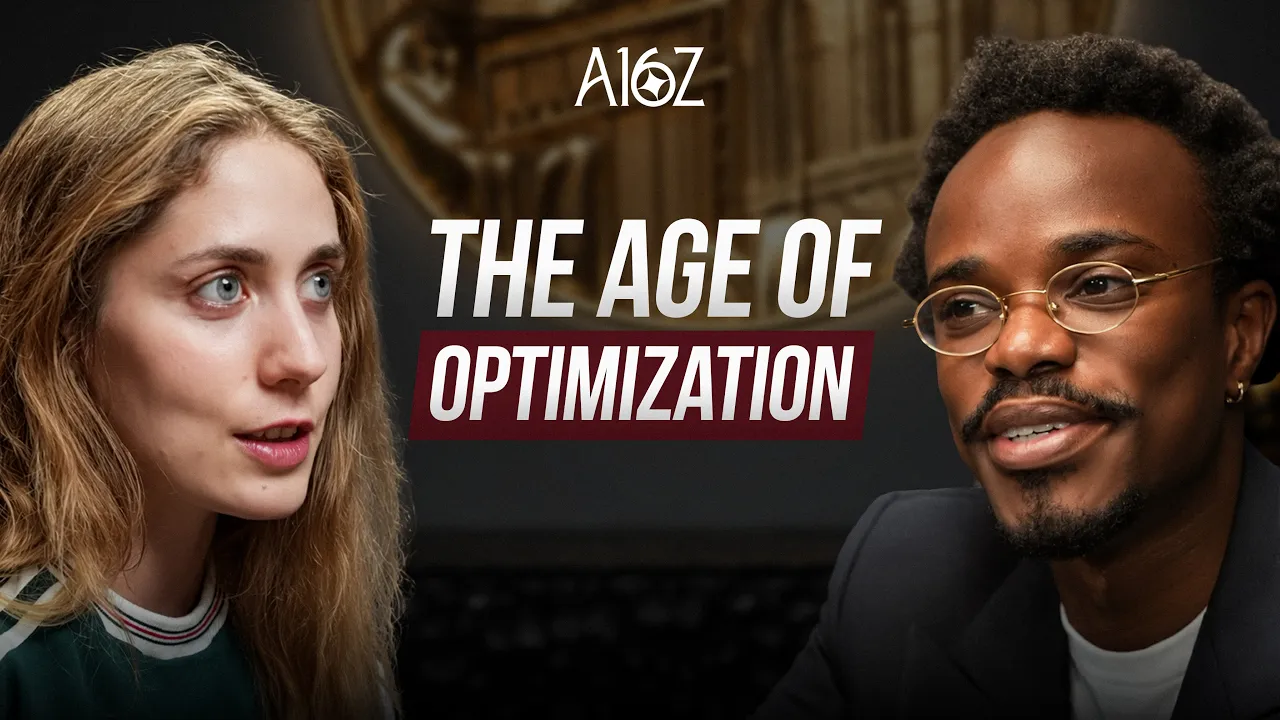
a16z
As digital hardware yields diminishing returns, technologists are redirecting product-optimization frameworks inward to re-engineer human biology, even as online discourse outpaces real-world adoption by nearly ten to one.
AI-assisted summary of How the Internet Turned Biohacking Into a Cultural Obsession — original source. Check the original for full context.
Source published:
Detailed notes
## Background Published by a16z on YouTube on September 15, 2026, this episode features host Elena Burger in conversation with academic and cyber ethnographer Ruby Justice Thelot. According to the video description, the discussion explores the blurry line between internet culture and real-world behavior, using modern biohacking and wellness trends—from GLP-1s, peptides, and wearables to microplastics and quantified-self metrics—to examine how niche subcultures evolve into mainstream phenomena.
## TL;DR Elena Burger and Ruby Justice Thelot unpack how online wellness discourse produces 'paracontent'—commentary about content that dramatically inflates the perceived adoption of bodily optimization compared to real-world practice. They chart how fringe physical pursuits like peptide usage and bodybuilding supplements originated in the American heartland before being packaged and popularized by coastal tech hubs. By examining historical parallels, from seventeenth-century post-sugar dietary shifts to the industrialization of the Victorian corset, they demonstrate how reduced friction accelerates consumer adoption. Rather than anticipating a monoculture of optimized looksmaxers, they conclude that the post-silicon future of 'body futurism' will be fundamentally polylithic, fracturing simultaneously into hyper-quantified biometric tracking and intuitive, esoteric holistic healing.
## Atmosphere & style The discussion maintains a relaxed, cerebral salon vibe, seamlessly blending rigorous cyber ethnography and cultural history with wry Silicon Valley self-awareness. Burger and Thelot share an easy, collaborative rapport, moving effortlessly from high-level theoretical concepts like Baudrillardian feedback loops and Cartesian dualism to humorous observations about Emily Mariko's salmon bowls and tech offices purging plastic water bottles. Listening feels like sitting in on an intellectually sharp, candid debrief that cuts through digital marketing hype while remaining genuinely fascinated by humanity's compulsive drive to engineer its own flesh.
## Key takeaways - [00:00](https://www.youtube.com/watch?v=HKZdte6exaw&t=0s) Modern media ecosystems are dominated by 'paracontent'—derivative commentary and reaction media that disproportionately eclipse the original cultural artifact, creating a distorted perception of real-world human behavior. - [05:09](https://www.youtube.com/watch?v=HKZdte6exaw&t=309s) Physical optimization trends often travel in reverse: practices like peptide injections originated in Midwestern bodybuilding subcultures and Texas medspas before Silicon Valley packaged and professionalized them for mass adoption. - [10:00](https://www.youtube.com/watch?v=HKZdte6exaw&t=600s) Optimization and tech categories frequently exhibit a ~1:10 adoption-to-awareness ratio, where ubiquitous cultural saturation (e.g., 90% awareness for GLP-1s and 95% for crypto) vastly outpaces actual usage (11% and 14%, respectively). - [13:40](https://www.youtube.com/watch?v=HKZdte6exaw&t=820s) Social media peptide discourse is divided into promotional, personal exploration, educational, and skeptical warning content (~19%), with everyday influencer vlogs bridging the epistemic trust gap for hesitant viewers. - [16:45](https://www.youtube.com/watch?v=HKZdte6exaw&t=1005s) 'Paratechnology'—tools designed to prevent tech use—generates aspirational detox content ('cyber celibacy') that functions as vicarious discipline, consumed on the very high-end smartphones users preach abandoning. - [20:00](https://www.youtube.com/watch?v=HKZdte6exaw&t=1200s) The moralization of thinness began when 17th-century colonial sugar expansion made sweets widely accessible, leading Dr. Tobias Venner to coin the pathological term 'obesus' in 1620 and establishing appetite suppression as proof of intellectual discipline. - [22:36](https://www.youtube.com/watch?v=HKZdte6exaw&t=1356s) The evolution of GLP-1 access mirrors Victorian corsetry: industrial manufacturing and front-clasps democratized corsets beyond the aristocracy, just as auto-injector pens and oral pills are lowering the friction of peptide-driven 'trickle-down thinness.' - [26:48](https://www.youtube.com/watch?v=HKZdte6exaw&t=1608s) Under Toby Shorin's concept of 'body futurism,' as technological innovation faces diminishing returns in computing silicon, engineers have redirected product optimization inward toward biological wetware, metabolism, and longevity. - [30:00](https://www.youtube.com/watch?v=HKZdte6exaw&t=1800s) Elite Bay Area anxieties around microplastics and seed oils catalyze grassroots commercial infrastructure, progressing from independent lab assays (like Light Labs) to private purity certifications and corporate lifestyle norms. - [35:00](https://www.youtube.com/watch?v=HKZdte6exaw&t=2100s) Consumer food manufacturing's push to capitalize on quantified macro tracking by re-labeling existing protein values has sparked widespread 'protein fatigue' against unnuanced food fortification. - [36:37](https://www.youtube.com/watch?v=HKZdte6exaw&t=2197s) Wearable studies show a digital nocebo effect—where manipulated low sleep scores cause rested users to feel physically worse—leading culture to become polylithic as hyper-quantification and esoteric somatic healing grow simultaneously. - [39:43](https://www.youtube.com/watch?v=HKZdte6exaw&t=2383s) The post-AI frontier of bodily optimization will not yield a uniform monoculture, but rather fragmented, extreme forms of individualized biohacking—such as compressing eight hours of biological sleep into four.
## Detailed walkthrough ### [00:00](https://www.youtube.com/watch?v=HKZdte6exaw&t=0s) Paracontent and the Sense of Cultural Confusion
The discussion opens with an exploration of how technological obsession has shifted inward: once humanity hits the perceived limits of innovating in silicon, the microscope turns directly toward optimizing and modifying the human body. Between surging GLP-1 usage, aspirational lifestyle content like Emily Mariko’s viral salmon and rice bowls, and the reality of ordering delivery while feeling exhausted, society finds itself in a state of profound "cultural confusion." Academic and cyber ethnographer Ruby Justice Thelot describes how modern life has become completely submerged in what he terms "paracontent"—content that is purely *about* other content—making it nearly impossible to disentangle material reality from feedback loops amplified by social media algorithms.
```mermaid flowchart LR accTitle: The Paracontent Feedback Loop accDescr: Diagram showing how an original cultural artifact or trend triggers a disproportionate volume of commentary that takes on a life of its own.
subgraph Primary["Material Core"] A["Original Content or Phenomenon"] end
subgraph Amplification["Disproportionate Online Layer"] B["Paracontent: Reaction Videos, Deep Dives & Commentary"] C["Algorithmic Bubbles & Social Discourse"] end
subgraph Impact["Perception"] D["Distorted Perception of Reality"] end
A --> B B --> C C --> D D -.-> B ```
In two foundational essays, *The Age of Paracontent* and *The Post is the Product*, Thelot examines how modern media ecosystems function. Looking at cultural milestones like video game releases and movie previews—notably the frenzy around the *Grand Theft Auto VI* trailer—the volume of commentary, frame-by-frame breakdowns, and derivative reaction videos eclipses the original artifact itself. Paracontent takes on an independent life, growing wildly out of proportion without necessarily having any material impact on the physical world. Thelot has made it his mission to cut through this noise and determine whether an online obsession reflects actual human behavior or merely algorithmic self-hypnosis.
- Approximately 11% of US adults are currently on GLP-1 medications. - Roughly 90% of the American public has heard of GLP-1s. - In a recent blind study involving Oura Ring wearers, participants who were intentionally shown inaccurate, deflated sleep scores reported having a noticeably worse day, despite their true biological metrics being completely normal.
---
[03:21](https://www.youtube.com/watch?v=HKZdte6exaw&t=201s) Measuring Online Discourse Against Material Reality
Host Elena Burger and Thelot turn to the delta between what people loudly obsess over online versus what actually manifests in physical life. Not everything remains trapped in the digital ether: occasionally, bizarre internet idioms or viral memes punch through into real life, becoming behaviors openly observed in children. Yet far more often, internet anxieties represent inflated mirages rather than widespread societal shifts.
To illustrate this gap, Thelot cites his research into "hetero-pessimism"—the prevailing internet trope that heterosexual dating is inherently doomed and universally toxic for women. After cataloging and sentiment-analyzing roughly 2,000 videos across Instagram Reels and TikTok, the empirical data told an entirely different story: roughly 40% of the dating content was explicitly positive, with the remaining bulk skewing neutral. The extreme dread that dominated discourse was largely an algorithmic artifact. For researchers tracking modern trends, the ongoing challenge is discerning whether an emergent topic is genuine evidence of evolving consumer behavior or simply the product of researchers "spending too much time online."
---
[05:09](https://www.youtube.com/watch?v=HKZdte6exaw&t=309s) The Peptide Boom: San Francisco Exports vs. Heartland Realities
The conversation shifts to the current cultural fixation on peptides, wellness, and optimization, using it as a case study for how geographic origin stories get rewritten. Elena points out that San Francisco and Silicon Valley routinely take credit for cultural trends that long predated the tech community's adoption of them. While the Valley legitimately earns credit for exporting technology platforms—where a novel company launches, scales among tech insiders, and diffuses worldwide—cultural and bodily optimization trends frequently travel in reverse.
Long before tech influencers hosted "peptide parties" or boasted about sourcing unregulated Chinese research peptides, the foundational use cases were quietly pioneered in bodybuilding subcultures across the American Midwest, the Heartland, and alternative medspas in places like Austin, Texas. Only after these fringe practices percolated through gray markets did Silicon Valley and coastal longevity hubs package, professionalize, and accelerate the trend for a broader audience.
The modern distribution chain for health biohacks is uniquely fragmented: - Novel compounds drift across disparate subcultures, such as mainstream female wellness influencers on TikTok picking up bodybuilding supplements like creatine after stumbling across niche fitness forums. - Mainstream adoption splits between highly regulated pharmaceutical GLP-1 weight-loss medications and the gray-market world of research peptides imported overseas without FDA oversight. - Longevity clinics have rapidly multiplied across urban centers, particularly in Manhattan, catering to clients seeking bespoke anti-aging injections and biohacking regimens popularized by journalists like Ezra Marcus.
[10:00](https://www.youtube.com/watch?v=HKZdte6exaw&t=600s) The Awareness–Adoption Chasm: From GLP-1s to Crypto
Beyond specialized gray-market compounds injected for muscle repair, cognitive function, memory, or youthfulness, mainstream awareness of peptide therapeutics has exploded—yet actual usage tells a very different story. Citing recent Gallup polling, Elena notes that while 90% of American adults have heard of GLP-1s, only 11% actually use them. A nearly identical disparity appears in cryptocurrency polling from Astra and Gallup, where 95% of Americans are aware of crypto, yet only 14% own any. This ~1:10 adoption-to-awareness ratio has become the defining signature of tech-driven categories, from meal-kit subscriptions to pharmaceuticals. Tech and optimization culture wields such disproportionate narrative power that a behavior practiced by a tiny fraction of the population can dominate national discourse.
```mermaid flowchart LR accTitle: The Awareness to Adoption Funnel accDescr: Visualizing the massive gulf between widespread public awareness and actual consumer adoption in tech and wellness. subgraph Awareness ["Cultural Saturation"] A["Subway & Celebrity Ads<br/>'Ozempic Face' Discourse"] --> B["Mass Awareness<br/>90%–95% of Public"] end subgraph ConversionBarrier ["Friction Point"] B --> C{"Conversion Hurdle<br/>Needles, Cost, Wallets"} end subgraph Reality ["Actual Adoption"] C --> D["Active Users<br/>11%–14% of Public"] end ```
Living in New York City, Ruby observes this phenomenon firsthand: virtually every subway car is plastered with advertisements for GLP-1 platforms pushing injections and daily pills. The average person knows the brand name Ozempic by heart, even if they don’t know who manufactures it or how to obtain a prescription. Bodily modifications naturally provoke intense public opinions, supercharging media coverage. Today, everyday pop-culture discourse hinges on scanning celebrities for signs of "Ozempic face." When a cultural artifact is birthed in tech hubs like San Francisco, blasted through outdoor transit marketing, and amplified by celebrity gossip, it yields an enormous gulf: high awareness and heated debates over drinks at a bar, contrasted with relatively modest numbers of people who have actually crossed the friction barrier of setting up a digital wallet or taking an injection.
- **Gallup GLP-1 Polling**: 90% of U.S. adults have heard of GLP-1s; 11% report taking them. - **Gallup / Astra Crypto Polling**: 95% of Americans are aware of cryptocurrency; 14% report owning it. - **The 1:10 Ratio**: Emerging wellness, tech subscriptions, and bodily optimization trends routinely exhibit a tenfold gap between cultural awareness and practical adoption.
---
[13:40](https://www.youtube.com/watch?v=HKZdte6exaw&t=820s) Analyzing TikTok Data: Peptides, Bodybuilding, and the Four Content Pillars
To move past speculation about why people seek out peptides, Ruby breaks down empirical findings from crunching social media data across approximately 960 TikTok videos published between 2024 and 2026. Early on, the overwhelming majority of posts leaned positive, populated by users documenting dramatic weight-loss journeys and newfound self-confidence. Yet a significant portion remained visibly tethered to the niche subculture where peptide experimentation began: bodybuilding and physique optimization.
By 2025 and into 2026, the online sentiment noticeably diversified. An undercurrent of contestatory content emerged, with creators decrying treatments as overpriced scams, raising red flags over side effects, and comparing safety profiles among gray-market formulations and compounded alternatives. Ruby observed a striking convergence between sponsored promotional posts and authentic personal narratives. The timeline evolved from blunt top-down advertising into intimate "day in my life as a person on Ozempic" video vlogs, where corporate marketing and lived experiences blur together.
```mermaid flowchart TD accTitle: TikTok Peptide Content Distribution accDescr: Breakdown of the primary categories of TikTok content regarding peptides and GLP-1s. subgraph Pillars ["TikTok Peptide Discourse"] P1["Promotional Content<br/>Brand sponsorships & telehealth pitches"] P2["Personal Exploration<br/>'Day in My Life' & transformation vlogs"] P3["Educational Videos<br/>Mechanisms, dosing, compound comparisons"] P4["Skeptical Warnings ~19%<br/>Scam claims, safety flags & side-effects"] end P1 -. Converges with.-> P2 P3 --> P4 ```
Across the dataset, TikTok peptide discourse cleanly divides into three dominant pillars—promotional material, personal exploration, and educational breakdowns—flanked by a fourth critical category making up roughly 19% of the conversation: skeptical warnings. Ruby notes that users turn to influencer testimonials to resolve an epistemic trust gap: an everyday viewer might see an ad featuring a star like Serena Williams, but they still wonder, "Okay, Serena Williams is using it, but should *I*?" They look to digital creators to validate whether injecting an unfamiliar pharmaceutical is genuinely safe and worth the plunge.
- **Dataset Scope**: ~960 TikTok videos tracked from 2024 through 2026. - **Sentiment Shift**: Transitioned from predominantly positive weight-loss celebrations to include counter-narratives questioning legitimacy, efficacy, and physical risks. - **The Four Content Buckets**: Promotional campaigns, personal exploration vlogs, educational explainers, and skeptical warning content (~19%).
---
[16:45](https://www.youtube.com/watch?v=HKZdte6exaw&t=1005s) Paratechnology, "Cyber Celibacy," and the Aspirational Gap
This pattern mirrors other online wellness trends, notably in what Ruby terms **"paratechnology"**—technologies designed specifically to prevent individuals from using their existing technology. Devices and apps such as Opal, Brick, and Yondr pouches have sparked an entire competitive genre of digital-detox lifestyle content. Feeds are saturated with "cyber celibacy" routines and aesthetic videos chronicling a "day in my life with a dumbphone." Elena and Ruby laugh over the glaring, inescapable irony at the core of the trend: these videos urging people to abandon their screens are meticulously filmed on brand-new iPhone 16s and edited specifically for distribution on Instagram and TikTok feeds.
This dynamic illustrates how "paracontent"—the media *about* a behavior—routinely dwarfs the behavior itself. Much like healthy-eating content, where millions watch influencers like Emily Mariko assemble pristine bowls of salmon, rice, and fresh vegetables only to immediately order greasy takeout on DoorDash, detox content serves an emotional surrogate function. Audiences consume vicarious discipline; watching someone else lock their smartphone in a safe provides a fleeting sensation of agency without demanding the personal sacrifice of unplugging.
Yet, despite this aspirational disconnect, aggregate data suggests that optimization culture does occasionally filter down into genuine public health shifts. Alongside the GLP-1 boom, broad national polling indicates that American obesity rates have finally begun to show measurable declines. Whether catalyzed by pharmaceutical intervention, cultural osmosis, or social media contagion, measurable behavioral change does eventually trickle out from online fixations. This prompts Elena to turn toward the deeper historical lineage behind these modern obsessions: why have societies fetishized thinness, how did modern technology intertwine with that ideal, and how do historical bodily expectations for men diverge from those placed on women?
[20:00](https://www.youtube.com/watch?v=HKZdte6exaw&t=1200s) Sugar, the Invention of Obesity, and the Ascetic Ideal
Tracing the modern fixation on thinness back to its historical roots, Ruby Justice Thelot explains how bodily ideals transformed dramatically in the seventeenth century after England boosted sugar production in its colony of Barbados. Previously, sugar was a luxury strictly reserved for the upper class, and medieval art consistently depicted portliness as an unmistakable marker of prosperity and status. However, as colonial supply flooded England, prices plummeted, sugar entered ordinary coffee houses, and the English took to drinking "sack"—a heavily sweetened fortified wine. As waistlines expanded across classes, gout became rampant among the burgeoning middle class. In 1620, Dr. Tobias Venner introduced the Latinate term *obesus* to diagnose overweight men as inherently unhealthy, concocting one of the earliest institutional diet regimens to compel people to lose weight.
This shift forged an enduring cultural link between excess weight, physical illness, and intellectual sluggishness—a sentiment famously captured in Shakespeare's *Julius Caesar* when Caesar quipped, "let me have men about me that are fat," reasoning that comfortable, round men were too dull and complacent to plot a rebellion. Ruby notes how the aesthetic pendulum gradually swung away from the voluptuous forms of the Renaissance, such as Raphael's painted figures or the feminine ideals documented by Baldassare Castiglione in *The Book of the Courtier*. Instead, elites adopted an ascetic ethos. Intellectual figures from René Descartes to Alexander Pope framed the mastery and restriction of bodily passions through ordered eating as the supreme demonstration of intellect, self-discipline, and moral virtue. Thinness was codified as living proof that an individual was enlightened, disciplined, and good.
- **Colonial Sugar Expansion**: Seventeenth-century English sugar plantations in Barbados flooded the domestic market, transforming sugar from a rarefied luxury into an everyday commodity. - **The Coining of *Obesus***: In 1620, Dr. Tobias Venner used the Latin term to categorize the portly body as a distinct pathological state requiring dietary intervention. - **Philosophical Virtue of Restraint**: Thinness became an aristocratic status symbol tied to the mind-body dualism promoted by Enlightenment thinkers, who viewed appetite suppression as a triumph of reason over animal instinct.
[22:36](https://www.youtube.com/watch?v=HKZdte6exaw&t=1356s) Corset Industrialization and the Parallels to GLP-1 Adoption
This ascetic ideal did not remain a mere moral philosophy; it was quickly engineered directly into fashion through garments like the Victorian corset. Elena Burger connects this to the material history of clothing, noting that corsets originally represented an exclusive luxury available only to elite women. Early corsets required a servant or lady-in-waiting to painstakingly lace the intricate lattice up the wearer's back. However, the convergence of the mechanical loom, the sewing machine, and concentrated factory floor manufacturing democratized the garment. Corset makers also redesigned the mechanics of the garment itself, introducing front-fastening busks and closures so that women could put them on independently without domestic help.
```mermaid flowchart TD accTitle: Technology and the Democratization of Body Modification accDescr: A flow illustrating how elite body-shaping tools, from Victorian corsets to modern GLP-1 peptides, scale down to mass markets through manufacturing innovations and ease-of-use.
subgraph VictorianEra ["The Victorian Corset"] A["Elite exclusivity:<br/>Laced by ladies-in-waiting"] --> B["Industrial tech:<br/>Looms, sewing machines & front clasps"] B --> C["Democratized access:<br/>Mass-market self-lacing corsets"] end
subgraph ModernEra ["GLP-1s & Peptides"] D["Elite exclusivity:<br/>Celebrities & high out-of-pocket costs"] --> E["Form-factor evolution:<br/>Compounding, auto-injector pens & oral pills"] E --> F["Trickle-down thinness:<br/>Mainstream population adoption"] end ```
Elena draws a provocative analogy between the evolution of the corset and modern GLP-1 receptor agonists like Ozempic. Initially, access to GLP-1 drugs was concentrated among wealthy celebrities and tech elites who could pay hefty out-of-pocket prices. Just as the corset transitioned from an assisted aristocratic garment to a self-administered mass-market product, GLP-1 therapies are rapidly evolving. The messy, intimidating barrier of drawing liquid from a compounding vial and administering manual syringe injections—or relying on a partner to stick a needle into your stomach—is giving way to standardized pre-filled auto-injector pens and oral pill formulations. This structural lowering of friction is driving a powerful wave of "trickle-down thinness" through the broader population.
- **Democratization via Manufacturing**: The mechanized textile factory converted the corset from an aristocratic signifier into an everyday consumer product worn across classes. - **The Usability Shift**: Shifting from back-lacing to front-fastening eliminated the logistical barrier of needing domestic servants to achieve the desired silhouette. - **The GLP-1 Parallel**: Compounded formulations, intuitive injection pens, and emerging oral delivery mechanisms follow the same trajectory, turning an elite medical biohack into frictionless mass culture.
[25:00](https://www.youtube.com/watch?v=HKZdte6exaw&t=1500s) Economic Cycles, the 1990s Supermodel, and the Return of Thinness
The cultural definition of the ideal physique has never been static; it fluctuates alongside macroeconomic stability. Ruby points out that during periods of extreme scarcity, such as the two World Wars and the Great Depression, cultural mores swung back toward celebrating portliness and roundness as comforting evidence of nourishment and physical vitality. In the post-war baby boom, popular culture embraced well-proportioned, fuller silhouettes reminiscent of Albrecht Dürer’s classic Renaissance proportion studies, as seen in archival photographs of American beaches in the 1950s.
``` +------------------------------------+---------------------------------------+---------------------------------------------+ | Era / Period | Dominant Body Ideal | Primary Cultural / Economic Drivers | +------------------------------------+---------------------------------------+---------------------------------------------+ | 17th Century & Earlier | Portliness / Voluptuous forms | Caloric scarcity; sugar as an elite luxury | | Enlightenment to Victorian Era | Slenderness & tight-lacing | Ascetic virtue; reason over appetite | | Depressions & World Wars | Rounder, nourished physiques | Widespread food scarcity & economic crisis | | Post-War Baby Boom (1950s) | Proportioned, fuller beach bodies | Economic abundance; classic Dürer balance | | 1990s Supermodel Era | "Heroin chic" & extreme thinness | Dominance of European couture designers | | Contemporary Era | Algorithmic peptide slenderness | GLP-1s, optimization tech, and biohacking | +------------------------------------+---------------------------------------+---------------------------------------------+ ```
By the 1990s, however, the center of gravity shifted. European couture houses began asserting unprecedented influence over American cultural standards, inaugurating the era of the high-fashion supermodel. Designers explicitly selected ultra-slender women to drape their garments, pushing the feminine aesthetic into the stark, razor-thin look famously labeled "heroin chic." This became the undisputed *ne plus ultra* of feminine perfection for a generation. Ruby argues that society is currently witnessing another aggressive swing of this pendulum back toward extreme thinness, supercharged not by clothing designers, but by pharmaceutical and peptide innovations that make previously unattainable silhouettes biologically accessible.
[26:48](https://www.youtube.com/watch?v=HKZdte6exaw&t=1608s) Wearables, the Quantified Self, and Toby Shorin’s 'Body Futurism'
Turning to the broader technological infrastructure surrounding the body, Ruby highlights the trajectory of wearable computing. In 2007, the first Fitbit arrived on the market, prompting *Wired* co-founder Kevin Kelly to declare it the advent of the "quantified self." While Kelly’s forecast proved remarkably prescient, Ruby observes that it required nearly two decades of deliberate hardware iteration—punctuated by the 2015 launch of the Apple Watch—for tracking biometric data to evolve from an eccentric hobby into an ambient default for everyday adults seeking to monitor, discipline, and optimize their physiology.
Ruby introduces cultural theorist Toby Shorin's concept of "body futurism" to contextualize this transformation. Shorin posited that once engineering ran up against the physical and economic boundaries of silicon innovation, technologists inevitably redirected the microscope inward, treating the human anatomy as the next frontier ripe for optimization. The same iterative frameworks, analytical dashboards, and product-design sensibilities previously applied to building smartphones and operating systems are now aimed at human metabolism, sleep cycles, and visceral organs. Whether through biometric app interfaces, boutique longevity clinics, or high-profile self-optimization initiatives like Bryan Johnson’s "Don't Die" project, body futurism reframes the flesh as upgradeable hardware.
- **The Twenty-Year Incubation**: Kevin Kelly identified the Quantified Self movement in 2007, but mainstream cultural penetration took roughly two decades of product refinement across Fitbits and Apple Watches. - **Toby Shorin’s Premise**: When digital silicon reaches diminishing returns, technical culture turns to bodily wetware—transforming organs, blood markers, and sleep stages into optimization problems. - **Body Futurism in Practice**: Longevity clinics, daily biometric scoring, and radical longevity experiments reflect a philosophical shift from managing external tools to re-engineering the human vessel.
[28:27](https://www.youtube.com/watch?v=HKZdte6exaw&t=1707s) Mainstreaming Biohacking: From Off-Label CGMs to Microplastic Testing
Elena confirms that the quantified self movement serves as one of the clearest examples of a subculture born within a tiny, insular Bay Area biohacking contingent that was subsequently exported to global consumer culture. Practices once confined to niche forums have matured into turnkey commercial platforms: everyday consumers now routinely order full-body DEXA scans to inspect bone density and visceral fat or subscribe to comprehensive biomarker platforms like Function Health and Superpower.
Elena highlights how non-diabetic wellness practitioners now regularly purchase continuous glucose monitors (CGMs) off-label. Rather than using the sensors for clinical insulin management, these users wear them constantly to track granular glycemic spikes in real time, treating their daily food choices as real-time biofeedback loops to determine which meals to retain or eliminate. Pushing this obsession with internal purity even further into the physical environment, Elena points to a project backed by tech entrepreneur Nat Friedman and other Silicon Valley figures who funded rigorous laboratory testing of consumer food items and restaurant takeout deliveries to measure exact concentrations of microplastics, illustrating how the obsession with quantifying the body now scrutinizes the hidden pollutants entering it.
- **Clinical Tools Repurposed**: Continuous glucose monitors (CGMs) crossed over from medical diabetes management into standard wellness tools used by healthy individuals to eliminate blood sugar volatility. - **Commercial Diagnostic Platforms**: Services like Function Health and Superpower have lowered the barrier to comprehensive laboratory blood panels and DEXA scans, turning diagnostic screening into consumer lifestyle products. - **Microplastics Auditing**: Tech angel investors like Nat Friedman backed independent lab testing to quantify microplastic contamination across restaurant takeout containers and supermarket staples, taking biological optimization to the molecular level.
[30:00](https://www.youtube.com/watch?v=HKZdte6exaw&t=1800s) Microplastics, Food Vilification, and the Grassroots Testing Movement
Elena Burger highlights how niche anxieties within elite networks rapidly catalyze real-world infrastructure. She recounts how consumer items—from packaged Whole Foods meals and boba to protein bars—were sent to Light Labs, an independent testing facility in Austin, Texas, to run microplastic assays. The lab open-sourced the findings, revealing detectable microplastics across common items, including baby food. That discovery prompted an anxious mother to launch her own testing campaign across commercial baby formulas and foods. While broad medical consensus regarding the exact toxicity of microplastics remains unresolved, Elena notes that a critical mass of influential people in the Bay Area has already decided they are harmful.
```mermaid flowchart TD accTitle: Wellness Trend Lifecycle and Cultural Divergence accDescr: Flowchart illustrating how dietary and biohacking obsessions move from Bay Area subcultures into mainstream saturation, followed by cultural bifurcation.
subgraph Adoption ["1. Subculture to Mainstream"] A["Niche Anxiety & Testing<br/>(e.g., Light Labs, Seed Oils)"] --> B["Market Commercialization<br/>(Glass bottles, 'Seed-Oil-Free' snacks)"] B --> C["Mainstream Saturation<br/>('Protein Fatigue', Industry Backlash)"] end
subgraph Divergence ["2. Post-Saturation Bifurcation"] C --> D["Hyper-Quantified Tech<br/>(Oura rings, 4-hr sleep compression)"] C --> E["Esoteric & Holistic Body Ways<br/>(Reiki, acupuncture, somatic intuition)"] end
subgraph Horizon ["3. The Post-AI Frontier"] D & E --> F["Body Futurism<br/>(Idiosyncratic, post-silicon self-modification)"] end ```
Downstream of this elite consensus, commercial markets inevitably follow. Elena predicts an influx of consumer-grade testing kits, lab advancements, and certified microplastic-free product lines, paralleling the trajectory of the anti-seed oil movement. Ruby Justice Thelot agrees, noting that modern consumer anxiety creates an immediate demand for independent aggregator platforms. These community-run verification hubs will act like modernized organic or green certifications, charging subscription fees to guarantee clean sourcing. Elena jokes that the trend is already entrenched at the highest levels, pointing out that the Andreessen Horowitz office exclusively stocks glass water bottles, prompting Ruby to chime in that their household adopted a strict "plastic free since 2023" rule.
- **Light Labs Initiative**: Testing of everyday staples (packaged grocery meals, boba, snacks) revealed microplastics in baby foods, igniting decentralized parent testing campaigns. - **Consumer Aggregation Models**: Anticipation of self-organized verification bodies issuing private purity certifications against microplastics and seed oils. - **Corporate Office Realities**: Transition away from plastic ware to glass-only water bottles across venture capital firms and tech households.
---
[32:51](https://www.youtube.com/watch?v=HKZdte6exaw&t=1971s) Tracking Trend Lifecycles: The Ray Peat Diet and Seed Oil Backlash
Ruby explains that social media paracontent offers a clear barometer for measuring how far a wellness trend has advanced along its lifecycle. By tracking the distribution between educational explainers and aspirational lifestyle content, researchers can evaluate the maturity of movements like the Ray Peat diet (a pro-metabolic dietary framework emphasizing saturated fats, fruit juices, and dairy while rejecting polyunsaturated fatty acids) or anti-seed oil campaigns. Once a trend matures, the inevitable backlash begins: contrarian "truthers" emerge claiming the opposite position, and institutional trade groups attempt to intervene with defensive PR.
Elena observes that the anti-seed oil crusade has progressed far enough into cultural ubiquity that counter-narratives are actively publishing defenses of seed oils and ultra-processed foods—efforts that often appear ham-fisted and absurd to online observers. At the retail level, mainstream snacks now deliberately print "seed oil-free" badges on their primary packaging, signaling that what began as a fringe, internet-native obsession has crossed over into standard product marketing.
---
[35:00](https://www.youtube.com/watch?v=HKZdte6exaw&t=2100s) Protein Maxing, Mainstream Saturation, and "Protein Fatigue"
The conversation shifts to protein obsession as a prime case study of quantified wellness meeting retail branding. Ruby points out that corporate food manufacturing has capitalized on quantification by simply printing existing nutritional facts in giant typography: a yogurt that has always contained a specific protein count now plasters that exact number across the front label because consumers have been conditioned to track macros obsessively.
Elena notes that this relentless marketing is breeding widespread "protein fatigue." Consumers are beginning to revolt against excessive macro-fortification, asking why their bottled water needs twenty grams of protein when they simply want an ordinary beverage. She maps this fatigue against historical dietary waves:
* **Atkins Diet**: Centered on total carbohydrate restriction and unconstrained fats. * **Ketogenic Diet**: Shifted focus toward metabolic ketosis, healthy fats, and strict caloric composition. * **Modern Protein Maxing**: Simplified into an unnuanced imperative to "2x your protein" across all foods and drinks.
---
[36:37](https://www.youtube.com/watch?v=HKZdte6exaw&t=2197s) Acceleration vs. Backlash: The Quantified Self Meets Esoteric Healing
Elena questions whether the compounding waves of peptides, cosmetic optimization, and looksmaxing will accelerate indefinitely or hit a definitive cultural wall. Ruby looks to history, comparing contemporary wellness culture to the era when industrial sugar consumption exploded in England. As diets became saturated with refined, processed calories, health transformed into an explicit moral virtue, an act of radical discipline, and an intellectual marker linked to Cartesian ideals of mastering the physical vessel.
At the same time, the quantified self movement is showing psychological cracks. Ruby cites a recent double-blind wearable experiment involving Oura Ring users. Researchers manipulated sleep metrics, displaying falsely deflated sleep performance scores to subjects who had slept normally. Participants who received low scores consistently reported having a terrible day and felt physically exhausted despite their objective biological rest. This digital nocebo effect is driving tech-forward demographics away from biometric readouts and toward ancient, somatic traditions:
| Optimization Framework | Primary Modalities | Core Epistemology | |:--- |:--- |:--- | | **Quantified Self** | Wearables (Oura Rings, CGMs), biometric sleep scores, macro tracking | Algorithmic, data-driven, externalized metrics | | **Esoteric & Holistic** | Somatic intuition, Reiki, acupuncture, energetic modalities | Internalized, subjective, felt physical awareness |
Ruby stresses that culture is no longer monolithic; it is fundamentally "polylithic." Rather than the entire populace swinging collectively from data tracking back to nature, society is seeing hyper-quantification and esoteric holistic healing expand simultaneously among the exact same demographic groups.
---
[39:43](https://www.youtube.com/watch?v=HKZdte6exaw&t=2383s) Sleep Hacking, Body Futurism, and the Post-AI Optimization Frontier
Elena agrees that optimization will accelerate in bizarre, non-linear ways rather than converging on a sterile monoculture. The future will not be a sea of identical people with identical peptide regimens, Botox treatments, and looksmaxed jawlines. Instead, biohacking will become increasingly individualized, esoteric, and technically fringe.
Sleep optimization stands out as the next major commercial frontier. Elena notes conversations with hardware founders developing experimental wearable rigs engineered to compress restorative biological states, aiming to grant the physiological recovery of an eight-hour night in just four hours. The ultimate ambition is expanding waking lifespan, reclaiming productive waking hours rather than merely chasing chronological longevity.
Closing out the discussion, Ruby references Toby Shorin's foundational essay, *Body Futurism*. Shorin initially hypothesized that once innovation exhausted the limits of computer silicon, human ingenuity would inevitably turn its focus toward reprogramming fleshy biology. In an emerging reality dominated by advanced artificial intelligence and material automation, modifying the biological self may represent the final domain where human effort and identity still hold consequence. Elena jokingly hopes humanity has more than a few years left to explore these limits before wrapping the conversation amid lighthearted banter about leg workout routines.
## Notable quotes > [00:00](https://www.youtube.com/watch?v=HKZdte6exaw&t=0s) paracontent — Ruby Justice Thelot
> [03:21](https://www.youtube.com/watch?v=HKZdte6exaw&t=201s) spending too much time online — Elena Burger
> [13:40](https://www.youtube.com/watch?v=HKZdte6exaw&t=820s) Okay, Serena Williams is using it, but should I? — Ruby Justice Thelot
> [16:45](https://www.youtube.com/watch?v=HKZdte6exaw&t=1005s) paratechnology — Ruby Justice Thelot
> [16:45](https://www.youtube.com/watch?v=HKZdte6exaw&t=1005s) cyber celibacy — Ruby Justice Thelot
> [16:45](https://www.youtube.com/watch?v=HKZdte6exaw&t=1005s) day in my life with a dumbphone — Ruby Justice Thelot
> [20:00](https://www.youtube.com/watch?v=HKZdte6exaw&t=1200s) obesus — Ruby Justice Thelot
> [20:00](https://www.youtube.com/watch?v=HKZdte6exaw&t=1200s) let me have men about me that are fat — Ruby Justice Thelot
> [25:00](https://www.youtube.com/watch?v=HKZdte6exaw&t=1500s) heroin chic — Ruby Justice Thelot
> [26:48](https://www.youtube.com/watch?v=HKZdte6exaw&t=1608s) quantified self — Ruby Justice Thelot
> [26:48](https://www.youtube.com/watch?v=HKZdte6exaw&t=1608s) body futurism — Ruby Justice Thelot
> [30:00](https://www.youtube.com/watch?v=HKZdte6exaw&t=1800s) plastic free since 2023 — Ruby Justice Thelot
> [35:00](https://www.youtube.com/watch?v=HKZdte6exaw&t=2100s) protein fatigue — Elena Burger
> [36:37](https://www.youtube.com/watch?v=HKZdte6exaw&t=2197s) polylithic — Ruby Justice Thelot
## Mentioned Elena Burger, Ruby Justice Thelot, Toby Shorin, Kevin Kelly, Bryan Johnson, Nat Friedman, Ezra Marcus, Tobias Venner, Emily Mariko, Serena Williams, René Descartes, Alexander Pope, Baldassare Castiglione, Albrecht Dürer, William Shakespeare, Oura Ring, Apple Watch, Fitbit, Function Health, Superpower, Light Labs, Andreessen Horowitz (a16z), Opal, Brick, Yondr, Ozempic, TikTok, Instagram Reels, Gallup, Astra, Grand Theft Auto VI, The Age of Paracontent, The Post is the Product, Body Futurism, The Book of the Courtier, Julius Caesar
## Video description Elena Burger sits down with academic and cyber ethnographer Ruby Justice Thelot to explore the increasingly blurry line between internet culture and the real world, and how to tell the difference between a trend that’s actually changing behavior and one that simply feels enormous online.
They use today’s wellness and optimization culture as a case study, from peptides and GLP-1s to protein maxxing, wearables, microplastics, and the quantified self. Ruby explains her concept of “paracontent,” where the conversation around a phenomenon can become much larger than the phenomenon itself, and what social media data can tell us about how these trends move from niche communities into the mainstream.
They also trace the much longer history of body optimization, from changing ideals of thinness to the rise of the quantified self, and ask what comes next as technology gives people increasingly granular ways to measure and modify themselves. Ruby’s prediction: rather than everyone optimizing toward the same ideal, we may see increasingly individualized and sometimes extreme forms of “body futurism.”
Timestamps: 00:00 - Intro 00:58 - What Is Paracontent & Why Culture Feels So Confused 03:21 - How Much Is Actually Happening vs Just Talked About? 06:09 - The Peptide Boom: San Francisco vs the American Heartland 14:00 - Why People Actually Take Peptides 17:22 - The Filter Farm & the Attention Economy of Wellness 26:48 - Wearables, Oura Rings & the Rise of the Quantified Self 31:45 - How Small Bay Area Communities Reshape the Whole Culture 36:37 - Peptides & Looksmaxing: Are We Accelerating or Backlashing? 39:43 - The Next Frontier: Sleep, Body Futurism & the Post-AI Body
Resources: Follow Ruby Justice Thelot on X: https://x.com/being_on_line Follow Elena Burger on X: https://x.com/VirtualElena Read Ruby’s piece “Enshittification” Isn’t Real: https://www.a16z.news/p/enshittification-isnt-real
Stay Updated: If you enjoyed this episode, be sure to like, subscribe, and share with your friends!
Find a16z on X: https://twitter.com/a16z
Find a16z on LinkedIn: https://www.linkedin.com/company/a16z
Listen to the a16z Show on Spotify: https://open.spotify.com/show/5bC65RDvs3oxnLyqqvkUYX
Listen to the a16z Show on Apple Podcasts: https://podcasts.apple.com/us/podcast/a16z-podcast/id842818711
Follow our host: https://x.com/eriktorenberg
Please note that the content here is for informational purposes only; should NOT be taken as legal, business, tax, or investment advice or be used to evaluate any investment or security; and is not directed at any investors or potential investors in any a16z fund. a16z and its affiliates may maintain investments in the companies discussed. For more details please see http://a16z.com/disclosures.
[Source](https://www.youtube.com/watch?v=HKZdte6exaw)