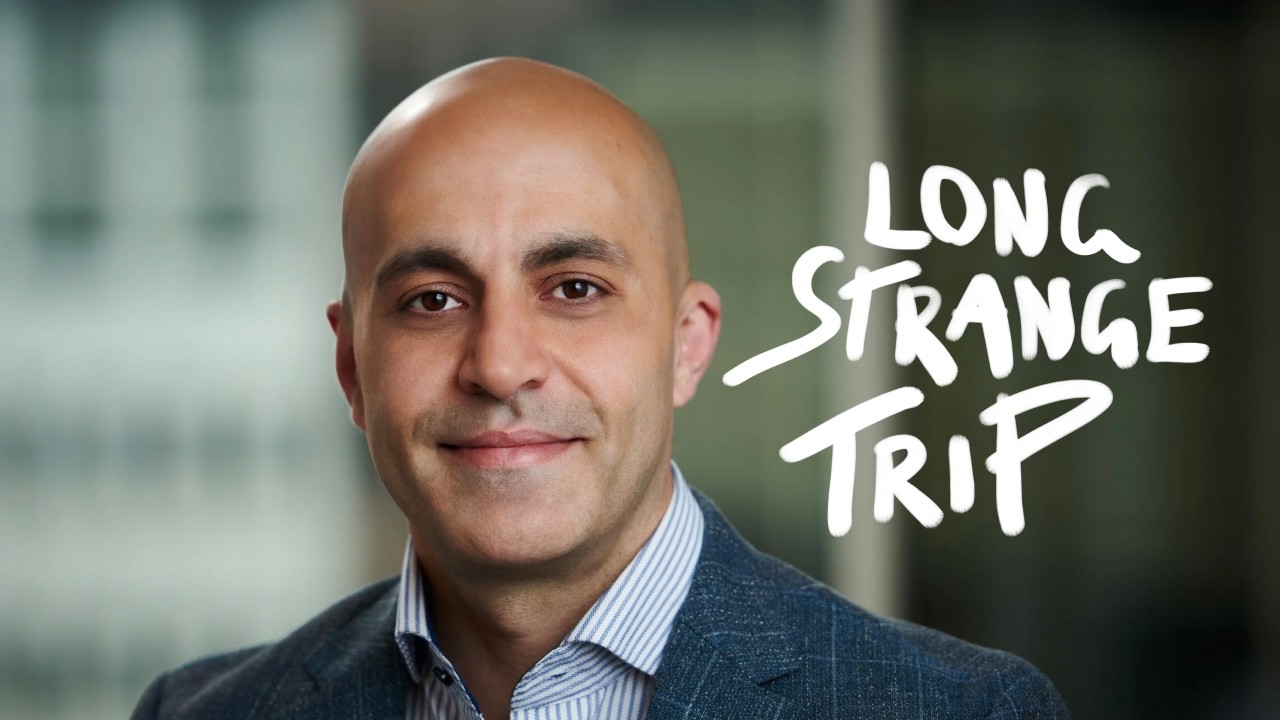
Databricks CEO Ghodsi Says Conflict Aversion Disqualifies Tech Leaders
Sequoia Capital
Enterprise software companies scale only when founders abandon consensus dogma to pour multi-year focus into their single biggest bottleneck while ruthlessly confronting organizational friction.
## Background
Published on YouTube by Sequoia Capital on September 17, 2026, this episode features Databricks CEO Ali Ghodsi in conversation with host Brian Halligan. According to the description, it covers Ghodsi's journey from a technical founder given an unannounced trial CEO seat with no raise to leading a market giant, detailing how he created the Lakehouse category, outmaneuvered competitors, and why conflict aversion is disqualifying for leaders.
## TL;DR
Ali Ghodsi explains how he scaled Databricks from $1.5 million to billions in ARR by concentrating multi-year, order-of-magnitude focus on a single core bottleneck at a time. He details the painful pivot from a failed 'zero touch' PLG model into aggressive enterprise sales, the competitive strategy used to counter Snowflake by championing open storage formats, and the fierce conviction required to build the Lakehouse category despite broad skepticism. Ghodsi also breaks down executive hiring rigor, his recent hands-on experiments coding in production to uncover workflow roadblocks, and his refusal to tolerate conflict-averse leadership.
## Atmosphere & style
The dialogue is intensely candid, pragmatic, and refreshingly devoid of corporate buzzwords, driven by Ghodsi's sharp, black-and-white operating philosophy and deadpan delivery. Halligan acts as an engaged peer and sounding board, contrasting his own past instinct to be liked at HubSpot against Ghodsi's uncompromising combativeness and focus on accountability. It feels like an authentic, high-stakes operational debrief that strips executive leadership down to discipline, stamina, and an appetite for uncomfortable friction.
## Key takeaways
- [03:05](https://www.youtube.com/watch?v=k7wPdCNfljQ&t=185s) Ali Ghodsi became CEO of Databricks on a trial basis without a raise or CEO equity package after the board quietly looked for outside executives.
- [04:11](https://www.youtube.com/watch?v=k7wPdCNfljQ&t=251s) Ghodsi's career philosophy centers on deliberately choosing the harder, more uncomfortable option over comfortable, established paths.
- [09:02](https://www.youtube.com/watch?v=k7wPdCNfljQ&t=542s) Rather than copying industry dogma, founders must identify the single biggest bottleneck threatening the company and pour disproportionate resources into fixing it over several years.
- [12:16](https://www.youtube.com/watch?v=k7wPdCNfljQ&t=736s) Databricks abandoned its initial 'zero-touch' PLG model after revenue flatlined, shifting entirely to traditional enterprise sales driven by high-EQ account executives.
- [23:04](https://www.youtube.com/watch?v=k7wPdCNfljQ&t=1384s) Executive mis-hires cost startups up to 2.5 years of momentum; companies should tolerate high false negatives and rely on back-door reference checks rather than settling under hiring fatigue.
- [27:02](https://www.youtube.com/watch?v=k7wPdCNfljQ&t=1622s) Databricks countered Snowflake not by building a copycat proprietary data warehouse, but by anchoring on open storage formats, lower TCO, and native AI/ML workloads.
- [35:14](https://www.youtube.com/watch?v=k7wPdCNfljQ&t=2114s) Creating the 'Lakehouse' category required immense conviction and strict operational alignment—including overhauling sales incentives and killing high-performing Spark ads—despite severe industry ridicule.
- [51:06](https://www.youtube.com/watch?v=k7wPdCNfljQ&t=3066s) Ghodsi rejects flat organizational hierarchies with massive spans of control, emphasizing that direct coaching and interpersonal leadership cannot be replaced by async documents or vibe coding.
- [55:28](https://www.youtube.com/watch?v=k7wPdCNfljQ&t=3328s) Full AI diffusion will take at least a decade because the true enterprise bottleneck is not writing code, but re-engineering institutional workflows, testing, and organizational context.
- [01:00:26](https://www.youtube.com/watch?v=k7wPdCNfljQ&t=3626s) Databricks limits company-wide annual focus to just two goals, aligning leadership through high-frequency meetings to eliminate functional silos.
- [01:04:53](https://www.youtube.com/watch?v=k7wPdCNfljQ&t=3893s) Databricks remains private while cash flow breakeven to shield its long-term AI platform transition from public market sentiment swings, with liquidity needs being the primary IPO driver.
- [01:08:09](https://www.youtube.com/watch?v=k7wPdCNfljQ&t=4089s) Conflict aversion is the most disqualifying trait in an executive; confronting uncomfortable truths directly is an essential leadership muscle rather than an innate talent.
## Detailed walkthrough
### [00:00](https://www.youtube.com/watch?v=k7wPdCNfljQ&t=0s) Google Docs vs. Human Connection
The episode kicks off with a sharp back-and-forth about whether executive rituals like the Monday morning leadership meeting are truly valuable or merely performative theater that could easily be replaced by an asynchronous memo. Ali Ghodsi rejects the notion that complex human collaboration can be reduced to software documents. Building trust, alignment, and respect between leaders requires direct personal contact.
Poking fun at hyper-optimized asynchronous culture, Ali asks whether someone would apply the same logic to their personal life: "Why do you have to meet your wife at all and your kids? Can't you just have a Google doc?... If there's something you want to teach your kids, put it in the goddamn Google doc." For real human relationships—whether raising a family or steering an enterprise—meeting face-to-face cannot simply be replaced by a shared document.
---
[00:44](https://www.youtube.com/watch?v=k7wPdCNfljQ&t=44s) Introduction: The Best CEO in Silicon Valley
The host introduces Ali Ghodsi, co-founder and CEO of Databricks, noting that when he previously interviewed Ben Horowitz of Andreessen Horowitz (a16z) and asked him to name the single best CEO in Silicon Valley outside his own firm's portfolio, Horowitz answered "Ali" without hesitation.
Welcoming Ali to the podcast, the host sets out to explore how an academic researcher with zero traditional business background took over a struggling startup with seven co-founders and transformed it into one of the most formidable enterprise software giants in the world.
---
[01:22](https://www.youtube.com/watch?v=k7wPdCNfljQ&t=82s) The Secret 2015 CEO Search and Databricks' Early Commercial Struggles
Databricks originally launched with seven co-founders, but by 2015—a few years into the company's life—the business was stalling commercially despite massive developer adoption. The open-source project they created, Apache Spark, was an undeniable phenomenon, but commercial monetization had barely materialized: GAAP revenue for 2015 came in at just around $1.5 million. The board recognized that a leadership change was necessary and quietly launched an external search to recruit a seasoned executive.
Ali knew through the grapevine that interviews were taking place behind his back and had even identified two specific external candidates the board was evaluating. Being self-described as a "glass half empty guy," he assumed the entire founding team might be phased out. Uninterested in the corporate world and having never harbored ambitions to be a CEO, Ali applied for a faculty position at UC Berkeley, preparing to return to his lifelong dream of being a professor. The board never formally interviewed him for the CEO role with typical strategic presentations; rather, they conducted low-key, exploratory one-on-one conversations without formally acknowledging that an active search was underway.
---
[03:05](https://www.youtube.com/watch?v=k7wPdCNfljQ&t=185s) Why Ben Horowitz Bet on a Founder with Zero Commercial Background
Given Databricks' glaring commercial deficit, conventional Silicon Valley wisdom would have dictated hiring a veteran go-to-market executive. Instead, the board turned to Ali—who had virtually negative commercial experience. Ali attributes this decision directly to Andreessen Horowitz and Ben Horowitz's staunch, almost religious philosophy of backing technical founders over professional managers, an ethos born from Ben's own scars chronicled in *The Hard Thing About Hard Things*.
```mermaid
flowchart TD
accTitle: The 2015 Databricks CEO Transition
accDescr: Diagram illustrating the board's trial approach to appointing Ali Ghodsi as CEO in 2015.
subgraph Problem["2015 Commercial Stagnation"]
A["Apache Spark: Massive open-source hit"] --> C["Commercial Disconnect"]
B["$1.5M GAAP revenue in 2015"] --> C
end
subgraph Decision["Board Search & a16z Founder Philosophy"]
C --> D["Board runs secret search for external CEOs"]
D --> E["Ben Horowitz / a16z bet on technical founder"]
end
subgraph Trial["Low-Risk Trial Appointment"]
E --> F["Ali Ghodsi named CEO on 6-12 month trial run"]
F --> G["No CEO salary bump & board evaluates progress"]
end
```
Rather than handing him an open-ended mandate, the board treated Ali's appointment as an unannounced trial run:
- The board withheld a traditional CEO compensation package and gave him a temporary salary.
- Ben Horowitz's calculated mindset was to test Ali for 6 to 12 months while keeping external options open if the trial faltered.
- The external search candidates may not have stood out enough to justify replacing the founding core.
---
[04:11](https://www.youtube.com/watch?v=k7wPdCNfljQ&t=251s) The Philosophy of the Harder Path: From Sweden to Berkeley
Faced with the choice between returning to academia or running Databricks, Ali reflected on the pivotal crossroads of his life. He noticed a persistent pattern where choosing the uncomfortable, far more challenging option consistently expanded his capabilities and led to the best outcomes:
- **Game Programming vs. University:** Growing up programming in Sweden, his childhood dream was moving to Los Angeles to work at Electronic Arts making video games. In high school, an acquaintance floated an offer of $80,000 to move to the US and build games. His parents refused and forced him to attend university. Though devastated at the time, university revealed that while he knew basic programming, he knew almost nothing about true computer science.
- **Dot-Com Startup vs. Degree:** In 2000, during an internship at Room33 (Europe's largest mobile startup at the time), he was offered the number two executive role if he dropped out. He chose to finish his degree instead, right before the dot-com bubble burst.
- **Early Professorship vs. PhD:** The university offered him a full professorship without requiring a PhD. Rather than accepting the easy title, he chose to pursue a rigorous PhD at a top institution, which proved significantly more demanding but dramatically widened his horizons.
- **Postdoc at Berkeley:** When applying to UC Berkeley, the institution would not hire him as a professor, offering only a "measly postdoc." He swallowed his pride, took the postdoc, and immersed himself in the Berkeley lab environment that ultimately incubated Spark.
When looking at the Databricks CEO role, Ali realized academia was a known game he had already mastered. Taking the CEO seat was terrifying and foreign because he knew nothing about business—making it precisely the challenge he needed to pursue.
---
[07:04](https://www.youtube.com/watch?v=k7wPdCNfljQ&t=424s) Dropping the Interim Tag: Equity, Salary Bumps, and Ben Horowitz's All-Hands
The host draws a comparison to the Boston Red Sox firing their manager and bringing in interim manager Chad Tracy, who set a 125-year consecutive win record while lingering under the interim title. In Ali's case, the transition from provisional trial to permanent leader was never marked by a dramatic official decree.
About a year into the role, the board's confidence manifested through concrete actions:
- In a one-on-one meeting, Ben Horowitz granted Ali a significantly larger equity package and raised his compensation from the temporary founder rate to a real CEO salary.
- Discussions shifted from short-term fixes to multi-year strategic roadmaps.
- A few months later, Ali invited Ben Horowitz to speak at a Databricks all-hands company meeting, where Ben humorously admitted to the entire staff: *"Yeah, we didn't think he was going to do it either. We gave him like a temporary salary."*
---
[08:18](https://www.youtube.com/watch?v=k7wPdCNfljQ&t=498s) Advice for First-Time CEOs: The Extreme Learning Curve
When asked what lessons first-time founders thrust into the CEO seat can take away from his journey, Ali emphasizes that the role demands an unforgiving, extreme learning curve. Stepping into the position without prior commercial training requires brutal personal commitment—routinely working 100-hour weeks, continuously networking with experts, and relentlessly closing knowledge gaps.
[09:02](https://www.youtube.com/watch?v=k7wPdCNfljQ&t=542s) Building a Custom Playbook and Laser-Focusing on the Giant Bottleneck
Stepping into the chief executive role, Ali Ghodsi approached leadership not by blindly mimicking established tech figures, but by applying rigorous first-principles thinking to everything he absorbed. Rather than adopting someone else's dogma wholesale, he read constantly, studied top operators, and synthesized the insights into his own self-consistent framework—much like Bruce Lee studied various martial arts to invent Jeet Kune Do. Alongside this bespoke playbook came a core operating conviction: companies do not typically fail from dozens of minor issues; they fail because of one giant bottleneck. When that critical clog is identified, a founder must direct an almost absurd, extreme order-of-magnitude focus toward it.
Ali explains that over-indexing on the primary bottleneck is entirely intentional because actually removing a structural constraint is extraordinarily difficult. When he took the helm, Databricks had an undeniably massive open-source hit and stellar technology, but virtually zero commercial success. He mobilized the entire company around cracking the commercial engine, addressing it at every all-hands meeting and refusing to be distracted. Daily operational noise—hiring fires, executive drama, legal friction, missed customer targets, or board requests—inevitably threatens to consume a CEO's calendar without moving the needle. Therefore, tackling a true bottleneck cannot be done on a weekly or quarterly cycle; resolving it requires a sustained multi-year commitment.
```mermaid
flowchart TD
accTitle: The Strategic Bottleneck Execution Model
accDescr: How Databricks shifts organizational attention from daily operational noise to multi-year strategic transformation.
subgraph Noise["Daily Operational Noise (Ignored as Primary Focus)"]
N1["Hiring & Departures"]
N2["Legal & Board Drama"]
N3["Quarterly Fluctuation"]
end
Noise -.->|"Must Not Distract From"| CoreEngine
```
- **Execution horizon**: Tactical firefighting happens day-to-day, but strategic category and capability shifts require 1 to 3 years of sustained pressure.
- **The Lakehouse example**: Building and launching the Lakehouse category required years of enduring internal resistance and external mockery before gaining industry validation.
[12:16](https://www.youtube.com/watch?v=k7wPdCNfljQ&t=736s) Killing PLG, the "Zero Touch" Failure, and Rebuilding the Executive Staff
Within his first 12 to 18 months as CEO, Ali recognized that the existing leadership structure was ill-equipped for enterprise commercialization, leading him to revamp almost the entire executive team. To create the bandwidth necessary to build out go-to-market muscles, he handed product and engineering over entirely to a co-founder and virtually stepped away from that side of the house for two years. At the time, Databricks was infatuated with product-led growth (PLG), inspired by the frictionless AWS model where developers simply swiped a corporate credit card. A sales-free organization had become deeply codified into the company's engineering-centric culture, to the point where solutions architects and sales engineers were forced to substitute for an actual sales department.
In 2015, prior to Ali taking over, the company had even run an extreme experiment dubbed "zero touch," premised on the idea that the sales funnel should be completely automated without human contact. The experiment backfired: revenue growth, which had been steadily climbing, immediately flatlined for two consecutive quarters. Sitting at roughly $1.5 million in total revenue, Ali realized that standard enterprise account executives typically carried quotas of $1 million to $2 million each. If even a single high-performing enterprise seller succeeded, they could match what the entire company had produced across several years. Confronted with the math, the idea of persisting with pure PLG made no sense, and Ali made the call to pivot aggressively toward enterprise sales.
[14:27](https://www.youtube.com/watch?v=k7wPdCNfljQ&t=867s) Deconstructing the Enterprise Seller: Why Technical Prowess Matters Less Than Aggression and EQ
Having decided to build an enterprise sales organization, Ali had to figure out what defined top-tier sales talent. Running a mental thought experiment across successful tech companies, he asked whether the best enterprise sellers were technical prodigies or held PhDs. The answer was an emphatic no; in fact, heavy academic technical training was often an active disadvantage. Realizing their hiring rubric had erroneously prioritized raw technical intelligence over genuine sales acumen, Databricks brought in sales leader Ron Gabrisko—whom Ali credits with 99% of the company's eventual sales success—to establish what true excellence looked like.
Ali quickly discovered that great enterprise sales reps possessed personality traits foreign to introverted academic engineers: tenacity, emotional intelligence, and what he terms "professional aggression." He illustrates this with early accounts from the field:
- **The "breaking glass" tactic**: An early account executive named Dave was tasked by Ron Gabrisko with penetrating an account that had ignored every outreach attempt. Dave went through every back channel and emailed up the chain to the executive's boss until he secured a meeting. Though the furious prospective client demanded of Ali, "Get him out of here. I don't want to see that guy ever again," Dave was unbothered, telling Ali: "Ron told me get into the building... I went through every door I could and I had to break glass. I got you the meeting. What are you complaining about?"
- **De-escalation through emotional intelligence**: In another meeting with an early AE named Keith, a client became visibly agitated and began shouting, questioning who he was and why he was wasting her time. Instead of pitching technology, Keith abruptly pivoted and calmly asked her about what her team members were working on. By shifting to a safe, comfortable topic that allowed her to vent and talk about her people, Keith completely turned the temperature of the room around; by the end of the meeting, the client was hugging him and apologizing for her earlier outburst.
[17:46](https://www.youtube.com/watch?v=k7wPdCNfljQ&t=1066s) The Anatomy of Enterprise Sales: EQ, Power Bases, and Human Logic
Ali explains the steep learning curve he underwent when transitioning from an academic, engineering-driven mindset to understanding how enterprise sales actually functions. He realized that elite enterprise sellers possess an extraordinary degree of emotional intelligence (EQ) and comfort with uncomfortable, high-stakes conversations. They have an undeniable presence—they possess a command of the room, are "professionally aggressive," and command attention such that executives simply cannot ignore their outreach. Most importantly, top-tier sellers understand the internal "power base" of an enterprise. Large enterprise contracts worth tens or hundreds of millions of dollars are never decided by a single buyer in isolation; they involve a convoluted web of stakeholders, executives, and hidden influencers that a salesperson must systematically navigate.
This realization prompted a complete shift in how Databricks approached its go-to-market strategy. Ali recognized that selling to humans is fundamentally an art form governed by psychology rather than the deterministic rules of math, physics, or computer code. Because human behavior has not fundamentally changed over millennia, the sales disciplines developed over the prior thirty years could not simply be dismissed or reinvented by engineers. Ali credits his longtime sales leader, Ron Gabrisko, with pushing through this transformation, acknowledging that despite early arguments and resistance from the founding team, Ron’s insistence on building a traditional enterprise sales motion proved decisively correct.
- **Key Enterprise Sales Attributes**:
- High EQ and the ability to steer and de-escalate uncomfortable, contentious conversations.
- "Command of the room" paired with persistent, professional aggressiveness.
- Navigating the customer's internal "power base"—the complex matrix of decision-makers and influencers behind major enterprise purchases.
---
[19:09](https://www.youtube.com/watch?v=k7wPdCNfljQ&t=1149s) Finding "Ron": The Rare Breed of Meat-Eating Seller with Engineering Chops
Brian points out that countless founders attempting to move from product-led growth (PLG) upmarket struggle with the exact same transition and desperately search for their own version of Ron. Ali details what made Ron Gabrisko unique from the start. On the surface, Ron belonged to the classic, hard-charging sales pedigree—often referred to in tech lore as the "meat-eating, doing push-ups" school of PTC and BMC sellers who cut their teeth selling tough infrastructure products (such as commercial software built on top of free FTP protocols). Yet beneath the traditional enterprise exterior, Ron possessed an exceptionally rare technical profile: an undergraduate degree in engineering, followed by an MBA from Stanford GSB where he earned a master’s in engineering simultaneously just because he had spare cycles.
That dual competency bridged the cultural divide that so often torpedoes early-stage enterprise transitions. When traditional sales executives enter deep-tech or developer-focused startups, the interaction between sales and the technical founders frequently turns into "oil and water." Because Ron genuinely understood the underlying technology and could speak the founders' language, he could debate technical trade-offs with the founders while maintaining deep respect from the engineering team. He possessed both raw analytical intelligence and classic commercial sales acumen, making him an exceptionally rare find in Silicon Valley.
---
[20:50](https://www.youtube.com/watch?v=k7wPdCNfljQ&t=1250s) Builders vs. Drivers: Longevity, Resilient Culture, and the $7B ARR Scale
When evaluating executive talent, Ali draws a sharp distinction between candidates who merely know how to drive a car and those who can actually build the engine from scratch. Before joining Databricks, Ron had proven he was a machine builder at Cyclone Commerce, helping take the startup from zero to approximately $50 million in ARR. Following Cyclone’s acquisition by Axway, he helped scale the business into the hundreds of millions. Because Ron understood the mechanical architecture of every growth phase from 0 to 50 and 50 to 100+ million ARR, Ali could engage in deep, strategic arguments with him about how to design Databricks’ go-to-market engine rather than settling for an executive who was simply "along for the ride."
Longevity was the second critical filter. Ron had spent 11 straight years across those two companies, demonstrating grit and institutional commitment. Ali emphasizes that designing a fundamental go-to-market model requires a three- to four-year horizon; when an executive churns after two years, it forces a catastrophic organizational reset. Knowing Ron was deeply resilient gave Ali the freedom to manage him aggressively and have high-friction, authentic debates without worrying that he would quit at the first sign of conflict. That mutual resilience paid off: Ron has scaled Databricks from $1.5 million to over $7 billion in ARR, maintaining his seat as Chief Revenue Officer—a nearly unheard-of feat in high-growth enterprise software, where VPs of sales are routinely churned every two to three years.
```mermaid
flowchart TD
accTitle: The Machine Builder Framework for Sales Executives
accDescr: Comparison showing the difference between an executive who merely runs an existing playbook versus an architectural builder.
subgraph Driver["The 'Driver' Profile (Avoid)"]
D1["Runs Existing Playbook"] --> D2["Relies on Existing Brand Momentum"]
D2 --> D3["Leaves After 2 Years When Growth Stalls"]
D3 --> D4["Forces Costly Org Reset"]
end
subgraph Builder["The 'Machine Builder' Profile (Ron Gabrisko)"]
B1["Designs Engine from 0 to 50M+ ARR"] --> B2["Deep Engineering & Commercial Fluency"]
B2 --> B3["High Longevity & Thick Skin in Friction"]
B3 --> B4["Scales from $1.5M to $7B ARR Engine"]
end
```
- **Ron Gabrisko’s Track Record & Longevity**:
- Scaled Cyclone from $0 to ~$50M ARR, then expanded with Axway into hundreds of millions.
- Remained committed for 11 years across those two roles before joining Databricks.
- Successfully guided Databricks' sales engine from early single-digit millions to over $7 billion ARR as CRO.
---
[23:04](https://www.youtube.com/watch?v=k7wPdCNfljQ&t=1384s) Hiring Ahead of the Curve: Minimizing False Positives and the True Cost of a Bad Exec
Turning to broader executive recruiting, Ali lays out a core operating premise: by the time you realize you urgently need an executive, it is already too late. Hiring under pressure creates a disastrous trade-off where speed compromises quality. To solve this, Ali systematically hires "ahead of the curve"—launching executive searches well before the seat becomes a burning emergency. Starting early buys time, allowing the company to tolerate higher false negatives (passing on potentially good candidates) in order to aggressively drive down false positives (hiring the wrong person).
Ali walks through the brutal arithmetic of a false-positive executive hire. If you make a bad hire, it typically takes six months to sense that something is wrong, but rarely does a CEO fire an executive at the six-month mark. Instead, you wait another six months hoping for a turnaround. By month twelve, if you muster the courage to initiate an exit, negotiations and transition can burn another six months. Once the seat is finally vacant, you re-enter the market gun-shy and anxious, often settling for an uninspired compromise candidate who has no fatal flaws but lacks standout strengths. By the time that replacement is found and ramped, the company has burned two to two and a half years of organizational momentum.
```mermaid
flowchart TD
accTitle: The True Cost of a False Positive Executive Hire
accDescr: Timeline demonstrating how a single bad executive hire wastes 2 to 2.5 years of startup momentum.
subgraph Year1["Year 1: Realization and Delay"]
A["Hired Under Time Pressure"] --> B["Month 6: Doubts Emerge (Too Early to Fire)"]
B --> C["Month 12: Executive Confronted / Terminated"]
end
subgraph Year2["Year 2: Search and Ramping"]
C --> D["Months 12–18: Search Restarted with Fear / Hesitation"]
D --> E["Settling for Compromise Candidate"]
E --> F["Months 18–24+: Ramping New Hire (2 to 2.5 Years Lost)"]
end
```
---
[24:58](https://www.youtube.com/watch?v=k7wPdCNfljQ&t=1498s) Radical Pickiness: Passing on Great People to Protect the Seat
To insulate Databricks from the multi-year tax of executive turnover, Ali embraced extreme pickiness as a deliberate strategy. He routinely said no to phenomenal, highly accomplished candidates who later achieved massive success elsewhere. Many of those individuals still hold a grudge and remind Ali of his "mistake," pointing to their track records after being rejected. Ali stands by those decisions unreservedly: when optimizing to avoid catastrophic false positives, rejecting great people is the acceptable price of never hiring the wrong one.
A thorough executive search, in Ali’s view, requires six months to a full year of relentless hunting. The most dangerous trap for CEOs is settling—reaching a point of search fatigue where the board or executive team says, "We haven't had a person in this role forever; just get someone in the seat." Resisting that impulse has resulted in extraordinary retention at Databricks, where the majority of Ali's core executive team has stayed in place for nearly a decade. Reflecting on the rare instances where an executive hire did not work out—identifying just two primary mis-hires in his tenure—Ali notes that the failure was never truly a surprise: in retrospect, all the warning signals were already visible during the interview process, but were rationalized away.
- **Executive Search Principles**:
- Run searches for at least 6 to 12 months rather than caving to urgency.
- Accept high false negatives; passing on exceptional leaders is better than making a single hiring error.
- Maintain executive longevity: most Databricks leaders have remained with the company for a decade.
- Dissecting the two career hiring mistakes: every red flag was visible during the initial interview cycle if honest attention had been paid.
[26:16](https://www.youtube.com/watch?v=k7wPdCNfljQ&t=1576s) Hiring Postmortems and the Power of Back-Door References
Reflecting on past executive hiring mistakes, Ali Ghodsi emphasizes the painful clarity that comes in hindsight. During earlier interview processes, references had occasionally shared details that were frankly outrageous. At the time, Ali rationalized the red flags away, thinking, "I guess this person had a big fight with that person. None of my business." He soon realized the hard lesson: "Wait, I could be that person next." Performing postmortems on bad hires revealed that the warning signs had been present all along, or that the process had simply been rushed.
To avoid repeating those mistakes, Ali advocates running an "insane amount of back doors." While formal front-door references are helpful, only 10% to 20% tend to be candid and truthful, whereas 80% offer polished, unhelpful praise. Speaking thoroughly and privately with all of a candidate's past managers provides an unvarnished, 360-degree view that cannot be manufactured.
[27:02](https://www.youtube.com/watch?v=k7wPdCNfljQ&t=1622s) Outmaneuvering Snowflake: Exploiting the Incumbent's Weaknesses
The conversation turns to Databricks' intense rivalry with Snowflake. Brian Halligan notes that back when HubSpot was evaluating both platforms, Databricks was significantly behind in revenue, Snowflake felt like an unstoppable sales machine led by a cold-calling sales CEO, and Databricks was viewed strictly as an academic, product-led shop. Ali pushes back against the perception that Databricks lacked go-to-market strength—pointing to leaders like Ron Gabrisko and Andy Kofoid, who built an elite, army-like enterprise sales organization. Still, Ali concedes that Databricks was at roughly half of Snowflake's revenue and growing at a slower rate. Closing that gap and ultimately surpassing them was a disciplined, multi-year campaign rooted in a classic strategic maxim: study your opponent carefully and aim your strengths squarely at their weaknesses.
```mermaid
flowchart TD
accTitle: Databricks Strategic Wedge Against Snowflake
accDescr: Diagram showing Snowflake's three structural weaknesses mapped to Databricks' counter-strategies.
subgraph Weaknesses["Snowflake's Vulnerabilities"]
W1["Proprietary Format & Vendor Lock-In"]
W2["Weak Native Support for AI/ML"]
W3["High Total Cost of Ownership (TCO)"]
end
subgraph Counter["Databricks Playbook"]
C1["Open Formats (Delta Lake / Lakehouse)"]
C2["Deep AI/ML Roots (Since 2009)"]
C3["Aggressive Price-Performance (~1/3 TCO)"]
end
W1 --> C1
W2 --> C2
W3 --> C3
```
Databricks recognized that Snowflake was a formidable competitor that had built a game-changing product, completely disrupting the cloud hyperscalers' data warehouses. However, they uncovered three critical vulnerabilities:
- **Proprietary Lock-in:** Founded by former Oracle engineers, Snowflake relied on a closed, proprietary storage format where customer data was trapped.
- **Weak AI Capabilities:** Snowflake was engineered around relational data warehousing and SQL, leaving them ill-equipped for modern machine learning workflows.
- **High Cost:** Because of their premium product and dominant market position, Snowflake extracted high margins, resulting in an expensive total cost of ownership (TCO).
Rather than pitching an unrealistic, rip-and-replace displacement, Databricks introduced a pragmatic "coexist" playbook. Reps targeted specific enterprise workloads ideal for machine learning, moved the data into open formats, and demonstrated that Databricks delivered approximately one-third the TCO. Account by account, the sales force executed this playbook relentlessly.
[31:31](https://www.youtube.com/watch?v=k7wPdCNfljQ&t=1891s) Competitive Strategy: Study the Enemy, Never Blindly Copy
Halligan recalls a favorite line from his MIT professor Arnaldo Hax, who would emphasize: "Watch the competition, but never follow the competition." Ali strongly agrees, pointing out that CEOs frequently veer into one of two dangerous failure modes: being indifferent to the competition, or becoming so obsessed that they merely copy them feature-for-feature.
Referencing Sun Tzu's *The Art of War* and Clayton Christensen's *The Innovator's Solution*, Ali notes that insecure product managers and executives often default to copying rivals' roadmaps. Had Databricks simply marketed a copycat data warehouse claiming to be slightly better than Snowflake's, the market would have rejected it out of hand because Snowflake owned that category. Databricks instead framed their offering around secular shifts—open storage and native AI workloads—delivering genuine architectural differentiation rather than superficial parity.
[33:22](https://www.youtube.com/watch?v=k7wPdCNfljQ&t=2002s) Betting the Farm on the "Lakehouse" Category
When Databricks decided to formalize this strategic wedge into a distinct market category, they coined the term **Lakehouse**—a hybrid uniting the best elements of data lakes and data warehouses. Internally and externally, the move was met with immediate, fierce resistance:
- **Internal Pushback:** Seasoned executives hated the term, complaining that it sounded trivial and un-enterprise: "What is a lake in a house? It's like a house in front of a lake. What does that have to do with what we do?"
- **Agency Recommendations:** External brand and strategy firms conducted focus groups, confirmed the market found the name bizarre, and recommended safe, bland alternatives like "Unified Data Science Platform."
- **Industry Ridicule:** Early tech commentators and competitors openly mocked the branding, cracking jokes about "data rapids" and "data rivers."
Despite the skepticism, Ali and his leadership team held firm conviction that the underlying architecture represented the future of enterprise data. Treating the mockery as free PR, they bypassed the generic agency suggestions and mobilized the entire company—not just an isolated innovation unit or skunkworks team—behind the Lakehouse vision. Within three to four years, the category achieved ubiquitous industry validation, to the point where even legacy competitors and rivals began marketing their own lakehouses and open-format solutions.
[35:14](https://www.youtube.com/watch?v=k7wPdCNfljQ&t=2114s) Maniacal Focus on the "Lakehouse" Category
When Databricks decided to create and dominate the "lakehouse" category, Ali Ghodsi committed to it with zero tolerance for compromise. Every piece of external communication had to reflect the pivot: if an article came out praising Databricks but omitted the word "lakehouse," Ghodsi viewed it as an outright failure and demanded PR reach out to the reporter. Even customer wins were scrutinized; if a case study did not explicitly highlight the lakehouse concept, it was deemed unacceptable. Ghodsi described this alignment as a "maniacally, religiously across the board" mandate: either an asset promoted the lakehouse, or it was treated as a loss.
This conviction clashed directly with short-term metrics. When Ghodsi noticed Databricks ads on Facebook that omitted the term, his head of marketing pushed back with hard data, pointing out the conversion rates: Apache Spark was what the market recognized and bought, whereas the new "lakehouse" term delivered weak ROI. Ghodsi overruled the data: "I don't care. Get rid of all those ads that, you know, work and use this ad that doesn't work." To bring the sales force along, he refused to waste time debating reps. Instead, he aligned incentives directly through compensation plans, adding multipliers, extra spiffs, and incentives. In his view, trying to argue with sellers is foolish when you can simply put your conviction into their comp plans and immediately end the debate.
```mermaid
flowchart TD
accTitle: Lakehouse Alignment Playbook
accDescr: Process showing how Databricks aligned PR, marketing, and sales behind the Lakehouse category.
[37:07](https://www.youtube.com/watch?v=k7wPdCNfljQ&t=2227s) Taking a Step Back to Take Ten Steps Forward
Transitioning from a pure Spark engine to a complete enterprise platform required the deliberate willingness to take a step back in order to move ten steps forward. By 2018–2019, Databricks was already generating multiple hundreds of millions of dollars in ARR, making it an undeniable success by conventional metrics. Yet Ghodsi found himself deeply dissatisfied. During meetings with public market investors, he would pitch a sweeping vision of the company's future, only to experience an internal reckoning afterward: "Wow, we're not doing that... We're just selling Spark right now." Having never campaigned for the CEO seat in the first place, he resolved that if he was going to run the company, it had to pursue the truly ambitious vision rather than remain a single-product enterprise.
Ghodsi studied past tech successes and failures, noting how companies like Splunk built revolutionary innovations in observability and SIEM but ultimately became "one-trick ponies." In contrast, tech giants like Amazon, Google, and Microsoft built multi-product portfolios that resisted simple definitions. Brian Halligan noted a parallel at HubSpot, which stepped back from being purely an inbound marketing app to build a full CRM platform—a shift public market investors initially dismissed until the new product lines generated real revenue. Ghodsi agreed that public investors routinely discount grand narratives because they are used to "slick, smooth operator CEOs" overselling stories on earnings calls:
- **The Public Market Skepticism:** Investors focus solely on "Show me the money" and discount visionary narratives until revenue materializes.
- **The Lag of Non-Consensus Bets:** Databricks previously experienced this when committing early to a cloud-only AI architecture while the industry insisted that enterprise budgets were strictly on-premises.
- **The "Overnight" Illusion:** When a multi-year pivot finally succeeds after four to five years of persistence, onlookers invariably ask, "How did this happen so fast?" unaware that the groundwork was laid half a decade earlier.
[41:04](https://www.youtube.com/watch?v=k7wPdCNfljQ&t=2464s) The "Killer" Drive and the Danger of Conflict-Averse CEOs
Addressing peer descriptions of him as an intense, aggressive "killer," Ghodsi traced his edge to having a permanent chip on his shoulder from growing up as an immigrant in Sweden. Moving across schools and navigating European environments fostered an inner toughness and anger that pushed him to continually prove himself to the world—an intensity that only began to soften after moving to the United States.
```mermaid
flowchart LR
accTitle: Cost of Conflict Aversion vs Decisive Leadership
accDescr: Comparison between conflict-averse leadership failure modes and direct, black-and-white leadership.
subgraph Flawed["Conflict-Averse CEO"]
A["Hallway Requests & Pressure"] --> B["Passive Yes / Evasiveness"]
B --> C["Org Drift & Diffuse Energy"]
end
subgraph Effective["Direct Decisive CEO"]
D["Laser Focus on Core Bottleneck"] --> E["Formal Process & Hard 'No'"]
E --> F["Crystal Clear Alignment"]
end
```
That aggressive clarity shapes how he evaluates leadership. Ghodsi argues that the single most damaging trait in an executive is conflict aversion. While conflict-averse individuals are often wonderful, well-liked people, the CEO role demands constant, unambiguous boundary enforcement:
- **Guarding the Gates:** Everyone constantly seeks approvals, exceptions, and favors. A conflict-averse CEO gives ambiguous answers, tells polite lies, or yields to casual lobbying.
- **Shutting Down Hallway Politics:** Ghodsi rejects opportunistic persuasion—such as employees using elevator small talk to casually push through an initiative: "That's really sneaky of you. So let's go through the proper process for this."
- **Preventing Distraction:** Without a CEO willing to deliver flat rejections, company resources splinter in dozens of competing directions instead of focusing entirely on the primary bottleneck.
- **Eliminating Nuance:** Ghodsi stresses that people interpret nuance through their own biases; leadership must be delivered in stark "black and white" terms so expectations leave no room for misunderstanding.
[43:44](https://www.youtube.com/watch?v=k7wPdCNfljQ&t=2624s) Dunbar's Number and Scaling Beyond the 150-Employee Plateau
Scaling a company past the early startup stage demands radical alignment to avoid organizational entropy. Ali Ghodsi notes that Databricks has reached 12,000 employees; without deliberate guardrails and clear cheat sheets, large enterprises become like "atoms bouncing off of each other," pursuing conflicting strategies and canceling out each other's momentum. Brian Halligan raises Robin Dunbar’s famous limit—the 150-person threshold where interpersonal dynamics change and companies typically begin to stall out. Halligan asks how founders can introduce necessary process and structure without suffocating their company's operational speed.
Ghodsi agrees that reaching Dunbar's number inevitably forces a slowdown. For Databricks, that critical inflection point hit closer to 250 employees, which coincided with his transition into the CEO seat. In the early days, a company can operate like a hub-and-spoke star: one or two leaders personally know every employee, track every ongoing initiative, and manage everything through direct reach. Once an organization exceeds that threshold, the CEO can no longer tap everyone on the shoulder or remember every single name. Transitioning to true enterprise scale requires moving from direct control to indirect governance:
- **Evolving Middle Management:** Early-stage "managers of managers" often exist only on paper because founders continue to bypass them. At scale, intermediate leaders become essential operational conduits because executives can no longer reach directly to the bottom of the org chart.
- **Systematizing Operations:** Indirect scaling requires formalized structure—structured reviews, consistent KPIs, and programmatic metrics—to steer the ship in the intended direction without needing executive presence in every room.
[46:20](https://www.youtube.com/watch?v=k7wPdCNfljQ&t=2780s) The Dual Nature of Org Charts: Information Flow vs. Human Management
Halligan points to radical organizational experiments led by tech executives like Jack Dorsey (Block) and Brian Armstrong (Coinbase), who are actively dismantling classic management pyramids. Dorsey has characterized modern companies as AI systems surrounded by employees whose primary function is to feed and train the model, keeping no more than two managerial layers between executive leadership and frontline teams. When asked about this emerging trend, Ghodsi agrees with the high-level philosophy but warns against conflating two fundamentally distinct corporate functions:
1. **The Human Org Chart:** Determining operational hierarchy, career development, and spans of control.
2. **Information and Decision Flow:** How an enterprise disseminates context, aggregates data, and arrives at decisions.
Decades ago, these two mechanisms were tethered together. Because there was no alternative way to route communication, information crawled up and down the company directory—either broadcast top-down or escalated bottom-up. Today, intelligent models decouple knowledge distribution from reporting hierarchies.
```mermaid
flowchart TD
accTitle: Information Flow vs Reporting Structure
accDescr: Decoupling enterprise data capture and knowledge dissemination from human management hierarchy.
subgraph IntelligenceEngine["Intelligence Engine"]
D["Company Ontology"]
E["Genie AI Layer"]
end
subgraph Operations["Decoupled Workflows"]
F["Flat Information Distribution<br/>(Real-Time Answers & Context)"]
G["Human Org Structure<br/>(1-on-1s, Career Coaching, KPIs)"]
end
EnterpriseContext --> D
D --> E
E --> F
E -.->|Supports| G
```
[48:00](https://www.youtube.com/watch?v=k7wPdCNfljQ&t=2880s) AGI in the Enterprise: Closing the Gap Between Chatbots and Company Ontologies
Ghodsi asserts that practical Artificial General Intelligence is already here, defining it straightforwardly: AI that is smarter than most people around you, most of the time. When he posed that question to an audience of 32,000 at the Moscone Center, nearly 90% of attendees raised their hands in agreement. While skeptics often dismiss models because of hallucinations, Ghodsi points out that human employees make errors and hallucinate constantly. Yet, despite having access to baseline AGI, enterprise adoption remains trapped in trivial use cases:
- **Surface-Level Deployment:** Most enterprises restrict model usage to basic coding copilots and interactive chatbots.
- **The Agentic Void:** Despite widespread buzz, zero enterprises have hundreds of autonomous agentic co-workers actively collaborating, proactively drafting proposals, or executing corporate strategy.
The missing link is deep "enterprise context"—the institutional memory locked inside people's heads, decisions reached in closed meetings, and ongoing email threads. Databricks bridges this gap using an internal product called Genie, built atop a comprehensive company ontology. While external customers often purchase the tooling without taking the time to map their operational ontology, Databricks runs its day-to-day operations through it. Rather than escalating questions through layers of management, leaders pull up Genie on their phones during meetings to retrieve answers instantly, automate operational processes, and feed new context back into the model.
[51:06](https://www.youtube.com/watch?v=k7wPdCNfljQ&t=3066s) The Pitfalls of Flat Orgs: Why 25-Person Spans and "Vibe Coding" Fail
While Ghodsi embraces an AI-centric information flow, he strongly rejects the notion that companies can flatten human reporting structures down to massive spans of control. He expresses deep skepticism toward tech companies pushing 25-person team ratios under the expectation that AI enables managers to be "player-coaches" who code all day while managing large teams.
Ghodsi characterizes the trend of expecting managers to spend "80% of the time vibe coding" and the remaining 20% managing 25 direct reports as complete "BS." Management fundamentally involves high-touch human interaction: untangling ambiguous goals, soothing interpersonal unhappiness, guiding career development, and breaking cross-functional ties. Forcing managers to maintain enormous spans while writing production code leaves frontline employees alienated, unmentored, and without operational clarity.
[52:52](https://www.youtube.com/watch?v=k7wPdCNfljQ&t=3172s) Coding in Production: Two Days vs. Three Quarters
When asked if he still codes, Ali Ghodsi clarifies that he never actually stopped. Having run engineering and product and written software since the third grade, he has always spent weekends tinkering for fun. However, around November of the previous year, he deliberately began committing code directly to production to experience firsthand what it takes to push software all the way into customer-facing environments.
The initiative began with an experiment: Ghodsi built a data connector in two days. At the time, Databricks engineering allocated three quarters of a single engineer's time to build each connector. When he challenged the engineering team on how he could accomplish in forty-eight hours what took them nine months, the team pushed back. They insisted his prototype was merely a proof of concept—neither secure, production-ready, nor thoroughly battle-tested. Determined to discover whether this gap was legitimate or driven by unnecessary operational overhead, Ghodsi committed to getting real code shipped to production.
The initial push prompted the team to revisit their workflow. Acknowledging that generative AI was effective and previously underutilized, they returned with a revised estimate: they could compress the development timeline from three quarters down to seven and a half months for a single full-time employee (FTE). Unimpressed by a reduction of just six weeks, Ghodsi brought in an operator who refused to tolerate corporate inertia and overhauled the workflow end-to-end. Within three quarters, the revamped unit demonstrated they could ship seven production connectors in a single quarter.
```mermaid
flowchart TD
accTitle: Connector Pipeline Transformation
accDescr: Comparison of the legacy three-quarter connector workflow versus the re-engineered single-quarter workflow.
subgraph Legacy["Legacy Process: 9 Months per Connector"]
L1["Quarter 1: Customer Interviews & Long PRD"] --> L2["Quarter 2: Manual Third-Party System Config"]
L2 --> L3["Quarter 3: Downstream QA & Security Testing"]
end
[55:28](https://www.youtube.com/watch?v=k7wPdCNfljQ&t=3328s) The Real Bottlenecks: Process Re-Engineering and the AI Diffusion Lag
When Ghodsi pulled the team aside to uncover why the cycle time had collapsed from three quarters to a fraction of that time, they confessed that core code generation was never the real impediment. The true drag came from organizational friction and legacy processes:
- **Lengthy PRD cycles:** Databricks employs skilled product managers who previously spent an entire quarter gathering feedback and crafting meticulous product requirement documents (PRDs). During that quarter, no engineering work took place, stalling the entire pipeline. They replaced this with a one-week sprint where requirements are drafted quickly into a Markdown (`.md`) file, with the mindset that gaps can be iterated on later.
- **Third-party environment setup:** Databricks engineers lacked expertise in configuring external enterprise systems like Salesforce, Workday, or NetSuite, and the host vendors rarely assisted. The engineering team dreaded this error-prone configuration phase. They solved it by outsourcing sandbox setup to external specialized consultants who could complete it immediately.
- **Downstream testing:** Instead of reserving an entire quarter at the end for manual QA and validation, the team moved testing upfront, driving end-to-end test generation using AI.
- **Team redundancy:** Rather than assigning one engineer per connector—leaving projects vulnerable to paternity leave, maternity leave, illness, or vacations—they pooled seven engineers across seven connectors concurrently.
This experiment crystallized Ghodsi’s broader perspective on the macro adoption of artificial intelligence. While generative models are exceptionally capable, Ghodsi predicts that "it's going to take humanity a decade at least to absorb and diffuse AI." Even inside a cutting-edge software company staffed by elite talent eager to use modern tools, realizing AI's productivity gains required restructuring workflows, reallocating human capital, and stripping away procedural red tape. Every enterprise on the planet must undertake this painstaking organizational re-engineering before AI can realize its full economic promise.
[57:18](https://www.youtube.com/watch?v=k7wPdCNfljQ&t=3438s) A Day in the Life: Escaping the Calendar and Chasing the 10x Bottleneck
Ghodsi rejects the idea of a static daily routine, noting that his schedule shifts around major milestones such as board meetings, corporate strategy summits, and the annual Data + AI Summit. Instead of adhering to an inflexible calendar template, he organizes his mental bandwidth around three competing demands:
1. **The Core Bottleneck:** Ghodsi devotes disproportionate energy to identifying and resolving the single structural impediment that can unlock a 10x valuation increase for the company. He views this as his unique duty as CEO because every other executive is naturally consumed by "running their trains on time." He tackles this during protected blocks, early mornings, and weekends.
2. **Operational CEO Maintenance:** The incoming torrent of administrative responsibilities, cross-functional escalations, and back-to-back requests that fill executive calendars. Ghodsi strives to compress these obligations as aggressively as possible so they do not crowd out strategic thinking.
3. **Deep Product Engagement:** Operating firmly as a "product CEO," Ghodsi inspects product architecture, studies customer feedback on new features, and stays immersed in the technical intricacies of an engineering organization that now spans roughly 3,500 engineers.
To protect focus, Ghodsi actively fights calendar creep. When an entire day is packed solid from 8:00 AM to 6:00 PM with meetings, he views it as a lost day where he was merely "a slave to my calendar," resolving other people's problems and carrying "monkeys on my back." He will bluntly tell his office staff that he accomplished nothing of substance for the enterprise on days spent strictly making reactive decisions.
[01:00:26](https://www.youtube.com/watch?v=k7wPdCNfljQ&t=3626s) Operating Cadence, Trust, and Radically Focused Company Goals
Managing an organization at Databricks' scale relies heavily on high relational trust and institutional continuity. Many members of Ghodsi's executive leadership team have worked with him for more than a decade. That history allows him to anticipate specific blind spots: he knows precisely where an executive might stumble, as well as the specific areas where they consistently excel.
The organizational rhythm centers on a weekly Monday executive staff meeting lasting 60 to 90 minutes. Rather than staging performative updates, the meeting focuses strictly on key performance indicators (KPIs) tied directly to the company's top annual priorities.
While many tech companies manage a broader portfolio of initiatives—such as HubSpot's long-standing rule of limiting corporate priorities to three—Ghodsi insists on radical operational focus:
- In recent years, Databricks restricted its top-level company goals to just two.
- Ghodsi personally pushed to reduce that number to a single overarching objective, though the executive team ultimately settled on two.
- Maintaining an ultra-lean priority list prevents organizational drift and ensures the entire 3,500-person technical and commercial apparatus remains locked on the few bottlenecks that truly move the needle.
When asked whether Databricks’ Monday executive staff meetings are genuinely useful or merely corporate theater that could be replaced by a shared Google Doc, Ali dismisses the asynchronous extreme—comparing it to Jack Dorsey’s minimalist management experiments or replacing parenting with software. "We're talking about humans," he argues. "Why should I like you or trust you if I never get to meet you?... Why do you have to meet your wife at all and your kids? Can't you just have a Google Doc? If there's something you want to teach your kids, put it in the goddamn Google Doc. Maybe you don't even need to respond to the Google Doc. Claude can." To build real trust, Databricks’ executive team meets three times a week: the main Monday session, plus 30-minute morning standups on Wednesdays and Fridays at 8:00 AM.
Those 30-minute morning check-ins are lightweight by design. The agenda revolves around whatever bottleneck has popped up, going around the horn, or casually shooting the breeze about breaking industry news. The underlying purpose is structural: fighting departmental gravity. Ali explains that every executive’s natural instinct is to prioritize their "second team"—the functional silo reporting directly to them, whether that is sales leaders reporting to Ron or legal staff reporting to John. Without frequent human contact, departments retreat behind defensive walls and inevitably clash over conflicting incentives—a seller screaming, "I need to close the quarter, get out of my way," while legal counters that a contract term is impossible. Frequent contact ensures executives view their peers as their primary team, aligning cross-functional incentives behind company-wide priorities rather than functional turf wars.
Beyond weekly syncs, Databricks runs intensive Quarterly Business Reviews (QBRs) lasting two to three days each across product and go-to-market divisions. These sessions serve as operational early warning systems across regions, departments, and product lines to identify failing leadership, missed delivery milestones, or stalled sales. In addition, the executive team conducts at least one strategic off-site per quarter dedicated entirely to attacking top bottlenecks.
```mermaid
flowchart TD
accTitle: Databricks Executive Rhythm and Silo Prevention
accDescr: Visual mapping of Databricks weekly and quarterly executive operational cadences.
subgraph WeeklyCadence["Weekly Touchpoints (Human Alignment)"]
A["Monday E-Staff Review"] --> C["First-Team Cohesion"]
B["Wed & Fri 8:00 AM (30-min Standups)"] --> C
C --> D["Break Departmental Silos (Legal vs. Sales vs. Product)"]
end
subgraph QuarterlyCadence["Quarterly Operational Reviews"]
E["2–3 Day Departmental QBRs"] --> G["Action Plans & Pivots"]
F["Quarterly Strategy Off-Sites"] --> G
G --> H["Isolate & Solve Critical Bottlenecks"]
end
```
- **Cadence Details:** Executive staff meets Mondays, Wednesdays, and Fridays; Wednesday and Friday morning check-ins run for 30 minutes at 8:00 AM.
- **QBR Duration:** Spans two to three days every quarter, split across product and go-to-market organizations to audit regional sales velocity and product execution.
- **Off-Site Frequency:** At least one strategy off-site per quarter focused on top organizational bottlenecks.
---
[01:04:53](https://www.youtube.com/watch?v=k7wPdCNfljQ&t=3893s) Why Databricks Will Go Public, Just Not Yet
Addressing an audience question about why Databricks plans to enter the public markets when private markets offer high valuations, less scrutiny, and ample capital, Ali asserts that Databricks would likely command a higher valuation in public markets today. During their prior financing round, Databricks targeted $5 billion in capital (with institutional participation from firms like T. Rowe Price) and received roughly $20 billion in inbound demand, meaning they deliberately chose not to maximize price on the supply-demand curve. The ultimate driver for going public is operational necessity: Databricks currently runs large-scale secondary tender offers to provide regular employee liquidity. Managing an internal liquidity program across 12,000 active employees and thousands of alumni—totaling roughly 15,000 participants across nearly 100 countries with distinct tax regimes—essentially forces the company to simulate its own internal NASDAQ.
Despite the operational overhead of remaining private, Ali is committed to staying private while navigating the current platform shift. Historically, legacy software companies undergoing structural business model overhauls—such as transitioning from perpetual licenses to SaaS subscriptions—opted to go private to restructure outside the quarterly earnings microscope. Because Databricks is already free cash flow breakeven, it faces none of the extreme capital requirements driving research labs like OpenAI or Anthropic to raise tens of billions. Remaining private insulates the company from public market whiplash while it adapts its core architecture for generative AI.
Ali mocks the bipolar sentiment prevailing in public equity markets, noting how hedge funds and analysts wildly rotate capital on hair-trigger headlines. One week public markets declare a "SaaS apocalypse" where software value drops to zero, only to violently reverse into "SaaS is back" the moment Atlassian delivers a strong earnings report; the next week investors pile indiscriminately into semiconductor stocks as the sole AI bottleneck, only to dump them days later. Public markets struggle to process structural technological revolutions, making it far safer to let market volatility settle over the next year before pursuing an IPO.
- **Capital Dynamics:** The previous private funding round raised $5 billion against approximately $20 billion in total investor demand.
- **Private Liquidity Scale:** Databricks runs private secondary tenders covering approximately 15,000 current and former staff across nearly 100 countries.
- **Financial Profile:** Databricks operates at free cash flow breakeven, eliminating the urgent need for public market capital injections.
---
[01:08:09](https://www.youtube.com/watch?v=k7wPdCNfljQ&t=4089s) Overcoming Conflict Aversion: The Gym Analogy and Truth-Seeking
When asked how a conventional, conflict-averse person can cultivate the rigorous bullshit detector required to lead a scaling company, Ali emphasizes that the process starts with ruthless personal honesty. Founders often fail not because they lack analytical capability, but because their internal psychological defense mechanisms manufacture rationalizations to obscure reality. When an individual executive underperforms, a product strategy falters, or a region misses targets, leaders construct excuses rather than looking directly at the data.
Developing a reliable operational bullshit detector requires elevating truth-seeking to its absolute extreme. When a discrepancy appears between company expectations and reality, the CEO cannot swallow the discomfort or avoid confrontation; they must challenge the gap immediately and aggressively. Addressing the misconception that some leaders are simply born with an innate tolerance for confrontation, Ali draws a direct parallel to physical fitness.
> "It's kind of like saying, 'Oh, you know, some people, they don't like to go to the gym and work out cuz it's like too annoying. But other people, they just seem to have this gene that makes them work out.' No, it's hard for everyone. It sucks for everyone to go to the gym and work out or eat healthy or do these things. Yet, we push ourselves."
- **The Core Discipline:** Eliminate self-defense rationalizations and acknowledge unvarnished organizational weaknesses.
- **Confronting Discrepancies:** Push aggressively into gaps between stated goals and actual execution rather than letting awkward friction pass.
- **Discomfort as a Baseline:** Acknowledge that interpersonal conflict is intrinsically uncomfortable for everyone, requiring deliberate practice rather than relying on genetic predisposition.
[01:09:40](https://www.youtube.com/watch?v=k7wPdCNfljQ&t=4180s) Get Over Conflict Aversion, or Don't Be CEO
Ali Ghodsi argues that addressing conflict head-on is like eating your vegetables and committing to a healthy lifestyle: the effortless, default human impulse is to sit back, do nothing, and indulge in sugar. Being uncomfortable with confrontation is completely natural because conflict inevitably invites pushback, emotional distress, and counter-criticism. However, using that natural aversion as an excuse while occupying the chief executive seat is a fatal contradiction.
To illustrate the point, Ali compares a conflict-averse chief executive to someone who declares, "Hey, I want to be an athlete, but I'm the kind of athlete that doesn't work out." Claiming that your family does not practice or that working out simply isn't your personal style will not change the scoreboard. If you choose to enter the sport of company building, clear communication and addressing friction immediately are non-negotiable requirements of the game. Brian Halligan echoes this, noting that leaders who want the role must simply get over themselves, while Ali reiterates that avoiding direct friction disqualifies you from being a functional CEO.
- **The athlete analogy:** You cannot claim the title of an athlete while opting out of physical conditioning; similarly, you cannot run an enterprise if you refuse to confront interpersonal and operational friction.
- **The reality of confrontation:** Conflict is universally unpleasant because it involves critique and pushback, but enduring that discomfort is mandatory for crisp execution.
---
[01:11:07](https://www.youtube.com/watch?v=k7wPdCNfljQ&t=4267s) Brian's Takeaways: Conviction, Second Acts, and Eliminating BS
Following the conversation, Brian Halligan reflects on his primary takeaways from Ali's operating philosophy. The foremost theme is an unapologetic "don't be a wuss" mindset. Brian draws a direct parallel between Ali and Palo Alto Networks CEO Nikesh Arora: both possess razor-sharp BS detectors, refuse to tolerate corporate fluff, and treat conflict aversion as an outright cancer in senior leadership. Looking back on his own tenure leading HubSpot, Brian admits he over-indexed on being liked and winning Glassdoor culture awards—a metric he now doubts strongly correlates with durable enterprise value, contrasting it with the uncompromising postures of iconic operators like Steve Jobs.
```mermaid
flowchart TD
accTitle: Navigating Second Acts at Scale
accDescr: Flowchart illustrating how scaleup leaders must focus on second acts by identifying a bottleneck and swinging company focus.
subgraph Strategy["2. The Second Act Pivot"]
B --> C["Identify singular bottleneck<br/>(e.g., Lakehouse)"]
C --> D["Over-index resources<br/>Swing the pendulum completely"]
end
subgraph Execution["3. Durable Value"]
D --> E["Persist through internal & external ridicule<br/>(2-3 years of multi-year focus)"]
E --> F["Successful transformation & platform scale"]
end
```
Brian underscores that true conviction requires staying power, noting that conviction without stamina is as ineffective as a fad diet in January. While Silicon Valley obsesses over founding ideas, Brian observes that scaleup CEOs must muster far greater conviction for company "second acts." When Ali bet the company on the Lakehouse concept, employees and external competitors alike dismissed the direction, yet he maintained unyielding focus on it as Databricks' primary annual bottleneck for two to three years. Brian shares that he recently advised a portfolio CEO shifting an application business into a platform to adopt the exact same playbook: when driving a major organizational transition, leaders cannot straddle the middle ground, but must swing the pendulum entirely to force the entire organization behind the new act.
- **The hazard of approval-seeking:** Over-indexing on popularity or culture trophies can soften execution; durable company builders prioritize organizational truth over being universally liked.
- **Staying power over fad diets:** High-leverage venture returns come from identifying a non-consensus bet—being right when everyone else thinks you are wrong—and patiently compounding that advantage.
- **Swinging the pendulum:** Shifting an established enterprise requires ruthlessly over-indexing on just one or two critical company bottlenecks per year to stop legacy momentum from dragging the team backward.
## Notable quotes
> [00:00](https://www.youtube.com/watch?v=k7wPdCNfljQ&t=0s) Why do you have to meet your wife at all and your kids? Can't you just have a Google doc?... If there's something you want to teach your kids, put it in the goddamn Google doc. — Ali Ghodsi
> [07:04](https://www.youtube.com/watch?v=k7wPdCNfljQ&t=424s) Yeah, we didn't think he was going to do it either. We gave him like a temporary salary. — Ben Horowitz
> [14:27](https://www.youtube.com/watch?v=k7wPdCNfljQ&t=867s) Ron told me get into the building... I went through every door I could and I had to break glass. I got you the meeting. What are you complaining about?
> [31:31](https://www.youtube.com/watch?v=k7wPdCNfljQ&t=1891s) Watch the competition, but never follow the competition. — Arnaldo Hax
> [35:14](https://www.youtube.com/watch?v=k7wPdCNfljQ&t=2114s) I don't care. Get rid of all those ads that, you know, work and use this ad that doesn't work. — Ali Ghodsi
> [37:07](https://www.youtube.com/watch?v=k7wPdCNfljQ&t=2227s) Wow, we're not doing that... We're just selling Spark right now. — Ali Ghodsi
> [41:04](https://www.youtube.com/watch?v=k7wPdCNfljQ&t=2464s) That's really sneaky of you. So let's go through the proper process for this. — Ali Ghodsi
> [55:28](https://www.youtube.com/watch?v=k7wPdCNfljQ&t=3328s) it's going to take humanity a decade at least to absorb and diffuse AI. — Ali Ghodsi
> [01:01:32](https://www.youtube.com/watch?v=k7wPdCNfljQ&t=3692s) Why should I like you or trust you if I never get to meet you?... Why do you have to meet your wife at all and your kids? Can't you just have a Google Doc? If there's something you want to teach your kids, put it in the goddamn Google Doc. Maybe you don't even need to respond to the Google Doc. Claude can. — Ali Ghodsi
> [01:08:09](https://www.youtube.com/watch?v=k7wPdCNfljQ&t=4089s) It's kind of like saying, 'Oh, you know, some people, they don't like to go to the gym and work out cuz it's like too annoying. But other people, they just seem to have this gene that makes them work out.' No, it's hard for everyone. It sucks for everyone to go to the gym and work out or eat healthy or do these things. Yet, we push ourselves. — Ali Ghodsi
> [01:08:09](https://www.youtube.com/watch?v=k7wPdCNfljQ&t=4089s) Hey, I want to be an athlete, but I'm the kind of athlete that doesn't work out. — Ali Ghodsi
> [01:11:07](https://www.youtube.com/watch?v=k7wPdCNfljQ&t=4267s) don't be a wuss — Brian Halligan
## Mentioned
Ali Ghodsi, Databricks, Ben Horowitz, Andreessen Horowitz (a16z), Sequoia Capital, Brian Halligan, HubSpot, Apache Spark, UC Berkeley, Electronic Arts, Room33, AWS, Ron Gabrisko, Snowflake, Delta Lake, Lakehouse, Arnaldo Hax, Clayton Christensen, Splunk, Amazon, Google, Microsoft, Robin Dunbar, Jack Dorsey, Block, Brian Armstrong, Coinbase, Genie, Salesforce, Workday, NetSuite, Claude, OpenAI, Anthropic, NASDAQ, Nikesh Arora, Palo Alto Networks, Steve Jobs
## Video description
Ali Ghodsi never wanted the CEO job. In 2015, Databricks had a wildly successful open source project, $1.5 million in revenue, and a board quietly interviewing other candidates behind his back. He got the seat as a trial run. They didn't even give him a CEO salary. When I had Ben Horowitz on this podcast and asked him who the best CEO in Silicon Valley is outside his own portfolio, he didn't hesitate. He said Ali.
We get into how he actually runs the place: find the single biggest bottleneck in the company, then put an absurd, disproportionate amount of attention on it for two or three years. That's how the Lakehouse category got built, back when the strategy consultants, his own sellers, and most of the internet were laughing at the name. Ali breaks down the playbook he ran against Snowflake, why he's said no to phenomenal executives who still hold a grudge about it, and what he learned shipping code himself.
He's also blunt that conflict aversion disqualifies you from this job. I over-indexed on being liked at HubSpot. Ali doesn't.
0:00 – Introduction
1:22 – The secret CEO search and why the board bet on a founder
4:11 – Professor or CEO? Always taking the harder option
8:18 – Build your own playbook and pour everything into one bottleneck
12:16 – Killing PLG and learning what great enterprise sellers actually have
19:09 – Hiring ahead of the curve: sales leaders, execs, and back-door references
27:02 – The Snowflake rivalry: study your enemy, never copy them
33:22 – Lakehouse: conviction, ridicule, and the case for second acts
41:02 – The killer instinct and why conflict-averse CEOs fail
44:10 – Dunbar's number and rethinking the org chart around AI
48:00 – AGI is already here — enterprises just use it as a chatbot
52:55 – Does he still code? Two days for a connector vs. three quarters
57:18 – A day in the life, and why the Monday meeting isn't theater
1:04:53 – Why Databricks will go public, just not yet
1:08:09 – Get over conflict aversion, or don't be CEO
1:11:07 – Brian's takeaways
Databricks CEO Ghodsi称回避冲突者不适合担任科技领导者
企业软件公司唯有在创始人打破追求共识的教条,投入数年精力全力攻克单一最大瓶颈,并坚决直面组织摩擦时,才能实现规模化扩张。
Ali Ghodsi阐述了自己如何通过在数年间集中攻克单一核心瓶颈,推动Databricks的ARR从150万美元跃升至数十亿美元。他详细回顾了从失败的“零接触”PLG模式痛苦转型为进取型企业销售的历程、通过力挺开放存储格式以抗衡Snowflake的竞争策略,以及在面对普遍质疑时开辟Lakehouse品类所坚守的坚定信念。此外,Ghodsi还分享了严格的高管招聘标准、近期亲自在生产环境中编写代码以排查工作流障碍的经历,并表明了他对回避冲突型领导者的零容忍态度。
2015年董事会秘密物色外部CEO期间,Ali Ghodsi以无CEO薪水与期权包的试用形式接管Databricks,确立了主动选择更艰难、更具挑战路径的职业哲学。 (1:22)
Ghodsi的核心管理方法论是拒绝照搬教条,集中全力识别阻碍公司发展的单一最大瓶颈,并在2至3年内倾注极其不成比例的资源攻坚突破。 (9:02)
在早期商业化受挫且年收入停滞在150万美元后,Databricks果断废除了“零接触”的PLG模式,全面转向由高EQ与强攻坚力驱动的传统企业级销售体系。 (12:16)
高管招聘必须宁缺毋滥并依赖深入的背调(Back-door references),因为一次错误的高管任用将导致公司白白损耗2至2.5年的战略推进势头。 (23:04)
面对Snowflake的竞争,Databricks没有盲目跟风复制专有数据仓库,而是聚焦开放存储格式、更低TCO与原生AI/ML工作负载,顶住外界嘲讽开辟了“Lakehouse”品类。 (27:02)
Reading summary
Databricks co-founder Ali Ghodsi transitioned from an academic researcher to an enterprise chief executive by concentrating company resources on singular structural bottlenecks and rejecting standard management consensus. His operating playbook argues that hyper-growth requires dismantling passive product-led sales models, ruthlessly weeding out hiring mistakes, and treating conflict aversion as a fatal executive flaw.
Attacking the Singular Existential Commercial Bottleneck (1:22)
In 2015, Databricks faced commercial stagnation: while its open-source project Apache Spark achieved massive developer adoption, GAAP revenue stalled around $1.5 million. The board launched an external search for a seasoned executive while simultaneously evaluating Ghodsi through exploratory conversations. Backed by Ben Horowitz’s thesis of prioritizing technical founders over professional managers, the board named Ghodsi CEO on a provisional 6- to 12-month trial without an immediate salary increase.
Ghodsi approached the executive role via first-principles thinking rather than mimicking established corporate playbooks. He asserts that companies rarely fail from dozens of minor operational defects; they fail from a single critical bottleneck. To resolve Databricks' commercial deficit, Ghodsi instituted an extreme, multi-year company focus on establishing an enterprise sales engine, intentionally ignoring peripheral operational noise to unblock long-term growth.
Pivoting from Zero Touch to Enterprise Sales (12:16)
Databricks initially championed product-led growth (PLG) inspired by cloud self-service. In 2015, the company tested an automated 'zero-touch' sales model designed to remove human interaction entirely. The experiment backfired, causing revenue growth to flatline for two consecutive quarters. Confronted with the arithmetic that individual enterprise account executives carry quotas of $1 million to $2 million, Ghodsi stepped away from product and engineering oversight for two years to build an enterprise go-to-market organization.
Ghodsi observed that elite enterprise selling requires emotional intelligence, 'professional aggression,' and the skill to navigate complex enterprise power bases, rather than deep technical credentials. Alongside Chief Revenue Officer Ron Gabrisko—who combined an engineering background with proven sales scaling experience—Databricks replaced academic hiring biases with traditional enterprise sales rigor. Gabrisko built a sales architecture that scaled the company from $1.5 million to over $7 billion in ARR.
Mitigating Executive False Positives Through Extreme Pickiness (23:04)
To insulate Databricks from organizational churn, Ghodsi adopted a recruiting framework that deliberately prioritizes low false positives over low false negatives. Under his assessment, a bad executive hire consumes two to two and a half years of company momentum: six months to detect underperformance, six months hoping for a turnaround, another six months managing an exit, and subsequent time hiring an uninspired compromise candidate. Ghodsi argues that passing on exceptional talent is an acceptable cost to avoid making a single executive hiring mistake.
To enforce this standard, Ghodsi advocates running searches for six to twelve months and relying heavily on back-door reference checks with past managers. He notes that while roughly 80% of candidate-supplied references offer unhelpful praise, back-door inquiries uncover operational realities that interview loops miss. Postmortems of Databricks' few executive mis-hires revealed that warning signs had been visible during early interviews but were rationalized away.
Establishing Category Dominance Through the Lakehouse Wedge (33:22)
When competing with Snowflake—which held double Databricks' revenue and a faster growth rate—Databricks avoided building a copycat data warehouse. Instead, leadership mapped their product strengths directly against Snowflake’s perceived structural vulnerabilities: proprietary storage formats, vendor lock-in, elevated total cost of ownership, and weak native support for AI and machine learning workloads. Databricks framed its offering around open data architectures, combining data lakes and warehouses into a hybrid category dubbed the 'Lakehouse.'
The positioning met immediate pushback: external branding agencies warned that focus groups disliked the term, while industry commentators publicly mocked it. Internally, marketing metrics showed that existing Apache Spark campaigns converted far more efficiently. Ghodsi overruled the short-term conversion data, eliminating non-Lakehouse marketing assets and restructuring sales compensation plans with aggressive multipliers to force adoption. Within four years, the broader enterprise market validated the category.
Confronting Conflict Aversion and Process Friction (41:04)
Ghodsi characterizes conflict aversion as the single most destructive trait in an executive, comparing a conflict-averse CEO to an athlete who refuses to train. While avoiding friction is a natural human tendency, Ghodsi argues that scaling an enterprise requires active boundary enforcement, shutting down opportunistic hallway lobbying, and eliminating polite rationalizations for operational misses. At scale, he couples this directness with structured human contact, holding three executive touchpoints per week to keep departmental silos from conflicting.
Simultaneously, Ghodsi rejects management trends that flatten reporting structures into 25-person spans under the guise of AI automation, warning that managers must actively untangle human and operational ambiguity. In an internal engineering experiment, Ghodsi found that shortening data connector build times from nine months to rapid release was achieved not by automated code generation alone, but by removing organizational friction: replacing lengthy quarter-long PRD writing cycles with one-week sprints, outsourcing third-party sandbox setups, and pooling engineering redundancy.
Databricks remains private to navigate the capital-intensive platform shift toward generative AI and complex company ontologies outside quarterly public earnings pressures. However, managing synthetic internal liquidity programs across roughly 15,000 employees and alumni presents ongoing operational overhead that will eventually necessitate a public transition.
## Background
本期视频由红杉资本(Sequoia Capital)于 2026 年 9 月 17 日发布在 YouTube 频道。内容围绕 Databricks 联合创始人兼 CEO 阿里·戈德西(Ali Ghodsi)的成长蜕变展开,讲述他如何在 2015 年公司年营收仅 150 万美元且董事会秘密物色外部人选的困局下临危受命,最终被本·霍洛维茨等硅谷顶级投资人评为业内最优秀 CEO 之一的历程,并揭秘其攻克核心瓶颈、击败竞争对手 Snowflake 以及打造 Lakehouse 商业帝国的核心方法论。
## TL;DR
阿里·戈德西深度复盘了 Databricks 从商业化濒临停滞的开源学术团队,演进为年 ARR 达数十亿美元软件巨头的战略跃迁。他分享了将全公司不成比例的注意力长期死磕在单一核心瓶颈上的“截拳道式”战略体系,包括果断砍掉自服务 PLG 幻想转向硬核企业直销、以开放架构与 AI 长板精准打击 Snowflake、以及顶住内外部嘲讽强推 Lakehouse 战略品类。他还以亲身编码测试与公司研发流程再造为例,探讨了 AI 如何解耦企业信息流与组织架构,并阐明了因自由现金流已盈亏平衡而选择待 AI 狂热风浪平息后再行推进上市的理性考量。贯穿全篇的核心管理法则在于:CEO 必须克服回避冲突的致命天性,放弃讨好他人的幻想,以绝对的清晰度和定力推进变革。
## Atmosphere & style
访谈氛围极其硬核、尖锐且充满商战一线的真实张力,彻底褪去了传统企业宣发的温和修饰。戈德西展现出一种兼具学者严谨逻辑与商业杀手本能的独特气场,语言直截了当、直击人性,频频用生动的打比方打破管理迷思;主持人布莱恩·哈利根则以同为资深创始人的视角不断进行对照反思与深度拆解。整场对话既有对至暗时刻与绝地反击的坦率回溯,又充斥着对组织虚妄和官僚习气的零容忍,给听众带来如同置身顶级商业作战室般的酣畅与清醒体验。
## Bulletin
- [01:04:53](https://www.youtube.com/watch?v=k7wPdCNfljQ&t=3893s) Databricks 当前自由现金流已实现盈亏平衡,尽管私募市场认购需求高达近 200 亿美元且需为约 1.5 万名在职及离职员工提供股权流动性,但公司决定暂缓 IPO,以规避二级市场在 AI 范式切换期的神经质波动。
- [19:09](https://www.youtube.com/watch?v=k7wPdCNfljQ&t=1149s) 从 2015 年全年仅 150 万美元营收且险遭董事会换帅的学术团队起步,Databricks 彻底破除纯 PLG 模式迷思,通过引入兼具工程背景与硬核作风的 CRO Ron Gabrisko 搭建直销铁军,将 ARR 一路推升至 70 亿美元。
- [52:52](https://www.youtube.com/watch?v=k7wPdCNfljQ&t=3172s) Ali Ghodsi 亲自用 2 天手写数据连接器倒逼研发流程再造,使团队交付周期从单人 9 个月提效至单季交付 7 个,并直言生产力核心阻碍在于组织流程,全社会至少需 10 年才能真正吸收 AI 生产力红利。
- [27:02](https://www.youtube.com/watch?v=k7wPdCNfljQ&t=1622s) 面对体量与增速曾两倍于己的宿敌 Snowflake,Databricks 抓住其专有闭源、缺乏原生 AI 能力与高 TCO 的软肋,顶住内外质疑全力押注 Lakehouse 架构,最终将当年被全网嘲讽的概念逆转为全行业的事实标准。
## Key takeaways
- [04:11](https://www.youtube.com/watch?v=k7wPdCNfljQ&t=251s) 人生决策践行“永远选择更难的路径”:Ali 从放弃 EA 高薪、避开 2000 年泡沫的高管邀约,到放弃地方大学教席降格去伯克利做博士后,再到接任仅 150 万美元收入的 Databricks,始终通过反本能挑战极限拓宽认知。
- [09:02](https://www.youtube.com/watch?v=k7wPdCNfljQ&t=542s) 打造截拳道式 CEO 操盘法:企业遭遇发展死局往往只是卡在单一核心堵点,创始人必须运用第一性原理揪出该瓶颈,并调集全公司不成比例的极端注意力持续攻坚 2 到 3 年。
- [12:16](https://www.youtube.com/watch?v=k7wPdCNfljQ&t=736s) 破除纯 PLG 幻想与重塑销售认知:全自动“零接触”实验曾导致营收停滞,优秀的传统企业级销售依靠的是职业进取心、极高情商与对大客户内部权力格局的掌控,技术博士学历往往反而是负资产。
- [23:37](https://www.youtube.com/watch?v=k7wPdCNfljQ&t=1417s) 高管招聘秉持宁缺毋滥的极端防守:宁可承受极高的“假阴性”(错失优秀人才),也绝不容忍“假阳性”(招错高管);必须提前半年至一年物色,并通过顺藤摸瓜找遍所有直属经理的“背门背调”穿透候选人包装。
- [27:02](https://www.youtube.com/watch?v=k7wPdCNfljQ&t=1622s) 紧盯对手弱点,绝不跟随抄袭:面对体量更大的 Snowflake,Databricks 避开单纯做“更好的数据仓库”的红海陷阱,依托开源 Lakehouse 与深厚 AI 基因推行高性价比共存策略,实现精准降维打击。
- [33:22](https://www.youtube.com/watch?v=k7wPdCNfljQ&t=2002s) 以宗教般的执行力开辟第二曲线:开创 Lakehouse 时面临外部咨询机构与内部销售的一致嘲讽,Ali 将其上升为全公司级战略,并直接修改销售提成方案(comp plan)将利益绑定,彻底粉碎组织推进阻力。
- [41:04](https://www.youtube.com/watch?v=k7wPdCNfljQ&t=2464s) 回避冲突是 CEO 的致命绝症:直面冲突就像去健身房和健康饮食一样是反人性的刻意训练;讨好所有人、害怕冲突的 CEO 会让战略严重变形,如果不愿迎头痛击冲突,从一开始就不配当 CEO。
- [43:44](https://www.youtube.com/watch?v=k7wPdCNfljQ&t=2624s) 突破邓巴数与信息流解耦:越过 150 至 250 人临界点后“全知 CEO”模式必然失效,管理重心必须转向制度化 KPI 评审;同时应借助企业本体论(如 Genie)将组织信息流与汇报层级树解耦,而非推行 25 人管理跨度的盲目扁平化。
- [57:18](https://www.youtube.com/watch?v=k7wPdCNfljQ&t=3438s) 逃离日程表奴役,聚焦 10 倍杠杆:警惕背靠背会议吞噬专注力,产品型 CEO 必须在日历中留出大块空白,把主要精力死磕在能带来 10 倍增长的核心业务瓶颈上,全公司每年仅聚焦 1 到 2 个核心目标。
- [01:01:32](https://www.youtube.com/watch?v=k7wPdCNfljQ&t=3692s) 高频例会是瓦解部门壁垒的必需品:周一例会及周三、周五早晨的 30 分钟短会并非管理做秀,人与人之间的深度信任无法靠 Google Docs 异步建立,面对面高频触点是化解垂直部门利益冲突的关键防线。
- [01:04:53](https://www.youtube.com/watch?v=k7wPdCNfljQ&t=3893s) 推迟 IPO 以规避二级市场神经质震荡:由于自由现金流已打平、无外部资本饥渴,Databricks 虽最终需通过公开市场为 1.5 万名员工与前员工提供流动性,但选择等待二级市场对 AI 范式转换的非理性波动平息后再行挂牌。
## Detailed walkthrough
### [00:00](https://www.youtube.com/watch?v=k7wPdCNfljQ&t=0s) 周会是形式主义还是必需品:关于人际连接的开场隐喻
对话在一场关于公司例会价值的幽默争辩中拉开序幕。主持人 Brian Halligan 抛出了一个许多现代管理者常有的疑问:周一早晨的全员或高管例会真的有用吗?还是说这纯粹是一场管理“做秀”(theater)?难道就不能直接用一份 Google Doc 文档把事情搞定?
Ali Ghodsi 对此给出了极其尖锐且具讽刺意味的反驳:“我们面对的是活生生的人。如果我从来没见过你,我凭什么喜欢你或者信任你?”为了说明人与人之间面对面交流的不可替代性,他甚至搬出了家庭生活打比方:“我不知道你结没结婚,但你难道觉得平时根本没必要见你老婆和孩子,全靠一份 Google Doc 沟通就行了吗?”他戏谑道,如果真按那种逻辑,你想教育孩子什么道理,干脆“全写进该死的 Google Doc 里”,甚至连回复都不需要。这番打趣直接奠定了 Ali 务实、直率且重视真实人际纽带的风格。
随后,主持人正式引出嘉宾。Brian 提到,几个月前 Andreessen Horowitz(a16z)联合创始人 Ben Horowitz 做客播客时,自己曾问过 Ben:“除去你们自己投资组合之外,当今硅谷最优秀的 CEO 是谁?”Ben 毫不迟疑地给出了 Ali Ghodsi 的名字。Brian 直言,在深入采访完 Ali 之后,自己完全赞同 Ben 的判断——Ali 敏锐绝顶,如果是年轻时的自己,会非常渴望在 Ali 手下工作并向他学习。
---
### [01:22](https://www.youtube.com/watch?v=k7wPdCNfljQ&t=82s) 2015年的秘密换帅风波:开源成功与商业困局下的备选者
Databricks 最初由来自加州大学伯克利分校(UC Berkeley)AMPLab 的 7 位联合创始人共同创立。然而到了 2015 年,公司陷入了某种诡异而剧烈的动荡期:一方面,其主导的开源大数据项目 Apache Spark 在开发者社区取得了巨大的技术成功与极高的声望;但另一方面,公司的商业化却举步维艰,全年的 GAAP 收入仅有约 150 万美元。
在严峻的商业压力下,董事会背地里启动了物色新 CEO 的流程。Ali 回忆道,他当时通过各种小道消息断断续续听说董事会在私下接触外部候选人,甚至明确知道其中两名候选人的具体身份。作为自认生性偏悲观的“半杯水看空型”(glass-half-empty)人物,Ali 当时的判断是:公司可能走不远了,自己也不会被选中,甚至全体创始团队最终都会离开。为此,他甚至开始给自己谋退路,向 UC Berkeley 申请了教职岗位,并打定主意要接受这份教职,回归自己一生梦想的学术殿堂。
关于董事会的沟通机制与最终选择,过程中充满了不确定性与硅谷风投特有的哲学:
- **董事会的秘密运作**:董事会从未与 Ali 进行过正式的“CEO 候选人面试”,从未严肃询问过他的施政战略,仅有少数几次试探性的 1 对 1 交流。整个换帅流程对联合创始人保密。
- **为何选择零商业经验的学者**:当时的 Databricks 商业收入惨淡,常理下董事会理应寻找成熟的商业老手,而 Ali 在商业领域几乎是一张白纸。Ali 解释,这很大程度上归功于 a16z 和 Ben Horowitz 当时近乎宗教般的信条——“只投创始人当 CEO”(founders only)。Ben 曾在自己的书《创业维艰》(The Hard Thing About Hard Things)中写过自己当年被投资人逼问“何时引入真正的商业 CEO”的痛苦,因此极不情愿将外部职业经理人强加给 Databricks 的创始人。
- **为期半年的临时试用**:董事会选择 Ali 并非完全押注,而是一次低成本试验。Ben Horowitz 后来坦承,当时只将此视为一次 6 到 12 个月的观察期,“甚至都没给他发 CEO 级别的薪水”。如果 Ali 不行,董事会有足够的时间继续推进外部搜寻。
---
### [04:11](https://www.youtube.com/watch?v=k7wPdCNfljQ&t=251s) 教授还是CEO?人生决策模式:永远选择更艰难的那条路
面对留在学术界担任全职教授还是接任 Databricks CEO 的两难抉择,Ali 经历了深入的内心剖析。作为一名计算机学者,做教授是他长久以来的理想,而涉足商业在他看来甚至带有一种“堕入黑暗面”(going to the dark side)的鄙夷感。然而,在梳理自己人生至今的几次关键转折点时,Ali 突然发现了一个贯穿始终的行为模式:每逢重大抉择,凡是选择了更舒适坦荡的既定道路,往往不如选择那条极具未知挑战、甚至逼迫自己推倒重来的艰难路径。
```mermaid
flowchart TD
accTitle: Ali Ghodsi's Pattern of Choosing Challenging Paths
accDescr: A decision flowchart showing five major career crossroads where Ali chose the harder, high-growth path over the comfortable option.
subgraph Crossroads1["高中阶段:游戏程序员 vs 大学校园"]
A1["瑞典高中:EA 抛出 $80K 年薪邀约"] -->|父母坚决反对| B1["进入大学系统学习 CS 基础理论"]
end
subgraph Crossroads2["2000年互联网泡沫:辍学当高管 vs 继续学业"]
A2["欧洲最大移动初创 Room 33 邀约二把手"] -->|拒绝辍学诱惑| B2["重返校园,完美避开互联网泡沫破裂"]
end
subgraph Crossroads3["学术深造:现成全职教授 vs 顶尖名校博士"]
A3["地方大学破格直接聘为全职教授"] -->|挑战自我上限| B3["进入顶尖名校从零攻读极难的博士学位"]
end
subgraph Crossroads4["学术跳跃:本校教授 vs 伯克利卑微博士后"]
A4["留在原校坐稳全职教授教席"] -->|打破舒适区| B4["降级前往 UC Berkeley 担任普通 Postdoc"]
end
subgraph Crossroads5["2015年终极抉择:伯克利教席 vs 商业公司 CEO"]
A5["回归熟悉的学术圈,担任 Berkeley 教授"] -->|选择极限挑战| B5["出任 Databricks CEO,迎击未知的商业世界"]
end
B1 --> Crossroads2
B2 --> Crossroads3
B3 --> Crossroads4
B4 --> Crossroads5
```
这五次重塑他人生轨迹的关键博弈具体包括:
1. **高中时期的游戏梦**:在瑞典长大时,Ali 狂热于编写代码,最大梦想是搬到洛杉矶为 Electronic Arts(EA)制作游戏。高中时他拿到了一份年薪 8 万美元的游戏程序员邀约,以为梦想成真,却被父母强行按回大学读书。大学经历让他清醒意识到,自己此前只懂一点肤浅的编程,对真正的计算机科学体系一无所知。
2. **2000 年互联网泡沫前夕的高管邀约**:大三实习时,欧洲当时最大的移动互联网初创公司 Room 33 向他抛出橄榄枝,力邀他退学担任公司“二号人物”。他克制住了暴富诱惑重返校园,随后全球互联网泡沫破灭,公司烟消云散,这成为了他人生中最庆幸的避坑决策。
3. **破格教职与顶级博士头衔**:大学毕业后,一所地处偏远的高校直接向尚无博士学位的他提供了全职教授教席。他却选择放弃现成席位,转而去申请一所门槛极高、考核极其严苛的顶尖学府从头攻读博士,从而大幅拓宽了自己的认知边界。
4. **从正教授降格为“卑微的博士后”**:获得教授职位后,面对前往加州大学伯克利分校的机会,伯克利不承认外部终身教职,只愿意给他一个基础的博士后(Postdoc)头衔。他毅然接受降级前往伯克利,并最终在此孕育了 Spark 项目。
5. **CEO 席位的终极挑战**:2015 年,回伯克利当教授是轻车熟路的舒适区;而做 CEO 面对的是自己一窍不通的商业运转。“既然人生在世没有多少年可活,为什么不选那个能将自己推向认知极限的挑战?”
---
### [07:03](https://www.youtube.com/watch?v=k7wPdCNfljQ&t=423s) 从“临时试用”到硅谷顶尖:摘掉临时标签与极限学习曲线
Brian 用波士顿红袜队(Boston Red Sox)的临时主教练 Chad Tracy 作类比:Tracy 接手后打破了球队 125 年来的连胜纪录,却依然迟迟无法摘掉“临时主帅”的头衔。他问 Ali:董事会究竟在何时、以何种方式正式承认他不再是“临时 CEO”?
Ali 回忆,这一转变发生在接任约一年后。在一次与 Ben Horowitz 的常规 1 对 1 会面中,Ben 并没有举行任何官方的加冕仪式,但实质性的动作已经发生:董事会主动大幅增加了 Ali 的股权期权包,将他的薪资提升至正式 CEO 水平,并开始严肃深入地与他探讨公司的长期战略蓝图。几个月后,Ali 邀请 Ben 参加 Databricks 的全员大会(All Hands),Ben 在台上毫不避讳地当着全员调侃:“其实我们当初压根没觉得 Ali 能搞定,所以一开始只给了他一个临时工的薪水。”
重新谈及 Ben 对 Ali“硅谷最佳 CEO”的至高评价,Brian 询问 Ali:一个毫无管理经验、被硬生生推上火线的初代创始人,究竟该如何完成自我蜕变并给其他新手 CEO 提供借鉴?
Ali 给出的核心秘诀在于将自己置于“极端的学习曲线”(extreme learning curve)之中。他强调,坐上这个位置绝无轻松可言,他当时每周工作达 100 个小时,几乎将所有精力投入到极其狂热的补课状态中,一边高强度拆解自己从未涉足的商业短板,一边全方位展开高密度的外部人脉链接与商业取经。
### [09:02](https://www.youtube.com/watch?v=k7wPdCNfljQ&t=542s) 打造“截拳道式”CEO打法,将所有资源倾注于唯一的核心瓶颈
接任 Databricks CEO 后,Ali Ghodsi 开始向所有能找到的顶尖人物虚心请教,翻阅了大量管理书籍。但他并未盲目照搬任何人的现成经验,而是始终运用第一性原理去审视吸纳到的每一条建议。他打了个生动的比方:就像李小龙博采众家武术之长自创“截拳道”一样,他也将各方学到的精髓熔炼成了一套自洽的 CEO 个人操盘体系。他强调,创业公司面临死局通常不是因为几十个分散的问题,往往只是因为卡在“某一个巨大的核心瓶颈”上。创始人必须敏锐地揪出这个瓶颈,然后调集全公司不成比例的、极其夸张的注意力全力攻坚。如果用力过猛、甚至到了走极端的程度,那反而再好不过,因为核心瓶颈本身就极难疏通。
在 2015 年接手时,Databricks 的技术极度酷炫,开源项目 Apache Spark 声势震天,但商业变现却几乎为零。Ali 认准了这个致命瓶颈,随即发起全面动员:每一次全员大会都在讲商业化,脑子里琢磨的也全是如何让商业飞轮转动起来。面对主持人 Brian 追问这种瓶颈攻坚的战略周期到底有多长(是几个月还是几年),Ali 明确指出,如果攻坚周期是以周或月计,那根本不是战略聚焦,只是处理日常救火的战术应对。真正的战略瓶颈往往需要一到两年、甚至三年的漫长深耕。以开创“数据湖仓”(Lakehouse)新品类为例,Databricks 内部经历了长达数年的阻力,外部咨询机构嗤之以鼻,正式发布时更是招致了整个互联网的无情嘲讽。但战略定力要求管理者必须给事情足够的孵化时间,“如果选错了方向却死磕两三年自然万劫不复,所以认准最关键的瓶颈至关重要”。
```mermaid
flowchart TD
accTitle: 战略瓶颈攻坚模型
accDescr: 展示从识别致命瓶颈到调配极端资源、历经数年落地战略品类的闭环逻辑
subgraph Identification ["第一阶段:识别核心瓶颈"]
A["庞杂日常杂音<br/>(招聘、法律、客户、人员流动)"] -.->|过滤杂音| B["锁定单一最大阻碍<br/>(如:开源极其成功 vs 商业化收入极低)"]
end
subgraph Execution ["第二阶段:极端资源倾斜"]
B --> C["全公司超常聚焦<br/>(All-hands全员宣讲/全部注意力倾注)"]
C --> D["长期战略耐心<br/>(1-3年周期,耐受嘲讽与内部阻力)"]
end
subgraph Outcome ["第三阶段:突破与新品类定义"]
D --> E["商业飞轮运转 & 开创 Lakehouse 品类"]
end
```
### [12:16](https://www.youtube.com/watch?v=k7wPdCNfljQ&t=736s) 告别 PLG 幻象与重组高管:为什么博士学历反而是优秀销售的劣势?
为了打通商业化这处堵塞点,Ali 大刀阔斧做的第一件事就是全面换血高管层。大约一年到一年半之后,公司的管理团队与他刚接手时相比已经面目全非。为了腾出全部精力搭建公司的商业化骨骼肌肉,Ali 把工程与产品全权交给了另一位联合创始人,自己在整整两年时间里几乎对研发端“不闻不问”。在此之前,技术出身的创始团队深陷对产品驱动增长(PLG)的迷恋:他们极为推崇 AWS 那种刷信用卡自服务的模式,甚至在企业文化中将“不需要销售人员”奉为信条,仅靠几名售前工程师兼职做单。2015 年 Ali 接任前,公司甚至做过一次极端的“零接触”(Zero Touch)实验,试图完全阻断人工干预、只靠全自动化漏斗转化客户。结果原本上涨的营收连续两个季度直接走平。
面对停留在 150 万美元的微薄收入,Ali 算了一笔非常朴素的账:在大部分企业软件公司里,一名成熟的企业级大客户客户经理(AE)一人背负的配额就有 100 万到 200 万美元。“只要我们招到一个顶尖销售把业绩做爆,就能直接匹敌我们过去几年折腾出来的全部成果!”于是,团队彻底破除对纯自服务模式的幻想,转而全力招募直销铁军。然而作为学术极客,该如何面试从未接触过的企业销售?Ali 在脑海中做了一个推演:他去观察那些销售做得极为成功的标杆企业,看看最顶尖的销售是不是技术大牛、甚至拥有名校博士学位。答案是残酷的“绝非如此”。Ali 意识到,如果懂深层技术是销售优势,那行业顶端早就该被高学历极客垄断了;事实上一线根本没有这种人,甚至如主持人 Brian 所言,拥有技术博士学位对于做销售往往还是个巨大的负资产。意识到原先考察销售“够不够聪明、技不技术”完全是南辕北辙后,Ali 彻底推翻了原有的考核标准,并重金挖来了销售主管 Ron Grisco(Ali 坦言后来的销售奇迹 99% 的功劳都要归于 Ron),由他来定义真正的销售卓越。
- **高管彻底换血**:用时约 12 至 18 个月重塑经营团队,分工上将研发产品交由联创全权负责,CEO 全身心扑在商业肌肉的搭建上。
- **PLG 实验触底**:2015 年推行的“零触碰”全自动线上漏斗导致业绩连续两个季度陷入停滞,证明纯 PLG 在当时的复杂企业级市场无法独立造血。
- **单兵产能对比**:公司当时年营收仅 150 万美元,而一名优秀的成熟 Enterprise AE 一年的业绩指标即可达 100 万至 200 万美元。
- **打破技术光环偏见**:彻底推翻工程师思维中“技术越懂、越有深度,越能卖好软件”的错觉,将招聘重心转移至专业的商业沟通与推销技能。
### [15:42](https://www.youtube.com/watch?v=k7wPdCNfljQ&t=942s) 顶尖销售的“职业进取心”与高情商逆转能力
转变选人逻辑后,Ali 迅速领教到了顶尖企业级销售身上那些完全不同于工程师的特质。优秀的工程师往往偏内敛、不喜冲突,而顶级销售则带着一种强烈的“职业进取心”(Professionally Aggressive)乃至破局的攻击性。Ron Grisco 招入的第一批销售中有一位名叫 Dave 的客户经理,他为了 Databricks 啃下一个长期久攻不下的目标客户,用尽了各种手段。结果会面当天,对方的高管当场暴怒,直接指着鼻子痛斥:“把这个人给我赶出去!我再也不想见到他!他把邮件抄给了我的老板以及所有人,这简直不可理喻!”会后 Ali 震惊地找 Dave 质问怎么能把客户惹毛成这样,Dave 却轻描淡写地回应:“Ron 之前下的死命令是不惜一切代价破门而入(get into the building)。既然走正门发邮件没人理,那我只能砸碎玻璃翻窗进去。不管怎样,我们现在拿到入场券了,你还有什么好抱怨的?”这种“会叫的轮子有油喝”、敢于踩线突破的狼性,给长期身处温文尔雅“教授圈子”的工程师们带来了极大的文化冲击。
除了极致的进取心,顶尖销售对人性的洞察与场面逆转能力更是令 Ali 叹为观止。在早期的另一次拜访中,销售代表 Keith 与 Ali 一起见客户,客户不知为何突然情绪失控,指着 Keith 破口大骂:“你算哪根葱?你到底想兜售什么鬼东西?赶紧给我闭嘴!”现场气氛一度降至冰点,Ali 心想这单彻底搞砸了。谁知 Keith 面对羞辱不仅完全没被激怒,反而极其平静地抛出了一串看似毫无关联的问题:“冒昧问一句,您的团队最近正在攻坚哪些核心项目?”Ali 当时甚至在心里犯嘀咕:“我们不是来做销售推介的吗,他扯这些干什么?”然而,奇迹就在随后的谈话中发生了。到会议结束时,那位原本暴怒的高管竟然主动拥抱了 Keith,并诚恳道歉:“真的很抱歉,我刚才太失态了,说了那些过分的话。”走出会议室后,目瞪口呆的 Ali 赶紧向 Keith 请教究竟施了什么魔法。Keith 解释道,他敏锐地捕捉到了客户当时的负面情绪,因此第一反应绝不是自卫或争辩,而是必须迅速将话题导向一个对方感到安全、舒适且拥有掌控感的情境——而在职场中,没有人会拒绝主动谈论自己团队正在做的事情。那一刻,Ali 彻底看懂了顶级企业级销售身上不可替代的深层人际掌控力。
### [17:46](https://www.youtube.com/watch?v=k7wPdCNfljQ&t=1066s) 顶级企业级销售的画像与权力格局
Ali Ghodsi 回忆自己逐步领悟企业级销售本质的过程。这类顶尖销售具备极高的 EQ(情商),在处理极具压迫感、令人极为不适的困难对话时游刃有余。他们身上有一种令人无法忽视的气场——只要他们发了邮件,你就不得不回复。随着观察深入,Ali 总结出了一套优秀销售的画像基准:具备“适度的职业进取心”(professionally aggressive)、极高的情商,以及能够彻底掌控全场(command of the room)的能力。
更关键的是,真正顶级的销售能够看透大客户内部错综复杂的“权力格局”(power base)。在大型企业中,绝不可能单凭某一个人就直接拍板签字买下一张上亿美元的订单;其背后是一张由关键决策者、阻挠者和利益相关者构成的复杂网络,销售必须深刻理解并巧妙运作这张关系网。Ali 意识到,这门艺术与他以往所从事的计算机、数学、逻辑和物理研究完全不同——计算机遵循确定性规则,而销售面对的是复杂善变的人性。既然人类底层的心理机制几十年来从未改变,那么过去 30 年中沉淀出的企业销售法则依然适用,初创公司应当相信并直接聘请专业人才。Databricks 随后以此彻底重塑了销售团队,这一理念正是 Ali 从早期的销售负责人 Ron(Ron Gabrisko)身上通过激烈的辩论与磨合逐步学到的。
### [19:09](https://www.youtube.com/watch?v=k7wPdCNfljQ&t=1149s) 为什么 Ron 能带领 Databricks 从 100 万做到 70 亿 ARR
许多从 PLG(产品驱动增长)向企业级销售转型的 CEO 都在苦苦寻找自己的“Ron”。Ali 解释了 Ron Gabrisko 极为罕见的复合背景:一方面,他是典型的传统硬核销售,出身于业内著名的 PTC/BMC 销售流派(“吃生肉、做俯卧撑”式的强悍硬派风格),曾靠销售本应免费的 FTP 软件赚到大钱;另一方面,他本科学习工程,在斯坦福商学院(Stanford GSB)读 MBA 期间甚至因为精力充沛顺手考取了工程硕士学位。这种独特的跨界背景,让 Ron 既拥有销售的侵略性,又能讲工程师的语言,绝不会与 Databricks 这帮技术极客产生水火不容的排异反应。
在考察销售高管时,Ali 强调要分清对方究竟是“能造车的人”,还是“只能开别人造好的车的优秀司机”。Ron 曾在初创公司 Cyclone 将 ARR 从 0 做到了大约 5,000 万美元,随后公司被 Axway 收购,他又亲历了业务扩展至数亿美元规模的全过程。他不仅深刻理解 0 到 5000 万、再到数亿美元规模的真实机制,而且极具思考深度(cerebral)。更重要的是,Ron 在之前这两家公司累计待了 11 年,展现出罕见的忠诚度与坚韧性。摸索一套全新的 Go-to-market(GTM)商业模式往往需要两到四年,中途频繁换人会让组织付出推倒重来的惨重代价;Ron 的长性让 Ali 确信他在逆境中不会轻言放弃,也承受得住高强度的管理与激烈的正面交锋。正是凭借这种特质,Ron 作为 CRO 陪伴 Databricks 从 100 万美元 ARR 一路做到了如今的 70 亿美元 ARR。
```mermaid
flowchart TD
accTitle: Ron Gabrisko 的核心能力结构
accDescr: 展示 Ron Gabrisko 结合硬核销售作风、工程技术背景、架构造车能力与极高忠诚度的复合优势。
subgraph Heritage ["能力基石与语言体系"]
A["PTC / BMC 流派硬派销售作风"]
B["斯坦福工程硕士 + GSB 商学院背景"]
end
subgraph TrackRecord ["规模化构建经验"]
C["0 -> 5000 万 -> 数亿美元跨度经验<br/>(能造机器,而非只开机器)"]
D["11 年长周期韧性与极高忠诚度"]
end
Heritage --> E["跨语言沟通与抗压承载"]
TrackRecord --> E
E --> F["打造 1M 至 7B ARR 的销售引擎"]
```
### [23:37](https://www.youtube.com/watch?v=k7wPdCNfljQ&t=1417s) 高管招聘的核心:宁缺毋滥与前瞻布局
针对硅谷科技公司高管(尤其是销售 VP)每两三年就换掉一轮的普遍现象,Ali 提出了 Databricks 的高管招聘哲学:**提前招聘(hire ahead of the curve)**。当一家公司意识到迫切需要某位高管时,通常为时已晚;在时间压力下仓促招聘,不可避免地会导致质量妥协。
Ali 建立的招聘逻辑是:宁可接受极高的“假阴性”(false negative,即错杀本可能优秀的候选人),也绝不容忍“假阳性”(false positive,即招错平庸或不合适的高管)。招错一名高管的代价极其高昂:
- 识别错误往往需要半年到一年,而创始人通常很难狠下心在半年内将其解雇。
- 真正开口解雇并让人离职又需要数月。
- 重新启动猎头流程时,往往会因为此前的失败而变得畏首畏尾,极易退而求其次选择一个没有突出优势、也没有明显劣势的“妥协型候选人”。
- 算上新人的重新爬坡期,整个公司将在关键业务线上白白浪费 2 到 2.5 年。
因此,Ali 的策略是极度挑剔(extremely picky),在岗位真正产生空缺前提前 6 个月甚至 1 年启动物色,宁可错过大量后来在其他地方取得巨大成功的优秀人才(甚至因此让对方耿耿于怀),也绝不在候选人未完全达标时妥协“先填补空缺”。得益于这种极度苛刻的筛选机制,Databricks 的大部分核心高管团队都共事了近十年之久,在 Ali 的记忆中,仅有大约两次高管任命失误,而回溯那两次失败的招聘过程,其实所有的危险信号在面试早期就早已暴露无遗。
- **高管搜索周期**:一次高质量的高管搜索至少需要 6 个月,经常会长达整整 1 年,绝不能为了“尽快填补座椅”而中途降低标准。
- **高管留存对比**:行业普遍因无法跟上扩张步伐每 2-3 年迭代一次销售负责人,而 Databricks 核心团队维持了近十年的超长稳定性。
### [26:16](https://www.youtube.com/watch?v=k7wPdCNfljQ&t=1576s) 背调的血泪教训:狂做“背门背调”才能看清全貌
在复盘以往糟糕的招聘决策时,Ali Ghodsi 坦言所有危险信号其实早在一开始就暴露无遗。有时在背调过程中,对方透露出的某些情况已经堪称“离谱”,但他当时却自我安慰:“好吧,那大概只是候选人和前同事大吵了一架而已,跟我没关系。”回过头来看复盘(postmortem),他意识到这种自欺欺人极其危险——“等等,下一个跟他大吵一架的人可能就是我自己。”很多招聘失误,归根结底都是因为决策过于仓促,看到履历表面光鲜就急于拍板推进。
基于这些教训,Ali 强烈主张在招募核心高管时必须进行“丧心病狂(insane amount)的背门背调(back-door references)”。所谓前门背调(候选人主动提供的联系人),往往经过精心筛选与公关,大约只有 10% 到 20% 会如实吐露缺陷,其余 80% 几乎毫无参考价值。要想真正获得一名候选人 360 度的立体全貌,唯一的办法就是绕过推荐名单,去顺藤摸瓜找遍他们过往所有的直属上级和经理。“只要去挨个找他们过去的所有经理聊一聊,你就能看清这个人的一切。”
---
### [27:02](https://www.youtube.com/watch?v=k7wPdCNfljQ&t=1622s) 对决 Snowflake:研究对手的阿喀琉斯之踵,以己之长击其之短
谈及与 Snowflake 持续多年的宿命对决,主持人 Brian Halligan 抛出了一个核心疑问:当年在 HubSpot 选型时,他们最终选了 Snowflake;当时 Snowflake 收入是 Databricks 的两倍,增速也更快,外界普遍认为 Snowflake 是一家狼性十足的销售驱动型公司(其 CEO 甚至亲自给客户打 Cold Call),而 Databricks 只是单纯的技术与产品驱动。面对巨大差距,Databricks 究竟通过怎样的商业棋局完成了反超?
Ali 指出,外界说他们“不会做销售”并不公平,当时团队不仅有早期核心,后来还引入了 Andy Kofoid 打造出如同正规军般精密的销售机器。但客观事实是:当时 Databricks 的收入只有对方的一半,增速也落后。想要超越一个体量两倍于己且跑得更快的对手,绝不可能一蹴而就,必须执行跨度长达数年的大战略——“仔细研究你的敌人,摸透他们的弱点,然后用你的长板狠狠打击他们的短板。” Snowflake 的确是一家伟大的公司,其颠覆性的产品几乎摧毁了所有云厂商自研的数据仓库。但 Databricks 敏锐捕捉到了对方无法回避的三大死穴:
1. **闭源专有格式(Proprietary Stack)**:其创始团队来自 Oracle,骨子里带有强烈的专有锁死基因,客户数据全被锁定在封闭格式中,存在极高的供应商锁定(Vendor lock-in)风险;
2. **缺乏原生 AI 能力**:尽管对方对外宣称支持,但本质上底层架构对 AI 和机器学习极其薄弱,而这恰恰是 Databricks 自 2009 年深耕开源机器学习以来的绝对主场;
3. **成本居高不下**:因产品处于垄断地位,其定价极高、利润攫取极重。
```mermaid
flowchart TD
accTitle: 对抗 Snowflake 的战略打击模型
accDescr: 展示 Databricks 如何针对 Snowflake 的三大弱点实施精准打击与替代战略
subgraph SnowflakeWeakness["Snowflake 的三大软肋"]
W1["专有闭源格式<br/>(Vendor Lock-in)"]
W2["原生 AI / 机器学习能力薄弱<br/>(数据仅用于报表BI)"]
W3["总体拥有成本高昂<br/>(高定价攫取极高利润)"]
end
subgraph DatabricksAdvantage["Databricks 的对应打击长板"]
A1["开放 Lakehouse 架构<br/>(数据完全归客户自主所有)"]
A2["深厚 AI 基因<br/>(源自 2009 年的机器学习底座)"]
A3["高性价比优势<br/>(TCO 仅为其三分之一左右)"]
end
subgraph ExecutionPlaybook["销售打法:共存策略 (Coexist Playbook)"]
P1["拒绝一刀切强行替换 (No Rip & Replace)"]
P2["切入高价值机器学习工作负载"]
P3["逐步将专有数据迁至开源格式"]
end
W1 -.-> A1
W2 -.-> A2
W3 -.-> A3
A1 & A2 & A3 --> ExecutionPlaybook
```
Databricks 由此制定了精准的“共存战略(Coexist Playbook)”:销售团队绝不盲目跑进客户办公室大喊“Snowflake 烂透了,赶紧换掉它”,而是承认对方的存在,针对性切入那些需要跑机器学习的高价值负载,劝说客户将这部分数据转入开放格式,并证明 Databricks 的总体拥有成本(TCO)往往只有对方的三分之一。销售一线逐个账户精密执行这一剧本,配合长达三四年的品类构建,最终完成了势能逆转。
---
### [31:31](https://www.youtube.com/watch?v=k7wPdCNfljQ&t=1891s) 盯紧对手,但绝不跟随对手
针对竞争策略,Brian Halligan 回忆起他在麻省理工的战略学导师阿纳尔多·哈克斯(Arnaldo Hax)的名言。那位长着四层下巴的老教授总是一边晃动下巴一边告诫学生:“紧盯竞争对手,但永远不要追随竞争对手(Watch the competition, never follow the competition)。”
Ali 对此深表赞同,并结合商业战争阐述了两种极其常见的 CEO 败局:
- **盲目自大,完全无视对手**:打着“只关注客户”的旗号彻底放弃对竞争格局的研判,这违背了《孙子兵法》中知己知彼、审视敌我虚实的基本法则;
- **病态沉迷,沦为像素级抄袭者**:商业世界中大量公司极度痴迷对手,对手上线什么功能、做什么定位,他们就照猫画虎抄什么。克莱顿·克里斯坦森在《创新者的解答》(*The Innovator's Solution*)中对此做过极其精准的剖析——产品经理往往最容易陷入与竞品堆砌相同功能的陷阱。
Ali 强调,如果当年 Databricks 只是转头去做一个“比 Snowflake 更好的数据仓库”,市场上根本不会有人相信,客户只会嗤之以鼻:“人家开创了这个品类,是当之无愧的霸主,你到底在胡言乱语什么?”要想打破垄断,就必须依靠产品层面的非共识创新,顺应宏观趋势开辟全新的范式,而不是做一个蹩脚的跟随者。
---
### [33:22](https://www.youtube.com/watch?v=k7wPdCNfljQ&t=2002s) Lakehouse 的诞生:在嘲笑与阻力中孤注一掷
当 Databricks 决定跳出传统数据仓库的框架,开创“Lakehouse(湖仓一体)”这一全新类别时,内部和外部几乎爆发了一致的反对与质疑。许多资深高管极力劝阻 Ali 不要胡闹:“Lakehouse 是个什么鬼词?湖边盖的一栋房子吗?这跟企业级软件有什么关系?我们是一家严肃的企业级软件公司,要去跟世界 500 强的 CXO 谈生意,难道要跟他们推销湖景房吗?”
为了稳妥起见,公司聘请了顶尖的外部战略咨询机构进行调研。咨询公司做完大量问卷后得出了毫不意外的结论:“这个词行不通,市场根本不买账。”随后,咨询公司给出了一套平庸至极的传统方案,建议将品类命名为“统一数据科学平台(Unified Data Science Platform)”。甚至连内部的核心销售骨干也怨声载道,直言这个概念太过技术化、脱离业务实际。
面对内外的巨大压力,Ali 和创始团队展现出了近乎偏执的战略定力(conviction)。如果守着现有的成功业务不敢冒险,就永远无法开辟第二曲线。项目刚推出时,质疑者们似乎全被言中了——整个行业都在网络上疯狂嘲弄他们,编造出各种“数据急流(Data Rapids)”、“数据河流(Data River)”的段子冷嘲热讽。但 Ali 坚信“任何曝光都是好公关(Any PR is good PR)”。不同于许多公司在做第二曲线时设立边缘创新特区,Databricks 选择了破釜沉舟,将整家公司的战略重心、研发资源与销售铁军全部动员押注在 Lakehouse 这一战略上,最终彻底将这个曾经被嘲弄的名词打造成了全行业争相跟进的全新标准体系。
- **高管与咨询公司反对方案**:外部咨询公司提议将定位改为毫无辨识度的“统一数据科学平台(Unified Data Science Platform)”;
- **第二曲线的组织推行模式**:不成立孤立的独立拆分团队,而是直接将其上升为全公司级战略("It became the whole company"),全员协同推进;
- **品类反转效应**:当年被全网嘲笑的“Lakehouse”,如今已成为包括云巨头甚至竞争对手自身都不得不宣称兼容的行业事实标准。
### [35:14](https://www.youtube.com/watch?v=k7wPdCNfljQ&t=2114s) 宗教般推行 Lakehouse:死磕战略焦点与用提成方案终结争论
在确立 Lakehouse 战略后,Ali Ghodsi 在全公司推行了一种近乎狂热、宗教般的执行力。如果媒体发表了一篇关于 Databricks 的报道,哪怕全篇大加赞赏,但凡没有提到“Lakehouse”,Ali 就会严厉质问团队:“这太糟糕了,你们怎么搞的?能不能去联系记者改过来?”同样,销售团队拿下大单、客户给出极高评价时,只要客户证言里没提 Lakehouse,在 Ali 眼里这就算失败。有一次,他在 Facebook 上刷到公司投放的效果极佳的广告,发现里面通篇只提 Apache Spark 而不提 Lakehouse。市场负责人拿着亮眼的数据向他辩解:“你是个数据专家,看看这些转化率!Spark 是我们的金字招牌,ROI 极高;而你那个奇怪的新词根本卖不动。”Ali 毫不妥协,直接下令撤掉所有转化良好但只讲 Spark 的旧广告,全部换成转化率虽低但主打 Lakehouse 的新广告。
面对销售人员只愿卖老产品、不愿推新概念的阻力,Ali 的解决方法直截了当——直接动用薪酬激励方案(comp plan)。他个人对提成设计极其着迷,每年都会加入针对 Lakehouse 的乘数效应(multipliers)和额外专项奖金(spiffs)。Ali 认为与销售人员打嘴仗是最愚蠢的:“如果销售不想做某件事,不要去跟他们争论,直接把它写进提成方案里。”只要管理者坚信战略方向正确,把利益捆绑进去,内部的一切争论和犹疑就会在瞬间彻底平息。
```mermaid
flowchart TD
accTitle: 战略与激励对齐流程
accDescr: 展示 Databricks 如何通过统一宣发标准和调整销售提成方案,打破内部阻力强推 Lakehouse 战略。
subgraph Alignment ["统一战略意志"]
A["管理层确立 Lakehouse 核心战略"]
B["全方位宣发对齐<br/>(媒体报道/PR/广告无 Lakehouse 即判定失败)"]
A --> B
end
subgraph Execution ["打破执行阻力"]
C{"销售团队因习惯<br/>倾向销售成熟的 Spark"}
D["放弃口头争论与说服"]
E["重构销售提成方案<br/>(增加乘数因子与专项奖金 Spiffs)"]
C --> D --> E
end
B --> C
E --> F["销售行为与战略彻底绑定<br/>内部争议终结"]
```
- **广告与公关的极端标准**:即使广告转化率(Conversion Rate)和投资回报率(ROI)表现优异,只要未提及“Lakehouse”,就必须无条件下架替换。
- **管理销售的核心法则**:"Don't argue with sales, that's dumb. Put it in their comp plan."(别跟销售争论,那很蠢。直接写进他们的薪酬方案里。)
---
### [37:07](https://www.youtube.com/watch?v=k7wPdCNfljQ&t=2227s) “退一步为了进十步”:拒绝单产品陷阱与公开市场的短视
在 Databricks 的发展历程中,Ali 多次主动选择“退一步以便向前跃进十步”,比如从产品驱动增长(PLG)全面转向企业级大客户销售,以及全力押注 AI 和 Lakehouse。当时很多私营公司 CEO 担心短期收入放缓引发投资人质疑而不敢激进转型,但 Ali 极具野心,无法满足于 Databricks 当时数亿美元 ARR 的现状。在同二级市场投资人交流时,他描绘了极其宏大的平台愿景,但走出会议室面对真实的自我时,他意识到公司当时本质上依然只是一家卖 Spark 的单产品公司。他不甘心将 Databricks 局限为像 Splunk 那样技术卓越但业务单一的“独角戏公司”(One-trick pony),他瞄准的标杆是亚马逊、谷歌和微软这种拥有多元化产品组合、无法用单一功能概括的科技巨头。
主持人 Brian Halligan 谈到 HubSpot 当年从单纯的营销软件转型为 CRM 平台时也经历了同样的痛苦阵痛——向公开市场投资人兜售宏大愿景时,对方根本不在乎,直到新产品真正贡献真金白银。Ali 对此深有同感,直言公开市场听惯了财报电话会上那些油腔滑调的 CEO 吹嘘空话,态度始终是冷酷的“拿业绩说话(Show me the money)”。当 Databricks 早年坚持只做云原生和 AI 时,外界普遍冷嘲热讽,认定私有化部署(On-prem)才是企业级软件的重心;而当 Databricks 终于迎来爆发式增长时,外界又惊呼“你们怎么发展得这么快”,Ali 只能无奈感叹:“我们默默死磕了整整五年,只是之前没人注意罢了。”
- **单产品公司的宿命**:硅谷许多优秀公司往往止步于单点创新,而真正的巨头(如微软、亚马逊)必须具备多元化的成功产品矩阵。
- **非共识与耐力**:真正的突破性战略往往是反共识的(non-consensus),且领导者必须经受得住连续四到五年的寂寞与质疑,直到业务爆发。
---
### [41:04](https://www.youtube.com/watch?v=k7wPdCNfljQ&t=2464s) 教授变身“杀手”:好胜心的来源与回避冲突者的致命伤
外界和同事评价 Ali 在商业竞争中是个不折不扣的“杀手”(killer),其激进程度超乎常人想象。针对一位温文尔雅的计算机科学教授如何演变成商界强人,Ali 坦言自己内心始终带着一股证明自己的执念("a chip on my shoulder")。作为在瑞典长大的移民,频繁转学和身处异乡的环境逼迫他必须拥有强烈的进取心甚至暗藏的愤怒来求生存,这塑造了他不服输的基因。尽管后来来到美国让他心态柔和了许多,但那股证明自我与打破偏见的好胜心早已刻进骨子里。
从管理哲学来看,Ali 直截了当地指出:**对于 CEO 而言,最致命、最灾难性的缺陷就是“回避冲突”(conflict-averse)**。回避冲突的人可能是生活中的老好人,但在商业组织中,各方势力时刻都在向 CEO 索取资源和特权。如果 CEO 害怕正面冲突,就会习惯性地含糊应付、私下许诺或撒谎推诿。Ali 举例说,有些员工喜欢在电梯或走廊里借着闲聊的友好氛围,趁机向他强推需要审批的项目,他会当场严肃拒绝并指出这种绕过制度的做法极不光彩:“别因为在电梯里跟我闲聊就想浑水摸鱼蒙混过关,回你的正规流程去走审批。”他强调,员工往往无法理解模糊的潜台词,CEO 必须把指令表达得黑白分明、毫无歧义,才能确保整个组织不会在妥协中走样,将全部精力死死钉在核心瓶颈上。
- **回避冲突的危害**:害怕冲突的领导者会导致组织丧失战略聚焦,各部门各自为政,使管理动作彻底变形。
- **沟通拒绝模糊地带**:面对内部各方的博弈与试探,CEO 必须建立极其清晰的边界,放弃“讨好所有人”的幻想,以绝对明确的黑白态度执行管理。
### [43:44](https://www.youtube.com/watch?v=k7wPdCNfljQ&t=2624s) 突破邓巴数:从“全知 CEO”到制度化间接管理
大型企业如果缺乏统一的思想和极度明确的方向,往往会陷入内耗——阿里·戈德西(Ali Ghodsi)形象地将其比作“分子间的布朗运动”:一万两千名员工彼此碰撞、相互抵消,战略陷入支离破碎。布莱恩·哈利根(Brian Halligan)顺着这个话题指出,许多初创企业在达到 150 人(即著名的“邓巴数”,Dunbar's number)时会遭遇致命瓶颈,组织运转骤然放缓,他好奇 Databricks 是如何在这一关卡建立流程与结构却又不被官僚主义拖垮的。戈德西坦言,一定程度的放缓是不可避免的;在 Databricks,这个转折点大概发生在团队达到 250 人左右、正好也是他接任 CEO 的时期。
在此之前,公司的运作模式类似以 CEO 为核心的“星状拓扑结构”:所有人互相认识,CEO 甚至掌握公司发生的所有事情,只要拍拍某人的肩膀就能推进业务。然而,当员工人数越过临界点后,“无所不知的 CEO”模式彻底失效。戈德西强调,这是企业第一次真正需要让“管理者的管理者”发挥作用——过去虽然名义上存在多层管理,但因为 CEO 事事亲力亲为,中层形同虚设;而现在,CEO 不可能再认识每一个人、拍到每一个人的肩膀。
为了让公司在规模化时不至于迷失航向,创始人必须建立起一套严密的间接管理机制:
- **建立 KPI 与定期审查机制**:无法亲自过问细节时,必须依靠结构化的指标和评审体系来确保整个大盘沿着既定方向前进。
- **学会“间接扩展”与放权**:放下“掌控一切”的执念,充分信任负责 GTM(走向市场)或工程的各条线中层,通过制度而非个人控制力来驱动公司。
---
### [46:20](https://www.youtube.com/watch?v=k7wPdCNfljQ&t=2780s) 组织架构与信息流的解耦:AI 重塑企业运作范式
布莱恩提到,包括推特/Block 创始人杰克·多西(Jack Dorsey)和 Coinbase 创始人布莱恩·阿姆斯特朗(Brian Armstrong)在内的许多硅谷领袖正在激进重构 CEO 与组织模型:多西将公司视为一个中心化的 AI,员工的任务是围绕在 AI 周围给它提供上下文,并将 CEO 到一线员工之间的层级严格压缩到不超过两层。对此,戈德西表示他在大方向上完全认同,但指出当下业界混淆了两个根本不同的概念:一个是公司的“法定组织架构”(Official Org Chart),另一个是“信息分发、汇总与决策的路径机制”。
在过去几十年中,由于缺乏技术手段,这两者是紧密捆绑的:信息只能沿着组织架构树一级一级向上汇报、逐层向下传达,要么是纯粹的自上而下广播,要么是效率低下的自下而上汇报。但如今大语言模型的智慧爆发彻底打破了这种限制,信息传递不再需要严格绑定在由人构成的科层汇报线上。
```mermaid
flowchart TD
accTitle: 传统汇报树与现代 AI 本体论信息流的对比
accDescr: 展示了传统依赖逐层传递的汇报树,与通过中心化企业本体层双向同步信息的现代架构之区别。
subgraph Traditional["传统模式:组织层级绑定信息流"]
CEO1["CEO"] --> MGR1["中层管理"]
MGR1 --> IC1["一线员工"]
IC1 -. "逐层汇报".-> MGR1
MGR1 -. "逐层汇报".-> CEO1
end
subgraph Modern["现代模式:组织关系与信息流解耦"]
CEO2["CEO"]
MGR2["管理层"]
IC2["一线员工"]
Ontology[("企业级上下文与本体库<br/>Genie / 知识网络")]
CEO2 <--> Ontology
MGR2 <--> Ontology
IC2 <--> Ontology
end
```
---
### [48:00](https://www.youtube.com/watch?v=k7wPdCNfljQ&t=2880s) AGI 已至,为何企业内的大模型仍沦为“愚蠢的聊天机器人”
戈德西提出了一个耐人寻味的观察:每次他在行业大会(甚至包括在 Moscone 中心面对 3.2 万名与会者)上面向观众提问“你们是否认为现在的 AI 在绝大多数时候比身边大多数人更聪明?”时,台下大约 90% 的人都会举手;在戈德西看来,只要达到这个标准,就足以被定义为“AGI”(通用人工智能)。虽然大家会抱怨大模型幻觉,但事实是“人类也时刻在产生幻觉和犯错”。然而,当审视 AI 在绝大多数企业内部的实际应用时,反差巨大到令人啼笑皆非:拥有如此强大智能的模型,仅仅被当成“愚蠢的聊天机器人”去回答零散问题,或者辅助程序员写写代码。
戈德西指出,当他问台下“你们公司是否有成百上千个自主协同的 Agent 员工在跨部门协作、主动提交提案、实时同步进度”时,举手的人数永远是零。这种巨大代差的根源并不在模型能力本身,而在于企业缺乏“组织上下文”(Enterprise Context)。要让 AI 发挥威力,必须将散落在员工脑海中的隐性知识、日常决策、会议录音、往来邮件等所有碎片全部结构化并喂给 AI,这就是所谓的“本体论”(Ontology)。
Databricks 在内部研发并重度依赖一款名为 Genie 的产品来实现这一目标:
- **企业本体论(Ontology)的构建**:Genie 不是一个“开箱即用、一买了之”的简单工具,其真正的护城河在于企业内部沉淀的业务实体与知识逻辑网络。
- **决策支持与自动化协同**:在 Databricks 内部,高管在任何会议中遇到业务疑问,随时可以在手机上通过 Genie 调取实时答案;Genie 正在全面接管企业内部的流程自动化与数据串联。
---
### [51:06](https://www.youtube.com/watch?v=k7wPdCNfljQ&t=3066s) 警惕极端扁平化:为什么 25 人的管理跨度与“氛围编码”是一场灾难
尽管戈德西在信息流重塑上认同多西的理念,但他对目前硅谷盲目激进压缩管理层级(Org Chart)的流行论调表示极度怀疑。现在市场上充斥着一种激进观点:既然 AI 可以代劳大量开发工作,公司就应该把管理跨度(Fan out)扩大到每位管理者带 25 名下属,并要求管理者成为“球员兼教练”(Player Coach)——既要处理团队管理,又要 80% 的时间在做“氛围编码”(Vibe Coding),将代码持续交付到生产环境。
戈德西毫不客气地称这种想法“纯属胡扯”(BS)。他解释道,管理本质上是在处理复杂的“人际现实”:下属的情绪低落、职业生涯规划的困惑、目标设定的迷茫以及跨团队决策的冲突裁决。一个管理者根本无法在精力被“氛围编码”高度占据的同时,还能深度照料 25 位直属下属的人文与职业诉求。
- **管理精力的零和博弈**:如果管理者整天沉溺于 AI 辅助编码,势必没有时间与员工进行 1-on-1 沟通与指导。
- **组织瓦解的风险**:这种所谓的“超级效率”会导致大量基层员工感到被忽视、丧失方向,最终因缺乏对齐与疏导引发更大规模的组织崩溃与离职潮。盲目以 AI 之名削减管理层级并加大管理跨度,无异于给企业套上两头不讨好的“双重枷锁”。
### [52:52](https://www.youtube.com/watch?v=k7wPdCNfljQ&t=3172s) 亲自下场写代码:两天写完的连接器与三个季度的组织流程之争
当主持人提到在社交平台 X 上征集提问、大家最关心的居然是“CEO 现在还写不写代码”时,阿里·戈德西(Ali Ghodsi)给出了极其明确的肯定答复。他强调自己从三年级就开始编程,曾一手统领 Databricks 的产品与工程,从未真正放下写代码的习惯,过去只是在周末写着玩。然而从去年 11 月开始,他决定亲自将代码推向生产环境(commit to production)。这次尝试源于一个极度尖锐的实验:阿里自己仅耗时两天就手写了一个数据连接器(connector),而公司内部团队按常规流程,单人开发一个连接器竟然需要耗费整整三个季度(9个月)。面对阿里的质疑,团队最初给出的理由非常典型:“你的东西根本达不到生产标准,既没有安全性验证,也没有经过彻底测试,充其量只是个概念验证(PoC),根本上不了线。”
为了弄清核心逻辑与外围琐事之间到底存在怎样的鸿沟,阿里坚持要走完全部交付流程。他的施压促使团队尝试借助 AI 来提效,但团队交出的第一份改进方案令人啼笑皆非:他们声称引入 AI 后,研发周期从“单人三个季度”压缩到了“单人七个半月”——仅仅缩减了微不足道的一个半月。阿里没有妥协,而是派入了一位眼里容不得半点官僚作风与借口的骨干员工。三个季度后,团队发生质变,交出了“一个季度交付 7 个连接器”的战绩。当阿里私下追问背后的真实内幕时,团队承认根本原因不在于“大模型变聪明了”,而在于彻底粉碎并重构了旧流程:
```mermaid
flowchart TD
accTitle: 流程重构对比图
accDescr: 对比传统开发流程与 AI 赋能重构后的敏捷开发流程
subgraph OLD["传统流程:单人 3 个季度完成 1 个连接器"]
direction LR
O1["收集反馈并撰写 PRD<br/>(停滞 1 个季度)"] --> O2["自行摸索配置对接系统<br/>(耗时且极易出错)"]
O2 --> O3["手工编码与单点维护<br/>(员工休假/生病即停滞)"]
O3 --> O4["末端集中测试<br/>(耗时 1 个季度)"]
end
subgraph NEW["重构流程:7 人团队 1 个季度交付 7 个连接器"]
direction LR
N1["极速形成需求<br/>(1 周写出 Markdown 敏捷文档)"] --> N2["外包专业顾问团队<br/>(快速打通 Salesforce 等系统)"]
N3["全流程引入 AI<br/>(AI 辅助编码 + 测试全面前置)"]
N4["7 人协同支持 7 个项目<br/>(消灭单点人员风险)"]
N1 --> N3
N2 --> N3
N3 --> N4
end
```
- **需求文档(PRD)轻量化**:以往产品经理耗费整整一个季度去访谈客户并撰写详尽完美的 PRD,导致整条研发管线长达数月处于零产出停滞状态。新流程将这一阶段压缩至一周,用简明 Markdown(.md)文件快速定型,允许后续持续迭代修正。
- **剥离非核心系统集成负担**:研发团队最讨厌且最不擅长的环节是配置对接的外部 SaaS 系统(如 Salesforce、Workday、NetSuite),以前摸索排查经常陷入僵局;新流程直接雇佣外部实施顾问完成基础配置对接,彻底扫除技术堵点。
- **测试全流程左移并深度结合 AI**:将原本堆积在最后整个季度的测试环节彻底前置,结合 AI 实现全流程端到端自动化验证。
- **团队架构消除单点故障**:废除“一人包揽一个连接器”的脆弱模式(一旦遇上员工休病假、产假或度假项目就瘫痪),转变为由 7 个人灵活协同推进 7 个连接器。
阿里感慨道,这次亲历让他深信,**人类社会至少需要十年时间才能真正吸收并普及 AI**。因为阻碍生产力爆发的从来不只是模型能力或敲代码的速度,而是哪怕像 Databricks 这样汇聚顶尖技术人才、对 AI 极度渴望的科技公司内部,都需要经历痛苦而深度的全盘业务流程再造(Process Re-engineering),更不用说全球范围内数以百万计的传统企业与组织。
---
### [57:18](https://www.youtube.com/watch?v=k7wPdCNfljQ&t=3438s) 逃离日程表奴役:产品型 CEO 的精力分配与“10倍杠杆”
谈及自己的作息节奏与工作操作系统,阿里直言自己的日程并非一成不变,而是随着董事会周期、战略攻坚、年度用户峰会等节点动态爆发。作为掌管 3500 名研发人员的“产品型 CEO”(Product CEO),他将日常精力极其清晰地切分为三大版块:
第一,也是他最沉迷聚焦的版块,就是**当前阶段能为公司带来 10 倍增长的核心业务瓶颈**。阿里坚信全公司只有他必须亲自啃这块硬骨头,因为其他所有人都在各司其职,忙着“让现有的列车按时运转”,根本腾不出手去探索关乎未来的破局点。他会极力在清晨、周末以及日程缝隙中挤出大块深度思考时间,专门攻坚这一关键阻碍。
第二是所有 CEO 都无法逃避的日常行政与琐碎管理事务。面对源源不断涌来、随时会把日程塞得密不透风的会议、跨部门协同与常规决策,阿里的策略是极度压缩其耗时,绝不让日常事务吞噬专注力。
第三则是下沉到产品与技术细节。作为技术出身的领导者,他花费大量剩余时间深入产品内部,紧跟端到端的技术架构、具体功能特性以及客户的真实使用反馈,确保自己对 Databricks 日益庞大的产品组合始终保持敏锐的第一手直觉。
阿里尤其警惕被日程表绑架。他直言,如果一天从早上 8 点到下午 5、6 点全部排满背靠背(back-to-back)的会议,他会认为自己这一天沦为了“日程表的奴隶”,完全是在替别人的优先级打工("monkeys on my back")。在经历这类日子后,他会严肃地向 CEO 办公室的助理团队抗议:“今天简直糟糕透顶,我们今天什么都没推进,我今天没有为公司做出任何真正的 CEO 级贡献,净处理些鸡毛蒜皮的琐事了。”为了保持战略清醒,他会刻意让日历维持大段留白,以便随时回到那个最关键的 10 倍杠杆议题上。
---
### [01:00:26](https://www.youtube.com/watch?v=k7wPdCNfljQ&t=3626s) 高信任度组织与极致聚焦:一年只抓一两个核心战役
当被问及一家体量巨大的公司如何兼顾“保障列车准点运转”与“攻克大型战略项目”时,阿里的答案核心在于**极高的内部信任度**与**激进的战略减法**。
Databricks 的管理团队中有大量并肩作战超过 10 年的老将。阿里坦言,这种深厚的共同历史和业务语境赋予了他极大的管理掌控力:他清晰知道某位负责人在哪件事上可能会搞砸、但在另外三件事上又极其卓越。这种基于深度了解的包容与分工,大幅降低了日常沟通的损耗。
在公司级例行运转上,阿里保持着精炼的节奏:
- **周一高管例会**:每周一召开时长约 1 到 1.5 小时的管理团队会议,议程完全不搞形式主义,通篇围绕核心战略优先级的 KPI 进展进行高强度过筛。
- **目标数量的极限压缩**:主持人提到 HubSpot 每年固定保留三个大目标,而阿里在目标设定上甚至更为激进。他认为目标必须越少越好,Databricks 在当年仅确立了**两个公司级目标**;阿里甚至坦陈,他原本极力主张只保留**唯一一个目标**,最终妥协之下才定为两个。全公司上下的资源调配与高管会讨论,全部围绕这极少数生死攸关的战役展开,以确保火力绝对不被分散。
### [01:01:32](https://www.youtube.com/watch?v=k7wPdCNfljQ&t=3692s) 管理层的晨会不是表演:为什么人与人不能只靠 Google Docs
主持人提出质疑:周一早晨的管理层会议究竟是真有实效,还只是一种表演性质的仪式?为什么不能像推特前 CEO 杰克·多西(Jack Dorsey)倡导的那样,把一切都写进 Google Docs 里异步解决?Ali Ghodsi 对此直截了当地予以驳斥,指出管理的核心在于“人”:“如果你从没见过一个人,你凭什么喜欢他或信任他?”他打了个辛辣的比喻:如果你结了婚有孩子,你难道也因为效率高就永远不见妻子和孩子,只把想教给孩子的事情写进一份“该死的 Google Doc”,甚至连回复都交给 Claude 代劳吗?
Ali 透露,他的核心管理团队(E-staff)每周不仅在周一开会,周三和周五早晨 8:00 还会开 30 分钟的短会。这些半小时晨会并不是死板的汇报,很多时候只是“打个招呼拉开新一天序幕”:大家聚在一起,看看当前最核心的瓶颈或突发事件是什么,有时只是围坐一圈随意闲聊、开开玩笑,或者讨论前一天新闻里轰动的热点。这种高频接触的真正目的,是为了瓦解企业在扩张过程中不可避免的“部门墙”。在任何组织中,部门的自然重力就是画地为牢——销售人员只向销售一把手汇报,法务人员只向法务一把手汇报。一旦遇到部门利益冲突,例如销售急着赶在季度末冲单喊着“别挡我的道”,法务则坚持“这在合规上不可行”,团队间就会激烈碰撞甚至彼此敌对。要让高管们把公司整体利益置于自己的垂直部门之上,就必须让他们建立深厚的信任,真正成为同一个团队,而仅仅靠互写 Google Docs 绝不可能达成这种凝聚力。
```mermaid
flowchart TD
accTitle: Executive Alignment and Silo Prevention
accDescr: Diagram showing how frequent executive interaction prevents departmental silos.
subgraph NaturalGravity["自然组织的部门壁垒(部门重力)"]
S["销售部门 (如 Ron 的团队)"]
L["法务部门 (如 John 的团队)"]
M["市场与产品团队"]
end
subgraph HighTouchSync["Ali 的高频管理层连接机制"]
W1["周一管理层例会"]
W2["周三 & 周五 8:00 晨会 (30分钟)"]
C["建立信任、闲聊、破冰、对齐当下瓶颈"]
end
subgraph CompanyGoal["打破隔阂后的组织成果"]
O["将全公司目标置于单一部门利益之上"]
end
W1 & W2 --> C
C --> O
S -.->|产生摩擦冲突| L
O -.->|化解壁垒| NaturalGravity
```
### [01:03:49](https://www.youtube.com/watch?v=k7wPdCNfljQ&t=3829s) 规模化管理与战略对齐:QBR 与专注瓶颈的 Off-site
随着公司人员和业务规模的爆发式扩张,确保战略在各产品线与跨国区域落地成为首要课题。Ali 指出,高层必须建立敏锐的异常检测机制。为此,Databricks 每个季度都会召开耗时两到三天的季度业务评审(QBR,Quarterly Business Review)。如今公司的 QBR 已细分为产品 QBR、市场拓展(GTM)QBR 等多个维度,全面覆盖所有地区、业务部门和产品线:
- **异常问题排查**:一旦某款产品停滞交付、偏离路线,或者某个国家/区域销售停摆、销售管理出现漏洞,这些隐患都必须在 QBR 中被全面筛查(sussed out)出来。
- **动态修正计划**:在 QBR 会议上,团队会现场制定强有力的行动纠偏方案,坦诚直面“我们搞错了方向”或“我们做出了错误的产品”,并由高管团队全权负责跟进执行。
- **季度战略 Off-site(战略研讨休假会)**:除了季度业务评审,高管团队每季度还会进行至少一次专门的战略 Off-site。与那些务虚、空谈看星星(gazing at the stars)的务虚会不同,Databricks 的 Off-site 始终将焦点钉死在“当前最致命的核心瓶颈”上,集中所有智力资源对其进行单点突破。
### [01:04:53](https://www.youtube.com/watch?v=k7wPdCNfljQ&t=3893s) 为何 Databricks 终会上市,但绝不是在 AI 狂热动荡的现在
针对社交平台 X 上投资人与公众关于“既然一级市场流动性充裕、估值更高,为什么 Databricks 还打算上市”的疑问,Ali 给出了极为透彻的剖析。他首先纠正了一个常见认知:如果 Databricks 在今天上市,其真实市值绝不会低于一级市场,反而会高出许多。在最近一次融资中,即使有 T. Rowe Price 等巨头参投,Databricks 仅计划筹集 50 亿美元,但市场认购需求却高达近 200 亿美元。如果单从供需曲线出发,公司完全有能力把估值定得高得多,但估值最大化从来不是他们的目标。
上市的核心驱动力在于解决流动性。为了让员工获得收益,Databricks 每年都在非公开市场为员工组织大规模要约收购(Tender Offer)。但这已经演变成一项极端复杂的系统工程:
- 公司需要跨越近 100 个国家处理极其繁复的当地税法与合规事务;
- 参与者不仅包括现有的 12,000 名在职员工,还覆盖离职前员工,涉及人数多达约 15,000 人;
- 这种运作本质上是在私有化环境下自建并模拟了一个微型“纳斯达克”。从长远来看,交由成熟的公开市场去承载这一机制才是最合理的选择。
```mermaid
flowchart LR
accTitle: Internal Liquidity vs Public Market Dynamics
accDescr: Comparison of current private tender complexity and public market timing considerations.
subgraph PrivateTender["内部私有交易机制 (现状)"]
direction TB
E["12,000 在职员工 + 离职员工 (约 15,000 人)"]
T["覆盖近 100 个国家的税法与合规"]
N["相当于在非公开市场自建一个纳斯达克"]
end
subgraph MacroTransition["推迟 IPO 的宏观考量"]
direction TB
A["生成式 AI 狂潮与软件范式剧变"]
V["公开市场的极度躁动与神经质"]
S["SaaS 末日论 vs 芯片热潮频繁切换"]
end
subgraph HealthyPosition["Databricks 的财务底气"]
direction TB
F["自由现金流已达盈亏平衡 (FCF Breakeven)"]
C["无迫切资本饥渴 (异于 OpenAI/Anthropic)"]
W["待水面平静、逻辑明朗后再行上市"]
end
PrivateTender --> HealthyPosition
MacroTransition -.->|规避二级市场非理性波动| HealthyPosition
```
然而,Ali 强调上市绝非当下,因为世界正经历一场翻天覆地的 AI 变革。企业在经历商业模式剧烈转型(如从永久授权切换到 SaaS 模式)时,传统做法往往是选择退市私有化,在不受公开市场干扰的环境中把转型做完再重新挂牌。在当下 AI 浪潮狂暴席卷的节点选择上市,在他看来完全是违背常理的:
- **与基础大模型厂商不同**:像 OpenAI 或 Anthropic 这样的企业对外部资本有着巨大的饥渴,必须不断吞吐数百亿美元资金;而 Databricks 自身的自由现金流已经达到盈亏平衡(Free Cash Flow Breakeven),根本没有为了续命而向公开市场紧急募资的压力。
- **公开市场的神经质与短视**:二级市场在理解划时代的革命性变革时往往不知所措、表现得极其脆弱。它们一会儿歇斯底里地高喊“SaaS 末日降临,所有软件公司价值归零”,一会儿又因为某家公司财报好看而反转大呼“SaaS 繁荣重现快买软件”;今天把所有筹码梭哈到半导体硬件上,明天又恐慌抛售导致大型基金爆仓。
- **等待风浪平息**:公开市场擅长理解按部就班的常态增长,却极不擅长给范式转换时期的企业定价。Ali 打算等这场风浪再平息一年左右,当一切变得更加明朗可预期时,再正式推开公开市场的大门。
### [01:08:09](https://www.youtube.com/watch?v=k7wPdCNfljQ&t=4089s) 克服冲突回避:别对自己撒谎,这和去健身房一样必须硬顶
当主持人问及作为一名普通人,该如何克服人类天生畏惧冲突的弱点,并在企业规模化时建立敏锐的“胡说八道探测器”(bullshit detector)时,Ali 给出了冷峻的回答:最核心的准则就是“永远不要对自己撒谎”。
绝大多数管理者之所以陷入平庸甚至失败,是因为他们一直在通过心理防御机制自我欺骗。当公司运转不良、某些员工未能履职、或是既定战略出现偏差时,他们总是本能地寻找借口掩盖问题。Ali 强调,如果你想把“追求真相”(truth-seeking)贯彻到极致,就绝对没有回避冲突的退路。发现实际情况与预期存在偏差时,必须迎头痛击,毫不犹豫地将矛盾摊开在桌面上,决不能把不适感强行咽下。
Ali 彻底打破了“某些人生来就天生热爱冲突、不惧冲突”的神话。这就像去健身房锻炼或保持健康饮食一样:
> “这就像在说:有些人天生不喜欢去健身房锻炼,因为太痛苦麻烦了;而另一些人则是基因里就写着喜欢健身。不是这样的!对所有人来说这都是艰难的,去健身房挥汗如雨、严格健康饮食,对每个人来说体验都一样糟糕,但我们依然硬着头皮逼自己去做。”
对于 CEO 而言,直面矛盾、撕开谎言同样是一种反人性的刻意训练。它从来不是某种轻松的生理特权,而是每一位优秀领导者必须咬紧牙关强行推着自己去面对的硬性职责。
### [01:09:40](https://www.youtube.com/watch?v=k7wPdCNfljQ&t=4180s) 克服对冲突的回避,否则就别当 CEO
Ali Ghodsi 将直面冲突比作“吃蔬菜和保持健康的生活方式”。他坦言,人的本性就是喜欢吃糖、瘫在沙发上什么都不做,回避冲突是人之常情,因为没有人天生喜欢冲突——冲突意味着对方会反弹、会不高兴,甚至反过来批评你,这绝非愉快的体验。但作为 CEO,必须克服这种本能,就像想成为专业运动员就不能找借口说“我们家族没有健身的习惯,所以我不锻炼、不吃健康食品”。如果你选择站上 CEO 这个竞技场,直面冲突、保持绝对的坦诚与清晰(crystal clear),就是这项运动的基本规则。
主持人 Brian Halligan 随即总结道:“如果你害怕冲突,那就别太拿自己的情绪当回事(get over yourself)。”Ali 对此完全赞同,并尖锐地指出,许多人一边声称自己有冲突回避倾向,一边又想当 CEO,这是自相矛盾的。如果不愿意改变这种心态、不敢迎头痛击冲突,那么从一开始就不该坐上 CEO 的位子。
- 直面冲突是管理者的基本健康习惯,如同为了身体健康必须吃蔬菜一样,违背本能但不可或缺。
- 绝不存在“不锻炼的运动员”,同理也不存在“回避冲突的优秀 CEO”。
- 害怕冲突是普通人的天性,但 CEO 必须“克服它”(Get over it),在组织内做到毫无歧义、直接沟通。
---
### [01:11:07](https://www.youtube.com/watch?v=k7wPdCNfljQ&t=4267s) Brian 的复盘总结:不当软蛋与第二曲线的绝对笃定
访谈结束后,Brian Halligan 分享了他从 Ali Ghodsi 身上提炼出的核心启示。首先在领导气质上,核心就是“别当软蛋(don’t be a wuss)”。Ali 展现出的风格与 Palo Alto Networks 的 CEO Nikesh Arora 极为相似:对任何废话和假大空(BS)零容忍,拥有极强的“废话探测器”且绝不手软。两位 CEO 都将“回避冲突”视作首席执行官身上的致命绝症(cancer),并且绝不在乎“是否受人喜爱”。Brian 反思自己在担任 HubSpot CEO 期间过度追求被员工喜欢,甚至赢得了各种 Glassdoor 最佳雇主奖项,但他坦言这种讨好型人格未必与长期商业成功正相关,像 Steve Jobs 这样的顶级领袖就从不在意这些。
```mermaid
flowchart TD
accTitle: 伟大 CEO 的第二曲线突破模型
accDescr: 展示了从认知、冲突管理到资源倾斜实现第二曲线突破的完整闭环。
subgraph Mindset["1. 领袖心态"]
A["拒绝讨好与害怕冲突<br/>(Don't be a wuss)"]
B["坚定信念与持久定力<br/>(Conviction + Staying Power)"]
A --> B
end
subgraph Strategy["2. 战略破局"]
C["押注非共识且正确之事<br/>(如 Databricks 押注 Lakehouse)"]
D["锁定单一最大瓶颈"]
B --> C
C --> D
end
subgraph Execution["3. 极限执行"]
E["过度倾斜资源 (Overindex)<br/>将钟摆直接荡到最彻底的一端"]
F["全员聚焦第二曲线<br/>持续攻坚 2-3 年"]
D --> E
E --> F
end
```
Brian 进一步强调了战略上的“信念定力(conviction with staying power)”。空有信念而缺乏持久力,就像每年一月流行的速成节食减肥法一样注定失败;真正的暴击机会,往往来自于“全世界都认为你错了,但事实证明你是对的”。对于扩张期(Scaleup)的公司而言,针对第二曲线(Second Act)的信念甚至比初创时期的原始点子更重要。正如 Ali 当年力推 Lakehouse 时,不仅外部行业专家嘲弄这个概念,连公司内部的大多数员工和销售团队都极力反对,但 Ali 坚持将其作为连续两到三年的第一要务,最终开创了新类别。
Brian 结合自己刚参加的一场董事会经历指出,当一家高歌猛进的应用型公司试图向平台级企业转型时,必将面临来自销售组织等各方的剧烈阻力。此时 CEO 绝不能走折中路线,必须“把钟摆彻底荡到另一端”,对想要推进的变革进行极度的超额倾斜(overindex)。随着组织体量变大,推行变革会越来越难,唯有聚焦于单一核心瓶颈并压上全部力量,才能成功跨越到第二曲线。
- **不当讨好型领袖**:过度追求 Glassdoor 等雇主好评和员工喜爱度与企业长期成功无关,容忍虚妄和回避冲突是 CEO 的毒瘤。
- **第二曲线的定力考验**:扩张期企业的生死取决于第二增长曲线,其面临的阻力远大于初创期,必须具备对抗全员质疑的耐心与决心。
- **钟摆必须荡到极致**:面对组织转型的巨大惯性,中间路线必死无疑;每年只锁定 1 到 2 个核心焦点,并对第二曲线投入压倒性的注意力与资源。
## Notable quotes
> [00:00](https://www.youtube.com/watch?v=k7wPdCNfljQ&t=0s) 我们面对的是活生生的人。如果我从来没见过你,我凭什么喜欢你或者信任你? — Ali Ghodsi
> [07:03](https://www.youtube.com/watch?v=k7wPdCNfljQ&t=423s) 其实我们当初压根没觉得 Ali 能搞定,所以一开始只给了他一个临时工的薪水。 — Ben Horowitz
> [04:11](https://www.youtube.com/watch?v=k7wPdCNfljQ&t=251s) 既然人生在世没有多少年可活,为什么不选那个能将自己推向认知极限的挑战? — Ali Ghodsi
> [26:16](https://www.youtube.com/watch?v=k7wPdCNfljQ&t=1576s) 只要去挨个找他们过去的所有经理聊一聊,你就能看清这个人的一切。 — Ali Ghodsi
> [27:02](https://www.youtube.com/watch?v=k7wPdCNfljQ&t=1622s) 仔细研究你的敌人,摸透他们的弱点,然后用你的长板狠狠打击他们的短板。 — Ali Ghodsi
> [31:31](https://www.youtube.com/watch?v=k7wPdCNfljQ&t=1891s) 紧盯竞争对手,但永远不要追随竞争对手。 — Arnaldo Hax
> [35:14](https://www.youtube.com/watch?v=k7wPdCNfljQ&t=2114s) Don't argue with sales, that's dumb. Put it in their comp plan. — Ali Ghodsi
> [37:07](https://www.youtube.com/watch?v=k7wPdCNfljQ&t=2227s) 我们默默死磕了整整五年,只是之前没人注意罢了。 — Ali Ghodsi
> [41:04](https://www.youtube.com/watch?v=k7wPdCNfljQ&t=2464s) 别因为在电梯里跟我闲聊就想浑水摸鱼蒙混过关,回你的正规流程去走审批。 — Ali Ghodsi
> [57:18](https://www.youtube.com/watch?v=k7wPdCNfljQ&t=3438s) 今天简直糟糕透顶,我们今天什么都没推进,我今天没有为公司做出任何真正的 CEO 级贡献,净处理些鸡毛蒜皮的琐事了。 — Ali Ghodsi
> [01:08:09](https://www.youtube.com/watch?v=k7wPdCNfljQ&t=4089s) 这就像在说:有些人天生不喜欢去健身房锻炼,因为太痛苦麻烦了;而另一些人则是基因里就写着喜欢健身。不是这样的!对所有人来说这都是艰难的,去健身房挥汗如雨、严格健康饮食,对每个人来说体验都一样糟糕,但我们依然硬着头皮逼自己去做。 — Ali Ghodsi
> [01:09:40](https://www.youtube.com/watch?v=k7wPdCNfljQ&t=4180s) 如果你害怕冲突,那就别太拿自己的情绪当回事。 — Brian Halligan
## Mentioned
Databricks, Ali Ghodsi, Brian Halligan, Ben Horowitz, Andreessen Horowitz (a16z), Apache Spark, UC Berkeley, AMPLab, Electronic Arts (EA), Room 33, Chad Tracy, Boston Red Sox, Lakehouse, Ron Gabrisko, Andy Kofoid, Snowflake, HubSpot, Arnaldo Hax, Clayton Christensen, 创新者的解答, 创业维艰, Splunk, Jack Dorsey, Brian Armstrong, Genie, Salesforce, Workday, NetSuite, T. Rowe Price, OpenAI, Anthropic, Nikesh Arora, Palo Alto Networks, Steve Jobs
## Video description
Ali Ghodsi never wanted the CEO job. In 2015, Databricks had a wildly successful open source project, $1.5 million in revenue, and a board quietly interviewing other candidates behind his back. He got the seat as a trial run. They didn't even give him a CEO salary. When I had Ben Horowitz on this podcast and asked him who the best CEO in Silicon Valley is outside his own portfolio, he didn't hesitate. He said Ali.
We get into how he actually runs the place: find the single biggest bottleneck in the company, then put an absurd, disproportionate amount of attention on it for two or three years. That's how the Lakehouse category got built, back when the strategy consultants, his own sellers, and most of the internet were laughing at the name. Ali breaks down the playbook he ran against Snowflake, why he's said no to phenomenal executives who still hold a grudge about it, and what he learned shipping code himself.
He's also blunt that conflict aversion disqualifies you from this job. I over-indexed on being liked at HubSpot. Ali doesn't.
0:00 – Introduction
1:22 – The secret CEO search and why the board bet on a founder
4:11 – Professor or CEO? Always taking the harder option
8:18 – Build your own playbook and pour everything into one bottleneck
12:16 – Killing PLG and learning what great enterprise sellers actually have
19:09 – Hiring ahead of the curve: sales leaders, execs, and back-door references
27:02 – The Snowflake rivalry: study your enemy, never copy them
33:22 – Lakehouse: conviction, ridicule, and the case for second acts
41:02 – The killer instinct and why conflict-averse CEOs fail
44:10 – Dunbar's number and rethinking the org chart around AI
48:00 – AGI is already here — enterprises just use it as a chatbot
52:55 – Does he still code? Two days for a connector vs. three quarters
57:18 – A day in the life, and why the Monday meeting isn't theater
1:04:53 – Why Databricks will go public, just not yet
1:08:09 – Get over conflict aversion, or don't be CEO
1:11:07 – Brian's takeaways
[Source](https://www.youtube.com/watch?v=k7wPdCNfljQ)
Source quotes
[0:00] Ali Ghodsi: 我们面对的是活生生的人。如果我从来没见过你,我凭什么喜欢你或者信任你?
[7:03] Ben Horowitz: 其实我们当初压根没觉得 Ali 能搞定,所以一开始只给了他一个临时工的薪水。
[4:11] Ali Ghodsi: 既然人生在世没有多少年可活,为什么不选那个能将自己推向认知极限的挑战?
[26:16] Ali Ghodsi: 只要去挨个找他们过去的所有经理聊一聊,你就能看清这个人的一切。
[27:02] Ali Ghodsi: 仔细研究你的敌人,摸透他们的弱点,然后用你的长板狠狠打击他们的短板。
[31:31] Arnaldo Hax: 紧盯竞争对手,但永远不要追随竞争对手。
[35:14] Ali Ghodsi: Don't argue with sales, that's dumb. Put it in their comp plan.
[37:07] Ali Ghodsi: 我们默默死磕了整整五年,只是之前没人注意罢了。
[41:04] Ali Ghodsi: 别因为在电梯里跟我闲聊就想浑水摸鱼蒙混过关,回你的正规流程去走审批。
[57:18] Ali Ghodsi: 今天简直糟糕透顶,我们今天什么都没推进,我今天没有为公司做出任何真正的 CEO 级贡献,净处理些鸡毛蒜皮的琐事了。
[68:09] Ali Ghodsi: 这就像在说:有些人天生不喜欢去健身房锻炼,因为太痛苦麻烦了;而另一些人则是基因里就写着喜欢健身。不是这样的!对所有人来说这都是艰难的,去健身房挥汗如雨、严格健康饮食,对每个人来说体验都一样糟糕,但我们依然硬着头皮逼自己去做。
[69:40] Brian Halligan: 如果你害怕冲突,那就别太拿自己的情绪当回事。
Source quotes
[0:00] Ali Ghodsi: Why do you have to meet your wife at all and your kids? Can't you just have a Google doc?... If there's something you want to teach your kids, put it in the goddamn Google doc.
[7:04] Ben Horowitz: Yeah, we didn't think he was going to do it either. We gave him like a temporary salary.
[14:27] Ron told me get into the building... I went through every door I could and I had to break glass. I got you the meeting. What are you complaining about?
[31:31] Arnaldo Hax: Watch the competition, but never follow the competition.
[35:14] Ali Ghodsi: I don't care. Get rid of all those ads that, you know, work and use this ad that doesn't work.
[37:07] Ali Ghodsi: Wow, we're not doing that... We're just selling Spark right now.
[41:04] Ali Ghodsi: That's really sneaky of you. So let's go through the proper process for this.
[55:28] Ali Ghodsi: it's going to take humanity a decade at least to absorb and diffuse AI.
[61:32] Ali Ghodsi: Why should I like you or trust you if I never get to meet you?... Why do you have to meet your wife at all and your kids? Can't you just have a Google Doc? If there's something you want to teach your kids, put it in the goddamn Google Doc. Maybe you don't even need to respond to the Google Doc. Claude can.
[68:09] Ali Ghodsi: It's kind of like saying, 'Oh, you know, some people, they don't like to go to the gym and work out cuz it's like too annoying. But other people, they just seem to have this gene that makes them work out.' No, it's hard for everyone. It sucks for everyone to go to the gym and work out or eat healthy or do these things. Yet, we push ourselves.
[68:09] Ali Ghodsi: Hey, I want to be an athlete, but I'm the kind of athlete that doesn't work out.
[71:07] Brian Halligan: don't be a wuss
Original transcript
[0:00] And is that Monday morning meeting
[0:01] really useful? Or is it theater? Can't
[0:04] you just have a Google doc and get it
[0:06] done that way?
[0:07] >> We're talking about humans.
[0:09] Why should I like you or trust you if I
[0:11] never get to meet you?
[0:12] >> Mhm.
[0:12] >> I don't know if you're married, but do
[0:13] you want Why do you Why do you have to
[0:15] meet your wife at all and their kids?
[0:16] Can't you just have a Google doc?
[0:18] >> We just write down the stuff you want to
[0:21] like if there's something you want to
[0:21] teach your kids of, put it in the
[0:23] goddamn Google doc. Maybe you don't even
[0:25] need to respond to the Google Doc. Cloud
[0:26] cam.
[0:44] Hey everybody. Today we have Alli Goatsy
[0:47] on the podcast. He's the founder and CEO
[0:50] of Data Bricks. I've wanted to have him
[0:52] on for a while now. I had Ben Horowitz
[0:56] from A16Z on a few months ago and I
[0:59] asked him who is the best CEO out there
[1:02] and without thinking much about it, he
[1:05] said Ally. And after interviewing him, I
[1:08] kind of agree. He's really sharp. A
[1:11] younger me would have loved to have
[1:12] worked from for him and learned from
[1:13] him. Hope you like it. I'll be back at
[1:16] the end with my takeaways from the
[1:17] interview. Ali, welcome to Long Strange
[1:20] Trip.
[1:21] >> Thanks so much. Excited to be here.
[1:23] >> You had an interesting road to the CEO
[1:25] chair at your company. From what I
[1:28] understand, the company was founded.
[1:29] There were seven co-founders at Data
[1:32] Bricks. And a few years in, it wasn't
[1:35] exactly ripping. The board decided it
[1:37] wanted to make a CEO change. Can you
[1:39] kind of take us into the room when those
[1:41] conversations were happening and I
[1:44] assume they interviewed you like what
[1:46] happened?
[1:47] >> Yeah, I don't know. I think I knew I was
[1:50] hearing from the grape wine that they
[1:51] were like interviewing other CEOs and I
[1:53] would hear, oh, they interviewed that
[1:54] guy and they interviewed this guy. So,
[1:57] as far as I knew, I was like, they're
[1:58] not gonna even pick me. I knew the
[2:00] identity of at least two people. So, you
[2:02] know, it was I mean 2015 was kind of a
[2:04] turbulent year for data bricks because
[2:06] we were having great success with our
[2:08] open source project Apache Spark. Uh we
[2:10] were just not having commercial success.
[2:12] Revenue was, you know, um gap revenue
[2:15] came in at like one and a half million
[2:17] that year. So, the vibe wasn't great.
[2:20] And so, I I kind and I'm like a glass
[2:23] half empty guy. So, I was like, I you
[2:25] know, I'm probably going to leave and
[2:26] we're all probably going to leave. So, I
[2:28] actually like Yeah. So I actually
[2:30] applied for you know a faculty job at
[2:32] Berkeley and
[2:33] >> oh
[2:34] >> and I was going to take that actually
[2:35] kind of towards the end and I was like
[2:37] kind of facing the dilemma which one
[2:39] should I should become CEO which is I
[2:40] never wanted to be CEO or should I go
[2:42] back to my dream of being a professor
[2:44] which is what I always wanted to do.
[2:46] >> Fascinating. Um did they interview you?
[2:51] >> Not no like hey this is a CEO interview
[2:54] like what's your strat? No not really.
[2:56] Maybe they had some one-on- ones with me
[2:57] that I knew like, okay, are they kind of
[2:59] like filling me out or something, but
[3:00] all this was very hush- hush. Actually,
[3:02] I was not allowed to know that there's
[3:03] like a process going on kind of.
[3:05] >> The interesting thing about them picking
[3:07] you is my sense of the the problem the
[3:09] board had with the company is it had
[3:11] very little commercial success. You
[3:14] would have thought they would have hired
[3:16] someone with a lot of commercial
[3:18] background. You had negative amounts of
[3:20] that. What do you think was going on
[3:22] with that?
[3:23] >> I think it's a 16Z and Ben. This is the
[3:25] period also. I mean they're still that
[3:27] way but they were like religious about
[3:28] like founders only and you know because
[3:31] they had themselves been through it.
[3:32] Remember Ben famously was asked at some
[3:35] point hey when are you going to bring a
[3:36] real CEO into your company and he felt
[3:39] like He wrote about it in his book
[3:40] right uh so I think he didn't want to do
[3:42] that to uh uh you know us founders. So I
[3:46] think he really believed like let's
[3:47] let's let's pick someone that uh is a
[3:49] founder. I he later then said hey this
[3:51] was anyway just a trial. we didn't even
[3:53] give you a CEO salary. So, we were like
[3:55] really testing you out. So, I think from
[3:58] his point of view probably, I don't
[3:59] know, he should you should ask him. He's
[4:00] probably like, "Yeah, we'll try it out
[4:01] for six months, 12 months. If we're
[4:02] going to do a search, we'll, you know,
[4:05] we'll put another guy in place in six
[4:06] months or so." And what do I know? Maybe
[4:08] the search they were doing didn't turn
[4:09] out very great. Maybe they hadn't seen
[4:10] any very good candidates. So,
[4:11] >> I see. How do you think your life would
[4:14] have turned out if you had left and gone
[4:16] back to be a professor? Like, do you
[4:18] ever think about that?
[4:20] >> Yeah. uh well I mean right now academia
[4:23] is not doing super well so uh it would
[4:26] have probably been a big mistake but
[4:28] also I I introspected a lot during that
[4:31] period like which one should I pick like
[4:32] my dream is professor the CEO thing I'm
[4:36] not even sure I want to do it like I in
[4:38] the business world I don't have that
[4:39] much respect for it even um it's kind of
[4:42] like going to the dark side but then I
[4:44] like looked over my life and the
[4:46] decisions that I had done up until that
[4:48] point and I kind of like realized a
[4:50] pattern. So when I was a kid, I grew up
[4:53] programming. I wanted to be a game
[4:54] programmer. My dream was to move to LA
[4:56] from Sweden and work for Electronic Arts
[4:59] because they were making the best weeks.
[5:00] And in high school, I kind of, you know,
[5:02] someone I knew floated, hey, you can
[5:04] come to the US, you can get paid, I
[5:06] think it was 80K and be a game
[5:07] programmer. So I was like, this is it.
[5:09] This is my dream. At that point, my
[5:11] parents were like, no, no, no, you're
[5:12] going to university. No way. And I
[5:14] thought like this is like end of life.
[5:16] like they're destroying my but then I
[5:17] went to university and it actually
[5:18] turned out I learned a lot of things I
[5:20] learned a lot about computer science
[5:21] actually I thought I knew everything
[5:22] about computer science but then at the
[5:24] university I learn I I didn't know
[5:25] anything I knew a little bit of
[5:26] programming and and then I was a startup
[5:28] in the year 2000 and I was doing an
[5:31] internship and that startup I did really
[5:32] well and they like offered me to be
[5:34] number two guy there like drop out of
[5:36] school be number two the startup was
[5:37] called room 33 it was actually I think
[5:40] Europe's largest like mobile startup at
[5:42] the time so it was like wow this is like
[5:44] opportunity of my life. But then at at
[5:46] that time I went back to university and
[5:49] then you know the IT bubble burst and it
[5:52] turned out to be like the best decision
[5:53] of my life. Then that very university
[5:54] which was kind of like in a city far
[5:56] away they offered me professorship even
[5:59] without a PhD. And that even that I kind
[6:02] of was like oh do I take the
[6:03] professorship now and I'll be a full
[6:04] professor or do I go do an actual PhD at
[6:06] the top university which is very
[6:07] difficult to get into and challenge
[6:09] myself. And I picked the challenging
[6:10] option and again it like opened my
[6:13] horizons like it was way harder and it
[6:16] was much more difficult for me and you
[6:17] know uh but I learned so much and it's
[6:19] like challenged me and actually so
[6:21] eventually I became a professor at that
[6:22] university.
[6:23] >> Okay.
[6:23] >> So then I had the opportunity to come to
[6:25] Berkeley at some point and at Berkeley
[6:27] they wouldn't take me as a professor
[6:28] they would only take me as a measly
[6:30] posttock. So kind of what happened is I
[6:33] took the chance and I went to Berkeley
[6:34] and I took the posttock and it again
[6:36] like widened my horizon. So I was like
[6:38] facing this decision. I was like I
[6:40] should probably take the thing that
[6:40] challenges me. I know nothing about
[6:42] being CEO. I know nothing about
[6:44] businesses. Probably the most
[6:46] challenging thing I can do is probably
[6:47] take the CEO on. Going back to Berkeley,
[6:49] it's kind of like I know how the game
[6:50] works. I know academia. So that's and I
[6:53] I think that was the right thing. And
[6:54] now it's kind of become a philosophy of
[6:56] mine. I want to sort of challenge myself
[6:58] as much as possible because you know how
[6:59] many years do we have on this planet?
[7:01] >> Yeah. Okay. Love that. Um you were
[7:04] obviously successful. At some point, did
[7:07] the board come back to you and say,
[7:09] "It's not interim anymore. It's
[7:11] full-time." And I I'll give you the
[7:12] background on why I'm asking this. I'm a
[7:15] ginormous Boston Red Sox fan. And the
[7:17] Red Sox were terrible at the beginning
[7:19] of the season. They fired their manager
[7:21] and they brought in the interim manager,
[7:24] Chad Tracy, who has he broke a 125 year
[7:29] record of wins in a row. like he's just
[7:31] done a fantastic job, but he's still got
[7:34] the darn interim title, and it's like
[7:36] when are they going to drop the title?
[7:38] Did they have a conversation with you?
[7:40] And what precipitated it after that
[7:43] six-month, one-year trial
[7:45] >> again? Like it was like about one year
[7:46] in
[7:47] >> Yeah.
[7:48] >> One of the one-on- ones I had with Ben,
[7:50] he first of all, they gave me like much
[7:52] bigger equity package.
[7:53] >> Yeah.
[7:53] >> And they bumped my salary
[7:56] >> and it talked about like the things that
[7:57] we strategically need to do. So it was
[7:59] kind of started to become clear, okay,
[8:00] this is not just, you know, a practice
[8:02] run or, you know, this temporary. They
[8:04] have like a little bit longer term
[8:06] perspective. So I think but they never
[8:08] said it, you know, officially. Uh then a
[8:11] couple months after that, I invited Ben
[8:12] to our company, All Hands, where he kind
[8:15] of said, "Yeah, we didn't think he's
[8:16] going to do it either. We gave him like
[8:17] a temporary salary."
[8:19] I had been on the pod and I asked him
[8:22] who is
[8:24] who is the best CEO in Silicon Valley
[8:27] not in the Andre portfolio and he didn't
[8:30] hesitate he said you. Uh which I thought
[8:32] was quite a nice compliment. Um what can
[8:36] other firsttime CEOs learn from you're
[8:39] stuck in the chair, you didn't know
[8:41] anything about it. What can you teach
[8:44] firsttime CEOs that that led you to
[8:47] where you are today?
[8:48] >> Well, I think that, you know, you have
[8:50] to be on this um extreme learning curve.
[8:55] So, you know, it's not going to be easy.
[8:57] I mean, you're going to be working 100
[8:58] hour weeks. That's what I was doing. Uh
[9:01] I was making sure that I was networking
[9:02] with all the bests and learning from
[9:04] everyone that I could find. I was
[9:05] reading all the books. I was doing all
[9:06] these kind of things. Um, but I was
[9:09] applying first principles thinking to
[9:11] everything I was sort of sucking in. So,
[9:13] I was making sure that it's actually
[9:14] making sense to do these things. I was I
[9:16] wasn't just like, "Okay, let's copy
[9:17] this. Let's copy that. Oh, that person
[9:18] said this. I'm going to do it that way."
[9:20] Uh, you know, I was kind of building my
[9:22] own like kind of Bruce Lee built his own
[9:24] jet kundu based on all the different,
[9:26] you know, martial arts. I was building
[9:27] my own CEO playbook based on all the
[9:29] ingredients I was learning from the
[9:30] different places. And that way was like
[9:33] self-consistent. Um, I think that was
[9:36] the that was one thing. That's one thing
[9:38] I would recommend to do. The second
[9:40] thing that's kind of been with me this
[9:41] whole time is I think typically
[9:44] companies are failing because one major
[9:47] problem, you know, I mean, maybe they
[9:48] have two major problems or three, but
[9:50] usually it's like one giant bottleneck.
[9:52] And I think you should at that point
[9:54] identify what that giant bottleneck is
[9:57] and then focus the whole company and
[9:59] your all attention almost to an extreme
[10:03] like orders of magnitude of attention
[10:05] and focus should just go to this one
[10:06] issue and if you overdo it and you go
[10:08] too extreme overboard on that one issue
[10:11] that's great.
[10:11] >> Yeah.
[10:12] >> The problem is because you know you most
[10:13] likely won't be able to actually unclog
[10:16] or remove this bottleneck. So you should
[10:17] just turn all your attention to that. So
[10:20] for me at that time it was you know open
[10:22] source project check super successful
[10:25] you know tech super awesome no
[10:29] commercial success so put all the
[10:31] attention on figuring out how do we get
[10:33] this you know commercial engine humming
[10:36] so that was like laser attention I was
[10:38] getting the whole company mobilized I
[10:40] was talking every all hands about this I
[10:42] was thinking only about this one issue
[10:44] and so I think that's a useful way of
[10:46] operating a company I still operate the
[10:47] company that way I try to identify what
[10:49] the main bottleneck is at the time and I
[10:51] try to just focus on unclogging that
[10:53] because there's so much other stuff you
[10:54] have to do every day to hire people
[10:56] there's drama people are quitting the
[10:58] board this and that legal department
[11:00] customers revenue missing this there's
[11:03] like million things coming your way
[11:04] every day you don't have any time to
[11:05] move the needle on anything so focus on
[11:07] that main bottleneck
[11:08] >> okay and typically so you're laser
[11:10] focused on that bottleneck like what is
[11:12] the cycle on that there's one bottleneck
[11:14] a year you're tackling or one every
[11:16] three years or one every three months
[11:17] like kind of what is the cycle cycle.
[11:19] >> Yeah, it's a longer cycle. So like I
[11:21] would say if I would if the answer to
[11:23] that would have been months or week then
[11:25] actually that's what everybody's doing
[11:26] every day. I think that's all the CEOs
[11:28] like you know cuz disaster lands in your
[11:30] knees you have to drop everything else
[11:32] you got to fix that thing that is not a
[11:34] strategic focus that's just tactical
[11:36] stuff. So I would say a year, two years,
[11:39] sometimes three. Like creating the
[11:41] lakehouse category took I think multiple
[11:44] years. You know when we announced the
[11:45] lakehouse category, uh we were
[11:48] ridiculled online. Uh but it was a long
[11:50] journey to get to the launch of the
[11:52] lakehouse because there was so much
[11:53] resistance internally and from you know
[11:56] consultants and whatnot. Then when we
[11:57] finally launched it, people like were
[11:59] laughing at us. So you got to give
[12:00] things a few years. Um you can't you
[12:04] can't just give up immediately. So I
[12:06] think you should that that's it's really
[12:07] important that you identify that focus
[12:09] really clearly because if you pick the
[12:11] wrong thing and you're focusing on it
[12:12] for two three years um needless to say
[12:15] you're not going to go anywhere.
[12:16] >> Okay. Super helpful. Um what I read was
[12:20] the one of the first things you did on
[12:23] that bottleneck was you went out and
[12:24] hired I forget 13 kind of been there
[12:29] done that enterprise sales reps. First
[12:32] is that correct? And second, like how
[12:34] did you even know how to interview them?
[12:37] How did you know who was good? Like how
[12:40] does so many of the CEOs I'm working
[12:41] with are going through this process. How
[12:43] did you do that?
[12:45] >> Actually, the first thing I did was kind
[12:46] of more or less revamp the whole
[12:48] executive staff. So I would say a year,
[12:50] year and a half later, the executive
[12:52] staff that was running the company was
[12:54] completely different from the one uh
[12:56] that I kind of inherited. Uh so I would
[12:58] say that's like the one thing that I
[13:00] knew we got to we got to change that. um
[13:03] because it's not working like the go
[13:05] like engineering a product I handed it
[13:06] off to a co-founder and I basically
[13:08] ignored it for two years I focused my
[13:10] attention on everything else to building
[13:11] up the rest of the muscle of the company
[13:13] and so that was that was the first one
[13:15] we have been doing this PLG thing so we
[13:18] wanted to product led growth we loved
[13:20] AWS people swipe a credit card we didn't
[13:22] want to have any sales people so that
[13:24] was kind of codified into the uh sort of
[13:28] ethos and culture of the company we
[13:29] don't want sales and we had hired um
[13:34] sort of sales engineers and they were
[13:35] actually the sales department. We had a
[13:37] couple of AES but it became clear that
[13:41] look PLG is not working and actually in
[13:42] 2015 before I became CEO for a little
[13:44] while we ran an experiment called zero
[13:46] touch which was we shouldn't even ever
[13:49] talk to a customer it should all be
[13:50] automated funnel uh because it's PLG and
[13:54] actually you could see that there before
[13:55] that revenue was going up and it just
[13:56] flatlined for two quarter when we
[13:58] started doing that so you know at one
[14:00] and a half million revenue and you know
[14:02] you know that sales AES have a quot of
[14:04] like a million or two million in most
[14:06] companies you Like gosh, if we just get
[14:09] one AE and that guy or that gal crushes
[14:12] it, that would be the whole thing that
[14:13] we've done for the last few years. So,
[14:15] we should probably that's all the other
[14:16] options make no sense. We should just
[14:18] double down on uh hiring sales people.
[14:20] Okay. But what kind of sales people
[14:21] should we hire?
[14:22] >> Yes. And how did you know even what
[14:25] questions to ask in the interview?
[14:27] >> Okay. Well, I ran this little experiment
[14:30] in my head which was let's look at
[14:33] companies where this is working.
[14:35] Are the best salespeople technical?
[14:37] Super technical, super smart. Do they
[14:39] have PhDs? Like the PhD technical, you
[14:42] know, kids are the best sales guys and
[14:44] no like absolutely not. So then I
[14:48] learned two things from that. It's like,
[14:49] okay, so uh probably that's like not the
[14:52] main thing. And secondly, it probably
[14:54] doesn't even have any advantage because
[14:56] if it had an advantage, there would be
[14:57] some some of these sellers that were
[14:59] great salespeople who also happen to
[15:00] have a PhD would be at the top making
[15:02] all but no, you found none of those
[15:04] guys. Uh
[15:05] >> I I don't think it's not only not an
[15:07] advantage, it's a disadvantage to have a
[15:09] PhD.
[15:09] >> There you go. There you go. So it became
[15:11] pretty clear that okay the way we are
[15:12] hiring AE is like we should change that.
[15:15] Like we were testing them on whether how
[15:18] technical they were because how smart
[15:19] are they? But I just looked at the best
[15:21] and none of the best are technical. So
[15:24] what are we even doing here you know? So
[15:27] we have to change revamp who we're
[15:28] hiring now. We also had an amazing sales
[15:30] leader that we hired Ron Grisco who knew
[15:33] what grade looked like. So we worked
[15:34] with him and you know he should get uh
[15:37] 99% of the credit for what happened on
[15:39] the sales side. Uh but it was pretty
[15:42] clear that we don't just get only the
[15:43] technical people. It started becoming
[15:46] clear that there's you know other skills
[15:47] that sales people have that you should
[15:49] probably go after those. Um one of them
[15:52] is you know I think great technical
[15:54] people tend to be kind of more
[15:56] introverted. I'm generalizing here and
[15:58] they're sort of maybe not the most
[16:00] aggressive opinionated people that are
[16:02] just like toe stepping and so on, but I
[16:04] learned quickly that the best sales
[16:05] people actually they're kind of
[16:06] aggressive.
[16:08] >> Very aggressive.
[16:09] >> Yeah. And the first uh one of the first
[16:12] uh uh ads that Ron had hired, Dave, got
[16:16] us a meeting with a customer that we
[16:18] couldn't get a meeting with. And in the
[16:20] meeting, the exec that had gotten us the
[16:22] meeting said that AE, get him out of
[16:25] here. I don't want to see that guy ever
[16:26] again.
[16:27] >> You know, he's he's emailed my boss,
[16:29] everybody else. This is like
[16:30] unacceptable. So like, got Dave guy. I
[16:32] don't want to see him at all. So then
[16:33] after I'm like, "Hey Dave, you've like
[16:35] pissed off the customer." Like, "Well,
[16:36] what the hell is going on?" He's like,
[16:38] "Ron told me get in into the building.
[16:40] Figure out some way of getting in."
[16:42] Nobody was responding to an email. So I
[16:43] went through every door I could and I
[16:45] had to break glass. I got you the
[16:47] meeting. You know, what are you
[16:49] complaining about? So it suddenly became
[16:50] clear that okay they need to be
[16:52] professionally aggressive otherwise you
[16:54] know so it's kind of a little bit the
[16:55] squeaky wheel gets all the grease. Uh so
[16:58] that itself is actually kind of
[17:00] counterintuitive for engineers you know
[17:02] from professor land that those are the
[17:04] kind of you know so that was one but
[17:07] also there was another meeting with one
[17:09] of the early ones I remember Keith we
[17:10] were in the room and the customer
[17:13] somehow got pissed at this guy and kind
[17:16] of told him like hey who the hell are
[17:18] you what are you even telling you like
[17:19] you should you know I was like that's
[17:21] pretty bad then he suddenly just started
[17:23] asking her these weird questions he's
[17:25] like okay so what is your team working
[17:26] on. I thought we're supposed to do
[17:28] sales. What does he do? I'll shorten the
[17:31] story. At the end of the meeting, she
[17:33] was hugging him saying, "I'm so sorry
[17:35] for saying that." And you know, so I was
[17:38] like, "Oh, wow. What did you do in
[17:39] there?" Like, he's like, "Well, I
[17:40] noticed she was emotional, so I wanted
[17:42] to bring it to subject that she's
[17:43] comfortable with. Everybody's
[17:44] comfortable talking about what their
[17:45] team members are working on." So, I
[17:46] moved the subject to an area. So I
[17:48] learned, okay, these these guys, they're
[17:50] just like really really amazing EQ of
[17:52] handling really difficult conversations,
[17:54] you know, that get really uncomfortable,
[17:56] you know, they're, you know, they're the
[17:58] kind of people that it's kind of hard to
[17:59] ignore them. You got to like if they
[18:00] email you, you got to respond back to
[18:02] them. So it started becoming clear that
[18:04] there's like a rubric. They need to be a
[18:05] little bit professionally aggressive.
[18:06] They need to have amazing EQ. They need
[18:08] to be the kind of, you know, command of
[18:10] the room. Uh and then eventually I
[18:12] started learning that okay the really
[18:13] smart ones they actually figure out
[18:15] what's called the power base of the
[18:17] company like how decisions get made high
[18:19] up in an organization. It's actually
[18:21] complicated. Not a single person will
[18:23] say I'm going to buy this for $100
[18:24] million. It's a complicated web of
[18:26] influencers and people inside the
[18:28] customer you know you know that make
[18:30] this decision. So they have to work that
[18:32] power base. So it started became clear
[18:34] that this is an art and it's a very
[18:36] different art from what I grew up doing
[18:38] and we should just hire the pros and
[18:41] since it's so humanly intensive it's
[18:44] sales people are dealing with other
[18:45] humans a lot of the things we learned
[18:47] about how to deal with computers and
[18:48] math and logic and physics it doesn't
[18:50] apply over here and humans haven't
[18:52] changed so probably these techniques
[18:54] that they've learned over the last 30
[18:55] years we should trust them so that that
[18:58] that was kind of the journey we went
[18:59] through and we revamped our sales team
[19:01] that way and a lot of this I learned
[19:02] learned from Ron. I pushed back and we
[19:04] had like all these arguments but you
[19:05] know eventually turned out he's right
[19:07] and we you know landed this model.
[19:09] >> Okay. So many of the CEOs I'm working
[19:11] with are struggling with this. They have
[19:13] PLG they should go to enterprise then
[19:16] they're like I need my Ron. How did you
[19:19] find your Ron and talk about the early
[19:23] Ron because every it seems like
[19:24] everybody's looking for their Ron.
[19:26] >> Yeah. Well first of all I think he was
[19:28] unique because he's a classic
[19:29] salesperson. like he's the classic they
[19:32] call them, you know, meat eating, doing
[19:34] push-ups, you know, he's the classic,
[19:36] you know, they call him PTC, BMC style
[19:39] school, uh, seller.
[19:40] >> By the way, I'm a PT, I grew up at PTC.
[19:43] >> Okay, so then, you know, so, you know,
[19:45] he had been selling
[19:47] FTP, which is free, and making a lot of
[19:51] money on selling free FTP.
[19:52] >> Very hard to sell.
[19:53] >> It's hard to sell free stuff. Uh, so he
[19:55] was good at this is a phenomenal sales
[19:57] guy. But Ron was special. Ron also
[19:59] happened to have an engineering degree.
[20:01] He actually had a, you know, undergrad
[20:03] engineering degree and then when he at
[20:04] Stanford did his GSP degree, he also
[20:06] kind of uh got an engineering masters
[20:09] just for fun because he had cycles to
[20:11] burn. So I think he kind of could push
[20:14] back on us and he could kind of um sort
[20:18] of talk in our kind of our language, you
[20:21] know, but he was really from that breed,
[20:23] but could speak our language and we
[20:25] could talk to each other and he would
[20:27] like entertain. So it wasn't like oil
[20:28] and water.
[20:29] >> Y
[20:30] >> uh so
[20:30] >> he was smart. He was smart.
[20:32] >> He's smart but also are kind of smart.
[20:34] You know we've already covered now other
[20:36] types of smart uh that maybe an engineer
[20:38] won't have but he had both types of
[20:40] smart.
[20:40] >> By the way those people are very very
[20:42] rare that they not only have an
[20:45] engineering undergrad but they have
[20:46] masters in engineering with Stanford
[20:48] GSB.
[20:49] >> Correct. The second thing I looked for
[20:51] is um you know and this comes back to
[20:54] you know can they build it? I like to
[20:56] think of it as can they build the
[20:57] machine or can they just run somebody
[20:59] else's machine?
[21:00] >> Yeah. My joke is kind of like, you know,
[21:01] do you have a driver's license? Are you
[21:03] a good driver? Okay, can you build the
[21:04] car for me?
[21:05] >> Yeah, totally.
[21:05] >> You know, very different, right?
[21:07] >> Um, but Ron had been in a in a startup
[21:09] called Cyclone and I think they went
[21:11] from 0 to 50 million AR-ish. So, he had
[21:14] seen that journey from 0 to 50. Then
[21:17] company eventually sold I think to Axway
[21:19] and there he had seen the growth up
[21:21] until hundreds of million.
[21:22] >> Okay. So he had really seen 0 to 50, 50
[21:24] to 100ish, you know, so he understood
[21:27] that scale very in in sort of very
[21:30] detailed way and he was very cerebral.
[21:31] So you could kind of really figure out
[21:33] can he he's either a guy that can build
[21:34] the the car or you know he just he's
[21:37] along for the ride and he's a great
[21:39] driver. Uh but no, he he he knew how to
[21:42] build the car and you could like argue
[21:43] with him like hey why don't we put the
[21:44] engine on the back or why don't we
[21:45] change the design this way like we could
[21:47] but then that would break over this that
[21:48] wouldn't make any sense. So uh he had
[21:51] that third he had been in these two
[21:53] company like basically not changed
[21:54] company for 11 years. So it meant he had
[21:57] longevity because a lot of these folks
[21:58] will just bomb out again back to if
[22:00] you're doing something strategic like
[22:01] figuring out go to market motion it's
[22:04] going to take you two three four years.
[22:06] So if the guy or gal is like bombing out
[22:08] after two years it's you got to reset
[22:11] and start overturns the organization. So
[22:13] he'd been there a long time. So I knew
[22:15] that he's going to kind of be loyal. So
[22:16] like if the going gets rough, he's not
[22:17] going to quit in the first instance,
[22:18] which also meant that I can probably be
[22:21] pretty rough like managing him. Like I
[22:23] can be pretty aggressive and he's not
[22:25] going to leave. Like we can we can have
[22:26] huge fights and he's not going to leave
[22:28] cuz he didn't leave from that, you know,
[22:30] hole is kind of how I felt. Uh so
[22:33] then he's not going to leave from this
[22:34] hole. Uh you know, okay. Uh that
[22:38] turned out to be crucial because, you
[22:39] know, the classic PTC sellers, they're
[22:42] hard to manage. They're aggressive.
[22:44] uh you know they're they're they're a
[22:47] handful to manage. They're very very
[22:49] difficult to manage. Uh Ron as amazing
[22:51] is and he's created our like you know 1
[22:54] million to 7 billion ARR engine.
[22:57] >> Okay. So Ron is still running sales.
[22:58] >> He is. Yeah. CRO. Yeah. We have a
[23:00] president but yeah Ron is CRO.
[23:02] >> That's very rare.
[23:04] >> It's very in fact these days I would say
[23:06] VPs of sales because these companies are
[23:08] growing so much faster than they used
[23:10] to. They're churning through them every
[23:12] like two or three years and they say,
[23:13] "Well, they can't scale. They haven't
[23:14] seen the scale." Um, so that is
[23:18] congratulations on you and Ron. That is
[23:20] a really rare thing. Okay. You built out
[23:23] your exec team. Can you talk about that?
[23:26] And then same thing like did you turn
[23:29] people over? Did you miss hires? Did
[23:31] people not scale? Like everyone's
[23:34] struggling with this uh that I work
[23:36] with.
[23:37] >> Yeah. Look, I think that uh by the time
[23:40] you know that you need to hire some an
[23:41] exec, it's too late. And there's sort of
[23:45] a trade-off. If you give me infinite
[23:46] time, I'll hire the best person. You
[23:48] know, I can find the best person. If you
[23:50] give me like five, six years, I can find
[23:52] an phenomenal person. But if you give me
[23:54] a very short amount of time, I can also
[23:55] hire someone quickly, but then the
[23:56] quality will uh not be great. So, what I
[23:59] did is I tried to hire ahead of the
[24:01] curve. So, like before we needed it,
[24:03] that would give me more time so that I
[24:05] could run the search for a longer period
[24:06] of time. And I could sort of increase
[24:08] false negatives and decrease false
[24:11] positives.
[24:12] >> Wait, how did you do that?
[24:13] >> False positives means that you hired
[24:15] someone that you thought was going to be
[24:16] great and they're not great. You made a
[24:17] mistake. Now you have to fire them.
[24:19] >> You know, it's going to take you a year
[24:20] to figure out that they're not great. I
[24:22] mean, you might know after six months,
[24:23] but you're not going to fire your
[24:24] executive for six months. So, you're
[24:26] going to say that, oh, that's h you
[24:27] know, it's not clear. So, you're going
[24:29] to give it another six months. Then,
[24:30] after a year, if you have the guts,
[24:32] you're going to tell them it's not
[24:33] working out. You know, that might that
[24:35] might end there. It might take another
[24:37] six months. Now they've once they've
[24:39] left, you got to do the search again.
[24:40] You're doing the search now. You're
[24:41] gunshy because last time you screwed up.
[24:42] So now you're hesitating. You might go
[24:44] for you might go for a compromised
[24:46] candidate which doesn't have any
[24:48] strengths but also no weaknesses. And
[24:50] then you have to ramp that new person.
[24:53] And so like you lost two two and a half
[24:54] years. So try to avoid that whole thing.
[24:58] So how do you do that then? I mean it
[24:59] sounds obvious. Well be really really
[25:01] picky. So skip on a lot of candidates
[25:04] who could be great. So at databicks I've
[25:06] skipped and said no to phenomenal people
[25:08] who've gone on and done great things and
[25:10] they have like a chip on their shoulder
[25:11] with respect to me. They're like I can't
[25:12] believe you didn't hire me. Look at what
[25:13] I've done since then. Like a picked
[25:15] mistake by you. I was like yeah but my
[25:16] my playbook was air on the side of being
[25:19] just extremely picky. Take decent amount
[25:22] of time start early and most of those
[25:25] guys that have been with me and gals
[25:26] have been with me like a decade. Um I
[25:29] >> Okay. So you you haven't seen the
[25:31] turnover in these
[25:32] >> I have. I am, you know, I probably I
[25:34] think I would say two two cases where I
[25:36] made a mistake. Uh maybe more, but two
[25:39] like really come to mind.
[25:40] >> And then and then you said give yourself
[25:42] some time. Is that 3 months, 6 months,
[25:45] nine months to be picky.
[25:48] >> I think it takes at least six months to
[25:49] do a good search, maybe longer, could
[25:51] take a year. We have had searches that
[25:52] took a year, right? Uh keep looking.
[25:56] People settle, you know, people settle
[25:57] and they say, "Look, I looked at
[25:58] everybody. This is the best we can get.
[26:00] you know, we haven't had a person in
[26:02] this role now forever. You know, just
[26:04] get someone in the seat right now. And
[26:06] that's the problem. Okay. So, you knew
[26:09] like look, the two that didn't work out.
[26:11] When I looked back at the process I ran
[26:13] to hire those two, all the signals were
[26:15] there. You know, even in the interview
[26:16] process, they told me stuff that kind of
[26:18] was outrageous. And I knew it was
[26:21] outrageous, but I was like, well, yeah,
[26:22] I guess this person had a big fight with
[26:24] that person. None of my business. It's
[26:26] like, wait, I could be that person next.
[26:28] So I when I look back and I do a
[26:30] postmortm I always see like hey all the
[26:31] signs were there like what what was I
[26:33] doing or you know in one of those cases
[26:35] I rushed through the hire like I hired
[26:37] it looked good they like you know I went
[26:39] fast and then I think that back doors
[26:41] are phenomenal like do just do a insane
[26:44] amount of back doors.
[26:45] >> Yeah
[26:45] >> you you get like a phenomenal 360 view
[26:48] of a person if you just talk to all of
[26:49] their managers in their past. Just go
[26:51] talk to all of their managers. Um do
[26:54] also all the front doors. I would say
[26:56] like 10 20% of the front doors end up
[26:58] actually being truthful. 80% are
[27:02] >> Ally, I want to switch topics on you.
[27:05] You had a rivalry obviously with
[27:07] Snowflake. It was an interesting rivalry
[27:09] over time
[27:11] and my sense is you were pretty far
[27:14] behind and at least from a revenue
[27:16] standpoint, you've passed them. And I
[27:19] just remember uh at HubSpot we were
[27:21] looking at the two when we picked
[27:23] Snowflake Snowflake way back when. What
[27:26] was the chess moves that worked relative
[27:28] to them? And I guess I have a thesis
[27:32] that that was a very salesdriven
[27:34] company. Um the CEO was a sales guy. He
[27:38] cold called me actually and you folks
[27:40] were product driven. Any thoughts on
[27:43] that in advising founders and CEOs about
[27:46] that kind of thing? Yeah, that was the
[27:48] consensus at the time that that the
[27:49] companies were like that. Uh I felt like
[27:52] at the time people would saying that
[27:54] were saying that I thought that was
[27:55] unfair to us cuz I thought with Ron and
[27:56] everybody we had like an amazing team
[27:57] and then we had Andy come here and build
[27:59] up like an amazing crazy machine um that
[28:03] you know it's like an army. So I I
[28:05] thought that was unfair at the time when
[28:06] they were saying that. But it is true
[28:07] that we were half the revenue and we
[28:09] were growing slower. So to accelerate
[28:12] the revenue, you know, so much that you
[28:14] can sort of overtake someone that's got
[28:15] double your revenue and, you know,
[28:17] bypass them, we knew it's going to take
[28:19] several years. Back to the, you know,
[28:21] good strategies take multiple years. You
[28:23] can't do them overnight. So, you know,
[28:25] study your enemy carefully, understand
[28:27] their weaknesses, and apply your
[28:30] strength to their weaknesses. This was a
[28:33] great company. They had built an amazing
[28:35] product. It was a game-changing product
[28:37] that disrupted all the data warehouses
[28:40] of all the hyperscalers. So the
[28:42] hyperscalers were getting destroyed by
[28:44] Snowflake because it was such a great
[28:45] innovation, such a great product. So
[28:47] it's this is not like hey it's a PTC
[28:49] like company and you know like no this
[28:51] is like hardcore but they had a few
[28:53] weaknesses one was that uh it was
[28:57] proprietary cuz the folks came from
[28:59] Oracle h so it's a fully proprietary
[29:02] stack and still today all the data gets
[29:04] stored inside of their proprietary
[29:05] format. They've now added open source
[29:07] stuff but that's just small fraction of
[29:10] what they do. Most of the customers we
[29:11] bump to they have this proprietary and
[29:13] people didn't want to get locked in. So
[29:14] that was one weakness. Uh second
[29:17] weakness they had was that they had no
[29:19] support for AI or they would say that
[29:21] they they would but we knew that that
[29:23] was pretty weak. So the second thing
[29:25] that we we wanted to push really really
[29:27] hard on um and um you know those two
[29:33] combined with third it was pretty
[29:34] expensive. Now it was expensive to be
[29:36] fair probably because it was a great
[29:37] product and they could extract a lot of
[29:39] margin out of it. So you know winners do
[29:41] that you know they have great product.
[29:44] So we went exactly for those three. So
[29:46] we said, "Hey, open lakehouse means you
[29:50] own your own data. It's completely open.
[29:53] Don't lock it up over there. Um, you can
[29:56] do AI on it because we were like our
[29:58] roots were AI. We'd been doing machine
[29:59] learning and AI since 2009. So that's
[30:02] where we came from. So like apply that
[30:03] strength. And by the way, at the time it
[30:05] wasn't clear that was going to work
[30:06] because AI was not a big thing in 2019,
[30:08] 2020. But we knew that that's a
[30:10] weakness. We push keep pushing on that
[30:12] weakness. And then cost. So let's make
[30:14] sure that the TCO is a third and still
[30:16] today TCO is just would typically win on
[30:18] TCO. So and then we just hammered that
[30:20] extremely aggressively in account after
[30:22] account. We had very careful playbook
[30:24] and the playbook were you know it wasn't
[30:26] just like let's just go out and say that
[30:27] Snowflake sucks or anything like that.
[30:29] It was emphasize identify the Achilles
[30:32] heel and press on those. Don't just go
[30:34] say hey rip out Snowflake. It was a
[30:37] coexist strategy. Go in there look at
[30:39] the exact workloads that could be
[30:41] amendable to machine learning. pull
[30:43] those out, move the format to open
[30:45] source. So we have very clear concise
[30:46] playbook and this kind of contradicts
[30:50] that our sales would suck or that they
[30:52] would be good at sales because sales
[30:53] executed display at data bricks. They
[30:55] went account by account and did that. So
[30:58] you know I would say and then it took
[30:59] multiple years and we also had a
[31:01] category that sort of exemplified this
[31:04] playbook. The category was lakehouse. So
[31:08] uh so we had a three-year strategy, four
[31:09] year strategy to create this category of
[31:12] lake house which by the way was
[31:13] controversial. People didn't believe in
[31:14] it but eventually the category took off.
[31:16] Now everybody says they have a lakehouse
[31:18] even will say that and they say that
[31:20] they have open format and so on. So um
[31:23] so yeah so that's what I would say study
[31:25] your enemy study your competition
[31:27] carefully and then you know go after
[31:30] those weaknesses.
[31:31] >> I had a professor Alaldo Hacks and
[31:34] Arnaldo was one of those guys he didn't
[31:36] have a double chin. and he had like a
[31:37] quadruple chin and he always had a line
[31:41] watch the competition but never follow
[31:44] the competition. He do it his chin would
[31:46] wag for another minute.
[31:49] >> So that second part is really important.
[31:51] Some companies are not customer
[31:52] obsessed. I think that's a
[31:54] >> you know they're not competition
[31:55] obsessed. I think that's a mistake. You
[31:56] have to study the competition. If uh you
[31:59] know from the art of war which they say
[32:01] all the CEOs should read like art of war
[32:03] is all about studying your enemy right
[32:05] their position. Is it high, low? Do they
[32:07] have you know uh you know more troops
[32:10] and so on. So you got to study your
[32:12] troops uh your competition. But then
[32:15] there are the companies that actually
[32:16] are obsessed with your competition. Like
[32:17] they're absolutely obsessed. And we have
[32:20] some companies right now that are
[32:20] obsessed by us.
[32:21] >> Yeah.
[32:22] >> So then what they do is they just copy
[32:23] the competition. So they're just always
[32:25] trying to chase what capabilities or
[32:28] what positioning did the competition do
[32:30] and they're just copying that. I think
[32:32] this is the most common failure mode. I
[32:34] think it's covered really well. uh in in
[32:36] a book great book not innovator's
[32:38] dilemma but innovative solution talks
[32:40] about the solution and it talks about
[32:42] how product managers tend to just build
[32:44] the same features as the competition and
[32:46] so this is this is the second pitfall
[32:48] that I see a lot of uh CEOs fall into
[32:51] like either you don't obsess by the
[32:52] competition or you obsess and just copy
[32:54] them so in our case we didn't just go
[32:56] and build a data warehouse and say hey
[32:59] we have a data warehouse that's better
[33:00] than Snowflake's data warehouse no one
[33:02] would have believed us they would have
[33:03] just said what are you talking about
[33:04] they're the leaders in this they they
[33:06] are the they created this category. What
[33:08] what are you even talking about? So we
[33:09] have to say no no no no this is a
[33:11] different thing and it's different in
[33:13] multiple secular sort of trends. So we
[33:16] actually out innovated there on the
[33:17] product side as well. So you got to do
[33:18] that as well and not just copy.
[33:21] >> Okay. So how did the idea for Lakehouse
[33:26] come? Was it your idea? Was it kicking
[33:28] around in your head? How did you sell it
[33:30] internally? And how did you set it up as
[33:32] an initiative? Did the core team do it?
[33:34] Did you break a team off company? A lot
[33:37] of the CEOs I'm working with are working
[33:38] on second acts and you know some are
[33:40] really struggling with it. How did you
[33:42] guys do that? What what did you do
[33:43] right? What did you do wrong?
[33:45] >> Yeah. It was a controversial decision
[33:47] internally.
[33:48] >> Yeah.
[33:48] >> And you know a lot of the seasoned folks
[33:52] were saying don't do it. It's a funny
[33:54] word. It's a you know it's technical.
[33:58] What is a lake in a house? It's like a
[34:00] house in front of a lake. What does that
[34:01] have to do with what we do? Like it's
[34:02] kind of funny. like this is kind of
[34:03] ridiculous. We're trying to be an
[34:04] enterprise company. We're going to talk
[34:06] to execs and you're going to talk about
[34:07] getting a house on a lake. But then um
[34:10] so we went to strategy firms and
[34:11] strategy firms outside also said they
[34:14] did actually surveys with people and
[34:15] they said yeah indeed it doesn't work.
[34:17] >> So they came up with like bland category
[34:19] names for us. I think unifi data science
[34:21] platform was their proposal. And then we
[34:24] ran it by some of our sales folks
[34:25] internally and they're like yeah this
[34:26] doesn't make any sense. It's too
[34:27] technical. How about and then they will
[34:28] propose something like you know. So we
[34:31] had to kind of put, you know, kind of
[34:33] march ahead and have a lot of conviction
[34:36] and that was not easy because you know
[34:39] there's like hey you're risking you have
[34:40] a company that's pretty successful you
[34:42] want to risk it all and going on this
[34:43] weird thing. Um but we did and initially
[34:48] all those people that said don't do it
[34:49] were vindicated because people were
[34:51] ridiculing it and saying it's such they
[34:52] were making all these haha data rapids
[34:55] going through the data river data you
[34:58] know so on. So, uh, people are having a
[35:00] lot of fun with that, but I think it was
[35:02] also in the category of any PR is good
[35:04] PR. So, it wasn't that bad in the big
[35:06] scheme of things. Um, but we really did
[35:08] mobilize the whole company behind it.
[35:10] >> Okay. It wasn't a separate team. It was
[35:12] the whole company.
[35:13] >> It became the whole company. And it was
[35:14] really, you know, we would do it across
[35:16] the board. Like, oh, there's an article
[35:18] about the brakes. Amazing. It said great
[35:20] things about us. And we were like, no,
[35:21] no, wait, wait. They didn't mention
[35:23] lighthouse in the article.
[35:24] >> I see.
[35:24] >> This is horrible. Can you go contact the
[35:26] reporter? What are you even doing? you
[35:28] know, oh, we got a big win here. Here's
[35:30] a customer win. Here's what the customer
[35:31] said. Hey, but but the customer didn't
[35:32] mention lake house. What the hell, you
[35:33] know? So, it became like a completely
[35:35] like maniacally, religiously across the
[35:38] board in the company. You know, it's got
[35:39] to be a lakehouse, otherwise it's a
[35:40] loss. I don't care, you know. And, you
[35:42] know, I think I saw at some point great
[35:44] ads from data bricks that I was
[35:45] receiving on Facebook. I was like, these
[35:48] are not mentioning lakehouse. What the
[35:50] hell? And, you know, my head of
[35:52] marketing said, yeah, you know how well
[35:54] the ROI is on putting a word lakehouse
[35:56] in an ad. Spark is the thing we're known
[35:58] for. Like, here's the conversion rates.
[36:00] You're a data guy. Look at the
[36:02] conversion rates. Spark sells. This
[36:04] other weird funny thing you have doesn't
[36:06] sell. I said, I don't care. Get rid of
[36:09] all those ads that, you know, work and
[36:11] use this ad that doesn't work. So, it
[36:13] took, you know, concerted effort by the
[36:15] whole company uh for multiple multiple
[36:17] years.
[36:18] >> I'm sure sales reps are motivated by
[36:19] their comp plan and it was easier to
[36:21] sell the core product. How did you
[36:23] incent
[36:24] selling lakehouse? complans was always a
[36:27] thing we were obsessed with. I always
[36:29] personally obsessed with it. So there
[36:30] would be always uh multipliers and you
[36:34] know extra spiffs and gravy on top of
[36:38] the comp plan and things of that nature.
[36:40] We were every year we would make sure
[36:41] that the comp plan for sure will make
[36:43] sure like don't argue with sales that's
[36:46] dumb. Put it in their comp plan. You
[36:48] know if sales doesn't want to do
[36:49] something then put it in the comp plan
[36:50] to do that thing
[36:51] >> if you believe it's the right thing
[36:52] right you might be wrong but it's the
[36:54] easiest thing in the world. So, I don't
[36:56] really I I don't engage in those
[36:58] debates. I just I mean, I'll try to
[36:59] figure out are they right about it or
[37:00] not. But if I'm convicted, I put in a
[37:03] comp plan and stop the debate and the
[37:04] debate immediately stops. Okay. A couple
[37:07] of times in your history at the company,
[37:10] you decided to take a step back in hopes
[37:12] that you would take 10 steps forward.
[37:14] This is one. My sense is also moving
[37:17] from PLG to enterprise, really doing AI.
[37:20] There's been a few points where you take
[37:22] that step back so you can go faster. I
[37:25] see a lot of CEOs nervous to take that
[37:29] step back. Nervous what the investors
[37:30] are going to say if revenue slows down
[37:32] in the short term. Advice to those CEOs
[37:35] or CEOs generally too timid.
[37:38] >> Well, I mean, first of all, I don't know
[37:39] if those CEOs you're referring to are
[37:40] public company CEOs or private company
[37:41] CEOs?
[37:42] >> Private.
[37:42] >> Yeah. Okay. Interesting. Uh, I would say
[37:45] on the private side, you have more
[37:46] latitude. I was greedy and I had bigger
[37:50] hopes for data bricks than when we were
[37:52] at. I was disappointed. So at this point
[37:54] when we did Lakehouse right 2018 19 we
[37:56] were you know multiple hundreds of
[37:58] millions of dollars of ARR and so um we
[38:01] were a successful company by some
[38:03] metrics but I was pretty unhappy and I
[38:06] wanted the company to be much much much
[38:07] bigger and much much more impactful at
[38:09] the time and we were talking to
[38:12] investors and I was telling investors uh
[38:14] you know I'm talking public company
[38:16] investors we were talking to who were
[38:17] trying to understand what databics does
[38:18] and I would paint them this big vision
[38:20] of what I want databicks to do one
[38:23] And I was being truth seeeking with
[38:24] myself after the meeting and saying,
[38:25] "Wow, we're not doing that." Like this
[38:27] picture that I'm painting is amazing.
[38:29] But that's not what we're doing. We're
[38:30] just selling Spark right now. So it came
[38:32] from a place of like, "Hey, do we want
[38:34] to be that big thing or not?" And for me
[38:36] it was like, "Okay, I don't want to do
[38:37] this job." Remember, I didn't even want
[38:38] to be CEO. So if I'm going to do this
[38:40] job, we want to be that that, you know,
[38:41] that amazing vision. If you want to do
[38:43] that amazing vision, we got to transform
[38:46] ourselves. Otherwise, we just get stuck.
[38:48] What I saw happening in Silicon Valley
[38:49] when I was studying companies was that
[38:51] these companies that end up being one
[38:53] trick ponies they're amazing companies
[38:55] amazing innovation. Splunk this amazing
[38:58] observability security sim but it's like
[39:00] one trick but Amazon Google Microsoft
[39:04] they had many many products and you
[39:06] couldn't define them by saying oh they
[39:08] just do that that's too simplistic. So
[39:10] how do we become one of those? So if
[39:12] that's what your target is, you have to
[39:14] start taking the big bets and you know
[39:16] you might not succeed with them. And
[39:18] then I was stubborn. So I kept going
[39:20] with those bets a few years more you
[39:22] know and then eventually started to see
[39:23] the success out of those. It really came
[39:25] from that. So like I was not content. I
[39:26] didn't want to have a single product
[39:27] company. I wanted to have multiple
[39:30] diversified product portfolio that each
[39:32] of them were successful. You did the
[39:34] same right at Hopspot.
[39:35] >> We did the same. We were marketing app
[39:37] company. We became a CRM platform. We
[39:39] took a massive step back so we could
[39:41] take 10 steps forward and we sold it
[39:43] hard to the public investors and they
[39:46] didn't give a crap about the big vision
[39:47] until the revenue started showing up for
[39:49] the new products. Was is that kind of
[39:51] similar for you?
[39:52] >> Yeah, I think that public markets are
[39:54] kind of, you know, sounds great. We've
[39:56] heard so much BS on earnings calls.
[39:59] >> Yeah.
[39:59] >> Like the slick, you know, smooth
[40:02] operator CEOs who are like BSing every
[40:05] earnings call. Like you listen to them,
[40:06] it's like some of us look at it's like,
[40:07] "Oh my god." I mean, I can't stand this
[40:09] more than 2 minutes. They've heard that
[40:10] all the time on every earnings call. So,
[40:12] I think they're just like discounting
[40:14] all of that and saying, "Show me the
[40:16] money." So, yeah, it takes multiple
[40:18] years until people start paying
[40:19] attention to the thing that's going to
[40:20] pay off. I I've seen this again and
[40:22] again again, right? Like data bricks was
[40:25] cloud only AI and no one gave a damn. It
[40:28] was like onrem is where all the business
[40:30] like is at you should move to that until
[40:32] it took off. Then suddenly was like, "Oh
[40:33] my god, how did you guys do it so fast?"
[40:35] Like, "Yeah, we've been at it for 5
[40:36] years." So yeah, you you do have to have
[40:39] stamina. You have to do the thing you
[40:40] believe in. You know, it has to be
[40:43] non-conensus, but you also have to be
[40:45] right. And you have to do it for four or
[40:46] five years. Then at that point, people
[40:48] start looking at it. And by the way,
[40:50] people's reaction will be like, oh my
[40:51] god, how did this happen so fast? How
[40:53] did you build all these products? Where
[40:54] have you been, Brian? I can't believe
[40:55] you guys build all these things. And
[40:56] you're like, it's completely different
[40:58] company. Like, how did you do it so
[40:59] quickly? You're like, actually, we've
[41:00] been doing it for five years. You didn't
[41:02] pay attention.
[41:02] >> That rings a bell for me.
[41:04] >> Yeah. Um, Ali, I spoke to a bunch of
[41:07] people who have worked with you or
[41:09] worked for you, and one of the quotes I
[41:12] got is, "He's a killer. He plays more
[41:16] aggressive than you think is possible."
[41:18] And I'm hearing I'm hearing this come
[41:20] out. How does a mildmannered computer
[41:23] science professor turn into a killer
[41:26] that's incredibly aggressive? Where's
[41:28] this come from? You know, I think I have
[41:30] a chip on my shoulder, you know. Um I
[41:33] you know honestly I think growing up in
[41:35] Sweden as an immigrant
[41:37] and you know switching schools
[41:39] environments you know it's like you know
[41:42] there's there is this you have to have
[41:44] this kind of aggression to succeed and
[41:46] you know there's probably a lot of kind
[41:47] of tough anger that piles up over the
[41:49] years. Uh United States has softened me
[41:52] a lot
[41:53] you know uh because this is like a happy
[41:56] place for me like it's like okay this is
[41:58] kind of harmony. I know it sounds but
[42:00] yeah I thought you know probably
[42:02] immigrant in Europe gave me a lot of uh
[42:06] chips on my shoulders and a lot of
[42:07] things to prove to myself and the world.
[42:09] So uh it's probably comes from there I
[42:12] would guess or maybe it's just genetic.
[42:14] Who knows? Um
[42:16] but as a CEO you learn very quickly that
[42:20] probably the number one trait that is
[42:23] terrible for a CEO is if they're
[42:25] conflict averse.
[42:27] Uh, so I learned that very quickly that
[42:30] conflict averse CEOs is like the worst
[42:33] thing possible. It's nothing worse than
[42:35] that. I'm not saying they're bad people.
[42:37] They're wonderful people. Like in fact,
[42:38] maybe the most wonderful people in the
[42:39] world are conflict averse, right? But
[42:41] the CEO job um you have to be crystal
[42:46] clear and the reason is I think that uh
[42:49] you know everybody's pushing you, right?
[42:50] Everybody wants to get something from
[42:52] you. Can you do this? Can you prove
[42:53] that? Can we do this? If you're
[42:54] confident diversity, you're just going
[42:54] to say yes to them or you're gonna lie
[42:56] to them or you're gonna like try to
[42:57] avoid the subject. You got to be crystal
[42:58] clear. We don't do that here. Like no,
[43:00] like no, we're not going to do that. No,
[43:02] I'm not going to prove because you
[43:03] caught me in the hallway here. Go
[43:05] through the formal processes. Like just
[43:08] cuz you're chit cchatting with me in the
[43:09] elevator and I'm being nice and you're
[43:11] being nice back and now you're trying to
[43:12] jam in approval for something. That's
[43:15] really sneaky of you. So let's go
[43:16] through the proper process for this. So
[43:18] like this this all this push all the
[43:20] time. If you don't do it, the company
[43:21] start, you know, going in all kinds of
[43:23] directions instead of laser focusing all
[43:26] that energy on that one bottleneck that
[43:27] you wanted to solve, right? I also think
[43:30] that it helps you being more consistent
[43:31] and clear so everybody kind of gets the
[43:33] message. People don't understand nuance.
[43:35] I think Ali meant this. No, no, no. I
[43:37] think he meant that. No, no. I think
[43:38] you're totally misunderstanding. No,
[43:40] let's be crystal clear. Then let's make
[43:42] it black and white so that there's no
[43:44] doubt. So everybody knows. Let's give
[43:47] them the cheat sheet. So, you know, you
[43:49] got to be aggressive for with that. Um,
[43:52] and then you start getting people that
[43:54] are more like-minded and you kind of
[43:56] start growing in the same direction. I
[43:58] feel like big companies otherwise like
[43:59] we're 12,000 employees. It's like they
[44:01] start canceling each other out. B atoms
[44:03] bouncing off of each other, you know,
[44:05] strategies that don't make sense. I saw
[44:07] it in big companies. So, I'm trying to
[44:09] avoid that, you know, really
[44:10] >> just pulling on that thread. I I have a
[44:13] thesis and I think you agree with it is
[44:17] a pivot point in a lot of startups is
[44:20] when you get to 150 employees Dumbar's
[44:22] number and things start to really slow
[44:25] down. You guys hit 150
[44:29] and then you know you're you're 12,000
[44:32] today. Do you agree with that? So many
[44:34] of the companies I work with are ripping
[44:36] by that 150. What is your advice to
[44:38] founders to create some structure and
[44:41] process but not really slow the damn
[44:43] thing down?
[44:44] >> Yeah, some slowdown is uh sort of
[44:48] necessary. The dumber number definitely
[44:50] happened. I felt for us I felt like it
[44:51] was like 250 or something, but you're
[44:53] right. Uh it was around the time
[44:55] actually we did the CEO transition,
[44:56] right? Um I think it goes from being
[45:00] everybody knows everyone and you as a
[45:03] CEO know everything that's going on. So
[45:07] in some sense you can run the company
[45:09] kind of like a star like you know
[45:11] there's like one person that knows
[45:12] everything or two two people that knows
[45:14] everything and then there's a bunch of
[45:16] people around but every you know
[45:18] everything. So you have to start putting
[45:20] structure in place so that you know you
[45:24] don't know everything. You just trust
[45:26] that you know this part of the go to
[45:29] market will take care of itself. this
[45:30] part of so you have to basically start
[45:32] putting in processes where uh you're
[45:35] scaling indirectly it's in a way I know
[45:38] it sounds funny because I'm sure you
[45:39] have managers and managers of managers
[45:41] but really it's the first time the
[45:42] company is going through the transition
[45:44] of you have managers of managers they
[45:46] might have had it before but those
[45:48] managers of managers didn't matter
[45:49] because the CEO knew everything anyway
[45:52] so they were just managers of managers
[45:53] in name but what happens when you
[45:55] actually can't reach down because
[45:57] there's like too many people you
[45:58] actually can't reach down and understand
[45:59] what's going and on you really have to
[46:01] go through the intermediate layer. You
[46:04] got to put structure in place and make
[46:06] sure that the everything reviews, KPIs,
[46:10] measure it in a way so you can make sure
[46:12] that the ship is going in the direction
[46:13] you want it to without going and tapping
[46:15] people's shoulders all the time because
[46:17] there's too many shoulders now. You
[46:18] don't even know the name of everyone any
[46:19] anymore.
[46:20] >> Yeah. I've also interviewed I
[46:22] interviewed Jack Dorsey on this podcast
[46:24] and I read a lot about Brian Armstrong
[46:27] and they're trying to recreate the CEO
[46:29] model and rethink it and the way Dorsy
[46:33] kind of describes it is the company is
[46:36] an AI and the employees kind of sit
[46:38] around the AI and their main job is to
[46:42] train the AI and give it context over
[46:44] time and that he wants more no more than
[46:46] two layers between himself and the
[46:49] frontline employees and Brian and
[46:50] Armstrong's doing kind of similar things
[46:52] like not just shrinking the org but
[46:54] really collapsing
[46:57] uh the number of levels in the org. What
[46:59] is your take? It seems like there's a
[47:00] movement starting around this and a
[47:03] bunch of the AI native companies I'm
[47:04] working with are pretty intrigued by
[47:06] that.
[47:07] >> Yeah, I think directionally it's
[47:08] correct.
[47:10] Um we're doing same but I think we
[47:13] should uh separate two things that are I
[47:16] think a little bit sometimes being
[47:17] conflated. Okay, which is what is the
[47:19] official or chart you want to have in a
[47:20] company
[47:22] and then what is the way in which your
[47:25] company disseminates information,
[47:27] aggregates information, makes decisions
[47:30] and collects those. Uh we should
[47:32] separate these two. So 10 20 years ago
[47:35] these were the same thing. There is no
[47:37] way to collect information other than
[47:39] you know you ask your person they ask
[47:42] their people like you kind of you know
[47:43] so you go up and down the tree structure
[47:46] of the or charts that's how information
[47:49] disseminates up and down and decisions
[47:50] go up and down that's the only way and
[47:52] now you can do it more broadcast that's
[47:54] like a top down company or you can do
[47:55] bottom up but those are the only options
[47:57] you have or you can just be random
[47:59] poorly run company uh today what has
[48:02] happened is that u you know we have
[48:04] extremely smart AI
[48:06] I keep asking this question every
[48:08] audience I go to and I ask them you know
[48:10] how many of you think that the AI is
[48:12] smarter than most of the people around
[48:14] you most of the time and I get like 90%
[48:17] of the hands up well I define that as
[48:20] AGI it's artificial general intelligence
[48:23] it might not be super intelligence
[48:25] but it is as good as most of the people
[48:28] around you right this is undisputed
[48:31] every time I ask this audiences all
[48:33] agree on that they don't agree that AGI
[48:34] is here because they have a weird
[48:35] definition of AGI. So we have these
[48:38] models that are super super smart. Then
[48:39] we look at how AI is being used inside
[48:42] corporations.
[48:43] >> And by the way, people complain about
[48:44] them hallucinating, but humans
[48:46] hallucinate too.
[48:48] >> I make mistakes all the time.
[48:49] >> All the time,
[48:50] >> you know. So, so these things are
[48:53] phenomenal already. And let's just say
[48:55] they're smarter than most of the people
[48:56] around you most of the time is what I've
[48:57] gone from every I by the way I asked
[48:59] that at Moscone Center to 32,000 people
[49:01] and I asked them to raise their hands
[49:02] and almost everybody raised their hand.
[49:04] But then you look around you and say,
[49:05] "Okay, what's happening inside the
[49:06] enterprise? How are AI being used?" And
[49:08] they're just using them as stupid chat
[49:10] bots. They're going to the chatbot,
[49:11] asking it the question, and getting an
[49:13] answer. That's all that's happening. And
[49:14] then they're using them for coding. So
[49:16] they have a coding agents that are
[49:17] writing code. By and large, it's a
[49:20] little bit of an oversimplification.
[49:21] This is what's happening inside the
[49:22] enterprise today. So this huge gap
[49:26] between the capabilities the models have
[49:28] and you know, it is just not true. I
[49:30] asked this question too. Do you have
[49:32] hundreds of agentic co-workers
[49:33] collaborating with each other pro
[49:35] providing proposals to you, keeping you
[49:37] up to date and doing that? Nobody raises
[49:38] their hand. I've never had a single
[49:39] person raise their hand on that. Okay.
[49:41] So, what's what's lacking is the
[49:44] enterprise context. So, you need to
[49:46] capture the enterprise context that's in
[49:48] people's heads, decisions that are being
[49:50] made every day, what's happening inside
[49:52] every meeting that's being recorded,
[49:54] every email that's being sent. uh
[49:57] everything has to be captured and be put
[50:00] part of the context and then fed to the
[50:03] AI. We call this ontology. So we want to
[50:06] capture the ontology and feed it to the
[50:08] AI. So we actually built a product that
[50:10] does that. It's called Genie. And for
[50:13] data bricks, so it's not just a product,
[50:15] buy this product and you will solve this
[50:16] problem and you're done. No, absolutely
[50:18] not. Turns out you have to also build
[50:19] this ontology. And at data bricks, we
[50:22] actually have a phenomenal ontology we
[50:24] built for ourselves. We've noticed our
[50:26] customers don't have they use the same
[50:28] product but they haven't built up the
[50:29] ontology the same way we have. So for us
[50:31] now it's magical. So we we have an orc
[50:34] chart of people they report up and down
[50:36] and we can decide what the fan out
[50:38] should be and spans of control and all
[50:39] of that. But then we have Genie and
[50:42] Genie pretty much answers any question I
[50:44] have in any meeting about anything. And
[50:46] it can also start automating tasks for
[50:47] us and getting us, you know, so we're
[50:50] all just sitting on our phones and using
[50:51] the Genie app all the time on all of
[50:53] these kind of things and feeding more
[50:54] context to it, building up more context,
[50:56] automating more and more processes in
[50:58] the company that we find. So yeah, I
[51:00] think it's true and my the Genie product
[51:02] does this and it builds ontology. But
[51:04] then what about the humans?
[51:06] >> Yeah. What about that pyramid-shaped org
[51:08] chart? Yeah, I think that that is TBD
[51:12] and here's why. Where where I think
[51:13] there's a lot of stuff that's being said
[51:15] in the market that I'm not sure is
[51:16] correct. So I think the intelligence is
[51:18] true. So I agree philosophically with
[51:20] Jack Dorsey. The question is does that
[51:23] apply to the or chart of humans too?
[51:25] Like should we should so maybe I should
[51:27] just have you know one layer below me or
[51:30] two layers. Here's the problem. And I
[51:32] see some companies saying okay so there
[51:33] therefore we're moving to 25 people fan
[51:37] out. So each manager should manage 25
[51:39] people. There should also be player
[51:41] coaches because now we have AI that can
[51:43] write code for you and so on. So I want
[51:44] every manager to write code, ship it to
[51:47] production and manage 25 people. And I'm
[51:50] like, okay, so how's that going? You
[51:52] look at what are managers doing? Well, a
[51:54] lot of it is like human stuff. You know,
[51:57] this person is unhappy career choices,
[52:00] uh, you know, unclear what the goals are
[52:02] that they want to do. Like there's a lot
[52:03] of human interaction. You can't have 25
[52:06] direct reports reporting to a person and
[52:09] being super h happy and aligned and
[52:10] understand what they're going to do and
[52:11] all of that. And also you're asking the
[52:14] managers to also at the same time being
[52:15] player coach and submit code and be they
[52:17] should be vibe coding 80% of the time
[52:19] and 20% of the time they're like
[52:21] managing 25 people.
[52:22] >> You're skeptical.
[52:23] >> Yeah, I think it's BS. I think things
[52:24] will break down. You're going to get
[52:25] unhappy. You think you're going a lot of
[52:27] unhappy employees who don't know what
[52:29] the hell is going on because you know
[52:31] there's like they don't meet their
[52:33] manager because the manager is busy vibe
[52:34] coding most of the day and you know
[52:37] there's 25 of them.
[52:39] >> Mhm.
[52:39] >> You know and to tie break just decisions
[52:42] across these all these groups. So I I'm
[52:45] I'm not fully bought in to how you
[52:47] resolve that you know it's like a double
[52:49] whammy of you know manage more people
[52:52] and do I work yourself. Fair enough. Um,
[52:57] I put out on X that I was having you on
[53:00] the pod and I got a bunch of interesting
[53:02] questions and one of which was, do you
[53:04] still code?
[53:06] >> I do. Well, first of all, I always was
[53:09] coding. So, I I never quit coding. Yeah.
[53:12] >> I mean, remember I ran engineering in
[53:13] product, right? And I I've been coding
[53:16] since third grade. So, like I never
[53:18] stopped coding. I would code on the
[53:20] weekends just for fun and stuff. But
[53:22] November last year, I started also like
[53:24] committing stuff to production like just
[53:26] to get understand exactly how hard is it
[53:28] to go all the way into production. It
[53:30] started with an experiment where I built
[53:32] something uh a connector. It took me two
[53:35] days to build a connector and uh our
[53:37] current teams were taking three quarters
[53:40] to build those connectors for one
[53:41] person. I was like how can I do it in
[53:43] two days and it's taking you guys three
[53:44] quarters and they said well you know
[53:48] your thing is not production ready. It's
[53:50] not secure. It hasn't thoroughly
[53:53] actually basically it doesn't really
[53:54] work. You got like a proof of concept
[53:56] working. You can't get into production.
[53:58] So I really wanted to figure out are
[54:00] they right? Like what's this gap? How
[54:02] how can it be that the core thing took
[54:04] me two days but all the kind of other
[54:08] extraneous stuff on top that takes three
[54:10] quarters. So that's kind of what got me
[54:12] into the journey of like hey I need to
[54:13] get commit code into production that
[54:15] goes and faces the customers. only then
[54:17] can I have a feel for how this really
[54:19] works. And what we learned is actually
[54:22] it was kind of interesting. The team
[54:24] went back, they used my kind of push and
[54:27] they came back and they said, you know,
[54:29] you kind of were right. AI is very
[54:30] effective. We haven't been using it. We
[54:32] can now compress the time it took. So,
[54:34] we're going to compress it down from
[54:35] three quarters one person
[54:37] um to seven and a half months, one
[54:40] person.
[54:42] >> Okay.
[54:44] >> Okay.
[54:44] >> Wait a minute. Like, how's that even
[54:46] possible? Yeah.
[54:47] >> Um, so, uh, so yeah, they were like,
[54:50] look, it's not production ready. It's
[54:51] not secure. It's not that.
[54:52] >> Then we got, you know, I went and I
[54:54] found a person. It's like, we have a
[54:56] person that's, you know, he's kind of
[54:58] not going to he he's he's not going to
[55:00] stand all this BS. He went in and
[55:02] together the team worked hard to revamp
[55:04] the process. So, after we inserted this
[55:06] person and it was an FTE and after, you
[55:09] know, three quarters, they came back and
[55:12] they said, you know, we can do seven
[55:13] connectors in one quarter.
[55:15] >> Better. And I was like, okay, uh, what
[55:18] happened? And like, oh, you know, yeah,
[55:20] technology got better, models got
[55:21] better. It's that's it. But I pulled
[55:22] them aside and I said, hey, can you like
[55:24] tell me the real inside scoop of what's
[55:26] happening? Why is it why was it so? And
[55:28] I said, look, here's the thing. You're
[55:30] right that the code can be written very
[55:31] quickly. But first of all, to build
[55:33] these connectors, we would go talk to
[55:35] customers. It would take us one quarter
[55:36] to collect feedback and write the PRD.
[55:39] And we write very good PRDs. We have
[55:41] very skilled PMS. That quarter, the
[55:44] whole pipeline is stalled. There's no
[55:46] nothing being written that quarter. Then
[55:49] we have to set up the systems that we
[55:51] connect to. Salesforce workday,
[55:52] Netswuite. We don't know how to do that.
[55:54] We're not experts at that. Those
[55:55] companies maybe don't want to help us to
[55:56] set that up. We hate that part of the
[55:58] work. We're that takes a very long time.
[55:59] It's errorprone. We found consultants
[56:01] that can just do that for us. And now we
[56:03] can do that super fast. The quarter of
[56:06] PRD getting the requirements. Let's do
[56:09] that in one week. Quickly snap right
[56:11] down in an MD file and if it's not
[56:13] great, it's okay. we can fix it later.
[56:15] And then the testing, we would do one
[56:17] quarter of testing at the end. Well,
[56:18] let's just move that up front. Let's do
[56:19] this end to end with AI. And that way
[56:21] they were able to compress things. And
[56:23] instead of having one person per
[56:25] connector, let's have seven people,
[56:26] seven connectors. So if one person gets
[56:28] sick, they go on path leave, matt leave,
[56:30] vacation. So we had to re-engineer the
[56:33] whole process. So that's that's so that
[56:34] kind of got me into coding to understand
[56:36] you know what are all the processes that
[56:38] are needed and what are all the
[56:39] bottlenecks uh that's making it so slow
[56:42] and that kind of informed my view now
[56:45] that I've had for a while I've been
[56:46] saying this for you know I think since
[56:48] the beginning of the year end of last
[56:50] year it's going to take humanity a
[56:53] decade at least to absorb and diffuse AI
[56:57] because of what I just experienced in a
[56:59] tech company with super smart people who
[57:00] want AI and they're all like you know
[57:02] you have to basically the process
[57:04] re-engineering
[57:06] of all organizations on the planet. Uh
[57:09] so that's going to take a long while. Um
[57:13] and so that's what got me back into
[57:15] coding. I'm still doing it, but not as
[57:17] much as I did earlier this year.
[57:18] >> So you're doing some coding. What is a
[57:20] day in the life of of Ali? Like it's
[57:23] Monday. I'm eating up an hour and a half
[57:26] of your time in this podcast. Like what
[57:28] is your cadence? Like when do you get up
[57:30] at the morning? What do you eat? What
[57:32] are your meetings? How do you schedule
[57:33] your meetings? Do you have like Monday
[57:35] is a certain thing, Tuesdays? Like what
[57:37] what is your operating system yourself?
[57:40] >> Yeah, I actually think that it's it's
[57:41] not like one consistent thing. It
[57:43] changes uh you know throughout the year
[57:45] and you know you have bursts of like
[57:47] okay board meeting strategy our big
[57:49] summit in the year. So it's not the same
[57:51] thing throughout. Uh but you know I I
[57:54] see it as kind of three things. One is
[57:57] the main bottleneck that I'm obsessed
[57:58] with. Yep.
[58:00] >> I want to carve out a lot of time for
[58:01] that. So, I'll get to that in a second,
[58:03] but that's like my main that's like my
[58:05] main focal point. I want I want to
[58:06] unblock that big thing that I think is
[58:09] the thing that's going to get us 10x.
[58:11] And I think only I will do it because
[58:12] everyone else is busy running their
[58:14] trains on time. So, nobody's thinking
[58:16] about this next big thing that we need
[58:18] to do. So, that that's the front. I'll
[58:20] come back to this one. Then there's a
[58:22] whole bunch of stuff you have to do as
[58:23] CEOs. I don't need to tell you guys.
[58:25] Everybody, all the CEOs are doing it.
[58:26] You know what it is? It's all the
[58:27] that comes at you every day. It's the
[58:29] thing that packs your calendar back to
[58:31] back, you know, all those things. You
[58:34] got to do those. So, I try to do those.
[58:36] I try to compress that as much as I can
[58:38] so it doesn't take too much of my time.
[58:40] But I do that. Then I'm a product CEO.
[58:43] So, you know, I try to spend as much of
[58:46] the remaining time looking at what's
[58:48] happening inside the product. What are
[58:49] we building? What are the features? What
[58:50] are customers saying about the product
[58:51] features? So, I try to keep up up to
[58:52] speed with all the technical details of
[58:54] our product end to end. And it's a
[58:55] pretty big portfolio now with 3,500
[58:57] engineers. So the portfolio has gone
[58:59] pretty big. So I spend a lot of my time
[59:00] on that. The remainder of the time I go
[59:03] back to the first thing I want to like
[59:04] do that. So on the weekends in the
[59:06] morning when I wake up early like you
[59:07] know I try to like think through how can
[59:09] I unblock that main thing. If we unblock
[59:11] that then you know the company can be
[59:14] worth 10x more. And do you actually go
[59:17] in your calendar and say, do you create
[59:19] think time to think about that kind of
[59:21] thing or it's nights and weekends back
[59:24] burner? Like how do you do that? Do you
[59:26] work from home a day to like work on
[59:28] things like that? I try to compress the
[59:30] calendar. What I mean by that is I try
[59:32] to like keep it like try to put nothing
[59:34] on the calendar. It ends up being packed
[59:36] anyway, but there are many blocks that
[59:39] are, you know, free where I can, you
[59:41] know, go back to this main thing. I
[59:43] think if I do the, you know, 8 am back
[59:46] to back to back to back to back to 56
[59:48] PM.
[59:48] >> Yeah.
[59:49] >> Um I consider those days I've just been
[59:51] a slave to my calendar. I'm just working
[59:53] for my calendar. So I've been just
[59:54] working on behalf of It's good. It's my
[59:56] job.
[59:56] >> You're working on everybody else's
[59:58] priorities.
[59:58] >> Exactly. Monkeys on my back, right? So
[60:01] how do I actually kind of carve out
[60:03] time? So I I will tell my CEO office
[60:05] team like you know this like this day is
[60:07] terrible. I get nothing done. We've done
[60:09] nothing today. I told them I've done
[60:10] nothing for the company today in terms
[60:12] of progress. Like I've done no CEO
[60:14] thing. I've just done block decisions,
[60:16] collaborating, this and that. The the
[60:18] random crap that comes my way. Um you
[60:21] know, we need time to really go after
[60:23] the big bottlenecks. That's what I want
[60:25] to do.
[60:26] >> Okay. What is the cadence of the
[60:28] organization? Are you weekly staff
[60:30] meetings? Do you have um one-on- ones
[60:34] with all your directs? How often do you
[60:36] do offsites? How do those work? Like how
[60:38] does a big company like yours operate,
[60:41] keep the trains on time and work on that
[60:43] big initiative?
[60:44] >> First of all, there's a lot of trust. So
[60:46] a lot of people have been here 10 years
[60:47] plus,
[60:47] >> right?
[60:48] >> And you I know the weaknesses and
[60:50] strengths. So I know this is like that
[60:51] person is responsible for this, but they
[60:52] will screw it up in this way, but
[60:53] they'll be great at these other three
[60:55] ways. So I know what they're like. So
[60:56] that helps a lot. The context and you
[60:58] know, history helps a lot. But we do
[61:02] staff meeting Mondays uh an hour, an
[61:04] hour and a half focus on top priorities.
[61:06] So we kind of go through the KPIs of the
[61:08] top priorities that we're every every
[61:10] year we have one or two or three goals
[61:14] >> and those are like the thing the whole
[61:15] again back to it used to be like
[61:16] >> okay so you you in a year you'll have
[61:18] one HubSpot every year we had three I
[61:20] was like can't be more than three. Yeah,
[61:22] I wanted it to be less. So this year we
[61:24] had two.
[61:25] >> Okay.
[61:26] >> Uh two goals and I actually wanted it to
[61:28] be one but it became two. Um so you know
[61:30] to get because you know it's just
[61:32] otherwise it just becomes everything.
[61:33] >> And is that Monday morning meeting
[61:35] really useful or is it theater? Is it
[61:38] like is it can't you just have a Google
[61:41] doc and get it done that way?
[61:43] >> Okay. This goes back to this can we just
[61:45] have an AI the Jack Dorsey thing. We're
[61:47] talking about humans.
[61:49] Why should I like you or trust you if I
[61:51] never get to meet you?
[61:54] >> You know, why I don't know if you're
[61:55] married, but do you want Why do you Why
[61:57] do you have to meet your wife at all and
[61:58] your kids? Can't you just have a Google
[62:00] doc?
[62:01] >> We just write down the stuff you want to
[62:03] like if there's something you want to
[62:04] teach your kids, put it in the goddamn
[62:06] Google doc. Maybe you don't even need to
[62:08] respond to the Google doc. Claude can.
[62:09] So, uh, so my staff meets three times a
[62:13] week. Also, Wednesdays, also Fridays.
[62:15] Wednesdays and Fridays are 30 minutes in
[62:17] the morning. So like 8 a.m. 30 minutes.
[62:20] >> And what are you talking about on
[62:21] Wednesday 8 a.m. to 30 minutes?
[62:23] >> Look, a lot of it is just like, okay,
[62:25] what's the main bottleneck right now?
[62:26] What's what's the main thing? It'll be
[62:28] something that's like, you know, popped
[62:29] up that's like top of mind for everyone.
[62:30] We got to like do this right now. Uh
[62:33] sometimes we just go around the horn.
[62:34] It's just 30 minutes to get the day
[62:36] started. A lot of them we're just joking
[62:38] around and like having fun and like, you
[62:40] know, talking about the biggest thing
[62:41] like if there's something big in the
[62:42] news yesterday, it could be unrelated.
[62:44] Like, you know, we could uh shoot the
[62:46] about that. It's just a way to get
[62:48] the day started and some people will be
[62:49] on the phone, some people will not, some
[62:50] people will not come. Um, but you know,
[62:54] if if you want your e staff to be
[62:56] tightly knit and you want them to
[62:58] prioritize each other over their second
[63:01] team, which is the people that report to
[63:03] them, mind you, all the people that
[63:04] report to them are of the same. all
[63:06] sales people reporting to Ron or they're
[63:08] all legal people reporting to John or
[63:10] like you know it's like so the natural
[63:13] gravity is that you build up walls
[63:15] between departments and they don't like
[63:17] each other and they're butdding hard
[63:20] against you know I need to close the
[63:22] quarter get out of my way no this is not
[63:24] legally possible or no marketing needs
[63:26] to do so how do you how do you change
[63:29] that so that we're doing the right thing
[63:31] for the company so that the company's
[63:32] priorities are first well we got to make
[63:34] sure that these people feel like they're
[63:35] a team. If those people feel like
[63:37] they're a team, they have to hang out.
[63:39] If they never talk to each other um and
[63:41] they're just writing Google Docs, it's
[63:43] not going to happen. So, uh so yeah, so
[63:46] we do meet three times a week and we do
[63:48] these. We have QBRs every quarter.
[63:50] >> Is that a day? Is that a week?
[63:52] >> Two three days. There are multiple types
[63:53] of QBRs now at companies. Product QBR,
[63:55] go to market QBR, but you know, we make
[63:57] sure that every this is the scaling
[63:58] part, right? So you got to make sure
[63:59] that everything is happening across all
[64:01] the regions, all the departments, all
[64:03] the products. this has to happen like
[64:05] this that's if some if some product is
[64:08] stops delivering or is veering off or
[64:11] some region is stopping to sell or sales
[64:13] leadership is bad whatever it is how do
[64:15] you detect that so you have to have
[64:16] these QBRs in the QBRS as well it's all
[64:18] gets sused out and you take action plans
[64:20] on like okay we're going to change this
[64:22] we got to make change on this we got
[64:23] this thing wrong we built the wrong
[64:24] thing all that that happens in those and
[64:28] a lot of my my exact team is the ones
[64:29] like running all of these and making
[64:30] sure all those are running right
[64:32] >> do you do off-site strategy off sites
[64:34] where you gaze at the stars or gaze at
[64:36] your enables.
[64:37] >> Yeah, we do. And we focus on the top
[64:39] bottlenecks. Yeah, we just did one
[64:41] >> once a year, once a quarter.
[64:44] >> There's definitely at least one per
[64:46] quarter. Uh I see. You know, they might
[64:48] be a little bit focused for a
[64:49] department, you know. Um but absolutely.
[64:52] Yes.
[64:53] >> Okay. I I had someone on X ask me to ask
[64:56] you,
[64:58] why do you want to go public? The
[65:00] valuations tend to be less than the
[65:02] private markets.
[65:04] the scrutiny is not great. Like stock
[65:06] price changes every day is kind of weird
[65:08] for employees. There's plenty of
[65:10] liquidity out there in the private
[65:12] markets. Why?
[65:14] >> Yeah. So, first of all, I think that if
[65:15] Databix was public today, I think we'd
[65:17] be worth more.
[65:18] >> Okay.
[65:19] >> Now, that answer might vary over time.
[65:20] There are times at which I knew we're
[65:22] worth more as a private company than we
[65:24] are as a public. But right now, if we're
[65:25] public, I think we would be worth much
[65:27] much more actually. And I know that at
[65:28] the last fund raise, you know, we had
[65:30] close to 15. You had Tro and the big
[65:33] guys in there.
[65:34] >> Yeah, but we raised five and the
[65:36] interest was 20 billion.
[65:37] >> Yeah.
[65:37] >> So, I just know that, you know, based on
[65:39] the supply demand curve, we could have
[65:41] set the price much much much higher if
[65:43] we wanted to,
[65:44] >> but that's not what we're optimizing
[65:45] for. I I do think that markets tend to
[65:48] sometimes be fickle for us. Um, we're
[65:51] basically facilitating
[65:53] a big marketplace for the employees to
[65:57] get liquidity every year.
[65:58] >> You don't have to be public to do that.
[66:01] It's a complicated operation, you know,
[66:02] across, you know, probably close to 100
[66:05] countries and you have to make sure that
[66:06] the tax laws of every country is kind of
[66:09] y
[66:10] >> taken into account. You got to
[66:11] facilitate this for, you know, if we're
[66:13] 12,000 people, we do it for ex
[66:14] employees, too, so they can participate
[66:15] in these tenders that we do that's
[66:17] probably 15,000 people. So, you have to
[66:19] like it's a big undertaking. You're
[66:20] facilitating a marketplace. You're
[66:22] basically emulating a NASDAQ in a
[66:26] private market. And uh you know at at
[66:28] some point I think that it just makes
[66:30] sense to be public to do that and I
[66:32] don't think that will be too far into
[66:34] the future. I just don't want to go
[66:36] during this time where we're going
[66:37] through this big crazy transition. If
[66:39] we're going through a big crazy
[66:40] transition, you want to do it in private
[66:42] markets. Companies when they go through
[66:44] big transitions themselves, you know,
[66:46] like when they went from, you know, perm
[66:48] licenses to like, you know, SAS
[66:50] licenses, they go private. They take
[66:52] them private, then they do the thing and
[66:53] then they go back out. So as the world
[66:56] is going through this crazy AI
[66:57] transformation, you're like want to be
[67:00] public right now. That makes no sense to
[67:01] me. Now anthropic open is a different
[67:03] story. They need a lot of capital. They
[67:05] have huge capital needs. We're free cash
[67:07] flow uh break even. So we don't need the
[67:09] capital. So I think it's just better
[67:11] right now. We will go when I think the
[67:12] waters are more calm like when there's a
[67:14] little bit more predictability. Like
[67:16] this nonsense of all SAS companies are
[67:19] and SAS apocalypse is going to
[67:22] destroy all AI companies. Oh my god. Oh,
[67:24] the last had a great earnings. All SAS
[67:26] is great. We should like buy SAS.
[67:27] There's a wrong. Oh, we should put all
[67:29] our money on semis because, you know,
[67:30] semiconductors, the future is a
[67:31] bottleneck. We just go there. No, no,
[67:33] no. The semis over there. Let's sell it
[67:34] all. Okay, that big fund is going under
[67:36] and like, you know, it's like
[67:38] just don't want to have to deal with
[67:40] this crazy back and forth. It seems
[67:43] public markets also are not very good at
[67:44] handling this big revolutionary
[67:48] transition that the world is going
[67:49] through.
[67:50] >> They're also having a hard time wrapping
[67:51] their heads around that. They're much
[67:52] better at the normal. Whereas this big
[67:56] transformation, they can't figure it
[67:57] out. You know, software
[67:58] >> is the value of software zero.
[68:00] >> Oh, wait. Maybe it's like, no, but why
[68:02] is revenue going? Oh, revenue is
[68:03] accelerating. Oh, this should be high.
[68:05] So, we just want to avoid that. I think
[68:07] things will settle in in a year or so.
[68:09] You've used the word and
[68:11] detector a bunch and you talked
[68:14] about being comfortable with conflict.
[68:18] Let's just say you're not comfortable
[68:20] with conflict and you're a normal homo
[68:23] sapiion and you become a CEO and it's
[68:26] starting to scale.
[68:28] How do you develop that
[68:30] detector and use it and how do you get
[68:32] used to this conflict because it's
[68:35] unnatural for most people. Yeah.
[68:39] Well, don't lie to yourself, you know,
[68:42] is the most important thing. I feel like
[68:43] a lot of people lie to themselves. They
[68:45] don't tell themselves what's wrong with
[68:46] the company, what's wrong with their
[68:48] when they come up with excuses,
[68:49] self-defense mechanisms get in the way
[68:50] and they say, well, you know, they find
[68:52] excuses. So, start seeing the truth of
[68:55] what's actually not working with
[68:57] individuals or the company or your
[68:59] strategy. And if you want to take truth
[69:02] seeeking to its extreme, you can't be
[69:05] conflict averse about it. You kind of
[69:07] have to face the and challenge that, you
[69:10] know, that gap, that discrepancy head
[69:12] on. Don't don't swallow that. just go
[69:15] after it. Like be aggressive about it
[69:16] and push yourself. It's like, okay, hey
[69:20] Ali, you're not conflict averse. Some
[69:21] people are conflict averse. Well, I'm
[69:23] It's kind of like saying, oh, you know,
[69:24] some people they don't like to go to the
[69:26] gym and work out cuz it's like too
[69:28] annoying. But other people, they just
[69:30] seem to have this gene that makes them
[69:31] work out. No, it's hard for everyone. It
[69:34] sucks for everyone to go to the gym and
[69:35] work out or eat healthy or do these
[69:37] things. Yet, we push ourselves right
[69:40] now. Maybe it's slightly easier. Maybe
[69:41] some people have more motivation. It's
[69:43] easier to push themselves. Maybe some
[69:44] people have an act for it. Maybe for
[69:45] some people it's harder. But I think I
[69:47] put it in that category that you should,
[69:49] you know, eat your vegetables and you
[69:51] should live a healthy life. And that the
[69:53] natural thing is just to eat a bunch of
[69:55] sugar and like, you know, just sit back
[69:56] and do nothing.
[69:57] >> Okay. So if you're if you're conflict
[69:59] averse, get over yourself.
[70:00] >> Yeah. Get over it. Like if you want to
[70:02] be CEO, you do not want to be a CEO. If
[70:04] you want to be CEO, don't say I'm a
[70:05] conflict. Change that. Like don't say,
[70:07] "Hey, I want to be an athlete, but I'm
[70:09] the kind of athlete that doesn't work
[70:10] out." Because you know in my family we
[70:13] don't work out. So we don't practice. We
[70:15] don't work out. The results are not
[70:16] great but I'm not the kind that works
[70:18] out and is healthy and eats healthy
[70:19] food. I'm the other kind. No, that
[70:21] doesn't. If you want to be in the sport,
[70:22] this is the name of the game. Like you
[70:24] got to be crystal clear with people. And
[70:26] you have to tackle the conflicts head
[70:29] on. I don't love the conflicts. Who
[70:31] likes a conflict? I would say it's human
[70:33] to hate conflict. You know, it's like
[70:36] it's unpleasant. You know, it's it's a
[70:38] conflict means someone pushes back.
[70:40] They're unhappy. They're they might
[70:41] criticize you back. It's not pleasant.
[70:44] Nobody likes that. It's a human thing to
[70:46] not like conflict. Now, some people
[70:48] really avoid it. Some people avoid it
[70:49] less. But get over it if you're a CEO.
[70:53] Ali, thanks for coming on.
[70:54] Congratulations on all your success. You
[70:56] were fantastic. Appreciate all the
[70:59] wisdom you dropped down the crab.
[71:01] >> Oh, likewise. Pleasure to talk to you
[71:02] and and saw you do similar things at
[71:05] HubSpot. So, thanks for having me on.
[71:07] >> My pleasure. Hope everyone liked that
[71:09] interview with Ali. I think he's
[71:11] fantastic. A couple of my takeaways.
[71:16] First is kind of a vibe takeaway. Like
[71:20] don't be a wuss is sort of sort of a
[71:23] piece of his CEO advice and he reminds
[71:26] me a lot. I interviewed Nikesh Aurora
[71:28] from PaloAlto. Like they don't put up
[71:31] with any BS. They have strong BS
[71:33] detectors. They use those BS detectors.
[71:37] They both believe that conflict aversion
[71:39] is kind of cancer in a CEO. And I
[71:41] suspect they're right about that. And
[71:44] neither overindexes on being liked. When
[71:47] I was CEO of HubSpot, I I think I did
[71:49] overindex on it. We won the, you know,
[71:51] all those glass door prizes back in the
[71:53] day. I'm not sure that's correlated with
[71:55] long-term success. We did pretty well
[71:57] longterm, but I think I overindexed on
[71:59] it. And you look at like Steve Jobs and
[72:01] these guys, they definitely don't.
[72:03] Speaking of not being a wuss, you have
[72:05] to have the courage of your convictions
[72:08] and you have to have staying power on
[72:10] that conviction. You know, conviction
[72:12] without staying power is like a fat diet
[72:13] in January. It just doesn't work. And
[72:16] the best conviction is kind of there's
[72:18] an old saying, you need to be right
[72:19] about something that everyone thinks
[72:21] you're wrong about. And if that happens
[72:23] to be true and you are convicted and
[72:25] patient with it, that's where the big
[72:27] big outcomes come from. Now a lot of
[72:30] people talk about conviction around the
[72:32] founding idea.
[72:34] I found because I mostly work with
[72:36] scaleup CEOs that conviction around
[72:39] second acts is even more important than
[72:43] conviction around the first idea. And
[72:45] Ally did this a couple times, but he
[72:47] talked the most about a product he
[72:49] launched a few years called Lakehouse,
[72:51] which was sort of, you know, a big
[72:53] competitive offering. It was unique in
[72:56] the market. Everyone thought he was
[72:58] wrong about it, including most of his
[73:00] employees, and he really, really just
[73:03] stuck to it. He had a lot of conviction
[73:05] and patience with it, and it paid off
[73:06] over a long period of time. I was in a
[73:09] board meeting yesterday with one of my
[73:11] CEOs, and they've got an application.
[73:13] The business is ripping, but they need
[73:16] to move to more of a platform. It's
[73:17] going to be a very difficult shift. He's
[73:19] going to get a lot of push back. His
[73:21] sales organizations really not going to
[73:23] want to sell it. And the advice I gave
[73:26] him is sort of the advice I gave myself
[73:28] at HubSpot. Like at scale, those second
[73:30] acts, you need to like swing the
[73:32] pendulum all the way to the other side
[73:35] and get the whole darn company focused
[73:37] on the second act. And just overindex on
[73:41] it because if you're in the middle,
[73:42] people will stick with that old first
[73:44] act. And I see him doing that. And what
[73:47] I liked about what he did was he only
[73:50] had one or two focus areas a year. He's
[73:52] very focused. He focused on the
[73:54] bottleneck. It sounded like his number
[73:56] one focus for 2 or 3 years on his annual
[73:59] plan was that lakehouse product. So
[74:02] overindex on the thing you want to
[74:04] change. Changing is harder as you get
[74:07] bigger and so overindexing is really
[74:10] important. I hope you liked it. I really
[74:12] enjoyed the interview. Follow us here if
[74:14] you want to tune in to all the long
[74:16] strange episodes with lots and lots of
[74:18] great CEOs. Uh see you next time.