China AI Models Overtake US Rivals as Silicon Valley Flees High Costs
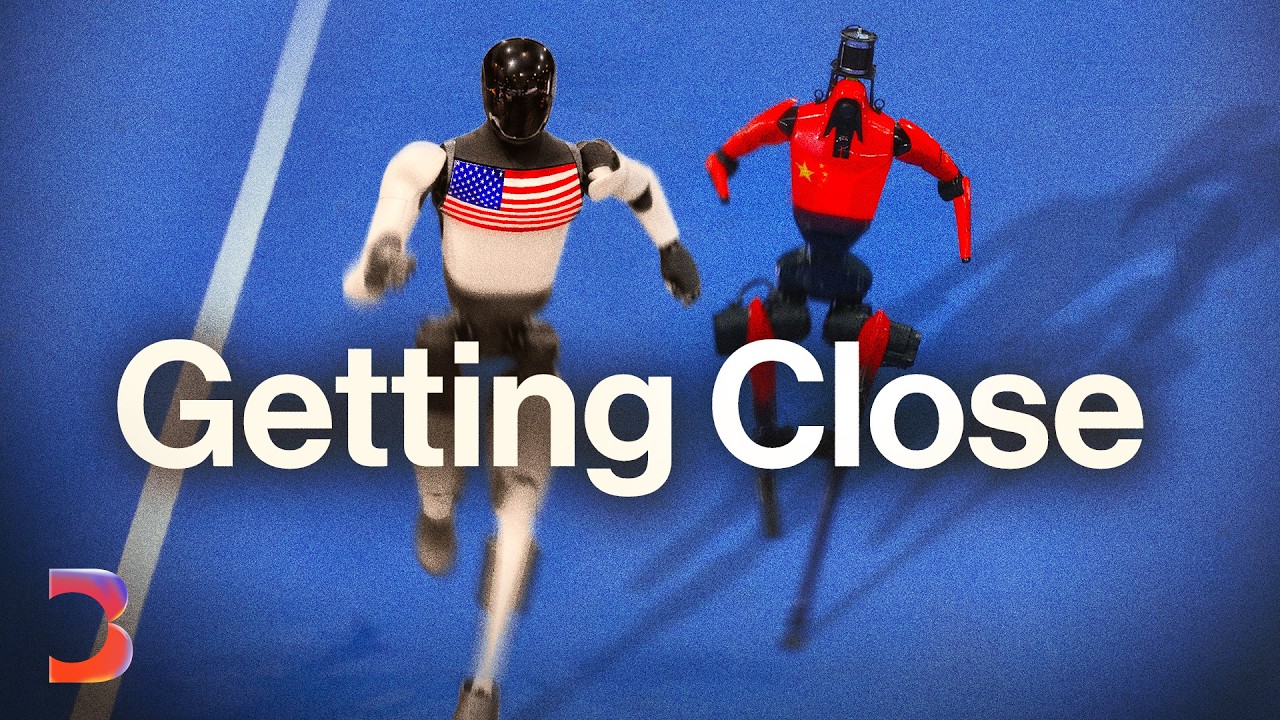
How China Plans to Win the Global AI Race — Bloomberg Originals

Bloomberg Originals

China's aggressive open-weight strategy is commoditizing artificial intelligence to capture global developer market share, threatening America's commercial lead regardless of Silicon Valley's frontier compute advantage.

AI-assisted summary of How China Plans to Win the Global AI Race — original source. Check the original for full context.

Source published:

Detailed notes

## Background Published on YouTube by Bloomberg Originals on September 18, 2026, this report examines how China's low-cost, open-weight artificial intelligence models are rapidly narrowing the gap with American industry leaders like OpenAI and Anthropic. According to the video description, global usage of Chinese models has surpassed US models on platforms like OpenRouter, drawing widespread adoption from global developers and Silicon Valley startups even as top American executives urge safety safeguards.

## TL;DR The video analyzes how Chinese AI labs like DeepSeek and Moonshot AI disrupted American technological dominance by offering high-performing frontier models at roughly a quarter of the cost of their US rivals. Adopting an open-weight 'Android playbook,' Chinese models have gained massive traction across the Global South, Europe, and even cost-conscious Silicon Valley startups escaping unsustainable API bills. While Washington responds with export controls and US labs fight back with major price reductions like OpenAI's GPT-5.6 Luna, America's frontier edge remains challenged by Beijing's drive to integrate AI across industrial manufacturing. Ultimately, intense geopolitical rivalry between the US and China makes any proposed pause or deceleration for AI safety politically unfeasible.

## Atmosphere & style The piece carries the polished, cinematic gravitas characteristic of Bloomberg investigative features, driven by crisp data visualizations and a fast-paced, analytical narrative. It grounds high-level geopolitical tension in visceral founder experiences, such as the looming threat of startup bankruptcy from six-figure monthly compute invoices. The overall mood is coolly pragmatic and intensely competitive, leaving viewers with the unsettling realization that geopolitical ambition has eclipsed safety cautions in the race for technological dominance.

## Key takeaways - [00:00](https://www.youtube.com/watch?v=eVUYCiRLgB4&t=0s) Political leaders in both Washington and Beijing reject calls for an AI safety slowdown, treating AI supremacy as an existential contest to dictate global standards and rulemaking. - [00:00](https://www.youtube.com/watch?v=eVUYCiRLgB4&t=0s) Global usage of Chinese artificial intelligence models surpassed American models for the first time in June, signaling a major turning point in global adoption. - [01:37](https://www.youtube.com/watch?v=eVUYCiRLgB4&t=97s) The release of DeepSeek in early 2025 shattered Western assumptions of an enduring US lead by matching frontier reasoning benchmarks at a fraction of the cost. - [02:46](https://www.youtube.com/watch?v=eVUYCiRLgB4&t=166s) Commercial AI competition is increasingly governed by practical cost-performance ratios rather than frontier capabilities alone, as businesses favor cheaper, competent alternatives. - [04:13](https://www.youtube.com/watch?v=eVUYCiRLgB4&t=253s) Developer traffic on platforms like OpenRouter shows Chinese model usage overtaking US models across key developer hubs, including Singapore, Germany, and the United States. - [04:13](https://www.youtube.com/watch?v=eVUYCiRLgB4&t=253s) Silicon Valley startups are increasingly reliant on inexpensive open Chinese models, using them to slash overwhelming inference bills by up to 90% to avoid bankruptcy. - [06:18](https://www.youtube.com/watch?v=eVUYCiRLgB4&t=378s) China is pursuing an open-weight 'Android playbook' that accelerates widespread developer adoption and customization, despite triggering destructive domestic price wars and monetization hurdles. - [07:28](https://www.youtube.com/watch?v=eVUYCiRLgB4&t=448s) Beijing uses low-cost AI strategically to expand geopolitical influence across the Global South and to offset domestic economic declines in real estate by modernizing manufacturing and robotics. - [08:57](https://www.youtube.com/watch?v=eVUYCiRLgB4&t=537s) Washington has pushed back with semiconductor export controls and accusations of model distillation, suspecting Chinese labs of scraping US frontier outputs to shortcut development. - [08:57](https://www.youtube.com/watch?v=eVUYCiRLgB4&t=537s) The United States preserves critical structural moats in advanced computing infrastructure, venture capital availability, and absolute frontier reasoning capabilities. - [08:57](https://www.youtube.com/watch?v=eVUYCiRLgB4&t=537s) American AI labs are responding directly to price competition, with releases like OpenAI's GPT-5.6 Luna cutting inference costs by 80% to undercut Chinese pricing. - [08:57](https://www.youtube.com/watch?v=eVUYCiRLgB4&t=537s) The winner of the AI race may ultimately be determined by broad industrial integration and economic productivity gains rather than simply who creates the most advanced model.

## Detailed walkthrough ### [00:00](https://www.youtube.com/watch?v=eVUYCiRLgB4&t=0s) The Existential Debate and the US-China Rivalry

The rapid evolution of artificial intelligence has sparked a profound debate over whether the technology poses an existential threat to humanity. Prominent leaders of frontier AI firms in the United States have sounded the alarm, warning that technological shifts of this magnitude can completely reshape societies and that humanity sits at an "extremely dangerous point," necessitating a deliberate slowdown in development. However, this cautious stance is far from universally accepted. President Donald Trump has pushed back forcefully against these safety concerns, dismissing them as a hoax and demanding that the United States charge ahead without hesitation. China has similarly rebuked Western warnings, characterizing calls from American tech leaders as mere "AI fearmongering."

```mermaid flowchart TD accTitle: Diverging Views on AI Safety and Geopolitics accDescr: Diagram showing the contrast between US tech leadership caution and the state-level drive by Washington and Beijing to dominate AI. subgraph IndustryLeaders["Safety Concerns"] A["US Frontier AI CEOs<br/>(Calls for slower pace & safeguards)"] end subgraph StateLeadership["Geopolitical Imperative"] B["President Trump<br/>(Dismisses risks, pushes US forward)"] C["Beijing Leadership<br/>(Labels caution 'fearmongering', promotes growth)"] end subgraph Outcome["Global Ambition"] D["Global Standards, Rulemaking & Market Influence"] end IndustryLeaders -->|"Tension with"| StateLeadership B --> D C --> D ```

Despite their differences, Washington and Beijing are fundamentally aligned on one core calculation: whoever wins AI wins the future. The geopolitical stakes make any pause unthinkable, as global leadership in AI translates directly into authority over technical standards, rulemaking, and international deployment. While the United States established the early lead following the release of ChatGPT in late 2022, China is pursuing a multilateral strategy aimed at turning AI into a central pillar of geopolitical influence. In a historic milestone in June, global usage of Chinese artificial intelligence models surpassed American models for the first time, signaling a seismic shift in global adoption.

[01:37](https://www.youtube.com/watch?v=eVUYCiRLgB4&t=97s) The Breakout of China's Ecosystem: From Lagging to DeepSeek

China's domestic AI landscape has become extraordinarily vibrant, mirroring the structure of Silicon Valley while moving with aggressive market urgency. Just as the United States relies on tech giants like Google and Meta alongside frontier startups like OpenAI and Anthropic, China matches them with established powerhouses Baidu, Alibaba, and Tencent, backed by a crop of ambitious startups including Moonshot AI, DeepSeek, Zhipu AI, and MiniMax. For years, Chinese firms developed models in the background without generating significant international excitement, cementing a consensus that Chinese AI lagged comfortably behind American benchmarks.

That perception shattered in early 2025 with the breakout release of DeepSeek. The startup stunned global tech markets by unveiling a highly sophisticated reasoning model that matched top Silicon Valley benchmarks while purportedly costing only a fraction to build. DeepSeek served as a stark wake-up call, proving that Chinese companies could deliver competitive frontier reasoning capabilities on shoestring budgets.

| Metric / Dimension | United States Ecosystem | China Ecosystem | |:--- |:--- |:--- | | **Established Tech Giants** | Google, Meta | Baidu, Alibaba, Tencent | | **Leading Startups** | OpenAI, Anthropic | DeepSeek, Moonshot AI, Zhipu AI, MiniMax | | **Model Philosophy** | Proprietary, high frontier capability | Low-cost, aggressive open-weight distribution | | **Turning Point** | ChatGPT launch (Late 2022) | DeepSeek reasoning breakthrough (Early 2025) |

[02:46](https://www.youtube.com/watch?v=eVUYCiRLgB4&t=166s) The Cost Equation and the Narrowing Capability Gap

The commercial battleground in AI has increasingly shifted toward pricing and practical utility. To illustrate this, consider a typical commercial use case: an entrepreneur opening a coffee shop who needs a polished, functional website. Generating that website with Anthropic's Claude costs roughly $50. In contrast, Moonshot AI's Kimi K3 can produce a comparable website for just $12—performing the identical job at roughly one-quarter of the cost. Because business users realize that "you don't need God to write your emails," purchasing decisions boil down to an equation balancing capability against pure expense.

```mermaid flowchart LR accTitle: Cost Comparison for Website Creation accDescr: Comparison showing the website generation cost of Anthropic Claude versus China's Kimi K3. subgraph US["Anthropic Claude"] A["Polished Website<br/>~$50"] end subgraph China["Moonshot Kimi K3"] B["Comparable Website<br/>~$12"] end A -.->|"4x more expensive"| B ```

At the same time, the raw performance gap between Chinese and American architectures is evaporating. When Moonshot AI unveiled its 2.8-trillion-parameter Kimi K3 model, it demonstrated reasoning and output competitive with the flagship offerings of OpenAI and Anthropic. While American frontier models had steadily advanced ever since 2022, Chinese architectures spent years catching up and closed the distance dramatically, forcing Western industry observers to reassess their technical lead.

[04:13](https://www.youtube.com/watch?v=eVUYCiRLgB4&t=253s) Overseas Adoption and the Silicon Valley Underground

The rise of high-performing, inexpensive Chinese models triggered rapid adoption across global developer platforms. Aggregators like OpenRouter, which allow software engineers to route tasks to diverse AI providers, reveal that markets like Singapore and Germany now consume more Chinese models than American ones. By 2026, developers inside the United States crossed that same threshold. While utilizing Chinese models in Silicon Valley was initially treated as a "hush-hush" practice kept out of public view, it quickly moved into the mainstream. When regulatory bans threatened access, hundreds of US startup founders publicly organized to defend their use, arguing that they depended on these cost-effective models to survive.

A prime example is Ben Sera, founder of the San Francisco startup Polsia, which builds autonomous AI agents for business workflows. When building the initial version of Polsia, Sera turned to Anthropic:

> "At the very beginning, Anthropic was the go-to model, and even though the models were really expensive, I was like, 'You know what? I need to give my customers the absolute best.'"

When Polsia went viral, the financial strain nearly crushed the company. API bills escalated rapidly from $10,000 and $20,000 a month to an unsustainable $1 million to $1.5 million per month. Faced with immediate bankruptcy, Sera pivoted his entire production backend to open Chinese models, slashing his monthly operating expenses roughly ten-fold to around $100,000.

- **OpenRouter Platform Metrics**: Chinese AI model consumption officially exceeded US model usage in Singapore, Germany, and the United States. - **Polsia Case Study**: Monthly inference bills collapsed from ~$1.5 million down to ~$100,000 (a 10x savings) after migrating from proprietary US models to open Chinese options.

[06:18](https://www.youtube.com/watch?v=eVUYCiRLgB4&t=378s) Open-Weight Models: The Android Playbook and the Monetization Dilemma

China's structural price advantage stems from cheaper domestic electricity and access to deep engineering talent at a fraction of Silicon Valley compensation, but its strategic core relies on open-weight releases. Under an open-weight paradigm, an AI model resembles a cake that a user can take home from the bakery: developers inspect the general recipe, modify ingredients, add custom sprinkles, fine-tune the architecture for niche applications, or even slice and redistribute it commercially. This strategy democratizes testing, marshals a massive global developer base to optimize the code, and accelerates technological catching up.

```mermaid flowchart TD accTitle: Open-Weight Architecture versus Closed Systems accDescr: Visual analogy contrasting closed proprietary models to open-weight models. subgraph ClosedModel["Closed Proprietary Model (iPhone Model)"] C1["Buy slice at bakery"] --> C2["Must consume on-site"] C2 --> C3["High margins, closed ecosystem"] end subgraph OpenWeight["Open-Weight Model (Android Playbook)"] O1["Take whole cake home"] --> O2["Customize, add sprinkles & inspect recipe"] O2 --> O3["Resell, distribute & rapid ecosystem adoption"] end ```

The trade-off is a relentless monetization struggle. Chinese providers have engaged in a destructive price war, slashing margins to undercut rivals in a domestic market where consumers show little appetite for paid AI subscriptions. Analysts liken the market dynamic to mobile computing: Anthropic and OpenAI operate like Apple's iPhone, capturing the lion's share of industry profits through high-margin proprietary software, whereas Chinese developers represent Google's Android, prioritizing widespread market saturation over immediate per-unit profitability.

[07:28](https://www.youtube.com/watch?v=eVUYCiRLgB4&t=448s) Beijing's Macro Strategy: Global South and Domestic Rebalancing

The open, low-cost model aligns perfectly with Beijing's broader economic and geopolitical blueprint. Internationally, affordable open-weight AI provides China with a powerful wedge into the developing world, offering governments across the Global South an accessible alternative to American big tech at a time of rising tariffs and geopolitical sanctions.

Domestically, AI represents a vital structural hedge. As real estate and property investments—historical engines of Chinese economic expansion—continue a secular decline that began around 2018, the Chinese state has redirected massive resources into high-tech manufacturing, green technologies, and robotics. Integrating cheap, accessible AI directly into humanoid robotics and manufacturing lines is designed to automate industrial output, uplift productivity, and sustain long-term economic momentum.

[08:57](https://www.youtube.com/watch?v=eVUYCiRLgB4&t=537s) Washington's Pushback and America's Enduring Frontier Edge

China's advancements have provoked serious alarm across Washington. Although US export controls restricting access to advanced semiconductors and fabrication equipment have undeniably hindered Chinese compute scaling, American officials frequently suspect Chinese firms of acquiring high-end hardware through backdoor channels. Washington has weighed formal bans on Chinese open-source models while accusing Chinese organizations of "distillation"—effectively scraping and copying the outputs of elite US frontier models to shortcut development cycles.

```mermaid flowchart LR accTitle: US Advantages and Frontier Counter-Offensive accDescr: Map showing US advantages alongside OpenAI's cost-competitive model release. subgraph USStrengths["Structural US Moats"] U1["Frontier Benchmark Performance"] U2["Vast Compute & Semiconductor Reserves"] U3["Abundant Venture & Capital Reserves"] end subgraph CounterOffensive["Commercial Response"] U4["OpenAI GPT-5.6 Luna"] U4 -->|"80% price reduction"| U5["~$4 Website Generation"] end USStrengths -.-> CounterOffensive ```

Nevertheless, the United States preserves distinct structural moats: - **Compute and Capital Superiority**: American tech firms command vastly superior computing clusters, native access to next-generation hardware, and valuations that dwarf their Chinese competitors, who operate under severe capital constraints. - **Frontier Performance**: For the absolute smartest, largest, and most demanding reasoning tasks, US frontier models remain the global benchmark. - **Price Counter-Offensive**: American labs are fighting back aggressively on cost. In July, OpenAI launched GPT-5.6 Luna, cutting inference prices by 80%. In the website generation test, Luna produced a complete site for just over $4—undercutting China's Kimi K3 and prompting developers like Ben Sera to begin adopting American offerings once again.

Ultimately, the global AI race may hinge less on who builds the most capable super-intelligence and more on which country integrates practical AI across its wider industrial base to unlock lasting productivity gains.

[11:28](https://www.youtube.com/watch?v=eVUYCiRLgB4&t=688s) Geopolitical Pressures and the Reluctance to Slow Down

Despite growing calls from prominent tech executives arguing that the industry "must slow down the pace" of artificial intelligence development to address safety risks, a deceleration remains practically impossible on the world stage. Neither the political leadership in the United States nor in China actually wants development to pause or lose momentum, as neither superpower is willing to risk falling behind or conceding technological dominance to the other in an escalating global race.

## Notable quotes > [00:00](https://www.youtube.com/watch?v=eVUYCiRLgB4&t=0s) humanity sits at an 'extremely dangerous point,' necessitating a deliberate slowdown in development — US frontier AI leaders

> [00:00](https://www.youtube.com/watch?v=eVUYCiRLgB4&t=0s) AI fearmongering — Beijing leadership

> [00:00](https://www.youtube.com/watch?v=eVUYCiRLgB4&t=0s) whoever wins AI wins the future

> [02:46](https://www.youtube.com/watch?v=eVUYCiRLgB4&t=166s) you don't need God to write your emails

> [04:13](https://www.youtube.com/watch?v=eVUYCiRLgB4&t=253s) hush-hush

> [04:13](https://www.youtube.com/watch?v=eVUYCiRLgB4&t=253s) At the very beginning, Anthropic was the go-to model, and even though the models were really expensive, I was like, 'You know what? I need to give my customers the absolute best.' — Ben Sera

> [08:57](https://www.youtube.com/watch?v=eVUYCiRLgB4&t=537s) distillation — Washington officials

> [11:28](https://www.youtube.com/watch?v=eVUYCiRLgB4&t=688s) must slow down the pace — Tech executives

## Mentioned Alibaba, Android, Anthropic, Apple, Baidu, Ben Sera, Bloomberg Originals, Claude, Dario Amodei, DeepSeek, Donald Trump, Google, GPT-5.6 Luna, Kimi K3, Meta, MiniMax, Moonshot AI, OpenAI, OpenRouter, Polsia, Sam Altman, Silicon Valley, Tencent, Zhipu AI

## Video description China’s low-cost, open-weight artificial intelligence models are rapidly gaining ground on US rivals such as OpenAI and Anthropic. In June, global usage of Chinese AI models surpassed US models for the first time, according to OpenRouter data.

From DeepSeek to Kimi K3, Chinese AI companies are attracting users around the world, including in Silicon Valley, where hundreds of startup founders urged the Trump administration not to restrict access to Chinese AI models.

The shift comes as concerns grow over the risks of advanced AI, with company CEOs including Dario Amodei of Anthropic and Sam Altman of OpenAI calling for stronger safeguards and slower development.

Explore these and other related stories in more depth on Bloomberg.com:

US Lead in the AI Race With China Is Rapidly Narrowing: https://www.bloomberg.com/graphics/2026-us-china-ai-race/?srnd=homepage-asia

00:00 Intro 01:35 China’s AI ecosystem 02:46 Cost comparison 03:36 Rising performance of Chinese AI 04:13 Global adoption of Chinese AI 06:18 Open-weight models 07:28 Beijing’s AI strategy 08:57 Backlash from Washington 09:38 US lead

#AI #China #US #OpenAI #Anthropic #Deepseek #Moonshot

-------- Like this video? Subscribe: http://www.youtube.com/Bloomberg?sub_confirmation=1

Get unlimited access to Bloomberg.com for just $1.99 your first month: https://www.bloomberg.com/subscriptions?in_source=YoutubeOriginals Bloomberg Originals offers bold takes for curious minds on today’s biggest topics. Hosted by experts covering stories you haven’t seen and viewpoints you haven’t heard, you’ll discover cinematic, data-led shows that investigate the intersection of business and culture. Exploring every angle of climate change, technology, finance, sports and beyond, Bloomberg Originals is business as you’ve never seen it.

Subscribe for business news, but not as you've known it: exclusive interviews, fascinating profiles, data-driven analysis, and the latest in tech innovation from around the world.

Visit our partner channel Bloomberg News for global news and insight in an instant.

[Source](https://www.youtube.com/watch?v=eVUYCiRLgB4)

中文简报

硅谷因高昂成本转向,中国AI模型反超美国对手 中国激进的开放权重策略正将人工智能商品化以争夺全球开发者市场份额,尽管硅谷拥有前沿算力优势,这仍在威胁美国的商业领先地位。 该视频分析了DeepSeek和Moonshot AI等中国AI实验室如何通过提供成本仅约为美国竞品四分之一的高性能前沿模型,打破了美国的技术主导地位。借助开放权重的“安卓模式”,中国模型在全球南方、欧洲乃至因难以承受高昂API账单而注重成本的硅谷初创企业中赢得了广泛青睐。尽管华盛顿通过出口管制予以应对,美国实验室也以大幅降价(如OpenAI的GPT-5.6 Luna)进行反击,但随着北京大力推动将AI融入工业制造,美国的前沿优势依然面临严峻挑战。归根结底,中美之间激烈的地缘政治竞争使得任何出于AI安全而提出的暂停或放缓设想在政治上都变得不可行。 6月全球对中国AI模型的使用量首次超越美国模型,DeepSeek与Kimi等低成本高性能模型打破了西方对AI长期领先优势的固有认知。 (0:00) AI商业竞争正由纯算力向性价比转移,OpenRouter平台显示中国模型在美、德、新等国使用量反超美国,部分硅谷初创公司借其降低高达90%的推理账单以规避破产。 (4:13) 中国正实施权重开源的“安卓策略”推动全球技术渗透,不仅借低成本AI扩大在“全球南方”的地缘影响力,也以此赋能制造业与机器人产业以对冲房地产下行压力。 (7:28) 面对中国开源生态的冲击,美国正依托顶尖算力优势与OpenAI降价展开反击;出于争夺全球规则制定权的战略考量,中美两国政界均无意放缓AI研发步伐。 (8:57)

Reading summary

China is challenging American dominance in artificial intelligence through low-cost, open-weight architectures that trade high software margins for rapid ecosystem adoption, transforming the contest into a battle of industrial deployment. While Washington and Beijing both reject safety-driven calls to slow development, the race balances China's pricing advantages against the United States' commanding lead in computing infrastructure and frontier model capability. Geopolitical Imperatives Overriding AI Safety Concerns (0:00) While prominent leaders of US frontier artificial intelligence labs have warned that unchecked advances present existential risks warranting a deliberate pause, political leadership in both the United States and China has dismissed these calls. Former President Donald Trump described safety anxieties as a hoax, while Beijing characterized Western concerns as fearmongering. Both powers view leadership in artificial intelligence as vital to setting global standards, controlling international rulemaking, and securing commercial influence. This strategic dynamic makes any deceleration politically impossible. Although the United States established an early lead after the launch of ChatGPT in late 2022, global usage of Chinese models surpassed American models for the first time in June, highlighting China's rapid international expansion. The Open-Weight Strategy and Shrinking Cost Disparities (1:37) China's artificial intelligence ecosystem—anchored by established firms Baidu, Alibaba, and Tencent alongside startups such as DeepSeek, Moonshot AI, Zhipu AI, and MiniMax—shattered assumptions of falling behind in early 2025. DeepSeek demonstrated a frontier reasoning model that matched Silicon Valley benchmarks at a fraction of reported production expenses, followed by Moonshot AI's 2.8-trillion-parameter Kimi K3 model. Commercial competition subsequently moved toward unit pricing: while generating a functional business website via Anthropic's Claude cost approximately $50, Moonshot's Kimi K3 performed the identical task for $12. To drive adoption, Chinese firms embraced an open-weight model analogous to Google's Android, contrasted against the closed, high-margin software approach of Apple pursued by OpenAI and Anthropic. Distributing open weights allows developers globally to modify, test, and host models independently. However, this strategy has exacerbated a severe domestic price war among Chinese firms, who struggle to monetize users in an environment unaccustomed to recurring subscription fees. Global Proliferation and Developer Uptake in Silicon Valley (4:13) Low inference pricing has driven rapid overseas adoption of Chinese models on routing aggregators like OpenRouter, where usage surpassed US models in Singapore, Germany, and by 2026, within the United States itself. Although initially used discreetly by Silicon Valley developers, dependence on inexpensive Chinese models quickly became explicit; hundreds of US founders publicly organized against proposed regulatory bans, arguing that cost-effective foreign models were critical to their survival. This economic pressure is illustrated by San Francisco startup Polsia, an automated workflow developer founded by Ben Sera. Polsia originally relied exclusively on Anthropic, but viral growth rapidly drove monthly inference expenses from $20,000 to an unsustainable $1 million to $1.5 million. Facing imminent insolvency, the company migrated its backend to open Chinese models, reducing operating expenses tenfold to roughly $100,000 per month. Macro Realignment and the American Counter-Offensive (7:28) For Beijing, affordable open-weight artificial intelligence operates as a foreign policy bridge to the Global South, offering an alternative to American technology amidst tightening trade controls. Domestically, it serves as an economic hedge: as China's property sector continues a decline that began around 2018, central planners are directing resources toward integrating cheap AI directly into robotics and high-tech manufacturing to lift industrial productivity. Washington has pushed back with export restrictions on advanced semiconductors and allegations that Chinese labs shortcut development by distilling outputs from premier US models. Nevertheless, American tech giants retain substantial moats, including superior computing clusters, vast capital reserves, and the lead in frontier reasoning. American firms have also responded aggressively on price: OpenAI launched GPT-5.6 Luna with an 80% price cut, reducing the website generation test to roughly $4 and clawing back cost-sensitive developers. The long-term outcome of the artificial intelligence race may depend less on building an absolute frontier super-intelligence than on how effectively each nation diffuses affordable AI across its industrial and commercial base. Despite warnings from industry executives urging caution, neither superpower shows any willingness to moderate its development pace while geopolitical supremacy remains at stake.

精炼阅读摘要

根据彭博原创(Bloomberg Originals)的报道,尽管围绕人工智能的生存安全风险争议不断,美中两国均将夺取AI霸权视为掌控未来规则与国际秩序的核心;中国正通过极具成本效益的开放权重(open-weight)模型与深度的全球开发者渗透,对美国的先发优势构成实质性挑战。 地缘政治意志压倒安全降速诉求 (0:00) 美国前沿AI企业的领袖曾发出警告,称人工智能的颠覆性变革正将人类推向“极度危险的节点”,主张放缓开发节奏并增设安全护栏。然而,这一主张遭到政界强烈反弹:唐纳德·特朗普总统将此类安全担忧斥为“骗局”,敦促美国全力加速;中国方面同样回绝了西方的预警,将美国科技高管的呼吁定性为“AI散播恐慌”。华盛顿与北京在核心逻辑上达成了一致,即赢得AI竞争即意味着掌控全球技术标准制定权与国际部署话语权,在地缘战略博弈面前,降速已无可能。 尽管美国自2022年底发布ChatGPT以来率先确立了主导地位,但中国正通过多边策略将AI转化为地缘政治影响力的支柱。相关数据显示,当年6月全球对中国AI模型的使用量首次超越了美国模型,标志着全球技术采纳格局正在经历结构性转移。 极致性价比打破技术落后认知 (1:37) 长期以来,由百度、阿里巴巴、腾讯以及月之暗面(Moonshot AI)、DeepSeek、智谱AI、MiniMax等初创企业构成的中国AI生态,普遍被西方认为大幅落后于美国前沿基准。然而,DeepSeek在2025年初的技术突破彻底颠覆了这一共识。该初创企业以极低的公开预算,打造出性能比肩硅谷顶尖水平的高级推理模型,证明了中国团队在严苛资本限制下依然具备突破前沿技术的能力。 随着底层技术性能差距的迅速收敛,商业竞争的重心全面转向推理成本与实际效用。以开发咖啡馆网站这一典型商业场景为例,调用Anthropic的Claude模型生成网站的花费约为50美元,而使用Moonshot AI推出的2.8万亿参数Kimi K3模型仅需约12美元,成本削减近四分之三且交付质量基本一致。商业用户意识到日常业务无需为昂贵模型支付溢价,促使决策权重从单纯追求前沿能力转向精细的成本收益核算。 开源权重生态与全球开发者渗透 (4:13) 在商业模式上,分析人士将中美竞争格局比作移动生态中的“Android与iPhone之争”。Anthropic与OpenAI依托封闭的高利润专有模型获取行业超额利润;中国企业则依靠开放权重(open-weight)模式,允许全球工程师自由检验、修改架构并进行商业分发。尽管该模式在中国国内引发了破坏性的价格战且面临订阅变现难题,但它成功聚集了全球开发者力量优化生态,迅速实现了市场占领。 在模型聚合平台OpenRouter上,新加坡、德国以及美国本土开发者的中国模型调用量已相继超越美国模型。旧金山工作流智能体初创公司Polsia的经历极具代表性:创始人Ben Sera最初选用Anthropic以保证品质,但随着业务爆发,月度API调用开销从两万美元激增至100万至150万美元,将公司推向破产边缘;随后Sera将核心业务切换至开源中国模型,将月度支出骤降十倍至约10万美元。这种生死存亡的成本现实,促使数百名美国初创创始人公开抗议针对中国开源模型的潜在监管禁令。 宏观产业整合与美国前沿反击 (7:28) 中国的AI战略与其宏观经济转型高度互补。对外,低成本开源模型为“全球南方”(Global South)国家提供了摆脱西方科技巨头垄断的平价方案;对内,面对2018年左右开始出现的房地产与不动产投资长期下行,中国政府将大量资本引向高端制造、绿色科技和人形机器人领域,试图通过将低成本AI全面嵌入实体工业来提升生产率,构筑长期增长对冲。 面对中国的技术渗透,华盛顿在强化芯片制造设备出口管制的同时,指控中国机构通过非正规渠道获取算力,并利用“模型蒸馏”(distillation)抓取美国模型输出来缩短研发周期。然而,美国依然保有强大的结构性壁垒:本土科技企业掌握压倒性的计算集群储备与风险资本,且在最严苛的极限推理任务上仍居全球统治地位。此外,美国实验室已展开价格反击,OpenAI在7月发布的GPT-5.6 Luna将推理价格大幅下调80%,使网站生成成本降至4美元出头,再度反超了中国竞争对手的价格优势。 彭博原创的分析总结指出,在大国博弈的驱动下,美中双方都不可能单方面放慢AI开发节奏。这场全球竞赛的最终胜负,可能并不单纯取决于谁能最先研制出极高水平的超级智能,而是取决于哪一方能将实用、经济的AI更彻底地融入实体工业体系,以实现全要素生产率的长期跃升。

Detailed notes — zh

## Background 该视频由彭博原创(Bloomberg Originals)于 2026 年 9 月 18 日发布在 YouTube 平台。视频简介指出,中国低成本、开放权重的 AI 模型正在迅速逼近 OpenAI 和 Anthropic 等美国竞争对手,并在全球使用量上首次实现反超;在部分行业领袖呼吁放缓研发保障安全的同时,全球用户与硅谷初创团队正因极致性价比广泛采纳中国模型,促使中美 AI 竞赛全面白热化。 ## TL;DR 本片深入探讨了中美人工智能博弈中技术路径与商业模式的激烈碰撞。以 DeepSeek 和月之暗面 Kimi K3 为代表的中国开放权重模型,凭借工程优化和极致性价比大幅填平了与硅谷前沿模型的技术鸿沟,甚至引发硅谷初创企业为削减巨额开销而联合抵制美国官方的封杀禁令。面对低成本生态的扩张,北京正将 AI 深度融入实体制造与经济转型,而华盛顿与 OpenAI 等巨头则通过出口管制与推行高性价比模型(如 GPT-5.6 Luna)展开防守反击。尽管部分科技领袖出于对人类生存威胁的担忧呼吁放慢脚步,但地缘政治竞争的残酷现实仍在强推两国全速冲刺。 ## Atmosphere & style 全片充斥着冷静、紧迫且充满地缘政治张力的现代商业纪实风格,以宏大视野与微观商业案例的穿插交织推进。从硅谷高管对“生存危机”的形而上学警示,急转直下到创业团队面对百万美元 API 账单的破产边缘,叙事形成了强烈的现实讽刺与戏剧张力。整部影片在快节奏的数据图表、产业调研与高管访谈中步步紧逼,带给观众一种身处“技术冷战”最前沿的冷峻感与深层焦虑。 ## Bulletin - [00:00](https://www.youtube.com/watch?v=eVUYCiRLgB4&t=0s) OpenRouter 平台数据显示,2026年6月中国 AI 模型的全球使用量首次超越美国模型,标志着全球 AI 竞争步入历史性转折点。 - [04:13](https://www.youtube.com/watch?v=eVUYCiRLgB4&t=253s) 极致性价比正在引发硅谷开发者的反向采纳潮,通过改用中国开源权重模型,初创企业可将高昂的 API 调用账单削减达 90%(如 Polsia 每月支出从 150 万美元骤降至 10 万美元)。 - [06:18](https://www.youtube.com/watch?v=eVUYCiRLgB4&t=378s) 中国 AI 凭借低廉电价、工程师红利与开源权重策略快速扩张,形成类似 Android 对阵 iPhone 的普惠市场格局,但也深陷旷日持久的价格战与变现难困境。 - [08:57](https://www.youtube.com/watch?v=eVUYCiRLgB4&t=537s) 面对中国低价模型的冲击,OpenAI 推出史上最具成本效益的 GPT-5.6 Luna 展开防守反击,将同类任务建站成本压缩 80% 至刚过 4 美元,力图夺回性价比优势。 ## Key takeaways - [00:00](https://www.youtube.com/watch?v=eVUYCiRLgB4&t=0s) 中美两国决策层与行业技术领袖在研发节奏上呈现重大分歧:尽管 OpenAI 与 Anthropic 高管因风险呼吁放缓 AI 步伐,但中美政府均坚决主张加速推进这场零和博弈。 - [00:00](https://www.youtube.com/watch?v=eVUYCiRLgB4&t=0s) 2026年6月,中国 AI 模型的全球使用量在聚合平台上首次超过美国模型,打破了美国长期以来在国际大模型生态中的绝对垄断地位。 - [01:35](https://www.youtube.com/watch?v=eVUYCiRLgB4&t=95s) DeepSeek 推理模型在 2025 年初的突围打破了外界对中国 AI 处于技术落后的刻板印象,以极低成本展现出媲美硅谷顶尖产品的复杂推理能力。 - [02:46](https://www.youtube.com/watch?v=eVUYCiRLgB4&t=166s) “写邮件不需要上帝”生动揭示了实际商业落地的法则:绝大多数现实业务并不需要昂贵的顶级旗舰模型,中国模型以四分之一甚至更低的成本达到了商业可用门槛。 - [03:36](https://www.youtube.com/watch?v=eVUYCiRLgB4&t=216s) 中国模型底层技术能力与美国的差距正在急剧收窄,例如月之暗面推出的 2.8 万亿参数 Kimi K3 已具备直接正面对决顶尖美国闭源旗舰的综合性能。 - [04:13](https://www.youtube.com/watch?v=eVUYCiRLgB4&t=253s) 硅谷企业对中国模型的使用已从心照不宣的“地下偷用”演进为百家初创企业联名抗议政府禁令,极致性价比使其成为许多初创公司维系生存的刚需底座。 - [06:18](https://www.youtube.com/watch?v=eVUYCiRLgB4&t=378s) 开源权重(Open-weight)如同“打包蛋糕并提供配方”,极大地汇聚了全球开发者智慧,但也导致国内厂商陷入缺乏稳定盈利模式的价格血战。 - [06:18](https://www.youtube.com/watch?v=eVUYCiRLgB4&t=378s) 全球大模型市场呈现出鲜明的分化态势:美系闭源前沿模型类似攫取丰厚利润的 iPhone,而中系平价开源生态则像薄利多销、席卷广大份额的 Android。 - [07:28](https://www.youtube.com/watch?v=eVUYCiRLgB4&t=448s) 北京的顶层战略是将平价 AI 深度融入实体制造与人形机器人产业,使 AI 成为接替房地产下滑、拉动宏观 GDP 的全新增长引擎。 - [07:28](https://www.youtube.com/watch?v=eVUYCiRLgB4&t=448s) 在西方高昂模型定价与贸易关税壁垒之下,中国大模型在迫切需要自主技术且对价格高度敏感的发展中国家市场中迅速扎根。 - [08:57](https://www.youtube.com/watch?v=eVUYCiRLgB4&t=537s) 美国依然牢牢掌握顶级前沿旗舰智力、先进制程芯片与超大规模算力集群储备,以及充足的风险资本等不可替代的核心壁垒。 - [08:57](https://www.youtube.com/watch?v=eVUYCiRLgB4&t=537s) 面对中国平价模型的蚕食,OpenAI 发布的 GPT-5.6 Luna 将建站成本降至 4 美元左右,正式拉开美国巨头在性价比维度的全面反击战。 - [11:28](https://www.youtube.com/watch?v=eVUYCiRLgB4&t=688s) 地缘战略竞争的紧迫性直接压过了对 AI 安全减速的呼吁,中美双方均将 AI 视作决定未来经济与安全命脉的制高点,没有任何一方愿意率先放慢脚步。 ## Detailed walkthrough ### [00:00](https://www.youtube.com/watch?v=eVUYCiRLgB4&t=0s) 地缘博弈与发展分歧:AI 究竟是生存威胁还是必争高地? 人工智能是否已对人类构成实质威胁?这一疑问正萦绕在许多人的心头。包括 OpenAI 首席执行官 Sam Altman 和 Anthropic 首席执行官 Dario Amodei 在内的美国顶尖 AI 领袖纷纷发出警示,呼吁放缓技术研发步伐。他们警告称,面对这种规模足以彻底重塑社会结构的技术剧变,人类正处于一个“极其危险的节点”。然而,政治层面的态度却截然不同。美国总统特朗普对这些安全隐患嗤之以鼻,直斥其为一场“骗局”,并坚决主张美国必须全力冲刺;与此同时,中国方面也批评美国科技界高管的表态是“AI 制造恐慌”。 表面上看,华盛顿与北京在对抗“AI 减速论”上展现了罕见的默契,但背后的驱动力却是残酷的零和博弈:双方都在争夺这一将重新定义未来世界的战略制高点。正如片中所言,“谁赢得了 AI,谁就赢得了未来”。美国虽然在起跑阶段占据先机,但局势正发生剧烈逆转。在关乎人类存亡的安全争论背景下,现实中的国家竞争从未停歇,尤其是中国正全力以赴,力图通过确立自身在 AI 领域的全球领先地位,在国际标准制定、规则构建以及技术使用规范上争取更多主导权与话语权,并倡导以多边主义框架推进技术落地。 - 行业共识分歧:顶尖模型开发者主张加强安全防范并放慢开发节奏,但中美两国政府均倾向加速推进。 - 历史性拐点:根据平台统计,2026年6月,中国 AI 模型的全球使用量首次超越美国模型。 --- ### [01:35](https://www.youtube.com/watch?v=eVUYCiRLgB4&t=95s) 中国 AI 生态的爆发:从追赶者到撼动全球的生力军 中国的 AI 生态系统展现出了极高的活力与繁荣度。放眼整个中国科技界,几乎所有叫得出名字的科技巨头都在训练或已经推出了自己的专属模型:美国有 Google 和 Meta,中国则有百度、阿里巴巴和腾讯等并驾齐驱;美国有 OpenAI 和 Anthropic 等明星初创公司,中国同样涌现出月之暗面(Moonshot AI)、深度求索(DeepSeek)、智谱 AI(Zhipu)以及 MiniMax 等一批极具进攻性的创业新贵。这些创新力量以极具侵略性的市场策略和突破性的工程创新,迅速改变着全球竞争格局。 长期以来,中国科技企业虽深耕 AI 多年,却始终难以在国际舞台掀起波澜,外界普遍认为中国的技术水平明显落后于美国。然而,这种固有认知在2025年初被彻底打破。初创企业 DeepSeek 推出的推理模型在全球科技界与资本市场掀起惊涛骇浪,不仅重创了全球科技股,更被视为对硅谷的一记当头棒喝。该模型不仅具备与硅谷顶级产品匹敌的高级推理能力,更关键的是,其宣称的研发与运行成本低到令人难以置信,直接将全球竞争拉入了成本与效率的新维度。 ```mermaid flowchart TD accTitle: 中美AI生态阵营对比 accDescr: 对比中美两国的科技巨头与代表性AI初创企业布局 subgraph US["美国 AI 阵营"] US_Big["科技巨头: Google / Meta"] US_Startups["先锋初创: OpenAI / Anthropic"] end subgraph China["中国 AI 阵营"] CN_Big["科技巨头: 百度 / 阿里巴巴 / 腾讯"] CN_Startups["新锐力量: DeepSeek / Moonshot / 智谱 / MiniMax"] end US -->|高昂算力研发 & 闭源前沿| Market["全球 AI 市场"] China -->|低成本工程优化 & 开源权重| Market ``` --- ### [02:46](https://www.youtube.com/watch?v=eVUYCiRLgB4&t=166s) 极致性价比对决:“写邮件不需要上帝” 在当下的大模型竞争中,服务调用价格已成为决定商业落地的最关键因素,而中国模型展现出了极具杀伤力的性价比优势。片中用一个生动的商业场景进行了直观对比:假设你开了一家心仪已久的咖啡馆,需要搭建一个配套网站,于是借助 AI 生成代码与页面。如果采用 Anthropic 的前沿模型 Claude 3.5 Sonnet,生成一个功能完备、制作精良的网站大约需要花费50美元;但如果换成中国月之暗面的 Kimi K3 模型,完成几乎完全相同品质的工作,账单仅仅只要12美元。 完成同一项任务,中国模型的成本只有美国模型的四分之一。彭博社在报道中引用了一句极具代表性的话:“你并不需要上帝来帮你写电子邮件”。现实中的绝大多数商业需求,最终比拼的都是在能力与成本之间的精打细算。中国模型在满足商业可用门槛的同时,将边际成本压缩到了极致,从而在全球开发者和中小企业中形成了巨大的吸引力。 | 对比维度 | 美国模型(以 Anthropic Claude 3.5 Sonnet 为例) | 中国模型(以月之暗面 Kimi K3 为例) | |:--- |:--- |:--- | | **典型任务** | 咖啡馆官方网站全套生成 | 咖啡馆官方网站全套生成 | | **单次任务花费** | 约 50 美元 | 约 12 美元 | | **相对成本** | 基准高位(100%) | 仅约四分之一(24%) | | **核心定位** | 顶尖闭源前沿旗舰 | 极致性价比的高性能替代 | --- ### [03:36](https://www.youtube.com/watch?v=eVUYCiRLgB4&t=216s) 性能差距急剧收窄:万亿参数背后的追赶曲线 除了令人侧目的低价,中国 AI 模型的底层技术能力也在以惊人的速度迫近世界顶尖水平。月之暗面推出的 Kimi K3 拥有高达2.8万亿的参数量,其官方宣称已具备与 OpenAI 和 Anthropic 顶级产品正面对决的实力。这一技术成果让整个行业清醒地认识到:中美顶级模型之间的代际差距非但没有拉大,反而正在以前所未有的速度收窄。 回顾历史轨迹,ChatGPT 在2022年底引爆全球,随后美国前沿模型一路高歌猛进,而中国模型在此后数年间一直处于亦步亦趋的追赶状态。然而步入2026年,二者在核心基准测试和复杂推理任务上的技术鸿沟已被大幅填平。随着技术性能逼近临界点,中国大模型在海外市场的实际采纳率和市场份额随之迎来了井喷式增长。 --- ### [04:13](https://www.youtube.com/watch?v=eVUYCiRLgB4&t=253s) 硅谷的反向采纳:从“地下偷用”到百家初创企业抗议禁令 中国模型性能与价格的双重吸引力,直接引发了海外落地的大爆发。多模型聚合路由平台 OpenRouter 的实际调用数据显示,不仅在新加坡和德国等国家,中国 AI 模型的使用量超过了美国模型;甚至到了2026年,连美国本土开发者调用中国模型的频率也一度反超了本土产品。这种现象在硅谷尤为明显:企业在处理客服坐席、工作流路由等大量日常任务时,根本不需要过度消耗昂贵的前沿算力,中国模型成为了务实的首选。 曾几何时,在硅谷使用中国模型是一件大家心照不宣、私下秘密进行的“地下行为”(hush-hush),而如今这种羞怯感已经荡然无存。当华盛顿传出可能出台禁令限制中国模型的风声时,数百家美国初创企业创始人甚至公开发起联合抵制,极力敦促特朗普政府不要切断访问权限。创业者们直言不讳:“我们离不开它们,我们一直在用,因为它们实在便宜太多了。” 旧金山初创公司 Polsia 的创始人 Ben Sera 就是这场大迁徙的典型代表。他的平台利用 AI Agent 为企业实现全自动化工作流。创业初期,为了给客户提供“绝对顶尖的体验”,他毫不犹豫地全盘接入了昂贵的 Anthropic 模型。但随着产品在网络上爆火走红,API 账单彻底失控:从起初的每月1万、2万美元,一路狂飙至每月100万甚至150万美元。直面破产绝境的 Ben Sera 转向了社区热议的中国开源模型,切换之后,其每月的模型调用支出瞬间降至10万美元左右,整整削减了90%(10倍的成本降幅),成功从财务悬崖边拯救了公司。 - 成本断崖实例:Polsia 创始人每月 API 账单从最高 150 万美元骤降至 10 万美元,成本锐减 10 倍。 - 市场态度反转:硅谷团队从最初对使用中国模型讳莫如深,转变为数百家初创公司联名反对政府的封杀动议。 --- ### [06:18](https://www.youtube.com/watch?v=eVUYCiRLgB4&t=378s) 开放权重的双刃剑:蛋糕比喻、Android 式生态与变现困境 中国 AI 为何能做到如此便宜?原因之一在于中国拥有更低廉的工业电价,以及规模庞大、薪酬仅为硅谷顶尖工程人员一小部分的高素质工程师红利。但更为核心的技术驱动力在于其商业模式的选择——开放权重(Open-weight)。片中用一个生动的“切蛋糕”比喻拆解了这一机制:闭源模型就像去高档咖啡馆买现成的蛋糕切片,你只能在店里吃,不能打包带走;而开放权重模型则不仅允许你把蛋糕打包回家,还会提供基础制作配方,你可以在上面随心所欲地添加糖霜点缀,甚至能二次切片后拿出去转手售卖。 开放权重机制汇聚了全球数以万计开发者的智慧,极大地加速了技术迭代并缩小了与前沿模型的差距。但硬币的另一面是严峻的商业化阵痛:业内至今无人摸索出稳定盈利的模式。一年多来,中国模型厂商深陷旷日持久的价格血战,彼此不断压价恶性竞争,加之国内终端消费者对 AI 软件付费意愿极其薄弱,变现前景扑朔迷离。整个产业格局呈现出鲜明的对比:OpenAI 和 Anthropic 犹如精雕细琢、攫取行业绝大部分利润的“iPhone”,而中国模型阵营则更像是薄利多销、席卷庞大市场份额的“Android”。 --- ### [07:28](https://www.youtube.com/watch?v=eVUYCiRLgB4&t=448s) 北京的顶层战略:发展中国家大市场与经济转型的新引擎 这种看似赔本的低价铺量,却极其契合中国官方对宏观经济的战略构想。中国政府希望技术成本足够低廉,从而能够在整个实体经济中被迅速普及和吸收。在海外,发展中国家成为了极为关键的战略舞台。当西方大厂定价高昂、且伴随贸易战和关税壁垒时,许多国家渴望获得更多元的自主选项,中国的平价技术方案得以迅速深入这些市场并实现广泛扎根。 在内需方面,AI 更是被赋予了拉动中国经济增长的关键使命。随着2018年以来传统增长支柱——房地产行业的逐步走弱,高新技术与绿色产业稳步上升,中国正全力将 AI 打造为拉动 GDP 的核心新引擎。官方大力扶持 AI 与实体制造的交叉融合,例如将先进具身大模型深度部署到本土的人形机器人中。高科技产业与传统地产行业之间的发展剪刀差正持续拉大,AI 正深度渗透进工业制造的血脉之中。 --- ### [08:57](https://www.youtube.com/watch?v=eVUYCiRLgB4&t=537s) 华盛顿的制裁反制与美国的防守反击:GPT-5.6 Luna 与未来赛局 中国 AI 的迅猛势头令华盛顿坐立不安。美国对先进先进制程芯片及半导体制造设备的严苛出口管制,确实在客观上延缓了中国 AI 的迭代步伐。尽管美国官员指责中国通过转口贸易等后门渠道获取高端算力,并指控中国企业通过逆向工程和蒸馏技术“盗窃”美国模型的能力,但华盛顿仍不断酝酿针对中国模型、特别是开源权重模型的直接禁令。 不可否认,美国在 AI 赛道上依然牢牢握有多项核心底牌: 1. **顶峰算力与绝对前沿**:在最聪明、最强大的顶级旗舰前沿模型上,美国仍居统治地位。 2. **硬件与算力储备**:美国坐拥全球最充沛的先进芯片供应和超大规模数据中心算力。 3. **资本充沛度**:中国初创企业正面临资本相对匮乏的困境,企业估值仅为美国同类竞品的冰山一角。 面对低价侵蚀,美国巨头也已启动防守反击。OpenAI 在7月推出了其史上最具成本效益的模型 GPT-5.6 Luna。在咖啡店建站的测试中,Luna 仅需花费刚过4美元便能完成建站,直接将价格下调了80%,以惊人的降幅正面对狙中国模型的性价比优势。连此前倒戈的 Ben Sera 也开始测试这款新模型,直言其成本已与开源模型平起平坐。 这场世纪竞赛的最终胜负仍难下定论。然而中国的发展模式已证明,能否让 AI 在各行各业深度普及、切实推高全要素生产率,或许才是衡量一个国家 AI 最终成败更关键的指标。面对如此激烈的竞逐与潜在的安全风险,全球科技界依然期待中美双方能在安全红线与治理标准上找到弥合分歧的共同语言。 ### [11:28](https://www.youtube.com/watch?v=eVUYCiRLgB4&t=688s) 科技巨头放缓研发的呼吁与中美地缘政治现实的冲突 在人工智能加速演进的背景下,部分前沿科技企业的首席执行官开始公开发出预警,主张行业必须放慢技术演进与模型迭代的步伐,以建立起更严格的安全防护和评估机制。然而,这种来自行业内部对放慢研发节奏的呼吁,在现实政治层面却面临着根本性的阻力——无论是美国还是中国的政治决策层,实际上都极不希望看到这种技术停滞或放缓的情况发生。 中美两国领导层均将人工智能视作决定未来经济实力与国家安全格局的核心关键技术。在地缘战略竞争的驱动下,任何一方放缓脚步,在政治领袖眼中都意味着将技术主导权拱手让给竞争对手。因此,尽管硅谷高管对先进人工智能潜在风险的担忧日益加剧,但两国自上而下的政策导向和国家竞争意志,仍在强力推动这场全球 AI 竞赛继续全速向前推进。 - **行业呼吁放缓**:部分科技企业 CEO 明确提出必须放慢人工智能的推进速度("we must slow down the pace"),以应对日益增长的技术安全与对齐风险。 - **政治层面的现实冲突**:无论是美国还是中国的最高政治决策层,均无意放慢研发步伐,地缘科技博弈的紧迫性直接压过了对技术安全减速的呼吁。 ## Notable quotes > [00:00](https://www.youtube.com/watch?v=eVUYCiRLgB4&t=0s) 极其危险的节点 — Sam Altman / Dario Amodei > [00:00](https://www.youtube.com/watch?v=eVUYCiRLgB4&t=0s) 骗局 — 特朗普 > [00:00](https://www.youtube.com/watch?v=eVUYCiRLgB4&t=0s) AI 制造恐慌 > [00:00](https://www.youtube.com/watch?v=eVUYCiRLgB4&t=0s) 谁赢得了 AI,谁就赢得了未来 > [02:46](https://www.youtube.com/watch?v=eVUYCiRLgB4&t=166s) 你并不需要上帝来帮你写电子邮件 > [04:13](https://www.youtube.com/watch?v=eVUYCiRLgB4&t=253s) 地下行为 > [04:13](https://www.youtube.com/watch?v=eVUYCiRLgB4&t=253s) 我们离不开它们,我们一直在用,因为它们实在便宜太多了。 — 美国初创企业创始人 > [04:13](https://www.youtube.com/watch?v=eVUYCiRLgB4&t=253s) 绝对顶尖的体验 — Ben Sera > [11:28](https://www.youtube.com/watch?v=eVUYCiRLgB4&t=688s) we must slow down the pace ## Mentioned Sam Altman, Dario Amodei, 特朗普 (Donald Trump), OpenAI, Anthropic, Google, Meta, 百度 (Baidu), 阿里巴巴 (Alibaba), 腾讯 (Tencent), 月之暗面 (Moonshot AI), 深度求索 (DeepSeek), 智谱 AI (Zhipu AI), MiniMax, Claude 3.5 Sonnet, Kimi K3, OpenRouter, Polsia, Ben Sera, GPT-5.6 Luna, Bloomberg Originals ## Video description China’s low-cost, open-weight artificial intelligence models are rapidly gaining ground on US rivals such as OpenAI and Anthropic. In June, global usage of Chinese AI models surpassed US models for the first time, according to OpenRouter data. From DeepSeek to Kimi K3, Chinese AI companies are attracting users around the world, including in Silicon Valley, where hundreds of startup founders urged the Trump administration not to restrict access to Chinese AI models. The shift comes as concerns grow over the risks of advanced AI, with company CEOs including Dario Amodei of Anthropic and Sam Altman of OpenAI calling for stronger safeguards and slower development. Explore these and other related stories in more depth on Bloomberg.com: US Lead in the AI Race With China Is Rapidly Narrowing: https://www.bloomberg.com/graphics/2026-us-china-ai-race/?srnd=homepage-asia 00:00 Intro 01:35 China’s AI ecosystem 02:46 Cost comparison 03:36 Rising performance of Chinese AI 04:13 Global adoption of Chinese AI 06:18 Open-weight models 07:28 Beijing’s AI strategy 08:57 Backlash from Washington 09:38 US lead #AI #China #US #OpenAI #Anthropic #Deepseek #Moonshot -------- Like this video? Subscribe: http://www.youtube.com/Bloomberg?sub_confirmation=1 Get unlimited access to Bloomberg.com for just $1.99 your first month: https://www.bloomberg.com/subscriptions?in_source=YoutubeOriginals Bloomberg Originals offers bold takes for curious minds on today’s biggest topics. Hosted by experts covering stories you haven’t seen and viewpoints you haven’t heard, you’ll discover cinematic, data-led shows that investigate the intersection of business and culture. Exploring every angle of climate change, technology, finance, sports and beyond, Bloomberg Originals is business as you’ve never seen it. Subscribe for business news, but not as you've known it: exclusive interviews, fascinating profiles, data-driven analysis, and the latest in tech innovation from around the world. Visit our partner channel Bloomberg News for global news and insight in an instant. [Source](https://www.youtube.com/watch?v=eVUYCiRLgB4)

Source quotes

[0:00] Sam Altman / Dario Amodei: 极其危险的节点 [0:00] 特朗普: 骗局 [0:00] AI 制造恐慌 [0:00] 谁赢得了 AI,谁就赢得了未来 [2:46] 你并不需要上帝来帮你写电子邮件 [4:13] 地下行为 [4:13] 美国初创企业创始人: 我们离不开它们,我们一直在用,因为它们实在便宜太多了。 [4:13] Ben Sera: 绝对顶尖的体验 [11:28] we must slow down the pace

Source quotes

[0:00] US frontier AI leaders: humanity sits at an 'extremely dangerous point,' necessitating a deliberate slowdown in development [0:00] Beijing leadership: AI fearmongering [0:00] whoever wins AI wins the future [2:46] you don't need God to write your emails [4:13] hush-hush [4:13] Ben Sera: At the very beginning, Anthropic was the go-to model, and even though the models were really expensive, I was like, 'You know what? I need to give my customers the absolute best.' [8:57] Washington officials: distillation [11:28] Tech executives: must slow down the pace

Original transcript

[0:00] Is AI a threat to humanity? [0:02] That's the question on many people's minds these days. [0:06] Leaders of the biggest AI firms call [0:09] for slowing the technology's development. [0:11] When you have technological changes of this scale, [0:14] societies can be completely reshaped. [0:16] We're at this extremely dangerous point. [0:18] But not everyone agrees. [0:20] President Trump is pushing back, dismissing those fears [0:23] as a hoax and insisting the US press ahead. [0:27] China has also criticized the calls from US tech leaders calling [0:30] it AI fearmongering. [0:32] So why are Washington and Beijing aligned? [0:34] Well, they're racing to dominate a technology [0:37] that will redefine the world. [0:39] Whoever wins AI wins. [0:41] The US had the early advantage, but that's now changing. [0:46] In June, global usage [0:47] of Chinese AI models overtook those from the US [0:51] for the first time. [0:53] AI could become a major source [0:55] of geopolitical influence for China. [0:58] Despite the very serious concerns the AI leaders have [1:01] raised, this is a race that's unlikely [1:03] to stop, especially in China. [1:06] They think that if they can be one [1:08] of the AI leaders in the world, [1:09] then they can have more say over the standards, [1:12] over the rulemaking, over really [1:14] how this technology is used around the world. [1:16] China is advocating for a multilateral approach. [1:19] Against a background of existential threat, [1:22] the day-to-day rivalry continues, [1:25] and with so much momentum behind it, [1:28] can China win the AI race? [1:37] China's AI landscape is extremely vibrant. [1:40] Virtually any big Chinese tech company you can name has an [1:44] AI model or a model in training. [1:47] In the US, you have Google, Meta [1:50] and then in China you have Baidu, Alibaba, Tencent. [1:53] And then in the US you have startups like [1:55] OpenAI and Anthropic. [1:57] In China, you have Moonshot, DeepSeek, Zhipu, MiniMax. [2:00] These companies are really coming up [2:02] with breakthrough innovations [2:04] and they're very aggressive in terms of [2:05] how they're approaching the market. [2:07] Chinese companies have been developing AI for years. [2:11] But they didn't get a lot of attraction [2:14] and there was a understanding of China's AI is relatively [2:19] behind the US. [2:20] That changed in early 2025. [2:24] Chinese AI startup DeepSeek has rocked [2:26] to global technology stocks. [2:28] The release of DeepSeek AI from [2:32] a Chinese company should be a wake-up call. [2:34] It was a very sophisticated reasoning model [2:37] that was competitive with what we saw at a Silicon Valley, [2:40] but they made it allegedly at a very low cost. [2:43] And right now, prices can vary greatly. [2:48] Imagine you've just opened your dream coffee shop. [2:52] Now you need a website. [2:54] So like most people these days, you ask AI to build one. [2:58] With Anthropic's Claude Fable 5, [3:00] you get this polished fully functional website [3:03] for about $50. [3:05] Not too bad, right? But China's Kimi K3 [3:08] can create a similar site for just $12. [3:12] Same job, one quarter of the cost. [3:15] Cost has become a very, [3:16] very important factor in this AI race, [3:19] and in that sense, China's offerings are a [3:21] lot more attractive right now. [3:22] One of our Bloomberg articles quoted someone saying [3:24] that you don't need God to write your emails. [3:27] So it comes down to really a balance [3:29] between cost and capability. [3:31] And Chinese models are also rapidly catching up in [3:34] performance. [3:36] AI startup Moonshot has unveiled Kimi K3, [3:40] a 2.8 trillion parameter model [3:42] it says can compete with the best from OpenAI and Anthropic. [3:46] That made people realize actually the gap was even [3:49] narrower between the top Chinese models [3:51] and the top US models. [3:54] And you can see that here. [3:55] ChatGPT was released in late 2022. [3:59] Since then, the performance [4:00] of frontier US AI models has been increasing. [4:04] China's AI models lagged behind for years, [4:07] but as of 2026, the gap has been rapidly narrowing. [4:12] This rise in the performance [4:14] of Chinese AI models has been accompanied [4:16] by an increase in adoption overseas. [4:20] OpenRouter is a platform that offers access [4:23] to AI models from many different companies. [4:26] According to its data, Singapore [4:28] and Germany now use more Chinese AI models than US ones. [4:32] And as of 2026, so does the US. [4:37] We've seen that China's OpenAI models have found a very [4:40] receptive audience in Silicon Valley [4:42] because you don't always need frontier capability [4:45] to carry out for example, AI-assisted customer service. [4:48] For a while, it was very hush-hush when people were using [4:52] Chinese models, and now it's totally shifted. [4:55] Hundreds of US startups actually rallied [4:58] behind Chinese AI models when there was a threat of a ban. [5:01] They all said, "We need them. We've been using them. [5:03] They're a lot cheaper." [5:06] San Francisco-based Ben Sera is one [5:08] of the startup founders who recently switched [5:11] to using China-made AI. [5:13] His company, Polsia, uses AI agents [5:16] to automate workflows for businesses. [5:19] At the very beginning, you know, Anthropic was the go-to [5:21] model, and even though the models were really [5:24] expensive, I was like, "You know what? [5:25] I need to give my customers the absolute best." [5:29] But then his platform went viral. [5:32] That's when cost got out of control. [5:34] And so at the beginning, you know, [5:35] I had my bills were like 10,000 bucks a [5:37] month, 20,000 bucks a month. [5:39] But when that became a million dollars a month, [5:42] $1.5 million a month, that's when I was like, [5:45] "I'm just going to go bankrupt straight up." And at the [5:47] time, there was a lot of hype online about those [5:50] Chinese AI models. [5:51] And so when I switched to the open source models [5:54] it became pretty much 10X less, so around $100,000 a month. [6:00] So how has China been able to make AI so cheap? [6:03] China's electricity is cheaper. [6:06] It has abundant access to talent at a, also a fraction [6:10] of the cost that US companies must pay top engineers. [6:14] Sure, cheap energy and talent are helpful, [6:17] but there's something else. [6:19] Open weight models. Open weight AI. Open weight. [6:22] To understand what this means, [6:24] let's go back to our coffee shop. [6:26] Let's say an AI is sort of a slice of cake. [6:30] If it's a closed model, you go to the bakery. [6:33] Or in our case, coffee shop. [6:34] You buy a slice of cake, you eat it there, [6:36] you can't take it out. [6:38] When it's open weight, you can take the cake home, [6:40] you can put different sprinkles on it. [6:42] They give you a general recipe of how they made it, [6:45] and you can customize it to however you like. [6:47] You can even slice it up and you can sell it yourself. [6:50] It allows a lot of different eyes [6:52] to really look at the technology at the same time, [6:54] and I think it gives them a better shot at, [6:55] at really closing the gap. [6:57] But this model comes with a key disadvantage. [7:02] Nobody has quite figured out how to make money. [7:04] It's really been sort of a race [7:06] to the bottom for more than a year now. [7:08] Companies are undercutting each other on price. [7:10] Consumers in China are not willing to pay for AI services [7:13] that much, so the monetization prospects have [7:16] been quite difficult. [7:17] Anthropic and OpenAI have built the iPhone. [7:20] The Chinese companies are more like Android. [7:24] iPhone makes by far the most money, [7:26] but Android has the larger market share. [7:28] It fits the view of what Beijing wants in their economy, [7:33] and they want it to be affordable [7:34] so it can be adopted quickly within the economy. [7:45] The developing world is a tremendous battleground. [7:49] They're able to bring their technologies to these countries [7:52] and see widespread adoption. [7:54] It also offers an alternative to sort of US big tech, [7:57] which amid trade wars [7:59] and tariffs, more countries, I think, want options. [8:02] China's investment in AI is also part of a bet [8:05] that the technology will help generate much needed economic [8:08] growth domestically. [8:11] The traditional pillars [8:12] of China's economies are faltering, [8:14] and China has made AI as one of its new growth drivers. [8:18] They're also supporting adjacent technologies like [8:21] robotics, where you're seeing AI deployed into the [8:24] humanoid robots that are being adopted. [8:27] Since 2018, GDP growth driven [8:30] by the property sector has been on the decline. [8:33] On the flip side, high tech [8:35] and green industries have steadily climbed with the gap [8:38] between the two expected to widen. [8:42] And all of these advancements have Washington on notice, [8:46] which we'll get to after this. [8:57] The US's export controls on advanced chips [9:00] and chip making equipment have definitely had an impact on [9:04] slowing China's AI development. [9:06] There have been accusations from US officials [9:08] that China is able to get chips through backdoor. [9:13] There has been discussion in Washington DC about banning [9:15] some of these Chinese companies, [9:17] especially the Chinese open source models. [9:19] That's even as we talk about perhaps greater threats from [9:22] the US AI companies, [9:24] threats President Donald Trump contends the government [9:27] can protect against. [9:29] The US has also accused top Chinese companies [9:32] of so-called this stealing from top US models [9:35] to basically shoplift their capabilities. [9:39] But to be sure, the US still has many advantages [9:42] in the AI race. [9:45] When it comes to top of the line frontier models, [9:48] the biggest, smartest, baddest AI models out there, [9:51] the US is still on top. [9:52] The US also has vastly more computing resources [9:56] and access to chips and hardware. [9:59] China's ability to keep up with the US is also limited [10:03] by the relative scarcity of capital [10:05] to keep their projects going. [10:07] In terms of their market valuation, they are a fraction [10:11] of some of the top US players. [10:14] US firms are also beginning to offer lower cost AI models. [10:19] In July, OpenAI launched GPT 5.6 Luna, [10:23] its most cost-efficient model so far. [10:26] In our coffee shop experiment, it was able [10:28] to create a website for just over $4, matching the pricing [10:32] of budget-friendly Chinese alternatives. [10:36] And it's a model startup founder Ben Sera has been [10:39] experimenting with as well. [10:41] The cost of Luna starts to be similar than open source. [10:44] It decided to lower the price by 80%, [10:47] which is a massive price drop. [10:50] This open-source Chinese models, you know, showed [10:53] that like there was an alternative. [10:56] It's probably still too early to call whether China [10:59] or the US will win the AI race, [11:02] but China's AI development has demonstrated [11:05] that the effective use of AI across industry [11:08] to drive up productivity may well turn out [11:10] to be a more important indicator [11:12] of a country's success in terms of AI. [11:15] When it comes to other aspects of AI like safety, I think [11:18] that the whole world could really benefit from these two [11:20] sides finding some way to have common ground. [11:23] The AI race right now is tremendously competitive, [11:26] and that's unlikely to stop just [11:28] because some CEOs have said we must slow down the pace [11:32] because the political leadership in the US [11:34] and China don't really want that to happen.