Lectric Outsells VC Rivals by Capping Margins to Upgrade e-Bikes
Bloomberg Originals
By capping profit margins to continuously reinvest excess capital into component upgrades and customer support, Lectric outpaces venture-backed competitors that burn cash on customer acquisition.
AI-assisted summary of The Strategy Behind Lectric’s eBike Success | Quantum Marketing — original source. Check the original for full context.
Source published:
Key ideas
- Lectric eBikes bootstrapped its direct-to-consumer business to $1 billion in revenue and roughly 150,000 bikes sold annually—exceeding its nearest rival by 50% without raising venture capital. (2:45)
- Early commercial breakout was unlocked by sending eight folding prototype bikes to RV influencers on YouTube without paid sponsorships, generating approximately $15 million in sales almost overnight. (9:35)
- Rather than absorbing margin gains or burning cash on customer acquisition like VC-backed competitors, Lectric enforces a 'margin ceiling' rule that automatically reinvests operational profits back into component upgrades. (16:59)
- Lectric treats customer support as an active marketing engine, maintaining roughly 75 dedicated human representatives across two facilities—a customer service footprint that matches or exceeds the total US operational workforce of its largest rivals. (8:11)
Detailed notes
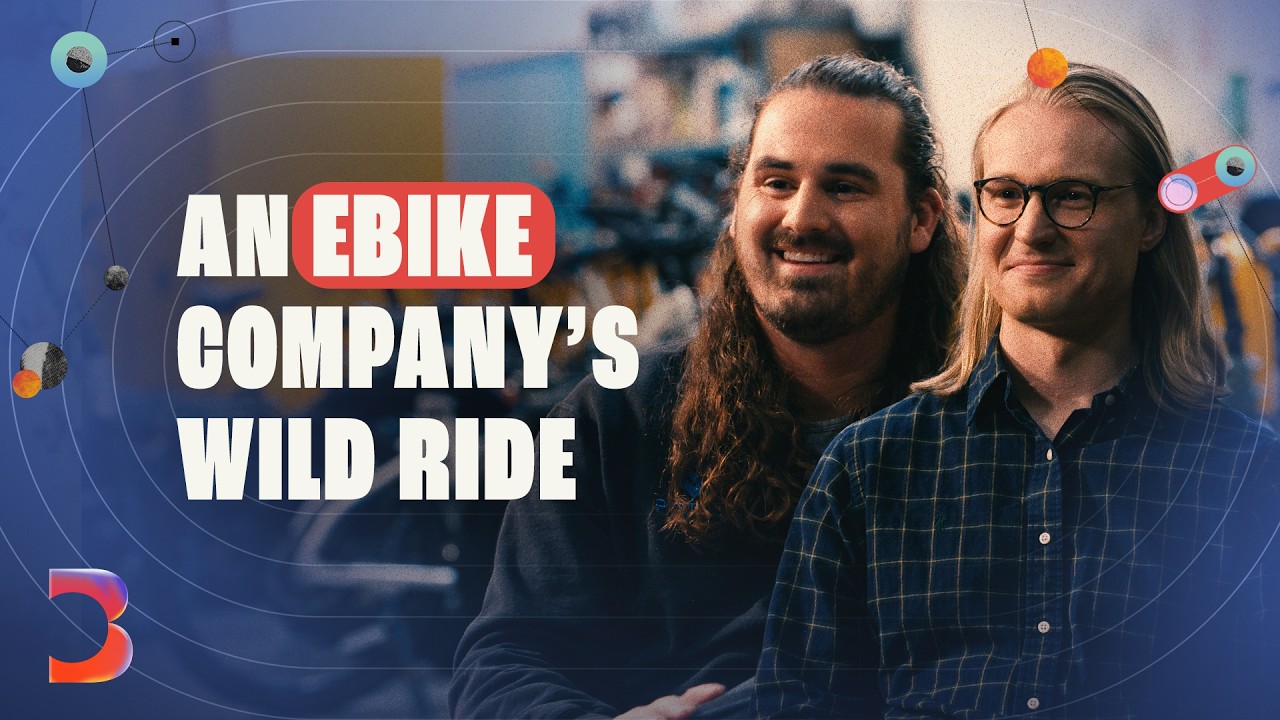
## Background Published by Bloomberg Originals on YouTube on September 23, 2026, this episode of Quantum Marketing features host Raja Rajamannar sitting down with Lectric eBikes co-founders Levi Conlow and Robby Deziel. According to the description, the program explores how the brand built an integrated marketing engine around reducing adoption friction, utilizing direct customer relationships, creator partnerships, and community engagement to expand an emerging product category to mainstream audiences.
## TL;DR Host Raja Rajamannar examines how bootstrapped direct-to-consumer brand Lectric eBikes scaled into an industry leader selling roughly 150,000 bikes per year without venture capital. Rather than competing in an expensive engineering arms race, co-founders Levi Conlow and Robby Deziel anchored their business on accessibility, an entry-level $999 price target, and an oversized in-house customer experience team. The company drove exponential word-of-mouth momentum by seeding folding bikes with authentic RV YouTube creators and listening to customer feedback to design new models like the Lectric Trike. By establishing a strict 'margin ceiling,' Lectric systematically reinvests operational efficiency gains into upgraded components rather than paid customer acquisition, effectively outmaneuvering heavily funded competitors.
## Atmosphere & style The episode blends a dynamic on-the-ground tour with an engaging strategic masterclass, transitioning smoothly from outdoor test rides to the bustling customer service floor and engineering product lab. Raja Rajamannar guides the conversation with thoughtful, high-level marketing frameworks, while Levi Conlow and Robby Deziel provide grounded, candid Midwestern energy and unpretentious entrepreneurial anecdotes. The tone is practical, reflective, and deeply authentic, capturing the genuine camaraderie between the longtime friends while detailing how human-centered service and earned community trust outperform venture-backed marketing hype.
## Bulletin - [02:45](https://www.youtube.com/watch?v=coyHcx1An_s&t=165s) Lectric eBikes bootstrapped its direct-to-consumer business to $1 billion in revenue and roughly 150,000 bikes sold annually—exceeding its nearest rival by 50% without raising venture capital. - [09:35](https://www.youtube.com/watch?v=coyHcx1An_s&t=575s) Early commercial breakout was unlocked by sending eight folding prototype bikes to RV influencers on YouTube without paid sponsorships, generating approximately $15 million in sales almost overnight. - [16:59](https://www.youtube.com/watch?v=coyHcx1An_s&t=1019s) Rather than absorbing margin gains or burning cash on customer acquisition like VC-backed competitors, Lectric enforces a 'margin ceiling' rule that automatically reinvests operational profits back into component upgrades. - [08:11](https://www.youtube.com/watch?v=coyHcx1An_s&t=491s) Lectric treats customer support as an active marketing engine, maintaining roughly 75 dedicated human representatives across two facilities—a customer service footprint that matches or exceeds the total US operational workforce of its largest rivals.
## Key takeaways - [00:00](https://www.youtube.com/watch?v=coyHcx1An_s&t=0s) Widespread technology adoption occurs by methodically removing friction and reducing cost barriers rather than engineering overly complex, luxury products. - [01:42](https://www.youtube.com/watch?v=coyHcx1An_s&t=102s) In a post-pandemic market characterized by slowing consumer demand and price wars, sustained growth relies on deliberate customer trust rather than hype-driven one-way advertising. - [02:45](https://www.youtube.com/watch?v=coyHcx1An_s&t=165s) Initial attempts to sell bikes on Craigslist and Instagram stalled until raw trade show feedback convinced the founders to introduce a folding frame and a rigid $999 price ceiling. - [05:24](https://www.youtube.com/watch?v=coyHcx1An_s&t=324s) A direct-to-consumer model was born out of necessity when traditional bike shops refused to stock Lectric, allowing the brand to preserve unit margins and own the consumer relationship directly. - [05:24](https://www.youtube.com/watch?v=coyHcx1An_s&t=324s) Lectric deliberately decoupled from heritage cycling culture, positioning e-bikes as utilitarian everyday mobility tools rather than elite athletic gear. - [08:11](https://www.youtube.com/watch?v=coyHcx1An_s&t=491s) Instead of manufacturing inaccessible $10,000 luxury super-bikes, Lectric prioritizes accessible price points backed by an outsized investment in human customer service. - [09:35](https://www.youtube.com/watch?v=coyHcx1An_s&t=575s) Grassroots adoption among recreational vehicle (RV) owners and unboxing demonstrations on YouTube proved long-form, authentic creator content could outperform traditional commercial spots. - [09:35](https://www.youtube.com/watch?v=coyHcx1An_s&t=575s) Lectric monitors customer clusters on internal virality dashboards to track organic geographic word-of-mouth adoption sparked by community evangelists. - [13:16](https://www.youtube.com/watch?v=coyHcx1An_s&t=796s) Direct customer feedback led directly to new hardware architectures, such as developing the three-wheeled Lectric Trike for riders concerned about two-wheel balance. - [13:16](https://www.youtube.com/watch?v=coyHcx1An_s&t=796s) The company relies on the service recovery paradox, using high-touch remediation of mechanical or delivery issues to convert frustrated customers into loyal brand champions. - [15:06](https://www.youtube.com/watch?v=coyHcx1An_s&t=906s) Brand acquisitions like Juiced Bikes allow Lectric to expand its footprint into younger demographics through dirt-bike and motocross design aesthetics. - [16:59](https://www.youtube.com/watch?v=coyHcx1An_s&t=1019s) By capping profits with a predetermined margin ceiling and funneling excess capital into product engineering, Lectric widens its product-to-price advantage over venture-funded rivals. - [18:42](https://www.youtube.com/watch?v=coyHcx1An_s&t=1122s) The company views its long-term future as an energy-efficient personal mobility platform aimed at replacing short-distance passenger car trips.
## Detailed walkthrough ### [00:00](https://www.youtube.com/watch?v=coyHcx1An_s&t=0s) Rethinking eBike Adoption: Removing Friction Over Adding Complexity
Raja Rajamannar arrives at the Lectric eBikes headquarters to meet co-founders Levi Conlow and Robby Deziel, who immediately invite him to pick out an e-bike and take it for a spin. As they set out on the ride, Raja reflects on the broader trajectory of technological revolutions throughout history. Breakthrough innovations rarely succeed through novelty alone; real widespread adoption occurs only when companies systematically eliminate enough friction to make adopting the new behavior feel completely natural and effortless.
Electric bicycles have technically existed for decades, but the category experienced an explosive surge across the United States between 2015 and 2022. Once that initial pandemic-fueled growth plateaued, however, most manufacturers responded by entering an arms race to engineer faster, more powerful, and far more expensive machines. Lectric deliberately pivoted away from that industry consensus. Rather than attempting to build the most sophisticated luxury product on the market, the founders anchored their strategy on an unglamorous but underserved imperative: making electric mobility genuinely accessible, dependable, and affordable for ordinary riders.
[01:42](https://www.youtube.com/watch?v=coyHcx1An_s&t=102s) Quantum Marketing and Navigating the Post-Pandemic Slump
Cruising smoothly along the pavement, Raja frames the business challenge within the evolving discipline of modern marketing. The legacy playbook—where a brand simply bought mass media attention, manufactured a product, and controlled a static one-way narrative—is effectively dead. Today, modern marketing operates in a fast-shifting environment driven by artificial intelligence, data science, and behavioral economics, requiring brands to interact and respond to consumers in real time at every touchpoint.
The e-bike industry exemplifies this transition. Following the explosive demand spikes of the pandemic years, the entire category entered a much harsher environment marked by decelerating consumer demand, intense pricing wars, and fierce market consolidation. In such an unforgiving climate, marketing hype and novelty are insufficient to sustain a business; long-term survival demands deliberately engineered consumer trust.
[02:45](https://www.youtube.com/watch?v=coyHcx1An_s&t=165s) From Xbox Live to a $1 Billion Brand: The Genesis of Lectric eBikes
Sitting down with the founders, Raja highlights how remarkable it is that the duo built a $1 billion direct-to-consumer (D2C) enterprise entirely bootstrapped, without a single dollar of venture capital funding. When asked how their partnership began, Robby and Levi share that their relationship dates back to middle school in Minnesota. Interestingly, they did not meet in person at first—they bonded while playing multiplayer video games over Xbox Live. Their parents eventually arranged a supervised first face-to-face hangout at a Minnesota Twins baseball game, cementing a friendship that would later turn into an entrepreneurial venture.
In their early twenties, Levi and Robby set out to build an e-bike company from scratch. They show Raja their original printed business plan from when they were twenty-two-year-olds seeking to raise between $40,000 and $50,000 in startup seed money. Their initial attempts to sell their early bike models on Craigslist and Instagram fell flat, but taking the bikes directly to local trade shows provided raw, unfiltered market feedback. Visitors bluntly told the young founders exactly why they did not want the bike. Instead of defending their original concept, the duo absorbed every critique, redesigned the bike into a folding model, and committed to a strict $999 price ceiling. Levi draws a direct parallel between Lectric's trajectory and the origins of Honda, noting that Honda began by putting small auxiliary motors on bicycles and producing mopeds before expanding into motorcycles, cars, and robotics to fundamentally reshape global personal mobility.
```mermaid flowchart TD accTitle: Lectric eBikes Founding Feedback Loop accDescr: Diagram illustrating how early customer rejection at trade shows transformed into the Lectric XP concept.
subgraph EarlyValidation["Early Groundwork"] A["Founders met on Xbox Live"] --> B["First Business Plan ($40k-$50k target)"] B --> C["Initial Attempts: Craigslist & Instagram"] end
subgraph Pivot["Market Feedback & Redesign"] C --> D["Local Trade Shows: Blunt Customer Feedback"] D --> E["Redesign: Folding Frame & $999 Price Point"] end
subgraph ProductLaunch["Lectric XP Launch"] E --> F["Focus on Utility & Affordability"] F --> G["Direct-to-Consumer Distribution Engine"] end ```
- **Founding Roots:** Levi Conlow and Robby Deziel grew up in Minnesota, met through Xbox Live in middle school, and had their first supervised in-person meeting at a Minnesota Twins game. - **Initial Capital Target:** The original business plan sought to raise between $40,000 and $50,000 to launch production. - **Early Sales Channels:** First sales were attempted on Craigslist and Instagram before pivoting through direct customer conversations at local trade shows. - **Price Point Strategy:** The founders committed to folding the bike frame and maintaining an accessible entry price of $999. - **Inspirational Blueprint:** The historical evolution of the Honda Motor Company, starting from humble motorized bicycles to redefining how society moves.
[05:24](https://www.youtube.com/watch?v=coyHcx1An_s&t=324s) The Direct-to-Consumer Model and Redefining the Bike as a Tool
Raja queries the founders on whether bypassing retail bike shops was an intentional distribution choice, an economic calculation, or a trust-building strategy. Levi explains that it was initially a matter of necessity: traditional bicycle shops simply refused to give shelf space or credibility to "two dudes from Minnesota who are in their early 20s." Beyond distribution hurdles, going direct was the only way to preserve margins while keeping retail prices low. Levi emphasizes that their formula for avoiding failure was straightforward: build an awesome bike, keep it exceptionally affordable, and back it with fanatical customer service.
Robby elaborates on the cultural clash between traditional cycling and electric mobility. To the legacy bicycle industry, cycling is a sport, a passion, and an identity; to traditionalists, adding an electric motor often felt like "a way to cheat in a sporting event." Because neither Levi nor Robby came from the heritage cycling subculture, they viewed the e-bike through a purely utilitarian lens: a functional transportation tool to improve everyday living. Selling directly to the consumer allowed them to craft that specific narrative without retail intermediaries diluting the message. Even the product's flagship name, the "Lectric XP", was chosen as an homage to their gaming background—representing "experience points" and the idea of "levelling up your life."
[08:11](https://www.youtube.com/watch?v=coyHcx1An_s&t=491s) Customer Experience as an Extension of Marketing
Levi walks Raja onto the floor of their customer service department, introducing it as "the engine of the company." Instead of viewing customer support as an overhead cost center or a reactive troubleshooting unit, Lectric treats customer experience (CX) as an essential frontline extension of marketing designed to create brand evangelists. The headquarters hosts roughly 40 customer service representatives, with an additional 35 team members stationed at a facility just 15 minutes away. Levi notes that Lectric's customer service head count alone rivals or exceeds the entire United States workforce of their largest competitors.
This outsized investment in service stems directly from Lectric's realistic assessment of their value proposition. Levi explains that building the undisputed "world's best bike" requires exotic, top-tier components that inevitably drive retail costs up to $10,000 or $15,000—completely out of reach for their target audience. Because engineering a luxury super-bike is antithetical to their mission, Lectric chooses to compete where effort and culture are entirely within their control: delivering the industry's highest standard of human customer service.
- **Customer Support Footprint:** Approximately 40 CX representatives operate at the primary headquarters, supported by another 35 staff members at a nearby secondary location. - **Competitive Parity:** Lectric’s dedicated CX team matches or surpasses the entire US operational footprint of its primary market competitors. - **Strategic Trade-off:** Eschewing high-end $10,000 to $15,000 componentry in favor of accessible pricing, offset by heavy investments in after-sales care.
[09:35](https://www.youtube.com/watch?v=coyHcx1An_s&t=575s) The RV Community Breakthrough and Measuring Viral Growth
When Raja asks about their demographic makeup—wondering whether their core customer base skews older—Levi confirms that the brand's initial velocity came heavily from older demographics, particularly the recreational vehicle (RV) community. During their early trade show days, RV owners repeatedly engaged the founders, praising the concept of personal electric transit for campgrounds but emphasizing that existing bikes were too bulky. Armed with this insight, the team engineered folding prototypes and shipped eight sample units to RV influencers on YouTube.
Lectric did not offer sponsorships, paid promotional contracts, or affiliate tracking links; they simply sent the bikes and asked creators to review them if they found them useful. The bet paid off immediately. Clips from creator channels like "TNT RV" (hosted by Tony and Tina) demonstrated the bike's 500-watt integrated frame battery, compact folding footprint, and zero-assembly delivery. Levi and Robby were initially skeptical about whether anyone actually watched RV content on YouTube, but reading the comment sections revealed deep, tight-knit, authentic communities. That single grassroots seeding campaign detonated demand, driving approximately $15 million in sales almost overnight.
To track how word-of-mouth spreads organically, the company routinely conducts customer surveys and monitors an internal virality dashboard. By mapping purchase clusters, Lectric can watch real-time contagion effects unfold geographically as a single initial bike delivered to a rural town or an apartment complex systematically sparks neighboring adoption across the entire community.
[11:48](https://www.youtube.com/watch?v=coyHcx1An_s&t=708s) Turning Community and Influencer Advocacy into a Growth Engine
Levi Conlow illustrates the organic power of their user base through an anecdote about his friend’s father, Barry, an early Lectric customer. After purchasing bikes for himself and his wife, Barry formed a local riding group in The Villages retirement community in Florida and personally drove the purchase of more than 26 bikes. Conlow emphasizes that Lectric’s growth relies on "literally hundreds of Barrys out there" who act as passionate brand champions. Host Raja Rajamannar notes that turning community into a core distribution and media channel serves as a masterclass in marketing, asking whether this grassroots momentum was deliberately engineered or purely accidental.
Conlow affirms that community-led distribution was fundamentally designed into the business model from their earliest business plan, shaping product design, customer support, and creator partnerships. Instead of buying standard paid ads, Lectric seeded bikes with long-form video creators. Influencers produced authentic, 30-minute unboxing videos demonstrating real-world utility—showing how the bikes fold up and fit directly beneath recreational vehicles. When the founders watched their very first influencer upload, they realized they "couldn't have scripted a better commercial" for the product.
```mermaid flowchart TD accTitle: Lectric Community and Creator Flywheel accDescr: Diagram showing how long-form creator content drives customer adoption, which builds local communities that generate word-of-mouth sales.
subgraph Content ["Authentic Media"] A["Long-Form Creator Videos<br>(Unboxing & RV Fitment)"] --> B["High-Trust Customer Acquisition"] end
subgraph Advocacy ["Community Engine"] B --> C["Passionate Super-Users<br>(e.g., Barry at The Villages)"] C --> D["Grassroots Riding Groups<br>& Word-of-Mouth Sales"] D --> B end ```
- Barry, an early customer living in The Villages, directly generated over 26 bike sales through his local riding circle. - Long-form creator partnerships prioritized comprehensive unboxings and practical demonstrations over brief commercial spots.
---
[13:16](https://www.youtube.com/watch?v=coyHcx1An_s&t=796s) The Customer as Architect and the Power of Exceptional Service
When Rajamannar asks at what moment a customer transitions from being a marketing target to becoming an active product architect, the founders answer that it occurred immediately. Following the debut of the original Lectric XP, a segment of customers expressed hesitation regarding balance and two-wheel stability, repeatedly telling the team that the bike was ideal except for having two wheels instead of three. Rather than ignoring these concerns, the company adhered to a straightforward philosophy—listen to riders and build what they request—which led directly to the creation of the Lectric Trike.
The discussion shifts to the service recovery paradox in customer experience. Conlow observes that while an unboxing without issues delivers a predictable baseline of customer satisfaction, resolving an unexpected mechanical or delivery flaw with exceptional care elevates customer loyalty far higher. Rajamannar agrees, pointing out that exceeding expectations during critical friction points transforms basic satisfaction into deep brand trust. The conversation pauses momentarily on the shop floor as the founders inspect a customer's bike dropped off for maintenance, marveling at the severe tire wear and coordinating a replacement.
- Customer balance concerns with the Lectric XP directly initiated the development and release of the Lectric Trike. - The company relies on high-touch support to convert operational issues into loyalty-building customer touchpoints.
---
[15:06](https://www.youtube.com/watch?v=coyHcx1An_s&t=906s) Scaling Through Brand Acquisitions and the Product Lab
As businesses expand, legacy approaches often fall short of meeting new scale requirements. Rajamannar queries how recent portfolio acquisitions—specifically brands like Juiced Bikes—alter Lectric’s operational formula. Conlow clarifies that their core operational playbook remains unchanged; acquisitions simply expand their competitive footprint into underserved market segments. From Conlow's perspective, failing to enter a category where customers seek reliable electric mobility is a disservice to consumers, insisting that running out of growth initiatives merely signals a lack of market awareness.
Moving inside the restricted product development lab, where co-founder Robby Deziel oversees engineering, the team displays models targeting younger demographics. Deziel explains how the design language of their Juiced models borrows heavily from dirt-bike culture. By collaborating with established brands in the motocross sphere and integrating rugged, dirt-bike-style components into electric bikes, Lectric offers a compromise that appeals to kids while reassuring parents who are reluctant to purchase a gas-powered motorcycle.
- Recent brand acquisitions include Juiced Bikes to target youth and performance niches. - Product engineering bridges e-bikes and dirt bikes to capture younger riders seeking action-sports aesthetics.
---
[16:59](https://www.youtube.com/watch?v=coyHcx1An_s&t=1019s) Outmaneuvering Venture Capital: The Margin Ceiling Strategy
Rajamannar presses the founders on how a bootstrapped, capital-lean firm successfully outmaneuvers venture-backed competitors that spend hundreds of millions of dollars. Conlow shares a core strategic philosophy that frustrates him because competitors consistently overlook it: heavily funded rivals enter the market with an acceptable product, spend aggressively on marketing to secure market share, and postpone operational and product refinements until after dominance is achieved.
Lectric inverted that logic. As scale grew and volume increased, the company unlocked substantial operational leverage. Instead of absorbing the resulting profit margin or burning it on customer acquisition, Conlow instituted a strict corporate rule: the business operates with both a traditional margin floor and an explicit "margin ceiling." Whenever efficiency gains push profits above that predetermined ceiling, the excess capital is systematically reinvested into upgrading product components and engineering. Consequently, venture-backed rivals cannot match Lectric's product-to-price ratio while burning cash to buy customers.
```mermaid flowchart LR accTitle: Lectric Margin Ceiling Flywheel accDescr: Diagram illustrating how scale and operational leverage trigger reinvestment above a margin ceiling to widen the product gap against VC competitors.
subgraph Scale ["Scale & Efficiency"] A["Volume Expansion<br>(150K Bikes/Year)"] --> B["Operational Leverage<br>& Margin Expansion"] end
subgraph Policy ["Capital Allocation"] B --> C{"Exceeds Margin<br>Ceiling?"} C -- "Yes" --> D["Reinvest Excess in<br>Component Quality"] D --> E["Superior Value Proposition<br>& Compounded Advantage"] E --> A end ```
- Competitors rely on VC funding to capture share through high ad spend, intending to optimize later. - Lectric caps profit margins with a margin ceiling, automatically funneling margin surpluses into product improvements. - Lectric remains independently profitable while outpacing well-funded rivals.
---
[18:42](https://www.youtube.com/watch?v=coyHcx1An_s&t=1122s) Evolving from a Product to a Movement and Transportation Platform
Lectric sells approximately 150,000 bikes per year—around 50 percent more volume than its nearest competitor—as e-bikes transition nationwide from recreational novelties into practical replacements for local automotive trips. In response to Rajamannar’s question about when a product graduates from an offering into a cultural movement, Deziel points back to Lectric's earliest days. The company's very first Shopify transaction came from Conlow's mother, followed by orders for Deziel’s parents. Though initially purchased for casual outdoor recreation, customers quickly shifted to utility, using the bikes to run errands and pick up prescriptions.
The movement took hold because the founders positioned themselves visibly in front of the audience from the outset. Early customers who saw Levi and his father in original video content found themselves speaking directly with Levi and Robby when calling customer support. This personal rapport resonated strongly with riders who rallied around "Midwestern guys" challenging legacy cycling giants. Early adopters Beverly and Steve established a Southern California riding club, creating custom hats and organizing weekly rides that grew to dozens of participants.
When asked whether Lectric envisions itself strictly as a bicycle manufacturer or as a broader mobility platform, the founders confirm the latter. Emphasizing the fundamental physics of transit, they highlight that the bicycle is the most efficient form of human locomotion ever invented, and the electric bicycle is the most energy-efficient mode of motorized transport. The episode concludes with Rajamannar underscoring that lasting market leadership is not won simply through hardware specs or pricing, but by eliminating adoption barriers and earning the trust required to transform daily commuting behavior.
- Lectric sells roughly 150,000 electric bikes annually, exceeding its closest rival by 50%. - Customers regularly transition from leisure riding to substituting car trips for errands and local commutes. - Early adopters Beverly and Steve created an organized Southern California Lectric riding chapter with custom merchandise. - The company approaches product development as an electric mobility platform rather than a traditional bicycle company.
## Notable quotes > [05:24](https://www.youtube.com/watch?v=coyHcx1An_s&t=324s) two dudes from Minnesota who are in their early 20s — Levi Conlow
> [05:24](https://www.youtube.com/watch?v=coyHcx1An_s&t=324s) a way to cheat in a sporting event — Robby Deziel
> [05:24](https://www.youtube.com/watch?v=coyHcx1An_s&t=324s) experience points — Robby Deziel
> [05:24](https://www.youtube.com/watch?v=coyHcx1An_s&t=324s) levelling up your life — Robby Deziel
> [08:11](https://www.youtube.com/watch?v=coyHcx1An_s&t=491s) the engine of the company — Levi Conlow
> [08:11](https://www.youtube.com/watch?v=coyHcx1An_s&t=491s) world's best bike — Levi Conlow
> [11:48](https://www.youtube.com/watch?v=coyHcx1An_s&t=708s) literally hundreds of Barrys out there — Levi Conlow
> [11:48](https://www.youtube.com/watch?v=coyHcx1An_s&t=708s) couldn't have scripted a better commercial — Levi Conlow
> [16:59](https://www.youtube.com/watch?v=coyHcx1An_s&t=1019s) margin ceiling — Levi Conlow
> [18:42](https://www.youtube.com/watch?v=coyHcx1An_s&t=1122s) Midwestern guys — Robby Deziel
## Mentioned Barry, Beverly and Steve, Bloomberg Originals, Craigslist, Honda Motor Company, Instagram, Juiced Bikes, Lectric eBikes, Lectric Trike, Lectric XP, Levi Conlow, Minnesota Twins, Quantum Marketing, Raja Rajamannar, Robby Deziel, Shopify, The Villages, TNT RV, Xbox Live, YouTube
## Video description Lectric eBikes built an integrated marketing system around a simple idea: new technology reaches the mainstream when barriers to adoption are meaningfully reduced. In this episode, Raja Rajamannar sits down with co-founders Levi Conlow and Robby Deziel to discuss how direct customer relationships, influencer marketing and community engagement can bring a nascent product category to a broader audience.
#eBikes #Business #Marketing
-------- Like this video? Subscribe: http://www.youtube.com/Bloomberg?sub_confirmation=1
Get unlimited access to Bloomberg.com for just $1.99 your first month: https://www.bloomberg.com/subscriptions?in_source=YoutubeOriginals Bloomberg Originals offers bold takes for curious minds on today’s biggest topics. Hosted by experts covering stories you haven’t seen and viewpoints you haven’t heard, you’ll discover cinematic, data-led shows that investigate the intersection of business and culture. Exploring every angle of climate change, technology, finance, sports and beyond, Bloomberg Originals is business as you’ve never seen it.
Subscribe for business news, but not as you've known it: exclusive interviews, fascinating profiles, data-driven analysis, and the latest in tech innovation from around the world.
Visit our partner channel Bloomberg News for global news and insight in an instant.
[Source](https://www.youtube.com/watch?v=coyHcx1An_s)