Bogle's Low-Cost Vanguard Defeats Wall Street on Path to $12 Trillion
Acquired
By stripping away corporate profit margins and embracing structural counter-positioning, Vanguard forced an industry-wide race to zero that permanently transferred hundreds of billions from asset managers to retail savers.
## Background
This audio episode was published on YouTube by the Acquired channel on May 18, 2026. According to the page description, it chronicles the history of Vanguard, exploring how a mutual ownership structure created a "communist capitalist" powerhouse that eliminated corporate profits to return five hundred billion dollars to retail investors, all starting as a revenge plot by a recently fired founder.
## TL;DR
The episode provides a detailed historical walkthrough of Jack Bogle's life, his early career at Wellington Management, and his subsequent ouster, which legally led to the loophole creation of Vanguard in 1975. It breaks down the mathematical foundation of the 'Cost Matters Hypothesis' and the operational hurdles of launching the first retail S&P 500 index fund. The narrative traces Vanguard's scale from a broken $11 million IPO to a $12 trillion colossus, analyzing its industry-defining battles over ETFs, its legendary performance bets with Warren Buffett, and its enduring structural impact on modern financial governance.
## Atmosphere & style
The production carries a highly analytical yet deeply human narrative style, balancing sharp economic breakdowns with an empathetic look at Bogle's severe medical battles and corporate betrayals. It feels like a high-stakes corporate drama mixed with a masterclass in business strategy, driven by energetic host dynamics that pivot from raw financial math to philosophical reflections on wealth. The tone transitions from a tense story of professional ruin into an inspiring, multi-decade chronicle of a relentless financial revolution.
## Key takeaways
- [04:10:43](https://www.youtube.com/watch?v=ipiKIgdynZE&t=15043s) Vanguard operates on a unique mutual corporate structure where it has no external shareholders and is owned entirely by its current fund customers, returning excess margin in the form of lower fees.
- [12:34](https://www.youtube.com/watch?v=ipiKIgdynZE&t=754s) Jack Bogle's 1951 Princeton senior thesis argued that because aggregate fund performance matches the market, fee minimization is the only reliable way to maximize net returns to investors.
- [20:00](https://www.youtube.com/watch?v=ipiKIgdynZE&t=1200s) Traditional 1950s mutual fund structures created an inherent conflict of interest by charging high fixed asset management fees (1.5% to 2%) and upfront loads (8.5%) to enrich a separate management company rather than rewarding performance.
- [31:36](https://www.youtube.com/watch?v=ipiKIgdynZE&t=1896s) The rapid decay of conservative balanced funds in favor of speculative, high-turnover 'go-go' funds in the 1960s ultimately forced Wellington Management into a value-destroying merger with iVest.
- [50:00](https://www.youtube.com/watch?v=ipiKIgdynZE&t=3000s) Jack Bogle was fired as CEO of Wellington Management in 1974 after a multi-year philosophical struggle over corporate profitability and his proposals to mutualize the funds.
- [55:00](https://www.youtube.com/watch?v=ipiKIgdynZE&t=3300s) Bogle utilized a legal loophole—that the fund boards were independent of the management company—to establish Vanguard, initially restricting its scope strictly to back-office administration.
- [01:13:03](https://www.youtube.com/watch?v=ipiKIgdynZE&t=4383s) Vanguard bypassed the board's ban on providing active investment advisory services by launching an S&P 500 index fund, which theoretically required zero active management.
- [01:13:03](https://www.youtube.com/watch?v=ipiKIgdynZE&t=4383s) The Cost Matters Hypothesis dictates that because the median active manager underperforms the market by the exact amount of their fees, minimizing expenses is the single most critical driver of long-term wealth compounding.
- [01:13:03](https://www.youtube.com/watch?v=ipiKIgdynZE&t=4383s) Vanguard eliminated external broker incentives and shifted to a 'no-load' distribution model in 1981-1982, aligning its distribution completely with low-cost retail investing.
- [01:58:00](https://www.youtube.com/watch?v=ipiKIgdynZE&t=7080s) Jack Bogle's successor, John Brennan, expanded Vanguard into international and sector funds, leading to rapid asset growth but causing a deep ideological rift with Bogle over the introduction of Exchange-Traded Funds (ETFs).
- [03:45:30](https://www.youtube.com/watch?v=ipiKIgdynZE&t=13530s) The 2008 financial crisis served as a critical turning point for index investing, breaking public trust in active Wall Street managers who failed to protect capital or outperform low-cost index funds.
- [03:50:00](https://www.youtube.com/watch?v=ipiKIgdynZE&t=13800s) Warren Buffett famously vindicated Vanguard's model via a $1 million bet in 2007, demonstrating that a standard Vanguard 500 Index Fund easily outperformed a chosen portfolio of active hedge funds over ten years.
- [04:00:00](https://www.youtube.com/watch?v=ipiKIgdynZE&t=14400s) A structural trade-off of Vanguard's zero-profit-margin mutual model is a lack of excess retained capital to invest heavily in modern customer service and digital infrastructure.
- [04:04:50](https://www.youtube.com/watch?v=ipiKIgdynZE&t=14690s) The appointment of Salim Ramji in 2024 as Vanguard's first outside CEO marked a major strategic shift toward upgrading technology and expanding into private markets and private equity.
- [03:25:00](https://www.youtube.com/watch?v=ipiKIgdynZE&t=12300s) Under the Seven Powers framework, Vanguard presents a paradox of 'scale economies shared' and extreme 'counter-positioning' because it leaves zero profit incentives for competitors to copy its exact structure.
- [03:30:00](https://www.youtube.com/watch?v=ipiKIgdynZE&t=12600s) Passive index fund holders and high-conviction mathematical anomalies are historically the only investors capable of enduring extreme market drawdowns to secure long-term 100x gains.
## Detailed walkthrough
### The Undercover Philanthropist and Communist Capitalism
The season kicks off with hosts Ben Gilbert and David Rosenthal sharing a lighthearted moment about the complexity of the financial world before diving into the massive story of Vanguard. Founded in 1975, Vanguard effectively created the first index fund for individual investors. Today, it stands as the largest provider of index funds in the United States, managing over $7 trillion in passive index funds. This scale means Vanguard owns an average of almost 10% of every company in the S&P 500—including titans like Apple, Visa, Nike, and Starbucks. Together with other major players like BlackRock, State Street, and Fidelity, they control 24% of the entire U.S. stock market.
Vanguard operates under an incredibly unique corporate structure: it is owned exclusively by its customers and is not publicly traded. There are no outside shareholders, and even the CEO holds no outside equity beyond their own personal investments in the funds. The hosts playfully dub this alignment of interests "communist capitalism." The driving force behind this revolution was Jack Bogle, a visionary iconoclast who Ben describes as "as disagreeable as he was right." Bogle didn't even start Vanguard until he was 46 years old, and while the structure was idealistic, the backstory is equal parts idealism and vindictiveness.
Through relentless cost-cutting, Vanguard has saved investors over $500 billion in fees and trading costs since its inception. Furthermore, as documented in the book *The Bogle Effect*, Vanguard's competitive pressure forced the rest of the finance industry to slash their own fees, saving investors another $500 billion. This represents a staggering $1 trillion wealth transfer out of Wall Street's pockets and back to individual investors. Highlighting this impact, Ben recalls a conversation with author Morgan Housel, who framed Bogle as an "undercover philanthropist"—a title that, given the trillion-dollar impact, would arguably make him the greatest philanthropist in human history, especially since he chose not to pocket that wealth himself.
- **Vanguard Assets Under Management:** Over $7 trillion in passive index funds.
- **S&P 500 Ownership:** Vanguard owns an average of nearly 10% of every company in the index.
- **Total Market Share:** Vanguard, BlackRock, State Street, and Fidelity collectively own 24% of the U.S. stock market.
- **Total Investor Savings:** $500 billion directly through Vanguard; $1 trillion industry-wide due to the "Bogle Effect."
Out of the Ashes of the Great Depression
After a brief thank you to their presenting partner, JP Morgan, and a standard investment disclaimer, the hosts transport listeners back to May 1929. This was the eve of the catastrophic Wall Street crash that triggered the Great Depression, an era that devastated American families and left deep, lifelong scars on an entire generation. David notes that 9,000 banks failed, 9 million savings accounts were completely wiped out, nearly 100,000 businesses went under, and unemployment soared to a staggering 25%. Ben shares a personal anecdote about how the trauma lingered for decades, noting his own grandmother never threw away a plastic bag, leaving tens of thousands of them behind when she passed, while his grandfather hoarded Tums containers and magazines. Curiously, only 1% to 2% of Americans actually owned stocks at the time; the widespread devastation was a second-order effect of heavily leveraged banks and businesses collapsing.
Amidst this economic ruin, John Clifton "Jack" Bogle was born in May 1929, alongside his twin brother David and older brother Bud. Together, they were known as the "Bogle boys." Though they were born into a prominent, prosperous New Jersey family—their great-grandfather founded a mutual fire insurance company and their grandfather helped start the massive American Can Company—the Depression wiped out everything. Their father succumbed to alcoholism, divorced their mother, abandoned the family, and eventually died alone on a street corner. Their mother suffered from severe depression and mental health struggles, leaving the young Bogle boys to fend for themselves.
To survive, the brothers worked grueling concurrent jobs, including paper routes, manual labor, and restaurant gigs. Jack often recalled that his favorite job was a 3:00 a.m. paper route, describing the middle of the night as "quiet and peaceful," a rare escape from the chaos and strife of his daily life. David notes that much of this intimate family history came directly from his research interviews with Jack's living children, highlighting that despite their prominent family name, the boys grew up navigating high society as both ultimate insiders and complete outsiders.
- **Depression Statistics:** 9,000 bank failures, 9 million wiped savings accounts, 25% unemployment.
- **Bogle Siblings:** Jack (twin), David (twin), and Bud.
- **Family Legacy:** Great-grandfather founded a *mutual* insurance company; grandfather co-founded American Can Company.
The Princeton Thesis and the Birth of Mutual Pools
As the Bogle boys reached high school, their deep family connections helped them secure scholarships to Blair Academy, a prestigious East Coast boarding school. Jack thrived, graduating cum laude and earning titles like "most likely to succeed." However, because the family remained broke, the three brothers made a profound pact: only one of them would go to college while the other two worked to support their mother. Due to his academic excellence, Jack was chosen. The weight of this sacrifice rested heavily on Jack for the rest of his life, instilling a relentless obligation to make good on the opportunity.
Jack attended Princeton University on a work scholarship, cleaning dining halls and selling athletic tickets. His entry into finance was famously inauspicious; he became fascinated by economics but received a D-plus on his first midterm, ultimately scraping by with a C-minus in the class. Still, he chose to concentrate in economics. A central rite of passage at Princeton is the mandatory senior thesis—a unique piece of scholarly research. David jokes about his own Princeton thesis, which focused on the marketing history of Champagne (proving highly useful for Acquired's later LVMH episode), before returning to Jack's hunt for a topic in Firestone Library.
One afternoon, Jack stumbled upon page 116 of *Fortune* magazine. The article, titled "Big Money in Boston," detailed the rise of a brand-new financial instrument: open-ended public funds, which we now know as mutual funds. The piece focused on a pioneering firm called the Massachusetts Investors Trust Company (MIT). At this time, only 4.2% of Americans owned stocks, and those who did bought individual equities through local stockbrokers. There was no real academic literature on diversification or mutual pooling. The concept of pooling retail money into a single basket of stocks was revolutionary, and Jack decided to make it the focus of his thesis.
- **Sacrifice:** Brothers David and Bud skipped college entirely to work so Jack could attend Princeton.
- **Academic Start:** Jack received a D+ on his first college economics midterm.
- **The Catalyst:** *Fortune* magazine article, page 116, "Big Money in Boston," published around 1949.
The EGREGIOUS Cost of Distribution
David breaks down the mechanics of the open-end fund model that fascinated Jack. Unlike a closed-end fund, which raises a fixed amount of capital (e.g., $100 million) and then closes, an open-end fund is entirely elastic. There is no set fund size; investors can continually dump money in, and the fund manager will just keep buying more underlying assets. Crucially, it means investors can enter or exit the fund as they please without lockups.
To sell these new funds to the public, management companies relied heavily on existing broker-dealer networks. Instead of asking a Merrill Lynch broker for individual shares of General Electric, an everyday investor would buy units of the Massachusetts fund. To incentivize these brokers, funds charged a staggering "sales load" of 7.5% to 8.5% on every dollar invested. The fund manager would then kick back this massive distribution fee to the stockbroker as a "spiff."
While paying for distribution is common in traditional retail—where a storefront might double the wholesale price of an item—Ben points out how predatory this math was for investments. A fund might only make around $2 a year in management fees on a $100 investment, yet they were giving $8 right out of the gate to the broker. This meant nearly 8% of an investor's hard-earned principal vanished before it ever touched the stock market, creating a massive conflict of interest that Jack Bogle would eventually spend his entire life dismantling.
- **Sales Load:** Historic mutual funds charged an upfront fee of 7.5% to 8.5%.
- **Broker Incentives:** The majority of this fee was kicked back to stockbrokers as a sales commission ("spiff").
[20:00](https://www.youtube.com/watch?v=ipiKIgdynZE&t=1200s) The Mechanics of the Management Company
The early mutual funds, such as the Massachusetts Fund, were fundamentally designed not for the primary benefit of the fund holders, but as lucrative businesses created by investment managers to generate substantial profits for themselves. This operational structure laid the groundwork for how modern finance functions. The founders established a separate entity known as the management company, which entered into a contractual relationship with the fund to receive a fixed percentage of the assets under management as revenue. This management company assumed responsibility for three primary pillars: allocating capital and making investment decisions, controlling marketing and distribution (which frequently involved kicking fees over to a preferred network of stockbrokers), and handling the back-office administration, which spanned legal compliance, bookkeeping, tax allocations, and communicating asset prices to newspapers.
Because the management company was compensated solely based on the total volume of assets under management—without penalties or rewards tied directly to actual investment performance—a massive, structural conflict of interest emerged. Managers were heavily incentivized to expand the fund as large as possible through aggressive marketing rather than focusing purely on superior returns. While a minimal performance benefit existed because organic asset growth naturally increased the fee pool, this model completely lacked modern alignment mechanisms like carried interest, promotes, performance incentives, or hurdle rates against a benchmark.
In this era, these public equity mutual funds commonly charged an annual management fee of 1.5% to 2% of assets. For a hypothetical $100 million fund, a 1.5% fee guaranteed the management company a baseline of $1.5 million a year, rain or shine, in 1950—equivalent to roughly $20 million adjusted for inflation today. This high-margin revenue arrived even though the management companies frequently outsourced both distribution to brokers and basic administration to third parties, leaving them with the sole task of picking stocks. Compounding these costs for the individual investor was an immediate 8.5% upfront sales load that immediately depleted a customer's starting principal, alongside exceptionally high transaction fees required whenever the fund traded stocks.
* **Management Company Responsibilities:** 1) Investment decisions and capital allocation; 2) Marketing and distribution via broker networks; 3) Back-office administration (share registers, tax, legal, compliance, and newspaper price reporting).
* **1950s Fee Structure:** 1.5% to 2% annual management fees, an 8.5% upfront sales load, and high relative transaction costs.
* **Inflation Equivalent:** A 1.5% fee on a $100 million fund yielded $1.5 million in 1950, tracking to approximately $20 million today.
[24:43](https://www.youtube.com/watch?v=ipiKIgdynZE&t=1483s) Jack Bogle's Thesis and the Call of Wellington
Sitting in the Firestone Library reading *Fortune* magazine's coverage of the "big money in Boston," a young Jack Bogle—who came from a destitute family and felt a profound need to earn money to support them—found a clear calling in this exploding industry. In the spring of 1951, Bogle submitted his senior economics thesis at Princeton University, titled *The Economic Role of the Investment Company*. He earned an A on the project and graduated magna cum laude. While Bogle recognized that the fund management industry was poised to become a titanic force in finance, his youthful idealism led him to a critical conclusion: the steep fees charged to clients would act as a massive drag on fund performance.
Bogle's thesis advanced a powerful, mathematically certain argument that was far ahead of its time. He posited that because all investors trading against one another collectively *are* the market, the aggregate average of all funds must perform in lockstep with the market itself. In a zero-sum trading environment where every winner requires a matching loser, minimizing fees is the only reliable way to maximize net returns to the fund holders. While this holds entirely true in today's institutionalized environment, in 1951, professional fund managers were a tiny minority operating against a sea of unsophisticated, retail traders. Consequently, the contemporary pitch that a professional could consistently beat the "dumb money" in the market still carried legitimate weight and justified the high fees of the era.
As graduation neared, Bogle successfully got his thesis into the hands of Walter Morgan, a prestigious Princeton alumnus who had founded Wellington Management in Philadelphia. Morgan took an immediate shine to Bogle, stepping in as a father figure to the young man, who had grown up without a father. Wellington Fund was a highly respected, deeply conservative open-ended mutual fund that pioneered "balanced investing"—maintaining a strict blend of stocks and bonds within a single security. Operating under the marketing slogan "a complete investment program in one security," Wellington had amassed $140 million in assets by 1951. While smaller than the world-leading Massachusetts Fund, which sat at just under $400 million, Wellington remained a top-10 industry player. Bogle thrived under Morgan's tutelage, working nearly every job in the firm and rapidly rising to become the undisputed heir apparent. In 1965, at just 35 years old, Bogle was named president of the firm as Morgan retired.
* **Academic Honors:** Jack Bogle graduated magna cum laude from Princeton's economics department in 1951 after receiving an A on his senior thesis.
* **Wellington Fund Size (1951):** Managed $140 million in assets, making it a top-10 mutual fund.
* **Massachusetts Fund Size (1951):** The largest mutual fund in the world at the time, holding just under $400 million.
* **Management Company Economics:** Wellington generated roughly $2 million to $3 million a year in fee revenue for a low-headcount, high-margin business.
* **Bogle's Career Milestone:** Named president of Wellington Management in 1965 at age 35, completing a rise from family ruin to corporate leadership.
[31:36](https://www.youtube.com/watch?v=ipiKIgdynZE&t=1896s) The Go-Go Years and the Rise of Fidelity
Bogle’s ascension to the presidency of Wellington coincided with a violent, structural disruption on Wall Street. The hyper-conservative, prudent, and austere investment philosophy born out of the Great Depression and World War II was abruptly swept aside by the "go-go years." As journalist John Brooks later chronicled in *The New Yorker*, the go-go era introduced a market methodology that was "free, fast, and lively, and certainly in some cases attended by the joy, merriment, and hubbub implied by the go-go term." This high-octane style relied on rapid, in-and-out trading of massive blocks of stock with the intent of capturing large, lightning-fast profits—the literal antithesis of Wellington's balanced approach.
The undisputed pioneer of this era was Fidelity, an early Boston mutual fund firm that had historically been a minor player. Right before the end of World War II, Fidelity's legal counsel, Edward Johnson—known respectfully as "Mr. Johnson"—took over the company. At the time, Fidelity managed a meager $3 million in assets, and the retiring owners literally handed the firm to Johnson for free because they saw little value in it. Free from traditional Wall Street orthodoxy, Johnson began experimenting with new formats. In 1958, he broke industry convention by launching a second fund within the management company: the Fidelity Capital Fund. To run this new growth vehicle, Johnson hired a brilliant, aggressive young portfolio manager named Jerry Tsai.
Jerry Tsai completely ignored conservative conventions, shooting the lights out by taking massive, concentrated positions in blue-chip stocks and trading them aggressively. Operating in an era with significantly less regulation and fewer sophisticated counterparties, Tsai possessed the unique leverage to move stock prices single-handedly through his sheer trading volume. He became a corporate celebrity, pursued by prominent CEOs who recognized his power to pop their stock prices or act as a kingmaker via capital accumulation. By 1965, the Fidelity Capital Fund exploded from a baseline of zero to a staggering $340 million in assets.
This dramatic shift served as the backdrop for Walter Morgan's decision to step down and hand Wellington over to Bogle in 1965. Confronted by a profound crisis of confidence in the face of this dizzying new era, Morgan famously told *Institutional Investor* magazine, "I have been too conservative." Upon handing Bogle the reins, Morgan gave him a direct mandate: do whatever it takes to fix the firm and pivot to compete. The traditional balanced fund style that combined stocks and bonds had decayed rapidly; it comprised 40% of the entire fund market in 1955, plummeted to 17% by 1965, and would crater to less than 1% by 1975. Investors were fleeing blended funds in a desperate search for pure equity vehicles that could actively trade and hunt for massive point gains.
* **Fidelity's Origin Value:** Edward Johnson acquired Fidelity for free when it had only $3 million in assets under management; today, the Johnson family's net worth is estimated at $40 billion to $50 billion.
* **Fidelity Capital Fund Growth:** Launched as a speculative growth fund in 1958, it grew to $340 million by 1965 under Jerry Tsai.
* **Market Share Collapse of Balanced Funds:**
* 1955: 40% of the mutual fund market
* 1965: 17% of the mutual fund market
* 1975: Less than 1% of the mutual fund market
[40:00](https://www.youtube.com/watch?v=ipiKIgdynZE&t=2400s) The 1960s "Go-Go" Era and Jerry Tsai's Departure
The year 1965 marks a period where investors are hungry for quick profits and eager to take on risk. They do not necessarily care about the underlying companies or whether a stock like GE is held for a day, a week, or a year; the goal is simply to "buy it at five and sell it at 10." While this speculative culture is often associated with the 1980s, the era from 1965 to 1971 serves as its historical predecessor. This "stew" is boiling over just as Jack Bogle takes the reins at Wellington. At Fidelity, celebrity fund manager Jerry Tsai—the "man about town" who runs their star fund—decides that the aging Mr. Johnson should step aside and let him take over the firm.
Johnson refuses, intending to pass the family business to his son, Ned Johnson (Edward Johnson III). Denied the top spot, Tsai demands to be bought out of his accumulated equity and leaves to launch the Manhattan Fund. In a bizarre twist of history, Tsai later takes over the American Can Company—the very company co-founded by Bogle’s own grandfather. Tsai becomes CEO, transforms it into Primerica, and eventually sells it to Sandy Weill and Jamie Dimon, forming a primary building block of what would become Citigroup.
---
> "In an absolutely wild, you cannot make this stuff up... That becomes Citigroup. That wild through Fidelity and Jamie Dimon and all of this stuff."
---
As the new leader of Wellington, Jack Bogle quickly decides on a "if you can't beat them, join them" approach to counter Fidelity's momentum. He seeks out "go-go style" fund managers to merge with or absorb. Realizing he cannot convince these high-flyers to join simply as employees without an equity stake, Bogle hunts for an acquisition. He finds a small, new firm in Boston founded by four young partners: Thorndike, Doran, Payne, and Lewis. The lead partner, Nick Thorndike, is a Fidelity alumnus who worked alongside Jerry Tsai and Ed Johnson. Their nascent go-go fund, called iVest, has $17 million under management, while Wellington sits on a massive, though declining, $2 billion.
Desperate for "go-go blood," Bogle makes a staggering offer: a 60-40 equity split in the management company in favor of Wellington. Given the massive disparity in assets and fee streams, this is effectively a merger of equals, prompting outside skepticism.
- **Wellington Assets:** $2 billion under management at the time of the merger.
- **iVest Assets:** $17 million under management.
- **The Equity Deal:** Bogle surrendered 40% of the management company's equity to the four young iVest partners.
[45:00](https://www.youtube.com/watch?v=ipiKIgdynZE&t=2700s) The "Wiz Kids" Takeover and the 1970s Market Collapse
The shocking terms of the merger draw immediate media coverage. A lead story in *The New York Times* notes that observers feel Wellington paid "too high a price for management personnel," crediting the Boston group with a major coup. Bogle publicly disagrees, arguing that generous offers had failed to attract the talent he wanted and he could not afford to wait for promising men to develop their skills. Despite its conservative style being out of favor, Wellington is still a top-10 mutual fund. *Institutional Investor* runs a cover story titled "The Wiz Kids Takeover at Wellington," featuring a cover illustration of Jack Bogle as a "four-armed quarterback" handing off footballs to the four iVest partners.
The optimistic "go-go" years quickly give way to a brutal reality. The speculative bubble bursts as the 1970s usher in stagflation and energy crises, prompting a 50% stock market decline. The speakers emphasize that this "lost decade" was a severe economic trauma, worse than the 2008 financial crisis, the short-lived COVID crash, or the tech downturn of 2022. Interest rates eventually rocket to 21% by the end of the era, an unimaginable environment for modern listeners who panicked when rates hit 5%.
The iVest fund, which had been ported over to Wellington, suffers a staggering 65% drawdown in a single year and is ultimately shut down completely. Compounding the disaster, Wellington had previously shifted its own core fund strategy to mimic the aggressive iVest style. Consequently, Wellington suffers from both underperformance and extreme risk exposure. By 1973, Wellington's assets plummet from $2 billion down to just $480 million.
- **Asset Destruction:** Wellington Fund assets dropped by over three-quarters, shrinking from $2 billion to $480 million by 1973.
- **The Double Whammy:** The revenue decline is driven both by crashing asset values and massive investor redemptions.
- **Operating Leverage Inverse:** Investment management companies enjoy great profit margins when scaling up without adding headcount, but the same mathematical leverage devastates profitability when assets shrink.
[50:00](https://www.youtube.com/watch?v=ipiKIgdynZE&t=3000s) Bogle's "Jerry Maguire" Moment and Getting Fired
Amid severe asset declines and the arrival of four new partners expecting to be fed, Bogle undergoes a profound crisis of conscience. He watches capital incinerate while the firm continues to collect substantial fees from its remaining clients without lowering costs. This realization becomes Bogle's "Jerry Maguire moment"—a reference to the movie scene where a protagonist loses faith in his industry and writes a memo demanding total systemic change. Bogle delivers a speech to the firm proposing a radical concept: "mutualize" the funds. He suggests dissolving the management company, or having the funds acquire it, to operate solely at-cost for the fundholders and eliminate excess profits.
Executing this idea is legally and financially complex. Before his retirement, Mr. Morgan had taken the Wellington Management Company public on the stock exchange. To mutualize, Bogle needs the approval of his original Philadelphia faction, the public shareholders, and the Boston partners who control a 40% voting block. The speakers note that from a purely economic standpoint, Bogle's proposal looks like "charity" or corporate suicide—turning a cash-generating business with high enterprise value into a non-profit entity worth zero. No other firm in the industry is doing this; there are no protests or Occupy Wall Street movements forcing his hand. The moral conflict exists entirely inside Bogle's own head.
---
> "Let's take this business that generates a bunch of cash and has enterprise value. Let's stop generating the cash and let's take its enterprise value and effectively call it zero now and give it to the funds itself... Commit suicide with the company effectively."
---
Bogle's proposal goes over "like a lead balloon" within an already stressed partnership. On January 23, 1974, the four iVest partners band together, rally enough votes from the public shareholders, and officially fire Jack Bogle as CEO of Wellington Management Company. This ouster follows a multi-year, drawn-out philosophical struggle where the partners repeatedly ask Bogle to quit, and he aggressively refuses, writing lengthy defensive memos to the board. From Bogle's perspective, he let a "fox in the hen house" by partnering with the Boston group. From the partners' perspective, Bogle has completely lost his marbles and is ignoring his fiduciary duty to the management company's public shareholders.
[55:00](https://www.youtube.com/watch?v=ipiKIgdynZE&t=3300s) The Legal Loophole and The Poison Pill Strategy
Though fired from the management company, Bogle realizes a powerful legal loophole exists. Wellington Management Company and the individual mutual funds themselves are entirely separate legal entities. Bogle has been stripped of his corporate CEO title, but he remains the Chairman of the Board of Directors for the mutual funds. Historically, fund boards acted as rubber-stamping legal footnotes, but Bogle recognizes their latent operational power. Under US financial structures, mutual funds hold the explicit right to select their own investment manager.
The day after his termination, Bogle calls an emergency meeting of the fund board. He pitches a two-part nuclear option:
1. Sever the funds' relationship with Wellington Management Company entirely.
2. Form a new, mutually owned organization run directly by the funds at-cost, eliminating all corporate profits.
The speakers compare this move to Jeff Bezos’s famous corporate philosophy, twisting the phrase "your margin is my opportunity." Instead of undercutting a competitor to steal customers, Bogle plans to use Wellington's high profit margins as an opportunity to reduce margins to absolute zero. It functions as a corporate poison pill: if he cannot run the company, nobody will make money from it.
The fund board's directors are shocked by the audacity of the plan and openly question Bogle’s motives, wondering if he is acting out of pure vindictiveness due to his recent firing. However, Bogle holds a distinct advantage. Unlike the management company board, the fund directors have a strict fiduciary duty to act solely in the best interest of the fundholders, not the corporate shareholders. Operating at-cost is undeniably beneficial to the investors. Feeling the immense pressure of the situation, the board calls a recess to let the dust settle. They grant Bogle one month to prepare a comprehensive feasibility study exploring all available options rather than immediately deploying his "nuclear" structural redesign.
The 250-Page Pitch and the Compromise
The decision to start something completely from scratch was a monumental risk. Jack Bogle went away and prepared a massive 250-page report, channeling his days writing his senior thesis in his carrel at the Firestone Library. The document was packed with meticulous data and math, forming an incredibly well-formed pitch to present to the board the following month in February 1974.
The core thesis statement of this report challenged the 50-year-old traditional structure of the mutual fund industry. Jack argued that while this traditional setup was satisfactory for an "infant industry" growing during a time of less stringent ethical and legal standards, it was no longer the optimum structure for the Wellington Group of Investment Companies. He posed a fundamental question to the board: "Or rather, should the funds seek greater control over their own destiny?" Jack's answer was a resounding yes. Driven by a mix of idealism and a fire-and-brimstone motivation, he recognized this as his "last best chance" to save his career after being fired from leadership.
The fund board ultimately voted in Jack's favor, but only by an infinitesimal margin. Instead of granting him the sweeping control he requested, they carved out a highly specific, limited role. They allowed him to remain chairman of the funds and authorized the creation of a new subsidiary company collectively owned by the funds and their clients. However, this company was strictly empowered to handle fund administration only—meaning back-office tasks like tax accounting, legal affairs, and fundholder registers. Investment management, marketing, and distribution remained firmly with the Wellington Management Company. Jack was explicitly and technically "precluded from offering investment advisory services" to the funds.
Despite the restrictions to what most considered the least desirable part of the business, Jack logged it as a massive win. Having built a successful, 20-year career during a highly profitable era in finance, he was already worth an estimated $5 million and was not a big spender. He accepted the opportunity with immense enthusiasm, writing in his memoirs that his ultimate goal remained to build a broad-based firm and fully cut Wellington out.
- Jack's 250-page report was presented to the board in February 1974.
- The board allowed Jack to remain chairman but limited his new company strictly to back-office administration (tax, legal, accounting).
- Jack was explicitly barred from offering investment advisory services to the funds.
- He was independently wealthy by this point, with an estimated net worth of $5 million.
---
A Plague on Both Houses and the Birth of Vanguard
The industry reaction to the board's vote was severe. *Forbes* magazine covered the internal infighting at Wellington under a headline borrowing from *Romeo and Juliet*: "A plague on both houses," accusing the executives of ruining the industry for everyone. Around this time, Jack traveled to Los Angeles and received an urgent request for a private meeting from John Lovelace Jr., the head of Capital Group. Because Jack's schedule was packed, the only time he could manage was a 6:00 AM breakfast at LAX before his flight back to Philadelphia. Lovelace showed up and bluntly warned Jack, "If you do that, you will destroy this entire industry."
Lovelace's fear stemmed from the realization that providing an "existence proof" that a mutual fund business could be run strictly at cost would cause consumers to demand the same from active managers. While this fear was valid in the sense that anyone can buy a low-cost S&P 500 index fund today, it was also wrong because giant active management firms like Capital Group, BlackRock, and Fidelity remain highly profitable. Competitors viewed Jack's move as a terrifying, "communist act" taking a crown jewel of capitalism and communizing it, though it ultimately proved healthy for the entire financial ecosystem.
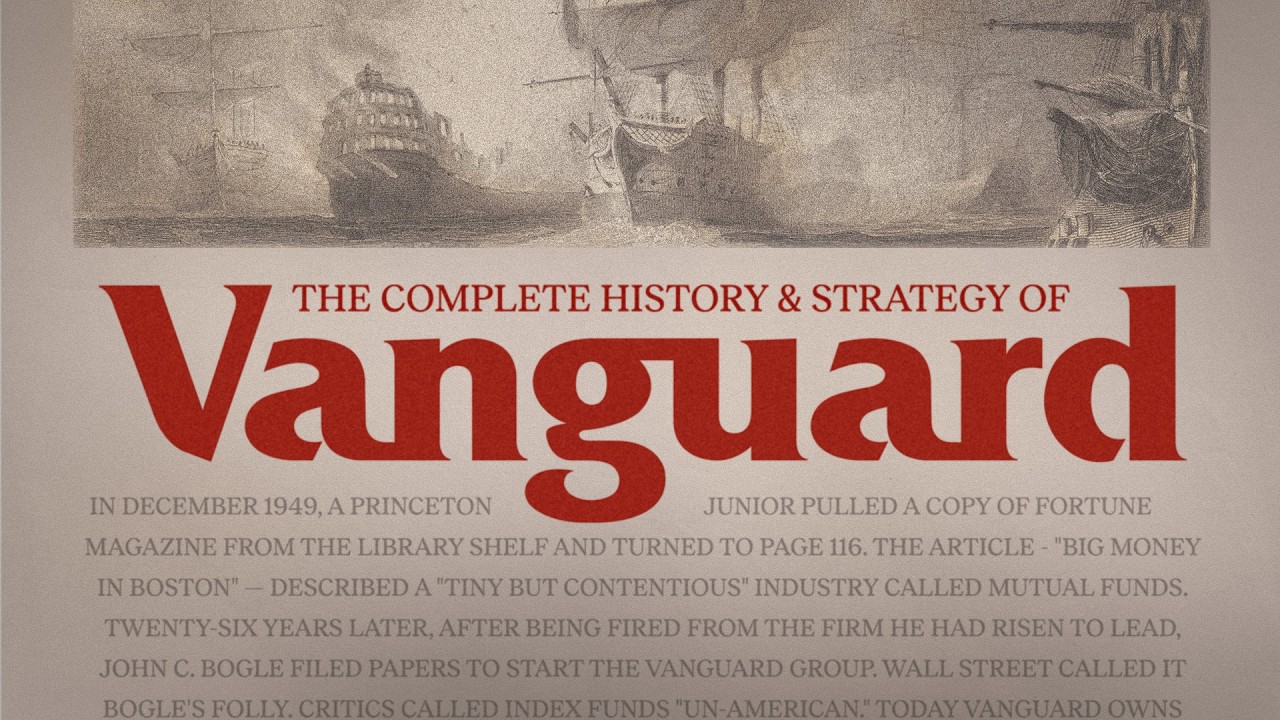
When it came time to name the new subsidiary in September 1974, Jack received a timely visit from an antiques dealer offering prints of British naval ships from the Duke of Wellington era—the historical figure for whom Walter Morgan had originally named Wellington. One print depicted the HMS *Vanguard*, the flagship from the Battle of the Nile where British forces defeated Napoleon. Captivated by the name, Jack chose "Vanguard" on the spot. While the name evokes traits like steadfastness and pioneering leadership today, Jack originally chose it because it represented "total victory" and the "complete annihilation of the other side." The Vanguard Group filed for incorporation in September 1974, but initially, the industry barely noticed because it was viewed as a routine back-office switch.
- *Forbes* labeled the corporate infighting "a plague on both houses."
- John Lovelace Jr. of Capital Group met Jack at LAX at 6:00 AM to warn him he would destroy the industry.
- The name Vanguard was chosen from a print of the HMS *Vanguard*, the flagship from the Battle of the Nile.
- The Vanguard Group officially filed for incorporation in September 1974.
---
The Loophole and the Nobel Thesis
To truly revolutionize the industry and capture the public's attention, Jack needed a second revolution. Since he was legally barred from providing active investment advice, he realized he could offer a product that required no active decision-making at all: the index fund. This shift eventually created massive changes in global wealth and corporate governance, to the point where modern observers worry about existential threats when passive index funds hold massive stakes in corporate America. However, 50 years ago, the initial reaction to the concept was completely flat.
The commercial spark for the index fund came in the fall of 1974 via an article in the *Journal of Portfolio Management* by Nobel Prize-winning economist Paul Samuelson. Samuelson's research showed no evidence that active fund managers systematically outperformed the market. He concluded that an obvious opportunity existed for someone to offer a fund that "apes the whole market, requires no load, and keeps commissions, turnover, and management fees to the feasible minimum." While Samuelson also suggested that large foundations set up internal portfolios to track the S&P 500 as a benchmark to measure their "in-house gunslingers" against, he explicitly anticipated a retail product by mentioning a "no load" structure.
- Paul Samuelson's foundational article was published in the *Journal of Portfolio Management* in the fall of 1974.
- Samuelson called for a market-tracking fund with no load and minimized fees.
- Modern industry concerns focus on the massive passive equity ownership of American corporations, a far cry from the zero-interest environment of 1974.
---
Overcoming Technical Hurdles to Launch the First Index Fund
The conceptual roots of tracking the market were not entirely new; market indices like the Dow Jones Industrial Average and the Standard & Poor's 500 dated back to the 1800s, originally created by newspapers to report market movements. However, it took nearly a century for the industry to realize that a benchmark could double as an actual investment product. The idea initially faced a cultural barrier in the United States, as selling a product that promised to be perfectly average ran uniquely counter to the "American way of being" and the aspiration of American exceptionalism.
Institutional players had tried and failed to make index funds work before. Most prominently, the Pension Management Division of Wells Fargo created an index fund for the Samsonite Luggage Corporation's pension fund a few years prior. It failed because tracking the S&P 500 continuously was a deceptively difficult technological problem that required advanced software and automation rather than human managers. Furthermore, buying a perfectly weighted, representative basket of all 500 companies was incredibly expensive. Even today, doing this independently requires a minimum efficient scale of roughly $3.5 million.
Jack Bogle stepped into this environment utilizing a clever legal loophole. He went to his board of directors and argued that because an S&P 500 index fund required zero active investment advisory services, Vanguard could launch and run it directly without violating the legal prohibition against active management or involving Wellington. The board agreed. Jack later noted that Vanguard possessed both "the opportunity to commit the crime" and the urgent motivation to do so to bypass the active management ban. Running the historical numbers, Jack discovered that the S&P 500 index without fees regularly beat half of all active managers, and over a full decade, it beat 78% of them. He realized that while running a fund at true zero cost was impossible, at scale, Vanguard could approach near-zero costs and systematically outperform three-quarters of the mutual fund industry.
- The Pension Management Division of Wells Fargo built an early, unsuccessful index fund for the Samsonite Luggage Corporation.
- Replicating the S&P 500 outside of a fund structure requires a minimum representative amount of about $3.5 million today.
- Historical data analyzed by Bogle showed that the unmanaged S&P 500 index beat 78% of active managers over a full decade.
The Math Behind the "Cost Matters Hypothesis"
Owning the average of the market while charging significantly lower fees than active managers creates a massive structural advantage. If a fund simply captures the market average but cuts out the standard fee, the gap between fund returns and net investor returns narrows dramatically, allowing it to easily outperform the vast majority of competitors.
While a 1% fee on total assets might sound minimal, the long-term compounding math paints a devastating picture. If the stock market returns 7% and an investor pays a 1% management fee, they are giving up roughly 15% of their total returns each year. To illustrate the long-term impact, a 25-year-old investing for 40 years at a 7% market return would end up with $1.5 million. However, with a 1% annual fee reducing that return to 6%, the final retirement nest egg drops to just $1 million. That single percentage point costs the investor an extra 50% of their retirement capital.
Contrary to popular belief, Vanguard founder Jack Bogle was not a zealot who hated active management; he was a "zealot for low fees." Bogle acknowledged that some active managers could outperform the market, but sustaining that outperformance for decades is nearly impossible. Starting every year with a 15% disadvantage means an active manager must beat the market by that margin just to break even for the client. Bogle later codified this absolute focus into what he called the "cost matters hypothesis."
- **The Median Active Manager:** In aggregate, active managers mathematically cannot beat the market because they *are* the market. While some outperform in any given year, the median active manager will underperform by the exact amount of their fees.
- **Negative Expected Value:** Because winning active managers cannot be reliably identified in advance for multi-decade horizons, active management with fees carries a negative expected value compared to a fee-free index fund.
- **Life-Changing Deltas:** A $500,000 difference in a retirement or college account is the literal dividing line between an elderly person being self-sufficient or relying entirely on their children for support.
The $25,000 Handshake for the S&P 500
In 1975 and 1976, Vanguard began moving to launch the world's first retail index fund. Embracing their classic naval theme, Vanguard designated all employees as "crew members." Bogle assigned one of his very first employees, Jan Twardoski, to write the software for the index fund. Twardoski wrote the program using the APL programming language on a time-sharing computer located in Philadelphia.
Meanwhile, Bogle went straight to Standard & Poor's headquarters to negotiate the licensing rights for the S&P 500 index. During the negotiations, the head of the S&P department openly mused whether Vanguard should pay S&P or if S&P should pay Vanguard, noting the incredible marketing exposure the index would receive. Ultimately, they pulled a figure out of thin air: Vanguard would pay S&P a flat licensing fee of $25,000 per year.
This historic deal stands as a monument of deep irony. Today, index fund licensing is a massive, incredibly high-margin global business, and S&P Global’s licensing segment pulls in $1.85 billion annually. It is estimated that Vanguard now pays S&P Global roughly $300 million to $400 million per year, making Vanguard their single largest client. S&P essentially collects a multi-billion dollar rent from firms like Vanguard, BlackRock, Fidelity, and State Street, scaling their fees based on assets under management (AUM) or trading volume.
- **Fidelity’s Workaround:** Fidelity attempted to circumvent these steep licensing costs by launching a 500-stock fund that structurally mimics the S&P 500 without paying for the trademarked name, but investors largely ignored it because they demanded the trusted "standard brand."
- **The "Intel Inside" of Finance:** The S&P 500 name has effectively become the definitive ingredient brand for the entire stock market.
The Broken $11 Million IPO and a Part-Time Portfolio Manager
In 1976, Vanguard officially launched the First Index Investment Trust, which was later renamed to the far more recognizable Vanguard 500 Index Fund (Ticker: VFIAX). Today, it is the second-largest individual fund in the world with $1.5 trillion in assets, sitting right behind its sister fund, the Vanguard Total Stock Market Index Fund ($1.6 trillion). Together, these two effectively identical funds hold over $3 trillion. However, the debut of this financial titan was a complete disaster.
The initial pitch to the public—asking investors to settle for "average" returns—was a terrible sales pitch that Wall Street laughed at. Compounding the bad pitch, Vanguard's fund board had stripped Bogle of direct marketing and distribution rights, forcing him to route the fund through traditional stockbrokers who demanded heavy sales loads. To bypass this restriction, Bogle structured the launch as a one-time Initial Public Offering (IPO), utilizing a syndicate of Wall Street banks.
Vanguard estimated they needed a baseline of $150 million in initial capital to properly buy and replicate the S&P 500 index. Instead, the IPO completely broke, raising a meager $11.3 million—just one-fourteenth of their target. They did not even have enough money to buy standard 100-share lots of all 500 stocks. To survive, they actively selected just 280 stocks, buying the 200 largest companies and using an unproven academic hypothesis to sample the remaining 80 stocks in hopes of mimicking the broader index.
> "She worked full time during the day at her husband's furniture store in Wilmington, Delaware. And by nights and weekends, she was the portfolio manager for what today is... by far the largest fund in the world."
To avoid looking like they were hiring an expensive, forbidden investment advisor, Vanguard secretly hired a young woman part-time to manage the portfolio on nights and weekends. While she spent her days working at a furniture store, she spent her evenings tracking and balancing the foundational seed capital of modern indexing. Meanwhile, competition watched with open disdain; Ned Johnson, the head of Fidelity, famously told the press, "I can't believe that the great mass of investors are going to be satisfied with just receiving average returns. The name of the game is to be the best."
"Scale Economies Shared" and the Emergency Merger
Despite the terrible initial reception, the structural machine Bogle built was pure genius. Because Vanguard's customers are the actual owners of the management company, the business has zero incentive to generate a profit margin for outside shareholders. Instead of distributing corporate profits, recognizing corporate taxes, and issuing taxable dividends, Vanguard simply passes the excess cash directly back to the fund investors in the form of lower fees. Every time Vanguard drops its fees, it is the functional equivalent of a public company reporting record high earnings.
As the funds attract more capital, the true power of "scale economies shared" kicks in—a concept that effectively makes Vanguard the "Costco of finance," but on steroids. Asset management has almost zero variable costs; whether managing $11 million or $1.5 trillion, the fixed costs of computers and baseline administration remain remarkably similar. However, achieving those massive scale advantages took time, and the fund's initial years were incredibly lean, plagued by customer withdrawals and cash outflows.
By late 1977, the situation grew so desperate that Vanguard had to perform an emergency asset transplant to keep the index fund alive. Bogle managed to merge a legacy, actively managed Wellington fund called the Exeter Fund directly into the index fund. The Exeter Fund possessed $68 million in assets—roughly six times the size of the bleeding index fund. This unceremonious corporate maneuver, rather than the failed retail IPO, provided the true, surviving capital base for what would become the largest pool of wealth on earth.
- **VOO's Current Fees:** In 1976, the index fund carried a significant 0.65% management fee due to its small size. By 2026, the scaled ETF equivalent (VOO) charges a near-zero management fee of just three basis points (0.03%).
- **A Communist Machine:** Unlike Costco, which still answers to public shareholders demanding cash flows, Vanguard operates completely without external profit motives, allowing investors to invest "in the beautiful machine of capitalism as a communist."
The Switch to "No-Load" and the Long Road to $1 Billion
Vanguard finally won a monumental legal and structural victory in 1981 and 1982 when they secured the right to take over the distribution of their own funds. Bogle achieved this by exploiting an audacious loophole, aggressively arguing to regulators that Vanguard wasn't actually taking over distribution—they were "eliminating" it entirely. They did this by cutting out external stockbrokers, going completely "no-load," and refusing to pay the standard 8.5% broker sales commissions.
Of course, eliminating external distribution meant Vanguard had to absorb those functions internally as a fixed cost. They had to hire internal staff to handle marketing, mail out literature, and manually process transactions. In the early 1980s, investing with Vanguard required a customer to physically fill out an order sheet, write a paper check, and send it through the U.S. Mail.
Because Vanguard completely cut out brokers, there was absolutely zero financial incentive for Wall Street salespeople to pitch Vanguard funds to clients. This created a massive headwind that kept growth slow. It took six full years after its tumultuous 1976 launch for the 500 Index Fund to finally reach its first $100 million milestone in 1982—a fraction of the $2 billion the active Wellington Fund had commanded years prior. Yet, the slow burn worked. Exactly six years later, in 1988, the fund hit the $1 billion mark, proving that the low-fee gospel was permanently catching fire.
[01:40:00](https://www.youtube.com/watch?v=ipiKIgdynZE&t=6000s) The Hidden Pillars of early Vanguard
While the dream of active management centers on uncapped upside and legendary stock pickers like Warren Buffett, Peter Lynch, or Jerry Tsai generating stellar returns, the debt and money markets operate under a strict ceiling determined by bond coupons. In these fixed-income spaces, relative performance is dictated almost entirely by costs, meaning the lowest-cost provider inevitably wins. Capitalizing on this, Vanguard quietly built a fixed-income juggernaut during the 1970s and 1980s. This reliable business line kept the firm afloat while Jack Bogle waited for his indexing revolution to finally gain traction.
The other deep irony of Vanguard's early survival is that the firm never truly got out of the active equity business. They had inherited the active Windsor Fund through their shared responsibilities with the Wellington Management Company. Managed by John Neff, Windsor was "absolutely shooting the lights out" on the equity side. For many years, the standard active fees from Neff’s fund single-handedly generated the profits required to pay Vanguard's overhead and keep the lights on, bridging the gap while the low-cost index strategy was still too small to pay for itself. Today, Vanguard's massive index business completely dwarfs its fixed income, money market, and active equity arms, but that was not the case for a very long time.
Beyond sheer fee differentials, a massive behavioral component explains why passive index funds outperform roughly 85% of active managers in the long run. Active managers are caught in a mindset of constantly trying to pick the best companies, which leads to heavy trading, high transaction costs, and a tendency to react poorly to external stimuli—such as selling winners too early or panic-selling during downturns. In contrast, passive investing naturally encourages discipline. The hosts invoke Warren Buffett’s famous line, "Don't just do something. Stand there," noting that whether an investor is active or passive, the key to greatness is mostly choosing not to act every day. Index investors can simply make peace with owning the whole market, whereas active managers and their clients face a much higher predisposition to constantly tinker, which hurts performance over time.
- **Uncapped vs. Capped Upside:** Equities offer unlimited growth potential, whereas fixed-income performance is strictly capped by government, municipal, or treasury bond coupons.
- **The Windsor Fund:** An actively managed fund run by John Neff that provided the financial life support Vanguard needed during its fragile early years.
- **Behavioral Pitfalls:** Active trading introduces heavy transaction costs and emotional vulnerabilities, whereas passive indexing naturally lends itself to long-term holding.
---
[01:45:00](https://www.youtube.com/watch?v=ipiKIgdynZE&t=6300s) Scaling the Colossus and Vercel’s Agentic Infrastructure
As Vanguard exited the 1980s, its economies of scale began to compound, allowing the firm to systematically lower its fees. The Vanguard 500 fund had crossed the $1 billion threshold in 1988, and its initial launch price of 68 basis points plummeted to 59 basis points in 1979, 50 basis points in 1985, and 35 basis points by 1987. Having slashed its fees by half, Vanguard truly embodied the low-cost ideal. The acceleration only intensified from there: by 1992, assets reached $10 billion, marking a staggering 10x growth in just four to five years. This milestone allowed Vanguard to launch a sister fund, the Total Stock Market Index Fund. With a massive capital base and advanced computing power, Vanguard no longer had to stop at the S&P 500; they could track and own every single U.S. stock, conveniently bypassing the licensing fees owed to S&P Global. By the mid-to-late 1990s, these two sister funds combined approached $100 billion. The Vanguard colossus was rolling, but in 1999, Jack Bogle remarkably managed to get himself fired yet again.
Before diving into that story, the hosts take a moment to thank their sponsor, Vercel, highlighting a fundamental shift in cloud infrastructure. For two decades, the cloud operated on a simple model of human requests and server responses. However, in the emerging era of AI agents, software autonomously makes decisions and sends requests. Vercel has purpose-built an "agentic infrastructure" where AI agents are treated as first-class users alongside human developers, rather than just bolting AI features onto an old deployment platform.
A standout feature of Vercel's stack is their AI Gateway, which acts like a content delivery network but for tokens. It provides a single endpoint that routes across every major AI model with automatic failovers so that an application keeps humming even when an underlying provider goes down. Since its launch, the gateway has served 60 trillion tokens across 180,000 unique teams. A prime example is Poke, a company building personal super-intelligence for hundreds of thousands of users. Before switching to Vercel, Poke manually managed its own routing, retries, and cost tracking; after adopting Vercel, their retry rate dropped 20x, ensuring almost every message succeeds on the first try. Vercel provides a complete AI stack optimized for ambitious teams like OpenAI, Stripe, and Polymarket, answering the ultimate question of what a team chooses to ship when code becomes increasingly autonomous.
- **Vanguard Fee Reductions:** Fees dropped from 68 basis points at launch to 59 in 1979, 50 in 1985, and 35 in 1987.
- **AUM Milestones:** The flagship index fund hit $1 billion in 1988 and exploded 10x to $10 billion by 1992.
- **Total Stock Market Index Fund:** Launched in 1992 to capture all U.S. stocks, saving Vanguard from paying S&P Global licensing fees.
- **Vercel AI Gateway Statistics:** Has served 60 trillion tokens across 180,000 unique teams, resulting in outcomes like Poke's 20x drop in message retry rates.
---
[01:50:00](https://www.youtube.com/watch?v=ipiKIgdynZE&t=6600s) Jack Bogle’s Heart and the Changing of the Guard
Behind Jack Bogle’s relentless work ethic lay a perilous medical secret: he was born with a rare genetic heart disease called arrhythmogenic right ventricular dysplasia (ARVD). He suffered his first heart attack in 1960 at just 31 years old, long before becoming the CEO of Wellington, and went on to survive 10 to 12 more throughout his life. At age 36, he received a pacemaker. One doctor told him not to count on living past 40, while a second doctor advised him to buy a place in Cape Cod, quit working, and enjoy his remaining years. Bogle famously reflected that if he had taken the second doctor's advice, the first doctor would have been right. Instead, he chose to live every day exactly as he otherwise would, resulting in legendary anecdotes. He once suffered a heart attack while waiting for a commuter train in Philadelphia and jokingly bet the paramedics that they wouldn't get him to the hospital in time. He even brought defibrillators to squash matches, using his condition to jokingly intimidate opponents by telling them he could drop dead at any moment.
By the mid-1990s, Bogle’s heart was severely worn down. His twin brother, David, passed away from heart complications in 1994, and by 1995, over half of Jack’s own heart had stopped functioning. At age 66, his doctors insisted on a heart transplant. In May 1995, Vanguard held a press conference announcing that Bogle would step down to prepare for the surgery, naming his former assistant and longtime CFO, John Brennan, as the next CEO. While spending a grueling 128 days in the hospital hooked up to a continuous IV drug drip to keep his heart beating, Bogle stubbornly continued to run the company from his bed. He officially yielded the CEO title to Brennan on January 31, 1996, and received his new heart in late February. Though the company had essentially prepared for the end of his career, Bogle made a miraculous recovery, lived for another 23 years on the transplanted heart, and was back on the squash court within a matter of weeks.
- **Medical Condition:** Bogle battled Arrhythmogenic Right Ventricular Dysplasia (ARVD), surviving roughly a dozen heart attacks.
- **The Succession:** John Brennan, who joined Vanguard in 1982 and served as CFO, officially took over as CEO on January 31, 1996.
- **Hospital Stint:** Bogle spent 128 days on a hospital waiting list, hooked to an IV, while continuing to operate as CEO from his room.
- **The Recovery:** Bogle lived for 23 years post-transplant, defying the expectations of the medical community and his company.
---
[01:55:00](https://www.youtube.com/watch?v=ipiKIgdynZE&t=6900s) The Post-Transplant Rift and the Growth Inflection
While Bogle was recovering, Vanguard entered an extraordinary harvesting phase. The firm’s agonizingly slow early growth—caused by 20 years of making long-term tradeoffs like dropping sales loads and operating via a subscale mutual ownership structure—finally hit a massive upward inflection point. By 1996, Vanguard's total assets under management (AUM) had skyrocketed to $180 billion, with its two core index funds representing $50 billion of that total and rapidly racing toward $100 billion. It was a deeply rewarding time for company veterans who had been ridiculed for decades. However, this massive success attracted fierce competition. Wall Street giants like Fidelity, BlackRock, and State Street woke up to the passive indexing threat. While these rivals lacked Vanguard’s unique user-owned structure, they began offering ultra-low-fee index funds as loss leaders or break-even products, using them to retain clients and cross-sell higher-margin services.
When Bogle returned to the office, he no longer held the executive reins. Stuck on the board, he grew deeply frustrated and morphed into a "curmudgeon," fiercely opposing the new initiatives proposed by Brennan and the management team. To protect Vanguard's market share and satisfy consumer demand, Brennan wanted to expand into international funds, offer sector-specific index funds, and invest heavily in marketing. In Bogle's eyes, these aggressive expansions perverted Vanguard’s pure, narrow mission.
The hosts frame this friction as a classic ideological divide between a visionary founder, who got the company from one to two using "one cool trick," and the executive team required to scale it from two to one hundred. Highlighting this shift, a staggering 99% of Vanguard's eventual AUM came after Bogle stepped down. Brennan and his team remained true believers in the core low-cost mission, but they had to adapt to a changing world. They faced modern pressures like employee retention—competing for talent against Wall Street firms capable of paying obscene performance bonuses—and the urgent need to fund massive technological and R&D investments as the internet age loomed.
- **AUM Explosion:** Total Vanguard AUM reached $180 billion by 1996, a massive leap from its $1 billion threshold less than a decade prior.
- **Loss Leaders:** Competitors like Fidelity and BlackRock introduced low-fee index funds to protect their client bases, subsidizing them with high-margin products.
- **The Scaling Shift:** 99% of Vanguard’s ultimate AUM was accumulated after Bogle relinquished the CEO role to John Brennan.
- **New Management Initiatives:** Brennan introduced sector funds, international index tracking, increased marketing, and an employee partnership plan to attract talent and fund internet-era R&D.
[02:00:00](https://www.youtube.com/watch?v=ipiKIgdynZE&t=7200s) The Clash Over Exchange-Traded Funds
A series of responsibilities fell into the lap of Jack Brennan as he sought to take Vanguard forward, ultimately bringing him to loggerheads with Jack Bogle and the board. This conflict reached a full-blown crisis in 1999 over the emergence of Exchange-Traded Funds (ETFs). While modern investors often interact with Vanguard entirely through ETFs rather than traditional mutual funds, Bogle had a fiercely negative perspective on the product.
The opportunity to pioneer ETFs originally came to Vanguard in 1992, when Nathan Most, the VP of new products at the American Stock Exchange, approached Bogle. Most envisioned a trading vehicle that would allow shares of mutual funds to trade on stock markets just like individual stocks. He naturally identified Vanguard’s newly crowned jewel, the Vanguard 500 Index Fund, as the ultimate launch partner. An idealist, Most believed this would democratize investing by expanding distribution to anyone with a brokerage account. Structurally, ETFs offered massive benefits: investors were insulated from the tax hits caused by other people selling shares, and they could lock in exact, real-time market prices instantly rather than waiting for the end-of-day mutual fund pricing.
Despite these advantages, Bogle absolutely hated the idea and told Most to get lost. He feared that the ability to trade in and out of a fund all day would tempt investors into the "worst possible sin of investing"—speculating, incurring heavy trading costs, and engaging in intraday arbitrage instead of maintaining long-term ownership. Furthermore, because transaction fees on brokerages were still high at the time (often up to $50 a trade), Bogle worried that brokerage platforms would heavily incentivize frequent trading to maximize their own profits. He also detested the fact that exchange trading would allow investors to short-sell index funds, predicting it would become an absolute disaster for the financial industry.
- **Key Figure:** Nathan Most, VP of new products at the American Stock Exchange, who conceptualized the ETF.
- **Structural Advantages of ETFs:** Intraday liquidity, real-time market pricing, and protection against capital gains tax hits triggered by other fund participants.
- **Bogle's Objections:** Increased speculation, behavioral temptations for retail investors, high brokerage transaction costs, and the ability to short-sell the market index.
[02:05:00](https://www.youtube.com/watch?v=ipiKIgdynZE&t=7500s) The Ouster of "Saint Jack" and the Rise of the Bogleheads
Because Bogle rejected the concept, Nathan Most took his idea to State Street, an old Boston bank with a new asset management division. State Street launched the world's first ETF: the Standard & Poor's Depository Receipts Trust, famously known as the SPDR or "Spider." It became the largest ETF in the world, a title it held until recently when it was surpassed by Vanguard and BlackRock. Passing on ETFs was a massive strategic blunder for Bogle. Today, while ETFs hold about half the aggregate assets of traditional mutual funds, they grow at roughly 30% per year while traditional mutual funds remain flat.
This ideological divide became the ultimate sticking point that proved a founder's initial purity, while necessary to start a company, is rarely sufficient to scale it and keep it globally relevant. In August 1999, the management team under Brennan insisted that Vanguard had to launch ETFs to reclaim the S&P 500 space they had pioneered. To resolve the deadlock, the board announced it would strictly enforce its mandatory retirement age of 70. Because Bogle had turned 70 that year, he was forced to step down from the board by December. The move sparked a massive public outcry; Bogle had become a beloved figure, frequently referred to as "Saint Jack," and the company had even recently erected a statue of him at headquarters.
Compromising to preserve his legacy, Vanguard established the Bogle Financial Markets Research Center on campus. Bogle spent the next 20 years there writing books, giving speeches, and evangelizing index investing—serving as unparalleled, unbuyable marketing for Vanguard. He softened his stance on ETFs over time and eventually repaired his relationships with management after Brennan stepped down in 2008 and was succeeded by Bill McNabb. Meanwhile, his followers organized into a powerful grassroots movement. Originating in 1998 as the "Vanguard Diehards" on the Morningstar.com forums, they evolved into the independent community known as the "Bogleheads."
- **First ETF Launched:** The SPDR (Standard & Poor's Depository Receipts), created by State Street.
- **Asset Growth Dynamics:** ETF assets grow at roughly 30% annually, while traditional mutual fund assets are flat.
- **Bogleheads Forum Reach:** Bogleheads.org attracts 2 million visitors per month, while its corresponding subreddit sees 400,000 weekly active visitors.
- **Vanguard's ETF Launch:** Vanguard finally entered the market with its own ETFs in 2001.
[02:10:00](https://www.youtube.com/watch?v=ipiKIgdynZE&t=7800s) Market Shifts and the Tailwinds of Indexing
The rapid adoption of indexing in the late 20th century was fueled by major structural shifts in the investment management industry. In 1975, when Bogle started, individual "fools" dominated the stock market, trading frequently through stockbrokers who took commissions on every transaction. Because the market was filled with unsophisticated participants making poor choices, it was relatively easy for professional active managers to beat the market. However, by the 1980s and 1990s, the market became highly institutionalized.
As unsophisticated retail investors shifted away from individual stocks and into index funds, active managers found themselves playing against other pros, making market outperformance incredibly difficult. The dynamic resembles online poker: "When it first started, there was a lot of fish at the tables, and then eventually the fish go away, and you're just playing other poker pros."
Simultaneously, the financial landscape shifted away from transactional stockbrokers toward fee-based financial advisors. Unlike brokers who profited from high trading volumes, financial advisors charged a percentage of assets under management. This aligned their incentives with the growth of their clients' net worth, making low-cost index funds a perfect vehicle for their portfolios and transforming the advisory business into a massive distribution channel for Vanguard.
- **Market Evolution:** The transition from an individual-dominated market in the 1970s to a highly sophisticated, institutionalized market by the 1990s diminished the edge of active management.
- **Incentive Realignment:** Financial advisors shifted from transaction-based broker commissions to asset-under-management (AUM) fees, driving the adoption of index funds.
[02:15:00](https://www.youtube.com/watch?v=ipiKIgdynZE&t=8100s) The Dot-Com Boom and the Warren Buffett Endorsement
The dot-com era served as the final major accelerant for index investing. As online brokerages like E-Trade emerged, everyday investors flooded the market. For the first time, everyday people could log into an online account and see their fund’s daily performance right next to a benchmark index. This newfound transparency made it glaringly obvious how much money investors were losing to high-fee, underperforming active funds. Seeing a simple "S&P 500 button" on their screens prompted a massive migration to indexing.
Equity ownership in America exploded as a result of these forces. Pre-Great Depression, only 1% to 2% of Americans owned stocks, a number that crawled to 4.2% by 1949 and hovered around 20% by the 1980s. Driven by the bull market of the 90s, online trading, and the rise of the 401(k)—which shifted retirement responsibility onto individuals—equity ownership surged from 32% in 1989 to 54% by 2001. Today, approximately 60% of Americans have stock market exposure.
Index funds also received the ultimate validation from Warren Buffett. In his 1996 Berkshire Hathaway annual shareholder letter, Buffett explicitly endorsed the philosophy, writing: "The best way to own common stocks is through an index fund that charges minimal fees." While Buffett noted that index funds will outpace the vast majority of investment professionals, his own firm was a legendary exception. From 1965 to 2025, the S&P 500 delivered a phenomenal 10% compound annual growth rate (CAGR) with dividends reinvested, resulting in a 405X return. By comparison, Warren Buffett and Charlie Munger steered Berkshire Hathaway to a staggering 19% compound annual growth rate over the same period.
- **Equity Ownership Growth:** Rose from 32% of Americans in 1989 to 54% in 2001, driven by online brokerages, market transparency, and the 401(k) boom.
- **S&P 500 Historical Performance (1965–2025):** 10% compound annual growth rate (CAGR), resulting in a 405X return.
- **Berkshire Hathaway Performance (1965–2025):** 19% compound annual growth rate (CAGR).
[02:20:00](https://www.youtube.com/watch?v=ipiKIgdynZE&t=8400s) The Vanguard of Private Equity and Capital in the Middle of Nowhere
The discussion highlights the extraordinary nature of Berkshire Hathaway's performance compared to standard managers over a 60-year horizon, noting a staggering 39,000x return versus a modest 405x return. Because Berkshire is such an extreme exception, Warren Buffett’s advocacy for low-cost Vanguard index funds carries massive weight. The hosts creatively frame Berkshire as "the Vanguard of private equity funds"—essentially a concentrated, no-fee private equity fund without the typical fee and carry structures. They note a strong "spiritual and cultural resonance" between Buffett's home base in Omaha and Vanguard’s headquarters in Malvern, Pennsylvania, jokingly describing the latter as being in the "middle of freaking nowhere" and a two-hour train ride from New York City.
The conversation takes a personal turn as it's revealed that one host's grandparents were among the very first Vanguard fund holders, joining in the late 1970s or early 1980s before the fund even crossed the $100 million mark. They treated it simply as a trusted "local company." This family connection ran so deep that Vanguard accounts were set up for the host on the day he was born, marking another prominent appearance for Southeast Pennsylvania in the show's history alongside their Taylor Swift episode. Transitioning back to the core narrative, the hosts tease the upcoming impact of the 2008 financial crisis, noting that it served as the ultimate proving ground for indexing and passive management.
- Berkshire Hathaway achieved a 39,000x return over 60 years compared to 405x for average managers.
- Vanguard's headquarters are located in Malvern, Pennsylvania.
- The host's grandparents became Vanguard clients in the late 1970s or early 1980s.
---
[02:25:00](https://www.youtube.com/watch?v=ipiKIgdynZE&t=8700s) The Great Financial Crisis and the Collapse of Wall Street's Safeguards
The 2008 financial crisis is identified as the finest hour for Vanguard and the passive indexing movement. While index funds did not magically avoid getting hit—experiencing massive losses alongside the broader market—the key differentiator was the total devastation of the active money management ecosystem. Mutual funds, hedge funds, and private equity firms faced a 40% drawdown that broke their compensation structures and redemption contracts. This systemic failure permanently shattered the long-standing Wall Street promise that highly paid, "smart people" would actively protect investor capital during bad times through built-in safeguards.
Quoting Morningstar's John Reckenthaler, the hosts emphasize how active managers long promised to outperform Vanguard's fully invested index funds in a bear market: "It did, and they did not." Beyond pure numbers, the crisis broke the public's trust, transforming the perception of Wall Street figures from sophisticated experts to "charlatans at best and crooks at worst" amidst bailouts, Lehman Brothers' collapse, and the Occupy Wall Street movement. In stark contrast, Vanguard emerged as the ultimate "hero of Main Street." Because Vanguard makes no empty promises other than giving investors the true, unadulterated market return—which historically yielded an 11.6% compound annual growth rate with reinvested dividends since 1975—exhausted investors eagerly swapped "clever" Wall Street strategies for Vanguard's straightforward transparency.
- Passive index funds suffered massive losses in 2008 and 2009, moving exactly with the market.
- The broader market experienced an approximate 40% drawdown during the crisis.
- Vanguard index funds have delivered roughly an 11.6% compound annual growth rate since their inception in 1975, assuming dividends are reinvested.
---
[02:30:00](https://www.youtube.com/watch?v=ipiKIgdynZE&t=9000s) The Billion-Dollar Bet: Warren Buffett vs. Ted Seides
An intriguing operational detail from the crisis is that Vanguard actually had to raise its ultra-low fees slightly (for example, from 0.07% to a fraction higher) to cover its fixed costs and avoid laying off any staff when its Asset Under Management (AUM) contracted. This unique dynamic highlights the realities of their mutual ownership model. The narrative then shifts to Warren Buffett's famous 2007 public challenge. Buffett bet $1 million of his own money that a Vanguard 500 Index Fund would outperform a portfolio of at least five hedge funds over a 10-year period starting January 1, 2008. The sole challenger to accept was Ted Seides, a friend of the podcast and host of *Capital Allocators*, who selected five hedge funds of funds representing a broader basket of roughly 100 hedge funds.
The bet resulted in a decisive victory for index funds, with Seides conceding the match a year or two early. Ultimately, the Vanguard 500 index fund blew past the competition with a 126% net return after fees, while the hedge fund portfolio brought in a meager 36%. Buffett directed the $1 million prize to the charity Girls Inc. of Omaha. This victory culminated in Buffett's glowing praise in Berkshire's 2016 annual letter, where he wrote, "if a statue is ever erected to honor the person who has done the most for American investors, the hands down choice should be Jack Bogle." Buffett concluded the tribute by calling Bogle "A hero to them and to me."
- Warren Buffett issued his public 10-year bet in 2007, starting on January 1, 2008.
- Ted Seides chose five hedge funds of funds to diversify across roughly 100 hedge funds.
- Over the 10-year period, the Vanguard 500 returned 126% net of fees compared to the hedge fund portfolio's 36%.
- The $1 million winnings were donated to Girls Inc. of Omaha.
---
[02:35:00](https://www.youtube.com/watch?v=ipiKIgdynZE&t=9300s) Post-Crisis Dominance, Human Advice, and the Legacy of Jack Bogle
Reflecting on the modern landscape, the hosts observe that while the index fund model survived its initial stress test beautifully, the sheer scale of modern index giants like Vanguard, BlackRock, Fidelity, and State Street means a failure today would pose a massive systemic risk, echoing the "too big to fail" anxieties of 2008. Following the financial crisis, Vanguard's market capture exploded. Their share of total mutual fund flows doubled overnight, climbing from 15 cents of every new dollar before the crisis to 30 cents after. By September 2010, Vanguard officially dethroned Fidelity to become the world's largest mutual fund manager. Between 2014 and 2019, Vanguard pulled in an astonishing $1.2 trillion in cash inflows—more than double the $500 billion absorbed by the rest of the entire industry combined.
Under CEO Bill McNabb, Vanguard successfully countered the rise of robo-advisors like Wealthfront by launching its own personal advisory service. Leveraging its profitless structure, Vanguard offered real human Certified Financial Planners (CFPs) to accounts with as little as $50,000, charging a highly disruptive fee of just 5 to 30 basis points. The segment grew rapidly to $150 billion in advised assets. The walk-through concludes with a tribute to Jack Bogle, who passed away in January 2019 at the age of 89. From a company born out of a "cockamamie revenge plot" against former partners, Bogle left behind an enterprise managing $5 trillion for over 20 million clients, firmly commanding a 25% market share of the entire mutual fund industry.
- Vanguard's share of mutual fund industry inflows doubled from 15% pre-crisis to 30% post-crisis.
- Vanguard surpassed Fidelity as the world's largest mutual fund manager in September 2010.
- From 2014 to 2019, Vanguard captured $1.2 trillion in inflows, compared to $500 billion for the rest of the industry combined.
- Vanguard's human advisor service requires a minimum investment of $50,000 and charges between 5 and 30 basis points.
- Jack Bogle passed away in January 2019 at age 89, at which point Vanguard managed $5 trillion and held a 25% market share.
[02:40:00](https://www.youtube.com/watch?v=ipiKIgdynZE&t=9600s) The Billion-Dollar Delta Jack Bogle Left on the Table
By 2019, Vanguard’s compounding advantage was humming at full throttle, allowing the firm to manage 13 of the 15 largest individual funds in the entire world. When the company's iconic founder, Jack Bogle, passed away, his obituaries widely reported his estate to be worth roughly $80 million. While a substantial sum, the hosts contrast this with the staggering wealth accumulated by Vanguard's rivals. For reference, the Johnson family of Fidelity is worth an estimated \$40 to \$50 billion through their 40% ownership stake, and BlackRock co-founder and CEO Larry Fink is worth about $1.5 billion. Because Vanguard is bigger than Fidelity at this point, Bogle effectively left a $40 to $100 billion delta on the table—wealth that went directly back to the American investing public. The hosts debate whether Bogle truly "left it on the table," noting a chicken-and-egg paradox: Vanguard could only exist and scale by rejecting a profit-taking motive. Even though path dependency would have allowed the firm to generate enterprise value later on, Bogle simply lacked any interest in doing so.
However, the competitive landscape has shifted dramatically. In the years leading up to Bogle's death, and especially in the seven-plus years since, Fidelity and BlackRock have made massive comebacks by validating and dominating the ETF market—an area Vanguard famously neglected in its early days. BlackRock has grown into the world's largest asset manager by focusing on an international and institutional client base, contrasting with Vanguard's individual, US-centric approach. Meanwhile, Fidelity has thrived by dominating a different part of the value chain. One host shares a personal anecdote, confessing that he uses a Fidelity brokerage account to hold mostly Vanguard funds. This represents a broader market reality: Fidelity acts as a premiere brokerage that happens to have funds, while Vanguard functions as a set of funds that happens to have a brokerage.
Fidelity has capitalized on this by turning two of Vanguard's traditional weak spots into massive home runs: corporate 401k plans and retail brokerage accounts. One host notes that Fidelity won him over during his first job at Microsoft via his 401k and employee stock plan, retaining him as a customer for 15 years. Realizing they don't need to beat Vanguard in the fund business, Fidelity happily offers loss-leader index funds—some even cheaper than Vanguard's—while monetizing the cross-over ecosystem. This exposes a vulnerability for Vanguard: a massive portion of its assets under management belongs to customers who have no direct relationship with Vanguard, holding Vanguard ETFs through competing brokerages like Fidelity instead.
- **Vanguard Scale (2019):** Managed 13 of the 15 largest individual funds globally.
- **Jack Bogle's Estate:** Valued at approximately $80 million at the time of his death.
- **Competitor Wealth:** The Johnson family (Fidelity) is worth \$40–\$50 billion; Larry Fink (BlackRock) is worth around $1.5 billion.
- **Fidelity Strategy:** Uses ultra-low-cost index funds as loss leaders to capture lucrative 401k and retail brokerage relationships.
---
[02:45:00](https://www.youtube.com/watch?v=ipiKIgdynZE&t=9900s) The "Gmail vs. Outlook" Paradox and BlackRock's ETF Dominance
The hosts play out the long-term risk of Vanguard's open-garden approach. If competitors like Fidelity continue making massive profits from ancillary businesses—such as corporate 401k management fees and retail brokerage monetization—they could completely undercut Vanguard on fund costs. They liken this to a tech war: "This is like Vanguard is Microsoft and Fidelity is Google, and they could launch Gmail and say that thing that is your primary business, we're going to make that free now." In response, the counter-argument is made that the financial difference between Vanguard's three-basis-point fee and a zero-basis-point fee is practically negligible for the everyday investor. Compounding $100,000 at 7% over 40 years yields \$1.48 million at a 0.03% fee versus \$1.497 million at zero fees—a gap unlikely to trigger a mass migration.
However, the tech analogy holds true when examining user experience. The COVID-19 pandemic exposed a major flaw in Vanguard's mutualized model: because it has no excess profits to reinvest, its customer service and technology became "jank." Horror stories emerged of lost account transfers and failed trades. Fidelity saw this weakness and doubled down on engineering a vastly superior platform. "It is an inherent tradeoff in the model," the hosts observe; to build a best-in-class UI, Vanguard would have to raise prices, an idea counter to its DNA.
Turning to BlackRock, their comeback story is directly rooted in an extraordinary financial crisis acquisition. In 2009, amidst the depths of the global economic meltdown, BlackRock bought iShares from Barclays, which needed to shore up its capital base after absorbing Lehman Brothers' failed assets. It proved to be a slam dunk. Coming out of the crisis, retail investors realized they wanted more than just Vanguard's folksy, simple mutual funds; they wanted ETFs to execute sophisticated, "Wall Street Bets style fancy bets on the market." While Vanguard limits itself to a few hundred funds, BlackRock boasts 1,400 total ETFs spanning highly customized strategies and sectors that Vanguard historically opposed.
- **BlackRock ETF Scale:** Manages 1,400 ETFs totaling $3.3 trillion in assets under management, making it the dominant market leader.
- **Market Growth:** The ETF market is expanding at a clip of 30% every year, allowing BlackRock to accelerate away from Vanguard.
- **Vanguard Rank:** Holds the number two spot in the ETF market, though it still dominates the slow-growing traditional mutual fund market.
- **Vanguard Reinvestment Weakness:** The lack of a corporate profit margin leaves the firm with less capital to invest in modernizing customer service and digital infrastructure.
---
[02:50:00](https://www.youtube.com/watch?v=ipiKIgdynZE&t=10200s) Salim Ramji’s Arrival and the Uncharted Territory of Private Equity
The rapid rise of Fidelity and BlackRock flips the central question of the episode. The hosts admit that when they began their research, they wondered how anyone could survive against Vanguard's structural price advantage. Now, they wonder if Vanguard's mutualized, no-profit model is actually holding it back. To navigate these challenges, Vanguard made a historic move 24 months ago in May 2024 by hiring Salim Ramji as CEO—the first outside leader in the firm's 50-year history. Crucially, Ramji was brought in directly from BlackRock, where he ran the iShares ETF division. His mandate is to fix Vanguard's glaring modern vulnerabilities: lagging technology, subpar customer service, and the threat of competitors owning the end-customer relationship.
To combat this, Ramji is looking to expand Vanguard's direct advisory businesses, fixed-income products, and retirement platforms to better compete with Fidelity. The firm has struggled to launch meaningful innovations over the last decade; their acquisition of the direct indexing platform JustInvest has stalled, and their Personal Advisor Services have remained largely flat since the pandemic. Surprisingly, Ramji is also steering Vanguard into private assets and private equity for the very first time.
This pivot triggers a deep-dive discussion on fees. Thanks to the "Vanguard effect," public equity and bond fees have compressed over the last 60 years from 2% down to mere basis points. Yet, venture capital and private equity remain stubbornly anchored to a "two and twenty" fee structure (a 2% management fee and a 20% performance carry fee), or higher. The hosts explain that private markets are inherently an "access business." Unlike the public markets where assets don't care who buys them, in private markets, "the assets have to pick you." Investors willingly tolerate exorbitant fees for a shot at power-law outperformance and exclusive access to late-stage private companies like Anthropic. Furthermore, bringing the Vanguard effect to private equity requires a "crazy person like Jack Bogle," someone intensely interested in investing but completely unmotivated by personal capital gain. The hosts conclude that Bogle was a true "one of one" anomaly across all of global corporate history.
- **Historic CEO Change:** In May 2024, Vanguard appointed Salim Ramji, former head of iShares at BlackRock, marking its first outside CEO hiring.
- **Fee Comparison:** Public index funds cost around 7 to 40 basis points, while private equity and venture capital routinely command a 2% management fee and a 20% carry fee.
- **The Mutual Corporate Anomaly:** Aside from REI, a few credit unions, and select insurance companies, the mutual ownership structure remains incredibly rare in the global economy.
---
[02:55:00](https://www.youtube.com/watch?v=ipiKIgdynZE&t=10500s) The Private Asset Frontier and the Portfolio Barbell
Vanguard's entry into private assets is driven by an undeniable macroeconomic shift: American companies are staying private longer. Consequently, a massive portion of the nation's economic innovation engine has shifted out of public view and into late-stage private markets, which now boast multiple trillion-dollar or near-trillion-dollar entities. If Vanguard wants to faithfully serve its long-term investors, it has to offer exposure to this arena. The ultimate test for Salim Ramji is whether Vanguard can execute this in a "vanguard-y way"—meaning at cost, or as close to cost as humanly possible.
The firm has already turned heads by announcing a strategic alliance with the private equity behemoth Blackstone. However, the hosts express skepticism about how the underlying economics will scale. Because high-performing private firms like Sequoia or Benchmark hold scarce, highly sought-after access, they have zero structural incentive to abandon their lucrative fee models for Vanguard. Additionally, the wild success of low-cost index funds has fundamentally altered how modern individuals construct their wealth, creating a distinct "barbell" portfolio strategy. Typically, an investor puts 80% of their net worth into Vanguard as a cheap, safe beta core, and uses the remaining 20% to chase asymmetric, high-risk bets elsewhere. The ultimate question moving forward is whether Vanguard is content remaining the reliable 80% foundation for the investing public, or if Ramji intends to aggressively push the firm into that speculative 20% territory.
[03:00:00](https://www.youtube.com/watch?v=ipiKIgdynZE&t=10800s) The Mandate to Grow and Vanguard Today by the Numbers
A fundamental question arises when examining Vanguard’s unique corporate structure: when a company is entirely owned by its current set of customers, why grow? In a traditional company like Apple, shareholders purchase equity because they expect future profits and cash flows to compound at a high rate. The corporate charter dictates growth to benefit those shareholders. Vanguard, however, possesses no built-in incentive or obligation to appease outside investors; its sole mandate is to serve its current customer-owners. Growing the business beyond that footprint becomes a philosophical value judgment—a choice to bring Jack Bogle's mission to as many people as possible.
Vanguard’s leadership would likely counter that growth remains essential to stay competitive. The nominal cash flows generated by ultra-low management fees are simply not enough to fund the massive, fixed-cost technology platform required today. Future customers are effectively needed to finance these ongoing build-outs. Furthermore, management argues that serving current owners requires expanding into new product lines, which explains Vanguard’s recent push into wealth management and private equity.
Today, Vanguard's scale is staggering, with total assets under management (AUM) reaching $12 trillion. Interestingly, $2 trillion of that sum remains in actively managed funds. This underscores the fact that Jack Bogle was never a passive-indexing zealot; he was a zealot for low fees. The true DNA of Vanguard relies on using its mutual ownership structure to enter financial sectors and squash fees as close to zero as possible, delivering market-average returns at a dramatically below-market cost. This approach closely mirrors Costco's strategy of leveraging customer loyalty to expand into vacations and auto sales.
* **Asset Evolution:** For Vanguard's first 20 years, its AUM was dominated by active funds. In 1994, indexing accounted for just 15% of total assets. Today, the script has flipped completely: 84% of assets are in passive index funds.
* **The Vanguard Effect on Fees:** Vanguard’s average ETF and mutual fund expense ratio sits at 0.07%, with specific funds like the S&P 500 ETF (VOO) lower. The industry average across mutual funds and ETFs remains much higher at 44 basis points (0.44%)—six and a half times Vanguard's average.
* **Performance and Scale:** Over the last 10 years, 84% of Vanguard’s funds have outperformed their industry peers. The company employs 20,000 people and serves 50 million investors globally.
* **Geographic Concentration:** Despite its massive size, Vanguard is not nearly as global as rivals like BlackRock, Invesco, or Franklin Templeton; a little over 90% of its investor capital resides within the United States.
---
[03:05:00](https://www.youtube.com/watch?v=ipiKIgdynZE&t=11100s) The Fate of Wellington Management and a Heartwarming Reconciliation
A fascinating and often overlooked epilogue to the Vanguard origin story is the fate of Wellington Management Company after the corporate divorce. Following Bogle's dramatic departure, the original four I-Vest partners took over the firm and slowly engineered a radical corporate turnaround. They took the public company private through a management buyout, completely reconfiguring its business model. They instituted a progressive partnership structure where senior partners systematically aged out of their equity to allow younger, talented recruits to age in.
Wellington evolved into a trillion-dollar powerhouse completely devoted to active management—the exact antithesis of Bogle's passive revolution. During the market rebound in the late 1980s, Wellington aggressively diversified, establishing a debt practice, private capital arms, alternative investments, and an international footprint. They even won the mandate to manage MIT's prestigious endowment. Today, Wellington manages roughly $1.3 trillion in assets, making it a highly respected peer to industry giants like Los Angeles-based Capital Group, which manages $3 trillion.
The ultimate twist in the story is that Wellington Management never stopped running the investments for Vanguard's flagship Wellington Fund. Even today, the Wellington Fund remains an active Vanguard-administered portfolio with $100 billion in assets, but its investment advisory is handled by the exact same Wellington Management Company. This shared history paved the way for an emotional reconciliation. In the early 1990s, Jack Bogle traveled to Boston to have dinner with the I-Vest partners. Together, they chose to "bury the hatchet," recognizing that their separate paths had yielded spectacular success for both institutions.
> "We have gone our separate ways. It's been a long time. It's time to bury the hatchet."
---
[03:10:00](https://www.youtube.com/watch?v=ipiKIgdynZE&t=11400s) Playbook Themes: The Rarity of Mutual Structures and the Tyranny of Costs
In analyzing why Vanguard's mutual ownership model is so rare outside of select industries like mutual insurance, REI, or local grocery co-ops, the conversation turns to structural limitations. While some point to entities like the NFL as a parallel, the league operates under a collective bargaining agreement rather than customer ownership. Vanguard's model works uniquely well because its underlying product is capital. When Vanguard built its corporate campus in Malvern, Pennsylvania, it didn't need Wall Street backing; it simply tapped its own fund holders for construction loans. A retail co-op like REI could never successfully issue a bond to its everyday members to build a new retail store.
Furthermore, launching a customer-owned business requires an individual to make a profoundly non-economic decision. Founders must choose to forgo personal equity, trading immense wealth creation for a fixed salary. Even though Vanguard pays competitive corporate salaries, its leaders never access founder economics. It takes a highly distinct, fiercely stubborn individual like Jack Bogle—operating under very specific life circumstances—to pull this off. As Bogle noted in his memoir, a mutual structure was his "last best chance to resume my career" after being fired, admitting he knew it would never grant him the personal fortunes enjoyed by the rest of Wall Street.
Vanguard’s model also succeeds because finance scales infinitely like software, dropping unit costs down as volume grows. This structural alignment of incentives is the ultimate takeaway of the case study. Because the fund investors elect the board of directors, the board naturally votes to lower fees whenever possible. As Bogle famously championed, "strategy follows structure." By architecting a customer-owned framework, Vanguard structurally locked itself into a low-cost strategy, allowing investors to exploit the compounding of returns without suffering what Bogle called the "tyranny of compounding costs."
* **The Visa Parallel:** The creation of Visa by Dee Hock represents a similar historical anomaly. Hock, operating as an employee rather than a founder, walked away from individual equity to convince competing banks to link arms and form a highly unique, non-profit-like collective infrastructure.
* **Compounding Costs:** Bogle inverted the traditional financial focus on gains, warning: "Where returns are concerned, time is your friend, but where costs are concerned, time is your enemy."
---
[03:15:00](https://www.youtube.com/watch?v=ipiKIgdynZE&t=11700s) The Passive Crisis and Unconstrained Market Scale
The sweeping success of the passive indexing movement has inevitably triggered new systemic critiques, transforming what was once a financial revolution into a looming structural crisis. A major point of contention centers on the very nomenclature of "passive investing." The label is technically a misnomer; an automated algorithm does not determine the composition of major indexes like the S&P 500. Instead, a human committee sits around a table to vote on eligibility rules and select companies. This means a remarkably small group of corporate gatekeepers effectively serves as the investment advisors to the broader American public.
While critics worry about this centralization, defenders argue that this human variable only matters in the short run. Over long horizons, the returns of the S&P 500 track the total stock market almost identically. However, a more pressing systemic concern is the sheer volume of voting shares controlled by massive index fund complexes. Because Vanguard and its rivals have captured so much capital, they now exert staggering proxy voting power over virtually every major public corporation in the United States and across the globe.
Ultimately, asset management possesses an operational profile that separates it from almost any other industry on earth. Unlike physical businesses bounded by geography or local addressable markets, asset management has a total addressable market (TAM) that encompasses all of human wealth. It can ingest any currency and invest it into any company globally. Because the business scales so elegantly—requiring little incremental overhead outside of customer service once its baseline fixed costs are cleared—it possesses near-infinite operating leverage.
[03:20:00](https://www.youtube.com/watch?v=ipiKIgdynZE&t=12000s) The Passive Surge and Corporate Governance Debates
The exponential growth of passive investing has fundamentally shifted the financial landscape. Thirty-five years ago, passive assets represented a mere 1% of the market; today, they command over 20% of the S&P 500. Recently, a major milestone was reached when passive assets in funds eclipsed active assets for the first time. This dramatic shift has triggered intense debate and anxiety within the financial community, primarily around the concept of price discovery. Critics argue that if the vast majority of investors blindly buy an index, there will not be enough active traders left to accurately determine what a stock is worth. The speakers readily dismiss this concern, noting that even Jack Bogle acknowledged passive funds are effectively "free riders" on the price discovery paid for by active managers. They argue that prices are set by the marginal trader, meaning it takes very few active participants arguing with their dollars to find an equilibrium. If inefficiencies do arise, the profit potential for arbitrage increases, naturally drawing capital back to active trading.
A more dramatic academic theory suggests that because giant fund managers like Vanguard, BlackRock, State Street, and Fidelity own more than 20% of major competitors—such as Apple, Microsoft, and Google—they might discourage competition. The theoretical fear is that these institutional owners could tell CEOs to collude, keep prices high, and "screw over the American public" to maximize corporate profits. The speakers laugh this off as a concept that sounds plausible in an academic thesis but falls apart in the real world. No fierce CEO is going to stop competing with their biggest rival just because they share common index fund ownership. However, they concede that a more legitimate concern lies in corporate governance and proxy voting.
As these index funds grow, their managers wield enormous voting control. The mechanisms for voting these shares are currently all over the board. While a tiny minority of funds allow individual investors to vote on specific issues, most offer a few broad options, such as voting with management, with the majority, or following specific ESG guidelines. The speakers note that if a handful of massive funds eventually control 60% of corporate America, corporate governance will effectively transform into a public court of opinion. It turns every internal board issue into a massive election on the scale of US politics, completely changing how corporate boards have historically operated.
* Passive assets grew from 1% of the market 35 years ago to over 20% of the S&P 500 today.
* Direct indexing and custom mirror portfolios mean true passive ownership could realistically be closer to 30% to 40%.
* Because direct indexers own the underlying stocks rather than fund shares, their individual votes do not contribute to the consolidated voting power of the giant fund complexes.
[03:25:00](https://www.youtube.com/watch?v=ipiKIgdynZE&t=12300s) Analyzing Vanguard Through the Seven Powers
The conversation transitions to Hamilton Helmer’s *Seven Powers* framework, which traditionally explains how a company earns sustainably higher profits than its competitors. This presents a humorous paradox: Vanguard, by its very structural design, earns zero profits. To make the framework fit, the speakers adapt the definition to focus on market share and its spiritual goal—explaining why 50 million people trust the firm with $12 trillion. They note that Vanguard's right to exist is tied directly to its lack of profits; if it tried to capture those profits, it wouldn't exist today. They pose a fundamental defensive question: what stops another idealistic young person from starting a rival, non-profit index firm to compete with them?
The answer lies heavily in scale economies and extreme counter-positioning. Vanguard operates on a "scale economies shared" model, much like Costco. A newcomer starting from a zero asset base would have to charge 1% or 2% in fees just to break even, making them instantly uncompetitive against Vanguard's ultra-low fees. Even at just seven basis points, Vanguard's trillions under management generate a massive absolute pool of dollars to fund salaries and operations. Furthermore, Jack Bogle’s creation of Vanguard is highlighted as perhaps "the most extreme example of counterpositioning ever." It was fundamentally non-economic, offering zero financial incentive for a competitor to replicate it because there was no money to be made.
Reviewing the remaining powers, the speakers rule out network economies and debate switching costs. While ETFs allow brokerage accounts to be ported easily, capital gains taxes create a massive, unyielding switching cost for the funds themselves. No investor wants to liquidate a Vanguard index fund and trigger a massive tax bill just to move to an identical competitor. Branding is another massive power, fortified by the "bogleheads" community and decades of iconic endorsements, most notably from Warren Buffett. They also identify process power within Vanguard's unique corporate culture, which attracts mission-driven individuals who are explicitly making a non-economic decision to bypass traditional, high-paying New York City finance roles. Cornered resources, however, are deemed non-existent for the firm.
* **Scale Economies:** Vanguard's enormous asset base allows it to survive on single-digit basis points that smaller start-ups cannot match.
* **Counter-positioning:** The mutual structure eliminates the profit motive, completely neutralizing standard corporate competitors.
* **Switching Costs:** High capital gains taxes lock investors into their compounding fund positions for the long term.
* **Branding:** Decades of trust and high-profile praise, including Warren Buffett stating that a statue should be erected to Jack Bogle.
* **Wholesale Transfer Pricing:** A significant portion of Vanguard's S&P 500 fund expenses goes toward paying licensing fees to S&P Global.
[03:30:00](https://www.youtube.com/watch?v=ipiKIgdynZE&t=12600s) The Quintessence of Vanguard and the Reality of 100x Stocks
When distilling the "quintessence" of the Vanguard story, the discussion shifts to a fundamental realization about the nature of the market. Before Bogle, the mutual fund industry marketed everything as a unique, differentiated product, selling the dream of outsized returns. Bogle realized that public equities investing is actually an undifferentiated commodity market—closer to buying soybeans or oil than a unique piece of jewelry. In commodity markets, the lowest price always wins. Bogle effectively broke off a massive sleeve of the market and forced it to operate under commodity rules. The speakers cite Bogle's famous quote: "The grim irony of investing is that we investors as a group not only don't get what we pay for, we get precisely what we don't pay for." Because investing is a zero-sum game before fees, owning the whole market at the lowest possible cost is a surefire way to land in the upper decile over a 40-year duration.
The ultimate takeaway is a validation of Warren Buffett's view: the world really should erect a statue to Jack Bogle. His story is rare proof that a single human being can drastically alter the course of history. While index funds and the underlying technology would have eventually emerged, they likely would have been run as corporate loss-leaders. Without the "Vanguard effect" forcing a race to zero, commercial giants like Fidelity or BlackRock would never have voluntarily dropped their profit margins to zero. Bogle fundamentally changed the financial lives of millions of average citizens.
Closing out the main discussion, the hosts share a striking piece of trivia regarding market volatility and investor temperament. Data compiled on the entire historical basket of stocks that have achieved a 100x return since their IPO reveals a staggering reality. While these elite companies delivered an average lifetime return of 533x, *every single one* suffered an average peak-to-trough drawdown of 65% at some point, taking an average of eight years just to recover to their previous all-time highs. This includes tech giants like NVIDIA, Amazon, Meta, and TSMC. The hosts point out that almost no individual investor has the iron stomach required to hold through an eight-year wipeout, meaning the only people who actually capture those legendary 100x gains are high-conviction anomalies and passive index fund holders.
* Vanguard officially opened its doors on May 1st, 1975—the exact same month and year that Bill Gates and Paul Allen founded Microsoft.
* The original headquarters of Vanguard was located in Valley Forge, Pennsylvania, chosen for its historical resonance as the cradle of independence in the American Revolution.
* Jack Bogle authored 12 books in his lifetime; all ongoing proceeds are directed to the Bogle Family Foundation, which heavily supports charities like the American Indian College Fund.
* The hosts announce their new writing collaboration with the *Wall Street Journal*, including a recently published weekend feature detailing the history of Vanguard.
[03:40:00](https://www.youtube.com/watch?v=ipiKIgdynZE&t=13200s) A Full-Circle Wall Street Journal Moment and a Upgraded Mobile Battle Station
The conversation kicks off on a sentimental note as Ben reflects on a major full-circle milestone in his career. Years ago, he worked on the business side of the Wall Street Journal rather than as a writer, making the reality of having a regular column in the publication an absolute mind-blower for his 24-year-old self. To ensure their audience has seamless access to these pieces, they are offering special free links for listeners who sign up on their dedicated landing page. Even existing subscribers are encouraged to register so they can receive direct notifications whenever a new piece drops.
Shifting gears to personal "carve-outs," Ben excitedly shares that he is recording the episode on a brand-new MacBook Pro M5 Max. Admitting that he went all out and "clicked the max button," he notes how this upgrade shattered his belief that his old 2021 M1 computer was still perfectly snappy. The raw power of the M5 Max made him realize just how much his previous machine was actually lagging. Coupled with a massive internet upgrade boasting 2.5 gigs symmetrical speeds, he is reveling in a frictionless computing experience with zero latency. David expresses genuine awe at the sheer horsepower Ben carries around, jokingly labeling the 16-inch laptop a "mobile battle station" and comparing it to a "LaFerrari in a backpack."
- Listeners can sign up at acquired.fm/wsj to access free links to the hosts' Wall Street Journal columns.
- Ben's new tech setup consists of a maxed-out 16-inch MacBook Pro M5 Max alongside a 2.5 Gbps upload and download internet connection.
[03:41:40](https://www.youtube.com/watch?v=ipiKIgdynZE&t=13300s) Sports Analytics, Parenting Heaven, and an Accidental Teal Crossover
David steps in with three carve-outs of his own, starting with Michael McKelvey, a highly produced and hilarious YouTuber focused on sports analytics whom he highly recommends. Moving to his second carve-out, David shares a heartwarming story about taking his older daughter to see the new Super Mario Galaxy movie. Having promised her a special daddy-daughter date, the two walked hand-in-hand to the theater, ordered popcorn, candy, and Mario-themed Shirley Temples. The afternoon was pure "parenting heaven," complete with his daughter snuggling up during the scary scenes, which David describes as the absolute best date of his life.
For his final surprise carve-out, David reveals an ultimate "Acquired crossover" he discovered while Googling Brooks Vanguard running shoes. Though it is not an official collaboration, the old-school shoe model happens to share the Vanguard name and is available in a color that perfectly matches "Acquired teal." Caught up in the excitement of the discovery, David performs a live order during the recording so they can sport the matching shoes at their next live event.
- Michael McKelvey is a Seattle-based YouTuber highlighted for his intellectual and humorous sports analytics videos.
- David's daughter-daddy date involved seeing the Super Mario Galaxy movie in theaters.
- The hosts discovered and live-ordered old-school Brooks Vanguard running shoes that feature the signature Acquired teal color.
[03:43:52](https://www.youtube.com/watch?v=ipiKIgdynZE&t=13432s) Season Sponsor Appreciations and Expert Contributor Thank Yous
The hosts take a moment to express their deep gratitude to the core sponsors supporting the season, acknowledging JP Morgan's reliable payments infrastructure, Vercel's developer tools, ServiceNow's AI capabilities, and Statsig's unified experimentation and product analytics platform. Beyond corporate sponsors, they credit the key industry insiders and experts who helped shape the depth of the episode. Arvind Navaratnam of Worldly Partners receives a special shout-out for his stellar write-up on Vanguard and his framework for valuing the company. They also thank their close friend and past guest Morgan Housel for his insights.
The list of acknowledgments extends to high-level industry veterans and prominent journalists. Bill McNabb, the former CEO of Vanguard who spent 30 years at the firm, gets a big thank you for hopping on the phone multiple times to help the hosts think through complex topics. They also credit former Wall Street Journal editor Mike Miller for his ongoing help in crafting their episodes, alongside legendary financial columnist Jason Zweig, who offered invaluable context on Jack Bogle and the fund space.
- Season partners highlighted include JP Morgan, Vercel, ServiceNow, and Statsig.
- Arvind Navaratnam's write-up includes a unique valuation framework for the traditionally unvalued Vanguard.
- Bill McNabb, who served as Vanguard's CEO from 2008 to 2017, personally consulted with the hosts for this episode.
[03:46:01](https://www.youtube.com/watch?v=ipiKIgdynZE&t=13561s) Final Literary Shout-Outs and Signing Off to the Slack
Wrapping up their thank yous, David highlights Justin Baer's upcoming book, *House of Fidelity*, alongside Charles D. Ellis's *Inside Vanguard* and Eric Balchunas's *The Bogle Effect* as foundational texts for their historical research. Ben extends a blanket thank you to a handful of anonymous contributors who lent their expertise behind the scenes. For listeners looking for more marathon financial breakdowns, the hosts point them toward their past deep dives into Rentech, Berkshire Hathaway, Costco, and Visa.
Finally, the hosts direct fans to join their email list to receive written takeaways, research photos, corrections, and a sneaky hint from David regarding the next episode's topic. Listeners are invited to join the active community discussion in the Slack channel as the hosts close out the recording with their traditional sign-off and the iconic "who got the truth" outro music.
- Key research books referenced: *House of Fidelity* by Justin Baer, *Inside Vanguard* by Charles D. Ellis, and *The Bogle Effect* by Eric Balchunas.
- The Acquired catalog features a three-part, nine-hour series on Berkshire Hathaway.
- Listeners can vote on future episode topics and get upcoming episode hints by subscribing at acquired.fm/email or chatting at acquired.fm/slack.
## Notable quotes
> [50:00](https://www.youtube.com/watch?v=ipiKIgdynZE&t=3000s) Let's take this business that generates a bunch of cash and has enterprise value. Let's stop generating the cash and let's take its enterprise value and effectively call it zero now and give it to the funds itself... Commit suicide with the company effectively.
> A plague on both houses
> If you do that, you will destroy this entire industry. — John Lovelace Jr.
> apes the whole market, requires no load, and keeps commissions, turnover, and management fees to the feasible minimum. — Paul Samuelson
> the opportunity to commit the crime — Jack Bogle
> Don't just do something. Stand there — Warren Buffett
> She worked full time during the day at her husband's furniture store in Wilmington, Delaware. And by nights and weekends, she was the portfolio manager for what today is... by far the largest fund in the world.
> I can't believe that the great mass of investors are going to be satisfied with just receiving average returns. The name of the game is to be the best. — Ned Johnson
> [20:00](https://www.youtube.com/watch?v=ipiKIgdynZE&t=1200s) worst possible sin of investing — Jack Bogle
> [35:50](https://www.youtube.com/watch?v=ipiKIgdynZE&t=2150s) The best way to own common stocks is through an index fund that charges minimal fees. — Warren Buffett
> [38:20](https://www.youtube.com/watch?v=ipiKIgdynZE&t=2300s) if a statue is ever erected to honor the person who has done the most for American investors, the hands down choice should be Jack Bogle — Warren Buffett
> [38:20](https://www.youtube.com/watch?v=ipiKIgdynZE&t=2300s) A hero to them and to me. — Warren Buffett
> [40:00](https://www.youtube.com/watch?v=ipiKIgdynZE&t=2400s) This is like Vanguard is Microsoft and Fidelity is Google, and they could launch Gmail and say that thing that is your primary business, we're going to make that free now.
> [03:10:00](https://www.youtube.com/watch?v=ipiKIgdynZE&t=11400s) Where returns are concerned, time is your friend, but where costs are concerned, time is your enemy. — Jack Bogle
> [03:30:00](https://www.youtube.com/watch?v=ipiKIgdynZE&t=12600s) The grim irony of investing is that we investors as a group not only don't get what we pay for, we get precisely what we don't pay for. — Jack Bogle
## Mentioned
Vanguard, Ben Gilbert, David Rosenthal, BlackRock, State Street, Fidelity, S&P 500, Apple, Visa, Nike, Starbucks, Jack Bogle, The Bogle Effect, Morgan Housel, J.P. Morgan, David Bogle, Bud Bogle, American Can Company, Blair Academy, Princeton University, Firestone Library, Fortune, Massachusetts Investors Trust Company, MIT, General Electric, Merrill Lynch, The Economic Role of the Investment Company, Walter Morgan, Wellington Management, Wellington Fund, John Brooks, The New Yorker, Edward Johnson, Fidelity Capital Fund, Jerry Tsai, Institutional Investor, Manhattan Fund, Primerica, Sandy Weill, Jamie Dimon, Citigroup, Thorndike, Doran, Payne, and Lewis, Nick Thorndike, iVest, The New York Times, Jeff Bezos, Wellington Group of Investment Companies, Vanguard Group, Forbes, John Lovelace Jr., Capital Group, Paul Samuelson, Journal of Portfolio Management, Wells Fargo, Samsonite Luggage Corporation, Jan Twardoski, Standard & Poor's, S&P Global, Vanguard 500 Index Fund, VFIAX, Vanguard Total Stock Market Index Fund, Ned Johnson, Exeter Fund, VOO, Windsor Fund, John Neff, Warren Buffett, Peter Lynch, Vercel, Poke, John Brennan, Nathan Most, American Stock Exchange, SPDR, Brennan, Bogle Financial Markets Research Center, Bill McNabb, Morningstar.com, Bogleheads, E-Trade, Charlie Munger, Berkshire Hathaway, John Reckenthaler, Lehman Brothers, Ted Seides, Capital Allocators, Girls Inc. of Omaha, Wealthfront, Johnson family, Larry Fink, JustInvest, Salim Ramji, iShares, Barclays, Anthropic, Blackstone, Sequoia, Benchmark, REI, Invesco, Franklin Templeton, NFL, Dee Hock, Microsoft, Google, Hamilton Helmer, Costco, Bill Gates, Paul Allen, Bogle Family Foundation, American Indian College Fund, NVIDIA, Amazon, Meta, TSMC, Wall Street Journal, MacBook Pro M5 Max, Michael McKelvey, Super Mario Galaxy Movie, Brooks Vanguard, JP Morgan, ServiceNow, Statsig, Arvind Navaratnam, Worldly Partners, Mike Miller, Jason Zweig, Justin Baer, House of Fidelity, Charles D. Ellis, Inside Vanguard, Eric Balchunas, Rentech
In this Acquired episode, Ben Gilbert and David Rosenthal argue that Jack Bogle altered modern finance by treating public equity investing as an undifferentiated commodity and structuring Vanguard as a customer-owned, at-cost cooperative that systematically stripped fees out of asset management.
The Mutual Architecture and Structural Non-Profit Alignment (20:00)
Traditional asset managers historically operated through a separate management company that collected a fixed percentage of assets under management. This framework created a structural conflict of interest, incentivizing managers to grow asset pools through aggressive sales and marketing rather than prioritizing client returns. In 1974, following his ouster from leadership at Wellington Management, Bogle challenged this fifty-year convention by proposing a customer-owned subsidiary to run fund operations strictly at cost.
The Cost Matters Hypothesis and Early Operating Hurdles (24:43)
Bogle's senior thesis at Princeton and Paul Samuelson’s 1974 paper in the Journal of Portfolio Management argued that aggregate fund returns mathematically mirror the broader market, making fees the primary determinant of net investor returns. Over forty years, a 1% annual fee on a 7% market return reduces a $1.5 million retirement portfolio down to $1 million, forfeiting roughly 15% of annual gains.
Vanguard launched the First Index Investment Trust in 1976, but the initial public offering raised only $11.3 million against a $150 million target, forcing the fund to buy a truncated sample of 280 stocks rather than the entire S&P 500. Growth remained sluggish until Vanguard eliminated broker commissions in 1981 and 1982 by taking distribution in-house as a no-load fund, allowing scale economies to lower the fund's expense ratio from 68 basis points at launch to 35 basis points by 1987.
Market Shifts, the Crisis Litmus Test, and Expansion (130:00)
Vanguard's growth accelerated through structural tailwinds in the 1980s and 1990s, including the rise of fee-based financial advisors, the rollout of 401(k) accounts, and direct-to-consumer online brokerages that made active underperformance transparent. U.S. equity ownership climbed from 32% in 1989 to 54% by 2001, reinforced by Warren Buffett’s 1996 shareholder letter advocating for low-cost index funds.
The 2008 financial crisis served as a pivotal validation point. Although index funds declined alongside broader markets, active managers suffered a 40% drawdown that broke redemption contracts and fee formulas, disproving the claim that active managers offered downside protection. Between 2014 and 2019, Vanguard absorbed $1.2 trillion in net inflows, exceeding the rest of the fund industry combined.
Strategic Blind Spots, ETF Tensions, and New Frontiers (120:00)
Despite early triumphs, Bogle’s operational rigidity created strategic disadvantages. In 1992, he rejected Nathan Most's proposal to launch exchange-traded funds (ETFs) on the Vanguard 500, arguing intraday trading encouraged speculative gambling. The idea instead went to State Street, which launched the SPDR trust. Disagreements over entering the ETF market culminated in Bogle's forced retirement from the board in 1999 upon reaching the mandatory age of 70.
Today, Vanguard faces competitive and technological challenges. Competitors like Fidelity cross-subsidize low-fee funds with commercial revenue from 401(k) administration and brokerage operations. Because Vanguard generates no corporate profits to reinvest, its technical infrastructure and customer service lagged during the COVID-19 volume surge. Under CEO Salim Ramji, hired from BlackRock in 2024, Vanguard has expanded into direct financial advisory and partnered with Blackstone to access private equity assets.
Systemic Scale and Market Influence Concerns (195:00)
Vanguard manages over $7 trillion in passive funds and owns roughly 10% of every firm in the S&P 500, while index complexes including BlackRock, State Street, and Fidelity collectively control 24% of the U.S. stock market. This concentration has sparked policy debates regarding whether passive capital diminishes price discovery and whether overlapping institutional ownership weakens competition among major corporations.
The hosts dismiss acute price discovery concerns, maintaining that marginal traders set market prices, and if passive allocations introduce mispricings, arbitrage potential naturally attracts active trading capital back into the market.
Bogle chose to forgo an estimated $40 to $100 billion personal fortune to run Vanguard as an at-cost cooperative, returning over $500 billion to investors in reduced costs. However, as public companies stay private longer and commercial competitors offer zero-fee loss leaders backed by high-margin products, Vanguard must navigate whether its non-profit structure can sustain platform technology and navigate private asset classes without compromising its foundational low-cost model.
## Background
本期节目由知名播客《Acquired》于2026年5月21日发布在YouTube平台,全长3小时48分钟。节目聚焦于先锋领航(Vanguard)的商业传奇,讲述这家被誉为“共产主义资本家”的资产管理巨头如何通过彻底摒弃外部股东分红的相互制架构,在为5000万客户管理万亿美元资产的同时,将数千亿美元的管理费利润让渡还给普通大众投资者。
## TL;DR
节目全面梳理了杰克·博格尔(Jack Bogle)在遭遇惠灵顿管理公司解雇后发起复仇反击、逆向建立先锋领航的跌宕历程。先锋通过首创相互制治理结构彻底消灭外部股东利益冲突,并在埃克塞特基金兼并、免佣制改革与指数化浪潮中艰难破局,将资产管理费率压低至近乎成本极限。随着经历2008年金融危机检验以及赢得与巴菲特的十年百万美元赌约,被动指数投资终成时代主流;尽管博格尔曾因固执拒绝ETF而二度出局,且先锋在现代面临贝莱德与富达的生态反扑与技术滞后挑战,其以规模经济共享重塑华尔街利益格局的平民资本主义遗产依然无人能及。
## Atmosphere & style
全集展现出《Acquired》标志性的史诗级商业叙事风格,两位主持人本与大卫配合默契、拆解透彻,既有对金融制度设计与商业力量模型的精密推演,又洋溢着对博格尔个人英雄主义与纯粹理想信念的敬意。听感在商业暗战的惊心动魄与平民主义的道德震撼之间来回激荡,从病榻边缘的权力交接写到百亿美元赌约的胜出,整体基调宏大深沉而富有感染力,让听众在聆听冷酷资本博弈的同时深刻感受到制度变革带来的温热人性格局。
## Bulletin
- [01:35:00](https://www.youtube.com/watch?v=ipiKIgdynZE&t=5700s) 先锋领航(Vanguard)凭借独特的客户相互制架构彻底消灭了外部股东,将利润直接转化为行业最低的管理费(平均费率仅 0.07%),迄今已将数千亿美元管理费财富从华尔街转移至普通投资者手中。
- [03:00:00](https://www.youtube.com/watch?v=ipiKIgdynZE&t=10800s) 自 2008 年金融危机后,被动指数化投资迎来爆发式增长,先锋管理资产规模已突破 12 万亿美元,旗下指数产品在扣除成本后的长期复利收益压倒性跑赢主动型基金与对冲母基金。
- [02:52:04](https://www.youtube.com/watch?v=ipiKIgdynZE&t=10324s) 2024 年前贝莱德高管萨利姆·拉姆吉出任先锋历史上首位外部 CEO,面临技术架构迭代、开放券商关系维护以及如何低费率切入私募股权(PE)领域的战略挑战。
- [02:30:00](https://www.youtube.com/watch?v=ipiKIgdynZE&t=9000s) 巴菲特与泰德·塞兹的十年百万美元赌约(2008-2017)终局以先锋标普 500 指数基金 126% 的净回报击败对冲母基金组合的 36%,直观印证了主动管理高昂费率对长期复利的严重侵蚀。
## Key takeaways
- [01:35:00](https://www.youtube.com/watch?v=ipiKIgdynZE&t=5700s) 先锋领航的客户相互制使基金份额持有人共同拥有母公司,消除了企业利润与客户收益的利益冲突,任何超额规模经济均通过降低费率直接返还给投资者。
- [01:35:00](https://www.youtube.com/watch?v=ipiKIgdynZE&t=5700s) 先锋早期指数基金起步异常艰难,曾依赖合并惠灵顿旗下的埃克塞特基金紧急输血,并靠约翰·内夫掌舵的主动型温莎基金所赚取的利润反哺维持运营。
- [01:37:00](https://www.youtube.com/watch?v=ipiKIgdynZE&t=5820s) 1980 年代先锋全面转向免佣制(No-Load),主动斩断向外部经纪人支付的佣金链条,虽遭遇华尔街抵制,却建立了与长期投资者的直接信任通道。
- [01:44:32](https://www.youtube.com/watch?v=ipiKIgdynZE&t=6272s) 1992 年推出的全市场股票指数基金不仅覆盖全美流通股,还巧妙规避了向标普全球支付高昂的指数授权费,成为被动投资历史上的关键产品突破。
- [02:00:00](https://www.youtube.com/watch?v=ipiKIgdynZE&t=7200s) 博格尔因坚信日内交易会催生投机而拒绝了内森·莫斯特关于开发 ETF 的提议,导致道富推出 SPDR 抢占先机,成为博格尔职业生涯中最重大的战略误判之一。
- [02:07:30](https://www.youtube.com/watch?v=ipiKIgdynZE&t=7650s) 1999 年围绕是否发行 ETF 及退休制度的董事会交锋导致博格尔卸任董事,但其设立的博格金融市场研究中心与自发崛起的 Bogleheads 社区将平民投资理念推向全球神坛。
- [02:12:34](https://www.youtube.com/watch?v=ipiKIgdynZE&t=7954s) 1980 至 1990 年代市场的高度机构化使散户对手盘急剧减少,加上互联网券商普及带来的业绩透明化,共同打破了主动管理高额收费的神话。
- [02:30:00](https://www.youtube.com/watch?v=ipiKIgdynZE&t=9000s) 巴菲特在 2007 年设立十年百万美元赌约,先锋 500 指数基金以 126% 净回报远超精选对冲母基金的 36%,验证了底层 2/20 及多层收费对财富复利的毁灭性损耗。
- [02:35:46](https://www.youtube.com/watch?v=ipiKIgdynZE&t=9346s) 2008 年金融危机后先锋资产迎来爆发式增长,公募增量资金占比大幅跃升,并顺势推出面向普通大众的低门槛全职真人个人投顾服务(PAS)。
- [02:38:33](https://www.youtube.com/watch?v=ipiKIgdynZE&t=9513s) 博格尔逝世时个人遗产约 8000 万美元,与华尔街同行数十上百亿身家形成鲜明对比,其舍弃的个人商业价值完全让渡给了全社会零售投资者。
- [02:41:28](https://www.youtube.com/watch?v=ipiKIgdynZE&t=9688s) 富达与贝莱德通过掌控 401(k) 账户入口、构建庞大细分 ETF 矩阵并将低费指数作为引流工具展开反扑,突显了先锋在技术基建与多样化产品线上的短板。
- [02:55:00](https://www.youtube.com/watch?v=ipiKIgdynZE&t=10500s) 私募股权(PE)与风险投资(VC)由于依赖品牌准入资格和幂律极化收益,天然无法适用二级市场股票债券被动指数化“先锋效应”的零利润出清逻辑。
- [03:25:00](https://www.youtube.com/watch?v=ipiKIgdynZE&t=12300s) 从战略理论分析,先锋构建了极强的共享规模经济、华尔街同行无法跟进的逆向定位,以及应税账户换仓会触发资本利得税惩罚的高转换成本护城河。
- [03:30:00](https://www.youtube.com/watch?v=ipiKIgdynZE&t=12600s) 公募基金本质上属于无差异化的大宗商品服务,由于费前是零和博弈,40 年超长周期内以超低费率持有全市场几乎必然跻身前 10% 的收益表现队列。
## Detailed walkthrough
### [00:00](https://www.youtube.com/watch?v=ipiKIgdynZE&t=0s) 开场调侃与“最切身相关”的公司
节目一开始充满了轻松的日常闲聊。Ben Gilbert 笑着告诉 David Rosenthal,录音前他还跟妻子打趣说,今晚自己大概能赶上给孩子讲睡前故事,甚至还能赶上吃晚饭,结果妻子立刻劝他别高兴得太早——“那可是先锋领航(Vanguard),能有多复杂?不就是指数基金吗?”当然,除了最核心的被动指数基金,Vanguard 旗下还有庞大的主动型基金、货币市场基金、经纪业务与投顾业务,但毫无疑问,定义这家传奇巨头的绝对是被动投资。伴随着标志性的片头曲,Acquired 正式开启了 2026 年春季赛程。
两位主播直言,Vanguard 可能是整个节目开播以来与听众财务生活“最切身相关”的一家公司。绝大多数人的个人净资产,要么直接投在 Vanguard 的产品中,要么投在其竞争对手复制的同类指数基金里。Vanguard 在 1975 年推出了人类历史上第一只面向个人投资者的被动指数基金,时至今日,它不仅是全美最大的被动指数基金供应商,管理的被动资产规模更是达到了惊人的数万亿美元。
这个规模折算到实体经济中令人震撼:Vanguard 平均持有标准普尔 500 指数(S&P 500)中每一家上市公司接近 10% 的股权。无论是通用汽车(GM)、耐克(Nike)、星巴克(Starbucks)、洛克希德·马丁(Lockheed Martin),还是 Visa 与苹果(Apple),Vanguard 几乎稳居全美绝大多数上市公司第一大股东的宝座。若加上贝莱德(BlackRock)、道富环球(State Street)和富达(Fidelity)等跟随者,这几家被动投资巨头合计持有着全美股票市场高达 24% 的市值。数以千万计的普通家庭正是依靠 Vanguard 积累财富,得以供养子女上大学、购买首套住房、实现体面的退休生活。
---
### [02:15](https://www.youtube.com/watch?v=ipiKIgdynZE&t=135s) “共产主义资本主义”与万亿美元财富转移
让 Vanguard 彻底区别于传统华尔街巨擘的核心,在于其不可思议的治理结构。如果你买入了一只 Vanguard 的基金,你不仅是该基金的持有人,同时就成为了 Vanguard 这家母公司的终极股东。Vanguard 完全由其客户(即旗下基金的投资者)共同持有,它既没有外部股东,也没有上市交易的股票,甚至连首席执行官除了作为普通基民购买旗下基金之外,也不持有公司任何股权。Ben 与 David 将其戏称为一种不可思议的“共产主义资本主义”——一家百分之百仅为客户利益服务、不向任何第三方资本榨取利润的商业实体。
```mermaid
flowchart TD
accTitle: 传统华尔街资管模式 vs Vanguard 共有制结构
accDescr: 对比传统商业基金公司向股东分红的高费率结构,与 Vanguard 由基民共有并将结余转化为降费的模式。
subgraph Traditional["传统商业资管模式 (如外部上市基金)"]
direction TB
T_Shareholders["外部股东 / 华尔街资本"] -->|要求利润最大化| T_Corp["资产管理公司实体"]
T_Corp -->|提取高额管理费/佣金| T_Funds["旗下发行的基金"]
T_Clients["普通投资人"] -->|购买份额并承担费用| T_Funds
end
subgraph VanguardWay["Vanguard 共同所有制模式 (Communist Capitalism)"]
direction TB
V_Clients["投资者 / 客户"] -->|买入并持有基金| V_Funds["Vanguard 各类基金产品"]
V_Funds -->|100% 共同持有母公司| V_Company["Vanguard 集团自身"]
V_Company -.->|无外部利润诉求,运营结余全部反哺| V_LowFees["持续压低费率,将收益归还基民"]
end
```
打造这一套体系的灵魂人物,正是投资界最具争议的传奇人物——约翰·博格尔(John C. "Jack" Bogle)。在两位主播眼中,博格尔是一位兼具远见与偶像破坏者色彩的人物,同时也是个“既极度难相处、又无比正确”的刻板偏执狂。他在 46 岁时才创立 Vanguard,而这套看似绝对崇高的理想主义治理架构,其诞生初衷却掺杂了被老东家合伙人扫地出门后的复仇动机。
尽管动机复杂,但他对整个金融世界的贡献无可估量:
- **直接降费收益**:自 1975 年成立以来,通过极具杀伤力的持续降费和超低交易成本,Vanguard 直接为自身客户节省了超过 5000 亿美元的费用支出。
- **倒逼行业降费**:彭博资深分析师 Eric Balchunas 在《博格尔效应》(*The Bogle Effect*)一书中估算,由于 Vanguard 的极致低费率竞争,迫使富达、贝莱德等整个资管行业跟进降价,间接为所有投资者额外节省了 5000 亿美元。
- **总体财富转移**:Jack Bogle 实际上主导了从华尔街与金融精英的口袋中,将整整 **1 万亿美元** 转移回普通大众储蓄账户的伟大进程。
著名财经作家 Morgan Housel 曾向主播评价:“我把博格尔视为一名‘地下慈善家’(undercover philanthropist)。”按万亿美元量级衡量,他堪称人类有史以来最伟大的慈善家之一。因为这笔巨额财富本可以轻易转化为属于博格尔个人的滔天身家,但他选择了一条截然不同的道路。
---
### [05:30](https://www.youtube.com/watch?v=ipiKIgdynZE&t=330s) 1929年大萧条的阴影与刻入骨髓的创伤
故事的真正起点,要倒退至 1929 年 5 月——就在几万亿财富灰飞烟灭的 1929 年 10 月华尔街大崩盘的前夕。那场崩盘随即引发了席卷全美与全球的大萧条,彻底摧毁了数百万家庭的生计,深刻重塑了一整代美国人的心理烙印。
主播们感叹,在大萧条面前,2008 年的次贷危机都显得“温和”许多:
- **银行挤兑倒闭**:全美有超过 9,000 家银行关门大吉;
- **储蓄化为泡影**:900 万个普通家庭的银行账户资产直接被抹平;
- **工商业瘫痪**:将近 10 万家企业破产倒闭,全美失业率一路飙升至 25%。
大萧条给普通人留下了长达数十年的创伤后应激。David 回忆起自己的祖父母直到 20 世纪 90 年代依然保留着匪夷所思的节俭怪癖——他的祖母一生中从未扔掉过哪怕一个塑料袋,去世清理公寓时清理出了数万只囤积的塑料袋;Ben 的祖父则在地下室里堆满了泛黄的旧杂志和成箱空的抗酸药咀嚼片瓶子。
具有讽刺意味的是,在 1929 年,全美真正直接买卖股票的人口仅占 1% 到 2%。绝大多数家庭倾家荡产并非因为自己手上的股票暴跌,而是因为金融系统高度捆绑杠杆、银行体系全面崩溃蔓延而引发的次生灾害。当时整个宏观经济毫无保护网,任何一环的断裂都会引发连锁崩塌。
---
### [07:35](https://www.youtube.com/watch?v=ipiKIgdynZE&t=455s) 伯格男孩的童年:从显赫家族到家徒四壁
正是在 1929 年 5 月这一风暴来临的前夕,约翰·克利夫顿·“杰克”·博格尔(Jack Bogle)与他的双胞胎兄弟 David 一同降生在同一个产房,与稍早出生的哥哥 Bud 一起,组成了日后被邻里熟知的“伯格男孩”(Bogle boys)。
博格尔兄弟最初并非寒门出身,而是出生在新泽西州一个名门显贵之家:
- **曾祖父**:曾创办过一家互助性质的火灾保险公司(Mutual Fire Insurance Company)——这戏剧性地为其日后建立共有制金融帝国埋下了跨越几代人的潜意识伏笔。
- **祖父**:创办了一家马口铁罐制造企业,该公司日后并入全美声名赫赫的巨头“美国制罐公司”(American Can Company)。
然而,大萧条将这个锦衣玉食的名门望族连根拔起。伴随着家族资产在经济风暴中彻底灰飞烟灭,父亲染上严重酗酒恶疾,最终与母亲离婚并抛弃了整个家庭,多年后孤身一人横死在冰冷的街角。母亲则因一连串灾难性打击陷入重度抑郁症和长期的精神健康困扰,完全丧失了抚养子女的能力。
尚未成年的博格尔三兄弟被迫早早自力更生。在求学期间,三个孩子几乎同时兼职打多份工,无论是凌晨送报、在餐馆做服务员、跑堂洗碗,还是各种繁重的体力劳动,只要能换来微薄收入供养自己和母亲,他们无所不为。
多年以后,功成名就的 Jack Bogle 依旧深情回忆,他童年时代最喜欢的一份工作其实是**凌晨三点出发的送报线路**。因为在漆黑寂静的后半夜,整个世界无比安详宁静,没有任何喧嚣与争执。对那个在贫困、争吵与家庭崩解中挣扎的小男孩而言,凌晨三点的安宁街道,是他在混乱现实中唯一能短暂逃离残酷生活的庇护所。
### [10:00](https://www.youtube.com/watch?v=ipiKIgdynZE&t=600s) 布莱尔学院的优等生与沉重的家族抉择
虽然博格尔一家在社交圈层中仍有名望,也结识各路达官显贵,但私底下家族的财务与人际关系早已支离破碎——他们既是上流社会的局内人,又是身无分文的局外人。当男孩子们升入高中时,家里早已断绝了经济来源,但凭借残存的人脉网和亲友救济,他们替兄弟三人都争取到了知名东海岸私立寄宿高中布莱尔学院(Blair Academy)高年级的奖学金。在布莱尔学院,杰克·博格尔(Jack Bogle)的天赋彻底绽放。他不仅学业拔尖,更以优等生(cum laude)荣誉毕业,毕业时还被全班同学票选为“最佳学生”与“最有可能成功的人”。毫无疑问,他注定前途无量。
然而,在杰克和他的双胞胎兄弟大卫即将毕业时,现实迎头泼来一盆冷水:全家依旧穷得揭不开锅。为了供养尚在人世的母亲以及维持基本生存,三兄弟必须持续打工挣钱。于是,三兄弟围坐在一起做出了一个极其残酷的决定——鉴于家境,家中只能供一个人去读大学,另外两个人必须全职工作养家。因为杰克在布莱尔表现最出色、成绩最好,两位兄弟把这个珍贵的大学名额让给了他。杰克后来多次坦言,"那个决定的沉重分量伴随了我的一生"。唯独他获得了走向更广阔世界的门票,他内心始终背负着必须干出一番大事业来回馈家族的巨大义务感。而他的两个兄弟大卫和巴德(Bud)此生再未踏入大学校门,但兄弟三人的感情自始至终十分深厚。
主持人在节目中打趣道,要引用杰克说过的话实在太容易了。后世关于杰克的思想、生平和哲学的第一手资料浩如烟海,因为这位老先生不仅发表过数千场演讲,写下多部回忆录和 12 本专著,还经常接受电视采访,只要有人邀请,他随时乐意去大学讲课。"杰克平生最喜欢的事情莫过于登台演讲",因此在商业历史档案里,关于他的记忆没有任何空白。
### [12:34](https://www.youtube.com/watch?v=ipiKIgdynZE&t=754s) 普林斯顿的非典型开局与那篇改变一生的《财富》杂志文章
高中毕业后,杰克·博格尔拿到了勤工俭学奖学金,顺利进入普林斯顿大学(Princeton University)。为了赚取生活费,他在大学食堂端过盘子,后来又到体育赛事的票务处打工,兜售橄榄球赛门票。大二秋季学期,杰克选修了一门经济学导论课,由此对经济学产生了浓厚的兴趣——尽管他在期中考试中仅仅拿到了一个刺眼的“D+”,对于未来彻底颠覆整个华尔街金融界的人物而言,这个金融生涯的开局着实算不上吉利。但他凭借顽强的毅力死磕课业,最终以“C-”的成绩涉险过关。
大三时,杰克决定将经济学定为自己的主修方向(在普林斯顿的高雅术语中不叫“专业”Major,而称作“研读方向”Concentration)。主持人 David Rosenthal 笑着提到自己作为普林斯顿校友(主修法国文学,本科毕业论文写的是香槟的市场营销史)所经历过的洗礼:普林斯顿本科生毕业必须完成一项硬性毕业仪式——撰写本科毕业论文(Senior Thesis)。这项要求极其严苛,学生必须产出一份具备独创性学术研究价值的长篇论文才能拿到学位,性质堪比袖珍版博士论文。
为了寻找论文选题,杰克在普林斯顿校园的主图书馆凡斯通图书馆(Firestone Library)里苦苦寻觅灵感。某天下午,他随手翻阅最新一期的《财富》(Fortune)杂志,在深埋于杂志后半部分第 116 页的一篇文章上停住了目光。那篇文章的标题名为《波士顿的大钱》(*Big Money in Boston*),讲述的正是一个崭新且刚刚抬头的金融物种——“开放式公共基金”(open-ended public funds)。在那个年代,甚至连“共同基金”(mutual fund)这个称谓都尚未普及开来。
- 杰克·博格尔的普林斯顿经济学导论成绩:期中考 D+,最终总评 C-。
- 普林斯顿大学的毕业论文制度:所有本科生必须提交独立的原创学术研究。
- 改变命运的文献:刊载于《财富》杂志第 116 页的文章《波士顿的大钱》(*Big Money in Boston*)。
### [15:00](https://www.youtube.com/watch?v=ipiKIgdynZE&t=900s) 共同基金的黎明:弹性规模与高达 8.5% 的销售剥削
《财富》杂志报道的核心焦点,是一家引领了波士顿乃至整个华尔街金融创新的先驱机构——马萨诸塞投资信托公司(Massachusetts Investors Trust Company)。这家公司在对外营销时大肆使用简称“MIT”,尽管它与举世闻名的麻省理工学院(Massachusetts Institute of Technology)毫无瓜葛。主持人指出,金融业尤其是后来的共同基金行业,极度擅长这种“挪用威望”(appropriating prestige)的营销把戏,通过挂靠知名声誉来博取散户的天然信任。
理解这一创新的革命性需要还原历史语境:在大萧条前的 20 世纪 20 年代,全美仅有 1% 至 2% 的人口持有股票;即便到了 1949 年,这一比例也仅仅攀升至 4.2%。当时的普通投资者若想买股票,唯一的途径是联系股票经纪人买入单只股票。当时学术界甚至还没有任何围绕现代投资组合理论、风险分散或基金架构的研究。大家把资金共同汇集(pool)到一个池子中、买下一篮子股票并长期持有的理念,在当时是彻头彻尾的先锋试验。
```mermaid
flowchart LR
accTitle: 传统开放式基金的高额佣金流动图
accDescr: 展示投资者100美元资金中高达7.5至8.5美元流向经纪人,仅余约92美元实际入池并由基金公司收取每年约2美元管理费的过程。
subgraph Client ["投资者端"]
A["投资者出资: $100"]
end
subgraph Channel ["经纪人分销网络"]
B["前端销售佣金 (Sales Load)\n抽取 7.5% - 8.5%"]
C["经纪人佣金返点: $7.5 - $8.5"]
end
subgraph Fund ["基金管理与资产池"]
D["实际进入投资池:\n约 $91.5 - $92.5"]
E["底层资产: 一篮子股票"]
F["基金公司管理费收入:\n每年约 $2"]
end
A --> B
B -->|佣金返扣| C
B -->|净额入账| D
D --> E
D -.->|年化计提| F
```
杰克决定将论文聚焦于这股新生浪潮。在这套机制中有两大核心要素:
其一是“开放式基金”(open-end fund)相较于传统“封闭式基金”(closed-end fund)的弹性机制。封闭式基金有严格的规模限制,必须预先发布招股说明书并在募集满额(如 1 亿美元)后立即封闭运行;而马萨诸塞基金开创的开放式架构具有无限弹性,规模可以从 100 万美元无上限扩张至数万亿美元。投资者的资金随时可以自由进出,申购时基金增发份额去购入一篮子资产,赎回时变现对应资产即可,没有任何锁定期。
其二则是极为吸血的分销模式。当时基金的销售完全依附于传统的股票经纪人网络(如美林证券等)。普通客户致电经纪人,不再是下单买 5 股通用电气,而是认购若干份额的基金。为此,经纪人会向客户强行收取高达 7.5% 至 8.5% 的“前端销售负荷”(sales load)。如果一个散户拿出 100 美元投资,其中足足有 8 美元被直接剥离充当经纪人的返点佣金,实际进入资本市场滚存的本金只有 92 美元。
在传统商品零售中,零售商翻倍加价覆盖渠道成本并不罕见;但在资产管理行业,基金管理公司一整年收取的管理费往往只有资产规模的 2% 左右。这意味着经纪人仅凭一次分销交易,直接从客户本金中抽走了相当于基金公司整整四年营收的暴利。这种看似寻常却代价极其高昂的商业架构,成为了年轻的杰克·博格尔即将用毕业论文乃至整个人生去剖析和解构的命题。
### [20:00](https://www.youtube.com/watch?v=ipiKIgdynZE&t=1200s) 共同基金的商业结构与天然的利益冲突
像麻省投资者信托(Massachusetts Investors Trust,即 Massachusetts Fund)这样的早期公募基金,设立的初衷从根本上就并非为了持有人(普通基民)的福祉,而是发起并运营这些基金的投资经理人为了自身谋取丰厚商业利润而设计的。现代金融业的基本构架正是由此奠定:基金本身与一个独立的“管理公司”(Management Company)签订合同,管理公司通过向基金抽取资产规模(AUM)的一定固定比例作为收入,而这本质上是一门利润率高到不可思议的好生意。
```mermaid
flowchart TD
accTitle: 传统共同基金与管理公司的商业架构及费用流向
accDescr: 展示投资者资金如何流经共同基金与管理公司,揭示管理费、申购费与经纪商抽成机制
subgraph Investors["基民 / 投资者"]
Client["普通投资者资金"]
end
subgraph FrontEnd["销售渠道与摩擦成本"]
Broker["股票经纪商网络"]
SalesLoad["8.5% 前端申购费 (Sales Load)"]
end
subgraph TheFund["共同基金 (The Fund)"]
FundAssets["公开上市股票组合<br/>(例如 1 亿美元 AUM)"]
end
subgraph MgmtCo["管理公司 (Management Company)"]
direction TB
Alloc["1. 资产配置与选股决策"]
Admin["2. 后台行政/法务/合规/估值"]
Dist["3. 渠道开拓与市场营销"]
Fee["每年抽取 1.5% - 2.0% 固定管理费<br/>(1950年约150万~200万美元/年)"]
end
Client -->|扣除 8.5% 申购佣金| SalesLoad
SalesLoad --> Broker
Client -->|净资金注入| FundAssets
FundAssets -->|按 AUM 刚性支付管理费| Fee
MgmtCo -->|提供投资咨询与管理服务| FundAssets
```
在这套架构下,管理公司主要负责三件事:第一,资本配置与投资决策;第二,市场营销与销售渠道控制(当时主要是打包丢给偏好的股票经纪商网络,由其分销并再剥一层皮);第三,后台行政管理(注册登记持有人、分红缴税、合规法务、记账,以及每天将基金净值报给报社排版刊登)。这种按资产总额固定比例收费、没有任何业绩惩罚或绩效挂钩的机制,潜藏着极其严重的利益冲突:
- **规模驱动而非业绩驱动**:管理公司唯一的动力就是不择手段把基金盘子做大、大肆营销、躺收管理费,至于投研回报则沦为次要手段。它不同于后来的对冲基金或私募股权,完全没有业绩分成(Carried Interest / Promote)、门槛收益率(Hurdle Rate)或基准对照罚则。
- **三重重磅抽成**:首先是每年按资产总额硬性扣除的 1.5% 至 2% 的管理费;其次是高达 8.5% 的前端申购费(Sales Load),基民在买入的第一天本金直接缩水 8.5%;最后是当时高得惊人的股票交易佣金。如果一只管理着 1 亿美元规模的股票基金在 1950 年按 1.5% 提取管理费,管理公司每年旱涝保收能入账 150 万美元(有时甚至高达 200 万美元),换算成今天相当于超过 2000 万美元的净现金流,而他们所做的全部工作,不过是挑几只公开交易的股票放进篮子里,甚至把行政和分销都外包出去。
---
### [24:20](https://www.youtube.com/watch?v=ipiKIgdynZE&t=1460s) 普林斯顿毕业论文:博格尔奠定指数化哲学的雏形
在普林斯顿大学的法尔斯通图书馆(Firestone Library)里,身无分文、急需赚钱支撑破产家庭的青年杰克·博格尔(Jack Bogle)读到了《财富》杂志这篇名为《波士顿的巨额财富》(Big Money in Boston)的文章,敏锐地意识到这是一个方兴未艾的庞大产业。1951 年春天,博格尔向普林斯顿经济学系提交了他的本科毕业论文《投资公司的经济角色》(*The Economic Role of the Investment Company*)。这篇论文获得了“A”的高分评价,并让他以极优等(Magna Cum Laude)的优异荣誉毕业。
博格尔在论文中展现了惊人的超前洞察与理想主义:
- **费用是业绩的最大拖累**:他预判共同基金将在金融界扮演举足轻重的角色,但他直截了当地指出,向基民收取的巨额费率将是投资回报的最大吸血鬼。因此,追求基民利益最大化的最佳途径不是猜测市场,而是最大限度压低费用。
- **市场总和为零的真理**:博格尔在论文中推导出了一个具有同义反复逻辑的必然结论——市场上所有投资者的组合在加总后就是“市场本身”。如果不算费用,所有买卖双方的胜负相抵,整体净和为零;一旦扣除昂贵的管理和交易费用,全体投资者的平均回报必然落后于市场大盘。
- **时代的特殊注脚**:在大卫和本看来,虽然这个数学逻辑在今天属于铁律,但在 1951 年,博格尔的思想确实远远领先于时代。当时专业机构投资者在整个股市中的占比微乎其微,市场绝大多数参与者都是业余散户(“Dumb Money”)。在那个年代,一个全职投入研究财报、专业选股的基金经理确实大概率能战胜散户,因此收取昂贵管理费的逻辑在当时尚具有一定的现实欺骗性与合理性。
---
### [27:20](https://www.youtube.com/watch?v=ipiKIgdynZE&t=1640s) 投奔惠灵顿基金:成为创始人摩根的钦定接班人
即将走出校门的杰克·博格尔一心渴望投身于这门新兴的公募基金产业。他成功将自己这篇拿下高分的毕业论文寄送给了另一位在费城显赫一时的普林斯顿校友——沃尔特·摩根(Walter Morgan)。沃尔特·摩根正是当时费城另一家先驱级开放式投资公司惠灵顿管理公司(Wellington Management)的创始人兼掌门人。
```mermaid
flowchart LR
accTitle: 杰克·博格尔在惠灵顿管理公司的早期崛起
accDescr: 展示沃尔特·摩根与杰克·博格尔的师徒/义父子纽带及博格尔的接班路径
Morgan["沃尔特·摩根 (Walter Morgan)<br/>Wellington 创始人<br/>无子嗣 / 寻找接班人"]
Thesis["普林斯顿毕业论文<br/>《投资公司的经济角色》"]
Bogle["年轻的杰克·博格尔<br/>1951 年大学毕业<br/>缺乏父爱 / 极具抱负"]
Wellington["惠灵顿平衡基金 (Wellington Fund)<br/>规模超 1.5 亿美元<br/>“单一证券承载完整投资计划”"]
Thesis -->|引荐与打动| Morgan
Morgan -->|视如己出 / 聘为私人助理| Bogle
Bogle -->|历练所有基层与管理岗位| Wellington
Wellington -->|快速晋升 / 执掌大权| Successor["博格尔成为名正言顺的法定接班人"]
```
这段结识彻底改变了两人的命运。沃尔特·摩根对博格尔极其欣赏,当即聘用这位初出茅庐的大学毕业生担任自己的私人助理。由于摩根膝下无子,而博格尔从小缺乏父亲的陪伴与庇护,两人之间迅速建立起一种近乎“义父与义子”般的深厚感情:
- **稳健的平衡型投资鼻祖**:摩根所创立的惠灵顿基金(Wellington Fund)在业内以极度保守、声誉卓著著称。它是平衡型投资(Balanced Investing)的先驱,将股票与优质债券按比例混编在同一只基金内,其标志性口号为“一种证券即可实现完整的投资计划”(A complete investment program in one security)。
- **顶尖的行业地位与收入规模**:在博格尔 1951 年加入时,惠灵顿基金的资产管理规模已突破 1.5 亿美元。虽然逊色于当时全球第一大、规模近 4 亿美元的麻省基金,但惠灵顿稳居全美行业前十名。按照当时的市场费率计算,这个几十人规模的低人头公司,每年能稳定产生 200 万至 300 万美元的超高毛利(以 1951 年物价而言堪称巨资)。
- **博格尔的如鱼得水**:进入公司的博格尔表现得如鱼得水,他不知疲倦地轮转了从文秘到后台、从分销到投研的几乎每一个岗位。凭借非凡的才干与沃尔特·摩根的完全信任,博格尔在短短数年内便完成了从助理到公司核心高管的火箭般升迁,被无可争议地确立为执掌惠灵顿帝国的唯一法定接班人。
### [30:00](https://www.youtube.com/watch?v=ipiKIgdynZE&t=1800s) 35岁的年轻掌门人:Jack Bogle执掌Wellington
1965年,Wellington Management 的创始人 Walter Morgan 决定退休退居二线。Morgan 比 Jack Bogle 整整年长30岁,在退居幕后之际,他做出了一个惊人的决定:正式任命年仅35岁的 Jack Bogle 为公司总裁。对 Bogle 而言,这标志着人生戏剧性的巨大飞跃——从童年时期经历家族在大萧条中的破产毁灭、父亲酗酒抛弃家庭而近乎沦为孤儿,到如今凭借才华与坚韧,在35岁就坐上了一家利润极高、声誉卓著且规模庞大的共同基金帝国的最高宝座,他可以说已经彻底出人头地。
然而,彼时 Wellington 所赖以成名的成功底色——极度严谨、保守的稳健风格,在这个历史节点上却成了最危险的负资产。20世纪60年代中期,华尔街乃至整个投资界正在酝酿一场前所未有的巨变。大萧条与二战后持续了数十年的审慎防守与克制风格被彻底抛弃,一个日后被称为“沸腾岁月”(Go-Go Years)的疯狂投机时代正在降临。而这场席卷全美、打破一切投资教条的风暴中心,正是波士顿一家此前名不见经传的小型投资机构:富达投资(Fidelity)。
- **Jack Bogle 登顶掌舵**:1965年,以35岁之龄接替创始人 Walter Morgan,出任 Wellington Management 总裁。
- **时代风格脱节**:Wellington 以审慎的平衡型基金起家,但在即将到来的狂热牛市中,保守主义迅速沦为被市场抛弃的代名词。
---
### [32:00](https://www.youtube.com/watch?v=ipiKIgdynZE&t=1920s) 沸腾岁月(Go-Go Years)与富达的崛起
“沸腾岁月”是对大萧条与二战以来华尔街长期压抑、禁欲式审慎原则的一次剧烈反弹。《纽约客》著名商业记者 John Brooks 后来在书中形象地描述道,这一时期的股市运作方式“无疑是自由、迅捷、活泼的,且往往伴随着‘Go-Go’一词所暗示的那种狂喜、喧嚣与热闹。这种策略的核心特征,就是频繁、迅速地大宗买卖股票,以期在极短时间内斩获巨额利润”。这套狂热的短线打法,与 Walter Morgan 和 Wellington 几十年如一日信奉的稳健长期价值投资背道而驰。但当所有的客户与市场资金都狂热追逐这种短平快的暴利时,传统管理者的价值观面临着严峻拷问。
这场狂潮的始作俑者正是波士顿的富达投资(Fidelity)。富达的历史虽然可以追溯到早期波士顿共同基金兴起的年代,但长期以来只是个微不足道的小角色。直到二战即将结束时,曾担任富达法律顾问的传奇人物 Edward C. Johnson II(人称“Mr. Johnson”)接管了公司。当时富达管理的资产总额仅仅只有区区300万美元。前任所有者在退休时,甚至直接将整家公司免费赠送给了 Mr. Johnson。尽管共同基金行业利润丰厚,但基于300万美元的极小基数抽取的管理费根本赚不到什么大钱,原股东索性将其视作毫无商业价值的包袱送人。
```mermaid
flowchart TD
accTitle: 华尔街投资风格与富达的崛起
accDescr: 展示从大萧条时期的保守平衡投资风格转变为60年代沸腾岁月的激进短线交易
subgraph Traditional["战后传统模式 (1930s-1950s)"]
A["审慎克制:大萧条后遗症"] --> B["股债平衡基金为主 (Wellington)"]
B --> C["注重保本与长期分红"]
end
subgraph GoGoEra["沸腾岁月 (1960s)"]
D["激进投机:追求短期暴利"] --> E["全股票高换手成长基金 (Fidelity)"]
E --> F["重仓爆炒、大宗进出 (Jerry Tsai)"]
end
Traditional -->|"市场情绪反弹与资金迁移"| GoGoEra
```
- **零成本的家族帝国**:Mr. Johnson 凭借“零元购”接盘了资产规模仅300万美元的富达,时至今日,富达仍牢牢掌控在 Johnson 家族手中,家族财富估值高达400亿至500亿美元。
- **非传统的法律人掌舵**:由于出身法律顾问而非华尔街正统学院派,Mr. Johnson 对传统教条毫无敬畏,乐于尝试各种非常规的激进增长实验。
---
### [36:00](https://www.youtube.com/watch?v=ipiKIgdynZE&t=2160s) 蔡至勇的神话与平衡型基金的黄昏
接手富达后,Mr. Johnson 开始大刀阔斧地推陈出新。在当时的共同基金行业,绝大多数投资公司旗下终身只运营单单一支旗舰基金(例如 Wellington Management 旗下长期就只有 Wellington Fund)。但在1958年,Mr. Johnson 突破行规,在集团内部成立了一只全新的成长型基金——富达资本基金(Fidelity Capital Fund),并聘请了一位年轻气盛的华裔基金经理蔡至勇(Jerry Tsai)操盘。蔡至勇彻底撕毁了华尔街的所有传统清规戒律,开启了极度激进的打法:重仓下注少数几只蓝筹成长股,通过快进快出的大宗交易拉抬股价,并在高位迅速套现锁定利润。在当时的监管环境下,这种凶猛的资金量足以撬动单只股票的走势,蔡至勇迅速吸引了市场的狂热追捧,成为华尔街炙手可热的初代明星基金经理,各大上市公司 CEO 甚至争相讨好他。
在蔡至勇的明星光环下,富达资本基金从零起步,到1965年 Jack Bogle 接任 Wellington 总裁时,规模已暴增至3.4亿美元。面对富达势如破竹的进击,老派的 Walter Morgan 陷入了前所未有的自信危机,他深知自己完全无法理解、也无法在这样的投机新时代中航行。在交棒之际,Morgan 接受《机构投资者》(Institutional Investor)杂志采访时公开认错:“我一直以来都太保守了(I have been too conservative)。”他交给年轻门徒 Jack Bogle 的核心使命不是萧规曹随,而是一道决绝的死命令:“不惜一切代价,彻底挽救这家公司!”
这是一场关乎存亡的战略转型。Wellington 引以为傲的“平衡型基金”(股票与债券混合搭配、一站式资产配置的投资产品)在市场上正遭遇毁灭性打击。1955年时,平衡型基金还占据全美共同基金市场高达40%的份额;到了1965年 Bogle 接班时,这一比例已被腰斩至17%;而在随后的1975年,其市场份额更是暴跌至不足1%,几乎彻底走向灭绝。整个市场的投资人已经对保本与分红失去兴趣,他们如饥似渴地抛弃债券,将每一分钱砸向那些全股票配置、超高换手率、追求极致资本利得的激进成长型基金之中。
- **蔡至勇与富达资本基金**:打破单一基金传统,凭借集中重仓与高频短线交易,7年内将一只新基金做到了3.4亿美元的天量规模。
- **创始人的“信心危机”**:Walter Morgan 坦承“太保守”,赋予 35 岁的 Bogle 全权改革授权,要求推翻原有风格以求生存。
- **平衡型基金的溃败**:全美市场份额从1955年的40%,一路崩塌至1965年的17%,并最终在1975年跌破1%。
### [40:00](https://www.youtube.com/watch?v=ipiKIgdynZE&t=2400s) Go-Go 时代狂热与蔡至勇出走:交织的历史巧合
在 1960 年代中后期的狂热投机氛围中,散户和投资者根本不在乎底层公司的基本面或长期价值,他们只在乎能够快速兑现利润的短期交易。就像富达(Fidelity)的明星基金经理蔡至勇(Jerry Tsai)所操作的那样,持有一只股票是一天、一周还是一年根本无关紧要——只要 5 块钱买入、10 块钱卖出,市场就会为之疯狂。两位主播感慨,人们通常把这种激进投机风格与 1980 年代联系在一起,却往往忽略了 1965 到 1971 年间正是这场狂潮的源头,80 年代不过是 60 年代历史的回响。
正是在 1965 年 Jack Bogle 即将接管惠灵顿(Wellington Management)之际,富达内部发生了重大权力震荡。当时风头无两的蔡至勇自认功勋卓著,向创始人爱德华·约翰逊二世(Edward Johnson II)提出由自己接管富达。然而约翰逊明确表示富达是家族企业,未来将传给儿子奈德·约翰逊(Edward "Ned" Johnson III)。谈判破裂后,蔡至勇要求富达兑现并回购自己在管理公司积累的股权,随后离职自立门户,创办了轰动一时的曼哈顿基金(Manhattan Fund)。
令两位主播惊呼不可思议的是一段荒诞的历史巧合:蔡至勇离开后逐步接管了美国制罐公司(American Can Company)并出任 CEO。而这家公司恰好就是早年由 Jack Bogle 的祖父联合创立、后来在家族败落中失去的企业。蔡至勇后来将美国制罐重组成 Primerica,之后将其出售给桑迪·威尔(Sandy Weill)和杰米·戴蒙(Jamie Dimon),最终构成了日后花旗集团(Citigroup)的核心基石之一。当年 Bogle 家族失去的产业,兜兜转转竟通过富达叛将蔡至勇与华尔街巨头重新串联在了一起。
---
### [42:00](https://www.youtube.com/watch?v=ipiKIgdynZE&t=2520s) 惠灵顿与 Ivest 合并:一场 20 亿对 1700 万的豪赌
刚刚执掌惠灵顿的 Jack Bogle 面临着严峻的行业洗牌:稳健保守的平衡型基金遭到市场冷落,资产规模持续外流。Bogle 认定“打不过就加入”是挽救公司的唯一出路,决定吸纳激进的 Go-Go 操盘手来彻底改造惠灵顿。起初他试图通过高薪聘请此类明星操盘手,但这类明星经理心高气傲,绝不甘心只做拿死工资的普通雇员;如果连蔡至勇都因无法获得控股权而离开富达,其他人自然同样要求获得管理公司的核心股权。
最终,Bogle 在波士顿找到了由四位年轻合伙人创立的小型投资公司——Thorndike, Doran, Paine & Lewis。该公司的领头人尼克·桑戴克(Nick Thorndike)刚刚走出富达,曾与蔡至勇和约翰逊父子共事,深谙激进操盘之道。他们当时管理着一只完全契合 Go-Go 投机风格的新基金——Ivest。然而两家公司的体量有着天壤之别:
```mermaid
flowchart LR
accTitle: Wellington 与 Ivest 资产与股权分配对比
accDescr: 对比合并前 Wellington 和 Ivest 的资产规模与合并后获得的股权比例
subgraph Before["合并前资产规模 (AUM)"]
W["Wellington 管理公司<br/>20 亿美元<br/>(老牌巨头 / 持续失血)"]
I["Ivest 合伙公司<br/>1700 万美元<br/>(初生新贵 / 激进投机)"]
end
subgraph After["合并后管理公司股权分配"]
EQ_W["Bogle 及原团队<br/>60% 股权"]
EQ_I["波士顿 4 位新合伙人<br/>40% 股权"]
end
W --> EQ_W
I --> EQ_I
```
尽管惠灵顿坐拥 20 亿美元资产规模,每年抽取的高额管理费现金流远远碾压仅有 1700 万美元规模的 Ivest,但深感危机迫近的 Bogle 表现得极为急迫。为了迅速引入所谓的“激进基因”,他做出了惊人的妥协:将管理公司高达 40% 的股权直接拱手让给这四位波士顿年轻人。
- **估值严重倒挂**:以 20 亿美元对 1700 万美元的悬殊比例,却换来了接近对半开(60/40)的股权结构。
- **媒体舆论轰动**:《纽约时报》(The New York Times)在头条报道中直言外界普遍认为惠灵顿支付了过高代价,波士顿团队完成了一次“重大政变”(Major Coup);Bogle 则反驳称自己开出高薪也招不到合格人才,且无法等待年轻人慢慢培养。
- **神童接管封面**:《机构投资者》(Institutional Investor)杂志刊登封面文章《神童接管惠灵顿》(The Whiz Kids Takeover at Wellington),封面插画甚至将 Bogle 画成一位长着四只手臂的橄榄球四分卫,正向围在身旁的四位 Ivest 合伙人递送橄榄球,寄望他们达阵得分。
---
### [46:00](https://www.youtube.com/watch?v=ipiKIgdynZE&t=2760s) 泡沫破灭与断崖式溃败:管理公司的经营杠杆梦魇
好景不长,进入 1970 年代后,狂欢戛然而止。美国接连遭遇石油危机与严重的滞胀,股市整体暴跌了 50%。这并非一场像 2020 年新冠疫情初期那样迅速反弹的暴跌,也不是 2008 年金融危机或 2022 年科技股回调,而是一场长达十年的经济泥潭,甚至在末期将利率推高至惊人的 21%。
在这场漫长的股灾中,盲目转向激进投机的惠灵顿遭受了毁灭性打击:
- **Ivest 基金直接清盘**:并入惠灵顿后的 Ivest 基金遭遇断崖式下跌,单年最大回撤高达 65%,最终不得不彻底关闭清盘。
- **核心基金全面沦陷**:老牌的 Wellington Fund 此前为了追求高回报,投资风格已经被彻底带偏为高风险投机;它既在 Go-Go 年代因保守而落后于大盘,又在随后的崩盘中吃尽了高风险资产的苦头,成了“两头挨打”的千疮百孔之舟。
- **资产规模蒸发超 75%**:从合并时的 20 亿美元断崖式跌落至 1973 年的 4.8 亿美元,短短几年内超四分之三的资产以及对应的管理费收入化为泡影。
主播指出,基金管理公司的商业模式极度依赖**经营杠杆(Operating Leverage)**,性质与软件公司极其相似。在资产管理规模(AUM)扩张时,公司并不需要成比例增加员工或运营开支,新增的管理费几乎全部直接转化为暴利;但这种杠杆是残酷的双刃剑,一旦资产规模萎缩(无论是资产贬值还是投资者恐慌赎回),固定的运营合规与人员开支分文不减,利润瞬间被吞噬殆尽。
更为致命的是,由于当年的合并协议,此时谈判桌旁坐着四位拥有管理公司 40% 股权的波士顿合伙人,嗷嗷待哺且利益各异。眼看着巨额亏损不断堆积、客户疯狂赎回、旗舰产品被逼清盘,Jack Bogle 的内心深处爆发了巨大的道德与职业危机,他开始不断反思、并最终当着合伙人们的面痛苦发问:“各位,我们到底在这里干些什么?”
### [50:00](https://www.youtube.com/watch?v=ipiKIgdynZE&t=3000s) 杰克的“甜心先生时刻”:相互化构想与理念冲突
在股市崩溃与资产缩水的双重打击下,约翰·博格尔(Jack Bogle)陷入了深刻的道德危机。当时的情况极其荒唐:虽然旗下基金的管理规模在不断萎缩,导致收取的管理费总额有所下降,但对于那些选择留守、不离不弃的客户,威灵顿(Wellington)却没有降低任何费率。公司依然拿着极为丰厚的报酬,而客户的资本却在被无情地吞噬。博格尔在内心深处感到:“这一切完全不对劲。”在埃里克·巴尔丘纳斯(Eric Balchunas)所著的《博格尔效应》(*The Bogle Effect*)一书中,这被称为杰克的“甜心先生(Jerry Maguire)时刻”——就像电影《甜心先生》中那位对整个体育经纪行业丧失信心、愤而写下万言备忘录号召重塑商业模式的主角一样,博格尔也站在了自己行业的对立面。
博格尔向全公司发表了一场石破天惊的演讲。他抛出了一个颠覆性的构想:将旗下基金彻底“相互化”(mutualize),要么直接解散管理公司,要么由基金本身收购管理公司,彻底消除一切超额利润;所有运作仅以成本价运行,全力服务于基金持有人的利益,尽可能将客户为这门“平庸服务”支付的费用降至甚至归零。杰克非常喜欢将这种由共同基金持有人共同拥有的架构称为“相互拥有的共同基金”(mutual mutual)。然而,从商业逻辑来看,这无异于天方夜谭。此前沃尔特·摩根(Walter Morgan)退休前已将威灵顿管理公司推向公开市场挂牌上市,这意味着股东不仅包括费城本土阵营的博格尔和波士顿来的四位 Ivest 合伙人(掌握着 40% 的关键表决权),还包括大量外部公众股东。要让这群股东自愿放弃源源不断的现金流、将原本极具企业价值的赚钱机器估值直接归零并“捐赠”给基金,无异于在商业上“逼迫公司集体自杀”。
值得强调的是,回看历史时人们往往容易给博格尔罩上一层圣人光环,认为他是一人对抗华尔街贪婪吸血黑幕的孤胆英雄;但回到当时,华尔街所有机构都是这么运作的,从未有任何客户、监管部门或社会团体对此抗议,七十年代既没有“占领华尔街”运动,也没有人逼着他们降费。这种强烈的道德冲突完全只存在于杰克·博格尔一个人的大脑与良知之中,在外界看来,他的提议完全属于“疯子边缘”的危险言论。
- **道德危机核心**:在基金业绩暴跌、客户资产缩水时,管理公司仍按固定比例抽取高额管理费,博格尔认为这在伦理上站不住脚。
- **“相互化”(Mutualization)构想**:让基金本身反向收购或吸收管理公司,实现所有权归基金持有人所有,取消利润留存,完全按成本运营。
- **现实阻力**:威灵顿管理公司是上市公司,拥有公开市场股东及持有 40% 股权的 Ivest 合伙人,要求他们放弃企业价值纯属做慈善。
---
### [53:28](https://www.youtube.com/watch?v=ipiKIgdynZE&t=3208s) 1974年1月23日:博格尔被解职与积怨爆发
不出所料,博格尔这番“砸烂饭碗”的倡议在已经危机重重的合伙人团队中引发了灾难性的反弹,犹如投下了一颗“铅弹”。两派人马在投资理念、管理风格以及商业本质上的分歧在数年间不断激化,摩擦愈演愈烈。波士顿的 Ivest 合伙人们受够了博格尔的激进与固执,他们要求博格尔主动辞职,但博格尔坚决拒绝,甚至专门写了一篇洋洋洒洒、长达数十页的抗辩备忘录并在董事会上宣读,誓死捍卫自己的地位。
1974年1月23日,在威灵顿管理公司的董事会会议上,摊牌的时刻终于到来。四位 Ivest 合伙人联合并动员了外部公众股东的投票权,在董事会上正式通过决议,以投票方式罢免了杰克·博格尔的威灵顿管理公司 CEO 职务。这是一起极其极端的商业决裂。在博格尔眼中,当年是自己力排众议将这几个人引荐进公司,结果却落得“引狼入室”的下场,自己一手效力并建设的公司竟然将自己扫地出门;而在 Ivest 合伙人和外部股东眼里,这个男人显然已经“神志不清”,完全抛弃了管理公司对股东应负的信托责任。博格尔似乎已经一败涂地,不得不卷铺盖走人。
```mermaid
flowchart TD
accTitle: 1974年威灵顿管理公司权力决裂
accDescr: 展示了博格尔与 Ivest 合伙人及公众股东在管理公司层面的对立,并最终导致博格尔被罢免 CEO 的过程。
subgraph MGMT["威灵顿管理公司 (上市公司)"]
direction TB
Bogle["杰克·博格尔<br/>(原 CEO)"]
Opponents["反对阵营:<br/>4位 Ivest 合伙人 (40% 股权)<br/>+ 公众股东"]
Vote{"1974年1月23日<br/>董事会投票"}
Opponents -->|"联合多数股权"| Vote
Bogle -->|"宣读万言书拒绝辞职"| Vote
Vote -->|"正式罢免"| Ousted["博格尔被解除 CEO 职务"]
end
```
---
### [55:00](https://www.youtube.com/watch?v=ipiKIgdynZE&t=3300s) 法律盲区:基金董事会与博格尔的绝地反击
然而,合伙人们以为博格尔会就此悄然隐退,但他们低估了杰克·博格尔的坚韧与谋略。在美国金融法律结构中,存在一个长期被视为“法律注脚”的技术细节:**威灵顿管理公司(Wellington Management Company)与底下的威灵顿基金(Wellington Funds)在法律上是两家完全独立的法人实体**。博格尔虽然被罢免了管理公司的 CEO 职务,但他依然兼任所有底层互惠基金董事会的董事长(Chairman of the Board)。在过去的美国金融史中,基金自身的董事会往往只是个走过场的橡皮图章,大家习惯性地认为管理公司和基金是一体共生的,由同一批人掌管。
但在法理上,基金董事会拥有自主选择投资管理公司的最高权力,他们完全有权决定继续雇佣威灵顿管理公司,抑或直接换掉投资顾问。被解职后的第二天,博格尔就敏锐地抓住了这个技术漏洞,行使基金董事长的特权召集了基金董事会特别会议。他向董事会提出了一个极具颠覆性的“焦土计划”:
1. 正式切断基金与威灵顿管理公司的管理与顾问合同;
2. 彻底实践他的相互化构想,由基金直接招聘员工接管运营,不再依赖任何外部管理公司,彻底消除管理费用,一切按成本运作。
节目主播指出,这就像杰夫·贝佐斯(Jeff Bezos)那句名言“你的利润就是我的机会”(Your margin is my opportunity)的终极畸形变体——贝佐斯的意思是通过微利抢夺客户,而博格尔则是要直接把利润率砍到绝对的零。博格尔摆出了一副“同归于尽”的毒丸姿态:“既然你们想靠高额管理费发财,那我就索性消灭所有利润,谁也别想从中赚走一分钱,将这一切全部归还给底层持有人。”基金董事们面对这套惊世骇俗的方案目瞪口呆,他们很清楚博格尔此举难免掺杂着复仇的个人私心;但尴尬的是,作为基金董事,他们的法定信托责任是捍卫基金持有人的最大利益,而博格尔提出的方案在经济逻辑上确实无可挑剔地符合持有人的利益。为了争取回旋余地,惊慌失措的基金董事会决定休会一个月,要求博格尔在此期间撰写一份详细的可行性研究报告,系统梳理除了这一“核弹级选项”之外的所有可能方案。
- **法律实体分离**:管理公司负责投顾与运营,基金由代表投资者的独立董事会监督;基金有权解聘管理公司。
- **博格尔的反击策略**:利用基金董事长的合法身份,提议基金自立门户、实现内部相互化管理,直接架空刚刚解雇他的管理公司。
- **基金董事会的反应**:深感震惊与矛盾;既怀疑博格尔带有报复管理公司的利益冲突,又受制于对基金持有人的法定信托责任,最终责令博格尔在一个月内提交一份关于未来运作选项的可行性研究报告。
### [01:00:00](https://www.youtube.com/watch?v=ipiKIgdynZE&t=3600s) 250页报告与董事会的微弱妥协:后台行政权的“惨胜”
为了向基金董事会证明互助化(Mutualization)的可行性,杰克·博格尔(Jack Bogle)仿佛重回普林斯顿大学费尔斯通图书馆(Firestone Library)撰写毕业论文的时光,闭关拿出一份长达250页、塞满详实数据与严密推导的研究报告。他在1974年2月向董事会提交的报告开篇写道:“当前的商业结构在过去50年中一直是公募基金行业公认的常态。我们面临的问题是,这样一种如此传统、长期被接受、且在法律和伦理标准尚不严格的婴儿期行业中运行良好的架构,对于当今时代、对于未来、以及对于威灵顿投资集团(Wellington Group)来说,是否仍然是最佳选择?抑或是基金应该寻求更大程度地掌控自己的命运?”博格尔的答案显然是肯定的,他如同布道者般充满激情与紧迫感。他在回忆录中坦言:“基金及相关业务的互助化完全是我的主意。我知道互助架构永远无法让我像华尔街同行那样积累巨额财富,但它是我重振职业生涯的最后、也是最好的机会。”
最终,基金董事会投票支持了博格尔,但胜负悬殊仅在一线之间,且董事会给予他的权力极其有限:博格尔可以继续担任各只基金的董事长,并获准设立一家由旗下各基金及其持有人共同拥有的新附属公司,但这家公司仅被授权接管基金的后台行政职能(Back Office)——包括税务、会计、法务、持有人名册登记等。投资管理(选股)与市场分销推广等利润丰厚、最核心的业务仍完全留在威灵顿管理公司(Wellington Management Company)手中。董事会甚至明确下令:博格尔的公司被明令禁止为基金提供投资咨询服务。
```mermaid
flowchart TD
accTitle: 1974年威灵顿分立与博格尔的新职权范围
accDescr: 1974年妥协方案下威灵顿管理公司与博格尔新公司的职权拆分
subgraph FundHolders["各只公募基金 / 基金持有人"]
Funds["Wellington 旗下各公募基金"]
end
subgraph WellingtonMgmt["威灵顿管理公司 (波士顿派系掌握)"]
Invest["投资组合管理 (选股与投资决策)"]
Distr["市场营销与渠道分销 (拉新与销售)"]
end
subgraph BogleCo["博格尔新掌管的实体 (各基金共同所有)"]
Admin["后台行政管理 (会计、税务、法务、份额登记)"]
end
Funds -->|"继续委托 (高额管理费)"| WellingtonMgmt
Funds -->|"全资所有 / 成本价运行"| BogleCo
```
尽管分到的是业内人人避之不及、通常直接外包的繁琐“杂役”,博格尔依然将其视为翻盘的支点。彼时的博格尔已经历了20年牛市繁荣期,积累了约数百万美元的家底,本可就此退休,但他野心未熄。正如他在回忆录中所写,他的终极目标依然是打造一家全功能的综合资产管理公司,将威灵顿管理公司彻底剔除出局,而他接下这桩新差事的心态就像当初被解雇时一样——“满怀热情”(Fired with enthusiasm)。
- 董事会设立的折中框架将公募基金运作切为两半:高大上的投资选股和销售渠道仍归波士顿合伙人,琐碎枯燥的后台行政交给博格尔。
- 法律层面的关键紧箍咒:博格尔被明文禁止插手任何投资决策与投顾服务,这也为后续指数基金的横空出世埋下了隐秘伏笔。
---
### [01:05:00](https://www.youtube.com/watch?v=ipiKIgdynZE&t=3900s) 华尔街的恐慌与洛杉矶机场清晨6点的密会
当威灵顿基金董事会批准这项改革的消息传开后,整个公募基金行业瞬间炸开了锅。彼时的威灵顿虽然资管规模缩水,但仍是行业龙头之一。《福布斯》(Forbes)杂志借用莎士比亚《罗密欧与朱丽叶》中的名句“愿瘟疫降临在你们两家头上”(A plague on both houses!)作为大标题,怒斥两派内斗正在拖垮整个公墓基金业的名声。更令华尔街巨头们不安的,是“互助化”这一概念可能引发的多米诺骨牌效应。
博格尔在自传《坚持不懈》(*Stay the Course*)开头回忆了一桩轶事:消息公布后不久他前往洛杉矶出差,西海岸主动管理巨头资本集团(Capital Group)的掌门人小约翰·洛夫莱斯(John Lovelace Jr.)发来紧急联络,执意要与博格尔私下闭门会谈。由于日程排满,博格尔只能提议次日清晨6点在洛杉矶国际机场(LAX)搭乘回费城的航班前在机场餐厅吃早餐。次日博格尔赶到时,洛夫莱斯已经面色冰冷地坐在那里,开门见山质问道:“我听说你打算把威灵顿基金互助化?”在得到博格尔肯定的答复后,洛夫莱斯严肃地警告:“如果你真这么做,你会彻底毁掉这整个行业!”
在同行看来,以成本价向投资者提供资产管理服务是动了整个华尔街的奶酪;一旦客户发现基金不必承担昂贵的管理层暴利分红,必然会向全行业提出同样的要求。虽然时至今日,主动管理巨头(如管理数万亿美元的资本集团)与被动低费率巨头(如先锋集团)依然共存且各自庞大,但在1974年,资本集团等机构确实被这种带有“资本主义皇冠上的共产主义试验”色彩的异端想法吓坏了。
---
### [01:07:30](https://www.youtube.com/watch?v=ipiKIgdynZE&t=4050s) 命名“先锋”:一场隐秘的复仇宣言与波澜不惊的开端
既然新公司被批准成立,博格尔首要解决的问题是给它起个名字。恰巧此时,一位古董商登门向他兜售一批英国威灵顿公爵(Duke of Wellington)时代的皇家海军舰船画作。博格尔在翻阅时,目光被其中一艘名为“先锋号”(HMS Vanguard)的战舰深深吸引——这正是纳尔逊海军上将在1798年尼罗河战役(Battle of the Nile)中击溃拿破仑舰队、彻底确立英国制海权的旗舰。博格尔当场拍板,将新公司命名为“先锋”(Vanguard)。
今天的人们提起“先锋”(Vanguard),联想到的是稳健、先驱、值得信赖与行业标杆;然而回溯历史细节,博格尔在1974年选择这个名字的真实心理,完全是一场彻头彻尾的复仇宣言:他要把昔日解雇他的波士顿派系与威灵顿管理公司像拿破仑舰队一样彻底歼灭。1974年9月,先锋集团(The Vanguard Group)正式注册成立并投入运营,接管了威灵顿旗下各基金的后台账目。
然而,先锋集团的诞生并未如洛夫莱斯所担心的那样引发地震,反而是一场彻底的“静悄悄”。在外界看来,这不过是一家基金更换了后台会计与法务外包供应商,在资管界每隔几年就会发生一次,根本无人关心。由于投资选股和费率提成依然牢牢掌握在威灵顿手中,互助化的真正威力根本没有释放出来。博格尔很快意识到,要想掀起真正的风暴,仅靠法律结构层面的小打小闹远远不够,他必须发起第二场完全不同的革命。
### [01:10:00](https://www.youtube.com/watch?v=ipiKIgdynZE&t=4200s) 绕开限制的绝妙构想与历史的反讽
在被威灵顿管理公司(Wellington Management)解职并被迫剥离出先锋集团(Vanguard)之后,约翰·博格尔(Jack Bogle)面临着严苛的法律限制:先锋集团仅被授权负责基金的行政和后台运营,被明令禁止提供任何投资咨询或主动管理服务。然而,博格尔在绝境中萌生了第二次革命的火花——如果一只基金完全不提供任何“投资建议”,也不需要基金经理做任何选股决策,那它是否依然可以在不违反协议的前提下作为投资产品推向市场?这正是指数基金(Index Fund)的雏形。
历史在这里呈现出极具讽刺意味的对比。今天,被动指数基金的影响力已无处不在,甚至引发了全行业的生存危机感:人们忧虑如果全美 70% 的上市公司股权都被被动指数基金所持有,企业治理将会走向何方。然而在 50 年前,当第一只面向大众投资者的商业化指数基金问世时,市场上根本没有人排队抢购,金融界的反应是彻底的冷嘲热讽与全然漠视。
- 节目中赞助商 ServiceNow 被提及作为企业级 AI 与工作流治理的典型代表,帮助超过 85% 的财富 500 强企业将分散的 AI 权限与流程纳入统一掌控,年处理工作流超 950 亿次。
- 现代投资者几乎将大部分净资产配置于被动指数基金,但在 1970 年代,这种颠覆整个华尔街利润模式的产品在诞生之初被视作笑柄。
---
### [01:13:03](https://www.youtube.com/watch?v=ipiKIgdynZE&t=4383s) 保罗·萨缪尔森的论文与“购买全市场”的觉醒
推动这一构想破土而出的关键火种出现在 1974 年秋天。诺贝尔经济学奖得主保罗·萨缪尔森(Paul Samuelson)在《投资组合管理杂志》(The Journal of Portfolio Management)上发表了一篇极具震撼力的论文。萨缪尔森在深入研究了共同基金行业的历史回报与主动型基金经理的表现后得出结论:没有任何实质证据表明,基金经理群体能够系统性、持续性地战胜市场大盘。
他在论文结尾明确指出,市场上存在一个显而易见的巨大空白:应当有人出来设立一只“模仿整个市场(apes the whole market)、不收取佣金(no-load),并将换手率、交易佣金和管理费用降至最低可行水平”的基金。虽然萨缪尔森在文中也提议大型基金会应当建立这种追踪标普 500 指数的内部投资组合,以此作为衡量旗下明星操盘手真实水平的基准模型,但他已经敏锐地勾勒出了无佣金散户指数基金的蓝图。事实上,道琼斯工业平均指数和标普 500 等市场指数早在 19 世纪末就已存在,最初只是报纸用来向公众客观汇报市场整体走势的工具。然而华尔街耗费了将近一百年才终于意识到:指数不仅是一个用来对比的业绩标尺,它本身就可以变成一种极具威力的底层资产类别。
---
### [01:15:00](https://www.youtube.com/watch?v=ipiKIgdynZE&t=4500s) “平庸”的心理阻力与富国银行的早期失败
指数基金的概念在当时极难推销,核心障碍在于它反直觉且背离了所谓的“美国梦”与美国例外论。在投资文化盛行的美国,所有人都渴望超越平均水平,希望挑选能够击败大盘的顶尖基金经理,追求“在贝塔(Beta)之上的阿尔法(Alpha)收益”;向公众兜售一只旨在获取“市场第 50 百分位数收益”的产品,听起来就像是让人甘于平庸。
此外,构建指数基金在技术和操作上也面临着巨大的隐形壁垒。早在先锋集团之前,富国银行(Wells Fargo)的养老金管理部门就曾为新秀丽箱包公司(Samsonite Luggage Corporation)的企业养老金设立过一只追踪指数的基金,但最终未能成功运作。原因在于,要让一个投资组合持续、实时、精准地追踪标普 500 指数,需要庞大且自动化的软件系统,人工手动操作根本不可能完成每日的调仓与权重跟踪。此外,哪怕只持有 500 只成分股,按照合理的市值权重买齐所有股票,在资金量较小的情况下也会面临碎股难题与高昂成本(即便是今天,普通散户若想自行配置一套具代表性的标普 500 现货组合,也需要约 350 万美元的最低门槛)。
```mermaid
flowchart TD
accTitle: 富国银行与先锋集团指数基金尝试对比
accDescr: 对比早期富国银行为新秀丽设计的指数基金失败原因与先锋集团成功的技术契机。
subgraph WellsFargo["早期探索:富国银行 & 新秀丽"]
A["为企业养老金设计指数追踪"] --> B["缺乏自动化软件与计算支持"]
B --> C["高昂调仓成本与人为操作限制"]
C --> D["尝试宣告失败"]
end
subgraph Vanguard["突破契机:先锋集团与博格尔"]
E["计算机与软件技术在 70 年代初成熟"] --> F["系统可低成本自动追踪 500 只股票"]
F --> G["解决权重再平衡与资金门槛痛点"]
end
```
---
### [01:18:00](https://www.youtube.com/watch?v=ipiKIgdynZE&t=4680s) 博格尔的绝妙漏洞与指数的数学碾压
当时间来到 1970 年代中期,计算机软件技术终于成熟到了能够支撑自动化被动跟踪的拐点,而博格尔恰好面临着必须让先锋集团自立门户的极端困境。博格尔仔细研读法律文件和董事会授权条款,找到了一个足以逆转局面的法律漏洞:威灵顿董事会虽然严禁先锋集团开展“投资咨询(Investment Advisory)”业务,但这只全新的标普 500 指数基金是纯机械化复制指数,根本不雇佣选股经理,不需要任何投资建议。因此,先锋集团完全有权在自身权限内独立运营这只基金,彻底将威灵顿管理公司排除在外。
董事会最终批准了博格尔的提案。博格尔在回忆录中将此比作刑事审判中的定罪要件:先锋集团不仅具备了推出指数基金的“犯罪机会”(监管漏洞与技术成熟),更具备了强烈的“犯罪动机”(绕开威灵顿的业务封锁)。博格尔结合自己当年的普林斯顿大学毕业论文以及萨缪尔森的理论测算了历史数据:扣除管理费后的标普 500 指数已经能轻松跑赢半数的主动型基金经理;若将时间拉长到整整十年,指数的长期回报更是战胜了市场上 78% 的主动基金。博格尔敏锐地洞察到:零成本运作虽然在现实中无法完全实现,但只要将规模做大,基金费率就可以无限逼近于零。仅仅依靠低费率机械跟踪标普 500 指数,先锋就能在数学概率上直接击溃市面上超过四分之三的基金经理。
### [01:20:00](https://www.youtube.com/watch?v=ipiKIgdynZE&t=4800s) 成本假说与复利数学:1%管理费如何吃掉半数财富
指数化投资背后隐藏着一个极其深刻却常被忽视的数学常识:如果你能以远低于市场其他经理人的费率买下整个市场的平均表现,你最终的收益将位列市场前茅。原因很简单——市场收益减去基金费用才是投资者真正装进口袋的钱。大多数人听到“1%的管理费”时,第一反应往往是“这听起来还不算太贵”(在当时主动管理基金的费率普遍高达 1.5% 至 2%)。但问题在于,这 1% 是从你的**总资产基数**中抽走的。假定股市的平均年化回报率是 7%,1% 的管理费实际上意味着你让渡了七分之一、即约 15% 的年收益。每年还没开跑,你就必须先跑赢市场 15% 才能跟低成本的指数基金打平。
在长达数十年的时间复利下,这细小的费率差距会演变成惊人的财富鸿沟。Ben 算了一笔账:一个人如果从 25 岁开始投资,保持 7% 的市场回报率持续 40 年,到 65 岁退休时账户将达到 150 万美元;但如果每年扣除 1% 的管理费(净年化回报降至 6%),最终到手只有 100 万美元——足足少了 50 万美元。这额外多出的 50% 资产原本全属于退休账户,结果全变成了华尔街管理人的提成。
很多人以为 Jack Bogle 是一个对指数化走火入魔的狂热分子、痛恨主动管理,但这完全是对他的误解。Bogle 骨子里是个**费率原教旨主义者**。他承认或许有极少数主动管理经理人能在短期跑赢大盘,但正如 Paul Samuelson 所指出的,要想连续几十年持续跑赢几乎是不可能的。Bogle 在晚年将此系统化为“成本假说”(Cost Matters Hypothesis)。从数学概率上讲,所有主动管理人在扣除费用后作为一个整体,必然跑输市场;中位数的主动管理人落后市场的幅度,恰恰等于他们收取的管理费。对于普通家庭而言,省下这 1% 的费用,退休账户多出的 50 万美元就是“依靠子女赡养”与“体面财务自立”的差别,甚至决定了一个家庭几代人的教育成果。
```mermaid
flowchart TD
accTitle: Active Fees vs Index Return Math
accDescr: Comparison showing how management fees drag down aggregate active returns below market average.
subgraph Market["宏观市场"]
M["市场总回报\n(年化约 7%)"]
end
subgraph Passive["低费率指数基金"]
M --> P["扣除极低费率\n(如 0.03%)"]
P --> PR["最终净收益:约 7%\n40年后累积约 150 万美元"]
end
subgraph Active["传统主动管理基金"]
M --> A["扣除管理费与交易损耗\n(如 1.00% - 1.50%)"]
A --> AR["最终净收益:约 5.5% - 6.0%\n40年后累积约 100 万美元"]
end
```
---
### [01:23:45](https://www.youtube.com/watch?v=ipiKIgdynZE&t=5025s) 2.5万美元与18.5亿帝国:与标普的历史性授权谈判
时间回到 1975 至 1976 年,Jack Bogle 和他那群自称为“船员”(Crew Members,因 Vanguard 命名自纳尔逊将军的旗舰“前卫号”,这一航海术语一直沿用至今)的早期团队开始动手打造世界上第一只面向散户的指数基金。Bogle 指派了早期员工 Jan Twardowski 负责编写系统底层代码。Twardowski 在费城的一台分时共享计算机(time-sharing computer)上,使用极为硬核的 APL 编程语言,亲手敲出了追踪标普 500 指数的算法系统。
与此同时,Bogle 亲自前往标准普尔公司(Standard & Poor's)总部,谈判获取标普 500 指数的授权许可。在一次播客访谈中,Bogle 生动地回忆了与标普负责人谈判的搞笑场面。对方当时甚至很困惑:“我都不知道该你付我们钱,还是我们付你钱——毕竟你用我们的名字,对我们标普来说也是巨大的品牌宣传啊!”最终,双方像“从空气中抓了个数字”一样,随口定下了每年 25,000 美元的固定授权费。
回头来看,这项交易充满了巨大的商业黑色幽默:如今,指数授权已经成了全球各大指数机构最暴利的印钞机。作为标普全球(S&P Global)最大的单一授权客户,据行业估算,Vanguard 目前每年需要向标普支付约 3 亿至 4 亿美元的授权费,而标普仅指数授权业务板块一年的营收就高达 18.5 亿美元,且几乎全为净利润。标普 500 俨然成了投资界的“Intel Inside”式必选成分品牌,即便是富达(Fidelity)等巨头曾试图推出非标普授权的自研 500 股票替代产品,散户也根本不买账,市场宁可支付溢价也只要标普正统品牌。
- **标普 500 授权费历史演变**:1976 年初始合同仅为定额 25,000 美元/年,如今演进为按资产管理规模(AUM)基点或交易量浮动抽成。
- **标普全球授权业务规模**:年化营收约 18.5 亿美元,利润率极高,几乎是纯粹的无本租金。
---
### [01:26:30](https://www.youtube.com/watch?v=ipiKIgdynZE&t=5190s) 首发破发:只筹集1130万美元的“悲剧”IPO
1976 年,先锋基金正式推出了这只里程碑式的基金,最初被冠以一个极为枯燥拗口的名字——“第一指数投资信托”(First Index Investment Trust),也就是后来的旗舰基金“先锋 500 指数基金”(Vanguard 500 Index Fund,代码 VFIAX)。在今天,VFIAX 坐拥 1.5 万亿美元资产,是全球第二大单体基金,仅次于其姐妹基金——拥有近 2 万亿美元资产的先锋全市场指数基金(Vanguard Total Stock Market Index Fund,VTSMX / VTI)。这两只基金合计管理规模高达 3.5 万亿美元,构成了美国长期股权投资的压舱石。
然而在诞生那一刻,它的首秀却是一场不折不扣的商业灾难。首先,销售理念反直觉——向投资者推销“甘于平庸、买入市场平均表现”在当时听起来蠢不可及,每个客户都坚信自己或自己的经纪人能战胜大盘。其次,早期基金没有规模效应,其费率并非今天的白菜价(如当今先锋标普 500 ETF VOO 的管理费仅为 0.03%,即 3 个基点),当时该基金的实际费率约为 0.65% 左右。客户花钱买一个平均表现,中途还要被切掉半个多百分点的费用,在当时看来毫无性价比可言。
更致命的是当时的公司治理枷锁。当年 Wellington 基金董事会给 Bogle 设立的复职红线是:Vanguard 只能从事“行政管理”,绝对禁止涉足“投资建议”和“分销推广”(这两项核心职权仍由 Wellington 掌控)。为了绕开严禁 Vanguard 自主建立分销网络的禁令,Bogle 只能通过华尔街券商银团以“一次性公开招股”(IPO)的名义推向市场,因为单次 IPO 在法律形式上不算建立日常营销渠道。
这场由投行承销、带有高额销售前端佣金(sales load)的 IPO 最终惨烈翻车:
- **募集预期**:Bogle 原本计划并亟需筹集 1.5 亿美元的基础资本,以保证买齐标普 500 所有成分股所需的最小仓位。
- **实际筹得**:最终在全美券商的冷遇下仅仅募集到 1,130 万美元,只有预期目标的十四分之一。
- **严重后果**:这笔可怜的本金甚至都不够买全标普 500 指数全部 500 家成分股的整手股票,使得基金刚一降生就陷入了流动性严重不足的危险生存绝境。
### [01:30:00](https://www.youtube.com/watch?v=ipiKIgdynZE&t=5400s) 兼职投资经理与极其尴尬的开局
先锋集团(Vanguard)的首次公开发行(IPO)募资远低于预期,筹得的资金甚至不足以买齐标普 500 指数中全部 500 只股票每只至少 100 股的整数手(round lots)。面对这种窘境,他们只能退而求其次买入 280 只股票。但这带来了一个巨大的讽刺:他们必须挑选买哪 280 只。先锋选择了前 200 大市值的公司,再用剩下的 80 个名额构建一个数学上与标普 500 等效的代表性样本。然而在当时,这仅仅是一个尚未完全验证的学术假说,构建过程充斥着极强的人为判断——严格来说,这已经涉嫌先锋按协议被禁止从事的“主动投资管理/投资咨询”了。
更具传奇色彩的是先锋实际执行这套方案的方式。由于公司既缺乏资源,又竭力避免任何聘请全职专业投资顾问的迹象,他们最终只雇佣了一名兼职年轻女性,利用晚上和周末来操作。她白天的全职工作是在特拉华州威尔明顿市她丈夫开的家具店当店员,到了晚上和周末,她就成了世界上第一只指数基金的投资组合经理,负责挑选那 80 只补充股票并跟踪全套投资组合。这只基金与其后来的姊妹基金(全股票市场指数基金),如今已经成长为全球规模最庞大的基金集群。
富达投资(Fidelity)的时任掌门人内德·约翰逊(Ned Johnson)当时对媒体公开嘲讽先锋指数基金的推出:“我简直无法相信大众投资者会满足于仅仅获得平均回报。商业竞争的真谛是成为最优秀的(The name of the game is to be the best)。”这句话在今天看来极具讽刺意味:富达如今庞大的资产规模中有很大一部分正是由指数基金构成的,而且由于富达扮演着核心零售券商的角色,无数投资者正是通过富达的平台和网站在持有先锋的指数基金。
- 先锋最初由于资本不足,仅购入 280 只股票(前 200 大成分股 + 80 只抽样代表股)来拟合标普 500 指数。
- 负责实际操盘的是一名白天在丈夫家具店上班、晚上和周末兼职的女性组合经理。
- 内德·约翰逊公开断言大众绝不会满足于“平均回报”,坚信主动投资的优胜劣汰才是王道。
```mermaid
flowchart TD
accTitle: First Index Fund Sampling Dilemma
accDescr: Diagram showing how Vanguard handled insufficient funds by sampling 280 stocks instead of buying all 500 S&P stocks.
subgraph IPO["募资不足窘境"]
A["仅募集约 1100 万美元"] --> B["无法凑齐 500 只股票的 100 股整数手"]
end
subgraph Solution["折中抽样方案"]
B --> C["被动买入市值前 200 大股票"]
B --> D["主动挑选 80 只代表性样本股票"]
C --> E["280 只成分股组合"]
D --> E
E --> F["家具店店员夜间兼职管理调仓"]
end
```
---
### [01:32:00](https://www.youtube.com/watch?v=ipiKIgdynZE&t=5520s) 共产主义资本主义与金融界的 Costco 飞轮
尽管初始销售极其惨淡,先锋建立的核心运转机制在规模扩大后却展现出了无与伦比的天才构想。在先锋的架构下,客户(即基金份额持有人)集体拥有管理公司本身,因此公司没有任何动力去榨取超出运营刚需之外的利润率。先锋没有需要分红的外部股东;如果产生盈余利润,将其以现金股息形式分给基金投资者不仅效率低下,还会产生双重税负(企业所得税加上个人分红所得税)。最优雅、最高效的做法是直接将利润转化为更低的管理费。
因此,先锋的降费在逻辑上完全等同于一家常规商业公司宣布“当期利润大增”。资产管理本质上是一个边际可变成本极低、规模效应极其显著的行业——除了客户服务等少量随客户数上升的变量之外,管理 100 亿美元与管理 1 亿美元在后台操作上的固定成本几乎没有区别。先锋所实践的,正是《Acquired》在 Costco 特辑中深入探讨的“规模经济共享”(Scale Economies Shared)。
两位主持人将先锋形象地比作“金融界的超级加强版 Costco”:
1. **Costco 的逻辑**:利用规模优势压低进价,尽可能将利润回馈给顾客以换取忠诚度和更长期的飞轮效应,但它依然是一家在公开市场上市、市值数千亿美元、需要为外部股东创造自由现金流的盈利性企业。
2. **先锋的逻辑**:先锋比 Costco 更加纯粹和极端。它彻底废除了外部资本所有权,消灭了股东与客户的利益对立。投资者是在以共产主义式的组织制度,去分享美利坚资本主义机器结出的果实,连索尔·普莱斯(Saul Price)和吉姆·辛内加尔(Jim Sinegal)都没有走得如此彻底。
---
### [01:35:00](https://www.youtube.com/watch?v=ipiKIgdynZE&t=5700s) 靠兼并续命:埃克塞特基金与艰难的指数启蒙
先锋的规模经济飞轮需要数年时间才真正转动起来。在成立初期,大众对指数化投资的冷嘲热讽让这只基金步履维艰。基金起步资金仅有 1100 万美元,随后便遭遇持续的客户赎回和资金净流出。所幸股市整体回暖,资产价格上涨勉强抵消了赎回缩水,但因为受制于法规和原有协议,先锋自身根本无法自主开展分销与获客。
到了 1977 年底,情况危急到了濒临清盘的边缘。为了保住这只火种并维持运营所需的基本资金量,先锋采取了一项极端手段:将原威灵顿(Wellington)旗下的一只表现平平的存量主动型基金——埃克塞特基金(Exeter Fund)直接并入指数基金。
- 埃克塞特基金当时拥有约 6000 万至 7000 万美元的资产规模,大约是濒临失血的指数基金规模的 6 倍之多。
- 这一操作近乎于“暗度陈仓”,原基金的持有人被动变成了指数基金的持有人,而在博格尔的回忆录中几乎对当年的公司治理与持有人批准争议一笔带过。
- 这意味着今天全球数一数二的标普 500 指数基金以及整体股票市场指数基金,其最初真正的启动资金并非来自公开发行认购,而是靠吞并威灵顿的老主动基金完成的“紧急输血”。
---
### [01:37:00](https://www.youtube.com/watch?v=ipiKIgdynZE&t=5820s) 废除佣金制(No-Load)与艰难的十亿征程
在完成资产注入艰难求生之后,博格尔在 1981 至 1982 年间迎来了监管转机,终于争取到了自主分销基金的权利。他所利用的法律说辞充满狡黠:先锋坚称自己不是要“接管分销”,而是要“彻底消灭分销”。先锋宣布彻底转向免佣(No-Load)模式,全面停止向外部经纪人支付高达 8.5% 的前端销售佣金(sales load)。博格尔宣称既然不通过经纪人卖基金,分销环节也就不复存在了。
然而,这在操作上意味着先锋必须在公司内部承担原本由外部经纪人负责的市场营销与客户对接工作:
- 尽管取消了佣金提成,但先锋内部增加了一批拿固定薪水的全职员工,负责接听电话、处理广告咨询、指导客户购买。
- 那个时代的购买流程极为原始繁琐:投资者必须通过邮寄纸质表格申请,然后再邮寄一张支票给先锋来完成申购。
- 转向免佣带来了一个致命的短期副作用:华尔街所有的经纪人一夜之间失去了推销先锋基金的经济利益,先锋陷入了无人推广、只能纯靠口碑和主动直销的逆风局面。
在这样的慢火煎熬下,标普 500 指数基金直到 1982 年(即推出整整 6 年后)才艰难突破 1 亿美元规模大关,这不仅远远低于威灵顿基金早年巅峰时的 20 亿美元,甚至仍落后于 1976 年 IPO 时设定的 1.5 亿美元初始目标。但星星之火终已燎原,又过了整整 6 年,到 1988 年,该基金终于跨越了 10 亿美元的资产里程碑,正式开启了席卷全球资产管理业的指数化大潮。
- 1982 年:基金成立 6 年后资产规模达到 1 亿美元。
- 1988 年:又历经 6 年,基金资产规模突破 10 亿美元。
- 商业模式支撑:在低费率、低资产规模的起步寒冬期,先锋通过免除分销提成、极度压低内部运营成本并依靠其他存量产品维持了生计。
### [01:40:00](https://www.youtube.com/watch?v=ipiKIgdynZE&t=6000s) 固定收益、主动管理与行为金融学:先锋如何熬过黎明前的黑暗
在被动指数基金起步艰难的漫长岁月里,真正让先锋集团(Vanguard)维持运转的,其实是另外两大支柱:固定收益(债券与货币市场)以及由明星基金经理操盘的主动管理型股票基金。
节目指出,低成本策略在股票市场固然有效,但在债券和货币市场中更是无可争议的胜负手。股票投资存在上不封顶的超额收益想象空间——这也是主动管理向大众推销的梦想,比如蔡至勇(Jerry Tsai)、彼得·林奇(Peter Lynch)、沃伦·巴菲特(Warren Buffett)乃至文艺复兴科技(Renaissance Technologies)那样动辄 20%、30% 甚至更高的年化回报。然而,在国债、市政债或货币市场这类债务工具中,回报存在天然上限(即票息利率)。在这些领域,不同产品之间的相对收益差距几乎完全由成本决定——收费最低的机构必定胜出。先锋集团在此期间顺势打造出庞大的固定收益业务帝国,正是这一业务源源不断地输送现金流,帮助公司在等待杰克·博格尔(Jack Bogle)的“第二次革命”(即指数化投资革命)真正起飞时撑了下来。
与这种理念形成巨大反讽的另一个支撑,是约翰·内夫(John Neff)掌舵的温莎基金(Windsor Fund)。作为一只收取传统高费率的主动管理型股票基金,内夫在股票市场的业绩简直“好到爆棚”(shooting the lights out)。由于先锋集团分拆时继承了与惠灵顿管理公司(Wellington Management Company)共同管理基金的职责,他们从未真正彻底剥离主动管理业务。正是温莎基金在多年间赚取的丰厚利润,承担了先锋集团全部的管理运营开销,养活了尚未形成规模效应的低成本指数基金业务。即便在今天,先锋依然保有规模可观的固定收益、货币市场和主动权益管理业务,只不过它们已被当今如日中天的指数业务所掩盖。
```mermaid
flowchart TD
accTitle: Vanguard Early Funding Model
accDescr: Diagram showing how fixed income and John Neff's active fund subsidized the early index fund.
subgraph CashGenerators["现金流支柱(养家糊口)"]
FI["固定收益与货币市场业务<br/>(低费率天然胜出)"]
Windsor["温莎基金 Windsor Fund<br/>(约翰·内夫的主动高费率Alpha)"]
end
subgraph Moonshot["长期战略革命"]
Index["先锋 500 指数基金<br/>(早期规模不足以自给自足)"]
end
FI -->|"利润与管理费覆盖日常开销"| Index
Windsor -->|"丰厚主动管理费支撑运转"| Index
```
随后,主持人探讨了长期来看被动指数基金跑赢约 85% 主动基金的根本原因。这绝不仅仅是费率差异的结果,更关键的是“行为金融学(Behavioral Finance)”的作用:
- **主动投资者的频繁操作陷阱**:主动选股的心态会导致频繁交易,这不仅带来高昂的交易摩擦成本,还极易受到市场外部刺激的干扰。市场暴涨时坐不住,市场暴跌时恐慌斩仓,或是与他人交谈后摇摆不定,导致投资者往往过早卖掉牛股,或者过久持有垃圾资产。
- **“什么都别做”的艺术**:伟大的长期投资往往要求投资者在绝大多数时间内“按兵不动”。正如沃伦·巴菲特著名的金句所言:“别光顾着瞎忙活,就站在那儿!”("Don't just do something, stand there.")。
- **被动投资的心态护城河**:被动指数基金天然规避了这种心理弱点。买入指数的人从心底里承认“我持有整个市场,市场涨跌我都认了”,因而更容易长期保持不动;而主动型基金经理及其委托人骨子里总有“必须做点什么”的冲动,但长期来看,对绝大多数人而言,频繁折腾往往是收益的最大杀手。
---
### [01:44:32](https://www.youtube.com/watch?v=ipiKIgdynZE&t=6272s) 指数化浪潮的爆发与全市场指数基金的诞生
步入 1980 年代尾声,先锋集团为指数化繁荣所铺设的所有基石终于全部就位。正如规模效应的飞轮所示,先锋 500 指数基金在 1988 年迈过 10 亿美元门槛后,成本节省与降费回馈进入良性循环:
- 1976 年发行时费率:68 个基点(0.68%)
- 1979 年降至:59 个基点(0.59%)
- 1985 年降至:50 个基点(0.50%)
- 1987 年降至:35 个基点(0.35%)
在 80 年代末,费率相比发行之初已被生生削减了近 50%,先锋真正兑现了“全市场最低成本”的承诺,所有客户都在这顿“规模经济的盛宴”上分到了红利。
资产规模随之出现惊人的非线性暴增:从 1988 年的 10 亿美元,在短短四五年间(约 1992 年左右)迅速飙升到 100 亿美元,实现了整整 10 倍的扩张。同年(1992年),先锋集团顺势推出了姊妹基金——**先锋全市场股票指数基金(Total Stock Market Index Fund)**。此时先锋的资本体量已足够雄厚,计算机数据处理能力也突飞猛进,他们完全有能力买下全美市场上流通的每一只股票,而无需局限于标普 500 指数。这一举措还有一个绝妙的商业利好:他们再也不需要向标普全球(S&P Global)支付昂贵的指数授权许可费了。两位主持人调侃道,先锋的人可不是不懂商业,他们精明极了,只不过他们不是为了外部股东算计,而是在全心全意为基金持有人算计。
到了 1990 年代中后期,这两只旗舰指数基金的合计规模已向 1,000 亿美元关口逼近,先锋已然成长为庞然巨物。然而就在形势一片大好之际,剧情急转直下——到了 1999 年,杰克·博格尔竟然不可思议地又一次被自己亲手创办的公司给开除了。
---
### [01:49:06](https://www.youtube.com/watch?v=ipiKIgdynZE&t=6546s) 杰克·博格尔的健康隐患与死亡倒计时
在揭开 1999 年被解雇的大戏之前,大卫揭露了博格尔人生中一段长期隐匿在幕后的悲壮真相:他的心脏一直处于极度危险的病变边缘。
博格尔患有一种极为罕见的遗传性心脏病——**致心律失常性右室心肌病(ARVD,Arrhythmogenic Right Ventricular Dysplasia)**。这种疾病宛如埋在他胸膛里的定时炸弹,随时可能导致猝死:
- 早在 1960 年,年仅 31 岁的博格尔就遭遇了人生中的第一次心脏病发作,甚至比他登上惠灵顿管理公司 CEO 之位还要早;
- 在其一生中,他先后经历了 10 到 12 次严重的心脏病发作;
- 36 岁那年,博格尔体内植入了心脏起搏器。当时医生极其冷酷地直言相告:“你千万别指望自己能活过 40 岁。”
面对随时降临的死神宣判,博格尔的选择令人动容:他没有退缩休养,而是选择以近乎疯狂的拼命状态加倍投入工作,将每一天都当作生命中最后的战斗来度过。
### [01:50:00](https://www.youtube.com/watch?v=ipiKIgdynZE&t=6600s) 换心风云:带除颤器打壁球的硬核创始人
随着先锋领航(Vanguard)和指数化投资在市场上全面铺开,约翰·博格尔(Jack Bogle)的心脏健康却在不可逆转地恶化。此前曾有第二位医生建议他去鳕鱼角(Cape Cod)买套房子退休,好好享受余生所剩无几的时光,博格尔后来对此风趣地写道:“如果我当年听了第二位医生的建议,第一位医生的悲观预言早就成真了。”博格尔对待疾病的方式极其硬核——他完全不打算改变自己的生活节奏,执意要像一个完全健康的人那样度过每一天。
围绕他的病榻生活流传着许多令人瞠目结舌的奇闻轶事。有一次,他在费城郊区火车站等待通勤列车时突发心脏病倒地,当救护车和急救人员赶到现场时,躺在地上的博格尔居然跟医护人员打赌,赌他们无法在时限内把他活着送到医院。更绝的是,他甚至随身携带除颤器去打壁球,这反倒成了他在球场上威慑对手的“心理战武器”。他会在开打前对对手说:“看好了,我的除颤器就在这儿,我随时可能倒地猝死,行了,发球吧!”有一次他在比赛中确实心脏骤停昏厥,全靠对手火速跑过来用仪器对他进行除颤急救才捡回一条命。
然而,顽强的意志无法阻挡生理机能的衰退。1994年,博格尔的双胞胎弟弟戴维(David)同样因心脏并发症离世。到了1995年初,博格尔心脏的功能已经丧失了大半。医生们严肃地警告他,虽然以他66岁的年纪接受心脏移植风险极高,但如果想继续活下去,手术已是刻不容缓的唯一选择。在家人和医生的劝说下,博格尔终于同意接受移植方案。
### [01:52:45](https://www.youtube.com/watch?v=ipiKIgdynZE&t=6765s) 病榻上的交接:128天的生死等待与奇迹生还
接受心脏移植手术直接影响了先锋领航的最高权力交接。1995年5月,公司召开新闻发布会,博格尔正式宣布辞去CEO一职以备战移植手术,并宣布由其曾经的助理、自1982年加入公司并长期担任首席财务官(CFO)的约翰·布伦南(John Brennan)接任下一任CEO。
到了1995年底,博格尔住进医院正式进入心脏移植受体等待名单。此时他的心肌衰竭严重,必须时刻连接静脉注射泵,依靠药物强行维持心跳。在这场漫长的等待中,博格尔在病房里整整熬了128天,并且自始至终都在病榻上处理公司公务。直到1996年1月31日,在病房里担任了三个多月“编外在职CEO”后,他才正式将首席执行官权柄交接给布伦南。同年2月下旬,医院终于寻得匹配的心脏供体,手术随即展开。在当时的技术条件下,无论是先锋领航内部还是医学界,大家都默认这位66岁的老将很难再重返职场,职业生涯将就此画上句号。
出人意料的是,博格尔不仅奇迹般地完全康复,凭借这颗移植的新心脏又健康地生活了整整23年。更令人啼笑皆非的是,就在手术完成短短几周后,博格尔便迫不及待地重返壁球场。对手们对此更是哭笑不得:以前和一个随时可能猝死的人打球已经够胆战心惊了,如今和一个胸膛里跳动着别人心脏的博格尔对阵,心理压力更是翻倍。
```mermaid
flowchart TD
accTitle: 约翰·博格尔心脏移植与先锋领航权力交接历程
accDescr: 展示1994年至1996年间博格尔健康恶化、让渡CEO权力给布伦南及术后重返职场的关键节点。
subgraph HealthCrisis ["健康恶化与交接筹备"]
A["1994年 双胞胎弟弟去世<br/>1995年初 心脏大半功能丧失"] --> B["1995年5月 召开新闻发布会<br/>宣布CFO布伦南将接任CEO"]
end
subgraph HospitalWait ["病榻执政与手术"]
B --> C["1995年底 留院挂牌等待128天<br/>博格尔在病房内维持CEO运作"]
C --> D["1996年1月31日<br/>布伦南正式接任CEO"]
D --> E["1996年2月下旬<br/>成功进行心脏移植手术"]
end
subgraph MiracleReturn ["奇迹康复与矛盾初现"]
E --> F["奇迹康复并延寿23年<br/>数周后重返壁球场"]
F --> G["重返董事会担任主席<br/>对管理层新战略产生严重分歧"]
end
```
### [01:55:00](https://www.youtube.com/watch?v=ipiKIgdynZE&t=6900s) 二十年隐忍的爆发:1800亿美元与华尔街的被动防御
博格尔的康复虽然可喜,但先锋领航的战略航向却步入了一个微妙转折点。从1975年和1976年创办之初,先锋领航就做出了大量极其反直觉的超长期权衡:在基金规模极小时坚持共同所有制(Mutual Ownership);砍掉销售佣金转型为无佣金模式(No-Load),这在短期内严重阻碍了渠道分销;前期规模不足导致费率优势并不明显。经历长达20年缓慢而痛苦的煎熬,到了20世纪90年代,先锋领航终于迎来了厚积薄发的“收割期”。
进入1990年代,早期的坚持形成了巨大的复利飞轮。先锋领航的总资产管理规模(AUM)在1980年代才刚刚突破10亿美元,而到了1996年,全公司的AUM已飙升至1800亿美元,其中仅有的两只旗舰指数基金就占据了约500亿美元,并迅速向1000亿美元大关冲刺。对于一路坚守的老员工而言,此刻充满了大仇得报般的扬眉吐气:他们忍受了多年无人愿意代销产品、无人看好指数模式的冷落,终于证明自己当年的选择是正确的。
与此同时,外部竞争格局发生了质的转变。富达(Fidelity)、贝莱德(BlackRock)和道富(State Street)等华尔街巨头终于从沉睡中惊醒,意识到被动投资与指数基金势不可挡。尽管这些商业机构缺乏先锋领航将所有权归属于投资者的内生结构激励,但面对大量倒戈的用户,它们不得不跟进推出低费率指数基金。这些竞争对手将低费率指数产品视作引流的“亏本先锋”(Loss Leader)或保本服务,以此稳住客户底盘,进而向其推销高利润的主动管理业务。
### [01:57:30](https://www.youtube.com/watch?v=ipiKIgdynZE&t=7050s) 创始人困境:Jack Brennan 的革新与博格尔的执念
身体康复后的博格尔虽然仍担任董事会主席,但已不再是公司的CEO。习惯了一言九鼎的博格尔极度渴望重掌大权,而这种失落感最终演变成董事会层面的尖锐对立。布伦南及新管理层为了捕获更大的市场机遇并抵御外部竞争,开始推行一系列扩展战略,包括推出行业特定细分指数基金、国际市场基金,以及加大广告营销投放。
在博格尔眼中,推出细分行业基金或涉足激进营销无异于背离了他所缔造的初心,是对先锋领航原始纯粹使命的“堕落与扭曲”;但布伦南等管理层则坚信,这些都是客户的迫切需求,面对同行的步步紧逼,先锋领航必须主动拥抱变化。这构成了商业史上最经典的“从1到2的创始人”与“从2到100的职业扩张者”之间的观念鸿沟:
- 创始人的偏执、极致简化和对单一产品模式的狭隘聚焦帮助公司完成了从无到有的突破。
- 当体量迈上新台阶时,组织需要能够在坚守核心价值观的同时展现出高度战略弹性的掌舵人。
- 统计数据客观地反映了这种交替的成效:先锋领航日后高达99%的资产管理规模增长,均发生在博格尔卸任CEO之后。
布伦南的新团队并非想要榨取暴利或推动先锋领航上市,他们同样是公司使命的忠实信徒。然而,布伦南必须面对先锋领航在运营层面的残酷现实:作为一家按成本价运作(At-cost)且没有暴利的公司,在面对能够向顶尖人才开出天价薪酬的华尔街同行时,如何留住核心员工?为此,布伦南在上任初期设立了员工合伙计划(Employee Partnership Plan),在体制内为员工提供长期激励。另一方面,面对刚刚兴起的互联网浪潮,客户对技术服务与客户支持的期望水涨船高,管理层必须设法筹措资金持续投入研发与技术基础设施建设。这种现实主义的商业运营需求,不可避免地与博格尔原教旨主义的极简信条爆发了正面对撞。
### [02:00:00](https://www.youtube.com/watch?v=ipiKIgdynZE&t=7200s) ETF 的诞生与内森·莫斯特的提议
随着杰克·博格尔卸任 CEO,继任者杰克·布伦南(Jack Brennan)必须独立挑起大梁,带领先锋集团(Vanguard)继续前进。然而,留任董事长的博格尔却频繁与布伦南以及董事会发生严重摩擦与分歧。这一切的矛盾与权力冲突,最终在 1999 年围绕交易型开放式指数基金(ETF,Exchange-Traded Funds)爆发并走向彻底决裂。
在现代投资界,ETF 已经成为最重要的新型金融工具,绝大多数散户投资者(包括播客主播们自己)与先锋集团发生业务往来,也全是通过购买其旗下的 ETF 产品,而非传统的共同基金(Mutual Funds)。事实上,先锋集团原本拥有开创这一品类的绝佳历史机遇:早在 1992 年,美国证券交易所(American Stock Exchange)的新产品副总裁内森·莫斯特(Nathan Most)就专程前往先锋集团拜访博格尔。莫斯特构想出了一种全新的交易机制——让共同基金的份额像普通股票一样在交易所实时挂牌交易。在他眼中,推广这种颠覆性产品的最佳合作伙伴,非全行业皇冠上的明珠——先锋 500 指数基金莫属。
莫斯特怀揣着极其理想主义的愿景:ETF 能绕过传统的销售佣金(loads),让任何能在券商开户下单的普通大众以更低的门槛参与指数投资,极大地拓宽共同基金的客群与分销渠道。除了交易便捷,ETF 还具备一系列显著的结构性优势:
- **税收效率**:不同于传统共同基金在其他基民赎回时可能被迫抛售股票并产生资本利得税,ETF 的机制避免了持有人受他人买卖行为的连带税务影响。
- **日内即时定价**:投资者可以在交易时段内随时以透明的市场价精准买入,不必苦苦等到收盘后计算未知的资产净值(NAV)。
### [02:02:18](https://www.youtube.com/watch?v=ipiKIgdynZE&t=7338s) 理念冲突:博格尔坚决抵制 ETF
面对送上门来的重大创新,博格尔的反应却是极其反感,甚至可以说是怒不可遏,直接让莫斯特吃了个闭门羹。博格尔厌恶 ETF 的核心根源,恰恰在于其“在交易所挂牌可随时买卖”的特性:
- **诱发频繁投机与短线交易**:博格尔深信,随时随地知道买卖价格只会纵容人性最糟糕的投机冲动。这会导致投资者产生频繁的日内套利与来回倒买倒卖,支付巨额交易成本,从而彻底背离了指数投资“长期持有、做企业所有者”的初心。
- **券商诱导交易牟利**:彼时罗宾汉(Robinhood)等零佣金券商尚未诞生,每笔交易佣金通常高达数十美元(早期甚至单笔超过 50 美元)。博格尔担忧各大券商会为了赚取高昂交易佣金而拼命向客户推销日内买卖,破坏先锋为低成本而奋斗的成果。
- **引入做空机制**:一旦在交易所交易,ETF 就可以被融券卖空。博格尔认为卖空指数对整个金融行业和普通投资者的财富是一场灾难。
尽管长线做空标普 500 指数在历史上确实是亏损买卖,但对冲基金与市场机构对这类流动性工具存在极其强烈的客观需求。博格尔因一己对投资纯洁性的道德执念,彻底对这一时代大潮关上了大门。
### [02:05:00](https://www.youtube.com/watch?v=ipiKIgdynZE&t=7500s) 错失先机与治理危机:创始人纯粹性的代价
在遭到博格尔的断然拒绝后,莫斯特转而投奔了波士顿历史悠久的老牌银行道富集团(State Street),联手推出了全球第一只 ETF——即大名鼎鼎的“蜘蛛”SPDR 标普 500 指数 ETF。该产品在推出后大获成功,并在此后很长一段时间内稳居全球规模最大的 ETF 宝座,直到多年之后才被后来居上的先锋集团与贝莱德(BlackRock)超越。
拒绝 ETF 成了博格尔商业生涯中最严重的战略误判之一。如今,ETF 的资产增长速度保持在每年 30% 左右,而传统共同基金的规模基本停滞不前,ETF 全面超越传统共同基金成为全球最大的股票资产类别已是指日可待。先锋集团在这场技术演进中展现出的矛盾,是商业史上一再上演的经典范例:**初创期所必需的创始人纯粹性与偏执,往往难以支撑企业进行跨周期的规模化扩张与持续进化。** 这种创始人与职业经理人之间的张力,在法拉利的恩佐·法拉利、苹果的史蒂夫·乔布斯与蒂姆·库克、乃至 Trader Joe's 等诸多商业传奇中都屡见不鲜。
```mermaid
flowchart TD
accTitle: ETF 决策的分歧与结果
accDescr: 展示内森·莫斯特向博格尔提议 ETF 遭拒后转向道富,以及博格尔离任后先锋被迫跟进的演进过程
subgraph 决策分水岭
A["1992 年内森·莫斯特提议<br/>在先锋 500 基础上推行 ETF"]
B["博格尔坚决拒绝<br/>认为日内交易与做空败坏投资风气"]
C["转投道富集团(State Street)<br/>推出全球首只 ETF: SPDR"]
A -->|提议遭拒| B
A -->|寻找新伙伴| C
end
subgraph 市场后果与先锋内讧
D["SPDR 称霸市场<br/>夺走大量标普 500 份额"]
E["1999 年布伦南与管理层逼宫<br/>要求必须全力进军 ETF"]
C --> D
D --> E
end
```
### [02:07:30](https://www.youtube.com/watch?v=ipiKIgdynZE&t=7650s) 1999 年董事会摊牌:“圣杰克”二次出局
到了 1999 年 8 月,矛盾终于不可调和。布伦南及先锋管理层态度极为坚决:道富集团凭借 SPDR 正在标普 500 指数领域掠夺庞大的市场份额,客户的呼声越来越高,先锋绝对不能再自缚手脚、坐以待毙,必须立即推出自己的 ETF。面对博格尔毫不退让的坚决阻挠,董事会做出了一个残酷而决绝的决定。
董事会宣布正式执行公司章程中关于董事年满 70 周岁必须退休的硬性规定。由于博格尔当年恰好年满 70 岁,公司要求他必须在 12 月底卸任董事会职务。然而,所有人心里都明白这只是个由头——因为董事会中还有其他年龄超过 70 岁的成员并未被强制退休,此举纯粹是为了强行将阻碍公司转型的创始人从管理舞台彻底清除。
但与 1974 年博格尔被惠灵顿(Wellington)合伙人们扫地出门不同,这一次董事会无法奢望他悄无声息地消失。此时的博格尔不仅是先锋集团的象征,更是整个美国投资公众心中的精神偶像,人们甚至尊称他为“圣杰克”(Saint Jack)。在 1996 年他因心脏移植手术卸任 CEO 时,先锋集团内部甚至专门为他铸造了一尊雕像:
- **无法割席的品牌符号**:博格尔是整个低成本指数运动的活招牌,先锋集团无论如何都必须让他在总部保留办公室。
- **狂热的崇拜者群体**:早在一年前的 1998 年,晨星网(Morningstar.com)论坛上的一群铁杆拥趸便自发创立了名为“先锋死忠粉”(Vanguard Diehards,即后来的 Bogleheads)的专属板块,将博格尔的长期投资理念奉为不可动摇的信仰。面对这样一位受千万信徒顶礼膜拜的行业先知,将其扫地出门的举动瞬间在公众与媒体中引爆了一场巨大的舆论海啸。
### [02:10:00](https://www.youtube.com/watch?v=ipiKIgdynZE&t=7800s) Bogleheads 社区的兴起与“第二次解雇”的体面妥协
约翰·博格(Jack Bogle)所激发的草根崇拜,最终演变为一场自发形成的全国性乃至全球性运动——“博格头”(Bogleheads)。这一群体不仅拥有专门的独立论坛(Bogleheads.org,如今每月吸引超过 200 万访客),在 Reddit 上的 r/bogleheads 板块每周也有高达 40 万的活跃访问者。本(Ben Gilbert)和戴维(David Rosenthal)感叹,在着手研究这期节目之前,他们就已经是这个社区的长期忠实读者,那里的高质量讨论与对低成本指数投资的纯粹信仰令人叹为观止。如果有人是因为该论坛的推荐而收听本期节目,两位主播更是隔空致谢。
面对博格被董事会逼退引发的风暴,先锋领航(Vanguard)最终达成了一个近乎完美的折中协议:博格依然是先锋领航的创始人和精神图腾,对全美乃至全球数百万狂热拥趸而言,他永远是公司的门面;但他必须退出董事会,不再插手公司的日常实际运营。作为补偿与妥协,公司在园区内为他设立了“博格金融市场研究中心”(Bogle Financial Markets Research Center),配备专属支持团队。在接下来的二十年里,博格在这里持续进行研究、发表演讲、撰写专著和学术论文,全力布道指数投资哲学。戴维指出,这种安排为先锋领航带来的公关与品牌价值,“是花多少钱也买不来的顶级营销”。博格的传奇得以保全,而管理层也终于解开束缚,在 2001 年顺理成章地推出了交易所交易基金(ETF)——尽管博格最初极力反对,但随着时间推移,他的态度也逐渐有所软化。直到 2008 年杰克·布伦南(Jack Brennan)卸任、比尔·麦克纳布(Bill McNabb)接任 CEO 后,博格与公司管理层之间曾一度剑拔弩张的紧张关系才彻底冰释前嫌。
- Bogleheads.org 独立论坛每月拥有约 200 万名访客。
- Reddit 上的 r/bogleheads 社区拥有 40 万周活跃用户。
- 博格卸任董事后领导“博格金融市场研究中心”长达 20 年,持续撰写书籍与报告。
- 先锋领航最终于 2001 年正式推出 ETF 产品线。
```mermaid
flowchart TD
accTitle: 资管行业结构演变推动指数基金崛起的动力模型
accDescr: 展示从散户与佣金制股票经纪人主导,转变为机构博弈、买方投顾和互联网在线券商时代,从而使指数基金优势扩大的过程。
subgraph Phase1["1970年代以前:散户与经纪人时代"]
A["高比例不成熟散户 ('鱼')"] --> B["股票经纪人 (依靠交易佣金盈利)"]
B --> C["高换手率与糟糕买入决策"]
C --> D["主动型基金容易战胜散户"]
end
subgraph Shifts["行业三大结构性顺风转变"]
E["市场高度机构化<br/>(对手盘皆为专业对冲基金)"]
F["买方理财顾问 (RIA) 兴起<br/>(按 AUM 收费,利益与净值增长绑定)"]
G["互联网科技与在线券商 (E-Trade)<br/>(业绩基准透明化,一键购买标普 500)"]
end
subgraph Result["指数基金迎来爆发式优势"]
H["主动管理战胜市场难度剧增<br/>(相对劣势逆转为绝对优势)"]
I["低费率指数基金成为财富管理标准配置"]
end
Phase1 -.-> Shifts
E --> H
F --> I
G --> I
H --> I
```
### [02:12:34](https://www.youtube.com/watch?v=ipiKIgdynZE&t=7954s) 市场结构的演变:为什么主动投资越来越难做?
回顾整个 20 世纪 70 至 90 年代,资产管理行业内部发生了极其深远的结构性变革,这些变革构成了指数投资一路高歌猛进的核心顺风。首先,当博格在 1975 年初创指数基金时,指数投资的吸引力其实并不像今天这样显而易见。当时的美股市场充斥着大量散户,他们通过按笔收取佣金的传统股票经纪人(Stockbrokers)进行频繁交易。经纪人为了多赚佣金,不断诱导客户买卖,导致散户频繁做出极其糟糕的投资决策。因此在那时,一个稍微受过专业训练的主动基金经理,想要战胜这些“韭菜”其实并不困难。
然而到了 80 和 90 年代,散户构成的格局发生了根本转变。市场交易量绝大部分转变为机构与专业资管机构之间的博弈。本解释道,这就好比当你在二级市场买入一只个股时,你必须自问:“为什么一个掌握海量信息与算力的顶级对冲基金正要把这只股票卖给我?我是不是交易对手盘里信息最匮乏的那个人?”正因如此,他通常只买指数基金或直接参与一级市场。就像德州扑克刚在网络上流行时,牌桌上到处都是容易对付的“鱼”(Fish);当“鱼”渐渐退场或转去配置指数基金后,留在牌桌上的全是职业高手法师之间的互博,主动投资获取超额收益(Alpha)的难度呈指数级上升。当市场极度有效且充满聪明人时,指数基金无需承担高额管理成本的比较优势被急剧放大。
- 1970 年代市场以传统股票经纪人驱动的散户交易为主,换手率高且非理性,主动管理容易战胜散户。
- 1980 至 1990 年代机构投资者逐渐主导市场,零和博弈下战胜市场的难度大幅提升。
- 低门槛散户大量迁移至指数基金,进一步减少了主动基金在公开市场上可收割的“非理性对手盘”。
### [02:15:00](https://www.youtube.com/watch?v=ipiKIgdynZE&t=8100s) 理财顾问模式变迁与互联网泡沫的推波助澜
推动指数基金崛起的第二大行业顺风,是财富管理模式的深刻重塑。在六七十年代,全美几乎没有如今意义上的“投资咨询业务”(Advisory Business)。客户面对的是股票经纪人,经纪人只有在客户买入卖出时才能赚取佣金,因此他们的利益动机是“劝你多交易”,而非让你资产增值。到了八九十年代,随着现代独立投资顾问(Financial Advisors / RIA)的崛起,收费机制彻底转向基于资产管理规模(AUM)提取百分比费用。这意味着顾问的利益终于与客户个人净值的长期增长绑定在一起。在这一模式下,低周转、低成本、表现稳健的指数基金成了理财顾问的梦幻底层资产——他们不在乎客户是否频繁换手,只希望客户资产稳步复利增长并对服务感到满意。理财顾问渠道的繁荣,直接成为了指数基金规模狂飙的超强加速器。
第三大顺风则是 90 年代末的互联网泡沫(Dot-com era)与在线经纪商(如 E-Trade)的爆发。互联网不仅激发了全民炒股的狂热热情,更带来了一场前所未有的信息透明度革命。在此之前,基民买入基金后只能按季度或按年收到纸质账单,根本搞不清自己的实际表现;而在互联网时代,投资者每天登录交易平台,屏幕上清晰醒目地展示着自己的投资组合与“标普 500 基准”的收益对比。面对主动管理型基金高昂的管理费和跑输大盘的惨淡业绩,散户们恍然大悟:“原来还有一个叫‘标普 500’的一键购买按钮,不仅更便宜,长期表现还比我手里这堆烂基金强得多!”这促使巨额资金直接涌向了指数基金。
- 商业模式演进:从单笔佣金制的股票经纪人,转向按 AUM 收费的理财顾问(RIA),使低成本指数产品成为首选工具。
- 互联网在线交易工具(如 E-Trade)普及,让投资者能直观看到高费率主动基金跑输标普 500 基准的残酷现实。
### [02:17:15](https://www.youtube.com/watch?v=ipiKIgdynZE&t=8235s) 全民持股时代的到来与巴菲特的终极背书
上述力量的汇聚,彻底改写了美国家庭的资产负债表结构。大萧条前,美国民众的直接持股比例仅为 1% 到 2%;到 1949 年,这一比例微升至 4.2%;即便到了 1980 年左右,全美持股比例也仅徘徊在 20% 上下。直到 80 和 90 年代波澜壮阔的大牛市开启,股票才真正走入寻常百姓家:1989 年美国家庭股票持有率为 32%,到了 2001 年该数字已飙升至 54%,如今更是稳定在 60% 左右。这一飞跃并非由单一因素促成,而是由互联网在线交易、共同基金与指数基金的安全感,以及 401(k) 退休金计划的普及(迫使员工自主承担养老金投资责任)多重齿轮咬合驱动的结果。
与此同时,“奥马哈先知”沃伦·巴菲特(Warren Buffett)在 1996 年的伯克希尔·哈撒韦(Berkshire Hathaway)致股东信中,对博格和先锋领航理念给予了里程碑式的公开赞誉。巴菲特写道:“对于绝大多数投资者而言,持有普通股的最佳方式就是投资于收取最低费用的指数基金。选择这条道路的人,其净收益必定能击败绝大多数投资专业人士。”虽然数据显示,长期来看指数基金能够跑赢 85% 以上的主动选股人,但伯克希尔自身却是一个不可思议的例外。戴维引述了 Worldly Partners 合伙人阿尔文·纳瓦拉特纳姆(Arvin Navaratnam)的一组统计数据:从 1965 年到 2025 年的六十年间,若将股息再投资,标普 500 指数实现了 10% 的年化复合增长率(CAGR),累计回报达到惊人的 405 倍;而同期伯克希尔·哈撒韦的年化复合增长率更是高达 19%,展现了主动投资极为罕见的神话。
- 全美股票资产普及率演变:1949 年(4.2%)→ 1989 年(32%)→ 2001 年(54%)→ 现代(约 60%)。
- 巴菲特在 1996 年致股东信中定调:“持有普通股的最佳方式就是投资于收取最低费用的指数基金。”
- 1965 年至 2025 年长期回报对比:标普 500 指数(股息再投资)复合年均增长率为 10%(累计回报 405 倍);伯克希尔·哈撒韦复合年均增长率达 19%。
### [02:20:00](https://www.youtube.com/watch?v=ipiKIgdynZE&t=8400s) 伯克希尔、宾州马尔文与先锋的草根根基
节目谈到伯克希尔·哈撒韦(Berkshire Hathaway)长达 60 年的年化回报率高达惊人的 39,000 倍,而同期的基准指数回报仅为 405 倍。这种极度罕见的超额收益,解释了为什么当沃伦·巴菲特(Warren Buffett)公开呼吁“普通人最应该做的就是买入先锋(Vanguard)这样的低成本指数基金”时,其分量格外沉重。从某种意义上说,伯克希尔就是私募股权基金界的“先锋领航”——它本质上是一个免收管理费、不收取 Carry 的私募基金,买入股票即可参与,只是它的持仓更为集中。不仅如此,远在内布拉斯加州奥马哈的伯克希尔与身处宾夕法尼亚州马尔文(Malvern)的先锋基金,在精神内核和企业文化上展现出极其强烈的共鸣:都远离繁华虚浮的华尔街金融中心,秉持长期主义。
先锋基金的总部位于纽约市外两小时火车车程的偏远小镇,与繁华的金融资本中心形成鲜明反差。大卫聊起一段个人渊源:先锋总部恰好就在他长大的街区附近,他的祖父母在 1970 年代末或 1980 年代初——也就是先锋基金规模尚不足 1 亿美元、几乎无人知晓其名号的时候——便成为了最早一批基金持有人。当时老人家选择先锋的原因极其朴素:“这是一家本地公司,那我们就投它。”甚至在大卫生下来那天,祖父母就为他设立了先锋基金账户。这种深植于社区与平民投资者的根基,恰恰构成了先锋穿越后续数十年风雨的最坚固后盾。
```mermaid
flowchart TD
accTitle: 伯克希尔与先锋理念对照
accDescr: 对比伯克希尔与先锋在运作机制、费率与最终宗旨上的异同
subgraph BH["伯克希尔·哈撒韦 (奥马哈)"]
direction TB
B1["集中持仓的大型实体/股权"]
B2["无管理费与Carry提成"]
B3["极端出色的超额回报 (39,000x)"]
end
subgraph VG["先锋集团 (宾夕法尼亚州马尔文)"]
direction TB
V1["全市场多元分散指数投资"]
V2["按成本运作,归还所有利润"]
V3["稳健复利回报 (~11.6% CAGR)"]
end
subgraph Consensus["核心共识:服务终端投资人"]
C1["摈弃华尔街繁琐收费体系"]
C2["践行大道至简与长期复利"]
end
BH --> Consensus
VG --> Consensus
```
---
### [02:24:18](https://www.youtube.com/watch?v=ipiKIgdynZE&t=8658s) 2008 年金融危机:主动管理的破产与被动投资的高光时刻
2008 年次贷危机全面爆发,成为被动指数化投资以及先锋集团发展史上最耀眼的里程碑。面对暴跌,被动指数基金并不能神奇地免遭打击,大盘遭遇沉重抛售,指数基金自然跟随市场同样出现大幅浮亏。然而,关键变量在于整个华尔街主动管理生态系统的崩塌。除了迈克尔·伯里(Michael Burry)等少数《大空头》式的特例之外,几乎全行业的共同基金、对冲基金和私募基金均遭受惨痛毁灭,损失程度甚至远超大盘。
主动管理机制在面对 40% 的资产全盘回撤时显露出结构性脆弱:
- 薪酬机制、赎回条款和委托契约迅速走向破裂,形成恶性挤兑循环。
- 主动管理数十年来宣称的避险承诺破灭——他们曾对散户信誓旦旦:“牛市也许能靠指数,但黑天鹅来临时,专业精英会启动机制规避风险保护你,免受指数那种‘钢琴砸在头顶’般的钝击。”
- 晨星(Morningstar)分析师约翰·雷肯瑟勒(John Reckenthaler)在危机后撰文直指要害:“主动管理人长期承诺,当真正的熊市降临时,他们会跑赢先锋全额投资的指数基金;然而熊市真来了,他们却没有跑赢。”
大众对华尔街的信任遭遇永久性破裂。从雷曼兄弟倒闭到政府救助,再到随后的“占领华尔街”运动,公众对金融从业者的认知瞬间从“帮我赚钱的聪明人”跌落为“往好了说是江湖术士,往坏了说是金融骗子”。相比之下,身处偏远小镇、毫无私人股东利润诉求、只按实际成本运营的先锋领航,成为普通民众心目中真正的避风港。投资者不再执着于复杂的聪明策略,转而拥抱大道至简。先锋从不承诺战胜市场,它只承诺捕捉美国经济长期的生产力增长与创新红利(自 1975 年设立以来,若分红再投资,年复合增长率高达约 11.6%)。最核心的是,先锋给投资者的唯一明确契约是:“我们绝不在你身上榨取额外利润。”这种纯粹的信任,在金融危机的废墟上转化成了无与伦比的资金吸附力。
- **市场长期回报**:自 1975 年先锋成立以来,标普 500 指数加上股息再投资的复合年化增长率(CAGR)约为 11.6%,以极其稳定的平均水准战胜绝大多数自诩聪明的机构。
- **危机期间费率异动**:2008 年市场规模骤降时,由于先锋是严格按照非营利成本分摊机制运营,资产管理规模萎缩导致单位运营成本相对上升,先锋曾罕见地上调费率以覆盖固定支出,但在危机全过程坚持不裁减任何一名员工。
### [02:30:00](https://www.youtube.com/watch?v=ipiKIgdynZE&t=9000s) 共同所有制的反直觉机制与巴菲特的百万美元十年赌约
在探讨 2008 年金融危机对先锋集团(Vanguard)的冲击时,Ben 和 David 注意到了一个极具讽刺意味的反直觉现象:在金融海啸肆虐、资产价格暴跌期间,先锋集团不仅没有裁员,反而在某种程度上不得不“提高”客户承担的费率。由于先锋独特的共同所有制架构,公司必须依靠基金资产收取的微薄管理费来覆盖庞大的固定员工薪酬和日常运营成本。在资产管理规模(AUM)因股市崩溃而腰斩、且新增资金流入尚未填补缺口的情况下,为了平衡收支,先锋旗下部分基金的费率被迫出现微小上调——比如从 0.07% 略微上调几个基点。尽管收费绝对值依然低得令人发指,但这生动揭示了共同所有制机制在市场下行期的特殊运作规律。
就在次贷危机爆发前夕的 2007 年,“奥马哈先知”沃伦·巴菲特(Warren Buffett)横空出世,在全行业掀起了一场著名的公开挑战。巴菲特宣布愿自掏 100 万美元真金白银作为赌注,向任何对冲基金管理者下战书:自 2008 年 1 月 1 日起的整整十年内,标普 500 指数基金在扣除各项管理与交易费用后的净回报率,必将跑赢任何一位挑战者挑选的至少由 5 只对冲基金构成的投资组合。赢家的赌金将全额捐赠给指定的慈善机构。这项挑战最令人玩味之处在于,巴菲特在赌约中没有泛指虚无的指数基准,而是指名道姓地指定了先锋旗下的“先锋标普 500 指数基金”(Vanguard 500 Index Fund)。
面对华尔街自命不凡的顶级投资精英,最终竟然只有一个人敢于挺身应战——他便是 Acquired 节目的老朋友、如今知名播客《Capital Allocators》的主持人泰德·塞兹(Ted Seides,时任 Protégé Partners 联合创始人)。泰德精心挑选了 5 只对冲母基金(Fund of Funds),底层实际穿透了上百只精选对冲基金。尽管对冲基金在危机初期的暴跌中防御表现出色、占得先机,但随着时间的推移,高昂的管理费与漫长的牛市周期迅速击垮了主动管理者的防线。
```mermaid
flowchart TD
accTitle: 巴菲特十年百万美元赌约对比架构
accDescr: 对比沃伦·巴菲特选择的先锋500指数基金与泰德·塞兹选择的对冲母基金组合在结构与最终收益上的悬殊差异。
subgraph Buffett ["沃伦·巴菲特(被动投资派)"]
V500["先锋标普 500 指数基金 (Vanguard 500)"]
LowFee["极低被动费率 (~0.04% - 0.07%)"]
VRet["10年净收益率:+126%"]
V500 --> LowFee --> VRet
end
subgraph Ted ["泰德·塞兹(主动管理派)"]
FOF["5 只对冲母基金 (底层穿透约 100 只对冲基金)"]
HighFee["双层高昂费率 (2%管理费 + 20%业绩提成)"]
HFRet["10年净收益率:仅 +36%"]
FOF --> HighFee --> HFRet
end
VRet --> Result["先锋指数基金完胜!Ted 提前认输,100万美元捐予 Girls Inc."]
HFRet --> Result
```
---
### [02:33:04](https://www.youtube.com/watch?v=ipiKIgdynZE&t=9184s) 惨败的对冲基金与巴菲特对博格尔的至高致敬
随着十年赌局深入,先锋 500 指数基金展现出了摧枯拉朽的复利威力。由于差距过于悬殊,泰德·塞兹在赌局尚未正式结束前一两年便极其绅士地提前向巴菲特认输,并坦率询问巴菲特该将支票开给哪家慈善机构。最终十年数据尘埃落定:先锋 500 指数基金扣除所有费用后的累计净回报率高达 126%,而泰德精选的对冲母基金组合累计仅斩获微不足道的 36%。巴菲特将赢得的百万善款全部捐赠给了奥马哈当地的公益机构 Girls Inc.。
主播们在复盘时戏称,泰德当年选择对冲母基金本身就是个策略硬伤。当你把资产极度分散到上百只对冲基金中时,投资组合的整体表现不可避免地退化为市场平均水平;而更为致命的是,母基金还要在底层对冲基金“2/20”(2% 管理费 + 20% 业绩提成)的基础上再加收一层管理费。正如 Ben 所言:“分散化程度越高,你实际上就越是在购买大盘本身;而当你买的是大盘时,为高昂的管理费买单就是纯粹的荒谬。”只有极度集中且与大盘不相关的超额收益 alpha,才配得上昂贵的费率。
这场赌局在投资史上树立了不朽的里程碑。在伯克希尔·哈撒韦 2016 年致股东信中,巴菲特对杰克·博格尔献上了无以复加的崇高敬意:
> “如果要为对美国投资者贡献最大的人立一座雕像,毫无疑问应当选择杰克·博格尔。几十年来,杰克一直敦促投资者投资于超低成本的指数基金。在他的十字军东征中,杰克曾频繁遭受投资管理行业的嘲弄。然而今天,他完全有资格享受这份欣慰:他帮助数以百万计的投资者在储蓄中实现了远高于以往的丰厚回报。他是他们的英雄,也是我的英雄。”
对于任何人而言,能够赢得巴菲特在致股东信中亲口尊称为“我心目中的英雄”,几乎是商业世界与做人境界的至高评价。
- **赌约终局数据**:2008 年至 2017 年的十年间,先锋标普 500 指数基金录得 126% 净收益率,对冲基金组合仅为 36%。
- **善款归属**:奥马哈非营利慈善组织 Girls Inc.。
- **对冲母基金的结构缺陷**:过度分散消解了超额收益,双层收费(底层 2/20 加母基金费用)严重侵蚀复利。
---
### [02:35:46](https://www.youtube.com/watch?v=ipiKIgdynZE&t=9346s) 危机后的爆炸性增长:从超越富达到进军投顾业务
2008 年金融危机对指数基金构成了前所未有的全方位“压力测试”。事实证明,指数基金不仅毫无悬念地通过了考验,而且尽管当时被动投资已坐拥美国企业庞大的股权比例,先锋并未像空头预言的那样对金融体系造成任何连锁系统性崩溃。然而主播也指出,鉴于如今先锋、贝莱德(BlackRock)、富达(Fidelity)和道富(State Street)旗下指数基金规模已膨胀至数十万亿美元,未来倘若这些超级巨头之一发生机械性崩溃,其引发的系统性冲击将不可同日而语,它们早已超越了当年“大到不能倒”(Too Big to Fail)的量级。
度过危机后,先锋集团迎来了真正属于它的黄金时代,公募基金资金流向几乎在一夜之间发生了剧变:
- **市场份额暴增**:金融危机前,流入全美公募基金行业的每 1 美元新增资金中,先锋大约能吸纳 15 美分;危机过后,这一份额直接翻倍至 30 美分,令所有传统华尔街对手望尘莫及。
- **超越老对手富达**:2010 年 9 月,先锋集团的公募基金管理规模正式超越长期称霸业界的富达投资(Fidelity),荣登全球最大公募基金管理公司宝座。
- **统治级吸金力**:在 2014 年至 2019 年这五年间,全美公募基金行业除先锋外的所有竞争对手合计新增流入仅为 5,000 亿美元,而先锋一家就狂揽了 1.2 万亿美元净流入,是全行业其余对手总和的两倍以上。
在接替布伦南(Jack Brennan)出任 CEO 的比尔·麦克纳布(Bill McNabb)掌舵时期,先锋又开启了二次革命——进军投资顾问(Advisory)领域。面对 Wealthfront 等新兴智能投顾(Robo-advisor)的崛起,先锋洞察到散户投资者的深层诉求:算法固然高效,但人们在面临退休规划、子女大学学费等人生大事时,仍然渴望与有温度的真人专家对话。凭借“无需向外部股东交代利润”的非营利优势,先锋以极具颠覆性的超低费率(仅收取 5 到 30 个基点,即 0.05% - 0.30%),向投资门槛低至 5 万美元的普通大众提供真人 CFP(国际金融理财师)财富顾问服务。该业务瞬间引爆市场,在极短时间内管理资产规模从零飙升至 1,500 亿美元以上,全职 CFP 顾问规模迅速扩充至上千人。先锋将共同所有制的惠民理念,从单纯的“低费率被动基金”,成功复刻到了“全方位个人理财顾问”领域。
---
### [02:38:33](https://www.youtube.com/watch?v=ipiKIgdynZE&t=9513s) 杰克·博格尔的落幕与平民资本主义的丰碑
2019 年 1 月,先锋集团创始人杰克·博格尔(Jack Bogle)与世长辞,享年 89 岁,结束了他波澜壮阔、改写全球现代金融史的一生。Ben 和 David 动情地评价,博格尔是不折不扣的“美国英雄”——他让数千万普通劳工阶层和中产家庭以前所未有的公平机制,毫无阻碍地分享了美国资本主义高速发展的果实。他提取了资本主义创造财富最纯粹的精髓,同时剔除了华尔街自私贪婪、巧取豪夺的糟粕,构建出一种既具备商业效率、又拥有集体主义温情的美丽制度。
令人感叹的是,这家改变世界的金融帝国,最初竟然只是博格尔在 1974 年被惠灵顿(Wellington)合伙人扫地出门后,为了保住饭碗与尊严而策划的一场近乎荒诞的“复仇计划”。博格尔将自己早在普林斯顿大学本科毕业论文中便已成型的理想信念,在困境中付诸实践,最终缔造了奇迹。
- **博格尔逝世时的先锋帝国(2019 年)**:
- 全球资产管理规模达到创纪录的 **5 万亿美元**;
- 拥有超过 **2,000 万名**忠诚客户;
- 占据全美公募基金行业整体市场份额的 **25%**,打破了富达投资当年创下的历史最高垄断纪录。
### [02:40:00](https://www.youtube.com/watch?v=ipiKIgdynZE&t=9600s) 先锋领航的复利奇迹与博格尔留给投资者的巨额财富
先锋领航(Vanguard)的飞轮效应展现出了惊人的复利优势。到 2019 年,在全球排名前 15 位的单只最大基金中,先锋领航一家就独占了 13 只。然而,当创始人杰克·博格尔(Jack Bogle)去世时,各大媒体讣告披露其个人遗产净值大约仅为 8000 万美元。作为鲜明对照,富达投资(Fidelity)背后的约翰逊家族(Johnson family)凭借持有的约 40% 富达股权,身家高达 400 亿至 500 亿美元;贝莱德(BlackRock)联合创始人兼 CEO 拉里·芬克(Larry Fink)个人身家约为 15 亿美元(由于持股比例较小)。
考虑到先锋领航当时的资产管理规模甚至已经超越了富达,这意味着博格尔“放弃”在桌上的财富——无论是 400 亿、500 亿还是 1000 亿美元的潜在商业价值——全都没有流入自己的腰包,而是实打实地返还给了全体美国普通投资者。播客主持人讨论道,这其实是一个“先有鸡还是先有蛋”的路径依赖问题:先锋领航之所以能够崛起并存在,恰恰是因为其不追求利润的相互制结构(Mutual Ownership);不过随着时间推移,博格尔本有无数次机会将其商业化或提取企业价值,但他对这一切毫无兴趣。
然而故事并未就此定格。在博格尔晚年及去世后的七年多时间里,富达和贝莱德这两大巨头凭借 ETF 掀起了极具威力的强势逆袭,并反向证明了当年先锋领航迟迟不愿涉足 ETF 领域是多么重大的战略失误。
- **博格尔个人遗产**:约 8000 万美元。
- **富达约翰逊家族身家**:约 400 亿至 500 亿美元。
- **贝莱德拉里·芬克身家**:约 15 亿美元。
- **先锋领航全球基金地位**:2019 年占据全球前 15 大单只基金中的 13 席。
---
### [02:41:28](https://www.youtube.com/watch?v=ipiKIgdynZE&t=9688s) 富达的生态位突围:401(k) 与零售券商的组合拳
富达与贝莱德各有各的翻盘策略。贝莱德现已成为全球管理规模(AUM)最大的资产管理公司,偏向国际化和机构客户;而富达则在价值链的不同位置找到了制胜之道。先锋领航本质上是“一家碰巧开了一间券商的基金公司”,而富达则更像是“一家碰巧发售旗下基金的专业经纪商(券商平台)”。
富达在历史上极具实验精神,近年押中了两个先锋领航的致命弱点:
1. **企业 401(k) 养老金计划管理**:主持人 Ben 以自身经历举例,许多年轻人在微软等大厂开启第一份工作时,公司的 401(k) 和员工持股计划(ESPP)直接托管在富达,顺理成章地开立了人生首个富达账户,一用就是 15 年。
2. **零售经纪平台(Retail Brokerage Accounts)**:利用 401(k) 带来的自然转化,将大量散户黏在平台上。
富达早早意识到,它们根本不需要在底层基金管理业务上与先锋领航拼个你死我活。即使富达发行了零费率甚至比先锋更便宜的指数基金作为“引流品”(Loss Leader),它们也非常乐意让平台上的 401(k) 和经纪账户持有者通过 ETF 去买先锋领航的基金。这恰恰印证了博格尔当年抗拒 ETF 的担忧:ETF 的上市流通让先锋领航的基金彻底暴露并托管在其他外部平台上。
```mermaid
flowchart TD
accTitle: 富达与先锋领航在价值链上的生态竞争
accDescr: 展示富达如何通过401k和零售券商掌控客户关系,而先锋领航沦为底层资产供应商。
subgraph Fidelity["富达(平台与入口壁垒)"]
A["企业 401(k) 计划"] --> C["富达零售券商账户"]
B["员工持股计划 (ESPP)"] --> C
C --> D["直接掌控终端客户关系"]
end
subgraph Vanguard["先锋领航(底层产品)"]
E["低费率指数基金 / ETF (如 VOO)"]
end
D -->|"通过交易接口持有"| E
```
---
### [02:45:00](https://www.youtube.com/watch?v=ipiKIgdynZE&t=9900s) 商业模式的硬币反面:技术与体验落后的先锋领航
这种脱节对先锋领航构成了潜在威胁:大量的 AUM 客户根本不与先锋领航发生直接接触,先锋失去了对客户关系的掌控。虽然散户买 0.03% 费率的先锋基金还是买 0.02% 或 0% 费率的富达基金,在 40 年复利后对 10 万美元本金(按 7% 年化复合收益计算,期末分别为 148 万美元与 149.7 万美元)的差距微乎其微,不足以引发大规模叛逃;但平台体验的鸿沟却在急剧拉大。
两者的竞争形态酷似“微软与谷歌的 Gmail 之争”:富达在企业年金管理和券商端赚取高额利润,并用这些利润疯狂补贴其技术架构与客户支持,打造出远优于先锋的产品体验。先锋领航的相互制在疫情期间暴露出严重软肋:
- **无超额利润做长线技术储备**:由于全部结余都返还成了低管理费,没有多余的资本金用于升级系统。
- **体验老旧(Jank)**:疫情期间用户暴增,导致先锋系统频出故障,甚至出现了交易未执行、账户转账资金遗失等种种惨状。
---
### [02:49:00](https://www.youtube.com/watch?v=ipiKIgdynZE&t=10140s) 贝莱德的 iShares 神来之笔与狂热交易的 ETF 时代
与富达主攻账户端不同,贝莱德的翻盘完全建立在 ETF 这一工具之上。其核心转折点发生在 2009 年金融危机的至暗时刻:巴克莱银行(Barclays)此前通过拼凑整合,打造出了 ETF 发行领域的领头羊 iShares。然而,当巴克莱接盘破产的雷曼兄弟(Lehman Brothers)资产后,为了充实自身的资本充足率以求自保,不得不忍痛剥离优质资产,将 iShares 挂牌出售。
拉里·芬克治下的贝莱德果断出手收购了 iShares,这一笔交易后来被证明是金融史上教科书级别的全垒打。金融危机之后,新一代散户投资者的偏好发生了结构性转移:他们不再仅仅满足于先锋领航那种简单、平民化、长线持有的传统指数共同基金,反而渴望拥有大量不同品类的 ETF,以便像 WallStreetBets 社区那样进行自主灵活交易、在日内频繁博弈市场。
- **先锋领航产品矩阵**:至今旗下仅有数百只基金与 ETF。
- **贝莱德 iShares 矩阵**:坐拥约 1400 只极度细分、支持各类定制策略的 ETF。
- **贝莱德 ETF 资产规模**:总计高达 3.3 万亿美元,傲居全球第一发行商宝座。
### [02:50:00](https://www.youtube.com/watch?v=ipiKIgdynZE&t=10200s) ETF 双雄之争与先锋“非营利模式”的现代困境
贝莱德(BlackRock)已无可争议地成为 ETF 市场的头号巨无霸。他们在策略、行业和产品线上百花齐放,而其中许多领域先锋领航(Vanguard)在历史上一直出于理念上的“洁癖”而坚决抵触或迟疑不决。如今在 ETF 领域,先锋退居第二,不仅基金数量少于贝莱德,资产管理规模(AUM)也落后,且差距还在被持续拉开。尽管当下先锋依然称霸的传统共同基金市场规模仍大于 ETF,但 ETF 市场正以每年 30% 的惊人速度狂飙猛进。更致命的是,贝莱德的业务极其多元化——横跨各个行业部门、私募另类资产,并且在全球化和海外客户群体上远远超越先锋。类似于富达(Fidelity)的战术,贝莱德利用公司其他业务部门产生的丰厚利润来反哺和补贴 ETF 业务,从而以极低价格收割海量客户。
这引出了一个发人深省的核心问题:先锋那套不赚取利润、客户共同所有的相互制(Mutualized)架构,在今天面对富达和贝莱德时,是否反而成为了束缚自身发展的枷锁?两位主持人坦言,在筹备这期节目之初,他们原本设想的主题是“既然先锋拥有显然更优越、由股东结构驱动其持续降费的模式,富达和贝莱德究竟为何还能存活?”然而随着研究的深入,视角发生了 180 度大反转:富达与贝莱德活得如此滋润,问题变成了——是不是先锋的商业模式反倒限制了它自己?
这一转折促成了公司 50 年历史上最具震动性的一次任命:2024 年 5 月,先锋正式宣布聘请萨利姆·拉姆吉(Salim Ramji)出任 CEO。这是先锋自创立以来首次引入外部人掌舵,而拉姆吉此前正是贝莱德旗下 iShares 部门的全球负责人。这一人事震荡直指先锋当前必须应对的几大核心挑战:
- **客户服务与底层技术的落后**:随着资产规模的极速膨胀,先锋的客服支持体验和数字化技术系统屡遭客户诟病。
- **客户关系脱节的结构性隐患**:随着 ETF 成为行业标准,竞争对手的开放式经纪平台上可以轻易交易先锋的基金产品。富达等平台不仅免费享受先锋产品带来的流动性,还掌握了最核心的直接客户关系,并借此向客户交叉销售其他高利润业务;客户与财务顾问随时可以毫无阻碍地调仓流出先锋。
- **产品创新停滞**:先锋在过去近十年里鲜有能够大规模复制的实质性产品创新。他们虽然收购了直接指数化平台 JustInvest,但后续整合并无显著声量;先锋的个人投顾服务(Personal Advisor Services)在推出早期增长迅速,但自疫情以来规模增长基本陷入停滞。
```mermaid
flowchart TD
accTitle: 资管平台客户关系与生态差异对比
accDescr: 对比传统先锋平台生态与富达及贝莱德开放式生态的客户掌控力
subgraph Vanguard_Model["先锋领航传统生态"]
V_Fund["低费率指数/ETF"] --> V_Client["客户自购并持有"]
V_Client -.-> V_Issues["客服与技术系统面临承载压力"]
end
subgraph Competitor_Model["富达 / 贝莱德生态"]
Platform["开放式交易平台"] --> Cust_Rel["牢牢掌控直接客户关系"]
Cust_Rel --> Cross_Sell["高费率私行/投顾/退休账户交叉销售"]
Cross_Sell --> Subsidize["利润反哺低费率甚至零费率 ETF"]
Platform --> Trade_V["允许客户低门槛交易先锋 ETF"]
end
```
### [02:52:04](https://www.youtube.com/watch?v=ipiKIgdynZE&t=10324s) 外部掌门人萨利姆·拉姆吉的破局路线图
拉姆吉上任后所面临的,是如何在坚守先锋核心信条的同时弥补业务短板。他在各大访谈中多次强调,先锋必须深挖技术底座投资、显著改善客户使用体验。此外,先锋亟需做大自身的财富投顾服务(Advisory Business),从而建立起直接面向投资者的深度绑定关系,抵御外部平台对客户界面的蚕食。在产品线上,先锋正全力扩张固收(Fixed Income)产品线,并发力追赶富达长期占据绝对优势的企业退休金(Retirement)市场。
然而,拉姆吉战略动作中最让人感到意外、也最具争议的一步,是先锋开始大举迈入私募股权(Private Equity)等另类资产领域。对于一向以公开市场被动投资为安身立命之本的先锋而言,涉足高费率的私募市场无异于一次历史性的自我突破。
### [02:55:00](https://www.youtube.com/watch?v=ipiKIgdynZE&t=10500s) 为什么“先锋效应”未能降临私募股权与风投市场?
过去半个世纪中,先锋效应(The Vanguard Effect)以摧枯拉朽之势重塑了公开股票和债券市场:50 年前行业普遍收取 1.5% 到 2% 的管理费,如今先锋将自身费率压低到 7 个基点(0.07%),迫使全行业的被动产品平均费率也降至 40 个基点左右。但与此形成鲜明对比的是,风险投资(VC)和私募股权(PE)行业至今依然纹丝不动地维持着“2/20”(2% 年度管理费 + 20% 业绩提成/Carry)的高昂费率,甚至很多顶尖机构的费率还要更高。
深入剖析这两种市场的底层逻辑,可以发现先锋效应无法渗透到一级市场的结构性原因:
- **一级市场是“准入制”(Access Business),二级市场是无门槛执行**:在公开市场,任何人只要给券商下单就能买到苹果或标普 500 的份额;但在私募市场,投资者无法直接致电经纪人说“今天给我买点 Anthropic 的股票”。在一级市场中,“资产在挑选投资人”,唯有拥有品牌和资源的顶级机构才能拿到核心份额。
- **极端幂律分布与超额回报**:顶级风险投资基金的回报呈现极端的幂律分布(Power-law returns),最优秀的基金能够带来数十倍甚至上百倍的净回报,投资者因而心甘情愿支付高昂的管理费和提成以换取超额收益(Alpha)。
- **缺乏另一个“博格尔式的奇人”**:约翰·博格尔是一个极为罕见的矛盾综合体——他深深痴迷于资本主义的投资世界,并将一生奉献于此,却在骨子里“反资本主义”,完全不追求利用这个机制让自己获取超额财富。他在公开基金领域构建了相互制奇迹,但一级市场从未诞生过这样的理想主义者。
这种相互制(客户即股东)的优雅架构为什么在整个经济体中如此罕见?除户外品牌 REI、部分互助保险公司以及少数地方性杂货店外,极少有企业完全由客户所有并将全部超额利润回馈给消费者。回到现实中的先锋,随着美国创新引擎越来越长时间地停留在私募阶段,企业推迟上市成为常态,如果先锋希望为广大散户提供全维度的经济增长敞口,就不得不设法进军一级市场。
目前先锋已通过与黑石(Blackstone)及其他头部另类资产机构结成战略联盟试水该领域。但这带来了极其严峻的考验:先锋能否在保持“按成本收费”(At cost)或极低费率的 DNA 之下,与收取高昂提成的顶级 PE/VC 巨头达成利益平衡?如今大多数投资者的资产配置呈现出“杠铃结构”——将 80% 的净资产放入低成本先锋指数基金作为核心贝塔(Beta),剩下 20% 用于博取非对称收益的激进投资。萨利姆·拉姆吉治下的先锋显然不再甘心只做那 80% 的底层载体,他们正试图向杠铃的另一端延伸触角。
### [03:00:00](https://www.youtube.com/watch?v=ipiKIgdynZE&t=10800s) 相互制企业的增长悖论:没有外部股东,先锋领航为何还要扩张?
两位主持人深入探讨了一个关于商业结构的根本性哲学难题:当一家公司完全由其现有客户所有时,它为什么还要追求规模增长?在传统商业形态中,投资者购买苹果(Apple)公司的股票,是预期公司未来的现金流和利润能以更高速度复合增长,为股东创造超额回报,因此管理层的职责就是推动业务增长以取悦股东。然而,先锋领航(Vanguard)并没有外部股东,其唯一的章程使命就是满足现有客户的需求,体制内本没有天然的增长冲动或义务。如果仅仅依靠“把优质低价服务带给尽可能多的人”这种道德感召,本质上只是一种价值判断,缺乏制度化的经济驱动力。
对此,先锋领航领导层给出的现实逻辑在于激烈的市场竞争与规模经济效益。为了保持竞争力,平台必须持续投入巨资进行技术与基础设施建设,而仅仅依靠从现有客户身上收取的微薄管理费现金流,根本无法覆盖如此庞大的固定成本开发,因此必须不断吸引新客户进入平台来平摊固定成本。另一方面,为了最好地服务现有客户,先锋领航也需要不断拓展产品线(例如进军财富管理和私募股权领域)。这种逻辑非常类似于开市客(Costco)的品类延伸——Costco 在依靠会员制压低商品价格的同时,也逐步将触角伸向旅游度假和汽车销售,先锋领航亦是遵循同样的模式来服务其所有者兼客户群体。
```mermaid
flowchart TD
accTitle: Vanguard Mutual Ownership Growth Flywheel
accDescr: Diagram illustrating how Vanguard funds fixed infrastructure and lowers costs by growing its customer base.
subgraph GrowthEngine ["增长与规模飞轮"]
A["吸引新客户/资产注入"] --> B["分摊平台研发与固定资产成本"]
B --> C["管理费率进一步被压缩至极限"]
C --> D["拓展财富管理与私募资产等新产品"]
D --> A
end
subgraph CoreStructure ["治理与价值回馈"]
E["客户即所有者<br/>(无外部股票股东)"] -.->|所有利润以超低费率返还| C
end
```
---
### [03:02:18](https://www.youtube.com/watch?v=ipiKIgdynZE&t=10938s) 盘点今日先锋领航:12万亿帝国、被动神话背后的费率真相
回看先锋领航今日的庞大规模,其管理资产总规模(AUM)已飙升至惊人的 12 万亿美元,其中仍有 2 万亿美元属于主动管理型基金。这一数字有力地证明了创始人约翰·博格尔(Jack Bogle)绝非被动指数投资的原教旨主义狂热分子,他从始至终都是一个**“低费率狂热分子”**。先锋领航最核心的基因,在于凭借相互所有制结构,进入一个又一个金融细分市场,将费用挤压到极致乃至接近于零,以远低于市场平均的成本为大众换取全市场的平均回报。
令人惊讶的历史事实是,尽管指数基金在先锋领航的故事中占据绝对核心的传奇地位,但在公司成立的前 20 年里,其资产大头一直是传统的主动管理基金。直到 1994 年,指数基金在先锋领航总资产中的占比也仅为 15% 左右,直到 90 年代中后期和 2000 年代才真正爆发;而如今,被动指数基金已占到其总资产的 84%。在费用率方面,先锋领航的 ETF 与共同基金平均费率已压低至惊人的 0.07%(其旗舰标普500 ETF 即 VOO 仅为 0.03%),而整个行业的共同基金与 ETF 平均费率仍高达 44 个基点(0.44%),是先锋领航平均水平的 6.5 倍。
- **资产规模**:总管理资产达到 12 万亿美元,其中主动管理资产占 2 万亿美元,被动指数资产占 84%。
- **费率鸿沟**:先锋领航平均费率仅 0.07%,全行业均值高达 0.44%(44 个基点)。
- **长期业绩**:在过去 10 年中,先锋领航旗下 84% 的基金产品业绩跑赢了同行竞品。
- **人员与客户分布**:全球拥有约 20,000 名员工和 5,000 万投资客户,但超过 90% 的客户和资金依然集中在美国本土,其全球化程度远低于贝莱德(BlackRock)、景顺(Invesco)或富兰克林邓普顿(Franklin Templeton)。
---
### [03:04:43](https://www.youtube.com/watch?v=ipiKIgdynZE&t=11083s) 惠灵顿的逆袭与世纪和解:老东家的万亿主动管理传奇
在讨论正式分析之前,节目揭开了一个极具戏剧性的后续故事:当年与博格尔惨烈“离婚”的惠灵顿管理公司(Wellington Management Company)后来究竟怎样了?令人难以置信的是,惠灵顿在分道扬镳后,逆着被动指数投资席卷全球的历史浪潮,全心专注于主动投资管理,蜕变成为另一家管理规模达 1.3 万亿美元的行业巨擘,堪称主动管理界的“反博格尔”奇迹。
在博格尔被解雇离开后,原 Ivest 的四位合伙人接管了惠灵顿,通过管理层收购(MBO)将这家曾经的上市公司重新私有化。他们大刀阔斧地重构了合伙制体系,引入“代际股权递延转移机制”——资深合伙人随年龄增长逐步退出股权,年轻有为的新合伙人有序进驻,同时大举拓展债券、私募资本、另类资产与国际化业务,甚至一度接管了麻省理工学院(MIT)的捐赠基金。如今,管理 1.3 万亿美元的惠灵顿与管理 3 万亿美元的洛杉矶资本集团(Capital Group)并驾齐驱,成为主动管理界最受尊敬的翘楚。
最令人动容且充满戏剧性的是:
1. **产品纽带从未切断**:先锋领航旗下的传奇基金“惠灵顿基金”(Wellington Fund)至今依然存在,资产规模高达 1,150 亿美元;该基金名义上由先锋领航管理行政运营,但底层的实际投资顾问工作至今仍由惠灵顿管理公司承担。
2. **波士顿晚宴冰释前嫌**:90 年代初,博格尔亲自前往波士顿,与当年解雇他的 Ivest 合伙人们围坐在一起共进晚餐,大家感叹各自走出了辉煌的道路,决定彻底捐弃前嫌、化干戈为玉帛。两家公司的合作关系此后愈发紧密,惠灵顿至今仍受聘管理着先锋领航的多只主动型核心基金。
---
### [03:08:23](https://www.youtube.com/watch?v=ipiKIgdynZE&t=11303s) 商业模式剖析:为何相互所有制没有统治商业世界?
节目进入商业分析(Analysis)环节,主持人提出了一个萦绕已久的深刻疑问:既然先锋领航的客户所有制(Mutual Ownership)如此成功,彻底消除了外部股东与客户之间的利益冲突,为什么在商业世界中,除了部分相互人寿保险公司、户外用品零售商 REI 以及极少数社区杂货合作社之外,这种模式几乎没有在其他行业被广泛复制?
主持人对比了国家橄榄球联盟(NFL)的联盟自治结构,但指出 NFL 本质上是一种各支球队抱团取暖的“集体谈判协议”(Collective Bargaining Agreement)以争取更高的电视转播权溢价,并非客户所有制。先锋领航模式的本质是完全剔除外部股权投资人,将客户与股东合二为一。这种模式之所以能够在先锋领航身上产生奇迹,一个关键的根本原因在于**资产管理行业的本质属性——其产品本身就是资本**。在一般实体制造或软件企业中,公司成立初期必须依赖风险投资人提供资金来制造产品、铺设渠道;而在基金管理行业,客户送进来的“原材料”和“购买的产品”本身就是海量资本,使先锋领航能够直接从客户身上获取传统企业必须依赖外部股东才能筹集到的核心要素。
### [03:10:00](https://www.youtube.com/watch?v=ipiKIgdynZE&t=11400s) 相互制架构的严苛前提:资本、软件级规模效应与非理性抉择
两位主播继续拆解先锋集团(Vanguard)独特的“客户所有制”(相互制,Mutual ownership)架构。先锋集团并非单纯的理想主义乌托邦,它在宾夕法尼亚州莫尔文(Malvern)园区建设总部时,曾直接向旗下基金持有者发行类似工程建设贷款的债券来筹措资金。这凸显了一个严酷的前提:该模式必须拥有足够庞大的资本底盘来覆盖固定成本。相比之下,像 REI 这类消费者合作社,即便会员曾支付 30 美元入会,若 REI 突然要求会员出资借债去建新零售店,消费者绝不可能答应。此外,先锋在早期“艰难游荡的荒野岁月”中,极度依赖惠灵顿(Wellington)的主动管理业务来提供基本利润。换言之,普通创业公司引入股东是为了融资,而先锋则是通过依附并“自力更生”(bootstrap)于老东家才活了下来。
这种模式的建立,本质上要求创始人做出极度反常识的“非经济性决策”(non-economic decision)。如果公司不需要外来资本,正常的逻辑是创始人独自持有 100% 股权,享受全部财富果实;而相互制却要求创始人完全放弃所有权,拱手让渡给客户社群。在先锋,管理层虽然领着与华尔街相当的优渥薪水,但没有哪怕一分钱的股权收益。要在早年的艰难环境中熬过地狱般的考验,却彻底断绝成为百亿富豪的可能,这几乎只有处于特定人生绝境的杰克·博格尔(Jack Bogle)才做得出来。正如博格尔在回忆录中坦言:“我意识到相互制公司永远无法带给我华尔街同行所赚取的个人财富,但我坚信,这是我重拾职业生涯最后也是最好的一次机会。”若非当年被惠灵顿合伙人解雇,连博格尔自己也不会走这条路。
金融资产管理与一般实体合作社(如社区合作杂货店)还有着本质区别:实体生意扩张必须不断追加重资本,最终往往只能妥协引入外部股东或受困于微小规模;而现代金融具有软件般的极致运作杠杆(operating leverage),一旦跨越早期的固定成本门槛,便可以近乎零边际成本实现无限扩张。
- **REI 与先锋的对比**:普通零售合作社无法向会员摊派基础设施资本债务,先锋却能依托基金资本池发行债券搞园区基建。
- **博格尔的妥协与破局**:相互制不是圣人降世的布道,而是博格尔遭遇职场滑铁卢后,用“放弃个人超额股权”换取“重掌管理权”的绝地反击。
- **金融的软件属性**:资管业务克服初始固定成本后具备无限扩容潜力,为无外部股东的极端低费率运作创造了条件。
---
### [03:15:00](https://www.youtube.com/watch?v=ipiKIgdynZE&t=11700s) 商业机制的精髓:Dee Hock、激励相容与“被动投资危机”
```mermaid
flowchart TD
accTitle: Vanguard Corporate Structure and Incentive Alignment
accDescr: 结构决定战略:投资者即所有者,导致董事会追求降费,最终实现收益复利并消除成本复利。
subgraph Ownership ["所有权结构 (Structure)"]
A["基金投资人 (Clients / Fund Holders)"] --> B["持有先锋母公司股权"]
B --> C["选举产生董事会"]
end
subgraph Strategy ["经营战略 (Strategy)"]
C --> D["没有外部股东分红诉求"]
D --> E["超额利润转化为费率下调"]
end
subgraph Outcome ["投资复利结果 (Outcome)"]
E --> F["享受资产长期复合收益<br/>(Compounding Returns)"]
E --> G["彻底根除复合成本的暴政<br/>(Tyranny of Compounding Costs)"]
end
```
在探讨“不为自己谋求所有权而凭空创造巨构系统”的商业奇才时,主播联想到了 Visa 的创始人迪·霍克(Dee Hock)。当年霍克同样设计了一种打破常规的银行联盟网络架构(起初带有非营利或特殊实体属性,直到 2008 年上市重组),把各家银行紧密捆绑在一起。博格尔与霍克的相似之处在于:他们深刻意识到只有一种前所未有的新型组织架构才能撬动巨大的系统级变革,并甘愿以此作为毕生事业,而不去占有最终的商业果实。
这个案例最核心的商业教案在于“激励相容”(aligning incentives)。很多人只知道先锋费率低,部分人知道它是客户所有制,但极少有人看透其因果必然性——正因为投资者就是母公司的最终股东并选举董事会,董事会为了自身的利益,唯一的理性选择就是将所有多余利润用来下调费率。这印证了博格尔的名言:“战略跟随结构”(Strategy follows structure)。而在财富增值上,博格尔洞悉了常人忽视的“成本复利暴政”:“在收益方面,时间是你的朋友;但在成本方面,时间是你的敌人。”先锋的全部意义,就是让普通人在享受时间带来的复利收益的同时,彻底摆脱管理费复合侵蚀的梦魇。
节目的最后部分转向了对被动投资运动的审视与反思(所谓的“被动危机”)。被动指数化已不再只是微不足道的颠覆者,先锋等巨头如今掌控着标普 500 指数及全球上市公司庞大的投票权底牌:
1. **“被动”概念的伪命题**:标普 500 并非纯粹客观算法,成分股进出实际上是由标普指数委员会的一小撮核心人类专家定期开会投票决定的,这群人客观上成了全美公众事实上的“全权投资顾问”。
2. **无限的可寻址市场(TAM)**:与受限于地理或实体要素的传统行业完全不同,全球资管行业的可寻址市场是全人类的所有财富与全部流通货币。除了日常客户服务的物理承载力之外,指数资管系统拥有难以想象的尺度扩张力,但也带来了前所未有的系统性治理课题。
### [03:20:00](https://www.youtube.com/watch?v=ipiKIgdynZE&t=12000s) 被动投资的垄断隐忧:价格发现、企业合谋与公司治理的民主化危机
由于指数基金为客户提供服务并赚取更多管理资产时,边际成本几乎为零,从理论上讲,极少数几家大型指数基金完全可以无休止地扩张,直至买下市场上所有的资产。这种构想正在迅速照进现实:35年前,被动投资仅占市场份额的1%,如今在标普500指数中被动持股比例已超过20%,而且就在前几年,基金领域的被动资产规模历史上首次超越了主动管理资产。这种格局的逆转引发了市场对被动投资的三重广泛担忧。
第一种担忧聚焦于**价格发现(Price Discovery)机制的失灵**:如果所有人都躺在指数基金中搭便车,由谁来通过主动买卖为资产合理定价?先锋集团创始人约翰·伯格(Jack Bogle)生前也坦率承认指数投资确实是在“免费搭便车”,坐享主动管理者完成的定价成果。但主播们对此并不买账。在他们看来,资产价格是由**边际交易者(Marginal Trader)**决定的,即便市场上有95%的资金都是被动配置,也不需要大量交易者在场就能达成有效定价。只要错误定价出现,套利交易蕴藏的巨大利润机会就会迅速放大,进而吸引套利者进场,迫使市场回归均衡,因此这根本算不上致命危机。
第二种担忧是**共同所有权(Common Ownership)诱发的合谋垄断**:苹果、微软、谷歌等巨头前列的大股东高度同质化,基本都是先锋集团、贝莱德(BlackRock)、富达(Fidelity)和道富(State Street)。有人担心,若大机构合计持股达到50%乃至80%,这些基金管理者是否会暗示CEO们停止恶性竞争、共同维持高价以收割全美消费者?主播直言这纯粹是象牙塔里的学术假说;一旦走进现实与真正的商业CEO对话,就会明白没有任何一家顶尖企业的CEO会仅仅因为彼此共享几个大指数股东,就放弃在市场上击溃竞争对手的斗志。
第三种更具现实威胁的顾虑在于**代理投票权与公司治理**。当少数几家超级基金在全美企业中掌握大额投票权时,如何行使代理权成为巨大的社会责任。目前各机构的处理方式五花八门,极少数允许散户对单项提案逐一表决,多数则是提供几个固定模板(例如跟随管理层、少数服从多数、或遵循 ESG 准则)。然而,当三到四家巨型指数基金将背后的投票权交还给庞大的基民群体时,全美公司的董事会投票在某种意义上已经演变成了一场“全民大选”,将复杂的商业治理问题直接拖入了公众舆论的审判庭。即便考虑到直接指数化(Direct Indexing)与自建镜像组合让实际被动持股可能达到30%至40%,这些问题未来仍需磨合,但远未构成被动投资的灭顶之灾。
- 35年前被动投资仅占全市场 1%,如今在标普500指数中已超过 20%,且被动基金规模已正式反超主动管理基金。
- 若算上通过直接指数化(Direct Indexing)定制投资组合的隐性被动资金,市场上实际处于被动持有状态的股票份额可能已达 30% 到 40%。
- 指数巨头的高持股比例引发了将董事会治理政治化、民意化的全新挑战。
---
### [03:25:00](https://www.youtube.com/watch?v=ipiKIgdynZE&t=12300s) 七大力量评估:极端逆向定位、共享规模与资本利得税形成的超级护城河
进入战略理论分析环节,主播们采用了汉密尔顿·赫尔默(Hamilton Helmer)经典的“七大力量”(7 Powers)框架。该模型的核心前提是“企业如何获得比同行更持续、更丰厚的利润”,但先锋集团的底层基因恰恰是“不盈利”。如果将先锋集团的潜在利润变现,它的合法性根基就会瞬间瓦解。因此,分析的前提必须修正为:**是什么力量让先锋集团赢得了全美最高的基金市场份额,得以管理12万亿美元资产并赢得5000万客户?又是什么能够阻止另一个心怀理想的年轻人建立一家新的非营利基金来挑战它?**
```mermaid
flowchart TD
accTitle: 先锋集团核心竞争壁垒与飞轮模型
accDescr: 展示先锋集团如何通过规模经济共享、逆向定位、税负转换成本与品牌声誉构建起四位一体的超级护城河。
subgraph CostMoat["成本与结构壁垒"]
A["共享规模经济 (Scale Economies Shared)"] --> B["极低管理费率 (7个基点甚至更低)"]
C["极端逆向定位 (Counter-Positioning)"] --> D["无股东结构:对手跟进即自杀"]
end
subgraph StickyMoat["用户锁定与复利壁垒"]
E["资本利得税锁死 (Switching Costs)"] --> F["换仓惩罚极其高昂"]
G["品牌声望与伯格信徒 (Branding)"] --> H["巴菲特等顶流背书与无条件信任"]
end
B & D --> I["持续虹吸万亿级增量资产"]
I --> A
F & H --> I
```
在七项战略力量中,先锋集团展现出了极为罕见且极端的壁垒组合:
1. **规模经济(Scale Economies / Scale Economies Shared)**:先锋集团完美践行了如同 Costco 一样的“共享规模经济”。如果在当下一无所有地创办一家新的低费率指数基金公司,为了收支平衡,在资产规模为零的起步阶段可能必须收取 1% 到 2% 的费率,这从第一天起就彻底丧失了竞争力。哪怕先锋集团只收取 7 个基点(0.07%)的超低费率,依托数万亿美元的庞大底仓,其绝对收入依然能够支撑庞大的员工薪酬与系统运转。新入局者除非手握巨额资金进行无底线补贴,否则根本迈不过这个门槛。
2. **逆向定位(Counter-Positioning)**:这是商业史上最激进的逆向定位案例。伯格的制度设计完全是“非经济学驱动”的,其共同所有制和利润返还机制不仅让既有的华尔街同行无法效仿(跟进意味着亲手扼杀现有的暴利业务),同时也让潜在的复制者毫无暴富指望。虽然这种架构在创立初期花了近二十年才让市场彻底理解并被广泛采纳,但它从根本上免疫了商业维度的正面竞争。
3. **转换成本(Switching Costs)与税收锁定**:在讨论转换成本时,两位主播碰撞出了深刻的火花。表面上看,随着 ETF 的普及,用户似乎可以极其随意地将资产转走,甚至可以轻易把资产从先锋的券商平台转入富达。但从**基金本身**来看,对于应税账户而言,一旦卖掉持有的先锋指数基金换成别家,就必须当即结算并缴纳数额巨大的**资本利得税(Capital Gains Tax)**。为了维持复利不被打断,长期投资者的最理性选择就是死死抱住先锋基金永不调仓。因此,公募开放式基金的商业模式在税法配合下构筑了极其坚固的护城河。
4. **品牌效应(Branding)与文化图腾**:长达数十年的理念布道,孕育了狂热且坚定的“伯格信徒”(Bogleheads)文化,再加上沃伦·巴菲特(Warren Buffett)持续不断在致股东信中的至高评价与背书,使得大众在面临相似低费率基金的选择时(例如在富达与先锋之间抉择),几乎本能地认为先锋才是更纯粹、更合乎道德的正统代表。相比之下,网络效应(Network Economies)在先锋集团的体系中则基本不成立。
- **规模造就绝对资金优势**:即便管理费率压缩到仅仅 7 个基点,在万亿美元的规模乘数下,依然足以轻松覆盖顶尖的运营团队与基础设施成本。
- **税收机制成为终极黏性**:应税账户的资本利得税惩罚,让投资于先锋指数基金的资金几乎无法外流,形成了天然的单向蓄水池。
- **券商与基金的分离**:ETF 的出现虽然降低了券商账户(Brokerage)的迁移门槛,但资金依然沉淀在先锋底层的 ETF/指数基金(Fund)内部。
### [03:30:00](https://www.youtube.com/watch?v=ipiKIgdynZE&t=12600s) 权力分析收尾:大宗商品逻辑与被动投资的本质
在评估《7 Powers》商业壁垒的最后两项时,两位主持人首先探讨了先锋集团(Vanguard)的流程权力(Process Power)。先锋集团的企业文化极其罕见,员工往往做出“非经济驱动”的职业选择,吸引了一批纯粹由使命感驱使、对纽约华尔街那套高压与金钱至上并不感冒的人才。此外,在专利或垄断资源(Cornered Resource)维度上,大家一致认为它并不存在。值得一提的是,先锋集团虽然自身收取极低费用,但其标普500指数基金需要向标普全球(S&P Global)支付巨额的品牌授权费,这种批发的转嫁成本(Wholesale Transfer Pricing)几乎占据了该基金总运营成本的最大单项支出。
```mermaid
flowchart TD
accTitle: Vanguard Commodity Thesis
accDescr: Jack Bogle 将公募基金由差异化梦想重塑为大宗商品市场逻辑的示意图
subgraph WallStreet["传统华尔街模式"]
A["宣传差异化投资能力"] --> B["兜售超额阿尔法梦想"]
B --> C["收取高额管理费与佣金"]
end
subgraph Vanguard["先锋集团模式"]
D["洞察本质:市场即大宗商品"] --> E["零和博弈与持有期法则"]
E --> F["极致规模与最低成本结构"]
F --> G["相互制结构返还全部盈余"]
end
```
随后节目进入核心本质(Quintessence)讨论。主持人指出,杰克·博格尔(Jack Bogle)最深刻的洞察在于:运营一只成功的公募基金,本质上根本不是制造差异化产品,而是在经营一种大宗商品(Commodity)。投资者寻求的并非一件独一无二的珠宝,而是大豆、咖啡豆或原油——即资金在超长周期下的最高风险收益比。数十年来,整个基金行业一直在兜售“独特天赋”的幻象,但如果底层逻辑是大宗商品,决定胜负的规则就彻底改变了:规模决定一切,品牌决定信任,而最低价格就是市场出清价格。
- **大宗商品市场法则**:如果有人以更低的价格出售同质的大豆或石油,你的需求就会瞬间归零;既然公开股票投资的本质是无差异商品,谁能拥有最低的成本结构,谁就能赢家通吃。
- **市场的二元切分**:博格尔并没有彻底消灭兜售超额收益梦想的对冲基金或主动选股市场,但他硬生生从传统市场中剥离出一整个巨大的“大宗商品切片(Commodity Sleeve)”,彻底重构了大众理财的游戏规则。
- **残酷的投资讽刺**:博格尔常说:“投资界存在一个残酷的讽刺——作为整体的投资者,不仅无法得到他们所支付的价格应有的回报,反而恰恰是在没有付费的地方获得了最多的回报(The grim irony of investing is that we investors as a group not only don't get what we pay for, we get precisely what we don't pay for)。”
- **周期与复利**:由于投资在扣除费用前是零和博弈,主动基金或许能阶段性跑赢,但在长达40年的超长周期(Duration)中,以极低费用持有整个市场是跻身前10%收益梯队的极高概率路径。
### [03:35:00](https://www.youtube.com/watch?v=ipiKIgdynZE&t=12900s) 个人英雄主义、创立花絮与百倍股回撤真相
另一位主持人的核心总结直指沃伦·巴菲特(Warren Buffett)的评价——“全美和全世界都应该为杰克·博格尔树立一座雕像”。先锋集团的诞生与壮大是商业史上极罕见的“个人凭一己之力彻底扭转历史车轮”的例证。虽然计算机技术与被动投资理念迟早会出现,但绝不会以“相互所有制(Mutual Ownership)”这种全行业零利润的极端结构面世;商业机构通常只会将价格降至竞争对手能容忍的微利,而绝不可能降到完全没有利润的“零点”。如果当年没有博格尔孤注一掷与董事会抗争,富达(Fidelity)、贝莱德(BlackRock)或道富(State Street)如今绝不可能把指数基金的费率卷到接近免费的极低水平。
在进入花絮与好物分享环节时,节目抛出了两个极具冲击力的话题。首先是历史巧合:先锋集团于1975年5月1日正式对外营业,而就在同一个月,比尔·盖茨在阿尔伯克基正式创立了微软(Microsoft)。当时博格尔正带领团队在宾夕法尼亚州的福吉谷(Valley Forge)——美国独立战争的严寒洗礼地与革命摇篮——展开艰难创业。
随后,主持人分享了来自 Worldly Partners 机构 Arvin 的一项震撼研究:
- **百倍股(100xers)的残酷波动**:研究统计了所有自 IPO 以来涨幅超过 100 倍的超级牛股(该篮子股票平均实现上市后 533 倍回报,涵盖英伟达、亚马逊、Meta、台积电、耐克等)。
- **令人窒息的持有代价**:这些顶级企业在其生命周期中,**平均都经历过高达 65% 的惊人回撤**,而且**平均需要花费长达 8 年的时间**才能重新爬回此前创下的历史最高点。
- **谁能穿越周期**:绝大多数散户既没有深入研究的能力,也没有承受本金缩水三分之二且横盘八年的心理素质。世界上只有两类人能在这种剧烈波动中幸存:拥有“钢铁般意志”的极少数高信念投资者(虽然高信念往往更容易犯下大错),以及无脑定投且长期躺平的指数基金持有者。
节目最后还提到,杰克·博格尔生前笔耕不辍,撰写了大约 12 本投资畅销书。这些书籍至今仍在全球热销,而所有版权收入均未落入私人腰包,全部直接汇入博格尔家族基金会(Bogle Family Foundation),源源不断地资助各类慈善项目,其中包括他生前长期担任董事并倾力支持的美洲印第安大学基金会(American Indian College Fund)。博格尔以一种超越金钱追求的纯粹姿态,践行了资本主义世界里最不可思议的普惠传奇。
### [03:40:00](https://www.youtube.com/watch?v=ipiKIgdynZE&t=13200s) Carve-outs:WSJ 专栏的圆满时刻与顶级怪兽 MacBook Pro M5 Max
在节目的保留环节 Carve-outs 开始前,Ben 先聊到了一个让他感慨万千的“圆满闭环时刻”。在职业生涯早期,他曾在《华尔街日报》(The Wall Street Journal)的商业部门工作,当时并非采编人员;如果告诉 24 岁的自己未来有一天会和 David 一起在《华尔街日报》拥有常规专栏,当年的他绝对会震惊得说不出话来。为了让所有听众都能阅读这些文章,即便没有订阅该报,只要访问 acquired.fm/wsj 登记,团队就会发送免费阅读的专属链接;已订阅用户也可以借此获取新专栏的上线提醒。
随后 Ben 揭晓了他本次的正式好物推荐:他录制本期节目所使用的全新 16 英寸 MacBook Pro M5 Max。Ben 坦言自己过去一直觉得 Apple Silicon 每一代都很强,2021 年买的 M1 电脑用起来依然很流畅,直到这次直接拉满硬件参数、点击了顶配 Max 按钮,才意识到那台老旧设备到底有多慢。现在无论运行任何繁重任务都不需要丝毫等待,再配合他刚刚升级的 2.5 Gbps 对等对称宽带,人和数字世界之间几乎没有任何延迟。David 忍不住调侃道,每次 Ben 过来拜访,从背包里掏出这台 16 英寸的纯算力怪物时,自己都肃然起敬;Ben 则笑着把它形容为“装在背包里的 LaFerrari”和“移动战斗工作站”。
### [03:42:15](https://www.youtube.com/watch?v=ipiKIgdynZE&t=13335s) David 的三重推荐:硬核分析频道、父女电影约会与“梦幻联动”跑鞋
David 接连分享了三个 Carve-out 好物。首先是他在 YouTube 上偶然发现的创作者 Michael MacKelvie。该频道的视频主要聚焦在体育数据分析(Sports Analytics)领域,不仅极具深度和智慧,而且制作精良、充满冷幽默,巧合的是作者似乎也常驻西雅图。
第二个好物来自一段无比温馨的亲子时光。David 的大女儿非常喜欢第一部《超级马力欧兄弟大电影》,当得知第二部《超级马力欧银河》(The Super Mario Galaxy Movie)即将上映时,便向爸爸提出了去影院的心愿。两人开启了一场专属的“父女约会”(Daddy-daughter date):手牵手步行去电影院、吃午餐、在影院点了马力欧主题的特调 Shirley Temple 无酒精鸡尾酒、分享爆米花和糖果,女儿在银幕出现吓人镜头时还会缩进他的怀里。David 动情地感叹,这是自己整个人生中最美好、最快乐的一个下午,“你有了孩子就是为了体验这种时刻”,并强烈建议所有听众一定要多带孩子单独去约会。
第三个推荐则是一次意外的“大收官”。David 在录音前一天润色脚本和相关资料时,无意中在 Google 上搜到了 Brooks Vanguard 跑鞋。这是一款由知名跑鞋品牌 Brooks 生产至今的复古经典慢跑鞋,名称竟然与本期主角 Vanguard 一模一样。更绝妙的是,这款鞋还推出了与 Acquired 标志性青色(Teal)完全一致的配色。两位主持人在录音现场兴奋地立刻下单,直呼这是节目史上最棒的巧合与联动,并相约在下一场线下活动中穿上它。
### [03:44:40](https://www.youtube.com/watch?v=ipiKIgdynZE&t=13480s) 赞助商鸣谢与幕后智囊团
在节目的致谢环节,主持人向支持本季的合作伙伴表达了由衷谢意,包括为企业提供可靠支付基础设施的 J.P. Morgan、助力开发者构建高性能安全 Web 应用的 Vercel、以 AI 赋能工作流的 ServiceNow,以及将实验、功能开关与产品分析无缝集成的 Statsig。随后,他们详细感谢了为本期 Vanguard 史诗长篇提供深度帮助的行业专家与学者:
- **Arvind Navaratnam(来自 Worldly Partners)**:他在投资领域深耕多年,撰写了关于 Vanguard 的精彩商业史研究以及“百倍回报公司”(100xers)的系列文章,并在文末提供了一套针对 Vanguard 进行估值的独到框架分析。
- **Morgan Housel**:知名畅销书《金钱心理学》(The Psychology of Money)作者、ACQ2 的老朋友,为本集提供了诸多见解。
- **Bill McNabb**:2008 至 2017 年担任 Vanguard 首席执行官的三十年老兵。他在录制前多次与主持团队通电话,耐心梳理并解答了许多内部运作与关键决策的复杂细节。
- **Mike Miller**:《华尔街日报》前资深编辑,在节目的结构编排和叙事打磨上提供了巨大的帮助。
- **Jason Zweig**:《华尔街日报》传奇投资专栏“The Intelligent Investor”的掌门人,也是整个共同基金领域和 Jack Bogle 生平最顶尖的记录者与研究学者之一。
- **Justin Baer**:来自《华尔街日报》的资深金融记者,其关于富达投资的新书《House of Fidelity》即将正式上市。
- **Charles D. Ellis 与 Eric Balchunas**:分别凭借著作《Inside Vanguard》和《The Bogle Effect》,为本期节目提供了大量详实而生动的历史脉络与数据支撑。
### [03:47:00](https://www.youtube.com/watch?v=ipiKIgdynZE&t=13620s) 节目库推荐与社区互动指引
最后,主持人引导新老听众去探索节目以往的经典商业史长篇:包括深入量化对冲基金天花板的文艺复兴科技(Renaissance Technologies / Rentech)单集,长达九个小时的伯克希尔·哈撒韦(Berkshire Hathaway)三部曲,以及对零售与支付网络巨头 Costco 和 Visa 的全面拆解。
听众可以通过访问 acquired.fm/email 加入邮件列表。订阅者不仅能获得每期长节目的书面核心提炼、勘误说明以及研究过程中挖掘出的珍贵幕后图片,还能参与未来选题的投票,并提前收到 David 关于下一期主题的神秘剧透线索。此外,节目官方 Slack 社群(acquired.fm/slack)也持续对所有听众开放,供大家交流商业思考与收听心得。伴随着标志性的片尾旋律,本集近四小时的 Vanguard 创世纪落下帷幕。
## Notable quotes
> [01:40:00](https://www.youtube.com/watch?v=ipiKIgdynZE&t=6000s) Don't just do something, stand there. — Warren Buffett
> [02:33:04](https://www.youtube.com/watch?v=ipiKIgdynZE&t=9184s) 如果要为对美国投资者贡献最大的人立一座雕像,毫无疑问应当选择杰克·博格尔。几十年来,杰克一直敦促投资者投资于超低成本的指数基金。在他的十字军东征中,杰克曾频繁遭受投资管理行业的嘲弄。然而今天,他完全有资格享受这份欣慰:他帮助数以百万计的投资者在储蓄中实现了远高于以往的丰厚回报。他是他们的英雄,也是我的英雄。 — Warren Buffett
> [02:17:15](https://www.youtube.com/watch?v=ipiKIgdynZE&t=8235s) 持有普通股的最佳方式就是投资于收取最低费用的指数基金。 — Warren Buffett
> [03:10:00](https://www.youtube.com/watch?v=ipiKIgdynZE&t=11400s) 我意识到相互制公司永远无法带给我华尔街同行所赚取的个人财富,但我坚信,这是我重拾职业生涯最后也是最好的一次机会。 — Jack Bogle
> [03:15:00](https://www.youtube.com/watch?v=ipiKIgdynZE&t=11700s) 战略跟随结构 — Jack Bogle
> [03:15:00](https://www.youtube.com/watch?v=ipiKIgdynZE&t=11700s) 在收益方面,时间是你的朋友;但在成本方面,时间是你的敌人。 — Jack Bogle
> [03:30:00](https://www.youtube.com/watch?v=ipiKIgdynZE&t=12600s) The grim irony of investing is that we investors as a group not only don't get what we pay for, we get precisely what we don't pay for — Jack Bogle
> [03:35:00](https://www.youtube.com/watch?v=ipiKIgdynZE&t=12900s) 全美和全世界都应该为杰克·博格尔树立一座雕像 — Warren Buffett
## Mentioned
Vanguard (先锋领航/先锋集团), Jack Bogle (杰克·博格尔), John Brennan (约翰·布伦南), Bill McNabb (比尔·麦克纳布), Salim Ramji (萨利姆·拉姆吉), Warren Buffett (沃伦·巴菲特), Ted Seides (泰德·塞兹), Nathan Most (内森·莫斯特), John Neff (约翰·内夫), Larry Fink (拉里·芬克), Dee Hock (迪·霍克), Bill Gates (比尔·盖茨), Hamilton Helmer, Wellington Management (惠灵顿管理公司), Fidelity (富达投资), BlackRock (贝莱德), State Street (道富集团), Blackstone (黑石), Costco (开市客), REI, Visa, Microsoft (微软), Berkshire Hathaway (伯克希尔·哈撒韦), S&P Global (标普全球), S&P 500 (标普 500 指数), SPDR 标普 500 指数 ETF, iShares, Vanguard 500 Index Fund (VOO), Total Stock Market Index Fund (先锋全市场股票指数基金), Windsor Fund (温莎基金), Exeter Fund (埃克塞特基金), Wellington Fund (惠灵顿基金), Bogleheads (博格头社区), Protégé Partners, Girls Inc., American Stock Exchange (美国证券交易所), E-Trade, Worldly Partners, The Wall Street Journal (华尔街日报), MacBook Pro M5 Max, Michael MacKelvie, The Super Mario Galaxy Movie (超级马力欧银河电影), Brooks Vanguard, J.P. Morgan, Vercel, ServiceNow, Statsig, Renaissance Technologies (文艺复兴科技)
## Video description
Vanguard is the most effective vehicle ever created for participating in the fruits of American capitalism. Today it’s the single largest equity owner of the majority of corporations in the S&P 500, on behalf of 50 million clients (including, likely, many of you). And yet Vanguard itself is essentially a communist organization — it has no shareholders, makes no profits, and operates more like REI than Fidelity. If you own a Vanguard fund, you own a piece of the firm itself. Any excess margin instead gets returned to clients in the form of lower fees, which since 1975 have added up to roughly five hundred billion dollars transferred out of Wall Street managers’ pockets and into retail investors’ savings accounts. And oh yeah, it all started as a cockamamie revenge plot by a guy who’d just been fired by his partners. Today we tell the story of communist capitalism at its finest — Vanguard.
*Sponsors:*
Many thanks to our fantastic Spring '26 Season partners:
- J.P. Morgan: https://bit.ly/acquiredJPMvanguardyt
⠀⠀- WeAreDevelopers event: http://wearedevelopers.com/acquired
- ServiceNow: https://bit.ly/acquiredservicenow26
- Vercel: https://bit.ly/acquiredvercel26
- Statsig: https://bit.ly/acquiredstatsig26
*Links:*
- Our Vanguard "episode preview" in WSJ: https://www.wsj.com/finance/vanguard-costco-acquired-podcast-hosts-bogle-96d97c7d
- Stay the Course: The Story of Vanguard and the Index Revolution by John C. Bogle: https://www.wsj.com/finance/vanguard-costco-acquired-podcast-hosts-bogle-96d97c7d
- The Bogle Effect by Eric Balchunas: https://www.amazon.com/Bogle-Effect-Vanguard-Investors-Trillions/dp/1637740719
- Worldly Partners' Multi-Decade Vanguard Study: https://worldlypartners.com/businesshistory
- Worldly Partners' Article Generational Investing: The Discipline Behind 100+x Outcomes: https://worldlypartners.com/businesshistory
- All episode sources: https://www.acquired.fm/episodes/vanguard#sources
*Carve Outs:*
Our WSJ piece on Ferrari: https://www.wsj.com/business/autos/ferrari-acquired-podcast-luca-di-montezemolo-6d2ee2cb?mod=hp_lead_pos10
MacBook Pro M5 Max: https://www.apple.com/macbook-pro/
Michael MacKelvie on YouTube: @michaelmackelvie
The Super Mario Galaxy Movie: https://www.imdb.com/title/tt28650488/
Brooks Vanguard sneakers: https://www.brooksrunning.com/en_us/featured/unisex-lifestyle-shoes/brooks-vanguard/100059.html?srsltid=AfmBOormYAkyiPz_dIVWW6yFjI7AxEWeHaLDR0KpX4lbCv3rKy1BiG2o
*More Acquired:*
- Get email updates and vote on future episodes! https://www.acquired.fm/email
- Join the Slack http://acquired.fm/slack
- Check out the latest swag in the ACQ Merch Store! https://www.acquired.fm/store
00:00:00 Start
00:00:41 Intro
00:05:30 Jack Bogle's Early Life & Family Ruin (1929)
00:12:34 Princeton Thesis & Mutual Funds Emerge (1949-1951)
00:27:20 Joining Wellington Management (1951)
00:30:38 The Go-Go Years & Fidelity's Ascent (1958-1965)
00:40:36 Jack Takes the Reins & The Ivest Merger (1965)
00:46:04 The Go-Go Bust & Jack's Crisis of Conscience (1970-1973)
00:53:28 Jack is Fired: The Genesis of Vanguard (1974)
01:13:03 The Journal Article That Inspired It All (1974-1976)
01:35:02 Building the Fund & Early Struggles (1976-1981)
01:44:32 The Rise of Indexing & Vanguard's Growth (1988-1992)
01:49:06 Jack's Health & The CEO Transition (1995-1996)
02:00:06 The ETF Debate & Jack's Second Firing (1999)
02:24:18 The 2008 Financial Crisis: Vanguard's Moment
02:30:46 The Warren Buffett Bet (2008-2019)
02:41:28 Fidelity & BlackRock's Resurgence (Post-2008)
02:52:04 Salim Ramji: Vanguard's First Outside CEO
03:04:43 Wellington's Comeback & Mutual Ownership
03:08:23 Analysis
03:30:58 Quintessence
03:39:35 Carve-Outs + Outro
_Note: Acquired hosts and guests may hold assets discussed in this episode. This podcast is not investment advice, and is intended for informational and entertainment purposes only. You should do your own research and make your own independent decisions when considering any financial transactions._
[Source](https://www.youtube.com/watch?v=ipiKIgdynZE)
Source quotes
[100:00] Warren Buffett: Don't just do something, stand there.
[153:04] Warren Buffett: 如果要为对美国投资者贡献最大的人立一座雕像,毫无疑问应当选择杰克·博格尔。几十年来,杰克一直敦促投资者投资于超低成本的指数基金。在他的十字军东征中,杰克曾频繁遭受投资管理行业的嘲弄。然而今天,他完全有资格享受这份欣慰:他帮助数以百万计的投资者在储蓄中实现了远高于以往的丰厚回报。他是他们的英雄,也是我的英雄。
[137:15] Warren Buffett: 持有普通股的最佳方式就是投资于收取最低费用的指数基金。
[190:00] Jack Bogle: 我意识到相互制公司永远无法带给我华尔街同行所赚取的个人财富,但我坚信,这是我重拾职业生涯最后也是最好的一次机会。
[195:00] Jack Bogle: 战略跟随结构
[195:00] Jack Bogle: 在收益方面,时间是你的朋友;但在成本方面,时间是你的敌人。
[210:00] Jack Bogle: The grim irony of investing is that we investors as a group not only don't get what we pay for, we get precisely what we don't pay for
[215:00] Warren Buffett: 全美和全世界都应该为杰克·博格尔树立一座雕像
Source quotes
[50:00] Let's take this business that generates a bunch of cash and has enterprise value. Let's stop generating the cash and let's take its enterprise value and effectively call it zero now and give it to the funds itself... Commit suicide with the company effectively.
A plague on both houses
John Lovelace Jr.: If you do that, you will destroy this entire industry.
Paul Samuelson: apes the whole market, requires no load, and keeps commissions, turnover, and management fees to the feasible minimum.
Jack Bogle: the opportunity to commit the crime
Warren Buffett: Don't just do something. Stand there
She worked full time during the day at her husband's furniture store in Wilmington, Delaware. And by nights and weekends, she was the portfolio manager for what today is... by far the largest fund in the world.
Ned Johnson: I can't believe that the great mass of investors are going to be satisfied with just receiving average returns. The name of the game is to be the best.
[20:00] Jack Bogle: worst possible sin of investing
[35:50] Warren Buffett: The best way to own common stocks is through an index fund that charges minimal fees.
[38:20] Warren Buffett: if a statue is ever erected to honor the person who has done the most for American investors, the hands down choice should be Jack Bogle
[38:20] Warren Buffett: A hero to them and to me.
[40:00] This is like Vanguard is Microsoft and Fidelity is Google, and they could launch Gmail and say that thing that is your primary business, we're going to make that free now.
[190:00] Jack Bogle: Where returns are concerned, time is your friend, but where costs are concerned, time is your enemy.
[210:00] Jack Bogle: The grim irony of investing is that we investors as a group not only don't get what we pay for, we get precisely what we don't pay for.
Original transcript
[0:00] I was telling my wife, you know, I think I'll be able to do bedtime tonight, maybe, maybe even dinner. And she was like, whoa, whoa, whoa, don't get ahead of yourself. Let's not go crazy here. How complicated could it be? It's index funds. And active funds and money market and brokerage and advisory. Yeah, yeah, yeah. But really, it's mostly index funds. All right. Let's do it. Let's do it. Vanguard. Who got the truth? Is it you? Is it you? Is it you? who got the truth now. Is it you? Is it you? Is it you? Sit me down. Say it straight. Another story on the way. Who got the truth? Welcome to the spring 2026 season of Acquired, the podcast about great companies and the stories and playbooks behind them. I'm Ben Gilbert. I'm David Rosenthal. And we are your hosts. Today's episode is more relevant for you than any other company we have ever covered. For most of you, you have most of your net worth tied up in this company or the copycats who followed. The company is Vanguard who effectively created the first index fund for individual investors in 1975 and today is the largest provider of index funds in the United States They manage over trillion in passive index funds That means they own an average of almost 10% of every company in the S&P 500. General Motors, Nike, Starbucks, Lockheed Martin, Visa, Apple, you name it. Vanguard is the largest shareholder of most U.S. corporations. And together with the other big index funds like BlackRock, State Street, and Fidelity, they own 24% of the entire U.S. stock market. It's absolutely incredible. And none of those other firms would be in this market or doing it in the same way if it weren't for Vanguard. No. I mean, the impact is just wild. I mean, millions and millions and millions of People have sent their kids to college, bought homes, retired comfortably because of Vanguard and Jack Bogle. So Vanguard has an incredibly unique corporate structure. If you are an investor in a Vanguard fund, you own a piece of the firm. Vanguard is owned exclusively by its customers, and it's not publicly traded. It doesn't have outside shareholders of any other kind. Even the CEO doesn have any equity except of course than what he has from investing in the funds just like me and David and all of you In many ways it is a different kind of capitalism Dare we say communist capitalism? Ooh, I like it. A company whose products exclusively serve the interests of its customers and no other shareholders. And David, as you've been alluding to, the man behind this idea is a visionary, an iconoclast, and a pedantic stick in the mud who was as disagreeable as he was right, Jack Bogle. Oh, that's great. I could have written it better myself then. And his story is wild since he didn't start Vanguard until he was 46 years old. And you might think it was started idealistically given this structure we're talking about. And it was, sort of. But the story is equal parts idealistic as it is vindictive. But what is clear, we all owe Jack a giant thank you. Because of Vanguard's relentless cost-cutting and low fees, Vanguard has saved investors over $500 billion in fees and trading costs since its founding in 1975. And as a recent book The Bogle Effect argues Vanguard actions also forced the hand of the rest of the industry to cut their fees totaling another billion over time So Jack Bogle and Vanguard are responsible for a trillion dollars of wealth transfer out of the pockets of Wall Street and the finance industry and into the pockets of individual investors in the form of fees that they didn have to pay Absolutely incredible. I was catching up with good friend of the show, Morgan Housel, a couple days ago. Oh, yeah, of course. And his comment to me was, I view Bogle as an undercover philanthropist. And at a trillion or even half a trillion dollars, that would make him the greatest philanthropist of all time. Wow. Wow. I love that framing. Yeah. I mean, a large portion of that trillion dollars could easily have flowed into Jack's own wealth. And he made the choice that it didn't. Yeah, maybe. Maybe, David. We'll get into it. So listeners, you can join the email list at acquired.fm slash email. That's where we're going to send out our big takeaways from each episode, past episode corrections, exclusive behind-the-scenes photos that we find in our research, and it's where you'll get to vote on future episode topics. Plus, David writes a little hint each time about next episode's topics, so come play the guessing game with us at acquired.fm.com. Come talk about this episode with the whole community in the Slack after you listen. That's acquired.fm.com.
[5:00] Slack. And before we dive in, we want to thank our presenting partner, JP Morgan. Yes. And just like how we say every company has a story, every company's story is powered by payments. And JP Morgan is a part of so many of their journeys from seed to IPO and beyond. So with that, this show is not investment advice. David and I may, and definitely do this time, have investments in the companies that we discuss. And this show is for informational and entertainment purposes only. David, where do we begin? All right. Well, we start in May of 1929, on the eve of the Great Wall Street crash of October 1929, that would throw America and the world into the Great Depression, wipe out millions of family savings, ruin countless lives, forever scar an entire generation. We don't often talk about the Great Depression unacquired. It was truly horrible. I mean, the financial crisis was quaint compared to this. 9,000 banks failed after the Wall Street crash of 1929. 9 million individual family savings accounts were wiped out Almost 100 businesses failed Unemployment reached 25 And it truly did scar an entire generation I mean I remember my grandparents still like into the 1990s doing absolutely insane things because of their experience during the Depression. My dad's mom never threw out a plastic bag in her entire life. When she died and we cleaned out her condo, it was like full of tens of thousands of plastic bags. My grandpa was magazines and Tums containers. We found just overflowing amounts in his basement. But the crazy thing about this, David, is back then only one to two percent of Americans owned stocks. So all of these things were second order effects from the crash, from the banks being deeply intertwined, a lot of leverage on all these equities. It wasn't like, oh, I own a bunch of stocks and those stocks crash. So my life is over. It is the giant interrelated ripples and no safeguards in the economy at that time. Yep, exactly. It was the bank failures. It was the businesses going under. It was unemployment. It was everything. But on the eve of this great financial calamity our hero and a financial hero to many is born John Clifton Jack Bogle And he born here in May of 1929 as one of two twin boys along with his twin David. And together with their older brother, Bud, they form the Bogle boys, as they would be known throughout the rest of their youth and indeed the rest of their lives. Now, Jack and David here at the time of their birth are born into a prominent New Jersey family. Their great grandfather had founded a mutual fire insurance company. Nice foreshadowing there. Yeah, mutual. Mutually owned company, as Vanguard would go on to be. And their grandfather had then founded a company which would go on to become part of the American Can Company, which manufactured tin cans and was one of the largest companies in America for a long time. So it's like a prosperous, well-to-do, well-respected family that they are born into. But during their early childhood here in the Depression, the family loses everything. Their dad becomes an alcoholic divorces their mom abandons the family runs off basically ends up dying alone on a street corner years later Their mother as you can imagine is equally scarred from all this suffers from severe depression, mental health issues, isn't able to provide for the boys. And so the Bogle boys, basically from the time they're kids, like before they're teenagers, they're kind of left to fend for themselves in the world. So all three of them work several concurrent jobs while they're growing up and going through school. I mean, we're talking like paper routes, food service jobs, restaurants, manual labor, like anything that they can do to support themselves and their mom. Jack would talk about how the best job that he ever had as a kid was a 3 a.m. paper route that he had because the world was quiet and peaceful in the middle of the night and he could escape the chaos and strife all around him, as he liked to say, it was a contrast to the rest of my life growing up. And you got all this from talking with Jack's kids, right? Yeah, yeah. I spoke to several members of the Bogle family for research. And I mean, this story is just incredible. Yeah, it's interesting because kind of through his last name and his great grandfather and his grandfather, they had this sort of family network where they were...
[10:00] in high society and he knew other well-to-do kids. But personally, their family's wealth and relationships were kind of in shambles. They're both insiders and outsiders at the same time. So as the boys get older and they enter high school, again, the family no longer has any money, but they do still have these connections and relatives and friends who have resources. And so they managed to get all of the boys scholarships to go to Blair Academy, one of the sort of prestigious East Coast boarding schools for their junior and senior years of high school. And Jack especially just like flourishes at Blair. He becomes a fantastic student. He graduates cum laude. He gets voted both best student and most likely to succeed by his classmates at graduation. Obviously, he's going places. Yeah. Now, there's just one problem, though, as Jack and David are approaching graduation. The boys in the family still have no money, even though they've gone to this prestigious boarding school that they're going to graduate from, and they all need to keep working both to support themselves and their mother who still alive So the three of them get together and decide that hey because of our situation only one of us should actually go to college and the other two need to keep working and providing for the family. And because Jack has been so successful at Blair and is such a good student, he gets chosen as the one of the brothers that's going to get to go to college. And Jack would say that the weight of that decision just rested on him for the whole rest of his life. He alone was given this chance to do something bigger. And he felt like a tremendous obligation to make good to his family on this opportunity. And the other two never go to college. I mean, all three of them remain close, but David and Bud never go to college. And it's funny, listeners, David, you're referencing the things that Jack would say. It is incredibly easy to find Jack's words everywhere. There is no shortage of commentary that Jack would give on his own life, on his philosophies. The man gave thousands of speeches. He wrote memoirs. He wrote 12 books, investment advice, reflections back on Vanguard. He would go on TV and talk to journalists and speaking classes anytime anyone would have him So there is no gaps in the historical record of Jack life Of Jack memory Yeah Jack loved nothing more than to give a speech So after graduation from Blair Jack goes on to college at Princeton Once again, on a work scholarship, he's working in like the dining halls. He ends up working in the ticketing office for athletic events and football games. And while he's at Princeton, he becomes fascinated with economics after he takes an intro econ course in the fall of his sophomore year, during which he gets a D plus on the midterm, an inauspicious beginning to his finance career. Yeah. But he loves it. He works hard. He finishes with a C minus in the class. Incredible for the guy who would go on to revolutionize all of finance. So the next year, during Jack's junior year at Princeton, he's decided that he's going to major in economics or concentrate in Princeton's fancy terms. You don't have majors, you have concentrations. Really? Yeah, yeah, really. Every day I learn one more quirky little Princeton thing. I know, I know. I'm sorry, I'm sorry. I, of course, went to Princeton, so I went through all this. And specifically I also went through the rite of passage that Jack has to go through which is he needs to write a senior thesis So one of the hallmarks of Princeton is that every single undergraduate must write a senior thesis which must be a unique piece of scholarly research in order to graduate. It's like a mini version, a very, very mini version of what you would do as a PhD. Mine, of course, was on the marketing history of Champagne, being a French literature major. Which is so funny for Acquired. Like, it's actually very useful for us in the LVMH episode. Incredibly useful. There you go. David Rosenthal, Jack Bogle, you know, the connections abound. Okay, continue the story. Okay. So one afternoon, Jack's casting about for what would become his thesis topic. He's in Firestone, the main library on campus, and he's reading the current issue of Fortune magazine, where he comes across an article deep in the back of the magazine on page 116 entitled Big Money in Boston and it's about the growth of a relatively new industry of open-ended public funds what today we would call mutual funds that term wasn't even in use yet and the article centers on this new firm that
[15:00] leading this innovation, this new sector on Wall Street, even though they're based in Boston, the Massachusetts Investors Trust Company, known and marketed as MIT. No actual connection to the real MIT, Massachusetts Institute of Technology. But this gives you a sense of the marketing to the public of these open-ended public funds. We'll see it over and over again on this episode, appropriating prestige is a signature of the mutual fund industry, really the finance industry. A hallmark of this industry. Absolutely. The interesting thing about this, you might say, well, what do you mean mutual funds were new at this point in time? Well, that comment that I made before the Great Depression in the 20s, only one or two percent of Americans own stocks. By 1949, that was still only up to 4.2 percent of Americans. And what they were doing is they were working with a stockbroker to buy individual stocks. There really hadn't been any academic research around finance of any kind yet, let alone investment and diversification and funds So this notion of you are going to mutually pool your money with a bunch of other investors into a fund and buy a basket of stocks in that fund and hold it for an open period of time, these public equities, that was brand new. Yes. And this is what Jack decides to write his thesis about, this new phenomenon. Now, there are actually two important things to talk about here that you started to allude to, Ben. One is this concept of a open-end fund versus closed-end funds. So this is the real pioneering thing that the Massachusetts fund, we're not going to call it MIT here, pioneered, which is there's no set fund size. It's elastic. So it's not like they have to write a prospectus and go out and say, we are raising a $100 million dollar fund and get everybody in it. And then, you know, it gets to 100 million and then they close it and they manage it. Nope. Could be 1 million, could be 100 million, could be 5 trillion, as we will see approaching towards the end of the episode. You keep dumping more dollars in and we'll keep buying more stuff in the basket. Yep And that also means that investors in the fund can come and go as they please There no lock it doesn have to be a set number You buy into the fund You hold it for a while Hopefully it appreciates You can sell out of the fund. It's everything we know today about mutual funds, but until this concept of an open-ended fund was pioneered, you couldn't do this. Now, you mentioned if Americans held stocks at all at this point in time, they held individual stocks through brokers. These funds came to be distributed exactly the same way through stockbrokers. You would call up your Merrill Lynch broker and instead of saying, hey, give me five shares of General Electric, you'd say, hey, give me a couple units of the Massachusetts fund, et cetera, et cetera. Yep. And so the marketing, the distribution, it relies on this broker dealer network to sort of sell the funds on behalf of the fund management company itself. Yep. And the brokers were getting paid by this. Oh, were they ever. So they would take what's called a sales load of usually like 7.5% to 8.5% of every dollar that a client was putting into the fund. The fund manager would then kick back to the broker as a spiff for putting their clients in the fund And it a kickback out of the money that was just invested So if you investing into one of these funds well actually only are going in as the investment and the rest is going right out as this effectively distribution fee. Yeah, it's your friendly neighborhood stockbroker. Now, the funny thing is if we didn't have the context that we have today, which is I invest $100 and basically $100 goes into the thing that I'm investing in, or at least that's the way it kind of feels. This was normal. Paying for distribution is a very normal thing across every business and every sector. You have to incentivize people to push your product through marketing, through advertising, through sales commissions, through hiring a giant sales force yourself. These are often very large costs. I mean, for example, retailers often double the price of something when they sell it to the public, but the revenue here is not $100. The revenue to the fund is like $2 per year in fees. So paying $8 to the broker dealers is a giant egregious amount to sell the product. It's like four times the amount that the fund itself actually makes. Right. Okay. So that's number one to understand about these new open-ended mutual funds. Number two, also might be crazy or not crazy depending on your perspective.
[20:00] These new funds, like the Massachusetts Fund, weren't really set up for the benefit of their customer base, the fund holders. Rather, they were created and organized by the investment managers who started and ran them with the express purpose of generating profits for themselves. Right. It's a business. And the way that that happened was the people who set up the fund created a separate company called the management company that had a contractual relationship with the fund to get paid a percentage of assets that would be their revenue. And ultimately, this is a very high margin business, their profits. This is effectively the way that all finance works today. There's a management company that performs the act of advising all of the investments in each of the individual funds that the principals own and run it like a business. Yep. And that management company would be responsible for three things regarding the fund. One, making investment decisions, allocating the capital. Two controlling marketing and distribution which as we talked about mostly was just turning around to whatever their favorite network of stockbrokers was and kicking it over to them for additional fees And three managing the like back office and administration of the fund So like the register the fund holders the investments the allocations of shares, tax, et cetera, et cetera. Legal, compliance, bookkeeping, making sure to communicate the prices of the assets with the newspapers so they can print all the administrative stuff. Yep. And the way that the Massachusetts fund worked is the management company just got paid a fixed percentage of the assets under management that year for the fund. So you can see the immediate conflicts of interest all over the place here. If management of the fund gets paid solely based on the size of the assets in the fund with no penalties or rewards for actual investment performance, well, you're basically just incentivized to grow the fund as large as possible and market it as best as you can and skim a lot of fees off the top. There's a tiny bit of performance benefit built in because if the assets under management grows organically by the investments performing well, the fees grow. But it's very different than the way that a lot of funds would go on to be structured later with carried interest or a promote or some sort of performance incentive A hurdle rate you know it against a benchmark et cetera et cetera None of that. Yes. Investment returns are but one sort of arrow in the quiver of management companies at this point in time to grow their profits. And these profits could be very, very, very large. So let's say, for example, you have a hundred million dollar fund, which was reasonable even in that day. And it would have a management fee of like one and a half percent of assets annually. For a public equities fund. Right, right. So as a management company group in this hypothetical $100 million fund, you'd be taking one and a half million dollars a year home, rain or shine, in 1950. That's like $20 million adjusted for inflation today. And sometimes up to 2 million, because I'd seen the number 2% too for mutual funds in this era. And this is, again, listeners, for mutual funds, baskets of publicly traded stocks that are just listed publicly to buy on exchanges. And these funds in exchange for picking them putting them in a basket and administrating it are charging 2 to do that Yeah And oftentimes they not even doing the administration They not doing the distribution They outsourcing that to stockbrokers They're outsourcing the administration too. So all they're doing is picking stocks and getting a lot of money for it. So the things we've talked about so far are the 1.5%, 2% management fee. There's the 8.5% sales load. So that bumps you down from whatever your current principle is to even on day one when you enter the fund, being down 8.5%. So you have that sort of to overcome. And then there's a third thing too, which is transaction fees at this point in time are very, very high. If the fund needs to go and trade stocks to add things to the fund or take things out of the fund, there were very, very large transaction fees relative to today to make those trades. So yeah, back to Jack in Firestone library here reading fortune magazine big money in boston indeed and you can imagine how this might be attractive to young jack who comes from this destitute family he needs to earn money to support his family this sounds like a great new industry to get involved in so in the spring of 1951 jack turns in his senior thesis to the economics department entitled the economic role of the investment company he gets an
[25:00] A, on the thesis and graduates magna cum laude from the economics department. And David, what was the thrust of the piece? I mean, he wrote it like on this concept of big money in Boston. But what was his takeaway? Well, it's interesting. The thrust of the piece is that this is going to be a big, important industry within finance. Yep. But Jack does also have some idealism in here as a young whippersnapper. And he recognizes everything that we were just talking about, which is that the fees charged to fund clients are going to be a big drag on performance for these funds. And he doesn't go all the way to say, hey, maybe we should eliminate them. But he does say that probably the best way to maximize returns to fund holders is to try and minimize the fees. And he does even in the thesis go one step further and say, well, it's sort of a tautological conclusion that the aggregate average of all these funds are going to perform in lockstep with the market. So if you really want to try and beat the market then reducing fees is the way to do it Because all of these investors who are trading against each other collectively are the market If you take all the winners and all the losers and sum them up and don't take out any fees, you come up with zero. Every positive winner on the side of a trade has a loser on the other side of the trade. And so in aggregate, all investors together are the market. Now, that is true in theory. And in practice today, that is absolutely true. So back in 1951, Jack was a little ahead of his time because professional fund managers were a small, small minority of the market back then. There were a lot of other players, mostly unsophisticated players, mostly retail traders. And so it really is not inconceivable that the pitch as a professional fund manager that's going to dedicate their life and all their working days to researching and picking stocks and betting against the market. probably does have a good chance of beating the market back in these days. Yep. The pitch of I can outperform all this dumb money in the market, probably right and probably justifies significant fees. Yep. Yep. Now, as graduation approaches, Jack has a goal. He wants to go to work in this new fund management industry and he manages to get his A senior thesis in front of another prestigious Princeton alum in Philadelphia named Walter Morgan who had founded and was running another early open-ended public investment company in Philadelphia called Wellington Management. Walter Morgan hires Jack as his assistant right out of school, really takes a shine to him. Jack becomes sort of like a surrogate son to him. Jack didn't really have a dad and Walter didn't have kids. They become really, really close. Now, Wellington and its Wellington fund was a super conservative and very highly regarded early mutual fund that pioneered the style that came to be known as balanced investing, i.e. a balance between stocks and bonds all within a single fund. So the sort of marketing slogan that Walter Morgan had used for the firm and the fund was, quote, a complete investment program in one security. You can see how this would be attractive Sounds great And the Wellington fund by this point here when Jack joins out of school has attracted million in assets So they are smaller than the Massachusetts Fund which was the largest fund in the world at that point in time with just under million in assets But Wellington is still among the top 10 funds in the industry and super well-respected. This is what, mid-50s? Early 50s, 1951. Okay. So again, we talked about the economics for the management company. I think Morgan and everybody at Wellington and Jack absolutely did have their customers and the fund holders in mind and wanted to do a great job for them. But they are making a lot of money. It's market. It's industry standard. Yeah. Based on the fees and that fund size, call it like $2 to $3 million a year flowing into a reasonably low headcount, high margin business here in 1951. everybody's doing great so jack takes to wellington and to mr morgan like a pig in mud he loves it he rises through the ranks from morgan's assistant to basically doing like every job in the company and after a pretty short number of years he emerges as the clear heir apparent to take over
[30:00] Wellington when Morgan retires. Morgan was 30 years older than Jack. And then ultimately in 1965, Morgan retires, steps back and names Jack president of the firm at 35 years old. He's made it. Yeah. He's Jack. He's come up in the world. He's gone from family ruin, essentially an orphan to president of a highly profitable and respected enterprise at age 35. He's got it made. And importantly, a successful and pretty conservative mutual fund organization here with Wellington at this point in time. Yep, yep, absolutely. But unfortunately, that conservative mindset and pedigree was exactly the wrong thing for this moment here in the mid-1960s for Wellington and its young hotshot new president. because Wall Street and the investing world is undergoing a sea change from the hyper-conservative mode that emerged after the Depression to what would come to be known as the go-go years, pioneered by a small investment firm in Boston called Fidelity Yes But before we tell that story now is a great time to thank our presenting partner JP Morgan Yes And today listeners we are going to talk about something that we mentioned last season on the Trader Joe's episode, Supply Chain Finance. Yes. Think about when a buyer gets an invoice from their supplier. They're expected to pay quickly, but often can't or don't want to tie up that cash. wouldn't it be great if you could have a financing partner come in and fund that gap so the supplier isn't waiting up to 30, 60, or even 90 days to get paid? Well, that's exactly what a bank can do to bridge that time gap. The buyer gets to hold onto their cash longer and suppliers get paid faster. True win-win. Yep. And JP Morgan specifically has been doing this kind of work for decades at the world's largest companies. So supply chain finance, receivables financing, dynamic discounting, All of this is built on top of the trillions in daily payment processing moving through the system. But the tooling and the teams around it have historically been fragmented. You've got treasury teams trying to maximize liquidity. You've got procurement wanting everything in one place, and IT stuck integrating all of it. Not to mention the different portals, static reports and all the manual setup So this is where JP Morgan Payments Working Capital Accelerator platform comes in You got one login and one unified view across payables and receivables financing near real-time data, and it plugs into the ERPs that your team is already running. And when teams can see their full working capital position in real-time, working capital stops being a cash management headache and starts becoming a lever that you can pull as a business. The best business is treated as part of their operating system, and this is the kind of platform that makes it easy. So listeners, if you want to learn more about this new working capital accelerator platform, go to jpmorgan.com slash acquired or contact your JPMorgan rep and tell them that Ben and David sent you. And if you want to join us for some live interviews, we will be on the main stage with JPMorgan at the We Are Developers World Congress in San Jose this September. Click the link in the show notes to learn more. All right, so David, the entrance of fidelity into our story. Yes, and the go-go years, which really were this violent reaction to all the pent-up conservatism and prudence and austerity that had dominated Wall Street and finance for America and the world through the Depression and through World War II The journalist John Brooks would write about it later in The New Yorker that the go era was quote a method of operating in the stock market, a method that was, to be sure, free, fast, and lively, and certainly in some cases attended by the joy, merriment, and hubbub implied by the go-go term. The method was characterized by rapid in and out trading of huge blocks of stock with an eye to large profits taken very quickly. So in other words, the exact opposite of Wellington Management and Walter Morgan's approach. Which is tough because if you grew up as a leader in that previous era and you believed in that philosophy, but this is what all of your customers, the investors want, what do you do? Yep. And Fidelity was the one that pioneered all of this. So Fidelity goes all the way back to the early Boston Mutual Fund scene, kind of like same era as the Massachusetts Fund. They were always, though, like a kind of small bit player until the legendary Edward Johnson, known as Mr. Johnson, who had previously been Fidelity's legal counsel, takes over the firm right before the end of World War II.
[35:00] At the time, Fidelity is managing just $3 million. And the previous owners, who I think are retiring, they literally give Fidelity, the firm, to Edward Johnson for free. Wow. Because they just don't think it has much value? No. I mean, it was part of that, like, we're here to serve the clients, that sort of ethos. But also, it was a $3 million fund, even with the high economics of how this fund industry works. If the base that you're pulling a percentage fee off of is $3 million, you're just kind of limited in how much money you're going to make here. But yeah, this is why, spoiler alert, obviously Fidelity is one of the largest fund complexes and financial companies in the world today. It's still owned by the Johnson family. It's estimated that their net worth is $40 or $50 billion thanks to this. Incredible. On a basis of zero because they got it for free. Right, right. So when Ed Johnson takes over Fidelity, he starts trying a whole bunch of stuff to grow it. You know, he comes from the legal industry. He's not from a Wall Street background, per se. He open to different styles He not sort of steeped in orthodoxy shall we say And in 1958 he creates a new fund within the group I mean this in and of itself was not unprecedented but quite rare Most of the time there was just one fund within a group or a management company. So for a long time, Wellington Management Company just managed the Wellington Fund and Fidelity had just had the Fidelity Fund. So Johnson creates this new fund called the Fidelity Capital Fund, which is going to be a growth fund. And he hires a young portfolio manager named Jerry Tsai to come in and run it. And Tsai basically ignores all the Wall Street conservative conventions and just starts shooting the lights out with this fund. He's taking big, concentrated positions in blue chip companies, trading in and out of the stock, making quick profits. I mean, really, like we talked about earlier, he's kind of preying on the unsophisticated retail investors out there. Like he could move the market by taking a big position, pop a stock and then get out of it and book profits. There was a lot less regulation at that time. And there was a lot less sophistication in your counterparties when you were trading Yes So pretty quickly Psy and Fidelity start to become like a player like a real player All the CEOs of all the big companies want to get to know him because, hey, he has the power to really move their stocks. He becomes kind of like a quasi-celebrity. And move it or not, he kind of has the power to be a giant shareholder in your company now that he's attracting all this capital because people want to get in on his funds. Exactly. So the Fidelity Capital Fund within just a short number of years goes from basically zero, like startup initiative within Fidelity itself, already a small firm, to a $340 million fund here by 1965 when Bogle is taking over Wellington from Mr. Morgan. So this is actually the backdrop to why Morgan decided to hand the firm to Jack here in 1965, even though Jack is still so young. Morgan had a crisis of confidence. He's not sure that he's going to be able to operate and be successful in this new go-go era. This is uncharted territory to him. So he actually gives a quote to Institutional Investor magazine when the handover is happening to Jack he says quote I have been too conservative And when he hands the firm to Jack his direction to Bogle is I want you to do whatever it takes to fix this firm. Like, we need to do something different. So he's got the mandate. He's got the clear path to do as he sees fit. So this isn't just succession. This is, hey, you should completely change our strategy to compete in this new era. Yes, yes. So Wellington and its kind of whole class of funds, the balanced funds that we talked about, stocks and bonds together, a complete investment program in one security. Before the go-go era, that balanced style was 40% of the entire fund market in 1955. That had declined by 1965 all the way down to 17% and would just keep dropping. By 1975, 10 years after that, it was down to less than 1% of the entire market. They were going the way of the dodo, basically. So investors are looking to transition away from this blended stocks and bonds to funds that are only stocks and stocks that are trading often and trying to hit the highest number of points.
[40:00] this year in their returns and, you know, taking some risk to do so. Well, yeah. And specifically, I think they don't even care that much about the underlying stocks. They want trades that book quick profits. They want what Fidelity and Jerry Sy are doing. Like, I don't care if you trade in and out of the stocks. I don't care if you hold GE for a day or a week or a year. If you buy it at five and you sell it at 10, like, hell yeah, let's go. It's funny. I associate this with the 80s. I don't think I realized is that it was also happening in the kind of 1965 to 1971 era. Yeah, the 80s were an echo of this that happens here in the 60s. Okay. Yep. So all this is happening right at the same time here in 1965 as Jack is taking the reins at Wellington. Jerry Psy, the celebrity fund manager here at Fidelity, he starts to think, all right, you know, Mr. Johnson here, You're getting older. I think I should take over the firm. Of course he does. Of course he does, right? Like he's got the star fund, all the clients. He's the man about town, et cetera. Taylor's old his time. Yep. Johnson of course has other opinions No this is my firm This is my family business and I planning to give it to my son Ned Johnson Edward Johnson III So Cy says okay fine Buy me out of the equity that I accumulated here in Fidelity and the management company through my performance, and I'll go start my own fund. He does. He leaves. He starts a fund called the Manhattan Fund. In an absolutely wild, you cannot make this stuff up he would eventually take over the american can company you know that had been like co-founded by jack's grandfather whoa yes psy would become the ceo of that he would transform that into primerica and then sell it to sandy wyle and jamie diamond and that would be part of the building block of city group what insane completely insane I had no idea. It's funny. When you were giving the history of the can company earlier, I was like, is it really relevant for listeners, the vehicle through which Bogle's grandfather built the family business? Yeah. And it turns out. That becomes Citigroup. That wild Through Fidelity and Jamie Dimon and all of this stuff You can make this up Wow So this is the stew that happening as Jack is taking over And pretty quickly he decides that the best course of action for him as the new leader of Wellington is to take the, well, if you can't beat them, join them approach, or more specifically, have them join you. So he goes out and he starts looking for go-go style fund managers to merge with and absorb into Wellington and transform Wellington into what Fidelity has done. And I think first he was trying to hire people like this, but he couldn't convince anyone to just join as an employee. He sort of realized, oh, I'm going to have to buy one of their firms. I mean, hey, if Jerry Psy just left because he didn't get a big equity piece in Fidelity and take over the firm like anybody else who thinks they're as good as him, you know, they're going to want an equity piece in the management company. Yeah. So he casts about and eventually Jack finds a small new firm in Boston founded by four young partners, Thorndike, Doran, Payne and Lewis. And the lead partner there Nick Thorndike had just come out of Fidelity where he had worked with Jerry Sy and Ed Johnson And so they raised a new fund called iVest investing in the go style They're young hotshots. They have $17 million under management in their nascent go-go fund. Wellington, at this point, has $2 billion under management. Which is huge. That's giant market share. even though they're declining investing in the old style of investments. Yes. But back to the business model of the management companies where you're getting paid fees based on a percentage of assets under management, like the revenue and fee streams flowing into Wellington, even though they're declining, super high, way higher than the startup Ivest fund out of Boston. Nonetheless, Wellington and Jack feel like they're in such dire straits and need this merger, need to bring this go-go blood into the firm so much that he ends up offering 40% of the equity in the management company to the four partners coming in from iVest. That's almost a merger of equals. Yeah. $2 billion for Wellington, $17 million from iVest, 60-40 split on the equity. There's a
[45:00] quote in the New York Times in a lead story about this merger. Some observers feel that Wellington paid too high a price for management personnel. Many persons are said to credit the Boston group with a major coup. Mr. Bogle disagrees. With generous offers, he had been unable to hire the men he wanted. To your point, Ben. And he did not want to wait for promising men to develop their skills. This is a big deal. I mean, Wellington is still, even though its style is on the outs, one of the top 10 mutual funds in the entire industry. Institutional Investor Magazine runs a cover story on the merger titled The Wiz Kids Takeover at Wellington. And they have an illustration on the cover. You can find this on the internet. We'll include it in the email with Jack as a four armed quarterback, handing off footballs to each of the four iVest partners as you know, the running backs to take them across the line, score touchdowns here. What could go wrong? What could go wrong? Yeah. Well as you can predict after a couple more go years the bubble bursts In the 1970s the oil crises hit stagflation hits the stock market declines 50 It is not quite Great Depression levels but you and I Ben have also never lived through anything like the 1970s in the US. It was bad. It was a lost decade. Even 2008 was not this severe. Certainly the short-lived COVID crash was not this severe. Software going out of favor in 2022 was not this severe. The dot-com bubble burst was not this severe. This is something that very few listeners will sort of understand the magnitude of and feel intrinsically how bad this was. Yeah, I mean, interest rates went to 21% by the end of this. I mean, the world basically fell apart a couple years ago when interest rates went to what, like five? Can you imagine? So what was the good years of the go-go time, and then when did it fall apart? Through the 60s, and then probably like 1970, 1971, it starts falling apart. And then once the oil crises start hitting in 72, 73, 74, GoGo just completely falls apart. So the iVest fund, they poured it over the iVest fund itself into Wellington It had continued to perform during the GoGo years It gets a drawdown of 65 in one year and they ultimately shutter the fund They close it down They close down the Ivest fund entirely They close down the Ivest fund Oh, wow. Yeah. But hadn't they already shifted the Wellington fund's style to look a lot more like Ivest? Oh, yes. Wellington was suffering too, right? The fund? Wellington was suffering too. I mean, really, Wellington is just a battered ship taking on water on all sides at this point because it had been out of favor during the go-go years because it was too conservative and too balanced. It was underperforming the market. Underperforming the market. Then it transformed basically into a go-go fund. Took on a lot more risk. A lot more risk. Then that falls off a cliff. By 1973, the assets of the Wellington Fund have fallen all the way from $2 billion at the time of the merger down to $480 million. So over three quarters of the assets in the fund and thus three quarters of the revenue to the management company, poof, up in smoke. Now, all of that wasn't because of the assets decreasing in value. A lot of that was redemptions where investors are taking their money and going elsewhere, but it doesn't matter to the management company For them AUM is AUM And somebody made this point to me in research Management companies of investment firms have phenomenal operating leverage as we talked about earlier. As you are growing your funds under management, you don't have to scale your headcount or your operations or your costs in the same way. And so you can get this amazing operating leverage and profits. Much like a software business. Much like a software business. Unfortunately, that works in both directions. So if your assets under management ever start to shrink, that goes away very quickly. You still have almost all the exact same operational responsibility that you did when you had lots of assets when you have a smaller number of assets. Yep. And thanks to the merger, there are now four new partners around the table with mouths to feed who own 40% of the management company. So then in the midst of all this, to complicate things even further, Jack starts to develop a crisis of conscience. As all these losses are piling up at Wellington and clients are withdrawing and they're shutting down the iVest fund, he starts wondering, you know, first to himself, and then aloud to his partners, guys, what are we doing here?
[50:00] like we're still taking fees from our fund clients yes our assets under management are shrinking so our fee stream is shrinking but for the clients who are sticking with us we're not lowering our costs we're still getting paid pretty well and we're just incinerating their capital something feels wrong here i've heard this referred to as his jerry mcguire moment in the book the bogle effect where, you know, that famous scene in Jerry Maguire where he loses confidence in the entire industry of being a sports agent and writes a letter and says, guys, we're going to do this right. We should change everything and blow up our whole business. And as usual, you know how that is received. Well, so Jack's Jerry Maguire moment here is he gives a speech to the whole firm where he throws out this idea that, hey, maybe we should actually mutualize the firm's funds, dissolve the management company or have the fund itself acquire the management company and eliminate all of the excess profits that we are making and just solely serve our fund holders operate at cost and at least reduce or get as close to eliminate as possible the fees that they are paying for this frankly not very good service that we are providing them A mutually owned group of mutual funds or mutual mutual, as Jack loved to say. Yes, indeed. Now, buy it out. Why would they have to do that if Jack and potentially his partners out of the goodness of their hearts were going to give it to the fund holders? Well, before Mr. Morgan retired, he had taken the management company public, like floated it on the stock exchange. So there were public shareholders there in the management company, in Wellington Management Company, along with Jack and along with the four iVest partners. So you not only have to get, you know, your camp, the Philadelphia camp to agree, but you need the Boston guys to get on board, too, that are a big floating block at 40 percent and all these public shareholders. and why would anyone do this? Because it's not rational or economic. It's charity. Let's take this business that generates a bunch of cash and has enterprise value. Let's stop generating the cash and let's take its enterprise value and effectively call it zero now and give it to the funds itself Commit suicide with the company effectively Yeah And just to really highlight this again it kind of easy in retrospect to look at this and be like oh Jack he was like so morally upstanding and he stood up against Wall Street and like all of the crooks and fees out there That's not the case. This was how the industry operated. Nobody was asking for this. No other firm changed how they operated. No other firm reduced their fees or mutualized. no clients got mad about it the government was fine with it there were not protest groups outside of headquarters yeah there's no occupy wall street in the 1970s purely him saying nobody's asking but i think we should do i think this is the right thing to do like it is really lunatic fringe to the extent there is a moral conflict it exists solely in jack's kind of head and in his heart yep so ben as you said as you can imagine this goes over like a lead balloon within the partnership which is already quite stressed with all of the problems going on so after jack proposes this on january 23rd 1974 at the wellington management company board meeting the four ives partners band together rally enough votes from the public shareholders and they fire Jack as CEO of Wellington Management Company And this is a few years after his original proposal for mutualization, for making the funds self-owning. There is this multi-year drawn out sort of struggle between them where they just don't see eye to eye on anything. They have completely different philosophies and it gets so contentious. You know, they ask Jack to quit. He says, I refuse. You know, he even writes a many, many, many page memo speech, gives it to the whole board of directors, espousing how much he refuses. And then they formally actually do fire him. Yeah. This is an extreme event. Yes. An extreme event. And from Jack's perspective, he partnered with these guys. They came in. It was a fox in the hen house and they forced him out of his own company. That is sort of how he is viewing it. Yep. And from their perspective, this guy lost his marbles. We had public shareholders to look after. So January 23rd, 1974, Jack is fired as CEO of Wellington Management Company. But now here's the thing. Wellington Management Company and the actual Wellington Fund, and at this point in time, funds, they had several funds, are technically separate.
[55:00] legal entities. So Jack was CEO of Wellington Management Company. He was also the chairman of each of the individual funds, which collectively together had their own separate board of directors for the funds. There was one board of directors that represented all the funds, and Jack is chairman of that board of directors. Now, up until this point in time in the history of American financial organizations, that's a footnote. That doesn't matter. That's like a legal technicality. It's like, yeah, the funds have their own directors. But like really the management company, the funds, it's all kind of one thing run by the same group of people. Yep. They were about to find out just how powerful that technicality was. Or Jack was about to test it, shall we say. Yes. So he hatches a plan. He's like, all right, well, you guys are going to kick me out of the management company and think I'm just going to go quietly into the night. You don't know Jack Bogle. And for anyone who is not in finance, PE, venture, anywhere in the financial ecosystem, the funds traditionally have the right to select what investment manager they want And the investors in the fund who elect a board of directors of the fund rely on that board of the fund or the management of the fund to pick the investor So the funds actually do have the power to pick whether or not they want to stay with Wellington management or go find a new company that could advise them on how to invest this pool of capital or do something different, et cetera. Nobody had ever tested this idea before, though. Yes. Yes. So the next day, after Jack is fired as CEO of the management company, he calls a special meeting of the board of directors of the funds, which is his prerogative as chairman. And he proposes that they, as the board of the funds, vote to, one, do just what you said, Ben, sever the management company relationship with Wellington Management Company. And two, do Jack's fever dream idea. Mutualize all the management and operations of the funds, hire their own staff, and run it all directly within the fund with no separate external management company or fees. The phrase that comes to mind here although it is used completely differently in this context than its original context is your margin is my opportunity jeff bezos and in this case it not the amazonian comment which is hey you charging high margins i'm going to charge a lower margin so i'm going to get your customers it's hey i'm going to slash margins as close to zero as possible i'm going to mutualize the ownership quite actually to zero not as close to zero as possible there are there's not no longer going to be any profits there will There will still be costs. We will operate at costs, but we will forego all profits. Right. It's effectively like a poison pill. Like they're not going to get rich. I'm not going to get rich. There's these high margins. And I'm going to use the fact that you're making high margins as my opportunity to come in and say, nobody's going to make any money. We're going to shift it all to this new organization that I'm going to create. And nobody's making anything. Yep. So how do the fund board of directors react to this? Perhaps not quite as negatively as the management company partners and board of directors, but they're still pretty shocked. They're like, wow. Okay, Jack, we've heard you talk about this before. Obviously, we're in an acute situation here. And you kind of conflicted buddy Yeah yeah Are you being vindictive maybe Is there anything motivating you uh really pressing us to take all the profits and slash into zero and go with your like brand new company that you proposing here yep but here's the thing jack does have a very good point especially to the directors of the fund whose fiduciary duty is to do what's in the best interest of the fund holders what he's proposing is pretty obviously in the best interest of the fund holders Right. He's making the pitch to sort of a non-conflicted group. The board of the funds, theoretically, is only looking after the investors in the funds and not the shareholders of the management company. Indeed. So the fund board says, like, OK, we need a pause. We need a recess. We need a little more time for the dust to settle and figure out what to do here. Let's take a month and Jack, we will direct you, since you want to do this, to go prepare a study, a feasibility study of like, what are the available options to us as the fund and the board of the funds? Because you're kind of just proposing the nuclear one here. Can we get the whole gradient? Give us the full gradient. Because it is kind of nice relying on Wellington. I mean, they've built out a lot of infrastructure here on the management company for us to do
[60:00] we might be a little bit nuts to just say, sorry, we're starting something new from whole cloth. Yeah, from scratch. So Jack goes away, prepares a 250-page report. Of course. It's like he's back in his carol at Firestone, you know, library writing his senior thesis again. And it's full of data. I mean, he has really, really done the research, done the math. He is making an extremely well-formed pitch here. Yep. So the thesis statement of this report that he presents to the board the next month in February reads, quote, the present structure has been the accepted norm for the mutual fund industry for 50 years. The issue we face is whether a structure so traditional, so long accepted, so satisfactory for an infant industry as it grew during a time of less stringent ethical and legal standards is really the optimum structure for these times and for the future and for the Wellington Group of Investment Companies. Or rather, should the funds seek greater control over their own destiny? And obviously, Jack's answer to the question is yes. I mean fire and brimstone He got a preacher in him He motivated He is motivated here And he actually has a telling quote in his memoir that I think speaks to his mindset at the time He says yes mutualization of the fund and funds activities was totally my idea and I realized that a mutual company would never provide me with the personal fortune that so many denizens of Wall Street would earn but it offered I believe my last best chance to resume my career obviously it's both here Jack is idealistic and this is his chance to save his career this is his opportunity of last resort yes ultimately the fun board comes back and does vote with jack barely infinitesimally barely they carve out a small job for him to do yes but not the the whole thing that he had asked for yes they say okay you can remain chairman of the funds and we will endorse some very very small degree of separation from wellington management company but not everything and not to start we will empower you to go form a new subsidiary company of the funds collectively owned by the funds and thus the clients in the funds And we will authorize that company to take over fund administration only. So not investment management, not marketing and distribution. Those will remain with Wellington Management Company, but we will run a little experiment all the back office tax accounting legal fund holder registers etc which is jack's least favorite thing to do yeah i mean which is everyone's least favorite thing to do the the fun stuff is picking what to invest in and seeing if you can then go out and you know sell clients and bring in new money traditionally it's fun to be the stock picker or it's fun to be the salesperson. It's not fun to be the person making sure the accounting checks out. Yep. And indeed, most management companies outsource this. They don't do it themselves. Yep. And technically, he was explicitly precluded from offering investment advisory services. To the funds, yes. To the funds. Yes. Store that away, listeners. Keep that in mind. And Jack logs the win He like cool I got something Yep yeah So I mean hey look it was either his career is over and he out on the street proverbially Although wealthy I mean he like medium wealthy by this point He's had a 20 year career during a great era running a finance company when the finance company had pretty fat profits. So he's made, I don't know, I'm going to guess $5 million and he wasn't a big spender. So doing pretty well. Yeah. depends how much salary and draw he was taking from the management company. But of course, he's going to take this opportunity, whatever I can get. So he's like, great, let's do it. He writes in his memoirs, I knew a rough road lay ahead for my goal ultimately was to build a broad based firm. In other words, take over everything, fully cut Wellington out. And I took on my new leadership role in the same way I had left my previous leadership role, Fired with enthusiasm. Boy. Fired with great fire and brimstone would be a better way to put it. Yes. So once the fund board votes for this, other people in the industry hear about it, of course. And Wellington, even though they're much smaller now, is still a widely known, well-respected big firm in the industry. The reaction is severe.
[65:00] year. So Forbes magazine runs a piece about all of this infighting happening at Wellington with the headline borrowing from the famous curse from Romeo and Juliet of a plague on both houses, they declare. These guys, they're ruining it for everybody. Jack tells an anecdote at the beginning of the book's Stay the Course, which is his memoirs, that around this time, he travels out to Los Angeles. While he's there, he gets an urgent message from the head of Capital Group out there, big active fund manager in Los Angeles. John Lovelace Jr., the head of Capital Group, says he needs to meet with Jack privately. Jack's like, well, my schedule's pretty booked. I got a lot going on here right now. I'm flying out of LAX tomorrow. The only time I could do would be a 6 a.m. breakfast at LAX tomorrow before my flight home to Philadelphia. Lovelace is like, okay fine i'm there jack shows up lovelace is already sitting down he's like stone cold and he says i hear you're planning to mutualize the wellington fund and jack says yes john that's right in fact i got the votes we we starting the process yeah ish yes yeah yeah ish and john turns to him and says if you do that you will destroy this entire industry Now, of course, what's fascinating is that, you know, capital group and active management today has kind of never been better. Capital group manages three trillion in assets. You can see why they had the fear, which is if you provide this existence proof that you can run this business at cost and you don't need to pay huge sums of money to the people managing this, then our customers will demand the same from us, which is sort of right, because you can buy an S&P 500 index fund from basically anyone today at basically no cost, but also sort of wrong because Capital Group, BlackRock, Fidelity, these are all giant profitable companies. And so I think the interesting thing to sort of tease out across the rest of this episode is the competitors were probably right to be terrified of this sort of communist act where they took a crown jewel of capitalism and and communized it but at the same time kind of like the nfl it ended up being great for everybody right right so yes so jack starting down the path the first thing that this new subsidiary company needs is a name so right as this is happening jack gets a visit from an antiques dealer Again you can make this stuff up who offers him some prints of British naval ships from the Duke of Wellington era. The Duke of Wellington was the British prime minister and military leader for whom Walter Morgun had named the Wellington firm. Jack is looking through the prints and one of them is of a ship the hms vanguard which was the flag ship in the naval battle of the nile where the british forces defeated napoleon and ensured british independence and the state of europe for centuries to come and so on the spot he decides vanguard is the name which is hilarious because vanguard is a great name it is steadfast trustworthy everything we think of it today short memorable unique exactly memorable it's also you know it's the vanguard it's the leader it's a pioneer it's leading a revolution but knowing all the history now like obviously jack chose the name because it represented total victory and like complete annihilation of the other side yes so funny not at all how people think of the brand today so in september of 1974 the Vanguard Group files for incorporation commencing operations and taking over the back office of the Wellington Fund and the other funds that Wellington managed. Exciting. Nobody cared. All of the great fear that, you know, John Lovelace at Capital Group and Forbes and everybody else in the industry had about this is going to destroy everything. This is going to burn the industry to the ground. Well, because it didn't actually get mutualized. Yeah, nobody cares. If any venture capitalists are out there listening or private equity guys, or if you're in the investment management business, okay, you switch back offices. This happens all the time. This happens every five years. This has no bearing on your peers in the industry. What would have a lot a bearing is if you said, oh, all of my fees and all of my sort of performance compensation that we're just going to take down to at cost. That would be significant. But that is not what this is. No, it was not. And it turned out that Jack would need to lead another second and totally separate revolution as well before anyone would pay attention to what he was doing, a revolution not in the legal structure of.
[70:00] funds, but in the very nature of the investment product that they offered. But David, I thought he was barred from doing that. Well, if you're not offering any investment advice at all, perhaps you still could be in the business of deciding what to invest in if you're not actually doing any deciding. Yes. And that second revolution would be the index fund. Yep. But before we tell that story, now is a great time to thank our longtime friend of the show, ServiceNow. Yes, it is. Listeners, if you are running a large enterprise, then AI agents are likely spread across every single team and deploying them is actually not the hard part anymore. Yep. The hard part is knowing what permissions they have, what employees are using them for, or what decisions AI is making. AI security for an enterprise at scale is not a small concern. the risks are real. Yep. So if you think about the companies like the ones we cover, at that scale, you can't have a blind spot. Your systems, your employees, your permissions, they all need to be accounted for to maintain customer trust That is the problem that many companies have with AI right now A lot of intelligence but not enough visibility Yep And that is what ServiceNow does Building on top of their end enterprise workflows every device on your network, every permission across every system, your AI agents, all visible and secure in one place. They've been at this for over 20 years. Today, they run the workflows behind more than 85% of the Fortune 500, over 95 billion workflows a year. A big part of the world already works with ServiceNow. And now as the AI control tower, they're giving companies a single place to manage all of it, turning AI chaos into AI control. So listeners, if you are thinking about how to scale AI securely, go check out servicenow.com slash acquired and just tell them that Ben and David sent you. So David, the creation of the first commercially available index fund for retail investor consumers. Yes. People really care, right? They're lining up around the block for this thing. It's the most hotly anticipated financial product of all time, except that it not at all It so funny This would change the world And not just like a little bit like a massive massive impact Most of all of your net worth is in these funds Yeah People today are concerned that index and passive funds are too much of the market What will happen to corporate governance when 70% of the equity ownership of America's companies are all in passive index funds? Like there's existential fear happening right now. that could not be farther away from the reaction in the industry to the launch of these things 50 years ago. Okay. So David, take us to 1974 and the journal article that inspired it all. Yes. The Journal of Portfolio Management, where Nobel Prize winning American economist, Paul Samuelson had written that fall in 1974 that he had been studying market returns and active fund manager returns in this new mutual fund industry. And he had found no actual evidence that any fund managers could systematically outperform the market And in the conclusion of the paper he argues that well there an obvious opportunity here Somebody should come along and offer a fund that quote apes the whole market, requires no load, and keeps commissions, turnover, and management fees to the feasible minimum, aka an index fund. And interestingly, I actually didn't realize he proposed the sort of commercial availability of it like that. The part of it that I read was some large foundation should set up an in-house portfolio that tracks the S&P 500 index, if only for the purposes of setting up a naive model against which their in-house gunslingers can measure their prowess. Yeah, no, he was thinking about distribution to retail like in that paper by talking about no load. But you are touching on something. This idea of an index fund that would passively track the stock market was not totally new. A couple people in institutional circles had had the same or similar realization in the years leading up to this, that this could be an interesting idea. And in fact, the whole idea of having...
[75:00] an index or indices in the first place really is the precursor to this idea. People wanted some way to measure the entire market. I mean, that's what the Standard & Poor's 500 is. That's what the Dow Jones Industrial Average is. These things go all the way back to the 1800s. Newspapers wanted a way to report on the movement of the market. The delicious thing is that it took like 100 years from the founding of those to think, huh, maybe this isn't just a benchmark we should measure ourselves against, but maybe this is actually a great investment product. Yes, this could be an asset class in and of itself. And it makes sense because why would anyone want to buy the average? I mean, why would you want to own the 50th percentile of the market? Isn't the whole point to work with a great investment manager who can beat the market? Why would you just want beta? You want alpha on top of beta. it's not a immediately saleable proposition to say hey don't you want to be average right right it uniquely counter to this sort of whole american way of being an aspiration of america american exceptionalism it funny if this had all been in europe or somewhere else it might have emerged sooner That funny Anyway so yeah a couple people had tried to make this idea work on the institutional side before. Most prominently, the Pension Management Division of Wells Fargo. So like the division of Wells Fargo that would manage and administer pensions for large corporations. They had actually created an index fund for the pension fund of the Samsonite Luggage Corporation a few years earlier. Amazing. Incredible. But it had failed. They couldn't make it work because actually this was a deceptively hard problem. In order to do this, to create a fund that continuously tracked something like the S&P 500 index, you needed a lot of software. You had to have automation. Humans could not do this. Right. The point of the S&P 500 is to create a subset of the total market that has essentially the same returns, but with a smaller set of companies. So you don't need the thousands of companies. You just need this 500 but even setting up the systems to track 500 companies movements day to day sophisticated The other thing that makes it challenging is it kind of expensive to buy especially in whole share-denominated amounts, a representative, correctly-weighted set of the entire S&P 500. Today, the minimum quantity of dollars you would need to do it on your own without buying into a fund is about three and a half million dollars to sort of minimum efficient or minimum representative S&P 500. So a couple of years after this, along come Jack and Vanguard in this unique moment where they they need something to make their model work. And computing and software is like just now starting to be capable of handling this. And Jack is reading the docs very carefully. He's having tight communication with his board of directors, and he realizes he's got a little bit of daylight. He's got a loophole. Where he can say, I am not actively taking Vanguard and having it offer investment advice in any way here But what we do want to do is we want to create this new fund that will require no investment advisory services that will purely be this index of the S 500 And we can run it under Vanguard and it within our mandate Yeah, we don't need to involve Wellington. His board agrees. Yeah, this is sort of the asset test. He goes and this is what do you think? Is this what you're going to be permission for? And they come back and say, yes. Yes. As Jack puts it in his memoir, you know, kind of like, you know, rendering a guilty verdict in a legal trial. He and early Vanguard there had both the opportunity to commit the crime or in this case, you know, create the first index fund, but also the motivation to do so because this was the way around this prohibition against active management. And the thing that Jack was starting to realize, which is the culmination of his senior thesis and the Paul Samuelson article, is that this could actually be very successful. He runs the numbers because he's Jack. The S&P index without the fees beat half the active managers. And over the full decade, it would beat 78% of them. So Jack realized, wait a minute, it's impossible to run an index at zero cost. But at scale, actually, you could approach zero cost. If you just own the S&P, then you could beat three quarters of the other mutual funds in the
[80:00] be something here. Yeah, this is a really important subtle point. If you are able to pull this off and just own the average of the market, but do it at significantly lower fees than all of the other managers in the market, you will actually have top tier performance. Because if your fee that you are charging your clients is lower than the average fee of the other managers in the market, market, well, now that delta between fund returns minus fees is much lower for you. So if you say, great, I'll just take the average, but I'm going to actually get the average, you will do much better than most other people in the market. So here's the math to illustrate what a giant difference it is. You might hear, oh, 1% fee, that's not so bad. And at this point, it was actually higher than 1% fee. It was one and a half to two, but let's just say 1%. But that's 1% of the total assets. So if the stock market were to return 7%, but you owe 1% in fees, that's actually one-seventh of your gains that you are giving up or around 15% of the returns. And so when that happens year after year after year it really cuts out your returns at the knees And I did a little spreadsheeting just to check the math on this If you invested at age 25 and you got 7 market returns for 40 years you'd end up with $1.5 million. But if you paid a 1% management fee along the way each year, that's a 6% annual return. Instead of $1.5 million, you end up with $1 million. That's an extra 50% for your retirement that you could make by not paying 1% in fees each year. I mean, the long-term impact is that people thought Bogle was sort of this zealot for indexing, and he hated active management. But that's not true. He was a zealot for low fees. He always believed that, hey, active managers might be able to outperform the market. But like Samuelson observed, the durability of that is really, really hard to do and consistently outperform for decades. But what is really obvious is even with just a 1% fee, that's a 15% outperformance that every year you're starting with a disadvantage and you got to beat the market by 15% just to break even. Yeah. Gosh, I'd rather not have that structural disadvantage. That the thing that is really Bogle legacy and what he was obsessed with Yeah later in life Jack would come to call this the cost matters hypothesis And to your example there of an extra half a million dollars in a retirement account or a college fund or even just a savings account. That's why I said at the top of the show, millions and millions and millions of people completely had their lives changed by this. An extra $500,000 or whatever base you start with, That's the difference between needing to rely on your kids to support you in retirement and being self-sufficient. That's the difference in educational outcomes for your family. That's so important just because of that 1% delta in fees. That's right. Another way to put it, active managers in aggregate mathematically cannot beat the market after fees. And the in aggregate is doing a lot of lifting there. But that's the point is the market is made up of active managers. They can't all beat themselves. Some will outperform in any given year and justify fees, but the median active manager will underperform by exactly the amount of their fees. And since you can't reliably identify the winners in advance, especially when your goal is to stay invested for decades, the expected value of active management with fees as a whole is a negative expected value compared to an index fund without fees Yep So back to 1975 1976 and Jack and his merry crew and they do indeed call all employees at Vanguard crew members for many, many years because of the ship and the nautical theme, etc. It's perfect. Jack assigns one of the first employees, a guy named Jan Twardoski, to go write the software to do this, to create the first retail index fund. He goes off, writes it in the APL programming language on a time-sharing computer in Philadelphia. Jack, meanwhile, goes off to Standard & Poor's headquarters and negotiates a licensing fee with them for the rights to use the S&P 500 index as the basis for this first index fund. There's a great story that Jack tells on a podcast interview about this. He was negotiating with whoever the head of the department that ran the 500 was at S&P. And the guy was basically like, I don't know, gosh, should you be paying us? Should we be paying you? This is going to be great marketing for us. They eventually land on Vanguard paying S&P $25,000 per year that they sort of pull out of thin air as the transaction value for this, which is absolutely
[85:00] hilarious because now index fund licensing is basically the entire business of indices around the world. And it is extremely high margin. I've got the numbers on this. People estimate that Vanguard pays S&P Global something like three to four hundred million dollars per year and is their single largest licensing client. And the licensing segment of their business as a whole does 1.85 billion dollars a year. And to your point, David, that is essentially all profit. I mean, the whole world has agreed the S&P 500 is the standard brand for the market. And so they just get to take a rent of $1.85 billion a year for anybody who wants to make an index fund. Great work if you can get it. Yep. Vanguard, BlackRock, Fidelity, State Street, all paying them a lot of money. And it's charged on a basis points of assets under management or AUM. It's a management fee. Or trading volume basis. And so it scales depending on how valuable it is to you as a client. I did not know that That is so deeply ironic And I started looking too like why doesn Vanguard push their total market one stronger Or why doesn someone come up with a sort of synthetic thing that looks a lot like the S 500 but isn't the S&P 500? Fidelity tried that. There is a 500 stock Fidelity fund that is not quite the S&P 500, or at least doesn't license the name. But people just don't flock to it. People want the standard. They want the brand. It's a good business if you can get it. It's the Intel Inside ingredient brand. Yep. Well, regardless, in 1976, Vanguard launches the first index investment trust fund. Terrible name. Which today has been renamed to the much better titled Vanguard 500 Index Fund. Ticker VFIAX. The first retail index fund available to the public. Today, the second largest individual fund in the entire world with $1.5 trillion in assets. And second only to its own sister fund that you mentioned Ben the Vanguard Total Stock Market Index Fund which has trillion in assets trillion between these two funds today Which are effectively the same thing Effectively the same thing If you own the S 500 or you own the entire U.S. stock market, in the long run, they're going to be nearly identical returns. And they both have their roots in this fund that Vanguard launches in 1976 with a broken IPO that raises $11 million. Well, to the point we were talking about earlier, why would anyone want to buy the average? Yeah. That's a terrible sales pitch. I want to outperform. Don't pitch me on this. And by the way, we talked about sort of the far future where Vanguard's fees have come down so dramatically. I own the ETF, the VOO one. I looked this morning. It's a three basis point management fee. That is a 0.03% management fee. it's near zero. You know, them and all their competitors are near zero. When this thing debuts, it actually has a significant management fee. It's not as bad as the rest of the industry with a percent or percent and a half or two percent, but it's still like point six something. Point six five or something like that. So the pitch as a subscale index fund is, do you want to be average, but actually with a significant drag from fees Yes It a bad pitch Well and worse than that So remember we talked about the three things that a management company does and what the Vanguard fund board the Wellington fund board allowed Jack to do They said, hey, we'll let you just do administration, but investment advice and distribution still have to live with Wellington. Well, distribution is still through the stockbroker network with sales loads. Yes. So the only way that Jack and Vanguard can get around the distribution prohibition for this new fund, they figure out is to do an IPO of it. So I said IPO. This is why there's an IPO. So they rustle up a group of Wall Street banks. And I guess technically doing a one time event of an IPO of the fund did not count as distribution and marketing. So Vanguard was allowed to do it. And they think that they can raise and that they're going to need about $150 million of initial fund holder capital in this fund to make it work. And they can't get the demand. They raise $11.3 million. It is so bad that they don't have enough capital. It's one-fourteenth of their target. Right, right, right. They don't have enough.
[90:00] enough capital to go buy even 100 share lots of the entire S&P. So don't they go buy like the S&P 220 or something? Well, I don't know how they got away with this. They buy 280 stocks, but they had to choose which 280. So they are doing active management. I think it's something like they picked the 200 largest and then with the remaining 80, they tried to create a representative sample that was mathematically equivalent to owning the 500. But that was an academic hypothesis, not completely proven yet. It's still requiring significant judgment in there. You might even say investment advisory. You might even say. You might even say. There's an amazing story on this. Did you find it? No. So Vanguard, A, didn't have a lot of resources and B, didn't want to go do anything that looked like hiring a professional investment advisor, investment manager to manage this program. So they hire a young woman part time to work nights and weekends. Really? And basically like choose these 80 extra stocks and then manage and track everything. She worked full time during the day at her husband furniture store in Wilmington Delaware And by nights and weekends she was the portfolio manager for what today is the second largest fund in the world, together with its sister fund, by far the largest fund in the world. How incredible is that? Okay, so they've got this completely broken IPO. They didn't raise enough capital. The pitch is bad. Yes. Oh, Ned Johnson at Fidelity. Remember Fidelity we talked about? Yeah. And then he would famously comment to the press about the launch of this fund, quote, I can't believe that the great mass of investors are going to be satisfied with just receiving average returns. The name of the game is to be the best. Deeply ironic because a giant amount of Fidelity's asset base today is composed of index funds, many of which are Vanguard index funds held within Fidelity. The funny thing about Fidelity is that I think they're primarily a brokerage. They do have their own in-house funds, but I think a lot of people own Vanguard funds using Fidelity's website. Yes, they do. Yes, they do. We will get to that. Okay, so the pitch is quite bad, but the machinery they've constructed as it plays out in scales is actually pretty genius. So if you think about it if the customers own the management company the business itself there really no incentive to generate any more margin than you actually need to run the business There no point in profits for shareholders you want to dividend it out to. So you could just dividend those excess profits out to customers who are the investors in the fund, or you could just say, oh, we're doing that in the form of lower fees. It's a much more tax efficient way to do it than generating profit, recognizing taxes on that profit, dividend it out, and then those people having to pay taxes on it, they'll say, hey, look, we'll just lower the fees in the future because we're now confident we don't need higher fees. Every time Vanguard lowers fees, you should view it as like, hey, we have reported higher earnings, essentially. Exactly. Exactly. And then as you get economies of scale and you grow, you can further cut prices. And David, as you mentioned earlier, the business of asset management really lends itself well to the economies of scale game. There are just not that many variable costs in managing money. Almost everything is fixed, except things like customer service, which we'll come back to later and is kind of where Vanguard's vulnerabilities are. Yeah, is in these variable costs. So once you're managing very large amounts of money for lots of customers fees can be super low on a percentage basis This is the exact same thing from our Costco episode David do you remember the phrase Oh yeah Scale economies shared I think didn't we make acquired t-shirts and sweatshirts with that phrase? We did. We did. Yeah. Linked from the email on our website. You can share the benefit of your scale economies. Costco does this back with customers and Vanguard does this too. Yeah, I mean, at the risk, Ben, of stealing what I suspect might be a quintessence of this episode, Vanguard is Costco for finance. Exactly. But even further, it's like Costco on steroids. Even Costco, who lowers prices as much as they can to reward customers and encourage customer loyalty and make everything about customer experience better. Even Costco has outside shareholders who want the business to generate profits. There is a reason you are investing in Costco as a business, and that's because you expect it to generate cash flows today and in the far future. Costco itself, several hundred billion dollar market cap company today. Right. Vanguard doesn't have that at all. You are investing in the beautiful machine of capitalism as a communist. Yes. Yes. Even Saul Price and Jim Senegal were not this fanatical. Yes. Yes.
[95:00] Yes. So it takes a few years for this machinery to kick in for the scale economies to get to a point where it really can and for the investing public to wake up to this idea. In the meantime, they start with $11 million of fund capital and then they still experience customer withdrawals and cash outflows. The stock market starts to rise, so that sort of keeps the fund alive, but they're not getting new cash in and they can't because they can't do their own distribution. It gets so bad that the next year in late 1977, they have to take the extreme drastic measure of merging another small legacy Wellington fund called the Exeter Fund into the index fund just to keep it alive and get enough capital into the fund to keep operating it. Which is crazy to me that they figured out how to sort of acquire this other fund and then just merge its assets into their index fund. And all the investors were like, cool, sounds good. I guess we're index fund holders now. Yeah I didn see anything in Jack memoirs about the governance issues associated with that Somehow they get it done though And that fund when they do this merger had million of assets you know again compared to the $11 million and bleeding out rapidly in the index fund. I mean, that's like six times the size of the index fund. And so, yeah, really the seed capital that you should think about in the Vanguard 500 Index Fund and again, also its sister fund, the Total Stock Market Index, you know, biggest collectively fund in the world today comes not from the IPO of clients into the index fund itself initially, but the majority of the initial capital base comes from this other former Wellington actively managed fund that just gets folded in. Yep. Totally, totally wild. So after this emergency transplant to save the index fund here, finally in 1981 into 1982, Jack and Vanguard do win the right to take over distribution of the index funds. And the way they do it is through another loophole This one kind of even more tenuous Jack argues oh we not taking over distribution We just eliminating distribution We're going to no longer go to stockbrokers and have them charge sales loads to go into our index funds. We're not going to allow that at all. And thus, we are eliminating distribution. Again, conveniently ignoring the fact that now they got to employ a lot of people within Vanguard that are going to market and sell and advertise the funds. Right. They went no load. They refused to pay 8.5% to people outside the firm, but now they just have a fixed cost base that they picked up of people that work inside of Vanguard that have to do the work of not only convincing people to buy these funds, but then on top of that, actually handling and facilitating the purchase. The way that this worked is you would communicate and send in an order via mail, and then you would mail a check to invest in this fund. Could you imagine? I mean, I remember my parents doing this. Yes. So, you know, eliminating distribution, sure. But somehow someone has to do the marketing and distribution, and now you just do it in-house. On the back of that the 500 Index Fund does finally reach the million capital milestone in 1982 six years after launch Takes them six years to get to million which again that was not large at this point in time. The Wellington Fund many years earlier had been $2 billion. And the initial IPO target had been $150 million. So they're still below that six years in. And they've got this headwind of they just switched away from paying people to do distribution. So there's now no incentive out there in the marketplace to try to sell Vanguard funds. Yep. Yep. But the slow burn does start. And towards the end of the decade in the 1980s, by 1988, the fund reaches $1 billion in assets, and it would obviously grow from there. So that's six years to reach $100 million, and then another six years to get to a billion. Yep. That's right. Now, you might be wondering, That's not a lot of capital. And Vanguard's fees are super low. How is the firm staying afloat during this period? Well, it turns out that Jack's first revolution of the low-cost, low-fee proposition of Vanguard, it works pretty well in equities. There are other fees.
[100:00] financial markets out there where the low-cost strategy works even better, specifically money markets and fixed income, aka bonds, the debt market. In equities, you can have real outperformance. There is uncapped upside to investing in equities. This is the dream that active management sells. Jerry Tsai or Peter Lynch or Warren Buffett are the greatest investors of all time. We can generate annual returns in the 20s, 30s, even higher percentages like Rentech in our episode there. If you're investing in the debt markets or the money markets, there is a ceiling to your performance. It is the coupons of government bonds or muni bonds or treasuries in the case of money markets. The only thing that matters in terms of relative investment performance by products offered in those spaces is costs. Yep. The lowest cost provider will win in those markets. And Vanguard builds a juggernaut in the fixed income business during this era. And that what keeps the firm afloat while they are waiting and waiting and waiting for Jack indexing revolution his second revolution to come online Well there that And there also the fact that John Neff who managed the Windsor Fund which was an actively managed fund and had the fees of an active managed fund, was absolutely shooting the lights out. On the equity side. Yes, I was wondering if you were going to bring this up. That is the other deep irony here. Vanguard never got out of the active business. And they sort of inherited it by virtue of having some responsibilities for the Wellington funds that they shared with the Wellington management company. And so, yeah, this Windsor fund, there were many years where it basically provided all the profits to pay all the overhead and keep the lights on while Vanguard's low-cost indexing strategy was not scaled enough to pay for itself. Yep, absolutely. And Vanguard today still has very large fixed income businesses, money market businesses, and active equities management businesses. But today they're all dwarfed by the index fund business. Yep. Which wasn't the case for a long time. Yep. You know, it's funny. You said something a couple minutes ago that I stewing on here This whole inequities a low index fund in the long run will outperform 85 or something of other actively managed funds Listeners are probably wondering, is that really just fees? Is it just that having low fees makes you better than that much of the market. There are other components to it. A giant one is behavioral. If you are in a mindset where you are actively trying to pick the best companies, you do a lot of trading. And aside from the fact that that has a lot of transaction costs, you tend to react to external stimuli, the market being up. You don't stay in your winners long enough. Market being down. You having conversations with other people. Exactly, David. You selling out of your winters too early. Whatever it is, and you can make the errors on either side. There's a behavioral component where passive index investors tend to not act. And what you need to do is not act for long periods of time to be a great investor. Yes it the great Warren Buffett line Don just do something Stand there Yes yes Whether you are trying to shoot the lights out like Warren Buffett and you are active and trying to find the very best businesses you can or whether you are passive and sort of throwing your hands up Either way, you need to mostly not act every day. And passive index investing just lends itself better behaviorally. if you're in one of those funds to just saying, I know the market's up, I know the market's down, but whatever. I own the index. I've made my piece. Whereas if you are either the active manager trying to improve the outcome of the fund or an investor in an active manager, both of you have a higher predisposition to do stuff. And for most investors in the long run, you shouldn't do stuff most of the time. Yep. Yep. Absolutely. So as we exit the 80s here, all the pieces are in place finally for the rise of indexing. The Vanguard 500 fund crosses a billion, as we said in 1988. And then the model's working better and better. The scale economies are getting shared. Fees are coming down from that initial launch price of 68 basis points to in
[105:00] 1979, 59 basis points, then down to 50 basis points in 1985 to 35 basis points in 1987. We are really starting to be the true low cost index fund. They've already dropped by 50% here by the end of the 80s. Yeah, yeah. I mean, the scale economies are getting shared. Everybody around the table is eating good. So after assets crossed the billion dollar threshold in 1988. Around 1992-ish, they hit $10 billion. So 10x in four or five years, strong acceleration. Also in 1992, Vanguard launches the sister fund, the total stock market index fund. They now have more than enough capital base that they can own every single stock. Why stop at the S&P 500? Own everything, all US stocks. And computers are sophisticated enough by this point in time where you can track the entire stock market and own the entire stock market and handle the reporting on that. Not to mention you have the benefit of not having to pay S&P Global a licensing fee to index the entire market Quite convenient Look they not not business people at Vanguard Right Oh they great business people They great business people It just on your behalf instead of on shareholders They working for you And so by the mid to late 90s the two sister funds together are approaching like a hundred billion dollars. Like the Vanguard Colossus is rolling. Yep. Things are going great. And then in 1999, you're not going to believe this. jack manages to get himself fired again unbelievably unbelievably yes but listeners before we tell you that story now is a great time to thank one of our favorite partners versell so for 20 years cloud infrastructure was built around a pretty simple mental model humans send requests servers respond and then they scale according to the traffic But what happens in the era of AI agents when the software itself is sending the requests and making decisions, not just responding to them? That's the shift Vercel is building for. The cloud wasn't designed for agents, but Vercel is. They've purpose-built agentic infrastructure where agents are first users alongside human developers It not just an old deployment platform with AI features bolted on It a ground rethink Tools frameworks infrastructure all engineered to work together So one particularly noteworthy element of this is their AI gateway. Just like content delivery networks accelerated and secured the web, Vercel is doing that for agents. It's a single endpoint that routes across every major AI model with automatic failovers. So when a provider goes down, and as you know, they do. Oh, yes. Your product keeps humming. So since launch, it's served 60 trillion tokens across 180,000 unique teams. Vercel is a new type of delivery network for tokens. A good example of what this unlocks is Poke, who are building personal super intelligence that hundreds of thousands of people use. Before switching to Vercel, they were maintaining their own AI infrastructure, everything from routing and retries to cost tracking by users. After switching, their retry rate dropped 20x, so virtually every message now succeeds on the first try. AI Gateway is just one tool in a complete AI stack built with, for, and optimized by agents. And that what Vercel is really about making sure that the most ambitious teams like OpenAI Stripe and Polymarket have the infrastructure to match Because when code is increasingly autonomous the question is no longer can you ship it what you choose to ship Learn more at Vercel.com slash acquired. That's V-E-R-C-E-L dot com slash acquired. And just tell them that Ben and David sent you. All right, so David, there is something that you have not been telling us about Jack's life over the years. Yes. Jack, unfortunately, has a bad heart. He was born with a rare genetic heart disease called arrhythmogenic right ventricular dysplasia, or ARVD. And that means that Jack suffers his first heart attack in 1960 at age 31. So before he even becomes CEO of wellington management that was his first heart attack he had like 10 12 over his life it was like a ticking time bomb at any moment in time he knew he could just drop dead and what jack decided to do with this was work at the age of 36 he got a pacemaker and he consulted a doctor and that doctor said you really shouldn't count on living past 40 oof then he went and
[110:00] I talked to a second doctor and that doctor said, why don't you get a place out in Cape Cod and stop working and enjoy the last few years you have left? Don't work anymore. He wrote at one point, if I had taken the second doctor's advice, the first doctor would have been right. Yeah, yeah, man. This is totally Jack's unique personality. The way he approaches this part of his life is not going to change a thing. I'm just going to live every day the same way I would have lived it if I didn't have this disease. And the stories around this are amazing. I think one time he collapsed and had a heart attack waiting for the commuter train out of Philadelphia. And it was lying there on the ground and the ambulance and the paramedics come and he makes a bet with them that they won't get him to the hospital in time to save his life. He just had that kind of attitude and approach to it. He would bring defibrillators to squash matches. Oh, this is the best, yeah. And it happened at one point where he had a heart attack while playing and had to count on his opponent running over and reviving him. Yeah, yeah. And he would use this to like intimidate his opponents while playing He be like make sure I got my defibrillator here I could drop dead at any moment All right let go You know it amazing So as Vanguard really taking off and indexing is taking off, Jack's heart is just getting weaker and weaker and more and more worn down from all this. In 1994, his twin brother, David, dies also from heart complications. and by 1995 over half of jack's heart has stopped working and so in early 1995 his doctors say hey we know your approach to life but we can't put this off any longer despite your relatively advanced age for this he's 66 at the time you need to have a heart transplant if you want to have any hope of actually you know surviving for a meaningful period of time going forward jack and the family are brought around they agree to this so this of course impacts vanguard so in may of 1995 the company holds a press conference where jack announces that he's stepping down as ceo to prepare for his heart transplant and the company announces that john brennan jack's former assistant who had joined the company in 1982 will be taking over as the next CEO Brennan had been Vanguard CFO for many years leading up to this And in late 1995 Jack Bogle enters the hospital on a waiting list for a heart transplant. His heart has continued to degenerate. He needs to be hooked up to an IV feeding him drugs to keep his heart beating constantly. He waits 128 days in the hospital waiting for a heart transplant. And he keeps working the whole time. He hasn't officially transitioned out of the CEO role and given it to Brennan yet. Maybe a little bit of foreshadowing here. On January 31st, 1996, Jack officially steps down as CEO and Brennan takes over after more than three months of operating a CEO out of his hospital room. Unreal. Really, Jack is one of a kind here. And then in February, finally, they get the call. There's a heart available for Jack and he has the heart transplant at the end of February. So the day of the surgery arrives And at this point Vanguard is essentially planning for this to be the end of his career Like heart transplants today are obviously a giant deal This is even 30 years ago Medical science is still working on this procedure The assumption is he's done at this point, even if he survives. And so the company moves on. Brennan becomes CEO and starts working on a whole bunch of new initiatives. And Jack does make a miraculous full recovery. He would live for another 23 years. He would live for another 23 years on his transplanted heart. And within a couple weeks, weeks after his heart transplant, he's back on the squash court. Amazing. Playing squash and intimidating his opponents. Like, gosh, if you thought it was scary to play against Jack when he might have a heart attack, how about playing against Jack with a new heart? Seriously. So, of course, all of this is like wonderful and joyous and unexpectedly great. But it is unexpected. Jack didn't think he was coming back from the heart transplant. The company didn't think he was coming back from the heart transplant. And the company's in this sort of funny place where even not thinking about leadership succession right now, but the core business, they made all these really long term trade offs starting back in 75, 76, where.
[115:00] You know, when the fund is subscale, the fees are kind of high and the mutual ownership thing is like cute, but it doesn't mean much when it's small. Cutting the load so you go to a no load thing that in the short term just slows your distribution down. And all these things are sacrifices for the long term thinking, well, when it really starts working, it's going to really start working. In the 90s, this is that harvesting phase for the company where 20 years of doing things the right way that caused really slow growth are now causing this giant inflection. I mean, David, you said something about the crossing a billion line in the 80s. By 1996, the AUM across all of Vanguard is up to $180 billion. And the two index funds are like $50 billion of that going pretty quickly to $100. Right. So it's just got to be fun for all the company long timers at this point where they're sitting there thinking, we were right. We made all these long term tradeoffs and it really sucked for a while and no one would distribute our product and no one would invest in our funds. And it's really, really, really paying off. Yep. And there's something else going on for the first time, too. Vanguard has competition Competitors have woken up and realized maybe we should jump on to this passive and indexing thing Which is funny because they not structurally incentivized to do it over at Fidelity and BlackRock and State Street and all the others that are starting to roll out these very low fee index funds. But they are doing it because they effectively have to. Consumers have woken up to the power of it and they need to have an offering in this area. So even though they don't have this investor shareholder alignment the way that Vanguard does, they make money plenty of other ways in their business. And so they're happy to offer this as a near loss leader or break even in order to retain and attract those clients for their other higher margin services. Indeed. So coming out of his recovery from the heart transplant, plant jack is still on the board but he's no longer ceo the transition has happened and the company is transitioning to this new phase jack i think gets super frustrated he wants to be back in the saddle and the way this manifests is he at the board level starts kind of becoming a curmudgeon and disagrees with all the new initiatives all the new things that brennan and the new management team want to do to capture their opportunity and insulate against competitors So these are things like launching sector-specific index funds or international funds and investing more there or investing more in marketing, basically growing the firm and offering the clients what they want. in Jack's mind, this is starting to be a perversion of the mission. Meanwhile, management is like, hey, our customers want this and our competitors are offering it, so we should do it. This is classically the divide between the founder of a company and the group of people that will take it not just from one to two, but from one to a hundred. I mean, the clean simplicity and the mission and the focus and the narrowness of the product and And this one cool trick that they have is the thing that got them there. And classically, you need people who are willing to be much more flexible, but with the same culture, the same values, the same mission than the founder was. And you see this in the numbers. 99 of Vanguard AUM came after Jack stepped down Yep yep And you hit on a really really important point to stress there The same values the same mission It not like Brennan and the new management want to all of a sudden start generating tons of excess profits or take Vanguard public or you know do anything crazy like that No no they true believers in the mission as well They just want to serve clients and meet them where they at now as the world is moving on And there are big things here like employee retention. If as a company you're trying to run at cost and your competitors are in an industry where you can pay people obscene amounts of money if they are high performers. Right, right. I mean, you need some kind of way of dealing with this. And Jack Brennan, this sort of falls in his lap. One of the things he does early in his tenure is to create a employee partnership plan to try to incentivize the workforce and kind of deal with the structural tradeoff of how do you get high performers who could get paid way more somewhere else? Or very similarly, if you aren't generating very much income, how do you make future investments in things like R&D as people's expectations for customer service and technology start becoming higher and higher and higher. But the internet is becoming a thing now. Right. You need to start investing. So that's the sort of things that...
[120:00] fall in Brennan's lap that he has to do to take the company forward. And they end up at loggerheads with Jack on the board. So all of this comes to an ultimate head and blow up in 1999 over exchange traded funds. Yep. The most important new thing in the industry. I am a Vanguard customer, and I think 100% of the way that I am a customer is through their ETFs, not through their mutual fund products. and the mutual funds are everything we've talked about up until this point. Yep. Yep. So Jack had a real point of view on ETFs. And in fact, he had the opportunity to launch ETFs. So back in 1992, a man named Nathan Most had come to see Jack at Vanguard. Nathan was the VP of new products at the American Stock Exchange, and he had had the idea to create exchange-traded funds as a new product, a new trading vehicle that would allow effectively shares, quote unquote of mutual funds to trade on stock markets in the same way as individual stocks a stock exchange traded mutual fund an ETF And he thinks of course naturally the very best fund partner to launch this idea with would be the newly crowned jewel of the mutual fund industry, the Vanguard 500 index fund. And you might think Bogle's going to love this. What is an ETF? It's an even easier way to buy buy into something that looks basically like an index fund. And if you're trying to go direct to your customers the way that Vanguard does without the sales loads and everything, then great. They should be able to buy it right on an exchange. Easier distribution available to more of the investing public. What's not to love? I mean, that was Nathan's view. He was a real idealist about this. Hey, we're going to vastly expand the distribution reach and the target audience for mutual funds and allow anybody who can place a trade on a brokerage to buy into a mutual fund. And he was absolutely right. And there's some other structural benefits, too. There's the idea that you're not affected by other people in the fund. So if someone else decides to sell a bunch of their shares I don end up getting a big tax hit from it Then of course there the you actually do know the price that you are getting because since it traded on an exchange when I decide to make an investment in that fund, I buy it right here, right now at the market price. I'm not waiting till the end of the day to figure out what the mutual fund is going to be priced at. So ETS have lots of great things about him. Lots of great attributes. Jack hates this idea. Absolutely hates it. And he basically tells Nathan most to get lost. And why does he hate it? He hates it because it's exchange traded. He thinks, well, that for that very reason that I love it, that you know, the exact price that you're buying it, it means you could trade in and out of it all day. You could do the worst possible sin of investing, which is incur a bunch of trading costs, speculate on it, not be a long-term owner and just try to do intraday arbitrage. And that particular thing that he thinks it's going to cause all of these behavioral issues, even though the intrinsic product has all these great characteristics, he thinks the temptation for people to do that is so bad that the product shouldn't exist. Well, I think there's two other related things that he really worried about beyond just that temptation of itself One is that the brokerage platforms are going to incentivize trading because this is how they going to profit from mutual funds Because at this point in time, Robinhood didn't exist yet. Fees hadn't dropped to zero on transactions. So you actually were paying very meaningful amounts. In recent memory, it was single dollar, but it used to be like 50 plus dollars to place a trade on an exchange. So if you're a prospective competitor to Vanguard and you want to offer competitive index funds at similarly low costs, well, all of a sudden, if you can now make a bunch of profits on trading in and out of ETFs in those funds on your brokerage platform, that's a way to make money here. Yep. So Jack hates that. He also hates that because these funds will now be traded on an exchange, it means that you can short sell them. And he thinks this will just be like a absolute disaster for the financial industry. You know, and hey, look, like I would definitely not recommend going and short selling at the S&P 500. That has historically been a losing game in in the long run, but look, this is a product people want and shorting indexes like the S&P 500 is like a core part of many hedge funds
[125:00] strategies today. This is an idea whose time had come with all the good and all the bad and it needed to exist. So Jack turns it down and not just turns it down, but he hates the concept of ETFs. Nathan goes on to launch the world's first ETF with a new asset management division of a old Boston bank named State Street. And you've probably heard the State Street name today you might have heard of the spider spdr well-known spdr standard and pours depository receipts trust which is the listing for state streets s&p 500 etf which until recently like a year or two ago was the largest etf in the world until it was surpassed by vanguard and blackrock after Jack's time. Well, after Jack's time. So yeah, this was a really bad decision by Jack to pass on ETFs. Today, ETFs are a huge part of the mutual fund industry. They are still only about half the assets in aggregate of traditional mutual funds but ETFs are growing at like 30 per year while mutual funds are flat So if that keeps up at some point here in the next small set of years ETF assets will pass traditional mutual funds to become the largest equity asset class in the world. Yeah. So listeners, why does this matter? Why are we explaining the difference between ETFs and mutual funds here on Acquired. I think the most interesting reason is that it was the thing where it was clear that the founder really should hand over the reins. This should not have been a sticking point. This should not have been even a decision for the company. This was clearly the right thing to do long term. And whether or not you understand the mechanics of a mutual fund versus an ETF, and we dramatically oversimplified and skipped some things, it is just so perfectly illustrative of this point of Vanguard had to get into ETFs. And that purity of the founder is the thing that is required to start the company, but typically not sufficient to scale and keep them globally relevant. And we see this in Ferrari with Enzo. You see this with Apple, the Steve Jobs Tim Cook You see it in the NFL with Coca with Trader Joe I mean this phenomenon just shows up over and over again Yep Yep And this is how it showed up in Vanguard So in August 1999 this finally comes to a head on the board. Brennan and the management team say, we got to launch ETFs. We're so far behind. State Street is up to this huge lead. They're building all this market share in a S&P 500 index that we started this. This is our space. to own and our customers, our clients are demanding it. Jack is staunchly against it. And so in August of 1999, Vanguard announces that it is enforcing its mandatory board retirement age in the bylaws of 70. No board member can serve past the year in which they turn 70. Jack has turned 70 that year and that Mr. Bogle will be stepping down from the board at the end of the year in December. This is a big deal. This causes a huge public outcry. Also, there's someone older than him who is on the board that they don't enforce it for. Right, right. So it's not really about the age requirement. It about the overstaying your welcome But he is the face of a movement right so unlike the last time jack got fired where his former partners were probably hoping he would go quietly into the night that's not an option here because he's a giant asset to vanguard yes by this time jack has become like a saint to the investing public people had actually started calling him saint jack and when he stepped down as CEO in 1996, you know, ahead of the heart transplant, the company had commissioned a statue of him to be erected. There is no option to just part ways with Jack Bogle. You kind of want him to keep an office at headquarters if, you know, he's alive and there's a statue of him there and the entire investing community and increasingly consumers are finding religion following his teachings. So the year before this in 1998, a passionate, passionate group of users on Morningstar's online discussion forums on the Morningstar.com website had founded a dedicated sub-forum called Vanguard Die Hard.
[130:00] that would eventually morph into its own website and grassroots movement called Bogleheads. By the way, I love this subreddit. I've been on the subreddit for a long time, long before we started researching this episode. It is a beautiful thing to watch these conversations. It is incredible. So the standalone Bogleheads forum, Bogleheads.org, today it gets 2 million visitors per month. and then ben you mentioned the subreddit that has 400 000 weekly active visitors and if you are listening to this episode because it was posted on there welcome to the show thanks for joining us so as i said the compromise that they reach is jack will still be the founder of vanguard jack will still be the face and the spirit of vanguard to all of the millions of fans and diehards around America and around the world. But he will no longer be on the board. He will no longer be involved in active management of the company. They set up the Bogle Financial Markets Research Center on campus, which Jack leads with a staff helping him for the next 20 years researching speaking writing books papers uh and generally just evangelizing the index investing philosophy all of which of course is like the very very best marketing that i would say buy you you can't even possibly buy marketing like this for all of the conflict and strife around this second firing it really works out about as good as it possibly could for the company and for jack his legacy is preserved his value to the company is preserved and vanguard gets to move on and launch etfs which they do in 2001 finally which he did soften on over time yes and he does eventually repair his relationships with management of the company especially after Brennan steps down in 2008 and the next CEO, Bill McNabb, succeeds him. Yep. And there's a few things we sort of skipped over to this point that happened in the 70s, 80s, and then happened in a big way here in the 90s. And that's changes in the structure of the investment management industry The first one to know is indexing was not actually that interesting when bogle started it i know we gave the stats around its outperformance net of fees but in 75 the market still had a lot of fools. People that were acting individually that were not institutions or advised by financial advisors, they were clients of stockbrokers and the stockbroker would make a commission on a trade. And so they would trade a lot and they would buy stuff that were bad decisions. And so if you were an active manager, it was just not actually that hard to beat all the fools in the market. By the 80s and 90s, that started to go away. So much of the activity in the market was real professional management that you could often assume, oh, my counterparty is smarter than I am. I always assume this when I'm buying individual stocks. I'm like, why am I buying a stock that a really smart hedge fund is selling? And that is the thing that causes me mostly to buy index funds or to transact in private markets where I buying shares directly from a company rather than in public markets where I the least informed person on the trade But that was not at all the case back then So there was this interesting trend where as more money became professionally managed indexing advantage increased. I bet it actually worked both ways too, that as indexing became more popular, a lot of the unsophisticated, shall we say, participants in the market moved into indexing and stopped being easy prey available for the active managers. Right, right. Yeah, that's a great point. It's kind of like online poker. When it first started, there was a lot of fish at the tables, and then eventually the fish go away, and you're just playing other poker pros, which is no fun. It's sort of the same thing in the stock market. And I didn't make the leap to realize that indexing is a much better product when it's a sophisticated market of traders versus an unsophisticated market, because its relative advantage is higher. Yep, yep, absolutely. Or I'd say its relative disadvantage is lower, is the right way to put it. So that was a big tailwind for investing. The second big tailwind is in the 60s and 70s, you mostly bought stocks through a stockbroker who charged you a commission, but they didn't make money simply by managing your assets the way that people do today. The advisory business.
[135:00] This wasn't a thing yet. Right. You just had a stockbroker and that guy wanted you to trade because he got paid on the trades. Over time, stockbrokers went out of favor and people started shifting, David, exactly what you're talking about to financial advisors. And so that meant that instead of being purely incentivized for you to buy and sell stocks, they were incentivized for your net worth to grow, which is more aligned, still taking typically a large fee, but aligned incentives at least. So index funds were kind of this perfect product for them. They didn't care whether you traded or not. They just wanted your assets to grow and they wanted you to be happy with the level of service that you were getting. So it was this like amazing tailwind. This growth of the advisory business became this huge accelerant for index funds. You had amazing channel from it. Yep. And then the last tailwind is the dot com era. Yes. Yes. I love this. This is like my favorite thing. E-Trade, baby. Yeah, David, why do you think the dot-com era was a tailwind for index funds? I've always thought that it's ETFs. It's the continuation of the story that we were just saying. As people are coming online trading more and seeing the option to just within your online brokerage account buy the S 500 people are doing it Yep Yep That is absolutely a big one of them The technology itself interest in buying stocks because the dot-com run-up was happening and people were getting more and more excited to buy stocks. So that was sort of people's introduction to it. But the third one is that they could actually see how much they were getting ripped off by underperforming high fee active funds, where before you work with your stockbroker, you end up in a fund, and you kind of get a statement every quarter or once a year, and you're like, okay. But every day you log into your, whatever your favorite brokerage.com is, and you see performance versus benchmark. You can dive into the research. It's sort of all at your fingertips. And that caused people to go, wait, there's an S&P 500 button? Great. That's going to be much better than whatever this thing is that I'm currently in. Yep. Yep. Amazing. What a revolution. So the ownership of equities in America went from that 1% to 2% pre-Great Depression to 4.2% in 1949. But even by the 80s it was still just right around 20 It wasn until the bull market of the 80s and 90s where the stock market really took off as a thing that people owned In 1989 it was at 32 So 32% of Americans owned equities? Owned any stocks at all. By 2001, it was at 54%. Wow. And a huge part of that is everything we just talked about with dot-com. Probably the bigger thing is the rise of the 401k, where suddenly people are responsible for their own retirement. And they have a vehicle here, which I'm sure we'll talk about infidelity. Oh, yeah. And then thirdly, the mutual fund and the index fund just being this very sort of perceived as safe, good way to own equities. And today, it's something around 60% of Americans have stock market exposure, which it's funny that it's not just one thing. You need all of these different accelerants to happen over time. Yes, you say index funds being widely perceived as this good, safe thing to own. One thing we skipped over earlier in the mid-90s was the Oracle of Omaha himself. That's right. Warren Buffett implicitly endorsed Jack and Vanguard in the 1996 Berkshire Annual Shareholder Letter where he wrote the best way to own common stocks is through an index fund that charges minimal fees Those following this path are sure to beat the net results delivered by the great majority of investment professionals. From the horse's mouth himself. Now, interestingly, if you had invested in Berkshire, it would have been a much, much better investment than just by the index. I mean, we've been sitting here talking about how the index beats 85% of managers on a long-term basis, especially because you don't have to like leave the bad manager when they become bad and then go find the good manager and incur all the costs involved in that. Berkshire was the exception. I was prepping for this episode with a good friend of the show from Worldly Partners, Arvin Navaratnam. He showed me this chart from 1965 to 2025. if you had invested in the S&P 500, you would have, kind of unbelievably, a 10% compound annual growth rate. Wow, pretty good. Like the S&P since 65 has been amazing as a 10% annual growth rate with dividends reinvested. That's a 405X return. All right, lay Warren and Charlie on me here. Berkshire was a 19% compound annual growth rate.
[140:00] with rate for a 39,000 X return. 405 versus 39,000. And that's over 60 years. That's over 60 years. So when you hear us saying like, oh, well, it beats 80% or 85% of other managers over some timeframe, Berkshire was the extreme exception. And so to hear Warren saying, actually what most people should do is buy low cost index funds like Vanguard. It goes a long way. Well, there's more Warren and Berkshire to come on this episode. But to that point, though, I have always thought about Berkshire as the Vanguard of private equity funds. It is essentially a no fee private equity fund. You get to buy shares and you don't pay fees and carry on it. Yep. It's concentrated, though. That's the difference. Well, so is a private equity fund. Right. But I'm saying that's the difference versus Vanguard S&P. oh yes yes but like the spiritual and cultural resonance between omaha and malvern pennsylvania where vanguard is located you know are strong that's true we haven't told listeners yet this is in the middle of freaking nowhere yes it like two hour train ride from new york city it the opposite of the capital of And also it just so happens to be right up the street from where I grew up which is amazing Yeah. Weren't your grandparents some of the first Vanguard investors? Yeah, yeah, yeah. Because they lived nearby? I was going to save this for the end of the episode. But my grandparents were among the very, very first fund holders in Vanguard. I couldn't find the exact date, but I believe my grandparents must have become Vanguard clients either in the late 70s or early 80s when nobody was a Vanguard client. Before the $100 million mark on the fund. I think it was just, hey, local company. Great, we'll go with this local company. Amazing. Southeast Pennsylvania showing up again. It was our Taylor Swift episode and this one. I mean, they set up Vanguard accounts for me the day I was born. Wow. Okay, so getting back to the story here, we haven't yet talked about the financial crisis. You mentioned there's more Berkshire to come. There's been like four other CEOs since Jack. There's a big beat of the story here. Yeah. 2008 and the financial crisis really is Vanguard and all of indexing and passives finest moment Yeah I think that probably right But should we do our last sponsor first Yeah let do it Well listeners one of the big takeaways from this whole story that we have been telling is that Jack Bogle had the data. He showed over and over again that active fund managers on average don't beat the market after fees. The data was right there. The industry ignored it for decades because conventional wisdom sort of felt, felt in quotes correct. Yep. And you know, that same dynamic plays out in product development every single day. Teams ship features based on conviction, momentum, or just the highest paid person's opinion. And most of the time, nobody goes back to check whether it actually made the product better or worse. The feature ships, everyone moves on, and you never really close the loop. So listeners, if you haven't guessed by now, StatSig is one of our sponsors this episode. This problem that we are describing gets way harder when AI is involved. LLMs are non-deterministic, meaning that the same prompt doesn't always produce the same output. And small changes to a user flow or a prompt can have surprisingly large downstream effects. And the real feedback signal that you need ends up coming from real users in production Yep And that exactly what Statsig does Statsig gives product teams experimentation feature flags and product analytics all in a single platform. So you can ship fast, roll out changes safely, and actually see what's moving the needle in real time. Yep. Bogle bet on data over intuition and built one of the largest financial institutions in history doing it. And if you want to apply that same rigor to how you build a great product, go to statsig.com slash acquired. That's S-T-A-T-S-I-G.com slash acquired. And just tell them that Ben and David sent you. All right, David, bring us to 2008 and the great financial crisis. Yep. Indexing and Vanguard's big moment in the sun. It's kind of funny. During the financial crisis, passive index funds don't magically avoid getting whacked. Of course, they move exactly the same as the market and have huge losses in 2008, 2009, et cetera. What's more important though, is what happens to everyone else. So, you know, like Michael Burry and the big short aside, almost the entire professional active money management ecosystem gets crushed just as bad.
[145:00] or worse, like mutual funds, hedge funds, private equity, alternatives, you name it, carnage, devastation. No one is safe. Well, most money managers are not set up to have a 40% drawdown on everything in their portfolio. Their comp structures and their redemptions and their contracts all sort of break and the business falls apart. And this is what not just creates the spiraling problems that lead to all the losses, but what permanently impairs or ruptures faith in the entire smart people on Wall Street ecosystem. The promise had always been, especially as passive and indexing had been rising over the last two decades. Like, yeah, yeah, yeah, that's great. But we're smart. When the bad times come, we're going to outperform. We going to protect you saying this is active This is the premise of active money management and all the smart people on Wall Street Right We know what we doing We going to get you the high returns and the good times and we figure out how to protect you in the bad times And it all mechanistically built in to have safeguards Yep we have safeguards We won get wiped out We won experience the same kind of you know, piano falling on our head losses as these naive index funds will. That turned out to be absolutely not the case. For the vast majority. The vast, vast, vast majority of active management, again, of all types, not just like equity management funds, like everything out there in the financial ecosystem. So John Reckenthaler wrote on Morningstar in a retrospective on the financial crisis years later, active managers had long promised that when a bear market finally arrived, that they would outperform Vanguard's fully invested index funds. It did, and they did not. yep yeah and then related to what i was saying there even more than the underperformance you know some might say non-performance of the active management industry during the crisis the crisis just completely bursts whatever halo or status or bubble had emerged around Wall Street and fund managers for most of the investing public A lot of people views of Wall Street during the financial crisis changes from hey, these are smart people who I should probably invest my money with, to these people are charlatans at best and crooks at worst. You've got the bailouts, you've got the Occupy Wall Street movement, you've got Lehman Brothers, you've got all this stuff. Public sentiment turns against Wall Street and active management in not just a major way, but arguably a permanent way. And who is there as the hero of Main Street, the little guys, but Malvern, Pennsylvania-based Jack Bogle and Vanguard, which makes no profits, has no fees above costs, has no corporate owners, and has always been the champion of the average American. I mean, you could not draw up a better marketing event per Vanguard than the financial crisis. Yeah. And I think for a lot of people, they just decided to hang it up on thinking too hard about their finances. They thought, look, I thought I was clever for trusting this person cool strategy I thought they were clever Turns out none of us were clever enough And the easy button where nobody making any promises about how much better they going to do. I mean, Vanguard makes you no promises. It's, hey, you're going to get the market. If you're interested in the market, it has historically performed well because it essentially captures the productivity growth and innovation of the world's most successful economy. In fact, since they started existing in 1975, it's done extraordinarily well. Something like 11.6% compound annual growth rate if you reinvest dividends. That's a delightful average. If that's average, I'll take average. Your life is going to be in great shape if you just compound that for a long time. And so I think for a lot of people, it was, I'm fed up with clever, give me straightforward. Yep. Well, and the one explicit promise that Vanguard does make to you is we will not profit from you. Right. And that goes, especially in this moment during and after the financial crisis, like that goes so far with so many people. Yes. Did you see, you know, what's interesting is Vanguard actually raised their fees in 2008. I didn't see that. I think structurally they, they sort of need to raise them when there's contractions in the market. First of all, you should know Vanguard did not lay anyone
[150:00] off during the financial crisis, which is kind of unbelievable. Yeah, wow. So they have a fixed cost base that they have to cover, and now their AUM is lower, assuming they didn't get net new inflows because the underlying stocks are worthless. Right, right. They actually have to effectively raise money from their customers in the worst times to meet their obligations to pay all of their headcount and fixed costs. Now, when they raise it, it's from like 0.07% to like, you know, something slightly higher than that. Right, right, right. kind of being fine and it's just noise. Still like very, very, very low. Right. Yeah. Interesting. But it is sort of this interesting impact of the mutual ownership model. Yeah. During market contractions, they actually have to raise their fees. Huh. Or at least have historically done that. Yeah. So what's the impact of this? Well, just to put an even finer point on this, St. Warren over in Omaha comes back into the story here. In 2007, fortuitously, right before the crash, he had issued a public challenge Warren Buffett had. He said that he would bet million of his own money against any and all takers from the hedge fund industry that over a 10 period starting on January 1st 2008 the Vanguard 500 Index Fund would outperform after fees the same dollar amount invested in any portfolio of at least five hedge funds. And then the winner of the bet would get to select a charity that the funds would be donated to. It's kind of crazy, right? You get to pick any five hedge funds you want and you can go pick the five best you can pick the five tiger cubs you know whatever you want they just have to outperform the s&p over a 10-year period not just the s&p specifically the vanguard 500 index fund i know it's cool he named it it's really cool that he named it good for vanguard so this also just tells you kind of everything you need to know only one person took him up on the bet do you know you do know of course i know who this is You know who it was. Our friend. Ted, I'm sure you are listening. Friend of Acquired, Ted Saides, host today of the Capital Allocators podcast. The only hedge fund industry manager that took Warren up on his bet and accepted the challenge. And as Ted would be the first to tell you he got whooped It didn look that way at first The hedge funds were off to a good start but in the fullness of the decade I don have the numbers in front of me but it was something like the S performed like 130 something percent and the hedge funds in aggregate were like 30 to 40 percent. I've got the numbers right here. Yeah, it is not even close. So the Vanguard 500 index fund over the 10 year period blows away Ted's selected hedge fund portfolio so much so that Ted ends up conceding early to Warren. Wow. Yeah, like a year or two before it's over. Ted's like, Warren, you won. What charity am I making the checkout to? So when all is said and done, the Vanguard 500 returns a total of 126% net after fees for the 10-year period, while the hedge fund portfolio returns just 36%. So yeah, what's that? Over 10 years. Over 10 years. Yeah. And yes, Ben, the charity that the check is made out to is Warren Selects Girls Inc. of Omaha as the recipient of the money. I wonder, we got to ask Ted if it was an option to pick the Rentech Medallion Fund. Oh that a good question So Ted it be fun to ask him He actually chose five hedge fund of funds to get a total basket of about 100 different hedge funds in the portfolio. And Warren said like, yeah, sure, that's fine. Because then you're just buying the average. And the extra fee layer on top of the fund of funds too. Yeah, what? Yeah, I'm not sure why he made that choice. But either way, Warren wins. But truly, the more diversification you get, the more you're just buying the market. And the more you're buying the market, the less interested you should be in paying fees. You should pay fees when it's more concentrated and thus uncorrelated with the market. Right, right. Well, either way, Warren writes in Berkshire's 2016 annual letter related to all this, quote, if a statue is ever erected to honor the person who has done the most for American investors, the hands down choice should be Jack Bogle. For decades, Jack has urged investors to invest in ultra-low-cost index funds. In his crusade, Jack was frequently mocked by the investment management industry. Today, however, he has the satisfaction of knowing that he helped millions of investors realize far better returns on their savings than they otherwise would have earned.
[155:00] A hero to them and to me. It is hard to get a better endorsement, I mean, as a human being, than Warren Buffett using those words about you. That is unbelievable. Saying that you are a hero to him. Yep. Incredible. I think the most interesting thing about 2008 is the fact that the index fund conceptually was stress tested and it performed with flying colors. I'm sure there were mechanical issues that didn't come up in my research, but it owned a giant percentage of American companies, and that did not further cause additional systemic issues to the already massive problems going on. We have trillions at stake in these passive funds. Yep. But thinking about today, now that indexing is so much bigger, if there ever were to be a problem or a failure of one of the big indexing players, Vanguard or BlackRock or Fidelity or State Street, the systemic fallout from that would be huge. I mean, if you think about the too big to fail concept from the financial crisis, all of the major index fund players are now much bigger than any individual player was back during the financial crisis interesting to think about Hopefully that never happens Anyway after 2008 as you would expect Vanguard share of mutual fund flows just skyrockets It basically doubles overnight So before the financial crisis Vanguard received roughly 15 cents of every new dollar that came into the mutual fund industry as a whole. after the crisis that doubles to 30 cents of every dollar which is way way more than any other firm Vanguard just starts gobbling up the industry on the back of this in September 2010 Vanguard passes Fidelity to become the world's largest mutual fund manager and that lead continues to expand for the next several years. So from 2014 to 2019, Vanguard takes in 1.2 trillion in cash inflows versus 500 billion for the whole rest of the industry combined. So wow, over twice as much of all the dollars flowing into all of their competitors flow into Vanguard during that five-year period. This is when they also add their advisory products. So we were talking about advisory earlier. Wealthfront had emerged during this time and was getting traction as a robo Vanguard decides under Bill McNabb the CEO after Brennan that we need to offer an advisory product to our clients too, but they want to actually talk to people. And we have an advantage here because of our profitless strategy and approach to our business. We can offer human wealth advisors to accounts with as little as $50,000 invested. So this is a huge win for Vanguard. That pretty quickly grows from like zero to 150 billion in advised client assets overnight. And again, isn't a profit driver for Vanguard because it doesn't need to be. And it's, to your point, the lowest. I think they charge somewhere from five to 30 basis points for this service. They now have over a thousand CFPs on staff. This is a completely different business line that is sort of predicated on the same model of what if we don't have any shareholders that we need to serve? What if the only stakeholder is our customer? And the customer doesn't just have to be people invested in the funds. It can also be people that are in a related but different business, which is they need investment advice for structuring their personal finances. And often it the same customers It Vanguard clients who are using Vanguard funds their retirement accounts or college saving funds and need advice about how best to structure that Yep. So in January 2019, Jack passes away at age 89 after just one of the most incredible lives, I think, of the 20th century into the 21st century. Yeah, American hero. He enabled more Americans to participate in the fruits of capitalism in a way that sort of dips only into the best parts of capitalism and leaves all the unsavory parts behind. I mean, it's this beautiful, communal, fair way to participate in the rising tide. At the time of his death, Vanguard managed an aggregate of $5 trillion over 20 million clients. I mean, this is from a firm that started as like a cockamamie revenge plot against his former partners. Using a system that he believed in prior to wanting revenge. Yes, yes. I think he had pitched this before. Absolutely. Vanguard in 2019 is the number one mutual fund company with 25% market share of the entire mutual fund industry, the previous high watermark being Fidelity.
[160:00] when it was the leader had 15%. The compounding advantage of Vanguard is just humming. They manage in 2019, 13 of the 15 largest individual funds in the entire world. Wow. And it is widely reported in the press in Jack's obituaries at the time of his death, that his estate is worth roughly $80 million, eight zero. For reference, the Johnson family, as we said from Fidelity, is worth about $40 or $50 billion through the estimated 40% that they still own of Vanguard or Larry Fink over at BlackRock. Co-founder and CEO of BlackRock is worth about $1.5 billion, much smaller because he owns a much smaller percentage of the company. But yeah, Ben, to your point, whether it's savory or unsavory, it's just truly incredible like that. Call it, you know, 40, 50 billion dollar. I mean, Vanguard's bigger than Fidelity at this point. So maybe 100 billion dollar delta that Jack leaves on the table just goes right back to the American investing public. Did he leave it on the table? I mean the only way that Vanguard would exist is by not taking profits Good point Good point There a real chicken and the egg problem here There a path dependency thing But over time there totally could have been ways for it to start being profit generating or have enterprise value. And he just wasn't interested in any of it. Yep. Absolutely. So our story does not end there. I used a minute ago Fidelity and BlackRock and their founders and controlling families for reference. That was not an accident. But in the years kind of leading up to Jack's death, and then especially really in the seven plus years since his death, Fidelity and BlackRock have just really made a comeback. Yeah. BlackRock is the largest AUM asset manager in the world with more international and institutional client base than Vanguard's US individual approach. Yep. And Fidelity has had an incredible comeback too. Each of them in different ways. and they both come back to ETFs and really validate how important that was and frankly, how wrong a decision it was of Vanguard not to get into it in the early days. So I know more about Fidelity than I do about BlackRock. In my mind, Fidelity is sort of more of a brokerage They like a brokerage that has funds and Vanguard is like a set of funds that happens to have a brokerage I think that a fair characterization Yeah They like a brokerage that has funds and Vanguard is like a set of funds that happens to have a brokerage I think that a fair characterization They are primarily in different places in the value chain And I'm revealing myself here, listeners. I have a Fidelity brokerage where I own mostly Vanguard funds. You and a lot of people. I think that's the common. Yep, yep. Yeah, well, okay, so let's take each of them in terms. And maybe let's start with Fidelity, and then we'll do BlackRock. so as we said throughout the story fidelity has always been very happy to experiment and invest in lots and lots of different things and they have hit on two like real home run platforms in recent years both of which are weak spots for vanguard so one is corporate 401k plans as you foreshadowed earlier, Ben. Which is why I am a Fidelity customer. They got me when I started my first job at Microsoft and I got my 401k there and my employee stock plan also came through there. So then I opened my first Fidelity brokerage account and that is how they've retained me as a customer for 15 years. Well, and that's the other platform that has been a big home run for them, which is retail brokerage accounts And as you point out there is a natural crossover between those two things So it all I think stems from a strategy that they realized a number of years ago They don necessarily have to compete with Vanguard anymore in the funds business. So even though Fidelity and Wellington slash Vanguard all started in the same business as fund managers, Fidelity realized, hey, we can and they certainly do offer their own index funds. Some of which are actually even cheaper. Yep. Some of which are even cheaper. They're loss leaders for them. But like, we don't have to beat them there. Fidelity is very happy to have their 401k and brokerage account holders do what you do of just hold the Vanguard funds through ETFs. And I think Jack kind of foresaw this is why I didn't like the business. opened up the Vanguard funds to being on all the other platforms. Hmm. Yeah. I mean, this is a, I don't know if it's an existential risk. I wouldn't say that, but this is a vulnerability for Vanguard, which is so many of their customers of their AUM don't actually have a relationship with the company. They are invested in Vanguard ETFs via their
[165:00] direct relationship with a different brokerage, primarily Fidelity. And that different brokerage, at least in Fidelity's case and in many of their cases, is also a competitor in the funds business. So right now, this is all fine. But if you play this out, it's fine because no one makes any money on the funds. So Fidelity doesn't have a huge incentive to say you should come buy my two basis point fund over here instead of your three basis point fund over at Vanguard. Yeah. Your point is probably what will ultimately be correct is like the cost basis for these funds is so low already, it doesn't matter. But you could play this out years into the future where if this dynamic continues and Fidelity is able to make a lot of profits from all of their account holders in their other businesses, 401k management, profits from companies for management fees there, and then retail brokerage through all the ways that they monetize retail brokerage, they could even really undercut Vanguard on fund costs and say like, this is going to be a total loss leader because we're just going to profit in these other areas that Vanguard won't do. This is like Vanguard is Microsoft and Fidelity is Google, and they could launch Gmail and say that thing that your primary business we going to make that free now And you have no other businesses to compete with us on because you don have cash coming in from anything else So sorry Yep. The pushback is I don't think there's a difference between three basis points and zero basis points. If we go back to my example earlier of you throw $100,000 in and the market compounds at 7% and your fee is 0.03%. That is a difference at the end of the day of 1.48 million and 1.497 million. So not a huge difference even 40 years later of compounding. I don't think people are going to switch over that. Yep. Yep. There's another aspect to this too, though, which your Gmail versus Outlook mail analogy holds even more. Fidelity is just a better product and product experience than Vanguard. So during the pandemic, especially, it exposed that Vanguard's customer service and technology is like jank. It is not good. And there were a lot of horror stories of trades not going through, fund account transfers getting lost. And like it makes sense, right? I mean Vanguard the downside of its structure is that there are no excess profits that can be invested for the long term in things like technology and things like customer service Whereas Fidelity as they started to realize that this strategy is going to work for them they said oh this is going to be a weak spot for Vanguard We're going to double down on technology. We're going to double down on customer service. We're going to make our brokerage platform and our 401k platform vastly superior to what Vanguard offers. Yep. It is an inherent tradeoff in the model. You don't have as much money in the kitty to build the best in class technology platform or the best in class customer service. You could, but you probably need to raise prices a little bit and they just need to get comfortable with that. Yep. Yep. So that's the Fidelity story. The BlackRock story is different, but also rooted in ETFs and in BlackRock's case, directly rooted in ETFs. So in 2009, during the depths of the financial crisis, BlackRock made a fantastic acquisition of a business called iShares from Barclays. And this is all directly related to the crisis. So Barclays had acquired the pieces from a few different banks and financial firms but really assembled iShares earlier in the decade And iShares had become the leader in ETF issuance When Barclays took over the failed Lehman Brothers assets they needed to raise capital to shore up their capital base. And they had to put iShares up for sale as part of it. BlackRock came in and acquired it, and it has been just like a slam dunk, huge, huge win for them. Coming out of the financial crisis, you know what retail investors decided they liked even more than the Vanguard story and the simplicity and the folksiness of the Vanguard index mutual funds? they liked a lot of ETFs that they could trade on their own and make all sorts of Wall Street bets style fancy bets on the market. That's right, because even Vanguard only has a few hundred funds and ETFs today, whereas BlackRock has tons of ETFs, right? Yes, 1,400 total ETFs. Like really custom. In aggregate, totaling $3.3 trillion in ETF assets under management, which is the largest
[170:00] player in the market by far. Across a bunch of different strategies and sectors and stuff that Vanguard has always been religiously against. Yes, reluctant to pursue. So yeah, Vanguard is today the number two player in ETFs, but smaller both number of funds and assets under management. And BlackRock continues to kind of accelerate away from them, which again, right now the ETF market is smaller than the traditional mutual fund market that Vanguard still dominates. But the ETF market is still growing 30% every year. And BlackRock is starting to run away with it here. And BlackRock is also very diversified. Vanguard is a competitor with a slice of their business, but they're just in so many different sectors. Not to mention private assets. International. BlackRock is way more international than Vanguard is in terms of the client base that they work with. Yep. Similar again, though, to the Fidelity strategy, BlackRock's profits elsewhere in the business allow them to subsidize the ETF business and just win massive amounts of clients. Yep. So all of this raises an interesting question here at the end of the story does vanguard no profit mutualized model actually hold it back today relative to fidelity and blackrock when we started the process for this episode ben and i originally thought that the question of the episode was going to be how do fidelity and blackrock continue to exist at all despite vanguard's you know obviously superior model. Right. And to put a finer point on obviously superior, it was with Vanguard undercutting them on price and being structurally incentivized by their shareholders to do so. Yep. Yep. And we kind of had to change it here as we went through the research of, oh, actually, Fidelity and BlackRock are doing so well, is the question actually flipped, that Vanguard's model is holding it back? I don't exactly know the answer, but what I will tell you to bring us to today here is that 24 months ago, in May of 2024, Vanguard made another big CEO announcement that they were bringing on the first outside CEO in the firm's entire 50-year history, Salim Ramji, from BlackRock where he was until that point in time head of the iShares division So that really says a lot right there. And the question is, can he fix the challenges that Vanguard is facing right now? And to itemize those, it's what? Customer service, technology. and this situation where they've found themselves that because of etfs their competitors or quote unquote competitors can access their funds easily and in sort of a open garden on their own platforms where they will then profit from the customer relationships with those fund holders yeah in in in other ways see i don't view that as a problem i think like if you're vanguard you're delighted to get the business to have people buying Vanguard funds on Fidelity. But there is a vulnerability of you actually don't have a relationship with those customers, and they have a relationship with Fidelity. And they can easily trade in and out of your funds whenever they want. And their advisors on those other platforms might one day advise them to. Yep. Gee, wouldn't it be smart to have a giant advisory business of your own to build a direct relationship with those customers Right So yeah what does Salim do when he comes in Well I think it some of these things we been talking about It expand the advisory business. In addition to that, expand fixed income, which we haven't talked about in a while. Try and expand into retirement, where obviously Fidelity has really knocked it out of the park. He's talked on podcasts about making deeper technology investments and improving the client experience. There is this interesting question, which is that they haven't really had any new innovations in a while, call it a decade, that have been really meaningful to the business and that they've continued to scale. They did buy a direct indexing platform called JustInvest, but afterwards haven't done that much with it. Similarly, the personal advisor services grew really fast at launch and in the years afterwards. But since COVID, I don't think... They have been mostly flat. Yeah. Or at least they haven't been putting out any press releases talking about how big it is getting. One interesting one that I was surprised to see is an expansion into private equity. Yeah. Yeah. That was surprising. So kind of before talking about why they're doing it, it is worth calling out this crazy thing, which is for public equities and for bond funds.
[175:00] have seen massive compression thanks to Vanguard, where you're seeing they used to charge one and a half, 2% 50, 60 years ago. And now you are seeing the Vanguard effect, you know, seven basis points at Vanguard and 40 basis points for the rest of the industry. Venture and private equity is two and 20 or often even higher. I've seen plenty of higher fee structures than that also. Right. Not only is it 2% assets under management fee to the fund manager every year, there's also a performance fee on top of that in the form of carry. So David, you and I are in this world. We've been venture investors in the past. We do venture investing now. What is your take on structurally why the Vanguard effect has not come to venture capital and private equity? Yes. I used to think about this a lot, and now I think the answer is quite simple. Venture capital and private equity is an access business, and it's not like you can just call up your broker and say, hey, I want some shares of Anthropic today and execute an order. You need to pay for access, and that's what venture capital is doing, and that's what private equity is doing. In private markets the assets have to pick you back but in the public markets they do not Yes And in venture capital there is this chance of extreme outperformance in a power law way for the very best funds And investors actually are willing to tolerate fees for that chance at outperformance Yep. The other thing is you really do need a crazy person like Jack Bogle that is interested enough in capitalism to spend their life in the world of investing, but not capitalist enough to want to benefit from it in any way, which is like this incredibly rare, rare person. And Jack didn't exist in this world at all. I mean, he only was in the world of mutual funds and basically had no contact with the sort of venture and private equity world. Yeah, there hasn't been a Jack Bogle in the private asset world of BC and private equity. And there hasn't been another Jack Bogle in the public asset world either. He is one of one. There hasn't been another Jack Bogle in any industry. I mean, that's the interesting thing to call out here is to spoil one of my giant end notes of this episode, my quintessence. There's no reason why mutual ownership of a corporation needs to be strictly in the asset management business. I mean if this is a better form of capitalism which I think like I excited about this model I fascinated by it It seems like this like really beautiful elegant structure that provides a lot of durability Why aren't we seeing it in retail and grocery and technology? And why aren't the customers always the owners of the company? Or at least why isn't there literally any other examples other than REI? REI. An alcohol. But that's probably the biggest example. and then a handful of small grocery stores. And the other scale players are probably just insurance companies or banks. Yeah, yeah. But like, why isn't the economy littered with this? Let's table this question for analysis, but to keep it on Saleem and Vanguard today. Yes. They're entering private assets for the first time. They are entering private assets. And the big thing is these companies are staying private longer. And so, so much more of the innovation engine of the American economy is happening in private markets. And so if you're going to best serve investors, then you do want to find some way to get exposure to it. And the question is, can they do it in a vanguard-y way where they do it at cost or as close to at cost as possible? And we seen an announcement of an alliance with Blackstone the huge private equity firm which will be really interesting And I think the question is what the economics there And at what scale can they do it Because at least historically the private markets were a lot smaller than the public markets now with multiple trillion or near trillion dollar companies in the late stage private markets. They're pretty big now. Yep. Yep. Yeah. This needs to get figured out one way or another. Navigating the fee question is going to be a big one. Because again, like we said, this is a fundamentally different market where the asset needs to pick the investor and access is limited and scarce. So the best investors in private markets think Sequoia, Benchmark, et cetera, in the venture world at least. Why would they ever give up their fees? Right, right. The other thing that's happened is the success of the index fund has sort of created a barbell in a lot of people's portfolio where you kind of own Vanguard as your 80%, your cheap beta for most of your net worth. And then you kind of play with the other 20% and look for asymmetric bets to make. Does Vanguard want to play in that 20% at all? Are they satisfied kind of being the core for most people? That'll be the interesting thing to watch. Yeah. And it seems like Salim is moving the...
[180:00] in the direction of like, yes, private assets, crypto, etc. Yeah. My big question is, when you are owned by your current set of customers, why grow? You don't have any shareholders to appease. Like normally in a company, when I buy a share of Apple, it's because I think Apple is going to compound their profits, their cash flows in the future at a higher rate than anything else that I could invest in. And so it's their job to grow to benefit me as the shareholder. Vanguard doesn't have that. Their only charter is appease the needs of their current customers. Right. That's a great point. There actually is no built-in incentive or obligation to grow. That's right. With a structure like Vanguard. The only reason to do so is if you believe the mission of the company, either as set up by Jack or as it should be today, is to bring the service to as many people as possible. But that's just a value judgment. There no incentive there Right The answer I suspect Vanguard leadership would give you is you do actually need to grow to stay competitive because you need to keep investing in the platform and the current cash flows off our small management fees are not enough to make all the investments that we want to make. Yeah. So you do need to fund like a fixed cost build out with your future customers. So you sort of have to grow to get them in. The other thing I would suspect they would say is to best serve our current customers, we need more products to offer them. And so we need to enter wealth management and we need to enter private equity in order to better serve our owners slash customers. And I think that there's merits to that too. Okay, so that's the last couple of years in the new management at Vanguard. Take us to today by the numbers. So total assets is now $12 trillion. $2 trillion of that, interestingly, is active. So just to underscore that Jack Bogle was not a index passive zealot. He was a zealot for low fees. And I think this is the DNA of Vanguard is can they figure out how to using their mutual ownership structure continue to enter more and more sectors where they can squash fees to zero or as near zero as possible especially in these scenarios where they can get average returns at a dramatically below market cost. That is the like magic of the whole thing. Yeah. Yeah. Again, very Costco like. Yes. You've seen Costco expand into vacations and autos. You know, yeah. Why can't Vanguard do the same? Yep. So it's crazy. As much as we've talked about the index fund as the central narrative of this story, Vanguard's AUM was mostly their active funds for the first 20 years. By 1994, indexing was still only 15% of their total assets under management. And then as we talked about, they really took off in the 90s and 2000s. Today, 84% of their assets are passive index funds. But you go back to 1974, it was 0%. percent. Right. And it stayed sub 15% for the first nearly two decades. Yeah, 20 years. Yeah. Now on to expense ratios. Vanguard's average ETF and mutual fund expense ratio is now down to 0.07% with some ETFs like the one that I in the VOO is 0 The industry average across mutual funds and ETF is 44 basis points So that is six and a half times Vanguard's average. So even after all these years and all the Vanguard affecting, there is still quite a bit of difference between Vanguard and the industry average. The average mutual fund out there. Yes. Notably, not the average passive index fund, because basically everyone has had to meet Vanguard there. But it's interesting how the Vanguard effect has even dragged down the active public managers, too. Yes, yes. 84% of Vanguard's funds have outperformed their peers over the last 10 years. They have 20,000 employees. They have 50 million investors worldwide. But notably, the last thing I'll say is a little over 90% of their investors and their investor capital is in the US. So they're not nearly as global as BlackRock or Invesco or Franklin Templeton. So, all right. Should we do analysis? Well, on this one, I have one more thing before we go into analysis. Ooh, lay it on me. Well, listeners might have noticed we never really said what happened to Wellington. Oh, in the divorce? After the divorce.
[185:00] Yeah. The crazy thing, they went on to build their own trillion dollar firm, 100% devoted to active management. It's the anti-Bogel. So if you know anything about the active management space today, Wellington Management Company is one of the largest players out there. And yes, it is the very same Wellington Management Company, all the way back to Philadelphia and Walter Morgan. So they built this giant pure active firm in the era that massively bent toward passive indexing. Yes. So was it the same four guys that sort of stayed and rebuilt it? So after Jack left, the original four Ives partners took over the firm and slowly rebuilt it into something new. remember it had been a public company. They retake it private in a management buyout. And then they basically radically reconfigure what Wellington is. They go out and they recruit a bunch of young talented new partners to come in And then they restructure the partnership into a sort of progressive generational transfer where senior partners age out of their equity in the firm and then younger partners age in. And it's worked incredibly well for them. So the second half of the 1980s, as the stock market rebounds, Wellington management gets totally rebuilt. At one point in time, they take over management of MIT's endowment, like the actual MIT, the Massachusetts Institute of Technology. They obviously have always been in equities. They build a debt practice, a private capital practice, an alternatives practice. They go international. But probably their closest sort of comp today is Capital Group, the giant firm in Los Angeles that we talked about. Wellington manages about $1.3 trillion in assets today. Capital Group manages $3 trillion, so larger, but both very well-respected. And then the best part, Wellington Management still does the investment management for the Wellington Fund within Vanguard even to this day Really And that Wellington Fund not only still exists it has billion in assets today So it technically a Vanguard administered fund but the investment advisory is done by Wellington Management Company. Same as always. It's this incredible story. And Jack and the I-Vest partners eventually reconciled In the early 90s, Jack goes up to Boston. They all sit down to dinner and they're like, hey, you know, we have gone our separate ways. It's been a long time. It's time to bury the hatchet. And the relationship between Vanguard and Wellington has never been better. Wellington manages several other Vanguard active equity funds and portfolios for them as well. How crazy is that? It really like is kind of heartwarming. It is. And what a way to wrap the story. It's full circle. way. Yeah. Yeah. All right. Let's move into analysis. Okay. So my big question here in analysis, and I've got some playbook themes that I want to hit, but I've been cliffhanging from earlier Why do you think outside of some mutual insurance companies REI some local grocery stores why isn it more popular to see this mutual ownership structure in our world Yep Well I think you could argue that the NFL in its own way is this obviously not to the fans, but to the constituent teams. The NFL was, I actually don't, I disagree with the NFL take. I think the NFL take is, it's a collective bargaining agreement. It was, you know, the year is whenever it was 1960 1961 by linking arms and bargaining together we're going to get more for our tv deal than we would independently they observed that working and then they just decided we're going to be taking that stance for everything and negotiate as one league going forward this is different which is can we avoid having another party to our entity the shareholder and can we get everything that we would need out of shareholders, primarily capital, out of our customers? And maybe that's why it works uniquely for Vanguard and for sort of asset management is because the product is capital, you can tap your customers for the thing you would normally tap investors for. Yeah, you definitely need to have the ability to do that. I mean, even Vanguard's
[190:00] estate on their campus in Malvern, when they were constructing that, they tapped the shareholders, they tapped the fund holders for essentially construction loans to construct the campus. Yes, you do need to have enough capital in the base and ability to do that in order to fund your fixed costs. Whereas like, I don't know if REI could raise a bond from its members. I mean, the fact that 15 years ago, I paid $30 to become an REI co-op member. Am I really a member? If they called you today and they're like, we need your money to finance the next door build out, you'd be like, no. Right. The other thing, Vanguard was sort of in a unique place to rely on Wellington's active stuff to provide profits during the dark wandering years. I mean, usually the way you end up with shareholders is you need to raise money. And Vanguard figured out a way to bootstrap off of the old business. Yep. Yep. All that said, I totally agree. I think you need to be operating in a space such that you can access capital. Everything I just said is an argument for founder ownership not customer ownership Like if you didn need to raise capital and the founders would just own the business forever But this is very unique where the customers are actually the owners of the business Yeah And that where I was going to go It really takes a very very special group of people to do this because you are removing a huge amount of wealth creation potential. You have to make a non-economic decision. You have to decide that something you would own as the founder, you don't own and the community owns instead. Yes. And even if you get paid a good salary and Vanguard pays high salaries commensurate with the industry, you're not getting equity ownership and you're thus not going to get incredible wealth generation. And you're going to have to go through absolute hell to will this thing into existence more so than if you had regular shareholders because you have to do crazy things to get through in the lean years, especially early on. Usually there's some economic component to being willing to go through all that. And this is admitting I will never, ever have founder economics or economics of any kind in this entity, and you're still trying to will it into existence. So it not only a very narrow circumstance that could allow it to exist but it takes a very unique a Jack Bogle Yeah a type of person in the exact specific situation in life where he found himself I mean it's his quote from his memoir that I have right here. I realized that a mutual company would never provide me with the personal fortune that so many denizens of Wall Street would earn, but it offered, I believe, my last best chance to resume my career. Even Jack wouldn't have done it if he hadn't found himself in this situation. Right. So I think it kind of mostly boils down to Jack. The other thing that makes this finance in particular uniquely well-suited to this is lots of people manage to start co-op grocery stores and small co-op things. In order to expand those businesses, they all require capital. And so you end up with shareholders at some point, or you are small and stay subscale, finance isn't that. Finance is like software where it can scale basically infinitely once it overcomes its early fixed cost base. Yep, huge operating leverage. I did think of one other Jack Bogle-like character who built a Vanguard-like thing, and I'm curious if the thought crossed your mind too. I think Costco thus far has been the most correct analogy that this is Costco on steroids but it also something else that was also an acquired episode Oh wow It even in financial services I guess Berkshire? Visa. Oh, Visa. Yeah, DHOC. Yeah, absolutely. Absolutely. I was going to say Berkshire because Berkshire, as we talked about earlier, does not take fees or carry, but effectively as a private equity firm. But it's not the same because Warren owns a huge chunk of Berkshire. He became worth $100 billion. Yeah, exactly. He doesn't take outsized economics. He takes commensurate economics. Yeah, I forgot about D. Hawk. You're totally right. Listeners, for anyone who isn't tuned into our Visa episode, it took a similarly, I'm not sure if selfless is the right word, but a person who was not motivated by getting to own the fruits of their labor, where Dee just decided this is the best structure if all these banks link arms and collectively create this thing that if memory serves, it might have even been a nonprofit or some sort of strange structure. It was, yeah, strange structure. Now it's a corporation and it's gone public and all that, but for a while it was just like- But it had to get restructured in order to go public in 2008, I think it was, yeah. Right. But it was this realization that there exists a better
[195:00] structure that will uniquely enable this interbank experience. And I want to will that into existence. It's going to be my life's work and I'm not going to own it. And I think that's the type of person that it takes to do this. Yep. And you're right. I think there are a lot of parallels between D and Jack, but D, if memory serves, was an employee when he started this. So Visa, yes, he sort of for Wint founder economics, so to speak, but it wouldn't have been on the table for him. Otherwise, this was his chance to be on the big stage. Yeah. He had to convince his employer not to be the owner, but he never could have been the owner. Unlike Jack. Good call though. I love that. Visa connection. Thank you. I was proud of that one. You should be. Other playbook themes. This is a case study in aligning incentives. If you want something to happen and Jack really wanted low cost investing to happen since the math showed that it was superior in the majority of cases, you need to align incentives for it. So I think most people coming into this episode know Vanguard has low cost index funds. Some people know that Vanguard is owned by its funds investors but I think few people realize that is why it is low cost The investors are the board of directors or elect the board of directors and thus will always vote to lower fees when they can lower fees because it's in their own interest. Jack's quote on this that he would say often is strategy follows structure. Yes. And by setting our structure as such, this had to be our strategy. Yep. Another playbook theme I had is people often talk about compounding returns. We've done it hundreds of times on this show. Bogle really understood the power of compounding costs. His quote on this, where returns are concerned, time is your friend, but where costs are concerned, time is your enemy. And Vanguard strategy was just that, to give you the power of compounding returns without what Jack calls the tyranny of compounding costs. So Jack, yes. I don't think corporate structure and corporate governance has ever played such an important role as it did on this one. Yeah, I was racking my brain on, you know, we always talk about these founder led companies or where private family ownership lets you take a longer view But this is something else entirely where it was literally path dependent The only reason that they had the market opportunity that they had was because of the corporate structure that they had. Yep. Be fun to see if there's other ones of those that exist. Yep. All right. Should we get into the criticisms of passive investing as a movement? Yes. The crisis. We would be remiss if we don't. The crisis, of course. The passive crisis. What is once a revolution becomes a crisis if you let it become successful enough? Yeah. And this is what we were alluding to earlier with like, hey, if one of these companies were to go down, it would be systemically really bad. Also, the flip of that is these large index fund complexes of which Vanguard is the largest control a huge percentage of the voting shares of all American corporations and increasingly all corporations around the world. Yeah. So first of all, there's this name, passive investing. That's not true. It's not like an algorithm determines what is in the S&P 500. It's a committee of humans. So this whole thing is predicated on just you know owning that basket of stocks But the S 500 yeah it got some rules but it not entirely rules Those just govern what companies are eligible to get voted in by a small group of people around the table. Who you might say are the fund advisors, the investment advisors to the majority of the American public here. Yes. The counter argument to this is that only matters in the short run. In the long run, the S&P 500 returns are almost exactly the same as the total market returns. So it doesn't keep me up at night, but I always think it is a little bit funny of like, it's not totally passive. Okay, so other criticisms here of indexing. Unlike businesses that have some form of physical operations or like an addressable market being small that constrains it, asset management can scale infinitely. Like its market is investing literally any currency in literally any company, which is the TAM for that is like all of humanity. It's all of humanity's wealth. Market size unconstrained. It is truly market size unconstrained. You know, think of the largest markets in the world, transportation, housing. This is maybe bigger than any of that. It's a little bit of a crazy thought exercise. So it's not constrained by addressable market. and it just scales so elegantly. Other than customer service,
[200:00] it just doesn't require any additional dollars of cost to serve additional customers and additional revenue. So in theory, a few index funds should continue unabated to scale and own basically everything. Yep. And we're well on our way to that happening. Yeah. So here's the stats on it. 35 years ago, only 1% of the market was passive. It's now more than 20% of the S&P 500. And a couple of years ago, passive assets in funds overtook active assets in funds for the first time. That just happened where passive funds eclipsed active funds. So the concern that people have is a fewfold based on this. One is there's not enough active traders in the market to accurately discover price. If we're all trusting that the index is going to buy things at the correct price, you do need active managers to buy and sell to set the price. Yeah. And the associated criticism of passive, which I think Jack would readily acknowledge is, hey, we're free riders here. Right. We getting all of that price discovery and price information that the active guys are doing just for free I don buy this argument Like I not concerned in any way about this I think even if you had 95 passive the prices are set by the marginal trader You don need very many people in there arguing with their dollars about what something is worth to figure out what it's worth. Yep. And the profit opportunity from arbitraging is so great. And that profit opportunity becomes greater as this problem, quote unquote, gets worse. So like the right market balance will figure itself out here. Yes, there is an equilibrium. Long before we get to that problem, you'll have arbitragers that are interested in trading because it's profitable that you're right, it'll hit an equilibrium. At least that's my perspective on this. The other concern is, well, all these companies now have the same shareholders. Apple, Microsoft, Google, it's all 20% plus these big... Vanguard, Fidelity, BlackRock, State Street, etc. So why would they compete if, let's say that 20% goes to 50% or 80%, shouldn't the owners go tell the CEOs, hey, you guys should just collude and keep prices high. Let's reap in the corporate profits. Let's screw over the American public, the customers, and let all just make a lot of money together This also seems a bit far Right It sounds provable in an academic thesis and then you get actually out in the real world and you talk to some CEOs. Do you think the CEO of any company is going to stop competing with their biggest competitor in a fierce battle because an index fund manager? They share common ownership in index funds? No. There's just no way. Yeah. I do think the more legitimate concern version of this is voting and shareholding and being active shareholders and holding management to account. And right now, it's actually pretty interesting. The way that each of these companies and each of these funds handles how to vote the shares of the index funds is all over the board. Some of them literally let individual index holders vote on individual issues. That's incredibly rare. Usually what they say is, I want to pick one of these five options and vote with management, with the majority, with a set of ESG guidelines. And you can kind of, that's the common thing. Most of the times it's suggestions of how should we vote the shares. But I get where you're going that the fund manager of, let's say one of these Vanguard or BlackRock grows to be I don know 60 ownership of every company in America Suddenly they have voting control over those companies And it a big responsibility to decide how they going to vote those Or in aggregate, a set of three or four of these large index funds and then their fund holder base, which is the American public. It's like we've turned the board of directors of every company into an election on the order of like a US political election. That's funny. It turns every corporate governance issue into the court of public opinion. How does the American public feel about this? Which I have no idea if that's a good or a bad thing, but it's certainly not how corporate boards have operated in the past. I will say this 20% is a little misleadingly low because thanks to direct indexing and people constructing their own portfolios that look like indexes but aren't actually in index funds, the passive ownership in companies could be more like 30% to 40%. Mm hmm. But the people that are direct indexing or creating the mirror portfolios, they're not in funds. So you don't really have to worry about how the funds are voting. But it does impact those people aren't trading those people aren't participating in price discovery. That's just passive ownership of everything. Yep. Yep. So at the end of the day on all of this stuff.
[205:00] I think these are some issues that will get magnified and need to be worked out, but none of them feel like a real existential threat to me to passive. Yeah, totally agree. All right. Should we do our seven powers analysis? Let's do it. Seven powers. This will be fun because, you know, Hamilton Helmer's definition of seven powers is what enables a firm to earn sustainably more profits than their closest competitors. And well, Vanguard, by its very nature, earns no profits. Right. We're going to have to sort of adapt the definition of seven powers to really align with more of its spiritual goal. Why do 50 million people have $12 trillion with this business? Yeah, maybe it can be expressed through market share instead of through the sum of profits. Yeah. Why is Vanguard the market share leader in mutual funds and index funds? Because you can't really talk about it in terms of theoretical profits, because the only thing that earned them the right to exist is not generating profits. So if they were to recognize their theoretical profits, then they may not exist at all, at least historically. So you sort of have to do the analysis based on market share rather than on trying to estimate what their theoretical profits would be Yeah And maybe one little twist on this that we can keep in mind as we go is a question I was asking through the research of what's to stop another idealistic young person from coming along and saying, I also don't care about profits and I am also going to start another Vanguard and compete with them. What protects Vanguard? That's the question. So the seven are scale economies, network economies, counter positioning, switching costs, branding, cornered resource, and process power. Yeah. Well, to my question, scale economies for sure. Absolutely. Absolutely. I mean, as we said earlier, this business like Costco has scale economies shared. The reason they exist in the first place is because there were not existing low fee index fund providers. If you were to try to start a new one today, in order to break even, you probably need one or 2% fees, starting from a zero asset base. And so you'd be inherently non-competitive. If you're not already big, or you don't go raise a giant amount of money to subsidize it then you kind of need Vanguard scale economies to compete Put another way three basis points on trillion is still a lot of absolute money that can fund a lot of salaries Seven basis points. Sorry. Okay. Oh, sorry. Sorry. Seven. Even more money. Even more money. So that scale economy is that's an obvious one. Counterpositioning. I think this may be the most extreme example of counterpositioning ever. Right. Right. Bogle did something that was essentially non-economic. There's no economic incentive to create this company in the first place. Their ownership and fee structure was an advantage that cannot be replicated not only by a competitor who would be concerning and destroy their business, but anyone else who tried to do this would make no money. Yes. Extreme counter-positioning. Now, interestingly, it still took the better part of two decades to get real adoption for this. But I think that's largely because it also took a while for all the mechanisms to really get put in place. I think that's right. Yep. I don't think there's really network economies here. Nope. There's certainly no switching costs, especially once ETFs are on board. In the traditional mutual fund industry yes But ETFs I completely disagree I think eliminate switching costs Oh you disagree Completely disagree There no chance that I going to sell my Vanguard index fund and realize the capital gains tax only to switch to a different index fund Ah, sorry. I was thinking about switching costs in terms of a customer relationship. But that's this kind of unbelievable thing about if you're a fund manager having someone invested, if they can let the compounding continue unabated, they should. Right, right, right. And not realize the capital gains taxes. Okay. Yep. Fair point. So I think this is inherent in the fund business model, especially the open-ended public fund business model. That's a great point. Yep. I do think ETFs meaningfully change this equation for Vanguard, but in a sort of side way, just simply that the customer relationships could now be ported out of Vanguard easily. Out of Vanguard, the brokerage. Yes. But not out of Vanguard, the fund. Yep. Branding. Branding. I mean, God, the bogleheads. The Warren Buffett endorsements, like the decades of building the brand. I'd have to think back to when I first started buying index funds, but I probably picked Vanguard over a Fidelity fund because they both looked diminutely low fees. And I was like, oh, Vanguard's probably the right thing I'm looking for.
[210:00] Hard to replicate Warren Buffett saying that a statue should be erected to Jack Bogle and that he's a hero to the American public and to him. Now, interestingly, there is some wholesale transfer pricing because of the S&P licensing, where the branding is a Vanguard S&P 500 index fund, and Vanguard probably has to pay a good amount of what it makes on that fund to S&P Global. It's got to be the biggest single component. Yeah, of course. Yep. Process power. There's something unique in the culture at Vanguard. I think people make non-economic decisions to work there because they're motivated by the mission. And it might also attract a set of people that are not interested in being in New York City finance. Yep. I think that's totally true. Yep. Cornered resource. I don't think it exists. I don't think so. All right. That's power. Should we do quintessence? All right. Quintessence. Here's mine. So we haven't talked about this yet, but I think it kind of comes down to this. Jack had the insight that running a successful mutual fund is actually not a differentiated product It is a commodity Yep What you are seeking is the highest possible long return on your capital That is not like buying a unique piece of jewelry. It is like buying a soybean. I mean, this industry that for decades had sort of sold itself on uniqueness, there isn't a unique thing you're seeking. It is just a risk return profile over a long period of time. And so in commodity markets, it is a different set of things that determine a winner versus differentiated product markets. Scale really matters. Brand really matters. And most importantly, the lowest price is the market clearing price. If someone's selling undifferentiated coffee beans or soybeans or oil for a dollar lower than you are, your demand goes to zero and they get all of your demand. And he realized that actually the public equities investment business is that. And so if you need the lowest price, then you need the lowest cost structure. I like that. I might suggest a modification Please I open to it I would suggest that Jack bifurcated the public equities market into commodity and non Before Jack and before Vanguard. That's interesting. He invented a commodity sleeve of this market. It was all marketed as differentiated products. Selling the dream of outsized returns. Jack took a huge chunk of that, broke it off and said, nope, this is a commodity. I still do think there is a successful and thriving industry selling the dream. I mean, clearly there's an existence proof of that. And some of them deliver on it. But yeah, Jack broke off a huge chunk of it and created a new market. Yeah, I love the quote that he has. The grim irony of investing is that we investors as a group not only don't get what we pay for, we get precisely what we don't pay for. Yes. And that whole realization around investors as a whole are the market. It is zero sum. So therefore, if you're going to own the market, you have to do so with the lowest possible fees. And I think the thing that kind of makes it all work is holding for duration. There going to be lots of funds that you can be in that will outperform in fits and starts But if you want to be in the upper decile after 40 years then it turns out owning the market with no fees is an almost surefire way to do it. Yep. Yep. Not investment advice. Not investment advice, but you know, hey, Warren says it. So look to him, which leads me right to my quintessence. my quintessence is that Warren Buffett was right. The world and America should erect a statue to Jack Bogle. And specifically, my quintessence is that more than almost any other episode I can think of, the Vanguard story and Jack's story is proof that one single human being really can change the world. This is not a product or an idea whose time had come. You don't think? Not like this. Not like this. Index funds probably would have come. Technology had gotten there. Ah, but a mutual ownership. People would have done it via loss leaders. Yes, yes. The Vanguard effect. Would Fidelity, would BlackRock, would State Street be charging the low, low fees that they are today on their index price?
[215:00] were it not for Jack Bogle and Vanguard? I don't think so. It's interesting. I wonder where it would have settled because there would have been competition around pricing. And the way it usually works is you compete down to the minimum profit that firms are willing to make. So I wonder what that sort of floor would have been if not for Vanguard. Right. But usually that minimum profit that firms are willing to make is not zero. Zero. especially not in this industry. Very true. So, yeah, I think I agree with Warren. And millions and millions and millions of people have had their financial lives changed because of him and would not have happened without him. Yep. All right. All right, I've got two bits of trivia for you. Oh, okay, great. Play mommy. Vanguard opened their doors on May 1st, 1975. Yep. What other company started that same month? Oh, Microsoft. Microsoft. Yeah. Nicely done. Isn that crazy to think at the same time that Bill Gates is toiling away in Albuquerque you got Bogle and crew amidst that crazy board fight all the way across the country in Pennsylvania And we didn put this in the narrative but the initial founding headquarters location of Vanguard. Valley Forge. Not Philadelphia, not Malvern, but nearby Valley Forge, Pennsylvania, cradle of independence in the American Revolution. that's right right up the street from where i grew up spent many an afternoon as a child walking around that park little did i know what was going on there all right so my second piece of trivia is something truly astonishing that is related to this episode but didn't make the narrative arvin from worldly partners sent over this crazy piece of research to david and i david i don't know if you looked at it about the entire set of companies that have 100x since going public because he's on this quest to figure out, was it knowable at time of IPO how well they would do? And this basket of companies, on average, delivered a 533x since going public. So like really good companies, on average they saw drawdowns at some point in their life of 65 and took eight years to recover to get to their prior all highs Wow. So think NVIDIA, Amazon, Meta, TSMC, Nike. And I bring this up because most investors just do not have the temperament or the research capacity to decide to continue to hold these assets. So it just doesn't make sense for most people to put material chunks of their net worth in them. I don't think I realized that even for that whole basket of 100xers, the average drawdowns that they saw was 65%. Like if your goal is to invest in the world's greatest companies and hold for a long time, you are required to go through massive, massive downturns that could take on average eight years to return to the all-time highs. Who does that? Well, there's two groups of people who do that. People with absolute iron stomachs and index fund holders. So there you go. And the people with iron stomachs, they might be right. They might be wrong. Like there's high conviction wrong people much more often than high conviction right people. And so that you know why there really is only one Berkshire Hathaway Yep Yep Wow That incredible Yeah It crazy stat Well similar to that I have a really fun thing that I learned in the research So Jack, as we talked about, was a prolific author. I think he wrote 12 books, I want to say, in his lifetime. Yeah. And those books continue to sell really well. all the proceeds from the book sales all go directly to the Bogle Family Foundation, where they get distributed to a whole variety of charities, including prominently the American Indian College Fund, which I think Jack was on the board of and was a huge supporter of during his life. So what another cool legacy that all of the proceeds just flow directly into charities. Pretty cool. The world's largest philanthropist. Yes. But not from the book sales. Not from the book sales. No, no. All right, on to carve outs. The first one is many of you will notice that we started writing in the Wall Street Journal. Yes, we are very, very pumped about that. If you want to read our article on Ferrari, you can do that by clicking the link in the show notes. Also on Vanguard, we just did one two days before this episode came out that came out in the weekend edition of the Wall Street Journal. Yeah, this is a super cool and be
[220:00] What a fun full circle moment for me. Earlier in my career, I worked at the journal on the business side, not as a writer. The idea that someday I and we would have a regular column in the journal would have blown my 24-year-old mind. So listeners, if you are not subscribed to the journal and you would like to read our columns, you can go sign up at acquired.fm slash WSJ. And we will get you sent special links that are free for you to read because we want this to be accessible to every acquired listener. Yeah, super cool. Even if you already have a Wall Street Journal subscription, sign up at acquired.fm slash WSJ if you just want to be notified when we do have a new piece so you don't miss it. That's acquired.fm slash WSJ. okay my real carve out is i am recording this episode on a brand new macbook pro m5 max you went all out i clicked the biggest spec possible you clicked the max button i i did and i was definitely in the camp of all apple silicon is amazing and it's remarkable how my m1 still feels snappy and I was wrong Getting an M5 Max revealed to me just how slow my 2021 computer was and god this thing is just such a beast So it very fun to be using a computer again because I don't wait for anything anymore. Also, I upgraded my internet to get two and a half gigs up and two and a half gigs down, so there is just no latency between me and anything I can imagine at the moment, which is a delightful place to be in computing. Every time you come to visit, you haul that beast out of your backpack. I'm like... My mobile battle station. I'm in awe of the computing power resting in front of me. 16 inches of pure horsepower. Oh, amazing. It's my LaFerrari in a backpack. Yeah. All right. I've got three carve-outs this time. The first one is Michael McKelvey on YouTube. is this awesome YouTuber who I've discovered recently. He makes these super in-depth, usually sports analytics focused YouTube videos, and they're amazing. Very thoughtful, very intellectual, very highly produced and hilarious. He just does a great job. Huge fan. I think he based in Seattle too Oh sweet Yeah you just sent him to me a couple days ago I just subscribe So that one Two is the new Super Mario Brothers movie Super Mario Galaxy So my older daughter and I love the first Super Mario Brothers movie When she heard that the second one was coming out, she said, oh, dad, I really want to go see it in theaters. And so I promised her. I was like, OK, we'll go on a date. You and me. Daddy-daughter date. We'll go to the movies. It was the best date I've ever been on in my entire life. I mean, don't tell Jenny or actually do tell Jenny. We had the most amazing afternoon. We walked to the movie theater. We held hands the whole way. We ordered lunch. The movie theater had special Super Mario themed Shirley temples. We had popcorn and candy. You know, she snuggled up during the scary moments. And I was just like, this is what you become a parent for. This is like the best afternoon of my entire life. You know, can't recommend it highly enough. Go on dates with your children. I love it. Congratulations on parenting heaven. Yeah. And then it was back to the salt mines after that. But it was great. And then my third one, a surprise last minute carve out. While I was doing research yesterday polishing up the show notes for the script I came across totally accidentally by Googling Brooks Vanguard shoes this is like the ultimate acquired crossover did you know that these things exist no these are old school brooks running shoes that they still make now i feel like we gotta order some of these and wear them to our you know next event are they actually vanguard something or is it just no no no it's just called the model is called vanguard oh i see by brooks i was thinking it was um like i bought the nike kirkland signature shoes because i had to no it's not an official crossover it's just yeah these are sweet though but they look pretty sweet i feel like we got to get a couple oh and they have them in acquired teal oh yeah all right ordered nice order live ordering daring carve outs that's right that's right well a huge thank you to a bunch of the great folks that we chatted with to prep for this episode. First to our partners this season, JP Morgan, trusted, reliable payments infrastructure for your business, no matter the scale, jpmorgan.com slash acquired. Vercel, the developer tools and cloud infrastructure to build fast, secure applications on the web, vercel.com slash acquired. ServiceNow, the platform that puts AI to work for people, servicenow.com slash acquired. And Statsig, bringing experimentation, future flags,
[225:00] product analytics into one unified system for product teams. That's statsig.com slash acquired. You can click the link in the show notes to learn more. And as always, all of our sources, the books that we used, et cetera, are all linked in the show notes as well. So on to the folks that we talked with to prep for this episode. For me, Arvind Navaratnam, as always at Worldly Partners, did a great, great write-up on Vanguard. And since he is in the investment business, this one was very close to home. We'll also link to his write-up on the the 100xers. And we didn't get to it in this episode, but he has sort of a framework on how you could create a valuation for Vanguard at the end of his write-up, which is cool for anyone who wants to check that out. To Morgan Housel, our good friend and financial author, famously of Psychology of Money and past ACQ2 guest. To Bill McNabb, the former CEO of Vanguard 2008-2017 and 30-year veteran of the firm. Thank you so much for hopping on the phone with us multiple times to kind of work through a few different things that we were thinking about. As always, to Mike Miller, the former Wall Street Journal editor who has been really helpful in crafting these episodes with us. David, while we're on the topic of the Wall Street Journal, I know you have won. Yes, Jason Zweig, the legendary author of the Intelligent Investor column in the journal and one of the most prolific authors on the entire fund space. And of course Vanguard and Jack Bogle throughout his life Thank you so much for all of your help Man the Wall Street Journal party continues to Justin Baer there who has a book coming out soon called House of Fidelity which I think is actually due out this week And then to Charles D. Ellis for the book Inside Vanguard and Eric Balchunas for The Bogle Effect. Both really great books with a lot of detail on the history. And from me, thank you to all of the other folks who helped us, who we won't say your names here, but you know who you are. We deeply appreciate it and really made the episode special. Thank you. Well, if you liked this episode, go check out our episode on Rentech or Berkshire Hathaway, which we have three of for a total of, I think, nine hours. Yep. Costco and Visa. You can join the acquired email list at acquired.fm slash email. You'll get our big takeaways from each episode in writing, past episode corrections, behind the scenes photos found in the research and it's where you can vote on future episode topics plus you'll get david's little hint at what our next episode will be david very curious to see what you come up with this time that is acquired.fm slash email i'm cooking and come talk with us in the slack at acquired.fm slash slack so with that listeners we'll see you next time we'll see you next time who got the truth is it you is it you is it you who got the truth now you