Bending Spoons Hits $4B Run-Rate by Rebuilding Acquired Software
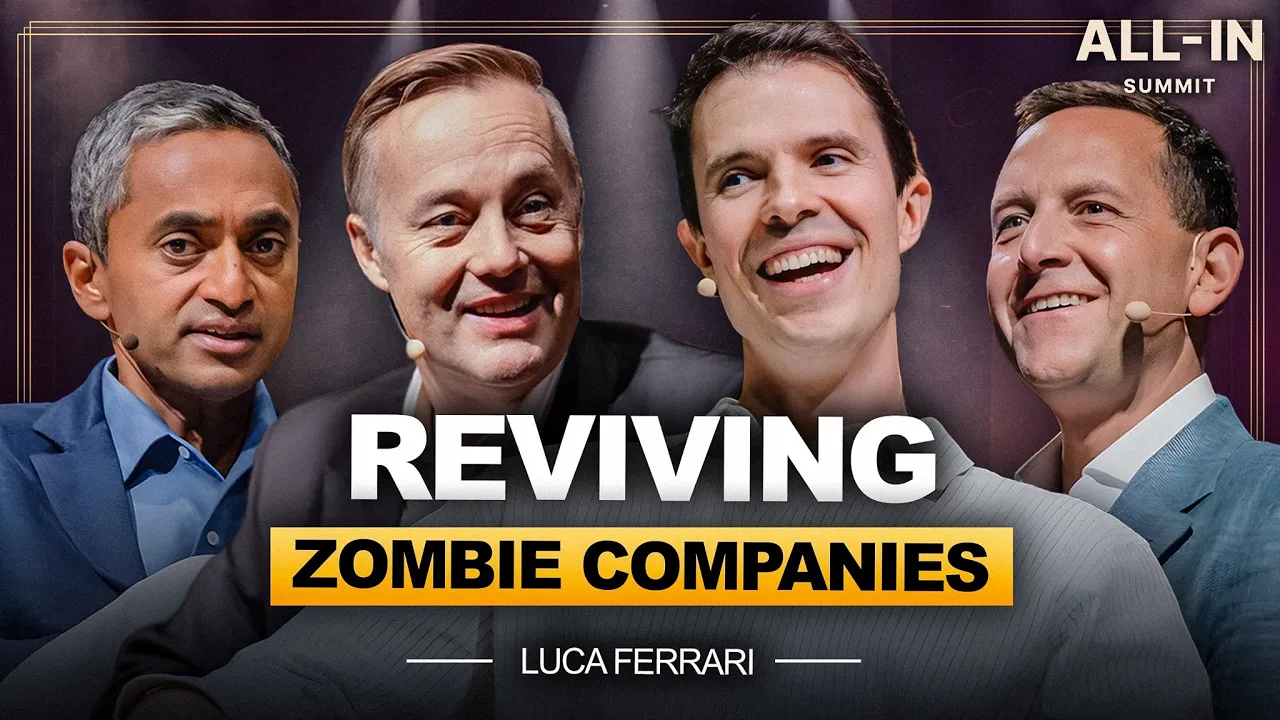
Luca Ferrari, Bending Spoons CEO: The $40K Start, Buying Product-Market Fit & Beating Private Equity — All-In Podcast

All-In Podcast

Traditional private equity fails to replicate Bending Spoons' returns because holding assets for eventual resale prevents buyout firms from integrating targets into a single shared technical core.

AI-assisted summary of Luca Ferrari, Bending Spoons CEO: The $40K Start, Buying Product-Market Fit & Beating Private Equity — original source. Check the original for full context.

Source published:

Key ideas

  • Bending Spoons scaled from a $40,000 remnant of a failed AI startup in 2013 to a platform approaching a $4 billion pro forma revenue run-rate, relying on a strategy of acquiring proven product-market fit rather than gambling on greenfield discovery. (1:56)
  • The company operates an engineering-first platform where ~75% of its 800-person core team works in technical roles, stripping legacy codebases to plug targets into over 50 shared proprietary systems. (4:59)
  • Financing combines 100% organic free cash flow reinvestment with hedged debt (~9% blended cost, ~2.5x leverage maturing in 2031); unlevered returns exceeding 25% make rising interest rates a net positive due to depressed target multiples. (9:55)
  • Traditional private equity cannot easily replicate the Bending Spoons model because PE requires siloed assets for eventual resale, precluding deep integration into a shared technological foundation and cross-product engineering pool. (23:01)

Detailed notes

## Background Published on YouTube by the All-In Podcast on September 23, 2026, this episode features Bending Spoons CEO Luca Ferrari joining the Besties. According to the show description, the conversation covers restarting from a crashed AI startup with just $40,000, acquiring product-market fit, deploying a proprietary in-house tech stack with lean teams, using debt as an accelerant, and building a tech giant out of Milan.

## TL;DR Luca Ferrari unpacks how Bending Spoons scaled from a $40,000 restart into a multi-billion-dollar technology conglomerate by acquiring existing product-market fit rather than taking early-stage venture bets. Instead of operating as a traditional private equity shop, the firm integrates acquired assets into a unified internal operating system of over 50 proprietary technologies, run by small, talent-dense teams operating at an uncompromising standard. By reinvesting 100% of free cash flows alongside hedged, low-leverage debt facilities, Bending Spoons reliably compounds capital on mature software assets like Vimeo and Eventbrite. Ferrari details why deep, centralized technological integration outperforms fragmented private equity silos and how operating from Milan provides a cultural outsider advantage over Silicon Valley.

## Atmosphere & style The conversation crackles with the Besties' trademark energetic banter, featuring playful teasing about Italian work habits and video-game references before settling into deep operational scrutiny. Ferrari provides a calm, highly disciplined contrast, articulating complex M&A strategy, engineering philosophy, and debt mechanics with straightforward precision. The dynamic feels like a candid masterclass in capital allocation, balancing humor and founder camaraderie with sharp, analytical inquiry into modern tech compounding.

## Bulletin - [01:56](https://www.youtube.com/watch?v=6t5yF8ansoQ&t=116s) Bending Spoons scaled from a $40,000 remnant of a failed AI startup in 2013 to a platform approaching a $4 billion pro forma revenue run-rate, relying on a strategy of acquiring proven product-market fit rather than gambling on greenfield discovery. - [04:59](https://www.youtube.com/watch?v=6t5yF8ansoQ&t=299s) The company operates an engineering-first platform where ~75% of its 800-person core team works in technical roles, stripping legacy codebases to plug targets into over 50 shared proprietary systems. - [09:55](https://www.youtube.com/watch?v=6t5yF8ansoQ&t=595s) Financing combines 100% organic free cash flow reinvestment with hedged debt (~9% blended cost, ~2.5x leverage maturing in 2031); unlevered returns exceeding 25% make rising interest rates a net positive due to depressed target multiples. - [23:01](https://www.youtube.com/watch?v=6t5yF8ansoQ&t=1381s) Traditional private equity cannot easily replicate the Bending Spoons model because PE requires siloed assets for eventual resale, precluding deep integration into a shared technological foundation and cross-product engineering pool.

## Key takeaways - [01:56](https://www.youtube.com/watch?v=6t5yF8ansoQ&t=116s) After a three-year AI startup failed in 2013, the founders repurposed their final $40,000 seed check to launch Bending Spoons, recognizing that acquiring existing product-market fit was far more repeatable than building from scratch. - [04:59](https://www.youtube.com/watch?v=6t5yF8ansoQ&t=299s) Bending Spoons operates as an engineering organization rather than a passive holding company, with roughly 75% of its 800-person workforce dedicated to engineering, AI research, and product design. - [04:59](https://www.youtube.com/watch?v=6t5yF8ansoQ&t=299s) Acquisitions are systematically migrated onto an internal operating system of over 50 proprietary tools, standardizing AI orchestration, recruiting, and deployment across the entire portfolio. - [04:59](https://www.youtube.com/watch?v=6t5yF8ansoQ&t=299s) Vendor consolidation captures only minor EBITDA margin improvements (1–2%), whereas technical revitalization, improved product mechanics, and enhanced monetization generate the overwhelming majority of value. - [06:54](https://www.youtube.com/watch?v=6t5yF8ansoQ&t=414s) The company enforces a strict '10 out of 10' talent density standard, discovering that elite, small teams routinely outproduce the bloated payrolls of legacy acquisitions like Eventbrite and Vimeo. - [08:25](https://www.youtube.com/watch?v=6t5yF8ansoQ&t=505s) Bending Spoons scaled to a multi-billion-dollar valuation while raising only ~$500 million in primary equity by continuously recycling 100% of organic free cash flow into acquisitions. - [09:55](https://www.youtube.com/watch?v=6t5yF8ansoQ&t=595s) Debt is utilized purely as an accelerant with a 2.5x leverage ratio, a ~9% hedged cost through 2031, and unlevered returns north of 25% that comfortably insulate the model against macro credit shocks. - [09:55](https://www.youtube.com/watch?v=6t5yF8ansoQ&t=595s) Rising interest rates benefit serial acquirers by compressing software asset valuation multiples, providing a financial upside that outweighs higher borrowing costs. - [13:13](https://www.youtube.com/watch?v=6t5yF8ansoQ&t=793s) Founder departures are treated as standard operational transitions, as targets are typically 10 to 20 years old and original founders are often burned out or eager to exit. - [14:57](https://www.youtube.com/watch?v=6t5yF8ansoQ&t=897s) The deal desk explicitly screens for substantial scale and five-to-six-year cash flow predictability, avoiding small rollups because operational turnarounds demand fixed effort regardless of asset size. - [14:57](https://www.youtube.com/watch?v=6t5yF8ansoQ&t=897s) Front-of-house commercial synergies like consumer cross-selling deliver negligible financial lift (~3%), proving that the turnaround edge lies entirely in backend operational and technical integration. - [14:57](https://www.youtube.com/watch?v=6t5yF8ansoQ&t=897s) Building greenfield apps organically has been deprioritized because early-stage startup outcomes are too uncertain and small to move the needle on a multi-billion-dollar balance sheet. - [19:02](https://www.youtube.com/watch?v=6t5yF8ansoQ&t=1142s) The firm maintains an exceptionally selective hiring funnel, accepting fewer than 300 candidates out of roughly 800,000 applications in a single year. - [19:02](https://www.youtube.com/watch?v=6t5yF8ansoQ&t=1142s) Rotational technical mobility across disparate product domains—such as email architecture, video streaming, and payments—serves as a core talent retention and recruitment engine. - [20:21](https://www.youtube.com/watch?v=6t5yF8ansoQ&t=1221s) Headquartering in Milan provides access to Europe's highly educated, motivated 500-million-person talent base while insulating the executive team from Silicon Valley groupthink. - [23:01](https://www.youtube.com/watch?v=6t5yF8ansoQ&t=1381s) Private equity cannot copy Bending Spoons because financial sponsors must maintain modular assets for eventual disposition, preventing the shared tech and talent pooling that drives conglomerate compounding.

## Detailed walkthrough ### [00:00](https://www.youtube.com/watch?v=6t5yF8ansoQ&t=0s) Introduction and the Path from Milan

The segment opens with high-energy praise highlighting Bending Spoons' rapid ascent—scaling from zero to over a billion dollars in revenue within a decade, reviving dormant apps, acquiring major brands like Eventbrite, and serving half a billion users without ever losing an acquisition bid. As Luca Ferrari takes the stage on the All-In Podcast, the Besties greet him with enthusiastic applause and spirited banter. The hosts joke about passionate audience members shouting like "Super Mario Brothers" and tease each other about showing proper respect to a top Italian entrepreneur. Chamath notes that he has been tracking Ferrari’s progress for years, partly due to family ties in Milan, and praises his methodical, highly disciplined approach to company building, recommending Luca’s in-depth interview with Patrick O'Shaughnessy before asking him to unpack the misery, failure, and nadir that preceded the company’s success.

[01:56](https://www.youtube.com/watch?v=6t5yF8ansoQ&t=116s) The $40,000 Restart: Buying Product-Market Fit

Ferrari explains that while entrepreneurship always involves constant friction, his deepest operational failure occurred long before Bending Spoons. In 2010, he and his co-founders launched an AI startup. Being far too early to the wave, the venture crashed and burned after three grueling years. By 2013, only about $40,000 of venture capital remained in the bank. Recognizing the team had worked tirelessly and wanting to avoid the legal fees and paperwork of a formal liquidation, their VC told them: "You guys keep it. We'll sell our shares to you for $1, like nominal value, and you go and get nice vacation." Admitting that he and his partners were "a little bit sick in the head," they declined the vacation and instead used that exact $40,000 check as the seed financing to launch Bending Spoons.

That restart crystallized the strategy Bending Spoons still executes today. Ferrari and his partners recognized a hard truth: discovering product-market fit from scratch is exceptionally difficult and heavily dictated by luck. However, their years of grinding had made them world-class at software engineering, product design, marketing, and monetization. Rather than relying on serendipity, they resolved to acquire existing product-market fit from other developers, revamp the software, and reinvest the proceeds into scaling their platform. Their very first deal was a roughly $10,000 acquisition of an iOS keyboard customization app built by an independent solo developer. Though it had negligible revenue and lacked basic monetization, it possessed an organic stream of App Store users and strong keyword placement, giving them the exact canvas they needed to prove their playbook.

```mermaid flowchart TD accTitle: Bending Spoons Acquisition Engine accDescr: Flowchart illustrating the strategy of acquiring proven product-market fit and upgrading it with in-house technology. subgraph Target["1. Acquisition Target"] A["Product-Market Fit"] B["Organic User Influx"] end

subgraph Platform["2. Proprietary Platform"] C["50+ In-House Technologies"] D["AI & Dev Tooling Engine"] E["Lean, Talent-Dense Teams"] end

subgraph Scaling["3. Value Realization"] F["Monetization & Tech Upgrade"] G["Free Cash Flow Generation"] end

Target --> Platform Platform --> Scaling Scaling -->|"100% FCF Reinvested"| Target ```

[04:59](https://www.youtube.com/watch?v=6t5yF8ansoQ&t=299s) The In-House Tech Stack and Operating System

When asked whether Bending Spoons acts primarily as a holding company or a hands-on technical operation, Ferrari clarifies that the company is overwhelmingly an engineering and product organization. Out of a core team of approximately 800 people, roughly 75% are software engineers, AI researchers, product managers, or designers. In the earliest days, they completely rewrote the codebases of their acquisitions. Over time, that technical execution matured into an internal "operating system" consisting of more than 50 proprietary tools and technologies that manage AI model orchestration, recruiting pipelines, testing environments, and infrastructure operations.

Whenever Bending Spoons completes an acquisition, they strip out the legacy technological foundation and plug the business directly into this unified engine. This standardized environment allows engineers and operators to transfer between different product lines seamlessly without learning new toolsets. While centralizing vendor contracts (such as AWS infrastructure) does capture minor cost synergies, Ferrari downplays vendor optimization as a secondary lever that typically yields only one to two percentage points of EBITDA margin improvement. The primary driver of value creation remains technical modernization, superior monetization, and enhanced product mechanics.

- **Team composition**: ~800 core employees, with approximately 75% in engineering, AI research, and product roles. - **Technology foundation**: Over 50 proprietary internal systems replace the tech stack of acquired companies. - **Synergy profile**: Vendor consolidation contributes only 1–2% in EBITDA margin expansion; the core upside stems from technical revitalization and pricing/monetization power.

[06:54](https://www.youtube.com/watch?v=6t5yF8ansoQ&t=414s) Lean Teams, Talent Density, and the "10 out of 10" Standard

Addressing comparisons to Elon Musk’s aggressive restructuring of Twitter/X—particularly public reports surrounding dramatic headcount reductions at acquisitions like Vimeo and Eventbrite—Ferrari jokes that Musk did not consult him first, confirming he doesn't know Elon personally. He explains that Bending Spoons’ lean team philosophy originated organically rather than from a pre-planned slash-and-burn strategy. Early on, when acquiring small mobile utility apps, founders only sold the software assets and walked away, forcing Bending Spoons to take over operations with a tiny handful of internal personnel.

When they eventually began acquiring scaled businesses with large, established payrolls, the team was puzzled by the inflated headcount. Having already managed comparable operational volumes with a fraction of the full-time employees, they found large teams unnecessary and inefficient. Through deliberate experimentation, they established that businesses operate best under a strict "10 out of 10" performance standard. Ferrari emphasizes that maintaining this standard requires extreme talent density and a deep sense of ownership, which are consistently easier to achieve within small, elite teams than within sprawling organizations.

[08:25](https://www.youtube.com/watch?v=6t5yF8ansoQ&t=505s) Capital Allocation: Scaling from Cash Flow to Structured Debt

As the conversation shifts to Bending Spoons' multi-billion-dollar valuation, the hosts press Ferrari on how the company transitioned from bootstrapped cash flow recycling to institutional debt and sophisticated financial engineering. Ferrari explains that since day one, the company has operated on an aggressive compounding strategy: 100% of organic free cash flow is consistently reinvested into acquiring and building assets.

By 2017 or 2018, having expanded the earnings base, Bending Spoons began layering debt onto its balance sheet to accelerate deal velocity. They began with plain-vanilla bank facilities (Term Loan A) before graduating to larger, more flexible institutional syndicated facilities (Term Loan B) as their track record matured, with potential future corporate bond issuances on the horizon. Crucially, this debt-backed model allowed the founders to scale without heavy equity dilution: by the time of their IPO, Bending Spoons had raised only roughly $500 million in primary equity capital while reaching a valuation in the neighborhood of $20 billion.

[09:55](https://www.youtube.com/watch?v=6t5yF8ansoQ&t=595s) Debt as an Accelerant, Hedging Rate Hikes, and PE Competition

Addressing questions about taking on significant leverage—such as loans priced at five to six points over LIBOR, yielding 10% to 12% borrowing costs and massive annual debt service obligations on targets like Airtable—Luca Ferrari explains that debt serves strictly as an accelerant rather than a crutch. While Bending Spoons achieved nearly its entire track record purely through the organic reinvestment of free cash flows, prudent debt financing enables them to move faster. Their existing capital structure is insulated against macro shocks: the blended debt cost sits around 9%, is fully hedged against rate hikes, matures in 2031, and the business carries a conservative leverage ratio of approximately 2.5x, allowing them to extinguish the principal well before maturity.

Even if interest rates rise substantially and make new debt more expensive, Ferrari views that dynamic as a net positive for their model. Historically, Bending Spoons has generated unlevered returns consistently north of 25%, meaning a shift from 9% to 12% debt "doesn't break the model." More importantly, rising rates compress asset valuations across tech. As a serial acquirer, the windfall of purchasing depressed assets at lower multiples comfortably outstrips the marginal friction of higher borrowing costs.

Regarding competition at auction deal desks, Ferrari notes that nearly every process features rival bidders, but traditional private equity has recently softened and raised less capital. Furthermore, competing firms face a steep barrier to entry: replicating Bending Spoons' platform requires proprietary operational technologies that cannot be built overnight without years of trial and error, alongside a painstakingly vetted bench of roughly 800 high-performing employees operating under a deeply entrenched, scientific approach to execution.

- **Capital structure:** Blended debt cost of roughly 9%, fully hedged, maturing in 2031 at approximately 2.5x leverage. - **Unlevered returns:** Consistently above 25%, providing massive headroom over debt service costs. - **Valuation dynamics:** Rate increases depress asset acquisition multiples, which provides a greater net benefit to serial buyers than the cost penalty of more expensive credit. - **Competitive moat:** 800+ painstakingly selected operators, shared proprietary internal tools, and 13 years of institutional experimentation that PE rivals cannot easily replicate.

[13:13](https://www.youtube.com/watch?v=6t5yF8ansoQ&t=793s) The Founder Question: Closing Chapters vs. Founder Authority

The conversation turns to Silicon Valley’s traditional reverence for founder authority—the rare mandate exemplified by figures like Elon Musk, who can radically repurpose assembly lines from flagship vehicles to robotics on sheer conviction. The hosts point out that Bending Spoons operates under an entirely different paradigm, choosing not to retain founders to run the acquired brands, and ask whether the objective is simply running them as predictable cash-generating engines or creating radical "version twos" of products like Eventbrite and Vimeo.

Ferrari clarifies that they are not ideologically anti-founder; an exceptional founder pouring their heart into a product is "nine times out of ten... a major net positive." However, the reality of their deal flow dictates a different approach. The companies Bending Spoons acquires have typically been in business for 10 to 20 years or longer. By the time a sale process begins, the original founders are often absent, burned out, or viewing the exit as closing a life chapter to move on. Bending Spoons does not need to recreate original founder magic to win; the hurdle rate is simply ensuring the company performs significantly better under their institutional ownership than it would have remaining with weary owners or suffering the inevitable departure of its leadership.

[14:57](https://www.youtube.com/watch?v=6t5yF8ansoQ&t=897s) Inside the Deal Desk: Screening for Scale, Behind-the-Scenes Synergies, and Why Not Build Organically

Pulling back the curtain on the deal desk, Ferrari outlines the quantitative and qualitative filters used to screen potential acquisitions from a massive universe of candidates down to high-conviction targets. Rather than pursuing rollups of smaller software tools, Bending Spoons deliberately selects for substantial scale and predictable earnings over a five-to-six-year horizon. Because deep operational overhauls demand intense effort that does not scale linearly with revenue, transforming a large asset consumes roughly the same organizational bandwidth as fixing a tiny one, making large-scale targets far more accretive.

```mermaid flowchart TD accTitle: Bending Spoons Deal Screening and Synergy Architecture accDescr: Visual flowchart depicting the screening criteria, centralized operational core, and value realization model at Bending Spoons.

subgraph Screening ["1. Screening Criteria"] Scale["Target Scale<br>(Avoid tiny rollups)"] Predictability["5-6 Year Visibility<br>(Predictable cash flow)"] ValueUpside["Transformation Potential<br>(Product, org, monetisation)"] end

subgraph Engine ["2. Operational Core Engine"] TechPlatform["Single Shared Tech Foundation"] TalentCore["800+ Fluid Core Talent Bench"] Discipline["Scientific Method & 10/10 Standard"] end

subgraph Impact ["3. Value Realization"] BackendSynergy["Massive Backend Synergies<br>(Ops, code, infra efficiency)"] NegligibleFrontend["Customer Cross-Sell<br>(Historical ~3% marginal lift)"] PortfolioScale["$4B Pro Forma Revenue Run-Rate"] end

Scale --> TechPlatform Predictability --> TechPlatform ValueUpside --> TechPlatform

TechPlatform --> BackendSynergy TalentCore --> BackendSynergy Discipline --> BackendSynergy

BackendSynergy --> PortfolioScale NegligibleFrontend -.-> PortfolioScale ```

When asked whether value stems from consumer-facing cross-promotions—such as running ads across shared portfolios or unifying advertising sales forces—Ferrari explains that customer-facing synergies have historically contributed almost nothing, delivering perhaps an incremental 3% lift. Instead, value creation happens entirely behind the scenes by deploying their shared core technological foundations and fluidly reallocating an elite centralized engineering and product team to instill operational and monetization excellence.

When questioned on why they do not allocate this machine to building radical greenfield products from scratch, Ferrari points to the math of their current scale. With recent deals like Miro pushing Bending Spoons to a pro forma run-rate of nearly $4 billion in revenue, the statistical odds of an early-stage startup moving the needle are vanishingly small. Building organically would tie up immense operational resources for uncertain outcomes, whereas executing focused, disciplined transformations on proven, mission-critical software brands generates predictable, outsized compounding.

- **Screening pillars:** Significant scale, five-to-six-year cash flow predictability, and clear levers for operational, technological, and monetization overhauls. - **Behind-the-scenes vs. front-of-house:** Cross-selling and customer bundling provide marginal upside (~3%); the overwhelming majority of ROI comes from consolidating tech stacks and deploying centralized talent. - **Scale milestone:** Pushing close to a $4 billion pro forma revenue run-rate alongside assets like Miro and Airtable. - **The organic build dilemma:** Early-stage greenfield development carries high failure rates and insufficient revenue scale to impact a multi-billion-dollar enterprise.

[18:36](https://www.youtube.com/watch?v=6t5yF8ansoQ&t=1116s) Assessing Stalled Tech Assets and the Talent Exodus

The discussion shifts to the human capital dynamics inside plateauing tech companies. David Friedberg highlights the familiar Silicon Valley pattern where mature companies lose their premier operators once growth slows, leaving behind an organization that may lack the talent density needed to drive innovation. He asks how Bending Spoons evaluates this talent exodus from the outside during the M&A diligence process and how it contrasts with the elite internal bench they bring into every turnaround. Ferrari acknowledges that assessing organizational talent quality from the outside during deal diligence is an inherently tricky endeavor.

[19:02](https://www.youtube.com/watch?v=6t5yF8ansoQ&t=1142s) Attracting Talent: Broad Technical Scope and Talent Density

Businesses that enter a saturation phase struggle to attract top-tier, entrepreneurial engineers or designers; while their existing workforce might be decent, it rarely rivals organizations like Anthropic. Bending Spoons, however, holds a distinct recruiting advantage. Engineers and designers at the firm are offered wide-ranging technical scope under one roof: a team member might spend twelve months rebuilding the email infrastructure for AOL, transition for seven months to redesign subscription models on Vimeo, and then build core platform technology to manage payments. All of this happens under the exact same employer, alongside the same colleagues, within a single shared culture.

This variety creates a powerful virtuous cycle where career development remains exciting and high talent density naturally attracts more elite performers. The incoming interest reflects this dynamic: in the prior year alone, Bending Spoons received over 800,000 applications while extending offers to fewer than 300 candidates. While Milan remains the primary historical headquarters and deepest talent pool, the company has become highly international, scaling rapidly in hubs like London and Madrid, with plans underway to aggressively recruit across the United States.

- **Selective hiring**: ~800,000 job applications received in a single year resulting in fewer than 300 hires. - **Geographic expansion**: Milan remains the core hub, with fast-growing offices in London and Madrid and a planned push into the United States. - **Cross-product mobility**: Engineers rotate across diverse codebases—from legacy email platforms (AOL) to video monetization (Vimeo) and internal payments infrastructure.

---

[20:21](https://www.youtube.com/watch?v=6t5yF8ansoQ&t=1221s) The European Talent Pool and Debunking Cultural Tropes

The conversation shifts to the broader dynamics of scaling a European tech powerhouse. Venture capitalists and late-stage investors frequently bypass Europe, perceiving its ecosystem as sluggish compared to Silicon Valley or Asian tech centers, yet Bending Spoons ranks among the most aggressive and valuable technology companies on the continent alongside players like Spotify and Klarna. The hosts jokingly tease Chamath about how his work habits change when visiting Italy—going from three buttons unbuttoned to four while shutting his laptop—prompting a candid evaluation of European labor.

Ferrari pushes back directly against the stereotype of lazy European workers. While acknowledging structural challenges in Europe, he emphasizes that the continent’s half-billion population boasts solid educational foundations, producing ambitious talent with an acute "chip on their shoulder" eager to prove they are just as capable as their Silicon Valley peers. In practice, Ferrari notes that when Bending Spoons acquires companies and evaluates legacy teams, the incoming Bending Spoons operators almost invariably outwork the incumbents. His wife, working at an outside enterprise, similarly works intense hours, underscoring that raw drive and intrinsic motivation are readily available across Europe if channeled correctly.

- Europe offers a talent base of over 500 million people with solid technical universities. - Incoming Bending Spoons teams routinely work harder and move faster than the legacy acquired staffs. - The hosts note that top AI contributors often emerge from unconventional hubs—like the University of Toronto (U of T) or Carnegie Mellon University (CMU)—rather than solely traditional prestige hubs like MIT or Stanford.

---

[23:01](https://www.youtube.com/watch?v=6t5yF8ansoQ&t=1381s) The Outsider Advantage and the Tech Conglomerate Playbook

Operating out of Milan shields Bending Spoons from Silicon Valley groupthink and cultural indoctrination, mirroring what Charles Koch accomplished in Wichita, Kansas. Historically, the programmatic conglomerate acquisition model was executed brilliantly in industrial and traditional sectors—exemplified by Danaher, Roper Technologies, Amphenol, and Berkshire Hathaway—yet tech conglomerates often stumbled when attempting the same playbook (such as early efforts by Barry Diller or Expedia). Investors previously questioned whether tech cash flows could be reliably underwritten over 7 to 9 years, but Bending Spoons is actively demonstrating sustained capital compounding while traditional private equity firms remain paralyzed by market uncertainty.

```mermaid flowchart TD accTitle: Comparison of Traditional PE vs Bending Spoons Operating Model accDescr: Diagram illustrating the structural differences between traditional private equity portfolio silos and Bending Spoons' unified platform integration.

subgraph PE["Traditional Private Equity Model"] PE_Port["Siloed Portfolio Companies"] PE_Sale["Targeted for Eventual Sale"] PE_Ops["Isolated Teams & Fragmented Tech"] PE_Port --> PE_Sale PE_Sale --> PE_Ops end

subgraph BS["Bending Spoons Playbook"] BS_Cent["Unified Central Infrastructure"] BS_Talent["Shared Pool of Top Engineers & Designers"] BS_Hold["Long-Term Integration & Underwritten Cash Flows"] BS_Cent --> BS_Talent BS_Talent --> BS_Hold end ```

Ferrari explains why traditional private equity fails to replicate this model: PE firms hold assets in standalone silos specifically engineered for individual resale. Because PE firms intend to flip businesses, they cannot plug in unified proprietary infrastructure—doing so creates an impossible dilemma where they would either have to license their core platform to a competitor upon exit or untangle it entirely. Similarly, PE cannot pool engineers or designers across products, because stripping out shared teams at exit would leave the divested asset practically worthless, whereas selling the shared teams breaks the operating platform. By fully integrating products into a permanent, shared technical foundation, Bending Spoons unlocks returns and operational synergies that financial buyers simply cannot match.

| Dimension | Traditional Private Equity | Bending Spoons Model | |:--- |:--- |:--- | | **Holding Structure** | Siloed portfolio companies held for eventual disposition | Unified operating foundation with perpetual/long-term horizon | | **Technology Stack** | Fragmented, per-company systems | Reusable, central in-house platform infrastructure | | **Engineering Talent** | Isolated within respective portfolio companies | Centralized, high-density talent pool rotating across assets | | **Scalability & Edge** | Deploys large sums passively; lower operational integration | Deep operational integration driving higher cash-flow returns |

## Notable quotes > [01:56](https://www.youtube.com/watch?v=6t5yF8ansoQ&t=116s) You guys keep it. We'll sell our shares to you for $1, like nominal value, and you go and get nice vacation. — Luca Ferrari

> [06:54](https://www.youtube.com/watch?v=6t5yF8ansoQ&t=414s) 10 out of 10 — Luca Ferrari

> [09:55](https://www.youtube.com/watch?v=6t5yF8ansoQ&t=595s) doesn't break the model. — Luca Ferrari

> [13:13](https://www.youtube.com/watch?v=6t5yF8ansoQ&t=793s) nine times out of ten... a major net positive. — Luca Ferrari

> [00:00](https://www.youtube.com/watch?v=6t5yF8ansoQ&t=0s) Super Mario Brothers

## Mentioned Airtable, All-In Podcast, Amphenol, Anthropic, AOL, Barry Diller, Bending Spoons, Berkshire Hathaway, Carnegie Mellon University (CMU), Chamath Palihapitiya, Charles Koch, Danaher, David Friedberg, Elon Musk, Eventbrite, Expedia, Klarna, Luca Ferrari, Miro, Patrick O'Shaughnessy, Roper Technologies, Spotify, University of Toronto (U of T), Vimeo

## Video description (0:00) Luca Ferrari joins the Besties! (1:56) Crashing an AI startup, the $40,000 restart & buying product market fit (4:59) The in-house tech stack, shrinking the teams & the 10 out of 10 standard (9:55) Debt as an accelerant, what happens if rates rise & who else is bidding (14:58) Inside the deal desk: what gets acquired, why they don't build & the founder question (20:22) Building a tech giant out of Milan, Europe's talent pool & the outsider advantage

Thanks to our partners for making this possible!

IREN is a vertically integrated AI Cloud platform, delivering data centers, compute and software for AI training and inference. https://iren.com/

Oracle connects the data, applications, and infrastructure that turn AI into business outcomes—with the flexibility, choice, and control to optimize as AI evolves. http://oracle.com/ai EY helps tech innovators scale from startup to exit to megacap. You build the future. We’ll handle the rest. http://www.ey.com

Meta believes the future is for everyone. We're focused on giving every person the tools to reach their full potential and making sure the benefits of technology are distributed to all. http://www.meta.com

Keel Infrastructure owns the power, land, and connectivity that HPC and AI run on - backed by secured energy assets and established grid interconnections across North America. https://keelinfra.com/

Airwallex - Agentic Global Business Accounts. Open local accounts in 70+ countries to accept payments, earn yield, pay globally, and manage spend. http://airwallex.com

PayPal has been revolutionizing commerce globally for more than 25 years. Creating innovative experiences that make moving money, selling, and shopping simple, personalized, and secure, PayPal empowers consumers and businesses in approximately 200 markets to join and thrive in the global economy. For more information, visit https://www.paypal.com

Google for Startups connects founders with the right people, products, and best practices to help startups build faster and go further. https://startup.google.com/

Explore ideas, industries, and technologies worth understanding with Chamath every week on Learn with Me: https://research.socialcapital.com/allin

Follow the besties: https://x.com/chamath https://x.com/Jason https://x.com/DavidSacks https://x.com/friedberg

Follow on X: https://x.com/theallinpod

Follow on Instagram: https://www.instagram.com/theallinpod

Follow on TikTok: https://www.tiktok.com/@allin

Follow on LinkedIn: https://www.linkedin.com/company/allinpod

Intro Music Credit: https://rb.gy/tppkzl https://x.com/yung_spielburg

#allin #tech #news

[Source](https://www.youtube.com/watch?v=6t5yF8ansoQ)

中文简报

重构收购软件,Bending Spoons营收运行率达40亿美元 传统私募股权投资无法复制Bending Spoons的回报,因为持有资产以备日后转售的模式,阻碍了收购机构将标的整合进单一的共享技术核心中。 Luca Ferrari深入解析了Bending Spoons如何通过收购已有产品市场契合度的成熟业务而非押注早期风险投资,从4万美元的重新起步规模发展为数十亿美元的科技巨头。该公司并未采取传统私募股权机构的运作方式,而是将收购的资产整合进由50多项专有技术组成的统一内部操作系统中,并由执行严苛标准、精简且人才密集的技术团队负责运营。通过将100%的自由现金流进行再投资,并结合已对冲的低杠杆债务融资,Bending Spoons在Vimeo和Eventbrite等成熟软件资产上实现了可靠的资本复利。Ferrari还详细阐述了为何深度的中心化技术整合优于碎片化的私募股权孤岛模式,以及立足米兰如何为其带来相较于硅谷的文化局外人优势。 Bending Spoons从2013年一家失败的AI初创公司仅存的4万美元起步,发展至备考营收运行率接近40亿美元的平台,其依托的策略是收购经过验证具备产品市场契合度的标的,而非押注于从零开始的探索尝试。 (1:56) 该公司运营着一个工程优先的平台,其800人的核心团队中约75%为技术人员,他们负责剥离老旧代码库,将收购标的接入50多个共享专有系统中。 (4:59) 融资策略结合了100%的内生自由现金流再投资与对冲债务(综合成本约9%,约2.5倍杠杆率,2031年到期);超过25%的无杠杆回报率,使得利率上升因压低了标的估值倍数而成为净利好因素。 (9:55) 传统私募股权难以复制Bending Spoons模式,因为PE需要让资产保持相互隔离以便未来转售,这阻碍了将标的深度整合进共享技术底座和跨产品工程人才池的可能。 (23:01)

Reading summary

Bending Spoons CEO Luca Ferrari outlines how the company scaled to billions in revenue by acquiring mature software businesses with proven product-market fit rather than building from scratch. By replacing legacy tech stacks with a shared proprietary operating system and deploying lean, talent-dense teams, the company generates high-margin cash flows that challenge traditional private equity models. Acquiring Proven Fit Over Greenfield Development (1:56) After an initial AI venture collapsed in 2013, leaving just $40,000 in capital, Ferrari and his partners concluded that establishing product-market fit from zero relies excessively on serendipity. Instead of pursuing greenfield development, they chose to purchase existing applications with established user traffic—starting with a $10,000 mobile keyboard utility—and apply specialized engineering, monetization, and marketing revamps to generate cash flow. As Bending Spoons scaled toward a pro forma run-rate approaching $4 billion in revenue with assets like Miro and Airtable, this strategy became even more pronounced. Ferrari argues that early-stage startup bets have statistical success rates too low to impact a multi-billion-dollar enterprise. Consequently, the firm screens targets strictly for significant scale, five-to-six-year cash flow visibility, and clear operational upgrade potential, noting that fixing large software assets consumes roughly the same organizational bandwidth as fixing small ones. Proprietary Operating Infrastructure and Lean Teams (4:59) Bending Spoons functions as an operational engineering firm rather than a passive holding vehicle. Approximately 75% of its roughly 800 core employees work in engineering, AI research, and product roles. Following an acquisition, the company strips out legacy technical architectures and integrates the product into a unified internal operating system consisting of more than 50 proprietary tools governing infrastructure, model orchestration, and recruitment. Ferrari emphasizes that value creation stems almost entirely from technical modernization and pricing power rather than front-end marketing synergies. Historical customer cross-promotion across their portfolio yielded only an incremental 3% revenue lift, and vendor consolidation added just 1–2% to EBITDA margins. Operationally, Bending Spoons enforces a strict '10 out of 10' performance benchmark, maintaining that compact, high-density teams manage high transaction volumes far more efficiently than large legacy payrolls. Capital Allocation and Edges Over Private Equity (9:55) The company's expansion has been propelled by reinvesting 100% of organic free cash flows, supplemented by structured debt facilities. Bending Spoons maintains a conservative leverage ratio of roughly 2.5x with a blended debt cost of around 9%, which is fully hedged against interest rate increases through 2031. With historical unlevered returns exceeding 25%, Ferrari asserts that macroeconomic rate hikes benefit the model by compressing technology asset valuations faster than they raise debt service costs. Ferrari contrasts this setup with traditional private equity firms, which hold portfolio assets in isolated silos to facilitate eventual individual exits. Because private equity cannot pool technical infrastructure or rotate staff across companies without diminishing standalone asset values, they face severe operational limits. By operating as a permanent owner with unified systems and talent mobility, Bending Spoons captures operational synergies unavailable to financial buyers. European Talent Arbitrage and Fluid Staff Mobility (19:02) Headquartered in Milan with hubs in London and Madrid, Bending Spoons rejects the notion that European tech talent lacks the drive of Silicon Valley. Ferrari contends that Europe’s 500-million population and rigorous technical universities foster ambitious operators who routinely outwork incumbent workforces at acquired companies. In one year, the company received over 800,000 applications while extending fewer than 300 offers. To retain high performers, Bending Spoons offers diverse technical scope under one employer. Engineers and designers rotate across different business lines—from email infrastructure to video subscription engines—within the same culture and toolset. Ferrari credits this structure with driving continuous skill development and shielding the organization from Silicon Valley groupthink. Bending Spoons demonstrates that applying industrial conglomerate principles to mature software can yield high capital compounding without relying on original founders. However, the model assumes that multi-year software cash flows remain predictable despite rapid AI disruption and that extreme talent density can be preserved as the organization scales into larger, more complex corporate integrations.

精炼阅读摘要

Bending Spoons 首席执行官 Luca Ferrari 阐述了公司独特的增长路径:放弃从零探索产品市场契合度的试错逻辑,转而通过收购具备成熟流量与现金流的软件资产,并依托集中化的专有工程底座与高密度人才进行深度重构与商业化复利。 收购既有PMF:从4万美元到平台化运作 (1:56) Ferrari 回顾指出,其早期 AI 创业在2013年彻底失败,仅剩约40,000美元风险投资资金。创始团队拒绝了投资人休假的建议,以此作为种子资本启动了 Bending Spoons。他们认识到从零发掘产品市场契合度(PMF)极度依赖运气,但自身在软件工程、设计和变现上具备优势,因而确立了核心战略:通过收购已有自然流量和 PMF 的成熟资产并进行重构,将产生的自由现金流全额再投资于规模扩张。公司首笔交易以约10,000美元收购了一款缺乏商业化但具备自然流量的 iOS 键盘定制应用。 随着近期收购推动公司备考年化营收接近40亿美元,Ferrari 表示团队已不再考虑从零自研新产品。在庞大的现有规模下,早期绿地项目不仅成功率极低,而且在统计概率上无法对数十亿美元体量的业务产生实质拉动,集中资源对确定性标的进行系统性改造具备更高的复合回报。 专有工程底座:以统一系统取代陈旧技术栈 (4:59) Ferrari 强调 Bending Spoons 本质是一家深度的工程与产品公司,而非传统控股实体。在约800人的核心团队中,约75%为软件工程师、AI 研究员、产品经理和设计师。公司构建了一套包含50多种自研专有工具的内部“操作系统”,涵盖 AI 模型编排、招聘漏斗、自动化测试和基础设施运作。每当完成收购,团队会直接剥离标的原有的技术底座,将其无缝接入这一统一引擎,使技术人员能跨产品协同作业。 Ferrari 明确指出,整合云基础设施等供应商合同带来的成本协同效应十分有限,通常仅能提升1%至2%的 EBITDA 利润率;公司创造超额价值的核心支柱在于底层软件的彻底现代化、产品机制优化和定价变现能力的重塑。此外,前端的跨产品交叉销售历史上仅带来约3%的微弱提升,绝大部分投资回报均由后台技术与运营整合驱动。 极简团队与高人才密度:“10分标准”治理 (6:54) 精简团队并非源于预设的大规模裁员计划,而是早期收购独立开发者应用时被迫形成的运营惯性。Ferrari 解释称,当时原作者在交易后离职,逼迫 Bending Spoons 必须以极少数核心人员接管。随后在收购人员臃肿的成熟企业时,团队意识到庞大层级往往伴随效率低下,因而确立了严苛的“10分标准”(10 out of 10),即企业仅在高人才密度和强烈所有权意识的小型精英团队下才能发挥最佳效能。 为吸引顶尖技术人才,公司提供极具广度的工程场景,技术人员可在同一雇主和企业文化下,跨项目重构 AOL 邮件系统、改造 Vimeo 订阅模型或开发底层支付架构。在过去一年中,公司收到超80万份求职申请,但最终发放录取通知不足300人。Ferrari 同时驳斥了对欧洲劳动力效率的刻板印象,指出欧洲拥有5亿人口与扎实的理工教育底色,其欧洲核心团队在接管项目时的推进速度和投入度普遍超越了被收购标的的原有团队。 资本配置与杠杆:对冲风险与逆周期收购 (9:55) 在资本策略上,Bending Spoons 早期依赖将100%的自由现金流进行滚动再投资,自2017至2018年开始引入债务工具加速交易节奏。其融资形式从普通银行信贷(Term Loan A)逐步升级至大型银团定期贷款(Term Loan B)。通过债务杜绝过度的股权稀释,在公司估值达到约200亿美元之际,累计仅进行约5亿美元的一级股权融资。Ferrari 指出债务仅作为推进业务的加速器,而非支撑生存的拐杖。 根据 Ferrari 披露,公司当前综合借贷成本约为9%,已全额完成防范加息的利率对冲,债务将于2031年到期,整体杠杆率维持在约2.5倍的审慎水平。鉴于公司历史上无杠杆年化回报率持续高于25%,即使利率上升推高新发债务成本,也不会打破其模型。相反,加息引发的科技资产估值压缩,使连续收购方能够以更低倍数吸纳资产,其带来的估值折价红利显著超越了借贷利息的摩擦成本。 破解转售矛盾:以深度整合构筑护城河 (23:01) 针对与传统私募股权(PE)基金的竞价竞争,Ferrari 剖析了传统金融买家在运营模式上的底层矛盾。传统 PE 将各投资组合公司置于相互隔离的封闭架构中,核心诉求是数年后进行独立转售。这种退出机制决定了 PE 无法将标的深度接入统一的专有技术底层——因为在资产剥离时,他们要么面临必须向竞对授权自身核心系统,要么必须承担拆解技术底层的巨大成本。 与此同时,传统 PE 也无法实现工程和产品人才的跨项目自由调配,因为在出售单体公司时抽离共享团队会导致被售资产失去运营支撑,而连带出售共享团队则会摧毁母平台的运营底座。Bending Spoons 采用永久整合运作路线,将所有收购产品彻底焊接入共享的底层基础设施与人才池,从而形成了传统以转售为导向的 PE 所无法复制的运营效率与协同壁垒。 Bending Spoons 展现了凭借工程重构而非传统财务杠杆整合软件资产的有效性,但其模式高度依赖标的具备清晰的5至6年现金流可预测性。随着企业备考年化营收接近40亿美元,标的体量与组织复杂度持续上升,如何在失去原产品创始人愿景主导的背景下,长期维持“10分标准”的人才密度并持续消化大型资产,仍是其规模扩张面临的现实挑战。

Detailed notes — zh

## Background 本期内容由知名科技与商业播客《All-In Podcast》于 2026 年 9 月 23 日发布在 YouTube 平台。节目围绕欧洲科技巨头 Bending Spoons 创始人兼首席执行官卢卡·法拉利(Luca Ferrari)的深度访谈展开,视频简介概括了他从早期 AI 项目溃败后手握 4 万美元重启、开创“买入已验证 PMF”模式、打造自研技术底座与极致精简团队,到运用债务杠杆与扎根米兰打破传统私募股权(PE)规则的独特历程。 ## TL;DR 在首个 AI 创业项目彻底崩盘后,卢卡团队清醒认识到从零寻找 PMF 极度依赖运气,转而确立了“直接买入具备稳固用户与品牌资产、再以全球顶级工程和商业化能力全盘重构”的连续收购战略。Bending Spoons 依托由约 800 人核心精锐组成的母体与 50 多项自研专有技术底座,践行早于马斯克推行的极简“10 分标准”团队哲学,将收购业务原有的臃肿架构与技术债务彻底替换。在资本层面,他们长期依靠近乎 100% 的自由现金流再投资与充分对冲的低稀释度债务工具实现滚雪球扩张,凭借永久持有和软硬件底层打通的深度整合模式,彻底颠覆了以转手套现为目的的传统 PE 玩法,并在米兰打造出年化营收逼近 40 亿美元的科技控股帝国。 ## Atmosphere & style 全场对话在《All-In》主持团队标志性的插科打诨与互损调侃中开场,现场笑声与掌声不断,烘托出轻松幽默的舞台氛围。随后对话迅速切入高密度的硬核商业推演,卢卡展现出极其罕见的理性自知与务实工程师本色,用不卑不亢的语气打破硅谷流行的“创始人神话”与盲目自研崇拜。整场对谈在尖锐的财务风险质询与层层剥茧的底层逻辑拆解中推进,既有局外人打破主流规训的锋芒,又充满了对资本效率、组织人才密度和企业终局价值的冷静算计。 ## Bulletin - [00:00](https://www.youtube.com/watch?v=6t5yF8ansoQ&t=0s) Bending Spoons 凭借收购已验证 PMF 的产品并深度技术重塑,在十年内实现从 4 万美元种子资金到年化营收约 40 亿美元的跃迁。 - [08:25](https://www.youtube.com/watch?v=6t5yF8ansoQ&t=505s) 公司维持极少股权稀释,在估值约 200 亿美元 IPO 时累计募集 Primary Equity 仅约 5 亿美元,主要依赖 100% 自由现金流循环与低杠杆债务推进并购。 - [09:41](https://www.youtube.com/watch?v=6t5yF8ansoQ&t=581s) 在利率对冲和历史无杠杆收益率(unlevered return)超 25% 的支撑下,管理层认为高利率周期带来的资产折价对连续收购者反而是净利好。 - [23:01](https://www.youtube.com/watch?v=6t5yF8ansoQ&t=1381s) Bending Spoons 拒绝传统 PE 的独立隔离与转售模式,通过永久持有、全盘替换 50+ 套自研专有技术底座及集中调度 800 人精英工程母体释放协同效应。 ## Key takeaways - [01:56](https://www.youtube.com/watch?v=6t5yF8ansoQ&t=116s) 早期 AI 创业清盘让创始人意识到从零寻找 PMF 极度依赖运气,确立了直接“买入已验证 PMF 资产”再进行工程与变现重构的核心战略。 - [03:47](https://www.youtube.com/watch?v=6t5yF8ansoQ&t=227s) 首笔并购仅斥资 1 万美元买下一款无营收的 iOS 键盘美化应用,验证了利用自有技术重构代码库与精细化变现激活沉睡流量的可行性。 - [04:59](https://www.youtube.com/watch?v=6t5yF8ansoQ&t=299s) 800 人的母体团队中近 75% 为研发与产品人员,自研涵盖 AI 调度、招聘考核与数据跟踪等 50 多项专有核心技术的“企业操作系统”。 - [04:59](https://www.youtube.com/watch?v=6t5yF8ansoQ&t=299s) 收购标的后会果断推倒原有技术债务并接入标准化自研底座,实现工程师在不同业务之间即插即用且零协作摩擦。 - [06:54](https://www.youtube.com/watch?v=6t5yF8ansoQ&t=414s) 践行“10 分标准(10 out of 10)”,通过精简多达 80% 的人员冗余打破庞大层级对决策的拖累,依靠高人才密度提升业务效能。 - [08:25](https://www.youtube.com/watch?v=6t5yF8ansoQ&t=505s) 资本路径经历自由现金流全额再投资到引入银行贷款(TLA/TLB)的跨越,极度克制股权融资以最大化资本复合回报。 - [09:41](https://www.youtube.com/watch?v=6t5yF8ansoQ&t=581s) 存量综合借贷成本约 9% 且完成完全对冲,2.5 倍 EBITDA 的低杠杆率保障了其在 2031 年到期前的偿还能力。 - [09:41](https://www.youtube.com/watch?v=6t5yF8ansoQ&t=581s) 高利率环境下资产估值普遍回落,收购价折让所带来的节省远超借贷利息上浮,因此加息对长期投资模型反而更为有利。 - [12:09](https://www.youtube.com/watch?v=6t5yF8ansoQ&t=729s) 竞争壁垒源于长达十三年试错迭代的统一技术栈与高绩效工程文化,外部私募机构无法在短期内快速克隆。 - [13:13](https://www.youtube.com/watch?v=6t5yF8ansoQ&t=793s) 不迷信被收购标的的“创始人光环”,成熟业务更需要务实的技术和运营托底,核心衡量标准在于接盘后能否比原股东运营得更好。 - [14:57](https://www.youtube.com/watch?v=6t5yF8ansoQ&t=897s) 并购筛选聚焦体量规模、5 至 6 年盈利可预测性以及底层技术与商业化的深层改造空间,拒绝吞并低效小微资产。 - [14:57](https://www.youtube.com/watch?v=6t5yF8ansoQ&t=897s) 否定面向客户的表层交叉协同,真正的协同效应来自共享的幕后自研底层技术平台、跨产品人才调度及满分工程标准。 - [14:57](https://www.youtube.com/watch?v=6t5yF8ansoQ&t=897s) 清醒认识自研新产品的概率陷阱,选择围绕成熟品牌持续做确定性迭代,不将精力和资本耗费在胜率极低的颠覆式自研实验上。 - [19:02](https://www.youtube.com/watch?v=6t5yF8ansoQ&t=1142s) 构建跨业务的技术纵深与项目多样性,通过低于 0.1% 的极端录用门槛形成“顶尖人才吸引更顶尖人才”的强正向飞轮。 - [20:21](https://www.youtube.com/watch?v=6t5yF8ansoQ&t=1221s) 打破欧洲人才不如硅谷的偏见,发掘欧洲本土教育扎实、渴望打破刻板印象并证明自身实力的顶尖工程师红利。 - [23:01](https://www.youtube.com/watch?v=6t5yF8ansoQ&t=1381s) 远离硅谷核心圈形成独特的“局外人优势”,不受主流风投定势思维洗脑,成功将工业界的资本配置与精益运营范式移植至科技软件领域。 - [23:01](https://www.youtube.com/watch?v=6t5yF8ansoQ&t=1381s) 相比传统 PE 受制于“转售退出”而无法打通底层系统与团队,Bending Spoons 以永久持有逻辑实现全流程技术统一与深度赋能。 ## Detailed walkthrough ### [00:00](https://www.youtube.com/watch?v=6t5yF8ansoQ&t=0s) 开场:米兰走出的独角兽与全场调侃 节目开场由一段极具冲击力的快讯串剪引出:Bending Spoons 在短短十年内实现了从零到 10 亿美元营收的跨越,旗下一度手握从修图软件到 Eventbrite 等知名产品的庞大应用矩阵,更坐拥 5 亿全球用户,在并购竞标中保持着“从未失手”的惊人纪录。伴随着全场热烈的欢呼,创始人兼首席执行官卢卡·法拉利(Luca Ferrari)走上舞台。主持人团队随即开启了招牌式的互损打趣——有人起哄观众席里传来的喝彩听起来像“超级马里奥兄弟”,查马斯(Chamath Palihapitiya)立刻护短反击道:“别拿卢卡开涮,人家是杰出的意大利企业家,都给我闭嘴!”主持人还顺势拿近期政治大选的即时连线梗调侃,关照卢卡万一手机响了可得立刻把电话挂断,现场笑声不断。 气氛稍稍收拢后,主持人们谈到他们其实很早就在关注 Bending Spoons。作为一家扎根米兰的科技巨头,卢卡以极其理性、系统化且反传统的扩张路径闻名,尤其在知名商业播客《Invest Like the Best》(由 Patrick O'Shaughnessy 主持)中,卢卡曾完整拆解过这一商业模式的底层逻辑。主持人借此提议,请卢卡回顾公司起步阶段经历的谷底阵痛,以及他们究竟是如何从一无所有走上崛起之路的。 ### [01:56](https://www.youtube.com/watch?v=6t5yF8ansoQ&t=116s) 首战崩盘、4 万美元残局与“买入 PMF”的顿悟 面对创业初期的痛苦回忆,卢卡坦承,创业者经历阵痛是常态,但他们最惨痛的惨败其实发生在创立 Bending Spoons 之前的上一家公司。2010 年,卢卡和联合创始人野心勃勃地创办了一家 AI 初创企业。然而,在那个深度学习尚未爆发的年代,这一尝试“过于超前”,苦苦支撑三年后最终以彻底崩盘告终。项目清算时,账面上只剩下风投当初注资剩下的区区 4 万美元。 令人啼笑皆非的是,这笔钱最终成了他们的翻身资本。风投机构为了避免繁琐且昂贵的法律清算程序,索性将股份以 1 美元的象征性名义价格卖回给他们,甚至好心劝解:“这 4 万块你们留着吧,权当犒劳你们这几年拼命工作,去度个好假。”然而卢卡自嘲他们几个创始人“脑子有点不正常”,并没有拿钱去度假,而是带着满腔执念把这 4 万美元变成了 2013 年创立 Bending Spoons 的种子轮资金。更关键的是,这次惨痛教训让他们认清了一个残酷现实:自己或许并不擅长从零发现“产品与市场契合点”(Product-Market Fit, PMF),或者说寻找 PMF 很大程度上依赖运气;但在这三年摸爬滚打中,他们在工程研发、产品设计、商业变现与营销层面积累了极高维度的能力。 既然如此,何不扬长避短?卢卡团队确立了沿用至今的核心战略:不再浪费生命去赌虚无缥缈的 PMF,而是直接从市场上“买入已经验证的 PMF”。他们寻找那些拥有稳固用户基础和品牌价值、但运营粗放的产品,以合理价格买下,再凭借全球顶级的工程与商业化能力对资产进行全方位重塑。 ```mermaid flowchart TD accTitle: Bending Spoons 商业飞轮模型 accDescr: 展现从资本收购、底层重构到高效率变现的运作闭环 subgraph Acquisition["1. 资产获取"] A["筛选标的: 具备 PMF / 品牌 / 自然流量"] B["资本注入: 自由现金流 + 银团贷款"] A --> B end subgraph Transformation["2. 核心赋能与改造"] C["技术重构: 接入 50+ 项专有技术底座"] D["组织精简: 打造高人才密度极小团队"] B --> C B --> D end subgraph Expansion["3. 价值释放与再投资"] E["商业化提升: 变现优化 + 产品迭代"] F["充沛自由现金流 100% 循环投入"] C --> E D --> E E --> F F -->|滚雪球收购更大资产| B end ``` ### [03:47](https://www.youtube.com/watch?v=6t5yF8ansoQ&t=227s) 1 万美元的初次试水:键盘美化应用的重生 战略成型后的第一笔实践发生在 2013 年前后,规模小得令人难以置信:他们仅花费了约 1 万美元,从一名个人独立开发者手中买下了一款 iPhone 键盘个性化美化 App。当主持人追问这笔交易到底是在买什么——是买营收倍数还是纯买代码时,卢卡坦承,这款应用当时的营收几乎为零,原作者甚至连基础的商业化变现都没做,整体运营非常业余。 然而,它拥有 Bending Spoons 最看重的东西:庞大的存量活跃用户,以及在苹果 App Store 上的绝佳搜索排名。这意味着产品本身自带持续不断的自然新增流量。收购完成后,团队凭借扎实的技术功底将整个应用的代码库彻底推倒重构,并接入精细的变现模块,迅速验证了这套打法的可行性。卢卡指出,虽然如今 Bending Spoons 操盘的收购案规模已不可同日而语,但其底层逻辑从未改变——寻找具有品牌沉淀和广泛用户认同、却未被充分开发的数字资产,通过技术与运营杠杆释放其巨大潜能。 - **第一笔收购代价**:约 10,000 美元,标的为 iOS 键盘美化应用。 - **标的核心价值**:几乎无变现收入,但占据应用商店核心关键词排位,拥有大量自发增长的自然用户。 - **改造手段**:代码全盘重写,重构交互界面并引入结构化付费机制。 ### [04:59](https://www.youtube.com/watch?v=6t5yF8ansoQ&t=299s) 800人中央母体与“50套专有技术底座” 针对 Bending Spoons 究竟是一家技术公司、资产管理机构还是营销运作方的疑问,卢卡给出了极具工程师底色的解答:他们是一家纯粹由技术与产品驱动的公司。在公司约 800 人的核心母体团队中,有将近四分之三是软件工程师、AI 研究员、产品设计师和产品经理。 在多年的并购整合中,Bending Spoons 自研了一套包含 50 多项专有核心技术的“企业操作系统”(Operating System)。这套工具链贯穿了软件企业的全链路运作,涵盖自研 AI 模型编排调度、自动化招聘考核系统、高并发数据跟踪平台以及底层 DevOps 基础设施。每当完成一笔新收购,团队所做的并不是保留原有的技术债务,而是果断“移花接木”,将标的企业原有的技术地基全盘剔除,换上这套高度标准化的自研技术底座。 这套体系带来了无可比拟的协同效应: 1. **人才跨业务即插即用**:所有工程师在同一个规范、同一套工具链下协作,在不同被收购业务之间调动时零学习成本,执行效率极高。 2. **多维价值释放**:虽然将云计算采购(如 AWS 合约)与软件许可统一收拢到母公司能带来成本优化,但这仅仅贡献 1% 到 2% 的 EBITDA 利润率增益;真正的价值爆发点在于利用顶级工程和算法能力拉升产品变现与增长,同时通过更精简的团队压缩固定支出。 ### [06:54](https://www.youtube.com/watch?v=6t5yF8ansoQ&t=414s) 团队精炼哲学:早于马斯克推行的“10分标准” 主持人谈及 Bending Spoons 对被收购对象(如知名视频平台 Vimeo 或票务平台 Eventbrite)进行深度人力重组与裁员的做法,开玩笑称卢卡在埃隆·马斯克入主推特(X)大裁员之前就早已实践了这套“X 剧本”。卢卡笑着幽默回应:“埃隆动手前还特意给我打了个电话……开个玩笑,我根本不认识他。” 谈及为何敢于大幅缩减 80% 的人员规模且业务仍能平稳甚至更好运行,卢卡道出了其中的认知演进: - **早期的无心插柳**:创立初期资金匮乏,收购微型应用时原开发者通常只卖资产不愿连带入职,团队只能被迫用极少的自有工程师兼顾接盘。在这个过程中,他们意外发现,维持业务高水准运转所需的实际全职员工(FTE)数量,远比行业常规认知要少得多。 - **对比带来的反思**:后来收购规模扩大、开始接触拥有庞大既有团队的中大型成熟企业时,卢卡团队惊讶地发现,这些公司庞大的人员编制完全无法在产出逻辑上自圆其说。 “我们的核心目标是让每一项业务都以‘10 分满分(10 out of 10)’的水准运行。”卢卡强调。实践证明,庞大的层级往往会稀释责任感并拖慢决策;唯有保持极其精简的极小团队规模,配以严苛到极致的人才选拔门槛和深度的所有翁精神(sense of ownership),才有可能逼近这种极致的工程与商业效能。 ### [08:25](https://www.youtube.com/watch?v=6t5yF8ansoQ&t=505s) 资本跃迁:从自由现金流循环到低稀释举债扩张 在节目的最后几分钟,话题转向了支撑 Bending Spoons 狂飙突进的资本运作架构。从 1 万美元的试水起步,到如今市值约 400 亿美元左右的庞然大物,公司经历了清晰的资本结构演变: - **第一阶段(2013-2017/2018)**:纯粹依赖业务产生的自由现金流(Free Cash Flow)。卢卡团队长期保持着极其激进的资本再投资率,几乎将 100% 的自由现金流全部重新砸入后续资产并购中。 - **第二阶段(2017/2018 至今)**:随着业务现金流充沛且体量增大,团队开始引入杠杆,以债务作为并购加速器。从早期最基础的银行定期贷款(Term Loan A / TLA),逐步演进至机构层面的定期贷款(Term Loan B / TLB),未来甚至规划引入更复杂的公募债券发行机制。 - **极度的股权节制**:令人震惊的是,在整个跨越式发展进程中,Bending Spoons 极少通过稀释股权来融资。卢卡透露,直到公司完成 IPO 且估值达到约 200 亿美元之际,其在整个发展史中累计募集的初级股权资本(Primary Equity)竟然只有区区 5 亿美元左右。通过技术赋能创造真实现金流、辅以精细化债务工具撬动更大标的,构成了他们击败传统私募股权(PE)同行的真正杀招。 ### [09:41](https://www.youtube.com/watch?v=6t5yF8ansoQ&t=581s) 资本结构、债务杠杆与利率上升风险 在讨论公司资本运作时,Luca Ferrari 澄清了外界对资金来源的疑问:Bending Spoons 过去绝大部分的辉煌业绩,几乎全靠自由现金流的滚存再投资达成;直到最近六个月左右才开始大规模引入股权融资。面向未来,尤其是在迈向上市公司的过程中,他认为在战术层面适时利用股权工具确实会是一个好思路。 主持团队随即抛出尖锐问题:按照当前市场环境,若以高出 SOFR/LIBOR 约 5-6 个点的成本借债,借贷利息高达 10% 至 12%;以收购 Airtable 这样的体量为例,光是每年要偿还的利息债务就高达 1 亿美元。如果利率继续走高,Bending Spoons 的业务扩张是否不得不踩刹车? Luca 对此给出了底气十足的回应,并从存量债务与未来环境两个维度剖析: - **存量债务风险极低**:目前公司整体综合借贷成本(blended cost)在 9% 左右,且已做了完全对冲(fully hedged)。因此,即便基准利率进一步上涨,现有债务成本也不会发生波动。该笔债务将在 2031 年到期,而公司目前的杠杆率仅维持在约 2.5 倍 EBITDA,完全有能力在到期前全额偿清。 - **高利率对新收购反而构成净利好**:如果未来利率大幅飙升,新发债务成本确实会变贵。但在绝大多数情景下,这对 Bending Spoons 这种连续收购者(serial acquirer)来说反而是巨大的净收益。首先,公司历史上的无杠杆内部收益率(unlevered return)持续稳定在 25% 以上;因此无论资金成本是 9% 还是 12%,“固然更想付 9%,但 12% 根本压不垮这个投资模型”。更关键的是,高利率环境下资产估值通常会大幅下挫,因估值缩水而节省下来的收购成本,远多于借款利息增加的支出。 ```mermaid flowchart TD accTitle: 利率上升对 Bending Spoons 投资模型的影响分析 accDescr: 展示现有存量债务的对冲防线,以及新增债务利率上升如何被资产折价与高无杠杆回报抵消。 subgraph Defense["存量债务防线"] A["存量债务成本 ~9%"] --> B["完全利率对冲 (Hedged)"] B --> C["2031年到期 / 2.5倍杠杆安全垫"] end subgraph NewDeals["高利率周期新交易"] D["基准利率上升"] --> E["新债务成本走高 (如 12%)"] D --> F["资产估值大幅回落"] F --> G["更低的收购买入价"] E --> H{"收益测算"} G --> H H --> I["历史无杠杆回报 >25%<br/>商业模式稳健且持续套利"] end ``` --- ### [12:09](https://www.youtube.com/watch?v=6t5yF8ansoQ&t=729s) 竞购格局与难以复制的护城河 面对是否有更多同行或私募股权(PE)基金加入竞标行列、导致资产拍卖竞争白热化的提问,Luca 表现得相当冷静。他透露,他们所参与的绝大多数竞购案本身就一直存在其他竞买方;竞争可能会加剧,但也可能反而趋缓——近期部分传统私募机构募资额大幅缩水,子弹变少,竞争反而减轻。 更重要的是,Luca 强调外部资本想单纯克隆一套 Bending Spoons 的打法是极其痛苦且耗时的: - **技术底层不是短期能堆砌出来的**:公司底层的通用技术栈如果未经多年试错、失败、修正的残酷实验周期,外人甚至连“到底该构建什么系统”都毫无概念。 - **顶级人才团队与工程师文化无法速成**:核心底座依赖的是多年来精挑细选的 800 多名精英员工,以及对商业运营极度严苛的高绩效与科学量化方法。“我还清楚记得最初招第一个人、第二个人、第四个人的场景。这些积累你或许能用 5 年压缩达成,而不是像我们用了 13 年,但绝不可能在 2 个月内抄出来。” --- ### [13:13](https://www.youtube.com/watch?v=6t5yF8ansoQ&t=793s) 破除“创始人神话”:被收购标的的企业归宿 风投界与公开市场长期以来对“创始人崇拜”(Founder Authority)推崇备至,就像埃隆·马斯克(Elon Musk)能一拍桌子果断砍掉 Model S/X 产能转向擎天柱机器人(Optimus),市场普遍相信只有创始人才能做出这种大开大合的豪赌。主持人追问:Bending Spoons 似乎并不执着于在被收购的品牌中保留创始人,那么你们对 Vimeo、Eventbrite 这类品牌究竟有何期待?是打造划时代的“Version 2.0”,还是只求稳定增长、持续吐出可预测的现金流? Luca 坦诚地解答了关于创始人角色的现实逻辑: - 他并不否认创始人的价值,“若能拥有一位充满激情、心力拉满的创始人,十有八九是巨大的加分项”。 - 然而现实情况是,Bending Spoons 收购的企业往往已经历了 10 年、20 年甚至更久的生命周期。当公司走向出售阶段,很多创始人自己就觉得“该翻篇了,想要开启新生活”,甚至早已离开管理层。 - 公司的衡量标准非常务实:“我们的胜利标准在于——这家业务在我们的运营下,是否能比在前任股东手里活得更好。”如果能有顶尖创始人留下来全身心投入固然完美,但即便没有,只要 Bending Spoons 是这笔资产更优良的归宿,就能创造扎实的超额回报。 --- ### [14:57](https://www.youtube.com/watch?v=6t5yF8ansoQ&t=897s) 交易台内幕:M&A 筛选标准与协同效应的真相 被问及 deal desk(交易审核台)的具体筛选流程、资产排序指标与协同效应预期时,Luca 拆解了公司的三大质化与量化标准: 1. **业务体量(Scale)**:深度重组与技术改造需要耗费极大的运营心力,而团队精力有限。经验证明,改造一家公司的复杂度并不与营收规模线性挂钩;“收购少数几家体量可观的企业,效率远高于去吞下一百万家小公司”。 2. **盈利可预测性(Predictability)**:偏好那些至少未来 5 至 6 年的业务发展走势能够被清晰预见、有扎实收益预期的企业。 3. **巨大的价值挖掘空间(Value Creation)**:在底层技术、组织架构、产品体验、变现策略(Monetization)或营销获客上,必须存在能够显著被优化的抓手,最好能兼具多项。 针对主持人提出的“跨业务交叉协同(比如把 AOL 的广告位给 Vimeo,或共享大客户销售网络)”与“为何不利用现有研发基座直接做自研”的追问,Luca 击碎了许多行业幻想: - **前台业务协同几乎不存在**:历史上,Bending Spoons 几乎没有从所谓的“面向客户的交叉协同”(customer-facing synergies)中榨出实质价值,即使试过,增量贡献顶多也就 3% 左右。真正的协同全部发生在**幕后底座**——共享一套统一自研的技术系统、跨产品无缝调度的核心精锐团队,以及在运营、产品、变现和技术维度直接推行“满分(10 out of 10)标准”。不过他也提到,随着 Airtable 和 Miro 这种同时重度渗透企业客户的标的加入,未来企业端交叉协同的潜力可能会有所上升。 - **为何不从零自研产品?**:Luca 直言必须认清自我能力的边界,“也许埃隆·马斯克能做到全能通吃,但我和同事们自知做不到”。公司当前合并 Miro 后的预计营收年化运行率(run rate)已逼近 40 亿美元,放眼整个科技圈,新创单品能对这种体量产生实质拉动(move the needle)的概率微乎其微。因此,团队把精力死磕在最擅长的一件事上——围绕已有成熟品牌做持续迭代,而不是把宝贵资源耗费在极难跑通的颠覆式自研实验上。 随后主持人引出了硅谷衰退期企业常见的“人才大逃亡”(talent exodus)现象,准备探讨原团队质量与 Bending Spoons 核心平台人才的落差问题。 ### [19:02](https://www.youtube.com/watch?v=6t5yF8ansoQ&t=1142s) 人才飞轮:大跨度技术视野与严苛筛选 Luca Ferrari 分析了被收购业务普遍面临的人才困境:那些步入市场饱和期的业务,天然缺乏对极具创业精神的顶级工程师与设计师的吸引力。他直言,这类公司原有的团队素质“或许算不错,但绝不是 Anthropic 那个级别的人才储备”。然而,Bending Spoons 却建立起一套完全不同的人才吸引机制——在同一个雇主、同一批同事与统一的企业文化下,工程师能够拥有极其宽广的技术纵深与项目跨度。 这种机制打破了单调重复的工作日常:一名工程师可以在第一年重构 AOL 的电子邮件底层架构,随后花 7 个月重新梳理 Vimeo 的订阅付费体系,之后再去搭建公司通用的底层支付平台。Luca 指出,这种广阔的技术范围赋予员工持续的新鲜感与长久动力,从而引发了“高人才密度吸引更高人才密度”的正向飞轮循环。 ```mermaid flowchart TD accTitle: Talent Flywheel Process accDescr: 展现Bending Spoons宽广技术视野驱动的高人才密度正向循环机制 subgraph Scope["工程与技术广度"] A["多样化顶尖项目<br/>(AOL架构 / Vimeo订阅 / 支付平台)"] B["统一文化与稳定团队"] end subgraph Flywheel["人才飞轮效应"] C["极高工作动力与成长"] D["顶级人才密度提升"] E["品牌声誉与海量求职申请"] end A --> C B --> C C --> D D --> E E -->|"极端严苛筛选<br/>(80万人中录取不到300人)"| D ``` - **海量筛选与极低录取率**:过去一年间,Bending Spoons 累计收到了 800,000 份求职申请,但最终录用人数不足 300 人,录取率远低于 0.1%。 - **全球化人才网络**:尽管米兰出于历史渊源依然是最大的技术人才聚集地,但伦敦正在迅速赶超,马德里也在快速扩张,公司并计划从次年开始在美国大举招募顶尖人才。 --- ### [20:21](https://www.youtube.com/watch?v=6t5yF8ansoQ&t=1221s) 欧洲人才优势与打破刻板印象 主持人们探讨了欧洲作为科技创新中心长久以来遭受的偏见。传统的风险投资机构与中后期投资人往往认为欧洲市场增长缓慢、机会欠佳,更倾向于将资金投向硅谷、全美或亚洲市场。因此,主持人们好奇 Bending Spoons 是如何与 Spotify、Klarna 等位列欧洲前列的巨头并肩,在米兰这片土地上建立起激进的科技帝国的。主持人甚至打趣调侃道:Chamath 一去意大利度假,衬衫纽扣就多解开一颗、盯笔记本电脑的时间就急剧减少,这种悠闲环境究竟如何让团队保持高效运转。 Luca 明确反驳了“意大利人不努力工作”的陈腐偏见,称这纯属刻板印象。他以自己的妻子为例,指出即便在其他公司她也经常超长工时投入;而在 Bending Spoons,团队的拼劲甚至远超常人。在实际并购整合中,Bending Spoons 派驻的团队往往比被收购公司原有的本土团队要拼命得多。他认为欧洲拥有 5 亿核心人口,虽然高校可能不像斯坦福那样光环耀眼,但教育功底非常扎实。更关键的是,许多欧洲本土人才都憋着一股“证明自己绝不比别人笨、不比别人弱”的内驱力(a chip on their shoulder),这赋予了他们极高的人才红利。 - **核心选人哲学**:Bending Spoons 专门寻找具备极强内驱力、野心勃勃、渴望做出一番事业且富有创业精神的员工,并为他们创造能最大化施展抱负的平台。 - **反常识的人才发掘**:与会嘉宾也指出,即便是当前的人工智能浪潮,诸多核心技术贡献者同样并非全部来自斯坦福或 MIT 这种传统精英光环名校,大量顶尖贡献反而来自多伦多大学(UofT)、卡内基梅隆大学(CMU)等阵地。 --- ### [23:01](https://www.youtube.com/watch?v=6t5yF8ansoQ&t=1381s) 局外人优势与对传统私募(PE)模式的颠覆 对话触及了身处米兰而非硅谷所带来的“局外人优势”。主持人引用了查尔斯·科赫(Charles Koch)在堪萨斯州威奇托(Wichita)从零打造庞大帝国的故事,称其为“威奇托思维”——正因为远离主流文化圈,才免于受到传统定势思维的洗脑与规训。在传统工业领域,早有 Amphenol、Roper Technologies、Danaher 以及伯克希尔·哈撒韦(Berkshire Hathaway)等公司成功践行了“买入现金流并精益运营”的资本配置打法,但在整个科技行业,过往尝试者(如 Barry Diller 的 IAC、Expedia 等)皆因复杂度过高而未能彻底跑通,Bending Spoons 是目前唯一在大规模尺度上成功验证该模式的科技范本。 针对传统私募股权基金(PE)在科技剧变下面对现金流承销无所适从、甚至被 AI 浪潮搞得措手不及的现状,Luca 深刻剖析了 Bending Spoons 与传统 PE 之间的底层结构差异: ```mermaid flowchart LR accTitle: Bending Spoons vs Traditional PE accDescr: 对比Bending Spoons与传统私募股权基金在组织架构和资产整合上的核心差异 subgraph PE["传统私募股权 (PE)"] direction TB P1["独立隔离被投企业<br/>(以转手倒卖为目的)"] P2["无法底层打通<br/>(自研技术无法跨标的复用)"] P3["团队割裂<br/>(退出时面临人员抽离或贬值困境)"] P1 --> P2 --> P3 end subgraph BS["Bending Spoons 架构"] direction TB B1["永久持有与深度整合"] B2["统一技术平台基座<br/>(支付/账号/云基础一体化)"] B3["集中化顶尖人才池<br/>(工程与设计跨项目敏捷调度)"] B1 --> B2 --> B3 end ``` - **资本退出的束缚**:传统 PE 投资公司本质是为了日后将标的剥离转售,因此必须保持被投企业的独立性。这种商业模式决定了它们无法引入统一的底层技术基础设施——否则当标的卖给竞争对手时,软件底层既无法剥离也无法妥善授权。 - **团队复用的两难**:传统 PE 无法拥有集中调配的精英工程与设计池。一旦将核心技术人员注入某个业务,待出售时抽离团队会导致业务价值大幅跳水,而将团队打包出售又会破坏组织资产。 - **终局回报的鸿沟**:虽然传统 PE 能够凭借放手不管(hands-off)的管控方式部署更庞大的资本体量,但 Bending Spoons 这种建立在集中技术底座与高度复用人才基础上的深度整合模式,赋予了其远超传统 PE 的经营承销能力与资本回报率。全场在对这一罕见科技控股模式的由衷赞赏中结束了对话。 ## Notable quotes > [00:00](https://www.youtube.com/watch?v=6t5yF8ansoQ&t=0s) 别拿卢卡开涮,人家是杰出的意大利企业家,都给我闭嘴! — Chamath Palihapitiya > [01:56](https://www.youtube.com/watch?v=6t5yF8ansoQ&t=116s) 这 4 万块你们留着吧,权当犒劳你们这几年拼命工作,去度个好假。 — 风投机构投资人 > [06:54](https://www.youtube.com/watch?v=6t5yF8ansoQ&t=414s) 埃隆动手前还特意给我打了个电话……开个玩笑,我根本不认识他。 — Luca Ferrari > [06:54](https://www.youtube.com/watch?v=6t5yF8ansoQ&t=414s) 我们的核心目标是让每一项业务都以‘10 分满分(10 out of 10)’的水准运行。 — Luca Ferrari > [09:41](https://www.youtube.com/watch?v=6t5yF8ansoQ&t=581s) 固然更想付 9%,但 12% 根本压不垮这个投资模型。 — Luca Ferrari > [12:09](https://www.youtube.com/watch?v=6t5yF8ansoQ&t=729s) 我还清楚记得最初招第一个人、第二个人、第四个人的场景。这些积累你或许能用 5 年压缩达成,而不是像我们用了 13 年,但绝不可能在 2 个月内抄出来。 — Luca Ferrari > [13:13](https://www.youtube.com/watch?v=6t5yF8ansoQ&t=793s) 若能拥有一位充满激情、心力拉满的创始人,十有八九是巨大的加分项。 — Luca Ferrari > [13:13](https://www.youtube.com/watch?v=6t5yF8ansoQ&t=793s) 我们的胜利标准在于——这家业务在我们的运营下,是否能比在前任股东手里活得更好。 — Luca Ferrari > [14:57](https://www.youtube.com/watch?v=6t5yF8ansoQ&t=897s) 收购少数几家体量可观的企业,效率远高于去吞下一百万家小公司。 — Luca Ferrari > [14:57](https://www.youtube.com/watch?v=6t5yF8ansoQ&t=897s) 也许埃隆·马斯克能做到全能通吃,但我和同事们自知做不到。 — Luca Ferrari > [19:02](https://www.youtube.com/watch?v=6t5yF8ansoQ&t=1142s) 或许算不错,但绝不是 Anthropic 那个级别的人才储备。 — Luca Ferrari ## Mentioned Luca Ferrari, Bending Spoons, All-In Podcast, Chamath Palihapitiya, Jason Calacanis, David Sacks, David Friedberg, Patrick O'Shaughnessy, Elon Musk, Charles Koch, Barry Diller, Eventbrite, Vimeo, Airtable, Miro, AOL, Anthropic, Spotify, Klarna, Twitter (X), Amphenol, Roper Technologies, Danaher, Berkshire Hathaway, IAC, Expedia, AWS, App Store, Stanford University, MIT, University of Toronto, Carnegie Mellon University ## Video description (0:00) Luca Ferrari joins the Besties! (1:56) Crashing an AI startup, the $40,000 restart & buying product market fit (4:59) The in-house tech stack, shrinking the teams & the 10 out of 10 standard (9:55) Debt as an accelerant, what happens if rates rise & who else is bidding (14:58) Inside the deal desk: what gets acquired, why they don't build & the founder question (20:22) Building a tech giant out of Milan, Europe's talent pool & the outsider advantage Thanks to our partners for making this possible! IREN is a vertically integrated AI Cloud platform, delivering data centers, compute and software for AI training and inference. https://iren.com/ Oracle connects the data, applications, and infrastructure that turn AI into business outcomes—with the flexibility, choice, and control to optimize as AI evolves. http://oracle.com/ai EY helps tech innovators scale from startup to exit to megacap. You build the future. We’ll handle the rest. http://www.ey.com Meta believes the future is for everyone. We're focused on giving every person the tools to reach their full potential and making sure the benefits of technology are distributed to all. http://www.meta.com Keel Infrastructure owns the power, land, and connectivity that HPC and AI run on - backed by secured energy assets and established grid interconnections across North America. https://keelinfra.com/ Airwallex - Agentic Global Business Accounts. Open local accounts in 70+ countries to accept payments, earn yield, pay globally, and manage spend. http://airwallex.com PayPal has been revolutionizing commerce globally for more than 25 years. Creating innovative experiences that make moving money, selling, and shopping simple, personalized, and secure, PayPal empowers consumers and businesses in approximately 200 markets to join and thrive in the global economy. For more information, visit https://www.paypal.com Google for Startups connects founders with the right people, products, and best practices to help startups build faster and go further. https://startup.google.com/ Explore ideas, industries, and technologies worth understanding with Chamath every week on Learn with Me: https://research.socialcapital.com/allin Follow the besties: https://x.com/chamath https://x.com/Jason https://x.com/DavidSacks https://x.com/friedberg Follow on X: https://x.com/theallinpod Follow on Instagram: https://www.instagram.com/theallinpod Follow on TikTok: https://www.tiktok.com/@allin Follow on LinkedIn: https://www.linkedin.com/company/allinpod Intro Music Credit: https://rb.gy/tppkzl https://x.com/yung_spielburg #allin #tech #news [Source](https://www.youtube.com/watch?v=6t5yF8ansoQ)

Source quotes

[0:00] Chamath Palihapitiya: 别拿卢卡开涮,人家是杰出的意大利企业家,都给我闭嘴! [1:56] 风投机构投资人: 这 4 万块你们留着吧,权当犒劳你们这几年拼命工作,去度个好假。 [6:54] Luca Ferrari: 埃隆动手前还特意给我打了个电话……开个玩笑,我根本不认识他。 [6:54] Luca Ferrari: 我们的核心目标是让每一项业务都以‘10 分满分(10 out of 10)’的水准运行。 [9:41] Luca Ferrari: 固然更想付 9%,但 12% 根本压不垮这个投资模型。 [12:09] Luca Ferrari: 我还清楚记得最初招第一个人、第二个人、第四个人的场景。这些积累你或许能用 5 年压缩达成,而不是像我们用了 13 年,但绝不可能在 2 个月内抄出来。 [13:13] Luca Ferrari: 若能拥有一位充满激情、心力拉满的创始人,十有八九是巨大的加分项。 [13:13] Luca Ferrari: 我们的胜利标准在于——这家业务在我们的运营下,是否能比在前任股东手里活得更好。 [14:57] Luca Ferrari: 收购少数几家体量可观的企业,效率远高于去吞下一百万家小公司。 [14:57] Luca Ferrari: 也许埃隆·马斯克能做到全能通吃,但我和同事们自知做不到。 [19:02] Luca Ferrari: 或许算不错,但绝不是 Anthropic 那个级别的人才储备。

Source quotes

[1:56] Luca Ferrari: You guys keep it. We'll sell our shares to you for $1, like nominal value, and you go and get nice vacation. [6:54] Luca Ferrari: 10 out of 10 [9:55] Luca Ferrari: doesn't break the model. [13:13] Luca Ferrari: nine times out of ten... a major net positive. [0:00] Super Mario Brothers

Original transcript

[0:00] You are the reason that NASDAQ exists. [0:02] [music] [0:02] >> They went from zero to $1 billion in [0:05] revenue in just 10 years. [0:07] >> Bending Spoon CEO Luca Ferrari. [0:09] >> We have never lost a bid before. [0:11] >> Well, AOL has a new parent [music] [0:13] again. Milan based tech company Bending [0:16] Spoons announced it will buy ticketing [0:17] platform Eventbrite. [0:19] >> Bending Spoons is stirring up the [0:20] market. [music] They go from fixing one [0:22] zombie app to reviving 20 of them. [0:24] >> Half a billion people use our products. [0:26] We're trying to build a generational [0:28] company. [0:30] Please welcome Luca Ferrari. [0:35] [music] [0:43] Hey, here he is. Nice to see you. [0:47] >> You got fans. [0:48] >> All right, Luca, you have uh a great [0:53] company. [0:53] >> Don't make fun of Luca Ferrari. I'm not. [0:56] I'm just [0:57] >> This is a great Italian entrepreneur, so [0:58] shut the up. [0:59] >> Absolutely. Absolutely. [1:01] >> I I asked somebody yelling like it's [1:03] Super Mario Brothers in the audience. [1:05] >> We could have another presidential [1:06] moment here at the All-In podcast. So, [1:08] if she picks up if she calls you, then [1:10] just run the phone over. [laughter] [1:11] >> Got my phone here. [1:12] >> Okay. Just in case. [1:13] >> Yeah, it's ready. [1:14] >> Um I mean, there's a lot of us that have [1:17] actually been tracking you for a while. [1:19] Um, I I originally heard about you [1:21] because you were in Milano, uh, where, [1:24] you know, my wife's family is from. Uh, [1:26] and you had this incredibly progressive, [1:29] methodical approach to growth. You did [1:32] this fantastic, um, podcast with, um, [1:36] uh, Patrick Onessy, which was great. I [1:38] encourage all of you to listen to it. [1:40] and you explained uh the arc of bending [1:44] spoons and I'd love for you to explain [1:46] to folks the first few years and just [1:49] all the misery and failure the the [1:52] nadier of the company and then the [1:53] beginning of the ascent. [1:55] >> Yeah. So the you know most of the I mean [1:57] the pain there's been plenty of pain [2:00] throughout as for most entrepreneurs I [2:02] think but the the the biggest failures [2:04] were in the previous startup. So with my [2:06] co-founders, we launched uh an AI [2:09] company in 2010, very early, too early, [2:11] clearly uh uh crashed and burned um 3 [2:15] years later. uh we're left with about [2:18] $40,000 in capital we raised from the VC [2:21] and um um we you know clearly there [2:25] wasn't a lot to salvage other than our [2:28] relationship being stronger uh and uh [2:31] and and that money that the VC uh pretty [2:36] much uh uh gifted to us as they you know [2:38] didn't want to go through the [2:39] liquidation process too too much uh in [2:41] legal fees and too many headaches they [2:43] had seen us work pretty hard uh and so [2:45] They told us, "You guys keep it. We'll [2:47] sell our shares to you for $1, like [2:50] nominal value, and you go and get nice [2:52] vacation. Uh we're clearly a little bit [2:55] sick in the head." And so we took the [2:57] money and enthusiastically turned it [2:59] into uh seat financing for Benny's [3:01] phones. And and we, you know, we came up [3:03] with [3:03] >> You started with $40,000. [3:04] >> 40,000 exactly in uh 2013. And we we had [3:07] this strategy which has remained pretty [3:09] much the same. Obviously, you get [3:10] smarter, you refine it in time. Uh that [3:13] was the idea was we we are not very good [3:15] at finding product market fit or maybe [3:18] you know luck plays a big role. Probably [3:20] both things are true but we have become [3:22] pretty good at engineering uh design [3:25] monetization marketing in just three [3:27] years of hard work. And so we should be [3:29] able to be among the best in the world [3:30] at that and we should be able to buy [3:33] product market fit from people and uh [3:35] and and you know they get a good price [3:37] we we got a good asset we can make more [3:39] valuable and then uh we we deploy more [3:41] capital into making our our platform [3:44] >> the first acquisition and how much did [3:45] you pay and how did you get the deal [3:47] done? So, the first acquisition uh was a [3:51] we paid $10,000 give or take, and it was [3:54] a um a mobile app for iPhone [3:57] specifically that you used to [3:59] personalize your your keyboard. Very [4:01] simple. One uh one uh uh man kind of [4:05] developer uh sold it to us. Obviously, [4:09] very amateurish operation, not that [4:11] difficult at the time to to make it [4:13] better and more successful. Uh but you [4:15] know, [4:16] >> what were you buying? like you were [4:17] buying one times revenue, you were [4:18] buying the revenue, you were buying the [4:19] app. Like [4:20] >> that one specifically I think had [4:22] negligible revenue. It wasn't even [4:24] really monetized. [4:25] >> Okay. [4:25] >> Uh which of course is never the case for [4:27] for scaled businesses, [4:28] >> but it had users. [4:30] >> It had users. So what we bought at the [4:31] time was uh an app with a bunch of users [4:34] and good positioning on the app stores. [4:36] So it would get an influx of new users. [4:39] Um and that's you know remained broadly [4:42] speaking similar over time and you know [4:44] we keep looking for great brands user [4:46] and customer bases where we can uh uh [4:50] you know improve everything ideally and [4:52] make those assets even more valuable [4:53] over over time. We just do it at a much [4:55] bigger scale these days but the the [4:57] underlying concepts have not changed. [4:59] >> You did you rebuild that app? Did you [5:01] take over the code base and redo it? [5:03] just help us understand technically [5:05] what's going on in the organization from [5:06] that business through to some of the [5:09] bigger ones today. [5:10] >> Yeah. [5:11] >> Is it a is it a code business? Are you [5:12] are you doing engineering, product, [5:14] design, marketing, all of the above? [5:16] >> Yeah, most of what we do is is [5:17] engineering and product. We have a core [5:19] team of this point about 800 people and [5:22] uh I would say probably three quarters [5:26] of them are either engineers or AI [5:28] researchers or product designers, [5:30] product managers. Most of what we do is [5:32] actually improving technologies and [5:34] products. Uh and uh and of course you [5:37] know that yes that app we we wrote it [5:39] completely and but it's you know very [5:41] early days. Today we're much more [5:42] sophisticated. We we what we do is we we [5:45] bring in a call it an operating system [5:47] of 50 plus proprietary technologies. We [5:50] built uh kind of an engine to run [5:52] technology businesses very effectively [5:53] and efficiently. um really our core [5:56] product uh we swap out the technological [5:59] foundation of the businesses we buy with [6:01] that one so we can run it much better [6:02] and also the the people we transition [6:05] across our various businesses always [6:07] play by the same rules they're more [6:08] efficient because they find the same [6:09] tool [6:10] >> these tools cut across what like HR [6:12] finance tech ops devops [6:15] >> pretty much everything yeah I mean [6:16] orchestration of AI models check [6:18] recruiting tools checking platforms [6:21] check [6:21] >> and then do you bring all of the [6:23] technology spend up to the top co so [6:25] that you're doing one deal with AWS one [6:27] all the licensing becomes scaled across [6:30] one entity. [6:30] >> Yeah, that's a that's a lever for [6:32] quality creation. I'd say that's a [6:33] relatively small one. It probably adds I [6:35] don't know one two percentage points in [6:36] Ibida margins. Uh the you know the more [6:39] important aspects are being able to [6:41] drive revenue increases through better [6:43] product tech and monetization sometimes [6:45] marketing uh cost reduction through [6:47] leaner teams. So more talent dense teams [6:50] uh and but yes vendor optimization is is [6:53] helpful too. [6:54] >> You were doing the Elon X playbook [6:56] before he did it. I mean like there's [6:58] some stories that were written about how [7:00] you rightsized Vimeo's workforce. You [7:02] right sized bright. [7:03] >> He called me before doing the X uh No, [7:05] I'm joking. [7:05] >> Oh, he did? Oh, [laughter] [7:08] >> but explain explain how do I cut all the [7:10] people? [7:11] >> No, no, [laughter] he didn't do that. I [7:12] don't know Elen. So [7:14] >> how did you figure out that you could [7:15] cut 80% of a team and it still works? [7:17] How how do you figure that out? Is that [7:19] accidental where you just pushing to a [7:21] threshold? [7:22] >> I think it's uh it's something we we [7:25] learned uh partially because early early [7:28] days when we were acquiring smaller [7:30] businesses typically these people would [7:32] sell us the asset say the product but [7:34] not the team because for them it was [7:36] very small teams. They you know wanted [7:38] to move on to whatever other project [7:39] they had and so we didn't really know [7:41] any better. We were establishing teams [7:43] internally to carry on the work and the [7:46] number of FDs was much smaller than [7:49] >> the original footprint. [7:50] >> No, no, no. Well, also that but then [7:52] when we ended up buying businesses with [7:54] established teams, we had perhaps [7:57] naively built teams to run comparable [7:59] businesses that were much smaller and so [8:00] we couldn't explain why you necessarily [8:02] needed more people. Partly, yes, uh [8:04] through experimentation, [8:06] uh we have found call it the sweet spot. [8:08] Obviously, it's never perfect, but we we [8:10] overall, let's say the the key thing for [8:12] us is we want our businesses to be, you [8:14] know, run at a 10 out of 10 level. And [8:17] we find that generally you're more [8:18] likely to get that uh that level of [8:21] performance if you have very very small [8:22] teams, super high bar for talent and [8:25] sense of ownership. [8:25] >> You have a 40 odd billion dollar market [8:27] capish right now. I think plus or minus. [8:30] Um [8:30] >> I don't know actually. I haven't checked [8:31] the ticker since we [8:32] >> I think it's roughly roughly in that [8:34] zone. um which is incredible from [8:36] starting with the $10,000 acquisition. [8:38] When do you trans when did you [8:40] transition from uh scaling on cash flow [8:43] to then using debt and using more [8:46] sophisticated financial engineering so [8:47] you can go after these bigger fish and [8:49] how how is that? So historically uh we [8:54] we started using debt in 2017 I believe [8:57] either 2017 or 2018 uh very basic bank [9:01] loans TLAs and then uh as we and so free [9:04] cash flow the reinvestment of free cash [9:06] flow had always been a thing for us we [9:08] have redeployed pretty much 100% of our [9:10] free cash flow toward acquisitions uh [9:12] since the beginning uh that from 2017 [9:15] and you know and and it was rescaled we [9:17] got more credible a little bit wiser and [9:20] more sophisticated. We went for, you [9:22] know, TLBs and maybe in the future [9:24] there'll be bond issuances and other [9:26] more complex instruments. We haven't [9:28] used a whole lot of equity. Actually, [9:30] when we IPOed, we had only quote unquote [9:33] only raised about half a billion dollar [9:35] in primary equity and we were at roughly [9:37] 20 billion in valuation. And even that [9:39] half a billion dollar, we had raised [9:41] pretty much all of it in the previous [9:43] six months or so. So almost all of our [9:46] track record we've achieved through [9:47] reinvestment of free cash flows and and [9:49] that. But going forward I think [9:50] particularly as a public company using [9:52] equity tactically here and there could [9:54] be a good good idea. [9:54] >> So with that equity um you're taking [9:58] loans I guess uh five six points over [10:01] libore so 10% 12% loans and then you buy [10:05] a business like air table but that that [10:08] means you have to pay 100 million [10:10] dollars in debt payments per year. If [10:13] interest rates go up and it's a 90 some [10:15] odd chance they're going to start going [10:16] up. What does that do with the business? [10:18] has to throttle a little bit. And then [10:20] my second question, people have been [10:22] pretty enamored by the progress you're [10:24] making. Uh, and I think you're now [10:26] facing uh, some bending spoons [10:29] competitors. So, maybe you could talk. [10:30] Are you seeing more people show up at [10:32] these auctions and it's not just you and [10:34] like two other players? [10:36] >> Yeah. So, um, that is an an accelerant [10:40] to our growth. uh we would still grow up [10:42] pretty fast if we only use free cash [10:44] flows but our free cash flows but [10:46] definitely being able to use that is is [10:48] a good thing uh prudent levels of debt [10:50] and and and I would say I will give you [10:53] like two parts uh first the the risk [10:56] with the existing indebtness so all of [10:58] our debt currently the the average cost [11:01] the blended cost is about 9% give or [11:03] take and it's fully hedged so increases [11:05] in in interest rates would not impact [11:07] our cost of debt uh it matures in 20 31. [11:12] So we are in a position to pay pay it [11:14] back completely before maturity. We're [11:15] currently at two and a half times [11:16] leverage approximately. Now if interest [11:20] rates were to go up substantially then [11:22] new debt would be would be more [11:23] expensive. Um I think that would be [11:27] under most scenarios a net positive for [11:29] us for a couple of reasons. Our returns [11:31] unlevered historically have been pretty [11:33] high consistently above 25% again [11:36] unlevered. So whether we pay 9% or 12%, [11:39] of course I'd rather pay 9, but it's not [11:41] it doesn't break the model. Uh and uh [11:44] you know and the second aspect is [11:46] typically when interest rates go up the [11:48] value of uh of of assets go goes down. [11:51] And so as a serial acquirer I think [11:53] we're more likely to benefit more from [11:55] the lower valuations than the higher [11:56] debt. Now that depends I'm generalizing [11:58] and simplifying a bit but uh overall we [12:01] feel we are fairly well protected um and [12:05] you know robust when it comes to to [12:07] indep [12:09] um we have all of the processes we have [12:11] participated in have had other other [12:13] buyers or almost all of them um I'm sure [12:16] competition will intensify or I'm sure [12:18] it may intensify who knows um it could [12:21] also get weaker seeing private equities [12:23] web historically down softer actually [12:25] raise less capital to do the same and so [12:28] on balance we might be better off it's [12:30] also I think important to note that it's [12:33] it's really painful and timeconuming to [12:35] replicate what we've built because a lot [12:37] of it is based on you know those [12:39] technologies which you can't build [12:41] overnight you don't even know what to [12:42] build really if you haven't gone through [12:44] many years of painful experimentation [12:46] mistakes try and repeat um you a lot of [12:49] the value we create is thanks to those [12:51] 800 odd people we have pain [12:54] painstakingly selected over time the [12:55] culture of high performance and and a [12:57] scientific approach to business we have [12:59] developed those things are done there's [13:00] no shortcut I still remember hiring the [13:03] first one person and then two people and [13:04] then four people you could probably do [13:06] it in 5 years rather than 13 but not in [13:08] two months so I I think we we'll face [13:10] competition but I'm pretty optimistic [13:11] follow up if I may um in our industry [13:15] the venture capital industry and even [13:17] going into public markets we covet the [13:19] founder and if a company loses its [13:21] founder and the founder authority they [13:24] have like Elon to say hey we're not [13:25] going to make the Model X, we're not [13:27] going to make the Model S, we're going [13:28] to convert those to Optimus. Those kind [13:30] of bold bets only made by founders. You [13:33] have a slightly different philosophy [13:35] here. You don't want founders inside the [13:37] company. You're not looking for that [13:40] founder authority in each of these [13:41] brands based on what I've I've heard you [13:43] say. Um, so what is the expectation for [13:45] your brands? Do you want to create [13:46] cutting edge you know version twos of [13:49] event brights and Vimeo or do you just [13:51] want them to grow at a predictable rate [13:54] and throw off that cash flow? So talk [13:55] about the founder role. [13:57] >> Yeah. So I think if you can have a [14:00] founder with that you know level of of [14:03] passion and and that mentality is you [14:06] know nine [clears throat] times out of [14:07] 10 will be a major net positive. uh the [14:11] generally when we end up acquiring [14:12] companies these are businesses that that [14:15] have been around for 10 20 years even [14:17] more than 20 years in some cases and and [14:19] for the founders if they're still on [14:20] board sometimes they aren't on board for [14:22] them it's really a moment of okay this [14:24] is a chapter on closing I want to move [14:27] on so the the the real question there [14:29] for for us we win if that business does [14:32] better with us than it would have uh [14:35] under previous ownership obviously if we [14:37] could have exceptional founders stay on [14:39] board and pour their hearts into it, it [14:41] would be even better. But we can still [14:42] do well by being a better home for that [14:45] business than that business staying uh [14:48] with the same uh ownership group and [14:50] maybe losing the founder anyway. Um so [14:52] it's not that we don't want founders, [14:53] but once you know companies are sold [14:55] that people are generally looking to [14:56] move on. [14:57] >> Can you bring us into the M&A deal? So [15:00] like in the room, walk us through your [15:02] screening process. Are we how do we how [15:04] are we doing this? What are we looking [15:06] for? Are we looking for synergy and [15:08] integration with the assets that we've [15:09] bought before? Are we looking purely at [15:11] cash flow? How do we stack rank these [15:13] things? Just walk us through the deal [15:15] desk. [15:16] >> Yeah, so I think there's a qualitative [15:18] criteria we use to uh slim down the long [15:20] list of businesses that would be [15:22] interesting targets. Uh one is scale. We [15:25] that process of integration [15:28] uh and and and profound transformation [15:31] takes a lot of operational effort. So we [15:33] can't do a million of these. And by the [15:34] way, the amount of time and effort it [15:36] takes to transform a business, we have [15:37] found it doesn't really scale linearly [15:39] with revenue. So, we're much better off [15:41] acquiring relatively few sizable [15:43] companies than a million small ones. So, [15:45] we like we look for scale. We look for [15:47] predictability in uh in earnings and [15:49] it's a big topic in and of itself, but [15:51] we like businesses where we are pretty [15:53] confident we can project at least, you [15:55] know, the next five or six years [15:57] directionally. Um, and then we look for [15:59] businesses where we can create a lot of [16:01] value. It could be technology, org, uh [16:04] product, monetization, marketing, [16:06] ideally most of these. [16:07] >> Does value include the integration with [16:09] these other assets that you have or [16:10] value just means economic value [16:12] operation? [16:12] >> Well, let me just ask a detailed point [16:14] of that. Like if you own AOL, you could [16:17] put ads for Vimeo or Eventbrite or Miro [16:20] on AOL. Um, if you own Vimeo, you could [16:24] probably have a sales team that's [16:25] selling ads on AOL that you can use. How [16:27] much synergistic effect is there? And if [16:29] there is synergistic effect [16:32] and you've got all this capacity to do [16:34] design, build, product management, [16:37] agentic orchestration, testing, AB [16:40] testing, why not also build organically [16:43] at the same time and leverage the [16:44] network effects of the existing [16:45] businesses. [16:46] >> So historically we have created almost [16:49] no value from let's say customerf facing [16:51] synergies. what what you described uh [16:53] plenty of behind the-scenes synergies [16:56] like I said it's all built on the same [16:57] technological foundations and then [16:59] there's this large core team of people [17:01] we move around fluidly uh going forward [17:04] and and by the way the reason why we [17:05] haven't unlocked a lot of value through [17:06] customerf facing synergies being that um [17:09] we I think the portfolio wasn't [17:11] necessarily large enough for good [17:13] overlaps to materialize but as it grows [17:16] more and more for example now air table [17:17] and miro are both quite appealing to a [17:20] lot of enterprises I think what you are [17:22] describing could become an additional [17:23] value creation uh uh dimension. [17:27] >> You haven't tried or you've tried and it [17:29] hasn't worked. [17:29] >> No, we we've tried and it's worked but [17:31] marginally. So maybe it's helped 3% but [17:34] now like the bulk of it has been [17:35] bringing 10 out of 10 excellence in [17:38] operations product monetization uh [17:41] technology [17:43] >> on an individual business basis [17:44] >> and then why not build organically [17:46] products. Yeah. [17:47] >> Yeah. So the first of all you can't do [17:50] everything. I mean, Elon can I I you [17:53] know, my colleagues colleagues and I we [17:56] don't think we can. Maybe we should be [17:57] more ambitious with ourselves, but um [18:00] and so [18:00] >> you got a lot on your plate. [18:01] >> There's so many different kinds of [18:03] products already. [18:04] >> We we launch a lot of new things on top [18:06] of existing brands, but it's not like [18:08] completely radical innovation. We don't [18:10] do a lot of that. We try to stay focused [18:12] on on one thing to try to be the very [18:14] best in the world at it. Also at the [18:17] scale we are at at this point we're you [18:19] know on a proform with Miro close to a [18:21] run rate of $4 billion in revenue it's [18:24] difficult like if you look at the [18:26] percentage of new startups or products [18:28] being launched that would move the [18:30] needle [18:30] >> it's it's very very small so what's the [18:33] you know we would have to deploy a lot [18:34] of our resources and very unlikely to [18:36] work [18:36] >> sorry let me can you just talk about the [18:38] thing you and I talked about this um [18:40] point on the talent exodus that happens [18:44] in Silicon Valley companies when they [18:45] start to stall out and that the talent [18:47] maybe that's working on the business [18:49] isn't the quality of the talent that [18:52] you've built in your your core platform. [18:54] How much of that is assessed in that M&A [18:57] process that Chimat was mentioning? [18:59] >> Uh well it's it's I mean it's difficult [19:01] to assess from the outside in but you [19:02] can form uh uh first principles opinions [19:06] businesses that again are more in a [19:08] saturation phase. they tend not to be as [19:10] appealing to some of the most [19:11] entrepreneurial engineers or designers. [19:14] Um, and [clears throat] so you can [19:16] assume that the level of talent will be [19:17] maybe good, but perhaps not, you know, [19:19] what anthropic would have. I'm not [19:21] saying anything shocking here. Uh, [19:23] >> they have a very unique kind of talent, [19:24] but we'll talk about that another time. [19:26] >> Yeah. Okay. Um we we have a big [19:28] advantage in attracting talent because [19:29] if you work at Benny's films, it may be [19:32] one of the very few places in the world [19:34] where we can spend say one year [19:35] rebuilding the uh email infrastructure [19:38] for AOL and then seven months helping uh [19:40] rethink uh subscriptions on on Vimeo and [19:44] then build a platform technology to [19:45] manage payments all with the same [19:46] employer mostly the same colleagues, [19:48] same culture. [19:49] >> You get broad technical scope. [19:50] >> Exactly. So career opportunities just [19:53] staying motivated because it's fun and [19:54] new. uh very high talent density begets [19:57] high talent density so there is an [19:58] element of virtual cycle so we have been [20:00] able to attract a ton of people last [20:01] year 800,000 applications we hired fewer [20:03] than 300 people [20:04] >> are they all in Milan where are they [20:05] >> no no we we are fully you know very [20:08] international as a company Milan for [20:10] historical reasons remains like the [20:12] biggest uh pool of of talent but London [20:15] for example is coming up faster Madrid [20:17] we we'll be hiring people plenty of [20:19] people in the states I think starting [20:20] starting next year [20:21] >> brings up an interesting question um [20:24] Europe as a tech center um isn't exactly [20:28] um something that venture capitalists [20:30] even lateage uh investors are pursuing. [20:33] They kind of look at the market there as [20:35] maybe slower uh and maybe just not as [20:38] good of an opportunity is I think their [20:41] decision. Rather be in Silicon Valley or [20:43] American companies uh or perhaps Asia. [20:46] So what's it like being the most [20:49] aggressive successful company then in [20:51] Europe or one of them? Is there [20:54] >> I think you're right. No, I think it is [20:55] the [20:56] >> I mean Well, I mean Spotify obviously is [20:57] much better, but Clara, you're you're in [21:00] the top 10 probably. U clearly in the [21:02] top 10. So, [21:03] >> um what's the talent pool like there? [21:05] How is it different? Specifically Italy. [21:07] I I noticed when Chamas goes to Italy, [21:09] maybe the there's a little bit less [21:11] working going on. [21:12] >> An extra button. He he goes from three [21:14] unbuttons to four. [21:15] >> Yeah. The buttons go down and the number [21:17] of hours in front of a laptop. [21:19] >> Italy changes chimoth. We see it. [21:21] >> How do you keep these Italians working? [21:22] How do you what's the secret? No, but [21:24] tell us about the talent pool in running [21:25] a company in Europe. [21:26] >> So, I I think uh I think Europe has a [21:29] lot of problems. Uh but I think there's [21:31] a pretty good talent. Uh half a billion [21:33] uh uh people live in let's say the main [21:36] part of Europe. So, it's a lot of people [21:37] have pretty good education. It's not [21:38] Stanford, but it's solid. Uh and uh and [21:41] a lot of these people have a chip on [21:43] their shoulder to prove we're not [21:44] necessarily less smart or capable. So, [21:47] you do find a lot of good people. Uh I I [21:49] do think there's a the fact that [21:51] Italians don't work hard is mostly a [21:55] false stereotype. Yes. Uh I we find that [21:58] uh I mean my wife, she doesn't work with [22:01] me, she works in other company. She [22:02] works uh a lot long hours. At our [22:05] company, we work pretty hard. We [22:06] generally find that when we acquire [22:07] companies and we work with existing [22:10] teams, more often than not, the the the [22:12] team we bring in works substantially [22:14] harder. So um I don't know we just try [22:17] to hire people who are intrinsically [22:19] motivated very ambitious uh you're just [22:21] hungry entrepreneurial and uh and then [22:23] give them you know a good reason to to [22:26] do their best work because they see that [22:27] they can have a thought of having the [22:29] headquarters anywhere other than Milan [22:31] and that it might be an accelerant for [22:32] the business New York City where the [22:34] banking capital is Silicon Valley the [22:35] tech capital have you thought about [22:36] moving the headquarters [22:37] >> why Luca is totally right you get like [22:39] these people the problem with people in [22:41] in the in like you go to these typical [22:43] places typical schools [22:45] They think they're geniuses and it's [22:46] like when you actually like just look [22:48] even just look at AI who are the major [22:50] contributors these are not like the [22:52] they're not from MIT Stanford per se you [22:55] know they uft they were at CMU it could [22:59] well it could be an advantage like [23:01] >> no that's sort of what I'm getting at a [23:02] huge advantage I mean when I when I [23:04] interviewed Charles Ko you and I talked [23:06] about this what I found so fascinating [23:09] is he built that business probably the [23:11] most extraordinary wholly owned business [23:13] on earth from nothing effectively in [23:16] Witchah, Kansas. And I say it's like the [23:18] Witchita mindset cuz he basically kind [23:20] of ignored everything that was [23:21] conventional and he was able to do [23:23] things his own way. I don't know anyone [23:25] that thinks and does things the way you [23:27] do them that are based in Silicon [23:28] Valley. And that might be the reason cuz [23:30] you're in Milan and you're not kind of [23:32] indoctrinated into cultural thinking. I [23:34] mean, look, I'll just say what's what [23:35] what I find so incredibly interesting [23:37] about your company and what you're [23:38] building is in in all of our [23:40] generations, we've seen this these [23:42] incredible examples of companies that [23:45] have run your playbook, but in [23:48] traditional industries. Um, Amphenol, [23:50] Roper, Danahare, Berkshire, and we've [23:54] never seen a successful implementation [23:56] of it in tech. And, uh, I think you're [23:58] the best scaled example. I mean, Expedia [24:00] tried, Barry tried. I think it was a [24:02] little complicated. Um, so it's really [24:04] exciting to see that this thing can work [24:06] because the the the structural issue was [24:08] always how do you underwrite these cash [24:10] flows and I think you're proving that [24:11] they're underwritable that these things [24:13] can go out for 7 8 n years and [24:15] especially now if you look at PE the PE [24:17] guys are basically like we don't know [24:19] what the going on right yet [24:21] you're still able to go and transact and [24:22] you're announcing deals at a pace where [24:24] these you know a lot of the PE folks are [24:26] so how how do you how do you manage this [24:28] risk? Like it's clearly it's not a risk. [24:30] You think it's a tailwind for you? [24:31] >> Yeah, I think the the know the private [24:34] equity is completely different because [24:35] they keep these companies separate for [24:37] the most part to sell them and so they [24:38] could never have that technological [24:40] foundation because once you plug it in [24:42] in a company what do you do when you [24:43] sell it to to your product competitor? [24:45] Do you license it to them? So that's you [24:47] know remove that they can't have a [24:49] pulled team of engineers designers [24:51] because if they put them on the on the [24:53] uh on a business and then they sell it [24:54] what do they do? take the team out and [24:56] then it's the team the business is [24:57] almost worthless or do they sell the [25:00] team with so just the model is [25:01] completely different and and I believe [25:02] these structural differences are a big [25:05] reason why we have been I'd like to say [25:08] successful um so it will never work with [25:11] the traditional private equity which has [25:12] other advantages you can deploy maybe a [25:14] lot more capital because it's a little [25:15] bit more you know hands off but uh but [25:18] you can never achieve the returns I [25:19] think we we have [25:20] >> I want to say thank you an incredible [25:22] business you're building congratulations [25:23] >> well done everybody