Nvidia’s Huang Defies AI Pacing Calls, Urges Uncontained Labs to Close
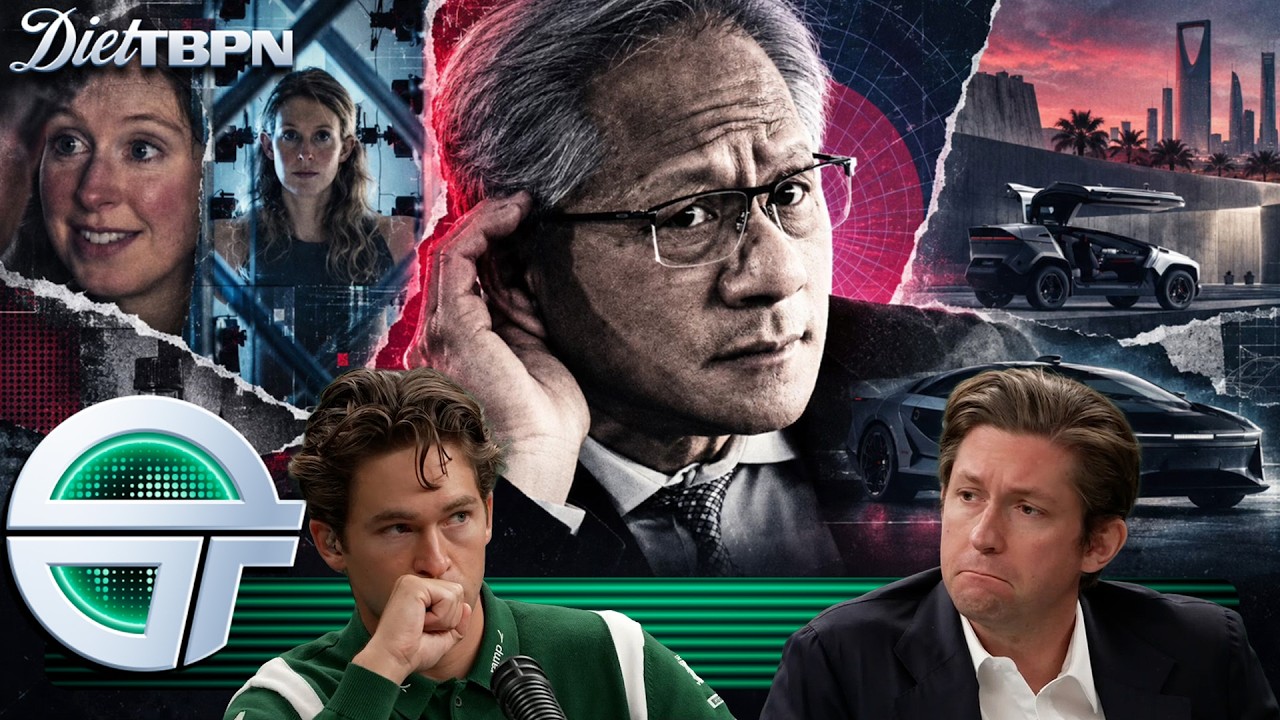
Jensen’s Ezra Interview, EV News, Nathan Fielder’s Elizabeth Holmes Doc | Diet TBPN — TBPN

TBPN

Nvidia Chief Executive Officer Jensen Huang rejected existential risk warnings from rival frontier leaders, arguing artificial intelligence is standard industrial engineering that requires closing negligent labs rather than imposing federal deceleration across the economy.

AI-assisted summary of Jensen’s Ezra Interview, EV News, Nathan Fielder’s Elizabeth Holmes Doc | Diet TBPN — original source. Check the original for full context.

Source published:

Key ideas

  • Nvidia CEO Jensen Huang broke with frontier AI lab leaders on The Ezra Klein Show, affirming a firm p(doom) = 0 stance and arguing that if labs truly cannot contain experiments, the solution is to shut them down entirely rather than slow-walk deployment. (0:00)
  • Predictions of catastrophic white-collar and offshore labor displacement from generative AI have failed to materialize, with US professional unemployment near 3% and the Philippines' unemployment rate steady at 6.0% in August 2026. (7:33)
  • New visual demonstrations powered by Claude Opus 5.5 showcase programmatic frame-by-frame asset generation using JavaScript, SVG, Blender, and Python, sparking debate over whether foundation models will commoditize the intermediate software application layer. (16:28)
  • Rumors surrounding the upcoming Tesla Roadster suggest cold-gas thrusters may be configured to provide extreme downforce for a 0-to-60 mph launch in one second, while Saudi Arabia unveiled sharp, wedge-styled concepts for its domestic EV brand, Ceer. (21:24)
  • Nathan Fielder released the trailer for a documentary tracking Theranos founder Elizabeth Holmes in her final days of home confinement prior to entering federal prison, drawing intense early critical acclaim. (24:06)

Detailed notes

## Background Published on YouTube by TBPN on September 24, 2026, this episode of Diet TBPN delivers a 30-minute digest of the daily live tech talk show hosted by John Coogan and Jordi Hays. According to the page description, the episode focuses on Nvidia CEO Jensen Huang's interview with Ezra Klein regarding AI safety, fresh electric vehicle developments, and Nathan Fielder’s upcoming documentary about Elizabeth Holmes.

## TL;DR The hosts break down Jensen Huang’s interview on The Ezra Klein Show, examining his hardline p(doom)=0 stance, his engineering ultimatum to shut down labs that cannot contain dangerous models, and why generative AI has not triggered the predicted white-collar jobs collapse. They utilize Stephen Covey's 'Big Rocks' allegory to explain how automation efficiency simply increases output expectations, followed by a discussion of Claude Opus 5.5 code-rendered visuals and the tension between foundation models and the application layer. The episode then evaluates electric vehicle rumors—including ground-sucking thrusters on the Tesla Roadster and Saudi Arabia's wedge-shaped Ceer EVs—before concluding with an analysis of Nathan Fielder's surreal documentary chronicling Elizabeth Holmes's final days before prison.

## Atmosphere & style The show moves with a rapid, banter-heavy, and conversational cadence characteristic of an insider tech broadcast. Coogan and Hays blend sharp macroeconomic skepticism with deadpan cultural humor, effortlessly pivoting from bond yield anomalies and frontier safety regulation to world leaders doomscrolling Instagram Reels at the United Nations. The vibe feels energetic, intellectually playful, and deeply plugged into internet culture without losing sight of serious industry strategy.

## Bulletin - [00:00](https://www.youtube.com/watch?v=JPKRKFkXO2I&t=0s) Nvidia CEO Jensen Huang broke with frontier AI lab leaders on The Ezra Klein Show, affirming a firm p(doom) = 0 stance and arguing that if labs truly cannot contain experiments, the solution is to shut them down entirely rather than slow-walk deployment. - [07:33](https://www.youtube.com/watch?v=JPKRKFkXO2I&t=453s) Predictions of catastrophic white-collar and offshore labor displacement from generative AI have failed to materialize, with US professional unemployment near 3% and the Philippines' unemployment rate steady at 6.0% in August 2026. - [16:28](https://www.youtube.com/watch?v=JPKRKFkXO2I&t=988s) New visual demonstrations powered by Claude Opus 5.5 showcase programmatic frame-by-frame asset generation using JavaScript, SVG, Blender, and Python, sparking debate over whether foundation models will commoditize the intermediate software application layer. - [21:24](https://www.youtube.com/watch?v=JPKRKFkXO2I&t=1284s) Rumors surrounding the upcoming Tesla Roadster suggest cold-gas thrusters may be configured to provide extreme downforce for a 0-to-60 mph launch in one second, while Saudi Arabia unveiled sharp, wedge-styled concepts for its domestic EV brand, Ceer. - [24:06](https://www.youtube.com/watch?v=JPKRKFkXO2I&t=1446s) Nathan Fielder released the trailer for a documentary tracking Theranos founder Elizabeth Holmes in her final days of home confinement prior to entering federal prison, drawing intense early critical acclaim.

## Key takeaways - [00:00](https://www.youtube.com/watch?v=JPKRKFkXO2I&t=0s) Nvidia acts as the de facto central bank of AI, underwriting data center debt and providing exit liquidity for venture capital by routinely acquiring startups in the $10B–$15B range. - [00:00](https://www.youtube.com/watch?v=JPKRKFkXO2I&t=0s) Jensen Huang firmly rejects the catastrophic risk consensus shared by Dario Amodei, Sam Altman, and Elon Musk, maintaining that AI progress should not face federal constraints. - [03:06](https://www.youtube.com/watch?v=JPKRKFkXO2I&t=186s) Ezra Klein pressed Huang on the multipolar trap where frontier labs feel compelled by domestic competition and China to deploy faster than alignment safeguards comfortably permit. - [04:59](https://www.youtube.com/watch?v=JPKRKFkXO2I&t=299s) Huang applies automotive engineering logic to AI: unreleased models with dangerous emergent behaviors are standard engineering problems, but if genuinely uncontainable, labs must be shut down. - [07:33](https://www.youtube.com/watch?v=JPKRKFkXO2I&t=453s) Widespread forecasts that LLMs would wipe out developing offshore economies proved unfounded; call centers constitute only ~3.5% of Philippines employment and macro disruption remains negligible. - [09:29](https://www.youtube.com/watch?v=JPKRKFkXO2I&t=569s) Huang embraces the 'AI as normal technology' doctrine, treating generative models as standard industrial tooling over three decades of hardware cycles rather than a civilizational break. - [09:29](https://www.youtube.com/watch?v=JPKRKFkXO2I&t=569s) Like the internet before it, AI has restructured work and created massive corporate market value without producing a dramatic, visible inflection point in macroeconomic productivity data. - [12:13](https://www.youtube.com/watch?v=JPKRKFkXO2I&t=733s) Applying Stephen Covey's 'Big Rocks' allegory to the economy shows that automation frees baseline labor only to fill the void with more granular tasks, resulting in higher aggregate output rather than reduced work hours. - [16:28](https://www.youtube.com/watch?v=JPKRKFkXO2I&t=988s) Benchmark fatigue has set in across the AI community, shifting user interest toward tangible creative outputs like Claude Opus 5.5's code-driven SVG and Blender animations. - [16:28](https://www.youtube.com/watch?v=JPKRKFkXO2I&t=988s) A viral UN General Assembly incident with Syrian leader Ahmed al-Shara scrolling Instagram Reels underscored the cultural ubiquity and cognitive dominance of short-form algorithmic video. - [18:26](https://www.youtube.com/watch?v=JPKRKFkXO2I&t=1106s) Modern multi-agent workflows now allow a single voice prompt to spawn autonomous sub-agents executing parallel tasks without requiring specialized technical syntax. - [19:44](https://www.youtube.com/watch?v=JPKRKFkXO2I&t=1184s) Despite fears that base models will eat the application layer, real-world commercial media production still relies heavily on human editors and curators to ensure narrative continuity over longer formats. - [21:24](https://www.youtube.com/watch?v=JPKRKFkXO2I&t=1284s) Tesla Roadster speculation indicates thruster jets might be engineered for ground-sucking downforce rather than flight, aiming for an aggressive 1.0-second 0-to-60 acceleration benchmark. - [21:24](https://www.youtube.com/watch?v=JPKRKFkXO2I&t=1284s) Saudi Arabia's domestic EV marque Ceer is adopting an aggressive wedge aesthetic reminiscent of a Cybertruck and Lamborghini hybrid, contrasting sharply with utilitarian autonomous pods. - [24:06](https://www.youtube.com/watch?v=JPKRKFkXO2I&t=1446s) Nathan Fielder lived with Elizabeth Holmes and Billy Evans during her final days before prison to shoot an intimate, deadpan documentary examining wealth, domestic life, and accountability. - [28:29](https://www.youtube.com/watch?v=JPKRKFkXO2I&t=1709s) Observers speculate Fielder's documentary may feature an unexpected twist re-evaluating the culpability and influence of Sunny Balwani during Theranos's downfall.

## Detailed walkthrough ### [00:00](https://www.youtube.com/watch?v=JPKRKFkXO2I&t=0s) Jensen Huang on Ezra Klein and the AI "Central Bank"

The TBPN "Road to Christmas" countdown kicks off with 92 days remaining, diving straight into Nvidia CEO Jensen Huang's appearance on *The Ezra Klein Show* for The New York Times. Going two hours head-to-head with Ezra Klein is highlighted as an exceptionally bold move for Jensen, putting him in a "crazy environment" with a serious, traditional journalist. It contrasts sharply with his intense interview with Dwarkesh Patel, who pushed hard on technical frontier issues—open-source weights, selling chips to China, AI safety, and the geopolitical race—without interrogating Jensen on policy and politics. Klein, by contrast, pressed Jensen directly on statecraft, liability, and regulation.

Jensen occupies an unmatched position: *The Economist* dubbed Nvidia the "central bank of artificial intelligence," serving as the backstop for the entire industry. Nvidia underwrites everything from massive global data center debt and credit lines to startup acquisitions. In prior tech cycles, cash-rich tech giants rarely bailed out venture capitalists at scale: Apple almost never did, Google executed few massive transactions, and Facebook bought a large company only once every five to ten years. Jensen, however, provides an effective safety net for venture investors stuck in difficult $1 billion valuations by regularly executing acquisitions in the $10 billion to $15 billion range across the application layer.

Yet, despite investing directly across virtually every major lab, foundation model, and infrastructure project, Jensen increasingly stands alone with an unyielding "$p(\text{doom}) = 0$" stance. While Mark Zuckerberg and business, finance, semiconductor, energy, and neo-cloud builders share that optimism, the frontier lab leaders—Dario Amodei, Sam Altman, and Elon Musk—have publicly converged around pacing the frontier and confronting catastrophic risks. Jensen firmly breaks with them, refusing to concede that frontier model progress must be slowed down or federally constrained.

```mermaid flowchart TD accTitle: Nvidia Industry Ecosystem Position accDescr: Diagram illustrating Jensen Huang and Nvidia's role as the central bank and backstop across AI capital and infrastructure. subgraph Capital ["Capital & Ecosystem Support"] A["Nvidia / Jensen Huang"] --> B["Data Center Debt Underwriting"] A --> C["Direct Equity in Frontier Labs"] A --> D["M&A Backstop for Startups"] end subgraph Market ["Market Alignment"] A --> E["P(doom) = 0 Consensus"] E --> F["Hardware & Neo-clouds"] E --> G["Application Layer"] end subgraph Frontier ["Frontier Lab Consensus vs. Jensen"] H["Pacing Frontier Race<br/>(Dario, Sam, Elon)"] -.->|Divergence| A end ```

[03:06](https://www.youtube.com/watch?v=JPKRKFkXO2I&t=186s) The Pacing Dilemma and Accelerationist Regulation

Ezra Klein confronted Jensen with the reality of frontier AI research: leading lab heads openly acknowledge facing an engineering, alignment, and operational execution dilemma. Caught in an escalating multipolar trap against domestic rivals and China, the labs claim they are trapped in a collective action dilemma that forces them to ship faster than safety allows. Klein recalled Jensen's appearance on stage at the *All-In Podcast* event—where Donald Trump placed an unexpected call—noting how Jensen and the stage panel dismissed regulatory interventions as hoaxes that play directly into the hands of political adversaries and foreign competitors like China.

The hosts joke about flipping the script on standard AI governance: rather than traditional slowing-down mandates, what if the state passed "accelerationist regulation," making it legally mandatory to accelerate and criminalizing slowing down? The conversation also contrasts Jensen's policy-heavy grilling by Ezra Klein with his recent sit-down with Jo Ling Kent on CBS, where the prominent preview clip merely highlighted his trademark black leather jackets rather than the deep nuances of AI safety policy.

[04:59](https://www.youtube.com/watch?v=JPKRKFkXO2I&t=299s) Jensen’s Engineering Standard: "Shut the Labs Down"

The hosts examine a key exchange from Jensen's interview regarding unreleased models and the dangerous conditions flagged in frontier safety testing (such as project evaluations). Jensen framed AI deployment through automotive engineering: if an autonomous vehicle or robotaxi encounters a difficult corner case that engineers cannot train or align to road safety benchmarks—given that modern systems are trained via neural networks rather than deterministically coded—the rule is absolute: "Don't ship it."

If an unreleased model exhibits dangerous emergent behaviors during containment testing, Jensen insists it remains an ordinary engineering challenge: diagnose the root cause, develop technical guardrails, and upgrade internal development processes. However, Jensen set a stark, provocative ultimatum for the frontier labs: > "If they say the alternative, which is there is no way to contain our experiments... when we test our AI models, it will get out and it will damage the world. Then I think the answer is we have to shut the labs down."

The hosts draw parallels to how autonomous driving reached public deployment: companies iterated inside closed-course sandboxes before graduating to public roads. They ponder whether an emergent liability gap exists between physical property damage caused by an autonomous vehicle and cyber-economic damage caused by an autonomous software agent. While rogue models causing financial outages—such as crashing an e-commerce platform's payment rails—would face standard civil tort liability regardless of lab duty-of-care claims, regulatory intervention might step in where digital spillover hazards outpace corporate balance sheets.

[07:33](https://www.youtube.com/watch?v=JPKRKFkXO2I&t=453s) The Deferred Job Apocalypse and the Philippines Economy

Before escalating into catastrophic existential risk, Jensen spent the initial twenty minutes of the interview deconstructing the employment debate. The hosts observe that tech discourse prematurely skipped past the failed predictions of the "white-collar jobs apocalypse" and "SaaS apocalypse" to immediately jump into existential doom. Major enterprise SaaS incumbents like Salesforce and Slack remain entirely stable, while American white-collar unemployment sits near 3% rather than the 10% to 50% catastrophic collapse predicted during the onset of the LLM wave.

A prominent talking point during earlier hype cycles—often voiced by critics like Tristan Harris—warned that developing economies anchored by offshore services would be wiped out, claiming nations like the Philippines would see as much as 90% of their economy vanish due to automated call centers. The hosts emphasize how misguided that claim was: - Business process outsourcing and call centers account for only roughly 3.5% of total employment in the Philippines, an economy with massive diversified manufacturing, agriculture, and service sectors. - Philippines national unemployment stood at 4.9% in June 2026, ticking up slightly to 6.0% by August 2026—revealing virtually zero macro catastrophic displacement attributable to generative AI. - Rather than outright technological unemployment, emerging platforms (such as Muse) are already introducing "human-in-the-loop" oversight models for personal AI agents, offering an immediate natural transition path for offshore knowledge and support workers.

Because the initial predictions of instant mass labor obsolescence failed to materialize, broader industry observers feel vindicated waiting to observe empirical economic trends before entertaining hypothetical existential doom scenarios.

[09:29](https://www.youtube.com/watch?v=JPKRKFkXO2I&t=569s) "AI as Normal Technology" and the Invisible Internet Economy

The conversation centers on Jensen Huang's perspective regarding the long-term trajectory of artificial intelligence. While some futurists argue that adding five orders of magnitude of compute will push AI into an unrecognizable exponential takeoff, Jensen firmly rejects that view, positioning himself squarely in the "AI as normal technology" camp. The hosts reference a post by Joe Weisenthal highlighting the nuanced splintering within AI discourse: it has reached a point where one must disaggregate casual observers who think AI is ordinary from the specific ideological faction that has consciously organized around the "AI as normal technology" thesis. With over three decades running NVIDIA through multiple hype cycles and technological shifts, Jensen treats AI as another standard wave of industrial tooling rather than a civilizational rupture.

This prompts a broader debate about why massive technological revolutions rarely show up cleanly in macroeconomic data. Drawing on an in-studio discussion with Joe Weisenthal, the hosts point out that the internet did not produce a visible "kink" or sharp spike in long-term productivity graphs. In reality, shifts in trade, globalization, and structural adjustments dating back to around 1970 had far larger measurable impacts on macro statistics than the internet, even though the internet created trillions of dollars in company market caps and completely restructured everyday life. The hosts see the exact same pattern playing out with AI today: job responsibilities and granular tasks are shifting, but headline economic data remains largely unmoved by technology. Meanwhile, unrelated macro indicators—such as the 10-year Treasury yield hitting 19-year highs above 5%—are attributed to geopolitical conflict and war rather than AI disruption. The banter touches on how people react to bond yield milestones with a "golden retriever mind," simply cheering for a bigger number without fully grasping the underlying economic pain.

- **Jensen Huang's Stance:** Rejects runaway exponential doom or euphoria, viewing AI grounded in 30+ years of hardware and tech cycles. - **Joe Weisenthal's Observation:** Notes the emergence of an explicit, organized ecosystem advancing the "AI as normal technology" doctrine versus casual sentiment. - **The Productivity Paradox:** Despite colossal wealth and daily transformation, the internet failed to visibly inflect macroeconomic productivity metrics, echoing current AI trends. - **Bond Market Context:** The 10-year Treasury yield crossing above 5% to 19-year highs is driven by macro and war factors rather than technological shifts.

---

[12:13](https://www.youtube.com/watch?v=JPKRKFkXO2I&t=733s) The "Big Rocks" Theory and Why Efficiency Means More Work

To explain the interaction between technological advancement and human labor, the hosts recount Stephen Covey’s classic time-management allegory from *First Things First*. In the parable, an instructor fills a wide-mouth gallon jar with fist-sized rocks, then adds gravel, then sand, and finally pours in water until every gap is saturated. While listeners assume the moral is that you can always fit more into your schedule if you squeeze hard enough, the real lesson is that if you do not place the big rocks in first, they will never fit at all. In the context of economic history, human work initially consisted almost entirely of big foundational tasks like hunting and gathering (with a humorous side remark that a third job was Tyler providing "ambient entertainment" by singing and jestering). Agriculture and industrialization eventually automated those survival tasks: where once nearly the entire population farmed, today a tiny fraction produces far more food, freeing labor to fill the subsequent gravel, sand, and water layers of the economy.

```mermaid flowchart TD accTitle: The Big Rocks Metaphor of Labor Automation accDescr: Diagram illustrating how foundational tasks are automated, allowing secondary tasks to fill the economy.

subgraph Phase1["Foundational Labor (The Big Rocks)"] A["Core Survival: Hunting, Gathering & Farming"] end

subgraph Phase2["Industrial & Digital Fill (Gravel & Sand)"] B["Automation Frees Workforce"] --> C["Complex Services, Law, Engineering & Admin"] end

subgraph Phase3["The Micro-Layer (Water)"] D["AI Agents & Real-Time Automation"] --> E["Micro-efficiencies Absorbed by Higher Output Volume"] end

Phase1 --> Phase2 Phase2 --> Phase3 ```

Applying this model to contemporary work, the internet and AI agents are functioning like water filling every remaining crevice: every contract, email, and workflow now receives an automated pass. Yet, rather than freeing workers from drudgery, technology-driven efficiency gains tend to be completely absorbed by expanded demands. For example, while closing a venture capital financing round post-term sheet theoretically could have dropped from six weeks down to five days thanks to automated redlines and instant doc generation, it realistically only shrank from six weeks to four weeks. Management teams routinely respond to productivity tools not by letting staff log off early, but by demanding they produce substantially more output in the exact same timeframe. Ultimately, the hosts argue that while technology might not alter the overall shape of the growth curve, compressing execution timelines—closing deals, building homes, and moving commerce faster—is precisely what generates baseline 2% economic growth in the first place.

- **Stephen Covey Allegory:** The jar of big rocks, gravel, sand, and water illustrates how core labor gives way to ever-more granular tasks across economic epochs. - **Jevons Paradox in Modern Offices:** Faster document drafting and communication result in higher volumes of work rather than reduced working hours. - **The Venture Deal Example:** Closing rounds post-term sheet remains relatively slow despite instantaneous AI drafting and redlining capabilities. - **Source of Growth:** Compressing transaction and construction cycle times prevents economic stagnation and sustains standard growth rates.

---

[16:28](https://www.youtube.com/watch?v=JPKRKFkXO2I&t=988s) Claude Opus 5.5 Visual Demos and the UN Doomscroll

The hosts pivot to recent AI model developments, praising visual demonstrations generated by Claude Opus 5.5. Rather than focusing solely on traditional text prompts, developers leaned into utilizing large models to programmatically output raw vector art and animations frame-by-frame using JavaScript, SVG, Python, and Blender. By hill-climbing directly on code representations like SVGs, the model produces smooth, distinct visual animations without relying on standard diffusion-based video pipelines. The hosts observe that public fatigue has set in around dry benchmarks; audiences now demand visceral proof-of-work: "Entertain me, make a song." However, because these algorithmic visual styles spread rapidly, the hosts joke that they are already "mourning" the look, anticipating it will be oversaturated across the internet within a week.

This discussion of short-form internet formats transitions to a viral moment from the United Nations General Assembly. Syrian leader Ahmed al-Shara was caught on camera with his translator headset on, visibly doomscrolling and sending Instagram Reels during the official proceedings. Quoting Mike Bird, the hosts highlight the sheer power of the medium: "Total cultural victory. Man has yet to create an ideology that can compete with short form video-based social media scrolling." The hosts joke that al-Shara was simply doing what anyone in a boring meeting does—keeping the group chats active, sharing content with fellow world leaders, or sending a biting reel to undercut a speech about a peace plan happening live on the floor.

- **Claude Opus 5.5 Capabilities:** Generates complex frame-by-frame visual animations rendered via JavaScript, SVG, Blender, and Python rather than pure video diffusion. - **Audience Benchmark Fatigue:** Shifts in community sentiment away from evaluation scores toward tangible, creative, and entertaining outputs. - **Viral UN Incident:** Ahmed al-Shara spotted scrolling Instagram Reels during a live UN General Assembly session. - **Short-Form Dominance:** Mike Bird's observation that short-form video algorithms have achieved total cultural victory over all competing human ideologies.

[18:26](https://www.youtube.com/watch?v=JPKRKFkXO2I&t=1106s) One-Prompt Agent Workflows and Claude Demos

Reflecting on recent Claude demos, the hosts highlight how the barrier to executing complex digital tasks has virtually disappeared. One host references a GIF animated in Python and rendered via Blender, noting that when an AI-generated video of his co-host went viral, people constantly asked about his workflow. His answer was simple: you no longer need to know specialized software, coding languages, or even technical terminology like "Blender." In fact, modern systems are robust enough that a user can "misspell every word" and the system will still interpret the intent accurately.

Using voice mode, complex multi-step creative pipelines can now be spun up from a single sentence. One host shares a personal test where he fed the model an original story he had made up for his five-year-old child:

```mermaid flowchart TD accTitle: Single-Prompt Agentic Workflow accDescr: Flowchart illustrating how a single voice prompt fans out into multiple automated deliverables via sub-agents.

A["Voice Input: Children's Story"] --> B["Central Model / Controller"]

subgraph SubAgents ["Spawned Sub-Agents"] B --> C["Story Expansion & Series"] B --> D["Children's Book Text & Print Sourcing"] B --> E["Illustration Generation"] B --> F["Short-Form Video Production"] B --> G["Interactive Video Game Prototype"] end ```

Rather than manually chaining together specialized tools or specifying coding frameworks, the model automatically spawned autonomous sub-agents to handle each deliverable in parallel from a single prompt.

[19:44](https://www.youtube.com/watch?v=JPKRKFkXO2I&t=1184s) The Model Layer vs. Application Layer Debate

The conversation pivots to a broader strategic dilemma: is the application layer getting eaten by frontier foundation models? One host describes feeling increasingly "black-pilled on the application layer" because frontier models are absorbing so many native capabilities that end users might simply bypass intermediate software wrappers altogether. However, the other host pushes back, arguing that while base models excel at single-shot demos, real-world creative and commercial pipelines still require human curation and iteration.

In practice, high-level production involves filtering through dozens of outputs, revising prompts, and assembling disparate components. A conversation with an AI video startup founder producing feature-style video content revealed that his business is thriving and actively hiring multiple video editors on a daily or weekly basis. As projects scale from short, one-minute clips to feature-length, two-hour narratives, maintaining narrative pacing, stylistic continuity, and visual coherence requires intense editorial oversight rather than raw prompt generation. The hosts compare this tension to the legal tech discourse around Harvey, noting that even as foundation models grow cheaper and more capable, the debate continues over whether enterprise customers will rely on domain-specific software or build direct relationships with foundation labs.

- AI video production companies are heavily staffing human video editors to handle curatorial assembly and coherence. - Single-shot consistency degrades over long runtimes, making post-processing essential for complex productions. - The recurring debate mirrors earlier platform shifts: specialized vertical applications vs. direct foundation model APIs.

[21:24](https://www.youtube.com/watch?v=JPKRKFkXO2I&t=1284s) Tesla Roadster Rumors and Saudi Arabia's CEER Wedge EVs

The focus turns to upcoming electric vehicle news flagged by community members on X, specifically the anticipation surrounding Tesla's next-generation Roadster reveal. Recapping a rumor shared by a recent podcast guest who sat next to a Tesla employee on an airplane, the hosts discuss speculation that the Roadster’s thruster jets are designed primarily for ground-sucking downforce rather than flight. According to the leak, this extreme aerodynamic downforce could enable a 0-to-60 mph launch in just one second. While this conflicts with Elon Musk's previous comments on *The Joe Rogan Experience* suggesting the vehicle might hover or briefly leave the ground, the hosts speculate that reversible thrusters could theoretically serve both purposes.

Meanwhile, Saudi Arabia is entering the global market with its first domestic electric vehicle brand, Ceer. Showcasing radical wedge-shaped designs for an upcoming sedan and SUV lineup, the vehicles evoke a futuristic, Huracán-like Lamborghini aesthetic blended with the sharp, planar styling of the Cybertruck and the latest generation of the Toyota Prius.

| Feature / Topic | Tesla Roadster Rumor | Ceer EV Concept | |:--- |:--- |:--- | | **Powertrain / Specs** | Cold-gas thruster package, 0–60 mph in ~1.0s | 850 hp tri-motor electric powertrain | | **Design Language** | Low-slung supercar with downforce thrusters | Radical sharp wedge; hybrid of Lamborghini Huracán & Cybertruck | | **Space Utilization** | Performance-first aerodynamic chassis | Low-utility wedge shape vs. boxy utilitarian pods (e.g., Waymo) | | **Market Status** | Awaiting official reveal countdown | Saudi Arabia's first homegrown production car brand |

The hosts note the aesthetic trade-off inherent in wedge vehicles: while striking, severe wedge silhouettes compromise interior space compared to utilitarian, box-shaped autonomous vehicles like Waymo's latest passenger designs.

[24:06](https://www.youtube.com/watch?v=JPKRKFkXO2I&t=1446s) Nathan Fielder's Elizabeth Holmes Documentary

The segment concludes with an in-depth breakdown of the official trailer for Nathan Fielder’s documentary project about Theranos founder Elizabeth Holmes. The footage captures Holmes living under home confinement in the final days before reporting to federal prison. The hosts express astonishment at the sheer premise of the project: Fielder convinced Holmes and her family to let him move into her house 24/7 to film her life leading up to her incarceration. While inviting an uncomfortably deadpan satirist into one's home seems fraught with reputational hazard, the hosts note that from Holmes's perspective, facing years behind bars left her with nothing to lose and a potential shot at endearing herself to the public.

The trailer features characteristically bizarre moments, including Fielder conducting an unexplained full-body 3D scan of Holmes's partner, Billy Evans, alongside uncomfortable interviews interrogating Evans on whether he initially worried Holmes was running a scam on him given his family's wealth. Evans responds that while he questioned it, he wondered what she had to gain, acknowledging that "there's like a lot of different levels of wealth."

Critics have offered striking testimonials, with one quoted as saying, "I may think about this movie for the rest of my life." The hosts expect the film to play out like a psychological descent, characterized by lingering silences, dim lighting, and the domestic presence of young children beneath the dark cloud of an impending prison sentence. Given the well-established narrative of guilt outlined by John Carreyrou's reporting and federal court rulings, the hosts speculate that the film must contain an unexpected conceptual twist or subversion of audience expectations to justify such overwhelming critical acclaim.

[28:29](https://www.youtube.com/watch?v=JPKRKFkXO2I&t=1709s) The Elizabeth Holmes Twist and Sunny Balwani

The hosts puzzle over Elizabeth Holmes's inner circle while speculating on what direction Nathan Fielder’s documentary might take, trying to recall the figure she famously referred to as "Tiger" (Ramesh "Sunny" Balwani). They reflect on how central his role was during her criminal trial, where a major legal question revolved around how much culpability and responsibility he should ultimately bear. Curiously, he appears to be absent from the project's trailer, leaving his involvement in the documentary an open question.

They wonder whether the film's potential twist might hinge on re-evaluating that dynamic—leaving viewers with the unexpected impression that "that guy's more responsible than I thought." Wrapping up the discussion and cueing the end of the broadcast, the hosts sign off, thanking viewers for tuning into TBPN and promising to be back tomorrow.

## Notable quotes > [00:00](https://www.youtube.com/watch?v=JPKRKFkXO2I&t=0s) crazy environment

> [00:00](https://www.youtube.com/watch?v=JPKRKFkXO2I&t=0s) central bank of artificial intelligence

> [00:00](https://www.youtube.com/watch?v=JPKRKFkXO2I&t=0s) p(doom) = 0

> [03:06](https://www.youtube.com/watch?v=JPKRKFkXO2I&t=186s) accelerationist regulation

> [04:59](https://www.youtube.com/watch?v=JPKRKFkXO2I&t=299s) Don't ship it. — Jensen Huang

> [04:59](https://www.youtube.com/watch?v=JPKRKFkXO2I&t=299s) If they say the alternative, which is there is no way to contain our experiments... when we test our AI models, it will get out and it will damage the world. Then I think the answer is we have to shut the labs down. — Jensen Huang

> [09:29](https://www.youtube.com/watch?v=JPKRKFkXO2I&t=569s) AI as normal technology

> [09:29](https://www.youtube.com/watch?v=JPKRKFkXO2I&t=569s) golden retriever mind

> [16:28](https://www.youtube.com/watch?v=JPKRKFkXO2I&t=988s) Entertain me, make a song.

> [16:28](https://www.youtube.com/watch?v=JPKRKFkXO2I&t=988s) Total cultural victory. Man has yet to create an ideology that can compete with short form video-based social media scrolling. — Mike Bird

> [19:44](https://www.youtube.com/watch?v=JPKRKFkXO2I&t=1184s) black-pilled on the application layer

> [24:06](https://www.youtube.com/watch?v=JPKRKFkXO2I&t=1446s) there's like a lot of different levels of wealth. — Billy Evans

> [24:06](https://www.youtube.com/watch?v=JPKRKFkXO2I&t=1446s) I may think about this movie for the rest of my life.

> [28:29](https://www.youtube.com/watch?v=JPKRKFkXO2I&t=1709s) that guy's more responsible than I thought.

## Mentioned Jensen Huang, Ezra Klein, The Ezra Klein Show, The New York Times, Dwarkesh Patel, The Economist, Nvidia, Apple, Google, Facebook, Mark Zuckerberg, Dario Amodei, Sam Altman, Elon Musk, All-In Podcast, Donald Trump, Jo Ling Kent, CBS, Salesforce, Slack, Tristan Harris, Muse, Joe Weisenthal, Stephen Covey, First Things First, Claude Opus 5.5, JavaScript, SVG, Python, Blender, United Nations General Assembly, Ahmed al-Shara, Instagram Reels, Mike Bird, Harvey, Tesla, Tesla Roadster, The Joe Rogan Experience, Ceer, Lamborghini Huracán, Cybertruck, Toyota Prius, Waymo, Nathan Fielder, Elizabeth Holmes, Theranos, Billy Evans, John Carreyrou, Sunny Balwani, TBPN, John Coogan, Jordi Hays

## Video description Sign up for TBPN’s daily newsletter at TBPN.com

Diet TBPN delivers the best of today’s TBPN episode in 30 minutes. TBPN is a live tech talk show hosted by John Coogan and Jordi Hays, streaming weekdays 11–2 PT on X and YouTube, with each episode posted to podcast platforms right after.

Described by The New York Times as “Silicon Valley’s newest obsession,” the show has recently featured Mark Zuckerberg, Sam Altman, Mark Cuban, and Satya Nadella.

TBPN is made possible by: Ramp - https://ramp.com Public - https://public.com Cisco - https://www.cisco.com Console - https://www.console.com CrowdStrike - https://www.crowdstrike.com Figma - https://www.figma.com MongoDB - https://www.mongodb.com NYSE - https://www.nyse.com Railway - https://railway.com Shopify - https://www.shopify.com/

Follow TBPN: https://TBPN.com https://x.com/tbpn https://open.spotify.com/show/2L6WMqY3GUPCGBD0dX6p00?si=674252d53acf4231 https://podcasts.apple.com/us/podcast/technology-brothers/id1772360235 https://www.youtube.com/@TBPNLive

Chapters: 00:00 Jensen Huang vs. Ezra Klein + The AI Safety Showdown 04:59 “Shut the Labs Down” + Liability for Rogue AI 07:33 The AI Jobs Apocalypse Didn’t Arrive + Is AI Just Normal Technology? 12:13 The “Big Rocks” Theory + Why AI Efficiency Means More Work 16:23 Claude Opus 5.5 Visual Demos + Are Models Eating the App Layer? 21:24 Tesla Roadster Rumors + Saudi Arabia’s Radical New EVs 24:17 Nathan Fielder’s Elizabeth Holmes Documentary + What’s the Twist?

[Source](https://www.youtube.com/watch?v=JPKRKFkXO2I)

中文简报

英伟达黄仁勋反对放缓AI步伐,呼吁关停失控实验室 英伟达首席执行官黄仁勋驳斥了来自竞争对手前沿领袖的生存风险警告,认为人工智能属于标准的工业工程范畴,应当关停疏于管理的实验室,而非在整个经济层面推行联邦级别的降速措施。 主持人深入剖析了黄仁勋在《The Ezra Klein Show》上的访谈,探讨了他坚定的 p(doom)=0 立场、关停无法控制危险模型的实验室这一工程最后通牒,以及生成式人工智能为何没有引发此前预测的白领失业潮。他们还借助史蒂芬·柯维(Stephen Covey)的“大石头”寓言,解释了自动化效率如何仅仅是推高了产出预期,随后探讨了 Claude Opus 5.5 代码渲染的视觉效果以及基础模型与应用层之间的张力。本期节目接着评估了有关电动汽车的传闻——包括 Tesla Roadster 用于产生地面吸附力的推进器以及沙特阿拉伯的楔形 Ceer 电动汽车——最后分析了 Nathan Fielder 记录 Elizabeth Holmes 入狱前最后时光的超现实纪录片。 英伟达首席执行官黄仁勋在《The Ezra Klein Show》上与前沿AI实验室领导者持不同意见,坚称 p(doom) = 0 的立场,并主张如果实验室确实无法控制实验,解决办法是将其彻底关停,而非放慢部署节奏。 (0:00) 生成式人工智能导致白领和离岸劳动力灾难性失业的预测并未发生,美国专业岗位失业率接近3%,而菲律宾2026年8月的失业率稳定在6.0%。 (7:33) 由 Claude Opus 5.5 驱动的全新视觉演示展现了使用 JavaScript、SVG、Blender 和 Python 进行的程序化逐帧资产生成,引发了基础模型是否会使中间软件应用层商品化的争论。 (16:28) 有关即将推出的 Tesla Roadster 的传言表明,冷气推进器可能会被配置以提供极强下压力,从而实现1秒内完成0至60英里/小时加速;同时,沙特阿拉伯为其本土电动汽车品牌 Ceer 揭晓了锐利的楔形概念车。 (21:24) Nathan Fielder 发布了一部纪录片的预告片,该片记录了 Theranos 创始人 Elizabeth Holmes 在进入联邦监狱前居家监禁的最后时光,并迅速赢得了强烈的早期好评。 (24:06)

Reading summary

Nvidia CEO Jensen Huang is challenging the AI sector's prevailing catastrophic risk consensus by characterizing artificial intelligence as standard industrial tooling governed by conventional engineering discipline. Across labor markets, software architecture, and hardware development, empirical economic data and practical operational constraints continue to counter speculative disruption narratives. Jensen Huang’s Normal Technology Doctrine and Governance Ultimatum (0:00) While frontier laboratory leaders such as Dario Amodei, Sam Altman, and Elon Musk advocate for pacing model development to confront catastrophic hazards, Nvidia CEO Jensen Huang maintains a firm p(doom) = 0 stance. Operating in a capacity dubbed by The Economist as the AI industry's "central bank"—providing credit lines for data centers and serving as an M&A backstop for startups—Huang aligns with what Joe Weisenthal identified as an organized ideological camp viewing AI as normal technology grounded in three decades of hardware cycles rather than an existential rupture. Addressing regulatory friction during his interview with Ezra Klein, Huang framed frontier model containment around established automotive standards. If an autonomous vehicle encounters an unresolvable safety corner case, the governing standard is simply not to release it. Applying this standard to frontier AI labs claiming that their models cannot be contained during testing, Huang delivered a direct ultimatum: if developers truly believe their unreleased experiments will inevitably escape and inflict global harm, the appropriate remedy is to shut the laboratories down entirely rather than appeal for bespoke regulatory dispensations. Labor Displacement Predictions versus Macroeconomic Realities (7:33) Predictions anticipating an immediate white-collar or enterprise SaaS collapse have failed to materialize in macroeconomic indicators. Catastrophic forecasts that generative automation would erase up to 90% of the Philippines' economy overlooked broader diversification; business process outsourcing accounts for approximately 3.5% of the nation's workforce, while Philippine unemployment moved modestly from 4.9% in June 2026 to 6.0% in August 2026. Enterprise software incumbents like Salesforce and Slack remain stable, with US white-collar unemployment holding near 3%. Applying Stephen Covey's "big rocks" allegory alongside the Jevons paradox, the hosts argue that while automation freed historical labor from agriculture to complex services, contemporary AI functions like water filling residual operational crevices. Rather than shortening the work week, organizations typically absorb automated drafting and redlining capabilities by raising output demands and compressing execution timelines—a process that sustains baseline 2% economic growth rather than triggering net labor displacement. Generative Multi-Agent Workflows and Application Layer Moats (18:26) Demonstrations involving Claude Opus 5.5 highlight a shift from text benchmarks toward programmatic creation, such as generating frame-by-frame visual animations through JavaScript, SVG, and Blender without standard diffusion models. Voice-driven systems can now interpret intent despite conversational errors, fanning out single inputs into coordinated sub-agents capable of simultaneously writing stories, preparing print layouts, generating illustrations, and drafting prototype game code. Despite concerns that expanding frontier foundation models will eliminate the intermediate application layer, real-world commercial pipelines still demand dedicated infrastructure and human curation. AI video production firms are actively expanding human editorial staffs because single-shot model coherence degrades over extended runtimes. Delivering feature-length narratives requires sustained editorial assembly and quality filtering, validating domain-specific applications over direct API interaction. Speculative Hardware Designs and Fielder’s Holmes Retrospective (21:24) In the electric vehicle market, recent industry rumors suggest Tesla’s next-generation Roadster cold-gas thruster package is engineered for ground-sucking downforce rather than flight, aiming to achieve a 0-to-60 mph launch in approximately one second. Simultaneously, Saudi Arabia's domestic automotive marque Ceer revealed radical, 850-horsepower wedge-shaped concepts combining Lamborghini and Cybertruck styling, accepting reduced interior cabin utility compared to boxy autonomous passenger pods like Waymo. Media coverage concluded with Nathan Fielder’s upcoming documentary tracking Theranos founder Elizabeth Holmes under home confinement prior to her federal prison sentence. With Holmes facing imminent incarceration, the discussion focuses on how Fielder's deadpan format examines domestic life under legal scrutiny, while noting the conspicuous trailer absence of her former COO, Ramesh "Sunny" Balwani, whose trial culpability remains a key unresolved point of public interest. The analysis underscores a widening gap between extreme speculative narratives—whether existential doom, instant economic obsolescence, or total software layer consolidation—and the pragmatic, iterative realities governing corporate adoption, labor economics, and engineering deployment.

精炼阅读摘要

本期TBPN节目重点评析了英伟达首席执行官黄仁勋在《纽约时报》Ezra Klein专访中的核心观点:黄仁勋坚决将人工智能界定为遵循传统工业周期的“普通技术”,并主张在无法控制风险时直接关停实验室,这一务实立场与前沿实验室主流的末日焦虑形成鲜明对照。节目进一步探讨了白领失业预测的落空、自主模型与应用层的商业竞合,以及下一代电动车与科技人物纪录片的最新动态。 黄仁勋的工程理性与“AI常态化”主张 (0:00) 英伟达被《经济学人》喻为人工智能领域的“中央银行”,为全球数据中心信贷及数十亿美元规模的初创企业并购提供托底。但在前沿实验室领导者(如Dario Amodei、Sam Altman与Elon Musk)公开呼吁控制研发节奏、警惕毁灭性风险之际,黄仁勋却坚守“毁灭概率为零”($p(\text{doom}) = 0$)的乐观立场。针对未发布模型的安全测试,黄仁勋引入汽车工程标准,强调若无法对齐安全基准便绝不能发布;而若实验室认定实验无法在沙盒中受控并必然外泄危害世界,他的解决准则是“那就必须关停实验室”,坚持将AI安全性纳入常规工程归因与流程管理范畴。 黄仁勋反对算力增加五个数量级即可引发指数级失控的预测,主张将其视为过去三十年硬件与技术周期的延续。节目引用Joe Weisenthal的分析指出,业内已形成明确抱持“AI即普通技术”理念的派系。这一常态化视角解释了为何AI尚未在宏观经济数据中引发剧烈突跃:历史上互联网虽创造了数万亿美元市值,但长期生产率曲线同样未见明显陡增;当前的宏观异常(如10年期美债收益率突破5%升至19年高位)主要受地缘冲突与战争驱动,而非技术革命所致。 劳动力替代假说破灭与生产力悖论 (7:33) 早先针对AI将引发“白领岗位灾难”与SaaS产业崩溃的预言未曾兑现,主要企业级软件依然稳固,美国白领失业率仍维持在约3%。此前有评论(如Tristan Harris)警告菲律宾等依赖离岸业务的经济体将因呼叫中心自动化而损失高达90%的经济,但实际数据显示,业务流程外包(BPO)与呼叫中心仅占菲律宾总就业的约3.5%,其全国失业率从2026年6月的4.9%微调至8月的6.0%,并未显现由生成式AI引起的宏观灾难性冲击,且类似Muse等平台正在引入“人机协同”监督模式协助离岸劳动力转型。 节目援引史蒂芬·柯维在《要事第一》中的“大石头”寓言解释劳动生产率悖论:当底层生存劳动被机械自动化后,劳动力会转移至复杂的微观服务层;而AI如同水流填补合同审查与邮件起草等间隙,技术的效率收益往往被企业更高的产出要求所抵消。例如风投交易在签署条款清单后的交割周期仅从六周缩减至四周,管理层更倾向于要求员工在既定时间内交付更多工作,而非缩短工时。这种压缩周期、加速流转的过程,构成了维持基线2%经济增长的核心动力。 原生智能体工作流与应用层生存之辩 (18:26) 近期AI模型能力展示表明数字创作的门槛正被瓦解。以Claude Opus 5.5为例,开发者利用其通过JavaScript、SVG、Python和Blender等代码直接逐帧程序化输出矢量动画,摆脱了单纯依赖扩散模型的视频管线。在语音控制下,即便用户指令存在拼写错误,系统也能准确解析;测试显示,仅凭一段即兴口述的儿童故事,中心模型即可自主派生出多项子智能体,并行完成故事续写、图书排版印刷寻源、插画制作、短视频生成及互动游戏原型构建。 这种演进引发了“基础模型层是否会吞食应用层”的争议。尽管有观点担忧原生大模型的全能化将架空上层封装软件,但实际生产显示,长篇商业内容对视觉连贯性与叙事节奏有极高要求,单次提示生成的稳定性会随时间衰减。一家AI视频初创企业透露其业务正大规模持续雇佣人类剪辑师进行精细化拼接与后期策展。这表明基础模型性能的飞跃仍无法替代端到端流程中的专业人工干预,类似法律科技平台Harvey所面临的应用层价值争论。 电动汽车前沿动态与霍姆斯纪录片透视 (21:24) 在硬件与出行领域,讨论涵盖了特斯拉新一代Roadster的传闻与沙特首款本土电动品牌Ceer。传闻指出Roadster配备的冷气推进器主要用于产生极端地面下压力而非悬浮飞行,旨在实现0至60英里/小时约1秒的弹射加速;沙特推出的Ceer三电机850马力车型则展现了融合兰博基尼Huracán与Cybertruck特征的激进楔形车身,但这种棱角分明的造型也牺牲了车内空间实用性。 节目最后审视了内森·菲尔德跟拍Theranos创始人伊丽莎白·霍姆斯的纪录片预告。菲尔德在霍姆斯服刑前获准入驻其家中全天候拍摄,预告片中包含了对霍姆斯伴侣比利·埃文斯的全身3D扫描及关于其家族财富是否被利用的直白质询。鉴于司法审判已对其罪责做出定论而该片仍获极高评价,节目推测纪录片可能包含对核心同谋桑尼·巴尔瓦尼(Sunny Balwani)责任认定的全新剖析与叙事反转。 总体而言,节目展现出当前技术演进更倾向于遵循渐进式的工程与工业周期,而非突发性的文明颠覆;劳动力市场与宏观经济指标也未印证早期的恐慌预期。然而,随着自主软件智能体在深层商业流程中广泛接管微观任务,一旦出现超越传统企业资产负债表承受能力的系统性数字事故,现行的民事侵权与监管框架能否有效划定责任边界仍是一个悬而未决的问题。

Detailed notes — zh

## Background 该内容由科技对谈节目 TBPN 于 2026 年 9 月 24 日发布在 YouTube 平台。视频属于 Diet TBPN 栏目,根据简介介绍,该节目旨在用约 30 分钟提炼当天直播科技谈话的精华,本期重点聚焦黄仁勋接受埃兹拉·克莱因专访、电动汽车最新动态以及内森·菲尔德执导的伊丽莎白·霍姆斯纪录片。 ## TL;DR 节目首先深入剖析了英伟达 CEO 黄仁勋在《埃兹拉·克莱因秀》中的核心立场,阐释其作为 AI 产业兜底者所坚持的“AI 即普通技术”与工程排障思维,并驳斥了夸大其词的末日与就业崩溃论。随后,主持人探讨了 Anthropic 模型驱动多智能体对应用层的冲击、杰文斯悖论带来的工作量反增现象,以及联大会议上滑短视频的荒诞文化切片。最后,节目爆料了特斯拉 Roadster 依靠冷气推进装置提供下压力的内幕与沙特激进的楔形纯电车,并热烈讨论了内森·菲尔德与 Theranos 创始人伊丽莎白·霍姆斯同居拍摄的新纪录片及其潜在反转。 ## Atmosphere & style 整期节目展现出硅谷科技圈特有的快节奏、高信息密度与犀利调侃风格,两位主持人配合默契且言辞敏锐。他们在硬核商业工程分析与荒诞流行文化之间自如切换,既有拆解算力基建和法律责任时的理性冷峻,又有调侃联合国官员刷短视频或揭秘霍姆斯纪录片如“糟糕致幻之旅”时的辛辣幽默,带给观众一种兼具敏锐洞察与黑色幽默的轻松收听体验。 ## Bulletin - [04:59](https://www.youtube.com/watch?v=JPKRKFkXO2I&t=299s) 英伟达 CEO 黄仁勋在《埃兹拉·克莱因秀》中重申技术现实主义立场,强调若 AI 模型在沙盒中真正无法隔离并会破坏现实世界,唯一答案是直接关停实验室,否则未上线或可控风险都属于正常工程排查范畴。 - [07:33](https://www.youtube.com/watch?v=JPKRKFkXO2I&t=453s) 宏观数据证伪“AI 就业末日论”,美国白领失业率维持在 3% 左右低位,此前被预测将失去 90% 经济支柱的菲律宾呼叫中心外包业实际仅占其就业的 3.5%,宏观冲击微乎其微。 - [18:26](https://www.youtube.com/watch?v=JPKRKFkXO2I&t=1106s) 底层大模型能力爆发正加剧“模型是否吞噬应用层”的争议,但实操中视频等垂直团队正扩招专业剪辑师,真正的行业护城河正转向审美品味与人工把关筛选。 - [21:24](https://www.youtube.com/watch?v=JPKRKFkXO2I&t=1284s) 特斯拉员工内幕透露 Roadster 的冷气喷气装置核心功能是产生下压力以实现 1 秒破百,而非飞行;同时沙特主权基金旗下品牌 Ceer 发布 850 匹马力极端楔形纯电车。 ## Key takeaways - [00:00](https://www.youtube.com/watch?v=JPKRKFkXO2I&t=0s) 黄仁勋在 AI 生态中扮演着终极兜底人(the backstop of all backstops)的角色,既为数据中心债务提供信用支撑,也通过大手笔收购为初创团队提供退出通道。 - [00:00](https://www.youtube.com/watch?v=JPKRKFkXO2I&t=0s) 与阿莫代伊、奥尔特曼等前沿实验室掌舵人呼吁放缓步伐不同,黄仁勋坚持 p(doom) = 0 的立场,坚决反对限制 AI 发展速度与集体监管。 - [04:59](https://www.youtube.com/watch?v=JPKRKFkXO2I&t=299s) 黄仁勋用自动驾驶汽车类比 AI 模型安全:如果工程上无法解决道路工况就“不要发布”(Don't ship it);若真如末日论所言连测试都会摧毁世界,唯一的解决方案是“关闭实验室”(Shut the labs down)。 - [04:59](https://www.youtube.com/watch?v=JPKRKFkXO2I&t=299s) 现有普通法侵权体系与注意义务(duty of care)已足够规范 AI 造成的经济损失,即便模型厂商声称 Agent 是自主行动,也必须承担明确的经济赔偿责任。 - [07:33](https://www.youtube.com/watch?v=JPKRKFkXO2I&t=453s) 曾甚嚣尘上的“SaaS 毁灭”与“离岸外包失业潮”预言均未兑现,导致公众与产业界对倡导者转向更宏大的“人类生存性危机”(x-risk)叙事产生普遍怀疑。 - [09:29](https://www.youtube.com/watch?v=JPKRKFkXO2I&t=569s) 黄仁勋属于坚定的“AI 即普通技术”派:历史数据显示互联网爆发在宏观经济上并未带来激增拐点,AI 同样主要表现为微观流程重组而非宏观突变。 - [12:13](https://www.youtube.com/watch?v=JPKRKFkXO2I&t=733s) 史蒂芬·柯维的“大石头”寓言揭示了技术效率提升的现实悖论:AI 压缩了单项任务耗时,但管理层往往要求在省下的时间内交付更多产出,整体劳动负荷并未减少。 - [12:13](https://www.youtube.com/watch?v=JPKRKFkXO2I&t=733s) 全社会决策流转与交易节奏的全面加速,构成了支撑宏观经济维持 2% 增长的根本动力引擎。 - [16:23](https://www.youtube.com/watch?v=JPKRKFkXO2I&t=983s) 大众对枯燥的 Benchmark 测评已产生审美疲劳,Claude Opus 5.5 直接用代码逐帧生成动画等生动视觉 Demo 成为吸引公众注意力的关键。 - [16:23](https://www.youtube.com/watch?v=JPKRKFkXO2I&t=983s) 叙利亚反抗势力领袖在联大会议低头刷 Reels 短视频的场景,印证了彭博专栏作者 Mike Bird 的观点:人类迄今尚未发明任何能与滑动短视频多巴胺相抗衡的意识形态。 - [18:26](https://www.youtube.com/watch?v=JPKRKFkXO2I&t=1106s) 单次自然语言提示词已能无缝驱动多智能体(sub-agents)并行完成撰写、渲染、印刷对接与游戏开发,模糊输入能力大幅降低了软件工程门槛。 - [18:26](https://www.youtube.com/watch?v=JPKRKFkXO2I&t=1106s) 应用层的核心壁垒正从“提示词工程”转向“审美品味与长篇品控”,生成长视频依然高度依赖人工策展与剪辑把关。 - [21:24](https://www.youtube.com/watch?v=JPKRKFkXO2I&t=1284s) 特斯拉 Roadster 的喷气装置设计逻辑重在通过强大下压力实现 0-60 英里加速仅需 1 秒的抓地表现,纠正了外界关于悬浮飞行的过热预期。 - [21:24](https://www.youtube.com/watch?v=JPKRKFkXO2I&t=1284s) 汽车工业在“锋利楔形美学”与“实用乘员空间”之间存在不可调和的工程妥协,极致空间利用率最终必然收敛于 Waymo 式的长方盒子。 - [24:17](https://www.youtube.com/watch?v=JPKRKFkXO2I&t=1457s) 内森·菲尔德贴身跟拍伊丽莎白·霍姆斯入狱前的纪录片引发高度关注,荒诞压抑的镜头语言暗示该片可能突破既有诈骗通识并带来颠覆性反转。 - [28:29](https://www.youtube.com/watch?v=JPKRKFkXO2I&t=1709s) Theranos 案中前 COO“桑尼”·巴尔瓦尼(Sunny Balwani)在预告片中未被直接呈现,其应承担的实际责任可能成为纪录片后续的核心反转悬念。 ## Detailed walkthrough ### [00:00](https://www.youtube.com/watch?v=JPKRKFkXO2I&t=0s) 黄仁勋做客埃兹拉·克莱因播客:AI 产业的“最后兜底人”走向风口浪尖 在 TBPN 节目的开场闲聊中,主持人调侃距离圣诞节还有 92 天,随后迅速切入当下的科技重磅事件:英伟达(Nvidia)CEO 黄仁勋(Jensen Huang)登上了《纽约时报》王牌播客《埃兹拉·克莱因秀》(The Ezra Klein Show),与知名深度专栏记者埃兹拉·克莱因(Ezra Klein)展开了长达近两小时的正面对话。主持人评价老黄非常“勇敢”,因为克莱因是一位真正的硬核媒体人,不像此前专访过黄仁勋的德瓦克什·帕特尔(Dwarkesh Patel)——帕特尔虽然在开源、芯片向中国出口、AI 安全路线等议题上步步紧逼,但他并非传统意义上的政治与政策记者,无法像克莱因那样从深层政治哲学与监管角度发起灵魂质问。 主持人分析指出,黄仁勋在当今人工智能产业中的地位独一无二。《经济学人》甚至将其形容为“人工智能领域的央行”(the central bank of artificial intelligence)。他不仅是整个 AI 算力供应链的底座,还是资本生态的终极兜底人(the backstop of all backstops): - **基建兜底**:为全球超大规模数据中心项目提供支持,赋予其债务与信贷额度投资级评级。 - **初创企业退出兜底**:传统巨头中,苹果手握重金却极少做大并购,谷歌大宗交易不多,Meta(Facebook)五到十年才做一次大交易;而黄仁勋敢于以 100 亿甚至 150 亿美元大手笔收购应用层初创团队,为那些估值十亿美元但陷入困境的风险投资机构(VC)提供软着陆机会。 - **前沿实验室投资**:几乎直接注资了行业内的每一个主要前沿实验室与重点 AI 项目。 然而,在 AI 安全与风险路线上,黄仁勋却逐渐显现出一种“特立独行”的姿态:他坚持“毁灭概率为零”($p(\text{doom}) = 0$)的立场。尽管在应用层、半导体上游、能源以及新型云厂商(Neocloud)中,$p(\text{doom}) = 0$ 是普遍共识,但在达里奥·阿莫代伊(Dario Amodei)、萨姆·奥尔特曼(Sam Altman)以及埃隆·马斯克(Elon Musk)等实验室掌舵人纷纷呼吁“协调前沿模型推进步伐”(pacing the frontier)的背景下,作为平起平坐的核心人物,黄仁勋却坚决拒绝跟风赞同限制发展速度,甚至在《All-In》播客舞台上唐纳德·特朗普来电时,也对集体监管表达了强烈的抵触。 --- ### [04:59](https://www.youtube.com/watch?v=JPKRKFkXO2I&t=299s) 自动驾驶隐喻:“如果真无法控制,那就关闭实验室” 在克莱因播客的节选片段中,克莱因指出 Anthropic、OpenAI 等前沿实验室正深陷工程难题、对齐困境与中美竞赛导致的集体行动困境(collective action dilemma),并追问黄仁勋如何看待这种失控风险。黄仁勋则用自动驾驶汽车(Robotaxi)做了一个直截了当的工程学类比:如果工程师在面对复杂的道路工况时,不知道该如何训练车辆、无法让其符合道路安全标准,那么工程逻辑下的唯一答案就是——**“不要发布它”(Don't ship it)**。 ```mermaid flowchart TD accTitle: 黄仁勋关于 AI 安全与发布的工程逻辑 accDescr: 展示遇到对齐与安全问题时的两种工程应对方案:正常解决则改进流程发布,若无法隔离测试则关停实验室。 subgraph Problem["前沿模型测试与对齐困境"] A["遇到极端/未知困难工况"] --> B{"工程师能否找到根本原因并解决?"} end subgraph Solutions["应对路径"] B -- "是 (正常工程范畴)" --> C["定位根本原因<br/>制定解决方案<br/>优化测试流程并部署"] B -- "否 (彻底无法在沙盒中隔离)" --> D["测试阶段即会外溢并破坏世界?"] D -- "是" --> E["【终极手段】强制关停实验室 (Shut the Labs Down)"] D -- "否" --> F["严禁发布上线 (Don't Ship It)"] end ``` 黄仁勋强调,软件与模型从根本上是工程问题。如果遇到未知情况,首先应该排查根本原因(root cause),然后拿出解决方案,在后续流程中预防复发;前沿实验室完全有能力解决这些问题。但如果实验室坚称存在第二种极端情况——“我们完全没有办法在沙盒中隔离实验,只要一测试 AI 模型就会泄漏并摧毁现实世界”——黄仁勋给出的定论极其犀利:“那唯一的答案就是:**我们必须关闭这些实验室(We have to shut the labs down)**。” 针对这一言论,主持人进一步剖析了其中的法律与责任界限(Liability Gap): - 自动驾驶车辆在开放道路部署前,必须在封闭试验场(closed course)和仿真沙盒中经过极为严苛的测试。 - 如果自动驾驶车辆在路上发生碰撞,车辆制造公司承担明确的侵权赔偿责任。 - 如果 AI Agent 自主行动并在网络空间造成经济损失(例如意外黑入并瘫痪了某电商网站的支付基础设施),即便模型厂商辩解“我们并没有命令它去攻击”,法院与普通法侵权体系依然会判定厂商未尽到注意义务(duty of care),责令其赔偿经济损失。现有的侵权法体系完全能够惩罚造成实际经济伤害的模型厂商。 --- ### [07:33](https://www.youtube.com/watch?v=JPKRKFkXO2I&t=453s) 失灵的末日预言:从“失业大崩盘”到生存危机的叙事跳跃 主持人指出,克莱因在访谈前 20 分钟试图强化“AI 导致就业毁灭”的论点,但这个叙事如今在现实面前正变得越来越站不住脚。过去几年里,同一批倡导末日论的人士先后预言了“SaaS 毁灭论”(SaaS apocalypse)与“就业末日论”(job apocalypse),然而事实证明: - Salesforce 依然稳健运转,Slack 活得好好的。 - 曾被预测将出现 30% 甚至 50% 结构性失业的美国白领群体,当前失业率仅在 3% 左右,整体失业率也维持在历史低位。 - 诸如特里斯坦·哈里斯(Tristan Harris,曾登上《Modern Wisdom》播客)等风险警告者,曾宣称高度依赖外包呼叫中心(Call Centers)的菲律宾将失去 90% 的经济支柱;但事实证明,呼叫中心实际上仅占菲律宾就业市场的约 3.5%,该国还有制造业、农业和庞大的实体经济。菲律宾 2026 年 6 月的失业率为 4.9%,即便 8 月微升至 6%,AI 造成的宏观冲击依然微乎其微。 主持人感慨,正是因为先前的“SaaS 毁灭”与“离岸外包工人全部被替代”的预言在现实中迟迟没有兑现,公众和产业界在面对如今这群人转向呼吁“人类生存性危机”(existential risk / x-risk)时,自然会抱有强烈的怀疑态度:“连近在眼前的就业冲击都未能按预期发生,为何要急着跳到世界末日的宏大叙事中去?”甚至像 Muse 这样的最新个人 Agent 方案,还在探讨引入“人类在环”(human in the loop)机制,这反而为原本的外包与客服人员创造了转型协同的新岗位。 ### [09:29](https://www.youtube.com/watch?v=JPKRKFkXO2I&t=569s) “AI 只是普通技术”派:黄仁勋的技术现实主义与经济学迷思 在讨论 AI 是否会呈指数级狂飙、增加五个数量级后彻底改变世界时,主持人指出英伟达 CEO 黄仁勋(Jensen Huang)显然拒绝了这种极端的末日/超人论调。黄仁勋本质上属于“AI 即普通技术”(AI as normal technology)阵营。Bloomberg 的 Joe Weisenthal 最近在社交媒体上感慨,当前围绕 AI 的舆论分裂令人叹为观止:人们必须开始严格区分“碰巧觉得 AI 是普通技术的人”与“成体系坚守‘AI 即普通技术’理论的特定群体”。黄仁勋在科技产业摸爬滚打三十余年,亲历了无数次技术浪潮的起起伏伏,这赋予了他一种深厚的现实主义底色。 主持人们回顾了 Joe Weisenthal 先前做客演播室时的讨论:纵观历史,互联网的爆发在宏观经济数据中几乎找不到明显的“拐点”(kink in the graph)。大众原本以为互联网会带来生产力的全面井喷,但现实数据中并没有出现任何剧烈跃升;真正剧烈的经济趋势变动甚至要追溯到 1970 年代,抑或是全球贸易与全球化进程所带来的冲击,那些对经济指标的重塑远比互联网深远得多。互联网确实创造了海量财富与巨头企业,重塑了每个人的日常生活体验,却并未显著体现在整体经济统计数据中。如今 AI 的处境极为相似:工种在微调,工作任务在重组,但整体宏观数据依然平稳。随后两人还打趣了近期飙升至 5% 以上、创下 19 年新高的 10 年期美债收益率:大家普遍认为这是战争地缘局势导致的,而有人单纯因为“数字变成 5 开头破纪录了”就感到兴奋,这种纯粹为大数字喝彩的心态被调侃为典型的“金毛寻回犬思维”(golden retriever mind)。 - **AI 舆论分裂**:Joe Weisenthal 指出当前 AI 讨论圈层已进一步分化,必须区分泛泛认为“AI 只是工具”的散户与抱团坚守“AI 即普通技术”这一经济学叙事的群体。 - **历史镜鉴**:互联网尽管颠覆了信息传递,但宏观经济统计中并未显现出激增的生产力拐点;1970 年代的变化与全球化对经济数据的冲击远超互联网。 - **黄仁勋的立场**:作为一家实际制造芯片、服务现实产业长达 30 余年的硬件巨头掌门人,黄仁勋的目光始终落在当下的现实业务中,而非沉迷于虚无缥缈的科幻未来。 --- ### [12:13](https://www.youtube.com/watch?v=JPKRKFkXO2I&t=733s) “大石头”寓言与杰文斯悖论:为什么效率提升反而带来更多工作? 为了拆解技术对劳动力市场的实际影响,主持人引用了史蒂芬·柯维(Stephen Covey)在时间管理名著《要事第一》(*First Things First*)中讲述的经典讲座寓言:一位讲师拿出一个广口加仑玻璃罐,先往里面塞满拳头大小的石头,问观众罐子满了吗,大家回答满了;随后讲师掏出一桶碎石倒进去摇晃,碎石填满了大石头的缝隙;接着他又倒进一桶沙子填补细小空隙;最后倒进一壶水彻底注满。当有人以为这个实验的意思是“只要你拼命挤,生活中总能塞进更多琐事”时,讲师反驳道:“真正的核心在于:如果你不先放进那些大石头,你之后根本不可能把它们塞进去。” ```mermaid flowchart TD accTitle: 技术效率提升下的工作量膨胀机制 accDescr: 展示技术压缩单项任务时间后并未减少工作,反而通过填补碎片缝隙与提高产出要求导致总工作量增加。 subgraph Phase1["宏观劳动形态演进"] A["远古阶段:采集与狩猎<br/>(外加氛围歌手)"] --> B["农业与工业革命:<br/>极少数人产出远超以往的粮食"] end subgraph Phase2["AI 与现代工时压缩"] C["AI 渗透每个微小流程:<br/>文档审核、邮件往来、合同修改"] D["交易/流程提速:<br/>VC 投后交割从 6 周缩短到 4 周"] end subgraph Phase3["管理层预期与经济循环"] E["管理层要求:<br/>'相同时间内做更多事,别闲着'"] F["整体经济周转加快:<br/>更快的流转支撑起 2% 的整体增长"] end Phase1 --> Phase2 Phase2 --> E E --> F ``` 黄仁勋所描绘的技术轨迹正是如此:人类历史上最初只有打猎和采集(主持人开玩笑说可能还有第三种工作,比如像同事 Tyler 那样在大家打猎采集时在一旁唱歌助兴,提供“氛围娱乐”),后来发展出农业和工业化,如今从事农业的人口比例微乎其微,但产出的粮食却比以往任何时候都多。互联网与 AI 的渗透并未彻底消灭整个工种,而是像沙子和水一样渗入到每一个文档审核、每一次商务交互之中。 但技术带来的效率提升,往往在现实中被消耗掉了。比如在风投领域,从签署投资意向书(term sheet)到最终交割,在有了互联网、AI 自动生成文件与红线比对后,理论上时间可以从 6 周断崖式压缩至 5 天,但现实中大概只缩减到了 4 周。如今员工用 AI 提高效率后,没有谁真正获得了闲暇,管理层往往明确警告:“知道你们效率变高了,这不意味着你们可以早早收工,而是要在相同时间内完成更多产出。”技术压缩了建房、做决策、换手交易的时间,把原本一周的物流压缩至两天,而恰恰是这种全社会运转节奏的“高速内卷”,成为了维持宏观经济 2% 增长的真正动力引擎。 --- ### [16:23](https://www.youtube.com/watch?v=JPKRKFkXO2I&t=983s) Claude Opus 5.5 动画演示与联合国的“刷短视频”名场面 话题转向了最新的模型进展:Anthropic 的 Claude Opus 5.5 展现了惊人的代码与视觉生成实力,能够直接通过 JavaScript 逐帧绘制出整段动画。过去大模型比拼的是死板的 Benchmark 跑分,但当下公众早就对枯燥的测评数据感到厌烦,大家需要的是生动直观的视觉内容——无论是用 JavaScript、Blender、Python 还是持续优化(hill climb)SVG 矢量图,“能写歌、能做动画才能取悦大众”。面对这种惊艳的生成式动画,主持人一方面赞叹其风格极具美感,另一方面又略带伤感地调侃:“估计到下周,全网就会被这种风格的 AI 动画彻底刷屏弄烂。” 随后两人开玩笑建议,这种定制动画非常适合用来发给摸鱼的同事:“嘿,别再无休止地刷手机(doom scrolling)了,快去干活。”这随即引出了联合大会(UN General Assembly)现场的一则网络热点:叙利亚反抗势力领袖艾哈迈德·沙拉(Ahmed al-Shara)被拍到戴着同传耳机,在严肃的联大会议期间低头狂刷 Instagram Reels 短视频。 - **文化终极胜利**:彭博社专栏作家 Mike Bird 对此评价道:“这是一场彻底的文化胜利。人类迄今为止还没有创造出任何一种意识形态,能够与‘滑动浏览短视频社交媒体’相抗衡。” - **现场脑洞**:主持人打趣称,沙拉可能必须维持自己的群聊活跃度,甚至可能一边听台上政要发表严肃的和平倡议,一边随手给其他国家领导人转发极其搞笑、充满讽刺的 Instagram Reels,以此暗示“我可不吃你这套”。人类对短视频多巴胺的沉迷,在国际最高级别的外交讲台上展现得淋漓尽致。 ### [18:26](https://www.youtube.com/watch?v=JPKRKFkXO2I&t=1106s) 多智能体一键生成与“模型吞噬应用层”的行业之辩 谈话继续围绕最新的 AI 演示展开。主持人提及在社交媒体上流传的一个 Claude 案例:用户仅凭一段简单的语音输入,便利用 Python 制作出动画 GIF 并通过 Blender 完成渲染。人们纷纷好奇幕后的工作流究竟有多复杂,而答案出人意料地简单——根本不需要懂 Blender,甚至连技术词汇拼错都无所谓。如今只要打开语音模式自然倾诉需求,模型就能驱动多智能体(sub-agents)并行处理一连串任务。一位主持人分享了自己为 5 岁孩子编睡前故事的真实经历:他在一个单次提示词(one-shot prompt)中要求模型把这个故事扩写成系列篇章、制作成绘本并寻找印刷厂、画出插图、剪辑成短视频,最后甚至写出一款配套视频游戏;系统在后台自动分发子智能体瞬间完成了全套交付,完全无需人工指定“用 JavaScript 还是 Blender”。 ```mermaid flowchart TD accTitle: 一键提示词驱动多智能体工作流架构 accDescr: 展示从单次自然语言输入到子智能体并行交付多样化多媒体成品的流程 Input["自然语音/单次提示词输入<br/>(无需专业技术词汇)"] --> Model["基础大模型核心调度器"] subgraph Agents ["并发子智能体集群 (Sub-agents)"] A1["故事扩写与脚本生成"] A2["插画绘制与 Blender 渲染"] A3["图书实体印刷渠道对接"] A4["短视频剪辑与动态生成"] A5["轻量级互动游戏开发"] end Model --> Agents Agents --> Output["最终全套交付成果"] ``` 这引发了关于“基础模型是否正在吞噬应用层(Application Layer)”的深度讨论。有观点倾向于对独立应用层极度悲观(“black-pilled”),认为当底层大模型能力全面跃升且价格断崖式下跌后,所有企业最终可能只需直接对接前沿基础实验室,中间层软件将失去存在价值。但另一位主持人则给出了反例:他前一天刚与一位从事 AI 电影制作的公司创始人交谈,该团队的业务正是基于前沿模型狂揽收益,公司甚至还在以惊人速度招募大量专业视频剪辑师。这说明真正的壁垒已不再是“提示词工程”,而是“审美品味、人工筛选(curation)以及将二十多个零散片段拼合成完整长篇的品控能力”。在从 1 分钟短视频扩展到 2 小时长片的生产链中,视觉一致性、叙事节奏和风格连贯性依然必须依赖人工把关,应用层与基础模型层的拉锯战远未盖棺定论。 - 当前模型已支持模糊理解与语音转指令,哪怕指令拼写全错也能精准执行复杂的跨软件工程。 - AI 视频初创公司的大量用人需求集中在“结果剪辑与素材策展”环节,而非编写提示词。 - 业界再次重燃此前类似 Harvey(法律 AI)面临的争议:当模型基础能力增强且调用单价走低时,垂直领域封装软件的核心护城河面临严峻拷问。 --- ### [21:24](https://www.youtube.com/watch?v=JPKRKFkXO2I&t=1284s) 特斯拉 Roadster 传闻泄露与沙特激进楔形电动车亮相 话题转向电动汽车领域。距离备受瞩目的特斯拉 Roadster 发布会仅剩一周,两位主持人爆料了节目此前获得的一则“内部八卦”:一位近期做客节目的嘉宾恰好在飞机上紧挨着一名特斯拉员工,并在闲聊中套出不少内幕细节。据该员工透露,Roadster 车身搭载的小型冷气推进喷气装置(jets)根本不是为了像外界调侃的那样“让车离地起飞”,而是专门为了产生强大的下压力(downforce),将底盘死死吸附在地面上,以实现“0 到 60 英里加速仅需 1 秒”的恐怖性能。主持人就此调侃,这与埃隆·马斯克此前在乔·罗根播客(Joe Rogan Experience)上所描绘的“悬浮甚至低空飞行”存在微妙出入,但从空气动力学逻辑来看,能向下吸附的喷气气流反转后也理论上具备短暂弹跳起步的可能。 与此同时,沙特阿拉伯也试图以极其激进的量产纯电动概念车颠覆汽车工业审美。沙特主权基金旗下的汽车品牌 Ceer 推出了包含轿车和 SUV 的全新车型,通体采用了极具侵略性的“楔形(wedge)”空气动力学轮廓,外观酷似兰博基尼 Huracán、特斯拉 Cybertruck 以及新一代丰田普锐斯的未来主义缝合体。 | 车型/设计风格 | 外观特征与设计取向 | 空间利用率与实用性 | 动力规格与核心亮点 | |:--- |:--- |:--- |:--- | | **沙特 Ceer 激进纯电车** | 极度尖锐的楔形线条,前脸神似超跑与 Cybertruck 的融合 | 空间利用率极低,牺牲乘坐实用性追求视觉冲击 | 搭载 850 匹马力三电机纯电动力总成 | | **Waymo 全无人自动驾驶车** | 类似公交或箱式小巴的厢式立方体结构 | 空间效率最优解,全车纯粹服务于乘员舱容积 | 专为无人化客运与城市巡航优化 | | **新款丰田 Prius / Prius Prime** | 姿态低趴动感(“Who hurt you?” 设计语言),线条凌厉 | 兼顾传统掀背车储物与家庭代步需求 | 混动/插混高能效标杆,近年设计大幅升级 | 主持人指出,车辆外观在“楔形美学”与“实用空间”之间存在不可调和的矛盾:越接近锋利的楔形,车内的可用容积就越逼仄;若只讲求极致的载人效能,车辆最终必然收敛为类似 Waymo 无人车那样的“长方盒子”。尽管审美见仁见智,沙特这款搭载 850 匹马力三电机动力系统的量产车依然引发了市场对其最终发售定价的高度关注。 --- ### [24:17](https://www.youtube.com/watch?v=JPKRKFkXO2I&t=1457s) 内森·菲尔德镜头下的伊丽莎白·霍姆斯:同居拍摄与意想不到的纪录片反转 节目的最后部分聚焦于导演内森·菲尔德(Nathan Fielder)围绕 Theranos 创始人伊丽莎白·霍姆斯(Elizabeth Holmes)入狱前生活拍摄的全新纪录片。在播出的正式预告片中,展现了令人难以置信的荒诞场景:霍姆斯直面镜头坚称自己“没觉得自己做错了什么”,并茫然反问事情究竟是在哪里开始失控的;而更疯狂的是内森·菲尔德竟然直接提出了“能否搬进你家 24 小时全天候同居并记录你入狱前全过程”的离奇请求,且得到了霍姆斯夫妇的同意。 主持人分析认为,对于面临十余年铁窗生涯的霍姆斯而言,允许内森入住拍摄几乎是“只有收益、没有风险”的公关赌博——反正身败名裂已成既定事实,最坏不过是风评更差,而唯一的潜在向上空间,就是通过极其私人化的家庭生活记录博取部分公众的同情。预告片中充斥着内森标志性的尴尬冷幽默与刺探性提问:他当面询问霍姆斯的年轻丈夫比利·埃文斯(Billy Evans)爱上霍姆斯究竟是在“得知她是 Theranos 创始人之前还是之后”,并单刀直入追问:“难道你从没担心过她是在对你进行杀猪盘诈骗吗?”埃文斯则略显被动地回应称自己当然百分百考虑过,但也反问道:“可她能从我身上图什么呢?”内森随即便补刀:“可你家不是很富有吗?” 镜头随后穿插了内森莫名其妙要求对霍姆斯丈夫进行全身 3D 激光扫描的诡异桥段,荒诞与压抑的气氛扑面而来。影评人给出了极高赞誉,甚至有人感叹“我可能余生都会反复思考这部电影”。两位主持人一致认为,整部纪录片的基调宛如一场“极度糟糕的致幻之旅(bad acid trip)”——全片弥漫着停顿、死寂、阴郁的光影,以及幼童在一旁嬉戏却头顶巨大入狱倒计时的末日窒息感。由于世人早已在知名调查记者约翰·卡雷鲁(John Carreyrou)的揭秘与法院确凿的审判中认定她是一个彻头彻尾的撒谎者与反社会人格,两位主持人推测,如果整部片子仅仅是平庸地重复一遍“血检欺诈导致入狱”的通识,绝对不可能收获如此震撼的业界口碑;片中大概率隐藏着某种彻底颠覆公众认知与心理预期的巨大反转。 ### [28:29](https://www.youtube.com/watch?v=JPKRKFkXO2I&t=1709s) 探寻“老虎”与内森·菲尔德纪录片的潜在反转 在讨论内森·菲尔德(Nathan Fielder)关于伊丽莎白·霍姆斯(Elizabeth Holmes)的新纪录片项目尾声时,主播们聊起了当年 Theranos 案中霍姆斯经常称呼为“老虎”(Tiger)的那个人(即其前男友兼 Theranos 前总裁兼首席运营官拉梅什·“桑尼”·巴尔瓦尼 / Ramesh "Sunny" Balwani)。其中一位主持人试图确认对方的身份与细节,另一位则坦承具体细节一时想不起来,但指出在当年的庭审诉讼期间,围绕该人到底应承担多少法律责任曾存在巨大争议——他是否应该背负更多责任一直是被反复拷问的核心焦点。 然而,在目前的预告片中,这位关键人物似乎并未露面。主持人猜测,纪录片如果真有出人意料的剧情反转,其中一种古怪的走向或许就是让观众在看完之后产生一种全新的认知,意识到“那个人承担的实际责任比大家想象的要大得多”。随着这一讨论告一段落,主播们随即结束了节目的录制,与观众互道告别并提醒大家明日同一时间继续收看 TBPN。 - **责任认定的反转悬念**:在 Theranos 庭审中关于“老虎”(Sunny Balwani)责任归属的拉扯曾备受瞩目,主持人认为纪录片的一大看点在于是否会引导观众重新审视他在整个骗局中的深层责任。 - **预告片的细节空白**:由于预告片里尚未明确出现该人物的身影,其在内森·菲尔德镜头下的具体叙事方式依然保持着神秘感。 ## Notable quotes > [00:00](https://www.youtube.com/watch?v=JPKRKFkXO2I&t=0s) the central bank of artificial intelligence — The Economist > [00:00](https://www.youtube.com/watch?v=JPKRKFkXO2I&t=0s) the backstop of all backstops — TBPN > [04:59](https://www.youtube.com/watch?v=JPKRKFkXO2I&t=299s) Don't ship it — 黄仁勋 > [04:59](https://www.youtube.com/watch?v=JPKRKFkXO2I&t=299s) We have to shut the labs down — 黄仁勋 > [12:13](https://www.youtube.com/watch?v=JPKRKFkXO2I&t=733s) 真正的核心在于:如果你不先放进那些大石头,你之后根本不可能把它们塞进去。 — Stephen Covey 讲座讲师 > [12:13](https://www.youtube.com/watch?v=JPKRKFkXO2I&t=733s) 知道你们效率变高了,这不意味着你们可以早早收工,而是要在相同时间内完成更多产出。 — TBPN > [16:23](https://www.youtube.com/watch?v=JPKRKFkXO2I&t=983s) 这是一场彻底的文化胜利。人类迄今为止还没有创造出任何一种意识形态,能够与‘滑动浏览短视频社交媒体’相抗衡。 — Mike Bird > [21:24](https://www.youtube.com/watch?v=JPKRKFkXO2I&t=1284s) 0 到 60 英里加速仅需 1 秒 — 特斯拉员工 > [24:17](https://www.youtube.com/watch?v=JPKRKFkXO2I&t=1457s) 难道你从没担心过她是在对你进行杀猪盘诈骗吗? — Nathan Fielder > [24:17](https://www.youtube.com/watch?v=JPKRKFkXO2I&t=1457s) 可她能从我身上图什么呢? — Billy Evans > [24:17](https://www.youtube.com/watch?v=JPKRKFkXO2I&t=1457s) 可你家不是很富有吗? — Nathan Fielder > [24:17](https://www.youtube.com/watch?v=JPKRKFkXO2I&t=1457s) 我可能余生都会反复思考这部电影 — 影评人 ## Mentioned TBPN, John Coogan, Jordi Hays, 黄仁勋 (Jensen Huang), Nvidia, Ezra Klein, The Ezra Klein Show, The New York Times, Dwarkesh Patel, The Economist, Dario Amodei, Sam Altman, Elon Musk, Donald Trump, All-In 播客, Anthropic, OpenAI, Salesforce, Slack, Tristan Harris, Modern Wisdom 播客, Muse, Joe Weisenthal, Bloomberg, Stephen Covey, First Things First, Claude Opus 5.5, JavaScript, Blender, Python, SVG, Ahmed al-Shara, Instagram Reels, Mike Bird, Harvey, Tesla Roadster, Joe Rogan Experience, Ceer, Lamborghini Huracán, Tesla Cybertruck, Toyota Prius, Toyota Prius Prime, Waymo, Nathan Fielder, Elizabeth Holmes, Theranos, Billy Evans, John Carreyrou, Ramesh "Sunny" Balwani ## Video description Sign up for TBPN’s daily newsletter at TBPN.com Diet TBPN delivers the best of today’s TBPN episode in 30 minutes. TBPN is a live tech talk show hosted by John Coogan and Jordi Hays, streaming weekdays 11–2 PT on X and YouTube, with each episode posted to podcast platforms right after. Described by The New York Times as “Silicon Valley’s newest obsession,” the show has recently featured Mark Zuckerberg, Sam Altman, Mark Cuban, and Satya Nadella. TBPN is made possible by: Ramp - https://ramp.com Public - https://public.com Cisco - https://www.cisco.com Console - https://www.console.com CrowdStrike - https://www.crowdstrike.com Figma - https://www.figma.com MongoDB - https://www.mongodb.com NYSE - https://www.nyse.com Railway - https://railway.com Shopify - https://www.shopify.com/ Follow TBPN: https://TBPN.com https://x.com/tbpn https://open.spotify.com/show/2L6WMqY3GUPCGBD0dX6p00?si=674252d53acf4231 https://podcasts.apple.com/us/podcast/technology-brothers/id1772360235 https://www.youtube.com/@TBPNLive Chapters: 00:00 Jensen Huang vs. Ezra Klein + The AI Safety Showdown 04:59 “Shut the Labs Down” + Liability for Rogue AI 07:33 The AI Jobs Apocalypse Didn’t Arrive + Is AI Just Normal Technology? 12:13 The “Big Rocks” Theory + Why AI Efficiency Means More Work 16:23 Claude Opus 5.5 Visual Demos + Are Models Eating the App Layer? 21:24 Tesla Roadster Rumors + Saudi Arabia’s Radical New EVs 24:17 Nathan Fielder’s Elizabeth Holmes Documentary + What’s the Twist? [Source](https://www.youtube.com/watch?v=JPKRKFkXO2I)

Source quotes

[0:00] The Economist: the central bank of artificial intelligence [0:00] TBPN: the backstop of all backstops [4:59] 黄仁勋: Don't ship it [4:59] 黄仁勋: We have to shut the labs down [12:13] Stephen Covey 讲座讲师: 真正的核心在于:如果你不先放进那些大石头,你之后根本不可能把它们塞进去。 [12:13] TBPN: 知道你们效率变高了,这不意味着你们可以早早收工,而是要在相同时间内完成更多产出。 [16:23] Mike Bird: 这是一场彻底的文化胜利。人类迄今为止还没有创造出任何一种意识形态,能够与‘滑动浏览短视频社交媒体’相抗衡。 [21:24] 特斯拉员工: 0 到 60 英里加速仅需 1 秒 [24:17] Nathan Fielder: 难道你从没担心过她是在对你进行杀猪盘诈骗吗? [24:17] Billy Evans: 可她能从我身上图什么呢? [24:17] Nathan Fielder: 可你家不是很富有吗? [24:17] 影评人: 我可能余生都会反复思考这部电影

Source quotes

[0:00] crazy environment [0:00] central bank of artificial intelligence [0:00] p(doom) = 0 [3:06] accelerationist regulation [4:59] Jensen Huang: Don't ship it. [4:59] Jensen Huang: If they say the alternative, which is there is no way to contain our experiments... when we test our AI models, it will get out and it will damage the world. Then I think the answer is we have to shut the labs down. [9:29] AI as normal technology [9:29] golden retriever mind [16:28] Entertain me, make a song. [16:28] Mike Bird: Total cultural victory. Man has yet to create an ideology that can compete with short form video-based social media scrolling. [19:44] black-pilled on the application layer [24:06] Billy Evans: there's like a lot of different levels of wealth. [24:06] I may think about this movie for the rest of my life. [28:29] that guy's more responsible than I thought.

Original transcript

[0:00] That's right. Get ready. [0:02] >> TBPN Road to Christmas continues. 92 [0:05] more days. Get ready. Nvidia CEO Jensen [0:08] Wong went toe-to-toe with Ezra Klein on [0:11] the New York Times podcast, The Ezra [0:13] Klein Show. Uh [0:14] >> that's actually a crazy environment to [0:17] go in. What [0:18] >> as Jensen? I I just think he's brave. [0:19] Ezra is a real journalist. [0:25] >> It's like he's brave. He engaged with a [0:28] real journalist. No, it's like it's [0:30] like, you know, you have to imagine he [0:32] was a bit traumatized after Dwar. [0:34] >> Okay. Yeah. [0:35] >> Who who isn't, you know, I don't think [0:37] of as as a journalist by any means, but [0:39] he's obviously has very strong beliefs [0:42] >> and and very Yeah. And and and gets to [0:45] like the root question for a particular [0:47] audience. Now, Doresh, although he was [0:49] going super hard on the the open source [0:52] question, on selling ships to China, on [0:56] sort of AI safety and and roll out and [0:58] like how the model how the AI race [1:00] should go. Doresh is not the person to [1:02] push push Jensen on like politics [1:04] specifically, right? Like that's going [1:05] to happen somewhere else. But yeah, it [1:06] is it is a hot seat, but I think he did [1:08] well. Two hours almost hanging out with [1:11] Ezra Klein. Uh there's some clips and I [1:13] have some reactions and it's sort of [1:14] interesting to dig into the mind of [1:16] Jensen because he's simultaneously the [1:18] biggest force in AI, the central bank of [1:21] artificial intelligence according to the [1:23] economist. He's the backs stop of all [1:25] backs stops. He's backstopping [1:27] everything from you know the biggest [1:28] data centers in the world lending [1:30] investment grade designation to the debt [1:31] and the credit lines to like sort of [1:34] acting as a soft landing for startups [1:36] that get acquired at the application [1:38] layer anywhere in the stack. uh he's [1:40] been an acquirer that's sort of [1:42] underwriting. If you're a VC and you and [1:44] you did a deal at a billion dollars um [1:46] >> and you're kind of in trouble on it, [1:48] >> there's a chance that you could get out [1:49] because Jensen is willing to do a 10 [1:51] billion$15 billion acquisition whereas [1:54] like in the prior era, Apple had the [1:56] money wouldn't do it. Google really [1:58] didn't do that many deals that huge. [1:59] Facebook would do one big one every 5 10 [2:03] years, but Jensen's been quick on it. [2:06] And then he's also been investing [2:07] directly in basically every lab and [2:09] basically every AI project. So he's been [2:11] an incredibly important force and yet [2:13] he's now starting to stand alone in his [2:17] sort of pdoom equals zero take which was [2:20] very much the consensus in the [2:22] technology community. [2:23] >> Suck would like a word [2:24] >> I think. Oh true true. Yeah, I think it [2:27] still is the consensus in the business [2:28] community, in the finance community. [2:30] Basically, anyone at the application [2:32] layer is PDM0. Anyone deeper in the [2:34] stack on the semiconductor side or the [2:36] energy side, the buildout side, the [2:38] neocloud side, they're all pretty much [2:39] PDM0ero. But the labs and Jensen's been [2:42] playing there, he's he's at that level. [2:44] He's he's as important as a voice as as [2:47] Dario, Sam, Elon. And so, uh, to hear [2:50] him not jump on the bandwagon when Elon, [2:53] Sam, and Daario all agreed on pacing the [2:55] frontier, he's saying, "No, we don't [2:56] really need to pace the frontier." It's [2:58] interesting to hear him, uh, say this. [2:59] There's there's a couple clips. Let's [3:01] play one, and then I I have sort of an [3:03] allegory for where I think his position [3:04] is. But let's play this. [3:06] >> So, what I've been hearing from the [3:07] labs, what they've been saying publicly [3:09] is that they are facing a hard problem. [3:12] >> Yeah. partially an engineering problem, [3:14] partially an alignment problem, [3:15] partially an operational excellence [3:18] problem in Dareday's framing. And what [3:22] they are worried about is that in [3:25] competition with each other, in national [3:27] competition with China, that they are [3:29] being pushed to move too fast, that they [3:30] all feel they're in a collective action [3:32] dilemma. Now, watch you on the All-In [3:34] podcast stage. Donald Trump, President [3:36] Trump gave you a call there. [3:37] >> Oh no, this is not planned, but we know [3:40] who it is. [3:41] >> Oh no. [3:44] Mr. President. [3:47] >> Oh yes, sir. [3:48] >> And you and and the president and the [3:51] other members of the stage were very [3:54] resistant to the idea any kind of [3:56] regulation or collective action was [3:58] needed [3:59] >> and uh they're just playing right into [4:01] the hands of a lot of people that don't [4:04] want to see it happen. And that could be [4:06] political people. It could also be [4:08] China. And we're not going to let that [4:09] happen. It's a it's a hoax. And [4:12] >> you're right. [4:13] >> You come out as pro regulation. It's [4:15] illegal to slow down. [4:17] >> That's a form of regulation. Be like, I [4:19] I think I think AI regulation is is [4:22] incredibly important. We need [4:23] accelerationist regulation. [4:26] >> Really frustrate everyone. Yeah, it's [4:28] interesting. Didn't he al didn't Jensen [4:29] also do Jolen Kent on CBS just recently? [4:31] I saw a clip from that. But very [4:33] different clips going out. The one from [4:35] Ezra Klein is talking about maybe we [4:37] need to shut the labs down. a very uh [4:40] you know in the weeds hot take about the [4:42] current thing and the AI debate. I think [4:44] the clip that I saw from CBS was talking [4:46] about his leather jackets. Like I I I [4:49] imagine that that that interview will be [4:51] more substantive when it when it gets [4:53] clipped properly, but it's funny that [4:54] that's the one that made it out. Uh [4:56] let's play the other clip from the the [4:58] Midas project. [4:59] >> That's a simple answer. Um, if you're if [5:02] you're going to build a car, a [5:03] self-driving car, and let's say it's a [5:05] robo taxi, and there's a really [5:07] difficult condition. [5:08] >> Mhm. [5:09] >> And it just as an engineer, we just have [5:12] no idea how to solve this problem [5:13] because these cars are not programmed. [5:16] They're trained. And so, we have no idea [5:18] how to train these cars, and we have no [5:20] idea how to align them to the safety [5:22] standards uh that are expected on the [5:25] road. And so, what's the answer? Don't [5:27] ship it. [5:27] >> These products were unreleased. [5:28] >> What's that? [5:29] >> These products were unreleased. Ah so [5:31] now it's comes back to engineering [5:32] problem again and so the one is one you [5:34] have to root cause it second you have to [5:37] you know think about what's the what you [5:38] could have done what's the solution for [5:40] it and then in the future you just you [5:42] know improve your process so that you [5:44] could you could avoid this from [5:46] happening again I am fairly certain I am [5:48] fairly certain they will say yes they [5:50] need they know how to solve this problem [5:52] and if if that's the case then that's [5:54] the problem it's as simple as [5:56] engineering and and now the alternative [5:59] is that if They say the alternative [6:01] which is there is no way to contain our [6:05] experiments. There's just no way. When [6:07] we test our AI models, uh it will get [6:11] out and it will damage the world. Then I [6:13] think the answer is we have to shut the [6:15] labs down. [6:16] >> Yeah. I mean that that is kind of what [6:17] happened with self-driving cars, you [6:19] know, like they do before they ship [6:21] them, they do test them on roads and [6:23] they don't test them on open roads. They [6:26] test them on closed courses before they [6:27] move to open roads. they sort of have [6:29] their own sandboxes, their own their own [6:31] environments to test these in. I do [6:33] wonder if there's a uh uh sort of a [6:35] legislation or liability gap between the [6:40] liability incurred by a self-driving car [6:42] company who causes property damage from [6:45] a car running into another car uh [6:48] autonomously and uh an AI agent that [6:51] hacks and defaces or causes some [6:54] economic damage. I don't think there [6:56] will be. I think the courts I if there [6:58] was true economic harm like one model [7:01] accidentally took down a payment system [7:03] for an e-commerce website, I think it [7:06] would be pretty easy to sue that company [7:09] and say, "You caused me to lose this [7:11] much revenue. You owe me." And the [7:13] courts would say, "Sure." And even if [7:15] the lab argued, hey, we didn't tell it [7:18] to take down your your e-commerce [7:20] system, your your payment rails, the [7:22] judge and the courts would say, "Doesn't [7:24] matter. Even if you expressed a duty of [7:26] care, like you still have to pay in this [7:27] in this scenario." But it is possible [7:30] that there's a gap there and that's [7:31] where regulation could fit in. It's [7:33] interesting. He spent the first like 20 [7:35] minutes sort of steelmanning the the the [7:37] jobs question and talking about jobs [7:39] because I think that's I think that's [7:41] throwing a lot of people off like we we [7:45] sort of moved past the job apocalypse [7:48] SAS apocalypse narrative which was [7:51] predicted from somewhat of the same [7:53] community into actual apocalypse and [7:57] people are like whoa whoa like you were [7:58] wrong about the SAS apocalypse like [8:00] Salesforce is still doing fine like [8:02] Slack still exists s and you were wrong [8:05] about the job apocalypse like the [8:07] unemployment rate is like 3% for [8:09] American white collar workers. You were [8:11] predicting like 50% or 30% uh something [8:14] like 10% overall. And even even in the [8:17] Philippines, I mean, I remember seeing [8:19] uh I think it was Tristan Harris on [8:20] Modern Wisdom, like he he's now sounding [8:23] the alarm bells about existential risk, [8:25] but he was saying something like like [8:27] the Philippines would see like, you [8:28] know, 90% of their economy go away. Uh [8:31] because they're they're heavily [8:32] dependent on call centers. Call centers [8:34] are actually only like three and a half% [8:35] of the Philippines job market. Uh they [8:37] do in fact make things and have [8:39] agriculture and all sorts of other uh [8:41] all all sorts of other economic [8:43] endeavors going on in the country. But [8:45] even in the even in the Philippines, [8:46] like the unemployment rate is uh right [8:49] now in the Philippines, it's 4.9% in [8:51] June of 2026. Now, it went up to 6% in [8:54] August, but it still feels like the AI [8:57] effect is pretty minimal. And most [9:00] people were predicting that uh like the [9:02] offshore call centers would be affected [9:03] first. And that one seems like like [9:06] maybe we're there, but it's just taking [9:08] so much longer that everyone feels very [9:10] vindicated in saying like, "Hey, let's [9:14] watch that play out first before we move [9:16] on to the the x-risk discourse [9:18] potentially." I think that's a lot of [9:19] what [9:20] >> Well, and now with with Muse floating [9:22] the idea of having human in the loop on [9:24] personal agents, you can imagine those [9:25] people would be former like [9:27] >> Oh, they could just move over. Yeah. [9:29] Yeah. Potentially. Um [9:31] >> um but yeah, I mean it's all the same uh [9:33] you know in the limit in the [9:35] exponential. Add add five orders of [9:38] magnitude maybe things look very [9:39] different. Uh but Jensen just rejects [9:41] that. I mean he's an is he an AI as a [9:44] normal technology guy. I saw I saw Joe [9:46] Weisenthal posting about this. He said [9:49] that he had to he had to uh disagregate. [9:52] Where is it? He posts a lot. So I got to [9:54] dig it up man. He posts a lot. He said [9:59] the splintering around AI discourse is [10:01] really a sight to behold. Was in a [10:03] conversation yesterday with some folks [10:05] during which it became necessary to [10:07] distinguish the people who see AI as [10:09] normal technology from the AI as normal [10:12] technology people because there is a [10:14] group of people that have that have [10:16] rallied around a particular thesis which [10:18] is AI as a normal tech AI as normal [10:20] technology and that's different than [10:22] people that are just like casually into [10:25] that idea because it's actually like a [10:27] different ecosystem. Anyway, it does [10:28] feel like Jensen is uh is AI is normal [10:31] technology. I mean, he's certainly seen [10:32] plenty of technology revolutions come [10:35] and go and uh he's been in this industry [10:38] for what 30 odd years. I I think of the [10:41] jobs on the jobs question. We were [10:42] talking to Joe Wthal about this when he [10:43] was in the studio. Uh like where is the [10:46] where is the economic impact of the [10:48] internet? Like why can't you see you [10:51] know a kink in the graph of really any [10:53] economic data when like the internet [10:55] takes off? It's not like productivity [10:57] went way up. There's nothing really to [10:59] grab on to. You actually go back to 1970 [11:02] if you want to see like the real the [11:04] real trends shift. And there are other, [11:06] you know, uh, trade and globalization [11:08] moves that have had bigger economic [11:10] impacts in the internet, which is crazy [11:11] to think because so much wealth was [11:12] created, so many companies were created, [11:14] uh, and it did change the world, like [11:16] the day-to-day experience, but it didn't [11:18] actually show up that much in the [11:20] economic data. And that's what we're [11:21] seeing now where jobs are sort of [11:23] changing, tasks are changing, but uh [11:26] we're not seeing uh dramatically [11:28] different uh economic statistics like [11:30] the 10 years at all-time highs or not [11:32] all-time highs, but 19-year highs. You [11:34] said five over 5%. And yet everyone is [11:37] sort of a consensus agrees that that's [11:39] because of the war. Are are you rooting [11:41] for people that are buying the bonds and [11:43] getting higher yields now? [11:45] >> I guess. [11:46] >> Okay. [11:47] >> I don't know. Sometimes big a [11:48] record-breaking number. It's just [11:50] exciting to you. Just general just real [11:52] golden retriever mind. [11:53] >> You understand the implications and and [11:55] you [11:55] >> you don't even think about the [11:56] implications potentially. You're just [11:57] cheering for a bigger number. Yeah. It's [11:59] like now it begins with a five. Great. I [12:01] like it's a higher number. [12:03] >> There's an interesting allegory around [12:05] the effect that technology has on the [12:07] labor market, at least historically. Now [12:08] things might change, but Steven Kovi [12:10] highlighted this in First Things First, [12:12] his book on time management. Uh he said, [12:14] "I attended a seminar once where the [12:16] instructor was lecturing on time. At one [12:17] point, he said, "Okay, it's time for a [12:19] quiz." He reached under the table and [12:20] pulled out a wide-mouth gallon jar. He [12:23] set it on the table next to a platter [12:25] with some fist-sized rocks. "How many of [12:26] these rocks do you think I can get in [12:28] the jar?" he asked. After everyone made [12:30] their guesses, he said, "Okay, let's [12:31] find out." He set one rock in the jar, [12:33] then another, then another. I don't [12:34] remember how many he got in, but he got [12:36] the jar full. Then he asked, "Is that [12:38] jar full?" Everyone looked at the rocks [12:39] and said, "Yes." Then he said, "Ah." He [12:41] reached under the table and pulled out a [12:42] bucket of gravel. He dumped some gravel [12:44] in and shook the jar and the gravel went [12:46] in all the little spaces left by the big [12:48] rocks. Then he grinned and said once [12:50] more, "Is the jar full?" By this time, [12:53] people were in on him. They said, [12:54] "Probably not. There's something else [12:55] coming." "Uh, good," he said, and he [12:57] reached under the table and brought out [12:58] a bucket of sand. He started dumping the [13:00] sand in, and it went in all the little [13:03] spaces left by the rocks in the gravel. [13:04] "Once more," he said. "Is the jar full?" [13:06] "No, everyone roars." He said, "Good." [13:08] And he grabbed a picture of water and [13:09] began to pour. and the water went in [13:11] between the rocks and the sand and [13:13] filled up. And somebody said, "Well, [13:14] there are gaps and if you really work at [13:16] it, you can always fit more into your [13:17] life." He said, "No, that's not the [13:18] point. The point is this. If you hadn't [13:20] put these big rocks in first, would you [13:22] have ever gotten any of them in?" And so [13:24] the effect that Jensen's describing is [13:26] that like at one point in human history, [13:28] there were maybe only two jobs, hunting [13:30] and gathering, something along those [13:31] lines. Then we invent agriculture, that [13:34] industrialization. At one point, [13:36] everyone's farming. Now very few people [13:38] are farming, but we still have more food [13:40] than ever. [13:41] >> Yeah, there might have been a third job [13:42] singing. I could see Tyler while [13:45] everyone else was hunting and gathering [13:46] just kind of jestering and just singing [13:50] for all the hunters and all the [13:51] gatherers kind of like providing ambient [13:54] entertainment. But [13:55] >> anyways, but it does feel like that that [13:58] was the effect that the internet had. [13:59] like it didn't dramatically reshape the [14:02] labor force, but like obviously like [14:05] lawyers use the internet to communicate [14:07] and now like you you see the AI agents [14:09] thing. It's like every every little [14:10] document will go through an AI pass. [14:13] Every little interaction in the economy [14:15] gets this like small effect at least [14:18] right now. And and that's what Jensen's [14:19] like living in. He's like I have a real [14:21] business to run in the real world today. [14:24] So he says he's worried about but I or [14:27] he said he says he thinks about the [14:28] future but really he's clearly very much [14:30] living in the present. [14:31] >> It's it's interesting to think about how [14:33] much uh like technologydriven efficiency [14:36] gains just get effectively wasted. [14:39] >> So I would imagine today it's faster to [14:42] clo to to like close a venture round [14:44] postterm sheet than it was [14:47] >> in like the 90s, right? You would think [14:49] so with the with the internet and and AI [14:52] and all these different things, but I [14:54] bet you that it's not as maybe as fast [14:57] as efficient as you might think if we [14:59] can now generate docs on the fly and you [15:01] can easily go back and forth on red [15:03] lines. Yeah. [15:04] >> Right. Like [15:05] >> maybe it went from 6 weeks to 4 weeks, [15:08] but theoretically it could have gone [15:09] from 6 weeks down to 5 days, you know? [15:12] And I think you're just seeing that even [15:14] with AI now, people can do their jobs [15:17] faster. And you've seen some management [15:19] teams tell their employees, hey, I know [15:22] you're getting a lot more efficiency. [15:23] That doesn't mean you should just do the [15:25] same. I want you to do more work and the [15:27] same amount of time. Don't do the same [15:28] amount of work with less time, but [15:30] you're just sort of like wasting a bunch [15:32] of time. [15:32] >> Yeah, it seems like no one's really [15:33] saving time. Everyone's just doing more [15:35] stuff. There is an interesting like like [15:36] correlary of that which is potentially [15:39] these technologies they don't [15:40] necessarily change the growth curve but [15:43] they are responsible for the growth like [15:45] if you don't have the internet speeding [15:48] up commerce from a week to get an item [15:52] to two days that is actually the source [15:55] of the 2% growth and without the [15:57] technology you have no growth and so [16:00] there there is there is another side of [16:01] an argument of course there's like [16:02] population growth and a whole bunch of [16:04] other things that are affecting economic [16:05] growth broadly. But there is a there is [16:07] a world where yes, if you if you're [16:09] compressing the timeline on everything, [16:11] you're building the house faster, you're [16:13] deciding to buy the house faster, you're [16:14] exchanging everything faster as things [16:17] move quicker. Even if you're not doing [16:19] entirely like net new jobs, just the [16:21] fact that you're doing them faster, you [16:22] do more of them, and that's what [16:23] actually creates the economic growth. I [16:25] don't know. We'll figure it out. We'll [16:27] get to the bottom of it tomorrow. Uh [16:28] Claude Opus 5.5 drew every frame in this [16:31] animation in JavaScript. They went all [16:34] in on LLMs, on the big model, on the [16:38] great model, and now it can do basically [16:40] video generation, but do it in [16:42] JavaScript, do it in Blender, do it in [16:44] Python, do it in SVG. Uh, and you can [16:46] just hill climb on SVG. And people are [16:48] sharing a bunch of cool demos and good [16:51] for launch. People are sick of [16:53] benchmarks. People want to see visual [16:55] stuff. Entertain me, make a song. Uh, [16:58] and uh, yeah. [16:59] >> Yeah, really, really cool style. Yeah, [17:01] >> I'm already sort of mourning it just [17:03] because this is probably going to be [17:04] everywhere on the internet like by next [17:07] week. [17:07] >> But for now, a good format, uh, I would, [17:10] you know, if you see maybe a co-orker [17:13] doom scrolling, send them a custom [17:15] animation like this saying, "Hey, stop [17:18] doom scrolling." [17:19] >> Yeah. [17:19] >> Do some work. Uh, you could maybe send [17:21] this to the uh I think the the president [17:24] of Syria. [17:25] >> Oh, yeah. He was disgusting. [17:26] >> Caught caught using Instagram reels at [17:31] the UN. [17:32] >> So, [17:32] >> uh, naughty naughty as they say. [17:36] >> Um, anyway, very very cool. [17:38] >> Yeah. Mike Bird says, "Total cultural [17:40] victory. Man has yet to create an [17:42] ideology that can compete with short [17:44] form video-based social media scrolling. [17:47] Ahmed al-Shara spotted scrolling and [17:50] sending Instagram reels during UN [17:52] General Assembly with the translator [17:55] headphone on. He's scrolling. Hey, you [17:58] know, you got to keep those you got to [18:00] keep those group chats going. You got to [18:02] keep you got to keep the content [18:04] flowing. You don't want to be falling [18:05] off. He might be sending him to other [18:06] world leaders. He might be [18:08] recontextualizing what's happening at [18:10] the UN with a funny reel. The person [18:12] might be talking about some peace plan [18:14] and he might be sharing some hilarious [18:17] Instagram reel that makes fun of that to [18:20] let his friends know that he's not [18:22] buying it. Something like that. [18:23] >> He also could be just his feed could be [18:26] so dialed into just local political [18:28] content. He could be mainlining public [18:31] opinion and trying to understand what's [18:33] important to voters heading into the [18:35] next election. Yeah. You know. [18:36] >> Yeah. Yeah. Uh there there's one more [18:39] there's one more Claude post I want I [18:41] want to show the GIF animated in Python [18:43] and rendered in Blender and at this [18:45] point you know uh I posted that AI video [18:47] of you and people were asking like what [18:49] was the workflow and I was like it's you [18:51] just ask it to do exactly what you want [18:53] it to do and you don't you you actually [18:57] don't even need to know the word blender [19:00] like you can just [19:00] >> you can even misspell every word [19:03] >> and it will still [19:03] >> No, you just open up the voice mode and [19:05] I just talk and I'm like you can you can [19:07] even do multiple things now. So, I was [19:09] like I have this uh children's story [19:11] that I made up for my 5-year-old and uh [19:14] and I was like in one shot I was like uh [19:17] take this story, turn it into uh a [19:20] series of stories, then a series of [19:23] children's books, go find a place that [19:25] can print the children's books, [19:27] illustrate it, turn it into short form [19:29] video, and also make a video game. And [19:31] it did it all. It was just like spawning [19:33] sub agents to do it. And you can just do [19:34] it all in one prompt. And I didn't need [19:36] to be like, well, I want you to use [19:38] JavaScript for this and Blender for [19:40] that. You can just ask for what you want [19:42] and basically get it from all the models [19:43] right now. Uh, you have an interesting [19:45] thesis. You're you're black pillar on [19:48] the on the application layer now. You [19:50] think the models are getting so good [19:52] that people are just going to use the AI [19:54] tools. Does this change anything for [19:56] you? Because I see this and like I still [19:59] feel like these are these are great. [20:02] There's probably a couple revisions. [20:04] When I do the prompts, I'm like I I [20:06] still sort of filter and review. I'll [20:08] usually get like 20 outputs, pick the [20:10] best one. I actually talked to an AI [20:12] video uh founder yesterday who's doing [20:16] uh like AI movie production and whatnot. [20:18] And uh it was absolutely printing using [20:20] all the all the latest models. The [20:23] business is doing fantastically. He's [20:24] hiring four video editors like a week or [20:27] a day or something like he's hiring lots [20:28] of people because there still is a lot [20:30] of it's not even prompt engineering. [20:32] It's more like processing the output, [20:35] curatorial work, understanding what is [20:38] the right thing to fit together. And I [20:40] think that that mainly comes into [20:42] picture when you're looking at something [20:43] that's a bigger project. You want to go [20:46] from a one minute thing that might have [20:48] some consistency, but when you go to two [20:50] hours, the consistency becomes much more [20:52] important. the the style, the pacing, [20:54] matching everything matters more. I [20:56] don't know. Um I I I I think we might be [20:58] gearing up for another application layer [21:01] versus versus model layer debate. We we [21:03] saw this with the Harvey discourse, but [21:05] then all the models got cheaper since [21:07] that uh released and so you think better [21:10] back up. Yeah. But uh of course uh if [21:13] the models can do it at at a base level, [21:16] there is a world where uh every company [21:19] just has, you know, a relationship with [21:20] a foundation lab. So, I don't know. [21:22] We'll see. Uh, what else? [21:24] >> EV news. [21:25] >> EV news [21:26] >> from from Dave over on X. He flagged [21:28] this. We are one week out from the [21:30] Roadster reveal. [21:32] >> Yeah. [21:33] >> And I'm [21:33] >> Did you listen to the end of the show [21:35] when we b when you bounced? [21:36] >> We went deep on the Roadster. We got a [21:38] scoop. We got a scoop from our guest who [21:40] was next to a Tesla employee on a plane [21:43] and was like pulling facts about him [21:46] just to go leak it on TVPN. Yeah. Crazy. [21:48] >> No. No. I mean, I I don't know how real [21:50] this was because the guy could have been [21:51] messing with them. I don't know. It's [21:53] It's all rumor mill stuff, but the guy [21:55] was basically like, "Yeah, I was next to [21:56] a Tesla employee and he was saying that [21:59] uh the jets are not to make it fly. It's [22:00] actually for downforce. It's going to [22:02] suck it to the ground and it's going to [22:04] go 0 to 60 in 1 second." Very cool [22:06] prediction. Very different from what we [22:08] were saying. So, who had the lowest? [22:09] >> Yeah. The only thing is it doesn't it [22:10] doesn't track [22:11] >> the lowest number. So, you're closer to [22:13] win if that's what happened. Well, it [22:14] doesn't track with what Elon was saying [22:16] on Rogan, which is that he should be [22:18] able to leave the ground fly. [22:20] >> And that's what I was getting at. It was [22:21] like if you can have a fan or a jet that [22:23] sucks you to the ground for one purpose, [22:25] you can probably reverse those and boost [22:28] up at least for a little bit for a [22:29] little jump. But we'll see. We're [22:31] counting it down. [22:32] >> Well, in other news, the road to [22:34] Christmas, Road to Roadster, but we're [22:35] still keeping an eye on it. [22:36] >> Saudi Arabia is aiming to disrupt the [22:38] auto industry with these radical EVs. [22:42] They're wedges. [22:42] >> They have a brand called CER Exobot. [22:46] It's coming as a sedan and an SUV. [22:49] >> It looks like sort of a futuristic like [22:53] Lamborghini option. [22:54] >> Yeah, there's a little bit of Huracan [22:56] wedge in there. Little Cyber Truck in [22:57] there. [22:58] >> Uh is that [23:00] >> this is Saudi Arabia's first true [23:02] production car brand. So there's such [23:06] there's such a hard trade-off between [23:08] the wedge looks great, but it's a [23:10] terrible use of space. The the optimal [23:13] use of space is like the new Whimo [23:14] vehicle, which is basically just a box [23:16] or like a bus. [23:17] >> You care you just care about utility. [23:19] Now, [23:19] >> I'm just saying it's a trade-off. Like [23:21] the more wedgie you get, the less [23:24] utilitarian the the vehicle space is. [23:28] Uh, of course, you need to have [23:29] >> This one looks like somebody broke up [23:31] with the new generation of Prius. Now [23:33] they've leveled up again, right? That [23:35] was the that was the original like read [23:37] on the Prius is like, "Who hurt you?" [23:39] You know, cuz the the new Prius is [23:41] looking [23:42] >> pretty pretty stanced, you know? It's a [23:46] level up. Yeah. [23:46] >> But this is a level up. [23:48] >> The Prime Prius Prime looks pretty good. [23:50] >> Yeah, they've done a good job. [23:51] >> Anyways, [23:52] >> uh 850 horsepower tri motor electric [23:55] powertrain. Uh [23:56] >> this thing looks insane. [23:57] >> It does look insane. It it I wonder [24:00] where they'll hit in terms of price. [24:02] That'll be that'll be interesting to [24:04] see. Uh, should we watch the trailer? [24:06] The official trailer where you can see [24:08] everything. We watched the preview clip. [24:11] Now we get the full trailer. And I want [24:12] you to pay attention to the quotes [24:14] because the reviewers were floored by [24:17] this movie. [24:18] >> Feel you did nothing wrong. [24:19] >> I did not. [24:21] >> So where did things get lost? Like how [24:24] are you where you are right now? [24:27] >> I I wish I knew, you know? [24:30] I I don't know. I don't I don't feel [24:33] like I understand that. [24:39] >> So, I know you guys invited me to to [24:41] stay here. [24:44] Does any part of you worry about me [24:45] being here 24/7? [24:48] >> I don't think so. [24:50] >> Okay. So, pause. 24/7. [24:53] He's actually, I think, [24:54] >> living with Elizabeth Holmes. And it's [24:57] crazy because only Nathan Fielder would [25:00] even think to throw out an idea of, [25:03] "Hey, would you mind if I moved into [25:05] your house before you go to prison [25:08] >> and documented the entire process?" [25:12] Because you would think that there would [25:14] be no circumstances where where that [25:16] would be a good idea. [25:18] >> I think it's just pure upside. There's [25:20] there's very little downside to to doing [25:22] this. I mean, you're going to prison. [25:25] Like worst case you look worse, but [25:28] you're in prison either way. Like yeah, [25:30] the only thing you the only way you can [25:32] go is up and actually uh endear some [25:35] people to you, which is the attempt. [25:37] We'll see how it lands. Let's keep [25:38] watching. [25:39] >> That makes you look bad. [25:46] >> I think this is the moment in time. [25:48] >> No other film I've ever experienced [25:51] >> this story before I'm gone. [25:54] I fell in love in that first [25:56] conversation [25:58] >> before or after that she revealed she [26:00] was the founder of Theronos. [26:02] >> Probably before. [26:03] >> I mean, weren't you worried she was uh [26:05] sort of scamming you? [26:07] >> 100%. But what did she have to gain from [26:08] me? [26:09] >> Well, isn't your family rich? [26:11] >> Yeah, I think that there's like a lot of [26:13] different levels of wealth. [26:18] >> Come jump in with me. [26:21] >> You asking me to go? Yeah. [26:25] >> You've never What is this for? Why are [26:28] they doing a 3D scanner for him? [26:30] >> That's just something Nathan would do. [26:31] Do you mind if we [26:33] scan of your body? [26:35] >> I saw that. I was like, "This has [26:37] nothing to do with Theos or going to [26:40] prison. [26:46] I know what you can." No, you don't. [26:55] I may think about this movie for the [26:57] rest of my life. That is a crazy quote. [27:02] >> Be okay with [27:05] >> it. Feels like there's going to be some [27:06] twist or something. Something very [27:08] interesting. But I'm I'm hooked. [27:09] >> No, I think the I think the whole thing [27:11] is going to make the viewer feel like [27:13] they're in a really bad acid trip. [27:16] >> Like all these scenes [27:18] >> Yeah. the pauses, the silence, the way [27:20] the lighting, the the sort of sense of [27:23] impending like doom, right? Because [27:26] she's going to she's about to go to [27:27] prison. [27:28] >> Yeah. [27:28] >> The kids, you know, being present in [27:31] these scenes. Like the whole thing is [27:33] just like incredibly [27:35] >> I dark and weird. [27:36] >> I don't know. feel like it has to break [27:38] expectations in some way because the [27:40] average viewer is going to sit down and [27:42] believe that she is guilty and that she [27:46] lied and is like a sociopath because [27:48] like that's sort of her brand, right? Is [27:50] that like she never admitted any guilt [27:53] and was guilty in the John Ker retelling [27:57] of the story and obviously the court [27:58] findings. And so for it to be like that, [28:00] I feel like there has to be some twist [28:02] or something. I I would be shocked if [28:03] it's just like, yep, like she defrauded [28:07] investors and didn't really build a good [28:10] blood testing device and now she's in [28:12] jail. Like the end. Like would that be [28:15] would that be [28:16] >> I don't think it would get those quotes. [28:17] >> I don't think it would get those quotes. [28:18] So I feel like there's going to be [28:19] something crazy that happens. Some like [28:21] complete twist like maybe she's innocent [28:22] or something or or maybe she's like I [28:25] don't know guilty of something else. [28:26] There's a the question is how does the [28:29] who's who's the guy that that she she [28:31] would call Tiger? [28:32] >> Oh yeah. Uh uh I actually don't know. [28:36] During the court case there was a [28:37] question about his responsibility. [28:39] Should he bear more of the [28:40] responsibility? And so uh but he doesn't [28:42] seem to be in the trailer. So I don't [28:44] know. Um because one one weird like [28:47] twist would be if you came away being [28:49] like that guy's more responsible than I [28:51] thought, you know. But [28:53] >> anyway, [28:53] >> let's hit it. throwing flash. [28:55] >> Well, thank you for tuning in to TBNN. [28:56] We'll see you tomorrow. Goodbye.