Lula Faces Brazil Debt Trap as Servicing Costs Drain 8% of GDP
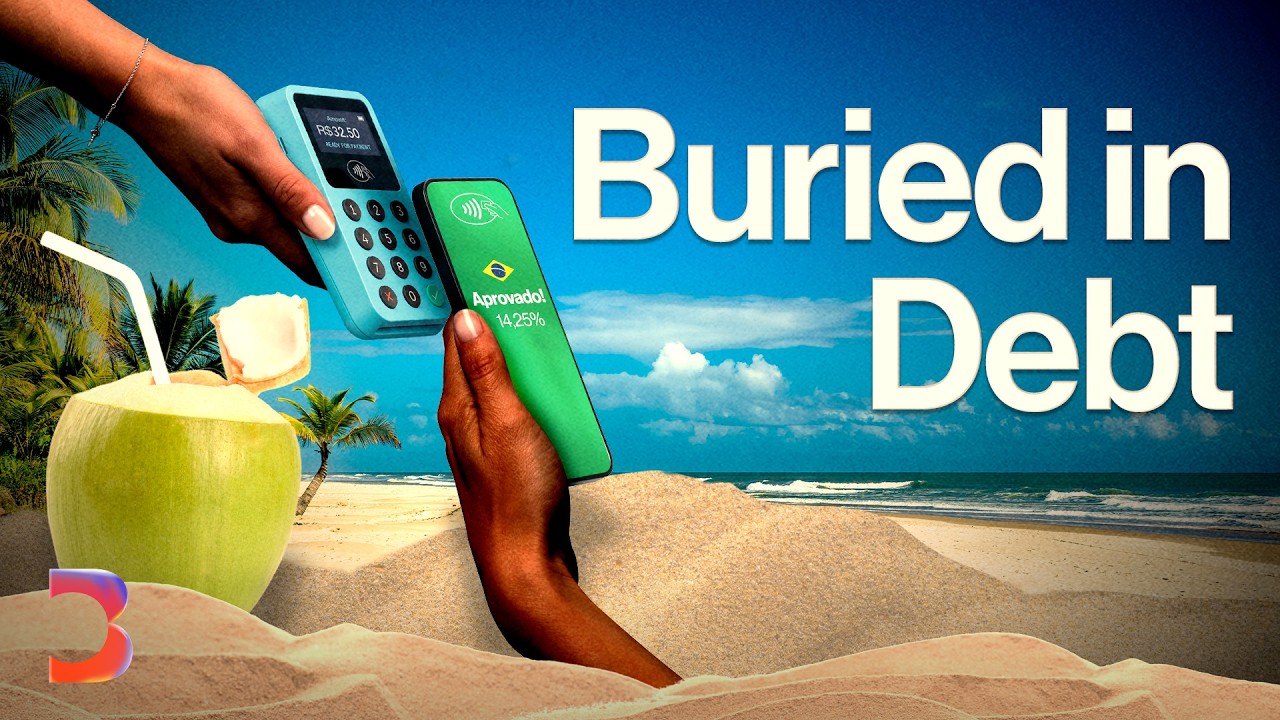
Why Brazil Can’t Hide From Its Debt — Bloomberg Originals

Bloomberg Originals

Constitutional spending mandates and soaring interest rates leave Brazil trapped in a cycle where debt service consumes over 8% of output and pushes households and businesses into insolvency.

AI-assisted summary of Why Brazil Can’t Hide From Its Debt — original source. Check the original for full context.

Source published:

Key ideas

  • Over 80% of Brazilian households now carry debt, driven by ingrained installment-buying habits and credit card revolving interest rates that exceed 400% per year. (0:01)
  • Corporate debt in default has hit an all-time record of 239 billion reais ($46 billion), with micro and small enterprises comprising 90% of the country's nine million delinquent businesses. (5:04)
  • The IMF forecasts Brazil's sovereign debt will surpass 100% of GDP by the end of the decade, with debt service costs already consuming over 8% of total GDP due to double-digit interest rates. (6:21)
  • A booming online sports betting market sees Brazilians wager up to 30 billion reais ($5.8 billion) each month, further eroding consumer balance sheets through borrowed funds. (3:55)

Detailed notes

## Background Published on YouTube by Bloomberg Originals in September 2026, this video examines how Brazil's mounting debt crisis is becoming unavoidable as the nation approaches an election. According to the page description, soaring borrowing costs are squeezing families and businesses while straining the federal budget, forcing a political crossroads between President Luiz Inácio Lula da Silva's relief measures and challenger Flávio Bolsonaro's calls for tighter spending.

## TL;DR Brazil faces a compounding debt crisis spanning consumers, private enterprises, and sovereign finances. Over 80% of households are indebted due to installment shopping culture, fintech credit expansion, and revolving credit card interest rates exceeding 400%, with distress worsened by an explosion in online sports betting. Concurrently, delinquent corporate debt has reached a record 239 billion reais, primarily hitting small businesses alongside major retailers. With sovereign debt servicing eating up over 8% of GDP and rigid constitutional spending requirements limiting fiscal maneuvering, the country faces a looming economic slowdown regardless of whether leadership pursues social demand-side stimulus or austerity.

## Atmosphere & style The video maintains a polished, analytical, and sober journalistic tone, juxtaposing macroeconomic data visualizations with grounded personal narratives of overleveraged workers and small businesses. It creates a palpable sense of mounting claustrophobia as seemingly frictionless modern conveniences—such as instant Pix payments and mobile betting apps—transform into predatory financial traps under double-digit interest rates. The narrative arc builds toward a tense, unresolved political standoff, conveying an uneasy realism that structural fiscal traps leave policymakers with no painless solutions.

## Bulletin - [00:01](https://www.youtube.com/watch?v=UgYnjB2es2s&t=1s) Over 80% of Brazilian households now carry debt, driven by ingrained installment-buying habits and credit card revolving interest rates that exceed 400% per year. - [05:04](https://www.youtube.com/watch?v=UgYnjB2es2s&t=304s) Corporate debt in default has hit an all-time record of 239 billion reais ($46 billion), with micro and small enterprises comprising 90% of the country's nine million delinquent businesses. - [06:21](https://www.youtube.com/watch?v=UgYnjB2es2s&t=381s) The IMF forecasts Brazil's sovereign debt will surpass 100% of GDP by the end of the decade, with debt service costs already consuming over 8% of total GDP due to double-digit interest rates. - [03:55](https://www.youtube.com/watch?v=UgYnjB2es2s&t=235s) A booming online sports betting market sees Brazilians wager up to 30 billion reais ($5.8 billion) each month, further eroding consumer balance sheets through borrowed funds.

## Key takeaways - [00:01](https://www.youtube.com/watch?v=UgYnjB2es2s&t=1s) The ubiquitous practice of dividing retail purchases into interest-free installments ('pode dividir') serves as a necessary coping mechanism for low-income citizens, but pushes over 80% of households into debt. - [01:36](https://www.youtube.com/watch?v=UgYnjB2es2s&t=96s) Rapid adoption of fintech platforms and the central bank's instant payment system, Pix, added 37 million credit card users between 2020 and 2024, expanding access to instant high-interest micro-loans. - [01:36](https://www.youtube.com/watch?v=UgYnjB2es2s&t=96s) Revolving credit card interest rates above 400% annually turn small delinquencies into unmanageable financial snowballs for everyday consumers. - [01:36](https://www.youtube.com/watch?v=UgYnjB2es2s&t=96s) Borrowing costs pivoted aggressively from record lows to double-digit policy rates in approximately 18 months, straining credit-dependent households and businesses. - [03:55](https://www.youtube.com/watch?v=UgYnjB2es2s&t=235s) Legalized in 2018, online sports betting has grown into a major financial hazard, with consumers wagering an estimated 30 billion reais monthly, often using borrowed credit to chase losses. - [05:04](https://www.youtube.com/watch?v=UgYnjB2es2s&t=304s) Corporate defaults have reached a historic high of 239 billion reais ($46 billion), driving large companies like Casas Bahia into bankruptcy protection and prompting restructuring at giants like Raízen. - [05:04](https://www.youtube.com/watch?v=UgYnjB2es2s&t=304s) The domestic agricultural sector and small enterprises have been disproportionately affected by rising rates, with micro and small businesses accounting for 90% of all delinquent commercial entities. - [06:21](https://www.youtube.com/watch?v=UgYnjB2es2s&t=381s) Brazil's public debt burden is uniquely vulnerable because high domestic interest rates require over 8% of national GDP just to service existing debt, far exceeding the servicing burden of other highly indebted nations. - [06:21](https://www.youtube.com/watch?v=UgYnjB2es2s&t=381s) Constitutional spending mandates restrict executive fiscal policy, as over 50% of the federal budget is legally locked into untouchable pensions alongside fixed allocations for health and education. - [06:21](https://www.youtube.com/watch?v=UgYnjB2es2s&t=381s) Two-thirds of the Brazilian workforce earns $600 or less per month, leaving public servants and low-wage workers heavily dependent on consumer credit lines to meet basic living expenses. - [07:48](https://www.youtube.com/watch?v=UgYnjB2es2s&t=468s) President Lula's demand-led growth strategy and social cash-transfer initiatives like Bolsa Família provide essential poverty relief, but complicate monetary policy by supporting consumer demand and inflation. - [07:48](https://www.youtube.com/watch?v=UgYnjB2es2s&t=468s) Opposition challenger Flávio Bolsonaro has pledged aggressive fiscal spending caps, but offers few specific plans on how to enact reductions within Brazil's constitutionally protected budget structure.

## Detailed walkthrough ### [00:01](https://www.youtube.com/watch?v=UgYnjB2es2s&t=1s) The Installment Culture and Brazil's Household Debt Burden

Splitting purchases into multiple installments is woven directly into the fabric of daily life in Brazil. Shoppers entering virtually any retail store are accustomed to asking or hearing the ubiquitous phrase *"pode dividir"*—inquiring how many zero-interest installments a purchase can be carved into. Retailers routinely offer terms dividing payments across three, four, or five installments without interest, provided the bills are settled on time. In a nation marked by severe economic inequality, where tens of millions live below the poverty line, this mechanism serves as a vital bridge to buy essential goods. Yet, that very convenience can quickly become a financial trap: current estimates suggest that more than 80% of Brazilian households now carry some form of debt.

The pervasiveness of household indebtedness across Latin America’s largest economy carries heavy political and macro-level implications. In an election cycle, mounting debt pressures have raised acute alarms inside the government. When families and domestic businesses are suffocating under debt obligations, broader economic growth stalls. Compounding the issue, the sovereign faces the reality that "money is not free"; the state must pay sky-high interest rates when borrowing over 20- or 30-year horizons, undermining any assumption that unchecked borrowing can continue indefinitely.

- Over 80% of Brazilian households currently hold some form of debt. - Installment buying offers zero interest only if paid strictly on time, luring financially vulnerable shoppers into severe delinquency penalties.

---

[01:36](https://www.youtube.com/watch?v=UgYnjB2es2s&t=96s) Fintechs, Pix, and Sky-High Credit Card Interest

The path from flexible borrowing to insolvency is exemplified by workers like Antonio Carlos Ramalhete, who balanced two jobs as a gym teacher and personal trainer before launching his own venture, only to watch personal and business expenses dangerously tangle together. In Brazil, falling behind on credit cards triggers revolving rates that exceed an astronomical 400% annually, creating a financial snowball that many find impossible to escape. This dynamic accelerated dramatically as digital banks and fintechs expanded financial inclusion, granting millions of underserved citizens immediate access to lines of credit directly through their smartphones without the friction of stepping into a traditional brick-and-mortar bank.

Between 2020 and 2024, the footprint of plastic and digital credit ballooned: active credit cards jumped by roughly 75%, adding 37 million new card users. This shift coincided with the meteoric rise of Pix, the central bank-managed instant payment platform. Similar to Zelle in the United States, Pix made moving money effortless and virtually eradicated cash from the streets—to the extent that street vendors, fruit stalls, and panhandlers display signs stating "We accept Pix." However, the integration of credit features allowing consumers to take micro-loans to fund instant transfers turned what initially felt like painless transactions into a crushing burden when benchmark borrowing costs rocketed from record lows into double digits in roughly eighteen months.

```mermaid flowchart TD accTitle: Brazilian Consumer Debt Feedback Loop accDescr: Diagram illustrating how fintech credit, Pix, and sky-high rates create consumer debt distress.

subgraph Access["Credit Expansion"] A["Fintech Accounts & Pix Rollout"] --> B["37M New Credit Card Users"] B --> C["Micro-Loans for Instant Payments"] end

subgraph Shock["Macro Shift"] C --> D["Rates Spike from Lows to Double Digits"] end

subgraph Distress["Financial Strain"] D --> E["Revolving Credit Rates Exceed 400%"] E --> F["Snowballing Defaults Across 80%+ Households"] end ```

- Credit card revolving interest rates in Brazil surpass 400% per year. - Active credit cards surged by approximately 75% between 2020 and 2024, onboarding 37 million new users. - Pix evolved beyond cash replacement into a vehicle for high-interest short-term credit.

---

[03:55](https://www.youtube.com/watch?v=UgYnjB2es2s&t=235s) The Explosion of Online Gambling

The debt crisis facing overstretched consumers has been severely exacerbated by the sudden boom in online gambling. Legalized in 2018, sports betting spread at a ferocious pace across a country world-renowned as a soccer mecca. Aggressive marketing campaigns flooded public spaces, sports broadcasts, and digital feeds, quickly establishing Brazil as one of the world's most lucrative digital gaming frontiers. Central Bank estimates reveal that Brazilians wager as much as 30 billion reais (approximately $5.8 billion) each month on these platforms.

For a populace already navigating heavy debt loads and reliant on smartphone banking apps, ubiquitous access to mobile betting has proven disastrous. Observers note that users are "going nuts with this" despite dismal odds of winning. Combining frictionless digital borrowing with instant betting access creates what analysts describe as a "very dangerous cocktail," pushing underwater consumers deeper into delinquency as they gamble borrowed money in hopes of digging their way out.

- Monthly online betting wagers in Brazil reach up to 30 billion reais ($5.8 billion). - Online sports betting was formally legalized in 2018, transforming the nation into one of the globe's biggest wagering markets within a few years.

---

[05:04](https://www.youtube.com/watch?v=UgYnjB2es2s&t=304s) Corporate Distress and Small Business Defaults

Private sector balance sheets are deteriorating in tandem with household finances. Out of nine million businesses delinquent on their debt obligations, roughly 90% are micro and small enterprises that lack the reserves to absorb sustained high interest rates. Crucial pillars of the domestic economy, particularly the agricultural sector, are registering record delinquency rates. Many farmers borrowed heavily during the pandemic to purchase machinery and expand acreage, only to find themselves forced to renegotiate credit agreements with commercial banks and capital markets as debt service costs escalated.

Overall, corporate debt in default has hit a record 239 billion reais (approximately $46 billion). The distress is not confined to mom-and-pop operations or rural producers; high-profile corporate giants have also buckled under their liabilities. Prominent names across the corporate landscape have entered broad restructurings, including energy giant Raízen and household retail titan Casas Bahia, the latter formally filing for bankruptcy protection under the weight of its commitments.

- Total delinquent corporate debt has reached an all-time high of nearly 239 billion reais ($46 billion). - 90% of the 9 million delinquent Brazilian companies are small and micro enterprises. - Major corporate restructurings and bankruptcy filings include retail heavyweight Casas Bahia and bioenergy producer Raízen.

---

[06:21](https://www.youtube.com/watch?v=UgYnjB2es2s&t=381s) The Structural Government Debt Trap

The third pillar of the crisis rests within the public sector. While Brazil’s sovereign debt-to-GDP ratio temporarily receded following the peak of the pandemic, it has resumed an upward trajectory, with the International Monetary Fund forecasting it will surpass 100% of GDP before the decade ends. While economies such as the United States and Japan operate with higher total debt ratios, Brazil’s position is far more precarious because its double-digit interest rates make servicing sovereign debt extraordinarily expensive—now consuming over 8% of the country's total GDP.

A defining obstacle for any administration is the rigid constitutional mandate governing public expenditures. The executive branch has virtually no discretionary authority over the majority of the federal budget: more than 50% is tied directly to pensions, which cannot legally be reduced, alongside mandatory allocations for health, education, and basic social safety nets. This rigidity clashes with the socioeconomic reality of an emerging economy where two-thirds of the workforce earns roughly $600 a month or less, and nearly half of that group takes home $300 or less. Public servants such as teachers, nurses, and police officers are paid low salaries, leaving millions dependent on credit lines simply to cover basic living costs.

- The IMF estimates Brazilian public debt will exceed 100% of GDP by the end of the 2020s. - Debt servicing costs alone consume more than 8% of Brazilian GDP due to double-digit policy rates. - Mandatory spending—including legally untouchable pensions, healthcare, and education—accounts for over half of the federal budget. - Approximately two-thirds of Brazilian workers earn $600 per month or less, with nearly half of those earning $300 or less.

---

[07:48](https://www.youtube.com/watch?v=UgYnjB2es2s&t=468s) Fiscal Policy Clashes and the Political Crossroads

These structural rigidities present steep obstacles for President Luiz Inácio Lula da Silva’s economic doctrine. Lula’s economic strategy is anchored in driving growth through demand, treating social expenditures not as budget drains but as vital investments in human capital. Flagship social programs like Bolsa Família—which provides direct cash assistance to low-income mothers on the condition that children receive nutrition and stay in school—have lifted millions out of extreme poverty. However, pumping fiscal support into the economy and rolling out debt-relief initiatives risks stoking consumer demand and fueling inflation, complicating the Central Bank's mandate even as policymakers implement interest rate cuts leading into future electoral cycles.

This dilemma has placed the country into what economists term a "vicious cycle." Lula's chief political opponent, Flávio Bolsonaro, has campaigned on overhauling fiscal frameworks and aggressively slashing public spending to arrest sovereign debt growth, though he has offered few concrete details on how to reconcile spending cuts with mandatory budget protections. Analysts observe that with consumers and firms borrowing at punishing interest rates, "it doesn't take much in the way of analytics" to foresee economic deceleration or an outright recession ahead. While Brazil is not in immediate collapse, any forced retrenchment of government aid creates an increasingly worrying outlook for millions living on the margins.

## Notable quotes > As Brazil heads into an election, its debt problems are becoming harder to ignore.

> Whoever wins the presidency is likely to face difficult choices over how to bring the country’s debt to heel.

> [00:01](https://www.youtube.com/watch?v=UgYnjB2es2s&t=1s) pode dividir

> [00:01](https://www.youtube.com/watch?v=UgYnjB2es2s&t=1s) money is not free

> [01:36](https://www.youtube.com/watch?v=UgYnjB2es2s&t=96s) We accept Pix

> [03:55](https://www.youtube.com/watch?v=UgYnjB2es2s&t=235s) going nuts with this

> [03:55](https://www.youtube.com/watch?v=UgYnjB2es2s&t=235s) very dangerous cocktail

> [07:48](https://www.youtube.com/watch?v=UgYnjB2es2s&t=468s) vicious cycle

> [07:48](https://www.youtube.com/watch?v=UgYnjB2es2s&t=468s) it doesn't take much in the way of analytics

## Mentioned Brazil, Bloomberg Originals, Luiz Inácio Lula da Silva, Flávio Bolsonaro, Antonio Carlos Ramalhete, Pix, Zelle, Central Bank, Casas Bahia, Raízen, International Monetary Fund (IMF), Bolsa Família

## Video description As Brazil heads into an election, its debt problems are becoming harder to ignore. Consumers and businesses are struggling with sky-high borrowing costs as the country’s deteriorating fiscal outlook alarms investors.

President Luiz Inácio Lula da Silva has rolled out measures aimed at easing the pressure on families and businesses while his main rival, Flávio Bolsonaro, has promised tighter spending controls, albeit with few details. Whoever wins the presidency is likely to face difficult choices over how to bring the country’s debt to heel.

00:00 Introduction 01:34 Consumers 03:55 Online gambling 05:04 Businesses 06:21 Government 08:21 What’s next

#Brazil #Debt #Economy

-------- Like this video? Subscribe: http://www.youtube.com/Bloomberg?sub_confirmation=1

Get unlimited access to Bloomberg.com for just $1.99 your first month: https://www.bloomberg.com/subscriptions?in_source=YoutubeOriginals Bloomberg Originals offers bold takes for curious minds on today’s biggest topics. Hosted by experts covering stories you haven’t seen and viewpoints you haven’t heard, you’ll discover cinematic, data-led shows that investigate the intersection of business and culture. Exploring every angle of climate change, technology, finance, sports and beyond, Bloomberg Originals is business as you’ve never seen it.

Subscribe for business news, but not as you've known it: exclusive interviews, fascinating profiles, data-driven analysis, and the latest in tech innovation from around the world.

Visit our partner channel Bloomberg News for global news and insight in an instant.

[Source](https://www.youtube.com/watch?v=UgYnjB2es2s)

中文简报

偿债成本耗尽8%的GDP 卢拉面临巴西债务陷阱 宪法规定的刚性支出要求与飙升的利率使巴西陷入恶性循环:偿债支出消耗了超过8%的经济产出,并将家庭和企业推向破产边缘。 巴西正面临一场横跨消费者、私营企业和主权财政的复合型债务危机。受分期购物文化、金融科技信贷扩张以及超过400%的信用卡循环利率驱动,超过80%的家庭负债累累,而在线体育博彩的爆发式增长进一步加剧了这一困境。与此同时,企业违约债务已达到创纪录的2390亿雷亚尔,主要冲击了小型企业及大型零售商。由于主权债务偿付成本消耗了超过8%的GDP,加上刚性的宪法支出要求限制了财政腾挪空间,无论领导层是采取社会需求端刺激还是紧缩政策,该国都面临着迫在眉睫的经济放缓。 在根深蒂固的分期付款消费习惯以及年化超过400%的信用卡循环利率推动下,目前超过80%的巴西家庭背负债务。 (0:01) 企业违约债务创下2390亿雷亚尔(约合460亿美元)的历史新高,在该国900万家违约企业中,微型和小型企业占到90%。 (5:04) IMF预测巴西主权债务将在本十年末超过GDP的100%,而由于两位数的利率水平,其偿债成本目前已消耗了全部GDP的8%以上。 (6:21) 蓬勃发展的在线体育博彩市场中,巴西人每月下注高达300亿雷亚尔(约合58亿美元),通过借贷资金进一步侵蚀了消费者的资产负债表。 (3:55)

Reading summary

Brazil is contending with an interlocking debt crisis spanning households, corporations, and the public sector, driven by double-digit interest rates that punish borrowers and elevate sovereign servicing costs. Although digital banking and fiscal support have expanded access to funds, structural budget rigidities and compounding borrowing rates threaten broader economic stability. Consumer Debt and Digital Credit Proliferation (0:01) Over 80% of Brazilian households currently hold debt, heavily influenced by a retail environment centered on splitting purchases into zero-interest installments ("pode dividir"). While this mechanism offers essential purchasing power in an unequal economy, failing to make on-time payments triggers credit card revolving rates exceeding 400% annually. This dynamic accelerated dramatically between 2020 and 2024 as fintechs and the central bank's instant payment system, Pix, added 37 million active cardholders—a 75% increase. The widespread integration of credit-funded instant transfers transformed convenience into a structural trap once central bank interest rates surged from historic lows into double digits in approximately 18 months. With roughly two-thirds of Brazilian workers earning $600 per month or less—and nearly half taking home $300 or less—low-income families increasingly depend on high-interest credit lines simply to cover essential living expenses. Mobile Gambling Compounding Consumer Distress (3:55) Household financial distress has been compounded by the rapid expansion of online sports betting following its legalization in 2018. Backed by aggressive marketing campaigns across public spaces and sports broadcasts, Brazil has quickly become one of the world's most profitable digital betting markets. Central Bank estimates show that Brazilians wager up to 30 billion reais (approximately $5.8 billion) each month on these platforms. Analysts emphasize that combining frictionless digital borrowing with ubiquitous smartphone gambling creates a hazardous cycle. Overextended consumers, already navigating steep debt burdens, frequently wager borrowed money in an attempt to recover losses despite unfavorable odds, worsening household delinquency across the country. Record Corporate Delinquency and Small-Business Strain (5:04) Private sector balance sheets have weakened alongside consumer finances, driving delinquent corporate debt to an all-time high of 239 billion reais (around $46 billion). Out of nine million delinquent enterprises, roughly 90% are micro and small businesses that lack the capital reserves to endure prolonged periods of high interest rates. This distress spans critical sectors of the domestic economy, including agriculture, where farmers who took on heavy debt during the pandemic to expand equipment and acreage are now renegotiating terms. Large corporate issuers have also buckled under debt service obligations, marked by debt restructurings at bioenergy producer Raízen and a formal bankruptcy protection filing by major retailer Casas Bahia. Sovereign Debt Costs and Constitutional Budget Rigidity (6:21) On the sovereign side, the International Monetary Fund projects that Brazil’s public debt will exceed 100% of GDP before the end of the decade. Unlike nations that issue debt at low rates, Brazil's double-digit borrowing costs require debt servicing alone to consume more than 8% of the country's total GDP. Fiscal adjustment is severely restricted by constitutional spending mandates that leave executive policymakers with almost no discretionary budget authority. More than 50% of the federal budget is tied directly to legally protected pensions, alongside mandatory allocations for healthcare and education, leaving the state unable to easily trim expenditures to offset rising interest burdens. Fiscal Policy Clashes and Political Crosscurrents (7:48) These budget constraints pose fundamental obstacles to President Luiz Inácio Lula da Silva’s economic strategy, which relies on stimulating domestic demand through social programs such as Bolsa Família. While cash transfers provide vital support to low-income households, continuous fiscal transfers and debt-relief programs risk stoking inflation, complicating the Central Bank's ability to maintain interest rate cuts. Conversely, opposition figures like Flávio Bolsonaro campaign on aggressive spending cuts to rein in sovereign debt, though without clear proposals to navigate constitutional spending protections. With households and businesses borrowing at elevated interest rates, economists warn that the country faces a vicious cycle pointing toward economic deceleration or recession. While Brazil does not face an imminent financial collapse, analysts warn that the confluence of high borrowing costs, private insolvencies, and rigid public spending points toward an economic slowdown. The core dilemma remains unresolved: the federal government cannot easily retrench spending without harming millions dependent on public support, yet sustained sovereign borrowing at high interest rates is increasingly difficult to maintain.

精炼阅读摘要

彭博报道指出,巴西正面临涵盖个人、企业与政府的系统性债务危机;在高利率、超过80%的家庭负债率以及财政刚性支出的重压下,国家经济增长面临严重滞塞风险。 消费信贷膨胀与高额循环利率 (0:01) 在巴西,“分期付款”(pode dividir)已融入日常生活。零售商普遍提供三到五期的免息分期,但这仅限于按期足额还款。在贫富差距悬殊且数千万人生活在贫困线以下的背景下,分期成为获取生活必需品的生命线,却也迅速演变成债务陷阱。当前估计显示,超过80%的巴西家庭背负某种形式的债务。 在2020年至2024年间,数字银行与金融科技平台的普及使活跃信用卡数量攀升约75%,新增用户达3700万。与此同时,由中央银行主导的即时支付平台Pix在消除现金交易的同时,也整合了小额信贷功能。当基准利率在约18个月内从历史低位跃升至两位数时,信用卡循环年利率迅速突破400%。如健身教练安东尼奥·卡洛斯·拉马尔赫特(Antonio Carlos Ramalhete)在创业后开支交织失控的遭遇一样,数百万低收入群体因借助高息贷款维持日常支付而深陷滚雪球般的违约泥潭。 线上博彩激增形成借贷恶性循环 (3:55) 2018年合法化的体育博彩在巴西呈爆发式增长。铺天盖地的营销迅速渗透公共空间、赛事转播与移动网络,使巴西成为全球最庞大的数字博彩市场之一。据巴西央行测算,巴西人每月在博彩平台上的押注总额高达300亿雷亚尔(约合58亿美元)。 对于本已承受沉重债务的智能手机银行用户而言,无处不在的移动博彩带来了灾难性后果。观察人士指出,许多深陷财务困境的民众在胜率极低的情况下依然倾注巨资,试图通过借款押注实现翻身。无门槛的数字信贷与即时博彩相结合,形成了一种极具破坏性的混合模式,加速推动借贷者滑向资不抵债的深渊。 中小微企业违约潮与巨头重组困境 (5:04) 巴西企业部门的财务状况正与家庭部门同步恶化。目前处于违约状态的企业债务总额已达到创纪录的2390亿雷亚尔(约合460亿美元)。在900万家违约企业中,约90%是缺乏抗风险储备的中小微企业。作为经济支柱的农业部门违约率亦创下历史新高,大批在疫情期间大举举债购置设备和扩产的农民,因偿债成本暴增而被迫重组信贷协议。 这场债务压力并非仅局限于个体商户和农业种植户,知名大型企业同样难承重负。家电零售巨头Casas Bahia因沉重债务正式申请破产保护,生物能源巨头Raízen等知名企业也已启动全面债务重组,凸显出整体商业体系面临的严峻偿债挑战。 预算刚性束缚与财政政治十字路口 (6:21) 公共领域的债务风险构成了第三重危机。国际货币基金组织(IMF)预测,巴西主权债务占GDP的比重将在本年代末突破100%。由于两位数的高利率环境,仅偿还主权债务利息就消耗了巴西超过8%的GDP。然而,宪法层面的刚性限制使历届政府几乎没有缩减开支的自由度:超过50%的联邦预算直接绑定于受法律保护的养老金,另有大额资金被强制划拨给医疗和教育。与此同时,巴西约三分之二的劳动力月薪在600美元以下,教师、护士等公职人员薪资普遍偏低,基础民生对信贷和补贴存在极高依赖。 这一格局加剧了政治路线的分歧。总统卢拉推行需求驱动型增长,视“家庭补助金”(Bolsa Família)等转移支付为必要的人力资本投资,但这面临推高需求与通胀、并掣肘央行降息的风险。反对派弗拉维奥·博尔索纳罗(Flávio Bolsonaro)则主张大幅削减公共支出,却未说明如何在刚性支出框架下落实削减。经济学家警告,在借贷成本极高的情况下,巴西正面临经济放缓乃至衰退风险,若削减救济,数百万底层边缘民众将面临更严峻的冲击。 巴西目前的困局不仅是家庭与企业的过度举债,更是结构性低收入、金融科技扩张诱惑以及不可削减的宪法财政支出共同交织的系统性问题。在偿债成本吞噬大量GDP的现实下,政策制定者在抑制通胀、保障民生与控制主权债务之间缺乏回旋余地。

Detailed notes — zh

## Background 该视频由彭博原创(Bloomberg Originals)于 2026 年 9 月 25 日发布在 YouTube 平台。视频简介指出,随着巴西大选临近,家庭与企业在飞涨的借贷成本下苦苦挣扎,日益恶化的财政前景令投资者忧心忡忡;无论是寻求连任的现任总统卢拉,还是主张财政紧缩的对手弗拉维奥·博索纳罗,新一任执政者都将面临如何遏制债务蔓延的严峻抉择。 ## TL;DR 节目深入剖析了席卷巴西的系统性债务危机:在居民端,根深蒂固的分期付款文化与激进普及的金融科技、Pix 支付叠加,导致信用卡循环利息突破 400%,加之每月流水达百亿的合法线上博彩,使得超八成家庭深陷财务泥潭。与此同时,逾 900 万家微小企业及 Casas Bahia 等国民零售巨头相继陷入违约与破产保护,逾期债务创下历史新高。面对债务率逼近 100% 的压力,政府不仅要承担超过 GDP 8% 的巨额利息支出,还受制于刚性的养老金宪政约束而难以削减开支,令巴西在大选之际滑向高负债与增长停滞的恶性循环。 ## Atmosphere & style 全片充斥着彭博标志性的冷静警示与纪实压迫感,节奏紧凑且层层递进。镜头在里约底层工薪族被账单吞噬的日常生活、街头无孔不入的扫码借贷,以及宏观资本市场上触目惊心的天价国债收益率之间来回切换,将微观个体的绝望与宏观体制的僵局无缝勾连。叙事基调克制而冷峻,既带有严谨的数据审视,又透出一种对拉美最大经济体陷入结构性高息泥潭的深沉忧虑。 ## Bulletin - [01:36](https://www.youtube.com/watch?v=UgYnjB2es2s&t=96s) 巴西家庭债务风险持续恶化,超80%的家庭背负债务,且信用卡循环年化利率普遍突破400%,在Fintech与即时支付Pix快速渗透的推动下加速扩散。 - [03:55](https://www.youtube.com/watch?v=UgYnjB2es2s&t=235s) 线上博彩合法化后形成月均300亿雷亚尔(约58亿美元)的投注狂潮,与高息消费贷叠加,加剧了底层家庭的财务脆弱性。 - [05:04](https://www.youtube.com/watch?v=UgYnjB2es2s&t=304s) 实体经济违约总额攀升至近2390亿雷亚尔的历史峰值,超900万家企业欠款,危机从微小企业蔓延至农业板块及国民零售连锁巨头。 - [06:21](https://www.youtube.com/watch?v=UgYnjB2es2s&t=381s) 联邦财政受制于宪法刚性支出,逾50%预算锁定于养老金,单利息偿付已超GDP的8%,IMF预测政府债务率将在本十年末突破100%。 ## Key takeaways - [00:01](https://www.youtube.com/watch?v=UgYnjB2es2s&t=1s) “分期付款”(pode dividir)已深度固化为巴西的日常消费文化,但在极高的违约利息下,直接导致超过80%的巴西家庭深陷债务泥潭。 - [01:36](https://www.youtube.com/watch?v=UgYnjB2es2s&t=96s) 金融科技(Fintech)浪潮大幅拉低了开户与信贷门槛,2020至2024年间活跃信用卡总量激增约75%,新增持卡用户达3700万人。 - [01:36](https://www.youtube.com/watch?v=UgYnjB2es2s&t=96s) 央行主导的即时支付系统 Pix 在全面替代现金流动的过程中引入了信贷借款功能,在基准利率升至两位数后使普通民众陷入偿债危机。 - [01:36](https://www.youtube.com/watch?v=UgYnjB2es2s&t=96s) 巴西信用卡未清偿余额的年化循环利率超过400%,稍有逾期便会迅速演变为借款人无法承受的绝望债务雪球。 - [03:55](https://www.youtube.com/watch?v=UgYnjB2es2s&t=235s) 自2018年在线博彩合法化后,巴西跃升为全球最大线上赌博市场之一,每月下注规模达300亿雷亚尔,反噬居民可支配收入。 - [05:04](https://www.youtube.com/watch?v=UgYnjB2es2s&t=304s) 全国企业拖欠债务总额达近2390亿雷亚尔,900多万家违约企业中90%为抗风险能力薄弱的微型和小微企业。 - [05:04](https://www.youtube.com/watch?v=UgYnjB2es2s&t=304s) 在低息期大举举债购置机械与土地的农业支柱板块遭遇历史性违约潮,零售巨头 Casas Bahia 等知名企业亦被迫申请破产保护或重组。 - [06:21](https://www.youtube.com/watch?v=UgYnjB2es2s&t=381s) 巴西主权债务占GDP比重持续上行并逼近100%,在两位数基准利率压迫下,仅政府偿付利息的支出就已吞噬GDP的8%以上。 - [06:21](https://www.youtube.com/watch?v=UgYnjB2es2s&t=381s) 巴西宪法设定的财政硬约束导致预算极度僵化,超过50%的联邦预算强制锁定于养老金发放,政策调控与开支削减空间极窄。 - [06:21](https://www.youtube.com/watch?v=UgYnjB2es2s&t=381s) 全巴西约三分之二的劳动力月收入在600美元以下,近半数不足300美元,迫使底层民众依赖借贷维生并对政府民生救助形成刚性依赖。 - [08:21](https://www.youtube.com/watch?v=UgYnjB2es2s&t=501s) 卢拉政府推行的“家庭补助金”等需求端刺激虽能兜底民生,但高额财政开支伴随着通胀回潮和推升央行利率的结构性矛盾。 - [08:21](https://www.youtube.com/watch?v=UgYnjB2es2s&t=501s) 大选两极分歧明显,反对派弗拉维奥·博索纳罗主张紧缩但缺乏具体路径,巴西经济若无法打破债务恶性循环,或将面临深度放缓乃至衰退。 ## Detailed walkthrough ### [00:01](https://www.youtube.com/watch?v=UgYnjB2es2s&t=1s) 分期付款文化与席卷巴西的债务危机 在巴西,“分期付款”不仅是一种消费手段,更是深深植根于大众日常生活中的文化习惯。走进巴西的任意一家商店,最常听到的第一句话往往是“pode dividir?”——意为“这能分几期付款?”。无论是衣服还是日用品,消费者通常都能选择分成三期、四期甚至五期免息偿还。然而,所谓的“零利息”存在一个致命的前提,那就是必须按时还款。在一个贫富差距悬殊、数千万人生活在贫困线以下的国家,分期付款的灵活性确实让普通大众能够买得起原本难以企及的商品,但它也极其容易诱使人们深陷债务泥潭。目前各项估算数据显示,已有超过80%的巴西家庭背负着某种形式的债务。 这种债务沉疴正席卷拉美最大的经济体,并不可避免地演变为严重的政治议题。时值大选之年,政府对居高不下的债务规模深感忧虑。当一个经济体中的企业步履维艰、家庭入不敷出时,未来的经济增长必然面临巨大阻力。无论下届总统由谁担任,这都是必须正面解决的棘手挑战。毕竟对政府而言,借贷从来不是免费的午餐——如果巴西政府想要发行20年或30年期的长期国债,所需支付的收益率已经处于令人咋舌的天价水平。正如经济学家所警告的那样,“认为这种高负债状态能够永远持续的想法是行不通的”。 ```mermaid flowchart TD accTitle: 巴西债务危机传导机制 accDescr: 展示居民消费信贷、企业欠款与政府高息财政相互交织的恶性循环。 subgraph Consumer ["居民端压力"] A["分期文化 pode dividir"] --> B["Fintech与Pix推波助澜"] B --> C["信用卡循环利率超400%"] D["线上博彩火上浇油"] --> C end subgraph Corporate ["企业端困境"] E["农户与微企借贷扩张"] --> F["央行大幅加息至两位数"] F --> G["超900万家企业债务违约"] end subgraph Sovereign ["政府端财政枷锁"] H["超50%预算锁定养老金与刚性支出"] --> I["偿债支出占GDP超8%"] I --> J["债务率逼近100%引发滞胀风险"] end C --> F G --> Sovereign J -.->|"加剧再融资成本"| F ``` ### [01:36](https://www.youtube.com/watch?v=UgYnjB2es2s&t=96s) 个人债务滚雪球:Fintech、Pix 与失控的信用卡高利 在里约热内卢身兼体育教师与健身私人教练两职的安东尼奥·卡洛斯·拉马列特(Antonio Carlos Ramalhete)是这场债务风暴中的典型写照。当他尝试投资拓展自己的业务时,个人日常开支很快便与商业支出纠缠在一起。在巴西,信用卡循环利息(revolving interest rate)年化往往超过400%,稍有不慎,债务本息就会滚成让人根本无法挣脱的“绝望雪球”。 拉马列特的境遇绝非个例。近年来,金融科技(Fintech)浪潮大幅降低了借贷门槛,为数以百万计过去根本无法进入传统银行体系的低收入人群开辟了信贷通道。人们无需亲自前往网点开设账户,只需通过智能手机轻点几下就能拥有数字账户并获得额度。在2020年至2024年间,巴西流通中的活跃信用卡数量激增了约75%,持卡人数增加了整整3700万人。与此同时,由巴西中央银行推行并管理的即时支付系统 Pix 风靡全国,彻底重塑了社会的资金流转形态。它虽然类似于美国的 Zelle,但渗透力远超后者,以至于街头行乞者会在纸板上标明“支持 Pix”,水果摊贩也全面支持扫码。 然而,便捷也是一把双刃剑。Pix 随后引入了信贷借款功能,允许用户借贷完成即时支付。在起初的极低利率环境下,这些指尖上的小额借贷看似轻巧无感,但随着通胀攀升,巴西基准利率在短短一年半的时间内从历史极低点骤升至残酷的两位数,借贷成本以极其惊人的速度暴涨,将大批工薪族直接拖入违约边缘。 - **信用卡高利贷陷阱**:巴西信用卡未清偿余额的年化循环利率普遍超过400%。 - **信贷扩张规模**:2020年至2024年间,巴西活跃信用卡总量增长约四分之三,新增持卡用户达3700万人。 - **即时支付普及度**:Pix 由政府央行主导,全面取代现金流动,甚至催生了借贷垫付的消费形态。 ### [03:55](https://www.youtube.com/watch?v=UgYnjB2es2s&t=235s) 线上赌博狂潮:债务泥潭中的危险催化剂 令家庭债务雪上加霜的另一个失控因素,是线上博彩在巴西的爆炸式蔓延。自2018年在线博彩正式合法化以来,这一行业在极短的时间内迎来了爆发式增长。作为举世闻名的“足球圣殿”,巴西的大街小巷、体育赛事与手机应用充斥着无孔不入的博彩宣传,让普通大众防不胜防。如今,巴西已跃升为全球最大的在线博彩市场之一。 根据巴西中央银行的数据测算,巴西人每月在博彩网站上的下注金额高达300亿雷亚尔(约合58亿美元)。大量证据显示,许多民众在虚幻的发财诱惑下近乎疯狂地参与其中,即便这些博彩项目的胜率极低。对于那些本身就背负高额消费贷、依靠手机完成全套金融操作且经济陷入困顿的人来说,线上赌博犹如在火药桶旁点燃火柴。这种“高负债、轻信贷、滥博彩”的多重叠加,已经演变成一种摧毁家庭财务状况的“极度危险的鸡尾酒”。 - **市场体量惊人**:巴西博彩合法化始于2018年,当前每月下注资金规模估算达300亿雷亚尔(折合约58亿美元)。 - **社会影响**:博彩成为深陷债务困境群体的逃避手段,反而进一步吞噬居民可支配收入。 ### [05:04](https://www.youtube.com/watch?v=UgYnjB2es2s&t=304s) 企业债务警报:从小农微企到巨头破产 这股偿债重压并未止步于家庭层面,企业界同样深陷暗礁密布的险境。在全国拖欠债务款项的900万家企业中,大约90%属于微型和小微企业。即便是作为巴西经济中流砥柱的农业板块,违约率也刷新了历史记录。在新冠疫情期间,大量农场主趁着低息环境大举借债购置农机和扩充土地;如今随着融资成本飙升,他们不得不被迫坐在谈判桌前,与商业银行及资本市场艰难磋商债务重组。 目前,全巴西逾期未付的企业债务总额已达到创纪录的近2390亿雷亚尔(约合460亿美元)。除了抗风险能力脆弱的小微企业大面积失血外,危机也蔓延至知名行业巨头。今年以来,巴西资本市场见证了数起重磅企业的债务重组与危机事件,例如大型生物能源巨头赖岑(Raízen)的财务挑战,以及家喻户晓的国民零售连锁巨头 Casas Bahia 更是不得不正式申请破产保护。 - **企业违约规模**:超900万家巴西企业陷入债务拖欠,其中90%为微型与小型企业。 - **逾期债务金额**:全国逾期企业债务总计近2390亿雷亚尔(约460亿美元),创下历史新高。 - **波及关键产业**:农业机械土地抵押贷款面临重组,大型零售商 Casas Bahia 申请破产保护。 ### [06:21](https://www.youtube.com/watch?v=UgYnjB2es2s&t=381s) 政府财政僵局:刚性预算与沉重的偿债负担 导致巴西债务难题难以根治的最后一块关键拼图,在于联邦政府自身脆弱的财政体质。尽管巴西政府债务占GDP的比重在疫情后曾短暂回落,但目前已重新进入上行通道,国际货币基金组织(IMF)预测该比例将在本十年结束前突破100%。尽管美日等发达国家的负债率更高,但巴西面临着残酷得多的现实:在双位数的高利率环境下,巴西仅用于支付债务利息的支出就已超过 GDP 的8%,远超承受能力。 历届巴西政府在削减支出上面临着严重的制度枷锁。巴西宪法对财政预算做出了极其严格的刚性规定,总统在日常施政中实际可自主调配的财力十分有限。在联邦预算中,超过50%必须强制用于支付养老金,属于法律上绝对无法随意削减的硬性支出,此外还必须优先保障法定社会救助、公共医疗与基础教育项目。 这种刚性财政支出背后的根源在于巴西严峻的社会现实。虽然巴西是主要的新兴经济体,但底层大众贫困率居高不下,教师、护士和警察等关键公职人员薪资普遍十分微薄。数据显示,约三分之二的巴西就业人员每月收入仅在600美元(约合3000雷亚尔)或更低,其中近一半人的月收入甚至不足300美元。底层大众不得不依靠信用卡和小额借款勉强维持生计,进而越陷越深,这反过来迫使政府无法撤回民生兜底网,对财政纪律构成了严峻制约。 - **偿债利息高昂**:巴西政府用于偿付利息的支出占全国 GDP 的8%以上。 - **法定支出刚性**:联邦预算中超过50%锁定于养老金发放,医疗、教育及法定项目缺乏削减空间。 - **底层薪资现状**:约三分之二劳动者月薪在600美元以下,近半数不足300美元。 ### [08:21](https://www.youtube.com/watch?v=UgYnjB2es2s&t=501s) 大选抉择与未来走向:两难的财政恶性循环 这种财政两难局面为现任总统路易斯·伊纳西奥·卢拉·达席尔瓦(Luiz Inácio Lula da Silva)的经济政策带来了巨大考验。在投资者、分析师以及部分政府官员眼中,卢拉始终信奉通过刺激需求来拉动经济增长的发展模式。在卢拉的施政哲学中,“社会支出根本不是单纯的开支,而是对人民未来的投资”。以极具代表性的“家庭补助金”(Bolsa Família)为首的一系列社会福利计划,通过向贫困母亲发放现金补助以确保儿童获得营养并留校受教育,成功帮助了数百万人摆脱绝对贫困。 然而,在积极出手化解居民债务压力的同时,这些财政扩张计划也存在助推通胀复燃的风险,进而与中央银行平抑通胀的宏观目标发生冲突。尽管央行在大选前夕推进了一定程度的降息,并计划在后续年份进一步降低融资成本,但多位经济学家已发出警报:巴西恐已陷入债务与高利率的恶性循环。 在政治天平的另一端,卢拉的主要竞选对手弗拉维奥·博索纳罗(Flávio Bolsonaro)则大打财政紧缩牌,承诺全面重构财政规则、大刀阔斧削减公共开支以稳定国家债务。但他始终未提出清晰具体的落地方案,引发了外界对其能否真正破局的质疑。当前分析普遍认为,如果居民在高利率环境下依然维持大规模借贷,“无需复杂的分析,谁都能预料到结果走向”——经济大概率将迎来增长显著放缓,甚至滑向衰退。巴西经济虽然尚未爆发全面崩盘危机,但若政府被迫因财政压力撤回部分关键社会援助,整个社会图景将变得愈发严峻。尽管如此,在重重债务迷雾中,许多巴西民众依然对国家未来的转机抱有期望。 ## Notable quotes > [00:01](https://www.youtube.com/watch?v=UgYnjB2es2s&t=1s) pode dividir? > [00:01](https://www.youtube.com/watch?v=UgYnjB2es2s&t=1s) 这能分几期付款? > [00:01](https://www.youtube.com/watch?v=UgYnjB2es2s&t=1s) 零利息 > [00:01](https://www.youtube.com/watch?v=UgYnjB2es2s&t=1s) 认为这种高负债状态能够永远持续的想法是行不通的 — 经济学家 > [01:36](https://www.youtube.com/watch?v=UgYnjB2es2s&t=96s) 绝望雪球 > [01:36](https://www.youtube.com/watch?v=UgYnjB2es2s&t=96s) 支持 Pix > [03:55](https://www.youtube.com/watch?v=UgYnjB2es2s&t=235s) 足球圣殿 > [03:55](https://www.youtube.com/watch?v=UgYnjB2es2s&t=235s) 极度危险的鸡尾酒 > [08:21](https://www.youtube.com/watch?v=UgYnjB2es2s&t=501s) 社会支出根本不是单纯的开支,而是对人民未来的投资 — 路易斯·伊纳西奥·卢拉·达席尔瓦 > [08:21](https://www.youtube.com/watch?v=UgYnjB2es2s&t=501s) 家庭补助金 > [08:21](https://www.youtube.com/watch?v=UgYnjB2es2s&t=501s) 无需复杂的分析,谁都能预料到结果走向 ## Mentioned 安东尼奥·卡洛斯·拉马列特 (Antonio Carlos Ramalhete), 路易斯·伊纳西奥·卢拉·达席尔瓦 (Luiz Inácio Lula da Silva), 弗拉维奥·博索纳罗 (Flávio Bolsonaro), 彭博社 (Bloomberg Originals), 巴西中央银行, 国际货币基金组织 (IMF), Pix, Zelle, 赖岑 (Raízen), Casas Bahia, 家庭补助金 (Bolsa Família) ## Video description As Brazil heads into an election, its debt problems are becoming harder to ignore. Consumers and businesses are struggling with sky-high borrowing costs as the country’s deteriorating fiscal outlook alarms investors. President Luiz Inácio Lula da Silva has rolled out measures aimed at easing the pressure on families and businesses while his main rival, Flávio Bolsonaro, has promised tighter spending controls, albeit with few details. Whoever wins the presidency is likely to face difficult choices over how to bring the country’s debt to heel. 00:00 Introduction 01:34 Consumers 03:55 Online gambling 05:04 Businesses 06:21 Government 08:21 What’s next #Brazil #Debt #Economy -------- Like this video? Subscribe: http://www.youtube.com/Bloomberg?sub_confirmation=1 Get unlimited access to Bloomberg.com for just $1.99 your first month: https://www.bloomberg.com/subscriptions?in_source=YoutubeOriginals Bloomberg Originals offers bold takes for curious minds on today’s biggest topics. Hosted by experts covering stories you haven’t seen and viewpoints you haven’t heard, you’ll discover cinematic, data-led shows that investigate the intersection of business and culture. Exploring every angle of climate change, technology, finance, sports and beyond, Bloomberg Originals is business as you’ve never seen it. Subscribe for business news, but not as you've known it: exclusive interviews, fascinating profiles, data-driven analysis, and the latest in tech innovation from around the world. Visit our partner channel Bloomberg News for global news and insight in an instant. [Source](https://www.youtube.com/watch?v=UgYnjB2es2s)

Source quotes

[0:01] pode dividir? [0:01] 这能分几期付款? [0:01] 零利息 [0:01] 经济学家: 认为这种高负债状态能够永远持续的想法是行不通的 [1:36] 绝望雪球 [1:36] 支持 Pix [3:55] 足球圣殿 [3:55] 极度危险的鸡尾酒 [8:21] 路易斯·伊纳西奥·卢拉·达席尔瓦: 社会支出根本不是单纯的开支,而是对人民未来的投资 [8:21] 家庭补助金 [8:21] 无需复杂的分析,谁都能预料到结果走向

Source quotes

As Brazil heads into an election, its debt problems are becoming harder to ignore. Whoever wins the presidency is likely to face difficult choices over how to bring the country’s debt to heel. [0:01] pode dividir [0:01] money is not free [1:36] We accept Pix [3:55] going nuts with this [3:55] very dangerous cocktail [7:48] vicious cycle [7:48] it doesn't take much in the way of analytics

Original transcript

[0:01] Paying for things in installments is deeply ingrained in Brazilian culture. [0:06] If you go to a store, [0:07] the first thing you're gonna hear someone say is "pode dividir" which means in [0:11] how many installments can I pay for this? [0:13] You can pay in three installments, four installments, five installments, [0:17] and without interest. [0:19] But it's only zero interest if you pay on time. [0:23] In a country of massive wealth disparity where tens of millions live below the [0:28] poverty line, this flexibility has helped make goods more accessible, [0:33] but it can also make it easier to get in over your head. [0:37] There are estimates out there that put it at over 80% of households are now [0:42] holding some type of debt. [0:44] The situation cuts across Latin America's biggest economy, [0:48] and this has political implications. [0:53] It's an election year and the government is definitely worried about the high [0:57] debt levels. [0:59] If you have an economy in which companies are struggling and families are [1:03] struggling. [1:04] You are having a problem ahead in terms of economic growth. [1:08] It is a problem that requires attention from whoever becomes president next [1:13] year. [1:14] After all, even for the government, money is not free. [1:17] The government, if it wants to borrow, say 20 years, 30 years, [1:22] the rates are sky-high. [1:24] The notion that this can go on forever will not survive. [1:36] Antonio Carlos Ramalhete works two jobs as a gym teacher and personal trainer. [1:42] But when he decided to invest in a business, [1:44] personal expenses soon intermingled with professional ones. [1:54] The rotating interest rates of credit cards in Brazil reach over 400% [1:59] a year. [2:01] So this is a snowball that for some people is impossible to [2:06] get out of. [2:18] Ramalhete wasn't alone. During that time, [2:21] a wave of digital lenders made it easier for Brazilians to borrow. [2:25] Well, [2:26] fintechs are an important part of the story because they really helped open up [2:30] access to credit to individuals who typically wouldn't have access. [2:34] A lot of people had access to money through their phones. [2:38] They didn't have to go to the bank and open their bank accounts. [2:41] They had digital accounts. [2:43] Between 2020 and 2024, [2:45] the number of active credit cards in Brazil jumped by roughly three quarters, [2:50] while the number of people using them increased by 37 million. Pix, [2:55] the country's hugely popular instant payment system, [2:58] helped bring even more activity into the banking system. [3:02] You might compare it to Zelle in the US, [3:05] but it's managed by the government and it makes purchasing things [3:10] incredibly easy. The system that has really, [3:14] really taken cash off the street to the point where you'll be walking and you'll [3:18] see panhandlers with cardboard saying, "We accept Pix," or at the fruit stand, [3:23] "We accept Pix.". [3:34] There's also a credit component to it. Basically, [3:37] you're taking out a loan to be able to make an instant payment. [3:40] These little loans felt painless till borrowing cost skyrocketed. [3:45] It was pretty dramatic in the period of one year and a half, more or less. [3:48] We saw rates at record lows to surge right into the double [3:53] digits. [3:55] Another way to have debt problems go from bad to worse, online gambling. [4:01] Betting has exploded in Brazil in a very short amount of time. [4:07] It was officially legalized in, in 2018. [4:11] Brazil is known for being this soccer mecca. [4:15] It's really palatable just how much you're bombarded with betting propaganda. [4:21] Brazil is now one of the world's largest online gambling markets. [4:25] According to Central Bank estimates, [4:27] Brazilians wager as much as 30 billion reais or 5.8 billion [4:32] dollars a month. [4:34] Well, there's plenty of evidence that people are going nuts with this. [4:37] The odds are horrible. [4:46] So in the situation we have where a lot of people are already in debt, [4:49] are getting access to credit, using, doing lots of banking on their phones, [4:54] gambling explodes. [4:56] And for someone underwater already, it, [5:00] it's a very dangerous cocktail. [5:04] Businesses are also finding themselves in dangerous waters. [5:09] Out of the nine million businesses that are behind debt payments, [5:13] about 90% of them are small and micro companies. [5:16] We're at record levels in some industries like agriculture, for example, [5:22] which is a huge part of the Brazilian economy. [5:24] And a lot of these farmers who took a lot of debt during the pandemic to buy [5:29] machinery, to buy land, [5:32] now are having to renegotiate their payments with banks and with the capital [5:35] markets. [5:36] Across Brazil, [5:37] companies behind on their payments now owe nearly 239 billion [5:42] reais, or about $46 billion, a record high. [5:48] While much of the pain has fallen on smaller companies, [5:51] several high profile names have run into trouble too. [5:55] We've seen a, some of, [5:56] a few blockbuster cases of companies restructuring their debt this year. Raizen, [6:01] um, is a good example. We had Casas Bahia, [6:05] one of the most popular retail chains in Brazil just very recently filing for [6:09] bankruptcy protection. [6:13] The London Stock Exchange continues to shrink. [6:17] Uncover more at Bloomberg.com/videos. [6:22] The last piece of the puzzle is government debt. [6:26] This blue line is Brazil's debt as a share of its economy. [6:30] Although it came down since the pandemic, it's begun to grow again, [6:34] and the IMF estimates it will top 100% by the end of the decade. [6:38] To be fair, for the US and Japan, it's much worse. [6:43] But with double-digit interest rates, [6:45] Brazil pays far more to service its borrowing. [6:48] That cost is now over 8% of GDP. [6:53] It's been a problem for various governments. [6:56] Brazil's constitution defines certain spending and is beyond the precedent's [7:00] immediate control. [7:02] Brazil's budget is mandatory, [7:04] and the government doesn't have really a lot of control over it. [7:08] So over 50% of Brazil's federal budget is spent on pensions, [7:13] something you cannot cut. Also, social programs, health, education. [7:18] You have to remember, Brazil is an emerging economy, [7:21] but a large part of the population is poor. [7:24] Lots of crucial jobs, teachers, nurses, [7:27] police are all making very low salaries. [7:32] Roughly two-thirds of Brazilian workers earn about $600 a month or less. [7:37] Within that group, nearly half make around 300 a month or less. [7:43] So as people get by with credit cards and loans, they sink further into debt. [7:48] This creates challenges for Lula's fiscal policy. [7:52] A lot of investors and analysts and even some people within the [7:56] government see Lula as someone who believes an economy should grow through [8:01] demand. [8:02] And his way of thinking is that social spending is not really spending, [8:08] it's investing in people. [8:09] There are tons of social programs, most prominent being Bolsa Familia, [8:14] which gives aid to mothers hoping that they factor their children and [8:19] keep their kids in school. [8:21] Those programs have helped millions avoid poverty. [8:25] The government is also seeking to address the consumer debt crisis, [8:29] but these programs can also stoke inflation, [8:32] complicating the central bank's efforts to keep it under control. Regardless, [8:37] the central bank has been cutting interest rates ahead of the elections and is [8:41] expected to further reduce them into 2028. [8:47] Economists are warning Brazil is stuck in a vicious cycle. Lula's main rival, [8:52] Flavio Bolsonaro, [8:53] is pledging to overhaul fiscal rules and cut spending to stabilize debt. [8:58] But he's offered few specifics, [9:00] raising doubts about how far he would actually go to tackle the problem. [9:05] It's highly probable that we have a slowdown, [9:07] possibly even a recession as a result. Look, this, [9:11] it doesn't take much in the way of analytics here. [9:14] If you see people borrowing a lot at these rates, [9:18] you know where this is going. [9:21] Brazil's economy is not in a crisis by any stretch. However, [9:25] if the government has to pull back on some of the social aid, it, [9:29] it does become an increasingly warying picture. [9:32] Even so, many Brazilians remain hopeful.