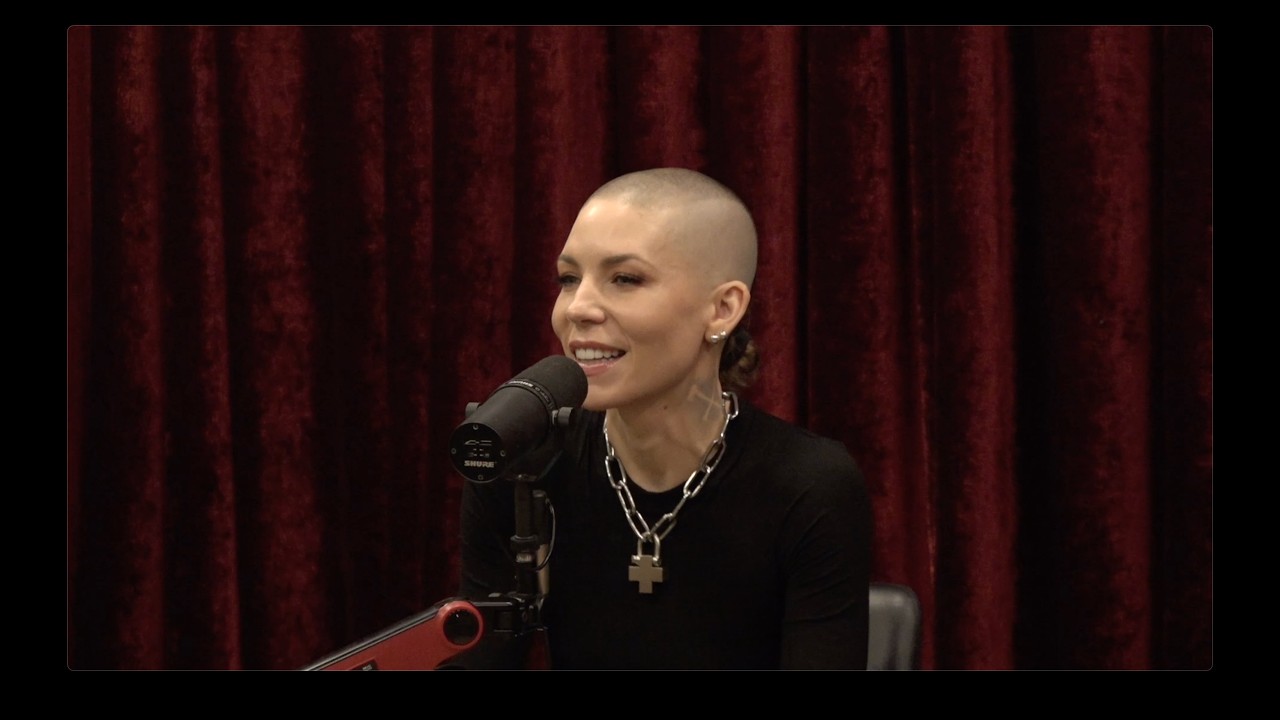
Skylar Grey Rejects AI Songwriting as Singer Drops New Album
PowerfulJRE
The Grammy-nominated artist argues artificial intelligence cannot replicate genuine human emotion and spirit in music, even as modern studio tools blur the lines of creative reality.
## Background
Published on May 22, 2026, on YouTube by the channel PowerfulJRE, this video features the Joe Rogan Experience podcast episode #2504. The description highlights Grammy Award-nominated singer, songwriter, and producer Skylar Grey promoting her new album, "Wasted Potential."
## TL;DR
In this episode, Skylar Grey joins Joe Rogan to discuss her journey from a musical childhood in small-town Wisconsin to escaping the toxic pressures of the Los Angeles music industry by isolating in an Oregon cabin, where she famously cowrote the global hit "Love the Way You Lie." The two explore the nuances of creative hyper-focus, the limitations of artificial intelligence in mimicking human emotion, and the realities of impostor syndrome. Grey also shares striking stories of rural life, including running a biodynamic vineyard and dealing with relentless mountain lion incursions on her ranch. Ultimately, she reflects on turning 40, shedding perfectionism, and reclaiming her narrative with her new conceptual album.
## Atmosphere & style
The conversation carries a relaxed, deeply intimate, and reflective vibe, blending Rogan's characteristic curiosity with Grey's grounded, candid vulnerability. It shifts naturally from intense, suspenseful storytelling about wildlife survival on her ranch to raw psychological insights regarding the anxieties of early fame and feeling like a fraud. Listeners experience a warm, supportive dynamic where Grey openly confronts her self-perceived shortcomings, while Rogan offers validating, philosophical encouragement about the nature of the creative mind.
## Key takeaways
- [00:01](https://www.youtube.com/watch?v=fOTMWZNYg9g&t=1s) Joe Rogan and Skylar Grey agree that artificial intelligence cannot replicate genuine human emotion, spirit, and nuance in songwriting, despite its utility as a new tool.
- [11:18](https://www.youtube.com/watch?v=fOTMWZNYg9g&t=678s) Grey dropped out of high school at age 16 with a 3.9 GPA to pursue music after being discouraged by a teacher who claimed it was not a viable career path.
- [11:18](https://www.youtube.com/watch?v=fOTMWZNYg9g&t=678s) Rogan and Grey critique the modern school system, arguing it was designed during the Industrial Revolution to condition children into becoming compliant factory workers rather than supporting neurodivergent or creative minds.
- [20:20](https://www.youtube.com/watch?v=fOTMWZNYg9g&t=1220s) Grey moved to Los Angeles alone at age 17, experiencing early career strain and industry pressure that ultimately ruined her creativity and led her to flee the city at age 23.
- [49:02](https://www.youtube.com/watch?v=fOTMWZNYg9g&t=2942s) To escape the music industry grind, Grey isolated herself in a remote, primitive Oregon cabin without a manager or record deal, which allowed her to reconnect with her creative process.
- [57:15](https://www.youtube.com/watch?v=fOTMWZNYg9g&t=3435s) Regional tigers in the Sundarbans kill an average of 22 to 23 people per year, driven to physical irritation and aggression due to drinking brackish water and being structurally dehydrated.
- [01:04:59](https://www.youtube.com/watch?v=fOTMWZNYg9g&t=3899s) Grey hand-raised a lamb named Valentine on her 400-acre Napa property, which was later killed during a devastating series of mountain lion incursions that wiped out most of her flock.
- [01:19:29](https://www.youtube.com/watch?v=fOTMWZNYg9g&t=4769s) While living in isolation in Oregon, Grey collaborated via email with producer Alex da Kid to write the hook for 'Love the Way You Lie' in just 15 minutes, which became the number-one song in the world a month later.
- [01:22:02](https://www.youtube.com/watch?v=fOTMWZNYg9g&t=4922s) Despite massive international success with major artists like Eminem and Dr. Dre, Grey suffered from severe impostor syndrome and frequently felt like a fraud during collaborative songwriting sessions.
- [01:27:42](https://www.youtube.com/watch?v=fOTMWZNYg9g&t=5262s) Rogan and Grey discuss the creative process as a spiritual entity that requires an artist to enter a state of inner emptiness to act as a vessel for summoning the muse.
- [01:35:56](https://www.youtube.com/watch?v=fOTMWZNYg9g&t=5756s) Rural environments and areas devoid of cellular service offer a form of 'forest bathing' that provides essential physical vitality and a perceptibly cleaner environment compared to city life.
- [01:53:00](https://www.youtube.com/watch?v=fOTMWZNYg9g&t=6780s) Turning 40 brought a massive perspective shift for Grey, allowing her to abandon perfectionism, worry less about external judgment, and shorten her album production cycle from five years to aiming for an annual release.
- [01:53:48](https://www.youtube.com/watch?v=fOTMWZNYg9g&t=6828s) Grey's new album, 'Wasted Potential,' serves as a conceptual coming-of-age narrative reflecting on her small-town Wisconsin upbringing and the early career opportunities she felt were squandered due to a mismatch with the aggressive LA music industry work culture.
- [01:58:07](https://www.youtube.com/watch?v=fOTMWZNYg9g&t=7087s) Rogan validates Grey's shift toward prioritizing fun over building a permanent legacy, noting that hyper-critical mindsets are an inherent, quality-ensuring trait of ambitious creators.
## Detailed walkthrough
### [00:01](https://www.youtube.com/watch?v=fOTMWZNYg9g&t=1s) Music, Emotion, and the Advent of AI
The podcast kicks off on a heavy and deeply personal note. Joe Rogan shares a conversation he had with his wife regarding the power of music and the guest, Skylar Grey. Rogan’s wife told him that if she passes away, she wants Grey's song "I'm Coming Home" played at her funeral. Rogan admits it was a heavy thought, but after listening to a solo version of Grey performing the song on the piano while at the gym, he was struck by the raw emotion of it. Grey laughs at the intense way they are starting the podcast, but Rogan notes that this is exactly what "the emotion of real music" is about.
This transitions into a text message Grey had sent Rogan regarding Artificial Intelligence. Grey had shared one of her songs with Rogan, asserting that AI is not yet capable of writing material with that level of genuine emotion. Rogan completely agrees, stating that while AI can generate cool sounds, human listeners will always recognize when a real person sat down and poured their spirit and creativity into a piece. Grey describes songwriting as highly therapeutic and rooted in true emotion, though she acknowledges AI is an interesting new tool that creatives can use to execute their vision.
- Rogan's wife specifically requested the piano solo version of Skylar Grey's "I'm Coming Home" for her funeral.
- Grey views AI similarly to previous technological advancements that initially faced backlash, like Auto-Tune or the transition from tape to computers.
---
[03:00](https://www.youtube.com/watch?v=fOTMWZNYg9g&t=180s) Studio Tools and the Blurring Lines of Reality
The conversation shifts to historical musical tools, with Rogan asking what device Peter Frampton used back in the day. Producer Jamie chimes in to explain it was a "talk box"—a tool where a tube or straw is placed in the artist's mouth to route the instrument's sound, allowing the microphone to pick up the modulated frequencies as the musician shapes their mouth. Rogan recalls that people initially hated the talk box, complaining that "that's not his real voice." However, both agree that today's AI capabilities are far weirder, as technology can now generate entire songs using a perfect replica of an artist's actual voice.
Rogan points out that the boundaries between reality and simulation are becoming incredibly hazy, comparing the current era to "an introduction to the Matrix." He notes that there is an entire fake podcast episode circulating online featuring a full conversation between himself and Steve Jobs—a man Rogan never actually met. Furthermore, people frequently create audio clips of Rogan speaking to guests he has never hosted. This pervasive capability has made society deeply suspicious, causing people to question the authenticity of everything they see and hear online.
- Prominent news figures have mistakenly reposted videos that turned out to be footage straight out of a video game.
- Rogan notes that while the fake Steve Jobs podcast is currently audio-only, high-quality video versions will inevitably emerge.
---
[05:14](https://www.youtube.com/watch?v=fOTMWZNYg9g&t=314s) Valuing Human Art and Skylar’s Musical Roots
Despite the strangeness of the digital age, Rogan and Grey find the current landscape exciting because it forces society to deeply appreciate physical things and authentic human connections. Rogan gestures to an art piece in the studio—a chimpanzee skull meticulously crafted from Zildjian cymbals by an artist named "Shane against the Machine"—noting that the tactile value comes from knowing a real person made it. Grey believes this era will make people value the "nuance and mistakes" inherent to human art, as perfection isn't the goal of true expression.
Rogan asks Grey about her origins in music and how she got her start. Grey reveals she was born into an intensely musical family: her mother was in folk bands and played the Celtic harp, her father sang in a barbershop quartet, and her great-grandmother was an opera singer. Her prodigious talent showed early; at just two years old, she began singing harmony during a family rendition of "Happy Birthday," despite not even knowing all the words yet. She would regularly chime in during her mother's band rehearsals, eventually being brought on stage for guest appearances.
- Grey performed her very first official show at the age of six, delivering a full hour-long set alongside her mother for a Mother's Day event at a library in Madison, Wisconsin.
- Grey grew up in Mazomanie, Wisconsin, which she describes as a very small village of about 1,500 people.
---
[08:04](https://www.youtube.com/watch?v=fOTMWZNYg9g&t=484s) Touring as a Child and the Choice to Go Solo
Grey and her mother spent years touring the Midwest, playing an eclectic mix of random venues including elementary schools, libraries, women's health conventions, and even a massive Boy Scouts event in front of 1,500 scouts. Though she wasn't a mainstream child star on a Disney scale, the operation was organic and allowed her to save up a decent amount of money. By the time she was 12 years old, she used her personal savings to buy her very first grand piano, which prompted her to start writing solo pop music.
The decision to go solo at age 12 was driven by a mix of intense artistic focus and social pressure. Middle school peers began making fun of her for the silly songs she performed with her mother. Grey confesses that her mother was "not stoked" about the split, as performing with her daughter had effectively become her mother's full-time career. Rogan expresses amazement at how driven Grey was at such a young age, especially considering she was missing massive amounts of school to play up to six shows a week.
- Some of the humorous childhood song titles Grey performed with her mother included "We Are the Colors of the Rainbow," "Never Smoke Tobacco," and "My Grandma Slid Down the Mountain."
- During this reflection, Rogan's dog briefly interrupts the studio space, drawing affectionate reprimands from Rogan to "lie down" after getting a kiss.
---
[11:18](https://www.youtube.com/watch?v=fOTMWZNYg9g&t=678s) Dropping Out of School and the Flaws of Education
Grey's intense singular focus on music made her hate traditional schooling, which she felt was a waste of time. She officially dropped out at age 16, a decision heavily accelerated by a hostile interaction with her algebra teacher. Despite being a strong student with a 3.9 GPA, Grey missed a homework assignment due to a late-night performance. Even though Grey aced the subsequent test, the teacher reprimanded her, stating flatly that "music isn't a career." Infuriated, Grey thought, "I'll show you," dropped out, and never looked back. Rogan calls the teacher's comment incredibly irresponsible and foolish, pointing out the obvious reality that music is a massive, multi-billion dollar global industry.
This leads into a philosophical critique of the broader education system. Rogan and Grey lament that society fails to reward great teachers because the profession pays so poorly. Rogan argues that if humanity truly cared about its future, top tier money would be funneled into hiring educators who deeply understand psychology and child motivation. Instead, Rogan notes that looking at history through a "tin foil hat" lens reveals the school system was essentially designed during the Industrial Revolution to condition children to become compliant factory workers.
- Grey maintained a 3.9 GPA before dropping out of high school at 16.
- Rogan attributes institutional compliance metrics—like walking in single-file lines, sitting straight ahead, raising hands, and pledging allegiance—to factory-worker conditioning.
- Both speakers joke about having undiagnosed ADHD, with Rogan viewing the trait as a "superpower" that allows intense hyper-focus on interesting tasks while completely checking out of boring ones.
[16:53](https://www.youtube.com/watch?v=fOTMWZNYg9g&t=1013s) The Hyperfocus Trap and High School Torture
The speakers dive into the reality of having a "super hyperfocus on things that you're obsessed with." One speaker admits that when they lock into something truly interesting, they can stay awake for days without needing sleep. This intense focus is exactly why they have to completely stay away from video games, explaining, "I just lock in... for hours. Yeah, it's a problem." However, this trait extends far beyond gaming to anything they genuinely love. The flip side is a complete inability to absorb information that doesn't interest them. High school is recalled as absolute "torture" because of this barrier. For a long time, the speaker feared they were destined to be a failure, recalling, "I just thought I was going to be a loser. I'm like, 'Clearly I can never hold a job. I can't take direction, pay attention. Like there's something wrong with me.'" They anticipated living as a fringe person who would never fit in, relying on weird odd jobs just to survive.
The conversation shifts to how lucky they feel to have found unconventional paths to success, contrasting their journey with the reality faced by many children. So many kids are actively discouraged by adults who tell them that unconventional fields like music, acting, writing, or comedy are not viable careers. The speaker notes that people often project their own failures onto youth: "So many is there telling you because they didn't do it that you can't do it."
[18:20](https://www.youtube.com/watch?v=fOTMWZNYg9g&t=1100s) The Bitter Art Teacher and Diaper Ads
Sharing a personal story from youth, a speaker recalls wanting to be a comic book illustrator and being obsessed with characters like Conan the Barbarian and various superheroes. This dream was crushed by a "shitty high school art teacher" who was incredibly negative. Because it was a small high school with only one art teacher, the speaker ultimately quit art during their senior year just to avoid his class. When asked what the teacher did, the speaker explains that he ridiculed the idea of drawing comic books, telling them, "You're not going to make a living doing that. You're most likely going to have to do like advertisements for like diapers, like diaper ads."
The speaker remembers looking at the teacher—a skinny man with a pot belly who just looked deeply depressed and sad—and thinking, "Fucking diaper ad?" The co-host points out that the instructor was likely an artist who failed to make it professionally and resorted to teaching out of bitterness. This suspicion was confirmed when the students looked at the teacher's actual artwork, realizing it was uninspired and lacked "fire in that belly." The speakers joke that a skinny frame paired with a large pot belly usually points to heavy drinking.
* **Preferred Drawing Subjects:** Conan the Barbarian and superheroes.
* **Teacher's Predicted Career:** Designing diaper advertisements.
[20:20](https://www.youtube.com/watch?v=fOTMWZNYg9g&t=1220s) Moving to LA at 17 and a Venice Beach Murder
The conversation connects the bitter high school teacher to the broader entertainment and music industries, where self-proclaimed experts are often just failed artists who try to dictate how everything should be done. One speaker describes these bitter gatekeepers as "weights that you have to carry," though dealing with them ultimately builds resistance and internal strength. This was especially true for one speaker who moved to Los Angeles alone at the tender age of 17. Coming from a small town in the Midwest, she describes herself as having been incredibly green. The host remarks that being a "really pretty, 17, Midwest" girl alone in LA is a "terrible combination" and "weird as fuck," laughing at how different she is today with her shaved head and scalp tattoo.
Reflecting on that period around 2003 or 2004, she reveals she used to crash on the couch of Roy Hay, the guitar player from Culture Club, at his house in Venice. While she never hung out with Boy George, her first month in the neighborhood was marred by a literal murder next door. She vividly recalls a bloody mattress left in the alleyway between the houses, police caution tape everywhere, and being stuck sitting on the steps while officers questioned them about hearing screams. In a bizarre and dark twist, after the coroner finished loading the body into the truck, he walked over, sat down next to her on the steps, and started hitting on her. She remembers her shock at the time: "You're a very beautiful girl and like you were just touching a dead body. This is so weird. Where am I?"
[23:53](https://www.youtube.com/watch?v=fOTMWZNYg9g&t=1433s) The Collapse of Detroit and Fact-Checking Wealth Rankings
The host notes that Los Angeles in 2003 was still relatively fine, but has since gone "completely sideways" and become unrecognizable, with "for lease" signs plastered on almost every building. This decline prompts a comparison to the collapse of Detroit as depicted in Michael Moore's documentary *Roger & Me*. The host explains how the automotive industry's relocation of plants to Mexico instantly put hundreds of thousands of people out of work, calling it a "horrific depiction of what can happen when greedy people decide that they'll completely sabotage an entire city so they can make... X amount more dollars" using labor paid a dollar a day without healthcare, retirement, or dental benefits. Visiting Detroit today feels like exploring a ghost town where trees grow through the roofs of abandoned houses and massive industrial structures stand with shattered windows.
During the discussion, the host claims Detroit was once the third richest city in the world. Producer Jamie looks up the fact and corrects the claim using a live search. The data reveals that while no historical source places Detroit exactly third globally, it was widely considered the wealthiest city in the US—and by some metrics had the highest standard of living in the world—around the 1950s. Its median household income was roughly 20% above the national average due to Ford, Chevy, and Chrysler manufacturing, giving it one of the highest homeownership rates in the country. The "third richest" phrasing is identified as an inaccurate internet meme.
[27:46](https://www.youtube.com/watch?v=fOTMWZNYg9g&t=1666s) The 1% Illusion and the Reality of Teacher Salaries
The talk turns to global wealth disparities and the common terminology surrounding the "1%". The host initially asserts that an annual income of $34,000 puts an individual in the top 1% of the world. Intrigued, they try to guess what it takes to be in the top 1% of the United States. Guesses range from $150,000 to $500,000. They run the question through Perplexity and discover that the top 1% in the US actually requires an annual income between $730,000 and $790,000. Meanwhile, further live research refutes the $34,000 global statistic, noting it came from an old, viral meme from around 2012. True contemporary data indicates that $34,000 places someone well above the global median, but closer to the top 5% to 10% worldwide, whereas the true global 1% requires closer to $60,000 or $70,000.
The conversation pivots to domestic financial struggles, noting that making $50,000 a year in America leaves a person struggling unless they are very young with zero responsibilities. This prompts them to check the average salary of an American public school teacher. While the overall national average sits around $74,000 to $75,000 (ranging from lower-paying states to over $90,000 in New York and California), the starting salary is a meager $48,000. The host laments that intelligent people who love children are forced to abandon the profession because they cannot survive on less than $1,000 a week before taxes, rent, food, cars, and children. They criticize the short-sighted nature of government spending, noting how tax dollars flow into corporations and NGOs while public education is ignored, wishing that citizens could individually check boxes on their tax forms to directly choose where their money goes. The segment wraps up abruptly as the host notices their dog huffing and acting restless, pausing the conversation to let the pet out to pee.
* **Estimated US Top 1% Income:** $730,000 to $790,000 per year.
* **True Global Top 1% Income:** Approximately $60,000 to $70,000 per year.
* **Average US Starting Teacher Salary:** $48,000 per year.
* **Average US Experienced Teacher Salary:** $74,000 to $75,000 per year.
[34:22](https://www.youtube.com/watch?v=fOTMWZNYg9g&t=2062s) Shepherds and Wolf Crushers
The conversation kicks off with a lighthearted discussion about pet behaviors, with one speaker noting how their dog "huffs" when it's time to eat, prompting playful panting and a joke about chilling out. Another speaker shares that their own dog huffs whenever she senses something outside, like a coyote. This transitions into a discussion about giant herding dogs, specifically the Central Asian Shepherd, also known as an Alabai. The speakers pull up images online, discovering that these massive livestock protection dogs are colloquially referred to as "wolf crushers."
Despite the breed's reputation for being enormous, the speaker notes that their female Alabai, Nala, is actually on the smaller side, weighing around 105 pounds, though she still possesses a massive head. They admire photos of the imposing dogs, including a Turkish Kangal, which they eye as a potential future addition to their property. The mood is warm and full of laughter as the speaker confesses to being such a soft-hearted animal lover that instead of keeping Nala outside to guard the ranch, the giant dog sleeps right in bed with them.
* Breed discussed: Central Asian Shepherd (Alabai), known as a "wolf crusher," and the Turkish Kangal.
* Nala's weight: Approximately 105 pounds (considered small for the breed).
[36:10](https://www.youtube.com/watch?v=fOTMWZNYg9g&t=2170s) The Coyote Invasion and Johnny Cash's Mistake
Because Nala sleeps indoors, the speaker's ranch has faced a devastating wildlife problem over the past few weeks in Napa Valley, losing 12 chickens and four sheep to an invading pack of coyotes. This prompts a wild, humorous, and tragic anecdote from the host about their own past experiences with predators in California. The host used to own a 140-pound Mastiff named Johnny Cash, a "sweetheart of a dog" built of solid muscle. Shockingly, the local coyotes managed to "make friends" with Johnny Cash through the fence, getting him accustomed to their presence.
The story takes a dramatic turn when a pool guy accidentally left a gate open, allowing Johnny Cash into the protected chicken coop area. At the time, one of the chickens was brooding—a process where a hen must be isolated in a smaller, 30-pound coop to perch so she stops trying to sit on eggs. In a brilliant display of animal manipulation, the coyote seemingly "tricked Johnny into smashing that little chicken coop" since the coyote itself wasn't strong enough to break it. While the host's family was inside playing Monopoly, one of the kids screamed "coyote!" Looking out, they witnessed the coyote sprinting across the yard with a chicken in its mouth, clearing a six-foot wrought-iron fence "like a gymnast."
The host admits to being halfway impressed by the sheer athleticism of the leap. However, the consequence for Johnny Cash was disastrous; having realized chickens could be killed, he later took advantage of another open gate, broke into the main coop, and slaughtered nine more chickens before being caught.
* Livestock lost in Napa: 12 chickens and 4 sheep over a few weeks.
* Johnny Cash: A 140-pound Mastiff who befriended coyotes and subsequently destroyed two chicken coops.
* Total chickens killed by Johnny Cash: 9.
[39:15](https://www.youtube.com/watch?v=fOTMWZNYg9g&t=2355s) Free-Ranging and Surplus Killing
The conversation shifts back to the heartbreaking realities of keeping chickens as pets, with the speakers bonding over how much they love and snuggle their birds. In addition to coyotes, they recount losses to bobcats and foxes. The Napa speaker explains that they free-range their chickens during the day and bring them in at night, but the local predators have figured out the routine.
Just the week prior at 6:30 AM, a single coyote caught on camera executed a "surplus killing" or "thrill killing," slaughtering 12 chickens back-to-back. The coyote only carried away a few, leaving the rest behind. The speaker laments being completely broken by the event because the coyote took her absolute favorite chicken, "Big Cheeks," who was so sweet she would run to her name just like a dog. When asked if they eat chicken, both agree they do, but never their own pet chickens, laughing about how ironic it is to tenderly care for "the girls" and then sit down to a chicken dinner.
* Predators mentioned: Coyotes, bobcats, foxes, and mountain lions.
* Morning raid: A single coyote killed 12 chickens at 6:30 AM.
* Favorite chicken: "Big Cheeks," known for coming when called.
[40:53](https://www.youtube.com/watch?v=fOTMWZNYg9g&t=2453s) Biodynamic and Dry Farming at Glass Rock
The conversation pivots to the broader operations of the speaker's Napa Valley property, which includes an arrangement with a local cattleman to graze cows. The cows are essential because the speaker runs a biodynamic vineyard. For a few months out of the year, the cattle roam the vines, creating a healthy ecosystem; their heavy footprints form small puddles that gather water, which is crucial because the vineyard is entirely "dry farmed."
The speaker explains that dry farming means they never artificially water their grapes. While not a professional vintner herself, she explains the logic behind it: withholding water forces the vines to struggle, driving their roots deeper into the ground for moisture, which yields a much more concentrated and superior flavor profile. They do not bottle the wine under their own label to avoid the grueling "hole of marketing," opting instead to sell the grapes to five different winemakers. These winemakers produce single-estate wines that explicitly highlight the vineyard site on the bottle under the property name, "Glass Rock."
The host is highly intrigued, and the speaker promises to mail a package of their wines, describing them as an old-world, delicate, and beautiful style of Cabernet with lower sugar and lower alcohol, contrasting sharply with the heavy, high-alcohol "powerful" cabs typically associated with Napa.
* Property Name: Glass Rock.
* Vineyard stats: 9 acres planted, organically and biodynamically dry-farmed.
* Wine style: Old-world style Cabernet, harvested earlier for lower sugars and lower alcohol.
* Business model: Grapes sold to 5 different winemakers for single-estate labels (e.g., Pilcrow Glass Rock, Tansey Glass Rock).
[43:35](https://www.youtube.com/watch?v=fOTMWZNYg9g&t=2615s) Romance, Ranches, and the Escape from Los Angeles
The host asks how the speaker got involved in the wine world, prompting a highly entertaining, romantic, and "very dramatic" life story. After falling in love with Napa during a 20th-birthday trip, she later met her partner, Elliot, at a local grocery store when his pickup line was asking if he could "carry my melon" while she bought a watermelon. Though she initially turned him down because she was married at the time (and he was also in a relationship), they shared a mutual connection through Elliot's best friend, Carlo Mondavi—grandson of the legendary vintner Robert Mondavi.
A year of keeping in touch eventually led them to get together officially, sparking a chaotic chain of events including a "crazy divorce" and a five-year lawsuit. After surviving the legal drama, she moved in with Elliot on a remote 400-acre ranch in St. Helena, living in a tiny 400-square-foot cabin. Managing a music recording studio in such a small space became impossible as she accumulated cats, leading them to buy their current home in Napa, which happened to come with a conventionally farmed vineyard. Total novices, they hired a farmer from France to help them transition the 9 acres to a pesticide-free, organic, and biodynamic model, and today Elliot does the tractor work himself.
The host admits to romanticizing the ranch life but expresses terror at the thought of it eating up precious time and dealing with the interpersonal drama of hiring help. The speaker insists it is entirely worth it, noting that the serene ranch offers the "perfect balance" and keeps her sane compared to the chaos of touring and the entertainment industry.
* Key figures: Elliot (partner), Carlo Mondavi (mutual friend/grandson of Robert Mondavi).
* Previous residence: A 400-sq-ft cabin on a 400-acre ranch in St. Helena.
* Transition timeline: Met Elliot, got together a year later, moved to Napa a year after that.
[49:02](https://www.youtube.com/watch?v=fOTMWZNYg9g&t=2942s) Creative Ruin and Editing Adult Content
The speaker dives deeper into her past, explaining that living in Los Angeles completely ruined her creativity because she routinely gave "too much power" to so-called industry experts. Bombarded by conflicting opinions on how she should dress, sing, and write, she realized she needed wide-open spaces to hear her own inner voice. Consequently, she fled LA at age 23 to live alone in an Oregon cabin.
This move followed a brutal financial collapse. She had landed her first record deal at age 18 with Warner Brothers after being signed by Linkin Park, performing under her first and middle name, Holly Brook. When the album completely flopped, she went entirely broke, having burned through all her college savings to cut demos in an expensive city.
To survive for the first time without performance income, she took a series of odd jobs: working at Barnes & Noble, teaching gymnastics, and unexpectedly, editing porn. She found the editing gig through a vague Craigslist ad looking for video editors that offered training. Because she already knew how to edit audio in Pro Tools, she figured video couldn't be that difficult. She hilariously recalls showing up to the job interview in a full suit, completely oblivious to the nature of the company until the interviewers asked, "You know this is adult content?" Needing the money, she took the 9-to-5 job, which she describes as an eye-opening experience that involved sorting through the most graphic and shocking imagery imaginable.
* Age milestones: Signed a record deal at 18; left LA for Oregon at 23.
* Former stage name: Holly Brook (signed to Warner Brothers via Linkin Park).
* Side hustles: Barnes & Noble, gymnastics instructor, and Craigslist-sourced adult video editor.
[52:06](https://www.youtube.com/watch?v=fOTMWZNYg9g&t=3126s) The Editing Job and the "Tetris Effect"
The speaker describes a past job editing hardcore adult films, clarifying with a laugh that it did not involve editing feature films, but rather "cutting out all the highlights" to create short reels or search-optimized clips. Long before the era of Instagram, these clips were tailored to specific niche search terms like "cream pie" or particular types of shots. The work required watching entire adult movies to pick out the most graphic moments and tag them for searchability. It paid remarkably well for a high school dropout—roughly \$30 an hour based on the volume of clips completed—making it the best-paying job the speaker had at the time.
However, the job took a psychological toll after just two weeks due to a phenomenon known as the "Tetris effect." While a typical manifestation involves hallucinating falling shapes after playing the video game for too long, the speaker began experiencing intense visual hallucinations related to the explicit content. This culminated in staring at an empty light socket over the bed at night—from which the bulb had been removed for being too bright—and vividly hallucinating graphic imagery. Realizing the situation was unhealthy, the speaker decided to quit.
- **Job Duration:** Lasted only two weeks.
- **Compensation:** Around \$30 an hour, determined by production volume.
- **The "Tetris Effect":** A psychological phenomenon where repetitive visual tasks lead to waking hallucinations.
---
[54:14](https://www.youtube.com/watch?v=fOTMWZNYg9g&t=3254s) Manifesting an Oregon Sanctuary
A new opportunity emerged simultaneously when the speaker was offered a position as a keyboardist for Duncan Sheik, a '90s artist famous for the hit song "Barely Breathing." Being a fan of his work, the speaker accepted the gig, noting that "it's music at least." After touring for a year or two, the lack of creative fulfillment began "eating at me," sparking a deep desire to write and perform original music rather than serving as a backup musician. During the tour, the speaker frequently journaled, specifically writing: "I just want a cabin in the woods where I can set up my studio and be away from all these people."
This written wish manifested roughly six months later when the speaker's mother called with an unexpected offer. A friend owned a property on the southern coast of Oregon, near Bandon and its famous Bandon Dunes golf courses, and was willing to let the speaker live in a cabin for free. The only requirement was working twice a week at the friend's art gallery selling art. The speaker gladly accepted and relocated to the middle of nowhere to set up a studio, process a painful breakup with a boyfriend, and overcome a severe bout of depression and writer's block.
- **Duncan Sheik's Hit:** "Barely Breathing".
- **Tour Duration:** Approximately 1 to 2 years.
- **Barter Agreement:** Free lodging in exchange for working at an art gallery two days a week.
- **Location:** Near Bandon Dunes, Oregon.
---
[56:07](https://www.youtube.com/watch?v=fOTMWZNYg9g&t=3367s) Life in an Old Fire Lookout
The Oregon accommodation was a very small, single-room cabin equipped with a single light bulb and a wood stove, but it lacked indoor plumbing. The structure was originally an old fire lookout that had been converted into a living space, which explained the lack of integrated water pipes. The flushing toilet and shower were located down a path in a separate, standalone bathroom building. Going to the bathroom in the middle of the night required a terrifying walk in pitch darkness.
The cabin sat at the peak of a sand dune, making it inaccessible by car. The speaker had to park at the bottom of the hill and complete a quarter-mile hike every day to reach the cabin. The property lacked internet entirely, creating an isolated environment where the speaker lived for about six months. To stay safe from suspected predators during the nightly hikes up the hill, the speaker carefully scanned all directions with a flashlight.
- **Cabin Origins:** Converted from an old fire lookout.
- **Hike Distance:** A quarter-mile trek from the parking spot up a sand dune.
- **Stay Duration:** Roughly 6 months.
---
[57:15](https://www.youtube.com/watch?v=fOTMWZNYg9g&t=3435s) Mountain Lion Fears and Tiger Attacks
The constant isolation fueled a deep fear of mountain lions. Acting on advice found via Google, the speaker crafted a physical mask to wear on the back of the head. The underlying theory was that predators like mountain lions prefer to attack from behind, and simulating eye contact can deter them. The co-host confirms this logic is entirely accurate for tigers, sharing a historical perspective on the Sundarbans, an area in India notorious for man-eating tigers.
The conversation shifts to tiger attacks in the Sundarbans, with the hosts looking up statistics online to clarify historical claims. The co-host mentions a popular perception that thousands of people have been killed there over the centuries. They note that the regional tigers developed a taste for humans due to bodies washing away into rivers during typhoons. Furthermore, the local water is brackish rather than fresh, meaning the tigers drink salt-heavy water and are likely in a state of constant physical irritation.
- **Predator Deterrent:** A handmade mask worn on the back of the head to simulate rear-facing eyes.
- **The Sundarbans:** A region spanning parts of India and Bangladesh famed for its mangrove forests and tiger populations.
- **Brackish Water:** High salt content water that leaves local wildlife structurally dehydrated and irritable.
---
[59:02](https://www.youtube.com/watch?v=fOTMWZNYg9g&t=3542s) Tiger Attack Data and a Brutal Boat Story
Reading directly from updated expert estimates, the host refutes the hyper-inflated historical rumors of tiger fatalities. Recent data shows that Sundarban tigers kill an average of 22 to 23 people per year, which is far lower than popular perception, though historical reports suggested 50 to 60 annual deaths with some unrecorded estimates passing 100. Despite the lower averages, attacks frequently occur in terrifying seasonal clusters, targeting local honey collectors, crab catchers, and fishermen.
The co-host recounts a dark bit from his 2009 comedy special concerning a real-life attack in the Sundarbans involving four men in a boat. A tiger swam out to the vessel, killed a man, dragged him back to the shore, and then swam back out to kill a second and third man sequentially before getting tired. A single survivor was left stranded on the boat alone. This extreme danger is precisely why local honey collectors wear masks on their heads when going to work. The hosts joke about the speed of death by a large feline, concluding that a tiger would kill a human instantly by crushing the back of the neck, whereas a mountain lion might take "15 to 20 minutes, depending on what you scream."
- **Modern Tiger Fatality Stats:** Averaging 22 to 23 human deaths per year in the Sundarbans.
- **Historical Estimates:** 50 to 60 reported deaths annually, occasionally spiking over 100.
- **Victim Demographics:** Primarily honey collectors, crab catchers, and fishermen working in the wilderness.
---
[01:01:08](https://www.youtube.com/watch?v=fOTMWZNYg9g&t=3668s) Firearm Perspectives and Wild Big Cat Encounters
When asked if there was a gun in the cabin for protection, the speaker replies no, noting that an axe used for chopping firewood for the wood stove was the only tool available. The speaker admits to not even thinking about getting a firearm back then, though both agree that walking around those woods unarmed is incredibly risky. The speaker notes, "I don't think at that point I was into guns yet," but reveals a change in lifestyle today. Now married to a partner named Elliot who is highly enthusiastic about firearms, the speaker holds a concealed carry permit and enjoys a dedicated gun range built directly at their current house.
The host shares personal experiences seeing large cats in the wild, ranging from 100 to 150 pounds. The very first mountain lion the host encountered was at an altitude of 8,500 feet in Gold Hill, north of Boulder, Colorado. This particular cat unfortunately killed one of the host's dogs. The high-altitude environment was gorgeous, but the host eventually had to move back to Los Angeles because the altitude caused his pregnant wife severe, flu-like morning sickness every single day.
- **Home Amenity:** A private gun range built on the speaker's current residential property.
- **Gold Hill Elevation:** 8,500 feet above sea level.
- **Host's First Cat Encounter:** A mountain lion in Colorado that killed his dog.
---
[01:03:06](https://www.youtube.com/watch?v=fOTMWZNYg9g&t=3786s) Close Encounters with Massive Predators
The host details further mountain lion encounters across California and Utah. He recalls spotting a small, 70-pound mountain lion darting across a road in Montecito, near Santa Barbara, instantly recognizing it by its distinctive long tail. A far more terrifying encounter happened a few years prior in Utah alongside a friend named Colton. Driving around a corner at dusk, they spotted a massive tomcat sitting beneath a tree just 30 yards away. Viewing it through binoculars from the safety of their truck, the host was struck by the animal's massive, "pumpkin" sized head, intense mandible muscles, and incredibly thick forearms. He estimates the cat weighed between 180 and 200 pounds, confessing that even though they were armed and inside a vehicle, he was still terrified by its sheer size.
The host compares that living cat to a mounted specimen out front, which was taken in Colorado by his friend Adam Greentree under a official depredation permit. The permit had been issued because the cat was actively destroying a rancher's livestock. On the day they tracked it down, the cougar had gutted a cow and begun consuming its internal organs while the prey was still alive.
- **Montecito Sighting:** A smaller cat weighing roughly 70 pounds.
- **Utah Tomcat Estimate:** Weighted at least 180 to 200 pounds.
- **Depredation Permit:** A legal authorization issued to remove a specific wild animal causing documented damage to property or livestock.
---
[01:04:59](https://www.youtube.com/watch?v=fOTMWZNYg9g&t=3899s) The Story of Valentine the Lamb
The speaker transitions to a personal tragedy involving mountain lions at a former 400-acre property in Napa, California. While away on a musical tour with Eminem, the speaker received a text from a neighbor announcing that their sheep had given birth on Valentine's Day. Eager to return home to care for the newborn lambs, the speaker discovered that one of the babies had been rejected by its mother. The speaker eagerly stepped in to bottle-feed the lamb three times a day, a task that many consider a chore but the speaker deeply enjoyed.
The hand-raised lamb quickly bonded with the speaker, behaving exactly like a domestic dog by following them everywhere and sleeping on the front porch. Named Valentine, the animal became so dear to the speaker that they got a portrait tattoo of her on their arm. A few months later, the flock had grown to include roughly 10 incredibly cute baby lambs roaming the sprawling Napa property.
- **Property Size:** 400 acres in Napa, California.
- **Touring Act:** The speaker was on tour performing with Eminem.
- **The Bottle Baby:** A lamb born on Valentine's Day, rejected by its mother, and hand-raised by the speaker.
---
[01:06:11](https://www.youtube.com/watch?v=fOTMWZNYg9g&t=3971s) The Napa Valley Mountain Lion Incursion
Because the Napa house was quite small, the speaker utilized one of the other standalone buildings located a half-mile up the driveway as a music studio. Driving up to the studio one afternoon, the speaker spotted a large mountain lion casually crossing an open field on the property. Pulling out a phone, the speaker captured a blurry, rushed video before immediately heading back to warn Elliot.
The couple notified their neighbor and the local sheriff, showing them the footage. However, the authorities and neighbors dismissed the claim, stating that "nine times out of 10" a reported mountain lion is simply a misidentified bobcat. The speaker grew frustrated, knowing the animal's large size and long tail were unmistakable. Elliot believed the speaker, and together they hiked up the nearby ravine where the cat had vanished, completely unaware that the predator might have been actively tracking them back toward their home.
That evening, while winding down in front of the TV, Elliot showed the speaker a viral Instagram video of a Russian man cuddling in bed with a pet mountain lion, prompting jokes about Russians being "psycho" and "not regular white people." Looking at the video, Elliot remarked that he could never bring himself to kill such a beautiful animal "unless they [expletive] with my family." The very next morning, the speaker walked onto the front porch with a cup of coffee and looked down at the sheep pen, spotting a mother sheep standing over a baby lamb that was completely motionless. Upon walking down to investigate, the speaker discovered deep fang punctures in the lamb's throat and its stomach completely eaten out, while the grieving mother refused to leave its side.
[01:09:02](https://www.youtube.com/watch?v=fOTMWZNYg9g&t=4142s) Trapping a Mountain Lion and the Sound of the Whistle
Upon returning to the house, the speaker told their partner Elliot that they had lost a lamb to a mountain lion, though "nobody believes that I saw." Fish and Wildlife officials came to the property to confirm the mountain lion kill and proceeded to set up traps inside the sheep pen with the goal of relocating the predator. The tracking crew stayed on the property that night. In the middle of the night, a loud bang woke them up, leading them to assume a trap had snapped shut. However, upon opening the door, they discovered one of their sheep had busted through the fence to escape the lion and was standing directly in the driveway. Elliot went down to the sheep pen where he spotted the lion’s glowing eyes before it darted off into the woods, leaving another dead lamb behind without having triggered the trap.
The tracking team brought six dogs the following morning to hunt the mountain lion down, but they spent a week completely unable to catch it. The trackers noted that "this has never happened" because the dogs kept getting confused, wandering off in completely mixed-up directions. On another night, Elliot stayed outside after hearing what he assumed was the tracking crew whistling to indicate their presence. After standing outside for twenty minutes with no one showing up, the crew finally pulled up in their vehicle. When Elliot asked if they had been whistling at him, they replied no, asked him to describe the noise, and explained that he had actually been hearing the lions whistling to communicate with each other.
- Mountain lions use a distinct whistling sound to communicate with one another.
- The tracking team utilized six hounds during a week-long unsuccessful hunt.
- Tejon Ranch in California, located outside of Bakersfield, once recorded 18 different cats utilizing a single pond via trail cameras.
- The speakers note that Texas and California have opposite wildlife management strategies: Texas treats mountain lions like coyotes, allowing people to shoot them without a permit.
[01:12:49](https://www.youtube.com/watch?v=fOTMWZNYg9g&t=4369s) The Loss of Valentine and Discovering the Second Cat
The mountain lions returned to the property to kill every single night, eventually taking a beloved lamb named Valentine, which left the speaker heartbroken. When asked if there was any way to lock the animals up, the speaker explained that they had attempted to bring Valentine into the kitchen inside a kennel, but laughed that it was impossible to sleep with a "screaming lamb." The trappers insisted that the property owners leave everything exactly as it was, arguing that moving the remaining sheep would disrupt the environment and cause the predators to temporarily leave and inevitably return later.
Eventually, while the speaker was out of town to perform a show, Elliot stayed behind and shot the mountain lion. The speaker felt an immense sense of relief, assuming the danger to the remaining flock had passed. However, a few days after returning home, the speaker went outside with a morning cup of coffee only to discover a dead ewe that had been dragged underneath the fence. It was eventually discovered that two mountain lions had been hunting as a pair, which was why the tracking dogs had been getting confused by the conflicting scent trails. The trackers noted that during the spring, mother lions will teach their offspring how to hunt, which explained why the cats were not even eating the lambs, but rather "just killing them" to learn.
- The speakers lost a total of 17 sheep, dropping their flock down from 20 to just three surviving sheep.
- State Fish and Wildlife officials took custody of the mountain lion carcasses after they were shot.
- The speaker expressed feeling genuine terror while living on the property and walking to their studio during the weeks the cats were active.
[01:15:55](https://www.youtube.com/watch?v=fOTMWZNYg9g&t=4555s) Eating Game Meat and the Purple Fat Bears of Alaska
The conversation shifted toward the culinary qualities of wild game meat, with the host noting that mountain lion is widely consumed and tastes remarkably like pork. Referencing a friend named Steve, the host described mountain lion meat as "a superior pork" that is typically enjoyed as a loin or a roast. The discussion turned to bear meat, which the host explained can taste "funky" or smell rotten if the bear has been feeding on fish or a dead moose for several weeks. However, if a bear has been foraging on blueberries, it becomes incredibly delicious.
The host shared an anecdote about his friend Steve Rinella, who hosts the show *MeatEater*. While filming a black bear hunt over a blueberry patch in Alaska, Rinella butchered the animal on camera and discovered that the bear's fat was literally purple from its diet. The flavor of the blueberries had completely infused into the meat itself. Despite the unique appeal of blueberry-fed bear, the host declared elk to be his personal favorite game meat because it is dense with nutrients and makes a person feel physically different after eating it.
- Wild game meat harvested through personal hunting cannot legally be sold in the United States.
- Most elk served in American commercial restaurants is actually farm-raised red stag imported from New Zealand.
- Over-hunting and market hunting prior to the widespread availability of refrigeration nearly drove American elk and white-tail deer to extinction around the turn of the 20th century.
[01:17:47](https://www.youtube.com/watch?v=fOTMWZNYg9g&t=4667s) Hunting Axis Deer in Paradise
The host highly recommended hunting axis deer in Hawaii, particularly on the island of Lanai, where the deer population vastly outnumbers the human residents. Because axis deer originally evolved alongside tigers in India, they possess an incredibly fast reaction time. This extreme speed allows them to "jump the string," a phenomenon where a deer hears the pop of a bow string from 30 or 40 yards away and ducks down to spring away before an arrow traveling at 290 feet per second can strike it. Because of this, bow hunting them is incredibly difficult, prompting almost all visiting hunters to switch to rifles, which guarantees a successful harvest.
The island relies on professional snipers equipped with night vision to manage the population via headshots at night. The local economy embraces the overabundance, with the upscale Four Seasons resort serving axis deer at its restaurants, and local businesses packaging and shipping frozen wild game venison products directly to consumers on the mainland. The guest shared that while she doesn't personally shoot the animals, she has been helping her partner Elliot clean their annual Napa deer since she was a little girl, a tradition taught by her father who used to send her on hiking routes to push the deer out toward him around Thanksgiving.
- Lanai features a population of roughly 30,000 axis deer compared to only 3,000 human residents.
- King Kamehameha received the original axis deer population as a gift from the leader of India in the 1800s.
- Out of 150 bow hunters who visited the island the year after the host's podcast broadcast, only a single archer was successful.
- A local butcher known as "Bob the Butcher" processes, packages, and freezes the harvested meat for visiting hunters to transport home in coolers.
[01:25:05](https://www.youtube.com/watch?v=fOTMWZNYg9g&t=5105s) Connection to Food and the Hard Truths of Nature
The conversation explores the profound sense of connection that comes from hunting, skinning, and preparing one's own food. The speakers note that this process provides a completely different experience and a deeper level of appreciation compared to simply purchasing meat at a store or ordering it in a restaurant. There is a mutual understanding that hunting wild animals offers a completely organic food source, ensuring the animal lived its absolute best life.
They discuss how a clean, accurate shot from a practiced rifleman provides the animal with the quickest and best death possible, especially when compared to the brutal realities of nature. The speakers reflect on the harsh ways wild animals normally die, such as having their guts eaten out by mountain lions, freezing in the winter, or losing their teeth to old age, which eventually leads to slow starvation.
* **Ethical perspective:** Hunting ensures a high-quality life and a fast death for the animal.
* **Natural deaths:** Animals face horrific natural ends, including predation, freezing, or starvation from worn-down teeth.
[01:26:09](https://www.youtube.com/watch?v=fOTMWZNYg9g&t=5169s) Escaping the Woods and the Genesis of "Love the Way You Lie"
The dialogue shifts to how the guest managed to leave Oregon after living in isolation, walking a quarter-mile alone in the dark with a flashlight just to avoid predators. Realizing the absolute necessity of making a living through music, and having already lost her record deal, lawyer, and manager, she reached out to her sole remaining contact at UMPG Publishing. As a high school dropout whose only other recent income came from a two-week stint editing porn, she flew to New York to pitch an idea she had loved since hearing Eminem's song "Stan" at age 13: combining pretty female vocals with hip-hop.
Her publisher connected her via email with a newly signed producer named Alex da Kid, whose musical style matched her vision. Back in Oregon, she had to visit a local cafe just to access the internet. Sitting in the cafe with headphones, she hummed melodies into her computer over the beats he sent her. The very first hook she recorded was for a song called "Love the Way You Lie," which exploded into a number-one hit only a single month after she sent it to him.
* **Isolation routine:** Walking a quarter-mile to a main house with a flashlight.
* **Career state:** Dropout, dropped by management/legal teams, past job editing porn for two weeks.
* **Inspiration:** Eminem's "Stan" heard at age 13.
* **Breakthrough:** "Love the Way You Lie" became the number-one song in the world a month after creation.
[01:28:42](https://www.youtube.com/watch?v=fOTMWZNYg9g&t=5322s) The Whirwind of Success and the Weight of Impostor Syndrome
Going from being completely broke in a cabin without indoor plumbing to writing a song that "literally took over the world" was a jarring paradigm shift. Suddenly, the phone wouldn't stop ringing. Eminem and Alex da Kid flew her out to work on Dr. Dre's project *Detox*, and Diddy (Puff Daddy) requested a song, which led to the creation of "Coming Home." Despite making a couple of friends in Oregon, the sudden transition to being "off to the races" brought massive psychological pressure.
The guest confesses to experiencing severe impostor syndrome because writing the historic hook had only taken her 15 minutes. Convinced the hit was a fluke that she could never replicate, she became incredibly hard on herself. Though she had previously only written music completely alone, she was suddenly thrust into high-stakes songwriting sessions with rooms full of strange producers and writers. Being naturally shy, she found it incredibly difficult to open up creatively on command. The intense pressure to manufacture a hit song during every scheduled block caused her to freeze up, leading her to frequently walk out of sessions crying, feeling like a fraud who did not deserve her success. Ultimately, she coped by simply stopping the collaborative sessions altogether.
* **High-profile follow-ups:** Working on Dr. Dre's *Detox* and writing "Coming Home" for Puff Daddy.
* **Creation time:** It took only 15 minutes to write the hook for "Love the Way You Lie."
* **Emotional toll:** Shyness and creative pressure led to leaving studio sessions in tears.
[01:33:15](https://www.youtube.com/watch?v=fOTMWZNYg9g&t=5595s) Creative Realities and the Universality of Feeling Like a Fraud
The speakers analyze the nature of impostor syndrome, agreeing that almost everyone who is genuinely great at a creative pursuit suffers from it. The host notes that truly creative people lack the toxic ego that makes someone feel entitled to success; instead, when big breaks happen, they naturally freak out. He shares that his comedian friends experience the exact same panic when a clip goes viral or they land a Netflix special. Experiencing this mental shift is entirely normal, and the host jokes that a person would have to be a "complete psycho" to transition from isolation to massive fame without feeling weirded out.
They laugh over the fact that the public only sees the final, polished success, completely unaware of the vast archive of failures behind it. The guest admits that 99% of the songs she writes suck, and the host confirms that comedians routinely write ten terrible jokes for every one that actually succeeds. The secret is simply to keep cranking and pushing through the volume.
* **Host's perspective:** Impostor syndrome is a healthy indicator of a truly creative mind.
* **The ratio of failure:** Both speakers agree that roughly 99% of written songs or comedy jokes fail before a hit lands.
[01:35:42](https://www.youtube.com/watch?v=fOTMWZNYg9g&t=5742s) The Creative Process and Summoning the Muse
When asked about her current creative process, the guest explains that she now avoids living in Los Angeles, preferring to be out in the middle of nowhere where she can sit alone in a room to connect with her emotions. She notes that attempting to write what she thinks people want to hear always results in bad music, whereas her best work feels effortless, as if she is simply "channeling it." She shares that her new song "Motivation," from her upcoming album, came to her out of nowhere while she was anxiously pacing outside a veterinarian's office during her dog's intense ACL surgery.
The host brings up Steven Pressfield's book *The War of Art*, explaining Pressfield's concept of treating creativity like a professional job by showing up at the same time every day to respectfully "summon the muse." The host shares his own version of this routine: he sits down, says "here we go," and forces himself to start typing. He compares the initial stage to a physical workout where you have to warm up, stretch, and get past the initial feeling that your thoughts are useless. By letting his writing shift organically across topics—from global warming to earthquakes—and later extracting the best pieces to expand upon, he treats creativity as a numbers and time game that eventually yields "little gifts" that feel divine.
* **Songwriting environment:** Prefers isolation outside of LA; writes randomly in the shower, while cooking, or during life events.
* **Anatomy of a song:** "Motivation" was conceived during a dog's orthopedic bone-cutting surgery recovery window.
* **Book reference:** *The War of Art* by Steven Pressfield.
* **Host's routine:** Warms up by typing freely without staying on subject, then copies and pastes the best fragments to build fresh ideas.
[01:41:46](https://www.youtube.com/watch?v=fOTMWZNYg9g&t=6106s) The Weirdness of the Creative Process
The speakers delve into the mysterious and unpredictable nature of creativity, noting that it defies standard logical structures. Unlike building a house—where a contractor follows a set procedure of laying a foundation, putting up girders, and systematically constructing a frame—the creative process behaves like a "spiritual weird entity" that an artist simply comes into contact with. The process requires a state of inner emptiness; the artist is not forcefully fabricating concepts, but rather acting as a vessel. Ideas spontaneously enter the mind, leaving the creator thinking, "Whoa, where the [ __ ] did that come from?" The artist's role becomes reactive, listening to or reading what they are channeling and monitoring their own internal emotional responses. The true "magic moments" occur when the material triggers a deep, authentic feeling.
Because of this deeply vulnerable and unpredictable dynamic, trying to create music under pressure in a studio packed with strangers is incredibly difficult. While certain artists, particularly a lot of rappers, absolutely thrive in that high-energy environment, it is completely ineffective for others. Rappers often feed off the energy of their peers, writing and improvising specifically to entertain and impress "their boys" with clever lines and great bars in a social, playful atmosphere. However, entering a room full of unknown people rarely yields good results unless a rare, genuine creative chemistry is established.
[01:43:42](https://www.youtube.com/watch?v=fOTMWZNYg9g&t=6222s) Staying in the Groove and the Muscle of Songwriting
Everyone maintains their own distinct creative habits, but the ultimate requirement is simply dedicating the necessary time to do the work. This becomes increasingly difficult as an artist gains success and commercial obligations multiply, making it harder to find that critical, quiet stillness. There are natural professional cycles that disrupt the flow; for instance, being stuck in "album promotion mode" means focusing entirely on content creation and marketing rather than songwriting. Songwriting functions much like a physical muscle or training for a marathon. When an artist is locked into a dedicated zone, the ideas flow with much greater ease, but stepping away requires a difficult warm-up period to regain that specific mental headspace.
During promotional periods, any random creative ideas that pop up must simply be jotted down and stored away for future use. Even though promotion shifts the focus away from music, it remains an art form in its own right, allowing for a creative outlet through filming and generating media content. Eventually, the prolonged absence from writing creates an intense internal itch to return to the craft.
* **The Songwriting Cycle:** Songwriting requires continuous activation; once an artist enters the "songwriting zone," ideas emerge far more naturally.
* **Marathon Analogy:** Re-entering the creative headspace after a long break requires a literal and mental "warm-up" period, much like athletic training.
* **The Creative Itch:** After extended periods of purely promotional work, a visceral urge to write music builds back up.
[01:45:56](https://www.youtube.com/watch?v=fOTMWZNYg9g&t=6356s) The Vitamin of the Wilderness versus City Life
The physical environment plays a massive role in mental clarity. Being surrounded by the peaceful, beautiful nature of a place like Napa makes tuning into one's own mind significantly easier compared to being trapped amidst the chaotic noise and aggressive energy of Manhattan. While some people thrive entirely on the friction of a metropolis like New York City and refuse to live anywhere else, others rely heavily on rural environments for comfort. Growing up in the woods establishes a baseline of comfort where the middle of nowhere feels like home, allowing a person to hear themselves think.
The wilderness acts as an essential psychological vitamin, offering a form of "forest bathing" that provides an energetic vitality similar to how sunlight delivers vitamin D. This environment offers a profound connection to a living landscape where the ground, the trees, and a vast array of information and life forms distribute an active, tangible energy. Furthermore, entering areas completely devoid of cell phone service drastically alters the subtle feel of the world. The absence of invisible, disruptive digital signals—which are known to negatively affect wildlife like bees—makes the actual air and earth feel perceptibly cleaner, acting like a restorative natural vortex. Still, the hosts acknowledge that the modern digital world has its benefits, serving as the primary vehicle for connecting people and sharing new discoveries.
[01:49:22](https://www.youtube.com/watch?v=fOTMWZNYg9g&t=6562s) Shifting Goals and the Freedom of Turning 40
A major personal evolution occurs when an artist reevaluates their lifelong goals, moving away from intense self-imposed pressure toward simply enjoying the act of creating. Experiencing a massive number-one hit at a very young age can inadvertently cause a creator to become brutally hard on themselves, paralyzing their output. For years, the pressure to leave an immaculate, cohesive mark on the world resulted in a grueling five-year gap between album releases, leaving countless tracks locked away on hard drives and Dropbox folders due to relentless second-guessing.
Turning 40 acts as a massive perspective shift. Facing the reality of aging can initially spark depression, especially if an artist feels they weren't fully present during a hectic, work-dominated childhood. However, reaching this milestone also introduces the classic, beautiful benefit of aging: "giving less [ __ ]." It allows a creator to map their psychological territory, recognize past flaws in logic, and abandon the torture of perfectionism. Instead of obsessing over a permanent legacy, the goal shifts to capturing a specific "zeitgeist musically" and releasing music much faster.
* **New Output Goal:** A desire to shift from a slow five-year production cycle to releasing a new album every single year.
* **The Danger of Over-Filtering:** Acknowledging that while boiling down ideas is part of the process, excessive second-guessing causes valuable music to sit permanently unreleased.
* **The Freedom of Aging:** Getting older brings the creative liberation of worrying less about external judgment, mirrored hilariously by old people who simply say whatever comes to their mind.
[01:53:48](https://www.youtube.com/watch?v=fOTMWZNYg9g&t=6828s) The Story Behind "Wasted Potential"
The upcoming album is explicitly titled *Wasted Potential*, serving as a conceptual coming-of-age narrative. The project explores the artist's upbringing in small-town Wisconsin, the discovery of their sexuality, and foundational life chapters that the public completely misses out on, given that most fans only know them from their subsequent high-profile work with Eminem. Reaching the age of 40 triggered heavy reflection on a great childhood that wasn't fully appreciated at the time, making it incredibly important to get these memories "off my chest" to fully accept and enjoy the present.
The title *Wasted Potential* stems from a literal belief that major career opportunities were squandered early on due to laziness and an inability to handle the grueling grind of the Los Angeles music industry. Growing up making music under a completely different lifestyle with their mother, the artist was caught off guard by the sheer amount of work required in the professional world. Joking that they "probably should have been a Gen Z" due to a natural desire for a healthy work-life balance, they look back on their millennial peers' obsession with a non-stop "work work work work work" ethos and realize they didn't match that speed. This mismatch led to a feeling of being a failure for not reaching predicted milestones by age 40. However, the host counters this dark self-assessment, suggesting that this exact, hyper-critical mindset is an inherent trait of ambitious, creative individuals—the very obsession that ensures the music they do release is of exceptionally high quality.
> "It's called Wasted Potential. It's about me wasting my potential. But, uh it's a it's an album where I'm telling the story of my like upbringing in small-town Wisconsin. Discovering my sexuality, and just like it's like a coming-of-age story."
[01:58:07](https://www.youtube.com/watch?v=fOTMWZNYg9g&t=7087s) Having Fun and Looking to the Future
The conversation winds down with a grounded, philosophical reflection on the nature of life and the pressure to build a lasting reputation. The speakers share a intimate moment of agreement that life isn't entirely about trying to "leave a legacy cuz in the end really doesn't matter." Instead of getting caught up in existential dread, they pivot toward a more joyful outlook, with one speaker admitting they are simply trying to have more fun nowadays, a sentiment that the other enthusiastically validates as a great approach to balancing life's demands.
The mood shifts to one of warm appreciation as compliments are exchanged about the guest's music. The host brings up a fond memory of seeing the artist perform with Eminem, which sparks a brief, sweet callback to a personal connection: the host reminds the guest that their dog, Marshall, was actually named after Eminem. The interview wraps up with mutual expressions of gratitude, genuine well-wishers for the guest's upcoming album, and a friendly goodbye to the audience as the closing music swells.
* The host explicitly reminds the guest that "Marshall was named after Eminem."
* The segment concludes with a final blessing of "best of luck with your album, with everything else in the future."
## Notable quotes
> [00:01](https://www.youtube.com/watch?v=fOTMWZNYg9g&t=1s) the emotion of real music — Joe Rogan
> [16:53](https://www.youtube.com/watch?v=fOTMWZNYg9g&t=1013s) I just thought I was going to be a loser. I'm like, 'Clearly I can never hold a job. I can't take direction, pay attention. Like there's something wrong with me.'
> [18:20](https://www.youtube.com/watch?v=fOTMWZNYg9g&t=1100s) You're not going to make a living doing that. You're most likely going to have to do like advertisements for like diapers, like diaper ads.
> [20:20](https://www.youtube.com/watch?v=fOTMWZNYg9g&t=1220s) You're a very beautiful girl and like you were just touching a dead body. This is so weird. Where am I? — Skylar Grey
> [23:53](https://www.youtube.com/watch?v=fOTMWZNYg9g&t=1433s) horrific depiction of what can happen when greedy people decide that they'll completely sabotage an entire city so they can make... X amount more dollars — Joe Rogan
> [36:10](https://www.youtube.com/watch?v=fOTMWZNYg9g&t=2170s) tricked Johnny into smashing that little chicken coop — Joe Rogan
> [43:35](https://www.youtube.com/watch?v=fOTMWZNYg9g&t=2615s) carry my melon — Elliot
> [54:14](https://www.youtube.com/watch?v=fOTMWZNYg9g&t=3254s) I just want a cabin in the woods where I can set up my studio and be away from all these people. — Skylar Grey
> [01:15:55](https://www.youtube.com/watch?v=fOTMWZNYg9g&t=4555s) a superior pork — Joe Rogan
> [01:57:08](https://www.youtube.com/watch?v=fOTMWZNYg9g&t=7028s) It's called Wasted Potential. It's about me wasting my potential. But, uh it's a it's an album where I'm telling the story of my like upbringing in small-town Wisconsin. Discovering my sexuality, and just like it's like a coming-of-age story. — Skylar Grey
## Mentioned
Joe Rogan, Skylar Grey, I'm Coming Home, Wasted Potential, Auto-Tune, Peter Frampton, Jamie, Steve Jobs, Shane against the Machine, Zildjian, Conan the Barbarian, Roy Hay, Culture Club, Boy George, Michael Moore, Roger & Me, Ford, Chevy, Chrysler, Perplexity, Central Asian Shepherd, Alabai, Turkish Kangal, Nala, Johnny Cash, Big Cheeks, Glass Rock, Pilcrow Glass Rock, Tansey Glass Rock, Elliot, Carlo Mondavi, Robert Mondavi, Holly Brook, Warner Brothers, Linkin Park, Barnes & Noble, Craigslist, Pro Tools, Duncan Sheik, Barely Breathing, Bandon Dunes, Eminem, Colton, Adam Greentree, Steve Rinella, Alex da Kid, Dr. Dre, Diddy, Puff Daddy, Steven Pressfield, King Kamehameha, Bob the Butcher, Stan, Love the Way You Lie, Coming Home, Detox, Motivation, The War of Art, MeatEater, UMPG Publishing, Sundarbans, Tejon Ranch, Lanai, Napa, Gold Hill, Montecito, Wisconsin, Los Angeles, Marshall
推出新专辑之际,歌手Skylar Grey拒绝AI歌曲创作
这位曾获格莱美奖提名的艺术家认为,尽管现代录音室工具模糊了创作现实的界限,但人工智能无法复制音乐中真实的人类情感与精神。
在本期节目中,Skylar Grey做客Joe Rogan的节目,探讨了她的人生旅程:从威斯康星州小镇充满音乐的童年,到为了逃离洛杉矶音乐产业的不良压力而隐居在俄勒冈州的小木屋,并在那里联合创作了全球大热单曲《Love the Way You Lie》。两人探讨了创作中高度专注的微妙之处、人工智能在模仿人类情感方面的局限性,以及冒名顶替综合征的现实困扰。Grey还分享了乡村生活中的生动故事,包括经营生物动力葡萄园以及应对牧场上频繁出没的美洲狮。最后,她反思了步入40岁的心境,放下完美主义,并通过全新的概念专辑重构属于自己的故事。
Joe Rogan与Skylar Grey一致认为,尽管人工智能作为新工具确有用途,但它无法在歌曲创作中复制真正的人类情感、精神与细微差别。 (0:01)
Grey在16岁时以3.9的GPA从高中退学以追求音乐,此前一位老师曾劝阻她,称音乐不是一条可行的职业道路。 (11:18)
Rogan和Grey批评了现代学校体系,认为该体制是在工业革命时期设计的,旨在将儿童训练成顺从的工厂工人,而不是支持神经多样性或具有创造力的思维。 (11:18)
Grey在17岁时独自前往洛杉矶,经历了早期的职业困境和行业压力,这最终破坏了她的创造力,并促使她在23岁时逃离该市。 (20:20)
为了逃避音乐产业的消耗,Grey在没有经纪人或唱片合约的情况下,将自己隔离在俄勒冈州偏远原始的小木屋中,这使她得以重新找回创作状态。 (49:02)
Reading summary
Singer-songwriter Skylar Grey and host Joe Rogan argue that genuine artistry requires vulnerable human emotion and imperfection that artificial intelligence cannot replicate. Examining Grey's trajectory, they trace how rural seclusion, early industry disillusionment, and overcoming severe impostor syndrome ultimately shaped her sustainable creative process.
Human Artistry, Simulation, and Educational Conditioning (0:01)
Rogan and Grey contend that while artificial intelligence can replicate vocal timbres and generate audio, listeners intuitively identify music infused with genuine human emotion. Drawing parallels to early resistance against the talk box, they suggest technological ubiquity will drive audiences to value tactile imperfections over synthetic polish. Rogan cites deceptive digital fabrications—including a simulated podcast between himself and Steve Jobs—as proof that media environments increasingly blur reality.
Both speakers trace their resistance to creative conformity to early schooling. Rogan critiques traditional education as an Industrial Revolution relic designed to foster compliance rather than cultivate individual talent. Grey recounts dropping out at age 16 despite a 3.9 GPA after an algebra teacher dismissed music as an unviable career, an encounter both speakers frame as an embittered mentor projecting personal failure onto youth.
Early Insolvency, Rural Exile, and Breakthrough Songwriting (49:02)
After her debut album on Warner Brothers under the name Holly Brook flopped, Grey depleted her savings in Los Angeles. To survive, she worked odd jobs, including editing adult videos for approximately $30 an hour, which she quit after two weeks due to "Tetris effect" hallucinations. Overwhelmed by conflicting industry demands, she sought refuge in an isolated Oregon fire lookout that lacked indoor plumbing and internet, working at an art gallery in exchange for lodging.
Facing isolation and fear of wildlife, Grey pitched combining delicate female vocals with hip-hop beats, inspired by Eminem's "Stan." Working via public cafe Wi-Fi with producer Alex da Kid, she composed a vocal hook in 15 minutes. The resulting demo became "Love the Way You Lie," a global number-one hit that catapulted her out of poverty.
Impostor Syndrome and Collaborative Studio Demands (88:42)
The explosive success of "Love the Way You Lie" led to high-profile collaborations with Dr. Dre and Diddy, for whom Grey penned "Coming Home." However, because her breakthrough hook took only 15 minutes to write, Grey developed severe impostor syndrome, fearing the achievement was an unrepeatable fluke. Thrust into multi-writer corporate sessions, her introversion clashed with expectations to manufacture hits on command, often leaving her weeping until she abandoned group rooms altogether.
Rogan contends that impostor syndrome naturally accompanies genuine artistic ability rather than toxic entitlement. Both speakers note that public recognition obscures substantial failure, estimating that roughly 99 percent of songwriting drafts or comedy material fail. They describe authentic songwriting as an unpredictable channeling process requiring solitude and emotional resonance rather than high-pressure studio assembly lines.
Pastoral Realities and Midlife Artistic Freedom (109:22)
Grey eventually settled on a biodynamic, dry-farmed vineyard property in Napa Valley called Glass Rock. Managing the ranch introduced stark ecological realities, including the loss of twelve chickens and four sheep to coyotes and mountain lions—notably a hand-raised pet lamb named Valentine. Despite these losses, both speakers regard rural immersion as an essential psychological restorative against urban noise and constant digital connectivity.
Approaching age 40, Grey reexamined her professional ambitions for her upcoming album, Wasted Potential. Reflecting on past self-recrimination over not keeping pace with relentless millennial work habits, she discarded five-year perfectionist production cycles and anxieties regarding enduring legacies. Instead, she committed to releasing music annually, embracing creative satisfaction and emotional candor over rigid industry milestones.
The discussion emphasizes that enduring artistic fulfillment requires shedding perfectionism and corporate formulas in favor of emotional vulnerability and creative autonomy. While Rogan and Grey assert that human imperfection safeguards art from artificial replacement, the dialogue leaves open how emerging independent musicians can sustainably manage intense psychological pressures and industry exploitation without retreating into complete geographic isolation.
精炼阅读摘要
歌手兼词曲作者Skylar Grey与主持人Joe Rogan探讨了音乐创作中无法替代的人类真实情感、从好莱坞体制逃离到荒野隐居的艺术突破,以及面对自然法则与步入四十岁后的心态转变。对话核心指出,真正的创造力源于脆弱性与生活沉淀,而非流水线工业生产或算法模拟,艺术家应当接纳不完美与过程本身。
AI浪潮与人类艺术的不完美价值 (0:01)
节目由Rogan分享妻子对其歌曲《I'm Coming Home》的情感共鸣展开。Rogan与Grey一致认为,尽管人工智能已能生成悦耳的声音甚至精准克隆歌手音色,但AI尚无法创造出具备深刻内在体验与治愈属性的真挚情感。与历史上曾遭抵制的谈话盒(talk box)等辅助技术不同,当代深度伪造与AI生成内容正在严重模糊现实与模拟的界线,甚至催生出虚构的Rogan与乔布斯对谈播客,引发公众普遍的信任危机。然而两人指出,这种虚拟泛滥反而让大众重新珍视实体创作与人类连接。Grey主张,人类艺术的核心并不在于机器式的完美无瑕,而在于创作中自然流露的瑕疵、细微差异与个人灵魂的倾注。
传统教育局限与打破常规的早年轨迹 (11:18)
Grey回顾了自己在威斯康星州马佐马尼(Mazomanie)的童年经历。出身音乐家庭的她两岁便学会和声,六岁开始与母亲同台演出,并在12岁用演出积蓄购买了人生第一台三角钢琴。但由于长期缺课巡演以及同龄人嘲弄,她逐渐厌恶正规教育;在16岁因一次迟交作业被代数老师断言“音乐不能当饭吃”后,Grey毅然以3.9的平均绩点退学。Rogan对此表示赞同,抨击现代学校体系本质上是工业革命时期为培养顺从的工厂工人而设计的产物,不仅低估非传统天赋,还严重忽视教师待遇。现场核实数据显示,美国公立教师平均年薪虽约为7.4万至7.5万美元,但起薪仅约4.8万美元;Rogan亦分享自己高中文学艺术教师曾讽刺其画漫画的前途只是“画纸尿裤广告”,说明平庸的说教者往往将自身的失败经验投射给下一代。
行业迷茫、俄勒冈隐居与突围爆款 (49:02)
17岁只身前往洛杉矶后,Grey曾借住于Culture Club吉他手Roy Hay在威尼斯海滩的住处,并在抵达首月遭遇邻家凶杀案。18岁虽被林肯公园发掘并签约华纳,但首张专辑失利使她耗尽积蓄陷入破产。为了维生,她一度以每小时30美元的报酬从事成人影视高光片段剪辑,却因“俄罗斯方块效应”产生严重的视觉幻觉心理负担而在两周后辞职。在担任Duncan Sheik巡演键盘手后,缺乏创作自主的Grey选择逃离洛杉矶的行业规训,搬进俄勒冈州班登(Bandon)附近一座由旧火警瞭望台改建的林间单间木屋。木屋不通室内管道与网络,需步行穿过野生动物出没的沙丘。在避世孤独中,Grey在当地咖啡馆利用网络接收制作人Alex da Kid发来的节拍,仅用15分钟便哼唱创作出《Love the Way You Lie》的副歌。该曲迅速登顶全球榜单,并为她赢得了与Dr. Dre及Diddy合作的机会。
纳帕谷生态农耕与残酷自然法则 (34:22)
Grey在离开洛杉矶后与伴侣Elliot定居加州纳帕谷,经营名为“Glass Rock”的九英亩生物动力葡萄园。他们通过牛群放牧改善土壤蓄水,采用不人工浇灌的旱作法迫使葡萄藤深扎根系以提升风味,并将葡萄供应给五家酿酒商。然而田园生活伴随着野生捕食者的激烈冲突:由于家中的中亚牧羊犬(Alabai)睡在室内,农场数周内遭郊狼袭击损失了12只鸡(包括极具灵性的宠物鸡Big Cheeks)和4只羊。更严重的是,一对母子美洲狮连续数周猎杀羊群,包括Grey用奶瓶抚养成长的爱宠羊羔Valentine。尽管渔猎部门设陷阱未能奏效,最终由伴侣开枪击毙其中一只。这段经历与Rogan关于美洲狮攻击家犬、夏威夷拉奈岛猎杀轴鹿的讨论相互呼应,两人指出真实自然的本质是严酷的弱肉强食,亲手狩猎与参与食物来源让人对生命建立起超越超市消费的敬畏。
创作肌肉、冒名顶替感与四十岁释然 (88:42)
凭借爆款歌曲骤然成名后,Grey一度陷入严重的冒名顶替综合征(impostor syndrome)。由于副歌仅耗时15分钟完成,她深恐自身成功只是侥幸,并在陌生制作人环伺的工业化联合创作营中数度崩溃离场。Rogan指出,真正的创作者大多深受这种自我怀疑困扰,关键在于如《艺术之战》所言将创作视为日常肌肉训练,容忍99%的不成功尝试以召唤灵感。即将迈入40岁的Grey通过筹备自传性新专辑《Wasted Potential》,梳理了早年未竟的野心与迷茫:她曾因无法适应千禧一代非黑即白的拼命狂干(grind)文化而自责“浪费天赋”,如今则彻底放下了对传世历史遗产的苛求与完美主义,将发行周期从五年一张转变为更自由的年更模式。Rogan赞同这种转变,认为生命的终极意义在于当下的享受与专注,而非无谓的留名执念。
本期访谈展现了一位流行音乐创作人从神童巡演、商业溃败到荒野重生的完整心路,解构了唱片工业对创作者直觉的压制,亦揭示了当代人对自然真谛与数字异化的反思。Grey与Rogan探讨的悬而未决问题在于:在AI与合成内容日益泛滥的未来,人类创作究竟能否单凭情感体验与肉身不完美性守住艺术的最终防线。
Detailed notes — zh
## Background
本期节目由 YouTube 频道 PowerfulJRE 于 2026 年 5 月 22 日发布。节目简介指出,本期嘉宾为曾获格莱美奖提名的知名歌手、词曲创作者兼制作人斯盖拉·格蕾(Skylar Grey),重点探讨其刚刚发行的全新个人专辑《Wasted Potential》及其背后的音乐与人生故事。
## TL;DR
斯盖拉·格蕾在节目中深情回顾了自己的传奇音乐生涯,从童年随母亲巡回演出、16岁因教师轻蔑决绝退学,到独闯洛杉矶打零工剪辑成人影片、隐居俄勒冈小木屋并仅用15分钟写就全球冠军单曲《Love the Way You Lie》。两人深入探讨了成名后的冒名顶替综合征、商业化创作流水线对灵感的扼杀,以及在加州纳帕谷经营葡萄园、遭遇美洲狮围猎农场的荒野惊险日常。结合狩猎哲学与自然疗愈,格蕾剖析了自己迈入四十岁后的重大心境转变,直面新专辑《Wasted Potential》中对过早透支童年与千禧一代内卷焦虑的反思,决心告别苛刻内耗、找回纯粹的创作乐趣。
## Atmosphere & style
整场对话在真挚温情与硬核狂野之间自如穿梭,既有从开场谈及葬礼之歌与灵魂联结的深沉静谧,也有讲述停尸房搭讪与荒野防兽时的捧腹爆笑。罗根以其标志性的好奇心与生活洞察,同格蕾内敛、质朴且极富自省魅力的艺术家人格深度共振,工作室里跑动的爱犬更为对谈增添了一抹惬意的生活气息。随着话题从惊险的自然搏杀逐渐收拢至创作阵痛与中年释怀,节目呈现出一种历经名利场残酷洗礼后重获平静的通透感与治愈力。
## Bulletin
- [00:01](https://www.youtube.com/watch?v=fOTMWZNYg9g&t=1s) 格莱美提名歌手兼制作人 Skylar Grey 做客节目宣传新自传专辑《Wasted Potential》,深入回顾了从 15 分钟写出冠单《Love the Way You Lie》到深陷冒名顶替综合征的职业起伏。
- [02:04](https://www.youtube.com/watch?v=fOTMWZNYg9g&t=124s) 面对 AI 生成音乐浪潮,Joe Rogan 与 Skylar 探讨了艺术的本质,认为手工瑕疵与人类灵魂投入是冰冷算法永远无法复刻的不可替代价值。
- [49:04](https://www.youtube.com/watch?v=fOTMWZNYg9g&t=2944s) Skylar 分享了年少成名后在洛杉矶遭遇的荒诞生存困境(包括被迫剪辑硬核成人片),以及后来隐居俄勒冈荒野、在纳帕谷经营生物动力葡萄园的心路历程。
- [01:49:22](https://www.youtube.com/watch?v=fOTMWZNYg9g&t=6562s) 步入四十岁的 Skylar 宣布告别过去的创作内耗与自我怀疑,立下从“五年磨一剑”转变为“每年发行一张专辑”的高频创作新目标。
## Key takeaways
- [00:01](https://www.youtube.com/watch?v=fOTMWZNYg9g&t=1s) 人类音乐的核心在于真实的情感倾注与灵魂联结,这是当前生成式 AI 尽管技术飞跃但仍无法取代的特质。
- [02:04](https://www.youtube.com/watch?v=fOTMWZNYg9g&t=124s) 录音制作技术从模拟磁带、Talk Box 到 Auto-Tune 一直伴随争议,工具演进虽在模糊虚实边界,但也让人们更加珍视物理实体的真实与瑕疵。
- [11:20](https://www.youtube.com/watch?v=fOTMWZNYg9g&t=680s) Skylar Grey 6 岁登台巡演、12 岁确立全职音乐志向,因代数老师轻蔑嘲弄“音乐不是正经职业”而在 16 岁毅然决然退学。
- [13:38](https://www.youtube.com/watch?v=fOTMWZNYg9g&t=818s) 现行教育体制将精力过度放在规训服从上,平庸待遇错失优秀人才,而 ADHD 往往被系统污名化,实质上是极具潜力的“超专注”天赋。
- [49:04](https://www.youtube.com/watch?v=fOTMWZNYg9g&t=2944s) 18 岁以本名签约林肯公园旗下厂牌发行首专暴死后陷入破产,Skylar 曾在洛杉矶打零工,甚至因兼职剪辑重口味成人片导致产生“俄罗斯方块效应”幻觉。
- [01:26:09](https://www.youtube.com/watch?v=fOTMWZNYg9g&t=5169s) 为摆脱都市噪音与职业迷茫,Skylar 隐居俄勒冈偏远沙丘小屋,在无网络环境中通过公共 Wi-Fi 仅耗时 15 分钟便写出轰动全球的热单《Love the Way You Lie》。
- [01:31:51](https://www.youtube.com/watch?v=fOTMWZNYg9g&t=5511s) 爆红后面对唱片工业流水线式的命题创作营,Skylar 陷入严重的冒名顶替综合征,难以适应群体施压的高压创作环境。
- [01:35:40](https://www.youtube.com/watch?v=fOTMWZNYg9g&t=5740s) 创作如同“通灵”和概率游戏,灵感往往在做饭、淋浴等无意识日常中自发涌现,需要像职业拳手一样自律建立日常习惯以召唤“缪斯”。
- [01:45:56](https://www.youtube.com/watch?v=fOTMWZNYg9g&t=6356s) 荒野生活与大自然是创作者必不可少的“心灵维生素”,远离电磁信号和喧嚣能够帮助艺术家找回敏锐的情感感知与创作节奏。
- [01:51:24](https://www.youtube.com/watch?v=fOTMWZNYg9g&t=6684s) 年少登顶的经历曾让 Skylar 长期对自己极度苛求、五年才磨出一张专辑;迈入四十岁后她与内心的批判和解,决定放下执念自由享受创作乐趣。
- [01:53:48](https://www.youtube.com/watch?v=fOTMWZNYg9g&t=6828s) 新专辑《Wasted Potential》以自传叙事反思小镇童年与中年困境,探讨了千禧一代被过度卷入拼命工作文化下的焦虑与释怀。
## Detailed walkthrough
### [00:01](https://www.youtube.com/watch?v=fOTMWZNYg9g&t=1s) 真实音乐的情感力量与一首葬礼之歌
节目开场,Joe Rogan 热情欢迎 Skylar Grey 的到来,并提到她即将发行全新专辑《Wasted Potential》。谈及音乐直击人心的力量,Joe 分享了一件极为私密且触动他的家庭轶事:当他告诉妻子 Skylar 要来录制播客时,妻子十分动情地对他说,如果有一天自己去世了,她希望在葬礼上播放 Skylar Grey 的代表作《I'm Coming Home》。这番沉重而真挚的话让 Joe 大为震撼,随后他在健身房特意找出了 Skylar 弹奏钢琴的个人独唱版本。那种纯粹的琴声与歌声让他内心深受触动,不仅感叹于这首歌的伟大,更惊叹于一首特定的音乐竟然能在一个人心中占据如此神圣而无可替代的分量。
Skylar 听后略带笑意地感慨这是个“非常沉重的开场”,但两人都认同这就是真实音乐所承载的情感力量。Joe 提到 Skylar 之前曾发短信给他,分享自己的新歌并表示 AI 永远无法复刻出这样的作品。虽然 AI 生成的歌曲听起来可能很酷、节奏抓耳,但它终究只是冷冰冰的程序产物,缺乏人类创作者在琴键或纸笔间倾注的心灵、灵魂与生命体验。
- Joe Rogan 的妻子表示希望在自己的葬礼上播放 Skylar Grey 的《I'm Coming Home》。
- Joe 专门聆听了 Skylar 的钢琴独奏现场版,对其蕴含的情感深度深感震撼。
- 两人达成共识:人类创作的音乐核心在于灵魂与创意的直接联结,这是冷冰冰的 AI 无法真正替代的。
---
### [02:04](https://www.youtube.com/watch?v=fOTMWZNYg9g&t=124s) 技术演进与技术工具的本质:从磁带、Auto-Tune 到 Talk Box
Skylar 解释说,写歌对自己而言是一种极具“治愈感”的过程,每一首歌都必须源于真实的情感流露。不过,她并不全盘否定人工智能,而是将其视作创作工具的又一次迭代。她回忆起自己小时候和母亲录制第一张专辑时,用的还是 2 英寸模拟磁带(two-inch tape),录音棚里根本没有电脑的影子;后来电脑和数字音频工作站普及,许多老派音乐人就抱怨“这不是真正的音乐”;再后来 Auto-Tune(自动修音技术)问世,同样引发了业界的广泛批评。在她看来,所有这些技术进步归根结底都是创作者用以表达艺术愿景的媒介。
Joe 随之联想到经典摇滚时期的技术尝试,并向制作人 Jamie 询问摇滚乐手 Peter Frampton 当年嘴里含着一根管子演奏的设备。Jamie 澄清那叫做“Talk Box”(声效交谈器)——将乐器声音通过管子传入乐手口中,乐手用嘴型调制声波后再由麦克风拾取。Joe 回忆当时同样有许多保守听众对其嗤之以鼻,斥责“这不是他真正的声音”。然而,当前的 AI 技术已经彻底突破了单纯“辅助工具”的界限:现在的 AI 能够仅凭提示词就完整生成一首具备 Skylar Grey 标志性风格、甚至是原声声线的高水准歌曲,这种进化速度令人咋舌。
```mermaid
flowchart LR
accTitle: 音乐制作技术的代际演进与舆论争议
accDescr: 展示从传统的两英寸模拟磁带到AI完全生成音乐的四个技术发展阶段及其面临的质疑
subgraph 传统物理时代
A["两英寸模拟磁带<br/>(无电脑介入)"] --> B["Talk Box 与合成器<br/>(被批'非真实人声')"]
end
subgraph 数字与算法时代
B --> C["电脑编曲与 Auto-Tune<br/>(被批'毁掉真实唱功')"]
C --> D["生成式 AI 完整创作<br/>(直接复刻歌手音色与风格)"]
end
```
---
### [04:01](https://www.youtube.com/watch?v=fOTMWZNYg9g&t=241s) 虚拟现实模糊与“母体迷雾”下的真实艺术价值
话题顺势延伸到整个数字世界真伪边界的崩塌。Joe 透露网络上已经出现了一个他从未录制过的完整播客——一段他与苹果已故创始人 Steve Jobs 展开长篇对谈的纯音频,完全由 AI 生成。此外,还有许多网民为了好玩,利用他的声音克隆生成两人对话的虚构节目。Joe 形容人类现在正如同走入《黑客帝国》(Matrix)中最初的薄雾笼罩期,真实与虚幻的界限正变得极度模糊,甚至连主流严肃新闻的主播都会误将电子游戏画面当成突发新闻视频转发。
尽管整个世界陷入了一种对所有信息都保持怀疑("sus")的状态,但 Skylar 和 Joe 都认为这种技术冲击反倒会促成一种积极的反弹:它会让人们前所未有地珍视真实、物理层面的存在。无论是指尖能触碰的雕塑,还是画作中留下的瑕疵与不对称,正是这种“非完美”体现了人的本质与不可替代性。
- Joe Rogan 提到网上存在完全由 AI 合成的“Joe 对话 Steve Jobs”播客,尽管两人从未见过面。
- 演播室里摆放着由艺术家 "Shane Against the Machine" 用 Zildjian 铜钹(cymbals)手工打造的黑猩猩头骨艺术品,Joe 用其举例说明实体手工作品的真实触感不可替代。
- 两人认为艺术的感染力恰恰在于人的细微情感、瑕疵与不完美,这是算法拼贴无法赋予的生命力。
---
### [06:42](https://www.youtube.com/watch?v=fOTMWZNYg9g&t=402s) 音乐神童起步:在威斯康星小镇巡演与告别儿歌走向独立
当 Joe 问及 Skylar 是如何踏上音乐道路时,她透露自己出生于一个极其浓厚的音乐世家:母亲会弹奏凯尔特竖琴(Celtic harp)并在民谣乐队演出,父亲唱男声四重唱(barbershop quartet),甚至曾祖母是一名歌剧演员。在她年仅两岁、连歌词都吐字不清的时候,在为阿姨唱生日歌时居然自发唱出了准确的和声部分,令母亲大为震惊。从小浸泡在乐队排练中的 Skylar,六岁时就与母亲搭档排演了一套一小时的曲目,并在威斯康星州麦迪逊市的一家公共图书馆完成了母亲节首演。
Skylar 的家乡是威斯康星州一个仅有约 1500 人的小村庄马佐梅尼(Mazomanie)。成名初期,母女俩开着车在中西部四处巡回表演,舞台包括各类小学、图书馆、妇女健康研讨会,甚至曾在 1500 名童子军面前献唱。靠着儿时一场场演出的微薄积蓄,Skylar 在 12 岁时攒够钱买下了人生第一台三角钢琴(grand piano),开始转向流行歌曲创作。进入初中后,同龄人的嘲讽让她不再愿意和母亲同台演唱那些诸如《我们是彩虹的颜色》《绝不抽烟》《我奶奶滑下山坡》之类的童趣儿歌。然而,当 12 岁的她决定单飞时,母亲却感到十分失落,因为与女儿同台巡演已经成为了母亲的全职事业,当时频繁的演出甚至让 Skylar 一周要赶六场秀、旷课无数。录制在此刻被演播室里跑来撒娇、气喘吁吁的狗狗短暂打断,Joe 宠溺地安抚狗狗躺下,气氛轻松温馨。
- 家庭音乐背景:母亲演奏凯尔特竖琴,父亲唱四重唱,曾祖母是歌剧家。
- 天赋展现:两岁时在生日歌中唱出准确和声,六岁在麦迪逊图书馆举办首场正式演出。
- 早期演出足迹遍布中西部,观众人数最多的一场面对 1500 名童子军。
- 12 岁凭借演出积蓄全款买下第一台三角钢琴,并因初中社交压力和音乐追求决定脱离与母亲的儿歌组合走向单飞。
### [10:17](https://www.youtube.com/watch?v=fOTMWZNYg9g&t=617s) 告别母女搭档与12岁的职业觉醒
Joe Rogan 问起 Skylar Grey 当年决定不再和母亲以组合形式唱歌时,母女之间是否爆发了激烈的摩擦。Skylar 澄清说,虽然母亲在态度上非常支持她,但这种转变对母亲来说依然是一次巨大的冲击——因为与女儿同台合唱早已经成为了母亲自己的全职事业,失去这个组合意味着她必须重新调整整个人生轨迹与生活方式。尽管年幼的 Skylar 明白自己的决定会让母亲伤心失落,但她内心那股强大的驱动力让她无法回头。
年仅12岁的 Skylar 就已经明确感知到了自己骨子里的执着。她疯狂地热爱创作音乐、舞台表演与作词,在她的认知里,人生除了走音乐这条路之外“根本没有任何别的备选项”。她心里非常清楚,自己不可能一辈子都绑在母亲身边唱歌,这一步迟早都要迈出。这种在12岁时就展现出的不可动摇的决断力,让 Rogan 忍不住连连惊呼不可思议。
### [11:20](https://www.youtube.com/watch?v=fOTMWZNYg9g&t=680s) “音乐不是职业”:代数老师的讽刺与16岁决绝退学
Skylar 极其厌恶传统的学校教育,她曾多次恳求父母让自己接受居家网课(Home Schooling),但家里始终没能协调落实,最终她在16岁那年彻底选择了退学。对她而言,由于全部身心都已经死死锁在音乐上,坐在课堂里的每一分每一秒都像是在虚度光阴。而真正点燃她决绝退学导火索的,是当时的高中代数老师。
那天之前,Skylar 刚在前一天晚上跑了一场演出,导致她没能完成当天的家庭作业。但在随后的随堂数学测验中,成绩一向优异、平时 GPA 保持在 3.9 左右的 Skylar 直接拿了全优(Ace)。即便如此,代数老师依然刻薄地质问她为什么不做作业,必须和所有人步调一致。当 Skylar 解释自己是因为昨晚有演出而抽不出时间时,老师轻蔑地扔下一句:“音乐根本不是一份正经职业。” 这句话瞬间激发了 Skylar 骨子里的叛逆之火:“老娘证明给你看(I'll show you, bitch)。” 她转身退学,从此再也没有踏进那所学校半步。Rogan 听后大为光火,直斥这种言论荒谬且极其不负责任——音乐人开演唱会、台下成千上万人买票、全世界无时无刻不在消费音乐,这不仅是职业,更是伟大的艺术,老师的话纯属无知偏见。
```mermaid
flowchart TD
accTitle: Skylar Grey 退学决策驱动模型
accDescr: 展现 Skylar Grey 因对音乐的极致专注、与传统学校教育的冲突,最终因教师讽刺而决意退学的过程
subgraph InternalDrive ["内在驱动力"]
A["12岁确立音乐为终身唯一志业"]
B["将全部注意力锁定在写歌与演出"]
end
subgraph InstitutionalConflict ["体质与制度冲突"]
C["前夜演出导致作业缺交"]
D["测验斩获高分(GPA 3.9 水准)"]
E["教师规训:音乐不是正经职业"]
end
subgraph Breakout ["反叛与爆发"]
F["激发好胜心:'I'll show you, bitch'"]
G["16岁毅然退学投身全职音乐"]
end
A --> B
B --> C
C --> E
D --> E
E --> F
F --> G
```
### [13:38](https://www.youtube.com/watch?v=fOTMWZNYg9g&t=818s) 失败的教育系统与被低估的教师价值
面对来自权威者的否定,很多孩子可能会陷入自我怀疑,甚至害怕沦为无家可归的失败者而向现实妥协;但 Skylar 却将那记打击化作了燃料。Rogan 感慨道,随着年龄增长,人们才会看清现实:很多老师之所以站在讲台上,仅仅是因为学校“缺一个打卡上班的人”,而不是因为他们真的具备启迪年轻心灵的非凡天赋。
Rogan 进一步剖析了现代教育体制的根本症结:如果人类真正关心下一代和地球的未来,就理应把优质教育放在最核心的位置,而吸引并留住最顶尖师资的最直接手段就是提供极具竞争力的丰厚薪资。然而讽刺的是,人类一方面极具创新力和智慧,另一方面却愚蠢地放任糟糕的体制代代相传——平庸的教师拿微薄薪水误人子弟,真正有情怀的好老师得不到应有的物质与精神回报,最后在为退休金苦苦维权的疲惫中怀疑人生。
- **教育系统资源错配**:缺乏高额薪资吸引懂儿童心理学、懂得激励潜能的顶级人才。
- **心理挫伤机制**:未受良好引导的平庸教师常常以自身狭隘的认知去扼杀天才儿童的早期野心。
### [15:12](https://www.youtube.com/watch?v=fOTMWZNYg9g&t=912s) 工厂工人流水线与被污名化的 ADHD “超能力”
Rogan 将话题引向现代学校制度的历史根源,指出如果从批判与阴谋论的视角审视,现代全日制公立学校的底层逻辑实质上是为了工业革命批量生产“听话的工厂工人”。将四五岁的幼童从父母身边带走、关在封闭教室里按单一队列行走、听指令起立、背诵效忠誓词、端正坐姿目视前方,本质上都是早期规训与服从训练。一旦有孩子精力旺盛坐不住,系统就会立刻将其标记为“患病”,并塞给他们精神药物来强行压制活性。
Skylar 半开玩笑地表示自己当年大概就该吃点药,并坦言自己很可能属于未确诊的 ADHD(注意力缺陷多动障碍)人群。Rogan 强烈反对将这种特质视作缺陷,他与朋友 Eric 坚信 ADHD 实际上是一种极其罕见的“超能力”。在他们看来,任何在特定领域出类拔萃的人几乎都有这种特质:面对无聊枯燥的事物,大脑会彻底关机,多待一秒都是折磨;但一旦撞上真正痴迷的事物,就会陷入极端恐怖的“超专注”(Hyperfocus)状态,几天几夜不合眼依然精力充沛。Rogan 透露,正因为深知自己这种容易过度锁定的特质,他连电子游戏都不敢碰。他回忆自己高中的心路历程,曾经也因为无法按部就班而陷入巨大的自卑,觉得自己未来注定是个无法适应社会的废柴,只能打打古怪的零工糊口,直到在非传统道路上找到了真正的立足之地。
### [18:01](https://www.youtube.com/watch?v=fOTMWZNYg9g&t=1081s) 失败者的投射:Joe Rogan 的“尿布广告”高中艺术老师
这种被失败成年人打击梦想的经历在不同艺术领域如出一辙。Rogan 分享了自己年轻时的亲身经历:他自幼热爱绘画,原本的梦想是成为一名画《野蛮人柯南》(Conan the Barbarian)或超级英雄题材的美漫插画家。然而高中时,全校唯一的艺术老师却彻底扼杀了他的热情。
那位老师不仅消极刻薄,更直接对 Rogan 浇冷水:“你靠画那个根本吃不上饭,你毕业后顶多只能去画尿布广告。” 这种荒唐又充满恶意的说辞让 Rogan 备受打击,最终在高三直接放弃了艺术课程。后来学生们看到那位老师自己的画作时才恍然大悟:对方骨瘦如柴却挺着巨大的啤酒肚,眼神抑郁涣散,画作平庸乏味、毫无灵性。他显然是一个在艺术圈未能闯出名堂的失意者,不得不沦为教书匠,并出于满腹怨气与嫉妒,将自己未竟人生的苦涩与挫败感,毫无保留地投射到了满怀憧憬的年轻学生身上。
### [19:51](https://www.youtube.com/watch?v=fOTMWZNYg9g&t=1191s) 商业赞助与音乐行业里的“失败者专家”
在一段关于牛初乳品牌 Armra 的赞助插播中,乔·罗根(Joe Rogan)提到该产品含有数百种针对肠道健康、免疫力与代谢的特殊营养素,自己尤其在训练和运动恢复中体会到了明显效果。随后,对话切入正题,斯盖拉·格蕾(Skylar Grey)与罗根聊到了音乐行业中普遍存在的行业“导师”与“专家”。格蕾直言,音乐圈里充斥着大量自己作为艺人没能成功、内心充满怨怼的人,如今他们转而指手画脚,试图告诉年轻人“事情应该怎么做”以及“你该如何发展”。罗根对此深表认同,并将这类人比作锻炼时不得不背负的负重:“他们就像阻力训练一样,通过与这些操蛋的家伙打交道,你能建立起心理力量。因为他们那些愚蠢的想法确实会钻进你的脑子里,你不得不去与之内耗搏斗。”
格蕾回忆起自己年少刚入行时的迷茫。大约在十七岁时,她孤身一人从美国中西部的偏远小镇搬到了洛杉矶。罗根对此感到震惊,惊呼一个年仅十七岁、初出茅庐且外貌出众的中西部少女独自闯荡洛杉矶,简直是“极其可怕的危险组合”。面对格蕾如今剃了光头且布满文身的硬朗形象,罗根调侃她最终成功挺过了残酷的考验。两人一致认为,正是年少时经历的那些离奇、动荡与未知,最终将一个人彻底重塑,并在苦难的磨砺后淬炼出真正强大的内心。
### [21:49](https://www.youtube.com/watch?v=fOTMWZNYg9g&t=1309s) 威尼斯海滩的凶杀案与停尸房验尸官的荒唐搭讪
格蕾回顾起自己初到洛杉矶的年份,大概是在2003至2004年间(按正常学业她本该是2004届高中毕业生)。当时她借住在英国老牌乐队“文化俱乐部”(Culture Club)吉他手罗伊·海伊(Roy Hay)位于威尼斯海滩(Venice)的住宅里,成天睡在对方家的沙发上。尽管主唱乔治男孩(Boy George)并不在场,但这种寄人篱下的生活依然狂野而离奇。最惊悚的事件发生在入住后的第一个月——邻居家发生了一起恶性谋杀案。
格蕾描述当时的恐怖场景:两栋房子之间狭窄的小巷里赫然扔着一张沾满鲜血的床垫,整片区域被警方用黄色警戒线严密封锁。警方将格蕾等人扣留在台阶上轮番盘问,调查案发时是否听到尖叫声。就在格蕾坐在门前台阶上目睹尸体被抬出时,发生了一幕荒诞至极的插曲:运送尸体的验尸官在把尸体装上卡车后,竟然径直走到还未成年的格蕾身边坐下,若无其事地向她搭讪并夸赞道:“你真是一个漂亮的女孩。”格蕾当场目瞪口呆,内心近乎崩溃地呐喊:“你手上刚才还摸着一具死尸!这到底是个什么鬼地方?”罗根听后爆笑连连,调侃对方指甲缝里可能还带着血迹就迅速翻篇开始泡妞,这简直就像电影里才会出现的暗黑情节,堪称给外来少女最硬核的一堂“欢迎来到洛杉矶”现实课。
### [24:00](https://www.youtube.com/watch?v=fOTMWZNYg9g&t=1440s) 洛杉矶的衰退与底特律的工业崩塌
两人接着对比了二十年前与当下的洛杉矶。罗根感慨,2003年左右的洛杉矶虽然交通糟糕,但城市整体运转尚算正常;而如今再次回到洛杉矶,街头衰败到令人难以辨认,几乎每栋建筑外都挂着招租(For Lease)招牌,整座城市彻底变样。这种衰退让罗根联想到了迈克尔·摩尔(Michael Moore)执导的经典纪录片《罗杰与我》(*Roger & Me*),该片记录了底特律和密歇根州弗林特(Flint)汽车工业的毁灭性崩盘。
罗根情绪激烈地批判了跨国企业寡头为了追逐微薄的边际利润,将工厂大举搬迁至墨西哥等廉价劳动力地区的贪婪行径:
- **就业毁灭**:汽车工厂的大规模外迁导致底特律和弗林特地区数十万人瞬间失业,整个区域经济在毫无替代产业的情况下彻底坍塌。
- **城市死寂**:昔日由福特(Ford)、雪佛兰(Chevy)和克莱斯勒(Chrysler)撑起的汽车之都沦为鬼城。罗根出差前往底特律时,亲眼目睹巨型工业厂房窗户全碎、被遗弃的民房破败倒塌,大树甚至直接穿破屋顶肆意生长,大自然正逐渐吞噬人类留下的废墟。
- **历史对比**:罗根提到,在二十世纪中叶的鼎盛时期,底特律据传曾是全球第三富裕的城市。
### [26:19](https://www.youtube.com/watch?v=fOTMWZNYg9g&t=1579s) 事实核查:底特律曾经的富裕程度与全球前 1% 收入之谜
罗根向播客制作人杰米(Jamie)求证“底特律曾是世界第三富裕城市”的真实性。杰米通过检索发现,并没有可靠的历史文献支持“全球第三”这一具体排名,这个说法大多来自网络社交媒体的迷因(meme)和夸大其词;但真实历史表明,在1950年代,底特律的家庭收入中位数确实高出全美平均水平约20%,并且拥有全美名列前茅的房屋自有率,因此许多历史学者和导游直接将其称作当时全美甚至全球生活水平最高、最富裕的城市。
由财富话题延伸,罗根抛出了关于“收入前 1%(The Top 1%)”门槛的讨论,并让在场所有人猜测跻身全美前 1% 顶层收入所需的年薪。
| 参与者 / 数据维度 | 猜测 / 查证年收入门槛 | 备注与讨论背景 |
|:--- |:--- |:--- |
| **杰米 (Jamie)** | 150,000 美元 | 直觉猜测全美前 1% 门槛 |
| **格蕾 (Skylar Grey)** | 250,000 美元 | 认为在四分之一百万左右 |
| **罗根 (Joe Rogan)** | 500,000 美元 | 直觉预估为半个百万美元 |
| **全美真实数据 (Perplexity 查询)** | 约 700,000 至 790,000 美元 | 依据不同统计年份与数据源略有浮动 |
| **全球真实数据 (Perplexity 查询)** | 约 60,000 至 70,000 美元 | 2012年广泛引用的门槛约为 50,000 美元 |
罗根此前在网上看到流传甚广的说法,称“只要年收入达到 34,000 美元就已位列全球前 1%”。杰米核实后指出,这也是一个过时或失真的网络迷因,目前的实际门槛已在6万至7万美元之间。格蕾笑着附和道,自己也经常被社交网络上的假信息忽悠,兴高采烈地拿给伴侣看,结果一点开评论区发现全被辟谣是编造的。
话题最后落回全球资本主义对底层劳工的残酷剥削。罗根指出,美国本土高昂财富神话的背后,往往伴随着对第三世界极端贫困人口的残酷榨取。大型制造业不仅只给海外工人支付每天极微薄的薪资,更彻底剥夺了医疗保险、退休金、牙科福利等一切基础保障,“你拿了那点微薄的血汗钱,剩下的一切生死就只能全凭天由命,而回头消费者又得花高价去买下这些工厂造出的汽车”。
### [30:39](https://www.youtube.com/watch?v=fOTMWZNYg9g&t=1839s) 收入神话与公立学校教师的薪资困境
对话从对一项网络常传言论的核查开始:坊间流传只要年收入达到约 34,000 美元,就能跻身全球前 1% 的高收入阶层。但最新且更严谨的全球统计模型表明,这个数字虽然远高于全球中位数,但实际排名大致在全球前 5% 到 10% 之间,而非所谓的 1%。乔·罗根与斯盖拉·格蕾(Skylar Grey)感叹道,在当下的美国,如果年入 5 万到 6 万美元,除非是没有任何家庭负担的年轻人,否则在大城市里基本就是在贫困边缘勉强求生。
随后两人聊起美国公立学校教师的真实待遇,并尝试猜测其平均工资是否在 6 万美元左右。查询数据显示,全美公立学校教师的当前平均年薪约为 74,000 到 75,000 美元。虽然这一数字在威斯康星州等生活成本较低的地区还算不错,但在生活成本高昂的加州或纽约,即使顶尖薪酬能达到 90,000 美元以上,普通人依然只能“住在一个小盒子里”,生活极度拮据。更致命的问题在于起步薪资——新入职教师的平均年薪仅约 48,000 美元,通常需要多年的工龄和深造获得更高学位才能达到 7.4 万美元的平均水准。
- **全球收入定位**:年收入约 34,000 美元处于全球前 5%–10%,而非早年网络传言的前 1%。
- **教师平均薪资**:全美公立学校教师平均年薪在 74,000 至 75,000 美元之间;加州与纽约等高薪州可达 90,000 美元以上。
- **初任教师薪酬瓶颈**:全国新教师平均起薪仅约 48,000 美元,扣除税费、房租、伙食和汽车开销后难以维持生计。
---
### [32:43](https://www.youtube.com/watch?v=fOTMWZNYg9g&t=1963s) 财政优先级的扭曲与税务自主权的设想
针对教师起薪低至 48,000 美元的现状,两人表达了强烈的不解与失望。罗根指出,扣完税后每周实际到手甚至不足 1,000 美元,这直接逼退了那些热爱孩子且聪颖过人的优秀人才,让他们不得不感慨“我根本无法靠这个活下去”。罗根进一步批判了国家财政分配的荒谬之处:数额庞大的税金流向了各类企业补贴、非政府组织(NGO)以及各种用途存疑的贷款项目中,而基础教育的核心资源——教师,却被彻底边缘化,这种政策导向短视至极。
格蕾随之提出了一个构想:纳税人如果能在报税或投票时,通过“勾选复选框”来亲自决定自己的税款流向(例如指定投向基础教育系统),社会或许会截然不同。罗根极为赞同这一设想,感慨现实中根本没有政客愿意真正将竞选纲领押注在“用最高薪水聘请最顶尖聪明的人来当老师”上。
```mermaid
flowchart LR
accTitle: 税收流向现状与理想分配设想对比
accDescr: 展示现有体制下税款流向复杂利益体与民众期望自主决定投向教育的路径对比。
subgraph 现状["当前体制流动"]
T1["纳税人税款"] --> G1["政府统筹分配"]
G1 --> C1["跨国企业与贷款补贴"]
G1 --> C2["各类非政府组织 (NGO)"]
G1 -. 低优先级.-> TCH["基层教师起薪仅约$48k"]
end
subgraph 设想["理想分配方案"]
T2["纳税人税款"] --> B["税单勾选自主指定"]
B --> E["定向投入基础教育与优秀师资"]
end
```
---
### [34:06](https://www.youtube.com/watch?v=fOTMWZNYg9g&t=2046s) 演播室插曲与中亚牧羊犬“碎狼者”
讨论间歇,录音室里的狗狗开始不安地喘粗气(huffing)。罗根深知这是狗在示意需要出门上厕所或讨食,便让工作人员带它出去。格蕾提到自己的狗在屋外察觉到土狼(Coyote)等野生动物动静时也会发出同样的呼哧声。话题顺势转向格蕾家中饲养的中亚牧羊犬(Central Asian Shepherd,又称阿亚巴犬 / Alabai)。这类犬种属于大型牲畜护卫犬,在民间甚至有着“碎狼者”(Wolf Crusher)的威猛绰号。
格蕾透露,她养的母犬名叫纳拉(Nala),在同品种中体型偏小,大约只有 105 磅(约 47.6 公斤),但头骨骨量极其硕大。罗根让幕后团队在屏幕上调出阿亚巴犬和土耳其康高犬(Turkish Kangal)的对比照片。格蕾坦言,自己因为太溺爱动物,本该在牧场全天候护卫羊群的纳拉,现在每晚都睡在自己的床上。为了解决牲畜看护问题,她计划未来再引进一只纯室外工作的土耳其康高犬。
---
### [36:12](https://www.youtube.com/watch?v=fOTMWZNYg9g&t=2172s) 加州土狼的智商碾压与罗根爱犬的“惨剧”
格蕾定居在加利福尼亚州的纳帕谷(Napa Valley)。最近几周,当地的土狼群对她的牧场发起了疯狂侵袭,在短短数周内猎杀了 12 只鸡和 4 只羊。罗根对此感同身受,指出野生掠食者一旦尝到血腥味、确认此处有食物来源,便会每夜重返,并分享了自己以前在加州养鸡时的荒唐经历。
罗根当时养了一只重达 140 磅(约 63.5 公斤)、肌肉健壮的马士提夫獒犬(Mastiff),取名“约翰尼·卡什”(Johnny Cash)。狡猾的土狼不仅没有和它发生冲突,反而长期隔着围栏与这只憨厚的大狗“交朋友”,逐渐让狗对其放下警惕。有一天,泳池清洁工不慎没关严院门,约翰尼·卡什溜进了鸡舍区域。当时有一只正在“抱窝”(Brooding,母鸡产蛋后的孵化抱窝状态)的母鸡被单独关在一座离地约 30 磅重的独立小鸡舍里,以此阻止其继续孵蛋。
这只体重仅约 30 磅的土狼自己无法摧毁木质鸡舍,竟然利用与罗根爱犬的互动,诱导或借助 140 磅的獒犬将小鸡舍撞个粉碎。正在客厅和妻儿玩《大富翁》游戏的罗根突然听到孩子惊叫“有土狼!”,只见土狼叼着那只母鸡从后院疾驰而过,随后像体操运动员一般轻盈优雅地一跃蹬上一座 6 英尺(约 1.8 米)高的锻铁围栏顶端,翻墙逃遁。更令罗根哭笑不得的是,大狗约翰尼·卡什似乎经由此事“觉醒”了杀鸡的乐趣,后来趁着院门再次被误开,直接冲进大鸡舍疯狂咬死了 9 只鸡,直到女儿尖叫求救才被制止。
---
### [39:15](https://www.youtube.com/watch?v=fOTMWZNYg9g&t=2355s) 牧场猎杀、宠物情结与生物动力葡萄园
野生掠食者对牧场的骚扰远不止土狼。格蕾和罗根交流了各自应对短尾猫(Bobcat)和狐狸偷袭的遭遇。格蕾采用白天散养、夜晚关回鸡舍的走地模式,但狡猾的野生动物很快摸清了放行规律。就在上周清晨 6 点半刚放鸡出门时,监控拍到一只单枪匹马的土狼在极短时间内连续咬死了 12 只鸡,随后带走几只充当口粮,其余残骸弃于原地。罗根指出这是野生动物典型的“过剩杀戮”(Surplus killing / Thrill killing,即激起杀戮本能后的过量猎杀,美洲狮等猫科猛兽也常有此习性)。
失去爱禽让格蕾极度伤心,因为遇害的鸡群中包括她最宠爱的一只名叫“大腮帮”(Big Cheeks)的母鸡。这只鸡性格温顺得像宠物狗一样,听到名字呼唤就会主动跑来与人依偎拥抱。罗根笑着谈到人类对待家禽的奇妙矛盾心理:人们往往对自家院子里养的母鸡宠溺备至,像叫“姑娘们”一样温柔照看,转头在餐桌上却照样能香喷喷地吃鸡肉。格蕾承认自己虽然也吃鸡肉和牛肉,但绝不吃自己养的禽畜。
最后格蕾补充道,她牧场里虽然养有肉牛,但牛的所有权属于合作的当地牧民,他们借用牧场土地进行放牧。这一合作源于格蕾经营着一座生物动力法葡萄园(Biodynamic Vineyard),这些牛群在生态循环中扮演着不可或缺的土地管理与自然农耕角色。
### [41:14](https://www.youtube.com/watch?v=fOTMWZNYg9g&t=2474s) 旱作法与旧世界风格:Glass Rock 葡萄园的酿酒哲学
斯盖拉·格蕾(Skylar Grey)向乔·罗根(Joe Rogan)详细介绍了自己葡萄园独特的生态与种植方式。农场在一年中的几个月里会引入动物,它们留下的脚印会在土地上形成微小的积水凹坑,而整个葡萄园完全采用“旱作法”(dry farmed),即根本不人工给葡萄树浇水。斯盖拉坦言自己不是专业的酿酒学者,但这种做法能让风味更加浓缩,避免过量水分冲淡果实;更重要的是,缺水会迫使葡萄藤经历一种“良性挣扎”,促使其根系向地下深处拼命扎根汲取养分,从而赋予果实更加深邃的层次感与风味。
不过,斯盖拉和丈夫并不直接参与成品酒的酿造与灌装。他们将收获的葡萄整批出售给大约五位独立的酿酒师,专门用于酿制“单一庄园”(single estate)葡萄酒,绝不与其他产地的原料勾兑。斯盖拉笑着表示自己坚决不创立个人品牌:“我可不想抛头露面跑去到处推销葡萄酒,逼着大家尝我的酒,更不想一头栽进营销的无底洞里——我已经有一份正职了,再搞这个实在吃不消。”他们的庄园名为“Glass Rock”,市面上使用其原料的酒款都会在酿造商品牌下方特别标明产地地块,如“Pilcrow Glass Rock”或“Tansy Glass Rock”。听说罗根平时也喝葡萄酒,斯盖拉当场大方承诺要寄给他一整箱来自庄园的酒。她介绍说,这里种植的虽全为赤霞珠(Cabernet),但与纳帕谷主流追求强劲酒体、浓烈口感与高酒精度的风格截然不同,他们借鉴了法国和意大利的“旧世界”酿酒理念,选择提早采摘果实,保持较低的糖分和酒精度,追求细腻、优雅且充满细节的风味。
```mermaid
flowchart TD
accTitle: Glass Rock 葡萄园运作模式
accDescr: 展示从旱作与生物动力种植到独立酿酒师单一庄园出品的流程图
subgraph 种植理念与环境 ["种植与生态管理"]
A["动物进入园区踏足生态"] --> B["旱作法 (Dry Farming)<br/>无人工灌溉"]
B --> C["根系深扎土壤<br/>果实风味高度浓缩"]
end
subgraph 采摘与分配 ["旧世界风格采摘"]
C --> D["提前采收<br/>控制低糖度与低酒精度"]
D --> E["供应给约 5 位独立酿酒师"]
end
subgraph 最终产品形态 ["成品酒流向"]
E --> F["单一庄园酒 (Single Estate)<br/>不进行跨园区勾兑"]
F --> G["标明 Glass Rock 地块<br/>例如 Pilcrow / Tansy"]
end
```
- **种植理念**:全园区采用旱作(不人工灌溉),倒逼葡萄藤深扎根系,形成更集中的风味。
- **出品机制**:坚持单一庄园(Single Estate)供应,原料不混杂勾兑,供酒商以地块标明。
- **风味取向**:摒弃纳帕厚重高酒精风格,走提早采收、低糖、低酒精的欧系旧世界优雅路线。
---
### [43:38](https://www.youtube.com/watch?v=fOTMWZNYg9g&t=2618s) 纳帕杂货店的西瓜搭讪:从情感风波到生物动力葡萄园
谈及涉足葡萄酒与农场生活的契机,斯盖拉回忆起自己在二十多岁时对葡萄酒产生了浓厚兴趣,有一年去纳帕谷过生日便深深爱上了这片土地。更富有戏剧性的是,她在这座小镇的一家杂货店遇到了现任伴侣艾略特(Elliot)。当时她正在挑选西瓜,艾略特走上前问她:“能让我为你抱西瓜吗?”这句搭讪虽然当场被斯盖拉回绝,但两人之间却存在着千丝万缕的联系——艾略特的挚友正是著名酿酒先驱罗伯特·蒙达维(Robert Mondavi)的孙子卡洛·蒙达维(Carlo Mondavi)。当时斯盖拉住在犹他州帕克城(Park City),恰巧与卡洛住在同一个街区,她常去纳帕拜访卡洛学习葡萄酒知识,两人因而始终保持着联系。
这段恋情的开端伴随着巨大的戏剧性风波:相识时斯盖拉已婚,而艾略特也有伴侣。一年后两人正式走到一起,随即引发了“一场疯狂的离婚案和长达五年的诉讼”。风波平息后,斯盖拉搬至纳帕谷北部的圣海伦娜(St. Helena),两人挤在一座占地 400 英亩的偏远大牧场上一间仅 400 平方英尺(约 37 平方米)的小木屋里生活。随着收养的猫越来越多,加上斯盖拉必须在极度逼仄的空间里搭建录音室做音乐,极度拥挤的居住环境让他们最终买下了位于纳帕的一处房产。买房时这块土地附带了约 9 英亩的葡萄园,此前一直采用常规化肥和农药耕作。针对罗根提及的加州葡萄酒普遍检出草甘膦(glyphosate)农药残留的现象,斯盖拉明确表示坚决抵制化学农药。为了彻底改变土地状况,他们从法国聘请了专业农业专家,将整个庄园改造成遵循生物动力法(biodynamic)的纯有机葡萄园;如今,艾略特甚至亲自驾驶拖拉机打理田地,尽管过程艰辛,却充满了全新的乐趣。
- **结缘契机**:二十岁出头纳帕庆生爱上当地风光,在杂货店买西瓜遭遇搭讪;中间人牵线为蒙达维家族第三代卡洛·蒙达维。
- **生活变迁**:历经长达五年的离婚官司与法律诉讼后定居圣海伦娜,因 400 平方英尺小屋无法容纳音乐录音棚而换购带葡萄园的房产。
- **庄园转型**:拒绝常规农药与草甘膦,聘请法国专业农夫指导,将 9 英亩葡萄园改建为纯天然的有机与生物动力法农场。
---
### [47:34](https://www.youtube.com/watch?v=fOTMWZNYg9g&t=2854s) 农场生活与巡演之间:保持心智清醒的宁静避风港
面对斯盖拉描述的农田、泥土与牲畜相伴的生活,罗根不禁感叹,在自己的土地上种植作物、与动物为邻,完全就是每个人心目中最浪漫的理想人生。他坦承自己无数次动过购置农场牧场的念头,但始终不敢跨出那一步,因为他极其恐惧在繁重的生活中再添一项庞大的责任:“我害怕再往生活里塞进一件事,它可能会挤掉原有的生活,或者把时间彻底吃光。我不知道去哪里挤出这些时间。”对于斯盖拉提出的“只要花钱请帮工打理即可”,罗根苦笑着反驳道,雇人往往意味着更复杂的烦恼——你不得不去处理人际关系,调解工人之间的小团体矛盾,甚至还要听他们私下吐槽“迈克就是个混蛋”。
斯盖拉则真诚地表示,哪怕必须处理这些繁琐的琐事,农场生活也绝对物超所值。对她而言,置身于娱乐工业的大染缸里,频繁在喧嚣繁华的大都市间穿梭巡演,回到家能投入这片宁静祥和的牧场生活,构成了最完美的平衡。罗根也深有同感地指出,这种平衡正是表演者维持精神正常(staying sane)的核心关键;太多艺人常年漂泊在巡演路上,不知不觉就失去了内心的根基与脚踏实地的沉淀感,整个人彻底沦为了停不下来的舞台机器。
---
### [49:04](https://www.youtube.com/watch?v=fOTMWZNYg9g&t=2944s) 逃离洛杉矶的迷失:从首专惨败到穿正装面试色情片剪辑
斯盖拉坦言,在洛杉矶生活的岁月一度彻底摧毁了她的创造力。她剖析自己性格中有一处弱点,就是太容易盲信他人、将话语权拱手让给所谓的“业内专家”;整天听信各方人马对自己该写什么、该唱什么、该穿什么指手画脚,这让她思绪混乱,彻底丧失了判断力。为了能找回倾听内心声音与直觉的空间,她在 23 岁时毅然切断一切联系,独自搬去俄勒冈州的深山木屋隐居。
谈及这段困顿期,斯盖拉揭开了一段鲜为人知的早年履历。早在 18 岁时,她以本名霍莉·布鲁克(Holly Brook)签约了林肯公园(Linkin Park)旗下的厂牌 Machine Shop,并由华纳兄弟(Warner Bros.)发行了首张专辑。然而这张唱片在商业上遭遇了彻底的溃败,耗尽了她为闯荡洛杉矶和制作 Demo 所投入的全部大学积蓄,让她瞬间陷入身无分文的绝境。生平第一次,这位年轻的音乐人不得不四处打零工维生:她在巴诺书店(Barnes & Noble)当店员,担任过体操教练,甚至还去应聘了一份剪辑色情片的工作。
回顾这段离奇经历,两人不禁放声大笑。斯盖拉解释说,当时她在 Craigslist 论坛看到一则招聘视频剪辑师的广告,心想自己平时常用音频软件 Pro Tools 进行专业音乐剪辑,视频技术理应触类旁通,且对方承诺提供带薪培训。对成人行业一无所知的她,甚至极其严肃地“穿了一身职业西装”去参加面试。直到坐定后,面试官才开门见山地问她:“你知道这是成人内容吗?你能接受吗?”为了活下去支付账单,硬着头皮的斯盖拉只能回答“我想我可以”。随后,她便开始了朝九晚五的剪辑生活,每天端坐在电脑屏幕前,直面各种突破眼界、甚至极其恶心不堪的重口味画面。
- **早年挫折**:18 岁以本名 Holly Brook 签约林肯公园的 Machine Shop / 华纳兄弟,首张个人专辑彻底暴死,花光所有大学储蓄。
- **打工谋生**:破产后在洛杉矶靠打零工维生,曾任职于巴诺连锁书店,兼职体操教练。
- **荒诞面试**:在 Craigslist 上误打误撞应征视频剪辑,穿着正式正装西服前去面试成人电影制作公司,为了生存最终接下朝九晚五的高强度重口味色情片剪辑工作。
### [52:04](https://www.youtube.com/watch?v=fOTMWZNYg9g&t=3124s) 剪辑硬核成人片的荒诞经历与“俄罗斯方块效应”
Skylar Grey 坦言,自己当年做过的一份兼职内容极其重口味,连恶名昭彰的“两女一杯”(Two Girls One Cup)在其面前都相形见绌。她的工作并不是剪辑正经的长篇电影,而是观看整部硬核成人片,把其中最抓眼、最极端的片段剪辑成几秒到十几秒的精彩集锦——类似于现在的短视频 Reels,但当时甚至还没有 Instagram。她需要从头到尾紧盯屏幕,找出所有最露骨恶心的画面,做成片段后打上诸如各类低俗性动作的搜索标签,以便网民能够精准搜索到。
这份工作带来了意想不到的精神折磨,让她陷入了严重的“俄罗斯方块效应”(Tetris Effect)。就像长时间打俄罗斯方块的人闭上眼甚至在做饭时都能看到方块在眼前掉落一样,Grey 开始产生可怕的幻觉。当时她住处床头上方有一个灯座,因为嫌灯泡太亮她便将其拧了下来;结果每晚躺在床上入睡时,盯着那个空洞的灯座,她眼前浮现的全是挥之不去的直肠与下体幻象。这份工作仅维持了两周就被她果断放弃。尽管按剪辑量计费的时薪能高达 30 美元左右(对于一个高中辍学生来说算是一笔巨款),但这种心理创伤让她清醒地意识到:“这绝对不健康,我不能再干下去了。”
- 工作形式:通篇观看硬核成人片,提炼高能片段并打上精准搜索标签供用户检索。
- 薪酬模式:按完成的短视频片段计件,折合时薪约 30 美元。
- 离职原因:产生“俄罗斯方块效应”,严重幻视导致心理极度不适,仅坚持了两周。
---
### [54:14](https://www.youtube.com/watch?v=fOTMWZNYg9g&t=3254s) 随 Duncan Sheik 巡演与“显化”俄勒冈林中小屋
辞掉成人片剪辑工作的同时,Grey 获得了担任 90 年代凭借热门单曲《Barely Breathing》走红的歌手 Duncan Sheik 键盘手的机会。作为他的歌迷,Grey 欣然接受了这份重返音乐圈的工作,并跟着他巡回演出了大约一到两年。然而,长期在台上充当伴奏乐手的角色逐渐开始侵蚀她的内心,她极度渴望创作并演唱属于自己的音乐。在巡演途中,她频繁写日记抒发压抑的心情,其中写下一句话:“我只想要一间林中小屋,能在里面搭好我的录音室,远离所有这群人。”
令人惊奇的是,大约六个月后,这个愿望通过某种“显化”变成了现实。Grey 的母亲打来电话,称自己的一位朋友在俄勒冈州拥有一处地产,上面正好有一间空置的小屋,愿意让她免费居住,唯一的交换条件是每周去朋友的画廊值班两次帮忙卖画。当时 Grey 刚与当时的男友痛苦分手,心碎一地,同时还饱受严重的创作瓶颈(writer's block)与抑郁症折磨。这个与世隔绝的小屋成了她疗愈情伤、重新找回对音乐热爱的避风港。
- 巡演转折:担任 Duncan Sheik 的巡演键盘手一至两年,但作为伴奏乐手感到压抑与空虚。
- 愿望达成:巡演日记写下想要林中小屋的六个月后,通过母亲朋友的介绍免费入驻俄勒冈小屋。
- 交换条件:每周只需在房东的艺术画廊工作两天协助售画。
---
### [55:27](https://www.youtube.com/watch?v=fOTMWZNYg9g&t=3327s) 荒野沙丘顶端的生活与防范美洲狮的“后脑面具”
这间小屋坐落于俄勒冈州南部海岸偏远的班登(Bandon)附近,靠近著名的班登沙丘高尔夫球场(Bandon Dunes Golf Resort)。屋子原先是一座旧防火瞭望塔改造而成的单间小屋,内部没有任何自来水管道,只有一盏灯泡。如果半夜需要上厕所,Grey 必须在漆黑一片中独自走上一段林间小径,前往一座独立的卫浴小屋,虽然里面有冲水马桶和淋浴,但在夜间的外出过程让她心惊胆战。更具挑战的是,小屋建在沙丘顶端,车辆无法开上去,Grey 每天进出都必须将车停在山脚下,徒步攀爬约四分之一英里(约 400 米)的陡坡,而且山顶完全没有互联网连接。
```mermaid
flowchart TD
accTitle: 俄勒冈荒野住所日常动线
accDescr: 展现从山下停车点到山顶小屋以及去独立洗手间的日常生活动线
subgraph Hill["沙丘山下"]
Car["山下停车处"]
end
subgraph DuneTop["沙丘顶端生活区"]
Hike["陡坡徒步 1/4 英里"]
Cabin["防火瞭望塔改造小屋<br/>(无水/仅一盏灯/无网)"]
Trail["夜间黑暗小径"]
Bathroom["独立卫浴建筑<br/>(冲水马桶与淋浴)"]
end
Car --> Hike
Hike --> Cabin
Cabin -.->|半夜起夜| Trail
Trail --> Bathroom
```
在山顶独居的六个月里,Grey 最深层的恐惧是潜伏在暗处的美洲狮。每当夜间归家打着手电筒上山时,她都神经紧绷、四处张望。为了防止被从背后扑击,Grey 根据在 Google 上搜到的防兽技巧,甚至亲手做了一副戴在后脑勺上的面具,试图通过伪装“正面对视”来阻止美洲狮偷袭。
---
### [57:47](https://www.youtube.com/watch?v=fOTMWZNYg9g&t=3467s) 孙德尔本斯的食人虎与防兽生存常识
Joe Rogan 随即指出,戴后脑勺面具这招在抵御美洲狮上或许存疑,但在应对印度孙德尔本斯(Sundarbans)红树林地区的孟加拉虎时是真实存在的防护手段。该地区的蜂蜜采集者和渔民由于经常遭遇老虎袭击,常年在脑后佩戴假人脸面具以防偷袭。Rogan 提到,过去两百年间相传有大量人口在孙德尔本斯被老虎吞食,当地频发台风导致溺亡者被冲入河道,使老虎对人肉产生了食欲,加之当地水质偏咸苦(半咸水),老虎长期饮用可能极易烦躁易怒。虽然近年科学统计显示平均每年致死约 20 至 23 人,但局部地区仍会爆发高密度的集群袭击。
Rogan 还生动复述了自己在 2009 年单口喜剧专场中讲过的一个真实惨剧:一艘载有四名男子的渔船遭遇猛虎袭击,老虎游向渔船咬死一人拖回岸边,放下尸体后再度折返游来咬死第二人、第三人,直到精疲力竭,最后船上仅剩一名幸存者吓得魂飞魄散。相比于老虎瞬间咬断颈椎的致命一击,美洲狮捕杀猎物往往要折磨更久。当 Rogan 得知 Grey 当年在荒野中面对美洲狮威胁竟然连一把自卫的枪都没带、只有一把用来砍柴生火的斧头时,感到不可思议。Grey 笑着表示当时自己完全没往枪支方面想,不过如今她的观念大为转变——不仅丈夫 Elliot 是个狂热枪迷,家里自建了射击场,她自己也已考取了隐蔽持枪证(carry permit)。
- 孙德尔本斯老虎习性:由于洪水溺亡尸体及饮用半咸水,当地老虎具有食人与攻击倾向;工人和采蜜人戴后脑勺面具防伏击。
- 伤亡数据:历史传闻数字极高,现代权威统计年均致死人数约为 22 至 23 人,但呈周期性集中暴发。
- 安全防卫反差:Grey 隐居时仅持有一把劈柴斧头防身;如今受家庭影响已持有隐蔽持枪证,并在家中设立了靶场。
### [01:02:17](https://www.youtube.com/watch?v=fOTMWZNYg9g&t=3737s) 乔·罗根的遭遇:从科罗拉多的丧犬之痛到犹他的巨兽
乔·罗根(Joe Rogan)回忆起自己几次亲眼目睹美洲狮(山狮,Mountain Lion)的惊险经历。他人生中第一次见到美洲狮是在科罗拉多州,当时他住在博尔德(Boulder)以北一个名叫黄金山(Gold Hill)的地方。那里的海拔高达 8,500 英尺(约 2,600 米),比博尔德高出 3,000 英尺,景色虽美得令人窒息,但悲剧却接踵而至:一只美洲狮袭击并叼走了他的一只狗。后来,因为妻子怀孕,在未适应的高海拔环境下每天都像患重感冒一样难受,他们不得不搬回洛杉矶。
后来,乔在加州的圣巴巴拉(Santa Barbara)以及蒙特西托(Montecito)开车时也遇到过美洲狮。当时一只动物穿过马路,他最初以为是土狼,但看到那条长长的尾巴立刻辨认出那是美洲狮,不过那只体型较小,大概只有 70 磅。最震撼的一次则是几年前他在犹他州和朋友科尔顿(Colton)开车拐弯时,天色刚暗下来,树下两只泛着反光的眼睛赫然映入眼帘。当时他们坐在皮卡车里,距离仅有 30 码左右,乔用双筒望远镜仔细端详:那只雄狮的脑袋巨大如南瓜,下颌肌肉粗壮得像台粉碎机,前臂粗壮得不可思议。尽管车上有武器保护,乔依然被吓得不轻,估算那只雄狮至少有 180 到 200 磅。
乔还提到猎人朋友亚当·格林特里(Adam Greentree)在科罗拉多凭农害控制许可(depredation permit)猎杀过一只同样庞大的公狮。那只猛兽专挑牧场主的牛下手,被追踪当天刚刚咬倒一头牛,并在牛尚未断气时就直接开膛破肚吞食内脏,展现出顶级捕食者残忍可怖的杀戮本能。
### [01:05:02](https://www.youtube.com/watch?v=fOTMWZNYg9g&t=3902s) 斯盖拉的纳帕庄园:小羊“情人节”与不被相信的猛兽目击
斯盖拉·格蕾(Skylar Grey)随后分享了自己在加州纳帕(Napa)一处 400 英亩农场遭遇美洲狮的噩梦经历。当时她正跟着埃米纳姆(Eminem)巡演,情人节那天邻居发短信说庄园里的羊生了羊羔。回国后,斯盖拉发现其中一只小羊被母羊遗弃,便主动承担起一天三次的人工奶瓶喂养。斯盖拉给小羊取名“情人节”(Valentine),它像宠物狗一样黏人,整天跟着她甚至睡在前廊上,斯盖拉甚至在手臂上刺了这只小羊的文身。
几个月后,羊群繁殖到了十来只小羊。由于庄园面积很大而主屋较小,斯盖拉把音乐工作室安置在沿车道上半英里的另一栋独立建筑中。某天驱车去工作室的路上,她惊见一只美洲狮慢步穿过田野。她手忙脚乱地掏出手机拍摄,但由于动作太慢,只拍到一段模糊不清的视频。她迅速掉头回屋告诉伴侣埃利奥特(Elliot),并向邻居和治安官求助。然而,所有人听到后都表现得像在听“大脚怪”传闻,嘲讽说:“十有八九大家看到的都是短尾猫(Bobcat)。”尽管斯盖拉清楚看到了标志性的长尾巴与体态,但除了埃利奥特,根本没人相信她。
那天傍晚,斯盖拉和埃利奥特顺着美洲狮消失的沟壑去搜寻,虽未见踪迹,但她直觉那只猛兽在暗中反向尾随他们回了家。当晚两人在沙发上看电视刷社交媒体,埃利奥特还给她看俄罗斯人在床上搂着美洲狮睡觉的疯狂视频,并开玩笑说:“除非它们招惹到我家人,否则我绝不会杀这些动物。”
### [01:08:34](https://www.youtube.com/watch?v=fOTMWZNYg9g&t=4114s) 羊群遭屠与哨音之谜:隐秘潜行的致命猎手
然而噩梦在次日清晨降临。斯盖拉像往常一样端着咖啡走到前廊,望向羊圈时发现一只母羊守在躺地不动的小羊旁。她走近一看,小羊喉咙上留着极深的尖牙咬痕,腹部内脏已被掏空吞食,悲痛的母羊不肯离去。鱼类及野生动物管理局(Fish and Wildlife)赶到现场后正式确认这是美洲狮的捕杀痕迹,并在羊圈布置了捕捉陷阱试图将其活捉迁移。
```mermaid
flowchart TD
accTitle: 美洲狮入侵羊圈与猎犬追踪流程
accDescr: 展示斯盖拉·格蕾庄园羊群遭到美洲狮夜袭、动物保护机构设陷阱以及追踪猎犬失去线索的全过程。
subgraph TrapFail["首次袭击与设伏"]
A["小羊遭美洲狮咬死开膛"] --> B["鱼类及野生动物局确认并设置陷阱"]
B --> C["深夜巨响:惊慌的羊撞破围栏逃生"]
end
subgraph Ambush["二次突袭与夜视"]
C --> D["埃利奥特在羊圈目击反光双眼"]
D --> E["第二只小羊被杀,陷阱未触发,美洲狮潜逃"]
end
subgraph Tracking["围捕失利与哨音交流"]
E --> F["追踪队出动 6 条猎犬搜寻一周"]
F --> G["猎犬气味线索彻底混乱迷失"]
G --> H["夜间听到奇异口哨声:确认系美洲狮同类通讯"]
end
```
布置好陷阱的当晚,野生动物人员驻留现场。半夜突然传来一声沉闷巨响,大家以为陷阱成功合拢,开门却发现是一只羊被吓得撞破围栏逃到了车道上。埃利奥特冲下羊圈,手电筒正对上黑暗中两只幽幽发光的眼睛,那只美洲狮在暗夜中再度潜逃,而第二只小羊已被咬死,陷阱完全未被触发。
随后,追踪队调集了六条专业猎犬展开为期一周的搜捕,但诡异的是,猎犬在树林中反复迷失方向、气味线索全面紊乱,连经验丰富的追踪者都直呼从未见过这种情况。某天深夜,埃利奥特在户外隐约听到尖锐的哨声,误以为是搜捕队员发出的集合信号,站在原地等了 20 分钟却空无一人。后来队员驱车赶到,确认那根本不是人声,而是美洲狮之间特有的哨音通讯交流。乔·罗根当场在录音室为斯盖拉播放了美洲狮吹口哨的录音,怪异空灵的声音令人毛骨悚然。
- **特洪牧场(Tejon Ranch)的狮患**:乔指出该录音拍摄于加州贝克斯菲尔德(Bakersfield)郊外的特洪牧场。乔曾在那里猎马鹿,当地在一处水塘架设红外红外相机陷阱,竟然在同一个水塘记录到了 18 只不同的美洲狮。乔感叹加州由于保护政策从不进行捕猎干预,导致猛兽数量密集得极不寻常。
### [01:12:40](https://www.youtube.com/watch?v=fOTMWZNYg9g&t=4360s) 捕杀山狮的困境:农场羊群的惨痛损失
Skylar Grey 继续讲述自家农场与山狮周旋的惨烈经历。乔·罗根提到,得克萨斯州对待山狮的态度截然相反,无需特别许可证即可射击,完全把它们当成郊狼(coyote)对待。然而在 Skylar 所在的地区,繁复的许可流程和捕兽人的战术建议让事情变得极其煎熬。捕兽人坚持要求维持现场原状作为诱饵,不能转移剩余的羊群,声称如果改变环境,大猫可能会暂时离开,但迟早还会回来。Skylar 曾尝试把她心爱的一只名叫 Valentine 的小羊带进室内厨房的狗窝中过夜,但整夜撕心裂肺的羊叫声根本让人无法入睡,只能无奈将其放回圈中。
最终在连续数天毫无进展后,捕兽人的方案付出了沉重代价——Valentine 也被叼走了。就在 Skylar 外出演出的一晚,她的伴侣 Elliott 终于射杀了潜入的一只山狮。原本全家都松了一口气,以为噩梦终于结束,但几天后 Skylar 早晨端着咖啡出门时,却震惊地发现一只母羊被咬死并拖到了栅栏底下。
事实证明,当时有两只山狮结伴捕食,这也是追踪猎犬此前频频失去踪迹的原因。正值春季,母狮往往会带着幼崽教学捕猎,因此它们甚至不吃羊肉,只是纯粹地杀戮练手。等到第二张许可申请下来并击杀第二只山狮后,农场虽然恢复了平静,但整个羊群已经从最初的 20 只锐减到了区区 3 只。这种损失不仅令人心碎,更让生活在荒野中的 Skylar 感到人身安全受到极大威胁,甚至走向自己的录音室时都提心吊胆。
- **羊群惨剧**:农场原有的 20 只羊最终仅存 3 只,共有 17 只羊在两只山狮的捕猎教学中丧命。
- **心理阴影**:由于捕食者频繁逼近居所,Skylar 即使是在自家院落走动或前往录音室时也时刻处于恐惧中。
---
### [01:15:39](https://www.youtube.com/watch?v=fOTMWZNYg9g&t=4539s) 野味的美味体验:从山狮、黑熊到顶级麋鹿肉
两只山狮被击杀后,遗体均由当地渔猎管理局(Fish and Wildlife)收缴。罗根好奇地询问是否有人食用山狮肉,并解释道很多人其实非常喜欢吃山狮的腰脊肉(loin)和烤肉部分。虽然大猫全身肌肉发达,但肉质吃起来非常类似高级猪肉,他的好友史蒂芬·雷内拉(Steven Rinella)甚至将其形容为“更高级的猪肉(superior pork)”。
随后两人探讨起更广泛的野味。罗根指出黑熊肉其实极度美味,但熊肉的味道完全取决于它生前的食物来源:如果一只熊长期吃死鱼或腐烂的死鹿、死驼鹿,它的肉会带着刺鼻的腐臭与怪味;但如果猎捕到的是一只整天吃新鲜蓝莓的黑熊,那绝对是不可多得的珍馐。雷内拉在其户外纪录片《肉食者》(MeatEater)中曾在阿拉斯加的一处蓝莓灌木丛猎获黑熊,当场剥皮切割时,整只熊的脂肪竟然呈现出鲜艳的紫色,连肉质本身都带着浓郁的天然蓝莓香气。
罗根表示自己最钟爱的野味依然是麋鹿肉(elk),不仅风味绝佳,而且富含营养,吃完之后能让人感觉精力充沛。得知 Skylar 当晚就要启程返回纳帕(Napa)后,罗根热情地提出从自己的商用大冷冻库里打包一些新鲜麋鹿肉送给她带回家。
- **熊肉风味关键**:熊的食谱直接决定肉质;摄食腐肉的熊肉味腥臭,而摄食野生浆果(如蓝莓)的黑熊脂肪呈紫色且带有果香。
- **麋鹿肉的推崇**:罗根视麋鹿肉为最爱,并常年保存于专业冻库自用及赠送友人。
---
### [01:17:48](https://www.youtube.com/watch?v=fOTMWZNYg9g&t=4668s) 夏威夷拉奈岛的花鹿危机与弓猎挑战
话题转向夏威夷的狩猎体验。Skylar 表达了对前往夏威夷猎捕花鹿(Axis deer)的向往,罗根则证实那里的花鹿泛滥程度超乎想象。在拉奈岛(Lanai),常住人口仅有约 3,000 人,而野生的花鹿却超过 30,000 只。由于岛上完全没有人类以外的天敌,花鹿全年 365 天无休止地遭到捕杀,甚至有专业狙击手佩戴夜视仪进行夜间爆头清剿。当地将生态控制与高端旅游完美结合:游客可以下榻豪华的四季度假酒店(Four Seasons),白天在碧海蓝天掩映下的绝美海景中狩猎,晚上在度假村的 Malibu Farm 等餐厅享用顶级花鹿肉排与汉堡(sliders)。
```mermaid
flowchart TD
accTitle: 夏威夷拉奈岛花鹿泛滥与控制机制
accDescr: 展示19世纪印度花鹿引进夏威夷后因缺乏天敌导致泛滥,以及目前结合度假村狩猎和生态肉类供应的应对方式。
subgraph Origin["历史起源与生态失衡"]
A["19世纪印度赠礼<br/>(卡美哈梅哈国王)"] --> B["引入夏威夷群岛<br/>(拉奈岛/毛伊岛)"]
B --> C["完全缺乏自然天敌<br/>(仅人类捕猎)"]
C --> D["种群爆炸式增长<br/>(3万只鹿 vs 3千居民)"]
end
subgraph Management["综合管理与利用"]
D --> E["全年无休商业猎杀<br/>(夜间夜视爆头)"]
D --> F["体育与度假狩猎<br/>(步枪极易 / 弓猎极难)"]
E --> G["高端餐饮与供应链<br/>(如 Maui Nui 商业销售)"]
F --> G
end
```
罗根强调,使用步枪狩猎花鹿几乎是 100% 能够成功的,但对于传统弓猎手来说却是一场噩梦。花鹿在原产地与孟加拉虎一同演化,反应神经极其敏锐,具有极强的“躲避弓弦声(jumping the string)”本能。当猎手在 30 至 40 码外放箭时,箭矢飞行速度虽然高达每秒 290 英尺,但花鹿在听到弓弦震动的瞬间就会瞬间压低重心并弹射逃离,箭矢往往只能射空。罗根与一群顶尖弓猎专家曾前往拉奈岛,最终发现只能选在下午起大风的时候出猎,利用风声掩盖弓弦击发的声音。当年他们的播客播出后,有 150 名弓箭手慕名而去,最终仅有 1 人成功用弓箭猎获花鹿,其余人全都被逼换成了步枪。
- **生态背景**:夏威夷的花鹿是 19 世纪由印度领袖赠送给卡美哈梅哈国王(King Kamehameha)的礼物,因无天敌迅速泛滥全岛。
- **箭术难点**:花鹿对声音极度敏感,压身弹跳的神经反应快于 290 英尺/秒的箭矢飞行速度。
- **商业法规细节**:美国本土法律禁止买卖野生猎获的野味(wild game meat),因此餐馆菜单上的麋鹿肉大部分其实是从新西兰合法进口的马鹿(stag)养殖肉;而夏威夷的 Maui Nui 则是少数合法将野外调控猎获的花鹿肉商业化销售的机构之一。
### [01:22:08](https://www.youtube.com/watch?v=fOTMWZNYg9g&t=4928s) 猎物肉类的管制历史与夏威夷拉奈岛的轴鹿狩猎
谈话从养殖与野生肉类的区别展开。乔·罗根(Joe Rogan)指出,在美国,如果买到农场养殖的马鹿(elk),肉源很可能来自海外或其他特定合规农场,但任何个人在野外狩猎获取的野生猎物肉,在法律上是绝对禁止商业买卖的。这一法规根植于美国自然保护的历史血泪:在19世纪末至20世纪初,由于当时人们缺乏冷藏设备,为了维持生计与获取肉类,市场商业捕猎(market hunting)一度盛行,疯狂的无节制猎杀几乎将北美的马鹿和白尾鹿(white-tail deer)推向灭绝的边缘。
然而,在夏威夷的茂宜岛(Maui),由于轴鹿(Axis deer)数量泛滥成灾,当地催生了一家名为 Maui Nui 的创新企业。他们合法获取野生轴鹿肉,加工成骨汤、肉干棒或急冻原切肉,直接通过快递冷链寄送给消费者,成为全美极少数能品尝到纯天然顶级野味的渠道。罗根盛赞轴鹿肉是世界上最鲜美的肉类之一,并极力向斯盖拉·格蕾(Skylar Grey)推荐拉奈岛(Lanai)的狩猎之旅。在落基山脉猎马鹿可能需要跋山涉水、听鸣叫(bugles)、用望远镜(glassing)搜寻数天甚至空手而归,但如果带步枪去气候如天堂般的拉奈岛,狩猎成功率几乎是 100%。罗根还特别向当地一位名叫“屠夫鲍勃”(Bob the Butcher)的手艺人致敬,鲍勃会帮猎人完成屠宰、分割与精细包装;罗根之前甚至将打包好的鹿肉存放在四季酒店的商业冷柜中彻底冻硬,随后装进巨大的 Yeti 保温箱直接托运登机,一次行程就能轻松储备一整年份的顶级纯天然鹿肉。
- **历史背景**:19世纪末至20世纪初,无节制的市场捕猎(Market Hunting)几乎导致北美马鹿和白尾鹿绝种,促成了现代禁止买卖野外猎获物的野生动物保护法。
- **商业例外**:茂宜岛的 Maui Nui 获准将泛滥的野生轴鹿肉制成骨汤、肉干并冷冻寄送,是极为罕见的商业合法野味来源。
- **拉奈岛狩猎体验**:猎获成功率极高,配合当地专业屠夫(Bob the Butcher)分割包装,再通过四季酒店商业冷柜冷冻与 Yeti 保温箱运输,几天即可备足全年的肉食供应。
---
### [01:24:28](https://www.youtube.com/watch?v=fOTMWZNYg9g&t=5068s) 从小帮父亲剥皮分肉:与食物的深层联结与野外生存真相
谈到鹿肉,斯盖拉提到她和丈夫埃利奥特(Elliot)每年也会尝试在加州纳帕(Napa)打一头鹿。虽然斯盖拉自己不开枪,但她负责协助丈夫处理猎物。她笑着回忆,自己从很小的时候就掌握了这项技能。小时候父亲经常外出打猎,常把年幼的她打发到山林小道上去充当“赶鹿人”(pushing deer),通过徒步踩踏把藏匿的鹿驱赶到父亲的射击视野里。每逢感恩节前后,全家人便聚在地下室里,一起悬挂、剥皮并将鹿肉仔细分割打包。正是这段独特的童年经历,让她从小就对食物的来源抱有一种深切的理解与敬意,完全不同于在超市冰柜或餐厅餐盘里随手买到工业肉类时的麻木。
罗根对这种亲自处理猎物的体验深表认同,认为这是与自身所吃食物建立真正联结的最佳方式。罗根指出,野生动物过着最符合自然天性的自由生活,而由神枪手精准的一击毙命,实际上是野生动物在这个残酷世界上所能奢望的最体面、最无痛的终局。在真实而冷酷的自然界中,野生动物的自然死亡往往极其凄惨:要么被美洲狮活生生地开膛破肚撕咬进食,要么在严冬中牙齿被粗硬的草料磨损殆尽、最终活活饿死。相比大自然无情的折磨与漫长痛苦,精准猝死的猎杀反而是最为人道且尊严的解脱。
```mermaid
flowchart LR
accTitle: 两种食物来源与生命终局的对比
accDescr: 对比工业化超市肉食与野生狩猎肉食在生命过程、死亡方式及人类情感联结上的本质差异。
subgraph WildLife["野生捕猎路径"]
W1["自由野外成长"] --> W2["精准步枪猎杀<br>(无痛体面终局)"]
W2 --> W3["亲自分割剥皮<br>(深层情感与敬畏)"]
end
subgraph NatureDeath["自然残酷淘汰"]
N1["年老或严冬"] --> N2["牙齿磨损磨平<br>活活饥寒而死"]
N3["天敌捕食"] --> N4["被美洲狮等活体撕咬<br>极其痛苦漫长"]
end
subgraph Industrial["现代工业肉类"]
I1["集约化圈养"] --> I2["屠宰加工配送"]
I2 --> I3["超市/餐厅购买<br>(失去感知与联结)"]
end
```
---
### [01:26:09](https://www.youtube.com/watch?v=fOTMWZNYg9g&t=5169s) 咖啡馆里的奇迹:15分钟诞生的全球冠军单曲《Love the Way You Lie》
话题随后转回斯盖拉的人生转折点。罗根好奇她当年孤身一人在俄勒冈森林深处的极简小木屋里,每天要打着手电筒走上四分之一英里才能去上厕所或洗漱,提心吊胆防备野兽,到底是如何走出那片丛林的。斯盖拉坦言,当时她跌入了人生的绝对谷底:唱片合约被解约,律师和经纪人统统离她而去,作为一名高中辍学生,除了回去剪辑成人影片(她极其厌恶这项工作)之外,她没有任何谋生技能。但她发现自己与环球音乐词曲版权集团(UMPG)的词曲作者合约在法律上依然有效。出于对生存的绝望,她主动联系了多年未曾联络的版权对接人,恳求对方帮自己在音乐产业里找一口饭吃。
斯盖拉飞往纽约与对方进行了一次长谈。从13岁第一次听到埃米纳姆(Eminem)的名曲《Stan》起,她就深深着迷于空灵清澈的女性流行唱腔与粗粝硬核嘻哈说唱之间的碰撞,她笃定地告诉对接人:“我觉得我能给嘻哈歌曲写出很棒的副歌(hooks)。”恰好,版权公司刚刚签下了一位擅长嘻哈制作的英国新人制作人 Alex da Kid,便撮合两人认识。斯盖拉回到俄勒冈后,因为小木屋没有网络,她只能每天跑到山下小镇的一家咖啡馆里蹭 Wi-Fi。Alex da Kid 通过电子邮件给她发来了刚做好的伴奏,斯盖拉就戴着耳机坐在咖啡馆的角落里,对着笔记本电脑低声哼唱并录制旋律样本。
其中发回的第一首样本,正是她写下的副歌《Love the Way You Lie》。奇迹就在这一刻降临:
> “我把那段副歌发给 Alex 仅仅一个月之后,它就成了全球第一名的冠军单曲。”
这首由 Eminem 与蕾哈娜(Rihanna)共同演绎的单曲彻底风靡全球,把斯盖拉从隐居丛林、身无分文的窘境,一夜之间推到了全球乐坛聚光灯的最中央。随之而来的是铺天盖地的邀约:Eminem 和 Alex da Kid 邀请她飞往洛杉矶,为传奇制作人 Dr. Dre 难产多年的传奇专辑《Detox》创作;随后 Puff Daddy(吹牛老爹)也发来邀歌,从而诞生了另一首全球热单《Coming Home》。短短几周之内,世界从对她冷眼旁观,瞬间变成了所有人都在疯抢她的作品。
- **绝境求生**:经纪人、律师、唱片合约全部失去,仅剩 UMPG 词曲约,斯盖拉因无学历、拒绝重操色情片剪辑旧业,被迫背水一战。
- **核心灵感**:受 Eminem 经典名曲《Stan》中 Dido 女声与硬核说唱结合的启发,选定为嘻哈歌曲创作副歌作为突破口。
- **创作环境**:在俄勒冈偏僻小镇的咖啡馆利用公共 Wi-Fi、戴着耳机对着电脑轻哼,仅用15分钟便写下了《Love the Way You Lie》的核心旋律。
- **连锁爆火**:单曲发布后迅速横扫全球榜单,紧接着被征召参与 Dr. Dre 的《Detox》项目,并为 Puff Daddy 创作出冠单《Coming Home》。
---
### [01:29:29](https://www.youtube.com/watch?v=fOTMWZNYg9g&t=5369s) 冒名顶替综合征与创作高压:走出孤岛后的联合创作危机
从林中小屋与世隔绝的隐士生活,骤然切换到好莱坞顶级名利场的狂飙突进,这种极端剧烈的环境反差给斯盖拉带来了巨大的心理冲击与焦虑。她坦言,在《Love the Way You Lie》登顶后,自己陷入了严重的“冒名顶替综合征”(Imposter Syndrome)。因为写出那段名垂流行音乐史的副歌仅仅花了她短短 15 分钟,一切来得太轻巧、太迅猛,以至于她潜意识里认为这不过是一场纯粹的侥幸(fluke),坚信自己此生再也写不出同等水准的旷世神作。
然而,整个音乐行业却顺理成章地对她抱以近乎窒息的极高期望,要求她每一次出手都必须是统治榜单的流行爆款。斯盖拉原本习惯于独自一人在封闭的私人空间中构思与创作,爆红后却被频繁推入各大唱片公司安排的高压联合创作营(co-writing sessions),必须与一群素未谋面的制作人、词曲作者挤在一间录音室里当场碰撞灵感。天性极其害羞与内向的她,面对陌生人时根本无法袒露脆弱的内心去寻找艺术灵感。这种巨大的心理压迫感反而彻底冻结了她的创作力,无数次在写不出满意的副歌时,她只能在极度自我怀疑中痛哭着夺门而出,深陷“我一无是处、我根本干不了这个”的痛苦泥潭。灵感从来无法被工业化流水线生拉硬拽,而在外界期待与自我苛责的双重绞杀下,她的创作之门一度被逼入险境。
### [01:31:51](https://www.youtube.com/watch?v=fOTMWZNYg9g&t=5511s) 冒名顶替综合征与工业化创作室的压抑
当被问及如何克服那种“觉得自己配不上现在的成就、能力根本不够”的心态时,斯盖拉·格蕾(Skylar Grey)坦然承认自己其实“从来没有真正克服过”。在那首爆款单曲引发全球轰动后,外界对她寄予了极高的期望。为了顺应行业惯例,她硬着头皮参加了大量由唱片公司安排的制作人联合创作工坊(writing sessions),但这种模式很快将她压得喘不过气来,最终她彻底拒绝再接此类工作。
乔·罗根(Joe Rogan)非常理解这种工业化流水线给创作者带来的折磨。他描述道,在那种典型的录音棚里,一群制作人和写手围坐在一起,摆出“好了,咱们做点东西出来,预备——开始!”的架势。而斯盖拉原本的创作习惯是极度个人化的,她习惯独自一人深挖内心情感与灵感;更何况在此之前,她刚在森林深处的隐居木屋里独处了很久,还连续剪了两周成人影片,整个人尚未适应外界社交,突然被扔进满是陌生人、且背负着“必须再写出一首大热金曲”的封闭房间,这种强烈的错位感让她感到痛苦不堪。
- **创作工坊的机械施压**:唱片工业习惯将多名创作者关进录音室限时命题作文,这种“Ready, go”的流水线模式完全背离了斯盖拉依赖情绪自发流淌的创作天性。
- **突如其来的盛名重负**:在成名作爆红前,斯盖拉过着离群索居的生活;当作品登顶榜单后,铺天盖地的期待瞬间转化成了剧烈的心理负担。
---
### [01:33:15](https://www.youtube.com/watch?v=fOTMWZNYg9g&t=5595s) 真正创作者的普遍恐慌与“十分之一”法则
罗根指出,几乎所有真正优秀的创作者都深陷“冒名顶替综合征”(Impostor Syndrome)的困扰。在他看来,这种心理恰恰是拥有真正创造力和健康思维的标志。自命不凡、认为“我终于得到了我应得的一切”的人往往缺乏真正的艺术敏感度;相反,绝大多数极具才华的人在突遭名利冲击时,第一反应往往是惊慌失措。罗根提到他的脱口秀同行们,很多人在短视频爆火、拿到 Netflix 专场演出机会时,私下里都会慌恐地对他说:“兄弟,我快吓疯了。”罗根则会宽慰他们:“所有人都是这样,这完全正常,突然登顶带来的范式转变本来就不是常人能轻易适应的,如果有人觉得理所当然,那他绝对是个变态。”
斯盖拉对此深表赞同,公众在屏幕或聚光灯下看到成名艺术家时,总觉得他们是完全不同维度的“成功人士”,然而当鲜花与掌声真正降临到自己头上时,创作者内心却只会冒出“天哪,我是个骗子”的恐慌——因为外界只看到了最终那一首爆红的杰作,却不知道幕后有 99% 的歌写得有多么糟糕。罗根将这比作脱口秀演员打磨段子的过程:演员写出的十个笑话里通常有九个烂得没法听,只有那一个能击中观众;创作从本质上就是一场靠不断推进、淘洗平庸之作才能淬炼出精品的概率游戏。
- **脱口秀演员的真实心态**:即便获得了顶级平台专场,喜剧演员面对突如其来的爆红依然会陷入自我怀疑与惊慌。
- **幸存者偏差的视角倒错**:公众只记得传唱度高的热门金曲,创作者自己却对大量失败、平庸的废稿心知肚明,这种信息差直接催生了欺骗感。
---
### [01:35:40](https://www.youtube.com/watch?v=fOTMWZNYg9g&t=5740s) 灵感的被动通灵与兽医诊所外的创作契机
斯盖拉梳理了自己如今摸索出的创作路径:首要前提是搬离洛杉矶,搬到人迹罕至的荒野环境中生活。在创作时,她必须独自待在房间里,即便是根据别人寄来的伴奏写旋律,也需要绝对的独处空间。她曾尝试按照“大众想听什么”去刻意迎合,但写出来的东西无一例外都很差劲。她发现最好的创作状态就像“通灵”(channeling),灵感自己倾泻而出,完全不用费力雕琢;反而是那些字斟句酌、过度纠结细节的作品往往毫无水花。
罗根提到摇滚歌手约翰·麦伦坎普(John Mellencamp)当年就是在洗澡时脱口哼出了名曲《I Need a Lover That Won't Drive Me Crazy》,斯盖拉也表示自己的许多灵感都是在做饭或淋浴等无意识状态下迸发的,那种规定特定时段坐在录音室里硬憋的方式对她毫无作用。例如在新专辑《Wasted Potential》中,有一首名为《Motivation》的歌,诞生背景竟然是她的狗在动物医院接受犬韧带断裂骨切手术(ACL 手术)。当时斯盖拉在诊所门外焦急地来回踱步,这段旋律与词句就毫无预兆地在脑海中浮现。罗根听闻也感同身受地回忆起自家小狗双后腿连续断裂动手术的惨烈经历,两只后腿接连切骨康复的过程折磨得人精疲力竭。
- **地理与物理空间的隔离**:远离洛杉矶的名利场,在荒僻大自然中保持单人闭门状态,是斯盖拉开启情绪共鸣的基础前提。
- **无意识状态下的灵感捕获**:杰出作品往往不是在工作台前刻意构思出来的,而是散落在洗澡、做饭或宠物动手术踱步等日常生活的缝隙之中。
---
### [01:37:49](https://www.youtube.com/watch?v=fOTMWZNYg9g&t=5869s) 《艺术之战》与召唤缪斯的职业化练习
两人的对话进一步深入到日常创作的自律与被动等待之间的平衡。斯盖拉坦言自己通常是靠手机备忘录和语音备忘录随时记下冒出来的词句,但在固定分配创作时间上仍需改进,因为“既不能强求,也不能彻底偷懒逃避”。罗根随即向她推荐了史蒂芬·普莱斯菲尔德(Steven Pressfield)的经典著作《艺术之战》(The War of Art)。普莱斯菲尔德在四十岁前碌碌无为,直到他顿悟必须像职业拳手一样对待创作——把“缪斯”(Muse)视为一种可以主动召唤的客观实体,每天在同一时间端坐在打字机前恭敬地祈求灵感降临,久而久之神经系统就会形成反射。
罗根分享了自己借鉴这一理念形成的写作习惯:每天坐到电脑前,他对自己说一句“要开始了”(here we go),接着便敲击键盘。就像去健身房训练前必须踩动感单车热身、拉伸出汗一样,写作刚开始的十几分钟里产出的想法往往烂得让人绝望。但他允许自己完全跟着意识走,不设主题限制,从气候变化一路天马行空地写到地震或其他离奇话题。完成大量自由书写后,他再像淘金一样回过头审视文本,提取出闪光的只言片语,剪切粘贴到新文档中加以延展。罗根强调,创作就是时间和字数的概率游戏,当你投入足够多的专注与思考时,那个被称为“缪斯”的神秘存在自然会赐予你意外的灵感礼物。
```mermaid
flowchart TD
accTitle: 罗根的自由写作与灵感淬炼流程
accDescr: 展示罗根从热身自由书写到提取精华、拓展笑料的非线性创作步骤
subgraph Phase1["第一阶段:热身与自由宣泄"]
A["落座启动<br/>默念 'Here we go'"] --> B["思维热身<br/>忍受初期的废话与低质想法"]
B --> C["无拘束自由书写<br/>顺应思维跳跃,不限主题"]
end
subgraph Phase2["第二阶段:筛选与二次开发"]
C --> D["回顾与淘金<br/>审视全文寻找亮点"]
D --> E["提取核心碎片<br/>剪切复制到新工作区"]
E --> F["扩写与成型<br/>围绕闪光点打磨最终段子/作品"]
end
```
- **《艺术之战》的核心法则**:摒弃业余爱好者的随性,以职业态度对待灵感,通过固定的仪式和每日准时出勤来“召唤缪斯”。
- **罗根的热身打字机制**:把前几十分钟的糟糕产出视为身体出汗前的必要热身,不求一开始就写出精妙笑话,重在打破意识阻力。
- **发散后聚拢的淘金法**:允许思维在宏大或荒谬的主题之间自然漂移,依靠堆叠写作体量来获取高质量的核心概念,再通过剪切重组完成最终打磨。
### [01:41:40](https://www.youtube.com/watch?v=fOTMWZNYg9g&t=6100s) 创作通灵与录音室协作的差异
谈及创作灵感从何而来,乔·罗根与斯盖拉·格蕾(Skylar Grey)都认为那是一种极具神秘色彩的体验。罗根指出,创作过程根本不像盖房子那样有规可循——你不可能只是按部就班地打好地基、立起钢梁,相反,它更像是在与某种“奇特而超自然的实体”进行精神链接。格蕾对此深表赞同,她形容当灵感降临时,自己的大脑往往是完全放空的,念头就这样直接钻进脑海,让人不禁惊呼:“哇,这到底是从哪里冒出来的?”对她而言,判断一个点子好坏的关键在于自身的情感共鸣,去敏锐捕捉那些被传达出来的情绪反应,而那正是最神奇的时刻。
基于这种内省式的创作方式,格蕾坦言自己很难适应在满是陌生人、充满高压的录音室里写歌。罗根提到很多说唱歌手恰恰能在这种热闹的环境中如鱼得水,格蕾表示自己完全做不到。罗根分析道,说唱歌手往往依靠彼此的能量互相激发,写出新韵脚或爆点时就像是在哥们儿面前耍帅、逗乐,“做给自己的兄弟们看”。格蕾承认,如果遇到默契极佳的合作对象,确实也能碰撞出火花,但若被扔进一间坐满陌生人的房间硬要写出东西,对她来说根本行不通。
### [01:43:42](https://www.youtube.com/watch?v=fOTMWZNYg9g&t=6222s) 宣传期的抽离与创作“肌肉记忆”
罗根感叹随着事业日益成功、日程被繁杂事务填满,想要留出安静的创作时间变得越来越奢侈。格蕾解释说,音乐人的生活其实存在明显的周期律动:眼下正值新专辑的宣传期,她的精力全被拍摄宣传素材和制作社媒内容占据,已经很久没有动笔写歌了。在她看来,写歌就像锻炼肌肉一样,需要热身才能重新进入状态:
> “一旦我进入了写歌的节奏,灵感就会源源不断、顺畅得多。但我必须先热身才能重返那个心智空间,再次唤醒那块肌肉。”
罗根赞同这就像跑马拉松一样,凡事都需要找到专属的节奏与惯性。在宣传期,格蕾如果脑海中偶现灵感,会随手将其记录下来存好,等日后再处理。虽然宣传需要抛头露面去“推销”作品,但格蕾并不抗拒,因为策划与拍摄视频内容本身也是一种艺术表达,同样能宣泄创意。不过,随着宣传期的推进,那种想要重返创作的冲动又会像发痒一样在心底悄然复苏,她直言自己现在已经跃跃欲试,准备好重新开始写歌了。
### [01:45:56](https://www.youtube.com/watch?v=fOTMWZNYg9g&t=6356s) 远离都市噪音:大自然是人类的心灵维生素
两人随后探讨了居住环境对心境的影响。格蕾选择定居在加州纳帕谷(Napa),置身于静谧优美的自然风景中,罗根认为这远比被困在曼哈顿街头面对车水马龙和刺耳喇叭声更能让人理清思绪。格蕾表示自己从小在林区长大,置身偏远荒野反而有一种归家的熟悉与安心感,这正是她一直远离大城市的原因;尽管也有一些朋友视纽约的喧嚣为生命养料,离了就无法生活。
罗根将大自然比作人体必需的维生素,就像阳光为人体合成维生素D一样不可或缺:
> “去荒野走走就像补充维生素。森林里的土地是活的,树木是活的,所有这些生命体蕴含的能量,都在以某种奇妙的方式向外扩散信息与生机。身处其中,你是真真切切能感受到的。”
格蕾随之提到了“森林浴”(Forest bathing)的概念。罗根进一步指出,进入没有手机信号的荒野深处,整个地球的质感都会变得更纯净。他推测现代环境中无处不在的Wi-Fi和蜂窝网络信号,即便肉眼无法识别,身体也会本能地将其感知为一种负担,“既然手机信号会干扰蜜蜂的生存,那它必然也会在潜移默化中影响人类”。当真正脱离了信号覆盖,那种空气与环境的微妙变化是切实存在的。尽管现代科技带来了彼此联络与探索新事物的便利,但过度的信息轰炸确实让现代人背负了反自然的代价。
```mermaid
flowchart TD
accTitle: 荒野环境与创作心境的交互影响
accDescr: 展现从自然环境汲取能量、摆脱电磁干扰到唤醒艺术灵感的心智流动图
subgraph Nature["自然场域 (纳帕谷 / 荒野)"]
A["森林生机与自然能量<br/>('心灵维生素')"]
B["脱离手机信号与电磁干扰<br/>(环境恢复纯净感知)"]
end
subgraph InternalState["心智与生理反馈"]
C["平息外界噪杂<br/>(听到内心真实声音)"]
D["情感共鸣与感官敏锐度提升"]
end
subgraph Creation["创作产出"]
E["灵感自然涌现<br/>('通灵'式创作契机)"]
end
A --> C
B --> D
C --> E
D --> E
```
### [01:49:22](https://www.youtube.com/watch?v=fOTMWZNYg9g&t=6562s) 告别过度内耗:从五年一张到一年一张的新目标
谈到未来的终极目标,格蕾坦言希望自己能在有生之年更频繁、更大胆地发表音乐。过去由于对作品要求极度严苛,总是反复自我怀疑,导致她制作并发行一张专辑往往需要耗费长达五年的时间:
- **放下历史包袱**:她过去总觉得每张专辑都必须成为自己留给世界的决定性印记、必须拥有高度统一的风格,而现在的她选择彻底打破这种枷锁,“去他的吧,只要记录下当下的瞬间、当下的情绪和氛围,抓住那个时代的音乐思潮,然后继续向前迈进就好”。
- **拥抱风格多变**:格蕾将当下的新专辑曲风定义为“泡泡垃圾摇滚”(Bubble grunge)——融合了1990年代的流行乐旋律与垃圾摇滚(Grunge)的粗粝质感;而对于下一张作品,她完全乐意彻底颠覆风格,尝试全新的音乐形式。
- **发布频率的重大转向**:格蕾定下了一个新目标——从过去的“五年一张”转变为“每年发行一张专辑”。因为她不希望未来回首人生时充满遗憾,事实上,她的硬盘和Dropbox文件夹里积压了海量从未面世的歌曲,都是因为过去反复自我审视、不断推翻而最终被雪藏的半成品。
### [01:51:24](https://www.youtube.com/watch?v=fOTMWZNYg9g&t=6684s) 创作上的极致苛求与步入四十岁的心态转变
斯凯勒·格蕾(Skylar Grey)坦言自己在创作中经常陷入推倒重来的死循环,脑海中总有一个声音在苛责“这还不够好,还差得远”。回首过去,她甚至有些后悔当初没有一股脑把作品全发出去,哪怕发出来的是一张烂专辑、一首烂歌也无所谓,只要不停地写、不停地发就行。乔·罗根(Joe Rogan)指出,创作过程本身往往就需要不断提炼淬炼,但他好奇这种近乎极端的自我苛求,是否部分源于她年少时第一首大爆的作品就直接登顶榜首所带来的巨大压力。格蕾承认,年少成名且起步即巅峰,确实让她在后来的岁月里对自己苛刻到了极点;但如今她渴望找回更多乐趣,不再把一切看得那么沉重。
当被问及打算如何卸下重担、享受乐趣时,格蕾笑着表示自己“已经在这么做了”。她刚刚度过了四十岁生日,而迈入四十岁的一大心境变化,就是突然“看到了人生的尽头”。她开始反思,自己为什么还要用无休止的压力自我折磨,而不是单纯地去享受创作的快乐、把作品痛快地抛向世界。罗根对此深有共鸣,认为这就是岁月沉淀所带来的美好馈赠:随着年龄增长,人会越来越“不在乎外界的破事”,过去的执念与错误在积累的阅历中被看清,让人对人生的全貌拥有了一幅更清晰的地图;而且如今格蕾在乐坛的地位早已稳固,更无需为外界的评价患得患失。两人还打趣道,世界上最有趣的事情之一,莫过于看那些上了年纪的老人家毫无顾忌、想说什么就说什么的洒脱劲头。
```mermaid
flowchart TD
accTitle: 创作心境的转变历程
accDescr: 展示斯凯勒·格蕾从年少成名带来的苛求到四十岁看淡压力的心路历程
subgraph Past["过往:沉重包袱"]
A["年少一鸣惊人(冠军单曲)"] --> B["极度苛求自我:'还不够好'"]
B --> C["频繁推倒重来 / 创作受限"]
end
subgraph TurningPoint["转折:四十岁节点"]
C --> D["意识到生命有限 / 审视沉重内耗"]
end
subgraph Present["当下:释怀与享受"]
D --> E["看淡外界评价(Giving less a f***)"]
E --> F["专注创作乐趣 / 自由表达"]
end
```
### [01:53:48](https://www.youtube.com/watch?v=fOTMWZNYg9g&t=6828s) 新专辑《Wasted Potential》:回望小镇童年与中年阵痛
在罗根准备向她致谢收尾时,格蕾主动提出想介绍自己最新推出的专辑《Wasted Potential》(虚掷潜能)。她直言这张专辑的核心主题就是关于自己如何“浪费了潜力”。整张专辑是一部充满自传色彩的成长叙事,讲述了她在威斯康星州小镇度过的童年与少女时光、对自身性取向的探索,以及许多从未向公众揭开过的往事。大众对她的认知大多始于她与阿姆(Eminem)的轰动合作以及之后的流行金曲,而她觉得是时候讲述属于自己的前半生了。
跨入四十岁的门槛曾让格蕾陷入过严重的抑郁情绪。她反思自己的童年,发现自己过去并没有真正静下心来去体会它——因为年纪很小的时候她就一直在到处奔波演出、拼命工作。通过写下并录制这张专辑,她把积压在心底几十年的感受倾倒出来,以此来与自己的成长经历和解,真正接纳并享受四十岁之后的人生。
- 专辑记录了她在威斯康星小镇的成长历程与性取向的觉察,是一部此前从未公开过的成长回忆录。
- 坦言面对四十岁大关曾倍感沮丧,原因在于发觉自己童年过早被工作填满,未曾全心投入与享受那段时光。
- 借由这张专辑将心结一吐为快,完成了一场深刻的心理疗愈。
### [01:55:26](https://www.youtube.com/watch?v=fOTMWZNYg9g&t=6926s) “虚掷潜能”的自省与千禧一代的内卷困境
罗根追问她是否当真觉得自己“虚掷了潜能”。格蕾给出了肯定的回答。她解释道,小时候跟着母亲一起做音乐的纯粹生活,与后来置身洛杉矶残酷的音乐工业名利场完全是两码事。年轻时的她根本没有预料到现实需要付出多么艰苦卓绝的拼搏与内卷(grind)。她调侃自己骨子里可能应该投胎当个 Z 世代(Gen Z),因为她当年面对巨大的工作压力时,本能反应是“去他的,我可不想干这个”。由于不愿随波逐流去拼命死磕,她在职业生涯中做出过不少被动甚至逃避的决定,因此她把曾经错失良机或遭遇失败的责任完全归咎于自己的“懒惰”。
格蕾进一步对比了两代人的价值观:Z 世代高举“工作与生活平衡”的大旗,而她所属的千禧一代(Millennials)却深陷“工作、工作、拼命工作”的狂热文化中。在同龄人的拼命对照下,她觉得自己远未达到四十岁时原本期望达到的高度,一度深感自己是个失败者。对此,罗根给出了富有哲理的宽慰。他指出,这种苛刻的自我批判心理往往是每一个有野心的顶尖创作者的通病,正是因为她脑海里反复出现的“还不够好”,才造就了她作品的高超水准——即便五年才磨出一剑,拿出来的也是经得起推敲的精品。罗根劝慰她,可以倾听内心的批判,但千万不要完全盲信它;人生终究是用来体验的,追求留下多么伟大的世俗遗产其实毫无意义,最重要的是享受当下的过程。
### [01:58:20](https://www.youtube.com/watch?v=fOTMWZNYg9g&t=7100s) 致敬阿姆与温情告别
谈话走向尾声,罗根再次由衷赞叹格蕾的音乐才华,并兴奋地回忆起自己去现场观看她与阿姆同台演出的震撼场景。罗根还提到了一件温馨的趣事:自己家里养的金毛犬之所以取名叫“马歇尔”(Marshall),正是为了致敬阿姆(Marshall Mathers)。格蕾听后直呼可爱。最后,罗根对格蕾的新专辑《Wasted Potential》以及她未来的艺术道路送上了诚挚的祝愿,两人在愉悦轻松的氛围中向观众道别,为整场访谈画上了圆满的句号。
## Notable quotes
> [11:20](https://www.youtube.com/watch?v=fOTMWZNYg9g&t=680s) 老娘证明给你看(I'll show you, bitch)。 — Skylar Grey
> [19:51](https://www.youtube.com/watch?v=fOTMWZNYg9g&t=1191s) 他们就像阻力训练一样,通过与这些操蛋的家伙打交道,你能建立起心理力量。因为他们那些愚蠢的想法确实会钻进你的脑子里,你不得不去与之内耗搏斗。 — Joe Rogan
> [21:49](https://www.youtube.com/watch?v=fOTMWZNYg9g&t=1309s) 你手上刚才还摸着一具死尸!这到底是个什么鬼地方? — Skylar Grey
> [41:14](https://www.youtube.com/watch?v=fOTMWZNYg9g&t=2474s) 我可不想抛头露面跑去到处推销葡萄酒,逼着大家尝我的酒,更不想一头栽进营销的无底洞里——我已经有一份正职了,再搞这个实在吃不消。 — Skylar Grey
> [47:34](https://www.youtube.com/watch?v=fOTMWZNYg9g&t=2854s) 我害怕再往生活里塞进一件事,它可能会挤掉原有的生活,或者把时间彻底吃光。我不知道去哪里挤出这些时间。 — Joe Rogan
> [01:26:09](https://www.youtube.com/watch?v=fOTMWZNYg9g&t=5169s) 我把那段副歌发给 Alex 仅仅一个月之后,它就成了全球第一名的冠军单曲。 — Skylar Grey
> [01:33:15](https://www.youtube.com/watch?v=fOTMWZNYg9g&t=5595s) 所有人都是这样,这完全正常,突然登顶带来的范式转变本来就不是常人能轻易适应的,如果有人觉得理所当然,那他绝对是个变态。 — Joe Rogan
> [01:43:42](https://www.youtube.com/watch?v=fOTMWZNYg9g&t=6222s) 一旦我进入了写歌的节奏,灵感就会源源不断、顺畅得多。但我必须先热身才能重返那个心智空间,再次唤醒那块肌肉。 — Skylar Grey
> [01:45:56](https://www.youtube.com/watch?v=fOTMWZNYg9g&t=6356s) 去荒野走走就像补充维生素。森林里的土地是活的,树木是活的,所有这些生命体蕴含的能量,都在以某种奇妙的方式向外扩散信息与生机。身处其中,你是真真切切能感受到的。 — Joe Rogan
> [01:49:22](https://www.youtube.com/watch?v=fOTMWZNYg9g&t=6562s) 去他的吧,只要记录下当下的瞬间、当下的情绪和氛围,抓住那个时代的音乐思潮,然后继续向前迈进就好。 — Skylar Grey
## Mentioned
Joe Rogan, Skylar Grey, Young Jamie, Eminem (Marshall Mathers), Rihanna, Dr. Dre, Puff Daddy, Alex da Kid, Duncan Sheik, Peter Frampton, Steve Jobs, Robert Mondavi, Carlo Mondavi, Steven Pressfield, Steven Rinella, Michael Moore, Roy Hay, Boy George, John Mellencamp, Wasted Potential, Love the Way You Lie, I'm Coming Home, Stan, Motivation, Detox, The War of Art (艺术之战), Roger & Me, Glass Rock, Linkin Park, Machine Shop, Warner Bros., UMPG (环球音乐词曲版权集团), Maui Nui, Armra, Perplexity, Barnes & Noble, Craigslist, Four Seasons (拉奈岛四季酒店), Netflix, Zildjian
## Video description
Skylar Grey is a Grammy Award-nominated singer, songwriter, and producer. Her new album, “Wasted Potential,” is available now.
https://ffm.to/sg_wastedpotential.OPR
https://www.youtube.com/@skylargrey
https://www.skylargreymusic.com
Perplexity: Download the app or ask Perplexity anything at https://pplx.ai/rogan.
Get 30% off + 2 free gifts at https://ARMRA.com/rogan
[Source](https://www.youtube.com/watch?v=fOTMWZNYg9g)
Source quotes
[11:20] Skylar Grey: 老娘证明给你看(I'll show you, bitch)。
[19:51] Joe Rogan: 他们就像阻力训练一样,通过与这些操蛋的家伙打交道,你能建立起心理力量。因为他们那些愚蠢的想法确实会钻进你的脑子里,你不得不去与之内耗搏斗。
[21:49] Skylar Grey: 你手上刚才还摸着一具死尸!这到底是个什么鬼地方?
[41:14] Skylar Grey: 我可不想抛头露面跑去到处推销葡萄酒,逼着大家尝我的酒,更不想一头栽进营销的无底洞里——我已经有一份正职了,再搞这个实在吃不消。
[47:34] Joe Rogan: 我害怕再往生活里塞进一件事,它可能会挤掉原有的生活,或者把时间彻底吃光。我不知道去哪里挤出这些时间。
[86:09] Skylar Grey: 我把那段副歌发给 Alex 仅仅一个月之后,它就成了全球第一名的冠军单曲。
[93:15] Joe Rogan: 所有人都是这样,这完全正常,突然登顶带来的范式转变本来就不是常人能轻易适应的,如果有人觉得理所当然,那他绝对是个变态。
[103:42] Skylar Grey: 一旦我进入了写歌的节奏,灵感就会源源不断、顺畅得多。但我必须先热身才能重返那个心智空间,再次唤醒那块肌肉。
[105:56] Joe Rogan: 去荒野走走就像补充维生素。森林里的土地是活的,树木是活的,所有这些生命体蕴含的能量,都在以某种奇妙的方式向外扩散信息与生机。身处其中,你是真真切切能感受到的。
[109:22] Skylar Grey: 去他的吧,只要记录下当下的瞬间、当下的情绪和氛围,抓住那个时代的音乐思潮,然后继续向前迈进就好。
Source quotes
[0:01] Joe Rogan: the emotion of real music
[16:53] I just thought I was going to be a loser. I'm like, 'Clearly I can never hold a job. I can't take direction, pay attention. Like there's something wrong with me.'
[18:20] You're not going to make a living doing that. You're most likely going to have to do like advertisements for like diapers, like diaper ads.
[20:20] Skylar Grey: You're a very beautiful girl and like you were just touching a dead body. This is so weird. Where am I?
[23:53] Joe Rogan: horrific depiction of what can happen when greedy people decide that they'll completely sabotage an entire city so they can make... X amount more dollars
[36:10] Joe Rogan: tricked Johnny into smashing that little chicken coop
[43:35] Elliot: carry my melon
[54:14] Skylar Grey: I just want a cabin in the woods where I can set up my studio and be away from all these people.
[75:55] Joe Rogan: a superior pork
[117:08] Skylar Grey: It's called Wasted Potential. It's about me wasting my potential. But, uh it's a it's an album where I'm telling the story of my like upbringing in small-town Wisconsin. Discovering my sexuality, and just like it's like a coming-of-age story.
Original transcript
[0:01] Joe Rogan podcast, check it out. The Joe
[0:04] Rogan experience. TRAIN BY DAY, JOE
[0:07] ROGAN PODCAST BY NIGHT. ALL DAY.
[0:12] GOOD TO SEE YOU.
[0:13] Great to see you. What's happening?
[0:15] You know,
[0:16] putting out an album. This is the the
[0:18] power of music. Um I told my wife that
[0:21] you were coming on and she said
[0:23] I don't want to get emotional.
[0:27] She said if I die
[0:29] on my funeral, I want her song I'm
[0:32] coming home. Really?
[0:34] Yeah, I was like, "Ooh."
[0:36] I was like, "That's a heavy thought."
[0:38] And then I listened to it in the gym and
[0:40] I was like, "God damn." I listened to
[0:41] the version where you were on the piano.
[0:44] It was like a solo concert.
[0:47] And I was like, "God."
[0:50] That's such a
[0:52] It's such a great song, but it's such a
[0:54] such a crazy thought. Yeah.
[0:57] That someone would want Wow. a very
[0:59] specific song.
[1:02] Man.
[1:02] >> [laughter]
[1:03] >> Heavy way to start the podcast. I know,
[1:05] but
[1:07] but that's
[1:08] you know, that's the emotion of real
[1:11] music. Yeah. Mhm. Like you sent me a
[1:13] text message about
[1:15] AI, you know, because you sent me one of
[1:17] your songs and you're like, AI is never
[1:20] going to recreate this.
[1:23] I said something like
[1:24] I don't think it's capable of writing
[1:26] stuff with this much emotion yet.
[1:28] >> it's not real, you know.
[1:30] >> Yeah. It sounds cool. That's what AI
[1:33] does. They they there's cool songs that
[1:35] come from AI.
[1:37] But there's always going to be and I
[1:38] completely agree with you. There's
[1:40] always going to be a thing
[1:42] >> [snorts]
[1:42] >> where you know a person wrote it.
[1:45] That they sat down and they wrote it and
[1:47] there's this connection with their their
[1:51] spirit and their creativity that comes
[1:53] out and that's what people love about
[1:55] music. Other than stuff that sounds I
[1:58] like I like AI music cuz it sounds cool
[2:01] but I know what it is. I know it's just
[2:03] a robot.
[2:04] I mean I think it's you know
[2:06] sometimes it's good for certain things
[2:08] but the type of music that I make
[2:10] personally um
[2:12] it's like very therapeutic for me to
[2:13] write.
[2:14] I always am writing from like
[2:16] a true emotion so
[2:19] um
[2:21] each
[2:22] each type of
[2:23] >> true emotion right now. Yeah.
[2:26] It all has its place though. I think AI
[2:28] is an interesting it's just like another
[2:30] tool I feel like
[2:32] that um you know when autotune first
[2:34] came out people were bitching about that
[2:37] and even like my first albums I recorded
[2:40] with my mom when I was a little kid we
[2:43] did it on two inch tape.
[2:45] You know so there was no computer
[2:46] involved.
[2:47] So then computers got introduced and
[2:49] people were bitching about that like
[2:51] this isn't real music.
[2:52] >> Yeah.
[2:53] >> You know it's just like all these
[2:54] technological advances
[2:56] to me [snorts] I see them as just tools
[2:58] that creatives can use to get their
[3:00] vision across. What was what was Peter
[3:03] Frampton using back in the day? It was
[3:05] like a tube or something right? I have
[3:07] no idea.
[3:09] Do you remember like
[3:11] you you you know what that stuff is
[3:13] Jamie right?
[3:14] >> it's a talk box.
[3:16] It's like a tube you put in your mouth
[3:17] or something.
[3:18] >> like a straw and like the microphone
[3:21] picks up the sound so the sound would go
[3:23] through the tube into your mouth and the
[3:25] microphone picks that up and you use
[3:26] your mouth.
[3:26] >> Cuz I remember people hating that like
[3:29] way back in the day people were hating
[3:30] that like that's not his real voice like
[3:32] what is he doing? Why does he put it
[3:34] through that thing?
[3:36] You know. I don't know.
[3:38] But there's always I mean look there's
[3:40] always going to be tools that people use
[3:42] to enhance creativity but Right. the
[3:44] thing that's weird now is that they're
[3:46] making entire song like they can make a
[3:49] total Skylar Grey category. And they
[3:51] sound pretty good. They sound really
[3:53] good. You know, that's what's crazy.
[3:55] >> yeah. It's your voice. It's your actual
[3:57] voice.
[3:57] >> going to get better, you know, cuz it's
[3:58] so new.
[3:59] >> Yeah.
[4:01] So. There's an entire podcast with me
[4:03] that I never did. Really? Yeah, there's
[4:05] a whole conversation with me and Steve
[4:07] Jobs. I never met Steve Jobs.
[4:09] It's just me and Steve Jobs talking
[4:10] about stuff. Is it the visual, too? No,
[4:13] it's not the visual. This one's just an
[4:14] audio one, but eventually I'm sure
[4:16] there'll be a video visual one of that.
[4:18] >> Yeah.
[4:19] And there's definitely ones of me
[4:20] talking to people I've never talked to
[4:22] because like people pretend they're
[4:23] they've been on the show.
[4:25] You know, like for fun. And then they'll
[4:26] have a whole conversation with me. It's
[4:28] very
[4:29] >> very strange, you know. Very strange.
[4:32] Yeah, but we're living in a weird blurry
[4:34] time. Yeah.
[4:35] >> Like the lines between real and not real
[4:38] are are getting very blurry.
[4:40] Like it's an introduction to the Matrix.
[4:42] Like we're getting like the first
[4:44] whispers of the fog of the Matrix
[4:46] as it envelops us. Yeah.
[4:48] >> We're getting just these little clouds.
[4:50] Like, "Oh, this is weird." Then
[4:51] eventually it's going to be
[4:53] We're going to just be in the full
[4:55] cloud of the Matrix.
[4:57] >> But I see people questioning everything
[4:58] now. They're like, "Is this real?"
[5:00] Everybody's sus about everything now.
[5:02] You should. I mean, there's people like
[5:04] prominent news people who've reposted
[5:07] stories with videos in it that were like
[5:09] straight out of a video game. Yeah.
[5:12] It's very very weird time we're in.
[5:14] Very. You know. But I think it's also
[5:16] exciting.
[5:18] Oh, it's definitely exciting.
[5:19] >> it's fun. Yeah, well, it's weird.
[5:21] Anytime things are weird, anytime things
[5:23] are like, "Uh like Yeah. But that I
[5:25] think it makes you really appreciate
[5:27] actual things, like real physical
[5:30] things, like real
[5:31] >> real connection with people, real art.
[5:34] Mhm.
[5:35] >> You know, I think that's what's going to
[5:36] happen a lot with AI. Like people's
[5:38] actual artwork, like getting something
[5:40] like like this uh chimp skull. This is
[5:43] made with uh thimbles, symbols.
[5:46] With Zildjian's.
[5:47] >> Oh, yeah, I see that. This guy uh Shane
[5:49] against the Machine.
[5:51] He makes really Yeah, he's an artist.
[5:53] Makes cool stuff. But like I know a guy
[5:54] made that. Like when I'm [ __ ] around
[5:57] with this like this guy made it.
[5:59] >> Yeah, I think it'll make us value real
[6:02] human-made art more.
[6:04] And value like nuance and mistakes and
[6:10] things not being perfect, you know?
[6:12] Yeah. I mean that's part of what's
[6:15] relatable about art. Is it and it's part
[6:18] of
[6:19] what makes us appreciate that it did
[6:21] come from a person.
[6:22] You know, like when you look at a really
[6:23] cool painting like that painting. Like
[6:25] that doesn't that's not perfect. Yeah.
[6:27] >> supposed to be perfect.
[6:29] I love that.
[6:30] >> supposed to be an expression. You know,
[6:32] it's it's like a person's work. It's
[6:34] like their
[6:35] whatever they are, their thing, their
[6:37] essence is in that canvas. Mhm. You
[6:40] know?
[6:42] Yep. How did you get started doing
[6:44] music? How old were you? You said you
[6:45] recorded with your mom when you were
[6:47] little?
[6:47] >> Yeah. How old were you?
[6:49] I was six when I did my first show. Wow.
[6:53] >> Yeah. So, she was in like folk bands and
[6:56] stuff. And she also plays Celtic harp.
[6:59] And my dad was in a barbershop quartet.
[7:01] My great grandma was an opera singer.
[7:04] So, I just was like born into a an
[7:05] extremely musical family and um
[7:08] when I was like two,
[7:10] uh
[7:11] we were singing happy birthday to one of
[7:13] my aunts and I started singing a
[7:14] harmony. And my mom was like, "What is
[7:17] going on? How is a two-year-old singing
[7:19] harmony? I wasn't even able to like say
[7:21] all the words, but the notes I was
[7:23] singing were like the harmony part."
[7:25] And then with all her bands that she was
[7:28] playing with all the time,
[7:30] I would be at the rehearsals and chiming
[7:32] in and then they would like bring me up
[7:34] on stage to do little guest appearances
[7:36] and
[7:38] um
[7:39] >> [clears throat]
[7:39] >> it It just very clear that that's what I
[7:41] wanted to do.
[7:42] Wow.
[7:43] >> And so when I was six
[7:46] we put together our first like hour-long
[7:48] set and I played at a library me and my
[7:51] mom together.
[7:52] Wow.
[7:53] >> And uh it was a Mother's Day show in
[7:55] Madison, Wisconsin. Oh. So I'm from
[7:57] Mazomanie. [clears throat] It's like a
[7:58] 1,500 person really small village
[8:01] basically in Wisconsin.
[8:03] Um
[8:04] and so then
[8:06] I just loved it and so we started
[8:08] touring around the Midwest and played a
[8:10] lot of
[8:12] really random venues like um
[8:15] elementary schools
[8:18] libraries
[8:19] uh women's health conventions.
[8:23] I think the
[8:24] one of the biggest shows I ever did was
[8:25] actually a Boy Scouts thing.
[8:28] And it was like 1,500 Boy Scouts. How
[8:31] old [laughter] were you?
[8:33] Um I started this from the time I was
[8:34] six till
[8:36] I went solo I think when I was 12 or
[8:40] >> [laughter]
[8:43] >> That's crazy.
[8:44] >> Yeah. That's an interesting life though
[8:47] to have your path carved out or at least
[8:49] the direction Yeah.
[8:51] >> at a very young age.
[8:52] >> Yeah. And it wasn't like I was like a
[8:53] Disney star or something so it wasn't
[8:55] like on a big scale. It was
[8:56] >> It was organic.
[8:57] >> small and
[8:59] but I made a decent money and
[9:01] um I mean for a kid.
[9:04] And I saved it up and then when I was 12
[9:05] I bought my first grand piano with the
[9:07] the money I'd saved up. Oh, wow.
[9:10] >> Yeah.
[9:11] And so then I started writing songs at
[9:13] the piano like pop songs and stuff solo.
[9:17] And it wasn't cool at that time to be
[9:20] singing with my mom anymore. Like you
[9:21] know, kids get really mean in middle
[9:23] school. [laughter]
[9:25] And they would like make fun of me cuz
[9:26] we were singing the silliest like
[9:29] like we are the colors of the rainbow
[9:30] and never smoke tobacco and my grandma
[9:33] slid down the mountain. These are some
[9:35] of the song titles.
[9:36] >> [laughter]
[9:37] >> So it was silly and I got made fun of.
[9:40] And so I wanted to sing pop songs.
[9:42] And uh I went solo and my mom was not
[9:44] stoked about that. Cuz like it had
[9:46] become her career. Oh, wow.
[9:48] >> Singing with me. Like we I would miss
[9:50] like I would miss so much school.
[9:53] Um sometimes I had six shows a week.
[9:56] So, it was like a lot.
[9:59] Hey, lie down, buddy.
[10:00] >> But You're huffing and puffing.
[10:02] >> [laughter]
[10:03] >> Come on, buddy. Give me a kiss and then
[10:04] lie down. Come on.
[10:05] Come on, my buddy. Give me a kiss and
[10:06] then everybody see you. Come on, buddy.
[10:08] Give me a kiss.
[10:10] Aw, look at that. I love you, too. Now,
[10:13] lie down.
[10:14] Go lie down, buddy. Go lie down.
[10:17] Um so when you say your mom wasn't
[10:18] stoked about that, then was that like
[10:20] real friction between you guys? No, I
[10:23] mean she was really supportive, but like
[10:25] like I said it had become her career
[10:27] singing with me. So, it was like
[10:31] she had to adjust her whole lifestyle
[10:33] and everything for that.
[10:35] >> You know. That'd be a hard decision for
[10:37] you then knowing that that's going to
[10:39] bum your mom out.
[10:41] Yes and no. I could I just like
[10:44] I was so driven.
[10:46] Well, at 12?
[10:47] >> Oh, yeah.
[10:49] Yeah.
[10:50] Well, what was the feeling? Like when
[10:51] you say you're so driven, like what was
[10:53] it inside you that made you want to
[10:56] I just loved making music and performing
[10:58] and writing.
[11:00] And um I knew I just there was no like
[11:03] option
[11:04] of anything else I would do with my
[11:05] life.
[11:07] And I knew I wasn't going to sing with
[11:08] my mom my whole life.
[11:10] You know.
[11:11] So, I had to at some time.
[11:14] >> [laughter]
[11:16] >> At 12? Yeah.
[11:18] >> That's so crazy. God, that's so wild.
[11:20] >> And I hated school so much and I begged
[11:23] to be home schooled and
[11:26] we couldn't figure that out. So, I ended
[11:28] up dropping out um when I was 16.
[11:33] Why did you hate it so much?
[11:36] Um, because I was so focused on music, I
[11:39] felt like I was wasting my time in
[11:40] school. Wow. Um,
[11:44] yeah.
[11:45] There was this teacher that
[11:47] my algebra teacher,
[11:49] um, she said something to me that kind
[11:52] of lit a fire under my ass in a good
[11:54] way.
[11:55] Um, she told me music isn't a career.
[12:00] And I was like, I'll show you, [ __ ]
[12:03] >> [laughter]
[12:05] >> And so I dropped out and I never went
[12:06] back after she said that. There's so
[12:08] many teachers that have
[12:11] influence over children that say things
[12:13] like that. And it's such a crazy
[12:16] irresponsible thing to say.
[12:18] Yeah, cuz I had I had missed, um, or I
[12:21] hadn't done my homework
[12:23] because I had a show
[12:25] the night before this day and then we
[12:27] had a test and
[12:28] I aced the test. I was a good student. I
[12:31] had like a 3.9.
[12:32] Um,
[12:34] but I aced the test and but she was
[12:35] like, but you got to do your homework
[12:36] just like everybody else in this class.
[12:38] And I was like, I had a show. I couldn't
[12:40] I didn't have time.
[12:41] And she was like, well, music's not a
[12:42] career.
[12:43] That's such a crazy thing to say cuz
[12:45] it's clearly a career. Like, why do you
[12:47] listen to music? Who's making it? When
[12:49] you go to a concert, people are paying.
[12:51] Is there someone Is there someone on
[12:52] stage? Is that a career?
[12:54] Like, what do you What the [ __ ] does
[12:55] that mean? It's not a career.
[12:58] >> it's like I mean, I guess everywhere.
[13:00] It's everywhere.
[13:00] >> People push the go to school, you know,
[13:03] get a get a good job.
[13:05] Um, and I just wasn't on that path ever.
[13:10] It's very wild to be that focused at
[13:12] such an early age.
[13:14] But it is
[13:15] there's it's something fun about those
[13:17] kind of like, I'll show you, [ __ ]
[13:19] stories.
[13:20] >> Yeah. [laughter]
[13:21] Like I could have taken that and been
[13:23] like, I could have gone the other
[13:24] direction with that comment, you know.
[13:26] >> Right, you could have said, oh my god, I
[13:27] don't want to be a loser. I'll be
[13:29] homeless." Like, okay, she's right and
[13:32] she's an adult, so she must know.
[13:33] >> Right. But, yeah, I did the opposite. It
[13:35] gave me a fire.
[13:37] But, you get older and you realize like
[13:38] there's a lot of people that are
[13:39] teaching. They're like, they're just
[13:41] teaching cuz they needed a teacher. It's
[13:42] not because like we found this magical
[13:44] person who's really good at educating
[13:46] children, really good at like shaping
[13:48] their minds and their futures. Yeah. No.
[13:52] There's some good teachers. I have I
[13:53] have some
[13:54] really good teachers. But, she was not
[13:55] one of them. But, she was not one of
[13:57] them.
[13:57] >> [clears throat]
[13:58] >> it's hard to find someone that's really
[13:59] good at a job that doesn't pay very
[13:59] well. It's hard to find someone It is.
[14:01] That's part of the problem.
[14:02] >> part of the problem. And it's almost
[14:03] like
[14:05] you would think that if the future of
[14:08] humanity is very important, one
[14:10] [clears throat] of the most important
[14:11] things would be education.
[14:13] So, one of the most important things
[14:14] would be finding the best teachers. And
[14:17] how would you do that? You would pay
[14:18] them. Yeah.
[14:20] >> Really well.
[14:20] >> Yeah. Like if we really cared about the
[14:23] future of Earth.
[14:24] >> [laughter]
[14:25] >> We would spend a ton of money uh making
[14:28] sure that these teachers are really well
[14:30] educated and that they really understand
[14:32] psychology, they really understand how
[14:34] to motivate children.
[14:37] Yeah. You would think. That would make a
[14:38] lot of sense. Right, where it's so odd
[14:41] how intelligent and capable and
[14:44] innovative we are and yet so [ __ ]
[14:46] foolish at the same time.
[14:48] That we just allow that generation after
[14:50] generation, shitty teachers not getting
[14:53] paid, good teachers not getting
[14:55] rewarded. Mhm. You know, and then they
[14:58] they retire and they're like, "What was
[14:59] that all for? Yeah.
[15:01] >> Nobody cared. Nobody Nobody
[15:03] appreciated what I was doing. You have
[15:06] to fight for your pension, like
[15:08] >> [sighs and gasps]
[15:09] >> The whole system is so messed up. But,
[15:12] the education system is so crazy because
[15:15] I mean, essentially, I mean, when you go
[15:17] down the tin foil hat road, it was
[15:19] essentially designed to make factory
[15:22] workers.
[15:23] I mean, you know, there wasn't really
[15:25] formal schooling like we have now where
[15:28] children go at an early age and show up
[15:32] and you know, and leave their parents
[15:34] all day. That's like a fairly recent
[15:36] thing in human history. And the reason
[15:38] why they got people really early is
[15:41] because that's how you can brainwash
[15:42] them.
[15:43] >> Right.
[15:43] >> You get kids when they're 14, 15 years
[15:45] old, they kind of already have their own
[15:47] view of the world. It's hard to shape
[15:50] them. But you get those little
[15:51] 5-year-olds, 6-year-olds. And then if
[15:54] you get preschool, you know, cuz a lot
[15:56] of people have to work, you know,
[15:57] parents, both parents work. So then you
[15:59] can get the kids real early. And then
[16:02] you can make little workers out of them.
[16:04] Mhm. Like walking a single file line and
[16:07] Yeah.
[16:08] >> like control everything.
[16:10] >> Mhm. Sit in class, sit straight ahead.
[16:13] Pledge allegiance. Yeah. Raise your
[16:15] hand. If you can't pay attention, you
[16:17] must have a disease. So we're going to
[16:19] give you some medication.
[16:20] >> Exactly.
[16:21] >> Yeah, and then you're like
[16:23] And you're just [ __ ] buzzing
[16:25] [laughter] around.
[16:25] >> should have had some of that medication
[16:27] to be honest.
[16:27] >> Probably not. No. No. Uh I I definitely
[16:31] think I'm an undiagnosed ADHD case. But
[16:34] I feel like almost everybody is. Well,
[16:36] anybody that's any good at anything. I
[16:38] We had this conversation yesterday with
[16:40] my friend Eric. I was like, I think it's
[16:41] a [ __ ] superpower. Yeah.
[16:43] >> I really do. I I I don't think it's
[16:46] negative at all. Yeah, there's a lot of
[16:48] [ __ ] I can't pay attention to if it's
[16:50] boring.
[16:50] >> Right.
[16:51] >> If it's boring, I check in and check
[16:53] out.
[16:53] >> super hyperfocus on things that you're
[16:55] obsessed with, right?
[16:56] >> yeah. Like I don't need to sleep. Yeah.
[16:58] >> Like I could stay up for days if
[17:00] something is really interesting. If I
[17:02] get focused. Which is why I have to stay
[17:04] away from video games and stuff like
[17:06] that cuz I just lock in.
[17:08] >> in for hours. Yeah, it's a problem. And
[17:10] but but it's not just video games, it's
[17:11] like anything that I really love. But
[17:13] things that I I'm not interested in,
[17:15] it's like I can't absorb it. It just
[17:18] goes in and that's what high school was
[17:19] like for me. It was like I'd be in
[17:21] class, I'd be like, "This is torture."
[17:25] But then I'd find something I really
[17:26] loved and I'd be like fully locked in.
[17:29] Yeah. But it took a while for me to cuz
[17:31] I just thought I was going to be a
[17:32] loser. I'm like, "Clearly I can never
[17:34] hold a job. I'm not I can't take
[17:37] direction.
[17:38] pay attention. Like there's something
[17:40] wrong with me. Like I'm not I'm just
[17:41] going to be one of those people that's
[17:43] just kind of a fringe person that's
[17:45] never, you know, never fits in
[17:47] anywhere." I'm like, "Okay. This is who
[17:49] I am. I'll just get some weird odd jobs
[17:51] to feed myself with." Like this is
[17:53] literally how I was thinking about my
[17:54] future. Look at you now. Well, I got
[17:56] lucky.
[17:57] >> [laughter]
[17:58] >> I found some things that are
[17:59] unconventional.
[18:01] But there's so many children out there
[18:03] that are told like, "Hey, music isn't a
[18:05] career. You know, hey, you know,
[18:08] whatever. Acting, writing books,
[18:10] whatever it is, comedy."
[18:12] So many is there telling you because
[18:14] they didn't do it that you can't do it.
[18:17] Yeah.
[18:18] Yep. It's a bummer. Yeah. Like I was an
[18:21] artist when I was young.
[18:23] I wanted to be a comic book illustrator
[18:24] when I was really young. And I had one
[18:27] shitty high school art teacher who was
[18:29] just such a [ __ ] He was so bad. And I
[18:34] just I quit art my senior year. I was
[18:36] like, "I don't want to go to this guy's
[18:37] [ __ ] class." Like cuz it wasn't a big
[18:39] high school and he was the only art
[18:40] teacher. So I quit.
[18:42] >> What What did he do? He was just
[18:45] negative. Oh. He was like, "You can't
[18:47] cuz I just wanted to draw what I wanted
[18:49] to draw." You know, and I was into comic
[18:51] book stuff like Conan the Barbarian and
[18:53] superheroes and stuff like that. And he
[18:55] was like, "You're not going to make a
[18:57] living doing that. You're most likely
[18:58] going to have to do like advertisements
[19:00] for like diapers, like diaper ads." And
[19:03] I was like, "Fucking
[19:04] >> What? diaper ad?" Like that's his
[19:05] explanation that he used, diaper ads.
[19:08] And I would look at him and he just
[19:09] looked like he looked depressed. He was
[19:11] like this skinny guy with a pot belly
[19:13] and he just Well, he's probably an
[19:15] artist that didn't make it as an artist
[19:16] and had to become an art teacher
[19:17] instead. Exactly.
[19:19] >> So, he's like bitter and
[19:21] Yeah, well, we realized that, too, when
[19:22] we looked at his actual art. We're like,
[19:24] "Huh."
[19:25] >> [laughter]
[19:26] >> It's not very good. Not so inspired.
[19:28] There's not a lot of fire in that belly,
[19:31] you know? This is just a boring dude
[19:33] who's just like depressed and sad. He
[19:35] probably drank a lot. We see a skinny
[19:37] person with a big belly, usually it's
[19:38] like booze. Yeah.
[19:41] This episode is brought to you by Armra.
[19:43] Every week there's some new wellness
[19:45] hack that people swear by, and after a
[19:47] while, you start thinking,
[19:49] "Why do we think we can just outsmart
[19:51] our bodies?" That's why Armra Colostrum
[19:54] caught my attention. It's something the
[19:56] body already recognizes and it has
[19:58] hundreds of these specialized nutrients
[20:01] for gut stuff, immunity, metabolism,
[20:04] etc. I first noticed it working around
[20:06] training, especially workout recovery.
[20:09] Most stuff falls off, but I am still
[20:10] taking this. If you want to try, Armra
[20:12] is offering my listeners 30% off plus
[20:15] two free gifts. Go to armra.com/rogan.
[20:20] I mean, there's there's a lot of people
[20:21] like that, even in like the music
[20:23] industry. I feel like a lot of the
[20:25] experts um in the game are just like
[20:27] people who were artists and didn't make
[20:29] it and now they're bitter and then they
[20:30] try to
[20:32] tell you how everything should go or how
[20:34] you should do everything and Oh, yeah.
[20:38] That got me for a while.
[20:40] Well,
[20:40] >> when I was really young and
[20:42] I feel like those people are like
[20:44] weights that you have to carry, you
[20:46] know? Like, they build up resistance.
[20:48] You build up strength from dealing with
[20:50] those those [ __ ] people cuz their
[20:52] stupid ideas, they get they actually get
[20:54] in your head and you have to wrestle
[20:55] with them.
[20:56] >> For sure. Especially when you're super
[20:57] young, like I was when I first moved to
[20:59] LA, I was 17. Whoa. By yourself?
[21:02] >> Yeah. Whoa.
[21:04] >> Yeah. That's crazy.
[21:05] >> And I was like very green, small town,
[21:08] Midwest girl. Wow.
[21:10] >> Just dropped in LA and like And really
[21:12] pretty. That's a terrible combination.
[21:14] >> Oh, it was weird.
[21:15] >> Really pretty, 17. It was weird as [ __ ]
[21:18] Midwest, oh god. Yeah. Look at you now,
[21:21] shaved head, tattoo on it.
[21:23] >> [laughter]
[21:26] [gasps]
[21:27] >> Yep. Yeah, you came out on the other end
[21:29] good though.
[21:30] But isn't it true though that like like
[21:32] those kind of experiences like
[21:35] experiencing like
[21:36] oddity and uncertainty and just like the
[21:39] the weirdness of like moving to a place
[21:41] like LA when you're 17?
[21:43] Like
[21:45] when you get through it on the other
[21:46] end, you're a different person. You're a
[21:47] stronger person.
[21:48] >> For sure.
[21:49] I mean, every experience makes you
[21:51] stronger, right? So.
[21:53] Yeah, I just threw myself into this
[21:57] crazy mix in LA and it was culture shock
[22:01] like
[22:03] So, what year was this when you moved to
[22:04] LA?
[22:04] >> Um
[22:06] So, I was 17, so
[22:09] and I was in the graduate Well, I should
[22:10] have been in the graduating class of
[22:11] 2004.
[22:14] So.
[22:16] So, somewhere around 2003, 2004.
[22:19] >> Yeah.
[22:19] Yeah. Yeah, and I lived with um the
[22:22] guitar player from Culture Club.
[22:24] Really? Roy Hay.
[22:26] Wow.
[22:27] >> Yeah, he had a house in Venice and I
[22:29] crashed on on his couch and
[22:33] it was wild.
[22:35] Culture Club, Boy George.
[22:36] >> Mhm.
[22:37] Did you hang out with Boy George? No.
[22:39] Never? No, he wasn't there. He was just
[22:41] the guitar player.
[22:42] >> On the phone. I don't know.
[22:45] >> Yeah.
[22:47] It was wild. There was a
[22:49] murder next door the first month I moved
[22:52] in.
[22:53] Yeah, there's like a bloody mattress in
[22:56] the little alleyway between the houses
[22:58] and they taped they caution taped off
[23:00] all the the houses and they had to
[23:02] question us about like did we hear
[23:04] screaming and
[23:07] So I was just like sitting there on the
[23:08] steps
[23:10] um not allowed to leave while they were
[23:12] taking the body out and
[23:15] and then the coroner after he put the
[23:17] body in the truck he came and sat next
[23:19] to me on the steps and started like
[23:21] hitting on me.
[23:22] He was like
[23:23] He was like
[23:24] >> [laughter]
[23:25] [gasps]
[23:25] >> You're a very beautiful girl and like
[23:27] you were just touching a dead body. This
[23:29] is so weird. Where am I?
[23:31] >> [laughter]
[23:31] >> Oh god. That's crazy.
[23:34] >> Yeah, welcome to LA.
[23:37] Yeah, you got over that dead body real
[23:39] quick. Like hey, where you from?
[23:41] >> Yeah. [laughter]
[23:42] [ __ ] blood in his fingernails.
[23:43] >> Yeah.
[23:45] Gross.
[23:47] >> [sighs]
[23:48] >> Wow, that's a movie. Mhm. Yeah.
[23:52] Wow.
[23:53] LA in 2003 was still okay.
[23:56] Yeah. It was like not bad, you know?
[24:00] It was still traffic and everything but
[24:02] it hadn't gone completely sideways like
[24:05] it is now. It's so weird when I go back
[24:07] I'm like
[24:08] this is unrecognizable. It just doesn't
[24:10] seem like the same place. Every sign has
[24:12] a for every building has a for lease
[24:14] sign on it. It's like this is nuts. Like
[24:17] it's hard to believe that this is that
[24:19] you're like
[24:20] when you see things like Detroit
[24:23] Did you ever see that movie Roger and
[24:24] Me? Mhm. It's [clears throat] a great
[24:25] movie. It's Michael Moore and it's all
[24:27] about the collapse of the Detroit
[24:30] um automotive industry and how they
[24:33] moved all the plants to Mexico
[24:36] and um when they did that the entire
[24:39] economy of Detroit and Flint, Michigan
[24:41] and all these areas just
[24:43] collapsed. Like
[24:46] tens of hundreds of thousands people out
[24:48] of work instantaneously with no
[24:51] prospects. The industry was gone and
[24:53] it's a horrific
[24:56] dis- depiction of what can happen when
[25:00] greedy people decide that they'll
[25:02] they'll completely sabotage an entire
[25:05] city so they can make, you know, X
[25:08] amount more dollars and move all the
[25:11] factors to places where you can pay
[25:12] people a dollar a day or whatever the
[25:14] [ __ ] they paying them.
[25:15] And um
[25:17] you know, I seen that, but I was like
[25:20] oh, that was, you know, 1980s or 1960s
[25:23] whenever when the when when the
[25:26] the place was booming. Like Detroit was
[25:28] at one point in time, I think the third
[25:30] richest city in the world.
[25:32] >> Woah. Yeah. See if that's true.
[25:35] I'm pretty sure that's true.
[25:36] But
[25:37] um
[25:38] it was all just cuz the automobile
[25:40] manufacturing. I mean, everything was
[25:42] made there. Ford, Chevy Chrysler, the
[25:45] whole of our big cars. And it just
[25:48] gone. You know.
[25:50] >> town. Like a ghost town. And, you know,
[25:52] and when I visited Detroit to work I'd
[25:55] be like, wow, this is crazy. You see
[25:56] trees growing through the middle of
[25:58] houses. The houses are collapsed. And
[26:01] like literally nobody took care of the
[26:03] house. It was abandoned. So, trees grow
[26:06] through the roofs and they're reclaiming
[26:08] these homes. You see
[26:10] you go by these
[26:11] gigantic like buildings like industrial
[26:15] buildings. All the windows are broken.
[26:17] Everything.
[26:18] >> No reliable historical source shows
[26:20] Detroit as the third richest city in the
[26:22] world. The common claim is actually
[26:24] Detroit was the richest city in the
[26:26] world or at least the US with one of the
[26:28] highest living standards around 1950s,
[26:31] not third. Oh, so it was the richest?
[26:33] Woah.
[26:34] >> not true. It's not That's the common
[26:36] claim.
[26:36] >> Yeah. Uh what it actually was
[26:39] very high medium household income around
[26:41] 20% above US average and it's all
[26:43] because of the automotive industry. Mhm.
[26:44] One of the highest home ownership rates
[26:46] in the country.
[26:47] Because of this many commentators and
[26:49] locals histories uh describe Detroit as
[26:52] the wealthiest city in the US and by
[26:54] some accounts having the highest
[26:55] standard of living in the world in that
[26:57] era.
[26:58] Articles and tours about Detroit
[27:01] repeatedly refer to it as the wealthiest
[27:03] city in the world in the 1950s, not as
[27:06] the third wealthiest.
[27:08] So, is that true then that it was the
[27:10] wealthiest city in the world?
[27:11] >> That's I don't know.
[27:13] They're just saying. Tours about
[27:15] Detroit's history.
[27:16] Uh the third richest city in the world
[27:18] line seems to come from its memes,
[27:20] social posts. Okay, these posts are
[27:22] often mix or exaggeration of real facts.
[27:24] Detroit truly was exceptionally rich by
[27:27] US standards, but rankings like third in
[27:29] the world are not backed by clear
[27:31] clearly documented global per capita
[27:34] income comparisons from that period.
[27:37] Well, so it was rich. It was very
[27:39] wealthy, very wealthy either way. And
[27:42] when you think about the rest of the
[27:43] world,
[27:45] you know, like you know, people love to
[27:46] use that term, the 1% like the top 1%.
[27:49] Do you know what that is? Like for the
[27:51] world? No, no. What is it?
[27:53] >> $34,000.
[27:54] >> No freaking way. Yeah.
[27:57] $34,000
[27:58] is the top 1% of Earth. That's crazy.
[28:03] Crazy.
[28:05] That's crazy.
[28:06] >> it for the US?
[28:07] >> [clears throat]
[28:08] >> 1% if I had to guess.
[28:12] Let's guess.
[28:14] Um
[28:16] I bet it's like $500,000 a year.
[28:21] Do you think? What do you think it is?
[28:23] 250. 250?
[28:25] What do you think it is, Jamie?
[28:26] >> That's That's my guess. I don't know
[28:27] though. 150. 150? Yeah. Top 1%?
[28:31] >> Yeah. Wow. I'm guessing. All right,
[28:33] let's
[28:33] >> Oh, that's your guess.
[28:34] >> Throw that in perplexity.
[28:36] >> [laughter]
[28:36] >> I was guessing. I didn't want to look.
[28:37] >> Throw that sucker in perplexity. What
[28:39] did I say? Half a million? Yeah. Top 1%
[28:42] of the US, 700,000.
[28:44] Yeah.
[28:45] >> The
[28:46] $700,000 or more depending on the data
[28:49] source and year.
[28:51] That's pretty crazy. So, for the United
[28:54] States, 730 to 790,000 dollars per year,
[28:59] most analysis.
[29:00] Um and then for the rest of the world,
[29:03] 34,000.
[29:05] Wow.
[29:06] Crazy.
[29:07] That's wild. That's wild. Yeah.
[29:11] That's capitalism. Yeah.
[29:12] >> [laughter]
[29:13] >> But
[29:15] I bet there's probably some truth to in
[29:19] order for the United States to have such
[29:22] a high income, these other countries
[29:24] have to get [ __ ] over.
[29:25] Globally, you only needed annual income
[29:27] on the order of 60,000 to 70,000 to be
[29:30] in the top 1%. Oh, it used to be 34%
[29:33] 34,000.
[29:36] >> One widely cited analysis found that in
[29:38] 2012, annual income of 50,000
[29:42] was enough to be in the global 1%. So,
[29:43] where's that 34,000 come from?
[29:45] >> that was going around, too.
[29:46] >> Oh, [ __ ] memes.
[29:48] >> have been kind of true, but again, yeah,
[29:50] memes. I saw it repeated by someone very
[29:53] intelligent.
[29:54] >> it up before, but I think it was a meme.
[29:56] I'll look it up again to see what it
[29:57] says.
[29:58] Either way. I get I get those memes get
[30:01] me all the time. I'm like, "Babe, look
[30:02] at this."
[30:03] >> [laughter]
[30:04] >> And then you go to the comments and it's
[30:05] like, all all fake. Yeah, there's a lot
[30:08] of that. But, you know, that's the the
[30:11] dirty thing about what what they did
[30:12] with Detroit. Like, they decided that
[30:15] they'll take advantage of these people
[30:17] that are ultra poor, that are work
[30:18] willing to work with. And it's not just
[30:21] that they get paid a dollar a day or
[30:23] whatever they get paid. It's there's no
[30:26] health care. There's no benefits.
[30:28] There's no retirement. There's no
[30:29] dental. There's no nothing. You just get
[30:32] that money and then figure it out on
[30:34] your own. And then,
[30:36] you know, you buy a Ford car and you
[30:39] think it's made in America. Commonly
[30:42] repeated claim the annual income about
[30:44] $34,000 US puts you in the top 1% of the
[30:46] world, but this comes from rough older
[30:48] viral estimates. It's not based on
[30:51] current rigorous global data. More
[30:54] careful tools and data sets now suggest
[30:56] that $34,000
[30:58] uh places you well above the global
[31:00] median, but likely closer to roughly the
[31:02] top 5 to 10% worldwide, rather than the
[31:05] top 1%.
[31:08] Okay, so
[31:10] it appears in social posts. Yeah. 60 is
[31:13] still like Right, you're barely getting
[31:15] by. Yeah.
[31:16] >> make $50,000 in America, like you're
[31:18] [ __ ] struggling. Yeah. Unless you're
[31:20] super young, you don't have any
[31:21] responsibilities.
[31:24] >> That's a good question. Like what's the
[31:25] average Yeah.
[31:27] >> public school teacher salary in America?
[31:30] Let's guess.
[31:32] You think it's like 60 grand? I think
[31:33] it's about that. I I bet it's about
[31:35] that. Yeah. [snorts]
[31:36] >> to guess.
[31:37] Might be less actually.
[31:41] What is it?
[31:44] Dun dun dun.
[31:46] 74,000.
[31:49] Public school teachers now average
[31:51] 74,000 to 75,000 per year. So that's
[31:54] like
[31:55] you know, you're okay.
[31:57] Depends on where you live, but yeah.
[31:59] >> Well, if you live in New York, you're
[32:00] [ __ ] If you live in New York, you
[32:02] live in a box. Yeah. Yeah. That's pretty
[32:04] good for Wisconsin.
[32:07] Okay, um state averages lowest paying
[32:10] states to above $90,000 and the highest
[32:13] paying ones like California and New
[32:15] York. So California and New York
[32:17] $90,000. When it says what it says
[32:19] though, it's way lower. Oh, starting
[32:21] teacher pay significantly lower than the
[32:23] overall average. Oh.
[32:24] >> National estimate the average starting
[32:26] teacher salary about $48,000.
[32:29] Wow. Meaning it takes years of
[32:31] experience and often advanced degrees to
[32:33] reach or exceed that $74,000 average. So
[32:37] if you get like really intelligent
[32:39] people, even if they love children,
[32:40] they're like, I can't do this. I can't
[32:42] live like this.
[32:43] >> Yeah. You start off at $48,000 a year,
[32:46] that's [ __ ] bonkers.
[32:49] That's not even a thousand dollars a
[32:50] week, and then you have taxes, and then
[32:52] you have an apartment, and then you have
[32:54] food, and then you have a car, and then
[32:56] >> Kids. Uh. Yeah. Uh.
[32:59] Uh. How do people do it? Which is weird
[33:01] that we put our preop priorities
[33:05] um
[33:06] in strange places. Like the amount of
[33:09] money that goes through, you know,
[33:11] various corporations and NGOs, and the
[33:14] amount of loans that all this different
[33:17] [ __ ] [ __ ] that where our tax dollars
[33:19] go, and you look at that, and you're
[33:21] like, that it seems so short-sighted.
[33:24] Mhm.
[33:26] Very. Yeah.
[33:27] No politician runs on that. No
[33:29] politicians like, we need to
[33:31] really find the best teachers and pay
[33:34] them the most amount of money that we
[33:35] can afford to make sure that we get the
[33:37] best and the brightest.
[33:39] Everybody's like, [ __ ] you.
[33:41] >> [laughter]
[33:43] >> It's weird. Yeah, it is.
[33:44] People are strange. Yeah.
[33:47] I wish you could like
[33:50] check boxes of where you want your tax
[33:51] dollars to go. Oh, 100%. Yeah.
[33:54] >> I want it to go to education or
[33:55] whatever. Yeah, imagine if that was an
[33:58] option, if when you voted, you could
[34:00] actually vote on where your taxes went.
[34:02] >> Yeah. Yeah.
[34:03] Like not even voted. It should be
[34:05] actually individually. He might have to
[34:07] pee.
[34:10] He's acting in a
[34:12] Yeah, let let him out. Cuz generally he
[34:15] would be chilling by now.
[34:18] And when he huffs like that, he's
[34:19] usually trying to let you know
[34:20] something. Yeah, like he That's what he
[34:22] does when he has to eat, he huffs. Yeah.
[34:25] >> [panting]
[34:26] >> I get it, I get it. Chill out, bro.
[34:30] My dog does that when she senses
[34:32] something outside.
[34:33] Like a coyote or something. She starts
[34:35] huffing.
[34:36] Well, you guys were saying you have a
[34:38] one of them giant Caucasian Shepherds.
[34:41] Is that what it is?
[34:41] >> Yeah. It's a Central Asian Shepherd. We
[34:44] have an Alabai. I guess there's a lot of
[34:46] different like
[34:47] breeds under the Central Asian Shepherd.
[34:50] They're all herding dogs, right? They
[34:52] like protect
[34:52] >> It's a protection livestock.
[34:54] [clears throat]
[34:54] >> They are
[34:56] Pull up a the image of an Alabai dog.
[34:59] Just Google wolf crusher.
[35:02] Is that what they call them?
[35:03] >> Yeah.
[35:05] How much does it weigh? She's actually
[35:07] on the smaller side. She's like 105 lb
[35:10] or something.
[35:10] >> Oh, that is smaller. But she her head is
[35:13] so massive.
[35:15] They get They get really big.
[35:18] That one can't be real.
[35:20] >> [laughter]
[35:21] >> But they are massive. Like
[35:25] Oh, so that's what she looks like.
[35:26] >> Yeah, pretty much.
[35:29] She's all white.
[35:32] But those dogs are great for just like
[35:34] keeping track of the property. Look at
[35:36] that image. This is wolf crusher in the
[35:38] bottom the the bottom right there. All
[35:40] right, go to the left. Right Left of the
[35:43] wolf grinder thing. Yeah, that that one
[35:45] right there. So that I think is like a
[35:46] Turkish Kangal.
[35:48] Uh
[35:49] >> Um which is I think the next dog we're
[35:50] going to get. Cuz we need another one.
[35:53] Um
[35:56] Our our Alabai Nala, she
[35:59] I'm just like such an animal lover. So
[36:02] she should really should be outside
[36:03] living on the ranch.
[36:05] But she sleeps in bed.
[36:06] >> [laughter]
[36:08] >> So I need an outside dog that's actually
[36:10] watching the livestock. Cuz this past
[36:12] couple weeks we lost them.
[36:15] 12 chickens and
[36:18] four sheep. To what? Coyotes. Wow.
[36:22] Where do you live? Napa. Napa Valley.
[36:25] Wow. You have that many coyotes out
[36:26] there?
[36:27] >> Oh, they are invading our property right
[36:29] now. Mhm. It's been
[36:31] the last few weeks have been really
[36:32] rough. Once they know that there's food
[36:35] there. Yeah. It's very
[36:36] >> taste the blood, they come back every
[36:38] night. Yeah, I lost all my chickens in
[36:41] California. Yeah. We we will lost a
[36:44] couple of them every now and then.
[36:46] I had a a dog, um, his name is Johnny
[36:48] Cash and he was a mastiff and he was a
[36:51] sweetheart of a dog, but he was huge. It
[36:54] was like 140 lb solid muscle. And um,
[36:58] these coyotes made friends with him. And
[37:01] so they would come by the fence and hang
[37:03] out with them and then eventually he got
[37:05] like accustomed to them and then one day
[37:08] the pool guy accidentally left the gate
[37:10] open.
[37:11] And so he went into the area where the
[37:14] chicken coop is. The chicken coop is
[37:16] like completely protected, but we had
[37:18] one of our chickens was brooding. Do you
[37:19] know what brooding is?
[37:20] >> Yeah, yeah. Okay. Of course you do. So,
[37:22] um, when you take chickens when they're
[37:24] brooding, you have to take them away
[37:27] from the other chickens and you put them
[37:28] in a smaller coop and they have to
[37:30] perch. So, if they perch, then they
[37:32] don't think that they're sitting on an
[37:33] egg and then they get over it after a
[37:35] while.
[37:35] >> Yeah. And the coyote tricked Johnny into
[37:39] smashing that little chicken coop so
[37:42] that he can get the chicken.
[37:44] What do you mean? I don't know how this
[37:46] [ __ ] did it, but it couldn't
[37:50] break down the chicken coop cuz it was
[37:51] only like 30 lb. And so it was over
[37:54] there with Johnny. And all of a sudden
[37:57] me and my wife and our kids were playing
[38:00] some sort of a like Monopoly or
[38:02] something in the living room and someone
[38:05] yells coyote and one of my kids yelled
[38:07] coyote and we see the coyote running
[38:10] across the backyard with the chicken in
[38:12] its mouth.
[38:13] And then leaps onto the top of the
[38:16] fence. I thought we had like this fence
[38:18] that was probably like 6 ft tall or
[38:20] something like that, like wrought iron
[38:22] fence. I'm like, that'll keep the
[38:23] coyotes out. No, it leapt like a
[38:25] ballerina, like a like a gymnast. Toes
[38:29] to the top of the fence and then off
[38:31] with the chicken in its mouth and part
[38:33] of me was like so impressed that it did
[38:35] that I wasn't even mad, but a part I was
[38:36] like, what the [ __ ] I was like, how did
[38:38] he get that? So, we go outside and
[38:40] there's Johnny standing there in in
[38:43] front of this destroyed chicken coop,
[38:45] which clearly he did.
[38:47] >> Yeah, cuz the coyote couldn't have done
[38:48] that.
[38:49] >> Yeah. And so then he realized that um
[38:52] chickens are to be killed
[38:54] and so someone
[38:56] left the gate open again and he decided
[38:58] to just go right through the big chicken
[39:01] coop and he killed nine of them
[39:04] before one of my daughters was
[39:06] screaming, "Johnny's in the chicken
[39:07] coop."
[39:08] >> No.
[39:09] >> And yeah, he made a mess out of it.
[39:11] That's awful.
[39:12] >> Well, he didn't know. I know, but
[39:15] My chickens are like my pets. Yeah. I
[39:17] like snuggle with them and stuff. We
[39:19] lost one to a bobcat last week. Yeah, we
[39:21] had some bobcats take some of ours, too.
[39:24] Yeah.
[39:24] >> we lost one to a fox.
[39:26] We lost one to a fox like a couple weeks
[39:28] ago. Do you free range your chickens? Do
[39:30] you let them out of the coop every day?
[39:32] Yeah. They get out of the coop and then
[39:33] we bring them in at night, but the you
[39:35] know, [ __ ] animals, they figure it
[39:37] out. Yeah, so like last week
[39:40] cuz um we let the chickens out every
[39:43] morning. It was 6:30 in the morning and
[39:45] this coyote came and killed 12 like
[39:47] back-to-back.
[39:49] Just one coyote? Well, um on the
[39:51] cameras, that's we only saw one. Wow.
[39:55] >> Yeah. So, it was like surplus killing.
[39:57] Yeah, thrill killing. Well, they don't
[40:00] they kill and then they leave them there
[40:02] and then they go back and get them
[40:03] later. You know, they do that with cats,
[40:05] you know.
[40:06] >> mountain lions do that for sure.
[40:07] >> Mhm. But um
[40:11] Yeah, it was weird.
[40:13] He just killed them all and then
[40:15] took like a few of them with them. Left
[40:17] some of them.
[40:18] Mhm.
[40:20] Mother [ __ ]
[40:21] >> It was awful. I was broken cuz it it
[40:24] took my favorite chicken and
[40:26] her name was Big Cheeks.
[40:29] She was sweetest. She would like come
[40:30] like a dog. You could like call her name
[40:32] and she would come to you and Do you eat
[40:34] chicken? Yeah, but not my chickens.
[40:37] >> don't eat my chickens [laughter] either,
[40:38] but it's always weird cuz my wife treats
[40:40] the chickens like they're little babies.
[40:42] Like, "Hey girls. Hey girls." Like she
[40:44] takes care of them and all that stuff
[40:45] and and then we'll be eating chicken.
[40:47] Yeah.
[40:49] >> [laughter]
[40:50] >> It's odd. Yeah. It's odd.
[40:53] >> we have cows, too. And I eat I eat beef.
[40:56] Do you eat your cows?
[40:58] Well, they're not technically our cows.
[40:59] So we have like an arrangement with a
[41:02] like a cattle guy and he just uses our
[41:03] property to graze them. Okay. Cuz we
[41:05] need the cows cuz we have a biodynamic
[41:08] vineyard. Oh. And so we use the cows in
[41:11] the vineyard
[41:12] um
[41:14] like for a few months out of the year
[41:17] just because it creates like a great
[41:19] ecosystem and also like their footprints
[41:21] make little puddles and the water
[41:23] gathers cuz we're also dry farmed.
[41:25] And so
[41:26] >> What's that mean? We don't water
[41:28] our grapes. Really? Yeah.
[41:31] So um Why is that? [clears throat]
[41:34] I'm not the wine expert, but
[41:37] I think it's because uh you get like a
[41:40] better flavor profile if you like it's
[41:43] more concentrated. Uh-huh.
[41:45] >> If you don't like overload them with
[41:46] water.
[41:47] Um and also it makes the vines struggle
[41:50] in a good way. So it makes them reach
[41:52] deeper. Like the the roots reach deeper
[41:54] into the ground.
[41:56] And so you get more like
[41:58] flavor, I guess. And so this is your own
[42:01] wine?
[42:03] So we don't make the wine. We sell the
[42:05] grapes to um
[42:07] I think we have five different wine
[42:08] makers now. They're all doing single
[42:10] estate
[42:11] uh wines from our property. Um
[42:15] so they're not blending it with
[42:16] anything. So, you can drink the wine
[42:18] from our property, but it's not our
[42:20] label cuz I don't want to go out there
[42:21] and sell wine and make people taste my
[42:24] wine and I don't want to go
[42:26] >> [laughter]
[42:26] >> down that hole marketing. It's like I
[42:28] have a whole other job. I don't need
[42:29] that one. That seems like a lot.
[42:31] >> handle the farming.
[42:32] That's cool, though.
[42:34] What if somebody wanted to buy wine from
[42:36] your property? Like what are the wines?
[42:38] Well, our property is called Glass Rock.
[42:41] And so, um Pilcrow Glass Rock, um Tansey
[42:45] Glass Rock. Oh, so they all say Glass
[42:48] Rock based on the farm?
[42:49] >> They have like a their brand name or
[42:52] whatever, and then underneath it will
[42:54] say like the vineyard site.
[42:56] So, if you get it from a Glass Rock
[42:58] >> to buy some wine from your farm.
[43:00] >> Oh, I'll send you some. Do you like
[43:02] wine? I do. Oh.
[43:03] >> I do. I like wine. Okay, I'm going to
[43:05] just mail you a package of all of the
[43:07] wines from our property. Okay. Cool. Um
[43:11] it's all Cabernet, but we're taking like
[43:13] an old world approach to it cuz Napa
[43:16] cabs are like super powerful, tons of
[43:18] alcohol,
[43:20] and that's not not really my style. I
[43:21] like like French and Italian wines
[43:23] usually.
[43:25] And so, all the winemakers we're working
[43:27] with are are taking that approach. And
[43:28] so, we're picking a little bit earlier,
[43:30] lower sugars, lower alcohol.
[43:33] It's really delicious, delicate,
[43:35] beautiful wine. How did you get involved
[43:37] in this?
[43:38] Um
[43:40] well,
[43:41] I got really into wine like in my 20s.
[43:46] And then, um
[43:47] I
[43:49] took a trip to Napa for a birthday.
[43:51] And it's so beautiful there. Have you
[43:53] been to Napa?
[43:54] >> It's gorgeous. So, I just like fell in
[43:56] love with the area.
[43:58] And then, um
[43:59] I met the love of my life at the grocery
[44:01] store there.
[44:03] As I was buying a watermelon, and he
[44:05] asked if he could carry my melon for me.
[44:08] And that was his pick up line.
[44:10] Um
[44:10] >> [laughter]
[44:12] >> I actually turned him I turned
[44:14] >> him down though. I said no. Yeah.
[44:17] Um but we
[44:18] Um Carlo Mondavi is his best friend. Uh
[44:23] do you know Mondavi?
[44:24] >> Mondavi wines?
[44:25] >> Yeah.
[44:25] >> Yeah. So he's grandson of Robert
[44:28] Mondavi. Oh. Um and so they're like best
[44:32] friends and Carlo I was living in Park
[44:34] City, Utah at the time.
[44:37] And Carlo had a house in my
[44:39] neighborhood. So that was like our
[44:41] mutual connection friend.
[44:44] Um
[44:45] And so I would just come to Napa to
[44:48] visit Carlo and he would teach me about
[44:50] all the wine stuff and um
[44:53] And that's how I met Elliot when we were
[44:55] at the grocery store.
[44:57] And uh
[44:59] then a year later we got together
[45:02] officially. We just kind of like kept in
[45:04] touch. I was married at the time. He was
[45:06] in a relationship. So it was very
[45:09] dramatic.
[45:10] But
[45:11] >> [laughter]
[45:12] >> long story short [clears throat] it was
[45:13] very dramatic. Turned into a crazy
[45:15] divorce, 5-year lawsuit, all this crazy
[45:17] [ __ ]
[45:18] >> Woah. Um but anyway Those are fun.
[45:20] >> Yeah, it was fantastic. So then I um
[45:23] moved to Napa and moved in with Elliot
[45:26] um
[45:27] a year after we met. And so then we but
[45:30] we lived in St. Helena, which is like a
[45:32] town up the valley from from Napa
[45:34] proper. And um it was like a 400-acre
[45:38] ranch out in the middle of nowhere.
[45:40] Um and we had like a 400-sq-ft house.
[45:43] Like a little tiny cabin basically that
[45:45] we lived in.
[45:46] And after a while like I kept getting
[45:48] cats and stuff. I was like this is
[45:49] really small.
[45:51] >> [clears throat]
[45:51] >> And I have like I have to make music
[45:53] after I record and like having a studio
[45:55] in a 400-sq-ft house it was just you
[45:58] know. So then we ended up um buying this
[46:00] house down in in Napa. and we bought it
[46:03] for the house, but there was a vineyard
[46:05] there.
[46:06] And so we're like, we got to figure out
[46:07] what to do with the vineyard, and it was
[46:08] conventionally farmed up to that point.
[46:11] Um but we're
[46:12] >> Conventionally meaning irrigated
[46:15] >> they used pesticides, like, you know,
[46:18] like pretty much most of the well,
[46:21] vineyards.
[46:23] You know. Yeah. And but we're very all
[46:26] about organic and everything.
[46:28] >> too, because one of the things that we
[46:30] were reading the other day was about
[46:32] glyphosate in California wines, and that
[46:35] they had tested a bunch of California
[46:37] wines, and all of them Yeah. had
[46:38] glyphosate in it.
[46:39] >> Yeah, so we don't use any of that.
[46:41] >> That's awesome.
[46:42] >> Yeah, we're very anti. So we transformed
[46:44] the vineyard
[46:46] into this biodynamic, organically farmed
[46:49] um Did you know how to do that before
[46:51] that, or did you read books? How'd you
[46:52] find out how to do it?
[46:53] >> No, we hired a farmer for a while, um
[46:56] from France,
[46:58] that
[46:59] that was his like forte, basically. Um
[47:03] So we transformed the vineyard, and then
[47:05] now Elliot's out there doing a lot of
[47:07] the farming. Obviously, we have help. Um
[47:09] it's cuz we have like
[47:12] something like 9 acres planted of
[47:15] vineyard, um and so we have help, but um
[47:18] he's out there running the tractors and
[47:19] stuff.
[47:21] Wow. Yeah. He's He's always done
[47:25] He's always done like a lot of like
[47:26] tractor work.
[47:27] Um
[47:28] but not ever in a vineyard, so it's it's
[47:31] all new to us, but it's fun. That That
[47:34] life of like being on a piece of land
[47:37] and growing something there, and like
[47:39] living with animals, that is like the
[47:42] romantic life that everyone thinks
[47:44] about.
[47:45] >> really is.
[47:45] >> Is it that cool? It's Yeah, it's
[47:47] awesome. You got to come. I think you'll
[47:49] love it.
[47:50] >> It sounds amazing. I want to do that.
[47:52] I've thought about doing that many
[47:53] times, like buying a ranch, living on a
[47:54] ranch. It's just like
[47:57] I get terrified of like adding one more
[48:00] thing to my life that will probably push
[48:03] out some things or
[48:06] eat up time. I just don't know where I'm
[48:08] getting that time from. That's the only
[48:10] hesitation that I have. You can just
[48:12] hire help. Yeah, but then you have to
[48:13] talk to them and you have to deal with
[48:15] them.
[48:16] You have to deal with like interpersonal
[48:17] drama between the help and like Mike's a
[48:19] piece of [ __ ] Let me tell you. Like go
[48:21] [ __ ] [laughter]
[48:22] You know what I mean? Yeah. It's worth
[48:24] it though. Honestly, it really is. It's
[48:26] so peaceful. Like especially
[48:29] being in the industry I'm in, going out
[48:31] and like touring and
[48:33] just being in big cities and then coming
[48:35] home to this like peaceful, serene ranch
[48:37] life.
[48:38] >> It's Yeah, it's the perfect balance.
[48:40] Yeah.
[48:42] Well, that is probably the key to
[48:45] staying sane as a performer.
[48:48] Like having a balance.
[48:49] >> so.
[48:50] Because so many of them just as [ __ ]
[48:53] just stay on the road and
[48:55] you you you kind of like lose your
[48:57] roots. You lose your grounding. You're
[49:00] you're always performing.
[49:02] >> Well, and for me it like living in LA
[49:04] really ruined my creativity. How so?
[49:09] Um I think a lot of it was like
[49:12] I'm
[49:14] I have a tendency to like give everybody
[49:16] too much power. So like all these
[49:18] so-called experts, like listening to
[49:19] their opinions about what I was doing,
[49:22] um it just got in my head.
[49:24] And so um
[49:27] removing myself, being able to remove
[49:28] myself from those characters and
[49:30] personalities telling me what they
[49:32] thought I should be
[49:33] doing, like writing about, singing
[49:35] about, dressing, whatever. Oh.
[49:38] >> Um I just
[49:40] I need to like have open spaces to
[49:42] really hear my own inner voice and like
[49:45] my gut, you know? Mhm. Um so I left LA
[49:48] when I was
[49:50] 23
[49:51] and
[49:53] I moved up to Oregon.
[49:54] for a while. I lived in a cabin.
[49:57] By yourself?
[49:58] >> Yeah. Really? How'd you find it?
[50:01] Um
[50:03] well, I had I'd been on tour
[50:06] and I was playing keyboards and singing
[50:09] backups for somebody else. So
[50:12] I can back up a little bit. So I I got
[50:13] my first record deal when I was um 18 or
[50:16] something
[50:17] and put out an album that was with uh
[50:21] Warner Brothers. Lincoln Park signed me.
[50:24] Um and I was going by the name Holly
[50:26] Brook at the time. That's my first and
[50:28] middle name.
[50:29] And so I I put out an album
[50:32] through that and it completely like
[50:33] flopped. And I went broke. And you know,
[50:37] LA's so expensive.
[50:39] And I had spent all my college savings
[50:40] to move out to LA and make demos and
[50:43] everything. So I had nothing left.
[50:46] And um
[50:47] so then I had taken uh so for the first
[50:50] time in my life I had to get some jobs.
[50:52] Like
[50:53] not just performing. So I worked in
[50:56] Barnes & Noble.
[50:59] Um I taught gymnastics.
[51:02] And I edited porn.
[51:05] You edited porn?
[51:06] >> Mhm. Woah.
[51:09] Yeah, it was a great experience. That's
[51:12] got to be a weird
[51:13] >> weird.
[51:14] >> Well, how did you take that job? First
[51:15] of all, how'd you even find out about
[51:17] that job? Well, it was a Craigslist ad.
[51:19] And
[51:21] >> [clears throat]
[51:21] [laughter]
[51:21] >> it was just like
[51:23] we need video editors. And I was like,
[51:25] "Oh, I can I can figure that out." cuz I
[51:28] edit in Pro Tools and stuff. Music. So
[51:30] it can't be that hard.
[51:32] And they said they would train.
[51:34] So I showed up to the interview in a
[51:36] suit.
[51:37] And
[51:38] >> [laughter]
[51:40] >> they were like, "So you know this is
[51:41] adult content?" Cuz it didn't say that
[51:43] in the ad.
[51:45] And I was like
[51:45] >> That's how they brought it up. You know
[51:46] this is adult content? Like how the [ __ ]
[51:48] would you know?
[51:49] >> And then they're like, are you cool with
[51:50] that? And I was like,
[51:52] I guess so, cuz I need the job.
[51:55] And so I just took it.
[51:56] And it was a 9:00 to 5:00 literally just
[52:00] looking at like the most disgusting [ __ ]
[52:02] you can imagine.
[52:04] Like two girls one cup is got nothing on
[52:06] what [laughter] I saw. Really? Yeah.
[52:09] So it was like hardcore porn? Hardcore
[52:11] porn and like was like
[52:14] it wasn't editing feature films. It was
[52:16] taking like a feature film and then
[52:17] cutting out all the highlights so that I
[52:20] could make like basically reels or like,
[52:23] you know,
[52:24] it wasn't Instagram but uh basically
[52:26] like these little clips that people
[52:28] would search and and find
[52:29] [clears throat] like a [ __ ] shot or like
[52:31] a cream pie or whatever search term they
[52:34] would use to find this specific little
[52:36] clip. And so I would put together these
[52:38] little clips and then tag it with all
[52:40] the search terms somebody would use to
[52:42] find it. That was the the job. And so it
[52:46] was all just like watch the whole film
[52:48] and pick out all the most disgusting
[52:50] >> [laughter]
[52:51] >> moments you can find
[52:53] and turn that into a a clip.
[52:55] >> [snorts]
[52:55] >> Um
[52:57] and then I started getting this thing
[52:59] called the Tetris effect. Have you heard
[53:00] of that?
[53:01] >> No. So like if you play Tetris for too
[53:03] long, you start seeing like the shapes
[53:04] falling. You hallucinate basically. So
[53:07] you'll just like be making dinner or
[53:08] whatever and you're just like
[53:09] hallucinating like the Tetris shapes,
[53:11] but I was hallucinating like gaping butt
[53:13] holes then.
[53:15] >> [laughter]
[53:20] >> Yeah. Oh my god.
[53:23] And [snorts] so
[53:24] >> [laughter]
[53:24] >> How long did [clears throat] you do that
[53:25] job for?
[53:26] >> lasted two weeks, but it was the best
[53:28] paying job
[53:29] out of all of them that I had cuz I got
[53:32] paid by how many clips I got done in a
[53:35] certain amount of time and so I was
[53:36] making like 30 bucks an hour, which is
[53:38] great for a high school dropout, you
[53:40] know? Um and so it was good money, but
[53:44] I um
[53:46] with the Tetris effect thing happening
[53:48] to me,
[53:49] um
[53:51] there was like a
[53:53] a light socket over my bed
[53:55] that I had taken the light bulb out of
[53:57] cuz it was too bright. And every night
[53:59] when I fell asleep, I would like stare
[54:00] at that and see a gaping butthole.
[54:03] >> [laughter]
[54:05] >> I was
[54:06] I was just like, "This is not healthy.
[54:09] Like [snorts] this is can't be good for
[54:10] me to continue doing, you know?" No. And
[54:14] then I also simultaneously got offered
[54:16] to be a keyboardist
[54:18] for this other singer, Duncan Sheik.
[54:20] He's like a '90s He had a song called
[54:22] "Barely Breathing" in the '90s.
[54:24] Um
[54:26] and I was a fan. And so I was like,
[54:27] "Well, that sounds like a better job,
[54:29] you know?" Definitely.
[54:31] >> and it's music at least.
[54:33] So I went on tour with him for a while.
[54:35] Um I don't know if it was like a year or
[54:37] two.
[54:39] But the whole time I was just like,
[54:42] "I wish I was making my own music and
[54:44] singing my own music, you know?"
[54:46] It started really eating at me being
[54:48] like the backup musician.
[54:50] And so um I was like journaling a lot on
[54:53] tour and I wrote, "I just want a cabin
[54:55] in the woods where I can set up my
[54:56] studio and be away from all these people
[54:59] and
[55:01] um basically I manifested the cabin
[55:03] because
[55:05] like 6 months after I wrote that in my
[55:06] journal, my mom called me and she was
[55:08] like, "My friend has this property in
[55:10] Oregon and she has a cabin and she's
[55:12] willing to let you live there for free.
[55:14] Um you just have to work in her art
[55:17] gallery selling art like twice a week."
[55:20] And I was like, "That sounds perfect."
[55:22] Wow. So that's what I did.
[55:25] >> how you wind up in Oregon.
[55:26] >> So that's how I wind up in Oregon.
[55:27] >> What part of Oregon? It's the southern
[55:29] coast. Um it was in the middle of
[55:31] nowhere, but it's basically near Bandon.
[55:33] Do you know where Bandon Dunes golf
[55:34] courses is? No. Have you heard of that?
[55:36] No. Um it's a really famous golf course,
[55:38] but um,
[55:39] it was kind of near there.
[55:41] And
[55:43] I'm I lived there for like 6 months.
[55:47] Um, set [clears throat] up my studio,
[55:49] kind of like had to rediscover my love
[55:51] for music and fall back in love with it
[55:53] cuz I had like writer's block and was
[55:55] really depressed.
[55:57] I had also
[55:58] just before that broke up with my
[56:00] boyfriend at the time.
[56:02] And was my heart was broken and it was
[56:04] just like I was
[56:06] I was a mess. [clears throat]
[56:07] Um, but my cabin was um,
[56:10] this really small one room
[56:13] cabin with one light bulb
[56:17] and there was no bathroom
[56:19] >> [clears throat]
[56:19] >> in it. There was a bathroom outside.
[56:22] And so I had to like walk in the middle
[56:24] of the night if I had to pee, I had to
[56:25] walk to the bathroom and I was like
[56:26] terrified.
[56:28] >> Was it an outhouse? No, it it had a a
[56:30] flushing toilet and a shower. But it was
[56:32] like a stand-alone?
[56:33] >> separate from the cabin and like down a
[56:36] path.
[56:37] By itself? Yeah. Just a bathroom? Yeah.
[56:41] Why would anybody
[56:41] >> well because the cabin was like an old
[56:43] fire lookout
[56:45] that they turned into a cabin. So it
[56:47] didn't have like plumbing or something.
[56:49] So they like add I don't know.
[56:51] But
[56:53] it was really beautiful.
[56:55] And it was also at the top of a sand
[56:56] dune so I couldn't drive up to it. So I
[56:58] had to park it down the hill and hike to
[57:00] it.
[57:01] How far was the hike?
[57:03] Like a quarter mile.
[57:04] Every day? Yeah.
[57:07] Yeah.
[57:08] And so and I didn't have like internet
[57:10] or anything up there.
[57:12] Um,
[57:12] >> Wow.
[57:13] But it was great. But I was terrified of
[57:15] mountain lions
[57:17] the whole time. Mhm. And so I would
[57:18] like,
[57:19] you know, walking up that hill at night
[57:21] if I came home from whatever, um, I
[57:24] would have my flashlight and was like
[57:25] looking all directions like
[57:27] >> [laughter]
[57:27] >> and I actually made a mask to wear on on
[57:30] back of my head cuz apparently like eye
[57:32] contact with a mountain lion like they
[57:34] won't attack.
[57:37] And so but cuz they attack you from the
[57:39] behind, so like wear a mask on the back
[57:41] of my head.
[57:42] Wow.
[57:43] >> [laughter]
[57:44] >> That's Who told you how to do that?
[57:47] I don't know, Google.
[57:49] There's um I don't know if it's real,
[57:51] but I but I did it. It's real for
[57:53] tigers. There's um a group of people
[57:56] that work for the government in the
[57:57] Sundarbans.
[57:59] The So, the Sundarbans is this area in
[58:01] India that's notorious for
[58:04] tigers eating people.
[58:07] And apparently
[58:08] over the Let's just Google this number
[58:11] cuz I'll [ __ ] this up, too. I think over
[58:13] the last 200 years, something insane
[58:17] like 300,000 people have been killed by
[58:20] tigers
[58:21] in this area. Yeah.
[58:23] >> That's insane. Yeah. Well, there's a lot
[58:25] of villages there, and then there's also
[58:27] typhoons.
[58:28] And apparently when these storms happen,
[58:31] sometimes people die and they wind up in
[58:33] the river,
[58:34] and you know, they get washed away, and
[58:36] the tigers apparently developed taste
[58:39] for human.
[58:41] Mhm. And um then there's also this
[58:44] thought about um
[58:46] the water. The water is not fresh. It's
[58:50] brackish. So, the water has a high salt
[58:52] content in it, but they still drink it
[58:54] cuz it's the only salt water, so they're
[58:55] probably constantly irritated. Mhm.
[58:59] Um the Sundarbans usually prone to
[59:02] attacking, sometimes eating humans,
[59:03] causing dozens of deaths every year, but
[59:06] not every tiger there is a man-eater.
[59:07] Aw, sweet. Historical reports suggest
[59:11] Sundarban tigers regularly killed 50 to
[59:14] 60 people per year with some estimates
[59:16] over 100, especially
[59:19] including unreported cases. Most recent
[59:22] expert estimates put the average about
[59:25] 22 to 23 human deaths per year in the
[59:27] Sundarbans, far lower than the popular
[59:29] perception.
[59:31] Well, there's like clusters of attack.
[59:33] Oh, yeah, here it is. Local news
[59:34] reported clusters of attacks, multiple
[59:36] fishermen and crab catchers killed
[59:38] within a month, showing that risk can
[59:39] spike in certain areas or seasons. Um I
[59:42] had a bit in my 2009 comedy special
[59:46] about this attack that happened in the
[59:48] Sundarbans where there was four guys in
[59:50] a boat.
[59:51] And this uh tiger swam out to the boat,
[59:54] killed the guy, dragged him to shore,
[59:57] dropped his body off, jumped back in the
[60:00] water, swam to the boat, killed another
[60:02] guy, jumped back in the water.
[60:05] >> Did it with three guys before he got
[60:06] tired. And the last guy is just [ __ ]
[60:08] [ __ ] his pants on the boat by
[60:10] himself. One guy lived. So So, these are
[60:12] the people that would walk around with
[60:13] these masks on the back of their heads.
[60:15] Oh, wow. Yeah. So,
[60:17] I did the right thing.
[60:18] >> Yeah, you did the right thing. Well, at
[60:19] least for tigers. But, there's um
[60:21] >> I'll I'll catch them.
[60:23] >> who are these people all living around
[60:25] there?
[60:26] These are honey collectors in the
[60:27] Sundarbans
[60:29] to prevent tiger attacks. Like, you got
[60:31] to know there's a lot of tiger attacks
[60:33] when you're wearing a [ __ ] mask on
[60:34] your head when you're going to work.
[60:37] Woo.
[60:38] >> Yeah, that's creepy.
[60:41] Yeah.
[60:42] [ __ ] scary.
[60:43] >> Mhm. That's a crazy way to to die, too.
[60:45] >> Mhm.
[60:46] Yeah, especially a tiger. It's probably
[60:48] pretty quick, though.
[60:50] I guess once they get a hold of you,
[60:51] it's just smoosh.
[60:52] They get the back of your neck. Yeah, I
[60:54] mean, it probably happens fast. Ah.
[60:57] Yeah. Mountain lion would probably take
[60:58] a little longer.
[60:59] I don't know.
[61:01] Yeah. Probably 20 minutes.
[61:03] 15, depending on what you scream. Depend
[61:06] >> [laughter]
[61:08] >> Yeah. We've We've had to deal with
[61:10] those, too. Did you have a gun or
[61:12] anything when you were up there? No. No?
[61:14] Um
[61:15] >> about getting one?
[61:17] No, I didn't, actually.
[61:19] I had an axe.
[61:22] It's better than nothing. It was I was
[61:24] just chopping wood cuz I had a little
[61:25] wood stove.
[61:26] >> afraid of mountain lions, how come you
[61:27] didn't get a gun?
[61:30] I don't know. I didn't even think about
[61:32] it. I don't know why.
[61:34] Wow.
[61:35] That'd be the first thing I thought of.
[61:39] There's not a [ __ ] chance in hell I'm
[61:40] walking around there without a gun.
[61:42] Yeah.
[61:43] I don't think at that point I was into
[61:44] guns yet.
[61:48] Are you into them now? Yeah. Yeah?
[61:50] >> We have a gun range at our house. Oh,
[61:52] that's cool.
[61:53] >> Yeah.
[61:54] Elliot's very into them.
[61:57] I have a carry permit.
[61:59] Good for you. Yeah.
[62:01] Good.
[62:02] Um
[62:04] Have you ever seen a big cat in the
[62:05] wild?
[62:06] >> Oh, yeah. A mountain lion. Yeah, what's
[62:08] the biggest one you saw?
[62:10] Like a real big one?
[62:12] Um
[62:14] I don't think the ones I saw were huge.
[62:17] They were like 100, maybe 150.
[62:20] The first one I ever saw was just in
[62:23] Colorado. It one It actually wound up
[62:25] getting one of my dogs. And this was uh
[62:27] It got your dog? Mhm. No.
[62:29] >> Yeah. Yeah. Oh.
[62:32] I lived in um
[62:34] a place called Gold Hill. It's like
[62:36] north of Boulder. So, it's like uh 3,000
[62:39] ft above Boulder. It was [ __ ]
[62:41] beautiful. Gorgeous. I would have stayed
[62:43] there. But um
[62:45] um it's very high altitude. It's like
[62:47] 8,500 ft above sea level. And my wife
[62:50] got pregnant. And when you are um if
[62:53] you're
[62:54] pregnant at very high altitude and
[62:56] you're not accustomed to that, it's like
[62:58] you have the flu every day. It's
[63:00] horrible.
[63:01] And we wound up going back to LA. But uh
[63:04] so, that was the first one that I saw.
[63:06] And then I saw one in Santa Barbara. I
[63:08] saw one in uh and actually in Montecito.
[63:10] We were driving.
[63:12] And I saw this thing running across the
[63:13] road. I was like, "Oh, is that a
[63:15] coyote?" And and I saw the tail. Yeah,
[63:17] the tail is a giveaway.
[63:18] >> "Oh, it's a [ __ ] mountain lion. Like,
[63:20] that's wild." But, that one wasn't even
[63:22] that big. That was like 70 lb.
[63:24] And then, uh a couple of years ago, I
[63:27] was in Utah with my friend Colton, and
[63:29] we were driving around this corner, and
[63:32] he goes, "Dude, look under that tree.
[63:34] Look at that cat." And we see the
[63:36] glowing eyes of this cat because it was
[63:38] like just starting to get dark out, and
[63:41] uh I was probably 30 yd from this thing
[63:43] in the truck with the binoculars, just
[63:46] looking at its head.
[63:48] Its [ __ ] head was massive, like a
[63:51] pumpkin. Like, the muscles, the mandible
[63:54] muscles were like these things around
[63:56] its head, just a crushing machine, and
[64:00] these huge forearms. That's what I
[64:02] remember about it the most. His forearms
[64:04] were massive. And it was just sitting
[64:06] there under that tree, staring at us.
[64:09] And I was in the truck. Like, I wasn't,
[64:11] you know, we were armed, and we were in
[64:13] a truck, and I was still [ __ ] my
[64:15] pants. I was like, "That thing is so
[64:17] big."
[64:17] >> How much do you think it weighed?
[64:19] At least 180 lb, maybe 200. It was a big
[64:22] tomcat, like that one that we have out
[64:24] front, like that, like that size. Wow.
[64:27] Yeah. It was like, that one was one my
[64:29] friend Adam Greentree killed, and he uh
[64:32] killed that in Colorado, and it that one
[64:35] they had a depredation permit because it
[64:38] was targeting this rancher's cows, and
[64:42] uh they they had tracked it, and that
[64:44] day, as they were tracking it, it had
[64:47] killed one of these cows, and just it
[64:49] was still alive. They it just gutted it.
[64:52] It basically took it down and just
[64:53] started eating its organs while it was
[64:55] still alive. Yeah, that's what they do.
[64:57] Yeah.
[64:58] It was pretty rough. Yeah. They're
[64:59] monsters. We had that We had an issue
[65:02] with mountain lions up at our other
[65:03] property in Napa.
[65:05] We had sheep, and um
[65:08] I was actually on tour
[65:11] with M&M
[65:14] and um got a text [clears throat] from
[65:15] our neighbor that our sheep had had
[65:17] babies
[65:18] on Valentine's Day.
[65:20] And so I was like so excited to get home
[65:23] and take care of these lambs and um
[65:27] I guess one of the the lambs was
[65:29] rejected by the mother. Oh. And so
[65:31] [clears throat]
[65:32] we had to bottle-feed it.
[65:34] So which is the best thing ever. I love
[65:37] that. You know, some people think it's
[65:38] like a unnecessary chore to take care of
[65:41] bottle babies, but I love it. So like
[65:43] three times a day feeding this thing and
[65:45] she became like a dog. Like she would
[65:47] follow me everywhere. She slept on my
[65:49] front porch. Um her name was Valentine.
[65:52] I got a tattoo of her actually. Right
[65:53] here. Oh.
[65:55] And um
[65:57] but
[65:58] so like a few months
[66:01] later we had had like
[66:04] maybe 10 lambs at that point. Little
[66:07] babies. They're so cute.
[66:09] Um
[66:11] and like one morning
[66:14] Oh. Well, so our the property was like
[66:16] 400 acres and so and our house is so
[66:19] small. We had like other little
[66:21] buildings on the property. So I'd set my
[66:23] studio up in one of the other buildings.
[66:26] And so I would drive up there. It's like
[66:28] a half mile up the driveway. And um I
[66:33] was driving one day up to the studio and
[66:36] I saw this mountain lion like crossing
[66:38] our field.
[66:40] And I like rushed to get my phone out to
[66:42] take a video of it. Of course I didn't
[66:43] get a very good shot by the time I got
[66:45] the video.
[66:47] And I turned around and went back to the
[66:49] house. I was like, "Babe, there's a
[66:50] there's a mountain lion on the
[66:51] property."
[66:52] And I showed him the video and it was
[66:54] like kind of blurry. You couldn't really
[66:55] tell.
[66:57] And we called um our neighbor
[67:00] and I think the sheriff
[67:02] and showed them the video and everybody
[67:05] was just like, "Well, nine times out of
[67:07] 10 when people see it say they see a
[67:08] mountain lion it's just a bobcat or like
[67:10] whatever. And I was like, no, I know
[67:12] this is a mountain lion. Like, I know
[67:14] what I'm looking at.
[67:16] You know, I saw the long tail, the whole
[67:17] thing.
[67:19] And um they didn't know like nobody
[67:20] believed me.
[67:22] Like it's Bigfoot or something.
[67:23] >> Yeah. Like, I'm like, no, I swear it's a
[67:26] it's a mountain lion.
[67:27] And Elliot believed me.
[67:30] Um so we went up and took a little hike
[67:33] up the ravine where I I'd seen it walk
[67:36] off to.
[67:38] And I swear that
[67:41] like
[67:42] the lion must have been tracking us back
[67:44] to the house
[67:46] because
[67:47] it
[67:49] that night we were um
[67:51] cuz we didn't see it. We went up the
[67:52] ravine and we didn't see the lion
[67:53] anywhere, but we went back home.
[67:57] And then that night we were like
[67:59] uh watching TV and scrolling through
[68:01] Instagram or whatever. And he showed me
[68:03] this You know how the Russians they like
[68:05] become friends with all these crazy
[68:08] animals like bears and Mhm. whatever. So
[68:10] there was like this video of this like
[68:11] Russian guy like in bed with his
[68:13] mountain lion like cuddling with
[68:15] [laughter] it.
[68:16] >> Russians. I know, right?
[68:19] They're psycho.
[68:21] Uh They are not regular white people.
[68:23] >> No.
[68:24] >> [laughter]
[68:24] >> And so he was like
[68:26] he showed me this video and he's like,
[68:27] ah, I could never kill one of these
[68:31] unless they [ __ ] with my family.
[68:34] Yeah. And next morning I take my coffee
[68:36] out onto the front porch like I always
[68:38] did, look down at the sheep pen, and I
[68:40] see this mom sheep laying with her baby
[68:43] that's not moving.
[68:45] And I was like, this is something's not
[68:47] right.
[68:48] And I go down there and sure enough
[68:49] there's like the fang marks, you know,
[68:51] the deep uh fang marks in its throat.
[68:54] And it's like stomach eaten out.
[68:59] And the mom would not leave its to Aw.
[69:02] And so I go back to the to the house and
[69:04] I'm like, "Babe, we lost it a lamb to
[69:06] the mountain lion."
[69:08] Nobody believes that I saw.
[69:11] And so we called Fish and Wildlife.
[69:14] And they came out and confirmed that it
[69:16] was a mountain lion kill.
[69:18] And so they set up they were they put
[69:21] traps in our sheep pen.
[69:24] And you know, to see if we could like
[69:26] trap it and relocate it.
[69:28] And um
[69:30] So they stayed on property that night
[69:32] and
[69:34] I can't even remember all the details
[69:36] but basically
[69:37] in the middle of the night we heard this
[69:39] big bang. And we thought, "Oh, the trap
[69:41] closed."
[69:42] And we opened the door and
[69:44] >> [clears throat]
[69:45] >> it wasn't that. It was like one of our
[69:46] sheep had busted through the fence
[69:48] trying to escape the lion and was
[69:49] standing in our driveway like right in
[69:51] front of the house.
[69:52] I was like, "Oh, fuck."
[69:54] So then Elliot goes down to the sheep
[69:56] pen and he sees the lion and it's like
[69:58] just like those glowing eyes, you know.
[70:01] And and then it darts off into the
[70:03] woods.
[70:05] And it had killed another lamb.
[70:08] And didn't the trap didn't go off.
[70:11] And so then
[70:13] the the guys the trackers
[70:16] they came down and
[70:18] they were like, "Okay, let's like hunt
[70:20] this thing like take the dogs." So they
[70:22] had like six dogs.
[70:24] And
[70:25] basically for the next like week
[70:29] tried to get this
[70:30] lion
[70:31] and couldn't. Like the dogs were getting
[70:33] all mixed up.
[70:35] They were like wandering off one
[70:37] direction and then going another
[70:38] direction and they they're like and like
[70:40] the trackers were like, "This has never
[70:41] happened." Like they usually get it.
[70:43] Like what what the hell's going on?"
[70:45] They were The dogs were just getting all
[70:46] confused.
[70:48] And um
[70:51] we basically
[70:52] Oh, and then another night Elliot was
[70:54] out there thinking that he heard the
[70:56] guys whistling.
[70:57] But I guess it was the cats whistling.
[70:59] So mountain lions whistle?
[71:01] Do you know about that? Yeah.
[71:03] >> It's a crazy sound.
[71:05] Ooh, I've heard You can probably look it
[71:06] up. Mountain lion whistle, I need to
[71:08] hear that. Yeah.
[71:10] Um but he heard whistling and he thought
[71:13] it was the trackers like saying like
[71:14] we're here.
[71:16] And he like was just standing out there
[71:17] and then 20 minutes go by and the guys
[71:20] aren't there.
[71:22] And so then they finally pull up and
[71:23] they're like
[71:24] um
[71:26] or he was like, "Were you guys whistling
[71:27] at me?" And they were like, "No, like
[71:29] did it sound like this?" And he was
[71:31] like, "Yes." And they said, "That's the
[71:33] lions. They they whistle to communicate
[71:35] with each other."
[71:38] Put the uh headphones on so you can hear
[71:39] this.
[71:40] >> Oh.
[71:49] Woah.
[71:55] Yeah.
[72:12] Oh, that's in that's Tejon Ranch.
[72:14] >> to say that.
[72:15] That I go to that place. That's in
[72:17] California. That's outside of
[72:19] Bakersfield.
[72:21] I've elk hunted there before. That
[72:22] place, Tejon Ranch, they had one pond
[72:26] where they set up uh
[72:27] camera trap, they set up uh trail
[72:29] cameras. They found 18 different cats
[72:33] on one pond.
[72:34] >> That's crazy. That's not normal. Oh,
[72:36] they have a lot of cats up there. Well,
[72:38] California doesn't do anything about
[72:39] them.
[72:40] >> They're kind of nuts.
[72:41] Texas has the complete opposite
[72:43] approach. Yeah. You just shoot them.
[72:45] Yeah. Yeah, you don't have to have a
[72:47] permit. They they treat them like
[72:48] coyotes.
[72:49] >> We got the
[72:50] because they came back and killed every
[72:53] night.
[72:54] And then they took my Valentine. Oh. And
[72:56] I was like so heartbroken.
[72:59] Um There was nothing [clears throat] you
[73:00] could do to like lock them up or
[73:03] Well, I tried to bring Valentine into
[73:05] the house and put her in a kennel in the
[73:07] kitchen, but try sleeping with a
[73:09] screaming lamb.
[73:11] Oh.
[73:12] It was like not a thing.
[73:14] We put her back out and she was fine
[73:17] that night, but um
[73:20] the trappers just kept saying, "No, we
[73:22] got to just leave everything as is and
[73:24] and we'll get them."
[73:25] But then like after a week of hunting
[73:27] them and they nothing, it was like
[73:30] "What are we doing? Like we should move
[73:32] these sheep." Like I was fighting for
[73:33] that, but they were just like, "No, we
[73:35] got to keep everything as is cuz if you
[73:37] move [snorts] them
[73:39] and change the what's going on, it'll
[73:42] like the cattle just like maybe not come
[73:44] back
[73:45] for a while, but then it'll come back."
[73:47] You know. Right.
[73:48] >> [snorts]
[73:48] >> And so
[73:50] they were like, "If we're going to get
[73:51] this thing, we got to leave everything
[73:52] as is."
[73:54] But anyway, so they um
[73:57] finally
[73:59] got the cat
[74:01] one night. I I actually had to leave
[74:03] town and do a show
[74:05] and Elliot called me and he he actually
[74:08] he actually was the one that shot it.
[74:10] Um
[74:12] but they got the cat and I felt like
[74:15] this huge sense of relief
[74:17] and um I came home and I thought
[74:20] everything was fine
[74:21] and we weren't going to lose any more
[74:22] lambs and then like a few days later
[74:25] I woke up and took my coffee outside and
[74:28] there was a mom sheep dead now and she
[74:30] was dragged under the fence.
[74:33] And I was like, "What the absolute
[74:35] fuck?" So, turns out there was two cats
[74:38] hunting together and that's why the dogs
[74:41] were getting confused and couldn't
[74:43] follow the trail.
[74:45] And um
[74:47] I guess like in the spring
[74:48] a lot of times the the moms will like
[74:50] teach their children how to hunt. And so
[74:53] they weren't even like eating the lambs.
[74:56] They were just killing them.
[74:58] Um
[75:00] and so it was like basically them
[75:02] learning how to hunt, I guess. I don't
[75:04] know.
[75:05] I don't know. But uh we got another
[75:07] permit and we got the second lion and
[75:09] then everything was peaceful, but we we
[75:12] went down from like 20 to three sheep.
[75:14] Oh god. Yeah, it was awful.
[75:16] >> Killed 17 sheep? Holy [ __ ] That must be
[75:19] terrifying. Yeah, and I mean I'm like
[75:22] out there. I'm scared for myself even
[75:24] living out there and like going into my
[75:26] studio and stuff like
[75:29] it was really scary and really
[75:31] heartbreaking.
[75:33] Awful. I can imagine. 17 is crazy. Yeah.
[75:38] It was really bad.
[75:39] >> When you shoot the cat, do you have to
[75:41] bring it somewhere and then they have to
[75:43] like register it?
[75:44] >> Well,
[75:45] they took them. The the Fish and
[75:47] Wildlife
[75:48] >> Okay. took the bodies, but
[75:50] Yeah, the dogs, you know, treat them and
[75:54] Cuz uh
[75:55] people eat them. Like they taste good.
[75:58] Really? Yeah. Yeah, I had some.
[76:00] >> Wouldn't it be kind of like tough cuz
[76:02] they're like so muscly?
[76:03] >> eat the loin. Like the loin Like people
[76:06] eat the roasts. It's It's like pork. Hm.
[76:09] Yeah, my friend Steve described it as a
[76:11] superior pork. Hm. Yeah, a lot of people
[76:14] eat mountain lion. Interesting.
[76:16] >> I know. It sounds crazy. But
[76:18] >> I'd try it. Have you ever had bear? Have
[76:20] you ever had bear?
[76:21] >> Bear's good. Really? Yeah, believe it or
[76:23] not. People like uh It depends on what
[76:26] the bear is eating. Like if you eat a
[76:28] bear that's eating a lot of fish, it's
[76:29] going to be kind of funky. Or if you
[76:31] catch a bear that's been like eating a
[76:33] dead deer for like a
[76:34] couple weeks, that's not good. You know,
[76:37] like moose, like a dead moose. That
[76:39] That's
[76:40] That's taste kind of rotten or
[76:41] something? Yeah. Yeah, it'll smell
[76:43] rotten.
[76:44] But if you catch one that's been eating
[76:46] blueberries,
[76:47] it's like some of the most delicious
[76:49] meat. Damn. Yeah, my friend Steve
[76:52] Rinella, he has a show called MeatEater
[76:54] and he was hunting black bears in Alaska
[76:57] over this blueberry patch. So he shot
[77:00] this black bear and he's cooking it and
[77:01] as he's he's butchering it, he did it
[77:03] all on camera. As he's butchering it,
[77:05] like the fat from the bear is purple.
[77:09] Wow.
[77:09] >> like blueberry. And so like the flavor
[77:12] of blueberries was in the meat itself.
[77:15] That's interesting.
[77:16] >> it's the most insane meat. It's
[77:17] delicious. I'd try that. Yeah, it's
[77:20] good.
[77:21] I like elk. Elk is my favorite.
[77:23] Um where do you guys you live in Napa?
[77:25] When are you guys going back?
[77:27] Tomorrow. No, tonight. I've got some.
[77:29] I'll give you some.
[77:29] >> Really?
[77:30] >> Yeah, I got a freezer bag. I have a
[77:31] commercial freezer out here.
[77:33] >> Oh, sick.
[77:33] >> With some elk. I'll hook you up.
[77:35] >> go.
[77:36] That's by far my favorite.
[77:38] >> Yeah. Oh, it's delicious. Best.
[77:40] >> It's the best for you, too. Like you
[77:41] feel different when you eat it. You're
[77:42] like, "Ooh."
[77:44] It's like it's got so much nutrients in
[77:46] it. Have you done the axis deer hunting
[77:48] in [clears throat] Hawaii? We want to do
[77:50] that so bad. Oh, it's it's first of all,
[77:52] if you use a rifle, it's 100%
[77:55] guaranteed. Really?
[77:56] >> Like you can't not get a deer. There's
[77:58] so many of them and you have to kill
[78:00] them. There's On Lanai in particular,
[78:02] there's 30,000 deer and 3,000 people.
[78:06] Holy [ __ ] Yeah. And so in Lanai, you
[78:09] can actually stay at the Four Seasons.
[78:11] So you stay at this like amazing resort
[78:14] and then you go hunt. That's awesome.
[78:16] >> Yeah. So I went with
[78:19] Well, we've gone a few years, but I went
[78:21] with a whole group of friends one time.
[78:22] It was like seven of us. We went there
[78:25] and we we had the best time. We hunted
[78:28] and then we ate
[78:30] axis deer and it's like you're you're
[78:33] overlooking the oceans, this gorgeous
[78:35] paradise. Yeah, that sounds like a great
[78:38] >> hunting gear.
[78:40] But there that's a deer that evolved
[78:42] around tigers.
[78:44] And they are so fast. Like unbelievably
[78:47] fast. Like if you shoot at one that's 30
[78:50] yards away and it hears that the bow go
[78:53] off, it'll be out of the way before the
[78:56] arrow gets to it.
[78:58] They It's called jumping the string.
[79:00] They just duck down and take off. It's
[79:02] not like they know an arrow is coming at
[79:04] them. They just know to run. And the way
[79:06] they run is they load up their muscles
[79:08] by getting low and then springing
[79:11] forward. But they do it so fast that
[79:14] Okay, 30 40 Let's say 40 yards. So 40
[79:18] yards, you've got an arrow that's going
[79:20] 290 ft a second.
[79:23] And from the sound of the bow going off,
[79:25] the pop of the bow angle bow going off,
[79:27] they're gone. Yeah. Which is insane.
[79:29] >> you can you hunt with rifle out there?
[79:31] Oh, yeah. Okay.
[79:32] >> Oh, yeah. That's how they do most of the
[79:33] hunting out there. Okay. The we went and
[79:36] I went with a bunch of like very
[79:37] experienced bow hunters. Like top of the
[79:40] food chain bow hunters. And we all got
[79:42] axis deer. But it was a struggle. It's
[79:44] like a lot of them jumped the string. A
[79:46] lot You got to We wound up realizing
[79:48] that the best time to go was at night.
[79:52] Uh not at night, but in the afternoon
[79:54] because in the afternoon it's much
[79:55] windier and so it hides your sound.
[79:57] >> Oh. Cuz they're just on edge because
[80:00] they get hunted 365 days a year. There's
[80:02] no off season. And they have to hunt
[80:05] them cuz there's so many of them. Like
[80:06] you'll like driving at night, you'll
[80:09] stop and turn the headlights to a field
[80:11] and you just see thousands of eyes.
[80:13] >> Wow. Like they're they're infested.
[80:16] That's crazy.
[80:17] >> Infested with delicious animals. And
[80:19] there's no predators. There's zero
[80:20] predators other than people. So they
[80:22] bring in snipers and people with night
[80:25] vision and they shoot them at night and
[80:27] they they use head shots. And when you
[80:29] go to like the restaurants in the Four
[80:31] Seasons, they serve axis deer. Oh,
[80:33] that's cool. Also delicious. It's so
[80:35] good. What is that place? Malibu Farms,
[80:38] I think it is. They have insane venison
[80:40] sliders
[80:41] from axis deers. They're so good. They I
[80:44] mean, it's it's one of the most
[80:45] delicious game animals. But um when we
[80:49] went, we did a podcast from there. And
[80:51] you know, we call it podcast from
[80:52] paradise. We're all having a good time.
[80:54] And
[80:55] it because
[80:57] after that, 150 different people went
[81:00] the next year, and only one of them was
[81:02] successful
[81:04] with a bow. Oh, wow.
[81:05] >> Every other one was like, "Fuck this.
[81:07] I'm getting a rifle. This is ridiculous.
[81:09] These things are so fast." Like but it's
[81:11] an animal that evolved, like I said,
[81:13] around tigers. Yeah.
[81:15] King Kamehameha in Hawaii was given axis
[81:19] deer as a gift from the leader of India
[81:22] in like the 1800s. That's how they got
[81:24] there.
[81:25] And then they just took over. Oh, yeah.
[81:27] They took over. They're everywhere.
[81:28] Yeah.
[81:29] >> Maui has a lot of them, too.
[81:31] But they also have this the company
[81:32] called Maui Nui. So like if you love
[81:35] game meat, you can actually buy game
[81:38] meat. So wild game meat in America, you
[81:41] can't sell. So if you buy like say if
[81:43] you buy elk, like you go to a
[81:45] restaurant, you buy elk.
[81:47] >> You're getting it from New Zealand. Oh,
[81:49] wow. Most likely. Yeah. Most Most I
[81:52] think most of the elk that they serve in
[81:54] restaurants in America is coming from
[81:56] New Zealand.
[81:57] >> Because
[81:58] New Zealand's a similar situation. No
[82:00] predators. And they brought in all these
[82:02] animals, and then they're just infested.
[82:04] And most of it's probably not even
[82:05] really elk. It's probably stag, which is
[82:08] super similar anyway. But when you get
[82:11] like farm-raised elk, that's you're
[82:13] probably getting it from somewhere else.
[82:15] I mean, they probably have some places
[82:17] that are allowed to sell
[82:19] farm-raised elk in America. I don't know
[82:22] what what which one that would be, but
[82:24] wild game like that you hunt, you cannot
[82:27] sell. Hm.
[82:28] Because that's uh how they almost went
[82:31] extinct in this country.
[82:33] Oh. And the turn of the century.
[82:35] >> That makes sense. In the beginning of
[82:36] the I guess like the 1800s, the
[82:38] beginning of the 1900s, um they brought
[82:41] elk to the point of extinction almost.
[82:44] And the same with uh white-tail deer.
[82:46] They because they were market hunting.
[82:48] So, because no one had refrigerators,
[82:50] you'd have to get meat all the time. And
[82:52] so, they were just shooting all of them.
[82:54] Wow. Yeah.
[82:55] I didn't know that. Yeah.
[82:57] But, in Maui, you have so many of them,
[83:01] and then they set up a a company called
[83:03] Maui Nui. In Maui Nui, you can buy bone
[83:06] broth, venison bone broth. They have
[83:08] like meat sticks, and you could buy
[83:10] actual venison, and they'll freeze it
[83:12] and then ship it to you.
[83:14] So, if you want wild game, it's like one
[83:16] of the best place And one of the most
[83:17] delicious wild game, too. Yeah. Yeah.
[83:20] Axis [snorts] deer's delicious.
[83:22] >> Yeah, we want to do that hunt for sure.
[83:23] >> Oh, it's a great hunt.
[83:24] >> Yeah. Because you can't First of all,
[83:26] you're in paradise, and you you're going
[83:29] to see them. It's not like if you go on
[83:30] an elk hunt, like you could be in the
[83:32] mountains for days before you find any
[83:34] elk. Because, you know, you got to find
[83:36] out where they are. You got to listen
[83:38] for bugles. You got to, you know, you
[83:39] got to glass a lot. You got to look
[83:41] around. You you might not be successful.
[83:43] If you If you bring a rifle to Lanai,
[83:46] you 100% are going to be successful.
[83:48] And you can kill a bunch of them. Mhm.
[83:50] You know, you could like
[83:51] >> And they like package it for you and
[83:52] ship it home to you or whatever.
[83:53] >> Yeah, there's There's a guy named Bob
[83:55] the Butcher. Shout out to Bob. He uh
[83:57] he'll butcher them for you and package
[83:59] it for you and all that jazz. And um you
[84:01] know, if you give it enough time,
[84:03] they'll they'll freeze it. And uh we
[84:05] actually brought it back to the Four
[84:07] Seasons, and they put it in their
[84:09] commercial freezer. They froze it for
[84:11] us. And then we, you know, put it in
[84:13] these big Yeti coolers.
[84:15] Brought it back on the plane. Nice.
[84:17] Yeah, and you could like literally get a
[84:20] year's supply of your meat in like a few
[84:23] days if you wanted to do that and just
[84:24] eat venison for the rest of the year.
[84:26] Yeah.
[84:27] It's pretty cool.
[84:28] >> Yeah. We usually try to get a deer every
[84:30] year up in Napa, too. Mhm.
[84:34] Do you guys go deer hunting? Well, I
[84:36] don't. Elliot does?
[84:38] >> Elliot Elliot does. [laughter]
[84:40] I help him [snorts] clean it though.
[84:41] I've been doing that since I was a
[84:42] little girl. Oh, really?
[84:44] >> My dad taught me when I was a kid and I
[84:46] would like he hunted a lot and I would
[84:49] just he would send me on these like
[84:51] routes to kick the deer out to him, you
[84:53] know? Oh, okay.
[84:54] >> like do the hiking, kick him out, and
[84:55] then
[84:55] >> Push. Yeah. And then we would uh we
[84:58] would all gather. It was usually around
[85:00] Thanksgiving. We'd all gather in the
[85:02] basement and like cut the cut the meat
[85:05] up and
[85:06] skin it and all that. Wow.
[85:08] >> So I I like doing that part. Well,
[85:09] that's cool.
[85:11] It's a great way to be connected to what
[85:13] you're eating. Yeah.
[85:14] >> It's a completely different experience.
[85:16] >> a different appreciation for it. Oh,
[85:18] yeah. You know, than something you just
[85:20] like buy at the store
[85:22] or in a restaurant. Like
[85:25] It's totally different appreciation.
[85:27] Oh, 100% and also it's like you know
[85:29] it's organic. It's a an actual wild
[85:32] animal. And it's the best life that this
[85:35] animal is ever going to live and
[85:36] including the best death. Cuz especially
[85:39] if you if you're good with a rifle, if
[85:41] you you're accurate, you practice, like
[85:43] it's
[85:43] it's dead like that.
[85:45] >> Mhm. And it's not like getting its
[85:48] guts eaten out by a mountain lion,
[85:50] you know, or
[85:51] >> Right. anything else that's going to eat
[85:53] it or old age or winter. All all the
[85:56] horrible ways that animals die. Yeah.
[85:58] You know, their their teeth grind down
[86:00] to nothing and they essentially starve
[86:01] to death or Aw. Yeah.
[86:04] Like it's rough. It's a hard life.
[86:07] Yeah.
[86:09] So how'd you wind up leaving Oregon?
[86:13] Um So you're walking quarter mile every
[86:15] day by yourself with a flashlight trying
[86:17] to avoid being eaten.
[86:19] >> [laughter]
[86:19] >> Yep. How'd you get out of there?
[86:21] Well, I I figured out that I needed to I
[86:25] needed to find a way to make a living in
[86:27] music.
[86:28] And so I reached out to the only person
[86:30] I had left in my
[86:32] corner musically cuz like at that point
[86:34] I had lost my record deal, my lawyer
[86:37] dropped me, my manager dropped me.
[86:40] Um but I was still technically signed to
[86:43] UMPG publishing.
[86:45] And um so I reached out to my like point
[86:49] person there who I hadn't spoken to in
[86:51] years. And I said, "Help me figure out
[86:53] how to make a living in music. I got to
[86:55] figure this out."
[86:57] Cuz that's the only thing I really knew
[86:58] how to do and I'm a dropout so I can't
[87:01] really get a good job and Other than
[87:03] editing porn.
[87:03] >> Yeah.
[87:04] >> [laughter]
[87:04] >> And I don't want to do that.
[87:06] And so um
[87:09] I met with her in New York. I flew to
[87:12] New York and we just sat down and had
[87:13] like this long conversation.
[87:16] And
[87:18] I had like ever since I was
[87:20] like 13 when I had first heard uh Stan
[87:24] by Eminem.
[87:25] I'd always been like
[87:27] I love
[87:28] that combination of like a
[87:30] pretty you know female vocal with hip
[87:33] hop.
[87:34] And so I'd always wanted to do something
[87:37] like that. Um
[87:40] And so I said, "I think I could write
[87:42] hooks for hip hop songs." Like that was
[87:44] kind of like my
[87:46] the what I told her I wanted to do.
[87:49] And um she was like, "Well, we just
[87:51] signed this producer named Alex da Kid
[87:54] and uh
[87:55] that's kind of like his wheelhouse so
[87:57] you guys should meet."
[87:59] And um
[88:00] so I flew back to to Oregon
[88:03] and um she connected us on email.
[88:07] And I would go down to the little cafe
[88:08] to get internet.
[88:10] And so um I would just
[88:12] I emailed him and he emailed me back
[88:15] some beats that he had just made.
[88:17] And, um,
[88:19] I would just sit there with my
[88:21] headphones in the cafe and like hum
[88:24] little melodies into my computer
[88:26] and and send them back. But, the first
[88:29] one I did was called Love the Way You
[88:30] Lie.
[88:32] And
[88:33] a month after I sent Alex that hook,
[88:37] uh, it was a number [clears throat] one
[88:38] song. Wow.
[88:42] What was that like? It was crazy. Going
[88:44] from like
[88:45] broke and living in the woods in this
[88:47] cabin and then writing a song that
[88:50] literally took over the world.
[88:54] Yeah, so that's kind of what took me out
[88:56] of Oregon cuz after that I started
[88:59] getting phone calls, you know, from
[89:01] everybody wanting songs from me.
[89:04] Um,
[89:05] Em, had me and Alex come out to work on
[89:09] Detox for Dr. Dre.
[89:11] Um,
[89:13] and Puff Daddy wanted a song. That's
[89:16] where Coming Home came into play.
[89:18] Um, yeah, it was just crazy. Suddenly I
[89:22] was I went from nobody caring to
[89:25] everybody trying to
[89:27] get a song. That's got to be such an
[89:29] insane experience.
[89:32] To be like, what am I doing? I'm out in
[89:34] a cabin. I got to go outside to pee. I
[89:37] got to walk quarter mile to the house.
[89:40] You're like completely isolated. Did you
[89:42] have any friends out there at all? Yeah,
[89:44] I had a couple friends.
[89:46] I made a couple friends when I was out
[89:47] there.
[89:48] And then
[89:51] all of a sudden you had
[89:51] >> of a sudden I was, yeah. Off to the
[89:53] races.
[89:54] >> Mhm. It was crazy.
[89:56] How did you adjust to that? That had to
[89:58] be very strange. It was and I also felt
[90:01] so much pressure.
[90:03] Cuz like
[90:06] I definitely had a little imposter
[90:07] syndrome when I wrote that song cuz I
[90:09] was just like that was too easy. Like it
[90:11] took me 15 minutes to write that hook.
[90:13] And I sent it off and suddenly everybody
[90:16] wanted to get a song from me.
[90:18] And I was like that must have been a
[90:19] fluke. Like this is never going to
[90:21] happen again. I'm never going to write
[90:23] another one like this or whatever.
[90:25] Um and so so many people were just
[90:28] wanting songs and I felt so much
[90:30] pressure to deliver a hit song every
[90:32] time.
[90:33] You know?
[90:34] So I was always so hard on myself.
[90:37] But it that became even worse.
[90:40] Um just [clears throat] I would just put
[90:42] way too much pressure on myself. I I got
[90:44] invited to do so many songwriting
[90:45] sessions, but at that point like I had
[90:47] pretty much only ever written by myself.
[90:50] And so being like thrown in rooms with
[90:52] songwriters and producers and stuff, I
[90:54] was so shy.
[90:55] Um I just felt
[90:57] it was always so hard for me to open up
[90:59] creatively in front of strangers.
[91:01] Um so I would just like walk out of
[91:03] sessions crying and just be like I suck.
[91:05] I Yeah.
[91:07] >> [laughter]
[91:07] >> I can't do this. You know?
[91:10] It was hard. That was the hardest part
[91:12] for me.
[91:14] Just the performing in front of a bunch
[91:16] of people
[91:17] >> Just like yeah, just studio. Yeah, just
[91:19] trying to like create hit songs every
[91:21] time I go into a writing session. I just
[91:23] felt like there were so such high
[91:24] expectations
[91:26] on what I would deliver and I can't
[91:29] force creativity. It's like it it just
[91:32] It happens or it doesn't, you know?
[91:34] But I felt like I had to deliver a hit
[91:36] song every time.
[91:38] And because I
[91:40] put that pressure on myself, it kind of
[91:41] shut down my creativity. Mhm. And it
[91:43] made it [clears throat] really hard for
[91:45] me to do that.
[91:47] So then I ended up like just leaving a
[91:49] lot of sessions and
[91:51] feeling like a
[91:53] like I didn't deserve to be where I was
[91:55] and
[91:57] not good enough.
[91:59] How'd you get over that?
[92:01] Um
[92:03] I didn't really.
[92:04] >> [laughter]
[92:12] >> Yeah.
[92:13] I don't I don't think I ever got over
[92:15] that. I I like I did a lot of these
[92:17] sessions for a while cuz I felt like I
[92:19] had to and then I just kind of stopped
[92:21] taking them.
[92:22] I stopped agreeing to do them cuz it was
[92:24] just too much it was too hard on me.
[92:26] So, explain these kind of sessions. So,
[92:29] you you
[92:31] go to a studio with producers and like
[92:33] and they essentially say, "Okay, let's
[92:36] try to create something.
[92:38] Ready, go."
[92:40] And then you're in there and your
[92:41] creative process is you by yourself like
[92:45] trying to connect with emotions and
[92:47] thoughts and ideas and then all of a
[92:49] sudden you're around people and also
[92:51] your little weirded out because you've
[92:53] been living in a [ __ ] cabin Yeah. by
[92:55] yourself. [laughter]
[92:56] You know.
[92:57] >> That and And you're editing porn for 2
[92:58] weeks and it's like That and I just had
[93:01] this like hit song that was huge. It was
[93:03] massive.
[93:04] And
[93:06] I just felt like there was such high
[93:07] expectations on me.
[93:09] You know.
[93:10] >> Right.
[93:12] So, it was very hard.
[93:15] Everybody that I've ever met who's
[93:17] really good has impostor syndrome. Yeah.
[93:21] I think it's a part of
[93:24] being genuinely creative
[93:27] because
[93:29] I think like genuinely creative people
[93:32] don't have that kind of weird ego where
[93:35] like, "Yeah, finally I'm getting mine."
[93:37] Because some people do have that where
[93:39] they feel like they deserve this. Mhm.
[93:41] But I feel like
[93:42] at least most genuinely creative people
[93:45] that I've talked to, when something big
[93:47] happens to them they're like,
[93:49] "This is [ __ ] crazy." Like all of my
[93:51] comedian friends when they start to hit
[93:53] like when something happens, when they
[93:55] get like a viral clip and then they do a
[93:57] Netflix special or something like that
[93:59] and they be in there like, "Bro, I'm
[94:01] kind of freaking out." I'm like, "We all
[94:03] are. It's okay. Like, this is the thing.
[94:05] Like, you you're going to feel [ __ ]
[94:07] weird."
[94:08] >> Yeah. That that thing, whatever it is,
[94:10] that
[94:12] imposter syndrome, I think is a good
[94:14] thing. I think it's a sign that you have
[94:16] a healthy mind or at least maybe not
[94:19] healthy, maybe not the right the right
[94:20] word, you have a creative mind.
[94:22] >> Mhm. You know, and that you you're and
[94:25] also everything
[94:26] completely changes. You have a hit song,
[94:28] all of a sudden out of nowhere, number
[94:29] one. Like, what the [ __ ] Like, that
[94:31] kind of shift in paradigm, like, that is
[94:33] not normal to get adjusted to. You'd
[94:36] have to be a complete psycho to go to be
[94:38] like, "All right, this is perfect. This
[94:40] is what I've been waiting for."
[94:42] You know? Yeah.
[94:43] Cuz everybody like sees people
[94:46] either on television or you know, in
[94:51] you see them in the media and you think,
[94:53] "That's a different kind of thing than
[94:55] me. I'm not I'm not a famous person. I'm
[94:58] not popular. I'm not successful. I'm
[95:01] just me."
[95:02] Like, and then
[95:04] all of a sudden people know who you are
[95:06] and love you.
[95:07] And you're like, "Oh my god, I'm a
[95:08] fraud." Yeah. I mean, they don't they
[95:10] don't know about the shitty songs I've
[95:11] written.
[95:11] >> Exactly.
[95:12] >> [laughter]
[95:13] >> They don't know that like 99% of the
[95:15] songs that I write suck. Oh, of course.
[95:18] >> the one, you know. I think that's the
[95:20] case with everything though. You know, I
[95:23] talk to
[95:24] all my friends that are comics, all say
[95:26] the same thing. Like, out of the jokes
[95:28] that they write, like, 10 of them suck
[95:30] and then one
[95:32] one pops through. But the thing is like,
[95:33] you just got to keep cranking. Just keep
[95:36] keep trying to find whatever it is.
[95:39] >> That was the hard part for me was the
[95:40] keep going and keep trying. How would
[95:42] you do it? How do you How did you like,
[95:44] what is your creative process?
[95:47] My creative process, um well, now
[95:51] a a part of it is not living in LA.
[95:54] >> [laughter]
[95:54] >> I have to be out in the middle of
[95:56] nowhere.
[95:57] Um
[95:58] and I like to be alone in the room.
[96:01] Even if I'm writing to somebody else's
[96:03] beat or something like that, I just like
[96:04] to sit with myself and do it.
[96:07] Um
[96:09] and I just try to focus on how it makes
[96:11] me feel.
[96:12] You know, I I
[96:14] spent some time trying to write what I
[96:16] thought other people wanted to hear.
[96:19] And I feel like those songs always
[96:21] sucked.
[96:22] And so just like
[96:24] letting it flow, almost like I'm not
[96:27] writing it. Like I'm channeling it or
[96:29] something.
[96:30] Mhm.
[96:30] >> Um that's better. Yeah.
[96:32] >> The songs that like take less effort
[96:35] tend to be the better songs. And the
[96:37] songs that I slave over to try to get
[96:39] them perfect and overthink, they end up
[96:42] doing nothing.
[96:43] John Mellencamp told me he wrote I Need
[96:45] a Lover That Won't Drive Me Crazy in the
[96:47] shower. Yeah.
[96:48] >> Like that. Done. He was just saying it.
[96:50] I need a lover that won't drive me
[96:52] crazy. You know, it makes total sense. I
[96:54] write stuff in the shower. I write stuff
[96:55] when I'm cooking dinner.
[96:57] Um
[96:58] it's not like go into a studio from this
[97:01] hour to this hour and write a song. Like
[97:03] it never works for me to do that.
[97:06] So, it'll just be random like this new
[97:08] album I'm putting out, um
[97:10] there's a song called Motivation and I
[97:11] remember it came to me when I was
[97:13] standing outside the vet's office when
[97:15] my dog was getting surgery
[97:17] on her ACL or whatever they call it in
[97:19] dog world. Um
[97:21] I was just like pacing outside during
[97:23] her surgery and this like song started
[97:25] coming to me. Did she have to do that
[97:27] thing where they cut the bone? Yeah.
[97:29] >> Yeah. I had a dog. She had to have both
[97:32] her back legs done that way. She blew
[97:34] out both of them.
[97:35] >> The recovery was brutal.
[97:37] >> It's horrible. She wouldn't She was also
[97:39] a puppy, so she had like puppy energy.
[97:41] And it just We had to sit there and eat
[97:44] her and Oof.
[97:46] >> It was awful.
[97:46] >> [laughter]
[97:47] >> Oof. Yeah.
[97:49] And so,
[97:50] do you take specific time to just like
[97:53] sit and try to write or do you just like
[97:55] let ideas come to you?
[97:58] >> [snorts]
[97:58] >> I usually just let ideas come to me. I
[98:01] like take a lot of voice notes in my
[98:03] phone
[98:05] or I'll write down lyric ideas that come
[98:07] to me
[98:08] and then um
[98:10] I need to be better about making time
[98:11] for it cuz when I do make time to like
[98:14] go in and be creative
[98:16] uh it it usually does
[98:19] there's a balance. It's like I can't
[98:20] force it but I also can't be lazy and
[98:23] like just avoid it completely.
[98:25] You know?
[98:27] >> Have you ever read Have you ever read
[98:28] The War of Art?
[98:32] Uh I started I started it. I started it.
[98:35] >> I have copies out there. I'll give you a
[98:36] copy if you don't have one. I think I
[98:38] started the book on tape version. I have
[98:41] copies of the book. It's a very small
[98:42] book. It's very easy but it's all about
[98:45] that and Pressfield was you know, kind
[98:48] of like an underachiever until he was
[98:50] like 40
[98:52] and then somewhere along the line he
[98:54] realized that what he really has to do
[98:56] is be a professional so he developed
[98:59] this methodology
[99:01] of like channeling the muse and instead
[99:05] of thinking of the muse as being you
[99:07] know, instead of thinking of creativity
[99:09] as being the sort of abstract thing
[99:11] he thought of it as a thing that you
[99:14] summon.
[99:15] Like like legitimately show up every day
[99:18] at the same time in front of your
[99:20] computer or your notebook or whatever
[99:22] however you do it
[99:23] and literally say, "I am here to summon
[99:27] the muse. Like I'm here respectfully to
[99:30] call upon you for your gifts."
[99:33] And if you just show up every day and
[99:36] treat it like that it will work. Which
[99:40] is a really crazy thought.
[99:41] >> It makes sense. Yeah. Yeah. Do you do
[99:44] it? I do it. Yeah. I don't do it every
[99:46] day, but when I do it Yeah, I
[99:49] I just sit there and I don't say I'm
[99:52] summoning the muse like I think he does.
[99:55] Yeah. Um what I do is I go
[99:59] here we go. I just say here we go. I say
[100:01] here we go and then I start typing. Mhm.
[100:04] And a lot of times
[100:06] it's like almost like working out like
[100:08] in the beginning you're like
[100:11] you know, you got to warm up, you got to
[100:13] get things going, you know, you get on
[100:15] the bike a little bit, crack a sweat,
[100:17] start stretching.
[100:18] You know, I'm typing in the beginning
[100:20] it's just like whoa, I [ __ ] suck.
[100:22] This is These thoughts are useless. This
[100:24] is not Oh. Yeah.
[100:27] >> got something. Yeah. And I figured out a
[100:29] way to do it with it is more organic for
[100:32] me cuz I used to just try to write
[100:34] things that were funny and now what I do
[100:37] is just write. I write on a subject or a
[100:40] thing and then I'll let it like
[100:42] if I'm writing about whatever [ __ ]
[100:45] global change global warming [ __ ]
[100:47] earthquakes, whatever I'm writing about,
[100:49] I'll let it shift to what I don't try to
[100:51] stay on subject.
[100:53] >> Yeah, you let it just
[100:53] >> Yeah, it might completely change to
[100:56] something totally different, a
[100:57] completely different subject and I just
[100:59] let it and then I just try to just get
[101:02] out of my own way and write as much as
[101:04] possible and then I go over it and try
[101:07] to extract things from that. Mhm. those
[101:10] and I copy and paste them into something
[101:11] else and then I'll expand on that idea
[101:14] or I'll start fresh with this idea and
[101:16] it's
[101:17] just a numbers game. It's just a numbers
[101:20] and time game. The amount of numbers,
[101:22] the amount of time that you spend
[101:23] thinking about stuff, you get these
[101:25] little gifts. Yeah. And that's where the
[101:27] concept of the muse comes from is cuz
[101:29] it's almost like it's like some sort of
[101:31] a divine entity. It Yeah, it feels like
[101:33] that.
[101:34] >> feel like that. Yeah.
[101:36] says that whether it's authors or
[101:38] musicians or comedians or anybody
[101:40] creative. They say it feels like it's
[101:42] not even my idea. Like it would just
[101:44] came to me out of nowhere. Right.
[101:46] >> Which is the weirdest thing about the
[101:47] creative process. It's not like
[101:50] like a a structure you're putting
[101:52] together like a house. You know, like I
[101:54] know how to do this. I lay down the
[101:55] foundation. I put up the girders. I do
[101:58] the the Uh-uh. It's like this thing,
[102:01] like this spiritual
[102:03] weird entity that you're in contact
[102:06] with.
[102:07] Yeah. For sure. And it's not you cuz
[102:10] you're like empty when the ideas come.
[102:13] They just like
[102:14] make their [snorts] way into your head.
[102:15] You're like, "Whoa, where the [ __ ] did
[102:17] that come from?"
[102:17] >> you're responding to your emotional,
[102:19] like how it makes you feel. Yeah.
[102:21] >> Like reading what you're
[102:23] channeling or listening to it. And that
[102:26] for me, like I focus mostly on that.
[102:28] Like how is it making me feel? Is it
[102:30] causing some type of like emotional
[102:32] response?
[102:34] You know? Yeah. And then those are the
[102:36] magic moments. Well, that's why it would
[102:38] have to be so weird to do it in a studio
[102:41] with a bunch of people you don't know
[102:43] with under pressure.
[102:45] Yeah. For me, it doesn't work. I don't
[102:47] know how else. Some people are like
[102:49] thrive in that environment.
[102:51] I don't know how. Yeah, I get it. A lot
[102:53] of rappers.
[102:54] I just can't do it.
[102:55] >> But I think they feed off of each other.
[102:58] You know? And like a lot of what rappers
[103:01] they tell me that like like they're
[103:03] doing it for their boys. So like as
[103:05] they're like hitting like new lines and
[103:07] coming up with new new rhymes and new
[103:09] raps, it's like they're they're [ __ ]
[103:11] around with their friends and like
[103:13] having a good time, like impressing them
[103:15] with like
[103:16] strong lines and great bars and
[103:19] I mean, I've definitely had some moments
[103:22] like that.
[103:23] Especially like you can find people you
[103:25] have really good chemistry with.
[103:27] Then it can work. Right.
[103:28] >> But generally speaking,
[103:30] just going into a room with strangers,
[103:32] it doesn't
[103:33] doesn't work for me.
[103:35] But yeah, there are some people that
[103:37] like I feel super connected to
[103:39] creatively and I can do that with them.
[103:42] Well, I'd imagine everybody's got their
[103:43] own different little process, but it's
[103:45] just a matter of like doing something.
[103:47] Mhm. Like ma- making the time for it.
[103:50] And I I would imagine also it's like as
[103:53] you get really busy and successful and
[103:56] there's a lot of obligations, it's
[103:58] harder and harder to find that still
[104:00] time.
[104:02] Well, yeah. And there's like cycles.
[104:03] Like right now I'm not writing at all
[104:05] because I'm just in
[104:07] you know, album promotion mode. And so
[104:10] it's all about like content and all this
[104:12] other stuff. So I haven't written a song
[104:15] in a long time.
[104:17] So and it's also kind of like a muscle
[104:19] like
[104:20] songwriting for me.
[104:22] Once I get into a songwriting zone, it's
[104:25] like coming
[104:26] like way easier all the time.
[104:29] But I have to like warm up to get into
[104:31] it and get back in that headspace and
[104:33] you know, warm up that muscle again.
[104:35] That makes sense. Like
[104:37] marathon running.
[104:39] Yeah. Yeah, something. Yeah. I think
[104:41] everything's like that. Yeah. You get in
[104:44] into like grooves. Mhm.
[104:47] Yeah.
[104:48] So when you're in the middle of
[104:50] promotion like what is the difference in
[104:53] like
[104:55] do you have ideas that still come to you
[104:57] and you just sort of jot them down and
[104:59] go one day I'll go back to that?
[105:00] >> Mhm. Yeah. Yeah.
[105:03] Yeah, I just store them.
[105:05] Does this feel like um when you're in
[105:07] promotion time, does it feel
[105:10] weird? Like like you got to go out and
[105:13] sell it and you got to I don't know.
[105:16] >> talk about it.
[105:16] >> I enjoy all the different aspects of it,
[105:19] you know?
[105:21] I love that it's all creative
[105:23] for the most part. Like even just like
[105:25] making content and filming stuff.
[105:28] Um
[105:29] it's a it's a art form, too. So, I feel
[105:32] like I'm still like getting my
[105:33] creativity out. It's just not in the
[105:36] songwriting
[105:37] lane. So, it is it like one of those
[105:39] things where in the back of your mind
[105:40] you're like, "Eventually this will come
[105:43] to an end and I'm going to get back to
[105:44] it."
[105:44] >> Mhm. And then it starts to like itch at
[105:47] you. Mhm. Yeah. Yeah, I get the itch.
[105:50] Yeah.
[105:50] >> Yeah. It's time to get back. Yeah, I'm
[105:53] already feeling it. Oh, yeah? I'm ready
[105:54] to write again, yeah.
[105:56] Well, I would imagine that being in a
[105:57] place like Napa where you're like around
[106:01] like peaceful,
[106:03] you know, beautiful background and, you
[106:07] know, nature and
[106:09] it's probably like
[106:11] way easier to get in touch with your
[106:14] mind Mhm. than to be trapped in
[106:17] Manhattan. For sure.
[106:19] >> Beep beep, [ __ ] you, you know, that.
[106:21] >> Yeah.
[106:22] That's exactly why I've stayed away from
[106:24] cities.
[106:26] Yeah.
[106:28] I guess everybody has to find their own
[106:29] thing cuz I have friends who have
[106:30] thrived off that [ __ ] I have friends
[106:32] who live in New York City, they they
[106:33] can't live anywhere else. They love it.
[106:36] >> Yeah. I don't maybe it's because I grew
[106:38] up in a rural environment.
[106:39] >> broken. I think my friends are all
[106:41] broken. So, [ __ ] is wrong with you? You
[106:43] want to live in the city?
[106:44] >> it's a comfort thing cuz like I grew up
[106:46] in the woods, so it feels like home to
[106:49] be out in the middle of nowhere. But if
[106:50] I grew up in the city, that might feel
[106:52] more comf- comfortable for me. And I
[106:55] might be able to hear myself think
[106:57] better there.
[106:58] But
[107:00] you know, everybody's different.
[107:02] I think everybody who goes to the woods
[107:05] realizes they need it.
[107:10] I think it's a vitamin.
[107:11] I really do. I think it's just like how
[107:13] sunlight gives you vitamin D. I think
[107:15] there's something about being in
[107:17] wilderness where you're in tune with all
[107:20] those life forms. Because it's not as
[107:23] simple as oh there's a bird, there's a
[107:25] squirrel. No, the [ __ ] ground's
[107:27] alive. The trees are alive. There's
[107:29] energy that all these things have that
[107:32] is being distributed somehow or another
[107:35] in this
[107:37] strange
[107:38] array of
[107:41] of information and and of just life
[107:44] that's all around you that you feel. You
[107:47] actually feel when you're out there.
[107:49] Yeah, it's like forest bathing. Yeah,
[107:52] it's just real.
[107:53] >> for sure. And it's also there's no
[107:55] [ __ ] cell phone service. So, I think
[107:58] there's something to that, too, cuz the
[107:59] the the earth feels cleaner if that
[108:02] makes any sense. Like when I'm in a
[108:04] place that has no cell phone service, I
[108:05] swear there's a subtle difference in the
[108:09] way the world feels. It's like a vortex,
[108:11] yeah. Cuz I think like in this room we
[108:14] have Wi-Fi, we both have phones. Like I
[108:17] think there's signals that are just out
[108:19] there that we can't you know, you can't
[108:22] tune it in and go oh that's a video my
[108:24] friend sending me. You don't do that,
[108:26] but there's something about whatever the
[108:28] [ __ ] that stuff is that I think your
[108:30] body recognizes as a Like they say it
[108:33] [ __ ] with bees. Mhm. Like cell phone
[108:36] signals in particular really [ __ ] with
[108:38] bees.
[108:39] And like okay, well [ __ ] with bees. I
[108:41] bet it [ __ ] with us, too.
[108:43] >> Oh, I'm sure, yeah.
[108:44] >> Yeah, cuz it feel like when if you're in
[108:46] a place with no cell phone service, the
[108:48] world feels different. And it's not just
[108:51] cuz you can't check your phone, it's the
[108:53] world. The actual
[108:56] the actual air around you feels
[108:58] different.
[108:59] >> Yeah, I definitely feel that, too.
[109:02] Yeah.
[109:03] Yeah, I think that's how people are
[109:04] supposed to live. I think we're doing
[109:05] some weird [ __ ] to ourselves,
[109:07] you know?
[109:08] For sure. But the weird [ __ ] is cool in
[109:11] a lot of ways, you know, cuz it's how we
[109:13] meet each other, how we talk to each
[109:14] other, you know, how we find out about
[109:16] new things.
[109:17] >> of it all, you know. Exactly. Yeah.
[109:20] Yeah.
[109:22] Do you have goals?
[109:24] Yeah.
[109:26] What are your goals?
[109:27] >> [laughter]
[109:27] >> Like cuz some people don't. Some people
[109:28] just enjoy just doing.
[109:31] They don't think about like goals.
[109:34] Yeah, I mean I have like things I want
[109:35] to do
[109:37] before I die. What do you want to do?
[109:40] Um well, I want to be better about
[109:42] putting out more music cuz
[109:44] because I do put so much pressure on
[109:46] myself, I it's taken me like 5 years
[109:48] between each album
[109:50] to to make one and put it out.
[109:52] >> they're also really good.
[109:54] >> myself all the time and
[109:56] and I think like I put so much pressure
[109:58] on it like this has to be the you know,
[110:00] the sound that the
[110:02] the mark I leave on the world and this
[110:03] is what I want to be known for. I'm like
[110:06] [ __ ] all that. Just capture a moment in
[110:08] time. Like what am I feeling right now?
[110:10] What vibe am I into?
[110:12] And capture that zeitgeist musically and
[110:15] then move on to the next one. Like it
[110:17] doesn't all have to be cohesive.
[110:19] I used to just be like
[110:21] put so much pressure on it being
[110:23] cohesive and having like a certain sound
[110:26] or whatever.
[110:27] But now I'm just like, okay. Right like
[110:29] right now this album
[110:31] I'm calling the genre bubble grunge
[110:34] cuz it's like inspired by the '90s um
[110:38] pop and grunge kind of like combined
[110:40] together.
[110:41] Um
[110:43] but then the next album
[110:45] I might totally flip it and do something
[110:47] totally different.
[110:49] And that's okay.
[110:51] Like it doesn't all have to be
[110:54] like it can be different. I can I can
[110:56] change it up.
[110:57] And so I'm I'm
[111:00] my goal in regards to that is to put out
[111:03] an album every year Wow.
[111:05] >> instead of every 5 years.
[111:07] >> [laughter]
[111:07] >> That's a big shift.
[111:08] >> It's a big shift, but
[111:11] I don't want to look back and just wish
[111:12] I would have released more cuz I have so
[111:14] much music sitting on hard drives and
[111:16] on a Dropbox folder that's never come
[111:18] out cuz I would like make a bunch of
[111:20] music and then second guess it and
[111:24] start over and start over again.
[111:26] It's not good enough. It's not good
[111:27] enough. I'm like I should have just put
[111:29] everything out. I should have just
[111:32] been okay with like
[111:34] you know, putting out a bad album or
[111:36] a bad song.
[111:38] It's okay.
[111:40] But you think that the I'll just keep
[111:41] making it and putting it out. Perhaps a
[111:43] part of the creative process is boiling
[111:45] it down to something that you really
[111:47] >> so, but I think I take that way too far.
[111:50] Do you think that that is in part
[111:52] because of the pressure that you
[111:53] experienced for your first thing that
[111:56] hits is number one?
[111:59] Which is a crazy experience.
[112:00] >> Yeah.
[112:01] And you were really young. Yeah.
[112:03] >> You know, all of a sudden, boom. Yeah.
[112:06] Maybe that was part of it. Just made me
[112:08] like extra
[112:10] hard on myself. Um
[112:12] but I want to have more fun.
[112:15] And not take it so seriously. So how do
[112:18] you plan on doing that? How do you plan
[112:20] on having more fun and not taking it so
[112:22] seriously because
[112:23] >> I'm already doing it.
[112:24] >> Yeah? Yeah.
[112:26] I think I I just turned 40 and I think
[112:28] that also has something to do with it
[112:30] cuz I'm just like
[112:31] seeing the end.
[112:33] >> [laughter]
[112:36] >> Like what am I doing here? Just like
[112:38] torturing myself with all this pressure
[112:40] and not just like having fun and being
[112:43] creative and throwing it out there, you
[112:45] know.
[112:47] So
[112:48] I'm already doing that.
[112:50] Well, that's
[112:50] >> I'm already having more fun.
[112:52] That's great, but that that is one of
[112:53] the beautiful things that comes with
[112:54] age. Yeah.
[112:55] >> You Giving less [ __ ] Giving less [ __ ]
[112:58] and just accumulating experiences to the
[113:01] point where you recognize like the flaws
[113:03] in your past thinking and why I did this
[113:05] and I'm not happy I did that. and you
[113:07] gather enough of those experiences where
[113:09] you get a better map of the territory.
[113:11] Mhm. Like,
[113:13] I think I get it now. Yeah.
[113:15] And then you're you're really
[113:16] established now, too. So, it's like you
[113:18] don't have to be as
[113:20] worried about whether or not,
[113:23] you know.
[113:25] Yeah.
[113:29] It's a beautiful thing that comes with
[113:30] age.
[113:32] The not giving a [ __ ] or not get you
[113:34] know, like one of the funniest things to
[113:36] see an old person who doesn't give a
[113:37] [ __ ]
[113:38] It's funny.
[113:38] >> Oh, yeah. Yeah. Old people who don't
[113:40] give a [ __ ] and just say anything.
[113:42] >> Yeah.
[113:42] >> [laughter]
[113:42] >> They're funny. That comes to their mind
[113:44] is hilarious.
[113:46] They're funny.
[113:48] Well,
[113:49] um
[113:49] thank you for being here. It was a lot
[113:51] of fun. I really enjoyed it. Enjoyed
[113:52] talking to you, and I really enjoy your
[113:54] music.
[113:54] >> Oh, thank you.
[113:56] Can I talk a little bit about the album
[113:58] that I'm putting out?
[113:59] >> Absolutely. Okay. It's called Wasted
[114:01] Potential.
[114:02] It's about me wasting my potential.
[114:04] Um
[114:06] But, uh it's a it's an album where I'm
[114:08] telling the story of my like
[114:10] upbringing in small-town
[114:13] Wisconsin.
[114:14] Um
[114:16] Discovering my sexuality, and just like
[114:18] it's like a coming-of-age story.
[114:20] And, um
[114:22] it's a part of my story I don't think a
[114:23] lot of people know.
[114:25] They mostly know me from working with
[114:26] Eminem and all the things I did after
[114:28] that. But, um I just felt like it was
[114:31] time. I think because I turned 40
[114:33] recently, I was like thinking about my
[114:34] childhood a lot, and realizing I didn't
[114:37] appreciate it enough. I had a great
[114:39] childhood.
[114:40] And so, I just wanted to tell that part
[114:42] of my story.
[114:44] Um kind of for the first time ever.
[114:47] So, I'm excited to get that out. And
[114:49] it's important It was important for me
[114:51] to get it off my chest and out so that I
[114:53] could like finally
[114:56] I was depressed about turning 40.
[114:58] Really? Oh, yeah. So depressed about it.
[115:02] But, um
[115:04] I think it's because I didn't I didn't
[115:06] feel like I was like present during my
[115:07] childhood and
[115:09] I mean I was working a lot.
[115:11] And so um
[115:14] it was important for me to get it off my
[115:15] chest and be at a point now where I feel
[115:17] like I can accept that I'm 40 and
[115:19] actually enjoy it.
[115:21] And so that was the whole gist of the
[115:23] album.
[115:26] Well, do you really think that you have
[115:29] wasted potential?
[115:30] >> Oh, yeah. Really? Mhm. How so?
[115:33] Um well,
[115:35] when I um made music [clears throat]
[115:37] with my mom growing up,
[115:39] it was a completely different
[115:41] lifestyle to now making music in a you
[115:44] know, LA in the big
[115:46] world of music. I didn't realize how
[115:48] much work it would be.
[115:49] I didn't realize the grind.
[115:52] And uh
[115:53] I think when I first got into it, I was
[115:55] kind of lazy about it.
[115:57] Because I was like oh I I I honestly I
[115:58] should probably should have been a Gen
[115:59] Z.
[116:00] >> [laughter]
[116:01] >> Because I was just like
[116:03] >> [gasps]
[116:03] >> [ __ ] this. I don't want to do this, you
[116:05] know? Um and so a lot of decisions I
[116:07] made
[116:09] in my career um
[116:12] I feel like
[116:14] you know, it was all my fault basically.
[116:16] All all the failures that I've had, I
[116:18] realized were my fault for being you
[116:21] know, lazy or or not
[116:23] um
[116:24] putting in the effort and and the grind
[116:28] and
[116:30] Yeah, so
[116:32] I wasted a lot of potential. I had a so
[116:34] many huge opportunities
[116:36] when I was younger in the music industry
[116:38] and then I I kind of just like was like
[116:40] this is too much work.
[116:42] >> [gasps]
[116:42] [laughter]
[116:45] >> But is that a part of like a work-life
[116:47] balance?
[116:49] Yeah.
[116:50] I mean
[116:52] that's what Gen Z would say.
[116:54] Right?
[116:55] They're all about the work-life balance.
[116:57] but in I feel like in my generation
[117:01] the millennials, it was all about like
[117:02] work work work work work,
[117:04] you know? Mhm.
[117:08] and I wasn't doing that as much.
[117:11] So,
[117:12] yeah, I didn't I didn't feel like like
[117:13] turning 40, I was like I'm not in the
[117:15] place where I thought I'd be.
[117:18] I didn't do all the things I wanted to
[117:19] do by this age
[117:21] and was feeling kind of like a failure.
[117:25] And so,
[117:27] do you think that that self-critical
[117:29] mindset though is just one of those
[117:30] things that's just like it's
[117:33] it's actually inherent to anybody that's
[117:36] creative and ambitious? Like you're
[117:38] always going to be self-critical and
[117:40] that's probably one of the reasons why
[117:42] your music is so good. Like this idea
[117:44] like it's not good enough, it's not good
[117:46] enough, it's not good obsessing over
[117:48] things where you only release something
[117:49] every 5 years, but then look at the
[117:51] quality of the songs that you do
[117:53] release, that you do love.
[117:55] It's like there's a balance in there.
[117:58] Like a little bit of self-critical, a
[118:00] little bit of like I'm not doing enough,
[118:02] like it's
[118:05] let it in there, but don't believe it,
[118:07] you know? Yeah. Life is life. It's life
[118:11] it's not all
[118:12] you know, it's not all like leave a
[118:14] legacy cuz in the end really doesn't
[118:17] matter. I know. You know?
[118:18] >> That's true. Really enjoy
[118:20] >> I'm just so I'm trying to have more fun.
[118:22] That's great. Yeah. Both things.
[118:25] Both things.
[118:26] Listen, your music's awesome. I love it.
[118:29] >> And it was awesome seeing you with
[118:29] Eminem. It was great.
[118:31] >> Oh yeah, you you came to the show.
[118:32] >> Yeah. And uh
[118:34] also that's how Marshall was named. He
[118:36] was named after Eminem. I told you that,
[118:37] right? Yeah.
[118:39] >> So,
[118:40] >> So cute. thank you and best of luck with
[118:43] your album, with everything else in the
[118:45] future. This this is really cool. I
[118:47] enjoyed it. Me, too. All right, thank
[118:49] you. All All Bye, everybody.
[118:58] >> [music]
[119:05] >> Hey.