Spotify's Ek Brings $499 Full-Body Scans to US in Healthcare Shift
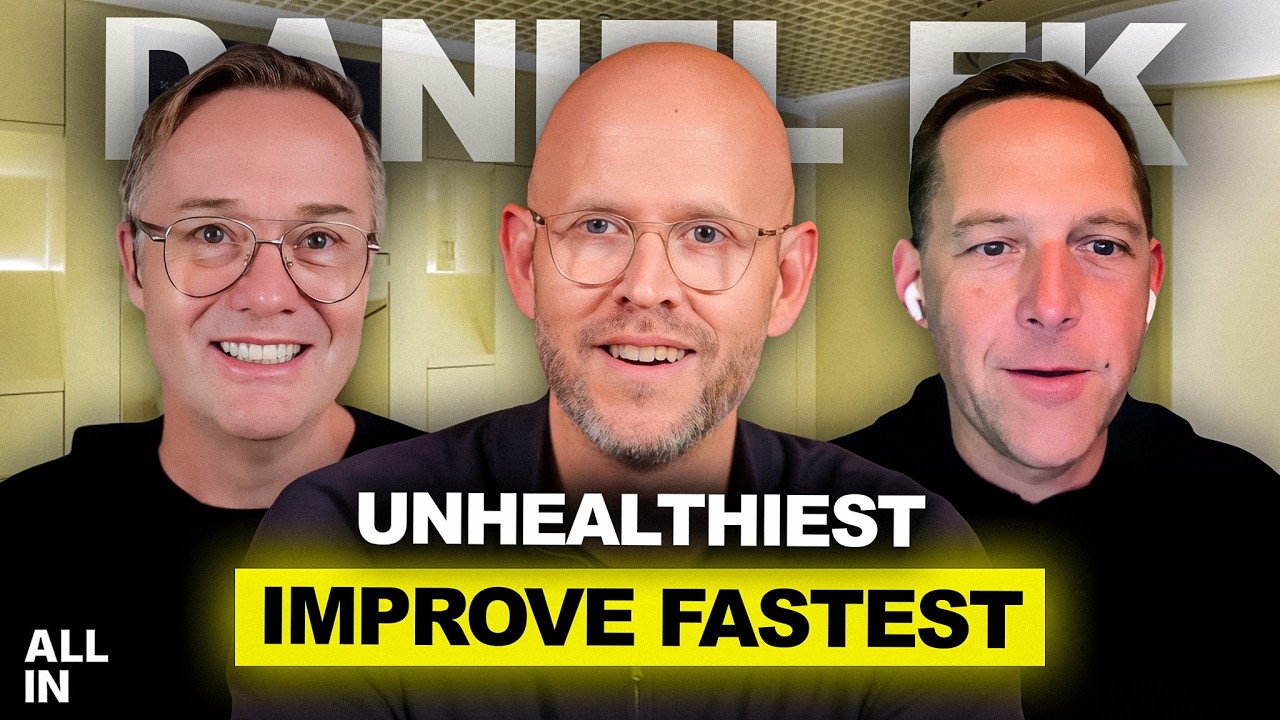
All-In Podcast
US healthcare fails because short-term insurer turnover eliminates incentives to fund long-term disease prevention, requiring vertically integrated clinics to slash upfront diagnostic costs directly for consumers.
AI-assisted summary of Daniel Ek: Life After Spotify, Broken Healthcare Incentives, Catching Disease Early & AI's Potential — original source. Check the original for full context.
Source published:
Key ideas
- Daniel Ek has transitioned to Executive Chairman of Spotify (>700M users) while actively scaling Neko Health, his preventive healthcare venture opening its first US flagship clinic at 300 Lafayette Street in New York City. (0:00)
- Neko Health packages 53 on-site blood biomarkers, cardiovascular testing, and a 6,000-image full-body optical scan indexing an average of 950 moles into a 60-minute, $499 consumer clinic visit. (12:35)
- Ek attributes the US healthcare crisis to structural incentive failure: because American workers change employers every 2–3 years, private insurers have zero financial incentive to reimburse a $500 screen that prevents a $200,000 chronic illness 20 years later. (27:18)
- On artificial intelligence governance, Ek advocates regulating physical compute scale (such as clusters of 100,000+ GPUs) rather than software weights, warning that the industry has committed a grave error by amplifying apocalyptic risks instead of life-saving applications. (40:00)
Detailed notes
## Background Published on YouTube by the All-In Podcast on September 28, 2026, this episode features Spotify co-founder Daniel Ek reflecting on his career transition to Executive Chairman and his work in preventive healthcare. According to the show notes, the discussion spans the early days of Spotify beating digital piracy, the launch and economics of his preventive healthcare company Neko Health, the potential and regulation of artificial intelligence, and the evolution of open podcasting standards.
## TL;DR Spotify co-founder Daniel Ek reflects on his entrepreneurial journey, detailing how he and Martin Lorentzon underwrote record label executive bonuses with their own money to secure early music licenses before expanding Spotify globally. He explains how he is applying that identical geographic and technological playbook to Neko Health, a preventive diagnostic service offering vertically integrated, $499 multi-modal body scans to catch chronic conditions before symptoms appear. Ek diagnoses the structural failures of US healthcare, where short insurer retention spans eliminate financial incentives for long-term preventive care. Shifting to broader technology trends, Ek advocates for open-weight AI models, criticizes industry fearmongering, proposes regulating physical compute scale rather than software intelligence, and revisits his early technical rescue of Stardoll.
## Atmosphere & style The conversation carries the relaxed, collegiate rhythm of veteran technology operators and longtime acquaintances swapping battle-tested war stories and technical theses. Ek brings a grounded, humble demeanor marked by self-deprecating humor, laughing off the sheer pain tolerance required to build hardware while Jason Calacanis and David Friedberg weave in playful jabs and venture capital commiseration. The dialogue moves fluidly from granular unit economics and macro policy failures to personal reflections, creating an engaging, intellectually rigorous, yet approachable listening experience.
## Bulletin - [00:00](https://www.youtube.com/watch?v=JEUboZzZGM4&t=0s) Daniel Ek has transitioned to Executive Chairman of Spotify (>700M users) while actively scaling Neko Health, his preventive healthcare venture opening its first US flagship clinic at 300 Lafayette Street in New York City. - [12:35](https://www.youtube.com/watch?v=JEUboZzZGM4&t=755s) Neko Health packages 53 on-site blood biomarkers, cardiovascular testing, and a 6,000-image full-body optical scan indexing an average of 950 moles into a 60-minute, $499 consumer clinic visit. - [27:18](https://www.youtube.com/watch?v=JEUboZzZGM4&t=1638s) Ek attributes the US healthcare crisis to structural incentive failure: because American workers change employers every 2–3 years, private insurers have zero financial incentive to reimburse a $500 screen that prevents a $200,000 chronic illness 20 years later. - [40:00](https://www.youtube.com/watch?v=JEUboZzZGM4&t=2400s) On artificial intelligence governance, Ek advocates regulating physical compute scale (such as clusters of 100,000+ GPUs) rather than software weights, warning that the industry has committed a grave error by amplifying apocalyptic risks instead of life-saving applications.
## Key takeaways - [00:00](https://www.youtube.com/watch?v=JEUboZzZGM4&t=0s) Spotify co-founder Daniel Ek stepped into the Executive Chairman role after two decades as CEO, having scaled the platform to over 700 million active users and 300 million premium subscribers. - [05:00](https://www.youtube.com/watch?v=JEUboZzZGM4&t=300s) To secure early licensing deals in Sweden, Ek and Martin Lorentzon used personal capital to underwrite record label executives' annual budgets and bonuses, eliminating downside risk for the labels. - [01:14](https://www.youtube.com/watch?v=JEUboZzZGM4&t=74s) Sweden served as the ideal launchpad for Spotify because universal broadband penetration and widespread piracy without an official iTunes Store had collapsed domestic recording revenue by 80%. - [06:30](https://www.youtube.com/watch?v=JEUboZzZGM4&t=390s) Neko Health mirrors Spotify's five-year developmental expansion model, moving methodically from quiet R&D and launch in Sweden to the UK, and now entering the United States. - [10:00](https://www.youtube.com/watch?v=JEUboZzZGM4&t=600s) Healthcare accounts for 18% of US GDP, with chronic conditions driving the bulk of spending despite being overwhelmingly manageable or preventable when detected before symptoms manifest. - [12:35](https://www.youtube.com/watch?v=JEUboZzZGM4&t=755s) Neko Health provides a vertically integrated full-body assessment for $499, delivering real-time results across 53 blood markers, arterial stiffness, and 360-degree dermatological scans in under an hour. - [14:15](https://www.youtube.com/watch?v=JEUboZzZGM4&t=855s) Empirical survey data across more than 100,000 scans shows that members entering with the poorest objective health markers exhibit the highest rates of lifestyle adherence when shown granular visual proof of risk. - [20:00](https://www.youtube.com/watch?v=JEUboZzZGM4&t=1200s) Because the average human body has roughly 950 moles, longitudinal computer-vision tracking is essential to detect minute morphological shifts and early-stage melanomas that escape the human eye. - [22:42](https://www.youtube.com/watch?v=JEUboZzZGM4&t=1362s) Ek argues annual full-body preventive checkups should mirror routine dental cleanings, establishing a cultural norm that dramatically bends long-term health spending. - [25:12](https://www.youtube.com/watch?v=JEUboZzZGM4&t=1512s) By developing its own proprietary scanning hardware and software stacks, Neko removes healthcare middleman margins, enabling positive unit economics at consumer price points. - [27:18](https://www.youtube.com/watch?v=JEUboZzZGM4&t=1638s) Modern American healthcare financing was architected for acute infectious disease outbreaks rather than chronic conditions, decoupling long-term preventative health outcomes from insurer profitability. - [35:00](https://www.youtube.com/watch?v=JEUboZzZGM4&t=2100s) Ek criticizes tech industry commentary for indulging in public hubris and hyper-focusing on AI doomsday scenarios instead of championing immediate upsides in diagnostics and quality of life. - [35:00](https://www.youtube.com/watch?v=JEUboZzZGM4&t=2100s) The steep reduction in open-source AI inference costs—from $30 down to $0.13 per million output tokens—is vital to prevent total value capture by a handful of tech incumbents. - [40:00](https://www.youtube.com/watch?v=JEUboZzZGM4&t=2400s) AI safety policy should focus on regulating physical compute clusters like historical Cray supercomputer export controls, rather than policing open-weight software that runs on consumer-grade PCs. - [44:24](https://www.youtube.com/watch?v=JEUboZzZGM4&t=2664s) Spotify maintains a hybrid podcasting approach by feeding open RSS distribution rails while independently developing proprietary platform features to bypass slow standards-committee cycles. - [46:42](https://www.youtube.com/watch?v=JEUboZzZGM4&t=2802s) During his pre-Spotify stint as interim CTO of Stardoll, Ek overhauled backend infrastructure to reduce page load times from four minutes to under one second, securing an early growth round from Sequoia Capital.
## Detailed walkthrough ### [00:00](https://www.youtube.com/watch?v=JEUboZzZGM4&t=0s) Welcome Daniel Ek and the Origins of Spotify
The *All-In Podcast* hosts Jason Calacanis and David Friedberg introduce Spotify co-founder Daniel Ek, who led the streaming giant across two decades from an ambitious Swedish startup into a global utility boasting well over 700 million active users and more than 300 million premium subscribers. Having transitioned into the role of Executive Chairman on January 1st, Ek joined the hosts to reflect on his journey and introduce his latest venture in preventive healthcare, Neko Health. Jason reminisces about encountering an early demo of Spotify roughly two decades ago at an internet summit, back when consumer subscription models for digital media were virtually nonexistent and the venture seemed completely improbable.
- **Spotify Scale:** Over 700 million monthly active users and more than 300 million paying premium subscribers. - **Leadership Transition:** Ek stepped into the Executive Chairman role on January 1st after leading the company as CEO for twenty years.
---
[01:14](https://www.youtube.com/watch?v=JEUboZzZGM4&t=74s) The Pirate Era and Pitching the Impossible Music Service
Transporting listeners back to Spotify's inception, Ek paints a picture of a radically different digital landscape: an era preceding the iPhone, where YouTube did not exist, and Facebook was strictly confined to college campuses. The global music industry had entered a terrifying free fall fueled by widespread peer-to-peer piracy via Napster, Kazaa, and BitTorrent. In the United States, the Recording Industry Association of America (RIAA) resorted to aggressive legal measures, suing individual consumers for illegally downloading MP3s. Watching the chaos unfold from Sweden, Ek recognized that suing fans was futile because "there's no way to put the genie back in the bottle."
While brainstorming startup concepts with his co-founder, Martin Lorentzon, Lorentzon asked Ek what he would pursue if he could do anything in the world. Ek admitted his real passion was music, but immediately dismissed it as "a really stupid idea" due to the legal minefield of licensing, intellectual property clearances, and negotiating with notoriously rigid record labels. Lorentzon relentlessly countered with a series of "what if" questions until Ek ran out of objections, landing on a foundational product vision: an experience so seamless and responsive that "it would feel like you had all the world's music at your fingertips."
While industry insiders laughed off their initial ambition to launch a global music service from day one, Sweden proved to be an unexpected testing ground. Because the country had rolled out high-speed broadband in the early 2000s and Apple's iTunes Store was not yet available locally, piracy ran rampant with zero viable legal digital alternatives. As a consequence, the domestic music recording business had collapsed by an estimated 80%, leaving local labels desperate enough to listen to a radical proposal.
---
[05:00](https://www.youtube.com/watch?v=JEUboZzZGM4&t=300s) The Label Deal: Guaranteeing Bonuses and the Five-Year Path to the US
To break through the label executives' paralysis and fear, Ek and Lorentzon devised a high-stakes, unconventional bargaining chip by putting their own personal capital from previous startup exits on the line. They approached the labels with a downside-protection guarantee: Spotify would financially underwrite the executives' budgets and bonuses for the upcoming year out of pocket. Their pitch was simple: "If this really is as bad as you think it is, then you just shut it down after a year, but you still made the bonus. And if this actually works, you win as well. So you win no matter what."
Drawn in by a proposal that eliminated personal financial risk, the labels eventually signed on after years of grueling negotiations. Spotify launched in late 2008 in Sweden, rapidly achieving explosive product-market fit before expanding into the United Kingdom, and ultimately arriving in the United States in 2011—a five-year journey from concept to American launch.
```mermaid flowchart LR accTitle: The Spotify and Neko Health Expansion Playbook accDescr: A three-stage geographic expansion model moving from an initial market in Sweden to the UK and then the US.
subgraph MarketPhases [" Geographic Expansion Model "] direction LR A["Sweden<br>R&D & Initial Validation"] --> B["United Kingdom<br>Secondary Expansion"] B --> C["United States<br>Scaled Global Market"] end ```
- **Incentive Alignment:** Ek and Lorentzon guaranteed music executives' annual budgets and performance bonuses using their own funds to de-risk the licensing experiment. - **Rollout Timeline:** Founded in the mid-2000s, Spotify launched publicly in Sweden in late 2008, expanded to the UK shortly thereafter, and entered the US market in 2011.
---
[06:30](https://www.youtube.com/watch?v=JEUboZzZGM4&t=390s) Applying the Spotify Playbook to Neko Health and Why Ek Prefers Building to Investing
When David Friedberg notes the sheer grit required to spend five years in the laboratory before even entering the United States, Ek reveals that he is running the exact same geographic playbook with his preventive healthcare company, Neko Health. Ek co-founded Neko eight years ago in 2018, spending five years engineering the proprietary scanning technology before opening in Sweden in 2023, expanding to the UK, and now preparing for a US debut. Ek laughs that whether it is sheer entrepreneurial drive or simply an abnormally "high pain tolerance," he feels compelled to tackle massive systemic dysfunctions. Although most technological trends are progressing "up and to the right," he views healthcare as a rare, broken sector where costs escalate while outcomes languish.
Ek's focus on healthcare is not a sudden whim; his team recently reminded him of a *Financial Times* "Lunch with the FT" interview from around 2012 or 2013 where he spoke passionately about reinventing healthcare right after Spotify's US rollout. He explains that he was not an active angel investor throughout most of his career because virtually all his net worth remained tied up in Spotify until its direct listing in 2018. When he finally experimented with angel investing and board seats, he quickly discovered he despised the sidelines. Calacanis, Friedberg, and Ek commiserate on the agony of watching portfolio companies get mismanaged from a boardroom seat: if a founder ignores board advice, you tear your hair out; if a founder blindly follows your instructions, they lack genuine leadership. Consequently, Ek resolved that his time is best spent building companies directly, adhering to the angel philosophy of backing extraordinary founder-CEOs and leaving them completely alone.
- **Neko Health Timeline:** Founded in 2018; spent five years in quiet hardware and software development; launched clinics in Sweden in 2023, followed by the UK, with the US next. - **Liquidity & Focus:** Ek had no personal liquidity until Spotify's 2018 public offering, keeping him entirely focused on operating Spotify for 12 to 13 years before writing early-stage checks. - **Boardroom Dilemma:** The hosts and Ek agree that directing CEOs from board seats fails because strong companies require autonomous founder leadership rather than outsourced managerial guidance.
[10:00](https://www.youtube.com/watch?v=JEUboZzZGM4&t=600s) Origins of Neko Health: From Chronic Disease to the Data Flywheel
The conversation turns to Daniel Ek's motivation for stepping directly into the healthcare arena rather than advising from the sidelines, underscoring that founders with true agency must build solutions themselves. Ek frames the scale of the crisis by pointing to macroeconomic fundamentals: the United States spends 18% of its GDP on healthcare, making it the single largest line item in the entire budget. Looking at heart disease in isolation, annual spending reaches hundreds of billions of dollars in the US alone—an amount eclipsing the annual revenues of Fortune 10 corporations for a single disease category. While researching everything from oncology to pharmaceutical efficiency, Ek concluded that the dominant burden stems from chronic disease. Crucially, chronic conditions are overwhelmingly preventable if caught in their earliest stages, where intervention costs are negligible and patient suffering is virtually eliminated.
The central barrier to early discovery is a profound lack of data. While the entire healthcare establishment universally agrees that medicine must transition from a reactive model to a preventative one, industry players fundamentally diverge on execution. Ek and his co-founder, Hjalmar Nilsonne, anchored their philosophy on building a predictive, multi-modal data flywheel. To anticipate adverse health events and execute early course corrections, medicine requires longitudinal tracking across several distinct bodily systems. Ek identified two technological convergences that made this possible: the smartphone revolution—which dramatically drove down the cost of advanced sensors and miniaturized electronics—and modern artificial intelligence. Drawing an explicit parallel to his core work, Ek notes that the AI recommendation engines at Spotify rely on massive data ingestion to predict what song a listener wants next; applying that identical machine learning thesis across multi-modal, longitudinal health metrics provides the foundation for accurate predictive medicine.
```mermaid flowchart TD accTitle: Neko Health Predictive Flywheel accDescr: Flowchart illustrating how multi-modal sensors and AI drive preventative healthcare over time.
subgraph INGESTION ["Data Capture"] SENSORS["Low-Cost Miniaturized Sensors<br/>(Smartphone Hardware Tailwinds)"] MODELS["Multi-Modal Inputs<br/>(Dermatology, Blood, Cardio)"] end
subgraph ENGINE ["Intelligence Layer"] LONGITUDINAL["Longitudinal Data Tracking<br/>(Measurements Over Time)"] AI["AI & Pattern Recognition<br/>(Spotify-Style Predictive Models)"] end
subgraph OUTCOME ["Preventative Intervention"] PREDICT["Early Anomaly Detection"] PREVENT["Low-Cost Lifestyle & Clinical Remedies<br/>(Preventing Chronic Disease Progression)"] end
SENSORS --> MODELS MODELS --> LONGITUDINAL LONGITUDINAL --> AI AI --> PREDICT PREDICT --> PREVENT PREVENT -.->|"Refines Baselines"| LONGITUDINAL ```
- **US Healthcare Burden:** Healthcare consumption absorbs roughly 18% of US GDP, standing as the nation's largest single budgetary expenditure. - **Cardiovascular Costs:** US spending on heart disease alone exceeds hundreds of billions of dollars annually, surpassing the revenue scale of top Fortune 10 conglomerates. - **The Preventative Consensus:** Industry consensus agrees on moving from reactive treatment to prevention, but legacy models lack the continuous data pipelines required to anticipate disease onset.
---
[12:35](https://www.youtube.com/watch?v=JEUboZzZGM4&t=755s) The $499 Experience: Reinventing Healthcare from the Ground Up
When prompted on whether observational screening can alter disease trajectories beyond baseline lifestyle management, Ek walks through the actual physical product experience of Neko Health Gen 2. Built as a vertically integrated, ground-up healthcare service priced at $499, Neko's stated objective is to deliver "the most valuable hour you can invest in your health." Rather than navigating fragmented referrals, separate laboratories, and weeks of anxiety waiting for disparate charts, the patient undergoes an all-inclusive, one-hour continuous clinical scan.
The appointment begins immediately with an on-site blood draw analyzing 53 distinct blood markers. Next, the patient steps into Neko's proprietary 360-degree skin-scanning rig, which leverages an advanced high-resolution multi-camera array to capture upwards of 6,000 microscopic images of the entire body. The system computationally maps and indexes every single mole, lesion, rash, and instance of redness. The visit subsequently moves through cardiovascular and circulation diagnostics, along with foundational baseline markers like grip strength, which hold proven scientific validity as proxies for longevity and biological age. Crucially, the visit concludes with uninterrupted, face-to-face consultation time with a licensed clinician who reviews the synthesized diagnostic package—including the real-time blood test results processed during the visit—and formulates actionable next steps. This model is launching initially in New York before rolling out across major US metropolitan markets.
- **Unit Economics & Time:** A complete, end-to-end full-body evaluation priced at $499, completed within a single 60-minute visit. - **Diagnostic Breadth:** 53 integrated blood biomarkers evaluated on-site alongside cardiovascular, arterial stiffness, and physical metrics (such as grip strength). - **Computer Vision Rig:** Over 6,000 ultra-high-resolution images taken across the entire surface of the body to catalogue dermatological anomalies. - **Real-Time Integration:** Clinician review takes place immediately at the conclusion of the scan, reviewing blood and sensor data simultaneously with the member.
---
[14:15](https://www.youtube.com/watch?v=JEUboZzZGM4&t=855s) Measurable Outcomes and the Power of Visual Health Data
Addressing comparisons to prior venture-backed concierge clinic attempts such as Forward and One Medical, Ek emphasizes Neko's extensive real-world clinical validation. Founded in 2018, Neko has refined its technology over eight years, conducting more than 100,000 scans and publishing longitudinal health survey data annually. Now in its third consecutive year of peer-reviewed data release, the results demonstrate that Neko regularly uncovers previously undiagnosed, serious underlying medical conditions among seemingly asymptomatic members.
While healthy individuals use the service to optimize sleep, diet, and stress management, Ek highlights an unexpected behavioral breakthrough: members presenting with the worst baseline health markers demonstrate the most dramatic, sustained improvements. Seeing high-fidelity, visual data of their own arterial health, systemic inflammation, or skin risk laid bare—paired with a direct clinician roadmap—shatters patient inertia and catalyzes urgent lifestyle modifications. To illustrate the scale of hidden dermatological complexity, Ek shares a startling statistic: the average person scanned at Neko possesses 950 individual moles, a volume that makes self-examination and manual spot-checks practically impossible without automated computer vision.
- **Scale and Longevity:** Conceived in 2018; accumulated eight years of operational deployment and over 100,000 comprehensive scans completed. - **Empirical Publications:** Annual data surveys published three years running, tracking real-world health outcomes and undiagnosed condition detection. - **Behavioral Shift:** Patients entering with the poorest objective health metrics show the highest rate of lifestyle adherence and metric improvement due to granular visual clarity. - **Dermatology Demographics:** Scans reveal that the average human body carries approximately 950 moles, rendering unassisted self-screening ineffective.
[20:00](https://www.youtube.com/watch?v=JEUboZzZGM4&t=1200s) AI Mole Mapping and Longitudinal Tracking
Daniel Ek explains the stark limitations of traditional dermatological exams when compared to algorithmic, full-body imaging. Human skin varies widely from person to person—some individuals have roughly 500 moles, while others have thousands—making it virtually impossible for the naked human eye or a physician's memory to track subtle abnormalities over time. In a typical clinic visit, a doctor visually scans for obvious irregularities, zooms in on a suspicious spot with a dermatoscope, and might capture cross-frequency images to analyze size and texture. Neko Health automates and scales this diagnostic path by pairing broad-spectrum optical scanning with a multi-tiered clinical review.
```mermaid flowchart TD accTitle: Neko Health Scanning and Review Pipeline accDescr: Step-by-step screening pipeline showing data capture, AI analysis, clinical escalation, and annual longitudinal tracking.
subgraph Capture["1. Scanning & Analysis"] A["Full-Body Multi-Frequency Scan"] --> B["AI Detection Engine"] end
subgraph Triage["2. Clinical Review"] B -->|"Flag Risk Factors"| C["On-Site Human Clinician"] C -->|"Suspicious Findings"| D["Staff Dermatologists"] end
subgraph History["3. Longitudinal Monitoring"] C --> E["Year-over-Year Digital Archive"] E -->|"Compare Growth & Texture"| B end ```
The true power of this system emerges through longitudinal data. When members return for subsequent scans, Neko’s software compares high-resolution, indexed records of every single mole against prior baselines. Even elite dermatologists cannot recall the minute dimensions or surface textures of a patient's mole from twelve months earlier. By systematically flagging abnormal expansion or morphological shifts year over year, the system catches early-stage melanomas and skin cancers before they become life-threatening. When asked whether he runs the company day-to-day, Ek clarifies his role with self-deprecating humor: much like Spotify—where leadership is shared—Neko is spearheaded by his co-founder and CEO, Hjalmar Nilsonne, whom Ek credits as the operational mastermind while joking that he merely sits on podcasts taking the credit.
[22:42](https://www.youtube.com/watch?v=JEUboZzZGM4&t=1362s) The $499 Annual Checkup and Preventive Health Economics
The discussion shifts to the economics of preventive screening, comparing Neko Health's $499 comprehensive full-body scan against consumer lab services like Function Health and Superpower (which charge $350 to $400 exclusively for deep blood panels). With US federal entitlement spending dominated by Social Security and healthcare—closely followed by escalating interest payments on the national debt—the hosts question whether shifting a fraction of that expenditure toward early detection could bend the long-term cost curve of macro healthcare spending.
While Ek notes it is still too early to present conclusive epidemiological datasets on national budgetary impact, he emphasizes that annual preventive checkups ought to be cultural baseline habits. Drawing a direct parallel to dental hygiene, Ek points out the societal paradox where people routinely visit a dentist twice a year to maintain their teeth, yet rarely schedule an annual preventive evaluation for the rest of their body. Neko is designed around maximizing patient compliance by creating "the most valuable hour you can invest in your health"—a brutally efficient experience that can take significantly less than sixty minutes from arrival to review if the patient has no outstanding questions.
- **Screening Price Comparison:** Neko Health provides full-body imaging and cardiovascular mapping for $499, competing in value with diagnostic blood services like Function Health and Superpower ($350–$400). - **Time Commitment:** Optimized for brutal efficiency, completing data collection, imaging, and clinician review in under an hour. - **Societal Disconnect:** Annual checkups remain rare among healthy working adults despite widespread adoption of routine annual dental exams.
[25:12](https://www.youtube.com/watch?v=JEUboZzZGM4&t=1512s) Vertical Integration and Daniel Ek's Portfolio
Addressing skepticism around whether a $499 price point represents an unsustainable loss leader designed to upsell patients, Ek explains that Neko Health operates on positive unit economics. Rather than stitching together disparate third-party medical devices, proprietary software licenses, and outsourced laboratories, Neko designed and built its own integrated scanning hardware and software stacks from the ground up. This vertical integration strips out traditional healthcare middleman margins, enabling existing clinics to run profitably at retail pricing while generating the capital required to fund international clinic expansion.
When asked about his daily allocation of time, Ek outlines his current balance across operational and investment commitments. While he no longer manages Spotify on an everyday operational level, he continues to serve actively as Executive Chairman, affectionately referring to the streaming giant as his "baby." Beyond Spotify and Neko Health, Ek allocates significant energy to Prima Materia—the European investment partnership he founded alongside Shakil Khan ("Shak")—which aims to act as the ultimate co-founder for moonshot founders tackling hard scientific and societal challenges.
[27:18](https://www.youtube.com/watch?v=JEUboZzZGM4&t=1638s) Broken Incentives in the US Healthcare System
The hosts confront Ek with the stark realities of the American healthcare affordability crisis, contrasting it with housing and education. While market mechanisms can theoretically resolve housing supply and educational costs, the US medical system routinely produces absurd price distortions: an emergency room visit for simple stitches billing at $15,000, off-patent drugs costing $30 to manufacture being priced at $20,000, or an eight-minute physician consultation generating a $6,000 insurance charge despite the doctor earning an average salary of $200,000.
Invoking Charlie Munger’s dictum—"show me the outcome, I'll show you the incentive"—Ek diagnoses the root structural failure of modern medicine:
- **Infectious Disease Legacy:** Modern medical delivery and billing frameworks were designed decades ago to manage acute, symptomatic infectious outbreaks rather than silent, slow-moving chronic illnesses. - **Short-Term Payer Horizon:** Because American health insurance is tethered directly to employment, and the average worker changes jobs every two to three years, health plans change just as frequently. - **Zero Preventative ROI for Insurers:** A private insurer has no financial incentive to reimburse a $500 comprehensive screen that prevents a $200,000 cardiovascular event fifteen to twenty years later, because by the time the disease manifests, the patient will be covered by an entirely different insurer or Medicare.
[30:00](https://www.youtube.com/watch?v=JEUboZzZGM4&t=1800s) Lowering Costs and Multimodal Longitudinal Data in Healthcare
Addressing the core financial challenge of preventive medicine, Daniel Ek highlights the struggle of calculating ROI on healthcare investments that might only pay off 10, 15, or 20 years down the road. Traditionally, neither employers nor private health insurers want to risk millions of dollars on speculative prevention with minimal upfront data. Neko Health's strategy tackles this by radically driving down hardware and operational costs. If preventive scanning costs only tens of thousands of dollars across a population rather than millions, payer propensity to adopt it skyrockets, even under extended payback horizons.
Alongside affordability, Neko Health is building large, multimodal longitudinal data sets to prove diagnostic efficacy over time. Ek notes that Neko is committed to publishing its clinical findings every year. Operating across both the UK and Sweden makes Neko one of the rare early-stage health tech companies capturing multi-country comparative data from day one. When Jason Calacanis jokingly assumes that the Stockholm cohort is far fitter while the UK struggles with cardiovascular disease and diabetes—prompting David Friedberg to note that cardiovascular disease and diabetes represent the two largest healthcare cost drivers—Ek explains that it is still too early to declare population-level conclusions on their base of 100,000 scans. However, Neko has already completed four clinical trials, has two active, and plans four more with the academic and medical research community.
```mermaid flowchart TD accTitle: Neko Health Longitudinal Data Pipeline accDescr: Diagram illustrating how multimodal inputs from scans, wearables, and clinical trials feed into longitudinal datasets to lower preventive care costs.
subgraph DataCollection["Data Ingestion"] A["Neko Full-Body Scan"] B["Apple Health & Wearables<br/>(Oura, Whoop, Fitbit)"] C["Clinical Trials & Labs<br/>(10 Completed/Planned)"] end
subgraph Processing["Aggregated Insights"] D["Multi-Country Longitudinal Dataset<br/>(Sweden, UK, US)"] E["Doctor Consultation<br/>(360-degree Patient View)"] end
subgraph ValueOutput["System-Wide Impact"] F["Annual Public Data Release"] G["Reduced Diagnostic Costs & High-ROI Prevention"] end
A --> D B --> D C --> D D --> E D --> F E --> G F --> G ```
- Daniel emphasizes that tech outsiders are often shocked by how small healthcare data sets actually are; multiplying that data by 10x or 100x could transform medical understanding across the entire sector. - When asked if Neko plans to build its own hardware wearable or partner with existing trackers like Oura, Whoop, Fitbit, or Apple Watch, Daniel notes Neko already ingests Apple Health data so clinicians can review biometric histories alongside scans to provide a 360-degree view.
[35:00](https://www.youtube.com/watch?v=JEUboZzZGM4&t=2100s) Rapid Iteration in Diagnostics and AI's Blind Spots
Traditional diagnostic products follow an archaic lifecycle: teams spend years in R&D and then sell the exact same static hardware device for a decade. In contrast, Neko Health operates like a consumer software and tech company, launching Gen 2 infrastructure within three years as it expands into the United States. Ek aims to pack progressively richer diagnostic data into the same price point, pursuing the company's core mission: delivering "the most valuable hour you can spend on your health."
The conversation shifts to broader artificial intelligence debates and whether society must artificially pace frontier models. Ek observes that over recent years, public commentary has suffered from widespread hubris:
> "We're walking into COVID and every one of us became a virologist. We were all of a sudden supply chain experts after the first oil tanker in the Hormuz Strait got stuck somewhere. And then with the Ukraine war breaking out, we were all military experts and military strategists."
Jason Calacanis and David Sacks tease that Daniel is describing the *All-In Podcast* itself—joking they should rename it the "All-In Laboratory Pod" whose opinions need Spotify podcast regulation. Daniel stresses that loud confidence often precedes being completely wrong. While he maintains no dogmatic stance on whether to artificially slow frontier AI, he laments that the tech industry has done a "terrible disservice" by hyper-focusing on apocalyptic risks instead of marketing the enormous positive upsides: from Neko tracking 950 skin moles over time to keep patients cancer-free, to Spotify leveraging AI so listeners can soundtrack every moment of their lives and "feel more" emotionally.
- Daniel strongly endorses open-source AI and open-weight models, arguing that dropping inference costs from $30 down to $0.13 per million output tokens democratizes power across thousands of businesses, preventing the extreme concentration of value and wealth in a handful of tech incumbents.
[40:00](https://www.youtube.com/watch?v=JEUboZzZGM4&t=2400s) Open vs. Closed Models and Regulating AI Compute
Addressing the ongoing debate over open weights versus proprietary frontier systems, Daniel Ek observes that technology has historically swung between open and closed paradigms. Just as personal computing settled into Windows versus Linux and mobile ecosystems into iOS versus Android, Ek believes artificial intelligence will inevitably support both models. At Spotify, engineering teams rely heavily on closed frontier models while simultaneously deploying internally fine-tuned, open-weight models. Ek explains that this dual approach accelerates practical innovation, granting them specialized performance, cost efficiencies, and bespoke tuning options that closed commercial APIs cannot deliver.
Turning to AI safety and governance, Ek introduces a dimension he believes has been largely neglected in policy discussions: regulating total compute rather than software intelligence in the abstract. Evaluating real-world risk requires looking at the raw horsepower behind an operation. An adversary running an open model locally on a consumer PC faces steep technological barriers against high-grade enterprise defenses, whereas an operation marshaling 100,000 GPUs possesses systemic offensive capabilities.
```mermaid flowchart TD accTitle: Compute-Based AI Risk Assessment accDescr: Diagram contrasting consumer-level compute risk against enterprise-scale GPU clusters.
subgraph Scale["Operational Compute Scale"] PC["Local Consumer Hardware<br/>(Single PC / Consumer GPU)"] Cluster["Massive Enterprise Compute<br/>(100,000+ GPUs)"] end
subgraph Impact["Risk and Defensive Posture"] LowRisk["Limited threat capability<br/>Blocked by frontier cyber defenses"] HighRisk["Severe systemic threat profile<br/>Requires strict hardware certification"] end
PC --> LowRisk Cluster --> HighRisk ```
The hosts compare compute-based oversight to historical regulatory regimes for Cray supercomputers, which were treated as national security assets and restricted under strict licensing because of their potential to design nuclear weapons and crack cryptographic codes. They contrast this structural hardware control with clumsy legislative proposals—such as early California state bills—that attempted to classify dangerous software by static thresholds of training teraflops, data-center power wattage, or network cabling. Assuming parity between underlying model architectures, sheer installed compute capacity becomes the primary defensive moat.
- Historical operating system and mobile platform splits show that open and closed architectures consistently co-exist in equilibrium. - Spotify leverages frontier proprietary models for general intelligence and bespoke fine-tuned models for domain-specific tasks and cost efficiency. - Ek argues compute consumption serves as a practical, measurable proxy for catastrophic cyber risk compared to policing open-source model weights alone.
---
[44:24](https://www.youtube.com/watch?v=JEUboZzZGM4&t=2664s) Podcasting Open Standards and Spotify's Platform Strategy
Jason Calacanis challenges Ek on Spotify's relationship with podcasting, an industry built on decentralized, open RSS standards that has increasingly bumped up against Spotify's walled-garden features. Ek explains that Spotify deliberately maintains a hybrid strategy. While Spotify functions as an end-user destination with native, platform-specific capabilities—such as dedicated interactive comment sections—it simultaneously operates creator infrastructure that packages, aggregates, and syndicates podcasts across open third-party platforms. Ek notes that developing features strictly within open committee standards requires universal ecosystem alignment, which dramatically slows development velocity. To bypass that stagnation, Spotify develops proprietary platform enhancements while continuing to feed the open standard.
```mermaid flowchart LR accTitle: Spotify Dual Podcasting Architecture accDescr: Flowchart illustrating Spotify's support for open RSS syndication alongside proprietary platform features.
Creator["Podcast Creator"] --> SpotifyCore["Spotify Creator Tools"]
subgraph Open["Open Ecosystem"] SpotifyCore -->|"Open RSS Standard"| ExtPlatforms["Apple Podcasts, Overcast, etc."] end
subgraph Proprietary["Native Ecosystem"] SpotifyCore -->|"Proprietary Platform"| AppDestination["Spotify Consumer App<br/>(Interactive comments, video, analytics)"] end ```
Representing longtime independent podcasters, Calacanis pitches two specific open-standard features for Spotify to adopt: 1. **Live status signaling:** Parsing RSS tags that alert podcast clients when an episode is actively streaming live. 2. **Value-for-value donation rails:** Native support for podcast monetization and listener tipping via protocols like PayPal or lightning micropayments.
Ek laughs that while product roadmaps are no longer his unilateral decision as executive chairman, he will personally carry the feature requests to Spotify's product and engineering teams.
---
[46:42](https://www.youtube.com/watch?v=JEUboZzZGM4&t=2802s) The Stardoll Origin Story: From Four-Minute Page Loads to Sequoia
Calacanis shifts the discussion to the early Swedish startup scene, asking Ek about his pre-Spotify tenure at Stardoll—one of the first Stockholm tech companies to attract premier American venture capital. Ek recalls joining the company just before conceiving Spotify. The venture began life as "Paperdoll Heaven," a simple web portal built in Turku, Finland, by an older woman and her son. Swedish serial entrepreneur Mattias Miksche—an established figure from the late-1990s dot-com era—partnered with Danny Rimer of Index Ventures to acquire a majority stake, rebrand the site as Stardoll, and scale it into an interactive digital fashion and paper-doll platform.
Though Ek had already resolved to start Spotify, Rimer persuasively lobbied him to step in as interim CTO on a 6-to-12-month tour of duty. Traveling to Finland to inspect the infrastructure, Ek discovered a site buckling under immense organic traffic: - Average page load times hovered around a staggering four minutes per page as backend servers collapsed. - Ek wiped and re-architected the technical platform from scratch, recruiting a dedicated software engineering team. - The re-engineering reduced page load times from four minutes to under one second, causing platform traffic and user engagement to surge.
The performance turnaround attracted a major growth investment round from Sequoia Capital. With the infrastructure stabilized and institutional funding secured, Ek fulfilled his commitment, handed off operations, and departed to build Spotify full-time.
---
[49:50](https://www.youtube.com/watch?v=JEUboZzZGM4&t=2990s) Neko Health's US Rollout and Wrap-Up
In closing, Ek provides an update on Neko Health, his preventive healthcare venture specializing in full-body sensor scans designed to detect disease before symptoms manifest. The company has formally established its first American flagship clinic in New York City: - **Location:** 300 Lafayette Street (at the intersection of Houston Street) in Manhattan. - **Rollout Timeline:** Expanding clinic capacity across New York City before launching upcoming hubs in Miami, Florida, and Washington, D.C. - **Long-term Roadmap:** Rolling out diagnostic centers across major metropolitan markets nationwide throughout the next 12 to 24 months.
The hosts reflect on the nostalgia of the Houston Street neighborhood, remind listeners to join the diagnostic waitlist at NekoHealth.com, and thank Ek for his time before concluding the episode.
## Notable quotes > [01:14](https://www.youtube.com/watch?v=JEUboZzZGM4&t=74s) there's no way to put the genie back in the bottle. — Daniel Ek
> [01:14](https://www.youtube.com/watch?v=JEUboZzZGM4&t=74s) a really stupid idea — Daniel Ek
> [01:14](https://www.youtube.com/watch?v=JEUboZzZGM4&t=74s) it would feel like you had all the world's music at your fingertips. — Daniel Ek
> [05:00](https://www.youtube.com/watch?v=JEUboZzZGM4&t=300s) If this really is as bad as you think it is, then you just shut it down after a year, but you still made the bonus. And if this actually works, you win as well. So you win no matter what. — Daniel Ek
> [12:35](https://www.youtube.com/watch?v=JEUboZzZGM4&t=755s) the most valuable hour you can invest in your health. — Daniel Ek
> [27:18](https://www.youtube.com/watch?v=JEUboZzZGM4&t=1638s) show me the outcome, I'll show you the incentive — Charlie Munger
> [35:00](https://www.youtube.com/watch?v=JEUboZzZGM4&t=2100s) We're walking into COVID and every one of us became a virologist. We were all of a sudden supply chain experts after the first oil tanker in the Hormuz Strait got stuck somewhere. And then with the Ukraine war breaking out, we were all military experts and military strategists. — Daniel Ek
> [35:00](https://www.youtube.com/watch?v=JEUboZzZGM4&t=2100s) terrible disservice — Daniel Ek
> [35:00](https://www.youtube.com/watch?v=JEUboZzZGM4&t=2100s) feel more — Daniel Ek
## Mentioned Daniel Ek, Martin Lorentzon, Hjalmar Nilsonne, Jason Calacanis, David Friedberg, David Sacks, Mattias Miksche, Danny Rimer, Shakil Khan, Charlie Munger, Spotify, Neko Health, Prima Materia, Stardoll, Paperdoll Heaven, Index Ventures, Sequoia Capital, All-In Podcast, Financial Times, Napster, Kazaa, BitTorrent, RIAA, Apple iTunes Store, Apple Health, Apple Watch, Oura, Whoop, Fitbit, Forward, One Medical, Function Health, Superpower, PayPal, Cray supercomputers
## Video description (0:00) Daniel Ek joins the Besties! (1:14) Starting Spotify: Beating piracy and betting his own money on the record labels (6:10) Neko Health: The Spotify playbook for healthcare, the $499 body scan, and why US healthcare waits until you're sick (36:04) AI: Tech's failure to sell the upside, open vs. closed models, and regulating compute (44:24) Back to Spotify: Podcasting's open standards and the Stardoll origin story
Thanks to our partners for making this possible!
As wealth grows, complexity compounds. Between investments, tax strategy and estate planning, coordinating it all can feel like a full-time job. Creative Planning can help with the heavy lifting. https://ad.doubleclick.net/ddm/trackclk/N2598215.3565131ALLIN/B36182939.452362736;dc_trk_aid=646454825;dc_trk_cid=260464105;dc_lat=;dc_rdid=;tag_for_child_directed_treatment=;tfua=;ltd=;dc_tdv=1
Starting a business? Northwest Registered Agent gives you everything you need to build a complete Business Identity including free tools and built-in privacy. Get more at https://www.northwestregisteredagent.com/ALLINFREE
Follow the besties: https://x.com/chamath https://x.com/Jason https://x.com/DavidSacks https://x.com/friedberg
Follow on X: https://x.com/theallinpod
Follow on Instagram: https://www.instagram.com/theallinpod
Follow on TikTok: https://www.tiktok.com/@allin
Follow on LinkedIn: https://www.linkedin.com/company/allinpod
Intro Music Credit: https://rb.gy/tppkzl https://x.com/yung_spielburg
Intro Video Credit: https://x.com/TheZachEffect
#allin #tech #news
[Source](https://www.youtube.com/watch?v=JEUboZzZGM4)