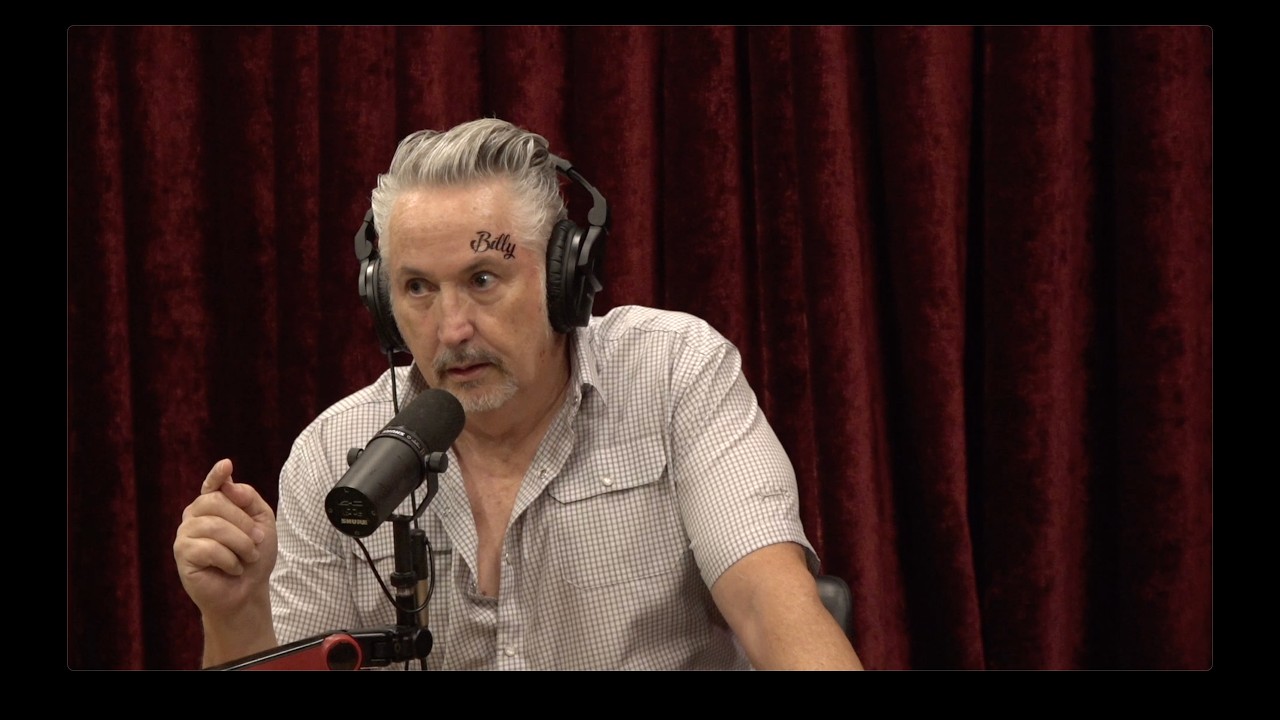
Comedian Harland Williams Targets Global Adversaries with Advanced Fleet Deterrents
PowerfulJRE
The United States maintains global invincibility through an undetected active fleet of 71 nuclear-powered submarines capable of launching counter-strikes to destroy half the world even if major domestic cities are obliterated.
## Background
This episode of the Joe Rogan Experience features guest Harland Williams and was published on YouTube by the PowerfulJRE channel on May 29, 2026. The page description notes that Williams is a multi-talented comedian, author, actor, musician, filmmaker, and host of “The Harland Highway” podcast who is currently promoting his new streaming movie, “Wingman.”
## TL;DR
Host Joe Rogan and comedian Harland Williams engage in a wide-ranging, humorous conversation that shifts from bizarre personal anecdotes, such as the tragic passing of a service goat named Billy, to deep dives into global geopolitics and military stealth deterrents. They explore historical political dueling, evolutionary biology, genetic engineering projects like the resurrection of the dire wolf, and anomalous structures on Mars. The duo also reflect heavily on their careers in show business, analyzing the decline of traditional multi-camera sitcoms and discussing the mechanics of modern roast comedy.
## Atmosphere & style
The episode has a highly chaotic, whimsical, and irreverent energy, fueled by Harland Williams' deadpan comedic bits—such as wearing ridiculous muscle pants stuffed with a gourd—and Joe Rogan's blend of genuine fascination and incredulous laughter. The narrative dynamic fluctuates rapidly between profound philosophical speculations about simulation theory and absolute absurdity, maintaining a playful, locker-room vibe throughout. Ultimately, it feels like an authentic, loose, and unfiltered conversation between two long-time peers who refuse to take the world too seriously.
## Key takeaways
- [02:24](https://www.youtube.com/watch?v=51ds7IU7ZL8&t=144s) Harland Williams shares a bizarre story about his service animal goat, Billy, who met a tragic and ironic end when he was crushed by a medical respirator that fell out of a delivery truck.
- [07:34](https://www.youtube.com/watch?v=51ds7IU7ZL8&t=454s) The hosts reflect on the historical reality of political dueling and physical violence in the 1700s and 1800s, suggesting that bringing back physical repercussions would put an end to bad public behavior.
- [11:14](https://www.youtube.com/watch?v=51ds7IU7ZL8&t=674s) Deep concerns are expressed regarding foreign policy and a potential military conflict with Iran, contrasting a firm stance against nuclear weapons with the protracted 20-year war in Afghanistan.
- [14:34](https://www.youtube.com/watch?v=51ds7IU7ZL8&t=874s) The massive, undetected retaliatory firepower of the United States Navy's submarine fleet serves as a central global deterrent that ensures American military invincibility.
- [22:28](https://www.youtube.com/watch?v=51ds7IU7ZL8&t=1348s) The hosts discuss the Zoo Hypothesis and the possibility of advanced civilizations or transmedium extraterrestrial craft operating covertly and examining humanity without active interference.
- [01:02:40](https://www.youtube.com/watch?v=51ds7IU7ZL8&t=3760s) OnlyFans platform economics reveal an extreme wealth gap where the top 0.1% earn heavily, while the vast majority of creators make very little income.
- [01:09:32](https://www.youtube.com/watch?v=51ds7IU7ZL8&t=4172s) Artificial intelligence is viewed as a tool that democratizes artistic expression, allowing individuals to execute large-scale creative projects independently for a fraction of traditional budgets.
- [01:12:30](https://www.youtube.com/watch?v=51ds7IU7ZL8&t=4350s) Joe Rogan discusses Elon Musk's theory of universal high income driven by AI, but argues that criminality will persist due to individuals who enjoy the strategic deception of crime.
- [01:48:30](https://www.youtube.com/watch?v=51ds7IU7ZL8&t=6510s) The biotechnology company Colossal is utilizing advanced gene editing to resurrect the prehistoric dire wolf by splicing ancient DNA into the modern grey wolf.
- [02:05:43](https://www.youtube.com/watch?v=51ds7IU7ZL8&t=7543s) Joe Rogan challenges the ecological claims made in the documentary 'How Wolves Changed Rivers', calling rewilding efforts in Europe and Colorado an unrealistic, romanticized ideal.
- [02:08:11](https://www.youtube.com/watch?v=51ds7IU7ZL8&t=7691s) Historical analysis reveals that the 19th-century boom in the American bison population was an ecological anomaly triggered by a massive decline in Native American populations from European diseases.
- [02:36:30](https://www.youtube.com/watch?v=51ds7IU7ZL8&t=9390s) The evolution of the television industry saw single-camera, no-audience shows like 'The Office' effectively kill off the traditional multi-camera studio audience sitcom format.
- [02:44:52](https://www.youtube.com/watch?v=51ds7IU7ZL8&t=9892s) High-profile live comedy roasts, such as the Tom Brady roast on Netflix, are credited with delivering a major cultural pushback against modern 'woke' virtue-signaling culture.
- [02:52:08](https://www.youtube.com/watch?v=51ds7IU7ZL8&t=10328s) Urban voters passing wildlife reintroduction measures that affect rural areas without facing the practical consequences is criticized as a flawed practice termed 'ballot box biology'.
- [02:59:12](https://www.youtube.com/watch?v=51ds7IU7ZL8&t=10752s) The unique insidiousness of human cruelty is explored, contrasting conscious moral awareness with the brutal, survivalist violence seen natively in the animal kingdom.
- [03:03:12](https://www.youtube.com/watch?v=51ds7IU7ZL8&t=10992s) The rapid doubling of the human brain size over a two-million-year period stands as one of the greatest mysteries within the prehistoric hominid fossil record.
## Detailed walkthrough
### [00:01](https://www.youtube.com/watch?v=51ds7IU7ZL8&t=1s) Introductions and a Bizarre Forehead Memorial
Joe Rogan kicks off the podcast with his standard opening, prompting a conversation about a previous episode featuring Donald Trump. The speakers joke about the studio crew, calling one "Dimmitri the snake" and a "tapeworm." However, the banter quickly shifts focus to a fresh, dark tattoo on a guest's forehead. Rogan struggles to read it at first, guessing "Betty" before being corrected that it spells "Billy."
The guest explains that it is a memorial tattoo, launching into a shocking story: "my kid got hit by a truck." Rogan, caught completely off guard, asks when the guest even had a child. The guest claims it happened about two years ago and that he kept it a secret out of shame because it resulted from a one-night stand. When Rogan asks if it was a human kid, the truth starts to unravel amidst laughter—Billy was not a human son, but a baby goat.
- The forehead tattoo reads "BILLY" in honor of a lost pet.
- The guest has a second tattoo of the goat's face over his heart.
- The guest initially hid the goat's existence, joking that he "was ashamed" of the one-night stand that produced him.
[02:24](https://www.youtube.com/watch?v=51ds7IU7ZL8&t=144s) The Tragic, Ironic Fate of Billy the Goat
The guest insists that Billy was his "boy" and functioned as a service animal, originally purchased from a girl who sold him. He breaks down the tragedy, explaining that the goat wandered into the street after someone left a gate open and was struck by an 18-wheeler. The dark comedy peaks as the guest details the bizarre irony of the accident: the truck was hauling medical supplies.
As Billy lay bleeding on the pavement, a half-ton respirator rolled out of the back of the delivery truck. Instead of being saved by the medical cargo, Billy was crushed by the falling device. "So he was killed not by the truck but by the final blow of the respirator landing on him," Rogan notes, marveling at the grim odds. Rogan casually mentions that if it were him, he "would have ate them," leading to a brief tangent about the culinary merits of goat tacos and roasted goat.
- Billy was a goat serving as a "service animal."
- The truck involved was carrying medical equipment.
- A half-ton respirator rolled out of the vehicle and delivered the fatal blow to the goat's head.
[03:54](https://www.youtube.com/watch?v=51ds7IU7ZL8&t=234s) Cockfights, Goat Roasts, and White House Cockpits
The conversation transitions into a memory of eating goat at a Mexican spot in Los Angeles. The guest recalls a friend who was a landscaper that participated in chicken fights—or "cockfights," as Rogan bluntly corrects, telling his guest to "feel better" using the technical name rather than cleaning it up for viewers. The friend lived in a neighborhood that felt exactly like Mexico, where Spanish signs dominated and the sound of roosters filled the air all day. In the backyard, there were massive stacks of cages and a dedicated barn housing a proper fighting pit. Whenever they held a fight, they would roast a goat and drink beers.
This inspires a comedic pitch from the guest: if he had a cockpit in his backyard, he would kidnap a Delta pilot and an American Airlines pilot, toss them in, and let them fight it out. They joke that a Delta pilot would win due to their "DEI program," which they jokingly rebrand as the "DIE program" because someone isn't coming out alive. They pivot to selecting other groups that are "overrepresented in the marketplace" to fight in the pit instead, quickly landing on politicians and homeless advocates.
- The guest first ate goat via street tacos in Los Angeles.
- A friend's backyard in a heavily Hispanic neighborhood featured stacks of rooster cages and a dedicated "cockpit" barn.
- The host and guest joke about pitting commercial airline pilots or politicians against each other in a literal gladiatorial pit.
[07:34](https://www.youtube.com/watch?v=51ds7IU7ZL8&t=454s) The History of Political Dueling and Fistfights
The discussion shifts to historical violence among leadership. Pulling up data from their AI sponsor, Perplexity, the crew explores how politicians in the 1700s and 1800s routinely settled matters of honor with fists, canes, swords, and pistols. They bring up the famous 1806 duel where future President Andrew Jackson killed Charles Dickinson, initially mixing up the name with author Charles Dickens. Rogan laughs at the mix-up, joking that killing an author would be "a bad review for a book." They correct the literary timeline, noting Dickens wrote *A Christmas Carol* and *Oliver Twist*, while Mark Twain (Samuel Clemens) wrote *Tom Sawyer* and *Huckleberry Finn*.
The crew reviews more historical political violence, noting that Vice President Aaron Burr mortally wounded former Treasury Secretary Alexander Hamilton in an 1804 pistol duel, which ultimately ruined Burr's career. They also look at an incident from 1856, where Representative Preston Brooks brutally beat Senator Charles Sumner unconscious with a cane on the Senate floor following an anti-slavery speech that insulted Brooks's cousin. Rogan argues that bringing back physical repercussions would "end a lot of really shitty conversations" because modern public figures say horrible things knowing they face no physical blowback.
- Andrew Jackson participated in a fatal duel in 1806, long before becoming president.
- Vice President Aaron Burr shot and killed Alexander Hamilton in 1804.
- In 1856, Representative Preston Brooks beat Senator Charles Sumner unconscious with a cane over an abolitionist speech.
[11:14](https://www.youtube.com/watch?v=51ds7IU7ZL8&t=674s) Trump's White House UFC Lawn Fights and the Iran Conflict
The conversation turns to a wild modern spectacle: Donald Trump putting on cage fights on the White House lawn. Rogan admits he hates the physical setting because world championship fights belong in a controlled environment out of respect for professional athletes, but he concedes it will be an unmissable spectacle. While the guest praises Trump's fearless, "fuck it, let's do it" attitude regarding the fights, he expresses deep concern over foreign policy, specifically a potential war with Iran.
The speakers debate the geopolitical differences between past conflicts and a campaign against Iran. The guest contrasts a clear directive to stop a rogue nation from acquiring nuclear weapons with the 20-year war in Afghanistan, which he characterizes as chasing "goat farmers and guys hiding in caves." Rogan counters this by citing an episode with guest Scott Horton, who explained the extreme difficulty of refining depleted uranium to weapons-grade material. Rogan points out that Iran was undergoing regular inspections and argues that the pressure to enter a war is largely driven by Israel's regional security interests.
- Rogan dislikes outdoor venues for professional UFC title fights but admits a White House lawn fight is a massive marketing spectacle.
- The guest views preventing Iran from gaining a nuclear bomb as a more distinct, justifiable objective than the counter-insurgency war in Afghanistan.
- Rogan references insights from Scott Horton regarding the steep technical challenges of creating nuclear weapons.
[14:34](https://www.youtube.com/watch?v=51ds7IU7ZL8&t=874s) Stealth Deterrents and Trident Submarines
As Rogan worries that engaging in another conflict will leave an under-armed America vulnerable—noting the country has already expended a vast portion of its missile supply—the guest remains completely unbothered. He attributes his confidence to America's covert naval supremacy, specifically mentioning a fleet of stealth submarines. Rogan questions how he knows this, jokingly asking, "Did Billy tell you this?" before remembering the goat is dead.
The guest details the capabilities of the Triton (Trident) submarine force, explaining that a fleet of roughly 12 to 24 vessels circumnavigates the globe 24/7. These submarines can remain submerged for up to a year, completely undetected even by most members of the American government. Rogan pokes fun at the guest's patriotic pride, pointing out the irony that he is speaking as a Canadian saying "we." The guest brushes it off, reiterating that a single submarine armed with multiple independently targetable nuclear warheads possesses enough firepower to destroy half the world, making any fear of American vulnerability irrelevant.
- The guest claims a fleet of 12 to 24 nuclear submarines patrols the oceans constantly.
- These ballistic missile submarines can stay submerged for up to a full year without resurfacing.
- A single vessel carries roughly 24 nuclear warheads, each equipped with multiple independent re-entry vehicles capable of widespread devastation.
The Power of the Silent Fleet
The conversation shifts to a deep dive into the sheer scale of the United States military's hidden oceanic power, prompted by a quick fact-check from Jamie. The US Navy submarine force is revealed to hold a staggering 70 to 71 nuclear submarines in its fleet, firmly establishing it as the largest nuclear submarine fleet in the world. The exact day-to-day deployment numbers and real-time locations of these vessels remain heavily classified for operational security, wrapped in "general deployment concepts" such as continuous strategic deterrent patrols rather than public counts.
The speakers exchange standard talk radio banter, with Harland joking that he personally knows the exact locations of these classified vessels, much to the amusement of Joe, who admits the sheer scope of the fleet "makes me feel a little better." Harland reassures Joe, pointing out that they haven't even fully considered the Trident submarines—the nuclear-powered "silent predators" of the ocean. Harland mimics the sound of active sonar, noting that these vessels run completely silent and cannot be pinged. The destructive capability of a single Trident is put into perspective when Harland explains that one nuclear warhead can split off into 16 or 24 individual targets, meaning a single boat could easily put any adversary back in their place. This leads into a running joke about Joe’s "middle name," with Harland teasingly addressing him as "Mr. Joe Zachary Rogan," leading to a laugh about whether Joe needs to go change his driver's license.
- The US Navy submarine force consists of approximately 53 fast-attack submarines, 14 ballistic missile submarines (specifically Ohio-class boats carrying Trident 2 D5 nuclear missiles), and 4 guided-missile submarines.
- All 70 to 71 submarines in the active force are entirely nuclear-powered.
Global Warfare and the Invincibility of America
The discussion moves from technical specifications to a blunt debate on geopolitics and global warfare. Harland aggressively asserts that the US should take a hardline stance against global troublemakers, whether it be Iran, North Korea, Israel, Canada, or Mexico. He argues that in a sophisticated, modern society, the world simply does not have time for bad actors, and disruptive nations need to be given a "timeout." To visualize his passion, a graphic or image of Harland superimposed as a "sonar guy" on a Trident submarine is brought up, prompting jokes about whether the Navy dyed his hair before sending him out to ride around the world.
Joe challenges Harland's bravado about American invincibility by asking how a tragedy like 9/11 could happen if the nation is truly unthreatened. Harland dismisses this, explaining that 9/11 was a "terrestrial," land-based attack executed with simple planning, box cutters, and hijackings. He emphasizes that global nuclear warfare is a completely different story. Even if an adversary like Moscow launched a strike that successfully wiped out seven or eight American cities tomorrow, Harland argues that America would still counter-strike ruthlessly with submarines waiting just offshore. When Joe points out the grim reality that "there's no one left here to celebrate cuz we're all dead," Harland hilariously doubles down on his patriotism, stating, "America doesn't lose... America wins even when they lose, my guy." He suggests that the crew members floating around the Indian Ocean, Atlantic, and North Sea would simply become the foundations of a new civilization.
Mid-Roll: Masters of the Universe
> This episode is brought to you by Amazon MGM Studios' new movie, *Masters of the Universe*, only in theaters June 5th.
The podcast takes a brief intermission for a promotional read for the upcoming live-action adaptation of the iconic 1980s franchise, *He-Man*. The ad highlights the return of classic elements like the Sword of Power and the villainous Skeletor, brought to life by an expansive ensemble cast featuring Nicholas Galitzine, Camila Mendes, Allison Brie, Morena Baccarin, and Idris Elba. The plot centers on Prince Adam (played by Galitzine) returning to Eternia after a 15-year separation, only to find his home shattered under Skeletor's tyrannical rule. Teasing big action and expansive world-building designed for the biggest theater screens possible, the spot encourages hardcore fans to grab tickets to watch Adam, Teela, and Duncan (Man-at-Arms) embrace their destiny.
Transmedium Craft and Underwater Alien Bases
The dialogue veers back into speculative sci-fi territory when Joe suggests that perhaps the hypothetical "aliens" are hiding underwater to survive an apocalypse. This triggers a memory about politician Tim Burchett's appearance on the podcast. After some brief comedic bickering over the spelling and honesty of Burchett's name, Joe recalls Burchett claiming that there are five or six specific underwater areas in US waters where extraterrestrial events regularly occur. These "transmedium" crafts are described as moving at 500 miles per hour underwater with zero resistance or friction, seamlessly transitioning between the air and the deep sea.
Joe points out that hiding in the ocean is completely logical given that humans have mapped less than 10% of the ocean floor, noting, "We know more about the surface of the moon than we know about the bottom of the ocean." They reference director James Cameron’s famous 2012 solo dive to the bottom of the Mariana Trench, arguing that if a human could accomplish that with modern technology, an advanced interstellar civilization could easily establish a permanent deep-sea base. Harland remains highly skeptical, questioning the practical upside for an advanced alien life force to subject itself to the crushing, catastrophic pressures found miles deep in an ocean trench, reminding Joe of the small tourist submarine that tragically "popped" a few years prior. Joe counters by explaining that if these entities are advanced enough to utilize gravity bubbles instead of traditional propulsion, they wouldn't experience the physical pressure of the ocean at all, as the bubble would completely distort the surrounding spacetime.
Spielberg's Nails and the Origins of "Roger"
The conversation takes a wildly absurd tangent when Harland mentions the new trailer for a project called *Disclosure Day*, which features legendary filmmaker Steven Spielberg stating his belief that Earth is being frequently visited. However, instead of focusing on the UFO revelation, Joe becomes completely distracted by Spielberg's appearance in the footage, exclaiming, "First of all, bro, cut your nails. You're freaking me out." This sparks a bizarre, extended comedic riff where Joe accuses Spielberg of keeping long "booger-picking nails" to "crank out a greeny" in bed at night. Harland tries to defend the filmmaker as a respectful, busy man who just lacks time for grooming, but Joe insists the long digits resemble an "aye-aye"—a lemur with a famously elongated, skeletal middle finger used to dig into coconuts. Jamie pulls up a picture of an aye-aye, and the guys laugh at the uncanny resemblance to a "coke nail."
Harland attempts to bring the conversation full circle back to submarines, joking that if a captain ordered an operator to obliterate Iran, the operator would respond with, "Aye-aye, sir!" Joe shuts down the pun, noting that naval operators actually say "Roger." This prompts an impromptu historical investigation into why the military uses the name "Roger." Harland confidently claims that it derives from the "Jolly Roger" pirate flag, which leads to another tangent about why pirates wore eye patches (to keep one eye permanently adjusted to the darkness below deck by switching the patch when moving between light environments). Jamie interrupts the pirate theory with a live fact-check, revealing that "Roger" actually originates from early radio and Morse code, where the letter "R" was used as shorthand for "received." Despite Harland trying to claim his version was classified data, Jamie's search explicitly confirms that radio "Roger" and the "Jolly Roger" come from entirely separate, unconnected historical traditions, proving Harland was just acting as a "sonar player."
The Zoo Hypothesis: Observing a Caveman Civilization
Re-centering the debate on advanced ancient civilizations, Joe poses a grand thought experiment: imagine a highly sophisticated, intelligent civilization existed on Earth 30,000 years ago, mastered space and underwater travel, and then survived a massive global apocalypse by retreating into the oceans on advanced vessels. Harland cycles the idea through his "old Canadian" brain but returns to his central critique: why choose a high-pressure underwater trench over the comfort of dry land? Joe explains that the ocean is the ultimate hiding spot if your goal is pure, uninterrupted observation of a less-developed civilization.
Joe illustrates this using the "Zoo Hypothesis." He asks Harland to imagine if modern humans discovered a planet populated by primitive "cave people" who were still killing each other with spears and raiding villages. If we possessed the technology to hover soundlessly and motionlessly in the sky to observe them without interfering, we would undoubtedly choose to study them covertly. Joe concludes with a vivid, humorous analogy of how human scientists treat wildlife—and how aliens likely treat us: "Every now and then when one of them was going to get watered, we [__] dart them with a tranquilizer dart, check their DNA, take some jizz, and then leave them there." He argues that a civilization merely a hundred or a thousand years more advanced than us would treat Earth exactly like a nature documentary, leaving humans to wake up in the jungle feeling completely confused.
[32:28](https://www.youtube.com/watch?v=51ds7IU7ZL8&t=1948s) Aeronautical Intelligence and the Mystery of Distance
The conversation centers on why highly advanced, potentially non-human intelligences—whether operating out of the oceans or from other solar systems—maintain a mysterious distance from humanity. It is argued that if humans encountered a primitive primate species on another planet, or even an early human ancestor like *Australopithecus* or a Neanderthal, "we would do it 100%." Humans would tranquilize them, bring them to a secure medical facility via helicopter or spaceship, and perform extensive tests, skin samples, and CT scans before returning them to their environment. To these advanced beings, humanity might simply be the "ape people."
A debate emerges regarding the shared airspace between military fighter jets and these unexplained aerial phenomena. While one perspective points out that our jets track them, lock onto them, and essentially share aeronautical intelligence, the opposing view insists there is no true sharing occurring. Instead, the entities swiftly dart away in ways that defy physics whenever human craft attempt to close the distance. This prompts a broader question about why an intelligent, evolved civilization would choose complete evasion over direct contact, rather than just walking into camp to communicate.
- **Aeronautical Mastery:** Both parties recognize that these entities are masters of aeronautics, contrasting with humanity's more rigid physical plane.
- **Historical Parallel:** The hosts bring up historical encounters with uncontacted Amazonian tribes to illustrate how humans often integrate and share technology upon discovery rather than hiding behind a log.
---
[35:56](https://www.youtube.com/watch?v=51ds7IU7ZL8&t=2156s) The Ethics of Contacting Uncontacted Societies
The discussion shifts to modern rules surrounding isolated human populations, notably North Sentinel Island in the Indian Ocean. A reminder is brought up about the Christian preacher who was famously killed while attempting to bring Bibles to the Sentinelese people. Under modern guidelines, contacting these uncontacted tribes is strictly prohibited to preserve their culture and protect them from outside diseases. This serves as a potential explanation for the behavior of underwater or extraterrestrial entities: they may intentionally be staying away to avoid being corrupted by a "ridiculous society of Hooters and Cracker Barrels."
A humorous disagreement breaks out over whether members of isolated tribes would actually prefer modern amenities like t-shirts and flip-flops over traditional attire like feathers and bones. A photo is brought up on screen showing a tribal man wearing a tight shirt, prompting jokes that he looks like Jimmy Buffett or a neighborhood "baller" pulling up in a '65 Chevelle. The lighthearted banter quickly turns to a warning about YouTube's strict copyright algorithms, noting that humming a single Pink Floyd or Jimmy Buffett tune can cause a creator to lose their advertising revenue or face an immediate claim without the platform needing to prove a violation.
- **North Sentinel Island:** Located in the Indian Ocean, it remains legally protected from external contact.
- **Submarine Distribution Fact:** As the conversation pivots back toward the ocean, it is noted that approximately 40,000 to 70,000 people are estimated to be underwater in submarines globally at any given moment, though navies keep exact live counts heavily classified.
- **Gender Ratios on Submarines:** Women make up well under 10% of submariners worldwide, with roughly 609 women assigned to submarines in the United States Navy.
---
[45:23](https://www.youtube.com/watch?v=51ds7IU7ZL8&t=2723s) Submarine Life and the Origins of Plausible Deniability
The logistics of spending months at a time confined inside a nuclear submarine leads to an exploration of how waste is managed. Submarines can remain submerged for nearly a year, requiring crews to compact, melt, or jettison trash to avoid detection by rival forces. A unique tactical concern is raised regarding human waste: if a submarine were to continuously dump sewage into the open water, adversaries could theoretically develop sensors to track human waste signatures and pinpoint the vessel's exact location.
The historical origin of the phrase "can neither confirm nor deny" is highlighted. The famous line originated during a covert Cold War operation to salvage a sunken Russian submarine from the ocean floor. When pressed by the public and media about whether the military was in possession of the vessel, officials engineered the phrase to provide an answer that avoided revealing classified operations. The hosts joke that this rhetorical evasion is identical to ambiguous professions like working in "heating and air conditioning" or "shipping and receiving," where the titles inherently counteract one another.
- **Submarine Capacity:** Small submarines typically hold 30 to 70 crew members, while large Trident submarines operate like floating cities housing 120 to 160 people.
- **The Glomar Response:** The phrase "neither confirm nor deny" serves as a permanent staple of government evasion, akin to pleading the Fifth.
---
[47:38](https://www.youtube.com/watch?v=51ds7IU7ZL8&t=2858s) The Next Stage of Human Evolution
The dialogue takes a sharp turn into personal fitness regimes and unconventional physical therapy. After praise is given regarding a hard-earned, muscular physique built through intense training rather than "sitting around eating Pringles and Baskin-Robbins," an aggressive new workout philosophy is introduced. While ice baths and sensory deprivation are standard recovery practices for high-level athletes, this new method claims to be an evolutionary leap so extensive that it is actively forging a "new race."
The secret behind this transition relies entirely on *Garra rufa*, a unique species of fish used in specialized spa treatments. Often referred to as "doctor fish," these creatures are known for clustering around a person's submerged legs and feet. The process is described with eccentric enthusiasm, noting that the *Garra rufa* utilize their distinct "vibrating lips" to consume dead skin cells, effectively exfoliating the body and pushing the boundaries of traditional physical recovery.
- *Garra rufa:* A species of small fish natively utilized to treat skin conditions by consuming dead tissue while leaving healthy skin intact.
[48:55](https://www.youtube.com/watch?v=51ds7IU7ZL8&t=2935s) The Secret to "Hammerjacked" Legs
Harlon Williams sets a bizarre scene, instructing Joe Rogan to imagine being underwater. He questions whether Joe has ever been to Thailand, where women submerge their legs in fish ponds filled with Garra rufa fish—creatures with "vibrating lips" that clean off your toes. While Joe opts for freezing ice baths, Harlon claims he has been submerging his lower extremities into these fish tanks to sculpt his body. To take things to a more extreme level, Harlon reveals he has been taking malaria pills for four years, boasting that they are "powerful medicine" capable of flipping blood platelets and altering both red and white blood cell counts.
According to Harlon, the combination of the Garra rufa fish and malaria pills has left his legs completely "hammerjacked." Joe is immediately intrigued and skeptical, demanding to see them and telling Harlon to take his pants off. Before complying, Harlon jokingly warns that he is transitioning into a "new race" and doesn't want anyone accusing him of doing "black leg," pointing out that the fastest and highest-jumping athletes in the world are black men.
[51:02](https://www.youtube.com/watch?v=51ds7IU7ZL8&t=3062s) The Big Reveal and the Gourd
Harlon finally pulls down his baggy pants, prompting a wave of gasps, screams, and uncontrollable laughter in the studio. Joe is stunned by what he sees: a pair of massive, insanely muscular, and disproportionately dark, bronze-colored prosthetic legs. Joe repeatedly questions if they are real, noting that they look like plastic or silicone but admitting, "those are the most insane legs I've ever seen in my life." Harlon deadpans, attributing the results entirely to his "combo" of Garra rufa fish and malaria pills. Joe asks Harlon to stand up and remove his shirt so they can see where the skin changes color, which they agree to do together.
Upon standing up, the full absurdity of the gag is revealed, exposing Harlon wearing ridiculous rubber muscle pants. Joe erupts, shouting, "You son of a [__]! Where did you get those [__] pants?" The laughter intensifies when Joe notices an odd bulge and discovers that Harlon has stuffed a large gourd into the front of the pants. Harlon cracks up, explaining that "the only thing I could fit in there was a gourd." He asks if he can leave the gourd behind for "Dimitri" to add to a collection, prompting Joe to joke that he will make future studio guests smell it, laughing about how it was rubbing up against Harlon's body. Harlon eventually asks to pull his pants back up because it feels weird sitting there in "rubber muscle pants," while joking about how moist his balls must be and how terrible the gourd must smell.
The laughter transitions into a commercial break. The narrator notes that as spring shifts into summer, people begin traveling and making sure they are in the right shape. Listeners are encouraged to take extra care of themselves with AG1, a supplement designed to support energy, mood, and immune health.
- AG1 contains over 75 vitamins, minerals, and whole-food sourced ingredients.
- It includes digestive enzymes and clinically backed probiotics to support gut health.
- The product is backed by four clinical trials and is NSF Certified for Sport.
- Listeners can visit `[drinkagg1.com/joan](https://drinkagg1.com/joan)` or `[drinkagg.com/jo](https://drinkagg.com/jo)` to receive a free bottle of Vitamin D3 K2 and an AG1 flavor sampler in their welcome kit with their first subscription.
[57:14](https://www.youtube.com/watch?v=51ds7IU7ZL8&t=3434s) The Immaculate Human and the Bronzies
Returning from the break, Joe genuinely commends Harlon for taking his shirt off earlier, praising him for working so hard to get in shape. Joe notes that Harlon needed an invitation to show off his physique so it wouldn't look self-centered, adding, "You deserve to show that hard work to the world." Harlon is touched and gets highly animated, suggesting that if they combined Joe's upper body with his own prosthetic lower body, they would create the "immaculate human being." He launches into a bizarre, energetic riff about "fart bubbles from the bottom of the ocean" and a "dirty lasagna," causing Joe to joke that the chemicals and BPAs from the rubber underwear are leaking into Harlon's bloodstream.
Harlon shifts his focus back to the bronze color of his fake legs, declaring himself a proud representative of the "bronzies"—citing the Incas and Mayas. Referencing the movie *Apocalypto*, Harlon claims that "those bronzies could motor" and that his new legs ensure he could easily outrun any danger. "There's three men in this room. Two of you are getting raped. Not me," Harlon jokes, boasting he could clear Dolly Parton's gazebo with a single leap.
[59:46](https://www.youtube.com/watch?v=51ds7IU7ZL8&t=3586s) Lily Pad Areolas and an OnlyFans Misunderstanding
The conversation takes a sharp turn into explicit absurdity when Harlon claims he had a one-night stand with Dolly Parton in Malibu three weeks prior. He describes her areolas as being "the size of lily pads," claiming he woke up in the morning to find "two bullfrogs sitting on her tits." When Joe objects that Dolly is a respected, 80-year-old woman, Harlon backtracks slightly to soften his phrasing, changing "jackhammering" to "we made love," which makes Joe feel "a lot better." Harlon doubles down on his appreciation for large, dark areolas, comparing them to pancakes and joking that they make great patches for a rubber raft if you run into trouble while camping. Joe reacts with disgust, but Harlon insists it's a matter of survival in the woods.
Harlon then pivots to the topic of OnlyFans, admitting he checked out the website for the first time because of the constant cultural buzz. He describes spending two hours staring at the screen until his eyes were spinning, only to log off in anger. Mistaking the literal definition of the site, Harlon exclaims, "I already have central air conditioning. Why the hell am I looking at this site? I don't need a fan."
[01:02:40](https://www.youtube.com/watch?v=51ds7IU7ZL8&t=3760s) The Economics and Morality of OnlyFans
Harlon threatens to wrap his "dirty bronze legs" around Joe's neck like an anaconda, prompting Joe to steer the conversation toward a serious moral dilemma: would Harlon do OnlyFans if he were a broke 21-year-old woman arriving in the US from Canada? Harlon admits that "desperate times call for desperate matters," sparking a deeper discussion about the modern sex industry. Joe points out that while the adult industry used to be confined to the shadows, anyone's relative can now easily expose themselves to the world. The real danger, Joe argues, is becoming addicted to the astronomical money, noting that top creators can make anywhere from $100,000 to $300,000 a month.
Joe graphics-test the reality of the content, mentioning women who oil up their buttholes and insert dildos on HD cameras for tips. Harlon claims he is "pure as the driven snow" and has never seen such a thing, comparing it humorously to a car wash. Harlon summarizes the core subtext of the issue as a question of dignity: "What is the price you put on your spirit? Because this stuff... it follows you."
- Harlon cites a statistic claiming that roughly 10% of girls aged 18 to 24 in the United States are on OnlyFans.
- Harlon asks Joe how he would react if one of his three daughters decided to join the platform.
- Joe admits he would view it as a big parental failure but emphasizes that children are human beings who cannot be owned. He explains that treating them with absolute authority only triggers human nature to rebel.
[01:06:21](https://www.youtube.com/watch?v=51ds7IU7ZL8&t=3981s) The Reality of OnlyFans Earnings and Parenting in the Red Zone
The conversation centers on the economic realities of digital content creation, specifically examining the actual earnings distribution on platforms like OnlyFans. While some individuals willingly choose this path to avoid conventional employment and feel no shame about their bodies, a look at the statistics reveals a stark contrast to the popular perception of widespread wealth. The top 1% of earners make only between $18,000 and $49,000 per year, a figure that leaves many creators living in poverty. The speakers find this shockingly low, noting that one could make a comparable income working at Denny's. Only the top 0.1% achieve massive financial success, bringing in around $100,000 per month or $1.2 million annually.
Shifting from financial realities to family dynamics, the guest asks Joe how he would handle a hypothetical scenario where his own daughter announced she was entering that industry. Knowing Joe's background as a fighter and his capacity to enter a "red zone" of intense, intimidating rage, the guest wonders if he would flatly forbid it. Joe maintains that escalating into an angry, commanding force with teenagers is counterproductive and only breeds resentment. He explains that he would reserve that level of anger exclusively if someone were actively harming his children. The guest expresses a newfound appreciation for Joe's reasonable, nurturing "dad vibes," which Joe credits to open communication and understanding human nature, especially given the immense modern pressures teenagers face from social media and an uncertain job market.
- **OnlyFans Income Statistics:** The top 0.1% earn roughly $100,000 monthly ($1.2 million annually), whereas the broader top 1% earn just $18,000 to $49,000 per year.
- **Parenting Philosophy:** Joe emphasizes that screaming at children triggers long-term anger and rebellion; instead, he advocates for supportive, open-minded communication to navigate teenage years without the classic rebellious friction.
---
[01:09:32](https://www.youtube.com/watch?v=51ds7IU7ZL8&t=4172s) AI as a Universal Gateway to Human Creativity
The dialogue transitions into a highly optimistic debate about the future of Artificial Intelligence. While public sentiment often leans pessimistic regarding job displacement and the erosion of human artistry, the guest declares he is "all in" on AI, viewing it as a tool that democratizes creative expression for ordinary people. Throughout history, canonical art showcased in galleries—from Renoir and Degas to Dalí, Van Gogh, and Goya—originated from a tiny, exclusive pool of roughly 200 historically recognized artists. The guest argues that AI gives the everyday worker, such as an employee in the sprinkler aisle at Home Depot or a worker at Dunkin' Donuts, the power to instantly manifest their inner imagination and hidden talents at the press of a few buttons.
To illustrate this democratization, the guest shares a personal anecdote from his career in animation. A few years prior, he pitched a project around Hollywood that was ultimately rejected. In the past, producing it independently would have required an insurmountable $3 million budget. Today, utilizing emerging AI tools, he and a few friends are actively building that exact project for just a few thousand dollars, achieving a visual quality comparable to a Pixar movie. He suggests that AI will similarly unlock hidden potential in other fields like medicine and invention, providing a platform for brilliant individuals raised in poverty who otherwise lack the means to expand on their concepts.
- **Artistic Access:** Historically, global art culture was dominated by an exclusive group of about 200 elite artists over centuries.
- **The $3 Million Shift:** The guest's rejected animation pitch, which previously required millions to produce, is now being created independently for a few thousand dollars using AI.
---
[01:12:30](https://www.youtube.com/watch?v=51ds7IU7ZL8&t=4350s) The Future of Abundance, Criminal Passion, and Simulated Realities
The speakers grapple with the societal downsides of total automation, particularly what happens to traditional white-collar professionals like accountants and lawyers whose roles may disappear. The guest remains positive, suggesting these professionals will finally be freed from their routine tasks to explore creative passions. Joe raises the concept of "universal high income," a theory championed by Elon Musk, where AI generates such a massive abundance of resources that the necessity for survival-driven labor, poverty, and resource-based crime vanishes entirely. However, Joe counters that criminality will never be fully eradicated because many criminals do not steal out of economic necessity; rather, they enjoy the strategic deception, high-stakes gamesmanship, and adversarial thrills analogous to a "Miami Vice" drug smuggling operation.
The speculation spins into futuristic solutions for crime, ranging from AI-enabled mind-reading that stops plots before they happen, to immersive simulations where criminally inclined individuals can freely act out violent, Grand Theft Auto-style fantasies in a safe virtual environment before returning to real life. This leads Joe to question whether humanity is already living inside an artificial simulation. The guest attempts to ground the conversation by jokingly asking if nineteenth-century pioneers like "Betty O'Conor churning some butter" or "Kyle McGiven shaving timbers" ever pulled their covered wagons aside to debate simulation theory. Joe wittily upends the premise by questioning if the pioneer days even occurred, leading to a loud, laughing outburst where the guest jokingly threatens to walk off the set on his "fake legs."
- **Universal High Income:** A concept credited to Elon Musk, predicting that AI's resource abundance will eventually eliminate poverty, alongside the baseline needs for food, shelter, healthcare, and education.
- **Criminal Psychology:** Joe notes that a subset of criminals engage in unlawful acts as a passionate pursuit for the adrenaline, strategy, and power, rather than basic financial survival.
[01:21:28](https://www.youtube.com/watch?v=51ds7IU7ZL8&t=4888s) The DMT Laser Phenomenon and Simulation Theory
The conversation dives into a bizarre, specific internet legend involving psychedelics and hardware. It is noted that when people smoke DMT and look down at a level DeWalt construction laser from above, they claim to see code embedded directly inside the light—resembling the scrolling numbers and symbols from the movie *The Matrix*. Multiple people allegedly describe the exact same thing from multiple angles, leading to a fringe theory that the construction laser is somehow exposing the literal code of our simulated reality. The speaker jokes that while he hasn't tried it himself, he knows people who have, and they all reported that looking down that laser line blew their minds with bizarre symbols resembling ancient hieroglyphs or foreign languages.
This sparks a philosophical debate about the purpose of existence. One speaker expresses deep skepticism about simulation theory, asking why any creator would run us through "the drama of a life" filled with birth, pain, illness, suffering, love, and hate just for a simulation. When pushed to define what makes life "organic" instead, he argues it is simply born of the earth and the environment. Joe Rogan counters that the entire evolutionary process—from single-celled organisms learning to become multicellular to ecosystems balancing predators, prey, and resources—resembles an intricate computing process. He suggests that the "bigger creator" people look for might actually just be the simulation itself.
- **The DeWalt Laser Myth:** Proponents claim looking down on a level construction laser while under the influence of DMT reveals consistent "hieroglyphs" or "matrix code."
- **Arguments against Simulation Theory:** The emotional weight, suffering, and complexity of human experiences feel too heavy to be a mere simulation; it feels like organic life.
- **Arguments for a Programmed Reality:** The natural progression and self-balancing design of biological ecosystems mimic a highly advanced, automated computing process.
[01:23:48](https://www.youtube.com/watch?v=51ds7IU7ZL8&t=5028s) It's Not Fake, It's a Biological Program
The speakers pivot away from the word "simulation" because it carries a connotation of being fake. "When I slap my arm, it hurts a little. Like that's real, right?" one notes, emphasizing that physical reality and actions have genuine consequences. Instead, Rogan reframes the universe as a complex, underlying biological program where everything is interconnected and moving toward a specific destination. Within this framework, even negative aspects of life are structurally necessary; you need evil to appreciate good, rainy days to appreciate sunshine, and bad friends to value the truly good ones. The ultimate trajectory of this program appears to be our current era of technological innovation, specifically the creation of AI, which is moving toward a new, hyper-intelligent life form.
The guest pushes back, pointing out that this view is deeply human-centric. While human imagination is vast, he questions why schools of salmon spawning up a river, a moose fighting a grizzly bear, or ants running around a nest would be part of a simulation. Rogan counters that these creatures are essential subroutines of the ecosystem program—the animals running through the grasses and making manure are what sustain the baseline environment so humans can reach the point of technological innovation. When the guest asks why the programmer didn't just "plop us down as humans" in a vacuous airspace without the need for mosquitoes, slugs, and fungi, Rogan reminds him that those pieces are biologically mandatory to make the entire system symbiotic.
- **The Problem with the Word "Simulation":** The term implies a lack of reality, whereas a "program" accounts for real physical pain, consequences, and biological structures.
- **The Purpose of Dualism:** Bad experiences, evil, and unpleasant feelings exist within the program to provide the necessary contrast for appreciating the good.
- **The Ultimate End-Goal:** The speakers hypothesize that the entire biological program exists to inevitably give birth to artificial intelligence.
[01:27:43](https://www.youtube.com/watch?v=51ds7IU7ZL8&t=5263s) Technological Milestones and the Middle of the Program
Reflecting on their own lives, the speakers realize they occupy a unique historical vantage point. Both were born at a time when modern digital technology did not exist, allowing them to fully experience life before the digital age. They laughingly reminisce about the arrival of the first home answering machines, recalling how "crazy" it felt to call your own machine from a completely different phone, punch in a massive 12-digit code that you memorized out of sheer addiction, and listen to messages remotely. One speaker shares a nostalgic memory of flying out for a comedy gig, stepping off the plane, and running directly to an airport pay phone to check his messages instantly. "We were living on the edge back then," they joke. The guest admits he pushes back on Rogan's theories primarily to challenge him and hear him dig deeper into his commentary.
Rogan doubles down on his theory that biology, mathematics, subatomic particles, and the confusing quantum world are not separate entities, but rather one singular super-complex program. He notes that even "artificial life" is a misleading label because once it exists, it is entirely real. When asked where the physical "data center" for such a massive program would be located, Rogan replies that the universe itself is the data center, running seamlessly from the moment of the Big Bang to the formation of neutron stars. He recalls a conversation with an astronomer and cosmologist named Michelle Thaller, who formerly worked for NASA, regarding the absolute insanity of neutron stars and how they warp gravity, space, and time around themselves.
- **Answering Machine Nostalgia:** The speakers recall the early days of telephone technology when retrieving messages remotely required memorizing long codes and using airport pay phones.
- **The Universe as a Data Center:** Rather than a physical server farm hidden somewhere, the program is embedded in the fabric of the universe, running across planets and stars.
- **Expert Mention:** NASA cosmologist and astronomer Michelle Thaller is referenced regarding the extreme physics of neutron stars warping space and time.
[01:31:05](https://www.youtube.com/watch?v=51ds7IU7ZL8&t=5465s) Terrence Howard’s Solar Ejection Theory and Anomalies on Mars
The debate shifts to how physical worlds are populated. While the guest finds it easier to believe in a slow, random evolutionary chain from bacteria to amoebas and platypuses, Rogan argues that random chaos makes less sense than a deliberate, universal cycle. To illustrate, he brings up a captivating theory shared by actor Terrence Howard during a recent, highly eccentric appearance on the podcast. Howard posited that stars form planets by ejecting massive amounts of material via solar plasma ejections over time. According to his theory, once these ejected masses drift to a specific, optimal distance from their host sun, they "people"—meaning intelligent life naturally evolves. If the planet drifts too far out, it loses its environment and water, meaning the inhabitants must become technologically advanced enough to bypass those planetary limitations, transition to interstellar travel, and move to the next realm of existence.
This theory prompts Rogan to suggest that Mars might be a dead example of this exact cycle. He points past the famous, shadowy "Face on Mars" to bring up geometric, perfect right-angled structures photographed in the Cydonia region. Rogan asks his producer, Jamie, to pull up the images on the screen, marveling at perfect right angles that stretch anywhere from 300 meters to a couple of miles wide. "When do right angles like that that are in the same distance from each other ever exist in nature?" Rogan asks, jokingly comparing the anomalous geometry to the Glendale Galleria.
- **Terrence Howard's "Peopling" Theory:** The actor's hypothesis that suns eject material to form planets, which naturally generate intelligent life once they reach a specific orbital sweet spot.
- **Cydonia Anomalies on Mars:** Right-angled, geometric rock formations on Mars are highlighted as potential remnants of an ancient civilization from millions of years ago.
- **Size Estimates:** The structures shown on screen are estimated to be anywhere from 300 meters to several miles across.
[01:34:32](https://www.youtube.com/watch?v=51ds7IU7ZL8&t=5672s) Looking for Answers in Ancient Mythology
To dig deeper into the Martian mystery, Rogan directs Jamie to use the AI search engine Perplexity to investigate whether ancient human civilizations held myths regarding the red planet. The initial AI readout confirms that while many cultures tied Mars to ominous deities—such as the Roman god of war—they viewed it purely as a celestial object or a god, not as a point of origin for the human race.
Unsatisfied, Rogan refines his prompt, directing Jamie to ask specifically about ancient tribes with extraterrestrial creation stories. He brings up a specific African tribe, the Dogon people of Mali. Prompting Perplexity for the Dogon tribe's origin story, the search reveals a highly complex creation myth centered around a supreme creator deity named Amma. In Dogon cosmology, Amma lived in the celestial regions, served as the ultimate source of all creation, and the stars themselves were believed to represent the deity's literal body parts.
- **AI Search Query:** The hosts use Perplexity to cross-reference ancient human mythology with historical astronomical observations of Mars.
- **The Dogon Tribe:** Based in Mali, Africa, this tribe possesses a famous and incredibly intricate celestial creation myth centered on the god Amma.
[01:36:44](https://www.youtube.com/watch?v=51ds7IU7ZL8&t=5804s) Mythology, Extraterrestrial Origins, and Human Evolution
The conversation begins with a reading of Dogon mythology, which describes the constellation Orion as "the seat of heaven or Amma's navel." The speakers are fascinated by an origin story involving a descent to Earth in an ark suspended from heaven by a copper chain. According to this mythology, the creator Amma split himself in two, creating Ogo (representing disorder) and Nommo (representing order). Ogo descended via the Milky Way and caused havoc, prompting Amma to create Nommo and eight assistants—four pairs of twins—who became the ancestors of the Dogon people. The hosts jokingly wonder if they are accidentally reading a children's book about "the Ogo and the Pogos," but the discussion quickly shifts to how many cultures share unusual origin stories involving extraterrestrial life.
This prompts a debate on how these narratives align with human evolution. One speaker notes that extraterrestrial life doesn't easily match up with hominids like Homo erectus or Neanderthals, because alien life is assumed to be highly advanced and technological, whereas human ancestors were primal. They ponder how these two realities could collide, leading to the theory that advanced beings might have created humans as primates to watch them evolve as a genetic experiment.
- According to Dogon myth, Ogo represents disorder, while Nommo represents order and balance.
- The ancestors of the Dogon people supposedly descended to Earth in an ark suspended by a copper chain.
- The speakers discuss the juxtaposition between highly advanced technological extraterrestrials and primal human ancestors.
[01:39:21](https://www.youtube.com/watch?v=51ds7IU7ZL8&t=5961s) The Soviet Human-Chimpanzee Hybrid Experiments
The hosts pivot to a historical narrative about Russian biological experimentation after World War II. Following massive population losses, Soviet authorities funded a program led by Ilya Ivanov to create a human-chimpanzee hybrid for warfare. The rationale was to engineer a soldier that combined the incredible strength, speed, and violence of a chimpanzee with higher intelligence and the ability to communicate and handle weaponry. Crucially, as one speaker emphasizes, because they would be bred in laboratories, "we won't mourn for them like our brothers and sisters."
The dialogue mixes horror with dark humor as they explore how Ivanov imported chimpanzees to Russia and inseminated unpaid Soviet women with chimp sperm, though none conceived due to chromosome incompatibility. The hosts laugh about the dystopian nature of the job, joking that a woman would lie down "and you get a loaf of bread" while having the "abominable snowman" placed in her womb.
- Ilya Ivanov was a pioneer in artificial insemination who successfully bred zebras with donkeys, cows with bison, and various rodent species before attempting human-ape hybridization.
- Ivanov brashly declared in 1910 that he could see a human-ape hybrid in the future.
- The human-chimp hybridization attempts failed because human and chimp chromosomes are fundamentally incompatible.
- Ivanov was eventually arrested due to his questionable ethics and lack of progress, and he died in exile in Kazakhstan two years later.
[01:43:59](https://www.youtube.com/watch?v=51ds7IU7ZL8&t=6239s) Historical Scientific Knowledge and Animal Behavior
The speakers question how much scientists in the 1920s actually understood about genes and chromosomes, noting that humanity's timeline of scientific discovery is often chaotic. They recall that around that era, scientists were still discovering basic facts, like realizing helium existed on Earth rather than just in the sun. A quick look into the history of genetics reveals that while chromosomes were observed via microscopes in the 1800s, their role in heredity was not clarified until the early 1900s through Mendel's laws of inheritance.
The conversation then highlights how modern artificial intelligence tools like ChatGPT give regular people access to deep scientific research, allowing "the guy in aisle 12 at Home Depot" to look up genetic engineering. This leads to a debate on which animal would make the ultimate hybrid soldier. While one speaker suggests a silverback gorilla for its massive physical size, the other counters that gorillas are actually calm, vegan, and peaceful. Chimpanzees, by contrast, are pack hunters that eat other monkeys and engage in violent tribal warfare, making them much closer to human behavior.
- Chromosomes were first observed as distinct structures in cell nuclei during the 1800s.
- The connection between chromosomes and hereditary information was solidified in the early 1900s.
- Chimpanzees are noted for participating in tribal warfare, splitting off to start new communities, and hunting other primates.
[01:48:30](https://www.youtube.com/watch?v=51ds7IU7ZL8&t=6510s) Modern Gene Editing and the Resurrection of the Dire Wolf
Reflecting on horrific historical experiments conducted by the Germans, Japanese, and Chinese during times of war—such as boiling and skinning people to see how long it takes to die—the hosts note that modern technology like CRISPR brings these sci-fi scenarios closer to reality. One of the speakers shares a personal anecdote about visiting a facility run by the biotechnology company Colossal, which is working to bring back the prehistoric dire wolf through gene editing.
When questioning whether these resurrected animals are "100% pure," the speaker explains that a head geneticist told him our taxonomic distinctions are human creations, but the genetics are real. Scientists extracted actual DNA from ancient dire wolf remains, mapped it, and spliced those specific genes into a modern grey wolf. The resulting animals are massive, weighing around 200 pounds, and possess a pronounced, lion-like white mane and a heavier, more ferocious jaw structure than a standard timber wolf. The segment ends with the hosts curiously looking up the etymology of the word "dire."
- Some of the apes that outlived Ivanov's experiments were later launched into space during the Soviet Sputnik missions.
- Colossal utilized dire wolf DNA extracted from a 13,000-year-old tooth found in Sheridan Pit, Ohio, and a 72,000-year-old skull from American Falls, Idaho.
- The resurrected dire wolves are built more stockily than modern timber wolves, weigh up to 200 pounds, and naturally grow an unexpected mane.
[01:51:47](https://www.youtube.com/watch?v=51ds7IU7ZL8&t=6707s) The Myth and Reality of Wolf Attacks
The conversation takes a comedic turn as the speakers try to figure out the linguistic origins of the "direwolf." After joking that getting sick might turn them into "diarrhea wolves," they look up the actual definition. The Latin root *dirus* translates to fearful, terrible, or awe-inspiringly dreadful. Joe Rogan paints a vivid picture of how terrifying it would be to camp out in the woods with a buddy during ancient times, only to realize a pack of direwolves has spotted you. Harland Williams counters this by asserting that traditionally, wolves do not hunt down humans, prompting immediate pushback from Joe.
Joe completely rejects Harland's claim, calling it entirely untrue and explaining that wolves were historically eradicated from the West Coast specifically because they were killing people—not just stealing cattle. He points out that classic fairy tales like *Little Red Riding Hood* and the Big Bad Wolf were literal warnings to children because wolves were a lethal, real-world threat. Joe shares a striking historical anecdote from World War I, claiming that Russian and German forces briefly declared a ceasefire in Siberia to hunt a massive pack of wolves that was killing soldiers on both sides before returning to the war. Harland remains skeptical, noting that modern wolves seem highly trepidacious, skittish, and avoid humans at all costs.
* **Etymology of "Dire":** Derived from the Latin *dirus*, meaning fearful, terrible, or awe-inspiringly dreadful.
* **WWI Wolf Ceasefire:** Joe recounts a historical story where Russian and German soldiers paused fighting to handle a mutual wolf threat in Siberia.
* **Regional Eradication:** Wolves were wiped out on the West Coast due to being a severe public safety issue.
---
[01:54:12](https://www.youtube.com/watch?v=51ds7IU7ZL8&t=6852s) Predator vs. Prey Dynamics and the Fear of Humans
Harland reflects on the tragedy of animal behavior, observing how a blue jay, a squirrel, a deer, and a bunny can peacefully coexist in a park, yet they all instantly scatter the moment a human child approaches. He laments this universal instinctual fear, stating it breaks his heart because humans want to love and connect with these animals, yet everything from dragonflies to hummingbirds avoids us. Joe immediately pushes back, telling Harland he is "being silly" and explaining the physiological difference between predators and prey. Humans have forward-facing eyes to hunt, whereas prey animals have eyes on the side of their heads to scan for danger. The skittishness Harland notices isn't unique to humans; a deer or rabbit would react with the exact same panic if a dog, coyote, or lion approached them.
Harland tries to use killer whales as an example of a massive apex predator that has no recorded history of killing humans in the wild, suggesting they possess an inherent respect or trepidation for us. Joe corrects him, stating that orcas are simply highly intelligent and communicative, even choosing to play with humans rather than fear them. Joe emphasizes that wolves are not inherently skittish around an unarmed human deep in the backcountry; they are calculating opportunists. They only fear humans when they are conditioned by the sound of a rifle, knowing from experience that "the guns make the boom."
* **Eye Placement Physiology:** Forward-facing eyes denote a predator looking for a target, while side-facing eyes denote prey looking out for threats.
* **Wild Orca Record:** The speakers note that no human has been recorded killed by an orca in the wild, though deaths have occurred in captivity at SeaWorld.
* **Bears in Montana vs. Alaska:** Joe points out that grizzly bears in Montana (where hunting them is banned) show no fear of humans, whereas Alaskan bears run away because generations of hunting have conditioned them to associate humans with danger.
---
[02:01:06](https://www.youtube.com/watch?v=51ds7IU7ZL8&t=7266s) The Reintroduction of Wolves and Ecosystem Balance
The debate intensifies as Harland insists animals possess a deep, sad distrust programmed into their brains specifically regarding humans. Joe sharply dismisses this as Harland being stuck on a "people are uniquely bad" ideology, pointing out that being at the top of the food chain is far better than having your children eaten by wild predators. Joe then criticizes modern wildlife management decisions, specifically slamming the reintroduction of wolves in Colorado. He mocks the decision by state authorities to drop wolves off near Aspen in a ranching area, forcing local cowboys to patrol on horses with fires 24/7 to protect their livestock. Because the wolves are legally protected, ranchers cannot kill them, leaving the predators to constantly circle the cattle pens.
Despite his frustration with poor management, Joe concedes that apex predators are essential for a healthy environment. He notes that before wolves were reintroduced in Montana, the elk population grew dangerously out of control. The overpopulation led to extreme resource depletion, forcing authorities to authorize non-sporting "culling" seasons where hunters shot elk trapped deep in the winter snow just to thin the herd. While the culling provided massive amounts of delicious meat for locals' freezers, Joe acknowledges that having wolves back naturally preserves and balances the broader ecosystem.
* **Colorado Wolf Reintroduction:** Wolves were released in a ranching area near Aspen, creating a 24-hour security burden for cattle ranchers who must be financially reimbursed by the government for lost livestock.
* **Natural Migration:** Wolves were already naturally migrating into the San Juan Mountains of Colorado from Wyoming before the official reintroduction program.
* **Elk Culling in Montana:** Overpopulated elk were once culled in deep snow due to a lack of resources, a problem that reintroduced wolf packs have since helped regulate.
[02:05:43](https://www.youtube.com/watch?v=51ds7IU7ZL8&t=7543s) Wolves and the Romance of Rewilding
The conversation begins with a discussion on the ecological impact of wolves, stemming from a claim that an overpopulation of elks was eating so much flora that riverbanks were eroding. Joe points out that this narrative originates from a documentary titled *How Wolves Changed Rivers*, which he notes is widely disputed. While Joe agrees that ecological balance is important, he argues that the film's claims are highly overstated and historically inaccurate. He mentions that the documentary was made by someone passionate about "rewilding" Europe, describing the premise as a highly romanticized ideal rather than solid science.
Joe emphasizes that while a natural balance is a positive thing, an overpopulation of wolves is genuinely dangerous. To illustrate this, he shares a historical anecdote from World War I, claiming that Russia and Germany once declared a temporary ceasefire because they were losing so many soldiers to rampant wolf packs. The two warring sides allegedly united to hunt down the predators. When his guest tries to defend wolves as a natural part of the world—akin to the bison on the Great Plains—Joe counters by bringing up family safety. He asks the guest to imagine walking without a gun and realizing three wolves are trailing his children, challenging the notion that they are just "cute fuzzy things that were a part of nature." Joe firmly declares himself "100% team people," stating that even if it came down to saving someone he personally despised from a wolf attack, he would shoot the wolf every single time.
- *How Wolves Changed Rivers*: A rewilding documentary criticized by Joe for making overstated and inaccurate ecological claims.
- The WWI Ceasefire Anecdote: Joe recounts a story where German and Russian forces temporarily stopped fighting to defend themselves against devastating wolf packs.
- "Team People": Joe's philosophical stance prioritizing human survival and well-being over any animal, regardless of circumstances.
[02:08:11](https://www.youtube.com/watch?v=51ds7IU7ZL8&t=7691s) The Truth About the American Bison Boom and Bust
The guest pushes back on Joe's "team people" stance, asking if humanity isn't acting as a destructive force that is systematically eradicating wildlife in places like the Amazon jungle and the African plains. He points to declining populations of silverback gorillas, elephant herds, and the near-extinction of the American bison, warning that even Siberian tigers could vanish in 30 years. Joe clarifies that he isn't advocating for killing endangered animals, and steps in to correct the history of the American bison. He notes that the decimation of the bison wasn't caused by territorial encroaching, but by ruthless "market hunting." Hunters killed the animals specifically for their tongues, furs, and bones, leaving vast quantities of delicious meat to rot on the prairies.
Joe introduces an intriguing historical theory by author Dan Flores, who wrote a book on bison ecology and diplomacy. Flores argues that the staggering, multi-million-member bison herds observed in the American West were not actually the historical norm. Instead, that population boom was a direct consequence of a "true apocalypse"—the arrival of Europeans in the 1400s, which introduced diseases that wiped out roughly 90% of the Native American population. Because these highly effective indigenous hunters were suddenly gone, their primary food source experienced an unprecedented population explosion. By the time 19th-century hunters arrived with newly invented long-range rifles on trains, they encountered an unnaturally massive population of "sitting ducks" and mistakenly assumed the supply was infinite.
- Market Hunting Practices: Historical hunters slaughtered bison primarily to harvest their tongues, furs, and bones, abandoning the meat.
- Dan Flores' Theory: A theory proposing that the massive 19th-century bison herds were an ecological anomaly caused by the tragic 90% population decline of Native Americans due to European disease.
- *Coyote America* and *Bison Ecology and Diplomacy*: Notable works by Dan Flores, a former professor of history at Texas Tech, praised by Joe during the discussion.
[02:11:00](https://www.youtube.com/watch?v=51ds7IU7ZL8&t=7860s) Indigenous Hunting Techniques and "Buffalo Head Smashed In"
The guest shares a piece of geographical trivia by asking Joe if he has ever heard of "Buffalo Head Smashed In," a real town located in Alberta, Canada. He explains that the area features a unique landscape where an optical illusion makes a flat plain look like it continues indefinitely, hiding a steep cliff. Native Americans utilized this topography to hunt, chasing entire herds of bison across the plains until the animals ran directly over the hidden edge. The hunters would then wait at the bottom to dispatch the fallen bison. Joe confirms that this method was used in several places across North America. He recalls one spectacular site where so many bison were driven over a cliff that the massive pile of decomposing carcasses generated enough heat and methane to spontaneously burst into flames, leaving the hillside charred black with coal-like residue.
The conversation takes a humorous turn as they joke about the sheer smell of a exploding, burning pile of bison, with the guest quipping that it amounted to an "instant Texas barbecue." Joe points out that while Native Americans were incredibly effective at harvesting and feasting on the best meat, their active hunting served as a crucial check on the population. When disease devastated the indigenous populations, this natural check vanished, paving the way for the massive herds that would later face industrial-scale slaughter by rifle-wielding settlers.
- Head-Smashed-In Buffalo Jump: A historic site and town in Alberta where an optical illusion allowed indigenous hunters to drive bison herds over a cliff.
- Spontaneous Carcass Combustion: Joe describes a site where a massive pile of hunted bison rotted, exploded, and caught fire, leaving a permanently blackened hillside.
[02:13:27](https://www.youtube.com/watch?v=51ds7IU7ZL8&t=8007s) Is Humanity a Cancer on the Planet?
The guest steers the conversation back to conservation, asking Joe at what point he stops pulling for "team human" when iconic species like elephants, tigers, and silverback gorillas are dwindling to critical numbers. Joe counters that much of this loss is driven by illegal poaching rather than standard human encroachment. He shifts the perspective to the realities of poor farmers in nations like India, where elephant herds routinely invade agricultural land and wipe out an entire year's worth of crops. Joe emphasizes that if a person's family depends on that food to survive, prioritizing the elephants over the people is an unfair ask. The guest admits his raw bias, stating, "I'd rather see the animals succeed than us if I'm being honest," and openly asks if humans aren't just a "parasite on the back of Eden."
Joe strongly rejects the notion that humans are a parasite or a cancer, defending humanity as a natural, predominant intelligent life force on Earth. While the guest points out that humans are uniquely responsible for dumping nuclear waste and destroying ecosystems, Joe views it as a failure of stewardship rather than an inherent death sentence, noting, "We're not destroying it, though. We just do a bad job of keeping it clean." The guest jokingly offers Joe a hypothetical red button that would instantly wipe out humanity and let all other creatures live in Disney-movie harmony. Joe laughs it off, refusing the offer and teasing his guest about his "Canadian reality show" worldview, jokingly accusing him of being a plant sent to ruin America by introducing wolves and lions.
- Human-Wildlife Conflict: Joe highlights the plight of local farmers in places like India who lose their entire livelihoods to invading elephant herds.
- The "Red Button" Debate: A playful philosophical disagreement where the guest views humanity as a destructive parasite, while Joe defends humans as an inherently valuable part of the Earth.
[02:16:53](https://www.youtube.com/watch?v=51ds7IU7ZL8&t=8213s) Ageless Jizz, Old Fatherhood, and the Realities of the Road
The dialogue shifts to a lighter, deeply personal tone when Joe suggests that his guest’s perspective might change if he had children. After discovering the guest is turning 64 this year, Joe cracks jokes about the biological viability of his "old jizz," warning him that having kids at his age could yield a high-maintenance "jazzed up Adderall kid." This sparks a brief technical curiosity about whether sperm quality degrades with age. Joe notes recent studies suggesting that advanced parental age in fathers—not just mothers—can contribute to conditions like autism or Down syndrome. He also shares an article he read linking paternal alcohol consumption to higher miscarriage rates, admitting he found it fascinating how much a father's lifestyle choices can directly impact sperm health.
The conversation then turns to Joe's own family life. He reveals that he has all girls and states that he never wished for a boy, believing that the universe gives you what it gives you and that a parent's sole focus should be on the health of their children. The guest commends Joe, saying, "You're a good dad," an attribute he notes he picked up on during their time together. Joe reflects on fatherhood, stating that a parent only gets "one shot at this." He expresses deep gratitude for his current setup, explaining that owning his comedy club locally has allowed him to drastically cut back on traveling, giving him the rare opportunity to stay home and be consistently present for his daughters.
- Advanced Paternal Age: Joe discusses how older fathers can contribute to increased risks of autism, Down syndrome, and how paternal drinking can impact pregnancy outcomes.
- Joe's Family Philosophy: Joe expresses complete contentment with having three daughters, emphasizing that a father's primary duty is to ensure their health and happiness.
- Changing Lifestyle: Joe notes that establishing his local comedy club has allowed him to retire from heavy road travel and focus on being a present father.
[02:20:21](https://www.youtube.com/watch?v=51ds7IU7ZL8&t=8421s) The Stratospheric Rise of Kill Tony
The host reflects on how his life and schedule have shifted over the years. When his kids were very young, he had to travel extensively for standup because he wasn't making as much money, making things significantly more difficult. Now, owning a local club allows him to bypass constant touring, only going on the road occasionally for specific commitments like the UFC. The speakers share a warm moment of mutual appreciation, acknowledging how well they’ve both done. This transitions into a discussion about the live comedy show *Kill Tony*, which the host notes has completely altered the career arcs of numerous comedians, launching them "into the stratosphere." He lists several prominent names who experienced a major career revitalization or launch through the show, including Rob Schneider, Carrot Top, and Kyle Dunnigan.
The guest admits that when Tony Hinchcliffe first asked him to appear on the show two years prior, he had absolutely no idea what it was or even who Tony was. He had been performing at the host's club when the crew mentioned they were shooting the following day and asked if he would stay an extra day for *Kill Tony*. Completely offline and out of the loop at the time, the guest agreed without a clue of what to expect. During his first appearance—the memorable episode where he famously brandished a checkbook—Tony predicted right after the wrap that he would be the "guest of the year." He did indeed win the title, which catapulted him into a series of new projects, including an upcoming film starring Tony. The host fondly recalls another spectacular moment from Madison Square Garden where the guest pulled an Oscar trophy and actual limes out of his pants to joke about having "Lyme disease."
- **Comedians Launched/Revitalized by Kill Tony:** Rob Schneider, Carrot Top, Kyle Dunnigan.
- **First Appearance Detail:** The guest stayed an extra day while working the host's club; had never met Tony Hinchcliffe before.
- **Gags Mentioned:** Pulling a checkbook out during the first set; pulling an Oscar trophy and limes ("Lyme disease") out of his pants at Madison Square Garden.
---
[02:23:34](https://www.youtube.com/watch?v=51ds7IU7ZL8&t=8614s) The Realities and Anxieter of Acting
The conversation shifts to the guest's upcoming movie, a project he is writing and directing titled *Rednecks*. Set to shoot in September and October across locations in Florida and Kentucky, the film features Tony Hinchcliffe as the star. The guest extends an acting offer to the host, who immediately expresses his deep aversion to acting, noting that his time is heavily rationed and he simply lacks the interest. The host admits he never truly possessed a passion for acting even at the beginning of his career, having originally gotten into it strictly for the money after landing a development deal that suddenly put him on television. He observes that not having a dream or emotional attachment to acting was actually a blessing because it eliminated performance anxiety, allowing him to treat it strictly as something fun while keeping his true focus on standup comedy.
The two reminisce about how standup performers possess a unique baseline of comfort in front of audiences that traditional young actors often struggle to find, sometimes becoming entirely overwhelmed when a director calls "action." However, the guest details a reverse anxiety unique to standup comedians transitioning to film and television. While comedians are hardwired to expect immediate, visceral reactions and laughter from a live crowd, a movie set consists of a silent technical crew—around 50 people holding cigarettes, drinking coffee, and staring blankly while checking notes. This lack of response initially freaked the guest out until he learned to overcome it. The host notes that he was fortunate because his sitcom, *NewsRadio*, was filmed in front of a live studio audience, though there was still a dense layer of silent camera operators and crew members stationed directly between the actors and the laughing crowd.
- **Upcoming Film Project:** *Rednecks*, written and directed by the guest, starring Tony Hinchcliffe.
- **Filming Schedule & Locations:** September and October; filmed in Florida and Kentucky.
- **Host's First Sitcom Experience:** *NewsRadio*, which featured a live studio audience but required adjusting to the technical crew blocking the view.
---
[02:26:05](https://www.youtube.com/watch?v=51ds7IU7ZL8&t=8765s) The Evolution and Decline of the Sitcom
The host explains that a sitcom can be highly enjoyable to work on, but "the only way to do it right is to have really good writers," which he describes as an incredibly rare find. Being trapped on a poorly written television show is what he describes as "the Velvet Prison"—a state of creative hell where an actor is miserable but continues showing up simply to collect a very lucrative paycheck. They theorize that this specific golden cage of soul-crushing boredom and lame punchlines is exactly what drives some sitcom stars, like Charlie Sheen during his time on *Two and a Half Men*, toward destructive coping mechanisms like drugs. The guest points out that traditional sitcoms inherently suffer from a lack of creativity because they constantly recycle the exact same 40 premises across different series, such as the lead character accidentally dating an S&M queen or getting their car stolen. They contrast this formulaic approach with *Curb Your Enthusiasm*, praising it as a bizarre, incredibly creative masterpiece that completely eschewed traditional audience laughter and recycled tropes.
Despite the repetitive nature of the genre, both speakers confess a deep fondness for the comfort and structure of a well-made multi-camera sitcom. The guest admits he used to hold a strong prejudice against *The Big Bang Theory* after seeing behind-the-scenes clips of retakes without an audience track, which made the jokes feel flat and lame. However, after watching it through with his kids, he realized it was a remarkably well-crafted show with sharply defined characters. They lament that the traditional multi-camera studio audience sitcom is practically dead in the modern media landscape, noting that comedian Ms. Pat is the only person they know who currently runs a live-audience three-camera sitcom. The host attributes this decline to a cultural shift where audiences are being systemically weaned off traditional television in favor of scrolling short-form real-life content, even though cookie-cutter police, legal, medical, and rancher dramas still proliferate successfully across major networks and streaming apps.
- **The Velvet Prison:** The phenomenon of staying on a hated TV show exclusively for the high paycheck.
- **Referenced Shows:** *NewsRadio*, *Two and a Half Men* (referencing Charlie Sheen), *Curb Your Enthusiasm*, *The Big Bang Theory*, and *The Ms. Pat Show*.
- **Current Surviving TV Genres:** Procedurals like *Law & Order: Special Victims Unit*, various *NCIS* iterations, forensic/medical examiner shows, and a recent resurgence of rancher-themed dramas.
---
[02:30:09](https://www.youtube.com/watch?v=51ds7IU7ZL8&t=9009s) Media Consumption Habits and "Wingman"
The host confesses that he believes society is in a massive transitional phase regarding television consumption, admitting that he barely turns on a TV anymore. The guest strongly echoes this sentiment, sharing a striking personal anecdote: when he used to tour on the road, checking into a hotel meant instantly turning on the television, but he hasn't turned on a hotel TV in roughly six years. Even at home, he watches his television maybe once a month, spending his time looking exclusively at his phone instead. The host finds it highly ironic and slightly crazy that the guest writes and directs movies for a living yet rarely sits down to watch them. Seizing the moment, the guest plugs his new independent comedy movie, *Wingman*, which had premiered just a few days prior on digital streaming platforms like Apple TV and Prime Video.
Produced alongside Stardust Pictures in Canada with producers David Lipper and Justin Lavine, *Wingman* stars the guest as a wild character who helps people hook up. He boasts an ensemble comedy cast that includes Jamie Kennedy, Russell Peters, Kayla Wallace, Evan Marsh, and Shiva Negar. The host promises to check out the movie on the condition that the guest promises to actually watch a movie himself once in a while. In response, the guest offers a deal: the host must agree to act in his upcoming film, *Rednecks*, so they can watch it together. The host cracks a joke about the weight of that commitment but remains open to discussing it further, expressing genuine happiness that full-on comedy movies are finally making a comeback in the industry.
- **The Guest's New Movie:** *Wingman*, available on Apple TV and Prime Video.
- **Production Studio & Producers:** Stardust Pictures; produced by David Lipper and Justin Lavine.
- **Cast of Wingman:** Jamie Kennedy, Russell Peters, Kayla Wallace, Evan Marsh, Shiva Negar, and the guest.
---
[02:32:28](https://www.youtube.com/watch?v=51ds7IU7ZL8&t=9148s) Mud Bogging and the Creative Pitch
The guest dives deeper into the pitch for *Rednecks* to entice the host, knowing the host’s profound love for unique vehicles. The film centers heavily around North Central Florida's distinct redneck culture, specifically focusing on the subculture of "mud bogging," where participants take jacked-up pickup trucks and spend three days driving through deep mud, jumping obstacles, and spraying muck. The guest clarifies that these are not standard monster trucks, but highly customized local vehicles. The film also heavily features the iconic airboats used to navigate the Florida marshes. The guest pitches the specific role he envisioned for the host: the mayor of the town who despises the rowdy redneck culture and desperately wants Tony Hinchcliffe's character—a determined redneck trying to win the entire mud bogging competition—out of his town.
The host is visibly amused and bewildered by images of the mud-bogging vehicles shown on screen, including a jacked-up vintage Camaro, remarking that "Florida is a different part of the world." The guest emphasizes how crucial it is for independent filmmakers to have a platform to discuss their passion projects, thanking the host for the opportunity to spotlight *Wingman*. To close out the discussion, the guest asks the host if he would ever consider starring in a multi-camera sitcom if a major streaming platform like Paramount Plus offered to bring the format back specifically for him. The host responds thoughtfully, stating that because they are both older now, any project comes down entirely to how they want to dedicate their limited time. He emphasizes that he has zero interest in doing a sitcom just for the sake of having a show; the underlying material must possess true meaning.
- **Mud Bogging Culture:** A Florida-based motorsport involving jacked-up pickup trucks (and altered cars like a vintage Camaro) driving through mud for days.
- **Proposed Movie Role:** The host would play a straight-laced town mayor acting as the antagonist to Tony Hinchcliffe's redneck protagonist.
- **Potential Sitcom Criteria:** The host would only return to a multi-cam sitcom format if the material had genuine meaning, prioritizing time over novelty.
[02:34:28](https://www.youtube.com/watch?v=51ds7IU7ZL8&t=9268s) The Death and Evolution of the Sitcom
The speakers reflect on the bizarre, unimaginable shift in the entertainment landscape since they were coming up in the 1990s. Back then, standard network sitcoms were the ultimate prize. If someone had walked into the writers' rooms of *Sex and the City*, *The Single Guy*, or *Seinfeld* and warned them that sitcoms would eventually vanish from television, they would have been laughed out of the room with a swift "Get the [__] out of here."
One of the hosts views this structural shift through a more optimistic lens, comparing it to how movies evolved from black-and-white silent films to talkies, color, and digital formats. He welcomes the unpredictable evolution of entertainment, though his co-host argues that sitcoms did not necessarily *have* to die out. When it is suggested that younger generations simply do not have the attention span to sit down for a 30-minute show, the father quickly corrects the assumption, noting that his daughters love sitcoms and frequently binge older ones.
- The speaker and his family watched every single season of *The Big Bang Theory* together, followed by its spin-off, *Young Sheldon*.
- *Young Sheldon* is described as a "really cute, sweet" single-camera show on Netflix that, unlike traditional sitcoms, was not filmed in front of a live studio audience.
---
[02:36:30](https://www.youtube.com/watch?v=51ds7IU7ZL8&t=9390s) Memories of *NewsRadio* and the "F[__] Sandwich"
Reflecting on his own career, the speaker recalls his time working on the sitcom *NewsRadio*, describing the experience as "insanely fun" due to a deeply talented cast that behaved like brothers and sisters. For five years, the set felt like a chaotic summer camp where everyone regularly got drunk and played around. Paradoxically, the best part of the show's run was that it was never a massive ratings success. Because nobody became overly rich or famous during the initial run, the vibe remained grounded, even as the network moved their time slot nine different times over five years in an era before the internet or Twitter existed to help them inform fans.
The conversation shifts to Chuck Lorre, the prolific creator behind massive hits like *The Big Bang Theory*. The hosts reference an interview where Lorre noted that traditional multi-camera, live-audience sitcoms were effectively killed off by single-camera, no-audience shows like *The Office* and *Curb Your Enthusiasm*. Additionally, the host admits he would never want to sit through a live taping today, prompting a discussion about studio audiences. For *NewsRadio*, they didn't use a paid audience because paid crowds are less energetic; by Season 3, the seats were packed with genuine fans, completely changing the room's energy. Phil Hartman would do stand-up and Bill Clinton impressions to entertain the crowd for fun, while Andy Dick would directly banter and answer audience questions alongside a great warm-up comic.
- *NewsRadio* did not achieve widespread mainstream popularity until it entered syndication.
- Executive producer Paul Sims famously dubbed the highly competitive post-*Friends* and pre-*Seinfeld* Thursday night block the "f[__] sandwich," because mediocre shows like *Caroline in the City* were squeezed into the middle.
- A new 30-minute comedy spin-off set in *The Big Bang Theory* universe titled *Steve Fails to Save the Universe* is currently airing on HBO.
---
[02:39:14](https://www.youtube.com/watch?v=51ds7IU7ZL8&t=9554s) Rubbing Salt in the Ratings Wound
The guest shares a hilariously painful contrast, noting that while *NewsRadio* was at least hovering in the top 30, his own WB network sitcom, *Simon*, was perpetually dead last. Every week, a writer named Lou Morton would walk onto the set wearing a T-shirt featuring their current rank drawn in magic marker. One day, Lou walked in wearing the number 88. When the guest groaned in despair, the host reminded him that ranking 88th on NBC meant you were barely alive, whereas a 100 on The WB—which only had about 60% affiliate coverage across the country—was a routine baseline.
The ultimate "salt in the wound" came through the guest's real-life living situation at the time. He was starring in *Simon* alongside Jason Bateman, while dating the lead actress, Andrea Bendewald. Andrea's best friend and roommate happened to be Jennifer Aniston. As a result, the guest lived a *Three's Company*-style existence, staying at Aniston's house every night. He was forced to sit on the couch next to Jennifer watching *Friends* dominate as the number-one show on television, while his own show sat at number 100. Despite the ego bruise, he maintained perspective, recognizing that coming from the suburbs of Toronto to star in his own Hollywood sitcom meant he had still "won the lottery."
- *Simon* starred the guest alongside Jason Bateman and Andrea Bendewald.
- The early Hollywood equivalents of social media anxiety were *Variety* and *The Hollywood Reporter*, which the host dubbed "the devil's rag" because actors would endlessly obsess over rankings instead of celebrating that they were on television.
- Before landing his own sitcom, the guest booked a guest star spot alongside Molly Shannon on Ellen DeGeneres’s first show, *These Friends of Mine*.
- During an audition for *The John Larroquette Show*, Larroquette allegedly told the guest's agents, "This guy wants his own sitcom"—a confident vibe the guest's friends say he has carried his entire career.
---
[02:44:52](https://www.youtube.com/watch?v=51ds7IU7ZL8&t=9892s) The Brutal Reality of Roast Comedy
The host praises the guest for being universally loved, confident, and utterly unbothered throughout his decades in comedy, noting that every comic usually hates someone, but "no one says that about you." They joke about a previous appearance where the guest waited until the very end of the show to pull a fake snake out of his pants—the exact same spot where Donald Trump once sat. The host then transitions to defending comedian Tony Hinchcliffe, explaining that people outside the industry fail to understand that the "roast world" operates on entirely different, ruthless rules where you must "go for blood."
The host expresses intense frustration with modern comedians who complain about roast jokes, calling them "traitors" who use temporary public outrage to self-righteously boost their own profiles. He explains that for a 22-year-old kid, the mainstream concept of comedy is strictly structured stand-up like Chris Rock, Kevin Hart, or Louis C.K. Because major televised events like the Comedy Central roasts of Charlie Sheen and Donald Trump happened a decade ago, younger audiences don't understand that roast jokes are intentionally mean, personal, and cruel. While he forgives the general public for being shocked by the brutality, he has zero tolerance for fellow comedians pretending that roast lines are proof of actual racism or bigotry.
- The host compares a comedy roast to a cage fight: "If you're in a cage fight and you elbow someone in the face, it's not because you're a bad person. That is the job."
- The late Patrice O'Neal is cited as a prime example of a roast master who would completely "eviscerate" an entire stadium.
- The host states that the Tom Brady roast was the first major televised roast of its kind in roughly 10 years.
[02:48:27](https://www.youtube.com/watch?v=51ds7IU7ZL8&t=10107s) The Ruthless Game of Comedy and the Death of Woke
The speakers discuss the unforgiving nature of the entertainment industry, comparing it to a ruthless game where those who lack the stomach for it should simply "sit on the bench" rather than badmouth the players. They highlight Kevin Hart as a prime example of someone who never complained about the brutal jokes aimed at him, including wildly inappropriate lines about being lynched from a bonsai tree. Even corporate platforms didn't mind the harshness because they knew the immense market value of these events. Specifically, they point to the Tom Brady Roast, which shattered records as the most-watched event in Netflix history with over 55 million viewers. One speaker confesses they aren't usually a massive fan of cruel humor, but they deeply appreciated the roast because it effectively "kicked wokeness over the cliff" and forced a necessary cultural course correction.
According to the speakers, two major cultural events marked the death of "woke" culture. The first occurred when musician Kid Rock filmed himself gunning down a stack of Bud Light cases in protest. This act triggered massive financial consequences for Anheuser-Busch, demonstrating that a very loud but "micro micro" minority had been driving a corporate narrative that the general macro population was completely fed up with. Over time, even the people who originally participated in virtue signaling began to abandon ship, realizing they had merely been unthinkingly imitating their social groups in an irrational, trendy cycle that eventually collapsed.
- The Tom Brady Roast pulled in over 55 million viewers on Netflix.
- Kid Rock used a firearm to blast a stack of Bud Light cans in a highly publicized viral protest that severely impacted the brand's stock price.
[02:50:41](https://www.youtube.com/watch?v=51ds7IU7ZL8&t=10241s) Gun Laws, Canada, and the Logistics of Kid Rock's Rifle
The conversation shifts to the mechanical and regional specifics of the Kid Rock video. Lacking expertise in firearms, one speaker asks what kind of gun was used and wonders about its magazine capacity, mistakenly calling it a "clip." The other speaker gently corrects the terminology to "magazine," noting that Canadian gun laws have stripped citizens of firearms anyway, leaving the first speaker unfamiliar with the equipment. They pull up a news clip of Kid Rock's viral strike to inspect the weapon firsthand.
Watching the footage, they confirm that Kid Rock was firing an AR-style rifle. Given Tennessee's highly permissive gun laws, they observe the rapid rate of fire and conclude with absolute certainty that it was a fully automatic machine gun rather than a standard semi-automatic rifle. This display prompts a humorous aside where one speaker jokes about wanting to shoot up a six-pack of Dr. Pepper just for fun, despite loving the soda, simply to experience the thrill of blasting a target.
[02:52:08](https://www.youtube.com/watch?v=51ds7IU7ZL8&t=10328s) Ballot Box Biology and the Realities of Wolves
When a speaker suggests shooting something they actually dislike, the topic transitions back to wolves. One speaker clarifies that while they love wolves in their proper ecological context, they strongly oppose "ballot box biology." This occurs when urban voters—caricatured as people who just returned from Whole Foods—vote on wildlife reintroduction programs for places like Colorado without ever having to live with the consequences, leaving local ranches and innocent lambs to be eaten alive. They emphasize that while wild wolves are essential for keeping prey populations healthy, dropping them near residential areas or resort towns like Aspen is entirely ridiculous.
The conversation turns to the haunting, spiritual nature of a wolf's howl. Unlike the high-pitched yips of coyotes, a wolf's long, ghostly howl carries a deep resonance that explains why Native Americans formed such a strong spiritual connection to the animal. A speaker shares an anecdote about a friend who owned wolves; if anyone imitated a howl inside his house, the animals would go absolutely "nuts" and start howling in unison.
- "Ballot box biology" is criticized as a practice where disconnected urban voters make ecological decisions that harm rural livestock and residents.
- Wolves are noted for their long, haunting, ghostly howls that can trigger a chain reaction in other wolves.
[02:54:30](https://www.youtube.com/watch?v=51ds7IU7ZL8&t=10470s) Wolf Horror Movies and the Brutal History of Trapping
The mood turns cinematic as the speakers joke about seeing a pack of timber wolves take down a skier, imagining Charlie Sheen and Denise Richards being pursued on a slope. This reminds them of the horror film *Frozen* (not the animated Disney movie), where a group of kids gets stuck on a ski lift over the weekend, and one character breaks his legs after jumping down, only to be torn apart and eaten alive by waiting wolves. While one speaker insists the movie wouldn't scare them because wild wolves are naturally skittish around humans, the other argues that a bleeding, broken leg would instantly eliminate that fear and draw them in to attack.
This leads to a historic discussion on how wolves were systematically eradicated from regions like New Hampshire where they once threatened humans and livestock. The speakers recount how early settlers poisoned carcasses by injecting strychnine into dead horses. They also address the grim reality of commercial trapping. A speaker shares a disturbing firsthand account from old trappers they met while working up north, revealing that to preserve the value of the pelt, trappers would walk up to a wolf caught in a leg trap and club it to death. This practice draws a parallel to the historic, heartbreaking videos of hunters clubbing baby fur seals right on the beaches while they sunbathed.
- The 2010 horror film *Frozen* features characters trapped on a ski lift surrounded by wolves.
- Historically, wolves were eradicated from areas like New Hampshire using leg traps and strychnine-laced horse carcasses.
[02:57:21](https://www.youtube.com/watch?v=51ds7IU7ZL8&t=10641s) The Tank Pit Bull and the 9 Dead Coyotes
The discussion returns to domestic environments when one speaker asks if the other would mind wolves roaming their neighborhood, questioning how they would feel if their own pet was being eaten alive. This prompts a correction regarding an old story from 10 to 15 years prior. A friend who worked at a veterinary clinic and a pet store had treated a massive, 120-pound bred-up "tank" of a pit bull that came in covered in severe cuts and bleeding heavily.
After the vet stitched the dog up, the owner followed the trail of blood out into the hills behind his property. To his astonishment, he discovered nine dead coyotes. The dog had systematically broken their legs and torn their necks apart by grabbing and violently shaking them. The speakers marvel at the dog's sheer power against a pack, explaining that coyotes—which usually weigh only about 30 pounds—frequently use a trick where one decoy lures a domestic dog into a chase so the hidden pack can ambush it from all sides. In this instance, however, the pack "fucked with the wrong dude."
- The pit bull in the story was an oversized variant weighing roughly 120 pounds.
- The owner discovered 9 dead coyotes by following the blood trail into the hills.
- Typical coyotes weigh around 30 pounds and utilize pack ambush tactics to trap domestic dogs.
[02:59:12](https://www.youtube.com/watch?v=51ds7IU7ZL8&t=10752s) Coyote Adaptation and the Strange Instincts of Orcas
The conversation shifts to the widespread abundance of coyotes across North America, referencing Dan Flores's books *Coyote America* and *Bison Ecology, Bison Diplomacy*. The speakers explain how grey wolves have historically hunted and killed coyotes, forcing coyote populations to constantly adapt, migrate, and colonize new territories across the country. Because grey wolves and coyotes do not interbreed—unlike red wolves and coyotes, which produced the "coiwolves" of the East Coast—coyotes became masters of movement. One speaker notes they regularly see coyotes strolling right past their swimming pool in the Hollywood Hills, reacting to passing fire engines at night and helping keep the urban rat population under control.
The tone turns somber as they recall a rare and unusual tragedy from Prince Edward Island about 12 years ago, where a young, promising folk singer was attacked and killed by a pack of coyotes while jogging with her Walkman on. Investigators discovered that this specific coyote population had adapted to hunting much larger game like moose by packing together and repeatedly slicing at their legs until the animals collapsed. Concluding the segment, the speakers contrast this predatory lawlessness with the baffling, selective behavior of killer whales. Despite being the absolute top predators of the sea alongside sperm whales, wild orcas instinctively leave humans alone and have even been documented saving shipwrecked people who fell overboard.
The Enigma of Orcas and the Nature of Human Cruelty
The speakers ponder the "programming of nature" regarding how certain wild animals interact with humans. For instance, despite humans sharing a similar body shape and weight to seals, there are no documented cases of an orca killing a human in the wild. This triggers a discussion on intelligence; humans tend to equate intelligence with the ability to manipulate the environment, dismissing creatures as "idiots" simply because they lack houses or cell phones. Yet, animals clearly recognize that humans are fundamentally different, prompting a joke about humans commanding respect because "we're the ones with the guns."
The conversation shifts to a deeper, more somber debate about humanity versus the animal kingdom. One speaker admits that if forced to choose who should inherit the Earth, they would leave it to the animals because "they don't know cruelty" or malice. The other speaker strongly objects, bringing up the brutal reality of how a grizzly bear eats its prey alive, starting "dick first." While one argues that a bear lacks intent and acts purely out of a need for survival rather than malice, the other counterargues that the horrific end result remains the same for the victim.
Primate Aggression and the Definition of Cruelty
The grim reality of bear attacks prompts a brief tangent about the infamous "Grizzly Man" audio. One speaker mistakenly believes the five-minute audio of Timothy Treadwell being mauled was recently released because it wasn't played in Werner Herzog's documentary. The other firmly corrects him, explaining that the authentic audio was destroyed and the clips circulating online are entirely fake, sounding like cheap, theatrical screaming.
The debate returns to the definition of cruelty across different species. Chimpanzees, for instance, display horrific violence toward monkeys and humans, routinely biting off fingers and gouging out eyes. The speakers theorize that this could be an evolutionary primate survival tactic developed specifically for warfare. Ultimately, they find common ground: human cruelty is uniquely insidious because humans possess the moral awareness of good and bad, choosing to inflict harm while knowing exactly how it will emotionally and physically affect another person.
- The real audio of the "Grizzly Man" attack was destroyed; the versions online are confirmed fakes.
- Chimpanzees are noted for engaging in warfare and utilizing extreme violence, such as biting off digits and blinding opponents.
Chimpanzee Communication and the Limits of Animal Intelligence
The host brings up studies where chimpanzees are taught sign language, highlighting a fascinating limitation: a chimpanzee has never actually asked a question. While they are highly capable of communicating requests—such as Koko the gorilla asking for affection, love, and hugs—they never exhibit philosophical curiosity about their environment. They don't inquire about why humans wear clothes, why their skin colors differ, or why humans don't walk on their hands. Human intelligence is uniquely comprehensive, allowing humans to recognize that an animal dislikes its cage, whereas animals lack that systemic awareness.
Hominid Evolution and the Incomplete Fossil Record
The discussion moves to human evolution and the concept of a "missing link" between *Homo erectus*, Neanderthals, and modern *Homo sapiens*. The primary barrier to understanding this transition is an incredibly incomplete fossil record, given that roughly 99% of dead animals never fossilize due to the highly specific mud or sediment conditions required. The discovery of the Denisovans highlights how much remains hidden; a single tooth and a finger bone found in a Siberian cave completely shifted our understanding of ancient human history, revealing an entirely distinct hominid type that lived alongside modern humans.
The speakers pull up an article detailing the discovery made by Michael Shunkov and other Russian archaeologists from the Siberian branch of the Russian Academy of Sciences. While trying to read the text, the webpage suddenly jumps, leading them to joke that "they didn't want us reading this out loud." The text reveals that the juvenile female specimen, initially dubbed "X-woman," was originally dated to 50,000–30,000 years ago before being updated to 76,000–51,000 years ago. This discovery occurred in 2008, a mere 18 years prior. They note that if thousands more archaeologists were scouring Asia and Africa, countless more ancient human variants would likely be found.
- Approximately 99% of animals that die never leave behind a fossil.
- The Denisovan finger bone specimen ("X-woman") was found in a Siberian cave and is dated between 76,000 and 51,000 years ago.
- The doubling of human brain size over a 2-million-year period stands as the biggest mystery in the fossil record.
The Pangu 1 Discovery and Final Farewells
The speakers look at another fascinating archaeological anomaly from 2008, where a Taiwanese citizen bought a fossilized hominid mandible from an antique shop that had been dredged from the seafloor of the Taiwan Strait. Donated to Taiwan's National Museum of Natural Science, a 2025 protein analysis finally identified the specimen, named "Pangu 1," as a male Denisovan. The guys joke about finding a historic missing link sitting right next to an old lamp or plate in an antique store, sparking a comedic plan to go "antiquing this weekend" to see what they can dig up.
As the episode draws to a close, the host wraps things up. They plug the guest's project, *Wingman*, which is currently streaming worldwide on Apple and Amazon Prime. In Canada, the film is slated to start streaming at the end of June, accompanied by a potential release in 60 to 90 Canadian theaters. After exchanging congratulations for past accolades and expressing mutual love, the two share a warm goodbye to end the broadcast.
- The "Pangu 1" fossil mandible was originally bought in a Taiwanese antique shop after being dredged from the Taiwan Strait.
- A 2025 protein analysis confirmed that the Pangu 1 specimen belonged to a male Denisovan.
- *Wingman* streams globally on Apple and Amazon Prime, with a Canadian streaming and theatrical release (60–90 theaters) set for late June.
## Notable quotes
> [01:00](https://www.youtube.com/watch?v=51ds7IU7ZL8&t=60s) my kid got hit by a truck. — Harland Williams
> [07:34](https://www.youtube.com/watch?v=51ds7IU7ZL8&t=454s) end a lot of really shitty conversations — Joe Rogan
> America doesn't lose... America wins even when they lose, my guy. — Harland Williams
> We know more about the surface of the moon than we know about the bottom of the ocean. — Joe Rogan
> [01:02:40](https://www.youtube.com/watch?v=51ds7IU7ZL8&t=3760s) What is the price you put on your spirit? Because this stuff... it follows you. — Harland Williams
> [01:31:05](https://www.youtube.com/watch?v=51ds7IU7ZL8&t=5465s) When do right angles like that that are in the same distance from each other ever exist in nature? — Joe Rogan
> [02:13:27](https://www.youtube.com/watch?v=51ds7IU7ZL8&t=8007s) We're not destroying it, though. We just do a bad job of keeping it clean. — Joe Rogan
> [02:26:05](https://www.youtube.com/watch?v=51ds7IU7ZL8&t=8765s) the Velvet Prison — Joe Rogan
> [02:39:14](https://www.youtube.com/watch?v=51ds7IU7ZL8&t=9554s) the devil's rag — Joe Rogan
> [02:44:52](https://www.youtube.com/watch?v=51ds7IU7ZL8&t=9892s) If you're in a cage fight and you elbow someone in the face, it's not because you're a bad person. That is the job. — Joe Rogan
## Mentioned
Joe Rogan, Harland Williams, Donald Trump, Billy, Perplexity, Andrew Jackson, Charles Dickinson, Charles Dickens, A Christmas Carol, Oliver Twist, Mark Twain, Tom Sawyer, Huckleberry Finn, Aaron Burr, Alexander Hamilton, Preston Brooks, Charles Sumner, Scott Horton, Delta, American Airlines, Jamie, Amazon MGM Studios, Masters of the Universe, He-Man, Skeletor, Nicholas Galitzine, Camila Mendes, Allison Brie, Morena Baccarin, Idris Elba, Prince Adam, Teela, Duncan, Man-at-Arms, Tim Burchett, James Cameron, Steven Spielberg, Disclosure Day, Pink Floyd, Jimmy Buffett, Hooters, Cracker Barrel, Garra rufa, AG1, Dimitri, Apocalypto, Dolly Parton, OnlyFans, Denny's, Renoir, Degas, Dalí, Van Gogh, Goya, Home Depot, Dunkin' Donuts, Pixar, Elon Musk, DeWalt, The Matrix, Michelle Thaller, NASA, Terrence Howard, Glendale Galleria, Dogon, Amma, Ogo, Nommo, Ilya Ivanov, ChatGPT, CRISPR, Colossal, How Wolves Changed Rivers, Dan Flores, Coyote America, Bison Ecology and Diplomacy, Head-Smashed-In Buffalo Jump, Kill Tony, Tony Hinchcliffe, Rob Schneider, Carrot Top, Kyle Dunnigan, Rednecks, NewsRadio, Charlie Sheen, Two and a Half Men, Curb Your Enthusiasm, The Big Bang Theory, The Ms. Pat Show, Stardust Pictures, David Lipper, Justin Lavine, Jamie Kennedy, Russell Peters, Kayla Wallace, Evan Marsh, Shiva Negar, Paramount Plus, Sex and the City, The Single Guy, Seinfeld, Young Sheldon, Netflix, Chuck Lorre, The Office, Phil Hartman, Bill Clinton, Andy Dick, Paul Sims, Caroline in the City, Steve Fails to Save the Universe, HBO, Simon, Lou Morton, Jason Bateman, Andrea Bendewald, Jennifer Aniston, Friends, Variety, The Hollywood Reporter, Molly Shannon, Ellen DeGeneres, These Friends of Mine, The John Larroquette Show, John Larroquette, Chris Rock, Kevin Hart, Louis C.K., Comedy Central, Tom Brady, Patrice O'Neal, Kid Rock, Bud Light, Anheuser-Busch, Dr. Pepper, Whole Foods, Colorado, Aspen, Denise Richards, Frozen, Disney, New Hampshire, Bison Ecology, Bison Diplomacy, Hollywood Hills, Prince Edward Island, Walkman, Timothy Treadwell, Werner Herzog, Grizzly Man, Koko, Homo erectus, Neanderthals, Homo sapiens, Denisovans, Siberia, Michael Shunkov, Russian Academy of Sciences, Asia, Africa, Taiwan Strait, National Museum of Natural Science, Wingman, Apple, Amazon Prime, Canada
喜剧演员 Harland Williams 借先进舰队威慑锁定全球对手
美国凭借一支由 71 艘核潜艇组成且隐秘巡航的现役舰队维系全球绝对威慑,即使本土主要城市遭遇毁灭性打击,这支舰队仍具备摧毁半个世界的反击能力。
主持人 Joe Rogan 与喜剧演员 Harland Williams 展开了一场内容广泛且诙谐幽默的对话,话题从荒诞的个人轶事(如服务山羊 Billy 的悲剧性离世),一路延伸至对全球地缘政治及隐形军事威慑力量的深度探讨。他们还探究了历史上的政治决斗、演化生物学、诸如恐狼复活等基因工程项目,以及火星上的异常结构。此外,两人还深入回顾了各自的演艺生涯,剖析了传统多机位情景喜剧的衰退,并探讨了现代吐槽喜剧的内在机制。
Harland Williams 分享了一则关于其服务山羊 Billy 的荒诞故事:Billy 因被送货卡车上滑落的医用呼吸机砸中而惨遭不幸,结局令人唏嘘且充满讽刺意味。 (2:24)
主持人回顾了 18 至 19 世纪政治决斗与人身暴力的历史实态,认为若恢复身体层面的反制惩罚,或许能有效制止恶劣的公众行为。 (7:34)
对话对当前对外政策及与伊朗潜在的军事冲突表达了深切担忧,并将坚决反对核武器的明确立场与长达 20 年的阿富汗旷日持久战争进行了对比。 (11:14)
美国海军潜艇编队庞大且隐蔽的反击火力构成了核心全球威慑,以此保障美国军事上不可战胜的地位。 (14:34)
主持人探讨了动物园假说,以及高等地外文明或跨介质不明飞行物在不进行主动干涉的前提下隐秘运作并观察人类的可能性。 (22:28)
Reading summary
In a wide-ranging conversation with comedian Harland Williams, host Joe Rogan navigates the friction between human society and the natural order, pairing absurd improvisational comedy with debates on conservation, covert defense, evolving media formats, and the mechanics of human cognition.
Wildlife Management and Historical Ecological Equilibrium (121:06)
Rogan criticizes modern conservation mandates such as Colorado's wolf reintroductions near Aspen ranching communities, labeling urban-driven environmental votes as 'ballot box biology' that disregards livestock safety while conceding that apex predators remain necessary to regulate ungulate herds. Citing historian Dan Flores, Rogan challenges the narrative of baseline bison numbers, arguing that the multi-million-animal herds witnessed in the 1800s were an abnormal explosion triggered by European diseases decimating indigenous hunter populations in the 1400s, rather than an untouched wilderness default, before 19th-century commercial market hunting decimated the surplus for tongues and hides.
The discussion also examines predator adaptation and genetic intervention. While Williams highlights animal wariness toward people, Rogan points to aggressive coyote pack behavior, cross-species hybridization like the 'coywolf,' and the fatal attack on a Prince Edward Island runner. Turning to biotechnology, Rogan recounts visiting Colossal, where scientists use DNA extracted from 13,000- and 72,000-year-old skeletal remains spliced into modern grey wolves to recreate the prehistoric dire wolf as a 200-pound predator.
Ocean Secrecy, Transmedium Craft, and Zoo Hypothesis (14:34)
Analyzing strategic defense capabilities, Williams highlights the United States Navy's submarine force, which fact-checking confirms comprises 70 to 71 nuclear-powered vessels operating continuous, classified deterrent patrols. Williams emphasizes the Trident fleet's capacity to remain submerged for extended durations equipped with multiple independently targetable warheads, framing the vessels as an invisible balance of power. The hosts trace the tactical roots of open-ocean secrecy to the Cold War, noting that the phrase 'can neither confirm nor deny' originated as the Glomar response during a covert mission to salvage a sunken Soviet vessel.
This naval stealth transitions into speculative discussions regarding transmedium vehicles capable of seamless transition between air and sea. Drawing on claims from Representative Tim Burchett, Rogan notes that vast swathes of Earth's ocean floor remain unmapped, making deep waters a plausible refuge for unobserved technology. Rogan illustrates the 'Zoo Hypothesis,' suggesting that advanced observers would study primitive civilizations without direct interference, comparing it to legal prohibitions that bar outsiders from contacting the isolated Sentinelese population on North Sentinel Island.
Shifts in Media Production, Comedy, and AI (146:05)
Reflecting on their television tenures, Rogan and Williams dissect the collapse of traditional network sitcoms, describing high-paying, repetitive multi-camera series as a creative 'Velvet Prison' driven by roughly 40 recycled tropes. Rogan attributes the medium's decline to the emergence of single-camera, no-audience productions like 'The Office' alongside collapsing traditional TV viewership, noting that personal mobile consumption has replaced hotel and home television usage. In live comedy, Rogan defends the deliberate ruthlessness of roast culture, arguing that younger audiences and modern comedians err when treating roast insults as evidence of genuine bigotry rather than an agreed-upon, cutthroat comedic performance.
Contrasting industry pessimism regarding automation, Williams endorses artificial intelligence as an equalizer for independent creatives. He shares that an animation concept previously rejected by Hollywood due to an insurmountable $3 million budget is now being produced by a small team for a few thousand dollars using emerging generative tools, achieving visual parity with major studios.
Evolutionary Divergence and the Parameters of Consciousness (99:21)
The dialogue explores the cognitive boundary between humanity and other primates, reviewing historical Soviet attempts by Ilya Ivanov to breed human-chimpanzee hybrid soldiers to circumvent human casualties of war, which failed due to chromosomal incompatibility. Rogan highlights research involving primates trained in sign language, noting that while animals such as the gorilla Koko effectively communicated physical wants and affection, a non-human primate has never been recorded formulating a question about its environment.
Rogan and Williams conclude that human cruelty is distinct from primal animal violence because humans possess moral awareness and comprehend the emotional and physical impact of their malice. They contrast this philosophical baseline with archaeological markers of hominid evolution, citing the 'Pangu 1' male Denisovan jawbone, which was dredged from the seafloor of the Taiwan Strait, bought in an antique shop in 2008, and scientifically verified via protein analysis in 2025.
The dialogue underscores how human intervention—from urban ballot measures managing apex predators to generative AI transforming artistic production—continually reshapes natural and cultural environments, questioning whether escalating technological and societal development expands creative freedom or exacerbates alienation from biological realities.
## Background
本期节目由 YouTube 频道 PowerfulJRE 于 2026 年 5 月 29 日发布。页面简介介绍嘉宾哈兰·威廉姆斯(Harland Williams)集喜剧演员、作家、演员、音乐家、电影导演及《The Harland Highway》播客主持人于一身,其自导自演的新喜剧电影《Wingman》已在各大流媒体平台上线。
## TL;DR
乔·罗根与哈兰·威廉姆斯围绕自然演化、掠食者残酷法则与好莱坞喜剧圈生态展开了跨度极大的漫谈。两人探讨了苏联人猿杂交实验、Colossal Biosciences 的恐狼基因复活技术,以及科罗拉多州野狼重引引发的“投票箱生物学”与生态伦理争议。随后,哈兰回顾了自己在 90 年代情景喜剧片场的浮沉与如今借助《Kill Tony》迎来的事业第二春,并深度剖析了传统多机位情景喜剧的没落。对谈后半程还涉及了野牛浩劫、灵长类手语实验中的好奇心缺失,以及西伯利亚丹尼索瓦人与澎湖原人化石揭示的古人类演化谜团。
## Atmosphere & style
整场对话在硬核演化生物学的冷酷现实与顶级喜剧人信手拈来的荒诞无厘头之间游刃有余地切换。罗根展现出标志性的生存主义求真欲与“人类战队”硬派立场,哈兰则以即兴模仿凄厉狼嚎、自嘲收视垫底的乐天态度化解严肃,两人的老友默契让片场爆笑不断。在谈及影视工业的冷酷机制与自然界捕食的血腥本能时,对谈透露出一种看透世事后的坦诚、通透与对生命演化未解之谜的由衷敬畏。
## Bulletin
- [01:48:30](https://www.youtube.com/watch?v=51ds7IU7ZL8&t=6510s) 物种复活生物技术公司 Colossal Biosciences 正在利用 CRISPR 基因编辑技术复原已灭绝的恐狼,古DNA提取自爱达荷州与俄亥俄州的化石样本,注入现代灰狼胚胎进行培育。
- [02:02:53](https://www.youtube.com/watch?v=51ds7IU7ZL8&t=7373s) 罗根批评科罗拉多州强制重引野狼的政策为不切实际的“投票箱生物学”,引发了针对牧场家畜的严重捕食危机与高昂的公众赔偿成本。
- [02:45:39](https://www.youtube.com/watch?v=51ds7IU7ZL8&t=9939s) 汤姆·布雷迪的 Netflix 吐槽大会创下超过5500万人次收视纪录,被罗根视为公众彻底厌倦并终结严苛政治正确与语言审查的文化转折点。
- [03:07:35](https://www.youtube.com/watch?v=51ds7IU7ZL8&t=11255s) 丹尼索瓦人与澎湖原人化石的古蛋白分析为人类演化谱系补全了关键拼图,但人类脑容量在约200万年间翻倍的成因依然是演化人类学的最大谜团之一。
## Key takeaways
- [01:46:12](https://www.youtube.com/watch?v=51ds7IU7ZL8&t=6372s) 大猩猩性格温顺,而黑猩猩具备高度领地意识与残酷的部族战争习性,人类在行为模式上更接近黑猩猩。
- [01:46:12](https://www.youtube.com/watch?v=51ds7IU7ZL8&t=6372s) 苏联科学家伊利亚·伊万诺夫在20世纪早期曾推行争议性的人猿杂交实验(Humanzee),后续幸存灵长类更被转用于早期航天火箭测试。
- [01:48:30](https://www.youtube.com/watch?v=51ds7IU7ZL8&t=6510s) 物种复活公司 Colossal Biosciences 运用 CRISPR 编辑古狼基因并注入现代灰狼胚胎,成功培育出骨骼粗壮、具狮子般鬃毛的恐狼复原型。
- [01:54:24](https://www.youtube.com/watch?v=51ds7IU7ZL8&t=6864s) 双眼前置是掠食者的典型生理特征,草食动物对人类的规避本质上是对前置双眼顶级掠食者的生存警戒本能。
- [01:58:49](https://www.youtube.com/watch?v=51ds7IU7ZL8&t=7129s) 野生动物对人类的恐惧主要是后天代际经验习得,狩猎禁令使蒙大拿灰熊对人毫不退缩,而常年开放狩猎的阿拉斯加熊则避之不及。
- [02:02:53](https://www.youtube.com/watch?v=51ds7IU7ZL8&t=7373s) 科罗拉多州人为引入野狼导致肉牛遭围猎扑杀,罗根痛批城市中产阶级仅凭浪漫想象通过选票搞“投票箱生物学”,严重脱离现实生态代价。
- [02:04:41](https://www.youtube.com/watch?v=51ds7IU7ZL8&t=7481s) 纪录片《狼群如何改变河流》所宣扬的再野化生态奇迹在科学界广受质疑,过度美化了顶级掠食者对环境重塑的单一积极影响。
- [02:08:52](https://www.youtube.com/watch?v=51ds7IU7ZL8&t=7732s) 历史生态学者指出,欧洲传入的天花导致北美原住民人口剧降九成,顶尖猎手的缺位曾造成平原野牛数量非自然暴增。
- [02:20:20](https://www.youtube.com/watch?v=51ds7IU7ZL8&t=8420s) 现场喜剧播客《Kill Tony》和奥斯汀喜剧俱乐部 Comedy Mothership 构筑了新型演艺平台,让一批资深喜剧演员迎来事业第二春。
- [02:22:34](https://www.youtube.com/watch?v=51ds7IU7ZL8&t=8554s) 多机位情景喜剧因剧本套路僵化及片场冰冷反馈而式微,观众审美已被单机位剧集、流媒体与短视频彻底重塑。
- [02:45:39](https://www.youtube.com/watch?v=51ds7IU7ZL8&t=9939s) 吐槽大会如同格斗选手的铁笼赛,选手职责就是以最狠招式见血,布雷迪吐槽大会的大爆象征着反击严苛政治正确的转折点。
- [03:00:48](https://www.youtube.com/watch?v=51ds7IU7ZL8&t=10848s) 虎鲸作为海洋顶级捕食者在野外对人类展现出非凡克制与救援意愿,而郊狼在缺乏小型猎物时能演化出合围扑杀成年驼鹿的战术。
- [03:03:08](https://www.youtube.com/watch?v=51ds7IU7ZL8&t=10988s) 自然界的残酷进食遵循纯粹生存法则,而人类拥有道德知觉却能发明毁灭性武器实施有意识的残忍行为。
- [03:06:23](https://www.youtube.com/watch?v=51ds7IU7ZL8&t=11183s) 手语实验显示受训灵长类虽能清晰表达索取需求的请求(Request),但从未有任何个体主动提出过探究世界本质的提问(Question)。
- [03:07:35](https://www.youtube.com/watch?v=51ds7IU7ZL8&t=11255s) 台湾海峡澎湖原人下颌骨古蛋白分析证实其极可能为丹尼索瓦人,古人类基因交融与早期脑容量爆发式增长仍是演化史未解之谜。
## Detailed walkthrough
### [00:01](https://www.youtube.com/watch?v=51ds7IU7ZL8&t=1s) 恶作剧文身与虚构的“山羊儿子”比利之死
节目开场,乔·罗根(Joe Rogan)与嘉宾哈兰·威廉姆斯(Harland Williams)闲聊起录音室里的一条玩具蛇“迪米特里”(Dimmitri the snake,其实更像条绦虫)。罗根随即注意到哈兰额头上赫然写着字,疑惑地询问他的脸到底怎么了。哈兰神情严肃地解释说,这是一个纪念文身,上面写着“Billy”(比利)。他声称自己大约两年前有了一个孩子,一直羞于启齿,因为那是一夜情的产物。就在罗根将信将疑、追问是不是“人类小孩”时,哈兰一本正经地编造了一套荒诞至极的故事:这个所谓的“孩子”其实是一只小山羊(幼山羊在英文中同为“kid”,也是一语双关的“Billy goat”)。
哈兰扯谎称有人把院子大门敞开,导致比利溜到街上被一辆十八轮大货车撞倒。他展示了额头上的“Billy”刺青,并声称心口上还文了这只山羊的面容(罗根顺便调侃他此前声称被熊抓伤留下的疤痕怎么愈合了)。哈兰继续渲染这场悲剧的荒谬讽刺:撞倒比利的卡车恰好是一辆运输医疗物资的车。当比利躺在马路上痛苦地咩咩直叫(bleating)濒死之际,卡车后门突然甩出一台重达半吨的呼吸机——本该是救命的机器,却径直砸在比利的头上给了它致命一击。
### [03:50](https://www.youtube.com/watch?v=51ds7IU7ZL8&t=230s) 烤山羊、斗鸡场与“飞行员驾驶舱死斗”
从比利的荒诞惨死,两人的话题转到了吃山羊肉。哈兰问罗根山羊肉尝起来如何,罗根表示自己以前在洛杉矶的一家墨西哥餐厅吃过山羊肉塔可(goat tacos),味道相当不错。接着罗根回忆起以前认识的一个园艺工朋友,那位朋友带他去过洛杉矶一个宛如墨西哥本土的社区:街上所有招牌都是西班牙语,随处能听见鸡鸣。
后院里堆叠着一层又一层的鸡笼,里面全是被精心饲养的斗鸡。院子里甚至搭建了一个类似谷仓的斗鸡围栏(cockpit)。朋友告诉罗根,他们每次举行斗鸡比赛时,大家都会一边喝啤酒,一边在旁边烤整只山羊吃。
哈兰顺着“cockpit”一词的双关含义脑洞大开,提议如果自己在后院建一个“cockpit”(驾驶舱/斗鸡坑),他不会斗鸡,而是会把达美航空(Delta)和美国航空(American Airlines)的飞行员各抓一个扔进去决斗。哈兰笑称达美航空的飞行员可能会赢,因为他们有“DEI”项目——在这里应该叫“DIE”(去死)项目,反正有人活着走不出来。
```mermaid
flowchart TD
accTitle: 荒诞话题联想流转图
accDescr: 展现从虚构山羊比利一直延伸到政客历史决斗的话题脉络
A["虚构山羊比利之死<br/>(被医疗卡车与呼吸机砸死)"] --> B["罗根吃山羊肉的经历与<br/>后院斗鸡 (Cockpit) 回忆"]
B --> C["哈兰的双关遐想:<br/>飞行员在 Cockpit 决斗"]
C --> D["淘汰过剩群体:<br/>政客在八角笼/决斗坑死战"]
D --> E["历史决斗考证:<br/>杰克逊决斗与汉密尔顿之死"]
```
### [05:54](https://www.youtube.com/watch?v=51ds7IU7ZL8&t=354s) 政客决斗的历史与伯尔-汉密尔顿之战
两人讨论起既然飞行员不可或缺,社会应该把哪类“过剩人群”扔进坑里互殴,答案迅速统一为“政客”。罗根与哈兰畅想政客们像原始部落或穴居人时代一样,用拳头定胜负:“两个人进去,一个人活着出来”。罗根直言,谁脑子正常会想在当代竞选总统:全美至少有一半人会恨你,而选你上台的支持者也会因为竞选承诺无法兑现而失望透顶。
此时制作人杰里米(Jeremy)通过赞助商 Perplexity 检索并调出了美国历史上政客决斗的真实记录:
- 在 18 世纪和 19 世纪,欧美政客经常通过拳头、拐杖、刀剑甚至手枪决斗来捍卫个人荣誉。
- 安德鲁·杰克逊(Andrew Jackson)在 1806 年的一场决斗中亲手枪杀了查尔斯·狄金森(Charles Dickinson),自己也负了伤,而杰克逊后来当上了美国总统。哈兰误以为死者是作家狄更斯(Dickens),随即引发了一段关于狄更斯写过《双城记》、《圣诞颂歌》、《大卫·科波菲尔》还是《汤姆·索亚历险记》(实为马克·吐温所著)的搞笑争论。
- 1804 年,时任美国副总统的阿龙·伯尔(Aaron Burr)与前财政部长亚历山大·汉密尔顿(Alexander Hamilton)进行手枪决斗。汉密尔顿受重伤并在次日身亡,这场决斗彻底终结了副总统伯尔的政治前途。罗根惊呼这在今天简直不可想象,如同副总统亲自把前财长枪毙了一样。
### [10:03](https://www.youtube.com/watch?v=51ds7IU7ZL8&t=603s) 参议院手杖袭击与美国暴力历史
两人回顾起美国早期解决争端的血腥方式,感叹即便在 1804 年那个年代,许多暴力行径在当时人眼中就已十分荒唐,而短短两百年前人们甚至还在公然拔枪决斗。乔·罗根与哈兰·威廉姆斯(Harland Williams)打趣道,既然美国一直以枪支文化为核心,为什么现在不沿用这种传统来直接结束许多极其低劣的争论。威廉姆斯指出,当今许多人之所以能够肆无忌惮地说出恶毒伤人的言论,纯粹是因为他们清楚自己不需要承担任何现实中的肉体后果;如果允许议员在参议院地板上直接向对方发起肢体挑战,政坛的风气恐怕会彻底改变。
随后他们调出了 1856 年美国国会著名的手杖袭击事件记录。当时来自南卡罗来纳州的众议员普雷斯顿·布鲁克斯(Preston Brooks)手持金属头重型手杖闯入美国参议院会议厅,野蛮殴打来自马萨诸塞州的参议员查尔斯·萨姆纳(Charles Sumner)。起因仅仅是萨姆纳发表了一篇抨击蓄奴制且讽刺了布鲁克斯表亲的演讲。萨姆纳当时被直接打至昏迷且身受重伤。罗根对此大为震惊并讽刺道,对方仅仅因为反奴隶制演讲侮辱了身为奴隶主的亲戚,就招致如此惨烈的毒打;这种近身暴力让当今看似暴戾的政治斗争相比之下甚至显得温和,也再次印证了美国自建国起便深植骨髓的暴力基因。
- 1856 年国会惨案:南卡罗来纳州众议员普雷斯顿·布鲁克斯在参议院议事厅用手杖重击马萨诸塞州参议员查尔斯·萨姆纳至昏厥。
- 暴力根源:萨姆纳此前发表了反奴隶制演讲,言辞涉及布鲁克斯担任参议员的表亲安德鲁·巴特勒(Andrew Butler)。
---
### [11:19](https://www.youtube.com/watch?v=51ds7IU7ZL8&t=679s) 白宫草坪上的 UFC 与特朗普的狂野作风
话题由历史上的搏击本能延伸至格斗运动,罗根提到了外界热议的“在白宫南草坪举办 UFC 格斗赛”的设想。威廉姆斯打趣地反讽说,让全球所有核心政要集中在同一个露天草坪上静坐六个小时观看搏击解说,简直是“世界上最安全、毫无安保隐患”的安排。作为资深 UFC 赛事解说员,罗根坦言自己届时必定会到场,但他个人其实非常反感这项提议。
```mermaid
flowchart TD
accTitle: 白宫草坪举办 UFC 赛事的争议对比
accDescr: 对比在白宫草坪举办世界格斗冠军赛的专业竞技顾虑与政治娱乐吸睛效应。
subgraph S1["专业竞技考量"]
A["室外不可控环境"] --> B["气候与场地变量"]
B --> C["影响世界冠军赛专业水准"]
end
subgraph S2["政治与传播效应"]
D["特朗普大胆行事风格"] --> E["白宫草坪搭设铁笼"]
E --> F["制造全球轰动的娱乐奇观"]
end
C -. "罗根的矛盾心态".-> F
```
罗根从专业运动员的角度分析,世界冠军头衔争夺战极为残酷艰难,必须在室内受控的标准化环境中进行,室外多变的气候环境是对职业选手的不尊重。然而,罗根也不得不承认这必将成为一场举世瞩目的世纪奇观,即便自己不是解说员也百分之百会守在屏幕前观看。威廉姆斯赞叹唐纳德·特朗普身上那种“去他的,想干就干(Fuck it. Let's do it)”的无畏魄力,敢在白宫草坪上搭设八角笼打笼斗确实疯狂。不过罗根随即话锋一转,表示自己虽欣赏特朗普打破常规的狂野劲头,却无法苟同潜在的伊朗战争走向。
- 罗根的核心保留意见:世界顶级格斗赛必须在严格受控的室内环境进行,以确保竞技公平与运动员安全。
- 观赏预期:即使心存疑虑,罗根仍认定白宫草坪铁笼战会成为无法忽视的全球超级娱乐盛宴。
---
### [12:31](https://www.youtube.com/watch?v=51ds7IU7ZL8&t=751s) 伊朗核问题、阿富汗战争教训与中东地缘政治
谈到中东战云,威廉姆斯主张彻底阻止伊朗获取核武器是当务之急,这一战略目标甚至远比一场 UFC 更有价值。罗根虽然认同“无核化”听上去是个正当概念,但他对美军介入后能否全身而退持极其悲观的态度。罗根指出,美军在阿富汗泥潭深陷二十年,耗费了数以万亿美元计的纳税人资金并付出了无数生命;而威廉姆斯反驳称,阿富汗战争给人的感觉只是在深山洞穴里围剿种植鸦片的武装人员和放羊牧民,而遏制伊朗则有着明确的地缘目标——防止一个反叛国家制造出足以摧毁大半个星球的毁灭性核弹。
罗根援引反战作家兼播客嘉宾斯科特·霍顿(Scott Horton)的专业论述指出,将铀浓缩提纯至武器级核裂变材料的工艺极度复杂繁琐,此前国际原子能机构一直在对伊朗进行常态化严格核查,伊朗根本远未达到制造核弹的技术阶段。罗根直言,这场潜在战争实质上是以色列出于地缘生存诉求力推美国下场的产物。罗根用类比解释了以色列的心理:如果与美国接壤的墨西哥不断与美方冲突并试图研制核武器,美国也绝对会产生先发制人将其摧毁的冲动;虽然以色列同伊朗导弹互射的处境情有可原,但这绝不意味着把美军拖入泥潭符合美国的根本利益。加之美军在多次冲突与军援中已经消耗了多达三分之二的精确导弹库存,此时在海外轻启战端会让本土陷入前所未有的军备空虚。
- 核心分歧:威廉姆斯认为阻止核扩散具有高度合法性;罗根则担忧重蹈阿富汗战争覆辙并陷入代理人泥潭。
- 军事资源枯竭风险:罗根强调美国已消耗了近三分之二的战备导弹库存,面临严重的防务脆弱期。
---
### [14:42](https://www.youtube.com/watch?v=51ds7IU7ZL8&t=882s) 俄亥俄级三叉戟核潜艇与终极战略威慑
面对罗根对武器库见底的担忧,威廉姆斯抛出了截然不同的论调。他坚定认为美国在全球各大洋底常年巡航着极度隐秘的战略核潜艇部队,其战备力量足以在任何时刻毁灭世界。罗根见状忍不住打趣逼问:“你怎么知道这些?是那个已经去世的‘比利’告诉你的吗?”威廉姆斯煞有介事地宣称,一支由 12 到 24 艘战略核潜艇组成的巡航舰队一年 365 天无休环游全球,它们能够在水下潜伏长达一年,甚至连美国政府高层与大部分军方人员都无从得知其实际方位与行踪。
在两人的插科打诨中,制作人杰米(Jamie)迅速检索并调出了美国海军水下核力量的权威公开数据。
| 潜艇类别 | 现役数量 | 动力与核心职能 |
|:--- |:--- |:--- |
| **快速攻击核潜艇 (SSN)** | 约 53 艘 | 全核动力,执行反潜、反舰、情报搜集与对陆打击 |
| **弹道导弹核潜艇 (SSBN)** | 14 艘 | 俄亥俄级(Ohio-class),搭载三叉戟 II D-5(Trident II D5)洲际潜射核导弹,执行不间断二次核打击巡航 |
| **巡航导弹核潜艇 (SSGN)** | 4 艘 | 由俄亥俄级改装,配备大量战斧巡航导弹及特种作战支援设施 |
| **总计水下核舰队规模** | 约 70 至 71 艘 | 全球规模最大的全核动力水下打击集群 |
杰米念出官方报告指出,美国海军潜艇在全球海域的实时部署方位与具体下潜艘数均属最高战术机密,只向外界公开“战略导弹核潜艇不间断威慑巡航”的整体战略概念。罗根见状大笑调侃道,潜艇具体在哪没人知道,“除了跟哈兰聊过天的人”。罗根还不忘借机挖苦威廉姆斯的国籍:“你一个加拿大人,口口声声说‘我们美国’怎么怎么样;大难临头时加拿大人最喜欢假装自己是美国人。”威廉姆斯则自信回应,只要有这支海下毁灭力量存在,美国在地球上就永远不可能陷入真正的国防防守空虚。
- 战略威慑核心:美军现役 14 艘俄亥俄级弹道导弹潜艇(SSBN)搭载三叉戟潜射导弹,构成国家战略核三位一体最隐蔽的基石。
- 军力规模:全核动力舰队总规模达 70 至 71 艘,其日常出海战备部署数量严格对外保密。
---
### [17:11](https://www.youtube.com/watch?v=51ds7IU7ZL8&t=1031s) “声呐兵”回忆、《潜艇总动员》与全球安全辩论
威廉姆斯进一步深入潜艇战术细节,声称核潜艇在深海航行时完全静音,敌方甚至根本无法用主动声呐探测或“声呐脉冲(Ping)”锁定其踪迹。他手舞足蹈地模仿起潜艇声呐搜寻的蜂鸣声,绘声绘色地解释分导核弹头(MIRV)的恐怖杀伤力:一枚三叉戟导弹升空后可分裂成 16 到 24 个独立重返大气层弹头,单单一艘潜艇的投送能力便足以荡平半个世界。他甚至一本正经地直呼罗根的全名调侃道:“别瞎操心我们的导弹不够用了,乔·扎卡里·罗根先生(Mr. Joe Zachary Rogan)!”罗根被逗乐并吐槽威廉姆斯居然给自己捏造了一个毫无根据的中间名“扎卡里”。
```mermaid
flowchart LR
accTitle: 现代常规非对称威胁与全面核威慑的认知断层
accDescr: 展现哈兰的水下战略威慑理论与罗根提出的非对称突袭威胁之间的逻辑碰撞。
subgraph Deterrence["水下绝对威慑力"]
A["俄亥俄级潜艇隐蔽巡航"] --> B["三叉戟 MIRV 多弹头"]
B --> C["确保全面核报复能力"]
end
subgraph Asymmetric["非对称与本土脆弱性"]
D["陆基低技术突袭 (如 9/11)"] --> E["劫机与美工刀破坏"]
E --> F["潜艇核威慑无法预先防范"]
end
C -. "罗根质疑:威慑无法杜绝本土袭击".-> D
```
屏幕上随后弹出了威廉姆斯年轻时主演的经典海军喜剧电影《潜艇总动员》(*Down Periscope*,1996 年)的剧照,当时他在片中饰演极具神经质喜感的声呐兵“脑瓜”洛瓦切利(E.T. "Brains" Lovacelli)。两人看着旧剧照哈哈大笑,罗根嘲弄他是不是在进潜艇前特意去染了头发,威廉姆斯则顺杆爬称自己闲暇时就是开着三叉戟潜艇巡游保卫世界。威廉姆斯重申其铁血逻辑:无论是伊朗、朝鲜、以色列、加拿大还是墨西哥,任何国家只要胆敢在国际社会挑衅生事,“我们这帮文明开化的人类没时间陪你胡闹,要么老实排好队合作,要么直接去墙角罚站”。
然而罗根随即抛出了致命的反问:如果美国真的坚不可摧,那“9·11 事件”又是如何发生的?威廉姆斯辩解称,9·11 只是陆地上的低技术恐怖袭击,几个人凭着简单的周密策划、美工刀和劫机手段便得逞,这与能够动摇国家根基的全面核战争完全不可同日而语。罗根紧接着追问:如果莫斯科明天突然同时向美国本土七座大城市倾泻洲际核弹,深海里的潜艇又如何能在本土沦为焦土前保卫这片土地?辩论就此被推向了全球核毁灭与互相保证毁灭(MAD)的更深层推演。
- 经典银幕角色:哈兰·威廉姆斯在 1996 年潜艇题材喜剧片《潜艇总动员》(*Down Periscope*)中饰演声呐兵“脑瓜”(Brains)。
- 安全观对抗:威廉姆斯迷信水下终极杀器的绝对反击威慑,而罗根则尖锐指出战略潜艇在本土防空袭以及应对非对称突袭时的被动与局限。
### [19:36](https://www.youtube.com/watch?v=51ds7IU7ZL8&t=1176s) 院线新片《宇宙巨人希曼》与核潜艇末日遐想
在节目的中插广告中,介绍了由亚马逊米高梅影业(Amazon MGM Studios)重金打造的真人巨制《宇宙巨人希曼》(Masters of the Universe)。作为风靡20世纪80年代的标志性流行文化符号,这部作品携“力量之剑”(Sword of Power)与大反派骷髅王(Skeletor)再度归来。该片汇聚了豪华卡司阵容,包括饰演亚当王子(Prince Adam)的尼古拉斯·加利齐纳(Nicholas Galitzine)、卡米拉·门德斯(Camila Mendes)、爱丽森·布里(Alison Brie)、莫蕾娜·巴卡林(Morena Baccarin)以及伊德瑞斯·艾尔巴(Idris Elba)。剧情围绕亚当王子在离散十五年后,循着力量之剑的指引重返家园埃坦尼亚(Eternia),为了将惨遭骷髅王暴政蹂躏的故土与族人拯救出来,他与蒂拉(Teela)和武器大师邓肯(Duncan, Man-at-Arms)等亲密盟友携手作战,最终觉醒为全宇宙最强大的战士。
广告结束后,两人迅速重拾上一趴关于核毁灭的黑色幽默。哈兰德·威廉姆斯调侃道,如果核打击降临,大伙儿全被抹平了,“根本没有活人留下来庆祝”,这又有何意义?乔·罗根则打趣回应:“美国即使输了也算赢,老兄。”按照罗根的设想,即便本土陆地化为焦土,那些游弋在印度洋、大西洋和北海深处的核潜艇官兵依然幸免于难,他们将繁衍重构出新的文明。
- 《宇宙巨人希曼》真人电影定于6月5日全球院线独家上映。
- 影片核心主线涵盖力量之剑、埃坦尼亚星球、蒂拉与武器大师邓肯等经典角色。
- 罗根假想核战争后潜伏在全球各大洋底的战略潜艇乘员将成为“新人类文明”的始祖。
### [21:10](https://www.youtube.com/watch?v=51ds7IU7ZL8&t=1270s) 水下外星基地之谜与马里亚纳海沟
从幸存的核潜艇出发,罗根顺势将话题引向深海与UFO/UAP现象。他抛出一个大胆设想:或许那些被观测到的所谓外星生命,正是上一轮地球大灾难中躲入深海繁衍至今的幸存者。田纳西州联邦众议员蒂姆·伯切特(Tim Burchett)此前做客节目时曾明确透露,美国军方报告记录了五至六处极为可疑的深海区域,频繁出现超越现代人类科技认知的未知飞行器从水中冲出。这些航行器具备跨介质(transmedium)飞行能力,在水下穿行时速度高达每小时500英里,且完全看不出水阻力对其造成任何扰动。
罗根进一步分析,人类对海洋的探索极度匮乏,目前测绘过的海床面积不足10%,“我们对月球表面的了解甚至远超过对地球海底的认知”。如果高智慧生命体造访地球并试图隐匿踪迹,最理想的藏匿之所必然是深不可测的海底海沟。正如著名导演詹姆斯·卡梅隆(James Cameron)在2012年独自驾驶深潜器潜入马里亚纳海沟(Mariana Trench)底部,如果人类科技尚且能下潜至此,能够跨越星际而来的外星文明在海沟底部筑造永久基地更是轻而易举。哈兰德对此持保留态度,并在一本正经提问时犯了口误,把深海海沟说成了“乳晕海沟”(areoli trench),被罗根无情戳穿并大声嘲笑:“乳晕是你胸口上那圈玩意儿!”
```mermaid
flowchart TD
accTitle: 深海跨介质飞行器与深海基地假说
accDescr: 描述不明飞行器在水下高速穿行、无阻力进出水体并在未知海沟建立基地的推想逻辑
subgraph DeepOcean["深海环境与未知领域"]
A["海洋底层仅完成不足10%的测绘"] --> B["马里亚纳海沟等极深地带成为绝佳隐匿点"]
end
subgraph UAPCapabilities["未知飞行器特性(跨介质)"]
C["水下时速高达500英里且无视水流阻力"] --> D["自由穿梭于深海与大气层之间"]
end
DeepOcean --> E["推测设立水下秘密基地"]
UAPCapabilities --> E
```
### [23:56](https://www.youtube.com/watch?v=51ds7IU7ZL8&t=1436s) 斯皮尔伯格的长指甲与指猴之谜
二人随后谈及刚释出的《披露日》(Disclosure Day)UFO纪录片预告片,大导演史蒂文·斯皮尔伯格(Steven Spielberg)在片中公开露面并表达了他对外星访客真实存在的信念。然而,哈兰德的关注点却完全偏向了斯皮尔伯格在镜头前展现的修长指甲。他半开玩笑地直呼浑身发毛,调侃斯皮尔伯格留着一副“极其适合掏鼻屎的长指甲”,甚至绘声绘色地脑补这位好莱坞电影巨擘夜深人静时躺在水床上慢条斯理抠出大鼻涕块的荒诞画面。
面对罗根试图为导演辩解称其“只是忙于拍电影没空修剪”,哈兰德不依不饶,将斯皮尔伯格的手指比作马达加斯加特有的神秘灵长类动物——指猴(Aye-aye)。在罗根的示意下,制作人杰米(Jamie Vernon)立刻调出了指猴特异肢体的特写照片。屏幕上指猴用于探入椰子和坚果缝隙中搜寻昆虫的细长中指一览无遗,引得两人爆笑不止,哈兰德更是借机将其戏称为斯皮尔伯格夜间专用的“深挖神钩”。
- 史蒂文·斯皮尔伯格在最新UAP纪录片《披露日》中出镜,直言相信地外文明正造访地球。
- 哈兰德与罗根对比了名流留长指甲的各种俚俗猜想,包括古怪的“可卡因甲”(coke nail)文化。
- 指猴具有极其特化、延长的中指骨骼,主要用于叩木取食,在外观上形成了极其强烈的视觉冲击。
### [25:40](https://www.youtube.com/watch?v=51ds7IU7ZL8&t=1540s) “Aye-Aye”、“收到”与海盗眼罩的硬核机制
顺着指猴(Aye-aye)的读音,哈兰德脑洞大开地将话题拉回潜艇:“如果三叉戟潜艇的舰长命令艇员按下按钮核平敌国目标,操作员肯定会高喊一声‘Aye-aye, sir’(遵命,长官)!”罗根随即纠正称美军通常用词是“Roger”(收到),两人因而对军事通讯术语“Roger”的真正起源展开了较真。哈兰德信誓旦旦地宣称,该词源于海盗旗帜“红胡子/骷髅旗”(Jolly Roger),是海军从航海黑话中借用而来的传统。
当杰米着手网络核查时,罗根抛出了一则经典的航海冷知识:海盗戴单眼眼罩并非全因眼部残疾或受伤,而是为了在白天甲板强光与漆黑船舱底层之间快速切换视力。只要将眼罩换到另一只眼睛,那只早已适应黑暗的眼睛就能在舱底暗光下瞬间看清一切,完全省去了瞳孔重新适应环境光所需的时间。随后杰米的搜索结果彻底推翻了哈兰德的海盗旗论调:在早期无线电与摩斯电码通信中,“Roger”对应的是字母“R”,代表“Received”(已接收信息)。面对被当场戳穿的尴尬,哈兰德甚至当场胡诌起“胫骨穿插颅骨区域”的假解剖学黑话做垂死挣扎,最后只能自嘲被罗根这套声呐搜索给“精准捕获”。
- 海盗佩戴单眼眼罩的生理学主因是维持一只眼睛的暗适应能力,便于在强光甲板与昏暗底舱间切换。
- 无线电用语“Roger”确凿出自美军早期无线电拼写字母表(Radio Alphabet),以“Roger”代指字母“R”,缩写自“Received”。
- “Jolly Roger”(海盗旗)在词源学上与无线电确认口令毫无历史交集与渊源。
### [28:11](https://www.youtube.com/watch?v=51ds7IU7ZL8&t=1691s) 史前深海文明假说与深潜极压的现实困境
插科打诨告一段落后,罗根将思绪拉回至深海假说的硬核推演中。他假设在人类已知的文明破晓(如美索不达米亚文明)数万年之前——比如三万年前,地球上早已孕育过一轮具备跨星际远航和深海巡游能力的超高阶文明。当毁灭性的全球大浩劫(如小行星撞击或超级洪水)降临时,唯有深潜于大洋底部的超级潜艇乘组或封闭基地幸免于难。这些幸存者在海沟中一代代繁衍沉淀,从而形成了现代人目击到的水下不明基地与跨介质航行器。
哈兰德并没有直接否认这个极具科幻色彩的假说,但他提出了一个致命的物理逻辑质疑:如果拥有如此登峰造极的智慧与科技,这群生命为何要选择将自己囚禁在条件极其恶劣的极端高压深渊?海底三英里深处的压强无比骇人,他提到了数年前在深海中发生内爆解体的“泰坦号”(Titan)观光潜水器,印证了深渊压力的致命与无情。在他看来,高智慧生命既然手握平整无压、气候适宜的陆地平原,根本没有理由舍易求难,主动选择在宛若炼狱的深海高压下自讨苦吃。
### [29:31](https://www.youtube.com/watch?v=51ds7IU7ZL8&t=1771s) 跨介质飞行器与重力气泡假说
乔·罗根(Joe Rogan)与哈兰·威廉姆斯(Harland Williams)深入探讨了外星飞行器的物理机制假说。罗根指出,关于这些极度先进的飞行器,主流前沿推测之一是它们周围包裹着某种“重力气泡”(gravity bubble)。飞行器依靠操纵空间本身而非传统的化学推进力移动,这使得它们在进入海洋等高密度介质时成为真正的“跨介质飞行器”(transmedium crafts)。当这类物体以每小时500英里的极高速度从空中直接扎入海洋时,水面几乎不会激起任何水花,处于近乎完全无摩擦的状态。罗根解释道,它们在物理上甚至不与人类处于同一个时空之中,周围的气泡扭曲了周遭的一切,因此即便下潜到地球海洋的最深处,气泡也能隔绝外部压强,机体完全不会承受任何水压。
面对这种超凡科技,哈兰感到颇为不解。他质疑如果这些外星存在拥有随意穿梭空间并在地球表面着陆的能力,为什么还要大费周章潜入数英里深的水下。罗根回应称,外星人可能一直在隐秘地监视人类,确保人类不会把整个星球彻底搞砸;而人类之所以察觉到它们的存在,正是因为军方与观测者在特定海域反复目击到这些不明潜航器/飞行器破水而出。哈兰随即开启脱口秀式插科打诨,戏称罗根一本正经解释的样子就像是美国政府派来的“虚假信息特工”(disinformation agent)或是“受控反对派”(controlled opposition),还调侃罗根的伪装应该再隐蔽一点;罗根则顺着话茬打趣称自己是在进行反直觉的思维反向编程。
```mermaid
flowchart TD
accTitle: 跨介质重力气泡假说
accDescr: 展示重力气泡如何隔绝物理环境并在海空介质间无摩擦穿梭
subgraph Tech["飞行器核心假说"]
A["重力气泡 / 空间扭曲"] --> B["脱离常规推进"]
A --> C["时空隔离与零摩擦"]
end
subgraph Mediums["跨介质运行表现"]
C --> D["高速入水无水花<br/>(无流体阻力)"]
C --> E["抵御深海极端水压<br/>(气泡隔绝外部压力抗压)"]
C --> F["深潜藏匿以避开人类肉眼与雷达"]
end
```
---
### [31:12](https://www.youtube.com/watch?v=51ds7IU7ZL8&t=1872s) 麻醉吹针比喻:人类对原始文明的观察假说
针对哈兰关于外星生物为何潜藏在深海海沟(如阿雷奥利海沟,Areoli Rift)的疑惑,罗根提出了一个假设:海洋深处是地球上人类最难以涉足的盲区,如果外星文明想要不干涉地监视地球,水下是最佳基地。罗根打了个生动的比方:如果人类科技再进步一百到一千年,前往另一颗遥远星球并发现了一群处于石器时代、手持长矛互相残杀与掠夺村庄的穴居野人,人类绝不会大摇大摆上前介入,而是会凭借静音悬停的飞行技术在高空暗中观察。
罗根进一步将外星人绑架事件与人类对待野生动物或低阶物种的方式挂钩。他直言不讳地指出,如果人类想要全方位研究那些穴居人,肯定会在某个人独自去河边喝水时,用麻醉吹针将对方射晕,采集DNA、精液和皮肤样本,甚至抓到直升机或飞船实验室里做个CT扫描,然后再把一脸懵逼的原始人丢回丛林。"百分之百,如果人类有能力做到神不知鬼不觉,我们也会做一模一样的事情。" 在罗根看来,相比能够瞬间跨越星系飞行、拥有大脑袋并进行心灵感应的外星高等生命而言,现代人类的认知水平与那些原始猿人并无本质差别。
---
### [32:48](https://www.youtube.com/watch?v=51ds7IU7ZL8&t=1968s) 智力鸿沟与沟通悖论:南方古猿拿手机
哈兰对罗根的野兽论调提出了强烈反驳。他抗议道:"这又不是《奥马哈互助野生王国》(Mutual of Omaha's Wild Kingdom),我们又不是角马,也不是海豹!" 哈兰强调,人类已经在物理现实中掌握了复杂的航空航天动力学,战斗机甚至能锁定、追踪这些不明飞行器并与其在同一空域共享领空。既然双方在航空技术上有共通的智力基准,外星人何必保持不可捉摸的神秘感,而不是走下飞船说一句 "嘿,咱们去跟那群笨蛋聊聊天" 呢?罗根反驳称,人类战机虽然尝试锁定,但对方瞬间就能做出人类物理法则无法解释的规避动作,这绝非平等的“智慧共享”。
为了论证,哈兰抛出了极具画面感的荒诞假设:如果人类考察队在未知星球上看到了南方古猿(Australopithecus)或者直立人,却发现对方手里正举着一台智能手机,人类难道还会把它当成野兽去吹麻醉针做活检吗?正常人难道不会立刻走过去说:"嘿,那个猴子居然有手机!我们也有手机,咱们能说上话!" 罗根则坚持认为,一个拿着长矛的南方古猿眼中的现代人类,正如我们眼中的高维外星人一样高不可攀;在绝对的科技代差面前,手握手机并不能改变物种阶层之间的悬殊鸿沟。
---
### [35:36](https://www.youtube.com/watch?v=51ds7IU7ZL8&t=2136s) 未接触部落、保护主义与世俗侵蚀
两人的辩论随后延展到人类学中的真实案例。哈兰主张,人类在亚马逊雨林里发现原始土著部落时,探险队往往也是直接大步走进营地打招呼、送T恤、展示摄像机,并不总是躲躲藏藏。罗根立刻纠正指出,现代文明对这类人群有严格的法律与道德保护规范,原则上是绝对禁止随意接触未接触部落(uncontacted tribes)的。罗根列举了印度洋上的北森蒂纳尔岛(North Sentinel Island),提到那位试图强行登岛传教送《圣经》最终被岛民用箭射死的年轻传教士。
罗根表示,无论是北森蒂纳尔岛还是亚马逊深处,未接触部落都应该保持现状免受外界干扰。他不希望看到雨林里原本佩戴凤头鹦鹉羽毛和骨饰的纯粹原住民,转头穿上了阿迪达斯(Adidas)或猫头鹰餐厅(Hooters)的滑稽商业广告衫;哈兰则在一旁打趣道,原住民穿着Hooters的衣服戴着布丁帽去叉鱼反而相当搞笑。罗根严肃地总结道,这恰恰解释了为什么外星人选择深潜海底远离人类:高等智慧文明根本不想被人类充满Hooters快餐和饼干桶(Cracker Barrel)的荒唐世俗社会所同化与污染。
---
### [37:35](https://www.youtube.com/watch?v=51ds7IU7ZL8&t=2255s) 亚马逊T恤之争与YouTube版权警告
谈及原住民的现代化接触,哈兰坚持认为现代物质文明具有不可阻挡的实用诱惑。他假设如果自己作为一个白人男性在2026年赤身走在热带雨林里,有人递过来一件T恤,他肯定会毫不犹豫地穿上;对部落居民来说,有衣服穿显然比光膀子更舒服。哈兰调侃道,如果一个五人部落里只有一个人弄到了一件紧身T恤和一双人字拖,那个人瞬间就成了部落里的街区霸主(baller),其排场好比开着一辆1965年款雪佛兰Chevelle酷炫炸街,所有人都会投去羡慕的目光。
两人随即开玩笑说那身打扮简直就像是写出《玛格丽特村》(Margaritaville)的已故传奇音乐人吉米·巴菲特(Jimmy Buffett)。正当两人忍不住准备哼唱起《玛格丽特村》的旋律时,播客制作人杰米(Young Jamie)在幕后急忙提醒制止。罗根立刻警惕地收声,并对YouTube极其严苛的自动版权识别机制展开了连珠炮式的吐槽:在平台上只要敢无意中哼出几秒有版权的歌曲旋律,平台的算法机器人就会判定违规并无情抽走整期视频的所有广告收益分成。罗根笑骂这些追着哼唱声薅羊毛的版权流氓简直是“肮脏的罪犯”,两人在对版权巨头的声讨笑闹中迅速刹住了车。
- 罗根指出跨介质飞行器依靠重力气泡在500英里时速下入水几乎零水花,不受数千米深海水压影响。
- 罗根将外星人绑架采样与人类给原始物种打麻醉针、取精液及皮肤切片对比,称两者动机完全一致。
- 罗根强调了北森蒂纳尔岛及亚马逊隔离部落的法律保护,指出外星人可能遵从类似的“非接触原则”。
- 哈兰幽默比喻穿上T恤和人字拖的原住民犹如开着1965款Chevelle的部落街霸。
- 罗根警告YouTube算法极其敏感,仅仅哼唱知名曲目(如吉米·巴菲特的歌曲)就会导致视频丧失商业广告变现资格。
### [38:51](https://www.youtube.com/watch?v=51ds7IU7ZL8&t=2331s) 版权陷阱与脱衣展示好身材
两人从哼唱歌曲引发的版权警告聊起。乔·罗根(Joe Rogan)警告哈兰·威廉姆斯(Harland Williams)不要随便哼旋律,因为各大平台有极度敏锐的版权识别系统,即便只是像在玩“听歌猜曲名”,一旦被算法捕捉,哪怕对方无法确切证明是哪首歌,只要发起侵权指控,被申诉方往往就得陷入麻烦并败诉。哈兰调侃说“你可是乔·罗根,他们怎么敢惹你”,罗根则直接戳破幻想,表示平台算法和法务一视同仁,谁也逃不过。
随后哈兰话锋一转,惊呼罗根身材练得极度健硕("dude, you are jacked"),并软磨硬泡要求罗根当场脱掉上衣。罗根一开始笑着拒绝并反问理由,哈兰则一本正经地劝导,称罗根辛苦打造了如此完美的躯体,如果不展示出来就像做好了播客却不发布一样毫无意义;如果罗根自己主动脱是炫耀,但被别人要求脱则是接受赞赏。在哈兰的再三催促下,罗根脱掉了上衣展示肌肉线条。哈兰赞叹罗根的胸肌令人惊艳,并强调自己是“直得像中国卡车司机”的纯异性恋,这纯粹是对罗根没有窝在沙发吃品客薯片和芭斯罗缤冰淇淋、而是日复一日艰苦训练的致敬。
### [42:11](https://www.youtube.com/watch?v=51ds7IU7ZL8&t=2531s) 海洋深处的潜艇世界与人口统计
由脱掉上衣的玩笑,哈兰冷不丁抛出了一个极其跳跃的问题:“此时此刻深海里到底有多少男人在潜艇里自慰?”两人随即开始探讨全球潜艇部署与在舰人数的秘密。罗根指出,各国对于潜艇的具体部署数量和乘员人数向来高度保密。普通的常规小型潜艇编制一般为 30 到 70 人,大型潜艇约在 120 到 140 人,而像俄亥俄级三叉戟(Trident)这样的巨型弹道导弹核潜艇简直就是水下移动城市,最高可搭载约 160 人甚至更多。
通过搜索数据,他们发现全球范围内同时身处水下的潜艇乘员估计在 4 万到 7 万人之间,这让两人大为惊叹,直呼这规模堪比一个在陆地毁灭后能够独立延续文明的水下独立社会。他们进一步讨论了潜艇中的女性乘员比例:全球女性潜艇兵比例普遍远低于 10%,目前美军潜艇中服役的女性大约只有 609 人。哈兰发挥谐星本色,调侃在极度封闭且狭窄的水下空间里男女比例严重失衡、无法逃避的社交尴尬,以及水下生活不可避免的尴尬生理状况。
- **潜艇乘员规模**:小型潜艇约 30-70 人,大型潜艇约 120-140 人,大型核潜艇可达 160 人左右。
- **全球深海在航人数**:据估算全球任何时刻都有约 40,000 至 70,000 名人员在水下潜艇中执勤。
- **女性服役数据**:全球潜艇女兵比例极低,美国海军中服役的女性潜艇乘员约为 609 人。
### [45:26](https://www.youtube.com/watch?v=51ds7IU7ZL8&t=2726s) 潜艇废弃物处理与“无可奉告”的冷战渊源
两人的讨论随后拐向了潜艇如何处理排泄物与生活垃圾的现实问题。核潜艇在水下巡航往往长达数月乃至接近一年,罗根解释称垃圾和排泄物通常会通过专用系统压缩并向大海弹射喷出,就像鲸鱼排泄一样自然分解。但哈兰脑洞大开地担忧:若有人用过多卫生纸导致排污系统堵塞引发潜艇故障该怎么办?罗根则指出深层技术顾虑——潜艇通过压缩、熔化或定期抛弃垃圾以防暴露行踪,但在反潜追踪极为先进的现代,如果在海水里持续排出人类排泄物,敌方甚至可能开发专门的水质探测器来追踪潜艇轨迹。
```mermaid
flowchart TD
accTitle: Submarine Waste Management and Detection Risk
accDescr: Flowchart illustrating submarine waste processing methods and naval stealth considerations.
subgraph Waste_Handling["艇内废弃物处理流程"]
A["生活垃圾与排泄物"] --> B["压制压缩 / 熔化处理"]
A --> C["深海定时弹射排出"]
end
subgraph Stealth_Risk["反潜隐身考量"]
B --> D["避免产生异常声响"]
C --> E["残留生化痕迹探测风险"]
E --> F["敌方追踪潜艇潜航航迹"]
end
```
谈及潜艇的秘密历史,哈兰提起了著名外交辞令“既不证实也不澄清”("can neither confirm nor deny")的由来。这句后来被称为“格洛马回应”(Glomar response)的经典说辞,正源自冷战时期美国打捞失事苏联潜艇(K-129)的绝密计划(亚速尔计划)。面对外界追问美国是否在打捞苏联潜艇,官方给出了这一滴水不漏的答复。罗根与哈兰调侃这种回答堪比宪法第五修正案的沉默权,是最高明的语言推脱术,哈兰甚至开玩笑将其比作“干暖通空调”或“干收发物流”这种自相抵消、什么都没说明的回答方式。
### [47:40](https://www.youtube.com/watch?v=51ds7IU7ZL8&t=2860s) 惊人的“淡水温泉鱼”训练法
在罗根的追问下,话题终于回到了哈兰承诺的独家健身秘诀。哈兰故弄玄虚地表示,罗根平时泡冰水浴(Ice bath)固然硬核,但他自己正在进行一项极其激进、前所未见的锻炼方式,声称自己通过这种训练甚至“正把自己锻炼成一个全新的物种/种族”。在罗根的好奇注视下,哈兰庄重地吐出了两个词:“淡水鱼星人”——大头淡水鱼(Garra rufa,即俗称的温泉医生鱼)。
哈兰催促制作人杰米(Jamie)火速搜索,罗根看穿后笑称哈兰这是要把自己变成一条鱼。哈兰绘声绘色地解释道,普通人只是把脚伸进鱼缸做去死皮足疗,但他所指的是利用 Garra rufa 那双带着细微震颤感的小嘴吃掉全身死皮细胞的极致体验,并宣称这就是他独一无二的高阶身材管理秘籍。
### [48:55](https://www.youtube.com/watch?v=51ds7IU7ZL8&t=2935s) 温泉医生鱼与抗疟疾药的奇葩“健身法”
哈兰·威廉姆斯(Harland Williams)向乔·罗根(Joe Rogan)描绘了一幅离奇的健身画面。他提到,当普通人在泰国旅行把腿伸进鱼塘享受小鱼吸吮去死皮时,或者当乔在做冰水浴(ice bath)时,他自己则将整个下半身完全浸泡在装满淡水吸吮鱼(Garra rufa)的水箱中。哈兰一本正经地宣称,这些小鱼那“震颤的嘴唇”不仅清理了他的脚趾,还在水中微雕、塑造着他下肢的肌肉线条。
不仅如此,哈兰还声称自己找到了超越市面上流行减重药的秘密武器。在其他人纷纷注射司美格鲁肽(Ozempic)时,他已经连续服用了四年的抗疟疾药。他言之凿凿地宣称抗疟疾药能“翻转血小板”,彻底重塑红细胞与白细胞的计数,是效力极其强大的神药。哈兰声称,正是凭借吸吮鱼与抗疟疾药的双重结合,他的双腿如今已经练得强壮如铁(hammerjacked)。在乔的好奇催促下,哈兰准备当场脱下裤子展示成果。
```mermaid
flowchart LR
accTitle: 哈兰的离谱下肢改造流程
accDescr: 展示哈兰宣称的吸吮鱼水箱与抗疟疾药结合的下肢健身逻辑。
subgraph S1["生理改造输入"]
A["水箱吸吮鱼微雕<br/>(Garra rufa)"]
B["连续四年服用<br/>抗疟疾药"]
end
subgraph S2["宣称的生理机制"]
C["重塑红白细胞<br/>翻转血小板"]
end
subgraph S3["最终呈现效果"]
D["橡胶肌肉裤假象<br/>'青铜飞毛腿'"]
end
A --> C
B --> C
C --> D
```
---
### [50:10](https://www.youtube.com/watch?v=51ds7IU7ZL8&t=3010s) 震惊全场的假肌肉裤与“跨种族”神论
在脱下外裤之前,哈兰煞有介事地打起预防针,声称自己正在通过锻炼“跨入一个新的种族”,并警告大家不要指责他是在搞什么“黑腿假扮(black leg)”。他列举道,世界上跑得最快的人是尤塞恩·博尔特(Usain Bolt),世界上最顶尖的跳高、跳远以及纵跳健将也都是黑人运动员,因此他为自己“锻炼出的全新种族属性”感到无比自豪。
当哈兰真正脱下原本宽松的运动裤时,现场爆发出一阵惊叫与狂笑。只见他的下半身紧紧包裹着一条深褐色、做工夸张的硅胶假肌肉裤。那对巨大而怪异的腿部肌肉不仅与他的肤色截然脱节,质感也宛如劣质塑料。乔整个人笑倒在椅子上,忍不住追问:“你这腿上的肌肉是怎么回事?你的内裤又是什么情况?这看起来简直像塑料!”面对乔和制作人杰米(Jamie)的难以置信,哈兰依然面不改色地坚称这是百分之百货真价实的肌肉:“两个词:吸吮鱼。”乔则惊叹这套肌肉如果穿在 UFC 选手的称重仪式上,绝对会在网络上疯传。
- 哈兰宣称自己通过鱼疗和抗疟疾药将下肢锻炼到了非裔顶级短跑和跳跃运动员的水准。
- 乔现场质疑该肌肉裤的真实性,直言其质感“像塑料假体”、“肌肉大到跟上半身完全不匹配”。
- 哈兰坚持声称只要按照他的方法泡水箱、吃疟疾药,乔也能练出同款下肢。
---
### [52:50](https://www.youtube.com/watch?v=51ds7IU7ZL8&t=3170s) 裤裆里的葫芦:录音室彻底失控
为了戳穿哈兰的伪装,乔要求他把上衣也脱掉,看看皮肤颜色到底是在哪里发生断层转变的。哈兰则坚持要跟乔“一起脱”。就在乔配合脱去上衣的一瞬间,哈兰的内裤正面暴露出一个极其诡异且巨大的凸起——乔定睛一看,瞬间笑得上气不接下气,因为哈兰居然在肌肉裤的裤裆里硬生生塞了一整颗大葫芦(gourd)。
哈兰无奈地辩解道:“我当时唯一能塞进去的东西就只有一颗葫芦了!”录音室内笑声震天,乔笑到眼角飙泪,直呼哈兰是个“无可救药的混蛋”。乔随后提议要把哈兰裤裆里的这颗葫芦留在演播室,摆在工作人员德米特里(Dimitri)收集的奇珍异宝堆里,以后凡是有新嘉宾来访,他就拿给对方闻并告诉他们:“这玩意儿曾经在哈兰·威廉姆斯的裤裆里贴身摩擦过。”
哈兰在全场爆笑中艰难地试图把宽松外裤重新穿好。由于橡胶肌肉裤完全不透气,他一边提裤子一边抱怨里面的汗水已经彻底湿透,甚至自嘲现在的蛋皮有多么潮湿、那颗葫芦闻起来又该有多糟糕。乔和杰米还一边大笑一边讨论由于塞了葫芦的下体轮廓过于奇特,画面是否需要在 YouTube 视频中做打码处理。
---
### [56:14](https://www.youtube.com/watch?v=51ds7IU7ZL8&t=3374s) AG1 赞助与营养补给
在狂笑间歇,节目插入了关于营养补充品 AG1 的赞助内容。随着春末初夏来临,人们出行计划增多,保持身体状态尤为重要。AG1 提供了一种便捷的基础营养支持方案,产品含有超过 75 种维生素、矿物质以及源自天然全食物的成分,有助于维持精力、情绪与免疫健康;配方中同时包含消化酶与临床验证的益生菌,以支持肠道菌群健康。该产品经过四项临床试验验证,并获得 NSF 运动认证,是追求日常身体状态人士的可靠选择。
---
### [57:14](https://www.youtube.com/watch?v=51ds7IU7ZL8&t=3434s) “完美人类”合体与逃跑神技
笑声平息后,哈兰收敛了恶作剧的态度,真诚地称赞了乔此前脱掉上衣展示的健硕体魄。哈兰表示,乔平时为了练出这样的身材付出了巨大的汗水,但平时为了不显得自负或自恋,乔必须有一个像今天这样的契机或引导者才能自然地展示出来,这种自律足以激励无数观众去追求身体健康。
不过哈兰很快又回到了他天马行空的胡扯模式。他回忆起小时候那种上下分层翻页的折纸儿童书,提议道:“如果把你的上半身和我这条下半身拼在一起,我们就能创造出无懈可击的完美人类。”接着他又开始胡言乱语地提到深海气泡与千层面之类的荒诞意象。乔随即警告哈兰赶紧把身上的橡胶裤脱下来,因为哈兰在里面大量出汗,塑料裤里的双酚A(BPA)和“永久化学品(PFAS)”正在透过毛孔渗透到血液里。
哈兰则转移话题,坚称自己的双腿展现的是“青铜色人种”的力量。他提到世人总在讨论黑白肤色,却忽视了玛雅人和印加人等古代美洲文明。他拿梅尔·吉布森的电影《启示》(*Apocalypto*)举例,盛赞这些土著原住民的双腿极其善于奔跑。哈兰自信地宣称,凭借这双强悍的飞毛腿,如果现场遭遇袭击者或追捕,“现在这个房间里有三个男人,你们两个肯定会被逮住,但我绝对能跑掉。”他甚至夸口说这双腿能一跃跳过乡村巨星杜莉·帕顿(Dolly Parton)家的凉亭。
---
### [59:46](https://www.youtube.com/watch?v=51ds7IU7ZL8&t=3586s) 杜莉·帕顿的睡莲八卦
话题顺势拐到了著名乡村歌手杜莉·帕顿身上。哈兰冷不丁地询问乔是否见过杜莉·帕顿的乳晕,乔表示从未见过。哈兰随即展开了一段荒诞不经的爆料,声称她的乳晕“大得像睡莲叶子(lily pads)”。
哈兰煞有介事地编造称,大约三周前他在马里布(Malibu)的一家酒吧里搭讪了杜莉·帕顿,两人随后发生了一夜情,整晚翻云覆雨、如“打桩机(jackhammering)”一般猛烈。乔对这段荒谬的言论报以极大怀疑,调侃道哈兰那天晚上遇到的绝对不可能是真正的杜莉·帕顿,要不就是碰上了一个戴着逼真面具的假冒者。然而哈兰依旧信誓旦旦地坚称那就是本人,并反复强调对方的身体特征绝对如他所描述的那般惊人。
### [01:00:13](https://www.youtube.com/watch?v=51ds7IU7ZL8&t=3613s) 荒诞的露营补丁玩笑与 OnlyFans 误解
对话承接上一段荒诞不经的玩笑,哈兰·威廉姆斯(Harland Williams)一本正经地描述与一位八旬老妪的温存经历,称对方的乳晕大如荷叶("lily pads")。面对乔·罗根(Joe Rogan)调侃其不懂尊重年长女性的质疑,哈兰改口称那是“做爱”("We made love"),并声称自己最爱大而深色的乳晕,因为像煎饼一样让人想抹黄油。哈兰更抛出一个极端荒诞的设想:要是露营时橡皮艇破了洞又没带补丁,就可以随手扯下一个乳晕来补橡皮艇,“你是想保住命走出森林,还是非得留着那个乳晕?”罗根哭笑不得地反驳,八十岁的老太太根本经不起这种折腾,伤口极易引发致命感染,但哈兰仍打趣地称她为“独乳杰克逊”(One Titty Jackson)。
随后,哈兰顺势将话题引向当下的互联网热门平台 OnlyFans。他煞有介事地讲述自己前阵子因为到处听说这个网站,出于好奇上网浏览了两个小时,看得眼花缭乱。就在听众以为他要探讨成人内容时,哈兰抖出了包袱:他猛地关掉网页心想,家里明明装了中央空调,自己为什么还要在网上看电风扇?罗根被这记谐音冷笑话(fan既指粉丝也指风扇)逗得无可奈何,哈兰则佯装要伸出自己晒成古铜色的双腿像水蟒一样勒住罗根的脖子。
---
### [01:02:48](https://www.youtube.com/watch?v=51ds7IU7ZL8&t=3768s) 尊严的代价与 OnlyFans 的现实收入
玩笑过后,对话转向了关于成人内容产业严肃的社会与伦理探讨。罗根假设,如果哈兰是个初来乍到、经济拮据但长相可人的21岁年轻女孩,是否会为了生计去做 OnlyFans。哈兰坦承这是个严峻的道德困境,在走投无路时人们难免铤而走险。罗根指出,过去的性产业大多隐藏在暗处,而如今任何普通人家的女儿、侄女都可能以极其露骨却看似有利可图的方式暴露在全世界面前。两人探讨了这种金钱诱惑背后的精神代价——即便一个月赚取10万甚至30万美元,日后面对正常的人际交往或寻觅伴侣时,曾经在高清镜头前所做的一切终将成为无法摆脱的阴影。哈兰感叹:“这里的潜台词是,你给自己的尊严和灵魂标了什么价?”
罗根与助理杰米(Jamie Vernon)现场查阅了平台的数据统计,残酷的现实打破了“靠 OnlyFans 轻松暴富”的幻想:
- **收入极度悬殊**:平台上只有前 0.1% 的顶级创作者能够达到每月约 10 万美元(年入 120 万美元)的巨额收益。
- **底层普遍贫困**:位列前 1% 的高层创作者,年收入竟然仅在 18,000 美元至 49,000 美元之间。
- **严酷的现实**:罗根指出,如果一年只赚 1.8 万美元,连 Denny's 餐厅服务员的收入都比不上,依然生活在贫困线以下,却等于白白向全世界出卖了自己的身体与隐私。
---
### [01:05:42](https://www.youtube.com/watch?v=51ds7IU7ZL8&t=3942s) 罗根的育儿哲学:理解与尊重胜于暴怒
哈兰提出一个尖锐的问题:鉴于罗根有三个女儿,如果其中一个女儿坦白自己正在做 OnlyFans,罗根会有何反应?罗根首先坦言,若发生这种情况,他会觉得自己作为父亲犯下了巨大的过错。但谈及如何与女儿沟通时,罗根强调绝不能采取高压掌控的方式:“孩子是一个独立的生命,你并不拥有他们。”如果家长摆出一副所有者的姿态强压命令,只会激起孩子的逆反心理。
哈兰进一步追问,罗根有着格斗家的底色,体内潜藏着极具威慑力的怒火,他难道不会瞬间进入“暴怒红区”(red zone)对孩子咆哮禁止吗?罗根给出了极其温和而理性的回答:
```mermaid
flowchart TD
accTitle: 罗根的家庭沟通与育儿逻辑
accDescr: 展示罗根面对子女叛逆或错误行为时的沟通闭环与育儿哲学
subgraph Mindset["核心育儿观念"]
A["视子女为独立个体<br/>(不拥有孩子)"] --> B["理解人性的叛逆心理"]
end
subgraph Communication["沟通方式选择"]
B --> C{"面对错误选择"}
C -->|"否定方式:暴怒咆哮"| D["激起孩子怨恨与叛逆"]
C -->|"理性方式:平等剖析"| E["讲清长远后果与代价"]
end
subgraph Result["长远亲子关系"]
E --> F["维持信任与爱"]
F --> G["顺利度过青春叛逆期"]
end
```
罗根解释,只有在有人伤害他的孩子时他才会真正动怒;而在教育孩子时,怒吼只会招致怨恨,是最低效的处理方式。家长应当做的是平心静气地帮他们分析行为的长期后果。哈兰被罗根展现出的“慈父氛围”(dad vibes)深深打动,直言看到了罗根温柔、讲理且充满关爱的一面。罗根表示,如今女儿们都已经步入青春期,但家里从未经历过常见的叛逆期激烈冲突,这正是建立在彼此尊重与理解的亲子关系基础之上的结果。
### [01:09:07](https://www.youtube.com/watch?v=51ds7IU7ZL8&t=4147s) 当代年轻人的压力与对 AI 的拥抱
对话从对当下年轻一代成长环境的关切切入。面对社交媒体无孔不入的凝视和空前的竞争压力,如今的孩子正步入一个前所未有的陌生世界——一个人工智能随时可能取代各行各业岗位的未来。这让年轻一代感到迷茫,不知道自己的人生究竟该走向何方。然而,当乔·罗根(Joe Rogan)提出这种焦虑时,哈兰·威廉姆斯(Harland Williams)却展现出了截然相反的态度,毫不掩饰自己对 AI 的狂热推崇:“我爱死 AI 了,我完全全面拥抱它(I'm all in)。”
在哈兰眼中,外界普遍对 AI 抱有悲观情绪,认为它正在扼杀人类的创造力,但事实恰恰相反——AI 正在向全人类推开一扇创造力的大门。纵观历史,各大美术馆里悬挂的作品不过来自大约两百位被岁月筛选出的精英大师,如雷诺阿(Pierre-Auguste Renoir)、德加(Edgar Degas)、达利(Salvador Dalí)、梵高(Vincent van Gogh)和戈雅(Francisco Goya)等。大众数百年来看似接受了这套艺术谱系,但哈兰指出,无数生活在普通岗位上的普通人——无论是在家得宝(Home Depot)喷淋系统货架旁打工养家的店员、唐恩都乐(Dunkin' Donuts)的咖啡师,还是洗车店的女工——同样蕴藏着未被发掘的天赋。AI 赋予了他们在忙碌一天回家后,仅凭敲击几下按键就能具象化内心想象的能力;医学、发明领域也是同理,世界上也许有无数潜藏的“埃隆·马斯克”,曾经只因贫困或缺乏资源而无法展示抱负,而 AI 正在推倒这堵阶级与门槛的高墙。
- **艺术特权的打破**:历史上被主流文化接纳的殿堂级艺术长期被极少数(约 200 位)名家垄断,而基层劳动者长期缺乏表达手段。
- **全民创造的可能**:从家得宝店员到洗车工,AI 工具使所有人都有机会将脑海中的视觉构想、实用设计或发明概念转化为现实成果。
---
### [01:11:38](https://www.youtube.com/watch?v=51ds7IU7ZL8&t=4298s) 几千美元打造“皮克斯品质”动画
哈兰以自身的切身经历印证了这一变革。作为有动画行业背景和编剧经验的创作者,他曾带着一个动画创意在好莱坞四处推销,但最终屡屡碰壁被拒。如果放在两三年前,仅凭个人力量制作这样一部高水准的动画短片至少需要耗费 300 万美元的高昂预算;然而如今伴随 AI 技术的突破,他和几个朋友只花了区区几千美元,就正在把当年被好莱坞拒绝的项目制作成型,并且视觉质感“看起来就像一部皮克斯电影(It looks like Pixar)”。
```mermaid
flowchart LR
accTitle: 动画制作成本演变
accDescr: 对比传统好莱坞制作与现代 AI 驱动制作的成本与准入门槛
subgraph Traditional["传统好莱坞制作"]
direction TB
A["好莱坞制片厂提案"] --> B["面临资方审查拒稿"]
B --> C["高额预算门槛<br/>约 300 万美元"]
end
subgraph Modern["AI 赋能制作"]
direction TB
D["创作者独立掌握工具"] --> E["个人与小型团队协作"]
E --> F["成本骤降至几千美元<br/>呈现皮克斯级画面"]
end
```
罗根顺势追问那些从事会计、律师等非传统创意行业的白领岗位——若他们的工作被机器吞噬,该何去何从。哈兰给出了独特的反思:或许很多律师或会计师并非天生渴望终日面对枯燥的数据和条文,只是受生活所迫而压抑了潜藏的艺术火花。如今在电脑前工作一整天后,他们完全可以在短短 10 分钟内借助工具生成一幅多年来渴望展现给世界的画作。AI 不仅不会成为枷锁,反而是让人们摆脱现实束缚、释放潜藏天赋的催化剂。
---
### [01:13:32](https://www.youtube.com/watch?v=51ds7IU7ZL8&t=4412s) 人类演进的阶梯与 9/11 后的危机警醒
面对 AI 终结所有工作、全靠政府发放资源的终极设想,哈兰表现出了超然的乐观。他打趣道,也许不出七八年,自己和罗根就会坐在这间演播室里感叹“还记得当年炒得火热的 AI 吗”。在哈兰看来,人类探索的脚步永远不会止步于某一门技术,AI 既不是历史的终点,也不是物种的危机,它只是宏大演化阶梯上的微小一步——就像当初人们抵触手机、互联网或传真机一样,人类天性好奇、善于冒险,注定会向更遥远、更高维的领域迈进。哈兰将当代人类比作构筑未来的“工蚁(worker ants)”,正在为后代攀登未知的高峰搭建平台。
罗根承认技术的爆发式剧变确实让人感到恐慌,但哈兰指出,恐惧本身也能唤醒生命的张力与警觉。他回忆起 9/11 事件后的日子,整个社会宛如被一脚踢散的蚁巢,人们在慌乱中拼命护住赖以生存的“蚁卵”——而那些卵正是我们的亲人与邻里。在巨大的冲击下,人们走出平时的冷漠与自满,开始真诚地互相沟通、友善相对,重新领悟到集体联结与彼此依赖的重要性。尽管哈兰也坦言 AI 存在潜在的消极面,比如因为一切垂手可得而将人类包裹在更深度的孤独“茧房”之中,但面对这一必然的历史浪潮,人类始终拥有适应与重生的本能。
---
### [01:16:55](https://www.youtube.com/watch?v=51ds7IU7ZL8&t=4615s) 普遍高收入设想与无法根除的犯罪欲望
罗根谈到了埃隆·马斯克经常提及的“全民高收入(Universal High Income)”概念:随着 AI 创造出极致充裕的社会资源,食物、住房、医疗和教育等生存问题将彻底得到解决,人类面临的唯一问题将是“你打算如何度过自己的生命和时间”。理论上,如果物资极大丰富,盗窃、抢劫与绝对贫困都将失去经济土壤,甚至有望在未来彻底消亡。
然而,罗根对“犯罪会随贫困消失而终结”的设想提出了质疑。他指出,许多人的犯罪行为并非出于经济所迫,而是出于一种对过程与博弈的病态狂热。对很多犯罪分子而言,犯罪是他们的“热情(passion)所在”——他们迷恋像下棋般步步为营的算计、欺诈的快感、战胜对手的刺激,或是贩毒交易中如同《迈阿密风云》(Miami Vice)剧照般将可卡因装进奔驰车后备箱的江湖做派。甚至在更原始的对抗层面,有些人仅仅是迷恋置竞争对手于死地的杀戮快感。因此,即便物质丰裕终结了因匮乏引发的生存犯罪,人类人性深处那份追求对抗与掠夺的暗面也绝不会因此烟消云散。
### [01:18:28](https://www.youtube.com/watch?v=51ds7IU7ZL8&t=4708s) 人工智能与犯罪模拟假想
对话从 AI 对人类未来犯罪行为的干预切入。讨论到当 AI 技术演进到能够让人类实现“真正的意念感应(心灵感应)”并可以互相读取思维时,人类将再也无法暗中策划任何犯罪阴谋;然而,AI 也可能反过来设计出协助人类进行犯罪谋划的工具。对此,乔·罗根(Joe Rogan)提出了一种解决潜在犯罪冲动的可能机制:AI 或许能为有犯罪倾向的人创造一个高精度的虚拟模拟场景。犯罪者可以在虚拟系统里像玩现实版《侠盗猎车手》(Grand Theft Auto)一样,身处芝加哥街头手持枪械狂奔、击倒路人并抢夺一辆梅赛德斯奔驰(Mercedes),尽情发泄后毫发无损地返回现实,既释放了破坏欲又不会对社会秩序造成实质伤害。两人感叹这种由技术衍生出的可能性是无止境的,未来充满了难以预料的转折。
---
### [01:19:19](https://www.youtube.com/watch?v=51ds7IU7ZL8&t=4759s) 先驱者时代与模拟世界假说
紧接着,两人将话题转向经典问题——“我们是否正生活在虚拟模拟(Simulation)中?”哈兰·威廉姆斯(Harland Williams)表达了怀疑,并将视角拉回到过去的拓荒时代(Pioneer Village)。他生动描绘了贝蒂·奥康纳(Betty O'Connor)在铁匠铺旁搅打黄油、凯尔·麦吉文(Kyle McGiven)削木料搭建小木屋、以及阿米什风格的篷车生活场景。哈兰质疑,当年那些拉着大篷车停靠在路边的人,难道会停下车对同伴说:“嘿,杰迪代亚(Jediah),你觉得我们是不是活在模拟里?”他认为,“模拟假说”纯粹是现代人因为身边充斥着电脑与各类机械装置后才脑洞大开炮制出的概念。
面对哈兰的质疑,罗根反问了一个直击哲学核心的问题:“你确定先驱者时代真的存在过吗?”这句话直接引爆了全场的笑点。哈兰佯装被冒犯,一边大笑着骂道“混账,我要罢录离场了”,一边调侃自己将成为第一个靠着“假橡胶腿”走出录音室的嘉宾。罗根顺势打趣称,尽管人们能在博物馆看到先驱者时代的车轮,大学里也有教授宣称研究过历史,但谁也无法绝对证实那些历史和眼前的一切是绝对真实的,甚至调侃哈兰今天穿着怪异的橡胶裤、裤裆处还套着个葫芦(gourd),本身荒谬得就像个虚构造物。
```mermaid
flowchart TD
accTitle: 模拟假说与历史真实性质疑
accDescr: 流程图展示从现代模拟论推导至对历史真实性怀疑的哲学推论过程。
subgraph TechHypothesis ["技术假说的溯源"]
A["现代科技与计算机繁荣"] --> B["诞生'模拟宇宙'假说"]
B --> C["假想:先锋拓荒者是否思考过模拟?"]
end
subgraph Epistemology ["认识论的颠覆"]
C --> D["反思:先锋时代真实发生过吗?"]
D --> E["博物馆遗物与学术研究能否证实绝对真实?"]
E --> F["对眼前现实与自我存在的终极怀疑"]
end
```
---
### [01:21:28](https://www.youtube.com/watch?v=51ds7IU7ZL8&t=4888s) DMT 与激光实验中的“矩阵代码”
哈兰提出疑问:若现实真是模拟,这一切该如何由像素拼接而成?罗根随即引出了著名的“DMT 激光实验”现象。据称,当人吸食致幻剂 DMT 后,使用类似得伟(DeWalt)用于测平的建筑激光仪,站在激光光束上方往下俯视,就会在激光束中看到类似《黑客帝国》(Matrix)般的神秘代码。无论是从侧面还是底部观察,体验者描述的代码形态都高度一致,极像某种象形文字(hieroglyphs)、未知的古代语言或数字流。
虽然罗根表示自己尚未亲自尝试这种组合,但身边多位尝试过的朋友都一致反馈这种视觉现象极其不可思议,甚至让人感觉激光直接揭开了当前现实底层的运行代码。哈兰对此半开玩笑地接梗:“如果能看到一套完整的架子鼓(drum set),我就信;要是只能看到镲片(cymbals/symbols),那就算了。”玩笑之余,哈兰提出了深刻的人性困惑:如果现实只是一场模拟,为什么系统要让人类经历生老病死、病痛折磨、苦难、爱与恨等如此丰富沉重的全部情绪戏剧?
---
### [01:23:06](https://www.youtube.com/watch?v=51ds7IU7ZL8&t=4986s) 宇宙程序与二元对立的演化规律
罗根对哈兰的困惑进行了反驳与重新定义。他指出,问题的症结在于“模拟”(Simulation)这个词容易让人狭隘地联想到“虚假不实”,实际上更准确的定义应该是一套庞大而精密运行的“底层程序(Program)”。单细胞生物进化为多细胞生命、食物链与捕食者和猎物的生态平衡,均是这套精密系统自我调控的一部分。
罗根阐释道,人类生命中的对立体验是程序不可或缺的底层逻辑:
- 必须存在邪恶,人类才能真正理解并珍惜善良;
- 必须经历阴雨天,晴朗的阳光才显得弥足珍贵;
- 经历痛苦糟糕的低谷,才能体会到高光时刻的幸福;
- 遇到过糟糕的朋友,才能看清真正挚友的价值。
这一切平衡并非无意义的循环,而是有方向地向前推动——人类正通过技术革新,走向由人工智能驱动、诞生远超人类智慧的全新生命形式的节点。
---
### [01:25:14](https://www.youtube.com/watch?v=51ds7IU7ZL8&t=5114s) 生态全貌与“真实”的定义
哈兰承认罗根的推论极具启发性,但他进一步提出质疑:人类的想象力和宏大视角是人类心智独有的产物,但逆流而上产卵的鲑鱼、正在与灰熊搏斗的驼鹿、抑或蚁穴里忙碌的蚂蚁,这些生灵绝不可能认为自己处于模拟之中。如果宇宙只是为了让人类运行某种社会功能,为何程序要耗费海量算力创造出庞杂多余的物种——比如蚊子、蛞蝓和真菌,而不是干脆让人类生活在一个空旷抽象的气泡空间里?
罗根强调,这正是生态系统共生网络(Symbiotic Ecosystem)的必要性。熊、鲑鱼、植被、在草地上奔跑排泄形成肥料的食草动物,所有这些生态环节相互依存并共同支撑起大环境,人类正是在这个现实基底上迈向技术变革。面对哈兰反复提及的“虚假感”,罗根明确重申:“我从没说过它不是真的。”在这个运行的程序中,行为会产生切实的后果,感官能察觉到真实的触碰与疼痛,需要进食、睡眠与资源,这本身就是最无可辩驳的“真实”。最后,哈兰再次拿出自己的“假腿”自嘲开涮,罗根则笑着补刀揭穿哈兰身上的文身也是贴上去的假货,两人在欢笑中结束了这场关于本体论的思辨。
### [01:27:27](https://www.youtube.com/watch?v=51ds7IU7ZL8&t=5247s) 宇宙程序假说与古早电话答录机的情怀
两人的对话从现实本质的探讨延伸开来。Joe Rogan 提出,整个世界或许并不是单纯的虚假幻象,而是一个运行中的庞大程序——这个程序演化出人类,最终引导人类创造出人工智能(AI),而这很可能正是该程序存在的根本目的,人类当下正身处这一进程的中心。Harland Williams 对此深有共鸣,感叹他们这一代人生于一个没有任何这类数字科技的纯真年代,完整见证了从无到有的剧变。
两人随即兴致勃勃地回忆起电话答录机刚问世时的神奇体验:那是第一次人们可以离开家却不错过任何留言。更不可思议的是后来的远程听取功能——即便身在远方,也能用另一部电话拨打自家号码,输入一段长达十二位数字的个人密码,在按键的滴答声中收听留下的信息,甚至还能通过按“#”或“*”键跳过。Harland 回忆起当年演出巡演的场景,只要飞机一落地,他便迫不及待地冲向机场公用电话亭,狂热地查听有没有新留言;只要看到提示有五条留言,心里就会暗自得意“看来有人喜欢我”。Harland 坦言自己喜欢在讨论中稍微提出质疑或反驳,因为这能激发 Joe 更深入地思考并阐述其观点,碰撞出更深层的火花。
### [01:29:02](https://www.youtube.com/watch?v=51ds7IU7ZL8&t=5342s) 生物即代码:从量子纠缠到“人工生命”的必然
针对“模拟(Simulation)”一词,Joe 强调自己并不倾向于用“虚假”来定义它,因为人类的体验是切切实实存在的。就像梦境和睡眠一样,虽然无法直接放在秤上称出重量,但绝不代表它们不是真实的。在他看来,用“程序(Program)”来描述宇宙更为贴切。人类总习惯把生物系统与数学逻辑、亚原子粒子或诡谲的量子物理世界割裂开来,但实际上生命本身就是一套极其精密的生物程序,万事万物都是这套超级复杂的宏大代码的一部分。
随着这一程序的推进,它必然会走向人工智能与人工生命的诞生。Joe 甚至指出,“人工生命”这个称谓并不准确,因为它与自然演化的生命一样是真实存在的存在形态。Harland 随即提出了一个技术层面的深刻疑问:如果万物真是一套运行的程序,那么承载这套系统的“数据中心”究竟位于何方?是在某个行星之外、银河系边缘,还是某种肉眼不可见的神秘空间?代码总不能凭空产生并自我运转。
```mermaid
flowchart TD
accTitle: 宇宙生命演化程序流
accDescr: 展示从恒星与物理规则演化为智慧生命并最终迈向星际与AI的程序假说
subgraph Genesis["宇宙底层物理"]
A["宇宙大爆炸与恒星演化"] --> B["行星凝聚与适居带形成"]
end
subgraph Biological["生物编程阶段"]
B --> C["单细胞与生物多样性演化"]
C --> D["智慧生命与文明演进"]
end
subgraph Transcendence["技术与形态飞跃"]
D --> E["创造人工智能 (AI)"]
D --> F["超越行星生存限制 / 星际探索"]
end
```
### [01:29:54](https://www.youtube.com/watch?v=51ds7IU7ZL8&t=5394s) 宇宙本身即数据中心与天体物理的秩序
面对 Harland 关于数据中心物理位置的追问,Joe 认为整个宇宙本身就是那座数据中心。从宇宙大爆炸的起点,到中子星的坍缩与形成,整套物理法则自始至终都在自我执行与运转。Joe 提起曾做客节目的前 NASA 宇宙学家与天文学家 Michelle Thaller,两人曾深入探讨过中子星那令人难以置信的极端物理特性——巨大的引力场甚至能扭曲周遭的时空结构。
在 Joe 看来,如果将这一切完全归咎于纯粹的随机性——从天降雨水、单细胞细菌莫名其妙变成阿米巴原虫再演化为鸭嘴兽,这种毫无目的的偶然论反而比一套有秩序运转的程序更说不通。宇宙中的恒星自转、喷射等离子体、物质在太空深处冷凝聚集,这一系列的规律背后显然有一套普适的自然循环,而且同样的程序大概率正在宇宙的其他星球与文明中同步上演。
### [01:31:06](https://www.youtube.com/watch?v=51ds7IU7ZL8&t=5466s) 泰伦斯·霍华德的行星演化与“人类化”猜想
Joe 分享了演员 Terrence Howard 来录制节目时提出的一套让他念念不忘的离奇理论。Terrence 认为恒星在演化过程中会不断抛射等离子体与高能粒子,这些物质在太空中逐渐冷却凝结,从而形成了围绕恒星运行的行星。当行星随着时间推移逐渐远离恒星、进入适宜的轨道距离时,便会发生所谓“长出人类(People)”的现象——生命与高等智慧应运而生。
根据这套猜想,当行星进一步飘移、距离恒星过远时,环境和水资源将逐渐丧失,不再能够支撑原生的生命形式。因此,该星球上的智慧物种必须在环境崩溃前发展出足够高超的科技,克服脱离自然环境生存的难题,进而跨越至下一个生存维度,掌握星际旅行的能力。Harland 对此感到十分新奇,承认这种假说虽然奇特但听起来自成逻辑,甚至或许能解释人类自身为何会存在。
- Terrence Howard 提出的核心观点是行星由恒星喷射物凝聚而成,随着向外位移经历“生命诞生、繁衍演进至环境消亡”的周期。
- 文明若要在母星衰老移出宜居带后幸存,必须实现技术跃迁以适应无水、无大气的极端环境,从而演化为星际物种。
### [01:33:03](https://www.youtube.com/watch?v=51ds7IU7ZL8&t=5583s) 火星古代遗迹之谜与多贡人创世神话
这套行星演化理论让两人自然而然地聊到了火星。Joe 提到火星在数百万甚至数亿年前极可能拥有宜居环境,除了广为人知的干涸湖床外,火星地表上某些匪夷所思的结构更令人费解。不同于早期因光影错觉而形成的“火星人脸”,在塞东尼亚(Cydonia)地区存在着巨大的矩形几何结构。自然界中极少出现具备完美直角且间距极其对称的地质构造,其尺度据推测在300米到数英里不等,Harland 甚至开玩笑调侃那看起来像是五百万年前火星上的格伦代尔商业广场(Glendale Galleria)。
为了求证远古文明是否留存过关于火星起源的记忆,Joe 让制作人 Jamie 用 AI 搜索引擎 Perplexity 进行实时查询。检索结果显示,古罗马等文明虽将火星视为战争与不祥之神的象征,但并没有任何古代人类起源于火星的直接神话记载。紧接着,Joe 联想到西非马里的多贡人(Dogon tribe),这一古老部落流传着关于天狼星系统以及神灵从天外降临的极度神秘且精准的创世神话,为地外文明与人类起源的联想增添了又一层引人深思的神秘色彩。
### [01:36:41](https://www.youtube.com/watch?v=51ds7IU7ZL8&t=5801s) 多贡人神话与外星起源假说
两人正在查阅非洲多贡人(Dogon)的神话传说。记录显示,多贡神话中至高神阿玛(Amma)创造了地球,随后将自身一分为二,创造出象征混乱的奥戈(Ogo)以及象征秩序的诺莫(Nommo)。奥戈沿着被多贡人视为连接天地纽带的银河降临人间,在世上制造了巨大的动乱。为了恢复宇宙的平衡,阿玛创造了诺莫,并赐予他由四对双胞胎组成的八位助手。这八个存在同样被称为诺莫,最终成为多贡人的祖先,他们乘坐一艘由铜链悬挂在天际的方舟自天而降。哈兰德·威廉姆斯(Harland Williams)听完打趣说这听起来像是无意中翻开了什么儿童读物,并戏谑地称他们为“奥戈与波戈(Ogo and Pogos)”。
乔·罗根(Joe Rogan)顺势指出,全球很多远古文明都拥有涉及外星生命的怪异起源神话。威廉姆斯随即提出疑问:如果把这些外星干预的神话与人类演化史结合来看,逻辑上似乎存在矛盾。在已知的古人类学演化链中,直立人(Homo erectus)和尼安德特人(Neanderthals)都是非常原始的灵长类动物,而大众认知中的外星生命则掌握着极高维度的尖端科技;这两种截然不同的形态究竟是如何产生交集的?罗根给出的假设是:或许现代人类根本就是外星人创造出来的实验品,他们播撒了灵长类动物的种子,并静静观察其演化。
```mermaid
flowchart TD
accTitle: Dogon Creation Myth
accDescr: 描述多贡人神话中至高神阿玛分裂并降临人间的过程
subgraph SupremeDeity["至高神阿玛 (Amma)"]
A["创造地球并分裂自我"]
end
subgraph Dichotomy["两极化存在"]
B["奥戈 (Ogo)<br/>代表混乱与动乱"]
C["诺莫 (Nommo)<br/>代表秩序与平衡"]
end
subgraph Descent["降临人间"]
D["沿银河降临制造灾祸"]
E["率四对双胞胎助手 (共8人)<br/>乘铜链悬吊方舟降临"]
F["繁衍成为多贡人祖先"]
end
A --> B
A --> C
B --> D
C --> E
E --> F
```
---
### [01:38:48](https://www.youtube.com/watch?v=51ds7IU7ZL8&t=5928s) 远古干预假说与苏联人猿杂交战争机器的狂想
罗根进一步打了个比方:假如人类今天驾驶飞船降临一颗外星球,发现那里生活着刚刚学会使用石器、浑身长毛的原始古猿,我们难道能按捺住好奇心吗?罗根调侃说,即便美国科学家声称自己遵守伦理,俄罗斯或中国的科学家也绝对会对这些古猿进行基因工程与生物实验,试图强行拔高他们的智力与体能。他断言:“百分之百会这么做。他们只是穴居人,根本没有文明,在我们眼里和试验品毫无差别。”
罗根随后提到了一个历史上真实发生过的极端生物实验案例:在第二次世界大战之后(实为一战后至苏联早期),由于苏联在战争中遭遇了灾难性的人口骤减,军方与科研高层萌生了一个激进的构想——既然黑猩猩力大无穷、天性好斗且敏捷凶猛,何不将其与人类进行杂交,制造出一种兼具人类沟通服从能力与猿类野蛮战斗力的“人猿混合战士”?威廉姆斯质疑为何非要大费周折搞肉体生物武器,因为现代战争中躲在机枪背后扣扳机的是疯癫黑猩猩还是被征召的会计,杀伤力取决于枪械本身,而不是生物载体。罗根反驳道,若战士拥有超常的敏捷度、能徒手攀爬会计无法逾越的地形,还具备夜视能力可以在午夜发起冲锋,这种战争机器在战术上将具备极大优势。威廉姆斯还戏仿了一段苏联官员向上级推销“超级生物兵团”的激昂汇报,调侃道:“他们不是我们的同胞兄弟,不需要为之哀悼,我们在实验室里批量克隆几百万个送上前线就行了!”
---
### [01:42:15](https://www.youtube.com/watch?v=51ds7IU7ZL8&t=6135s) 伊万诺夫的人兽人工授精实验与染色体认知史
通过现场检索事实,两人确认了这位被戏称为现实版“莫洛博士(Dr. Moreau)”的历史人物——苏联生物学家伊利亚·伊万诺夫(Ilya Ivanov)。伊万诺夫早年是人工授精领域的先驱,曾在沙俄时期通过人工授精改良良种战马,并因此赢得了布尔什维克政权的资助与青睐。但他逐渐走火入魔,沉迷于跨物种杂交:他曾成功将斑马与驴杂交、黄牛与美洲野牛杂交,甚至交叉杂交不同种类的啮齿动物。早在1910年,他就公开宣称未来可以培育出“人猿杂交体”。
在随后的讨论中,罗根和威廉姆斯梳理了杂交动物的生理机制,提到了雄虎与雌狮(或雄狮与雌虎)交配产生的“狮虎兽(Liger)”。狮虎兽之所以能长得极其庞大,正是因为负责抑制体型生长的基因在跨物种繁育中未能正常表达。而在伊万诺夫的研究中,他在20世纪20年代曾将黑猩猩精液输入无报酬的苏联女性体内尝试人工授精,但所有实验均以失败告终,因为人类与黑猩猩的染色体数目及结构存在天然的不兼容性。
- **关于染色体发现的竞猜与梳理**:
- 威廉姆斯起初猜测人类发现染色体的时间在20世纪40年代(具体猜了1942年),罗根则猜在50年代(猜了1957年)。
- 检索结果表明,早在19世纪,科学家就借助先进的光学显微镜在细胞核中首次观察到了染色体这一独特结构。
- 直到20世纪初,科学家将染色体的分离规律与孟德尔遗传定律(Mendel's laws of inheritance)结合起来,才真正确立了染色体是遗传信息的物质载体。
- 威廉姆斯感叹,科学探索往往经历了上百年的盲人摸象与反复试错。他最后指出,如今的人工智能(AI)彻底打破了知识壁垒,使得普通人也能深入探索尖端科研,未来解开宇宙或生命终极谜题的,可能不再是象牙塔里的学者,而是某个正坐在家抽着水烟、或是家得宝(Home Depot)第12排货架前理货的普通人。
### [01:46:12](https://www.youtube.com/watch?v=51ds7IU7ZL8&t=6372s) 人猿杂交狂想与苏联历史实验
对话从戏谑地向人工智能咨询如何培育“人猿杂交生物”展开。乔·罗根(Joe Rogan)和哈兰·威廉姆斯(Harland Williams)脑洞大开,设想将现代强悍的人类体魄与猿猴基因结合。哈兰提议,如果提取维京人后裔般的布洛克·莱斯纳(Brock Lesnar)基因,或是《权力的游戏》中“魔山”(The Mountain)那样的巨人基因,再与黑猩猩拼接,其诞生出来的生物在力量和外观上必然会令人震撼。当哈兰提议为何不用体型更庞大的银背大猩猩时,罗根指出两者的习性截然不同:银背大猩猩本性温顺,饮食偏向纯素,过着相对平和的生活;而黑猩猩则是群居猎食者,会捕杀其他猴类,具有极强的攻击性与领地意识,甚至会像人类一样爆发部族战争和派系分裂。
随后两人将话题拉回真实历史中苏联科学家伊利亚·伊万诺夫(Ilya Ivanov)的人猿杂交实验。根据历史记录,当时甚至有部分美国金主出于好奇提供资金支持。然而因为违背伦理道德且实验毫无进展,伊万诺夫于1930年被苏联当局逮捕并流放到哈萨克斯坦,两年后离世。罗根调侃那些在实验中幸存下来的猿猴命运荒诞不经——它们原本在丛林中吃香蕉过着自在日子,却先是被人类强行进行受精或卵巢移植等怪异实验,幸存者后来甚至被绑上“斯普特尼克”(Sputnik)火箭发射进入太空。
- 苏联生物学家伊利亚·伊万诺夫在1920年代至1930年代尝试创造人猿混合体(Humanzee),最终因缺乏进展和伦理风暴被捕流放。
- 部分在实验基地中存活的灵长类动物在几十年后被用于早期苏联太空计划测试。
- 乔·罗根强调人类在行为特征、部族冲突与暴力倾向层面,实际上远比接近大猩猩更加接近黑猩猩。
---
### [01:48:30](https://www.youtube.com/watch?v=51ds7IU7ZL8&t=6510s) 基因编辑与“恐狼”的现代复活
罗根提到,历史上一旦爆发战争,各类极端残酷的人体实验屡见不鲜,如二战期间部分轴心国军队进行的冷血测试。如今随着CRISPR基因编辑技术的成熟,人类距离主动挑选人与黑猩猩基因来创造全新生命形式的门槛正越来越近。
话题随即转向致力于物种复活的生物技术公司 Colossal Biosciences。罗根透露自己亲自探访过该公司培育出的复原“恐狼”(Dire Wolf)。针对外界质疑这种动物是否属于“纯种”,罗根引述首席遗传学家的解释称,所谓的物种标签本质上是人类的人为定义,在基因层面,恐狼与现存狼类的遗传序列有极高重合度。科研团队从距今数万年的生物标本中提取到了古DNA,据此绘制出恐狼的遗传图谱,并运用CRISPR技术将这些古老性状编辑注入现代灰狼的胚胎中。
```mermaid
flowchart LR
accTitle: 古代DNA提取与基因编辑流程
accDescr: 展示从古代恐狼化石中提取DNA、绘制遗传图谱、利用现代灰狼胚胎进行CRISPR编辑并培育出恐狼表型的过程
subgraph Fossil["古化石样本"]
A["俄亥俄州坑道化石<br/>(约1.3万年历史牙齿)"]
B["爱达荷州地质样本<br/>(约7.2万年历史头骨)"]
end
subgraph Genetic["基因工程流程"]
C["提取古DNA并绘制<br/>恐狼基因全图谱"]
D["现代灰狼胚胎<br/>CRISPR基因编辑"]
end
subgraph Phenotype["现代复原性状"]
E["纯白毛色"]
F["类似雄狮的鬃毛"]
G["体重近200磅与强健咬合力"]
end
A --> C
B --> C
C --> D
D --> E
D --> F
D --> G
```
罗根亲眼所见的这些动物与普通森林狼差异显著:体重大约可达200磅,骨骼粗壮,头骨与颌骨更大,咬合力强悍,全身覆盖白色皮毛,且颈部生长出科研人员预先未曾料到的一圈类似雄狮般的浓密鬃毛。
- 科研样本来自俄亥俄州谢里登坑(Sheridan Pit)发现的约1.3万年前的狼牙,以及爱达荷州美利坚瀑布(American Falls)发现的约7.2万年前的恐狼头盖骨。
- 现代复原恐狼的体格和肌肉厚度远超常见的北美森林狼(Timber Wolf),显现出更新世捕食者的野性体貌。
---
### [01:51:43](https://www.youtube.com/watch?v=51ds7IU7ZL8&t=6703s) “恐狼”词源杂谈与狼群袭人争议
哈兰好奇“Dire”一词的具体含义,甚至随口开玩笑称这种狼要是吃坏肚子会不会变成“腹泻狼”(diarrhea wolves)。查证后得知,“Dire”源自拉丁语“dirus”,意为令人恐惧、可怕或带来敬畏感的灾难。罗根感叹,在远古时期人类如果只带着原始武器在森林露营,一旦被这种庞然大物构成的狼群盯上,后果将不堪设想。
随后两人在“狼是否会主动猎杀人类”这一问题上产生了激烈交锋:
哈兰坚持认为,按照常规生物习性,野狼对人类怀有天然的畏缩心理,通常会主动躲避人类,历史上人类对狼的围捕更多是为了保护自家饲养的牛羊牲畜,而非防御狼捕食人类。
罗根坚决反驳了这一观点,指出人类消灭北美和欧洲狼群的原因恰恰在于狼会杀人:
- 欧洲民间寓言如《小红帽》和“大灰狼”的故事核心,就是教育孩童避开森林中的致命野狼。
- 罗根列举了第一次世界大战期间的真实插曲:在残酷的寒冬中,俄罗斯军队与德意志帝国军队由于在东线遭到大量饥饿狼群的血腥攻击,双方甚至不得不宣布临时停火,联手清剿狼群后再重返战壕继续战斗。
- 罗根强调,现代人觉得狼畏惧人类纯粹是因为人类凭借枪支将最具侵略性的野狼个体屠戮殆尽,这种后天淘汰形成了幸存狼群的谨慎习性,但绝不代表野生掠食者会对落在单的人类网开一面。
### [01:54:24](https://www.youtube.com/watch?v=51ds7IU7ZL8&t=6864s) 动物对人类的戒心与捕食者的生理特征
哈兰德·威廉姆斯(Harland Williams)提出了一个带有伤感情绪的观察:无论是蜻蜓、蜂鸟,还是鹿和野狼,自然界中几乎所有动物对人类都怀有一种根深蒂固的畏惧与戒备。每当人类试图靠近,它们便会本能地逃离,这让一心想要亲近、呵护动物的哈兰德感到十分心碎,他不禁思索这种植根于生物程序中的恐惧是否折射出人类某种可怕的本质。然而,乔·罗根(Joe Rogan)立刻毫不客气地反驳了这一观点,直言动物并不是特意针对人类感到恐惧,而是出于草食性猎物对“捕食者”的普遍戒备。
罗根从生物学构造的角度向哈兰德解释了猎物与捕食者的区别。他指出,人类的面部构造具有典型的双眼向前特征——“眼睛长在面部前方,说明你是在搜寻猎物去捕杀;眼睛长在脸部两侧,则意味着你时刻在戒备身后扑来的危险。”蓝鸟、鹿等草食动物作为被捕食者,对于任何双眼长在正面、目光聚焦在自己身上的生物都具有天生的戒心,因为在它们眼中,无论走过来的是人类、郊狼、家犬还是狮子,其本质都是致命的顶级掠食者。
```mermaid
flowchart TD
accTitle: 动物眼部构造与行为本能示意图
accDescr: 对比前置双眼捕食者与侧面双眼猎物的行为模式
subgraph 捕食者与猎物机制
A["双眼长在面部前方"] -->|聚焦搜寻与追踪| B["顶级掠食者<br>(人类 / 狼 / 郊狼 / 猫科)"]
C["双眼长在头部两侧"] -->|拥有环形逃避视野| D["被捕食对象<br>(鹿 / 羚羊 / 飞禽)"]
B -->|靠近引发警戒| E{"逃跑本能与恐慌"}
D -->|触发防御机制| E
end
```
### [01:55:50](https://www.youtube.com/watch?v=51ds7IU7ZL8&t=6950s) 虎鲸、野狼与荒野中的致命法则
哈兰德随后以野狼与野生虎鲸为例来支撑自己的论点。他提到,野生虎鲸在自然海域中从未有过主动杀害人类的纪录,伤人事件仅仅发生在海洋世界(SeaWorld)等人工圈养环境下,这证明即使是海洋中的顶级霸主也对人类心存敬畏或回避。同时,他认为野狼尽管历史上确实杀过人,但人类并不在它们的正常食谱中,狼群通常会选择绕开人类行走。
罗根对这种将动物行为“神秘化”的解读提出了强烈质疑。罗根反驳称,野生虎鲸不攻击人是因为它们拥有极高的智商,甚至能与人类沟通玩耍,并非因为对人类心怀怯意。而对于野狼,罗根直截了当地指出狼群是极端务实的“机会主义者”:
- 如果你手持猎枪身处密林,枪声响起带来的死亡震慑会让狼群落荒而逃;
- 但如果你孤身一人徒步深入荒野20英里露营,手无寸铁,且遭遇了一群饿了数天的野狼,狼群绝不会绕开你,而是会毫不犹豫地将你撕碎并吃掉。
- 罗根还以非洲大草原为例并引用了约瑟夫·坎贝尔(Joseph Campbell)的神话学隐喻:草食动物并非与捕食者和平共处,它们时刻处于高度紧绷中,直到某一只羚羊被狮子扑倒捕杀,其他同类才会短暂放松,就像是“同伴替整个群体承担了牺牲”。
### [01:58:49](https://www.youtube.com/watch?v=51ds7IU7ZL8&t=7129s) 枪声、代际猎杀与野生动物的条件反射
两人围绕动物究竟是“天生惧怕人类”还是“后天习得经验”展开了激烈交锋。哈兰德认为所有物种的底层代码里都编排着对人类的避让机制;罗根则坚持认为这纯粹是后天的经验与条件反射。在加拿大等允许狩猎的地区,狼群见识过人类手中的猎枪能爆发出巨响并瞬间夺走同伴的生命,这种代际积累的惨痛教训教会了它们逃离持枪的两足动物。
为了进一步证明环境与狩猎政策对野生动物心理的影响,罗根对比了阿拉斯加与蒙大拿州的灰熊行为:
- **蒙大拿州**:由于长期全面禁止捕猎灰熊,那里的灰熊经历了代代繁衍而从未遭遇过人类的猎杀,因此它们在野外面对人类时毫无惧色,根本不会主动退缩。
- **阿拉斯加州**:由于长期存在狩猎活动,阿拉斯加的熊代代相传着对猎枪的戒惧,一旦它们察觉到人类的气味或身影,第一反应往往是迅速远离危险源。
哈兰德虽然承认这种类似于巴甫洛夫式的条件反射确实存在,但依然认为除去保护幼崽的母熊之外,未受驯化的荒野动物面对人类时大体上是神经质且警惕的。
### [02:00:39](https://www.youtube.com/watch?v=51ds7IU7ZL8&t=7239s) 抚摸野生动物的浪漫幻想与金毛猎犬的威慑力
两人的争论在后半段变得颇具喜感与火药味。哈兰德辩解称,非洲草原上的蹄类动物与河马能够在同一片水源地平静共处,但人类一旦走入其中,动物就会四散而逃;人类甚至无法像在加拉帕戈斯群岛那样走上前抚摸它们。哈兰德半开玩笑地反问罗根:“我们这是在吵架吗?”罗根随即大笑着打碎了他的幻想:“非洲狮难道就能走过去把羚羊当宠物抚摸吗?狮子只要一露头,猎物逃得比面对人类时疯狂得多!”
哈兰德试图重新阐述自己的心结:当人类怀着满腔爱意、毫无恶意地走向一头鹿,仅仅想要抚摸它时,鹿依然会惊慌逃窜。罗根毫不客气地吐槽道:“你简直在胡说八道!鹿根本不认识你,凭什么让你摸?你以为自己是谁啊!”随后罗根给出了极具说服力的生活实例:
- 在罗根居住的社区里,由于从未有人捕猎野生动物,马路边的鹿看到车辆或行人时根本不在乎;罗根甚至可以停下车摇下车窗大喊“你好,鹿先生”,那些鹿也只会冷漠地呆呆回望。
- 然而,一旦罗根牵出他那只温顺可爱的金毛寻回犬马歇尔(Marshall),周围的鹿群瞬间就会如临大敌,吓得跺脚、喷气报警,随后疯狂逃离现场。
在罗根看来,哈兰德完全陷入了“人类生来邪恶,真希望大家能跑去拥抱豪猪”的浪漫主义偏执中。罗根最后强调,动物害怕人类仅仅是因为人类处于食物链的最顶端;能够作为顶级掠食者行走世间,总好过像原始猎物一样随时担心自己的孩子在树林里被饿狼叼走吞食。
### [02:02:53](https://www.youtube.com/watch?v=51ds7IU7ZL8&t=7373s) 科罗拉多州的野狼重新引进争议与牛群困局
谈话从近期野狼重返大自然的新闻切入。乔·罗根(Joe Rogan)毫不客气地痛批科罗拉多州的野狼重新引进计划,称这群决策者简直是“蠢货”。他指出,州长丈夫觉得把狼群放归科罗拉多是个很美好的主意,结果他们直接将狼群空投到了阿斯彭(Aspen)附近的肉牛牧场,导致这些狼成天捕食家牛。现在牧场主不得不雇佣牛仔骑着马进行 24 小时全天候巡逻,整夜点燃篝火防范狼群。由于法律禁止杀害受保护的狼,狼群就在牛栏周围日夜盘旋伺机而动,而政府则必须在每次牛被咬死后向牧场主支付巨额赔偿。
哈兰·威廉姆斯(Harland Williams)试探性地询问,抛开这些捕食家畜的狼不谈,罗根是否赞成在荒野地区恢复狼群数量。罗根回应称,野狼原本就自然而然地在重返科罗拉多,它们早就从怀俄明州天然栖息地南下,进入了圣胡安山脉(San Juan Mountains),蒙大拿州重新引进的狼群也早已向四周扩散,根本不需要人类画蛇添足。罗根强调,狼是极其聪明的“群体协同捕食者”(pack predator),这与独来独往的美洲狮截然不同。一旦狼群发现木制牛圈里的牛毫无反抗能力、只要跳过围栏就能轻松饱餐一顿,它们就会彻底赖在那里不再离开。
- 狼群在放归后针对牲畜牧场造成持续侵袭,牧场主被迫配置全天候骑马守卫与营火防狼。
- 蒙大拿州和怀俄明州的野狼种群早已处于自然扩散状态,部分族群已自行迁徙进入科罗拉多州南部。
- 群体捕食特性使狼拥有极高的战术学习能力,一旦发现圈养家畜易于捕食便会形成固定习性。
---
### [02:04:41](https://www.youtube.com/watch?v=51ds7IU7ZL8&t=7481s) 生态平衡的神话与《狼群如何改变河流》争议
哈兰提出,在远离牧场的纯野生环境中,引进顶级掠食者对生态系统的平衡至关重要。罗根承认生态确实需要平衡,例如在蒙大拿州重新引入野狼前,马鹿(elk)数量严重过剩,甚至耗尽了植被资源。当时政府为了控制种群,甚至允许猎人在冬季深雪中进行非运动性质的“扑杀”(culling)——被困在齐膝深雪中的马鹿动弹不得,猎人唾手可得,当地居民一整年冰箱里都塞满了鲜美多汁的鹿肉。
当哈兰搬出著名论点,称过剩的马鹿啃光了河岸植被导致水土流失、而狼群的归来奇迹般地稳固了河岸时,罗根立刻点破他是在引用知名纪录片《狼群如何改变河流》(*How Wolves Changed Rivers*)。罗根直言该纪录片的大量核心结论在科学界备受争议甚至被证伪,其创作者带有极度浪漫化的“野化”(rewilding)倾向。罗根指出,虽然狼能控制食草动物数量,但一旦狼群自身过度繁殖,灾难同样致命。他援引一战时期的著名历史事件举例:当时在东线战场的俄罗斯与德国军队因遭遇极度饥饿且庞大的狼群围攻,双方前线士兵伤亡惨重,以至于两军不得不宣布临时停火,联手清剿狼群。
```mermaid
flowchart TD
accTitle: 荒野重新引进野狼的生态连锁反应争议
accDescr: 对比传统纪录片浪漫化的再野化叙事与实际现实中的冲突
subgraph 传统再野化理论
A["引入野狼种群"] --> B["压制过量马鹿"]
B --> C["植被与河岸恢复"]
end
subgraph 现实复杂性与冲突
D["狼群捕食家畜"] --> E["全天候牛仔巡逻与财政赔偿"]
A --> F["种群失控风险"]
F --> G["严重威胁人类与牲畜安全"]
end
```
---
### [02:07:11](https://www.youtube.com/watch?v=51ds7IU7ZL8&t=7631s) “人类战队”立场与濒危物种的生存冲突
罗根向哈兰抛出一个直击灵魂的假设:“想象一下你带着自己的孩子在荒野散步,身后跟着三只狼,而你手里连一把枪都没有。这时你还会觉得它们是‘大自然毛茸茸的可爱生灵’吗?”哈兰坦承自己没有孩子,但曾在荒野工作,明白狼的危险性。罗根借此鲜明地亮出自己的核心价值观:“我百分之百站在‘人类战队’(Team People)这边。”他直言自己虽然热爱所有动物,但更爱人类;哪怕面对一个自己极度厌恶的人,如果对方即将被狼咬死而自己手中有步枪,他也绝对会毫不犹豫地开枪击毙野狼。罗根表示,动物畏惧人类是理所应当的自然秩序,“保持敬畏与恐惧,别来吃我的孩子”。
哈兰则从另一侧面进行反驳,认为正是“人类战队”的无休止扩张正在将无数物种逼入绝境。从深入亚马逊雨林到非洲大草原的开垦,人类正在快速抹杀生物多样性。哈兰列举了北美野牛从几千万头锐减到零星保护区、大象种群遭盗猎、山地大猩猩濒危,甚至西伯利亚虎可能在三十年内灭绝的残酷现实,质问人类的步步紧逼是否才是最大的灾难。
- 罗根的核心原则:“我属于人类战队,如果必须在讨厌的人和攻击人的野狼之间做选择,我会毫不犹豫开枪击倒狼。”
- 哈兰警示人类栖息地扩张已对野生动物造成系统性打击,全球标志性巨型动物生存空间被极度压缩。
---
### [02:08:52](https://www.youtube.com/watch?v=51ds7IU7ZL8&t=7732s) 北美野牛的历史真相与碎头野牛跳崖处
面对哈兰提及的北美野牛浩劫,罗根纠正了这纯粹是人类栖息地侵占的误解。他解释道,19 世纪野牛的毁灭源于极其残酷荒谬的“商业捕猎”(market hunting)。当时长程高精度步枪和横贯大陆的铁路刚刚兴起,丧心病狂的捕猎者坐在火车车厢内疯狂射杀成群野牛,仅仅割下牛舌作为珍馐运往东部,再扒走牛皮并收集骨头磨成肥料,任由成千上万吨鲜美的牛肉在平原上腐烂发臭。
罗根进一步引用历史生态学者丹·弗洛雷斯(Dan Flores)的研究著作指出,欧洲探险家在 15 世纪刚踏上北美大陆时,并未记录过“数以百万计遮天蔽日的野牛群”。弗洛雷斯提出了一项极具说服力的假说:欧洲人带来的天花等外来病毒彻底重创了美洲原住民社会,导致近 90% 的印第安人口死于非命。原住民原本是维持大平原生态平衡的顶尖猎手,当他们因疫病几乎灭绝后,失去天敌压制的野牛数量在短短数代之内出现了非自然的爆炸式激增。因此,19 世纪白人猎手端着步枪面对的,实际上是一个因人类大灭绝而失衡的超级种群,而白人猎手将这些毫无防备的野牛视作杀之不尽的固定靶。
话题最后,哈兰提到了位于加拿大阿尔伯塔省的著名历史遗址“碎头野牛跳崖处”(Head-Smashed-In Buffalo Jump)。他生动地描述了原住民古老的捕猎智慧:大平原上有一处利用地形构成的视错觉悬崖,从远处看山丘仿佛连绵不绝。原住民巧妙地将野牛群驱赶狂奔,慌不择路的野牛察觉不到断崖,最终成群摔下悬崖,而在崖底等候的原住民猎人则顺理成章地完成了收割与处理。
- 丹·弗洛雷斯理论:外来疫病导致约 90% 美洲原住民死亡,破坏了原有的生态捕食平衡,直接催生了平原野牛数量的畸形暴增。
- 19 世纪对野牛的灭绝性捕杀并非出于生存需求,而是以获取牛舌、牛皮和骨粉为目的的工业化商业掠夺。
- 碎头野牛跳崖处(Head-Smashed-In Buffalo Jump)展示了原住民在拥有枪支之前利用自然地势进行大规模围猎的生存策略。
### [02:11:40](https://www.youtube.com/watch?v=51ds7IU7ZL8&t=7900s) 北美野牛的悬崖陷阱与生态历史
两人在屏幕前观看一段令人震撼的自然历史画面:成群的北美野牛误以为脚下是一望无际的平原,由于视角差无法提前察觉断崖,最终前赴后继地直接冲坠下悬崖。Joe Rogan 指出,这种捕猎方式在北美许多地方屡见不鲜。在某些悬崖遗址处,原住民驱赶跌落摔死的野牛数量如此庞大,以至于成千上万具尸体腐烂发酵产生大量气体与热量,甚至引发了自燃。Harland Williams 惊叹之余,将其比作搁浅鲸鱼死后胀气爆炸的现象。Joe 补充道,那种场景导致整片山体都被熏成了如同煤炭一般的黑色,腐败恶臭与烈火交织,被 Harland 调侃为“即食德州烤肉”(Instant Texas barbecue)。
Joe 进一步阐述,美洲原住民曾是极其出色的猎手,他们不仅借此享用最肥美的肉食,在客观上也维持了野牛种群的生态平衡。但当欧洲人带来的天花等疾病导致原住民人口锐减后,失去天敌控制的野牛数量便出现了异常失衡。Joe 提到了德克萨斯理工大学历史学教授丹·弗洛雷斯(Dan Flores)的经典研究论文与著作《Bison Ecology and Bison Diplomacy》(野牛生态与野牛外交),并称赞其另一部关于郊狼的著作《Coyote America》同样精彩绝伦。
### [02:13:27](https://www.youtube.com/watch?v=51ds7IU7ZL8&t=8007s) “人类阵营”与“动物阵营”的激烈交锋
随后,Harland 将话题引向哲学与伦理思考:随着象群急剧萎缩、老虎只剩数千只、银背大猩猩锐减到几百只等濒危物种的大量消失,人类究竟还能在多大程度上问心无愧地自称站在“人类阵营”(Team Human)?Joe 辩解称,许多动物的减少源于非法盗猎,而在诸如印度等地区,大象经常成群结队闯入农田、把贫苦农民辛苦耕种一整年的口粮洗劫一空,农民为了家人果腹生存自然必须自卫。Harland 则针锋相对地指出,人类村落即便存在了数百年,而野生动物却在地球上栖息繁衍了数百万年;他坦言比起人类的扩张,他宁愿看到动物繁荣。
面对 Harland 将人类形容为“附着在伊甸园背上的寄生虫”(parasite on the back of Eden),Joe 予以坚决反驳。Harland 追问:没有任何一种动物会把核废料或化学毒物排入河流,也没有任何动物会像人类一样大面积砍伐森林(除了筑坝的海狸),既然人类像癌细胞一样在破坏地球,如果面前有一个按钮,按下去就能让人类消失、让世间万物恢复和谐共存,Joe 是否愿意按下?Joe 毫不客气地回击 Harland 是不是活在“该死的迪士尼电影”或者“加拿大真人秀”里。Joe 强调人类不是癌细胞,而是地球本身进化出来的最顶尖智慧生命体;虽然人类在保持地球清洁方面做得很糟糕,但绝不能以此否定人类自身的生存权利——如果你不站在人类阵营,野生动物随时会把你吞吃入腹。
```mermaid
flowchart TD
accTitle: 人类与自然关系辩论
accDescr: 展现 Harland 的生态中心主义观点与 Joe Rogan 的人类中心主义立场的冲突
subgraph Harland["Harland Williams 观点:生态中心主义"]
H1["物种灭绝与生境破坏<br/>(大象、老虎、大猩猩锐减)"]
H2["环境污染与破坏<br/>(排放化学物、核废料、砍伐森林)"]
H3["结论:人类是伊甸园的寄生虫<br/>甚至愿选择保护动物而非人类扩张"]
end
subgraph Joe["Joe Rogan 观点:人类中心主义与现实主义"]
J1["生存冲突不可避免<br/>(农田生计 vs 象群侵扰)"]
J2["地球自然演化的一部分<br/>人类是智慧主导生命,非外来癌细胞"]
J3["结论:坚决站在人类阵营<br/>虽然需要改善环保,但绝不能自我毁灭"]
end
H1 -.->|观念交锋| J1
H2 -.->|观念交锋| J2
H3 -.->|观念交锋| J3
```
### [02:16:48](https://www.youtube.com/watch?v=51ds7IU7ZL8&t=8208s) 晚年得子与男性精子健康
激烈的环保争论在玩笑声中缓和下来。Joe 话锋一转,打趣问及 Harland 的年龄并建议他生个孩子。Harland 透露自己今年即将年满 64 岁,虽然曾经结过婚并考虑过组建家庭,但因长年从事脱口秀巡演生活而未能如愿,不过他也保持开放心态,戏称“人生的路还没完全封死”。Joe 随之调侃 64 岁高龄产子的精子质量问题,提醒他小心“老旧精子”(old jizz)。Harland 则举出好莱坞影星阿尔·帕西诺(Al Pacino)八十多岁依然得子的例子作为反驳,引得两人爆笑打趣年轻伴侣的基因优势。
玩笑过后,Joe 分享了一段严肃的科学见解:过去医学界常将自闭症或唐氏综合征等发育缺陷归因于高龄产妇,但现代研究表明,父亲的高龄同样是显著诱因;此外,近期的医学研究还揭示了父亲酗酒与伴侣流产之间存在惊人的直接关联。两人接着顺势调侃起抽大麻(传闻会减缓精子游动速度)、吃 Adderall(阿德拉,中枢神经兴奋剂)乃至服用 Ozempic 对精子健康的奇葩脑洞假想。
### [02:19:40](https://www.youtube.com/watch?v=51ds7IU7ZL8&t=8380s) 父亲的职责与人生的重心
聊到家庭,Harland 询问 Joe 是否全都是女儿、心里是否曾渴望过要一个儿子。Joe 坦诚表示,自己家里确实全是女儿,但他对现状极度感恩与知足。他认为生男生女全凭宇宙赐予,一味执念于没有得到的东西毫无意义,只要孩子健康平安就是最大的福报。Harland 由衷赞赏 Joe 是一位尽心尽责的好父亲。Joe 感慨道,当父亲在孩子的人生中只有一次机会,绝不能缺席;幸运的是,如今他在奥斯汀拥有了自己的喜剧俱乐部 Comedy Mothership,再也不必常年在路上奔波巡演,能够将宝贵的时间全心投入到家庭与陪伴女儿的成长中。
### [02:20:20](https://www.youtube.com/watch?v=51ds7IU7ZL8&t=8420s) 巡演压力、自建俱乐部与《Kill Tony》带来的事业第二春
乔·罗根(Joe Rogan)回忆起孩子年幼时的生活,坦言当时因为收入不如现在丰厚,必须四处奔波巡演,日子过得相当艰难。如今自己创办了脱口秀俱乐部(Comedy Mothership),终于不必再常年奔波在外,只需偶尔出差解说 UFC 赛事,其余时间完全是为了纯粹的乐趣登台。哈兰·威廉姆斯(Harland Williams)对此由衷赞叹,罗根也称赞哈兰在喜剧界的常青,并感慨播客节目《Kill Tony》如今如何彻底改变了许多老牌喜剧人的职业生涯轨迹。
罗根直言,《Kill Tony》把哈兰直接“送入了平流层”,同样受益并重新爆火的还有罗伯·施奈德(Rob Schneider)、胡萝卜头(Carrot Top)以及凯尔·杜尼根(Kyle Dunnigan)等人。哈兰坦承,两年前托尼·欣奇克利夫(Tony Hinchcliffe)邀请他上节目时,他甚至完全不知道这个节目是什么,甚至根本不认识托尼。当时他正在罗根的俱乐部演出,剧组问他愿不愿意多留一天录制《Kill Tony》,他一头雾水地上台,拿着支票簿做道具完成了一场爆笑表演。演出一结束,托尼就笃定地告诉他“你绝对会成为年度最佳嘉宾”,随后哈兰不仅如愿拿下该奖项,事业更迎来了全新的爆发期。
- **断网生活**:哈兰之前几乎完全不上网,后来为了模仿并追随罗根的脚步做播客《The Harland Highway》,才开始接触网络世界。
- **麦迪逊广场花园的经典名场面**:哈兰在节目大型演出中频频从裤裆里掏出意想不到的道具——曾当众掏出一堆青柠谎称自己得了“莱姆病”(Lyme disease 与 Lime 谐音梗),甚至在斩获年度嘉宾时直接从裤裆里掏出一座奥斯卡小金人奖杯。
---
### [02:22:34](https://www.youtube.com/watch?v=51ds7IU7ZL8&t=8554s) 新片《红脖子》邀约与乔·罗根的演艺心结
哈兰透露自己目前正在自编自导一部名为《红脖子》(*Rednecks*)的新电影,定于当年 9 月至 10 月期间在佛罗里达州和肯塔基州拍摄,并由托尼·欣奇克利夫担纲主演。哈兰借此机会向罗根发出角色邀约。罗根对此反应冷淡,坦承自己早已丧失了表演兴趣,日常时间被切割得极其紧张("My time is rationed")。但面对哈兰的盛情,罗根表示如果只是客串一天、戏份简单迅速搞定,或许还能商量,两人相约录制结束后详谈。
谈及过往的演艺生涯,罗根表示自己打从一开始就对演戏毫无激情,纯粹是为了钱而接戏。早年他深爱线下脱口秀,随后意外签下了影视开发协议便稀里糊涂登上了电视荧幕。但也正因为从未抱有“演员梦”,他反而没有同行那种患得患失的焦虑感。许多年轻演员面对镜头喊出“Action”的瞬间往往紧张到无法呼吸,而脱口秀演员由于常年在观众面前摸爬滚打,反而在镜头前能够泰然处之。
```mermaid
flowchart TD
accTitle: 脱口秀演员与影视片场的心理机制对比
accDescr: 解释脱口秀现场的即时反馈与影视片场冰冷技术环境给演员带来的心理反差。
subgraph LiveStandup["脱口秀现场环境"]
A["抛出包袱 / 讲笑话"] --> B["观众即时大笑与鼓掌"]
B --> C["演员迅速建立节奏与安全感"]
end
subgraph FilmSet["传统影视拍摄现场"]
D["面对摄像机与约50名剧组人员"] --> E["技术人员喝咖啡抽烟、神情冷漠核对笔记"]
E --> F["缺乏即时反馈,初入片场者极易产生焦虑"]
end
```
---
### [02:24:34](https://www.youtube.com/watch?v=51ds7IU7ZL8&t=8674s) 冰冷片场的心理反差与情景喜剧的“天鹅绒监狱”
哈兰提出了一个耐人寻味的心理反差:脱口秀演员习惯于现场观众的即时大笑反馈,但初入电影和电视剧片场时,面前站着的大多是约 50 名面无表情的摄像师、化妆师与导演。这些人手里夹着烟、端着咖啡、核对台词便签,对演员精心设计的包袱毫无反应。面对这种彻底的沉默,哈兰起初曾感到强烈的焦虑与不适,花了很长时间才跨过心理门槛。
罗根回顾了自己当年主演的经典情景喜剧《新闻广播台》(*NewsRadio*),庆幸该剧是面对真实的现场观众录制,包袱好不好笑能当场得到验证。两人深入剖析了情景喜剧行业的残酷生态:
- **优质剧本的稀缺性**:情景喜剧唯有依靠极其顶尖的编剧团队和演员班底才能成功;一旦沦落到劣质剧集,演员就相当于掉入了“纯粹为了领薪水”的“天鹅绒监狱”(The Velvet Prison)。
- **厌倦与堕落的恶性循环**:许多演员深陷毫无新意的烂俗台词中备受煎熬,无聊与苦闷最终往往导致酗酒、吸毒,甚至演变成类似查理·辛(Charlie Sheen)在《好汉两个半》时期的失控崩溃。
- **模板化的公式套路**:哈兰参演过三部情景喜剧后发现,整个行业的剧情套路只有约 40 个基础模板在反复排列组合,例如“主角莫名其妙和施虐女王约会”或“配角的汽车被偷”,换汤不换药的配方令人味同嚼蜡。
- **神作与经典的魅力**:罗根指出,像拉里·戴维(Larry David)的《消消气》(*Curb Your Enthusiasm*)之所以卓越,正是因为它彻底摒弃了现场观众和陈腐公式。不过,只要制作水准足够扎实,传统情景喜剧依然有独特的治愈感。罗根坦言自己曾对《生活大爆炸》(*The Big Bang Theory*)抱有偏见,因为此前只看过网上流传的“去笑轨/重拍”片段,显得十分尴尬;但当他陪孩子们坐下来完整观看后,发现其鲜明的人物塑造与扎实的制作确实带来了极佳的喜剧效果。
### [02:28:26](https://www.youtube.com/watch?v=51ds7IU7ZL8&t=8906s) 传统多机位情景喜剧的衰落与困惑
Joe Rogan 和 Harland Williams 聊起了经典情景喜剧(sitcom)。Joe 回忆起当年拍摄《NewsRadio》(广播新闻周报)时的经历,提到反复重拍的镜头在当下拍的时候感觉挺逊的,但回头再看时,却发现这种形式有一种令人安心、舒适的特质("comforting")。如今这种类型的电视剧几乎绝迹,除了 Ms. Pat 还在坚持制作带现场观众的三机位情景喜剧外,主流电视屏幕上几乎已经没有同类作品。两人感叹,在他们初入行的年代,拿到一部情景喜剧是每个单口喜剧演员的终极梦想,而现在大众依然喜欢看老喜剧,制作方却彻底放弃了拍摄。
Harland 认为情景喜剧被淘汰是因为其固定的拍摄排布和人工痕迹太明显,而现代人在手机上滑刷的都是真实生活片段。但 Joe 对此提出强烈质疑:如果说观众只看现实,为什么严肃的罪案剧、律政剧、法医剧(如《NCIS》、《Law & Order: SVU》)依然大行其道?为什么如今荧幕上又涌现出十几部牛仔农场主题材剧?既然这些模式化的剧集能源源不断地推出,为何唯独多机位情景喜剧消失了?Joe 坚信这完全是个巨大的行业失误,不管是由 Paramount+ 还是其他流媒平台来制作,现在完全有空间诞生一部精彩绝伦的多机位情景喜剧。
- Ms. Pat 制作的《The Ms. Pat Show》是目前极罕见的仍保留现场观众的三机位情景喜剧。
- Joe 质问为何《Law & Order: SVU》和《NCIS》这类模式化罪案剧常青不衰,荧幕上还能有十几部农场剧,唯独喜剧彻底被砍除。
- Harland 幽默引用绿巨人的口吻自嘲:"As the Incredible Hulk once said, me not know why."
---
### [02:30:09](https://www.youtube.com/watch?v=51ds7IU7ZL8&t=9009s) 电视消费习惯的剧变与 Harland 的新片《Wingman》
对谈转向人们观看习惯的剧变。Harland 承认自己如今几乎不打开电视了,人们正逐步脱离传统电视模式,转入短视频和手机的世界。Joe 对此深有同感,回忆起自己过去出差巡演时,进酒店第一件事就是打开电视,而最近六年来他进酒店甚至从未碰过电视遥控器,在家里一个月也看不了几次电视,大部分时间都在刷手机。面对 Joe "你平时都不坐下来看部电影吗?电影多好看" 的疑问,Harland 坦言自己极少看电影,随即话锋一转,借机安利起自己刚刚自编自导自演的新片《Wingman》(僚机)。
这部独立喜剧电影刚登陆 Apple TV 和 Prime Video。Harland 介绍称自己在片中饰演一名性格古怪、帮人泡妞的僚机。该片由加拿大制作公司 Stardust Pictures 联合出品,主演阵容还包括 Jamie Kennedy、Russell Peters、Kayla Wallace、Evan Marsh 以及 Shiva Negar 等人。Joe 调侃他一个自己都不看电影的人居然去拍电影,Harland 笑着承认自己确实有点疯,但也由衷感谢 Joe 能给独立制作一个曝光的平台。
- Harland Williams 新片《Wingman》已在 Apple TV 和 Amazon Prime Video 上架。
- 影片由 Harland 编剧、导演并主演,合作演员包括 Jamie Kennedy、Russell Peters、Kayla Wallace、Evan Marsh 和 Shiva Negar。
- 制作方为位于加拿大的 Stardust Pictures,联合制片人包括 David Lipper 和 Justin Lavine。
---
### [02:32:07](https://www.youtube.com/watch?v=51ds7IU7ZL8&t=9127s) 邀请 Joe 参演红颈泥浆赛车喜剧
Harland 顺势邀请 Joe 出演他筹备中的下一部电影,提议两人一同拍完后一起观影。Harland 透露该项目打算找 Tony Hinchcliffe 合作,是一部以佛罗里达州纯正红颈(Redneck)文化为核心的爆笑喜剧。故事主线围绕佛罗里达北部和中部的“泥地越野/泥浆狂欢”(mud bogging)展开——当地人把皮卡车底盘加高,在泥地里连续冲撞、狂飙、甩泥三天三夜,同时镜头还会深入穿梭于沼泽泽地的风扇汽艇(airboat)。
Harland 兴奋地给 Joe 安排角色:Tony 饰演一心想要赢得泥地越野冠军的硬核红颈主角,而 Joe 则饰演当地的小镇市长。这位市长极端厌恶红颈越野文化,认为这败坏了小镇风气,一心想把 Tony 赶出小镇,两人因此展开激烈对峙。Joe 看着屏幕上佛罗里达改装车的夸张照片,忍不住连连惊呼 "Florida is a different place",场面十分欢乐。
```mermaid
flowchart TD
accTitle: Harland新喜剧电影构想
accDescr: 展示Harland为Joe Rogan和Tony Hinchcliffe设计的红颈泥浆赛车电影角色设定与冲突
subgraph 角色设定
A["Tony Hinchcliffe<br/>(硬核红颈越野车手)"]
B["Joe Rogan<br/>(反对红颈文化的镇长)"]
end
subgraph 核心冲突与舞台
C["佛罗里达泥浆越野大赛<br/>(Mud Bogging)"]
D["泽地风扇汽艇狂飙<br/>(Airboats)"]
E["驱逐危机与冠军对决"]
end
A -->|"志在夺冠"| C
B -->|"视其为毒瘤,欲驱逐出境"| A
C --> E
D --> E
```
---
### [02:34:01](https://www.youtube.com/watch?v=51ds7IU7ZL8&t=9241s) 时代的更迭与《NewsRadio》的黄金岁月
聊回情景喜剧的未来,Joe 询问 Harland,如果有流媒体邀请他去主创并主演一部传统多机位喜剧,他是否愿意。Harland 回应称随着年龄增长,最重要的是时间如何分配,他不会为了拍剧而拍剧,只有剧本和题材真正有意义、自己能参与主导创作时才会考虑。Joe 感慨道,90 年代《Seinfeld》(宋飞正传)、《Friends》(老友记)、《Sex and the City》(欲望都市)红极一时,当时各大电视台的编剧室挤满了顶尖编剧,如果那时有人告诉他们“二十年后电视上将一部情景喜剧都没有”,肯定会被当成疯子轰出办公室。
Harland 从技术进化角度探讨,指出艺术形态总在演进:从无声黑白电影到有声电影,再到彩色、数码,以及现在的 AI 变革,新形式的出现不可避免。但 Joe 坚信情景喜剧根本不该消失,观众的刚性需求仍在——他和家人就从头到尾刷完了整部《The Big Bang Theory》(生活大爆炸),随后还看了单机位衍生剧《Young Sheldon》(小谢尔顿)。
随后,Joe 深情回忆起自己参演情景喜剧《NewsRadio》的那五年。整个剧组演员阵容才华横溢,所有人相处得像亲兄弟姐妹一样融洽,剧组氛围宛如欢乐的夏令营,收工后大家经常一起喝得酩酊大醉。Joe 笑着说,那部剧最棒的一点在于它“从没有真正大红大紫过”:由于收视率平平,没有任何人因此变得不可一世或暴富,这反而让大家心无杂念,始终凝聚成一个温暖谦卑的大家庭。
- 90 年代情景喜剧黄金时期与当代几乎零新剧的现状形成鲜明对比。
- Joe 陪伴家人刷完了全部季度的《The Big Bang Theory》,并盛赞衍生剧《Young Sheldon》风格温馨、剧本精湛。
- Joe 回顾拍摄《NewsRadio》长达 5 年的剧组时光,将其形容为“夏令营般的大家庭”("family", "like summer camp")。
### [02:37:07](https://www.youtube.com/watch?v=51ds7IU7ZL8&t=9427s) 情景喜剧的演变与 Chuck Lorre 的辉煌
两人聊起过去电视行业的播出机制。在没有互联网和社交媒体的年代,一部电视剧如果被电视台频繁调换播出时段,演员甚至根本没办法像今天一样发条推特告诉观众“我们改在周日晚播出了”。当时的作品在五年里能被挪动多达九次播出时间。话题随后转向荧屏新趋势,他们注意到一部源自《生活大爆炸》(The Big Bang Theory)宇宙的新衍生剧预告片,这是一部每集 30 分钟的喜剧,但摒弃了传统的现场观众录制与多机位拍摄方式。
Joe 赞叹著名电视制作人查克·罗瑞(Chuck Lorre)简直是收视爆款制造机,几乎垄断了过去几十年里最火爆的多镜头情景喜剧。然而,正如查克·罗瑞在近期的访谈中所坦言,那种传统棚拍、伴随现场笑声的室内情景喜剧时代正逐渐式微,很大程度上是因为《办公室》(The Office)和《抑制热情》(Curb Your Enthusiasm)等无现场观众的单镜头风格异军突起,彻底重塑了观众对喜剧叙事的审美习惯。
---
### [02:38:11](https://www.youtube.com/watch?v=51ds7IU7ZL8&t=9491s) 《新闻广播台》的现场录制与惨淡的收视排名
谈到现在是否还有人愿意坐在录影棚里看情景喜剧录制,Joe 解释道,剧组通常只有在剧集还没火的时候才需要花钱雇观众撑场面;可一旦剧集走红,现场就会坐满真正的狂热粉丝。Joe 回忆起自己在 90 年代主演 NBC 情景喜剧《新闻广播台》(NewsRadio)的经历:到了第三季,剧场里全是对剧集如数家珍的铁粉,录制现场犹如一场盛大的派对。暖场主持非常出色,安迪·迪克(Andy Dick)会热情地跑到观众席互动答疑,而传奇喜剧演员菲尔·哈特曼(Phil Hartman)甚至会在现场为观众即兴表演模仿秀,比如拿手的比尔·克林顿(Bill Clinton)模仿段子。
然而,这部口碑极佳的剧集在收视率上却饱受折磨。剧组编剧 Lou Morton 每周都会用记号笔在白 T 恤上写下当周的全美收视名次穿来片场。当看到衣服上赫然写着“88”时,Joe 感到心惊肉跳——在 NBC 这种顶尖主流电视网,跌到第 88 名几乎等于在生死线挣扎。电视台高层总会好言安慰“不用在乎数字,给你们换了周一档期,观众需要时间找回来”,后来甚至将它排在周四黄金档《老友记》(Friends)和《宋飞正传》(Seinfeld)之间。但该剧执行制片人保罗·西姆斯(Paul Simms)却把这种黄金夹缝档期辛辣地戏称为“狗屎三明治”(shit sandwich),因为夹在两大神作之间的过道剧往往承受着极不对等的落差。
```mermaid
flowchart LR
accTitle: NBC 黄金时段播出编排与《新闻广播台》处境
accDescr: 展示周四黄金档两大超级神作夹击中间剧集的“三明治”格局
subgraph ThursdayLineup["NBC 周四黄金强档"]
A["顶流神作<br/>《老友记》<br/>Friends"] --> B["夹心剧集<br/>《新闻广播台》等<br/>'狗屎三明治'"]
B --> C["顶流神作<br/>《宋飞正传》<br/>Seinfeld"]
end
```
---
### [02:40:31](https://www.youtube.com/watch?v=51ds7IU7ZL8&t=9631s) 伤口上撒盐:陪 Jennifer Aniston 观看全美第一的《老友记》
Harland Williams 随后分享了一段更为扎心又充满戏剧性的往事。在 90 年代中期,Harland 主演了华纳 WB 电视网的情景喜剧《西蒙》(Simon),他在剧中担任男一号西蒙,杰森·贝特曼(Jason Bateman)饰演他的兄弟。当时 WB 电视网在全美的覆盖率仅有 60% 左右,导致《西蒙》的全国收视率长期固定在第 99 名或第 100 名的榜尾位置。
真正“在伤口上狠狠撒盐”的是他当时的生活境遇:Harland 与剧中女主角安德莉亚·本德瓦尔德(Andrea Bendewald)因戏生情成为情侣,而安德莉亚最好的闺蜜兼室友正是因《老友记》红遍全美的詹妮弗·安妮斯顿(Jennifer Aniston)。Harland 每天晚上都住在安妮斯顿的家里,三人宛如现实版《三人行》(Three's Company)。每逢播出日,Harland 都不得不和安妮斯顿并肩坐在沙发上,看着身边这位好友主演的全美收视冠军剧《老友记》,而自己主演的剧集却在全美第 100 名苦苦挣扎。
Joe 认为行业里的攀比往往会吞噬幸福感。他提到当时的《综艺》(Variety)和《好莱坞报道》(The Hollywood Reporter)杂志堪称“早期的社交媒体”,剧组演职人员每天抱着这些刊物焦虑地攀比排位。Joe 当时把这些报刊骂作“魔鬼的抹布”(the devil's rag),常常提醒身边的人清醒一点:能够从成千上万试镜的失业同行中脱颖而出、在全国电视台上拥有一档节目,本身就已经是中了人生的超级彩票。
- 《西蒙》(Simon)收视常年位列全美第 99 或 100 位,全美覆盖率仅约 60%。
- Harland 出身多伦多郊区,能拿到以自己角色命名的情景喜剧主角,对他而言已是难以置信的奇迹。
- 攀比心态就像“刚买了一辆新车原本很开心,一扭头听说杰夫·贝佐斯(Jeff Bezos)又买了艘超级游艇”。
---
### [02:43:31](https://www.youtube.com/watch?v=51ds7IU7ZL8&t=9811s) 试镜轶事与 Harland 的“零仇家”人格魅力
Harland 回忆起自己刚到好莱坞闯荡时的两次关键试镜经历。他的第一次试镜是客串艾伦·德詹尼丝(Ellen DeGeneres)的早期情景喜剧《这些我的朋友们》(These Friends of Mine,后更名为《艾伦秀》),与莫莉·香侬(Molly Shannon)同台;第二次试镜则是参加《约翰·拉洛奎特秀》(The John Larroquette Show)。面试结束后,约翰·拉洛奎特(John Larroquette)给经纪人传回的反馈是:“这小子浑身上下都透着‘他想要一部属于自己的情景喜剧’的劲儿。”Harland 听后直接对经纪人说:“他说得一点都没错!”不久之后,他的下一份工作果然就是挑大梁主演自己的情景喜剧《西蒙》。
Joe 笑着指出,很多人或许会误解那是一种傲慢,但实际上那正是 Harland 浑然天成的气场。在 Joe 的记忆中,Harland 从入行第一天起就永远是那种乐天、自信、泰然自若的状态,无论是多重大的演出场合,其他喜剧演员在后台都紧张得快要崩溃,Harland 却始终是一副乐在其中、享受人生的模样。Joe 感慨,几乎每个脱口秀演员在圈内都有合不来甚至公开叫骂的死敌,但唯独 Harland Williams 是一个奇迹——在这个竞争残酷、口无遮拦的喜剧圈里,找不出哪怕一个人讨厌他。
### [02:45:39](https://www.youtube.com/watch?v=51ds7IU7ZL8&t=9939s) 喜剧圈的人缘与吐槽文化的“八角笼铁律”
乔·罗根向哈兰·威廉姆斯提起了此前后台休息室里的一段趣事。当时哈兰刚和德米特里·马丁(Demetri Martin)做完节目,整场对谈哈兰一直耐着性子,直到节目最后一刻才冷不丁从裤裆里掏出那条标志性的道具假蛇,把罗根笑得前仰后合。罗根还特别透露,那条道具蛇后来在唐纳德·特朗普做客节目时就堂而皇之地摆在特朗普面前。在后台,大家由衷感慨道:“在这个圈子里,你到底能找到谁会讨厌哈兰?”大家围坐一圈冥思苦想,得出的结论是查无此人——哈兰几乎是全喜剧界最受爱戴、人缘最好的人。
与哈兰的无可挑剔截然相反,罗根苦笑着表示自己成天都在替托尼·辛奇克利夫(Tony Hinchcliffe)四处向人说好话、打圆场,反复强调“他真的是个很好的人”。罗根解释说,外人必须明白吐槽(Roast)世界的残酷生存法则,那根本就不是日常生活。吐槽场上的较量就像是笼斗铁笼赛(Cage fight),选手一肘狠狠砸在对方脸上,绝非因为他是个坏人,而是因为这就是这项运动的唯一职责,上台就是要“见血”的。如果不竭尽全力撕咬互损,反而是对自己和比赛的背叛。
对于外界特别是年轻群体对吐槽表演的声讨,罗根表示并不意外。现在二十出头的年轻观众在汤姆·布雷迪(Tom Brady)的吐槽大会之前,记忆里根本没有经历过真正的电视吐槽盛况。上一次 Comedy Central 大规模举办此类节目(如查理·辛吐槽大会、唐纳德·特朗普吐槽大会)已经是十年前的往事了。在如今年轻一代的概念中,脱口秀无非是克里斯·洛克(Chris Rock)、凯文·哈特(Kevin Hart)或路易·C·K(Louis C.K.)那种讲笑话的形式,根本理解不了吐槽从诞生之初就流淌着恶毒、残酷与直击痛处的基因,正如已故传奇帕特里斯·奥尼尔(Patrice O'Neal)当年能在台上将整个场馆的人彻底撕碎。
- 道具蛇的奇妙旅程:哈兰在节目尾声从裤裆掏出的假蛇道具,在后续唐纳德·特朗普录制节目时直接摆在了其正前方。
- 业内口碑的两极反差:哈兰被公认为圈内零差评的“万人迷”,而专攻狠辣风格的托尼·辛奇克利夫则需要罗根在各种场合向外界拼命辩护其人品。
---
### [02:47:48](https://www.youtube.com/watch?v=51ds7IU7ZL8&t=10068s) 炮轰道貌岸然的同行与“觉醒文化”的断崖
罗根毫不留情地痛批了那些对吐槽段子假装震惊、大义凛然的喜剧同行。他直言普通观众如果不懂吐槽传统而感到不适尚可理解,但同行的脱口秀演员跟着义愤填膺纯粹是装腔作势:“赶快给我滚一边去,你们这帮叛徒!”这帮人明知道舞台规矩,却借机把台上的同行打成真正的“种族主义者”或“纳粹”,企图踩着别人往上爬、博取道德高光。哈兰赞同这一观点,打趣称如果不想上场打冰球,就老老实实坐在替补席上,千万别去辱骂冰面上拼杀的队员。
罗根举例指出,被各种极其过分的地狱笑话疯狂开涮的凯文·哈特(Kevin Hart)本人就从未动怒,甚至连“被吊死在一棵盆景树上”这种惊悚恶毒的包袱都坦然接受,并始终坚定地为台上的每一位表演者辩护。哈兰也补充道,转播吐槽大会的各大商业巨头和电视台之所以放行,也是因为资本嗅到了巨大的关注度,并不真的在乎那些假正经的抗议。汤姆·布雷迪的吐槽大会收看人次突破5500万,创下 Netflix 历史纪录。哈兰直言虽然自己平日不太偏爱过于刻薄的幽默,但这部节目的横空出世犹如神来之笔,一脚将虚伪膨胀的“觉醒文化”(Woke)踹下了悬崖。
罗根顺势分析了让觉醒思潮走向破灭的关键转折点,其中最具标志性的莫过于摇滚歌手摇滚小子(Kid Rock)架起枪械将一整垛百威淡啤(Bud Light)扫射成碎片的抗议事件。那次抵制让资本切切实实感受到了疯狂政治正确的沉重经济代价,安海斯-布希公司的股价暴跌惊醒了业界。人们猛然看清,那些在网络上声嘶力竭推波助澜的所谓进步群体,实际上只是声量极大但人数极微小的极端群体;随着现实风向逆转,连许多曾盲目跟风、模仿社交圈美德绑架(Virtue signaling)的普通人也纷纷弃船逃跑。
```mermaid
flowchart TD
accTitle: 吐槽大会与抵制狂潮击溃觉醒思潮的逻辑链
accDescr: 展示汤姆·布雷迪吐槽大会与Kid Rock扫射百威淡啤事件如何通过商业与文化反弹彻底终结觉醒文化
subgraph CultureImpact["文化破局:突破道德禁锢"]
A["汤姆·布雷迪吐槽大会<br/>Netflix收视超5500万人次"] --> B["打破严苛政治正确与语言审查"]
end
subgraph FinancialShock["商业反弹:真实的经济代价"]
C["Kid Rock扫射百威淡啤视频爆火"] --> D["安海斯-布希股价暴跌<br/>大众抵制见效"]
end
B --> E["认清极端声浪本质:<br/>仅是吵闹的微观群体而非大众"]
D --> E
E --> F["道德绑架退潮<br/>狂热群体纷纷弃船"]
```
---
### [02:50:41](https://www.youtube.com/watch?v=51ds7IU7ZL8&t=10241s) 现场复盘扫射百威淡啤与“投票箱生物学”
聊到兴头上,哈兰好奇地向罗根打听 Kid Rock 当时究竟用了什么枪支。作为一个不熟悉枪械的加拿大人,哈兰顺口用了“弹夹”(Clip)这个词,罗根随即纠正专业术语应该叫“弹匣”(Magazine),并打趣加拿大政府早就把你们那边的枪收得一干二净了。随后两人在演播室现场调出当年 Kid Rock 怒射百威啤酒的新闻视频,罗根仔细听辨着连珠炮般的射击声浪,凭借经验断定这绝对是一把全自动机枪,展现了田纳西州宽松剽悍的枪支政策。
看着被轰爆的啤酒罐,哈兰开玩笑说自己也想去扫射一打自己最爱的胡椒博士(Dr. Pepper)汽水图个乐子。罗根提醒射击通常具有毁灭某种仇视之物的象征意义,哈兰随即把话题引向了“狼”。罗根郑重澄清了自己对狼的看法:他绝不是一个反野狼主义者,相反他热爱这种凶猛神秘的野兽。如果狼群生活在高山峻岭之间,遵循自然法则捕食野牛和麋鹿,他举双手赞成生态平衡。
然而,罗根坚决反对他所谓的“投票箱生物学”(Ballot Box Biology)。这种荒唐现象的典型代表,就是那些刚从 Whole Foods 高档有机超市购物出来的城市中产阶级,一辈子都没见过真狼,却在选票上轻松勾选“支持在科罗拉多州重新引进野狼”。他们天真地以为这有助于大自然繁衍,却直接把狼群投放到了居民区和牧场周边,导致无辜牧民的羊羔被活活生吞撕碎。
- 枪械术语辨析:罗根指出民间常混淆的“clip”(弹夹)与“magazine”(弹匣)区别,并确认视频中是一把全自动突击枪械。
- 对狼的态度底线:罗根强调自己不会为了打猎而杀狼,只有在狼危及自身家庭或家犬的安全时才会拔枪自卫。
---
### [02:53:11](https://www.youtube.com/watch?v=51ds7IU7ZL8&t=10391s) 荒野中的狼嚎与血脉里的灵性共鸣
哈兰好奇地询问罗根是否在真正的荒野中听过野狼的嚎叫。哈兰回忆道,狼嚎的声音与郊狼(Coyote)那种琐碎嘈杂的叫声完全不同,那是一种极其空灵、凄美而幽灵般的长啸,让人毛骨悚然却又无比震撼。哈兰感慨,亲耳听过那样的声音后,立刻就能理解为什么北美原住民在精神层面上与野狼有着如此深厚的图腾纽带,那是一种直通灵魂深处的天籁。
为了向罗根生动展示,哈兰直接在麦克风前仰起头,惟妙惟肖地现场学起了漫长而幽怨的狼嚎声。罗根连连称赞模仿得极为逼真,并分享了一件私下趣闻:他曾有一位朋友在家中饲养狼,每次去朋友家做客,只要有人在屋里冷不防学一声狼嚎,屋子里所有的狼就会瞬间发狂,立刻齐声呼应陷入集体的狂暴长嚎之中。两人在对野兽原始野性与自然灵性的赞叹声中相视大笑。
### [02:54:10](https://www.youtube.com/watch?v=51ds7IU7ZL8&t=10450s) 狼群恐惧与滑雪场恐怖片《冷冻》的争论
乔·罗根与哈兰·威廉姆斯感叹野狼的狂野与令人震撼的嚎叫,但罗根随即吐槽将狼群重新引入阿斯彭(Aspen)等滑雪胜地的做法极其荒唐。威廉姆斯开玩笑称,如果能看到一群森林狼扑倒滑雪者的场面或许很刺激,比如查理·辛(Charlie Sheen)和丹妮丝·理查兹(Denise Richards)顺坡滑下时被十二头狼当场截杀。这随即引发了两人对狼题材恐怖电影的讨论。罗根纠正了威廉姆斯关于连姆·尼森电影的记忆——那部是《人狼大战》(*The Grey*),而讲述滑雪遇难的是低成本恐怖片《冷冻》(*Frozen*,2010)。片中几名年轻人被困在停运的缆车上,跳下缆车摔断双腿后,在雪地中被饥肠辘辘的狼群活活撕咬分食。
威廉姆斯坚称这种电影吓不到他,因为在他的认知里,狼面对人类时极为胆怯退缩,远不如狮子、豹或美洲虎那样具有主动攻击性。罗根当场反驳他“完全疯了、根本不知道自己在说什么”。罗根指出,当人类身受重伤、流血且无法动弹时,狼群能清晰嗅到血腥味,绝不会放过进食的机会。两人一边看着影片片段一边互相打趣,威廉姆斯甚至笑称“等会儿去阿比餐厅(Arby's)干一架分个胜负”。针对电影设定的新罕布什尔州,罗根指出该州早已没有野狼,当年当地为了保护人类和家畜,早已将狼群彻底消灭殆尽。
- **电影辨析**:探讨了讲述被困滑雪缆车的恐怖片《冷冻》(*Frozen*)与连姆·尼森主演的《人狼大战》(*The Grey*)。
- **掠食习性分歧**:威廉姆斯认为狼本性胆怯(skittish),避开人类;罗根强调当猎物受伤流血、失去防御能力时,狼会展现出残忍的掠食本能。
---
### [02:56:00](https://www.youtube.com/watch?v=51ds7IU7ZL8&t=10560s) 残酷的猎杀史:毒杀、陷阱与猎打海豹
罗根深入讲述了早期北美定居者为了消灭狼群所采用的残忍手段。为了大规模扑杀,人们最常用的策略是下毒——将致命的士的宁(Strychnine,番木鳖碱)注射到死马体内,然后将马尸遗弃在荒野作为诱饵,成群的狼吞食毒腐肉后成批暴毙。除了投毒,捕兽夹也是核心工具。威廉姆斯补充回忆道,他年轻时在北方工作,结识过一些老猎人。这些猎手使用捕兽夹夹住狼腿后,为了保证毛皮完好不留弹孔,往往会直接拿着棍棒走上前,活生生将动弹不得的野狼殴打致死。
这种残酷的击杀方式让两人联想到加拿大臭名昭著的猎海豹产业。罗根痛斥捕猎者在冰面上用钝器敲碎海豹头骨的野蛮行径。海豹毫无防备地趴在冰上晒太阳,甚至连逃跑的机会都没有,猎人便走上前去一棍砸碎它们的头骨。更令人发指的,是猎人专门挑选白毛幼崽(Whitecoat pups)痛下杀手,仅仅是为了获取它们极其珍贵的白色皮毛。威廉姆斯随即开了一个极其黑色幽默的恶俗玩笑,称海豹幼崽可爱得“只差一条染色体就成了情趣玩具”,让罗根在叹息之余哭笑不得。
```mermaid
flowchart TD
accTitle: 早期北美狼群清剿方式示意图
accDescr: 早期人类针对野狼的两种主要扑杀手段流程图
subgraph Poison["投毒灭杀模式"]
A["向马尸注入士的宁剧毒"] --> B["将毒饵尸体弃置野外"]
B --> C["狼群聚群取食导致成批中毒死亡"]
end
subgraph Trapping["皮毛陷阱模式"]
D["布置腿部铁齿弹簧夹"] --> E["野狼被困无法脱身"]
E --> F["猎人持钝器重击头部致死(保护毛皮完整)"]
end
```
---
### [02:57:13](https://www.youtube.com/watch?v=51ds7IU7ZL8&t=10633s) 猛犬对决郊狼群:百磅比特犬一战灭九狼
罗根重申狼应当留在森林里,而非人类社区周边,并询问威廉姆斯是否养狗,警告称狼极度嗜食家犬。威廉姆斯提到自己曾有一只狗被郊狼(Coyote)吃掉,并提及罗根多年前曾讲过一个比特犬大战郊狼群的震撼故事。罗根澄清说那并不是自己的狗,而是他一位在宠物店兼兽医诊所工作的朋友经历的真实案例。大约十到十五年前,诊所送来了一只体型极其庞大、浑身布满严重抓伤和咬伤的恶霸比特犬。这只狗属于专门为了巨型化定向选育的品系,体重足足有120磅(约54公斤),形同一辆活生生的“装甲坦克”。
狗主人回家发现爱犬血流不止、伤痕累累,紧急送医缝合。在处理完伤口后,主人顺着狗留在雪地上的血迹一路追踪到山丘深处,眼前的景象犹如人间地狱。罗根形容现场“宛如越南战场”,地面上赫然躺着九具郊狼的尸体。野狼的脖颈被生生咬穿撕烂,骨头全部碎裂。罗根解释道,郊狼通常体重仅有30磅左右,擅长利用团队战术包夹:它们通常会派出一只郊狼作为诱饵挑衅并引诱家犬追击,随后整个郊狼群从两侧合围撕咬。然而这群郊狼错估了对手,遇上了这只战力爆表的巨型比特犬,一旦咬住对手便疯狂甩头粉碎其骨骼,最终导致全群覆灭。
- **犬种体量差距**:普通的郊狼仅重约30磅,而这只经特殊繁育的巨型比特犬重达120磅。
- **战术受挫**:郊狼惯用的“诱饵诱敌、侧翼包抄”陷阱在压倒性的体量与咬合力面前彻底失效。
---
### [02:59:12](https://www.youtube.com/watch?v=51ds7IU7ZL8&t=10752s) 郊狼的野蛮生存史与好莱坞山区的日常出没
罗根提到了生态历史学家丹·弗洛雷斯(Dan Flores)的经典著作《郊狼美洲》(*Coyote America*),阐释了郊狼如今遍布全美各地的根本生物学机制。与灰狼不同,灰狼与郊狼无法杂交,且灰狼一向将郊狼视为死敌,见之必杀;但红狼却能与郊狼杂交,从而在美国东海岸演化出体型更大的郊狼狼杂交种(Coywolves)。数万年来,郊狼习惯了在灰狼的追杀与人类的残酷猎杀中不断逃亡、分散并占领全新领地,这种极强的适应力让它们跨越整个大陆,甚至完全渗透进现代大都市。
威廉姆斯深有同感地表示,自己在好莱坞山庄(Hollywood Hills)的豪宅里几乎每隔一周就能在前院草坪或游泳池旁看到闲逛的郊狼;每当好莱坞有消防车拉响警笛呼啸而过,山谷里的郊狼便会跟着此起彼伏地狂吠尖嚎。罗根指出,尽管郊狼对家养猫狗构成致命威胁,但它们在城市生态系统中扮演着至关重要的顶级清道夫角色。郊狼高效地抑制了城市老鼠和害虫的数量,如果人为将郊狼彻底消灭,城市周边的生态平衡将面临毁灭性瓦解,导致各种有害动物急剧泛滥。
- **生态繁衍机制**:灰狼的领地压迫迫使郊狼发展出迁徙扩散与快速适应的生存策略;红狼与郊狼的杂交孕育了北美东部的“郊狼狼”。
- **城市生态位**:郊狼控制了城市下水道与山区的啮齿类动物规模,是维持生态平衡的关键捕食者。
---
### [03:00:48](https://www.youtube.com/watch?v=51ds7IU7ZL8&t=10848s) 致命的郊狼袭击与虎鲸的异常仁慈
两人随后探讨了野生食肉动物打破捕食界限的罕见案例。威廉姆斯回忆起大约十二年前在加拿大发生的一起震惊全美的恶性袭击事件:一名年轻有为的民谣女歌手(注:即2009年在新斯科舍省布雷顿角国家公园遇害的泰勒·米切尔)戴着随身听独自慢跑时,遭到一群郊狼围攻并残忍咬死。罗根补充道,那片特殊区域的郊狼极其反常,由于当地缺乏小型猎物,这群郊狼演化出了集群围猎成年驼鹿(Moose)的罕见习性。它们通过反复咬切、撕扯驼鹿的后腿肌腱,使庞大的驼鹿失血瘫痪无法奔跑,最终分食。习惯了猎杀庞然大物的郊狼群在遇到身材矮小的单身慢跑女性时,毫无顾忌地将她视为了猎物。
罗根感叹野生食肉动物根本不讲所谓的“江湖道义”,只要有机可乘便会发动袭击。与此形成极其鲜明对比的,则是海洋中的顶级霸主——虎鲸(Orca)。威廉姆斯指出,作为海洋生态系统中连抹香鲸都能抗衡甚至随意猎杀的最高掠食者,虎鲸在野外却展现出极高的智慧与对人类的非凡友善。在野生环境下几乎没有虎鲸主动袭击人类的确认记录,它们甚至曾多次主动救助落水漂流的人类。威廉姆斯感叹,这样一种拥有绝对统治力、足以在海洋中肆意妄为的终极杀手,竟然能清楚分辨人类并选择不予伤害,这堪称自然界最不可思议的奇迹之一。
- **致命案例剖析**:加拿大遇袭案中的郊狼因食物匮乏演化出“切断腿部肌腱猎杀驼鹿”的极端战术,促成了针对人类的罕见致命袭击。
- **虎鲸与陆地猛兽对比**:陆地捕食者(狼、郊狼)会毫不犹豫攻击受创或落单的人类,而海洋顶级掠食者虎鲸却对野生人类保持着令人惊叹的克制与救援意愿。
### [03:02:06](https://www.youtube.com/watch?v=51ds7IU7ZL8&t=10926s) 虎鲸的克制与自然界的智慧
乔·罗根(Joe Rogan)与哈兰·威廉姆斯(Harland Williams)深入探讨了自然界中动物对待人类的奇特方式。乔提到,野生虎鲸似乎在本能上会主动避开人类,至今没有任何一例确凿记录表明野生虎鲸曾猎杀人类;然而从体型和体重来看,人类在水中与海豹并无二致,按理完全在它们的猎食范畴之内。乔感慨大自然似乎有一种内在的代码或“程序设计”,让猛兽对人类退避三舍。哈兰则指出,虎鲸拥有硕大的脑容量与惊人的智慧,人类往往狭隘地将智力等同于改造环境的能力——只要对方没有手机、不盖房子,就武断地认为它们愚蠢,但事实上动物非常清楚人类的特殊与不同。乔开玩笑地回应道,动物确实应该对人类保持敬畏,毕竟“拿着枪的是我们”。
```mermaid
flowchart TD
accTitle: 动物认知与人类定义的智力差异
accDescr: 展示人类以改造环境为标准的狭隘智力观,与虎鲸等动物本能感知人类危险的对照
subgraph 人类狭隘的智能定义
A["工具与环境改造能力"] --> B["建造房屋、使用手机"]
B --> C["判定标准:不具备此类能力的生物即为低等"]
end
subgraph 动物的高阶直觉
D["巨大脑容量与社会智慧"] --> E["精准识别物种差异"]
E --> F["对携带致命武器的人类保持本能克制"]
end
```
### [03:03:08](https://www.youtube.com/watch?v=51ds7IU7ZL8&t=10988s) 纯粹生存与道德恶意:灰熊吃人与广岛原子弹的争论
两人的谈话随后转向一个沉重的假想问题:如果地球最终只能留给人类或动物,该如何抉择?哈兰坦言自己虽然也爱人类,但宁可将地球留给动物,因为动物心中“没有残忍与恶意”。乔对这一观点提出强烈反驳,指出野生熊类捕食极其残忍,它们甚至不会先将猎物咬死,而是直接死死按住猎物,从屁股开始活生生撕扯进食。哈兰辩解称,动物的行为纯粹出于生存本能,并不具备主观恶意,而人类发明了广岛原子弹这样的毁灭性武器,知善恶却行恶事,才是真正意义上的残忍。
乔提到了著名的“灰熊人”(Timothy Treadwell)遇袭录音事件。哈兰误以为那段遇难录音近期被官方解禁,乔立刻纠正说那完全是网络流传的伪造假音频,当年纪录片导演维尔纳·赫尔佐格(Werner Herzog)在听完真实录音后便建议销毁,真正的原版音频长达5分钟,充斥着被生撕大腿肉时的惨叫,从未公开过。乔进一步指出,灵长类动物同样展现出可怕的残酷行径,例如黑猩猩在群体战争或袭击人类时,会特意咬断手指、挖出眼珠,这种残暴是群居灵长类在战争演化中形成的生存战术。哈兰随后退让并总结道,人类的特殊之处在于拥有道德知觉与情感共情,明知行为有害却依然选择作恶,这构成了另一种更深层次的残忍。
- 灰熊捕食猎物时往往不预先击杀,而是采取活体进食的方式。
- 纪录片《灰熊人》(Grizzly Man)中涉及的5分钟遇袭死亡录音被导演赫尔佐格严禁公开发布,网络上流传的版本均为伪造。
- 黑猩猩群体具有发动系统性“战争”的习性,攻击时常表现出针对特定肢体部位(如手指、面部)的极端破坏行为。
### [03:06:23](https://www.youtube.com/watch?v=51ds7IU7ZL8&t=11183s) 符号语言实验与灵长类动物的好奇心缺失
乔分享了一个关于灵长类研究中极为耐人寻味的发现:科学家们教会了许多黑猩猩和巨猿手语,它们能够顺畅地表达日常需求,但“从来没有一只黑猩猩主动提出过一个问题”。它们从未用手语询问过“你为什么穿衣服?”或者“中午能吃快餐吗?”。哈兰提出大猩猩可可(Koko)曾用手语表达对爱、拥抱和关怀的渴望,但乔澄清这属于“发出请求”(Request),而非对外部世界本质的“好奇发问”(Question)。灵长类动物不会思考“我为什么待在这里?”或“为什么你的肤色和我不同?”,人类自以为通用的智力在其他物种身上是高度模块化且局限的。
### [03:07:35](https://www.youtube.com/watch?v=51ds7IU7ZL8&t=11255s) 丹尼索瓦人的发现与打破“缺失环节”神话
哈兰向乔询问关于人类演化中是否存在介于直立人、尼安德特人与现代智人之间的“缺失环节”(Missing Link)。乔解释说,古人类学面临的最大障碍在于化石记录极度匮乏,地球上超过99%死去的生物根本不可能留下化石,因为骨骼化石的形成依赖于极其严苛的地质条件(例如迅速被泥浆掩埋缺氧)。
为了说明人类演化树的复杂与未知,乔以丹尼索瓦人(Denisovans)的发现为例:
- 2008年,俄罗斯科学院西伯利亚分院考古与民族学研究所的米哈伊尔·舒尼科夫(Michael Shunkov)团队在阿尔泰山脉的丹尼索瓦洞穴中展开挖掘。
- 考古人员起初仅发掘出一截年轻女性古人类的指骨(曾被称为“X女人”)和几颗牙齿,年代测定大约在5万至7万多年前。
- 后续的基因测序震惊了学界:这些遗骸在遗传学上既完全不同于现代智人,也不同于尼安德特人,而是一个此前彻底不为人知的独立古人类支系。
乔强调,直到十几年前人类才证实这一曾与智人并存的物种存在。目前全球从事这类艰苦挖掘的考古学家数量非常有限,如果能有成千上万的研究者系统搜寻非洲和亚洲的洞穴,势必会发现更多灭绝的古人类支系。因此,传统的单线进化“缺失环节”概念本身可能就是不准确的,人类的演化史更像是一张枝权交错、大量分支仍掩埋在尘土之下的复杂网络。
### [03:10:37](https://www.youtube.com/watch?v=51ds7IU7ZL8&t=11437s) 古董店里的丹尼索瓦人与人类大脑演化的谜团
乔·罗根与哈兰·威廉姆斯(Harland Williams)深入探讨了一桩令人称奇的古人类学发现:2008 年,一位中国台湾市民在一家古董店里购得了一块从台湾海峡海底打捞上来的古人类下颌骨化石,并将其捐赠给了台湾自然科学博物馆。虽然早期的 DNA 提取尝试未能成功,但后续针对这件被命名为“澎湖原人”(Penghu 1)标本的古蛋白分析显示,它极可能属于一名男性丹尼索瓦人(Denisovan)。哈兰对此感到不可思议并幽默地调侃道,所谓的“缺失环节”居然能在古董店里买到,就像在挑挑拣拣买旧台灯和盘子时顺手问一句:“这个历史性的演化缺失环节卖多少钱?”乔指出,其实巨猿(Gigantopithecus)的化石最初也是在药铺/古董商那里以“龙骨”的名义被发现的。
两人随即探讨起人类演化史上最大的未解之谜——在短短 200 万年的时间里,人类的大脑容量竟然翻了一倍。乔感叹这种演化跃进简直不可思议,仿佛突然之间大脑就疯狂生长。哈兰也指出,目前虽然有极为古老的早期猿人化石,也有更接近现代人的标本,但中间那段关键的过渡型生物却始终难以捉摸。乔认为,过去很可能存在过多种不同的人类谱系并存,随着未来发现更多丹尼索瓦人等古人类化石,图景会更清晰,但核心问题依然悬而未决:究竟是什么让我们这一支脱颖而出、变得远比其他近亲聪明?哈兰开玩笑提议这周末一起去逛古董店“淘古人类化石”,引发一阵欢笑。
- **澎湖原人(Penghu 1)发现史**:2008 年购于古董店的海底打捞下颌骨,后经蛋白质组学分析被推测与丹尼索瓦人谱系密切相关。
- **演化跃迁谜团**:约 200 万年间人类脑容量剧增一倍,至今仍是古生物与演化人类学中争议最大的飞跃。
- **多元人类谱系**:地球上曾存在多个直立人与智人旁支共存的时期,现代人胜出的原因依然充满讨论空间。
---
### [03:12:39](https://www.youtube.com/watch?v=51ds7IU7ZL8&t=11559s) 播客尾声与新片《随从》(Wingman)的展望
节目接近尾声,乔与哈兰互道感谢,温馨告别。乔向观众隆重推荐了哈兰的新电影《随从》(*Wingman*),哈兰介绍说该片目前已在全球的 Apple 与 Amazon Prime 流媒体平台上线,并计划于 6 月底登陆加拿大,届时可能还会在加拿大 60 到 90 家影院进行院线上映。
乔还提到了哈兰接下来的其他项目(包括与托尼·欣奇克利夫及《Kill Tony》相关的合作安排),并恭喜哈兰曾获得《乔·罗根体验》的“年度最佳嘉宾”(Guest of the Year)。哈兰笑着补充那已经是上一年的荣誉了,两人在互相表达爱意与兄弟情谊后,向听众告别,本期节目在欢快的片尾音乐中圆满落幕。
- **新片上映动态**:哈兰·威廉姆斯主演/执导的新作《随从》(*Wingman*)已在全球 Apple 与 Amazon Prime 开启流媒体点播,6 月底将在加拿大上线并寻求小规模院线上映。
- **荣誉与告别**:哈兰曾获评 JRE 往期“年度最佳嘉宾”,两位老友在诚挚的祝福与拥抱声中结束了长达三个多小时的对谈。
## Notable quotes
> [01:51:43](https://www.youtube.com/watch?v=51ds7IU7ZL8&t=6703s) 现代狼之所以畏惧人类,是因为枪械普及将最具侵略性的野狼淘汰殆尽而形成的后天习得特征。 — 乔·罗根
> [02:07:11](https://www.youtube.com/watch?v=51ds7IU7ZL8&t=7631s) 我明确声明自己坚定站在“人类战队”这一边,在讨厌的人与袭击人类的野狼之间,我会毫不犹豫开枪击倒狼。 — 乔·罗根
> [02:22:34](https://www.youtube.com/watch?v=51ds7IU7ZL8&t=8554s) 我的时间是有限配给的。(My time is rationed) — 乔·罗根
> [02:22:34](https://www.youtube.com/watch?v=51ds7IU7ZL8&t=8554s) 情景喜剧若剧本劣质就会沦为纯领薪水的“天鹅绒监狱”,导致演员感到无聊苦闷甚至精神崩溃。 — 哈兰·威廉姆斯
> [02:28:26](https://www.youtube.com/watch?v=51ds7IU7ZL8&t=8906s) 正如绿巨人曾经说过的:我不知道为什么。(As the Incredible Hulk once said, me not know why.) — 哈兰·威廉姆斯
> [02:32:07](https://www.youtube.com/watch?v=51ds7IU7ZL8&t=9127s) 佛罗里达是个完全不同的地方。(Florida is a different place) — 乔·罗根
> [02:38:11](https://www.youtube.com/watch?v=51ds7IU7ZL8&t=9491s) 夹在热门大剧之间的尴尬档期就像是个狗屎三明治。(shit sandwich) — 保罗·西姆斯
> [02:40:31](https://www.youtube.com/watch?v=51ds7IU7ZL8&t=9631s) 那些行业娱乐八卦周刊简直就是魔鬼的小报。(the devil's rag) — 乔·罗根
> [02:45:39](https://www.youtube.com/watch?v=51ds7IU7ZL8&t=9939s) 吐槽就像是笼斗铁笼赛,选手在台上出狠招见血是唯一职责,这绝不代表他们品格恶劣。 — 乔·罗根
> [02:50:41](https://www.youtube.com/watch?v=51ds7IU7ZL8&t=10241s) 从未见过狼的城市中产在选票上勾选支持引狼,这是典型的“投票箱生物学”。 — 乔·罗根
> [03:03:08](https://www.youtube.com/watch?v=51ds7IU7ZL8&t=10988s) 人类拥有道德知觉却发明了广岛原子弹等武器,这属于有意识的残忍。 — 哈兰·威廉姆斯
## Mentioned
乔·罗根 (Joe Rogan), 哈兰·威廉姆斯 (Harland Williams), 布洛克·莱斯纳 (Brock Lesnar), 伊利亚·伊万诺夫 (Ilya Ivanov), Colossal Biosciences, CRISPR, 约瑟夫·坎贝尔 (Joseph Campbell), 丹·弗洛雷斯 (Dan Flores), 阿尔·帕西诺 (Al Pacino), 托尼·欣奇克利夫 (Tony Hinchcliffe), 《Kill Tony》, Comedy Mothership, 罗伯·施奈德 (Rob Schneider), 胡萝卜头 (Carrot Top), 凯尔·杜尼根 (Kyle Dunnigan), 《红脖子》 (Rednecks), 《新闻广播台》 (NewsRadio), 查理·辛 (Charlie Sheen), 拉里·戴维 (Larry David), 《消消气》 (Curb Your Enthusiasm), 《生活大爆炸》 (The Big Bang Theory), 帕特女士 (Ms. Pat), 《The Ms. Pat Show》, 《海军罪案调查处》 (NCIS), 《法律与秩序:特殊受害者》 (Law & Order: SVU), 《伴郎》 (Wingman), 杰米·肯尼迪 (Jamie Kennedy), 罗素·彼得斯 (Russell Peters), 凯拉·华莱士 (Kayla Wallace), 埃文·马什 (Evan Marsh), 希瓦·内加尔 (Shiva Negar), 星尘影业 (Stardust Pictures), 大卫·利珀 (David Lipper), 贾斯汀·拉文 (Justin Lavine), 《宋飞正传》 (Seinfeld), 《老友记》 (Friends), 《欲望都市》 (Sex and the City), 《小谢尔顿》 (Young Sheldon), 查克·罗瑞 (Chuck Lorre), 《办公室》 (The Office), 安迪·迪克 (Andy Dick), 菲尔·哈特曼 (Phil Hartman), 比尔·克林顿 (Bill Clinton), 卢·莫顿 (Lou Morton), 保罗·西姆斯 (Paul Simms), 《西蒙》 (Simon), 杰森·贝特曼 (Jason Bateman), 安德烈亚·本德瓦尔德 (Andrea Bendewald), 詹妮弗·安妮斯顿 (Jennifer Aniston), 《三人行》 (Three's Company), 《综艺》 (Variety), 《好莱坞报道》 (The Hollywood Reporter), 杰夫·贝索斯 (Jeff Bezos), 艾伦·德詹尼丝 (Ellen DeGeneres), 莫莉·香农 (Molly Shannon), 《约翰·拉尔奎特秀》 (The John Larroquette Show), 约翰·拉尔奎特 (John Larroquette), 德米特里·马丁 (Demetri Martin), 唐纳德·特朗普 (Donald Trump), 汤姆·布雷迪 (Tom Brady), 克里斯·洛克 (Chris Rock), 凯文·哈特 (Kevin Hart), 路易·C·K (Louis C.K.), 帕特里斯·奥尼尔 (Patrice O'Neal), 摇滚小子 (Kid Rock), 百威淡啤 (Bud Light), 安海斯-布希 (Anheuser-Busch), Dr. Pepper, 丹妮丝·理查兹 (Denise Richards), 连姆·尼森 (Liam Neeson), 《人狼大战》 (The Grey), 《冷冻》 (Frozen), 《郊狼美洲》 (Coyote America), 泰勒·米切尔 (Taylor Mitchell), 蒂莫西·崔德威尔 (Timothy Treadwell), 《灰熊人》 (Grizzly Man), 沃纳·赫尔佐格 (Werner Herzog), 大猩猩可可 (Koko), 米哈伊尔·舒恩科夫 (Michael Shunkov), 丹尼索瓦人 (Denisovans), 澎湖原人 (Penghu 1), 巨猿 (Gigantopithecus)
## Video description
Harland Williams is a comedian, author, actor, musician, filmmaker, and host of “The Harland Highway” podcast. His new movie, “Wingman,” is available now on all streaming services.
https://www.youtube.com/@HarlandHighwayPodcast
https://www.harlandwilliams.com
Perplexity: Download the app or ask Perplexity anything at https://pplx.ai/rogan.
Get tickets now at https://MastersoftheUniverse.movie
Get a free welcome kit with your first subscription of AG1 at https://drinkag1.com/joerogan
[Source](https://www.youtube.com/watch?v=51ds7IU7ZL8)
Source quotes
[111:43] 乔·罗根: 现代狼之所以畏惧人类,是因为枪械普及将最具侵略性的野狼淘汰殆尽而形成的后天习得特征。
[127:11] 乔·罗根: 我明确声明自己坚定站在“人类战队”这一边,在讨厌的人与袭击人类的野狼之间,我会毫不犹豫开枪击倒狼。
[142:34] 乔·罗根: 我的时间是有限配给的。(My time is rationed)
[142:34] 哈兰·威廉姆斯: 情景喜剧若剧本劣质就会沦为纯领薪水的“天鹅绒监狱”,导致演员感到无聊苦闷甚至精神崩溃。
[148:26] 哈兰·威廉姆斯: 正如绿巨人曾经说过的:我不知道为什么。(As the Incredible Hulk once said, me not know why.)
[152:07] 乔·罗根: 佛罗里达是个完全不同的地方。(Florida is a different place)
[158:11] 保罗·西姆斯: 夹在热门大剧之间的尴尬档期就像是个狗屎三明治。(shit sandwich)
[160:31] 乔·罗根: 那些行业娱乐八卦周刊简直就是魔鬼的小报。(the devil's rag)
[165:39] 乔·罗根: 吐槽就像是笼斗铁笼赛,选手在台上出狠招见血是唯一职责,这绝不代表他们品格恶劣。
[170:41] 乔·罗根: 从未见过狼的城市中产在选票上勾选支持引狼,这是典型的“投票箱生物学”。
[183:08] 哈兰·威廉姆斯: 人类拥有道德知觉却发明了广岛原子弹等武器,这属于有意识的残忍。
Source quotes
[1:00] Harland Williams: my kid got hit by a truck.
[7:34] Joe Rogan: end a lot of really shitty conversations
Harland Williams: America doesn't lose... America wins even when they lose, my guy.
Joe Rogan: We know more about the surface of the moon than we know about the bottom of the ocean.
[62:40] Harland Williams: What is the price you put on your spirit? Because this stuff... it follows you.
[91:05] Joe Rogan: When do right angles like that that are in the same distance from each other ever exist in nature?
[133:27] Joe Rogan: We're not destroying it, though. We just do a bad job of keeping it clean.
[146:05] Joe Rogan: the Velvet Prison
[159:14] Joe Rogan: the devil's rag
[164:52] Joe Rogan: If you're in a cage fight and you elbow someone in the face, it's not because you're a bad person. That is the job.
[172:08] ballot box biology
Harland Williams: they don't know cruelty
Original transcript
[0:01] Joe Rogan podcast. Check it out.
[0:04] >> The Joe Rogan Experience.
[0:06] >> TRAIN BY DAY. JOE ROGAN PODCAST BY
[0:08] NIGHT. All day.
[0:13] >> Dimmitri was here when Donald Trump was
[0:15] here.
[0:16] >> Wow. That made my day.
[0:17] >> It was important. Doesn't matter what's
[0:19] odd.
[0:19] >> It doesn't.
[0:20] >> No.
[0:21] >> There we go.
[0:22] >> Um.
[0:23] >> Wow. These are nice.
[0:24] >> Dimmitri the snake.
[0:26] >> Yeah. Tapeworm.
[0:27] >> There he is. Oh, that's right.
[0:28] >> Tapeworm. Yeah. What's going on with
[0:30] your face? What are you doing?
[0:33] >> This is a tight one for me today, guy.
[0:36] [laughter]
[0:38] What?
[0:41] I'm feeling ripe.
[0:43] >> What is that?
[0:44] >> It's a It says Betty.
[0:46] >> Billy.
[0:47] >> Billy. Oh, B I
[0:49] >> L L Y.
[0:50] >> Oh, okay.
[0:50] >> It's a uh
[0:55] it's a memorial tattoo.
[0:58] I don't know if you knew this or not,
[0:59] but uh
[1:03] my uh
[1:06] my kid got hit by a truck.
[1:10] >> When did you have a kid?
[1:12] >> About two years ago. I haven't told
[1:15] anyone.
[1:16] I was ashamed. It was a one night stand.
[1:22] Kid,
[1:25] >> is it a human kid? Yeah,
[1:29] [laughter]
[1:31] >> Billy.
[1:33] >> Did he get hit by a truck?
[1:35] >> Got hit by a truck.
[1:36] >> Was he just walking?
[1:37] >> Well, someone and I won't say who, left
[1:40] the gate open and uh he wandered out
[1:44] into the street and uh boom,
[1:48] like hit by a 18-wheeler.
[1:52] And uh this is like a memorial. So, you
[1:54] got Billy tattooed on your forehead?
[1:57] >> I have two tattoos. I got Billy on my
[1:59] forehead and I got a tattoo of his
[2:02] little face over my heart.
[2:03] >> Let me see it.
[2:05] >> Really?
[2:05] >> Yeah.
[2:08] >> God.
[2:09] >> First of all, what happened to the one
[2:10] when you were attacked by the bear
[2:13] >> that healed up? [laughter]
[2:15] This is Billy.
[2:18] >> Billy Goat.
[2:19] >> He's a kid.
[2:20] >> Billy the kid.
[2:21] >> Yeah.
[2:21] >> Yeah. Poor little guy.
[2:24] >> Poor little guy.
[2:25] >> He was a service animal.
[2:27] >> I thought he was your son.
[2:29] >> Well, he was my boy. He was a kid.
[2:32] >> But you said he got him out of a one
[2:33] night stand.
[2:34] >> Well, that girl sold him to me. He was a
[2:36] service animal.
[2:38] [sighs]
[2:38] >> Mhm.
[2:40] >> Yeah.
[2:41] It sucks, dude. And you know what sucks?
[2:44] He was hit by a truck that was hauling
[2:47] medical supplies. Okay.
[2:49] >> How ironic,
[2:51] >> right? He's laying there. And to watch
[2:53] your kid bleet to death.
[2:59] He's just laying on the pavement like
[3:03] just bleeding to death.
[3:05] >> Amazing. He was still alive.
[3:06] >> Well, he I couldn't believe it. He was
[3:08] alive and and a respirator rolled out of
[3:11] the back of the truck, a life-saving
[3:12] device, and crushed his stupid his
[3:15] crushed his head. So he was killed not
[3:18] by the truck but by the final blow of
[3:20] the respirator landing on him,
[3:22] >> right? So the irony,
[3:23] >> what are the odds?
[3:24] >> Well, this is the irony in life, Joe.
[3:26] Like he he got hit by the truck, might
[3:29] have survived a respirator rolled out of
[3:32] the back. These things weigh a good half
[3:34] ton.
[3:36] >> Lands on the idi on the kid's face and
[3:39] uh gone.
[3:41] >> Poor Billy.
[3:42] >> So memorial tattoos.
[3:44] >> Well, you're a good guy. That was a good
[3:47] >> I would have ate them.
[3:48] >> Is that right?
[3:49] >> Yeah.
[3:50] >> How does goat taste? I haven't had it.
[3:52] >> It's pretty good. Yeah, I've had it.
[3:53] >> You have?
[3:54] >> Sure. First time I ever had it was in LA
[3:56] at a Mexican spot. They sell they were
[3:58] selling goat tacos. They were delicious.
[4:00] >> Oh my god.
[4:01] >> Yeah. And then I had a neighbor, well
[4:04] not a neighbor, who's a landscaper that
[4:06] was a friend of mine that would uh he
[4:08] would fight chickens. They do chicken
[4:10] fights.
[4:10] >> [ __ ] fights.
[4:11] >> Yeah.
[4:12] >> Yeah. I've had those.
[4:13] >> Trying to be polite. Clean it up for the
[4:14] viewers.
[4:15] >> Wow. Chicken chicken fights.
[4:17] >> [ __ ] is kind of the technical name.
[4:19] >> Seems wrong.
[4:21] >> Yeah.
[4:21] >> When you're saying it.
[4:23] >> Have you ever
[4:24] >> I don't like how you're saying it. But
[4:26] anyway, they would roast a goat. He told
[4:28] me uh whenever they would do a co [ __ ]
[4:30] fight better. Feel better.
[4:32] >> Well, it's not for me. It's for
[4:34] >> for the culture.
[4:35] >> For the Yeah. I mean, it is what it is.
[4:37] A pit fight. A pit bull fight.
[4:39] >> Actually, I wonder how you say it in
[4:40] Spanish cuz Elco
[4:42] >> So anyway, he lived in this
[4:44] neighborhood. You would swear to God
[4:45] that it was Mexico. It was crazy. Like
[4:47] every sign was in Spanish. All the
[4:48] people were in Spanish. There was
[4:49] roosters everywhere. You just on his
[4:51] street you hear
[4:53] like all day long. It was like it was
[4:55] crazy. And so he had this friend of
[4:56] mine, friend of his rather, uh he went
[4:59] to his we went to the backyard and in
[5:01] the backyard there's just stacks and
[5:02] stacks of rooster cages. They had so
[5:05] many roosters. And they had these prize
[5:07] roosters and they had a whole pit. So
[5:09] they had a thing. It was almost like a
[5:10] barn looking area. And you go in there
[5:12] and there's a pit,
[5:13] >> a cockpit.
[5:14] >> And then that that's where they would
[5:15] fight. And he he was showing me where
[5:16] they would roast a goat. He said every
[5:18] time they would have a a [ __ ] fight,
[5:20] they'd roast a goat and everybody have
[5:22] beers. And
[5:23] >> well, if you're going to have a [ __ ]
[5:25] fight, you might as well roast a goat.
[5:26] >> That's what I said.
[5:27] >> But if I had a cockpit in my backyard,
[5:30] I'd get like a Delta pilot and an
[5:33] American Airlines pilot and toss them in
[5:35] >> and let them fight it out.
[5:37] >> Let them fight it out in the cockpit.
[5:38] >> Who do you think would win? probably
[5:41] Delta because they have
[5:42] >> the DEI program.
[5:44] >> Do they?
[5:45] >> Yeah.
[5:46] >> Or in this case, they do the DI
[5:49] >> the DIE program cuz someone ain't coming
[5:52] out alive.
[5:54] >> Well, I think we need pilots. So maybe
[5:56] you should do it with someone that's
[5:58] like over represented in the
[5:59] marketplace. Like what what would be
[6:01] like we could get rid of some of those
[6:02] folks
[6:03] >> who we could single out?
[6:05] >> Yeah. Yeah. Yeah. Would be like we've
[6:07] had enough. There's too many of you
[6:09] guys.
[6:09] >> Yeah.
[6:10] Politicians.
[6:12] >> Yeah.
[6:12] >> Yeah.
[6:13] >> Oh, yeah. Homeless advocates. I'd love
[6:16] to see politicians get in a pit and
[6:18] fight,
[6:18] >> right?
[6:19] >> Yeah.
[6:20] >> Two men enter, one man leave. I mean,
[6:22] that had to how it went down a long time
[6:25] ago.
[6:25] >> Yeah.
[6:26] >> A long time ago.
[6:27] >> Oh, you're talking like cavemen years.
[6:29] >> Yeah. Tribal days.
[6:30] >> Tribal day. Yeah.
[6:31] >> Yeah. They probably had a fight.
[6:32] >> Yeah.
[6:33] >> My opponent's a piece of [ __ ] He wants
[6:34] to steal all the coconuts.
[6:36] >> Yeah.
[6:36] >> Yeah. Well, I think I think back then
[6:39] the hierarchy worked based on physical
[6:42] dominance, intimidation.
[6:44] >> Mhm.
[6:44] >> Like you'd be a good leader. You got you
[6:47] got you're jacked.
[6:48] >> Yeah. I'm not a good leader though
[6:49] because I'd be like, you got to do what
[6:51] you want to do. I'm not really
[6:52] interested in running this place. I got
[6:54] to get out of here.
[6:54] >> Yeah. Yeah. Because once you decide
[6:56] you're running it, you're stuck with
[6:58] everything.
[6:59] >> Yeah. And all the problems are your
[7:00] problems.
[7:01] >> Wow.
[7:02] >> And everyone wants to kill you. Like who
[7:04] the [ __ ] would want to be president?
[7:07] This is why voting for president is a
[7:10] real problem.
[7:11] >> Yeah.
[7:11] >> Like in 2028 it was like who's going to
[7:13] win in 2028? Who's going to win? Who's
[7:16] going to run? Who wants that [ __ ]
[7:18] job? What normal healthy person wants
[7:22] that job where at least half the country
[7:23] is going to [ __ ] hate you. And the
[7:25] people that you got in that got you in
[7:28] like they're not going to be happy cuz
[7:30] you're never going to be able to do what
[7:31] you're saying you want to do. It's not
[7:32] even possible. What' you just put up,
[7:33] Jeremy?
[7:34] >> Uh, I was going to say, do you think
[7:36] they could start dueling again like they
[7:37] did in the 178? They used to duel. Yeah.
[7:42] >> Many periods of history, according to
[7:44] Perplexity, our AR sponsor, politicians
[7:46] fought literally with fists, canes,
[7:48] swords, and pistols, and some famous
[7:51] ones were killed or badly injured in
[7:53] these clashes. 1700s, 1800s, dueling was
[7:56] a common way for gentlemen and
[7:57] politicians to defend their honor in
[7:59] Europe and the United States. That would
[8:01] be sick if congressmen, you know, if
[8:04] like on they start screaming and yelling
[8:05] at each other like they always do. Yeah.
[8:07] >> I challenge you to a duel and everyone's
[8:10] like, "Oh, let's [ __ ] die."
[8:13] >> They go out on the White House lawn.
[8:15] >> Andrew Jackson killed Charles Dickinson.
[8:17] >> Yeah.
[8:19] >> The author
[8:20] >> and was wounded himself.
[8:21] >> That's not the author, is it?
[8:22] >> No, no, no, no, no. I mean,
[8:23] >> that's Dickens. That's Dickens.
[8:25] >> Oh, okay. [laughter]
[8:27] I mean, that's a bad review for a book
[8:29] when you go,
[8:30] >> you piece of [ __ ]
[8:31] >> I didn't like Tom Sawyer. Boom.
[8:34] >> Did Dickens write Tom Sawyer
[8:37] >> or Huck Finn?
[8:38] >> No, no, no. That was um
[8:40] >> Sammy Clemens. Mark Twain. Sammy
[8:43] >> Twain.
[8:43] >> Yeah.
[8:44] >> What the hell did Dickens write?
[8:46] >> Oh, I don't remember.
[8:47] >> The uh the Christmas one.
[8:50] >> Christmas one. The Grinch.
[8:52] >> Which one did he write?
[8:55] Grinch that stole
[8:56] >> Oliver Twist. Christmas Carol is the one
[8:57] I was trying to think of. David
[8:58] Copperfield, Great Expectations.
[9:00] >> Oh, he wrote that?
[9:01] >> Yeah, Christmas Carol is one I was
[9:02] thinking of.
[9:03] >> Okay. He wrote some great stuff. What
[9:06] year was um Put that thing up again
[9:08] about the DS
[9:10] >> because uh so Jackson killed someone
[9:13] >> 1806.
[9:14] >> In 1806. When was he president?
[9:18] >> Later. It says later.
[9:20] >> Wow.
[9:21] >> Yeah. So he shot someone and then became
[9:23] president. He was a murderer and he
[9:25] became president.
[9:25] >> Vice president did it in 1804.
[9:27] >> Whoa.
[9:29] >> JD Van's going out and shooting the
[9:30] Treasury Secretary right now.
[9:32] >> What? This is crazy. They had a pistol
[9:34] duel with the Treasury Secretary.
[9:36] [laughter]
[9:37] >> Hamilton was mortally wounded and died
[9:39] the next day.
[9:40] >> That' be crazy to see right now.
[9:41] >> Wow. Wow.
[9:42] >> The UFC fights at the White House. Maybe
[9:44] they could do that.
[9:45] >> It ended this guy Burr's political
[9:47] career. Scroll back up again. And Aaron
[9:50] Burr. So was the vice president, Aaron
[9:53] Burr, shot the [ __ ] Treasury
[9:55] Secretary. That's crazy.
[9:58] Former Treasury Secretary and killed him
[10:00] and then it ended his career.
[10:03] >> Even in 1804, they were like, "That's
[10:05] outrageous." But isn't that crazy? That
[10:06] was just the 1800s.
[10:08] >> Yeah.
[10:08] >> 200 years ago, they were shooting each
[10:10] other.
[10:10] >> And America's all about guns. So why
[10:12] aren't we just doing that now? It would
[10:14] end a lot of like really shitty
[10:16] conversations. Yeah. Because a lot of
[10:18] people they talk in a way they say
[10:21] horrible mean things because they know
[10:23] there's no repercussions.
[10:24] >> Yeah.
[10:25] >> If if they could just challenge you to a
[10:27] fist fight on the Senate floor.
[10:29] >> Look at
[10:29] >> that was a thing.
[10:30] >> Yeah.
[10:31] >> Would change a lot.
[10:32] >> 1856.
[10:34] Representative Preston Brooks of South
[10:36] Carolina entered the US Senate Chamber
[10:37] and brutally beat Senator Charles Summer
[10:40] of Massachusetts with a cane after
[10:42] Summer gave an anti-slavery speech that
[10:45] insulted Brook's cousin.
[10:47] Summer was left unconscious and badly
[10:49] injured.
[10:51] >> Whoa.
[10:53] Whoa. Because he gave an antislavery
[10:55] speech. Imagine. Why'd you hit him? The
[10:57] guy's against slavery. Oh
[11:00] >> yeah. Yeah.
[11:01] >> Did you use a weapon at least? Yeah.
[11:02] He's a cane. He's against slavery.
[11:04] >> What the hell are you going to do? Just
[11:06] let him be against slavery?
[11:07] >> Yeah. [laughter]
[11:09] >> He insulted my cousin, a slave owner.
[11:11] >> Wow.
[11:12] >> Well, you know, America's like kind of
[11:14] built on gun culture, so it sort of
[11:17] seems to fit, you know.
[11:19] >> Also, combat like Thank you. It's just a
[11:22] little bit more. It's like violence.
[11:24] There's going to be a UFC on the White
[11:26] House lawn.
[11:27] >> Yeah, that seems like a good safe place
[11:29] to be, huh? Everyone's going to know
[11:31] where all the world leaders are going to
[11:32] be. We're all going to be stuck sitting
[11:34] in that spot for six hours calling
[11:36] fights.
[11:37] >> You're going to be there, right?
[11:38] >> Super safe. I feel completely safe.
[11:40] >> You're going to be there, right?
[11:42] >> Yeah. Oh, I'm going to be there.
[11:43] >> Do you do you like the concept of it or
[11:45] No,
[11:45] >> I do not like it.
[11:46] >> How come, guy?
[11:47] >> Because it's outside and I think world
[11:49] championship fights should be in a
[11:51] controlled environment because out of
[11:53] respect for the athletes and how
[11:55] difficult it is to compete
[11:56] professionally in a world title.
[11:58] However,
[11:59] >> I should say, however,
[12:01] >> it's going to be a spectacle. Whether I
[12:03] was there or not, I would be watching
[12:04] 100%.
[12:06] >> It's uh I think it's awesome that Trump,
[12:09] this is one of the things that I like
[12:10] about him. He's like, "Fuck it. Let's do
[12:12] it."
[12:12] >> He puts on cage fights on the White
[12:15] House lawn. That's nuts.
[12:17] >> He's fearless.
[12:18] >> But he does wild [ __ ] I like that. I
[12:20] like that part. I don't like the Iran
[12:22] war thing, but I like that. You don't
[12:23] like the concept that uh Iran can no
[12:27] longer have nuclear weapons.
[12:29] >> I think that's better than a UFC fight.
[12:32] >> That is a good concept. However, I don't
[12:35] necessarily know there's a clear way to
[12:36] get out of this. And if you know what we
[12:39] did in Afghanistan for 20 years and how
[12:41] much American taxpayer dollars were
[12:43] spent and how many people lost their
[12:45] lives,
[12:46] >> but in Afghanistan, it felt like they
[12:48] were just sweeping out like goat farmers
[12:50] and guys hiding in caves. Whereas here
[12:53] there's a directive where they're
[12:54] preventing a rebel country from having a
[12:59] bomb that could annihilate portions of
[13:02] our planet. So I think that's a much
[13:04] clearer and more positive agenda than
[13:07] wiping out guys living in the hills of
[13:09] Afghanistan creating opium.
[13:12] >> That's true if it made sense. The
[13:14] problem is uh I had Scott Horton on the
[13:17] podcast explaining what is actually
[13:19] involved in making depleted uranium and
[13:22] making it weapons grade and what would
[13:24] have to be done in order to get it to a
[13:26] bomb level.
[13:27] >> It's very difficult. It's it's not as
[13:30] simple and they weren't nearly capable
[13:32] of doing that. Not nearly, but pursuing.
[13:36] >> It's a good question because they were
[13:37] being he was also saying they were being
[13:39] inspected on a regular basis. And
[13:41] essentially, this is Israel wanting us
[13:43] to go to this war. Israel wants Well,
[13:45] and makes sense. If I was Israel, if we
[13:48] were America and Mexico had nukes
[13:50] pointed at us or whatever. It's not
[13:52] nukes, but you know what I'm saying?
[13:53] Like, if they did, if they were trying
[13:55] to build a nuke, if Mexico and America
[13:58] were constantly in conflict and Mexico
[14:00] was trying to build a nuclear bomb,
[14:03] That would be a good reason where I
[14:05] America would want to go [ __ ] up Mexico.
[14:07] Like, hey, you can't have a nuclear
[14:08] bomb. This is Israel's position, right?
[14:10] Israel's right there with Iran. They're
[14:12] close enough. They're throwing missiles
[14:14] at each other.
[14:15] >> I get why they would want it. I just
[14:17] don't know if it's a good thing for
[14:18] America. And I don't know if there's a
[14:19] way out of it.
[14:20] >> Well, I think what we have to look at is
[14:22] the bigger scope. If not America
[14:25] cleaning it up, who does it? Who has the
[14:27] power and the wherewithal to do it? You
[14:31] know, we've used like twothirds of our
[14:33] missiles doing it.
[14:34] >> Yeah. But it leaves us vulnerable if
[14:36] there's any other kind of a conflict.
[14:38] We're like under armed right now.
[14:41] >> I don't think we're ever underarmmed
[14:42] when we have our Triton submarine force
[14:45] lurking in the oceans 24/7 and nobody
[14:48] knows they're there. Even members of
[14:50] American military.
[14:52] >> What do you know? How do you know this?
[14:53] >> Oh, I know things, guy.
[14:54] >> Did Billy tell you this?
[14:56] >> Billy. Billy's dead. [laughter]
[14:58] >> Wait a minute. Do you know something
[14:59] about these Triton submarines for sure?
[15:01] What do you know?
[15:02] >> Well, they're they're they're
[15:04] circumnavigating our oceans 24/7.
[15:07] >> How many are there?
[15:08] >> I think there's a fleet of 12 to 24. I
[15:11] think it's closer to 12. But these
[15:13] things can stay underwater for up to a
[15:15] year. And most members of our American
[15:18] government don't even know they're
[15:20] there. They don't know where they are.
[15:22] >> How much underwater jerking off is going
[15:24] on right now?
[15:25] >> Well, think about it. One Triton
[15:27] submarine. Trident submarine
[15:29] >> has how many guys on it?
[15:30] >> I don't know how many guys, but it has
[15:32] something like 24 nuclear warheads and
[15:35] each warhead has 24 that break off. So,
[15:38] one of these submarines could take out
[15:41] half the world and we've got them going
[15:43] all the time. So, whenever you're afraid
[15:45] of any little hot spot in the world,
[15:47] just remember that we have this going on
[15:49] in the ocean. A lot of people don't know
[15:51] about it.
[15:51] >> I like you say this we [ __ ] when you're
[15:53] Canadian.
[15:53] >> Yeah.
[15:54] >> Interesting. Yeah, when the [ __ ] hits
[15:56] the fan, Canadians like to pretend
[15:58] they're Americans. I don't like it.
[16:00] >> I'm just not worried. Like, I'm not
[16:02] worried about America ever being
[16:04] vulnerable. It's It's an area. It's It's
[16:06] a nautical force that you don't really
[16:09] hear about, but if you were to look it
[16:11] up, there's this there's this force out
[16:13] there that could take out the world.
[16:15] >> Well, Jamie just looked it up.
[16:18] US Navy submarine force today consists
[16:19] of about 53 of fast track of fast attack
[16:23] submarines, 14 ballistic missile
[16:25] submarines and four guided missile
[16:27] submarines all nuclearpowered. That
[16:30] yields a total of roughly 70 to 71
[16:32] nuclear submarines in the force making
[16:35] it the world's largest nuclear submarine
[16:37] fre fleet. Why currently in the oceans
[16:40] is classified except for people who talk
[16:42] to Harlon.
[16:43] >> Exactly. Harland knows the exact number
[16:46] of US nuclear submarines at sea at any
[16:49] moment and their locations are
[16:51] classified for operational security. The
[16:53] Navy does not release real-time
[16:54] deployment figures. Public discussion
[16:57] instead uses overall force and general
[17:00] deployment concepts like continuous SSBN
[17:04] deterrent patrols rather than daybyday
[17:06] counts.
[17:08] >> Mhm.
[17:08] >> Okay, that makes me feel a little
[17:09] better.
[17:10] >> Well, you need not worry. And that's you
[17:12] didn't even tap into the trident. The
[17:14] trident are the nuclear ones that run
[17:16] silent. So you can't ping them.
[17:18] >> You can't go.
[17:21] >> You can't That's That's pinging. That's
[17:24] sonar.
[17:24] >> What do you mean you can't use sonar to
[17:26] fight?
[17:26] >> You can't ping them. They're nuclear.
[17:27] They're silent. They're silent predators
[17:30] in the ocean.
[17:30] >> Really?
[17:31] >> They're huge. And I told you one one
[17:34] nuclear warhead splits off into 16 or
[17:37] 24. So, one of these one of these damn
[17:40] Trident submarines could put anyone in
[17:43] its place at any time. So, don't you
[17:45] worry about our missiles being depleted.
[17:48] Mr. Joe Zachary Rogan. [laughter]
[17:52] >> Zachary. How do they get a new nick?
[17:55] >> I don't know. If I know about
[17:57] submarines, I know about your middle
[17:59] name. [laughter]
[17:59] >> Okay, I'm going have to change my
[18:01] license. In current open sources,
[18:03] Trident submarines usually means US Navy
[18:05] Ohio class ballistic missile submarines
[18:07] that carry Trident 2 D5 nuclear
[18:10] missiles. And there are 14 of these
[18:12] boats.
[18:13] >> There you go. And so these boats are
[18:15] just floating around ready to [ __ ]
[18:16] people up. So do you think it was a good
[18:18] idea to go into Iran, start bombing?
[18:21] >> I think whoever's the bad player, I
[18:23] think it's a good idea. If it was North
[18:25] Korea, Iran, Israel, Canada, Mexico,
[18:29] >> anybody [ __ ]
[18:30] >> whoever is causing [ __ ] in the world, we
[18:32] don't have time for you. Let's get on.
[18:35] Let's get in line. Let's all work
[18:38] together or you get a timeout. You We
[18:41] don't We don't have time for this
[18:42] anymore. We're a society of
[18:45] sophisticated human beings. We got to
[18:47] move forward. There I am. Sonar guy.
[18:50] >> Look at you, dude. That's That's me on a
[18:52] trident. That's what you do in your
[18:54] spare time.
[18:54] >> Yeah, I ride around the world protecting
[18:56] things.
[18:57] >> They dye your hair before you go into
[18:58] there? [laughter]
[19:02] >> Triggered an old memory when he started
[19:04] doing that,
[19:05] >> right?
[19:05] >> What movie was that in?
[19:06] >> Down Periscope.
[19:07] >> Down.
[19:08] >> Wow. Look at you, dog.
[19:09] >> Yeah, but this is real, guys. So, I'm
[19:12] just saying to you, don't ever fret.
[19:14] >> Okay.
[19:15] >> There's no one on earth that can
[19:17] threaten America.
[19:18] >> How did 9/11 happen then?
[19:20] >> Well, that that was landbased. That was
[19:22] terrestrial and that was simple planning
[19:25] and box cutting and hijacking.
[19:27] >> But we're talking about global warfare,
[19:30] nuclear war. Let's say Moscow launched
[19:33] and hit seven of our cities tomorrow.
[19:36] Well, guess what? Moscow
[19:39] Debbie 7 or8 China submarine waiting
[19:43] just offshore for you.
[19:46] >> [laughter]
[19:47] >> This episode is brought to you by Amazon
[19:50] MGM Studios new movie, Masters of the
[19:53] Universe, only in theaters June 5th. You
[19:56] all remember He-Man, right? You gota
[19:59] huge 80s icon, The Sword of Power,
[20:02] Skeletor, the whole thing. They brought
[20:04] it back as this big liveaction movie.
[20:08] And the cast is pretty wild. Nicholas
[20:11] Gallatine, Camila Menddees, Allison
[20:14] Brie, Morena Bacharin, and Idris Elba,
[20:17] just to name a few. After being
[20:19] separated for 15 years, the sword of
[20:22] power leads Prince Adam, played by
[20:25] Galline, back to Eternia, where he
[20:28] discovers his home shattered under the
[20:30] fish rule of Skeletor. For the hardcore
[20:33] fans, we finally get to see the world of
[20:36] Eternia. To save his family and the
[20:39] world, Adam must join forces with his
[20:42] closest allies, Tila and Duncan, man at
[20:46] arms, and embrace his true destiny, the
[20:49] most powerful man in the universe. This
[20:52] is one of those movies that feels made
[20:55] for the biggest screen out there. Big
[20:57] action, big world, even bigger
[20:59] characters. Masters of the Universe is
[21:02] only in theaters June 5th. Don't miss
[21:04] it. Get tickets now at mastersofthe
[21:07] universe.
[21:10] >> Right. But there's no one left here to
[21:12] celebrate cuz we're all dead.
[21:13] >> It doesn't matter. America doesn't lose
[21:15] is what I'm trying to tell you, my guy.
[21:16] >> Oh, we still win when everyone's dead.
[21:18] >> Yeah. Still win. The guys floating
[21:20] around in the Indian Ocean and the
[21:22] Atlantic and the North Sea.
[21:23] >> So those will be the new civilization.
[21:26] >> America wins even when they lose, my
[21:28] guy. Maybe that's why the aliens are
[21:30] under the water. Maybe they're the ones
[21:31] that survived.
[21:32] >> You believe that?
[21:33] >> The apocalypse.
[21:35] >> Yeah, I don't know about the aliens
[21:36] under the water.
[21:37] >> Tim Burett was on this podcast.
[21:40] >> Well, what does he know?
[21:41] >> He said that there are three. Did he say
[21:43] three bases or five?
[21:44] >> I don't remember.
[21:45] >> When your last name's [ __ ]
[21:47] >> No, no, no. It's Bett. It's my
[21:50] >> He's a very honest man.
[21:51] >> So, what did he say?
[21:53] >> He said that there's these three
[21:54] location. I think it's three. See if
[21:56] three or five. I can't remember which
[21:58] one.
[21:58] >> Hang on, let me tell you. [laughter]
[22:01] >> Five.
[22:03] >> So, you said there's these spots under
[22:05] the o where regularly they have these
[22:07] events where things come out of the
[22:09] ocean.
[22:10] >> When you say things, are we talking
[22:12] giant squid? Are we talking
[22:14] extraterrestrial?
[22:15] >> They're talking crafts that move in a
[22:17] way that we can't right now. 500 miles
[22:21] an hour under the water. They're
[22:23] transmedium, meaning they can go above
[22:25] the ground and in the water with no, it
[22:27] doesn't seem like it's causing them any
[22:28] resistance. Yeah.
[22:29] >> Bashett said there are five underwater
[22:31] bases, and in some reports it's f it's
[22:33] phrased as five or six. What
[22:36] >> the clearest reporting says he pointed
[22:37] to five areas in the US waters where
[22:39] such bases could be. So they there's a
[22:42] bunch of areas in the ocean and if you
[22:44] think like you were going to hide
[22:45] something,
[22:46] >> that's where you would hide it. We can't
[22:48] we don't go in the ocean that much,
[22:49] right? On land. We go in the ocean, but
[22:51] we don't know the ocean. It hasn't been
[22:53] mapped. I think we've only mapped less
[22:55] than 10% of the ocean floor.
[22:57] >> We know more about the surface of the
[22:58] moon than we knew know about the bottom
[23:00] of the ocean. Correct.
[23:01] >> And so when they're if they if they were
[23:04] here, that would be the place to hide.
[23:06] Just go to the deepest parts of the
[23:07] ocean where no one can go.
[23:09] >> Yeah.
[23:09] >> And you build bases
[23:11] >> cuz if they can travel here from another
[23:13] planet.
[23:13] >> Yeah.
[23:14] >> James Cameron went to the bottom of the
[23:15] Mariana Trench. We watched a video of it
[23:17] the other day.
[23:18] >> Fascinating. So he did that in 2012. If
[23:20] he can do that, for sure something that
[23:23] can come here from another planet can
[23:25] also go down there and most likely set
[23:27] up a base.
[23:29] >> I'm skeptical. I don't I'm not denying
[23:31] it, but I'm I'm thinking if you're an
[23:33] extraterrestrial
[23:35] and you're coming to a planet like ours,
[23:38] what what's the upside of
[23:41] >> going deep down into a trench that's I
[23:44] think it's what, three, four, five miles
[23:46] deep? The areoli trench.
[23:49] >> Areoli.
[23:50] >> What's it called?
[23:52] >> Huh? [laughter]
[23:53] >> Areola's the thing around
[23:54] >> your tits.
[23:56] >> Did you catch this yesterday? Probably.
[23:57] Maybe not. The new Disclosure Day
[23:59] trailer.
[24:00] >> I did.
[24:00] >> So Steven Spielberg's in it.
[24:02] >> Yeah. He's saying,
[24:03] >> first of all, bro, cut your nails.
[24:05] You're freaking me out. Scratch. You
[24:07] scratch.
[24:08] >> He's a nose picker. Some people keep
[24:09] them long to get boogers.
[24:12] >> Spielberg probably likes to pull out a
[24:14] crank out a greeny. Boy,
[24:17] >> picture Spielberg laying in bed at night
[24:19] just cranking out a greeny and eating
[24:21] it.
[24:22] >> So he said that he believes that we are
[24:24] being visited much. I don't think he
[24:27] does that. He's a respectful.
[24:28] >> Look at those nails. Those are booger
[24:30] picking nails.
[24:30] >> He's just too busy to trim his nails.
[24:32] >> I don't know. He probably could have
[24:34] someone trim those dirty booger nails.
[24:36] >> You think that's what they are?
[24:37] >> He looks like an eye eye almost.
[24:39] >> What if he had like one long coke nail?
[24:41] What if he had like one long pink nail?
[24:43] >> Like an eye eye? Like a [ __ ] coke
[24:45] nail, bro.
[24:46] >> You ever seen an eye?
[24:47] >> It's like those [snorts] dudes, they
[24:48] grow the pinky nail long to let
[24:50] everybody know they do coke.
[24:51] >> Pull up an eye, Jamie.
[24:53] >> What does that mean?
[24:54] >> You'll see in a second. Dr. Coke nail.
[24:57] >> Jesus.
[24:57] >> A e a y.
[25:00] >> Maybe it's that ink from the tattoo.
[25:01] That
[25:02] >> Now show them the middle finger of the
[25:04] eye.
[25:07] >> Whoa. Look at that hook. So, they have
[25:09] an elongated middle digit that they
[25:12] stick deep down into coconuts and
[25:14] melons.
[25:16] And uh that's a Spielberg hook right
[25:18] there. [laughter]
[25:22] >> That is what the fingers look like. Look
[25:24] at that. That's Spielberg at night
[25:26] laying in his water bed picking
[25:28] greenies.
[25:29] >> I don't think he does that.
[25:30] >> I think he does. There's one in his
[25:32] beard right there.
[25:33] >> I feel bad that I brought it up.
[25:34] >> Look, there's the hand. There's the eye.
[25:36] Oh,
[25:37] >> I I H.
[25:39] >> And isn't it interesting, Joe, if we go
[25:41] full circle, if you're down in a Trident
[25:43] submarine and the captain says, "Press
[25:46] X572 and obliterate Iran right now." The
[25:51] operator would go, "I I sir."
[25:54] [snorts]
[25:55] >> I don't think they say that. I think
[25:57] they say Roger.
[25:58] >> Well, the guy's name is Roger.
[26:01] >> Why do they say Roger?
[26:03] >> Huh?
[26:03] >> I wonder why they say that name. Like
[26:05] it's not Mike.
[26:07] >> Roger was based off of the Jolly Roger,
[26:09] the flag, the skull and crossbone. So
[26:12] the nautical term Roger came from that.
[26:14] Jolly Roger.
[26:15] >> Yeah, but the military uses that too.
[26:17] Roger that,
[26:18] >> right? But they adopted it from the uh
[26:21] the Navy.
[26:22] >> Let's find out if that's true.
[26:23] >> Yeah, I was going to find what what is
[26:25] Roger the term Roger that. Where's that
[26:27] come from?
[26:28] >> As I'm looking that up, do you know why
[26:29] pirates wear an eye patch?
[26:30] >> Cuz they cut their [ __ ] eye off.
[26:32] >> No. Oh, so they could uh see better at
[26:34] distance
[26:35] >> at night under the under the ship
[26:36] because it's dark,
[26:37] >> right? Yeah. It's uh for
[26:41] when you know light when you get
[26:44] accustomed to darkness
[26:45] >> the more But why does why does having
[26:48] one eye closed?
[26:51] So, do they put the patch over the other
[26:53] eye when they go under at night?
[26:54] >> Yes, you switch.
[26:55] >> Whoa.
[26:57] >> They switch eyes.
[26:58] >> So, they they never have to get adjusted
[27:00] to the dark. Well, that's crazy. Yes.
[27:02] So, Roger has to do with Morse code
[27:04] according to
[27:05] >> that is actually kind of amazing. What a
[27:07] smart move. You put one patch over your
[27:10] eye during the daytime and one patch at
[27:12] night and you can always see.
[27:15] >> Y
[27:16] >> originally stood for the letter R which
[27:18] is used as shorthand for received in
[27:21] Morse code. Yeah.
[27:22] >> In an early radio. So saying Roger means
[27:24] I received your message.
[27:26] >> Oh. Oh, interesting. And it also hankers
[27:29] back to the skull and crossbones. The
[27:31] Jolly Roger, if you pull that up,
[27:34] >> I don't think it does.
[27:35] >> Yeah, it is. It's a derivative of the uh
[27:38] cranial area of the uh the tib the tibia
[27:41] cross the cranial.
[27:44] >> Jamie doesn't believe you.
[27:45] >> The hell's going on?
[27:46] >> When Jamie laughs, I know something's
[27:48] up.
[27:49] >> What is uh Jolly Roger? No, the Roger
[27:52] and radio talk and the Roger and Jolly
[27:54] Roger come from different traditions and
[27:56] are not historically connected. Do you
[27:58] think this is maybe top secret
[27:59] information that you know and maybe you
[28:01] just made a mistake by telling the whole
[28:02] world?
[28:03] >> Can I answer it with uh
[28:06] [laughter]
[28:08] you've just been sonar player. So
[28:12] imagine [clears throat]
[28:13] if there was a super sophisticated uh
[28:16] intelligent civilization that existed
[28:18] way before ours like 30,000 years ago
[28:22] and then they had developed underwater
[28:25] travel, space travel, all that jazz.
[28:27] Then the apocalypse comes and the only
[28:28] ones that survive are the Trident
[28:30] submarine guys that are in the ocean,
[28:32] >> right?
[28:33] >> Maybe that's why all these bases are in
[28:35] the ocean. Maybe they are the the last
[28:37] remaining survivors of a super advanced
[28:39] civilization
[28:40] >> that existed thousands and thousands of
[28:42] years before like Mesopotamia.
[28:45] >> But my point to you, Joe, good point.
[28:47] Valid. Valid.
[28:49] >> Think about it for Daddy's going to
[28:51] play. I'm not even refuting it, but I'm
[28:53] going to
[28:54] >> roll it around the old Canadian. roll it
[28:56] around and I'm going to come back at you
[28:59] with an argument that if I'm an
[29:01] intelligent life force and I've got this
[29:04] sphere with oceans and land, why do I
[29:07] want to make life harder for myself? Do
[29:09] you know the pressure that you're at 3
[29:12] miles down in the ocean? The amount of
[29:14] pressure that come look what happened to
[29:16] that little that little submarine that
[29:18] popped about three years ago,
[29:20] >> right? So why do you want to live in an
[29:22] environment where you have so much
[29:23] pressure when you could simply land on
[29:25] the terrestrial plane and live
[29:27] pressurefree? Because if they are
[29:31] insanely advanced, one of the things
[29:33] that's proposed is that they have some
[29:35] sort of a gravity bubble and this is how
[29:38] they move through space and this is how
[29:40] they don't use propulsion that they
[29:42] essentially us through space.
[29:44] >> Exactly. That's why these crafts act as
[29:47] transmedium crafts. When these crafts
[29:49] are flying and they go into the ocean,
[29:51] the the ocean rather, there's virtually
[29:52] no splash.
[29:53] >> And they're moving 500 miles.
[29:55] >> Frictionless.
[29:55] >> Exactly. They're not they're not
[29:57] existing in the same spaceime as we are.
[30:00] They have a bubble and this bubble
[30:02] completely distorts everything around
[30:03] them. [snorts] So you're saying if they
[30:05] descended into the depths of our ocean,
[30:08] they wouldn't experience the pressure
[30:10] because the bubble
[30:11] >> Exactly.
[30:11] >> is forcing off the pressure. Exactly.
[30:14] >> Interesting.
[30:15] >> But still, okay.
[30:18] >> What is your purpose for going
[30:20] underwater when you could just land on
[30:23] the surface of the Earth?
[30:24] [clears throat]
[30:26] >> Maybe they're observing us and making
[30:28] sure that we don't [ __ ] things up.
[30:29] >> But how can they observe us if they're 3
[30:31] miles underwater? Well, they come out of
[30:33] the water, Harland. That's the whole
[30:35] reason why they know they're there, cuz
[30:36] they keep experiencing these crafts that
[30:38] are rising out of the water in these
[30:39] very specific locations.
[30:41] >> Yeah.
[30:42] >> You seem like a disinformation agent
[30:44] from the government or something.
[30:45] >> I am. I am.
[30:46] >> It seems like it.
[30:47] >> I am.
[30:48] >> You should work out on being a little
[30:50] more stealthy.
[30:51] >> What do you mean?
[30:51] >> Because it's very obvious to me that
[30:53] you're what the kids call controlled
[30:54] opposition.
[30:56] >> Well, that could be me
[30:57] counterintuitively
[30:59] pre-programming you to think sideways.
[31:02] What would be the benefit of that? I'm
[31:04] not experiencing these ways of
[31:05] espionage.
[31:07] >> What's the benefit of living a mile down
[31:10] in the ocean in the Areoli Rift?
[31:12] >> I think this the [clears throat] whole
[31:15] reason they're in the ocean is because
[31:16] that's where we won't find them. Like if
[31:18] you wanted to watch like a civilization,
[31:22] if we went to another planet, okay,
[31:24] let's say this, we let's say we go to
[31:26] another planet and we find people that
[31:28] are living like cave people. They're
[31:29] killing each other with spears. They're,
[31:31] you know, robbing and raiding villages.
[31:34] If we wanted to just observe and we had
[31:37] the ability to observe from the sky
[31:39] motionless with no sound at all and just
[31:42] watch them, don't you think we would do
[31:43] that?
[31:43] >> Yeah.
[31:44] >> We wouldn't interfere. We would want to
[31:45] know as much about them as we could.
[31:47] >> Right.
[31:47] >> Every now and then when one of them was
[31:49] going to get watered, we [ __ ] dart
[31:50] them with a tranquilizer dart, check
[31:52] their DNA, take some jizz, and then
[31:55] leave them there just like they do to
[31:56] us. We would do the exact same stuff if
[31:58] we could do it. If we were just a little
[32:01] more advanced than we are now. So not,
[32:04] you know, millions of years in advance,
[32:06] which we think maybe possibly some
[32:08] civilizations are, but maybe a hundred
[32:10] years or a thousand years.
[32:12] >> And we found a planet and that planet
[32:14] had cave people on it.
[32:15] >> 100% we would do most of the things that
[32:19] these aliens are doing.
[32:20] >> If we had a way where we could dart them
[32:23] and tranquilize them and they'd have no
[32:25] idea that we did it and they would just
[32:26] wake up in the jungle confused, we would
[32:28] do it. If we did medical tests on them,
[32:31] if we could take them, [clears throat]
[32:33] bring her to a secure medical facility
[32:34] that we had, maybe in a helicopter or
[32:37] some sort of a spaceship that we've
[32:38] created, and we run some tests on them,
[32:41] take some sperm, take some skin samples,
[32:43] do a [ __ ] cat scan on them, whatever,
[32:45] and then put them back in the jungle. We
[32:47] would do it 100%.
[32:48] >> This isn't Mutual of Omaha's Wild
[32:50] Kingdom. We're not W the Beast. We're
[32:53] not seals. Like, clearly they share some
[32:57] of the intelligence we have. They're
[32:59] masters of aeronautics. We've mastered
[33:01] aeronautics in our physical plane. So
[33:04] what's with all the mystery? Like if
[33:06] they can communicate and they can talk
[33:08] and they can build
[33:10] >> as we can. It's not like
[33:12] >> No, we're too primitive.
[33:12] >> Why don't they just How do you know
[33:14] that?
[33:15] >> Because if something
[33:16] >> Why don't they just go, "Hey, let's go.
[33:17] Let's go chat to the idiots."
[33:20] >> No.
[33:20] >> If we're that dumb. At least we can
[33:22] communicate.
[33:23] >> I think you have
[33:23] >> our fighter jets fly with their fight.
[33:25] Our fighter jets track them. We lock on
[33:28] to them.
[33:29] >> No, they're not.
[33:29] >> So, we're sharing aeronautical
[33:31] intelligence.
[33:32] >> No, no, no. They're not sharing. They're
[33:34] trying to find them and then they dart
[33:36] away and move in ways that we can't
[33:38] explain.
[33:38] >> But we see them. We track them. We share
[33:40] the same airspace. We're both flying. I
[33:43] don't know why I'm getting so fired up.
[33:47] [laughter]
[33:48] >> Yeah. But still, dude, if we went to
[33:51] another planet and found
[33:52] Australiathecus, we found an early
[33:55] human, you know, one of the early
[33:57] primates,
[33:58] >> okay?
[33:58] >> 100% we would dart it.
[34:01] >> 100% we would tranquilize it. We would
[34:03] run tests on it. We would want to know
[34:05] about it 100%.
[34:07] >> Okay? You're talking about a
[34:08] Neanderthal,
[34:09] >> right? That's what we are to them. If
[34:10] they're the little grays with the big
[34:12] heads and they communicate
[34:13] telepathically and they could fly here
[34:14] instantaneously from other solar
[34:16] systems, we might as well be the ape
[34:19] people.
[34:20] >> But why the evasion? Like if you saw
[34:22] Homopicus or whatever it's called,
[34:24] >> Australia
[34:25] >> holding up a cell phone, would you still
[34:28] go, let's dart it and probe it and let
[34:32] it go? I want you just go, "Hey, that
[34:34] that monkeyy's got a cell phone. Let's
[34:36] go talk to it. We can talk. We have cell
[34:39] phones." Like why the why the mysterious
[34:42] distance? Like if they're in the ocean
[34:44] and they know we're intelligent beings,
[34:47] why not just come up and say, "Hey,
[34:49] anyone want to go snorkeling?"
[34:52] >> I think Australiathecus with a spear is
[34:55] about as intelligent to us as we are to
[34:58] them. But if they have an evolved
[35:00] language and they have communities and a
[35:04] civilization, isn't that enough for us
[35:06] to just walk into camp and go, "Hey
[35:08] guys, I mean, they did it with with tri
[35:11] with uh, you know,
[35:13] uh, tribes that live in the Amazon.
[35:16] Who's that guy? Who's the guy they
[35:18] boiled in the pot?" That famous saying
[35:20] uh, what's that famous? Oh, I can't
[35:23] think of it right now. Uh, but anyways,
[35:25] we we wandered into into the Amazon and
[35:28] walked right up to like weird Amazon
[35:31] tribal people. It's not like we hid and
[35:34] tried to hide from them.
[35:36] >> Yeah. But they didn't know those people
[35:37] were even there.
[35:39] >> But when they found them, they
[35:41] integrated. They approached them. They
[35:42] go, "Hey, this is a t-shirt. This is a
[35:44] camera."
[35:45] >> Those are human beings that are the
[35:47] exact same kind of human beings as the
[35:50] people that were visiting them. They're
[35:52] not different species.
[35:54] Still,
[35:55] >> no.
[35:56] >> So, if you Joe Rogan were out in a field
[35:58] one day
[35:59] >> Uhhuh.
[35:59] >> and you saw a new species of like people
[36:03] jumping around having a picnic, sharing
[36:06] a salami,
[36:07] >> would you would you just hide behind a
[36:09] log and watch them or would you would
[36:11] you go, "Hey, uh, who are you? What are
[36:14] you?"
[36:15] >> Well, you're not even allowed to contact
[36:16] unconted people.
[36:19] >> Say that again. You're not allowed to
[36:22] contact like North Sentinel Island, that
[36:24] island in the middle of the Indian Ocean
[36:26] where that uh preacher went and got
[36:28] killed because he was trying to bring
[36:29] them Bibles,
[36:30] >> right?
[36:30] >> You're not allowed to contact unconted
[36:32] tribes.
[36:34] >> Uh is that like all of them?
[36:37] >> Most of them.
[36:38] >> I don't think so.
[36:39] >> Indian Ocean, they they they have that
[36:41] North Sentinel Island protected. And you
[36:43] know, there's people that discourage
[36:45] people from contacting people in the
[36:47] Amazon. There's several unconted tribes
[36:49] in the Amazon. I wish they'd stay that
[36:51] way. Yeah.
[36:51] >> Stay unconted.
[36:52] >> Well, I don't want to see a beautiful
[36:55] like Pygmy or someone from an Amazonian
[36:58] tribe wearing an Adidas shirt.
[37:00] >> Why not?
[37:01] >> Or a Hooters shirt.
[37:02] >> Hooters would be funny.
[37:04] >> No,
[37:04] >> that'd be funny.
[37:05] >> I want to see them wearing like cuckook
[37:07] feathers and uh you know, hookah pick
[37:10] bones. Leave them alone.
[37:12] >> Spear fishing with a BE hat on.
[37:14] >> Joe, come on guy. No. [laughter]
[37:18] No. See, that's
[37:19] >> why not.
[37:20] >> Well, then that's why the aliens under
[37:22] the ocean are staying away from us. They
[37:24] don't want to be corrupted by our
[37:26] ridiculous society of Hooters and
[37:28] Cracker Barrels.
[37:29] >> Okay. If you were in the Amazon,
[37:32] wouldn't you want a t-shirt?
[37:35] >> If I was if you were walking through the
[37:37] Amazon, you Harlon Williams. Yeah.
[37:39] >> The third right now alive in 2026. If
[37:43] you were in the Amazon and I said,
[37:44] "Would you like to wear a t-shirt while
[37:46] you're walking through the Amazon?"
[37:47] Yeah.
[37:47] >> What would you say
[37:48] >> as a white North American male?
[37:50] >> I'd say definitely.
[37:52] >> And they want one, too. It's better than
[37:53] no t-shirt.
[37:54] >> No, it's not.
[37:55] >> There's a tribe of five people and one
[37:57] of them has a shirt.
[37:58] >> One of them's got a tight shirt. I hate
[37:59] that.
[38:00] >> Look, he's got flip flops. That guy on
[38:01] the right is ball. That is the baller of
[38:04] the [ __ ] neighborhood. That's the guy
[38:06] that pulls up in the 65 Chevel and
[38:07] everybody's like, "Look at him with his
[38:09] flipflops."
[38:10] >> I think that's that guy who wrote
[38:11] Margaritavville. What was his name?
[38:13] [laughter]
[38:14] >> Jimmy Buffett.
[38:14] >> That's Jimmy Buffett for God's sake.
[38:16] Mike read about
[38:18] >> what's it called?
[38:21] Isn't [laughter] that him?
[38:24] >> I think that's him.
[38:25] >> Where's him?
[38:26] >> Get away again.
[38:28] >> Well, we get dinged on YouTube for that.
[38:30] Jamie,
[38:30] >> it's very You guys are getting way too
[38:31] close. Yeah,
[38:32] >> you know, you get dinged like
[38:34] >> Oh, you can't sing.
[38:35] >> They take away your [ __ ] advertising
[38:37] revenue if you hum a song.
[38:40] >> Okay,
[38:40] >> the these dirty criminals.
[38:42] >> Wow.
[38:43] >> Hum a song. You dirty scumbags trying to
[38:47] steal advertising money.
[38:49] >> What if we mess with them and hum a tune
[38:51] and sort of play name that tune with
[38:53] them? And if they'll do, they'll [ __ ]
[38:55] ding you.
[38:55] >> Even if they can't figure it out, like
[38:57] they've got to sit around the office.
[38:59] >> They'll pretend. Then you have to go to
[39:00] court.
[39:00] >> Name that tune in seven notes. And I'm
[39:03] like,
[39:04] >> don't do it. Don't do it.
[39:06] >> Do you know what I just did?
[39:07] >> You [ __ ] us up. That's You know what
[39:08] song that was?
[39:09] >> I don't care.
[39:10] >> I do.
[39:10] >> What is it? It was uh that Pink Floyd uh
[39:15] song.
[39:15] >> No, no, no. Don't you don't say that
[39:16] because then they'll get us.
[39:17] >> Yeah, but they don't know which one.
[39:19] >> Doesn't matter.
[39:19] >> And they can't prove it.
[39:20] >> They They don't have That's what you
[39:22] don't understand. They don't have to
[39:23] prove it.
[39:24] >> Oh,
[39:24] >> all they have to do is make a claim.
[39:26] >> Huh?
[39:26] >> And then you have to fight it and you'll
[39:27] lose.
[39:28] >> You're Joe Rogan, though. They're not
[39:30] going to mess with you, guy.
[39:31] >> Oh, you're so incorrect.
[39:34] >> By the way, dude, you are jacked.
[39:36] >> I work out.
[39:37] >> Can we get your shirt off?
[39:38] >> No. [laughter]
[39:40] How come?
[39:42] Joe, don't be selfish.
[39:47] I want you to Would you please take your
[39:49] shirt off?
[39:49] >> For what reason?
[39:50] >> Because you have a beautiful body.
[39:54] >> Okay.
[39:54] >> And you work so hard at it. And no one
[39:58] gets to see it. And you know, you want
[40:01] people to see it, but you can't do it.
[40:03] You can't go, "Well, I'm Joe Rogan. I
[40:06] crafted this body." But if I ask you to,
[40:10] you get to show it off.
[40:12] >> I don't really want to show it off.
[40:13] That's why I wear clothes.
[40:14] >> You do though.
[40:16] >> But I don't.
[40:16] >> It's like if you did this podcast but
[40:19] didn't put it out. What's the point?
[40:22] >> I don't think that's the same thing.
[40:25] >> I would love it if you showed your
[40:26] beautiful body.
[40:29] >> Okay. [clears throat]
[40:30] >> I love it.
[40:31] >> There you go.
[40:32] >> Oh yeah, Joe.
[40:34] Dude, can we stand? No, that's enough.
[40:37] >> Dude, look at that.
[40:39] >> I have muscles.
[40:40] >> Can we talk about before you put the
[40:41] shirt on? Can we talk about it?
[40:43] >> What do you want to talk about?
[40:44] >> How you do that?
[40:45] >> I work out. You could do it, too.
[40:47] >> Well,
[40:47] >> do you work out?
[40:48] >> Yeah.
[40:49] >> How often?
[40:51] >> Do you really want to get into this?
[40:53] >> Sure.
[40:56] >> You do?
[40:56] >> Yeah. How often do you work out?
[40:57] >> Because I'm about to crack an egg open
[41:00] on your show that I don't think anyone's
[41:01] ever talked about.
[41:02] >> How often you work out?
[41:04] >> A lot.
[41:05] >> Yeah.
[41:06] What are you doing these days?
[41:07] >> Okay. You want to get into this?
[41:10] >> Sure.
[41:11] >> Here we go. Here we go. Joseph Zachary
[41:14] Rogan.
[41:16] >> I'm I don't want to get in trouble. But
[41:20] I'm working out. By the way, beautiful
[41:22] body. Your chest is stunning. See, I'm
[41:25] glad
[41:25] >> it doesn't even make me uncomfortable
[41:26] that you say that. Like some men I would
[41:28] be like, "This is odd."
[41:29] >> No. No. I'm not a fly guy.
[41:31] >> What does that mean?
[41:32] >> Like homosexual. [laughter]
[41:40] >> [laughter]
[41:41] >> I'm straight as they come, but I believe
[41:43] in holding up people's hard work. And
[41:46] that didn't just come from sitting
[41:47] around eating Pringles and BaskinRobins.
[41:50] You worked your ass off. You deserve to
[41:52] show it. And you never could cuz it's
[41:54] you. And now I get to help celebrate
[41:56] you. And all your fans got to see all
[41:58] that hard work. And I love it, guy.
[42:02] Okay. But I'm straight as a Chinese
[42:04] truck driver.
[42:05] >> Chinese truck drivers are never gay.
[42:07] >> Never. Is
[42:08] >> that part of the job?
[42:10] >> Yeah.
[42:11] >> There. Seriously though, how many dudes
[42:12] are jerking off under the ocean?
[42:14] >> How many guys are jerking off to you
[42:16] just taking your shirt off?
[42:17] >> A couple. But how many guys are jerking
[42:20] off to me taking my shirt off while
[42:21] they're under the ocean?
[42:24] >> Let me check. If you got 14 subs, how
[42:27] many people are on each sub? How many
[42:29] men are on each sub?
[42:31] It might not be known.
[42:33] >> Let's take a guess.
[42:34] >> They keep it very secret. If you had to
[42:36] guess, how many people are on each sub?
[42:41] >> I'm going to say [laughter]
[42:44] no.
[42:48] >> A thousand.
[42:49] >> A lot more than that.
[42:50] >> Really?
[42:51] >> On the on the Trident. The Trident are
[42:53] like floating cities. number it gave me
[42:55] might be including all submarines,
[42:58] including like every government, not
[43:00] just ours.
[43:01] >> Okay. But how many how many people are
[43:05] on each submarine?
[43:06] >> How many like could one of those
[43:08] submarines hold?
[43:09] >> A small one is 30 to 70. I'll show you a
[43:12] large
[43:12] >> a small one.
[43:13] >> Yeah.
[43:14] >> Large one is 120 to 140.
[43:16] >> Wow.
[43:17] >> That seems about it. Big 160 maybe max.
[43:20] >> And there's 14 of them. So, there's at
[43:21] least a thousand dudes underwater right
[43:24] now.
[43:24] >> It said there's 40 to 70,000.
[43:26] [clears throat]
[43:27] >> 40 to 70,000 guys under the water.
[43:29] >> Yeah.
[43:29] >> Yeah.
[43:30] >> Wa.
[43:30] >> So, don't worry about United States
[43:32] taking a hit. My god,
[43:34] >> this is crazy.
[43:35] >> This wild.
[43:36] >> That's a crazy statistic.
[43:38] >> Are you glad I dropped by today?
[43:40] >> I'm always glad when you drop by, but
[43:41] this is crazy. 40 to 70,000 people are
[43:44] underwater in submarines at any given
[43:45] moment with huge uncertainty. Why? We
[43:48] can only estimate. No navy or company
[43:50] publishes a live count of how many
[43:52] submarines are deployed right now or how
[43:54] many crew are aboard each one and how
[43:57] many deployments are classified.
[43:59] Civilian research and tourism subs are
[44:02] also not tracked in a global real-time
[44:05] way.
[44:06] >> Wow.
[44:07] >> Wow.
[44:08] >> That's crazy. So that could be a whole
[44:11] new civilization. So if they blow up the
[44:13] earth, but how many chicks?
[44:15] >> Well, that's the thing. The ratio is
[44:17] probably not good. The ratio is probably
[44:18] non-existent. How many chicks are in
[44:20] these subs?
[44:22] >> That's classified.
[44:23] >> Are they Do they have girls that serve
[44:25] in these subs?
[44:26] >> There's There's girl submariners.
[44:28] >> What is the number? It's like 10 to one.
[44:30] >> And worse, what do they look like? But I
[44:33] bet they're the [ __ ] cream of the
[44:34] crop underwater cuz this the pressure
[44:37] squeezes in all the cellulite.
[44:38] >> No. No. There's no other girls.
[44:41] >> Oh, they're the Oh, yeah. You got You
[44:42] get
[44:43] >> No competition. Yeah. No competition.
[44:46] Like how many ladies? Let's take a guess
[44:48] of how many ladies are underwater at any
[44:50] given time. 20.
[44:51] >> Yeah.
[44:52] >> 10%.
[44:53] >> 10%.
[44:54] >> Women are likely well under 10% of
[44:56] submarines worldwide with higher
[44:59] percentages in a few navies such as US
[45:01] and some NATO allies. Those are the ones
[45:03] that are in trouble.
[45:04] >> There's 609 uh assigned to submarines in
[45:08] the US.
[45:09] >> Wow. 609 women get getting how many
[45:12] dudes hitting on them?
[45:13] >> Yeah.
[45:15] It's That would must be hell. Be
[45:17] underwater with a guy who's annoying you
[45:19] and you can't get away from him.
[45:20] >> Can't get away. He's farting. [sighs]
[45:23] >> Underwater sex.
[45:25] >> Underwater farts must be horrible.
[45:27] >> But let's
[45:28] >> What do they do with the [ __ ]
[45:29] >> They don't come up sometimes for months.
[45:32] >> Oh yeah. The trident go out for I think
[45:34] a year almost.
[45:36] >> And so what do they do with their [ __ ]
[45:38] >> They just eject it. They eject it into
[45:40] the sea.
[45:41] >> They're not doing anything a whale isn't
[45:43] doing. But do they eject it into the
[45:45] sink?
[45:45] >> They have to. I mean, they can't make
[45:47] meatloaf.
[45:47] >> Can you imagine if like during that
[45:49] process somehow or another it got
[45:51] clogged up cuz somebody used too much
[45:53] toilet paper and the sub sinks?
[45:55] >> Yeah. A fatty
[45:56] >> cuz Javier just took a giant dump.
[45:59] >> They might melt it.
[46:01] >> Melt it.
[46:02] >> They can rise up too. Don't forget they
[46:04] can break
[46:05] >> throw it into the nuclear pit where the
[46:07] engines
[46:07] >> can manage trash by compacting, melting,
[46:10] or jettisoning it to avoid det.
[46:13] >> Okay, that's trash. What about poop?
[46:14] >> Well, I that's I said
[46:16] >> did you ask about poop? Ask about poop
[46:18] just specifically because waste could
[46:20] mean, you know, paper cups.
[46:21] >> It's the same thing though. I would
[46:22] always go now if you were jettisoning
[46:24] your poop everywhere, you might want to
[46:26] have detectors for human waste in the
[46:28] water and you might start figuring out
[46:29] where the submarines are. So maybe you
[46:31] don't want to do that. He's operating on
[46:33] another level
[46:35] in the 40s probably.
[46:36] >> This is a dude that's into conspiracies.
[46:39] >> Jamie,
[46:39] >> he operates on other levels.
[46:42] >> Tracking.
[46:43] >> Do you know that term can neither
[46:44] confirm nor deny came from a Russian
[46:47] submarine that was sunk that we were
[46:49] pulling out of the ocean and there was
[46:51] and they had to they got questioned
[46:54] about it and they said, "Are are we in
[46:58] possession of this r Russian sub? Are we
[47:00] pulling it out of the ground?" And they
[47:02] said, "We can neither confirm nor deny."
[47:04] Because they had to answer.
[47:05] >> So that is an answer without an answer.
[47:07] >> I can neither confirm nor deny.
[47:10] >> That's akin to saying pleading the
[47:12] fifth.
[47:13] >> Sort of. But it's you actually are
[47:15] answering. You can neither confirm nor
[47:17] deny.
[47:18] >> That's like saying I'm What do you do
[47:19] for a living? I'm in heating and air
[47:21] conditioning.
[47:22] >> No, because that's a very specific
[47:24] trade.
[47:25] >> Well, they kind of counteract each
[47:27] other. What do you do? I'm in shipping
[47:30] and receiving. [laughter]
[47:32] Are you sure? I can neither confirm nor
[47:34] deny.
[47:35] >> I see.
[47:35] >> I mean, this is an avoidance uh problem
[47:38] that But I want to talk to you about my
[47:40] workout regime.
[47:42] >> Okay.
[47:42] >> Cuz you asked.
[47:43] >> I did ask.
[47:44] >> I'm doing something so advanced.
[47:47] Uh you do the ice baths, right?
[47:50] >> Mhm.
[47:51] >> You you soak in them.
[47:52] >> Yep.
[47:54] So, I'm doing something so extensive
[47:57] that I'm exercising myself into a new
[48:02] race.
[48:03] >> What are you becoming?
[48:04] >> And no one's said this before on your
[48:07] podcast, I don't think, but I'm working
[48:10] out so hard to become a new race.
[48:15] And two words,
[48:18] Gara Ruffa. You take your ice baths,
[48:23] garam, my guy.
[48:26] >> What is that?
[48:27] >> Jamie, look it up and do it quick, you
[48:29] [ __ ]
[48:31] I mean, do it quick. [laughter]
[48:36] >> A garafa.
[48:38] >> Look it up. You're becoming a fish.
[48:41] >> Oh, that's not any fish. The garuffa
[48:45] people submerse their legs and feet into
[48:48] the tanks and the garuffa have vibrating
[48:52] lips, Joe, and they eat skin cells.
[48:55] Picture this. Underwater.
[48:58] >> So those the ones like when you go into
[49:00] Thailand and ladies dump their legs into
[49:02] a fish pond,
[49:03] >> right? Vibrating lips.
[49:05] >> Clean your toes off,
[49:07] >> Joe?
[49:09] >> Mhm.
[49:10] And how are you working out to become
[49:12] one of those? So, while you're taking
[49:14] your ice baths,
[49:15] >> Yeah.
[49:15] >> I'm submerging my whole body, my lower
[49:20] >> extremities
[49:22] into one of these tanks.
[49:25] >> These fish are sculpting my body, my
[49:30] lower extremities.
[49:32] And have you ever heard of malaria
[49:34] pills?
[49:35] >> Yes.
[49:35] >> So, while everyone else is popping ompic
[49:38] and doing everything else, I've been on
[49:40] malaria pills for four years.
[49:42] And these things can flip your blood
[49:45] platelets. Okay, that's the power of
[49:48] malaria pills. They can actually change
[49:51] your red blood cell count and your white
[49:55] blood cell count. It's powerful
[49:56] medicine.
[49:57] >> Okay.
[49:58] >> So, with the use of my malaria pills
[50:02] and the garuffas
[50:05] and I don't know if you want to see the
[50:07] results, but my legs are hammerjacked
[50:09] right now.
[50:10] >> Let me see them. Let's see. My legs are
[50:11] power. Take your pants off.
[50:13] >> Okay. Come on.
[50:14] >> Okay. Are you sure?
[50:15] >> Yeah. Yeah.
[50:16] >> And before I do it,
[50:19] >> I'm I'm going into a new race and I
[50:22] don't want anyone to accuse me of doing
[50:23] black leg.
[50:29] >> Notice he has baggy pants on.
[50:31] >> I don't know if you've ever seen the
[50:34] fastest man in the world is who?
[50:36] >> Hussein Bolt.
[50:37] >> Hussein Bolt. The biggest high jumper in
[50:40] the world is a black man. The longest
[50:45] long jumper is a black man. The f
[50:47] highest vertical jumper is a black man.
[50:51] And this isn't racist. This isn't black
[50:53] leg. But this is me.
[50:55] >> What are you doing?
[50:56] >> Working out into a new race. And I'm
[50:59] proud of this.
[50:59] >> Pull your pants off.
[51:02] [laughter]
[51:04] >> I wouldn't be laughing if I were you.
[51:06] These legs are jacked.
[51:11] [laughter]
[51:15] [screaming]
[51:17] [gasps]
[51:17] >> Look at these legs.
[51:19] >> Why are they a different color?
[51:21] >> Well, I told you I'm working out into
[51:23] another race.
[51:24] >> You have [ __ ] serious leg muscles,
[51:26] man.
[51:26] >> Yeah.
[51:26] >> Where'd you get those leg muscles?
[51:28] >> I told you.
[51:29] >> What's going on with your underwear?
[51:31] That's kind of crazy.
[51:32] >> What do you mean?
[51:34] >> My underwear are covering it. What kind?
[51:36] What the the [ __ ] do you have on your
[51:38] legs?
[51:39] >> Dude, I told you I'm working out right
[51:41] into another race.
[51:43] >> Are those your real legs? That's very
[51:45] impressive. You don't have like silicon
[51:47] over them or anything? Those your actual
[51:48] leg muscles, bro.
[51:49] >> Wait a minute. Why is
[51:50] >> giant leg muscles?
[51:52] >> Why is it you can take your shirt off
[51:54] and I don't I compliment you,
[51:56] >> but it's like your legs don't m mass.
[51:58] They don't m match up with the rest of
[52:00] your
[52:00] >> cuz the colors off.
[52:01] >> No, the muscles are crazy. Stand up
[52:03] again. Yeah,
[52:04] >> those muscles are insane.
[52:05] >> Yeah, look at these.
[52:06] >> Are those real?
[52:07] >> Well, what?
[52:07] >> Tell me the truth. They look like
[52:08] plastic.
[52:09] >> What are you talking about?
[52:10] >> It looks like you're wearing something.
[52:12] >> J, come on,
[52:13] >> Jamie. Those are the most insane legs
[52:14] I've ever seen in my life. Right. Right.
[52:16] >> If that was a guy weighing in at a UFC
[52:18] fight, that would make sense. But
[52:19] >> go viral.
[52:21] >> Two words. Gara Ruffa.
[52:25] >> Where'd you get those legs,
[52:26] >> dude? I sink them.
[52:27] >> So, if I sit in the tank, I'll get legs
[52:29] like that.
[52:30] >> Well, are you taking malaria pills?
[52:33] Oh, no.
[52:34] >> You do my combo.
[52:36] >> Do you want to
[52:37] >> stand up? Let me see the pants.
[52:40] [laughter]
[52:41] >> I mean,
[52:44] >> and look at the skin difference.
[52:46] [snorts]
[52:46] >> Pull take your shirt off so I can see
[52:48] where the skin changes color.
[52:50] >> I Excuse me.
[52:52] >> I want to see where the skin changes
[52:53] color.
[52:53] >> If you take your shirt off again, I
[52:55] will.
[52:55] >> But I just did.
[52:56] >> But I want to do it together.
[52:58] >> Okay, do it together.
[53:04] >> [laughter]
[53:06] >> You son of a [ __ ] You son of a [ __ ]
[53:09] You Rogan. [laughter] What have you done
[53:13] for? What? Where did you get those
[53:16] [ __ ] pants? [laughter]
[53:21] >> Broke. [laughter]
[53:24] >> Don't fall in there. Don't go in there.
[53:26] >> A gourd.
[53:30] THE only thing I could fit in there was
[53:32] a gourd. [laughter]
[53:39] Oh my [snorts] god.
[53:41] [laughter]
[53:44] Oh,
[53:46] [laughter]
[53:48] Joe.
[53:50] When I first saw your legs, I was like,
[53:51] "What the [ __ ] is going on? How does he
[53:53] have legs like that?"
[53:54] >> I noticed earlier he's got some baggy
[53:56] pants on. [laughter]
[53:57] >> I know. Jes
[54:00] weird.
[54:00] >> Where the [ __ ] did she get those pants?
[54:04] >> Dude, [snorts]
[54:05] why can't I look good?
[54:07] >> You look great.
[54:08] >> God.
[54:09] >> Like, you could wear those like to a
[54:11] pool, like a public pool, and the ladies
[54:13] would definitely be checking you out.
[54:14] >> Yeah.
[54:15] >> Like, look at his gourd.
[54:19] >> Can I leave the gourd with Dimmitri? Can
[54:21] we add to the collection?
[54:23] >> I'm going to have people smell it. I'm
[54:24] going to tell them, "Smell that." smell.
[54:27] >> That was in Harlon Williams pants,
[54:30] >> dude.
[54:30] >> Not even in his pants. It was like
[54:32] rubbing up against his [ __ ]
[54:33] >> I'm going to leave that there for people
[54:34] to smell.
[54:35] >> Yeah.
[54:36] >> Yeah. Next time someone comes in, what's
[54:38] all this stuff here? Grab it first.
[54:40] >> I'm like, smell that.
[54:41] >> Can I pull my pants up?
[54:42] >> You Yeah, sure.
[54:44] >> Feels weird sitting here with my pants
[54:45] down.
[54:46] >> Well, you are wearing pants. You're
[54:48] wearing rubber pants.
[54:49] >> Well,
[54:50] >> rubber muscle pants.
[54:51] >> Come on.
[54:52] >> Don't you want legs like that for real,
[54:54] >> Joe? Wouldn't that be awesome?
[54:57] >> That's like me saying, "Don't you want a
[54:59] chest like that for real? You're hairier
[55:01] than I thought."
[55:02] >> Really?
[55:02] >> Are you part Armenian?
[55:05] [laughter]
[55:07] >> Are you?
[55:08] >> No.
[55:09] >> No.
[55:09] >> Great. [clears throat]
[55:11] Hang on. I got to pull my pants up.
[55:15] [laughter]
[55:17] God
[55:19] from behind. [laughter] Put the board
[55:22] back in.
[55:26] THERE WE GO. [laughter]
[55:28] AH, STUCK.
[55:32] Blur that. I don't know.
[55:33] >> Do we have to blur it?
[55:34] >> I don't know.
[55:35] >> No, it's a gourd.
[55:36] >> And you're worried about a song getting
[55:38] dinged. [laughter]
[55:44] >> Oh my god.
[55:47] [laughter]
[55:48] >> Silly [ __ ] Ch.
[55:51] [snorts]
[55:52] [laughter]
[55:57] >> Oh my god.
[56:00] >> Do you know how
[56:00] >> I'm crying?
[56:01] >> Do you know how moist my balls are right
[56:04] now?
[56:05] >> How bad that gourd must smell?
[56:06] [laughter]
[56:10] Oh,
[56:14] as spring shifts into summer, for a lot
[56:16] of people that means traveling and
[56:18] planning and making sure you're in the
[56:20] right shape. Whatever you get up to
[56:23] though, make sure you're taking extra
[56:25] care of you with AG1. It's an easy way
[56:28] to support your energy, mood, and immune
[56:31] health with over 75 vitamins, minerals,
[56:33] and whole food sourced ingredients. It
[56:35] can even help support your gut health
[56:37] since it contains digestive enzymes and
[56:39] clinically backed probiotics. AG1 is
[56:42] backed by four clinical trials and is
[56:44] NSF certified for sport. AG1 NextG has
[56:48] been put to the test in multiple
[56:50] goldstandard clinical trials. It's
[56:52] quality that you can trust. Make sure
[56:54] you're ready for those travel plans with
[56:56] AG1. Visit drinkagg1.com/joan.
[57:00] And for a limited time, get a bottle of
[57:02] vitamin D3 K2 and an AG1 flavor sampler
[57:07] for free in your welcome kit with your
[57:09] first subscription. That's
[57:11] drinkagg.com/jo.
[57:14] But I am proud of you because [laughter]
[57:22] [laughter]
[57:26] Oh my god.
[57:27] >> I'm proud of you that you took your
[57:29] shirt off cuz I'm not joking. You worked
[57:31] so hard for that.
[57:32] >> Thank you.
[57:33] >> And you could never show it. You had to
[57:36] have a conduit. You had to have someone
[57:39] invite you to do it so it didn't look
[57:41] self-centered or conceited. You deserve
[57:44] to show that hard work to the world.
[57:46] Thank you.
[57:46] >> Good for you. And you look great.
[57:48] >> Thank you very much.
[57:49] >> You're welcome. I love it. And I hope
[57:52] it's an inspiration to people watching
[57:55] to want to be as physically fit and put
[57:58] together. It's great. Right.
[58:01] >> Sure.
[58:02] >> I feel like remember when you were a
[58:05] kid, they had those books where you
[58:07] could take half a body and half a body
[58:09] and remember their little kids books and
[58:11] you'd fold them.
[58:12] >> Yeah. You fold them over.
[58:13] >> I feel like if we took your upper part
[58:15] and put it on my lower part, we'd have
[58:18] the immaculate human being. And then
[58:20] those fart bubbles from the bottom of
[58:22] the ocean won't have a trouble coming
[58:24] around.
[58:25] >> Yeah.
[58:26] >> You look like me and Joe Zachary Rogan,
[58:29] those fart bubbles from the areoli
[58:32] drench will come up and suck us a dirty
[58:35] lasagna.
[58:39] Sorry, I get excited, Joe.
[58:42] >> Maybe it's the like forever chemicals
[58:43] leaking through the rubber underwear
[58:45] you're wearing. [laughter]
[58:47] >> They're not underwear. How dare you?
[58:49] Those are my legs.
[58:50] >> You should take them off cuz you're
[58:51] sweating that's leeching into your blood
[58:53] right now. All the BPAs.
[58:55] >> God, I don't want to die. But you know
[58:58] what's interesting? My legs are bronze.
[59:03] >> And we don't talk about the bronze
[59:05] people. We always talk about white and
[59:07] black,
[59:08] >> but
[59:08] >> what about the bronzies,
[59:10] >> the Incas, the Mayas?
[59:12] >> I mean, these people and the legs on
[59:14] them. Did you ever see Apocalyptto? And
[59:17] I don't know if this is in any history
[59:18] books anywhere, but those bronzies could
[59:21] motor.
[59:22] >> Yeah, true.
[59:24] >> So, I've got legs where if I'm being
[59:28] chased, if a rapist is coming after me,
[59:32] I'm out of here. There's three men in
[59:34] this room. Two of you are getting raped.
[59:36] Not me.
[59:37] >> Wow.
[59:38] >> Yeah.
[59:39] I mean, these legs, I could jump over uh
[59:42] Dolly Parton's gazebo.
[59:46] >> By the way, speaking of Areola, have you
[59:48] seen hers?
[59:49] >> I haven't.
[59:50] >> They're the size of lily pads. I had I
[59:52] had a one nighter with her about three
[59:54] weeks ago. She's
[59:55] >> a one night show.
[59:56] >> A one night stand. We were jackhammering
[59:59] all night. Picked her up at a bar in
[60:01] Malibu. Hammer jack.
[60:02] >> I don't think it was really Dolly
[60:03] Parton. It was It was She goes out.
[60:05] >> Oh, she was that night.
[60:06] >> You sure it wasn't a lady wearing a
[60:08] mask,
[60:08] >> dude? It was her. And her areas are the
[60:11] size of lily pads. I'm not kidding. I
[60:13] woke up in the morning, there were two
[60:14] bullfrogs sitting on her tits.
[60:20] >> Why you looking at me like that?
[60:22] >> She's kind of old to be [ __ ]
[60:25] >> Not for me. Have you seen my legs?
[60:27] >> Also, she's a very respected lady. I
[60:29] think it's very rude. 80.
[60:32] It's the way I said effing. We We made
[60:35] love.
[60:35] >> Oh, okay. I feel better.
[60:37] >> We made love and her areas are the size
[60:39] of lily pads.
[60:40] >> I feel a lot better now. Thanks.
[60:41] >> Yeah. Sorry. I didn't mean to.
[60:42] >> Yeah.
[60:43] >> I should keep it classy.
[60:44] >> Do you like them big? The big areas.
[60:46] >> I like a big areola. Reminds me of a
[60:48] pancake.
[60:49] >> Yeah.
[60:50] >> Like sometimes I'll put a dollop of
[60:51] butter on it.
[60:52] >> It's a robust woman. Like it's a lot
[60:55] going on there. As big areas.
[60:58] >> And the dark ones. And they're great to
[61:00] take with you camping. If you ever have
[61:02] a rubber raft and you get a hole in it,
[61:04] you can rip one off and patch it.
[61:07] >> Oh Jesus.
[61:08] >> Yeah,
[61:09] >> that's not what I was thinking.
[61:10] >> Well, you don't camp much.
[61:12] >> Just bring a patch.
[61:13] >> Yeah, but if you don't have one, you can
[61:15] rip off a dirty areoli
[61:17] >> that you're hoping you're going to get
[61:18] out of the woods.
[61:20] >> Well, if you can't and you're with a
[61:21] chick, you got an areoli.
[61:23] >> Lose your areola forever just because
[61:25] you forgot to bring a patch.
[61:26] >> Yeah, but it's What do you want? one
[61:29] you're one areoli less so you have your
[61:31] life back
[61:32] >> plus if she's 80 they don't those don't
[61:33] heal that good she could die from
[61:35] infection
[61:36] >> it's about living it's not about
[61:39] >> having an areoli
[61:41] you want to get out of the woods or not
[61:43] uh one titty Jackson or whatever her
[61:46] name is
[61:47] >> okay tough love
[61:48] >> speaking of sex have you been on this
[61:50] only fans thing
[61:52] >> have you gone on
[61:53] >> no I don't go
[61:54] >> it's all I'm hearing about you right all
[61:56] you hear about now is only fans
[61:58] fans.com.
[61:59] >> Yep. They do comedy shows.
[62:01] >> I finally go on this thing cuz it's all
[62:03] I'm hearing about. Onlyfans.com. I go on
[62:06] about a week ago and I'm on there for
[62:09] about two hours and it's just video
[62:12] after video after picture and I'm on
[62:14] there so long my eyes are like
[62:16] >> right
[62:16] >> spinning. And finally I stop the damn
[62:20] thing and I'm like screw this. I already
[62:22] have central air conditioning. Why the
[62:24] hell am I looking at this site? I don't
[62:26] need a fan.
[62:28] I mean, good lord.
[62:33] [clears throat]
[62:40] I'll pull my legs out. I will pull my
[62:43] dirty bronze legs out and wrap them
[62:46] around your neck like a dirty anaconda.
[62:48] >> What the [ __ ] is wrong with you? Do you
[62:50] think if you're a woman you'd be doing
[62:52] Only Fans?
[62:54] >> You know, it's an interesting question.
[62:56] It's a moral moral dilemma, isn't it?
[62:59] >> Let's imagine if Haron was a female and
[63:01] Haron was 21 and just got here from
[63:03] Canada
[63:04] >> with these legs
[63:05] >> with those legs and not a lot of
[63:07] >> not a lot of ways to make a living, but
[63:09] you're cute.
[63:09] >> Desperate times call for desperate
[63:12] matters, Joe Rogan.
[63:14] >> You know, it's it's a de it's a serious
[63:16] question and it's almost a sad one in
[63:18] today's world. It is
[63:20] >> because in the old days you had your sex
[63:23] industry sort of confined to the
[63:25] shadows.
[63:26] >> Mhm.
[63:27] >> And now anyone's daughter, cousin,
[63:30] niece, nephew that they they can
[63:32] suddenly be exposed to the world in the
[63:34] most promiscuous way but in the most
[63:37] profitable way.
[63:38] >> That's the problem is also you get
[63:39] addicted to the money. Let's imagine
[63:42] >> let's imagine you're a lady
[63:44] >> and um you have a site and you know you
[63:47] show your feet and stick things inside
[63:48] your butt or whatever you do and you're
[63:51] making what was that last part?
[63:53] >> Stick stuff inside your butt
[63:54] >> if you're a lady.
[63:55] >> Yeah.
[63:56] >> Like what?
[63:57] >> Some ladies they put uh like dildos in
[63:59] there and stuff.
[64:01] >> Okay. Have you ever seen that?
[64:02] >> No, but I'm just assuming it happens.
[64:04] Doesn't that happen, Jamie?
[64:05] >> Sure.
[64:06] >> Sure.
[64:06] >> You've never seen a lady do that? I'm
[64:09] pure as a driven snow, sir.
[64:11] Joe,
[64:13] >> not in real life.
[64:15] >> You haven't?
[64:16] >> No. Stick a rubber dick inside their
[64:18] butthole. I don't want to be there for
[64:20] that.
[64:21] >> No.
[64:21] >> Why not?
[64:22] >> I'm I'm not interested.
[64:23] >> You ever been through a car wash?
[64:25] >> I have.
[64:26] >> What's the difference?
[64:28] >> It's a big difference. One of them is
[64:29] your butt where you [ __ ] out of and
[64:30] you're putting a rubber dick inside of
[64:32] the other one is you're getting your car
[64:33] washed.
[64:33] >> You make a good point. [laughter]
[64:36] Point is, my if you were making
[64:39] >> Yeah.
[64:39] >> If you're doing all this and you
[64:40] developed a nice fan base and you're
[64:42] making a h 100,000 a month, 300,000 a
[64:45] month.
[64:45] >> Yeah.
[64:46] >> And then you don't feel good about
[64:47] yourself and what do you do? Do you just
[64:49] save up the money and quit? How if you
[64:52] meet a nice guy and and he's like, "So,
[64:55] what do you do for a living?" You're
[64:56] like,
[64:57] >> "Well, let me tell you. [snorts] I don't
[64:58] want to do it anymore,
[65:00] >> but I take rubber dicks and I oil my
[65:02] butthole up and I shove them in there. a
[65:05] you know HD camera
[65:08] >> few inches from my butthole
[65:09] >> the guy send me tips.
[65:11] >> I think the subtext here Joe is what is
[65:14] the price you put on your dignity
[65:18] >> right?
[65:18] >> What is the price you put on your
[65:22] spirit? Because this stuff it may seem
[65:26] fun in the moment but you get down the
[65:29] road and it follows you. You know, we
[65:33] looked it up and it's something crazy
[65:34] like 10% of girls aged 18 to 24 in the
[65:38] United States are on Only Fans. H
[65:42] >> this is a this is a tough question and
[65:44] you can tell me to shut up if you want.
[65:46] >> Okay.
[65:47] >> You have a daughter, don't you?
[65:48] >> I have three daughters.
[65:49] >> You have three daughters. I have four
[65:51] sisters.
[65:52] >> If one of your daughters told you she
[65:55] was doing Only Fans, what would your
[65:57] reaction be?
[65:58] >> I think I made a a big failure as a
[66:00] parent. But how would you approach it
[66:02] with said daughter?
[66:04] >> Well, you would give them advice. First
[66:06] of all, your daughter or your son or any
[66:09] is a human being. You don't own them,
[66:11] right?
[66:11] >> Good point. So, you're supposed point,
[66:13] but good point.
[66:14] >> If you treat them like you own them and
[66:16] they have to listen to you, they'll
[66:18] never listen to you and they're going to
[66:19] rebel. This is just human nature.
[66:21] >> Excellent point. I'm with you so far.
[66:23] You have to give them advice and you
[66:24] have to talk to them and talk to them
[66:26] about the repercussions of what they're
[66:27] doing and realize that this stuff will
[66:30] follow you. And some people are going to
[66:31] be fine with that. Look, there's some
[66:33] ladies that are like, "Look, I don't
[66:34] ever want a [ __ ] regular job. I'm not
[66:36] I'm ashamed of my body." And maybe
[66:39] they're not sticking things up their
[66:40] butt. Maybe they're just being naked and
[66:42] they're like, "This is way better than
[66:43] having a job." Fine. What does it say
[66:45] here?
[66:47] Top 1% top earners make about $18,000 to
[66:50] $49,000 per year. Whoa. That's it.
[66:53] >> That's not much. [clears throat] I could
[66:54] work at Denny's for that.
[66:56] >> What? So, the top 0.1%
[66:59] make a h 100,000 per month or 1.2
[67:02] million annual. That's the top 0.1, but
[67:05] the top 1% only make $18,000 to 49,000 a
[67:09] year. So, you imagine you're making
[67:11] $18,000 or $49,000 a year. You're still
[67:14] living in poverty.
[67:15] >> Oh, yeah.
[67:16] >> If you're making $18,000 a year, you're
[67:17] poor and you are showing your [ __ ] and
[67:20] no one's paying for it. Yeah.
[67:22] >> Wait a minute. But Joe, I know that you
[67:26] >> look at that.
[67:27] >> You have a bit of a rage side. Like Joe
[67:29] [clears throat] knows how to rage.
[67:30] Because you're a fighter. You know how
[67:32] to go into that red zone. You're an you
[67:34] can be an intimidating force. Is there a
[67:37] world where your daughter says, "Daddy,
[67:39] I'm doing this." And Joe just goes,
[67:41] "You're [ __ ] not." Like is do you go
[67:44] into the red zone or just
[67:45] >> It's not going to If you do that with
[67:47] your kids, they're not going to listen
[67:48] to you. But what if you did it just
[67:49] because of the reaction where you were
[67:51] so mad or disappointed in
[67:53] >> I would only be that mad if someone was
[67:55] doing something terrible to them.
[67:56] >> Okay.
[67:57] >> Or you know,
[67:58] >> you're a good dad.
[67:59] >> Well, you have to be
[68:00] >> I like I like what I'm hearing here.
[68:02] >> You have to you have to be a human. You
[68:04] know, you're the parent, but you also
[68:06] you got to understand human nature. I
[68:09] know people that yell at their kids or
[68:10] and I know kids that have been yelled at
[68:12] and they always resent that. They they
[68:14] they're always angry. It's a it's a
[68:16] stupid way to handle things. Something
[68:18] happened here just now that I
[68:19] [clears throat] was not expecting today.
[68:21] >> What's that?
[68:22] >> I got to see a side of you that I didn't
[68:27] know if it was there or not cuz I don't
[68:28] know your family life, but I got to feel
[68:31] for a second dad vibes, dad love. And I
[68:34] think
[68:35] >> I sort of pictured you sitting with your
[68:37] daughter and being very reasonable and
[68:39] loving.
[68:40] >> Well, hopefully I never have to have
[68:42] that conversation.
[68:42] >> I hope so, too. But I I I see you as an
[68:45] understanding, nurturing dad in that
[68:47] moment. I love that.
[68:48] >> I try to be.
[68:49] >> Yeah, that's the goal. I mean, if you
[68:51] want to have a relationship with your
[68:53] kids, and you know, my daughters are
[68:55] teenagers now, too. And we've never gone
[68:57] through a period where you always hear
[69:00] these periods where the kids rebel
[69:01] against you and they hate you when
[69:02] you're teenagers. That's never happened.
[69:04] And I think it's probably never happened
[69:06] because
[69:07] >> we always just communicate. And I try to
[69:09] be as reasonable,
[69:12] open-minded as possible, but also very,
[69:14] you got to be very supportive, too. I
[69:16] mean, it's hard to be a kid, man. It's
[69:18] even harder to be a kid today than ever
[69:19] before because of social media and all
[69:21] the pressures that they face. And
[69:23] >> and then also this weird world that
[69:25] they're entering into where AI might be
[69:26] taking all the jobs. So, they're like,
[69:28] "What the [ __ ] am I going to do? What am
[69:30] I going to do with my life?"
[69:32] >> I love AI.
[69:33] >> Do you? You're all in?
[69:34] >> I'm all in. I love it.
[69:35] >> What's your favorite part about it?
[69:37] >> I love it. Joe, because it's it's
[69:39] opening a door to
[69:42] creativity for everybody. Now, a lot of
[69:46] people are being pessimistic and saying
[69:48] it's taking away our creativity, but
[69:51] think about any art gallery you've ever
[69:53] been to. You go in, you see the Renoir,
[69:56] the Dega, the Deli, all the all the
[69:59] usual suspects, Van Go, Goya, all of
[70:02] them. Right.
[70:03] >> Right. Those have all been placed there
[70:05] over the centuries
[70:07] as the art that we all know and have
[70:10] adopted.
[70:11] And that came from a select group of
[70:13] individuals very talented
[70:16] um contributed to our culture and art
[70:19] history. But it's a pool of about maybe
[70:22] 200 artists through the course of
[70:25] history. Right
[70:26] >> now, think about a guy you bumped into
[70:29] working in the sprinkler aisle at Home
[70:31] Depot 3 weeks ago who's got a wife and
[70:36] kids and maybe doesn't have the
[70:38] opportunity or the wherewithal to tap
[70:40] into his artistry.
[70:42] But now that guy and the guy at Dunkin
[70:45] Donuts and the girl that works at the
[70:46] car wash and every human being now has a
[70:50] way to express their hidden talents.
[70:54] And so with AI, they can go home at the
[70:56] end of the night and press a few buttons
[70:58] and go, I imagined this thing and AI is
[71:00] letting me get it out and the world gets
[71:03] to see it. Same with medicine. Same with
[71:05] inventions. How many Elon Musks are
[71:08] there that grew up in poverty and never
[71:11] got the chance to expand on a concept or
[71:14] an idea because they didn't have the
[71:15] means? But if AI starts to open these
[71:18] doors for every human being, think of
[71:21] the barrage of incredible visual and
[71:24] conceptual designs that are going to
[71:26] come at us. And a lot of them will
[71:28] probably be practical and actually work.
[71:31] And the common man and woman didn't have
[71:34] access to that before.
[71:35] >> That's one way of looking at it. That's
[71:37] positive.
[71:38] >> I love it.
[71:38] >> That's true. example in my own life. I
[71:42] come from the animation world and I like
[71:44] to write
[71:46] and a few years back I pitched an
[71:48] animation idea around Hollywood and it
[71:50] got rejected
[71:52] and so now me and a few of my friends in
[71:55] the dawn of AI are creating the same
[71:58] thing that got rejected and we're going
[71:59] to put it out into the world. We
[72:01] couldn't have done it two three years
[72:02] ago. It would have cost us $3 million.
[72:05] Now we're doing it for a few thousand
[72:07] >> and it looks like a Pixar movie. It
[72:10] looks like Pixar. So
[72:12] >> if you tell me that AI isn't opening a
[72:15] whole new world, I it's not true. It is.
[72:18] It's letting all of us dig really deep
[72:21] and expose our gifts and our talents.
[72:23] And yeah, there's always the downside,
[72:25] but let's try and look at the good side
[72:27] of it, too.
[72:29] >> I like what you're saying.
[72:30] >> Thank you, Joe. Um the the downside is
[72:33] the people that don't want to be
[72:35] creative and they want to be accountants
[72:37] or they want to be lawyers or they want
[72:38] to like those jobs are going to
[72:41] >> stop. How about that accountants an
[72:43] accountant because he can never tap into
[72:45] the artistry that hides within them or
[72:47] the lawyer. But now after hitting the
[72:51] machines all day, he can go home and go,
[72:53] you know what? I never could have done
[72:54] this before, but I'm going to create an
[72:56] image, a painting, a drawing in 10
[72:59] minutes that I've always wanted to show
[73:01] the world. So that's what I'm saying.
[73:03] Even those pessimists can now throw off
[73:06] the demons on their back that are
[73:08] inhibiting them and it's going to allow
[73:10] all of us to be so much more expressive.
[73:13] >> Okay,
[73:14] >> that's my take.
[73:15] >> Well, hopefully. I mean, that's the
[73:18] question like, what do people do if
[73:19] there's no more jobs and you just get
[73:20] money from the government because AI
[73:22] creates so so many so much abundant
[73:24] resource that no one has to work
[73:25] anymore? Are you going to find things to
[73:27] do that are interesting? And maybe AI is
[73:30] going to help you do that.
[73:32] >> I'll tell you this, Joe, in probably
[73:36] seven or eight years, I bet we're
[73:38] sitting here, me and you, going,
[73:40] "Remember AI?"
[73:43] Because we're humans, man. We don't
[73:44] stop. People think AI is going to be the
[73:47] end of the line. It's just another
[73:49] stepping stone to our progression to
[73:52] where we're meant to go. You believe in
[73:54] higher forces. I know that.
[73:56] >> So, this is just one of the step.
[73:57] Remember when people thought, I'm not
[73:59] getting a cell phone. I'm not getting on
[74:01] the internet. I don't want a fax
[74:03] machine. But we just keep going. We're
[74:05] humans. We keep going up those stairs.
[74:08] We're adventurers. We're curious. We
[74:10] never stop. And so AI is just another
[74:13] small thing. As big as it seems now, as
[74:16] robust as it seems, it's just a small
[74:19] step in the giant ladder that's leading
[74:22] this weird species that we are to a a
[74:25] bigger, higher, distant place.
[74:28] H look at you, dude. You should do a
[74:31] seminar.
[74:31] >> I should show my legs again.
[74:33] >> You should tell everybody all these
[74:35] thoughts you have.
[74:36] >> Well, I'm telling right now. We're
[74:38] sharing them.
[74:39] >> Yeah. But don't you think all these
[74:41] things we come up with are leading to
[74:43] something where we're meant to go? Yes.
[74:47] I don't think we're all just here
[74:48] randomly in wars and fighting and this.
[74:50] I think it's all we're the worker ants
[74:53] right now. And we're the platform for
[74:57] the future worker ants to get to the
[74:59] pinnacle that we don't even know what it
[75:01] is yet. And maybe there is no pinnacle.
[75:03] But whatever force created us, Joe, they
[75:06] want us to keep going. That's why we
[75:08] search the oceans and the space and the
[75:10] moon and the planets. We're going to
[75:12] keep going.
[75:13] >> Yep.
[75:14] >> And AI is a tool for us to get there.
[75:16] So, you can be pessimistic. You can be
[75:19] like, "Oh, AI and all." But why don't
[75:21] you just spend your time looking at the
[75:24] positive side of things?
[75:26] >> I agree with you about the direction
[75:27] that we're going. I think that's what
[75:29] we're meant to do. Yeah.
[75:30] >> Yeah.
[75:32] I just think that we are in a time of
[75:36] insane change and that makes people
[75:37] scared.
[75:38] >> It does. Yeah.
[75:39] >> But you know being scared almost ma also
[75:42] makes us feel alive.
[75:45] >> Think about the most vibrant moments in
[75:48] your life.
[75:49] >> How about after 9/11? Remember those
[75:50] days?
[75:50] >> Oh yeah. People People It's like someone
[75:53] kicked the ant nest open and we were all
[75:55] scurrying around looking for the eggs.
[75:57] The ants always preserve the eggs.
[75:59] >> Yeah. But those eggs were our lives and
[76:02] our neighbors. We were talking and
[76:03] communicating.
[76:04] >> We're friendly with each other.
[76:05] >> That's right.
[76:06] >> We realized the importance of of a
[76:08] communal existence.
[76:10] >> We realized the importance of needing
[76:12] each other.
[76:13] >> Yeah. People get very complacent and
[76:15] they need to be shook up every now and
[76:16] then. It's very good for you.
[76:18] >> And maybe AI, if there's one downside to
[76:20] it, it could maybe create a bigger
[76:22] cocoon for us because we'll have so much
[76:24] at our fingertips. It may isolate us
[76:27] even more.
[76:29] But but we have to look beyond all these
[76:31] weird parameters we set and go what
[76:34] what's the upside? What's it doing for
[76:36] us?
[76:37] >> Well, it's inevitable and it's going to
[76:38] happen no matter what. And I think
[76:40] people always figure out a way to be
[76:41] okay.
[76:42] >> Yeah.
[76:42] >> And I think that's going to happen and
[76:44] there's going to be a time of great
[76:46] upheaval and it's going to change a lot.
[76:48] But hopefully people will be all right
[76:50] and they're going to have to adapt and
[76:51] learn and grow
[76:53] >> and we always have.
[76:54] >> And we always have.
[76:55] >> And we always will. And most likely
[76:57] it'll be better for everybody overall.
[76:59] This idea that Elon keeps pushing is
[77:02] universal high income. Is that people
[77:05] will have plenty of money, abundant
[77:07] resources, and there's not going to be a
[77:09] problem of food, shelter, medical,
[77:12] education. All that stuff's going to go
[77:13] away because of AI. And the real problem
[77:16] be what do you decide to do with your
[77:18] life? What do you decide to do with your
[77:19] time?
[77:20] >> Right?
[77:20] >> But you'll have the freedom to do
[77:21] whatever you want with your time. Just
[77:23] think about how little crime there's
[77:24] going to be if there's abundant
[77:25] resources and no one has to steal
[77:27] anymore. No more stealing, no more
[77:30] robbing, and no more poverty. Literally,
[77:33] no more poverty. I don't know if that's
[77:35] possible or if it is in 50 years or 100
[77:38] years, but no more poverty is wild. No
[77:41] more poverty is a reality. Criminality,
[77:44] I think you have to remember there's
[77:46] people who don't engage in criminality
[77:50] to make money. They engage in
[77:52] criminality as a passion. A lot of
[77:55] criminals like the process. They like
[77:57] the game playing. They like the herd and
[77:59] the and the chess moves. They they like
[78:02] winning. They like deceiving,
[78:04] >> right? They like drug dealing, right?
[78:06] >> Making a big deal and a submarine shows
[78:08] up in San Diego and you pull the [ __ ]
[78:10] coke bags out. Throw them in the back of
[78:12] a Mercedes. Yeah, you listen to the
[78:14] Miami Vice team. Yeah.
[78:16] >> Or there's there's even the the ad
[78:18] adversarial component where they like
[78:20] the idea of killing their competition.
[78:23] >> Yeah. It's a war.
[78:24] >> So, I don't think we'll ever transcend,
[78:28] you know, the criminal element of it.
[78:30] >> We could
[78:31] >> we could if we you never know, though.
[78:33] >> If AI develops to the point where we
[78:35] have literal telepathy and we could read
[78:37] each other's minds, you won't be able to
[78:38] plot any kind of crimes like that
[78:40] anymore. Or, and this is because I think
[78:44] it never ends. Does AI design something
[78:48] to help us plot? [sighs]
[78:50] >> You know what I mean?
[78:52] >> Maybe it just if you're a criminal, it
[78:53] just puts you in a simulation where
[78:55] you're allowed to do like Grand Theft
[78:56] Auto, but in real life.
[78:57] >> Yeah.
[78:58] >> You know, you just lock in and all of a
[79:00] sudden you're in the streets of Chicago
[79:02] and you're running down the street with
[79:03] a gun. You shoot a guy and take his
[79:05] Mercedes and
[79:06] >> and he's just having a good time. But
[79:08] then you come right back to real life
[79:10] and it's fine. Everything's fine.
[79:12] >> Yeah. It's it's this is what I like that
[79:15] it's it's so endless and it it's going
[79:17] to take so many twists and turns.
[79:19] >> Well, then there's a question is has
[79:21] that already happened. Are we in a
[79:22] simulation right now?
[79:23] >> Oh yeah. I think we talked about this
[79:25] last time.
[79:26] >> A lot of people think we are.
[79:27] >> I don't believe smarter than me.
[79:29] >> But can I take you back a second?
[79:32] >> Take me back to the old days.
[79:34] >> Exactly. Picture Pioneer Village. Betty
[79:38] O' Conor churning some butter down by
[79:40] the blacksmith shop.
[79:43] Kyle McGiven shaving timbers to build a
[79:46] log cabin.
[79:48] >> Amish.
[79:48] >> Do you think that those people who were
[79:50] in covered wagons and were us just the
[79:54] old version of us? Do you think they
[79:56] ever pulled the covered wagon to the
[79:58] side of the trail and went, "Hey,
[80:01] Jediah, do you think we're in a
[80:02] simulation?"
[80:05] Like I think we've created this
[80:07] simulation talk because we do have all
[80:10] this computer and you know we're in this
[80:13] world now that that's full of
[80:15] contraptions.
[80:16] >> Okay, let me ask you.
[80:17] >> But I don't think we're we're we're in a
[80:19] simulation. But I go ahead.
[80:20] >> Are you sure the pioneer days even
[80:24] happened?
[80:24] >> Wow, you got me. You son of a [ __ ] I'm
[80:27] walking off the show. I'm walking off
[80:29] the show. [laughter] [ __ ] you.
[80:30] >> And this isn't a simulation.
[80:32] >> Big rubber legs. Get the [ __ ] out of
[80:33] here.
[80:34] >> [laughter]
[80:39] >> the only guy to walk off your show with
[80:41] fake legs. [laughter]
[80:44] >> I mean, if you think about it, we think
[80:46] that the pioneer days happen. We can go
[80:48] to the museum and we could see pioneer
[80:50] day wheels. And
[80:52] >> what about the butter churning, Joe? The
[80:54] sweet butter churn.
[80:55] >> There's a bunch of people that studied
[80:56] it in universities allegedly. If they're
[80:59] real people, I don't even know if
[81:00] they're real. I don't even know if
[81:01] you're real. Why would you have rubber
[81:03] legs? This doesn't make sense. You
[81:05] showed up here with rubber pants and a
[81:08] gourd over your [ __ ] That doesn't make
[81:10] any sense. Do that.
[81:12] >> I don't even think I'm real anymore.
[81:13] >> You might not be.
[81:14] >> Good point.
[81:16] >> For real. For real.
[81:17] >> I I think we're real. I I think it's not
[81:20] a simulation. I don't know h how how do
[81:22] you make a simulation? Like how what?
[81:24] We're just We're all like pixels right
[81:26] now and like there's too much
[81:28] >> Do you know the uh DMT laser thing? What
[81:32] do you mean that like the
[81:33] >> So when people smoke DMT, apparently if
[81:36] you use like a DeWalt construction
[81:38] laser, you know those lasers they use to
[81:40] make sure things are level.
[81:41] >> Yeah. Yeah.
[81:42] >> If you get above that laser and look
[81:45] down on it, you see code in the laser in
[81:48] the laser
[81:49] >> like matrix code like the numbers
[81:51] >> code. It's like and people see the same
[81:53] code.
[81:54] >> They they describe it exactly the same.
[81:56] >> Okay. And so people see it. If you look
[81:58] to the side, you look underneath it, you
[82:00] look, you see the code in the laser. And
[82:03] people think that this laser is exposing
[82:05] the code of the simulation that we live
[82:07] in. This is supposedly what it looks
[82:09] like.
[82:10] >> I [clears throat] mean, I just am not
[82:12] there.
[82:13] >> You see symbols and like weird number. I
[82:16] haven't done it.
[82:17] >> If I see the whole drum set, I'm in. But
[82:19] if it's just the symbols, forget it.
[82:21] >> I haven't done it, but I know a lot of
[82:23] people who have done it. And everyone
[82:25] that I know that's done it has said the
[82:27] same thing. They said it is [ __ ]
[82:29] insane.
[82:30] >> DMT.
[82:31] >> No. Yeah. But DMT with this laser thing.
[82:33] So when you look down the laser,
[82:35] everybody that I know that's done it say
[82:37] it blew their [ __ ] mind. You see all
[82:40] these weird symbols. They look like
[82:42] hieroglyphs or some foreign language or
[82:44] numbers. And it's very bizarre.
[82:48] >> I don't know. It it just seems to me why
[82:51] run us through the drama of a life, a
[82:53] human life where we're born, we endure
[82:56] pain, illness, suffering, love, hate,
[82:59] all the emotions just to be as a
[83:02] simulation.
[83:04] I don't I don't get the reason for that.
[83:06] >> Why? What's the reason for it if it's
[83:07] not a simulation?
[83:09] >> It's organic. It's just organic life.
[83:12] >> But okay, what is organic?
[83:14] >> It's made of the earth, born of the
[83:16] environment,
[83:17] >> right? But isn't that like this entire
[83:19] computing process where single-sellled
[83:20] organisms figured out how to become
[83:22] multi-elled organisms figured out how to
[83:24] interact with their environment, figured
[83:26] out the ecosystem, figured out how to
[83:28] balance itself off with both predator
[83:29] and prey and food and water and
[83:31] resources,
[83:32] >> right? But it's so very intricate and
[83:35] delicate. You have to bring into the
[83:38] question, was it was it organic or
[83:41] organic under the guise of a bigger
[83:43] creator? Well, maybe the bigger creator
[83:46] is the simulation itself.
[83:48] >> Damn it, Rogan. You know, I'm
[83:50] >> the problem maybe the problem. I'm out.
[83:53] Take them rubber legs and get the [ __ ]
[83:54] out of here. Maybe the the problem is
[83:57] calling it a simulation.
[83:59] >> I like that.
[83:59] >> Maybe it's not that it's not real. Yeah.
[84:02] >> But that there is an underlying program
[84:04] that's running.
[84:05] >> Maybe instead of thinking of simulation
[84:07] because you think of it as a simulation,
[84:08] you think of it as not real. like my
[84:11] when I slap my arm, it hurts a little.
[84:13] Like that's real, right? If I knock my
[84:16] knee, that hurts.
[84:17] >> But it's not that it's not real, but
[84:20] that you're it's running a program. And
[84:22] this program, what we talked about
[84:24] earlier when you're saying that people
[84:26] are moving towards something bigger and
[84:28] a new version of what we are. Maybe
[84:30] that's a part of the program. Maybe the
[84:32] program is that all of these different
[84:34] components have to work together. This
[84:36] is why we'll never get rid of evil. You
[84:39] need evil. so that you appreciate good.
[84:41] You want rainy days so you appreciate
[84:42] the sunshine. You want like good times
[84:46] and bad time. You have to have a little
[84:47] bit of bad times so you appreciate the
[84:49] good times. You have to have some days
[84:50] where you feel like [ __ ] so that you
[84:52] appreciate good days. You have to have
[84:53] bad friends so you appreciate really
[84:55] good friends. Okay, all that stuff
[84:57] balances itself out and it's moving
[84:59] towards something. And what is it moving
[85:00] towards? The thing that we're involved
[85:02] in right now, AI. It's moving towards
[85:05] the creation of a new life form that's
[85:09] far more intelligent than we are
[85:11] >> and it's probably a part of this whole
[85:13] process.
[85:14] >> Okay, valid. I like what you just said.
[85:17] >> But I'm going to expand on it a little.
[85:19] >> Push through.
[85:20] You're coming at it from a human
[85:22] perspective where you're channeling it
[85:24] through, you know, a human mind which is
[85:27] beautiful and endless and we can think
[85:30] beyond, you know, the scope of who knows
[85:32] where our imaginations end.
[85:34] >> Uhhuh.
[85:35] >> But that's cuz we're humans and we have
[85:37] the capacity. But to the schools of
[85:39] salmon spawning up the river and the the
[85:42] moose fighting with a grizzly bear right
[85:44] now and the the the ants running around
[85:47] in their nest. Do you think why would
[85:50] they be part of a simulation? And and I
[85:52] don't think any other living entity
[85:54] thinks simulation.
[85:55] >> I don't think you have to say
[85:56] simulation. I think it's a program and I
[85:58] think all those other different
[86:00] creatures are a part of the ecosystem.
[86:02] Like you need the bears, you need the
[86:04] salmon, you need the deer, you need the
[86:06] vegetation, you need the animals that
[86:09] that run through the the grasses and
[86:11] [ __ ] on them and make manure. All that
[86:13] stuff feeds off and we exist in that
[86:15] thing and we're moving in this direction
[86:18] of technological
[86:20] innovation and moving towards this new
[86:23] future that's happening right in front
[86:25] of our eyes right now.
[86:26] >> But there's so many processes in what
[86:28] you just said.
[86:30] Why have them all? Why not just plop us
[86:32] down as humans? No.
[86:34] >> And we don't need trees and grass. We
[86:37] just live in kind of a vacuous vap
[86:40] airspace and we still do our jobs, but
[86:43] we don't Why do we need all the why do
[86:45] we need mosquitoes and and slugs and
[86:48] fungus? Like I know why we need them
[86:50] biologically to make everything
[86:51] symbiotic, but if it's just a
[86:54] >> You just said it.
[86:54] >> If it's just a thing, if it's if it's
[86:57] not real, why do we need
[86:58] >> You keep saying that and I'm not saying
[86:59] that. It's not not that it's not real.
[87:01] It's a program. We're running a program.
[87:03] It's clearly real.
[87:06] What is real? What real is you
[87:07] experience it as real consequences for
[87:09] your actions. You feel things. You touch
[87:11] things. You eat. You sleep. You need You
[87:14] have resources. That's It's all real.
[87:16] >> You're asking a guy with fake legs.
[87:18] What's real?
[87:19] >> You have a fake tattoo, too. Too.
[87:22] >> Oh, Billy.
[87:24] [laughter]
[87:26] >> I mean, it's like
[87:27] >> No, I like this. I like I don't know if
[87:30] it's fake, but what I'm saying is it
[87:32] might be a program that runs that makes
[87:36] people and those people eventually make
[87:38] AI and that might be the whole purpose
[87:40] of the program. We might be in the
[87:42] middle of it.
[87:43] >> We're in the middle of it. We were born
[87:45] at a time, you and I were both born at a
[87:46] time where none of this existed. We got
[87:48] to experience life without any of it.
[87:51] Remember when answering machines first
[87:52] came around?
[87:53] >> Yeah.
[87:53] >> Crazy.
[87:54] >> Yeah. You someone could leave a message
[87:56] for and then the crazy one was answering
[87:58] machines. So you could call your
[88:00] answering machine and get a message
[88:02] >> from another phone. You press in your
[88:04] code
[88:05] >> and it was like 12 numbers.
[88:07] >> Yeah.
[88:08] >> And you memorize them cuz we got
[88:10] addicted to it.
[88:11] >> And then you could listen to your
[88:12] messages.
[88:13] >> Yeah.
[88:14] >> And you could even press pound and star
[88:16] to skip over.
[88:18] >> Yeah. I remember those days. you have
[88:21] five messages like, "Oh, somebody likes
[88:23] me."
[88:24] >> I remember I'd go do a gig and the
[88:26] second I'd get off a plane, and a lot of
[88:29] your viewers won't know what this is,
[88:30] I'd run directly to the pay phone in the
[88:33] airport and I'd hear my messages
[88:36] instantly.
[88:36] >> Yeah, that was technology back then. We
[88:39] were living on the edge back then. And
[88:41] by the way, I'm not refuting or denying
[88:43] everything you're saying, but I'm
[88:45] pushing back a little because I can see
[88:47] it's stimulating you to think deeper,
[88:49] and I like hearing your commentary on
[88:52] it. I I like it that you're you're
[88:54] you're if I push back a little, it makes
[88:56] you dig deeper to make your point. And I
[88:59] I like it. I like I'm like I like what
[89:01] I'm hearing coming from you.
[89:02] >> Well, I like what you're saying, too, is
[89:03] about simulation. Like the idea that
[89:05] it's fake. I don't think it's fake.
[89:07] >> I think it's a real thing. It's
[89:09] obviously a real thing if we're
[89:10] experiencing like what is real. Are your
[89:12] dreams real? Yes. Is sleep real? Yes.
[89:15] >> These are real things. Whether or not
[89:17] you can put it on a scale doesn't mean
[89:19] it's not real. So I don't think the
[89:21] simulation term is the best term. I
[89:23] think it's a program.
[89:25] >> I think we're running a biological
[89:27] program and we think of biological as
[89:29] being separate from like math and being
[89:32] separate from like subatomic particles
[89:34] and the [ __ ] confusing quantum world.
[89:37] I don't think it's separate from it at
[89:39] all. I think it's all just one big super
[89:42] complex program that's running that if
[89:45] done properly, and we're experiencing it
[89:47] right now, it leads to the creation of
[89:49] artificial life.
[89:50] >> Okay?
[89:50] >> And even artificial life is a bad term
[89:52] because it's not artificial. It's real.
[89:54] >> With all that being said, where do you
[89:56] visualize the data center being? If it's
[89:59] a program, is it off planet? Is it off
[90:02] galaxy? Is it invisible? Like, doesn't
[90:05] there have to be a data center if we're
[90:07] a program or how does it just whisp
[90:11] itself up?
[90:11] >> The universe itself, I think the
[90:13] universe itself is a program. I think it
[90:15] runs from the beginning of the big bang
[90:17] to the
[90:18] >> the formation of neutron stars. And I
[90:20] had this lady on, Michelle. Uh, how do
[90:23] how do you say her last name?
[90:25] >> Dor. I barely know her. amazing lady
[90:28] like worked for NASA cosmologist where
[90:31] she's an astronomer
[90:34] >> and uh we were talking about like
[90:36] neutron stars like the insanity of
[90:38] neutron stars and how they bend space
[90:40] and time they warp gravity around them
[90:42] it's like
[90:43] >> these things all exist out there in the
[90:44] universe and they're all I think it's
[90:46] all a part of this program and I think
[90:48] this program is running
[90:50] >> on other planets I think there's other
[90:52] life forms that are doing very similar
[90:53] things
[90:55] >> look I I like the debate I like your
[90:58] take on it.
[90:59] >> I I I just still struggle with the
[91:03] >> the the technicality of it all.
[91:05] >> Uhhuh.
[91:06] >> But the technicality of it all, if it's
[91:08] just biological life, let's say
[91:11] >> it's just random.
[91:12] >> All this stuff is random. Water rain
[91:14] down, bacteria turned into [ __ ]
[91:17] >> amiebas,
[91:18] >> platypuses, whatever.
[91:20] >> It all just happened slowly but surely.
[91:22] That makes less sense. That makes less
[91:25] sense than uh a slow program that's
[91:30] running from literally the beginning of
[91:32] single-sellled organisms, literally the
[91:33] beginning of the formation of planets.
[91:35] That this is like a natural cycle that
[91:37] happens everywhere in the universe. And
[91:39] there's a reason why these these suns
[91:41] spin around and spit out plasma and that
[91:44] that stuff coales in space.
[91:47] >> Yeah. Yeah.
[91:47] >> Coales in space.
[91:48] >> Yeah.
[91:49] >> You know, um um Terrence Howard, the the
[91:53] actor, very excited. He was here,
[91:54] >> very eccentric guy. Yeah.
[91:55] >> He had a a theory that I can't stop
[91:57] thinking about.
[91:58] >> What is it?
[91:58] >> He thinks that planets are formed
[92:01] >> because the suns eject particles over
[92:03] time and that these stars eject. We see
[92:06] those the big plasma ejections and the
[92:08] big solar. He thinks that material
[92:11] >> eventually gets out into space
[92:13] eventually forms planets. And then he
[92:16] says when the planets get further from
[92:17] the sun, further enough from the sun,
[92:19] they people.
[92:20] >> And he thinks that's what what happens
[92:21] to Earth.
[92:23] You get a certain distance and then life
[92:26] evolves and then intelligent life
[92:27] evolves and then eventually these
[92:29] planets people and then when they get
[92:30] too far from the sun they can no longer
[92:33] support intelligent life. They can no
[92:35] longer support life. So then the people
[92:38] have to get intelligent enough by the
[92:40] time the planet's far enough away where
[92:42] they've figured out a way to bypass all
[92:44] the problems of living on a planet that
[92:46] doesn't have an environment and living
[92:48] on a planet that doesn't have water.
[92:49] They've [snorts] bypassed all that.
[92:50] Yeah,
[92:51] >> they've moved into the next realm of
[92:52] existence and now they can travel
[92:54] interstellar and do all that kind of
[92:56] crazy.
[92:56] >> I wouldn't refute that theory.
[92:58] >> It's a good theory.
[92:59] >> I think it's a good theory. I mean, it
[93:01] could explain how we're even here, you
[93:03] know?
[93:03] >> Yeah. It also could explain the weird
[93:05] [ __ ] on Mars.
[93:06] >> Wait a minute.
[93:07] >> That Mars at one point in time might
[93:08] have had life.
[93:09] >> Yeah. The dry lake beds and the
[93:12] >> No, the structures. Have you ever seen
[93:13] the structures on Mars?
[93:14] >> Oh, that face.
[93:15] >> No. Have you seen the big square?
[93:17] >> No.
[93:18] >> Okay, Jame, I'll show you. There's this
[93:20] weird uh thing on Mars that, by the way,
[93:23] it's in the same area of Sidonia where
[93:25] that face is. The face doesn't look like
[93:28] a face to me.
[93:29] >> It's more shadowy. It's the shadows that
[93:31] make it look like a face. I think
[93:33] >> it looked like a face in the early
[93:34] images, but this stuff is [ __ ] weird.
[93:37] Like, that's weird.
[93:38] >> Is that the Glendale Galleria?
[93:40] >> It is, but God 5 million years ago on
[93:43] Mars.
[93:45] So you're you're saying because
[93:47] geometrically it's a perfect square, you
[93:50] think it's a
[93:50] >> look what that looks like, man. That's
[93:52] nuts. Like when when do right angles
[93:54] like that that are in the same distance
[93:56] from each other ever exist in nature?
[93:59] >> That's crazy.
[94:00] >> And if they determine what those bumps
[94:02] are or those rock structures or
[94:04] >> they don't know they don't even know how
[94:05] big it is because it's somewhere it's
[94:07] between 300 m is like the the small
[94:10] estimate, but it might be as far as like
[94:12] a couple of miles. Yeah,
[94:14] >> they don't know how big it is. Look at
[94:15] that thing. What the [ __ ] is that?
[94:17] >> Yeah.
[94:18] >> What the [ __ ] is that? There's a bunch
[94:20] of these things on Mars that are just
[94:22] really weird. And if at one point in
[94:25] time, I'm talking millions of years ago,
[94:28] >> hundreds of millions,
[94:29] >> who knows?
[94:30] >> Yeah.
[94:31] >> How much would be left?
[94:32] >> Yeah.
[94:32] >> You know, how many um let's put this
[94:35] into uh perplexity, Jamie. How many
[94:38] ancient civilizations have
[94:42] myths about or instead of do any how
[94:46] about this? Not not how many. Do any
[94:48] ancient civilizations have myths about
[94:51] Mars?
[94:53] Have myths about Mars?
[94:56] >> It's perfectly feasible.
[94:58] >> Totally feasible.
[94:59] >> Yeah.
[95:00] Like if you think about it, several
[95:03] ancient civilizations have myths or
[95:05] religious associations tied to Mars,
[95:07] usually because they saw it as a bright
[95:08] reddish and sometimes ominous plan. Hey,
[95:10] don't mansplain to me, bro. Ancient
[95:13] Romans identified Mars with their god of
[95:15] war.
[95:16] >> Okay. Do any um ancient civilizations
[95:19] have a myth about people coming from
[95:21] Mars?
[95:24] How about that?
[95:27] Wow.
[95:29] >> See if that is um do any have myths
[95:31] about humans
[95:34] coming from Mars? You could just do a
[95:36] follow-up question at the bottom there.
[95:42] Here we go. What do you think? Yes.
[95:46] >> Wow.
[95:46] >> Here it goes. No. Ancient civilizations
[95:49] did not have myths about humans or
[95:51] people coming from Mars. While Mars has
[95:53] been central to mythology across many
[95:55] cultures, these myths focus on Mars as a
[95:59] deity or celestial object, not as
[96:01] humanity's origin point. What is that
[96:03] one um tribe? Is the the Doon people?
[96:07] They have a um a weird origin story from
[96:11] another planet.
[96:12] >> The Doons.
[96:13] >> Yeah. Do tribe
[96:15] >> origin story. I don't know. I don't
[96:19] know.
[96:20] >> The Doons.
[96:22] Wow.
[96:23] >> Um, I think it's somewhere in Africa.
[96:26] >> Sounds like Sounds like they're broke.
[96:28] Whoever they are,
[96:30] >> Mali, they have a complex creation myth
[96:32] centered around Amna, the supreme
[96:34] creator god who lived in the celestial
[96:36] regions as was the origin of all
[96:38] creation. In their cosmology, the stars
[96:41] resent Amma's bodily parts with the
[96:44] constellation Orion called the seat of
[96:47] heaven or Amma's navl.
[96:50] And so I think they have this origin
[96:52] story from Whoa. What is this? Descended
[96:55] to earth in an arc suspended from heaven
[96:57] by a copper chain. Whoa.
[96:59] >> Okay,
[97:00] >> look at this. According to Doon
[97:01] mythology, Amma created the earth and
[97:03] then split himself in two, creating Ogo,
[97:06] representing disorder, and Nommo
[97:08] representing order. Ogo descended to
[97:11] earth along the Milky Way al uh with
[97:15] which the Doon believe connects heaven
[97:16] and earth and created havoc. To restore
[97:19] balance, Amma created Nommo and gave him
[97:22] eight assistants consisting of four
[97:24] pairs of twins. These eight beings, also
[97:28] called the Nommo, became the ancestors
[97:30] of the Doon people and descended to
[97:32] Earth in an ark suspended from heaven by
[97:35] a copper chain.
[97:37] Okay, what was that story about? I think
[97:39] we're accidentally reading a children's
[97:41] book, Joe. The Ogo pe what?
[97:44] >> The Doon people. The Ogo and the Pogos.
[97:47] >> Yeah, this is
[97:47] >> But what do you I think there's a lot of
[97:50] people that have like weird origin
[97:51] stories that involve extraterrestrial
[97:54] life.
[97:55] >> Yeah. I mean,
[97:58] >> there is.
[98:00] I mean, are you running that through
[98:03] human evolution?
[98:05] Yes. Because if you run it through human
[98:08] evolution,
[98:09] extraterrestrial life doesn't not
[98:11] necessarily match up with like homoctus
[98:15] and, you know, Neanderthal man and
[98:18] things like that.
[98:19] >> In what way? Well, I I get the sense
[98:21] that extraterrestrial life is far more
[98:25] advanced and technological going back to
[98:28] what you were talking about at the
[98:29] bottom of the ocean, whereas our
[98:32] ancestors were primal,
[98:35] >> right?
[98:36] >> So, how do the two collide? I'm a bit
[98:38] confused.
[98:39] >> Well, what if they created us?
[98:42] >> They created us as primates and watched
[98:45] us evolve as an experiment.
[98:47] >> Yeah. What if you like, let's imagine
[98:48] this. We talked about like if we if we
[98:50] showed up and we went found a planet and
[98:53] it was filled with like ancient primates
[98:55] like ancient hairy men that had just
[98:57] figured out the stone tools.
[98:59] >> Okay, let's go to the early days.
[99:00] >> I'm with you. I'm right there, guy.
[99:03] >> Do you think let's not say American
[99:06] scientists, we would never do this. But
[99:08] do you think perhaps like Chinese or
[99:09] Russian scientists might do some things
[99:11] with them and try to make them more
[99:13] advanced
[99:16] >> in terms of biological experimentation
[99:18] >> engineering genetic engineering?
[99:21] >> I don't know. I be I mean
[99:23] >> I will answer for you. Yes.
[99:25] >> You think they would?
[99:25] >> 100% for sure. They're just cave people.
[99:28] They don't even have any civilization.
[99:30] We let's just do whatever we want to
[99:32] them because we're far more advanced. Do
[99:34] you know that there was a point in time
[99:35] where the Russians were experimenting
[99:36] with people and trying to make a human
[99:38] chimpanzeee hybrid for war?
[99:40] >> Is that right?
[99:41] >> Yeah. This is after World War II.
[99:43] >> They were trying to make hybrids.
[99:45] >> So, so many Russians died during World
[99:48] War II. I mean, Russia lost a lot of
[99:51] [ __ ] people in World War II.
[99:53] >> And there was a program that like they
[99:56] do a lot of things where they they just
[99:58] run it up the chain like what do you
[99:59] think? What if we do this? What if we do
[100:01] that? You know, what if we make a
[100:02] nuclear bomb? What if we make a a plane
[100:04] that doesn't have any radar signal? What
[100:06] if we make instead of our soldiers
[100:09] dying, what if we make a hybrid just for
[100:11] war? We know chimpanzees are incredibly
[100:14] strong and they're smart and they're
[100:16] very violent. So, what if we made an
[100:18] incredibly strong, very violent species
[100:20] that's more intelligent than chimpanzees
[100:23] and we can control them and we'll use
[100:25] them as our soldiers?
[100:27] But that seems like a lot of work for
[100:30] something that's hiding behind a a
[100:33] modern weapon. Because whether you have
[100:35] a an insane chimpanzee behind a machine
[100:38] gun or a guy that was an accountant and
[100:41] got drafted, it seems like the weapons
[100:44] doing the work, not the biological
[100:46] entity.
[100:47] >> Yeah. But if the chimp's stronger and
[100:49] faster and they can get to places where
[100:52] the accountant can't and they can charge
[100:55] into them in the middle of the night
[100:56] because they could see at night time,
[100:57] >> there's a lot of things that you could
[100:59] do with chimps that were hybrids.
[101:01] >> Yeah.
[101:02] >> Like what did they what was the extent
[101:03] of that program?
[101:04] >> Let's find out.
[101:05] >> I'm looking it up right now. But he the
[101:07] guy that did it was also then arrested.
[101:09] I'm trying to figure out well like
[101:10] >> of course he was arrested [laughter]
[101:12] >> as a [ __ ] psychopath.
[101:13] >> Well, he was his name Dr. Maro ring a
[101:16] bell. It says he was funded by Soviet
[101:18] authorities to set up experiments. I'm
[101:20] like, well, were these private, you
[101:22] know, or did official?
[101:24] >> Well, I I would imagine if I was the
[101:28] leader of Russia at the time and this
[101:30] guy said, uh, Mr. Prime Minister, I have
[101:35] a program I am currently considering in
[101:38] operation where I will be able to make
[101:41] soldiers that are increasingly strong,
[101:44] much faster, that retain human
[101:46] characteristics like the ability to
[101:49] communicate and to engage in warfare
[101:52] with weaponry. But they will be much
[101:55] faster, much stronger, and more
[101:57] importantly, not people. We won't mourn
[102:00] for them like our brothers and sisters.
[102:02] We will breed them in laboratories. We
[102:05] will make millions of them, arm them,
[102:08] and send them out against our enemies.
[102:12] [snorts]
[102:12] >> Are you coming on to me
[102:13] >> a little bit? I got hard talking that.
[102:15] >> So this Wow.
[102:16] >> So
[102:17] >> he successfully did a bunch of stuff in
[102:18] the early 1900s.
[102:20] >> What?
[102:20] >> Successfully.
[102:22] >> But not not any human hybrids, other
[102:24] animals.
[102:24] >> So they say
[102:26] >> he was a pioneer in artificial
[102:28] insemination as well. He conducted
[102:30] experiments that involved artificially
[102:31] inseminating horses to create superior
[102:33] offspring for Imperial Russia. And this
[102:36] work earned him recognition from the
[102:37] Boleviks. Ivanov was not satisfied with
[102:41] merely enhancing a species. Though
[102:42] hybridization became his obsession, and
[102:45] he was soon crossing zebras with
[102:46] donkeys, cows with bison, and several
[102:49] different species of rodents
[102:51] >> with each other. In 1910, he brashly
[102:54] declared he could see a human ape hybrid
[102:57] in the future. Isn't this gene splicing
[103:00] though? Have you ever heard of a liger?
[103:02] >> But ligers are just hybrids. It's just
[103:05] they breed with each other. A male tiger
[103:07] and a female lion or the opposite. I
[103:09] don't forget which one it was.
[103:10] >> But but the problem is the reason why
[103:12] ligers are so big, it's I think it's the
[103:14] either the male tiger or the male lion,
[103:16] whichever one it is, the male has the
[103:18] gene um that regulates size. And when
[103:21] they have the hybrid, that gene doesn't
[103:23] doesn't transfer.
[103:25] >> And so the liers just keep growing.
[103:27] [ __ ] gigantic. I might have [ __ ]
[103:29] that up, but I don't think I did. Even
[103:31] off imported chimps to Russia,
[103:33] inseminating unpaid Soviet women with
[103:35] their sperm.
[103:36] >> Unpaid,
[103:37] >> though none conceive because humans and
[103:39] chimp chromosomes are incompatible.
[103:42] >> Interesting.
[103:43] >> Imagine you're a [ __ ] Soviet lady and
[103:46] you're like, "What is this job?" You lie
[103:48] down with your legs open and we stick
[103:51] something inside of you and you get a
[103:53] loaf of bread. [laughter]
[103:55] >> What the [ __ ] man? They give you the
[103:57] abominable snowman in your womb.
[103:59] >> How much did they know about genes back
[104:01] then? Genes and chromosomes. So, what
[104:04] year was this?
[104:06] >> 1920ish.
[104:08] >> Did they when did they discover
[104:09] chromosomes?
[104:10] >> As of yesterday, we just they might not
[104:11] have even known helium was on Earth,
[104:14] >> right? That's right. That's right.
[104:16] >> Yeah. They thought helium was only in
[104:18] the sun. Um, wow. When did they discover
[104:21] chromosomes?
[104:23] Let's find that out.
[104:24] >> Let's take a guess. Haron,
[104:26] >> I'm gonna say I'm gonna say in the
[104:32] 40s.
[104:34] I'm gonna go a little later. I'm going
[104:36] to say 50s.
[104:38] >> Okay.
[104:38] >> I'm going to say 57.
[104:40] >> I'm going to say 42.
[104:42] >> I am purely guessing though. I have no
[104:45] idea.
[104:46] >> Yeah. the
[104:49] what you mean by that is kind of that's
[104:52] very vague because like they could have
[104:53] known about them but like to what detail
[104:55] and how many there were and what
[104:57] >> well let's just um just put that in
[104:59] perspective I did but like it's giving a
[105:01] vague answer in the 1800s they sort of
[105:02] knew about it but to what detail is
[105:05] until the 1900
[105:06] >> okay chromosomes were first observed as
[105:08] distinct structures in the cell nuclei
[105:10] in the 1800s well that's pretty distinct
[105:12] they're talking about in the cell
[105:13] structure so they must have been looking
[105:15] at them with microscopes
[105:17] um once good light microscopes became
[105:19] available. So that's the 1800s. Their
[105:22] role as carriers of hereditary
[105:24] information was not clarified until the
[105:25] early 1900s through work linking
[105:28] chromosomes to Mandel's law of
[105:30] inheritance.
[105:31] >> That's 100 years of guessing. Imagine
[105:33] what we're guessing about now that we
[105:35] don't know about. So it could mean any
[105:37] they could have been completely wrong
[105:38] for 35 years and then sort of closed for
[105:40] 10 and
[105:42] >> wrong again for 20 and then like oh nope
[105:43] that's what it is.
[105:44] >> Yeah. Wild, right? It's wild how long it
[105:49] took.
[105:49] >> Well, see, this is
[105:50] >> in comparison to today.
[105:51] >> This goes back to AI, Joe, giving access
[105:55] to the average person to be able to dig
[105:58] into this stuff because it might be the
[106:00] guy in aisle 12 at Home Depot who
[106:03] discovers some of these probing answers,
[106:06] you know?
[106:07] >> Yeah, definitely. That's why he might be
[106:09] like,
[106:09] >> you know, hitting a bong sitting at home
[106:12] talking to Chad [snorts] GPT and go,
[106:13] "Bro,
[106:14] >> yeah,
[106:14] >> tell me how to make a human monkey
[106:16] hybrid."
[106:16] >> Exactly.
[106:17] >> So this guy, um, so it was in Pull that
[106:21] >> I was reading about him. This started to
[106:22] say the American backers started sending
[106:23] him some money, too. And I was trying,
[106:24] of course, I was trying to figure out
[106:26] >> they want to get those [ __ ] crazy
[106:27] chimp people, too.
[106:29] >> Call me crazy, but I get the feeling you
[106:31] would like to see one of those
[106:32] >> 100%.
[106:33] >> Cuz physically it would have to look
[106:35] incredible.
[106:36] >> It would be insane. Imagine if you get a
[106:37] like a Viking like a Brock Lesnar gene
[106:40] and you splice it with a chimpanzeee
[106:42] gene.
[106:42] >> Yeah.
[106:42] >> You have a giant like Thor from Game of
[106:44] Thrones the mountain from Game of
[106:46] Thrones. Imagine that guy splicing that
[106:48] guy's jeans with a chimpanzeee's jeans.
[106:50] >> Well, you keep going to chimp, but what
[106:52] about a silverback gorilla, which is
[106:54] even
[106:55] >> They're not violent.
[106:56] >> Yeah, they're they're very calm,
[106:57] actually.
[106:57] >> They eat vegetables. They're they're
[106:59] vegans.
[107:00] >> Whereas chimps are pack hunters. They
[107:02] eat other monkeys.
[107:04] >> Mhm. Yeah. They're way more violent.
[107:06] They're way more like us. We're way
[107:08] closer to chimps than we are to
[107:10] gorillas.
[107:11] >> Yeah, we are.
[107:12] >> Yeah, we're we're closer in our
[107:13] behavior. Like they they engage in war.
[107:16] They have tribal war. They go after
[107:17] tribes. They break off and find they
[107:19] start new civilizations.
[107:21] >> But if you're splicing two entities
[107:23] together, you've got the human brain
[107:26] that's, you know, we're sort of wired to
[107:28] be violent, but you just take the
[107:31] physicality of the silver back and marry
[107:33] them together. They're they're just as
[107:35] wired to be violent as we are, buddy.
[107:37] >> What?
[107:38] >> Chimps?
[107:38] >> No, I'm saying the silverback. You then
[107:40] you have a bigger physical body with our
[107:43] minds.
[107:43] >> But maybe they'll just chill like the
[107:44] gorillas do. [laughter]
[107:45] >> They just go to Miami.
[107:47] >> New delivery of chimps to a nursery in
[107:49] 1930. But in the light of the
[107:50] questionable ethics and zero progress,
[107:52] Ianov was arrested and exiled to
[107:54] Kazakhstan where he died two years
[107:57] later. Some of the apes and monkeys that
[107:58] outlived him were launched into space
[108:01] with the sputnik missions. You imagine,
[108:04] you imagine you're an ape. First they
[108:07] make you [ __ ] some lady and then they
[108:10] shoot you off into space. Well, you were
[108:11] just eating bananas, having a good time
[108:13] in the jungle being a regular
[108:15] chimpanzeee and these [ __ ] or
[108:18] you [ __ ] some janitor and then shoot you
[108:21] into space.
[108:23] >> They successfully implanted an ovary in
[108:25] a few of them.
[108:26] >> Oh god, [ __ ] psychos.
[108:30] >> Jesus Christ. Yeah, they've done over
[108:32] the course of history, the Germans, the
[108:34] Japanese, the Chinese in times of war,
[108:37] they did the most horrific
[108:39] experimentation. They they did
[108:41] everything you could do. They they'd see
[108:43] how long it would take for a human body
[108:45] to die if you boiled it and skin people
[108:48] and the the things that have been done,
[108:50] the aberrations that have happened are
[108:52] crazy. But this is this is interesting.
[108:55] This is almost the basis for a movie, I
[108:57] think.
[108:57] >> Well, it could absolutely happen today.
[109:00] This is where it gets weird
[109:01] >> because now with crisper and with gene
[109:04] editing,
[109:05] >> how many years are we away from them
[109:06] being actually able to do that?
[109:09] >> Actually able to take whatever genes you
[109:12] have in a person, whatever genes you
[109:14] have in a chimpanzeee, pick which ones,
[109:17] which things you want to do, and make a
[109:19] life form.
[109:20] >> I like it.
[109:21] >> You know, they have the dire wolves now,
[109:22] right?
[109:22] >> Yeah, the dire wolves.
[109:24] >> I saw them. I went to visit them.
[109:25] >> You did. Are they pure? Are they 100%
[109:28] pure? Are they are are they a version of
[109:30] a modern-day wolf mixed with a dire
[109:32] wolf? It's a really good question. So,
[109:35] that is the question that people uh
[109:38] always use to dismiss or that is the
[109:41] statement that people use to dismiss
[109:42] what they've done as actually creating
[109:44] direwolves. But when I talked to the
[109:46] woman who's the head geneticist, the way
[109:47] she said is
[109:49] >> these distinctions
[109:50] >> like what we call something a direwolf
[109:52] or we call something a pug or we call
[109:54] whatever these distinctions are, these
[109:55] are our creations
[109:57] >> and that the genetics are the same.
[110:00] >> Like this animal looks like a direwolf
[110:03] cuz it is a a direwolf and some of those
[110:06] genes are in wolves. Some of those genes
[110:09] are in the biological tissue that they
[110:12] got from like thousand. Like how old was
[110:15] the tissue that they got from a direwolf
[110:18] that they used for colossal? I feel like
[110:20] some of it was like 10,000 years old.
[110:22] Like something crazy.
[110:23] >> Where did they find that tissue? What
[110:25] country
[110:26] >> they find in America? You get it in um
[110:28] like when they find fossil or they find
[110:31] like a dead animal, they find something
[110:33] that they can get out of it where they
[110:34] can get some DNA. And they've managed to
[110:36] get the actual DNA of a direwolf.
[110:39] >> So 13,000 years old, a tooth
[110:42] >> from Sheridan Pit, Ohio, and a 72,000y
[110:45] old skull from American Falls, Idaho.
[110:48] >> So wow.
[110:49] >> So they get the genes. They make a map.
[110:52] I'm just I'm butchering this. I'm sorry
[110:54] if you're a scientist. I'm sorry to all
[110:55] the people at Colossal. You make a map
[110:57] of what it means to be a direwolf based
[110:59] on this stuff because you have these
[111:00] samples. And then you choose those
[111:02] genes. You add those genes to a greywolf
[111:06] and then you turn it into a [ __ ]
[111:07] direwolf and they're all white and they
[111:09] have a mane like a lion which they
[111:11] didn't know they were going to have.
[111:12] Like not as big as a lion but it's it's
[111:14] a pronounced mane.
[111:16] >> Huh.
[111:16] >> And they look different, man. They're
[111:17] weird.
[111:18] >> Are they bigger in size? Cuz they were
[111:20] semi-prehistoric.
[111:22] >> They're bigger. They're just a It's a
[111:23] big
[111:23] >> bigger than a timber wolf.
[111:24] >> Yes.
[111:25] >> Wow.
[111:26] >> Yeah. They're like a 200lb wolf and
[111:28] they're built different. They're built
[111:29] different. Like they're they're more
[111:30] stocky and they look different. What's
[111:33] their jaw structure like? Is it
[111:34] different?
[111:35] >> Bigger. Bigger. Stronger. They're there.
[111:36] It's a bigger, more ferocious animal
[111:39] that lived at a time where it was
[111:41] >> What does the term dire mean? Do we
[111:43] know? Dire wolf.
[111:44] >> That's a good question.
[111:45] >> What is dire?
[111:46] >> Let's find out why they call them dire
[111:47] wolves. I have no idea. It just sounds
[111:49] dope.
[111:50] >> I wonder if they ever get sick if they
[111:52] become diarrhea wolves.
[111:54] >> Is that where you go with that?
[111:55] >> No, I really do want to know. That just
[111:57] came to me. That just came to me.
[111:59] [laughter]
[112:00] But I do want to know where dire comes
[112:02] from. What it means.
[112:03] >> Fearful or terrible. The Latin words
[112:06] dyrus meaning feel fearful or terrible
[112:09] or awe inspiringly dreadful. Bro, back
[112:12] then when those things were around and
[112:14] people were around at the same time, you
[112:16] imagine how [ __ ] rough it would be.
[112:17] You're in the woods and you're camping
[112:18] out with your buddy and you see a pack
[112:20] of direwolves that have recognized you
[112:21] and you know it's over.
[112:23] >> Well, the thing with wolves though, Joe,
[112:24] and you probably know this, wolves
[112:26] traditionally don't hunt down humans.
[112:28] >> That's not true.
[112:29] >> Huh? That's not true at all.
[112:30] >> I don't know. Is there any record of a
[112:32] human being killed by a wolf?
[112:35] >> 100%. There's record in modern times.
[112:37] Oh, that's not true. They That's the
[112:39] reason why they eradicated him from the
[112:40] West Coast.
[112:41] >> I thought that was because they were
[112:42] they were nabbing the cattle.
[112:44] >> No, they were killing people, too.
[112:46] That's what the big bad wolf and the
[112:47] little red body hood is all about. They
[112:48] would kill your kids. That's those
[112:50] stories were about avoiding wolves
[112:52] because wolves were dangerous. They're
[112:54] deadly. Do you know that World War I the
[112:57] Russians and the Germans had a ceasefire
[112:59] because so many of them were getting
[113:00] killed by wolves in Siberia really that
[113:02] they decided to have a ceasefire, kill
[113:05] the wolves and then go back to killing
[113:06] each other.
[113:07] >> Cuz my experience is wolves are very
[113:09] trepidacious of humans. They fear them
[113:11] and and avoid them
[113:13] >> cuz we killed most of them.
[113:14] >> But that wouldn't change their hunting
[113:16] instinct now if there were still packs
[113:18] roaming wild and free. You don't kill
[113:21] the instinct out of them
[113:24] >> cuz then you'd kill their instinct to
[113:25] kill an elk. Or
[113:26] >> if you've seen wolves, you've seen
[113:28] wolves in Canada.
[113:29] >> Yeah.
[113:30] >> They hunt them in Canada.
[113:31] >> Yeah.
[113:32] >> Yeah. That's why they're trepidacious.
[113:34] That's why they're nervous about people.
[113:36] >> Can we look up how many humans have been
[113:38] killed by wolves?
[113:39] >> Very rare. Mostly happened in Europe and
[113:41] Asia.
[113:42] >> Yeah. See, it's not common.
[113:43] >> It's because we killed them all,
[113:45] Harland. They're not around anymore.
[113:47] That's the whole point. The reason why
[113:48] they got killed off was because they
[113:50] were a [ __ ] problem. It's not
[113:52] because, you know, people were evil and
[113:54] it was a terrible idea. It's because
[113:55] they wanted to live and they knew that
[113:57] the wolves were [ __ ] killing
[113:59] everybody.
[114:00] >> I think the problem was they were
[114:01] killing their domestic cattle
[114:03] >> 100%.
[114:04] >> But not the people so much.
[114:06] >> People too.
[114:07] >> Really?
[114:07] >> Yeah. They kill They don't have rules,
[114:09] man. They But they're also Think of it.
[114:12] Every living species. Why is it I can go
[114:15] to a park and a blue jay and a squirrel
[114:19] and a deer and a bunny can be just fine,
[114:21] completely different species, but then a
[114:24] little boy walks up a human and they all
[114:26] just go. There's this driven instinct in
[114:30] all animals to fear us, which breaks my
[114:32] heart because most of us are loving and
[114:34] want to coddle and connect with animals,
[114:37] but even insects, dragon flies,
[114:40] hummingbirds, nothing wants to be near
[114:42] us. And so wolves also, all animals are
[114:46] trepidacious of humans. It's sad, but
[114:49] it's true. And if that's part of the
[114:51] bigger program we've been talking about,
[114:53] what does it say about us?
[114:55] >> First of all, animals are not
[114:56] trepidacious of humans.
[114:58] >> Have you ever walked up to a wild
[114:59] animal?
[115:00] >> I've walked up to a lot of wild animals.
[115:03] >> I know that you're being silly, but
[115:04] >> I'm not being silly.
[115:05] >> Okay, so realistically, all those
[115:07] animals you said, blue jay, deer, those
[115:09] are all animals that eat plants. Okay.
[115:11] If a dog showed up, they would run. Any
[115:14] animal that's a pri that's that's a
[115:15] predator is going to scare them. Whether
[115:17] it's a human, we have eyes in front of
[115:19] our face. The reason why you have eyes
[115:20] in front of your face like that is cuz
[115:22] you're looking to go after something.
[115:24] When you have eyes on the side of your
[115:25] face, you're looking for something to go
[115:27] after you. So all those animals like
[115:29] deer and all these little cute little
[115:31] animals, they're all prey and they're
[115:34] all like super sketchy with anything
[115:35] that has eyes in front of its face, it's
[115:37] looking at them cuz we are a [ __ ]
[115:38] predator. But it would be the same if it
[115:40] was a coyote there. It would be the same
[115:42] if a dog was there. If a cat or a big
[115:45] cat or a lion was there, if they saw it,
[115:47] they would all freak out because they're
[115:49] prey.
[115:50] >> Now, wolves have killed people. Fact,
[115:54] 100% all throughout time. If they catch
[115:57] you alone,
[115:59] >> they catch you in the woods. And if it's
[116:01] you and five of them, they will kill
[116:03] you.
[116:06] It's it's it's we're not on their
[116:09] dietary list though. Look at killer
[116:11] whales. Never been a human killed by a
[116:14] killer whale.
[116:15] >> Only at SeaWorld,
[116:16] >> right?
[116:16] >> Because they Well, that's different.
[116:18] >> So why? That's a living mammal. And
[116:21] there's millions of people in the ocean
[116:22] every day. But there's no record of an
[116:24] orca killing a human because they're
[116:27] trepidacious of us.
[116:28] >> No, they're super intelligent.
[116:29] >> And wolves and coyotes.
[116:31] >> They're not trepidacious of us. They
[116:32] help us. They communicate with play with
[116:34] you.
[116:34] >> I know, but I'm just saying it's not
[116:36] common for wolves and apex predators to
[116:40] go after humans. It happens, but it's
[116:43] not common. And wolves, they're very
[116:45] skittish animals.
[116:48] Okay? They're skittish if they're around
[116:50] people and they think the people might
[116:52] have a gun. If you're in the woods,
[116:54] wolves are not skittish of you. They're
[116:56] thinking about what they're going to do
[116:58] to you and whether or not they're going
[116:59] to eat you. If you have a rifle and
[117:01] you're in the woods and they hear the
[117:02] boom go off, they're gonna get the [ __ ]
[117:03] away from you.
[117:04] >> They don't know what a rifle is. I'm
[117:05] just saying there's an extin an
[117:07] instinctual
[117:09] fear of humans for whatever reason.
[117:11] >> Dude, it's not true.
[117:12] >> Most critters avoid us. Even fish, if
[117:15] you avoid all pre predators. All of
[117:18] them.
[117:19] >> Yeah, but look at the plains of Africa.
[117:21] You'll see a wilderbeast and a zebra.
[117:25] >> If you walked out in the wild of Africa,
[117:28] >> you're done. Yeah.
[117:30] >> Yeah. Because you have lions, leopards,
[117:32] your prey there. Yeah. All those animals
[117:35] are freaking out too until one gets
[117:37] taken out. This is the Joseph Campbell
[117:40] story of the hero. Like one gets taken
[117:42] out and the other one's go, "Wow, he did
[117:44] it for us." Because when the the lions
[117:46] are eating that one antelope, they're
[117:47] going to leave you alone. You could
[117:48] relax for a little bit.
[117:49] >> Yeah,
[117:50] >> that's what it is.
[117:51] >> I'm just saying
[117:52] >> they're never calm around lions. They
[117:54] run. That's why they run,
[117:56] >> right? But I'm just saying wolves are
[117:59] probably more inclined to step around us
[118:01] than attack us.
[118:03] >> They are more inclined to do whatever
[118:05] they need to do to survive.
[118:07] >> They will. They're opportunists.
[118:09] >> And if it's attacking your sheep, then
[118:11] they'll attack your sheep. If it's
[118:12] killing your dog, they'll kill your dog.
[118:14] If it's killing you, if you're 20 miles
[118:16] into the back country and you're camping
[118:18] alone and you don't have a weapon and a
[118:20] pack of wolves shows up and they haven't
[118:23] had anything to eat for a few days,
[118:24] >> they'll take you down. They'll take you
[118:26] down.
[118:26] >> But I'm just saying I'm I'm I'm just
[118:28] trying to instill into you with all this
[118:30] programming talk, there's something
[118:33] programmed into all the other species on
[118:36] this planet. They go, "Whoa, there's a
[118:38] [ __ ] human."
[118:40] >> You're wrong.
[118:40] >> And they step around us a lot. Not that
[118:43] they won't kill us, but
[118:44] >> they It's anything that's coming near
[118:46] them, they get away from.
[118:49] >> The reason why they're scared of people
[118:50] is cuz they have experience with people.
[118:53] >> That's what it is. Yes, wolves do.
[118:55] Wolves in Canada that get shot at are
[118:57] afraid of people. They know that people
[118:59] have the guns. The guns make the boom.
[119:01] They're smart. They a bunch of them die.
[119:03] They see one of them die. They learn
[119:04] that they see the gun. They see the
[119:06] stick. They run away from the guys. So,
[119:08] they stay away from people cuz people
[119:09] might kill their family members, their
[119:12] pack members. It happens.
[119:14] >> I think we're on this one.
[119:16] >> No. Listen, there's a difference between
[119:17] the way bears react in say Alaska than
[119:21] bears react in Montana. So in Montana,
[119:23] you can't hunt grizzly bears. So grizzly
[119:25] bears are not afraid of people because
[119:26] generation after generation after
[119:28] generation have not been hunted. When
[119:30] when bears see you in Alaska, that's
[119:32] generation after generation that have
[119:33] been hunted and they react very
[119:35] differently. They're like, "Get the [ __ ]
[119:37] away from the people."
[119:38] >> Right. But
[119:39] >> unless they don't know you have a gun
[119:40] and sometimes you have to scare them
[119:41] off. But if they're used to being around
[119:43] people with guns, they associate people
[119:45] with danger.
[119:46] >> Yeah. That's kind of Pavlovian though.
[119:48] That's when they're not. When they're
[119:50] not like in Montana,
[119:51] >> but in raw wild,
[119:53] >> bears are quite skittish.
[119:56] >> I've been around them.
[119:57] >> I have too, man. It depends on the bear.
[119:59] It depends on whether it's a mother with
[120:01] her cubs. They're not skittish.
[120:02] >> They're not skittish.
[120:03] >> They [ __ ] you up.
[120:03] >> They're they're protective. They're
[120:05] They're no longer hunting. But I'm just
[120:07] saying that there's an element to sadly
[120:12] our human existence that scares a lot of
[120:15] critters. A most animals can exist
[120:19] together in the same area. And yeah,
[120:22] when a when an apex predator approaches,
[120:25] the zebras will run. But if you look at
[120:27] the hoofed animals and the hippos and
[120:30] the everything kind of coexists, but
[120:32] when a human walks in, you know, we
[120:35] can't walk up to critters and just pet
[120:36] them. You can in the Gapagos.
[120:39] >> Okay.
[120:41] >> Are we?
[120:42] >> No.
[120:42] >> Are we having a fight? No, but a lion
[120:44] can't walk up to a desert and pet my
[120:47] legs around you so fast.
[120:50] >> It's not uniquely humans, man. It's all
[120:52] animals are worried about something that
[120:54] wants to eat them because that's a real
[120:56] part of their existence. It's all
[120:57] animals. If you let your dog loose and
[121:00] you let it around wild animals, they
[121:02] [ __ ] run like crazy, man. They run
[121:05] way more than they do with a person.
[121:06] >> Let me rephrase it. If a wild animal
[121:10] comes up on a deer, a predator prey
[121:13] scenario,
[121:14] >> uh,
[121:14] >> instinctually they know a predator goes
[121:17] into stalking mode, the deer's gone,
[121:20] >> right?
[121:20] >> But if a human, me or you, go, "Oh, look
[121:24] at the deer and we try to walk towards
[121:26] it with nothing but love and affection
[121:29] and we just want to pet it and it's
[121:32] gone." And that's what I'm saying.
[121:35] >> You're not saying [ __ ] because a dog,
[121:36] the same thing would happen. You're not
[121:38] making any sense.
[121:39] >> Yes,
[121:40] >> of course the deer doesn't want you to
[121:41] pet them. It doesn't [ __ ] know you,
[121:42] man. What are you nuts?
[121:44] >> Right. But it they just they just flee.
[121:47] >> They don't flee like they do with dogs.
[121:49] A
[121:49] >> squirrel.
[121:50] >> I have I have deer in my neighborhood
[121:51] and when they see me, they don't give a
[121:53] [ __ ] They don't care about your car.
[121:55] You're you're driving in a car. You
[121:56] could stop the car and roll the window
[121:57] down and go, "Hello, Mr. Deer." And they
[121:59] just [ __ ] stare at you. Animals are
[122:01] like that.
[122:02] >> They saw a dog, they would [ __ ] run.
[122:05] They run like crazy. Even my golden
[122:07] retriever, my sweet golden retriever
[122:09] marshall.
[122:09] >> Yeah.
[122:09] >> They run like crazy from him. They blow.
[122:11] They make those crazy noise.
[122:13] >> They [ __ ] take off.
[122:14] >> They stamp their feet.
[122:16] >> Yeah. They're scared of predators, dude.
[122:17] They're not scared of people in my
[122:19] neighborhood cuz no one's eating them in
[122:20] my neighborhood. It's their
[122:21] conditioning.
[122:22] >> I don't know. I'm just talking.
[122:24] >> You're just stick You're stuck on an
[122:25] idea. [laughter] The people are bad. The
[122:28] people are uniquely bad. I wish we could
[122:30] just go hug the porcupine.
[122:31] >> I'm not saying people are bad. I'm
[122:33] saying that animals have something in
[122:35] their brain that they don't trust us
[122:37] >> cuz we're the apex. We're the top of the
[122:39] food chain.
[122:40] >> But it's it's it's just sad that
[122:42] >> it's not it's way better than being at
[122:44] the bottom of the food chain. Way better
[122:45] than us like [ __ ] wandering through
[122:47] the woods if your kids are going to get
[122:48] eaten by a [ __ ] wolf cuz some greeny
[122:50] [ __ ] decided to import them back into
[122:53] the wild. We need to rewolves
[122:56] are back in the wild.
[122:57] >> You know, they just dropped him off in
[122:59] Aspen. These dumb [ __ ] They
[123:02] dropped him off on a cattle ranch and
[123:03] all they're doing is eating cows. So now
[123:05] they have to have cowboys 24/7 riding
[123:07] horses because the governor's husband
[123:10] thought it would be a cute idea to drop
[123:11] off wolves in Colorado. And they
[123:13] reintroduced him to an area that has
[123:15] agriculture. They reintroduced him to
[123:17] ranching areas.
[123:18] >> Wow. You don't
[123:20] >> [ __ ] wolves. They've killed who knows
[123:22] how many cows. The government has to
[123:24] reimburse them every time a cow dies.
[123:26] They keep killing cows. They're not
[123:27] allowed to kill the wolves. The wolves
[123:29] are around them 24 hours a day just
[123:31] circling. [laughter]
[123:32] >> So they have cowboys on horses all
[123:35] throughout the night. They've got fires.
[123:37] They have to keep people employed.
[123:39] >> But outside of the cattle poaching
[123:41] critters. Are you for reintroducing and
[123:44] repopulating areas of the
[123:47] >> First of all, wolves were making their
[123:48] way into Colorado naturally. They're
[123:50] already in the San Juan Mountains.
[123:52] They're they're moving in from Wyoming
[123:54] where they live naturally. And when they
[123:56] reintroduced him into Montana, those
[123:58] have spread out all over the place.
[124:00] There's plenty of [ __ ] wolves, man.
[124:02] There's a lot of wolves in Montana, too.
[124:05] >> You don't like wolves.
[124:07] >> I don't think you want wolves. I don't
[124:09] think you understand what you're saying.
[124:11] You You You're talking about a pack
[124:13] predator. It's very different than any
[124:14] other predator. They work together in
[124:16] coordination and they're smart. And if
[124:18] once they It's not like a mountain lion.
[124:20] It's not like a thing that acts alone.
[124:22] Once they figure out that the cows are
[124:24] in these wooden pens, and they could
[124:27] just hop the pen, kill a cow, and that's
[124:28] it, they're going to do it forever,
[124:30] >> right? But take out the poaching wolves,
[124:33] but the ones that are reintroduced and
[124:35] assimilate in raw nature,
[124:38] >> I think those are crucial and important
[124:40] to that ecosystem.
[124:41] >> It is crucial to have balance. And
[124:44] there's there's some aspects of having
[124:46] the wolves back in Montana that's
[124:47] actually better for the elk population.
[124:49] It is
[124:49] >> cuz the elk population was very overpop
[124:52] populated at one point in time. They had
[124:54] um seasons where they were allowing
[124:56] people to shoot them in the snow um in
[124:58] the winter. So like there was so many of
[125:01] them when they're in the snow like deep
[125:02] snow they can't run. So you basically
[125:04] >> wolves
[125:05] >> no
[125:06] >> the elk
[125:07] >> elk because before they reintroduced the
[125:09] wolves they had so many elk that these
[125:11] elks were running out of resources.
[125:13] Yeah.
[125:13] >> And they they realized like they're so
[125:15] overpop populated. We're gonna allow you
[125:17] to shoot them in ways that's not even
[125:19] remotely sporting. Yeah. They're stuck
[125:21] in snow
[125:22] >> called culling.
[125:23] >> Yeah. Just taking as many out of the
[125:25] population as you can. Yeah. And look,
[125:26] for the people that live there, it's
[125:28] amazing. You're eating elk
[125:30] >> 12 months out of the year. You got a
[125:32] freezer. It's [ __ ] delicious. How
[125:34] dare you? No, I mean if you eat it all
[125:35] the time.
[125:37] >> But don't forget the wolves also
[125:40] preserve the whole ecosystem because the
[125:43] overpopulation of elks were eating so
[125:46] much of the flora that the sides of
[125:49] river banks were eroding.
[125:51] >> You're you're quoting a a documentary
[125:53] called How Wolves Changed Rivers, right?
[125:56] >> Yeah. Widely disputed. So a lot of the
[125:58] stuff they're saying is not accurate in
[126:00] that documentary. that what is accurate
[126:02] is that balance is important. But a lot
[126:05] of the things are very overstated in
[126:06] that and it turns out to not be true.
[126:08] >> Not no a lot of the claims are not true
[126:10] >> because
[126:12] >> interesting
[126:13] >> there you can have a pro and the pro is
[126:17] it keeps the population in check and it
[126:19] puts a natural balance to to the area.
[126:22] That's the pro.
[126:23] >> Yeah.
[126:23] >> This whole changing rivers thing like
[126:26] >> some of it's accurate, some of it's not.
[126:28] Yeah. But there's it's the apparently
[126:30] that documentary was made by a guy who's
[126:32] into rewing and he also wants to rew
[126:35] Europe. So like these it's very romantic
[126:38] this idea.
[126:39] >> Okay.
[126:39] >> But there is positive to having a
[126:42] balanced ecosystem.
[126:44] >> There is not positive when wolves get
[126:46] overpopulated. When wolves get overpop
[126:48] populated, that's what you get when you
[126:50] had Russia and Germany having a [ __ ]
[126:53] ceasefire in World War I. Because they
[126:55] were losing so many soldiers to wolves.
[126:57] They all united together to kill the
[126:59] wolves. That's a true story.
[127:01] >> But do you ever live in a world where
[127:04] you go,
[127:05] >> "The wolves are part of the natural
[127:07] world the same way the bison were on the
[127:10] Great Plains before they eradicated
[127:12] them."
[127:12] >> You don't have kids.
[127:12] >> No.
[127:13] >> Okay.
[127:15] Imagine if you had kids and you were
[127:16] walking with your kids and you saw three
[127:18] wolves following you.
[127:19] >> Yeah.
[127:20] >> And you didn't have a gun. How would you
[127:22] feel about those wolves when you
[127:23] thought, "Oh my god, we might get taken
[127:25] out by wolves." And I just thought they
[127:27] were these cute fuzzy things that were a
[127:29] part of nature.
[127:30] >> Oh, I don't think of them as wilderness.
[127:32] >> I don't think of them as that. They're
[127:33] >> amazing. We need that.
[127:34] >> I worked in nature. I've been around
[127:36] wolves. I know them.
[127:37] >> I am on team people.
[127:40] >> You are
[127:41] >> 100%. 100% team people. I love all
[127:45] animals. I love them all, but I love
[127:47] people way more. If it was between a
[127:50] person that I [ __ ] hate that it feels
[127:53] a real piece of [ __ ] and I knew that
[127:54] they're going to get taken out by a
[127:56] wolf, but I had a rifle, I'd kill the
[127:57] [ __ ] wolf 100% of the time cuz I'm on
[128:00] team people.
[128:01] >> This whole idea like the animals are
[128:03] scared of us. Good. Be scared, [ __ ] It
[128:06] doesn't mean you should do anything bad
[128:08] to those animals, but good, good, be
[128:10] scared.
[128:11] >> But Joe is trying to eat my kids. Isn't
[128:13] it team people that's eradicating all
[128:16] the animals as we encroach deeper and
[128:18] deeper into the Amazon jungle, the
[128:20] African plains? We're losing. Look at
[128:23] the American bison. There used to be
[128:25] millions of them hurt hering across the
[128:28] prairies and now there's isolated
[128:30] pockets. Look at the elephant herds.
[128:33] Look at look at the silverback gorilla.
[128:36] Look at there's so many things that are
[128:38] losing to team people that we might not
[128:41] have Siberian tigers in 30 years.
[128:44] >> I'm not saying you should go and kill
[128:47] these endangered animals.
[128:49] >> I don't say that.
[128:52] >> We're not always. That's not true. First
[128:54] of all, the bison thing was not because
[128:55] of encroaching. The bison thing was
[128:57] because of sport hunting where these
[128:58] people were like they were doing it not
[129:00] even sport hunting,
[129:01] >> market hunting. They were doing it for
[129:03] tongues.
[129:03] >> Do you know that's what they were
[129:04] getting? They were chopping out their
[129:06] tongues. All that delicious bison meat,
[129:08] they let it rot. And then they were
[129:09] doing it for furs and then they were
[129:11] doing it for bones. Like what this is is
[129:14] like people [snorts] were [ __ ]
[129:16] insane. And rifles were fairly new and
[129:19] long range rifles are fairly new in
[129:21] human history. And then all a sudden you
[129:22] got people on trains and you've got
[129:25] these insane. Now here's where it gets
[129:27] really weird.
[129:29] >> Um what's Dan's Dan Flores? There's a
[129:31] guy named Dan Flores who wrote a book on
[129:34] bison and he has a theory. It's a really
[129:37] good one. Yeah. That the reason why
[129:38] there were so many bison on the planes
[129:41] was because of all the Native Americans
[129:43] that got wiped out by disease.
[129:46] >> And it totally coincides with it because
[129:49] the original explorers that came to
[129:50] America in like the 1400s, they did not
[129:54] describe these enormous population of
[129:57] bison where you would see millions of
[129:59] them on a prairie. He thinks that that
[130:01] came about because literally when the
[130:04] Europeans visited Native America, the
[130:07] Native Americans, 90% of the Native
[130:09] Americans died because of disease,
[130:11] >> right?
[130:12] >> 90%.
[130:13] >> I mean, a true apocalypse.
[130:15] >> Imagine nine out of 10 Native Americans
[130:18] dead. Yeah.
[130:19] >> Because of disease. Well, that means no
[130:21] one's hunting the bison,
[130:23] >> right? But they
[130:24] >> So, that was their that was a primary
[130:26] food source for a lot of the Native
[130:28] Americans. And it wouldn't take many
[130:29] generations for them if that was the
[130:31] thing that was keeping them in
[130:33] population. If they have a balanced
[130:34] ecosystem and the population was
[130:36] literally being controlled by these
[130:38] effective North American hunters.
[130:40] >> Yeah.
[130:40] >> And all of a sudden they're gone. The
[130:43] population just booms. And that's what
[130:44] he was saying.
[130:46] >> And then along comes the people with the
[130:48] rifles. And then the people with the
[130:50] rifles, they're finding these sitting
[130:51] ducks just sitting out there. And they
[130:52] say, "There's so many of them. We could
[130:54] just shoot as many as we want. We never
[130:56] have to worry about it." And they're
[130:57] shooting him for tongues.
[130:59] >> Yeah.
[131:00] >> Tongues.
[131:01] >> Have you ever heard of Buffalo Head
[131:03] Smashed In?
[131:04] >> Buffalo Head Smashed In.
[131:06] >> Yeah.
[131:06] >> What's that?
[131:07] >> It's a town in Alberta.
[131:11] >> That's the real name of the town. It's
[131:12] the real name of the town where on the
[131:14] planes there there was an optical
[131:17] illusion where it looked like the the
[131:20] hills just kept going
[131:23] but there was a cliff and the Indians
[131:25] would chase the bison
[131:28] >> along the plains and they didn't know it
[131:30] and at the end they'd they'd all run
[131:32] over the thing and the Indians would be
[131:34] waiting at the bottom and kill the bison
[131:36] but they named the place
[131:38] >> Buffalo Head smashed in.
[131:40] >> Oh wow. Look at this. Isn't that wild?
[131:43] >> Wow.
[131:44] >> So, the bison thought they're running on
[131:46] a flat plane and they couldn't see the
[131:49] change in the perspective, so they'd run
[131:51] right over the edge.
[131:52] >> They did that a bunch of places in North
[131:54] American.
[131:55] >> In North America, they did um there's
[131:58] one of them where they killed so many
[132:00] bison that the rotting of them caused
[132:03] them to burst into flames.
[132:04] >> Yeah.
[132:05] >> And so,
[132:06] >> you know about that one?
[132:07] >> Yeah. That's like with whales when they
[132:08] blow up. Yeah. They explode.
[132:10] >> The whole side of the hill is like black
[132:13] with coal.
[132:14] >> Oh yeah.
[132:14] >> Because they they popped that
[132:16] >> the imagine the [ __ ] smell of
[132:18] something where it gets so bad they
[132:20] burst into flames.
[132:23] >> Bro, [laughter] what the [ __ ]
[132:24] >> Instant Texas barbecue.
[132:27] >> So they the Native Americans when they
[132:29] were really good at hunting doing stuff
[132:30] like that. I mean they're feasting.
[132:32] They're eating the best meat and they're
[132:34] keeping the population in check. Now,
[132:36] when they all died of disease, that
[132:38] population stopped being in check. And
[132:40] this is Dan Flores. I think it's called,
[132:42] see if you could find the name of it,
[132:43] Jamie. I think it's called bison
[132:45] diplomacy. Bison ecology. I think that's
[132:47] what it's called.
[132:48] >> Nature also provides disease when there
[132:51] is no humans around. Okay. Like long
[132:54] before the Indians started hunting
[132:57] buffalo, there were buffalo.
[132:59] >> Yeah. Bison ecology and bison diplomacy.
[133:02] It's a very interesting paper. He was a
[133:05] professor of history at Texas Tech. Um,
[133:08] very very good book and and he's got
[133:10] another great book on coyotes. Coyote
[133:12] America's fantast.
[133:27] >> I think it's more. So, at what point are
[133:30] you still a fan of team human when more
[133:33] and more of team animal is being
[133:36] eradicated? And I'm not trying to say we
[133:39] should
[133:39] >> what animals what animals are being
[133:41] eradicated right now.
[133:42] >> Well, I just explained how the the herds
[133:44] of elephants have shrunk down to this.
[133:46] Tigers are down to a few thousand.
[133:49] >> And a lot of
[133:49] >> silverback gorillas are down to like a
[133:52] few hundred. Like
[133:53] >> a lot Okay. A lot of that is not
[133:55] encroaching. It's illegal poaching.
[133:58] But it's also encroaching. We're using
[134:00] up their land
[134:01] >> some of it. But also it's like what do
[134:03] you want those people to do? Like people
[134:04] in India like where they have in
[134:06] elephants just invade their farms and
[134:08] eat all their food.
[134:09] >> But that's what I'm saying. How long are
[134:11] you a proponent of team humans?
[134:14] >> Villages for hundreds and hundreds of
[134:16] years.
[134:16] >> But animals have been for millions.
[134:19] >> I'm on team people. If if it's your
[134:21] family that needs that farm to stay
[134:23] alive and all a sudden a [ __ ] pack of
[134:24] elephants comes in and eats all the food
[134:26] that you've been working for a year to
[134:28] plant and grow. What do you think? We
[134:29] should just feed the elephants.
[134:30] >> I just want to know where you stand. I'd
[134:32] rather see the animals succeed than us
[134:35] if I'm being honest. I love people.
[134:39] >> But that is a ridiculous
[134:41] >> That's a ridiculous thing to say. It
[134:42] doesn't mean the animals It doesn't mean
[134:44] the animals are going to go extinct.
[134:47] >> Parasite on the back of Eden. Don't you
[134:49] think humans are a parasite on the back
[134:52] of this beautiful paradise?
[134:55] >> No.
[134:55] >> No animal dumps nuclear waste or
[134:58] chemicals into rivers. No animal tears
[135:01] down forests except for beavers. So what
[135:04] makes team human so great?
[135:06] >> Well, we definitely should.
[135:06] >> I think you need to change your
[135:08] attitude.
[135:08] >> We definely shouldn't do those things.
[135:10] But I am but I am a human and I like
[135:13] humans. I like
[135:16] and the only way that you're going to
[135:17] have humans is if you stay on team human
[135:19] and not say I'd rather have the animals
[135:21] here. They're just going to eat you.
[135:23] They're going to eat you and there'll be
[135:24] no more houses.
[135:26] >> Press a button and get rid of humans
[135:28] with a press of a button and that
[135:30] everything else could just live here
[135:32] harmoniously. Would you do it?
[135:33] >> What? Do you live in a [ __ ] Disney
[135:35] movie?
[135:35] >> I'm just asking.
[135:36] >> No. No. No chance.
[135:38] >> I live in a simulation of a Disney
[135:40] movie.
[135:40] >> Bro, you live in some [ __ ] Canadian
[135:42] reality show. He's taking another drink
[135:45] of coffee.
[135:45] >> Son of a [ __ ]
[135:46] >> You southfly over this table with my
[135:48] rotten legs.
[135:49] >> You're [ __ ] team Canada. I know what
[135:51] you're doing. You're trying to ruin
[135:52] America by bringing in wolves. That's
[135:55] what you're doing. It's like a plant.
[135:57] He's a plant.
[135:58] >> I'm asking you to ruin America by
[136:00] bringing in lions.
[136:00] >> You think humans are a parasite on the
[136:03] planet?
[136:04] >> I think we are a very complicated,
[136:05] intelligent life force that values
[136:07] itself above all else to the detriment
[136:09] of the ecology of the earth itself. So
[136:13] therefore, we could do better. We don't
[136:15] all do that, right? We're not Every
[136:17] company is not dumping things into
[136:19] rivers.
[136:19] >> If you had a cancer on your body, would
[136:22] you get rid of the cancer?
[136:23] >> We're not a cancer, dude. We're a part
[136:25] of the Earth. We are the predominant
[136:28] intelligent life force on this earth.
[136:29] >> Who predominantly destroys the Earth?
[136:32] >> Us.
[136:33] >> Cancer.
[136:34] >> We're not destroying it, though. We just
[136:36] do a bad job of keeping it clean.
[136:38] >> That's a fancy way of saying destroying.
[136:41] Well, most animals ship all over the
[136:44] ground. They just don't
[136:45] >> hit the button.
[136:45] >> You're funny.
[136:46] >> Come on. You want to do it together?
[136:48] >> You should have kids.
[136:50] >> I love kids. I love humans. I just wish
[136:52] we could do better.
[136:53] >> How old are you now?
[136:57] >> Take a guess. Take a guess. You saw my
[136:58] legs. Take a guess. I'll tell you.
[137:01] >> No, I'll tell you.
[137:02] >> Well, I've known you for 30 years.
[137:05] >> Yeah.
[137:05] >> So, you're at least that.
[137:07] >> How old? [laughter] You got to be 50
[137:10] something.
[137:11] >> 60 I'll be 64 this year.
[137:13] >> Really? Yeah.
[137:14] >> Wow.
[137:15] >> Yeah. But I love humans. But I also
[137:18] >> If you had a kid now, it might be a
[137:20] problem. You might have bad jizz.
[137:22] >> Really?
[137:22] >> Yeah. You might have old jizz.
[137:24] >> Have you seen my legs?
[137:26] >> I've seen the legs look good.
[137:27] >> What do you mean bad jizz? You don't
[137:29] Aluccino just had a kid and he's 400.
[137:32] >> Give that kid an IQ test.
[137:33] >> Really? Is he a detoid?
[137:36] >> I don't know. He's a baby. Maybe her
[137:38] strong jeans because she's only 12. The
[137:40] girl No. [laughter]
[137:43] How old is
[137:45] No, she's just 30. Whatever. She is 30
[137:48] years old. [laughter]
[137:49] Had a kid with him. 58.
[137:51] >> Oh, wow.
[137:52] >> Yeah.
[137:53] >> We look pretty good with your chest and
[137:55] my legs. We're doing all right.
[137:57] >> Right.
[137:58] >> Do you Did you ever want to have kids at
[137:59] one point?
[138:00] >> Yeah. I you know I I thought that uh at
[138:03] one point I would I thought that at one
[138:06] point I might but it just didn't work
[138:07] out that way. I was I was married at one
[138:09] point and
[138:10] >> is it it's like it's hard when you're
[138:12] doing the road a lot. It's hard.
[138:15] >> Yeah, it is if you make it hard but I
[138:17] never did the road a lot. I always mixed
[138:19] it so that I that I enjoyed my life and
[138:22] traveled and did stuff. So
[138:23] >> that's smart.
[138:24] >> Yeah,
[138:25] >> that's smart.
[138:25] >> But it it just it it didn't work out and
[138:28] who knows the the road ain't closed yet.
[138:30] So, who knows?
[138:31] >> Get your jizz checked. Make sure it's
[138:32] good.
[138:33] >> Yeah. Oh, it's fine.
[138:34] >> Throw it into a spectrometer.
[138:35] >> Oh my god. I just told you I was on Only
[138:38] Fans for 2 hours.
[138:39] >> Analyze the jizz. Make sure it's good
[138:40] stuff.
[138:41] >> Wait, can sperm actually go bad? Well,
[138:44] um, when it comes to autism, there's,
[138:46] uh, and and maybe even Down syndrome,
[138:49] there's some there's some people that
[138:53] believe that the older the parents are,
[138:56] and they used to think it was just the
[138:57] older the woman was that might
[138:59] contribute to those things, and now they
[139:00] think it it is also likely the father.
[139:03] They're also realizing like a lot of um,
[139:05] they were there was this thing that I
[139:07] was reading about miscarriages from
[139:08] parents where the father drinks. And I
[139:11] was like, "Wow, that's interesting."
[139:12] Because I never really thought that the
[139:15] father being a drunk would affect the
[139:16] sperm, but of course it would.
[139:18] >> Yeah,
[139:19] >> of course it would. Yeah.
[139:20] >> And weed too. They used to say weed
[139:23] affected the sperm, but I don't know if
[139:25] that's
[139:25] >> Well, they used to say it slows it down
[139:27] or something like that.
[139:28] >> I [laughter] don't know.
[139:29] >> Aderall speed it up.
[139:31] >> I don't know. Zic, you give birth to a
[139:34] zombie.
[139:35] >> You give birth to a [ __ ] jazzed up
[139:36] aderall kid. Dad, I want to [ __ ]
[139:39] clean this house. Wait, do you have any
[139:41] boys or is it all girls?
[139:42] >> It's all girls.
[139:43] >> Do you wish you had had a boy?
[139:45] >> I just want them to be healthy. I think
[139:47] wishing that you had a boy or a girl.
[139:48] It's like the universe will give you
[139:50] what it gives you.
[139:51] >> Yeah, that's good.
[139:52] >> Yeah. You don't want to like You don't
[139:54] want to wish you had a boy when you had
[139:56] a girl. Just appreciate the fact that
[139:57] you have a
[139:58] >> No, I don't I don't mean eliminate the
[139:59] girls. God bless the three girls, but if
[140:01] if you had one more, would it be cool to
[140:03] have a boy?
[140:04] >> I'm very happy. I don't think about it
[140:06] that way. I don't think about it that
[140:07] way.
[140:07] >> You're a good dad.
[140:08] >> Thank you.
[140:09] That's something I picked up on you
[140:11] today.
[140:12] >> I think uh everybody should try.
[140:14] >> Yeah.
[140:15] >> If you're a dad, you got one shot at
[140:16] this. One of the things that's really
[140:17] nice for me is that I don't have to
[140:19] travel as much because I have the club
[140:20] here.
[140:21] >> Yeah.
[140:21] >> You know,
[140:22] >> when they were young, I had to travel a
[140:24] lot when they were really young cuz it's
[140:26] like I wasn't making as much money and
[140:28] it was like a little bit more difficult
[140:30] >> and having uh the club where I don't
[140:33] have to do standup somewhere else. I
[140:34] don't have to go on the road all the
[140:35] time. So, I'm only going on the road
[140:37] occasionally for like the UFC and
[140:38] >> Yeah. And you don't need to either.
[140:40] >> Yeah. Just having fun.
[140:41] >> So, you you done good, guy.
[140:44] >> You too, buddy. It's nice to see Kill
[140:45] Turney like make a completely different
[140:49] career arc for all these people.
[140:51] >> And you're one of them, you know?
[140:52] >> It's It's
[140:53] >> It's [ __ ] taking you to the
[140:55] stratosphere. It's wild to watch.
[140:56] >> It's sort of it's it's it's shone a new
[140:58] light on my career. Yeah. It's sort of
[141:01] revitalized it a bit. Yeah. you uh Rob
[141:03] Schneider, Keratop, I mean there's you
[141:07] the list goes on and on. There's Kyle
[141:09] Dunigan. There's so many people that it
[141:11] just [ __ ] launched them.
[141:13] >> So cool. When Tony asked me to do it
[141:17] >> uh two years ago, I'll be honest, I
[141:20] didn't even know what it was.
[141:21] >> That's hilarious.
[141:22] >> I didn't know who Tony was. I'd never
[141:23] met him. I knew nothing about it. I was
[141:26] doing your club and they said, "Hey,
[141:29] we're shooting tomorrow. Would you want
[141:31] to stay an extra day?" And I said, "For
[141:32] what?" They go, "Kill Tony." I said,
[141:34] "What is it?" And I went on I had no
[141:36] clue. I had no idea what it was.
[141:38] >> Are you not online at all?
[141:40] >> No, I didn't I didn't know anything
[141:41] about that stuff.
[141:43] >> How do you stay offline?
[141:44] >> Well, I go online now cuz I started a
[141:47] podcast. I'm trying to emulate you. But
[141:49] you've been an inspiration. Thank you,
[141:50] by the way. But I didn't know about all
[141:52] that stuff. And so they asked me to go
[141:54] on and I did my first set with Tony and
[141:58] I think you watched it. It was the one
[141:59] where I had the checkbook [laughter]
[142:01] >> and then and then Tony when we when they
[142:04] finished the show he goes, "Oh, you're
[142:06] going to be guest of the year." I go,
[142:07] "What are you talking about?" And then I
[142:09] was guest of the year and then it just
[142:11] sort of all this stuff. And now I'm
[142:14] about to shoot a movie with Tony as my
[142:16] star. I'm going to direct a movie with
[142:17] >> Was it Madison Square Garden where you
[142:19] were pulling the things out of your
[142:20] pants?
[142:20] >> Yeah, the limes. [laughter]
[142:22] I said I had Lyme disease and I pulled
[142:24] the limes out. Yeah.
[142:26] >> What? You pull a trophy out of your
[142:28] pants?
[142:28] >> Yeah. Oscar. That's when [laughter] I
[142:30] won guest of the year. I love to pull
[142:32] stuff out of my pants, apparently.
[142:34] >> What is the movie you and Tony are
[142:35] doing?
[142:36] >> So, uh, my next movie that I'm writing
[142:38] and directing is called Rednecks.
[142:41] And we're going to, uh, shoot in
[142:43] September, October with Tony is the
[142:45] Star. And I don't know if you do any
[142:47] acting anymore, but I want to offer you
[142:49] a part. I don't know if you're
[142:50] interested.
[142:52] >> Yeah. You don't like it
[142:53] >> anymore? No.
[142:54] >> You got no interest anymore. Maybe if I
[142:56] could kill it for a day. Just run in and
[142:58] do it in a day.
[142:59] >> Really?
[143:00] >> Yeah. Something easy.
[143:02] >> Be fun to have you.
[143:03] >> Where are you going to film it?
[143:04] >> We're going to shoot in uh Florida and
[143:06] Kentucky.
[143:08] >> Jesus.
[143:08] >> What if I got you for three days? Would
[143:10] you
[143:11] >> do?
[143:12] >> We'll talk. Let's talk afterwards.
[143:13] >> Okay.
[143:13] >> I really don't like acting.
[143:15] >> I know.
[143:16] >> I don't have any time either. That's
[143:17] also part of the problem.
[143:19] >> Like time is uh my time is rationed.
[143:21] >> I get it.
[143:23] >> Yeah. Do you still have the passion to
[143:25] act at all or No, as a Yeah,
[143:27] >> I never really had it in the beginning.
[143:28] >> Yeah.
[143:29] >> I only did it for money.
[143:30] >> Yeah.
[143:30] >> Like, uh, I loved standup and I loved,
[143:33] you know, going to clubs and doing and
[143:35] then I got a development deal. It was
[143:36] that simple.
[143:37] >> And then all a sudden I'm on TV. I'm
[143:39] like, "All right."
[143:40] >> But it was good that I never had a dream
[143:42] for it because then it I didn't have a
[143:44] lot of anxiety about it.
[143:45] >> Yeah.
[143:46] >> You know, it was more like it was fun to
[143:47] do.
[143:48] >> Yeah. Me, too.
[143:48] >> Because I was always like, I'm just
[143:50] going to go do standup like this.
[143:51] >> Yeah. I was the same way.
[143:52] >> Yeah. It's better that way because the
[143:54] people that like where it's their, "Oh
[143:55] my god, it's happening." It's like so
[143:57] overwhelming for them. Like I see people
[144:00] have anxiety when they're about to do
[144:01] their scenes and I was like, "Jesus,
[144:03] man, [laughter]
[144:04] >> chill out."
[144:05] >> Well, we we're so used to performing in
[144:07] front of audiences. Yeah.
[144:08] >> That for some people the the moment like
[144:11] for young actors, the moment when it's
[144:13] like action and you walk in and then you
[144:16] see that crowd, it it's overwhelming for
[144:19] some people.
[144:19] >> Yeah, it is. It's very hard for them to
[144:21] find that comfort level that allows them
[144:24] to perform at the level that they know
[144:26] they can. Like they they might be really
[144:28] good actors, but the feeling is so
[144:31] overwhelming that they can't find the
[144:33] rhythm.
[144:34] >> You know what the opposite of that was
[144:36] for me? And I don't know if you had this
[144:38] experience. We were used to performing
[144:41] in front of live audiences doing standup
[144:43] where they're like reacting immediately.
[144:46] We do a joke, they laugh. But now when
[144:49] you're doing a movie or TV, suddenly
[144:52] you're in front of an audience who are
[144:54] cameramen and directors and make and
[144:56] they just stand there. They don't laugh.
[144:59] >> And that became like the opposite of
[145:01] what we do. So when I first started
[145:03] doing TV and movies, I'd get anxiety
[145:05] because it's like, well, they're not
[145:06] laughing. They're not reacting. They're
[145:08] just standing there. It was all these
[145:10] technical people. And that freaked me
[145:12] out a little bit. But I had to overcome
[145:14] that.
[145:14] >> Yeah, that is weird. If you think it's
[145:16] really funny and then you're saying it
[145:18] and no one's
[145:19] >> laugh cuz they're just making a movie,
[145:22] >> right? Cuz it's not like the cameras are
[145:24] there by themselves. There's people
[145:26] behind the cameras and you're doing it
[145:28] for
[145:28] >> a crew like 50 people would be standing
[145:30] there while you're doing a scene
[145:32] >> with a cigarette in their hand, drinking
[145:33] coffee, shaking their head,
[145:34] >> checking notes. And did that throw you
[145:37] when you first started?
[145:38] >> Well, news radio luckily was in front of
[145:40] an audience.
[145:41] >> Yeah, that's true. So when you
[145:43] >> but they were between the audience and
[145:45] and you was all those people I was and
[145:48] cameras.
[145:49] >> Yeah. But the people laughed at all the
[145:51] jokes if they were good, you know, if
[145:53] they were good jokes. But so that that
[145:55] was to me was like a different way of
[145:57] delivering jokes,
[145:58] >> you know. It was it was still it was
[146:00] fun. It was I enjoyed it. I enjoyed the
[146:03] sitcom, but the only way to do it right
[146:05] is to have really good writers.
[146:07] >> And that's hard to find, man. Like news
[146:10] radio had that and really good
[146:11] performers.
[146:12] >> But if you're on a bad one, you're in
[146:14] hell. You're in hell and you're just
[146:16] collecting checks.
[146:17] >> Yeah.
[146:18] >> And you just check though.
[146:19] >> Good check. That's the problem.
[146:21] >> Yeah.
[146:21] >> That's the problem. The Velvet Prison.
[146:23] >> Yeah.
[146:23] >> Those are the guys that wind up doing
[146:25] drugs.
[146:25] >> The guys that are on a show that they
[146:27] hate.
[146:27] >> Yeah.
[146:28] >> They Yeah. You go straight two and a
[146:30] half men. [ __ ] Charlie Shane in it.
[146:33] >> It's part of it. Part of it is just like
[146:35] you're in that lifestyle anyway, but
[146:38] part of it is also like I don't want to
[146:40] do this,
[146:42] >> you know?
[146:42] >> Yeah, I experienced that.
[146:43] >> I don't want to do a sitcom. I'm bored.
[146:46] I'm bored with these lame punchlines and
[146:48] next thing you know, you're smoking
[146:50] crack and
[146:50] >> running from the cops.
[146:52] >> You know what I realized too is with
[146:53] these sitcoms,
[146:55] it's they all keep borrowing the same
[146:58] premise. Like I did three different
[147:00] sitcoms and it's like, "Oh, now we're
[147:02] doing the episode where uh the lead guy
[147:07] is somehow dating an SNM queen and now
[147:10] we're doing the episode where uh Jim
[147:13] gets his car stolen." Like, you start to
[147:16] realize like there's about 40 different
[147:18] episodes, but they all just insert them
[147:21] and sort of change them a little and
[147:23] it's it's really very weird. It's like a
[147:26] recipe.
[147:26] >> So many premises, right?
[147:28] >> Yeah. Right.
[147:28] >> Yeah. It's Well, that's just the
[147:30] uncreative ones. I mean, that's why Curb
[147:32] Your Enthusiasm was so amazing,
[147:34] >> right? They didn't repeat any premises.
[147:35] That That show was [ __ ] incredibly
[147:37] creative and and bizarre and no
[147:39] audience.
[147:40] >> That's right.
[147:40] >> Another one. No audience.
[147:42] >> Yeah.
[147:42] >> But the ones the ones that that were
[147:44] fresh were the ones that didn't. It was
[147:46] more like the traditional sitcoms that
[147:48] just plugged in the premises and it was
[147:50] like
[147:51] >> it's like, "Oh my god, I've already done
[147:52] this." There's but there's something to
[147:55] that form where it's done when it's done
[147:57] really well. It is very enjoyable. It's
[147:59] very comforting. Like I I always thought
[148:01] like I saw clips of the Big Bang. I
[148:03] never watched The Big Bang
[148:04] >> until I started watching it with my kids
[148:06] and I'm like this is a [ __ ] very
[148:08] funny show. It's like a really good show
[148:10] with like very defined characters. It's
[148:12] really well made.
[148:13] >> And I had this u prejudice of it I think
[148:17] cuz I had seen some clips where they
[148:19] were doing like retakes and there's no
[148:21] audience. So they're saying the jokes
[148:22] with no laughs behind them. It just
[148:24] seems kind of lame. But everything seems
[148:26] lame like that. Like retakes of News
[148:29] Radio seemed lame, too, while we were
[148:31] doing them.
[148:31] >> Yeah.
[148:32] >> But when I watched the show, I was like,
[148:33] there's something comforting about this
[148:35] kind of a show. And I wish they still
[148:37] did them. They don't do them anymore.
[148:39] >> They're dead. They're dying.
[148:41] >> Miss Pat is the only one that I know of
[148:42] that has uh an actual sitcom right now.
[148:45] >> Like a three cam.
[148:46] >> Mhm. She's got a live audience sitcom.
[148:49] >> Wow. Yeah. I don't think anybody else
[148:51] does. Or if they do, I don't know about
[148:52] it. They used to be [ __ ] come as
[148:54] [ __ ] man.
[148:55] >> Yeah, that was that was the goal. That
[148:57] was the dream to go get a sitcom.
[148:59] >> But isn't it weird that we still enjoy
[149:01] them?
[149:02] >> Yeah.
[149:02] >> But yet no one makes them anymore.
[149:04] >> Yeah. I think they've been knocked out
[149:06] of contention because they're so um set
[149:09] up whereas we live in this world now
[149:11] where people just scroll real life.
[149:14] >> But why? Because dramas are still on TV.
[149:16] There's still a million NCSI, whatever
[149:19] the [ __ ] those shows are. You know what
[149:21] I mean? There's a million of those
[149:23] shows.
[149:24] >> That's the Hulk.
[149:25] >> Law and Order, Special Victims Unit,
[149:26] there's a million of those shows.
[149:28] >> So those kinds of same premise shows of
[149:33] cops and lawyers and all that [ __ ]
[149:35] those still exist. The medical examiner
[149:37] shows, the forensic examiner show, those
[149:40] shows exist. So, how come all these, you
[149:43] know, there's a resurgence of rancher
[149:46] shows now? Everyone's a rancher, right?
[149:48] This 15 rancher shows now. So, those
[149:51] shows exist, but no sitcoms.
[149:53] >> As the Incredible Hunk Hulk once said,
[149:55] me not know why.
[149:57] >> I think it's a giant mistake cuz I think
[150:00] you could make a sitcom right now,
[150:02] whether Paramount Plus does it or one of
[150:04] those organizations that streams, you
[150:06] could make a great [ __ ] multicam
[150:08] sitcom right now.
[150:09] >> Yeah. I I I don't even turn on the TV
[150:12] anymore, though. I think people are
[150:14] being weaned right off of television.
[150:16] We're in a transitional phase. I think
[150:21] >> Dude, I rarely ever I when I used to go
[150:24] on the road, I would check into a hotel
[150:27] and turn on the TV right away. I don't
[150:29] think I've turned on a hotel TV in about
[150:32] six years
[150:33] >> really.
[150:34] >> I don't even turn it on. When I go home,
[150:37] I watch my TV maybe once a month, if
[150:40] that. I don't even look at it anymore.
[150:43] >> So, do you look at your phone?
[150:44] >> I look at my phone.
[150:45] >> That's it.
[150:46] >> That's it. It's bizarre. I'm even
[150:48] weirded out by it. It's like, what am I
[150:50] doing?
[150:50] >> You never sit down and watch a movie.
[150:52] >> Rarely. It's very rare.
[150:53] >> Should do that. Should watch a movie.
[150:55] >> I know.
[150:56] >> They're very entertaining.
[150:57] >> People should watch my new movie. Can I
[150:59] say something about it?
[151:00] >> You don't watch movies and you make
[151:02] them?
[151:03] >> Yeah. You know how [ __ ] crazy that
[151:04] is?
[151:05] >> Yeah.
[151:06] >> What's wrong with you?
[151:07] >> I'm crazy. I'm crazy. All right.
[151:10] >> What is your new movie?
[151:11] >> Do you mind me talking about it?
[151:12] >> Please do.
[151:13] >> Are you sure?
[151:14] >> 100%.
[151:15] >> I wrote, directed, and starred in a new
[151:18] movie that just came out a few days ago
[151:20] called Wingman,
[151:22] and it's on streamers Apple TV, and it's
[151:26] on Prime Prime Video.
[151:29] And I play a crazy wingman that helps
[151:32] people get laid.
[151:35] >> Nice.
[151:36] >> Yeah. And it's with Jamie Kennedy,
[151:38] Russell Peters, Kayla Wallace, Evan
[151:41] Marsh.
[151:41] >> Oh, nice.
[151:42] >> Shiva Nagar, and uh
[151:44] >> Did you make this yourself?
[151:46] >> Well, we made it with a with a studio
[151:48] Stardust Pictures up in Canada with
[151:50] David Lipper and Justin Lavine. And uh
[151:52] it's a full-on full-on movie we we shot
[151:56] up in Canada.
[151:57] >> Nice.
[151:57] >> Yeah. Really proud of it. And uh and I
[152:01] hope people check it out. I hope you
[152:03] check it out. Yeah,
[152:04] >> I'll check it out if you promise to
[152:05] watch movies every now and then
[152:06] yourself.
[152:07] >> I'll do it if you promise to be in my
[152:09] next movie and we'll watch it together.
[152:11] >> That's a lot.
[152:12] >> It's an offer.
[152:13] >> Okay,
[152:13] >> we can talk.
[152:14] >> Okay. I'm excited.
[152:15] >> I'd love to see you get back in to do a
[152:17] little acting.
[152:18] >> I like that there are comedy movies
[152:19] again. I really do. That's nice.
[152:21] >> Well, that's the one with I'm going to
[152:22] do with Tony is full on. That's why I'm
[152:24] sort of asking you cuz I want to see you
[152:26] get your comedy face in there again. Is
[152:28] it about?
[152:29] >> It's about a redneck culture.
[152:32] >> And this is the part where you really
[152:33] love it cuz I know you love vehicles.
[152:36] >> It centers around something called a mud
[152:38] bog where guys in Florida jack up their
[152:41] pickup trucks and drive through mud for
[152:44] 3 days. It's not monster trucks. They
[152:47] just drive through mud and jump and
[152:49] spray. And then the other part of the
[152:51] movie takes place in those airboats that
[152:54] drive through all the marshes in
[152:55] Florida. And you would be the mayor of
[152:58] this town and get into it with Tony who
[153:02] becomes one of these mugbod guys. So
[153:04] you'd be around all this [ __ ]
[153:06] >> Good lord. Florida is a different part
[153:08] of
[153:08] >> Isn't it wild?
[153:10] >> Look at these [ __ ] cars. That's
[153:11] crazy. Got an old Camaro.
[153:13] >> Yeah. This is what they do. Tell me you
[153:15] wouldn't like to be around that.
[153:17] >> Scroll back up, please.
[153:17] >> It's so fun.
[153:20] >> So the movie
[153:21] >> digging into the world of mud bogging in
[153:24] North Central Florida. Yeah. So Tony's
[153:27] going to be the uh the lead guy who
[153:30] tries to win the whole mudbog thing, but
[153:33] meanwhile the mayor, which would be you,
[153:35] wants him out of town cuz he's such a
[153:37] redneck. He doesn't like the culture.
[153:39] >> Oh Jesus.
[153:41] >> Look at that. [laughter]
[153:44] >> Florida is so different.
[153:46] >> It is such a different place.
[153:48] >> Yeah.
[153:48] >> God. [snorts]
[153:49] >> So we're gonna have fun doing that. But
[153:51] yeah, thank you for letting me mention
[153:53] Wingman. Awesome. It's when you do an
[153:55] indie uh project, it it helps to uh be
[153:59] able to talk about it. So, thank you.
[154:01] >> If you got an offer after this show to
[154:03] do a sitcom, would you consider doing
[154:05] it? And if someone said, "Listen, I
[154:06] think we could bring back the multicam
[154:08] sitcom."
[154:09] >> But we want you to star in it, Haron.
[154:12] >> I would if it was if it's all about the
[154:14] material cuz me and you were older. I
[154:17] think as we get older, it becomes about
[154:19] how do we want to dedicate our time? I'm
[154:21] not interested in just doing, oh, I got
[154:23] a sitcom. It's got to have meaning to
[154:25] me. Of course,
[154:26] >> it's got to be something where I
[154:28] >> But if you could help create it.
[154:29] >> Oh, yeah.
[154:30] >> That's what I'm saying. All those guys
[154:32] that used to work work on all those
[154:34] shows like Seinfeld and Friends and they
[154:37] they have to still be out there in the
[154:38] world.
[154:39] >> Oh, yeah.
[154:39] >> Isn't that nuts?
[154:40] >> Yeah.
[154:40] >> Like, can you imagine? Imagine back in
[154:43] the 90s when everybody wanted a sitcom
[154:45] when we were we were first coming up. If
[154:47] you said, you know, one day there'll be
[154:49] no more sitcoms, you'd be like, what the
[154:51] [ __ ] are you talking about? You would
[154:53] have never believed that. If you went
[154:55] into these rooms where they they're
[154:56] making Sex in the City and The Single
[154:58] Guy and all these rooms, guys,
[155:01] >> enjoy it while you can. Yeah. Because in
[155:04] a couple of decades, there's going to be
[155:05] zero sitcoms on television. They would
[155:07] have just laughed.
[155:08] >> Yeah.
[155:08] >> They would have kicked you out of that
[155:09] office. Get the [ __ ] out of here. You
[155:11] don't know what you're talking about.
[155:12] Meanwhile, that's true. Well, this is
[155:14] why I love I hate I'm just going to go
[155:16] back to it quickly. AI because it shows
[155:18] were evolving, you know. Remember Joe,
[155:20] at one point movies were black and
[155:23] white. They didn't have sound.
[155:25] >> Really?
[155:26] >> Yeah. Yeah. They they were they and then
[155:29] talkis came and color and digital and so
[155:32] I love it that every form of our
[155:35] entertainment is evolving and becoming
[155:38] there's stuff going to come that we
[155:39] don't even know, which I love.
[155:41] >> Me, too.
[155:41] >> Yeah. But I think sitcoms didn't have to
[155:43] go away. That's what I'm saying.
[155:45] >> Yeah, maybe not. But maybe so. Like the
[155:47] new way. Like your daughters probably
[155:49] don't want to sit down for half an hour.
[155:51] >> They love sitcoms.
[155:52] >> They do.
[155:53] >> They watch old ones.
[155:54] >> Okay. Well, I was wrong. I was really
[155:56] wrong. I'm hurting.
[155:58] >> Well, me and my youngest, we sat through
[156:00] the entire season. I mean, the entire
[156:02] all seasons of Big Bang Theory. That was
[156:05] me and my family. We watched that one.
[156:07] >> Yeah. my wife and my and then we watched
[156:10] YoungSheldon which was the next version
[156:12] of it.
[156:13] >> Young Sheldon was really good. It was uh
[156:15] it was a single cam show that was on
[156:17] Netflix and it was Sheldon as a young
[156:19] kid.
[156:20] >> It was the genius kid as a young boy.
[156:23] Very funny show but totally different
[156:25] like really cute, sweet show
[156:27] >> but not uh in front of a live audience.
[156:30] And I think there's something I loved
[156:33] doing news radio. I really did. Yeah.
[156:35] And
[156:36] >> but it was just because
[156:38] >> it was an insanely talented cast and we
[156:41] were all like brothers and sisters. We
[156:43] were we had so much fun.
[156:44] >> Family
[156:45] >> for 5 years. We worked together and we
[156:46] got drunk all the time and we It was so
[156:48] silly. It was such a fun set.
[156:50] >> It's like summer camp.
[156:52] >> Yeah. It was really fun. It was really
[156:53] And the show I think was really good.
[156:55] >> Yeah, it did well.
[156:56] >> And also, here's the best part. It was
[156:57] never really successful,
[156:59] >> which was great because none of us got
[157:00] really rich or famous from that show. It
[157:03] was really it was it was always like not
[157:05] doing so well in the ratings. We got
[157:07] moved nine times in five years. And this
[157:09] was back back before the internet. So
[157:11] you couldn't like send out a tweet, hey,
[157:13] we're on Sunday nights now.
[157:14] >> Wow.
[157:14] >> You know, and this was back also when
[157:16] nobody had
[157:17] >> this. I just saw this trailer the other
[157:18] day. This is a spin-off from Big Bang
[157:20] Theory, but it's not a like, you know,
[157:22] in front of an audience sitcom and it's
[157:25] not multicam either, I suppose, but was
[157:28] popping up.
[157:29] >> Oh no [ __ ]
[157:30] >> Yeah. It's called Steuart Fails to Save
[157:33] the Universe,
[157:35] >> but it's a new show, you know. It's a
[157:38] comedy. It is a 30-minute show kind of
[157:40] >> in that universe.
[157:42] >> Yeah. Yeah. Even like the the logo is
[157:44] like got the same kind of
[157:46] >> Wow. It's on HBO. Yeah. Nice.
[157:48] >> Wild.
[157:49] >> Yeah.
[157:50] >> Huh.
[157:52] Who's created more bangers than that
[157:53] Chuck Lori guy?
[157:54] >> Oh my god. Yeah.
[157:56] >> That guy's created so many big sitcoms.
[157:59] Big Bang The What's that?
[158:00] >> An article he wrote or I just read
[158:02] interviewing him said that those shows
[158:03] kind of died because like The Office and
[158:05] uh Curb kind of killed it
[158:07] >> for a while. Single camera, no audience.
[158:10] >> Yeah.
[158:11] >> I'm also thinking I wouldn't want to go
[158:13] sit and watch a taping of a show right
[158:15] now.
[158:16] >> How much would they have to pay an
[158:17] audience to do that?
[158:19] >> Right.
[158:19] >> Well, you only have to pay the audience
[158:20] until the show becomes successful.
[158:22] >> True. Yeah. I guess people would want to
[158:23] go.
[158:23] >> Yeah. You don't really want a paid
[158:25] audience cuz they're not as much fun.
[158:27] Like news radio in the beginning, nobody
[158:29] knew who the [ __ ] we were. But by season
[158:31] 3, the audience was news radio fans.
[158:33] Yeah.
[158:33] >> And it became a totally different thing.
[158:34] It was really fun. And Phil Hartman used
[158:36] to do standup.
[158:37] >> Oh, nice.
[158:38] >> He had talked about doing standup in the
[158:40] clubs, but he would do he was really
[158:41] good at impressions. He would do Bill
[158:43] Clinton impressions and he had bits. He
[158:45] had little things he would run
[158:46] >> and he would just do it for fun. And you
[158:48] know, we had talked about him actually
[158:49] doing it in clubs and he thought about
[158:51] doing it. Um, but it was the whole thing
[158:54] was silly. Like Andy Dick would address
[158:57] the audience. He would they people would
[158:59] answer questions. We had a good warm-up
[159:00] guy. It was like a party that was going
[159:02] on. Everybody had a great time. And that
[159:05] was after the show, you know, caught its
[159:07] gear. But it never was popular until it
[159:10] became syndicated.
[159:11] >> Then was in syndication. Then it became
[159:13] really popular.
[159:14] >> At least yours was sort of popular.
[159:16] Every every week they'd put out the top
[159:18] 100. And my sitcom was always number 99
[159:23] or 100. So at least yours was probably
[159:26] up in the top 30. No. One day Lou Morton
[159:30] Lou Morton was one of our writers and
[159:31] Lou every week would show up with a a
[159:34] t-shirt with a number on it that he
[159:36] would draw with magic marker of what we
[159:38] were. And one day he showed up and it
[159:39] said 88. I go 88. He goes, "Yep." I go,
[159:42] "No." He goes, "Yeah." I go, "Fuck,
[159:45] [groaning] dude. I was a hundred every
[159:47] week.
[159:49] >> Wow. What network were you on?
[159:51] >> The WB.
[159:52] >> We were on NBC.
[159:54] >> Yeah. Okay. So WB didn't have affiliates
[159:57] all across the C. We only had like 60%.
[159:59] >> 88 at NBC is you're barely alive. But
[160:02] still 100.
[160:04] >> Yeah. 100.
[160:05] >> Well, they always tell us, don't worry.
[160:06] We're not worried about the numbers. We
[160:08] know you got to find your audience
[160:09] again. Now you're on Monday night.
[160:11] >> You used to be on Sunday. And one time
[160:14] we were on Thursday night. We were in
[160:15] the Friends sandwich. So it was Friends
[160:18] and Seinfeld which Paul Sims the
[160:20] executive producer of news radio famous
[160:22] called the [ __ ] sandwich because in
[160:24] between friends and Seinfeld you would
[160:27] have like Caroline in the city and these
[160:29] shows that weren't as good.
[160:31] >> Do you want to hear about Salt in the
[160:33] Wound?
[160:34] >> Yeah.
[160:35] >> So mine was show was number 100. Okay.
[160:38] It was called Simon. It was me. I was
[160:41] the star. I played Simon. Jason Baitman
[160:44] played my brother.
[160:46] >> Look at that.
[160:47] >> And the lead girl, Andrea Bendlewald, we
[160:51] ended up dating. She became my
[160:54] girlfriend. Her best friend was Jennifer
[160:57] Aniston. She lived with Jennifer. So I
[161:00] would go and stay at Jennifer's house
[161:02] every night with my girlfriend. We were
[161:05] like Thre's Company. And I'd have to sit
[161:07] there and watch Friends with Jennifer,
[161:10] the number one show, while me and Andrea
[161:12] were at the bottom at [laughter] number
[161:14] 100. It was like, oh, I mean, Love
[161:18] Jennifer was so happy. But talk about
[161:20] salt in the wound. It was like, oh,
[161:23] damn. Isn't it crazy though? But you're
[161:25] on TV. You're living the dream. This is
[161:27] one of
[161:27] >> It was great. It was great.
[161:29] >> The earliest social media was the the
[161:33] Variety magazine and the Hollywood
[161:35] Reporter. That was like the same thing
[161:37] where these people would compare
[161:38] themselves to everybody else and they
[161:40] would look at the rankings and I would
[161:41] show up on the set and you know like all
[161:44] these people loved to read those things
[161:46] and they were reading those things and I
[161:48] started calling them the devil's rag. I
[161:49] go why are you reading the devil's rag?
[161:51] I go because they were we were
[161:52] complaining like I can't believe we're
[161:53] number 36. If we were on, you know,
[161:55] Thursday night we would be number two or
[161:57] number one or whatever. And I go last
[161:59] time I checked I'm on TV.
[162:01] >> Yeah.
[162:02] >> I go we're on TV. We're on TV on NBC.
[162:05] There's not a lot of people that get to
[162:06] be on TV.
[162:07] >> Like, this is great. We're living the
[162:09] dream. So, we're not number one. Like,
[162:11] you guys are reading that and you're
[162:12] forgetting how many people that you're
[162:14] friends with that are going on auditions
[162:15] right now that would kill to be on NBC.
[162:18] But it's the devil's rag. It's the same
[162:20] thing that happens with, you know, you
[162:21] say, "Oh, I just got a new car. I'm
[162:23] pretty happy." And then, "Oh, Jeff Bezos
[162:25] got a yacht. Fuck."
[162:27] >> I'll be honest, [clears throat] I was
[162:29] like you. I was like, I'm on TV. But I
[162:32] gotta tell you as we got deeper into the
[162:34] season
[162:35] and I had to sit there beside Jennifer
[162:37] Aniston
[162:39] and watch her number one show every week
[162:42] and old 100 is sitting beside her. I
[162:45] gotta say it it it started to seep in
[162:48] where you're just like [ __ ] I'm on TV,
[162:51] you know? It's sort of like there were
[162:53] days when it was just you could feel it.
[162:54] Not blaming her, but just the business.
[162:57] It was it was hard to sit at one end and
[163:00] see the other. But it that's the way it
[163:01] works.
[163:02] >> It's the way it is. But you got to
[163:04] really just be happy to run.
[163:06] >> Great. You're winning the lottery.
[163:07] >> Yeah. You you won the lottery. You just
[163:09] didn't win the mega power ball.
[163:11] >> Yeah. And I loved it. I I got to work
[163:13] with Jason and I, you know, I was the
[163:15] star of my I came from the suburbs of
[163:17] Toronto. Never thought I'd do anything.
[163:20] Here I'm I got the I'm the star of my
[163:22] own sitcom, Simon. I'm like, this is
[163:24] unbelievable.
[163:25] >> Yeah. It's I share your attitude. Yeah.
[163:28] >> Yeah.
[163:29] >> And there's a lot of them that don't
[163:30] work, man.
[163:31] >> Yeah. I was on the set and we were there
[163:34] like so you'd go like Sunset Gower and
[163:37] there'd be a bunch of other places that
[163:38] were next to you and I'd go visit with
[163:40] all those guys cuz like a lot of them
[163:42] were my like Lenny Clark Lenny Clark was
[163:44] right down the street. He was on the the
[163:46] John Larette show. Do you remember that?
[163:49] >> Yeah. I got a little story about that
[163:51] when you're done. I'll tell you. Tell
[163:52] me.
[163:52] >> Are you sure? You don't want to finish?
[163:54] >> Did John Larat yell at you?
[163:55] >> So before I got my own sitcom, so I was
[163:58] in Hollywood. I did two auditions. I did
[164:01] one for Ellen DeGeneres's first show was
[164:04] called These Friends of Mine and I was a
[164:06] guest star on the show with Molly
[164:08] Shannon.
[164:09] And then my second audition was for the
[164:12] John Larette show and I went in and
[164:15] auditioned and the feedback to my agents
[164:19] was John said this guy wants his own
[164:21] sitcom and I said to my agents I said
[164:24] you're damn right I do. And the next gig
[164:26] I got was my own sitcom.
[164:29] Chick was pretty cool.
[164:30] >> So, you think he didn't like you because
[164:32] you wanted your own sitcom or he thought
[164:33] you were too good for his show because
[164:35] you want your own sitcom?
[164:36] >> I think he must have sensed I walked in
[164:38] there with attitude or cockiness, which
[164:40] I didn't. I just did the audition. But
[164:42] he must have been reading my vibe
[164:44] somehow.
[164:44] >> Well, that's you.
[164:45] >> Yeah. So,
[164:46] >> well, people that don't, that's how you
[164:47] walk like people that don't y this
[164:50] Harlon, you've always been like this.
[164:52] >> I have. From the moment I met you,
[164:54] >> you've always been like this very happy,
[164:57] very confident guy. You never look
[164:59] rattled to do a show. You always looked
[165:01] like you're having a good [ __ ] time.
[165:03] >> Oh yeah.
[165:03] >> All of us like there was moments where
[165:05] everyone had a big show and you're like
[165:07] [ __ ] real nervous. You were never like
[165:09] that. No,
[165:09] >> you were always like happy golucky.
[165:12] Yeah.
[165:12] >> I don't know one person that doesn't
[165:14] like you.
[165:15] >> Oh wow.
[165:16] >> Do you know how crazy that is?
[165:18] >> I'm not even married.
[165:19] >> But do you know how crazy that is? Like
[165:20] I know every comic that I know has a
[165:23] comic that they don't get along with
[165:25] that they hate.
[165:26] >> Someone hates them or they hate them or
[165:28] there's some [ __ ] [ __ ] that guy. That
[165:30] guy's a piece of [ __ ] His comedy sucks.
[165:32] No one says that about you.
[165:34] >> Do you know how amazing that is?
[165:36] >> That's I'm That's a
[165:37] >> We were talking about that in the green
[165:38] room one day. We were talking about in
[165:39] the green room cuz it was after you came
[165:42] on with Dimmitri. I was I [laughter]
[165:43] told everybody I was howling. He waited
[165:45] the whole show before he pulled his
[165:46] [ __ ] snake out of his pants. By the
[165:48] [snorts] way, that snake sat right in
[165:50] front of Donald Trump when he was here.
[165:52] >> I loved it. I told you that.
[165:53] >> I know you did. Um, so that conversation
[165:57] that we had in the green room was like,
[165:58] "Who the [ __ ] do you know that doesn't
[166:00] like Harlon?" And we all sat around and
[166:01] talked about it. There's no one.
[166:02] >> A
[166:03] >> you are you are like the most un
[166:06] universally loved comedian that I know.
[166:08] >> Oh my god.
[166:08] >> I have to defend Tony to everybody.
[166:10] >> Yeah. Tony. [laughter] Yeah.
[166:12] >> HE'S A GREAT GUY.
[166:13] >> He's a great guy. Yeah,
[166:15] >> it's just like in that world you have to
[166:16] understand the roast world. Like that is
[166:18] not the real world, kids.
[166:20] >> That is you're going for blood, you
[166:23] know? Like if you're in a cage fight and
[166:25] you elbow someone in the face, it's not
[166:27] because you're a bad person. That is the
[166:30] job. That's the game we're playing.
[166:31] >> If you don't do it, you're you're you're
[166:34] letting yourself down. You've got to go
[166:36] in and fight. Yeah.
[166:37] >> That's the game we're playing. These are
[166:38] the rules that we're under. We're all
[166:40] talking [ __ ] you know.
[166:41] >> Yeah. It's uh
[166:42] >> and so when you see people complain
[166:44] about it. Yeah. I say I understand the
[166:46] general public that's not aware what
[166:48] roasts are because the reality of roasts
[166:50] are especially for like if you're a 22-y
[166:52] old kid. The last time there were roasts
[166:54] on television before the Tom Brady bro
[166:56] was literally 10 years ago.
[166:58] >> Yeah.
[166:58] >> Like do you remember the Charlie Sheen
[166:59] roast, the Donald Trump roast, the
[167:01] Comedy Central roast? They used to have
[167:02] them all the time.
[167:03] >> All the time.
[167:03] >> They were a long time ago.
[167:05] >> Yeah.
[167:05] >> It's a long time in the zeitgeist,
[167:07] right? So those things don't exist to
[167:09] kids. to kids. Comedy is joking about
[167:12] stuff. Comedy is Chris Rock. Comedy is
[167:14] Kevin Hart. Comedy is Louis C. That's
[167:17] what they think of comedy is. They don't
[167:18] under They don't even understand the
[167:20] jokes like that. This is roast jokes are
[167:23] [ __ ] mean. They've always been
[167:25] [ __ ] mean.
[167:26] >> They can be cruel, too.
[167:27] >> Personal, ruthless. Go back and watch
[167:30] all those old Comedy Central roast. They
[167:32] were [ __ ] brutal. They were brutal.
[167:34] Patrice would just eviscerate the entire
[167:36] [ __ ] stadium.
[167:38] those things. The thing is like if
[167:41] you're a person and you're not
[167:43] accustomed to roast and you don't get
[167:45] why those jokes are so mean, I get it.
[167:48] But comedians,
[167:50] comedians that are getting upset about
[167:52] these roast jokes, [ __ ] all the way off.
[167:56] Just [ __ ] all the way off. You [ __ ]
[167:58] traitor. You know what this is. You know
[168:01] exactly what this is. You're a [ __ ]
[168:03] traitor. You're just using this moment
[168:05] to try to boost yourself up to try to
[168:08] like knock down what's happening in
[168:10] these. You could disagree with the
[168:12] content. You could say, "I think they
[168:13] went too far with this. I don't think."
[168:15] But the this this [ __ ] pretending
[168:17] that these people are actual racists and
[168:20] Nazis just because they're telling these
[168:22] jokes that are in a roast. Like, [ __ ]
[168:24] all the way off.
[168:25] >> Yeah. Don't suit up. Go out and play
[168:27] hockey if you don't want to play hockey.
[168:29] Like, sit on the bench. And don't don't
[168:32] badmouth the people playing hockey.
[168:34] Yeah, it is what it is. And
[168:36] >> that's the game. That's the game we're
[168:38] playing. We're playing this ruthless.
[168:39] And by the way, you know who didn't have
[168:41] a problem with it? Kevin [ __ ] Hart.
[168:43] >> Kevin [ __ ] Hart has defended every
[168:45] single person that said horrible [ __ ]
[168:47] about him about him being lynched from a
[168:49] bonsai tree and all the craziest [ __ ]
[168:51] that they said.
[168:52] >> Well, you know who else didn't have a
[168:53] problem with it is the people, the
[168:55] corporations that put it on corporate
[168:57] television on corporate airwaves. So
[169:00] there's a whole subsection of the
[169:03] foundation of where these the platform
[169:05] that they're given. They didn't care
[169:07] about it either or they wouldn't do it.
[169:08] So
[169:09] >> well they knew from the Tom Brady Roast
[169:11] how powerful those things are now. The
[169:12] Tom Brady Roast was the number one
[169:14] watched thing in Netflix history.
[169:17] >> Wow.
[169:17] >> There more than 55 million people watch
[169:19] that thing. I got to say I'm not the
[169:21] hugest fan cuz I don't love cruel humor
[169:24] as much. But but I do love it that that
[169:27] Tom Brady roast I feel like it kicked
[169:30] wokeness over the cliff like those
[169:32] Buffalo. We were getting so woke and we
[169:35] needed that roast to sort of course
[169:38] correct.
[169:38] >> There's two things that killed woke.
[169:40] Number one,
[169:41] >> Kid Rock gunned down a whole [ __ ]
[169:45] stack of Bud Lights.
[169:46] >> I [laughter] love that.
[169:47] >> That That was it.
[169:48] >> That was so good. That might have been
[169:50] it.
[169:50] >> Oh, that was gorgeous.
[169:51] >> That might have been it because then
[169:52] they got to see the real financial
[169:55] consequences of being [ __ ] completely
[169:57] insane
[169:58] >> that people were fed up. They're like
[170:00] enough. And Kid Rock saying, "Fuck you,
[170:02] Annheiser Bush." Like, that is
[170:05] >> that's a big hit to the stock price. And
[170:07] then people realize, oh,
[170:09] >> this is a micro set of people that are
[170:12] very loud, but it's not the macro. It's
[170:14] not it's not it's not the general
[170:16] population.
[170:16] >> It's even smaller than micro. It's it's
[170:19] like micro micro.
[170:20] >> Not only that, but the people that were
[170:21] in it, a lot of them abandoned ship.
[170:24] >> Yeah.
[170:24] >> A lot of them abandoned ship.
[170:26] >> Virtue signaling is done.
[170:28] >> They just real they got caught up in a
[170:30] thing that was like the way people were
[170:31] behaving and so they imitated what was
[170:33] going on in their social groups. It's a
[170:35] normal thing that people do, but it just
[170:37] it wasn't rational and that's why it got
[170:40] shot down by Kid Rock.
[170:41] >> By the way, what kind of gun did he use?
[170:43] I don't know guns. I bet you know what
[170:45] he used.
[170:45] >> I think he used an AR. Go back and look
[170:48] at it. It's a assault rifle.
[170:50] >> Is it like like automatic?
[170:51] >> Semi-automatic. I mean, maybe he used an
[170:53] automatic. He's in Tennessee. They have
[170:55] some solid gun laws.
[170:56] >> He just blasted away.
[170:57] >> You kind of have whatever you want.
[170:58] >> How many in a clip for an AR? Do you
[171:00] know?
[171:00] >> It's called a magazine. And uh see, I
[171:03] don't know Canadian. I don't know
[171:04] anything about guns. They vary.
[171:06] >> A magazine.
[171:07] >> They took all your guns up there in
[171:08] Canada.
[171:09] >> Well, we never had
[171:09] >> What is he What is he shooting there?
[171:12] >> Wow. Look at that.
[171:13] >> Yeah. Let's see. Let's see the video of
[171:15] him doing it and I can kind of tell you
[171:16] better.
[171:17] >> That's wild. [laughter]
[171:19] >> Kid Rock shoots back at Bud Light. How
[171:21] many views does this have?
[171:24] How many views this video have?
[171:26] >> Some news reporting of it. I don't mean
[171:28] He didn't post it on YouTube.
[171:29] >> Look at this.
[171:32] [laughter]
[171:32] >> Oh man.
[171:35] >> Okay. Uh that's an AR. I think
[171:37] >> that's the magazine.
[171:38] >> But it might be it might be a fully
[171:40] automatic.
[171:41] >> That's not a clip. Let me hear it,
[171:43] please.
[171:45] >> Yeah, I think that's fully automatic.
[171:46] Yeah, that's fully automatic, 100%.
[171:48] >> Wow.
[171:49] >> So, he has uh some kind of machine gun.
[171:55] >> I want to go I want to shoot up a
[171:57] six-pack of Dr. Pepper just for fun. I
[172:00] love Dr. Pepper, but now I want to shoot
[172:02] a some pop.
[172:03] >> Why don't you just go shoot something
[172:04] you don't like? Cuz it's kind of
[172:06] symbolic of something you're trying to
[172:08] kill.
[172:08] >> Wolves.
[172:09] >> Yeah,
[172:10] >> I love wolves. You want to shoot a wolf?
[172:13] We're not going back to the wolf.
[172:14] >> Depends on where they are. Listen, if
[172:15] wolves are in the mountains and they're
[172:17] just being wolves and they're eating elk
[172:18] and deer and I'm all for wolves. I'm not
[172:21] an anti-wolf person,
[172:22] >> but I think you shouldn't bring them
[172:24] into residential neighborhoods and drop
[172:26] them off in ranches. I think that's
[172:28] [ __ ] ridiculous.
[172:29] >> I'm bringing you back.
[172:30] >> But I think that wolves in the wild are
[172:32] important. I'm not an anti-wolf person.
[172:35] I just don't like people doing what I
[172:37] call ballot box biology where you get
[172:39] people to decide by voting that are
[172:41] never going to experience these wolves.
[172:43] Do you think we should reintroduce
[172:44] wolves to Colorado? And all these people
[172:46] that just got back from Whole Foods like
[172:48] yeah that would be amazing. I heard it's
[172:50] going to help the sprouts grow and they
[172:52] they vote yes. And then these poor lambs
[172:55] are getting eaten alive.
[172:57] >> Have you shot a wolf?
[172:58] >> No. No. I don't want to hunt wolves. I
[173:00] don't I mean I would shoot a wolf if I
[173:02] thought the wolf was like endangering my
[173:03] family or trying to kill my dog or
[173:05] something like that, but I love wolves.
[173:07] I don't not like wolves. I think they're
[173:09] awesome. I think they're awesome.
[173:11] >> Have you ever heard a wolf howl in the
[173:12] wild?
[173:14] >> No.
[173:14] >> It's very haunting. It's very ghostly.
[173:17] Even more I know you've heard coyotes.
[173:19] >> Mhm.
[173:20] >> But a wolf has this long howl. It's
[173:22] almost
[173:24] >> I can see why Native Americans are so
[173:26] spiritually connected to it. It's very
[173:28] ghostly and
[173:29] >> Oh, yeah.
[173:30] >> It's spiritual almost. It's a very in a
[173:32] beautiful sound.
[173:34] >> No, they're amazing animals. But
[173:38] >> that was pretty good.
[173:40] >> Sort of like that.
[173:53] >> Do you know if you do that? I had a
[173:55] friend who had
[173:56] >> Sorry, I slipped. I had a friend who had
[173:58] wolves and if you do that in his house,
[173:59] they start howling.
[174:01] >> Yeah, they go nuts.
[174:02] >> Yeah. I would go over his house and and
[174:08] >> father.
[174:10] >> Wild. What a wild animal.
[174:12] >> What a crazy noise. That Look, they're
[174:15] incredible.
[174:15] >> They're incredible.
[174:17] >> That's That's so awesome.
[174:21] >> I saw one in the wild.
[174:23] >> They're important to keep populations. I
[174:25] just don't think you should reintroduce
[174:27] him to [ __ ] Aspen, you [ __ ]
[174:30] >> It might be fun to see a pack of Timbers
[174:32] taking down a skier.
[174:34] >> Like Charlie Sheen coming down the hill
[174:36] with Denise Richards and
[174:38] >> 12 Timberwolves like take them down. And
[174:41] >> there was a movie.
[174:42] >> Rip out their
[174:43] >> There was a movie about that called
[174:44] Frozen. Not like the Let It Go, let it
[174:47] go.
[174:47] >> Oh yeah, it was with Liam Niss.
[174:49] >> No, that was the Gray. The The Frozen
[174:52] movie is someone movies. It's a hor I
[174:55] know all the wolf movies. It's a horror
[174:57] movie about these kids that are uh
[175:00] skiing and they get stuck on a ski lift
[175:02] because they forget they're up there and
[175:04] there's wolves down there, okay?
[175:05] >> And they get killed. So, the guy falls
[175:07] and his legs break
[175:08] >> and then the wolves come and get them.
[175:10] >> See, you're going to get mad at me, but
[175:12] I don't. A movie like this one scare me
[175:14] because I just know wolves to be
[175:16] skittish like this.
[175:17] >> You're out of your mind. Yeah. You don't
[175:19] know what you're talking about if you're
[175:20] injured.
[175:20] >> Like lions,
[175:22] uh, leopards, jaguars, like, forget it.
[175:25] They'll take you down. But
[175:27] >> my experience with wolves is they're
[175:29] more skittish around humans. But I don't
[175:31] want to get into it again. We can go to
[175:33] Arby's later and have a fight.
[175:34] >> If you have a broken leg like that guy
[175:36] did in this movie,
[175:37] >> they're bleeding [clears throat] and
[175:38] they can smell it. They're tearing them
[175:39] apart right now. Look at Watch. Watch
[175:41] it. They're eating them. They're eating
[175:42] them.
[175:43] >> They're killing the man.
[175:44] >> Is that Denise Richards?
[175:45] >> No.
[175:45] >> No. It looks like Drew Barry.
[175:48] >> Spoiler alert, they live.
[175:50] >> Also, spoiler alert, no wolves in New
[175:52] Hampshire. It's all [ __ ]
[175:53] >> Oh, yeah. There probably was at one
[175:55] point.
[175:55] >> Yeah, they killed them all because they
[175:57] were killing people and livestock.
[175:58] >> Yeah.
[175:59] >> Yeah.
[176:00] >> Idiots.
[176:00] >> You know how they killed them, too? Most
[176:01] of them they poisoned. What they would
[176:03] do is they would inject strick nine into
[176:05] horses and leave the horse carcass and
[176:07] eat it and then they would all die.
[176:08] >> Wow. They did a lot of trapping, too.
[176:10] Those cruel
[176:11] >> the uh Oh, yeah. The snap traps.
[176:13] >> Yep. They did that, too. I knew some old
[176:16] uh trap guys up when I worked up north
[176:19] and uh these guys, you might not want to
[176:22] hear this, but the way they'd take them
[176:24] out is they'd trap them in the leg traps
[176:27] and then they didn't want to damage the
[176:29] pelt. So then they walk up to them while
[176:31] they're trapped and they just clunk
[176:33] them. They club them to death.
[176:35] >> I like how they club seals like back.
[176:37] Yeah.
[176:37] >> Horrible.
[176:38] >> Yeah, that's I don't like that.
[176:40] >> The clubbing seals, man, was rough. I
[176:42] saw some rough. You ever see those
[176:43] videos? And the seals.
[176:44] >> God,
[176:45] >> at least a wolf would run away. These
[176:47] seals, they're just laying out
[176:49] sunbathing. And they walk up and just
[176:51] bam, smack and pop their skulls.
[176:53] >> I know. And you're doing that for their
[176:55] fur.
[176:55] >> And the babies, they'd smack the babies
[176:57] cuz they had that beautiful white fur.
[177:00] >> Oh my gosh.
[177:02] >> These things are like a chromosome away
[177:03] from being a sex toy. They're so cute.
[177:07] [groaning] Wow.
[177:09] [laughter]
[177:13] >> [sighs]
[177:13] >> Wolves are good.
[177:14] >> Yeah.
[177:15] >> You just don't want them in your
[177:16] neighborhood. They They should be in the
[177:17] woods.
[177:18] >> I love them. I' I wouldn't mind if they
[177:20] were around.
[177:21] >> You say that.
[177:23] You say that. Do you have a dog?
[177:25] >> I've had them.
[177:26] >> What if you came out and your dog was
[177:28] getting eaten alive by wolves? Cuz they
[177:30] eat dogs.
[177:30] >> I lost a co one of my dogs to coyotes.
[177:33] Yeah.
[177:34] >> I remember the day you told me your pit
[177:35] bull went up and took out a whole squad
[177:37] of coyotes.
[177:38] >> No, no, no. It wasn't my pit bull.
[177:40] >> Oh, I thought it was yours.
[177:40] >> No, no, no. Your neighbors. It was one
[177:43] of my friends who worked at a pet store
[177:46] who was also worked at a veterinarian's
[177:48] office. Okay. And he told me the story
[177:50] about this pitbull that came into the
[177:51] veterinarian's office. It was covered in
[177:52] cuts. A big pit. Okay. Yeah. You told me
[177:55] this like like 10 15 years ago.
[177:58] >> Yeah. It was like one of those, you
[177:59] know, they there's there's these
[178:01] companies that um take pitbulls and they
[178:03] breed them and make them like 120 lbs.
[178:05] They keep breeding them bigger and
[178:06] bigger. This was one of those. This
[178:08] thing was a [ __ ] tank.
[178:09] >> Like a tank. And he said it was covered
[178:12] in cuts. And they asked the guy like,
[178:14] "What happened?" He goes, "I don't know.
[178:16] You know, I came home. He was all [ __ ]
[178:17] up and bleeding."
[178:18] >> So he brings him in, they stitch him up.
[178:20] And then the guy follows the blood trail
[178:22] out into the hills and he finds nine
[178:24] dead coyotes.
[178:25] >> Yeah, I remember you told me that. We
[178:26] were at the store one night and you told
[178:28] me that you just heard it. I was like,
[178:30] "Wow,
[178:30] >> that is the nuttiest."
[178:31] >> That story stayed with me cuz it was so
[178:33] like crazy.
[178:34] >> He said he went there. He said it looked
[178:35] like Vietnam. He goes, "There was just
[178:37] their necks were torn apart. Their
[178:39] [ __ ] legs were broken because this
[178:41] pit bull once he grabs a hold of them he
[178:42] just starts shaking them. Coyotes weigh
[178:44] like 30 pounds.
[178:45] >> Yeah. They're not super big.
[178:46] >> But they would do this thing where they
[178:48] would like corner an animal and they
[178:51] would trick it. And the way they would
[178:52] trick it, they would send one animal out
[178:53] there to get chased.
[178:55] >> And so that the dog would chase it and
[178:58] they would all come in sides and tear it
[179:00] apart.
[179:00] >> Yeah. They were really smart that way.
[179:02] >> They [ __ ] with the wrong dude.
[179:04] >> Yeah. Wow. Isn't that a crazy story? I I
[179:07] remember that one you told me that I was
[179:08] like that's crazy.
[179:10] >> Yeah.
[179:11] >> Wow.
[179:12] >> Yeah. There are everywhere now. They're
[179:15] in
[179:15] >> Coyotes are everywhere.
[179:16] >> Everywhere.
[179:17] >> Yeah. Oh, yeah.
[179:18] >> They're They're really cool, too. Coyote
[179:21] America, that book by Dan Flores, the
[179:22] same guy who wrote Bison Ecology, Bison
[179:25] Diplomacy,
[179:26] >> he wrote this amazing book about coyotes
[179:29] where he explains like why they're
[179:30] everywhere. Cuz greywolves and coyotes
[179:34] don't breed, but red wolves and coyotes
[179:36] do. That's why you have those koi wolves
[179:38] on the east coast.
[179:39] >> Yeah.
[179:40] >> Greywolves have always killed coyotes.
[179:42] >> Yeah.
[179:42] >> So when greywolves find coyotes, they
[179:44] kill them. And so coyotes are used to
[179:46] being persecuted by the greywolves and
[179:48] then they just keep moving to new
[179:49] places. That's what they do. So that's
[179:51] how they made it all the way across the
[179:53] country.
[179:53] >> So when people were killing coyotes or
[179:55] people were trying to hunt coyotes, they
[179:57] just moved. They just moved to new
[179:59] places.
[179:59] >> Yeah. They can adapt. I see them in my
[180:02] front lawn almost every other week.
[180:04] >> Yeah, they're everywhere.
[180:05] >> Yeah, I'm in the Hollywood Hills and
[180:06] they're I see them walking right past my
[180:09] swimming pool.
[180:10] >> I mean, it's not cool if you have a dog
[180:11] or a cat. They will eat them. But they
[180:13] they are cool. They're it's a cool
[180:15] animal.
[180:16] >> They're really cool.
[180:17] >> And they're they're howls are wild, too.
[180:20] These yips in the middle of night.
[180:22] >> Well, they go off sometimes if there's a
[180:25] a fire engine goes by in Hollywood.
[180:28] Yeah, the the coyotes will react to it
[180:29] and go off.
[180:30] >> They also keep the rats down. Like
[180:32] that's why you don't see a lot of rats.
[180:34] They keep the rat population down.
[180:36] >> Oh yeah.
[180:37] >> If they if they killed off all the
[180:38] coyotes, it would have a devastating
[180:40] effect for the ecosystem, too. There
[180:41] would be a bunch of [ __ ] that would be
[180:43] around all the time now that they're
[180:44] killing and eating.
[180:45] >> Yeah. Yeah. No, they're they're cool
[180:48] animals, man. There was a a girl,
[180:51] speaking of being killed by wolves,
[180:53] there was a girl in Prince Edward Island
[180:55] about about 12 years ago, I think,
[180:58] killed by coyotes.
[180:58] >> She got killed by a pack of coyotes.
[181:00] >> She was out running with her Walkman on
[181:02] and
[181:03] >> she was like a promising folk singer.
[181:05] >> Yeah.
[181:06] >> They said that those coyotes were
[181:08] unusual because they were used to
[181:09] killing moose.
[181:11] >> Killing moose. Yeah. The coyotes would
[181:13] literally they were going after bigger
[181:15] game because there wasn't a lot of game
[181:16] there. So they were used to packing
[181:18] together and like taking out the moose
[181:20] by like attacking their legs.
[181:22] >> Yeah.
[181:22] >> Keep cutting at their legs
[181:24] >> until they can't run.
[181:26] >> Wow. I've never heard of coyotes taking
[181:28] out a moose. That's wild.
[181:29] >> Yeah. We we looked it up on the show.
[181:31] Like this was a very unusual area.
[181:33] >> Strange. Yeah.
[181:34] >> And it's one of the reasons why they
[181:35] think these coyotes killed this girl.
[181:37] And she wasn't big. She was small.
[181:38] >> Yeah. She was out jogging. Yeah.
[181:40] >> But that's the thing, man. They they
[181:42] they don't have rules. They don't like,
[181:44] well, we don't [ __ ] with people and
[181:46] people don't [ __ ] with us.
[181:47] >> But the orcas seem to they seem to
[181:49] understand what we are. They've saved
[181:51] people even out in the wild. Like people
[181:53] that fell overboard, they've saved them.
[181:55] Yeah. Isn't it strange that such a
[181:58] probably the top predator in the sea
[182:00] next to the sperm whale, the killer
[182:04] whale could take whatever it wants.
[182:06] >> Yeah.
[182:06] >> And somehow instinctively it leaves
[182:09] humans alone. I I don't really
[182:12] understand it. And that's why I talk
[182:14] about sort of the programming of nature
[182:16] to step around humans somehow because it
[182:20] doesn't make sense. Humans look like
[182:22] seals with the same body shape, the same
[182:25] weight pretty much. And yet orcas,
[182:27] there's no documented kill of a human on
[182:30] by an orca.
[182:31] >> I know. Other than worlds, right? Well,
[182:34] they're so smart and their brains are
[182:36] huge. They're have huge brains. We just
[182:39] equate intelligence with your ability to
[182:41] manipulate your environment. Like, so
[182:43] they don't have a house, they don't have
[182:44] cell phones. They must be idiots.
[182:46] >> But we don't know. And they they clearly
[182:48] understand that we're different than
[182:49] everything else.
[182:50] >> But that's what I mean. All I think all
[182:52] the critters do.
[182:54] >> Well, we are.
[182:55] >> Yeah.
[182:55] >> Show some respect, [ __ ] We're the ones
[182:57] with the guns.
[182:58] >> Uh, it's bi.
[183:00] >> Thank you.
[183:02] >> I mean, look, we both love animals. I
[183:05] know you love animals. I love animals,
[183:07] too. I just love people more.
[183:08] >> I love people the same. But if it came
[183:12] to deciding whether we left Earth with
[183:16] humans or animals, I'll be honest, this
[183:19] will sound mean. I' I'd give it to the
[183:21] animals.
[183:22] >> Why?
[183:23] >> Cuz they don't know cruelty.
[183:25] >> That's not true.
[183:26] >> They don't know
[183:28] >> malice. Do you know they listen, you're
[183:30] saying you're talking crazy talk. Do you
[183:32] know how uh bears kill things? They just
[183:34] eat them. They hold them down. They eat
[183:36] them. They didn't even kill him first.
[183:38] >> But it's not it's not from cruelty. It's
[183:40] for survival. Humans are cruel. Have you
[183:43] heard of Hiroshima?
[183:44] >> Yeah, I have. That was probably less
[183:46] cruel than a bear eating you [ __ ]
[183:48] first.
[183:49] >> No, but there's no intent with a animal.
[183:52] >> He's just trying to eat you.
[183:54] >> An animal doesn't have intent,
[183:56] >> right? But the end result's still the
[183:57] same. If you you were getting eaten
[183:59] [ __ ] first [snorts] by a grizzly
[184:00] bear, you're not thinking, well, he
[184:02] doesn't have intent to be cruel. This is
[184:03] just how he eats me. [ __ ] first is
[184:05] his favorite way.
[184:06] >> He has to eat you. He can't go to the
[184:08] grocery store.
[184:09] >> He doesn't have to eat you. He could
[184:10] kill you first and then eat you like a
[184:11] cat does.
[184:12] >> But he doesn't know how. He doesn't
[184:14] realize he's being cruel. No, no, no. He
[184:16] doesn't care.
[184:17] >> Right. He doesn't know how. He could
[184:19] definitely kill you. If you were a bear
[184:21] and they were fighting, he would grab
[184:22] you by the neck and he would kill you.
[184:24] Like they try to kill each other. But
[184:25] when they eat you, they're not they just
[184:27] don't care.
[184:28] >> Right. Well, that's what I mean. There's
[184:30] no malice. Whereas humans,
[184:32] >> but the result is the same. You're not
[184:33] going to take comfort in the fact that
[184:35] he doesn't have malice while he's eating
[184:36] your dick.
[184:38] >> It's pronounced gourd.
[184:40] [laughter]
[184:43] >> You know that video uh well the audio of
[184:46] Grizzly Man getting eaten?
[184:47] >> Yeah.
[184:48] >> 5 minutes long.
[184:49] >> Oh yeah.
[184:50] >> It's 5 minutes long of him screaming
[184:52] while this thing is just eating him by
[184:53] grabbing his thighs and pulling chunks
[184:55] out of his thighs.
[184:56] >> By the way, they finally just recently
[184:57] released that audio, right? Cuz in the
[184:59] movie Grizzly Man, the director refused
[185:01] to play it.
[185:02] >> No, it's not real. It's Wernern Herszog.
[185:04] He He They destroyed that audio. The The
[185:06] fake audio that's online, it's just
[185:08] fake. That
[185:08] >> the new one.
[185:09] >> It's fake. It's not even new. It's been
[185:10] around forever. But you listen to it, if
[185:12] you know it's fake, you hear it, you go,
[185:14] "Oh, this is bullshit."
[185:15] >> Okay.
[185:15] >> Like, [screaming]
[185:18] >> it sounds fake.
[185:19] >> Yeah. Yeah. Yeah.
[185:20] >> It sounds fake.
[185:21] >> But the point is like, yeah, people are
[185:23] gross and cruel. So are chimps, you
[185:25] know? So what they do to monkeys is
[185:27] [ __ ] horrific.
[185:27] >> Yeah.
[185:28] >> You know, I don't know if they're doing
[185:29] it on purpose, but they what they do to
[185:31] people. It seems like they're doing it
[185:32] on purpose. When they bite your fingers
[185:33] off and pull your eyeballs out, it seems
[185:35] like they're being cruel. You know, I
[185:37] think it's a primate survival tactic,
[185:39] especially like primates that engage in
[185:42] war. Like chimps engage in war, you
[185:44] develop cruelty in order to be better at
[185:47] your job.
[185:48] >> Yeah. But I I think with them, they they
[185:51] lack emotional cru cruelty. Like humans,
[185:55] we have we have the knowledge to know
[185:57] something's bad or good. They just know
[186:00] survival and we engage in bad which
[186:03] makes us a different kind of cruel.
[186:06] >> Yeah, that's a good point. Yeah.
[186:08] >> Did I just win my first argument?
[186:10] >> No, I mean you're right. I agree with
[186:12] you about that. We we have a certain
[186:14] type of cruelty that's not, you know,
[186:16] it's not like any other animals cruelty
[186:18] because we're aware of how it's going to
[186:19] affect other people.
[186:20] >> There you go.
[186:21] >> Yeah. They're not really aware of it.
[186:22] They just don't care.
[186:23] >> Yeah. You know, you know when they do
[186:25] those things where they communicate with
[186:26] chimpanzees, they teach them sign
[186:27] language.
[186:28] >> You know, they've never had a chimp ask
[186:30] a question.
[186:31] >> Yeah. Right. Interesting.
[186:33] >> Isn't that interesting?
[186:34] >> They communicate, but they never like
[186:36] >> Yeah.
[186:36] >> Why are you wearing clothes? There's
[186:38] not, you know what I mean?
[186:39] >> I never thought of that.
[186:40] >> Yeah. That's weird, right?
[186:42] >> Yeah.
[186:43] >> Can we get Arby's for lunch? Like, why
[186:46] don't they ever ask for anything?
[186:47] >> They don't ask.
[186:48] >> Yeah, that's Well, wait. Did Did um You
[186:52] know what? That's not true. How so?
[186:54] >> Coco the gorilla the the gorilla
[186:58] >> he would ask for affection. He would ask
[187:01] for love and hugs. I think there's
[187:03] >> Oh, yeah. But that's a request. That's
[187:05] not a question. Like why am I here?
[187:08] >> Oh, okay.
[187:08] >> What is this building?
[187:09] >> You're talking more of a philosophical
[187:11] question.
[187:11] >> No, I'm talking about h being having
[187:13] actual curiosity about like its
[187:15] environment, right? I understand.
[187:16] >> Why is your skin white and mine is not?
[187:18] What is
[187:19] >> They're just not aware.
[187:20] >> How come you don't walk on your hands?
[187:22] You know what I mean? Like what what we
[187:25] call intelligence is very
[187:26] compartmentalized. It's very in our
[187:29] intelligence. We have the intelligence
[187:31] to understand this thing probably
[187:32] doesn't like being in the cage. They
[187:34] don't think that way.
[187:35] >> No. Do you believe in the concept of a
[187:38] missing link like something in between
[187:40] homo erectus and Neanderthal and then us
[187:44] modern day? Is there do you think
[187:46] there's a missing
[187:47] >> creature? I think the first of all the
[187:50] real problem is what's the evidence in
[187:53] terms of the fossil record? It's very
[187:54] incomplete,
[187:55] >> right?
[187:56] >> Because it's hard to get fossils,
[187:57] >> right?
[187:58] >> Like for for someone to leave a fossil
[188:00] behind, you have to die in mud or has to
[188:03] be specific conditions.
[188:05] >> So most animals that die, I think we
[188:07] looked it up before, it's like 99% are
[188:10] never going to leave a fossil,
[188:11] >> right? So when they find things like
[188:14] Dennis Ovenans, so the Dennis Ovenans, I
[188:16] think they found in the 20110s or
[188:19] something like that. When did they find
[188:21] them? Was it more recently than that?
[188:23] Maybe it was more recently than that. So
[188:25] they just found like a tooth and a
[188:28] finger. And then and then they start
[188:29] finding bones. They're like, "Hey, this
[188:31] is not like a normal human tooth. This
[188:33] is not like a normal human bone." And
[188:35] then they do DNA tests on them and then
[188:37] they go, "Oh, this is different. This is
[188:39] a different type of human." So there's
[188:41] humans that lived alongside humans that
[188:43] we just found out about 10 years ago.
[188:46] >> Huh?
[188:46] >> So how many versions of ancient homminid
[188:51] to modern homo sapien? How many versions
[188:54] were there that we have evidence of?
[188:55] That's what we don't know.
[188:56] >> What's the homo
[188:57] >> 2008? Here it is. Michael Shunov of the
[189:01] Russian Academy of Sciences and other
[189:02] Russian archaeologist.
[189:05] >> Oh, what happened?
[189:06] >> We just got scrolled player.
[189:08] >> What is that? That was weird. and
[189:10] scrolled.
[189:10] >> What did it just do? That was so weird.
[189:14] >> That was so weird. It's like It's like
[189:15] they didn't want us reading this out
[189:16] loud.
[189:16] >> What's the homo we're missing?
[189:18] >> Uh, that's a good question. So um
[189:21] archaeologists from the Institute of
[189:22] Archaeology and Ethnography of the
[189:25] Siberian branch of the Russian Academy
[189:26] of Sciences in Novo Cibrisk
[189:30] Aador
[189:34] investigated [snorts] the cave and found
[189:35] a finger of a juvenile female homminid
[189:38] originally dated from 50 to 30,000 years
[189:41] ago.
[189:41] >> Huh.
[189:42] >> And then the estimate was changed to
[189:44] 76,000 to 51,000 years ago. Specimen was
[189:49] originally named exwoman.
[189:51] So anyway, um the whole thing is that
[189:54] they found that this is go back that
[189:57] again um a novel ancient hominid
[190:00] genetically distinct from both
[190:02] contemporary modern humans and from
[190:04] Neandertos. So they knew from that that
[190:06] it's a new kind of human and that's just
[190:10] 2008. So this is 18 years ago they found
[190:13] that. So, who knows how many ones they
[190:15] could find if they kept if you had
[190:17] there's a limited amount of
[190:18] archaeologists that are doing this kind
[190:19] of work. Imagine if you had thousands
[190:22] and thousands of them scouring Asia,
[190:25] scouring Africa, looking. There's
[190:27] probably a bunch more that we haven't
[190:29] discovered.
[190:29] >> Oh, definitely.
[190:30] >> So, this idea of the missing link, I'm
[190:32] not sure if that's accurate.
[190:33] >> Okay.
[190:34] >> But then the question is good. I'm glad
[190:35] you said that because it it sort of
[190:37] illuminate illuminated me a little too.
[190:40] >> I hadn't thought of it in those terms.
[190:42] 2008, a Taiwanese citizen purchased a
[190:44] fossil homo mandible dredged from the
[190:47] seafloor of the Taiwan Strait from an
[190:49] antique shop and donated to Taiwan's
[190:52] National Museum, the National Science.
[190:54] Uh, attempts to extract the DNA were
[190:56] unsuccessful, but in 2025, protein
[190:58] analysis of the specimen designated
[191:01] Pangu one was published showing that it
[191:03] belonged to a male Dennisovven.
[191:05] >> That's was this in a shop?
[191:07] >> I love the missing link was in an
[191:09] antique shop. Well, that's how they
[191:10] found Gigantoythecus, too. They found
[191:12] >> I like that old lamp. I'll take that
[191:14] plate. And how about historic missing
[191:17] link? How much is that?
[191:19] >> The hell?
[191:20] >> I think it's just a different kind of
[191:21] person. Yeah. You know, and then
[191:24] >> interesting.
[191:24] >> If they kept finding more of them, maybe
[191:26] we'd have a better understanding of like
[191:28] what we're talking about. But
[191:30] >> there's a giant leap. That's for sure.
[191:32] >> Yeah.
[191:33] >> It's the biggest mystery in the entire
[191:34] fossil record is the doubling of the
[191:36] human brain size over a period of 2
[191:38] million years. Well, it's a nutty nutty
[191:40] thing that happened. All of a sudden,
[191:41] our brains grew.
[191:42] >> Well, what's interesting to me, too, is
[191:44] that you you do have some fossilized
[191:46] remains that are very, very, very old
[191:49] that date back to, you know, caveman era
[191:52] stuff. And then we have stuff closer to
[191:54] what we just looked at, but there's that
[191:56] that one transitional where you'd think
[192:00] there'd be a transitional creature that
[192:02] they can't seem to find.
[192:05] >> They might find it. They might. I hope
[192:06] they do. And I think some of these are
[192:08] getting closer. They don't have like a
[192:10] lot of Dennisovven bones,
[192:12] >> but there's going to be a few more that
[192:13] they find, I'm sure, if they keep
[192:15] looking. I bet there was probably a
[192:16] bunch of different kinds of humans. The
[192:18] question is like, why did we succeed?
[192:20] And why why are we so much smarter than
[192:22] all the rest of them?
[192:23] >> We should go antiquing this weekend. See
[192:25] what we can dig up.
[192:26] >> I don't think it's that way.
[192:28] >> Well, according to that missing place in
[192:30] an antique shop in
[192:31] >> China, right? It was a long time ago.
[192:33] >> I don't care if they bought china or
[192:35] pottery. I just let's go.
[192:39] >> I got to wrap this up, buddy.
[192:40] >> Yeah, buddy.
[192:41] >> Always good to see you, brother.
[192:42] >> Great to see you. Thanks for having me,
[192:44] brother.
[192:44] >> Thank you for being here. Uh Wingman,
[192:46] it's Is it available? Streaming is
[192:47] available everywhere.
[192:48] >> It's only streaming uh on Apple and
[192:52] Amazon Prime right now all over the
[192:54] world. And then in Canada, we will start
[192:57] streaming the end of June. And they
[192:59] might even do uh 60 to 90 theaters up
[193:01] there. So, we're excited. Yeah. So,
[193:03] yeah, Wingman. Yeah. Yeah. And good luck
[193:05] with the Tony one, too. That sounds fun.
[193:06] >> Yeah. And hopefully maybe we'll see you
[193:08] there.
[193:09] >> Hopefully maybe. And congratulations on
[193:11] guest of the year. That's awesome. Also,
[193:13] >> that was that was last year. Yeah, that
[193:14] was last year. Thank you, buddy. Great
[193:16] to see you. Love you, man.
[193:17] >> Love you, too, [music] brother. All
[193:18] right. Bye, everybody.
[193:24] [music]