Nolan Uses 'Odyssey' to Rebut Trump and Musk's Politics of Force
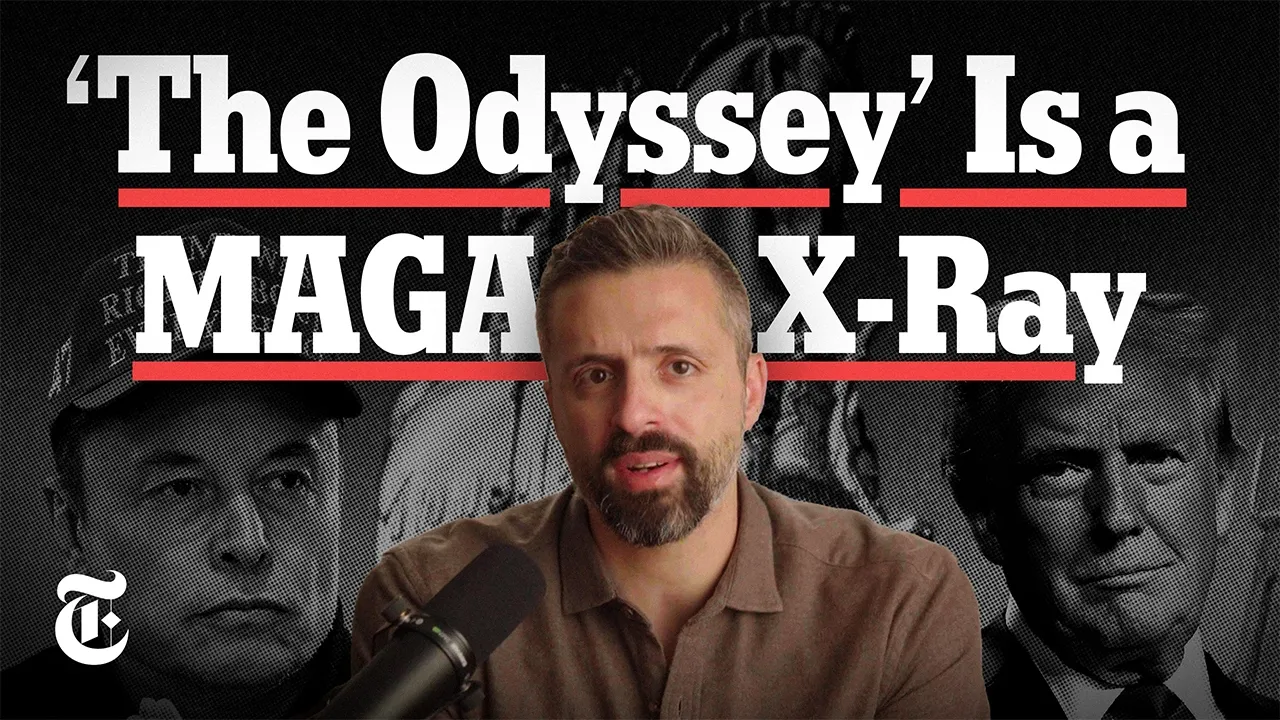
Christopher Nolan's Finest Trick | The Ezra Klein Show — The Ezra Klein Show

The Ezra Klein Show

Christopher Nolan smuggles biblical ethics into Homer to argue that political disruption severed from moral restraint and mutual empathy collapses into ruin rather than civilizational renewal.

AI-assisted summary of Christopher Nolan's Finest Trick | The Ezra Klein Show — original source. Check the original for full context.

Source published:

Key ideas

  • Christopher Nolan's adaptation of The Odyssey subverts ancient Homeric ethics by smuggling in Judeo-Christian morality, reframing Odysseus's cunning sack of Troy from a glorious heroic triumph into a haunting war crime requiring moral redemption. (4:59)
  • The contemporary American right, influenced by figures like Bronze Age Pervert and Curtis Yarvin, is increasingly embracing pre-modern 'iron laws' of force and domination while dismissing universal empathy and humanitarian reciprocity as civilizational weakness. (7:33)
  • Nolan's film depicts the Trojan War as an economic conflict over trade routes disguised by the pretext of Helen, mirroring modern geopolitical destabilization and Thucydides' Melian doctrine that the strong take what they can. (9:15)
  • Drawing on Lewis Hyde's trickster framework, the essay warns that contemporary culture is trapped in disruptive gamesmanship, risking catastrophic collapse unless society reclaims foundational ethical obligations to bridge fractured worlds. (13:16)

Detailed notes

## Background Published on YouTube on August 2, 2026, by The Ezra Klein Show, this episode explores Christopher Nolan's adaptation of The Odyssey, which the description proclaims as 'the political movie of the decade.' The program examines how Nolan's cinematic reframing offers an incisive mirror for contemporary American politics, culture, and power.

## TL;DR Ezra Klein argues that Christopher Nolan's adaptation of The Odyssey is an incisive critique of modern political tricksters like Donald Trump and Elon Musk, who wield disruption without regard for moral foundations. Nolan executes a deliberate intellectual sleight of hand by smuggling Judeo-Christian ethics—specifically the Golden Rule and care for the stranger—into ancient Greek concepts of Zeus's law and hospitality. In contrast to Homer's celebration of cunning and the modern right's romanticization of raw force and 'iron laws,' Nolan frames the sacking of Troy and unconstrained coercion as catastrophic atrocities that poison the victor. Ultimately, the film poses an urgent civilizational question: whether today's pervasive cultural disruption will lead to ruinous fracture or spark genuine ethical renewal.

## Atmosphere & style The presentation carries a deeply cerebral, measured, and contemplative tone, unfolding as an erudite monologue that bridges classical myth, film criticism, and sharp political theory. Klein’s delivery is reflective and intellectually rigorous, pivoting smoothly from wry cultural observations about tech billionaires into a grave, morally urgent reckoning with real-world violence and democratic decay. The resulting experience feels both sobering and expansive, drawing the listener out of everyday news cycle exhaustion into a profound, mythic inquiry about ethics and civilizational survival.

## Bulletin - [04:59](https://www.youtube.com/watch?v=livIbni7x7o&t=299s) Christopher Nolan's adaptation of The Odyssey subverts ancient Homeric ethics by smuggling in Judeo-Christian morality, reframing Odysseus's cunning sack of Troy from a glorious heroic triumph into a haunting war crime requiring moral redemption. - [07:33](https://www.youtube.com/watch?v=livIbni7x7o&t=453s) The contemporary American right, influenced by figures like Bronze Age Pervert and Curtis Yarvin, is increasingly embracing pre-modern 'iron laws' of force and domination while dismissing universal empathy and humanitarian reciprocity as civilizational weakness. - [09:15](https://www.youtube.com/watch?v=livIbni7x7o&t=555s) Nolan's film depicts the Trojan War as an economic conflict over trade routes disguised by the pretext of Helen, mirroring modern geopolitical destabilization and Thucydides' Melian doctrine that the strong take what they can. - [13:16](https://www.youtube.com/watch?v=livIbni7x7o&t=796s) Drawing on Lewis Hyde's trickster framework, the essay warns that contemporary culture is trapped in disruptive gamesmanship, risking catastrophic collapse unless society reclaims foundational ethical obligations to bridge fractured worlds.

## Key takeaways - [00:00](https://www.youtube.com/watch?v=livIbni7x7o&t=0s) Nolan's casting of Matt Damon deliberately subverts Odysseus's chaotic, multi-wiled nature to depict a figure grounded in order who confronts the moral devastation left in the wake of disruption. - [01:55](https://www.youtube.com/watch?v=livIbni7x7o&t=115s) Modern political and cultural spheres have become saturated with trickster figures like Donald Trump and Elon Musk who amass influence by dismantling conventions and breaking civic taboos. - [01:55](https://www.youtube.com/watch?v=livIbni7x7o&t=115s) According to mythologist Lewis Hyde, tricksters are necessary to shatter societal stagnation, but unconstrained disruption without moral renewal risks steering civilization toward total ruin. - [04:59](https://www.youtube.com/watch?v=livIbni7x7o&t=299s) Nolan transforms the ancient Greek concept of xenia into a universal Golden Rule echoing Leviticus 19:34, Rabbi Hillel, and the Gospels, commanding hospitality and care for the stranger. - [04:59](https://www.youtube.com/watch?v=livIbni7x7o&t=299s) Right-wing ideological rhetoric explicitly rejects universal compassion, framing aid to the vulnerable as 'suicidal empathy' and prioritizing raw hierarchy and tribute over mutual obligation. - [07:33](https://www.youtube.com/watch?v=livIbni7x7o&t=453s) The Trojan Horse episode is reframed from a legendary act of military genius into a horrifying breach of religious trust and a modern war crime that burdens Odysseus's conscience. - [07:33](https://www.youtube.com/watch?v=livIbni7x7o&t=453s) Intellectual factions within the modern conservative movement openly romanticize classical Roman authoritarianism, Caesarism, and the rollback of universal suffrage. - [09:15](https://www.youtube.com/watch?v=livIbni7x7o&t=555s) The film connects ancient siege warfare to modern geopolitical flashpoints, reflecting Thucydides' maxim that the strong do what they can while the weak suffer what they must. - [10:49](https://www.youtube.com/watch?v=livIbni7x7o&t=649s) Adopting the cruel methods of an oppressor hollows out the moral purpose of a civilization, turning would-be defenders of order into the very barbarians they sought to oppose. - [10:49](https://www.youtube.com/watch?v=livIbni7x7o&t=649s) Odysseus's transgressions trigger a cascading collapse of ethical order, resulting in Agamemnon's murder and the predatory desecration of Ithaca by the suitors. - [11:58](https://www.youtube.com/watch?v=livIbni7x7o&t=718s) Movements promising national restoration through coercive strength and cruelty end up destabilizing global norms and weakening the foundational architecture of the state. - [13:16](https://www.youtube.com/watch?v=livIbni7x7o&t=796s) Trickster archetypes face a fork in the road: perpetual alienation leading to cataclysm like Norse Loki, or boundary-crossing reconciliation leading to renewal like Greek Hermes. - [13:55](https://www.youtube.com/watch?v=livIbni7x7o&t=835s) Historical American moral progress has succeeded not by discarding foundational texts and faith traditions, but by wielding their radical ethical demands against entrenched injustice. - [13:55](https://www.youtube.com/watch?v=livIbni7x7o&t=835s) The cultural resonance of Nolan's Odyssey signals a deep societal exhaustion with cynical nihilism and a growing hunger for leaders capable of reconstruction.

## Detailed walkthrough ### [00:00](https://www.youtube.com/watch?v=livIbni7x7o&t=0s) The Trickster of Nolan's Odyssey and the Casting of Matt Damon

Ezra Klein opens by noting that Elon Musk fundamentally misunderstood Christopher Nolan's cinematic adaptation of *The Odyssey*. Admitting that having young children has kept him away from movie theaters more than he would like, Klein argues that Nolan pulled off a brilliant trick: while Musk may have missed the point of the film, the movie deeply understands who Elon Musk is, who Donald Trump is, what our society has become, and perhaps how to find a way forward. In mythology, Odysseus is the quintessential trickster—the "man of many ways," "many wiles," or "many turns," defined by cunning, contradiction, and insatiable appetites. He is a man who desperately yearns for home yet repeatedly chooses to linger abroad, longing for his wife while bedding goddesses.

When the adaptation was announced, Klein was initially skeptical of casting Matt Damon as Odysseus. While right-wing critics fixated on the casting of Lupita Nyong'o and Elliot Page, Klein worried Damon was too much of a "man of a single way"—the sort of disciplined figure who wakes up early, eats clean, and rarely drinks more than a single glass of wine before bed. That demeanor seemed antithetical to Odysseus's chaotic, multi-faceted nature. Yet Nolan was not seeking an ordinary trickster, and that deliberate choice marks the director's foundational trick.

```mermaid flowchart TD accTitle: The Clash of Civilizational Ethics in Nolan's Odyssey accDescr: A diagram contrasting the Homeric Iron Law with the Judeo-Christian Golden Rule as explored in Nolan's adaptation.

subgraph IronLaw["The Homeric / Pre-Modern 'Iron Law'"] A["Rule of Power & Force"] --> B["Thucydides / Stephen Miller:<br/>The strong do what they can"] B --> C["Odysseus as Hero:<br/>Sacking of Troy / Deceit justified"] C --> D["Modern Right Archetype:<br/>Trump, Musk, 'Bronze Age Pervert'"] end

subgraph GoldenRule["Nolan's Ethical Smuggling / 'Golden Rule'"] E["Leviticus 19:34 & Matthew 7:12:<br/>Love the stranger as yourself"] --> F["Rabbi Hillel:<br/>What is hateful to you, do not do"] F --> G["Nolan's Zeus's Law:<br/>Reciprocity & Compassion"] G --> H["Odysseus as Soul:<br/>In need of moral redemption"] end

IronLaw -.->|"Civilizational Tension"| GoldenRule ```

---

[01:55](https://www.youtube.com/watch?v=livIbni7x7o&t=115s) The Archetype of the Trickster: Disruption, Renewal, and Ruin

Klein reflects on his long-standing fascination with the trickster archetype, as detailed in Lewis Hyde's book *Trickster Makes This World*. Across world mythologies—whether Loki in Norse myth, Eshu in Yoruba traditions, Coyote or Raven in Indigenous lore, Maui in Polynesia, or Hermes and Odysseus among the Greeks—the trickster serves a vital cultural function. The trickster disrupts the very foundations a culture relies upon, dancing over taboos, doing what should not be done, and saying what cannot be said. By injecting disorder into order, the trickster exposes what is hidden and can catalyze new growth, though a happy resolution is never guaranteed: Coyote brings fire and Raven brings the sun, but Loki brings Armageddon.

In Klein's view, modern political and cultural life has become completely saturated by tricksters. Figures like Donald Trump, Elon Musk, Tucker Carlson, Andrew Tate, Nick Fuentes, and the anonymous writer Bronze Age Pervert define the grammar of the contemporary right, amassing power by systematically bulldozing conventions. While Hyde argued in 1998 that Americans love con men because they embody unspoken truths about a rule-bound, bureaucratized society, the situation today has inverted. There are virtually no taboos left unbroken, and the moral pillars of the culture have been desecrated. The question posed by Nolan's film is whether this rampant disruption will lead to creative renewal or absolute ruin.

- **Key Trickster Archetypes in Myth:** Loki (Norse), Eshu (Yoruba), Coyote and Raven (Indigenous American), Maui (Polynesian), Hermes and Odysseus (Greek). - **Core Insight from Lewis Hyde:** Societies need disruption to avoid stagnation, but failing to guard core values leaves them open to total corruption. - **Modern Political Tricksters:** Donald Trump, Elon Musk, Tucker Carlson, Andrew Tate, Nick Fuentes, and Bronze Age Pervert.

---

[04:59](https://www.youtube.com/watch?v=livIbni7x7o&t=299s) Smuggling the Golden Rule: Nolan’s Judeo-Christian Shift on Zeus's Law

The narrative core of Nolan's *The Odyssey* pivots on what the film presents as "Zeus's law": the command to treat the beggar and the stranger as you would wish to be treated. Classicists have pointed out that ancient Greek *xenia* was far narrower—it was an injunction to offer hospitality out of fear that a traveler might be a deity in disguise, rather than an ethic of universal compassion or reciprocity. Nolan's defining subversion is smuggling the core tenets of Judeo-Christian morality directly into the Homeric epic.

Nolan's version of Zeus's law mirrors Leviticus 19:34 ("The foreigner residing among you must be treated as your native-born. Love them as yourself, for you were foreigners in Egypt"), Rabbi Hillel's summary of the Torah ("What is hateful to you, do not do to your fellow"), and Jesus's Golden Rule in Matthew 7:12 ("In everything, do to others what you would have them do to you"). Klein emphasizes that the modern right does not merely fail to live up to this demanding ethic—they actively despise it, dismissing care for the stranger as "suicidal empathy." This worldview treats politics through the lens of tribute and domination rather than compassion, exemplified by Stephen Miller's assertion to Jake Tapper that the world is governed by the ancient "iron laws" of strength and raw power.

- **Biblical and Rabbinic Parallels:** - *Leviticus 19:34*: Loving the foreigner as the native-born. - *Rabbi Hillel*: The Golden Rule as the essence of Torah. - *Matthew 7:12*: The Golden Rule as the summation of the Law and the Prophets. - **Political Rhetoric:** Right-wing figures reframe empathy for the vulnerable as a civilizational weakness, prioritizing tax cuts financed by Medicaid reductions and harsh immigration crackdowns.

---

[07:33](https://www.youtube.com/watch?v=livIbni7x7o&t=453s) The Iron Law vs. The Golden Rule: Ancient Brutality in Modern Politics

This philosophical divergence recasts the iconic sack of Troy. When Odysseus devises the Trojan Horse, weaponizing Troy's shared religious piety to slaughter its inhabitants and burn the city, Homer treated him as an unvarnished hero. In Nolan's hands, however, Odysseus becomes a soul burdened by atrocity and desperate for redemption. Between antiquity and the modern era, humanity developed laws of war and universal human rights, establishing a clear line between strategic deception and a war crime.

Klein observes that factions of the modern American right explicitly wish to return to the pre-humanitarian ethos of antiquity. Influenced by Bronze Age Pervert, Curtis Yarvin, and Michael Anton, elements of the conservative movement openly romanticize Roman dominance, authoritarian Caesars, and classical aesthetics, believing the West has been weakened by losing its appetite for hierarchy and force. This worldview was distilled in an interaction on X where Elon Musk agreed with a user claiming that liberalism and universal suffrage inevitably lead to "universal suffering," with Musk replying, "I have wised up."

- **The Trojan Horse Dilemma:** A glorious triumph of cunning in Homer versus a horrifying, morally haunting war crime in Nolan's retelling. - **Intellectual Influences on the New Right:** Bronze Age Pervert's anti-egalitarian texts, Curtis Yarvin's neo-monarchist theories, and Michael Anton's essays exploring an American Caesar. - **Musk's Ideological Shift:** Publicly assenting to anti-democratic assertions regarding universal suffrage on X.

---

[09:15](https://www.youtube.com/watch?v=livIbni7x7o&t=555s) Trade Wars, Thucydides, and the Specter of Super Sparta

In Nolan's film, Helen of Troy is revealed to be a mere pretext for a war actually fought over control of vital trade routes—a parallel to modern geopolitical conflicts and the dismantling of global trade consensus. Klein connects this dynamic to former Canadian economic official Mark Carney's speech at Davos, where Carney quoted the famous line from Thucydides' Melian Dialogue: "The strong do what they can and the weak suffer what they must." That ancient maxim is once again being treated as the natural, inevitable state of global affairs.

The horror of ancient warfare resonates directly with modern violence. When Nolan's Odysseus shudders at the memory of ten years of pent-up rage razing Troy in a single night, Klein is reminded of the fury unleashed by Hamas on October 7th and the catastrophic destruction Israel has inflicted on Gaza since. This mindset aligns with Israeli Prime Minister Benjamin Netanyahu framing Israel's future identity as a combination of "Athens and Super Sparta"—a posture that historian Yuval Noah Harari notes carries profound and dangerous civilizational ironies.

[10:49](https://www.youtube.com/watch?v=livIbni7x7o&t=649s) The Law of Zeus and the Weight of Moral Order

Reflecting on historical survival and assimilation, the discussion turns to the moral hazard of adopting the methods of one's conquerors: if after two millennia of persecution the oppressed merely become like the Romans, the entire endurance of that heritage is rendered meaningless. Christopher Nolan’s cinematic achievement lies in executing an intellectual sleight of hand: he revitalizes ancient ethical doctrines by transmuting the foundational tenets of Judeo-Christian morality into the ancient Greek law of Zeus. By reframing these familiar, often tired ethical codes within mythic antiquity, the film strips away contemporary cynicism and forces modern audiences to confront why these strictures were established in the first place and what urgency they still hold today.

Through this lens, Odysseus’s journey becomes an awakening to the systemic devastation wrought by his own disregard for ethical bounds. His transgressions do not merely invite divine retribution; they unravel the social fabric of his world: - **Agamemnon’s fate**: The king who spearheaded the expedition against Troy returns home only to have his throat slit by his wife, who could never forgive him for sacrificing their daughter to secure favorable winds. - **The destruction of Troy**: The city is obliterated through deception and unrestrained violence rather than noble triumph. - **The desecration of Ithaca**: Odysseus’s home is invaded by predatory suitors who consume his estate, seek to force his wife into marriage, and plot the cold-blooded murder of his son, Telemachus.

Rather than civilizers holding the line against savagery, Odysseus and his warriors realize that they themselves became the barbarians, setting in motion an escalating cycle of barbarity that poisoned everything they sought to protect.

---

[11:58](https://www.youtube.com/watch?v=livIbni7x7o&t=718s) American Barbarism and the Trap of Cruelty

This tragic trajectory mirrors contemporary political developments, particularly movements that emerged under the banner of restoring Western greatness and making America great again, only to betray the very inheritance they claimed to champion. The global perception of American power has shifted; instead of maintaining an enlightened international architecture, the nation is increasingly viewed abroad as an aggressive hegemon that tears down global norms, extracts resources by force, and coerces weaker nations unable to defend themselves. Cruelty, framed by political opportunists as strength and resolve, functions in practice as a destabilizing weakness.

For political opposition to mount an effective alternative, it must internalize the core truth dramatized in Nolan's film: enduring civilization cannot be built on coercion. Social order remains necessary, but order severed from basic human decency and ethical restraint inevitably degenerates into raw authoritarianism. True strength resides in mutual obligation, compassion, and the profound ancient prohibitions against inflicting upon others what one would dread enduring oneself—commandments echoing the scriptural memory that "we were strangers in the land of Egypt."

---

[13:16](https://www.youtube.com/watch?v=livIbni7x7o&t=796s) Severed Worlds: Tricksters, Ruin, and Regeneration

Drawing upon the cultural analysis of author Lewis Hyde, the commentary examines the fork in the road of every trickster narrative: whether disruptive cunning leads to catastrophic ruin or to civic regeneration. According to Hyde, the deciding factor is whether the trickster possesses the capacity to bridge the fractured realms created by their disruption.

```mermaid flowchart TD accTitle: The Two Paths of the Trickster accDescr: Flowchart illustrating Lewis Hyde's concept of trickster outcomes leading to either ruin or regeneration. subgraph Ruin["Path of Severance and Ruin"] A["Trickster Disrupts Order"] --> B["Worlds Remain Severed"] B --> C["Loki Bound Beneath Earth"] C --> D["Cataclysm and Armageddon"] end subgraph Regeneration["Path of Connection and Renewal"] E["Trickster Crosses Thresholds"] --> F["Worlds Rejoined and Bonded"] F --> G["Hermes Bridges Underworld"] G --> H["Persephone Returns and Renewal"] end ```

In Norse myth, Loki remains perpetually alienated, bound beneath the earth with venom dripping onto him until his unresolved defiance triggers Ragnarök and total annihilation. Conversely, the Greek god Hermes serves as an emissary between the realm of the living and the underworld, guiding Persephone back to restore spring and renew the earth. Cultural resilience cannot survive sustained fracture; vitality can only return when divided worlds find a way to bond again.

---

[13:55](https://www.youtube.com/watch?v=livIbni7x7o&t=835s) Reclaiming the Moral Inheritance

In the American tradition, moral progress has never been achieved by abandoning foundational ideals, but rather by revitalizing them. The most transformative social movements throughout history succeeded because they wielded the sacred language of the Torah, the Bible, and the Declaration of Independence as disruptive catalysts for justice rather than as rigid monuments to the status quo.

While patriotism, liberalism, and faith have long maintained an uneasy and alienated relationship in modern American politics, the nationalist excesses of the contemporary political right have opened a critical vacuum. Filling this void requires the demanding work of cultural regeneration: looking past debased, exhausted political clichés to reclaim forgotten moral imperatives. Nolan’s Odysseus is ultimately not an archetype of clever trickery, but a man stranded among the smoldering wreckage that tricksters leave in their wake. The broad appetite for this epic suggests that society has grown weary of cynical gamesmanship and is searching for builders capable of remaking the world.

## Notable quotes > [00:00](https://www.youtube.com/watch?v=livIbni7x7o&t=0s) man of a single way — Ezra Klein

> [04:59](https://www.youtube.com/watch?v=livIbni7x7o&t=299s) The foreigner residing among you must be treated as your native-born. Love them as yourself, for you were foreigners in Egypt — Leviticus 19:34

> [04:59](https://www.youtube.com/watch?v=livIbni7x7o&t=299s) What is hateful to you, do not do to your fellow — Rabbi Hillel

> [04:59](https://www.youtube.com/watch?v=livIbni7x7o&t=299s) In everything, do to others what you would have them do to you — Matthew 7:12

> [04:59](https://www.youtube.com/watch?v=livIbni7x7o&t=299s) suicidal empathy

> [04:59](https://www.youtube.com/watch?v=livIbni7x7o&t=299s) iron laws — Stephen Miller

> [07:33](https://www.youtube.com/watch?v=livIbni7x7o&t=453s) I have wised up — Elon Musk

> [09:15](https://www.youtube.com/watch?v=livIbni7x7o&t=555s) The strong do what they can and the weak suffer what they must — Thucydides

> [09:15](https://www.youtube.com/watch?v=livIbni7x7o&t=555s) Athens and Super Sparta — Benjamin Netanyahu

> [11:58](https://www.youtube.com/watch?v=livIbni7x7o&t=718s) we were strangers in the land of Egypt

## Mentioned Christopher Nolan, Ezra Klein, Elon Musk, Donald Trump, Matt Damon, Lupita Nyong'o, Elliot Page, Odysseus, Lewis Hyde, Trickster Makes This World, Loki, Eshu, Coyote, Raven, Maui, Hermes, Tucker Carlson, Andrew Tate, Nick Fuentes, Bronze Age Pervert, Stephen Miller, Jake Tapper, Rabbi Hillel, Jesus, The Odyssey, Curtis Yarvin, Michael Anton, X, Mark Carney, Davos, Thucydides, Melian Dialogue, Benjamin Netanyahu, Yuval Noah Harari, Agamemnon, Telemachus, Persephone, Declaration of Independence

## Video description 'The Odyssey' is the political movie of the decade.

Thoughts? Guest suggestions? Email us at ezrakleinshow@nytimes.com.

You can find the transcript and more episodes of “The Ezra Klein Show” at nytimes.com/ezra-klein-podcast. Book recommendations from all our guests are listed at https://www.nytimes.com/article/ezra-klein-show-book-recs.html

[Source](https://www.youtube.com/watch?v=livIbni7x7o)

中文简报

诺兰借《奥德赛》驳斥特朗普与马斯克的强权政治 克里斯托弗·诺兰将圣经伦理巧妙融入荷马史诗,指出脱离道德约束与同理共情的政治颠覆终将招致毁灭,而非带来文明复兴。 埃兹拉·克莱恩(Ezra Klein)认为,克里斯托弗·诺兰(Christopher Nolan)改编的《奥德赛》深刻批判了唐纳德·特朗普(Donald Trump)和埃隆·马斯克(Elon Musk)等肆意制造破坏却无视道德根基的现代政治“捣蛋者”(tricksters)。诺兰进行了一场深思熟虑的思想移花接木,将犹太-基督教伦理——特别是道德金律与善待陌生人——暗中植入古希腊关于宙斯法则及好客传统的概念中。不同于荷马对狡黠机智的赞美以及现代右翼对原始武力和“铁律”的浪漫化,诺兰将洗劫特洛伊城与不受约束的强权胁迫定性为反噬胜利者自身的灾难性暴行。这部电影最终提出了一个关乎文明命运的紧迫问题:当今泛滥的文化颠覆究竟会导致毁灭性的分裂,还是会激发真正的伦理复兴。 克里斯托弗·诺兰对《奥德赛》的改编颠覆了古荷马伦理,通过暗中植入犹太-基督教道德观,将奥德修斯智取并洗劫特洛伊的行径,从一场光荣的英雄胜利重构为需要道德救赎且令人心悸的战争罪行。 (4:59) 受“青铜时代变态”(Bronze Age Pervert)和柯蒂斯·亚芬(Curtis Yarvin)等人物的影响,当代美国右翼正日益推崇前现代关于武力与支配的“铁律”,同时将普遍同理心与人道主义互惠斥为文明的软弱。 (7:33) 诺兰的电影将特洛伊战争刻画为一场以海伦为幌子、实则争夺贸易路线的经济冲突,映照了现代地缘政治动荡以及修昔底德提出的强者为所欲为的“米洛斯教条”。 (9:15) 文章借鉴刘易斯·海德(Lewis Hyde)的“捣蛋鬼”(trickster)理论框架警告称,当代文化已深陷颠覆性的博弈权谋之中;除非社会重新承担起基本的道德义务以弥合撕裂的世界,否则将面临灾难性崩溃的风险。 (13:16)

Reading summary

Ezra Klein argues that Christopher Nolan’s adaptation of The Odyssey exposes the hazards of contemporary politics by subverting Homeric myth, demonstrating how a culture dominated by unconstrained tricksters and the rule of raw force risks civilizational ruin without an anchoring ethic of mutual obligation. The Saturated Politics of Modern Tricksters (1:55) Grounded in Lewis Hyde's book Trickster Makes This World, Klein observes that while mythic figures like Loki, Coyote, and Hermes historically disrupted calcified norms to spark cultural vitality, contemporary right-wing culture has become completely overrun by tricksters. Figures such as Donald Trump, Elon Musk, Tucker Carlson, Andrew Tate, Nick Fuentes, and Bronze Age Pervert have amassed power by systematically bulldozing social taboos and legal conventions. While Hyde argued in 1998 that Americans embrace con men because they reveal unspoken truths within a rigid, bureaucratic order, Klein contends that dynamic has inverted. With virtually no moral boundaries left unbroken, unchecked disruption no longer guarantees renewal. Nolan’s casting of Matt Damon—an actor embodying disciplined restraint rather than erratic wiles—signals that this Odysseus is not meant to be celebrated for his trickery, but rather scrutinized for the wreckage his cunning creates. Replacing Ancient Hospitality with Universal Reciprocity (4:59) The philosophical core of Nolan's film hinges on a deliberate subversion of the ancient Greek concept of xenia. Classicists emphasize that historical Greek hospitality was largely transactional, driven by the fearful suspicion that an unvetted traveler might be a deity in disguise. Nolan, however, recasts Zeus's law as an explicit imperative to care for the stranger and the beggar as oneself. Klein identifies this as an intentional smuggling of Judeo-Christian ethics into antiquity, drawing direct lines to Leviticus 19:34, Rabbi Hillel's distillation of the Torah, and the Golden Rule in Matthew 7:12. This framework directly clashes with modern right-wing political rhetoric, which Klein notes dismisses empathy for vulnerable outsiders as civilizational suicide while embracing Stephen Miller's insistence that the world is ruled by ancient iron laws of strength and power. Strategic Brutality and the Pre-Modern Ethos (7:33) This ethical divide reframes the sack of Troy. While Homer celebrated the Trojan Horse as an unblemished stroke of genius, Nolan presents the slaughter and incineration of Troy as a haunting war crime that exploited shared religious piety. Modern international law and human rights historically separated battlefield deception from atrocity, yet factions of the contemporary right openly romanticize pre-humanitarian brutality. Klein highlights that intellectuals such as Bronze Age Pervert, Curtis Yarvin, and Michael Anton advocate an anti-egalitarian return to Roman dominance, classical hierarchy, and Caesarism. Geopolitical rhetoric mirrors this shift: Mark Carney invoked Thucydides’ maxim that the strong do what they can while the weak suffer what they must, and Benjamin Netanyahu framed Israel’s posture as Super Sparta. Elon Musk underscored this anti-democratic pivot on X, assenting to claims that universal suffrage inevitably leads to universal suffering. The Two Paths of Trickster Disruption (10:49) In Nolan's telling, unrestrained violence unleashes a cycle of retribution that destroys the victors: Agamemnon is murdered upon returning home, Troy is erased, and Odysseus's estate in Ithaca is pillaged by predatory suitors plotting to murder his son. Odysseus and his men discover that by abandoning moral limits, they became the very barbarians they sought to defeat—a warning Klein applies to an aggressive American hegemony that discards international norms. To illustrate the divergence between catastrophic and regenerative disruption, Klein cites Lewis Hyde's contrast between Loki and Hermes. Loki remains permanently alienated and bound beneath the earth until his venom-induced fury unleashes Ragnarök. Conversely, Hermes bridges the living and the underworld to escort Persephone back and revive the earth. A society cannot survive continuous fracture; lasting resilience depends on whether divided worlds can re-establish connection. Klein concludes that genuine moral progress in the American tradition requires reclaiming foundational ethical imperatives rather than yielding to cynical gamesmanship or authoritarian strength. Nolan’s portrayal of Odysseus as an exhausted survivor amidst the ruins of his own cunning suggests that public appetite is shifting away from disruptive tricksters and toward leaders capable of rebuilding social trust.

精炼阅读摘要

埃兹拉·克莱恩(Ezra Klein)认为,克里斯托弗·诺兰在改编《奥德赛》时施展了精妙的伦理“障眼法”:他将犹太-基督教传统中的“黄金法则”偷运进古希腊神话以重构宙斯之法,借此批判当代右翼对前现代暴力与权谋的盲目推崇,并警示纯粹依靠强权和欺诈终将导致文明走向自我毁灭。 捣蛋鬼原型的泛滥与制度解构 (1:55) 克莱恩借用刘易斯·海德(Lewis Hyde)在《捣蛋鬼造就这个世界》(Trickster Makes This World)中的文化理论指出,捣蛋鬼(Trickster)跨越了北欧神话中的洛基(Loki)、约鲁巴传统的埃舒(Eshu)、美洲原住民神话中的郊狼与渡鸦,以及希腊神话中的赫尔墨斯与奥德修斯。该原型的核心功能在于践踏禁忌、挑战既有权威,并在秩序中注入混乱以打破僵化。海德曾在1998年指出,美国人迷恋骗子是因为他们道出了官僚化社会的隐秘真相;然而,当代社会已发生倒错,所有传统禁忌几乎被消耗殆尽,道德支柱遭到系统性拆解。 克莱恩主张,当代政治与文化舞台已被捣蛋鬼全面占据。唐纳德·特朗普、埃隆·马斯克、塔克·卡尔森、安德鲁·泰特、尼克·富恩特斯以及匿名作家“青铜时代变态”(Bronze Age Pervert)等人,通过践踏既有成规攫取巨大权力。诺兰的电影在此提出了根本追问:这种近乎失控的秩序破坏,究竟会如同带来火种的郊狼那样催生创造性新生,还是会像引爆诸神黄昏的洛基一般引向彻底的毁灭。 伦理偷运:将黄金法则注入宙斯之法 (4:59) 诺兰版《奥德赛》的叙事核心建立在所谓的“宙斯之法”之上,即要求世人像期望自己被对待那样去关照乞丐与异乡人。克莱恩援引古典学者的观点指出,古希腊真实的客人权利(xenia)本质上要狭隘得多,其核心动力是唯恐陌生旅人是微服私访的凶险神祇,而非出于普遍的同情心或道德对等互惠。诺兰在此实施了关键的哲学偷换,将犹太-基督教伦理深植于荷马史诗之中。 这一设定直接映射了《利未记》第19章“爱寄居者如同本地人”的诫命、希勒尔拉比对妥拉精神“己所不欲,勿施于人”的概括,以及《马太福音》第7章中耶稣宣讲的黄金法则。克莱恩批评指出,当代美国右翼不仅未能践行这种博爱伦理,反而将其贬斥为“自杀式共情”,转而推崇基于进贡与支配的政治逻辑。斯蒂芬·米勒(Stephen Miller)在接受媒体采访时公开宣称,人类世界始终受制于弱肉强食的古老“铁律”,印证了保守阵营对普世关怀的系统性排斥。 古代铁律复辟与特洛伊叙事的重塑 (7:33) 这种伦理分歧直接改写了特洛伊沦陷的意义。在荷马史诗中,奥德修斯利用特洛伊人的宗教虔诚设计特洛伊木马屠城,被视作智慧与英雄主义的胜利;但在诺兰的镜头下,奥德修斯成了一个背负残暴战争罪责、迫切寻求救赎的痛苦灵魂。克莱恩指出,从古典时期到现代社会,人类逐步确立了战争法与普世人权,划清了战略欺敌与战争罪行的界限,而诺兰正是借此迫使观众直面暴行所带来的沉重反噬。 与此同时,美国新右翼思潮正公开试图回归前人道主义时代的残酷法则。在“青铜时代变态”、柯蒂斯·雅文(Curtis Yarvin)以及迈克尔·安东(Michael Anton)的影响下,部分保守派公开浪漫化罗马霸权、专制凯撒与古典等级制,认为西方文明因丧失对力量的渴望而衰败。埃隆·马斯克曾在社交平台X上附和“普选制必然导致普遍苦难”的言论,并宣称自己“已经醒悟”。在地缘政治层面,加拿大前经济官员马克·卡尼(Mark Carney)在达沃斯援引修昔底德的名言“强者为所欲为,弱者逆来顺受”,揭示出古老强权逻辑正卷土重来,与以色列总理内塔尼亚胡追求“超级斯巴达”的强硬姿态形成当代呼应。 野蛮反噬与跨越撕裂的重建路径 (10:49) 电影借奥德修斯的命运展现了抛弃伦理底线所招致的社会瓦解:阿伽门农因祭女出征而在凯旋后被妻子割喉,特洛伊城在无节制的杀戮中沦为焦土,奥德修斯自己的故乡伊萨卡也遭求婚者侵蚀并图谋杀害其子忒勒玛科斯。远征的希腊战士自以为在抵御野蛮,最终却成了野蛮本身,开启了毒害自身的恶性循环。克莱恩认为,这恰如当代高呼“让美国再次伟大”的民族主义运动,表面上宣称继承西方文明遗产,实则正在将美国退化为依靠恐吓、破坏规则来榨取资源的霸权,将残酷误判为力量。 克莱恩进一步援引海德的理论说明,捣蛋鬼的结局取决于其能否修补由其制造的断裂世界:洛基因永恒的对立被囚禁于地下最终触发毁灭;而赫尔墨斯则能沟通生者与冥界,引回珀耳塞福涅带来大地回春。美国的历史进步从未靠抛弃立国理想取得,而是靠重温《妥拉》、《圣经》及《独立宣言》中的道德诫命来推动正义。面对右翼民族主义留下的价值观真空,社会需要的不再是玩弄权谋的破坏者,而是能够重建秩序、跨越裂痕的建设者。 克莱恩总结指出,诺兰版《奥德赛》击中了当代文明的核心痛点:缺乏道德约束与同情机制的秩序终将蜕变为纯粹的专制强权。公众对该作品的强烈共鸣表明,社会已对肆意践踏规则的政治权术感到厌倦,并开始反思一味诉诸力量对抗所带来的文明反噬,寻求重拾古老道德遗产以实现社会的自我疗愈。

Detailed notes — zh

## Background 该内容由《纽约时报》旗下的《埃兹拉·克莱恩秀》(The Ezra Klein Show)于2026年8月2日发布在YouTube平台上。视频简介指出,克里斯托弗·诺兰执导的《奥德赛》是“近十年最具政治意味的电影”,并附有播客收听链接及书单推荐。 ## TL;DR 节目围绕诺兰版《奥德赛》展开深度文化与政治批评,指出埃隆·马斯克等当代右翼群体严重误读了该片。主讲人借助刘易斯·海德的“欺诈者/弄臣”(Trickster)神话原型理论,剖析了以特朗普、马斯克为代表的现代极右翼如何以破坏底线与崇拜强权来瓦解社会共识。诺兰的高明之处在于将犹太-基督教的互惠与同理心伦理(黄金法则)巧妙植入异教史诗中的“宙斯之法”,借奥德修斯的忏悔批判了“残忍即力量”的蛮荒逻辑。最后,节目呼吁终结纯粹破坏性的恶作剧者时代,主张重新联结伦理、自由与爱国精神,承担起修复与重铸文明的使命。 ## Atmosphere & style 全片呈现出极具智性深度且严肃警醒的思想评论风格。主讲人语调沉稳、引经据典,将古典神话、宗教伦理与当代白宫政局、达沃斯论调乃至地缘冲突严丝合缝地交织在一起。叙事从轻巧的选角争议一路攀升至对西方文明命运与人道废墟的沉重叩问,情绪上在对强权逻辑的愤慨警惕与对伦理重建的庄严呼唤之间形成张力,带给听众一种兼具学术厚度与时代紧迫感的思想洗礼。 ## Bulletin - [00:00](https://www.youtube.com/watch?v=livIbni7x7o&t=0s) 埃兹拉·克莱恩深度剖析克里斯托弗·诺兰执导的《奥德赛》,指出该片表面改编古典史诗,实为当下最深刻的政治寓言,尖锐切中了埃隆·马斯克与唐纳德·特朗普等现代右翼所代表的时代困境。 - [04:59](https://www.youtube.com/watch?v=livIbni7x7o&t=299s) 诺兰在片中暗中将犹太-基督教的“黄金法则”植入古希腊待客法(Xenia)之中,借此对撕裂现代文明、沉溺强权与残酷的极右翼意识形态展开伦理批判。 - [01:55](https://www.youtube.com/watch?v=livIbni7x7o&t=115s) 结合学者刘易斯·海德的“欺诈者/弄臣”(Trickster)原型理论,节目阐明破坏性规则若脱离底线将导向诸神黄昏般的毁灭,呼吁公众摆脱投机破坏者,致力于重新缝合撕裂的世界。 - [11:58](https://www.youtube.com/watch?v=livIbni7x7o&t=718s) 政治反对派与现代文明需要重新确立“残忍即是软弱”的价值基石,将同情、互惠与伦理秩序作为抵御野蛮循环与威权主义重临的终极屏障。 ## Key takeaways - [00:00](https://www.youtube.com/watch?v=livIbni7x7o&t=0s) 埃隆·马斯克等右翼代表人物完全误读了诺兰版《奥德赛》,该片实则是对现代右翼政治病理与文明困局的精准画像。 - [00:00](https://www.youtube.com/watch?v=livIbni7x7o&t=0s) 古典神话中的奥德修斯兼具复杂多面性与原始欲望,是一个典型的“多谋欺诈者”(Trickster);诺兰选角马特·达蒙则打破了传统欺诈者形象,旨在构建全新的精神图景。 - [01:55](https://www.youtube.com/watch?v=livIbni7x7o&t=115s) 根据刘易斯·海德的理论,神话中的欺诈者既能打破僵化禁忌带来火种,也可能引发彻底毁灭;现代右翼政客与网红正以欺诈者风格撕裂文明底线。 - [04:59](https://www.youtube.com/watch?v=livIbni7x7o&t=299s) 诺兰电影施展的最大叙事诡计,是将犹太-基督教“爱人如己、己所不欲勿施于人”的伦理底牌,偷换进古代异教的“宙斯之法(Xenia)”之中。 - [04:59](https://www.youtube.com/watch?v=livIbni7x7o&t=299s) 古希腊真正的待客之道源于对神明降谴的恐惧与礼仪契约,而诺兰赋予其普遍平等的博爱与同理心,形成对当代右翼“自杀式共情”论调的有力反驳。 - [07:33](https://www.youtube.com/watch?v=livIbni7x7o&t=453s) 以斯蒂芬·米勒和“青铜时代变态”为代表的现代另类右翼,正企图用弱肉强食的修昔底德式“丛林铁律”取代二战后确立的自由主义人权法则。 - [07:33](https://www.youtube.com/watch?v=livIbni7x7o&t=453s) 诺兰颠覆了特洛伊战争的传统英雄叙事,将其解构为掠夺贸易路线的野蛮侵略,揭露了以残忍对抗残忍只会让自身堕落为野蛮人的恶性循环。 - [10:49](https://www.youtube.com/watch?v=livIbni7x7o&t=649s) 从加沙冲突到各国内政,执迷于罗马帝政式的军国威权霸权不仅背离了文明发展成果,更是对自身历史苦难的荒诞讽刺。 - [11:58](https://www.youtube.com/watch?v=livIbni7x7o&t=718s) 诺兰将古老诫命重新激活为现代警钟:秩序若脱离了正义、体面与同理心,终将不可避免地沦为赤裸裸的威权主义掠夺。 - [11:58](https://www.youtube.com/watch?v=livIbni7x7o&t=718s) 政治反对派必须明确“残忍即是软弱”,唯有坚守互惠原则与对弱者的同情,才能建立持久且体面的社会防线。 - [13:16](https://www.youtube.com/watch?v=livIbni7x7o&t=796s) 借由洛基与赫尔墨斯的神话对立,学者指出欺诈者故事能否走向重生的关键,在于人类能否“重新连接破裂的世界”。 - [13:16](https://www.youtube.com/watch?v=livIbni7x7o&t=796s) 当下的废墟时代宣告了“欺诈者时代”的终结,文明不再需要哗众取宠的破坏分子,而迫切需要重铸伦理纽带、收拾残局的修复者。 ## Detailed walkthrough ### [00:00](https://www.youtube.com/watch?v=livIbni7x7o&t=0s) 埃隆·马斯克对诺兰版《奥德赛》的误读 埃隆·马斯克(Elon Musk)完全没有看懂克里斯托弗·诺兰(Christopher Nolan)执导的《奥德赛》(The Odyssey)。作为一名育有幼童的父亲,日常很少有时间频繁进电影院,因此对这部备受瞩目的巨作评述得稍显迟缓。然而,诺兰在这部电影中所展现的叙事机巧令人叹为观止。马斯克虽然不明白《奥德赛》究竟在表达什么,但这部电影却精准地洞悉了马斯克其人、唐纳德·特朗普(Donald Trump)其人,以及当代社会所有人的现状与困境,甚至为当下迷茫的文明指出了一条可能的出路。 “计谋与诡计”(Tricks)是《奥德赛》这部神话史诗的核心。在古典神话中,奥德修斯(Odysseus)本质上是一个“骗子”与“弄臣”(Trickster)。在荷马史诗著名的开篇第一句中,他被描述为“多谋之人”(the man of many ways / many wiles / many turns)。根据不同的译本,他既是一个巧计百出的人、狡黠之人,也是一个复杂幽微的人。他充满原始欲望与内在矛盾:心心念念只想回到故乡,却一次又一次选择在外漂泊;极度渴望回到妻子身边,却难以抗拒与多位女神共度良宵。奥德修斯从来不是一个单一平面的人物,他永远兼具复杂的多面性。 最初在选角公布时,右翼舆论对露皮塔·尼永奥(Lupita Nyong'o)和艾利奥特·佩吉(Elliot Page)的出演爆发了猛烈的抨击;但令人最为担忧的其实是马特·达蒙(Matt Damon)。马特·达蒙素来给人一种“单向度之人”(a man of a single way)的印象:早睡早起、饮食健康严苛、睡前极少喝超过一杯红酒。这种品质令人敬佩,却与狂放多面、阴谋迭出的古典奥德修斯大相径庭。然而,这恰恰构成了诺兰的第一道计谋:诺兰根本不想复刻一个传统意义上的欺诈者神话,他在借由《奥德赛》构建一个截然不同的精神世界。 ### [01:55](https://www.youtube.com/watch?v=livIbni7x7o&t=115s) 欺诈者原型与撕裂现代文明的右翼语法 在世界神话学谱系中,“欺诈者 / 弄臣”(Trickster)是一个恒久迷人的母题。它是北欧神话中的洛基(Loki),是约鲁巴传统中的埃舒(Eshu),是美洲原住民传说中的郊狼(Coyote)或乌鸦(Raven),是波利尼西亚神话里的毛伊(Maui),也是古希腊神话中的赫尔墨斯(Hermes)与奥德修斯。学者刘易斯·海德(Lewis Hyde)在其著作《欺诈者创造了这个世界》(Trickster Makes This World)中指出,欺诈者承担着关键的文化功能:揭露并颠覆一个文化赖以生存的根基。他们践踏习俗与禁忌,说不可言说之语,做不可为之事,向既定秩序中注入混乱,让隐秘的结构赤裸暴露。他们通过深沉的破坏为新生命的萌芽扫清障碍,但结局绝非必然圆满——破坏既可能带来再生,也可能导向彻底的毁灭。郊狼盗来了火种,乌鸦带来了太阳,而洛基带来的却是诸神黄昏(Armageddon)。 欺诈者对文明而言既不可或缺又极端危险。一个无法用创造力去回应动荡变革的社会无法在时代的变迁中生存;但一个若无法捍卫其核心价值与底线的文明,终将被虚无与腐败彻底吞噬。当下的世界正深陷混乱与失序的时代,充斥着各色欺诈者与破坏分子:唐纳德·特朗普、埃隆·马斯克、塔克·卡尔森(Tucker Carlson)、安德鲁·泰特(Andrew Tate)、尼克·富恩特斯(Nick Fuentes)以及网名为“青铜时代变态”(Bronze Age Pervert)的极右翼极客。现代右翼的底层语法正是欺诈者风格——将严肃议题消解为戏谑,公然践踏禁忌,靠突破文明底线攫取权力。 海德曾指出,美国人本质上迷恋骗子与欺诈者,因为这触及了美国隐秘而不可告人的真实特质。在海德写书的1998年,美国体制或许确实过于官僚化、僵化沉闷,缺乏真正的逾越与活力;但在今天,底线已被彻底践踏,构筑社会最佳基石的道德共识不仅被打破,更遭到了公然亵渎。眼下的核心问题在于:这场席卷一切的破坏究竟会激发出创造性新生,还是会彻底将文明引向万劫不复的深渊?这正是诺兰版《奥德赛》所扣问的终极谜题。 ```mermaid flowchart TD accTitle: 欺诈者原型的双重性与文明命运 accDescr: 展示欺诈者破坏现有秩序后可能导向的良性再生与恶性毁灭两条路径。 subgraph Disruption["破坏与越界"] T["欺诈者原型 (Trickster)<br/>打破禁忌 / 注入混乱"] end subgraph Outcomes["文明演变分歧"] R["创造性再生 (Renewal)<br/>带来火种与光明 (郊狼/乌鸦)"] D["彻底毁灭 (Ruin)<br/>引向文明末日 (洛基/诸神黄昏)"] end T -->|"若以创造性与底线回应"| R T -->|"若沉溺力量崇拜与残酷"| D ``` ### [04:59](https://www.youtube.com/watch?v=livIbni7x7o&t=299s) 偷梁换柱:宙斯之法与诺兰的道德底牌 诺兰电影的核心转折建立在对“宙斯之法”(Zeus's law)的颠覆性改编上。电影中,宙斯之法被诠释为:“对待乞丐与异乡人,当如你所期望被对待的那样。”然而,大批古典学者随即指出,这根本不是古代真实的宙斯律法。在古典时期,宙斯之法(Xenia,待客之道)的范围要狭窄得多:它仅仅要求人们对客人或陌生人提供庇护与招待,其根本动机在于恐惧天谴——因为任何落魄的陌生人都可能是神祇的化身。古代的待客律条既非出自慈悲,亦不包含平等的同理互惠。 诺兰在这里施展了他最具野心的“诡计”:他暗中将犹太-基督教的核心伦理偷渡进了异教史诗《奥德赛》的骨髓中。诺兰版中的宙斯之法,深切呼应了多部宗教经典的教诲: - 《利未记》19:34:“在你们地里同居的外人……要看他如本地人一样,并要爱他如己,因为你们在埃及地也作过寄居的。” - 拉比希勒尔(Rabbi Hillel)的名言:“己所不欲,勿施于人。这就是全部的《妥拉》,其余皆是注脚。” - 《马太福音》7:12中耶稣的训诫:“你们愿意人怎样待你们,你们也要怎样待人,因为这就是律法和先知的道理。” 这种博爱与互惠伦理极难践行,几乎没有人能完全做到。但现代右翼的问题不在于他们无法完全实践它,而在于他们从骨子里“厌恶与鄙视”这种道德。将境内的异乡人视为同胞并去关爱他们,在极右翼叙事中被蔑称为“自杀式共情”(suicidal empathy)。特朗普政府系统性地将对移民、弱者与穷人的残酷对待浪漫化,削减用于医疗补助(Medicaid)的公共开支以为富豪减税,甚至公然叫嚣要将异质文明彻底抹去、“使其永无翻身之日”。这一政治底色建立在朝贡与纯粹霸权之上,而非爱、同情或互惠。特朗普的核心幕僚斯蒂芬·米勒(Stephen Miller)在面对 CNN 主持人杰克·塔珀(Jake Tapper)的质询时直言不讳:“杰克,我们生活在一个由力量、武力和强权所统治的真实世界中。这是自天地开辟以来的铁律。” ### [07:33](https://www.youtube.com/watch?v=livIbni7x7o&t=453s) 铁律对抗黄金法则:重返黑暗蛮荒的现代危险 文明的漫长进步,本应是用“黄金法则”(己所不欲,勿施于人)去取代弱肉强食的“丛林铁律”。当奥德修斯构思出木马屠城之计时,他巧妙利用了特洛伊人与希腊人供奉共同神祇的虔敬之心,滥用这种文化连带血洗特洛伊,让城中血流成河、付之一炬。在荷马的眼里,奥德修斯是一个智勇双全的英雄;但在诺兰的现代视角下,他却是一个急需灵魂救赎的罪人。荷马时代与现代社会之间,隔着一场关于“何为文明”的深刻革命——现代人类确立了人权法与战争伦理,而古代野蛮社会对此一无所知。 当下的保守右翼却坚定地认为,西方文明已经丧失了最初建立时所依赖的力量感、支配欲、等级制度以及残酷冷血。这也解释了为何右翼极端理论家“青铜时代变态”的著作会成为特朗普青年追随者的必读物;为何柯蒂斯·雅温(Curtis Yarvin)和迈克尔·安东(Michael Anton)等右翼理论家频繁鼓吹需要一个“美国恺撒”(American Caesar);为何特朗普团队对罗马帝政风格的古典建筑抱有近乎病态的执念。马斯克在社交平台 X 上的一场对话更是将这种倒退暴露无遗:有用户发帖称应当抛弃自由主义并“清醒过来”,声称“普选制必然导致普遍的苦难”;马斯克则公开回复:“我已经醒悟了。” 在诺兰的电影中,特洛伊的海伦并非大战的起因,而只是希腊城邦为了掠夺并掌控贸易航线而编造的侵略借口。这一设定尖锐地影射了试图打破全球贸易秩序以谋求单极霸权的现代强权逻辑。正如加拿大前央行行长马克·卡尼(Mark Carney)在达沃斯论坛上的抗议发言中所引用的修昔底德警句:“强者为所欲为,弱者逆来顺受。”当历史被简化为这种赤裸裸的权力逻辑时,繁荣与稳定的世界将不复存在。电影中奥德修斯在战后回忆起屠城时神色惨白,惊骇于十年积蓄的狂怒与暴虐竟在短短一夜间倾泻在整座城市之中。这令人无法不联想起哈马斯在10月7日倾泻于以色列的仇恨杀戮,以及随后以色列对加沙施加的百倍报复。以色列总理本雅明·内塔尼亚胡(Benjamin Netanyahu)将国家未来的图景描绘为“雅典与超级斯巴达”的结合体,对此,《人类简史》作者尤瓦尔·赫拉利(Yuval Noah Harari)敏锐地洞察到了这种对罗马军国霸权盲目崇拜背后的深重讽刺。 - **特洛伊之战的现代解构**:荷马史诗将奥德修斯的木马计歌颂为荣耀的智谋胜利,诺兰则将其重构为对神圣信任的背叛与人道灾难,强调现代文明不可重回前道德时代的纯粹强权逻辑。 - **古希腊待客法(Xenia)与黄金法则的界限**: | 伦理范式 | 核心动机 | 适用范围与要求 | |:--- |:--- |:--- | | **古典宙斯之法 (Xenia)** | 恐惧神明假扮凡人降下惩罚;注重礼仪程序 | 狭义的宾主契约,缺乏无差别的慈悲与普遍平等互惠 | | **诺兰赋予的准则 (黄金法则)** | 源于犹太-基督教同理心;视他者如己出 | 普遍的善意与博爱,彻底打破部落界限与等级强权 | - **右翼思想谱系转向**:现代另类右翼公开摒弃二战后建立的自由主义国际秩序与人权共识,重新拥抱修昔底德式的强权决定论与古典威权崇拜。 ### [10:49](https://www.youtube.com/watch?v=livIbni7x7o&t=649s) 诺兰的高明诡计:将古老伦理转化为现代镜鉴 讨论以一段关于历史与道德代价的反思展开:如果历经两千年的流散与苦难,犹太人最终却只是变成了当年的罗马人,那么这一切的意义何在?若真如此,当年何必白白耗费这两千年,不如在那时就直接成为罗马人。由此切入,克里斯托弗·诺兰在重塑叙事时展现出了他“最高明的把戏”(finest trick)——让人类最古老的道德法则焕发新生,把犹太-基督教文明中最精髓的道德诫命,转化为古希腊宙斯的律法(款待与互惠法则),从而使当代观众能清晰看到这些道德规范因何至关重要,以及它们对今天的我们究竟还有何教益。 奥德修斯在漫长的流浪与苦难中终于看清,正是他对道德秩序的公然践踏给周围的一切带来了毁灭。发动特洛伊战争的迈锡尼国王阿伽门农已经丧命,其妻子割开了他的喉咙,因为她永远无法原谅丈夫当年为了求得顺风出航而残忍献祭亲生女儿;特洛伊城已沦为一片焦土;而奥德修斯朝思暮想的故土伊萨卡,如今正被一群肆无忌惮的求婚者所侵占,他们觊觎他的妻子和土地,甚至为了夺权毫不犹豫地谋划杀害他的儿子。奥德修斯与他的部下自始至终都不是在抗击野蛮人,他们自己就是野蛮人,而他们的所作所为只会催生出更加深重的野蛮。 - **道德秩序的崩塌代价**:阿伽门农献祭女儿导致自身被弑、特洛伊城灭亡、伊萨卡被凶残的求婚者鸠占鹊巢。 - **野蛮的循环**:背弃基本伦理去抗击野蛮,最终自身化为野蛮的源头,陷入以暴制暴的恶性螺旋。 --- ### [11:58](https://www.youtube.com/watch?v=livIbni7x7o&t=718s) 现代政治的堕落:残忍是软弱,秩序不可脱离正义 这种神话寓言直接投射到了当代政治现实之中。当下声称要“让西方文明再次伟大”、“让美国再次伟大”的政治浪潮,实际上彻底背叛了自身的文化遗产。在外部世界的眼中,美国如今更像是一个肆意破坏国际秩序的野蛮人——凭借武力予取予求,向弱小无力抵抗者敲诈勒索与索求进贡。面对这种现状,政治反对派必须看清诺兰在电影中所洞察到的真谛:公开宣明“残忍即是软弱”(cruelty is weakness),这才是对文明核心价值的真正坚守。 唯有同情心与互惠原则,才能构筑起一个持久而体面的文明社会。秩序固然不可或缺,但若脱离了伦理与体面,秩序便会沦为病态的扭曲或赤裸裸的威权主义。人类古老的诫命饱含智慧与美感——“己所不欲,勿施于人”,以及圣经中反复告诫的“要铭记你们曾在埃及地做过寄居者”。这些原则并非软弱,而是抵御野蛮重临的最后防线。 ```mermaid flowchart TD accTitle: 秩序与伦理的两种走向 accDescr: 对比脱离伦理的秩序与具备同情互惠的秩序带来的不同政治结果 subgraph Perversion["堕落路径"] A["脱离伦理的强权秩序"] --> B["残忍与掠夺视为力量"] B --> C["威权主义 / 沦为野蛮人"] end subgraph Decency["体面路径"] D["基于同情与互惠的秩序"] --> E["铭记弱者经历与底线法则"] E --> F["持久且体面的文明社会"] end ``` --- ### [13:16](https://www.youtube.com/watch?v=livIbni7x7o&t=796s) 恶作剧者时代的终结与重铸世界的使命 在刘易斯·海德(Lewis Hyde)著作的结尾,作者提出了一个核心命题:神话中恶作剧者(trickster)的故事何时以毁灭告终,何时又会走向重生?海德给出的答案是:取决于你是否能够“重新连接破裂的世界”(rejoin the worlds)。北欧神话中的洛基被囚禁于地下,承受毒蛇毒液滴落千年的酷刑,世界分裂无法弥合,最终引向了诸神黄昏与彻底的毁灭;而希腊神话中的赫尔墨斯则成为连接人间与冥界的纽带,引领珀耳塞福涅归来,带来大地的年年复苏。唯有断裂的世界被重新连接,文化才能重新找回其内在力量。 回顾美国历史,正义与进步的实现,往往源于变革者意识到《妥拉》、《圣经》以及《独立宣言》的语言能够成为推动美好世界的力量——它们是推动变革的杠杆,而非维护现状的工具。长期以来,宗教、自由主义与爱国主义在公共领域处于割裂状态,但现代右翼的演变反而为这种重新联结创造了契机。再生极其艰难,它要求人们以崭新的视角审视古老的价值,认识到那些沦为陈词滥调的道德遗产,在被贬损和遗忘的时代依然蕴藏着巨大力量。 诺兰镜头下的奥德修斯不再是一个靠机巧行事的恶作剧者,而是一个生活在由恶作剧者所造成的废墟之中的人;今天的我们也同样身处废墟之中。大众对这一作品的渴望恰恰表明,“恶作剧者的时代正在走向终结”——当下的世界不再需要投机取巧的破坏者,而是需要那些能够收拾残局、重铸世界的人。 - **海德的神话两极对照**: - **洛基(走向毁灭)**:深渊受刑、世界割裂,最终触发世界末日(Armageddon)。 - **赫尔墨斯(走向再生)**:穿梭两界、接通阴阳,引导春季与新生回归。 - **文明文本的政治力量**:《妥拉》、《圣经》与《独立宣言》蕴含变革能量,应当重新将宗教、自由主义与爱国情怀连接起来。 - **时代命题的转变**:公众对新叙事的渴求标志着对恶作剧者政治的厌倦,社会迫切需要致力于修复与重建的行动者。 ## Notable quotes > [04:59](https://www.youtube.com/watch?v=livIbni7x7o&t=299s) 对待乞丐与异乡人,当如你所期望被对待的那样。 > [04:59](https://www.youtube.com/watch?v=livIbni7x7o&t=299s) 在你们地里同居的外人……要看他如本地人一样,并要爱他如己,因为你们在埃及地也作过寄居的。 — 《利未记》 > [04:59](https://www.youtube.com/watch?v=livIbni7x7o&t=299s) 己所不欲,勿施于人。这就是全部的《妥拉》,其余皆是注脚。 — 拉比希勒尔 > [04:59](https://www.youtube.com/watch?v=livIbni7x7o&t=299s) 你们愿意人怎样待你们,你们也要怎样待人,因为这就是律法和先知的道理。 — 耶稣 > [04:59](https://www.youtube.com/watch?v=livIbni7x7o&t=299s) 杰克,我们生活在一个由力量、武力和强权所统治的真实世界中。这是自天地开辟以来的铁律。 — 斯蒂芬·米勒 > [07:33](https://www.youtube.com/watch?v=livIbni7x7o&t=453s) 我已经醒悟了。 — 埃隆·马斯克 > [07:33](https://www.youtube.com/watch?v=livIbni7x7o&t=453s) 强者为所欲为,弱者逆来顺受。 — 修昔底德 > [11:58](https://www.youtube.com/watch?v=livIbni7x7o&t=718s) 残忍即是软弱 ## Mentioned 克里斯托弗·诺兰, 《奥德赛》, 埃隆·马斯克, 唐纳德·特朗普, 奥德修斯, 露皮塔·尼永奥, 艾利奥特·佩吉, 马特·达蒙, 刘易斯·海德, 《欺诈者创造了这个世界》, 塔克·卡尔森, 安德鲁·泰特, 尼克·富恩特斯, 青铜时代变态, 拉比希勒尔, 斯蒂芬·米勒, 杰克·塔珀, 柯蒂斯·雅温, 迈克尔·安东, 马克·卡尼, 本雅明·内塔尼亚胡, 尤瓦尔·赫拉利, 阿伽门农, 《独立宣言》 ## Video description 'The Odyssey' is the political movie of the decade. Thoughts? Guest suggestions? Email us at ezrakleinshow@nytimes.com. You can find the transcript and more episodes of “The Ezra Klein Show” at nytimes.com/ezra-klein-podcast. Book recommendations from all our guests are listed at https://www.nytimes.com/article/ezra-klein-show-book-recs.html [Source](https://www.youtube.com/watch?v=livIbni7x7o)

Source quotes

[4:59] 对待乞丐与异乡人,当如你所期望被对待的那样。 [4:59] 《利未记》: 在你们地里同居的外人……要看他如本地人一样,并要爱他如己,因为你们在埃及地也作过寄居的。 [4:59] 拉比希勒尔: 己所不欲,勿施于人。这就是全部的《妥拉》,其余皆是注脚。 [4:59] 耶稣: 你们愿意人怎样待你们,你们也要怎样待人,因为这就是律法和先知的道理。 [4:59] 斯蒂芬·米勒: 杰克,我们生活在一个由力量、武力和强权所统治的真实世界中。这是自天地开辟以来的铁律。 [7:33] 埃隆·马斯克: 我已经醒悟了。 [7:33] 修昔底德: 强者为所欲为,弱者逆来顺受。 [11:58] 残忍即是软弱

Source quotes

[0:00] Ezra Klein: man of a single way [4:59] Leviticus 19:34: The foreigner residing among you must be treated as your native-born. Love them as yourself, for you were foreigners in Egypt [4:59] Rabbi Hillel: What is hateful to you, do not do to your fellow [4:59] Matthew 7:12: In everything, do to others what you would have them do to you [4:59] suicidal empathy [4:59] Stephen Miller: iron laws [7:33] Elon Musk: I have wised up [9:15] Thucydides: The strong do what they can and the weak suffer what they must [9:15] Benjamin Netanyahu: Athens and Super Sparta [11:58] we were strangers in the land of Egypt

Original transcript

[0:00] Elon Musk did not understand Christopher [0:02] Nolan's Odyssey at all. [0:05] >> [music] [0:06] >> I'll admit I'm a little late weighing in [0:08] on the Odyssey. [0:11] Chalk it up to having young kids, I [0:13] don't make it to the movies as much as I [0:14] would like. [0:17] But my god, what a trick Christopher [0:19] Nolan pulled off here. [0:22] >> [music] [0:22] >> Musk did not understand what the Odyssey [0:24] was about. [0:27] But this movie sure understood who Elon [0:28] Musk is. [0:29] >> [music] [0:30] >> Who Donald Trump is, who we have become. [0:33] And I really believe that it points a [0:35] way out. [music] [0:36] Tricks are essential to the Odyssey. [0:38] Odysseus is in myth a trickster. [music] [0:41] He's described in that famed first line [0:43] of the story as the man of many ways [0:46] [music] or of many wiles or of many [0:48] turns. [0:49] He is, depending on the translation you [0:51] read, an ingenious [music] man, a [0:53] cunning man, [0:55] a complicated man. [0:57] Odysseus [music] is a man of appetites [0:59] and contradictions. [1:01] A man wants nothing more than to go home [1:02] but chooses again and again [1:04] >> [music] [1:05] >> to stay abroad. A man who yearns [1:07] desperately for his wife [1:09] but can't seem to stop bedding [1:12] goddesses. [1:14] Odysseus is never one thing. [1:15] >> [music] [1:16] >> He is always many things. But Matt Damon [1:18] is no trickster. [1:21] I like Matt Damon but I thought he was [1:23] going to be the problem with Nolan's [1:24] Odyssey. Amid this right-wing [music] [1:25] outcry over casting Lupita Nyong'o and [1:28] Elliot Page, [1:29] it was Damon who I couldn't reconcile [1:32] with the Odyssey because Damon always [1:33] seems to me like a man of a single way. [1:36] A man who wakes up early, keeps to a [1:38] clean diet, rarely has more than one [1:40] glass of wine before bed. [1:42] That's admirable but it's not Odysseus. [1:46] But Nolan wasn't looking for a [1:48] trickster. [1:49] Nolan's Odyssey is something else and [1:51] that I think you can say was [music] [1:52] Nolan's first trick. [1:55] I have spent a few years now quietly [1:57] obsessed with the archetype of the [1:58] trickster. [1:59] >> [bell] [2:00] >> The trickster is Loki in Norse [2:02] mythology, [2:03] Eshu in the Yoruba stories, [2:06] Coyote or Raven in indigenous tales, [2:09] Maui in Polynesia, Hermes and Odysseus [2:12] among the ancient Greeks. [2:14] The trickster plays a crucial function, [2:16] writes Lewis Hyde in his really [2:18] wonderful book Trickster Makes This [2:19] World. [2:21] That function is to uncover and disrupt [2:24] the very things that a culture depends [2:26] on. [2:27] The trickster dances across customs and [2:29] taboos, says what cannot be said, does [2:31] what should not have been done. [2:33] The trickster injects disorder into [2:35] order, [2:36] renders visible what is ordinarily [2:38] hidden. [2:39] The trickster causes profound damage [2:42] that makes new growth possible. [2:45] But the happy ending is never [2:46] guaranteed. [2:47] The trickster can be regenerative or [2:50] ruinous. [2:51] Coyote brings fire. [2:53] Raven brings [music] the sun. [2:56] Loki brings Armageddon. [2:58] Hyde's argument is that tricksters are [3:00] for cultures, both necessary and [3:03] dangerous. [3:04] They represent a tension every culture [3:06] has to grapple with. [3:08] Because a culture, a society that cannot [3:10] meet disruption and change with [3:12] creativity [3:13] cannot survive change. [3:15] A culture that cannot protect its core [3:17] values, however, will eventually be [3:19] consumed by corruption. [3:22] We are living in an age of chaos. [3:24] We are living in an age of tricksters. [3:27] Donald Trump and Elon Musk and Tucker [3:28] Carlson and Andrew Tate and Nick Fuentes [3:31] and Bronze Age Pervert, the grammar of [3:33] the modern right is trickster. [3:35] What is serious and what is not? [3:38] >> The chains of bureaucracy. [3:40] >> I was one of the OG nut jobs. [3:43] >> Why did they say that? And how did they [3:45] get away with it? [3:47] The dominant personalities of the age [3:49] have gathered power by bulldozing [3:51] customs and taboos. [3:53] >> [cheering] [3:53] >> By saying what cannot be said. [3:55] >> Why is it we only take people from [3:57] countries? [3:58] >> By doing what should not be done. [4:04] Hyde said that Americans [music] love a [4:06] trickster. [4:08] They love a con man. [4:10] Because he embodies things that are [4:11] actually true about America, but cannot [4:13] be openly declared. [4:15] That may have been true in 1998 when [4:17] Hyde wrote his book. I can see the [4:19] argument that American institutions and [4:22] American culture [4:23] had ossified in some ways in the years [4:25] since. That our society become too [4:27] rule-bound and bureaucratized. That too [4:29] much had become unsayable. That there [4:31] was too little openness to real [4:33] transgression and invention. [4:35] But today [4:37] today there's little that can no longer [4:39] be said. The ideas and morals upon which [4:43] the best of our culture was built [4:45] have been more than disrupted. They've [4:48] been desecrated. The question now is [4:50] whether that disruption can be met with [4:51] creativity and renewal or whether it'll [4:54] simply bring us ruin. This is the [4:57] central question of Christopher [music] [4:58] Nolan's Odyssey. [4:59] Nolan's Odyssey hinges on Zeus's law. [5:03] Treat the beggar and the stranger as you [5:05] would want to be treated. But as a horde [5:07] of classicists have now pointed out that [5:10] is not Zeus's law, at least not in [5:12] antiquity. Zeus's law is narrower. [5:15] >> [music] [5:15] >> It's more a demand for hospitality [5:17] towards the guest or the stranger with [5:20] the admonition that there could be [5:21] punishment [music] because anybody could [5:23] be a god in disguise. [5:25] It's not a law of compassion. Not of [5:28] reciprocity. [5:29] And so here we find Nolan's central [5:31] trick. [5:32] Nolan has smuggled the core of [5:34] Judeo-Christian ethics [5:36] into the center of the Odyssey. [5:38] Zeus's law in Nolan's Odyssey [5:41] echoes Leviticus 19:34. [5:43] The foreigner residing among you must be [5:45] treated as your native born. [5:48] Love them as yourself, [5:50] for you were foreigners in Egypt. Notice [5:52] that, love them as yourself. [5:55] It echoes Rabbi Hillel, who said, [5:58] "What is hateful to you, do not do to [6:00] your fellow. [6:01] That is the whole Torah. The rest is [6:03] commentary." [music] [6:05] It echoes Matthew 7:12, when Jesus says, [6:08] "In everything, [6:09] do to others what you would have them do [6:11] to you. [6:12] For this sums up the law and the [6:14] prophets." [6:16] Such an ethic is demanding. [music] [6:18] Few of us truly live up to it. [6:20] But the wrong with the modern right is [6:21] not that they don't live up to it. [6:23] It's that they detest it. [6:25] To treat the foreigner residing among us [6:27] as well as we treat our native born, [6:29] >> [music] [6:29] >> to love them, [6:30] is derided as suicidal empathy. [6:33] The Trump [music] administration [6:34] glorifies cruelty towards the immigrant. [6:37] >> BACK UP. [6:38] BACK UP. [6:39] >> Towards the stranger, [music] [6:40] towards the weak, the poor. [6:43] Takes money from Medicaid to cut taxes [6:45] for the rich. It threatens [music] the [6:46] destruction of whole civilizations, [6:48] >> quote, "Never to be brought back." [6:50] >> It is built on the logic of tribute, [6:53] not compassion, or love, [music] or even [6:57] reciprocity. [6:58] Stephen Miller put it perfectly to CNN's [7:01] [music] Jake Tapper. [7:02] >> We live in a world, in the real world, [7:05] Jake, that is governed by [7:08] strength, that is governed by force, [7:11] that is governed by power. These are the [7:14] iron laws of the [7:15] >> But are you saying [7:16] >> since the beginning of time. [7:18] >> But wasn't the iron law replaced by the [7:20] golden rule? [7:22] Isn't [music] that at the heart of what [7:24] we believe has led our society to [7:26] progress to become something [7:29] better and grander [7:31] than what preceded it? [7:33] When Odysseus concocts the trick of the [7:35] Trojan horse, [7:38] when he takes advantage of Troy's [7:39] veneration [7:41] of the same gods worships, [7:43] takes advantage of the commonality [7:45] between them [7:46] to sack the city, [7:49] to make its streets run with blood, to [7:51] burn it to the ground. [music] [7:54] Is he [7:56] a hero or a villain? [7:59] Was that a trick or a crime? [8:01] To Homer, he was a hero. [8:03] To Nolan, [8:04] he is a soul in need of redemption. [8:07] Between Homer's time and our own came a [8:09] revolution in in civilizational values, [8:11] an upending of what it means to be [8:14] civilized. [8:15] We have [8:17] human rights law. [8:19] We have laws governing war. They did [8:20] not. [8:22] Which side of that divide are we on now? [8:25] The modern right believes [music] that [8:27] Western civilization has lost the [8:28] appetite for strength and dominance and [8:31] hierarchy and I would say [music] [8:32] cruelty [8:34] that built it in the first place. [8:36] There's a reason a theorist named Bronze [8:38] Age [music] Pervert, of all things, [8:39] became required reading for young [8:41] Trumpists. [8:43] A reason [8:44] right-wing intellectuals like Curtis [8:45] Yarvin and Michael Anton muse about the [8:47] need for an American Caesar. [music] [8:50] A reason the Trump administration is [8:51] obsessed with Roman-style architecture. [8:55] They are circling this era [8:57] for a reason. [8:58] A recent exchange Elon Musk had on X [9:00] reveals how far this thinking has gone. [9:03] A user told Musk it was time to wise up, [9:05] to abandon liberalism, because universal [9:08] suffrage leads to universal suffering. [9:12] Musk's reply, [9:13] "I have wised up." [9:15] Helen of Troy, in Nolan's Odyssey, [9:18] is not the reason for the war. She's an [9:20] excuse [9:22] for a war launched to dominate routes of [9:23] trade. [9:24] >> [applause] [9:25] >> It's a telling choice amidst an [9:27] administration that is crashing into the [9:28] global trading order because it seeks [9:30] more dominance over its flows. [9:33] When Mark Carney, the Prime Minister of [9:34] Canada, released his cry of protest at [9:36] Davos against regime. He also reached [9:39] back to an older age to describe what he [9:41] saw happening. [9:42] >> The strong can do what they can and the [9:45] weak must suffer [9:46] what they must. [9:48] And this aphorism of Thucydides is [9:51] presented as inevitable. [9:53] As the natural logic of international [9:56] relations reasserting itself. [9:58] >> Is this the way [9:59] you build a prosperous [10:02] strong secure world? [10:05] When Nolan's Odysseus recalls sacking of [10:07] Troy, he blanches at the memory of 10 [10:09] years of rage and fury pouring into a [10:12] city in a single night. [10:15] Sitting in that theater, [10:17] I found it hard not to think of the [10:19] built-up rage that Hamas poured into [10:21] Israel on October 7th [10:23] and then Israel's poured into Gaza a [10:24] hundredfold since. [10:27] Benjamin Netanyahu has described [10:29] Israel's future as Athens and Super [10:31] Sparta. [10:32] Athens and [music] Super Sparta. [10:35] Yuval Noah Harari, the Israeli born [10:37] historian who wrote Sapiens, sees the [10:41] irony of this clearly. [10:43] >> Rome has its its its [10:47] usefulness. [10:49] But [10:51] if after 2,000 years the Jews simply [10:54] become the Romans, what was the point? [10:57] [music] [10:59] Why did you waste 2,000 years then? [11:03] You could have just become Roman back [11:05] then. [11:06] >> And this, [music] I think, is Nolan's [11:08] finest trick. [11:10] To make one of our oldest moral rules so [11:12] new again. [11:13] To turn the best of Judeo-Christianity [11:16] into the law of Zeus [11:18] so we can see why it might matter, [11:21] what it might still have to say to us. [11:24] What Odysseus sees eventually is that [11:26] his violations of the moral order have [11:28] brought ruin to all around him. [11:30] Agamemnon, the king who launched the war [11:32] against Troy, is dead. His throat slit [11:35] by his wife, [11:37] who never forgave him for sacrificing [11:39] their daughter for fair winds. [11:41] Troy is destroyed. Ithaca, Odysseus's [11:44] beloved home, is overrun by suitors who [11:46] seek his wife and his land [11:49] and think nothing of murdering his son [11:50] to get it. [11:52] Odysseus and his men were not fighting [11:53] the barbarians. They were the [11:55] barbarians, and their actions led to [11:56] more barbarity. [11:58] So, too, has the political movement in [12:00] our time that rose promising to make [12:03] Western civilization great again, [12:05] America great again, [12:07] betrayed its inheritance. [12:08] >> You're gambling with World War III. And [12:11] what you're doing is very disre- [12:13] disrespectful to the country, this [12:15] country. [12:16] >> The world looks at America now and sees [12:18] us as the barbarians. [12:20] We are the country obliterating the [12:22] global order. We are the country [12:25] that takes what we want and demands [12:27] tribute from those without the strength [12:29] to resist. And what [12:31] >> [music] [12:31] >> the political opposition has to do now [12:34] is to recognize [12:36] what Nolan recognized, [12:39] that it is actually an affirmation of [12:41] our core values to say cruelty is [12:44] weakness. [12:46] It is only compassion and reciprocity [12:49] that can build a durable and decent [12:51] society. [12:53] Order is necessary, but order without [12:56] [music] ethics and decency [12:58] is perversion [12:59] or authoritarianism. [13:01] There [music] is so much beauty and [13:03] wisdom [13:05] in the injunction to avoid inflicting on [13:06] others [13:08] what we would not see turned against us, [13:11] in remembering [music] [13:12] that we were strangers in the land of [13:14] Egypt. [13:16] At the end of his book, [13:18] Hyde considers when does a trickster's [13:20] tale end in ruin, [13:21] and when does it end in regeneration? [13:24] And his answer is when you cannot rejoin [13:27] the worlds. [13:29] Loki is bound beneath the earth, poison [13:31] dripped on him for an eternity. [13:33] And eventually Armageddon [13:35] is result. Ruin. [13:38] Hermes [music] in Greek mythology [13:40] becomes the connector between our world [13:42] and the underworld. [13:44] He is one who guides Persephone and [13:45] spring to return each year. [13:48] It is only when severed worlds can be [13:50] bonded [13:52] the cultures can rediscover [13:54] their strength. [13:55] I don't want [music] to make this too [13:56] didactic here at the end. So I'll just [13:58] say this. [14:00] Justice and progress in America have [14:02] come repeatedly [music] [14:03] when those seeking it realize that the [14:05] language of the Torah [14:07] of the Bible and of the Declaration of [14:10] Independence [14:10] >> [music] [14:11] >> can be wielded on behalf of a better [14:13] world. That they are agents for change, [14:16] not for the status quo. [14:19] I would say it has been some time [14:20] [music] since religion and liberalism [14:22] and patriotism had a comfortable [14:24] relationship in this [music] country. [14:26] Since they were tightly bonded. But the [14:28] shape of the modern right [14:30] >> [music] [14:30] >> has created space to do that work again. [14:33] Regeneration is hard. [14:35] It requires seeing old values in new [14:37] [music] ways. [14:39] It requires recognizing a moral [14:40] inheritance [14:42] that has collapsed into cliche can still [14:44] hold power in an age [music] when it has [14:46] been debased and forgotten. [14:48] No one's Odysseus is not a trickster. [14:51] He's a man living [music] in the ruins [14:53] brought about by tricksters. [14:55] So too are we. This movie, the hunger [14:58] for it [14:59] I think is a sign that the age of the [15:00] trickster is ending. [15:03] That is not what we need now. Now we [15:05] need those who would remake [music] this [15:07] world. [15:18] >> [music]