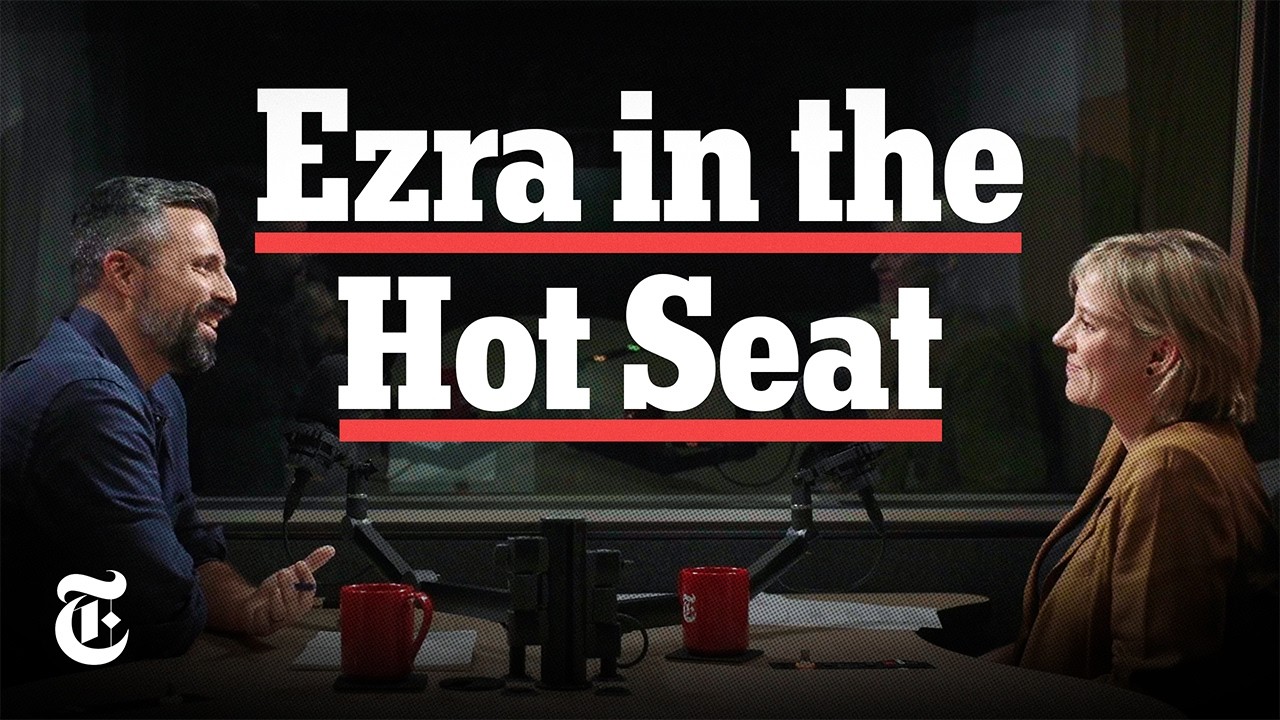
Klein Rebuffs Rufo Spin, Rejects Peter Thiel Secret Society Claims
The Ezra Klein Show
Dismissing right-wing claims of an ideological concession, Ezra Klein argues Democrats caused their own political backlash by treating basic public demands for orderly borders and campus free speech as illegitimate.
Ezra Klein rejects Chris Rufo's framing of his immigration comments as a concession, noting he has argued for years that rapid demographic change—such as the U.S. foreign-born population rising from ~4.5% in the 1970s to ~15% today—naturally provokes community disquiet that mainstream politics must address without conflating it with white nationalism. (10:04)
Klein concedes that critics like Jonathan Haidt were correct about elite campus culture metastasizing into broader institutions, warning that progressives' use of illiberal cultural tactics provoked a ferocious political backlash that undermined durable policy gains. (24:23)
The Democratic Socialists of America (D.S.A.) is distinct from broad-based mass populism, Klein argues, as its base is primarily downwardly mobile, college-educated professionals whose social and foreign policy stances often alienate the non-college working class. (35:11)
Addressing rumors of a Peter Thiel 'secret society,' Klein explains the leaked roster was simply an open 'unconference' named Dialogue that he attended as a reporting exercise, while reiterating that he finds Thiel's anti-democratic political agenda completely reprehensible. (44:26)
Detailed notes
## Background
Published by The Ezra Klein Show on YouTube on August 7, 2026, this episode features executive producer Claire Gordon stepping into the studio to pose audience-submitted questions to Ezra Klein. According to the show description, the discussion tackles whether Klein's stances on cultural issues have evolved, the response to his interview with conservative activist Chris Rufo, the electoral dynamics of the D.S.A., his first singing lesson, and rumors that he belongs to a secret society with Peter Thiel.
## TL;DR
Ezra Klein addresses listener feedback on his interviewing philosophy, firmly rejecting Chris Rufo's assertion that validating public discomfort over rapid demographic change equates to conceding ground to white nationalism. Reflecting on past debates over free speech and affirmative consent, Klein acknowledges that elite campus illiberalism sparked an intense cultural backlash that damaged progressive power-building, while reaffirming his underlying commitment to addressing systemic inequality. He also analyzes why the official platform of the Democratic Socialists of America (D.S.A.) inevitably diverges from the pragmatic, coalitional compromises required when holding governing power. Addressing online rumors, Klein debunks the conspiracy that he belongs to a secret society with Peter Thiel, contrasting abusive elite networks with the vital democratic practice of maintaining cross-ideological civic friendship.
## Atmosphere & style
The studio dynamic is candid, conversational, and intellectually nimble, shaped by playful, deadpan banter between Claire Gordon and Ezra Klein. Gordon acts as an incisive yet teasing interlocutor, pressing Klein on audience critiques, past provocative essays, and internet conspiracy theories with dry humor. Klein responds with genuine self-reflection and analytical nuance, laughing off absurd rumors while soberly unpacking his editorial instincts and ideological missteps. The resulting conversation feels personal, unscripted, and reflective, shifting effortlessly between lighthearted personal anecdotes about music lessons and serious reckonings with democratic culture and political strategy.
## Bulletin
- [10:04](https://www.youtube.com/watch?v=RvFO7bc0u-M&t=604s) Ezra Klein rejects Chris Rufo's framing of his immigration comments as a concession, noting he has argued for years that rapid demographic change—such as the U.S. foreign-born population rising from ~4.5% in the 1970s to ~15% today—naturally provokes community disquiet that mainstream politics must address without conflating it with white nationalism.
- [24:23](https://www.youtube.com/watch?v=RvFO7bc0u-M&t=1463s) Klein concedes that critics like Jonathan Haidt were correct about elite campus culture metastasizing into broader institutions, warning that progressives' use of illiberal cultural tactics provoked a ferocious political backlash that undermined durable policy gains.
- [35:11](https://www.youtube.com/watch?v=RvFO7bc0u-M&t=2111s) The Democratic Socialists of America (D.S.A.) is distinct from broad-based mass populism, Klein argues, as its base is primarily downwardly mobile, college-educated professionals whose social and foreign policy stances often alienate the non-college working class.
- [44:26](https://www.youtube.com/watch?v=RvFO7bc0u-M&t=2666s) Addressing rumors of a Peter Thiel 'secret society,' Klein explains the leaked roster was simply an open 'unconference' named Dialogue that he attended as a reporting exercise, while reiterating that he finds Thiel's anti-democratic political agenda completely reprehensible.
## Key takeaways
- [00:42](https://www.youtube.com/watch?v=RvFO7bc0u-M&t=42s) Klein intentionally avoids learning music production to protect it from his achievement-oriented work habits, preserving it as a rare sphere where he can remain a pure experiencer rather than a creator.
- [03:00](https://www.youtube.com/watch?v=RvFO7bc0u-M&t=180s) Listening to discordant and complex electronic music functions as a creative tool for Klein, helping his nervous system tolerate irresolution and hold contradictory emotions that feed into his journalism.
- [12:32](https://www.youtube.com/watch?v=RvFO7bc0u-M&t=752s) Mainstream political contestation over the speed of demographic change is a legitimate, universal social reality, but it must be clearly delineated from white nationalist conspiracies that argue for ethnic hierarchy.
- [14:52](https://www.youtube.com/watch?v=RvFO7bc0u-M&t=892s) The Democratic Party committed a severe strategic error during the 2020 primary cycle by treating voters' basic demand for orderly borders and institutions as morally suspect.
- [17:08](https://www.youtube.com/watch?v=RvFO7bc0u-M&t=1028s) Klein's interviewing philosophy rejects didactic, moralizing interruptions, choosing instead to trust listeners to evaluate guests' worldviews through the overarching arc of the conversation.
- [21:05](https://www.youtube.com/watch?v=RvFO7bc0u-M&t=1265s) Klein acknowledges past blind spots regarding speech suppression, admitting that non-governmental social shaming and corporate cancel behavior had chilling consequences he initially downplayed.
- [28:03](https://www.youtube.com/watch?v=RvFO7bc0u-M&t=1683s) Progressive activism often becomes distorted within algorithmic online discourse holes, prioritizing performative moral outrage over assembling the broad electoral majorities needed to govern.
- [31:40](https://www.youtube.com/watch?v=RvFO7bc0u-M&t=1900s) Revisiting his 2014 affirmative consent essay, Klein maintains that campus sexual misconduct required urgent institutional overhaul, though balancing legal clarity with the messy ambiguities of human intimacy remains an ongoing challenge.
- [35:11](https://www.youtube.com/watch?v=RvFO7bc0u-M&t=2111s) The most potent contemporary electoral model combines economic populism with cultural moderation, contrasting sharply with ideological leftism's focus on polarizing academic and foreign policy positions.
- [39:18](https://www.youtube.com/watch?v=RvFO7bc0u-M&t=2358s) Elected D.S.A. officials govern far more pragmatically than their national platform indicates, constrained by legislative coalitions, filibusters, and the economic necessity of preserving municipal tax bases.
- [42:12](https://www.youtube.com/watch?v=RvFO7bc0u-M&t=2532s) High-visibility statements by socialist officials—such as rhetoric surrounding international arrests—pose far greater political liability for Democrats than radical bullet points on activist websites.
- [44:26](https://www.youtube.com/watch?v=RvFO7bc0u-M&t=2666s) The Dialogue unconference was not a coordinated cabal, but a cross-industry gathering that Klein eventually stopped attending as the atmosphere curdled into performative tech-right grievance.
- [50:34](https://www.youtube.com/watch?v=RvFO7bc0u-M&t=3034s) Cross-ideological dialogue and civic friendship are essential democratic practices, distinct from corrupt networks like Jeffrey Epstein's that exist to shield abuse and trade illicit access.
- [53:39](https://www.youtube.com/watch?v=RvFO7bc0u-M&t=3219s) Klein holds no secret alliance with Peter Thiel, emphasizing that his own political worldview is functionally polar opposite to Thiel's views on democracy, capitalism, Palantir, and MAGA politics.
## Detailed walkthrough
### [00:00](https://www.youtube.com/watch?v=RvFO7bc0u-M&t=0s) Opening Banter and the Peter Thiel Tease
Executive producer Claire Gordon steps into the studio for an "Ask Me Anything" episode, having gathered and distilled listener submissions into sharp prompts for Ezra Klein. Stepping in front of the microphone feels distinctly "uncomfortable," Gordon jokes, though she quickly teases the high-interest items on the docket, including the perennial internet rumor that Klein belongs to an elite "secret society" alongside tech billionaire Peter Thiel. Klein laughs off the premise, anticipating the later breakdown of when he has actually spoken to Thiel and what was said.
---
[00:42](https://www.youtube.com/watch?v=RvFO7bc0u-M&t=42s) Musicianship, Singing Lessons, and Pure Appreciation
The conversation opens with a question from a listener named Scott K., who observes Klein’s unusually deep, non-passive engagement with electronic music and asks whether Klein has ever pursued musicianship himself, how music shapes his work, and why he feels drawn to that particular sonic world. Klein admits that while musicianship has never been a major calling, he recently took a singing lesson for the first time in his life. For someone who makes a living speaking into a microphone, Klein reflects that his voice was a profound source of insecurity growing up. He assumed he was tone-deaf and entirely incapable of holding a pitch, but the lesson proved he could actually match notes. Klein also briefly played the flute as a child and attempted to learn the acoustic guitar as an adult while living in Washington, D.C., an effort derailed when his instructor repeatedly failed to show up due to hangovers.
Klein explains that he deliberately avoids learning how to produce electronic music because he wants to protect it from his own workaholic tendencies. His podcast has a habit of "colonizing" everything he loves: if he reads an extraordinary novel, his instinct is to turn it into an episode by booking the novelist. Because so much of his mental energy is oriented around achievement, productivity, and self-criticism, he feels a psychological need for spaces where he can remain purely an "experiencer" rather than a "creator."
---
[03:00](https://www.youtube.com/watch?v=RvFO7bc0u-M&t=180s) Ezra's Love of Electronic Music and Contrasting Emotions
Elaborating on his musical tastes, Klein highlights an album by producer Four Tet released under an unpronounceable text alias made up of Wingdings symbols. The project is virtually unsearchable on streaming platforms unless searched by Four Tet's name—prompting Gordon to joke that the cryptic symbols must signify that "9/11 was an inside job" or that Klein and Peter Thiel really are running a covert cabal. Klein reflects on interviews he conducted with Wilco frontman Jeff Tweedy (discussing the track "Impossible Germany") and ambient pioneer Brian Eno (discussing "Come On," his collaboration with Fred again..). In both instances, Klein discovered that his intense, visceral interpretation of the music was completely disconnected from the artists' original creative intent—a discrepancy he finds deeply beautiful.
```mermaid
flowchart TD
accTitle: Music's Functional Role in Klein's Creative Process
accDescr: Diagram illustrating how ambient and discordant electronic music feeds into Klein's writing and interviewing process.
subgraph ListeningModes["Modes of Listening"]
A["Soothing / Ambient<br/>(e.g., Ólafur Arnalds)"]
B["Discordant / Complex Electronic<br/>(e.g., Four Tet)"]
end
subgraph InternalEffects["Emotional & Nervous Processing"]
C["Regulates nervous system & eases anxiety"]
D["Forces Klein to hold opposing emotional states"]
end
subgraph Output["Creative Application"]
E["Infuses journalism with nuance,<br/>tension, and contradictory feelings"]
end
A --> C
B --> D
C --> E
D --> E
```
Rather than analyzing music until it is pinned down "like a butterfly to a board," Klein prefers art that leaves feelings illegible. He does not listen to music to feel conventional happiness. Much of what he plays is discordant, challenging, and textured—leading Gordon to comment on hearing abrasive sounds blasting from his laptop on mundane Tuesday afternoons ("That's a choice of vibe"). Aside from soothing, melancholic neoclassical compositions like those of Ólafur Arnalds, Klein relies on complex electronic tracks to help his mind hold contradictory emotional states simultaneously:
- **Artistic purpose:** Klein uses music to evoke emotions he struggles to access naturally, infusing his writing with tension, anxiety, beauty, and hope.
- **Auditory processing:** Soothing tracks calm his nervous system, while discordant tracks train his focus to tolerate irresolution and ambivalence.
- **Creator vs. listener divide:** He treats the subjective experience of a listener as inherently separate from whatever the musician meant, viewing that boundary as essential to personal aesthetic enjoyment.
---
[06:54](https://www.youtube.com/watch?v=RvFO7bc0u-M&t=414s) Feedback on the Chris Rufo Episode and the "Great Replacement" Clip
Gordon shifts the discussion to the massive, highly polarized feedback generated by Klein’s interview with conservative activist and culture warrior Christopher Rufo. She introduces a detailed question from a listener named Jason, who followed up on the broadcast by listening to Rufo's own show, *Rufo & Lomas*. Jason noticed that Rufo interpreted his exchange with Klein in a way that seemed completely detached from the actual dialogue, framing Klein's remarks as a historic establishment concession.
Gordon plays two audio recordings illustrating the divergence. The first is an excerpt from the original Klein-Rufo interview, in which Klein described Tucker Carlson as a white nationalist and Rufo asked Klein to define the term:
> **Ezra Klein:** "In some versions, we are talking about something I would describe primarily as a kind of nationalism, right? The—you know, if you have too much of a country not sharing a common heritage, you lose solidarity. In some cases, we're talking about something much darker than that. Right? There are people just don't like the way their community is changing, and there's the KKK. Right? Everything exists on a spectrum."
>
> **Chris Rufo:** "But would you say someone who is, like, for example, hesitant about rapid, large-scale demographic change is just a kind of 1% white nationalist? Yeah, because that would be like the majority of the country."
>
> **Ezra Klein:** "Yes, I don't think it is a problem or unfair or even wrong to worry about large-scale rapid demographic change."
Gordon then plays Rufo's retrospective analysis on his own podcast, where Rufo argued that a prominent voice from *The New York Times* acknowledging the validity of demographic concerns represented a major collapse of left-wing orthodoxies:
> **Chris Rufo:** "A couple years ago, you would not hear a prominent New York Times voice saying that it is totally legitimate, reasonable, and understandable to be concerned about large-scale rapid demographic change. I mean, you know, that was a right-wing talking point for many years, and the left-wing criticism was that was the great replacement theory, that was white nationalism, that was KKK-style white supremacy. And so, is this a concession? Is this going to be the left's kind of moderate left's or the establishment left's new position moving forward?"
Gordon notes that the episode of *Rufo & Lomas* was marketed with provocative framing, titled *"Ezra Klein admits the New York Times was wrong on woke"* and split into YouTube chapters titled *"Ezra Klein's great replacement moment"* and *"what Ezra now admits was once branded white nationalism."* Jason asks whether Klein engages with guests after the fact when they clearly misrepresent his positions on their platforms. Klein begins his answer by noting flatly: "I don't for the most part."
[10:04](https://www.youtube.com/watch?v=RvFO7bc0u-M&t=604s) Dissecting Agitprop and the Reality of Demographic Change
Ezra Klein addresses the aftermath of his interview with conservative activist Chris Rufo, emphasizing that he is not shocked Rufo immediately spun their conversation for political leverage. Klein notes that Rufo openly identifies as a propagandist, and their interview explicitly began with a discussion of Rufo's use of "agitprop." Throughout their exchange, Klein sought to unspool Rufo’s methods, highlighting how such tactics misrepresent reality and ultimately degrade the political party Rufo seeks to influence. Given that context, Klein remarks that no one should be astonished when an admitted propagandist responds to an interview by cherry-picking whatever sound bites he can weaponize. However, Klein was genuinely surprised that Rufo—and several online commentators—treated Klein's observations about the political impact of immigration as some sort of ideological concession.
Klein underscores that his perspective on immigration has been consistent for many years, forming a core argument in his book *Why We're Polarized* and in long-form essays such as "White Threat in a Browning America." He has repeatedly argued that public debates over immigration are frequently sanitized into narrow economic disputes when they are fundamentally rooted in psychological and cultural discomfort with rapid demographic change. Demographically, the United States has undergone a massive transformation within a single generation: the foreign-born share of the population rose from roughly 4% to 4.5% in the 1970s to approximately 15% today, shifting from a historic low to an all-time high. In Klein’s analysis, rapid changes in who lives in a community are inherently destabilizing and have served as the primary engine propelling Donald Trump’s political movement.
Crucially, Klein insists that having opinions about the composition and pace of change in one's community is a "normal, constant and legitimate dimension of politics in a nation." He adamantly separates that reality from the "Great Replacement" theory, which he identifies as an overtly white nationalist ideology. In his interview, Klein’s core critique of Rufo was that Rufo spent years playing "footsie with Tucker Carlson" while Carlson was actively broadcasting replacement narratives on prime-time television, only for Rufo to feign shock years later that Carlson and the conservative movement had evolved into a conspiratorial, racialist faction.
```mermaid
flowchart TD
accTitle: Delineation of Immigration Politics
accDescr: Diagram illustrating Ezra Klein's distinction between legitimate public concerns over demographic change and white nationalist conspiracy theories.
subgraph Ordinary["Legitimate Political Contestation"]
A["Rapid Demographic Change<br/>Foreign-born: ~4.5% (1970s) to ~15% (Today)"]
B["Community Disquiet & Disruption"]
C["Mainstream Political Debates<br/>Order, integration, and border enforcement"]
A --> B --> C
end
subgraph Ideology["White Nationalism & Replacement Theory"]
D["Ethno-Nationalist Axiom<br/>White people as exclusive builders/inheritors"]
E["Racial Hierarchy<br/>Outsiders framed as culturally/genetically inferior"]
F["Conspiratorial Politics<br/>Elite plot to dilute and replace population"]
D --> E --> F
end
Ordinary -.->|"Radicalized through agitprop & conspiracy"| Ideology
```
---
[12:32](https://www.youtube.com/watch?v=RvFO7bc0u-M&t=752s) Delineating Normal Politics from White Nationalism
Executive producer Claire Gordon steps in with a listener question from Jason, noting a disagreement over Rufo’s characterization. Jason argued that Rufo was not claiming Klein endorsed the Great Replacement theory, but rather that Klein was openly conceding what conservatives had argued for years—only for those conservatives to be branded as white nationalists by mainstream media and the left. Klein acknowledges the ambiguity in what Rufo was attempting to attribute to him, but firmly rejects the premise that mainstream disquiet over immigration must be equated with white nationalism.
Klein argues that noticing community changes and having strong opinions about them is a universal feature of human societies. If commentators or progressives brand that basic human observation as inherently racist, they render legitimate political contestation "politically unsayable," which Klein considers a completely unviable way to conduct politics. However, he draws a bright, unyielding line between acknowledging community changes and adopting white nationalism. In Klein's definition, white nationalism makes explicit, essentialist assertions: that white people are the exclusive builders and rightful inheritors of society, that arriving immigrants are genetically or culturally inferior, and that a nation will collapse unless it remains dominated by an ethnic European majority.
- **The necessity of delineation:** Klein insists that both the political left and right must maintain clear definitions; without distinguishing legitimate concerns from white nationalism, the right renders itself completely incapable of policing extremist racial doctrines within its own ranks.
- **The right's rhetorical trap:** By claiming that any mainstream critique of demographic change is identical to their own rhetoric, conservatives erase the very boundary that allows society to identify and condemn explicit racism.
---
[14:52](https://www.youtube.com/watch?v=RvFO7bc0u-M&t=892s) The Democratic Party's Blind Spot on Immigration and Order
When Gordon asks why Rufo would feign surprise at an argument Klein has articulated publicly for nearly a decade, Klein declines to speculate on Rufo's personal mindset, noting his policy of avoiding post-interview arguments with guests once they leave the studio. Instead, Klein diagnoses the broader political backdrop: the Democratic Party's sharp leftward lurch during the 2020 primary cycle. During those debates, candidates were pressed on national television—sparked by Julián Castro's advocacy—to raise their hands in support of decriminalizing unauthorized border crossings. While many Democratic leaders likely shared Klein's view privately, they refused to confront progressive activists who were conflating common-sense border regulations with racism.
Klein explains that while Democrats were entirely justified in their moral fury over Donald Trump’s family separations and border cruelties, parts of the progressive coalition committed a grave strategic error by implying that ordinary Americans' desire for border security was inherently suspect. The fundamental failure of the left in 2020 was underestimating the public's deep-seated need for basic order:
> "Order is very, very important to people. And if what they feel is that when you are in power the world is disordered, that prices are out of control, that all of a sudden there are migrants everywhere, you know, on the subways in New York selling candy and—putting aside how much immigration there is—is it orderly? Is the border like controlled?"
Klein stresses that when voters perceive that institutions have lost control of basic processes, their political backlash is swift, sweeping aside nuanced economic justifications.
---
[17:08](https://www.youtube.com/watch?v=RvFO7bc0u-M&t=1028s) Interviewing Philosophy: Pushback, Didacticism, and Trusting the Audience
Gordon pivots to critical feedback from listeners, citing a question from Matthew W. regarding Klein’s interview style: how does an interviewer decide, in real time, when to aggressively challenge a guest versus letting a questionable claim slide? Gordon observes that the Rufo episode ran for two full hours and yielded sharply divided audience reactions, with some listeners feeling Klein should have mounted a stronger, point-by-point resistance to Rufo's narrative.
Klein outlines his core interview philosophy, explaining that he approaches conversations with a broad structural arc designed to test ideas rather than win immediate debate points. He aims to let guests speak freely so listeners can evaluate their worldviews firsthand:
- **Criteria for pushing back:** Klein intervenes when a guest's position remains unclear, when an assertion has not yet been substantively tested, or when pressing further clarifies the central tension of the episode.
- **Avoiding conversational dead ends:** Klein chooses not to derail an interview into a 25-minute factual skirmish over secondary points if doing so prevents the conversation from reaching its primary destination.
- **Rejecting didactic journalism:** Klein criticizes the modern media landscape—particularly social media platforms like X (Twitter)—for conditioning audiences to expect didactic lectures where a host constantly reassures the listener by intervening to declare, "And just to be clear, what you just heard is bad."
Klein emphasizes that his podcast is intentionally structured as a space for listeners to think for themselves, not a vehicle for moral instruction. When he wants to persuade or deliver definitive conclusions, he writes columns, publishes books, or records solo essays. For long-form interviews, he places immense trust in his audience's discernment. In the case of the Rufo episode, Klein believes that following the full arc through the topics of institutional corruption and the rise of the conspiratorial right successfully exposed the internal contradictions of Rufo's worldview, creating an illuminating piece of journalism regardless of whether individual listeners agreed with every editorial choice.
[20:16](https://www.youtube.com/watch?v=RvFO7bc0u-M&t=1216s) The Philosophy of Interviewing and Tyler Cowen’s Rule
Ezra Klein wraps up his reflection on interviewing controversial figures by quoting economist and podcaster Tyler Cowen, who used to introduce episodes with a revealing caveat: "This is a conversation I want to have with this person, not necessarily the conversation you want me to have with this person." Klein acknowledges the deep truth in that outlook. While some interviews can go completely off the rails or morph into something entirely different from what was anticipated, he feels that was not the case with his recent interview. Rather than going point by point to dictate how listeners ought to evaluate the episode, he prefers to let the conversation stand on its own terms.
[21:05](https://www.youtube.com/watch?v=RvFO7bc0u-M&t=1265s) Re-evaluating "Wokeness," Free Speech, and Cultural Power
Executive producer Claire Gordon reads a question from long-time listener Kevin T., who has followed Klein since his Vox days. Kevin notes that while he is ideologically closer to thinkers like Sam Harris and stands to Klein’s right, he respects Klein’s good faith. He asks whether Klein has re-evaluated any of his more "woke" positions from the past five to ten years—pointing specifically to Klein’s high-profile clash with Sam Harris and an infamous Vox piece from the #MeToo era about affirmative consent, which Kevin interprets as suggesting false accusations against men might be acceptable collateral damage if they lead to social progress. Klein immediately quibbles with that characterization, clarifying that the article was specifically examining college affirmative consent frameworks and that he never believed falsely accusing people was a good thing.
Addressing the broader perception that his politics have shifted dramatically, Klein maintains that his underlying principles have not changed nearly as much as people assume, though his points of emphasis have. Looking back, he identifies two significant blind spots he had during the height of the mid-2010s discourse:
* **Dismissal of Non-Governmental Speech Suppression:** Klein frequently leaned on the conventional civil-libertarian distinction that there is no First Amendment right to algorithmic amplification on platforms like Twitter or Facebook, arguing that cultural pushback did not matter as much if it did not involve state policy or the formal legal code.
* **Cancel Culture vs. Cancel Behavior:** While Klein always viewed "cancel culture" as a poorly defined catchphrase, he recognized "cancel behavior"—actions aimed at stripping people of their livelihoods. At Vox, he points out, no employee was ever fired for speech during his tenure.
* **The Hypocrisy of Right-Wing Free Speech Rhetoric:** Klein emphasizes that much of the debate was fundamentally about power rather than pure principle. He argues the Trump administration vindicated this analysis by claiming to champion free speech while aggressively wielding state power to chill dissent, frighten institutions, punish critics, and deport people far beyond anything Democrats attempted.
[24:23](https://www.youtube.com/watch?v=RvFO7bc0u-M&t=1463s) Campus Illiberalism, the Haidt Debate, and Radicalizing Backlash
Klein admits that critics of progressive campus culture—most notably social psychologist Jonathan Haidt, with whom Klein debated during his Vox years—were far more prescient than he realized at the time. When debates erupted over student protests and speech policing at elite institutions like Yale, Klein’s instinct had been dismissive: "Like I just don't want to hear that much about what happens at Yale." Haidt countered that elite campus culture would inevitably metastasize because colleges train the next generation of political staffers, institutional leaders, and journalists. Klein now concedes that this spillover effect was completely real. Furthermore, the wielding of heavy-handed cultural power produced a ferocious backlash that arguably wiped out many hard-won gains, actively radicalizing people through humiliating or punitive encounters on social media platforms that Klein had previously brushed off as irrelevant "cesspools."
At the same time, Klein insists he has not abandoned the moral core that made him sympathetic to these movements in the first place:
* **Enduring Structural Realities:** Klein reiterates his belief that systemic racism is real and that American society remains profoundly unequal in foundational ways that have yet to be resolved.
* **The Failure of Affirmative Consent Policies:** The pre-existing sexual assault equilibrium was intolerable, characterized by rampant, unpunished violence and trauma against women without institutional recourse. While affirmative consent rules attempted to alter that dynamic, they failed to find a functional, fair equilibrium—illustrating how difficult it is to redesign flawed social structures without creating new structural dysfunctions.
* **The Peril of Illiberal Means:** Klein concludes that using illiberal mechanisms to engineer liberal social outcomes—even when enacted through social pressure rather than state coercion—perils far more than its proponents anticipate.
```mermaid
flowchart TD
accTitle: The Mechanics of Cultural Backlash
accDescr: A diagram illustrating how campus illiberalism generated political backlash and radicalization.
subgraph Catalyst ["Initial Problem & Reaction"]
A["Severe Structural Harms<br/>(e.g., Sexual Assault & Systemic Inequality)"] --> B["Illiberal Cultural Mechanisms<br/>(Campus rules, social shaming, speech policing)"]
end
subgraph Spillover ["Institutional Spillover"]
B --> C["Export Beyond Elite Spaces<br/>(Graduates enter media, NGOs, and government)"]
end
subgraph UnintendedConsequences ["The Backlash Loop"]
C --> D["Intense Cultural Backlash &<br/>Online Radicalization"]
D --> E["Political Losses Wiping Out Initial Gains"]
end
```
[28:03](https://www.youtube.com/watch?v=RvFO7bc0u-M&t=1683s) Algorithmic Discourse Holes vs. Building Electoral Power
When Claire Gordon points out that 2014 was defined by powerful progressive tailwinds where fine-grained policy arguments felt live and actionable, Klein contrasts that with today's political reality. He views his career as a continuous attempt to make concrete progress on a steady set of core issues. When a particular tactical framework fails—especially when it fails catastrophically at the ballot box—he argues it is foolish not to interrogate the causes of that failure and adjust strategy accordingly.
Klein laments that the contemporary political left often confuses genuine power building with performative posturing, a bad habit cultivated in "online algorithmically structured discourse holes." In these spaces, political commitment is wrongly measured by how stridently someone expresses moral disgust rather than whether their approach can assemble an electoral majority. To enact systemic reform, Klein argues Democrats must figure out how to rebuild a big enough tent and brand to win back working-class voters in places where the party used to be competitive, including Iowa, Ohio, Nebraska, Arkansas, and the Dakotas.
[29:55](https://www.youtube.com/watch?v=RvFO7bc0u-M&t=1795s) Learning from Political Failures and the Deranging Power of Online Discourse
Reflecting on the shifting political tides, Ezra Klein argues that when a political project fails to persuade people and leaves the landscape worse than before, its proponents are obligated to re-examine what went wrong and adapt. A healthy politics cannot remain static; it must actively learn from the world, shifting both its emphasis and its operational approach over time. A core driver of modern political dysfunction, Klein stresses, is that our most consequential debates have migrated into fundamentally deranging spaces—platforms like Twitter (now X) that have grown even more disorienting since Elon Musk’s acquisition, as algorithmic feeds replaced organic networks of friends and chosen follows.
Klein views attention as the single most critical capacity human beings bring to democratic politics. What citizens and leaders pay attention to dictates what they see, how they act, and what they believe about their fellow citizens. When the information architecture mediating that attention is warped, our politics is inevitably distorted alongside it. He notes that this dynamic explains the severe excesses across the ideological spectrum: it shaped the missteps of the progressive cultural movement he largely supported in the mid-2010s, just as it now fuels the alarming excesses of the right-wing movements he opposes.
[31:40](https://www.youtube.com/watch?v=RvFO7bc0u-M&t=1900s) Revisiting "Yes Means Yes" and the Ambiguities of Affirmative Consent
Claire Gordon pivots the conversation to Klein's past writing, bringing up his provocative 2014 Vox article titled *"‘Yes Means Yes’ Is a Terrible Law, and I Completely Support It."* Klein laughs, admitting he had no advance warning this piece was on the agenda and hasn’t read it in many years. Gordon reads back the essay's most controversial line: Klein had argued that with one in five women reporting attempted or completed sexual assault, campus sexual norms needed to be completely upended, to the point where men ought to feel a "cold spike of fear" when beginning a sexual encounter. Klein chuckles self-consciously at the phrase, noting wryly that while things get warped over time, "it's not that I want anybody to feel fear when beginning a sex," though he stands by the gravity of the problem he was wrestling with.
Gordon observes that a massive cultural shift has indeed taken place around consent, manifesting as acute generational anxiety—even inspiring pop culture like recent Gen Z horror cinema that treats consent anxiety as supernatural dread—while a ten-university study including Harvard and Yale found significant drops in self-reported campus sexual assaults. Klein remains cautious about crediting affirmative consent legislation specifically, explaining that his original essay was heavily influenced by the raw experiences of people close to him. While the #MeToo movement successfully dragged sexual misconduct into public view and drove positive changes, Klein concedes that the cultural overcorrection produced instances where complex, ambiguous encounters were reflexively treated as the most malicious offenses. Ultimately, he confesses that balancing the urgent need to stop sexual violence with the messy, vulnerable ambiguities of human intimacy remains an immensely difficult, unresolved problem.
[35:11](https://www.youtube.com/watch?v=RvFO7bc0u-M&t=2111s) Left-Wing Populism vs. MAGA and the True Base of the D.S.A.
Turning to a listener question from Jobin S. about whether the Democratic Socialists of America (D.S.A.) and MAGA are simply two different aesthetic flavors of anti-establishment populism, Klein pushes back on conflating the D.S.A. with populism as a whole. Many high-profile left-leaning challengers—such as Graham Platner or Abdul El-Sayed in Michigan—are not actually D.S.A. candidates. While classical populism defines politics as a struggle between an elite hoarding power and the virtuous masses, right-wing and left-wing variants construct that divide along very different axes:
```mermaid
flowchart TD
accTitle: Divergent Models of Modern Populism
accDescr: A comparison showing how right-wing populism, the Dan Osborne model, and left-wing/DSA politics define their core coalitions.
subgraph RightWing["Right-Wing Populism (MAGA)"]
R1["Nativist Identity"] --> R2["'Real Americans' vs. Corrupt Cultural Elites"]
end
subgraph Osborne["Culturally Moderate Populism"]
O1["Dan Osborne Model (Nebraska)"] --> O2["Economic Populism + Cultural Moderation"]
end
subgraph LeftDSA["Leftism / D.S.A."]
L1["Elite Academic Ideas"] --> L2["Downwardly Mobile, Highly Educated Base"]
L3["Universal Class Rhetoric"] --> L4["Friction with Non-College Working Class"]
end
```
Klein points out that the most electorally potent formula in contemporary politics is economic populism paired with cultural moderation—epitomized by independent candidate Dan Osborne's dramatic overperformance in deep-red Nebraska. By contrast, the D.S.A. and ideological leftism incorporate stances on foreign policy (such as Israel-Gaza), climate, and social issues that stem from elite intellectual currents and actively alienate working-class voters. Rather than sweeping non-college-educated blue-collar districts, the D.S.A.'s actual electoral sweet spot is concentrated among downwardly mobile, college-educated professionals. As a result, Klein argues, what is often labeled as the D.S.A. insurgency is not pure mass populism, but classical ideological leftism.
[38:02](https://www.youtube.com/watch?v=RvFO7bc0u-M&t=2282s) The Disconnect Between the D.S.A. Platform and Governing in Office
Listener Sarah V. asks how to make sense of the glaring divergence between the official D.S.A. national platform—which advocates for radical goals like open borders, defunding the police, and abolishing prisons—and the pragmatic, effective governing style of elected D.S.A. figures like New York State Assembly Member Zohran Mamdani. Sarah notes that while she aligns with a Bernie Sanders-style progressivism and appreciates watching Mamdani govern, his actual record looks nothing like his organization's official tenets.
Klein responds by highlighting the peculiar, decentralized structure of the D.S.A., revealing that parsing "who speaks for the D.S.A." is an endless, tedious debate even inside the podcast's own Slack channels. National platform resolutions often represent the consensus of internal activist factions rather than a practical roadmap for governance. The true test of these politicians is what happens when they actually achieve power. Once elected to state assemblies, city councils, or the U.S. Congress, D.S.A.-affiliated officials are forced to govern coalitionally with broader party factions, immediately tempering theoretical dogma into negotiated legislative reality.
[39:18](https://www.youtube.com/watch?v=RvFO7bc0u-M&t=2358s) Ideology vs. Power: How Democratic Socialists Actually Govern
Reflecting on how left-wing officials operate once they enter government, Ezra Klein observes that passing legislation, executive orders, or regulations requires navigating a system where colleagues rarely share all of one's convictions. While nobody knows what someone like New York State Assembly member Zohran Mamdani would do with absolute, king-like authority, his practical record in office does not look substantially different from what any standard liberal primary winner would have pursued. Although Mamdani supported a tax on pricey second homes and openly favors higher taxes on the wealthy, he has simultaneously engaged in cautious private and semi-public outreach to investment bankers and New York City's business elite. Klein emphasizes that Mamdani understands running those figures out of the city would dry up tax revenues and cause the rest of his agenda to collapse immediately, making his tenure far less of a sharp break from predecessors like Bill de Blasio than ideological rhetoric suggests.
```mermaid
flowchart TD
accTitle: Ideology Versus Governing Power
accDescr: Diagram illustrating how legislative realities constrain left-wing political ideals into pragmatic policy compromises.
subgraph Ideals ["Aspirational Goals"]
I1["Medicare for All"]
I2["Sweeping Wealth Taxes"]
end
subgraph Governance ["Pragmatic Outcomes"]
G1["Lower Medicare Age to 60 & Expand Coverage"]
G2["Targeted Taxes on Second Homes & Business Outreach"]
end
I1 --> C1 --> G1
I2 --> C2 --> G2
```
Klein sees a similar dynamic in Bernie Sanders. When former Sanders campaign manager Faiz Shakir appeared on the podcast, he candidly admitted their team knew from the outset that an administration could not immediately pass Medicare for All. Instead, governing pragmatism dictated fighting for intermediate steps: lowering the Medicare eligibility age from 65 to 60, or expanding coverage to include dental, vision, hearing, and home care. Klein finds it frustrating when leftists fail to see that this give-and-take between ideology and institutional power governs mainstream liberals too. When critics look at Barack Obama's record and assume it represents the full scope of his ambitions, they overlook the constraints of a Senate locked in filibusters; if Obama had wielded royal power, his policies would have looked vastly more expansive. Klein views this ongoing friction between ideological aspirations and governing realities as both inevitable and healthy.
- **Governing pragmatism:** Zohran Mamdani's practical approach mirrors broad liberal governance, marked by business-elite outreach to protect municipal tax bases while instituting targeted luxury property taxes.
- **Faiz Shakir's admission:** Bernie Sanders's team entered presidential politics understanding that executive power meant compromising on incremental expansions—such as dental, hearing, vision, and lowering the Medicare threshold—rather than immediate systemic replacement.
- **The institutional mirror:** Mainstream liberal presidents like Barack Obama face identical legislative constraints under the filibuster, meaning enacted laws reflect political possibilities rather than personal ideals.
---
[42:12](https://www.youtube.com/watch?v=RvFO7bc0u-M&t=2532s) The DSA Platform and Political Weaponization
Claire Gordon questions whether the radical platform items hosted on the Democratic Socialists of America (DSA) website pose an active liability for down-ballot Democrats if those policies are never translated into law. Klein expresses skepticism that national Republicans can successfully weaponize an organizational website against moderate candidates in general elections. He doubts, for instance, that running attack ads in North Carolina linking Roy Cooper to esoteric bullet points on the DSA website will resonate with voters, because the public broadly recognizes the DSA as an independent faction distinct from the mainstream party.
Where the vulnerability actually lies, Klein argues, is in the high-profile statements and concrete legislative maneuvers of prominent DSA-aligned officeholders. If newly elected socialist members of Congress sponsor bills to abolish police departments or prisons and force floor votes, that will allow opponents to define the party by its left flank. Klein points to Mamdani's direct-to-camera video calling on the federal government to join the International Criminal Court (ICC) and enforce an arrest warrant against Benjamin Netanyahu—announcing that Netanyahu and other "war criminals" are not welcome in New York City. That stance creates a genuine wedge for Republicans against cross-pressured voters who might harbor criticisms of Israel's conduct yet firmly reject the DSA's maximalist foreign policy positions.
- **Website platforms vs. political salience:** The textual platform of the DSA is unlikely to register as a major general-election issue against red- or purple-state Democrats like Roy Cooper.
- **High-visibility wedge issues:** Direct rhetoric—such as Mamdani calling on the federal government to join the ICC and arrest Benjamin Netanyahu—exposes the party to targeted political attacks far more than position papers do.
---
[44:26](https://www.youtube.com/watch?v=RvFO7bc0u-M&t=2666s) The Peter Thiel "Secret Society" Myth and the Dialogue Conference
Gordon introduces a frequent listener question submitted by Amy T., who asks if Klein is a member of a "dialogue group sponsored by Peter Thiel." Klein laughs as he recounts how a hacker on Bluesky posted supposed membership rosters of a "secret society" tied to Thiel. The list gathered a wildly disparate group of figures across politics, business, and entertainment—including Elon Musk, Reid Hoffman, Joseph Gordon-Levitt, Josh Brolin, Julián Castro, Cory Booker, and Klein himself—a roster Gordon dryly dubs a "cool hang." Klein expresses dismay that this conspiracy theory was treated credulously by outlets like *Wired*, explaining that the reality was far more mundane: an unsecret, somewhat banal event known simply as Dialogue.
Klein explains that Dialogue was run as an "unconference"—a familiar format where attendees write discussion topics on a board (ranging from working parenthood and sleep hygiene to the utility of cryptocurrency) and self-organize into sessions, rather than listening to keynote panels. He attended twice, around 2018 and 2022, primarily to report on the tech industry and identify potential podcast guests:
- **Participant profile:** Klein's first gathering was tailored to people under 40, where his favorite conversation was with a left-wing anarchist, rather than tech billionaires.
- **Atmospheric shift:** By his second visit in 2022, Klein found the gathering unappealing, marked by the curdling anger of the emerging tech-right, leading him to abandon the event entirely.
- **Peter Thiel's non-presence:** Although Thiel had been an early co-founder of the conference, he had stepped away before Klein attended; Klein never saw Thiel there or heard from him in connection with it.
- **Journalistic engagement:** Klein clarifies that he would have attended even if Thiel were there. Klein has invited Thiel on the show and conducted off-the-record background reporting meetings with him, arguing that journalists should not refuse to talk to influential public figures.
Klein finds it baffling that observers could believe people with diametrically opposed worldviews—like former Obama cabinet member Julián Castro, who pulled Democrats left on immigration, and Peter Thiel, who funded Donald Trump—were secretly coordinating in a cabal. What Dialogue originally tried to do, Klein concludes, was simply to place people from diverse industries and political perspectives in the same room to talk to one another over a weekend.
[48:57](https://www.youtube.com/watch?v=RvFO7bc0u-M&t=2937s) Elite Networks and the Spectacle of Class Solidarity
Reflecting on the second retreat he attended, Ezra Klein describes its fundamental atmosphere as fractious and thoroughly unpleasant, pointing out that a heavy focus on sharing one's "most unpopular opinion" felt deeply performative. Claire Gordon steps in to articulate why these gatherings provoke such intense suspicion and anger among the public. People often perceive public political conflict as theater: ordinary citizens sit at home watching cable news pundits viciously sparring, unaware that behind closed doors, those same elites are chumming around, sharing private meals, swapping PR advice, and brokering business deals.
Gordon connects this dynamic to an argument made by Anand Giridharadas during a previous episode on Jeffrey Epstein, where files exposed how elite networks operate as a cozy, protected class regardless of their supposed public rivalries. In this view, public ideological war is merely entertainment staged for the masses, while the private reality is mutual elite solidarity and access trading.
- Claire Gordon references the Anand Giridharadas discussion on Jeffrey Epstein as an illustration of how elite social networks reveal a cynical kernel of truth behind closed doors.
- The critique posits that televised political fighting functions primarily as a spectator distraction, whereas elites actually coordinate, exchange deal tips, and introduce one another in private spaces.
---
[50:34](https://www.youtube.com/watch?v=RvFO7bc0u-M&t=3034s) Civic Friendship vs. Conspiratorial Populism
Klein strongly rejects the premise that cross-ideological socialization is fundamentally sinister. While acknowledging that critics are free to condemn corporate and intellectual conferences wholesale, he argues that bringing disparate people together across industries and opposing political camps is a healthy, essential democratic habit. He engages in that very effort publicly on his show by conducting conversations that aim to be honest yet gracious, insisting that "civic friendship, even across real difference, is more than beautiful, it is necessary." He sees genuine utility in facilitating discussions between figures as varied as Ted Cruz, Joseph Gordon-Levitt, and a cybersecurity expert from Microsoft.
Drawing a sharp contrast, Klein argues that the Jeffrey Epstein scandal was abhorrent not because people across ideological lines had dinner, but because it was a transactional network designed to shield and enable a sexual predator. The core problem of the Epstein network was its output, not the mere existence of cross-industry gatherings. Klein critiques both poles of modern discourse: technocratic, professional-class liberals often make the world far too complicated, while conspiratorial populism flattens reality by assuming public enemies are secretly in league. He notes that ideological opponents like himself and Peter Thiel are not slipping into robes to "sacrifice a goat" in private; rather, people act in private much as they do in public, and the ideological chasms are far too wide for any such coordination to take place.
```mermaid
flowchart TD
accTitle: Elite Engagement Models
accDescr: Contrasting genuine conspiratorial networks like Epstein's with healthy cross-ideological civic friendship.
subgraph Problematic ["Abusive Elite Networks"]
A["Epstein Network"] --> B["Protection of Predatory Behavior"]
B --> C["Transactional Cover-Ups"]
end
subgraph Democratic ["Civic Friendship Model"]
D["Cross-Ideological Dialogue"] --> E["Honest, Gracious Engagement"]
E --> F["Democratic Habit & Mutual Understanding"]
end
```
---
[53:39](https://www.youtube.com/watch?v=RvFO7bc0u-M&t=3219s) Disagreements with Peter Thiel and the "Secret Society" Myth
Asked directly to name where he and Peter Thiel diverge, Klein rattles off a sweeping indictment of Thiel's entire worldview, stating that their political agendas are functionally polar opposites:
> "That democracy and freedom and capitalism are incompatible, that Donald Trump should be president, that Palantir should exist in the way that it currently does. Like I find Peter Thiel's functionally his entire agenda reprehensible. That Gawker was a cool website... that Blake Masters should be a senator, that J.D. Vance is a good political actor, like Greta Thunberg is like a correct model to think about the Antichrist. I disagree with Peter Thiel—like his whole agenda is functionally like the opposite of mine. But I will absolutely talk to Peter."
Klein points out the absurdity of the conspiracy that he secretly coordinates with Thiel, noting dryly that he cannot even get Thiel to agree to come on his podcast. He laments the modern internet's information environment, where rumors spiral out of control with no mechanism for correction—noting that just days earlier he was accused online of being a Chinese communist agent. Gordon jokes that being in a secret society would violate *The New York Times* employee handbook anyway, prompting a playful banter about what actually constitutes a secret society: initiation rituals, non-disclosure, and staying marooned on an endless email listserv forever.
---
[55:37](https://www.youtube.com/watch?v=RvFO7bc0u-M&t=3337s) Electronic Music Recommendations
To wrap up the ask-me-anything episode, Gordon asks Klein to recommend three musicians, songs, or albums to listeners. Klein highlights his love for experimental and ambient electronic music:
* **Four Tet** – His text-symbol/Wingdings release (often referred to as *0181* or the symbol tracks).
* **DJ Python** – The hypnotic, strange album *Mas Amable*.
* **Jon Hopkins and Imogen Heap** – Their collaborative track "Reckoning." Klein explains that both have long been personal favorites on their own, making their joint project a release he has listened to constantly.
Gordon lands a final deadpan punchline, comparing the improbable sonic pairing of Jon Hopkins and Imogen Heap to the pairing of Klein and Chris Rufo, drawing laughter from Klein before they sign off.
## Notable quotes
> [06:54](https://www.youtube.com/watch?v=RvFO7bc0u-M&t=414s) In some versions, we are talking about something I would describe primarily as a kind of nationalism, right? The—you know, if you have too much of a country not sharing a common heritage, you lose solidarity. In some cases, we're talking about something much darker than that. Right? There are people just don't like the way their community is changing, and there's the KKK. Right? Everything exists on a spectrum. — Ezra Klein
> [06:54](https://www.youtube.com/watch?v=RvFO7bc0u-M&t=414s) But would you say someone who is, like, for example, hesitant about rapid, large-scale demographic change is just a kind of 1% white nationalist? Yeah, because that would be like the majority of the country. — Chris Rufo
> [06:54](https://www.youtube.com/watch?v=RvFO7bc0u-M&t=414s) Yes, I don't think it is a problem or unfair or even wrong to worry about large-scale rapid demographic change. — Ezra Klein
> [06:54](https://www.youtube.com/watch?v=RvFO7bc0u-M&t=414s) A couple years ago, you would not hear a prominent New York Times voice saying that it is totally legitimate, reasonable, and understandable to be concerned about large-scale rapid demographic change. I mean, you know, that was a right-wing talking point for many years, and the left-wing criticism was that was the great replacement theory, that was white nationalism, that was KKK-style white supremacy. And so, is this a concession? Is this going to be the left's kind of moderate left's or the establishment left's new position moving forward? — Chris Rufo
> [06:54](https://www.youtube.com/watch?v=RvFO7bc0u-M&t=414s) I don't for the most part. — Ezra Klein
> [14:52](https://www.youtube.com/watch?v=RvFO7bc0u-M&t=892s) Order is very, very important to people. And if what they feel is that when you are in power the world is disordered, that prices are out of control, that all of a sudden there are migrants everywhere, you know, on the subways in New York selling candy and—putting aside how much immigration there is—is it orderly? Is the border like controlled? — Ezra Klein
> [17:08](https://www.youtube.com/watch?v=RvFO7bc0u-M&t=1028s) And just to be clear, what you just heard is bad. — Ezra Klein
> [20:16](https://www.youtube.com/watch?v=RvFO7bc0u-M&t=1216s) This is a conversation I want to have with this person, not necessarily the conversation you want me to have with this person. — Tyler Cowen
> [24:23](https://www.youtube.com/watch?v=RvFO7bc0u-M&t=1463s) Like I just don't want to hear that much about what happens at Yale. — Ezra Klein
> [31:40](https://www.youtube.com/watch?v=RvFO7bc0u-M&t=1900s) it's not that I want anybody to feel fear when beginning a sex — Ezra Klein
> [50:34](https://www.youtube.com/watch?v=RvFO7bc0u-M&t=3034s) civic friendship, even across real difference, is more than beautiful, it is necessary. — Ezra Klein
> [53:39](https://www.youtube.com/watch?v=RvFO7bc0u-M&t=3219s) That democracy and freedom and capitalism are incompatible, that Donald Trump should be president, that Palantir should exist in the way that it currently does. Like I find Peter Thiel's functionally his entire agenda reprehensible. That Gawker was a cool website... that Blake Masters should be a senator, that J.D. Vance is a good political actor, like Greta Thunberg is like a correct model to think about the Antichrist. I disagree with Peter Thiel—like his whole agenda is functionally like the opposite of mine. But I will absolutely talk to Peter. — Ezra Klein
## Mentioned
Claire Gordon, Peter Thiel, Chris Rufo, D.S.A., Scott K., Four Tet, Jeff Tweedy, Wilco, Impossible Germany, Brian Eno, Fred again.., Come On, Ólafur Arnalds, Jason, Rufo & Lomas, Tucker Carlson, KKK, The New York Times, Why We're Polarized, White Threat in a Browning America, Donald Trump, Julián Castro, Matthew W., X (Twitter), Tyler Cowen, Kevin T., Sam Harris, Vox, Jonathan Haidt, Yale, ‘Yes Means Yes’ Is a Terrible Law, and I Completely Support It, Jobin S., Graham Platner, Abdul El-Sayed, Dan Osborne, Sarah V., Zohran Mamdani, Bill de Blasio, Bernie Sanders, Faiz Shakir, Barack Obama, Roy Cooper, International Criminal Court (ICC), Benjamin Netanyahu, Amy T., Bluesky, Elon Musk, Reid Hoffman, Joseph Gordon-Levitt, Josh Brolin, Cory Booker, Wired, Dialogue, Anand Giridharadas, Jeffrey Epstein, Ted Cruz, Microsoft, Palantir, Gawker, Blake Masters, J.D. Vance, Greta Thunberg, DJ Python, Mas Amable, Jon Hopkins, Imogen Heap, Reckoning
## Video description
The show’s executive producer, Claire Gordon, joins me in the studio to ask me your questions. Topics include: whether my views on “woke” issues have changed; the feedback we got on our episode with Chris Rufo; the D.S.A. insurgency; my first singing lesson; and the story that I’m in a “secret society” with Peter Thiel. Thank you to everyone who sent in questions; we read them all and wish we’d been able to get to more of them!
[00:03:00] Ezra's love of electronic music
[00:06:54] Rufo's interpretation
[00:09:32] Ezra's long-held views on immigration
[00:14:20] Delineating white nationalism
[00:16:50] When to push back on guests
[00:21:05] Have your "woke" positions changed?
[00:25:13] Systemic issues and core beliefs
[00:28:05] Learning from political failures
[00:31:00] The deranging effect of online discourse
[00:34:33] Populism in the Democratic Party
[00:37:00] D.S.A.'s platform vs. elected actions
[00:44:15] The Peter Thiel "secret society"
[00:49:30] Elite networks and civic friendship
[00:55:30] Music recommendations
Read the full transcript here: https://www.nytimes.com/2026/08/07/opinion/ezra-klein-podcast-ask-me-anything-aug-2026.html
Watch more on @EzraKleinShow
Thoughts? Guest suggestions? Email us at ezrakleinshow@nytimes.com.
You can find transcripts (posted midday) and more episodes of “The Ezra Klein Show” at nytimes.com/ezra-klein-podcast. Book recommendations from all our guests are listed at https://www.nytimes.com/article/ezra-klein-show-book-recs.html
克莱恩驳斥 Rufo 歪曲言论,否认加入 Peter Thiel 秘密会社
Ezra Klein 驳斥了右翼关于其做出意识形态让步的说法,指出民主党人将公众对有序边境和校园言论自由的基本诉求视为不合理,反而自食其果引发了政治反弹。
Ezra Klein 就其采访理念回应了听众反馈,坚决反对 Chris Rufo 的说法,即承认公众对人口结构急剧变化的不安等同于向白人民族主义让步。在回顾以往关于言论自由和积极同意机制的争论时,Klein 承认精英校园的反自由主义做法引发了强烈的文化反弹,损害了进步派的力量建设,同时他也重申了自己解决系统性不平等的根本立场。他还分析了为什么美国民主社会主义者(D.S.A.)的官方纲领必然与执政所需的务实妥协及联盟建设产生分歧。针对网络传言,Klein 澄清了所谓他与 Peter Thiel 同属一个秘密会社的阴谋论,并将权力被滥用的精英网络与维系跨意识形态公民友谊这一至关重要的民主实践进行了对比。
Ezra Klein 驳斥了 Chris Rufo 将其移民言论定性为“让步”的定调,指出他多年来始终认为,急剧的人口结构变化(例如美国外国出生人口从 20 世纪 70 年代的约 4.5% 升至如今的约 15%)必然会引发社区不安,主流政治必须正视这一诉求,而非将其与白人民族主义混为一谈。 (10:04)
Klein 承认 Jonathan Haidt 等批评者关于精英校园文化向更广泛机构扩散的判断是正确的,并警告称,进步派采用反自由主义文化手段引发了猛烈的政治反弹,削弱了本可持久的政策成果。 (24:23)
Klein 认为,美国民主社会主义者(D.S.A.)与广泛的群众民粹主义有所不同,其基本盘主要是向下流动的大学学历专业人士,他们的社会和外交政策立场往往会疏远未读过大学的工人阶级。 (35:11)
针对有关 Peter Thiel “秘密会社”的传闻,Klein 解释称泄露的名册只是一场名为 Dialogue 的开放式“非正式会议”,他参会仅为履行记者职责,同时他重申 Thiel 的反民主政治议程完全不可接受。 (44:26)
Reading summary
Ezra Klein argues that durable political power requires separating legitimate public concerns from ideological extremism, acknowledging where progressive cultural tactics produced damaging backlash, and maintaining cross-ideological dialogue despite conspiratorial media incentives.
Demographic Concerns Versus White Nationalist Ideology (10:04)
Addressing the reaction to his interview with conservative activist Christopher Rufo, Klein rejects the claim that acknowledging the disruption of immigration amounts to validating the "Great Replacement" theory. Klein notes that the foreign-born share of the U.S. population increased from roughly 4% to 4.5% in the 1970s to approximately 15% today. In his view, public discomfort with rapid community change is a normal, constant feature of democratic politics rather than an inherently racist sentiment. However, Klein draws a strict boundary between ordinary disquiet over social order and white nationalism, which explicitly relies on racial hierarchies, claims of European ethnic entitlement, and theories of elite replacement plots.
Klein also articulates his interview philosophy, explaining that he avoids didactic interruptions or chasing conversational rabbit holes when an interlocutor like Rufo uses agitprop. Instead, Klein structures interviews to test the guest's underlying worldview over an entire arc, trusting the audience to recognize contradictions rather than constantly telling listeners how to react.
Campus Illiberalism and Progressive Cultural Backlash (24:23)
Reflecting on debates over free speech and his past writing on affirmative consent, Klein concedes that critics of progressive campus culture, such as social psychologist Jonathan Haidt, were prescient. Haidt warned that speech policing and illiberal norms at elite universities would spill over into institutions like media, advocacy groups, and government. Klein agrees that this migration occurred and provoked a fierce political backlash, driving online radicalization and wiping out policy gains. While standing by the need to confront systemic racism and sexual assault, Klein argues that using illiberal means to engineer liberal social outcomes reliably generates unsustainable instability.
Klein attributes this strategic failure in part to algorithmic media platforms like X, which incentivize performative moral disgust rather than majority-building. To regain national governing power, Klein insists the political left must move past insular discourse and assemble broad-tent coalitions capable of winning back working-class voters in states such as Iowa, Ohio, and Nebraska.
Ideological Leftism Versus Institutional Governance (35:11)
Analyzing the Democratic Socialists of America (D.S.A.), Klein distinguishes classical leftism from broader populism. While successful populism often combines economic intervention with cultural moderation—exemplified by independent candidate Dan Osborne's performance in Nebraska—the D.S.A.'s core constituency is concentrated among downwardly mobile, college-educated professionals. This demographic profile produces social and foreign policy stances that frequently alienate the non-college working class.
Klein argues that once elected to office, socialist officials inevitably operate within institutional constraints. Figures like New York State Assembly Member Zohran Mamdani govern coalitionally and quietly court the business elite to safeguard tax revenues, mirroring broader progressive governance. Former Bernie Sanders campaign manager Faiz Shakir similarly acknowledged that a Sanders administration would have compromised on incremental expansions like lowering the Medicare age to 60 rather than passing Medicare for All immediately. While Klein doubts esoteric online platforms harm candidates, high-profile rhetorical stances—such as Mamdani calling for the arrest of Benjamin Netanyahu—create salient political vulnerabilities that opponents readily exploit.
Cross-Ideological Engagement and the Thiel Myth (44:26)
Klein dismisses internet rumors alleging he belongs to a Peter Thiel-sponsored secret society, explaining that the claims arose from his attendance at "Dialogue," an unconference he attended twice to report on tech trends. Thiel had stepped away from the conference before Klein attended, and Klein notes his own worldview is functionally the opposite of Thiel's on Donald Trump, Palantir, capitalism, and democracy. Nevertheless, Klein stresses that he would willingly interview Thiel, as journalists should engage influential figures rather than avoid them.
Defending cross-ideological socialization, Klein argues that convening people across stark political divides is a healthy democratic practice, which he terms "civic friendship." He rejects conspiratorial populism that assumes public political rivals secretly coordinate in private cabals, distinguishing open cross-industry engagement from genuinely corrupt networks like Jeffrey Epstein's, which operated to shield predatory crimes.
Klein frames political effectiveness as a discipline of adapting to real-world feedback rather than doubling down on ideological dogma. A central unresolved tension is whether political movements can preserve their core moral aims while moderating their cultural strategies to build stable, majoritarian governing coalitions.
精炼阅读摘要
《纽约时报》专栏作家 Ezra Klein 在问答节目中反驳了保守派活动家与网络阴谋论的曲解,强调健康的民主必须容纳对人口与秩序等现实议题的正常关切,并在非自由主义审查和民粹主义狂想之外维系跨阵营的公民沟通。
正常政治关切与白人民族主义的界限 (10:04)
Klein 针对保守派活动家 Chris Rufo 称其“承认大替代论”的言论作出回应,指出 Rufo 将正常的人口讨论曲解为自由派的意识形态妥协是典型的宣传话术。Klein 强调,美国外海出生人口比例从 1970 年代的约 4% 至 4.5% 跃升至当今的约 15%,这种剧烈的社区变化自然会引发公众在文化和心理层面的不安,对人口变动速度与社区构成产生顾虑属于民主政治中的正常诉求。然而,这与主张白人享有专属继承权、贬低外来者并将移民归咎于精英谋划的“大替代”白人民族主义阴谋论存在本质鸿沟。Klein 认为,若把对人口规模和秩序的担忧直接斥为种族主义,将导致合理的政治讨论变得不可言说,进而在政治上自断生路。
民主党在秩序认知上的盲区与反弹 (14:52)
回顾 2020 年大选初选,Klein 批评民主党内部分人士因反对 Donald Trump 的家庭拆散政策,而错误地走向极端,甚至试图将非正常越境合法化,向选民传递出将边境执法诉求视为种族偏见的信号。公众对基本秩序有着深层需求,一旦选民感受到物价失控、无序移民增多以及边境失去管控,便会产生剧烈的政治反弹。Klein 进一步反思了精英高校和社交媒体上的非自由主义审查文化,坦承学者 Jonathan Haidt 当年的预警更为准确:高校激进文化外溢至媒体、非营利组织与政府后,非但没有解决真正的结构性不平等,反而因过度依赖声讨与惩戒而激化了公众的抵触情绪,最终在选举中遭遇重创并导致政治动能流失。
左翼意识形态构想与实际执政妥协 (35:11)
针对美国民主社会主义者(D.S.A.)与右翼民粹主义(MAGA)的比较,Klein 澄清 D.S.A. 的实际选民基础高度集中于阶层下移的受过高等教育人群,而非蓝领工人阶级,其激进的外交与社会政策往往会疏离普通选民;当前最具选举活力的模式反而是经济民粹主义与文化温和立场的结合。Klein 指出,D.S.A. 官方党章中关于废除监狱或开放边境等极端诉求多属于内部激进派的妥协产物,但实际当选官员如纽约州众议员 Zohran Mamdani 在执政时仍不得不走联盟路线并主动与商业精英接触以维系税基。类似地,Bernie Sanders 竞选团队也深知全民医保(Medicare for All)无法立刻成法,实际操作中仍需转向争取降低医保年龄门槛等渐进妥协。
破除精英阴谋论与捍卫公民友谊 (44:26)
针对网络流传其与亿万富翁 Peter Thiel 共同隶属于“秘密结社”的传言,Klein 澄清该名单仅源于一场名为 Dialogue 的公开“去中心化会议”(unconference),且 Thiel 早在 Klein 参会前便已淡出。Klein 表明自己与 Thiel 的政治主张彻底对立——无论是对民主与资本主义的兼容性、Palantir 的运作、抑或对 Trump、J.D. Vance 的支持,两人几乎无一吻合。但 Klein 坚决反对将跨界社交妖魔化,指出民粹主义常把现实平面化为“敌对阵营私下勾结行恶”的剧本。他主张区分提供保护伞的掠夺性犯罪网络(如 Jeffrey Epstein 案)与正常的跨阵营对话,强调在观点尖锐对立的人士之间建立诚恳且有风度的公民友谊,是维持民主社会运转必不可少的基石。
无论是应对移民争议、反思文化运动的反噬,还是回应科技与资本精英的崛起,现代政治正被算法驱动的网络生态严重扭曲。Klein 认为摆脱这种认知困境的核心,在于将注意力重新聚焦于现实制度约束与实际执政能力,而非沉溺于表演性的道德谴责或阴谋论臆想。
Detailed notes — zh
## Background
该内容由播客《The Ezra Klein Show》于 2026 年 8 月 7 日发布在 YouTube 平台。节目是一期特别的“有问必答”(AMA)答疑特辑,由执行制片人克莱尔·戈登(Claire Gordon)搭档主持,向埃兹拉·克莱恩(Ezra Klein)抛出听众最关切的高频问题。根据页面描述,本集深入探讨了克莱恩对“觉醒”(woke)议题的立场演变、与克里斯·鲁福(Chris Rufo)对谈引发的两极反响、美国民主社会主义者(DSA)的政治现实,以及他涉嫌与彼得·蒂尔(Peter Thiel)同处“秘密社团”的网络传闻与个人音乐爱好。
## TL;DR
克莱恩首先回应了专访克里斯·鲁福引发的风波,明确将民众对人口结构骤变的正当关切与极右翼白人民族主义划清界限,并捍卫了播客不搞即时道德说教的对话哲学。在反思“觉醒主义”历程时,他坦承低估了象牙塔非自由主义手段在现实与社交媒体中所引发的灾难性政治反弹,但重申推动社会平权的初衷不容混淆;针对 DSA,他指出了其高学历年轻受众的阶层特征,以及激进纲领与官员务实执政之间的巨大鸿沟。针对所谓的彼得·蒂尔“秘密结社”谣言,克莱恩详尽澄清其仅是普通的跨界研讨会,在逐条列举自己与蒂尔水火不容的核心政见之余,强调了在极化时代跨越阵营建立“公民友谊”与诚实对话的不可替代性。
## Atmosphere & style
节目的基调在搭档之间轻松幽默、相互打趣的日常默契中拉开序幕,随后迅速切入对当代政治撕裂与舆论乱象的深度自省,展现出严谨坦诚的思辨质感。克莱恩既有身为资深观察家的条分缕析与对自身过往判断的真诚反思,也夹杂着面对网络阴谋论、断章取义式宣传以及信息环境“发疯”机制时的深深无奈。整场对谈既像是一次毫无防备的幕后围炉夜话,又是一场抵制极化叙事、坚定捍卫复杂性与受众独立思考能力的理性辩白。
## Bulletin
- [10:04](https://www.youtube.com/watch?v=RvFO7bc0u-M&t=604s) 埃兹拉·克莱恩回应克里斯·鲁福专访后的争议,指出美国外国出生人口占比自1970年代约4%骤增至当下约15%,大众对人口剧变与失序产生焦虑是合法关切,但绝不等同于主张种族优越论的白人民族主义。
- [21:05](https://www.youtube.com/watch?v=RvFO7bc0u-M&t=1265s) 克莱恩反思近年“觉醒”运动的教训,承认低估了象牙塔非自由主义规范外溢对主流机构与现实政治的破坏,通过非自由手段推动自由诉求最终引发了巨大政治反弹。
- [35:11](https://www.youtube.com/watch?v=RvFO7bc0u-M&t=2111s) 针对美国民主社会主义者(DSA)的发展,克莱恩指出其核心基本盘是向下流动的高学历群体而非底层蓝领劳工,且当选官员进入建制后均被迫转向实用主义联盟治理,与激进纲领严重脱节。
- [44:26](https://www.youtube.com/watch?v=RvFO7bc0u-M&t=2666s) 克莱恩公开辟谣参加彼得·蒂尔“秘密结社”的阴谋论,澄清所谓的 Dialogue 仅为普通的非公开跨界研讨会,并列举了自己在民主理念、极右翼政客赞助与监控技术上与蒂尔的根本对立。
## Key takeaways
- [00:42](https://www.youtube.com/watch?v=RvFO7bc0u-M&t=42s) 将播客工作与个人爱好刻意隔离,保留电子音乐作为纯粹的非功利体验避难所,有助于在繁重的深度报道工作中容纳复杂矛盾的情绪张力。
- [10:04](https://www.youtube.com/watch?v=RvFO7bc0u-M&t=604s) 批评克里斯·鲁福本质上是政治宣传家,右翼一边纵容塔克·卡尔森的大替代理论,一边对右翼滑向种族主义假装无辜与震惊。
- [10:04](https://www.youtube.com/watch?v=RvFO7bc0u-M&t=604s) 美国外国出生人口占比从1970年代的历史低点(约4%-4.5%)跃升至当下的约15%,是驱动特朗普崛起与社会焦虑的核心人口学现实。
- [12:32](https://www.youtube.com/watch?v=RvFO7bc0u-M&t=752s) 必须严格区分对人口剧变及社会秩序(order)的正当关切与坚信西北欧白人至上的白人民族主义,将两者混淆会剥夺正常政治讨论的空间。
- [16:50](https://www.youtube.com/watch?v=RvFO7bc0u-M&t=1010s) 反对社交媒体式的说教文化(didacticism),播客主持人的职责不是时刻进行道德警示,而是通过结构化对谈揭示观点的深层逻辑并交由听众独立判断。
- [24:23](https://www.youtube.com/watch?v=RvFO7bc0u-M&t=1463s) 承认乔纳森·海特(Jonathan Haidt)早年的预警成真:大学校园内部推行的非自由主义规范与教条,已全面外溢并渗透进主流社会及公共机构。
- [25:51](https://www.youtube.com/watch?v=RvFO7bc0u-M&t=1551s) 试图通过非自由的手段去打造更自由的社会,会带来远超预期的深重代价,激起强烈的政治反噬并抹平原有的进步成果。
- [28:05](https://www.youtube.com/watch?v=RvFO7bc0u-M&t=1685s) 反对在算法平台生态中“以道德表态代替现实权力建构”,如果抗争范式演变为纯粹的情绪宣泄,就注定会在现实执政与选举中走向溃败。
- [29:55](https://www.youtube.com/watch?v=RvFO7bc0u-M&t=1795s) 社交平台从关注真实好友转向算法分发推荐,极大地扭曲了公众注意力的投放,使政治论战陷入脱离理性的持续发疯状态。
- [35:11](https://www.youtube.com/watch?v=RvFO7bc0u-M&t=2111s) 当前最具选举胜率的画像是“经济民粹+文化温和”,而 DSA 本质上是向下流动的高学历激进左翼联盟,与传统无大学学历的蓝领阶层脱节。
- [39:18](https://www.youtube.com/watch?v=RvFO7bc0u-M&t=2358s) 左翼官员在拥有实际权力后(如佐兰·马姆达尼或伯尼·桑德斯团队)必须在税基安全与联盟制约下做出务实妥协,无法直接落地激进纲领。
- [42:12](https://www.youtube.com/watch?v=RvFO7bc0u-M&t=2532s) DSA 静态的网站纲领对大选杀伤有限,但当选官员高调推动国会逼宫表态或外交激进声明,会迅速被对手武器化并重创温和派阵营。
- [44:26](https://www.youtube.com/watch?v=RvFO7bc0u-M&t=2666s) 澄清所谓彼得·蒂尔的“秘密结社”实为公开招募的行业跨界研讨会 Dialogue,黑客名单将好莱坞演员与左右翼政客混杂在一起纯属荒谬拼凑。
- [51:20](https://www.youtube.com/watch?v=RvFO7bc0u-M&t=3080s) 坚决捍卫跨越意识形态深刻分歧的“公民友谊”(civic friendship),指出爱泼斯坦式的权贵犯罪交易网络与合法的跨界思想碰撞有本质不同。
- [53:39](https://www.youtube.com/watch?v=RvFO7bc0u-M&t=3219s) 在民主制度与资本主义兼容性、极右翼政客资助、大数据监控及言论媒体立场上,埃兹拉·克莱恩与彼得·蒂尔的政治议程完全南辕北辙。
## Detailed walkthrough
### [00:00](https://www.youtube.com/watch?v=RvFO7bc0u-M&t=0s) AMA 开场与问答序幕
在本次“有问必答”(Ask Me Anything)特别节目中,主持人埃兹拉·克莱恩(Ezra Klein)与执行制片人克莱尔·戈登(Claire Gordon)搭档出镜。克莱恩开玩笑说,克莱尔把听众发来的所有问题磨成了一支支“飞镖”,准备劈头盖脸朝他掷过来。克莱尔笑称自己坐到麦克风的这一侧“感觉很不自在”,并打趣说两人待会儿一定会直奔大家最八卦的话题——“你参与的那个秘密社团,还有你到底什么时候跟彼得·蒂尔(Peter Thiel)说过话、都说了些什么”。
随后克莱尔解释,制作团队梳理了所有听众来信,挑出其中出现频率最高、大家最关心的问题逐一作答。
---
### [00:42](https://www.youtube.com/watch?v=RvFO7bc0u-M&t=42s) 音乐修养与第一堂声乐课:从自我怀疑到纯粹体验
节目的第一个提问来自听众斯科特·K(Scott K)。斯科特注意到埃兹拉对电子音乐有着异乎寻常的狂热,因而发问:“你曾被真正的音乐演奏或创作所吸引过吗?既然你显然不是一个被动的聆听者,那么音乐对你的工作与写作有何滋养?你为什么会在这样一种特定的小众流派中找到如归宿般的舒适感?”
埃兹拉坦言,自己从未真正执着于成为一名专业乐手,但他最近人生第一次去上了一堂声乐课。这是一次极其美妙的体验。他解释道,自己成长过程中一直对自己的声音抱有深层的不安全感,甚至从未想过自己如今竟然会以声音和说话为生。他过去总认定自己五音不全、根本找不到调,结果上完声乐课才发现“我其实能唱准,只是从小到大完全误判了自己”。
在乐器方面,埃兹拉小时候吹过一阵子长笛;成年后在华盛顿特区生活时,他也尝试过学习吉他,并且当时非常喜欢。不过他笑着澄清,自己从来没有在派对上掏出吉他弹奏戴夫·马修斯乐队(Dave Matthews Band)的《Crash into Me》去吸引女生的桥段,他也绝不在别人面前弹奏。后来因为吉他老师宿醉缺课太频繁,学吉他的事也就渐渐不了了之。
埃兹拉进一步剖析了自己为什么不想去学习制作电子音乐:
- **防止播客工作“殖民”生活中的所有爱好**:他提到,做播客很容易侵蚀个人热爱的一切——看了一本精彩的小说,第一反应往往是“我们得把这位小说家请上节目”。
- **摆脱功利与效率的强迫症**:他的性格中有着过剩的“产出导向与成就焦虑”,总会因为自己做得不够好、不够多而苛责自己。因此,在生命中保留一个只作为“纯粹体验者”而非“创造者”的避难所,对他而言至关重要。
---
### [03:00](https://www.youtube.com/watch?v=RvFO7bc0u-M&t=180s) 电子音乐的私密共鸣:难以言说的复杂情绪与创作滋养
谈及为什么对电子音乐情有独钟,埃兹拉认为这种感受很难用言语解释,甚至最好保持其“不可解读性”。他举例提到英国知名制作人 Four Tet 的一张新专辑:该专辑的艺术家名称以及每首单曲的曲名全部由不可读、无法发音的“Wingdings”符号组成。克莱尔在旁边打趣说这暗示着“9/11是内部阴谋”,埃兹拉也顺着梗调侃“这说明埃兹拉·克莱恩和彼得·蒂尔确实在一个秘密社团里”。
埃兹拉回忆起自己曾就具体歌曲分别采访过威尔可合唱团(Wilco)的主唱杰夫·Tweedy(探讨《Impossible Germany》)以及环境音乐先驱布莱恩·伊诺(Brian Eno,探讨他与 Fred again.. 合作的《Come On》)。在对谈中他发现,自己听歌时感受到的那种极其强烈的私人情绪,与创作者原本的意图截然相反。正是这种体验让他意识到,艺术不需要像蝴蝶标本那样被图钉死死钉在板子上剖析;很多音乐并不负责带来肤浅的“快乐”,甚至往往充斥着不和谐与晦涩。
克莱尔吐槽道,有时听到埃兹拉在周二下午从笔记本电脑里大声放出来的背景音乐,心里都会惊呼“这选曲氛围可真够特别的”。埃兹拉解释,这正是他所需要的:
- **承载矛盾复杂的情绪张力**:播客与深度报道工作需要容纳美丽、恐惧、焦虑、希望等互相冲突的情感,而复杂的电子音乐恰好帮他打开了这些平时难以调动的深层感受,并将这种张力注入工作。
- **神经系统的调节与舒缓**:虽然大部分重度电子乐用于刺激思维,但他平时也极为钟爱冰岛音乐人奥拉佛·阿纳尔德斯(Ólafur Arnalds)那种兼具淡淡忧伤与极度平静、优美的新古典与氛围音乐,用来抚慰紧张的神经系统。
---
### [06:54](https://www.youtube.com/watch?v=RvFO7bc0u-M&t=414s) 克里斯·鲁福(Chris Rufo)节目的两极反响与随后的误读
随后,克莱尔将话题转向了近期收到反馈最多、争议最为激烈的访谈——与保守派活动家克里斯·鲁福(Chris Rufo)的对谈。听众杰森(Jason)发来提问,讲述了他听完两边节目的困惑:在听完克莱恩与鲁福的对话后,杰森出于好奇去收听了鲁福与罗玛斯(Lomas)共同主持的播客,结果发现鲁福在自己的节目中对那场对话的解读与实际情况大相径庭。
克莱尔在现场播放了两段节目录音进行对比:
```mermaid
flowchart TD
accTitle: 鲁福对话与播客引述对比
accDescr: 展示克莱恩在访谈中的实际表述与鲁福在个人播客中的二次解读
subgraph Interview["克莱恩节目访谈现场"]
A["克莱恩将塔克·卡森描述为白人民族主义者"] --> B["鲁福反问:担忧快速大规模人口结构变化算不算白人民族主义?"]
B --> C["克莱恩回应:对大规模、快速的人口结构变化感到担忧,本身并不是错误或不公的"]
end
subgraph RufoPodcast["鲁福后续播客解读"]
D["鲁福宣称:几年前《纽约时报》绝不会承认担忧人口变化是正当合理的"]
D --> E["鲁福定调:这曾被左翼扣上'大替代阴谋论'与白人至上帽子,克莱恩此举是建制派左翼的重大妥协退让"]
end
C -. "被鲁福曲解引申为".-> D
```
克莱尔补充指出,鲁福甚至将那一期播客命名为《埃兹拉·克莱恩承认〈纽约时报〉在“觉醒”议题上犯错》,视频前两个章节赫然打着《埃兹拉·克莱恩的大替代时刻》以及《埃兹拉如今承认了曾被扣上白人民族主义帽子的观点》。听众杰森提问:鲁福明显把克莱恩的回答曲解成了对极右翼“大替代阴谋论”的背书;面对这类拥有巨大声量与平台、事后歪曲观点的嘉宾,克莱恩是否会进行私下沟通?又该如何应对这种公开曲解?
埃兹拉对此明确回答,他“绝大多数情况下根本不会去回应”。他正准备展开详细解释,并指出自己在与鲁福整场访谈中的核心脉络……
### [10:04](https://www.youtube.com/watch?v=RvFO7bc0u-M&t=604s) 政治宣传与人口结构转变的政治现实
埃兹拉·克莱因(Ezra Klein)直言克里斯·鲁福(Chris Rufo)本质上就是一名“政治宣传家”(propagandist)。在那期专访开篇,两人便围绕“煽动性宣传”(agitprop)展开讨论,整场对话的大量篇幅也集中于拆解鲁福的操作手法、其产生的实际后果,以及这种扭曲现实的手法如何反噬并恶化了他所在的政党。因此,当面对一个自豪的宣传家在访谈后试图把内容断章取义、改造成新一轮宣传材料时,克莱因表示自己丝毫不感到意外。然而,令他真正感到惊讶的是,外界部分舆论竟然认为克莱因在移民议题上的观点是某种“全新妥协”。
克莱因澄清,自己多年来的立场一贯如此,并在首部著作《我们为何极化》(*Why We're Polarized*)以及长文《褐化美国中的白人威胁》(*White Threat in a Browning America*)中反复深入剖析过该议题。他认为,公众话语往往把移民问题过度“消毒”并包装成单纯的经济议题,但其核心本质始终是人们对“社区与国家人口结构快速变化”所产生的深刻心理不适。从代际尺度来看,美国社会的构成确实发生了剧烈转变:20世纪70年代,美国人口中仅有约 4% 到 4.5% 是外国出生的移民,而如今这一比例已攀升至约 15%,从历史低位直接跃升至历史最高区间。这种人口构成的急速变迁,正是唐纳德·特朗普(Donald Trump)政治崛起背后的核心驱动力。
在克莱因看来,民众对社区由谁组成、人口结构如何变化产生关切与诉求,是任何正常国家政治中极为自然、恒常且完全合法的维度。他在节目中对鲁福提出尖锐批评的真正焦点在于:在塔克·卡尔森(Tucker Carlson)大肆宣扬各类阴谋论和“大替代假说”(Great Replacement Theory)时,鲁福曾与其频频互动、暗送秋波(footsie),而如今右翼彻底演变为充满种族主义色彩的阴谋论阵营时,鲁福却又故作震惊。克莱因强调,这些极端危险的势头早就清清楚楚地摆在鲁福眼前,鲁福曾经完全乐见其成,如今却在假装无辜。
- **人口结构剧变数据**:美国外国出生人口占比从1970年代的 4%–4.5% 跃升至当下的约 15%。
- **核心文本引用**:克莱因着作《我们为何极化》(*Why We're Polarized*)及文章《褐化美国中的白人威胁》(*White Threat in a Browning America*)。
- **对鲁福的批评本质**:并非质疑移民议题是否敏感,而是揭露其一边配合甚至纵容塔克·卡尔森的极端言论,一边又对右翼滑向种族主义假装震惊的虚伪性。
### [12:32](https://www.youtube.com/watch?v=RvFO7bc0u-M&t=752s) 区分正当关切与“白人民族主义”
制片人克莱尔·戈登(Claire Gordon)引述了听众杰森(Jason)的观点。杰森认为鲁福并非指责克莱因全盘接受大替代理论,而是试图借题发挥,宣称克莱因承认的观点恰恰是右翼多年来主张、却因此被贴上“白人民族主义”标签的内容。克莱因回应称,右翼若刻意模糊正常关切与白人民族主义的界限,不仅危险,更是一种政治卸责。他坚持认为,普通民众对社区剧变感到不适是正常的政治诉求,如果把任何针对人口变化的担忧都一律扣上“白人民族主义”或种族主义的帽子,就等于把全世界所有国家都会面对的核心政治争议直接打成“政治上不可言说的禁忌”。
然而,这种正当的社会关切绝不能被等同于白人民族主义。克莱因明确划分了两者的根本界限:白人民族主义的意识形态坚信白人才是文明的真正缔造者与唯一合法继承者,认定外来族裔在遗传或文化上天生低劣,并认为如果社会不再由特定比例的西北欧后裔主导,文明体系就将面临根本性崩溃。克莱因指出,左翼和右翼都必须清晰厘清这种界限;如果右翼坚称二者毫无区别,其结果只能是彻底放弃对白人民族主义的内部清理,最终在自己的阵营内对真正的毒瘤视而不见。
谈及鲁福在访谈中为何对克莱因的说法表现出惊讶,克莱因直言不愿揣度对方是不是在“装傻”,但他回顾了民主党近年来的政治失误。2020年大选初选期间,民主党在移民政策上急剧左倾,在胡利安·卡斯特罗(Julián Castro)等人的带动以及辩论主持人的逼问下,多位候选人甚至举手支持将非法越境行为完全非罪化。虽然很多政客内心认同克莱因对人口与边境的现实看法,但当时却无人敢于站出来制止党内激进派。克莱因强调,民主党当时犯下的核心错误,是低估了大众对“社会秩序”(order)的根本需求。选民真正无法忍受的是执政者制造的失序感——物价失控、边境失去管控,以及纽约地铁等公共空间随处可见兜售糖果的无证移民。无论总移民配额是多少,民众首先要求的是国家机制处于井然有序的状态。
```mermaid
flowchart TD
accTitle: 移民关切与白人民族主义的本质分界
accDescr: 图表展示了对人口剧变的正当政治关切与白人民族主义核心教条之间的清晰界限,以及忽视秩序带来的政治失序。
subgraph Legitimate["合法与常态的政治关切"]
A["社区人口与规模快速剧变"] --> B["对生活环境变动的真实焦虑"]
B --> C["对法治边界与公共秩序(Order)的核心诉求"]
end
subgraph WhiteNationalism["白人民族主义(极端意识形态)"]
D["宣称白人是社会的唯一创造者与继承者"] --> E["视外来族裔为文化或遗传上的低劣群体"]
E --> F["将非欧洲后裔占主导定性为社会毁灭"]
end
subgraph PoliticalMistake["政治定性失误与后果"]
G["激进标签化:将所有关切扣上种族主义帽子"]
H["失序感蔓延:边境非罪化呼声引发公众恐慌"]
end
B -.->|"被右翼扭曲利用"| D
G -.->|"抹杀正当讨论空间"| B
C -.->|"2020年民主党初选忽视"| H
```
### [16:50](https://www.youtube.com/watch?v=RvFO7bc0u-M&t=1010s) 播客对谈中的交锋边界与反说教哲学
针对这期节目,听众反馈呈现出剧烈两极分化。克莱尔读出了听众马修·W(Matthew W.)的来信:听众质疑克莱因在对谈中为何没有对鲁福更频繁、更强硬地即时反驳,并询问主持人在面对嘉宾时,究竟如何临场权衡“立刻交锋”还是“放任观点流出”。克莱因对此拆解了自己的播客底层逻辑。他解释称,自己每次录制节目都有深层的框架结构设计,邀请嘉宾的初衷是让听众听清对方的真实想法并由听众自行评判,而不是把节目变成无休止的插话争吵。他只在反驳能服务于深化全集主题、嘉宾观点含混不清或其论点未经推敲检验时,才会选择强势介入。
克莱因坦言,这期节目时长已经长达两小时,如果对嘉宾的每一个问题都展开长达25分钟的枝节式辩驳,整期节目的主线就会被彻底带偏。对于那些听得不满甚至中途放弃的听众,克莱因强烈建议大家完整听到最后,因为后半段极具启发性与揭示力。他非常珍视听众能够独立思考的空间,刻意避免把内容打磨得像说明书一样直白单向:“我写专栏、写书,偶尔也在节目里做长篇独白,当我真正想要说服你、告诉你该怎么想的时候,我自然会那么做;但我绝不希望这个对话节目变成那种模式。”
在克莱因看来,当下的公共舆论尤其是 Twitter 等社交媒体充满了极度说教式(didactic)的内容,把受众训练成了被动接收判断的巨婴——每当出现糟糕言论时,必须有人立刻跳出来声明“请注意,你刚才听到的这段非常糟糕,你应该为此感到愤怒”。克莱因批评这种模式不仅无法让人变得更深刻、更有洞见,反而彻底剥夺了受众基于自身价值观独立解读世界的权利。他认为与鲁福的这期对谈非常成功,整场两小时的宏大叙事完整揭示了右翼内部的深层腐败,以及右翼是如何逐步堕落为鲁福自己在节目中也深感忧虑的“种族主义右翼”的;这种通过结构和事实本身铺陈出来的结论,远比主持人现场进行高调道德宣判要有力得多。
- **对谈反驳的三项标准**:当反驳有助于推进整集宏观脉络、嘉宾真实观点尚未浮现、或嘉宾论点逻辑存在明显漏洞未受检验时才进行介入。
- **反对说教文化(Anti-didactic)**:拒绝社交媒体上“每次听到异见就必须当场贴警示标签”的喂饭式舆论导向,捍卫播客作为深度思考场域的复杂性与开放性。
- **两小时节目的核心暗线**:以结构性追问层层剥离,最终揭示政治腐败以及右翼自身演变为极端种族主义阵营的内生逻辑。
### [20:16](https://www.youtube.com/watch?v=RvFO7bc0u-M&t=1216s) 访谈的初衷与听众的期待
在回应听众提问之前,Ezra Klein 引用了经济学家 Tyler Cowen 经常挂在播客开场白中的一句话:“这是我想与这位嘉宾进行的对话,而不一定是你希望我与他进行的对话。” Klein 坦言这句话切中要害,播客录制中偶尔确实会出现彻底失控、或者最终走向与原预想完全不同的局面,但关于 Chris Rufo 的那一期并非属于意外失控。他不想违背自己的原则,逐点拆解并去指导听众应该如何思考这期节目,听众完全有权喜欢或不喜欢它。随后节目播报了一条读者权益信息:非《纽约时报》订阅读者首月可在官方 App 内免费畅读、无视付费墙。
---
### [21:05](https://www.youtube.com/watch?v=RvFO7bc0u-M&t=1265s) “觉醒”立场是否动摇:平权争端与言论自由
执行制片人 Claire Gordon 念出了听众 Kevin T. 的长留言。该听众自称是从 Vox 时代一路追随的老听众,虽然政治立场比 Klein 更偏保守,但认可 Klein 的诚意与就事论事。他犀利地提问:回顾过去五到十年,Klein 是否认为自己当年在一些“觉醒”(woke)立场上犯了错?留言中特别提到了 Klein 在“Me Too”运动期间发表的一篇引发争议的 Vox 文章——听众认为该文暗示“为了整体社会的进步,即便少数男性遭到错误指责也并非不可接受”;同时还提及了他当年与 Sam Harris 在身份政治等议题上的激烈交锋。
Klein 明确反驳了对方对自己文章的概括方式。他解释那篇文章核心探讨的是大学校园推行的“积极同意”(affirmative consent)规则,自己绝非认为“有人蒙冤受屈是件好事”。对于外界近年来盛传他政治立场发生重大转向的说法,Klein 认为自己的底层信念并没有太大改变,变动的只是在不同阶段所着重强调的重点。然而若能重新审视过往,他承认自己在两个关键维度上的警惕性确实不足:
1. **文化权力的现实杀伤力**:当年常有一种论调(包括他自己也抱持过类似看法),认为“宪法第一修正案并不保障任何人必须在 Twitter 或 Facebook 上获得推流与放大”,只要没触及法律裁决或政府公权力,网络声讨就无足轻重。Klein 澄清自己在执掌 Vox 期间从未因言论解雇过任何员工,他当时虽严格区分无序的“取消文化”(cancel culture)与实打实会导致丢饭碗的“取消行为”(cancel behavior),但过去对社交平台形成的非官方软性压迫认识不够深刻。
2. **反思言论受压的真正根源**:Klein 指出,许多当年高喊捍卫言论自由的人,争夺的本质是权力和避免丧失特权。这一点在特朗普政府时期暴露无遗——打着恢复言论自由旗号上台的右翼,动用国家机器压制异见、惩戒言论甚至威胁驱逐异见的激进程度,远甚于民主党人。
```mermaid
flowchart TD
accTitle: 觉醒运动与言论环境的演进逻辑
accDescr: 展示了从反抗不公到非自由手段引发社会反弹的闭环传导机制
subgraph Grievance["既有社会现实"]
A["结构性不公与普遍骚扰<br/>(职场侵害 / 种族顽疾)"]
end
subgraph Overreach["权力介入方式"]
B["推动积极同意等激进改革"]
C["借助高校与网络平台推行非自由规训"]
end
subgraph Consequence["溢出与反弹"]
D["象牙塔意识形态溢出至主流机构"]
E["网络环境极化激进化引发公众强烈反冲"]
F["改革初衷未达,原有成果在政治上被抹平"]
end
A --> B
A --> C
B --> E
C --> D
D --> E
E --> F
```
---
### [24:23](https://www.youtube.com/watch?v=RvFO7bc0u-M&t=1463s) 象牙塔溢出效应与文化权力的反弹代价
Klein 进一步反思了高校言论环境向外部扩散的问题。他提到了自己当年在 Vox 时代与心理学家 Jonathan Haidt 的那场著名辩论。当时许多自由派人士(包括 Klein 自己)对精英大学校园里的风波表现得不以为然,觉得“耶鲁大学发生了什么琐事与普通人何干”。但 Haidt 等人当年警告道:“这种风潮绝不会止步于耶鲁,因为这些象牙塔正在培养全美未来的幕僚、官员和各界领袖。”
回顾当下,Klein 坦承 Haidt 当年的预判大部分是对的:
- **机构溢出效应确凿无疑**:大学里萌生的非自由主义规范与教条,确实全面浸润到了更广泛的社会和公共组织中。
- **反噬效应抹平了进步成果**:以非自由主义手段在社交媒体和校园推行文化权力,激起了超乎预期的巨大政治反弹。大量普通人在 Twitter、Facebook 和 Instagram 等平台经历指责与围剿后彻底走向激进化。Klein 苦笑着承认,正因他过去一直将这些平台视为污泥浊水的“化粪池”(cesspools),才低估了线上暴力对现实政治意识形态的深远侵蚀。
---
### [25:51](https://www.youtube.com/watch?v=RvFO7bc0u-M&t=1551s) 结构性症结依然存在,手段与目的不可混淆
尽管承认实施手段存在严重缺陷,Klein 坚决捍卫了他同情所谓“觉醒”诉求的核心根基:
- **社会不公与系统性困境真实存在**:系统性种族主义与深层的社会不平等依然是真切的社会创伤;职场及日常生活中女性面临的骚扰与侵害并非凭空捏造。
- **原有的稳态并不意味着无害**:以大学校园性侵与“积极同意”规则为例,在推动改革前,社会原有的旧稳态是大量受害者投诉无门、侵害泛滥且不受惩罚。积极同意规则固然没有找到一个平衡各方正义的优良解法,但在触碰沉疴时,谁也无法保证开出的药方百分之百奏效。
Klein 明确指出,问题在于很多人低估了代价:“试图通过非自由的手段去打造一个更自由的社会——即便这种非自由并非来自国家公权力——你所危及和押上的代价,远比你意识到的要沉重得多。”
---
### [28:05](https://www.youtube.com/watch?v=RvFO7bc0u-M&t=1685s) 从政治失利中汲取教训:反对“以表态代替建构”
针对 Claire Gordon 指出 2014 年进步主义顺风顺水与如今政治气候冷峻的对比,Klein 剖析了自己方法论上的演进。他认为自己的核心使命从未动摇——即在认同社会核心议题的前提下,探索行之有效的推进路径。如果某种特定路径遭遇了惨败,尤其是遭遇了灾难性的政治反弹,负责任的态度必然是停下来追问:“为什么它失败了?我们能从中吸取什么教训?”
这也是他近年来反复强调民主党必须思考如何在艾奥瓦州、俄亥俄州、内布拉斯加州、南北达科他州以及阿肯色州这些昔日票仓重新赢回选民的原因。为了赢得胜利,政党到底需要建设一个怎样宽阔的阵营和品牌?
Klein 痛斥了当下基于算法推荐的线上政治讨论生态:
- **将“表态”等同于“推进变革”**:算法信息茧房让人们养成了一种恶习,误以为一个人对正义的忠诚度取决于他表态反对某件事时的口吻有多么尖锐激烈。
- **忽视建立权力的实效**:“觉醒”运动在初衷上原本是为了构建实实在在的权力去铲除积弊,但随着它滑向纯粹的言辞表演与激进化,反而彻底丧失了政治实践中的建设能力。如果一种抗争范式最终只剩下道德宣泄而丢失了现实执政根基,那么它就彻底违背了解决问题的初心。
### [29:55](https://www.youtube.com/watch?v=RvFO7bc0u-M&t=1795s) 政治说服的失败与社交媒体的“发疯”机制
埃兹拉·克莱恩(Ezra Klein)直言不讳地指出,过去的政治说服在很大程度上失败了,当前的处境甚至比当年还要糟糕得多。他强调,如果一种政治理念在经历了相当长的一段时间后,依然无法从现实世界中汲取教训并自我修正,那它本身就存在严重缺陷。面对挫败,政治行动者不仅需要调整侧重点,还必须彻底改变做事方法。克莱恩提到自己多年来持之以恒的一个核心论点:无论是当年觉醒文化(woke)内部的过火行径,还是如今其反对阵营的极端反弹,很大程度上都源于这些政治论战发生在一个从根本上让人“陷入疯狂”(deranging)的场域中。随着埃隆·马斯克(Elon Musk)收购 Twitter(现为 X),以及平台全面算法化、逐步边缘化好友与真实关注关系,这种疯狂程度更是变本加厉。
在克莱恩看来,“注意力”是人们带入政治领域的最基本能力。注意力投向何处,直接决定了人们看见什么、采取何种行动、以及对他人抱有怎样的信任与偏见。当调解和塑造公众注意力的平台机制本身被扭曲、将人们的视线引向错误的对象与极端情绪时,政治生态必然走向恶化。克莱恩坦言,自己曾深切认同的政治运动中出现过极其恶劣的过火现象,而如今他根本反对的政治阵营中同样泛滥着严重的极端行为;这两种极端现象之所以如此剧烈,与它们主要在当年的 Twitter、如今的 X 上发酵和传播是完全密不可分的。
- **核心论点**:长久不吸取现实教训的政治必有系统性缺陷;注意力是政治认知的基础媒介,而社交网络算法将其深度扭曲。
- **平台演变**:平台从“关注好友”转向“算法分发”,加上马斯克接管 Twitter,使得公共讨论空间进一步脱离现实理性。
---
### [31:40](https://www.youtube.com/watch?v=RvFO7bc0u-M&t=1900s) 重新审视“积极同意”法案与校园性侵争议
执行制片人克莱尔·戈登(Claire Gordon)为了不让关于“觉醒主义”的讨论完全终结于沮丧的论调,特意翻出了克莱恩当年在 Vox 撰写的一篇知名旧作——《“积极同意”是一部糟糕的法律,但我全力支持它》(Yes Means Yes Is a Terrible Law, and I Completely Support It)。克莱恩笑着承认自己完全不知道今天会聊这个话题,且已经多年没有重读那篇文章,甚至打趣地让戈登当面念出自己当年究竟写了什么。戈登念道,克莱恩当时的核心论点是:既然大学校园里有五分之一的女性报告经历过未遂或既遂的性侵犯,那么校园中日常的性行为模式就必须被颠覆,“男性在开始一场性接触时,需要感到一丝刺骨的恐惧(a cold spike of fear)”。
面对这段引文,克莱恩承认自己当年的措辞可能比现在更具攻击性和挑衅意味,并笑称自己绝不希望任何人在开启性生活时感到恐惧。不过他解释说,那篇文章的出发点深植于他身边亲近之人曾遭遇的真实创伤;面对复杂的性侵现实与校园管辖困境,他当时认为即使法律机制并不完美,也值得推行尝试。戈登指出,这种对“同意”(consent)的文化焦虑在随后的数年间弥漫开来,甚至催生了将这种焦虑转化为超自然恐怖的 Gen Z 卖座恐怖电影;同时在哈佛、耶鲁等十所顶尖高校的一项追踪研究中,自我报告的性侵案件数量确实出现了显著下降,某种程度上说明当年的呼吁起到了效果。克莱恩则反思道,在随后的“我也是”(MeToo)运动浪潮中,公众对待此类事件的方式发生了巨大改变,其中许多转变是有益的,但他同时也目睹了大量极其模糊、各执一词的人际互动被直接定性为最严重的罪行。面对性侵的严酷现实与人际互动中固有的模糊地带,克莱恩坦言自己依然没有完美的制度解法。
```mermaid
flowchart TD
accTitle: 积极同意理念的现实演变
accDescr: 展示积极同意法案倡导到实际文化影响与制度两难的演化路径
subgraph Problem["原初困境与激进倡议"]
A["校园性侵高发现实"] --> B["提出颠覆性常态倡议"]
B --> C["积极同意法案试行"]
end
subgraph Culture["文化浪潮与效果"]
C --> D["MeToo 运动与同意焦虑"]
D --> E["顶尖高校自报性侵率下降"]
end
subgraph Dilemma["当下的复杂反思"]
E --> F["对恶性侵害的严惩与警惕"]
D --> G["人际模糊地带被极端化定性"]
F -.-> H["缺乏两全其美的治理制度"]
G -.-> H
end
```
---
### [35:11](https://www.youtube.com/watch?v=RvFO7bc0u-M&t=2111s) 民粹主义之辩:从红州独立候选人到 DSA 的阶级基本盘
播客随后切入听众 Jobin S. 的提问:随着民主党内部建制中派与美国民主社会主义者(DSA)日渐撕裂,DSA 是否正在像十年前的 MAGA 运动那样走向反建制?两者是否只是裹着不同意识形态外衣的同一种民粹主义(populism)?克莱恩并不认同将当前这一波民粹浪潮全盘归结为 DSA 的观点,指出如已退选的格雷厄姆·普拉特纳(Graham Platner)以及密歇根州的阿卜杜勒·赛义德(Abdul El-Sayed)等备受关注的左翼民粹代表,在组织关系上都并非严格意义上的 DSA 候选人。从经典定义来看,民粹主义的核心诉求在于认为一小群精英垄断了权力,若要改善社会就必须打破这种特权垄断,因此天然存在左翼与右翼两种变体。
克莱恩分析指出,当前政治中最具胜选相的候选人画像往往是“经济上走民粹路线、文化上保持温和”,内布拉斯加州独立参选人格雷厄姆式的工会领袖丹·奥斯本(Dan Osborne)便是典型代表——奥斯本以独立身份参选,既避开了民主党的品牌包袱,又在深红州取得了惊人的超常表现。相比之下,右翼民粹更倾向于本土主义诉求,将“本土出生的普通人”视为真正的人民;而左翼在经济民粹之外,往往夹带了大量源自精英阶层的观念(如气候政策等),这导致他们在文化议题上与传统的蓝领工人严重脱节。克莱恩特别点出,无论是普拉特纳还是赛义德,在没有大学学历的蓝领选民中都未能超常发挥;许多观察家早已指出,DSA 真正牢固的受众基本盘并非底层工薪阶级,而是“向下流动的高学历群体”(downwardly mobile, highly educated voters)。正因如此,DSA 所代表的本质上是激进左翼意识形态(leftism),而非真正意义上的大众民粹主义。
- **丹·奥斯本(Dan Osborne)模式**:经济民粹叠加文化温和,以独立身份在内布拉斯加红州超越预期。
- **民粹派别的分野**:右翼民粹聚焦本土主义与反精英文化;左翼民粹在经贸议题外常受制于象牙塔精英观念(如在加沙冲突或气候政策上的激进立场)。
- **选民结构现实**:DSA 与部分左翼新秀在非大学学历劳工群体中渗透率低,核心支持力量是遭遇阶层下滑的高学历年轻选民。
---
### [38:02](https://www.youtube.com/watch?v=RvFO7bc0u-M&t=2282s) DSA 的激进纲领与官员实际执政的脱节
听众 Sarah V. 提出了一个敏锐的观察:作为一名自认更接近伯尼·桑德斯(Bernie Sanders)路线的民主党登记选民,她在深入研究 DSA 官方网站后感到困惑——官网上赫然列着“关闭监狱、给警察撤资、开放边境”等极端主张,但当像佐兰·马姆达尼(Zohran Mamdani,纽约州众议员)这样的 DSA 成员实际主政和治理时,表现出的务实作风却相当不错,二者之间存在着巨大的脱节。她好奇克莱恩如何看待这种官网理念与公职人员实际行动的分歧。
克莱恩坦承,要搞清楚到底该在多大程度上把 DSA 的网站声明或纲领当真是一件极其困难的事,这甚至成了他们播客团队内部 Slack 频道里经常引发冗长辩论的话题。DSA 的组织架构非常奇特,全国性分支与地方各分部之间各说各话,外界很难明确界定究竟谁才能真正代表 DSA 发声。但克莱恩指出,观察马姆达尼这样进入建制内部的官员在实际行使权力时的表现是极为有价值的。无论是在国会还是在州议会,一旦激进派别的人选真正跻身决策岗位,他们就不可避免地必须以“建立政治联盟”(coalitionally)的方式开展实际治理,从抽象的纲领修辞走向现实政治的妥协与合作。
### [39:18](https://www.youtube.com/watch?v=RvFO7bc0u-M&t=2358s) 执政的现实妥协:佐兰·马姆达尼与左翼的权力博弈
埃兹拉·克莱因深入探讨了左翼政治人物在掌握实际权力后所面临的现实约束。他指出,在现实政治体系中,任何立法、行政命令或监管规章的推行,都必须穿过一个并非对你言听计从的权力系统。以纽约州众议员佐兰·马姆达尼(Zohran Mamdani)为例,克莱因坦言自己无法预知如果马姆达尼拥有“君王般的绝对权力”会做些什么,但如果抛开其公开言论和意识形态标签,仅观察其实际执政举措,会发现这与任何一位主流自由派在民主党初选中胜出后的施政并没有太大差异。
克莱因列举了具体的执政细节:马姆达尼确实推动了对昂贵二手房加征税收,并且显然希望对富人征收更多税款;但在现实中,马姆达尼行事极其谨慎,正在私下和半公开场合频繁接触投资银行高管及纽约市的商业精英,因为他清醒地意识到不能彻底激怒这些人并将他们赶出纽约。一旦纽约市的核心税基枯竭,他所有的政治蓝图都将瞬间化为泡影。在克莱因看来,马姆达尼的路线与前市长比尔·德布拉西奥(Bill de Blasio)时期相比,并没有出现激进的决裂。
这种理想与权力的拉锯同样发生在伯尼·桑德斯(Bernie Sanders)身上。克莱因回忆起桑德斯的前竞选经理费兹·沙基尔(Faiz Shakir)做客节目时的直言不讳:“我们很清楚,就算我们掌权,也不可能直接通过‘全民医保’(Medicare for All)。”真正的治理充满实用主义的妥协:在竞选时高喊“全民医保”,进入体制后则致力于将联邦医疗保险的准入门槛从65岁降至60岁,并将其覆盖范围扩展到居家护理、牙科、听力及视力检查。克莱因认为,观察这种意识形态与权力之间的互动是健康且必要的,但令人沮丧的是,许多左翼人士往往拒绝承认体制对所有政治人物的制约——他们常批评奥巴马面对受阻挠议事机制(filibuster)撕裂的参议院时所做的妥协,断定“奥巴马骨子里就只想做到这一步”,却忽视了即便是奥巴马,若拥有无限权力也会推行远比现实激进得多的改革。
```mermaid
flowchart TD
accTitle: 左翼政治理想与实际执政约束的转化路径
accDescr: 展示政治人物从激进竞选主张在面临现实权力与制度制约时妥协转化为务实政策的流程机制
subgraph Ideology ["意识形态与理想诉求"]
A["激进政治蓝图<br/>(例如:全民医保、向富人大幅征税)"]
end
subgraph Constraints ["权力与现实制度约束"]
B["非单一意志的权力体系<br/>(立法机构阻挠、议事规则限制)"]
C["经济现实与税基底线<br/>(避免资本外流与商业精英彻底决裂)"]
end
subgraph Governance ["实际施政的务实妥协"]
D["渐进式扩张与妥协方案<br/>(降低受保年龄、特定豪宅税、定向福利)"]
end
A --> B
A --> C
B --> D
C --> D
```
- **治理现实与自由派共性**:马姆达尼的实际执政手段与传统建制派自由主义者高度重合,都必须在保护城市税收底线与推进再分配之间走钢丝。
- **伯尼·桑德斯的政策落地路径**:从口号式的“全民医保”退守到更为现实的阶段性目标——降低合格年龄至60岁,以及增加牙科、眼科、听力和居家照护保障。
- **体制约束认知的盲区**:左派选民往往将温和派执政受限误解为“意愿不足”,而低估了国会规则(如阻挠议事)对任何执政者的刚性限制。
---
### [42:12](https://www.youtube.com/watch?v=RvFO7bc0u-M&t=2532s) DSA 纲领的政治杀伤力:网络口号与实质行动的分野
制片人克莱尔·戈登向克莱因抛出一个尖锐问题:美国民主社会主义者(DSA)官网上那些激进且不切实际的纲领,是否正在对其他民主党人造成严重的政治内耗?既然这些激进文本并不能反映当选官员的实际施政方式,共和党人却能轻易将其武器化,那么保留这些纲领到底有何意义?
克莱因回应称,这需要由 DSA 内部成员来回答,但他对“DSA 网站文本会对普通民主党人造成全国性重大政治打击”的说法持怀疑态度。他认为选民通常能够分清 DSA 与普通民主党人的界限;例如,在北卡罗来纳州,共和党若试图指责温和派民主党州长罗伊·库珀(Roy Cooper)支持 DSA 官网上的极左主张,选民根本不会买账。
然而,克莱因着重指出,**DSA 官员在现实政治中的高调行动则是完全不同的性质**。一旦 DSA 背景的当选议员在国会正式提出废除警察或废除监狱的法案,并强迫民主党人对此进行表态投票,共和党便会借机利用这支高曝光度的左翼侧翼来给整个民主党定性。节目中插入了一段马姆达尼面向镜头的公开发言片段,马姆达尼在其中直言:
> “很明显,我们没有独立的法律权限来执行这份逮捕令。然而联邦政府拥有这项权力,我呼吁联邦政府加入国际刑事法院(ICC)并执行该逮捕令。我也想同样明确地表示:本雅明·内塔尼亚胡在纽约市是不受欢迎的,任何其他在逃的战争罪犯也是如此。”
克莱因强调,这种具有轰动效应的政治表态必然会被共和党武器化,用来精准施压那些面临多方立场撕扯、对以色列政府持批评态度却不愿走向极端的摇摆选民。身为民主党的核心焦点人物,马姆达尼这类公开举动所带来的政治后果,是全体民主党人不得不正面应对的,其影响远非 DSA 官方网站上的几行激进文字所能比拟。
- **武器化风险的分水岭**:静态的网站纲领难以引起主流选民的波澜,但正式立法提案、公开逼宫投票以及高度吸睛的个人政治声明具有极高的连带杀伤力。
- **以哈与中东议题的震荡**:马姆达尼公开呼吁逮捕内塔尼亚胡并将战犯定性延伸至地方政治,直接迫使跨阵营摇摆选民与温和派民主党人直面政治站队的困境。
---
### [44:26](https://www.youtube.com/watch?v=RvFO7bc0u-M&t=2666s) 辟谣:所谓彼得·蒂尔“秘密结社”与 Dialogue 会议的真相
克莱尔·戈登念出了听众艾米·T(Amy T.)的提问——这也是许多听众共同的疑惑:“传言你加入了彼得·蒂尔(Peter Thiel)赞助的对话组织(Dialogue),这是真的吗?”
听到这个问题,克莱因有些哭笑不得,随即详尽还原了这则网络阴谋论的产生过程。该流言源于一名黑客在社交平台 Bluesky 上声称获取了彼得·蒂尔“秘密结社”的成员名单。这份所谓的名单跨度极其荒谬,不仅囊括了埃隆·马斯克、彼得·蒂尔、里德·霍夫曼(Reid Hoffman),还出现了演员约瑟夫·高登-莱维特(Joseph Gordon-Levitt)、乔什·布洛林(Josh Brolin),甚至包括民主党政客胡利安·卡斯特罗(Julián Castro)、科里·布克(Cory Booker)以及克莱因本人。面对这样一份将政治光谱两端和好莱坞明星混杂在一起的名单,克莱尔打趣道:“听起来真是一场酷炫的聚会(Cool hang)。”
令人啼笑皆非的是,科技媒体《连线》(Wired)随后不假思索、极其轻信地对这份黑客名单进行了报道。克莱因澄清道,“Dialogue”根本不是什么见不得光的秘密组织,而是一个平淡无奇、在行业内司空见惯的会议活动:
- **毫无隐秘性**:克莱因参加时从未被要求对其行程或身份保密,他仅在 2018 年和 2022 年左右分别参加过两次(一次在疫情前,一次在疫情后)。
- **未提及的原因**:克莱因每年参加大量专业会议以拓展新闻信源和发掘潜在播客嘉宾,通常遵循行业常规的非公开(Off-the-record)背景交流原则,除非获得对方许可否则不予公开引用,因此他自然不会刻意公开谈论每一场普通的闭门交流。
- **会议运作机制**:Dialogue 采取的是所谓的“非会议模式”(Unconference style)。现场不设立讲台和单向演讲的嘉宾席,参会人员完全自主组织讨论。大家在白板上随手写下感兴趣的话题——例如“职场父母的平衡”、“改善睡眠卫生”或是“加密货币是否存在真实应用场景”,随后自发聚拢交流。
---
### [46:30](https://www.youtube.com/watch?v=RvFO7bc0u-M&t=2790s) 科技右翼的愤怒发酵与记者的职业底线
克莱因回忆了他参加 Dialogue 会议的具体体验以及他最终选择离开的原因。他最初参会是为了更好地报道科技行业动态。当时第一届会议面向 40 岁以下的年轻新秀开放,现场聚集了大量各行各业的后起之秀;克莱因在那次活动中最谈得来的朋友甚至是一位左翼无政府主义者。至于黑客名单上那些显赫的大人物——如埃隆·马斯克或里德·霍夫曼,克莱因在现场根本连影子都没见过,也从未听说马斯克参与过该活动。
然而,当他几年后第二次去参会时,整个会议的氛围已经严重变质。现场充斥着那个时期“科技右翼逐渐发酵的戾气与愤怒”(the curdling anger of the tech right)。整个环境散发着令人生厌的情绪张力,克莱因觉得极其无趣且令人不适,自此便再未参会。
谈及彼得·蒂尔本人,克莱因表示,据他了解,蒂尔仅是该会议早期的数名联合发起人之一,在克莱因参会时蒂尔早已不再过问其运作。克莱因不仅在会上从未见过蒂尔,也未就该会议与蒂尔发生过任何交集。但他郑重声明,即使彼得·蒂尔真的参与其中,也不会妨碍他的专业选择:
- **新闻记者的职业职责**:作为一名记者,与社会各界人士接触是他的本职工作。克莱因曾多次向彼得·蒂尔发出播客采访邀请(虽然蒂尔并未答应),也曾因采访报道需要与蒂尔进行过面对面的背景沟通。他从未将蒂尔或社会上的任何人视作“不可接触、不能对话的对象”。
- **阴谋论的荒谬逻辑**:克莱因直言,大众对阴谋论的盲信令人震惊。只要稍微具备一点政治常识就会明白,曾竭力推动民主党移民立场左倾的胡利安·卡斯特罗,与坚定支持唐纳德·特朗普的彼得·蒂尔,根本不可能在所谓的“秘密社团”里图谋同一项事业。
克莱因最后客观看待了 Dialogue 会议的初衷:尽管后来变了味,但它在成立之初确实做到了顾名思义的“对话”——把来自不同行业、秉持多元意识形态的人聚在一起度过几天,尝试建立跨界沟通。虽然它在各类峰会中算不上顶级,但将一场形式平淡的跨界研讨会妖魔化为由硅谷富豪操纵的影子权力组织,完全脱离了事实真相。
### [48:57](https://www.youtube.com/watch?v=RvFO7bc0u-M&t=2937s) 精英网络与公众的虚伪感批判
对话紧接着上一节关于名为“Dialogue”的闭门研讨会展开。埃兹拉·克莱因(Ezra Klein)坦言,这类会议本质上充满分歧与争吵(fractious),这也正是他后来不愿再去的原因——有些交流让人极度不适。在参加的第二届会议上,大家热衷于大谈所谓“最不受欢迎的观点”,这种氛围在他看来充满表演性。执行制片人克莱尔·戈登(Claire Gordon)随之指出了外界对此类闭门聚会最深层的反感所在:公众眼睁睁看着那些在公开政治立场上截然相反、分属不同世界的精英们,私底下却亲密无间地聚在一起。这种强烈的对比让普通民众感到受骗,觉得电视新闻里的唇枪舌剑不过是演给大众看的消遣杂耍,而幕后则是精英阶层的阶级团结(class solidarity)。
戈登特别提到了此前节目邀请阿南德·吉里达拉达斯(Anand Giridharadas)讨论杰弗里·爱泼斯坦(Jeffrey Epstein)档案的那期节目。吉里达拉达斯当时揭示了精英网络运作的核心机制:观众坐在家里看电视,两个时事评论员在镜头前斗得不可开交;但那只是为了让公众保持专注的表演秀。档案所曝光的幕后现实,是精英们在私底下聚餐碰杯、利益合谋、互通内幕消息、提供公关建议并相互引荐人脉。
- **公众感受的裂痕**:公开场域中针锋相对的党派仇敌,在闭门私宴中展现出惊人的阶级黏性与互助机制。
- **吉里达拉达斯的揭露**:媒体上的“政治斗兽场”本质上是对大众的娱乐表演,而精英网络在幕后进行着信息共享、交易撮合与声誉庇护。
---
### [51:20](https://www.youtube.com/watch?v=RvFO7bc0u-M&t=3080s) 公民友谊的必要性与击碎“秘密结社”谣言
克莱因对这种全盘否定精英跨界交往的视角提出了明确异议。他表示,如果有人要以此批评一切汇集不同行业人士的行业峰会或研讨会,那是完全合法的个人立场,但他绝不认同将所有对话定性为罪恶。克莱因强调,自己在公共领域所做的正是这种努力——以既诚实又保持基本礼貌的态度,跨越意识形态与行业边界同形形色色的人交谈。“公民友谊(civic friendship),即使跨越真正的深刻分歧,不仅美丽,更是必不可少的。”在他看来,哪怕让泰德·克鲁兹(Ted Cruz)、演员约瑟夫·高登-莱维特(Joseph Gordon-Levitt)以及微软的网络安全风险专家坐下来聊聊天,这种交流本身也是有益且值得提倡的民主习惯。
克莱因严谨地划清了爱泼斯坦网络与普通对话平台的界限:爱泼斯坦案的核心在于那是一个“围绕包庇恋童癖而建立的交易性网络”,其产出具有本质的犯罪与腐败属性,该谴责的是那些在早已知情后仍为其提供保护的达官显贵;而不是说诺姆·乔姆斯基(Noam Chomsky)与史蒂夫·班农(Steve Bannon)或彼得·蒂尔(Peter Thiel)绝不能在同一个世界里吃顿晚餐。至于“Dialogue”为何会演变成外界眼中的阴谋漩涡,克莱因指出关键在于有人给它扣上了“秘密结社(secret society)”的耸动帽子,渲染出一种“克莱因与蒂尔台前政见不合、幕后穿上长袍宰杀山羊搞同一套阴谋”的荒诞想象。他总结道,建制派与技术官僚往往把世界解释得过于复杂,而阴谋论式的民粹主义则把世界简化到了虚妄的程度;事实上,人们在私底下的想法与他们在公开场合的表现大体一致,面对如此尖锐的政见分歧,他们根本不可能在幕后结成安全密谋的联盟。
```mermaid
flowchart TD
accTitle: 对话网络与腐败网络的本质区别
accDescr: 对比健康跨界对话与爱泼斯坦式交易网络的本质差异
subgraph Healthy["健康的跨界对话网络"]
H1["跨意识形态 / 行业的多元参与者"] --> H2["诚实、礼貌的争论与观点碰撞"]
H2 --> H3["培育民主社会所必需的公民友谊"]
end
subgraph Toxic["爱泼斯坦式交易网络"]
T1["权贵与名流的利益捆绑"] --> T2["信息兜售、利益合谋与声誉掩护"]
T2 --> T3["产出恶性结果:包庇犯罪与系统性腐败"]
end
```
---
### [53:39](https://www.youtube.com/watch?v=RvFO7bc0u-M&t=3219s) 埃兹拉与彼得·蒂尔的根本分歧与谣言时代的困扰
当戈登要求克莱因指出与彼得·蒂尔的一项具体分歧时,克莱因脱口而出列举了一长串针锋相对的清单。他直言蒂尔的整套政治与社会议程几乎与自己的核心价值观完全对立:
- **民主与资本主义的兼容性**:蒂尔公开认为民主、自由与资本主义不可兼得,而克莱因坚决捍卫民主体制。
- **特朗普与极右翼政治势力**:蒂尔支持唐纳德·特朗普当选总统,并重金扶持布莱克·马斯特斯(Blake Masters)和J.D.万斯(J.D. Vance)等民粹右翼政客。
- **监控与科技巨头**:蒂尔创立的大数据监控公司 Palantir 现行的存在模式令克莱因深感担忧。
- **言论环境与媒体宿怨**:蒂尔暗中资助诉讼搞垮媒体 Gawker,克莱因则认为 Gawker 曾经是一家很酷的网站。
- **意识形态象征**:蒂尔曾将环保少女格蕾塔·通贝里(Greta Thunberg)视为敌基督(Antichrist)的典型原型,克莱因对此嗤之以鼻。
克莱因感叹道,自己的议程与蒂尔“在功能上完全南辕北辙”,甚至至今都请不动蒂尔登上自己的播客,但他依然坚定地愿意与蒂尔坐下来当面交谈。面对互联网上层出不穷的荒诞抹黑(例如几天前在网络上被指控为“中国间谍”),克莱因表达了深深的无奈:现实中你不可能挨家挨户敲门去纠正每一个被误导者的偏见,网络舆论场不断循环制造的虚假信息,恰恰折射出了当今大众吸收世界信息方式中的病态走向。
---
### [55:02](https://www.youtube.com/watch?v=RvFO7bc0u-M&t=3302s) 《纽约时报》守则调侃与收尾音乐推荐
戈登开玩笑地提醒克莱因,加入秘密结社很可能违反《纽约时报》的员工行为守则。两人随即幽默地探讨了到底怎样才算“秘密结社”——戈登打趣道,首先必须得有入会仪式,其次对外绝不能承认自己是会员,剩下的只要终身保留在一个内部邮件发送列表(email distro)里就行;克莱因则笑着澄清,据他所知自己绝对没参加过任何秘密社团。
在节目的最后一个问题中,克莱因向听众分享了他近期最喜爱的三张/首电子音乐推荐:
1. **Four Tet** 的别名符号专辑(通常被称为 *Wingdings* / ⣾⣄ 等特殊符号专辑):克莱因极力推荐听众去网络上搜索这张独具魅力的作品。
2. **DJ Python 的专辑《Mas Amable》**:一张极具催眠感(hypnotic)、风格非常奇特且迷人的优质电音专辑。
3. **Jon Hopkins 与 Imogen Heap 合作的新单曲《Reckoning》**:克莱因表示 Imogen Heap 是他长久以来的挚爱音乐人,而 Jon Hopkins 的创作水准同样顶尖,两位大师碰撞出的这首合作单曲自从发布以来就让他反复循环收听。
戈登随即不失时机地补上一句神级调侃:“就像你和克里斯·鲁福(Chris Rufo)的强强联手一样。”两人在爆笑中互相致谢,为整期深度答疑节目画上了轻松而意犹未尽的句号。
## Notable quotes
> [00:42](https://www.youtube.com/watch?v=RvFO7bc0u-M&t=42s) 我其实能唱准,只是从小到大完全误判了自己 — 埃兹拉·克莱恩
> [06:54](https://www.youtube.com/watch?v=RvFO7bc0u-M&t=414s) 对大规模、快速的人口结构变化感到担忧,本身并不是错误或不公的 — 埃兹拉·克莱恩
> [16:50](https://www.youtube.com/watch?v=RvFO7bc0u-M&t=1010s) 我写专栏、写书,偶尔也在节目里做长篇独白,当我真正想要说服你、告诉你该怎么想的时候,我自然会那么做;但我绝不希望这个对话节目变成那种模式 — 埃兹拉·克莱恩
> [20:16](https://www.youtube.com/watch?v=RvFO7bc0u-M&t=1216s) 这是我想与这位嘉宾进行的对话,而不一定是你希望我与他进行的对话 — 泰勒·考恩(Tyler Cowen,由克莱恩转述)
> [25:51](https://www.youtube.com/watch?v=RvFO7bc0u-M&t=1551s) 试图通过非自由的手段去打造一个更自由的社会——即便这种非自由并非来自国家公权力——你所危及和押上的代价,远比你意识到的要沉重得多 — 埃兹拉·克莱恩
> [31:40](https://www.youtube.com/watch?v=RvFO7bc0u-M&t=1900s) 男性在开始一场性接触时,需要感到一丝刺骨的恐惧 — 克莱尔·戈登(引述克莱恩旧文)
> [39:18](https://www.youtube.com/watch?v=RvFO7bc0u-M&t=2358s) 我们很清楚,就算我们掌权,也不可能直接通过‘全民医保’ — 费兹·沙基尔(Faiz Shakir,由克莱恩转述)
> [42:12](https://www.youtube.com/watch?v=RvFO7bc0u-M&t=2532s) 很明显,我们没有独立的法律权限来执行这份逮捕令。然而联邦政府拥有这项权力,我呼吁联邦政府加入国际刑事法院(ICC)并执行该逮捕令。我也想同样明确地表示:本雅明·内塔尼亚胡在纽约市是不受欢迎的,任何其他在逃的战争罪犯也是如此 — 佐兰·马姆达尼
> [51:20](https://www.youtube.com/watch?v=RvFO7bc0u-M&t=3080s) 公民友谊,即使跨越真正的深刻分歧,不仅美丽,更是必不可少的 — 埃兹拉·克莱恩
## Mentioned
埃兹拉·克莱恩(Ezra Klein), 克莱尔·戈登(Claire Gordon), 彼得·蒂尔(Peter Thiel), 克里斯·鲁福(Chris Rufo), 美国民主社会主义者(DSA), Four Tet, 杰夫·特威迪(Jeff Tweedy), 威尔可合唱团(Wilco), 布莱恩·伊诺(Brian Eno), Fred again.., 奥拉佛·阿纳尔德斯(Ólafur Arnalds), 塔克·卡尔森(Tucker Carlson), 唐纳德·特朗普(Donald Trump), 《我们为何极化》(Why We're Polarized), 《褐化美国中的白人威胁》(White Threat in a Browning America), 胡利安·卡斯特罗(Julián Castro), 泰勒·考恩(Tyler Cowen), Vox, 山姆·哈里斯(Sam Harris), 乔纳森·海特(Jonathan Haidt), 埃隆·马斯克(Elon Musk), Twitter / X, 丹·奥斯本(Dan Osborne), 佐兰·马姆达尼(Zohran Mamdani), 伯尼·桑德斯(Bernie Sanders), 费兹·沙基尔(Faiz Shakir), 比尔·德布拉西奥(Bill de Blasio), 本雅明·内塔尼亚胡(Benjamin Netanyahu), 国际刑事法院(ICC), 里德·霍夫曼(Reid Hoffman), 约瑟夫·高登-莱维特(Joseph Gordon-Levitt), 乔什·布洛林(Josh Brolin), 科里·布克(Cory Booker), 《连线》(Wired), Dialogue 会议, Bluesky, 阿南德·吉里达拉达斯(Anand Giridharadas), 杰弗里·爱泼斯坦(Jeffrey Epstein), 泰德·克鲁兹(Ted Cruz), 诺姆·乔姆斯基(Noam Chomsky), 史蒂夫·班农(Steve Bannon), 布莱克·马斯特斯(Blake Masters), J.D.万斯(J.D. Vance), Palantir, Gawker, 格蕾塔·通贝里(Greta Thunberg), DJ Python, 《Mas Amable》, Jon Hopkins, Imogen Heap, 《Reckoning》
## Video description
The show’s executive producer, Claire Gordon, joins me in the studio to ask me your questions. Topics include: whether my views on “woke” issues have changed; the feedback we got on our episode with Chris Rufo; the D.S.A. insurgency; my first singing lesson; and the story that I’m in a “secret society” with Peter Thiel. Thank you to everyone who sent in questions; we read them all and wish we’d been able to get to more of them!
[00:03:00] Ezra's love of electronic music
[00:06:54] Rufo's interpretation
[00:09:32] Ezra's long-held views on immigration
[00:14:20] Delineating white nationalism
[00:16:50] When to push back on guests
[00:21:05] Have your "woke" positions changed?
[00:25:13] Systemic issues and core beliefs
[00:28:05] Learning from political failures
[00:31:00] The deranging effect of online discourse
[00:34:33] Populism in the Democratic Party
[00:37:00] D.S.A.'s platform vs. elected actions
[00:44:15] The Peter Thiel "secret society"
[00:49:30] Elite networks and civic friendship
[00:55:30] Music recommendations
Read the full transcript here: https://www.nytimes.com/2026/08/07/opinion/ezra-klein-podcast-ask-me-anything-aug-2026.html
Watch more on @EzraKleinShow
Thoughts? Guest suggestions? Email us at ezrakleinshow@nytimes.com.
You can find transcripts (posted midday) and more episodes of “The Ezra Klein Show” at nytimes.com/ezra-klein-podcast. Book recommendations from all our guests are listed at https://www.nytimes.com/article/ezra-klein-show-book-recs.html
[Source](https://www.youtube.com/watch?v=RvFO7bc0u-M)
[6:54] Ezra Klein: In some versions, we are talking about something I would describe primarily as a kind of nationalism, right? The—you know, if you have too much of a country not sharing a common heritage, you lose solidarity. In some cases, we're talking about something much darker than that. Right? There are people just don't like the way their community is changing, and there's the KKK. Right? Everything exists on a spectrum.
[6:54] Chris Rufo: But would you say someone who is, like, for example, hesitant about rapid, large-scale demographic change is just a kind of 1% white nationalist? Yeah, because that would be like the majority of the country.
[6:54] Ezra Klein: Yes, I don't think it is a problem or unfair or even wrong to worry about large-scale rapid demographic change.
[6:54] Chris Rufo: A couple years ago, you would not hear a prominent New York Times voice saying that it is totally legitimate, reasonable, and understandable to be concerned about large-scale rapid demographic change. I mean, you know, that was a right-wing talking point for many years, and the left-wing criticism was that was the great replacement theory, that was white nationalism, that was KKK-style white supremacy. And so, is this a concession? Is this going to be the left's kind of moderate left's or the establishment left's new position moving forward?
[6:54] Ezra Klein: I don't for the most part.
[14:52] Ezra Klein: Order is very, very important to people. And if what they feel is that when you are in power the world is disordered, that prices are out of control, that all of a sudden there are migrants everywhere, you know, on the subways in New York selling candy and—putting aside how much immigration there is—is it orderly? Is the border like controlled?
[17:08] Ezra Klein: And just to be clear, what you just heard is bad.
[20:16] Tyler Cowen: This is a conversation I want to have with this person, not necessarily the conversation you want me to have with this person.
[24:23] Ezra Klein: Like I just don't want to hear that much about what happens at Yale.
[31:40] Ezra Klein: it's not that I want anybody to feel fear when beginning a sex
[50:34] Ezra Klein: civic friendship, even across real difference, is more than beautiful, it is necessary.
[53:39] Ezra Klein: That democracy and freedom and capitalism are incompatible, that Donald Trump should be president, that Palantir should exist in the way that it currently does. Like I find Peter Thiel's functionally his entire agenda reprehensible. That Gawker was a cool website... that Blake Masters should be a senator, that J.D. Vance is a good political actor, like Greta Thunberg is like a correct model to think about the Antichrist. I disagree with Peter Thiel—like his whole agenda is functionally like the opposite of mine. But I will absolutely talk to Peter.
Original transcript
[0:00] Welcome to one of our ask me anything
[0:02] episodes. I'm here joined by our
[0:04] fantastic executive producer Claire
[0:06] Gordon who has sharpened all of your
[0:08] questions into like darts she will throw
[0:10] at me first and answer.
[0:12] >> [laughter]
[0:12] >> Um but we appreciate everything you all
[0:14] send in. We have tried to look at the
[0:16] questions to see which ones were the
[0:17] most common, which seemed to have the
[0:18] most interest. And we're going to get
[0:20] started. Claire, welcome to the other
[0:22] side of the show.
[0:24] >> Uh thank you. Thank you for having me.
[0:26] Um it's uncomfortable to be here.
[0:28] >> [laughter]
[0:28] >> Um
[0:29] we will be getting to the question
[0:31] everyone's mind which is the secret
[0:34] society you're a member of, dialogue.
[0:35] >> When have When have I spoken to Peter
[0:37] Thiel and what did we say?
[0:38] >> Exactly. [laughter]
[0:40] Um but first,
[0:41] >> [snorts]
[0:42] >> this is from Scott K who's noticed that
[0:44] you seem to have a very intense
[0:45] relationship with electronic music as we
[0:48] all have. Quote, is musicianship
[0:51] something you've ever been drawn to? You
[0:53] are clearly not a passive listener. What
[0:55] does music do to your craft? And why do
[0:58] you think you feel so at home in such a
[1:00] specific genre of music?
[1:02] >> Mm. Um musicianship is not something
[1:05] I've been highly drawn to, but I did for
[1:06] the first time ever recently take a
[1:08] singing lesson.
[1:09] >> Really?
[1:10] >> And it was such a beautiful experience
[1:11] because I've never felt I can sing at
[1:13] all.
[1:14] And it's been
[1:16] the fact that I make my living a part
[1:17] now on my voice is
[1:19] surprising cuz it was always the way I
[1:21] speak and how I sound has always been
[1:22] like a point of real insecurity for me
[1:24] when I was growing up particularly.
[1:26] >> No, like how you thought you sounded
[1:27] like what about it?
[1:29] >> A lot about it. Um without letting
[1:31] people into my private insecurities. Uh
[1:34] but um but it's really amazing to take a
[1:37] singing lesson and I'd always thought I
[1:38] could not ever find a like a tune or a
[1:41] note. And it turned out I could. I was
[1:44] just wrong about that about myself which
[1:45] was a a cool thing to learn.
[1:47] Uh I played the flute a bit when I was
[1:50] young, but you know, as a kid.
[1:53] I tried to learn the guitar when I lived
[1:55] in DC as an adult and I loved doing
[1:57] that. I loved it. I should really pick
[1:59] it back up.
[2:00] >> Like pulling it out at parties.
[2:02] >> Playing Crash into me for women.
[2:04] No, I did not play in front of other
[2:05] people.
[2:06] But the guy who's teaching me was just
[2:07] hungover too often to come. And so it
[2:10] kind of like just filtered out.
[2:12] I I'd like to learn something. I
[2:13] wouldn't try to learn how to do
[2:15] electronic music.
[2:16] I
[2:18] It is a
[2:19] This show in particular can colonize
[2:21] like everything I love. You know, I can
[2:23] read a great novel and then it's like,
[2:24] well, we should have the novelist on the
[2:26] show.
[2:27] And I think it's good to be an
[2:29] appreciator of some things and not try
[2:31] to make them another thing you're
[2:33] learning how to do. I have
[2:36] in my life like an excess of energy that
[2:39] is oriented towards productivity,
[2:41] accomplishment, doing
[2:44] being angry at myself for not doing
[2:45] things well enough or not doing enough
[2:46] of them. And so having spaces where
[2:50] I am an experiencer not a creator
[2:53] is important for me.
[2:56] I don't really know how to answer why I
[2:57] feel at home in it.
[3:00] Uh
[3:01] It just is the music. I mean, I've been
[3:02] listening to
[3:04] Oh my god, it's so good, but it's so
[3:06] such an even hard album to tell people
[3:07] how to find. So Four Tet, who's an
[3:09] amazing producer,
[3:11] has an alias
[3:14] that is entirely composed out of
[3:16] Wingdings.
[3:18] Like I recognize how this sounds.
[3:20] So he's got this new album out, but both
[3:23] the artist on the album and every song
[3:25] on the album cannot be pronounced or
[3:28] even searched, but you can find it on
[3:30] platforms by searching Four Tet.
[3:32] >> But it means 9/11 was an inside job.
[3:34] >> [laughter]
[3:35] >> It means Azar Klein and Peter Thiel are
[3:36] in a secret society.
[3:37] Um and
[3:39] I just love the album. I've actually two
[3:41] experiences like this on the show. One
[3:43] with um Jeff Tweedy of Wilco and another
[3:45] with Brian Eno
[3:46] talking to them about
[3:48] individually a song they had done. Um
[3:50] for Tweedy, Impossible Germany, I think
[3:52] it's called.
[3:55] >> [music]
[3:55] >> Impossible [singing] Germany
[3:59] Unlikely [music]
[4:00] [singing] Japan
[4:02] >> And for, you know, Come On with Fred
[4:04] again.
[4:05] >> To a place [music] that's only ours
[4:10] >> And learning that the incredibly, like,
[4:13] intense experience I had with that music
[4:16] was
[4:17] totally different than the way they
[4:18] understood that music.
[4:20] And I find that really beautiful.
[4:23] And so
[4:25] whatever my experience is with music I
[4:27] like here, it's just mine.
[4:29] It's not I think legible. Other people
[4:32] don't have the same one.
[4:33] But why these songs do the the set of
[4:36] things to me, the ones that I like,
[4:37] which is not all of them. I mean,
[4:39] there's a lot of
[4:41] There's both a lot of bad electronic
[4:42] music, but also a lot of electronic
[4:43] music that just
[4:45] doesn't do it for me.
[4:47] Uh, and but I think it is a thing best
[4:50] left illegible even to the self. Like,
[4:52] there's a lot of art
[4:54] that what you want to do is just
[4:57] allow yourself to feel differently
[4:59] and not
[5:01] not try to pin the different feeling
[5:03] like a butterfly to a board.
[5:07] But, yeah, I
[5:08] I feel at home in this music because it
[5:10] makes me feel things I don't feel
[5:12] elsewhere.
[5:14] >> Happy?
[5:15] >> [laughter]
[5:16] >> No, often not. I don't actually go for
[5:17] that much music that primarily makes me
[5:19] feel happy.
[5:21] In some ways, I think I use the music to
[5:23] feel things I have more trouble feeling.
[5:26] A lot of the music I like is a little
[5:27] bit
[5:28] discordant and difficult for me. Um, you
[5:31] know, other people can experience it how
[5:32] they experience it.
[5:33] >> when you take out your headphones or I
[5:35] actually hear it blasting from your
[5:36] laptop, I'm like that's a choice. That's
[5:38] a That's a choice [laughter] of vibe for
[5:40] your Tuesday afternoon.
[5:43] >> And I think the music holding very
[5:45] contrasting emotions actually is
[5:48] important for me
[5:50] because the work I do often has to hold
[5:52] very contrasting emotions.
[5:54] There can be beauty and fear and anxiety
[5:57] and hope and all these things at the
[5:58] same time. And so
[6:00] a lot of the music I go for
[6:03] I mean, some of it I just used to calm
[6:04] down my nervous system. I love Ólafur
[6:06] Arnalds' work and most of it for me is
[6:08] very soothing. So there's a lot of music
[6:11] I do listen to that's soothing. Um my
[6:13] wife is always like, "That's a really
[6:14] sad." Really but like I don't find it
[6:16] sad. I find it like sometimes a little
[6:18] bit melancholy but in a way I enjoy and
[6:20] then often times really, really calming
[6:22] and really beautiful.
[6:25] >> [music]
[6:29] [music]
[6:31] >> But then a lot of the music is
[6:33] actually helping me hold things
[6:35] that are hard to feel at the same time.
[6:37] So that I can infuse the work I'm doing
[6:40] with the kind of contradictory emotions
[6:42] that it sometimes needs to have.
[6:45] >> Wow.
[6:46] >> [laughter]
[6:48] >> Um
[6:49] let's talk about the
[6:51] the feedback to the Chris Rufo episode,
[6:54] which um of our recent episodes like got
[6:57] a lot got the got the most questions, um
[7:00] the most comments.
[7:01] >> Bifurcated feedback?
[7:02] >> Bifurcated feedback. Um
[7:05] so this question's from Jason
[7:08] and it requires a little bit of setup.
[7:11] I listened to your recent episode with
[7:12] Chris Rufo. Then out of curiosity, I
[7:15] went and listened to a few episodes of
[7:17] his podcast, Rufo and Lomas. And one of
[7:20] the episodes, Rufo reflected on his
[7:22] conversation with you.
[7:23] I found his interpretation of the
[7:25] conversation wildly different from mine.
[7:29] So I'm going to play two clips here.
[7:31] Um and so the first clip, this is from
[7:34] our episode with Chris Rufo. And I you
[7:37] described Tucker Carlson as a white
[7:39] nationalist.
[7:41] Rufo then asked you to define white
[7:43] nationalism, and this is what you said.
[7:46] >> In some versions, Jews are included in
[7:48] that white race, sure. In some versions,
[7:50] they are not included in that white
[7:52] race.
[7:53] In some versions, we are talking about
[7:55] something I would describe primarily as
[7:56] a kind of nationalism, right? The
[7:59] you know, if you have too much of a
[8:01] country
[8:02] not sharing a common heritage, you lose
[8:04] solidarity.
[8:06] In some cases, we're talking about
[8:07] something much darker than that.
[8:10] Right? There are people just don't like
[8:11] the way their community is changing, and
[8:13] there's the KKK. Right? Everything
[8:15] exists on a spectrum.
[8:17] >> But But would you say someone who is,
[8:19] like, for example, hesitant about rapid,
[8:22] large-scale demographic change is just a
[8:25] kind of 1% white nationalist? Yeah,
[8:27] because that would be like the majority
[8:28] of the country.
[8:29] >> Yes, I don't think it is a problem or
[8:32] unfair
[8:33] or even wrong to worry about large-scale
[8:35] rapid demographic change.
[8:37] >> And then here's Rufo's response.
[8:39] >> A couple years ago, you would not hear a
[8:41] prominent New York Times voice saying
[8:43] that it is totally legitimate,
[8:45] reasonable, and understandable to be
[8:47] concerned about large-scale rapid
[8:49] demographic change. I mean,
[8:51] you know, that was a right-wing talking
[8:53] point for many years, and the left-wing
[8:56] uh criticism was that was the great
[8:58] replacement theory, that was white
[9:00] nationalism, that was KKK-style
[9:03] uh white supremacy. And so, is this a
[9:05] concession? Is this going to be the
[9:07] left's uh kind of moderate left's or the
[9:10] establishment left's new position moving
[9:12] forward?
[9:13] >> I'll also add that that episode of Rufo
[9:16] and Lomas was called Ezra Klein admits
[9:18] the New York Times was wrong on woke,
[9:20] and the first two chapters on on YouTube
[9:23] were called Ezra Klein's great
[9:25] replacement moment, and what Ezra now
[9:28] admits was once branded white
[9:30] nationalism.
[9:32] So, with all that set up, Jason's
[9:34] question is it seemed that Rufo and
[9:36] Lomas equated your statement with a full
[9:38] endorsement of the great replacement
[9:39] theory. To me, this is a ridiculous
[9:42] misinterpretation of your point. Uh when
[9:44] you have guests with broad platforms
[9:46] like Rufo, do you engage with them after
[9:48] an interview? And if so, how at all do
[9:51] you respond if you feel that someone is
[9:53] misrepresenting your position?
[9:55] >> I don't for the most part. Um
[9:57] I'll say a couple things here.
[9:59] One is that a major thread of my
[10:02] interview with Chris Rufo is that Rufo
[10:04] is a propagandist. We begin with his
[10:06] discussion of agitprop. And then a lot
[10:09] of the conversation is me
[10:11] unspooling with him the way he does
[10:13] that.
[10:14] And the consequences I think it has and
[10:17] the way it often misrepresents and then
[10:19] um worsens reality and has worsened the
[10:22] political party that he's part of.
[10:25] But I'm not thinking of like sit here
[10:26] and be surprised that a person who is
[10:28] like a proud
[10:30] propagandist
[10:31] um maybe the way he
[10:33] responds to that interview is by
[10:34] focusing on the parts he thinks he can
[10:36] turn into propaganda.
[10:38] I I did find that particular take, which
[10:41] I actually saw from other people, too,
[10:43] very surprising.
[10:44] I have for many many many years and in
[10:48] fact it's part of my first book Why
[10:49] We're Polarized
[10:51] not just believed but talked a lot about
[10:53] how
[10:54] the
[10:55] immigration issue
[10:58] gets sanitized as about economics.
[11:00] But it is actually about people's
[11:02] discomfort with demographic change.
[11:04] I wrote a piece called White Threat in a
[11:06] Browning America.
[11:08] I think I've been very attentive for a
[11:10] long time
[11:11] to the fact that it is very politically
[11:13] destabilizing
[11:14] for the
[11:17] nature of a place for who lives in it to
[11:19] change really rapidly. And it has
[11:21] changed on a
[11:23] kind of generational level fairly
[11:24] rapidly. So in the 1970s 4%ish 4.5% of
[11:28] America was foreign-born.
[11:30] Now it's around 15%. So it's went from
[11:33] you know sort of a low to either it is
[11:35] or it isn't your high.
[11:36] >> [gasps]
[11:37] >> I have read in a lot over the years
[11:40] about how that is a major driver of what
[11:42] Donald Trump is.
[11:43] I do not believe and I just like I
[11:46] cannot say this more flatly
[11:48] um that it is a
[11:50] normal
[11:52] constant and legitimate dimension of
[11:55] politics in a nation
[11:57] for people to have views
[12:00] on who lives in the community and how
[12:01] it's changing.
[12:03] I think great replacement theory is a
[12:04] white nationalist theory.
[12:06] The thing that I'm critiquing Rufo for
[12:08] in that section is
[12:10] footsie with Tucker Carlson at the time
[12:13] when Tucker Carlson is offering all
[12:15] these theories and then later on being
[12:16] shocked that Tucker Carlson has gone as
[12:18] far as he has. So I'm saying this was
[12:21] all happening and you seemed perfectly
[12:22] happy with the trend that it was on and
[12:25] now you're like oh my god like how did
[12:26] we end up with this conspiratorial
[12:27] racialist right? And I'm saying it was
[12:30] right there in front of you.
[12:32] >> To follow up on that
[12:34] I disagreed with Jason in his question
[12:37] of saying
[12:38] that Rufo was suggesting that you were
[12:39] fully endorsing the great replacement
[12:41] theory. He's saying that what you said
[12:44] you believe is what people on the right
[12:46] like him have been saying for years and
[12:49] they have been branded white
[12:51] nationalists for it.
[12:54] >> It's hard for me to know like which
[12:56] position Rufo is trying to ascribe to me
[12:58] or even to the broader left here. But I
[13:01] guess like the only thing I can say is I
[13:02] think you can have normal concerns and
[13:05] it's just a normal part of politics that
[13:07] people notice and have views on when
[13:10] their communities change. I think you
[13:12] can do that without it being understood
[13:15] as white nationalism. I think if you
[13:16] brand that white nationalism or any kind
[13:19] of um you know racial view
[13:21] then you have basically taken a huge
[13:23] amount of contestation in every nation
[13:25] we know of
[13:26] and tried to make it, you know,
[13:28] politically unsayable. I have personally
[13:31] never done that and have never believed
[13:32] that's like a usable way to think about
[13:34] politics.
[13:35] Of course, you can then take that and
[13:38] turn it into a white nationalist
[13:39] version. And the white nationalist
[13:40] version
[13:42] is
[13:43] there are
[13:44] white people. They are the true builders
[13:47] and inheritors
[13:48] of our society.
[13:50] The people coming in are genetically or
[13:53] culturally inferior.
[13:55] And that it is a threat to the
[13:57] fundamental
[13:59] success of our society to have it not
[14:03] dominated by a certain percentage
[14:07] of
[14:08] ethnically, you know, your northern
[14:10] European or something, um, descendants.
[14:13] That to me is white nationalism. I think
[14:15] it is very important
[14:17] to be able to delineate these things. I
[14:19] think it's important for the left. I
[14:20] think it's important for the right. If
[14:22] the right can't see the difference that
[14:23] I'm talking about, then of course it's
[14:25] not able to police white nationalism
[14:27] because it wants to say there's no
[14:29] difference in anything, which means you
[14:30] cannot, like, see the thing you're
[14:32] trying to look for.
[14:33] >> The point that you said about it's,
[14:36] you know,
[14:37] reasonable to be worried about
[14:39] large-scale rapid demographic change.
[14:42] Why do you if and you've said that
[14:44] several times before in the past going
[14:45] back years, why do you think Rufo
[14:48] expressed surprise at you saying it?
[14:52] >> I I mean, I don't want to speculate on
[14:54] why Rufo is pretending to be surprised.
[14:57] >> You think he was
[14:57] >> I think on that one he
[15:00] I I again, I don't want to interpret him
[15:01] for him. Um, I really try not to argue
[15:04] with guests after they've left the the
[15:05] room.
[15:06] Um,
[15:08] I actually don't even think my views on
[15:09] immigration are that different than
[15:10] they've ever been.
[15:12] The Democratic Party has definitely
[15:13] moved on immigration. It shot really far
[15:16] left in 2020,
[15:18] you know, with Julián Castro pushing the
[15:21] primary field to raise their hands or
[15:24] the you know the debate moderators
[15:26] pushing them to raise their hands around
[15:27] Julio Castro's argument that
[15:30] illegal immigration should be
[15:32] um decriminalized.
[15:34] That the movement across the border
[15:35] should be decriminalized.
[15:37] And I think even many of the people on
[15:39] that stage would agree with the way I am
[15:42] talking about immigration, but at that
[15:44] point they were not willing to stand up
[15:45] to parts of their party that were
[15:48] one very very appropriately angry at the
[15:51] cruelty Trump showed towards immigrants.
[15:54] But also were trying to make an argument
[15:57] that pretty normal views on immigration
[15:59] that most Americans held were
[16:02] on some level racist.
[16:04] I just
[16:05] think that happened before, right? And I
[16:07] don't think it's about I don't think
[16:09] that the concession there actually had
[16:11] to do with whether or not it's
[16:11] legitimate to worry about or have
[16:13] feelings about change inside of
[16:15] community. I think the concession there
[16:16] from the left
[16:18] which in general was a mistake it was
[16:20] making in 2020 and we certainly did
[16:23] episodes on this like you know going
[16:24] into the next election
[16:26] is that order is very very important to
[16:28] people.
[16:29] And if what they feel
[16:31] is that when you are in power
[16:34] the world is disordered
[16:36] that prices are out of control
[16:38] that all of a sudden there are migrants
[16:40] everywhere, you know, on the subways in
[16:41] New York selling candy and like putting
[16:44] aside how much immigration there is, is
[16:45] it orderly? Is the border like
[16:48] controlled?
[16:50] >> So Jason in that question, I mean he was
[16:52] he was defending you against um what he
[16:54] thought was Rufo uh
[16:56] sort of twisting what you said.
[16:59] We did get some feedback that was
[17:01] critical of you and Rufo.
[17:03] And specifically people feeling like you
[17:06] didn't push back enough. Uh this is
[17:08] Matthew W.
[17:10] How do you decide, especially in the
[17:12] moment, when to push back on a guest
[17:14] versus let a claim go?
[17:16] >> I come into episodes typically
[17:19] with a
[17:22] broad structure I want to be able to to
[17:25] tease out.
[17:27] And
[17:28] I try to let people talk. I'm having
[17:30] people on so you can hear what they
[17:31] think and you can come to your own
[17:33] judgments. Again, I push back on people
[17:35] when I think it serves the episode.
[17:37] When I think you don't know what they
[17:38] think yet. When I think what they think
[17:41] is not clear. When I think what they
[17:42] think has not been tested.
[17:44] But if it begins to fail some set of
[17:47] that tests, right? And And sometimes I
[17:49] can't test it in the moment because I'm
[17:51] trying to go somewhere else and that's
[17:53] going to take us down a a path for 25
[17:55] minutes and we don't have that 25
[17:56] minutes.
[17:58] >> Yeah, I mean the episode was already 2
[18:00] hours.
[18:00] >> So I just don't
[18:01] >> And I think And if people like didn't
[18:03] listen to it or didn't make it to the
[18:04] end, I would recommend making it to the
[18:07] end because it it's very revealing.
[18:10] >> We We were saying at the beginning we
[18:11] got very bifurcated feedback on Rufo.
[18:14] And you know, from my perspective there
[18:15] was feedback that like really saw like
[18:17] what the structure of that episode was
[18:19] and the way things were playing against
[18:21] each other and people who
[18:24] their interpretation of it was different
[18:25] from mine.
[18:27] But that's also I think okay. Like I try
[18:29] to keep the episodes from becoming
[18:32] so legible that there is not room for
[18:35] independent thought. I have a lot of
[18:36] faith and trust in the audience.
[18:39] And
[18:41] even where I understand there's going to
[18:42] be like a contested interpretation of
[18:44] something,
[18:45] I'm trying to create something here
[18:47] where you can have contested
[18:49] interpretations of it because it's
[18:51] supposed to be a space for you to think
[18:52] in,
[18:53] not for me to tell you what to think. I
[18:56] write columns. I write books. I
[18:58] occasionally do like essays on the show.
[19:01] When I want to tell you what to think or
[19:03] try to persuade you of what I think, I
[19:04] do that.
[19:06] I don't want this show to be that. Like
[19:08] I think that there is a tremendous
[19:09] amount of very didactic
[19:12] work out there.
[19:13] And I think Twitter and social media in
[19:16] general has made it much worse where
[19:17] it's like people
[19:20] they've gotten used to every time
[19:22] something is bad
[19:24] or
[19:25] somebody coming in telling them, "And
[19:26] just to be clear, what you just heard is
[19:28] bad and you should be a bit like I don't
[19:31] I don't think that makes people smarter,
[19:33] richer. And also, one thing I I try to
[19:35] leave room for is that
[19:36] people legitimately come to things with
[19:38] different values and different
[19:39] interpretations and they should be able
[19:41] to see different things in the same
[19:42] episode.
[19:44] I think that episode
[19:47] is really good.
[19:49] And I think that if you
[19:51] follow it through its entire arc
[19:55] around corruption
[19:58] around what is turning the right into
[20:00] this racialist right that he seems
[20:02] concerned about on his own show.
[20:06] I think there is
[20:07] both like an argument being made there
[20:09] and a thing being revealed there that to
[20:11] me worked really well.
[20:13] But I'm not going to tell you if it
[20:14] worked for you, right? If you don't like
[20:16] the episode, you don't like the episode.
[20:19] You know, Tyler Cowen has a line. I
[20:21] don't know if he still says it before
[20:22] his episodes, but he often says before
[20:25] them,
[20:26] "This is a conversation I want to have
[20:27] with this person, not necessarily the
[20:29] conversation you want me to have with
[20:30] this person."
[20:32] And I think there's a truth to that.
[20:34] Um there are episodes that from my
[20:36] perspective go totally off the rails or
[20:38] they end up as something totally
[20:39] different than what I thought they were
[20:39] going to be.
[20:41] That's not the case for that one.
[20:44] So, again, I don't want to break my own
[20:46] rules here and go like point by point
[20:49] and tell you what I think you should
[20:51] think of it.
[20:52] But I can tell you that
[20:55] if you're not a subscriber to the New
[20:56] York Times, we have some news for you.
[20:59] You can now explore the Times for free
[21:00] without any paywalls at all during your
[21:02] first month in the New York Times app.
[21:05] >> Uh this is from Kevin T.
[21:08] I'm a listener going back well into the
[21:09] Vox days. I love your show because while
[21:12] you were definitely to the left of me on
[21:13] some things, I think you're a solid guy.
[21:15] You operate in good faith. You're not a
[21:16] bullshitter.
[21:18] I'm wondering if over the years you've
[21:19] come to see any of your more woke
[21:21] positions as mistaken. E.g. your
[21:23] infamous Vox article from the Me Too era
[21:26] where you suggested that it might not be
[21:27] so ultimately bad if some men were
[21:29] falsely accused of things if it led to
[21:31] progress. Parentheses, feel free to
[21:34] quibble with this interpretation if you
[21:35] like. I'm sure you will. Uh, or your
[21:37] conflict with Sam Harris who I'm closer
[21:40] to ideologically. Um, in this space in
[21:42] particular, identitarianism, wokeness,
[21:44] or whatever you want to call it, are
[21:46] there any positions you've changed your
[21:48] mind on in the last 5 to 10 years?
[21:51] >> I would quibble with that description.
[21:52] There's a that's a piece about
[21:53] affirmative consent rules in colleges.
[21:56] Um, and I would probably quibble with
[21:57] that view of it. Like it's not that I
[21:59] think it's good for people to be falsely
[22:00] accused of things.
[22:02] I guess like to the broad question being
[22:04] asked here, I often see people ascribing
[22:06] a lot of movement to me on all of this
[22:08] and I actually
[22:10] >> Yeah, this is this has become a thing
[22:12] that people are saying about you.
[22:13] >> get it, but I my positions to me haven't
[22:16] changed that much. I think probably what
[22:17] gets emphasized has a little bit. Um,
[22:20] but here's what I'd say. I think that if
[22:22] I could go back,
[22:24] there's probably two things that I was
[22:25] less alert to
[22:27] than I am now.
[22:29] One is that
[22:31] an argument you would often hear people
[22:32] make
[22:33] and that I probably made somewhat
[22:36] had to do with
[22:38] well, there's no First Amendment right
[22:41] to amplification on Twitter or Facebook
[22:44] or something like that. Right? That if
[22:46] it's not something that is affecting
[22:48] like the actual legal system
[22:51] or government policy,
[22:53] uh,
[22:53] you don't need to worry about it all
[22:55] that much.
[22:55] >> Like the mob yelling at Twitter or being
[22:57] shadow banned because you said something
[22:59] that like was like hate hate speech.
[23:01] >> And I cultural power like that is I
[23:04] didn't think it was totally unmeaningful
[23:06] at the time. I mean, one thing you'll
[23:07] see in my 10 year box, we never fired
[23:09] anybody for speech. Never happened.
[23:12] Right? I like I wrote pieces in that era
[23:15] about
[23:17] like the difference between in my view
[23:18] cancel culture, which I always thought
[23:20] was like a poorly defined thing, and
[23:21] cancel behavior, which I thought was
[23:23] very real. Which is people acting in a
[23:25] way
[23:26] that was going to lead to people losing
[23:28] their jobs. Now, they only lost their
[23:30] jobs when it combined with power.
[23:32] And something that I tried to be alert
[23:34] to then, and I still believe now,
[23:37] is that a lot of things where people
[23:39] were saying what they cared about was
[23:40] free speech, what they cared about was
[23:42] power and losing power. And I think the
[23:44] Trump administration has proven me 100%
[23:46] right on that.
[23:48] 100%.
[23:50] That Donald Trump and all these people
[23:51] came in saying they were going to
[23:53] restore free speech, and they did
[23:54] nothing of the kind. In fact, they've
[23:56] used state power
[23:57] more aggressively than Democrats ever
[23:59] did
[24:00] to chill speech, to punish people for
[24:02] speech, to scare people, to deport
[24:05] people.
[24:06] So,
[24:08] one thing that I just got into a lot of
[24:10] fights about, and it put me like in the
[24:12] way people categorize my opinions like
[24:14] very much on the woke side, was like
[24:16] there is a big fight over power here.
[24:20] And
[24:20] >> But and there's a real threat to free
[24:22] speech here.
[24:23] >> But I do think that the people who are
[24:25] arguing that um
[24:27] the way that power is being deployed on
[24:29] platforms, and you know, in spaces like
[24:32] colleges, that it was fundamentally
[24:33] illiberal,
[24:35] and that it wasn't going to be contained
[24:36] to there, it actually was going to leak
[24:38] into society,
[24:39] they had more of a point than I thought
[24:41] then, right? This is a point John Haidt
[24:42] made, and and we had a debate about it
[24:44] back in the Vox days.
[24:46] And
[24:46] you know, there's all these debates
[24:47] about college campuses, and and a lot of
[24:50] my view is like, who cares?
[24:52] Like I just don't want to hear that much
[24:53] about what happens at Yale.
[24:55] Um
[24:56] and the view of Haidt and some other
[24:58] people was
[24:59] it's not going to stay at Yale. Like
[25:01] you're training the next generation of,
[25:03] you know, staffers and leaders and like
[25:05] this is going to come out of there.
[25:07] I think one that was basically true.
[25:10] Right? That the um spillover effect is
[25:12] very real.
[25:13] And two, that
[25:16] uh
[25:17] that it also the the application of
[25:18] cultural power
[25:20] caused such backlash
[25:23] that it
[25:25] arguably more than wiped out the gains.
[25:28] The number of people who I've seen who I
[25:30] think were truly radicalized by just
[25:32] stuff that happened to them on Twitter,
[25:34] on Facebook, on Instagram, on places
[25:36] like that.
[25:38] In part because I always looked at those
[25:40] places as kind of cesspools,
[25:43] >> [laughter]
[25:43] >> to just be blunt. Um
[25:47] I think I was like just less concerned
[25:48] about what was happening there. Yeah.
[25:49] So, but but I I always want to say this
[25:51] because I think this other side of this
[25:52] is important.
[25:54] The reason I was sympathetic to what
[25:55] gets called wokeness,
[25:57] I actually still believe all that. I
[25:59] believe systemic racism is very real.
[26:02] I believe that our society is
[26:04] fundamentally unequal in very, very,
[26:06] very deep ways.
[26:09] I believe that we often have very
[26:11] difficult tradeoffs between who gets
[26:12] justice and then as those as the power
[26:15] moves, right?
[26:17] I mean, the the sort of piece about
[26:19] affirmative consent was trying to
[26:20] grapple with something that I still find
[26:22] is very hard to grapple with, which is
[26:24] the equilibrium that existed.
[26:26] You know, that people were trying to
[26:28] alter in affirmative consent laws wasn't
[26:30] an equilibrium where there were no
[26:32] harms.
[26:34] It was one where there was rampant
[26:36] sexual assault that went unpunished and
[26:38] many, many, many women I know have been
[26:41] sexually assaulted
[26:43] and traumatized by it and harmed by it
[26:46] in spaces where there was not really a
[26:48] recourse.
[26:49] Did affirmative consent laws find like a
[26:52] great equilibrium? They didn't. So, I
[26:54] think you could say like it's a hard
[26:55] problem.
[26:56] But, I don't want to just say no, this
[26:58] was all wrong.
[26:59] One of the the things happening when you
[27:01] begin to sort of unearth
[27:03] the way we have settled into unjust
[27:06] structures in society
[27:08] is
[27:09] you don't always know how to change
[27:11] those structures in a way that will
[27:12] work.
[27:13] And I think a lot of things failed. I
[27:15] think a lot of things failed.
[27:17] But, the things people were trying to
[27:20] change were very real. I mean, they
[27:21] level of just overwhelming workplace and
[27:24] social harassment that, you know,
[27:27] primarily women
[27:29] faced and face, right? It's not gone.
[27:33] Was real. I think racism remains a
[27:36] problem we don't really know how to deal
[27:37] with. I think that
[27:38] I actually have like mostly [laughter]
[27:40] the same views on
[27:43] what it is we're trying to fix in
[27:44] society.
[27:46] But, I think I take more seriously the
[27:48] people who said that using illiberalism
[27:52] to create something more liberal, even
[27:54] if the illiberalism is not coming from
[27:55] the state
[27:57] is you are you are imperiling
[28:01] more than you realize you're imperiling.
[28:03] >> I mean, I also think it's like an
[28:04] emphasis thing that in 2014, like as
[28:07] we're like like ratcheting up into this
[28:09] like big moment, but it's also a moment
[28:11] of like progressive tailwinds and all
[28:13] these like
[28:14] issues feel like so live and that like
[28:17] on the cusp of change and things are
[28:18] happening and you're weighing in all the
[28:20] time on like talking about the finer
[28:22] points of these issues. The political
[28:25] moment right now is
[28:26] is not that.
[28:28] >> Yeah, although I guess maybe the one
[28:30] thing I would say is that as I
[28:31] understand my own work over time,
[28:34] I understand myself as trying to figure
[28:37] out how to make progress on things that
[28:39] have remained pretty consistent.
[28:41] And if an approach fails, and I think a
[28:44] lot of those approaches failed and they
[28:45] particularly failed politically,
[28:48] I think it'd be crazy not to try to ask,
[28:49] well, why did this fail and what do we
[28:51] learn from it?
[28:52] And the thing you maybe hear me saying a
[28:54] lot about how do Democrats win in Iowa
[28:56] and Ohio and Nebraska and South Dakota
[28:59] and North Dakota and Arkansas and these
[29:00] places they used to win
[29:02] and thinking, okay, like what kind of a
[29:03] tent do you need to do that? What kind
[29:05] of a party brand do you need to do that?
[29:07] To me, I'm trying to make progress on
[29:08] the same issues. I think one of the
[29:10] very, very bad habits people pick up
[29:12] learning their politics in online
[29:14] discourse uh
[29:15] online
[29:17] algorithmically structured like
[29:19] discourse holes
[29:21] is they begin to equate political change
[29:23] with political position taking.
[29:25] And that your commitment to something is
[29:28] defined
[29:29] by how stridently you express your
[29:32] opposition to the thing you don't like.
[29:34] Not how effectively you build power
[29:37] to fix it.
[29:38] And I understood, like again, what we
[29:40] call wokeness as a an effort to build
[29:43] power to fix something.
[29:45] And it went in directions that even at
[29:47] the time, like I was not on board of.
[29:50] But
[29:51] I think you can't look around without
[29:53] saying that you were trying to do
[29:55] persuasion and the persuasion failed.
[29:57] And now things are quite a bit worse
[30:00] than they were even, I think, then.
[30:02] And so you have to ask, okay, like what
[30:05] failed and what have you learned?
[30:08] I think if you have a politics
[30:10] over an extended period of time that is
[30:13] not learning things about the world
[30:16] something is wrong with it. You should
[30:18] be changing your emphasis. You should
[30:19] But you should also be changing your
[30:21] approach and
[30:22] I guess the only other thing I'll say,
[30:23] and and this is a very consistent theme
[30:25] for me back then, too.
[30:26] I just think a lot of what went wrong
[30:28] then and what is going wrong now has to
[30:31] do with
[30:32] these fights taking place in
[30:33] fundamentally
[30:35] deranging spaces. Spaces that have only
[30:38] become more deranged after Elon Musk
[30:40] bought Twitter, become more deranged as
[30:42] they've all become much more algorithmic
[30:44] and less focused on your friends and the
[30:45] people you follow.
[30:47] And I think if you go back to my work
[30:48] then, if you go to it now, I have an
[30:50] extremely clear through line of just
[30:52] somebody who's been very, very, very
[30:53] concerned that if that attention is the
[30:56] fundamental
[30:58] capacity we bring to politics, what we
[31:00] pay attention to
[31:02] shapes what we see, it shapes how we
[31:03] act, it shapes what we believe about
[31:04] other people.
[31:06] And if the way we pay attention, like
[31:07] the space it mediates our attention
[31:10] deranges it, focuses it on the wrong
[31:12] things in the wrong ways,
[31:14] then our politics is not going to be
[31:15] good.
[31:17] And the reason I think
[31:18] both there were
[31:20] pretty bad excesses in a political
[31:22] movement I fundamentally agreed with,
[31:25] and now there are really bad excesses in
[31:27] a political movement I fundamentally
[31:28] disagree with,
[31:30] I think the fact that both are sort of
[31:32] were taking place primarily, first and
[31:35] foremost, on then Twitter, now X, is
[31:37] inseparable from what has gone wrong.
[31:40] >> Just so we don't end on an
[31:42] entirely just down note about how woke
[31:45] went, I went back and and read your yes
[31:48] means yes, this is your affirmative
[31:50] consent article in Vox. Yes means yes is
[31:52] a terrible law and I completely support
[31:54] it, is the article.
[31:55] I thought there was an editing that
[31:56] jumped out at me, but your way you said
[31:57] it was false accusations.
[31:58] >> I I have not read this piece. I didn't
[32:00] even know we were going to talk about
[32:01] this. So I've not read this piece like
[32:02] in many, many, many, many, many years.
[32:04] >> Also, I don't think affirmative consent
[32:05] law makes false accusations more likely
[32:07] or more likely to to to lead to guys
[32:10] being like railroaded. There was
[32:12] something that did jump out at me as
[32:13] feeling like actually quite radical in
[32:14] what you said in that article.
[32:15] >> you say what I said then and what?
[32:16] [laughter]
[32:17] Because I would like to know what I
[32:18] said.
[32:19] >> So, what you said
[32:21] is that, which is the the thrust of your
[32:23] argument, is for one in five women to
[32:25] report an attempted or completed sexual
[32:27] assault means that every day sexual
[32:30] practices in college campuses need to be
[32:32] upended. And men need to feel a cold
[32:35] spike of fear when they begin a sexual
[32:37] encounter.
[32:38] >> Yeah, things get warped. I definitely
[32:40] don't remember myself as writing that
[32:41] false accusations are not a big deal. I
[32:42] mean, that's what I remember people
[32:44] being mad about that cold spike of fear
[32:45] line. And I'm not sure. I think I
[32:47] phrased that a little bit more vividly
[32:49] than I would. And it's not that I want
[32:51] anybody to feel fear when beginning a
[32:56] sex.
[32:56] >> [laughter]
[32:57] >> Um
[32:58] >> There has been a cultural shift to a lot
[33:00] of anxiety around consent. Um I recently
[33:03] saw Obsession, the blockbuster horror
[33:06] movie by this Gen Z director, that is
[33:09] all about, uh this is my interpretation,
[33:11] turning that anxiety into supernatural
[33:14] horror. And there's also very little
[33:17] data about how
[33:18] sexual assault on college campuses has
[33:20] like actually shifted in the years
[33:22] since. But there is one study of 10
[33:25] universities, like elite, like Harvard,
[33:27] Yale, that does show that self-reporting
[33:29] sexual assault has gone down, like
[33:32] significantly.
[33:33] But like what you argued for here, like
[33:36] it kind of happened, and it maybe
[33:38] worked.
[33:39] >> Maybe. I mean, I'm not sure the
[33:40] affirmative consent laws were a good
[33:41] idea. I don't I don't know
[33:43] >> know what a diff- how much difference
[33:45] they
[33:45] >> Yeah, I don't know how much difference
[33:46] they made. So I think like what you
[33:47] could say about this was that
[33:49] I'm not sure what to think about what
[33:51] colleges should do.
[33:52] And I thought they were worth trying.
[33:54] And, you know, amidst this debate I made
[33:56] an argument for it. And that argument is
[33:58] very informed by things people near me
[34:00] had gone through, to just be very blunt
[34:01] about it.
[34:02] And I still believe that the difficult
[34:05] thing here
[34:07] is that
[34:09] I mean, sex itself is like a
[34:12] a very complicated interaction between
[34:15] human beings. And a very vulnerable and
[34:17] a very intimate one.
[34:19] I think what I'd say after writing that
[34:21] piece, in the years that followed,
[34:23] amidst Me Too and everything else, is
[34:24] like it all became much more sort of
[34:25] widespread and seen,
[34:27] is that I do think the way this got seen
[34:30] and treated really changed. I think a
[34:32] lot of those changes were for the
[34:33] better.
[34:34] I also saw a lot of stories where
[34:35] ambiguous interactions, um,
[34:37] you know, got interpreted as like the
[34:40] worst form of interaction.
[34:42] And I don't like you need a way to
[34:44] protect against that, too. And like I'll
[34:46] just I don't have an answer to all this,
[34:48] right? I don't know how to fix
[34:51] the
[34:53] like constant reality of sexual assault
[34:55] and also the reality that, um,
[34:57] if you like
[34:59] Yeah, I don't know how to fix the mix of
[35:01] the constant reality of sexual assault
[35:02] and like the ambiguous way in which two
[35:05] people might understand the same thing
[35:07] happening.
[35:09] Uh, I think it's really hard.
[35:11] >> This is a question from, uh, Jobin S.
[35:14] Uh, with the Democratic Party now
[35:15] splitting into center Dems and DSA, is
[35:18] DSA just now becoming hip to
[35:21] anti-establishment uh, politics in a way
[35:24] that MAGA did a decade ago? Are both
[35:26] movements just different flavors of
[35:28] populism, where populism is the real
[35:30] current of politics dressed up in
[35:31] different outfits?
[35:32] >> I I wouldn't focus this question on the
[35:34] DSA because a lot of the candidates we
[35:37] are talking about in this populist
[35:38] moment are not, to my knowledge, DSA
[35:40] candidates. Grand Planners is out of the
[35:41] race, but he was not a DSA candidate.
[35:43] Abdul El-Sayed, to my knowledge, is not
[35:45] a DSA candidate. A lot, I mean, there
[35:47] are some populists running who are DSA
[35:48] affiliated and some who aren't.
[35:51] Populism, classically, is a political
[35:54] perspective that, uh, is more about
[35:57] seeing a small group of elites hoarding
[35:59] power and believing that in order to
[36:02] have a better society, better politics,
[36:04] you need to break the power they hoard.
[36:06] And so you can have, you know, your
[36:07] right-wing variants, your left-wing
[36:08] variants.
[36:10] I think it's sort of fairly widely
[36:13] believed that the most electable form of
[36:16] candidate you can run right now is
[36:18] economically populist and culturally
[36:20] moderate, right? That's sort of the Dan
[36:21] Osborne formula in Nebraska, and Dan
[36:23] Osborne is a candidate who really did
[36:25] wildly overperform in a red state. Now,
[36:28] he also ran as an independent, but that
[36:29] meant he wasn't dragged down by the
[36:30] Democratic Party's baggage.
[36:32] >> Gram Platner wasn't
[36:34] culturally moderate.
[36:36] >> I'm not sure he was the most kind of
[36:37] electable form of candidate you could
[36:38] run. So, this So, this is what I mean,
[36:41] right? I think the problem with seeing
[36:44] all this is populism is that
[36:47] it's more than that, too.
[36:49] I don't think populism necessarily has a
[36:51] lot to say about Israel-Gaza.
[36:54] You can have, you know, populists who
[36:56] end up on both sides of that issue, and
[36:57] in fact, you do in current American
[36:58] politics.
[37:00] And I think at some deeper level,
[37:01] populism is about listening to
[37:04] whatever group you are saying it is that
[37:07] is the mass, right? Whatever group you
[37:09] believe represents like the real people.
[37:11] For the right, populism tends to be a
[37:13] more native-born
[37:14] phenomena, right? They're like the real
[37:16] Americans, and then the kind of fake
[37:17] elites.
[37:18] On the left, it's often more economic.
[37:21] But, a lot of these candidates have a
[37:22] bunch of other positions that are kind
[37:25] of linked in more elite set of ideas,
[37:28] right? On climate, on other things that
[37:31] put them pretty out of step with
[37:33] working-class voters. And it's why when
[37:34] you look at who they went over, a Gram
[37:37] Platner was not overperforming with
[37:38] working-class voters. Abdullah Sayed is
[37:40] not overperforming with non-college
[37:42] voters in Michigan. Like, his electorate
[37:45] doesn't look like that. There's been a
[37:46] lot of people noting that the DSA sweet
[37:48] spot is downwardly mobile, highly
[37:50] educated voters. So, I think we're going
[37:53] to see a lot of people making the
[37:54] argument again like real populism has
[37:55] not been tried.
[37:57] Because what the DSA is is leftism, and
[38:00] that's something different.
[38:02] >> Sarah V wrote in with the question, "I'm
[38:05] a registered Democrat and I've been
[38:07] doing a deep dive into the DSA website
[38:09] and what Democratic Socialists believe.
[38:12] I consider myself a progressive, but
[38:13] more Bernie Sanders type. What is your
[38:16] understanding of the clear disconnect
[38:18] between what is on that website, no more
[38:20] jails, defund police, open borders, and
[38:23] what Mondani and others actually do when
[38:25] they are in office. I've been really
[38:27] enjoying watching Mondani govern since
[38:28] he took office. It feels like a good
[38:29] path so far, but it definitely doesn't
[38:31] reflect the tenants of that organization
[38:34] of which he's a member.
[38:36] >> I find it hard to know how seriously to
[38:39] take the DSA website or platform
[38:43] uh without getting into like incredibly
[38:44] tedious detail that has become a
[38:47] constant topic in our slack. Trying to
[38:49] say who speaks for the DSA and who is
[38:51] speaking when you look at what the
[38:53] national DSA says or what a local
[38:55] chapter says, it's a very unusually
[38:57] structured organization.
[38:59] I do think it is valuable to look at
[39:00] what somebody like Mondani does in
[39:03] power, right? We we've had a number of
[39:05] um
[39:06] members of Congress who are DSA
[39:07] associated or you know, people in the
[39:09] state senates and assembly.
[39:12] And when you're in power, you are
[39:16] working coalitionally
[39:18] to pass legislation or executive orders
[39:21] or regulations, whatever it might be,
[39:22] through a system that does not have
[39:25] entire agreement with you. I don't know
[39:26] what Zohran Mondani or anybody else
[39:28] would do if they had
[39:31] king-like power, but I would say Mondani
[39:34] in terms of if you knew nothing about
[39:36] what he has said or what he believes, if
[39:38] you just saw what he has done governing,
[39:41] this would not look very different
[39:44] if another liberal candidate in that
[39:46] primary had won.
[39:48] Yes, they have added a tax on uh
[39:51] pricey second homes.
[39:54] And I think I know he would like to add
[39:55] more taxes on on the richer than that.
[39:57] He's also being very, very, very careful
[39:59] and doing a lot of both private and
[40:01] semi-public outreach to people who run
[40:04] investment banks, to the business elite
[40:07] of New York City because he actually
[40:09] does not want to
[40:11] like infuriate them and run them out of
[40:13] the city.
[40:15] If you begin to dry up the tax revenues,
[40:18] the rest of his agenda falls apart
[40:20] immediately.
[40:21] I don't see the Mondani era as
[40:23] reflecting an incredibly sharp break
[40:26] from say De Blasio.
[40:27] And you can I think say that sometimes
[40:30] with Bernie Sanders, too. And that's not
[40:32] a hit on them. I think one of the
[40:34] valuable things about more leftist
[40:36] figures getting into powers of getting
[40:38] into offices where they have executive
[40:40] authority or legislative authority
[40:41] is you actually see the give and take
[40:44] between ideology and power. The one
[40:47] thing that I
[40:49] sometimes find frustrating is that
[40:52] people on the left don't recognize that
[40:55] that is happening everywhere else, too.
[40:57] So, liberals, you know, often want more
[41:01] ambitious and sweeping changes than they
[41:03] are able to get when in power, too.
[41:05] But there's a tendency to look at what
[41:07] say an Obama is able to get done dealing
[41:10] with a Senate riven by the filibuster
[41:12] and say that's all Obama is and was or
[41:13] intended to be. Which it isn't. There is
[41:16] a lot that if Barack Obama were king, he
[41:17] would have done that he was not able to
[41:19] do.
[41:19] And you know, with Mondani, it's very
[41:21] similar. With Bernie Sanders, we had
[41:22] Faiza Shaheen, Bernie's former campaign
[41:24] manager on the show and he said on the
[41:26] show, "Look, we knew that if we got into
[41:28] power, we weren't going to be able to
[41:29] pass Medicare for all."
[41:30] >> There's a high degree of pragmatism
[41:32] there. So, while he's pushing, let's
[41:34] take Medicare for all. Then he gets into
[41:35] Congress and can we at least lower the
[41:38] age from 65 to 60? Can we talk about
[41:40] Medicare expansion so that it covers
[41:41] home care, dental, hearing, and vision
[41:43] even if you can't all move with me to
[41:45] Medicare for all. That actually is how
[41:47] President Bernie Sanders would have
[41:49] governed.
[41:49] >> We would have, you know, expanded
[41:51] Medicare, expanded what it covers,
[41:53] dropped down the age range.
[41:55] And so there is this constant compromise
[41:58] when you're governing. I think it is
[41:59] healthy to watch that playing out.
[42:02] >> [sighs and gasps]
[42:02] >> How much to take the DSA
[42:05] as a signal of where these candidates
[42:07] even want to go,
[42:09] that I'm less sure-footed on.
[42:12] >> What do you think of the critique that
[42:14] just like this platform on their website
[42:17] is really politically damaging for other
[42:19] Democrats, is going to be weaponized by
[42:21] Republicans, and if it's
[42:23] not actually meaningful for how DSA
[42:26] elected govern, then what is the point?
[42:32] >> I think you would have to ask a member
[42:33] of the DSA that. I don't know to what
[42:35] degree Democrats broadly are going to be
[42:38] forced to answer for what the DSA
[42:40] believes. My suspicion is not that
[42:43] aggressively because I do think people
[42:45] understand the DSA is a distinctive
[42:47] thing. And so
[42:50] the idea that in North Carolina they're
[42:52] going to run a bunch of ads against Roy
[42:54] Cooper
[42:55] saying he believes in what like the DSA
[42:59] website. I don't think anybody buys
[43:01] that. I don't think it really works.
[43:03] Now, they will matter what DSA
[43:04] candidates do when they come into
[43:05] Congress. So, if you have, you know,
[43:08] uh some of these newer members of of of
[43:11] of Congress who are DSA-affiliated
[43:14] putting forward a lot of bills to
[43:16] abolish police or abolish prisons,
[43:18] then and and demanding Democrats vote on
[43:21] them, uh
[43:22] then you're going to start to see more
[43:24] effort to, you know, define the party by
[43:26] what it's kind of high-attention left
[43:29] flank is doing.
[43:30] Mamdani coming out and giving that uh
[43:33] sort of direct-to-camera address on how
[43:36] he would like to
[43:38] arrest Benjamin Netanyahu and calls on
[43:39] the federal government to do that.
[43:41] >> It is clear that we do not have the
[43:42] independent legal authority to enforce
[43:44] this warrant. The federal government,
[43:46] however, does. And I call on them to
[43:48] join the ICC and execute this warrant.
[43:51] And I want to be equally clear. Benjamin
[43:53] Netanyahu is not welcome in New York
[43:55] City, nor is any other war criminal at
[43:57] large.
[43:58] >> That is going to be an issue for the
[44:01] Republican Party will try to weaponize
[44:03] against voters who are maybe
[44:05] cross-pressured,
[44:06] um and are maybe even critical of
[44:08] Israel, but do not want to go where Mom
[44:10] Danni and the DSA want to go on Israel.
[44:13] Mom Danni being a central figure in the
[44:14] Democratic Party and making that
[44:16] statement, that is something other
[44:17] Democrats are going to have to deal
[44:18] with.
[44:19] The DSA having stuff on its website,
[44:22] um, I'm just skeptical that's going to
[44:24] become a major political issue.
[44:26] >> So, we got a bunch of questions that
[44:27] were all the same question. So, this one
[44:30] is Amy T. Is this true that you are part
[44:33] of the dialogue group sponsored by Peter
[44:35] Thiel?
[44:37] >> Okay, dialogue. Let me start here. What
[44:39] happens is that as best I understand it,
[44:42] um,
[44:44] some hacker goes on Blue Sky and is
[44:46] like, I got the membership rolls of
[44:49] Peter Thiel's secret society and
[44:51] includes all these people.
[44:52] Elon Musk and Peter Thiel and Reid
[44:54] Hoffman and Joseph Gordon-Levitt and
[44:56] Josh Brolin and me and Julian Castro and
[45:00] Cory Booker and like just like
[45:03] tons of people with very, very different
[45:05] roles in the world, different politics.
[45:07] >> Cool hang.
[45:08] >> Cool hang, right? Uh,
[45:09] and then like this gets picked up like
[45:12] pretty credulously by Wired.
[45:15] This was surprising to live through. Uh,
[45:19] dialogue is a pretty banal conference.
[45:21] It is not secret. Um, just like flatly,
[45:23] it's not secret. Nobody ever asked me to
[45:25] keep my presence a secret. I went twice,
[45:27] I think. And now I have to remember the
[45:28] dates, but I think it was 2018 and 2022
[45:32] or something like that. It was like one
[45:34] pre-pandemic, one kind of post-pandemic.
[45:36] >> Then why did you never speak about it?
[45:37] >> Cuz I why would I have spoken about it?
[45:40] I mean, I don't speak about most
[45:41] conferences I go to.
[45:43] It is off the record in the way most
[45:45] conferences are. I mean, you can quote
[45:46] somebody if they let you.
[45:48] But, so okay. So, dialogue, it's a
[45:50] conference, sort of like an unconference
[45:52] style. I went because, um, at that time
[45:54] I was trying to do more coverage of
[45:56] tech.
[45:57] >> What is What is unconference style?
[45:58] >> Un- Oh, sorry. Unconference style. There
[46:00] aren't panels. Like people kind of
[46:01] self-organize. You like write up on a
[46:02] board like I would like to have a
[46:04] session on being a working parent or
[46:06] better sleep hygiene or are there any
[46:08] real uses of crypto or whatever it might
[46:10] be.
[46:11] Um so you don't go and like sit there
[46:13] and like listen to people talk at you.
[46:15] >> This is this is like a genre and you are
[46:17] you are you are deep in conference world
[46:19] my friend.
[46:19] >> I've done a lot of conferences.
[46:21] That is part of my job to go places and
[46:22] meet people and like listen to them and
[46:24] see if they'd be one day good guests on
[46:26] my show and like that is like as you
[46:28] know like part of what I do.
[46:30] But Dialogue was
[46:32] a conference that when I went to the
[46:34] first one was for like people under 40 I
[46:36] think it was and so it was sort of like
[46:38] young or up-and-coming people. Like my
[46:39] favorite person I met there was a kind
[46:41] of lefty anarchist.
[46:43] Uh
[46:43] it wasn't like any of those bold-faced
[46:45] names who I then was told I was in a
[46:47] secret society with like
[46:48] there was no Elon Musk. I've never heard
[46:50] of him as involved with it or Reid
[46:51] Hoffman or any of those people.
[46:53] I went again a couple years later and
[46:55] just found it like the second one I went
[46:57] to kind of like
[46:59] lame and it was reflecting the curdling
[47:03] anger of the tech right in that era
[47:06] and I just found the energy pretty
[47:08] unpleasant and I didn't go back.
[47:10] By the time I went
[47:12] my understanding is Peter Thiel was not
[47:14] involved. Uh he was one of the multiple
[47:16] co-founders of Dialogue.
[47:18] I never saw him at it or heard from him
[47:20] in respect to it. I do want to say
[47:22] because I think people could get the
[47:23] wrong idea. I'm not saying I think
[47:25] there'd be a problem if Peter Thiel was
[47:26] still involved.
[47:28] I've invited Peter Thiel on this show.
[47:29] He has not come on.
[47:31] I have had reporting meetings with Peter
[47:33] Thiel.
[47:34] That is my job. I do not see Peter Thiel
[47:37] or anybody in our society as somebody I
[47:39] cannot or should not talk to. So
[47:41] Dialogue
[47:43] when I went no Peter Thiel
[47:45] not a society. It was like a conference
[47:48] you went to.
[47:49] Also not a secret. And so then to like
[47:51] continuously see this thing that you
[47:53] know is being believed by people
[47:56] that I'm in the secret society with
[47:58] Peter Thiel. And like what would that
[48:00] without anybody even being clear of like
[48:01] what that would mean. Like what would it
[48:03] mean
[48:04] for Julian Castro
[48:06] who again he came up earlier in our
[48:07] conversation, like really push the
[48:09] Democratic Party left on immigration.
[48:11] And Peter Thiel was supporting Donald
[48:13] like why would you think those two
[48:14] people are doing the same thing?
[48:16] Um
[48:17] which is to say that there is a way of
[48:20] looking at the world
[48:21] that um
[48:23] I was really surprised how many people
[48:26] seem to buy into this. And then I was
[48:28] particularly surprised to have it be
[48:29] around this conference dialogue because
[48:31] what I will say in dialogue's favor
[48:32] actually
[48:34] is that it was a conference that invited
[48:36] a wide variety of people
[48:38] from a very wide variety of industries
[48:41] and ideologies
[48:43] to do what it said on the tin, to like
[48:46] go to a place and be in dialogue with
[48:49] each other for the weekend.
[48:51] And or for a couple days or whenever it
[48:52] was held.
[48:54] And it did an okay job of that. Like on
[48:56] conferences I've gone to it's not the
[48:57] best. It's not the worst.
[49:00] And its fundamental nature was
[49:01] fractious. In part its fractiousness is
[49:03] why I didn't really want to go back
[49:05] because I just found some of the
[49:06] conversations very unpleasant. There's
[49:08] like a big focus in that second one I
[49:10] was at about like your most unpopular
[49:13] opinion and it just felt very
[49:14] performative to me.
[49:16] >> Well, I think that I think the thing
[49:17] that um
[49:19] bothers a lot of people about this or
[49:21] that it taps into on some level
[49:24] is this feeling of elites who um people
[49:29] understand as like
[49:31] having radically different politics and
[49:33] being from radically different worlds
[49:35] just like all hanging out in a chummy
[49:37] way.
[49:38] Um and it
[49:40] just feeling like then they're on the
[49:42] receiving end of
[49:44] this performance when actually like
[49:47] elites are all hanging out and have this
[49:49] kind of a class solidarity with each
[49:50] other. And it was a thing that like in
[49:53] the episode with
[49:55] Anand Giridharadas on Jeffrey Epstein
[49:58] and what it revealed about elite
[49:59] networks, he's kind of saying this and
[50:02] that there was like a kernel of truth to
[50:05] it about how elite networks work.
[50:08] >> Cuz even if these people were on cable,
[50:10] you're sitting at home, you're watching
[50:11] cable at the end of the day and you're
[50:13] seeing these two talking heads fight.
[50:15] But that's for you. That's the spectacle
[50:18] for you at home to keep you entertained.
[50:20] What they're actually doing is revealed
[50:22] in these files, which is hanging out,
[50:25] breaking bread, colluding, sharing
[50:27] information, giving each other tips on
[50:29] deals, giving each other PR advice,
[50:31] making introductions to each other.
[50:33] >> That's the thing I
[50:34] think this is a
[50:35] >> don't really buy this, to be honest. I
[50:37] mean,
[50:38] or let me put it this way.
[50:40] If somebody wants to make this critique
[50:42] of like functionally all conferences,
[50:45] that they collect people
[50:48] from like within an industry or across
[50:50] industries and put them together and you
[50:52] think that's bad, that's fine, right?
[50:54] Like that's a totally legitimate view to
[50:55] hold about the world. I don't think that
[50:57] is bad.
[50:59] I do that work here in public.
[51:01] I try to have conversations with many
[51:03] different kinds of people
[51:05] across industries, across ideologies,
[51:08] in a way that is simultaneously honest
[51:11] and like fundamentally gracious.
[51:13] I believe that is not just not a bad
[51:15] thing, I believe it is a democratic
[51:17] habit that should be cultivated.
[51:20] I think civic friendship, even across
[51:22] real difference,
[51:24] is more than beautiful, it is necessary.
[51:28] And it's not that I think Dialogue was
[51:30] doing something like amazing for the
[51:32] world,
[51:33] but you are definitely not going to get
[51:34] me to sit here and say
[51:36] that the problem is that there might be
[51:40] a space where
[51:41] I don't know,
[51:43] Ted Cruz and Joseph Gordon Levitt
[51:46] and um somebody who works on
[51:48] cybersecurity risk at Microsoft might
[51:50] have a conversation with each other. I
[51:52] think that's helpful. Like, I think
[51:53] that's good.
[51:56] Epstein, the problem was it was a
[51:57] transactional network built around
[51:59] protecting a pedophile.
[52:02] The output of the network is the
[52:04] problem.
[52:05] And my critique
[52:07] of people who were in the Epstein files
[52:09] late,
[52:10] by the time that they had to know what
[52:12] he was doing,
[52:14] or at least had information that they
[52:16] had to reject about what he had done,
[52:18] is that they were protecting a
[52:19] pedophile.
[52:21] It is not that there is some world in
[52:23] which Noam Chomsky and Steve Bannon
[52:25] might have dinner. Like, that seems
[52:28] interesting on some level. Maybe Peter
[52:29] Thiel and Noam Chomsky, whoever it might
[52:30] have been.
[52:31] I think people should talk to people
[52:32] they don't agree with.
[52:34] But, if your belief is that these people
[52:35] should not get to know each other,
[52:37] then I just don't agree.
[52:40] The reason dialogue became, or this
[52:42] thing became a, what it is, is because
[52:45] it was called like a secret society.
[52:48] And so, like, spin was put on the ball
[52:50] to suggest that, "Oh, in public,
[52:53] as Reclined and Peter Thiel
[52:55] are pursuing different agendas. In
[52:57] private,
[52:59] they're dressing up in robes and
[53:00] sacrificing a goat
[53:02] and
[53:03] trying to do the same thing."
[53:05] And that's not true.
[53:07] It's just not true.
[53:09] Technocratic liberals,
[53:11] managerial, professional class liberals,
[53:13] they can sometimes make the world too
[53:14] complicated to understand.
[53:16] Conspiratorial populism makes it too
[53:18] simple to understand.
[53:20] That is not how the world works. People
[53:22] are mostly doing in private what they're
[53:23] doing in public. There would not be
[53:25] safety
[53:27] among a bunch of people who disagree
[53:29] that much to like coordinate or like say
[53:32] what's really on their minds or or
[53:34] anything. Like, I can't even get Peter
[53:36] Thiel to come on the show, and I kind of
[53:37] understand why he doesn't want to come
[53:38] on the show.
[53:39] >> Say one thing uh that you disagree with
[53:41] Peter Thiel about?
[53:42] >> That democracy
[53:44] and freedom and capitalism
[53:47] are incompatible, that Donald Trump
[53:49] should be president, that um
[53:52] that Palantir should exist in the way
[53:54] that it currently does.
[53:56] Like I find Peter Thiel's functionally
[53:58] his entire agenda reprehensible. That
[54:01] Gawker was a cool website. Uh Gawker was
[54:03] a cool website, that Blake Masters
[54:04] should be a senator, that J.D. Vance is
[54:06] a good political actor, like Greta um
[54:08] Thunberg is like a correct model to
[54:10] think about the Antichrist.
[54:13] I disagree with Peter Thiel like his
[54:14] whole agenda is functionally like the
[54:16] opposite of mine.
[54:18] But
[54:19] I will absolutely talk to Peter.
[54:21] And so
[54:23] the dialogue thing, the main thing it
[54:24] did for me,
[54:26] I mean there's also like the reality
[54:27] like I can't go and like knock on the
[54:28] doors of everybody who believes
[54:30] something untrue now and like correct
[54:31] the belief. Then like a few days ago on
[54:33] the internet I was accused of being like
[54:34] a Chinese communist agent or spy or
[54:37] something. Like the kind of constant
[54:40] um cycle now of
[54:44] that you've no real way to
[54:45] correct
[54:46] is a a challenging thing I find to deal
[54:49] with.
[54:50] But I think it reflects something pretty
[54:52] negative. I I don't think it said
[54:54] anything good
[54:56] about the way people a lot of people are
[54:59] absorbing information about the world at
[55:00] the moment.
[55:02] >> I think it would also violate the New
[55:03] York Times like employee handbook.
[55:05] >> Yeah, it would be
[55:07] I I think I'm not supposed to be in a
[55:09] secret society in a secret society. But
[55:10] what even is a
[55:12] secret society? Like what makes it a
[55:14] society, what makes it a secret?
[55:16] That I find to be an intellectually
[55:18] interesting question, but I don't think
[55:19] >> there needs to be an initiation ritual.
[55:20] >> Sure.
[55:21] >> You can't tell people you're in it.
[55:24] And I think besides that you can do
[55:26] whatever.
[55:27] >> Anyway, I'm not in any of those.
[55:30] I can say right now to my knowledge I'm
[55:31] not in any secret societies.
[55:33] >> [laughter]
[55:33] >> And you just stay on an email distro for
[55:35] the rest of your life.
[55:36] >> Yeah, sure.
[55:37] >> Last question. So, what are three
[55:41] musicians
[55:43] or songs or albums that you would
[55:45] recommend to the audience?
[55:46] >> Ooh, so the four the fourtet wingding
[55:48] album you should go find.
[55:50] And then maybe um I'm really into and I
[55:52] find this like very hypnotic this
[55:55] particular album mass amenable I think
[55:57] it's called mass amenable
[55:59] by DJ Python really cool very strange
[56:02] music.
[56:03] And then maybe to offer a a song rather
[56:05] than a whole album there's a
[56:08] Jon Hopkins Imogen Heap collaboration
[56:10] that just came out called reckoning.
[56:13] Both of them are amazing on their own
[56:14] like Imogen Heap long time one of my
[56:15] favorite artist Jon Hopkins like his
[56:17] stuff is really really cool but coming
[56:19] together was
[56:21] I was very excited when I saw it and I
[56:23] have listened to it a lot since it came
[56:25] out.
[56:26] >> Like you and Chris Rufo.
[56:28] >> [laughter]
[56:29] >> Thank you Ezra.
[56:31] >> Claire Gordon thank you very much.
[56:34] >> [music]
[56:42] [music]