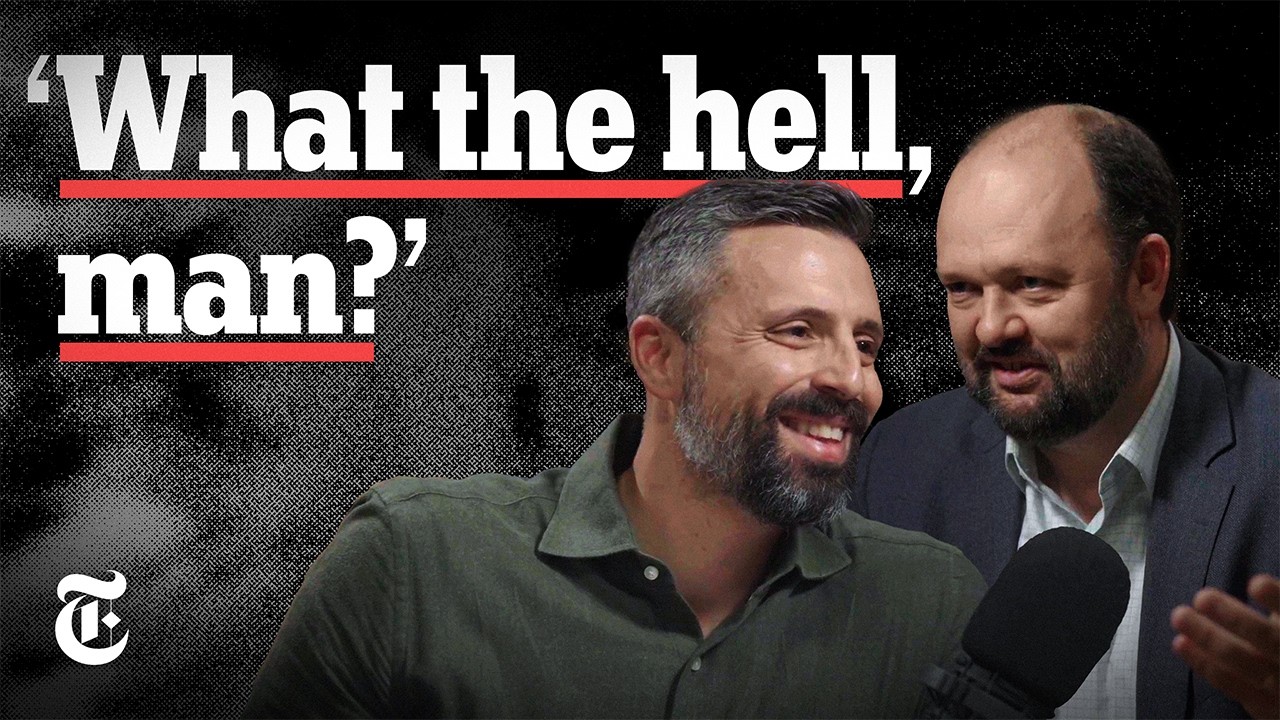
Douthat Exits Times for 60 Minutes as Politics Turn Post-Christian
The Ezra Klein Show
Mass secularization has replaced traditional conservative moral restraint with raw power-seeking populism, forcing political journalism to abandon ideological persuasion for descriptive reporting.
Ross Douthat is stepping down as a New York Times opinion columnist after 17 years to join CBS's 60 Minutes as a correspondent under executive leadership from Bari Weiss. (0:00)
The American political right has substantially transformed from an evangelical moral majority into a post-religious movement driven by transactional populism, elite Catholic convert intellectualism, and a secular appetite for martial dominance. (30:51)
Douthat argues the explosion of generative AI is devaluing written opinion journalism and driving a civilizational shift toward oral, conversational formats and live human engagement. (64:32)
Journalistic philosophy is shifting from ideological persuasion to descriptive investigation, as successive institutional shocks—from Trump and COVID-19 to advanced technology—render reality increasingly opaque and difficult to parse. (58:13)
Detailed notes
## Background
Published on YouTube by The Ezra Klein Show on August 11, 2026, this episode marks Ross Douthat's departure from The New York Times after 17 years to join 60 Minutes as a correspondent. Host Ezra Klein interviews his longtime colleague and sparring partner about his unique career explaining conservatism to liberal audiences, the structural evolution of digital journalism from early blogging to AI, and the shifting dynamics of religion and politics in America.
## TL;DR
Ezra Klein and Ross Douthat reflect on their shared origins in the early-2000s blogosphere, contrasting that era's conversational debate culture with today's polarized, algorithmic media. Douthat analyzes the transformation of American conservatism from George W. Bush's evangelical coalition to Donald Trump's secular, transactional, post-religious right, alongside the rise of Catholic intellectual influence. They also examine the secular left's emerging search for moral and spiritual grammar amid cultural disillusionment, culminating in Douthat's journalistic philosophy as he transitions to broadcast long-form interviews at 60 Minutes—emphasizing descriptive inquiry and human dialogue over partisan certainty.
## Atmosphere & style
The conversation carries an affectionate, reflective, and collegial tone, characterized by the easy shorthand of two seasoned commentators who have debated each other since their early twenties. Klein and Douthat exchange dry humor and gentle teasing about archival debates and career shifts, balancing nostalgic retrospection with serious intellectual rigor. The dialogue feels like an intimate, respectful meeting of ideological foils exploring a disorienting cultural landscape, marked by thoughtful pauses, candid admissions of uncertainty, and mutual goodwill.
## Bulletin
- [00:00](https://www.youtube.com/watch?v=lGDy768D9io&t=0s) Ross Douthat is stepping down as a New York Times opinion columnist after 17 years to join CBS's 60 Minutes as a correspondent under executive leadership from Bari Weiss.
- [30:51](https://www.youtube.com/watch?v=lGDy768D9io&t=1851s) The American political right has substantially transformed from an evangelical moral majority into a post-religious movement driven by transactional populism, elite Catholic convert intellectualism, and a secular appetite for martial dominance.
- [01:04:32](https://www.youtube.com/watch?v=lGDy768D9io&t=3872s) Douthat argues the explosion of generative AI is devaluing written opinion journalism and driving a civilizational shift toward oral, conversational formats and live human engagement.
- [58:13](https://www.youtube.com/watch?v=lGDy768D9io&t=3493s) Journalistic philosophy is shifting from ideological persuasion to descriptive investigation, as successive institutional shocks—from Trump and COVID-19 to advanced technology—render reality increasingly opaque and difficult to parse.
## Key takeaways
- [03:57](https://www.youtube.com/watch?v=lGDy768D9io&t=237s) Early blogging exploded after 9/11 by capitalizing on workplace internet access, breaking the legacy media's artificial scarcity of political commentary with real-time analysis.
- [10:20](https://www.youtube.com/watch?v=lGDy768D9io&t=620s) Unlike modern social media platforms that reward algorithmic dunks and in-group validation, early blogging required writers to directly block-quote and address opposing arguments.
- [18:14](https://www.youtube.com/watch?v=lGDy768D9io&t=1094s) Effective cross-ideological persuasion requires engaging with the highest-minded, best possible version of an opponent's argument rather than pathologizing their motivations.
- [22:19](https://www.youtube.com/watch?v=lGDy768D9io&t=1339s) The populist working-class realignment predicted in 'Grand New Party' was realized by Donald Trump, but it bypassed intellectual policy reforms in favor of raw grievance and protectionism.
- [27:29](https://www.youtube.com/watch?v=lGDy768D9io&t=1649s) Social conservatism suffered comprehensive defeats across American culture in the 2010s, leaving behind a purely oppositional backlash coalition without a coherent governing moral philosophy.
- [30:51](https://www.youtube.com/watch?v=lGDy768D9io&t=1851s) The secularization of the political right did not yield moderate politics, but instead stripped away Christian moral constraints in favor of an uninhibited, post-religious ethic of power.
- [35:17](https://www.youtube.com/watch?v=lGDy768D9io&t=2117s) Mainstream conservative Christians disillusioned by cultural losses during the Bush era have developed a hunger for 'pagan energy' and Schmittian friend-versus-enemy combat.
- [40:22](https://www.youtube.com/watch?v=lGDy768D9io&t=2422s) Young right-wing nationalists exhibit historical amnesia toward the Bush administration, whose 'national greatness conservatism' pioneered identical rhetoric of civilizational resolve and martial strength.
- [45:17](https://www.youtube.com/watch?v=lGDy768D9io&t=2717s) Catholicism has supplanted evangelicalism as the primary intellectual driver on the right because its theological depth and liturgy provide grounding in an increasingly fragmented digital media environment.
- [49:11](https://www.youtube.com/watch?v=lGDy768D9io&t=2951s) The secular left is undergoing its own spiritual reexamination, moving away from technocratic secularism toward progressive rhetoric rooted in Christian scripture and transcendent human dignity.
- [58:13](https://www.youtube.com/watch?v=lGDy768D9io&t=3493s) Prolonged societal disorientation has diminished the value of ideological opinion columns, elevating the necessity of descriptive journalism that simply investigates what is occurring.
- [01:04:32](https://www.youtube.com/watch?v=lGDy768D9io&t=3872s) As artificial intelligence commodifies written text, the cultural and economic value of broadcast interviews and spontaneous, embodied human dialogue will substantially increase.
- [01:07:53](https://www.youtube.com/watch?v=lGDy768D9io&t=4073s) Douthat applies empirical journalistic standards to fringe topics like UAPs and Silicon Valley singularity horizons, investigating them as concrete, testable claims rather than subjective metaphysical experiences.
## Detailed walkthrough
### [00:00](https://www.youtube.com/watch?v=lGDy768D9io&t=0s) Transition to "60 Minutes" and Early Origins
Ezra Klein opens by reflecting on his long history with Ross Douthat, dating back to their early days as bloggers "when the earth was young." Douthat became the youngest-ever *New York Times* opinion columnist when he was hired in 2009 and recently launched the podcast *Interesting Times*. Now, Douthat is leaving the paper after 17 years to become a correspondent on *60 Minutes*. When Klein playfully confronts him with "What the hell, man?... Going to 60 Minutes. You're leaving us?", Douthat jokes spiritually that "you never leave any place that you love and all things are gathered in by God," before confirming his move.
Klein asks Douthat where he locates his spiritual origins as a journalist, noting that while he originally assumed Douthat followed the path of an outsider blogger absorbed into the legacy media Borg, Douthat’s trajectory was actually the opposite. In his early twenties, Douthat lived through the end of an old journalistic dispensation and the dawn of a new one simultaneously. He worked inside *The Atlantic* as a junior editor handling the letters section, working within a traditional pre-internet magazine environment where fact-checking and copy-editing relied on massive physical sheets of paper marked up by 17 different editors with red pens.
At the same time, Douthat ran an independent blog on the side as a freelance hustle. These parallel tracks converged when traditional media publications decided they needed to co-opt the emerging online blogosphere. *The Atlantic* built a mini opinion vertical by acquiring and hiring prominent bloggers, bringing in Andrew Sullivan—then the titan of the medium—alongside Matthew Yglesias, Megan McArdle, Ta-Nehisi Coates, and Douthat, who was already on staff (though Douthat self-deprecatingly notes his own early traffic numbers were decidedly lower than the others).
```mermaid
flowchart TD
accTitle: Evolution of Ross Douthat's Early Career Path
accDescr: Diagram tracing Douthat's dual paths in legacy editing and independent blogging converging into institutional digital media.
subgraph LegacyTrack["Legacy Print Track"]
A["Junior Editor at The Atlantic"] --> B["Manual Print Production & Red-Pen Proofing"]
end
subgraph DigitalTrack["Early Digital Track"]
C["Independent Side-Hustle Blogging"] --> D["Freelance Commentary"]
end
subgraph Convergence["Institutional Co-optation"]
B --> E["The Atlantic Digital Roster"]
D --> E
E --> F["Columnist at The New York Times (2009)"]
F --> G["Correspondent at 60 Minutes"]
end
```
[03:57](https://www.youtube.com/watch?v=lGDy768D9io&t=237s) 9/11, the War Bloggers, and the Technological Shift
Explaining early blogging to a modern audience, Douthat describes how the medium initially exploded in the aftermath of September 11, 2001, and during the run-up to the Iraq War. A world-altering, catastrophic event collided directly with the emergence of the internet as an everyday workplace fixture. Office workers sitting at web browsers all day developed an insatiable appetite for immediate, continuous analysis regarding terrorism, 9/11, Islam, the Middle East, Afghanistan, and Iraq.
This first wave was dominated by the so-called "war bloggers"—a cohort consisting of hawkish conservatives and former liberals who had swung to the right in favor of the War on Terror and the invasion of Iraq. Douthat recalls his time as an intern at *National Review* in the summer of 2001 just before 9/11, when the blogosphere was still a tiny handful of pioneers like Andrew Sullivan and Mickey Kaus (*Kausfiles*). Interns with little to do would sit around repeatedly hitting refresh to see if new dispatches had appeared. When 9/11 hit, that refresh behavior went mainstream across the country. Klein mentions that he started his own blog shortly thereafter in 2003 as a college freshman at UC Santa Cruz.
- **Key Early Bloggers:** Andrew Sullivan, Mickey Kaus (*Kausfiles*).
- **Core War Blogger Focus:** Terrorism, Middle East geopolitics, Islam, the War on Terror, and the invasion of Iraq.
- **Audience Dynamic:** Office workers stuck in front of web browsers driving demand by constantly refreshing sites for breaking commentary.
[06:27](https://www.youtube.com/watch?v=lGDy768D9io&t=387s) Scarcity vs. Abundance in the Political Opinion Landscape
Klein highlights a fundamental structural transformation in how political opinion is consumed: prior to blogging, political commentary was scarce and difficult to access for ordinary Americans. Growing up in Orange County, California, Klein’s household subscribed to the *Los Angeles Times*, limiting their opinion diet to a single local op-ed page. Small-circulation Beltway journals (*The American Prospect*, *National Review*, *The Atlantic*) were not widely distributed outside political elite circles.
Broadcast opinion was similarly restricted. Talk radio had only recently matured into its post-Rush Limbaugh landscape featuring hosts like Laura Ingraham, Glenn Beck, and Michael Savage (*The Savage Nation*). Cable news was in its infancy: Fox News was just beginning to roll out, *Crossfire* was the default televised debate program, and MSNBC originally launched as a joint venture between Microsoft and NBC focused heavily on technology (with Klein recalling a show hosted by Soledad O'Brien that featured a clip-art animated co-host).
Blogging broke this artificial scarcity by tapping into a massive unmet demand for political analysis during a national crisis. In contrast to today’s media environment—where continuous streams of commentary across X, Instagram, Substack, and podcasts frequently drown out original reporting—early blogging represented a radical democratizing shift from scarcity to real-time abundance.
[08:51](https://www.youtube.com/watch?v=lGDy768D9io&t=531s) The Mechanics of Early Blogging: Prolix Essays and Block-Quote Debates
Beyond changing access to commentary, early blogging introduced an entirely different form of intellectual argument than traditional newspaper op-eds. The medium functioned as a rolling, hyper-responsive public conversation. Writers would publish sprawling posts that were immediately block-quoted and dissected by their ideological opponents in an ongoing chain of mutual rebuttal.
Klein and Douthat joke about post lengths, with Klein suggesting bloggers wrote 4,000 words while Douthat retorts that 300 words was more typical, though war bloggers were notorious for writing 2,500-word "prolix content" drawing elaborate comparisons between ancient Greek history and George W. Bush’s strategy to remake the Middle East. Despite the fierce polemical hostility of the medium, Douthat emphasizes that early blogging possessed a fundamental, built-in respectfulness: participating in the debate required directly quoting your opponent’s exact words and arguments on your own platform before attempting to dismantle them.
[10:20](https://www.youtube.com/watch?v=lGDy768D9io&t=620s) The Conversational Currency of Early Blogging
Ezra Klein and Ross Douthat reflect on why the early blogosphere felt healthier than modern digital discourse, interrogating whether that nostalgia is simply the universal tendency of people in their forties to romanticize the media of their twenties. Douthat argues that early blogging was fundamentally conversational in a way modern media is not: writers would quote 200 words from an interlocutor and go line by line to answer them directly, operating under the expectation that the target would read and reply. In contrast, platforms like X (formerly Twitter) incentivize talking *about* people rather than *to* them, rewarding quote-tweets, dunks, retweets, and likes.
Klein observes that the structural incentives of the era dictated this dynamic. Starting his own blog in 2003, Klein notes there were no algorithms or search-engine optimization games to win; the sole path to building an audience was reciprocal linking through blogrolls and cross-blog debate. Even when disagreements were fierce—such as Klein’s frequent sparrings with Andrew Sullivan—an exchange of block quotes created an ongoing intellectual relationship rather than simple hostility.
```mermaid
flowchart TD
accTitle: Early Blogosphere vs Modern Social Media Audience Models
accDescr: A comparison showing how early blogging rewarded cross-ideological dialogue via back-and-forth linking, whereas modern social media rewards algorithmic dunks and in-group validation.
subgraph EarlyBlogging["Early Blogosphere (c. 2003)"]
A["Writer A writes critique"] -->|"Block quotes & links"| B["Writer B responds"]
B -->|"Reciprocal link back"| A
B --> C["Shared, cross-pollinated readership"]
end
subgraph ModernSocialMedia["Algorithmic Social Media (Present)"]
D["User A posts stance"] -->|"Quote-tweet / Dunk"| E["User B mocks User A"]
E --> F["Audience Likes, Restacks & Retweets"]
F --> G["In-group affirmation & algorithmic reward"]
end
```
[12:16](https://www.youtube.com/watch?v=lGDy768D9io&t=736s) Bloggingheads.tv and the 2008 McCain Flashpoint
The conversation shifts to a specific artifact of that era: Bloggingheads.tv, the split-screen video debate platform founded by Robert Wright, whom Klein and Douthat credit as having practically invented podcasting before the world was ready for it. Klein pulls up an archival clip from their twenties where they debated the 2008 presidential campaign. In the clip, Douthat dryly ribs the media hysterics surrounding John McCain, sarcastically exaggerating that McCain was running the most disgraceful campaign not just in American history, but in "universal history," as liberal pundits like E.J. Dionne, Joe Klein, and Richard Cohen publicly renounced their long-standing affections for the Republican nominee.
Looking back at the footage—which featured Douthat sitting in his old office at *The Atlantic* with his 2008 book *Grand New Party* visible on the shelf behind him—both marvel at how quaint those campaign controversies now seem. The outrage directed at McCain and later Mitt Romney pales in comparison to the political climate that followed, though Douthat points out a favorite grievance of Donald Trump's supporters: the claim that because liberals insisted honorable figures like McCain and Romney were "history's greatest monsters," the right eventually decided they might as well nominate Donald Trump. More broadly, Douthat describes these early blogging platforms as extracurricular, Norman Mailer-esque "advertisements for myself," designed to cultivate a profile that would eventually pay off in positions at mainstream legacy institutions.
- **Bloggingheads.tv**: Founded by Robert Wright; an influential video debate site that served as an ideological testing ground and podcasting precursor.
- **The 2008 Media Split**: Pundits like Richard Cohen wrote columns lamenting that McCain had "sold his soul to Satan" through aggressive attack ads against Barack Obama.
- **Career Trajectory**: Both commentators parlayed their blogging profiles into legacy column spots in 2009—Douthat at *The New York Times* and Klein at *The Washington Post*.
[15:41](https://www.youtube.com/watch?v=lGDy768D9io&t=941s) Being the Token Conservative in Liberal Institutions
In 2009, Douthat was hired as the youngest-ever opinion columnist for *The New York Times*, continuing a pattern of serving as the resident conservative voice within broadly liberal institutions—a role he had occupied since writing the conservative column for *The Harvard Crimson* as an undergraduate, and later as a senior editor at *The Atlantic*. Klein asks what spending decades writing as a pro-life, conservative Catholic for culturally liberal readers taught him about liberals. After a deliberate pause that prompts laughter from Klein, Douthat insists, "I like liberals," framing the assignment not as a burden, but as an unmatched opportunity.
Douthat emphasizes that while an 800-word column rarely triggers an instantaneous ideological conversion, opinion journalism is fundamentally about persuasion and nudging readers at the margins. For a writer with heterodox views relative to their platform's core demographic, the chance to expose readers to unfamiliar frameworks is immense. At the same time, he acknowledges the stress of the position: knowing that his audience does not reflexively agree with his baseline premises means every factual claim, premise, and conclusion is subjected to far more rigorous, skeptical scrutiny than the work of writers preaching to the choir.
[18:14](https://www.youtube.com/watch?v=lGDy768D9io&t=1094s) The Art of Persuasion and High-Minded Arguments
When Klein asks what this prolonged exposure has taught him about persuasive writing, Douthat lays out his foundational rule: one must always engage with the highest-minded, best possible version of the opponent's argument. Effective persuasion requires a writer to start from the defense that opponents would present on their own behalf, rather than dismissing their motivations as bad faith, malice, or psychological pathology.
To illustrate, Douthat offers two complementary examples from across the political spectrum:
- **The Pro-Choice vs. Pro-Life Debate**: A pro-choice writer trying to genuinely convince pro-lifers cannot begin by asserting that the anti-abortion movement merely seeks to subjugate women and punish them for sexual immorality. Even if one believes those dark motives lurk in the socially conservative psyche, an effective argument must engage the actual moral claim pro-lifers advance: that an unborn fetus is a human life entitled to legal protection.
- **The Immigration Debate**: A conservative critic of liberal immigration policy cannot reduce the opposing side to a cynical Machiavellian plot to import undocumented immigrants to secure Democratic votes. To make any persuasive headway, the conservative must directly address the humanitarian and economic benefits that liberals argue immigration brings to both newcomers and the host nation.
[20:25](https://www.youtube.com/watch?v=lGDy768D9io&t=1225s) The Exhausting Art of Good-Faith Persuasion
Ross Douthat reflects on the core discipline required to write opinion columns for an ideological opposition: starting from a place of genuine understanding. While he cannot quantify how effective his resulting arguments ultimately are, he maintains that the sustained discipline of good-faith interaction yields a reasonably favorable response, even inside hyper-polarized environments. It is simply not true that cross-partisan communication is impossible; it is merely difficult, exhausting, and demanding, yet readers remain open to it if treated with respect.
Ezra Klein observes that very few opinion columnists actually pursue persuasion. Most writers merely engage in an ongoing ritual of affirmation—operating from a shared locus of agreement with their base and nudging minor details at the margins. By contrast, Douthat spent decades at *The New York Times* attempting to persuade readers who fundamentally disagree with his worldview. When Klein asks him to identify what he has been most persuasive about, Douthat hesitates, noting that history fulfilled his political analyses in ways that bypassed the arguments he and his peers were actually making.
[22:19](https://www.youtube.com/watch?v=lGDy768D9io&t=1339s) Populism Without Intellectuals: *Grand New Party* vs. Donald Trump
Douthat points to the populist, nationalist transformation of the Republican Party as the central development of his career. In 2008, he and his former co-blogger Reihan Salam published *Grand New Party*, a book warning conservatives that the party's tectonic plates were shifting toward a working-class base. They argued that the GOP had to overhaul its rhetoric and policy—moving away from doctrinaire libertarianism and entitlement-slashing toward working-class support.
```mermaid
flowchart TD
accTitle: Two Paths for Working-Class Conservatism
accDescr: Contrasting the reform conservatism of Douthat and Salam with the populist reality realized by Donald Trump.
subgraph Reform["Reform Conservatism (Douthat & Salam)"]
A["Targeted Family Policy"]
B["Child Tax Credits & Wage Subsidies"]
C["Entitlement Restructuring to Fund Families"]
end
subgraph Trumpism["Trumpian Populism (2016 Reality)"]
D["Trade Tariffs & Anti-Offshoring"]
E["Vow to Never Touch Medicare/Social Security"]
F["Raw Cultural Grievance & Scapegoating"]
end
A -.->|Superseded by| D
B -.->|Superseded by| E
C -.->|Superseded by| F
```
Yet that forecast materialized with zero input from reform-conservative intellectuals:
- Douthat and Salam envisioned a policy mix centered on child tax credits, wage subsidies, and pro-family support.
- Instead of an intellectual populist like a remodeled Marco Rubio, the base rallied around Donald Trump, who bypassed policy papers entirely.
- While the reform conservatives proposed trimming Medicare growth to redirect funds toward young working families rather than upper-bracket tax cuts, Trump flatly promised never to touch entitlements at all.
- Trump outflanked the party establishment of Mitt Romney and Paul Ryan by tapping into visceral deindustrialization trauma following the "China shock," flying into Midwest factory towns and pledging tariffs and job repatriation.
- The outcome was an electoral coalition that became more working-class, but anchored in an economically fragile, fiscally unsustainable defense of senior entitlements that left little room for reform-conservative family policy.
[27:29](https://www.youtube.com/watch?v=lGDy768D9io&t=1649s) The Routing of Social Conservatism and the Backlash
Alongside the economic realignment, Douthat’s vision of a moderate, broad-based social conservatism suffered sweeping defeats throughout the 2010s. Rather than constructing a stable cultural framework around marriage and the two-parent family, social conservatism was routed across American public life—most decisively on same-sex marriage, but extending into shifting norms around drug legalization and polyamory.
Trump presented himself to an embattled religious base not as a moral exemplar, but as a brawler: an unapologetic protector who acknowledged they were losing the culture and promised to fight on their behalf. Progressive victories in that era quickly led to institutional overreach—interpreting rapid success on gay marriage as a template to brand all traditionalist dissent as bigotry, which birthed the "woke era." While that overreach produced a ferocious political counter-reaction, Douthat stresses that this reactive coalition—uniting traditionalist Catholics with pot-smoking libertarians—is purely oppositional. It lacks a shared governing ethos, leaving the movement fractured and intellectually incoherent.
[29:48](https://www.youtube.com/watch?v=lGDy768D9io&t=1788s) The 2005 "Theocracy Panic" and the Post-Religious Right
Klein brings up Douthat’s famous 2016 tweet reflecting on mid-2000s politics: *"If you dislike the religious right, wait till you meet the post-religious right."* Klein asks him to contrast that warning with what liberals originally feared during the second Bush administration.
Douthat explains that after George W. Bush won reelection in 2004 propelled by high evangelical turnout, stunned liberals succumbed to a full-blown "theocracy panic." Commentators grew terrified that Christian fundamentalism was seizing control of the levers of government to institute a Gilead-style regime. Douthat dismissed that anxiety as ludicrous at the time, arguing that American secularization would undermine the moral framework of traditional religious politics. What replaced it was not an enlightened, moderate secularism, but an uninhibited, post-religious right stripped of traditional Christian moral restraints.
[30:51](https://www.youtube.com/watch?v=lGDy768D9io&t=1851s) The Rise of the Post-Religious Right
Ezra Klein observes that by the mid-2010s, Donald Trump was winning the presidency while being conspicuously non-evangelical and non-Christian. This marked a profound cultural shift: suddenly, the Christian piety that liberals had feared and loathed during the presidency of George W. Bush became something they viewed with nostalgia. Removing the Christian moral framework from conservatism did not yield a benign, moderate movement; instead, it seemed to unlock darker currents of bigotry, xenophobia, libertine indifference, and proud amoralism. Klein points out that Trump's coalition effectively united voters who simply hated moralistic scolding and wanted to do whatever they pleased, alongside an online intellectual fringe actively attempting to revive a pagan, non-Christian, fascist political ethos.
Klein brings up a conversation between British conservative feminist critic Louise Perry and Bari Weiss, in which Perry framed the emerging divide on the right as the distinction between Jordan Peterson and Andrew Tate. Perry argued that Peterson essentially preaches a Christian message centered on duty and ethic, whereas Tate embodies raw dominance, strength, and hierarchy. In Perry's framing, future right-wing intellectual battles will hinge on whether conservatives embrace a Christian moral vision or choose pagan dominance.
```mermaid
flowchart TD
accTitle: Post-Religious Right Split
accDescr: Diagram illustrating the fragmentation of post-religious conservatism into libertine apathy and the Peterson-Tate divide.
A["Decline of Formal Christianity<br/>(Late 1990s–2020)"] --> B["Trumpian Coalition:<br/>Transactional & Libertine"]
A --> C["Post-Christian Right-Wing Ideas"]
subgraph Divide ["Divergence in Right-Wing Ethos"]
C --> D["Jordan Peterson:<br/>Preserving biblical texts & ethics without formal faith"]
C --> E["Andrew Tate:<br/>Full rejection of Christian ethic for raw strength & hierarchy"]
end
```
[33:34](https://www.youtube.com/watch?v=lGDy768D9io&t=2014s) Navigating the Post-Christian Landscape
Ross Douthat nuances Perry's comparison by clarifying that Peterson is not actually a practicing Christian either. While Andrew Tate leads a right-wing movement that explicitly and aggressively rejects Christian morality in favor of pure power, Peterson represents a post-Christian conservative approach: someone who has spent years wrestling with the texts of the Old Testament and the Christian story, arguing they are indispensable to Western civilization, yet without ever making a formal profession of faith.
Douthat explains that as regular church attendance plummeted, American conservatism as a whole entered an awkward holding pattern. Right-wing figures began grasping for a wider, secular umbrella category that could defend traditional religion without being restricted to theological terms. This is why language such as "defending Western civilization" became pervasive—often spoken by figures who have no personal religious commitment. Tate represents the extreme edge of this secularization, while Peterson illustrates the ambivalent, text-obsessed conservative attempting to hold together a civilizational legacy without personal piety.
[35:17](https://www.youtube.com/watch?v=lGDy768D9io&t=2117s) Secularization and the Search for Political Strength
When Klein asks how the Republican coalition transitioned from Bush's prominent public faith to a post-Christian movement where Christian ethics are no longer required, Douthat points to two primary causes:
1. **Mass Secularization:** Between the late 1990s and 2020, Christian observance dropped precipitously across the United States. As church pews emptied, religious arguments and appeals that once formed the baseline of Republican politics stopped functioning. Political leaders naturally evolved to match this secularized base, with Trump taking that transactional secularism to its logical extreme.
2. **The Perceived Failure of the Bush Era:** Younger right-wing intellectuals and elites looked back at the Bush presidency with bitter disillusionment. Despite having an openly evangelical president and a powerful Catholic-evangelical alliance running the party, the era culminated in secularization and sweeping cultural victories for social liberalism.
This sense of defeat sparked an existential crisis on the right: "Why did we fail?" While an outright neopagan fringe wrote Christianity off as a soft, defeatist, feminine faith, Douthat argues that a much larger, more mainstream group of conservative Christians experienced a hunger for "pagan energy." Klein jokes that Stephen Miller is not practicing Wicca, and Douthat agrees, clarifying that the impulse is not about ancient rites, but about adopting a Schmittian politics of enmity, raw dominance, and martial strength to finally defeat liberal adversaries rather than being repeatedly vanquished.
- Historically, Western political Christianity had no problem waging crusades, conquests, and wars, so modern conservatives who pine for a "fighting spirit" can find deep precedent within Christian history itself.
- Douthat highlights internet culture debates over literary adaptations, such as whether modern takes on *The Odyssey* (as in discussions around Christopher Nolan's storytelling styles) overly "Christianize" the protagonist by showing Odysseus suffering from guilt, refusing to sleep with Calypso or Circe, and rejecting war glory. Neopagans and online Christians alike push back against these sanitized portrayals, asking, "Where's the war?"—a clear symptom of their desire to reclaim an aggressive ethos to counter modern liberalism.
[40:22](https://www.youtube.com/watch?v=lGDy768D9io&t=2422s) The "National Greatness" Amnesia
Klein and Douthat note the profound irony in the modern right's critique of George W. Bush as someone who supposedly lacked a "fighting spirit." Bush not only won two consecutive presidential campaigns against the Democrats, but he also launched major wars abroad.
Douthat describes how young right-wing nationalists engage in a convenient historical amnesia when they disown the "feckless liberal internationalism" of the Bush administration. The rhetoric used by war bloggers and neoconservatives in the lead-up to the 2003 invasion of Iraq closely mirrored the talking points of contemporary populist nationalism: declarations that the West had grown weak and decadent, warnings that radical enemies were exploiting liberal softness, and demands to enforce a sharp friend-versus-enemy distinction. The movement known in the late 1990s and early 2000s as "national greatness conservatism" was fundamentally an aggressive, hawkish effort to instill strength into the American character.
[41:52](https://www.youtube.com/watch?v=lGDy768D9io&t=2512s) The "National Greatness" Split and Never Trumpism
Ezra Klein and Ross Douthat examine how figures from the late-1990s and early-2000s "national greatness conservatism"—such as Bill Kristol and, in a less extreme way, their former colleague David Brooks—ultimately became the fiercest critics of Donald Trump. Klein points out that although Trumpists and Kristol despise one another, the way Kristol wrote about politics, conflict, and American power decades ago bears striking rhetorical similarities to the aggressive, fight-seeking stance of today's young nationalists. The underlying posture was always a muscular, unapologetic defense of Western civilization.
Douthat explains the rupture on two fronts: foreign policy and character. First, despite Trump's aggressive actions in office (including launching a new conflict in the Middle East), Trump forcefully repudiated neoconservative foreign policy and the Iraq War, making him an impossible pill to swallow for anyone committed to that legacy. Second, the never-Trump stance was grounded in a serious characterological argument: national greatness conservatism presupposed leaders of personal virtue and moral character. While George W. Bush was far from a paragon of every virtue, he stood miles apart from Trump in personal conduct. For older neoconservatives, Trump was fundamentally disqualified simply by being a bad actor. For younger generations across the political spectrum, however, the era when political debates hinged on personal character—such as the intense litigation over Bill Clinton's adultery—feels entirely alien, though both Klein and Douthat suspect the generational wheel may soon turn back toward valuing character.
[45:17](https://www.youtube.com/watch?v=lGDy768D9io&t=2717s) Catholicism vs. Evangelicalism on the Intellectual Right
Turning to the evolution of the religious right, Klein observes a stark transformation: in 2005, the movement was anchored by evangelical Christianity, but today, Catholic intellectuals and high-profile converts dominate elite conservative circles. This includes figures like Vice President JD Vance, who recently published a conversion memoir (albeit with a design choice featuring a Protestant church on the cover). Klein asks what drove this shift from evangelical dominance to Catholic influence.
```mermaid
flowchart TD
accTitle: The Divergence of Modern American Christianity
accDescr: Modern Christian traditions splitting into elite-driven Catholicism and mass-market evangelicalism under internet pressures.
subgraph Traditional["Mid-20th-Century Middle"]
TradProt["Denominational Protestantism<br/>(Methodists, Presbyterians)<br/>Declines due to weak ancestral ties"]
end
subgraph Polarization["Polarized Strong Brands"]
Cath["Liturgical Tradition<br/>(Catholicism)<br/>Intellectual depth; dominant at elite level"]
Evan["Seeker-Sensitive Style<br/>(Evangelicalism)<br/>Praise music, stadium events; dominant at mass level"]
end
TradProt --> Cath
TradProt --> Evan
```
Douthat clarifies that while Catholic thought does not necessarily steer the broader populist MAGA base or the administration, it has become a central intellectual attractor. Catholicism possesses a much deeper intellectual tradition than American evangelicalism, making it an appealing harbor for right-wing thinkers seeking doctrinal grounding after decades of secularization. Furthermore, digital culture has proved devastating for mainline denominational Protestantism (Methodists, Presbyterians), where adherence was tied to loose ancestral habits. The internet has instead rewarded strong, distinct brands:
- **Liturgical Christianity (Catholicism):** Anchored by rigorous theology, commanding authority, and ritual; highly influential among intellectual elites.
- **Mass-market seeker-sensitive evangelicalism:** Thriving at scale through mega-churches, concert-style praise music, and accessible modern packaging.
Douthat wonders aloud whether elite conversions will remain isolated in high places—akin to the default status of Episcopalians in earlier generations—or if they will eventually trickle down to revitalize struggling mass Catholic institutions.
[49:11](https://www.youtube.com/watch?v=lGDy768D9io&t=2951s) The Left's Search for Religious Grammar
Klein asks if the secular left's relationship with religion is also shifting. Douthat confirms that the post-Christian left is undergoing an existential reckoning. For years, progressive culture confidently assumed that discarding traditional, patriarchal religion would lead smoothly into the enlightened uplands of "trusting the science." Yet the compounding shocks of COVID-19, Trump's endurance, and the rise of artificial intelligence have left secular progressives feeling an acute spiritual void, leading to an open groping for meaning in new age practices, paganism, and reconsidered religious tropes. Douthat cites the latest *Knives Out* film as a cultural tell: while its predecessor simply targeted tech billionaires, the newer installment acknowledges the existence of destructive forms of religion alongside redemptive ones worth protecting.
Klein adds that this spiritual hunger is reshaping progressive electoral politics. Mainstream liberal figures are increasingly breaking through by clothing unapologetic progressive stances in deep Christian moralism. A prime example is Texas state legislator James Talarico, whose viral rhetoric directly challenges the right's religious monopoly by asking how Jesus would respond to systemic injustices:
> "What would Jesus do about a justice system that incarcerates more people than any other country on the face of the earth? And what would Jesus do about an economic system that prioritizes profits over the health of our planet? Would he stay in his room and pray or would he walk into the seat of power and flip over the tables of injustice?"
Klein notes that this fluency in Christian scripture and moral framing is also evident in Georgia figures like Raphael Warnock and Jon Ossoff, whose rhetoric critiques conservative hypocrisy—such as Republican leaders holding hands in prayer on the House floor immediately before voting to slash a trillion dollars from Medicaid.
[52:31](https://www.youtube.com/watch?v=lGDy768D9io&t=3151s) Scripture, Progressive Politics, and the 'Great Awokening'
The discussion begins with a clip of progressive rhetoric steeped in religious imagery: an orator citing Matthew 25, protesting against kicking fifteen million people off healthcare and cutting food assistance (SNAP) for veterans, seniors, and children. Denouncing a "spiritually broken president" who uses the state for personal vengeance and enrichment, the speaker warns from Proverbs that "whoever digs a pit will fall into it," reminding listeners that scripture is full of arrogant kings brought low. Ezra Klein observes that while the left may not be becoming conventionally devout, there is an unmistakable hunger among progressives to reconnect with religious traditions and moral vocabularies.
Ross Douthat views this through the lens of the recent "Great Awokening," which he characterizes as a fascinating attempt to wield religious fervor without any metaphysical commitment. During the height of the anti-racism protests, society witnessed hallmarks of a classic spiritual revival: iconoclasm, the moral enforcement of new communal norms, and intense zeal. However, Douthat points out that the movement was self-consciously detached from historical institutions like the Black church. He points to former *Atlantic* colleague Ta-Nehisi Coates as an emblem of this shift—functioning as an intellectual prophet who explicitly rejected cosmic hope in favor of a deep "cosmic despair." Douthat argues that this philosophical mixture ultimately collapses under its own weight, producing a bleak "politics of guilt without the possibility of redemption." If progressive moralism insists that the universe is empty and devoid of transcendent meaning outside of imposed ideological categories, its moral demands inevitably end up in dark intellectual cul-de-sacs.
[55:28](https://www.youtube.com/watch?v=lGDy768D9io&t=3328s) Human Dignity vs. Cosmic Despair: Reimagining the Anti-Trump Critique
Ezra Klein pushes back against the notion that liberal morality requires metaphysical belief to be potent. He points to the papal encyclical on artificial intelligence, noting that although he comes from a Jewish tradition and does not share Catholic cosmology or metaphysics, he found the document's articulation of human dignity, pluralism, and relational politics remarkably compelling. In Klein's view, Donald Trump's political presence has thrown basic values of decency and human treatment into sharp relief—values that might have felt less urgently political if someone like Jeb Bush were president.
Douthat agrees that a tactical and rhetorical shift has occurred on the left, but he frames it as a recovery from an earlier misstep. Following Trump's initial rise, a dominant segment of progressivism argued that Trump’s corruption exposed the irredeemably racist, Confederate, and patriarchal heart of America, demanding a total reckoning with national sin. Douthat believes that line of attack led the left into a nihilistic corner. Counterposing a positive vision of human dignity against Trump represents a much more constructive evolution than either total despair or crude materialist critique—such as declaring that AI is simply a tool of "ruthless tech bros" or dismissing modern life as an inescapable capitalist nightmare.
```mermaid
flowchart TD
accTitle: Evolution of Progressive Critique
accDescr: Diagram illustrating the shift from post-2016 cosmic despair to a renewed emphasis on human dignity.
subgraph Phase1["Post-2016 Reckoning"]
A["Focus on Structural Sin & Guilt"] --> B["Cosmic Despair / Cul-de-sac"]
end
subgraph Phase2["Current Rearticulation"]
C["Focus on Transcendent Worth"] --> D["Politics of Human Dignity"]
end
Phase1 -.->|"Shift away from nihilism"| Phase2
```
[58:13](https://www.youtube.com/watch?v=lGDy768D9io&t=3493s) The Evolution of Media: From the 'View from Nowhere' to Describing a Weirder World
Circling back to Douthat's experience as a conservative inside mainstream newsrooms, Klein asks what decades inside the press have taught him about what journalism does well and poorly. Douthat recalls entering the profession when legacy outlets clung to the objective "view from nowhere," claiming reporters were purely in the "truth business" without partisan allegiance. That conceit was challenged by internet bloggers, media critics like Noam Chomsky on the left, and long-standing conservative media critics on the right. For a time, Douthat favored moving toward a British-style press ecosystem—where readers understand that *The Guardian* leans left and *The Daily Telegraph* leans right—believing that transparency about institutional bias was healthier than feigned neutrality.
Yet living through the consecutive upheavals of Donald Trump, the COVID-19 pandemic, and the explosion of generative AI has disrupted Douthat's confidence in that model. He admits to losing certainty about "who the good guys and bad guys are in any particular circumstance." Consequently, he sees declining value in ideological persuasion and an urgent need for descriptive journalism. When the world becomes profoundly strange and disorienting, the primary duty of an institution is simply to step back, investigate, and figure out what is actually taking place on the ground—a task far more difficult today than during the predictable political landscape of the 2012 race between Barack Obama and Mitt Romney.
[01:01:17](https://www.youtube.com/watch?v=lGDy768D9io&t=3677s) Transitioning to '60 Minutes' Under Bari Weiss
Klein connects this evolving journalistic philosophy to Douthat's decision to leave *The New York Times* after seventeen years to join *60 Minutes*. While *The Atlantic* was founded with an explicitly abolitionist opinion mandate and *The New York Times* opinion section is built around argument, *60 Minutes* represents a different broadcast medium, now operating under the editorial direction of Bari Weiss. Klein asks point-blank whether this desire to move from persuasion to exploration prompted the career change.
Douthat confirms that the opportunity to conduct long-form interviews was a major catalyst. While writing comes naturally to him, he finds interviewing challenging and labor-intensive, but uniquely suited to navigating an opaque and bewildering world:
- Interviewing forces an open-ended posture of inquiry rather than polemical certainty.
- It offers a platform to engage a broader, somewhat different audience than the readership of *The New York Times* column.
- The shift allows him to ask foundational questions rather than defend predetermined partisan positions.
The segment closes with good-humored banter: Klein notes that his audience—predominantly liberal listeners who have read Douthat's columns for nearly two decades—harbors sharp skepticism about what Bari Weiss intends to do with *60 Minutes*, setting up a deeper probe into the network's future direction.
[01:03:06](https://www.youtube.com/watch?v=lGDy768D9io&t=3786s) Moving to *60 Minutes* and Restoring Trust in Reality
Ezra Klein brings up Ross Douthat’s upcoming move from *The New York Times* to CBS's *60 Minutes*, noting that Douthat is among their first major marquee hires. Klein asks what leadership expressed wanting from him and what the broadcast is attempting to become. Douthat remarks that one would have to bring Bari Weiss on the show to get her formal executive vision, but suggests her objective revolves around rebuilding bridgeheads: major media institutions have hemorrhaged trust among citizens who are not politically liberal or progressive, creating a demand for a fairer, more balanced window into events.
```mermaid
flowchart TD
accTitle: The Reporting Philosophy for 60 Minutes
accDescr: Diagram illustrating Douthat's approach to broadcast journalism, focusing on reality over partisan targeting.
subgraph Institutional ["Institutional Objective"]
A["Loss of trust among non-liberals"] --> B["Build a more balanced view of the world"]
end
subgraph Douthat ["Douthat's Grounded Approach"]
C["Focus on investigative rigor and interviews"] --> D["Capture the messy reality of 2026"]
end
B --> D
D --> E["Audience reach (Republicans vs. Democrats) follows naturally"]
```
For his part, Douthat views the mission as deeply continuous with what *60 Minutes* has historically executed best: helping audiences parse "what's really happening in the world and get sort of an accurate sense of reality itself through interviews, investigations, and so on." Rather than micro-targeting partisan quotas of Republicans versus Democrats, Douthat believes the mandate is simply to capture the "full messy reality of the world in 2026." If reporting succeeds at the foundational task of accurately describing the world, partisan reach and audience balance will naturally take care of themselves.
[01:04:32](https://www.youtube.com/watch?v=lGDy768D9io&t=3872s) The Rise of Orality and the Human Element in the Age of AI
Klein observes that Douthat is transitioning away from strictly written journalism into on-camera interviewing—a format he has already tested with his podcast, *Interesting Times*. Klein notes a broader civilizational shift toward video and a return to oral culture, asking if Douthat senses that the center of journalism is departing from the written word. Douthat agrees, acknowledging that digital environments and artificial intelligence are eroding the singular dominance of print. While he intends to continue writing during his tenure at CBS, he recognizes that audiences are increasingly drawn toward dialogue and spoken exchanges—pointing to the popularity of conversation formats at *The New York Times* like David Brooks or Bret Stephens sparring with Gail Collins, or written Q&As edited by John Guida.
Douthat cites Tyler Cowen’s thesis regarding AI: as synthetic tools commodify written text, the economic and cultural premium on live, embodied human performance—such as public speaking, direct engagement, and spontaneous discussion—will soar. Dialogues and broadcast interviews reveal the human being beneath the words far better than an authoritative "voice from the mountaintop column." Furthermore, conversational formats appeal to audiences experiencing widespread uncertainty. Instead of compelling a reader to accept an unyielding editorial decree, conversation leaves room for ambiguity, doubt, and diverse perspectives, offering an accessible entry point into complex issues—even if Douthat acknowledges the societal downside of declining literacy.
- Tyler Cowen’s insight suggests that ubiquitous AI text generation will elevate the cultural value of raw, unscripted human interaction.
- Audiences gravitate toward dialogic journalism because it acknowledges uncertainty instead of issuing top-down ideological pronouncements.
[01:07:53](https://www.youtube.com/watch?v=lGDy768D9io&t=4073s) Investigating UAPs, AI Timelines, and Concrete Journalism
Klein playfully asks whether the vast reporting apparatus of *60 Minutes* will finally allow Douthat to crack the Unidentified Anomalous Phenomena (UAP) story. Laughing, Douthat admits that UFOs have indeed been raised—mostly by him—in internal editorial planning. Klein observes that this beat reflects a defining characteristic of Douthat’s recent work: navigating a reality whose borders feel increasingly unstable and maintaining skepticism about which authority structures to trust.
Douthat clarifies his journalistic philosophy regarding anomalous phenomena. He has little interest in subjective, isolated claims of people having bizarre experiences in the woods or claiming alien abduction, because those resemble unprovable personal religious experiences where "there's no journalistic trick that can tell you, was that really God or not." In contrast, modern UAP reporting involves physical, testable claims: physical craft tracked on radar by Navy aviators and concrete allegations regarding covert government retrieval programs.
Douthat applies that exact same empirical standard to emerging technological debates:
- **Artificial Intelligence Consciousness:** While philosophical questions about synthetic consciousness may linger indefinitely, concrete risks and structural disruption will be settled by near-term reality.
- **The "Three-Year" Timeline:** Prominent Silicon Valley figures now measure all human progress along three-year horizons, insisting that anything unaccomplished within three years will be overtaken by the technological singularity.
- **Empirical Grounding:** Though deeply skeptical of singularitarian prophecies, Douthat notes that journalists will know definitively whether they are true in short order. His interest in fringe, metaphysical, or supernatural territory only applies insofar as rigorous reporting can uncover "what the hell is going on."
[01:11:32](https://www.youtube.com/watch?v=lGDy768D9io&t=4292s) Book Recommendations and Final Thoughts
As the conversation draws to an affectionate close, Klein and Douthat look back on their decades-long professional relationship—stretching from early-2000s political blogging to their years as colleagues at *The New York Times*—and Klein invites him to share his final recommendations for the audience.
```mermaid
flowchart LR
accTitle: Ross Douthat's Recommended Reading List
accDescr: Ross Douthat's three book recommendations spanning memoir, historical biography, and classic children's adventure.
A["Ross Douthat's Book Recommendations"] --> B["Speak, Memory by Vladimir Nabokov"]
A --> C["De Gaulle by Julian Jackson"]
A --> D["Treasure Island by Robert Louis Stevenson"]
```
Douthat provides three selections spanning literary memoir, grand history, and classic adventure:
1. ***Speak, Memory* by Vladimir Nabokov:** Nabokov's lyrical memoir chronicling his privileged aristocratic upbringing in pre-revolutionary Imperial Russia, which Douthat warmly commends to anyone seeking an antidote to the post-literate age.
2. ***De Gaulle* by Julian Jackson:** An exhaustive biography of Charles de Gaulle that Douthat endorses on "general principles" as a study in statecraft and leadership.
3. ***Treasure Island* by Robert Louis Stevenson:** The beloved classic tale, which Douthat recently revisited by reading it aloud to his children.
With the recommendations complete, Klein thanks Douthat for their years of collaboration, and Douthat signs off as the closing theme plays.
## Notable quotes
> [00:00](https://www.youtube.com/watch?v=lGDy768D9io&t=0s) you never leave any place that you love and all things are gathered in by God — Ross Douthat
> [00:00](https://www.youtube.com/watch?v=lGDy768D9io&t=0s) What the hell, man?... Going to 60 Minutes. You're leaving us? — Ezra Klein
> [15:41](https://www.youtube.com/watch?v=lGDy768D9io&t=941s) I like liberals — Ross Douthat
> [29:48](https://www.youtube.com/watch?v=lGDy768D9io&t=1788s) If you dislike the religious right, wait till you meet the post-religious right. — Ross Douthat
> [35:17](https://www.youtube.com/watch?v=lGDy768D9io&t=2117s) Where's the war? — Ross Douthat
> [49:11](https://www.youtube.com/watch?v=lGDy768D9io&t=2951s) What would Jesus do about a justice system that incarcerates more people than any other country on the face of the earth? And what would Jesus do about an economic system that prioritizes profits over the health of our planet? Would he stay in his room and pray or would he walk into the seat of power and flip over the tables of injustice? — James Talarico
> [52:31](https://www.youtube.com/watch?v=lGDy768D9io&t=3151s) whoever digs a pit will fall into it — Ezra Klein
> [52:31](https://www.youtube.com/watch?v=lGDy768D9io&t=3151s) politics of guilt without the possibility of redemption — Ross Douthat
> [01:03:06](https://www.youtube.com/watch?v=lGDy768D9io&t=3786s) what's really happening in the world and get sort of an accurate sense of reality itself through interviews, investigations, and so on. — Ross Douthat
> [01:03:06](https://www.youtube.com/watch?v=lGDy768D9io&t=3786s) full messy reality of the world in 2026 — Ross Douthat
> [01:07:53](https://www.youtube.com/watch?v=lGDy768D9io&t=4073s) there's no journalistic trick that can tell you, was that really God or not. — Ross Douthat
> [01:07:53](https://www.youtube.com/watch?v=lGDy768D9io&t=4073s) what the hell is going on — Ross Douthat
## Mentioned
Ross Douthat, Ezra Klein, The New York Times, 60 Minutes, The Atlantic, Interesting Times, The Harvard Crimson, Andrew Sullivan, Matthew Yglesias, Megan McArdle, Ta-Nehisi Coates, National Review, Mickey Kaus, Kausfiles, Los Angeles Times, The American Prospect, Rush Limbaugh, Laura Ingraham, Glenn Beck, Michael Savage, Fox News, Crossfire, MSNBC, Soledad O'Brien, Bloggingheads.tv, Robert Wright, John McCain, E.J. Dionne, Joe Klein, Richard Cohen, Mitt Romney, Donald Trump, Norman Mailer, The Washington Post, Reihan Salam, Grand New Party, Marco Rubio, Paul Ryan, George W. Bush, Louise Perry, Bari Weiss, Jordan Peterson, Andrew Tate, Stephen Miller, Carl Schmitt, The Odyssey, Christopher Nolan, Bill Kristol, David Brooks, Bill Clinton, JD Vance, James Talarico, Raphael Warnock, Jon Ossoff, Noam Chomsky, The Guardian, The Daily Telegraph, Bret Stephens, Gail Collins, John Guida, Tyler Cowen, Speak, Memory by Vladimir Nabokov, De Gaulle by Julian Jackson, Treasure Island by Robert Louis Stevenson
## Video description
My colleague Ross Douthat is leaving The Times after 17 years to become a correspondent on “60 Minutes.” Before he goes, I’m asking him a few questions.
Douthat has had a unique vantage point on the news media and politics over the last few decades. He’s typically held the role of explaining the right to more liberal audiences, starting as an undergrad, when he was a conservative columnist for The Harvard Crimson. Douthat has also lived through the seismic changes in the media from the both the inside and the outside: He’s made his career at legacy media institutions, but I first got to know him – and spar with him – as an early-2000s blogger (and I have the 20-year-old Bloggingheads.tv clips to prove it).
So what does Douthat make of the transformations he’s lived through? How did blogging change journalism? How did a Republican Party powered by evangelical Christians become a political party dominated by Catholics and pagans? What has he learned about persuasion from writing for liberal audiences? And with the resources of “60 Minutes” behind him, will he finally crack the U.F.O. story once and for all?
[00:00:00] Intro
[00:03:57] What was early blogging like?
[00:08:51] Blogging as a conversational debate
[00:15:39] Being a conservative in liberal institutions
[00:18:16] How to write persuasively
[00:26:37] The decline of social conservatism
[00:31:12] The rise of post-religious politics
[00:38:50] The search for strength in conservatism
[00:41:10] The "national greatness" split
[00:44:30] The shift in political character
[00:49:10] The left's relationship with religion
[00:57:40] What has media taught Ross?
[01:11:32] Book recommendations
Read the full transcript here: https://www.nytimes.com/2026/08/11/opinion/ezra-klein-podcast-ross-douthat.html
Watch more on @EzraKleinShow
Thoughts? Guest suggestions? Email us at ezrakleinshow@nytimes.com.
You can find transcripts (posted midday) and more episodes of “The Ezra Klein Show” at nytimes.com/ezra-klein-podcast. Book recommendations from all our guests are listed at https://www.nytimes.com/article/ezra-klein-show-book-recs.html
政治步入后基督教时代:多塞特告别《纽时》加盟《60分钟》
大规模世俗化以赤裸裸追求权力的民粹主义取代了传统保守派的道德克制,迫使政治新闻业放弃意识形态说服,转向描述性报道。
Ezra Klein与Ross Douthat回顾了他们21世纪初在博客圈的共同起步经历,将当时的对话式辩论文化与如今两极分化、算法主导的媒体环境进行了对比。Douthat分析了美国保守主义的演变——从George W. Bush时期的福音派联盟,转向Donald Trump引领的世俗化、交易型且后宗教化的右翼,并伴随着天主教知识分子影响力的上升。他们还探讨了世俗左翼在文化幻灭中对道德与精神话语体系的新兴探索。随着Douthat转战《60 Minutes》从事长篇广播访谈,这些思考凝聚为他的新闻理念:注重描述性探究与真实人际对话,而非党派立场的确定性结论。
Ross Douthat在担任《纽约时报》观点专栏作家17年后卸任,加入CBS的《60 Minutes》节目担任记者,接受Bari Weiss的高管领导。 (0:00)
美国政治右翼已发生实质性转变,从福音派的“道德多数派”转变为一场后宗教运动,由交易型民粹主义、精英天主教皈依者的知识分子理论以及对强力主导的世俗诉求所驱动。 (30:51)
Douthat认为,生成式AI的爆发正在削弱文字观点类新闻的价值,并推动一场向口头表达、对话形式和现场真人互动倾斜的文明转向。 (64:32)
新闻业理念正从意识形态说服转向描述性调查,因为从Trump执政、COVID-19到前沿科技等接连发生的制度性震荡,已让现实变得愈发扑朔迷离且难以解读。 (58:13)
Reading summary
Reflecting on his departure from The New York Times for 60 Minutes, Ross Douthat argues that American politics and media have moved from structured ideological debate toward post-religious cultural conflict, necessitating a journalistic pivot from partisan persuasion to descriptive, conversational reporting.
The Decline of Reciprocal Public Debate (10:20)
Early digital commentary initially broke the artificial scarcity of traditional op-ed pages, expanding rapidly after September 11, 2001, to satisfy an appetite for real-time geopolitical analysis. Douthat and Ezra Klein observe that early blogging depended on reciprocal linking and exhaustive block-quote exchanges. Even hostile polemics required writers to reproduce and dissect an opponent's exact words on their own platforms, establishing a baseline norm of conversational engagement and good-faith intellectual dispute.
Over the subsequent two decades, algorithmic social media largely dismantled this dynamic. Platforms like X replaced reciprocal debate with quote-tweets, dunks, and algorithmic feedback loops designed to secure in-group validation. Douthat argues that while persuasion across ideological lines remains possible, it has become increasingly demanding within an internet ecosystem that systematically rewards talking about political opponents rather than engaging with them directly.
Secularization and the Post-Christian Right (22:19)
The economic and cultural realignment of the Republican Party fundamentally bypassed the intellectual roadmap Douthat envisioned in his 2008 book Grand New Party with Reihan Salam. Instead of a policy mix combining child tax credits, wage subsidies, and entitlement restructuring, Donald Trump captured the working-class base through trade tariffs, visceral deindustrialization grievances, and an absolute refusal to trim senior entitlements.
Concurrently, a sharp drop in American Christian observance between the late 1990s and 2020 eroded the moral foundation of traditional social conservatism. Douthat notes that this collapse did not produce an enlightened secularism, but rather an uninhibited post-religious right. The movement fragmented into an amoral, libertine Trumpian base, a neopagan fringe animated by Carl Schmitt's friend-versus-enemy politics and Andrew Tate's ethos of raw dominance, and an intellectual faction seeking doctrinal structure by converting to Catholicism rather than mainstream evangelicalism.
Progressive Politics and Spiritual Grammar (49:11)
The secular left is experiencing its own existential reckoning following the compounding disruptions of the COVID-19 pandemic, Donald Trump's political durability, and the emergence of artificial intelligence. Douthat characterizes the height of the anti-racism protests during the 'Great Awokening' as an attempt to deploy religious fervor without metaphysical commitments. Detached from institutions like the Black church, this framework produced what Douthat terms a bleak politics of guilt without redemption, exemplified by Ta-Nehisi Coates's cosmic despair.
In response to that intellectual dead end, progressive politics has increasingly embraced explicit moral and religious vocabularies. Figures like Texas state legislator James Talarico and Georgia Senator Raphael Warnock frame systemic inequality, healthcare cuts, and climate policy through Christian scripture, challenging conservative hypocrisy by advancing a positive, politically potent language of human dignity.
Descriptive Journalism in an Unstable Reality (58:13)
Douthat attributes his departure from print opinion after 17 years to a broader epistemic transformation in journalism. As compounding cultural and technological shocks make the contemporary world profoundly disorienting, he argues that the press must shift its priority from issuing ideological decrees to conducting rigorous descriptive reporting that clarifies reality.
This shift aligns with an institutional pivot toward broadcast interviews and oral journalism. Drawing on Tyler Cowen's thesis, Douthat notes that as generative artificial intelligence commodifies synthetic writing, the value of live, embodied human performance and unscripted conversation increases. Dialogic formats better accommodate uncertainty, nuance, and empirical investigation into emerging disruptions, ranging from near-term artificial intelligence timelines to concrete, physical claims surrounding unidentified anomalous phenomena.
Douthat's move to broadcast journalism highlights an unresolved tension between elite opinion writing and public trust, leaving open whether conversational, descriptive reporting can successfully bridge deep institutional divides in a media landscape increasingly fractured by algorithmic incentives.
## Background
本期内容由 YouTube 频道《埃兹拉·克莱恩秀》(The Ezra Klein Show)于 2026 年 8 月 11 日发布。视频背景是保守派专栏作家罗斯·多塞特(Ross Douthat)在《纽约时报》供职 17 年后即将离职,转任哥伦比亚广播公司(CBS)老牌调查节目《60分钟》(60 Minutes)的特派记者;克莱恩借此契机与他展开深度长谈,回顾其职业生涯并探讨媒体、宗教与政治格局的剧烈变迁。
## TL;DR
对话从 2000 年代初的早期博客生态切入,细致回顾了互联网辩论文化如何从基于超链接和长文引用的深度交锋,演化为如今算法驱动的碎片化踩人机制。多塞特结合自身在主流自由派媒体中担任保守派评论员的经历,深刻剖析了当代政治与精神版图的重构——包括传统基督教保守主义向去道德化“后宗教右翼”的嬗变、知识精英的天主教转向,以及进步派左翼在世俗乐观主义幻灭后对宗教道德语法的重新借用。最后,多塞特阐述了自己从印刷文字向深度调查与现场对话转型的动因,指出在现实日益复杂和 AI 崛起的时代,新闻业的核心使命在于谦逊地回归基本事实、描绘真实世界。
## Atmosphere & style
整场对话洋溢着老友重逢般的怀旧与温情,两人从千禧年初在 Bloggingheads 上的青涩交锋谈起,既有惺惺相惜的默契,也不乏棋逢对手的机敏过招。谈话语调知性、深沉且充满自嘲幽默,面对政治极化、信仰危机等宏大议题时既见深刻的思想交锋,又流淌着真诚而理性的善意。随着话题从媒体变迁逐步延展到形而上学与未知谜题,听感逐渐从历史回顾升华为一种对当下混乱现实的审慎沉思与豁达告别。
## Bulletin
- [00:00](https://www.youtube.com/watch?v=lGDy768D9io&t=0s) 罗斯·多塞特在为《纽约时报》供职17年后宣布离职,加盟哥伦比亚广播公司(CBS)老牌调查节目《60分钟》担任特派记者,标志着其工作重心从纸媒专栏转向电视调查采访。
- [30:51](https://www.youtube.com/watch?v=lGDy768D9io&t=1851s) 保守主义在经历世俗化冲击后分化为追求放任冷漠的世俗右翼与崇尚纯粹力量的新异教派,同时知识精英层正集体转向体系更严密的天主教思想。
- [49:11](https://www.youtube.com/watch?v=lGDy768D9io&t=2951s) 后基督教左翼在“大觉醒”运动遭遇虚无困境后,开始重新借用基督教道德语法与“人性尊严”叙事来对抗现实中的政治异化。
- [01:04:32](https://www.youtube.com/watch?v=lGDy768D9io&t=3872s) 在生成式AI与数字化冲击下,单向度文本说教的权威被削弱,带有现场感、不确定性与人性质感的对话体及调查采访正迎来显著的“人类溢价”。
## Key takeaways
- [08:51](https://www.youtube.com/watch?v=lGDy768D9io&t=531s) 早期博客文化以整段引用与逐句拆解反驳为核心,在没有算法推荐的时代依靠超链接生态维系了一种既激烈又彼此尊重的对话模式。
- [18:15](https://www.youtube.com/watch?v=lGDy768D9io&t=1095s) 在自由派占主导的媒体中写作要求极高的论证水准,有效说服的关键在于从对手最崇高、最体面的论据出发,而非诉诸动机揣测。
- [22:19](https://www.youtube.com/watch?v=lGDy768D9io&t=1339s) 多塞特早年在《大新党》中设想的温和亲家庭民粹路线被历史改写,特朗普以关税保护和誓死捍卫老年福利的强人姿态完成了工薪阶层转向。
- [27:29](https://www.youtube.com/watch?v=lGDy768D9io&t=1649s) 传统社会保守主义在文化战争中遭遇全面溃败,促使宗教保守派接受特朗普作为对抗进步主义的“强人守护者”,催生了内部混乱的反觉醒联盟。
- [34:54](https://www.youtube.com/watch?v=lGDy768D9io&t=2094s) 布什时代的基督教道德保守主义破产后,后宗教右翼不再强调传统美德,转而向古典征服史与异教叙事索取攻击性与强权秩序。
- [41:52](https://www.youtube.com/watch?v=lGDy768D9io&t=2512s) “国家伟大保守主义”因伊拉克战争清算和领袖品格标准之争走向分裂,催生出建制派“永不特朗普者”与年轻一代MAGA民族主义者两大阵营。
- [45:17](https://www.youtube.com/watch?v=lGDy768D9io&t=2717s) 数字时代的筛选机制击垮了定义松散的传统宗派,推动美国基督教在精英层(天主教礼仪传统)与大众层(大型福音派教会)形成两极分化的强品牌。
- [49:11](https://www.youtube.com/watch?v=lGDy768D9io&t=2951s) 左翼阵营借用詹姆斯·塔拉里科等人的先知式基督教道德语言,将进步主义经济与医疗改革包装为对保守派伪善的伦理问责。
- [52:31](https://www.youtube.com/watch?v=lGDy768D9io&t=3151s) 剥离形而上学承诺的“大觉醒”运动陷入了没有救赎可能的负罪政治,促使部分自由派重拾以“人性尊严”为核心的超越性叙事。
- [58:13](https://www.youtube.com/watch?v=lGDy768D9io&t=3493s) 传统媒体虚构的“无处立足的客观性”神话已被打破,而在现实日益晦涩复杂的当下,新闻业最紧迫的任务是谦逊地调查“到底在发生什么”。
- [01:04:32](https://www.youtube.com/watch?v=lGDy768D9io&t=3872s) 按照泰勒·柯文的理论,AI时代文本生成门槛骤降,人类面对面的即兴互动、对话体交流以及现场调查采访因此获得了极高溢价。
- [01:07:53](https://www.youtube.com/watch?v=lGDy768D9io&t=4073s) 针对UAP与超自然现象的调查并非不可证伪的个人神秘主义,而是有物理观测数据与政府涉密项目支撑的可解新闻谜题。
## Detailed walkthrough
### [00:00](https://www.youtube.com/watch?v=lGDy768D9io&t=0s) 告别《纽约时报》:罗斯·多塞特转战《60分钟》
埃兹拉·克莱恩以一段充满怀旧色彩的开场拉开了对话,笑称自己与罗斯·多塞特(Ross Douthat)早在“地球还年轻、两人都还是青涩博主”的年代就已经相识。2009年,多塞特加入《纽约时报》评论部,成为该报历史上最年轻的专栏作家;大约一年前,他又创办了播客节目《有趣时代》(Interesting Times),甚至还在节目中和同行大谈“敌基督究竟是什么”。然而,令同事和读者大感不舍的是,多塞特在为时报供职17年后宣布离职,加盟哥伦比亚广播公司(CBS)的老牌新闻杂志节目《60分钟》(60 Minutes)担任特派记者。
面对克莱恩半开玩笑的质问——“到底搞什么鬼,老兄?你竟然要扔下我们去《60分钟》?”——多塞特带着他标志性的保守派宗教幽默回应道:“从精神层面上讲,人永远不会真正离开自己热爱的地方,万物终将在上帝那里汇聚。”不过在现实层面,他确实即将踏上电视新闻的新征程。借此离别契机,克莱恩希望与多塞特共同回顾过去数十年间媒体生态与政治格局的剧烈变迁,探讨他是如何在自由派占主流的机构中阐释右翼思想的。
### [01:15](https://www.youtube.com/watch?v=lGDy768D9io&t=75s) 双重生涯:传统纸媒的黄昏与独立博客的兴起
探讨多塞特的职业精神源头时,克莱恩原本以为多塞特和自己一样,是那种先在草根互联网野蛮生长、随后被主流媒体“博格人”(Media Borg)招安的早期独立博主。然而多塞特澄清,自己的经历恰恰相反。大学毕业后二十出头时,他在《大西洋月刊》(The Atlantic)担任最底层的初级编辑,负责读者来信版块。当时的他过着平行的双重生活:白天在老派杂志的严苛体系里苦熬,彼时的杂志生产仍处于完全的前互联网时代——校对和事实核查要在办公室里流转的大张打印样纸上进行,上面布满了多达17位编辑用红笔留下的批注;而在下班后,多塞特则将博客和自由撰稿作为副业,深度融入2000年代初的互联网浪潮。
这种平行状态最终随着传统媒体的转型而合流。当时包括《大西洋月刊》在内的诸多老牌期刊意识到,新兴的博客很可能是媒体的未来,必须将其吸纳收编。于是,《大西洋月刊》组建了一个由全职博主构成的新型评论阵营,先后引进了当时博客界的头号顶流安德鲁·沙利文(Andrew Sullivan)、马修·伊格莱西亚斯(Matthew Yglesias)、梅根·麦卡德尔(Megan McArdle)以及塔-内西·科茨(Ta-Nehisi Coates)。原本就是杂志社内勤员工的多塞特顺理成章地转为博主,尽管他自嘲当时的个人访问流量比起沙利文等人要低得多。
```mermaid
flowchart TD
accTitle: 媒体融合路径:传统纸媒与早期博客生态
accDescr: 展示2000年代初传统媒体与博客作者从平行发展到被主流机构收编的过程
subgraph DualTrack ["2000年代初的双轨探索"]
A["传统机构编辑部<br/>(如《大西洋月刊》大张纸质校对、17道红笔审核)"]
B["个人独立博客<br/>(非正式写作、即时发帖、互联网副业)"]
end
subgraph Institutionalization ["主流机构的收编浪潮"]
C["传统媒体面临技术冲击<br/>寻求收编新型网络话语权"]
D["组建博客评论团队<br/>(引入沙利文、伊格莱西亚斯、科茨、多塞特等)"]
end
A --> C
B --> C
C --> D
```
### [03:57](https://www.youtube.com/watch?v=lGDy768D9io&t=237s) “战争博主”时代:9/11事件与不断按下的“刷新”键
回顾博客早期的繁荣,多塞特向如今未曾经历过那个时代的年轻新闻学子描绘了早期的博主生态。第一波真正具有全美影响力的博主群体被称为“战争博主”(Warbloggers),他们崛起于“9/11”恐怖袭击事件发生后以及伊拉克战争前夕。这个群体包括持坚定右翼立场的人士,也包含不少转向右倾的前自由派。他们的兴起本质上是重大历史转折与新兴网络技术的交汇:当震惊世界的剧烈动荡发生时,恰逢数以百万计的上班族整天坐在电脑荧幕前使用浏览器,全美瞬间爆发出对反恐战争、伊斯兰教、中东局势以及阿富汗和伊拉克事务的巨大信息饥渴。
在这种强烈的公众需求下,为反恐战争和伊拉克军事行动辩护的博主迅速占领了舆论高地。多塞特回忆起2001年夏天——“9/11”事件发生前夕——自己在保守派老牌刊物《国家评论》(National Review)实习时的情景:在一间拥有五六十年历史的传统杂志办公室里,无事可做的一介实习生整天对着屏幕,一遍遍地手动点击网页“刷新”按钮,焦急地查看安德鲁·沙利文或米奇·考斯(Mickey Kaus,其博客为 *Kausfiles*)是否更新了短短几句新想法。克莱恩也回忆道,自己正是在2003年作为加州大学圣克鲁兹分校(UC Santa Cruz)的大一新生投身博客写作的。
- **时代切片**:2001年夏天的网络世界仅有极少数个人博主,读者获取即时观点的途径极度匮乏,主要依赖频繁“刷新”少数几个个人主页。
- **关键催化剂**:“9/11”袭击事件将大量被动浏览网页的办公室白领推向了政治博客,促成了首个具有广泛政论影响力的“战争博主”群体。
### [06:27](https://www.youtube.com/watch?v=lGDy768D9io&t=387s) 曾经匮乏的政治观点市场与早期的媒体生态
克莱恩指出,当代人往往忽略了当年与现在的本质不同:彼时市面上的政治观点实际上极其稀缺。与如今X(原Twitter)、Instagram和Substack上观点泛滥、反而淹没了事实报道的情况截然相反,早期的普通公众很难接触到密集多元的政治评论。克莱恩回顾自己在加州奥兰治县(Orange County)的成长岁月,普通家庭只能订阅《洛杉矶时报》(Los Angeles Times),翻看极其有限的专栏社论版(Op-Ed);像《美国视野》(The American Prospect)、《国家评论》或《大西洋月刊》这类发行量有限的华盛顿精英政论刊物,根本无法触达大众。
彼时的视听媒体也处于成形初期:谈话电台在拉什·林博(Rush Limbaugh)之后刚刚衍生出劳拉·英格拉汉姆(Laura Ingraham)、格伦·贝克(Glenn Beck)和迈克尔·萨维奇(Michael Savage,《萨维奇国度》)等节目;福克斯新闻(Fox News)才刚起步;CNN的《交火》(Crossfire)是电视辩论的罕见标配;而早期的MSNBC全称还是“微软全国广播公司”(Microsoft NBC),偏重科技内容,克莱恩甚至记得主持人索莱达·奥布莱恩(Soledad O'Brien)在节目中搭档的竟然是一个剪贴画风格的电脑动画虚拟副主持。正是在这种观点供不应求的背景下,博客以水银泻地之势填补了市场空白,让普通人第一次能够全天候、高频次地消费海量政治评论。
### [08:51](https://www.youtube.com/watch?v=lGDy768D9io&t=531s) 博客的本质:长文对决与充满敌意的“彼此尊重”
除了发布频率高之外,早期博客彻底颠覆了报纸专栏和学术期刊的论辩模式。早期的博客生态是一个滚动的、对话式的论辩场,其核心机制在于“整段引用”(block quote)与即时反驳。针对克莱恩笑谈“写上4000字然后等别人来引用驳斥”,多塞特调侃那是克莱恩本人的特有风格,大部分人其实只写300字;但多塞特也承认,当年的战争博主确实热衷于洋洋洒洒写下2500字的长文,试图引用古希腊历史上的某场战役来证明乔治·W·布什重塑中东宏图的大智慧。
多塞特深刻指出,这种博客写作文化虽然充满了唇枪舌剑与火药味,但在其最佳状态下,展现出了一种“耐人寻味的相互尊重”。在传统媒体中,辩论者往往单方面输出并曲解对方;而在博客生态中,辩手必须先把论敌的原话完整地以引用块格式搬到自己的网页上,再逐字逐句指出对方荒谬在何处。多塞特强调:“哪怕你引用对手的原话仅仅是为了证明对方是个彻头彻尾的白痴、观点有多么糟糕,你依然把对方的声音原原本本地呈现给了自己的读者。”这种直接、硬碰硬且基于原文的交锋,构成了早期互联网公共辩论最独特的肌理。
### [10:20](https://www.youtube.com/watch?v=lGDy768D9io&t=620s) 博客圈的对话精神与注意力货币的变迁
早期博客时代最鲜明的特质之一,在于作者之间极为细致且密集的文本交锋。当时的博主习惯直接引用对手两百字的论述,然后逐行拆解、逐句回应。这种在博客圈(Blogosphere)早期的常态,构成了一种在当今媒体环境中极难见到的“对话式生态”。与当今社交媒体上动辄隔空喊话、彼此讥讽的氛围不同,早期的博客作者在落笔时,天然预设被批评的对象会通读自己的文章并撰写反驳。而如今在 X(原 Twitter)等平台上,主流的互动模式变成了引用推文(Quote Tweet)去“踩”(Dunk)对方,核心目的不再是同对方探讨,而是向自己的同温层看客博取点赞、转发与喝彩。
这种生态差异根源于媒体传播“流通货币”的本质改变。在没有算法推荐、也无法靠 Google 搜索优化取胜的 2003 年前后,博客获取读者的唯一途径就是彼此之间的交叉超链接。虽然安德鲁·萨利文(Andrew Sullivan)等博主的观点与许多人相去甚远,但被其大段引用并展开激烈论战,反而是扩大受众的最有效方式。博主之间即便争得面红耳赤,彼此依然共处在一个由博客列表(Blogroll)串联起来的网络关系之中,形成了一个有机的思想生态。
```mermaid
flowchart TD
accTitle: 早期博客与现代社交媒体传播机制对比
accDescr: 对比早期博客基于超链接的对话生态与现代社交媒体基于算法的点赞踩人机制
subgraph EarlyBlog["早期博客生态 (2000年代初)"]
A["作者发表观点并大段引用"] --> B["对手逐行拆解反驳"]
B --> C["双向超链接 (Blogroll) 共享读者"]
C --> D["形成长期论辩与理性关系"]
end
subgraph ModernSocial["现代社交媒体生态 (当下)"]
E["公开发表言论"] --> F["对手引用推文 (Quote Tweet) 嘲讽"]
F --> G["算法推荐与同温层互动"]
G --> H["追求点赞与转发的极化表态"]
end
```
### [12:16](https://www.youtube.com/watch?v=lGDy768D9io&t=736s) Bloggingheads、麦凯恩争议与早期博主的体制化
视频播客的先驱平台 Bloggingheads.tv 由罗伯特·赖特(Robert Wright)创办。埃兹拉·克莱因与罗斯·多赛特回顾了他们当年在平台上青涩而激烈的辩论,戏称赖特在全世界尚未准备好时就发明了播客。两人重温了 2008 年美国大选期间一段充满反讽意味的交锋:当时自由派媒体和评论家如乔·克莱因(Joe Klein)、E·J·迪翁(E.J. Dionne)以及理查德·科恩(Richard Cohen)等人纷纷指责约翰·麦凯恩(John McCain)的竞选广告抹黑真相、是“美国乃至人类历史上最可耻的竞选”,科恩甚至写专栏痛斥麦凯恩“将灵魂出卖给了撒旦”。
回头审视这段历史,当年自由派将麦凯恩甚至后来的米特·罗姆尼(Mitt Romney)描绘成“史上最危险恶魔”的舆论狂潮,恰恰为特朗普支持者的论点提供了依据——正因为温和保守派在主流媒体笔下同样被妖魔化,共和党基民最终走向了极端的反弹。而在职业路径上,当时的博客文化带有一种诺曼·梅勒式(Norman Mailer-esque)的“自我推销”性质,博主们在体制外的敲门最终转化为传统媒体的正式职位:多赛特的著作《Grand New Party》为他敲开了《大西洋月刊》与《纽约时报》的大门,克莱因也随后入职《华盛顿邮报》。
- **Bloggingheads.tv 的历史地位**:由思想家罗伯特·赖特开创,在宽带网络普及初期通过简陋的分屏摄像头录制思想交锋,是现代政治播客的原型。
- **2008 年麦凯恩舆论争议**:主流报刊名流评论员与曾经深得媒体喜爱的麦凯恩展开“终极决裂”,将其激进的竞选策略定性为不可饶恕的堕落。
- **自媒体向传统建制的跃迁**:那一批活跃于 2000 年代中期的独立年轻博主,通过观点鲜明的思想实验最终被主流建制媒体全面吸纳。
### [15:41](https://www.youtube.com/watch?v=lGDy768D9io&t=941s) 自由派大本营里的保守派:被严密审视的特权
2009 年,多赛特以 29 岁的年纪成为《纽约时报》历史上最年轻的专栏作家。从哈佛大学校报《The Harvard Crimson》的保守派专栏,到后来的《大西洋月刊》及《纽约时报》,多赛特的整个职业生涯都在自由派占据绝对主导的机构中扮演异见者角色。被问及长期作为一名反对堕胎的天主教保守派为自由派受众写作有何体会时,多赛特略带停顿地笑着直言:“我很喜欢自由派。”
多赛特将这种处境视作一种莫大的特权。观点新闻(Opinion Journalism)的核心目标是论辩与说服,虽然指望一篇 800 字的短文彻底颠覆读者的世界观是不切实际的幻想,但在思想的边缘推动读者稍微向自己的视角靠拢、向他们展示平时未曾接触的思路,依然极具价值。身处受众普遍持反对意见的平台,文章中的每一个事实陈述和逻辑推导都会受到读者乃至同行放大镜式的严苛审视,这种高压环境虽然极具挑战性,但也倒逼写作者维持极高的论证水准,远胜于在志同道合的同温层中坐享赞同。
### [18:15](https://www.youtube.com/watch?v=lGDy768D9io&t=1095s) 说服的艺术:从对手最崇高的论点出发
当谈及如何进行具有实质说服力的写作时,多赛特指出了一条看似平实却极难做到的基本法则:若要有效辩论,写作者必须深刻理解反对者持有其立场的真正动因,并且必须从对方论点中最崇高、最体面(High-minded)的“最佳版本”切入,而非诉诸动机不纯的低劣揣测。即便写作者内心认定对手潜意识里抱有恶意、权谋算计或报复心理,若要展开真正能触动人心的辩论,就必须直面对方用来为自身立场辩护时所拿出的最有力论据。
多赛特分别从左右两派的敏感议题举例说明:
- **堕胎议题(针对左派反堕胎论者)**:如果一名支持堕胎选择权(Pro-choice)的自由派人士想要与反堕胎者(Pro-life)展开真正的交锋,就绝不能预设对方的核心目的是“压迫女性并惩罚性不道德行为”。真正的对话起点,必须承认反堕胎者发自内心地认为未出生的胎儿是享有法律保护资格的完整生命。
- **移民议题(针对右派反移民论者)**:如果一名保守派想要反驳自由派的宽松移民政策,不能简单地将其定性为“民主党通过输入非法移民来确保选票的马基雅维利式阴谋”。写作者必须正视自由派自身的崇高立场——即移民在人道主义和经济层面对移民个体以及接收国而言,均具备切实的双赢效益。
### [20:25](https://www.youtube.com/watch?v=lGDy768D9io&t=1225s) 善意对话与劝说的本质:从共识走向分歧
罗斯·多塞特(Ross Douthat)认为,任何真正意义上的政治说服,都必须始于一种持续且真诚的善意互动("sustained attempted good faith interaction")。即便身处极度极化的舆论环境中,这种努力依然能换来读者相当正面的回馈;跨越党派鸿沟沟通固然艰难、耗人心力,但大众并非彻底闭目塞听。
埃兹拉·克莱恩(Ezra Klein)随即指出,当今的大多数专栏作家实际上根本不致力于“说服”他人,而是在进行持续的“群体认同确认”(affirmation)——他们通常从一个高度共识的立足点出发,仅在边缘问题上施加微调。然而多塞特在《纽约时报》的职业生涯却是一场极其罕见的长线说服实践:他的受众绝大多数与他立场相左。当克莱恩询问多塞特觉得自己在哪方面最具说服力时,多塞特坦承很难准确衡量,但他承认,自他进入时报以来,美国政坛的发展在很大程度上印证了他当年的预判,其中最核心的莫过于共和党向民粹民族主义(populist-nationalist)方向的彻底转型。
### [22:19](https://www.youtube.com/watch?v=lGDy768D9io&t=1339s) 《大新党》的预言与特朗普的民粹现实
早在多塞特刚进入《纽约时报》前后,他与昔日的博客搭档赖汉·萨拉姆(Reihan Salam)曾合著过一本名为《大新党》(Grand New Party)的著作。多塞特回忆道,这本书最初的目标受众甚至不是自由派,而是保守派同仁。他们当时试图警告党内同僚:共和党脚下的地壳构造板块正在发生位移,党内联盟的底色正变得日益工薪阶层化,因此共和党必须调整政策与话语体系。
然而,历史预言的兑现方式却极具讽刺意味,且与多塞特等知识分子的设计大相径庭。现实中并没有出现一个受知识分子策动而转向民粹的“温和版马可·卢比奥(Marco Rubio)”,相反,唐纳德·特朗普(Donald Trump)横空出世,以完全脱离智囊和论客设想的方式完成了这一转变。
```mermaid
flowchart TD
accTitle: 共和党工薪阶层转向的两种路径对比
accDescr: 对比多塞特在《大新党》中的温和政策设想与特朗普实际采取的激进民粹路线
subgraph Vision ["《大新党》智识路线 (多塞特与萨拉姆)"]
V1["支持双亲家庭与育儿税收抵免"]
V2["改革老年福利以资助年轻工薪家庭"]
V3["温和的社会保守主义与制度重塑"]
end
subgraph Reality ["特朗普现实路线"]
R1["强推关税与保护主义,迎击'中国冲击'"]
R2["誓死捍卫既有老年医保与社保不动摇"]
R3["以文化'强人打手'姿态捍卫阵地"]
end
Vision -.->|"被民粹巨浪取代"| Reality
```
### [23:46](https://www.youtube.com/watch?v=lGDy768D9io&t=1426s) 蓝领保守主义的分野:家庭政策对决关税与福利护城河
克莱恩追问,多塞特当年的处方与特朗普所实践的路线究竟有何本质分歧。多塞特解释称,他和萨拉姆当初主张的是放弃教条式的自由意志主义(libertarianism),不再一味追求削减联邦医疗保险(Medicare)与社会保障(Social Security)去给富人减税;他们主张调整公共财政,将资源挪用于儿童税收抵免(tax credits for kids)、工资补贴(wage subsidies)以及扶持工薪阶层的传统家庭建设。
然而,特朗普却凭直觉开辟了另一套议题抓手:
- **贸易与再工业化**:特朗普牢牢抓住了美国中西部遭受“中国冲击”(China shock)与墨西哥制造业转移后的痛点,亲自飞赴锈带工厂向选民承诺“我要把你们的工作夺回来”,并大肆诉诸贸易关税与排外替罪羊叙事。
- **固化福利制度**:特朗普在党内初选中彻底击溃了保罗·瑞安(Paul Ryan)和米特·罗姆尼(Mitt Romney)式的建制派,宣布对社保和医保分文不减,反手将共和党塑造成“老年人既得福利的捍卫者”。
这种策略虽然在选民中大获成功,但多塞特认为它在财政上不可持续,且彻底挤占了推行真正“亲家庭政策”的财政与政治空间。
### [27:29](https://www.youtube.com/watch?v=lGDy768D9io&t=1649s) 传统社会保守主义的溃败与“反觉醒”联盟的混乱
多塞特指出,过去十余年里,传统的社会保守主义在美国遭遇了全线溃败。保守派不仅在同性婚姻议题上遭遇惨败,在药物使用、多边恋(polyamory)以至堕胎权等文化阵地上也步步失守。正是在这种溃败中,特朗普作为文化守护者的角色得以确立——他直接对陷入围攻的宗教保守派宣告:你们在文化上正在输掉一切,你们必须面对现实,而我就是保护你们的“强人”(tough guy)。
与此相对,自由派在同性婚姻上大获全胜后迅速激进化,认为凡是反对者皆为顽固分子(bigots),无需继续沟通。这直接催生了后来的“觉醒时代”(woke era)。然而,随后激发的“反觉醒”反弹却并不意味着健康的社会保守主义得以重建。多塞特强调,当前的反觉醒阵营是一锅大杂烩,包罗了从严守教规的天主教传统派到抽大麻的自由意志主义者。这种仅仅出于反感进歩主义而拼凑起来的联盟,根本无法提供一套连贯的治国纲领,其内在混乱在特朗普的第二个任期内暴露无遗。
### [29:48](https://www.youtube.com/watch?v=lGDy768D9io&t=1788s) 从“神权恐慌”到“后宗教右翼”的兴起
克莱恩援引了多塞特在2016年发表的一条著名推文:“致2005年那些陷入‘神权恐慌’的人们的一点时空寄语:如果你讨厌宗教右翼,那就等见识了‘后宗教右翼’(post-religious right)再说吧。”
多塞特回忆了所谓的“2005神权恐慌”:2004年乔治·W·布什(George W. Bush)依靠庞大的白人福音派选民支持成功连任,自由派大为震惊,随后深陷于一种恐慌之中,认定福音派基督徒即将彻底接管美国,建立一个类似《使女的故事》中“基列国”(Gilead)式的福音派神权政体。多塞特当时便撰写了大量文章斥责这种恐慌荒谬绝伦。然而,随着宗教权威的消解与世俗化进程的发展,接管右翼的不再是虔诚的宗教信徒,而是更具破坏力、更不可预测的“后宗教右翼”。
### [30:51](https://www.youtube.com/watch?v=lGDy768D9io&t=1851s) 后宗教时代右翼的兴起:从放荡冷漠到新异教主义
埃兹拉·克莱因(Ezra Klein)回顾了政治版图的剧变:到了2010年代中期,唐纳德·特朗普(Donald Trump)以一种显而易见的不信教、非基督徒姿态赢得了大选。这种转变极其讽刺地让自由派开始怀念起乔治·W·布什(George W. Bush)——当年自由派所憎恨和恐惧的一切,如今反倒成了温和理性的代名词。克莱因指出,当保守主义被“去基督教化”之后,迎面而来的反而是更甚的偏执与排外。后宗教右翼呈现出不同的演变形态:一种并非传统意义上的法西斯主义,而是一种放荡的漠不关心(libertine indifference)与自豪的非道德主义(proud amoralism),这类选民极度厌恶道德说教,只想为所欲为,因而把特朗普视为自己的政治化身;另一种则是少数人试图复兴非基督教的异教法西斯政治。
```mermaid
flowchart TD
accTitle: 后基督教右翼的分化路径
accDescr: 展示保守主义去基督教化后形成的放荡非道德主义与新异教力量两条路径
subgraph Origin["传统联盟瓦解"]
A["传统基督教保守主义<br/>(小布什时代)"]
B["大众宗教信仰衰退<br/>(1990年代末至2020年)"]
end
subgraph Split["后宗教右翼形态"]
C["放荡冷漠与反说教派<br/>(以特朗普为化身)"]
D["崇尚力量与支配的新异教派<br/>(如安德鲁·泰特)"]
E["后基督教文化防卫者<br/>(如乔丹·彼得森、捍卫西方文明)"]
end
A --> B
B --> C
B --> D
B --> E
```
针对更偏向异教形态的右翼政治,克莱因提到了英国保守派女权主义批评家路易丝·佩里(Louise Perry)在接受巴里·韦斯(Bari Weiss)采访时的观察。佩里以乔丹·彼得森(Jordan Peterson)和安德鲁·泰特(Andrew Tate)作对比,指出右翼未来的核心分歧在于:究竟是继续维系某种基督教伦理,还是倒向纯粹崇尚力量、支配与阶层秩序(strength, dominance, and hierarchy)的异教逻辑。
- **自由派态度的倒错**:随着保守主义褪去基督教外壳,自由派对小布什时代的宗教色彩反而产生了奇特的历史怀旧感。
- **两种后宗教右翼画像**:厌恶道德限制、追求放任自流的世俗选民,对比追求暴力支配、等级统治的边缘新异教势力。
---
### [33:34](https://www.youtube.com/watch?v=lGDy768D9io&t=2014s) 乔丹·彼得森与安德鲁·泰特:保守主义对“西方文明”的借壳重构
罗斯·多赛特(Ross Douthat)纠正了关于两者的对比视角:安德鲁·泰特代表的是公然、明确拒绝基督教的极右翼政治;而乔丹·彼得森则处于一种独特的“后基督教右翼”(post-Christian right-wing)状态。彼得森长年沉浸于对《旧约》故事和基督教叙事的文本搏斗中,不断强调这些经典至关重要、必须被传承捍卫,但他本人却从未公开真正委身于基督教信仰。
多赛特分析,随着基督教在西方社会的式微,当代保守主义陷入了一个极其尴尬的处境:保守派急于寻找一个既能包容基督教和传统宗教、又不完全等同于宗教的宏大框架。因此,“捍卫西方文明”(defending Western civilization)便成了当下右翼最常用的万能口号。这一词汇往往出自那些自身并未践行基督教信仰的人之口。从泰特的极端强权崇拜,到彼得森对传统符号的世俗化发掘,折射出的都是整个保守阵营在后基督教废墟中摸索定位的现实。
- **泰特与彼得森的本质区别**:泰特代表直接抛弃基督教伦理、崇尚支配的原始丛林法则;彼得森则是借由心理学与文本隐喻,在不确立个人信仰的前提下维系基督教叙事。
- **“西方文明”的修辞转向**:该口号成为后宗教时代保守派整合传统信徒与世俗强硬派的最大公约数。
---
### [34:55](https://www.youtube.com/watch?v=lGDy768D9io&t=2095s) 宗教大撤退与“寻找力量”的青年保守派
克莱因询问,保守主义究竟是如何从小布什时代那种公开将基督教置于前台的姿态,演变成如今不再对基督教道德与美德有任何硬性要求的拼凑联盟?多赛特认为背后有两大驱动力。第一是大众层面的不可逆现实:从1990年代末到2020年,美国教会出席率与基督教人口断崖式暴跌。当文化整体走向去基督教化,政治领袖的言行举止自然迅速脱去宗教修辞,而特朗普不过是以毫无掩饰的交易性手段将这一趋势推向了极致。
第二则发生在保守派知识精英的内部反思中。年轻一代保守派目睹了现实:布什这位虔诚的福音派总统执政八年,天主教徒与福音派缔结了深厚联盟,换来的结果却是社会的加速世俗化与社会自由主义的全面胜利。年轻右翼由此得出一个愤怒的结论:“我们失败了,我们的宗教太软弱、太怯懦。”虽然彻底拥抱异教的极端派是少数,但更多基督教背景的右翼开始渴望更具侵略性的硬实力与政治对抗性。克莱因在此打趣道:“斯蒂芬·米勒(Stephen Miller)总不至于成了巫术崇拜者(Wiccan)吧。”多赛特笑着附和,并指出这种冲动本质上是“借用异教的能量,但不至于彻底皈依异教”——它要求一种明确区分敌友的“仇恨政治”(politics of enmity)。
- **人口结构的硬约束**:大众信仰的崩塌直接终结了传统道德多数派的修辞土壤。
- **布什路线的破产感**:右翼年轻精英认为“慈悲保守主义”导致了右翼的惨败,引发了对强人政治与男性阳刚力量的渴望。
---
### [38:09](https://www.youtube.com/watch?v=lGDy768D9io&t=2289s) 重新呼唤征服精神与流行文化中的道德交锋
多赛特进一步指出,保守派向往力量的心理也有其历史根源。纵观西方历史,政治化基督教向来极为适应战争、征服敌人与十字军东征式的开疆拓土,当代保守派追问“昔日的十字军精神去哪了”,在历史上并非毫无依据。这种焦虑甚至投射到了文化改编的讨论中,比如关于《奥德赛》(The Odyssey)影视改编的激烈争论。部分批评者指出克里斯托弗·诺兰(Christopher Nolan)等创作者在改编时将故事“基督教化”了——让奥德修斯展现出罪恶感、悔恨感,抹去了他与喀耳刻(Circe)、卡吕普索(Calypso)的私通,不再把战争视作至高荣耀。
这一改编引来了网络上保守派基督徒与新异教徒的共同不满。他们愤怒质问:“那场残酷宏大的战争究竟去哪了?”多赛特认为,这种反应典型地体现了保守派对20世纪晚期公立基督教那种温和面孔的不耐烦。他们迫切希望找回某种早已消逝的战斗意志(fighting spirit),坚信唯有以此才能击溃自由主义。
- **文化重释的冲突**:从史诗改编争议中,可以看出部分右翼群体对基督教道德教化(如罪恶感、克制)的抗拒,以及对原始暴力美学的迷恋。
- **去道德化的战斗欲望**:当代保守阵营正试图从早期基督教的征服史或古典异教叙事中提取“战神”要素,来取代温和的宗教道德主义。
---
### [40:22](https://www.youtube.com/watch?v=lGDy768D9io&t=2422s) 被篡改的记忆:“国家伟大保守主义”与伊拉克战争的幽灵
对于保守派指责小布什缺乏“战斗精神”的论调,克莱因指出这是一种奇特而荒谬的认知:小布什不仅连续两次击败民主党赢得大选,甚至在任内发动了多场大规模战争。
多赛特赞同这一反讽,并指出这体现了当代年轻民族主义右翼一种“方便的错误记忆”(convenient misremembering)。今天的年轻保守派往往宣称必须彻底告别布什时代所谓“软弱无能的自由国际主义”,然而只要翻阅伊拉克战争爆发前右翼“战役博主”(war bloggers)写下的文字,就会发现当年的论调与今天的民粹民族主义如出一辙。彼时的鹰派不断警告:“西方已经变得软弱,激进伊斯兰正在利用自由派的怯懦,我们必须在中东战场展现力量并划清敌友界限。”这一切都深植于当年被称为“国家伟大保守主义”(national greatness conservatism)的脉络之中,历史在右翼的自我叙事演变中充满了奇妙的讽刺。
- **当代右翼的历史失忆**:将小布什轻率归类为“软弱的建制派自由国际主义”,刻意忽略其好战激进的一面。
- **修辞的一脉相承**:伊拉克战争前的“西方衰落论”、“敌友划分”话语,与当今后宗教右翼的民粹民族主义宣传在逻辑上高度同构。
### [41:52](https://www.youtube.com/watch?v=lGDy768D9io&t=2512s) “国家伟大保守主义”与特朗普主义的分歧
埃兹拉·克莱因与罗斯·多塞特探讨了20世纪90年代末至21世纪初盛行的“国家伟大保守主义”(National Greatness Conservatism)与当今“让美国再次伟大”(MAGA)运动之间的奇特裂痕。多塞特以新保守主义旗手比尔·克里斯托尔(Bill Kristol)以及他们的前专栏同事戴维·布鲁克斯(David Brooks)为例指出,最具讽刺意味的现象莫过于克里斯托尔如今成了特朗普主义最激烈的批评者,而特朗普支持者对克里斯托尔也是深恶痛绝。然而,若重读克里斯托尔在90年代末和2000年代初关于政治、战争与捍卫西方文明的言论,其咄咄逼人、崇尚肌肉与强权的叙事风格,与如今跃跃欲试、渴望战斗的右翼年轻民族主义者有着惊人的相似之处,二者的差别仅仅在于现实聚焦点不同。
```mermaid
flowchart TD
accTitle: 保守主义派系在特朗普时代的决裂路径
accDescr: 展示2000年代初的国家伟大保守主义如何因外交政策与领导人品格之争分化为建制派永不特朗普者与年轻一代特朗普民族主义者。
subgraph Origin["2000年代初:国家伟大保守主义"]
NGC["崇尚强权与国家伟力<br/>主张捍卫西方文明与对外干涉"]
end
subgraph SplitFactors["撕裂的关键分歧"]
FP["外交政策决裂:<br/>特朗普彻底否定伊拉克战争与新保守主义"]
Char["政治品格之争:<br/>国家伟力必须建立在领袖道德与品行之上"]
end
subgraph Factions["分化结果"]
NT["永不特朗普派(如 Bill Kristol)<br/>视特朗普为道德败坏者,彻底出走"]
MAGA["年轻一代 MAGA 民族主义者<br/>承接强硬风格,但弃绝传统道德问责"]
end
NGC --> FP
NGC --> Char
FP --> NT
FP --> MAGA
Char --> NT
Char --> MAGA
```
克莱因询问,为何这一脉络最终演化为共和党联盟内部最深刻的裂痕。多塞特分析了其中的双重原因:其一是具体的外交政策断层。尽管特朗普后来在中东开辟了新的冲突,但他从2016年起就公开且强硬地否定了新保守主义与鹰派干涉主义;对于那些坚信伊拉克战争是正确决定的人而言,特朗普绝非同路人。其二是品格与道德论证(Characterological Argument)。当年的“国家伟大”理念建立在领导人具备道德品质与公私操守的基石上,哪怕小布什总统绝非十全十美,他在个人品德上也远比特朗普端正。对于坚守品格底线的保守派而言,无论特朗普如何标榜强人姿态,他本质上“就是一个坏人,我绝不支持”("He's just a bad guy and I'm not going to support him")。
然而在2016年特朗普胜选并重塑整个政治版图后,年轻一代对政客品格的看法发生了根本断裂。多塞特观察到,无论是左翼还是右翼的年轻人,曾经围绕政客道德操守展开辩论、甚至连比尔·克林顿的婚外情都要被全民审判的政治环境,如今已彻底沦为“失落的世界”。尽管克莱因提出政治钟摆迟早会周期性轮转、下一代人很可能会重新发现“品格”的重要性,但目前政治的现实逻辑已经彻底被去道德化的力量碰撞所取代。
- 90年代末“国家伟大保守主义”的核心特征:提倡具有进攻性、崇尚力量的保守主义,强调捍卫西方文明,重视领导者的个人品格与道德操守。
- “永不特朗普派”(Never Trumpers)与特朗普支持者的根本分歧:一方面源于对伊拉克战争和鹰派外交路线的清算,另一方面源于对特朗普个人道德底线的不可调和。
- 政治品格辩论的消亡:后2016时代的年轻世代不再将领导人的私德(如婚外情或传统道德过失)视作核心政治议题。
---
### [45:17](https://www.youtube.com/watch?v=lGDy768D9io&t=2717s) 右翼知识精英的天主教转向与宗教“强品牌”
克莱因将话题引向共和党内部另一场引人注目的宗教变迁:在2005年前后,福音派基督教(Evangelical Christianity)是共和党政治绝对的核心引擎;而如今,天主教知识分子与改宗者却占据了右翼思潮的潮头,副总统J·D·万斯(J.D. Vance)等高层人物甚至出版了关于自己改信天主教的著作(克莱因调侃万斯那本自述改宗天主教的书封面居然印着一座新教教堂,多塞特则打趣说这虽显古怪但背后的设计逻辑其实颇有深意)。克莱因向多塞特发问:这种从福音派到天主教思维的转移究竟意味着什么?
```mermaid
flowchart LR
accTitle: 数字化媒介环境下美国基督教形态的两极分化
accDescr: 传统宗派新教因边界模糊而衰退,天主教与寻道型大教会作为强品牌分别在精英层与大众层崛起。
subgraph SecularAndDigital["媒介环境剧变:数字网络时代"]
Decline["松散传统宗派衰落<br/>(卫理公会、长老会等血缘/惯性归属被冲垮)"]
end
subgraph PolarizedBrands["两极分化的‘强品牌’模式"]
Elite["精英知识阶层<br/>罗马天主教(深厚神学传统、礼仪宗教)"]
Mass["大众流行文化<br/>福音派大教会(‘寻道敏锐型’、赞美诗音乐会)"]
end
Decline --> Elite
Decline --> Mass
```
多塞特指出,这一趋势主要体现在右翼的知识文化圈,而非大众选民政治中——第二次特朗普政府并不能简单被定义为天主教思维驱动。在经历了漫长的世俗化浪潮后,近五年来思想界对宗教议题产生了重新审视的兴趣。天主教之所以对右翼精英具有强大的吸引力,是因为相比美国福音派,天主教拥有更为深厚、严密且成体系的智识与神学传统,成为许多知识分子在精神迷茫时寻求停泊的“避风港”。
在更宏观的社会层面,多塞特分析了互联网与数字化生存对宗教形态的残酷筛选:数字时代对于定义模糊、依靠宗族血缘惯性维持的组织极其不友好。传统的美国主流宗派新教(如卫理公会、长老会等仅因“父母是信徒”或“喜欢某位牧师”维系的教会)遭遇断崖式崩塌,而边界清晰的“强品牌”(Strong Brands)则得以脱颖而出。这导致美国基督教走向了两极分化的强品牌竞争:
1. **精英层面的强势品牌**:以罗马天主教为代表的高派教会,具备庄严的礼仪传统(Liturgical Religion)与深奥的哲学体系。
2. **大众层面的强势品牌**:以大型福音派超级教会为代表的“寻道敏锐型”(Seeker-Sensitive)消费主义模式,依靠高水准的赞美诗现代音乐会与社群体验吸引信众。
多塞特坦言,他不确定这种精英向天主教的倾斜未来会走向何方——究竟是像过去的圣公会(Episcopalian)那样,仅仅成为精英阶层一种不痛不痒的身份标签,还是最终能够反哺并复兴陷入制度性萎缩的底层大众天主教会,目前仍未可知。
- 万斯作为改宗天主教的代表性政治人物,标志着高层共和党人与传统福音派叙事的区隔。
- 传统主流新教衰落的机制:数字化网络冲击了缺乏清晰教义辨识度、仅凭代际习惯维系的宗派(如卫理公会、长老会)。
- 天主教的精英属性 vs 福音派的大众属性:天主教在知识精英与理论架构中占据优势,而福音派依然在大众规模与文化传播中维持主导地位。
---
### [49:11](https://www.youtube.com/watch?v=lGDy768D9io&t=2951s) 左翼的后基督教困境与进步派基督教话语的回归
多塞特将观察延伸至政治光谱的另一侧,指出“后基督教左翼”(Post-Christian Left)目前正陷入一场自身存在的悲观主义危机。在过去的某个阶段,左翼曾坚信只要甩掉传统、父权制和顺性别异性恋规范的基督教枷锁,就能“步入阳光普照的科学高地”("enter the broad sunlit uplands of science"),家庭与社区只需“相信科学”("trust the science")。然而,历经新冠疫情的创伤、特朗普的卷土重来、人工智能的迅猛崛起以及一系列令人不安的现实冲击,自由派开始感到精神生活的某种空虚与失落,整个自由派文化正在四处“摸索”(groping)新的精神联结,这甚至催生了对新纪元思潮或泛神论的兴趣。
多塞特以莱恩·约翰逊执导的悬疑电影《利刃出鞘》(*Knives Out*)系列为例说明这种心态的微妙变化:上一部电影的主题在于讽刺埃隆·马斯克式科技亿万富豪的虚伪与邪恶;而在最新的续作中,故事却转向探讨宗教的复杂性——揭示世上虽有面目可憎的宗教形式,但同样存在良善、美好的宗教形式,而文明应当竭力让这些美好的信仰存续下来。这种大众流行文化的变化,正是自由派寻找精神着陆点的缩影。
```mermaid
flowchart TD
accTitle: 左翼对待宗教的态度变迁
accDescr: 展现左翼从乐观的纯世俗主义走向后基督教悲观,并重新借用基督教道德语法进行政治动员的过程。
Stage1["早前阶段:世俗凯旋主义<br/>破除父权与传统教义,全面拥抱‘相信科学’"]
Stage2["现实震荡:存在主义危机<br/>疫情冲击、特朗普归来、AI 崛起打破乌托邦叙事"]
Stage3["当代表现:双向摸索与回归<br/>文化层面:寻找良善精神寄托(如流行影视)<br/>政治层面:借用先知式基督教道德语言(如 James Talarico)"]
Stage1 --> Stage2
Stage2 --> Stage3
```
克莱因深表认同,并指出民主党政客正在重新借用基督教道德语言来撬动政治支持。德克萨斯州州众议员詹姆斯·塔拉里科(James Talarico)正是这一现象的典型代表。他将激进的进步主义诉求完全包裹在强烈的基督教道德神学框架之中,其公开质问激起了巨大的舆论回响:
> “面对一个监禁人口高居全球首位的司法系统,耶稣会怎么做?面对一个将商业利润置于地球生态健康之上的经济体系,耶稣又会怎么做?他是会缩在房间里祈祷,还是会径直走进权力中枢,掀翻那些不公不义的桌子?”
克莱因补充道,不仅是塔拉里科,佐治亚州的联邦参议员拉斐尔·沃诺克(Raphael Warnock,本身即为黑人教会牧师)乃至乔恩·奥索夫(Jon Ossoff)等年轻一代民主党领袖,都越来越熟练地运用这套深植于美国道德传统的宗教语法。他们借此对保守派发起犀利的道德问责——尖锐揭露众议院议长与议员们在国会大厅手拉手祈祷上帝之后,转身便投票削减上万亿美元医疗补助(Medicaid)预算的伪善行径。这种政治修辞赋予了进步主义政治一种久违的道德深度与情感穿透力。
- 左翼世俗主义的幻灭:科学理性未能自动兑现乌托邦承诺,后基督教左翼在文化中重新寻找精神寄托。
- 《利刃出鞘》系列电影的隐喻转变:从抨击科技资本寡头转向肯定良善宗教形式的存在价值。
- 詹姆斯·塔拉里科(James Talarico)的政治范式:将进步主义经济与司法改革诉求转化为新约圣经中的耶稣行动主义,以“掀翻不公的桌子”(flip over the tables of injustice)为政治修辞核心。
- 佐治亚州民主党参议员(拉斐尔·沃诺克与乔恩·奥索夫)的道德反击:利用宗教语法精准抨击共和党在削减弱势群体医疗保障上的道德虚伪。
### [52:31](https://www.youtube.com/watch?v=lGDy768D9io&t=3151s) 左翼对宗教传统的借用与“大觉醒”的虚无困境
一段慷慨激昂的政治集会录音拉开了讨论的序幕:发言者痛斥执政当局剥夺了1500万人的医疗保障,削减退伍军人、老年人和儿童的营养补充援助计划(SNAP),并高声反问对方究竟读的是哪本《圣经》。发言者自称是坚守《马太福音》第25章教义的基督徒("Matthew 25 Christian"),控诉政府沦为“一人复仇与敛财的工具”,痛批现任总统在精神层面早已支离破碎、正将道德深渊越挖越深;紧接着引用《箴言》中的警句反唇相讥——“挖陷坑的,自己必掉在其中”,直言整部经典写满了因狂妄自大而轰然倒台的君王。
埃兹拉·克莱恩顺着这段发言指出,美国左翼阵营正在悄然发生某种变化:这未必代表左翼正在以某种全新的方式彻底转变成虔诚信徒,但显然表现出一种重新与宗教传统相联结的强烈渴望。对此,罗斯·杜瑟特以一个“持怀疑态度的局外人”视角展开了剖析。在他看来,前几年席卷全美的所谓“大觉醒”(Great Awokening)实际上是一场极其迷人的社会实验——试图在“完全剥离形而上学承诺”的前提下空转宗教能量("religious energy without metaphysical commitment")。
杜瑟特分析道,在轰轰烈烈的反种族主义运动及相关浪潮中,人们能清晰看到道德复兴运动所特有的一切狂热表征:打破旧偶像、自上而下强制推行全新的道德戒律,处处洋溢着精神发酵时期的炽热能量。然而,这种反种族主义运动又极为自觉地切断了自身与黑人传统教会之间的历史脐带。他以自己在《大西洋月刊》的前同事塔-奈西·科茨(Ta-Nehisi Coates)为例,称其就像一位公开拒绝任何“终极希望”、通篇背负着宇宙性绝望(cosmic despair)的悲情先知。杜瑟特直言,这种组合最终陷入了死胡同:“一种毫无救赎可能性的负罪政治(politics of guilt without the possibility of redemption),构成了对世界极为阴暗灰沉的注脚。”进步主义道德狂热如果脱离了客观存在的宇宙神圣秩序,最终只能沦落到用抽象意识形态强行规训现实的黑暗死角。
### [55:28](https://www.youtube.com/watch?v=lGDy768D9io&t=3328s) 人性尊严的回归:从反思特朗普通往教宗通谕与左翼道义
面对杜瑟特的研判,克莱恩提出了温和的反驳。克莱恩以教宗关于人工智能的通谕为例,坦承自己并不是天主教徒,世界观与宇宙观也全然不是天主教体系,但他读罢仍被深深打动,认为其中对人类尊严、多元主义以及政治实践方式的阐述,极其优美地呼应了他所珍视的自由主义核心价值。克莱恩谈到,尽管这种感知部分源于自己身上的犹太传统烙印,但唐纳德·特朗普的登台确实将“人性尊严”与“人与人之间的相待之道”反衬得尤为醒目——如果是杰布·布什当选总统,这份教宗通谕或许不会产生如此强烈的政治共鸣。
杜瑟特赞同克莱恩对当下政治转折的体察,并进一步梳理了自由派反特叙事的演变轨迹。他指出,在经历了漫长的特朗普时代后,自由派终于开始尝试用一种积极美好的“人性尊严政治”来对抗特朗普的腐败与乖劣。而在更早的几年里,左翼的主流话语完全沉浸在另一种更为激进黑暗的叙事中:他们宣称特朗普的腐朽恰恰撕下了美国的伪装,揭示出这个国家深层潜藏的、依然被美利坚联盟国及父权制价值观牢牢俘获的“黑暗种族主义心脏”,从而要求发起一场荡涤一切深重罪恶的彻底清算。
杜瑟特认为,左翼在这条激进化道路上一路狂奔,最终走进了精神与政治的死胡同。如今人们转而赞赏教宗将对人工智能的技术批判建立在“人类尊严”的基石之上,恰恰说明自由派正在自我纠偏——他们不再满足于沉溺在将一切归咎于“残暴科技巨头”或“资本主义可怖噩梦”的单向度阴暗控诉之中。
```mermaid
flowchart TD
accTitle: 自由派反特叙事与道德抗争的范式转向
accDescr: 展示左翼对特朗普及现代危机的反思如何从早期的激进绝望走向以人性尊严为核心的正面建构
subgraph Phase1 ["前期叙事:彻底清算与虚无绝望"]
A["特朗普的腐败崛起"] --> B["定性:暴露美国不可救药的种族主义与父权原罪"]
B --> C["催生‘大觉醒’:无神圣救赎的负罪狂热与宇宙绝望"]
C --> D["陷入政治与思想的至暗死胡同"]
end
subgraph Phase2 ["后期转向:诉诸超越性的尊严政治"]
D -.-> E["自我修正与传统回溯"]
E --> F["对标宗教传统与教宗通谕(如人性尊严、包容多元)"]
F --> G["确立新范式:以正面人性尊严反制政治与技术异化"]
end
```
### [58:13](https://www.youtube.com/watch?v=lGDy768D9io&t=3493s) 从“无处立足的客观性”到英国化党派媒体,再到当下的认知迷茫
克莱恩随后将话题拉回媒体行业,追问杜瑟特多年来身处自由派媒体内部担任保守派评论员,究竟对新闻业的长处与短板有了怎样的新认知。杜瑟特回顾了过去数十年媒体范式的剧烈变迁。在他初入行时,老一代传统媒体依然奉行一种自欺欺人的神话,宣称自己拥有绝对中立的“无处立足的视角”("view from nowhere"),标榜记者从不站队、不参政,甚至连投票选共和党还是民主党都绝不透露,纯粹是在向公众客观传递唯一的现实真相。
伴随着网络博客兴起、杜瑟特与克莱恩这代年轻作者的入场,这种虚幻的中立神话被彻底打破。与此同时,右翼阵营长达数十年的制度性质疑,以及左翼学者诺姆·乔姆斯基(Noam Chomsky)等人的结构性批判,借由互联网的普及变得极具破坏力。整个媒体生态逐渐演进为类似英国报业的格局——大家不再假装客观,而是坦然承认自身立场:《纽约时报》拥有广泛的自由派受众与员工,福克斯新闻(Fox News)则旗帜鲜明地主打保守主义,竞争性媒体各自对其预设偏见负责("own their biases")。
然而,杜瑟特坦言,在经历了特朗普时代、新冠疫情大流行以及人工智能浪潮的连番冲击后,曾经支撑这套多元论辩体系的确定感已荡然无存:
- 杜瑟特发现自己越来越无法确定在具体事件中谁才是真正的“好人”或“坏人”。
- 随着世界变得愈发离奇莫测,媒体人原先那种扮演“说服者”(persuader)的冲动与把握正在大幅消退。
- 相较于奥巴马对决罗姆尼那种秩序井然、阵营分明的2012年大选时代,如今的现实正在变得前所未有地晦涩。新闻业眼下最紧迫的任务,并非站队说教,而是谦逊地回归基本面,去重新厘清“这里究竟在发生什么”("We're trying to figure out what's happening here")。
### [01:01:17](https://www.youtube.com/watch?v=lGDy768D9io&t=3677s) 告别评论专栏转向《60分钟》:采访作为理解世界的手段
在反思媒体职能转变的基础上,克莱恩直接挑明了杜瑟特职业生涯的重大抉择:在《大西洋月刊》(一份骨子里极具主见、以废奴主义起家的杂志)和《纽约时报》观点版耕耘多年后,杜瑟特选择离开纸媒专栏,加盟哥伦比亚广播公司(CBS)的老牌新闻调查节目《60分钟》(*60 Minutes*)。克莱恩尖锐提问,鉴于《60分钟》目前已由杜瑟特的前同事巴里·韦斯(Bari Weiss)掌舵,这是否是他选择跳槽的直接诱因。
杜瑟特并未回避,而是从新闻实操形态的角度剖析了自己的心路历程。他坦言,克莱恩主持访谈类播客已有多年经验,而自己主持访谈节目还不足两年。相比于早已轻车熟路、信手拈来的文字写作,他发现做采访不仅极其吃力,而且远不如闭门码字来得自然流畅。
但杜瑟特随即强调,在当下这个世界愈发让人捉摸不透的历史节点上,深入一线做采访恰恰提供了最不可或缺的认知抓手。奔赴《60分钟》的核心动力,正是在于借助这个平台,面向更广泛的受众展开更加开放式、探索性的深层提问。当克莱恩提到广大自由派读者即便读了他多年专栏,依旧对他加盟巴里·韦斯领导下的《60分钟》深感疑虑时,杜瑟特报以幽默的自嘲,并准备就大众对其新动向的关切给出正面回应。
### [01:03:06](https://www.youtube.com/watch?v=lGDy768D9io&t=3786s) 加盟《60分钟》:描绘2026年的混乱现实与重塑信任
埃兹拉·克莱恩向罗斯·多特提问,作为哥伦比亚广播公司(CBS)旗下老牌深度调查节目《60分钟》(*60 Minutes*)新阶段宣布的首批重磅引援之一,对方究竟向他传达了怎样的期望,而多特眼中的节目新定位又是怎样的。多特笑着打趣说,关于节目机构层面的宏伟规划,克莱恩恐怕得把巴里·韦斯(Bari Weiss)请上播客才能得到官方版本的答案。不过在多特看来,自己在《60分钟》想做的事情,与这档王牌节目几十年来最擅长的传统高度契合:那就是通过扎实的采访与调查,帮助公众真正弄清楚世界上正在发生什么,还原现实本身的面貌。
多特分析指出,如果从媒体机构的角度来看,官方的目标显而易见:如今大量的传统新闻机构已经彻底失去了非自由派或非进步派受众的信任;因此,建立一种更客观平衡的全球图景、将这些流失的受众重新吸引回来,是至关重要的制度目标。但多特自己的核心出发点更为纯粹:他认为新闻业的核心就是去完整捕捉2026年这个世界混乱、复杂的真实面貌。只要把这项描摹现实的基本功做到位,最终究竟能吸引多少共和党人或民主党人,自然会水到渠成。
### [01:04:32](https://www.youtube.com/watch?v=lGDy768D9io&t=3872s) 从文字转向视频与对话:后文字时代与AI时代的“人类溢价”
克莱恩指出,多特职业生涯的另一重大转向是从纯文字专栏写作跨入镜头前的电视采访——此前多特在其主持的播客《风云时代》(*Interesting Times*)中已经有所尝试。克莱恩感慨,这与两人早年入行时相比是一个翻天覆地的变化:当下的传媒生态正大规模倒向视频与音频,文化界也频繁讨论一种“口语文化的回归”(return to orality)。他询问多特,是否也感受到新闻业的核心与大众理解世界的方式正在加速脱离铅字。
多特对此给出了肯定的回答。他坦言,数字互联网环境的演进以及人工智能(AI)不可预测的冲击,确实在削弱印刷文字的统治地位。尽管多特强调自己深爱写作,并在加盟CBS后依然会寻找途径继续撰写专栏,但他观察到读者的偏好已经发生了深刻变化。以《纽约时报》为例,读者不仅热衷于播客与音频,还狂热喜爱对话体文章:比如布雷特·斯蒂芬斯(Bret Stephens)与盖尔·柯林斯(Gail Collins),或者戴维·布鲁克斯(David Brooks)与柯林斯的双人对谈专栏,以及资深编辑约翰·吉达(John Guida)主导的书面问答互动。
```mermaid
flowchart TD
accTitle: AI时代文字与现场对话的价值演变
accDescr: 展示AI生成文本如何推高人类现场互动与对话式新闻的价值
subgraph TechShift["技术演变趋势"]
AI["生成式AI技术普及"] --> Gen["文本内容极易被自动化生成"]
end
subgraph HumanPremium["人类价值重估"]
Gen --> Cowen["泰勒·柯文定律:<br/>推高现场表达与即兴交锋的溢价"]
Cowen --> Formats["对话体、播客、现场采访受到追捧"]
end
subgraph Epistemology["认知方式转向"]
Formats --> Real["展现作者真实人性与不确定性"]
Real --> RejectMount["打破居高临下的单一权威说教"]
end
```
多特援引经济学家泰勒·柯文(Tyler Cowen)的核心论点指出:随着AI能够轻而易举地批量生成文字,人类面对面交流、现场公开演讲、即兴回答提问等“带有肉身温度的真实行为”的溢价反而会水涨船高。双人对谈与镜头对话正是这种特质的体现,它能让思想者展现出比传统的“高山上的权威之声”(voice from the mountaintop)更真实的人性。此外,多特认为公众之所以青睐对话体,是因为大家对眼前的现实感到困惑与不确定;对话形式不仅不需要受众被迫全盘接受某种单一、武断的结论,反而为模糊性与未知留出了空间。但多特也严肃地补充,自己绝不是盲目的乐观主义者:一个阅读量减少、识字素养下降的社会,必然会带来深远的负面代价。
### [01:07:53](https://www.youtube.com/watch?v=lGDy768D9io&t=4073s) 不明异常现象(UAP)与边缘现实:新闻业如何追问可解的谜题
克莱恩带着半开玩笑却又十分认真的口吻问道:既然如今拥有了《60分钟》强大的调查报道资源作为后盾,多特是否终于能彻底揭开“不明异常现象”(UAP / UFO)的真相了?克莱恩指出,多特近年来对超常现象的关注以及对既有信息权威的深刻怀疑,已经成为其作品的重要特质。在一个现实边界愈发模糊的世界中,多特究竟是如何界定新闻业的职责的?
多特笑着表示这确实是他的头号目标,甚至在与管理层的选题讨论中,他已经多次主动提及UFO调查。多特随后严肃地阐述了自己关注这一议题的新闻学逻辑:如果UFO仅仅是有人声称在森林里遭遇外星人绑架,那种高度私密化的个人体验其实缺乏调查报道的价值——正如调查个人的神秘宗教体验一样,世上没有任何新闻手段能证实那究竟是不是神迹。但现代UAP现象截然不同:
- **物理层面的确凿观测**:大量事件涉及在物理世界中切实运行的实体目标,并被海军飞行员(Navy aviators)以及雷达光电系统直接记录。
- **政府内部的涉密项目**:关于联邦政府内部存在隐秘研究项目的具体指控层出不穷,这些都是传统调查记者可以通过信源核实、档案挖掘来给出确切答案的问题。
多特指出,这种探索与当前关于“人工智能是否具备意识”或“AI危险程度”的辩论异曲同工。他提到,硅谷的一些顶尖聪明人现在习惯以“3年”为周期来规划全人类的命运,坚信技术奇点(Singularity)三年内就会降临。虽然多特对此深表怀疑,但这并非不可知的玄学,未来三年现实就会给出检验。作为一名记者,多特强调自己涉足形而上学、超自然边缘或不确定性地带的唯一动力,就是弄清楚这些事实背后到底在发生什么。
### [01:11:32](https://www.youtube.com/watch?v=lGDy768D9io&t=4292s) 告别与终极三本书推荐
在访谈尾声,克莱恩向即将离开《纽约时报》的多特表达了致敬与感谢,感慨两人并肩工作并思想交锋了漫长的岁月,多特也回应称这是多年来极大的荣幸。克莱恩开玩笑说期待两人未来再次相遇,多特则幽默地接话“希望不是在奇点里相遇”。
面对克莱恩节目每期固定的压轴环节——“在这个后文字时代,你会向听众推荐哪三本书?”——多特短暂回忆后给出了三部风格迥异的经典之作:
1. **《说吧,记忆》(*Speak, Memory*)——弗拉基米尔·纳博科夫(Vladimir Nabokov)**
这是纳博科夫著名的自传体回忆录,细腻记录了他在俄国革命爆发前作为俄罗斯贵族少年的成长岁月。多特特别将其推荐给那些“拒绝被后文字时代同化、依然渴望体验极高文学素养”的严肃读者。
2. **夏尔·戴高乐传记(*A Certain Idea of France: The Life of Charles de Gaulle*)——朱利安·杰克逊(Julian Jackson)**
多特出于极力推崇的历史原则做出强力推荐,认为这部翔实的政治历史传记极具阅读价值与思想厚度。
3. **《金银岛》(*Treasure Island*)——罗伯特·路易斯·史蒂文森(Robert Louis Stevenson)**
多特分享了一段温馨的家庭细节,透露这是他最近每晚给孩子们朗读的睡前读物,作为纯粹而经典的冒险小说,值得重温。
克莱恩在音乐声中向多特致谢并道别,多特亦真诚致谢,结束了这场横跨两代媒体形态、政治变迁与信仰反思的深度对话。
## Notable quotes
> [00:00](https://www.youtube.com/watch?v=lGDy768D9io&t=0s) 从精神层面上讲,人永远不会真正离开自己热爱的地方,万物终将在上帝那里汇聚。 — 罗斯·多塞特
> [08:51](https://www.youtube.com/watch?v=lGDy768D9io&t=531s) 哪怕你引用对手的原话仅仅是为了证明对方是个彻头彻尾的白痴、观点有多么糟糕,你依然把对方的声音原原本本地呈现给了自己的读者。 — 罗斯·多塞特
> [15:41](https://www.youtube.com/watch?v=lGDy768D9io&t=941s) 我很喜欢自由派。 — 罗斯·多塞特
> [29:48](https://www.youtube.com/watch?v=lGDy768D9io&t=1788s) 致2005年那些陷入‘神权恐慌’的人们的一点时空寄语:如果你讨厌宗教右翼,那就等见识了‘后宗教右翼’(post-religious right)再说吧。 — 罗斯·多塞特
> [34:55](https://www.youtube.com/watch?v=lGDy768D9io&t=2095s) 我们失败了,我们的宗教太软弱、太怯懦。 — 罗斯·多塞特
> [41:52](https://www.youtube.com/watch?v=lGDy768D9io&t=2512s) He's just a bad guy and I'm not going to support him — 罗斯·多塞特
> [49:11](https://www.youtube.com/watch?v=lGDy768D9io&t=2951s) 面对一个监禁人口高居全球首位的司法系统,耶稣会怎么做?面对一个将商业利润置于地球生态健康之上的经济体系,耶稣又会怎么做?他是会缩在房间里祈祷,还是会径直走进权力中枢,掀翻那些不公不义的桌子? — 詹姆斯·塔拉里科
> [52:31](https://www.youtube.com/watch?v=lGDy768D9io&t=3151s) 一种毫无救赎可能性的负罪政治(politics of guilt without the possibility of redemption),构成了对世界极为阴暗灰沉的注脚。 — 罗斯·多塞特
> [58:13](https://www.youtube.com/watch?v=lGDy768D9io&t=3493s) We're trying to figure out what's happening here — 罗斯·多塞特
> [01:11:32](https://www.youtube.com/watch?v=lGDy768D9io&t=4292s) 希望不是在奇点里相遇。 — 罗斯·多塞特
## Mentioned
罗斯·多塞特 (Ross Douthat), 埃兹拉·克莱恩 (Ezra Klein), 《纽约时报》 (The New York Times), 《60分钟》 (60 Minutes), 哥伦比亚广播公司 (CBS), 《有趣时代》 (Interesting Times), 《大西洋月刊》 (The Atlantic), 安德鲁·沙利文 (Andrew Sullivan), 马修·伊格莱西亚斯 (Matthew Yglesias), 梅根·麦卡德尔 (Megan McArdle), 塔-内西·科茨 (Ta-Nehisi Coates), 《国家评论》 (National Review), 米奇·考斯 (Mickey Kaus), Bloggingheads.tv, 罗伯特·赖特 (Robert Wright), 约翰·麦凯恩 (John McCain), 米特·罗姆尼 (Mitt Romney), 唐纳德·特朗普 (Donald Trump), 乔治·W·布什 (George W. Bush), 《大新党》 (Grand New Party), 赖汉·萨拉姆 (Reihan Salam), 路易丝·佩里 (Louise Perry), 巴里·韦斯 (Bari Weiss), 乔丹·彼得森 (Jordan Peterson), 安德鲁·泰特 (Andrew Tate), 比尔·克里斯托尔 (Bill Kristol), 戴维·布鲁克斯 (David Brooks), J·D·万斯 (J.D. Vance), 詹姆斯·塔拉里科 (James Talarico), 拉斐尔·沃诺克 (Raphael Warnock), 乔恩·奥索夫 (Jon Ossoff), 泰勒·柯文 (Tyler Cowen), 弗拉基米尔·纳博科夫 (Vladimir Nabokov), 《说吧,记忆》 (Speak, Memory), 朱利安·杰克逊 (Julian Jackson), 《夏尔·戴高乐传记》 (A Certain Idea of France: The Life of Charles de Gaulle), 罗伯特·路易斯·史蒂文森 (Robert Louis Stevenson), 《金银岛》 (Treasure Island)
## Video description
My colleague Ross Douthat is leaving The Times after 17 years to become a correspondent on “60 Minutes.” Before he goes, I’m asking him a few questions.
Douthat has had a unique vantage point on the news media and politics over the last few decades. He’s typically held the role of explaining the right to more liberal audiences, starting as an undergrad, when he was a conservative columnist for The Harvard Crimson. Douthat has also lived through the seismic changes in the media from the both the inside and the outside: He’s made his career at legacy media institutions, but I first got to know him – and spar with him – as an early-2000s blogger (and I have the 20-year-old Bloggingheads.tv clips to prove it).
So what does Douthat make of the transformations he’s lived through? How did blogging change journalism? How did a Republican Party powered by evangelical Christians become a political party dominated by Catholics and pagans? What has he learned about persuasion from writing for liberal audiences? And with the resources of “60 Minutes” behind him, will he finally crack the U.F.O. story once and for all?
[00:00:00] Intro
[00:03:57] What was early blogging like?
[00:08:51] Blogging as a conversational debate
[00:15:39] Being a conservative in liberal institutions
[00:18:16] How to write persuasively
[00:26:37] The decline of social conservatism
[00:31:12] The rise of post-religious politics
[00:38:50] The search for strength in conservatism
[00:41:10] The "national greatness" split
[00:44:30] The shift in political character
[00:49:10] The left's relationship with religion
[00:57:40] What has media taught Ross?
[01:11:32] Book recommendations
Read the full transcript here: https://www.nytimes.com/2026/08/11/opinion/ezra-klein-podcast-ross-douthat.html
Watch more on @EzraKleinShow
Thoughts? Guest suggestions? Email us at ezrakleinshow@nytimes.com.
You can find transcripts (posted midday) and more episodes of “The Ezra Klein Show” at nytimes.com/ezra-klein-podcast. Book recommendations from all our guests are listed at https://www.nytimes.com/article/ezra-klein-show-book-recs.html
[Source](https://www.youtube.com/watch?v=lGDy768D9io)
Source quotes
[0:00] 罗斯·多塞特: 从精神层面上讲,人永远不会真正离开自己热爱的地方,万物终将在上帝那里汇聚。
[8:51] 罗斯·多塞特: 哪怕你引用对手的原话仅仅是为了证明对方是个彻头彻尾的白痴、观点有多么糟糕,你依然把对方的声音原原本本地呈现给了自己的读者。
[15:41] 罗斯·多塞特: 我很喜欢自由派。
[29:48] 罗斯·多塞特: 致2005年那些陷入‘神权恐慌’的人们的一点时空寄语:如果你讨厌宗教右翼,那就等见识了‘后宗教右翼’(post-religious right)再说吧。
[34:55] 罗斯·多塞特: 我们失败了,我们的宗教太软弱、太怯懦。
[41:52] 罗斯·多塞特: He's just a bad guy and I'm not going to support him
[49:11] 詹姆斯·塔拉里科: 面对一个监禁人口高居全球首位的司法系统,耶稣会怎么做?面对一个将商业利润置于地球生态健康之上的经济体系,耶稣又会怎么做?他是会缩在房间里祈祷,还是会径直走进权力中枢,掀翻那些不公不义的桌子?
[52:31] 罗斯·多塞特: 一种毫无救赎可能性的负罪政治(politics of guilt without the possibility of redemption),构成了对世界极为阴暗灰沉的注脚。
[58:13] 罗斯·多塞特: We're trying to figure out what's happening here
[71:32] 罗斯·多塞特: 希望不是在奇点里相遇。
Source quotes
[0:00] Ross Douthat: you never leave any place that you love and all things are gathered in by God
[0:00] Ezra Klein: What the hell, man?... Going to 60 Minutes. You're leaving us?
[15:41] Ross Douthat: I like liberals
[29:48] Ross Douthat: If you dislike the religious right, wait till you meet the post-religious right.
[35:17] Ross Douthat: Where's the war?
[49:11] James Talarico: What would Jesus do about a justice system that incarcerates more people than any other country on the face of the earth? And what would Jesus do about an economic system that prioritizes profits over the health of our planet? Would he stay in his room and pray or would he walk into the seat of power and flip over the tables of injustice?
[52:31] Ezra Klein: whoever digs a pit will fall into it
[52:31] Ross Douthat: politics of guilt without the possibility of redemption
[63:06] Ross Douthat: what's really happening in the world and get sort of an accurate sense of reality itself through interviews, investigations, and so on.
[63:06] Ross Douthat: full messy reality of the world in 2026
[67:53] Ross Douthat: there's no journalistic trick that can tell you, was that really God or not.
[67:53] Ross Douthat: what the hell is going on
Original transcript
[0:00] I've known Ross D outfit a long time.
[0:02] [music] We were bloggers back when the
[0:05] earth was young. Uh,
[0:06] >> hey Ross, how are you?
[0:08] >> Good. I'm fine, Ezra. How are you?
[0:10] >> And then I watched him become a [music]
[0:11] columnist here at the New York Times
[0:13] Opinion in 2009, the youngest ever New
[0:15] York Times opinion columnist. About a
[0:17] year ago, he launched Interesting
[0:19] [music] Times, which has been a great
[0:20] fellow podcast here in the section.
[0:22] >> What is the Antichrist? [music]
[0:24] >> How much time do we have? We've got uh
[0:26] as long as much time as you [music] have
[0:28] to talk about the Antichrist.
[0:30] >> And then breaking all of our hearts, he
[0:32] announced [music] he's going to 60
[0:33] Minutes where he's going to be a
[0:34] correspondent. So I want to talk to Ross
[0:37] on his way out here about how he has
[0:39] seen [music] media change, how he has
[0:42] seen politics change, and how maybe he
[0:45] believes it is changing again. Ross Dit
[0:48] [music] joins me now.
[0:54] Ross Dela, welcome back to the show.
[0:56] >> Thanks for having me, Ezra. It's a
[0:58] [music] pleasure.
[0:58] >> What the hell, man?
[0:59] >> What? What do you mean?
[1:00] >> Going to 60 Minutes. You're leaving us?
[1:02] I
[1:02] >> I mean, in spiritually, [laughter] I You
[1:06] never leave any place that that you love
[1:08] and all things are gathered in by God
[1:11] for his But yeah, I'm I'm going to 60
[1:13] minutes.
[1:14] >> All right, we're we're going to we're
[1:15] going [clears throat] to get to going to
[1:16] 60 minutes. We're going to uh start with
[1:18] where you came from and get to where
[1:19] you're going. Where do you locate your
[1:21] own spiritual origins as a journalist,
[1:24] as a commentator, a pundit? I I was
[1:27] going back. I had always thought you
[1:30] were like me, like an original blogger
[1:32] who gets absorbed by a media borg.
[1:35] >> Oh, yeah. No, it was the opposite.
[1:36] >> Yeah, you're the opposite. You start at
[1:38] the Atlantic and become a blogger.
[1:39] >> I, you know, I was a a junior junior
[1:42] junior editor. I edited the letter
[1:44] section at The Atlantic for a while and
[1:46] I did blogging on the side. Um, I think
[1:50] of myself as someone who was sort of
[1:52] present for
[1:54] both the end of an old dispensation and
[1:57] the beginning of a new one. So, I had
[1:59] sort of parallel careers in my early
[2:02] 20s. I had the career inside the
[2:03] Atlantic where I was doing junior editor
[2:07] work and sort of trying to work my way
[2:09] up the mast head at an institution
[2:12] where, you know, you were still doing
[2:15] fact-checking and copy editing on these
[2:17] huge sheets of paper that would be
[2:19] printed out and circulate around the
[2:20] office and 17 people would have red pen
[2:23] on them and it was very much a pre-in
[2:26] magazine and a pre- internet
[2:28] journalistic experience. And then then
[2:30] at the same time sort of as a side
[2:33] hustle I was blogging doing freelance
[2:38] writing and sort of participating in
[2:41] yeah the kind of the world of [snorts]
[2:43] the early 2000s internet. Those two
[2:47] things sort of converged because what
[2:49] then happened as you know was that many
[2:51] many traditional publications looked at
[2:54] that landscape and said ah this is the
[2:57] future and we need to co-opt it. Right.
[2:59] So, at the Atlantic, that meant
[3:00] basically creating a mini uh editorial
[3:04] page or opinion page that consisted of
[3:08] prominent bloggers that The Atlantic had
[3:11] hired. So there was a period when they
[3:13] brought in Andrew Sullivan who was then
[3:14] the biggest deal in blogging but they
[3:17] also had Eglacius Megan Mardle Tanahasi
[3:21] Coats um and and then me because I was
[3:26] already on staff and I can tell you that
[3:29] my own traffic numbers were were
[3:32] somewhat lower than than the others. Um
[3:35] but that that was sort of the the path
[3:37] as you know in that era because you
[3:39] followed it too was to sort of be a kind
[3:42] of outsider blogger critic of the
[3:44] establishment and then an establishment
[3:47] institution might hire you or buy your
[3:50] blog or or bring you on board and it was
[3:52] just that in my case I was sort of
[3:55] already on board when that happened. So,
[3:57] how would you describe to somebody who
[3:59] was not around for that, you know, a
[4:00] young journalism student today, what
[4:03] blogging was? What made it different?
[4:05] What made places like The Atlantic,
[4:07] eventually the the New York Times think
[4:10] they needed part of it, too?
[4:12] Well, so there were a couple phases,
[4:14] right, where um there were a couple
[4:18] cohorts of bloggers who became a big
[4:20] deal. And the first wave was uh
[4:23] immediately after September 11th and
[4:25] then in the run-up to the Iraq war where
[4:28] you had a set of people who were some of
[4:30] them were former liberals who had moved
[4:32] right uh some of them were just
[4:34] right-wingers but they got called the
[4:35] war bloggers right and these these were
[4:38] people who were I would say the simplest
[4:41] way to put it is that something crazy
[4:45] had happened something worldaltering had
[4:47] happened right and we at the exact time
[4:50] that the internet was emerging as a
[4:52] force and so there was a huge market
[4:56] suddenly of people who were you know on
[4:58] their web browsers looking at a screen
[5:01] all day um and wanted to hear people
[5:05] talking about terrorism September 11th
[5:08] Islam in the Middle East and then you
[5:10] know Afghanistan and Iraq and so on and
[5:14] it's not surprising that the people who
[5:16] filled that niche were mostly people who
[5:18] were in favor of the war on terror and
[5:20] then in favor of the war in Iraq. But I
[5:22] I think it really was that the event and
[5:25] the demand or the event and the
[5:27] technology sort of intersected to create
[5:30] this opening. Like I remember being an
[5:31] intern at National Review in the summer
[5:34] before September 11th, so summer of
[5:36] 2001, right? And so I think Sullivan was
[5:40] blogging. There were like two or three
[5:42] people who were When did you start
[5:43] blogging?
[5:44] >> 03.
[5:44] >> 03.
[5:45] >> I was a freshman at UC Santa Cruz,
[5:47] >> right? Um, so in 2001, you had the
[5:52] internet and you had a few bloggers and
[5:54] I remember just sitting in, you know,
[5:57] the offices of again this like 50,
[5:59] 60-year-old magazine. I'm an intern. I
[6:02] have very little to do and you just sort
[6:04] of hit refresh, right? You hit refresh
[6:08] on Andrew Sullivan's blog and you see
[6:10] what you know, you see you see if he's
[6:11] posted something new. Mickey Couse,
[6:13] right? Cow Files was also probably one
[6:15] of the initial blogs at that point. But
[6:19] then September 11th happens and suddenly
[6:21] you just have a lot more people hitting
[6:23] refresh and having having this kind of
[6:25] demand. Well, I want to go before that.
[6:27] So, one of the things that I find
[6:28] interesting about this period is that
[6:33] this is one of these places where I
[6:34] think media has changed more than people
[6:35] really realize. There just wasn't a lot
[6:38] of political opinion accessible to most
[6:41] people. So it's like I grew up in Orange
[6:44] County, California. My family subscribed
[6:46] to the LA Times. Uh so we, you know,
[6:49] there's a op-ed page in the LA Times
[6:51] which I would read sometimes. We were
[6:53] not a family that got you know small
[6:55] circulation DC political
[6:57] >> the inflight magazine of Air Force One,
[7:00] the American Prospect, the National
[7:01] Review, which is a conservative um
[7:03] magazine that you've written a lot for
[7:05] um the Atlantic.
[7:07] There was talk radio by that time,
[7:09] >> the Laura Ingram show, [music] Glenn
[7:12] Beck.
[7:14] >> And now, America's most exciting radio
[7:16] talk show, The Savage Nation.
[7:20] >> But even that had only been on the scene
[7:22] for uh so long in it sort of like post
[7:24] Rush Limba form,
[7:26] >> right?
[7:28] >> You know, when I was growing up there,
[7:29] Fox News was beginning to roll out, but
[7:31] it wasn't what it would eventually
[7:32] become. I remember MSNBC beginning.
[7:35] >> You had Crossfire. you had Crossfire as
[7:37] sort of a like that was what you watch
[7:40] if you were
[7:40] >> into MSNBC [clears throat] originally is
[7:42] Microsoft NBC. Yeah.
[7:44] >> And I remember there being a it was
[7:46] about tech primarily and I remember
[7:48] watching a show with Solad O'Brien where
[7:51] she like had an animated co-host like a
[7:53] clip art co-host.
[7:55] >> WOW. WELCOME BACK TO THE show [music] my
[7:57] friends and the SITE WITH SOLIDAD
[7:59] O'BRIEN. I'm her co-host. Can I May I
[8:02] call myself that?
[8:03] >> Sure. call yourself whatever you want.
[8:06] There may not be, [laughter] but hey,
[8:08] what the heck, you know,
[8:09] >> and what I always saw blogging is doing
[8:12] is like there was an unmet demand for
[8:16] political opinion and particularly after
[8:18] 911 when people were really really
[8:19] interested in politics, really upset
[8:22] about what was happening, really
[8:24] uncertain about what was happening. And
[8:27] all of a sudden you can get a flood of
[8:30] it. Like now there is so much more
[8:33] opinion between X and Instagram and you
[8:37] know Subseek and everything else that
[8:39] it's like the news that has been
[8:41] somewhat drowned out.
[8:42] >> But but then it was somewhat
[8:43] revolutionary that all of a sudden you
[8:45] could be you know refreshing and getting
[8:47] just throughout the day more and more
[8:49] and more commentary on what was going
[8:51] on. But the other thing that was
[8:53] revolutionary was that it was opinion,
[8:55] but it was also just a very different
[8:58] kind of argument from what you would get
[9:01] reading oped pages and even like small
[9:05] circulation journals. Early blogging was
[9:08] all about this kind of ongoing rolling
[9:12] debate where you'd write 4,000 words and
[9:15] someone else would come along and block
[9:17] quote, right?
[9:18] >> Very few people would write 4,000 words
[9:20] on a blog. That might have been your
[9:21] thing. [laughter]
[9:22] >> I mean I Yeah. All right. Someone would
[9:26] write
[9:27] >> 300 words. [laughter]
[9:28] >> I No, I mean I But this was also it
[9:30] right. You had more length. I mean there
[9:32] were people there were people early on
[9:34] es maybe I'm thinking too much of the
[9:36] war bloggers and not like the war
[9:38] bloggers were all about like let me give
[9:40] you 2500 words on how you know this
[9:44] event in ancient Greek history totally
[9:46] explains George W. Bush's brilliant plan
[9:49] to remake the Middle East. I mean, there
[9:50] was there was a lot of prolicks content,
[9:52] but maybe some of it was just created by
[9:54] this kind of you quote someone and you
[9:57] say why they're wrong, but people did
[9:58] this back and forth to each other
[10:00] constantly. It was hostile, but it was
[10:02] also, I think, at its best sort of
[10:05] really interestingly respectful because
[10:07] you were you were putting the other
[10:09] side's words on your site. Like even if
[10:12] you even if you were doing it just to
[10:14] show what a total idiot they were and
[10:16] you know how terrible they were, you
[10:19] were still you were sort of like all
[10:20] right here's 200 words I'm quoting and
[10:22] I'm going to go line by line and I'm
[10:24] going to respond to every single line.
[10:26] That was I think a really distinctive
[10:28] part of it at least at least for the
[10:30] first few years. It was I thought a lot
[10:32] about why I think the blogosphere was
[10:36] healthier than what came after it and
[10:38] whether or not that was just I was in my
[10:40] 20s and people like what was happening
[10:41] when they were in their 20s, right? The
[10:43] music was better. The But but I do think
[10:46] this was to me the the reality of it. It
[10:48] was fundamentally conversational. You
[10:50] wrote things in the expectation that the
[10:54] people you were writing about would read
[10:55] them and they would answer you. And I
[10:59] don't think that is how a lot of media
[11:02] works now. Instead of talking to the
[11:04] people you're talking about, you talk
[11:05] about them, right? X or Twitter, you
[11:08] know, you quote tweet and
[11:10] >> and say,
[11:10] >> "Yeah, and you, you know, and and and
[11:12] dunk on them and then, you know, you
[11:13] look for the hearts and the retweets.
[11:16] >> It it has really changed what the
[11:18] currency was. I mean, I remember so I
[11:20] began my blog in 2003 and the only way
[11:22] you could get readership, I mean, there
[11:24] were not algorithms. you were not
[11:26] winning Google search results,
[11:28] >> right?
[11:28] >> The way you got readership was through
[11:31] these links back and forth. And so, you
[11:34] know, if right now what happens is the
[11:37] reward and the way that audience is
[11:41] secured is, you know, you get people who
[11:43] agree with you to retweet it, to, you
[11:46] know, restack it, whatever it might be.
[11:48] [snorts]
[11:48] Then, you know, I actually wanted I
[11:50] disagreed with Andrew Sullivan on all
[11:52] kinds of things. It was good for me if
[11:55] Andrew Sullivan like block quoted me and
[11:57] then argued and then you know I would
[11:59] block quote him and argue back and we
[12:00] would go back and forth and it wasn't
[12:02] that it can never be disrespectful. It
[12:04] was often heated
[12:06] >> but there was still a sense that you
[12:08] were in relationship. People talked
[12:09] about the blogersphere, right?
[12:11] >> You had a blog you had a blog role you
[12:14] put on your blog ecosystem. Yep. Well,
[12:16] so we we've had a lot of arguments over
[12:19] the years in our in our days as
[12:21] bloggers, but I thought it'd be fun to
[12:23] to go back to to one of them in
[12:25] particular on what I think it's fair to
[12:27] say is a forerunner to podcasting, which
[12:30] is Blogging Heads, the uh I knew I knew
[12:33] I was Robert. Yes. Robert Wright, who is
[12:37] >> older than us, a brilliant writer, and
[12:38] who basically invented podcasting
[12:41] without getting credit for it because
[12:42] the world was not quite ready. story of
[12:44] the moment is um John McCain's um
[12:48] running the most disgraceful campaign in
[12:51] American history possibly um maybe in
[12:54] world history
[12:55] >> global planetary universal um universal
[12:58] history I think is is where we're at
[13:00] basically
[13:01] >> right so it's so it's been pretty
[13:03] disgraceful so basically McCain has um
[13:05] there's been sort of a flurry of ads
[13:10] statements um sort of back and forths
[13:12] that have in different ways
[13:14] you know, from from the McCain campaign
[13:16] sort of shaded the truth um or not
[13:19] shaded the truth, you know, have been
[13:21] outright lies,
[13:22] >> redacted it is, I think, the word you're
[13:24] looking for, right?
[13:25] >> Enacted the truth,
[13:27] >> right? And so there's been and so, you
[13:29] know, all of the all the great and good
[13:31] observers, the sort of Joe Klein and um
[13:33] EJ Deion and so on have have weighed in
[13:36] with um with remarks on I think I think
[13:39] Richard Cohen is the latest today. He
[13:41] has a column. I think it basically says,
[13:43] you know, I used to be in the tank for
[13:45] McCain. Um, but uh now he's sold his
[13:48] soul to Satan and um, you know, I'm no
[13:51] I'm no longer in the tank and so on. So,
[13:53] it's basically the final the final
[13:56] divorce between John McCain and the
[13:58] reporters who used to love him.
[13:59] >> So, I I want I want to I want to say on
[14:02] behalf of myself, right, that for those
[14:04] >> for like I I'm being ironical in that
[14:07] commentary. And it is it is a simpler
[14:10] time where you as Ezra Klein were part
[14:12] of a vast liberal conspiracy bent on
[14:16] portraying the war hero John McCain as
[14:18] the most dangerous politician in
[14:20] American history.
[14:21] >> I think we're both being pretty
[14:22] skeptical by a champion. No, I I don't
[14:24] remember whether you were part of it or
[14:25] not, but yeah.
[14:26] >> But it it
[14:27] >> it's kind of amazing how different that
[14:29] moment is when you can imagine that
[14:31] there were like huge eruptions over the
[14:34] level of negative campaigning from
[14:35] McCain to Obama. I always feel this way
[14:37] when people talk about the Obama Romney
[14:38] campaigning where it all just seems so
[14:42] compared to where we eventually went.
[14:44] >> Right. But this is, you know, part of
[14:47] part of the argument of many of Donald
[14:49] Trump's supporters is that it was
[14:50] precisely because
[14:52] um liberals insisted that first McCain
[14:55] and then Mitt Romney were history's
[14:57] greatest monsters that you know [snorts]
[15:00] that's how you got Trump.
[15:01] >> But the right it was so kind.
[15:03] >> We don't need we don't need to argue we
[15:04] don't need to argue about this. This is
[15:05] this is yeah this is my office at the
[15:08] Atlantic. I think that's his copy of
[15:10] Grand New Party back there. But in in
[15:13] but again with the sense that like the
[15:15] point was to the point was that this was
[15:18] somewhat extracurricular and it was sort
[15:21] of you know to be Norman Moresesque,
[15:24] right? It's sort of an advertisement for
[15:25] yourself, right? that then in theory is
[15:28] supposed to cash out in promotions and
[15:31] new jobs at the existing institutions
[15:34] which is what happened again to that
[15:36] cohort which is why I ended up here at
[15:39] the New York Times and you ended up at
[15:40] the Washington Post.
[15:41] >> So you are hired as the youngest ever
[15:44] opinion columnist at the New York Times.
[15:47] Yes.
[15:47] >> I believe this is 2009.
[15:48] >> Yes, this is 2009. Yes.
[15:51] >> But but you're also in a in a funny part
[15:53] of this. So throughout your career, I
[15:54] think it'll continue to be the case, you
[15:57] are the more conservative voice at
[15:59] institutions
[16:00] that are understood as broadly more
[16:02] liberal, right? I think that's true for
[16:04] the Atlantic. I think it's true for the
[16:05] New York Times opinion page. People
[16:06] would say,
[16:08] >> I wrote I wrote the conservative column
[16:10] for the Harvard Crimson. It goes all the
[16:13] way back.
[16:13] >> I'm curious about that experience. Tell
[16:15] me what doing that for as many years as
[16:17] writing for liberal audiences as a
[16:19] conservative, you know, a pro-life
[16:21] Catholic conservative. Let's start here.
[16:23] What did it teach you about liberals?
[16:28] So, I like liberals.
[16:30] >> That was a long pause after that.
[16:32] >> No, I Well, [laughter]
[16:33] it's
[16:35] I spend I mean, the first thing to to be
[16:38] said is that I always regarded this kind
[16:42] of role as just an incredible
[16:45] opportunity like as a baseline, right?
[16:47] where you write
[16:51] you write opinions in order to argue and
[16:53] persuade. That that's what opinion
[16:55] journalism as far as I can see is
[16:57] supposed to do. And you know it's an
[17:01] illusion to imagine that anyone has
[17:03] their whole worldview altered by an
[17:05] 800word column or anything remotely like
[17:07] that. But but still on the margins at
[17:10] the very least, right? You're trying to
[17:12] pull readers closer to your perspective.
[17:16] um move people to some degree, expose
[17:18] people to ideas they wouldn't otherwise
[17:20] cover. And in that sense, there's just
[17:22] no better way to do it than to be the
[17:26] person at a given publication who has
[17:29] heterodox views relative to their
[17:31] audience. And look, obviously there's
[17:33] lots of conservatives who read The
[17:35] Atlantic when I was there. There's lots
[17:37] and lots of conservatives who read the
[17:38] New York Times. So if you're if you're
[17:40] working for a big publication, you're
[17:42] never exclusively speaking to people who
[17:44] disagree with you. But yeah, clearly
[17:47] clearly I'm speaking to a lot of people
[17:48] who do disagree with me. And that's a
[17:51] gift. And then you have to remember that
[17:54] it's a gift because it's also a very
[17:56] stressful
[17:58] situation, right? the claims you make
[18:01] are going to be exactingly
[18:04] scrutinized in a way that is maybe less
[18:07] true of people who sort of assume that
[18:10] the audience is going to be on their
[18:13] side.
[18:13] >> Well, what have you learned about
[18:15] writing persuasively?
[18:16] >> I mean, this is benal advice, but it's
[18:19] still the fundamental thing. It is to
[18:21] argue effectively, you need to
[18:23] understand why people you disagree with
[18:27] hold the views that they do. And you
[18:29] need to start from a version of their
[18:32] argument that is high-minded rather than
[18:36] low-minded. And that is sort of the best
[18:39] version of the perspective that they
[18:41] hold. And that doesn't mean that you
[18:43] can't think that like secretly or
[18:46] subconsciously
[18:47] they hold their opinion for bad or
[18:49] wicked reasons or because they want to,
[18:51] you know, just destroy their enemies and
[18:53] salt the earth. Like you can believe
[18:55] that that exists somewhere in their
[18:56] mind. But to argue with them, you have
[19:00] to actually engage with the version of
[19:04] the argument that they themselves would
[19:06] put forward as their own best defense.
[19:09] Right? So like the obvious examples,
[19:11] I'll pick one from the right and one
[19:12] from the left. Right? So, if you are
[19:14] pro-choice and you want to argue with
[19:16] prolifers, like actually argue with
[19:18] them, you cannot start from a
[19:20] description of the pro-life position
[19:22] that says the point of pro-life politics
[19:24] is to subjugate women and punish them
[19:27] for sexual immorality. You're allowed to
[19:30] think that that's out there and like is
[19:32] part of, you know, the socially
[19:34] conservative psyche. You're allowed to
[19:35] think whatever you want, but you're not
[19:36] going to get anywhere arguing unless you
[19:38] start with the fact that like pro-life
[19:40] people think uh unborn human lives are
[19:44] human and worthy of legal protection in
[19:46] terms of being human. That's just where
[19:48] you have to start, right? And then to
[19:51] take to take an issue from the other
[19:52] direction, if you are a um conservative
[19:57] opponent of liberal views on
[20:00] immigration, you're allowed to think
[20:02] that liberals are politically
[20:03] machavelian cynics who are, you know,
[20:06] bringing in lots of illegal immigrants
[20:07] to vote Democratic. But you're never
[20:09] going to get anywhere arguing unless you
[20:12] start with
[20:14] what liberals themselves would say,
[20:16] which is that, you know, immigration is
[20:19] a humanitarian and economic benefit to
[20:21] immigrants and to the country that
[20:23] receives them. That, you know, that's
[20:25] that's like where you have to start.
[20:26] That's it. That's the the whole the
[20:28] whole secret. And again, how effective
[20:31] the arguments are that you end up making
[20:33] from that starting point, I don't know.
[20:36] But I I do think generally that
[20:39] the act of sort of sustained attempted
[20:44] good faith interaction
[20:47] does even in totally polarized
[20:50] environments
[20:51] yield a kind of you know reasonably
[20:55] favorable response. Like it's not the
[20:57] case that it that you can't talk across
[21:00] partisan divides. It's it's challenging
[21:02] and difficult and sometimes exhausting.
[21:05] Um, but people are open to it.
[21:08] >> I think relatively few opinion writers
[21:11] are actually engaged in ongoing efforts
[21:15] at persuasion. I think typically people
[21:17] who think they're doing that are engaged
[21:19] in ongoing efforts at affirmation. And
[21:21] there are things around the edges where
[21:23] they're sort of putting their spin on
[21:25] it. But it it starts from a a kind of
[21:27] locust of major agreement and then
[21:30] you're sort of like shifting in one
[21:32] direction or another. What I think has
[21:34] been interesting to watch across your
[21:36] career is that you actually have been
[21:38] engaged in a very very long effort at
[21:40] persuasion. You are almost always in
[21:42] relationship with an audience that
[21:44] mostly doesn't
[21:45] >> a profoundly a profoundly successful
[21:48] exercise. say you've been most
[21:49] successful. What What would you say you
[21:52] feel you have been most persuasive
[21:54] about?
[21:56] >> I I don't honestly know exactly how to
[22:00] judge that. I mean, I I think that the
[22:03] So, all right. On the one hand, there's
[22:05] a bunch of things that have happened
[22:06] since I took the Times job that sort of
[22:10] fulfilled my expectations to some degree
[22:13] about like what was going to happen in
[22:15] American politics and where certain
[22:17] things would go.
[22:19] uh above all the sort of populist
[22:22] nationalist transformation of the
[22:24] Republican party.
[22:24] >> It's worth noting here for people who
[22:26] don't know, you and your former
[22:27] co-blogger Ryhan had written a book
[22:29] called Grand New Party.
[22:30] >> We we were we wrote a book, but beyond
[22:32] the book, we were just sort of involved.
[22:35] So this this wasn't persuasion directed
[22:38] at liberals, honestly. This was
[22:39] persuasion directed more at our fellow
[22:41] conservatives and saying, "Look, the
[22:44] tectonic plates under the Republican
[22:45] party are are shifting. The party has to
[22:48] deal with the fact that it has a more
[22:50] working-class coalition. It has to adapt
[22:52] its policy and rhetoric, all these kind
[22:54] of things.
[22:55] But in fact, that vision was fulfilled
[22:57] in a way that had absolutely nothing to
[22:59] do with us. It was not the case that we
[23:01] wrote a bunch of columns, persuaded a
[23:04] bunch of Republicans to become more
[23:05] populist, and lo and behold, you know, a
[23:08] populist version of Marco Rubio was
[23:10] elected president in 2016. No, obviously
[23:14] our prophecies were fulfilled by Donald
[23:16] Trump and the whole Trump phenomenon was
[23:18] just was and for the most part remains
[23:22] pretty disconnected from the work of um
[23:28] you know opinion mongers and wouldbe
[23:30] intellectuals. So there's that. I that's
[23:34] that's sort of one
[23:37] one area of
[23:40] um success of a kind, but not the
[23:42] success that that I looked for. I think
[23:45] that
[23:46] >> Well, stop there for a second. In what
[23:47] way was it not right? You put some flesh
[23:50] on that. So you wrote this book. You
[23:53] you're sort of involved in an effort to
[23:54] say the Republican party should not be
[23:56] as doctrinally libertarian. It shouldn't
[23:59] be all about cutting Medicare and
[24:01] cutting social security. That it had
[24:02] this opportunity at a time when it did
[24:05] not win majorities of workingass voters
[24:08] to shift its policies in a way that
[24:11] would make it more appealing to them.
[24:13] And the kinds of shifts that you and
[24:15] Ryhan advocated had to do with things
[24:18] like immigration, had to do with things
[24:20] like tax credits for kids, had to do
[24:23] with sort of shifting it to a more pro-f
[24:25] family um more concerned with the
[24:28] problems of working-class families from
[24:30] I would say a more traditionalist
[24:32] perspective maybe than the left is. So,
[24:37] how would you describe what happened of
[24:38] that and then what happened that created
[24:41] the the working class shift? because
[24:42] Republicans do now win majorities of
[24:43] working- class voters or Trump at least
[24:45] does. Um
[24:48] what drove that that maybe was not in
[24:50] your prescription? Well, so one part of
[24:52] what drove it was just that
[24:56] Trump picked or intuited a different set
[24:59] of issues to focus on than Ryhan and I
[25:05] would have would have favored. But but
[25:07] generally we were focused on sort of
[25:10] family policy, wage subsidies, these
[25:13] kind of things. And Trump was just
[25:16] focused on obviously like trade tariffs
[25:19] and re-industrialization
[25:21] um in a way that I don't think we we I
[25:25] don't think we fully anticipated how
[25:27] much some of those arguments would
[25:28] resonate in 2016. I don't know how much
[25:30] they resonate now, but in 2016, I think
[25:33] big part of the country was still
[25:34] getting over the shock of the opening to
[25:37] China. And there was just a real
[25:38] percentage for Trump in flying around
[25:40] the Midwest, going to places that had
[25:42] been hammered and saying, "I'm just
[25:43] going to bring back your jobs." Right?
[25:46] >> We're going to stop businesses from
[25:48] leaving our country. And we are they are
[25:51] being
[25:53] [cheering]
[25:53] and they are being drained out of our
[25:57] country. our jobs, our money, our base,
[26:00] and our factories. We are we're going to
[26:02] stop it.
[26:03] >> And that was again a different message
[26:06] from saying we need to use government
[26:08] policy to help people form families.
[26:11] >> And I'm genuinely angry at the people
[26:13] who took
[26:13] >> and I'm right. Well, that too, right? So
[26:14] then there's there's a more substantial
[26:17] anger. There's more substantial
[26:19] scapegoating.
[26:20] >> They're moving to other places. A lot of
[26:22] them are moving to Mexico. Don't
[26:23] underestimate. It's like the new China
[26:26] uh on a smaller level, but like the new
[26:28] China.
[26:28] >> So our our view wasn't that you should
[26:30] never cut Medicare and Social Security.
[26:32] It was more that if you're going to cut
[26:34] Medicare or reform Medicare, you should
[26:37] be doing it not to just pass a new upper
[26:39] bracket tax cut, but to free up more
[26:41] money to help working families, right,
[26:44] would be would be how the argument would
[26:45] go. And Trump just said, "No, you know,
[26:49] we're never cutting these things,
[26:50] right?" And so he outflanked all of his
[26:53] Republican primary opponents by
[26:55] realizing that a big part of the
[26:57] Republican base wasn't on board with
[26:58] Mitt Romney and Paul Ryan. But what that
[27:01] did was basically create a kind of a
[27:05] more popular but much more fiscally
[27:08] unsustainable and in the end I think
[27:09] sort of unproductive policy mix on the
[27:12] right where the right sort of defines
[27:14] itself as defenders of old people's
[27:18] entitlements rather than people who are
[27:19] eager to cut it and then has no space
[27:22] left for for a lot of the policy ideas
[27:26] that that we would have favored. So
[27:28] that's part of part of what happened.
[27:29] The other thing that happens, right, is
[27:30] that we were trying to sort of craft,
[27:34] you know, I think you use the word
[27:35] traditional, I would have said sort of
[27:37] like a kind of moderate social
[27:39] conservatism
[27:41] that um was compatible with the
[27:43] Republican party's sort of religious
[27:46] religious base and pro-life commitments
[27:48] and so on, but tried to start from there
[27:50] and broaden into, you know, broader
[27:54] support for two parent families and
[27:55] marriage and these these kind of things.
[27:58] What actually happened was that for
[28:00] about 10 years social conservatism was
[28:03] just routed in the US. It lost I mean it
[28:06] lost the argument over samesex marriage
[28:08] most prominently but it lost a lot of
[28:10] different arguments. Like if you just
[28:11] look at the trends in the 2010s on you
[28:15] know all kinds of questions from you
[28:17] know drug use all the way to like
[28:20] polyamory you know not that the country
[28:22] is universally pro polyamory but you can
[28:24] you can see that leftward shift all over
[28:26] it ends up showing up on abortion too
[28:28] right comes in on the one hand as a kind
[28:32] of someone who speaks to that who says
[28:34] to embattled social conservatives and
[28:36] religious conservatives you're losing
[28:38] the culture and you need to live with
[28:39] that and just have me as like the tough
[28:42] guy who will defend you. Um but then
[28:44] that the the other thing that happens is
[28:46] that uh liberalism and progressivism
[28:49] having won those victories then
[28:50] radicalize further and say well you know
[28:53] what happened on same-sex marriage where
[28:56] we sort of shift the country completely
[28:58] in our direction in an incredible amount
[29:00] of time and then declare that you know
[29:03] the other side are bigots and we don't
[29:04] need to talk to them anymore. We can do
[29:06] that with a lot of other issues too. And
[29:08] that gets you the woke era and then it
[29:12] gets you the backlash against the woke
[29:14] era. But like the backlash against the
[29:16] woke era is very far removed from a kind
[29:21] of stable social conservatism
[29:25] like sort of building building
[29:28] something. I mean the backlash against
[29:29] the woke era is then you know everybody
[29:32] from Catholic traditionalists to pot
[29:35] smoking libertarians right who don't who
[29:37] don't like the woke but it's not a I
[29:40] don't know it it's not sort of a
[29:42] coherent basis for governing the country
[29:45] in ways that I think have become totally
[29:47] apparent in the second Trump term.
[29:48] >> Well, you have this famous 2016 tweet.
[29:51] You write a thought sent back in time to
[29:54] the theocracy panic of 2005. You seem
[29:56] like you're enjoying this interview. If
[29:58] you dislike the religious right, wait
[30:00] till you meet the post-religious right.
[30:03] >> Unpack both sides of that. I mean, for
[30:05] people maybe who don't really remember
[30:07] what you're calling the theocracy panic
[30:08] of05. What was that? Um, but then the
[30:12] religious right versus the
[30:13] post-religious right I think is actually
[30:14] a quite significant thing. I just did
[30:16] this big Odyssey essay which I would say
[30:18] is very much about that question in a
[30:19] way. So, you know, so the theocracy the
[30:23] theocracy pan the theocracy panic was
[30:25] just that George W. Bush won re-election
[30:27] in 2004 with the support of lots and
[30:29] lots of white evangelicals. Liberals
[30:32] were not expecting Bush to win, a bunch
[30:34] of liberals became obsessed with the
[30:36] idea that evangelicalism was taking over
[30:38] America and was going to build a kind of
[30:40] Gileadesque evangelical theocracy. I
[30:44] thought that was ludicrous at the time
[30:45] and wrote a bunch of essays about it.
[30:48] Um, and
[30:51] then by the time you get to the mid2010s
[30:53] and Trump is winning while being
[30:55] conspicuously
[30:57] non-eangelical, conspicuously
[30:59] non-Christian, it seems like you're in a
[31:02] world where everything that liberals
[31:04] hated and feared about George W. Bush
[31:06] becomes something they're they're
[31:07] nostalgic for, right? and that they see
[31:09] sort of and that as you kind of
[31:12] dechristianize
[31:14] conservatism, you get more bigotry,
[31:18] xenophobia, these kind of things. You
[31:20] know, that was 10 years ago. There's a
[31:22] lot of different forms like a
[31:24] post-religious right could be and you
[31:26] see versions of this not a kind of you
[31:30] know terrifying fascist formation but
[31:32] just a kind of right-wing politics of um
[31:38] you know sort of libertine indifference
[31:41] and sort of proud amoralism right and
[31:44] again this is part of part of Trump's
[31:45] coalition right is people who just hate
[31:50] moralistic arguments and want to do
[31:52] whatever they want to do and saw and
[31:55] ended up seeing Trump as an avatar for
[31:57] that which is I think quite different
[31:59] from the part of the post-religious
[32:01] right that is literally people trying to
[32:04] revive kind of a pagan non-Christian
[32:08] fascist politics but both of those
[32:10] things sort of exist as phenomena in the
[32:12] last 10 years tell me what you think
[32:15] leads to the phenomena of the more pagan
[32:18] formation so so the first time I heard
[32:20] this uh description of it was actually
[32:22] in an interview that Luis Perry, the
[32:24] sort of British conservative kind of
[32:28] critic of modern feminism did with your
[32:30] new boss Barry Weiss and she was making
[32:32] this distinction between Jordan Peterson
[32:34] and Andrew Tate. So, you know, the
[32:36] really crucial difference between Jordan
[32:37] Peterson and Andrew Tate. There are
[32:38] obviously lots of differences, but the
[32:40] the one that I think is most salient to
[32:42] this issue is um Jordan Peterson is
[32:46] basically um preaching a Christian
[32:50] message and Andrew Tate is not. I the
[32:54] more I think about it, the more I think
[32:55] that actually that's really the key
[32:57] dividing line if you're thinking about
[33:00] um [clears throat and snorts] American
[33:02] culture in particular
[33:03] >> and that a lot of the fights on the
[33:05] right she sort of made this argument are
[33:07] going to begin to come down to this you
[33:09] know are you sort of pushing towards a
[33:11] you know what can be called here at
[33:12] least in certain forms of Christian
[33:14] ethic or is it about strength about
[33:16] dominance about hierarchy obviously
[33:18] Christianity is a big phenomena and you
[33:22] all as is Islam and Judaism and all
[33:24] these religions have many many different
[33:26] >> it's a complicated world
[33:27] >> political manifestations so I don't want
[33:28] to I don't want to overly probably
[33:30] pagans too
[33:31] >> but I do think there's something to that
[33:34] >> well the issue there though is that
[33:35] Jordan Peterson is not a Christian
[33:38] Tate is a that that is a right-wing
[33:43] politics that formally rejects
[33:45] Christianity Jordan Peterson is a
[33:47] post-Christian right-wing politics that
[33:49] is sort of trying I mean he's been ill
[33:51] for a while and I I don't want to like
[33:53] sort of
[33:54] >> characterize where he is right now, but
[33:56] generally he's engaged in this sort of
[33:59] constant like wrestling with the texts
[34:03] of the Old Testament and the Christian
[34:05] story and so on and saying, you know,
[34:07] these are incredibly important and we
[34:09] need to, you know, preserve them without
[34:12] ever actually committing to to Christian
[34:14] belief. And conservatism generally, I
[34:18] think, as Christianity has declined, has
[34:20] ended up in this weird place where it's
[34:23] trying to find some kind of category
[34:25] that includes Christianity, includes
[34:28] traditional religion, but isn't
[34:31] reducible to it. So, it's like, well,
[34:32] we're defending Western civilization,
[34:34] right? You you'll hear that a lot from
[34:36] people on the right and and often like
[34:38] that language is associated with people
[34:40] on the right who are not themselves
[34:42] formally committed to Christianity. Um
[34:45] but so Tate Tate is an extreme
[34:48] but even Peterson himself is sort of
[34:51] navigating in the kind of post-Christian
[34:54] landscape in his own way.
[34:55] >> So tell me a bit of how you understand
[34:57] the story. How do we go from the
[34:59] front-facing Christianity of
[35:00] conservatism in the Bush era to this
[35:05] much more postChristian assemblage that
[35:09] includes Christians as you're as you're
[35:10] saying. But I would I would say it's
[35:13] fair to say Christian ethics and virtue
[35:15] are not demanded as a um
[35:17] >> right. So two two things happen. One is
[35:20] um at the mass level Christianity just
[35:23] declines. It declines sharply between
[35:25] the late 1990s and 2020.
[35:29] And that means that just inevitably
[35:33] the kinds of appeals and rhetoric and
[35:35] argument that are sort of normative on
[35:38] the right when lots of people are going
[35:39] to church uh are less normative when
[35:42] fewer people are going to church. And
[35:44] that's a very simple story, but I think
[35:45] it, you know, it does a lot of
[35:47] explanatory work. As a culture gets less
[35:52] formally Christian, it's not surprising
[35:54] that its leadership would get less
[35:55] formally Christian. Trump is again an
[35:57] extreme case. he takes he takes a trend
[36:00] to an extreme right where he is just
[36:02] sort of nakedly transactional in his
[36:05] relationship to Christianity and doesn't
[36:07] even sort of necessarily mouth the
[36:10] pieties but then at the intellectual
[36:12] level right so let's say you are a
[36:16] writer or thinker or wouldbe elite on
[36:19] the right looking at this landscape
[36:21] looking at not just the decline of
[36:23] Christianity but this sort of sweeping
[36:25] victory for social liberalism that I
[36:26] just described
[36:28] Well, you're going to look at that and
[36:29] say, "Okay, we had an evangelical
[36:31] president in George W. Bush. We had sort
[36:34] of a Catholic evangelical alliance sort
[36:36] of defining Republican politics. And
[36:39] what did we get from it? We got
[36:40] secularization and the triumph of social
[36:42] liberalism." So, something went wrong
[36:44] here. And a lot of the sort of
[36:49] controversy and argument and debate
[36:51] among younger conservatives especially,
[36:54] but all over the place is this kind of
[36:56] wrestling with like, well, why did why
[37:00] did we fail, right? And there's just a
[37:02] lot of different impulses at work there.
[37:04] You have, you know, you have people who
[37:07] sort of want to leave Christianity
[37:08] behind entirely and say the problem, you
[37:12] know, the problem is just like, you
[37:14] know, this this religion is sort of weak
[37:18] and and its leaders are hapless and
[37:22] defeat and soft and you need, you know,
[37:25] a harsh a harsh masculine force and so
[37:29] on. That that's that's a pretty narrow
[37:32] group. I think what what's more common
[37:35] is a desire among people who are
[37:38] connected to Christianity, who are
[37:40] Christian and so on to like say, well,
[37:43] where can we find greater strength?
[37:45] Where can we find, you know, greater
[37:47] toughness? How can we be more effective
[37:50] political actors? How can we defeat our
[37:53] enemies instead of having them vanquish
[37:55] us? You could call it a reaching for
[37:57] pagan energy that doesn't go all the way
[37:59] to actually becoming pagan, right? And
[38:02] look, the truth is that, you know, if
[38:04] you go back and look,
[38:05] >> I'm not Steven Miller's not a Wiccan.
[38:07] [laughter]
[38:07] >> Steven Miller is not a Wiccan, right?
[38:09] But there, yeah, there's a I mean, there
[38:13] it's like the desire is for strength and
[38:17] toughness and a politics of enmity.
[38:20] There's various versions of this that um
[38:24] that show up and they're connected also
[38:27] to the reality that you know if you look
[38:30] obviously historically at the
[38:33] expressions of political Christianity in
[38:35] the western world they are you know I
[38:38] mean very comfortable with fighting wars
[38:40] and um you know conquering enemies and
[38:43] all of these kind of things. people,
[38:46] Christians, conservative Christians
[38:47] today who are like, you know, what
[38:49] happened to the crusading spirit or
[38:51] something like that are are not wrong
[38:53] that like that that has been part of
[38:56] Christian culture in the west for a long
[38:59] time. But you know, you see this in the
[39:02] debate about like the Odyssey for
[39:04] instance, right? Where
[39:09] Christopher Nolan takes the Odyssey
[39:12] and some people have said he
[39:14] Christianizes it, right? This is sort of
[39:17] debatable, but he he certainly makes the
[39:20] moral vision of the story
[39:23] more compatible with Christianity where
[39:25] it's like, okay, you know, Odysius has
[39:28] committed sins and feels guilt and he
[39:31] doesn't glory in war. Um, he doesn't
[39:34] sleep with Calypso uh and Cersei and so
[39:38] on. But then there's clearly a group not
[39:42] just of would be neopagans but sort of
[39:44] conservative Christians on the internet
[39:46] who don't like that and are like where's
[39:49] the you know where's the war right
[39:51] where's the you know we we this is sort
[39:53] of this is like losing losing the the
[39:58] the core the core of the story and
[40:01] that's an that's I think that that
[40:02] partially reflects this desire to
[40:06] find something that doesn't seem present
[40:08] in like late 20th century
[40:11] sort of public Christianity, the
[40:12] compassionate conservatism of George W.
[40:14] Bush, find some kind of fighting spirit
[40:17] in the theory that that's what you need
[40:19] to overcome
[40:21] liberalism. It
[40:22] >> it's funny. It's an odd take on George
[40:23] W. Bush in a way that what he lacked was
[40:26] a fighting spirit. Bush, who won two
[40:29] elections in a row against the
[40:30] Democrats,
[40:32] >> uh but also launched a large number of
[40:35] wars.
[40:36] >> Yes, there were some wars. Well, yes.
[40:38] And there is no part there's also some
[40:41] of this is like a creative mis or a
[40:43] convenient misremembering by the right
[40:46] where you have like young nationalists
[40:49] on the right young wouldbe nationalists
[40:51] who will say you know the one thing we
[40:53] can't do is go back to you know the
[40:56] feckless liberal internationalism of
[40:58] George W Bush. Um, but if you look at
[41:01] the things written in the run-up to the
[41:03] Iraq war, and this is maybe where my war
[41:05] blogger reference at the start is
[41:07] actually relevant, they had a lot in
[41:09] common with populist nationalist
[41:12] arguments today. There's this sort of
[41:14] recurring. They were like, the West has
[41:16] gotten soft, right? Radical Islam has
[41:19] taken advantage of our liberal weakness.
[41:23] we need to show strength and make a
[41:26] friend enemy distinction in the battle
[41:29] for the Middle East, right? Um the the
[41:33] whole like national greatness
[41:36] conservatism and this runs
[41:38] history is filled with these like fun
[41:40] ironies, right? So there were a bunch of
[41:42] people who were associated with what got
[41:44] called national greatness conservatism
[41:47] which was basically a kind of you know
[41:50] pretty hawkish
[41:52] um form of Republican politics um who
[41:58] then like Bill Crystal right um who then
[42:00] end up as like the great critics of
[42:02] Trumpism. our former colleague our
[42:04] former colleague our right our former
[42:06] colleague David Brooks he's a less he's
[42:07] a less extreme example it's just really
[42:10] striking if you go back
[42:12] >> like nobody hates Bill Crystal more than
[42:14] Trumpists and Bill Crystal hates
[42:17] Trumpists but if you go back and read
[42:19] like the way Crystal wrote about
[42:21] politics and war and all these things in
[42:23] the late 90s and early 2000s he has a
[42:25] lot in common with the way sort of the
[42:28] young nationalists spoiling for a fight
[42:31] write about politics today it's just the
[42:33] focus the focus is is different.
[42:35] >> So why do you think that ended up being
[42:38] such a major split? Because I agree that
[42:39] that is one of the places where you tend
[42:41] to see a lot of split between Trumpist
[42:43] and never Trumpers, people associated
[42:45] with national greatness conservatism.
[42:47] >> That was an aggressive muscular
[42:50] conservatism. Y
[42:51] >> that was a we need to defend Western
[42:53] civilization version of conservatism.
[42:57] And you know, for all the talk about not
[42:59] launching new wars, it does not turn out
[43:01] to be the case that that is so central
[43:03] to Donald Trump's conception apparently
[43:05] not of how MAGA works. Yep.
[43:07] >> So why do you think that became such a
[43:09] cut in the Republican coalition?
[43:12] >> I think it was well it was partially a
[43:14] cut because even though Trump has ended
[43:16] up starting a new war in the Middle
[43:18] East, he really did pretty strongly
[43:21] repudiate elements of neoonservative and
[43:24] hawkish foreign policy. And to the
[43:26] extent that like if you were committed
[43:28] to the idea that the Iraq war had been a
[43:30] good idea then Trump in 2016 was not
[43:34] your guy. Right? So there was that as a
[43:37] kind of specific breaking point. Then
[43:40] there was al there also was you know to
[43:43] make the case for the never Trump side a
[43:44] kind of clear characterological
[43:47] argument where you could say you know in
[43:50] in the early 2000s that a n a politics
[43:54] of national greatness only made sense if
[43:57] it was founded on
[43:59] character and virtue in your leaders and
[44:03] I don't think George Bush was like a
[44:05] paragon of every single virtue but it's
[44:07] fair to say that he was a more
[44:08] personally virtuous in various ways than
[44:10] Trump. Right? So there were people who
[44:12] had committed to that idea for good
[44:16] reasons for whom it was just like okay
[44:18] [snorts] I don't care how muscular Trump
[44:20] is or how international greatness he is.
[44:23] He's just a bad guy and I'm not I'm not
[44:26] going to support him. And then for
[44:27] younger people like especially after
[44:30] 2016 like once you know once Trump wins
[44:34] then he just sort of resets the
[44:36] landscape right and you sort of
[44:39] it's it's just like you sort of I I feel
[44:42] like with younger people on both the
[44:45] left and the right the world where we
[44:47] had arguments about the character of
[44:49] American politicians the world where you
[44:51] know Bill Clinton's adultery was
[44:54] something to be litigated all all of
[44:56] these is just kind of a lost world
[44:59] and so it's sort of
[45:00] >> I think it might be rediscovered soon.
[45:02] >> It might be.
[45:03] >> I think in the turning of the wheel on
[45:04] >> Oh yeah. Yeah. Yeah. Yeah. Right. No,
[45:06] the next cohort I mean yeah we're old
[45:08] now so you know you can you can see that
[45:10] each cohort will have a different
[45:12] perspective and there may be a renewed
[45:15] interest in character. There's another
[45:17] fascinating at least to me shift that
[45:18] has taken place which is you know we've
[45:20] described a couple times here the
[45:22] centrality of evangelical Christianity
[45:25] to politics in say 2005
[45:27] and now Catholics seem much more central
[45:31] to politics right Catholic thinkers you
[45:33] have a lot of Catholic converts at the
[45:35] top of Republican party politics
[45:37] including JD Vance who is just on your
[45:39] show the vice president who just
[45:40] released a book about his Catholic
[45:42] conversion
[45:43] >> albeit one with a Protestant church on
[45:46] cover.
[45:46] >> It is an odd design choice. I agree.
[45:49] >> Sort of. I mean, it it actually is a
[45:51] design choice that makes a lot of sense,
[45:53] but we can we can get into that. Go on.
[45:55] >> What have you made of that? What what
[45:56] what does that move from like the form
[46:00] of Christianity that seems to be driving
[46:02] right-wing politics? Was evangelical
[46:04] Christianity to Catholic thinking? What
[46:07] is that?
[46:09] >> I don't know. So, one, I don't know how
[46:11] much Catholic thinking can be said to be
[46:13] driving Republican politics. I I would
[46:16] not look at the second Trump
[46:18] intellectual trends.
[46:19] >> Yeah, I think it's I think it's I think
[46:21] it's very important in sort of
[46:22] right-wing intellectual culture. In the
[46:24] last 5 years generally after a long
[46:27] period of secularization, there is a
[46:30] renewed interest in arguments about
[46:32] religion, religious ideas, um that
[46:35] extends beyond conservatism, maybe even
[46:38] extends to you, right, Ezra? We've we've
[46:40] talked about this on this show before.
[46:42] Um, and I think in my own my own work
[46:46] has been in this period kind of well
[46:48] suited to that moment. I felt sort of
[46:50] more in tune with the times than I
[46:52] usually do in in that sense. But the way
[46:55] that's manifested in kind of right-wing
[46:59] intellectual culture is that
[47:02] Catholicism,
[47:03] which has, I think it's fair to say, a
[47:06] stronger and deeper intellectual
[47:08] tradition than evangelical Christianity
[47:11] in the US, has just become like a kind
[47:14] of natural attractor for a lot of people
[47:18] who are like looking for looking for a
[47:21] harbor, looking for a place to land,
[47:23] looking to convert or revert or anything
[47:25] else. But then the other thing is that
[47:29] you know Catholicism is still struggling
[47:31] as a mass institutional religion right
[47:35] and evangelicalism
[47:37] is still thriving relative to
[47:38] Catholicism. I mean, one argument you
[47:41] could make is that under sort of digital
[47:43] conditions, under sort of internet
[47:45] conditions, which are hard on they're
[47:48] hard on things that don't have a clear
[47:51] definition that are sort of just based
[47:53] on kind of loose ancestral loyalties.
[47:55] So, they've been really hard on like
[47:57] denominational Protestantism, on people
[47:59] who are like, well, I'm a Methodist cuz
[48:01] my parents were a Methodist, or I'm a
[48:02] Presbyterian cuz I like the pastor, and
[48:05] so on. and they've been good for in
[48:08] different ways sort of stronger brands
[48:11] and in a way Christianity sort of
[48:13] polarizes into the strong brand of like
[48:16] lurggical religion of which Catholicism
[48:19] is the strongest expression and then
[48:21] kind of the strong brand of mass market
[48:24] seeker sensitive you know come for our
[48:27] amazing our amazing praise music concert
[48:30] and th those are the two strongest forms
[48:32] but the Catholic form is stronger at the
[48:34] elite level and the evangelical form
[48:37] seems stronger at the mass level. That
[48:38] was a very long comment, but it's it's
[48:41] something obviously that I think about a
[48:42] lot, but it's a very Yeah, I I don't
[48:45] know where it goes from from there.
[48:47] Like, do we just have a world where like
[48:50] it's sort of natural if you're in the
[48:52] elite to be Catholic the way it would
[48:53] have once been natural to be an
[48:55] Episcopalian?
[48:57] But that's somehow separate from like
[48:59] what's happening in mass trends in
[49:01] religion? Does an elite turn to
[49:03] Catholicism eventually sort of trickle
[49:05] down and sort of revitalize
[49:08] the wider Catholic institutions? I have
[49:10] no idea.
[49:11] >> Do you think the relationship between
[49:13] the left and religion has changed?
[49:16] >> Yes. Uh, I think that again I'm not sure
[49:19] where this goes, but I feel like the
[49:22] kind of post-Christian left is having
[49:25] its own kind of existential
[49:28] crisis of like pessimism. But I feel
[49:32] like there was a period when it when on
[49:35] the left it was like we are leaving
[49:37] traditional patriarchal
[49:39] ciseteronormative
[49:41] Christianity behind and we're going to
[49:43] be great. we're gonna, you know, we're
[49:45] gonna enter the broad sunlit uplands of
[49:48] science. We're going to trust the
[49:49] science in this house and so on. And
[49:51] then somewhere between COVID and Trump
[49:54] returning and, you know, the rise of AI
[49:57] and various other unsettling things, um,
[50:01] I think the left started to feel like
[50:04] they were missing something. Um, you
[50:06] know, if you watch, did you watch the la
[50:09] the last Knives Out movie?
[50:10] >> I did.
[50:11] >> Right. So in the in the latest kn So the
[50:13] prior Knives Out movie was a movie about
[50:15] how Elon Musk and billionaires are bad
[50:18] and evil and this the latest Knives Out
[50:21] movie um was a movie about how uh there
[50:25] are really awful forms of religion and
[50:27] there's also really good forms of
[50:29] religion and we should want the really
[50:32] good forms to survive and you know it's
[50:36] just just one movie but I thought it was
[50:38] an interesting sort of
[50:40] >> sense of like a a kind of a kind of like
[50:44] groping around in liberal culture for
[50:47] sort of some kind of religious or
[50:50] spiritual point of connection that again
[50:52] I think also shows up in just kind of
[50:55] post-Christian spirituality interest in
[50:58] sort of new age pagan stuff all that
[51:00] stuff too there's just a lot of there's
[51:02] a lot of groping
[51:03] >> well I think you can see a couple things
[51:05] happening that are least interesting so
[51:07] I agree knives out is is one of them we
[51:09] were talking about the Odyssey But you
[51:11] have James Terico who became a kind of
[51:15] phenom candidate, sort of one of the
[51:18] only like mainstream liberal candidates
[51:20] who's been like a big attentional phenom
[51:22] of the moment and does it by wrapping a
[51:25] pretty straightforward progressive
[51:26] politics
[51:27] >> in a very very moralistically Christian
[51:31] y framework.
[51:32] >> What would Jesus do about a justice
[51:34] system that incarcerates more people
[51:37] than any other country on the face of
[51:39] the earth?
[51:40] And what would Jesus do about an
[51:43] economic system that prioritizes profits
[51:46] over the health of our planet?
[51:49] Would he stay in his room and pray or
[51:53] would he walk into the seat of power and
[51:55] flip over the tables of injustice?
[51:58] >> And I think people have found that
[52:00] exciting. It has given them a way to
[52:02] talk about the moment that I think feels
[52:04] deeper and
[52:07] uh
[52:09] it has tapped into something very real.
[52:11] I think if you're watching some of the
[52:13] other people coming up, this would
[52:14] include not just Ralph Waro, but but
[52:16] John Of in Georgia, they're much more
[52:18] comfortable in that grammar as well.
[52:20] They
[52:22] got together, the speaker of the house,
[52:24] held hands with other legislators,
[52:26] prayed a prayer, and then they went and
[52:29] cut a trillion dollars out of Medicaid.
[52:31] 15 million people, right,
[52:34] >> off of their healthcare. They they
[52:35] kicked veterans and seniors and children
[52:40] off of SNAP. And I I don't understand
[52:43] how you read the book that I read.
[52:46] >> I'm a Matthew 25 Christian. A government
[52:49] transformed into a tool of one man's
[52:52] vengeance
[52:54] >> and enrichment.
[52:57] >> A spiritually broken president.
[53:02] >> Who digs the moral pit deeper and
[53:06] deeper.
[53:08] But pastor Proverbs says, "Whoever digs
[53:12] a pit,
[53:17] [applause]
[53:18] >> whoever digs a pit
[53:20] will fall into it."
[53:24] >> And scripture is full of kings brought
[53:27] low by their own arrogance.
[53:29] >> Uh so in my view, something is
[53:31] happening. It's not necessarily the left
[53:33] is becoming believers in a in a in a new
[53:36] way, but there is a desire to sort of
[53:39] reconnect, I think, to traditions. Well,
[53:42] I mean, there was a way in which from
[53:44] from my perspective as a skeptical
[53:46] outsider, the whole great awakening was
[53:49] this fascinating attempt to do religious
[53:52] energy without metaphysical commitment.
[53:55] Like it was it really was the case that
[53:58] there was kind of the energy that you
[54:00] associate with a moralistic revival at
[54:05] work in anti-racism and you know
[54:08] everything associated with that. Like
[54:09] you have iconoclasm, you have you know
[54:12] people enforcing new moral norms. Like
[54:14] these are things that we associate with
[54:15] periods of spiritual ferment. Um but
[54:18] quite self-consciously like the
[54:21] anti-racist cause was detached from the
[54:23] black church in various ways, right? And
[54:25] you had like our [snorts] again my
[54:27] former Atlantic colleague Tanahasi
[54:29] Coats, you know, as a kind of prophet
[54:32] who very explicitly rejected cosmic
[54:34] hope, right? If anything sort of carried
[54:37] a kind of cosmic despair around with
[54:39] him. I think that combination
[54:43] doesn't work well, right? you end up
[54:45] with a kind of a kind of politics of
[54:48] guilt without the possibility of
[54:50] redemption is a pretty dark perspective
[54:52] on the world and I think sort of
[54:54] wokeness for all its revolutionary zeal
[54:56] ends up itself just in some dark places
[54:59] again independent of what's happening
[55:00] with Trump or on the right or anything
[55:02] else. So some of it might be just a
[55:04] reaction to that too, right? a sense
[55:06] that like, okay, we can't moralize at
[55:09] people if we're also telling them that
[55:12] the universe is sort of empty and
[55:15] meaningless except for like the meaning
[55:17] we impose on it through ideological
[55:19] categories or something like you need if
[55:20] you're going to have progressive
[55:21] moralism, you need to be able to claim
[55:24] to that it corresponds to something like
[55:26] out there in the cosmos that's real,
[55:28] right?
[55:28] >> I don't totally agree with that. Um
[55:30] maybe one one way to to to ground that
[55:33] disagreement is Pope Leo's AI and
[55:36] cyclical one of the things that struck
[55:39] me reading it was without agreeing with
[55:42] his metaphysics. Right? I am not a
[55:44] Catholic. My vision of the world and its
[55:46] cosmology is not Catholic.
[55:48] I found it to be a really
[55:51] beautiful and moving articulation
[55:54] of what I would otherwise describe as
[55:56] liberal values. um all the way down to
[55:59] ways of practicing politics uh you know
[56:02] approaches to pluralism, approaches to
[56:04] to to the human being. So now you could
[56:06] say and I think this would be true. I
[56:08] mean I come out of um Jewish tradition
[56:10] and I probably have a lot of that in the
[56:12] way I look at the world. But I do think
[56:16] there is something about the
[56:20] emphasis there on a certain kind of
[56:22] human dignity and a certain kind of
[56:24] treatment between people that Trump has
[56:26] thrown into a kind of relief. So maybe
[56:28] it looks more explicitly connected to a
[56:31] politics I am interested in in trying to
[56:33] create than it would have if he had
[56:35] written the same thing but Jeb Jeb Bush
[56:38] was president.
[56:39] >> Yes. Maybe at this point we have sort of
[56:41] moved through the Trump era to a point
[56:43] where um liberals are saying like okay
[56:49] Trump is so corrupt and such a rotten
[56:52] person in all these ways and so what if
[56:54] we counterpose a kind of beautiful
[56:57] politics of human dignity against him
[56:59] but that's after trying for many years
[57:02] to say and and again not you personally
[57:06] maybe but some some people right saying
[57:09] Trump is rotten and corrupt and his
[57:10] rottness and corruption reveals the dark
[57:12] racist heart of America and the fact
[57:14] that we're all still enthralled to
[57:17] Confederate patriarchal values and what
[57:20] we need is, you know, a sort of total
[57:24] moral reckoning with all the deep
[57:25] profound evils of the United States.
[57:28] Like those are different messages. And I
[57:30] think the left kind of ran with the
[57:33] second message for a while and again I
[57:36] think ended up in some culde-sacs and
[57:38] dark places. And so now it's like, okay,
[57:40] now maybe we'll maybe we like that Pope
[57:44] Leo is linking his critique of AI to a
[57:48] vision of human dignity rather than a
[57:52] dark just a a purely dark vision where
[57:54] you're like AI is bad because it is
[57:56] controlled by,
[57:59] you know,
[58:00] um the evil evil ruthless tech bros or
[58:04] something. I I don't or you or or AI is
[58:07] bad because it's part of the horrifying
[58:10] structures of capitalism which are a
[58:11] nightmare from which we're struggling to
[58:13] await.
[58:13] >> So I want to go back to to a question I
[58:15] asked you a bit ago. that asked you what
[58:16] being the the sort of conservative in
[58:18] many liberal institutions had taught you
[58:20] about liberals sort of answered that but
[58:22] I think over time
[58:23] >> I don't know yeah I don't know if I did
[58:25] answer that but
[58:25] >> what about the media right you you've
[58:28] been you know inside the media for a
[58:30] long time what has it made you think
[58:32] about what the media does well what it
[58:34] does poorly
[58:36] >> when I was coming up right the media had
[58:38] its kind of self-conception where it was
[58:41] like we're just telling you the truth
[58:42] about the world that's it we're just
[58:44] reporting the truth
[58:45] and we're not partisan and we won't even
[58:49] tell you if we voted for Republicans and
[58:51] Democrats. We're just in the truth
[58:52] business. And then people in our cohort
[58:54] came along and challenged that, right?
[58:56] And obviously the right had been
[58:57] challenging it for a long time. Parts of
[59:00] the far left, Nam Chosky and so on had
[59:02] always had this critique, but the
[59:04] internet helped make those critiques
[59:06] much more powerful. And there was just a
[59:08] sense that okay, we you know are moving
[59:10] into a landscape that is more opinion
[59:13] driven as as you said earlier where
[59:16] we're going to acknowledge biases. We're
[59:18] going to accept that the New York Times
[59:20] seems to have a pretty liberal audience,
[59:22] right? and a lot of liberals work for
[59:23] it. Like we're not, you know, it's not
[59:25] just a view from nowhere and Fox News is
[59:27] going to make, you know, it's going to
[59:28] be explicitly conservative and that like
[59:31] a future where the American media looks,
[59:35] you know, looks a bit more like the
[59:36] British newspaper business did where you
[59:39] have like, you know, you know that the
[59:41] Guardian is the liberal newspaper and,
[59:43] you know, the Telegraph is a more
[59:44] conservative newspaper that like that
[59:46] was sort of where America was going to
[59:48] go and it was okay, right? right? It was
[59:50] it was okay to have sort of competing
[59:53] media institutions that sort of own
[59:54] their biases in various ways. Um
[59:58] but you know we've lived in that kind of
[60:00] world I think for a while now. I don't
[60:05] know the Trump era, the AI era, the
[60:07] COVID era and so on. They I I feel like
[60:10] they have really undermined
[60:13] my my own sense of sort of knowing who I
[60:18] think the good guys and bad guys are in
[60:22] any particular circumstance. And the
[60:25] less you feel like the less you feel
[60:27] certain about knowing who the good guys
[60:30] and bad guys are, the more you
[60:34] feel the benefit of just like setting
[60:37] out every day to just sort of try and
[60:39] describe the world like and maybe maybe
[60:41] become less of a persuader. I feel like
[60:44] I write maybe more columns like that
[60:47] these days. As the world gets weirder,
[60:51] journalism needs people and institutions
[60:54] that sort of
[60:56] refocus on just saying, "We're trying to
[61:00] we're trying to figure out what's
[61:01] happening here." Cuz I'm struggling to
[61:04] figure out exactly what's happening in a
[61:06] way that I don't think I was when Mitt
[61:08] Romney and Barack Obama were running
[61:11] against each other. Um, and maybe this
[61:13] leads to like, you know, you wanted to
[61:15] ask me about
[61:17] >> you're going to 60 minutes,
[61:18] >> which is the first place you have worked
[61:20] in media that The Atlantic is a is a
[61:23] magazine that is opinionated at its at
[61:25] its core. It it's launched initially as
[61:28] an abolitionist magazine. You worked on
[61:29] the Times opinion page. 60 Minutes is
[61:32] different although it's under now Barry
[61:33] Weiss's management. Um, your former
[61:35] colleague here. I never over overlapped
[61:37] with Weiss here,
[61:38] >> but is that you know I'll ask the
[61:41] question straight. Is that part of why
[61:42] you're going to 60 Minutes?
[61:43] >> I think that so I have You have been
[61:45] doing interview podcast for a long time.
[61:47] >> Uh I've only been doing it for you know
[61:50] less less than two years. But presum
[61:53] presumably I'm going to be doing a lot
[61:55] of interviewing, right? That's my hope.
[61:58] And I I find interviewing I don't know
[62:00] how you find interviewing. I find it
[62:01] very difficult relative to writing. Um,
[62:04] writing just comes easier and more
[62:06] naturally to me than than interviewing
[62:08] does. Um, but I have found interviewing
[62:11] just very helpful at a moment when like
[62:16] what is actually going on in the world
[62:18] seems more opaque to me. And so, yeah,
[62:20] one one reason to take a job at 60
[62:22] Minutes is just an opportunity to sort
[62:24] of do more of that for for a somewhat
[62:27] different audience than than the Times
[62:29] has, although of course there's overlap,
[62:31] but um yeah, this is sort of and this is
[62:35] yeah, this this seems like a good time a
[62:38] good time to to ask questions a little
[62:41] bit in an open-ended way. Um, and that's
[62:45] I guess, you know, that's what we've
[62:46] both been doing with our shows, but
[62:48] that's sort of what I'm thinking I'll be
[62:50] doing there.
[62:50] >> Obviously, you're talking here in the
[62:52] way you often do to a audience that is
[62:54] more liberal than you. Um, and who is
[62:56] >> in spite of in spite of reading my
[62:58] columns all these years, Ezra, who
[63:00] workers concerned about what uh they
[63:03] they think Barry Weiss wants to do with
[63:05] 60 Minutes, what it means that that
[63:06] you're one of the the first bigname
[63:08] hires there. What did they say they
[63:10] wanted? like what what is your sense of
[63:12] what 60 Minutes um is trying to become,
[63:15] you know, with you launching with you as
[63:17] a marquee name?
[63:18] >> You would you would need to get Barry to
[63:20] come on your podcast, right? To get sort
[63:23] of her answer to that question. I again
[63:26] I see what what I want to do at 60
[63:29] Minutes in the show itself I think is in
[63:32] keeping with what the show has always
[63:34] done incredibly well which is yeah help
[63:38] help people understand what's really
[63:40] happening in the world and get sort of
[63:42] an accurate sense of reality itself
[63:45] through interviews investigations and so
[63:47] on that that's sort of I I think if you
[63:50] had Barry here she would say that is her
[63:52] formal goal that lots and lots of media
[63:55] institutions have lost the trust of
[63:57] people um who aren't politically liberal
[64:01] or progressive. And so there's a way to
[64:02] sort of try and have a more balanced
[64:05] view of the world and try and get those
[64:06] people back. My own primary sense of
[64:10] what 60 Minutes can do is more just
[64:14] capture the full messy reality of the
[64:16] world in 2026. And if you get that
[64:19] right, then exactly how many Republicans
[64:22] versus Democrats you're reaching is
[64:25] like, you know, that that will sort of
[64:27] follow from success at the basic project
[64:30] of describing the world.
[64:32] >> You mentioned a minute ago the other big
[64:34] change in this, which is you're moving
[64:35] from writing to on camera interviewing,
[64:37] which you've already done a bit with
[64:38] Interesting Times, your podcast.
[64:41] This is another big shift from when you
[64:44] and I started, which is there is a lot
[64:48] of movement now towards video. There's a
[64:52] lot of people who talk about uh a return
[64:54] to more orality and culture, but but is
[64:57] that part of it for you? I mean do you
[65:00] do you have the sense that the
[65:04] center of what journalism is the way
[65:08] people are understanding the world is
[65:10] moving away from the written word? Yes.
[65:12] I I I think there is some there's
[65:14] clearly some way in which internet
[65:18] conditions, digital conditions and
[65:19] whatever the hell is going to happen
[65:20] with AI are sort of weakening the hold
[65:24] of the written word. I've certainly kept
[65:27] writing while doing my show. uh at the
[65:29] times and I intend to find ways to keep
[65:32] writing um while I'm working for CBS. So
[65:35] I I that's that part of journalism is
[65:39] very important to me. But yeah people
[65:41] like it's not only podcast and audio
[65:44] right like in you know if you look at
[65:46] like what people engage with at the New
[65:48] York Times they also engage with written
[65:51] dialogues like they loved the feature
[65:54] that our colleagues Brett Stevens and
[65:56] Gail Collins or David Brooks and Gail
[65:57] Collins did of sort of a conversation
[65:59] back and forth. They really like the
[66:02] features um that my longtime editor John
[66:04] Guida does where he'll sort of interview
[66:06] someone in a a written form where you're
[66:08] writing and people are writing writing
[66:10] in response.
[66:11] >> Yeah. The transcripts of our shows.
[66:12] >> Yeah. And and some of it I think is that
[66:14] people want to see the person underneath
[66:18] the writing. And maybe this becomes more
[66:20] the case in the age of AI. Tyler Cowan
[66:23] who you know you you know his work well.
[66:26] One of his arguments about AI is that it
[66:28] basically is just going to increase the
[66:31] premium for for instance live
[66:32] performance, right? For the the ability
[66:34] to to speak in public and engage with
[66:36] questions and all these kind of human
[66:38] things will go up as AI can generate
[66:41] more writing. And I think dialogue and
[66:44] conversation are sort of versions of
[66:48] that, places where sort of writers and
[66:51] thinkers sort of show their own
[66:54] humanities. maybe a little bit more than
[66:57] you do in a kind of voice from the
[66:58] mountaintop column. Um, and then again,
[67:01] maybe this is just me projecting my own
[67:03] perspective onto the world, but I also
[67:05] think people like these things because
[67:08] like like me, they're a little uncertain
[67:10] about what's what's happening in
[67:12] reality. And the kind of conversational
[67:16] form is a way into the news and what's
[67:20] going on in the world that doesn't
[67:21] require you to sort of accept a single
[67:24] authoritative take and leaves room for
[67:27] uncertainty and ambiguity while also
[67:29] introducing you to perspectives that you
[67:31] might not have considered. That's that's
[67:33] the positive case for it. I can also
[67:35] make the negative case and say that you
[67:37] know a world yeah where people read less
[67:40] and are less literate um has various
[67:44] negative repercussions. I'm not I'm not
[67:46] trying to like sort of be too polyianish
[67:49] about this change at the very least is a
[67:52] real shift I think.
[67:53] >> Do you think with the reporting
[67:55] resources of 60 Minutes behind you
[67:57] you'll finally be able to crack
[67:59] >> what the UAPs are? Yeah, I I mean, look,
[68:02] this is obviously the number one goal
[68:03] and um you know, I I've said if I if I
[68:07] can't break the UFO story in I I don't
[68:11] want to make any promises, [laughter]
[68:13] but yes, the subject of UFOs has has
[68:16] come up at once or twice, maybe only
[68:19] from my end in in conversations about
[68:22] stories that that uh the media should be
[68:25] interested in going forward.
[68:28] you you talked here about the the sort
[68:29] of messy edges of reality and and and
[68:31] your sense of not knowing quite uh of
[68:33] being less certain than you've been at
[68:35] other times and I you know I bring up
[68:38] the UFO thing not totally ingested I
[68:40] think it actually has become an
[68:41] important part of of your work and to me
[68:44] that and sort of a a deeper skepticism
[68:48] of knowing who to trust of knowing what
[68:51] kind of information to trust has begun
[68:53] to characterize your work. So when you
[68:56] think about navigating the
[69:00] boundaries of a reality whose boundaries
[69:02] seem less certain to you, like how do
[69:04] you think about how do I think about
[69:08] journalism? How do I think I so when I
[69:11] thought of the UFO story as just a story
[69:13] about people who have weird experiences
[69:15] in the woods and come back and claim to
[69:18] have been abducted by UFOs, right? Like
[69:20] that story is interesting, but it's it's
[69:23] not it's not intensely interesting
[69:26] because it's so personalized. Like
[69:27] you're not going to get it's like sort
[69:29] of analyzing someone's religious
[69:30] experience. It's really interesting to
[69:32] do, but you're not going to get a sort
[69:34] of final decisive answer. Like if
[69:36] someone describes their religious
[69:37] experience, there's no journalistic
[69:39] trick that can tell you was that really
[69:41] God or not. But with UFOs, like there
[69:45] are concrete claims made about objects
[69:48] that operate in physical reality that
[69:50] are observed by let's say Navy aviators
[69:52] and there are other concrete claims
[69:54] about supposed secret programs that the
[69:56] federal government has. And those are
[69:59] questions that journalists should be
[70:01] able to answer. So, I'm interested in
[70:04] the UFO story in particular, but also
[70:08] other questions like, you know, the
[70:10] debates that we're already having about
[70:13] AI consciousness, these kind of things.
[70:16] Not because I think they are unknowable,
[70:19] but because I think that they actually
[70:22] do presumably have answers, right? Like
[70:25] maybe the AI consciousness debate will
[70:28] never be resolved or something, but like
[70:30] the question of how dangerous AI is
[70:32] going to be, how transformative AI is
[70:35] going to be. Guess what? We're going to
[70:36] find out. Like I know people, smart
[70:38] people in Silicon Valley who talk about
[70:42] all human timelines now in terms of like
[70:44] three years, right? They're like, "Oh,
[70:46] if you don't do it in the next 3 years,
[70:48] you're not you're not going to do it
[70:50] because the singularity is coming." Now,
[70:51] I'm skeptical of that argument, but
[70:53] we're going to find out, right, over the
[70:56] next 3 years whether those kind of
[70:58] singularity believers are right or not.
[71:00] So, yes, I'm interested in zones of
[71:05] uncertainty and questions that sort of
[71:08] don't have immediate and obvious answers
[71:10] and questions that touch on the
[71:12] supernatural or the metaphysical and so
[71:14] on. As a journalist, I'm only interested
[71:17] them in them in so far as you can figure
[71:20] out what the hell is going on.
[71:22] >> Well, I hope you do. Ross, it's been a
[71:24] pleasure working alongside you.
[71:25] >> It's been a pleasure for many, many,
[71:27] many years. I'll continue to watch.
[71:28] >> I imagine we will encounter one another
[71:30] again after this conversation
[71:32] >> in the singularity. And then always our
[71:34] final question.
[71:35] >> I hope not.
[71:36] >> Even in this postitate age, what are
[71:38] three books you'd recommend to the
[71:39] audience?
[71:40] >> Uh, I forgot about the three books
[71:42] question. Um, I have been reading uh,
[71:46] Speak Memory by Vladimir Nambacov,
[71:49] Nbachov, however you want to pronounce
[71:51] it, which is his sort of memoir uh,
[71:54] mostly of his boyhood as a Russian
[71:56] aristocrat before the Russian the
[71:58] Russian Revolution. Uh, I would I would
[72:01] recommend that to people who don't want
[72:03] to be post-literate, who want to be very
[72:06] very literate indeed.
[72:09] Uh I will recommend uh Julian Jackson's
[72:12] biography of Charles de Gaulle [snorts]
[72:14] on general principles. I haven't read it
[72:16] recently but just strong strong
[72:19] recommend there. And I will finally
[72:24] recommend the most recent book that I
[72:29] read to my children which is Robert
[72:30] Lewis Stevenson's Treasure Island. So
[72:33] those are three solid recommendations
[72:35] and I'm happy to leave you with them.
[72:36] Rosetta, thank you very much.
[72:38] >> As recline, thank you [music]
[72:44] [music]
[72:50] [music]
[72:56] >> [music]