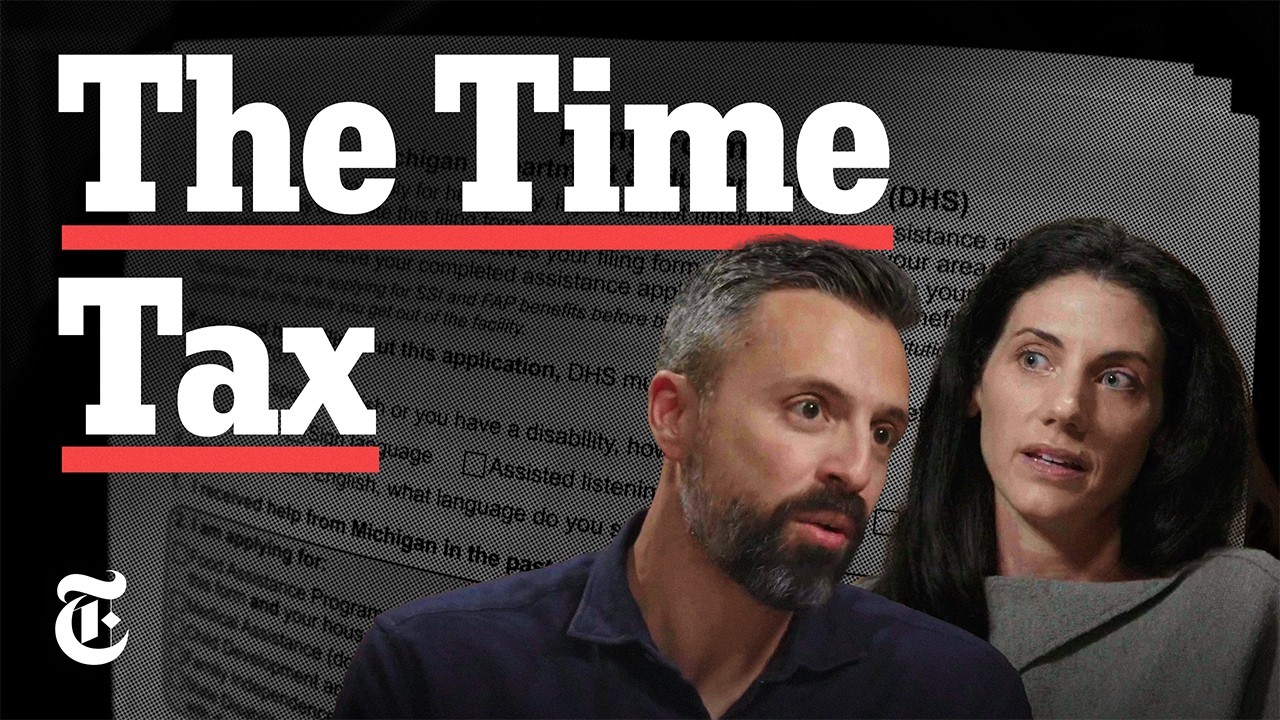
Lowrey Says US Weaponizes Red Tape to Strip Safety Net Access
The Ezra Klein Show
Complex paperwork rules in programs like Medicaid and SNAP are deliberately engineered to disenroll eligible recipients and enforce behavioral control rather than prevent fraud, driving civic alienation from the state.
Americans spend an estimated 12 billion hours annually—amounting to $430 billion in uncompensated labor—navigating government paperwork, creating an administrative 'time tax' that heavily penalizes the poor. (2:14)
Proposed work requirements for safety-net programs like Medicaid and SNAP achieve paper budget savings primarily through bureaucratic churn and disenrollment of eligible recipients rather than increased labor participation. (26:48)
The 1996 welfare reform's reliance on 'ordeal mechanism theory' transformed cash assistance into a punitive system that alienates recipients from civic participation while failing to measurably reduce child poverty. (11:34)
While peer democracies automate tax filing and adopt 'only-once' data architectures, the U.S. deliberately maintains administrative friction due to commercial lobbying and conservative efforts to foster anti-government sentiment. (50:41)
Detailed notes
## Background
Published on YouTube by The Ezra Klein Show on August 25, 2026, this episode features host Ezra Klein in conversation with his wife, Atlantic staff writer Annie Lowrey. The discussion centers on Lowrey's book, "The Time Tax: How the Government Wastes Our Time — and How to Fix It," examining how deliberate bureaucratic friction, punitive forms, and complex paperwork burden citizens and alienate them from public institutions.
## TL;DR
Klein and Lowrey explore how administrative burdens, termed the "time tax," act as a regressive filter that degrades progressive safety net programs like SNAP, TANF, and Medicaid. They contrast the punitive, hyper-surveilled bureaucracy endured by low-income applicants with universal, trusted systems like the Post Office and Social Security. Lowrey argues against the ordeal mechanism theory, pointing out that excessive friction causes catastrophic churn rather than stopping fraud. Looking to international models like Estonia's "only-once" data principle and domestic successes like the expanded Child Tax Credit, they make the case for federalizing programs into a simpler, fairer, and faster government.
## Atmosphere & style
The conversation carries an intimate yet rigorous intellectual energy, marked by the seamless shorthand between spouses who have debated these systemic issues for years. It blends analytical policy breakdowns with sharp, visceral moral outrage on behalf of vulnerable Americans trapped in bureaucratic loops. The tone balances wonky institutional critique with conversational humor, moving from personal exasperation over government forms to ambitious, constructive visions for civic redesign.
## Bulletin
- [02:14](https://www.youtube.com/watch?v=-oZd7wpZuAc&t=134s) Americans spend an estimated 12 billion hours annually—amounting to $430 billion in uncompensated labor—navigating government paperwork, creating an administrative 'time tax' that heavily penalizes the poor.
- [26:48](https://www.youtube.com/watch?v=-oZd7wpZuAc&t=1608s) Proposed work requirements for safety-net programs like Medicaid and SNAP achieve paper budget savings primarily through bureaucratic churn and disenrollment of eligible recipients rather than increased labor participation.
- [11:34](https://www.youtube.com/watch?v=-oZd7wpZuAc&t=694s) The 1996 welfare reform's reliance on 'ordeal mechanism theory' transformed cash assistance into a punitive system that alienates recipients from civic participation while failing to measurably reduce child poverty.
- [50:41](https://www.youtube.com/watch?v=-oZd7wpZuAc&t=3041s) While peer democracies automate tax filing and adopt 'only-once' data architectures, the U.S. deliberately maintains administrative friction due to commercial lobbying and conservative efforts to foster anti-government sentiment.
## Key takeaways
- [02:14](https://www.youtube.com/watch?v=-oZd7wpZuAc&t=134s) The 'time tax' imposes cognitive, logistical, and emotional burdens that act as a regressive filter on progressive social programs.
- [05:24](https://www.youtube.com/watch?v=-oZd7wpZuAc&t=324s) Poverty is reinforced by administrative constructs, where constant recertification hurdles and sanctions inflict mental deficits equivalent to total sleep deprivation.
- [09:58](https://www.youtube.com/watch?v=-oZd7wpZuAc&t=598s) Ordeal mechanism theory, which posits that making benefit access difficult deters fraud, has degraded program efficacy without building public trust.
- [11:34](https://www.youtube.com/watch?v=-oZd7wpZuAc&t=694s) The 1996 PRWORA reform replaced AFDC with frozen TANF block grants, stripping cash welfare of its entitlement status and creating barriers that eliminated its anti-poverty impact.
- [15:21](https://www.youtube.com/watch?v=-oZd7wpZuAc&t=921s) The U.S. Postal Service demonstrates that government services can succeed when designed around universal access and default institutional trust rather than means-tested gatekeeping.
- [17:40](https://www.youtube.com/watch?v=-oZd7wpZuAc&t=1060s) Social Security and Medicare remain well-funded and functional because older voters wield immense political power, supported by the 'pleasant fiction' that benefits were earned.
- [18:40](https://www.youtube.com/watch?v=-oZd7wpZuAc&t=1120s) Interfacing with demeaning welfare bureaucracies directly depresses voter turnout and leads marginalized citizens to view the state as an unpredictable threat.
- [22:53](https://www.youtube.com/watch?v=-oZd7wpZuAc&t=1373s) Extreme administrative burdens, exemplified by Michigan's 18,000-word DHS-1171 application, result from an accumulation of legal defensiveness and deliberate paternalism.
- [30:54](https://www.youtube.com/watch?v=-oZd7wpZuAc&t=1854s) Medicaid work requirements fail to increase employment among low-wage workers with variable hours, shifting healthcare costs to emergency rooms as uncompensated care.
- [40:35](https://www.youtube.com/watch?v=-oZd7wpZuAc&t=2435s) The American state treats affluent subsidies like the mortgage interest deduction as frictionless automatic entitlements while subjecting low-income assistance to extreme surveillance.
- [43:22](https://www.youtube.com/watch?v=-oZd7wpZuAc&t=2602s) The vast majority of welfare 'improper payments' are administrative clerical errors rather than applicant fraud, while major healthcare fraud is overwhelmingly committed by corporate providers.
- [46:23](https://www.youtube.com/watch?v=-oZd7wpZuAc&t=2783s) Automated tax returns used across peer nations are blocked in the U.S. by commercial tax prep lobbying and political efforts to keep taxation painful.
- [50:41](https://www.youtube.com/watch?v=-oZd7wpZuAc&t=3041s) Estonia's 'only-once' principle illustrates how digital state infrastructure can prevent citizens from ever having to submit the same data to multiple agencies.
- [56:02](https://www.youtube.com/watch?v=-oZd7wpZuAc&t=3362s) Federalizing major safety nets like Medicaid, Unemployment Insurance, and TANF would eliminate state-level budget panics during recessions and end geographic disparities.
- [58:24](https://www.youtube.com/watch?v=-oZd7wpZuAc&t=3504s) The pandemic-era expanded Child Tax Credit proved that direct, automated cash transfers through the IRS can halve child poverty without complex bureaucratic apparatuses.
- [01:04:57](https://www.youtube.com/watch?v=-oZd7wpZuAc&t=3897s) Public sector reform should focus on delivering services that are 'simpler, fairer, and faster' from the user's perspective rather than using administrative friction as backdoor austerity.
## Detailed walkthrough
### [00:00](https://www.youtube.com/watch?v=-oZd7wpZuAc&t=0s) The Left’s Dilemma and Introducing "The Time Tax"
A central paradox in American left politics is that the very demographics Democrats, liberals, and socialists assume should be most enthusiastic about ambitious government safety-net expansions are frequently the least supportive. Lower-income citizens regularly vote for political candidates promising to slash state programs, declaring that it is impossible for government to handle day care, Medicaid, or Medicare. The underlying reason rarely receives sufficient scrutiny: for low-income citizens, direct contact with government institutions is routinely miserable. When interacting with public agencies, poorer people do not encounter the pleasant, aspirational elements of the state—such as visiting an American embassy abroad—but are instead forced to endure lines and submit urine samples in cups. Rather than feeling supported, their experience of public assistance is punitive, humiliating, and hyper-scrutinized, because these programs are deliberately engineered to control and punish the people who need them.
Ezra Klein introduces his guest, Annie Lowrey, staff writer at *The Atlantic* and author of *The Time Tax: How the Government Wastes Our Time — and How to Fix It*. Klein jokes that even though they are married and discuss the issue extensively at home, living with an author means you are forbidden from asking about the manuscript while it is being written. Lowrey laughs that their contrasting work habits resemble "ships in the night": she writes almost entirely between 10:00 p.m. and 4:00 a.m., during the exact hours Klein is sleeping or waking up early to meditate.
[02:14](https://www.youtube.com/watch?v=-oZd7wpZuAc&t=134s) Bureaucracy as a Tool of Social Control
Lowrey defines the "time tax" as the full cognitive, logistical, and emotional burden imposed on end-users by paperwork and bureaucratic processes—the structural impact of bureaucracy on those subjected to it. While society typically views administrative forms as neutral necessities of distributing resources, Lowrey argues they are frequently purposeful mechanisms designed to engineer how citizens feel about themselves in relation to the state. They function as a tool to construct social class and act as a "regressive filter on progressive policies," making promised benefits so difficult to access that massive numbers of eligible people simply drop out.
Government programs use these burdens as explicit instruments of behavioral and social control. Welfare agencies impose work requirements that do little to actually boost employment, establish restrictions on education, monitor drug use, and strictly police household purchasing decisions. In the Supplemental Nutrition Assistance Program (SNAP), recipients are barred from purchasing hot, prepared foods—such as a rotisserie chicken at Costco—even though they can purchase packaged items to heat in a microwave. The policy is not driven by nutritional science; it is a paternalistic mandate enforcing that poor people must manually cook their own groceries (with narrow state-level exceptions carved out for individuals who are homeless). Similarly, while Electronic Benefit Transfer (EBT) cards have reduced stigma by mimicking standard Visa debit cards, separate checkouts and administrative friction historically functioned—and often still function—as public tools of humiliation, extracting an emotional and psychological toll simply to feed a child.
- The time tax encompasses logistical labor, specialized knowledge acquisition, and severe emotional strain imposed on the public.
- Bureaucratic friction serves as a regressive filter, blunting the reach of progressive legislation.
- SNAP policies prohibit purchasing hot prepared meals (like supermarket rotisserie chicken) to compel home cooking, highlighting administrative paternalism over convenience or nutritional outcomes.
[05:24](https://www.youtube.com/watch?v=-oZd7wpZuAc&t=324s) The Plight of Marcela: The Endless Administrative Loop
Klein quotes a passage from Lowrey's book: *"Poverty is a social construct, not just a material state of being, and the time tax is part of its construction. With forms, summonses, and sanctions, the government impresses upon poor people that it is their fault they are poor. It applies skepticism to the needy, the overwhelmed, and the unlucky that it does not apply to the powerful and wealthy."* Beyond imposing moral judgment, this administrative apparatus functions like an unpaid, exhausting part-time job stacked on top of existing daily crises.
To demonstrate how this operates in practice, Lowrey details the story of Marcela, a single mother of three living in Utah. Marcela works as a manicurist, attended aesthetician school to expand into higher-value services, and even visited the University of Utah to investigate patenting, trademarking, and finding a domestic manufacturer for an inventive nail-tech tool she developed. She actively sought upward mobility through Circles, a Salt Lake City empowerment nonprofit that provides mentorship and accountability to help families increase their earnings.
Yet Marcela remains trapped in the state's punitive social safety net. Nine years earlier, she made an inadvertent paperwork error concerning wages from a nail salon that had mishandled her pay. Unable to afford a professional tax preparer, she was labeled a fraud risk by the state of Utah. Despite paying a modest amount of restitution and having no further infractions in the nearly ten years since, the state mandated that she reapply for her family's safety-net benefits (including SNAP and Medicaid) every month or two. The state of Utah has kicked Marcela off one program or another more than 120 times, forcing her into an unending cycle of reapplications.
```mermaid
flowchart TD
accTitle: The Recertification Trap
accDescr: Flowchart illustrating the recurring administrative cycle forced on low-income benefit recipients like Marcela.
subgraph Trigger ["Past Administrative Flag"]
A["Minor Paperwork Error<br/>(Classified as Fraud Risk)"] --> B["Restitution Paid,<br/>Flag Remains Active"]
end
subgraph Loop ["The Recurring Ordeal"]
B --> C["Monthly/Bimonthly<br/>Recertification Required"]
C --> D["Submit Pay Stubs,<br/>Uploads, or Faxes"]
D --> E["Paperwork Glitch or<br/>Bureaucratic Processing Delay"]
E --> F["Abrupt Termination of Benefits<br/>(120+ Times)"]
F --> G["Emergency Appeal & Reapplication<br/>(Hours of Social Worker / Client Time)"]
G --> C
end
```
The day-to-day mechanics of compliance are absurdly onerous. For years, Marcela owned neither a personal laptop nor home Wi-Fi. She had to navigate arcane agency rules, such as taking photos of documents on her smartphone and figuring out how to transmit them as faxes because the department refused digital uploads. Even with caseworkers assisting her, they routinely sat before computer screens utterly baffled by systemic glitches and arbitrary requirements.
Klein and Lowrey emphasize that this unending administrative maze drains time that Marcela could have directed toward raising her children, studying, or building her independent nail enterprise. Worse still, it worsens the profound cognitive tax inherent to poverty. Citing extensive psychological and behavioral economics research, Klein notes that living in persistent poverty imposes a mental deficit equivalent to pulling an all-nighter—a constant, exhausting state of cognitive strain that makes navigating complex bureaucracy nearly impossible.
- Marcela has been kicked off public benefits in Utah more than 120 times over a nine-year span following a single minor paperwork mistake.
- Compliance often demands obsolete technology, such as converting mobile phone photos into digital faxes.
- Studies confirm that navigating severe financial insecurity and bureaucratic surveillance levies a heavy cognitive tax on the brain, equivalent to total sleep deprivation.
[09:58](https://www.youtube.com/watch?v=-oZd7wpZuAc&t=598s) The Ordeal Mechanism Theory
Ezra Klein and Annie Lowrey examine the counterintuitive logic governing means-tested state assistance: if the goal of the state were truly to make it easier for people to climb out of poverty, wrapping recipients in red tape, procedure, and humiliation achieves the exact opposite. Lowrey introduces the concept of "ordeal mechanism theory," an economic and policy framework that gained traction in the 1980s. The core thesis posits that public benefit programs should deliberately be made into an "ordeal." Under this logic, adding friction, hassle, and administrative hurdles discourages those who do not genuinely need the benefit from applying, while simultaneously guarding against fraud and bolstering public confidence in the integrity of the program.
Layered over this economic rationale is an almost puritanical moral imperative: the notion that nobody should receive something for nothing, and if an individual is not sufficiently active in the formal labor market, they ought to be forced to work for their assistance through administrative labor. Proponents believed creating elaborate rules and compliance hurdles would generate broad public trust. However, Lowrey points out that this calculation failed: the 1996 welfare reforms did not make welfare popular or beloved by the public. Nobody looks at contemporary welfare and praises it as an exemplary program. Layering on administrative burdens did nothing to improve public perception, serving only to punish the people attempting to access aid.
[11:34](https://www.youtube.com/watch?v=-oZd7wpZuAc&t=694s) The 1996 Welfare Reform and the Cruelty of TANF
The turning point came with the 1996 Personal Responsibility and Work Opportunity Reconciliation Act, ushered in under President Bill Clinton's pledge to "end welfare as we know it" and replace a supposed cycle of dependency with the "dignity, the power, and the ethic of work." The reform radically restructured the system into Temporary Assistance for Needy Families (TANF). It stripped cash assistance of its status as an entitlement, imposed a lifetime limit of five years—regardless of how many children a mother might have over subsequent decades—and introduced rigid work requirements alongside aggressive sanctions for non-compliance. Funding was transformed into a fixed block grant to the states set at $16.5 billion annually, an amount that has remained frozen without any adjustment for inflation, making the available pool of support shrink continuously in real terms.
```mermaid
flowchart TD
accTitle: The Mechanics of TANF Administrative Friction
accDescr: Diagram illustrating how TANF regulations, procedural mandates, and sanctions turn cash assistance into a punitive ordeal that fails to reduce poverty.
subgraph State["State & Federal Rules"]
A["1996 Welfare Reform"] --> B["Capped Block Grant ($16.5B)"]
A --> C["5-Year Lifetime Limit"]
A --> D["Mandatory Work Rules"]
end
subgraph Ordeal["Administrative Ordeals"]
E["Pauper-Level Cash Benefit"]
F["Child Support Identification Mandate"]
D --> G["Strict Compliance Reporting"]
end
subgraph Fallout["Punitive Outcomes"]
F --> H{"Non-Cooperation or Fear"}
H -->|Sanctions| I["Benefit Reduction or Full Cutoff"]
G -->|Missed Reporting| I
I --> J["Zero Impact on Child Poverty Rate"]
end
B -.-> E
C -.-> E
E --> F
```
For recipients, securing these meager benefits requires vast amounts of unpaid labor to complete applications that are deliberately invasive, embarrassing, and humiliating. Lowrey illustrates this cruelty through the mandate requiring unmarried mothers to name the biological fathers of their children so the state can pursue child support:
- **Economic Fragility vs. Enforcement:** Many mothers report that although they maintain an amicable relationship with the father, he is impoverished; garnishing his wages could push him into homelessness.
- **Exposure of Domestic Trauma:** In cases involving past abuse, mothers are forced to recount deeply traumatic life events and disclose identifying information to untrusted state bureaucrats.
- **Mass Sanctions:** Refusal or inability to comply with these invasive child support rules accounts for up to half of all sanctions—punitive benefit clawbacks—in certain states.
- **Policy Inefficacy:** Because TANF funds are diverted by states into unrelated priorities while recipients are deterred by administrative cruelty, the modern program has become so degraded that it produces no measurable reduction in the national child poverty rate.
[15:21](https://www.youtube.com/watch?v=-oZd7wpZuAc&t=921s) The Postal Service: Universal Service and the Assumption of Worthiness
Klein points to a fundamental dichotomy running through American governance: programs where citizens are intuitively presumed deserving by default versus programs where recipients are treated with institutional suspicion and made to prove their worth. The United States Postal Service serves as the preeminent counterexample of universal service oriented around trust. Regardless of geographic isolation or socioeconomic background, the postal system assumes everyone is entitled to receive mail.
To illustrate this service orientation, Lowrey cites a project by designer Steven Brower at the School of Visual Arts in New York. Brower tasked his art students with mailing him letters using hand-drawn maps, unconventional typography, illustrations, and visual puzzles instead of standard addresses. Rather than rejecting the non-standard envelopes, postal workers took the time to decipher the drawings, shade the obscured markings, and deliver the letters. The postal service demonstrates an extraordinary commitment to universal access:
- **No Pre-registration:** Citizens do not have to register their addresses or pass eligibility checks to receive service.
- **Extreme Reach:** The postal service utilizes skiffs to reach water-bound locations and mule trains to carry mail down to the bottom of the Grand Canyon to serve the local hotel and the Native American reservation community at Phantom Ranch.
[17:40](https://www.youtube.com/watch?v=-oZd7wpZuAc&t=1060s) Why Social Security and Medicare Work: Contributory Myths and Civic Engagement
Klein and Lowrey turn to the comparative ease of navigating major entitlement programs like Social Security and Medicare. When an American turns 65, enrolling in Medicare is remarkably straightforward, and Social Security functions smoothly despite immense underlying complexity—such as tiered earnings histories, varied benefit formulas, and distinct Medicare parts. This ease of delivery is not due to a lack of technical complexity, but rather a deliberate political choice rooted in power and perceived legitimacy.
Older Americans vote in exceptionally high numbers, rendering them a politically formidable constituency that lawmakers fear angering. Furthermore, Social Security is treated as a "contributory" benefit. The widespread public perception that the government merely holds your money in a dedicated account and returns it upon retirement functions as what Lowrey terms a "pleasant fiction." Nonetheless, this framing reinforces the belief that recipients have earned their benefits. Lowrey notes that extensive political science research demonstrates how universal, well-functioning programs foster positive civic behavior: interacting with an efficient program like Social Security makes people feel like valued American citizens, motivating them to mobilize and defend the institution.
[18:40](https://www.youtube.com/watch?v=-oZd7wpZuAc&t=1120s) Civic Alienation and the "Paperwork Vortex"
In sharp contrast to universal programs, means-tested programs that rely on bureaucratic friction produce civic alienation. Lowrey highlights the scholarship of political scientist Joe Soss, who compared low-income mothers enrolled in cash welfare with similarly situated low-income mothers who were not receiving the benefit. Soss discovered that interfacing with the welfare bureaucracy actively causes people to withdraw from public life:
- Recipients become significantly less civically engaged and less likely to vote.
- They develop an intensely adversarial relationship with the government, viewing the state simultaneously as an indispensable lifeline and an existential threat capable of upending their households or seizing their children over procedural errors.
- The state transmits a direct signal of low civic worth, implicitly informing recipients that they deserve suspicion and undignified treatment.
Klein connects this theoretical reality to a personal narrative from Lowrey's book involving a woman who worked at a boutique real estate firm and suffered a severe traumatic brain injury. After the injury, she found herself plunged into a nightmarish "paperwork vortex" with the state. Because of her middle-class background, she and her family experienced this sudden, labyrinthine bureaucratic blockade not as an ordinary condition of life, but as an outrageous injustice.
[20:36](https://www.youtube.com/watch?v=-oZd7wpZuAc&t=1236s) The Trauma of Falling Down the Ladder and Working-Class Cynicism
Ezra Klein and Annie Lowrey discuss how socioeconomic background shapes a citizen’s expectations of how the state will treat them. Observers often puzzle over why working-class voters exhibit profound distrust toward the government and frequently lean Republican, commonly chalking it up to "false consciousness" or pure culture war issues. In reality, working-class Americans are routinely subjected to awful, demoralizing interactions with government bureaucracy. If an affluent person only encounters pleasant state touchpoints—like visiting an American embassy abroad—redistribution sounds straightforward and universally benevolent. But for those on the receiving end, accessing aid often means enduring intense scrutiny, standing in lines, and feeling as though they are automatically viewed as fraud risks.
This dynamic complicates the classic "What’s the Matter with Kansas?" thesis that working-class voters simply vote against their own material self-interest. Lowrey observes that college-educated, middle-class people who suffer an economic fall down the income ladder and suddenly must interact with the state as a "supplicant begging for help" are genuinely traumatized. Accustomed to dignity, they recoil at being treated like paupers, protesting, "Wait, you're treating me like I'm poor?" Lowrey notes that lower-income citizens spend vastly more time navigating these humiliating hurdles—like having to "pee in a cup"—while higher-income Americans dealing with burdensome government systems at least have the financial and social capacity to absorb the blow.
- **Class expectations:** Higher-income individuals expect respect and customer service from institutions; lower-income applicants expect suspicion and bureaucratic resistance.
- **The "What's the Matter with Kansas?" paradox:** Distrust of liberal programs among lower-income voters is often rooted in lived, negative administrative encounters rather than mere ideological misunderstanding.
---
[22:53](https://www.youtube.com/watch?v=-oZd7wpZuAc&t=1373s) The Infamous Michigan DHS-1171 Form
When Klein asks Lowrey to name her "favorite" real-world exemplar of the time tax, she immediately points to Michigan's DHS-1171, the state's master application form for public assistance. She highlights the story of Michael Brennan, a former United Way executive in Michigan who founded Civilla, a human-centered design firm dedicated to redesigning public benefit systems. For years, Brennan carried a pocket-sized, miniature printed copy of the DHS-1171 with him everywhere—a habit Lowrey likens to a priest carrying a Bible or a politician clutching a pocket Constitution. At its peak, the staggering document spanned roughly 18,000 words and bombarded struggling applicants with over 1,000 questions just to determine if they could feed their families.
```mermaid
flowchart TD
accTitle: Michigan DHS-1171 Intrusive Bureaucracy
accDescr: Flowchart illustrating the intrusive questions asked on Michigan's DHS-1171 assistance form.
subgraph App["DHS-1171 Application (18,000 Words / 1,000 Questions)"]
direction TB
A["Applicant in Crisis (Seeking Food or Healthcare)"] --> B["Section for Children Under 22"]
B --> C["Who paid for child's birth expenses?"]
B --> D["Mother's marital status while pregnant"]
D --> E["Marriage, separation, & divorce dates with county/state orders"]
D --> F["If single: Conception date, city, state, & country"]
end
App --> G["Result: Intimidation, Churn, and Abandonment of Aid"]
```
Examining a physical copy in the studio, Klein and Lowrey marvel at the sheer weight, dense layout, and invasive nature of the document. Klein reads aloud from a section mandated for any household member under 22, which interrogates mothers about who paid for the child's birth expenses, past marriage and divorce decrees, and even demands the exact date and geographic location—down to the city, state, and country—where the child was conceived. Lowrey points out that even OB-GYNs never ask patients for an exact conception date: "This is the state telling poor people to go fuck themselves." The document treats applicants under severe economic duress with overwhelming suspicion, signaling that asking for help requires submitting to profound indignity.
- **Scale of DHS-1171:** Stretched across 18,000 words with roughly 1,000 distinct questions.
- **Intrusive inquiries:** Demanded precise conception dates, conception locations (city/state/country), court parentage affidavits, and detailed marital history during pregnancy.
- **Civilla's intervention:** Michael Brennan and his team eventually helped Michigan overhaul and streamline the monstrous form into a human-centered application.
---
[26:48](https://www.youtube.com/watch?v=-oZd7wpZuAc&t=1608s) Accretion vs. Weaponization: Why the Bureaucracy Exists
Klein presses Lowrey on the fundamental institutional intent behind such grueling paperwork: Is the DHS-1171 the result of bumbling bureaucratic incompetence and procedural fetishism, or is it a calculated ordeal mechanism designed to weaponize the time tax and deter applicants from claiming benefits? Klein posits the cynical theory of aid: if an applicant cannot pay in money, the state forces them to pay in time and humiliation as proof of desperation. Lowrey argues that it is "all of the above." Documents of this scale typically accumulate via bureaucratic accretion over decades—layers of federal mandates, state statutes, and risk-aversion tacked on by lawyers, lobbyists, and suited bureaucrats prioritizing institutional compliance over the dignity of the citizen.
```mermaid
flowchart LR
accTitle: The Two Drivers of the Time Tax
accDescr: Diagram contrasting bureaucratic accretion with deliberate policy weaponization.
subgraph Drivers["Drivers of Bureaucratic Burden"]
direction TB
subgraph Accretion["Bureaucratic Accretion"]
A1["Layered State & Federal Laws"] --> A2["Legal Risk Management"]
A2 --> A3["Form Designed for State, Not End-User"]
end
subgraph Weaponization["Deliberate Weaponization"]
W1["Work Requirements (e.g., H.R. 1)"] --> W2["Onerous Reporting Portals"]
W2 --> W3["Coverage Drops / Fiscal 'Pay-For'"]
end
end
```
Lowrey stresses that this deliberate weaponization is on full display in modern legislation, such as the congressional H.R. 1 ("One Big Beautiful Bill Act"). In this bill, expanded work requirements for SNAP (food stamps) and unprecedented nationwide work requirements for non-disabled adults on Medicaid are explicitly leveraged as budget "pay-fors" to finance tax cuts for the wealthy. Lowrey highlights the absurdity of applying work requirements to Medicaid: healthcare is not a cash transfer that allows someone to lazily sit at home "on the dole." Instead, policymakers bank on the reality that the onerous reporting paperwork and administrative hurdles will cause massive numbers of legitimately eligible, low-income people to fall off the rolls, generating paper savings on the backs of administrative burnout.
- **Bureaucratic accretion:** Forms expand incrementally as legal departments and agencies prioritize meeting statutory rules over citizen usability.
- **H.R. 1 provisions:** Imposes direct cuts to refugees and asylees, expands SNAP work requirements to older Americans, and institutes a first-ever nationwide Medicaid work requirement for non-disabled adults.
- **The "Pay-For" mechanism:** Medicaid work requirements save government money not by moving recipients into self-sufficient careers, but by counting on administrative barriers and paperwork failure to disenroll eligible, poor individuals.
[30:54](https://www.youtube.com/watch?v=-oZd7wpZuAc&t=1854s) The Reality of Medicaid Work Requirements
Ezra Klein and Annie Lowrey examine the devastating logic behind imposing work requirements on Medicaid recipients, who must be extremely impoverished—making no more than 138% of the federal poverty line—to qualify. To maintain their health coverage under these rules, recipients must continually satisfy bureaucratic reporting demands to prove they are actively searching for work or working sufficient hours. Klein asks what possible societal benefit exists in leaving an individual uninsured when they suffer a catastrophic health event like a heart attack. Lowrey points out that such individuals inevitably end up in the emergency room, leaving behind uncompensated medical care that someone must absorb: "Beats me and they're going to go to the ER and it's going to be uncompensated care that somebody will pay, just not Washington."
Lowrey shares a personal reflection on the high stakes of losing access to care: as a Type 1 diabetic, being cut off from insulin would kill her in a matter of weeks. She notes that the majority of people enrolled in Medicaid who can work are already employed; they simply work low-wage, variable, or part-time jobs without employer-sponsored benefits, or they carry heavy caregiving obligations. The policy was never structured as a genuine effort to improve public health or workforce participation; instead, it was bundled into broader legislative maneuvering to manufacture budgetary savings meant to fund tax cuts for the wealthy.
```mermaid
flowchart TD
accTitle: Consequences of Medicaid Work Requirements
accDescr: Diagram tracing how work requirements fail to increase employment and instead cause coverage loss and uncompensated care.
subgraph Policy ["Policy Intent vs Reality"]
A["Impose Strict Reporting & Work Requirements"] --> B["Bureaucratic Hassle & High State Admin Costs"]
B --> C["No Increase in Employment Rates"]
end
subgraph Impact ["Recipient Impact"]
B --> D["Eligible Enrollees Disenrolled via Paperwork"]
D --> E["Displaced Care to Emergency Rooms"]
E --> F["Surging Uncompensated Care Costs"]
end
```
[32:47](https://www.youtube.com/watch?v=-oZd7wpZuAc&t=1967s) The Fraud of "Non-Cuts" and the Vulnerable Populations Left Behind
Despite political promises from Donald Trump and other conservatives insisting that Medicaid would not face cuts, policymakers targeted hundreds of billions—or even a trillion dollars—in budget reductions by banking on administrative churn. Proponents frequently argued the policy aimed to push able-bodied "young men" who were idling at home into the workforce. As Klein and Lowrey highlight, young men represent the least expensive cohort to insure and utilize very little healthcare. Furthermore, empirical data from states that previously piloted work requirements via federal waivers prove that these mandates do not increase employment rates; instead, they function as an expensive paperwork bottleneck for state administrations that strips people of their insurance coverage.
Recipients often remain entirely unaware they have been kicked off the rolls until an acute medical emergency occurs, such as a dislocated shoulder. Lowrey emphasizes that the true, disproportionate burden falls on women—who form the majority of safety-net recipients and shoulder the bulk of unpaid child care and household management—as well as deeply marginalized populations. She recounts a conversation with an administrator of a health clinic serving indigent and unhoused people struggling with substance abuse and psychiatric disorders. While these patients desperately need inpatient psychiatric treatment and wraparound supportive services, work reporting mandates guarantee they will lose coverage because it is practically impossible to upload paperwork or access online portals while living unsheltered in a tent without a computer or phone. Lowrey condemns the dishonesty of the policy: it would be terrible yet honest to simply slash benefits directly, but masking deep cuts as administrative compliance mechanisms completely lacks integrity.
- **Empirical failure:** State-level waiver experiments demonstrate that Medicaid work requirements fail to increase overall employment rates.
- **Demographic reality:** The dominant recipients harmed by bureaucratic barriers are women managing caretaking responsibilities, not idle young men.
- **Extreme vulnerability:** Unhoused patients requiring inpatient addiction and psychiatric treatment are structurally locked out of compliance due to a lack of phones, internet access, and stable mailing addresses.
[35:27](https://www.youtube.com/watch?v=-oZd7wpZuAc&t=2127s) Cognitive Inequality, Bureaucratic Sorting, and the "Lusory Attitude"
The conversation turns to the hidden cognitive tax built into modern administrative systems. Klein observes that contemporary society heavily rewards individuals endowed with high executive function—those whose minds excel at tracking tasks, parsing abstract symbolic information, and maintaining rigid organizational routines. In a moment of personal banter, Lowrey laughs and points out that Klein is describing himself. Klein admits the irony of having married someone with a very different cognitive orientation: Lowrey confesses that while she possesses a driver's license, she has no idea where it is, and she has even spent phone sessions with her therapist opening unopened mail together.
```mermaid
flowchart LR
accTitle: The Divergent Views of Administrative Burdens
accDescr: How executive function and class shape perceptions of bureaucratic burdens as either games or barriers.
subgraph HighIncome ["High-Income / High Executive Function"]
G1["Abundant Resources & Support"] --> G2["Bernard Suits' 'Lusory Attitude'"]
G2 --> G3["Bureaucracy Treated as a Winnable Game (Taxes, Yale Admissions)"]
end
Klein notes that individuals who endure chronic poverty often contend with neurodivergence, severe trauma, depression, addiction, or crippling social anxiety—factors that make basic bureaucratic survival exhausting. Yet welfare architecture punishes these very traits by piling on endless forms and deadlines. Drawing on philosopher Bernard Suits' concept of the "lusory attitude"—the psychological acceptance of arbitrary rules for the satisfaction of playing a game—Lowrey argues that high-income Americans treat bureaucratic obstacles as a meritocratic contest they can conquer:
- **Elite college admissions:** Wealthy applicants treat spending 100 hours on an application to Yale as an avenue for achievement and meritocratic virtue.
- **Tax optimization:** Affluent professionals frequently hire high-priced accountants and obsessively discuss tax avoidance strategies as a gamified thrill.
- **Historical biases:** Lowrey emphasizes that American administrative hurdles reflect ancient Elizabethan Poor Law distinctions between the "deserving" and "undeserving" poor, compounded by a long legacy of anti-Black racism and Jim Crow policies designed to keep safety net access intentionally exclusionary.
[39:08](https://www.youtube.com/watch?v=-oZd7wpZuAc&t=2348s) The Politics of Fraud and the Shift from AFDC to TANF
Klein pushes on the conventional counterarguments, noting that even Democratic leaders in deep-blue states design complex, restrictive requirements for programs like Medicaid and the Temporary Assistance for Needy Families (TANF). Policymakers are driven by two pervasive concerns: genuine fears of program fraud, and the political vulnerability of safety net policies. If the public perceives that public funds are going to individuals deemed "undeserving," political backlash can entirely dismantle the program. This exact political dynamic drove the 1996 welfare reform under President Bill Clinton, which dismantled the New Deal-era Aid to Families with Dependent Children (AFDC) and replaced it with TANF.
Lowrey highlights the fundamental transformation that occurred during this 1996 transition: AFDC had operated as a federal entitlement, meaning that anyone who met the statutory income eligibility criteria was legally guaranteed assistance. Under TANF, the entitlement structure was eliminated; meeting the formal criteria no longer ensures that an applicant will receive any aid at all.
[40:35](https://www.youtube.com/watch?v=-oZd7wpZuAc&t=2435s) The Disparity Between Entitlements and Welfare Programs
The conversation opens on the stark divergence between how social programs treat different classes of Americans. For high-income earners, meeting the statutory criteria of a benefit almost always guarantees receipt. If you carry a mortgage, you automatically receive the mortgage interest deduction without an agency vetting whether you deserve it or shuffling around allocations. In contrast, low-income applicants seeking public housing vouchers or Section 8 assistance can meet every single qualification on paper and still be denied, or end up waiting on a list for 10 or 12 years. Even staff inside those housing organizations often cannot clearly articulate why one person gets a voucher while another is left waiting.
```mermaid
flowchart TD
accTitle: Structural Disparity in Benefit Administration
accDescr: Contrasting the automatic processing of high-income tax expenditures with discretionary low-income benefits.
subgraph HighIncome ["High-Income / Tax System"]
A["Mortgage Interest"] --> B["Standardized Entitlement"]
B --> C["Automatic Receipt via Accountant / Tax Return"]
end
subgraph LowIncome ["Low-Income / Direct Welfare"]
D["Section 8 / Housing"] --> E["Stringent Vetting & Caps"]
E --> F["Decade-Long Waitlists or Arbitrary Denial"]
end
```
Annie Lowrey explains that the evolution from Aid to Families with Dependent Children (AFDC) to Temporary Assistance for Needy Families (TANF) in the 1996 welfare reform was driven far more by racial politics than by genuine concerns over fraud. The precursor to these safety net programs was the early 20th-century Progressive Era "mothers' pension" system. Administered at the state level, mothers' pensions were used almost exclusively by white women. The program operated under an openly paternalistic model: if a woman was considered a "good widow" or had been abandoned by her husband, a social worker would visit her home, and she was granted state funds as wages for mothering, which was treated as the most vital form of labor in American life.
When Aid to Dependent Children (ADC) was later established under Social Security and expanded into AFDC, it operated as a formal federal entitlement. Because Black women were disproportionately relegated to low-wage jobs, they utilized the program as needed when raising children. This demographic shift triggered a profound political and media backlash:
- Lowrey cites political scientist Martin Gilens, whose research demonstrated that mainstream media coverage of welfare shifted dramatically away from white mothers toward imagery of urban Black families, despite Black recipients never constituting the majority of the caseload.
- As public imagery shifted, political rhetoric evolved: leaders stopped speaking about protecting needy children and began focusing aggressively on adult mothers.
- Politicians redefined welfare as an engine of dependency, insisted that "welfare is a work program," and ultimately dismantled AFDC in 1996 to enact strict work requirements and time limits under TANF.
[43:22](https://www.youtube.com/watch?v=-oZd7wpZuAc&t=2602s) Program Complexity, Improper Payments, and Elite Fraud
Lowrey argues that the most effective way to eliminate fraud in public benefits is counterintuitive to lawmakers: simply make the programs far less complex. When the state imposes burdensome asset tests, arbitrary income thresholds, and dozens of fussy verification forms, the vast majority of errors that occur are bureaucratic miscalculations rather than deliberate deception. The government reports an "improper payment rate," which measures overpayments and underpayments alike, but much of that metric simply reflects ordinary people or overburdened caseworkers failing to navigate impossible paperwork correctly.
Ezra Klein and Lowrey observe that the national obsession with fraud depends almost entirely on the socioeconomic status of the alleged perpetrator:
- Medicare and Medicaid fraud is rarely committed by impoverished recipients falsifying basic identity information; it is executed systematically by medical providers and corporate executives through unbundling services, billing for phantom procedures, or running large-scale schemes.
- Rick Scott, prior to becoming a U.S. Senator from Florida, headed Columbia/HCA when the hospital chain was hit with what was at the time the largest healthcare fraud settlement in American history.
- Donald Trump commuted or pardoned high-profile healthcare executives convicted in massive Medicare fraud settlements, while congressional Republicans consistently gutted the IRS audit division, enabling tax evasion among wealthy filers.
- Organized criminal syndicates carry out massive frauds by purchasing leaked personal data on the dark web to file bulk fraudulent unemployment claims, completely distinct from an impoverished mother filling out a form incorrectly.
Lowrey highlights the double standard by contrasting basic social welfare with the mortgage interest deduction—which functions as a massive, multi-billion-dollar benefit program for homeowners. If homeowners were forced to undergo mandatory drug testing ("piss tests") or fill out multi-page interrogations under penalty of perjury rather than having a private accountant tick a single deduction box on a tax return, the rate of program sanctions and revocations among the wealthy would skyrocket.
[46:23](https://www.youtube.com/watch?v=-oZd7wpZuAc&t=2783s) Tax Filing: How Peer Nations Automate What the IRS Forbids
Klein shifts the discussion to the tax system as the single most universal administrative burden Americans confront. Lowrey outlines how peer nations treat income tax filing as an automated administrative chore handled by the government rather than an agonizing, uncompensated obligation foisted onto individuals:
- In Japan, the national tax authority automatically calculates liability for salaried employees; wage earners generally never file a tax return.
- In Nordic nations like Sweden, Norway, and Denmark, the state prepares the return and citizens can review, adjust, and approve it via a simple text message.
- Throughout much of Europe, governments mail citizens pre-filled forms that require only a quick verification and a signature, leaving Europeans bewildered when learning that Americans must independently tally complex private medical bills and untangle obscure tax rules under threat of federal audit.
As Klein points out, the absurdity of the American system is that the IRS already possesses the core income data from employers, banks, and W-2s: the agency can only audit taxpayers for underpaying because it knows what they owe in the first place. Yet rather than sending a calculated statement, the government forces citizens to buy commercial software or hire professionals to duplicate the state's existing files. While the IRS launched a successful direct-file pilot program that allowed users to file directly through the government for free, it faced fierce conservative and commercial pushback.
Lowrey outlines the two foundational barriers holding the U.S. back:
1. **Tax Code Arcana:** The U.S. tax code is bloated with complex deductions and credits, though roughly 9 out of 10 Americans take the standard deduction and do not itemize anyway.
2. **Data-Sharing Firewalls:** Deep legal prohibitions and obsolete technical infrastructure prevent federal agencies from sharing information. The Department of Health and Human Services (HHS) cannot seamlessly transfer verified income or family status data to the IRS, and systems do not speak to one another.
Because social trust in the federal government is exceptionally low, many Americans bristle at the prospect of an all-knowing, unified state database. However, Lowrey proposes a sensible compromise centered on permission and optionality: allow citizens to simply check a consent box permitting agencies to share data across state tax offices, the IRS, and benefit programs. Granting users the choice to automate filing and eligibility determination would instantly lift thousands of hours of administrative friction off struggling families.
[50:41](https://www.youtube.com/watch?v=-oZd7wpZuAc&t=3041s) Estonia’s "Only-Once" Model
Ezra Klein brings up Annie Lowrey’s trip to Estonia, a journey she did not talk much about at home, leaving Klein to read about it directly in her book *The Time Tax*. Lowrey explains that Estonia’s post-Soviet government was established *de novo* by remarkably young leaders in their twenties and thirties—many of whom are only now reaching retirement age. Because the newly independent country was poor, financially distressed, and in urgent need of foreign investment and backing from institutions like the International Monetary Fund (IMF), building a transparent, trusted state apparatus was a core survival requirement. That necessity led Estonia to construct what Klein and Lowrey consider arguably the most technologically advanced government in terms of public service delivery on Earth.
At the core of this system is Estonia’s "only-once" policy. Under this rule, a citizen never has to provide the same piece of information to the state twice. Whether someone moves, has a baby, or enrolls a child in school, entering the update into one corner of the government instantly propagates it across all other public agencies. Citizens can log into a single portal to view their voting history, real estate records, and medical files in one place. Lowrey contrasts this with the United States, where basic lifelong data is hopelessly fragmented; sitting with an Estonian resident who walked her through the portal, Lowrey realized she had no idea how she could even track down her own childhood elementary school records in the American system.
Klein and Lowrey emphasize that the friction Americans experience with the IRS is not an accidental administrative shortcoming, but a deliberate political choice. Republicans in Congress, backed by fierce lobbying from commercial tax preparers like Intuit, have consistently fought to keep tax preparation complicated. The political calculation is straightforward: if encounters with public administration are frictionless and pleasant, voters walk away thinking the state works well and support public programs. Keeping the process onerous fosters anti-government resentment.
```mermaid
flowchart TD
accTitle: Estonia Only-Once Principle vs American Administrative Silos
accDescr: Diagram contrasting Estonia's unified data hub updating all agencies simultaneously against the fragmented, duplicative US system.
[54:05](https://www.youtube.com/watch?v=-oZd7wpZuAc&t=3245s) What DOGE Revealed About Bureaucracy
Addressing the Department of Government Efficiency (DOGE) headed by Elon Musk, Klein and Lowrey discuss the unintended lessons of its disruptive approach. For years, policy reporting consistently ran into supposed "firewalls" regarding data sharing—specifically, the ironclad claim that the IRS could never share its files with social benefit agencies to streamline access due to strict privacy statutes. While Musk and DOGE acted with destructive disregard for procedure, their actions demonstrated that legal barriers previously treated as immutable technical realities were often just internal guidelines and conservative legal advice.
Lowrey and Klein argue that prior Democratic administrations, such as Obama's and Biden's, treated bureaucratic guidance and cautionary advice from agency lawyers as "sacrosanct" holy writ rather than alterable internal policy. If administrative rules are making public services fail, those rules ought to be rewritten or reinterpreted. The underlying legislative pathology is that Congress no longer views itself as the nation’s administrator. Lowrey quips that the United States should abolish the filibuster, govern on party-line votes, and let voters judge policies by whether they actually work—joking that her bumper-sticker pitch is shifting toward a parliamentary model with a prime minister.
[56:02](https://www.youtube.com/watch?v=-oZd7wpZuAc&t=3362s) Federalizing the Safety Net
Klein observes that the central institutional reform in Lowrey’s book is an aggressive call for the federalization of government power. Lowrey rejects the long-standing American praise for state-level devolution, asserting: "I hate laboratories of democracy. The federal government is better at doing this." She argues that essential programs must be taken away from states and counties and placed under direct federal control:
- **Medicaid:** Should be consolidated into a single national program rather than fractured across 56 separate state and territorial regimes.
- **Unemployment Insurance (UI):** Needs to be federalized to eliminate disparities and collapse the burden of fifty separate application platforms.
- **TANF (Temporary Assistance for Needy Families):** If preserved at all, it should be run centrally by the federal government.
Lowrey highlights two decisive reasons why federal administration outclasses state administration:
1. **Deficit spending capacity:** The federal government does not operate under balanced budget requirements, whereas states and municipalities are legally constrained and forced to slash programs during economic downturns when need peaks.
2. **Mobility and continuity:** In a fragmented system, poor and housing-insecure families who move across state lines are regularly dumped from safety-net rolls and forced to restart arduous paperwork cycles from scratch.
Furthermore, Lowrey notes that administrative competence does not break down along partisan lines: progressive "blue" states like California often construct exceptionally labyrinthine, proceduralized bureaucracies that are just as nightmarish and ineffective to navigate as those in conservative "red" states. True reform requires establishing a single national floor administered by federal bodies focused purely on service delivery and user outcomes.
[58:24](https://www.youtube.com/watch?v=-oZd7wpZuAc&t=3504s) Cash Support and Administrative Simplicity
Klein connects Lowrey’s earlier work on Universal Basic Income (UBI) to *The Time Tax*, seeing them as complementary halves of the same argument: the state should do fewer complicated things and execute them with direct, universal clarity. This philosophy mirrors the classic argument for a negative income tax, reminiscent of Richard Nixon’s Family Assistance Plan—an effort to establish an unconditional federal income floor under families with dependent children, bypassing intrusive bureaucratic gatekeeping.
Lowrey points to the pandemic-era expansion of the Child Tax Credit (CTC) as concrete proof that administrative simplicity works:
- By delivering payments directly through the IRS money pipeline rather than relying on state welfare offices, the program reached roughly 80% of its target demographic.
- In doing so, it cut child poverty in the United States in half almost overnight.
- While the sheer volume of capital accounted for much of the impact, eliminating compliance hoops and administrative ordeals was the key factor in getting funds to families without delay.
[01:00:12](https://www.youtube.com/watch?v=-oZd7wpZuAc&t=3612s) The Submerged State and the Visibility Problem
Running programs through the tax code is extraordinarily efficient: for most recipients, no complex application is needed, and money simply appears in their accounts. Over time, the IRS has quietly transformed into a major welfare administrator, even though neither Congress nor the IRS itself likes to conceive of it in those terms. However, this efficiency creates a significant political downside: the benefits become invisible. Lowrey points to research by Cornell political scientist Suzanne Mettler on the "submerged state," which highlights how high-income earners frequently insist they receive zero government assistance, entirely oblivious to the vast subsidies they claim through tax deductions.
Because affluent homeowners do not have to "pee in a cup" or wait in a humiliating office to receive the mortgage interest deduction—their accountants simply handle the paperwork—they never register that they are beneficiaries of government largesse. Conversely, low-income recipients are forced through grueling in-person verification processes, making their reliance painfully salient and stigmatized. While tax-based delivery remains drastically cheaper and far more reliable at getting funds to eligible citizens, its invisibility obscures the positive role of the state. Klein notes that simple policy tweaks could fix this, suggesting that tax benefits could easily be mailed out as prominent checks. Lowrey jokes that Joe Biden missed an obvious political trick during his presidency by refusing to put his name on stimulus checks: "It's like you should have put your big signature giant face on the check like Donald Trump."
```mermaid
flowchart TD
accTitle: Submerged State vs Punitive Welfare Experience
accDescr: Contrasts how high-income tax expenditures operate quietly with no friction while low-income safety net benefits impose heavy administrative burdens.
subgraph HighIncome["Affluent Tax Subsidies (e.g., Mortgage Deduction)"]
A["Administered via Tax Code"] --> B["Accountant or Software Files"]
B --> C["Invisible Benefit Received"]
C --> D["Perception: 'I don't use government programs'"]
end
subgraph LowIncome["Safety Net Benefits (e.g., SNAP, Medicaid)"]
E["Administered via Welfare Agencies"] --> F["Complex Forms, In-Person Visits & Scrutiny"]
F --> G["Stigmatized Benefit Received"]
G --> H["Perception: Pervasive Surveillance & Frustration"]
end
```
[01:01:55](https://www.youtube.com/watch?v=-oZd7wpZuAc&t=3715s) The Conservative Critique and the Case for High Expectations
Klein presents the standard conservative critique directed at Lowrey's book: if the work paints such an exhaustive, devastating portrait of government failure, complexity, and bureaucratic incompetence, how can it conclude with a call for *bigger* government? To critics, calling for more state capacity in the wake of such dysfunction feels fundamentally paradoxical—they argue the government should simply do less and step out of people's lives entirely. Lowrey responds forcefully by asking if conservatives truly intend to eliminate popular, highly functional institutions like Social Security. A tremendous number of massive government programs actually function with extraordinary efficiency, proving that competence is entirely achievable.
The real pathology, Lowrey argues, is that Americans have internalized abysmally low expectations and "let these guys get away with murder," rather than demanding a government that functions at the level seen in other developed democracies. As Klein puts it, politicians obsess over whether a program exists on paper, but rarely care whether ordinary citizens can actually access it. Furthermore, civil servants on the front lines are often desperate to make their agencies work smoothly, but are bound hand and foot by rigid statutory mandates and regulations that forbid common-sense improvements. Gagged from writing op-eds or publicly critiquing policy under threat of being fired, these workers regularly leak hair-on-fire warnings about failing systems out of profound despair:
- **Suppressed expertise**: The people most invested in making safety net programs function are the dedicated caseworkers who chose public service to help people, but are handcuffed by red tape.
- **The bureaucratic anxiety cycle**: Citing *Recoding America* by Jennifer Pahlka, Lowrey outlines the doom loop where Congress enacts poorly performing programs, panics, and responds by heaping even more micro-rules and oversight onto bureaucrats, paralyzing them instead of granting clear outcomes and trust.
[01:04:57](https://www.youtube.com/watch?v=-oZd7wpZuAc&t=3897s) A "Simpler, Fairer, Faster" Government
Klein proposes a unifying bumper-sticker platform for Democrats: making the state "simpler, fairer, and faster." When conventional politicians invoke "efficiency," the phrase is typically an empty euphemism for slashing budgets. Genuine efficiency must be judged strictly from the standpoint of the citizen: policies must be simple to navigate, free from the corrupting influence of money, and fast enough that individuals are not robbed of their life hours. Lowrey agrees, noting that modern supply-side and abundance agendas hinge entirely on speed.
Addressing the political economy of why this reform does not occur organically, Lowrey explains that the "time tax" is fragmented across thousands of local, state, and federal jurisdictions. More insidiously, punitive administrative hurdles destroy political feedback loops:
- **Erosion of civic trust**: Exhausted, degraded applicants do not organize into powerful advocacy groups; they disengage entirely from civic life, thoroughly alienated by the state's disrespect.
- **Community-wide contamination**: Political science research demonstrates that punitive administrative burdens poison the civic attitudes of entire neighborhoods, turning whole communities cynical toward government.
- **Local reform models**: Lowrey highlights New York politician Zohran Mamdani, who has championed slashing the mountain of paperwork required for basic small business licenses—a pragmatic, anti-bureaucratic message that broadens electoral appeal.
- **The backlash to work requirements**: Lowrey predicts that imposing harsh Medicaid and SNAP work requirements will ultimately trigger a severe political backlash. Vulnerable patients—such as individuals needing cancer care who cannot obtain complicated disability certifications because they lack the very health insurance needed to see a diagnosing doctor—will face devastating harm. Klein and Lowrey observe that by inflicting abrupt, painful cuts on programs heavily utilized by low-income Trump voters, Republicans inevitably create the political conditions for an aggressive expansionary counter-movement.
[01:08:57](https://www.youtube.com/watch?v=-oZd7wpZuAc&t=4137s) The Threat of Administrative Collapse in Safety Net Programs
Annie Lowrey and Ezra Klein reflect on the political choices behind administrative burdens, emphasizing that government policy should not be making it easier for the wealthy to cheat on their taxes while making it nearly impossible for low-income citizens to obtain Medicaid or food assistance. Lowrey warns that the Supplemental Nutrition Assistance Program (SNAP) is facing a structural crisis: federal rules require states to cover part of the benefit costs themselves if their improper payments rate exceeds roughly 6 percent. Because approximately 40 states currently exceed that threshold—and because improper payment rates reflect bureaucratic mistakes rather than outright fraud—many states lack the funds to shoulder these costs and could end up dropping SNAP entirely.
The ripple effects extend across the entire healthcare system. Hospital administrators and state legislators have expressed deep panic about what will happen if Medicaid is hollowed out, warning that safety-net hospitals will shutter and entire regional healthcare networks will destabilize. This pressure risks driving pediatricians, nurses, and respiratory therapists out of their professions altogether. Lowrey emphasizes that this looming burden dwarfs the 1996 Temporary Assistance for Needy Families (TANF) welfare reform: whereas TANF was a relatively small program, these measures threaten safety net programs serving nearly 25 million people. Billions of hours of human life are being consumed by paperwork to finance tax relief for the wealthy. In contrast, Klein points out the transformative alternative: a system where ordinary Americans would never have to fill out a tax return or hire an accountant again.
- Around 40 states have an improper payment rate above 6% for SNAP, potentially triggering unprecedented state-level cost-sharing obligations.
- Healthcare providers warn that gutted Medicaid funding will cause hospital closures and workforce attrition among doctors, nurses, and respiratory therapists.
- The scale of proposed administrative hurdles targets safety net programs serving roughly 25 million people, far eclipsing the footprint of the 1996 TANF welfare overhaul.
---
[01:10:47](https://www.youtube.com/watch?v=-oZd7wpZuAc&t=4247s) Book Recommendations: Deception, Tribal Rivalry, and Performativity
When Klein asks for her three book recommendations, Lowrey shares a trio of texts she and Klein debate constantly at home. The common thread running beneath all three is how behavior shapes the human mind—as Klein encapsulates it: "Don't think your way into actions. You act your way into thoughts."
```mermaid
flowchart TD
accTitle: The Shared Psychology of Lowrey's Book Recommendations
accDescr: Three books illustrating how habits, performances, and enacted behaviors construct identity and belief rather than internal conviction.
subgraph CoreTheme["Overarching Principle: Acting Shapes Believing"]
Principle["'You act your way into thoughts'"]
end
subgraph Philby["Book 1: My Silent War (Kim Philby)"]
SpyAction["Living a lifelong lie & betrayal"] --> SpyMind["Hollow ideology & wasted life"]
end
subgraph Blythe["Book 2: To Hate Like This Is to Be Happy Forever (Will Blythe)"]
TribalRitual["Enacting local sports rivalry (UNC vs. Duke)"] --> TribalMind["Ingrained tribalist psychology"]
end
Her first recommendation is Kim Philby's memoir, *My Silent War*. Philby, a high-ranking British intelligence officer who nearly became the head of MI6 while secretly serving as a Soviet double agent, eventually defected to Moscow and drank himself to death. Lowrey calls it a "deranged object" that permanently altered how she reads autobiographies. Despite spending his career sending colleagues "home in body bags to their widows," Philby reveals no deep ideological core or genuine communist conviction in his prose. Instead, the book reveals a fundamentally hollow, wasted life that alienated his Soviet handlers—who never trusted him because he was an inveterate liar—and provoked legendary fury in contemporaries like John le Carré, Graham Greene, and later biographer Ben Macintyre.
Lowrey’s second selection is Will Blythe's *To Hate Like This Is to Be Happy Forever*. Though neither Klein nor Lowrey follow sports (Lowrey briefly jokes about the "offsides rule" before Klein clarifies that the book is about college basketball), she considers Blythe's chronicle of the fierce rivalry between Duke University and the University of North Carolina one of the sharpest studies of political factionalism ever written. The book illustrates how enacting rituals and everyday habits of hatred creates a ferocious tribal mindset between communities located only twelve miles apart.
Her third recommendation is Judith Butler’s seminal feminist text, *Gender Trouble*. Lowrey notes that while people frequently cite the book, few actually read it. She connects Butler's concept of performativity directly to her guilty-pleasure consumption of "manosphere" media and *The Joe Rogan Experience*. Describing Rogan's hyper-masculine persona as an inadvertent, fascinating exercise in "camp," Lowrey argues that Butler perfectly demystifies that world: masculinity is not an innate biological essence dictated purely by testosterone, but an iterative performance learned by putting on the muscle tee and enacting the role day after day.
## Notable quotes
> [05:24](https://www.youtube.com/watch?v=-oZd7wpZuAc&t=324s) Poverty is a social construct, not just a material state of being, and the time tax is part of its construction. With forms, summonses, and sanctions, the government impresses upon poor people that it is their fault they are poor. It applies skepticism to the needy, the overwhelmed, and the unlucky that it does not apply to the powerful and wealthy. — Annie Lowrey
> [11:34](https://www.youtube.com/watch?v=-oZd7wpZuAc&t=694s) end welfare as we know it — Bill Clinton
> [11:34](https://www.youtube.com/watch?v=-oZd7wpZuAc&t=694s) dignity, the power, and the ethic of work. — Bill Clinton
> [22:53](https://www.youtube.com/watch?v=-oZd7wpZuAc&t=1373s) This is the state telling poor people to go fuck themselves. — Annie Lowrey
> [30:54](https://www.youtube.com/watch?v=-oZd7wpZuAc&t=1854s) Beats me and they're going to go to the ER and it's going to be uncompensated care that somebody will pay, just not Washington. — Annie Lowrey
> [56:02](https://www.youtube.com/watch?v=-oZd7wpZuAc&t=3362s) I hate laboratories of democracy. The federal government is better at doing this. — Annie Lowrey
> [01:00:12](https://www.youtube.com/watch?v=-oZd7wpZuAc&t=3612s) It's like you should have put your big signature giant face on the check like Donald Trump. — Annie Lowrey
> [01:01:55](https://www.youtube.com/watch?v=-oZd7wpZuAc&t=3715s) let these guys get away with murder — Annie Lowrey
> [01:10:47](https://www.youtube.com/watch?v=-oZd7wpZuAc&t=4247s) Don't think your way into actions. You act your way into thoughts. — Ezra Klein
## Mentioned
Aid to Families with Dependent Children (AFDC), Annie Lowrey, Barack Obama, Ben Macintyre, Bernard Suits, Bill Clinton, Child Tax Credit (CTC), Circles, Civilla, Columbia/HCA, Costco, Department of Government Efficiency (DOGE), Department of Health and Human Services (HHS), Donald Trump, Duke University, Electronic Benefit Transfer (EBT), Elon Musk, Ezra Klein, Family Assistance Plan, Gender Trouble, Graham Greene, H.R. 1, Internal Revenue Service (IRS), Intuit, Jennifer Pahlka, Joe Biden, Joe Rogan, Joe Soss, John le Carré, Judith Butler, Kim Philby, Marcela, Martin Gilens, Medicaid, Medicare, MI6, Michael Brennan, Michigan Department of Health and Human Services (DHS), My Silent War, Personal Responsibility and Work Opportunity Reconciliation Act, Recoding America, Richard Nixon, Rick Scott, School of Visual Arts, Social Security, Steven Brower, Supplemental Nutrition Assistance Program (SNAP), Suzanne Mettler, Temporary Assistance for Needy Families (TANF), The Atlantic, The Joe Rogan Experience, The Time Tax: How the Government Wastes Our Time — and How to Fix It, To Hate Like This Is to Be Happy Forever, United States Postal Service, University of North Carolina, University of Utah, Will Blythe, Zohran Mamdani
## Video description
In 2024, Americans spent an average of six full workdays a year filling out government forms, according to the government’s own estimates. That’s a total of 12 billion hours, or $430 billion of uncompensated labor a year.
It’s easy to read something like this and say: “Oh, well, government is inefficient. That’s the price we pay for nice things.” But no, it’s not. Social Security, Medicare and the Postal Service are incredibly complex programs that are easy to use. When government is hard to gain access to, it is often by design. Republicans want paying taxes to be a hellish hassle. Programs for the poor are often designed to humiliate, punish, control or scrutinize. How the government works is always a choice. When it works poorly, we should ask why — and we should demand better.
Annie Lowrey is a staff writer at The Atlantic and the author of the new book “The Time Tax: How the Government Wastes Our Time — and How to Fix It.” She is also, I should note, my wife, so this is a book whose ideas I have been living with for years. They have quietly infused more than a few episodes of this show. So it’s a thrill to finally get to explore them directly.
00:00 Intro
02:14 The Time Tax
03:51 Bureaucracy as Social Control
10:22 Ordeal Mechanism Theory and 1996 Welfare Reform
15:21 The Post Office Model of Public Service Delivery
22:53 The Infamous D.H.S.-1171 Form
50:33 Estonia’s Only-Once Model
54:05 What DOGE Revealed About Bureaucracy
56:02 Federalizing the Safety Net
01:01:55 The Case for Bigger Government
01:04:57 Creating a “Simpler, Fairer, Faster” Government
01:10:47 Book Recommendations
Read the full transcript here: https://www.nytimes.com/2026/08/25/opinion/ezra-klein-podcast-annie-lowrey.html
Watch more on @EzraKleinShow
Thoughts? Guest suggestions? Email us at ezrakleinshow@nytimes.com.
You can find transcripts (posted midday) and more episodes of “The Ezra Klein Show” at nytimes.com/ezra-klein-podcast. Book recommendations from all our guests are listed at https://www.nytimes.com/article/ezra-klein-show-book-recs.html
Journalist Annie Lowrey argues that the bureaucratic "time tax" built into means-tested safety net programs serves as an intentional mechanism of social control and punishment, driving low-income Americans away from public assistance and eroding trust in government.
The Time Tax as Behavioral Control (2:14)
Lowrey defines the "time tax" as the cognitive, logistical, and emotional toll imposed by administrative bureaucracy. Rooted in the 1980s economic concept of "ordeal mechanism theory," policymakers deliberately layer friction, paperwork, and surveillance onto public programs under the belief that making aid an ordeal deters fraud and ensures only the genuinely desperate apply. Welfare reforms, notably the 1996 transition from Aid to Families with Dependent Children (AFDC) to Temporary Assistance for Needy Families (TANF), cemented this paternalism by replacing cash entitlements with strict work rules, lifetime caps, and intrusive compliance mandates.
Rather than serving as neutral administrative tools, these burdens enforce behavioral compliance. For example, SNAP rules bar recipients from buying hot prepared foods like grocery rotisserie chickens, compelling them to cook from scratch. In Michigan, the master DHS-1171 assistance form once swelled to roughly 18,000 words and 1,000 questions, interrogating single mothers on the exact date and location of their child's conception. In Utah, Lowrey notes that a single mother named Marcela was subjected to recertifying every one to two months—and was dropped from state safety net programs over 120 times—following a single inadvertent wage reporting error made nine years prior.
Universal Legitimacy Versus Punitive Means-Testing (15:21)
Ezra Klein and Lowrey contrast the suspicion embedded in low-income assistance with universal or entitlement programs based on trust. The United States Postal Service assumes universal service without pre-registration, utilizing pack mules and boats to deliver mail to isolated locations. Similarly, Social Security and Medicare operate with high efficiency and public affection, buoyed by the politically potent framing that recipients have paid into the system and earned their benefits by right.
Conversely, affluent Americans routinely receive massive state subsidies through what political scientist Suzanne Mettler terms the "submerged state." Subsidies like the mortgage interest deduction are delivered automatically and privately through tax deductions managed by accountants. While high-income earners receive government benefits without stigma, low-income applicants for public housing face decade-long waitlists, and welfare recipients are subjected to drug testing, asset tests, and invasive questioning.
Civic Disengagement and Policy Weaponization (18:40)
Hostile administrative encounters actively deform democratic participation. Lowrey cites research by political scientist Joe Soss showing that low-income recipients subjected to welfare bureaucracies become significantly less likely to vote or engage in public life. Because these encounters frame the state as an adversarial entity capable of upending households over clerical mistakes, working-class cynicism often reflects direct, negative administrative experiences rather than ideological misunderstanding.
Furthermore, administrative friction is frequently weaponized in legislative design. Proposals such as expanded Medicaid work requirements bank on paperwork hurdles and reporting portals to trigger administrative churn, stripping eligible people of healthcare coverage to generate budgetary offsets for other priorities. Lowrey warns of looming administrative crises across the safety net: roughly 40 states currently exceed the 6 percent improper payment threshold for SNAP—a metric primarily reflecting paperwork and calculation errors rather than intentional fraud—which threatens to trigger unsustainable state-level financial penalties.
Administrative Simplicity, Automation, and Centralization (50:41)
To counter this dysfunction, Lowrey examines international benchmarks. Estonia operates an "only-once" digital governance model where citizens never have to submit the same piece of information to the state twice. In Japan and Nordic nations, governments pre-fill tax returns or automate liability calculations for wage earners, whereas in the United States, commercial lobbying by tax software firms and congressional resistance have preserved manual filing burdens despite the IRS already possessing taxpayers' W-2 data.
As systemic solutions, Lowrey advocates for federalizing fragmented state programs like Medicaid and Unemployment Insurance, removing balanced-budget constraints that force states to slash benefits during economic crises. She highlights the pandemic-era Child Tax Credit expansion as proof of concept: delivered directly as cash through the IRS pipeline without administrative ordeals, the program reached roughly 80 percent of its target demographic and halved child poverty almost overnight. Klein and Lowrey contend that genuine government efficiency must be defined not by budget cuts, but by speed, simplicity, and citizen dignity.
Lowrey and Klein conclude that rebuilding civic trust requires treating administrative ease as a core measure of policy success. Yet an unresolved political tension persists: while automated and tax-submerged programs deliver aid most efficiently, hiding the machinery of the state leaves beneficiaries unaware of public support, muting political coalitions that could defend safety-net programs against future cuts.
## Background
该内容由《纽约时报》旗下的《埃兹拉·克莱恩秀》(The Ezra Klein Show)于2026年8月25日发布在YouTube平台。节目简介指出,美国家庭每年平均要花费相当于六个工作日的时间来填写政府表格,产生沉重的时间与经济代价;主持人埃兹拉·克莱恩邀请其妻子、《大西洋月刊》专栏作家兼新书《时间税》作者安妮·劳里(Annie Lowrey),共同探讨政府繁琐程序背后的社会控制逻辑及公共服务的改革之道。
## TL;DR
本期播客深入剖析了官僚体系强加给公民的“时间税”机制,揭示了福利申领中繁琐表格、药检与资格重审绝非单纯的行政低效,而是一套蓄意构建、源自经济学“折磨机制理论”且带有阶层与种族偏见的社会控制工具。与向全民普及的邮政署或老年医保不同,低收入群体的安全网项目(如TANF、SNAP和Medicaid)充斥着羞辱感与不确定性,不仅系统性摧毁了底层民众的尊严与政治效能感,还常被政客利用为给富人减税的隐形筹码。作者对比了爱沙尼亚“仅限一次”的高效数字化政府以及美国疫情期儿童税收抵免的成功经验,极力呼吁终结地方各自为政的乱局,将核心社会安全网彻底联邦化,打造“更简单、更公平、更迅速”的现代国家治理模式。
## Atmosphere & style
整场对话在夫妻间特有的亲切默契与深沉严肃的政策解构之间自如切换,既有诸如作息差异与拆信焦虑等生活化自嘲,又充满直面制度恶意的敏锐与锋芒。当两人现场展示密歇根州那份盘查“婴儿受孕日期”的荒唐表格时,对谈在荒谬绝伦的黑色幽默与底层承受苦难的沉重愤慨中激荡。听感层层递进、既有学术深度又极具叙事共情,最终在跳脱政策细节、探讨人性与表演性认同的书单分享中,升华为一种冷峻而充满洞察力的智识共鸣。
## Bulletin
- [02:14](https://www.youtube.com/watch?v=-oZd7wpZuAc&t=134s) 美国家庭每年平均需耗费相当于 6 个完整工作日的时间填写政府表格,累积产生 120 亿小时、折合 4300 亿美元的无偿劳动消耗。
- [03:51](https://www.youtube.com/watch?v=-oZd7wpZuAc&t=231s) 针对低收入群体的福利审查本质是一种“累退过滤器”与社会控制工具,通过繁复文书与羞辱性机制设立折磨关卡,而非有效防范欺诈。
- [50:41](https://www.youtube.com/watch?v=-oZd7wpZuAc&t=3041s) 与美国各州相互割裂、充满数据壁垒的官僚体系相反,爱沙尼亚依托中央数据枢纽推行“仅限一次”原则,实现了跨部门自动同步与极简服务交付。
- [01:08:57](https://www.youtube.com/watch?v=-oZd7wpZuAc&t=4137s) 拟议中的 Medicaid 与 SNAP 工作要求等紧缩政策直接波及近 2500 万人,且约 40 个州因不当支付率超标面临自筹资金困境,恐重创全美医疗系统与基层保障网。
## Key takeaways
- [02:14](https://www.youtube.com/watch?v=-oZd7wpZuAc&t=134s) “时间税”是官僚体制强加在终端用户身上的认知、情感与后勤负担,充当了对名义进步政策的“累退过滤器”,将真正亟需救助的人挡在门外。
- [03:51](https://www.youtube.com/watch?v=-oZd7wpZuAc&t=231s) 低收入群体的福利设计常被植入严苛的行为规训与公开羞辱(如限制购买热食、药物检测、追查生父),实质沦为国家对底层社会的微观控制机制。
- [05:23](https://www.youtube.com/watch?v=-oZd7wpZuAc&t=323s) 犹他州单亲妈妈马塞拉因多年前一次微小的报税失误被永久贴上欺诈标签,在近十年内被福利系统累计取消资格超过 120 次,饱受制度性内耗折磨。
- [09:58](https://www.youtube.com/watch?v=-oZd7wpZuAc&t=598s) 20 世纪 80 年代兴起的“折磨机制理论”主张用申请障碍筛选真实贫困者,但这套逻辑在实践中不仅未建立公众信任,反而彻底摧毁了受助者的尊严与脱贫希望。
- [09:58](https://www.youtube.com/watch?v=-oZd7wpZuAc&t=598s) 1996 年福利改革将 TANF 确立为每年冻结在 165 亿美元的整笔拨款并设立终身五年限期,导致该项目在近三十年内对降低儿童贫困率“毫无实际影响”。
- [15:21](https://www.youtube.com/watch?v=-oZd7wpZuAc&t=921s) 美国邮政署(USPS)和 Medicare 默认公民享有被服务的绝对权利,而救济体系则预设申请人存在道德缺陷与诈骗嫌疑,凸显出公共服务的双重道德标准。
- [17:49](https://www.youtube.com/watch?v=-oZd7wpZuAc&t=1069s) 繁琐羞辱的救济流程让受助女性将政府同时视为生存依赖与剥夺威胁,系统性摧毁底层选民的政治效能感并加剧其政治退缩。
- [22:53](https://www.youtube.com/watch?v=-oZd7wpZuAc&t=1373s) 密歇根州曾使用的 DHS-1171 救济申请表长达 1.8 万字并包含 1000 道问题(甚至荒谬要求填写“受孕日期”),将行政程序彻底武器化为阻退机制。
- [27:47](https://www.youtube.com/watch?v=-oZd7wpZuAc&t=1667s) 医疗补助(Medicaid)设立工作要求的真实动因并非提升就业,而是利用繁文缛节淘汰贫困者以节省预算,为针对高收入阶层的减税提供资金筹措空间。
- [35:27](https://www.youtube.com/watch?v=-oZd7wpZuAc&t=2127s) 高收入精英将复杂税法与文书申请视作展现卓越与功绩主义的“博弈游戏”,而缺乏执行功能或深陷创伤的底层群体却只能承受窒息般的剥夺。
- [43:22](https://www.youtube.com/watch?v=-oZd7wpZuAc&t=2602s) 高收入群体享受的税收减免属于“达标即享”且极少被公众审判,而低收入福利却将极高概率源于制度复杂性导致的信息填报失误直接污名化为“骗保欺诈”。
- [46:23](https://www.youtube.com/watch?v=-oZd7wpZuAc&t=2783s) 美国税务系统因商业软件游说及保守派故意制造厌恶政府情绪的意识形态驱动,长期阻挠 IRS 推行全自动预填税表与免费申报服务。
- [50:41](https://www.youtube.com/watch?v=-oZd7wpZuAc&t=3041s) 爱沙尼亚从零构建数字化治理,凭借“仅限一次”(Once-Only)原则实现公民数据跨部门自动同步,展现出公共服务极简主义的制度优越性。
- [54:05](https://www.youtube.com/watch?v=-oZd7wpZuAc&t=3245s) DOGE 对官僚系统的冲击客观上打破了长期以“隐私法律壁垒”为借口的行政借口,证明跨部门数据打通在技术和操作层面完全具备可行性。
- [56:02](https://www.youtube.com/watch?v=-oZd7wpZuAc&t=3362s) 安妮·劳里主张将 Medicaid、失业保险等核心安全网彻底“联邦化”,打破各州“民主实验室”各自为政的壁垒与地方预算平衡法案的紧缩约束。
- [58:24](https://www.youtube.com/watch?v=-oZd7wpZuAc&t=3504s) 疫情期间通过 IRS 自动化通道发放的联邦儿童税收抵免(CTC)绕开了地方官僚审查,瞬间将美国儿童贫困率削减了一半,验证了行政极简主义的巨大威力。
- [01:00:12](https://www.youtube.com/watch?v=-oZd7wpZuAc&t=3612s) 透过税收法典进行福利转移虽高效,却使高收入群体“对享受到的政府福利浑然不知”,削弱了民众对公共投资价值的直观感知。
- [01:04:57](https://www.youtube.com/watch?v=-oZd7wpZuAc&t=3897s) 政府改革的核心目标应当转向“更简单、更公平、更迅速”,扭转国会在项目出问题时层层加码监管限制、从而进一步阉割一线官僚能力的恶性焦虑循环。
## Detailed walkthrough
### [00:00](https://www.youtube.com/watch?v=-oZd7wpZuAc&t=0s) 穷人为何厌恶“帮助他们”的政府?
在社会的收入阶梯上,越往下走,人们与政府打交道所消耗的时间反而越多。更糟糕的是,低收入群体所经历的并不是政府友好、体面的一面——不是那种“在国外造访美国大使馆”的礼遇,而是无休止地排长队、甚至被迫“往尿杯里排尿”接受药检的屈辱体验。左翼政治长期面临一个核心悖论:民主党人、自由主义者以及社会主义者理所当然地认为,那些最需要政府新项目扶助的群体应当对扩大的公共福利最感振奋,但现实中他们往往不仅缺乏热情,甚至频繁投票支持主张削减政府开支的保守派政党。
究其根源,一个常被主流政策讨论忽视的事实是:底层群体与政府打交道的实际经历往往极其糟糕。那些名义上为了帮助他们的福利项目,不仅运作效率低下,更充满了惩罚性、羞辱感与严密的人身控制。这种糟糕的体验绝非偶然的技术故障,而是制度在设计之初就刻意植入的社会控制机制。作为《大西洋月刊》(The Atlantic)的专栏作家兼新书《时间税》(*The Time Tax*)的作者,安妮·劳里(Annie Lowrey)深入剖析了这一机制。在节目开场,主持人埃兹拉·克莱恩(Ezra Klein)打趣地提到两人的夫妻关系:作家在写书期间往往拒绝透露内容,加上两人生活作息截然不同——安妮习惯在晚上 10 点到凌晨 4 点之间通宵码字,而埃兹拉则是早起冥想的“正常人作息”,因此这次播客访谈成了他全面了解妻子新书内容的绝佳契机。
### [02:14](https://www.youtube.com/watch?v=-oZd7wpZuAc&t=134s) 什么是“时间税”?官僚体制与社会控制
安妮·劳里将“时间税”(Time Tax)定义为官僚体制施加在终端用户身上的全部额外负担,涵盖情感消耗、后勤折腾以及理解晦涩政策所需的认知学习劳动。表面上看,行政流程似乎是中立的技术环节——想要获得公共援助,填几张表格似乎合情合理。然而在实践中,这些行政流程绝非价值中立,它们被赋予了明确的社会目的:既能构建公民阶层,也能通过设定苛刻的门槛让人感受体面或蒙受羞辱。安妮将其形象地概括为一种“对进步政策施加的累退过滤器”(a regressive filter on progressive policies)——福利政策在账面上看似慷慨存在,但极度繁琐的获取过程直接过滤掉了大量真正需要救助的人。
这种行政负担更是一种精密的“社会控制工具”。政府通过各种手段介入底层个体的家庭财务决策与日常生活:
- **工作要求与行为约束**:政策制定者以促进就业为名设立严苛的“工作要求”,或者强制推行药物检测,即便大量证据表明这些要求对提高就业率几乎无效。
- **购买行为的微观干预**:以美国补充营养援助计划(SNAP,即食物券)为例,受助者被严格限制只能购买需要回家烹饪的生食,严禁购买热食(例如好市多 Costco 的招牌烤鸡无法使用食物券,而微波速冻食品却可以)。这一规定的潜台词不是为了健康营养,而是为了规训受助者必须自己做饭,不允许其寻求便利;部分州唯独对无家可归者提供豁免,恰恰反衬出该制度对普通申请人居家做饭的强制性要求。
- **公开可见的羞辱感**:早年食物券在使用时往往需要与普通商品分开结账,即便如今已普及类似银行卡的电子福利转账卡(EBT 卡),但在超市排队结算时被公开辨识身份的窘迫,依然让受助者承受着巨大的心理压力。这种通过行政流程让受助者公开感到羞耻的做法,成为换取温饱所必须支付的情感代价。
```mermaid
flowchart TD
accTitle: Administrative Burden as Social Control
accDescr: Diagram showing how progressive welfare policies are filtered through regressive administrative burdens to create social stigma and control.
subgraph PolicyLayer["政策设计端"]
A["名义上的进步福利政策<br/>(SNAP、Medicaid 等)"]
B["累退过滤器:时间税<br/>(资格审查、繁琐表格、药检)"]
end
subgraph ImpactLayer["终端受助者"]
C["直接时间消耗<br/>(文书处理、排队等待)"]
D["认知与心理负荷<br/>(羞辱感、阶层烙印)"]
E["行为规训<br/>(限制饮食消费、强制工时)"]
end
A --> B
B --> C
B --> D
B --> E
```
### [05:23](https://www.youtube.com/watch?v=-oZd7wpZuAc&t=323s) 犹他州单亲妈妈马塞拉的故事:被官僚系统踢出福利120次
为了生动揭示“时间税”对底层人生的实质摧毁,安妮分享了她在犹他州追踪采访的一名受助者马塞拉(Marcela)的经历。马塞拉是一位抚养三个孩子的单亲母亲,本职工作是一名美甲师。她展现出了惊人的自立韧性:为了提高家庭收入,她主动进入美容专科学校深造,希望提供更高附加值的服务;她构思了一种全新的美甲工具设计,特意前往犹他大学咨询如何申请专利、注册版权与商标,并成功联系到了一家坚持“美国本土制造”的生产商。在盐湖城当地一家名为“Circles”的民间赋权非营利组织帮助下,她制定了清晰的增收脱贫规划。
然而,在马塞拉竭尽全力向上奋斗的同时,官方福利体系却如同一台无休止的消耗机器:
- **一次失误换来终身严惩**:9 年前,马塞拉因在一家美甲店打工时遭遇薪资报税问题,因请不起专业报税师且不擅长与州政府沟通,产生了一笔微小的税务差错。尽管金额极低且她迅速补缴了赔偿金,犹他州政府却直接将她永久标记为“欺诈风险人员”(fraud risk)。
- **惩罚性的申请循环**:在随后的近十年里,为了领取用于抚养孩子的医疗补助(Medicaid)和食物券(SNAP),她被迫每隔一到两个月就得重新提交全部申请材料。
- **令人咋舌的被拒记录**:在未曾再犯任何过错的情况下,马塞拉被犹他州福利系统**取消福利资格累计超过 120 次**,每一次被踢出系统都意味着她必须重新走一遍繁重的申诉与重审流程。
- **极度荒谬的数字鸿沟与后勤障碍**:马塞拉此前既没有笔记本电脑也没有家用 Wi-Fi,社会工作者面对复杂的政府内网系统同样束手无策。政府系统甚至要求她必须通过传真上传证明文件,导致她不得不大费周章地摸索如何将手机拍摄的照片转换成传真件发送出去。
埃兹拉和安妮指出,这种行政折磨不仅剥夺了受助者本可用于陪伴孩子、创办小企业或提升职业技能的时间,更构成了可怕的精神剥削。正如书中所言,“贫困不仅是一种物质生存状态,更是一种社会建构”;贫困带来的认知损耗是巨大的,长期在官僚程序中挣扎与算计,其心理负担在科学实验中被证实“等同于整夜未眠的通宵状态”。这种系统性的疲劳与精神内耗,让深陷底层的人更加难以逃离困境。
### [09:58](https://www.youtube.com/watch?v=-oZd7wpZuAc&t=598s) “折磨机制理论”与1996年福利改革的异化
在传统的救济逻辑中,如果政府的目标是帮助人们摆脱贫困,理应降低门槛、消除障碍;然而现实中许多州的福利制度却反其道而行之,用极其繁琐的程序和羞辱性的手段束缚申请者。安妮·劳瑞(Annie Lowrey)指出,这套体系背后支撑着一套形成于20世纪80年代的经济学观点——“折磨机制理论”(Ordeal Mechanism Theory)。该理论认为,政府项目应当故意设立一定的障碍和磨难,从而将那些并非真正穷困潦倒的“搭便车者”劝退,并以此防范欺诈、树立公众对项目的信心。这与美国文化中深植的清教徒道德观不谋而合:一个人绝不能“不劳而获”,如果你没有在劳动力市场中充分就业,就必须通过忍受繁琐规则的折磨来“配得上”这份救济。然而劳瑞强调,这种设想在现实中完全破产了——繁复的行政负担不仅没有让公众更信任福利体系,反而在1996年福利改革之后,公众对该项目的评价并未有丝毫改善。
```mermaid
flowchart TD
accTitle: Ordeal Mechanism vs Reality
accDescr: Diagram contrasting theoretical assumptions of welfare hurdles with their real-world consequences.
subgraph Theory["理论设想(折磨机制理论)"]
T1["设立申请障碍与繁琐手续"] --> T2["筛选出最亟需救助的人"]
T2 --> T3["遏制欺诈并提升公众信任"]
end
subgraph Reality["现实后果(1996年福利改革后)"]
R1["严苛工时要求与终身五年限期"] --> R2["繁琐申报与羞辱性隐私盘查"]
R2 --> R3["因无力应对规则被取消资格"]
R3 --> R4["对降低儿童贫困率毫无效果"]
end
```
1996年克林顿总统签署《个人责任与工作机会和解法案》,宣告“终结我们所知的福利”。这项改革彻底改变了临时救助(TANF)的性质:它不再是一项只要符合收入条件就能获得的法定权益(Entitlement),而是转变为向各州发放的固定数额整笔拨款(Block Grant)。自1996年确立以来,联邦每年拨给各州的这笔款项就被冻结在165亿美元,历经近三十年通胀侵蚀却从未上调。与此同时,法案强加了严苛的工作要求、不合规惩罚机制以及每个人一生只能领取五年的上限。为了换取微薄的救济金,穷人不得不承受极为羞辱的审查。
劳瑞以儿童抚养费追踪政策为例:如果一位年轻的未婚妈妈申请补助,州政府会强制要求她交代孩子的生父身份,以便向男方追讨抚养费。表面上看这合情合理,但在现实中,受助母亲往往面临两难:有些生父本身也一贫如洗,一旦被政府强制扣薪甚至可能沦落街头;还有些母亲曾遭受生父的家庭暴力,极度抗拒向冷漠甚至缺乏信任的行政官僚揭开一生中最痛苦的创伤。仅仅因为无法或拒绝配合这类追查要求,在某些州就有高达半数的受助人遭到停发救济金的行政惩罚(Sanction)。这种制度层层加码的结果,就是TANF如今不仅效率低下,而且对降低全美儿童贫困率“毫无实际影响”,沦为一架空转且充满惩罚意味的官僚机器。
- **整笔拨款金额冻结**:联邦TANF整笔拨款自1996年设立起始终维持在每年165亿美元,未经任何通货膨胀调整,其实际购买力已被大幅稀释。
- **五年终身限期**:受助者一生累计领取TANF的时限仅为五年,无论日后再生育多少子女或陷入何种经济危机,都无法再申请该项目。
- **高额行政惩罚率**:因未能遵守繁琐的儿童抚养追索规则,导致在部分州高达50%的违规制裁个案皆源于此单项政策。
---
### [15:21](https://www.youtube.com/watch?v=-oZd7wpZuAc&t=921s) 邮政服务与“配得感”:截然不同的公共服务模型
与对待穷人的严苛防范形成鲜明对照的,是那些在设计之初就默认“所有人都配得享有”的公共服务,其中最具代表性的便是美国邮政署(USPS)。埃兹拉·克莱因与劳瑞探讨了由纽约视觉艺术学院(SVA)教授史蒂文·布劳尔(Steven Brower)发起的一项趣味艺术实验:布劳尔让艺术系的学生给他寄信,学生们在信封上不写正规地址,而是手绘地图、画插画或使用古怪扭曲的字体。令人惊叹的是,这些信件几乎全都被准确送达——因为邮递员看到信件贴了邮票后,会主动去研究地图、推测字迹、拼凑线索,竭尽全力帮用户把信送到。
这种以用户为中心的公共服务导向在现代美国生活中极为罕见。邮政署深入全美每一个角落,居民甚至不需要提前注册登记自己的住址;为了履行投递承诺,邮政工人会划着小船在水网间穿梭,甚至牵着骡队徒步深入大峡谷底部的哈瓦苏佩(Havasupai)印第安保留地和度假旅社。邮政体系从未质疑居住在大峡谷底部或偏远村落的人是否“配得上”收信,它默认每一位身处这片土地的人都享有被服务的绝对权利。
```mermaid
flowchart LR
accTitle: Two Philosophies of Public Service
accDescr: Comparison between universal presumptive entitlement and suspicion-based welfare bureaucracy.
subgraph Universal["全民权利模型(如 USPS / Medicare)"]
U1["默认公民应得享有"] --> U2["极简门槛:年龄到龄或贴上邮票"]
U2 --> U3["主动协助完成服务递送"]
end
subgraph Suspicion["防范审查模型(如 TANF)"]
S1["默认公民存疑需自证"] --> S2["设置繁琐手续与折磨机制"]
S2 --> S3["苛扣福利与惩罚性驱离"]
end
```
这种制度设计上的宽容与严苛,根本上揭示了美国政府对不同群体的深层偏见:
- **无条件的通用服务**:以邮政和联邦医疗保险(Medicare)为代表,只要年满65岁,参保流程极其平滑迅速,政府视所有人为服务对象而非潜在骗子。
- **充满敌意的审查救济**:针对低收入阶层的救济项目,则预先推定申请者有道德缺陷与诈骗嫌疑,必须层层自证清白。
---
### [17:49](https://www.youtube.com/watch?v=-oZd7wpZuAc&t=1069s) 尊严、公民权与行政吸血:谁有资格获得政府的尊重?
为什么像联邦医疗保险和社保退休金(Social Security)这样在计算上极其复杂的体系,老百姓操作起来反而轻松自如?克莱因指出,社保金不仅要根据个人一生的收入历史和纳税额度进行繁复加权,Medicare内部更是细分出多种复杂的承保子计划,其底层逻辑绝非“毫无行政复杂性”。劳瑞直言不讳地指出了核心症结所在:“老年人会去投票。”老年群体在美国拥有极其庞大的政治权力和组织动员力,政客不敢轻易招惹他们;此外,社保被包装成一种“缴费型福利”(Contributory Benefit),大众普遍持有一种“这是政府帮我存钱再还给我”的心理预期,即便这种观念在财政运作上只是一种“美好的虚构”(pleasant fiction)。大量的政治学研究表明,顺畅地领取社保金会增强个体的公民认同,让人感觉自己是受国家尊重的合格美国人,进而更坚定地用选票捍卫这项制度。
```mermaid
flowchart TD
accTitle: Psychological and Civic Feedback of State Bureaucracy
accDescr: How respectful versus humiliating government processes shape civic engagement.
A["行政接触体验"] --> B["关怀型服务(社保/邮政)"]
A --> C["惩罚型救济(TANF/严苛福利)"]
B --> D["强化政治效能感与公民归属"]
D --> E["积极参与投票并捍卫自身权益"]
C --> F["产生被国家监控与威胁的恐惧"]
F --> G["政治疏离与社会退缩"]
```
相反,那些充斥着羞辱与繁琐关卡的政府项目,正在系统性地摧毁底层人民的政治效能感。劳瑞援引了政治学家乔·索斯(Joe Soss)的经典研究:索斯对比了领取现金福利的母亲与收入相同但未领福利的母亲,发现身处福利行政网络中的女性表现出显著的“政治退缩”——她们的公民意识更低,更不倾向于去投票。由于这些母亲将州政府同时视为救命稻草与夺走抚养权、切断生计的巨大威胁,她们与国家之间建立起了一种高度敌对的关系。政府正是通过这一张张冗长的表格和冰冷的办事窗口,向穷人传达了一种冷酷的政治讯息:“你们或许只配受到这样的对待。”这种行政吸血不仅消耗了人们的时间,更潜移默化地剥夺了弱势群体的尊严与公民身份。而在书的中后部分,劳瑞记述了一名在高档精品房地产中介工作的职场女性,在遭遇严重脑部外伤后跌入州政府的“文书漩涡”,与底层穷人逆来顺受不同,她和家人的第一反应便是对这种制度性刁难报以强烈的不公与愤怒。
### [20:36](https://www.youtube.com/watch?v=-oZd7wpZuAc&t=1236s) 阶层体验的落差:蓝领选民为何厌恶政府
当受过高等教育的家庭在经济阶梯上遭遇断崖式下滑时,面对官僚系统的心理落差往往是剧烈而创伤性的。中产阶层习惯了被国家机构礼貌对待,一旦不得不作为“下跪的求助者”(supplicant)去政府部门排队讨救济,往往会惊愕地质问:“等一下,你们怎么能把我当成穷人一样对待?”他们通常认为自己只是“一时遇到了难关”,并不认为自己属于贫困阶层。但对于底层蓝领群体而言,这种羞辱、排队、被要求“往杯子里尿尿测毒”乃至被预设为欺诈嫌疑人的待遇,正是他们终身与政府打交道的全部日常。
这深刻反驳了自由派常常感叹的“堪萨斯州到底怎么了”(What's the matter with Kansas)假说——即认为工薪阶级选民投票支持共和党是出于“虚假意识”或纯粹被文化议题绑架。自由派知识分子由于习惯了政府提供的友好服务(如护照办理、海外领事保护),容易天真地认为“财富再分配对每个人都是好事”。然而,对于长期处于再分配政策“枪口端”的底层人群而言,政府的每一次“帮助”都伴随着巨大的时间消耗、繁苛的盘查与人格尊严的剥夺。相比之下,富裕阶层即便遇到繁琐的官僚程序,也拥有充足的时间与财力资源去化解,而穷人只能独自承受全部代价。
### [22:53](https://www.youtube.com/watch?v=-oZd7wpZuAc&t=1373s) 恶名昭彰的密歇根州 DHS-1171 表格
在众多官僚表格中,密歇根州此前用于申请政府救济的综合申请表 DHS-1171 堪称“时间税”的极致范例。前密歇根州联合之路(United Way)负责人、后创立 Civilla 咨询公司致力于人本化设计的迈克尔·布伦南(Michael Brennan),曾常年随身携带一份袖珍版的 DHS-1171 表格,其神态犹如牧师携带《圣经》,或政客口袋里随时装着袖珍宪法。这份申请救济的核心文件总计包含 18,000 个单词和多达 1,000 道问题;即便是为了让孩子填饱肚子的贫困家长,也必须硬着头皮面对这份如同天书的厚重纸质申请。
Annie Lowrey 在录音现场拿出了这份文件的实体道具。表格印在双面纸上,拿在手里沉甸甸的,密密麻麻充斥着各种表格和框线。当 Ezra Klein 翻看表格时,发现了一组令人瞠目结舌的问题:
- 若申请人不满 22 岁,必须注明由谁支付了该名孩子的出生费用(是州政府、父母还是其他人);
- 母亲在怀该名孩子时的婚姻状况;
- 若处于已婚或离异状态,需分别填报结婚日期、分居日期、离婚法令编号、所属县及州;
- 若母亲未婚,表格甚至要求填报该名孩子的**受孕日期(conception date)**,以及受孕发生的城市、州和国家;
- 是否有亲子关系宣誓书或法庭命令确认了父亲身份。
面对连妇产科医生都不会过问的“受孕日期”,两位主持人感叹这无异于国家在公开侮辱穷人:“连我们自己都不知道自己的孩子是哪一天受孕的,全天下根本没人知道。”这并非简单的官僚低效,而是国家在制度层面发出赤裸裸的威胁与排斥:只要你在极度困窘时向国家伸手,国家就会用极尽羞辱、令人望而生畏的繁琐规则让你知难而退。
### [27:47](https://www.youtube.com/watch?v=-oZd7wpZuAc&t=1667s) 制度惰性还是蓄意武器化:从 DHS-1171 到法案中的工作要求
对于此类反人类表格的成因,Ezra Klein 提出疑问:这究竟是政府单纯的程序痴迷、规则僵化与无能,还是政府心知肚明地将“时间税”武器化为一道“考验机制”(ordeal mechanism)——让求助者用出卖尊严和时间来自证匮乏,从而达到抑制救济申领的目的?Annie Lowrey 认为二者兼而有之。很多时候,法案是由西装革履、持有法学学位并与说客打交道的精英起草的,各级法律法规不断层叠累加,设计时只考虑政府自身的行政与法律需求,完全脱离了真实普通公民的使用体验。
这种将程序复杂性作为武器的逻辑,正在宏观立法中被大规模复制。例如正在推行的立法提案(HR 1 / One Big Beautiful Bill Act)中,将医疗补助(Medicaid)和补充营养援助计划(SNAP,即食品券)的“工作要求”(work requirements)作为给富人减税的核心资金来源(pay-for):
- **削减食品券范围**:直接切断部分难民与庇护申请者的受助资格,并将强制工作要求的适用对象扩展至年长群体。
- **Medicaid 历史性设立工作要求**:Medicaid 属于纯医疗服务保障而非现金福利,不存在所谓“躺在福利上不愿工作”的套现空间;然而该法案首次在全美范围内对非残疾成年人施加极其严苛的工作认证要求。
- **依靠程序淘汰贫困者**:政策制定者心知肚明,这项措施省下的巨额支出并非来自那些“不再贫困”的人,而是因为繁重的工时认证、材料申报与文书流程构成了巨大的时间障碍,导致成千上万原本符合贫困标准的脆弱人群因无法完成官僚合规手续而被系统自动清洗。
### [30:54](https://www.youtube.com/watch?v=-oZd7wpZuAc&t=1854s) 医疗补助工作要求的荒谬逻辑与惩罚性削减
```mermaid
flowchart TD
accTitle: 医疗补助工作要求的恶性循环
accDescr: 展示工作要求政策如何通过行政繁文缛节剥夺贫困人口的医疗保障并转嫁社会成本。
subgraph Policy ["政策设计与现实脱节"]
A["设定工作要求与繁重证明程序"] --> B["未能提高就业率<br>(多数人已在工作或无劳动能力)"]
end
subgraph AdministrativeChoke ["行政障碍"]
B --> C["复杂表格与系统验证失败"]
C --> D["大批合规人群因文书滞后失去医保资格"]
end
subgraph SocialCost ["社会代价"]
D --> E["小病拖成急症,被迫前往急诊室 (ER)"]
E --> F["产生巨额无偿医疗成本<br>由地方与医疗系统承担"]
end
```
在审视医疗补助(Medicaid)的工作要求政策时,Ezra Klein 指出其严苛与荒谬:一个人必须处于联邦贫困线 138% 以下的赤贫状态,还要在找不到工作或无法顺利应对海量表格文书来持续自证求职的情况下,面临失去医保的风险。不同州在执行时设置了不同程度的刁难机制。Klein 尖锐发问:如果这样一个穷人在突发心脏病时毫无医疗保障,社会到底得到了什么改善?Annie Lowrey 回应道,这根本毫无益处;失去医保的人最终只能涌入急诊室(ER),产生巨额的无偿医疗(uncompensated care)费用,这笔账华盛顿特区虽然甩掉了,但地方医院与社会网络仍要买单,而患者个体更是要用生命与健康承受代价。
Lowrey 以自身为例谈及慢性病患的无助:“我是 1 型糖尿病患者,如果不打胰岛素,我几周内就会丧命,甚至更短。”现实中绝大多数领取 Medicaid 的人只要有能力都在工作,只是他们从事的是低薪、兼职或没有雇主医保的工作,又或是承担着沉重的家庭照护责任,绝非无所事事地躺在家里。Klein 补充道,最令人心寒的是这项政策的真实动机——它根本不是一次真诚的社会保障重构,而是为了给富人减税来“抠”出资金。尽管唐纳德·特朗普(Donald Trump)曾承诺绝不削减 Medicaid,并一再以“逼迫不工作的年轻小伙子去上班”为借口推销政策,但历史数据早已证实,各州推行的工作要求试点从未提升过就业率,年轻男性本身就是医保体系里保费最便宜、就医最少的人群。这项政策的实质就是通过制造庞大的行政文书泥潭,把上百万人硬生生踢出保障网,以此在账面上砍掉上万亿美元的开支。
- 领取福利的核心人群并非保守派政客口中游手好闲的年轻男性,而是承担育儿与家务繁重职责的女性。
- 门诊与收容所中的赤贫与无家可归群体(多伴随物质滥用与严重心理创伤),最需要的是住院精神治疗与全套兜底支持,但他们睡在帐篷里,既无手机也无电脑,根本不可能完成在线工作汇报,最终注定彻底丧失就医资格。
### [35:27](https://www.youtube.com/watch?v=-oZd7wpZuAc&t=2127s) 执行功能的不平等与中产精英的“博弈态度”
现代社会对于特定心智模式给予了极高的溢价——那些极擅长处理抽象符号、行政官僚程序、信息管理,且具备强大执行功能(executive function)的人,往往如鱼得水。Klein 自嘲道,自己就属于那种每天清晨写晨间笔记、睡前列出清晰任务清单的强迫型工作者;而 Lowrey 则坦率自曝完全是另一种极端:虽然有驾照,但根本不知道它丢在时空的哪个角落,甚至曾经不得不一边给心理咨询师打电话,一边在对方的安抚下拆开积压的信件。这种执行功能、专注力与条理性的差异,往往由创伤童年、神经多样性(neurodivergence)、严重抑郁、社交焦虑或成瘾问题所决定,并非简单的“努力与否”所能概括。然而,现代福利体系却恰恰把最沉重、最繁琐的官僚程序堆砌在这些最缺乏应对能力的人身上。
在谈到阶层对繁文缛节的态度时,Lowrey 引入了哲学家伯纳德·休茨(Bernard Suits)的“虚构态度”(lusory attitude,即接受非必要障碍以便使游戏成为可能的博弈心态):
- **高收入精英**:面对耶鲁大学要求耗费 100 小时填写的繁复申请表,他们会将其视作展现卓越与功绩主义的晋升游戏;面对税法,他们雇佣昂贵的会计师团队把合理避税当成智力竞赛甚至社交谈资,“像是在从中获得快感”。
- **底层弱势群体**:面对类似甚至更刁难的政府表格,他们感受到的只有羞辱、剥夺与被逼入绝境的行政折磨。
Lowrey 进一步强调,美国福利系统的惩罚性设计不仅承袭了自伊丽莎白时代济贫法以来对“值得救助者”与“不值得救助者”(deserving vs. undeserving)的道德审查,更深层的原因在于种族主义:正是为了排斥非裔群体,许多福利项目在吉姆·克劳(Jim Crow)时期被刻意碎片化与苛刻化。
### [39:08](https://www.youtube.com/watch?v=-oZd7wpZuAc&t=2348s) 民主党对防范欺诈的执念与 1996 年福利改革的遗产
面对这种制度性严苛,Klein 提出了建制派政策制定者的现实考量:即便在深蓝州、在坚信社会福利的民主党政府治下,福利申请依然充满了繁文缛节。政策制定者往往受到两大现实维度的掣肘:
1. **防止真实欺诈**:福利欺诈在客观层面上确实存在,需要系统进行核实与监管。
2. **维系政治合法性**:一旦某个救济项目被公众(尤其是中产阶级)贴上“养懒汉”或“救助了不配救助之人”的标签,该项目在政治上就会面临被彻底摧毁的风险。1990 年代福利改革正是如此演进的,反福利叙事席卷全美,最终由民主党总统亲自完成了对旧体制的肢解。
Lowrey 对此回应,回顾 1996 年从“抚养未成年子女家庭补助”(AFDC)向“贫困家庭临时救助”(TANF)的历史性转向至关重要。旧体制(AFDC)是一项真正的法定权利(entitlement)——只要申请人符合客观贫困标准,政府就必须发放救济;然而 1996 年改革彻底摧毁了这一权利属性,将其转变为附带严苛工作限制、封顶拨款且各州拥有极大自由裁量权的惩罚性体系,使得无数即使完全符合贫困标准的家庭,最终也无法获得一分钱的援助。
### [40:35](https://www.youtube.com/watch?v=-oZd7wpZuAc&t=2435s) 福利获取的不确定性与 1996 年福利改革背后的种族驱动
Annie Lowrey 指出,在很多公共援助项目中(如住房抵押贷款凭证 Housing Vouchers),即使申请人完全符合所有法定条件,也完全有可能拿不到补贴。Ezra Klein 补充道,这种不确定性在高收入阶层看来是不可思议的——比如只要贷款买了房,纳税人就能理所当然地享受房贷利息抵扣(mortgage interest deduction),政府绝不会在符合条件的人之间随意挑拣决定给谁不给谁。然而如果穷人申请第 8 条住房凭证(Section 8 vouchers),不仅可能拿不到,甚至可能要干等上 10 年到 12 年,而且到底为什么有人能拿到、有人拿不到,不仅申请者搞不懂,连机构内部的工作人员往往也说不清楚。
谈及公共福利制度的历史演变,Lowrey 强调,从 AFDC(抚养未成年子女家庭援助)向 TANF(贫困家庭临时援助)的转变,表面上借口是“防止欺诈”,但深层驱动力很大程度上根源于对种族构成的担忧。最早在进步主义时代(Progressive Era),各州推行的是近乎专属于白人女性的“母亲抚恤金”(Mother's Pensions)项目。如果一位恪守妇道的寡妇或遭抛弃的女性独自抚养孩子,社工会登门家访;虽然方式极具家长作风(paternalistic),但其核心逻辑是将补贴视为承担“美国社会最重要的母亲抚育职责”所应得的报酬。
后来这一制度被纳入社会保障体系演变为 ADC 及后来的 AFDC,成为一种法定权利(entitlement)。由于黑人女性生养孩子时更有可能处于低收入状态,她们开始使用这一项目。尽管黑人女性在受助者中从不是多数,但媒体叙事发生了彻底转向。Lowrey 引用政治学家马丁·吉伦斯(Martin Gilens)的研究指出,媒体报道福利时不再展示白人女性形象,而是反复渲染城市黑人家庭。政客随之改变了修辞——不再谈论“受饥挨饿的儿童”,转而把矛头对准“必须出去工作的单亲母亲”,声称福利必须变成促使就业的项目。这一由种族偏见与财政支出上升共同激发的政治反弹,最终直接催生了 1996 年克林顿政府时期的福利改革。
- 高收入群体的税收优惠(如房贷利息抵扣)属于“达标即享”,而低收入群体的住房救济则面临长达 10 到 12 年的排队与非确定性筛选。
- 进步主义时期的母亲抚恤金项目将补贴定性为全职育儿的“母亲工资”,服务对象几乎清一色是白人女性。
- 马丁·吉伦斯的研究证实,媒体对福利群体的刻板呈现与政客话语转向直接促成了 1996 年福利制度的严苛化。
---
### [43:22](https://www.youtube.com/watch?v=-oZd7wpZuAc&t=2602s) 繁琐机制导致的程序性错误 vs. 真正的欺诈
Lowrey 进一步分析,若制度更加简单清晰,所谓的“欺诈”原本会少得多。如果规则精简,政府主动利用现有的税务记录来核验资格,而不设立严苛的资产审查(asset tests)等繁枝末节,多付、少付或不当支付的现象就会大幅减少。事实上,政府统计公布的往往并不是蓄意蓄瞒的“欺诈率”,而是“不当支付错误率”(improper payment error rate)。这种错误往往是制度本身的极端复杂性造成的——政府把数据收集和申报负担完全推给穷人,导致普通人在填写冗长晦涩的表格时极易出错。
Klein 与 Lowrey 随即探讨了社会对“欺诈”的差别对待:真正的大规模欺诈往往发生在高收入群体或机构层面,而非穷人在表格上填错名字。例如医疗保险(Medicare)和医疗补助(Medicaid)中最大的欺诈案往往由医生或大型营利性机构组织完成——佛罗里达州参议员里克·斯科特(Rick Scott)曾运营的营利性医院集团就曾达成过历史上金额数一数二的联邦医保欺诈和解案;唐纳德·特朗普也曾赦免或减刑过卷入此类巨额医保诈骗的罪犯;同时共和党削弱美国国税局(IRS)审计部门力量的举动,反倒让富人偷漏税变得轻而易举。现实中真正的恶性诈骗来自犯罪团伙利用暗网泄露的身份信息冒领失业金等系统性运作。Lowrey 讽刺道:如果向富人发放房贷利息抵扣也必须像领救济一样接受尿检、填写无穷无尽的繁琐表格,看看还能有多少高收入纳税人保得住这项福利。
```mermaid
flowchart TD
accTitle: 福利申领与税收优惠的欺诈问责差异
accDescr: 对比低收入者福利与高收入者税收补贴在审查要求、错误来源和公众关注度上的巨大反差。
subgraph LowIncome ["低收入福利项目(如 TANF / 住房补助)"]
A1["制度设计极度繁琐<br/>资产审查 + 严苛表格"] --> B1["申请人因困惑填错信息<br/>产生不当支付错误"]
B1 --> C1["被政客和媒体污名化为<br/>'底层骗保欺诈'"]
end
subgraph HighIncome ["高收入隐性福利(如房贷利息抵扣)"]
A2["制度简便无审查<br/>会计代办勾选单选框"] --> B2["掩盖逃税与大额违规<br/>国税局审计能力被削弱"]
B2 --> C2["系统性套利和机构欺诈<br/>反而极少受到道德审判"]
end
```
---
### [46:23](https://www.youtube.com/watch?v=-oZd7wpZuAc&t=2783s) 税务系统的时间税:美国与别国的鲜明对比
话题转入全美最多人接触的“时间税”机制——个人所得税申报系统。谈到美国与其它发达国家的报税体验,Lowrey 举例称,在日本,绝大多数工薪族根本不需要自己报税,日本税务部门会在后台全自动核算完成;在北欧国家,居民往往只需要回复一条短信即可确认报税;在大多数同类工业化国家,政府寄给公民的税表早已被系统自动预先填好,纳税人只需要看一眼、签个名寄回,或者在线确认即可。这种反差犹如欧洲人听到美国产妇生个孩子还要收到厚厚账单时所表现出的惊愕与不可思议。
Klein 点破了美国报税荒诞性的核心机制:国税局手中其实掌握着纳税人所有的工资流水和收入数据。国税局之所以能在纳税人自行申报出错后找上门追缴罚款,正是因为他们早就知道纳税人该缴多少钱。既然他们本来就一清二楚,完全可以直接将核算好的税单寄给民众。甚至在拜登政府时期试运行并大受欢迎的免费直报系统“Direct File”,也屡遭特朗普等共和党人的封杀与攻击。
Lowrey 总结了导致美国报税如此痛苦的两个结构性原因:
1. **税法极度繁琐与游说力量阻挠**:税法中充斥着复杂的冲销条款与隐秘减税细则,但实际上 90% 的美国人使用的都是标准扣除额(standard deduction),根本不需要逐项列举扣除,大部分人的报税本该极度简单。
2. **联邦部门间的数据共享禁令与社会信任匮乏**:法律禁止美国政府各部门之间自由共享数据,例如卫生与公众服务部(HHS)的数据很难直接流转给 IRS,导致各系统形成信息孤岛。美国民众普遍对集中式的大一统政府数据库缺乏信任。
Lowrey 建议,解决路径在于赋予民众“知情选择权”(optionality)。政府无需建立强制性的全能数据库,只需在表格上提供一个选项:“您是否授权政府部门之间调取数据为您自动代填税表或匹配福利?”对于很多低收入群体来说,只要勾选这一授权,就能省去数不清的无效折腾和时间消耗。
### [50:41](https://www.youtube.com/watch?v=-oZd7wpZuAc&t=3041s) 爱沙尼亚的“仅限一次”(Once-Only)原则
夫妇二人的对谈转向了国际案例。Ezra Klein 提到 Annie Lowrey 曾前往爱沙尼亚调研,他在读到书中的相关章节时感到非常惊艳,那种治理模式甚至美好得令人难以置信,宛如一种“乌托邦”。Lowrey 解释了爱沙尼亚数字化政府的历史背景:在苏联解体后,爱沙尼亚重新获得独立,当时接手建立新政府的是一群极为年轻的人,许多人当时仅有二三十岁,即便到了今天也才刚步入退休年龄。当时国家极度贫困、财政拮据,急需外资和国际货币基金组织(IMF)的支持,同时经历过苏联体制的人民迫切渴望建立一个值得信赖的政府。在这种条件下,他们从零开始(de novo)打造出了也许是全人类历史上技术最先进、公共服务交付最流畅的政府系统。
这一系统的核心在于其著名的“仅限一次”(Once-Only)原则:公民只要向政府的任何一个部门提交了一项信息(例如生了孩子、搬家更换了住址),整个国家机器就默认已经知悉该信息,公民绝不需要向第二个部门重复申报。如果家长在孩子的学校登记了新地址,这一变更会自动同步更新给所有相关政府机构。Lowrey 描述了她在爱沙尼亚时的亲身经历:一位当地女性向她展示个人数字化门户,上面整合了该公民的投票记录、不动产权属、医疗档案,甚至从小学起的完整教育履历。这让 Lowrey 大受震撼,因为在美国,普通人很难想象联邦或州政府能系统知晓你读过哪所公立小学。
相比之下,美国的国税局(IRS)却因为政治阻力无法简化报税。Klein 指出,逼着纳税人自己算税填表的根本不是 IRS 本身,而是国会中的共和党人。共和党人之所以几十年如一日地坚持让报税过程充满折磨,一方面固然是因为像 Intuit(TurboTax 母公司)这类商业报税软件游说集团的巨额利益输送,但更深层的政治动因在于意识形态:如果每次与政府互动都顺畅高效,公民就会觉得“政府干得挺不错”,进而支持扩大公共服务;反之,只有把报税做成一场噩梦,才能持续煽动民众对政府的厌恶。
```mermaid
flowchart TD
accTitle: 爱沙尼亚与美国政府信息流转模式对比
accDescr: 对比爱沙尼亚跨部门自动同步的仅限一次系统与美国部门数据壁垒及报税障碍
subgraph Estonia["爱沙尼亚:仅限一次原则 (Once-Only)"]
A["公民更新单点信息<br>(如学校地址变更)"] --> B["中央统一数据枢纽"]
B --> C["医疗档案"]
B --> D["不动产/税务"]
B --> E["选民与福利记录"]
end
subgraph USA["美国:碎片化与行政壁垒"]
F["公民面对重复表单"] --> G["IRS 税务壁垒"]
F --> H["各州 Medicaid/SNAP"]
F --> I["地方学区/车管所"]
J["商业软件游说与政治阻力"] -.->|"阻止自动预填"| G
end
```
### [54:05](https://www.youtube.com/watch?v=-oZd7wpZuAc&t=3245s) DOGE 冲击波与行政惯例的打破
讨论随后转向了近年来由埃隆·马斯克(Elon Musk)领导的政府效率部(DOGE)所带来的震荡。Lowrey 回忆道,过去当她调查社会福利运行机制时,官员和专家总是拿“隐私壁垒”当挡箭牌,声称 IRS 严禁与其他部门共享数据,导致原本显而易见的行政简化流程根本无法推进,所有人都把这些限制当成不可逾越的“防火墙”。然而,DOGE 采取强硬手段直接击碎了这些壁垒。尽管这种做法本身可能并不合法,而且极具破坏性,但它撕下了一层伪装——证明这在技术和操作层面上完全行得通。
Klein 认为,奥巴马和拜登等民主党建制派政府长期将政府律师出具的合规指引与操作建议奉为神圣不可侵犯的教条,把大量可以被改变的既成规则当成了铁律。DOGE 横冲直撞的做法虽然破坏力巨大,却倒逼人们认识到:只要国会愿意立法,或者行政分支敢于重写规则,许多所谓的限制根本不是天经地义的。现行体制的深层问题在于,国会自身从来不将自己视为行政实施的管理者。Klein 甚至半开玩笑地提出,应当废除参议院的“冗长辩论”(filibuster),让民主党在执政时能按党派路线彻底推行施政承诺,交由选民用选票裁决其成败,而不是整天用复杂的参议院程序推卸不作为的责任。
- 长期以来,跨机构数据共享受阻往往不是技术瓶颈,而是行政部门将律师建议误当成了绝对不可更改的法律禁区。
- DOGE 无论合法与否,其行动事实打破了官僚机构惯有的“这不可能做到”的借口。
### [56:02](https://www.youtube.com/watch?v=-oZd7wpZuAc&t=3362s) 福利网国家化:终结“民主实验室”的噩梦
Klein 谈到 Lowrey 新书中最鲜明也最具争议的核心主张之一:将原本由各州乃至各郡县层层经办的福利项目彻底“联邦化”(Federalization),建设一个更精简、但规模更大且更具国家统一性的联邦政府。对此 Lowrey 直言不讳地表示,她的立场就是“讨厌所谓的‘民主实验室’(Laboratories of Democracy)”,坚信在救济金发放和服务交付上,联邦政府的表现远优于地方政府。
Lowrey 指出了州和地方政府在治理上的两大先天死穴:
1. **平衡预算要求的限制**:与联邦政府不同,州和地方政府大多受制于严格的预算平衡法案,在经济萧条、民众最需要福利救济时,地方财政往往因税收锐减而被迫紧缩,反而削减项目支持。
2. **机构重叠与壁垒消耗**:各州各自为政造成了天文数字般的行政浪费。以 Medicaid(医疗补助计划)为例,全美竟然存在 56 套互不连通的子项目。当一个本就处于住房边缘的贫困家庭跨州搬迁时,原有的医疗资格直接清零,必须在新的官僚体系中重新挣扎排队。
针对“进步派蓝州管理会更人性化”的刻板印象,Lowrey 与 Klein 一致指出事实并非如此。加利福尼亚州等深蓝州的福利系统在官僚程序上往往极其复杂混乱,是申请者的“噩梦”。蓝州常常将行政程序过度法制化、细分化,导致慷慨的纸面福利被层层关卡严密封锁。Lowrey 强调,各地方体制的行政底线之低,远远抵消了少数州偶尔探索出的创新经验。唯有将 Medicaid、失业保险(UI)以及 TANF 等核心安全网全面联邦化,并将经办机构的考核目标重新绑定在“交付成效”与“公共服务”上,才能从根源上缓解行政负担。
### [58:24](https://www.youtube.com/watch?v=-oZd7wpZuAc&t=3504s) 从负所得税到儿童税收抵免的启示
Klein 敏锐地指出,Lowrey 的前作探讨普及无条件基本收入(UBI),而这部新书则主张将治理权力收归联邦并简化体系,两本书在底层逻辑上宛如“孪生子”:核心诉求都是让政府“少管多给、化繁为简”,实质上是指向了一种类似负所得税(Negative Income Tax)的极简模式——不再设置繁杂的资格审查关卡逼人跳火圈,而是划定一条收入底线,只要低于该水平,政府就无条件托底。
Klein 提到了理查德·尼克松(Richard Nixon)当年曾试图推行的改革方案,尼克松在发言中明确提出由联邦政府出面,为全美每一个有抚养儿童但无法自立的家庭提供托底的收入基石。虽然两人打趣表示绝不打算全面为尼克松的历史地位翻案,但这一由保守派提出的简化设想确实切中要害。
作为这一理念的当代实证,Lowrey 举了疫情期间临时扩张的“联邦儿童税收抵免”(CTC)为例:
- **覆盖广度极高**:该计划绕开了地方官僚体系,直接由国税局(IRS)依托税收数据自动核发,成功触达了全美超过 80% 的目标家庭。
- **立竿见影的效果**:这项政策瞬间将美国的儿童贫困率削减了一半。
- **成效根源**:除了资金体量巨大(即直截了当的“资金大炮”投放)之外,其根本性突破正是在于依托联邦自动化通道所实现的**行政极简主义**,彻底剔除了传统福利申领中的盘问与消耗。
### [01:00:12](https://www.youtube.com/watch?v=-oZd7wpZuAc&t=3612s) 税收法典作为福利工具的隐形代价与能见度设计
通过税收法典来分发福利在效率上具有显著优势——钱直接打进账户,大多数受助人甚至什么都不需要做。然而,这种将美国国税局(IRS)推向核心福利分发机构的做法存在着隐性代价:民众往往对享受到的政府福利浑然不知。康奈尔大学学者苏珊·梅特勒(Suzanne Mettler)的研究表明,许多高收入人群无论从政府那里获取了多少利益,依然坚信自己“从未使用过任何政府项目”。因为减税或抵免全由他们的会计师一手打理,社会并没有逼他们为房贷利息扣除(Home Mortgage Interest Deduction)“去尿检杯里留小便”;相比之下,低收入人群为了获得安全网福利,必须亲自奔波于各个办事窗口、填塞堆积如山的表格,因而深刻意识到政府的存在。
税收政策让福利变得悄无声息,虽然管理成本更低、命中率更高,却削弱了公众对政府支持的感知。针对这一短板,可以通过极简的产品设计来扭转局面:比如将税收返还直接以实体大额支票的形式寄出。在拜登执政初期,拜登曾刻意表态自己绝不会像唐纳德·特朗普那样“把自己的大名或大头像印在支票上”,但这在传播策略上或许是一个错失的良机——把总统的签名和面孔印在支票上,反而能让民众直观地感知到政府政策的落地。
### [01:01:55](https://www.youtube.com/watch?v=-oZd7wpZuAc&t=3715s) 保守派质疑与“大政府”的悖论:大项目运作与基层官僚的无声呼救
面对保守派对其新书《时间税》(*The Time Tax*)的批评——“既然全书都在鞭辟入里地揭示政府的失败、繁文缛节与无能,最后得出‘呼吁更大政府’的结论岂非自相矛盾”——安妮·劳瑞(Annie Lowrey)坚决予以反驳。她指出,包括社会保障(Social Security)在内的许多大型项目运转得极其高效顺畅,美国人要求用纳税钱换来与其他发达国家同等水准的服务绝非过分要求;问题在于民众对政府的预期标准长期被压得过低,放任糟糕的系统糊弄过关。政客往往只关心某项计划“是否被设立”,却从不在意它“是否容易获得”。
更讽刺的是,最渴望项目运转顺畅的往往是基层的公务员。他们是真正的业务专家,但在现行体制下,其专业经验完全被排斥在决策层之外。公务员不仅受限于法规无法自主优化流程,更不敢公开发声或撰写专栏文章,否则面临被解雇的危险。无数致力于协助发放 SNAP(补充营养援助计划)等福利的工作人员私下里焦急万分,却被繁冗的条规束缚得动弹不得。
```mermaid
flowchart TD
accTitle: 官僚焦虑循环与政策执行困境
accDescr: 描述国会增加规则导致官僚行政能力下降并进一步引发干预的恶性循环
subgraph CongressLoop ["国会与立法层面"]
A["国会拨款并设立福利项目"] --> B["项目落地受阻或执行效率低下"]
B --> C["国会举行听证并施加更多繁琐规则"]
end
subgraph BureaucracyFailure ["官僚与执行层面"]
C --> D["一线公务员丧失行政裁量权与灵活性"]
D --> E["服务交付更加僵化且不可及"]
E --> B
end
classDef default fill:#f9f9f9,stroke:#333,stroke-width:1px;
```
正如《重构美国》(*Recoding America*)作者珍·帕尔卡(Jennifer Pahlka)所剖析的“官僚焦虑循环(Bureaucratic Anxiety Cycle)”:一旦项目出现漏洞,国会不是下放信任并设立清晰目标,而是层层加码具体的行政限制,导致官僚能力被进一步阉割,陷入更深层的治理死循环。
### [01:04:57](https://www.youtube.com/watch?v=-oZd7wpZuAc&t=3897s) “更简单、更公平、更迅速”:行政负担对政治参与的侵蚀
谈到政府改良的愿景,一个极具号召力的施政纲领应当是“更简单、更公平、更迅速(Simpler, Fairer, Faster)”。民主党人谈论政府效率时常常狭隘地局限于“节省开支”,但真正的效率必须站在受助者的视角来衡量:使用简单、受到公正与尊重的对待、需求能被极速响应,从而避免民众宝贵的时间被当作税收掠夺。
然而,消除时间税在政治经济学上遭遇了严重的反馈回路失灵:
- **政治冷漠与民意退缩**:遭受最严苛、最愚蠢行政折磨的人群,往往会彻底对公民参与心灰意冷,根本无法凝聚成为一股要求改善服务的政治力量。
- **跨党派痛点的破局可能**:在地方层面打破壁垒深受选民欢迎,例如纽约市议员佐兰·马姆达尼(Zohran Mamdani)推动为小微企业削减办证所需的海量纸质文书,就赢得了极高的民众好感。
- **工作要求与健康风险**:若强行为医疗补助(Medicaid)设立工作要求,势必引发严重的人道危机——许多边缘人群在未能获得医生确诊前根本无法证明自己残疾,因无法取得补助而耽误癌症治疗甚至失去生命。
- **治理恶果与政治契机**:政治学研究证明,繁重的行政负担不仅打击个人参与,还会让整个社区对政府产生深深的厌恶。特朗普政府力推的 Medicaid 和 SNAP 工作要求将沉重打击大量底层选民(包括其自身支持者),但这客观上也可能为反对党打开政治窗口,促使行政负担本身成为主流政治议题,催生新一轮的制度扩张与纠偏浪潮。
### [01:08:57](https://www.youtube.com/watch?v=-oZd7wpZuAc&t=4137s) 时间税与福利削减:行政负担对公共体系的破坏
讨论聚焦于政府与公民之间关系的本质。当前的政策走向不仅在缩减资金,更在根本上重塑政府对待普通人的方式:让富人逃税变得轻而易举,却让普通人获取医疗补助(Medicaid)变得难如登天。
Annie Lowrey 表达了对“补充营养援助计划”(SNAP,即食品券)可能在部分州走向崩溃的极度担忧。相关法案规定,若某个州的不当支付率(improper payments rate,需明确区分于诈骗率)超过约 6%,该州就必须自行承担部分福利支出。目前全美约有 40 个州超过了这一门槛,而各州以往从未承担过这笔费用。许多州根本无力拨付资金,极有可能选择彻底停办 SNAP。与医院管理者及州议员的沟通也揭示了类似的绝望:一旦 Medicaid 被大幅削减,医院将难以维持运营,整个医疗卫生系统都会陷入动荡,甚至可能迫使大批医生、护士和呼吸治疗师离开医疗行业。
这种制度设计正在制造一场前所未有的海量行政负担与时间税。与 1996 年涉及较少人群的 TANF(贫困家庭临时援助)改革相比,如今的削减直接波及近 2500 万人。政府正在榨取公众数十亿小时的宝贵时间,目的却是腾出资金为富人减税。Ezra Klein 与 Annie Lowrey 指出,应对此形成一种新的政治主张:彻底改变治理模式,让绝大多数美国人无需再填写烦琐的税表或花钱聘请会计师,“想象一下那该有多美好”。
- **SNAP 惩罚机制**:约 40 个州的不当支付率超过约 6% 门槛,面临被迫自掏腰包补贴福利支出的困境,可能导致整个计划在多州停摆。
- **波及规模**:削减与审查政策直接影响近 2500 万人,行政时间成本与系统破坏力远超 1996 年福利改革。
- **连锁冲击**:Medicaid 资金收紧将直接动摇医院的财务生存能力,加剧一线医护人员流失。
---
### [01:10:47](https://www.youtube.com/watch?v=-oZd7wpZuAc&t=4247s) 推荐书单一:《我的沉默战争》(My Silent War)
按照节目的传统惯例,Ezra Klein 询问嘉宾推荐给听众的三本书。Annie Lowrey 选择了一组两人在日常生活中反复讨论、并彻底改变其阅读视角的书单。
第一本推荐的是冷战时期著名双面间谍金·菲尔比(Kim Philby)的回忆录《我的沉默战争》(*My Silent War*)。菲尔比曾是英国军情六处(MI6)的高层官员,几乎成为该机构的掌门人,但他实际上是为苏联效力的克格勃特工。叛逃至莫斯科后,菲尔比最终酗酒而亡。Lowrey 强调,推荐这本书并不是因为它写得好,而是因为它是“一件疯狂的人格切片”。许多知名作家都曾以他为原型进行创作——从格雷厄姆·格林(Graham Greene)的小说,到本·麦金泰尔(Ben Macintyre)的纪实作品;约翰·勒卡雷(John le Carré)对菲尔比的厌恶更是深入骨髓。
菲尔比或许曾幻想在莫斯科得到英雄般的礼遇,但苏联人根本不可能信任他——他一生都在背叛与自己朝夕相处的同僚与朋友,冷血地将他们送进棺材。整本回忆录读下来,读者试图寻找他对共产主义或社会主义的真正信仰与内核,最终却发现“里面什么都没有”。Lowrey 总结道,这是一个彻头彻尾浪费了人生、卑鄙而空虚的悲剧人物,这本书让人们学会带着极大的审视与怀疑去审读所有回忆录。
---
### [01:13:09](https://www.youtube.com/watch?v=-oZd7wpZuAc&t=4389s) 推荐书单二与三:《如此仇恨方能长久快乐》与《性别麻烦》
第二本推荐的是威尔·布莱斯(Will Blythe)所著的体育纪实作品《如此仇恨方能长久快乐》(*To Hate Like This Is to Be Happy Forever*)。虽然 Lowrey 和 Klein 都不是体育迷(Lowrey 还打趣地口误提到了足球与越位规则),但这本关于北卡罗来纳大学教堂山分校(UNC)与杜克大学(Duke)男子篮球宿敌对抗的书,被 Lowrey 视为理解政治思维与派系心理最深刻的作品之一。该书以极具文采的笔触描绘了生活在相距仅约 12 英里以内的人们,是如何通过日复一日的仪式化行为,将根深蒂固的敌对与仇恨心态内化进自己的精神世界。
第三本推荐的是朱迪斯·巴特勒(Judith Butler)的经典理论著作《性别麻烦》(*Gender Trouble*)。Lowrey 提到,很多人经常挂在嘴边讨论这本书,却极少有人真正通读。作为一名常听乔·罗根(Joe Rogan)播客和“男性圈”(Manosphere)内容的听众,Lowrey 幽默地指出,乔·罗根展现男子气概的方式本质上极其“坎普”(camp,戏剧化反讽),而巴特勒的理论恰好完美解释了这一点:性别并非与生俱来的荷尔蒙本质,而是通过不断模仿、穿上特定服饰(如无袖紧身汗衫)、日复一日外在实践所“表演”(enact)出来的构建过程。
Ezra Klein 敏锐地指出,这三本书表面毫无关联,内核却指向同一命题:行动塑造认知。“你无法靠思考来引导行动,而是通过行动演变为你的思想”("Don't think your way into actions. You act your way into thoughts.")。无论菲尔比的背叛表演、北卡与杜克的敌对仪式,还是性别的表演性构建,都在以各自的方式阐释人类心理与制度习惯的本质。节目在幽默与哲思的交织中结束。
## Notable quotes
> [02:14](https://www.youtube.com/watch?v=-oZd7wpZuAc&t=134s) The time tax: it is this regressive filter on progressive policies. — Annie Lowrey
> [05:23](https://www.youtube.com/watch?v=-oZd7wpZuAc&t=323s) Poverty is not just a material condition, it is a social construct. — Annie Lowrey
> [17:49](https://www.youtube.com/watch?v=-oZd7wpZuAc&t=1069s) Old people vote. Old people vote, and people are protective of them, and that's an enormous part of this. — Annie Lowrey
> [22:53](https://www.youtube.com/watch?v=-oZd7wpZuAc&t=1373s) Neither of us know when our children were conceived. No one knows when their children were conceived. You have to be kidding me. — Ezra Klein
> [30:54](https://www.youtube.com/watch?v=-oZd7wpZuAc&t=1854s) I am a type 1 diabetic. If you cut me off of insulin, I will die within weeks, maybe within days. It is not an idle question for people. — Annie Lowrey
> [43:22](https://www.youtube.com/watch?v=-oZd7wpZuAc&t=2602s) If we made rich people pee in cups and fill out endless forms to keep the mortgage interest deduction, let's see how many of them actually kept it. — Annie Lowrey
> [56:02](https://www.youtube.com/watch?v=-oZd7wpZuAc&t=3362s) I hate the laboratories of democracy. I think that the federal government is much better at delivering benefits than state governments. — Annie Lowrey
> [01:15:09](https://www.youtube.com/watch?v=-oZd7wpZuAc&t=4509s) Don't think your way into actions. You act your way into thoughts. — Ezra Klein
## Mentioned
Annie Lowrey, Ezra Klein, The Atlantic, The Time Tax, SNAP, Medicaid, TANF, AFDC, Medicare, Social Security, USPS, Steven Brower, School of Visual Arts, Havasupai, Joe Soss, DHS-1171, Michael Brennan, Civilla, United Way, Donald Trump, Bernard Suits, Martin Gilens, Rick Scott, IRS, Direct File, Intuit, TurboTax, Elon Musk, DOGE, Richard Nixon, Child Tax Credit, Suzanne Mettler, Jennifer Pahlka, Recoding America, Zohran Mamdani, Kim Philby, My Silent War, MI6, KGB, Graham Greene, Ben Macintyre, John le Carré, Will Blythe, To Hate Like This Is to Be Happy Forever, Judith Butler, Gender Trouble, Joe Rogan
## Video description
In 2024, Americans spent an average of six full workdays a year filling out government forms, according to the government’s own estimates. That’s a total of 12 billion hours, or $430 billion of uncompensated labor a year.
It’s easy to read something like this and say: “Oh, well, government is inefficient. That’s the price we pay for nice things.” But no, it’s not. Social Security, Medicare and the Postal Service are incredibly complex programs that are easy to use. When government is hard to gain access to, it is often by design. Republicans want paying taxes to be a hellish hassle. Programs for the poor are often designed to humiliate, punish, control or scrutinize. How the government works is always a choice. When it works poorly, we should ask why — and we should demand better.
Annie Lowrey is a staff writer at The Atlantic and the author of the new book “The Time Tax: How the Government Wastes Our Time — and How to Fix It.” She is also, I should note, my wife, so this is a book whose ideas I have been living with for years. They have quietly infused more than a few episodes of this show. So it’s a thrill to finally get to explore them directly.
00:00 Intro
02:14 The Time Tax
03:51 Bureaucracy as Social Control
10:22 Ordeal Mechanism Theory and 1996 Welfare Reform
15:21 The Post Office Model of Public Service Delivery
22:53 The Infamous D.H.S.-1171 Form
50:33 Estonia’s Only-Once Model
54:05 What DOGE Revealed About Bureaucracy
56:02 Federalizing the Safety Net
01:01:55 The Case for Bigger Government
01:04:57 Creating a “Simpler, Fairer, Faster” Government
01:10:47 Book Recommendations
Read the full transcript here: https://www.nytimes.com/2026/08/25/opinion/ezra-klein-podcast-annie-lowrey.html
Watch more on @EzraKleinShow
Thoughts? Guest suggestions? Email us at ezrakleinshow@nytimes.com.
You can find transcripts (posted midday) and more episodes of “The Ezra Klein Show” at nytimes.com/ezra-klein-podcast. Book recommendations from all our guests are listed at https://www.nytimes.com/article/ezra-klein-show-book-recs.html
[Source](https://www.youtube.com/watch?v=-oZd7wpZuAc)
Source quotes
[2:14] Annie Lowrey: The time tax: it is this regressive filter on progressive policies.
[5:23] Annie Lowrey: Poverty is not just a material condition, it is a social construct.
[17:49] Annie Lowrey: Old people vote. Old people vote, and people are protective of them, and that's an enormous part of this.
[22:53] Ezra Klein: Neither of us know when our children were conceived. No one knows when their children were conceived. You have to be kidding me.
[30:54] Annie Lowrey: I am a type 1 diabetic. If you cut me off of insulin, I will die within weeks, maybe within days. It is not an idle question for people.
[43:22] Annie Lowrey: If we made rich people pee in cups and fill out endless forms to keep the mortgage interest deduction, let's see how many of them actually kept it.
[56:02] Annie Lowrey: I hate the laboratories of democracy. I think that the federal government is much better at delivering benefits than state governments.
[75:09] Ezra Klein: Don't think your way into actions. You act your way into thoughts.
Source quotes
[5:24] Annie Lowrey: Poverty is a social construct, not just a material state of being, and the time tax is part of its construction. With forms, summonses, and sanctions, the government impresses upon poor people that it is their fault they are poor. It applies skepticism to the needy, the overwhelmed, and the unlucky that it does not apply to the powerful and wealthy.
[11:34] Bill Clinton: end welfare as we know it
[11:34] Bill Clinton: dignity, the power, and the ethic of work.
[22:53] Annie Lowrey: This is the state telling poor people to go fuck themselves.
[30:54] Annie Lowrey: Beats me and they're going to go to the ER and it's going to be uncompensated care that somebody will pay, just not Washington.
[56:02] Annie Lowrey: I hate laboratories of democracy. The federal government is better at doing this.
[60:12] Annie Lowrey: It's like you should have put your big signature giant face on the check like Donald Trump.
[61:55] Annie Lowrey: let these guys get away with murder
[70:47] Ezra Klein: Don't think your way into actions. You act your way into thoughts.
[70:47] Annie Lowrey: deranged object
Original transcript
[0:00] I think if you are merely looking at
[0:02] income, the lower down you go, you are
[0:04] spending more time interacting with the
[0:06] government and you're not getting the
[0:07] nice parts, right? Like you're not
[0:09] getting the oo, I'm visiting an American
[0:11] embassy abroad parts. You're getting the
[0:14] standing in line and pee in a cup parts.
[0:18] One of the big problems in left politics
[0:20] is that the very people who Democrats
[0:23] and liberals and socialists think should
[0:25] be the most excited about big new
[0:28] government programs meant to help them
[0:31] are often the least excited.
[0:34] [cheering]
[0:37] >> We're often voting for the party that
[0:38] wants to cut government.
[0:40] >> It's not possible for us to take care of
[0:42] daycare, Medicaid, Medicare, all these
[0:45] individual things. And one reason for
[0:48] this, a reason I think we don't talk
[0:49] about nearly enough is that oftentimes
[0:52] their experience with the government is
[0:55] horrible. Their experience with
[0:57] government programs meant to help them
[0:59] is not just inefficient,
[1:02] it's punitive,
[1:04] it's humiliating,
[1:06] it's controlling.
[1:08] That's because sometimes those programs
[1:10] are built to humiliate, punish, and
[1:13] control them.
[1:15] Annie Lowry is a staff writer at The
[1:17] Atlantic. She's the author of the new
[1:19] book, The Time Tax, [music] which is all
[1:20] about this. She's also my wife. We are
[1:22] married, so we talk about this a lot at
[1:24] home. [music] She joins me now.
[1:31] Annie Lowry, welcome back to the show.
[1:34] >> Thank you for having me. [laughter]
[1:36] So, I think people might imagine that I
[1:38] know everything about this book,
[1:40] >> but but in fact, like when you live with
[1:42] a writer, they will not let you ask
[1:44] anything about their book while they're
[1:45] working on it.
[1:46] >> Oh gosh. No. And it's also we have very
[1:48] different like work habits. So, I write
[1:51] almost exclusively between like 1000
[1:53] p.m. and 4:00 a.m. which is when you are
[1:56] sleeping and getting up to [laughter]
[1:57] meditate because you're like a normal
[1:58] person. So, I feel like there's a real
[2:00] ships in the night quality to all of
[2:02] this.
[2:02] >> Yeah. So, this is a huge opportunity for
[2:03] [laughter] me. So to finally find out
[2:05] what this book is about.
[2:06] >> Yeah. No, it comes out shortly. So I'm
[2:08] glad that you'll finally be acquainted
[2:09] with it.
[2:10] >> So I want to start simply.
[2:12] >> Yeah.
[2:12] >> What's a time tax?
[2:14] The time tax is the burden of work
[2:19] whether that's emotional work,
[2:21] logistical work, uh you know like
[2:24] learning knowledge work that goes into
[2:29] any paperwork or bureaucratic process in
[2:32] which you are the enduser. So it's
[2:34] basically thinking of bureaucracy's
[2:37] effect on the people who are being
[2:39] bureaucratized.
[2:41] you you're sort of describing them here
[2:42] as irksome, but you sometimes have
[2:44] another definition of it I've heard you
[2:46] use, which I always find very vivid
[2:49] where you describe the time text as
[2:51] administrative burdens as a tool of
[2:53] social control.
[2:54] >> Yes.
[2:55] >> What do you mean by control there?
[2:57] >> These things seem neutral. There's this
[3:00] understanding, right? If you're going to
[3:02] get something, there's going to be some
[3:04] paperwork,
[3:05] but these are not infrequently
[3:09] purposeful. They are designed to make
[3:12] people feel good about themselves in
[3:14] their relationship visa v the government
[3:16] or feel bad about themselves in their
[3:18] relationship visa v the government. So
[3:20] they're one of the ways that we
[3:21] construct class. Uh they're a way that
[3:25] we make sure that people can get
[3:26] something and make sure that some people
[3:29] can't. So the way that I think of them
[3:31] is that they are a regressive filter on
[3:33] progressive policies. It's out there,
[3:36] but it's going to be so hard to get that
[3:37] a lot of people aren't going to get it.
[3:40] And I don't think that we really think
[3:41] about the way that we have this
[3:42] regressive filter on a lot of
[3:44] progressive policies.
[3:47] There a way in some ways in terms of
[3:49] just social control, right? We use work
[3:51] requirements to supposedly get people to
[3:53] work. They're not terribly effective at
[3:55] that depending on the program, right? We
[3:57] can use them to encourage people to get
[3:59] an education. We can use it to shape
[4:01] economic decisions, household financial
[4:03] decisions.
[4:04] >> See if you're taking drugs.
[4:05] >> Yeah. What can you what can you buy with
[4:07] this? Um, the SNAP program, uh, you have
[4:11] to get food that you're cooking
[4:13] yourself. You can't get hot food. So,
[4:15] you can't, you know,
[4:16] >> can't get a rotisserie chicken at
[4:18] Costco. You
[4:18] >> can't get a rotisser chicken, but you
[4:20] can get uh like food that you microwave
[4:24] at your house, right? That's actually
[4:25] like that's not just like about
[4:27] nutrition. That's that's a method of
[4:29] control, right? We don't want you just
[4:31] using this uh to be easy. We want you
[4:33] cooking your own groceries. Um, and
[4:36] there's, funnily enough, in a lot of
[4:38] states, there's exemptions for people
[4:40] who are unstably housed or homeless
[4:41] because it's really hard to cook for
[4:43] yourself if you're not living anywhere.
[4:46] SNAP cards are good, right? Um, EBT
[4:49] cards now, they work just right. It's
[4:51] like your Visa, but it used to be that,
[4:54] you know, still, and in some cases
[4:56] still, right, like you have to separate
[4:57] out the grocery orders. It makes you
[4:59] very visible to other people in the
[5:01] grocery store that you're using it. And
[5:03] I think that that is like a social
[5:05] outcome too.
[5:06] >> A tool of humiliation.
[5:07] >> Yeah. They want to humiliate you or they
[5:10] are willing to humiliate you so that you
[5:12] can feed your kid. And so that's what I
[5:14] mean when I say that these are social
[5:15] tools, right? And they come with this
[5:18] kind of time veilance. They come with
[5:19] this financial veilance and then they
[5:21] come with an emotional veilance too. You
[5:23] have a a good line in the book where you
[5:25] say poverty is a social construct not
[5:28] just a material state of being [snorts]
[5:30] and the time tax is part of its
[5:32] construction with forms, summones and
[5:34] sanctions. The government impresses upon
[5:37] poor people that it is their fault they
[5:38] are poor. It applies skepticism to the
[5:40] needy, the overwhelmed and the unlucky
[5:42] that it does not apply to the powerful
[5:43] and wealthy. It does that but it also
[5:46] adds and and you say it this way in
[5:48] other places like a part-time job.
[5:50] >> Yeah.
[5:50] >> Right. You're already behind. are
[5:52] already struggling with the basics of
[5:53] life and now you have to do all of this.
[5:57] You've been reporting with someone in
[5:58] Utah which like I feel like is a very
[6:00] good example of this. Do you want to
[6:02] talk through that?
[6:03] >> Yeah.
[6:04] Um Marcela is a single mom of three kids
[6:10] and she's a manicurist
[6:12] and so she is low income and there's so
[6:17] much that I admire about her. Um, she
[6:22] has just been handed a lot and she has
[6:26] worked so hard to make her life better
[6:29] and her kids life better. When I met
[6:31] her, she was going to school so that
[6:33] like aesthetician school so that she
[6:35] could perform different services, higher
[6:37] value services. When I saw her a couple
[6:39] weeks ago, she has this idea for kind of
[6:43] like a nail tech thing. She'd gone to
[6:45] the University of Utah to ask about like
[6:47] what is a copyright and a trademark? Can
[6:50] they help her patent it? She had found
[6:52] an American producer, like a made in the
[6:54] USA producer. And she had been helped by
[6:58] an amazing nonprofit based in Salt Lake
[7:01] City called Circles, which is
[7:03] self-empowerment, right? Uh people come
[7:06] to these meetings, they get advice, but
[7:08] they're really focusing on getting their
[7:09] income up and and you know having help
[7:12] and accountability towards a plan and it
[7:14] is this enormously enormously great
[7:18] resource that's very different than the
[7:20] experience that people often get when
[7:21] they're walking into a benefit office
[7:23] there.
[7:25] and she um uses public assistance,
[7:29] Medicaid,
[7:30] other program, SNAP, and uh she was
[7:34] labeled as a fraud risk 9 years ago.
[7:38] And she [snorts] sort of describes this
[7:40] as a paperwork error. She didn't mean to
[7:42] do it, but she can't like afford a tax
[7:44] person. And she didn't know how to, you
[7:47] know, talk to the state about like, hey,
[7:49] we the nail salon I was working kind of
[7:51] screwed me over on this. What? and she
[7:55] paid some restitution to the state. The
[7:59] dollar amount is really low. And ever
[8:02] since then, she has to reapply for her
[8:05] benefits every month or two.
[8:08] Years later, and these benefits are
[8:10] meant to help her kids, she has never
[8:12] had any issues since then. And the state
[8:16] of Utah has kicked her off of one
[8:17] benefit or another more than 120 times.
[8:22] 120 times and she doesn't have a lot of
[8:25] choice, right? She's got kids to feed in
[8:27] a very literal sense and it's like what
[8:30] what is the point here?
[8:32] >> But it's still just a lot of time. I
[8:33] mean, you have this scene where she's
[8:34] being helped by I think at least in part
[8:36] social workers and they're just
[8:38] befuddled in front of their computer.
[8:40] >> Yeah. It takes hours and hours and hours
[8:42] >> and she doesn't have a computer, right?
[8:43] >> She doesn't have a she just got one. But
[8:46] she didn't she didn't have a laptop. She
[8:48] didn't have Wi-Fi, right? She was, you
[8:51] know, went on on on on at some point
[8:53] with me about how hard it was to like
[8:55] get a photo on her cell phone and send
[8:58] it as a fax because she needed to do
[9:00] that. [laughter]
[9:02] And she's like, "How do I how do I do
[9:04] this thing?" And I'm like, "Why do you
[9:05] got to why do you have to send anything
[9:06] as a fax?" But you do. And the amount of
[9:10] time, the amount of stress, and it's why
[9:13] I think that she's such an amazing
[9:15] person that she has managed to figure
[9:16] things out in spite of this. So yes, she
[9:18] gets the help, but it comes with this
[9:20] tremendous cost
[9:22] >> and it's time she can't spend with her
[9:24] kids working her way out of poverty,
[9:26] being a mother,
[9:27] >> doing anything, right?
[9:28] >> Working on her nail business.
[9:29] >> Yeah, exactly.
[9:30] >> And I I just always think this is such
[9:32] an underrated like there's all you talk
[9:35] about some of it in the book and this
[9:36] has been like a obsession at times in
[9:38] our household. There's a huge cognitive
[9:40] cost to poverty.
[9:41] >> Yeah.
[9:42] >> That being poor is like being sleepless.
[9:45] >> Yes. And like we've people have like
[9:47] done this, they have looked at it, they
[9:49] have done all kinds of experiments.
[9:50] >> It's equivalent to pulling an allnighter
[9:52] >> and it's just constant like thinking
[9:55] about things and mental weight and it
[9:57] just makes it harder
[9:58] >> to pull out that if the point of the
[10:01] state was to make it easier to not be
[10:03] poor that these states that believe the
[10:06] way you're going to do that is wrapping
[10:08] people in procedure and humiliation.
[10:09] It's exactly the opposite. Oh,
[10:11] >> the like
[10:14] you need to make it easier for people to
[10:16] move forward in their life, not harder.
[10:19] Yes.
[10:19] >> Like if you're poor, it's hard
[10:21] enough,
[10:21] >> right? And there's this idea, the ordeal
[10:24] mechanism theory, so this is this like
[10:26] very, you know, probably nobody has ever
[10:28] heard of this. Comes out in the 1980s
[10:30] that basically in government programs,
[10:33] you want to make them a bit of an
[10:34] ordeal. And what that is going to do is
[10:37] that is going to get people who don't
[10:39] really need the benefit not to get it,
[10:41] right? It's going to discourage them.
[10:44] >> Um, and it's also going to help you
[10:46] protect about against fraud. It's going
[10:48] to, you know, increase the public's
[10:50] confidence in a given program. And I
[10:53] think layered onto that is this idea,
[10:56] this almost puritanical notion, if
[10:58] you're getting something, you got to
[10:59] work for it. It shouldn't just come to
[11:00] you. And so if you're not working or not
[11:03] working enough in the labor market, you
[11:05] should you should have to work for these
[11:06] things. You shouldn't just get them. And
[11:08] in fact, you needed to have all of these
[11:11] little structures and these rules in
[11:13] order to build the kind of mass public's
[11:15] trust. But this didn't always totally
[11:19] make sense to me because it's not like
[11:20] people liked welfare better after 96.
[11:24] It's not like a more popular. Nobody's
[11:26] like, "Oh, that's a really great program
[11:28] today."
[11:29] So I don't think that adding
[11:31] administrative burdens to it improved
[11:33] it.
[11:34] >> But so then what happens in 96?
[11:36] >> Today we are ending welfare as we know
[11:39] it. But I hope this day will be
[11:41] remembered not for what it ended but for
[11:43] what it began.
[11:45] >> In 96 uh the program is required to have
[11:48] work requirements. It's required to have
[11:51] sanctions for non-compliant users of the
[11:54] program. There's a time limit. You can
[11:56] only get it for five years. no matter
[11:58] how many kids you have, right? If you
[12:00] have one kid and then you have a kid 10
[12:02] years later, like you're not going to
[12:04] get TANIF, right? It stops being an
[12:06] entitlement. So, if you meet the
[12:08] criteria, you don't necessarily get the
[12:10] benefit. It gets block granted to the
[12:12] state. And they've never changed the
[12:14] block grant amount, even adjusting for
[12:17] inflation. It's still 16.5 trillion
[12:20] dollars per year. So tiny, tiny, tiny,
[12:22] tiny, tiny. From now on, our nation's
[12:25] answer to this great social challenge
[12:27] will no longer be a never- ending cycle
[12:29] of welfare. It will be the dignity, the
[12:31] power, and the ethic of work.
[12:35] Today, we are taking an historic chance
[12:37] to make welfare what it was meant to be,
[12:40] a second chance, not a way of life.
[12:43] >> For the people who are receiving the
[12:45] money, they have to do so much work to
[12:48] get this really poulry benefit. and the
[12:51] benefit is so hard for them to get and
[12:53] the application is not just difficult to
[12:55] do but the application is like
[12:58] humiliating,
[13:00] embarrassing,
[13:02] something that nobody actually wants to
[13:03] do often because the benefit is so
[13:05] small. So one example of this is that
[13:08] let's say that you were a teenage parent
[13:10] and you weren't married to the father of
[13:12] your children. state requires you to
[13:15] identify the father of your child to the
[13:17] state so that they can go after the dad
[13:20] for child support. And you might think,
[13:22] okay, that's like reasonable, right?
[13:24] Like maybe that helps the non-custodial
[13:27] parent become more involved in the life
[13:29] of their kid. But if you actually talk
[13:32] to mothers who are complying with this,
[13:35] they say things like, "I actually have a
[13:38] pretty good relationship with that guy,
[13:39] but he's really poor." and like what if
[13:43] he becomes homeless because he's been
[13:45] garnished for child support or they
[13:47] might say I was in an abusive
[13:49] relationship and I don't want to
[13:52] identify the father of my child to
[13:56] somebody I don't trust right to some
[14:00] state admin what I'm going to tell them
[14:03] about one of the hardest things that
[14:04] happened in my entire life and so
[14:06] non-compliance with the child support
[14:08] rules which again I think they have a
[14:10] fine theory behind ind them leads to in
[14:13] some cases like half of the people who
[14:16] get sanctioned by the program which is
[14:18] this sort of punitive you're not
[14:19] complying with the rules we're going to
[14:21] claw your benefits back um depending on
[14:23] the state are sanctioned for that one
[14:25] policy alone and tannif now is so
[14:30] ineffective
[14:32] that it does not actually
[14:35] change the child poverty rate it has no
[14:38] effect on it is like one of my favorite
[14:40] right the program that we have that has
[14:43] this supposed goal has gotten so jumbled
[14:47] up and the money goes to so many
[14:49] different things and the states
[14:51] administer this program often with such
[14:54] cruelty that it doesn't actually do
[14:56] anything.
[14:57] >> So I think this gets it the the big
[15:00] distinction operating across a lot of
[15:02] these programs which is the programs
[15:04] where we intuitively or by default think
[15:08] people are deserving.
[15:09] >> Yes. and the programs where we treat
[15:12] them intuitively or by default, right,
[15:15] the government does, right,
[15:16] >> with suspicion. They they have to prove
[15:18] themselves worthy.
[15:20] >> Mhm.
[15:21] >> And I think it's useful to sort of jump
[15:23] back and forth a little bit between
[15:24] them.
[15:26] The postal service is kind of an amazing
[15:29] example here of a program uh of a
[15:34] government um operation
[15:37] >> that just decided everybody is worthy of
[15:41] getting their mail delivered
[15:43] >> no matter where they live. You you talk
[15:44] about a a art project I guess by Steven
[15:48] >> Brower
[15:50] >> um at New York's uh school of visual
[15:52] arts. Can you just talk about that and
[15:54] talk about the post office as a kind of
[15:56] counter example here?
[15:57] >> Yeah, absolutely. So, he has these
[15:59] students, art students I think, and he
[16:02] asked them to send him a letter. So,
[16:05] these students, they draw maps, they
[16:07] make pictures, like they write things in
[16:10] kind of unusual type faces and fashions,
[16:12] right? And they're art students and
[16:15] basically all of the mail gets to him
[16:17] because the postal workers like figure
[16:19] it out. They look at the map and they're
[16:22] like, "Okay, like we'll take it. You
[16:24] know, it has a stamp on it. We're gonna
[16:25] try." Or they're like shading and
[16:27] oluding and trying to figure the
[16:29] addresses out. And I think that the
[16:31] postal service has this service
[16:34] orientation. It is in so many ways like
[16:37] the most amazing service I think in
[16:40] American life. They operate everywhere.
[16:42] You don't have to register your address.
[16:44] They deliver mail by skiff in some
[16:47] cases. It's like I think like those
[16:49] boats that you do this they deliver mail
[16:53] by mule to the base of the Grand Canyon.
[16:56] >> Who who lives at the base of the Grand
[16:58] Canyon and has a
[16:59] >> there's a hotel there and there's a a
[17:01] Native American reservation I believe is
[17:03] there. There's people down there. They
[17:04] make a good faith effort to get mail to
[17:06] everyone.
[17:07] >> But this gets to the question of
[17:10] deserving undeserving.
[17:12] We have decided you are deserving of
[17:14] getting your mail delivered. You live
[17:16] somewhere. There's not a question.
[17:18] >> Medicare, you turn 65.
[17:21] >> That's it.
[17:21] >> It happens pretty easily. And we were
[17:23] talking about this in in the team as we
[17:24] were preparing for this and and one of
[17:26] the questions somebody saying, well,
[17:27] it's like, well, that's easy because
[17:29] it's just when people are are getting to
[17:30] retirement age, but no, these social
[17:32] security in the sense that uh you get
[17:34] different amounts depending on what your
[17:36] income has been, what you've paid in.
[17:38] Medicare has multiple programs within
[17:39] it.
[17:40] >> So, why are they easy? Is it like a lack
[17:43] of administrative complexity in figuring
[17:45] out who it is or is it something else?
[17:49] >> Seniors vote.
[17:51] Uh seniors are enormously politically
[17:54] powerful as a constituency in the United
[17:56] States.
[17:58] This is a contributo benefit. And
[18:01] there's this idea that the government is
[18:03] kind of saving your money and giving it
[18:04] back to you. That I think is
[18:07] a pleasant fiction. That's not how it
[18:10] works.
[18:10] >> Yes. Regardless, there's this idea that
[18:13] yeah, if you don't earn social security,
[18:15] you're not going to get social security.
[18:18] And I would, you know, there's
[18:21] tremendous amounts of beautiful
[18:22] political science research that shows
[18:25] that participating in social security
[18:28] makes you civic, makes you feel like an
[18:31] American, and then you'll come out as a
[18:34] constituency to defend it. And a lot of
[18:36] other programs don't have that. Many
[18:39] other programs don't have that.
[18:40] >> You talk a bit about the research on
[18:42] this of what happens when you interface
[18:44] or depend on programs that humiliate you
[18:47] that make you jump through a lot of
[18:48] hoops. What does happen?
[18:51] uh the work that I like on this one of
[18:53] the great pieces of work on this and
[18:55] there's a lot in political science and
[18:58] there is a lot in sociology
[19:01] um is this work by Joe Sauce and he
[19:05] looks at moms who are on cash welfare
[19:09] and compares them to moms that are
[19:12] similarly situated in income terms but
[19:14] aren't getting the program
[19:17] and he finds that welfare makes people
[19:21] withdraw,
[19:22] right? It makes them less civic, less
[19:24] likely to vote. They develop this
[19:27] adversarial relationship with the state
[19:30] because they see the state as being um a
[19:33] source of aid and help, but also a
[19:35] tremendous threat to them and their
[19:39] children personally. And the government
[19:42] through programs like this is imparting
[19:45] a sense of worth on people, political
[19:48] worth, right?
[19:50] It's saying, "Well, maybe you deserve to
[19:52] be treated like this. Maybe this is how
[19:55] much we care about you."
[19:58] And people absorb that feeling. You get
[20:01] the sense that Social Security cares
[20:03] about you. You get the sense that the
[20:05] postal service cares about you. One of
[20:07] the parts of the book I found very
[20:09] moving is in the latter half you you
[20:12] tell these two stories and one of the
[20:15] people is she works for sort of a
[20:18] boutique real estate agency.
[20:20] >> Mhm.
[20:20] >> And she gets a a bad head injury.
[20:22] >> Yep.
[20:23] >> And she's treated she ends up in what
[20:24] you describe as like a paperwork vortex
[20:27] with the state. But is she and her
[20:30] family sort of react to that as an
[20:32] injustice?
[20:33] >> Yes. like they I don't know what their
[20:36] income background is, but but clearly
[20:38] they're not used to being treated this
[20:39] way by the state.
[20:40] >> She's college educated. Siblings are
[20:43] college educated. Yeah.
[20:44] >> And you compare it to someone who
[20:47] doesn't come from that and how much
[20:48] they're just like, yeah, this is the way
[20:50] the state treats me. But it it reminded
[20:52] me and and I often think that people
[20:54] they'll look at how sort of
[20:55] working-class voters are often less
[20:57] trusting of the government, right? They
[20:58] vote more Republican now. Yeah. Yeah.
[21:00] >> And they sort of think there's just a
[21:02] strange like a false consciousness there
[21:04] or it's all culture issues. But often
[21:06] times working class voters have terrible
[21:08] experiences with the government.
[21:09] >> Awful.
[21:10] >> And I think that's actually quite
[21:11] underplayed in why sometimes they are
[21:14] not as enthusiastic
[21:16] about, you know, liberal or, you know,
[21:18] leftist government programs as one would
[21:20] think, right? Like you know, if you've
[21:22] had good experiences with the
[21:22] government, you think, think, think,
[21:23] think, think, think, think, think,
[21:23] think, think, oh, redistribution, it's
[21:24] going to be great for everybody.
[21:25] >> Yeah. But then if you've been on the
[21:26] business end of redistribution sometimes
[21:29] it has maybe been really humiliating and
[21:32] timeconuming for you.
[21:33] >> Absolutely. This is one of the
[21:34] complications I think to the what's the
[21:36] matter with Kansas theory. Right. Um
[21:39] >> which is that these are voters voting
[21:41] against self-interest.
[21:42] >> Yeah. They're voting against their own
[21:43] self-interest. Right. Yes. The people
[21:46] who are middle class, who are college
[21:48] educated, I have spoken with and there
[21:50] are many who have the bumpy fall down
[21:53] the income ladder and then have to
[21:56] interact with the government as a
[21:58] supplicant who is there begging for help
[22:01] are traumatized. Often they're like,
[22:03] "Wait, you're treating me like I'm
[22:05] poor?" And they don't conceive of
[22:07] themselves as being poor. They conceive
[22:09] of themselves as having a hard time. And
[22:12] that's fair and fine. But yes, I think
[22:15] if you are merely looking at income, the
[22:17] lower down you go, you are spending more
[22:19] time interacting with the government and
[22:21] you're not getting the nice parts,
[22:23] right? Like you're not getting the oo,
[22:25] I'm visiting an American embassy abroad
[22:27] parts. You're getting the standing in
[22:30] line and pee in a cup parts. You're
[22:33] getting the I'm going to humiliate you.
[22:36] I'm going to treat you like you're a
[22:37] fraud risk.
[22:39] But then again, there are some parts of
[22:42] the government that even highincome
[22:44] folks deal with that are absolutely
[22:46] miserable. They just have more capacity
[22:48] to handle it.
[22:49] >> I want to get to the parts that rich
[22:51] people do interact with in a second, but
[22:53] I had asked you uh before this if you
[22:56] had a favorite time text, if you had a
[22:59] favorite form, a thing that exemplified
[23:03] what you're talking about here. And and
[23:04] so maybe as a way of illustrating what
[23:07] we're actually describing. Um you said
[23:09] you did. What is it?
[23:11] >> The DHS 1171.
[23:13] >> Oh, of course. [laughter]
[23:15] Um,
[23:17] there is a guy named Michael Brennan who
[23:22] used to run one of the United Ways in
[23:25] Michigan and now runs a firm that helps
[23:28] the government and other, you know,
[23:30] agencies redesign enrollment processes
[23:34] and things like that around people,
[23:36] human- centered design. and he for years
[23:39] carried around the DHS 1171 in his
[23:42] pocket, like a little miniature version
[23:44] of it.
[23:45] >> You meet the most interesting people.
[23:46] >> I do. I do. I'm an [laughter] I'm an
[23:49] extrovert. I'll yap with anybody. But he
[23:53] um you know and it reminded me of right
[23:55] like a priest carrying the Bible or like
[23:57] a lot of politicians are constantly they
[24:00] love miniature constitutions
[24:03] and uh that was because this was the
[24:06] main application for aid in the state of
[24:10] Michigan and it was uh 18,000 words and
[24:18] a thousand questions. a thousand
[24:20] questions.
[24:21] >> A thousand questions.
[24:23] And you might not have to answer all of
[24:25] those, but regardless, if you're like,
[24:27] I'm not sure if I can feed my kids, this
[24:30] is the form that you're filling out. And
[24:32] so, Michael Brownin and his
[24:34] organization, Cilla, helped to redesign
[24:36] it. But until recently, this was the
[24:39] form. And I have it if we want to look
[24:42] at it. Okay.
[24:44] >> Love a prop.
[24:46] >> So, this is on kind of like two-sided
[24:49] paper. So, it's actually kind of smaller
[24:51] than it, you know, but take a look here
[24:53] at the what that says. What that
[24:55] >> I just the idea that you would be handed
[24:57] this for. This is heavy, by the way.
[24:59] [laughter]
[24:59] >> Yeah, it is heavy.
[25:00] >> Um,
[25:00] >> and it's really hard. You look at it.
[25:02] It's like it's hard to read. It's like,
[25:04] do I have to do all of this?
[25:05] >> Oh my god.
[25:06] >> So, look at
[25:07] >> I I do want I've not seen this one
[25:09] before. This is a lot of boxes.
[25:11] >> It's terrible.
[25:13] >> If this person is under 22, complete
[25:15] this section. Who paid for this child's
[25:17] birth expenses? State, parents, another
[25:19] person. What was a marital status of the
[25:21] mother while pregnant with this child?
[25:23] If married or divorced, marriage date,
[25:25] separation date, divorce date, order,
[25:28] county, state, order, county, state. If
[25:31] single, this child's conception date,
[25:34] city for the same question, conception,
[25:37] city, state, country, has an affidavit
[25:40] of parentage or court order name someone
[25:42] as a father,
[25:44] >> where your kid was conceived.
[25:48] >> Doctors don't ask you that.
[25:51] This is the state telling poor people to
[25:54] go themselves. That's what that is.
[25:57] I cannot imagine
[26:00] how upsetting it must be to already be
[26:03] in a state of risk or distress
[26:06] >> and you're going to the state for help
[26:07] like for help and they're like, "Oh, was
[26:10] your kid what day was your kid
[26:12] conceived?
[26:13] >> What day was your kid?" I don't know
[26:14] what day our kids were conceived.
[26:16] >> Nobody does.
[26:18] That's not like a thing. And
[26:22] What is the state telling you when it
[26:26] asks you that?
[26:28] >> It's also just a kind of if you go
[26:30] through this form,
[26:31] >> it's it's very intimidating as a form.
[26:34] >> It's hard to read.
[26:35] >> It's hard to read.
[26:36] >> It's like it's enormous.
[26:38] >> It tells you a lot that if you like I'm
[26:40] just looking at the front. It's like if
[26:41] you don't give correct information. I
[26:43] mean, what if you get the conception
[26:44] date wrong? I look at something like
[26:47] this and and here's my question for you
[26:49] about it.
[26:51] Is the way you understand this form that
[26:54] the government here was
[26:56] incompetent, rulebound,
[26:59] fetishistic of procedure? Or is the way
[27:02] you understand this form more the way
[27:03] you said it a minute ago that this is
[27:05] not a government that is not thinking
[27:07] about the time tax? This is a government
[27:09] with exquisite sense of what the time
[27:12] tax can do. This is government
[27:14] weaponizing the time tax because it does
[27:17] not want people to complete this form
[27:19] >> because it wants you to get it. And its
[27:20] view of you is if you're asking us for
[27:23] help, you should pay. And if you can't
[27:25] pay with money, if we're going to have
[27:26] to support you,
[27:27] >> then you better really need it.
[27:29] >> And the way we know if you really need
[27:31] it is if you will subjugate yourself
[27:34] before us. If you will humiliate
[27:35] yourself in this way. and that it you
[27:38] know in this telling right not my view
[27:41] acts as a
[27:44] virtuous disincentive to people going on
[27:46] the public do
[27:47] >> I think it is all of the above oftent
[27:50] times I think that these documents kind
[27:53] of happen by accretion there's some
[27:56] state laws there's some federal laws
[27:58] they ask that you figure this out some
[28:00] of it's well-intentioned like maybe
[28:02] we'll get you this extra little bit of
[28:04] assistance if we know that you're at
[28:05] risk in these categories
[28:07] But this is constructed by people who
[28:10] have a law degree and are talking to
[28:13] lobbyists and are wearing suits. And it
[28:16] is constructed to meet the state's needs
[28:19] of like, okay, what do we feel like we
[28:22] need from these people? What are the
[28:25] legal requirements?
[28:27] What given our processes do we need?
[28:29] This is not a form that is constructed
[28:32] with people in mind. the end user, the
[28:35] citizen, the person who's actually at
[28:37] risk.
[28:37] >> But so you're saying the the way you're
[28:39] describing this, you're saying you
[28:40] actually think this is coming from a
[28:42] government that sees rules, not people,
[28:44] not a government that correctly
[28:46] understands what it is attempting to do.
[28:48] >> All of the above. And I think that we
[28:50] have a great example of this in HR1,
[28:53] which is currently rolling out, which is
[28:56] applying a nationwide work requirement
[28:58] in the Medicaid program.
[28:59] >> This is the one big beautiful bill act.
[29:01] >> One big beautiful bill act. So, so yeah,
[29:04] describe that. So, the main pay for
[29:05] which is not pay for all the tax cuts
[29:07] but pays for some of them are work
[29:09] requirements in Medicaid and SNAP.
[29:11] >> Yeah, it extends them in SNAP. SNAP
[29:13] already has work requirements
[29:14] >> which is food stamps the modern name for
[29:16] it.
[29:17] >> And so, uh there's some just
[29:18] straightforward SNAP cuts. So, refugees
[29:21] and asles get cut from the program in
[29:24] some cases. Um, and then in SNAP food
[29:28] stamps, it uh takes the work requirement
[29:30] and it extends it to some categories
[29:33] that didn't have to comply with it
[29:35] before, older Americans, for instance.
[29:38] But then what it does is it takes the
[29:41] Medicaid program and just stop for a
[29:43] second. Medicaid is not a cash benefit.
[29:48] You can't do anything with Medicaid
[29:50] except for get healthcare. So the idea
[29:54] that you would get Medicaid and you
[29:56] would stop working or would just be
[29:59] living on the dole is kind of silly,
[30:01] right? But for the first time ever, uh
[30:05] it is applying a nationwide work
[30:08] requirement to non-disabled adults in
[30:11] the Medicaid program. And that is the
[30:15] engine, the cash engine driving tax cuts
[30:20] for the wealthy. Not because those
[30:23] people are not poor enough to get on
[30:25] Medicaid, but merely because most of
[30:28] those people will not be able to comply
[30:31] with the work requirement because it's
[30:32] so ownorous. Th
[30:34] >> this is a I I want to stop here because
[30:36] both because it's a good example and
[30:37] because it's a really massive policy
[30:39] change about to go into effect.
[30:41] >> It's huge.
[30:42] >> You try to think about this. It's like
[30:44] what is Medicaid for? Yes. We think
[30:46] people should be able to have healthcare
[30:47] even if they're poor.
[30:48] >> Yes. So now you imagine a person who is
[30:52] poor enough to qualify for Medicaid.
[30:54] >> Yeah. And you got to be really poor,
[30:56] 138% of the federal poverty line, which
[30:58] is really low,
[30:59] >> and either
[31:00] >> Mhm.
[31:01] >> cannot find a job.
[31:03] >> Yep.
[31:04] >> Or cannot get it together in a way where
[31:08] they can like work their way through the
[31:10] paperwork and continuously prove that
[31:12] they're looking for a job in the right
[31:13] ways. And different states are going to
[31:15] implement this and places will implement
[31:17] this in different ways with different
[31:18] levels of uh difficulty for the people
[31:21] they are testing.
[31:26] What is what about society is improved
[31:29] if that person now has no coverage when
[31:32] they have a heart attack?
[31:33] >> Beats me and they're going to go to the
[31:34] ER and it's going to be uncompensated
[31:36] care that somebody will pay just not
[31:41] Washington. So, will the individual pay
[31:43] because they're not going to get treated
[31:45] for that health condition that they
[31:47] have? I think about this all the time.
[31:49] I'm a type 1 diabetic. No insulin. I'm
[31:51] dead in couple weeks. I don't know,
[31:54] maybe longer. And you are creating this
[31:57] burden where many people on Medicaid are
[32:00] already working if they can. Notably,
[32:03] they just don't make enough or they
[32:05] don't have a job like a nice fancy job
[32:07] like we have that comes with health
[32:08] insurance, right? or they can only get,
[32:11] you know, a part-time job or whatever.
[32:13] They have caretaking responsibilities.
[32:17] These are not generally people who are
[32:19] just like sitting at home not working
[32:22] >> and they're not people who have other
[32:23] health insurance options for the most
[32:24] part. I mean, the thing that I always
[32:26] thought was the most telling about this
[32:27] move was that it was not done on its
[32:29] own. You could imagine a world where
[32:31] they did like a big Medicaid reform
[32:32] package and they decided we want to have
[32:34] work requirements and they thought about
[32:35] how to implement them. I would oppose
[32:37] that like all the way through.
[32:39] >> Yeah. But it was telling that this was
[32:41] done to get savings so richer people get
[32:46] tax cuts.
[32:47] >> Yes, absolutely. And there was this
[32:49] tremendous, you know, uh Donald Trump
[32:52] promised that he wasn't cutting
[32:54] Medicaid, right? This is going to be
[32:56] easy to comply with and what we're going
[32:58] to do is we're going to get people like
[32:59] they kept on citing young men, young men
[33:02] who aren't working to get Medicaid.
[33:04] We're going to get them to work.
[33:06] >> We're also the cheapest people to
[33:07] insure, by the way.
[33:07] >> Yeah. don't really use a lot of
[33:09] healthare young men generally, but we
[33:12] actually know that putting a work
[33:14] requirement in Medicaid doesn't raise
[33:16] employment rates because some states
[33:18] have had work requirements. There's some
[33:21] local programs, they've gotten waiverss
[33:23] basically to implement them. And when
[33:26] they do this, the employment rate
[33:28] doesn't go up. What happens is that it
[33:30] is a big paperwork cluster and
[33:33] it's expensive for the state to
[33:34] administer and it's hard for people to
[33:36] comply with.
[33:38] and then they lose their insurance and
[33:40] they find out when they're in the ER,
[33:43] right? Because oftentimes if you are,
[33:46] you know, a younger person, you're
[33:48] managing this, that, and the other, you
[33:49] might not really realize that you're not
[33:51] insured until all of a sudden you're
[33:53] like, "Oh, I've dislocated my shoulder
[33:55] or I have something that really needs to
[33:57] be checked out." So, yes, as you were
[34:01] saying, this does not work unless it
[34:03] kicks people off. And they said it
[34:05] wasn't a cut. They said they're not
[34:07] cutting, but how are you going to get a
[34:08] trillion dollars from the program
[34:10] without cutting? Um, I would also note
[34:12] that the predominant recipients of
[34:14] government benefits, they, you know,
[34:16] they're always saying it's about the
[34:17] young guys who don't want to work.
[34:19] They're women. Women who are much more
[34:22] likely to be taking care of kids, much
[34:24] more likely to spend a lot more time
[34:26] doing that, much more likely to be the
[34:28] person who is managing the household.
[34:30] And I think that there is a lack of
[34:32] integrity. I think it would be one thing
[34:34] to come out and say, "We're cutting.
[34:36] We're kicking people off Medicaid. They
[34:38] should figure out how to get insurance
[34:40] in some other way." That is a terrible
[34:43] policy, but at least it's honest.
[34:46] This
[34:48] This isn't honest.
[34:50] And I was talking with somebody who runs
[34:51] a health clinic uh that serves an
[34:55] indigent, mostly homeless population of
[34:59] folks, many of whom have a substance
[35:01] abuse problem.
[35:03] And these people, the treatment that
[35:05] they often need is inpatient psychiatric
[35:08] treatment and then wraparound supports
[35:10] to help them get stable. And we know
[35:12] that that is the best way to help them.
[35:14] That is often what they are seeking.
[35:15] That is the care that they get. They're
[35:17] all going to lose their insurance.
[35:19] because they're not going to be able to
[35:20] comply with this. They don't have
[35:21] phones. They don't have computers. How
[35:23] are you supposed to comply with a work
[35:24] requirement if you're sleeping in a
[35:26] tent?
[35:27] One of the things that people are very
[35:28] well rewarded for in modernity
[35:31] >> is the kind of mind that is very good at
[35:36] managing tasks and bureaucracies and
[35:40] information that like works with
[35:42] symbolic information very smoothly that
[35:43] has a lot of executive function that
[35:45] wakes up in the morning and you know
[35:47] does your morning pages and like writes
[35:49] out your task list by the end of the
[35:50] night. You're laughing at me because
[35:52] >> you're describing yourself. [laughter]
[35:54] Um, I I I'm I hue to a task. It's true.
[35:57] >> The great irony is that I've married
[35:59] somebody who's good at this stuff
[36:00] because I do. I have a driver's license.
[36:03] Do I know where it is? Nope.
[36:04] >> I think one yes to the first and no to
[36:07] the second.
[36:07] >> Yeah. I think it exists someplace in
[36:10] [laughter] time and space. I've
[36:11] literally talked to my therapist on the
[36:13] phone and we have opened the mail
[36:15] together.
[36:16] >> So, good good insight there. Good
[36:18] insight there. [laughter]
[36:21] If you don't have that, right? If for
[36:26] all kinds of reasons, you know, people
[36:28] have addiction issues.
[36:29] >> Yes.
[36:30] >> People grew up in homes where they were
[36:33] badly traumatized. People are operating
[36:35] under all kinds of other burdens.
[36:37] People's minds are neurode divergent in
[36:39] a certain way. People have terrible
[36:41] social anxiety.
[36:42] >> Yeah.
[36:43] >> That makes it hard to do the things that
[36:46] society rewards you for, things that
[36:48] come very naturally to other people.
[36:51] Mhm.
[36:51] >> Um, we like pretend that people are all
[36:54] successful because they either worked
[36:55] hard or they didn't. And everybody knows
[36:57] it's
[36:58] >> Yeah.
[36:58] >> And the things that help you work hard
[37:00] and that make you a compulsive worker,
[37:02] you often don't choose those either.
[37:04] >> And so you take somebody who is already
[37:06] struggling with this and maybe that is
[37:07] part of why they are poor
[37:09] >> because like they just have trouble
[37:11] navigating modernity. They have
[37:12] depression. They have anxiety. They have
[37:14] other health issues.
[37:16] And then you begin to pile
[37:19] bureaucratic procedure on them.
[37:21] >> Pile forms you have to fill out
[37:23] >> forms that like routinely I get in late
[37:27] or that totally
[37:29] >> we get in late
[37:30] >> that I that I get in late. To go back to
[37:33] one thing you were saying before. Yes. I
[37:34] think that highinccome people have a
[37:36] often a completely different orientation
[37:39] towards this kind of paperwork.
[37:42] And I really like the the Bernard Suits
[37:45] um uh idea of having a lucery attitude,
[37:49] right? The lucery attitude is what makes
[37:51] a game a game. Arbitrary rules and this
[37:53] like, okay, I'm going to try and win.
[37:55] And this is the attitude that many
[37:57] highincome people bring to like for
[37:59] instance a college application. Yale is
[38:01] going to make you spend a 100 hours on
[38:03] the application. You're like, "Oh,
[38:04] that's another place where I can
[38:06] achieve." Right? this meocratic idea of,
[38:09] you know, the harder you work, the the
[38:12] better a boy you are, right?
[38:13] >> Or if you you have highriced
[38:15] accountants, high price tax preparers,
[38:18] >> it's a game you're trying to win.
[38:19] >> We've talked about this that
[38:21] >> sometimes you meet a very highinccome
[38:24] person in our line of work and the
[38:26] degree to which they talk about tax
[38:29] avoidance, they really talk about it all
[38:32] the time.
[38:33] >> They're like kind of getting off on it.
[38:35] Yeah, exactly. Um and you know and I
[38:39] think that we can both take this sort of
[38:40] and it's actually it's not just pure
[38:42] student it's Elizabethan idea of there's
[38:44] deserving and undeserving and we're
[38:46] going to separate these to I think that
[38:48] importantly in the United States this
[38:49] has to get filtered through the prism of
[38:51] race right the reason that we do not
[38:54] have these kind of universally
[38:56] accessible simple benefits is anti-black
[38:59] racism uh right a lot of these big
[39:01] programs are set up during Jim Crow I
[39:04] know that this sounds kind of overly
[39:05] declarative, but I don't think it's it's
[39:07] wrong.
[39:08] >> You brought up deserving, undeserving,
[39:10] poor, and one reason that a lot of these
[39:13] benefits look like this, including in
[39:15] blue states
[39:17] >> under Democratic governments that
[39:19] believe in Medicaid.
[39:20] >> Yeah.
[39:20] >> That believe in tanniff,
[39:22] >> that believe in all kinds of tax credits
[39:26] and hands up and all the rest of it is
[39:29] twofold. That one, fraud is a real
[39:33] problem.
[39:34] >> Yeah. And two that even just politically
[39:37] if you believe in these programs if they
[39:39] develop a reputation
[39:42] >> yes
[39:42] >> for helping people for whom that help is
[39:44] not deserved
[39:45] >> right
[39:46] >> the program will be destroyed right this
[39:47] is functionally what happens to welfare
[39:49] right we have tanif because the view was
[39:51] and this was racialized and this was
[39:53] wrong in many cases but it wasn't wrong
[39:55] in literally every case that um welfare
[39:58] reform was helping people that you know
[40:00] middle America didn't think should be
[40:03] helped And that got strong enough that a
[40:06] Democrat was the one who ended up
[40:08] gutting it.
[40:09] >> Yep.
[40:09] >> So what about the arguments, you know,
[40:12] that actual policy makers make for doing
[40:15] things this way?
[40:17] >> I think it's important when you're
[40:18] thinking about the shift from AFDC to
[40:21] TANFS. This is what happens in 96.
[40:23] >> Old welfare to
[40:24] >> old welfare to new welfare. And old
[40:26] welfare, it used to be an entitlement.
[40:28] If you met the criteria, you got it.
[40:30] That's not true anymore at all.
[40:32] [laughter]
[40:33] you can meet the criteria. This is true
[40:35] for a lot of public programs actually,
[40:37] housing vouchers, that kind of thing.
[40:38] You can meet all the criteria, you might
[40:40] not get it.
[40:42] >> Um, which is crazy to high-income
[40:44] people, I think, where it's almost
[40:46] always like you meet the criteria,
[40:48] you're going to get it.
[40:48] >> Yeah. If you have a mortgage, you get
[40:49] the mortgage interest deduction.
[40:50] >> Yeah. They're not shuffling around who
[40:52] gets it and who doesn't.
[40:53] >> If you're uh eligible for section 8
[40:56] vouchers, you may not.
[40:57] >> Yeah. You might not, you know, and you
[40:59] or you might wait 10 years, 12 years,
[41:01] right? And it might not be obvious to
[41:03] you why some people are getting it and
[41:04] some it's often you know not entirely
[41:06] obvious to the people within those
[41:08] organizations either I would note but um
[41:11] yes the shift to AFDC to TANF is
[41:16] driven not wholly
[41:20] but at least strongly by racial concerns
[41:22] not fraud concerns. Those come together
[41:25] right? These are two sides of the same
[41:27] coin. uh the originator the the program
[41:30] that comes like way earlier is this
[41:32] mother's pension program which is used
[41:34] almost it's run at the state level. It's
[41:36] used almost exclusively by white women
[41:38] in which you you know if you were a good
[41:41] widow or a woman who had been abandoned
[41:44] and you had kids you would have kind of
[41:45] a social worker come and it was very
[41:48] paternalistic but you know it was
[41:50] supposed to be wages for being a mother
[41:52] and doing the most important work uh in
[41:55] American life. This is like a old
[41:58] progressive era policy, right? But then
[42:02] uh uh when you get ADC, which then
[42:05] becomes AFDC, this is complicated part
[42:08] of social security. Um because it's an
[42:11] entitlement, uh because black women are
[42:13] more likely to be low wage, you know,
[42:16] when they have kids. Yeah. They use the
[42:17] program and the entire program becomes
[42:22] about, you know, the the media
[42:24] conception of the program. Whenever they
[42:25] show images, there's a really great
[42:27] study by Martin Gland showing that
[42:29] whenever they show images, they're not
[42:31] showing white women anymore. Even though
[42:33] black women are never a majority user of
[42:35] the program, they are never, they still
[42:37] aren't. Uh, you know, it's these black
[42:40] families in urban areas. And that is
[42:45] partially along with concerns about the
[42:47] rising cost and everything else is what
[42:49] leads to this backlash that you can
[42:52] actually trace the way that politicians
[42:54] are talking about it. They stop talking
[42:56] about kids. They start talking about
[42:58] moms and they start saying that well
[43:00] these moms need to be working and you
[43:03] know they start saying well welfare is a
[43:04] work program and it transforms and that
[43:07] leads to 96 which then leads to us
[43:09] there. So I would just note that I think
[43:11] that when you are thinking about fraud,
[43:13] it's really important to think about um
[43:16] the racial diversity in this country and
[43:18] the way that that has changed the way
[43:20] that we set our public programs up.
[43:22] Second thing is that there would be way
[43:24] less fraud if the programs were simpler
[43:27] and easier,
[43:29] right? If you have fewer rules and the
[43:32] government does more work to determine
[43:34] like, okay, we're going to look at your
[43:35] tax returns and figure out if you
[43:36] actually get this, we're not going to
[43:39] have asset tests and all these other
[43:41] little kind of fussy finicky things.
[43:44] There would be fewer people getting
[43:47] overpayments, underpayments,
[43:49] inappropriate payments. I would note
[43:51] that we have not a great sense of how
[43:53] much fraud there is in these programs.
[43:56] We have an improper payment error,
[43:59] right?
[44:00] Which is, you know, just right like when
[44:02] they go back and they look, did you get
[44:04] too much? Did you get too little? A lot
[44:06] of it is driven by the by the complexity
[44:08] of the program itself and the fact that
[44:10] the government is not doing the work.
[44:12] It's these people who are kind of
[44:13] pulling together forms or, you know,
[44:15] filling out this and oh gosh, who could
[44:18] imagine anybody filling this out
[44:20] incorrectly?
[44:22] And yes, there's fraud. There's
[44:23] absolutely fraud. I'm not saying that
[44:25] there isn't
[44:26] >> fraud is both real and whose fraud we
[44:29] choose to care about
[44:31] >> is telling
[44:31] >> who does a lot of the Medicaid and
[44:33] Medicare fraud doctors
[44:36] >> or the um heads of large organizations
[44:40] like Rick Scott, a senator from Florida
[44:42] who ran a I believe it's a for-profit
[44:45] hospital organization that was one of
[44:46] the largest fraud that had to do one of
[44:48] the largest fraud settlements with
[44:49] Medicare in history. Yeah. Separately,
[44:51] Donald Trump. You got to you got to be
[44:52] real fancy to do a big Medicare fraud.
[44:55] >> Donald Trump pardoned um pardoned or
[44:57] commuted, I don't remember, but did one
[44:58] of the two. Um somebody who had settled
[45:00] one of the largest fraud cases with
[45:02] Medicare more recently. You you you do
[45:04] have real fraud on the individ on the
[45:06] part of individuals. On the other hand,
[45:08] >> Trump and the Republicans gutting the
[45:10] IRS audit division has made fraud a lot
[45:13] easier for high-income taxpayers.
[45:16] >> You know, they are not going after
[45:17] Medicare and Medicaid fraud um in the
[45:21] way they could. But I mean there are a
[45:22] lot of way like the biggest frauds come
[45:25] from organized
[45:27] actors both legitimate and illegitimate.
[45:30] >> Yeah.
[45:30] >> Who are able to do kind of complex
[45:34] frauds that are not about like putting
[45:36] the wrong name down on a form.
[45:38] >> Yeah. It's unbundling services. It's
[45:40] complicated. You got to
[45:41] >> It's buying fake It's buying like leaked
[45:43] information online and using that to
[45:45] apply for unemployment
[45:46] >> insurance criminal groups. It's you know
[45:48] >> you know and you do I mean in Minnesota,
[45:50] right? like the kind of smaller ring
[45:51] frauds which are real whereas
[45:52] organizational.
[45:53] >> Yes, absolutely. I can tell you this.
[45:55] There would be more improper payments in
[45:57] the home mortgage interest deduction tax
[46:00] program which to be clear we should
[46:02] think of as a benefit program because it
[46:04] is even if we don't frame it that way.
[46:06] If you had to do piss tests, how many
[46:09] people would get would get their benefit
[46:11] revoked for that? I wonder
[46:13] >> Mhm.
[46:14] >> if you had to do this form instead of
[46:16] like ticking a single box that actually
[46:18] your accountant is doing because you
[46:20] don't do your own taxes,
[46:23] you know.
[46:23] >> Well, this goes to maybe the time tax
[46:26] and also like a good place to see the
[46:28] choices we're making that the most
[46:30] people interact with in America, which
[46:32] is the tax system itself.
[46:35] >> Yeah.
[46:35] >> So, this is part of the book. Uh,
[46:39] how does our tax system work from this
[46:42] perspective and how could it?
[46:45] >> Oh my gosh.
[46:47] In Japan,
[46:49] for the most part, if you're earning a
[46:52] salary, you don't ever have to do your
[46:54] taxes. Japanese tax authority just does
[46:58] it for you. In a number of European
[47:00] countries, you can like I forget whether
[47:04] it's Sweden or Finland. You do it by
[47:06] text message.
[47:08] Norway. Sorry to the Nordics. [laughter]
[47:12] Paul,
[47:12] >> do they all look the same to you, Annie?
[47:14] >> I'm just I can't remember which one. I'm
[47:16] so sorry. The Danes are over here and
[47:17] they're like, "It's not us." And uh in
[47:21] many other peer countries, they'll just
[47:25] send you a form that's mostly filled out
[47:28] and you can figure out if you want to do
[47:32] any changes and then maybe you sign it,
[47:33] you send it back. It is like visible.
[47:37] You know when Europeans are like wait
[47:39] your health care system works how
[47:43] you got build for what?
[47:46] like you know the whole right like you
[47:48] ask a European like oh how much did it
[47:50] did you have to pay to get that baby
[47:52] [laughter] like pardon
[47:54] um sort of similarly I think if people
[47:57] understood
[47:59] that the IRS I'm not saying they're not
[48:02] like a competent and professional agency
[48:04] at doing what they're doing and in fact
[48:06] I know a lot of civil servants at the
[48:08] IRS that are like chomping at the bit to
[48:10] be able to do people's taxes for them
[48:13] they're not allowed to they're not
[48:15] allowed Well, here's the crazy thing
[48:16] about this because I think it's worth
[48:17] like getting at the mechanism here. The
[48:19] IRS has all the information.
[48:20] >> They do.
[48:21] >> So, the reason the IRS can come after
[48:23] you fill out your taxes and say
[48:24] [clears throat] you underpaid
[48:26] >> Yeah.
[48:26] >> is because they know how much you're
[48:28] supposed to pay.
[48:29] >> Yeah.
[48:29] >> And given that they know how much you're
[48:30] supposed to pay, they could just tell
[48:32] you how much you're supposed to pay.
[48:33] >> And in other countries, they just tell
[48:35] you how much you're supposed to pay and
[48:37] then you're like, "Okay, great." And
[48:38] then you pay it. We even had a pilot
[48:40] program of letting the IRS tell you how
[48:42] much you're supposed to pay in direct
[48:43] file and Trump just killed it. Yeah.
[48:45] >> And people liked it.
[48:47] >> Yeah. Oh my gosh. Direct file. It was
[48:50] great. There's two things. There's two
[48:52] things here. So, one is that the US tax
[48:55] system is
[48:57] so complex. There are so many write offs
[49:01] and kind of arcane fussy little
[49:03] provisions that do require people to
[49:06] tell the IRS. But most people that's
[49:09] like not true for most Americans take
[49:11] the standard deduction which means that
[49:13] you're not itemizing things. It's 9 and
[49:16] 10 take the standard deduction. The
[49:19] second is that there's uh legal
[49:23] prohibitions on data sharing between US
[49:25] government agencies. So HHS might have
[49:29] some information on you. They can't send
[49:32] it to the IRS very easily for the most
[49:34] part. These systems don't talk to each
[49:36] other. And very often in other
[49:38] countries, they do. And for a lot of
[49:42] Americans, the idea of having a
[49:45] government that has a unitary repository
[49:48] of all of this information and it's all
[49:50] connected is really terrifying. We have
[49:53] very little social trust and I think
[49:55] correctly.
[49:57] Why would we? Um, however, you can
[50:01] always give people the option. Make it a
[50:03] permission. I want the government to
[50:06] fill up my taxes for me. I want the
[50:10] government to search for benefit
[50:12] programs and then go get the data from
[50:14] the state tax office and the IRS. You
[50:17] know, just think about optionality. I
[50:19] think a lot of really lowincome people
[50:21] might be like, "Yeah, if I could just
[50:23] tick a box and have them do as much as
[50:25] they could, that would be great." And I
[50:27] think that letting databases talk to
[50:29] each other with permission is different
[50:31] than probably having it in a big
[50:33] database.
[50:34] >> So I want to stop here because one of
[50:36] the moments in the book where you said
[50:38] something that just like stopped me a
[50:41] little cold was you went to Estonia.
[50:44] >> Uh I remember when you went to Estonia.
[50:46] >> You didn't tell me much about that trip.
[50:48] So I read about it [laughter] in your
[50:49] book
[50:51] >> and you talk about Estonia's only once
[50:54] policy.
[50:54] >> Oh yeah. Like this was so utopic.
[51:00] >> Yeah.
[51:01] >> That it's almost hard to read about it.
[51:02] What what is the Estonia only once
[51:05] policy?
[51:06] >> So Estonia creates a government denovo
[51:09] not that long ago, right?
[51:12] >> Posts Soviet.
[51:13] >> Yeah. They get their independence back
[51:16] and it's all really young people that
[51:20] are not that this is the most important
[51:22] thing, but I do think it's interesting
[51:23] in the history. often the people who are
[51:25] putting a government together in their
[51:26] like 20s and 30s, a lot of them are not
[51:29] actually retirement age now
[51:32] and uh or just barely retirement age
[51:35] now. And uh they are extremely
[51:40] poor.
[51:42] They are financially distressed. They
[51:46] need foreign investment and they need
[51:49] the support of institutions like the
[51:51] IMF. So they want to also after the
[51:53] Soviet experience, they want to have a
[51:55] government that people kind of trust and
[51:56] believe in. And they end up putting
[51:59] together the most
[52:02] uh like technologically advanced
[52:06] government I think perhaps on earth.
[52:08] >> Almost certainly.
[52:09] >> Yeah.
[52:10] >> Like at least in terms of service
[52:11] delivery.
[52:12] >> Yeah.
[52:14] And uh they have this policy
[52:18] that if you tell any part of the
[52:20] Estonian government a single piece of
[52:22] information, I had a kid. I switched
[52:25] addresses. It you only tell the
[52:28] government once, only once.
[52:31] So like if you tell your kids school,
[52:32] you know, like here's our new address,
[52:34] it just updates it with every other
[52:36] agency. And they have this unified
[52:39] system of benefits that you can go
[52:41] online and see like your voting record,
[52:43] your property records, um you know,
[52:47] access your medical, right? And I was
[52:50] sitting
[52:52] with a woman who was showing me this and
[52:54] I was like, I don't even know how I
[52:56] would get all of like you know your your
[52:58] educational records, right? Like I was
[53:01] like, does the government have any idea
[53:02] where I the public school where I went
[53:04] to elementary school? How would you even
[53:05] know?
[53:07] And so, yeah, going back to the IRS,
[53:10] there is a challenge, but again, it's
[53:12] like they don't want to meet it. They
[53:13] want you to have to do your own taxes.
[53:16] And so, you know, this costs Americans,
[53:19] >> but it's notions of hours. It's not the
[53:21] IRS that wants you to do your tax. It is
[53:23] Republicans in It's not Congress, it's
[53:25] Republicans. [snorts]
[53:26] >> Yeah.
[53:27] >> Because Republicans forever have wanted
[53:29] taxes to be hard, so you hate the
[53:31] government.
[53:31] >> Yeah. And it's not just because they're
[53:33] in the pocket of like big tax preparer
[53:35] although they are a little bit in the
[53:37] pocket big tax preparer like in it and
[53:39] others have done a lot of lobbying on
[53:40] this
[53:41] >> lobby so heavily it's a big industry
[53:43] >> so heavily
[53:44] >> but if every time you meet the
[53:46] government
[53:47] >> it is smooth and seamless and you walk
[53:50] away thinking that government's pretty
[53:52] great
[53:52] >> then you're going to want more
[53:53] government
[53:54] >> totally
[53:54] >> and Republicans don't want you to want
[53:56] more government and so it creates this
[53:58] kind of
[53:59] >> kind of don't they now right like they
[54:01] want government for some people. There's
[54:02] a whole thing about Donald Trump,
[54:04] >> but they don't want to fish a
[54:05] government, although I will say about
[54:06] Doge. One of the things I just remember
[54:09] thinking about with Doge, you and I
[54:11] talking about is a number of times when
[54:14] I would
[54:14] >> walk out of here, [laughter]
[54:16] >> when I'd be reporting on the way social
[54:20] benefits worked or something and I would
[54:21] run into all of these privacy
[54:23] considerations in the government. We
[54:24] could we can't do the obvious thing
[54:26] because the IRS won't share any data.
[54:28] Yes. And it's like that's a firewall and
[54:30] we just can't get through it even though
[54:31] that's how we could make everything work
[54:32] a lot better. And then it turned out
[54:34] that that wasn't a firewall. And I'm not
[54:37] saying what Elon Musk and Doge did was
[54:39] legal. It was probably not legal. It
[54:41] turned out to be doable.
[54:43] >> Look, one way or another, guess who gets
[54:45] to change laws? Congress.
[54:47] >> You could make things work better. We
[54:49] have taken too much of how the
[54:51] government works as settled and
[54:52] unchangeable. And it's not. and Doge
[54:56] was, you know, running through walls
[54:59] destructively,
[55:00] >> right?
[55:00] >> But one thing they really showed was a
[55:02] lot of things that say the Obama or
[55:05] Biden administrations treated as
[55:08] sacrian.
[55:09] >> Yes.
[55:09] >> Those were guidelines. Those were
[55:11] recommendations from your lawyers.
[55:13] >> Yes.
[55:14] >> And maybe
[55:16] it's worth it to start breaking some
[55:18] guidelines and rewriting rules in order
[55:20] to make the government work better.
[55:22] There's a deeper issue here which is
[55:23] that Congress does not see itself as the
[55:25] administrator of anything.
[55:27] >> You know, my view is Congress should get
[55:28] rid of the filibuster and then when
[55:29] Democrats are in power. Yes. Like they
[55:32] should actually do the things they say
[55:34] they're going to do and vote on a party
[55:36] line to do them and then see if the
[55:37] public likes them and then if the public
[55:38] does like it, they can be reelected.
[55:40] >> And that's how democracy is supposed to
[55:42] work.
[55:42] >> Instead of this like we can't do
[55:44] anything and we would like you to study
[55:45] congressional procedure to understand
[55:47] why. Let's have a parliament [laughter]
[55:50] on the bumper sticker, dear. Right.
[55:53] Like, take away presidential power and
[55:55] think of a prime minister. It's gonna
[55:56] [snorts] be really popular.
[55:57] >> The essay wants to abolish a Senate.
[55:59] >> This is the moderate position now.
[56:01] >> Yeah.
[56:02] >> The thing you're really debating in this
[56:03] book pretty explicitly is the
[56:05] federalization of powers.
[56:06] >> Yeah.
[56:07] >> That you do not like how many programs
[56:10] are state administered.
[56:12] >> You definitely don't like it when it
[56:13] goes down to the county level. Like
[56:15] you're you're arguing for a simpler but
[56:19] bigger and more national government.
[56:21] >> Yes, things should be federalized.
[56:23] >> What do you want to federalize?
[56:25] >> Oh my goodness. So there there are some
[56:28] constitutional issues here. I'm not a
[56:30] lawyer. I'm not going to get into them.
[56:32] Yes, Medicaid federalize it. UI
[56:36] unemployment insurance federalize it.
[56:40] Tannif, if you're going to have it,
[56:41] federalize it. any program.
[56:46] Yeah, this is my bumper sticker is like
[56:48] I hate laboratories of democracy. The
[56:50] federal government is better at doing
[56:51] this. They are for a few reasons. One,
[56:55] they don't have balanced budget
[56:56] requirements, right?
[56:58] >> This is actually like a really big
[57:00] thing. States and cities do.
[57:03] >> The second is just like a simple
[57:06] who like how many agencies are we going
[57:08] to have doing the same work type
[57:10] question. There's 56 Medicaid programs.
[57:13] >> Yeah. What happens when you move?
[57:15] >> Yes. It's a constant, right? Like it
[57:17] happens all of the time.
[57:18] >> And if you're like housing insecure, you
[57:19] move a lot.
[57:20] >> Yeah. Totally. And I think that there is
[57:24] uh a floor that so many state and local
[57:27] pro programs sink below that. That seems
[57:30] like a much more important issue to me
[57:32] than the laboratories of democracy that
[57:34] actually go above and beyond and have
[57:36] great benefits. Although it's very
[57:38] interesting to me that it's not
[57:39] necessarily blue states that have better
[57:41] administration than red states because
[57:43] they're under the same constraints,
[57:45] right? So,
[57:46] >> and they're also often so highly
[57:48] proceduralized their own government that
[57:49] they're less effective. Like you often
[57:50] have like more generous benefits in a
[57:53] much more complex bureaucracy.
[57:54] >> Yeah, absolutely. It is not the sort of
[57:56] thing like California is a nightmare on
[57:59] a lot of this. They've gotten better on
[58:01] some fronts, but it's just it's not like
[58:02] a simple, you know, the more liberal. It
[58:05] doesn't map on like that at all. It
[58:07] really, really doesn't. But yes, if you
[58:10] could take these programs and federalize
[58:14] them and make it such that the agencies
[58:16] administering them were responsible for
[58:18] outcomes and saw themselves as a service
[58:20] delivery organization. Yes. It would be
[58:22] a lot better. It would be way better.
[58:24] >> Your first book was about universal
[58:25] basic income.
[58:26] >> Yeah.
[58:26] >> And when I got to the end zone,
[58:29] >> I came to think these books were more
[58:30] connected than I had thought when you
[58:32] were writing.
[58:32] >> They're twins. [laughter]
[58:34] Like it it seemed to me that you were
[58:36] moving towards something that's more
[58:37] like the government should do fewer
[58:41] things but do them clearly and well,
[58:44] right? Like this seemed to me in the
[58:46] anti-poverty dimension like it was sort
[58:48] of an argument for a negative income
[58:49] tax, right? Not quite a UBI where it's
[58:51] like Bill Gates gets it, but you know,
[58:53] something where if you're below a level,
[58:54] you just get it. We don't test you. We
[58:56] don't put you through hoops. We just say
[58:59] there's a level in this country people
[59:00] do not need to fall beneath. M I mean
[59:03] the the sort of conservative argument
[59:04] over the years for something like UBI or
[59:06] negative income taxes which Richard
[59:07] Nixon pushed at one moment.
[59:09] >> Yep.
[59:10] >> What I am proposing is that the federal
[59:12] government build a foundation under the
[59:15] income of every American family with
[59:17] dependent children that cannot care for
[59:19] itself and wherever in America that
[59:22] family may live.
[59:24] >> Excellent president up until
[59:26] >> the government should do fewer things
[59:27] would do it better. He had some
[59:28] problems. Cambodia I'm not a huge fan
[59:30] of.
[59:31] >> Yeah. No, no, no. I'm not I'm not here
[59:32] to [laughter] rehabilitate Richard
[59:34] Nixon. There's a lot of things to be
[59:35] concerned about there,
[59:36] >> but a fascinating figure. Um that that
[59:39] seems like the kind of thing you're
[59:41] envisioning here.
[59:42] >> Yeah. Look at the child tax credit,
[59:44] right? So the child tax credit, it
[59:45] exists. There's this brief moment during
[59:48] the pandemic where they give a really
[59:50] big CTC
[59:52] and it reaches
[59:55] 80% of target families. the IRS
[59:58] administers it instead of some welfare
[60:00] agency somewhere. What does it do? It
[60:02] cuts child poverty in half. And granted,
[60:05] that's mostly due to just the sheer
[60:08] amount, the giant money cannon, but the
[60:11] administrative simplicity, I think, is
[60:12] actually important there. Most people
[60:14] don't have to do anything. The money
[60:15] just shows up. And so, the problem, I
[60:18] think, with running so many programs
[60:19] through the tax code, where it really is
[60:21] much more efficient. And the IRS has
[60:23] become a crucial welfare benefits
[60:27] administrator, even though it doesn't
[60:29] like to think of itself that way, both
[60:31] the IRS and Congress, I guess, is that
[60:34] then people don't notice, you know, um
[60:38] there's amazing research by Suzanne
[60:40] Matler of Cornell that shows that
[60:43] highincome people uh no matter how much
[60:46] they're getting in government benefits,
[60:48] they're always like, "Well, I don't use
[60:49] any government program." That's because
[60:51] it's like their accountant is figuring
[60:52] it out. I I think that they might just
[60:54] not conceive of it that way because we
[60:56] are not beating somebody over the head
[60:59] with like, hey, you got a home mortgage
[61:03] interest deduction, which you didn't
[61:05] have to pee in a cup for, whereas it's
[61:08] really obvious to people getting safety
[61:10] net benefits that they're getting them
[61:11] because they have to go to these offices
[61:12] and fill out all this paperwork and
[61:14] everything. So, I do think that there is
[61:16] this kind of downside to tax programs,
[61:20] which is that, you know, they become
[61:21] invisible, but look, they're way easier
[61:24] for the government to administer, way
[61:26] cheaper, and you're much more likely to
[61:29] get them to the people who you want to
[61:31] get them.
[61:32] >> You could also make some pretty simple
[61:33] design tweaks and make things happening
[61:35] through the tax code more visible. I
[61:36] mean, it could come as a large check.
[61:38] It's not that difficult.
[61:40] >> Absolutely. I remember there's this
[61:42] whole story from the Biden era
[61:44] >> where Biden like he's like I'm not going
[61:46] to
[61:47] >> put my like big signature face on a
[61:50] check like Donald Trump. It's like you
[61:51] should have put your
[61:52] >> big signature giant face on the check
[61:54] >> check like Donald Trump. Yeah.
[61:55] >> So what do you say to conservatives
[61:57] because I've seen this um case pushed
[61:59] against your book. It's like look this
[62:01] is a great description of how government
[62:03] fails. It is a great description of
[62:04] government complexity. It is a great
[62:06] description of government incompetence,
[62:08] which you agree is at least part of the
[62:10] story here.
[62:11] >> Oh, totally.
[62:11] >> So, ending in a stirring call for bigger
[62:14] government, more government
[62:18] >> is like fundamentally paradoxical.
[62:20] Government just do less and be more out
[62:23] of people's lives and not take and waste
[62:24] so much of their
[62:25] >> Do they want to take away social
[62:27] security?
[62:30] >> Some of them do.
[62:30] >> A lot of Oh gosh. A lot of big programs
[62:34] work great. They work really, really
[62:37] well. I think it's not a crazy thing for
[62:40] Americans demand that the government
[62:42] that they pay for works
[62:45] in the way that the governments around
[62:47] the world work. We have low standards.
[62:51] We're letting these get away
[62:53] with murder. I mean it. You have a great
[62:56] line in the book where you say that
[62:57] politicians care a lot about whether or
[62:59] not a program exists but not really
[63:01] whether it's accessible.
[63:03] >> Totally. And it's also and again I think
[63:05] it's the civil servants often they
[63:07] really want these programs to work. They
[63:09] would love to use they are experts on
[63:12] these programs and we don't listen to
[63:14] them either. They aren't like people who
[63:16] are stakeholders. It's not like, you
[63:18] know, you have uh them coming forward
[63:21] and being like, I think that we could
[63:22] make these really good changes and that
[63:24] would result in, right? Like a lot of
[63:25] them want to do that and they're
[63:27] statutoily not allowed. You'd have to
[63:29] get a law passed. You'd have to get a
[63:31] regulation passed. Who are the White
[63:32] House going to listen to?
[63:33] >> You're not allowed to speak out. You'd
[63:34] get fired.
[63:35] >> No.
[63:36] >> Can't go write an op-ed from the I mean,
[63:38] I know through you how many people you
[63:39] talk to in the bureaucracy who are just
[63:41] like hair on fire like funneling you
[63:43] information about how it doesn't work.
[63:45] >> Oh my gosh. But nobody wants to make
[63:47] government programs work better than the
[63:49] people who are held back from
[63:51] administering them correctly.
[63:54] >> If you've devoted your life to getting
[63:55] people SNAP and now you are not able to
[63:57] get people SNAP, it drives you crazy.
[64:00] >> Absolutely. If we treated people as
[64:02] experts in their own experience, by
[64:04] which I mean people who are using these
[64:06] programs and the people administering
[64:08] them, I think things would work much
[64:10] better. Jen Pala I think has like the
[64:13] greatest,
[64:15] you know, exigist of this idea in
[64:17] recoding America.
[64:18] >> Recoding America.
[64:19] >> Yeah. Guest of the podcast,
[64:21] >> past guest for the show,
[64:22] >> right? Where she describes it as this
[64:24] like bureaucratic anxiety cycle. So what
[64:27] happens is, you know, Congress spends
[64:30] some money, they have some program, the
[64:31] program doesn't work well, and so they
[64:35] put more rules on the bureaucrats who
[64:37] become then less capable of actually
[64:39] administering the program. They get
[64:41] called in before Congress. And so you
[64:43] just end up in this kind of doom loop of
[64:45] like Congress telling them telling these
[64:48] bureaucrats, "Okay, well, here's in an
[64:49] even more specific way what I think you
[64:51] should be doing instead of saying to the
[64:53] bureaucrats, we trust you. Here's the
[64:55] goal. get it done.
[64:56] >> We were talking earlier about our
[64:58] government bumper stickers and and I
[64:59] thought about this before. Mine is
[65:01] actually simpler, fair, faster. I feel
[65:03] like Democrats should run and they're
[65:05] going to say the government will be
[65:07] simpler, fairer, and faster. And they
[65:10] should actually make that happen. They
[65:11] should make the policies simple.
[65:14] >> They should make them way less corrupted
[65:16] by money. They should actually pass and
[65:18] try to pass in fact a constitutional
[65:20] amendment on money. Um, and they need to
[65:22] make them faster. Right? Abundance is a
[65:24] lot about speed. This book has a lot in
[65:26] the end about speed, too.
[65:28] >> And I think when people talk about
[65:30] making government efficient, it doesn't
[65:31] mean anything.
[65:33] >> And I don't think Democrats often know
[65:34] what they mean when they're talking
[65:35] about they tend to mean saving money
[65:37] when they talk about government
[65:38] efficiency.
[65:38] >> Yeah.
[65:39] >> But you want the government to be
[65:41] efficient from the perspective of the
[65:43] person it benefits. And that means it's
[65:46] simple to use.
[65:47] >> It treats them fairly and respectfully.
[65:50] And they get what they need from it
[65:51] fast. So their time isn't taxed.
[65:54] >> Yeah, absolutely. I think that this is a
[65:58] great way to do it. The thing that I
[66:00] think a lot about is the political
[66:02] economy here, right? If that was a way
[66:06] to win votes
[66:09] and if people wanted that, why doesn't
[66:12] it happen? Because the time tax, it's
[66:14] like a problem. It is a giant mess of a
[66:17] million different problems administered
[66:19] at different parts of government. And
[66:20] that is in fact part of the problem. And
[66:23] I think that the feedback loops are
[66:25] broken in a lot of cases here. So what I
[66:28] mean by feedback loops is that the
[66:30] people who use the most punitive, stupid
[66:33] government programs,
[66:35] they get turned off from civic
[66:37] engagement. So they don't become a
[66:39] constituency demanding for the program
[66:40] to get better. But I think you can
[66:43] actually look at some politicians that
[66:46] have tackled this and it's pretty
[66:48] popular when you can actually do it. So,
[66:50] Zuran Mdani in New York has had this
[66:52] whole, you know, like if you're a small
[66:54] business, it shouldn't take you a
[66:56] million, you know, pieces of paper and
[66:58] all this time to just like get a very
[67:00] basic business license. That's great.
[67:02] And almost like kind of like Republican
[67:04] politics. And I think that, you know,
[67:06] could that politics work for people? I
[67:08] think so. I think it'll be very
[67:10] interesting to watch what people think
[67:12] of Medicaid after the work requirement
[67:14] comes in because I can guarantee you
[67:16] that the stories are going to be about
[67:17] people who can't get cancer treatment.
[67:21] Marginal cases who cannot prove that
[67:23] they are disabled because doctors don't
[67:25] know what condition they have and they
[67:27] don't have a doctor to diagnose them.
[67:28] Isn't that part of the reason that they
[67:30] need health insurance?
[67:32] um this is going to kill people and so I
[67:35] don't think that it's going to be more
[67:36] popular for the Medicaid program.
[67:39] And so um there's this piece of
[67:41] political science research that actually
[67:44] showed that administrative burdens do
[67:47] not just make recipients less likely to
[67:50] engage civically. They kind of sour
[67:53] entire communities on the government
[67:54] because they're like, "Wait, why are you
[67:56] treating us like this?" And you know, I
[67:58] would want to see more research on this.
[67:59] I'm really interested. But it makes
[68:01] sense to me. Do people like a government
[68:03] that treats people this way?
[68:05] >> I've wondered whether or not the Trump
[68:08] uh Medicaid and SNAP work requirements
[68:10] are going to create an opening. I mean,
[68:13] when Republicans cut government sharply,
[68:15] >> they often create the conditions for a
[68:17] politics of expansion because people
[68:19] don't like the effect of the cuts. We've
[68:21] seen this happen many, many times
[68:22] before.
[68:23] >> People feel the cuts all of a sudden or
[68:25] they fear the cuts all of a sudden. They
[68:26] recognize what they are losing or might
[68:28] lose and it creates focus and it creates
[68:30] like the possibility to do something.
[68:32] Now they've decided to do a massive cut
[68:35] that's going to hit many of their
[68:36] voters. Many Trump voters are on
[68:38] Medicaid or on SNAP. it's going to hit
[68:41] them in very unpleasant, complicated
[68:43] ways and I think give, you know, the
[68:47] opposition an opportunity to
[68:51] make this kind of burden an issue
[68:53] >> and not just sort of argue for, you
[68:56] know, expansion or restoration of
[68:57] funding, but actually say like this is
[69:00] not what your relationship with
[69:01] government should be. This is not what
[69:02] government should do to you. Make it
[69:05] easier for rich people to cheat on their
[69:06] taxes and harder for you to get
[69:08] >> totally
[69:08] >> medicaid. I think that that's absolutely
[69:10] true. I am very concerned that SNAP
[69:13] could collapse in some states because
[69:16] one of the things it does is it says to
[69:17] the states if you have an error rate
[69:19] that is above I think it's 6% which like
[69:22] 40 states have a again improper payments
[69:25] not fraud rate improper payments rate
[69:27] above that it uh makes them pay for part
[69:30] of the benefit which they've never had
[69:31] to do before. And I'm very concerned
[69:34] that states will not be able to do this
[69:36] and they will not have the money to
[69:38] cover it and they might just not have
[69:39] SNAP. I've talked to hospital
[69:42] administrators and state legislators who
[69:45] are like what are we going to do when
[69:47] Medicaid gets gutted? How are we going
[69:49] to keep hospitals open? They are going
[69:52] to destabilize whole health systems. I
[69:55] think that they might drive doctors and
[69:57] nurses and respiratory therapists out of
[69:59] the profession. They are creating a mass
[70:05] administrative burden, a mass time tax
[70:08] the like of which we have never seen. 96
[70:12] TANF reform like that was so tiny in
[70:15] comparison to this
[70:16] >> much smaller program
[70:17] >> almost 25 million people. They're
[70:20] sapping billions of hours of people's
[70:22] time to give money to rich people. Yes,
[70:25] I would hope that this would create an
[70:27] opening for actual route to STEM reform,
[70:31] but I think that you could develop a
[70:32] politics of this
[70:33] >> and for most Americans, you could never
[70:34] have to fill out a tax form or pay an
[70:35] accountant for that again.
[70:37] >> Can you imagine how nice that would be?
[70:40] It'd be really nice.
[70:42] >> I cannot I think that's a good place to
[70:44] end. Little little moment of imagining
[70:46] nice things.
[70:47] >> Uh always our final question. What are
[70:49] three books you would recommend to the
[70:50] audience?
[70:52] So
[70:54] while I was thinking of the books to
[70:55] recommend to the audience, you and I had
[70:57] created this list of books that we
[71:01] mentioned to each other constantly.
[71:04] So one is the book that has changed how
[71:07] I have read every memoir, every
[71:12] autobiography since. I'm not saying it's
[71:15] a good book. I'm saying it's a deranged
[71:16] object that I think everybody should
[71:18] read. And this is a book called My
[71:20] Silent War by Kim Philby. So Kim Philby
[71:23] is
[71:25] a spy,
[71:27] prominent British spy and uh he almost
[71:30] becomes the head of MI6. He's a Soviet
[71:33] agent. He's a Soviet agent and he
[71:35] eventually defects to the Soviet Union
[71:38] and drinks himself to death in Moscow.
[71:41] And you know, I think that there was
[71:42] perhaps some expectation
[71:44] of like a warm reception there for all
[71:47] that he had done for the Soviet cause.
[71:49] But of course, the Soviets don't trust
[71:51] him. He's a liar, right? He just spent
[71:55] his whole life uh letting the people
[71:57] that he grew up with, the people that he
[71:58] worked right next to, right? Like
[72:00] sending them home in body bags to their
[72:02] widows. And uh so many books have been
[72:06] written about this guy. many like Ben
[72:09] McIntyre's books kind of come up in
[72:11] this. He is like a kind of a figure in
[72:14] some of the novels of Graham Green
[72:16] because they actually knew each other
[72:17] because Graham Green was a spy. John
[72:19] Laree I don't know what is in John
[72:21] Laree's heart but I think that he hates
[72:23] this guy more than he has ever hated
[72:25] anybody else. And uh but he writes this
[72:29] this book that is I kept on like waiting
[72:33] for them to be right. Is he is he
[72:36] actually like a communist or a
[72:37] socialist? Like what is the and there's
[72:39] nothing there. What a wasted life. What
[72:43] a miserable human being. And um I'm not
[72:47] saying that all memoirs should be read
[72:49] with the same [laughter]
[72:50] skepticism.
[72:52] But um so that's one of my books which I
[72:54] think may many of your readers would
[72:55] like. The second is a book that
[72:57] [laughter] I consider
[72:58] >> you Annie really mentions this book a
[73:00] lot. She's not lying about this. Kim
[73:01] Philby comes up constantly.
[73:03] >> World historical piece of What a
[73:05] world historical piece of Kim
[73:06] Philby is. [laughter] The second is a
[73:09] book that I consider most insightful
[73:10] about politics and political thinking
[73:13] and it is neither of us are sports
[73:15] watchers but uh it is a book about
[73:17] sports. It is about UNCC and Duke. It is
[73:19] called to hate like this is to be happy
[73:21] forever by Will Bllythe. I bring this up
[73:24] constantly and it is about um you know
[73:28] this famous football JK rivalry
[73:33] sorry
[73:33] >> it's basketball [gasps]
[73:35] >> it's about the offsides rule and yes
[73:38] it's about basketball sorry um by Will
[73:40] Bllythe it's really really beautifully
[73:42] written but this book is about right
[73:45] like how habits how acting this rivalry
[73:50] out like inculcates It's the rivalous
[73:54] mindset that's all occurring within
[73:56] people who live within like 12 miles of
[73:57] each other is kind of one of the fun
[73:59] parts about it. And then my third hobby
[74:02] horse book, which I think people talk
[74:04] about this book all the time, but I feel
[74:05] like a lot of people have never actually
[74:06] read it, is Gender Trouble by Judith
[74:08] Butler. It will blow your hair back.
[74:13] The reason that we [laughter]
[74:15] don't laugh, I'm a huge listener of
[74:17] Manosphere podcasts along with yours.
[74:21] I'm a really big listener of Joe Rogan
[74:23] and the reason I bring it up all the
[74:25] time is I'm like, has Joe read Gender
[74:28] Trouble? Because wow, I mean, he's camp.
[74:32] This is not like an original point of
[74:34] mine, but he has such a fascinating
[74:38] conception of masculinity and it's
[74:41] enacted in such a wonderfully camp way.
[74:45] And
[74:46] >> this is such a take. [laughter]
[74:48] >> This is obvious. I'm not saying it's
[74:50] wrong.
[74:51] This is like table stakes.
[74:54] Have me on, Joe Rogan. I'd love to talk
[74:56] [laughter] about paperwork with you.
[74:58] >> Paperwork in your performance of gender.
[75:01] >> Yeah,
[75:01] >> I would watch that episode of
[75:03] >> I think it's beautiful. I really, really
[75:05] do. I think it's really really
[75:06] interesting. And one of the things that
[75:08] I think is kind of interesting is
[75:09] there's this idea of just like manly men
[75:12] with the testosterone.
[75:14] And one of the points made in this book
[75:18] is right like you learn what gender is
[75:21] by enacting gender
[75:23] and by this iterative process of
[75:27] emulation of putting on the muscle tea.
[75:30] And
[75:30] >> these books are kind of all the same
[75:31] book.
[75:32] >> These are all the same book. Yeah.
[75:34] >> These are all the same. This is why I
[75:35] brought them together that I'm like if
[75:36] you want to understand psychology don't
[75:39] read well I don't know how.
[75:41] >> Don't think your way into actions. You
[75:42] act your way into thoughts.
[75:43] >> Exactly. These are all the same book in
[75:46] very different ways. In very, very
[75:48] different ways.
[75:48] >> Annie Larry, thank you very much.
[75:50] >> Thank you.
[75:53] [music]
[76:02] [music]