Airbnb Targets Full-Trip Services Over Ads to Drive Brand Loyalty
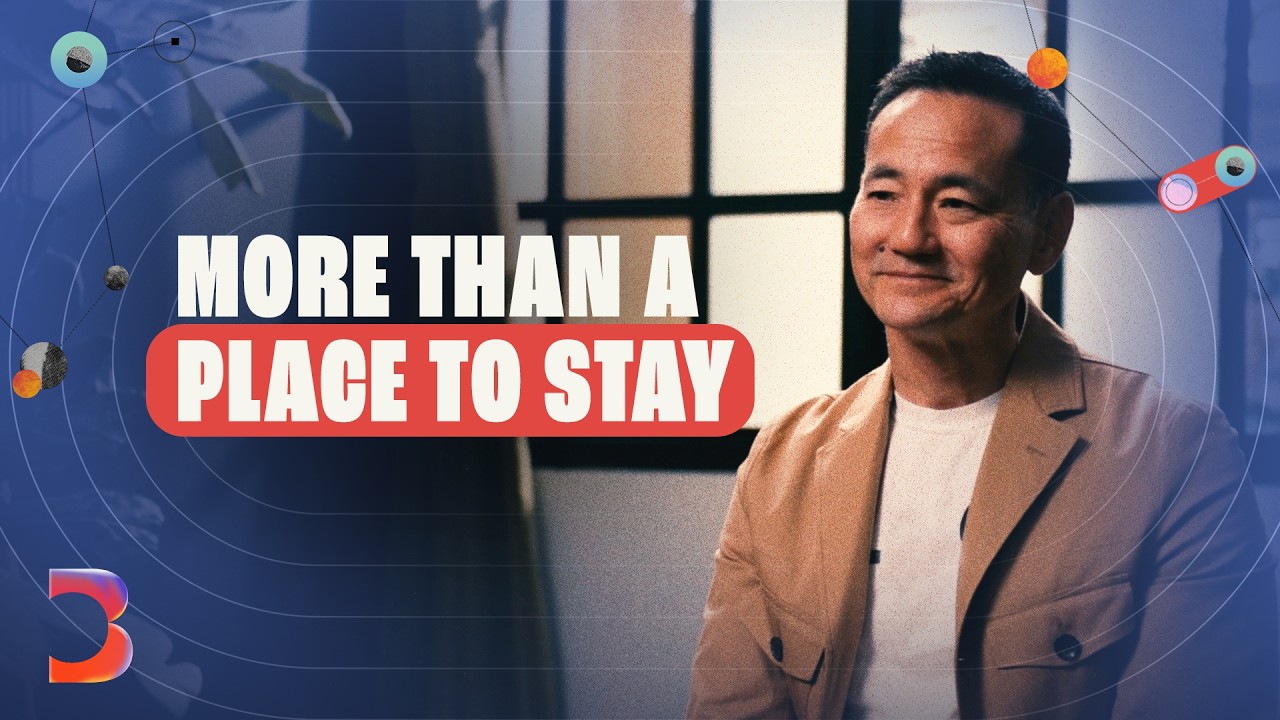
Bloomberg Originals
Chief Experience Officer Hiroki Asai says the platform will expand customer lifetime value by integrating on-the-ground travel logistics and local experiences rather than relying on paid marketing.
AI-assisted summary of How Airbnb Hopes to Build Brand Loyalty | Quantum Marketing — original source. Check the original for full context.
Source published:
Key ideas
- Since its founding in 2008, more than 2.5 billion guests have checked into Airbnbs across nearly every country globally, shifting the company's core strategic challenge from simply providing lodging to curating the entire travel journey. (0:00)
- Airbnb Chief Experience Officer Hiroki Asai identifies an 'inverse bell curve of travel happiness,' where consumer sentiment plummets during the friction-heavy planning and booking stages, prompting Airbnb to streamline booking while focusing engagement on the anticipation and travel phases. (5:35)
- The platform's marketing philosophy is anchored on 'tell don't sell,' relying on advanced software personalization to preserve authentic, hyper-local recommendations at global scale rather than relying on heavy promotional ad spending. (11:32)
- Airbnb aims to capture customer lifetime value during trips by integrating fragmented on-the-ground services—such as luggage transfers, transit pickups, and museum admissions—directly into the app as a proactive travel companion. (20:16)
Detailed notes
## Background Published by Bloomberg Originals on YouTube on September 30, 2026, this episode of 'Quantum Marketing' features host Raja Rajamannar speaking with Airbnb Chief Experience Officer Hiroki Asai. According to the page description, the conversation explores Airbnb's evolving marketing strategy, examining immersive, hyperlocal host-led activities and on-demand travel services designed to help guests engage more meaningfully with the culture and character of their destinations.
## TL;DR Host Raja Rajamannar and Airbnb Chief Experience Officer Hiroki Asai analyze how modern travel is evolving from passive sightseeing into active cultural participation and authentic human connection. Asai unpacks the 'inverse bell curve of travel happiness,' explaining how Airbnb works to eliminate friction during stressful planning and booking stages while focusing brand presence on the joyful dreaming and on-the-ground phases. Through an internal 'tell don't sell' marketing philosophy, the company leverages AI and thoughtful product design to deliver hyper-personalized local recommendations without sacrificing authenticity at scale. Ultimately, Airbnb aims to transform into an intuitive, end-to-end travel companion that unifies fragmented journey logistics and grounds brand equity in real-world trust rather than paid advertising.
## Atmosphere & style The piece carries a reflective, contemplative, and intellectually polished tone, blending outdoor walking footage in San Francisco's Presidio with measured executive dialogue. Raja Rajamannar's thoughtful, philosophical questioning meshes naturally with Hiroki Asai's design-oriented, Apple-honed insights on customer psychology. The exchange feels grounded and calm rather than promotional, balancing macro-level marketing analysis with an authentic appreciation for serendipity, community, and offline human interaction.
## Bulletin - [00:00](https://www.youtube.com/watch?v=KiB3YHyDcbs&t=0s) Since its founding in 2008, more than 2.5 billion guests have checked into Airbnbs across nearly every country globally, shifting the company's core strategic challenge from simply providing lodging to curating the entire travel journey. - [05:35](https://www.youtube.com/watch?v=KiB3YHyDcbs&t=335s) Airbnb Chief Experience Officer Hiroki Asai identifies an 'inverse bell curve of travel happiness,' where consumer sentiment plummets during the friction-heavy planning and booking stages, prompting Airbnb to streamline booking while focusing engagement on the anticipation and travel phases. - [11:32](https://www.youtube.com/watch?v=KiB3YHyDcbs&t=692s) The platform's marketing philosophy is anchored on 'tell don't sell,' relying on advanced software personalization to preserve authentic, hyper-local recommendations at global scale rather than relying on heavy promotional ad spending. - [20:16](https://www.youtube.com/watch?v=KiB3YHyDcbs&t=1216s) Airbnb aims to capture customer lifetime value during trips by integrating fragmented on-the-ground services—such as luggage transfers, transit pickups, and museum admissions—directly into the app as a proactive travel companion.
## Key takeaways - [00:00](https://www.youtube.com/watch?v=KiB3YHyDcbs&t=0s) Modern travel has evolved from passive sightseeing into active cultural participation and self-expression, requiring platforms to engage consumers dynamically rather than relying on static advertising. - [02:09](https://www.youtube.com/watch?v=KiB3YHyDcbs&t=129s) Airbnb views its long-term business model not as an accommodation provider, but as a designer of human memories across the full arc of a trip. - [05:35](https://www.youtube.com/watch?v=KiB3YHyDcbs&t=335s) The travel journey follows an inverse bell curve where satisfaction peaks during aspirational dreaming and drops to its lowest emotional point during the financial and logistical friction of booking. - [07:44](https://www.youtube.com/watch?v=KiB3YHyDcbs&t=464s) Modern consumers increasingly prioritize authentic human connection and serendipitous local experiences over conventional, manufactured luxury. - [11:32](https://www.youtube.com/watch?v=KiB3YHyDcbs&t=692s) Airbnb's guiding internal marketing mantra is 'tell don't sell,' operating on the premise that genuine product differentiation speaks for itself without aggressive promotional pushing. - [11:32](https://www.youtube.com/watch?v=KiB3YHyDcbs&t=692s) To prevent standardization from diluting local character as the platform scales, Airbnb leverages software, design, and engineering to provide granular, individualized recommendations. - [12:53](https://www.youtube.com/watch?v=KiB3YHyDcbs&t=773s) Simplicity is one of the hardest design challenges in technology, requiring platforms to keep operational complexity invisible and design around busy customer lives rather than corporate convenience. - [14:30](https://www.youtube.com/watch?v=KiB3YHyDcbs&t=870s) A brand cannot be manufactured purely through marketing spend; it is fundamentally defined by real-world operational conduct, crisis responses, and community stewardship. - [16:58](https://www.youtube.com/watch?v=KiB3YHyDcbs&t=1018s) High-profile initiatives like 'Icons' and floating house installations are designed to inject wonder back into travel while acting as an antidote to screen-dominated lifestyles. - [16:58](https://www.youtube.com/watch?v=KiB3YHyDcbs&t=1018s) AI functions best not as an automated booking tool, but as a real-time context engine capable of surfacing timely neighborhood events and hyper-relevant cultural insights. - [18:22](https://www.youtube.com/watch?v=KiB3YHyDcbs&t=1102s) Technology innovation and trust innovation are inseparable at Airbnb; technological verification algorithms are only as valuable as the human willingness to open homes to strangers. - [20:16](https://www.youtube.com/watch?v=KiB3YHyDcbs&t=1216s) Expanding utility during active trips unlocks a powerful customer flywheel, converting infrequent annual travelers into frequent app users and organic brand advocates. - [20:16](https://www.youtube.com/watch?v=KiB3YHyDcbs&t=1216s) Consolidating fragmented travel friction—such as ticket lines, transit, and luggage management—transforms the platform into a unified digital companion that feels like 'traveling with somebody.' - [22:48](https://www.youtube.com/watch?v=KiB3YHyDcbs&t=1368s) Enduring brand loyalty in modern hospitality cannot be bought through transactional convenience or price discounting, but must be built on active cultural participation.
## Detailed walkthrough ### [00:00](https://www.youtube.com/watch?v=KiB3YHyDcbs&t=0s) Rethinking Travel in the Age of "Quantum Marketing"
Host Raja Rajamannar meets up with his local guide, Alex, on the Presidio Main Post Parade grounds in San Francisco to embark on an Airbnb Experience. Setting the stage for the episode, Rajamannar explains how travel is undergoing a fundamental transformation. Historically centered on passive sightseeing, travelers are now chasing deeper, more authentic connections with local cuisine, culture, history, and community members.
```mermaid flowchart LR accTitle: Evolution of Travel Platform Model accDescr: Diagram contrasting traditional hotel-centric accommodations with the modern participatory travel model led by platforms like Airbnb. subgraph Traditional["Legacy Travel Model"] direction TB A["Pay for Ad Attention"] --> B["Traditional Hotel Stays"] B --> C["Passive Sightseeing"] end subgraph Modern["Modern Experience Model"] direction TB D["Data & Real-Time Engagement"] --> E["Hyperlocal Accommodations"] E --> F["Active Cultural Participation"] end Traditional -.->|"Industry Disruption"| Modern ```
In the modern landscape, marketing can no longer rely on the old formula of building a product, paying for advertising attention, and controlling a static message. Shifting market forces—including data science, behavioral economics, and artificial intelligence—require brands to engage consumers in real time at every touchpoint. In this transformed environment, Airbnb stands out as an industry disrupter:
- Since its founding in 2008, more than 2.5 billion guests have checked into Airbnbs across nearly every country in the world. - The platform faces the new strategic challenge of moving beyond simply answering *where* a guest will stay to becoming the gateway to the entire journey. - Airbnb's leadership argues that paid advertising alone does not create a brand; genuine brand identity runs much deeper than promotional output.
---
[02:09](https://www.youtube.com/watch?v=KiB3YHyDcbs&t=129s) Designing Human Memory: Beyond Accommodations
Rajamannar sits down with Hiroki Asai, Airbnb’s Chief Experience Officer, who brings insights from an 18-year career at Apple working alongside Steve Jobs. Rajamannar opens with a foundational question: Is Airbnb still an accommodation company, or is it fundamentally in the business of designing human memories? Asai explains that while accommodations were the starting point, unforgettable memories are the natural outcome when a brand curates the entire arc of a trip.
Rather than standard tourist attractions, Airbnb focuses on delivering the most authentic versions of destinations like Tokyo, Paris, or Bali. This involves guiding travelers to unexpected neighborhood eateries, local shopping districts, hidden activities, and hard-to-access cultural performances. Asai and Rajamannar highlight that modern travelers are no longer just passive observers checking landmarks off a bucket list; they travel as an act of self-expression to connect with who they are, discover themselves, and engage as active participants. To see this philosophy in action, Rajamannar joins Alex in exploring the Presidio, a national park nestled directly within San Francisco.
---
[05:35](https://www.youtube.com/watch?v=KiB3YHyDcbs&t=335s) The Inverse Bell Curve of Travel Happiness
Asai details the psychological journey of travel, highlighting an underlying "inverse bell curve of happiness" that defines the customer experience across trips of any length. Travelers start at an emotional peak during the dreaming phase, swept up in romantic visions of their vacation. However, satisfaction plunges as logistics, scheduling, and itineraries turn into work during the planning phase. Happiness hits rock bottom at the booking phase: spending significant money, committing to rigid dates and times, and navigating technical friction leave travelers feeling drained and eager to step away.
```mermaid flowchart TD accTitle: The Inverse Bell Curve of Travel Happiness accDescr: Stages of the traveler journey showing the emotional dip during booking and the target phases for Airbnb engagement. subgraph Dip["The Operational Valley"] B["Planning Phase\n(Logistical friction & fatigue)"] --> C["Booking Phase\n(Peak unhappiness & financial stress)"] end subgraph Highs["Airbnb Target Engagement Zones"] A["Dreaming Phase\n(Inspiration & romantic anticipation)"] D["Anticipation Phase\n(Excitement building before departure)"] E["Traveling Phase\n(Rich, immersive local experiences)"] end A --> B C --> D D --> E E -.->|"Earning brand loyalty returns traveler to"| A ```
Historically, booking platforms inhabit this low point of consumer sentiment. Asai explains that Airbnb's strategic imperative is two-fold: 1. Strip away friction to make the booking step as fast, effortless, and painless as possible. 2. Shift the bulk of brand interaction toward the excitement of the anticipation phase and the on-the-ground travel phase.
By embedding the brand into the joyful parts of the trip where guests fall in love with the world, Airbnb earns the right to be front of mind during the aspirational dreaming phase, "which is where every travel company wants to be."
---
[07:44](https://www.youtube.com/watch?v=KiB3YHyDcbs&t=464s) The Power of Human Connection Over Pure Luxury
Standing at an overlook in the Presidio with sweeping views of downtown San Francisco and the San Francisco National Cemetery—where over 30,000 service members are buried—Rajamannar reflects on a four-hour excursion he took the previous day during a normal workday. Although inexpensive and short, the experience felt deeply restorative. Asai agrees, observing that consumers are prioritizing authentic human connection over conventional luxury, especially given the screen-dominated, time-constrained nature of modern work life.
As a two-sided marketplace, Airbnb enables its hosts to offer activities at varied price tiers, proving that an experience does not need to be expensive or lengthy to be impactful. The true value lies in serendipity and meeting passionate local experts who share unique viewpoints. Asai emphasizes that whether through private homes or hosted activities, Airbnb’s offering is anchored in the human element rather than corporate, manufactured hospitality. This organic authenticity forms the core DNA of how the company presents its brand and products to the world.
[11:32](https://www.youtube.com/watch?v=KiB3YHyDcbs&t=692s) "Tell Don't Sell" and Deep Personalization at Scale
Airbnb anchors its storytelling, app design, and guest experience on authenticity and human connection rather than aggressive commercial persuasion. The internal mantra guiding their strategy is "tell don't sell." For Hiroki Asai, if an organization offers authentic accommodations and experiences supported by genuine hosts and appreciative guests, marketing does not need to force a purchase. Instead, the team’s responsibility is simply to explain how to access the offering, articulate why it is distinctly different and better, and let the product experience inside the app prove it.
When Raja Rajamannar points out that small startups can execute handcrafted, bespoke curation easily, he raises the dilemma of scale: as a company expands, standardization often creeps in and threatens to "kill the soul" of the offering. Asai counters that modern technology has finally reached a threshold where personalization does not have to mean sterile uniformity. By heavily backing its software, design, and engineering teams, Airbnb uses technological capabilities to deliver hyper-granular recommendations, surfacing the best hidden pockets of a destination tailored directly to individual preferences.
- Internal marketing philosophy centers on "tell don't sell"—demonstrating differentiation through product quality rather than traditional promotional tactics. - Software and design investments are geared toward granular, deep personalization to preserve local character and nuance at massive global scale.
[12:53](https://www.youtube.com/watch?v=KiB3YHyDcbs&t=773s) Simplicity as the Hardest Form of Innovation
Behind the curtain of a global travel platform lies massive operational complexity, yet travelers demand effortless simplicity, clear authenticity, and zero friction. Rajamannar frames this tension by asking whether achieving intuitive simplicity on the surface has become one of the most difficult feats of innovation today. Asai agrees wholeheartedly, emphasizing that travel is an extraordinarily crowded, noisy landscape where brands must earn and respect the finite attention spans of their users.
Keeping the complex technical mechanics invisible is central to Airbnb's design discipline. The platform aims to anticipate traveler needs, choices, and potential friction points before the guest even encounters them. Asai reflects that product creators often fall into the trap of assuming their app is the center of the customer's universe. In reality, travelers have busy, complicated lives, making it essential to design features strictly for the user's benefit rather than corporate convenience—a mindset that Asai describes as deceptively easy to articulate, but "actually the hardest thing to keep in mind."
[14:30](https://www.youtube.com/watch?v=KiB3YHyDcbs&t=870s) Trust, Community, and What Truly Defines a Brand
Over its history, Airbnb has had to navigate city regulatory disputes, user friction, and the challenge of establishing confidence between strangers. Trust is the foundation without which the business model collapses. When Airbnb originally launched Experiences in 2016, the product struggled to gain meaningful traction. Reflecting on the core value proposition, Asai notes that while software facilitates the logistics and marketing spreads awareness, the brand's real value lies entirely in human moments: taking a guided hike with a passionate local expert or staying in a host's home. Technology can streamline discovery, eliminate friction, and speed up transactions, but it remains merely the conduit for the foundational belief that "people are basically good."
This dynamic informs Asai's critique of conventional corporate branding. He rejects the notion that marketing alone creates a brand, arguing that true brand perception cannot simply be bought through paid advertising campaigns. Instead, a brand is defined by operational conduct: how a company shows up in the community, how it safeguards guests and hosts, how it arbitrates disputes, and how it responds during humanitarian crises and disasters.
```mermaid flowchart TD accTitle: The Airbnb Brand and Trust Engine accDescr: Diagram illustrating how invisible platform technology facilitates human trust and defines the brand beyond paid marketing.
subgraph PlatformLayer ["Invisible Digital Enablers"] A["Granular AI Discovery & Simplicity"] --> B["Trust & Safety Verification"] end
subgraph HumanLayer ["Real-World Human Connection"] B --> C["Host & Guest Trust"] C --> D["Local Experiences & Home Stays"] end
subgraph BrandLayer ["True Brand Equity"] D --> E["Community Impact & Disaster Support"] E --> F["Enduring Brand Loyalty ('Tell Don't Sell')"] end ```
[16:58](https://www.youtube.com/watch?v=KiB3YHyDcbs&t=1018s) Real-World Magic: Icons and the Role of AI
To inject wonder back into its offerings, Airbnb introduced "Icons"—a category of extraordinary experiences hosted by prominent figures in music, film, and culture, exemplified by stunts like building a real-life floating house inspired by Disney and Pixar's *Up*. This initiative aimed to capture cultural imagination and translate that aura into the broader catalog of host-led experiences. At the same time, Asai observes an emerging societal counter-reaction to digital saturation. As artificial intelligence accelerates, people spend an increasing portion of their waking lives behind glowing screens. Airbnb explicitly aims to be the antidote: a company that leverages digital infrastructure to pull people away from devices and out into the physical world.
When asked what role remains uniquely human if AI takes over discovery, itinerary planning, price comparison, and booking, Asai points to timing and relevance. AI's greatest asset is its capacity to synthesize what makes a city vibrant in real time, delivering hyper-personalized, contextual suggestions directly to travelers precisely when and where they need them.
- Icons program leverages culturally significant figures and imaginative spectacles—such as the floating *Up* house—to bring excitement to the platform. - Strategic objective to serve as a counterbalance to screen addiction by using technology to propel people into physical, real-world experiences. - AI is treated as a context engine that connects travelers to timely local events and hidden neighborhood gems rather than just an automated booking tool.
[18:22](https://www.youtube.com/watch?v=KiB3YHyDcbs&t=1102s) Trust Innovation and Technology Innovation Hand in Hand
Airbnb increasingly incorporates AI into backend operations, including listing verification, fraud prevention, and quality control. Addressing whether algorithmic oversight risks making the platform feel rigid or overly corporate, Asai explains that AI excels at asking the right question at the right moment. The difference between an annoying safeguard and a delightful customer experience comes down entirely to design execution. Technology can make trust verification far more effective and less cumbersome when thoughtfully integrated.
Rajamannar suggests that algorithms, apps, and marketing funnels can easily be duplicated by competitors, but competitors cannot replicate the millions of hosts and guests who trust the platform. When asked whether Airbnb is fundamentally a technology innovation company or a trust innovation company, Asai insists they are inseparable. Technology provides the tools, but the breakthrough was getting ordinary individuals to open their private homes to complete strangers. The platform operates as a bidirectional ecosystem where trusting people engenders mutual trust in return.
[20:16](https://www.youtube.com/watch?v=KiB3YHyDcbs&t=1216s) Eliminating Trip Friction Across the Entire Travel Journey
When evaluating customer lifetime value, Airbnb finds its largest commercial opportunity within the duration of the trip itself for existing customers. Currently, existing guests travel only a few times per year. By expanding the platform’s utility during the stay, Airbnb creates an engaging flywheel: travelers open the app repeatedly while on vacation to book services, which deepens engagement and encourages them to use the app for local experiences even after returning home, naturally driving word-of-mouth adoption for new users.
```mermaid flowchart LR accTitle: End-to-End Travel Friction Reduction accDescr: Flowchart illustrating how Airbnb integrates fragmented travel logistics into a single seamless guest journey.
subgraph Booking ["Planning & Arrival"] A["Ticketing & Access<br/>(e.g., Louvre)"] B["Welcome Pickups & Transit"] end
subgraph Logistics ["On-the-Ground Support"] C["Luggage Storage & Delivery"] D["Food Delivery & Car Rentals"] end
subgraph Outcome ["Travel Experience"] E["Unified In-App Companion<br/>('Traveling with Somebody')"] end
A --> E B --> E C --> E D --> E ```
To deliver on this, Airbnb focuses on dismantling friction points that turn vacationing into an administrative chore. Travelers routinely find themselves juggling disjointed third-party vendors for museum admissions—such as securing difficult tickets for the Louvre—as well as airport pickups, food delivery, luggage storage, luggage transfer, and car rentals. By unifying these disparate services into a singular marketplace that serves them up proactively at the appropriate moment, the platform transforms the app into an intuitive digital travel companion, leaving travelers feeling as though they are "traveling with somebody." Rajamannar concludes by noting that modern marketing has moved beyond influencing what consumers choose—it now actively shapes the lived experiences that set platforms apart.
[22:48](https://www.youtube.com/watch?v=KiB3YHyDcbs&t=1368s) Beyond Convenience: Travel as Active Participation
Reflecting on the core takeaways of the discussion, host Raja Rajamannar underscores that building genuine, enduring brand loyalty has become significantly harder to achieve through price cuts or mere transactional convenience alone. Throughout the dialogue on Airbnb's evolving brand philosophy, a central thesis repeatedly surfaced: travel platforms need to evolve past simply facilitating logistics or helping someone get from point A to point B. Instead, the ultimate frontier of hospitality lies in active participation—empowering travelers to truly engage with the communities and environments they visit.
Airbnb is fundamentally staking its future on the premise that designing deeply meaningful, human-centered experiences is what cements lasting relationships with consumers. Ultimately, this approach demonstrates that the most powerful currency a modern brand can provide is far greater than just a transactional roof over a traveler's head; it is about unlocking "a deeper connection to the world around us."
## Notable quotes > [05:35](https://www.youtube.com/watch?v=KiB3YHyDcbs&t=335s) which is where every travel company wants to be. — Hiroki Asai
> [11:32](https://www.youtube.com/watch?v=KiB3YHyDcbs&t=692s) tell don't sell — Hiroki Asai
> [11:32](https://www.youtube.com/watch?v=KiB3YHyDcbs&t=692s) kill the soul — Raja Rajamannar
> [12:53](https://www.youtube.com/watch?v=KiB3YHyDcbs&t=773s) actually the hardest thing to keep in mind. — Hiroki Asai
> [14:30](https://www.youtube.com/watch?v=KiB3YHyDcbs&t=870s) people are basically good. — Hiroki Asai
> [20:16](https://www.youtube.com/watch?v=KiB3YHyDcbs&t=1216s) traveling with somebody. — Hiroki Asai
> [22:48](https://www.youtube.com/watch?v=KiB3YHyDcbs&t=1368s) a deeper connection to the world around us. — Raja Rajamannar
## Mentioned Airbnb, Airbnb Experiences, Alex, Apple, Bali, Bloomberg Originals, Disney, Hiroki Asai, Icons, Louvre, Paris, Pixar, Presidio, Presidio Main Post Parade, Raja Rajamannar, San Francisco, San Francisco National Cemetery, Steve Jobs, Tokyo, Up
## Video description In this episode, host Raja Rajamannar sits down with Airbnb Chief Experience Officer Hiroki Asai to discuss the company’s evolving marketing strategy, from immersive, hyperlocal host-led activities to on-demand travel services designed to help guests engage more deeply with the culture and character of a destination.
-------- Like this video? Subscribe: http://www.youtube.com/Bloomberg?sub_confirmation=1
Get unlimited access to Bloomberg.com for just $1.99 your first month: https://www.bloomberg.com/subscriptions?in_source=YoutubeOriginals Bloomberg Originals offers bold takes for curious minds on today’s biggest topics. Hosted by experts covering stories you haven’t seen and viewpoints you haven’t heard, you’ll discover cinematic, data-led shows that investigate the intersection of business and culture. Exploring every angle of climate change, technology, finance, sports and beyond, Bloomberg Originals is business as you’ve never seen it.
Subscribe for business news, but not as you've known it: exclusive interviews, fascinating profiles, data-driven analysis, and the latest in tech innovation from around the world.
Visit our partner channel Bloomberg News for global news and insight in an instant.
[Source](https://www.youtube.com/watch?v=KiB3YHyDcbs)