Trump Indictment of Raul Castro Signals Imperial Takeover, Historian Warns
PowerfulJRE
The 2026 U.S. murder indictment against former Cuban President Raul Castro serves as a tactical prelude to direct American military intervention or a friendly takeover of the collapsing, resource-starved island.
## Background
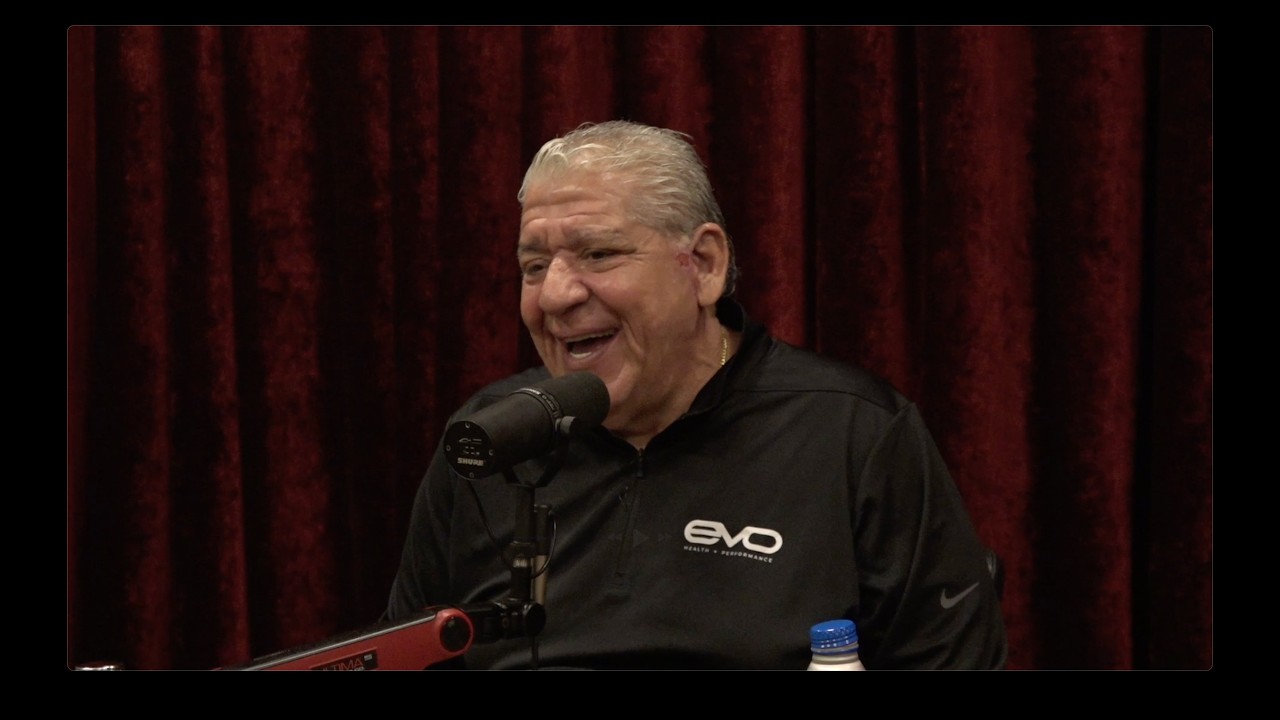
Published on YouTube on June 10, 2026, by the PowerfulJRE channel, this episode of the Joe Rogan Experience features stand-up comedian, actor, and writer Joey Diaz. The description highlights Diaz as the host of the podcast 'The Church of What’s Happening Now: The New Testament' and the author of the book 'Tremendous: The Life of a Comedy Savage.'
## TL;DR
In this episode, Joe Rogan and Joey Diaz engage in a wide-ranging conversation covering Diaz's recent knee surgery recovery, emerging biohacking protocols like BPC-157, and wild historical anecdotes from his past in Colorado. They dissect combat sports, analyzing modern UFC fighters like Ilia Topuria and recalling Matt Serra's legendary composure. Additionally, the duo transitions into deep cultural reflections on the evolution of martial arts cinema, the shifting political and economic landscape of Cuba, and the gritty realities of early comedy careers.
## Atmosphere & style
The conversation carries a deeply nostalgic, gritty, and fiercely authentic energy, feeling like a raw catch-up between two lifelong friends. Joey Diaz drives the narrative with his signature larger-than-life storytelling, blending hilarious, chaotic tales of past criminal escapades with profound reflections on karma and gratitude. Rogan acts as a grounded, inquisitive sounding board, creating a dynamic that shifts seamlessly from hysterical laughter over bizarre drug-test evasion tactics to a somber, respectful appreciation for the grueling journey of stand-up comedy.
## Key takeaways
- [00:01](https://www.youtube.com/watch?v=oD13_3D8QY0&t=1s) Joey Diaz shares his post-surgery recovery experience following major knee surgery, noting his use of Voltaren and high-tech biohacking protocols like BPC-157 and TB-500 to eliminate chronic pain.
- [02:35](https://www.youtube.com/watch?v=oD13_3D8QY0&t=155s) The hosts discuss the historical use of anabolic steroids and cadaver-derived human growth hormone in 1970s sports, highlighting the extreme aggression and early death of NFL player Lyle Alzado.
- [10:58](https://www.youtube.com/watch?v=oD13_3D8QY0&t=658s) Joe Rogan and Joey Diaz critique the modern legal cannabis industry, noting how extreme tax rates, massive startup costs, and heavy regulations are driving many dispensaries to close in New Jersey and California.
- [17:38](https://www.youtube.com/watch?v=oD13_3D8QY0&t=1058s) Joey Diaz explains how he creatively uses THC during acting auditions to look at scripts from a completely different perspective and discover hidden nuances in the material.
- [32:35](https://www.youtube.com/watch?v=oD13_3D8QY0&t=1955s) Severe dehydration caused by dramatic weight cutting remains active in a fighter's brain for up to 24 hours, leaving them highly vulnerable to knockouts.
- [01:20:00](https://www.youtube.com/watch?v=oD13_3D8QY0&t=4800s) Joey Diaz credits comedian Paul Mooney with teaching him how to relax on stage, abandon his strict notebook habits, and authentically vibe with the audience.
- [01:26:42](https://www.youtube.com/watch?v=oD13_3D8QY0&t=5202s) Marlon Brando fundamentally rejected memorizing lines, relying instead on strategically placed cue cards and billboards to keep his legendary acting performances organic.
- [01:31:04](https://www.youtube.com/watch?v=oD13_3D8QY0&t=5464s) UFC fighter Daniel 'D-Rod' Rodriguez survived an eight-month imprisonment in a Mexican jail after being caught with an ounce of marijuana, relying on dual citizenship and the protection of a high-ranking cartel cellmate.
- [01:37:10](https://www.youtube.com/watch?v=oD13_3D8QY0&t=5830s) Joey Diaz reflects on his early criminal past in Boulder, Colorado, including a lawnmower return scam, stealing from Radio Shack, and extorting an shop owner by letting him believe he was in witness protection.
- [01:34:15](https://www.youtube.com/watch?v=oD13_3D8QY0&t=5655s) Joey Diaz recalls his absolute terror before his first civilian stand-up set at the Comedy Works in Denver, requiring his ex-wife to physically force him to go on stage.
- [01:45:38](https://www.youtube.com/watch?v=oD13_3D8QY0&t=6338s) Optical sensors on popular fitness wearables like Whoop or Garmin frequently struggle to read biometrics accurately through heavy sleeve tattoos because the ink blocks the flashing light system.
- [02:16:43](https://www.youtube.com/watch?v=oD13_3D8QY0&t=8203s) The cultural history of modern martial arts is defined by three distinct historical waves: the era of Bruce Lee, the mainstream rise of Chuck Norris, and the global explosion of the UFC.
- [02:18:36](https://www.youtube.com/watch?v=oD13_3D8QY0&t=8316s) The massive, non-stop adoption of smartphones and electronic screen addiction over the last 20 years represents a brand new human phenomenon that may be preparing humanity for a future of permanent digital connection.
- [02:20:00](https://www.youtube.com/watch?v=oD13_3D8QY0&t=8400s) Cuba faces catastrophic internal collapse due to systemic starvation, total fuel depletion, and rolling blackouts after the United States effectively choked off Venezuelan oil supplies.
- [02:23:20](https://www.youtube.com/watch?v=oD13_3D8QY0&t=8600s) The closure of Havana's luxury casinos by Fidel Castro's communist revolution caused a massive exodus of experienced casino workers to the Nevada desert, permanently shaping the development of Las Vegas.
- [02:35:23](https://www.youtube.com/watch?v=oD13_3D8QY0&t=9323s) Historically, major Chicago mob bosses heavily assisted JFK in securing his presidential victory, but the relationship violently soured when Robert Kennedy spearheaded intense federal crackdowns on organized crime.
Joe Rogan welcomes his guest back to the podcast, marveling at how quickly he is walking after undergoing another knee surgery. The guest reveals it only took three days to get back on his feet, though he admits he "messed it up" the day prior at Newark Airport. While he is accustomed to structured walking loops at his gym and around his neighborhood for meals, navigating the airport amounted to "10 loops," causing significant irritation. He credits a baggie of edible cannabis and ice provided by a flight attendant for bringing the swelling down during his flight, alongside a topical cream he jokingly refers to as "bortto" or "liquid cocaine juice."
The two attempt to identify the mystery cream, which the guest notes became illegal but used to be available over the counter to numb joints. Rogan pulls up a search to discover it is Voltaren, a prescription-strength, over-the-counter non-steroidal anti-inflammatory gel widely used for osteoarthritis and muscle stiffness. Rogan reads the warning label, noting with curiosity that it is explicitly not recommended for acute injuries like simple strains or bruises—the very ailments people typically treat with ibuprofen. The guest adds that he was banned from taking ibuprofen after his surgery and could only rely on Tylenol. Rogan then introduces him to DMSO, a veterinary medication and horse tranquilizer that Rogan buys in bulk because it is highly effective for pain and injury.
---
[02:35](https://www.youtube.com/watch?v=oD13_3D8QY0&t=155s) The Wild West of 1970s Steroids and Cadaver-Derived HGH
The conversation shifts to the history of performance-enhancing drugs, specifically referencing the early steroid era of the 1970s. The guest recalls that athletes back then had no idea what they were taking, as everything was imported from Germany. Rogan brings up a shocking historical fact: human growth hormone (HGH) used to be harvested directly from human cadavers. He prompts his producer, Jamie, to verify this using their AI sponsor, Perplexity. The search confirms that cadaver-derived HGH was widely utilized from the mid-1900s until 1985, when it was banned for transmitting deadly prion diseases, such as Creutzfeldt-Jakob disease (the human equivalent of Mad Cow disease). Rogan explains that these prion diseases target neurons and mirror the conditions suffered by cannibals who consume human brain tissue. Today, HGH is entirely synthetic and created through recombinant technology.
Rogan reads an excerpt regarding Lyle Alzado, one of the first major U.S. sports figures to admit to heavy anabolic steroid abuse before dying of a brain tumor at age 43. In a poignant *Sports Illustrated* article from the last year of his life, Alzado confessed that he had used steroids continuously since 1969, claiming that "90% of athletes" he knew were on them. Alzado described experiencing extreme, drug-induced violence on and off the football field, recalling a 1979 incident in Denver where he chased down a driver who sideswiped his car and "beat the hell out of him." Near death, Alzado suffered from a severe lack of coordination and memory loss. The guest realizes that he is currently 43 years old—the exact age Alzado was when he died—and notes that Alzado looked terrible at the end, constantly wearing bandanas. The search also reveals a surprising bit of trivia: Alzado was inducted into the International Jewish Sports Hall of Fame, which neither speaker knew existed.
- Lyle Alzado stated he began taking anabolic steroids in 1969 and claimed 90% of his athletic peers used them.
- In 1979, Alzado engaged in a violent road-rage incident in Denver due to steroid-induced aggression.
- Cadaver-derived HGH was banned in 1985 due to the transmission of Creutzfeldt-Jakob disease.
---
[05:46](https://www.youtube.com/watch?v=oD13_3D8QY0&t=346s) The Myth of Natural Bodybuilders and an Austin Uber Encounter
Reflecting on Alzado's cognitive and physical decline, the guest attributes it to a dangerous mix of severe head trauma and rampant drug use. Rogan scoffs at modern bodybuilders who claim to be completely "natural," calling it a massive lie that everyone sees through. He dismisses the idea that anyone can reach extreme sizes without chemical help, mocking claims of achieving a massive physique solely by eating dozens of steaks or 36 eggs like the Barbarian Brothers. While Rogan concedes that "freak genetics" exist, he emphasizes that natural building to that scale is incredibly rare.
The guest shares a colorful anecdote from the previous day, revealing that his Austin Uber driver turned out to be the nephew of legendary MMA fighter Yoel Romero. The driver was a judo champion himself, and the two spent 15 to 20 minutes chatting in Spanish. This prompts the guest to observe that a remarkably high percentage of Uber drivers in Austin are Cuban.
---
[06:30](https://www.youtube.com/watch?v=oD13_3D8QY0&t=390s) Autonomous Cars and an Atlantic City Weed Store Incident
Rogan notes that human rideshare drivers are rapidly being replaced by autonomous vehicles, leading the guest to recall a hilarious sight of a Cuban driver getting out of his car to scream at a driverless vehicle that cut him off, before sheepishly realizing there was no one inside. Rogan expresses deep distrust of autonomous cars, citing an incident where a woman stepped into a Waymo only to find a homeless man asleep inside because a previous passenger left the hatch open. According to Rogan, the homeless man immediately began shouting at the woman, demanding, "Why you paying robots?"
The guest shares his own wild encounter from a recent trip to Atlantic City, where his daughter was playing a weekend soccer tournament in Egg Harbor. Rather than staying at the Ocean Casino Resort where he plans to be in August, he joined the other parents at Harrah's. A self-professed weed store enthusiast, the guest compares it to a trip to Trenton the week prior, where a shop owner took him into a secret backroom a block away from the state capital dome to show him black-market mushroom chocolates in flavors like "Blue Hawaii." In Atlantic City, he visited a massive dispensary near the casinos. Upon pulling up, he encountered four heavily built, "yolked" men wearing thick gold chains sitting in a luxury vehicle.
- The guest's daughter played a soccer tournament in Egg Harbor, 25 minutes outside of Atlantic City and 1.5 hours from his house.
- The guest recently discovered an illicit backroom operation selling flavored mushroom chocolates one block from the New Jersey state capital in Trenton.
---
[09:08](https://www.youtube.com/watch?v=oD13_3D8QY0&t=548s) The "Mr. Football" Confrontation and the Sketchy Reality of Atlantic City
When the four men recognized the guest from his appearances on Rogan's podcast and the movie *The Longest Yard*, they stepped out of their car to chat about the UFC. The friendly encounter was abruptly interrupted by a small, homeless man who walked over and asked the group, "Who's this white motherfucker?" Upon being told it was the actor from the famous football movie, the man confronted the guest, saying, "Hey, Mr. Football Man, why don't you break out a dollar for me?" Embarrassed in front of his new fans, the guest handed the man a 10-dollar bill. The man, who had walked up with a heavy limp, miraculously sprinted away the second he got the cash.
Rogan and his guest laugh about the chaotic energy of people "living on the edge," but agree that the areas immediately surrounding the Atlantic City casinos are incredibly dangerous and run-down. The guest recalls taking a drive at 10:00 PM on Saturday night through some corners where "you ain't coming back," while Rogan notes he witnessed an open drug deal on the street during his last visit. They express surprise that the city hasn't cleaned up, but note that Atlantic City is barely turning a profit compared to the booming market in Las Vegas. While local landmarks like the Borgata attract crowds of older Italian men wearing white shoes on the weekends, the overall area remains too sketchy to foster real economic growth.
---
[10:58](https://www.youtube.com/watch?v=oD13_3D8QY0&t=658s) The Rise of Las Vegas and the Insane Economics of Legal Weed
Rogan reminisces about staying at the Borgata with the guest when it first opened for a comedy gig, but notes that Atlantic City can never duplicate the historic success of Las Vegas. Vegas had a massive head start as the only legal gambling hub in the country during an era before mobile betting apps. Rogan jokes about a hypothetical conspiracy where the government allowed casinos in exchange for testing atomic bombs nearby, though Jamie corrects him, noting Vegas was established well before the nuclear tests. The conversation turns to the mob origins of the city, focusing on the "genius" mobster who originally managed Vegas and also owned the iconic Comedy Store. He was eventually shot through the eye in his Los Angeles home after living like a movie star and allegedly stealing construction expenses funded by Jimmy Hoffa's Teamster loans from Chicago unions.
The conversation transitions into the early days of legal marijuana in Denver, where the sheer volume of cash was overwhelming. Because credit cards were initially banned in dispensaries, business owners had to transport millions of dollars in cash using private security teams composed of former Green Berets and Navy Seals "armed to the tits." The tax revenues generated for the state were astronomical, with tax rates reaching as high as 39%. Rogan points out that consumers willingly accepted a 39% tax on weed, a rate that would spark a revolution if applied to alcohol or ground beef. The guest recalls that during the pandemic in Los Angeles, dispensaries were deemed "essential businesses," allowing them to stay open while tacking on an additional 10% tax. However, the boom is shifting, and the guest notes that high costs and shifting state regulations are now forcing many New Jersey and California dispensaries to close down.
[14:25](https://www.youtube.com/watch?v=oD13_3D8QY0&t=865s) Weed Stores, Chaos, and the Wild West of Edibles
The conversation kicks off with a reality check about the legal cannabis industry, noting that opening a shop puts you "minus 3 mil" in the hole right from the start. That is a lot of twenty-dollar bags to sell just to break even, especially given the "bananas" amount of competition out there. In Englishtown, New Jersey, there are four dispensaries packed onto the exact same block. This reminds the speakers of the old days at the Englewood Wellness Center back in the '90s when cannabis was medical-only. Back then, "any medical reason would do" to get a prescription—even just complaining that your feet hurt—and anyone doing martial arts automatically had a valid excuse because they were always in pain.
The speakers reminisce about a guy who ran the Englewood dispensary whom they used to deal with to get lollipops for *Fear Factor*. In a stark turn, they recall that the man was actually shot inside that very store. While there is brief confusion over whether he survived or died, the memory pivots back to the incredible benefits of cannabinoids. They highlight actor Dave Foley, whose hand was completely crippled by arthritis until he started taking CBD, which completely restored his hand to full functionality.
The early days of the cannabis market are described as a chaotic "wild west." Before regulation, the consistency of products was nonexistent; a consumer could eat one gummy bear that felt like a thousand milligrams, while another felt like a hundred. Edibles lacked any sort of warning labels or reliable milligram counts. One speaker recalls a nightmare flight to Pittsburgh after eating an unregulated brownie, where his leg wouldn't stop tapping the entire time on the red eye. Another hilarious, chaotic travel story emerges about a time one of them suffered a massive panic attack on a plane, feeling like his chest was closing in and the walls were shutting him out, only to wait an hour and pop two more edibles. When asked why he would ever do that, the response is pure, bored curiosity: "Because I just want to take a chance. Columbus did."
- The Englewood Wellness Center operated back in the 1990s as a medical dispensary.
- Actor Dave Foley successfully treated severe hand arthritis using CBD.
- Unregulated early edibles are compared to an inconsistent lottery where a single piece could unexpectedly feel like a thousand milligrams.
[17:38](https://www.youtube.com/watch?v=oD13_3D8QY0&t=1058s) High Auditions and the Ban on Stage Anxiety
The discussion shifts to how comics handle performing on edibles. While taking a couple hundred milligrams might be acceptable for a regular night, going on stage with too much can be incredibly risky. A brief promotional interlude introduces Blue Chew Gold, a performance product combining two ingredients for physical blood flow and two for mental arousal and connection. Returning to the stage, one of the speakers shares that after a five-week hiatus from stand-up, he recently performed a spot in front of a small crowd of 50 people. Thanks to an edible he took right before going up, he fell into such an incredible groove that he improvised a full hour-long set with zero written material, spinning a story about a hospital visit into pure gold.
This leads to the assertion that THC is essentially a "banned substance for comics" because of how deeply it allows a performer to absorb and analyze material. One speaker explains his routine for acting auditions: he reads the script, puts it away, gets stoned, and looks at it again. Viewed through a high lens, the script looks like a completely different sheet of paper, allowing him to pick out unique nuances. This routine helps manage natural, baseline anxiety. He notes how he frequently beats himself up with irrational anxiety, recalling a morning sitting outside the Four Seasons at 8:30 AM with a coffee, panicking that he was late for somewhere he needed to be, only to realize he had absolutely nowhere to go. To combat this frantic mindset, he routinely starts "blasting" and smoking right after his daughter gets on the school bus at 7:15 AM, ensuring he stays grounded at home instead of facing the grueling three-hour traffic jams involved in driving to podcasts in New York City or North Jersey.
- The speaker went from April 18th until recently without performing on stage.
- Edibles enabled a completely improvised 60-minute stand-up set with no pre-written material.
- The creative process described involves reading an audition script, getting high, and re-examining it an hour later to find hidden angles.
[21:15](https://www.youtube.com/watch?v=oD13_3D8QY0&t=1275s) Traffic Realities and the Conservative Avengers
A major advantage that Austin, Texas has over the East Coast is the traffic, which the speakers call "adorable" in Texas compared to the absolute nightmare of the New York metropolitan area. On the East Coast, the population density is so thick that driving in and out of the city eats up an entire day, completely eliminating any chance of hitting the gym or running errands. When the crew travels to New Jersey for UFC events, attempting to cross back into New York at 6:00 PM to eat and play pool is described as an absolute "mad house." Comedian Jim Florentine recently reported that a trip into the city took three full hours on a Saturday just due to the Knicks crowds, even though the team wasn't even playing that day.
The mention of basketball crowds transitions into a discussion about Donald Trump's public appearances. The speakers note that high-profile political figures create massive security protocols that paralyze city traffic. While some sports fans booed Trump at a basketball game, the speakers contrast this heavily with his reception at UFC events. Having seen him live at the UFC around six times, they assert that claims of him being booed there are a distortion of reality. Instead, the crowd routinely erupts into massive cheers when he walks out to Kid Rock’s "American Badass" alongside Dana White and Tucker Carlson, a lineup jokingly described as the "conservative Avengers." Shifting to sports betting, they laugh about a bad bet made against the Knicks the previous night, where despite getting two and a half points, the bet failed.
- Jim Florentine experienced a 3-hour traffic delay in New York City on a Saturday.
- Donald Trump’s UFC entrance entourage routinely features Dana White, Kid Rock, and occasionally Tucker Carlson.
- The speakers placed an unsuccessful sports bet against the Knicks, who were giving two and a half points.
[23:32](https://www.youtube.com/watch?v=oD13_3D8QY0&t=1412s) The Sports Betting Boom and the Taporia vs. Gaethje Showdown
The conversation turns to the modern explosion of sports gambling, primarily driven by apps like DraftKings. Unlike the old days of relying on underground bookies—who are still frequently caught in massive mafia busts across New Jersey and New York—gambling has become institutionalized. One speaker contrasts his college orientation experience, where credit card companies like Discover and Visa handed out automatic \$250 credit lines to students, with today's college orientations where DraftKings and FanDuel set up booths to sign up young kids. There is a mutual agreement that society "is going to pay for this in 5 years" due to the sheer volume of people gambling, a trend that is echoing globally in places like Australia.
Turning their attention to an upcoming UFC fight between Ilia Topuria and Justin Gaethje, they analyze the staggering betting odds. Topuria is a massive favorite, sitting at four-to-one or even six-to-one according to Caesars. This massive discrepancy makes sense given Topuria's historic championship run, where he scored consecutive, devastating knockouts against three all-time legends of the sport: Alexander Volkanovski, Max Holloway, and Charles Oliveira. Despite the steep odds, they refuse to count out Justin Gaethje, characterizing him as a dangerous "Warhammer" who actively relishes the chaos of a brutal battle.
They look back at Gaethje's origins in the World Series of Fighting (WSOF), where he used to obliterate opponents with inside leg kicks while completely abandoning tactical defense. His iconic UFC debut against Michael Johnson remains one of the wildest brawls in MMA history, featuring both men getting severely cracked before Gaethje's relentless, pitbull-like pressure secured the win. While Gaethje early in his career lost fights he could have won due to a lack of pacing, his legendary championship run came because he learned to "control the violence." Even against an elite fighter like Khabib Nurmagomedov, Gaethje managed to land damaging calf kicks. Rewatching the Michael Johnson footage tape inline, they marvel at Gaethje's terrifying clinch work, throwing lethal knees to the body and giving his opponent the finger, proving that every single strike he throws is intended to kill.
- Topuria enters the matchup as a heavy favorite, with odds ranging from -426 to 6 to 1.
- Topuria's last three consecutive knockout victories were against Alexander Volkanovski, Max Holloway, and Charles Oliveira.
- Justin Gaethje initially rose to prominence in the World Series of Fighting (WSOF) before making his UFC debut against Michael Johnson.
[29:42](https://www.youtube.com/watch?v=oD13_3D8QY0&t=1782s) Marveling at Marvelous Marvin Hagler
The discussion begins with a reflection on a wild, high-stakes fight where a competitor took constant chances from the very first bell before finally securing a knockout. This reckless, all-out style prompts a comparison to how the legendary Marvelous Marvin Hagler and his contemporaries used to approach the sport. In those days, fighters did not carry the modern anxieties regarding brain damage; they simply went to war. A speaker notes that they recently watched Hagler take out Mustafa Hamsho in what was a beautiful display of Hagler in his absolute prime.
The speakers express immense awe at Hagler's discipline and his rare mastery of switching stances effortlessly. At a time when stance-switching was a rarity in boxing, Hagler could fight just as effectively from the southpaw stance as he could from the orthodox position. This fluid versatility left his opponents entirely guessing where the damage was coming from.
* **Fighters Mentioned:** Marvelous Marvin Hagler, Mustafa Hamsho.
* **Hagler's Key Attribute:** Complete ambidexterity in switching between southpaw and orthodox stances with elite technical precision.
---
[30:41](https://www.youtube.com/watch?v=oD13_3D8QY0&t=1841s) The Even-Odds Clash: Ciryl Gane vs. Alex Pereira
Shifting focus to upcoming events, enthusiasm is building for a highly anticipated UFC card. It is noted that betting odds, specifically via Caesars, place the heavyweight bout between Ciryl Gane and Alex Pereira as a dead-even "pick 'em" fight. Taking on Gane is acknowledged as an incredibly "tall order" for Pereira’s very first foray into the UFC heavyweight division. Gane is highly praised for his tricky, slick, and technical stand-up game, operating with a light-footed agility that is incredibly rare for a man of his size. He is described as a heavyweight who genuinely "dances on his feet."
The conversation dissects Gane's unique mechanics, particularly a strange, highly effective "twisting kick" that he delivers off his front leg while maintaining a bladed, sideways stance. His unorthodox striking arsenal requires a lot of getting used to. Prior to an unfortunate stoppage due to eye pokes in his fight against Tom Aspinall, Gane was performing exceptionally well on the feet against the large and fast heavyweight. The match presents an intriguing puzzle: it remains to be seen if Pereira can successfully nullify Gane's masterful movement, or if Gane will choose to avoid exchanging altogether once he feels Pereira's devastating, "one mistake" knockout power.
* **Betting Status:** Even odds / Pick 'em line according to Caesars Sportsbook.
* **Gane's Trademark Strike:** A unique front-leg twisting kick thrown from a bladed stance directly into the opponent's stomach.
---
[32:35](https://www.youtube.com/watch?v=oD13_3D8QY0&t=1955s) The Brutal Reality of Weight Cutting and the Jiu-Jitsu Masters
Pereira is looking exceptionally "yolked" and massive at heavyweight, benefiting immensely from the total absence of dieting and bodily depletion. Competing without cutting weight is described as a massive, almost unfair advantage, jokingly equated to being allowed to take steroids. If weight cutting were banned entirely in MMA, performances would arguably improve by 20% across the board. Fighters would be healthier, more durable, and less susceptible to sudden one-shot knockouts caused by dehydrated brains. Reminiscing on past weigh-ins, the speakers describe fighters looking so emaciated they resembled terminal cancer patients or people who had been on a "GLP" drug for a decade, like Sharon Osbourne's daughter. This extreme state historically led to the use of post-weigh-in IV hydration before the UFC ultimately banned the practice.
The conversation shifts to historical examples of extreme depletion, highlighting Travis Lutter’s grueling weigh-in when he fought Anderson Silva. Lutter was so dehydrated his lips were cracked, and he could barely shuffle his feet to walk. Despite being entirely spent, Lutter’s elite ground game allowed him to secure a takedown on Silva in the first round. Lutter, a Texas native who now coaches Kevin Holland, is praised as a premier force of his era. On *The Ultimate Fighter*, peers compared his overwhelming mat pressure to the legendary Ricardo Liborio, noting that he simply ran through people on the ground. This legacy connects directly to modern-day mat wizards like Charles Oliveira, whose guard is so terrifyingly dangerous that opponents are left in immediate, panicked distress. Oliveira's lethal versatility stems from a lifetime of devotion, having trained in Brazilian jiu-jitsu for over 20 years since childhood, hailing from the prestigious Chute Boxe camp that forged icons like Anderson Silva, Murilo "Ninja" Rua, and Mauricio "Shogun" Rua.
* **Weight Cutting Impact:** Dehydration remains active in the brain even 24 hours into rehydration, leaving fighters highly vulnerable to knockouts.
* **Chute Boxe Lineage:** Formidable camp known for producing Anderson Silva, Murilo Ninja, Shogun Rua, and Pele (the bare-knuckle pioneer).
* **Historical Correction:** The speakers clarify that Antonio Rodrigo "Minotauro" Nogueira was not from Chute Boxe, but was rather a Carlson Gracie associate who trained primarily under Ricardo De La Riva (the master credited with popularizing or inventing the De La Riva hook).
---
[36:31](https://www.youtube.com/watch?v=oD13_3D8QY0&t=2191s) Minotauro's Legendary Resilience and the Perils of Leg Locks
The speakers delve deeper into the career of Minotauro Nogueira, celebrating him as the first Pride FC heavyweight champion who could consistently submit elite fighters from his back. His legendary battle against Bob Sapp is brought up as a prime example of his insane toughness. Sapp, an imposing 350-pound giant with visible abs, began the bout by violently lifting Nogueira up and spiking him directly onto his head. Though the brutal slam permanently damaged Nogueira's neck for years, he survived the onslaught and ultimately caught Sapp in a spectacular armbar.
Transitioning from historical fan favorites to personal training experiences, the conversation shifts to the sheer joy of taking someone down, contrasted with the terrifying mechanics of leg locks. One speaker admits to being completely terrible at executing leg locks because their shoulders are beaten up and they can't properly wrap their arms around the limb. They mutually agree that leg locks are deeply unsettling due to the high risk of catastrophic injury; twisting the wrong way or turning too fast can instantly result in hearing the joints pop.
* **Nogueira vs. Sapp Anatomy:** Bob Sapp weighed approximately 350 lbs; Nogueira suffered long-term neck damage from an early head-first spike but won via armbar.
* **Primary Instructor:** Wikipedia verification confirms Nogueira's primary jiu-jitsu instructor was Ricardo De La Riva.
---
[38:25](https://www.youtube.com/watch?v=oD13_3D8QY0&t=2305s) Knee Injuries, Medical Advances, and Surgical Nightmares
The dialogue turns personal as one speaker inquires if the other is still doing private training. It is revealed that they haven't trained in over a year due to a persistent knee issue. The knee had been swelling constantly after a series of reinjuries, including a bad twist that occurred a year prior while hunting, as well as strain caused by heavy bag workouts. Because they are completely missing a portion of their meniscus, they must carefully manage the joint to prevent advanced arthritis and bone-on-bone friction. Hope is offered through emerging medical technologies, such as newly engineered gels in Germany acting as a biological matrix to replace the meniscus, alongside specialized stem cell therapies injected directly into the bone to regenerate cartilage.
This triggers a detailed medical war story from the second speaker, who describes their harrowing knee replacement journey. They confess to researching the procedure too late, largely because a past experience researching their wife's pregnancy at age 43 left them so terrified of potential complications that they avoided medical literature altogether. Had they known about alternative therapies earlier, they would have bypassed the surgical "chisel and mallet" entirely in favor of stem cells and BPC-157 peptides, though they initially feared needles. The speaker recounts a brutal four-day hospital stint where a specific test required doctors to draw blood every 20 minutes for three straight hours. They also detail an agonizing experience with a pre-surgery nerve block and an epidural block at a specialized pain management clinic, where the intense physical reaction caused them to lose all color, sweat profusely, and nearly faint, requiring immediate ice packs and water.
* **Reinjuries:** The knee joint was aggravated during a hunting trip 12 months prior and by over-exertion on a heavy punching bag.
* **Advanced Therapies Mentioned:** Biological matrix gels (recently released in Germany), bone-injected stem cells, and BPC-157 peptides.
---
[43:26](https://www.youtube.com/watch?v=oD13_3D8QY0&t=2606s) Watching Your Own Bone and Tendon Get Screwed Together
The topic of epidural blocks prompts a shocking revelation. While one speaker notes that patients are typically put completely under general anesthesia for major knee surgeries, the other reveals that they stayed entirely awake for their very first ACL reconstruction. Driven by the mindset that they only wanted to experience the grueling procedure once, they explicitly asked the surgeon if they could watch the operation unfold.
With the epidural block numbing everything from the waist down, they sat awake and watched the surgical team cut their knee open. They witnessed the exact moment the doctors harvested a slice of their patella tendon along with chunks of bone from both the kneecap and the shin, watching them meticulously screw the structural pieces back into place. The graph held up well over time, but the underlying issue remained a torn meniscus. The surgeon initially stitched the tear hoping it would heal naturally since the patient was only 22 or 23 years old at the time. However, over the years, the minor tear degenerated into a severe, agonizingly painful bucket-handle tear that caused the meniscus to pull upward and physically lock the knee joint in place.
[45:06](https://www.youtube.com/watch?v=oD13_3D8QY0&t=2706s) Medical Advice and Athletic Nicotine
The conversation opens with a story about a recurring physical mishap during a jiu-jitsu class. The injury was severe enough that martial arts instructor Eddie Bravo had to step in and drive the speaker's NSX straight to the doctor. Upon examination, the medical staff delivered a standard prognosis: the meniscus needed to be removed, and martial arts had to stop completely. Thirty years later, the speaker gleefully dismisses that conservative advice with a firm "f*** you," noting that telling athletes to stop doing what they love is always the first thing doctors say.
The dialogue quickly shifts focus when the speakers notice some nicotine pouches in the room. They discuss different strengths, pointing out that Tucker Carlson prefers the stronger six-milligram Alps, while they prefer the milder three-milligram versions, which they jokingly dub "athletic nicotine." One speaker admits to a clumsy habit of accidentally swallowing the pouches, laughing about how he ends up "f***ing pouches." They note that these specific pouches are excellent for focus and were particularly helpful during post-surgery recovery.
* Eddie Bravo had to drive the speaker's NSX to the doctor after a jiu-jitsu injury.
* Medical advice recommended removing the meniscus and permanently quitting martial arts.
* Tucker Carlson prefers 6 mg nicotine pouches, while the speakers prefer 3 mg pouches.
[46:09](https://www.youtube.com/watch?v=oD13_3D8QY0&t=2769s) Nootropics, Ketones, and Clean Eating
The speakers defend the legitimacy of nootropics against skeptics who dismiss them as nonsense. Speaking as someone who "uses his brain for a living," one host clarifies that while brain vitamins and nootropics won't necessarily make you smarter, they absolutely make the brain function at a noticeably higher level. He introduces a specific nootropic drink called Gorilla Mind, created by his friend Derek, which contains a good amount of caffeine packed alongside various brain vitamins.
The discussion expands to the benefits of ketone drinks like Ketone IQ, explaining that the brain actively utilizes ketones for deep focus. This science correlates directly with why people on a ketogenic or strict carnivore diet experience intense mental clarity and a lack of brain fog. Eating a clean diet of just steak and eggs completely changes how the brain processes information by eliminating the sluggishness that often comes with heavy carbohydrate consumption.
* The brain utilizes ketones directly for fuel, leading to enhanced focus.
* A strict carnivore diet of just eggs and steak is credited with removing brain fog.
* Gorilla Mind is highlighted as a effective energy-style drink packed with nootropics.
[47:16](https://www.youtube.com/watch?v=oD13_3D8QY0&t=2836s) Aging, Sleep Schedules, and Dry Scooping Creatine
A vulnerable moment arises when one speaker admits that while his long-term memory for old stories and specific dates remains sharp, his short-term memory from the last three years has completely deteriorated. He confesses that during their regular Monday evening phone calls, he will completely forget what they discussed by Thursday. They attribute this shift to hitting age 60, noting that "a lot of sh** changes" as you get older. Chief among those changes is a strict requirement for a solid eight hours of sleep, tracked carefully via a Whoop band, because "six and a half don't cut it" anymore.
The daily routine of a 60-year-old is described with humorous detail: waking up at 6:00 AM, putting a child on the school bus, smoking weed at 9:00 AM, and hitting the gym for boxing or physical therapy. By 2:00 or 3:00 PM, exhaustion hits so hard that there is no stopping for a chat or even a trip to the bathroom—the speaker drops his bag, moves the cat out of the way, puts on a sleep mask, and crashes instantly. To combat aging and memory slip, he takes 10 milligrams of creatine twice a day by "dry scooping" the raw powder directly into his mouth and chasing it with water, avoiding the residue left behind in a blender or smoothie glass.
* Short-term memory lapses are noted as a recent phenomenon over the last three years.
* A Whoop band is used to monitor sleep, tracking a strict requirement for 8 solid hours.
* Creatine is taken at a dose of 10 mg twice a day via dry scooping to ensure exact dosing.
* Beta-alanine is recommended as a phenomenal workout supplement, though it makes the skin tingle and itch.
[51:04](https://www.youtube.com/watch?v=oD13_3D8QY0&t=3064s) Failed Drug Tests and Folk Remedies of the 1980s
The conversation takes a wild turn into the extreme and bizarre methods used to beat drug tests before the internet existed, specifically looking back at 1989. One speaker recalls trying iodine after hearing it could mask a drug test, only for it to cause a severe reaction that left his face red and his skin burning, all while still testing positive for cocaine. Desperate, he moved on to drinking standard white cleaning vinegar mixed with Gatorade on Monday mornings, jokingly comparing the liquid to what women use to clean their "monkey" to get the "cat piss" smell out.
The logistics of probation testing in the late '80s involved calling a hotline to see if your color was pulled. If the color of the day was yellow, the speaker would realize he had a five-hour window before the facility closed at 6:00 PM to miraculously clear cocaine from his system. This led to utilizing "Serto" (Certo), a liquid fruit pectin thickening agent used for making homemade jams. An onscreen search debunked this old internet folk remedy, explaining that while fruit pectin fiber works to trap toxins in the digestive tract, it has zero scientific effect on what the kidneys filter into urine.
* In 1989, iodine and heavy white vinegar were falsely relied upon to beat drug screens.
* Color-coded drug testing systems required probationers to call in daily to see if they had to report.
* Certo (fruit pectin) remains a popular but scientifically useless folk remedy for masking drug metabolites.
[55:39](https://www.youtube.com/watch?v=oD13_3D8QY0&t=3339s) Extreme Piss-Test Evasion and "Fetish Urine"
The speakers reminisce about the lengths to which people would go to bypass drug monitors, including a bank robber acquaintance who constructed a fake apparatus using a hot water bottle filled with his son's clean urine, taped to his body, which ultimately exploded and resulted in a 30-year prison sentence. Joe shares a legendary early UFC-era rumor where a fighter, deeply "juiced to the tits" on steroids, allegedly had clean urine injected directly into his bladder with a needle via a catheter so he could pass his test naturally. They marvel at the sheer addiction and extreme risks involved, noting a fake injection could easily miss and puncture the liver instead.
The speaker then shares his own absurd pool-cleaner logic: believing that the chemicals that turned a pool green when someone urinated could mask a drug test, he smashed up a pool chlorine chemical cube. Being uncircumcised, he pulled back his foreskin, stuffed the crushed chemical crumbs inside, and let it fall into the sample cup, which ultimately broke the testing facility's machine. The segment wraps up with the hosts looking at modern online products like the "Whizzinator" rubber penis and bags of synthetic liquid sold under the legal loophole of "fetish urine." They laugh at the bizarre marketing labels reading "not for human consumption" and "tinkle," which leads to a final, raunchy joke about an old story involving a bathtub at a gay club.
* A bank robber friend was sent to jail for 30 years after his homemade urine contraption exploded.
* Athletes have historically used catheters to back-fill their bladders with clean urine to bypass testing.
* The speaker once hid crushed pool chemical cubes under his foreskin to disrupt a probation drug test.
* Modern synthetic urine is legally marketed online and in head shops under the guise of "fetish urine".
[59:38](https://www.youtube.com/watch?v=oD13_3D8QY0&t=3578s) Golden Showers and Destructive Urinalysis Tricks
The conversation takes a wild turn into bizarre party stories and extreme antics during probation. Joey recalls a hotel party next to the Comedy Store that Shamer took him to, where women were getting urinated on. This reminds him of waking up, checking Twitter, and seeing adult creator Bonnie Blue engaging in a similarly shocking act. The group laughs in disbelief as Joey exclaims, "somebody's got to stop that woman."
This segues into a hilarious and chaotic memory of how Joey managed to break a drug-testing machine using Drano. He explains the trick of putting Drano on his appendage before walking up to the probation counter. While the officer asked him routine questions, the mixture in the bag started foaming aggressively and spilling out of the "bag dishwasher." Joey locked it up tight so no oxygen could get in, causing the container to expand like a bomb. A few days later, the officer called him in a panic, threatening court action for destroying the equipment and shouting, "This can't continue. This is like a fucking cat and mouse game. What did you PUT IN YOUR BODY?" Ultimately, the probation department put Joey on hold because they couldn't handle the "mental shit" anymore.
* The Drano reaction caused the drug-testing machine to break completely.
* Leaving the cap off the testing bottle was an old trick that would buy "one extra week" due to accidental spillage.
* The department threatened to send Joey back to community corrections for 90 days before putting his testing on hold.
[01:01:37](https://www.youtube.com/watch?v=oD13_3D8QY0&t=3697s) Meeting Bill Wise and the Halfway House Chaos
Joey explains how he finally got off probation through a chance encounter. For three months, he saw a man once a week and spoke with him like a gentleman. When Joey finally asked what the man did for a living, he revealed he was Bill Wise, a district attorney in Boulder. Joey laid his problems out on the table, telling him that probation wouldn't leave him alone. Wise simply told Joey to have his attorney draw up a statement for him to sign. Wise later lost his job following the aftermath of the infamous JonBenét Ramsey case, but Joey remembers him fondly as a "great dude" who helped him get off probation entirely, ending a saga that lasted from 1987 to 1991.
The freedom didn't last seamlessly, as Joey describes being sent to a halfway house where things became even more out of control. He describes the environment as full of "freaks" and recalls stealing the air conditioner out of the conference room just to put it in his own room. The staff eventually gave up on trying to discipline him, telling him to just go home because it wasn't worth the energy. Reflecting on this chaotic block of time, which included a later affair with a one-legged office worker who had Chinese food delivered to her, Joey and his companion marvel at how completely wild his life used to be.
* Joey's probation battles lasted a total of four years, spanning from 1987 to 1991.
* He spent a year messing up his urinalysis tests before being sent to the halfway house.
* Joey notes he still avoids returning to Boulder 31 years later out of a deep sense of shame for how he treated such a beautiful city.
[01:03:50](https://www.youtube.com/watch?v=oD13_3D8QY0&t=3830s) The Boulder Grocery Store and Jeffrey Bucks
Joey details the various criminal schemes he ran in Boulder, treating the affluent, peaceful town like it was Newark. He describes hanging out in the lawnmower department at Kmart, waiting for a customer to walk out and drop their receipt. He would grab the flying receipt, drive down to Longmont, steal the corresponding $400 lawnmower, and return it for a full cash refund plus tax by claiming his mother bought it for him. He pulled similar scams at Toys "R" Us, exploiting their return policy to accumulate an absurd amount of store credit.
When asked what "Jeffrey bucks" are, Joey explains that if you brought a stolen computer or item into Toys "R" Us, they wouldn't give you cash; they gave you store credit slips featuring the mascot, Geoffrey the Giraffe. Joey claims he had "a million dollars in Jeffrey Bucks" and used them to buy bicycles and other merchandise. He admits he was an "animal" and feels a wave of guilt today, to the point where he wants to book the Fox Theater in Boulder, do a show, apologize, and donate the proceeds to charity to make amends for the chaos he caused, which included throwing CDs at security guards during a chase through the mall.
* Joey pulled a lawnmower return scam between Boulder and Longmont for $400 cash plus tax.
* During the 1987 Denver Broncos vs. Cleveland Browns playoff game, Joey stole a brand-new CD player from a distracted Radio Shack by putting a quarter on it and walking out.
* The host recalls thinking upon visiting Boulder that the town "must have been a fucking grocery store for Joey Diaz" because the locals were so sweet and peaceful.
[01:06:06](https://www.youtube.com/watch?v=oD13_3D8QY0&t=3966s) The Witness Protection Shakedown and ATM Exploits
Joey shares a bizarre story from 1988 or 1989, long before high-profile mobsters like Sammy the Bull went into witness protection. An Italian shop owner in Boulder convinced himself that Joey was a relocated mobster named "George the Animal Something from Boston" because he had seen similar profiles on A&E, which was considered the "mafia channel" back then. Even though Joey told the man to stop spreading rumors because he already had enough trouble with the law, the guy kept insisting.
Frustrated, Joey decided to lean into the delusion. He kicked the man's door down at his Italian knickknack store and told him, "since I'm George the animal, I am. You're going to give me 200 a week." The terrified man paid him $200 a week for three weeks. The shop owner even called a sit-down with local restaurant owner Antonio Lizio to resolve the issue, but Lizio told him he had to keep paying Joey. The man closed his shop three weeks later and disappeared. Joey also recalls his blatant drug use during this era, noting he would casually snort cocaine off the metal surfaces inside an enclosed ATM booth next to Murphy's while holding a case of beer.
* Joey extorted an Italian shop owner for $200 a week by pretending to be a mobster in witness protection.
* The extortion lasted for three weeks before the business owner closed up shop permanently.
* Joey explains that while he did terrible things in New York as well, he doesn't feel guilty about them because New York is full of bad characters, whereas in Boulder, he was uniquely destructive.
[01:07:39](https://www.youtube.com/watch?v=oD13_3D8QY0&t=4059s) From Financial Desperation to Paid by a Dream
The conversation shifts to a deeply reflective look at how both men survived their early days before finding success in stand-up comedy. Joey notes that if he hadn't found comedy, he likely would have ended up back in prison, though the host suggests he could have been a chef or a mason since he loves to cook. They discuss how having a family or a mortgage early in life at 22 or 23 limits a person's ability to take massive risks. The host remembers being completely broke at 21, rolling up a jar of pennies, nickels, and dimes just to afford a sandwich, and having his car repossessed. Joey laughs, remembering how he used to have to hide his car in a garage to avoid repo men.
Now, both comedians look at their lives with intense gratitude. Joey talks about the surreal feeling of pulling up to his house and wondering who lives there because it doesn't feel real. He emphasizes that they paid for their homes, cars, and lives not through drugs or corporate jobs, but through grueling "$15 sets at the Comedy Store" and $20 to $25 spots down the line. They note that they never dreamed of wealth; they just wanted to survive, buy three meals, and have enough gas money to get to the next gig. Joey concludes by recalling an old car he drove to comedy gigs where the door had to be held shut with a bungee cord because if he took a right turn, the door would fly open. Today, he rides in a nice car paid for entirely by comedy, proving wrong everyone who ever told him he wouldn't be any good.
* Joey did not open a real bank account until he was 40 years old, previously living entirely check-to-check and writing bounced checks.
* The early days of their comedy careers were built on sets that paid as little as $15 to $25.
* Joey used a bungee cord as a combination seat belt and door latch for his first comedy car to keep the passenger door from swinging open on sharp turns.
[01:13:11](https://www.youtube.com/watch?v=oD13_3D8QY0&t=4391s) The Long Road to Endurance and the Tragedy of Quitting
The speakers look back at the early days when people doubted their potential, reminiscing how skeptics scoffed at the idea that they would ever share an HBO stage with comedy titans like Richard Pryor and George Carlin. They laugh at the memory, acknowledging that while the doubters "were [expletive] wrong," no one could have known it at the time. The journey is compared to telling someone you plan to run 200 miles when you can barely make it around the block. While it takes immense time and a structured build-up—progressing to five miles in a month and ten miles in six months—most people simply "quit before the miracle happens."
The conversation turns poignant as they recall highly talented and genuinely funny peers from the early days of the Comedy Store who completely disappeared from the scene. Joe points out that he actively tried to help one specific comic who was "way funnier" than he was at the time, even connecting him to his own manager. Despite being a cool, great guy to be around who was deeply touched by the rare gesture of professional help, the comic succumbed to a cascade of personal, legal, and family issues after having a child, cutting a promising career short.
[01:14:52](https://www.youtube.com/watch?v=oD13_3D8QY0&t=4492s) The Karma Business and the Power of Generosity
Reflecting on the act of helping others, the speakers agree that extending a hand to rising talent feels inherently good and carries zero negative downside. Joe notes that being generous is actually "kind of selfish in a way" because of the immense personal fulfillment it brings. They emphasize that the world needs more kindness, advising established acts to watch sets, offer feedback, give advice, and let fresh talent open for them. Joey shifts the perspective entirely, declaring that he has never considered himself to be in the comedy business at all, but rather the "karma business."
Joey explains his daily philosophy as a simple, grounded mission: "make somebody's day." He shares a humorous anecdote about complimenting an older woman at the supermarket, telling her she looks great just to spark joy that her husband might neglect to give. This exchange of positive energy mirrors the magic of a great stand-up set, where performers completely alter the trajectory of an audience's evening. The ultimate reward of "killing" on stage is the pure happiness reflected back by a laughing room, contrasting sharply with the terrible, heavy feeling a comic experiences when a set falls flat.
[01:17:29](https://www.youtube.com/watch?v=oD13_3D8QY0&t=4649s) Finding the Fun and the Unpredictability of Hollywood Success
The speakers discuss the beautiful reality of having genuine fun on stage. Joey notes that his own laughter is triggered by seeing the shocked or delighted reactions of audience members who "should not be laughing" at the incredibly blue material he delivers. Transitioning to their shared history, they reflect on the surreal nature of the entertainment industry, particularly in Los Angeles. They note how incredibly difficult it is to explain the mechanics of Hollywood to friends back home in places like New Jersey, where the only imaginable escape from ordinary life is winning a million dollars in the lottery.
In contrast, their world provided constant hope because they witnessed dramatic, overnight transformations regularly. They watched people go from living in an apartment crammed with eight roommates to owning a house in Beverly Hills, or landing an eight-year run on a CBS show. They emphasize the importance of avoiding jealousy when a peer succeeds, noting that a colleague's rise simply "moved the notch up a little bit" on the conveyor line, proving that anyone in the regular Comedy Store rotation could be next.
[01:20:00](https://www.youtube.com/watch?v=oD13_3D8QY0&t=4800s) Redefining Success and Joey's Evolution Beyond the Page
Joe and Joey recall a time when they were entirely broke and lacked massive material ambitions. Joe admits he never explicitly craved wealth but simply wanted to find a way to make a basic living, viewing himself as a "loser in regular society" who skipped out on college and barely got through high school because he only cared about drawing and martial arts. Joey points out that his own situation was even bleaker, marked by a lack of family, felony records, jail time, and no GED. Joey jokes about a brief tangent regarding the strict rules of getting a sleep apnea machine in jail before getting back on track, admitting with a laugh, "I got so high before."
- **Joey's Early Financial Goal:** He initially believed making $4,000 a month would make him a "millionaire," a sum Joe notes is equivalent to roughly $8,000 a month in today's economy.
- **The Agent's Disapproval:** Joe remembers an early agent who would get furious when Joe took Joey on the road, calling Joey a "degenerate" and claiming the audience was offended.
Joe traces Joey’s breakthrough to the emergence of the internet and podcasting, which allowed audiences to see the authentic, multi-dimensional man behind the raw comedy. They compare it to watching an intense UFC fighter like Houston Alexander—who was famously a jacked tank in the cage and a successful hip-hop radio DJ, but also a dedicated father raising four girls on his own. Podcasting taught Joey how to translate his natural storytelling to the stage, moving away from over-focusing on written jokes. Joey credits comedy legend Paul Mooney for teaching him how to truly relax, ditch the notebook, and just "vibe with the audience" as if they were his close friends hanging out in a parking lot.
[01:26:42](https://www.youtube.com/watch?v=oD13_3D8QY0&t=5202s) The Calmness of Paul Mooney and Marlon Brando's Acting Tools
The speakers reminisce about the late comedian Paul Mooney, describing him as a true veteran who earned immense respect during their early years in comedy. Unlike other older comics from that era who were still clinging to outdated material and "doing like Bruce Springsteen jokes," Mooney was a completely different breed. He possessed a laid-back, incredibly calm attitude on stage, yet he remained fiercely topical. If a major event broke in the news that afternoon, he would comfortably deliver ten solid minutes of sharp, quick material about it that very same night. One speaker recalls a moment when Mooney was absolutely crushing a set while they were dying of laughter in the back of the room, prompting Mooney to confidently tell the crowd, "Oh, that's right. I write, [ __ ] I write." This distinct calmness taught the speaker a vital lesson about his own performance, realizing he had been making the common mistakes of rushing his delivery and treating his written material like it was the Bible.
This comedic lesson ties directly into a broader realization about acting and auditions. The speaker explains that whenever he focused too hard on memorizing exact lines, he would invariably fail to book the part. To overcome this, he adopted the creative tools of Marlon Brando, who famously refused to memorize lines and instead had cue cards placed all around the set to keep his performances organic. The core of acting, the speaker argues, is not about the literal words—which he describes as "[ __ ]"—but about deeply understanding what the character is trying to say. To illustrate, he uses a crass example, noting that he could tell someone to go "[ __ ] your mother" 18 different ways, proving that the intent matters far more than the script. By slowing down and mastering the character's core essence, an actor achieves real presence.
This technique is vividly illustrated by Brando's iconic performances in *The Godfather*. During the famous hotel scene, as well as the scene where Don Corleone declares that he will not forgive if his son should hang by a bolt of lightning, all of his co-stars were essentially wearing signs or holding cue cards. Robert Duvall even sat across from Brando holding up a massive billboard with the script on it. Brando would purposefully look up, deliver a line like "that I will not forgive," take a measured, dramatic pause, and then look over at another cue card. This deliberate method ensured he never sounded like he was merely reciting lines written by a writer, a strategy that ultimately produced a masterpiece. When a companion jokingly asks if this unconventional method actually worked, the speaker fires back with a laugh, "Did it work in *The Godfather*? Did it work? Okay, so go [ __ ] yourself."
- Paul Mooney was known for his rapid turnaround of topical news, transforming current events into 10 minutes of solid stand-up the day they happened.
- Marlon Brando frequently used cue cards and billboards held by crew members or fellow actors like Robert Duvall to maintain an organic, unscripted feel to his dialogue.
[01:29:25](https://www.youtube.com/watch?v=oD13_3D8QY0&t=5365s) Hollywood Lore: From *The Godfather* Doubters to Al Ruddy's Legacy
The conversation shifts to the deep-seated skepticism Hollywood executives originally had about casting Marlon Brando as the Godfather, a topic recently dramatized in a highly regarded streaming series. The speakers express amazement that anyone could doubt Brando, but acknowledge his notorious reputation at the time. After filming *Mutiny on the Bounty*, Brando had effectively abandoned standard Hollywood protocols; he was living down in a hut, hooking up with women, and refusing to direct, instead handing over the camera and duties to the assistant director.
His erratic behavior famously continued on the set of *Apocalypse Now*. The studio gave Brando a massive financial payout under the strict condition that he show up weighing 180 pounds to convincingly play a lean Green Beret. Instead, Brando arrived on set weighing a staggering 400 pounds. To manage this logistical nightmare, the production had to creatively shoot him entirely in the dark, keeping him shrouded in shadows while he wore a black shirt. Despite his blatant disregard for the rules and the immense hatred he drew from production executives, the speakers agree you still have to love the man because the final product was undeniably authentic and brilliant.
The discussion transitions to producer Al Ruddy, who created the original 1974 film *The Longest Yard* from scratch. One of the speakers recalls meeting Ruddy personally while filming the 2005 remake of *The Longest Yard*. Ruddy was a massive, imposing individual with incredibly large hands, described warmly as a "good dude" who would regularly hang out on set every Friday to collect "his little checky poo" and casually chat with the cast. The speaker requests his assistant, Jamie, to pull up a full list of Al Ruddy's films to look over his extensive career.
- Marlon Brando was ordered to report to the set of *Apocalypse Now* at 180 pounds but arrived weighing 400 pounds, forcing the director to shoot his scenes in heavy shadow.
- Producer Al Ruddy created the original *The Longest Yard* and remained an active, visible presence on the set of the 2005 remake.
[01:31:04](https://www.youtube.com/watch?v=oD13_3D8QY0&t=5464s) The Omaha DJ and D-Rod's Eight-Month Mexican Jail Ordeal
While waiting on the film list, the speakers circle back to an unanswered question from earlier in the broadcast regarding a legendary fighter who doubles as a radio DJ in Omaha, Nebraska. Checking his screen, Jamie confirms that the individual is a UFC veteran who is currently still active on the radio. Looking at his combat record, they discover that he fought an MMA bout in 2017 and recently transitioned to bare-knuckle boxing in 2023, where he has maintained an undefeated 4-0 record. The hosts marvel at the sheer badassery of a lifestyle where someone can host a standard radio DJ gig and then casually step into a ring to fight bare-knuckle, concluding that this kind of active, fearless lifestyle is the definition of "a life that's worth living" compared to sitting at home in fear.
This idea of fully living life prompts a discussion on how difficult it is for most people to take the very first step toward a major goal, whether it is visiting a comedy club for an open mic or stepping into a martial arts gym for the first time. This reminds them of UFC welterweight Daniel "D-Rod" Rodriguez, who shared a wild story on a recent podcast about getting arrested in Tijuana. Fresh off a massive victory against Kevin Holland, D-Rod went down to San Diego to celebrate, and his friends convinced him to cross the border into Tijuana to drink and party. Because marijuana is legal in California and decriminalized in Mexico, D-Rod thought nothing of carrying an ounce of weed in his bag, assuming he could easily bribe his way out of any trouble. However, smuggling marijuana across the border is a strict federal offense in Mexico, and the country's decriminalization laws apply solely to Mexican citizens, not visiting tourists.
As a result of this misunderstanding, Rodriguez found himself facing a severe legal trap. To navigate the crisis, he actually had to obtain dual citizenship to become a Mexican citizen. He ultimately spent eight agonizing months locked up in a Mexican jail. Because the prison provided virtually no protein, D-Rod's elite athletic physique began to waste away, leaving him looking incredibly thin by the time he was released. He spent his days eating basic noodles and potato chips while attempting to maintain a grueling training regimen of working out twice a day. He desperately tried to source better food, with the speaker noting that while you can easily smuggle girls and various luxuries into a Mexican prison, getting high-quality, protein-rich food was an absolute impossibility.
Despite the horrific nutrition, D-Rod managed to survive the ordeal in relative safety because his cellmate was a high-ranking cartel member. The cartel figure recognized the UFC fighter immediately, offering him protection and telling him to hang out with them. Rodriguez kept his head down, focused entirely on training, and eventually inspired a group of fellow inmates to start working out alongside him.
- The unnamed Omaha DJ is a UFC veteran who actively competes in bare-knuckle boxing, holding a 4-0 record as of 2023.
- UFC fighter Daniel Rodriguez (D-Rod) was imprisoned for eight months in Mexico for carrying an ounce of marijuana across the border.
- To aid his legal situation, Rodriguez had to establish dual citizenship and become an official Mexican citizen.
[01:34:15](https://www.youtube.com/watch?v=oD13_3D8QY0&t=5655s) Finding Humor in Prison and the Terror of the First Open Mic
The conversation takes a surprising turn as the speaker reflects on his own past incarceration, boldly declaring that "prison's fun... once you get to your destination and you meet your homies." He explains that human beings can adapt to any environment, creating a vibrant community and sharing endless laughs despite being confined within four walls. In his experience, Black inmates were indisputably the funniest people behind bars, labeling them the "true kings of the prison system."
It was during these prison days that the speaker performed stand-up comedy for the very first time, putting on informal shows for the inmates on Wednesday and Thursday nights. The routines developed organically from the prisoners loudly heckling and talking trash during the compound's movie screenings. Whenever an unpopular movie like *PT 109* came on, the inmates would shout things like, "This movie sucks... We don't want to see [ __ ] Kennedy in a movie! Get up there, Cuba!"—prompting the speaker to stand up in front of the room and mess around to entertain the crowd.
Despite finding his footing in front of inmates, transitioning to the civilian comedy scene after his release was an entirely different level of terror. The speaker admits it took him eight agonizing months of pure fear to finally step onto a proper comedy stage. Every single week, he would call the Comedy Works in Denver to sign up for an open mic, and every single week he would cowardly call back to cancel, making up excuses that he didn't feel well.
The cycle only broke because of his ex-wife. Despite their incredibly toxic relationship and the genuine hatred he harbors for her today, he credits her for overhearing him make excuses on the phone, taking initiative by calling her mother to babysit their child, and physically driving him down to the club. When he walked off the stage after that first nerve-wracking set, he was completely overwhelmed, wondering how he could ever pursue a comedy career while married with a child. In a humorous twist of fate, his wife walked through the door three months later and told him he was a loser and that she wanted a divorce. The speaker remembers celebrating the moment, thinking, "Holy [ __ ], you just did me [ __ ] solid." Though their subsequent divorce proceedings were brutal, he remains forever grateful that she forced him through that terrifying first step. The host notes a parallel with D-Rod, whose girlfriend similarly forced him into his combat sports career by purchasing him a gym membership after he spent months nervously driving past the building without ever having the courage to walk inside.
- The speaker performed his very first stand-up routines in prison on Wednesday and Thursday nights, spinning comedy out of movie-time heckling.
- It took the speaker eight months of calling and cancelling at the Comedy Works in Denver before his ex-wife physically forced him to perform his first civilian open mic.
[01:36:14](https://www.youtube.com/watch?v=oD13_3D8QY0&t=5774s) Post-Surgery Recovery, Peptide Protocols, and the Joys of Handicap Parking
At the two-hour mark of the recording, the speaker takes a quick break to use the restroom, returning relieved and joking about the sheer agony of trying to maintain deep mental concentration when you desperately have to urinate. Now that he is older, he admits he has zero shame about pulling over on the side of a busy highway, opening both car doors to pretend he is searching for something, and urinating directly into the bushes.
The conversation moves into his ongoing physical recovery following a major knee surgery. The speaker enthusiastically brags about the greatest perk of his medical procedure: a temporary three-year handicap parking placard. He describes living "like a doctor," experiencing absolute euphoria when pulling straight up to the front of a venue in Philadelphia, putting on a fake neck brace for comedic effect, and walking inside just four feet from the entrance. He explains that his doctor originally offered him a temporary pass for six months to assist with his immediate post-surgery recovery, but after reviewing his extensive list of physical ailments online, the doctor laughed and said, "Dog, you qualify for everything... Go," extending the placard for a full three years.
In terms of actual physical rehabilitation, the knee is healing well, though the speaker has had to learn his limits the hard way. During his third week of recovery, he felt great and went to a boxing gym intending to do a light, 25-minute workout alternating between the heavy bag and the speed bag. However, during the sixth round, a enthusiastic young trainer invited him to hit the mitts. The speaker agreed, but the torque and rotational force required to throw a hard right cross caused his leg to painfully "blow up," teaching him a harsh lesson to strictly stick to stationary bag work for the time being.
His formal physical therapy (PT) has been incredibly intense, involving heavy deadlifts and deep wall squats with weights resting on his back to rebuild the atrophied muscle. He credits his rapid recovery—he was completely off his cane within five days and driving a car within eight days—to an aggressive pre-surgery preparation routine. He forced himself to start driving early simply because he could not stand the constant bickering that occurred when his wife drove him around in the slow lane.
While he stopped taking his prescription pain pills eight days after surgery, he still relies on popping a pill immediately following his grueling PT sessions, followed by heavy icing, topical creams, and a nightly walk around his neighborhood to build up joint strength. The speakers emphasize that staying immobile in a hospital bed for just five days can actively destroy an older person's body due to muscle breakdown and a severe lack of dietary protein. To counteract this, the 63-year-old speaker strictly followed a high-tech biohacking protocol recommended by his peers, utilizing a disciplined regimen of supplements, BPC-157 peptides, and TB-500 compounds. He jokes that the massive influx of supplements has his urine practically glowing in the dark in shades of purple and yellow, but notes that while he has no illusions about fighting an elite UFC competitor like Ian Machado Garry next week, the strict routine has successfully allowed him to reclaim a high quality of life entirely free of chronic knee pain.
- The speaker received a 3-year handicap parking placard from his doctor following major knee surgery.
- He was successfully walking without a cane 5 days post-surgery and began driving his vehicle after 8 days.
- His recovery protocol included heavy physical therapy alongside an aggressive supplement and peptide regimen consisting of BPC-157 and TB-500.
[01:40:24](https://www.youtube.com/watch?v=oD13_3D8QY0&t=6024s) Pre-Surgery Physical Therapy and Hospital Sanitary Scares
The conversation centers on the crucial, often overlooked necessity of physical therapy and pre-conditioning before undergoing major surgery. One speaker emphasizes that prepping for knee surgery requires proactive measures at home, such as rolling a heel back and forth 20 times on a piece of paper or doing seated leg kicks. He shares his routine of using a Bullworker for isometric exercises and resistance bands while sitting at home for 15 minutes instead of mindlessly watching television. Both speakers agree that failing to strengthen the minor surrounding muscles before an operation is a massive mistake. The speaker expresses disbelief at people who outright refuse to attend physical therapy, exclaiming, "You don't go to PT. What the [__] is wrong with you?"
Highlighting the stark differences in medical care quality, the speaker recounts his rapid post-surgery rehabilitation. Having undergone surgery on a Thursday, physical therapists were already knocking on his door by Friday afternoon to put him through his paces. The therapist immediately had him navigating stairs, walking outside with a cane, and practicing getting in and out of a tub, even though the speaker only owns a walk-in shower.
This experience was a massive upgrade from a prior surgical attempt involving Sennate, a medical network in New Jersey. Before that original operation, the speaker's acupuncturist warned him to ask the surgeon about the hospital's sanitary conditions. When questioned, the doctor brushed it off as mere rumors. However, right as the speaker was prepped with an IV and about to be wheeled into the operating room, the doctor suddenly pulled the plug, declaring, "We're not doing the surgery. I don't agree with sanit." The surgery was rescheduled for the following week at an entirely different hospital due to a terrifying prevalence of MRSA (Methicillin-resistant Staphylococcus aureus) at the first facility.
- **Pre-surgery exercises:** 20 heel rolls on paper, seated kicks, and resistance band extensions.
- **The Bullworker:** Used for isometric deadlifts, though the speaker notes he is currently stuck trying to figure out how to change its strings.
- **Post-op timeline:** Discharged from the hospital and undergoing intensive, in-home physical therapy less than 24 hours after surgery.
[01:42:50](https://www.youtube.com/watch?v=oD13_3D8QY0&t=6170s) Pre-Op Medication, Epidural Discomfort, and Nerve Ablation
The speakers shift to the wilder, more uncomfortable details of surgical prep and pain management. The speaker recalls a bizarre moment from his aborted hospital visit where he was given a highly potent 20 milligram Oxycodone pill as a pre-surgery precaution so he wouldn't "wake up in the middle of surgery yelling and [__] screaming". Because the surgery was canceled, he left the hospital and completely forgot he had taken the heavy narcotic. He hilariously describes finding himself completely "fucked up" for eight hours, screaming at a friend named Gino inside a Chinese restaurant while wondering what was wrong with himself. He also details the sheer physical discomfort of getting a surgical epidural, recalling how one of the numbing shots sharply radiated directly into his "nut sack," specifically "towards the end close to the muffler," causing him to flinch and tell himself, "this is not bueno dog."
This prompts a broader discussion regarding a video one of the speakers saw online detailing a back pain procedure called radiofrequency nerve ablation. He reads aloud the medical definitions to understand whether the process literally cuts the nerves and if it inadvertently causes a patient to do more physical damage to their body by entirely masking the pain.
- **Radiofrequency Ablation Definition:** A minimally invasive outpatient procedure taking 30 to 60 minutes that uses heat to intentionally damage nerves carrying pain signals from the spine to the brain.
- **Target Cases:** Primarily used to provide long-lasting relief for chronic back pain caused by arthritis or facet joint degeneration.
- **Efficacy and Longevity:** Pain relief is not immediate, taking 1 to 3 weeks to settle. It typically lasts 6 to 12 months, though some patients experience relief for several years because nerves eventually regenerate over time.
- **Risks:** Complications are rare but include typical issues like infection, bleeding at the insertion site, temporary numbness, or skin irritation.
- **Success Rate:** 70% to 85% success rate, which is medically defined as a 50% or greater reduction in lower back pain, alongside improved physical function and a reduced need for pain medications.
[01:45:38](https://www.youtube.com/watch?v=oD13_3D8QY0&t=6338s) Cortisone Risks, Wearable Tech, and Tattoos Blockages
The risks of continuously numbing pain are compared to the overuse of cortisone shots. The speakers note that "knuckleheads" will repeatedly get cortisone injections in their joints without fixing the underlying issues, eventually causing their tendons to degrade and their shoulders to completely fall apart. The speaker notes that as of 2026, medical technology offers far better options, reflecting on how he spent half his life avoiding proper care simply due to a severe phobia of needles. Today, however, he jokes that after getting used to administering regular peptide injections with tiny diabetic needles, he is completely unfazed: "Now you can shoot me while I'm standing up."
The conversation turns to managing chronic back agony through dedication to stretching and yoga. While one speaker admits he hasn't been to formal yoga classes recently, he notes that his studio features a dedicated, heated yoga room that can be cranked up to 105 degrees. The speaker then outlines his post-surgery recovery toolkit, which included entering a hyperbaric chamber twice a week. He tracks his health metrics meticulously because his waking oxygen levels routinely drop into the "red zone" at 85% to 88%. Despite his bizarre working theory that a lack of oxygen helps burn fat—which the other speaker quickly questions by pointing out that fire and metabolism require oxygen—he performs nose-breathing exercises every morning to cope. To track these metrics, he prefers using a pulse oximeter clip on his ear rather than his finger, a trick he proudly learned from an old Filipino nurse in the hospital.
They contrast consumer wearables like the Whoop strap—which tracks respiratory rate, heart rate variability, and resting metrics—with heavy-duty smartwatches like Garmin. A unique technical issue arises regarding optical sensors on smartwatches:
> "My problem with wearables is all these tattoos... It doesn't read through the tattoos very well. I have to like move it around to get... You can't read through the tattoos because the ink's in the way. It's literally using some sort of a visual system. It's like it's light."
The speaker explains how the flashing light on the back of the watch must penetrate the veins to gather data. Because his heavy sleeve tattoos entirely block the light sensor, he seriously contemplates getting a perfect circle of ink lasered off his wrist just so his Garmin watch can read his biometrics cleanly.
[01:51:21](https://www.youtube.com/watch?v=oD13_3D8QY0&t=6681s) Failed Fungus Procedures and Mushroom Miracles
In a humorous tangent about burning nerves and tissue, the speaker shares a grueling, failed saga to cure a deep-seated toenail fungus he originally brought back from a trip to Cuba. Finding a deal on Groupon, he attended six weekly sessions in Studio City where a practitioner used a high-heat "blowtorch" laser on his toe. The process was putrid; the practitioner had to wear a heavy mask to block out the scent of burning fungus, which the speaker vividly describes as smelling like "dead [__]". To playfully torment her, the speaker would intentionally ask her questions mid-procedure, forcing her to pull her mask down and take a direct whiff of the stench. Ultimately, the painful six-week blowtorch treatment did absolutely nothing because the fungus runs too deep. He notes that systemic oral anti-fungal medications require a perfectly healthy liver to process the heavy toxic load, and because his liver metrics did not clear the benchmark, doctors refused to prescribe them.
The mood shifts from foot care to remarkable medical anomalies involving psychedelics. The speaker brings up a fascinating story about an mute Alzheimer's patient who completely regained her speech and began singing opera after taking a 5-gram dose of psilocybin mushrooms. They exchange anecdotes about the profound neurological rewiring properties of substances, with one speaker pointing out a close friend whose severe childhood stutter vanished completely whenever he smoked crack.
The host brings up world-renowned mycologist Paul Stamets, a frequent guest on the podcast, who cured his own debilitating childhood stutter by consuming a massive 10-gram macro-dose of magic mushrooms. They marvel at how mainstream society still blindly labels mushrooms as strictly deadly and destructive. The discussion wraps up with a philosophical reflection on the therapeutic necessity of facing your inner demons:
> "Isn't that crazy? You need to see the devil every once in a while in your life. And that's what people don't. They don't see the downside because eating those mushrooms from time to time makes you step out like THC does and makes you look at yourself and make like a judgment call on what the [__] you're doing with your life."
Taxing Mushrooms and the History of Drug Prohibition
The conversation kicks off with some lighthearted ribbing as one speaker asks the other if they are trying to chew Zyn nicotine pouches and talk at the same time, prompting a joke about not having large enough gums. The dialogue quickly shifts to a passionate argument for the legalization and heavy taxation of psychedelic mushrooms. Drawing a comparison to Colorado’s 39% tax rate on cannabis, the speaker suggests taxing mushrooms at a staggering 100%. They argue that the government would generate massive revenue and that people would absolutely still buy them. They note that the only real hurdle for most people trying mushrooms is the unpleasant taste, which leads consumers to grind them up and take them in capsules.
The speakers banter about a property that one of them was supposed to buy a couple of years back to set up a mushroom-growing operation, jokingly branding the potential product as "Joe Rogan's Mushrooms." However, the legality remains a major roadblock. They note that mushrooms are not federally legal, though it is mentioned that Donald Trump is attempting to change this with a proposed psychedelics act. Reflecting on the history of prohibition, they trace the illegality back to the Nixon administration and the Controlled Substances Act of 1970. The speakers argue that if that piece of legislation had never passed, "we would be living in a better world" where more people could use psychedelics to overcome personal hurdles. They concede, however, that mushrooms are not for everyone, noting that individuals with pre-existing conditions like schizophrenia can be pushed over the edge by a single intense trip or edible.
- The Controlled Substances Act was passed in 1970 under President Richard Nixon.
- Colorado imposes a 39% tax on cannabis, which the speakers use as a model for potential mushroom taxation.
- Methods discussed for bypassing the bad taste of mushrooms include using a grinder and placing the powder into capsules.
---
Peanut Allergies and Vaccine Theories
The topic shifts from bad drug trips to food allergies when a speaker compares the risk of mushrooms to deadly peanut and Brazil nut allergies. When asked to look up the data on how many people actually die each year from peanuts, a search reveals that the number is incredibly low, prompting a humorous exclamation of, "No. Four people. Four whole people." The data indicates that food allergies in general account for roughly 100 annual deaths, leading to a joke that peanut allergies are just "made up white people [ __ ]."
The conversation then takes a deep dive into an alternative scientific theory proposed by evolutionary biologist Bret Weinstein regarding the rise of food allergies. According to Weinstein's hypothesis, the phenomenon is linked to childhood vaccines. Vaccines contain an adjuvant—historically mercury (ethyl and methyl mercury) and currently aluminum—which acts as an irritant to fire up the immune system so it reacts to the dead virus. Weinstein proposes that if a child is in contact with or eats certain foods like peanuts or wheat gluten immediately after getting vaccinated, the hyper-activated immune system might mistakenly create antibodies against those foods, triggering a lifelong allergy.
- Total annual deaths from general food allergies are stated to be around 100.
- The specific number of annual peanut allergy deaths referenced during the live search is jokingly noted as four.
- Adjuvants historically used or currently used in vaccines mentioned include aluminum, ethyl mercury, and methyl mercury.
---
Old School Newark Bakeries and Mussels at Rudy's
The hosts take a nostalgic trip down memory lane, imagining how an old-school, immigrant grandfather in Newark, New Jersey, would react to a kid claiming to have a peanut or bread allergy. "He would make fun of it," Rogan laughs, noting that the idea of being allergic to bread in the 1960s or 1970s was utterly preposterous. They reminisce about eating fresh Italian bread from the local bakery every two days, delivered in white paper bags. As kids, they actually hated the thick, chunk-filled whole wheat bread and craved cheap white Wonder Bread, though their tastes completely flipped as adults. They vividly describe the joy of putting fresh butter on bakery bread and dipping it into red pasta sauce.
This leads to a passionate food tangent about eating mussels, which one speaker proclaims is his absolute favorite dish, particularly when served in a medium-spicy red sauce. He laments that he has to stop eating them because he cannot resist consuming an entire loaf of bread to soak up the leftover sauce. He gives a hilarious shoutout to a restaurant called Rudy's, describing their massive, "gorilla raised" mussels that put the tiny portions of other restaurants to shame. Rogan chimes in with memories of a Thai restaurant on La Brea Avenue next to Tenth Planet Jiu-Jitsu in Los Angeles that served huge, spicy mussels, though his companion jokes about hating the venue because he remembers seeing ants crawling on the walls.
- The grandfather lived in Newark and bought fresh Italian bread from a local bakery every two days.
- The restaurant "Rudy's" is highlighted for serving exceptionally large mussels in red sauce.
- A Thai restaurant located on La Brea Avenue next to Tenth Planet is recalled for its spicy mussels.
---
Classic LA Hangouts and Comedy Club Politics
The comics swap stories about legendary Los Angeles restaurants and comedy club history, starting with a spot on Sunset Boulevard across from a comic book store called Toy Tie (Toi on Sunset), known for having great shrimp pâté. They also fondly recall Greenblatt's Deli, which was located right next door to the Laugh Factory. A hilarious and gross anecdote is shared about the late comedian Ralphie May eating a roast beef sandwich at Greenblatt's, only for them to discover ants crawling all over his arm and inside the sandwich itself. To make matters worse, the waiter still tried to charge him for half the sandwich.
The discussion moves into the politics of the LA comedy scene in the 2000s. Rogan explains why he stopped going to the Laugh Factory, describing its atmosphere as "sterile" and corporate, with comics mostly hunting for TV development deals. Instead, he preferred the grit of the Comedy Store and the Improv. They recall how club figures like Scott Day would try to territorialise comics, telling them, "You're a Comedy Store comic. You're not laugh [Factory]." Rogan breaks down the unique environments of the Comedy Store's three rooms: the intimate 70-seat Belly Room, the gritty and "psychopathic" Original Room at 11:30 PM on a Tuesday, and the grand Main Room. They share a laugh over a showcase for Mitzi Shore's son, Jamie Shore, who bluntly told a comic, "You belong in Las Vegas, man... You're not an LA comic."
- Toi on Sunset is remembered for its Thai food, specifically its shrimp pâté.
- Greenblatt's Deli was the historic restaurant next to the Laugh Factory where the Ralphie May ant incident occurred.
- The Comedy Store’s Belly Room capacity is specified as roughly 70 people.
---
Nostalgia on the Comedy Road and Coconut Grove
The walkthrough wraps up with a warm, retrospective look at the lifelong bonds formed on the stand-up comedy circuit. One of the speakers details a recent trip to Nashville for a comedy festival where he performed at the Ryman Auditorium (referred to as the Old Opry). He describes the joy of running into comedy club managers and staff he hadn't seen in 25 years, including industry veterans like Aaron, Hartman, and Joel. They swapped wild stories from two decades prior when they were "always at war," throwing around insults and getting fired. He recalls a misunderstanding where he was fired alongside comedian Pablo Francisco because management wrongly assumed he was doing cocaine. They marvel at how crazy it was to be "kids together" on the road, noting a specific New Year's Eve in Miami where Madonna and Chris Rock walked into the club.
They laugh about how difficult it must have been for club owners to employ them back in 1998, with one confessing, "the Improv really liked me and I [ __ ] him over in like 200[0]." They pay tribute to a legendary, wild comedy club manager from Cleveland who ran the Improv in Coconut Grove, Florida, whose wife famously won a million dollars in the lottery. They describe Coconut Grove as the absolute nuttiest club environment, where comedians would stay out until 2:00 or 5:00 in the morning at a local newsstand eating Cuban sandwiches and drinking Cuban coffee. The newsstand famously closed for just one hour between 5:00 AM and 6:00 AM, allowing patrons to keep whatever beers they hoarded on their table until it reopened.
- The Nashville comedy festival performance took place at the historic Ryman Auditorium.
- The comedian Joel started his career on New Year's Eve in Miami in 1998 (heading into 1999), an evening attended by Madonna and Chris Rock.
- The Coconut Grove Improv manager was originally from Cleveland, and his wife won $1,000,000 in the lottery.
- The Coconut Grove newsstand/hangout stayed open all night, closing only from 5:00 AM to 6:00 AM.
[02:07:21](https://www.youtube.com/watch?v=oD13_3D8QY0&t=7641s) A Wild Night and Reflections on a Comedy Life
The conversation shifts back down memory lane to 1997 when one of the speakers was booked on a late-night talk show. They debate whether it was Conan O'Brien or another host, but they pin it down to the exact week their friend Phil Hartman was shot. One of the speakers vividly details what he was doing while watching his friend on television that night: a chaotic, cocaine-fueled threesome involving a "chubby chick and a hot chick." While trying to navigate the situation, he insisted on turning on NBC to watch Joe, laughing at the sheer absurdity of the moment and wondering, "Who the fuck going to believe this?" The encounter ended with the chubby girl slamming the door after complaining that she was being ignored in favor of the other woman.
Reflecting on those wild days, they express a deep, nostalgic appreciation for having survived the chaos together. Looking back from their current stage in life, they agree that the journey was worth every single penny. It brings a sense of wonder because, when they first started out in the comedy scene, they never could have imagined their lives turning out so extraordinarily well.
- **Timeline Context:** The events took place around the summer of 1997 and May 1998 (the week of Phil Hartman's death).
- **Television Appearance:** One of the speakers was shooting a late-night show appearance in New York on NBC.
[02:09:44](https://www.youtube.com/watch?v=oD13_3D8QY0&t=7784s) Front-Kicking the Chef at the Irvine Improv
The speakers recall how wild and "scary" one of them was when he first arrived in Los Angeles in January 1997, sporting a leather jacket and an unpredictable attitude. During his very first weekend working an MC spot at the Irvine Improv, he brought along his girlfriend at the time, whom he jokes had "all the teeth." The club's head chef walked up to them and made a bold comment, saying the girlfriend had a "nice fucking mouth" just like actress Geena Davis.
Initially stunned, the comedian confronted the chef after the show. When the chef tried to pull rank, threatening that he would never work an Improv club again if he pushed back, the comedian responded by front-kicking him in the stomach as hard as he could. The chef immediately crumbled, losing his tough-guy persona. Though the club management called the next day to scold him, the act of aggression actually earned him respect in the long run, and they ended up booking him for even more work.
- **Arrival in LA:** January 1997.
- **First Gig:** An MC spot at the Irvine Improv given by the talent coordinator.
- **The Confrontation:** A front-kick to the head chef's stomach after he made a crude comment about the comedian's girlfriend.
[02:11:25](https://www.youtube.com/watch?v=oD13_3D8QY0&t=7885s) Bumper Pool Defenses and *Code of Silence*
The stories of early-career wildness continue as they talk about a gig at the La Jolla Comedy Store. Constantly facing threats from locals who claimed they were going to come to his shows to start trouble, the speaker describes turning into "Chuck Norris in *Code of Silence*." He hid bumper pool balls and pool cues all over the venue to use as makeshift weapons.
The preparation paid off when he was sitting on a bench outside the La Jolla club facing a Chinese restaurant. He spotted his agitators making a turn at the traffic light. Arming himself with a pool ball, he waited until they pulled up and brandished water pistols. He hurled the pool ball with everything he had, striking the car with a massive boom and sending the troublemakers fleeing in terror.
- **Location:** The Comedy Store in La Jolla, which featured a bumper pool table inside.
- **The Attack:** Threw a hidden pool ball at a car full of guys threatening him with water pistols.
[02:12:45](https://www.youtube.com/watch?v=oD13_3D8QY0&t=7965s) The Evolution of Martial Arts Movies
The mention of *Code of Silence* sparks a deep dive into 1970s cinema. They discuss how the 1985 film was one of the first Chuck Norris movies to get mainstream respect as a legitimate undercover cop film rather than a campy karate movie like *Missing in Action*. However, watching the fight scenes today, they laughingly admit that it looks "terrible" and incredibly corny, noting that the bad guys easily would have overwhelmed him in real life. They trade names of darker, forgotten early Norris films like *Good Guys Wear Black* (1978) and *The Octagon*.
They marvel at how many karate practitioners tried to break into Hollywood after Bruce Lee died in 1973, sparking an era flooded with "Bruisploitation" actors like Bruce Li and Jet Li, alongside blackexploitation martial arts films like *Three the Hard Way* featuring Jim Brown and Jim Kelly. Everyone from Chinese actors to a "white Mormon dude" in *Billy Jack* was doing kung fu. They recall how China shipped endless movies over every weekend, featuring increasingly ridiculous stunts like a one-armed swordsman or a character throwing a two-ton block of gold up a hill and jumping to catch it.
- **Films Discussed:** *Code of Silence* (featuring Dennis Farina in an early sidekick role), *Good Guys Wear Black* (1978), *The Octagon* (1980), *Three the Hard Way*, and *Billy Jack*.
- **Historical Impact:** Bruce Lee was the first major cultural phenomenon, followed by Chuck Norris, who inspired a massive wave of people to take up martial arts like Tang Soo Do.
[02:16:43](https://www.youtube.com/watch?v=oD13_3D8QY0&t=8203s) The Three Waves: From Kung Fu to the UFC
The speakers map out the cultural shifts in martial arts over the decades, identifying three major historical waves. Bruce Lee represented the first wave, Chuck Norris was the second, and the UFC became the massive third wave. They note that traditional karate schools have largely evolved into places where kids just "hit a paper," while adults have migrated completely to Brazilian Jiu-Jitsu (BJJ) and mixed martial arts.
They reminisce about the old days when regional martial arts were rare and hard to access. In 1973, everyone rushed to Wing Chun; if you knew Judo, you rebranded as a Wing Chun instructor just to make money. To learn Savate, you had to travel to Brooklyn. They share an anecdote about former UFC Champion Matt Serra's early days in BJJ, detailing how he had to drive three hours from Long Island to New Jersey on Sundays because it was the only place offering classes. Today, due to the explosion of the UFC and Royce Gracie's early tournament victories, there is a Jiu-Jitsu school on almost every corner.
- **The Three Waves:** 1) Bruce Lee, 2) Chuck Norris, 3) The UFC.
- **BJJ Pioneers:** Royce Gracie's early UFC wins broke the sport wide open in America, where it was previously unheard of by mainstream martial artists.
[02:18:36](https://www.youtube.com/watch?v=oD13_3D8QY0&t=8316s) Matt Serra's Casino Neutralization
The conversation highlights how much the average person's fighting ability has improved compared to 50 years ago, explaining that modern BJJ training focuses on neutralizing an attacker safely rather than escalating violence. To illustrate this, they bring up a famous 2018 video of Matt Serra handling a drunk, disruptive man in a casino restaurant.
They laugh while watching the footage of Serra—a literal world champion—completely dominating the drunk guy by simply mounting him on the floor and holding his wrists while waiting for security. Serra is seen completely relaxed and laughing, treating the grown man like a toddler throwing a temper tantrum. They point out how disciplined martial artists have nothing to prove; instead of breaking the man's shoulder or kicking him in the face, Serra neutralized him cleanly, avoiding jail time, lawsuits, and unnecessary harm. They wrap up the segment noting how tragic it is that so many "dummies" just stumble through life without ever getting themselves together.
- **The Incident:** Occurred in 2018, the night before Matt Serra's induction into the UFC Hall of Fame.
- **The Tactic:** Serra used a clean mount and wrist control to safely hold a drunk attacker until security arrived.
The Brutality of Internet Comments and the Reality of Phone Addiction
The conversation opens with a blunt critique of how toxic people can be online. One speaker recalls how a young girl looking to share fitness or cooking content had to completely cancel her stream because viewers were badgering her with incredibly crude and aggressive demands like "show me your tit" or telling her she could not cook. Utterly exasperated, she shifted her content entirely, deciding to just film herself playing with her cats because "people love cats" and it felt safer. The speakers lament that the internet is full of "animals" who feel absolutely zero consequences for saying horrific things, often just trying to get a rise out of other users to spark a massive reaction in the comment section.
This toxic engagement transitions into a broader reflection on how society is hopelessly addicted to social media and content consumption. A speaker shares a deep thought they had the previous night, pointing out that this relentless interaction with smartphones is a completely new human phenomenon that only emerged within the last 20 years. They argue that this current phase of screen addiction—constantly checking emails, YouTube, Instagram, and Twitter—is actually just a gateway or "early stages" prepping humanity for a future where we will be completely and permanently connected to electronics forever.
The speaker brings up a "crazy show" called *From*, made by the creators of *Lost* and starring one of its main actors, which features people hopelessly stuck in a mysterious town with absolutely no phones. Watching this show made the speaker realize that the smartphone is merely a "gate" to whatever comes next. They predict that future generations will look back on this era with nostalgia, reminiscing about the days when humans actually had physical phones that they had to manually plug in and charge. This leads to a bewildered observation about the massive data centers being constructed globally—giant buildings the size of five football fields hidden in deserts, packed with computers that require nuclear reactors for power and suck up immense amounts of water.
- The television show *From* is noted for being highly unpredictable, twisted, and created by the team behind *Lost*.
- Global data centers are described as being as large as five football fields and requiring nuclear energy and massive amounts of water to stay cooled and operational.
---
Media Attention Spans and a Daughter's *Scarface* Review
The discussion shifts to how these digital habits have severely damaged the attention spans of younger generations. One speaker shares that his daughter is completely incapable of watching a whole movie in one sitting, noting that she usually has to stop 40 minutes into it and resume the next day. However, they recently conducted one of their household "experimentals"—past movie viewings included *Fight Club*—and he made her sit down to watch *Scarface* from the beginning. Prior to this, she had only ever caught the iconic scene where Tony Montana shoots his brother-in-law because it always happened to be playing when she walked downstairs.
Though she enjoyed the film for a little while, the father went upstairs after a scene because he couldn't bear to watch the movie yet again, leaving her to stay up and finish it. Two days later, her mother pointed out a review the daughter had written about it. Coming from a Cuban-American household, she initially enjoyed the movie out of cultural pride, but as the film progressed, she concluded that "these Cubans don't know how to treat women," citing all the smacking and shooting.
The father laughs, recalling how his daughter clarified that while he doesn't act that way, the "cocaine days" of 40 years ago clearly gave men a completely different outlook. The other speaker adds important context, noting that the characters depicted in *Scarface* were not normal Cuban citizens, but rather the hardened criminals that Fidel Castro actively kicked out of the country during the Mariel boatlift to make their way to America.
---
Geopolitics, Starvation, and Imminent Escalation in Cuba
The conversation steers into a heavy political discussion about the current, dire state of Cuba. The island is failing to survive due to a total lack of power, electricity, and gasoline. One speaker mentions that his internet algorithm frequently serves him videos of young Cuban kids doing full body-weight workouts in broken-down facilities with ruptured pipes—conditions that Americans wouldn't even look at. They observe that Cuba can no longer obtain fuel from Venezuela because the United States effectively "took over Venezuela" and cut off the oil supply to the island. There is a sense of impending collapse, with a speaker predicting that we are only two years away from Cuba being completely changed after Raul Castro's influence fades, jokingly noting that corporations "are not going to be happy till they have a Starbucks in Cuba."
The speakers examine a breaking news article from June 2026. The Trump administration indicted former Cuban President Raul Castro for murder regarding the 1996 downing of two planes near the Cuban coastline that killed four people. An analysis by Latin American policy historian Kevin A. Young from UMass Amherst suggests this indictment—the first of a Latin American leader since a similar move against Venezuela in January 2026—is likely a prelude to direct US military action or a "friendly takeover." The US has heavily ramped up economic and military pressure to completely isolate Cuba from international trade.
- On May 20th, 2026, the Trump administration indicted former Cuban President Raul Castro for his role in the 1996 downing of two planes.
- In January 2026, a separate US indictment was leveled against a Venezuelan leader, leading to the cutoff of Venezuelan oil shipments to Cuba.
- Cuba was recently struck by its largest earthquake in over 150 years, compounding the misery of rolling power blackouts.
- A 30 for 30 documentary about baseball player El Duque is referenced to highlight Cuba's extreme poverty, specifically an anecdote where El Duque's wife was stunned to see fans in New York throwing away toilet paper, which is treated like gold on the island.
---
Armed Civilians and Personal Stories of Brainwashing
The mood grows tense as the speakers review news reports from Sunday, June 7th, 2026, indicating that the Cuban government has begun distributing weapons directly to civilian citizens, officially urging the population to prepare for an imminent foreign invasion due to US military deployments near the island. The speakers point out the "crazy risk" of an impoverished government arming a starving population that is thoroughly sick of communist rhetoric. They mock the daily propaganda broadcasted via bullhorns telling citizens they are "winning the war" while their physical bodies are wasting away from starvation.
The conversation gets personal as one speaker opens up about trying to help his own family escape the regime once he started making good money. He contacted his sister in Cuba, offering her a free ticket out and a split of everything he owned. When she hesitated, he offered a compromise: fly her out to New Jersey just to visit their mother's grave and see a different way of life before taking her back. Shockingly, she refused, explaining that she was married to "one of Fidel's guys" and had no desire to ever visit the United States. The speakers note how deep the brainwashing goes, though they acknowledge it is terrifying to leave everything you know for a country where you aren't sure how you will survive or find work.
- On June 7th, 2026, South American publication *Version Final* reported that Havana began distributing firearms to civilians in anticipation of a US invasion.
- The speakers reference harsh conditions on the island, including rampant bugs at night and a joke about widespread syphilis affecting the population.
---
The Potential Reopening of Cuba and the Historical Connection to Las Vegas
The final segment explores what will happen to the American economy, specifically regarding gambling and tourism, if Cuba reopens to the world. Speculation is already underway, with reports that hospitality entities like "Hers" are in early negotiations to re-establish gambling and luxury resorts on the island. The speakers believe that developers will preserve the historic architecture and classic cars because that unique aesthetic is exactly what defines Cuba’s charm. However, a major hidden danger is noted: the oceans up to a mile out from the Cuban coastline are heavily booby-trapped with underwater mines planted all the way back during the Bay of Pigs invasion.
Looking at archival photos of Cuba from 1957, the speakers admire how impeccably dressed everyone was back when the American mob completely ran the nightlife. They describe pre-revolution Cuba as an incredibly cheap, lawless "sex heaven" where wealthy Americans would travel for wild, cheap weekend getaways. This historical backdrop explains why the Kennedy administration and Italian organized crime figures were so desperate to launch the Bay of Pigs invasion to take the island back, as the mafia was making an astronomical amount of money there before Castro shut down the casinos.
- The closure of Havana casinos by the Castro revolution caused a massive exodus of casino workers straight to the Nevada desert, deeply impacting the development of Las Vegas.
- Former UFC fighter Frank Mir’s father (whose family name is Miranda) was a casino dealer in Cuba who fled directly to Las Vegas when the Havana casinos were shut down.
[02:35:23](https://www.youtube.com/watch?v=oD13_3D8QY0&t=9323s) The Allure and Secrets of Pre-Revolution Cuba
The speakers kick off this section discussing the historical proximity and ease of traveling to Cuba, comparing it to a casual weekend trip to Florida or Las Vegas. Joey reminisces about stories his mother told him regarding Old Hollywood stars using the island as a discrete getaway long before the era of modern paparazzi. Because the pre-revolution Cuban scene was heavily managed by the mob, it functioned as an isolated haven of "sin and vice" where celebrities could indulge away from the public eye.
The conversation transitions into historical and political true crime as they reference the book *Nocturn* (or *A Van Turn* / *Havanna Nocturne*), which details how the mafia established a multi-million dollar empire on the island, only to lose it all to Fidel Castro’s revolution. They debate the complex, transactional relationship between the mob and the Kennedy administration. The speakers note that while Chicago mob bosses heavily assisted JFK in securing his primary and presidential victories, the relationship soured completely when Robert Kennedy spearheaded Operation Mongoose and targeted organized crime figures instead of prioritizing the retrieval of their lost Cuban assets.
- **Flight Dynamics:** A flight from New York City to Cuba takes less than three hours, roughly equivalent to a trip to Las Vegas.
- **Hollywood Discretion:** Figures like Rock Hudson allegedly frequented the island to hide from the press because "there was no TMZ" or aggressive local media.
- **Revolutionary Cities:** The book discussed highlights how Union City (New Jersey), Tampa, and Miami were deeply intertwined with the Cuban revolution.
- **The Mob's Castro Plots:** Infamous mob bosses Sam Giancana and Santo Trafficante were recruited by parallel CIA efforts to eliminate Castro using poison pills in a desperate attempt to reopen their untraceable, lucrative operations.
[02:39:20](https://www.youtube.com/watch?v=oD13_3D8QY0&t=9560s) From Castro's Takeover to East Coast Pizza Obsessions
Joe asks whether the Cuban populace actively welcomed Castro's socialist vision or if they were simply overtaken. Joey explains that the previous dictator, Fulgencio Batista, was "no better than Castro," which initially led people to support the coup. However, once Castro solidified power and leaned into communism, he promptly shut down and destroyed the lucrative casinos. This forced the Italian mobsters to retreat to the United States, where they spent years anxiously watching the news, hoping for a US invasion or an assassination that would allow them to return.
The mood shifts from gritty history to culinary nostalgia as Joey shares his mother’s memories of 1950s Cuban-Italian food, specifically pizzas topped with fresh ocean shrimp and lobster. This triggers a passionate, humorous tangent about the excess of modern East Coast pizzerias and delis. Joey mocks New Jersey pizza spots that pile "a pound of ziti" or calamari onto a single slice, joking about how fat it makes people. Despite the criticism of over-the-top toppings, both speakers share an intense reverence for authentic East Coast Italian delis, reminiscing about the unmistakable smell of fresh cheese and olives that hits you the moment you walk through the door.
- **Batista vs. Castro:** Joey describes Batista as "horrible," which allowed Castro to initially position himself as a savior before pivoting to communism.
- **1950s Cuban Pizza:** Traditional pizzas in Cuba uniquely featured fresh local seafood like lobster and shrimp, a style Joey's mother preferred over American versions.
- **Giovanni's in White Plains:** Joe highly praises an Italian deli run by a guy named Giovanni in White Plains, NY, which ships massive quantities of salamis, dried meats, cheeses, and cookies.
- **Joey's Pizza Routine:** Since having knee surgery, Joey conducts his podcast from his house and limits himself to one slice of thin-crust, sweet red sauce pizza per week.
[02:42:34](https://www.youtube.com/watch?v=oD13_3D8QY0&t=9754s) Local Eats, Stand-Up Dates, and Donnie Brasco
Joey vents about a disappointing recent experience at Kovo Steakhouse (formerly Elito), where staff refused to serve his party a 14-ounce steak and a beer shortly before 9:00 PM simply because they wanted to go home early. He contrasts this bad service with his current favorite spot, Asteria in Marlboro, NJ. The chef there treats Joey like royalty, letting him sample off-menu experiments like "Italian fried rice"—a unique fusion of risotto, lobster, and shrimp—as well as a cheese steak served on seeded semolina bread.
As the podcast winds down, Joey plugs his upcoming stand-up comedy dates, including a stop in Atlantic City at the Ocean Casino Resort, which he jokingly refers to as a "White People Casino," followed by a show in Chicago. The conversation takes one final brief detour into mob history as they praise a past podcast episode featuring Joe Pistone, the real-life FBI undercover agent "Donnie Brasco." Joey marvels at how deeply Pistone infiltrated the Bonanno crime family, noting that even after he was revealed as a cop, some mobsters respected him simply because he played the game better and won. The episode ends on a warm note as Joe and Joey trade expressions of love and head out to grab dinner together.
- **Asteria Restaurant:** Located in Marlboro, NJ, run by a accommodating chef named Steve and Angelo who lets Joey try new menu concepts.
- **Tour Dates:** Joey will be performing at the Ocean Casino Resort in Atlantic City on August 7th and 8th, followed by a show in Chicago announced for November 5th.
- **New Jersey Politics:** Joey mocks local Republican Jack Ciattarelli's loss by 400,000 votes, stating that trying to run as a Republican in New Jersey is futile because "they've been Democrats since Jesus showed up."
- **Donnie Brasco Legacy:** The speakers note that the Bonanno crime family "never recovered" from Joe Pistone's deep infiltration.
> [06:30](https://www.youtube.com/watch?v=oD13_3D8QY0&t=390s) Why you paying robots? — Homeless man
> [09:08](https://www.youtube.com/watch?v=oD13_3D8QY0&t=548s) Who's this white motherfucker? — Homeless man
> [09:08](https://www.youtube.com/watch?v=oD13_3D8QY0&t=548s) Hey, Mr. Football Man, why don't you break out a dollar for me? — Homeless man
> [01:13:11](https://www.youtube.com/watch?v=oD13_3D8QY0&t=4391s) quit before the miracle happens.
> [01:14:52](https://www.youtube.com/watch?v=oD13_3D8QY0&t=4492s) karma business — Joey Diaz
> [01:14:52](https://www.youtube.com/watch?v=oD13_3D8QY0&t=4492s) make somebody's day — Joey Diaz
> [01:20:00](https://www.youtube.com/watch?v=oD13_3D8QY0&t=4800s) vibe with the audience — Joey Diaz
> [01:26:42](https://www.youtube.com/watch?v=oD13_3D8QY0&t=5202s) Oh, that's right. I write, [ __ ] I write. — Paul Mooney
> [01:45:38](https://www.youtube.com/watch?v=oD13_3D8QY0&t=6338s) My problem with wearables is all these tattoos... It doesn't read through the tattoos very well. I have to like move it around to get... You can't read through the tattoos because the ink's in the way. It's literally using some sort of a visual system. It's like it's light.
> [02:35:23](https://www.youtube.com/watch?v=oD13_3D8QY0&t=9323s) sin and vice
> [02:39:20](https://www.youtube.com/watch?v=oD13_3D8QY0&t=9560s) no better than Castro — Joey Diaz
> [02:42:34](https://www.youtube.com/watch?v=oD13_3D8QY0&t=9754s) they've been Democrats since Jesus showed up. — Joey Diaz
## Mentioned
Joe Rogan, Joey Diaz, Voltaren, DMSO, Perplexity, Lyle Alzado, Sports Illustrated, International Jewish Sports Hall of Fame, Yoel Romero, Waymo, Ocean Casino Resort, Harrah's, The Longest Yard, Borgata, Jimmy Hoffa, Comedy Store, Englewood Wellness Center, Fear Factor, Dave Foley, Blue Chew Gold, Jim Florentine, Donald Trump, Dana White, Tucker Carlson, Kid Rock, DraftKings, FanDuel, Discover, Visa, Ilia Topuria, Justin Gaethje, Caesars, Alexander Volkanovski, Max Holloway, Charles Oliveira, World Series of Fighting, Michael Johnson, Khabib Nurmagomedov, Marvelous Marvin Hagler, Mustafa Hamsho, Ciryl Gane, Alex Pereira, Tom Aspinall, Sharon Osbourne, Travis Lutter, Anderson Silva, Kevin Holland, Ricardo Liborio, Chute Boxe, Murilo Ninja Rua, Mauricio Shogun Rua, Antonio Rodrigo Minotauro Nogueira, Carlson Gracie, Ricardo De La Riva, Bob Sapp, BPC-157, Eddie Bravo, Alps, Gorilla Mind, Derek, Ketone IQ, Whoop, Certo, Gatorade, Whizzinator, UFC, Shamer, Twitter, Bonnie Blue, Drano, Bill Wise, Boulder, JonBenét Ramsey, Kmart, Longmont, Toys "R" Us, Geoffrey the Giraffe, Denver Broncos, Cleveland Browns, Radio Shack, Fox Theater, Sammy the Bull, A&E, George the Animal, Antonio Lizio, Murphy's, HBO, Richard Pryor, George Carlin, Joe, Joey, Los Angeles, New Jersey, Beverly Hills, CBS, Houston Alexander, Paul Mooney, Bruce Springsteen, Marlon Brando, Robert Duvall, The Godfather, Don Corleone, Mutiny on the Bounty, Apocalypse Now, Al Ruddy, Jamie, Omaha, Nebraska, Daniel "D-Rod" Rodriguez, San Diego, Tijuana, California, Mexico, Comedy Works, Denver, Ian Machado Garry, TB-500, Bullworker, Sennate, MRSA, Oxycodone, Gino, Garmin, Studio City, Cuba, Groupon, Paul Stamets, Richard Nixon, Controlled Substances Act of 1970, Colorado, Bret Weinstein, Newark, Wonder Bread, Rudy's, La Breas Avenue, Tenth Planet Jiu-Jitsu, Toi on Sunset, Sunset Boulevard, Greenblatt's Deli, Laugh Factory, Ralphie May, Improv, Scott Day, Belly Room, Original Room, Main Room, Mitzi Shore, Jamie Shore, Nashville, Ryman Auditorium, Old Opry, Aaron, Hartman, Joel, Pablo Francisco, Miami, Madonna, Chris Rock, Cleveland, Coconut Grove, Conan O'Brien, Phil Hartman, NBC, New York, Irvine Improv, Geena Davis, La Jolla Comedy Store, Chuck Norris, Code of Silence, Dennis Farina, Bruce Lee, Bruce Li, Jet Li, Jim Brown, Jim Kelly, Matt Serra, Royce Gracie, Fidel Castro, Raul Castro, Kevin A. Young, UMass Amherst, El Duque, Frank Mir, Rock Hudson, Robert Kennedy, Sam Giancana, Santo Trafficante, Fulgencio Batista, Giovanni, Jack Ciattarelli, Joe Pistone, Missing in Action, Good Guys Wear Black, The Octagon, Three the Hard Way, Billy Jack, From, Lost, Fight Club, Scarface, Havana Nocturne, Donnie Brasco, The Church of What’s Happening Now: The New Testament, Tremendous: The Life of a Comedy Savage, BlueChew, ARMRA, YouTube, Instagram, UFC Hall of Fame, Starbucks, Trump administration, 30 for 30, Version Final, Hers, Bay of Pigs invasion, Operation Mongoose, CIA, Kovo Steakhouse, Elito, Asteria, Bonanno crime family
In an expansive conversation, Joe Rogan and comedian Joey Diaz reflect on physical wear, surgical rehabilitation, and their survival through poverty and crime, while analyzing shifts in combat sports, drug regulations, and cultural discipline.
Surgical Recovery, Physical Therapy, and Health Hazards (43:26)
Rogan and Diaz examine the physical tolls of athletic wear, aging past 60, and major joint surgeries. Diaz details his recovery from knee operations—including staying awake under an epidural block during an initial ACL reconstruction and later managing a locked bucket-handle meniscus tear—stressing that rigorous pre-surgery physical therapy is essential to prevent muscular collapse. They warn against over-relying on cortisone injections for joint pain, noting that repeated shots degrade tendons without repairing structural injuries, and contrast modern rehabilitation tools like hyperbaric chambers, peptides, and Whoop sleep tracking with older, destructive habits.
Historically, physical performance enhancement and drug-test evasion carried severe medical dangers. Rogan notes that until 1985, human growth hormone (HGH) harvested directly from human cadavers exposed recipients to fatal prion diseases like Creutzfeldt-Jakob, citing football star Lyle Alzado’s public confession of steroid abuse before dying of a brain tumor at age 43. Diaz similarly recalls dangerous 1980s tactics used to beat probation drug tests—ranging from drinking white cleaning vinegar and relying on ineffective fruit pectin (Certo) to inserting crushed pool chlorine cubes into his foreskin—contrasting that era's desperation with today's commercial synthetic urine products.
Combat Sports, Stance Versatility, and Weight-Cutting Dangers (32:35)
The speakers trace how combat sports evolved across three historical waves: the kung fu boom sparked by Bruce Lee in 1973, Chuck Norris's mainstream action cinema, and the mixed martial arts revolution ignited by Royce Gracie and the UFC. While boxing icons like Marvelous Marvin Hagler fought without modern anxieties over brain trauma and confounded opponents by switching ambidextrously between southpaw and orthodox stances, modern MMA faces severe structural challenges around weight management.
Cutting extreme weight is characterized as an exhausting practice that leaves athletes depleted and vulnerable to one-shot knockouts caused by dehydrated brains. Highlighting past weigh-in crises like Travis Lutter’s extreme dehydration before facing Anderson Silva, Rogan argues that eliminating weight cutting entirely would improve fighter performance by an estimated 20%. They also praise the legendary durability of Minotauro Nogueira, who survived a head-first slam from 350-pound Bob Sapp to secure an armbar victory, while cautioning that modern leg locks carry high risks of catastrophic joint damage.
Comedy Endurance, Criminal Origins, and Hollywood Grit (67:39)
Reflecting on their early careers, Diaz and Rogan discuss surviving financial desperation before finding stability in stand-up comedy. Diaz recounts a chaotic chapter between 1987 and 1991 in Boulder, Colorado, involving four years of probation, fraudulent lawnmower returns between Kmart and Longmont, and accumulating store credit vouchers ("Jeffrey bucks") through Toys "R" Us refunds. Both view stand-up comedy as a vital turning point that prevented long-term incarceration or financial collapse, recalling years of driving unsafe cars and surviving on $15 to $25 sets at the Comedy Store.
Longevity in entertainment is framed as a matter of psychological endurance rather than raw talent alone. They observe that many exceptionally gifted early peers vanished from the scene after quitting during personal or legal crises. While corporate venues like the Laugh Factory felt sterile and focused on television development deals, the competitive atmosphere of the Comedy Store forced comics to hone authenticity. Diaz adds that regulated cannabis consumption helped temper his baseline anxiety and provided fresh cognitive angles when improvising sets or reviewing audition scripts.
Cannabis Commerce, Mushroom Legalization, and Cuban Geopolitics (14:25)
The dialogue evaluates the shifting economics of cannabis and psychedelics, noting that opening a modern dispensary requires roughly $3 million in startup capital amid intense saturation, a stark contrast to the medical dispensaries of the 1990s. Rogan and Diaz advocate for the full legalization and taxation of psilocybin mushrooms—proposing tax rates as high as 100% to generate public revenue—and criticize the 1970 Controlled Substances Act under Richard Nixon for stunting research into the neurological benefits of psychedelics.
Turning to international history and Diaz's Cuban background, the speakers discuss reports from June 2026 alleging that the Cuban government began distributing weapons to civilians amid US military tensions. Diaz contrasts Fulgencio Batista's regime with Fidel Castro's takeover, which destroyed the lucrative American mob casino network and spurred an exodus of workers to Las Vegas. They express skepticism regarding prospective resort redevelopments in Cuba, citing unexploded coastal mines remaining from the Bay of Pigs era and entrenched ideological resistance among residents.
The conversation highlights how physical discipline, persistence, and accountability allowed both speakers to survive chaotic early lifestyles and navigate demanding careers. Rogan and Diaz leave open questions regarding how societal shifts—such as pervasive digital addictions, institutionalized sports betting apps like DraftKings, and lingering federal drug prohibitions—will influence younger generations.
[2:35] Lyle Alzado: 90% of athletes
[6:30] Homeless man: Why you paying robots?
[9:08] Homeless man: Who's this white motherfucker?
[9:08] Homeless man: Hey, Mr. Football Man, why don't you break out a dollar for me?
[73:11] quit before the miracle happens.
[74:52] Joey Diaz: karma business
[74:52] Joey Diaz: make somebody's day
[80:00] Joey Diaz: vibe with the audience
[86:42] Paul Mooney: Oh, that's right. I write, [ __ ] I write.
[105:38] My problem with wearables is all these tattoos... It doesn't read through the tattoos very well. I have to like move it around to get... You can't read through the tattoos because the ink's in the way. It's literally using some sort of a visual system. It's like it's light.
[155:23] sin and vice
[159:20] Joey Diaz: no better than Castro
[162:34] Joey Diaz: they've been Democrats since Jesus showed up.
Original transcript
[0:01] Joe Rogan podcast. Check it out.
[0:03] >> The Joe Rogan Experience.
[0:06] >> TRAIN BY DAY. JOE ROGAN PODCAST BY
[0:08] NIGHT. All day.
[0:12] >> All right, brother. Hey, what's
[0:13] happening? What's going on?
[0:15] >> Same [ __ ] Great to be here.
[0:16] >> Great to see you. How you feeling?
[0:17] >> My knee like a tiptop [ __ ] my goo.
[0:19] >> Your knee. I can't believe you could
[0:21] walk so quickly after getting the knee
[0:23] fixed again.
[0:24] >> It was like 3 days, man.
[0:26] >> That's nuts. But yesterday I [ __ ] it
[0:27] up at Newark airport because I wanted to
[0:30] walk,
[0:31] >> you know, but it was like like I walk
[0:33] every day at the gym and then I walk my
[0:35] neighborhood for breakfast and after
[0:37] dinner. But that's a loop,
[0:39] >> you know. This was 10 loops yesterday.
[0:42] So, thank God I had a baggie with
[0:44] edibles with me on the plane. I ate the
[0:45] edibles and I put I asked the [ __ ]
[0:48] flight attendant. She give me some ice
[0:49] and that's how I got it down. Then I You
[0:52] rub it with that bortto [ __ ] That
[0:53] liquid cocaine juice. It's
[0:55] >> what?
[0:55] >> Yeah, it's a cream that [laughter] that
[0:56] became illegal. You buy it over the
[0:58] counter.
[0:58] >> What is that?
[0:59] >> It's Vora something. Vor, don't quote
[1:02] me, man.
[1:03] >> But it's a good cream. It numbs your
[1:04] eye. You have to rub it though twice a
[1:06] day and
[1:06] >> Oh, yeah.
[1:07] >> Yeah. But it's [ __ ] feels fantastic.
[1:09] >> I've never heard of it.
[1:10] >> Yeah. Voltron. Voltrax.
[1:12] >> Vol.
[1:12] >> Don't listen to me, dog. Just [laughter]
[1:14] Google. What's that? Is that it?
[1:16] Voltran. See, I'm
[1:17] >> Volter. Arthritis pain. And you just rub
[1:19] it on your knee.
[1:20] >> Yeah. A couple times a day. Anything
[1:21] that hurts.
[1:23] What is it?
[1:24] >> It's like a [ __ ] gel with cocaine
[1:27] that takes care of the [laughter]
[1:28] [ __ ] situation for you.
[1:32] [snorts]
[1:32] >> Prescription strength over-the-counter
[1:34] non-steroidal anti-inflammatory that
[1:37] penetrates the skin to relieve joint
[1:38] pain, inflammation, and stiffness.
[1:41] Interesting. I never heard of it before.
[1:43] Widely used for osteoarthritis and
[1:45] muscle aches. Should not be used for
[1:46] acute injuries like simple strains or
[1:48] bruises.
[1:50] Wonder why.
[1:52] Why can't you use it for strains or
[1:54] bruises?
[1:56] Does it say why? That seems weird. Cuz
[1:59] like that's what people use um like
[2:02] ibuprofen and [ __ ] for. Wonder why you
[2:04] can't use
[2:05] >> like I couldn't use any of that [ __ ] I
[2:07] could only use Tylenol, whatever the
[2:08] [ __ ] that is. I couldn't take ibuprofen
[2:10] after the surgery.
[2:11] >> No.
[2:11] >> Have you ever used DMSO?
[2:14] >> I don't know what that is, Joe.
[2:15] >> That's this [ __ ] right here.
[2:17] >> You rub it on? Yeah, they uh that's
[2:20] another horse tranquilizer. Another
[2:22] horse medication.
[2:24] >> Yeah, they they use it in veterinary
[2:25] applications, but it's a it's really
[2:28] good for pain. For pain and injury, take
[2:30] that. Keep it.
[2:31] >> Okay.
[2:32] >> No, I have a bunch of them.
[2:32] >> Thank you.
[2:33] >> I buy I buy [ __ ] in bulk.
[2:35] >> We were talking about [snorts] La Zato.
[2:37] >> Yeah,
[2:37] >> that was the early steroids which were
[2:40] the 70s.
[2:41] >> We don't know what the [ __ ] we were
[2:42] getting in the 70s. Everything came from
[2:44] Germany. I think
[2:44] >> I think they were getting
[2:45] >> the Roblin all that [ __ ] I think they
[2:48] were getting human growth hormone from
[2:51] cadaavvers. See if that's true. Jamie,
[2:54] put that into our AI sponsored
[2:56] Perplexity. Did they used to get human
[2:58] growth hormone from cadaavvers? I think
[3:00] they did. I think that's how they used
[3:02] to get it.
[3:03] >> What do you get human growth hormone
[3:05] from now?
[3:06] >> That's a good question. Um, I don't
[3:08] know. I don't know how they do it. It's
[3:10] synthetic. I know it's synthetic. So it
[3:13] must be they isolate the molecule, they
[3:15] figure out how to reproduce it and then
[3:17] they make it somehow. I have no idea. Um
[3:22] but the way they used to do it back then
[3:24] cadaavver derived human growth hormone
[3:26] was real used mid 1900s to 1985 and
[3:30] turned out to be dangerous because it
[3:31] sometimes trans transmitted pron
[3:34] diseases like kruxfel jacob yuckub and
[3:38] is no longer used and has been fully
[3:39] replaced by synthetic recombinant HDH.
[3:42] So, uh, Crutzfeld Yuckup disease, that's
[3:45] mad cow disease. It's the same kind of
[3:47] disease. And what it comes from is it's
[3:50] the same thing that cannibals get. When
[3:52] people eat human brain tissue, they they
[3:55] get and and neurons and that kind of
[3:57] [ __ ] You get this same disease. Ala was
[4:01] one of the first US sports figures to
[4:02] admit using anabolic steroids in the
[4:04] last year of his life as he battled
[4:06] against the brain tumor which eventually
[4:08] caused his death. Alzador asserted that
[4:10] his steroid use abuse, his steroid abuse
[4:13] directly led to his fatal illness. He
[4:15] recounted his steroid abuse in an
[4:17] article Sports Illustrated. I started
[4:19] taking anabolic steroids in 69 and never
[4:21] stopped. Now I'm sick and I'm scared. I
[4:24] was addicting mentally. It was addicting
[4:26] mentally and mentally addicting. 90% of
[4:30] athletes I know are on the stuff. We're
[4:31] not born to be 300 lb or jump 30 feet. I
[4:35] became very violent on the field. Off it
[4:37] too. I did things only crazy people do.
[4:39] Once in 1979 in Denver, a guy sideswiped
[4:42] my car. I chased him up and down the
[4:44] hills through the neighborhoods. I did
[4:45] that a lot. I chased a guy, pulling out
[4:48] of his car, beat the hell out of him.
[4:49] But look at me now. I wobble when I
[4:51] walk. And sometimes I have to hold on to
[4:53] somebody. You have to give me time to
[4:55] answer questions because I have trouble
[4:56] remembering things.
[4:57] >> He died at 43.
[4:59] >> 43 from cancer.
[5:01] >> That's how old I am.
[5:02] >> Wow.
[5:03] >> He didn't look good at the end. Like he
[5:05] wore the bandanas. Al Ela was Jewish.
[5:08] >> Says he was inducted into the Jewish
[5:10] Hall of Fame.
[5:12] >> What did it say? Bo, go back to that
[5:14] what I was just reading.
[5:18] >> International Jewish
[5:20] >> Jewish Sports Hall of Fame. I didn't
[5:23] even know that existed.
[5:26] >> Okay. Uh, so
[5:28] I don't know if that was that stuff that
[5:31] growth hormone did that, but
[5:33] >> Well, listen, he's saying he can't walk
[5:35] at the end. and they can't remember.
[5:36] That's the
[5:37] >> the knocks to the head and mixed with
[5:39] whatever was going on.
[5:40] >> Yeah. I mean, there's
[5:41] >> with everything else, it becomes
[5:42] something else. You know,
[5:44] >> I lied.
[5:46] >> A midst massive. That's one of those
[5:48] lies that like everybody, you know, it's
[5:50] like when bodybuilders say they're
[5:51] natural. Like, shut the [ __ ] up, [ __ ]
[5:54] Nobody's that big. Nobody's that big
[5:56] without help. There's a bunch of goofy
[5:58] guys out there that still try to claim
[5:59] natural. Like, come on, son.
[6:02] >> How many [ __ ] steaks do you eat a
[6:04] day? like the Barbarian Brothers. 36
[6:06] eggs.
[6:07] >> There's some guys that have freak
[6:08] genetics. They have very unusual
[6:10] genetics and they get real big
[6:12] naturally, but that's rare. That's super
[6:14] super rare.
[6:15] >> As a matter of fact, I got [snorts]
[6:16] picked up by an Ubie yesterday. Guess
[6:18] who was the driver?
[6:19] >> Who?
[6:19] >> Yoel Romero's nephew.
[6:21] >> No way.
[6:21] >> And he's a judo champion.
[6:23] >> No way.
[6:23] >> We talked in Spanish for about 15 20
[6:25] minutes
[6:25] >> in Jersey or here.
[6:26] >> Right here. He lives cuz all these Uber
[6:28] drivers are Cuban.
[6:29] >> Really?
[6:29] >> All of them in Austin.
[6:30] >> They're all getting replaced by robots.
[6:32] >> [ __ ] that. The Cubans. I saw a Cuban
[6:34] yell at the robot a couple last time I
[6:36] was here. [laughter] He got out of the
[6:38] car yelling at the car and he realized
[6:40] and he got back in the car. My bad.
[6:43] >> That's hilarious.
[6:43] >> The guy cut him off.
[6:44] >> They cut you off all the time. It's
[6:46] [ __ ] way up.
[6:46] >> No, I stay away from those.
[6:47] >> They get right in front of you. They're
[6:48] They're ridiculous.
[6:50] >> I don't trust those cars at all. And I
[6:52] don't see how people sit I don't It's
[6:54] not for me, brother.
[6:55] >> Did you hear about that lady? She got
[6:56] into one and a homeless guy was in the
[6:58] back.
[6:58] >> No.
[6:59] >> Yeah. Some guy used the Whimo. He got
[7:01] his luggage out, left the hatch open.
[7:03] probably figured the the thing closed
[7:05] itself. It didn't. Homeless guy hopped
[7:07] in, shut the door. Lady gets the way mo.
[7:09] There's a homeless guy in the back. He
[7:10] starts yelling at her for paying robots.
[7:13] Why you paying robots? [laughter]
[7:16] I got to tell you about my homeless
[7:17] situation this week, Joe.
[7:19] >> Oh, no.
[7:19] >> So, my daughter played at Egg Harbor
[7:21] this weekend. It's like 25 minutes
[7:23] outside of Atlantic City, which is an
[7:25] hour and a half from my house. So, we
[7:27] went down for Saturday's tournament.
[7:29] They won. Now, we got two more games on
[7:31] Sunday. So, we got a hotel. I didn't
[7:34] want to get a hotel at Oceans. I'm going
[7:35] to be at Oceans in August, but I didn't
[7:37] want to get go there because all the
[7:38] other parents were in [ __ ] uh Harris.
[7:42] So, I said, "Fuck it. I don't want to be
[7:43] that guy. Oh, I'll stay at Harris with
[7:45] you." So, the game ended and my wife had
[7:48] to drive the kids somewhere and I go,
[7:49] "You know what?" Because every time,
[7:50] every weekend when I go on those little
[7:52] trips, I go to a weed store. Like last
[7:54] week, I went into one in Trenton. Dog,
[7:57] this was a block from the state capital.
[7:59] You could see the dome. The black guy
[8:01] called me back and he goes, "No, no, no.
[8:03] I got a secret place in the back." He
[8:04] had mushrooms. Mushroom chocolate.
[8:07] >> Don't say this. You're gonna get in
[8:08] trouble,
[8:09] >> dog. There's 18 stores in [ __ ] uh you
[8:12] know, you got to figure it out. I'm not
[8:13] ratting nobody out. They know what's
[8:14] going on. The cops.
[8:16] >> They got a back I mean that packaged
[8:17] mushrooms all different flavors. Blue
[8:19] Hawaii whole thing.
[8:21] >> This week I go to Atlantic City. I go to
[8:23] this one Everel whatever. It's supposed
[8:25] to be the big one.
[8:26] >> The big one.
[8:27] >> The big weed store in Atlantic City. And
[8:29] it's right by the casino. So, as I pull
[8:31] up, I park my car in front. As I walk
[8:34] out, there's four yolked brothers.
[8:36] Yolked with gold chains on in one of
[8:38] those [ __ ] suburban millionaire cars.
[8:41] What do you call the big truck
[8:42] >> Escalades?
[8:43] >> No, the other one. The the one that
[8:45] looks like they're attacking your town.
[8:46] Not the
[8:46] >> Oh, AMG G Wagons.
[8:48] >> I don't [ __ ] know. Anyway, they're in
[8:50] there. They're in there bumping [ __ ] and
[8:52] they see me and they go, "Yo, we know
[8:54] you." And I go, "Yeah, what up, brother?
[8:56] Hold on. I'll catch you on the way out."
[8:57] I thought by the time I got out they
[8:59] would leave.
[9:00] >> Right.
[9:00] >> So I went in, I come out and they're all
[9:02] outside their cars. All four brothers.
[9:05] Yo, big gold chains like, "Yo, you're
[9:07] the [ __ ] that goes on Rogan."
[9:09] No, that's the [ __ ] from the
[9:11] longest yard. We looked you up. So
[9:13] they're talking to me, talking to me.
[9:15] We're rocking and rolling. Rogan
[9:16] [snorts] the UFC. Yo, what do you think
[9:19] about that? And I'm loving it. But in
[9:20] the middle of all this, this black
[9:22] little homeless crackhead walks his way
[9:25] over and I could hear him ask the other
[9:26] guy, "Who's this white motherfucker?"
[9:29] And the black guy goes, "That's the dude
[9:31] from The Longest Yard. You know the
[9:33] football movie." The black guy comes
[9:35] over and I see him. Walk right over. He
[9:37] goes, "Hey, Mr. Football Man, why don't
[9:39] you break out a dollar for me?" He just
[9:41] bummed me out a dollar. I had to give
[9:42] him 10. I was so [ __ ] embarrassed in
[9:44] front of you break out a dollar for me.
[9:46] >> Why don't you break out a dollar for me,
[9:48] Mr. Football Star? I gave him a 10. This
[9:51] [ __ ] ran. He walked up with a
[9:52] limp, but he ran away.
[9:54] >> Like, he was going right for crack. I'm
[9:55] like, these [ __ ] they got a
[9:57] game for everything.
[9:58] >> I love it. I love all that [ __ ] Joe.
[10:00] >> It's fun to be around wacky people every
[10:02] now and then.
[10:02] >> Just people living on the edge.
[10:04] >> But that Atlantic City outside those
[10:06] casinos, bro, that shit's real.
[10:08] >> We saw a drug transaction right on the
[10:10] street when we were down there last.
[10:12] >> Bro, I'm surprised you didn't see a
[10:13] hooker get mugged or something like
[10:15] that. [laughter]
[10:16] They are not [ __ ] around. I took a
[10:18] ride Saturday night about 10. Just take
[10:19] a little ride.
[10:21] >> Sketchy,
[10:21] >> bro. You make a ride in some of those
[10:22] corners, you ain't coming back.
[10:24] >> And I thought by now they'd at least
[10:26] build up the outside of AC.
[10:28] >> No, no, no, no, no, no. It's barely
[10:30] making money. You know, a AC doesn't do
[10:33] well. Not like Vegas does. You know what
[10:35] I mean? Like AC's got some nice spots.
[10:38] You can go there and have a good time,
[10:39] but it's not like it's going to grow.
[10:40] >> You go to Borgat with the Italians and
[10:42] [ __ ]
[10:42] >> The outside's too sketch. the Borgata.
[10:44] All the Italians go down with their
[10:46] white shoes on the week. Hey, it's got
[10:48] old. What up? You know,
[10:49] >> but no, they I don't like the Borgata
[10:51] that much. I like the I like the couple
[10:53] hotels down there.
[10:53] >> There's some nice places.
[10:54] >> Yeah, we stayed in the BA when it first
[10:56] opened. You and I, you had a gig there.
[10:58] You had a gig there.
[10:58] >> That's right. The thing is, it's not
[11:01] going to grow like Vegas is. You know,
[11:04] Vegas is crazy. See, when Vegas had a
[11:06] head start. The thing like if they tried
[11:08] to make Vegas now, oo, tough cell. Tough
[11:11] sell. Too many places to go. You can
[11:13] gamble everywhere. You can gamble on
[11:14] your phone now. But when Vegas was
[11:16] first, there was no casinos in the
[11:19] country, dog. It was just Vegas. And I
[11:22] wonder if they made some sort of a deal.
[11:25] Well, let them blow off atomic bombs.
[11:27] They blow off these atomic bombs and
[11:29] then we'll, you know, we'll put the
[11:31] casinos in.
[11:32] >> What's the difference? But then we
[11:34] looked it up and it turned out they made
[11:36] Vegas before the atomic bomb.
[11:39] So I'm like, well, what? I guess it was
[11:41] just gangsters. They just bribed people
[11:44] or convinced people. There was nothing
[11:45] going on there.
[11:46] >> It was a pit stop. They opened up Vegas
[11:48] for a pit stop for American soldiers to
[11:50] stop on the way or something like that.
[11:52] >> Well, was it in the 30s, right? Was it
[11:55] the 30s, Jamie?
[11:56] >> Then the guy that owned the comedy store
[11:58] >> when Vegas was created.
[12:00] >> Yeah. And the guy that owned the comedy
[12:02] store, he was in charge of Vegas and he
[12:04] robbed and they shot him.
[12:05] >> Same guy as the comedy store.
[12:06] >> Same guy as the comedy store. So
[12:08] >> he was in charge.
[12:08] >> He's [ __ ] genius. That [ __ ] that
[12:10] [ __ ] was a genius. Well, he got
[12:12] shot because he stole at the end the
[12:14] expenses and
[12:15] >> Oh, is that what it was?
[12:16] >> The casinos, you know, he gave in those
[12:19] days they borrowed money from the unions
[12:21] in Chicago.
[12:22] >> And then you borrowed that and you
[12:24] worked off those uh teamster loans,
[12:26] >> those Jimmy Hoffer loans.
[12:28] >> Oh, yeah.
[12:29] >> So, you had to build on those. Well, the
[12:30] expenses never stopped,
[12:32] >> right?
[12:32] >> And they were like, "What the [ __ ] is
[12:33] going on?" And he was hanging out with
[12:35] Jane Seymour or something, going back
[12:36] and forth like a millionaire, like a
[12:38] movie star, and they ain't lagging. They
[12:39] shot him.
[12:40] >> That's why they shot him,
[12:41] >> I think. So, they shot him in his house
[12:42] in his eyeball or something.
[12:43] >> Yeah. In his eyeball.
[12:44] >> Something like that. I remember that.
[12:46] So,
[12:46] >> yeah, there's a picture of his dead body
[12:48] allegedly online
[12:48] >> in LA, right? They shot him in LA.
[12:51] >> So, that was all because of the casinos.
[12:53] Huh.
[12:54] >> But then they made it, you know, it's
[12:55] like when we first went to Denver. The
[12:57] money was too good.
[12:58] >> I don't give a [ __ ] if if it's Jesus and
[13:00] his three disciples, they're going to
[13:02] take that envelope. It's too good.
[13:03] >> Well, you know what it was going on in
[13:04] the beginning? They weren't allowed to
[13:06] use credit cards, so everything had to
[13:07] be cash.
[13:08] >> Cash. Yeah. And it was crazy. So these
[13:10] guys were leaving the [ __ ] and they
[13:12] bring like six special forces guys with
[13:15] them. They'd have [ __ ] green berets
[13:16] and Navy Seals and [ __ ] like armed to
[13:18] the tits because they're transferring
[13:20] millions of dollars in cash.
[13:23] >> So the whole thing was nuts, man. It was
[13:26] nuts. I I read this story about the
[13:28] dilemma like these people are making all
[13:30] this money and the crazy thing is the
[13:32] state was making all that money too
[13:34] because the taxes on the legal weed.
[13:38] Look this up, please.
[13:38] >> It's amazing.
[13:39] >> I think it was like 39%.
[13:41] >> It's [ __ ] crazy.
[13:42] >> And everybody was like, "Sure."
[13:44] >> Like, you would never accept 39% on
[13:46] alcohol. You never accept 39% on ground
[13:49] beef.
[13:49] >> No.
[13:49] >> But 39% on weed. You're like, "I'll take
[13:52] it."
[13:52] >> During the pandemic in LA, you had to
[13:54] buy an extra tax to go open. That's why
[13:56] they called them uh what do they called
[13:58] those businesses that had to be open?
[14:00] >> Dispensaries.
[14:01] >> No, no, no. They're businesses that they
[14:02] had a purpose to be open during the
[14:04] pandemic.
[14:05] >> Oh, right. Essential.
[14:06] >> Essentials. Yeah. They made that
[14:08] essential, but they they charge an extra
[14:10] t 10% tax. You know,
[14:11] >> they're making so much money off weed in
[14:13] California.
[14:13] >> But now look at all the weed stores.
[14:15] They're starting to close,
[14:16] >> are they?
[14:17] >> And in Jersey, they created a dilemma
[14:19] because the state convinced them that
[14:21] they had a build and all this [ __ ] So
[14:23] all these places started, you know, you
[14:25] you're opening up a shop minus 3 mil.
[14:27] Listen, it's a lot of $20 bags to get
[14:30] the three three mil.
[14:32] >> A lot. And not only that, there's a lot
[14:33] of competition. How many weed stores are
[14:36] in LA? It's bananas,
[14:37] >> bro. In Englishtown, New Jersey. There's
[14:39] four of them. And here's where it gets
[14:40] better. They're all on the same block.
[14:42] >> Wow. Do you Did you ever go to that
[14:44] place in Englewood with me back when it
[14:46] was uh Only Medical? The Englewood?
[14:48] >> We used to get the lollipops. Yeah.
[14:49] >> Yes. Yeah. I went there one time with
[14:51] you.
[14:51] >> You know, the guy that ran that got
[14:52] shot.
[14:54] >> That dude that we used to deal with, he
[14:55] got shot in that store.
[14:57] >> They killed him.
[14:58] >> No, I think he lived. Uh I'm not sure
[15:01] though. Look that up. He might have
[15:02] died.
[15:03] >> Yeah. It's the first place you had the
[15:04] lollipops from on Fear Factor.
[15:06] >> Yes.
[15:07] >> It was from that guy, right?
[15:08] >> Yeah. Englewood Wellness Center. That
[15:09] was in the '9s. That was in the days
[15:12] where it was uh legal uh if you had a
[15:15] medical reason. And any medical reason
[15:17] would do. Oh, my feet hurt. Get in
[15:19] there. [laughter]
[15:20] >> Sign them up.
[15:21] >> But anybody who does martial arts uh has
[15:25] the pain excuse because everybody's in
[15:28] pain and it does help you with pain.
[15:30] There's a like if you could take
[15:31] aspirin, THC, like gummies with CBD are
[15:35] phenomenal for aches and pains, man.
[15:38] >> You remember Dave Foley?
[15:39] >> Yeah.
[15:40] >> Dave Foley's hand, Of course you do.
[15:42] Dave Foley's hand was all [ __ ] up from
[15:44] arthritis. He started taking CBD and now
[15:47] his hand is full function again.
[15:49] >> CBD is amazing.
[15:50] >> CBD's They just blew it up out of
[15:52] content a couple years ago.
[15:53] >> Well, who knows who's making it and what
[15:55] the quality, right? But no,
[15:57] >> that's the things when when things are
[15:59] gray, you get a bunch of douchebags
[16:01] making stuff. You know, I used to have a
[16:02] bit about that about the gummy bears.
[16:04] Like they're not making these gummy
[16:06] bears in the same labs where they're
[16:07] making Tylenol. They're very
[16:08] inconsistent. You get one of them, you
[16:11] swear it's a thousand milligrams and the
[16:12] other one feels like it's like a 100.
[16:14] They barely make sense. Back in the day,
[16:16] back in, you know, when the it was the
[16:18] wild west,
[16:18] >> I got 500 milligrams in my pocket. They
[16:21] feel [laughter] like 500 milligrams
[16:23] whether you take
[16:23] >> Well, now I don't think you could do
[16:24] that anymore. I'm talking about like way
[16:26] back in the day it was different because
[16:29] way back in the day there was like it
[16:30] was the wild west.
[16:32] >> First of all, way back in the day they
[16:33] didn't put warnings on this [ __ ] No.
[16:35] >> You didn't know how many milligrams were
[16:36] in this stuff. And I remember eating a
[16:38] brownie one time and flying up to
[16:39] Pittsburgh and the red eye and my leg
[16:41] wouldn't stop tapping. Like [laughter]
[16:43] it wouldn't stop [ __ ] tapping.
[16:45] >> I remember one time we were on a plane.
[16:46] You had a panic attack and then you
[16:49] waited like an hour later and then
[16:51] popped two more. [laughter]
[16:52] >> [ __ ] yeah. I was like, "How are you
[16:54] doing that?" You're like, "Joe Rogan, I
[16:56] almost got off the plane. I couldn't
[16:58] take it. I couldn't breathe. My [ __ ]
[17:00] heart was closing. It was like my chest
[17:02] was closing in on me. The walls were
[17:04] closing in. I thought the plane was
[17:05] going to crash. I was freaking out. I
[17:07] almost had turn the [ __ ] plane
[17:08] around.
[17:09] >> But I'm back, baby. Two more."
[17:11] >> You have no idea what I put myself
[17:13] through over the years.
[17:14] >> Why do you do that?
[17:15] >> Because I just want to take a chance.
[17:16] Columbus did. I mean, [laughter]
[17:18] I'm sitting at home. It's 2:00 in the
[17:20] afternoon. You're bored as [ __ ] be like
[17:23] the devil.
[17:23] >> Let's see what happens. And the only
[17:25] thing that would hold me back is if I
[17:26] had a spot that night.
[17:27] >> Oh, yeah.
[17:28] >> Then I would tame it and be like a
[17:30] couple hundred milligrams. But
[17:31] >> you don't want to go up on stage with
[17:33] too much edible.
[17:34] >> Yes, you do.
[17:35] >> Sometimes. Yes, you do. Sometimes you
[17:37] need to.
[17:38] >> It's important. Sometimes. This episode
[17:40] is brought to you by Blue Chew. Listen
[17:43] up. Bluechu just dropped something wild.
[17:46] They're calling it Blue Chew Gold. And
[17:48] honestly, the name fits. stuff is
[17:50] setting a whole new standard for
[17:53] performance in the bedroom. It's not
[17:55] your typical blue pill. It combines two
[17:58] ingredients for blood flow with two for
[18:01] mental arousal and connection. It's not
[18:05] just physical. It's the mindset, too.
[18:07] Bluechu gets it. Sex is not just about
[18:10] being able to perform. It's about
[18:12] actually wanting to. And I've got a
[18:14] special deal for you listeners right
[18:16] now. When you buy two months of Blue
[18:18] Chew Gold, you get the third free with
[18:21] the promo code Rogan. You'll also
[18:24] receive an additional 10% off plus free
[18:27] overnight shipping on your first order.
[18:29] Visit bluechw.com for more details and
[18:32] important safety information. Sometimes
[18:35] it's important to go off into the woods,
[18:36] right? Yeah. Sometimes you should stay
[18:38] on the trail.
[18:38] >> Yeah. But listen,
[18:39] >> you filming a special, stay on the
[18:41] trail.
[18:41] >> Last week I went to do a spot. I
[18:42] figured, let me wait five weeks. I
[18:44] haven't been on stage since April 18th.
[18:46] Let me go do a spot. I'm nervous. I get
[18:49] down there and there's 50 people.
[18:51] Perfect. Break my cherry. Do it.
[18:55] I got into such a groove. I ended up
[18:56] doing an hour. That was because the
[18:58] edible I took before I went on stage. No
[19:00] material. I told you that I got nothing.
[19:02] >> Right.
[19:02] >> That's it. I'm starting over from
[19:04] scratch.
[19:04] >> Got nothing. I talked about going to the
[19:06] hospital and then it just became
[19:08] something else. And at the end, I was up
[19:10] there an hour.
[19:10] >> Wow. Wow. My leg was starting to [ __ ]
[19:12] throb. But
[19:13] >> did you film it or record or anything?
[19:14] >> No, I just I didn't know it was going to
[19:16] be gold. I just
[19:17] >> Right. Right.
[19:18] >> But that's why THC somebody said THC is
[19:22] like a a band substance for comics
[19:25] because it make if you really let it
[19:27] absorb you and I'm not telling you to
[19:29] smoke pop, but that I had an audition.
[19:31] Whenever I have an audition, I read it.
[19:33] I put it away. I get stoned. And then I
[19:36] go back and I look at it again. Complete
[19:38] different sheet. Now I can pick out
[19:41] things. Now I could point.
[19:42] >> Then I leave it again. I get high and I
[19:44] come back like an hour later. And that's
[19:47] what I think THC makes me just relax.
[19:49] Look, look, I live in anxiety naturally.
[19:52] Naturally. I beat myself up. This
[19:55] morning it's 8:30. I'm drinking coffee
[19:56] outside the four seasons. I'm like, why
[19:58] am I thought I had somewhere to go,
[20:01] >> dude?
[20:02] >> I got nowhere to go.
[20:03] >> You just gave yourself an anxiety for no
[20:04] reason.
[20:05] >> Yeah, cuz I always think I got somewhere
[20:06] to [ __ ] go at 10:00 in the morning.
[20:08] That's why when my daughter gets on that
[20:09] bus to school at 7:15, I start blasting
[20:12] [laughter]
[20:13] >> because then I know I ain't got nowhere
[20:15] to go. Like, you know, you make a list
[20:16] every day and you go, "This is what I'm
[20:18] going to do today."
[20:19] >> And then you [ __ ] uh, you know,
[20:22] >> wake up and you look at that list after
[20:24] you smoke and you're like,
[20:25] >> "That's a long drive up to New York City
[20:27] today. I ain't doing that podcast." You
[20:29] know, [laughter]
[20:31] that's a [ __ ] long drive up into that
[20:34] [ __ ]
[20:35] >> Yeah. The driving in New York is not a
[20:37] joke. That's an endeavor.
[20:38] >> Yeah. No,
[20:39] >> you got you got to take a day. Like
[20:40] that's your day. Your day is driving in
[20:42] and driving out. You're not going to the
[20:44] gym. You're not doing all that other
[20:45] stuff like No, I'm saying if you if got
[20:47] to drive into New Jersey, that's your
[20:49] day. It's not like, "Oh, I'll go there.
[20:52] That's at noon. I'll hit the gym at
[20:54] 2:30." Uh-uh. No, you won't. You'll be
[20:56] in traffic for 3 hours.
[20:57] >> For 3 hours.
[20:59] >> I always go to do that [ __ ] early and
[21:00] get it over with. And uh like on days
[21:02] that I have to go to the city up north,
[21:05] I'll just take that as a day off. Like
[21:07] I'll work that day before so I could go
[21:09] up there comfortably and not sweat it.
[21:11] >> Yeah.
[21:11] >> But it's got some days I get up and I'm
[21:13] like, I'm not going up there. I got to
[21:14] work out today.
[21:15] >> Listen, this is one of the big things
[21:17] that Texas has or Austin has in
[21:19] particular over the East Coast is the
[21:22] [ __ ] traffic. The traffic here is a
[21:24] joke. They talk about traffic. It's
[21:26] adorable. You might be 10 extra minutes.
[21:29] >> Whoopde-doo. It's adorable. Occasionally
[21:32] a car accident happens and there's a
[21:34] bunch of people stopped. That [ __ ]
[21:36] happens everywhere in the world. But for
[21:38] the most part, the East Coast is so
[21:41] thick with people. You don't realize it
[21:44] until you have to make that trip to New
[21:46] Jersey and back and forth. You know,
[21:49] when we do uh the UFC's, if we go into
[21:52] New Jersey uh to the UFC and then with
[21:54] the weigh-ins, then we have to go back
[21:55] to New York to play pool
[21:56] >> at 6:00. That's pool. Oh my god, it's
[22:00] crazy. Go to New York to eat and to play
[22:01] pool and it's [ __ ] it's a mad house.
[22:04] >> Think about it. What it was like the
[22:05] last two weeks. Jim Florentine said he
[22:08] went into the city Saturday was 3 hours
[22:11] because of the Nick [ __ ] They
[22:12] weren't even playing.
[22:14] >> They weren't even playing.
[22:16] >> People were so upset that Trump was
[22:17] going to go to the NBA because if he's
[22:20] there then they have all these crazy
[22:22] security protocols. It makes the traffic
[22:24] even worse.
[22:25] >> There was no parties. There was no
[22:27] nothing. He should stick to the UFC.
[22:29] They're going to boo him everywhere
[22:30] else.
[22:30] >> Oh, they booed him to I didn't watch the
[22:32] whole game. I was out.
[22:33] >> Some people cheered. I heard it was like
[22:34] cheers and booze, but the problem is
[22:37] >> if there's cheers and any booze there if
[22:40] there's like 50/50 like that's that's
[22:43] don't go to that spot. Go to the UFC.
[22:46] People say he got booed at the UFC. I've
[22:48] seen him at the UFC
[22:50] six times or something like that. I
[22:51] don't know how many times. Never get
[22:53] booed.
[22:53] >> They love him.
[22:54] >> He's never gotten booed. They [ __ ]
[22:55] cheer. The people that say they're
[22:57] booing him, you're distorting reality.
[22:59] It's not true. They cheer him like he he
[23:02] walks in there to the American badass
[23:03] song. Especially if Kid Rock is with him
[23:06] and Dana White's behind him and then
[23:08] sometimes Tucker Carlson was there too
[23:10] back on when they were close. It was
[23:12] like the conservative Avengers. It was
[23:14] like this is ridiculous. They
[23:16] >> He was the kiss of death last night. I
[23:17] bet against the Knicks last night. Me
[23:18] and Jamie, we were like, "Fuck that.
[23:21] Getting two and a half.
[23:22] >> Why they only giving two and a half?
[23:23] They're up two games. What are you a
[23:25] [ __ ]
[23:26] >> Two and a half. They were given last
[23:28] night. Everybody in their mother, even
[23:29] [ __ ] your daughter bet the Knicks
[23:31] last night giving two and a half.
[23:33] >> Do you um bet sports all the time?
[23:36] >> How often you bet [snorts]
[23:38] >> this type of the year? I bet basketball
[23:40] because it's real. There's defense.
[23:42] >> Do you use uh do you use an app? Like
[23:44] what do you do? Draftings. DraftKings.
[23:45] You do it on DraftKings.
[23:46] >> Everything is on DraftKings.
[23:47] >> All right. You don't have a bookie?
[23:49] >> No.
[23:50] >> Yeah.
[23:50] >> No. I enjoy because DraftKings has so
[23:53] many fun. Like there's bookies out
[23:54] there. Like they just keep busting these
[23:56] mafia rings in Jersey and New York. 39
[23:59] people. They had the big bust last year
[24:00] with the basketball coaches that they
[24:03] put the cards up and you could see
[24:04] through the [ __ ] cards on the table.
[24:06] It's a it's gambling has grown to a
[24:09] [ __ ] nightmare. We're going to pay
[24:11] for this in 5 years. But when I went to
[24:13] college after orientation, you walked
[24:16] out and there was credit card companies,
[24:17] Discover, Mastercard, Visa, and they
[24:20] give you a credit card for being a
[24:22] student for 250 automatic right there.
[24:25] And that now when you go to those
[24:27] orientation days, DraftKings is there.
[24:29] >> You know, the other ones, FanDuel's
[24:31] there, and I'm not putting them down. I
[24:32] love DraftKings, but you're coping these
[24:35] kids. These kids don't have enough
[24:36] problems with [ __ ] student loans
[24:38] >> right
[24:39] >> now. I'm going to put a [ __ ] thing.
[24:41] More people are gambling more than ever.
[24:43] >> Than ever than ever.
[24:44] >> In Australia, too. My buddy McCann, you
[24:47] know, James McCann. Yeah. He was talking
[24:48] about how crazy it is in Australia.
[24:51] >> Yeah. It's uh it's in What is those?
[24:53] What's the odds on the Ilia Taporia
[24:56] Justin Gatey fight at the White House?
[24:59] >> To pick them, is it? No. No. Tapora has
[25:03] to be a huge favorite. I guarantee
[25:06] Tapora is two to one.
[25:08] >> Four to one.
[25:08] >> Four to one. Yeah. Oh my god.
[25:11] >> Four to one's crazy. Two to one.
[25:14] If you just think about what he's done
[25:16] in his last three fights, he's had the
[25:18] most legendary run in MMA championship
[25:21] history. In his last three fights, he
[25:22] knocked out three all-time greats.
[25:25] Knocks out Alexander Vulcganowski,
[25:28] knocks out Max Holloway, knocks out
[25:31] Charles Olivivera. Three in a row. Like,
[25:33] anybody who could do that, you go, I'm
[25:35] not [ __ ] betting anything against
[25:37] that guy. But Justin Gachi is a tough
[25:41] character, son.
[25:43] >> So if I bet 25 bucks on Gage, I win
[25:47] >> 100
[25:48] >> 100. 4 to one.
[25:49] >> Four to one. Yeah. Um which is uh Look,
[25:53] it's minus 426 for Toporia. They're like
[25:56] 4 to1 is not enough.
[25:57] >> Caesar says 600.
[25:58] >> Caesar says 600. Caesars is smart.
[26:02] [laughter]
[26:03] But the thing is, man, don't think that
[26:05] Justin Gai can't win. Like anybody can
[26:08] lose in an MMA fight. People get hit.
[26:11] Like in Iliot Aoria, one of his early
[26:13] fights, one of I think his first fight
[26:15] in the UFC at lightweight, he took it on
[26:16] short notice and he fought this dude um
[26:20] Jai Herbert who's a really tall, really
[26:23] good striker. And Jai Herbert caught him
[26:26] with a head kick in the first round, a
[26:28] switch kick to the dome that dropped
[26:30] him. It was perfect, but he recovered
[26:33] brilliant. He got a hold of him, took
[26:35] him to the ground, recovered, and then
[26:37] came back and devastating knockout in
[26:40] the second round. Like, he [ __ ] puts
[26:43] people into orbit, man. His power is
[26:46] crazy. He's not a big guy either, man.
[26:48] Justin's a much bigger guy than him, but
[26:51] the way he knocks guys out, it's just
[26:53] dead. He knocks them out dead. But so
[26:56] does Gachi. People forget it. Gachi is a
[27:00] [ __ ] Warhammer, dude. That guy loves
[27:03] battles. He loves
[27:04] >> saying this is not I don't think
[27:06] >> it's a tough fight, man.
[27:07] >> This is a tough [ __ ] fight. I could
[27:08] both this and this is this Sunday,
[27:10] right? Correct.
[27:10] >> It's this Sunday. Gachi's bigger. So,
[27:13] [ __ ] yeah. I'm going. So, Gachi's
[27:15] bigger. Gatechi used to fight um at um
[27:19] what was it called? The IFL. Was it
[27:22] whatever the organization was before the
[27:24] he came to the UFC? I think it was it
[27:27] was before the PFL. It was like another
[27:29] one. But what was it? What did he What
[27:32] was the organiz You know, there's these
[27:34] feeder organizations like the PFL. A lot
[27:36] of really good fighters that wind up
[27:38] becoming champions start out there.
[27:41] >> Was that it?
[27:42] >> World Series of Fighting. That's right.
[27:43] That's what it was. And I mean, he was
[27:46] [ __ ] people up with leg kicks. But it
[27:48] was the way he was fighting would just
[27:50] throw himself into chaos.
[27:53] >> Like he he didn't fight tactically at
[27:55] all back then.
[27:56] >> No. like the you ever see the Michael
[27:58] Johnson fight with him in the UFC.
[28:00] >> It's his first fight in the UFC. It's
[28:02] one of the craziest [ __ ] fights ever
[28:04] because he just [ __ ] throws himself
[28:07] at Michael Johnson and Michael Johnson
[28:10] throws himself right back. I It was a
[28:12] They got hurt. Both guys got cracked. It
[28:14] was a crazy fight, but eventually Justin
[28:17] got him. But it was the way he fought
[28:19] you like good lord.
[28:20] >> Yeah, he fights
[28:21] >> like a pitbull. [clears throat] Like a
[28:22] pitbull. Like no concern for his safety.
[28:24] Just dive in. It was a [ __ ] crazy
[28:27] fight. And look how Dustin is always
[28:30] just trying to kill you. He's always
[28:32] move. Look at that. Every shot he's
[28:33] trying to [ __ ] kill you. He's always
[28:35] moving forward trying to smash you. And
[28:38] the thing is he relishes this kind of
[28:40] combat so much that in the beginning he
[28:43] lost some fights that he could have won
[28:45] if he tempered it. If and then he did.
[28:48] So, and then when he went on this like
[28:50] legendary run, started beating
[28:51] everybody. It's really because he
[28:54] controlled the violence a little bit
[28:55] more. He controlled the chaos, but it
[28:58] was still like very technical violence.
[29:00] It wasn't like he was brawling dumb. He
[29:04] was just forcing himself into chaos so
[29:06] much. He was throwing himself right into
[29:08] the fire over and over and over again.
[29:11] This is a dangerous [ __ ] guy. He's a
[29:14] dangerous [ __ ] guy for anybody.
[29:17] >> I mean, he had hit Kabib. He hurt him
[29:19] with some calf kicks.
[29:20] >> His He could do that, too. He leg kicks
[29:22] you from inside the clinch. One of the
[29:25] things that he does really well is from
[29:27] like he could get you with like a collar
[29:29] tie and he's leg kicking you. Look, he
[29:31] gives him the finger and tells him to
[29:32] get up. I mean, Michael Johnson's
[29:33] getting battered. This is a tough fight
[29:35] for him at this point. We're in round
[29:37] two. Look at that knee to the body.
[29:40] Just everything's trying to kill you.
[29:42] It's not like uh this tactical
[29:46] take a chance here, take a chance there.
[29:48] No, everything's take a chance. It's
[29:49] like from the very beginning of the
[29:51] fight and this is how he fight. He
[29:52] eventually took him out. But it was a
[29:54] crazy fight.
[29:55] >> He fights like I told you Haggler used
[29:57] to fight. They weren't thinking about
[29:59] brain damage,
[30:00] >> right?
[30:00] >> Haggler, all those dudes were not
[30:02] thinking about that. We were talking
[30:04] about that with with football before.
[30:06] >> You know what I just watched the other
[30:07] day? Mustafa Ham Show. Haggler versus
[30:10] Mustafa Ham Show.
[30:11] >> Did they battle?
[30:13] >> Haggler took him out. But it was just
[30:15] Haggler in his prime. He was beautiful
[30:18] at that, bro. He was so [ __ ] so good.
[30:21] He was so good. And he was so good at
[30:23] switching stances, man. When no one was
[30:25] doing that back then. Haggler would
[30:27] fight southpaw. He would fight Orthodox.
[30:29] He would [ __ ] you up. You didn't know
[30:30] where it was coming from. And he could
[30:32] fight just as good Southpaw as he could
[30:34] Orthodox. It was amazing. It was an
[30:36] amazing fight to watch. Like, god, that
[30:38] guy was great. So disciplined.
[30:41] >> Yeah. Some good fights this week. I'm
[30:43] excited for the car. I thought it was
[30:44] Saturday.
[30:45] >> Yeah. Amy posted up that the serial gun
[30:47] Alex Pereira fight is the closest fight
[30:49] in the card is in terms of odds. It's
[30:51] like even odds and that's a that's a
[30:55] serial gun's a tall order. That's a tall
[30:57] order for your first heavyweight fight
[30:59] in the UFC.
[30:59] >> Caesar says that as a pickum.
[31:01] >> A pickum. Yeah, I would say it's a pick
[31:03] them. I would say it's a pickham. Um
[31:06] Sirill Gan is really good. And the thing
[31:08] about Sirill Gan is the problems that
[31:11] he's had in fights or when guys take him
[31:13] down. when guys stand with him, he is
[31:16] very tricky. He's very slick. He's very
[31:20] technical and he's he's very light on
[31:22] his feet for a big guy. Like he moves
[31:25] really well. Like one of the best movers
[31:27] in the heavyweight division for sure.
[31:29] He's he's like he dances on his feet. He
[31:31] also does a weird thing off his front
[31:33] leg. He throws a front kick when he's
[31:36] standing sideways like in a bladed
[31:38] stance like this and he picks it up and
[31:41] twists it into your stomach. Bang. Like
[31:43] that. It's weird. Like it works. Oh, no.
[31:46] It's a kick. I mean, it's called a
[31:48] twisting kick. Twisting kick.
[31:49] >> It's just you don't ever see people
[31:52] throwing that kick from the front leg
[31:53] like he does. Like, he does a lot of
[31:56] >> he does a lot of weird [ __ ] that you
[31:58] have to get used to. Like that Tom
[32:00] Aspenol fight, man. He was he was
[32:02] scoring very well on the feet. And I
[32:04] know it got stopped because of the eye
[32:05] pokes, but before the eye poke, Sirill
[32:07] Gan was doing very well on the feed
[32:09] against Aspenol. And Aspenol is a big
[32:11] fast heavyweight.
[32:13] It's going to be interesting because I
[32:15] don't I don't you know know if Pereira
[32:18] is going to have an issue with the
[32:19] movement, you know, if he's going to be
[32:21] able to shut that movement down and I
[32:22] don't know if Sirill Gan is going to be
[32:24] able to like if he's going to want
[32:26] exchange with him. He might feel that
[32:28] power and say I'm just going to fight on
[32:30] the outside cuz Pereira's got that you
[32:32] make one mistake power.
[32:35] >> He looks good at heavyweight.
[32:36] >> He looks like he gained the weight. He
[32:38] looks yolked.
[32:39] >> He's he's huge. And on top of that, no
[32:41] dieting. So no depleting of his body at
[32:44] all. You're going to have a guy
[32:46] competing for the first time where he's
[32:49] never had to cut weight. That's huge.
[32:53] That's a giant advantage. Not having to
[32:55] cut weight is like they let you take
[32:56] steroids. You can't you don't have to
[32:58] cut weight. No cutting weight at all. If
[33:00] they changed weight cutting, if they cut
[33:02] all weight cutting out of MMA, you'd
[33:04] have like 20% better performances.
[33:07] people would be fighting so much better
[33:09] because they would they would feel so
[33:10] much healthier. They would be so much
[33:12] more durable. There wouldn't be as many
[33:13] like one-shot knockouts where you're
[33:15] like, "Whoa, that got them." Because a
[33:17] lot of these guys like their brain is
[33:19] still dehydrated when they're in there
[33:21] fighting. It's only 24 hours after they
[33:23] rehydrate. That's not enough time to get
[33:25] to the brain.
[33:26] >> I would go to weighins with you and
[33:28] these guys would come in like they
[33:30] looking like they had cancer.
[33:31] >> They look dead. Yeah.
[33:32] >> They I would see them and then they
[33:34] would IV in the back. Then I think they
[33:35] cut out IVs afterwards. They cut out
[33:37] IVs.
[33:38] >> I remember being there with you and
[33:39] looking at these guys coming in.
[33:40] >> They were dying.
[33:41] >> They looked like they were on that
[33:43] [ __ ] GLP for 10 years. Like [ __ ]
[33:46] Sharon Osborne's daughter. I mean, they
[33:47] were looking [ __ ] up, Jack.
[33:49] >> Yeah, they looked dead. Some guys looked
[33:51] real. You remember when Anderson Silva
[33:52] fought Travis Lutter? Do you remember
[33:54] that fight?
[33:54] >> Yeah. The jiu-jitsu guy from Texas?
[33:56] >> Exactly.
[33:56] >> Yes.
[33:57] >> He That was the worst I ever saw anybody
[33:59] at a weigh-in.
[34:00] >> He looked really [ __ ]
[34:01] >> And again, this was not the ceremonial
[34:03] weigh-in like we have now. This was like
[34:04] the actual weigh in. See if you can make
[34:06] the weight. And Travis couldn't walk. He
[34:08] was shuffling. He couldn't pick his legs
[34:10] up. His his lips were cracked. Like he
[34:13] his body was dried out.
[34:14] >> Can't be good for you like that. And
[34:16] then to pick it back up and then go
[34:17] throw rounds, throw punches 8:00 the
[34:20] next night.
[34:21] >> Meanwhile, I mean, he was so depleted,
[34:23] but he got a hold of Anderson the first
[34:25] round. It took him down. And that's what
[34:26] he wanted to do. And Travis in Texas.
[34:29] >> Yeah. [laughter]
[34:30] >> Kevin Holland's uh coach.
[34:32] >> Oh [ __ ] Yeah.
[34:33] >> Yeah. Yeah. Yeah, Travis is a bad
[34:34] [ __ ]
[34:35] >> Was a bad [ __ ]
[34:36] >> He was a when guys rolled with him on
[34:38] the Ultimate Fighter. You know, one of
[34:40] um one of the best compliments one of
[34:42] the guys said, he goes, "Dude," he goes,
[34:43] "I've rolled with only a couple guys
[34:45] like that is like him and Ricardo
[34:47] Laboro." I go, "Really?" I go, "That guy
[34:49] feels like Ricardo Laboro. He's that
[34:51] level." He goes, he's like, "Dude, he
[34:53] was running through people. Just running
[34:55] through people on the ground." Travis
[34:57] was a beast. He was one of the first
[34:59] like truly elite Brazilian jiu-jitsu
[35:02] black belts in like the modern era, like
[35:04] the Anderson Silva era. Whereas when he
[35:06] got guys to the ground, you were in
[35:07] trouble. You're in real trouble. There's
[35:10] a few guys Charles Olivera is the big
[35:12] one. Charles Olivera puts people in
[35:14] positions they're like, "Oh no, what
[35:15] have I done?" Like you think you're
[35:16] going to be comfortable like in his
[35:18] guard like pitch. You're never going to
[35:20] be comfortable on the ground with
[35:21] Olivea. Olive is just so dangerous
[35:23] everywhere.
[35:24] >> 20 years of jiu-jitsu, correct? 20
[35:26] years. They've been doing since they
[35:27] were a kid. Yep. So, it's like stand up.
[35:29] >> Great camp. He's from that shoot the box
[35:31] camp. I mean, that camp produced
[35:33] Anderson Silva. Um, Marie, um, Ninja,
[35:38] uh, Shogun, like who else? No.
[35:41] >> Ple Ple, the one of the original MMA
[35:44] fighters back in the bare knuckle days.
[35:46] He was the the top dude in the original
[35:49] in the original days. No, Noggera is not
[35:51] from Shootbox. Noggera is a Carlson
[35:53] Gracie guy. Those was he is Carlson
[35:57] Gracie, right? No,
[35:59] >> Carlson's in Chicago.
[36:01] >> No, no Ggera wasn't Carlson Gracie.
[36:03] Noggera was um I don't want to get that
[36:06] wrong. Who was Noggera's trainer?
[36:08] Menitaro Noggera, his original jiu-jitsu
[36:11] coach.
[36:13] >> [ __ ] brother. Probably.
[36:15] >> No, both of them were elite teasing you.
[36:17] They were twins.
[36:18] >> They were twins, right?
[36:19] >> Yeah, they were twins. They were both
[36:20] elite. They were both like world class
[36:22] fighters in pride.
[36:26] Does it say his jiu-jitsu coach?
[36:29] >> Pull up his wik.
[36:31] >> Minotauro was the first like he was the
[36:34] first guy that was like finishing elite
[36:37] guys off of his back in pride. Like he
[36:41] was tapping to like when he was the
[36:42] champion in pride. Like you remember
[36:44] when he beat Bob Sap?
[36:46] >> No.
[36:47] >> Bob Sap was 350 lbs with abs. And the
[36:52] the fight was crazy. He picks Minotauro
[36:54] up and spikes him on his head in the
[36:56] beginning of the fight. [ __ ] his neck
[36:58] up for years. Like his neck was [ __ ]
[37:00] up after that fight and still survived
[37:02] and eventually caught Bob Sappin and
[37:04] Armbar, but it was bananas.
[37:07] Omry Bet. Okay. Yeah, there you go. Omry
[37:10] Bet is another guy who fought early in
[37:12] the UFC.
[37:14] So that's his coach for one. Where did
[37:16] he get his black belt? Just see where he
[37:19] got his black belt from.
[37:27] Just ask the question, who gave
[37:29] Minotaurro his black belt?
[37:37] Uh, let me say, okay, Hicardo Daha,
[37:43] that's his primary instructor.
[37:46] There you go. Okay.
[37:49] Yeah, he was. Uh,
[37:50] >> so we could assume he invented the delah
[37:54] he hook
[37:55] >> probably. There's a bunch of moves that
[37:57] are attributed to guys that it's not
[38:00] quite sure whether or not they invented
[38:02] it, but they were really good at it, you
[38:04] know.
[38:05] >> How much fun is that getting somebody
[38:06] and taking them down?
[38:08] >> It's fun.
[38:08] >> I can't finish the leg lock. I never
[38:10] could. I'm [ __ ] terrible. I can't get
[38:12] my arms around it. I'm [ __ ] My
[38:14] shoulders are [ __ ] up.
[38:15] >> Leg locks are scary.
[38:17] >> Yeah, I don't like all of that [ __ ] You
[38:18] [ __ ] them up, you know, you twist the
[38:20] wrong way, you turn the wrong way, you
[38:22] hear things pop. E, scary.
[38:25] >> You still training with private? No
[38:26] more?
[38:27] >> No, I haven't over a year. I haven't
[38:28] done any coming in with you.
[38:30] >> I was for a while. I have a I got a knee
[38:32] problem. It's much better now. I've been
[38:34] really working on it over the last 6
[38:36] months, but it kept swelling after a
[38:38] while. The the thing is it would get
[38:40] better and uh I'd it would feel pretty
[38:42] good and then I'd hurt it again. And
[38:44] usually I heard it like a year ago
[38:46] hunting. I twisted it. hunting and then
[38:50] um I've I've also heard it like hitting
[38:52] the back too. Like sometimes I just
[38:54] start whailing on the back
[38:55] >> of you forget.
[38:56] >> Yeah,
[38:57] >> you forget.
[38:57] >> It's just the next day it's sore as
[38:59] [ __ ] It's like I don't have meniscus on
[39:01] one part of my knee. So I have to make
[39:03] sure that it doesn't get arthritic. You
[39:05] know what I mean? Because
[39:06] >> like I don't have to tell you like once
[39:08] your knee gets bad, it's a real problem.
[39:09] It's a problem. And so you got to like
[39:12] walk that edge between when you don't
[39:14] have cartilage or you don't have
[39:16] meniscus and your cartilage is getting
[39:17] bone on bone like that. Like you got to
[39:19] be careful. You got to be careful.
[39:21] They're getting real close to fixing
[39:23] [ __ ] Real close. They're injecting like
[39:26] different kinds of gels in people's
[39:28] knees now that re replace the meniscus.
[39:31] And they're also doing some new stem
[39:32] cell therapy where they go into the bone
[39:34] itself and it regenerates
[39:35] >> cartage. But that gel, they always work
[39:38] you with that gel. I think it's a new
[39:40] one, Joey. It's a It's like a It's They
[39:42] call it a biological matrix.
[39:44] >> You need to [ __ ] get like a You need
[39:46] to get like a uh insurance approval and
[39:48] all that. Yeah, I did it. That's just
[39:51] all those things. It's like when you see
[39:52] an ad for somebody, do you have problems
[39:55] sleeping? Buy this mouthpiece for
[39:58] $29.99.
[39:59] >> I don't think you got what they have now
[40:01] because this is just released in
[40:03] Germany. This is this is brand new. But
[40:05] this gel, like I'm just saying to you,
[40:07] the gel, the cortisol. I have friends
[40:09] with knee problems and they tell me what
[40:11] they go through and they go to different
[40:13] doctors and it's the same [ __ ] we got
[40:17] cortisol for you.
[40:18] >> We got the gel. We're not going to do
[40:20] the PRP and we don't do stem cell. So
[40:23] you Joe regular, you don't do no
[40:25] reading. This is what happened to me
[40:27] with the [ __ ] why I did the surgery
[40:29] in the first place. you had moved here
[40:31] and I didn't know about ways to well if
[40:33] not I wouldn't have never cut this knee
[40:34] the first time never never
[40:38] >> I didn't read up on it because when my
[40:41] wife was pregnant I read up on all that
[40:44] [ __ ] and I was I didn't want to have the
[40:45] baby no more cuz it said when you're old
[40:48] for 43 you'll die if you give them birth
[40:50] like so if you're not ready when you get
[40:52] older as a woman you know now women are
[40:54] having kids at 50s and [ __ ] 55s
[40:57] >> but a woman has to be she has like a
[40:59] short window And they have a lot of
[41:01] things that could go wrong with the
[41:03] pregnancy. When I read that, I got
[41:04] nervous for my wife. I'm like, she's
[41:06] going to die on a [ __ ] table
[41:08] >> and I'm stuck raising a girl. I don't
[41:09] know how to [ __ ] raise a girl, you
[41:10] know? What am I going to do here? So, I
[41:12] didn't really I researched it a little
[41:14] bit after I got the kn after I went and
[41:17] I saw the [ __ ] the chisel and the
[41:20] [ __ ] mallet on the table. I go, we
[41:22] got to look into this when I get out of
[41:24] here. Like, this is [ __ ] insane. I
[41:26] would have never done the redo knee. I
[41:29] would have waited, shot it with stem
[41:31] cell, BPCed it. At that time, I was
[41:34] still a little fearful of needles. So, I
[41:36] was like, uh, BPC them everything is you
[41:38] got to shoot it.
[41:39] >> You're feel fearful of needles, but not
[41:41] of a knee replacement. That's hilarious.
[41:42] >> No, I'm broke. Now, I'm fine [laughter]
[41:44] now. It took It took four days in the
[41:46] hospital last year to [ __ ] like go.
[41:49] One day they had to come in and take
[41:50] blood out of me every 20 minutes for 3
[41:52] hours.
[41:53] >> Why?
[41:54] >> It's that type of test. They shoot you
[41:55] with something to see how you react to
[41:57] it.
[41:57] >> Wow. And dog, I didn't faint one time. I
[42:00] don't faint no more. Unless like last
[42:01] time I weighs too well. I went in there
[42:03] hung over on those tequilas from
[42:05] [laughter] the mother ship drinking that
[42:06] Ron White juice and [ __ ] I went in
[42:09] there with no breakfast like we need to
[42:11] take blood out within minutes. I'm pale.
[42:14] I'm sweating profusiously. They got to
[42:15] put ice on my back and on my neck and
[42:17] [ __ ] And when I did the when they turn
[42:21] the switch off on your leg, what's that?
[42:23] When you do that little before surgery,
[42:26] when I first hurt the knee, they said,
[42:28] "We're not going to give you pain
[42:29] medication, but if you're really hurting
[42:30] that bad, come on down here and we'll
[42:32] give you a nerve block."
[42:33] >> Oh, they give you a nerve block.
[42:34] >> Joe Rogan. Holy [ __ ]
[42:36] >> Well, who did that? Where' they do that?
[42:38] >> Because the place where I went for
[42:39] surgery, the first time they're [ __ ]
[42:41] >> Uhhuh.
[42:42] >> This place is specialized in all that
[42:44] stuff. So, they have their own therapy.
[42:47] They have their own uh like the surgeons
[42:50] and then they have a pain department
[42:52] >> that they talk to you
[42:54] >> and they go listen you could take this
[42:55] you want it we'll give it to you but
[42:57] let's do this let's try it with this
[42:59] they don't want you you know and I
[43:00] understand it people lose their minds on
[43:02] those [ __ ] things so I did the nerve
[43:04] block first Joe
[43:06] holy [ __ ] holy [ __ ] and when I went to
[43:10] the doctor about a month ago the girl
[43:12] was like I was there that day I go when
[43:14] I fainted she goes you didn't faint but
[43:16] you sure came goes. She goes, "You lost
[43:18] all the color in your face. It's crazy,
[43:20] Joey. Had to drink water." And then the
[43:24] epidural block. You ever do one of
[43:25] those?
[43:26] >> No. Well, no, I did when I got my knee
[43:28] surgery.
[43:28] >> Yeah, they always knee surgery you I
[43:30] thought they put you out for those.
[43:31] >> They did most of the time, but my first
[43:34] ACL I asked if I could watch. And uh he
[43:37] said, "You don't want to watch it?" I
[43:39] go, "No, I do. I don't want to I only
[43:41] want to get this done once. I want to
[43:42] see it. Can I watch it?"
[43:43] >> Where'd you see it? And they shot in a
[43:44] nail on your spine.
[43:46] Well, they shot it in my spine and so it
[43:48] it you don't feel anything in your legs
[43:50] and I watched him open my knee up and
[43:52] put it together again.
[43:54] >> [ __ ] you, Joe. That's [laughter]
[43:58] >> the epidural block is one of the wor
[44:00] >> I wanted to see. I'm like, I don't want
[44:01] to do this once. I I didn't know that I
[44:03] was going to have another ACL surgery.
[44:05] Eight years.
[44:05] >> So, you didn't get put out for your
[44:06] surgery?
[44:07] >> No, not the first one. The second one I
[44:09] did.
[44:11] >> That's insane, Joe. That's [ __ ]
[44:12] insane. I love you that you're Zombo and
[44:15] [ __ ] but
[44:16] >> I wanted to watch.
[44:17] >> No, I want to watch a lot of things.
[44:18] >> I want to see what it looks like because
[44:19] it's kind of crazy. They're going to
[44:20] take your knee, take a slice out of your
[44:22] patella tendon along with a chunk of
[44:24] bone and a chunk of bone for your
[44:26] kneecap and then they screw it back in
[44:27] place. I'm like, this is crazy. I want
[44:29] to watch. Held up. Still [clears throat]
[44:33] good. The the real problem was the
[44:34] meniscus. So, they didn't even take the
[44:36] meniscus out then. They just um stitched
[44:39] it up. There was a tear in the meniscus,
[44:41] but it wasn't too bad. and he thought it
[44:43] could heal, you know, cuz I was my in my
[44:45] 20s. I was like 23, I think, 22. Um, and
[44:49] then, uh, over time it just got wore out
[44:52] that that tear became a bucket handle
[44:55] tear and then it would lock. So, it
[44:58] would pull the meniscus would pull up
[45:00] and like lock in place. It was [ __ ]
[45:03] insanely painful. And I was like, "This
[45:06] keeps happening." It happened a couple
[45:07] of times. It was like it happened in
[45:09] jiu-jitsu class and Eddie Bravo had to
[45:11] take me to the doctor. So Eddie Bravo
[45:12] had to drive my NSX. We drove straight
[45:15] to the doctor and you know they tell me
[45:18] I need to get my meniscus removed. I'm
[45:20] like okay. And then he told me I need to
[45:22] stop doing martial arts. I was like okay
[45:24] that's cute.
[45:25] >> That's the first thing they'll tell you.
[45:26] >> Yeah. You got to stop doing martial
[45:28] arts.
[45:28] >> They everything. No martial arts. No
[45:30] this.
[45:31] >> 30 years later. [ __ ] you.
[45:32] >> Can we get one of those in the medium
[45:35] ones? What are these?
[45:36] >> These are Alps. Those are That's Tucker
[45:38] Carlson's one. It's uh Those are good.
[45:40] It's uh six six milligrams. These are
[45:43] threes. This is athletic nicotine.
[45:45] That's threes. I like those. They don't
[45:48] make you jittery.
[45:49] Those those take a hell of a hit. Tucker
[45:52] likes them strong.
[45:52] >> I like them, but they [ __ ] I always
[45:54] swallow them by mistake and they
[45:55] [laughter] [ __ ] Next thing you know,
[45:56] I'm [ __ ] pouches and [ __ ] I had
[45:59] pouch. They have focus ones.
[46:01] >> Yeah, that's that's these ultras.
[46:03] >> Yeah, I do the ultras.
[46:04] >> I don't have them in this room anymore.
[46:06] I was doing those after I had the
[46:07] surgery.
[46:08] >> Those are great. Yeah, they are.
[46:09] >> There's a bunch of really good things
[46:10] for your focus. People that think it's
[46:11] all [ __ ] you know, like that
[46:13] neutropics are [ __ ] and you're
[46:15] allowed to think whatever you want, but
[46:17] trust me, from someone who uses uses his
[46:19] brain for a living, there's a difference
[46:21] between taking neutropics and not taking
[46:23] them. It's not going to make you
[46:24] smarter, but it'll make your brain
[46:26] function at a better level. There's a
[46:28] bunch of [ __ ] that works like that.
[46:29] Like, you know those um those ketone
[46:31] drinks, like ketone IQ, that helps a
[46:33] lot.
[46:34] >> Really?
[46:34] >> Yeah. Your brain uses ketones. Your
[46:36] brain uses ketones for focus. That's why
[46:38] people that take ketogenic diets and go
[46:40] on carnivore diet, they say it gives
[46:42] them like more mental clarity. You have
[46:43] more more focus. It's fact. Like I feel
[46:47] different when I'm eating like clean. If
[46:49] I'm eating like carnivore, just eggs and
[46:51] steak, my brain works better 100%.
[46:54] >> It's just not processing the carbs and
[46:56] all the fog that comes with that. Not
[46:58] that carbs are bad for you,
[46:59] >> but when you um take this stuff, this
[47:02] stuff is the [ __ ] This is my friend
[47:04] Derek's Gorilla Mind. This is a
[47:06] neutropic drink. It's
[47:08] >> like an energy drink. No,
[47:09] >> no, it's got some caffeine in. It's got
[47:11] a good amount of caffeine, but it's got
[47:12] a bunch of neutropics. So, there's a
[47:14] bunch of like brain vitamins in there.
[47:16] >> You know anything about
[47:16] >> Yeah, I'm not selling this. This is uh
[47:18] my friends,
[47:19] >> you know, I'm not uh you know that I
[47:21] have a great memory with dates and I can
[47:23] take you to different situations,
[47:25] >> stories.
[47:26] >> I don't know what happened the last
[47:27] three years.
[47:29] >> How come? If I talked to you on a
[47:31] Monday, which I usually do, you call me
[47:33] Mondays on the way home at 6,
[47:37] whatever we talked about by Thursday,
[47:40] I don't remember. Like you'll say, "Call
[47:42] me back. When you find out, I'll [ __ ]
[47:44] forget now." Like just little things.
[47:47] >> Recent this last few years.
[47:49] >> Last few years. I could see, you know,
[47:51] you know, you're 60. A lot of [ __ ]
[47:52] changes. You You
[47:54] >> You know, it's really weird. Joe, I need
[47:56] eight now.
[47:58] >> I need eight. Sorry. I need eight.
[48:00] >> Eight what?
[48:01] >> Hours of sleep. Eight. Solid. I got the
[48:04] whoop. I need it.
[48:05] >> Makes a difference.
[48:06] >> Six and a half. Don't cut it. Done.
[48:08] >> Done.
[48:09] >> I need eight now. And don't get me
[48:10] started on an hour nap or an hour or 15
[48:12] nap at 2 or 3:00 in the afternoon. If I
[48:15] get up in the morning, I get up at 6.
[48:17] >> So I put her on the bus. I start smoking
[48:19] weed at 9. I'm at a gym. I'm doing
[48:21] something. Boxing, PT, you know. So by
[48:26] [ __ ] 2:00, dog, there's days I walk
[48:28] in, there ain't no stopping. There ain't
[48:31] no pissing. I go right to the bed, put
[48:33] the mask on, and go right to sleep.
[48:36] Just like that. I mean, there's no
[48:38] thought. There's no stop it, get what is
[48:41] that monopoly? Stop it, go and get 200.
[48:43] [laughter] Ain't none of that. I come
[48:45] in, I drop my bag, I pee, and I walk
[48:47] right upstairs right to the bed. I move
[48:49] the cat over. Get the [ __ ] over.
[48:51] [laughter] And I [ __ ] put that mask
[48:53] on.
[48:54] >> Does the cat cuddle with you while
[48:55] you're sleeping?
[48:56] >> Oh, please. And he goes under the blank.
[48:57] She goes under the blank with me, too.
[48:58] So, it's perfect.
[49:00] >> That's funny.
[49:01] >> But, dog, it's not no more. Like, I'm
[49:03] don't fly out early no more.
[49:06] >> [ __ ] you.
[49:07] >> Yeah, you need you need a solid amount
[49:09] of sleep. As you get older, it's even
[49:11] more important. You know what else is
[49:12] really important? Creatine.
[49:14] >> I take 10 milligrams twice a day.
[49:16] >> Beautiful.
[49:17] >> Beautiful.
[49:18] >> Beautiful. That's phenomenal for your
[49:19] memory and that's a really good
[49:21] neutropic as well.
[49:22] >> I don't like the gummies. I never got
[49:24] You had some gummies on here.
[49:26] >> Good. I like them.
[49:26] >> My neighbor gave them to me that you had
[49:28] them.
[49:28] >> I prefer to just open it up and pour it
[49:30] in my mouth and then drink water.
[49:32] >> Yeah, me too. I like the powder, too.
[49:33] >> Yeah. I put like the 10 milligrams in my
[49:35] mouth and I just drink water.
[49:37] >> You don't put it on your food, do you?
[49:38] >> No.
[49:39] >> I just keep put I put in a smoothie from
[49:41] time to time. I like the raspberries
[49:43] with coconut water. the make the best
[49:45] way to make sure that I'm getting all 10
[49:47] milligrams is to just pour it in my
[49:49] mouth and then drink water with it
[49:51] because otherwise it's in the glass. You
[49:53] got to rinse the glass and get more of
[49:55] it in. You know, you're giving yourself
[49:57] an exact dose. Just put it in your
[49:58] mouth. Dry scoop it. So, I just dry
[50:00] scoop it in my mouth and then pour the
[50:01] water in there. Okay,
[50:02] >> that's how I do it most of the time.
[50:04] What the gummies are really good for is
[50:05] if you forget and they're just laying
[50:06] around, you just eat a couple of
[50:08] gummies.
[50:09] >> You know,
[50:10] >> I don't know how many milligrams are in
[50:11] the nose, right?
[50:12] [ __ ] I think two gummies is 5 millig.
[50:16] I think that's what it is.
[50:18] >> I also got turned on to a creatine
[50:20] company that has a creatine precursor.
[50:22] Is that
[50:23] >> creatine? A precursor.
[50:24] >> Creatine precursor.
[50:25] >> I don't know what that is.
[50:26] >> Your own body creates creatine
[50:28] >> on its own. This helps.
[50:30] >> Oh, interesting.
[50:31] >> The body I think it's called a
[50:32] precursor. Don't [ __ ]
[50:34] >> Yeah, I don't know.
[50:34] >> Hey, did I say just right off with a
[50:37] [ __ ] You know what I'm saying? I
[50:38] [laughter] know that cuz I'm saying it
[50:40] wrong. like Voltron. I don't [ __ ]
[50:42] know, guys.
[50:42] >> I'm sure there's something. I mean,
[50:44] there's always a bunch. I mean, there's
[50:46] if you think about how many supplements
[50:48] are out there. Like, good lord, there's
[50:50] so many supplements. And not all of them
[50:52] are good, but a lot of them are really
[50:53] good. Here's another one that's really
[50:54] good for working out. Beta alanine. You
[50:56] ever take that?
[50:57] >> No.
[50:57] >> Phenomenal. Phenomenal.
[50:59] >> I take everything else. It's just
[51:01] >> makes you tingle, though. Makes your
[51:02] skin like itch.
[51:04] >> You ever take iodine?
[51:05] >> No. Iodine.
[51:06] >> Yeah. Like you there's a pill or
[51:08] something. You take iodine to help you.
[51:09] You're supposed to do that if you get
[51:10] radiation poisoning.
[51:11] >> Listen, when the first piss test came
[51:13] out, they said you would take iodine. So
[51:16] again,
[51:16] >> you put Clorox in your dick.
[51:18] >> I put Clorox in my dick afterward
[51:19] [laughter] because the iodine obviously
[51:21] didn't [ __ ] work. Okay.
[51:25] [laughter]
[51:25] >> Imagine when they read your piss through
[51:27] the [ __ ] test machine, they be like,
[51:28] "What? What did What is this?"
[51:30] >> Do you understand?
[51:31] >> This isn't piss. [laughter]
[51:32] >> Do you understand? Like one of the best
[51:34] times I go every morning I go out and
[51:36] take my cup of coffee and I sit outside.
[51:38] I thank God, you know, the whole [ __ ]
[51:40] [ __ ] story. And then it takes me
[51:42] somewhere like after the second cup of
[51:44] coffee and one of these zins and a
[51:45] bonget, your mind goes somewhere and I
[51:48] think of chunks of my life and I go,
[51:51] "What the [ __ ] was that?"
[51:54] >> Like that was Joe. That was insanity.
[51:57] What about every time he used to come to
[51:59] my house to do the checkup, I never let
[52:01] him in. He came like 11 times in two
[52:04] years. I never let him in my house. He
[52:06] wouldn't know I was in [laughter] the
[52:07] house. He would put the sheriffs to come
[52:09] and sit outside my house for two hours.
[52:12] Then they would leave. They're like,
[52:13] "We're not going to He's not home." I
[52:15] never let him in my house. I tortured
[52:17] that guy. That's right.
[52:18] >> He could have sent me to prison. I still
[52:20] would have been in prison.
[52:21] >> But it was such a like first it was the
[52:23] iodine
[52:24] >> and then you [ __ ] you know, you're
[52:26] supposed to take 20 milligrams. I mean,
[52:28] 200, whatever. I don't know. And my skin
[52:31] is burning. I'm [ __ ] red in the face.
[52:33] I got issues. So, I stopped with the
[52:35] iodine. I still came back positive. Then
[52:37] I went on the [ __ ] uh white vinegar.
[52:41] >> White vinegar.
[52:42] >> White vinegar with a [ __ ] bottle of
[52:44] Gatorade on a Monday morning. Not a
[52:47] little vinegar. Not red wine vinegar.
[52:49] The real vinegar that you clean your
[52:51] [ __ ] with [laughter]
[52:53] and douchebags and all that [ __ ]
[52:55] Vinegar cleans you. That's what women
[52:57] wash their monkey with vinegar because
[52:59] it takes all the [ __ ] cat piss out of
[53:02] all [laughter] the [ __ ] they got in
[53:03] there.
[53:05] So they said, "Drink vinegar every
[53:07] Monday morning, bro." And it's like a
[53:09] process. Like you would get high Friday
[53:12] and you would hope to beat it by Sunday,
[53:14] but you knew you weren't going to beat
[53:15] it. And they're going to call you
[53:16] Monday. And it was like your color is
[53:18] yellow, right? Like if they say yellow,
[53:21] you got to come in. So you wait till
[53:23] 1:00 and you're like, "All right." You
[53:24] had to call in and all a sudden today,
[53:27] Monday, Tuesday, the 9th of June, the
[53:30] colors are purple. And you're like,
[53:32] "Yellow. God damn. Now I got Now I got
[53:34] to figure out I got 5 hours. The place
[53:37] closes at 6:00. So I got to figure out
[53:39] how to stop this cocaine from coming up.
[53:42] So then we started taking STO.
[53:46] >> What's Serto?
[53:46] >> Serto is what you put in like jello.
[53:49] It's that thing that makes the jello
[53:51] jiggle or some [ __ ] like
[53:52] >> what
[53:55] [ __ ] sauo. No,
[53:56] >> there [laughter] was there was no
[53:58] internet these days. These are just
[54:00] these are seal.
[54:00] >> What is that? a brand of liquid fruit
[54:02] pectin most commonly used in the kitchen
[54:04] as a thickening agent [laughter] for
[54:06] homemade jams and jellies. However, it's
[54:09] also widely known as an internet folk
[54:11] remedy people use an attempt to mask
[54:12] drug drug metabolites in urine. It's a
[54:16] folk remedy.
[54:17] >> It's [ __ ] [ __ ]
[54:18] >> Does it work?
[54:19] >> No. That's why
[54:20] >> let's find out if it works. Uh the myth.
[54:23] Many online forums suggest mixing sauo
[54:26] with a large sports drink like Gatorade
[54:28] and drinking it a few hours before a
[54:29] drug urine test. The theory claims the
[54:32] fiber traps toxins in your digestive
[54:34] tract. Reality, health professionals and
[54:37] medical studies show no scientific
[54:39] evidence that fruit pectin can reliably
[54:41] clear drugs or toxins from your urine.
[54:43] While fiber works in the gut, has no
[54:45] effect on what your kidneys filter into
[54:48] your urine. This episode is brought to
[54:50] you by Arra. Every week there's some new
[54:52] wellness hack that people swear by. And
[54:54] after a while, you start thinking, why
[54:57] do we think we can just outsmart our
[54:59] bodies? That's why armra colostrum
[55:02] caught my attention. It's something the
[55:04] body already recognizes and it has
[55:06] hundreds of these specialized nutrients
[55:09] for gut stuff, immunity, metabolism,
[55:12] etc. I first noticed it working around
[55:14] training, especially workout recovery.
[55:17] Most stuff falls off, but I am still
[55:18] taking this. If you want to try, Armra
[55:20] is offering my listeners 30% off plus
[55:23] two free gifts. Go to arra.com/rogan.
[55:28] But again, you get your advice from a
[55:29] guy who's done 30 [ __ ] years. Then
[55:31] you forget he's been doing 30 years
[55:32] because he made mistakes, not because
[55:34] he's a [ __ ] genius about Serto.
[55:36] Exactly.
[55:36] >> You know, and then we went from Serto
[55:38] and then one day I was swimming.
[55:39] >> Does anything work?
[55:40] >> Huh?
[55:41] >> Is anything work?
[55:42] >> No. Cranberry juice.
[55:43] >> What about that stuff that they used to
[55:45] sell? Remember they used to sell stuff?
[55:46] >> This is 90 [ __ ] This is 89. They
[55:49] didn't sell nothing.
[55:50] >> No, but do you remember there was some
[55:52] stuff that you could buy this? Yeah. No.
[55:55] No. You're saying you could buy piss
[55:56] now. Now it's completely different.
[55:58] >> You could buy piss.
[55:59] >> Yeah, you could buy piss online. Just
[56:00] get that uh whatever [laughter] that
[56:01] dirty that dirty [ __ ] uh XPTt,
[56:05] whatever. You go on and you could search
[56:06] hidden [ __ ] all over the world.
[56:08] >> Got to get a rubber dick and take that
[56:10] piss. And
[56:10] >> dog, I had a guy who made a rubber dick.
[56:14] Normal could not start snorting coke.
[56:16] So, he made a a contraption where he
[56:18] filled up his son's piss in a hot water
[56:20] bottle and did the same thing with the
[56:22] douche. And he took the douche on the
[56:24] bottom. Scots taped it to his dick and
[56:26] he would piss and squeeze his chest.
[56:30] >> Oh my god. That's
[56:31] >> Then one day the thing blew up
[56:32] [laughter]
[56:36] >> and he was a bank robber. They sent to
[56:37] jail for 30 [ __ ] years.
[56:39] >> Want to hear the craziest steroid uh
[56:41] evasion story that I ever heard from
[56:42] piss. There was a guy who was fighting
[56:44] and he knew he was going to get piss
[56:46] test and he was just juiced to the tits.
[56:48] So the legend is that they inserted
[56:52] clean urine into his bladder through
[56:55] injection.
[56:57] So he injected clean urine into his
[57:01] bladder with a needle.
[57:05] Whether or not that's true, I have no
[57:06] idea. But this is what everybody This is
[57:09] like early days of the UFC, like when
[57:11] they first started drug testing people.
[57:12] >> Would you think
[57:13] >> I don't even think it was in the UFC
[57:14] that he did this. I think it was in
[57:16] another organization. But I don't know
[57:18] if it's true.
[57:18] >> Think about what's going on the other
[57:19] side of this.
[57:20] >> Your addiction is that high.
[57:23] >> Well, these guys when they're that
[57:24] juiced up, when they're that juiced up,
[57:26] they're not getting off of it. Cuz if
[57:27] they get off, they'll have no muscle.
[57:28] >> I get it. I understand. So, you
[57:30] understand the extremes that people do.
[57:32] >> Could you ever shoot [ __ ] fake piss?
[57:35] >> Like, Joey, go piss in the [ __ ]
[57:37] thing. I'm going to shoot Joey's piss.
[57:39] >> A guy willing to do that and trusting
[57:41] that guy was finding your bladder. He
[57:43] could shoot piss into your liver. Like,
[57:44] who who knows what this guy even
[57:46] understands? levels that you do.
[57:48] >> So, here I am, sir. It don't work.
[57:50] [ __ ] nothing works. And one day I'm
[57:52] in a pool. And I'm like, "Oh [ __ ] when
[57:54] you piss in the pool,
[57:56] >> the pool cleaner
[57:58] cleaned all this and not the pool would
[58:00] be green the next day."
[58:01] >> So, this is your logic.
[58:02] >> I went I [laughter] took the kids I took
[58:05] one of those cubes first
[58:06] >> where the crumbs
[58:08] >> smashed it up
[58:10] and then I put it on my outside of a
[58:12] dick cuz I'm uncircumcised. So I would
[58:14] pull the skin back and that would fall
[58:16] into the [ __ ] piss. And then so he
[58:18] told me once he go something happened
[58:20] last time you [ __ ] up the machine or
[58:22] something like that, right?
[58:23] >> Women would insert condoms filled with
[58:25] someone else's urine inside themselves.
[58:27] He said some athletes would inject urine
[58:29] into their bladders using a catheter. Oh
[58:31] god, they did do that. So that's real.
[58:34] [gasps]
[58:35] So maybe that's how he did it. Maybe
[58:36] they used a catheter and that's how they
[58:38] put the fake.
[58:39] >> But then there's the wizator.
[58:40] >> Yeah, that was the rubber dick. That's
[58:42] uh one of those.
[58:43] >> Wasn't there some stuff that you could
[58:45] buy that would you would get at like a
[58:47] head shop and supposedly detox you?
[58:49] >> This is 89.
[58:50] >> But does that stuff work?
[58:52] >> Nothing. When I was googling it, it says
[58:54] nothing's real. That's
[58:55] >> Nothing's real. Yeah. I always assumed
[58:56] that it wasn't real. I was like, "You
[58:58] selling this at a head shop?"
[58:59] >> Stuff from the '9s. These are some of
[59:00] the product.
[59:01] >> But the killer was when I used Drano.
[59:03] >> Oh, okay. So, this is all [ __ ]
[59:04] >> Yeah. They just rob people.
[59:06] >> They just rob people.
[59:06] >> Fetish urine. Look at that. It says,
[59:08] look at that's labels. Fetish urine.
[59:11] What the [ __ ] does that mean?
[59:12] >> It's probably a way to sell it because
[59:14] you have to say what
[59:15] >> you know not for human consumption or
[59:18] something.
[59:18] >> Oh, so that's your buying piss. Oh, so
[59:20] that's an actual bag of piss on the
[59:22] right. [laughter]
[59:23] >> Oh, good lord.
[59:24] >> This one calls it tinkle.
[59:25] >> It's fetish urine. So if you just like
[59:27] want someone to piss on you, but no
[59:28] one's willing you. [snorts]
[59:31] You've already told that story about the
[59:33] guy with the gay club, the guy at the
[59:35] bathtub that
[59:36] >> everybody was pissing on him in the tub.
[59:38] >> Yeah.
[59:38] >> And then that party Shamer took me to in
[59:40] that hotel next to the comedy store and
[59:42] they were getting pissed on in there,
[59:43] the women. And then I wake up sadly. I'm
[59:46] feeling good about myself and I'm on
[59:48] Twitter. I see Bonnie Blue. She had a
[59:51] that chick is [ __ ] She got pissed on
[59:54] had a baby shower in her ass. People
[59:56] were pissing her [ __ ] in her ass and
[59:58] I'm like, somebody's got to stop that
[60:00] woman. She's the least of her problems.
[60:02] >> Oh my god. A [ __ ] baby shower.
[60:05] >> When I used a drain, although that was
[60:06] the best because that destroyed the
[60:08] machine. [laughter]
[60:10] >> But But the truth of the matter is
[60:14] >> when he said something happened last
[60:15] time,
[60:16] >> well, this is what happened. I put the
[60:17] drain on my dick
[60:19] >> and I walked up to the counter and I put
[60:21] on the desk and he asked you questions.
[60:22] How's it been?
[60:24] And I'm looking at the thing and it's
[60:25] starting to foam like this thing
[60:28] [laughter]
[60:29] and it's coming out OF THE BAG
[60:30] DISHWASHER.
[60:32] >> And I'm looking at this thing going,
[60:34] "This [ __ ] better." And what he
[60:36] did was he just picked it up and threw
[60:37] it in the bag like when they pick it up
[60:39] and test it.
[60:41] >> Sometimes you leave the cop top off.
[60:42] That was an old trick. You leave the top
[60:44] off and then it spilled. Uh
[60:45] >> oh no.
[60:46] >> So that buys you one extra week. But the
[60:48] time with the draano, it started like it
[60:50] was like shaking at the thing like foam
[60:52] was coming out of the [ __ ] sides and
[60:54] I locked it up [laughter] good. That's
[60:55] what happened. There was no oxygen. That
[60:57] [ __ ] was like, you know, boom.
[60:59] So [laughter] I put in the [ __ ]
[61:00] thing. And he called me a few days
[61:03] later. He's like, "Listen, I wrote up a
[61:04] thing. I'm taking you to court because
[61:06] you broke the machine. This cannot
[61:08] continue.
[61:09] >> This cannot continue.
[61:10] >> This can't continue. [laughter] This
[61:11] can't continue. This is like a [ __ ]
[61:13] >> cat and mouse game. What did you PUT IN
[61:16] YOUR BODY? WHAT HAPPENED? [laughter]
[61:19] What the [ __ ] is going [snorts] on,
[61:21] Jose?
[61:22] >> So,
[61:22] >> they say, "Hey, your machine sucks. Your
[61:25] machine broke."
[61:26] >> And then after nothing to do with me.
[61:27] >> No. And then they put me on like this
[61:29] hold. They were like, "We're not even
[61:30] going to piss. You don't want the We're
[61:32] done. We can't take this mental [ __ ]
[61:34] [laughter]
[61:37] >> So, this is when you in the probation
[61:39] department. Now, they were going to
[61:40] throw me back in community corrections
[61:42] because they'll put you in for 90 days."
[61:44] and all that. I met this [ __ ] guy
[61:47] for 3 months. We spoke like nothing,
[61:50] like gentlemen. I would talk to him, saw
[61:51] him once a week. And one day I said,
[61:54] "What do you do?" And he goes, "I'm a
[61:56] district attorney in Boulder, Bill
[61:57] Wise."
[61:59] I I need a beef, man. I need a problem.
[62:01] I'm on this probation. They won't leave
[62:02] me alone. What do I do to get off? He
[62:05] goes, "Just have your attorney draw up a
[62:07] a statement and I'll sign it and get you
[62:09] all probation." And that was it. M
[62:11] >> just a guy I met on the street, Bill
[62:13] Wise, and then he got fired after the
[62:15] John Bet Ramsey thing.
[62:17] >> He was there during the whole John Bet
[62:18] Ramsey thing and everybody got [ __ ]
[62:20] fired, I guess. I don't know. Bill Wise
[62:22] was a great dude, man. He was good to
[62:23] me. And I told him, we asked him what I
[62:25] did. I told him the truth and he goes,
[62:26] "Did you learn from mistake?" "Yeah, I'm
[62:29] here working." He goes, "Okay, pass it
[62:32] over and I'll sign." I'm like, "Oh my
[62:33] god, how [ __ ] lucky am I? I'm done.
[62:36] I'm done." I was done. started in ' 87.
[62:40] It was all the way to 91. For a year, I
[62:42] was [ __ ] them up with the pee thing.
[62:44] [laughter]
[62:45] Then they put me back in the half spot
[62:46] in the halfway house. And that was even
[62:48] worse. I was out of control in there.
[62:50] Out of there was freaks in there.
[62:52] There's [ __ ] everything in there.
[62:53] Freaky girls. I was stealing the air
[62:56] conditioner out of the conference room
[62:57] and put it in my room. They couldn't
[62:59] They couldn't handle me there either.
[63:01] They were like, "Dog, [laughter] you
[63:02] just go home. We're not going to [ __ ]
[63:04] with you no more."
[63:06] >> And that's what you do. you do just wear
[63:07] somebody ragging. They'll let you go
[63:09] eventually. They'll just say, "You know
[63:10] what, man? It ain't worth it. You're
[63:12] never going to stop. You're never going
[63:14] to stop." And then a year later, I had
[63:16] like an affair with the one time I had
[63:18] an affair with like the chick that
[63:20] worked in that office. She's the one
[63:22] that had the one leg.
[63:23] >> They deliver Chinese food to her.
[63:28] It never stopped. And you think of those
[63:30] chunks in your life and [snorts] go,
[63:31] "What the [ __ ] was going on?"
[63:34] >> Yeah. You were out of control. Like it's
[63:36] 31 years and I still won't get back to
[63:38] Boulder because of the shame I endured.
[63:40] [laughter]
[63:41] Seriously, like I won't Everybody goes,
[63:43] "Why don't you go back to Boulder?"
[63:44] Because I'm ashamed that that was such a
[63:46] beautiful city and I treated like it was
[63:49] Newark,
[63:49] >> right?
[63:50] >> Like I did what I wanted. I would go to
[63:51] Kmart, hang out outside of [ __ ] the
[63:53] the lawn more department and people will
[63:56] come out with new lawnmowers and the
[63:58] receipt would fly off. I get that
[64:00] receipt and go to Longmont and get that
[64:02] lawnmower for 400 and walk it up and go,
[64:04] "My mother bought me this. I don't want
[64:06] it no more." And I give him the receipt
[64:07] and they gave me 400 cash plus plus tax.
[64:09] Who does that? That [ __ ] Toys R Us. I
[64:13] took that thing down by myself with
[64:14] those Jeffrey bucks. I took them down.
[64:17] >> What's a Jeffrey buck?
[64:18] >> They It's like when you bring a a stolen
[64:20] computer in there and they give you They
[64:21] won't give you cash. They'll give you
[64:23] Jeffrey bucks.
[64:24] >> So, you have to spend it on in the
[64:26] [ __ ] store.
[64:27] >> You know, I had a million dollars in
[64:28] Jeffrey Bucks. So one time I was buying
[64:30] bicycles and [ __ ]
[64:32] it's just it just I was an animal and I
[64:35] feel really guilty about it today. I'm
[64:38] thinking of booking the Fox Theater in
[64:39] Boulder and doing like cuz Leisio is
[64:42] opening back up my Italian joint.
[64:44] >> So they called and they said we're
[64:45] opening back up and I'm like I'm
[64:46] thinking of doing Boulder like Fox
[64:48] Theater. Just take my lumps, apologize,
[64:51] donate to something there and just call
[64:53] it a [ __ ] night cuz I still feel
[64:54] guilty man. And I'm old, but now I feel
[64:56] guilty about the damage. I put Boulder
[64:59] through [ __ ] eight I mean, I got
[65:00] chased through the mall by security and
[65:02] I'm throwing [ __ ] CDs at them.
[65:05] [laughter] I remember the Denver Broncos
[65:06] were playing Cleveland in ' 87, those
[65:08] big playoff games. Do you remember
[65:09] those, Jamie?
[65:10] >> Doug, I'm at the mall one day and
[65:12] everybody's in the hallway looking at
[65:13] TVs. I'm like, who's minding the stores?
[65:16] I went into Radio Shack and I popped out
[65:18] the [ __ ] CD player, brand new one,
[65:20] and just put the quarter on it and
[65:21] walked out like nothing. Who does that,
[65:23] dog? That's animal. I'm I'm ashamed to
[65:25] admit this [ __ ] but it was like you
[65:27] said when you first went to Boulder the
[65:29] first time. You're like, "This must have
[65:30] been a [ __ ] grocery store for Joey
[65:33] Diaz."
[65:34] >> That's exactly what I said when I went
[65:35] there.
[65:36] >> It was [laughter] It was a shame.
[65:37] >> Everybody's so They're so like peaceful
[65:41] and sweet.
[65:42] >> I brought chaos.
[65:44] >> Yeah,
[65:45] >> chaos. And it was too much. When I was
[65:48] in the prison, I brought chaos in there.
[65:50] I had my cell open. I did what I wanted.
[65:52] It was just too much. And I to this day
[65:54] it's New York. You could [ __ ] like that
[65:56] because that's what New York is about. I
[65:58] was a [ __ ] piece of [ __ ] in New York
[66:00] too. But I don't feel guilty about that.
[66:01] I still walk around the city now.
[66:03] >> Got so many pieces of [ __ ] in New York.
[66:05] Unique in Boulder.
[66:06] >> It was unique. But in Boulder they
[66:07] didn't have anything like me.
[66:08] >> They didn't they had no
[66:09] >> I was shaking down people. Some guy kept
[66:12] telling me I saw you on A&E. Remember in
[66:14] the in the ' 90s and ' 80s A&E was a
[66:16] mafia channel. They talked Bill whatever
[66:18] talked about A&E to call the own family.
[66:21] >> And this guy saw me one day. like, "Hey,
[66:23] you're the guy that's in the witness
[66:25] relocation plan." This is 8 [ __ ]
[66:29] nine. This is way before Sammy and all
[66:31] those guys went in. This guy's telling
[66:33] me you you're a witness relocated guy. A
[66:35] little Italian guy. I saw you on on A&E.
[66:39] You're George the Animal Something from
[66:40] Boston. I'm like, "Dog, that's not me.
[66:43] Stop saying that. I already got problems
[66:45] in [ __ ] Boulder and you're telling
[66:47] people that I'm a witness relocated
[66:48] mafia guy."
[66:50] He pissed me off so much. Finally, I
[66:52] just kicked his [ __ ] door down. He
[66:53] had like one of those Italian knickknack
[66:54] stores. I went in there and I said,
[66:56] "Dog, since I'm George the animal, I am.
[66:58] You're going to give me 200 a week."
[67:00] Bro, he started giving me 200 a week for
[67:02] like 3 weeks. Then he called a sit down
[67:04] with Antonio Lizio. And Antonio's like,
[67:07] "Yeah, you got to keep paying him." And
[67:08] the guy closed up shop like 3 weeks
[67:10] later. I never saw him again. Little
[67:12] Italian guy would always kick his shoes
[67:14] up. Dog, that's crazy [ __ ] I would
[67:16] snort coke at an ATM in Boulder. They
[67:19] had a next to Murphy's there's an ATM
[67:21] you could walk into with the door. I
[67:23] would go in there with a case of beer at
[67:24] night and just put Coke on the metal.
[67:26] People [snorts] would come and go ahead.
[67:32] Can't take this [ __ ] back. But it
[67:33] [clears throat] was done and I can't
[67:34] undo it, you know?
[67:36] >> But it bothers you now.
[67:39] >> Well, does it bother you or does it just
[67:40] make you confused like how the [ __ ] I
[67:43] >> Nobody remember half this [ __ ] I'm
[67:44] saying. Nobody ever remember this [ __ ]
[67:46] People are on they moved on with their
[67:48] lives. They saw me now. They go, "Hey,
[67:49] that's a guy that kidnapped the guy."
[67:51] No, you know, my name was in the paper.
[67:53] My picture wasn't. They didn't have a
[67:55] picture of me, but everything else was
[67:56] in the [ __ ] paper. It's a guilt. It's
[67:59] a weird [ __ ] guilt, man. That I could
[68:01] have done so much better there if I
[68:03] would have play If I would have played
[68:04] my card, right? I could have graduated
[68:05] college as a [ __ ] astronaut cuz they
[68:07] were going to give me everything just
[68:08] cuz I was Cuban. They had no Spanish
[68:10] people at that college. They had only
[68:13] like eight blacks that played football.
[68:14] So, they were doing anything to get
[68:16] Latinos. I would have been a [ __ ]
[68:18] astronaut [laughter]
[68:19] >> with a GED.
[68:20] >> Yeah, but we would have missed this,
[68:22] Joey.
[68:23] >> Yeah, but
[68:23] >> it's good that it turned out this way.
[68:25] >> Let me ask you something. If you
[68:26] wouldn't have gotten into [laughter]
[68:27] this [ __ ] thing, what would you what
[68:28] would you think you'd be doing now?
[68:30] >> If I hadn't gotten into which one?
[68:32] >> This thing that we're doing, standup
[68:33] comedy. No, stand up comedy opened up
[68:35] everything.
[68:36] >> What would I be doing? Uh, I don't know,
[68:38] man. I don't know. I probably would have
[68:40] fought again.
[68:40] >> Would you be a chef? Would you be I
[68:42] mean, I could pin you as a chef. You
[68:44] love to cook.
[68:45] >> Yeah, I do love to cook. Um, chef, a
[68:47] mason.
[68:47] >> I found something that I enjoyed doing.
[68:50] >> What?
[68:50] >> I don't know. I would have figured it
[68:52] out.
[68:52] >> What's your second love?
[68:53] >> The real problem would be if I had a kid
[68:56] real young.
[68:57] >> So, if uh, you know, I know a bunch of
[68:59] my friends got married and had kids when
[69:01] they're like 22, 23.
[69:02] >> The pro, there's nothing wrong with
[69:04] that, but [clears throat] then that
[69:06] really limits your ability to just go
[69:08] for it because you have mouths to feed.
[69:10] That's a different animal. You know, I I
[69:12] think about the early days of standup
[69:13] when I was 21 and how I had zero money.
[69:17] I mean, zero. I had zero money. I barely
[69:19] could eat. I [clears throat] remember I
[69:21] had a a big [ __ ] jar of pennies and
[69:24] nickels and dimes and [ __ ] and I
[69:26] remember rolling it all up so I could go
[69:28] get a sandwich. Like I [snorts] had no
[69:30] money. And so I were I could imagine
[69:33] like if I was trying to do that, I said,
[69:35] "Well, I'm just going to live like this
[69:36] for a couple years and I think if I work
[69:39] hard enough, I could eventually start
[69:41] making money doing standup and if I keep
[69:42] getting better, maybe I could be a
[69:44] professional, you know, that was the
[69:46] idea. It was never like have a career.
[69:48] But if I had a kid and I had a wife,
[69:51] there's no way I would have done it.
[69:52] [clears throat] There's no way I would
[69:53] have to have gotten a job." And that's
[69:55] where a lot of people get into, you
[69:57] know, or maybe you think it's going to
[70:00] be a good investment to get a house,
[70:02] which it is, but now you've got a
[70:03] mortgage. So, you got a mortgage, you
[70:05] can't just [ __ ] lose everything.
[70:07] Like, I got my car repossessed. I was
[70:09] broke, man. I was broke,
[70:11] >> bro. I used to have to hide my car in a
[70:12] garage so they won't repossess.
[70:14] [laughter]
[70:15] >> [ __ ]
[70:16] >> Yeah. I mean, it was 100% check to
[70:19] check. Never had any money in the bank.
[70:20] >> I don't know if this ever happens to
[70:22] you, but it happens to me a lot now. And
[70:24] this is why I started this grateful [ __ ]
[70:26] because that day is I pull up to my
[70:29] house. I don't know who lives there.
[70:32] >> Yeah.
[70:33] >> I go, who lives here?
[70:35] This is me really.
[70:37] >> I know it doesn't feel real.
[70:38] >> And then you ask, you say yourself, this
[70:40] is the most important thing for people
[70:42] listening. I want you to listen to this.
[70:44] If you have a dream or a goal, you go, I
[70:46] got to pay for that with comedy,
[70:49] which I always thought I was just going
[70:50] to make $100 a set. And I would have
[70:52] been fine with that if nobody would ever
[70:55] bothered me in my life. I would have
[70:56] been fine with $100 a set, getting in my
[70:59] beat up car and doing that, getting your
[71:02] dick sucked, getting STDs. I would have
[71:04] done all that [ __ ] you know? That's
[71:05] what it is.
[71:07] So when you look at your house, whether
[71:09] it cost $40,000 or $80 million and go, I
[71:13] paid for this doing $15 sets at the
[71:16] comedy store.
[71:17] >> Yeah.
[71:18] >> When you got into this, you just wanted
[71:20] to survive. Never mind the [ __ ] house
[71:23] and cars and you never dreamed of this
[71:26] with standup. I know I didn't.
[71:28] >> I never dreamed of this with anything.
[71:30] No,
[71:30] >> I I never thought I would be a person
[71:33] who had money.
[71:34] >> I dreamed of being a funny person and to
[71:37] be funny enough to make a living in
[71:38] standup. Yeah.
[71:39] >> I never saw this part of it. So when I
[71:41] pull up in my house and I go, that was
[71:43] paid with $20 sets.
[71:45] >> $25 here, 15 here, 100 here. Yeah, that
[71:48] adds up. I'm not saying that. But that
[71:51] was paid by a dream.
[71:52] >> Yeah.
[71:52] >> Not a job, not something my family did.
[71:55] I wasn't forced into like raising lemons
[71:58] or whatever the [ __ ] people do that are
[71:59] decent, you know, growing lemons,
[72:01] [laughter] you know? Seriously, we were
[72:03] born into this. This is something we got
[72:05] into and said, "I just want to survive.
[72:09] >> I just want to be able to eat three
[72:10] meals and get enough gas to go to the
[72:12] next thing." Forget money in the bank.
[72:14] Forget it. It's overrated. I would never
[72:17] even open up a bank account. I didn't
[72:18] open up a bank account till I was 40
[72:20] years old, you know? I just ran on
[72:22] whatever the [ __ ] I would open and put
[72:23] 20 in and write a bounce check and
[72:26] [ __ ] move on and pray that nobody
[72:28] caught you, you know? And people have no
[72:30] idea what that feeling is like. I get in
[72:32] my car and I go, "Holy shit." How many
[72:34] cars did I have that I had a What are
[72:36] those? Bungee cords. Oh, yeah. A bungee
[72:37] cord.
[72:39] >> I had a car when I first did comedy. I
[72:40] had to close the door with a bungee cord
[72:43] across my thing. It was like my
[72:44] combination seat belt because if I took
[72:46] a [ __ ] right turn, the door would
[72:48] open.
[72:49] You know, the door would just wing open.
[72:51] Now I'm in a car that's [ __ ] I paid
[72:53] for with comedy, not drugs.
[72:55] >> A nice one.
[72:56] >> Not anything. No. Whether it's nice or
[72:59] not, you paid for this without nobody's
[73:01] interference with somebody with
[73:03] something that somebody told you you'd
[73:04] never be good at.
[73:06] >> You never be good at. Somebody at least
[73:08] said it to you one time. Joe, come on,
[73:10] man. Comedy.
[73:11] >> You're never going to What do you think?
[73:12] You're going to be on HBO with [ __ ]
[73:13] [clears throat] Richard Prior and George
[73:15] Carlin. You laugh, but you're like, they
[73:17] kind of right. They were [ __ ] wrong.
[73:18] We didn't know it. We just didn't
[73:20] [ __ ] know it.
[73:21] >> Well, it's like telling someone, "I'm
[73:23] going to run 200 miles." Like, no,
[73:25] you're not. You can't even run around
[73:26] the block. like, "No, one day I'm going
[73:28] to run 200 miles." Like, "No, you're
[73:29] not. You're not going to run 200 miles."
[73:32] And most of the time they're right. But
[73:34] if you're one of those [ __ ]
[73:36] that says, "Look, it might take me 10
[73:38] years to develop the endurance to run
[73:39] 200 miles. But I I can't if I start
[73:42] right now, next month I'm going to be
[73:44] able to run five miles, you know, in six
[73:47] months I'll be able to run 10 miles, and
[73:49] then I'm going to keep going."
[73:50] >> But then you quit before the miracle
[73:52] happens.
[73:53] >> Well, somewhere along the line, not
[73:54] >> How many people do we know that quit?
[73:56] How many people do we know that were
[73:57] really talented, that were really funny,
[73:59] >> and just disappeared and now you see him
[74:00] like
[74:01] >> I don't want to shame anybody, but
[74:02] there's a few guys and there's this one
[74:04] guy at the early days of the comedy
[74:05] store that I really tried to help. I
[74:07] connected him to my manager and I was
[74:09] like, "This guy's legit." I'm like,
[74:10] "You're funny, dude. Like, you're you're
[74:12] good if you just [ __ ] stay." And then
[74:15] had a bunch of personal problems, had a
[74:17] kid think I think he had some legal
[74:19] issues.
[74:21] Damn. But that guy, I'm like, I'll tell
[74:23] you later who it was.
[74:24] >> No, I know who it was.
[74:25] >> Yeah. Yeah. And but I [clears throat]
[74:26] was like, that [ __ ] was funny.
[74:28] He was funny.
[74:29] >> Way funnier than I was.
[74:30] >> He was great. He was a fun dude to be
[74:33] around. He was a cool dude.
[74:34] >> I was like, he's going to make it.
[74:36] >> There was people I looked at and I go,
[74:37] they're way funnier than I am. Holy
[74:39] [ __ ]
[74:40] >> We were both like the same age, too. We
[74:43] were like 27 when I first met him. And
[74:46] uh I connected with my manager and he
[74:48] was like, "Nobody ever did anything like
[74:50] that for me before." Like, "Nobody tries
[74:52] to help me."
[74:52] >> Nobody. I was like, "Listen, man. You
[74:55] you'll do it too now. You'll make it and
[74:58] then you'll do it, too. We'll all do it.
[75:00] It's it it helps and it doesn't hurt.
[75:03] Doesn't hurt you at all to help
[75:04] somebody, but it helps them and it helps
[75:06] you. It helps you feel better. You feel
[75:08] better that you're helping someone. It's
[75:10] like it's a like I always say that being
[75:12] generous is kind of selfish in a way
[75:14] because you feel better, too. Like when
[75:16] I'm generous, I feel better."
[75:17] >> I do.
[75:18] >> Yeah. Yeah. We all do. And when we're
[75:20] kind and when we try to help people, you
[75:22] feel better. It's good for you. It's
[75:24] good for everybody. And it's like that's
[75:26] a message that the world needs to hear.
[75:28] Like you could be good to people. And if
[75:32] you're good to people and you're nice to
[75:33] people, it'll help you too. And if you
[75:35] find someone who's got something, you
[75:37] got you got and you're doing a thing
[75:39] like you're doing a thing and there's
[75:40] someone who's got a spark, there's a
[75:42] little talent, help though. Help them.
[75:45] Help those people. Give them advice.
[75:47] Give them a push. Let them open for you.
[75:49] Let you know watch their set. give them
[75:52] some feedback. Help them cuz you know
[75:55] >> we're not in the comedy business, Joe.
[75:57] I've never been in the comedy business.
[75:58] I don't know what anybody's talking
[75:59] about. We're in the karma business.
[76:02] >> It's a little of that.
[76:03] >> I'm in the karma business. I am not in
[76:05] the com my my goal every day is to make
[76:07] somebody's day. One person, a woman at
[76:10] the supermarket. You're looking [ __ ]
[76:11] bad in a [ __ ] today. Oh, stop
[76:13] it, Joey. Yeah, that I just made her
[76:16] [ __ ] day. Her husband sees her every
[76:18] day and never tells her she's banging.
[76:20] And I'm going up to this lady I don't
[76:21] even know and I'm like damn if I was 20
[76:23] years younger you know they're older
[76:25] than me like they don't you know
[76:28] >> that's my thing every day just make
[76:29] somebody's day one person you can't save
[76:32] the world
[76:33] >> but one day a gesture a handshake a
[76:36] couple dollars is not going to set you
[76:38] back. That is kind of what you if you're
[76:40] if you're doing a thing where you're
[76:42] doing something that people enjoy. Like
[76:44] think about like your sets. Like think
[76:46] about how many people have gone to see
[76:48] you and you change their night. Gone to
[76:50] see you. Like how many nights at the
[76:52] store people come in, you want to see a
[76:54] show? Yeah, let's go see a show. You go
[76:55] on stage and rock that [ __ ] place.
[76:57] They leave, they're holding their side
[76:59] like and they go out and get something
[77:00] to eat afterwards. NOBODY SAID THAT
[77:02] [ __ ] THING ABOUT AND THEY'RE D like
[77:05] change people's evenings. You change
[77:08] their feelings. You change the way they
[77:10] feel and you feel good because of it.
[77:12] It's like this weird exchange. The
[77:13] reason why we love killing.
[77:15] >> Especially people that are really good
[77:17] at it, what they love is that they're
[77:19] making other people happy. That's really
[77:21] what you love.
[77:21] >> That's it. I love it.
[77:22] >> You're making other people happy
[77:25] >> and you feel happy because you're making
[77:26] and when you don't Oh, you feel
[77:28] terrible.
[77:29] >> I feel I do better when I look at the
[77:31] audience and they're laughing and I
[77:32] laugh with them. Once I laugh, you're
[77:34] done.
[77:35] >> Yes.
[77:36] >> You're done. Yeah.
[77:36] >> Once I start laughing and giggling,
[77:38] >> if it's real,
[77:39] >> parties. Yeah. No, it's real.
[77:41] >> You're having fun.
[77:42] >> It's real. It's real. When I look out
[77:43] there and I see somebody that should not
[77:45] be laughing and they're laughing at
[77:47] something blue as [ __ ] that I said and I
[77:49] don't expect them to laugh, that's what
[77:51] makes me laugh. Or the look on their
[77:53] face from the shock of you saying
[77:54] something.
[77:55] >> That's what always kicks me into this
[77:58] [ __ ] mode, you know?
[77:59] >> Yeah. It's beautiful. The the other
[78:01] thing I want to talk about in this
[78:02] podcast cuz I was talking to a friend of
[78:03] mine in Jersey standup [snorts] and this
[78:05] is the other thing people don't see.
[78:07] We're very blessed because we went to LA
[78:09] or wherever the [ __ ] we went and one day
[78:12] you're talking to somebody and two weeks
[78:15] later
[78:16] they're in a [ __ ] the biggest movie
[78:18] in Hollywood.
[78:19] >> Yeah.
[78:20] >> And it's very hard to explain to people
[78:22] to sit believe in yourself and just keep
[78:25] showing up and that this happens. But
[78:29] since people don't have see that happen
[78:31] in their world, you know, in Jersey,
[78:34] what do you see? A guy hits the lottery,
[78:36] >> he can wins a million dollars. That's
[78:38] their way out of this life. For us, it
[78:42] was like
[78:44] we had we saw too many people make it
[78:46] like this. Like one day they had nothing
[78:49] and the next day they're on CBS [ __ ]
[78:52] doing a show for eight years with
[78:53] whether it's Kevin or whether it's
[78:55] >> [ __ ] uh the other guy, the great guy
[78:57] from Pittsburgh. You've seen that. So it
[79:00] gives you hope. Now at that situation,
[79:02] you could say, "Fuck that dude. He's a
[79:04] [ __ ] loser." You could go, "Good for
[79:05] him. He just moved the notch up a little
[79:07] bit so I could get on that conveyor
[79:09] line." That's the beauty of it. Not
[79:12] looking at that person going, "Fuck him.
[79:14] He sucks. He stole my joke in
[79:16] Pittsburgh. Who gives a [ __ ] about
[79:17] Pittsburgh in ' 89? Guy's on TV now. You
[79:21] know, whatever he is, be happy because
[79:24] you're next. You know him. You [ __ ]
[79:26] do sets with him,
[79:27] >> right?
[79:27] >> You're there in the rotation with him at
[79:29] the store every night and off and it can
[79:30] happen for you, too.
[79:31] >> It happens. [clears throat] So once you
[79:32] see it, you go, "Oh [ __ ] Okay, now I
[79:35] know what I need to do."
[79:36] >> That's if you're real.
[79:37] >> That's if you're real. I need to get off
[79:38] coke. I need to cut this [ __ ] out. I
[79:40] need to do this, this, and this. Just to
[79:42] get me closer to that because I see it
[79:45] too much. I see people living in an
[79:47] apartment with eight people and next
[79:48] thing you know they got a house in
[79:49] Beverly Hills. Most people don't see
[79:51] that,
[79:52] >> right?
[79:52] >> So, it's tough to explain to them what
[79:55] they because everybody thinks you're
[79:56] going to hit the lottery in your life's
[79:58] going to change. Boy, are they mistaken.
[80:00] Everybody thinks $10 million going to
[80:02] change their life and make them a better
[80:04] person. It's not. It's not. We think
[80:06] it's going to. Like when you were broke
[80:08] all those years, you used to say, "I
[80:10] can't wait to have money."
[80:12] >> But you never said, "I can't wait to
[80:13] have money for what?" I never thought I
[80:16] would have money.
[80:17] >> Me neither.
[80:17] >> I never said I can't wait to have money.
[80:20] My thought was I want to like make a
[80:23] living. That's it.
[80:24] >> That's it. That's why I was
[80:25] >> Even when I first started with standup,
[80:27] like it was just to make a living. It
[80:29] was just doing this thing. I I was a
[80:31] [ __ ] loser in like regular society. I
[80:34] was good at kicking people. I was a
[80:36] loser in regular society. I was like I I
[80:38] didn't graduate college. I barely got
[80:40] out of high school. I wasn't paying
[80:42] attention. I I didn't care about school.
[80:45] All I cared about was whatever I cared
[80:47] about, whether it was drawing or whether
[80:49] it was martial arts. Those are the
[80:50] things that I cared about. That's it.
[80:52] >> So, I always felt like I just need to
[80:54] find a way to live because I I'm never
[80:57] going to be a successful person. I had
[81:00] like resigned myself to that. I had no
[81:02] aspirations.
[81:02] >> You [snorts]
[81:04] [ __ ] No, you were way worse than me
[81:05] because you were in and out of jail.
[81:07] >> No, I had no family, felonies, no GED. I
[81:12] was set to [ __ ] die.
[81:13] >> Yeah.
[81:14] >> And that little [ __ ] accident I had
[81:16] in when I was 25 years old, you know,
[81:18] it's like right now, you go, you look at
[81:21] the news and there's this big thing
[81:22] going on by the ice facility by my house
[81:25] in Jersey in uh Newark. They keep
[81:27] [ __ ] banging and I'm sitting there
[81:28] going,
[81:30] >> "Here's how stupid we are as Americans."
[81:32] I don't know if Americans know this
[81:33] [ __ ] When you go to jail, you lose all
[81:35] your rights. You know why I don't go to
[81:36] jail, Joe? Because that sleep apnea
[81:38] machine doesn't mean nothing in jail.
[81:41] We don't care if you die,
[81:43] >> right?
[81:43] >> You know what you have to do to get them
[81:44] sleep apnnea machine in jail? You got to
[81:46] go to a manufacturer. They have to send
[81:47] it to you directly, which we'll get into
[81:50] later. But my point is that
[81:52] [ __ ] What was my point? I don't even
[81:54] know. I got so high before.
[81:56] >> Your point was that you never thought
[81:58] you were going to go anywhere.
[81:59] >> I never thought I was going to go
[82:00] anywhere
[82:01] >> until comedy came around and you
[82:03] realized, oh, this is a thing that I can
[82:04] do.
[82:05] >> But all I wanted was 4,000 a month. In
[82:09] my mind, I was such a loser that I said
[82:10] to myself, if I can make 4,000 a month,
[82:12] I'm a millionaire.
[82:14] >> And today, 4,000 a month doesn't even
[82:16] get you rent,
[82:17] >> right?
[82:17] >> Not even nothing. 4,000.
[82:18] >> But back then, 4,000 a month was like
[82:20] 8,000 a month.
[82:21] >> Yeah. 8,000 a month now.
[82:22] >> And you would say, okay, if I made a h
[82:24] 100red grand a year, I can live like you
[82:27] can live off 100 grand a year and be
[82:28] comfortable. Like that's the goal. The
[82:30] goal was always just to be comfortable.
[82:32] But the thing with you is I've realized
[82:34] this like very early on. you were going
[82:38] to it was going to take a different
[82:39] path. Like I remember watching like you
[82:42] emerge when you really started like
[82:45] killing on stage and I was saying and
[82:47] then you know all these agents you
[82:50] remember I had that one agent that would
[82:51] get mad that I would take you on the
[82:52] road with me. [laughter]
[82:54] >> He would get mad. I was like what the
[82:56] [ __ ] is wrong with he's not I don't
[82:57] think he's funny. I don't think he's
[82:58] talented. I go you don't know what the
[82:59] [ __ ] you're talking about. You don't
[83:01] know anything. I go why does he make me
[83:02] laugh so hard? He's like well you're a
[83:04] degenerate. Like you're a [ __ ] crazy
[83:06] person. And you got to realize the
[83:07] audience is offended and that's your
[83:08] audience. Like shut the [ __ ] up. I knew
[83:11] that you were a different path. So for
[83:14] you, your emergence came with the
[83:17] emergence of the internet. And when the
[83:20] internet came around and we started
[83:22] doing podcasts, I'm like, this is the
[83:24] way that Joey's going to break because
[83:26] they'll get to see the real you.
[83:28] >> When I told stories, when I listen, it's
[83:30] like 24/7 on HBO. You may hate [ __ ]
[83:35] I don't know, throw any name up. You may
[83:37] hate that boxer for some reason. He He's
[83:39] whatever. He's cocky, but then they show
[83:42] you his house and they show you he's got
[83:44] four daughters and they show you that he
[83:46] wakes up every morning and feeds the
[83:47] daughters. You thought he was a [ __ ]
[83:49] animal. In the cage, he's an animal, but
[83:52] in life, he's just a regular guy. And
[83:54] you get to see that and go, "No, I like
[83:56] him. I don't see a guy that just punches
[83:58] people in the head. I see a guy that's
[84:00] Look at him. He's got [ __ ] makeup on
[84:02] for his daughters and he's cooking
[84:04] breakfast every morning. Then he goes
[84:05] trains like that. Uh Jason, what was his
[84:08] name? The big young brother from the
[84:10] UFC, Alexander. Remember he came and he
[84:12] was knocking heads and they found out he
[84:14] couldn't do jiu-jitsu. Great guy though.
[84:16] >> Houston Alexander.
[84:17] >> Yeah. Yeah.
[84:18] >> I watched that thing on him. He was
[84:19] raising four girls. His wife, the crack
[84:22] mom, left.
[84:23] >> That dude was a tank.
[84:24] >> He was a tank. And he would train in the
[84:25] mornings, then go home, cook for the
[84:26] kids.
[84:27] >> Remember when he knocked out Keith
[84:28] Jardine? Big upset. Big upset.
[84:30] >> Big upset. Jardine just tried to take
[84:33] him out and Houston Alexander was
[84:34] throwing bombs.
[84:36] >> He was big and [ __ ] strong.
[84:38] >> Jacked.
[84:38] >> Jacked.
[84:39] >> And he was a radio DJ,
[84:41] >> you know. He was a radio DJ.
[84:42] >> I didn't know that.
[84:43] >> Yeah. He was a hip-hop DJ. Find out
[84:46] where Houston Alexander was. I'd love to
[84:47] know where he is. Like a big DJ. Like he
[84:49] was successful.
[84:50] >> He always talked to me at the airports.
[84:52] >> Very good guy. Very good.
[84:53] >> Very good guy. I was like, "Wow."
[84:56] But you know you I knew that once I was
[84:58] able to tell my story where I came from
[85:00] it was I w I didn't know how to do it on
[85:02] stage.
[85:04] >> Then after I done a podcast over the
[85:06] years I got better enough to learn how
[85:08] to do it on stage.
[85:09] >> But you did figure out how to do
[85:10] something on stage. That was the switch.
[85:13] And the switch was you figured out how
[85:15] to be Joey Diaz in the parking lot on
[85:18] stage.
[85:18] >> In stage that was the that was killing
[85:20] me.
[85:20] >> But it went like that.
[85:22] >> Like that. I never saw anybody flip a
[85:24] switch from struggling on stage to
[85:26] crushing like you. I was like, "This is
[85:29] wild."
[85:30] >> And I'm going to tell you some of the
[85:31] reasons. I was too focused on material.
[85:36] You're too focused on your [ __ ]
[85:37] material. And you know what? At the end
[85:38] of day, your material sucks. I've heard
[85:40] it already. And that's what I would
[85:41] think in my mind. So, I would do better.
[85:44] But when I went up there just with one
[85:46] thought and attacked it,
[85:49] >> you know what I mean? I mean, it's hard
[85:50] to explain what I'm saying to you. Yeah.
[85:52] No, you what you what you did was you
[85:56] treated the audience like they were your
[85:59] boys and we're all hanging out versus
[86:01] treated the audience like I'm a comic.
[86:03] Here's some jokes. Like when you first
[86:05] started when I first What did I meet you
[86:07] in '96?
[86:08] >> 97.
[86:09] >> 97. When I first met you, you were doing
[86:12] jokes. Like you go on stage and do
[86:14] jokes.
[86:14] >> I would focus on the jokes on that
[86:16] paper. Don't focus on that. At 11:30 at
[86:19] the store, your jokes don't mean [ __ ]
[86:21] They just saw three hours of top-notch
[86:24] comedy. What are you bringing to the
[86:25] table? You going to go up there and tell
[86:26] me what I saw on the news? And who
[86:28] taught us that? Paul Mooney. How to
[86:31] relax? He would just go up there and in
[86:34] my mind he was just vibing with the
[86:35] audience.
[86:36] >> He did a lot of that
[86:37] >> and it worked. And I took that realm of
[86:41] relax.
[86:42] >> Mooney taught us a lot.
[86:44] >> Relax.
[86:44] >> He was a real veteran, you know. He was
[86:46] like one of the only guys when we were
[86:48] there that was there during the prior
[86:49] years. probably
[86:50] >> and was respected.
[86:52] >> It wasn't like one of those There was a
[86:54] few guys that were still hanging around
[86:56] that had literally acts from the
[86:58] >> They were still doing like Bruce
[86:59] Springsteen jokes. No,
[87:00] >> it was terri. It was just bad.
[87:01] >> But his laidback
[87:03] >> Yeah.
[87:03] >> attitude.
[87:04] >> Always topical, too. Always new [ __ ]
[87:07] Anytime new [ __ ] was going on the news,
[87:08] he had 10 solid minutes on it
[87:10] >> and quick.
[87:11] >> Yeah.
[87:12] >> That day if it happened, you told on
[87:14] news that night
[87:15] >> that day.
[87:15] >> I remember he was crushing on stage
[87:17] once. We were dying in the back of the
[87:18] room. He goes, "Oh, that's right. I
[87:19] write, [ __ ] I write.
[87:21] >> Yeah. No, no, he's [ __ ] We were
[87:23] dying.
[87:23] >> But that calmness taught me how to I was
[87:26] going up there and rushing.
[87:27] >> Yeah.
[87:28] >> I was going up there doing two mistakes.
[87:29] Rushing and worrying about that material
[87:32] like it was Bible,
[87:33] >> right?
[87:34] >> I'll give you an example.
[87:37] Sometimes I get an audition, right? When
[87:39] I was doing a lot of auditions, this is
[87:41] when I learned that early on when I was
[87:43] auditioning that if I focused on that
[87:45] line, those lines, I wasn't going to
[87:48] book that part.
[87:51] So I had to dip into Marlon Brando's
[87:53] [ __ ] tools. Marlon Brando didn't read
[87:55] [ __ ] He put those signs on you so you
[87:57] felt more organic. But it wasn't even
[88:00] that. It was know who your character is.
[88:04] I could tell you to go [ __ ] your mother
[88:05] 18 different ways.
[88:08] Right.
[88:08] >> Right.
[88:09] >> So it's the same thing. You have to just
[88:13] learn not the words but what he's trying
[88:15] to say in there. You don't need the
[88:17] words. The words are [ __ ] What is
[88:19] this guy trying to say in there? Yeah,
[88:21] you take some of the sentences that he's
[88:23] saying, but you slow it down. And that's
[88:25] what he did in that scene when he tells
[88:27] everybody if my son should hang by a
[88:29] bolt of lightning,
[88:31] you then Marlon Brando in the hotel
[88:33] scene. That's a beautiful [ __ ] scene.
[88:36] If you love that [ __ ] like I do, all
[88:38] those [ __ ] were wearing signs.
[88:40] You've seen the the the behind the
[88:42] scenes of that.
[88:43] >> So the the their words, the script was
[88:46] >> were on papers. So Duval was sitting
[88:48] across from him with a billboard.
[88:50] >> That's hilarious.
[88:50] >> That boss was sitting across from and
[88:52] you see him like he just look up
[88:55] and that I will not forgive and he take
[88:59] another pause and look at another Q card
[89:00] and and because he wanted it to be
[89:02] organic.
[89:03] >> He didn't want it to sound like those
[89:05] [ __ ] lines this writer wrote,
[89:07] >> right?
[89:07] >> And that's for everything. If you know
[89:09] the character, I know the character. I
[89:11] know me.
[89:12] >> See, that's crazy. [laughter]
[89:15] >> Everybody had science, dog. That is
[89:17] really crazy.
[89:19] >> But it is crazy.
[89:20] >> Did it work
[89:21] >> in The Godfather? Did it work? Okay, so
[89:23] go [ __ ] yourself. It
[89:25] >> was watching this thing where they were
[89:26] very skeptical about him playing.
[89:28] >> Oh, did you see the Sony thing?
[89:30] >> Yeah.
[89:30] >> The Sony series. Very good.
[89:32] >> Yeah. Very good. Yeah. What an
[89:34] interesting Imagine skeptical about
[89:35] Marlon Brando playing the Godfather.
[89:38] Well, brother, he had shot a movie,
[89:40] Beutiny on the Bounty, and they went
[89:43] down there, and the [ __ ] [ __ ]
[89:45] that chick, and he wasn't even directing
[89:46] anymore. He was in a hut. He gave like
[89:48] the ad, the camera. You didn't hear
[89:50] about that?
[89:51] >> Yeah.
[89:51] >> That's a huge story.
[89:52] >> But that's Apocalypse Now, right?
[89:54] >> No. And then Apocalypse Now, he went to
[89:56] a meeting. They gave him all this loot
[89:58] and they told him, "You got to show up
[89:59] 180." Like, you're supposed to be a
[90:01] Green Beret,
[90:02] >> right?
[90:02] >> He showed up 400.
[90:04] >> Well, that's why they kept him in the
[90:05] dark, right? that they kept him in the
[90:06] dark and they shaved black shirt, you
[90:08] know, he didn't give a [ __ ] He did it
[90:10] however and that's why they hated him.
[90:13] But at the same time, you got to love
[90:14] the [ __ ] cuz it's working.
[90:16] >> Yeah. Well, it was authentic, right?
[90:20] >> Yeah. That Apple TV show was very
[90:22] interesting.
[90:23] >> It was
[90:24] >> very And I I met that dude. Remember, he
[90:26] created The Longest Yard. Al Ruddy did
[90:29] the longest yard from scratch. When he
[90:32] did the Godfather,
[90:34] I think he didn't take two and he went
[90:36] to do the longest yard. He loved it. So,
[90:39] he created the longest yard. So, when we
[90:41] shot our longest yard, he was there
[90:42] every Friday for his little checky poo.
[90:44] Big [ __ ] Big dude, dog. Good
[90:47] dude. Big hands and [ __ ] Would just
[90:50] talk to you about stuff. Good dude. So,
[90:53] I got it like that [ __ ] you
[90:55] know, be buddy. And I think he did
[90:57] something else after that. Look at the
[90:59] movies he did. Look at the movies here.
[91:01] Jamie, when you get a minute, Paul
[91:03] Rudy's films.
[91:04] >> What was that other question that had
[91:05] asked you earlier
[91:07] >> about
[91:07] >> I asked you to look something up? Forget
[91:09] >> a DJ in Omaha.
[91:11] >> Yes, Omaha.
[91:11] >> Yes, Omaha. He was from Omaha.
[91:13] >> That's what it is.
[91:14] >> What radio station?
[91:18] >> Is he still doing it?
[91:20] >> Yeah, it says he currently is.
[91:22] >> He currently is still. Look at that. We
[91:24] got to call him. I think he fought
[91:26] recently. I think he had a fight like
[91:29] within the last couple of years.
[91:32] >> Did he?
[91:32] >> This says 2017 for MMA
[91:35] box. Bare knuckle boxing in 2023.
[91:38] >> That's it.
[91:39] >> Yeah.
[91:40] >> Won all four of his bare knuckle fights.
[91:42] >> Yeah.
[91:43] >> Bare knuckle fighting. Dude's a DJ. UFC
[91:46] veteran. Said, "Fuck it. Let's get some
[91:48] bare knuckle fights in."
[91:49] >> How [ __ ] great is that that you could
[91:50] DJ and then go fight somebody on
[91:52] >> Crazy. Yeah.
[91:53] >> And that's life, man. That's a life
[91:56] that's worth living. You got your money.
[91:57] You're getting your money's worth.
[91:59] You're getting your money's worth. You
[92:00] want to sit at home, be senary,
[92:02] whatever. Live like, you know, watching
[92:03] TV and you're scared they're going to
[92:05] bomb you. You're done. You got to keep
[92:08] [ __ ] living. That's what you know.
[92:09] >> Yeah. You got to do things. That's the
[92:12] thing about life. You got to do things.
[92:13] Too many people just sit around wanting
[92:15] to do things and not doing anything.
[92:17] It's hard to get moving, though. That's
[92:19] what a lot of people find. They find
[92:20] it's hard to like go out to that club
[92:23] for that first open mic, step into that
[92:25] gym the first time. Like D-Rod, uh
[92:27] Daniel Rodriguez, did you see that
[92:29] podcast? We talked about how he got
[92:30] arrested in Tijana.
[92:32] >> You know D-Rod from the UFC?
[92:34] >> Yeah.
[92:35] >> So D-Rod uh beats Kevin Holland, right?
[92:38] Goes to uh San Diego celebrating and his
[92:40] boys like, "Let's go to Tijuana." [ __ ]
[92:42] yeah. Let's go to Tijuana. Just go to
[92:44] drink, have a good time. Just won a huge
[92:46] fight. top 15 UFC welterweight
[92:50] has an ounce of weed in his bag. He
[92:52] thinks, "Well, weed's legal in
[92:54] California. Weed's decriminalized in
[92:56] Mexico. Who cares? Maybe I'll bribe
[92:58] somebody. I'll get out of this." It's a
[93:00] federal offense to bring weed in. And
[93:02] even though weed's decriminalized in
[93:04] Mexico, it's not for visitors. It's only
[93:06] for Mexican citizens.
[93:10] >> Yeah, bro.
[93:11] >> How do you get out of that one?
[93:12] >> Well, one of the things he had to do is
[93:13] become a Mexican citizen. [snorts]
[93:15] So he's got dual citizenship now. Yeah.
[93:18] He was in jail for [ __ ] eight months,
[93:19] man.
[93:20] >> Oh my god.
[93:21] >> Yeah. He was just training in jail. He
[93:23] looks great. He looks great now, but
[93:24] when he got out, he was he's like, I had
[93:26] no protein. So I'm in there working out
[93:28] every day with [ __ ] eating noodles
[93:30] and and potato chips.
[93:31] >> No protein.
[93:32] >> No protein. And so he he got real thin.
[93:35] Like he showed a photo of him like the
[93:37] day he got out. I mean, this
[93:38] [ __ ] was training every day,
[93:39] twice a day in jail. He's like, I'm
[93:41] going to make the most out of this. But
[93:42] it's he has no food. The food's
[93:45] terrible. So his body had wasted away.
[93:47] >> I think I used to get protein.
[93:48] >> He couldn't. He asked. He tried to get
[93:50] it. He said, "You get girls, you get all
[93:51] these different things." He goes, "He
[93:53] couldn't get [ __ ] good food
[93:54] >> in Mexico."
[93:55] >> In Mexico. Yeah.
[93:56] >> And he was a cellmate with a cartel guy.
[93:59] The cartel guy took care of him. The
[94:00] cartel guy recognized him. Look, we'll
[94:02] take care of you. Hang out with us. And
[94:03] he just said, "I'm going to keep my nose
[94:04] down. Just train." But he said he got a
[94:06] bunch of guys training with him because
[94:08] they they were inspired. They're like,
[94:09] "Fuck yeah, let's train with D-Rod." So
[94:11] he had he had all these guys in there.
[94:13] He said some of them were [ __ ]
[94:14] talented. Prison's fun. [laughter] I
[94:16] don't give a [ __ ] what anybody tells
[94:18] you. Once you get to your destination
[94:21] and you meet your homies and you create
[94:23] a little thing, it's like anything else.
[94:25] We just can't step out the walls. But
[94:27] you make it happen. Like I laughed a lot
[94:29] in there, bro. I laughed.
[94:31] >> I bet you did.
[94:32] >> Because nobody's funnier in prison than
[94:33] black people. I don't give a [ __ ] what
[94:35] they tell you. They're the true kings of
[94:37] the prison system. And I had the two
[94:39] best. I had I was I had the two best.
[94:42] And you know sometimes that
[94:43] >> that's where you first did stand up,
[94:45] right?
[94:46] >> First did stand up just for the inmates.
[94:48] >> Yeah. Wednesday, Thursday night.
[94:49] >> They just talk some [ __ ]
[94:50] >> during the movies. They would go, "This
[94:51] movie sucks." They would be like PT 109,
[94:54] you know? We don't want to see [ __ ]
[94:55] Kennedy in a movie. Get up there, Cuba.
[94:57] And I would just go up there and [ __ ]
[94:59] around and it
[95:01] >> it was nothing that was I ever thought
[95:03] about anything. Like I You said
[95:05] something before thinking about the
[95:07] first time you went to that open mic.
[95:08] Boy, was that scary for me.
[95:10] >> Terrifying.
[95:10] >> Took me eight months. I was such a
[95:12] [ __ ] I would call the Comedy Works in
[95:14] Denver every week and every week I'd
[95:16] cancel Dem. Oh, I don't feel good. And
[95:21] then my ex-wife, God bless, as much as I
[95:23] hate her, she heard me on the phone and
[95:24] she has her mother to babysit. And she
[95:27] drove me down and I got on stage. I
[95:29] remember getting off that stage going,
[95:30] "How am I going to do this? I'm married
[95:32] with a kid." And three months later, she
[95:35] came home. She's like, "You're a loser.
[95:36] I don't want to be married to you no
[95:37] more." I'm like, "Yes." [laughter] Holy
[95:40] [ __ ] you just did me [ __ ] solid.
[95:44] Then she did me shitty afterward, but
[95:46] the point is she at least got me to that
[95:48] open mic. So, I have to be grateful for
[95:50] something that she did. You know,
[95:51] >> it's the hard the first step's the hard
[95:53] one. You know what I was saying about
[95:55] D-Rod, like the first time he ever went
[95:57] to the gym, his uh girlfriend got him a
[96:00] membership. She was like, he's cuz he
[96:02] drove by it a bunch of times. He thought
[96:04] about training, never went in. you had a
[96:06] bunch of street fights, never went in.
[96:08] He's like, "I think I could do that."
[96:10] And then finally, she's like, "Look, I
[96:11] got your present. I got your
[96:13] membership."
[96:14] >> Hold that thought. Can I go pee real
[96:16] quick? We're at the 2our mark.
[96:17] >> We'll be right back.
[96:18] >> We'll be right back. I got to go pee.
[96:20] >> And
[96:22] we're back.
[96:23] >> That was a tremendous pee. [laughter] Oh
[96:25] my god.
[96:26] >> Cuz the worst is when you try to
[96:28] concentrate and you have to piss like
[96:29] >> No, that's the worst.
[96:30] >> You can't fall.
[96:31] >> That's the [ __ ] worst. When you have
[96:32] to drive and [ __ ] you got to pee. And
[96:35] I'm to an age I just pull over.
[96:37] >> Yeah. So
[96:38] >> highway, whatever. I pull I open up the
[96:40] both doors and I make believe I'm
[96:41] looking for something and that dick is
[96:43] out peeing like I pee on the little leaf
[96:45] field and now I got after surgery they
[96:47] gave me a handicap sparking. I'm living
[96:50] like a doctor. You don't know what life
[96:53] is until you have handicap parking dog.
[96:56] You just pull right up and pick a spot.
[96:59] >> Always.
[97:00] >> Yeah.
[97:01] >> Like 4 feet away. When I got in the
[97:03] mail, dog, I was happier. That made me
[97:05] so happy. [ __ ] walking. When I go to
[97:08] events now in Philadelphia, I just pull
[97:11] up and [ __ ] put a neck brace on, walk
[97:14] out and [ __ ] Oh, it's been beautiful.
[97:16] Joe,
[97:17] >> what do you have to do to get one of
[97:18] those?
[97:18] >> The doctor,
[97:19] >> that's it. So,
[97:20] >> the doctor was like, "Oh, do you have it
[97:21] after surgery? I get a feed for 6
[97:23] months."
[97:24] >> And then he goes, "Hold on one second."
[97:25] He went online. He's like, "Dog, you
[97:28] qualify for everything. You got
[97:29] everything on this list. Everything.
[97:31] Go." And they gave it to me for [ __ ]
[97:33] like 3 years.
[97:34] >> Oh, nice.
[97:35] >> Yeah, I [ __ ] Oh, tremendous. Joe,
[97:38] >> how does it feel right now? You're all
[97:40] right.
[97:40] >> Yeah, it feels okay. I just listen, what
[97:42] happens is you do something every week.
[97:45] Like the second week I went, third week
[97:47] I went couple weeks I went boxing and it
[97:50] was good for like three times. And one
[97:52] day I went and I had a plan 25 minutes,
[97:54] eight rounds on the bag or the speed
[97:57] bag, but I do the bags and I alternate
[97:59] the bags. Sure enough, round number six,
[98:01] one of the guys comes over. He goes,
[98:02] "Joey, let's hit the mids." I'm excited.
[98:05] You know, he's a young guy. Let's do it.
[98:07] I left. My [ __ ] leg blew up from that
[98:09] right punch to cross cuz everything
[98:11] walks into it.
[98:12] >> You're also moving around with
[98:13] >> You're moving around. So, I said, "Fuck
[98:15] it. Now I got to stand in front of the
[98:16] bag." So, I learned my lesson.
[98:18] >> And then last week, I went to PT and
[98:21] that [ __ ] had me. I mean, I love
[98:23] him, but TJ, this [ __ ] had me
[98:26] doing deadl lifts and wall squats with a
[98:29] thing with your weight on the back and
[98:31] you go all the way.
[98:32] >> So, it's all just to strengthen the
[98:33] muscles back.
[98:34] >> You have to You have to strengthen. But
[98:35] I prepped. I listened to you guys. I,
[98:37] you know, I did everything I could
[98:39] before the surgery. That's what made it
[98:41] easier. Made a lot easier. I called you.
[98:44] I told you I was doing [ __ ] in 5 days. I
[98:46] didn't have a cane no more. You know, I
[98:48] was done. I I started driving at 8 days.
[98:50] Not because I couldn't, but because I
[98:52] was sick and tired of my wife driving me
[98:54] places
[98:54] >> and I got to, you know, argue with her
[98:56] in the right hand lane.
[98:57] >> No problem.
[98:58] >> Yeah. Like a [ __ ]
[98:59] >> Wow. That's crazy.
[99:00] >> So, it was the right foot, which is the
[99:02] accelerated brake combo. So, yeah.
[99:05] >> But, yeah, I was out of the house. You
[99:06] know, the pain pills were done after 8
[99:08] days. Then I had to bring them back for
[99:10] PT. They were [ __ ] killing me after
[99:13] PT. So after PT, you pop one, go home,
[99:16] put ice on it, rub it down with the
[99:18] cream, and stay off it for an hour or
[99:20] two, but then at night, I take a walk
[99:22] around the neighborhood. You could
[99:23] you're trying to strengthen this [ __ ]
[99:25] >> right?
[99:25] >> You know, we're talking about it
[99:26] outside. Let's let's say you're in a
[99:27] hospital for 5 days and you eat cereal
[99:30] for five [ __ ] days. You gain weight,
[99:33] >> your muscle breaks down and goes away.
[99:35] Like five days, stay in a hospital. It
[99:37] could [ __ ] kill you just because,
[99:38] again, there's not that much protein.
[99:40] You're not getting 150 grams of protein
[99:42] a day. You're not moving
[99:44] >> and you're not moving. So [snorts]
[99:45] >> that's the big one.
[99:46] >> I prepped for [clears throat] the
[99:47] surgery. I took all the supplements ways
[99:49] to well told me everything. Besarine. I
[99:52] took [ __ ] My [ __ ] piss is like glows
[99:54] in the dark at night. Purple [snorts]
[99:56] yellow. It's [ __ ] amazing. I did all
[99:59] my PTS, all my BPC's 157, all my TB500s.
[100:04] I did them for [ __ ] to the tea like
[100:06] they told me to. And you know, listen,
[100:09] I'm 63 and it's a 63 year old knee. So,
[100:12] I don't expect to be in the UFC fighting
[100:14] no Gary next week, but I could walk
[100:16] around and enjoy life with no [ __ ]
[100:18] pain. Or no, it's not pain. It's like
[100:20] you always have an issue. You know it.
[100:22] >> Yeah.
[100:22] >> You always have that thing with your
[100:24] knees. Sometimes it sticks. Well, then
[100:26] you got to do simple [ __ ] You got to
[100:28] get your a piece of paper, put on the
[100:30] floor, and just roll your heel back and
[100:32] forth 20 times and do kicks when you're
[100:34] sitting around. All those things help
[100:36] the knee. You get that band and you put
[100:38] it around your leg and you just
[100:39] straighten out your leg. I do that at
[100:41] home. This is [ __ ] I do at home, you
[100:43] know, instead of watching TV. It takes
[100:44] 15 [ __ ] minutes. 15 [ __ ] minutes
[100:47] of your time. And I got the bull worker.
[100:49] They sent me a bull worker.
[100:50] >> What's that? [clears throat]
[100:51] >> The thing I told you last time about
[100:53] it's isometric [ __ ]
[100:54] >> Oh, okay.
[100:55] >> So, I did the bull work. I did the
[100:57] deadlifts at the bull worker. Now I'm
[100:58] [ __ ] cuz I don't know how to change
[101:00] the strings. So, I got to learn how to
[101:02] [ __ ] change the strings. But that's
[101:03] all it was. It was preparing for the
[101:05] surgery,
[101:06] >> right? You can't just go in there and
[101:08] not strengthen the little muscles around
[101:10] the area. Yeah,
[101:12] >> that's it.
[101:13] >> Yeah, you got to do something. It's very
[101:15] important, especially if you're going to
[101:16] go into surgery. I know a lot of people
[101:18] that have had knee surgery and didn't do
[101:20] that. And it's a big
[101:21] >> They won't go to PT. It's like, you
[101:23] don't go to PT. What the [ __ ] is wrong
[101:25] with you?
[101:25] >> Yeah,
[101:26] >> that's They came Listen, I had the
[101:27] surgery Thursday. Went in my house
[101:29] knocking Friday [ __ ] afternoon. I was
[101:31] home Friday from the hospital and they
[101:33] said, "They're coming over today.
[101:36] That [ __ ] had me going up and
[101:38] downstairs, walking outside with the
[101:40] cane, getting in and out of the tub. He
[101:42] was I don't even have a tub. I have a
[101:43] walking shower. But he was like, I'm
[101:45] going to do everything with you. So, it
[101:47] was pretty [ __ ] like I said, this
[101:49] surgery was a lot better. The company
[101:52] that I did business with was a lot
[101:54] better. Last time I did it at Sennate,
[101:57] that's like a medical network in New
[101:59] Jersey. Not bad. They have a great
[102:01] facility there. But you know when I went
[102:04] to do the surgery, my acupuncturist
[102:05] said, "When you go talk to that guy the
[102:08] day before the surgery, ask him about
[102:10] the sanitary conditions at the
[102:12] hospital."
[102:13] So when I went, I said, "Hey, what's the
[102:15] sanitary conditions at the hospital?"
[102:16] He's like, "Ah, you hear rumors.
[102:19] And then when I went for the surgery,
[102:21] they prepped me up. They gave me
[102:22] everything. They gave me the IV. They
[102:24] were right about to do that thinging you
[102:26] right back." And he said, "We're not
[102:28] doing the surgery. I don't agree with
[102:30] sanit." I was pissed, but I'm like
[102:32] happy. I could have ended up
[102:33] >> Doctor didn't agree with the sanitary
[102:34] conditions.
[102:35] >> He came out and said, "Oh, no, not
[102:37] today. We'll do it next week at a
[102:39] different hospital."
[102:40] >> What?
[102:41] >> Yeah,
[102:41] >> that's So, what were people getting
[102:43] Mercer or something?
[102:44] >> Something that Mercer in there, and
[102:45] they're like, "No." Everybody was
[102:46] telling me, "Be careful with the Mercer
[102:48] in that hospital."
[102:48] >> Oh, Mercer is [ __ ] terrifying.
[102:50] >> But the funny thing was he gave me a 20
[102:52] milligram oxy, which they never gave
[102:53] you.
[102:54] >> That's a strong [ __ ] And I
[102:56] forgot I took it. Remember I told you? I
[102:58] forgot. I'm in a Chinese restaurant
[102:59] yelling Gino. I'm like, what [laughter]
[103:01] the [ __ ] is wrong with me? Oh [ __ ] I
[103:03] took that 20. I was [ __ ] up for 8
[103:05] hours on that thing.
[103:06] >> So they give it to you before the
[103:07] surgery?
[103:08] >> Yeah, just one other precocion. They did
[103:10] that. The
[103:10] >> a precaution.
[103:11] >> Yeah, precaution. Whatever the [ __ ]
[103:13] [laughter]
[103:13] So you don't wake up in the middle of
[103:15] surgery yelling and [ __ ] screaming
[103:16] like a [ __ ]
[103:18] They do that. The epidural. The epidural
[103:21] was tough because I felt it in my nut
[103:22] sack. Like they give you a couple shots
[103:24] and one of the shots made me actually go
[103:26] like this cuz I felt it on the bottom
[103:29] towards the end of the nut sack. Not the
[103:31] meat potatoes part but towards the end
[103:33] close to the muffler.
[103:38] [laughter]
[103:38] >> I was like this is not bueno dog.
[103:41] >> What is the thing they do? Uh I I saw
[103:43] this video online about it. It's like I
[103:46] think it's called nerve ablation. I
[103:48] might be making that up, but they they
[103:49] literally like cut the nerves off when
[103:51] people have back pain. Like some people
[103:54] with back pain, it's like they're in
[103:55] constant nerve pain and they were
[103:57] showing how they just snip the nerves
[104:00] and I was like, "Wait, wait a minute.
[104:02] Could is that hinder your movement? Like
[104:04] what is what happens there? Is this it?"
[104:07] >> Mhm.
[104:08] >> Yeah. So, what is that? Radio frequency
[104:11] ablation for back pain management. What
[104:13] does it mean? Like what does that what
[104:15] do they do? Cuz the way I was looking at
[104:17] online, I'm like, it looks like they
[104:18] just cut the nerves. A minimally
[104:20] invasive outpatient procedure uses heat
[104:23] to intentionally damage nerves carrying
[104:26] pain signals from the spine to the
[104:28] brain. Primarily provides long lasting
[104:30] relief for chronic back pain caused by
[104:33] arthritis or facet joint degeneration.
[104:36] Wow. But does does that mean your back
[104:39] just keeps getting worse, but you don't
[104:40] feel it?
[104:43] What happens when you do that? Duration
[104:47] back, please. Uh, the procedure
[104:49] typically takes 30 to 60 minutes. You
[104:51] could usually go home the same day. Pain
[104:53] relief is not immediate. Often takes 1
[104:55] to 3 weeks for the nerve to fully
[104:57] settle. Relief typically lasts anywhere
[104:59] from 6 to 12 months. Although it can
[105:01] last for several years for some
[105:02] patients. Are the nerves permanently
[105:04] destroyed? No. The nerves regenerate
[105:06] over time. When the nerve grows back,
[105:08] your pain may return, but the procedure
[105:10] can be repeated.
[105:12] What is the recovery and risks? What's
[105:14] the risks? Uh, complications are rare
[105:17] but include infection, bleeding at the
[105:19] insertion site, temporary numbness, or
[105:21] skin irritation. Oh, normal stuff. Huh.
[105:27] Interesting. Pain. That's nuts, man.
[105:29] Just shut off the pain. You kind of want
[105:31] to know if it hurts, though. No, I would
[105:33] imagine like you're doing more damage if
[105:35] you're if it hurts,
[105:38] >> right?
[105:38] >> It's like cortisol. you're numbing it,
[105:40] right?
[105:40] >> And then it keeps getting worse, but you
[105:42] don't feel
[105:43] >> Well, especially cortisone. With
[105:45] cortisone, you can only do that so many
[105:47] times for like joints like it can
[105:50] degrade tendons and stuff cuz some
[105:52] people their knuckleheads, they just
[105:54] keep getting cortisone shots. Next thing
[105:55] you know, your shoulder falls apart.
[105:56] >> Yeah. You don't know. That's the worst
[105:58] thing.
[105:58] >> Yeah. You could tear tear.
[106:00] >> That's what they'll let you do if you
[106:02] let them. So, this is what I'm saying.
[106:03] Unless you check out what option Listen,
[106:05] it's 2026, man.
[106:07] >> I'm scared of needles. And I'll tell
[106:09] you, half my life I [ __ ] up because I
[106:11] was scared of needles. If I would have
[106:14] just I don't know what it was. I was
[106:16] just scared of needles. Now I'll [ __ ]
[106:19] take a needle wherever the [ __ ] you want
[106:21] to give it to them. [laughter]
[106:22] >> You know what I'm saying? Like now you
[106:23] can shoot me while I'm standing up. I
[106:25] don't
[106:25] >> Once you get used to doing peptides,
[106:27] needles don't mean [ __ ]
[106:28] >> And those are diabetic needles. They
[106:29] don't do [ __ ]
[106:30] >> It's like It's good to stop taking
[106:32] medicine if you don't want to.
[106:33] >> Ah, that makes sense. So [clears throat]
[106:35] if you're in pain anyway. So a success
[106:38] rate is 70 to 85%.
[106:41] It's most stressful when the procedure
[106:43] targets the medial branch nerves
[106:45] responsible for facet joint arthritis.
[106:47] Success typically refi defined as 50% or
[106:50] greater reduction in lower back pain. U
[106:52] better physical function. Reduced need
[106:54] for pain medication. That's big because
[106:56] some people they're just [ __ ] in
[106:58] especially back stuff. Some people are
[107:00] just in agony every day. they wake up
[107:02] and they're just in agony and it's a
[107:05] long road back, you know, to get in. If
[107:08] you have back pain, it's a long road to
[107:10] heal that [ __ ] And you got to be very,
[107:12] very smart about it. And you got to
[107:14] stretch. That's one thing that a lot of
[107:16] people don't like to do. A lot of lower
[107:18] back pain. You a lot of that is just
[107:21] everything's tight and you can stretch
[107:23] and relieve a lot of that [ __ ] A lot of
[107:25] that.
[107:26] >> Yoga comes in handy. You don't go
[107:27] anymore, do you? You don't go anymore.
[107:29] >> I do a lot of yoga things though. a
[107:31] house.
[107:31] >> I haven't. Yeah, we actually have a yoga
[107:33] room in the studio. I've never used it.
[107:35] We got a heated room. We could crank
[107:37] that [ __ ] up to 105 degrees and do
[107:40] >> I haven't done the red light. I'll tell
[107:41] you what else I did after the surgery
[107:43] that worked. The hyperbaric chamber.
[107:45] >> Oh yeah, that's big.
[107:46] >> I did that twice a week. I still got
[107:48] >> for recovery. For recovery, that's
[107:50] fantastic.
[107:50] >> And my oxygen levels are always low.
[107:52] Joe, I got to figure I got to talk to
[107:54] ways too well tomorrow. Every morning I
[107:56] wake up 88%. You know, I'm always in the
[107:59] red zone. I got to cuz I think lack of
[108:01] oxygen is helping me burn fat and a lot
[108:03] of other [ __ ] I My oxygen's at 88 some
[108:06] days. 8 [ __ ] five.
[108:08] >> Why would that help you burn fat?
[108:10] >> Because you need oxygen to do
[108:12] everything. You need oxygen for a
[108:13] [ __ ] fire.
[108:14] >> So if you have low oxygen, you burn fat.
[108:16] >> How can you recuperate? How can you
[108:18] fully recuperate with no oxygen in your
[108:20] [ __ ] I think I don't [ __ ] know.
[108:24] I'm not sure that's correct, but I think
[108:27] that
[108:28] um the more you exercise, the more
[108:31] you're going to get oxygen in your
[108:33] system for sure. Hyprobaric pain chamber
[108:35] will help, but once you're like fully
[108:37] healed up and you can really exercise on
[108:39] a regular basis, it'll get back to
[108:40] normal. [snorts]
[108:42] >> No, because I do breath exercise every
[108:44] morning. That's what you have to do. You
[108:45] have to breathe through your nose like
[108:46] 10 times and then hold it and then I
[108:48] take the
[108:49] >> What do they think is causing it? The
[108:50] low oxygen.
[108:51] >> They don't know.
[108:52] >> They don't know.
[108:52] >> They don't know nothing. They don't know
[108:53] nothing. They don't want to find out
[108:54] nothing.
[108:55] >> But I'll take the cord and the the clip
[108:57] that you put on your finger and put on
[108:59] my ear. It gives you a better read.
[109:01] [laughter]
[109:03] >> What's more accurate
[109:05] >> so far? The ear for me. I learned that
[109:07] from an old Filipino lady. Oh yeah.
[109:09] >> In the hospital. She had all the tricks.
[109:11] >> So I do that. I test it. You know, when
[109:13] I wake up in the morning, I have it. I
[109:14] check my blood pressure like twice a
[109:16] day. It's the best it's been in 20
[109:18] [ __ ] years.
[109:19] >> I think some of those Fitbits can do
[109:21] that [ __ ] now. Can they do that? What
[109:23] >> do they measure oxygen levels?
[109:27] >> Some of those um really advanced
[109:29] wearable devices can measure oxygen
[109:31] levels too now I think. Are they Is that
[109:34] real?
[109:36] >> Or is it?
[109:37] >> Yeah. Yeah, they all do. They all do.
[109:38] That's part of the deal. They measure
[109:40] your uh heart rate heart rate variable
[109:43] >> like those wearables like the wrist
[109:44] stuff.
[109:44] >> Yeah.
[109:45] >> Oh, really?
[109:45] >> So, I'll tell you what I got in mine. I
[109:47] got uh
[109:49] the [ __ ] in the mornings. It tells you.
[109:51] >> What are you wearing? A Whoop.
[109:52] >> Whoop. Yeah. Within
[109:53] >> It does that. The Whoop tests oxygen
[109:55] levels.
[109:57] >> No,
[109:59] it has respiratory rate.
[110:01] >> I got to get back on the Whoop. I used
[110:03] to use it all the time, but they got
[110:05] they've gotten even better.
[110:06] >> Yeah, they This one is a lot better. My
[110:07] heart rate's good today. My oxygen is 91
[110:10] because I'm here with you.
[110:12] >> And my uh skin temperature is minus one.
[110:14] So, it texts all that [ __ ] I uh my
[110:17] problem with wearables is all these
[110:19] tattoos. So like this. Oh, okay. It's
[110:22] reading it now. This reads my heart
[110:24] rate. This is a Garmin. It reads my
[110:26] heart rate some. All right. Now it's not
[110:28] like it doesn't read through the tattoos
[110:30] very well. I have to like move it around
[110:31] [snorts] to get
[110:32] >> [ __ ] insane.
[110:34] >> Yeah,
[110:34] >> that's [ __ ] insane.
[110:35] >> You can't read through the tattoos
[110:37] because the ink's in the way. Doesn't,
[110:39] you know, it's it's it's literally using
[110:41] some sort of a visual um system. It's
[110:44] like it's light. Like if you look at the
[110:46] back of the watch, there's a there's
[110:49] like a light back there. See?
[110:51] >> Yeah. I have the same.
[110:52] >> So that is flashing into your uh veins
[110:56] and then it somehow or another gets
[110:58] information from that and that's how it
[111:00] tells you the same thing.
[111:02] >> Yeah. So the problem is all these
[111:03] tattoos I thought about like removing my
[111:07] tattoos just around the whole the circle
[111:09] where the watch goes just like go get it
[111:11] lasered. I might do it because I don't
[111:14] see that anyway. I'm always No,
[111:16] >> I always have a watch on and so like now
[111:18] it's reading.
[111:19] >> They're speaking about, you know,
[111:21] burning your nerves and all that [ __ ]
[111:22] and that thing that
[111:24] >> I remember one year I had a fung I still
[111:26] got a fungi toenail but I had the really
[111:28] bad fungi toenail and I saw a thing in
[111:31] group on for a company in Studio City
[111:33] that blowtorched it with heat for six
[111:36] sessions.
[111:36] >> It kill the fungus.
[111:37] >> Yeah. No, it never worked but I went
[111:39] anyway. And the lady would put like a
[111:41] mask on, would [laughter] [ __ ] And
[111:43] she'd look at my toe like you would see
[111:45] a [ __ ] And as she was burning it, you
[111:47] could smell the fungus burning. It
[111:50] smells like dead [ __ ] [ __ ]
[111:53] >> And she would be there and I would ask
[111:55] her questions so she'd have to pull the
[111:57] mats off, [laughter]
[112:02] take a whiff of this [ __ ] fungi
[112:04] toenail. Oh, there's times I buff it out
[112:07] myself now cuz nobody will buff it out
[112:08] for me. Like I can't take it to a
[112:10] Chinese woman. They'll lose their mind.
[112:12] >> Can you put like antifungus cream on it?
[112:14] >> I put everything on it. It's too deep.
[112:15] It just fungus runs deep. This is
[112:18] [laughter] This is the fungus I brought
[112:19] back from Cuba. It and it's it [ __ ]
[112:22] pops up from time to time. I get under
[112:24] my tit like it just the fungus just
[112:26] grows. I don't know what I have to eat.
[112:27] Like some days I eat something and it
[112:29] backfires and I get all these fungus
[112:31] marks. I get all itchy and [ __ ] out of a
[112:33] creep. [laughter]
[112:36] But this [ __ ] burnt that toe for six
[112:39] weeks. And every week I would ask her
[112:40] more creepy questions. [laughter] She
[112:42] would have to take that mask off and
[112:45] smell that fungus. Dog. It was horrible.
[112:48] When [laughter] she would walk out, she
[112:49] closed the door like I was like, "Nope."
[112:52] And the thing never worked. She never
[112:54] burned me once. But she was serious with
[112:56] that blow torch.
[112:57] >> It didn't work.
[112:58] >> No, it did nothing. I told you the
[113:00] fungus is too deep. So they to get rid
[113:02] of that, you have to do a liver test to
[113:04] see how strong cuz the zapping is
[113:06] [ __ ] hard on your body and it's
[113:08] really hard on your liver. So my liver
[113:10] didn't cut it, so they can't zap me with
[113:12] that medication.
[113:14] >> Did you hear about that lady who had
[113:16] Alzheimer's, she couldn't talk anymore.
[113:18] They gave her five grams of psilocybin
[113:20] mushrooms
[113:21] >> and she's singing opera now.
[113:23] >> All a sudden she came back. Started
[113:24] talking.
[113:26] >> They said she hadn't talked in a long
[113:27] time. She could remember things.
[113:31] I know for a fact I got a good buddy of
[113:33] mine that stuted. That was his childhood
[113:35] thing. Every time he smoked crack, you
[113:37] should have seen that [ __ ] Not
[113:38] a strut in there. He talks to you
[113:40] straight.
[113:41] >> Paul, you know Paul Stamuts, the
[113:42] mushroom expert. He's been on this
[113:44] podcast many times. He's an illegitimate
[113:46] micologist, like a scientist.
[113:48] >> He had a horrible stutter when he was a
[113:50] kid. Took 10 grams.
[113:52] >> Gone.
[113:53] >> Gone.
[113:53] >> Gone. It's unreal. And people will still
[113:55] go, "Nah, mushrooms are deadly. They're
[113:57] going to kill you. [ __ ] you."
[113:59] >> Isn't that crazy? You need to see the
[114:00] devil every once in a while in your
[114:02] life. And that's what people don't. They
[114:03] don't see the downside because eating
[114:05] those mushrooms from time to time makes
[114:06] you step out like THC does and makes you
[114:08] look at yourself and make like a
[114:10] judgment call on what the [ __ ] you're
[114:12] doing with your life.
[114:13] >> What are you doing with your life? Are
[114:14] you chewing that [ __ ] zin and talking
[114:16] at the same time?
[114:16] >> Yeah. I I don't know. I don't have big
[114:18] enough [ __ ] gums, I guess. I don't
[114:20] know. Don't stay there.
[114:21] >> Yeah. It's the the real problem is that
[114:24] it's illegal. You know what they should
[114:25] do with that? You know what they did
[114:26] with Colorado with 39% tax? Make
[114:29] mushrooms 100%. Tax it 100%. We'll still
[114:32] buy them. People will still buy. Make it
[114:34] legal. Tax it 100%. You know how much
[114:36] [ __ ] money they would generate. And I
[114:38] guarantee you Well, I was going to say
[114:41] people wouldn't be doing more mushrooms,
[114:43] but they definitely would
[114:44] >> if you' be good for everybody.
[114:46] >> Listen, the only thing that stalls
[114:47] people from mushrooms is the taste. Most
[114:49] people put it in the grinder and then
[114:51] they put it in capsules and they do it
[114:52] that way. All different things.
[114:54] >> That should not be a hurdle in 2026. You
[114:56] told me you were going to get that
[114:58] property a couple years ago, which you
[114:59] didn't get.
[115:00] >> Mhm.
[115:00] >> I thought you were going to grow
[115:01] mushrooms out there.
[115:02] >> Like get somebody to set it up and Joe
[115:04] Rogan's mushrooms.
[115:05] >> Why? I would never do that
[115:06] >> with your [ __ ] recipe. Like
[115:08] >> no, it's that's that's not legal. I
[115:10] would [snorts] uh it's not legal any
[115:13] federally. That's the problem. I mean,
[115:15] this is part of what Trump is trying to
[115:17] change with this psychedelics act.
[115:19] >> So all that [ __ ] was made illegal in
[115:22] 1970. It was the Nixon administration,
[115:24] the Controlled Substances Act. If that
[115:27] hadn't happened in 1970, we would be
[115:30] living in a better world. Like
[115:31] legitimately, we would be living in a
[115:33] better world. You'd have way more people
[115:35] having access to this stuff. Way more
[115:37] people that could get over whatever the
[115:39] [ __ ] their hurdle is, whatever problem
[115:41] they have, whatever it is. It's not for
[115:44] everybody. There's a lot of people that
[115:45] shouldn't do it. There's a lot of people
[115:46] that are schizophrenic and that they
[115:48] just need one mushroom trip and they're
[115:51] gone and they're never coming back.
[115:53] There's a lot of people that are hanging
[115:54] on. They're hanging on. And one edible,
[115:58] >> one mushroom trip, one one one meeting
[116:02] with the devil and they never come back.
[116:04] That's true. But those people were
[116:05] already [ __ ] That's the problem. But
[116:07] for the rest of us, for the rest of the
[116:08] world, which is like most things, like
[116:12] some people eat a Brazil nut, they're
[116:14] dead, right? Some people eat peanuts and
[116:16] they're dead. They have a deadly allergy
[116:19] to peanuts. I could eat peanuts all day
[116:21] long.
[116:21] >> Can you look up how many people die
[116:22] every year from [ __ ] peanuts?
[116:24] >> It's quite a few.
[116:25] >> Come on.
[116:25] >> Yeah, it's quite a few. It's kind of
[116:27] shocking. Some
[116:29] >> Why?
[116:29] >> Well, here's the really crazy thing.
[116:31] [snorts] A lot of people think it has to
[116:33] do with vaccines. They think, this is
[116:35] Brett Weinstein's proposal, is that when
[116:38] you take that vaccine, so there's
[116:40] aluminum in the vaccine that's an
[116:42] irritant, right? And this is what fires
[116:44] up your immune system. And then there's
[116:46] the dead virus. So your body develops
[116:48] these
[116:48] >> anti one to four annually. Give me
[116:50] >> a lot of people.
[116:51] >> Huh?
[116:51] >> It's a lot of people.
[116:53] >> No. Four people.
[116:54] >> Four whole people. What about in the
[116:56] world? How many people die for about
[116:58] It's four in the world cuz none of them
[116:59] die anywhere else.
[117:01] >> Food allergies in general responsible
[117:02] about 100 deaths.
[117:04] >> Yeah. This this all made up white people
[117:07] [ __ ]
[117:08] >> Well, there's a few people though that
[117:09] just avoid the peanuts. But there are
[117:11] people that if they get peanuts they'll
[117:13] die. Brett Weinstein thinks it has to do
[117:16] with eating peanuts right after you've
[117:18] been vaccinated and that something I
[117:20] don't know if he's right but something
[117:22] about your body reacting is the reason
[117:25] why your body creates this antibbody to
[117:26] the dead v the dead virus that's in the
[117:28] vaccine. You know, if you give someone
[117:30] um whatever it is, any figure out
[117:32] whatever the disease is, you have a dead
[117:34] virus and then you have this irritant.
[117:36] And so the two of them together, your
[117:39] body reacts to this aluminum and it used
[117:43] to be um um what is the other [ __ ] they
[117:47] don't put in it? There was mercury,
[117:49] ethyl mercury and methyl mercury. The
[117:51] two different types of mercury they've
[117:52] tried to do that in vaccines, but
[117:54] there's problems with that, too.
[117:55] Obviously, mercury is toxic. So is
[117:57] aluminum. But he thinks that if you have
[118:00] aluminum from this vaccine and you're in
[118:03] contact with other things at the same
[118:05] time, you could develop an an allergy
[118:07] for those things, whether it's wheat,
[118:09] gluten, whether it's animals, whatever
[118:11] it is. Like it's possible, he believes,
[118:14] to develop an allergy when you get
[118:16] vaccinated. And he thinks that's with
[118:18] the rise in vaccines and the rise in
[118:21] food allergies, he thinks those are
[118:22] connected.
[118:22] >> Let me ask you this.
[118:23] >> I don't know if he's right. If you went
[118:25] to your great your grandfather in
[118:27] Newark, he's an immigrant and came over
[118:29] and you told him you had a peanut
[118:31] allergy, how many times would he smack
[118:32] you in [clears throat] the [ __ ] face?
[118:34] >> Well, he wasn't a violent man. He was
[118:35] great,
[118:35] >> but still he go, "Joe, what the [ __ ]
[118:37] Peanuts?"
[118:38] >> He would make fun of it.
[118:39] >> I grew up on pine nuts every [ __ ]
[118:41] day. Two pine nuts. I'm
[118:43] >> I was loyal to maple syrup.
[118:44] >> Well, the idea of being allergic to
[118:46] bread back then was preposterous. First
[118:48] of all, he would get bread like every
[118:50] two days. They would go down to the
[118:52] local Italian bakery and buy Italian
[118:54] bread. That's the only bread everybody
[118:56] ate in the house.
[118:57] >> It's so funny. Like I didn't even
[118:59] appreciate it back then. Like when I'd
[119:00] have a peanut butter and jelly sandwich,
[119:02] I'd be like, "Why do they give it to me
[119:03] on this [ __ ] thick bread?" Cuz you
[119:04] got to cut the bread. Yeah. You know,
[119:06] I'd be like, "Give me some [ __ ] white
[119:07] bread." Like a real person.
[119:09] >> Well, some Wonderbread. That's what I
[119:10] wanted. When you're a kid, you want
[119:11] Wonderbread.
[119:12] >> I love Wonder.
[119:12] >> Peanut butter and jelly sandwich on a
[119:14] like I'd get whole wheat. I'd be like,
[119:15] "What is this horseshit?"
[119:17] >> I think you'd be in prison. What is this
[119:18] terrible [ __ ] shitty brand filled
[119:21] wheat with [snorts] all the the [ __ ]
[119:24] chunks of wheat that's in it? Get the
[119:26] [ __ ] out of here with your whole wheat
[119:27] bread. I hated it. Now I love it. Now
[119:30] it's the only like if I see like regular
[119:32] white bread, I'm like never eat.
[119:33] >> Let me ask you this. That bread that
[119:35] your grandfather was getting.
[119:36] >> Yeah.
[119:36] >> In Hoboka in Newark.
[119:38] >> Newark.
[119:38] >> Two blocks away. They were old school
[119:40] Italian people.
[119:41] >> They made everything in the 70s and 60s
[119:43] with all the [ __ ] that's in now.
[119:44] >> I remember the bags. Yeah. White paper.
[119:47] paper bag.
[119:48] >> Yeah. And the the fresh tasted great
[119:50] phenomen [ __ ] great with a piece of
[119:51] butter. When you dip it in the pasta
[119:53] sauce in the red sauce, you go [ __ ]
[119:54] crazy.
[119:55] >> So good with butter. You put butter on
[119:57] that bread and you dip it in that pasta
[119:58] sauce. Holy [ __ ]
[119:59] >> So I got to stop eating muscles.
[120:02] >> All right. That's my favorite dish.
[120:04] Muscles with spicy with medium. Yeah.
[120:06] Because you can eat a loaf of bread. I
[120:08] can't. My body can't [ __ ] do that no
[120:09] more.
[120:10] >> Especially with the red sauce.
[120:11] >> Oh, a loaf of bread. Oh, they'll go
[120:13] through the whole loaf
[120:14] >> with the butter or the olive oil on the
[120:16] bread. You need all that [ __ ] I said I
[120:18] can't eat muscles no more. I love
[120:19] muscles.
[120:20] >> I go to Rudy's. I got some muscles.
[120:22] They're big. They look like a [ __ ]
[120:24] chick a six look like a sixoot woman's
[120:26] [ __ ] They're that [ __ ] big
[120:28] [laughter] the muscles. You think I'm
[120:30] kidding you? These [ __ ] [ __ ] muscles.
[120:32] When I go to other restaurants, you get
[120:34] those little muscles, then you get a
[120:35] couple big ones. No, no, no. They give
[120:37] you nine big chick gorilla raised
[120:41] [ __ ] [ __ ] clits and they're
[120:43] [laughter] huge and they put a little
[120:44] sauce on it.
[120:45] >> So good.
[120:46] >> Oh my god. Makes me go [ __ ]
[120:49] >> There was a Thai place that I used to go
[120:50] to in LA. Thai food and they had muscles
[120:53] and big [ __ ] spicy muscles. They were
[120:55] huge.
[120:57] >> So good. Oh,
[120:58] >> not the tie place Eddie took me to. The
[121:00] one next to the [ __ ] tent planet on
[121:02] on Labraa.
[121:04] >> Oh yeah. I went in there with Eddie one
[121:06] night and I already hate Thai food.
[121:07] Eddie, come on. I'll buy you lunch. I'm
[121:09] broke.
[121:10] >> You don't like Thai food?
[121:11] >> I went in there, there was ants on the
[121:12] wall. [laughter]
[121:14] >> I'm like, "What the fuck?" But I like uh
[121:16] the one that you took your shoes off.
[121:18] They had the best shrimp pate in the
[121:21] country.
[121:21] >> You took your shoes off?
[121:22] >> Yeah. There's one on Sunset right across
[121:24] from the comic book store.
[121:26] >> Toy
[121:26] >> toy.
[121:27] >> Oh, Toy Tie. Toy. Oh, that place legit.
[121:30] >> Solid place.
[121:30] >> Very good place. The best place ever was
[121:32] what's the place next to the Laugh
[121:34] Factory?
[121:36] >> Green Blast Del.
[121:37] >> Green Blast Del.
[121:37] >> Oh, that was that was a great joint
[121:39] >> until I tell you this story. I'm in
[121:40] there with Ralphie May one day and he
[121:42] gets a roast beef sandwich
[121:44] >> and he's eating the roast beef and I
[121:46] could see the ants on his arm
[121:48] >> and he opens it up and there's ants all
[121:50] over the sandwich. Listen to me. He
[121:51] called the waiter. The waiter still
[121:52] charging for half a sandwich. [groaning]
[121:55] >> That's hilarious.
[121:56] >> I was like, he's like, I ain't paying
[121:57] [ __ ] This [ __ ] had ants on it.
[121:59] I didn't even eat the other one. The
[122:01] ants were on his [ __ ] arm. Joe,
[122:04] >> they weren't in the sandwich. They were
[122:05] on
[122:05] >> They were in the sandwich, too.
[122:07] >> Oh, so it was just all over the place.
[122:08] >> It were all over the place.
[122:09] >> Green blats.
[122:10] >> Green blats, which I'll still eat that.
[122:12] I don't I don't even think it's
[122:13] >> What is that?
[122:16] >> I only ate there a few times, which is
[122:17] weird because it was right next door to
[122:19] the Laugh Factory.
[122:20] >> It was good, too.
[122:21] >> I kind of stopped going to the Laugh
[122:23] Factory after a certain point. It was a
[122:25] certain point in like the 2000s where
[122:27] I'm like, I think I'm done with this
[122:28] place. And I was mostly at the store.
[122:31] >> Yeah, I like the Laugh Factory and I
[122:32] like the improv.
[122:33] >> I was like at the store. I love the
[122:34] improv still. I always did the improv
[122:36] still, but the Laugh Factory to me was
[122:38] like there was something about it that
[122:40] was like sterile. There was something
[122:42] about it. Not a bad thing, but it was
[122:43] like very much like a lot of people got
[122:46] TV deals out of the big different kind
[122:49] of comedy.
[122:50] >> Yeah.
[122:51] >> You know, it was uh the store was the
[122:54] dream. You know, the Laugh Factor was
[122:56] nice and everything, but then it was
[122:58] also like, you remember Scott Day? He
[123:00] would discourage, he would try to
[123:01] discourage you from going to the Laugh
[123:02] Factory. He's like, "You're a comedy
[123:03] store comic. You're not laugh." I'm
[123:05] like, "Listen, man. I got to go up
[123:07] everywhere. I can't I'm developing. I
[123:09] can't be just limiting myself to one."
[123:11] >> But after a while, you're like, I
[123:12] develop better at the store.
[123:14] >> Well, this thing about the store too,
[123:15] you got three totally different
[123:17] environments. You got the belly room
[123:19] environment, which is like very
[123:20] intimate, very small, 70 people. And
[123:23] then you got the O, which is the gritty.
[123:26] That's that's the psychopaths at 11:30
[123:29] on a [ __ ] Tuesday night. And then you
[123:31] got the main room, which is the big
[123:32] show. There was so much opportunity.
[123:34] >> I [ __ ] always hated the main room for
[123:36] the last 5 years I was there. I just
[123:38] couldn't get the formula for it. But the
[123:40] original room, I knew it like
[123:43] everything.
[123:44] >> The original room, you're locked into a
[123:45] living room.
[123:45] >> You're locked into it. And that's and
[123:47] then the piano and the whole [ __ ]
[123:49] thing.
[123:50] >> The main room was big, big stage, big
[123:53] crowd. It was big ceiling. Everything
[123:55] was big. It was different. It was a
[123:57] different kind of a show.
[123:58] >> Remember the first time I showcased for
[123:59] Jamie? He's like, "Man, what are you
[124:01] doing here? You belong in Las Vegas,
[124:04] man, in a showroom. You're not an LA
[124:07] comic." That's hilarious. [ __ ]
[124:09] >> Jaime always had the craziest ideas for
[124:11] people.
[124:11] >> But he at the end, he was a really good
[124:13] guy. At the end of the day, he really
[124:15] tried hard. Well, he loved comedy.
[124:16] >> Yeah, he loved comedy. All those people
[124:18] were very nice. You know, I just went to
[124:20] Nashville for the comedy festival.
[124:21] >> Uhhuh.
[124:22] >> And I ended up doing the Old Osprey. You
[124:24] know that theater there. What's the name
[124:25] of the theater?
[124:26] >> Randol Opry.
[124:27] >> Yeah.
[124:28] >> And it was great. But the great thing
[124:30] about that that everybody from the
[124:31] improv was there last night. I saw
[124:33] people that were there for 25 years and
[124:36] we just were dropping stories. Aaron,
[124:39] the guy Hartman, Hartman looks great.
[124:41] He's a big peptide guy, big everything
[124:44] guy. He lives in Nashville. Uh Joel from
[124:48] Florida.
[124:49] >> Oh,
[124:49] >> you know when you get to see those guys
[124:51] and you're like, "Wow, we've been in
[124:52] this [ __ ] together
[124:54] >> forever."
[124:54] >> Like I told Aaron, I met Aaron in
[124:56] Irvine. Then she came to Hollywood and I
[124:59] was like psyched cuz she gave us an
[125:01] 11:00 show and she was pregnant. She was
[125:03] hot. She used to wear the farmer those
[125:06] things that
[125:07] >> overalls.
[125:08] >> The overalls. Oh, she [laughter] was so
[125:10] hot. I still tell them when I talk to I
[125:12] always tell Aaron you sexy savage. I
[125:14] always [ __ ] torment her. But it was
[125:17] really nice to see them and everything
[125:20] you know Harmon me told the story when I
[125:22] told him I was going to bang his head
[125:24] off the wall. You know just craziness
[125:26] that look at us now. We're all in there
[125:30] having a great time. 20 years ago we
[125:32] were always at war with one of you guys.
[125:34] We cursed too much. You know we were
[125:36] talking about when I got fired with
[125:37] Pablo.
[125:38] >> Yeah. Yeah.
[125:39] >> And then he found out I wasn't doing
[125:40] coke and he felt really bad, you know.
[125:42] So,
[125:43] >> it was uh it was just great to see what
[125:45] we've been through together. And now
[125:47] after everything, you're like, "Fuck." I
[125:49] was there the [ __ ] night Joel
[125:50] started.
[125:53] >> That was in Miami, right?
[125:54] >> That was in Miami 98.
[125:56] >> New Year's of 99.
[125:57] >> That's crazy.
[125:58] >> And Madonna came in with Chris [ __ ]
[126:00] rock.
[126:01] >> Wow. and to watch somebody New Year's
[126:03] Eve. I forget who the [ __ ] it was, but
[126:06] yeah, that's you look at those people
[126:08] like we took the ride. We were kids. We
[126:10] were [ __ ] kids together.
[126:11] >> And also, you have to think like imagine
[126:14] having to
[126:16] employ you. Imagine being a businessman
[126:19] and you got to employ you in 98.
[126:22] >> God bless him.
[126:23] >> Not good. [laughter]
[126:25] >> God bless him.
[126:26] >> I remember the improv really liked me
[126:28] and I [ __ ] him over in like 200.
[126:30] >> Who was the guy? The original guy at
[126:32] Coconut Grove.
[126:34] The guy who liked to party.
[126:35] >> I forget his name now. Rich Jeff.
[126:38] >> Give me a minute.
[126:40] >> Yeah.
[126:40] >> Give me a minute.
[126:41] >> The original guy.
[126:42] >> Yeah. Crazy.
[126:43] >> Crazy.
[126:43] >> Fun guy.
[126:44] >> Really fun. He's from Cleveland. He
[126:46] lived in Cleveland.
[126:47] >> Like the party
[126:47] >> and his wife hit the lottery for a
[126:49] million dollars.
[126:50] >> People didn't realize how nutty Coconut
[126:52] Grove was. That was the nuttiest improv.
[126:54] That improv. We would go out afterwards
[126:56] and have Cuban coffee and eat Cuban
[126:58] sandwiches till like 2:00 in the
[127:00] morning.
[127:01] >> Go to that news thing, the news stand.
[127:03] >> Yeah.
[127:03] >> It was open till 5:00 and it closed for
[127:05] an hour.
[127:05] >> Tell stories. Yeah.
[127:07] >> And you could drink till all night. But
[127:09] >> Oh, yeah.
[127:09] >> So they [snorts] closed from 5 to 6, but
[127:12] whatever booze you had on the table, you
[127:14] could keep. So you would say, "Give me
[127:16] like eight beers." And then they would
[127:18] open up again at 6:00 and you're right
[127:19] there. Hey, [laughter]
[127:21] >> it closed for 1 hour.
[127:23] >> At 5 in the morning.
[127:25] I remember one night you were on Conan
[127:27] O'Brien. This is 97, right? [snorts] No,
[127:32] you did somebody's late show.
[127:34] >> Okay.
[127:34] >> It was the week that our friend got
[127:36] shot.
[127:37] >> Oh, the Hartman thing.
[127:37] >> Hartman thing. You can't believe I
[127:40] remember. See, I'm just telling you that
[127:41] I don't know [ __ ] Look up the dates
[127:43] when Hartman got shot. You were on that
[127:45] show. like you were with me all weekend
[127:48] and I stayed and then you went to New
[127:50] York to shoot that and then that weekend
[127:52] Hartman, you know, but I'll never forget
[127:55] I was involved in the threesome when you
[127:57] were on that talk show and I'm it's a
[128:00] chubby chick and a hot chick and we're
[128:02] snorting coke and I'm trying to eat ass
[128:04] and I'm looking at you. I go pull on put
[128:06] on NBC. So, I go watch Joe and I'm
[128:08] watching you as I'm trying to tackle
[128:10] these two animals and I'm [laughter]
[128:11] like, "Who the [ __ ] going to believe
[128:14] this?" The chubby chick got up. She's
[128:16] like, "You didn't want to be with me
[128:17] anyway. You always wanted the hot
[128:19] chick." And slammed the door. It was a
[128:20] full night. It was a [laughter] full
[128:22] night, though.
[128:25] >> Cocaine.
[128:27] >> But all that [ __ ] you see these people
[128:29] now and you're like, "Bro, we all went
[128:30] through it together."
[128:31] >> Yeah.
[128:32] >> We all went through it together.
[128:34] What a great [ __ ] thing to have at
[128:36] this time in your life that we all we're
[128:38] all here, you know? [ __ ] really nice,
[128:41] man. It makes you go, "Wow, this comedy
[128:44] life was worth every [ __ ] penny I got
[128:46] into it." It was a fun ride when you
[128:48] look back and you think like, imagine
[128:51] when you were first starting out.
[128:52] Imagine that it would turn out this way.
[128:55] You never imagined it. And then you look
[128:57] back, what a fun ride. What an
[128:59] extraordinarily fun life. I'll never
[129:02] forget and you had it pinned down from
[129:04] the beginning. I never even told you
[129:06] this.
[129:07] One of my I got to LA like January 97
[129:10] and that summer like August.
[129:12] >> That guy.
[129:14] [clears throat]
[129:14] >> Nope.
[129:16] >> No, that's Cleveland improv.
[129:17] >> I know it says he owned the uh one in
[129:19] Miami, too.
[129:20] >> Oh, no. It was the manager.
[129:22] >> Oh,
[129:22] >> no worries though. Thank you. Sorry.
[129:24] >> What are we talking about?
[129:26] >> Uh something pinned down. Manager.
[129:31] Who [ __ ] knows?
[129:32] >> We were talking about
[129:36] Oh, never imagining that. Looking back
[129:39] on this life, like when you first
[129:42] started, I would never imagine it would
[129:43] turn out this way.
[129:44] >> You said something about me once that
[129:46] was right. Like I wasn't on the podcast,
[129:47] but you were talking to somebody. You're
[129:49] like, I remember when that guy first
[129:50] came on the scene. He was scary. He had
[129:52] a leather jacket and all this
[129:53] [clears throat] [ __ ] and he was [ __ ]
[129:55] wild. You know, I just got to LA and I I
[129:58] do a couple spots. Uh the guys at my my
[130:01] first talent coordinator at the improv
[130:03] said to me, "Hey, would you like to work
[130:05] Irvine or and I go, "Yeah." He goes, "I
[130:07] got an MC spot. Go do it next week." My
[130:10] first time I go down there and I had a
[130:12] the crazy girlfriend then with all the
[130:13] teeth.
[130:14] >> Oh yeah.
[130:14] >> And this [ __ ] head chef comes
[130:16] up to me and her and he goes, "Hey,
[130:18] she's got the same mouth as Gina Davis,
[130:21] the nice [ __ ] mouth." That was my
[130:24] first weekend ever. And at first I took
[130:26] it kind of weird. And then I after the
[130:28] show, I went up to him and I go, "Hey
[130:30] man, who the [ __ ] do you think you are
[130:33] saying something like that?" He goes,
[130:34] "What are you doing? If you go at me,
[130:35] you'll never work on improv again." I
[130:37] just kicked him in the [ __ ] stomach
[130:38] as hard as I could. They called me the
[130:40] next day. Go, come on, man. I kicked
[130:42] him. The guy fell apart. All of a
[130:44] sudden, he wasn't a tough guy no more. I
[130:45] was just so pissed. How can you say that
[130:47] to somebody's [ __ ] girlfriend to a
[130:49] face? I just [ __ ] front kicked him
[130:51] and I hit him somewhere in the stomach.
[130:53] He was holding on. I'm calling Hartman.
[130:54] Call [ __ ] Hartman. I don't give a
[130:56] [ __ ] I remember getting in the car
[130:59] going, "Joey, you can't let the old Joey
[131:00] get in the way, man. This is not good.
[131:03] You should have just walked away." But
[131:04] no, why would I walk away? [ __ ] that
[131:06] [ __ ] That was the problem. A lot of
[131:08] people would walk away from that [ __ ]
[131:10] and you just lost. You just became a
[131:11] Hollywood [ __ ] When you say [ __ ]
[131:13] you, they'll respect you [ __ ] more a
[131:15] year later. And they did. They ended up
[131:17] giving me more work. So,
[131:18] >> was that guy still there when you went
[131:19] back?
[131:20] >> No. He was like a a cute cook that
[131:21] thought he was cute. like he Orange
[131:23] County, he wasn't gonna get smacked. I
[131:25] don't give a [ __ ] who you are. [gasps] I
[131:27] [ __ ] kicked that [ __ ] I
[131:29] didn't give a [ __ ] Jack. I was so buck
[131:31] wild at the store in the beginning when
[131:33] I hit the kid in the head with the
[131:34] microphone
[131:36] and then they came and got me in La Hoya
[131:38] and I took the pool c the pool. Remember
[131:40] they had that pool table in La Hoya? The
[131:42] bumper they had a bumper pool table in
[131:45] La Hoya,
[131:45] >> right?
[131:46] >> So these guys kept threatening me that
[131:47] they were going to come games. So I got
[131:49] I became [ __ ] uh
[131:52] Chuck Norris and Code of Silence.
[131:53] [laughter] I took all the pool balls and
[131:56] I put them in different places so I had
[131:58] to throw them at him as a weapon. Then I
[132:00] hit all the [ __ ] pool cues. You ever
[132:02] see Code of Silence? That's Seagal stole
[132:05] it from him in that [ __ ] Bobby Loop
[132:07] movie. But that was that was Chuck
[132:09] Norris when he would fill a bag with
[132:11] pool cues and hit you in the head with
[132:13] it and [ __ ] in the pool hall with the
[132:14] Colombians.
[132:16] >> Doug and that [ __ ] I saw them.
[132:18] I was sitting outside the comm the La
[132:20] Hoya storm. They had that little bench
[132:22] facing the Chinese restaurant. You don't
[132:24] remember La Hoya no more. And I saw them
[132:25] at the light and they made the turn and
[132:28] I took one of those balls and I kept it
[132:30] right here and they pulled up and took
[132:32] water pistols out and I [ __ ] took
[132:35] that ball and threw it with everything I
[132:37] had and hit that car and all of a sudden
[132:40] the [ __ ] car went boom. These
[132:42] [ __ ] took off. Jack
[132:45] >> code of silence. I remember this because
[132:47] this was like the first like real movie
[132:51] that like got respected by it wasn't
[132:53] just a karate movie. It was a movie that
[132:56] was about like an undercover cop movie,
[132:58] right? Wasn't it
[132:59] >> against the Colombian?
[133:00] >> But it was the the fighting part was
[133:02] just part of it.
[133:04] >> It wasn't that it was, you know, it was
[133:06] just a karate movie like most of his
[133:08] other movies were just karate movies or,
[133:10] you know, they were kind of campy like
[133:12] missing in action. It was a lot a lot of
[133:14] it based on the karate. THIS WAS OH, WE
[133:17] GOT hit by the pool ball. Oh, they jump
[133:20] him. This is a terrible movie.
[133:22] >> This is ter This is [laughter] terrible.
[133:24] I thought men
[133:25] >> It was the [ __ ] back then,
[133:27] >> but it's so When you watch it now,
[133:28] you're like, "This is the corniest fight
[133:30] scene of all time. These [clears throat]
[133:30] guys would overwhelm him."
[133:33] >> Listen, man. Uh,
[133:36] >> good men wear black.
[133:39] Chuck Norris had a couple movies where
[133:41] he showed his [ __ ] This was not one of
[133:44] them. Walker, Sheriff Marshall was not
[133:47] one of them, [laughter] okay? With the
[133:48] wig doing push-ups still on channel 89.
[133:51] That wasn't him. I love Chuck Norris,
[133:53] but Chuck Norris made some good movies
[133:55] early on that were dark. That's why
[133:57] nobody talks about Good Women Men Black.
[133:59] What's the other one? The Octagon.
[134:00] >> Oh yeah.
[134:01] >> You forget about all those.
[134:02] >> Oh yeah. Is this Good Men Good Guys Wear
[134:04] Black. 1978.
[134:07] Wow.
[134:09] How many [ __ ] people did this guy get
[134:11] into martial arts? Like how many people
[134:14] because of Chuck Norris movies wind up
[134:16] doing martial arts? A [ __ ] shitload.
[134:20] >> I got into Tank Sudo because of him
[134:23] >> because he was one of the first Tang
[134:25] Sudau guys. Then he split.
[134:27] >> He made his own thing or whatever the
[134:29] [ __ ]
[134:31] >> It's It's kind of amazing when you think
[134:32] about how many karate guys didn't make
[134:34] it.
[134:36] >> Like how many guys didn't become karate
[134:39] movie stars and Chuck Norris did? Like
[134:42] how many of them were there? How many
[134:43] karate guys wanted to be movie stars and
[134:45] couldn't figure it out? And he did.
[134:47] >> I saw every martial arts film made in
[134:49] the 70s, even with the black
[134:51] exploitation. The movie was called Three
[134:53] the Hard Way. Jim Brown, Jim Kelly, and
[134:57] other really good black.
[134:58] >> What about Jim Kelly?
[135:00] >> Jim Kelly was trying to break into that
[135:02] thing. There was a lot of guys, a bunch
[135:03] of movies.
[135:04] >> And then after Bruce Lee died, the whole
[135:06] thing opened up. Yeah. Jet Lie, Jet,
[135:09] Bruce,
[135:10] >> Bruce Lie. You had all these [ __ ]
[135:12] bruises and that just that that was the
[135:14] end of it. But I was notorious. I went
[135:16] to see all those [ __ ] movies growing
[135:18] up. Billy Jack.
[135:22] >> You don't remember Billy Billy?
[135:23] >> I remember Billy Jack.
[135:24] >> The Indian.
[135:24] >> Oh yeah. I remember. I remember the
[135:26] black hat. I remember the whole damn I'm
[135:27] going to put this foot on the side of
[135:29] your face. All that [ __ ] damn thing.
[135:31] >> They even had a white Mormon dude be
[135:33] martial. Everybody Chinese, black,
[135:35] everybody played [ __ ] kung fu.
[135:37] Everybody. And that movie Code of
[135:40] Silence is Dennis Finina's one of his
[135:42] first movies. He's Oh, really? Yeah.
[135:44] He's a sidekick in that movie.
[135:45] >> Ah,
[135:47] >> [ __ ] just, you know, people forget
[135:49] how many kung fu movies or martial art
[135:52] based movies they actually made in the
[135:54] 70s. [ __ ] unreal.
[135:56] >> Oh, yeah. Unreal.
[135:56] >> And the [ __ ] that was getting sent here
[135:58] from China, it's like uh kid porn. They
[136:00] were just sending it every weekend.
[136:02] [ __ ] Chinese people beating up on
[136:04] Chinese people, jumping. Remember the
[136:06] more they got older, like by 70s, Bruce
[136:08] died in 73. By 76, there was movies that
[136:11] the guy had like a thing of gold, it
[136:13] weigh like 10, two tons and he would
[136:15] throw it up a hill and then jump and
[136:17] catch it on top of the hill. Come on
[136:18] now. You lost me. The one-armed
[136:20] swordsman. You lost me. You know, the
[136:22] guy's got one arm and he's
[136:24] >> Some dudes love those kung fu movies.
[136:26] They were completely forget about black
[136:28] people. recreate like you know when
[136:30] people talk about Bruce Lee it was a
[136:32] sensational cultural [ __ ] phenomenon
[136:36] when he came
[136:37] >> and [snorts] the people that think about
[136:38] all the people he opened up to martial
[136:40] art movies and martial arts in general I
[136:42] mean oh yeah
[136:43] >> Chuck Norris was the second half of it
[136:45] you know Bruce was the first Chuck
[136:47] Norris was the second and I hate to
[136:48] admit it UFC is the third big wave of
[136:52] that that yeah
[136:53] >> you know nobody goes to karate no more
[136:55] okay how many karate schools you got
[136:57] it's for kids 10. They make them hit a
[137:00] paper,
[137:00] >> you know.
[137:01] >> Yeah. They're going to jiu-jitsu schools
[137:02] now.
[137:03] >> They're going to all different schools.
[137:04] So,
[137:05] >> it's changed. The culture has changed.
[137:07] You know, in 73, everybody went to Wing
[137:09] Chong Kung Fu.
[137:10] >> Yep.
[137:11] >> You taught judo, you became a Wing Chung
[137:13] dude now because you weren't going to
[137:15] make no money off judo. Nobody was doing
[137:16] judo back then. You had to go to
[137:18] Brooklyn to get Savat classes. Remember
[137:21] Savat?
[137:22] >> Yeah.
[137:22] >> The French?
[137:23] >> Yeah.
[137:23] >> You had to go to Brooklyn. In those
[137:25] days, New York had everything. But then
[137:27] when like our friend, the one who does
[137:29] the MMA podcast with you, Matt Sarah,
[137:31] when Matt Sarah got into jiu-jitsu, he
[137:33] would have to go from Long Island all
[137:36] the way to like close to Philadelphia.
[137:39] It'd be 3 hours on Sundays. Jiu-Jitsu
[137:42] wasn't everywhere yet. When he got into
[137:44] it, he would have to travel. He I think
[137:46] he told the story, one of his podcast,
[137:48] [snorts] he would have to drive to
[137:49] Jersey just on Sundays. They just did
[137:52] jiu-jitsu on Sundays cuz that's all that
[137:54] was available. M
[137:55] >> now you got a jiu-jitsu school at every
[137:57] [ __ ] corner. And who's that because
[137:59] of? That's because of the UFC, man. It
[138:01] just blew it the [ __ ] right open. So,
[138:04] who knows? I may be wrong.
[138:06] >> No, I think you're right. For sure. The
[138:08] UFC opened up Brazilian jiu-jitsu. Hoist
[138:10] Gracie. Hoist Gracie winning the first
[138:12] UFC's that opened up Brazilian jiu-jitsu
[138:15] all over the country.
[138:16] >> Saying, "What the [ __ ] is this?"
[138:17] >> Yeah. It was a completely new I mean,
[138:18] there was no Brazilian jiu-jitsu in
[138:20] America. You never even talked about it.
[138:21] I did martial arts my whole life. I've
[138:23] never even heard of it. you heard of it,
[138:25] but
[138:25] >> I don't even know if I so far off to
[138:27] you.
[138:27] >> I barely even paid attention to it. It
[138:29] was like it could have been anything.
[138:31] And then all a sudden the UFC came
[138:32] along. It's like, oh my god, that's the
[138:34] thing that everybody needs to learn.
[138:36] >> That's what's wild now. It's like how
[138:38] many people trained martial arts in
[138:40] comparison to like 50 years ago. It's
[138:42] not There's no comparison. There's way
[138:44] more people that know how to fight now
[138:45] than like ever before and ever before.
[138:49] >> Or at least they know how to neutralize
[138:51] somebody.
[138:53] Well, a lot of people are training now.
[138:56] People learn to neutralize people.
[138:58] Anybody who studies jiu-jitsu ain't
[138:59] going to bully bully you,
[139:01] >> okay? They're going to neutralize you on
[139:02] the street. What are you going to do?
[139:04] Break your [ __ ] shoulder on the
[139:06] street. They're trying to neutralize
[139:07] you, hold you down. Hey, take a breath.
[139:09] Relax. Don't swing at me cuz I'll break
[139:12] this [ __ ] arm. Relax.
[139:13] >> Do you ever see the video of Matt Sarah?
[139:15] I think it was in Atlantic City
[139:16] >> and it might have been Vegas somewhere
[139:18] in a casino. Some drunk guy is causing
[139:21] problems and Matt winds up taking him
[139:23] down and mounting him until the the cops
[139:25] come. He's just holding on to the guy.
[139:26] He's just sitting on the guy holding on.
[139:28] There it is. The guy's swinging. Look at
[139:30] Matt. Like you've got a literal
[139:32] Brazilian jiu-jitsu world champion and
[139:35] he's just mounting you laughing. Like
[139:38] you think about picking on the wrong
[139:40] guy. [laughter] He's just holding I mean
[139:42] the guy's completely helpless.
[139:45] I don't remember the whole story behind
[139:47] this. Look at the security guard coming.
[139:49] And I was like, "Relax. I got this guy."
[139:50] >> You and I both know Mac could kick him
[139:52] in the face and get up and leave.
[139:54] >> He could literally
[139:54] >> This is what I'm telling you. The
[139:55] jiu-jitsu that atmosphere doesn't teach
[139:58] you to do that. He just holds you down
[139:59] going, "Hey."
[140:00] >> Well, he has nothing to prove. You know,
[140:01] >> no. Catch your breath.
[140:03] >> He's laughing. World champion. I mean, I
[140:05] don't know if he had been the UFC
[140:07] champion by that time, but you know,
[140:08] >> what are you going to do? Kamar somebody
[140:09] on the street and break their shoulder?
[140:11] Now you have to live. You're going to go
[140:12] to jail. You're going to get sued. You
[140:14] lose everything.
[140:15] >> I know jiu-jitsu people take you down
[140:16] like they're bouncers. Yeah.
[140:18] >> Did he just neutralize you? It
[140:19] >> was the night before his Hall of Fame
[140:20] induction to the [laughter]
[140:23] >> 2018.
[140:25] >> Okay. So, that's way past the time that
[140:26] he won the title. Yeah. That's
[140:28] hilarious. That's That's very funny.
[140:30] That poor guy. Imagine like knowing that
[140:32] guy could have killed you and he was
[140:34] just so nice. All he did was hold your
[140:36] wrists and sit on your chest for a
[140:37] little while.
[140:37] >> Look at him. He look like he was on a
[140:39] boat having a good time. He's like,
[140:40] "Hey, somebody get me a water or
[140:42] something."
[140:42] >> He's the guy's literally helpless. He
[140:44] has no fear whatsoever of that guy
[140:46] hurting him, you know? It's like it's
[140:48] like a child. It's like your little
[140:50] child's having a temper tantrum. Like,
[140:52] come on. It's [snorts] Matt's terror.
[140:54] It's funny. There's so many dummies out
[140:56] there. This is a part of the problem in
[140:58] this world. It's hard to get your [ __ ]
[140:59] together. So many people just stumble
[141:01] through life just never getting their
[141:03] [ __ ] together.
[141:04] >> [ __ ] my friend last night. She has
[141:06] like a cooking show on YouTube. She
[141:09] goes, "I had to stop doing it, Joey."
[141:13] He goes, "My mother would watch and
[141:14] these people would say like the weirdest
[141:17] like you know everything, show me your
[141:19] tit, show me your [ __ ] you can't cook,
[141:20] [ __ ] [laughter]
[141:22] and you're like, you know, how much
[141:24] longer am I going to take this [ __ ]
[141:26] for?"
[141:26] >> People are so horrible.
[141:27] >> They're [ __ ] horrible on the
[141:28] internet. You know, he's this young girl
[141:30] looking good. [laughter] She like, Joey,
[141:32] I had to cancel the [ __ ] thing. She
[141:34] was doing like a workout, a cooking
[141:36] thing. She goes, "No, I just play with
[141:37] my cats. That's it." And people love
[141:39] cats. She goes, "That's it." But it's
[141:41] it's impossible. The [ __ ] you say so
[141:44] many animals out there
[141:45] >> and they're out there and they don't
[141:46] give a [ __ ] and they say [ __ ]
[141:48] >> It's also there's zero consequences for
[141:50] saying horrible [ __ ]
[141:51] >> And they're trying to get a rise out of
[141:53] the other people in the comments, too.
[141:54] So, they're trying to say outrageous
[141:55] [ __ ] so that other people react to it so
[141:58] that you'll read it, you'll react to it.
[142:00] >> It's It's the dumbest [ __ ] thing
[142:02] ever.
[142:02] >> It is. I was thinking this last night.
[142:06] It's kind of a crazy thought, but you
[142:08] know, everyone is addicted right now to
[142:10] social media and addicted to going
[142:12] online and just addicted to content.
[142:14] You're constantly getting content.
[142:15] You're constantly interacting with your
[142:17] phone. And this is a very new thing,
[142:19] right? It's within the last 20 years
[142:21] this has happened to people. This is
[142:23] like prepping us for what's coming next.
[142:25] We're going to look back on these days
[142:27] and we're going to realize, oh, the
[142:30] addictions to the phones, the addictions
[142:32] to staring at the screens and checking
[142:34] your email and looking at YouTube and
[142:35] looking at Instagram and looking at
[142:37] Twitter, that's just preparing you for
[142:40] you being completely connected to
[142:42] electronics forever. This is like the
[142:45] early stages of it. I was thinking about
[142:48] it last night while I was watching this
[142:49] television show. I'm watching this crazy
[142:51] show. It's called From. Have you seen
[142:53] this show?
[142:53] >> No. No. It's nuts by the guys who made
[142:56] Lost. One of the dudes that's in Lost is
[142:59] the main star of it. It's [ __ ] great
[143:01] show. Like really good show. Like very
[143:03] unpredictable, twisted, just like Lost.
[143:06] Like crazy show about these people stuck
[143:08] in this town. They can't get out. It's
[143:09] impossible to get out. But I was
[143:12] thinking while I was watching this, I
[143:13] was like, why why is everyone because no
[143:15] one has a phone there and everyone's
[143:17] just locked into this place. I was like,
[143:19] your phone is preparing you. The
[143:21] addiction to our phones are preparing us
[143:24] to the next stage of what life is going
[143:27] to be like as a person. This is just the
[143:30] gate. The phones are the gate. But
[143:33] what's coming next? You're going to
[143:35] reminisce about the days of the phone.
[143:37] Oh, you remember when we had phones? We
[143:40] had to look things up. You had a little
[143:41] thing. You got to charge it. Remember
[143:42] when you had to charge it? That's how
[143:44] we're going to be. We're moving into
[143:46] some weird new area. They're building
[143:48] these [ __ ] data centers everywhere
[143:50] and everyone's like, "Oh, the data
[143:52] center. [ __ ] great." Like, what? What is
[143:54] that? What are you doing? Why are you
[143:56] building these things that need to be
[143:57] powered by nuclear reactors? Why you do
[143:59] Why you building these things that are
[144:00] sucking up all the [ __ ] water? Why
[144:02] are they putting these things out in the
[144:03] middle of the desert, big as [ __ ]
[144:05] five football fields, huge [ __ ] giant
[144:08] buildings filled with computers? Like,
[144:10] what the [ __ ] are we doing?
[144:14] And the gates is this goddamn phone.
[144:16] This phone is the gate. We're We're
[144:19] opening up the door to us completely.
[144:21] >> I'll tell you why. My daughter can't
[144:23] watch a whole movie.
[144:24] >> They have no attention span. 40 minutes
[144:27] in, she has to leave and then she'll
[144:29] start it from the next day. I had to
[144:31] watch Scarface though.
[144:33] >> You had her watch Scarface?
[144:34] >> Yeah, cuz she we watch we do
[144:35] experimentals at the house. [laughter]
[144:37] We did the fight club. We do all that
[144:39] [ __ ] So she said, "Dad, I always only
[144:41] watch the part when he shoots the the
[144:46] brother-in-law, you know, that's the
[144:48] only part of it. It's always on when I
[144:50] come down." I go, "I want to watch from
[144:51] the beginning." She enjoyed it for a
[144:53] little while. I went upstairs. After one
[144:56] scene, I'm like, "I can't watch this
[144:57] again." She goes, "I'll stay up."
[145:00] Two days later, mother goes, "Did you
[145:01] see the review she wrote on it?" And I
[145:04] go, "No." She goes, "Take a look at it."
[145:06] And she's like, "I enjoyed the movie. I
[145:09] was a fan because it was CubanAmerican.
[145:11] But then as the movie rolled on, I
[145:13] figured these Cubans don't know how to
[145:15] treat women. [laughter] He goes,
[145:21] they smacking them and shooting.
[145:23] >> All you do is turn around. [laughter]
[145:25] Wait for me. [ __ ] you.
[145:27] >> She didn't [ __ ] like that at all.
[145:29] She's like, I know my dad's Cuban, but
[145:31] Jesus Christ, they're so mean to their
[145:33] women.
[145:35] >> I'm like, [snorts] do I act like that?
[145:36] She go, no, but cocaine days.
[145:39] >> Yeah. She said, she goes, "That gave men
[145:40] a different [ __ ] thing." I go, "That
[145:43] was 40 [ __ ] years ago."
[145:45] >> Not only that, you're dealing with the
[145:46] people that were the criminals of Cuba
[145:48] that were kicked out of Cuba that made
[145:50] their way to America. Like, this is not
[145:52] normal people.
[145:53] >> No. No. And now they're about to let the
[145:56] second half out. Everything
[145:58] >> What are they doing to Cuba right now?
[146:00] Like,
[146:00] >> well, they're not surviving. They don't
[146:02] have any uh power, no gasoline. It's
[146:06] funny because every couple days I get an
[146:09] algorithm was just promoting Cuban
[146:12] videos.
[146:13] Cuban videos. People in like they had
[146:15] kids going to work out.
[146:19] They took them to like this little
[146:20] place. Everything had papers on it. They
[146:23] did pull-ups, situps with the head. The
[146:25] pipes were broken. You got to see these
[146:27] [ __ ] kids doing full workouts where
[146:30] what we wouldn't even look at. They're
[146:32] body weightight workouts, you know?
[146:35] They talking they they go around
[146:36] Baradero and they interview people and I
[146:39] don't know what this is doing. I don't
[146:41] know what this is doing because we're
[146:42] two years away from Cuba being legit.
[146:45] They're going to go back down there
[146:46] after this whole thing goes or Raul or
[146:48] whatever, whatever they decide they
[146:50] can't get fuel from Venezuela. How long
[146:52] is it going to take? I mean, they're not
[146:53] going to be happy till they have a
[146:54] Starbucks in Cuba.
[146:56] >> So, what happened was they were getting
[146:58] their oil from Venezuela, right? We took
[147:00] over Venezuela. We cut off their oil.
[147:01] >> Cut them off. And so what is the United
[147:03] States trying to do with Cuba right now?
[147:05] They're trying to get rid of the
[147:07] communist government.
[147:08] >> They're trying to Well, they're going to
[147:09] they charged Raul Castro with something
[147:11] recently. That's the beginning. This is
[147:13] going to end up like
[147:14] >> Fidel's brother.
[147:15] >> You're going to wake up one day and on
[147:17] ABC News. There they are in Cuba pulling
[147:20] people out. And
[147:21] >> but doesn't China and Russia have a
[147:23] relationship with Cuba? Isn't that a
[147:24] problem?
[147:25] >> Not really, because they're not paying
[147:27] their bills. That's why Cuba's starving.
[147:29] When they had Russia, Russia was [ __ ]
[147:31] doing everything, but then they didn't
[147:33] need them no more and they cut them off.
[147:35] >> I think there's they do small trades for
[147:37] sugar or something.
[147:37] >> It is kind of crazy for the United
[147:39] States to have an enemy that's 90
[147:41] minutes offshore in a boat.
[147:45] >> Trump administration said on 2026, May
[147:48] 20th, indicted former Cuban President
[147:50] Rul Castro for murder based on the
[147:52] downing of two planes near the Cuban
[147:54] coastline in 1996 that killed four
[147:56] people. As a historian of Latin American
[147:59] and US foreign policy, I believe the
[148:00] indictment may be the prelude to a
[148:02] direct US military action against Cuba.
[148:04] >> This is the beginning.
[148:05] >> This is uh Kevin A. Young from UMass
[148:08] Amhurst. Uh before Castro, the last US
[148:11] indictment of a Latin American leader
[148:12] occurred in January 2026. That's the
[148:16] Venezuela thing. Since January, US has
[148:19] ended the flow of Venezuelan oil to Cuba
[148:21] and has economic and military pressure
[148:23] to prevent other nations from trading
[148:24] with the island. Trump recently
[148:26] threatened a friendly takeover of Cuba.
[148:29] I believe what's missing from most
[148:31] recent analysis of this situation is the
[148:33] history of US aggression against Cuba is
[148:36] essential context for understanding the
[148:38] Trump administration's recent
[148:39] escalations.
[148:41] >> Yeah. Once they indict you, they're
[148:42] coming for you. It's just a matter of
[148:44] time.
[148:44] >> Like the starving the country.
[148:46] >> We walk up. Yeah. They just
[148:47] >> And then they'll come up with a
[148:48] solution. Here's your solution. You need
[148:50] to put in new leadership.
[148:51] >> But they're not telling you there's a
[148:52] shooting or two in Cuba every night.
[148:53] Cuba's not getting there's no power.
[148:56] There's no electricity. They have
[148:58] roaring what do you call and that was
[149:00] yesterday
[149:01] >> earthquake.
[149:01] >> Yeah. Biggest one in 15 years.
[149:03] >> So they're just [ __ ] they're doing
[149:05] everything they can say was the biggest
[149:06] one in over 150 years.
[149:08] >> Oh my god.
[149:09] >> Yeah. So everything is looking like
[149:11] right now that's it. They can survive
[149:13] this.
[149:14] >> [ __ ]
[149:15] >> So
[149:16] >> So what happens to those people? They
[149:17] just wait this out or the United States
[149:20] and so they get no resources, no
[149:22] supplies.
[149:23] >> You got two things in Cuba. You have
[149:25] people that don't know.
[149:28] >> You never watch that 30 for30 with El
[149:30] Duk when they won the championship and
[149:32] they said people in New York were
[149:34] throwing toilet paper and the wife was
[149:35] grabbing it saying in Cuba this is gold.
[149:39] Why are you throwing away toilet paper?
[149:40] We have no toilet paper in Cuba. That's
[149:43] a mentality. So 50% of those people have
[149:45] been brainwashed to the where they, you
[149:48] know, every day there's a bullhorn
[149:50] buenos.
[149:52] You know, when the communists, whatever
[149:53] they call each other.
[149:54] >> Yeah. Comrades,
[149:56] >> we're winning the war. We're getting
[149:57] close. You know, what do you mean I'm
[149:58] getting closer? I'm down to 118. I was
[150:01] walking around at 170.
[150:03] >> How are we getting closer to a victory?
[150:05] So they're getting sick of that [ __ ]
[150:07] They say the bugs that land on you at
[150:09] night are [ __ ] just atrocious. these
[150:13] bug, you know, they have real [ __ ]
[150:15] bugs on that island. Not to mention,
[150:17] they all have syphilis.
[150:20] Cubans have syphil. I think half my
[150:21] fungi toenail is syphilis cuz it smells
[150:25] like it. You know what I'm saying? But
[150:26] on the on a [ __ ] not jokey thing, the
[150:29] Cubans got two weeks left. Two weeks
[150:32] from today.
[150:33] >> And so you think they're going to
[150:34] invade?
[150:34] >> Yeah, they're going to invade. Take
[150:35] Madur uh take Raul out. And then what do
[150:38] you got? They're going to install some
[150:40] new.
[150:41] >> I remember a couple months ago there was
[150:43] a shooting in Cuba of a boat.
[150:46] >> You remember that, right? Right, Jamie?
[150:48] >> Some people were out there fishing and
[150:49] the Cuban Navy shot him.
[150:52] >> What?
[150:52] >> Like three months ago? Oh, yeah. This is
[150:54] >> Why did they shoot?
[150:55] >> I don't know. They were investigating
[150:56] it.
[150:57] >> Cuba hands out weapons to citizens and
[150:59] tell them prepare for an invasion. Holy
[151:02] [ __ ]
[151:04] >> Holy [ __ ] That's June 7th. That's
[151:06] Sunday.
[151:07] >> Sunday. Hold two weeks away, bro.
[151:10] Distributing weapons to its citizens in
[151:12] fear of a US invasion. They reportedly
[151:14] started handing out weapons to civilians
[151:16] as the government urges population to
[151:18] prepare for a potential US invasion.
[151:20] Reports from South American publication
[151:22] Version Final stated uh against the
[151:24] backdrop of the deployment of American
[151:26] military power near the island, the
[151:28] government of Havana began distributing
[151:30] weapons to citizens, officially urging
[151:32] them to prepare for an imminent foreign
[151:34] invasion. What if the citizens use that
[151:37] weapon to take over the country,
[151:38] >> which they should do? That's what they
[151:40] [ __ ] should do. Just call the [ __ ]
[151:42] >> crazy risk.
[151:44] >> Start handing out guns to people.
[151:45] >> Like I said, man,
[151:46] >> all a sudden your population is armed
[151:48] and you're telling them what to do.
[151:50] [sighs]
[151:50] >> And they don't have any money. And you
[151:52] don't have any money either.
[151:54] >> Look, man. When I started doing okay, I
[151:58] contacted my sister.
[152:01] I offered her a free ticket out of Cuba.
[152:03] money. Whatever I got half is yours.
[152:06] You're my blood, you know?
[152:07] >> Right.
[152:08] >> I don't know if I can do that. Okay, why
[152:10] don't we do this? Why don't I fly you to
[152:12] Jersey? You go to your mother's grave.
[152:14] You go see where her house was, her way
[152:16] of life, and then I take you back.
[152:19] She told me I can never do that cuz I'm
[152:21] married to one of Fidel's guys. I don't
[152:23] even want to go to the United States.
[152:24] >> Oh jeez.
[152:26] >> So, she was so brainw.
[152:30] Well, you're used to what you're used
[152:32] to.
[152:33] >> Yeah. And that's what
[152:34] >> a big chance of coming to America and
[152:36] not knowing where you're going to eat
[152:37] and how you gonna live and where you
[152:39] gonna get money. Are you going to work?
[152:40] Are you going to have a great
[152:41] >> They got programs for all those people.
[152:43] They got churches. Cuban people have
[152:45] churches. They're Catholics.
[152:47] >> Is there also a thing where you if you
[152:50] leave Cuba, I think there's it's a a
[152:53] cleaner path to get to become a United
[152:56] States citizen. You're fleeing.
[152:58] >> Yes, it's easier. I think so. something
[153:00] like that. If you're playing violent
[153:01] dictatorship, military dictatorship,
[153:05] >> [ __ ] dude.
[153:07] >> It's just like
[153:09] >> what are they going to do about that?
[153:10] >> And then you got to We're talking about
[153:12] Vegas. What's going to happen in Vegas
[153:13] if Cuba reopens?
[153:15] >> What do you mean?
[153:16] >> They're going to put gambling back
[153:17] there. You know, the Americans going to
[153:19] put gambling back there. They're in
[153:21] negotiations already with Hers already.
[153:24] They're talking
[153:25] >> turn into a resort, a location. They're
[153:28] not going to rip down the architecture
[153:30] that original architectures what makes
[153:32] Cuba and the cars and [ __ ] but also
[153:35] some something else. But, and I know
[153:36] America knows this.
[153:38] >> Those oceans are booby trap.
[153:41] >> Up to a mile out of Cuba. There's a ton
[153:43] of [ __ ] that they have. Booby trap
[153:45] mines, all that [ __ ] They planted those
[153:48] during the Bay of Pigs invasion.
[153:50] >> Look at this.
[153:51] >> Cuba. 1957.
[153:52] >> 1957. Back when the mob ran it.
[153:55] >> Look at everybody dressed impeccably.
[153:57] They would go there, people, know
[153:59] nothing.
[154:00] >> They loved it back then. They loved
[154:01] going to Cuba. People would go there,
[154:03] live it up,
[154:04] >> and sex was free and cheap and you could
[154:07] [ __ ] a chicken those days. [laughter]
[154:09] You get [ __ ] in the ass by a guy with
[154:11] >> must have been amazing,
[154:12] >> dog. It was unreal. That's why the whole
[154:15] point of Kennedy and all that was for
[154:17] them to get Cuba back. The Italians,
[154:19] they were making too much money out of
[154:21] Cuba. And now they want to start to put
[154:23] drugs in there and [ __ ] towards when
[154:24] they took it down. Cuba's been [ __ ]
[154:27] riddled with [ __ ] for years. Every
[154:30] bad luck that they have, they created in
[154:32] the 50s and 40s because it was a sex
[154:34] heaven. Americans would go down there on
[154:37] a Friday and not come back. And you
[154:39] know, it was whatever it cost here,
[154:41] $8,000 will cost you $80 to get your
[154:43] dick sucked for three days and fed
[154:45] people rubbing your feet and [ __ ]
[154:47] >> Castro Revolution had a major effect on
[154:50] Las Vegas. Look at that. Closure of
[154:51] Havana Casinos spurred exodus to the
[154:54] desert. Wow. Frank M's father.
[154:56] Especially people in the
[154:58] >> who?
[154:58] >> Frank Mir's father.
[155:00] >> What do you mean? Frank Mir's father.
[155:01] >> Frank Mir's father was a casino. So
[155:03] that's how he ended up in Vegas.
[155:04] >> Oh. Oh. His name is Miranda.
[155:07] >> Connected to
[155:08] >> No. So Frank Mir's father was a casino
[155:10] dealer in Cuba.
[155:11] >> Oh.
[155:11] >> When Cuba closed down, he went right to
[155:13] Vegas. So a lot of those people went
[155:15] right to Vegas.
[155:16] >> Wow.
[155:17] >> Really interesting [ __ ] That
[155:18] >> that is interesting. It makes sense
[155:20] because that those are the two places.
[155:21] And if you're on the east coast, the
[155:23] trip to Cuba is easy.
[155:24] >> Was 30 minutes. It's
[155:25] >> like going to Florida.
[155:26] >> 30 minutes. It was what you and your
[155:28] wife would do on the weekend. What do we
[155:29] do?
[155:29] >> How far is the flight from New York City
[155:32] to uh New [clears throat] York City to
[155:34] Florida is what, an hour?
[155:35] >> Three.
[155:36] >> Three hours.
[155:37] >> Yeah. Because Trump is down there now.
[155:38] So they go a different way now. No.
[155:40] >> You can't go straight to Fort Lauderdale
[155:42] or Miami. You got to go outside that
[155:43] range if he's in
[155:44] >> What did it used to be?
[155:46] >> Two.
[155:47] >> Two. Two hours. So New York City to Cuba
[155:51] is only an extra half hour then.
[155:52] >> That's it. New York City.
[155:53] >> So like less than three hours.
[155:55] >> Three hours you'll be on the island.
[155:56] >> So it's basically the same as Vegas
[155:58] then.
[155:58] >> Yeah.
[155:58] >> It's the middle.
[155:59] >> The middle.
[156:02] >> But you have the you're on an island.
[156:05] It's a resort.
[156:06] >> Nobody knows what's going on.
[156:07] >> It's beautiful.
[156:08] >> You know I told you that my mother would
[156:10] tell me how all those Hollywood stars
[156:11] would hide in Cuba, especially Rock
[156:14] Hudson.
[156:15] >> They would go that's where they would
[156:16] suck dick on the weekends.
[156:17] >> Oh, Rock Hudson. So all those Hollywood
[156:19] people would go to Cuba, lock themselves
[156:21] in.
[156:23] >> There was no TMZ. There was no press,
[156:25] >> right?
[156:26] >> You know, these people in Cuba don't
[156:27] have a new, you know, how they going to
[156:29] get the pay
[156:29] >> and everything's run by the mob. So it's
[156:31] like just all sin and vice.
[156:33] >> Whenever you got a minute, you run, you
[156:34] read that a van turn. That book,
[156:37] >> what is it called?
[156:38] >> It's a van turn. It's a revolution from
[156:40] three different places. Union City, New
[156:42] Jersey,
[156:43] New York City, and Miami. And how Oh,
[156:46] no, no, not New York City. Tampa and how
[156:48] those three cities
[156:51] were like involved in that whole
[156:54] >> what do you think is going to happen to
[156:55] Cuba if you had a guess?
[156:57] >> If I had to guess, come on. I'm already
[157:00] seeing dollar signs. If you're a casino
[157:02] right now with how bad casinos are doing
[157:04] here, you're looking at that right
[157:06] there. You're looking
[157:07] >> Nocturn.
[157:09] >> How the mob own how the mob owned Cuna
[157:12] Cuba and then lost it to the revolution.
[157:14] >> Yeah. Excellent book. Excellent. And so
[157:16] that was Kennedy trying to get rid of
[157:18] the mob. That's why they
[157:20] >> when the mob put Listen,
[157:23] >> Kennedy's father went to Chicago and he
[157:26] talked to those people. They had to
[157:28] pull. If you live in Chicago or where
[157:29] else you win the primary, I don't know
[157:32] how it works, Joe. I'm not a political
[157:33] guy.
[157:33] >> Well, they definitely helped Kennedy get
[157:35] into office.
[157:35] >> They helped Kevin get into office.
[157:37] >> But then when he got into office,
[157:38] >> he didn't help him get Fidel back. Then
[157:40] the brother double timed him and then
[157:42] they started shooting. And I don't I
[157:44] don't know who shot Kennedy's. I'm just
[157:45] saying this.
[157:46] >> Well, the mob definitely didn't like
[157:47] him. They were very upset.
[157:48] >> They cut into their pocket
[157:49] >> and he helped the mob helped him get
[157:51] into office in the first place,
[157:53] >> right?
[157:53] >> And then once he got in, they started
[157:55] prosecuting people and like, hey,
[157:57] >> then he [ __ ] them with the the Bay of
[157:59] Pigs
[158:00] >> when he pulled off air support at the
[158:02] last.
[158:03] >> He didn't know that they were going to
[158:05] do this and then when they told him
[158:06] about it, he denied air support and air
[158:09] support was critical to the success of
[158:11] the mission.
[158:12] >> Absolutely. and uh Operation Mongoose,
[158:15] Robert Kennedy spearheaded his secret
[158:17] government project to topple the Cuban
[158:19] communist regime, working parallel to
[158:22] the CIA's mob assisted efforts.
[158:26] Um, but this is after the revolution,
[158:28] right? This was when Fidel was running
[158:31] Cuba,
[158:32] >> right?
[158:33] >> Right.
[158:33] >> They were trying everything they do to
[158:34] kill [ __ ] Fidel. They were doing
[158:36] everything to see.
[158:37] >> But this is after So what spurred the
[158:40] Cuban takeover of of uh the the
[158:43] military's taken over of Cuba. Mob
[158:45] bosses like Sam Gianana and Santo
[158:48] Trafocante were recruited to help
[158:50] eliminate Castro using methods like
[158:52] poison pills. Mafia wanted Castro gone
[158:54] so they could reopen their multi-million
[158:56] dollar Cuban operations. Wow.
[158:59] >> That's all it was. It was money.
[159:00] >> Wow.
[159:01] >> Big money. Untraceable.
[159:02] >> I can imagine.
[159:03] >> Unfound. Untraceable. Nothing. Nothing.
[159:06] >> And you're over there living the life.
[159:08] >> Nobody knows nothing. My Lansky eating
[159:10] [ __ ] Cuban food every day.
[159:11] >> They probably had it all set up. It was
[159:13] nice. And then the re
[159:14] >> kosher Cuban food every day. [ __ ] my
[159:17] >> So the what what did the people think?
[159:20] The people think that these mob
[159:21] [ __ ] they've taken over our
[159:23] country. Let's let's let Castro come in
[159:27] and we'll be socialists and everything
[159:29] will be great.
[159:30] >> Or did they just get taken over?
[159:31] >> They got taken. What happened was Castro
[159:33] went in there, Batista was horrible.
[159:36] Batista was [ __ ] no better than
[159:38] Castro.
[159:40] So when Castro took over, he was to take
[159:42] over Batista and make Cuba blah blah
[159:44] blah. But in the conglomeration, he
[159:47] became a communist somewhere along the
[159:49] line. And then when he took over Cuba,
[159:51] that's when he shut the casinos down.
[159:53] >> He destroyed the [ __ ] casinos, you
[159:55] know.
[159:56] >> And then [clears throat] the Italians
[159:58] got mad. They all came back and then
[160:00] they were just they thought it was going
[160:01] to be temporary
[160:03] like this is going to be temporary.
[160:05] We'll clean over this. So for years
[160:07] Italians were just watching the news
[160:09] waiting for somebody to kill [ __ ]
[160:11] Castro.
[160:13] It was the Italians.
[160:15] >> And then when they thought that the
[160:16] United States was going to go in there
[160:17] and invade like, oh good, we're all set.
[160:20] >> I wish there was more film from those
[160:22] days so people could see like my mother
[160:24] explained things to me. I wish she was
[160:25] still alive because I could have like
[160:27] she said the Italian food was different
[160:29] in Cuba. She goes first off the pizzas
[160:32] had lobster on them and shrimp already
[160:34] back then in the 50s.
[160:35] >> Wow.
[160:36] >> They were making cuz she didn't like the
[160:37] pizza in the United States. She goes not
[160:39] the same. They put fresh shrimp from the
[160:41] [ __ ] ocean,
[160:43] >> lobster, [ __ ] all these other things.
[160:45] They got these pies now in New York. I'm
[160:47] scared to try them. I can't. They put
[160:49] calamari on the pizza. How fat can you
[160:52] get?
[160:52] >> [laughter]
[160:52] >> How [ __ ] fat do you want to be? You
[160:55] go to these pizza place in Jersey, dog.
[160:57] It's like ziti. A pound of ziti on a
[161:00] slice of pizza.
[161:01] >> There's pizza places in [clears throat]
[161:02] Jersey that have just gone off. And the
[161:04] sandwich places in Jersey.
[161:06] >> Oh, your boy your boy is going off. No.
[161:08] >> Oh, Giovani. But that's that's White
[161:10] Plains. White Plains. That's phenomenal.
[161:13] >> I've been doing nothing like Italian
[161:15] delies on the East Coast. There's
[161:17] nothing like it.
[161:17] >> That smell like that cheese when you
[161:19] walk in and the [ __ ] olives and [ __ ]
[161:21] Oh, it's insane.
[161:22] >> Unbelievable. Unbelievable.
[161:24] >> There's too much pizza. Like it just too
[161:26] much.
[161:27] >> You know, it's funny. When I moved down,
[161:29] like I'm scared to gain weight. The
[161:30] pizza. I eat one slice a week. Maybe
[161:34] maybe
[161:36] since I had the knee surgery, I've been
[161:38] doing the podcast at the house. So, I've
[161:40] been ordering pizza from this one place
[161:42] and my buddies go crazy. [snorts] That's
[161:44] the best pizza we've ever had. It's
[161:45] thin, sweet red sauce.
[161:47] >> Oh yeah.
[161:48] >> Extra cheese. You burn it. It's [ __ ]
[161:50] thin. Oh my god. And the sweet red
[161:52] sauce. God,
[161:53] >> they know how to make pizza on the East
[161:55] Coast. And they try out here. They do a
[161:57] pretty good job out here, but it's just
[161:59] not the same.
[161:59] >> It's missing something. They don't.
[162:01] >> Same as the sandwiches. There's some
[162:02] good Italian sandwiches out here.
[162:04] They're pretty good, but they can't [ __ ]
[162:06] with like Giovani's place.
[162:09] >> Bro, Giovani sent me two shipments that
[162:11] were
[162:12] >> He's the best.
[162:12] >> I had to give half of it away. I'm like,
[162:15] >> he sends you so much
[162:16] >> [ __ ] salamis and [ __ ] dried. Oh,
[162:19] >> the cheese is incredible, right?
[162:20] >> Oh, and the cookies is [ __ ] cookies
[162:23] to die for, bro.
[162:24] >> Yeah.
[162:25] >> You know, and that's everywhere. Like I
[162:26] just stop
[162:28] >> Yeah.
[162:28] >> [ __ ] around like
[162:30] >> Well, when I go to the east coast, I
[162:31] just assume terrible.
[162:32] >> I got to take you to this place.
[162:34] >> Which place? You took me to Elito. That
[162:36] was phenomenal.
[162:38] >> Now is Kovo Steakhouse.
[162:40] Whatever. But
[162:41] >> it's a steakhouse now.
[162:42] >> Yeah.
[162:42] >> Is it great?
[162:44] >> They [ __ ] me up a couple weeks ago. I
[162:45] went in there five to nine. I've been
[162:47] there three weeks in a row with big
[162:49] party and then my wife wants and then a
[162:51] friend wants. I go in there when they
[162:52] have 5 to 9 like let me get a 14 ounce
[162:55] with a [ __ ] beer and they're like
[162:57] we're closed.
[163:00] Ain't nobody in here. You can't make
[163:02] another steak. No, we're closed. It's
[163:04] not even 9:00.
[163:06] No reason to go back.
[163:09] >> That's a bummer.
[163:09] >> You just I was
[163:10] >> That's people want to go home.
[163:11] >> Yeah. I don't give a [ __ ] It's a steak.
[163:13] You guys are There's nobody in here.
[163:15] Right.
[163:15] >> The bar is cute in there.
[163:17] >> Nobody's ever in there. They got a male
[163:19] bartender. They got a blonde with big
[163:20] tits. You see this place [laughter]
[163:21] packed the [ __ ] up. You got a little
[163:23] Spanish guy that's a great guy.
[163:26] >> But but I go to this place now. They had
[163:29] on the special three weeks ago. You
[163:31] ready?
[163:33] >> Stuff shells with lobster meat.
[163:36] >> Out of the court inside
[163:38] >> and he gives you five of them in a tray.
[163:40] Oh sh
[163:42] >> What's this place called? Asteria.
[163:45] >> Where's it at?
[163:45] >> Mar, bro.
[163:47] >> This is my spot.
[163:48] >> Yeah.
[163:48] >> I go there because the dude will do
[163:50] whatever I ask him to do. Like he he has
[163:52] a menu, but then he'll go, "Joey, have
[163:55] you tasted my Italian fried rice?"
[163:58] You're like, "What are you talking about
[163:59] Italian fried rice?" And he makes risoto
[164:00] with lobster and shrimp or fried rice.
[164:03] [laughter]
[164:04] So he's going to add it. He's got a new
[164:06] restaurant opening. So he lets me sample
[164:07] everything. He makes a cheese steak to
[164:11] die for with the bread with the seeds on
[164:13] it.
[164:14] >> Oh yeah.
[164:14] >> The simolina bread.
[164:16] >> Yeah. [sighs]
[164:18] >> Oh my god.
[164:20] >> Asteria. There it is. Oh, that looks
[164:23] good. Yeah. There's nothing like East
[164:25] Coast Italian food. Nothing even
[164:27] compares.
[164:29] >> No. Steve and Angelo in there, bro. They
[164:31] don't [ __ ] around.
[164:32] >> All right, let's wrap this [ __ ] up,
[164:33] >> bro. Thank you for having me.
[164:35] >> My pleasure. I love you. Thursday. I'm
[164:37] around all week.
[164:38] >> All right. All right.
[164:38] >> But I'm in Atlantic City 7th and 8th at
[164:40] Oceanceans Casino. White People Casino.
[164:43] >> July 7th and 8th.
[164:44] >> No, August.
[164:45] >> August 7th and 8th. Okay.
[164:47] >> Chicago got announced November 5th.
[164:49] >> Uh what's the website for people to go
[164:51] to find out details?
[164:52] >> I got no [ __ ] website.
[164:54] >> Joey Diaz.com or
[164:55] >> is that real?
[164:56] >> I don't know anymore. [laughter]
[164:58] >> All right. Well, they'll find you.
[164:59] They'll find you. So, one more time,
[165:01] where's the casino?
[165:02] >> Uh Oceans Casino in Atlantic City, New
[165:04] Jersey. The seventh and eighth.
[165:06] Tremendous. Beautiful. All right.
[165:07] >> I think the governor's coming.
[165:09] >> The governor.
[165:10] >> Yeah, Mikey Cheryl. I don't even like
[165:12] her, but I do like Mikey Cheryl.
[165:14] [laughter]
[165:14] I do like Mikey Cheryl cuz she's a
[165:16] Democrat. You're not supposed to like
[165:17] him. But it was funny. I went to a
[165:18] restaurant. Some guys like, "Hey, man.
[165:20] Life would have been so much better with
[165:22] Jack Chidarel." I go, I know, but he
[165:24] lost by 400,000 [ __ ] votes. He tried
[165:27] to a Republican in Jersey. That's never
[165:28] going to [ __ ] work. They've been
[165:30] Democrats since Jesus showed up. So
[165:34] 400,000 votes, bro.
[165:35] >> That's a lot. I'd be in my house with
[165:37] the windows [ __ ] like sunny black and
[165:39] Donnie Brasco with the windows the
[165:40] shades drawn for a year. 400,000 [ __ ]
[165:44] >> See that podcast I did with Joe Pone?
[165:45] >> Yes. Very good. He was very good on it.
[165:48] >> He was amazing.
[165:48] >> He's a good dude, too. He's a good
[165:50] [ __ ] savage.
[165:51] >> What a crazy life. The real Donnie Bras.
[165:54] I mean, really [ __ ] lived like that.
[165:56] >> And he infiltrated the bananas.
[165:58] >> Yeah. Deep.
[165:59] >> They never recovered from that.
[166:01] >> They even loved him after he [ __ ]
[166:03] came out and they found out he was a
[166:04] cop. They're like, "Oh, you were better
[166:06] than me." That's like one of the guys
[166:08] said that to him. "Hey, you you won. You
[166:11] beat me." Wow. Nuts.
[166:14] >> All right.
[166:14] >> I love you, brother. Thank you very
[166:16] much, man.
[166:16] >> We're going to have lunch tonight. All
[166:17] right. Bye, everybody.
[166:24] [music]