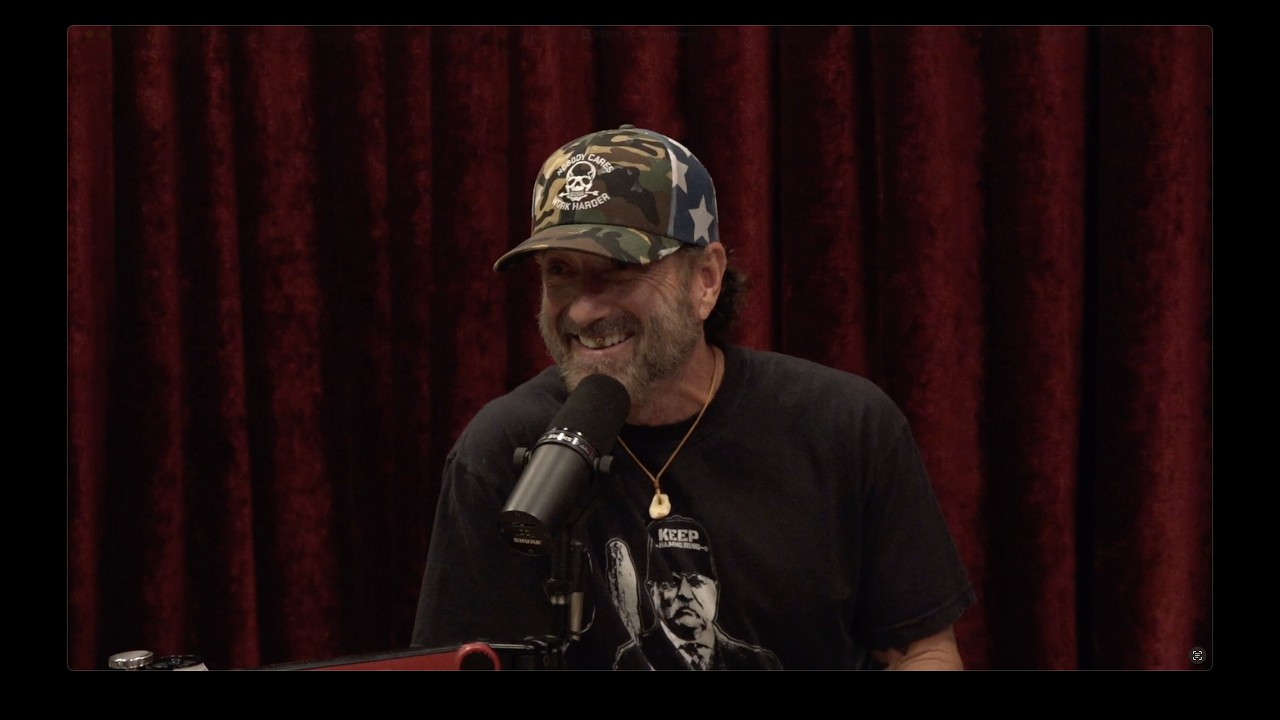
Hanes Rejects Doping Claims and Urges Senate Public Land Protection
PowerfulJRE
Hanes defends his use of the peptide BPC-157 strictly for medical recovery from a fractured foot while calling on listeners to contact senators to block legislation threatening federal roadless wilderness protections.
## Background
Published on YouTube by the channel PowerfulJRE on June 12, 2026, this episode of the Joe Rogan Experience features bowhunter, endurance athlete, and author Cameron Hanes. The page description outlines Hanes' background as an outdoorsman, podcaster, and author of the book "Undeniable: How to Reach the Top and Stay There."
## TL;DR
In this episode, Joe Rogan and Cameron Hanes discuss the logistics and environmental challenges of upcoming outdoor UFC events, alongside survival stories involving alligator encounters in Florida. They dive heavily into environmental and political issues, criticizing Utah Senator Mike Lee's push to alter the Roadless Rule and debating public land conservation, corporate fraud, and the impact of the Citizens United ruling. Hanes also addresses recent performance-enhancing drug allegations regarding his use of BPC-157 for a severe foot fracture, leading to a broader conversation on running physics, weight management, and the state of modern healthcare clinics.
## Atmosphere & style
The conversation carries a gritty, authentic, and intensely passionate tone, blending rugged outdoor survivalism with deep political frustration. The dynamic between Rogan and Hanes feels like a supportive, candid dialogue between close peers, moving from lighthearted banter about travel gear and gold teeth to an urgent, defiant call to action against public land privatization. It balances a defensive, vindicating energy regarding Hanes' athletic integrity with an evocative, unvarnished appreciation for wilderness living, hunting resilience, and personal discipline.
## Key takeaways
- [01:01](https://www.youtube.com/watch?v=bKceG6tQc0M&t=61s) The East Coast's dense, muggy weather significantly impacts fighter stamina, prompting UFC athletes like Ilia Topuria to train outdoors to acclimate to the heavy atmosphere.
- [04:24](https://www.youtube.com/watch?v=bKceG6tQc0M&t=264s) Joe Rogan outlines the prolonged and dangerous nature of alligator attacks, including drowning and death-rolling, while noting the high resilience of wild predators to injuries.
- [24:14](https://www.youtube.com/watch?v=bKceG6tQc0M&t=1454s) Joe Rogan expresses a profound responsibility to show up daily for his audience, committing to maintaining his number one podcast platform "until the wheels fall off."
- [33:15](https://www.youtube.com/watch?v=bKceG6tQc0M&t=1995s) Focusing exclusively on political secrets, corruption, and the world's evils for digital engagement can severely damage a content creator's mental well-being.
- [39:40](https://www.youtube.com/watch?v=bKceG6tQc0M&t=2380s) Joe Rogan advocates for a media detox, using a soup metaphor to describe how high-quality social media content is ultimately ruined by grifters and negativity.
- [44:32](https://www.youtube.com/watch?v=bKceG6tQc0M&t=2672s) The modern public distaste for consuming bear meat is attributed to pop-culture and corporate anthropomorphizations of wild animals like Yogi Bear and Smokey Bear.
- [52:24](https://www.youtube.com/watch?v=bKceG6tQc0M&t=3144s) Wildlife management and land use decisions should be strictly left to specialized biologists rather than being decided by politicians or urban voters via 'ballot box biology.'
- [53:40](https://www.youtube.com/watch?v=bKceG6tQc0M&t=3220s) A controversial legislative provision introduced by Utah Senator Mike Lee targets 45 million acres of roadless wilderness, drawing bipartisan pushback from public land advocates.
- [01:00:35](https://www.youtube.com/watch?v=bKceG6tQc0M&t=3635s) Joe Rogan objects to hosting world championship UFC fights outdoors due to high humidity transforming elite grappling mechanics into unpredictable 'hot oil wrestling.'
- [01:05:13](https://www.youtube.com/watch?v=bKceG6tQc0M&t=3913s) The historical narrative of the polio epidemic is challenged by claims that widespread environmental DDT poisoning triggers identical physical symptoms to paralytic polio.
- [01:46:33](https://www.youtube.com/watch?v=bKceG6tQc0M&t=6393s) The landmark 2010 Citizens United Supreme Court decision is criticized for granting corporations personhood rights and fundamentally tilting American political power toward dark money.
- [01:46:33](https://www.youtube.com/watch?v=bKceG6tQc0M&t=6393s) Oregon's Initiative Petition 28 (IP28) is heavily criticized as a deceptive petition that would criminalize standard livestock breeding, hunting, fishing, and local ranching.
- [01:53:16](https://www.youtube.com/watch?v=bKceG6tQc0M&t=6796s) A large percentage of nonprofit hospitals operate similarly to corporate hedge funds, providing minimal charity care while paying executives multi-million dollar salaries.
- [02:03:33](https://www.youtube.com/watch?v=bKceG6tQc0M&t=7413s) Cameron Hanes addresses doping allegations, clarifying that his use of the peptide BPC-157 was a one-time medical treatment to heal a severe Jones foot fracture without surgery.
- [02:18:48](https://www.youtube.com/watch?v=bKceG6tQc0M&t=8328s) Mass casual running events like the Eugene Marathon lack the massive funding required to administer anti-doping drug tests to thousands of everyday non-elite participants.
- [02:43:54](https://www.youtube.com/watch?v=bKceG6tQc0M&t=9834s) Elite marathon success depends heavily on extreme gravity-defying weight optimization, with top qualifiers and world-record holders rarely weighing over 140 pounds.
- [02:45:04](https://www.youtube.com/watch?v=bKceG6tQc0M&t=9904s) Traditional medical systems under Obamacare have driven doctors away, creating a vacuum that optimized wellness clinics now fill by offering proactive, individualized healthcare.
- [02:48:02](https://www.youtube.com/watch?v=bKceG6tQc0M&t=10082s) Hunting bears is framed as an ecological necessity to manage predator populations that otherwise severely devastate local moose, deer, and elk calf populations.
The conversation kicks off with the classic Joe Rogan podcast intro sequence before transitioning into the studio where the speakers are getting settled. The guest comments on the host's "sweet hat," prompting a joke about its hyper-patriotic design featuring an American flag, a skull, and camouflage. The guest then reveals that due to a packing mishap, he is currently "all in for the 250th anniversary," wearing the only pair of socks he brought on the trip, along with zero underwear. Joe commiserates, recalling past travel nightmares where he had to wash his socks in a hotel sink using shampoo and put them back on while they were still damp.
The topic shifts to the intense, humid weather conditions they are experiencing. The guest notes that he went for a run and ended up completely drenched in sweat. Joe explains that this heavy, muggy East Coast air is a major factor for the fighters at the upcoming UFC event in Washington, D.C. He mentions seeing videos of trainers and fighters like Aean Zahabi and Ilia Topuria intentionally training outdoors to acclimate to the dense atmosphere, emphasizing how much that thick air can alter a athlete's stamina and performance.
* Verbatim Quote: "We got an American flag. We got a skull. We got camo. What the [ __ ] else do you want? Are you American or not?"
* Location mentioned: Washington, D.C. (UFC event location)
* Athletes named: Aean Zahabi, Ilia Topuria
---
[01:14](https://www.youtube.com/watch?v=bKceG6tQc0M&t=74s) The Real Danger of Lightning Strikes
The discussion about outdoor training transitions into a story about a massive thunderstorm brewing outside. While the guest recalls visiting the Olympic Training Center in Colorado Springs as a kid, Joe points out that a canopy has been set up over the outdoor cage. When the guest jokes that hitting the canopy with lightning wouldn't be good, Joe admits he is historically more worried about a terrorist attack than a lightning strike, though statistically, he should probably reevaluate his fears. Joe shares that he actually has friends, including someone named Remy, who have been struck by lightning.
The guest shares his own terrifying close call from just days prior during a massive local storm. Thinking the weather had cleared, he stepped out onto his balcony, which sits 500 feet up in the sky. Suddenly, lightning struck nearby, and he could actually hear the electricity sizzling in the air around him, forcing him to scramble back indoors. Joe then brings up a viral Ring camera video of a man walking down the street who gets struck by lightning, knocks out cold, wakes up to keep walking, and is instantly struck a second time.
The guest goes on to detail a frightening backcountry experience he had last year with his son, Tanner, while running up Diamond Peak. Despite a mild weather report, they heard thunder rumbling from a distance—noting that lightning can famously strike from up to 10 miles away via "sideways" arcs. While pushing for the summit, Tanner noticed that their metal trekking poles were actively ticking with static electricity. As they sprinted down the mountain to escape, they passed a group of kids heading up, and the guest observed that a young girl's hair was standing completely on end due to the electrical charge in the air.
* Data Point: Florida led the U.S. the previous year in both lightning fatalities (12) and strikes per square mile (76).
* Locations mentioned: Olympic Training Center (Colorado Springs), Diamond Peak.
* Phenomenon described: "Blue sky lightning," which can jump several miles from a distant storm to kill someone standing under a clear sky.
---
[04:24](https://www.youtube.com/watch?v=bKceG6tQc0M&t=264s) Alligator Encounters and Swamp Survival
The conversation shifts abruptly from atmospheric dangers to wildlife horrors when Joe asks if the guest saw a recent bodycam video from Florida where a fleeing suspect was killed by an alligator. They discuss the horror of the situation, with both agreeing they would vastly prefer being shot by the police over being taken down by what they describe as a living "dinosaur." Joe vividly describes the agonizing, prolonged nature of an alligator attack—the drowning, the death-rolling, and the futility of trying to poke the creature's eyes out while being dragged under.
They pull up another piece of media featuring a man who survived an alligator attack but lost his forearm. The speakers joke about the man's incredibly nonchalant, seemingly altered demeanor during his media interview, joking that he looked like he had been "meed up since the 12th grade." Despite his state, the man managed to survive a three-day trek through a snake-and-gator-infested swamp with a severed arm. Joe and his guest marvel at the sheer biological mystery of how the man didn't bleed to death, while mocking the dramatic news editing that heavily emphasized how the man "fought for his life" despite the obvious visual evidence of his missing limb.
* Verbatim Quote: "That [ __ ] alligator is going to take a while to kill you. It's going to roll with you. It is going to drag you under the water."
* Animal description: Frequently referred to as "dinosaurs" and "monsters."
* Survival anomaly: A man wandering an alligator-infested swamp for three days with a fresh amputation without bleeding out.
---
[06:41](https://www.youtube.com/watch?v=bKceG6tQc0M&t=401s) Alligator Hunting and Wild Animal Resilience
The guest reminisces about going alligator hunting in Florida a few years ago, referencing a large alligator specimen he successfully shot that is now displayed at his place. He encourages Joe to join him sometime, noting that while Joe primarily sticks to bow hunting, alligators are vastly overpopulated and need culling. They debate the mechanics of hunting an alligator with a bow, concluding it is incredibly sketchy but possible if you use a fixed-blade broadhead (like an Iron Will) to "brain them" by hitting the exact sweet spot right behind the head, halfway between the eye and the neck bump.
This leads into a deeper discussion about the terrifying resilience of wild predators. Joe notes that creatures like bears and alligators frequently survive catastrophic injuries that would instantly kill a human, mentioning that a hunter named Kip once killed a three-legged bear. Alligators are known to casually bite each other's legs off during fights and completely recover without medical intervention. Joe contrasts this with humans, who require medical-grade antibiotics for a simple infected hangnail, theorizing that modern civilization has destroyed the human biome through over-washing.
Joe shares an explicit example from an elk hunting trip at Tejon Ranch. While dressing a harvested elk, they discovered its hindquarter was entirely pocketed with pus from a deep wound. Joe explains that during the rut, subordinate bulls often get brutally gored in the rear by dominant, 1,100-pound bulls as they turn to flee a losing fight. The raw force required to snap the thick bone of an elk's antlers during these battles illustrates the immense violence these animals endure daily, explaining why they barely register the impact of a hunter's arrow when locked in "war" mode.
* Hunting specifications: Bow hunting an alligator requires an exact shot from about 20 yards to pierce the brain cavity.
* Locations mentioned: Tejon Ranch.
* Weight stat: Dominant Tejon elk can weigh up to 1,100 pounds.
---
[09:51](https://www.youtube.com/watch?v=bKceG6tQc0M&t=591s) The Reality of the Florida Everglades
Joe directs his producer to pull up the specific bodycam footage of the Florida suspect being taken by an alligator. As they watch the video together with their headphones on, Joe guides the guest through the chaotic, low-quality footage. They watch as a police officer stands at the water's edge with his gun drawn, unsure of how to react, while an alligator rapidly lines up its trajectory and slams into the swimming suspect. The dark humor continues as they mock the sensationalized television narration describing it as a "full-on attack," with Joe joking, "As if what? Halfway attack?"
Joe shares another crazy historical anecdote from Florida involving a high-speed car chase that ended on a bridge. The suspect ditched his car, leaped over the railing to escape, and accidentally landed directly on top of an alligator in the water below. Joe stresses that this is the baseline reality of Florida's fresh water, noting that even Disney World has to constantly sweep its properties for gators, referencing a tragic incident where a toddler was killed at the park.
The segment wraps up with Joe describing the sheer density of the alligator population based on a truck trip he took into the deep Everglades with local guides three years ago. Expecting to carefully glass the horizon just to spot a few pairs of eyes, he was shocked to find 15 to 30 massive gators openly moving through the swamp everywhere he looked. He describes the surreal psychological whiplash of being deep in a dangerous, prehistoric jungle surrounded by monsters, and then driving just an hour and a half away to sit in a pristine Miami steakhouse drinking Pinot Noir. Joe closes by mentioning how different the ecosystem is now compared to when he lived in Gainesville as an 11-year-old child, back when alligators were still strictly protected under the endangered species list.
* Verbatim Quote: "Boom. That's a wrap, son... You think you're in civilization. You're [ __ ] a half a day's drive from monsters."
* Locations mentioned: Disney World, the Everglades, Miami, Gainesville.
* Timeline reference: Joe lived in Florida as a child from ages 11 to 13.
[14:39](https://www.youtube.com/watch?v=bKceG6tQc0M&t=879s) Alligators, Marshmallows, and Alligator Shoes
The conversation opens with a vivid recollection of life around Lake Alice in the late 1970s. One of the speakers tells a striking story about a neighbor whose dog "got jacked" right in front of her. She was simply walking her pet by the lake when an alligator suddenly snatched the dog and carried it away. Despite such terrifying occurrences, the speaker recalls how locals used to go down to the docks to feed the alligators marshmallows, watching them surface to swallow the treats. At the time, the presence of the gators felt "weird" and slightly frightening, but they generally weren't viewed as overly dangerous neighbors.
The dialogue then shifts to how alligator populations have surged over the decades because hunting them was banned. In the past, they were hunted nearly to extinction to supply the fashion industry, particularly for footwear. This prompts a nostalgic tangent about the peak era of alligator dress shoes. During the 1970s, wearing "gators" was the ultimate sign of being sharp and well-dressed. In pool halls, old-timers would marvel at a man in a nice suit and finely polished black alligator shoes, declaring that he "had his gators on." The speakers contrast these stiff, high-fashion dress shoes with alligator or snake skin cowboy boots, noting that while boots make sense for a rugged style, a polished pair of gator dress shoes carried a very specific, high-end swagger.
- Alligator hunting in the mid-to-late 20th century nearly drove the species to extinction before protections allowed populations to rebound.
- Alligator skin shoes were a prominent fashion statement in 1970s pool halls and urban fashion culture.
---
[16:03](https://www.youtube.com/watch?v=bKceG6tQc0M&t=963s) The Podcast Phishing Scam affecting Ric Flair and Tim Dillon
The topic shifts abruptly as one speaker remembers he needs to apologize to wrestling legend Ric Flair, who recently fell victim to an email scam. The scammers reached out to Flair claiming to represent a prominent podcast, offering to book him as a guest and promising a payment of around \$3,000. Under the guise of setting up the payout, they requested his bank account information with the true intent of emptying his account. A similar incident targeted comedian Tim Dillon, where fraudsters impersonated a booking agent for an "Amy Poehler show." Dillon, however, immediately grew suspicious, jokingly thinking that he would not be a good fit for Poehler's brand, and realized it was a scam when they demanded his banking details.
The speakers note that these scams are incredibly deceptive and frequently catch older generations or "boomers" off guard. The guest admits that he nearly fell for a similar phishing attempt involving *The Pat McAfee Show*. Because the McAfee crew had worn his merchandise on air before, an email inviting him onto the ESPN show felt entirely legitimate. He holds McAfee in high regard, comparing his unfiltered, "say whatever he wants" attitude to his host's own style, praising it as "the first amendment in his glory." It wasn't until he verified the email with an insider named AO that he discovered it was a complete fake.
The podcast transitions into a commercial segment for DraftKings, highlighting upcoming fight nights, title shots, and rising contenders. The announcer emphasizes that the DraftKings app is fully operational across all 50 states, offering consolidated markets at the user's fingertips. New customers are incentivized to sign up using the promo code "Rogan" to receive \$200 in rewards within 21 days after an initial \$5 wager. The ad includes extensive legal disclaimers regarding gambling helplines across multiple states (such as New York and Connecticut), age restrictions (21 and over), and specific prediction dollar expiration terms ending on June 28th.
---
[19:32](https://www.youtube.com/watch?v=bKceG6tQc0M&t=1172s) Podcast Booking Processes and Elk Meat Guardrails
Returning from the break, the host addresses whether anything can be done to stop these impersonators, concluding that raising public awareness is the only real defense. He reveals that he purposefully keeps his guest-booking methodology a secret to prevent scammers from mimicking his exact outreach style. He relies on a specific coordinator to connect with potential guests, but reiterates a firm warning: "If you get an email asking for your bank account information, it's not me." He jokes that if an email offers to share some of his famous wild elk meat, it *might* be real, but immediately walks it back, laughing that he only shares his harvest with close friends and family, not "weirdos."
---
[20:24](https://www.youtube.com/watch?v=bKceG6tQc0M&t=1224s) The Story Behind the Gold Tooth
The host notices his guest has brought an extensive pile of notes to the studio, jokingly comparing him to a scientist guest from the previous day who brought far less material. The host then points out the guest's new gold tooth, expressing genuine admiration for it. The guest explains that the gold tooth began as a bit of a joke but stems from a deeper psychological shift. For years, he was completely obsessed with dental perfection, constantly using whitening strips because he "cared too much" about his appearance. Now, after playing the industry game for so long, he simply no longer cares what he looks like, prompting the host to ask what triggered the change.
The guest shares the lengthy backstory of the tooth, which he originally broke back in high school during an intensely awkward moment. While he was kissing a girl, someone playing basketball accidentally struck the back of his head, slamming his mouth into hers. The impact shattered his tooth, even leaving fragments of it embedded in the poor girl's lip. Over the years, he had various dental composites put in to fix it. After avoiding the dentist for an extended period, an X-ray misdiagnosis led doctors to believe he had a cavity underneath the composite material. They ground his tooth down to a tiny post, only to discover there was actually no cavity at all.
- The original tooth injury occurred in high school due to a basketball-related collision during a kiss.
- The dental procedure that removed the existing composite was a mistake based on a false positive X-ray reading.
---
[22:46](https://www.youtube.com/watch?v=bKceG6tQc0M&t=1366s) Dental Mishaps and Using Gold as a Savings Account
Left with a whittled-down tooth post, the guest was sent to a specialized dental lab in Springfield to color-match a new porcelain crown. While there, the technician mentioned that her husband, Nate, crafted excellent custom gold teeth and suggested it might be a fun alternative. Although he initially told his partner, Trace, that he would only wear the gold tooth for a couple of days, it has now been months and he intends to keep it. He notes that everyone has regular white teeth nowadays, whereas gold teeth used to be a major trend, famously worn by figures like Mike Tyson. He jokes that the tooth doubles as a literal backup savings account: if he ever loses everything else in life, he can pull the gold out to buy a cheeseburger.
Inspired by this story, the host reveals that he has a cracked molar in the back of his mouth. He previously had a root canal and a crown placed over it, but a piece of the crown recently broke off. He enthusiastically announces that he is going to copy his guest and get a gold crown for his molar. Since it is located in the back of his mouth, it won't be visible constantly, but it will flash whenever he gives a "big cheese" smile. The guest encourages it, noting that because the host laughs constantly and lives a very happy life, people will get to see the gold tooth often.
---
[24:14](https://www.youtube.com/watch?v=bKceG6tQc0M&t=1454s) Maintaining the Foot on the Gas and the Burden of Success
The guest marvels at the host's relentless work ethic, pointing out that despite achieving massive, generational success where most people would coast, the host keeps his "foot on the gas" with a nonstop lineup of diverse guests. The host responds with a deep sense of humility and duty. He explains that very few human beings in history are ever given an opportunity of this magnitude, making him feel incredibly fortunate but also heavily burdened by responsibility. He knows his massive audience is addicted to the variety of the show—craving insights from scientists, everyday guys, athletes, and fighters alike. He feels a profound connection to his listeners, which fuels his dedication to show up every single day without ever complaining.
The host reflects on the timeline of his success, noting that he has held the number one podcast spot consistently for roughly six or seven years. He views his platform as something he must maximize to its absolute limit, vowing to run it "until the [ __ ] wheels fall off." The guest relates this to the competitive world of bow hunting, where working hard to earn a respected position naturally invites rivals who want to take your spot. They laugh about a mutual encounter where a challenger told the host he wanted to race him, to which the host coldly and calmly replied, "Good luck with that," treating the threat with the same gravity as a five-year-old claiming they could win a fight.
- The host has maintained the number one ranking podcast globally for approximately 6 to 7 years.
- Both speakers share a fierce, competitive mindset that welcomes challengers to try and outwork them.
---
[27:04](https://www.youtube.com/watch?v=bKceG6tQc0M&t=1624s) Overcoming the "Hater" Mindset and Channeling Energy
The host breaks down why the concept of trying to "take someone's spot" is fundamentally flawed. He argues that everyone is on an individual journey, and baseline envy is a massive waste of human energy. Unless there is a legitimate personal grievance, hating someone simply because they hold a position you desire introduces a toxic negativity into your life. While acknowledging that it might sound a bit "hippie," the host insists that this mental energy should instead be spent celebrating excellence. When observing a master artisan, a great comedian, or an elite guitarist, the correct response is to analyze what makes them successful and figure out how to apply those lessons to your own growth.
Admitting to his own past flaws, the host confesses that he was a total "hater" when he was a young fighter. In his youth, he viewed every single competitor in his weight division as a piece of trash, completely unable to celebrate their achievements or national titles. He realizes now that the ego naturally seeks out flaws in others to protect itself, but calls it a dangerous trap. Energy is the ultimate resource in life; directing it toward ego-driven jealousy because you are too weak to admit someone else is faster, stronger, or better at shooting a bow completely halts personal progress. True selfishness requires protecting your energy so it can be reinvested into making yourself better for the future.
[29:52](https://www.youtube.com/watch?v=bKceG6tQc0M&t=1792s) The Attraction of Positive Energy and Long-Term Podcasting reps
The conversation opens with a discussion on how energy is a vital resource that must be protected. The host’s attitude is praised as "pure," which naturally draws people in and makes guests eager to share their insights. Even if the positive outlook were forced, a negative or confrontational tone in questioning would quickly alienate guests. Instead, by focusing on growth, learning, and self-improvement, the show creates an attractive environment for listeners and guests alike. This is contrasted with the exhausting nature of constant negativity; people inherently seek out a "picture of something that gives me hope" because hope provides a sense of purpose and the motivation to work hard.
The speakers reflect on the host's long-standing status as the number-one podcast. While attitude plays a major role, the host points out a massive structural advantage: getting into the game early in 2009. Back then, very few people were podcasting, and the host wasn't particularly famous, allowing a long runway to hone the craft without the distraction of sifting through thousands of comments. Starting today would be a completely different story, as the landscape has exploded to millions of shows.
- There are an estimated 5 million to 8 million podcasts in existence today, with the number growing weekly.
- The host credits his success to "reps" (repetitions), comparing podcasting to disciplines like archery, pool, and martial arts, where excellence requires continuous experience and intense focus.
[33:15](https://www.youtube.com/watch?v=bKceG6tQc0M&t=1995s) The Trap of Constant Negativity vs. the Comedic Safety Net
The dialogue turns to fellow podcaster Sean Ryan, whose show is described as taking a much darker, albeit real, turn lately due to heavy topics like government corruption, Israel, and the Epstein files. The speakers speculate that there is almost a design to keep the public feeling hopeless so they can be controlled. While the host also covers dark topics, his show maintains a regular "reset back to good," which prevents the content from becoming entirely bleak.
The host explains that non-comedians face conversational limits when handling heavy material. Being a comedian provides a "get out of jail pass" and a safety net, allowing them to write off extreme comments by saying, "I'm a comedian, we're [fucking] around." This comedic freedom opens up a layer of raw conversation—often referred to as "talking [shit]"—where friends can be silly, tell absurd lies, and lighten the mood. Without that ability to loosen up, a podcast can easily fall into the engagement trap of focusing exclusively on the world's evils, which ultimately messes with a host's head.
- Focusing solely on negative news for engagement can trap a content creator in a cycle of constant negativity.
- Comedic banter serves as an essential tool to break tension and reset the mood of a long-form conversation.
[36:36](https://www.youtube.com/watch?v=bKceG6tQc0M&t=2196s) Political Frustrations and the Confusion of Foreign Policy
The mood temporarily dips as the host vents his frustration regarding unreleased government secrets, explicitly demanding answers on the Epstein files, the JFK assassination, and the mystery surrounding the shooting of Charlie Kirk. The guest jokes that the host is putting him in a bad mood just by mentioning these topics, pointing out his own handwritten notes at the top of his page that read "Stay positive" and "Be nice" to prevent himself from losing his temper.
The speakers express shared disappointment over political promises regarding "draining the swamp." They recall feeling a sense of hope during a previous political term, followed by what they label the "Biden disaster," leaving them completely bewildered by the current state of the second term. The conversation shifts toward foreign policy, specifically the military escalations involving U.S. bombings of Iran. The host admits he is no foreign policy expert but notes a stark divide: acquaintances who prioritize supporting Israel are thrilled by the military actions, while those who favor an "America First" or "no new wars" stance feel deeply upset and view the conflicts as profit-driven sacrifices of soldiers.
- The host expresses immense frustration over ongoing redactions and the physical paving over of the ground immediately following the Charlie Kirk shooting.
- The speakers note that Iranian military and political structures are incredibly complicated, featuring deep layers of control where new leaders instantly replace those who are taken out, even as Israel targets successors during negotiations.
- The guest mentions a recent headline claiming that 20 oil tankers were captured the previous day, noting he read it quickly on X (formerly Twitter).
[39:40](https://www.youtube.com/watch?v=bKceG6tQc0M&t=2380s) Social Media Detoxes and the "Soup with Shit in It" Metaphor
The host shares how much healthier and happier he has felt over the past few months by staying off Instagram and Twitter. However, he recounts a bizarre experience where the Instagram algorithm began aggressively funneling videos of schizophrenic individuals into his feed. He details a few memorable accounts, including a woman named Dolores who claims to be the real granddaughter of JFK and asserts that gold in a basement belongs to her, a former crackhead who believes everyone online is actually a man, and a man in a dirty old suit who genuinely believes he is the rightful president of the United States.
The guest agrees that social media is a trap designed to steal hours of time, though he admits to getting caught watching street fights, pranks, jokes, and pet videos. The host uses a vivid culinary metaphor to describe the current state of social platforms, comparing it to a bowl of soup where you might get a few small pieces of good meat—such as fascinating science stories or James Webb Space Telescope discoveries—but the rest of the broth is entirely ruined by filth, grifters, and racial animosity.
- The host fondly recalls a three-day period during a bow hunting trip for Axis deer on Lanai, Hawaii, where his phone broke and continuously dialed people automatically; being forced off the grid resulted in "three of the happiest days" of his life.
- Despite the downsides, the host praises tools like Siri and Perplexity AI for providing instantaneous answers to random daily questions while driving or relaxing at home.
[43:32](https://www.youtube.com/watch?v=bKceG6tQc0M&t=2612s) Wild Game Cooking and Hot Chilean Chili
The segment concludes with a sudden shift in activity as the host invites the guest to eat some of the bear meat he brought in. The guest opens up a Grizzly cooler filled with wild game, momentarily moving away from his microphone to retrieve it. The host corrects him twice, reminding him that the audience cannot hear him unless he speaks directly into the mic, and tells him to "put that thing down and have a seat."
Once settled, the guest brings out a special seasoning rub used for cooking steaks, which is associated with Casey Brooks, a hunter famous for harvesting a world-record elk. The label on the seasoning is heavily worn out, but they identify it as a "mighty Chilean chili" blend. The host calls for his producer, Jamie, to locate a knife so they can cut into the meat and begin eating.
Elks, Calls, and Oregon Meat Processors
The conversation opens with a wave of excitement over a massive elk, with the speakers marvelling at its incredible size. One speaker initially guesses its score was around 386, but is quickly corrected that it was actually a staggering 486, nearly reaching the 500 mark. Amidst the awe, they shift to sampling some food brought to the table, including chilies that smell incredibly potent. One of them jokes about the instructions left for the chilies: "sprinkle this [__] on everything," though they note a warning that you really do not need to use much.
The talk shifts to elk hunting techniques and mouth calls. One speaker mentions Bo Brooks, the son of a known caller, noting that the son is an exceptionally good elk caller who actually manufactures the calls himself. This prompts an admission from one of the hosts that they are "terrible" at using a traditional mouth reed and have absolutely no idea how to set up an elk call using a tube. Instead, they only learned how to mimic a female elk just the previous year using a small, simple blow-in call device.
The focus turns to a collection of wild game meat and tools brought as gifts. After a brief look at an old "packout skinner" knife from Montana Knife Company, they dive into tasting some high-quality wild game pepperoni and jerky. The meats were prepared by a processor named Ronnie at Whites Country Meats, located in Portland (or more specifically, near Gresham), Oregon. The hosts are highly impressed by the quality, sharing a laugh while confirming the meat is completely "trichinosis free."
* The elk discussed scored an extraordinary 486.
* The wild game meat was processed by Ronnie at Whites Country Meats in Gresham/Portland, Oregon.
* Gifts brought to the studio included pepperoni, bear jerky, breakfast sausage, and rendered bear fat.
The Virtues of Bear Meat and the "Yogi" Misconception
The speakers examine a jar of rendered bear fat, noting its surprisingly dark coloration. One host mentions that fellow outdoorsman Clay Newcomb had previously given him some bear fat, which he successfully used to sear steaks, comparing it to beef tallow but with a distinct, unique flavor profile. The guest explains that spring bear fat reacts differently when rendering or making pepperoni because the animals have only just emerged from hibernation. The fat came from a massive bear he recently harvested. This leads into praise for the cooking videos made by a woman named Jen at "bear camp," where she smoked a bear ham for 24 hours after letting it marinate for four days. Despite online skeptics claiming "if you did shoe leather for four days, it'd be good," the hosts agree the result was the "best meat you've ever had."
This success sparks a historical and cultural debate about why bear meat faces an unfair reputation today. They point out that early American settlers favored bear as a superior, primary meat source, often harvesting deer solely for their hides to make clothing. The modern distaste for bear meat is blamed on a "trap" created by media. They jokingly curse pop-culture icons like Yogi Bear, Smokey Bear, and the broader Disney corporate machine for "anthropomorphizations of animals." They argue that turning wild beasts into sweet, talking cartoon characters has ruined the public's understanding of nature, whereas hunters maintain a realistic respect for animals alongside the knowledge that populations must be actively managed.
Santa Monica Mountain Lions and "Ballot Box Biology"
The conversation shifts to predator management and wildlife encroaching on urban spaces. A story is shared about a massive mountain lion captured on video just lounging in a grassy backyard in the middle of a densely populated residential neighborhood in Santa Monica. The host mentions sending the clip to comedian Whitney Cummings to highlight how "bananas" the situation is. The presence of the apex predator sparks a critical tangent about a local wildlife crossing bridge built over the highway. The speakers mock the project, noting it has ballooned way over budget to more than $100 million just so "monsters can get across the highway safely." One speaker half-jokingly suggests a different approach: putting a massive steel grill on a Land Cruiser and letting nature take its course, arguing that if a mountain lion cannot figure out how to avoid traffic, getting hit is simply natural selection ("figure out or die").
They criticize California's lack of mountain lion management, stating that an unrealistic view of population counts has led to an overabundance of the predators across the state. This leads to a broader philosophical stance against what they term "ballot box biologists"—such as the public voting that introduced wolves into Colorado. The host asserts that wildlife management decisions must be left entirely to trained specialists rather than urban voters or politicians, stating, "I want biologists making the decision on hunting... I don't want politicians making the decision on land use."
* A mountain lion was sighted in a dense residential backyard in Santa Monica, California.
* The wildlife crossing bridge intended for animals to cross the highway safe from traffic is noted to be over budget and costing upwards of $100 million.
The Fight for Public Lands and the Sneaky Roadless Rule
The guest notes that public lands are firmly back in the political crosshairs due to a controversial legislative push led by Utah Senator Mike Lee. The guest explains how politicians frequently hide unpopular land-use provisions inside unrelated bills—in this case, tying a public land provision to a bill meant to address wildfires. Specifically, Lee is targeting 45 million acres of designated "roadless areas," claiming that new roads must be cut into pristine wilderness to help fight fires. The guest completely rejects this justification, calling it a disguised front for resource extraction and corporate development. He points out the logical flaw in the politician's argument: the National Forest Service already faces a massive $10 billion maintenance backlog on existing, failing roads. Furthermore, statistically, 85% to 90% of forest fires are human-caused and ignite within a half-mile of an existing road, meaning untouched wilderness areas are rarely where fires originate.
The host pulls up a live search to investigate a rumor he heard regarding the Mormon church (LDS) having a religious mandate to sell off land. The search clarifies that while some conservative Utah politicians who happen to be Mormon push for federal land transfers to boost local economies under the guise of affordable housing, it is strictly a political movement and not an official LDS church program; in fact, official LDS teachings explicitly advocate for the strong stewardship and preservation of public lands. The host observes that Senator Lee appears to be operating as an "errand boy" for Donald Trump on the matter, noting that while Trump himself does not care about public land preservation, his son, Donald Trump Jr., is an avid outdoorsman who does. The host muses that he might confront Donald Trump Jr. about this "sneaky roadless rule amendment" when he sees him over the upcoming weekend.
The walkthrough wraps up with an impassioned defense of the American public land system, inspired by the Teddy Roosevelt philosophy of "not one acre" yielded to private interests. The speakers emphasize that the U.S. public land system is entirely unique compared to the rest of the world, giving every ordinary citizen direct ownership and access to pristine, beautiful wilderness. They warn that any compromise is a dangerous slippery slope because "once you lose something, you don't get it back ever." They recall a previous era when hunters, hikers, fishermen, and general outdoor recreators unified with a "vicious" public sentiment to shoot down similar land-grab bills, and they call for that same unified resistance today to stop politicians from wearing the public down with last-minute, backroom political deals.
* Senator Mike Lee of Utah introduced a provision targeting 45 million acres of roadless wilderness areas.
* Data shows that 85% to 90% of wild forest fires start within a half-mile of an established road.
* The National Forest Service currently has a $10 billion backlog in necessary road maintenance.
* Public search data read during the episode shows that 99% of Americans oppose repealing the Roadless Rule.
* Bureau of Land Management (BLM) alone manages 42% of the land in the state of Utah.
[59:42](https://www.youtube.com/watch?v=bKceG6tQc0M&t=3582s) Bread, Circuses, and White House Distractions
The speakers discuss the deliberate timing of major news drops and controversies, framing them as a cynical tool used by the government to manage public attention. By flooding the airwaves with competing stories at the exact same time—such as pitting the release of the Epstein files against highly anticipated UAP and UFO disclosures—the state ensures that people "can't fight it all." One speaker describes this strategy as "pretty nefarious," outlining how core activist groups are effectively neutralized through distraction. Instead of widespread outrage over policies like the "roadless rule," public energy is splintered. Some are pacified with alien revelations, while others are absorbed by upcoming spectacles like the "White House fight."
This dynamic is critiqued as a modern version of the ancient "bread and circus" strategy. Citing UFC fighter Bryce Mitchell, a speaker argues that it is fundamentally inappropriate for the executive branch of the United States government to host sporting events. The core sentiment is that citizens hire the government to run the country, not to provide entertainment.
[01:00:35](https://www.youtube.com/watch?v=bKceG6tQc0M&t=3635s) The Problem with Outdoor Title Fights
While acknowledging that the upcoming White House UFC card is going to be "sick" and that they will absolutely watch it, Joe Rogan emphasizes his strong professional objection to hosting world championship fights outside of a controlled, indoor environment. He clarifies that his stance isn't about being inherently negative or positive, but about structural fairness for the athletes. If he were running the UFC, he would refuse to host a card of this magnitude outdoors because variables like high humidity and muggy weather can fundamentally alter the outcome of a legacy-defining matchup.
The discussion details how extreme outdoor humidity transforms high-level grappling into something akin to "hot oil wrestling." Because the fighters become completely drenched in sweat, executing regular submissions becomes nearly impossible, while the ability to quickly slide an arm under a neck for a rear-naked choke becomes artificially easy. Conversely, critical mechanics like hand and wrist control become incredibly difficult for both top and bottom grapplers. Rogan insists that professional arenas should always be kept at a strictly controlled 72° to ensure a level playing field.
- In the early days of MMA, some fighters would soak in a bathtub full of baby oil for hours before a match; even after being wiped down with a towel, the oil would seep out of their pores once they warmed up and started sweating, making them as slippery as a "salmon in the middle of the water."
- A speaker jokes that fighters could achieve a similar pore-greasing effect by constantly eating McDonald's, though it would severely hurt their overall performance.
[01:02:51](https://www.youtube.com/watch?v=bKceG6tQc0M&t=3771s) Weather Forecasts and the Star-Studded Fight Card
The conversation shifts to the logistical nightmare of the immediate weather forecast for the outdoor event, noting scheduled blocks for rain starting at 2:00 PM, followed by thunderstorms at 3:00 PM, more rain at 7:00 PM, and lingering showers by 8:00 PM. Despite joking that a chaotic downpour would delight political detractors who want to see "rain on those mega" crowds, Rogan reiterates that his sole concern is for the fighters, whose brief careers can be completely devastated by a single unfair loss. Despite these risks, the speakers praise UFC President Dana White for his signature style of always "going big," comparing this risk to his expensive, one-time-only event at the Sphere in Las Vegas.
They marvel at the sheer quality of the seven-fight card, labeling every single matchup an absolute "banger." The lineup features explosive pairings right out of the gate, starting with Steve Garcia versus Diego Lopes, alongside highly anticipated bouts like Bo Nickal against Kyle Daukaus. The conversation highlights the massive lightweight clash between Justin Gaethje and Ilia Topuria. Rogan notes that while Gaethje is noticeably larger, Topuria's skill progression is terrifying. After breaking down Topuria's career tape, Rogan recounts his evolution from a decision victory over Youssef Zalal to a terrifying run of consecutive knockouts against three of the greatest fighters of all time: Charles Oliveira, Max Holloway, and the division's consensus greatest, Alexander Volkanovski.
- The outdoor setup features a specialized "lightning catcher" structure erected over the Octagon area.
- Rumors are mentioned that Donald Trump reportedly does not want the Octagon taken down after the event, preferring to leave it on the White House grounds permanently so fighters can come train there.
[01:05:13](https://www.youtube.com/watch?v=bKceG6tQc0M&t=3913s) White House Spectacles and Corporate Pressures
The speakers contrast the absurdity of a White House UFC fight with past political displays, recalling a controversial Pride Day event where Joe Biden displayed a giant LGBT flag and guests bared their breasts on the lawn. They conclude that while neither politics nor sport belong on the executive lawn, they would gladly take the UFC fight over the alternative, even as a pending lawsuit attempts to block the event. The broadcast logistics also face sudden changes; a live news update reveals that CBS backed out of televising the event, meaning viewers will need a Paramount Plus subscription to watch it. This decision reportedly stemmed from Dana White's plan to overlay the fights with a theatrical presentation of "America's story" from its inception to the modern day, reminiscent of the UFC's Mexican Independence Day broadcast. The hosts mock how a brutally accurate depiction of that history would have to include European settlers introducing smallpox, the eradication of Native Americans, wagon train violence, and "buying Alaska for like 50 bucks."
The dialogue turns to personal experiences with Donald Trump at the White House. While acknowledging the intense public hatred toward Trump's rhetoric and policies, one speaker notes that his personal interactions with him have "always been fun, unfortunately," describing him as an entertaining figure when you are on his good side. He asserts that Trump genuinely loves the country and wants to physically improve the White House by building a new ballroom. However, they discuss the severe political friction occurring because the administration's current actions—specifically regarding foreign wars—feel entirely contrary to the "America First" manufacturing, trade, and border protection policies that people actually voted for. The host observes that Trump's administration functions as a strict loyalty test where anyone who pushes back is "fucking gone."
- The broadcast was originally expected to air widely on network television via CBS but will now be exclusive to the Paramount Plus streaming platform.
- Robert F. Kennedy Jr. (RFK) is described as being in a non-stop, day-long battle against embedded institutional pressures from pharmaceutical companies, oil conglomerates, and the military industrial complex.
- The administration has successfully made policy headway regarding the approval of peptides and the elimination of certain harmful food dyes, but they officially "lost with glyphosate," which remains a massive public health concern.
Glyphosate, Gluten Allergies, and the DDT-Polio Connection
The conversation begins with a deep dive into the unknown variables surrounding glyphosate consumption. The speakers emphasize that the medical community still doesn't fully understand how much this herbicide degrades a person's immune system or impairs the body's natural processing capabilities. One speaker notes a popular theory that a significant portion of modern gluten allergies is not a reaction to wheat itself, but rather a bodily rejection of "bromate and pesticides and herbicides." They point out a telling statistic regarding Iowa, noting it acts as the geographic center for glyphosate usage due to massive agriculture, which correlates with it being a known "hot bed for cancer."
Shifting from modern herbicides to historical pesticides, a speaker argues that the historical narrative of the polio epidemic is fundamentally incomplete without mentioning the widespread spraying of DDT across the country. They claim that DDT poisoning triggers the exact same physical response in the body as paralytic polio. Citing Suzanne Humphries' book *Dissolving Illusions*, the speakers describe a historical reality where trucks sprayed DDT directly on streets where children played. The narrative that polio was strictly a human-to-human virus is challenged by the anecdote that horses and cows were also mysteriously paralyzed with the identical symptoms.
> "You can't talk about the polio epidemic without also talking about spraying of DDT all over the [ __ ] country because DDT poisoning has the exact same reaction... as paralytic polio."
The segment wraps up with a shocking statistic: between 95% and 99% of actual polio cases are completely asymptomatic. This data point is used to argue that the mass paralysis witnessed during the era was heavily driven by environmental DDT exposure rather than the virus alone. While acknowledging that polio is a dangerous disease that can kill immunocompromised individuals—much like the flu—they lament that anyone bringing up the undeniable historical overlap with DDT spraying is instantly dismissed as a conspiracy theorist.
- **Iowa Cancer Link:** Characterized as the epicenter of glyphosate use and a major cancer hot bed.
- **Asymptomatic Polio Rate:** Explicitly stated to be between 95% and 99%.
- **Animal Symptoms:** Non-human livestock like horses and cows suffered paralysis identical to human polio symptoms after DDT exposure.
Weather Modification, Chemtrails, and Corporate Overreach
The topic transitions into weather modification, which one speaker admits they used to disregard as a pure conspiracy theory until they personally witnessed planes laying down unusual cloud patterns. Joe Rogan clarifies the science by referencing a dedicated episode of his old television show, *Joe Rogan Questions Everything*, which thoroughly investigated chemtrails. He explains the basic physics of standard contrails: a hot jet engine passing through cool, wet atmospheric air naturally creates artificial condensation clouds. However, Rogan emphasizes that two distinct things are happening at once: normal flight condensation occurs, but covert aerial spraying operations are also entirely real.
The speakers debate the patterns of the planes, noting that while some observers watch aircraft make consistent laps in the sky, these are often established commercial flight routes experiencing high atmospheric condensation. Still, Rogan emphasizes that certain top-secret weather modification and cloud-seeding experiments are actively hidden from the public. They point to Dubai as a prime example of human environmental interference gone wrong, referencing viral footage of Lamborghinis floating down flooded highways.
The conversation turns aggressive when discussing billionaires steering global climate engineering. They target Bill Gates' high-profile proposals to spray reflective particles into the upper atmosphere to block out sunlight and cool the earth. Rogan reacts with intense frustration, questioning the authority of an individual who "didn't even graduate college" to make an ecological decision on behalf of the entire planet. They express profound worry over the unpredictable, catastrophic consequences of playing God, noting that such hubris could inadvertently trigger a new ice age.
- **Abu Dhabi Weather:** Mentioned as a place that uses cloud seeding to artificially force rain on a weekly basis due to its immense wealth.
- **Solar Geoengineering:** Critiques Bill Gates' proposal to block sunlight using atmospheric reflective particles.
- **Dubai Floods:** Cited as a direct real-world consequence of aggressive environmental manipulation.
Public Lands, Big Bend Wall, and Government Bypasses
A speaker abruptly shifts gears to cover an urgent note regarding conservation, pleading with the audience to call their senators at 202-224-3121. They demand that citizens fight to keep the "roadless rule" completely intact to protect 45 million acres of public land. The speaker expresses deep disappointment with the political landscape, explaining how they initially hoped the administration had some "good pipe hitters" who would protect these areas. They mention their past hope for Tulsi Gabbard to shake up the system, but note she is out of the picture now due to her husband getting sick. Instead, politicians like Markwayne Mullen have stepped in, recently unwinding 31 environmental laws designed to protect public property.
The focal point of their anger is a $1.7 billion non-bid contract awarded to build a border enforcement project directly through Big Bend National Park—one of the most pristine locations in Texas. The speakers question the true purpose of the project, noting that actual border crossings are statistically negligible in that specific, brutally rugged terrain. Joe Rogan points out the blatant corruption of bypassing public bidding processes when spending taxpayer money, noting that the standard checks and balances have been entirely discarded.
> "Politicians who've never set foot here are signing a death warrant for this wild and beautiful place."
The dialogue concludes with a discussion on the human cost of destroying these spaces. Public land is defended as a vital mental health resource for everyday Americans who "might not have two nickels to their name" but rely on the wilderness to escape city life and recharge. They mock the corporate counter-argument that developing the land with roads or helicopter pads makes it more "accessible," warning that doing so completely ruins the ecosystem. Looking at live maps and images pulled up by their producer Jamie, they marvel at the stunning, mountainous canyon river layout of Big Bend, reiterating how illogical and destructive it is to push heavy construction into such a remote paradise.
- **Congressional Contact Number:** 202-224-3121 is shared as the direct line to reach US senators.
- **Big Bend Project Value:** A $1.7 billion contract was awarded without a competitive public bidding process.
- **Corporate Ties:** The spike in border wall spending and streamlined contract allocation reportedly benefited two specific construction firms with deep GOP White House connections.
- **Expert Opposition:** Six former superintendents of Big Bend National Park collectively penned a formal letter protesting the project, which was ultimately ignored.
[01:28:46](https://www.youtube.com/watch?v=bKceG6tQc0M&t=5326s) Big Bend Border Realities and Distraction Tactics
The conversation begins with a discussion regarding border crossings, particularly focused on Arizona and Big Bend National Park. Jaime searches for the exact numbers, revealing that the only official border crossing inside Big Bend National Park is the Boquillas port of entry. It manages roughly 10,000 legal visitor crossings annually, alongside a minimal number of unauthorized crossings. The speakers contrast this tiny fraction with the massive scale of the broader US-Mexico border, pointing out that Big Bend shares 118 miles of the border along the Rio Grande but is far from a hotspot for illegal activity.
The dialogue quickly shifts to a broader frustration with political corruption, government spending, and media distractions. The speakers note how major headlines—like the conflict in Israel, the bombing of a girls' school, and the release of the Epstein files—serve to distract the public while the government pushes through massive, questionable spending. They cite a Washington Post report highlighting that border wall contracts skyrocketed to more than $19.4 billion over a six-month period, with the majority awarded to firms like Bernard and Fiser. This lack of competitive bidding sparked a lawsuit from a rival builder, which the speakers flatly label as illegal and corrupt behavior. They express a deep sense of frustration regarding how easily the public gets sidetracked by cultural fights, like UFC matches, while vital public land protections are stripped away in the middle of the night without citizen input.
- **Big Bend Border Length:** Shares 118 miles of border with Mexico along the Rio Grande.
- **Boquillas Port of Entry:** Handles approximately 10,000 legal pedestrian visitor crossings per year to Boquillas del Carmen, Mexico.
- **Border Sector Data:** One referenced report noted only 734 people documented crossing in that specific sector compared to more than 27,000 along the entire southwest border in the same period.
- **Contract Spending:** Over $19.4 billion in border wall contracts were handed out in a six-month window, primarily to companies named Bernard and Fiser.
[01:32:20](https://www.youtube.com/watch?v=bKceG6tQc0M&t=5540s) The Legislative Battle Over Roadless Rules
Briefly pivoting to praise the quality of the bear meat they are eating, the speakers dive back into the mechanics of the contested public lands bill. The legislation, which had cleared the House, is headed to the Senate. The speakers explain that the "roadless rule" originally enjoyed broad, clean bipartisan support aimed at protecting public wilderness. However, Senator Mike Lee introduced controversial new language into the bill, drawing stark lines in the sand and turning it into a partisan battleground.
To combat this, the speakers urge the audience to call a specific congressional switchboard number to flood the lines and pressure lawmakers into keeping the roadless rule intact. They recount a historical parallel from the Trump administration, where a similar situation occurred with a major bill. Trump desperately wanted his "big beautiful bill" passed, but controversial public land language tied to affordable housing was causing intense friction. To break the logjam, they pulled the public land provisions out entirely, successfully saving the land at that time. The speakers argue that the exact same pushback needs to happen now to force lawmakers to remove the new language and preserve decades of established conservation success.
- **Senate Voting Threshold:** The bill will require a 60% majority vote to pass the full Senate.
- **Bipartisan Defection:** Nine Republican senators crossed lines to vote with Democrats to keep the roadless rule protections intact during an earlier stage.
- **Congressional Switchboard Number:** The speakers explicitly provide the number 202-224-3121 for citizens to call and advocate for public lands.
[01:34:38](https://www.youtube.com/watch?v=bKceG6tQc0M&t=5678s) The Price of White House Access and Political Influence
The mood turns reflective as Cameron Hanes discusses the weight of having a massive social media platform and navigating invitations to the White House. He expresses a sense of imposter syndrome shared by many who find themselves in rooms with the president, noting that while he built value in his name through decades of hard work, that level of access comes with an underlying price. Hanes reveals that he previously rejected an invitation to the White House for Veterans Day because he fundamentally disagreed with military actions regarding Iran and refused to be used as a political prop. He emphasizes that while he voted for Trump because he favored his platform over a continuation of the Biden-Harris administration—particularly regarding unchecked border crossings and the unchecked promotion of transgender surgeries to minors without parental consent—he refuses to show blind loyalty. "I don't have to agree with [__] lock step with the person I voted for," Hanes asserts, defining that critical distance as a fundamental right of American citizenship.
Hanes shares another anecdote about a nonpartisan outdoor advocate named Benji Backer, who was invited to the Oval Office for a public land executive order signing. Hanes describes the event as pure political "theater" and a "pomp and circumstance photo op" where absolutely no real action or protection followed the press clipping. The speakers conclude that powerful politicians constantly seek out cultural influencers to placate their bases and validate bad behavior, creating a massive financial incentive to secure multi-billion-dollar contracts for border walls and military equipment rather than serving the actual public interest.
[01:39:54](https://www.youtube.com/watch?v=bKceG6tQc0M&t=5994s) Following the Money: AIPAC, Corporate Influence, and Campaign Finance
The final segment zeroes in on tracking corporate and foreign financial influence in American democracy. The speakers discuss how defense contracts, particularly for military drones at the start of recent conflicts, enrich specific well-connected entities. This prompts Jaime to pull up a live search, revealing a highly controversial headline claiming Eric and Donald Trump Jr. invested in a military drone company during the Iran conflict, which the speakers warily question as potential foreign propaganda or "cartoon propaganda from Iran." Hanes then shares a personal story about a local politician back home named Adam who lamented how incredibly difficult it is to raise small, local campaign donations from normal businesses, highlighting the stark, corrupting contrast of major politicians pulling in millions from massive lobbying apparatuses.
The conversation shifts specifically to AIPAC (American Israel Public Affairs Committee) and the sheer absurdity of American politicians declaring a primary loyalty to a foreign nation. They note with astonishment that AIPAC did not directly donate to US political candidates until the year 2022. Hanes points out that while Trump didn't take Israel-aligned political action committee money during his first election, his financial dependencies evolved dramatically by his next run. He highlights a massive $250 million contribution to Trump's subsequent campaign, which was immediately followed by Trump awarding that mega-donor a prestigious medal in the Oval Office. The segment wraps up with a cynical laugh about the true cost of political access, noting that a quarter-billion dollars is apparently "how much you got to pay for an award."
- **AIPAC Policy Change:** AIPAC established a direct political action committee to donate directly to US political candidates for the first time in 2022.
- **Mega-Donation:** A single donor contributed $250 million to Trump's later election effort, subsequently receiving a major presidential medal.
[01:43:56](https://www.youtube.com/watch?v=bKceG6tQc0M&t=6236s) The Legacy of Citizens United and Super PACs
The conversation shifts toward the mechanics of political control in the United States, starting with a brief mention of Representative Thomas Massie, who found himself "in the crosshairs of the president" and subsequently lost an election to a preferred establishment candidate. This prompts a deeper look into the landmark *Citizens United* Supreme Court decision. While the speakers initially scramble to remember the exact year—guessing between 2010 and 2012—they settle on the 2010 ruling as the moment that fundamentally tilted American political power toward corporations and billionaires.
The speakers express deep frustration with how the ruling supercharged political action committees (PACs), allowing them to accept and spend completely unlimited contributions. They note with dark humor how language is weaponized to "dupe" the public, pointing out that the name "Citizens United" makes it sound like a unifying, positive initiative, much like the Patriot Act. Ruth Bader Ginsburg is cited as having called it the worst ruling of her time on the court. They note that despite an overwhelming majority of Americans disapproving of the decision—and at least 22 states and hundreds of cities voting to support a constitutional amendment to overturn it—untraceable "dark money" completely defined the 2024 election.
- **The Core Issue:** *Citizens United v. FEC* (2010) granted corporations personhood rights regarding political spending, removing caps on independent campaign expenditures.
- **Public Backing:** At least 22 states and hundreds of cities have formally supported a constitutional amendment to reverse the ruling.
- **The Bipartisan Illusion:** The speakers point out that this massive explosion of dark money escalated heavily during the Obama administration, proving that the system has been rigged across successive presidencies.
[01:46:33](https://www.youtube.com/watch?v=bKceG6tQc0M&t=6393s) Oregon as a Political Petri Dish: The "Peace Act" Controversy
The speakers transition to a localized example of deceptive naming and political experimentation in Oregon, describing the state as a "petri dish for these crazy ideas." They recount Oregon's past experiment with legalizing recreational hard drugs like heroin and methamphetamine, noting dryly that "it didn't work out so well" before being rolled back. The latest target of their criticism is Initiative Petition 28 (IP28), sarcastically referred to as the "Peace Act" or a baseline "stop animal cruelty" petition, which they argue is a Trojan horse designed to systematically dismantle hunting, fishing, and ranching.
The banter intensifies as the speakers vent about the extreme far-left political spectrum in cities like Portland, Eugene, and Salem, jokingly calling them "full-on communists" who want everyone to become vegan. They laugh about the sheer absurdity of heavy-handed government regulations, swapping stories about a West Coast governor trying to require a license to paddleboard or canoe, and a surfer who was infamously arrested for surfing completely alone during COVID-19 lockdowns. Turning back to IP28, they explain how activists gathered the necessary 117,000 signatures by simply asking well-meaning people in Portland if they wanted to stop animal cruelty. However, the fine print reveals radical changes: it reclassifies standard livestock breeding practices—such as controlling when a cow is bred—as akin to sexual assault or criminal rape because the animal cannot consent.
- **Ballot Threshold:** Activists needed 117,000 signatures to get IP28 on the ballot, a number calculated as 6% of the total votes cast in Oregon's prior gubernatorial election.
- **Industry Impact:** The speakers state that while the law wouldn't directly ban eating meat, it would criminalize local ranching, backyard chickens, hunting, and fishing, forcing Oregonians to import meat from other states at exorbitant prices.
- **Long-Term Strategy:** Though the speaker admits the bill won't pass this time around, he stresses that it is a deliberate "long-term process" to test messaging, locate political friction points, and slowly make the populace entirely dependent on corporate food supply chains.
[01:53:16](https://www.youtube.com/watch?v=bKceG6tQc0M&t=6796s) The Nonprofit Scam and "Hedge Funds with Hospital Beds"
The dialogue exposes a deeper systemic issue: the professionalization of activism and the corporate nature of modern nonprofits. The speakers note that everyday workers, like ranchers, are too busy working exhausting hours to door-knock or organize counter-movements. In contrast, "extremist" environmental organizers do this as their literal, well-funded full-time job. Citing the work of researcher Mike Benz, they argue that most non-governmental organizations (NGOs) and nonprofits are fundamentally a "scam" designed to perpetuate their own corporate overhead, high executive salaries, and internal infrastructure rather than giving back to the cause.
The host plays a video clip detailing the staggering financial realities of "nonprofit" hospitals in America, which a congressman recently described as "hedge funds with hospital beds." The narrator in the clip drops massive economic data points from recent years, proving that these institutions operate as highly aggressive commercial enterprises while hiding behind tax-exempt status. True philanthropy, they argue, has been replaced by "philanthrocapitalism," citing Bill Gates as a primary example. Gates allegedly used the Bill & Melinda Gates Foundation to pivot his public image during Microsoft's late-90s antitrust lawsuits, later making an alleged $500 million profit off his investments in the COVID-19 vaccine.
- **Nonprofit Hospital Revenues:** In 2023, the total revenue of nonprofit hospitals in the United States reached a staggering $1.3 trillion, yielding over $45 billion in pure profit.
- **Taxpayer Subsidies:** Taxpayers handed these entities $38 billion in a single year (2021), including $11.5 billion directly saved through tax exemptions, under the legal assumption that they provide charity care.
- **The Charity Deficit:** A comprehensive study of nearly 1,500 nonprofit hospitals revealed that 86% of them provided "little or no charity." This is largely because 97% of patients possess private or government insurance, and hospitals aggressively lobby to squash strict legal definitions of what constitutes charity work.
- **Executive Pay Disparity:** While staff nurses average roughly $70,000 a year, nonprofit hospital CEOs bring home an average of $4.5 million annually, with extreme outliers like a New York hospital executive paying himself $15.3 million a year. Exceptional donation-funded organizations like St. Jude or Shriners are noted as the rare, legitimate exceptions to this corporate trend.
[01:58:44](https://www.youtube.com/watch?v=bKceG6tQc0M&t=7124s) The Reality of Corruption and National Debt
The conversation shifts to the staggering amount of fraud in corporate and government sectors. There is widespread frustration with non-profit organizations and CEOs making $15.3 million a year while being subsidized by the government to the tune of $50 billion, effectively paying off officials to avoid actual charitable work. This sentiment mirrors a conversation on Instagram by P. Davis Jones. When Elon Musk began looking into the Department of Government Efficiency (DOGE), he noted that "it's impossible to describe the amount of fraud," calling it "insane." Investigative findings by Nick Shirley corroborate this, uncovering massive fraud in Minnesota daycare centers and California hospice care networks. In one instance, an entire motel was discovered where every single room was registered as an office for a fake non-profit siphoning public funds.
This corruption leaves regular citizens feeling completely helpless, wondering what the point of working is while they are "paying out my ass in taxes" to fund scams and foreign wars. To fix this systemic disaster, there needs to be a form of "radical transparency" where an AI program exposes every piece of bad management and fraud. However, those in power will never allow such a program to be turned on because they don't want the public to see how badly they have mismanaged public money. For instance, the Pentagon has famously never passed a single audit. When it is jokingly pointed out that the United States is "only in debt $39 trillion," the group laughs at how the government could theoretically just print the money to pay it off, but refrains because keeping the debt allows them to maintain tight control over the population.
- **Corporate/Non-profit Fraud:** CEOs taking $15.3 million salaries while receiving $50 billion in subsidies.
- **Motel Scam:** An entire motel where every room acted as a front office for fraudulent non-profits.
- **National Debt:** The current U.S. national debt is noted as sitting at $39 trillion.
- **Pentagon Audits:** The Pentagon has a track record of zero passed audits.
[02:00:51](https://www.youtube.com/watch?v=bKceG6tQc0M&t=7251s) Defending Hunting Rights and Positive Political Action
Shifting back to the topic of hunting, credit is given to Dan Gates and Howell for their successful efforts in fighting for wildlife and hunter rights in Colorado. While sportspeople in Oregon are facing difficult battles, Dan Gates has introduced Initiative 302, which aims to make hunting and fishing a constitutional right in the state of Colorado. This initiative serves as a crucial litmus test for the future of wildlife management; if successful, it will establish a legal blueprint that can be replicated to protect outdoor traditions in other states. Hunters and outdoor enthusiasts must become much more politically savvy, educated, and in tune with legislative movements to combat powerful anti-hunting lobbyists.
It is exhausting to stay on top of political updates, and figures like Mike Benz, who hosts live streams lasting hours to expose corporate corruption, face an incredibly grueling task. Trying to talk about these heavy, real-world issues in a "nice and positive way" is highly difficult. However, looking for a positive angle, praise is directed toward Ryan Callahan from Backcountry Hunters and Anglers, as well as New Mexico Senator Martin Heinrich, a Democrat who fights fiercely to protect public lands. Even Oregon Senator Ron Wyden deserves credit for working to stop public land sell-offs, standing against individuals like Mike Lee and the Energy and Resource Committee, who are often beholden strictly to financial interests rather than the beauty of the mountains.
- **Initiative 302:** A Colorado ballot initiative designed to solidify hunting and fishing as a state constitutional right.
- **Key Political Allies:** Senator Martin Heinrich (New Mexico) and Senator Ron Wyden (Oregon) are praised for crossing partisan lines to protect public lands.
[02:03:33](https://www.youtube.com/watch?v=bKceG6tQc0M&t=7413s) The Marathon Doping Allegations and a Jones Fracture
The conversation transitions into a highly personal recent scandal involving an Oregon marathon victory. After winning his age category at the Eugene Marathon, allegations emerged accusing Cam of being a "doper" comparable to Lance Armstrong. The controversy stems from his past use of BPC-157, a substance banned by athletic committees. The context behind using this peptide is rooted in a severe injury from June 16, 2024, where Cam suffered a Jones fracture on the outside of his foot. He completely shredded his ligament and broke the bone during a race, but refused to stop running or living his life. Because he kept moving on it, the break remained incredibly wide, and his surgeon—a highly respected professional who operates on the Oregon Ducks football team—warned that a standard surgery carried no guarantee of a perfect recovery and might require multiple follow-ups to manage the hardware.
Desperate to avoid two or three invasive surgeries that would stretch his ligament and permanently alter his running stride, alternative treatments were sought out. In July and November of that year, treatments were received at Ways2Well, where doctors injected stem cells and BPC-157 directly into the foot to encourage bone-on-bone healing. Thanks to a incredibly high pain tolerance, the pain was blocked out through subsequent hunts and races. Over two years, the bone finally fused back together, completely healing the foot without surgical intervention. The doping accusations were aggressively pushed forward by an 18-year-younger professional runner who is a vocal vegan and anti-hunting advocate, utilizing the peptide history to diminish a spectacular race time.
- **Injury Date:** The original foot injury occurred on June 16, 2024.
- **Medical Treatment:** Received stem cells and a one-time injection of BPC-157 in November to treat a severe Jones fracture.
- **The Accuser:** A professional runner 18 years younger, motivated by an anti-hunting and vegan agenda.
[02:08:42](https://www.youtube.com/watch?v=bKceG6tQc0M&t=7722s) Stride Stimulus, Extreme Work Ethic, and a 58-Year-Old PR
Addressing the criticism regarding his rapid marathon times, the details of a decades-long running history are laid bare. Back in 2006, a personal best time of 2:50:21 was clocked at the New York City Marathon, a race run alongside Lance Armstrong. A 2:50 pace was achieved multiple times, including the 2008 Boston Marathon where they crossed the finish line together. Recently, specific training knowledge was passed down from his son, Truit, who is training for the Olympic trials and working to run a sub-2:16 marathon. Truit hired a professional coach, introducing the concept of track "stimulus"—such as running 100-meter sprint strides immediately after grueling mountain runs—which was a training method never utilized before.
For 26 years, an extreme lifestyle was maintained: leading work crews for 10 hours a day, never calling in sick once, and waking up at 2:45 AM to run up to 20 miles a day on as little as two hours of sleep. Any advice on sleep optimization, like that from Dr. Matthew Walker, was completely dismissed with a rebellious "fuck that dork" attitude. Running 26 miles on pure exhaustion meant the body was constantly depleted, capping marathon potential at 2:50. However, retirement three years ago changed everything. With a $2,000 monthly budget dedicated to professional bodywork and massages, combined with regular sauna sessions, cold plunges, proper sleep, and targeted track stimulus, athletic performance skyrocketed. Before his foot injury, Truit even pointed out that his father was outrunning him and should target a sub-2:30 mark. Entering this year's Eugene Marathon fully healthy, a bold "PR or ER" (Personal Record or Emergency Room) mindset was adopted, resulting in an astonishing, record-setting time of 2:39:11 at 58 years old.
- **Historic Marathon Pace:** Ran a 2:50:21 in New York (2006) and a 2:50 in Boston (2008).
- **Olympic Trial Standard:** Truit is targeting a marathon time faster than 2:16.
- **Recovery Budget:** Spending $2,000 a month on intensive massage and body recovery post-retirement.
- **Recent Record:** Achieved a personal record time of 2:39:11 at the age of 58, after pushing through a 53-year history of competitive running.
[02:13:56](https://www.youtube.com/watch?v=bKceG6tQc0M&t=8036s) The Elite Runner's Accusations and the "Dishonoring" of the Marathon
The speaker discusses an unnamed elite runner who became angry over how fast the speaker was running. This elite individual has allegedly been talking trash about the speaker's son, Truit. Trying to remain positive, the speaker avoids naming the person but notes that they were already on his radar. Truit had previously mentioned that this elite runner accused him of "dishonoring the marathon" because Truit's personal goals were so far away from the official Olympic standard that achieving them was deemed unrealistic. The speaker strongly defends his son's ambitions, questioning why anyone would want to crush another runner's big dreams. "He has a big dream just like you had. Why [expletive] on his dream?"
The conversation shifts to how this critic began targeting the speaker directly online. The elite runner dug up an old blog post from 2011—which is still public—regarding supplements the speaker used to take when he was sponsored by Complete Nutrition. The speaker aggressively clarifies that these were standard, over-the-counter products easily found at a local GNC, comparing them to retail products like "mass gainer 2000." He mocks the idea that these supplements were anything akin to serious doping agents, stating firmly that "there's no [expletive] EPO on here" and that the critic is trying to weaponize standard weight-lifting supplements from 15 years ago like a "trophy."
- The critical runner claimed Truit was "dishonoring the marathon" by setting a goal too far from his actual capabilities.
- The online accusations stemmed from a 2011 blog post detailing an over-the-counter supplement sponsorship with Complete Nutrition.
- The speaker compares the targeted supplements to basic retail items found at GNC rather than illegal performance-enhancing drugs like Erythropoietin (EPO).
---
[02:16:15](https://www.youtube.com/watch?v=bKceG6tQc0M&t=8175s) USADA Testing Realities and Supplement Contamination
The critic eventually asked the speaker directly late one night if he could pass a United States Anti-Doping Agency (USADA) drug test. Irritated, the speaker responded that he had no idea and frankly didn't care, though he suspected he might fail simply because USADA guidelines are incredibly restrictive. The co-host asks what ordinary supplements could cause a failed test. The speaker explains that many common substances and peptides are heavily restricted, but the primary trap for clean athletes is third-party supplement contamination. He references fighters like Sugar Sean O'Malley testing positive for ostarine due to contaminated manufacturing lines, explaining that ordinary retail products from places like GNC are high-risk for professional athletes because of the cleanliness of the labs.
To illustrate how terrifyingly strict these protocols are, the hosts share personal anecdotes about elite athletes visiting their studios. The co-host recalls Olympic wrestler Jordan Burroughs refusing to even taste a Kill Cliff CBD drink out of caution. Similarly, the speaker notes that when UFC fighter Marlon "Chito" Vera was on his show, he refused to sample a Ketone-IQ drink until he literally called UFC Vice President of Athlete Health and Performance, Jeff Novitzky. Novitzky warned Vera that safety depended entirely on whether that specific product batch had been tested and cleared, highlighting the non-stop paranoia elite athletes face.
- The speaker notes that ordinary medications like Sudafed and various ADHD medications are entirely banned under USADA without special clearance.
- **Ostarine contamination:** Cited as a common reason clean athletes inadvertently "pop hot" and ruin their careers due to shared factory machinery.
- **Jordan Burroughs anecdote:** The Olympic gold medalist wrestler completely refused a CBD beverage over anti-doping concerns.
- **Chito Vera & Jeff Novitzky phone call:** Vera checked the exact batch approval of a ketone supplement mid-show before ultimately deciding to decline it.
---
[02:18:48](https://www.youtube.com/watch?v=bKceG6tQc0M&t=8328s) Therapeutic Use Exemptions and Two-Tiered Race Standards
The speaker introduces the concept of a Therapeutic Use Exemption (TUE), which allows athletes to take banned substances if a doctor proves a legitimate medical necessity. For instance, an everyday older runner using Testosterone Replacement Therapy (TRT) can legally compete in a marathon with a TUE. The co-host chimes in with a warning about how this exact system was heavily abused in the older days of the UFC—pointing to fighters like Vitor Belfort during the "TRT Vitor" era—where athletes were juicing to levels completely off the charts until the promotion halted the exemption program. They agree that while TUEs are easily exploited through corrupt doctor-patient relationships, TRT should naturally be legal for a 60-year-old regular citizen running a marathon.
This discrepancy leads the speaker to advocate for a strict dual-category system in mass athletic events. Pointing to the Eugene Marathon, which featured 9,000 participants, he reveals that the event organizers did not drug test a single person because smaller marathons lack the massive funding required to test thousands of fields. Because of this, the speaker argues it is completely unrealistic to hold casual or older everyday citizens to strict Olympic standards. He proposes a clear boundary: regular everyday runners should be in one tier, and elite athletes competing for prize money, world championships, or Olympic trials slots should be placed in a separate, heavily monitored testing pool.
- **Therapeutic Use Exemption (TUE):** A formal medical waiver allowing an athlete to use a prohibited substance for a verified health condition.
- **UFC TRT Era:** The hosts recall how fighters heavily abused testosterone exemptions until testing metrics went off the charts, forcing the UFC to end the program.
- **The Eugene Marathon:** An event with 9,000 runners that conducted zero drug tests due to the high financial costs associated with mass anti-doping administration.
---
[02:21:44](https://www.youtube.com/watch?v=bKceG6tQc0M&t=8504s) Transparency, BPC-157, and the Vegan Ideology Clash
The speaker explains that he has willingly stepped up to be the "poster boy" for this gray-area debate by being completely transparent about his own past choices. He openly admits to using the peptide BPC-157 two years prior solely to heal a severe soft tissue injury and avoid undergoing major foot surgery. The co-host vigorously defends him, noting that BPC-157 is a healing agent rather than a performance enhancer, and because it was taken two years ago, it was entirely out of his system for the Eugene Marathon anyway. They dismiss the online outrage as a "smoke screen" designed by haters who cannot handle an outlier's success. The co-host reminds the speaker of how hard he used to work, running a marathon every single day while simultaneously pulling 8-hour shifts at a regular job.
The co-host connects the critic's relentless hostility to a deeper ideological divide, noting that the critic is a strict vegan who likely views the speaker's bowhunting lifestyle as cruel. The conversation temporarily derails into a humorous break where the co-host praises the speaker's wild game snacks, exclaiming, "He needs to eat one of them bear sticks. They're [expletive] delicious. Give me another one!" Turning serious again, the co-host points out the irony of the moral high ground often taken in dietary debates. He argues that large-scale monocrop agriculture required for plant-based diets results in the systematic destruction of millions of small animals, rodents, and insects, famously noting, "You [expletive] killed a hundred billion bees" to harvest things like almonds and avocados. Ultimately, the hosts conclude that beneath the public drama and dietary differences, both the speaker and his critic are fundamentally just two human beings driving their bodies to the absolute limits of human endurance.
- **BPC-157:** A peptide primarily utilized for soft tissue and wound healing, which the speaker used two years prior to prevent a foot surgery.
- **The Monocrop Argument:** The co-host argues that vegan consumerism is inherently responsible for widespread animal and insect deaths via industrial farming, specifically citing avocado and almond production.
- The speaker notes that despite the public friction, he maintains close personal friendships with many people who share the exact same political and dietary beliefs as his online detractor.
[02:28:51](https://www.youtube.com/watch?v=bKceG6tQc0M&t=8931s) Race Waivers and the "Must" vs. "Should" Debate
The conversation starts with a discussion about political differences and friendships. One speaker mentions that despite being on opposite ends of the spectrum from a friend, it hasn't affected their bond because they focus on shared passions like running, pushing themselves, and loving the mountains. "I don't need to align with everybody 100%," they explain, adding that they have plenty of liberal friends they love. However, this common ground wasn't enough to keep them off a certain critic's radar. The critic used the speaker's use of BPC-157—a peptide banned for Olympians but completely legal for regular people—as ammunition. When the critic aggressively asked if they knew the rules, the speaker bluntly replied, "I don't give a [ __ ] about the rules." The critic twisted this into a claim that the speaker is a lawless rogue, but the speaker clarifies their true perspective: "I don't care about rules that don't apply to me." Having spent 20 years as a buyer at an old job, they respect and tightly follow regulations that actually impact their responsibilities.
The debate shifts to the technicalities of USATF sanctions and race waivers. The speaker argues that the waivers they signed never mentioned drug testing or specific peptide bans. In contract language, specific phrasing matters, and the speaker emphasizes that the official rules state relevant materials "must contain" explicit anti-doping warnings. Because the text explicitly says "must" rather than "should" or "may," the race organization bears the responsibility to include the disclosure. Since they never saw this language in any race agreement, they feel completely cleared of wrongdoing. They note that if a waiver had included a simple link directing runners to a website outlining the rules, they would gladly take the blame for missing it, but no such guidance was ever provided.
- BPC-157 is banned for elite Olympic athletes but remains perfectly legal for regular people to use.
- The speaker worked for 20 years as a professional buyer, a role requiring strict adherence to laws and guidelines.
- Official USATF rules mandate that drug testing disclosures "must contain" specific language warning athletes they may be subject to testing.
[02:31:35](https://www.youtube.com/watch?v=bKceG6tQc0M&t=9095s) Nick Diaz's Infamous Cannabis Controversy
The speaker admits they had no prior knowledge that BPC-157 was banned for Olympians, explaining that their true world is bow hunting and getting into peak shape, not elite sports politics. They have never won prize money or run for a national team. If they had, they would have memorized the rules inside and out, noting the irony of strict rules surrounding substances like THC. THC is prohibited on the day of competition, but given how long it lingers in a person's system, proving exactly when an athlete consumed it is notoriously difficult. This reminds the co-host of a legendary mixed martial arts moment: when Nick Diaz tested positive for marijuana after defeating Takanori Gomi.
The co-host recalls that the fight took place during Pride FC's first event in Las Vegas, which they estimate happened around 2005. Diaz pulled off a spectacular and rare "go-go plata" submission victory off his back, using his shin against Gomi's neck. However, the victory was marred when athletic commission testing showed Diaz's THC levels were "off the charts." The co-host jokingly admits they "[ __ ] love" the fact that Diaz fought while high as a kite, even though they agree rules against competing under the influence are generally necessary. They point out that a heavy user or someone taking a massive dose of edibles the night before a race would easily test positive the next day while still being heavily affected.
- The co-host references Nick Diaz's historic submission victory over Takanori Gomi using a gogo-plata.
- The Nevada State Athletic Commission considers a level of 15 as positive for THC, with a threshold of 50 for official violations.
- Nick Diaz tested at an astonishing level of 175 following his fight.
- Commission Chair Dr. Tony Alamo argued that Diaz's high level made him numb to the pain and actively helped him win.
[02:34:38](https://www.youtube.com/watch?v=bKceG6tQc0M&t=9278s) Facing the "Haterade" and the Truit Pull-Up Record
The hosts fiercely dispute the Nevada Commission's old logic that marijuana handed Nick Diaz his victory, with the co-host declaring that "Diaz is going to be numb to the pain anyway" because he is one of the toughest men to ever live. They dismiss the commission's claims as an unprovable stretch. Bringing the conversation back to the marathon drama, the co-host points out the absurdity of calling a peptide taken in 2024 to heal a broken foot a "performance-enhancing" drug for a marathon run two years later. They flatly label the critic a "hater." The speaker recounts the night they were confronted by this critic; caught off guard and unable to remember the exact timing of their medical treatments at Wage Wells, they snapped, telling the critic to "[ __ ] off." Later, they checked their medical records and confirmed the treatment occurred in November 2024.
The speaker explains that their honesty about using stem cells, TRT, and BPC-157 gave the critic exactly what he wanted to run to USADA and stir up a public controversy. They lament how the media turned a simple attempt to avoid multiple surgeries into a massive scandal about cheating in a casual age-group marathon category. The co-host views the backlash as pure jealousy born from unmet needs. The critic is an elite athlete whom nobody knows, whereas a highly popular figure is suddenly matching his marathon times despite being 18 years older. They also defend another athlete named Truit, who has faced similar "haterade" for running in "perfect jeans," looking handsome, and being deemed "too buff" for a traditional marathoner. They remind critics that Truit broke the world record for pull-ups in a 24-hour period—an extraordinary feat that proves he possesses elite, non-traditional genetics.
- The speaker's peptide treatment for a broken foot occurred in November 2024.
- The speaker openly admitted to using stem cells, TRT, and BPC-157 during the confrontation.
- Truit broke a world record by performing thousands of pull-ups within 24 hours, ripping his hands to shreds in the process.
[02:40:05](https://www.youtube.com/watch?v=bKceG6tQc0M&t=9605s) The Mechanics of Doping vs. Weight Optimization
The speaker observes that labels like "cheater" or "doper" are weaponized in running just like political slurs are used to end debates in broader culture. In reality, they are completely illiterate when it comes to performance-enhancing drugs, barely understanding how something like EPO works beyond a vague notion that it creates more oxygen-carrying red blood cells. They reveal they do not even take testosterone anymore because they actually perform better with lower levels. They note that elite female ultra-runners dominate long distances with naturally lower testosterone and higher estrogen. Proving they aren't a calculating doper, the speaker jokes that they still have four out of ten doses left from a testosterone prescription filled last September, noting that real dopers never leave their stash sitting around unused.
The secret to their modern running success comes down to extreme weight optimization rather than drugs. The speaker dropped down to 148 pounds for their peak running condition and currently sits around 152 pounds. The co-host is stunned, remembering when the speaker used to walk around in the 180s. The speaker explains that they used to lift heavy to carry packing loads for hunting, but they have optimized their body for extreme endurance, maintaining surprising strength for their light frame. The co-host agrees entirely, sharing that when they dropped to 192 pounds for a hunt, the 10-pound difference from their current 202-pound weight felt massive. They illustrate the tax of extra weight by describing how much harder chin-ups and dips become when wearing a simple 25-pound weight vest. Turning back to Truit, the speaker notes that elite marathon qualifiers never weigh over 140 pounds because they are constantly fighting gravity. Truit is currently at 158 pounds and will need to trim down to the 140s to truly compete at the highest level.
- The speaker currently weighs around 152 pounds, down from a low of 148 pounds, and used to weigh in the 180s.
- The co-host weighed 202 pounds on the morning of the recording and previously felt significantly lighter at 192 pounds.
- Truit currently weighs 158 pounds and needs to reach the 140s to optimize his marathon performance.
[02:43:54](https://www.youtube.com/watch?v=bKceG6tQc0M&t=9834s) The Physics of Ultra-Running Performance and the BPC Accusations
The conversation highlights the extreme physical demands of ultra-running, emphasizing the incredibly light frames required for world-record performance. A runner who recently set a course record in Eugene weighed only 135 pounds despite being roughly 6'1". The current marathon world record holder is described as a "tiny little guy" weighing a mere 115 pounds. This physical archetype reflects the simple performance formula of the sport: pairing a massive cardiovascular engine with a very light body.
Amidst this context, the speaker expresses frustration over being painted as a doper for using BPC-157 strictly for post-surgery healing, noting they haven't taken the peptide since that recovery period. The host strongly validates the speaker's character, calling them "as honest a human being as I've ever met" and explaining that they work insanely hard precisely so they never have to lie. The speaker reiterates that they never hid the truth: when the issue arose, they simply looked up the dates and stated exactly when the usage occurred.
* The Eugene course record holder stands around 6'1" and weighs 135 pounds.
* The marathon world record holder weighs approximately 115 pounds.
* The speaker emphasizes that BPC-157 was only used during surgical recovery and never since.
[02:45:04](https://www.youtube.com/watch?v=bKceG6tQc0M&t=9904s) Narrative-Driven Attacks and the Post-COVID Shift to Wellness Clinics
The discussion turns to the behavior of critics who prefer to fight a manufactured narrative rather than communicate with a person directly. The host notes that people love to turn others into "a demon" or a non-person, drawing parallels to how labels are weaponized in war and religion. It is incredibly easy to garner public support by relying on indefensible keywords like "Nazi," "doper," or "racist" because those powerful words buy time when someone is backed into a corner.
The speaker ties this cultural tendency toward demonization back to a broader systemic shift in healthcare. Following the introduction of Obamacare, doctors faced rising frustrations, leading many to quit and making standard medical treatment harder to access. This distrust peaked during COVID-19 when vaccines were "shoving down... our throats" but ultimately proved less safe and effective than advertised. Because traditional doctors were reduced to writing quick prescriptions, optimized wellness clinics like Ways2Well stepped into the vacuum to provide comprehensive blood panels and proactive, individualized care.
* Critics utilize undeniable labels to demonize individuals instead of engaging in direct dialogue.
* The rise of alternative wellness clinics is attributed to a systemic breakdown in primary care following Obamacare and COVID-19.
* Wellness clinics offer accessible blood panels to address specific deficiencies that standard doctors often refuse to test.
[02:48:02](https://www.youtube.com/watch?v=bKceG6tQc0M&t=10082s) Evolving the Sport of Ultra-Running and Managing Bear Populations
The speaker argues that the sport of ultra-running needs to evolve alongside modern wellness therapies because the vast majority of participants are not elites or Olympians; they are regular people working full-time jobs trying to optimize their health. Transitioning the topic to wrap up the show, the host congratulates the speaker on a successful bear hunt with John and Jen Rivet. They highlight the ecological necessity of hunting bears, explaining that they have no natural predators other than grizzlies and are currently devastating moose, deer, and elk populations by targeting calves.
The scale of the overpopulation is underscored by the fact that in Alaska, wildlife officials are actively flying in helicopters to shoot bears and leaving them behind because not enough are being harvested by hunters. The host jokes that the general public views bears through the fictional lens of "Yogi and Boo Boo," completely missing the reality of these ruthless, opportunistic predators that will even cannibalize each other.
* The speaker asserts that ultra-running regulations should accommodate regular people utilizing wellness treatments.
* John and Jen Rivet are gave a shout-out for hosting a successful bear hunting trip in Alberta.
* Bear overpopulation in regions like Alaska requires official culling from helicopters to protect vulnerable ungulate populations.
[02:49:36](https://www.youtube.com/watch?v=bKceG6tQc0M&t=10176s) Ballot Box Biology, Bear Candy, and Backcountry Nutrition
The conversation delves into the dangers of "ballot box biology," where urban populations with zero real-world wildlife encounters vote to ban practices like trophy hunting based purely on emotion. The speaker recounts a critic calling them a trophy hunter who approved of deer and elk hunting but drew the line at bears. In reality, bear meat is highly valued and delicious; the speaker shares an anecdote about their daughter telling her school class that her favorite food was "bear candy"—a sweet-and-sour style recipe using brown sugar taught by Steven Rinella.
The host praises Jen Rivet's masterful bear meat stir-fry, which leads into a technical discussion about backcountry nutrition. For long mountain hunts or ultra-marathons, clean calories are vital. The speaker mentions vacuum-sealing and dehydrating their own meals to rehydrate at camp, though they also praise MTN OPS freeze-dried meals like Chicken Alfredo for delivering high-quality fuel.
* A British Columbia law change regarding grizzly hunting created a population disaster due to emotional voting.
* Steven Rinella taught the speaker a popular brown sugar bear meat recipe nicknamed "bear candy."
* Dehydrators and vacuum sealers are recommended for maintaining clean nutrition during extended backcountry trips.
[02:51:48](https://www.youtube.com/watch?v=bKceG6tQc0M&t=10308s) The Critical Role of Electrolytes and Final Signs-Off
The host highlights how switching to LMNT electrolytes completely transformed their hydration and performance in the field. The speaker agrees heavily, stating that an LMNT packet is the very first thing they drink every morning. Due to running massive mileage every single day, the speaker realized they had been chronically low on sodium. The sheer volume of sweat causes their running packs to rub against their skin, resulting in painful physical sores from wearing a wet t-shirt for hours at a time. The host jokes that they "should start running in silk," but underscores the baseline human need for essential minerals and sea salt.
To close out the massive episode, the host expresses deep affection for the speaker, stating, "My brother, I love you to death." Before logging off, they make a final, urgent call to action for the audience to protect public lands by calling their political representatives to keep the Roadless Rule intact.
* The host and speaker both credit LMNT electrolytes as foundational to their daily physical performance and recovery.
* High sweat volume from daily long-distance running causes the speaker severe skin chafing and sores.
* The congressional switchboard number is shared to urge senators to defend the Roadless Rule: 202-224-3121.
* The show closes with a defiant message directed at Senator Mike Lee regarding public land conservation.
## Notable quotes
> [04:24](https://www.youtube.com/watch?v=bKceG6tQc0M&t=264s) That [ __ ] alligator is going to take a while to kill you. It's going to roll with you. It is going to drag you under the water. — Joe Rogan
> [09:51](https://www.youtube.com/watch?v=bKceG6tQc0M&t=591s) Boom. That's a wrap, son... You think you're in civilization. You're [ __ ] a half a day's drive from monsters. — Joe Rogan
> [01:37:38](https://www.youtube.com/watch?v=bKceG6tQc0M&t=5858s) I don't have to agree with [__] lock step with the person I voted for — Cameron Hanes
> [01:38:30](https://www.youtube.com/watch?v=bKceG6tQc0M&t=5910s) theater — Cameron Hanes
> [01:38:30](https://www.youtube.com/watch?v=bKceG6tQc0M&t=5910s) pomp and circumstance photo op — Cameron Hanes
> You can't talk about the polio epidemic without also talking about spraying of DDT all over the [ __ ] country because DDT poisoning has the exact same reaction... as paralytic polio.
> [01:58:44](https://www.youtube.com/watch?v=bKceG6tQc0M&t=7124s) it's impossible to describe the amount of fraud — Elon Musk
> [02:08:42](https://www.youtube.com/watch?v=bKceG6tQc0M&t=7722s) fuck that dork — Cameron Hanes
> [02:08:42](https://www.youtube.com/watch?v=bKceG6tQc0M&t=7722s) PR or ER — Cameron Hanes
> [02:13:56](https://www.youtube.com/watch?v=bKceG6tQc0M&t=8036s) He has a big dream just like you had. Why [expletive] on his dream? — Cameron Hanes
> [02:28:51](https://www.youtube.com/watch?v=bKceG6tQc0M&t=8931s) I don't care about rules that don't apply to me — Cameron Hanes
> [02:43:54](https://www.youtube.com/watch?v=bKceG6tQc0M&t=9834s) as honest a human being as I've ever met — The host
> [02:46:16](https://www.youtube.com/watch?v=bKceG6tQc0M&t=9976s) bear candy — The speaker's daughter
> [02:48:28](https://www.youtube.com/watch?v=bKceG6tQc0M&t=10108s) My brother, I love you to death. — The host
## Mentioned
Cameron Hanes, Joe Rogan, Aean Zahabi, Ilia Topuria, UFC, Remy, Olympic Training Center, Tanner, Diamond Peak, Iron Will, Kip, Tejon Ranch, Disney World, Everglades, Miami, Gainesville, Lake Alice, Ric Flair, Tim Dillon, Amy Poehler, The Pat McAfee Show, ESPN, AO, DraftKings, Nate, Trace, Mike Tyson, Springfield, Sean Ryan, Charlie Kirk, Dolores, James Webb Space Telescope, Siri, Perplexity AI, Grizzly cooler, Casey Brooks, Bo Brooks, Montana Knife Company, Ronnie, Whites Country Meats, Clay Newcomb, Jen, Yogi Bear, Smokey Bear, Disney, Whitney Cummings, Land Cruiser, Mike Lee, National Forest Service, Mormon church (LDS), Donald Trump, Donald Trump Jr., Teddy Roosevelt, Jamie, Epstein, Bryce Mitchell, Dana White, Sphere, Steve Garcia, Diego Lopes, Bo Nickal, Kyle Daukaus, Justin Gaethje, Youssef Zalal, Charles Oliveira, Max Holloway, Alexander Volkanovski, Joe Biden, CBS, Paramount Plus, Robert F. Kennedy Jr. (RFK), Suzanne Humphries, Bill Gates, Lamborghini, Tulsi Gabbard, Markwayne Mullen, Big Bend National Park, Bernard, Fiser, Benji Backer, Adam, AIPAC, Thomas Massie, Citizens United, Citizens United v. FEC, Ruth Bader Ginsburg, Obama, Initiative Petition 28, IP28, Portland, Eugene, Salem, Mike Benz, Bill & Melinda Gates Foundation, Microsoft, St. Jude, Shriners, P. Davis Jones, Instagram, Elon Musk, Department of Government Efficiency, DOGE, Nick Shirley, Minnesota, California, Pentagon, Dan Gates, Howell, Colorado, Initiative 302, Ryan Callahan, Backcountry Hunters and Anglers, Martin Heinrich, Ron Wyden, Oregon, Energy and Resource Committee, Eugene Marathon, Lance Armstrong, BPC-157, Oregon Ducks, Ways2Well, Wage Wells, New York City Marathon, Boston Marathon, Truit Hanes, Dr. Matthew Walker, Complete Nutrition, GNC, Erythropoietin, EPO, United States Anti-Doping Agency, USADA, Sugar Sean O'Malley, Ostarine, Jordan Burroughs, Kill Cliff, Marlon "Chito" Vera, Ketone-IQ, Jeff Novitzky, Sudafed, Therapeutic Use Exemption, TUE, Testosterone Replacement Therapy, TRT, Vitor Belfort, USATF, Nick Diaz, Takanori Gomi, Pride FC, Las Vegas, Nevada State Athletic Commission, Dr. Tony Alamo, YouTube, PowerfulJRE, Keep Hammering Collective, Sh*t Talkers Weekly, Lift. Run. Shoot., Undeniable: How to Reach the Top and Stay There, Perplexity, Obamacare, John Rivet, Jen Rivet, Steven Rinella, MTN OPS, LMNT, Roadless Rule
Hanes驳斥违禁药物指控并呼吁参议院保护公共土地
Hanes为其使用肽类物质BPC-157进行足部骨折医疗康复进行辩护,坚称其严格用于医疗,同时呼吁听众联系参议员,以阻止威胁联邦无路荒野保护的立法。
在本期节目中,Joe Rogan与Cameron Hanes讨论了即将举行的室外UFC赛事的后勤与环境挑战,以及在佛罗里达州遭遇短吻鳄的生存故事。他们深入探讨了环境与政治议题,批评了犹他州参议员Mike Lee推动修改《无路法规》(Roadless Rule)的举动,并探讨了公共土地保护、企业欺诈以及“联合公民案”(Citizens United)裁决的影响。Hanes还回应了近期关于他因严重足部骨折使用BPC-157而引发的使用提高成绩类药物的指控,进而引申至关于跑步物理学、体重管理和现代医疗诊所现状的更广泛讨论。
美东地区稠密闷热的天气会显著影响选手的体力,这促使像Ilia Topuria这样的UFC运动员在户外训练,以适应沉闷的气候环境。 (1:01)
Joe Rogan概述了短吻鳄袭击的持久性与危险性,包括溺水与死亡翻滚,同时指出了野生捕食者对伤病极强的承受与恢复能力。 (4:24)
Joe Rogan表示对每天面向听众开播怀有强烈的责任感,并承诺将一直经营这一排名第一的播客平台,“直到彻底运转不动为止”。 (24:14)
单纯为了网络互动而一味聚焦政治秘闻、腐败和世界的阴暗面,会严重损害内容创作者的心理健康。 (33:15)
Joe Rogan提倡进行媒体排毒,并用一锅汤打比方,形容优质的社交媒体内容最终是如何被投机骗子和消极情绪所毁掉的。 (39:40)
Reading summary
Joe Rogan and bowhunter Cameron Hanes examine the preservation of American public lands, systemic government spending issues, and the mechanics of elite athletic endurance. Across their discussion, Hanes defends his late-career marathon achievements against doping allegations, while Rogan challenges the fairness of outdoor combat sports and the corrupting role of dark money in politics.
Public Lands Defense and Scientific Wildlife Management (120:51)
Hanes and Rogan emphasize the urgent need to protect federal wilderness areas, specifically urging listeners to contact representatives to uphold the Roadless Rule protecting 45 million acres of public land. Hanes rejects legislative efforts led by Utah Senator Mike Lee that propose cutting roads through designated wilderness under the guise of wildfire prevention. He points out that 85% to 90% of forest fires ignite within a half-mile of existing roads, while the U.S. Forest Service already faces a $10 billion road maintenance backlog. They also criticize a $1.7 billion non-bid contract awarded for border construction through Big Bend National Park, arguing that unauthorized crossings are minimal in that rugged terrain and that bypassing competitive bidding invites corruption.
Alongside federal land issues, the speakers criticize "ballot box biology," where urban voting blocs with little wildlife exposure dictate conservation policies. They cite Colorado's voter-mandated wolf reintroduction and California's restrictions on mountain lion management as initiatives that disrupt ecological balance. To counter anti-hunting lobbying, Hanes highlights grassroots conservation efforts like Colorado's Initiative 302, led by Dan Gates, which seeks to establish hunting and fishing as protected constitutional rights.
Endurance Training, Weight Optimization, and Doping Allegations (128:42)
Addressing online critics questioning his fast marathon times at age 58, Hanes details his long running history, including a 2:50:21 finish at the 2006 New York City Marathon. He attributes his recent personal records to modern training methods shared by his son Truit's Olympic-trial coach—such as post-run 100-meter sprint strides—as well as retiring from manual labor to invest in recovery, bodywork, and essential hydration like LMNT electrolytes. Both speakers dismiss allegations of performance-enhancing drugs, asserting that Hanes achieved his speeds primarily through dramatic weight optimization, dropping from the 180s down to roughly 150 pounds to match the lean physiology required for distance running.
Hanes directly clarifies his past use of the peptide BPC-157, explaining that he took it two years prior solely to heal a severe soft-tissue foot injury and avoid surgery. He notes that the peptide was long out of his system during recent competitions and was not barred by the amateur race waivers he signed. Rogan argues that critics weaponize labels like "doper" out of jealousy, while both observe that strict athletic testing regimes under organizations like USADA often trap clean competitors through third-party supplement manufacturing contamination.
Political Spending, Lobbying, and Systemic Institutional Distrust (94:38)
The discussion focuses heavily on corporate and financial influence within American governance, tracing systemic dysfunction to the 2010 Citizens United Supreme Court ruling. Rogan and Hanes argue that allowing unlimited super PAC funding enabled untraceable dark money to dominate elections, sidelining everyday voters. Hanes points out the disproportionate power of major lobbying groups like AIPAC and explains that he previously declined an invitation to the White House to avoid being used as a political prop, stressing that voting for a candidate does not obligate a citizen to support foreign wars or questionable domestic policies.
Extending their critique to non-governmental organizations and non-profit healthcare systems, the speakers cite evidence of entities acting as commercial ventures while shielding themselves behind tax-exempt status. Pointing to public audit findings and investigations into state-level fraud, they argue that regular taxpayers bear the financial burden of wasteful government contracts and foreign conflicts while political distractions keep the public from holding leadership accountable.
The Impact of Environmental Variables on Professional Combat (60:35)
Rogan voices strong professional objections to staging elite mixed martial arts events in outdoor settings, focusing on a planned White House card. While praising UFC President Dana White for his bold matchmaking—including a championship clash between Ilia Topuria and Justin Gaethje—Rogan contends that uncontrolled elements like heavy humidity fundamentally disrupt athletic fairness. He explains that excessive sweat renders hand control almost impossible while artificially facilitating submission techniques like rear-naked chokes, effectively turning elite technical grappling into volatile "hot oil wrestling."
Rogan argues that because an athlete's career can be permanently derailed by a single loss, championship bouts should strictly be held inside climate-controlled arenas maintained at 72 degrees. In his view, removing environmental variables ensures that legacy-defining outcomes are determined entirely by athletic skill rather than muggy weather or impending rainstorms.
The dialogue balances physical training, wildlife management, and sports analysis against a broader warning regarding institutional decline. Rogan and Hanes conclude that whether confronting regulatory threats to public wilderness, bad-faith online attacks, or political corruption, individuals must maintain physical discipline, demand government transparency, and rely on firsthand competence over political rhetoric.
## Background
本期节目由频道 PowerfulJRE 于 2026 年 6 月 12 日发布在 YouTube 平台。视频简介介绍嘉宾卡梅隆·海恩斯(Cameron Hanes)是知名弓箭猎人、户外运动家、耐力运动员、作家以及多个播客节目的主持人,其最新代表作是《不可阻挡:如何登顶并保持巅峰》(Undeniable)。
## TL;DR
在节目的后半段中,海恩斯与乔·罗根首先深入抨击了白宫的政治摆拍、军工利益链、暗钱集团游说,以及俄勒冈州针对畜牧业和户外狩猎的极端立法公投(如 IP28 法案)。随后,两人探讨了非营利组织与私立医院背后的资本洗白陷阱,并转入前线对公共土地的保护倡议。在运动康复与竞技话题中,海恩斯详述了自己通过多肽 BPC-157 保守治愈琼斯骨折并在 58 岁刷新全马个人最好成绩的经历,同时也针对素食跑者向 USADA 举报其“嗑药”的风波做出全面澄清,最后呼吁大众守护荒野生态与国家森林保护条例。
## Atmosphere & style
对谈氛围兼具硬核户外的刚毅与老友小聚的坦率,情绪随着话题转换起伏鲜明。在声讨腐败政治、虚伪 NGO 和极端生态政策时,两人的言辞辛辣犀利、充满愤怒与讽刺;而切入耐力极限训练、骨折复健与舆论中伤的经历时,语调又变得极为坚韧、真诚且富有哲思。整场谈话给听众一种既接地气、又饱含坚不可摧意志力与现实警示感的沉浸体验。
## Bulletin
- [02:07:46](https://www.youtube.com/watch?v=bKceG6tQc0M&t=7666s) 卡梅隆·海恩斯在58岁以2小时39分11秒刷新全马个人最好成绩(PR),换算相当于25岁跑出世界级2小时10分水平,却因诚实公开使用多肽BPC-157保守治疗骨折遭到职业跑者向USADA指控嗑药,暴露出大众路跑赛事与职业反兴奋剂监管之间的巨大鸿沟。
- [01:55:47](https://www.youtube.com/watch?v=bKceG6tQc0M&t=6947s) 政商利益深度渗透公共事务:全美非营利医院2023年总收入达1.3万亿美元且获近600亿美元税收补贴,研究显示86%几乎不提供实质慈善救助,高管年薪甚至高达1530万美元;五角大楼至今未通过任何财务审计,美国联邦债务已攀升至39万亿美元。
- [01:48:38](https://www.youtube.com/watch?v=bKceG6tQc0M&t=6518s) 俄勒冈州IP28等激进公民倡议试图将牲畜人工授精定性为动物未经同意的“性侵犯”并禁止后院养鸡,此类脱离科学的“选票生态学”正逐步剥夺民众自给自足能力,加剧对高度集权食品供应链的依赖。
- [02:51:10](https://www.youtube.com/watch?v=bKceG6tQc0M&t=10270s) 海恩斯呼吁公众拨打国会电话捍卫国家森林《无路区域保护条例》(Roadless Rule),跨党派联合抵制政客将公共土地变相出售给能源集团的行径。
## Key takeaways
- [01:37:40](https://www.youtube.com/watch?v=bKceG6tQc0M&t=5860s) 政客常利用户外和环保意见领袖进行排场摆拍与政治作秀,缺乏实质性保护政策,其核心驱动力多为军工承包合同等巨额利益。
- [01:42:14](https://www.youtube.com/watch?v=bKceG6tQc0M&t=6134s) 2010年“联合公民案”裁决将企业言论自由合法化,催生无上限暗钱腐蚀民主体制,法案常冠以欺骗性名称掩盖真实意图。
- [01:48:38](https://www.youtube.com/watch?v=bKceG6tQc0M&t=6518s) 激进公民倡议利用极低签名门槛和煽动性口号登上选票,试图借立法彻底摧毁传统畜牧业及自给自足生活方式。
- [01:52:53](https://www.youtube.com/watch?v=bKceG6tQc0M&t=6773s) 许多非营利组织沦为外州全职抗议者的薪资来源与大资本洗白形象的公关工具,募资大额流向行政开销与高管报酬。
- [01:55:47](https://www.youtube.com/watch?v=bKceG6tQc0M&t=6947s) 非营利医院坐拥巨额免税与补贴却普遍缺乏实际慈善救助,全美系统性监管套利与审计缺失加速了联邦债务危机。
- [02:00:52](https://www.youtube.com/watch?v=bKceG6tQc0M&t=7252s) 科罗拉多州302号倡议推动将狩猎和垂钓确立为州宪法权利,成为地方抵御脱离生物学法规的维权范本。
- [02:03:27](https://www.youtube.com/watch?v=bKceG6tQc0M&t=7407s) 面对严重的琼斯骨折,海恩斯避免了破坏足部力学的手术,通过注射干细胞与多肽BPC-157成功实现保守愈合。
- [02:10:00](https://www.youtube.com/watch?v=bKceG6tQc0M&t=7800s) 告别日睡2至3小时的自虐式大跑量,卡梅隆通过补足睡眠、软组织理疗和场地间歇刺激,在58岁高龄刷新全马PR。
- [02:20:01](https://www.youtube.com/watch?v=bKceG6tQc0M&t=8401s) 大众路跑缺乏严格执行职业反兴奋剂检测的资金与人力,繁琐的禁药清单与治疗用药豁免(TUE)在业余赛事中存在严重制度脱节。
- [02:27:15](https://www.youtube.com/watch?v=bKceG6tQc0M&t=8835s) 单一种植农业同样造成亿万生灵死亡,部分激进纯素主义者因反狩猎意识形态而对猎人跑者产生强烈的防御性偏见与嫉妒。
- [02:40:42](https://www.youtube.com/watch?v=bKceG6tQc0M&t=9642s) 耐力运动存在极致生理门槛,卡梅隆彻底停用TRT、降低睾酮并极度控制体重,揭示了长跑生理机制与力量训练的本质冲突。
- [02:44:25](https://www.youtube.com/watch?v=bKceG6tQc0M&t=9865s) 公立医疗体系信任受损促使专注于预防性衰老管理、详尽血液生化检查和保守多肽疗法的新型健康诊所快速崛起。
- [02:48:28](https://www.youtube.com/watch?v=bKceG6tQc0M&t=10108s) 缺乏生物学常识的“选票生态学”导致林区猛兽过度繁衍破坏生态平衡,科学的野外捕猎仍是不可或缺的种群调控手段。
- [02:51:10](https://www.youtube.com/watch?v=bKceG6tQc0M&t=10270s) 户外猎人号召公众向国会施压,共同保卫《无路区域保护条例》,严防公共土地遭到商业资本蚕食。
## Detailed walkthrough
### [00:01](https://www.youtube.com/watch?v=bKceG6tQc0M&t=1s) 简陋的行李与闷热的室外备战
节目在轻松的调侃中开场。Cameron Hanes 戴着一顶刚入手的新帽子走进录播室,上面印有美国国旗、骷髅头以及迷彩图案,Joe Rogan 随即打趣他是在全心全意为美国建国 250 周年造势。然而光鲜的帽子背后是 Cameron 极为窘迫的行李准备——他这趟出门竟阴差阳错只带了一双袜子,甚至一条换洗内裤都没装,以至于每天都得在酒店房间的水槽里倒上洗发水手洗袜子,再硬着头皮套上还没完全干透的湿袜子出门。更要命的是,他刚在当地跑了一圈,外面的天气闷热得令人发指,整个人汗流浃背。
这种潮湿沉重的空气正是本周末即将登场的 UFC 赛事最让选手头疼的隐患。由于比赛设在东海岸的华盛顿特区,夏季的空气湿度极高,Joe Rogan 提到许多拳手为了提前适应这种恶劣环境,纷纷选择顶着热浪在室外严酷训练。他提到在社交网络上看到雏量级选手 Aiemann Zahabi 以及羽量级冠军 Ilia Topuria 等人都在室外挥汗如雨。在那种稠密沉重、仿佛凝固住的空气里呼吸与发力,对选手的体能和肺活量完全是另一种层面的摧残。
---
### [01:14](https://www.youtube.com/watch?v=bKceG6tQc0M&t=74s) 惊雷时刻与十英里外的“晴空雷击”
由八角笼顶部的遮雨棚聊起,两人将话题转向了不可预测的雷暴天气。尽管 Joe 戏谑说自己平时可能更提防恐怖袭击,但大自然雷击的致命概率与身边朋友的真实遭遇显然更加真切。狩猎专家 Remi Warren 就曾被雷电直接击中,导致听力在很长一段时间内严重受损;而 Joe 自己前几天也遭遇了惊魂一刻——暴风雨看似刚停,他站在高达 500 英尺的高层阳台上欣赏风景,不料一道闪电骤然劈下,他甚至清晰听到了身旁空气中噼啪作响的电流滋滋声,吓得他魂飞魄散,连滚带爬缩回室内。两人还回忆起网络上疯传的一段监控视频:一名路人被雷当场击昏,苏醒爬起刚没走几步,竟又被第二道闪电原地劈中,可谓倒霉到了极点。
```mermaid
flowchart TD
accTitle: 高山雷击危险发展流程
accDescr: 展示雷云接近、登山杖静电感应、人体头发竖立到必须紧急撤离的过程
subgraph Weather["气象演变"]
A["雷暴云在数英里外聚集并发出低沉轰鸣"] --> B["电荷在空气中水平横向传导"]
end
subgraph WarningSigns["致命预警征兆"]
B --> C["高海拔金属装备产生电流感应<br/>登山杖发出规律的滋滋滴答声"]
C --> D["人体周围静电场急剧增强<br/>周围行人的头发完全竖立起毛"]
end
subgraph Evacuation["应急生还行动"]
D --> E["果断放弃登顶计划<br/>沿山脊全速冲下山体低洼处"]
end
```
Cameron 对此深有体会,并分享了去年与儿子 Tanner 在俄勒冈州钻石峰(Diamond Peak)越野跑时的生死一幕。雷暴往往能从 10 英里之外横向劈来,当他们接近顶峰时,天边开始传来低沉的雷声,儿子 Tanner 突然喊他看自己的登山杖——两根金属登山杖由于周围强烈的静电荷,竟然像机械表一样不停发出电火花般的“滴答”响声。父子俩吓得魂飞魄散,立即放弃冲顶一路狂奔下撤。在半山腰碰到几个不知危险还打算继续向上爬的孩子时,Cameron 看到队伍中那个女孩的头发由于空气中的静电已经完全朝天炸立起来。
- **佛罗里达雷击数据**:佛罗里达州在全美雷击致死人数(12人)和单位面积落雷密度(每平方英里 76 次)上均位列全美第一。
- **晴空雷击(Blue Sky Lightning)**:雷电能从数英里外的云团跳跃至看似晴朗无云的区域。去年一名男子在佛罗里达海滩明媚的蓝天下被远方跳跃而来的闪电击中当场身亡。
---
### [04:24](https://www.youtube.com/watch?v=bKceG6tQc0M&t=264s) 佛罗里达的凶险巨鳄与断臂生还者
从雷击的致命性展开,话题延伸到了佛罗里达州另一大梦魇——短吻鳄。Joe 提到一段令人毛骨悚然的执法记录仪画面:一名逃避警方追捕的嫌疑人一路狂奔跳进水里,结果水下的巨鳄瞬间将其拖入深渊咬死。Joe 坦言,如果要在被警察开枪打中与被这群“史前活恐龙”撕碎之间做选择,自己宁愿被子弹击毙。挨子弹至少会先进入失血休克,脑海里还能回顾人生、挂念家人;而落在鳄鱼嘴里则是无止境的残酷折磨,它会发动死亡翻滚(death roll),强行将受害者拽入冰冷浑浊的泥潭深处溺毙,哪怕绝望中尝试抠它的眼睛也完全无济于事。
紧接着两人聊起了一起骇人听闻的真实奇迹:一名男子在沼泽中遭到巨鳄袭击并被生生咬掉了一条手臂。那头母鳄咬住他的前臂发动翻滚,他的整条手臂被向后扭断扯脱,他被强行拖下水底三次,最终奇迹般挣脱。在没有止血带、仅剩一只手臂残肢的情况下,他在遍布毒蛇和鳄鱼的险恶沼泽中神志不清地孤身徘徊了整整三天三夜才走回文明世界。Joe 调侃采访视频里这位老哥神态恍惚得“像是从高三开始就没清醒过”,但所有人都在惊呼:在没有包扎压迫伤口的情况下,他究竟是如何在失血休克与严重感染中活过整整三天的?
- **短吻鳄猎杀要领**:虽然佛罗里达的鳄鱼极度泛滥需要猎杀控制,但用复合弓猎鳄极其危险。箭矢不能射向胸肺或腹部,一旦擦偏落空就会造成极度痛苦的折磨;猎人必须在约 20 码的极近距离内,使用 Iron Will 等固定刀头重型猎箭(fixed blade),精准击穿其头部后方凸起与眼部正中间的脑干区域将其一箭毙命。
---
### [07:08](https://www.youtube.com/watch?v=bKceG6tQc0M&t=428s) 野生巨兽的自愈力与现代人类的免疫退化
鳄鱼在断肢状态下依然能生存的野蛮生命力,引发了两人对野生动物体质与人类生理退化的深度探讨。Cameron 提到朋友 Kip 曾经在 Rivets 猎杀过一只有三条腿的成年黑熊,野生熊类在搏斗领地争夺时甚至会残暴地互相撕扯啃咬断彼此的腿部,但失去一条腿的熊依然能在严酷的荒野中生存觅食。反观现代人类,哪怕手指头上长了一个小小的倒刺(hangnail)发炎红肿,都得跑去诊所开抗生素治疗。
Joe 指出这在很大程度上是因为现代人类每天过度洗澡和消毒,彻底破坏了自身表皮的天然微生物群落(biome)。而在野生动物身上,除了被人类驯养的农场家畜外,几乎很少见到因外伤轻易感染致死的案例。经常在秋季发情期(the rut)参与狩猎的人深有体会,当他们在猎场剥皮解体一头公马鹿(elk)时,总能在其躯干侧翼摸到陈旧的贯穿伤孔。Joe 回忆起他们在特洪(Tejon)猎到的一只大公鹿,它的后腿内部竟然完全包裹着大量脓液,整个大腿肉几乎全被化脓组织侵蚀。那是发情期雄鹿彼此用尖锐鹿角残酷刺穿后留下的重伤,但即便带着如此严重的内部脓创,野生动物依然在丛林间狂奔求生,展现出令现代人难以置信的恐怖抗病与自愈能力。
### [08:41](https://www.youtube.com/watch?v=bKceG6tQc0M&t=521s) 巨型公牛搏斗的惨烈与痛感钝化
两人继续探讨大型公牛在搏杀时的凶悍与残酷。一头落败的公牛在逃跑时,往往会在后躯上留下深深的伤口,因为处于统治地位的公牛会在对方逃离前狠狠扎上一角。Joe Rogan 提到了特洪牧场(Tejon Ranch)那些重达 1100 磅的巨型公牛,想象一下那种被巨大鹿角刺中头部的恐怖场景。而且在野外经常能看到被折断的角,鹿角的骨质极其厚实坚硬,折断一根所需的冲击力难以想象,更不用说被那样粗壮的骨角直接刺穿身体。
这种极端的伤痛也解释了为什么猎人在用弓箭射中公牛时,它们往往几乎没有任何反应。猎人们在剥皮解构猎物时,常会发现它们体内早就带着旧伤和穿刺孔洞;当两头公牛处于激烈的交配期生死角斗中时,即使中了一箭,它们往往浑然不知,反应就像只是被一只苍蝇落在了身上。只要箭矢精准穿过肋骨之间、没有碰到大骨头,锋利的箭头就会直接滑切而过,公牛甚至只会困惑地嘟囔一声“刚才那是什么”,随后因失血眩晕倒地,战斗便瞬间结束。
---
### [09:51](https://www.youtube.com/watch?v=bKceG6tQc0M&t=591s) 鳄鱼袭击现场与野兽的投机捕食本能
话题随后转向网络上的混乱与血腥视频。Joe Rogan 让制作团队调出一段警察执法记录仪拍摄到的鳄鱼袭人录像。画面中,一名嫌疑人跳入水中试图游走逃跑,岸上的警察拔出手枪却束手无策,只见水面划出一道极快的白色水痕,一条巨大的鳄鱼直扑而去,瞬间将那名男子拖入水中撕扯。两人感叹鳄鱼根本就是活生生的恐龙,其扑击完全是致命的全力进攻。
```mermaid
flowchart TD
accTitle: 鳄鱼投机捕食行为机制
accDescr: 展示鳄鱼如何通过水面声响与猎物挣扎触发本能投机捕食
subgraph Trigger["水面扰动"]
A["水面落物或溅水"] --> B["水花声响 / 挣扎动静"]
end
subgraph Predator["鳄鱼本能反应"]
B --> C["类比:宠物狗等待餐桌碎屑掉落"]
C --> D["极高机会主义捕食本能"]
end
subgraph Result["猎物遭遇"]
D --> E["逃犯跳水 / 宠物犬饮水 / 溺水挣扎"]
E --> F["瞬间拖入水底吞噬"]
end
```
这种攻击纯粹源自鳄鱼极强的机会主义天性。Joe 将其比作餐桌旁等候的宠物狗——只要听见有一点面包屑掉在地上,狗立刻就会扑过去舔食;鳄鱼在水里也是同样的状态,只要听到水面落入物体的声响,特别是带有挣扎姿态的动静,它们会毫不犹豫地游过去吃掉。佛罗里达州就曾发生过一起真实案例:一名男子在警匪高速追逐中弃车跳下大桥,结果不偏不倚正好砸在一条鳄鱼身上,当场沦为美餐。在佛罗里达的所有淡水水域,鳄鱼无处不在,甚至连迪士尼乐园(Disney World)都必须时刻排查水域,多年前就曾发生过幼童在度假村湖边被鳄鱼拖走咬死的悲剧。
---
### [12:34](https://www.youtube.com/watch?v=bKceG6tQc0M&t=754s) 泛滥的大沼泽地与鳄鱼皮制品的兴衰
Cameron Hanes 回忆起大约三年前前往佛罗里达大沼泽地(Everglades)的经历,那里的鳄鱼密集程度令人不寒而栗。原本他以为需要拿望远镜仔细搜寻才能偶尔看到露在水面上的眼睛,结果向导开车带他们穿行在闷热潮湿的沼泽水域时,放眼望去到处都是游动的鳄鱼,短短一段路程就看到了二三十条之多。令人感到诡异的是,这种满是远古猛兽的原始丛林,距离迈阿密那种喝着黑皮诺(Pinot Noir)红酒、吃着高档牛排的现代文明都市仅有一个半小时的车程。
Joe Rogan 分享了自己 11 到 13 岁住在佛罗里达州盖恩斯维尔(Gainesville)时的童年记忆。在 20 世纪 70 年代末,鳄鱼还属于濒危保护动物,法律严禁捕杀,邻居在爱丽丝湖(Lake Alice)边遛狗时,宠物狗就曾被鳄鱼一口叼走拖入湖底。当时孩子们甚至会站在码头上扔棉花糖喂鳄鱼。因为历史上人们为了制作高档皮鞋过度捕猎,导致野生鳄鱼濒临灭绝,但在保护政策下如今种群数量已经严重过剩。两人调侃称现在应该重新流行穿鳄鱼皮鞋:
- 20 世纪 70 年代的台球厅里,老江湖们评判一个人穿着体面的标准就是看他是否穿着一双擦得锃亮的高级鳄鱼皮正装鞋("He had his gators on")。
- 如今像 Lucchese 这样的品牌虽然经常使用鳄鱼皮、蛇皮和鸵鸟皮制作传统的牛仔靴,但经典的纯黑鳄鱼皮正装鞋已经十分罕见。
---
### [16:02](https://www.youtube.com/watch?v=bKceG6tQc0M&t=962s) 冒充播客节目的新型网络诈骗
谈话随后转到社交网络上的各种骗局。Joe Rogan 特别向摔角传奇巨星 Ric Flair 公开致歉,因为有诈骗团伙冒充《The Joe Rogan Experience》制作团队去联系 Ric Flair,声称要邀请他来录制节目。喜剧演员 Tim Dillon 也遇到过完全相同的套路——骗子冒充是 Amy Poehler 节目的统筹,邀请 Tim 去做嘉宾,Tim 当时心生疑虑,觉得自己的风格根本不适合 Amy Poehler 的节目,随后对方就露出了马脚,要求他提供银行账户信息以便支付出场费(有时开价约 3000 美元)。
这类骗局专门利用受邀者的虚荣心或疏忽,诱骗受害者交出银行信息后将其账户掏空,尤其是很多对网络不熟悉的老年人(Boomers)极易上当。Cameron Hanes 补充道,这类骗局确实极具迷惑性,因为他自己也曾收到过冒充 ESPN 名嘴 Pat McAfee 团队发来的上节目邀请。由于 Cameron 此前确实与该节目组的人有过零星接触,面对这种大平台的邀约难免会动心。Cameron 坦言自己非常欣赏 Pat McAfee,认为他的性格和 Joe 非常相似——敢于在聚光灯下表达未经滤镜修饰的真实想法,面对高层管理者的干涉也敢直接叫板回绝。
### [17:42](https://www.youtube.com/watch?v=bKceG6tQc0M&t=1062s) 假冒邀请的骗局与堆成山的访谈笔记
乔·罗根与卡梅伦·海因斯谈起那些拥有“去你的钱”(fuck-you money)并敢于公开表达真实想法的人,认为这正是美国宪法第一修正案所赋予言论自由的魅力所在。然而,公众人物的名气也常常引来各种网络诈骗。近期网络上频频出现假冒播客节目组的名义向潜在嘉宾发出假邀请的现象。卡梅伦透露自己曾向相关人士核实过某些传言,对方明确证实那纯属骗局。
罗根借机向公众和潜在嘉宾作出严肃澄清:他确实有专门的工作人员负责联络嘉宾,但这套联络机制绝不会以任何名义索要对方的银行账户信息。如果有人收到声称来自罗根、安娜·法瑞丝(Anna Faris)、艾米·波勒(Amy Poehler)或蒂姆·狄龙(Tim Dillon)等人的团队,并要求提供财务信息的邮件,百分之百是诈骗行径。卡梅伦开玩笑说,如果有人自称有麋鹿肉可以分享,那才可能是真的;罗根则立刻纠正,自己的野味只会分享给亲朋好友,绝不会随便给来路不明的陌生人。聊到野味,卡梅伦提到自己这次带来了熊肉,并拍了拍桌上一大叠厚厚的笔记。罗根忍不住打趣道,昨天请来的一位专业科学家带来的笔记都没卡梅伦准备的多,卡梅伦则兴奋地表示自己有备而来,准备好好“大聊特聊”。
- 罗根提醒防范邮件诈骗:正规节目的嘉宾联络流程绝不会向嘉宾索取银行账户或财务敏感信息。
- 卡梅伦这次带来了猎获的熊肉,并准备了详尽而厚重的访谈话题提纲。
---
### [20:40](https://www.youtube.com/watch?v=bKceG6tQc0M&t=1240s) 卡梅伦的金牙始末与乔·罗根的镶金计划
寒暄之际,罗根注意到了卡梅伦嘴里闪闪发亮的新行头——一颗醒目的金牙。卡梅伦大笑着解释这背后的离奇经历。高中时期,他在和女生接吻时,身后突然有人投掷篮球砸中了他的后脑勺,导致他的前牙直接撞在女生的牙齿上当场磕断,甚至在女孩的嘴唇里留下了碎牙片。自那以后,他就一直戴着假牙或树脂贴面。过去卡梅伦极度在意自己的牙齿美观,不仅常年使用美白牙贴,还经常因为过度讲究牙齿而遭到好友亚当·格林特里(Adam Greentree)的无情嘲讽。
不久前,卡梅伦去斯普林菲尔德(Springfield)看牙医,医生通过 X 光片断定他的树脂贴面下方有蛀牙,便将贴面拆除,并把原本的真牙磨成了一根细小的桩子。然而磨完后医生才尴尬地发现里面根本没有蛀牙。为了重新匹配假牙的色号,技师的妻子打趣地推荐其丈夫内特(Nate)制作的金牙工艺极佳,建议卡梅伦不如尝试一颗金牙。卡梅伦原本只打算戴一两天图个新鲜,结果一戴就是几个月,甚至越看越顺眼。他笑称这颗金牙就像自己的“应急储蓄账户”,万一哪天破产沦落街头,还能把金牙拔下来换几个芝士汉堡充饥。
听完这番话,罗根不仅没有嘲笑,反而跃跃欲试。罗根透露自己的后臼齿曾做过根管治疗并套上了牙冠,但最近牙冠崩裂缺了一角正需要更换。受到卡梅伦的启发,罗根当场拍板表示自己也要去换一颗金牙牙冠。虽然长在后槽牙位置平时不易察觉,但每当他在节目中放声大笑露齿时,这颗金牙就会闪耀亮相。
---
### [24:14](https://www.youtube.com/watch?v=bKceG6tQc0M&t=1454s) 永不松懈的油门:顶级播客的责任感与“有种就来抢”的竞技心态
看着罗根长年累月不间断地高强度更新节目、接见各路顶尖人物,卡梅伦深感敬佩。通常人们在取得罗根这样的巨额财富与顶级声望后,往往会选择放慢节奏、松开油门享受生活,但罗根却始终保持全速运转。
罗根坦言,全世界极少有人能获得如此巨大的平台与机遇,他对此感到无比幸运,同时也背负着强烈的责任感与使命感。他深知听众对各种视角充满渴求——无论是前沿科学家、顶级运动员、格斗选手,还是像卡梅伦这样的户外猎人。正因为观众热爱这些多元的碰撞,他将制作播客视作一份必须全身心投入的重托。罗根表示,如果手握这样的时代机遇却不竭尽全力去发挥其最大价值,那将是一种莫大的悲哀与渎职。连续六七年稳坐全球第一播客的宝座,他的态度始终如一:绝不松开踩着油门的脚,必须全身心投入,“直到轮子彻底跑飞脱落为止”。
```mermaid
flowchart TD
accTitle: 顶级内容创作的核心驱动循环
accDescr: 展示乔·罗根从感恩时代机遇,到背负听众期待,再到全速投入工作与面对竞争挑战的心态闭环。
subgraph Mindset["核心驱动心态"]
A["罕见的时代机遇与幸运"] --> B["强烈的使命感与对听众的责任"]
B --> C["持续深耕多样化视角<br/>(科学、格斗、户外、艺术)"]
end
subgraph Execution["行动与竞技姿态"]
C --> D["绝不松开油门<br/>(全力以赴直至极限)"]
D --> E["面对觊觎王座的挑战者:<br/>'有种你就来抢' (Come get it)"]
E -.-> A
end
```
卡梅伦对这种竞技心态深表共鸣。在弓猎与体能竞技领域,当一个人经过拼死拼活的努力终于赢得业界尊重与行业顶尖位置时,总会有后来者觊觎你的地位并试图取而代之。面对这种竞争,他们共同的信条就是简单粗暴的“有种你就来抢”(Fuck it, come get it),因为他们至今依然比任何人都更加拼命。卡梅伦还回忆起某次聚会中的趣事:当时有个人不知天高地厚地开玩笑说要在比赛中挑战罗根,罗根连正眼都没瞧他,只是极其平静且冷峻地回了一句:“祝你好运(Good luck with that)。”那种彻底的降维打击和绝对自信,令卡梅伦至今记忆犹新。
### [26:44](https://www.youtube.com/watch?v=bKceG6tQc0M&t=1604s) 停止妒忌与浪费精力:从“黑粉”心态转向自我提升
两人的对话从面对狂妄挑战者的态度展开。Cameron Hanes 调侃道,面对别人扬言要取而代之,就像一个五岁小孩跑过来说要“揍扁你”一样,让人只能回应一句“祝你好运”。当一个人在某一领域深耕四十年、走得比任何人都远时,那种底气是不可撼动的。Joe Rogan 直言,成天想着“夺走别人的位置”本身就是极其愚蠢的观念。每个人都有属于自己的道路,如果仅仅因为别人处在你渴望的位置,而没有任何实质私怨就心生怨恨,那完全是在浪费能量。
Joe 坦言自己年轻时也当过十足的“黑粉(Hater)”。在打跆拳道打比赛的日子里,同量级的对手在他眼里全是“混蛋”,他根本无法由衷去赞美任何人,甚至连全国冠军也不愿承认,唯独对非自己量级的选手才能勉强表示肯定。如今回想起来,这种受自尊心(ego)驱使、到处挑别人毛病的心态不仅毫无意义,而且极具破坏性。人生的一切行动都依赖精力,必须吝啬地守护它。如果将精力消耗在嫉妒、质疑对手“打类固醇”或“跑步里程造假”上,不仅会耗尽能量,更会阻碍自身的进步。相反,当你看到有人比你更能打、弓射得更远、跑得更长或者吉他弹得更好时,应当转换视角,去研究“我怎样做才能达到他们那样的高度”。
- 面对强者的心态陷阱:受虚荣自尊驱使,人们容易倾向于贬低对方来寻找心理平衡(例如质疑别人作弊或用药),但这会直接切断自身成长的通道。
- 守护精力的法则:把别人当标杆去分析和学习,从而吸收灵感转化成自己的行动,而不是在嫉妒中自我消耗。
---
### [29:50](https://www.youtube.com/watch?v=bKceG6tQc0M&t=1790s) 播客常青的秘密:积极视角与数万次练习的复利
Cameron 分析了 Joe Rogan 能够持续吸引顶尖人才和海量听众的根本原因。他认为,虽然面对面坐着各领域的异类(outliers),但 Joe 提问的出发点极其纯粹。如果一个主持人满怀敌意或总是带着对抗性的语气审视嘉宾,绝不可能产生这种深度的对话。人们渴望听到能带来希望的叙事,因为“希望赋予人目标”,让听众相信只要付诸努力就会有回报。Joe 的播客正是透过这种不断寻求成长、提问“我们如何变得更好”的镜头,将积极的能量传递出去。
面对 Cameron 的夸赞,Joe 坦诚自己的地位很大程度上得益于早期红利。他在 2009 年就开始做播客,当时几乎没人涉足该领域,自己也不像现在这般出名,因此拥有大量不被打扰的时间去慢慢打磨手艺,而不需要面对漫天评论的干扰。如今全网播客可能已经激增到七八百万个,如果现在才起步,自己绝不可能做到第一名。不过归根结底,两人的共识依然是“练习(reps)决定一切”——无论是射箭、打台球、格斗还是播客对话,想要做好任何事情,都必须经历长年累月的失败、重复与高度专注的积累。
```mermaid
flowchart TD
accTitle: 播客长青与技艺精进的底层逻辑
accDescr: 展现从早期启动、持续练习到形成积极对话磁场的正向闭环。
subgraph CraftBuilding["基本功积累"]
A["2009 年早期入局<br/>(低曝光度探索)"] --> B["数千次对话练习<br/>(Reps)与手艺打磨"]
end
subgraph Mindset["对话与价值传递"]
B --> C["积极纯粹的提问视角<br/>(探寻如何成长)"]
C --> D["带给受众希望与目标感"]
end
subgraph Outcome["长青影响力"]
D --> E["吸引顶级异类嘉宾与听众"]
E --> C
end
```
---
### [33:15](https://www.youtube.com/watch?v=bKceG6tQc0M&t=1995s) 喜剧演员的免死金牌与走出严肃负能量的陷阱
Cameron 提到他非常喜欢 Sean Ryan 的播客,但观察到 Ryan 近期的节目风格变得相当沉重,充斥着政府黑幕、以巴冲突以及爱泼斯坦案等令人窒息的话题。Cameron 认为,这种持续的绝望感某种程度上符合统治者的意图,因为失去希望的大众更容易被控制,但这种纯粹黑暗的氛围也限制了受众群体,反观 Joe 的节目无论讨论什么,最终总能找到回归希望与积极的支点。
Joe 分析指出,这正是非单口喜剧演员做播客普遍面临的局限。喜剧演员拥有一种天然的“免死金牌(get out of jail pass)”——当话题变得沉重或敏感时,他们随时可以用一句“去他的,我只是个开玩笑的脱口秀演员”来轻松化解。更重要的是,喜剧演员之间存在一种被称为“插科打诨 / 瞎扯淡(talking shit)”的对话维度:好哥们聚在一起扯皮、互开下流玩笑、胡说八道,没人会当真。这种玩笑能随时打破沉闷、让气氛松弛下来。如果缺乏这种幽默调节机制,主持人和嘉宾就会困在严肃话题中无法抽身。虽然严肃和阴暗的内容最容易拉高算法互动率,但如果播客只专注于世界的阴暗面,整个人就会彻底淹没在负面情绪中,这也是创作者极易坠入的精神陷阱。
- 严肃内容的算法诱惑:负面和阴谋话题能够迅速激发流量与互动,但长期沉溺会导致创作者和听众的精神状态恶化。
- 幽默作为解毒剂:喜剧演员的胡扯能力为深度对话提供了缓冲带,既能触及残酷现实,又能随时“重置”回健康、向上的心态。
### [35:53](https://www.youtube.com/watch?v=bKceG6tQc0M&t=2153s) 负面情绪陷阱与难以释怀的现实疑云
两人聊起心态与性格,认为人之所以不应沉溺于负面情绪,并非出于某种刻意为之的设计,而是源于天性——日子里的大多数时候本就没有那么多阴暗面。但问题在于,人的内心独白和外界声音往往充斥着负能量,一旦掉进那个陷阱,思维就会被彻底绑架。正因意识到自己很容易钻进负面思维的死胡同,他们都在极力克制。然而,现实中发生的事情往往让人忍无可忍:比如至今未彻底公开的爱泼斯坦(Epstein)案卷宗与大面积涂黑、肯尼迪(JFK)遇刺的真正凶手,以及各类政治枪击案后扑朔迷离的疑团,甚至案发后现场地面被迅速铺上沥青覆盖掩埋,都让人忍不住抓狂发问到底在隐瞒什么。
看到气氛逐渐变得沉重,Cameron 指着自己的笔记打趣。他的便签最顶端用歪歪扭扭的字迹写着两条备忘:“保持积极(Be positive)”与“待人和善(Be nice)”。Joe 笑着调侃他的字迹差到简直可以直接去当医生。Cameron 坦言自己必须时刻写字提醒自己,因为只要一提起爱泼斯坦或肯尼迪这些话题,胸中的怒火就会瞬间爆发,整个人都会抓狂。
- 讨论了思维容易滑向“负面兔洞(negative rabbit hole)”的心理陷阱。
- 提及爱泼斯坦卷宗未解密、肯尼迪遇刺案疑云,以及枪击案现场被迅速铺沥青掩饰等令人愤慨的阴谋与黑幕。
- Cameron 在笔记顶端写下“保持积极”和“待人和善”以时刻提醒自己克制怒火。
---
### [37:30](https://www.youtube.com/watch?v=bKceG6tQc0M&t=2250s) 政治承诺的落空与中东战局的复杂泥潭
谈及大选前后的社会预期,大家都曾寄希望于新政权能“抽干沼泽(drain the swamp)”、将黑暗的恋童癖网络连根拔起。然而现实却令人困惑与沮丧:在经历了上一任期的部分整顿和随后的混乱之后,如今的政治走向再次变得面目全非。最引发争议的是对伊朗的空袭行动,原本各方认为局势已经受控、升级已经结束,但接二连三的军事打击让局势急转直下,彻底偏离了大众所期望的轨道。
国内的大多数民众根本不希望卷入战争。支持以色列的群体对军事行动拍手称快,而坚持“美国优先”与反战立场的支持者则感到愤怒与背叛,他们认为军人的鲜血不应再为利益集团的金钱买单。伊朗军方与政治结构的复杂程度超乎想象,其多层级的控制体系经历了长期备战,一旦某个核心将领被刺杀,替补人员便立刻补位;而当美国正准备与新指挥官谈判时,以色列又将其定点清除,局势因此陷入死循环。Cameron 提到前一天上厕所刷社交媒体 X(原 Twitter)时看到一条快讯,称伊朗扣押了大约 20 艘油轮,令人难以辨别真伪。
---
### [39:40](https://www.youtube.com/watch?v=bKceG6tQc0M&t=2380s) 算法喂养的精神错乱与社交媒体的心理消耗
Cameron 谈到自己近几个月刻意远离 Instagram 和 Twitter,感觉心理健康状态大幅改善,而此前 Instagram 的算法机制简直令人匪夷所思——平台开始频繁给他推送各类真实的精神分裂症患者视频。其中一位自称 Dolores 的女士声称自己是肯尼迪的真正亲孙女,宣称地下室的金条全归她所有,整天在视频中胡言乱语;另一位曾是性工作者和瘾君子的女性则坚信镜头里的所有人其实都是伪装的男人;还有一位穿着邋遢旧西装的男子自封为美国合法总统,眼神完全游离在另一个次元。
这类光怪陆离的内容就像精神毒瘾,让人一刷就是十几分钟甚至一个小时,回过神来才发现虚度了光阴。社交媒体上同样充斥着无休止的街头斗殴、恶作剧和萌宠视频。虽然萌宠有趣,但整个系统本质上就是为了剥夺用户的注意力和时间,让人深陷其中无法自拔。
- Instagram 算法推荐的内容呈现出严重的扭曲,集中推送各类精神失常者的胡言乱语。
- 平台上的无休止刺激(街斗、恶搞、阴谋论)构成了时间黑洞,让人在清醒后感到极度空虚。
---
### [41:15](https://www.youtube.com/watch?v=bKceG6tQc0M&t=2475s) 夏威夷断网的顿悟与现代科技的“排泄物之汤”
这种反思让两人回想起几年前在夏威夷拉奈岛(Lanai)用弓箭猎捕轴鹿(Axis deer)的经历。当时 Cameron 的手机突然坏掉,开始失控地自动胡乱给通讯录里的人打电话,他不得不关机并等待新手机寄来。那没有手机的整整三天,反而成了他人生中最快乐、最轻松的时光之一。虽然智能手机在记录生活、拍摄精彩照片以及查阅资讯方面无可取代,但它带来的社交负荷却极其沉重。
```mermaid
flowchart TD
accTitle: 智能手机的双刃剑效应
accDescr: 展示智能手机在便利工具与社交媒体毒性之间的两面性对比
subgraph Positive["有益工具属性"]
A["即时查询 (Siri / Perplexity)"]
B["高画质影像记录"]
C["生活工作便利"]
end
subgraph Negative["有害社交属性"]
D["算法投喂与冲突争吵"]
E["认知过载与时间黑洞"]
F["心理内耗与愤怒情绪"]
end
Positive --> G["科技理性使用"]
Negative --> H["如同喝含有排泄物的肉汤"]
```
现代科技的便利之处在于再也没有无法回答的问题:无论是通过 Siri 询问一个月有多少分钟,还是用 Perplexity 在路上随时检索科学谜团或詹姆斯·韦伯太空望远镜(James Webb Space Telescope)的最新宇宙发现,都能瞬间得到解答。然而社交媒体的公共舆论场却像“一碗只有几星肉末、底下全都是排泄物的汤”——为了偶尔尝到的一点肉(有趣的科学资讯),就不得不硬吞大量充满骗子、疯子、极端种族争吵的垃圾内容,这种巨大的情绪消耗根本得不偿失。
- 回忆在夏威夷拉奈岛弓猎轴鹿时手机损坏的三天,体验到断网带来的极致轻松。
- 肯定了 Siri 与 Perplexity 等 AI 搜索工具在开车或闲暇时随时随地满足好奇心的价值。
- 借由“排泄物肉汤”的比喻,尖锐讽刺社交网络充斥的无意义争端与族群对立。
---
### [43:32](https://www.youtube.com/watch?v=bKceG6tQc0M&t=2612s) 黑熊肉的美味正名与奇特平辣椒
话锋一转,桌上的焦点转移到了美食上。许多人一直抱有偏见,误认为黑熊肉不仅难吃甚至无法食用,但两人明确纠正了这一错误认知,强调只要烹饪得当,黑熊肉极为鲜美。Cameron 专门带来了一个装满野味的灰熊冷藏箱(Grizzly cooler),准备在演播室现场与 Joe 分享。
由于 Cameron 一度远离麦克风去翻找冷藏箱,Joe 连续提醒他必须对着麦克风说话,并让他放下箱子坐回座位。Cameron 随后拿出了一包特制的超辣调料,介绍这是由打破世界纪录的马鹿(elk)猎手 Casey Brooks 制作的纯正奇特平辣椒(Chiltepin chili)。这种辣椒通常在煎牛排或烤肉时使用,风味独特且辛辣过瘾。两人向制作人 Jamie 要来一把刀,迫不及待地准备在现场切肉大快朵颐。
- 反驳“黑熊肉不可食用”的传统偏见,强调其肉质的食用价值。
- 世界纪录马鹿猎手 Casey Brooks 制作的特制奇特平辣椒(Chiltepin chili)被用作极品烤肉佐料。
- 现场开箱并向 Jamie 索要切肉刀,展开演播室野味试吃。
### [44:35](https://www.youtube.com/watch?v=bKceG6tQc0M&t=2675s) 惊人评分的巨鹿、辣椒粉与吹哨的尴尬
乔·罗根与卡梅隆·海因斯(Cameron Hanes)翻看一张震撼的猎获照片,画面中是一头角型庞大得不可思议的马鹿(elk)。两人核对着它的测评分数,最初以为是 386 分,随后立即纠正为极为罕见的 486 分,几乎逼近惊人的 500 分大关。随后,卡梅隆向罗根展示了朋友送来的特色辣椒调味粉,瓶身写着霸气的标语“在所有东西上都撒点这玩意儿(sprinkle this shit on everything)”,气味浓烈扑鼻。
话题随即转到诱鹿口哨(elk calls)。罗根提起著名猎人博·布鲁克斯(Bo Brooks)是极具天赋的吹哨高手,而卡梅隆坦言自己直到去年才刚学会如何模拟母鹿的叫声。以往他习惯使用简单的外吹式小哨子,对于需要含在口中的膜片簧哨(mouth reed)以及配合扩音筒(bugle tube)吹出公鹿长啸的高级技巧,卡梅隆自嘲技术实在糟糕透顶。在此期间,他们还顺手把玩了蒙大拿刀具公司(Montana Knife Company)出品的 Packout Skinner 猎刀。
- 讨论中提及的巨型马鹿评分高达 486 分,在狩猎界属于极其罕见的顶尖尺寸。
- 卡梅隆随身携带了蒙大拿刀具公司(Montana Knife Company)的剥皮刀(Packout Skinner)。
---
### [45:41](https://www.youtube.com/watch?v=bKceG6tQc0M&t=2741s) 熊肉熟食、熬炼熊油与被污名化的顶级野味
卡梅隆为罗根带来了一整批精致的野味加工食品,均出自俄勒冈州波特兰附近格雷舍姆(Gresham)的知名肉类加工坊 White's Country Meats,主理人罗尼(Ronnie)的手艺备受两人推崇。罗根一边品尝着微辣香浓的墨西哥辣椒切达芝士熊肉香肠(jalapeno cheddar sausage)与熊肉干,一边开玩笑打趣询问肉里是否彻底排除了旋毛虫(trichinosis)。卡梅隆还递给罗根一罐自己猎获的黑熊熬炼出的熊油(rendered bear fat)。针对熊油颜色偏深的问题,卡梅隆解释这头熊刚从冬眠中苏醒,春季黑熊的脂肪质地与秋季截然不同,无论炼油还是做意大利辣香肠,成品的物理状态都有独特表现。
两人感叹大众对熊肉存在极深的偏见。罗根回忆起克莱·纽科姆(Clay Newcomb)曾送他熊油用来煎牛排,其独特的风味丝毫不逊于牛油(beef tallow)。卡梅隆更兴奋地描述了猎熊营地里简(Jen)的烹饪神技:她将一整只熊后腿肉浸泡腌制了整整四天,随后用特雷格(Traeger)颗粒木烟熏炉慢烤了 20 个小时,成品软嫩多汁,堪称顶级美馔。卡梅隆指出,历史上的北美早期拓荒定居者其实视熊肉为无可替代的美味佳肴,捕杀鹿往往只是为了剥皮做衣服,而现代人却偏执地认为熊肉难以下咽。
- 熟食由俄勒冈州格雷舍姆的 White's Country Meats 匠人罗尼操刀加工,包括早餐香肠、肉干与纯炼熊油。
- 熊油在烹饪中具有极高烟点与丰富风味,常用于高温炙烤优质牛排。
- 在北美拓荒时期,由于熊肉脂肪丰盈、肉质鲜美,其实际食用价值长期被排在鹿肉之上。
---
### [48:22](https://www.youtube.com/watch?v=bKceG6tQc0M&t=2902s) 卡通拟人化的认知陷阱与加州美洲狮泛滥危机
罗根直言,熊肉被排斥乃至整个狩猎文化遭受误解的罪魁祸首是流行文化。诸如卡通角色“瑜伽熊”(Yogi Bear)、护林宣传的“史墨基熊”(Smokey Bear)以及迪士尼动画,几十年来不断对野生动物进行过度拟人化(anthropomorphization),将凶猛的掠食者包装成会说话的温顺伙伴,彻底抹杀了公众对生态系统与野生动物管理的客观认知,而真正的猎人反而是最懂得敬畏自然且深知种群调控必要性的人。
为了印证加州掠食动物管理失衡的现状,罗根分享了近日传给喜剧演员惠特尼·卡明斯(Whitney Cummings)的一段视频:光天化日之下,一只硕大的美洲狮竟悠闲地趴在洛杉矶圣莫尼卡(Santa Monica)居民密集社区的后院草坪上。罗根猛烈抨击加州耗资逾 1 亿美元修建的高速公路野生动物过街天桥工程,认为试图花巨资指引野生猛兽过桥极其天真荒谬。面对泛滥成灾的美洲狮,如果缺乏猎捕配额进行有效管理,它们不仅频繁袭扰居民和宠物,还会成为高速路上的致命隐患,优胜劣汰才是自然的铁律。
- 洛杉矶圣莫尼卡的高密度居民区后院惊现大型美洲狮,引发居民恐慌。
- 加州为保护野生动物穿越公路投入巨资,野生动物立交桥工程预算已严重超支突破 1 亿美元。
---
### [50:40](https://www.youtube.com/watch?v=bKceG6tQc0M&t=3040s) 公共土地的新危机:打着“防火”幌子的无路区开发
卡梅隆指着自己身上印有公共土地主题的 T 恤,向罗根揭露了一场正在美国国会酝酿的公共土地危机。来自犹他州的联邦参议员迈克·李(Mike Lee)再度企图通过立法削弱对公共土地的保护。政客们以往曾打着“解决过剩土地(surplus acreage)”或“开发经济适用房”的幌子兜售公有土地,如今则变换策略,以“扑灭森林野火”为名,企图在全国 4500 万英亩受保护的“无道路区”(roadless areas)大兴土木修建公路。
卡梅隆与罗根一针见血地指出,所谓“修路防火”完全是掩人耳目的遮羞布,其核心目的始终是为大型企业的自然资源开采(矿业、伐木、油气)铺平道路。卡梅隆回忆自己当年曾亲自前往华盛顿特区,与时任犹他州联邦众议员杰森·查菲茨(Jason Chaffetz)当面对质。他从林务管理的数据层面戳穿这一谎言:美国国家林务局(US Forest Service)光是维护现存已年久失修、濒临瘫痪的森林公路,就面临高达 100 亿美元的维修预算缺口(maintenance backlog)。在现有道路都无力维系的情况下,叫嚣着开辟数百万英亩的新公路去森林深处“救火”,暴露出背后昭然若揭的利益图谋。
```mermaid
flowchart TD
accTitle: 公共土地借口演变流程图
accDescr: 展现犹他州政客试图开发公共土地所使用的借口演变过程
subgraph Excuses["政客历次推销的幌子"]
A["借口一:处置所谓“过剩公有土地”"] --> B["借口二:划拨土地建造“经济适用房”"]
B --> C["最新借口:以“扑灭野火”为名要求进入无道路区修路"]
end
subgraph Reality["隐藏的真实目的与客观阻碍"]
C --> D["真实动机:为矿产、油气等自然资源开采铺路"]
C -.矛盾阻碍.-> E["林务局现有维护缺口已达 100 亿美元,现有公路修缮无力"]
end
```
- 联邦参议员迈克·李(Mike Lee)盯上了全美约 4500 万英亩未通道路的公共土地荒野区。
- 卡梅隆早年曾前往犹他州代表团,当面质询众议员杰森·查菲茨(Jason Chaffetz)企图出售 300 万英亩公有土地的法案。
- 美国国家林务局(US Forest Service)在现有路网上的维修改造积压资金已高达 100 亿美元。
### [53:29](https://www.youtube.com/watch?v=bKceG6tQc0M&t=3209s) 道路建设与山火风险,犹他州公共土地出售风波
对话首先围绕修筑林区道路与山火防范之间的矛盾展开。卡梅隆·海恩斯(Cameron Hanes)指出,修路不仅需要巨大的日常维护成本,而且统计数据明确表明,85% 到 90% 的山火其实都发生在距离公路半英里(约 800 米)以内的区域。这些火灾绝大多数是由人类活动引起的,真正的深山荒野反而极少起火。因此,以“方便灭火”为借口修路完全是本末倒置。随后,两人调出了一则关于犹他州公共土地提案的报道:有传言称摩门教(LDS)政客试图推动出售或转让联邦公共土地,但事实核查显示这纯属部分政客的政治诉求,并非教会官方政策,摩门教内部甚至有教义明确主张保护公共土地并公开反对转让。海恩斯自嘲说,自己差点就成了被假信息带偏的传播者。
乔·罗根(Joe Rogan)和海恩斯进一步梳理了土地背后的利益链条。犹他州约 42% 的土地仅由美国土地管理局(BLM)单独管辖,若算上其他联邦机构,比例更高。像犹他州保守派参议员迈克·李(Mike Lee)等人一直推动立法出售数百万英亩西部土地,理由是“促进住房建设和地方经济”。罗根对此嗤之以鼻,怒斥所谓的“解决住房”纯粹是谎言(“去你的,你们根本不会在深山老林里建房子”),因为在崇山峻岭里通水通电建基础设施根本不现实,其真正目的无非是看中了地底下的天然气或矿产资源。他们还提及怀俄明州一处位于俄勒冈小径(Oregon Trail)的国家历史遗址差点被私有化的离奇案例。海恩斯认为,迈克·李等政客正试图利用唐纳德·特朗普(Donald Trump)来推进掠夺公共土地,而特朗普本人根本不在乎公共土地;罗根则困惑地指出,特朗普的儿子小唐纳德·特朗普(Donald Trump Jr.)明明是个狂热的户外猎人,理论上很懂公共土地的价值,但政客们似乎根本不听劝。
- 统计数据显示,85% 到 90% 的森林火灾发生于公路半英里范围内,人造道路是人为火灾的主要诱因。
- 犹他州 42% 的土地归 BLM 管辖,联邦土地争端在当地极其激烈。
- 摩门教(LDS)教义本身强调环境管家职责(stewardship),主张保护公共土地,出售土地属于个别政客行为。
- 怀俄明州俄勒冈小径沿线的国家历史遗址曾险些成为首个被私有化的注册国家历史遗址。
```mermaid
flowchart TD
accTitle: 荒野修路与山火关系流程图
accDescr: 展示为什么在深山修路无法防火,反而会因人类活动大幅增加山火几率。
subgraph Problem["政客借口与现实反差"]
A["借口:修路方便消防员灭火"] --> B["真实数据:85%-90% 山火在公路0.5英里内爆发"]
B --> C["原因:绝大多数山火由人类活动直接引起"]
end
subgraph HiddenMotive["背后真实利益驱动"]
D["声称用于'解决住房困境'"] --> E["高山荒野缺乏水电等基建,无法建房"]
E --> F["真实目的:开采天然气与矿产资源"]
end
```
---
### [56:30](https://www.youtube.com/watch?v=bKceG6tQc0M&t=3390s) 专家的决策权与“寸土不让”原则
海恩斯注意到一项民意调查数据:高达 99% 的美国人明确反对废除“无路区域规则”(Roadless Rule)。面对如此压倒性的民意,政府政客却依然借着法案夹带私货,这让他感到不可思议。他将此与之前的山狮管理争议作类比,直言反对所谓的“票箱生物学”(ballot-box biology,即用大众公投来决定专业生态管理),就像科罗拉多州盲目通过公投引入灰狼一样;他认为公众或许在专业狩猎配额上缺乏知识,但在保护无路荒野上却拥有极其清醒且统一的共识。罗根与海恩斯高度达成共识:野生动物狩猎和生态管理应该交给专业生物学家来决定,而土地利用政策绝不应该被政客暗箱操纵。海恩斯讽刺道:“到底是谁决定白宫需要建个大舞厅的?”
罗根指着海恩斯身上印有西奥多·罗斯福(Teddy Roosevelt)的名言衬衫,大力强调“寸土不让”(Not one acre)的坚定底线。罗根动情地指出,美国的公共土地制度在全世界独一无二。只要你是美国公民,这片广袤无垠的土地就真正属于你;只要一个人有足够的体能和毅力深入荒野,就能踏足空无一人、未受人类污染的壮丽自然。然而,公共土地的退让是一个致命的“滑坡谬误”——一旦政府开始撕开口子卖掉哪怕一小块地,资本和官僚就会迅速蚕食鲸吞,而被剥夺的土地将永远无法收回。海恩斯回忆起此前户外圈子团结一致的时刻,当时猎人、徒步者、钓鱼爱好者等所有户外休闲人群联合发声,以凶猛的民意迫使政客撤回法案;他呼吁大家当下必须保持同样的警惕,因为政客最擅长用无休止的“最后一分钟附加修正案”打消耗战,企图把公众拖垮。
- 99% 的美国民众反对撤销保护原始山林的“无路区域规则”(Roadless Rule)。
- 两位主持人一致主张:野生动物管理应完全遵循生物学家意见,反对外行的政治公投与政客干预。
- 美国公共土地属于全体国民,是不可复制的国家宝藏;二人坚决反对任何形式的私有化转让。
---
### [59:38](https://www.youtube.com/watch?v=bKceG6tQc0M&t=3578s) 政治障眼法与白宫格斗赛之争
罗根一针见血地指出,政府和政客之所以同时抛出无数话题,就是为了故意分散大众精力,玩弄“面包与马戏”(Bread and Circuses)的古老愚民把戏。普通人的注意力有限,根本无法兼顾所有议题——大众一方面在爱泼斯坦档案(Epstein files)与外星人/不明异常现象(UAP/UFO)听证会之间疲于奔命,另一方面又被各种突发新闻轰炸;当大家都在盯着即将在白宫举办的格斗赛事时,暗中蚕食公共土地的条款便在悄无声息中溜过。海恩斯十分赞同 UFC 选手布莱斯·米歇尔(Bryce Mitchell)的观点:白宫的职责是治理国家,而不是搞体育娱乐秀来取悦公众。
谈及传闻中的“白宫户外格斗赛”,罗根从资深综合格斗解说员的角度给出了独特的分析。尽管罗根承认在白宫打比赛“听起来帅炸了”,他自己也绝对会看,但他坚决反对在室外举办世界顶级冠军赛。罗根认为,最高水平的较量必须在恒温 72 华氏度(约 22 摄氏度)且受控的室内空调场馆进行,否则闷热潮湿的外界气候会彻底破坏公平性:
- 高温高湿会导致选手耐力断崖式下滑。
- 汗流浃背会让比赛变成滑腻的“热油摔跤”(hot oil wrestling),手腕控制和地面抓握极难维持。
- 唯一的意外变数是裸绞(rear-naked choke)这类绞杀动作——在湿滑状态下手容易直接滑进对手下巴内侧。
最后,罗根还笑着揭秘了早期格斗界老派选手的“盘外招”:有些选手为了在地面缠斗中占便宜,赛前会泡在倒满婴儿油的浴缸里,洗净后热身;一旦正式比赛开始毛孔出汗,渗入皮肤深层的婴儿油就会随汗水涌出,让整个人变得滑不溜手。海恩斯对此连连称奇。
- “面包与马戏”策略:利用 UFO 听证会、白宫格斗赛等吸引眼球的事件分散公众对公共土地等核心利益的监督。
- 顶级格斗对环境的要求:室外闷热天气严重阻碍地面缠斗(如手腕控制),极端湿滑虽利于切入裸绞,但极度消耗体能且失真。
- 早期选手的婴儿油秘籍:利用毛孔吸收婴儿油,流汗时再度渗出以防被降服。
### [01:02:20](https://www.youtube.com/watch?v=bKceG6tQc0M&t=3740s) 抹油作弊争议与白宫户外赛事的恶劣天气隐患
两人从格斗选手的作弊手段聊起。乔·罗根(Joe Rogan)提到,有些选手会在称重后泡在婴儿油里数小时,他虽未指名道姓,但确信这种事真实发生过:油脂彻底渗入选手的皮肤毛细孔,哪怕上台前用毛巾擦得干干净净,只要身体一开始出汗,油脂就会再次随汗液渗出,让对手抓握时滑得就像在水里抓三文鱼一样。卡梅隆·海因斯(Cameron Hanes)随即开玩笑调侃说,如果天天吃麦当劳,油脂也会从毛孔里流出来,选手或许可以试用这种办法。罗根笑着表示那只会严重拖垮运动表现,但他随即话锋一转,指出即将在白宫南草坪举办的户外 UFC 赛事同样面临严重出汗和虫害问题,更致命的则是恶劣的天气预报。
根据最新的天气预测,比赛当天下午 2 点开始有雨,3 点会有雷阵雨,晚上 7 点仍有降雨,直到 8 点才转为阵雨。现场甚至安装了避雷装置(lightning catcher)。罗根直言,如果能取消室外安排转至室内,对所有人都是更好的选择。官方之所以执意在室外搭建八角笼,完全是为了追求以白宫为背景的震撼视觉冲击。尽管画面或许很酷,但罗根极为担忧运动员的安全与生涯:“格斗选手的职业生涯极其短暂,一场失利的打击是毁灭性的,在非完美甚至恶劣的条件下作战简直不可理喻。”
- 选手利用毛孔浸润婴儿油作弊,流汗后极度湿滑,导致对手难以实施抓握与缠斗。
- 白宫赛事受恶劣天气威胁,预报显示下午至晚间持续有雷雨和阵雨风险。
- 八角笼上方搭建了顶棚并配备防雷设施,但大雨仍可能影响笼内比赛与现场观众。
```mermaid
flowchart TD
accTitle: 户外赛事面临的外部干扰与风险因素
accDescr: 展示白宫户外八角笼赛事在环境、选手公平性及政治舆论上面临的多重挑战。
subgraph 环境与气候干扰
A["恶劣天气预警<br>雷阵雨与强降水"] --> B["地面湿滑与出汗加剧"]
C["户外环境与飞虫骚扰"] --> B
end
subgraph 比赛核心影响
B --> D["选手抓握困难<br>竞技状态受损"]
D --> E["意外失利风险激增<br>伤害运动员职业生涯"]
end
subgraph 外部舆论与政治环境
F["白宫地标视觉噱头"] --> G["两极分化的政治争议"]
G --> H["舆论紧盯赛事意外与混乱"]
end
```
### [01:03:27](https://www.youtube.com/watch?v=bKceG6tQc0M&t=3807s) 白宫之夜豪华战卡与两极分化的政治舆论
尽管对场地环境抱有顾虑,但罗根与海因斯一致认为本次比赛的战卡堪称顶级。虽然全场仅设 7 场对决,但每一场都是极具含金量的重头戏:从开场的史蒂夫·加西亚(Steve Garcia)对决迭戈·洛佩斯(Diego Lopes),到摔跤新星博·尼卡尔(Bo Nickal)的碰撞,整个对阵名单从头到尾毫无尿点。海因斯感叹白宫战卡阵容的疯狂,罗根也指出若遇上倾盆大雨,那些讨厌这场赛事的反对者恐怕会在一旁拍手称快。美国当前的政治撕裂极为严重,有人巴不得雨水直接浇在所谓的“MAGA 支持者”头上,甚至还有团体提起诉讼试图阻止 UFC 在白宫举办赛事。
罗根对比了当下的荒诞政局:拜登政府时期曾在白宫前悬挂巨大的 LGBTQ 骄傲旗,甚至有跨性别者在白宫草坪裸露胸部,而特朗普时期则想把 UFC 八角笼直接搬到白宫。海因斯直言相比之下自己宁愿看八角笼格斗,罗根则认为这两者本质上都不属于白宫该有的职能,整个政治环境早已陷入混乱。海因斯称赞 UFC 总裁达纳·怀特(Dana White)敢想敢干的魄力,就像此前在拉斯维加斯 Sphere 球形馆办赛一样惊艳全场;据传特朗普甚至在赛后都不想拆除八角笼,希望将其长期保留,罗根更开玩笑称未来或许可以发展出“邀请选手在白宫驻扎训练两周”的新噱头。
- 白宫战卡仅包含 7 场对决,包括 Diego Lopes 对阵 Steve Garcia 等高水平比赛,全程高能。
- 赛事引发了社会撕裂与法律诉讼,反对者对在白宫草坪举办商业格斗赛事极度不满。
- 坊间传言特朗普希望在赛事结束后将八角笼继续留在白宫南草坪。
### [01:06:08](https://www.youtube.com/watch?v=bKceG6tQc0M&t=3968s) 赛事转播规模与托普利亚的传奇统治力
对于格斗选手毫不犹豫地抓住登上白宫赛场的机会,海因斯和罗根都表示完全理解,毕竟这极有可能是格斗乃至体育史上收视率最高的盛会之一。罗根坦言,虽然自己身为 UFC 解说员始终热爱这项运动并以此为荣,但他向来直言不讳,确实打心底不喜欢在白宫办户外赛的形式。然而一旦坐到解说席上,他又难免被现场的史诗氛围所感染。罗根甚至开玩笑称,如果现场下暴雨把所有观众都赶跑,只留下他、丹尼尔·科米尔(DC)和乔恩·安尼克(Jon Anik)在顶棚下像在 UFC Apex 场馆那样安静解说,他反而会非常享受。
回到竞技本身,罗根最为聚焦的重头戏是贾斯汀·盖奇(Justin Gaethje)与伊利亚·托普利亚(Ilia Topuria)的惊天对决。罗根透露自己前一晚刚观看了 UFC 制作的托普利亚生涯回顾专题《托普利亚是历史最佳(GOAT)吗?》,全面复盘了他从踏入八角笼到登顶的蜕变轨迹。托普利亚不仅拥有无与伦比的技术进化速度,其近年来的战绩更是令人震撼:
- 连续以击倒(KO)方式终结三位划时代的超级巨星与前冠军:亚历山大·沃尔卡诺夫斯基(Alexander Volkanovski)、麦克斯·霍洛威(Max Holloway)以及查尔斯·奥利维拉(Charles Oliveira)。
- 罗根惊叹这样的对阵战绩在 UFC 历史上堪称顶峰之一,托普利亚在八角笼内的杀伤力和进化速度令人难以置信。
### [01:09:22](https://www.youtube.com/watch?v=bKceG6tQc0M&t=4162s) CBS 撤出公共转播与达纳·怀特的“美国故事”讽刺
对话期间,罗根得知了一条突发新闻:CBS 决定不在其公共广播频道直播白宫赛事,观众必须通过流媒体平台 Paramount+ 付费观看。新闻报道称,导致 CBS 放弃转播的原因之一是达纳·怀特计划在整晚比赛中融入“讲述美国故事”的环节。怀特设想效仿此前在 Sphere 举办的墨西哥独立日比赛(Noche UFC),从第一场副赛开始追溯美国建国史,一直讲述到压轴主赛。
罗根对此大惑不解,随即展开了极具黑色幽默的辛辣吐槽。他调侃称,如果真要如实讲述“美国的故事”,画面大概应该这样演进:
- 第一阶段:欧洲殖民者漂洋过海来到美洲大陆,将天花病毒传染给原住民印第安人,导致原住民大规模灭绝。
- 第二阶段:由于当地印第安人都死光了,野牛无人猎捕而泛滥成灾;随后白人拓荒者乘着大篷车队迁徙西进,在旅途中自相残杀。
- 第三阶段:为了夺取得克萨斯等地在战争中痛击墨西哥,两人还随口讨论起美墨战争的具体年代;最后再演到用“大概 50 块钱”极其低廉的代价从沙俄手中买下阿拉斯加。
罗根戏谑道,如果 UFC 真打算忠实还原美利坚合众国从荒蛮走向现代的残酷历史,那整场转播的剧情可就有得看了。
### [01:10:53](https://www.youtube.com/watch?v=bKceG6tQc0M&t=4253s) 白宫之行、特朗普的为人与政治现实的落差
卡梅伦·汉斯提到乔·罗根如今频繁前往白宫,罗根回应称自己确实去过几次。谈及对唐纳德·特朗普(Donald Trump)的个人印象,罗根坦言,尽管公众对特朗普的政策、言论乃至行事作风充满争议与厌恶,但他个人与特朗普的接触经历一直都很有趣。罗根笑着调侃说,如果特朗普喜欢你、你站在他善意的一边,那他私底下确实是个极具幽默感、会说很多逗乐话的人。卡梅伦也表示,特朗普对美国抱有真挚的热爱,比如热衷于翻修白宫、修建宴会厅,试图让国家门面更体面;然而作为美国总统,历史上从来没有任何一位领导人能够让所有人满意。
随之而来的严肃讨论转向了政策承诺与现状的脱节。卡梅伦指出,选民当初之所以支持特朗普,核心诉求在于边境安全、重振美国制造业、贸易保护以及“美国优先”(America First),保障普通工薪家庭能够自食其力。然而目前许多走向却与选民的初衷背道而驰,尤其是卷入战争冲突,令人大失所望。此外,特朗普政府内部似乎容不下任何异见,一旦有幕僚或官员提出不同意见,很快就会被扫地出门。
- 选民当初的核心诉求:加强边境安全、保护美国本土制造业、维护贸易利益与就业岗位(“美国优先”)。
- 当前选民与支持者的核心不满:背离竞选承诺卷入对外冲突,以及政府内部对异见的零容忍。
---
### [01:12:52](https://www.youtube.com/watch?v=bKceG6tQc0M&t=4372s) 游说集团的博弈、RFK 的拉锯战与草甘膦的妥协
罗根进一步拆解了华盛顿背后的政治压力机制。总统和内阁上台后不得不与各类庞大势力达成妥协:制药巨头试图塞入医药利益,石油巨头争夺能源红利,军工复合体施加军事干预压力。很多怀抱改革理想、想要清理官僚腐败的人进入体制后都会深陷泥潭。罗根提到自己与小罗伯特·F·肯尼迪(RFK Jr.)进行过长谈,透露其每天都在体制内进行极其艰难的博弈与拉锯。
尽管新政府在某些公共卫生领域取得了进展,例如放宽某些肽类(Peptides)的监管、禁止或剔除食品中不必要的有害人工色素,但在禁用草甘膦(Glyphosate)的战役中却败下阵来。罗根强调草甘膦的危害被严重低估,甚至存在广泛的舆论粉饰(Gaslighting)。人体在长期摄入残留草甘膦的同时,免疫系统承受了极大的解毒负荷,许多现代人所谓的“麸质过敏”,很大程度上正是肠道在对溴酸盐、杀虫剂和草甘膦除草剂产生病理反应。卡梅伦也补充提到,爱荷华州作为农业核心地带,大量喷洒草甘膦,直接沦为了全美癌症高发区。
```mermaid
flowchart TD
accTitle: 华盛顿政治压力与公共卫生妥协
accDescr: 展示政治压力如何影响政策妥协,以及 RFK 面临的成败领域。
subgraph 特殊利益集团压力
A["制药巨头 (Pharma)"]
B["石油与能源集团"]
C["军工复合体 (Military)"]
end
subgraph 政策妥协与博弈
D["RFK Jr. 与改革派的日常阻力"]
end
subgraph 结果呈现
E["取得进展:肽类开放、禁用部分人工色素"]
F["遭遇失败:除草剂草甘膦未能被禁"]
end
A --> D
B --> D
C --> D
D --> E
D --> F
```
- 肯尼迪团队在公共健康方面的成效:推动肽类监管松绑、清除部分食品添加剂及有害色素。
- 关键败绩:草甘膦(Roundup 的核心有效成分)因农业与化工游说未被全面取缔。
- 流行病学现象:农业重镇爱荷华州草甘膦使用高度集中,与其异常偏高的癌症发病率高度吻合。
---
### [01:14:44](https://www.youtube.com/watch?v=bKceG6tQc0M&t=4484s) DDT 喷洒阴影与小儿麻痹症历史叙事的再审视
谈及化学农药的长期毒害,罗根引申出了历史上鲜为人知的公共卫生盲区——20世纪中叶的小儿麻痹症(脊髓灰质炎,Polio)流行与全美大规模喷洒 DDT 杀虫剂之间的惊人巧合。罗根提到了苏珊·汉弗莱斯(Suzanne Humphries)撰写的《消解幻象》(*Dissolving Illusions*)一书。在那个年代,政府喷药车甚至在街道上追着奔跑玩耍的儿童喷洒 DDT。然而当时不仅是人类出现瘫痪,马、牛等牲畜也出现了完全相同的麻痹瘫痪症状,而小儿麻痹病毒根本不会在这些牲畜之间传播。
罗根指出,DDT 中毒在人体神经系统上引发的急性麻痹症状与小儿麻痹症几乎无法区分。更为惊人的医学事实是,真正由脊髓灰质炎病毒感染引发的病例中,高达 95% 至 99% 都是完全无症状的隐性感染。罗根强调,这并非全盘否认小儿麻痹病毒的破坏力——就像流感每年也会导致免疫受损者死亡一样——但无视当年全美滥喷剧毒 DDT 的背景,将一切瘫痪和死亡完全归咎于病毒,是主流叙事掩盖环境中毒的典型案例;而如今任何质疑这套叙事的人都会被扣上“阴谋论”的帽子。
- 关键书籍文献:苏珊·汉弗莱斯(Dr. Suzanne Humphries)所著《消解幻象》(*Dissolving Illusions*)。
- 牲畜麻痹现象:牛、马等不具备脊髓灰质炎病毒跨物种感染机制的家畜,在农药喷洒期间同样出现大面积神经瘫痪,直指 DDT 中毒反应。
- 临床数据:小儿麻痹病毒感染者中有 95%~99% 属于无症状携带者。
---
### [01:16:33](https://www.youtube.com/watch?v=bKceG6tQc0M&t=4593s) 凝结尾迹、气象武器与比尔·盖茨的遮阳实验
卡梅伦将话题转到“天气控制”,坦言自己过去总觉得这是无稽之谈,但后来亲眼看到天空中有飞机反复画圈铺设云层,引发了他的怀疑。罗根解释称,自己早年主持电视节目《乔·罗根万物皆疑问》(*Joe Rogan Questions Everything*)时曾专门做过一期关于“化学凝结尾迹”(Chemtrails)的专题调查。他厘清了科学常识与真实实验的区别:普通民航客机在高空喷气引擎喷出的滚烫气体遇上高空低温潮湿空气,必然会产生冷凝水汽,形成人工卷云;而且大气的湿度并不均匀,航线重叠时常让人误以为是同一架飞机在反复绕圈。
然而,罗根强调“两件事同时存在”:常规凝结尾迹是物理现象,但军方和政府绝密的气象改造与人工降雨(Cloud Seeding)同样是无可争议的现实。例如迪拜在人工催雨后遭遇世纪暴雨,连兰博基尼跑车都在城市洪水中漂流;阿布扎比更是几乎每周都在通过人工催雨强行降雨。
最令罗根愤怒的是以比尔·盖茨(Bill Gates)为代表的“太阳能地球工程”倡议——提议向平流层喷洒反光微粒以遮挡阳光、冷却地球。罗根言辞激烈地抨击道:“你连大学都没毕业,凭什么代表全世界做出决定?”他警告这种随意干涉大自然、扮演上帝(Playing God)的傲慢实验极易带来灾难性的未预期后果,甚至可能诱发新一次冰河时代彻底毁灭人类。随后,卡梅伦将话题拉回到自己的公共土地笔记上,提醒听众向参议员发声捍卫公共用地。
- 科学区分:民航飞机形成的普通冷凝云(Contrail)属于引擎热流与高空湿冷空气遇合的物理现象;而真正的人工降雨(如催化云层)与气象改造项目属于干预手段。
- 典型案例:阿联酋(迪拜、阿布扎比)常态化的人工增雨,曾直接导致城市内涝、豪车在马路上漂浮。
- 地球工程争议:比尔·盖茨提倡的平流层气溶胶注射(Stratospheric Aerosol Injection),通过在大气中播撒反射微粒阻挡阳光,面临巨大的失控风险及潜在的巨额商业利益冲突。
### [01:19:40](https://www.youtube.com/watch?v=bKceG6tQc0M&t=4780s) 公共土地保护与呼吁保留“无路区规则”
两人继续讨论联邦公共土地的保护政策,特别是防止在未开辟道路的原始荒野上进行工业开发的“无路区规则”(Roadless Rule)。嘉宾敦促户外运动爱好者和普通公众积极行动,保护面临开发威胁的 4500 万英亩受保护林地。他提醒听众拨打国会电话热线,向参议员表达强烈的反对意见,要求保持无路区规则的原貌。他强调,此前环保与户外运动群体已经在“寸土不让”(Not One Acre)运动中赢得过一次胜利,现在必须再次让公众的声音被华盛顿听到。乔·罗根(Joe Rogan)在一旁表示赞同,指出这完全是一条“滑坡效应”(Slippery slope),在保护公共土地的问题上绝不能让步分毫,否则就会彻底失守。
- **参议院国会总机电话**:(202) 224-3121,用于向参议员表达保留“无路区规则”的诉求。
- **保护面积**:涉及全美约 4500 万英亩受“无路区规则”保护的公共土地。
---
### [01:20:13](https://www.youtube.com/watch?v=bKceG6tQc0M&t=4813s) 华盛顿政治乱局与大弯国家公园的边境墙争议
嘉宾对新一届政府行政团队的表现表达了极度的失望。他坦言最初以为政府内有一批敢作敢当的硬派人物(Pipe hitters),但现在的氛围却像是所有人都必须完全顺从特朗普(Trump)的意志,稍有异议就会被当成替罪羊扫地出门。他原本寄予厚望的图尔西·加巴德(Tulsi Gabbard)因反感对伊拉克/伊朗等对外战争立场坚定而备受赞誉,但如今她也因家庭及丈夫生病等问题远离了核心。现在掌权者(如提及的马克韦恩·穆林 Markwayne Mullin 相关政策行动)甚至直接废除了 31 项原本用于保护公共土地的环境与监管法律,并向得克萨斯州的大弯国家公园(Big Bend National Park)发放了高达 17 亿美元的边境工程合同。
```mermaid
flowchart TD
accTitle: 边境墙项目审批流程争议
accDescr: 展示政府通过豁免法律与无竞标采购在大弯国家公园推进工程的决策链条
subgraph 政策豁免
A["废止/豁免 31 项环境与公共土地保护法规"] --> B["推行'大弯4号' (Big Bend 4) 项目"]
end
subgraph 争议决策
B --> C["跳过公众意见征集 (No Public Input)"]
B --> D["未经竞标直接授予 17 亿美元合同"]
C --> E["无视前大弯国家公园负责人联名反对信"]
end
subgraph 现场实情
D --> F["地处偏远荒野与格兰德河峡谷"]
E --> F
F --> G["非法越境比例极低,破坏原始自然景观"]
end
```
嘉宾对这一举措极其愤怒,指出公众根本不想要一堵破坏荒野的钢制高墙。罗根追问这堵墙的真正意图,嘉宾指出官方声称是为了边境防护,但翻看非法越境的数据就会发现,越境热点根本不在荒无人烟的国家公园深处。两人质疑这完全是在拿“国家安全”当借口,正如当初某些防疫政策以“安全有效”为名强行绕过规则一样,本质上都是滑坡的开端。
- **绕过法规数量**:一举免除了 31 项保护公共土地和生态环境的联邦法律约束。
- **项目代号与范围**:“大弯4号”(Big Bend 4)工程,覆盖从大弯牧场州立公园(Big Bend Ranch State Park)封闭峡谷步道(Closed Canyon Trail)到大弯国家公园全境,直至布鲁斯特县(Brewster County)东南部的偏远地区,涉及逾 100 英里边境线。
- **合同金额**:单项涉及约 17 亿美元(后续报道总规模达 26 亿美元),且是在未经公开竞标的情况下直接批出。
---
### [01:23:36](https://www.youtube.com/watch?v=bKceG6tQc0M&t=5016s) 利益输送质疑与公共土地的不可替代性
杰米(Jamie)在幕后检索相关新闻:六位大弯国家公园的前任负责人曾联名致信,强烈呼吁政府不要强推边境工程破坏公园,但这些专家的意见被全盘无视。这让嘉宾联想到那些完全违背科学规律的“投票箱生物学”(Ballot box biology),政客们我行我素,把巨额利益直接输送给有紧密政治纽带的建筑承包商。罗根与嘉宾深入探讨了大弯的地理环境:该地区连接着墨西哥极其偏远险峻的荒野山区,根本没有多少非法移民会选择走这条危机四伏的路线。这里不仅是得克萨斯州最原始瑰丽的自然保护区,更是优质的西得克萨斯大角羊与马鹿(Elk)栖息地。
嘉宾引述生物多样性中心(Center for Biological Diversity)活动家莱克·乔达尔(Lake Jordahl)的抗议:“那些从未踏足此地的政客,正在为这片美丽原始的荒野签署死刑判决书。”嘉宾还调侃特朗普的生活轨迹,称听圈内人说特朗普可能一辈子都没踩过真正的泥土地,罗根打趣说特朗普至少打高尔夫,但嘉宾反驳道“高尔夫球场那是修剪整齐的草坪,不是荒野的泥土”。他们深刻指出,缺乏对大自然敬畏的政客眼中,未开发的公共土地不过是“浪费的商业空间”。公共土地对于普通民众——尤其是那些收入不高、只求在大自然中露营并获得精神治愈的人来说,是无价的灵魂充电站,绝不能被道路、监控网和商业利益所蚕食。
- **多方反对**:6 位前大弯国家公园总监联名发信抗议该项行政豁免措施。
- **资金去向**:报道显示激增的边境墙预算主要流向两家与白宫及共和党关系密切的工程企业,单周内批出的合同规模达 26 亿美元。
---
### [01:27:38](https://www.youtube.com/watch?v=bKceG6tQc0M&t=5258s) 大弯公园的险峻地势与原始风貌
杰米在屏幕上调出了大弯国家公园周边的地图和实景卫星影像。两人仔细观察美墨边境在该区域的实际地理阻隔,这里主要由格兰德河(Rio Grande)沿岸深邃陡峭的峡谷构成。看着屏幕上壮丽雄伟的峡谷风光,罗根与嘉宾连连发出惊叹,感叹这里的山势与绝壁如此险峻雄奇。他们进一步指出,任何人只要亲眼看过这种地形就会明白,偷渡者根本不可能从这片悬崖密布、荒无人烟的高山深谷大规模越境,以此为由破坏自然奇观完全是荒谬透顶。
### [01:28:39](https://www.youtube.com/watch?v=bKceG6tQc0M&t=5319s) 大弯国家公园的边境真相与巨额造墙黑幕
乔·罗根与卡梅隆·海因斯(Cameron Hanes)在节目中查证美墨边境非法越境的真实热点区域。罗根指出,大部分越境行为其实发生在亚利桑那州,而制作人杰米(Jamie)随即在屏幕上调出了大弯国家公园(Big Bend National Park)的相关统计。数据显示,该国家公园沿着格兰德河(Rio Grande)与墨西哥接壤长达 118 英里,园内唯一的官方过境口岸是博基利亚斯入境口岸(Boquillas Port of Entry)。这是一个仅供行人通行的小型口岸,连接着墨西哥的博基利亚斯-德尔卡门(Boquillas del Carmen),国家公园管理局的数据显示其每年大约仅有 10,000 名游客合法往来;在某一统计周期内,该边境巡逻区总共仅记录到 734 人次过境(而同期整个西南边境超过 27,000 人次),其中非法越境更是极其微小的碎片比例。
面对这组数据,两人忍不住讥讽起政府执意在此斥巨资修墙的荒唐逻辑。海因斯愤慨地表示,主流舆论总是被以色列局势、女校遭空袭、爱泼斯坦档案或是 UFC 比赛等焦点事件转移注意力,而政客们却在暗地里推进见不得光的勾当。罗根当场读出《华盛顿邮报》的报道:过去六个月内,飞速膨胀的边境墙合同金额已突破 194 亿美元,其中绝大部分合同直接落入了巴纳德(Barnard Construction)和费舍尔(Fisher Industries)手中;这也引发了竞标对手针对特朗普政府的诉讼,指控政府未提供真正的公开竞争机会就发放了数十亿美元的合同。罗根直言“这根本就不合法,全是一派胡言”,他们完全是在借国家公园的幌子输送肥约。
- 大弯国家公园与墨西哥共享约 118 英里边界,园内唯一合法通道为仅限行人的 Boquillas 口岸,年均游客过境约 1 万人次。
- 某统计期内该巡逻区记录过境 734 人,占同期全美墨边境 27,000 余人中的极小一部分,且绝大多数并非偷渡。
- 过去 6 个月内发放的边境墙合同总计超过 194 亿美元,多数由 Barnard 与 Fisher 两家承包商瓜分,引发未获竞标机会的同行起诉。
- 罗根补充指出,过去四年全美涌入的非法移民官方统计已超 1,000 万人,坊间估算甚至多达 2,000 万人,但大弯国家公园绝非偷渡重灾区。
---
### [01:31:45](https://www.youtube.com/watch?v=bKceG6tQc0M&t=5505s) 阻击公地私有化:致电国会总机与博弈参议院
在严谨的政治讨论间隙,罗根忍不住大赞两人手头正在享用的熊肉(bear meat)风味绝佳,海因斯也连声附和“太正宗了”。随后话题切回公地保护法案的博弈现状。海因斯解释说,众议院已经通过了相关法案,目前战场已转移至参议院。原本旨在保护森林无路区域原始生态的“无路规则”(Roadless Rule)是一项两党长久以来的共识,但犹他州参议员迈克·李(Mike Lee)却在其中塞入了允许开发和剥夺保护的私货条款,人为划出了党派裂痕;尽管有 9 位共和党参议员跨党派与民主党人联手支持保留无路规则,该法案在全院表决时仍需大约 60% 的绝对门槛。
海因斯揭露,此时此刻各路肮脏的说客(lobbyists)正在国会山四处施压、利益交换。扭转局面的唯一有效武器就是公众抗议——彻底打爆国会的电话总机。他呼吁所有听众立即拨打国会总机热线 **202-224-3121**,明确向接线员表态:坚决要求完整保留“无路规则”,决不允许变相出售或侵蚀公共土地。海因斯以特朗普上一任期内的“大而美法案”(big beautiful bill)为例指出,当时法案里也夹带了打着“平价住房”旗号出售公地的条款,正是因为猎人和户外爱好者发起了雷霆万钧的抗议,特朗普为了保住主法案顺利过关,亲自下令将公地条款剥离。“这次也必须如法炮制,彻底把迈克·李塞进去的毒药条款剔除出去。”
```mermaid
flowchart TD
accTitle: 国会公地法案游说与反击路径
accDescr: 展示迈克·李夹带私货条款后,法案在参议院的博弈机制与公众反制手段
subgraph Leg["立法危机"]
A["众议院通过法案"] --> B["参议员 Mike Lee 夹带私货<br/>破坏‘无路规则’(Roadless Rule)"]
B --> C["法案移交参议院全院审议<br/>(需约60%门槛票数)"]
end
subgraph Fight["幕后博弈与反制"]
C --> D["利益集团说客幕后施压交换"]
E["公众呼吁与户外社群集结"] -->|致电国会总机 202-224-3121| F["打爆国会总机施加政治压力"]
F --> G["迫使白宫/议员剔除公地条款<br/>(重演‘大而美法案’成功先例)"]
end
```
---
### [01:34:39](https://www.youtube.com/watch?v=bKceG6tQc0M&t=5679s) 拒绝充当政治摆设:投票支持不等于盲从
海因斯谈及自己作为一个普通猎人如今所拥有的舆论影响力,坦言时常感到受宠若惊,同时也感到沉甸甸的责任。他提到罗根受邀进入白宫的经历,称赞罗根是通过数十年的好奇心、正直和勤奋才赢得了全球最具影响力的麦克风。然而,巨大的影响力也招致了政治权力的算计与利用。海因斯透露,白宫此前曾正式邀请他参加退伍军人节(Veterans Day)活动,但他毅然回绝:“我直接说不,我不会去。我不是退伍军人,找我去的唯一原因就是因为我有平台和流量,想让我去白宫拍张合影,好让别人觉得‘看啊,海因斯也是我们一伙的’。”他明确表示自己坚决反对潜在的伊朗战争和那些肮脏的海外军事泥潭,绝不甘心像当年拿着爱泼斯坦卷宗拍照的网红那样被政客当枪使。
海因斯直言不讳地反思了自己的政治立场。他承认在上次大选中百分之百支持了特朗普,因为他无法接受卡玛拉·哈里斯(Kamala Harris)接班下的拜登路线——数以百万计未经审查的偷渡者涌入边境、激进推行跨性别主义,甚至剥夺家长知情权就让未成年人接受变性手术。“我对同性恋、跨性别者或异装癖没有任何偏见,但绝不能毫无节制地向青少年灌输这些东西,剥夺父母的话语权,所以我投了特朗普。”但他随即斩钉截铁地强调,公民绝不需要同自己投票支持的政客“步调一致”:“即便我投了你,只要你现在的作为让我反感,我有绝对的权利站出来说‘去你的,我不赞同这一点’。拒绝被利用,拒绝去白宫当拍照布景,这才是身为公民应有的尊严。”
- 海因斯因坚决反对针对伊朗的战争阴谋与政治作秀,拒绝了白宫以退伍军人节为名的合影邀请。
- 他直言自己在大选中支持特朗普的核心理由是反感开放边境政策,以及反对在未成年人教育和变性手术中剥夺父母监护权的激进议程。
- 他严词驳斥了选民必须对政客亦步亦趋的党派狂热,认为对当选者保持严厉监督与批评正是公民的天然权利。
### [01:37:40](https://www.youtube.com/watch?v=bKceG6tQc0M&t=5860s) 公共土地、白宫作秀与被政客利用的影响力
卡梅隆·海恩斯(Cameron Hanes)谈到了自己曾受邀前往华盛顿特区参与公共土地事务的经历。他回忆起自己曾邀请非党派环保青年本吉·巴克尔(Benji Backer)上播客,讨论各方因不同背景但同样珍视公共土地而聚在一起发声的重要性。然而,当巴克尔后续前往白宫、特朗普签署了一项关于公共土地的行政命令后,卡梅隆敏锐地发现那不过是一场“讲排场、摆阵势的摆拍合影(pomp and circumstance photo op)”。签署过后没有任何实际行动落地,没有保护任何土地,纯粹是制造新闻素材的政治“戏剧(theater)”。
这种空头支票让卡梅隆警惕起来。他直言,政客之所以邀请他这种人,只是想借用他在户外和狩猎群体中的庞大号召力,安抚他的受众并营造政客支持户外事业的假象。虽然作为一个普通人能够走进白宫确实让他感到莫大的荣幸,证明自己凭借多年的打拼创造了个人价值,但这笔光环背后是有代价的。卡梅隆坦言,如果明知台面下的所作所为违背了自己的信念,还要前去站台,就等同于违背本心;如今让他不满的内幕实在太多,他无法再对政客借机炒作名利的手段视而不见。
- **本吉·巴克尔(Benji Backer)**:致力于环境保护与公共土地保护的青年活动家,曾做客卡梅隆的播客讨论跨阵营土地议题。
- **政治摆拍(Photo Op)**:特朗普签署公共土地行政命令后缺乏后续保护实质,被卡梅隆与罗根一致定性为单纯给选民看的公关“戏剧”。
- **影响力绑架**:政客倾向于拉拢各领域具有庞大粉丝基础的意见领袖,以此为自己的政策背书,掩盖深层次的利益交换。
---
### [01:39:39](https://www.youtube.com/watch?v=bKceG6tQc0M&t=5979s) 军工无人机合同、追查资金流向与政治献金的诱惑
乔·罗根(Joe Rogan)指出,政客推行违背民意政策的核心动因在于利益诱惑,无论是边境墙的天价承包合同还是其他基建项目,背后都盘踞着瓜分巨额利益的利益集团。卡梅隆顺势将话题引向军工复合体,提到近期中东局势紧张期间军工无人机采购合同的暴利,并让制作人杰米(Jamie)当场查证到底是谁在这场战争风口中大发横财。
当杰米在大屏幕上调出“小唐纳德·特朗普与埃里克·特朗普在伊朗局势紧张之际投资军用无人机公司”的新闻标题时,演播室内的气氛顿时充满了讽刺与难以置信。罗根大笑着吐槽这看起来像“来自伊朗的卡通政治宣传”,但这一插曲迅速引申出更为严肃的话题——政治资金流向。卡梅隆提到了家乡一位正在竞选地方公职的朋友亚当(Adam),亚当感叹基层筹款举步维艰,挨家挨户拜访当地企业往往只能拿到18美元的零星赞助,反观华盛顿的高层政客却能轻而易举从美国以色列公共事务委员会(AIPAC)等超级政治游说集团手中吸纳数以百万计的美元。只要顺着钱的流向追查,就能看清为什么议员的投票立场会彻底脱离普通民众的诉求。
```mermaid
flowchart LR
accTitle: 政治献金流向与政策倾斜机制
accDescr: 展示政治游说集团与基层筹款的巨大差距,以及资本如何驱动政策倾斜
subgraph 筹款差距
A["基层选举 (如参选人Adam)"] -->|"挨门逐户募集"| B["本地企业微薄捐款 (约18美元)"]
C["超级政治行动委员会 (如AIPAC)"] -->|"跨国资本/巨额财团注入"| D["数百万美元政治献金"]
end
subgraph 权力兑现
D --> E["国家级政客与政策立法者"]
E --> F["军工无人机巨额订单与军援表决"]
E --> G["违背选民意愿的政治倾向"]
end
```
- **军用无人机暴利**:随着战事升级,军工采购合同引发资本追逐,杰米搜索到的投资传闻引发了对政客家族利益关联的讨论。
- **基层与高层筹款反差**:地方候选人连几百美元都难以凑齐,而全国性政客依靠大型游说团体能够坐拥数百万美元的活动资金。
- **AIPAC 直接政治捐款**:罗根等人查询得知,该组织从2022年起开始直接向美国政治候选人进行大规模政治献金输送,深刻改变了国会的政策风向。
- **巨额捐赠与勋章交易**:卡梅隆与罗根讽刺提及向竞选活动捐款达2.5亿美元的超级金主能够堂而皇之在白宫椭圆办公室获颁重磅奖章,仿佛买来了一块“奥运金牌”。
---
### [01:42:14](https://www.youtube.com/watch?v=bKceG6tQc0M&t=6134s) “联合公民案”裁决与暗钱如何腐蚀美国民主
罗根直言,任何与外国政府有关联的势力都不应干预美国政治,当听到有美国议员公然宣称自己“效忠于以色列”时,这种荒唐令人发指。为了探究金钱政治何时全面失控,罗根让杰米使用 Perplexity 搜索美国政治金钱腐败的关键转折点,所有人不约而同地指向了2010年最高法院对“联合公民诉联邦选举委员会案”(Citizens United v. FEC)的标志性判决。
这一裁决确立了公司享有同等言论自由权利的法律逻辑,直接催生了超级政治行动委员会(Super PAC),允许富豪捐赠者和大型财团无上限投入资金,导致无法追踪来源的“暗钱(Dark Money)”彻底泛滥。罗根引述已故大法官鲁斯·巴德·金斯伯格(Ruth Bader Ginsburg)的评价,称这是她在最高法院任期内见证过的“最恶劣的裁决”。尽管绝大多数美国民众以及数十个州和数百座城市呼吁通过宪法修正案推翻它,但在15年后的今天,这股暗钱力量在2024年大选中展现出了更具摧毁性的掌控力。最后,卡梅隆指责政客惯用冠冕堂皇的名字来掩盖邪恶本质:就像“爱国者法案(Patriot Act)”侵害公民隐私、“联合公民案(Citizens United)”剥夺公民话语权一样,俄勒冈州企图剥夺狩猎权的激进法案 IP 28 甚至被包装成了讽刺的“和平法案(Peace Act)”。
- **联合公民案(Citizens United, 2010年)**:最高法院颠覆性判决,将企业视为拥有言论权利的“拟制人”,彻底打破了竞选献金的金额上限。
- **暗钱(Dark Money)泛滥**:不公开捐赠者名单的灰色利益群体大规模介入政治选举,导致选民完全无法辨认幕后真正操盘的金主。
- **两党与司法界的反对声浪**:全美至少22个州及数百个城市曾通过支持推翻该裁决的宪法修正议案,大法官金斯伯格生前公开痛斥其危害深远。
- **欺骗性法案命名**:政客通过包装正向辞藻忽悠选民,典型的例子包括联邦层面的《爱国者法案》、《联合公民案》,以及俄勒冈州针对狩猎与养殖业的所谓《和平法案》(IP 28)。
### [01:46:53](https://www.youtube.com/watch?v=bKceG6tQc0M&t=6413s) 俄勒冈州的政治试验场与极左议程
卡梅隆·海恩斯(Cameron Hanes)将俄勒冈州形容为激进政治理念的“培养皿”(petri dish)。他指出,娱乐性毒品合法化就是俄勒冈州率先推行的试验——海洛因、冰毒等硬性毒品一度被允许持有,虽然这项政策后来在巨大的社会混乱中被撤回,但其带来的破坏显而易见。海恩斯解释道,由于波特兰(Portland)、尤金(Eugene)和塞勒姆(Salem)聚集了极其庞大的自由派人口,很多激进政策往往在这里作为试点铺开。
乔·罗根(Joe Rogan)随之调侃,指出这些人早已越过了正常自由派的范畴,进入了极左翼的共产主义甚至激进社会主义区间。海恩斯补充说,这些人倡导彻底的纯素主义(Veganism),甚至开玩笑说他们希望所有人“都被孤星蜱虫咬一口”(导致后天红肉过敏)。接着,两人批判了太平洋西北地区层出不穷的官僚管制荒谬现象:海恩斯提到华盛顿州甚至曾试图立法要求人们划桨板(paddle board)或皮划艇(canoe)必须考取执照并缴税;罗根也回忆起疫情期间令人匪夷所思的严苛管控——有钓鱼者在空旷湖面上独钓被开罚单,加州甚至有冲浪爱好者在无人的海浪中被警方逮捕。
---
### [01:48:38](https://www.youtube.com/watch?v=bKceG6tQc0M&t=6518s) 俄勒冈州 IP28 公民倡议:打着“反虐待”旗号扼杀畜牧与狩猎
海恩斯重点剖析了俄勒冈州当时正在推动的激进提案——公民倡议第28号(Initiative Petition 28, IP28)。该提案在收集选民签名时,仅仅打出诱人的“停止虐待动物”口号。要让倡议登上选票,组织者只需要收集上一届州长选举总票数6%的签名(大约11.7万个)。罗根讽刺说,要想凑齐这11.7万个签名,组织者只要去波特兰的无家可归者收容所或者大街上随便问一句:“你支持保护动物、反对虐待吗?”不知情的普通民众出于善良本能就会立刻签字。
```mermaid
flowchart TD
accTitle: IP28倡议的实际影响链条
accDescr: 展示IP28提案如何以反虐待为名,导致畜牧业崩溃并消灭个人自给自足。
subgraph Packaging["包装与签名阶段"]
A["口号: 停止虐待动物"] --> B["获取11.7万签名<br/>(达上届选票6%门槛)"]
end
subgraph LegalImpact["法律条款实际影响"]
B --> C["禁止伤害任何动物<br/>(等同家庭宠物待遇)"]
C --> D["禁止人工繁育/配种<br/>(视作性侵/性虐待)"]
C --> E["禁止私人宰杀与狩猎钓鱼"]
end
subgraph Outcome["长远社会结果"]
D --> F["彻底取缔俄勒冈畜牧业"]
E --> F
F --> G["民众丧失食物自给能力<br/>完全依赖外部食品供应链"]
end
```
然而,隐藏在口号背后的真实条文极其极端:
- **全面禁止人工育种**:法案将牲畜的人工授精和繁育(如马匹配种、肉牛人工育种)视为动物未经同意的“性侵犯”(sexual assault),直接彻底摧毁现代牧场经营的基础。
- **消灭本地畜牧与家禽养殖**:不仅商业牧场无法运作,后院养鸡也被禁止。虽然法案并未直接宣布吃肉违法,但由于本地无法再饲养和宰杀,肉类只能从外州高价运入,等于直接根除俄勒冈的整个肉业经济。
- **刑事化日常伤害与宰杀**:法案试图将所有动物都赋予如同家庭宠物甚至人类般的法律地位。为了吃肉而杀一只鸡将面临刑事监禁,开车途中意外撞死松鼠或鸟类甚至可能面临伤害罪的指控。
---
### [01:50:45](https://www.youtube.com/watch?v=bKceG6tQc0M&t=6645s) 渐进式蚕食:以立法失败为跳板的长远控制策略
海恩斯透露,发起该倡议的推手已经是第三次尝试推进类似法案。推动者自己也很清楚这次不可能真正通过成为法律,但这是一种长期的政治蚕食策略。他们通过每一次公投测试底线,评估在哪些字眼上遭到最强烈的反弹,进而修改法律修辞与宣传口径,直到最终通过。
罗根与海恩斯深入探讨了这种策略背后的动机:政府和建制力量本质上喜欢“消费者”,而不喜欢拥有自给自足能力的公民。一旦通过消灭畜牧业、禁止狩猎和钓鱼来收缴武器,人们便无法自己获取食物,只能完全依赖集权化的大公司和智慧城市(Smart Cities)系统。海恩斯直接联想到世界经济论坛(WEF)“你将一无所有,并且很快乐”的论调,以及比尔·盖茨(Bill Gates)在全美大肆收购农田的举动;而那些走上街头推进这些极端政策的进步主义者,实际上只是被背后提供资金的政治行动委员会(PAC)当成了“有用的白痴”(useful idiots)。
---
### [01:52:53](https://www.youtube.com/watch?v=bKceG6tQc0M&t=6773s) 非营利组织(NGO)的伪善与洗钱式运作
海恩斯对比了传统牧民与环保极端分子的处境:真正的牧场主日出而作、日落而息,每天都在繁重的农活中拼命维持生计,根本没有时间和精力去挨家挨户敲门搞签名或组织游行;而那些极端的抗议者和组织者,他们所领取的工资正是来自于外州或大财团支持的非政府组织(NGO),“抗议与游行本身就是他们的全职工作”。
罗根提到前国务院官员迈克·本茨(Mike Benz)对现代非营利组织资金链条和运作模式的深度揭露,直言大多数非营利组织本质上就是一场“骗局”(fucking scam):
- **善意被体系腐化**:许多人最初抱着做好事的纯洁目的加入非营利组织,但最终都会被体制同化。
- **高额行政开支吞噬善款**:非营利机构募集到的大部分资金并没有真正用于慈善目的,而是消耗在维持组织自身的庞大官僚结构上——高管们开出极高的薪酬,支付办公室基建和内部福利,最后仅将无法做账冲销的一小部分零头投入到宣称的事业中。
- **非营利医院的高额利润**:罗根补充指出,打着非营利旗号的医院往往是全美利润最丰厚的机构,它们利用非营利外衣避税并开出离谱的高额账单。
- **慈善作为形象洗白的工具**:两人最后谈及现代亿万富翁的“慈善事业”(Philanthropy)。罗根回忆起有关全球控制的书籍,指出很多超级富豪的大慈善基金会(特别是比尔·盖茨在微软反垄断诉讼缠身、形象崩塌时期转型搞慈善)本质上是用来摆脱公关危机、洗白个人公众形象的工具。
### [01:55:47](https://www.youtube.com/watch?v=bKceG6tQc0M&t=6947s) 慈善资本主义与“配有病床的对冲基金”
讨论从对某些慈善基金会运作模式的批评展开。乔·罗根与卡梅隆·海恩斯谈到比尔与梅琳达·盖茨基金会表面上主打慈善事业,但本质上更像是一种“慈善资本主义”(philanthro-capitalism),旗下的许多投资项目获利极为丰厚,据称仅从新冠疫苗的投资中就赚取了数亿美元。普通纳税人往往在这些庞大的资本游戏中承受最终的健康与经济代价。为了说明这种体制性乱象,罗根让海恩斯戴上耳机,播放了一段博主 P. 戴维斯·琼斯(P. Davis Jones)在 Instagram 上引述的一段揭秘内容。
视频引用了《华盛顿邮报》由斯科特·霍奇(Scott Hodge)撰写的文章,并指出有国会议员将美国的非营利医院戏称为“配有病床的对冲基金”。在美国,超过一半的医院在法律性质上都属于非营利组织,但其实际运作早已脱离了传统的非营利宗旨。数据显示,这些非营利医院在2023年的总收入高达1.3万亿美元,年利润超过450亿美元。纳税人每年为它们输送数十亿美元的补贴与税收减免,仅2021年减免和补贴就达380亿美元(其中免税额度占115亿美元),如今整体补贴规模据推测已攀升至近600亿美元。
设立免税地位的法律初衷是要求这些医院为社区提供真正的慈善医疗。然而一项针对近1500家非营利医院的研究显示,多达86%的机构几乎没有提供任何实质性的慈善救助。全美绝大多数就医群体都拥有商业保险或政府医保,未购买保险的患者仅占约3%,但医院对自费患者同样毫无减免优惠。早在2009年,政府曾试图对这部分义务展开审查,却遭到医院行业强大的游说集团全面反扑,导致任何明确界定慈善医疗义务的法规草案全被扼杀,最终沦为无法监管的“道德自律”。原本应回馈社会的巨额利润转而流向了管理层高管:医院 CEO 的平均年薪高达450万美元(相比之下一线护士年薪仅约7万美元),管理咨询公司赚取数十亿美元,甚至有纽约某非营利医院的高管罗伯特为自己开出高达1530万美元的年薪。虽然像圣裘德儿童研究医院(St. Jude)或圣地兄弟会儿童医院(Shriners Hospitals)这样依赖捐款专门救治困难群体的机构值得尊敬,但庞大的医疗体制整体已被扭曲。
- 全美超过半数医院归类为非营利机构,2023年总营收达1.3万亿美元,产生450亿美元利润。
- 纳税人对非营利医院的年均补贴与免税额度由2021年的380亿美元攀升至近600亿美元。
- 研究显示86%的非营利医院几乎不提供任何慈善减免,其 CEO 年薪动辄数百万乃至超过1500万美元。
---
### [01:59:04](https://www.youtube.com/watch?v=bKceG6tQc0M&t=7144s) 制度性欺诈、审计黑洞与三万九千亿债务
这段视频引发了海恩斯强烈的沮丧与无力感。他感叹普通老百姓每天辛勤工作、按时缴纳高昂的税款,结果血汗钱不是被这些虚假的非营利项目套取,就是被挥霍在无休止的海外战争中。罗根指出,整个体系中存在太多信息烟雾弹,普通人很难辨识真相。埃隆·马斯克在着手筹备政府效率部(DOGE)并展开调查时就曾亲口告诉罗根:“其中的欺诈数额之大,简直难以用言语形容。”
罗根列举了调查记者尼克·雪莉(Nick Shirley)曝光的案例:在明尼苏达州的托儿所补贴项目以及加利福尼亚州的临终关怀中心(hospice care)调查中,有人甚至租下整座汽车旅馆,把每个房间挂名注册为不同的非营利组织办公室,借此从政府福利项目中大肆套现。面对这种触目惊心的系统性贪腐,罗根认为唯一的出路在于通过 AI 等先进技术实现“激进的透明度”,彻底公开每一笔公款去向;但既得利益集团绝不可能主动开启这一审查,因为“他们绝不想让所有人知道里面到底存在多少欺诈和灾难性的财务管理”。
两人谈到美国联邦政府的财务纪律时语气充满讽刺。五角大楼在历史上从未通过任何一次财务审计,如果在私营部门,任何人无法通过审计都会直接面临牢狱之灾。海恩斯无奈地自嘲道:“我们也就欠了39万亿美元的债务,那都不是什么大事。”两人打趣说,政府大可直接印出39万亿美元把账抹平,之所以没这么做,只是因为掌权者自以为能把局面“牢牢掌控”在手中。
```mermaid
flowchart TD
accTitle: Public Funds Allocation vs Oversight Failure
accDescr: Flowchart illustrating how taxpayer money flows into non-profit hospitals, welfare fraud, and military spending without passing basic audits.
subgraph IN["公共税收输入"]
Taxpayers["普通纳税人"] --> Treasury["联邦财政与福利体系"]
end
subgraph OUT["公款流向与体制黑洞"]
Treasury --> Hospitals["非营利医院与高管分红"]
Treasury --> Fraud["虚假日托所 / 挂牌临终关怀中心"]
Treasury --> Defense["国防预算与海外冲突"]
end
subgraph AUDIT["监管缺失"]
Defense -.-> PentAudit["五角大楼未通过历次审计"]
Hospitals -.-> LobbySquash["2009年行业游说架空监管"]
Debt["39万亿美元联邦债务压力"] -.-> Taxpayers
end
```
---
### [02:00:52](https://www.youtube.com/watch?v=bKceG6tQc0M&t=7252s) 公共土地之争与科罗拉多州302号提案
海恩斯将话题转向自己在户外领域关注的政治博弈。他称赞了科罗拉多州的丹·盖茨(Dan Gates)及其创立的野生动物权益保护组织 HOWL for Wildlife。为了反制近年来反狩猎激进法案(例如此前在俄勒冈州出现的 IP 28 等提议),盖茨在科罗拉多州推动了“302号倡议”(Initiative 302),致力于通过选票将狩猎和钓鱼确立为科罗拉多州宪法保障的法定权利。
海恩斯强调,反狩猎游说团体一直在各个州试探底线,试图寻找法律空子推进禁令。如果科罗拉多州的302号倡议能够顺利通过,将成为保护传统户外生活方式的标杆和试金石,未来其他州也能复制这套方案。他提醒户外运动爱好者必须在政治上更加敏锐和团结,不能对身边的立法危机置若罔闻。罗根坦言,整天深挖这些政治与企业内幕是件极度消耗心力且令人沮丧的苦差事,像迈克·本茨(Mike Benz)经常开播数小时层层曝光各类机构,普通人很难有精力全部消化,甚至很难在讨论这些丑恶现实时保持积极的心态。
随后,海恩斯打破沉闷气氛,公开表扬了几位在华盛顿政界跨越党派为公共土地权利奔走的人物。他点名致敬了野外猎人与垂钓者协会(Backcountry Hunters and Anglers, BHA)的瑞恩·卡拉汉(Ryan Callahan,人称“Cal”),并赞扬了新墨西哥州民主党参议员马丁·海因里希(Martin Heinrich)和俄勒冈州参议员罗恩·怀登(Ron Wyden)。海恩斯表示自己并不在乎党派标签,只要有人真正在前线抵制将公共土地出售给能源开采利益集团(例如参议员迈克·李及相关能源资源委员会所代表的利益方向),保护普通户外爱好者登山狩猎的空间,这些政客就配得上赞赏。
- 科罗拉多州302号倡议:旨在通过全州公投将狩猎与垂钓写入州宪法,确立为宪法权利。
- 跨党派护地联盟:卡梅隆·海恩斯公开支持瑞恩·卡拉汉、参议员马丁·海因里希及参议员罗恩·怀登抵制公共土地私有化和资源抛售。
---
### [02:03:27](https://www.youtube.com/watch?v=bKceG6tQc0M&t=7407s) 马拉松夺冠风波:断足跑者与 BPC-157 争议
海恩斯随后谈到了自己最近卷入的一场舆论风波。他在此前参加的俄勒冈马拉松赛中夺得了所属年龄组的第一名,然而赛后有人举报并指责他在备赛和康复期间使用了违禁物质 BPC-157。这场争端给海恩斯带来了不小的舆论压力,也让他深感厌烦。
罗根主动接过话头,向观众梳理了这场风波的前因后果。大约两年前,海恩斯在运动中造成足部严重骨折,但他展现出常人难以想象的顽固,始终没有停下跑步训练去接受常规手术,长期拖着断脚在极端距离下坚持奔跑。后来他前往再生医学诊所 Ways2Well 寻求保守治疗,医生在他的足部注射了干细胞以及肽类化合物 BPC-157,以促进局部骨骼与软组织愈合。罗根向海恩斯核实治疗效果,确认原本断裂的骨骼在干细胞与 BPC-157 的辅助下已经成功融合并重新长好,从而开启了两人关于运动伤害修复、前沿再生医学与传统竞技兴奋剂禁令之间矛盾的进一步探讨。
### [02:04:35](https://www.youtube.com/watch?v=bKceG6tQc0M&t=7475s) 放弃手术:琼斯骨折与保守自愈之路
卡梅伦·海恩斯(Cameron Hanes)详细讲述了他脚部骨折漫长而痛苦的愈合过程。由于他始终不肯停下跑步,骨头愈合花了极长时间。在 X 光片上,骨折处的间隙非常宽,主刀医生起初甚至怀疑两端的骨头能否跨越这么大的缝隙重新长合。卡梅伦解释说,他的大拇指此前也遭遇过类似的伤病:韧带极其强韧,在受到强烈冲击撕扯时,往往不会自身断裂,反而会把附着的一整块骨头硬生生撕脱下来。这次是在一场越野赛中不慎摔倒,导致韧带撕裂、骨头断裂。医生本希望脱落的骨片足够大,可以通过手术将其固定回去,因为“骨对骨的愈合速度远快于韧带对骨头的愈合”。然而检查发现,脱落的骨片太小,手术可能无法将骨片复位,这意味着必须强行把韧带直接牵拉锚定回原位。这处伤属于足部外侧典型的琼斯骨折(Jones fracture)。
如果强行拉扯韧带,就会打破足部原有的天然力学结构,导致跑步动态受损。卡梅伦步幅很大、跑姿极佳,而医生坦言手术没有任何完美恢复的保障,若第一次不成功可能需要二次手术,随后还要再做一次手术取出钢钉钢板等内固定硬件。听到可能要经历两到三次手术,卡梅伦果断退缩了,他决定尝试创伤更小的保守疗法:“如果我能忍受这种疼痛足够久,脚能不能自己长好?”虽然这位主刀医生是俄勒冈大学橄榄球队的名医、行业顶尖专家,卡梅伦也对他深信不疑,但他听懂了医生话里暗含的不确定性。这次骨折发生在 2024 年 6 月 16 日,距今整整两年。在此期间,卡梅伦完全靠着超人的耐痛力硬抗,没有停止打猎和越野赛,“只要单纯只是疼痛,我就能把它屏蔽掉继续干”。他在同年 7 月就诊评估后,于 11 月注射了干细胞并配合 BPC-157 肽类进行局部治疗,最终脚骨奇迹般地完全愈合。
- **琼斯骨折(Jones fracture)的治疗难点**:撕脱骨片太小无法实现坚固的骨对骨固定,若强行牵拉韧带缝合,会改变足弓和足外侧的运动力学,甚至需要多次手术取硬件。
- **保守治疗干预**:凭借极高的耐痛阈值带伤完成既定狩猎与赛事,并在 11 月通过注射干细胞与 BPC-157 促进组织再生。
---
### [02:07:46](https://www.youtube.com/watch?v=bKceG6tQc0M&t=7666s) 嗑药质疑与马拉松成绩的来龙去脉
脚伤痊愈后,卡梅伦在尤金马拉松上跑出了惊人成绩并斩获年龄组冠军,但这随即引来了一场风波——有人指控他“嗑药作弊”(doper),甚至将他与环法兴奋剂丑闻缠身的阿姆斯特朗相提并论。乔·罗根(Joe Rogan)一针见血地指出,扣这顶帽子的并非大众,而是一个极具针对性的个体:一名年轻他 18 岁的纯素食职业跑者。这名跑者一直对卡梅伦的狩猎活动持激烈反对态度,且其最近一场全马的成绩与卡梅伦不相上下。外界不了解内情的人只看到卡梅伦今年的成绩比前几年快了一大截,便捕风捉影;但事实是,卡梅伦前一年因脚骨骨折根本没有参赛,今年的提速是他健康回归与科学训练共同作用的结果。
卡梅伦回顾了自己的马拉松履历。早在 2006 年纽约马拉松,他就跑出了 2 小时 50 分 21 秒的个人佳绩,当时兰斯·阿姆斯特朗也参加了同一场比赛;2008 年波士顿马拉松,卡梅伦与阿姆斯特朗并肩作战,两人双双以 2 小时 50 分的成绩携手冲过终点线。卡梅伦一直以来的心态是,自己只是为了弓猎保持体能而跑步,从不自诩为专业教练或职业跑者。然而,他的儿子特鲁特(Truett Hanes)展现出了非凡的长跑天赋,如今正向全马 2 小时 16 分以内的美国奥运选拔赛资格线(Olympic Trials Qualifier)发起冲击。为了达到这个顶尖门槛,特鲁特聘请了正规的专业教练,开始接触过去他们父子从未尝试过的科学专项训练与速度刺激。
- **成绩对比与质疑澄清**:批评者无视了卡梅伦此前一年由于严重骨折缺席比赛的事实,将其康复后的突破恶意归咎为使用违禁药物。
- **历史全马履历**:早在近二十年前(2006年纽马、2008年波马),卡梅伦就已多次跑出 2 小时 50 分左右的顶尖业余高水平。
- **两代人的目标进阶**:儿子特鲁特聘请职业长跑教练备战奥运选拔赛(目标 Sub-2:16),并将专业训练体系反哺给父亲。
---
### [02:10:00](https://www.youtube.com/watch?v=bKceG6tQc0M&t=7800s) 从盲目死磕到科学刺激:睡眠、恢复与 58 岁的极限突破
特鲁特把专业跑步中的“刺激(Stimulus)”理念引入了卡梅伦的视野。过去卡梅伦的方法简单粗暴,坚信唯有不断堆跑量、甚至日跑 20 英里才是对狩猎目标的崇高奉献,他从不跑塑胶跑道,也不懂变速节奏。前不久他邀请尤金马拉松冠军杰克·萨德尔(Jack Sadell)做客自己的播客,两人一起训练时,在一趟爬升两三千英尺的 8 英里越野跑中,卡梅伦在第 7 英里被带出了 5 分 06 秒的惊人英里配速;不仅如此,在剧烈跑完之后,杰克还要在平地加练 8 组 100 米跨步冲刺跑(strides),只为给神经与肌肉施加针对性的专项刺激。特鲁特也严厉督促他:“爸,你想跑快,就必须上跑道练特定速度刺激。”
除了引入跑道间歇,卡梅伦最大的蜕变在于彻底颠覆了以前自虐式的生活作息。过去几十年来,他在公用事业部门全职工作,担任带队主管,26 年里从未请过一天病假。为了在每天上工 10 小时的同时跑完一整个马拉松,他常年在凌晨 2 点 45 分起床开跑,有时深更半夜 12 点才上床,每天只睡两三个小时。听到马修·沃克(Matthew Walker)博士在罗根节目里普及睡眠的重要性时,卡梅伦甚至嗤之以鼻,觉得“去他的,我睡两小时照样跑 26 英里”。然而长期透支使身体极度枯竭,在那种极端工况下,他的生理极限被锁死在 2 小时 50 分。
```mermaid
flowchart TD
accTitle: 训练与恢复模式转变
accDescr: 对比卡梅伦过去自虐式生活方式与退休后科学训练恢复模式的区别
subgraph OLD["过去的极限死磕模式"]
A1["26年全职工作/带班<br/>从不请病假"] --> A2["极端睡眠剥夺<br/>凌晨2:45开跑/日睡2-3小时"]
A2 --> A3["单纯堆跑量<br/>日跑20英里/无跑道刺激"]
A3 --> A4["生理枯竭极限<br/>全马锁定在 2:50"]
end
subgraph NEW["退休后的专业科学模式"]
B1["三年前正式退休<br/>充足睡眠保障"] --> B2["系统化体能恢复<br/>桑拿/冷水浴/每月2000刀理疗"]
B2 --> B3["专业速度刺激<br/>场地间歇/百米冲刺跨步"]
B3 --> B4["58岁刷新历史PB<br/>尤金马拉松 2:39:11"]
end
```
三年前退休后,卡梅伦终于能够充足睡眠,同时配合桑拿、冰水浸泡(cold plunge),每个月稳定花费约 2000 美元用于深层按摩和身体软组织理疗(body work)。身体恢复机制的建立,加上科学跑道训练,让他的运动潜能彻底爆发。去年波士顿马拉松儿子特鲁特跑出 2 小时 38 分、尤金跑出 2 小时 34 分,赛前特鲁特就惊叹父亲在合练中比自己还快,鼓励他去冲击 2 小时 30 分大关。虽然去年因突发骨折抱憾缺席,但今年伤愈归来的卡梅伦在赛前发帖立誓:“要么破纪录,要么进急诊室(PR or ER)”。最终,他在 58 岁的高龄跑出了 2 小时 39 分 11 秒的个人历史最快成绩(PR),创下了同年龄段的世界级顶尖纪录。卡梅伦强调,人们对这成绩感到不可思议可以理解,但必须看清背后的完整图景:他绝不是半路出家,而是从 5 岁起就不断挑战极限、足足跑了 53 年的长跑老将。
- **过去自虐作息**:26 年无缺勤病假,凌晨 2:45 晨跑,日睡 2-3 小时,身体常年在慢性疲劳中压榨出 2:50 成绩。
- **现代化恢复投入**:退休后补足睡眠,采用冷热交替疗法,每月固定投入 2000 美元进行专业推拿与筋膜理疗。
- **历史级成绩**:在 58 岁以“PR or ER”的决绝姿态跑出 2:39:11,打破个人数十年纪录,成为该年龄段全球跑得最快的人之一。
### [02:13:51](https://www.youtube.com/watch?v=bKceG6tQc0M&t=8031s) 针对成绩的质疑与对儿子的无理攻击
Cameron Hanes 谈到,他在 53 年前就在学校拿过跑步奖项,自己长年累月都在坚持奔跑,并没有为了某场比赛刻意进行专项备战,因为他并不在乎那些功名。然而,某位精英跑者却对他跑出的惊人速度感到愤怒,甚至公开挑衅。Cameron 强调自己尽量保持积极友善,因此不会点名道姓。他完全理解并支持维护体育纯洁性,赞赏美国反兴奋剂机构(USADA)和世界反兴奋剂机构(WADA)的工作,因为奥林匹克运动员理应在一个公平透明的环境中获得回报。
但这名跑者此前还曾公开嘲讽 Cameron 的儿子 Truett Hanes。当时 Truett 告诉父亲,有个精英跑者嘲笑他“玷污了马拉松运动”,因为 Truett 设定的目标成绩离达标线还差得很远,根本不可能实现。Joe Rogan 困惑地反问,抱有远大的雄心壮志怎么可能算“玷污马拉松”。Cameron 直言,Truett 同样是一名跑者、同样怀揣大梦想,别人凭什么践踏年轻人的梦想?对方之所以说出这种荒谬的攻击言论,完全只是因为 Truett 是 Cameron Hanes 的儿子。
```mermaid
flowchart TD
accTitle: 争议与质疑的发酵路径
accDescr: 展示精英跑者对 Truett 的言语攻击如何延伸到对 Cameron Hanes 补剂和药检标准的质疑。
subgraph Conflict ["争议起源"]
A["精英跑者质疑 Truett 目标远大<br/>称其『玷污马拉松』"]
B["Cameron 跑出优异马拉松成绩<br/>引来同位精英跑者不满"]
end
subgraph Accusation ["翻出旧账与质疑"]
C["翻出 2011 年博客文章<br/>指责其使用营养补剂"]
D["公开质问:<br/>『你能通过 USADA 药检吗?』"]
end
subgraph Reality ["实际情况"]
E["补剂均为 Complete Nutrition<br/>普通非处方合法产品"]
F["业余大众跑者从未研究禁用清单<br/>反兴奋剂规则极其繁复严格"]
end
A --> B
B --> C
C --> E
B --> D
D --> F
```
### [02:15:14](https://www.youtube.com/watch?v=bKceG6tQc0M&t=8114s) 翻旧账炒作与复杂的反兴奋剂规则
在这场风波之后,该跑者又跑到 Cameron 的社交主页下纠缠,甚至翻出了 Cameron 在 2011 年写的一篇旧博客,将其当作战利品般到处炫耀。当时 Cameron 受到补剂品牌 Complete Nutrition(类似于 GNC)的赞助,博文中列出了他平时训练吃的所有营养品。Joe 和 Cameron 吐槽道,走进 GNC 这类保健品店,货架上像“增重粉 2000(Mass Gainer 2000)”之类的产品包装得好像类固醇一样夸张,但其实全都是普通非处方(OTC)补剂,根本不是类固醇,更不可能含有红细胞生成素(EPO)之类的违禁品。
对方在深夜追问 Cameron:“你能通过 USADA 的药检吗?”Cameron 坦率回答自己根本不知道,因为他只是一名弓猎者,跑步只是爱好,从来没查过违禁清单。Joe 补充解释道,即便没有故意作弊,普通人日常服用的很多补剂也可能无法通过药检,比如某些特定肽类(peptides),或者由于第三方实验室交叉污染导致中招。Sean O'Malley 就曾因补剂污染检出奥斯塔林(Ostarine),摔跤奥运冠军 Jordan Burroughs 甚至连一罐 Kill Cliff CBD 饮料都不敢喝。Cameron 也分享说,UFC 选手 Marlon "Chito" Vera 曾想在他节目里喝一罐 Ketone-IQ,还得当场打电话给反兴奋剂负责人 Jeff Novitzky 确认特定生产批次是否获批,这种如履薄冰的严格程度是普通大众完全无法想象的。
- 伪麻黄碱(Sudafed)和部分多动症(ADHD)治疗药物均在禁用名单上,普通运动员使用必须申请治疗用药豁免(TUE)。
- 60 岁左右的普通人如果因低睾酮接受正规的睾酮替代疗法(TRT),在理论上只要有医生证明并取得 TUE 即可参赛,但 UFC 过去曾因选手滥用 TRT 导致体内数值严重超标而彻底废除该豁免。
### [02:20:01](https://www.youtube.com/watch?v=bKceG6tQc0M&t=8401s) 大众路跑与精英药检:两条平行的赛道
Cameron 探讨了业余马拉松赛事面临的现实难题。以尤金马拉松(Eugene Marathon)为例,全场有 9000 多名参赛者,虽然该赛事会发放奖金并可作为奥运选拔赛的资格达标赛,但赛事组委会根本没有资金和人力去给所有 9000 名选手做药检。如果要求每个服用常见处方药的大众跑者都去 USADA 申请治疗用药豁免,反兴奋剂机构的审核资源也会瞬间瘫痪。
因此,Cameron 主张比赛应该明确区分为两个阵营:一类是接受严苛药检标准的专业精英选手,另一类则是广大普通跑者。他直言自己愿意成为这场讨论的标杆人物(poster boy)——他两年前为了避免足部手术曾使用过多肽 BPC-157,无论外界对此有何非议,他都坦然接受。争议的核心在于,Cameron 作为一名 58 岁的普通大众,跑出了 2 小时 39 分的惊人成绩;按照年龄换算(Age-graded calculation),这相当于一名 25 岁巅峰期选手跑出 2 小时 10 分至 2 小时 12 分的世界级水平,放在几十年前甚至足以赢得奥运金牌。正因为他以业余选手的身份跑出了逼近职业极限的速度,才将这项运动带入了一个规则与现实激烈碰撞的灰色地带。
### [02:23:00](https://www.youtube.com/watch?v=bKceG6tQc0M&t=8580s) 马拉松协议漏洞与 BPC-157 禁药风波
卡梅隆·汉斯(Cameron Hanes)重申,如果一项赛事的规则明确要求药检,或者他知晓这些规定,他完全乐意遵守与接受检测。他对自己服用过的补剂以及为了避免手术所做的一切治疗始终保持彻底的公开透明。乔·罗根(Joe Rogan)指出,尤金马拉松(Eugene Marathon)的报名协议中如果禁止选手使用某些补剂,就必须白纸黑字写在报名条款里,然而协议中根本没有这些内容。卡梅隆提到,美国反兴奋剂机构(USADA)事后曾给他发过两封措辞十分客气的邮件,他尚未回复。他随后仔细核对了自己当年参加的两场比赛——尤金马拉松与科科多纳 250 超级越野赛(Cocodona 250)的参赛免责声明,发现里面全篇仅涉及责任豁免和商业保险条款,对美国田径协会(USATF)的制裁规则、禁药检测或合规要求只字未提。
两人针对争议焦点的 BPC-157 展开了深入剖析。罗根直言,BPC-157 根本算不上提高运动表现的违禁药物(PED),它的主要作用是修复软组织损伤并促进伤后愈合;更荒谬的是,卡梅隆早在两年前就停止使用了该肽类物质,体内早已代谢殆尽,绝不可能对今年的尤金马拉松表现产生任何实质影响。罗根痛批批评者是在刻意制造“烟幕弹”(smoke screen),借题发挥,其真实目的就是想将卡梅隆打成“骗子、作弊者与嗑药者”(liar, cheater, and doper),否定其所有常人难以企及的真实成就。
- **参赛免责条款缺失**:尤金马拉松与 Cocodona 250 的官方报名文件仅包含常规保险与免责条款,完全未列入反兴奋剂检测规范。
- **BPC-157 的性质与时效**:主要用于软组织与韧带修复,卡梅隆早在两年前便已停用,早已脱离检测窗口与药理作用期。
- **透明度立场**:卡梅隆从一开始就主动公开所有康复手段与补剂使用,从未隐瞒。
---
### [02:25:01](https://www.youtube.com/watch?v=bKceG6tQc0M&t=8701s) 意志力的双刃剑:从全职苦练到 David Goggins 式的极端折磨
罗根强调,网络上的质疑者根本无法理解顶尖异常者的存在。当年卡梅隆一边每天干着 8 小时的全职买手工作,一边顶着极度缺乏睡眠的身体每天坚持跑一个完整的马拉松;罗根当时作为朋友,一直力劝他辞掉工作,生怕他把自己的身体活活逼垮。强大的意志力能让人跨越常人无法逾越的难关,但它同样是一把致命的双刃剑——如果无法认清大局、在必要时聪明地选择休整,执拗的强硬不仅可能导致永久性的脊柱或关节毁坏,甚至会让人丧命。
罗根将卡梅隆的意志力与戴维·戈金斯(David Goggins)相提并论。即便像前 UFC 中量级冠军伊斯雷尔·阿迪萨亚(Israel Adesanya)这样顶尖的世界级拳手,在跟随戈金斯训练时也会累到抱着垃圾桶剧烈呕吐;被称为“夜魔”(El Cucuy)、以非人类体能与压迫感著称的托尼·弗格森(Tony Ferguson),在戈金斯那种无声、枯燥、没有音乐且独自推进的狂人式训练面前,精神与肉体也同样会走向崩溃。这种极其罕见的真实心理承受力,却被外界狭隘地归咎于所谓违规手段。
```mermaid
flowchart TD
accTitle: 极端意志力机制与潜在风险图解
accDescr: 展示超强意志力在带来突破的同时,因缺乏休息机制可能导致的灾难性后果与恢复平衡。
subgraph Mindset["极端意志力模式 (Goggins / Hanes)"]
A["日均全马训练 + 全职工作"] --> B["突破常人心理生理极限"]
B --> C{"是否具备宏观认知与休息意识?"}
end
subgraph Outcomes["分化结果"]
C -- "盲目强硬 / 忽视疲劳" --> D["永久性器质损伤 / 身体崩溃"]
C -- "自信于韧性 / 适时休整" --> E["长期可持续的顶尖竞技状态"]
end
```
---
### [02:27:15](https://www.youtube.com/watch?v=bKceG6tQc0M&t=8835s) 意识形态成见、单一种植悖论与野味肉干
罗根指出,该批评者之所以死死咬住卡梅隆不放,本质上是因为意识形态对立。对方是一名纯素主义者(vegan),偏执地认为打猎极其残忍,因此在心理上预设了卡梅隆是一个虐杀动物的恶棍。罗根一边大嚼卡梅隆带来的熊肉干(bear sticks),一边赞不绝口地索要下一根,戏谑地调侃对方正是因为严重缺乏优质蛋白质才会如此狭隘暴躁。
谈到纯素主义的逻辑硬伤,罗根直言大规模的单一种植农业(monocrop agriculture)同样伴随着数以亿计生灵的死亡;为了种植杏仁与牛油果,无数蜜蜂与田间小型哺乳动物在授粉与农药收割中被消灭,所谓的纯素道德优越感完全经不起推敲。卡梅隆则展现出平和的心态,他表示自己在政治光谱和饮食习惯上拥有很多持自由派观点的挚友,只要抛开镜头与偏见,大家对荒野、越野跑和自我挑战的热爱其实高度一致,绝大多数普通人在线下交流时都拥有极大的共同语言。
- **纯素农业现实**:大规模植物种植(如杏仁、牛油果)依赖蜂群跨区授粉和强力杀虫,同样造成数十亿生物死亡。
- **跨立场友谊**:卡梅隆强调无需在所有观点上与人百分之百一致,专注热爱自然的共性即可求同存异。
---
### [02:29:15](https://www.youtube.com/watch?v=bKceG6tQc0M&t=8955s) 合同用词的“Must”与业余猎手的跑步初心
卡梅隆解释了外界对他所谓“无视规则”的断章取义。当对方质问他“知不知道规则”时,他的原意是自己根本不在乎“不适用于自己的规则”。作为过去在企业工作了 20 年、日常严格依照法规和商业采购合同办事的资深买手,卡梅隆极其尊重具有法律约束力的规范。在合同术语中,“应当”(should)或“可以”(may)代表非强制性,而“必须”(must)则代表绝对的强制义务。
卡梅隆现场援引了美国田径协会(USATF)的认证赛事标准:规则明确写道,相关赛事的公开发布材料中“必须包含以下措辞”(must contain the following language),即明确警示参赛者可能依照规定接受正式兴奋剂检测。然而,尤金马拉松的主办方在报名协议中彻底遗漏了这段强制文本,甚至连一个外链都没有提供。卡梅隆表示,自己从来就不是为了奖金而参赛的职业跑者,在此次风波前甚至连针对奥运选手的治疗用药豁免(TUE)是什么都未曾听闻;他的全部核心身份是一名弓猎手,跑步仅仅是为了在深山狩猎中把体能磨练至巅峰。
### [02:31:54](https://www.youtube.com/watch?v=bKceG6tQc0M&t=9114s) 药检规则的模糊地带与内特·迪亚兹的“大麻名局”
Cameron Hanes 与 Joe Rogan 探讨了反兴奋剂规则中的荒谬与灰色地带。Cameron 坦言自己从未以此赢取过奖金,也从未进入过国家队;如果他真打算去走职业路线,必然会对能用什么、不能用什么的一切细则了如指掌。他以四氢大麻酚(THC)为例指出,规则往往规定比赛当天不能服用,然而 THC 在人体内代谢极为缓慢,如果选手在比赛前一天摄入,比赛当天仍旧会测出阳性,官方根本无法证明这究竟是当天摄入还是前一天的残留。Rogan 解释称,通常官方会通过赛后即时检测体内数值浓度来推断选手在比赛中是否正处于“药物致醉(intoxicated)”状态。
这让两人联想到了综合格斗历史上的经典事件——内特·迪亚兹(Nick Diaz)在 PRIDE 赛事中对阵五味隆典(Takanori Gomi)后的药检风波。当年内特在拉斯维加斯的赛场上以一记极为罕见的骑乘位断头断颈动作“三角绞折颈(Gogoplata,用胫骨抵住对手咽喉并拉住脚踝)”降服了如日中天的五味隆典。然而赛后内特的 THC 检测数值直接爆表。当时的内华达州运动委员会(NSAC)主席 Tony Alamo 医生指出,内华达州的阳性门槛是 50 ng/mL,而内特的数值高达惊人的 175 ng/mL。委员会甚至当场断言:“内特在比赛中处于高度亢奋致醉状态,大麻麻木了他的痛觉,直接帮助他赢得了比赛。”Rogan 对这一官方结论嗤之以鼻,认为内特本来就是格斗界最强硬的硬汉之一,痛觉忍耐力本就异于常人,大麻或许能让他更放松、更处于自己的竞技状态中,但硬要把世界级选手的技术胜利归功于大麻并宣称“这帮助了他取胜”,完全是毫无依据的牵强附会。
- 内华达州当时通常将 15 ng/mL 视为阳性指标,但该州设定的违规惩处阈值为 50 ng/mL,而内特·迪亚兹当晚测出的数值高达 175 ng/mL。
- Rogan 指出食用大剂量大麻食品(edibles)甚至会导致第二天比赛时体内仍处于强烈的药效作用中,但若以此为由向大众展开动辄上万人的无差别药检,无异于打开了潘多拉魔盒。
---
### [02:35:15](https://www.youtube.com/watch?v=bKceG6tQc0M&t=9315s) 伤病修复肽(BPC-157)风波与恶意抹黑
话题随即切回到针对 Cameron Hanes 的兴奋剂指控上。Rogan 明确指出,Cameron 当年仅仅是为了治疗骨折脚踝,在 2024 年使用了多肽(Peptides,如 BPC-157),这种药物本身的作用只是促进组织修复,绝不可能让人在两年后的马拉松比赛中凭空获得体能优势。指责一个用多肽疗伤的人是“为了在两年后作弊”,纯粹是恶意中伤者的嫉妒言论。
Cameron 回顾了事件起因:当时有人在网络上咄咄逼人地质问他,他甚至记不清具体治疗时间,以为是六个月前,后来查阅诊所记录才确认是 2024 年 11 月的事情。面对挑衅,性格直率的 Cameron 毫无遮掩地反击,公开承认自己做过干细胞治疗、睾酮替代疗法(TRT),也用过 BPC-157。Cameron 的心态是坦荡的——自己只是一名弓猎手,既不是参加奥运会的专业精英运动员,更不想接受两三次开刀手术,使用修复类药物纯粹是为了免除手术之苦、治愈身体,并非为了去马拉松分龄组争夺名次。然而,这一如实交代却被对方抓住了把柄。多肽对于奥运选手而言确实属于禁药范畴,该名批评者便借此向美国反兴奋剂机构(USADA)举报,甚至在媒体上大肆撰文炒作,将他描绘成十恶不赦的“服药作弊者(doper)”。Cameron 感慨,圈子里大量选手都在撒谎隐瞒,而自己仅仅是因为诚实公开了医疗修复经历,反而成为了舆论靶子。
```mermaid
flowchart TD
accTitle: Cameron Hanes 药物风波演变流程
accDescr: 展示 Cameron Hanes 因骨折使用 BPC-157 修复身体到被网络批评者举报并扣上作弊帽子的过程。
subgraph 医疗与康复
A["2024年11月 脚部严重骨折"] --> B["接受干细胞与 BPC-157 多肽治疗避免手术"]
end
subgraph 冲突与发酵
B --> C["网民无端挑衅与质疑"]
C --> D["Cameron 坦诚交代用过多肽与 TRT 疗伤"]
end
subgraph 恶意定性
D --> E["批评者抓住奥运禁药名单漏洞向 USADA 举报"]
E --> F["媒体大肆炒作标签化为 Doper(作弊者)"]
end
```
---
### [02:37:36](https://www.youtube.com/watch?v=bKceG6tQc0M&t=9456s) 嫉妒心理学:“无法满足的需求”与傲慢的诋毁
Rogan 深度剖析了那名指责者的心理动机。现在极高比例的人都在使用多肽来从繁重的伤病中恢复,尤其是像 Cameron 这样训练极其刻苦、跑出优异成绩的高龄跑者,遭遇伤病再正常不过。Rogan 引用了一句名言:“一切批评都是未被满足需求的悲剧性表达(All criticism is the tragic result of unmet needs)。”指责 Cameron 的人自诩为精英耐力运动员,但根本无人知晓其姓名;而 Cameron 作为一个知名度极高、年纪比对方大整整 18 岁的跨界猎人,跑步成绩却步步逼近对方。面对这种情况,自大平庸者绝不愿承认别人付出了难以想象的刻苦训练,只能诉诸于“他肯定吃药了”这种心理防御机制。
Cameron 表示自己并不想去网上掀起口水战对骂,他希望所有人都能成功,但对方甚至还将攻击矛头引向了他的朋友 Truett。Rogan 为此感到极为荒谬——Truett 拥有世界顶级的单杠引体向上世界纪录,能在 24 小时内完成数千次引体向上、将双手磨得血肉模糊,这种惊人的身体意志力早已证明他是极其罕见的人类体能异类。批评者仅仅因为 Truett 肌肉发达、外表俊朗、不符合传统干瘦马拉松选手的刻板印象就对其横加污蔑,完全是出于狭隘的嫉妒。Cameron 总结道,这种抹黑就如同当下某些政治话术:只要你提出边境安全,别人就立刻扣上“种族主义者”或“纳粹”的帽子来剥夺你的辩护权;而指控自己是“作弊者”也是同样的话术陷阱,一旦被贴上标签就百口莫辩。事实是,他早已不再使用那些疗伤物质,目前日常摄入的仅仅是鱼油、镁以及由 Trace 提供的一些常规营养补剂。
### [02:40:42](https://www.youtube.com/watch?v=bKceG6tQc0M&t=9642s) 睾酮水平、体重管理与超级耐力运动的生理优化
卡梅隆·海恩斯(Cameron Hanes)坦言自己对违禁药物(PEDs)几乎一窍不通,甚至连 EPO(促红细胞生成素)的具体运作机制都不甚明了,只粗浅地知道它能增加红细胞数量以输送更多氧气。谈及外源性荷尔蒙,卡梅隆透露自己如今已经彻底停用了睾酮替代疗法(TRT),因为在长期的奔跑实践中,他意外发现较低的睾酮水平反而能让自己跑得更顺畅。他推测,人体在进行极端超长距离耐力跑时睾酮自然下降或许是某种生理进化的本能机制——正如许多女性选手在睾酮极低、雌激素相对较高的生理状态下,反而在顶级超级耐力赛事中展现出了极其惊人的统治力。卡梅隆笑谈,自己去年九月开的处方药至今还剩大半没动过;真正的药罐子绝不可能把违禁药物当摆设搁在抽屉里,不管是睾酮还是冰毒,成瘾者只会毫不犹豫地挥霍殆尽。对他而言,更低的基础心率、受控的低睾酮状态以及极轻的体重,才是超马表现的核心基石。
乔·罗根(Joe Rogan)随即指出,体重绝对是重力抗争中最关键的变量。卡梅隆表示自己此前曾一路降到 148 磅(约 67 公斤),目前维持在 152 磅左右。罗根回忆两人最初相识时,卡梅隆体重还在 180 磅上下。卡梅隆解释说,当年自己每天只跑 5 英里,专注于大重量力量训练,坚信猎人必须拥有壮硕的肌肉才能在野外背负沉重的猎物;但如今他意识到超强耐力才是致胜核心,即便体重降至 148 磅,自己的相对力量依然极为出色,足以独自打包扛出猎物。罗根深有同感地提到,自己当天早晨称重为 202 磅,而此前打猎减重至 192 磅左右时,仅仅 10 磅的减重幅度就让整体身体机能轻盈了数倍;当人在健身房穿上 25 磅的负重背心做引体向上、俯卧撑或臂屈伸时,动作难度会几何级飙升,这也反衬出日常背负多余脂肪对关节和心肺造成的沉重负荷。
```mermaid
flowchart TD
accTitle: 极限耐力运动的生理与体重优化模型
accDescr: 展示超马运动员如何通过降低体重、控制荷尔蒙与提升心肺效率达到最佳耐力表现
subgraph Physiology["生理机能重构"]
T["停用/降低 TRT 睾酮水平"] --> HR["保持低静态与运动心率"]
T --> Meta["模拟极限耐力代谢模式(参考女性超跑生理优势)"]
end
subgraph WeightControl["体重与重力对抗"]
W1["从 180+ 磅减重至 148–152 磅"] --> Grav["减轻重力负荷与关节磨损"]
W1 --> RelStr["保持极高相对力量(兼顾高山猎物负重)"]
end
subgraph EliteRunning["顶尖马拉松形态借鉴"]
Pro["顶尖马拉松选手:轻量化骨架 + 强大心肺引擎"]
Ref1["尤金马拉松破纪录者:6尺1寸 / 135磅"]
Ref2["马拉松世界纪录选手:仅约 115 磅"]
Pro --> Ref1
Pro --> Ref2
end
Physiology --> PeakPerf["实现极限超长距离优化"]
WeightControl --> PeakPerf
EliteRunning --> PeakPerf
```
这种严苛的体重法则在精英路跑圈更加残酷。卡梅隆谈到了儿子特鲁特·海恩斯(Truett Hanes),特鲁特目前体重约 158 磅,如果想要在奥运马拉松选拔赛资格赛中突围,必须咬牙减到 140 磅区间。因为站上选拔赛起跑线的顶尖精英里,几乎没人体重超过 140 磅。卡梅隆提到,刚在尤金马拉松(Eugene Marathon)以打破赛道纪录夺冠的选手身高 6 英尺 1 英寸,体重却只有区区 135 磅;刚刚打破马拉松世界纪录的东非选手甚至只有约 115 磅。长跑竞赛的底层逻辑从来都是纯粹的工程学——轻如鸿毛的车身骨架配上一台排量惊人的强大心肺引擎,别无捷径。
- **卡梅隆体重演变**:早期大负重力量期 180+ 磅,当前备赛期 148 磅,录制当下约为 152 磅。
- **乔·罗根体重参照**:录制当天早晨体重 202 磅,打猎最佳状态为 192–193 磅。
- **精英长跑体重对标**:奥运马拉松选拔赛选手普遍低于 140 磅;尤金马拉松纪录保持者约 6 英尺 1 英寸、135 磅;世界级顶尖跑者甚至仅 115 磅上下。
---
### [02:44:25](https://www.youtube.com/watch?v=bKceG6tQc0M&t=9865s) 标签化抹黑、公众信任危机与新型健康诊所的兴起
针对此前网络上有关其涉嫌使用多肽违禁药物的攻击,卡梅隆强调自己在肩部手术康复后就已彻底停用了 BPC-157,过去未曾隐瞒,现在更无需撒谎。罗根坚定地力挺卡梅隆,称他是自己这辈子见过最诚实、最拼命的人,正是因为卡梅隆在训练中付出了常人难以想象的苦功,他才根本不屑于在任何事情上说谎。针对批评者的无端攻击,罗根建议卡梅隆不妨邀请对方做客《Keep Hammering Collective》播客当面沟通。然而罗根也指出,当今互联网环境的死结在于人们往往懒得去认识真实的个体,而是先入为主地在脑海中虚拟出一个邪恶的靶子,然后对这个虚构的人格发动攻击。在战争、宗教乃至网络论战中,这种剥夺对方人性的标签化攻击屡见不鲜——只要抛出诸如“纳粹”、“嗑药者”或“种族主义者”这类杀伤力极强、无法自辩的预设词汇,攻击者就能迅速占据道德制高点并在舆论中赢得声量。
卡梅隆进一步剖析了公众对多肽与 TRT 产生强烈需求背后的深层社会现实。他认为,近年来以多肽为代表的机能优化疗法之所以被妖魔化,恰恰与主流医疗体系的信任崩塌形成了讽刺的对比。这种信任危机早在奥巴马医改(Obamacare)推行时就已埋下隐患,公立医疗系统内医生不堪重负、纷纷辞职,普通患者看病求诊难如登天;随后的 COVID-19 疫情更成了彻底打破信任的转折点,官方强行推广疫苗却在安全性与有效性上漏洞百出,而普通家庭医生除了无脑开出处方药外,连申请一次全面的血液生化检查(Blood Panel)都像在“拔牙”一样艰难推诿。
正是在这种传统医疗的真空中,以 Ways2Well 为代表的新型健康优化诊所(Wellness Clinics)应运而生。这类诊所不仅尊重患者的主观体感,更愿意通过细致的血液检测找出人体缺乏的微量元素或激素短板,在动刀做大手术之前探索多肽修复等替代疗法,从而帮助中老年人重获充沛精力。卡梅隆与罗根一致认为,超马这项运动本就该紧随时代演变去包容这种健康理念,因为赛道上 99% 的参与者既不是奥运选手,也不是专职精英,而是顶着全职工作与生活重担、仅仅渴望通过奔跑保持健康活力的普通人。
- **猎巫式话语策略**:利用“纳粹(Nazi)”、“嗑药者(Doper)”、“种族主义者(Racist)”等毁灭性标签将争论对象妖魔化与去人性化。
- **主流医疗信任崩溃链条**:奥巴马医改引发就医排队与医生离职潮 $\rightarrow$ COVID-19 强制政策削弱公共信任 $\rightarrow$ 传统医生沦为处方药机器并抗拒全套血液筛查。
- **以 Ways2Well 为代表的新型诊所**:专注预防性衰老管理、详尽血液生化筛查(Blood Panel)、微量元素调节与以多肽替代不可逆外科手术的机能修复。
---
### [02:48:28](https://www.youtube.com/watch?v=bKceG6tQc0M&t=10108s) 告别尾声与黑熊种群控制的生态现实
在节目录制的尾声,罗根因为需要上洗手间而提议收工。临别之际,卡梅隆向罗根由衷道贺,祝贺他此前在野外成功猎获了两头体型惊人的巨型巨兽级黑熊,并与罗根一同盛赞了出色的向导约翰与珍·里维特(John & Jen Rivet),卡梅隆更信誓旦旦地保证明年一定要随队前往里维特夫妇的营地参猎。
罗根借此机会向不了解野外生态的听众进行了科普:在阿拉斯加等北部荒原,除了灰熊(棕熊)之外,黑熊在自然界中几乎不存在天敌。如果不通过合法的季节性狩猎进行人为种群调控,肆虐膨胀的熊群将对当地的驼鹿(Moose)、野鹿(Deer)以及马鹿(Elk)幼崽造成毁灭性的杀戮,因为熊是极度无情、机会主义的凶猛掠食者,甚至在食物匮乏时会同类相食。为了直观展现生态失衡的严峻程度,罗根补充道,在阿拉斯加某些区域,官方野生动物保护部门甚至不得不派遣直升机进行空中扑杀以控制捕食者数量。两人在对自然生态法则的探讨中为本期对话画上了句号。
### [02:49:11](https://www.youtube.com/watch?v=bKceG6tQc0M&t=10151s) 熊类过剩危机与“选票生态学”的盲区
对谈进入尾声时,两人继续探讨北美捕猎与生态控制的严峻现实。针对猎熊的争议,他们指出普通公众对自然界缺乏真正的认知,总以为熊就像动画片里的“瑜伽熊(Yogi Bear)”和布布一样人畜无害,却不知道在部分地区熊的数量早已泛滥成灾。如果缺乏合理的捕杀与种群调控,有蹄类动物(如驼鹿、驯鹿等)的幼崽会被熊大面积屠杀殆尽。甚至在阿拉斯加,由于熊的密度过高,管理部门不得不出动直升机进行空中扑杀,猎杀后甚至直接将熊尸弃于原地。乔·罗根提到他和妻子珍(Jen)曾在阿尔伯塔遭遇过灰熊,由于当地灰熊密度极高,许多猎人甚至不得不放弃原本的猎场,因为一旦灰熊被诱饵吸引过来,猎人(尤其是习惯坐在地面埋伏的弓猎人)就必须立刻撤离避险。
两人特别批评了加拿大不列颠哥伦比亚省(BC省)通过全民投票禁止猎杀灰熊的做法,将其斥为一场彻底的灾难和荒谬的“选票生态学(ballot box biology)”。大城市里那些从未在野外接触过野生猛兽的人们,自以为在行善,打着“反对残忍战利品狩猎(trophy hunting)”的旗号剥夺了科学管理的手段,认定猎熊者只是想把兽皮挂在墙上炫耀力量。这种脱离荒野实情的感性决策,导致灰熊种群失衡,让真正生活在林区的人们承受与猛兽正面冲突的恶果。
- **阿拉斯加直升机扑杀**:由于掠食者严重威胁有蹄类存活率,官方甚至采用直升机猎杀熊类。
- **不列颠哥伦比亚省政策失误**:城市人口通过公投禁止灰熊狩猎,被批评为脱离生物学规律的“选票生态学”。
- **野外遭遇**:罗根在阿尔伯塔打猎时曾与灰熊狭路相逢,在地面埋伏时若灰熊靠近诱饵区,极度危险,必须紧急撤退。
---
### [02:50:33](https://www.youtube.com/watch?v=bKceG6tQc0M&t=10233s) 熊肉美味与“熊肉糖果”轶事
针对外界“猎熊只是为了战利品”的刻板偏见,罗根表达了强烈的不解与反驳。他质问那些宣称“能理解猎鹿、猎麋鹿,但不能理解猎熊”的人,根本不懂熊肉有多么可口,将吃熊肉与吃鹿肉区别对待完全是出于无知。罗根分享了一则家庭趣事:知名户外作家兼猎人史蒂夫·里内拉(Steve Rinella)曾教过他一道名为“熊肉糖果(bear candy)”的独门食谱,用红糖等配料烹调熊肉,味道类似于酸甜排骨,口感惊艳。罗根的女儿有一次在学校被老师问到最喜欢吃什么食物时,语出惊人地回答是“熊肉糖果”,把全班同学和老师吓了一跳,小姑娘显然很享受这种语惊四座的恶作剧快感。卡梅伦·汉斯对此深有共鸣,大赞珍做出的熊肉炒菜同样是一绝,肉质极佳。
---
### [02:51:10](https://www.youtube.com/watch?v=bKceG6tQc0M&t=10270s) 野外脱水干粮与极限奔跑中的电解质补充
话题随后转向长途狩猎与超级耐力运动中的能量补给。汉斯提到 Mountain Ops 推出了全新的冻干食品,两人一致认为在深山中维持体能,纯净、高热量的摄入至关重要。许多有经验的野外老手会自备食物脱水机,在家里将肉类和食材脱水、真空塑封,带进深山营地后再加水还原,这是保持干净饮食与高能补给的最佳途径;汉斯随身携带的高热量食品(例如 Mountain Ops 的冻干鸡肉白酱意大利面)则是快速补充消耗的关键。
```mermaid
flowchart LR
accTitle: 荒野极限体能保障要素
accDescr: 展示长途狩猎与超马训练中的核心能量与电解质补给路径
subgraph Fuel["热量与饮食管理"]
A["家庭食材脱水与真空塑封"] --> B["营地加水复水食用"]
C["高热量冻干食品\n(如鸡肉意面)"] --> B
end
subgraph Hydration["水分与电解质平衡"]
D["清晨补充 LMNT\n电解质粉 / 海盐"] --> E["维持高强度奔跑性能"]
F["大量出汗导致钠流失"] --> D
end
B --> G["荒野持久战斗力"]
E --> G
```
除了卡路里,电解质更是维持机能的核心命脉。罗根提到自从在饮用水中添加 LMNT 电解质冲剂后,自己的状态发生了天翻地覆的改变;汉斯表示自己每天清晨起床第一件事就是喝一杯 LMNT。因为汉斯常年坚持超长距离奔跑,出汗量极大,长期处于低钠状态。汉斯还透露,由于每天连续跑步数小时,汗水将上衣彻底浸透,湿透的衣服在皮肤上不断摩擦晃动,甚至导致身上被磨出一道道血痕与伤口。罗根开玩笑调侃说很多长跑者乳头都会磨烂,甚至需要贴创可贴,建议汉斯干脆“穿真丝衣服去跑步”。汉斯解释自己会背一个紧贴胸口的小型越野跑步包来固定前胸衣物,但下摆浸湿后摩擦依然严重;而清晨及时补充钠与微量矿物质,能让他一整天维持在高水准的竞技状态。
- **自制脱水干粮**:通过家用脱水机自制熟食并抽真空,既干净卫生,又能在高山狩猎中提供关键热量。
- **高汗量与摩擦伤**:汉斯每日长跑数小时,湿透的棉衣反复摩擦皮肤导致红肿破皮,需靠贴身跑步胸包减缓摩擦。
- **电解质保障**:两人力推晨起补充高钠电解质(LMNT 或天然海盐),这对于高强度排汗人群的神经与肌肉机能至关重要。
---
### [02:53:06](https://www.youtube.com/watch?v=bKceG6tQc0M&t=10386s) 节目结语与捍卫《无路区域保护条例》的号召
播客临近尾声,两人互道敬意与情谊。罗根深情地表示:“兄弟,我爱你至深,你太棒了。”并强调今天探讨的所有议题——无论是公众土地的存废、科学的猎物管理,还是极限运动的毅力——都关系重大。在结束之前,汉斯再次向所有听众呼吁为保护公共土地行动起来,号召大家拨打美国国会总机电话(202-224-3121),联系各自选区的参议员,明确表达民意:必须坚决维护国家森林的《无路区域保护条例》(Roadless Rule),挫败参议员迈克·李(Mike Lee)等人企图变相出卖公共土地的法案。罗根用一句经典的狂放呐喊“America, fuck yeah!”为本期近三个小时的深度对话画上了极具力量感的热血句号。
## Notable quotes
> [02:10:00](https://www.youtube.com/watch?v=bKceG6tQc0M&t=7800s) PR or ER — 卡梅伦·海恩斯
> [02:37:36](https://www.youtube.com/watch?v=bKceG6tQc0M&t=9456s) All criticism is the tragic result of unmet needs — 乔·罗根
> [02:53:06](https://www.youtube.com/watch?v=bKceG6tQc0M&t=10386s) America, fuck yeah! — 乔·罗根
## Mentioned
Cameron Hanes, Joe Rogan, Benji Backer, Jamie Vernon, Donald Trump Jr., Eric Trump, Adam, AIPAC, Citizens United v. FEC, Ruth Bader Ginsburg, Mike Benz, Bill Gates, P. Davis Jones, Scott Hodge, Dan Gates, HOWL for Wildlife, Ryan Callahan, Martin Heinrich, Ron Wyden, Mike Lee, Truett Hanes, Lance Armstrong, Jack Sadell, Matthew Walker, USADA, WADA, Complete Nutrition, Sean O'Malley, Jordan Burroughs, Marlon Vera, Jeff Novitzky, Ways2Well, BPC-157, David Goggins, Israel Adesanya, Tony Ferguson, Nick Diaz, Takanori Gomi, Tony Alamo, Steve Rinella, John & Jen Rivet, Mountain Ops, LMNT
## Video description
Cameron Hanes is a bowhunter, outdoorsman, endurance athlete, author, and host of the podcasts “Keep Hammering Collective,” “Sh*t Talkers Weekly,” and “Lift. Run. Shoot.” His most recent book is “Undeniable: How to Reach the Top and Stay There.”
https://www.youtube.com/@cameronhanes
https://us.macmillan.com/books/9781250365941/undeniable/
https://www.cameronhanes.com
Perplexity: Download the app or ask Perplexity anything at https://pplx.ai/rogan.
Don’t miss out on all the action this week at DraftKings! Download the DraftKings app today! Sign-up using https://dkng.co/rogan or through my promo code ROGAN.
[Source](https://www.youtube.com/watch?v=bKceG6tQc0M)
Source quotes
[130:00] 卡梅伦·海恩斯: PR or ER
[157:36] 乔·罗根: All criticism is the tragic result of unmet needs
[173:06] 乔·罗根: America, fuck yeah!
Source quotes
[4:24] Joe Rogan: That [ __ ] alligator is going to take a while to kill you. It's going to roll with you. It is going to drag you under the water.
[9:51] Joe Rogan: Boom. That's a wrap, son... You think you're in civilization. You're [ __ ] a half a day's drive from monsters.
[97:38] Cameron Hanes: I don't have to agree with [__] lock step with the person I voted for
[98:30] Cameron Hanes: theater
[98:30] Cameron Hanes: pomp and circumstance photo op
You can't talk about the polio epidemic without also talking about spraying of DDT all over the [ __ ] country because DDT poisoning has the exact same reaction... as paralytic polio.
[118:44] Elon Musk: it's impossible to describe the amount of fraud
[128:42] Cameron Hanes: fuck that dork
[128:42] Cameron Hanes: PR or ER
[133:56] Cameron Hanes: He has a big dream just like you had. Why [expletive] on his dream?
[148:51] Cameron Hanes: I don't care about rules that don't apply to me
[163:54] The host: as honest a human being as I've ever met
[166:16] The speaker's daughter: bear candy
[168:28] The host: My brother, I love you to death.
Original transcript
[0:01] Joe Rogan podcast. Check it out.
[0:04] >> The Joe Rogan Experience.
[0:06] >> TRAIN BY DAY. JOE ROGAN PODCAST BY
[0:08] NIGHT. All day.
[0:12] >> Hello camera. We can use headphones. Oh,
[0:14] no. We don't need them.
[0:15] >> Okay.
[0:15] >> We don't What? Whatever you do.
[0:17] >> We have to wear your sweet hat. I don't
[0:18] want to [ __ ] it up. There you go.
[0:19] >> Just got it. Look, we got an American
[0:21] flag. We got a skull. We got camo. What
[0:23] the [ __ ] else do you want? Are you
[0:25] American or not?
[0:26] >> Oh, nice, dude. You're all in for 250.
[0:30] The 250th anniversary.
[0:32] >> It's also the only socks I brought on
[0:34] this trip somehow. So, I wear them every
[0:35] day now.
[0:36] >> You only brought one pair or one style?
[0:38] >> No. One pair of socks and no underwear.
[0:41] >> Oh god. I've done that before. We have
[0:42] to wash your socks in the sink
[0:44] >> with shampoo with hotel shampoo
[0:47] >> and then wear them when they're wet.
[0:48] >> And it's like I went on a run here. It
[0:51] is muggy.
[0:52] >> Oh yeah, baby.
[0:52] >> Sweating my ass off.
[0:53] >> That's the fear of this weekend at the
[0:55] UFC. Um cuz it's east coast it gets very
[0:59] muggy
[1:00] >> in DC. So these guys are all working out
[1:02] outside right now. I saw video of Aean
[1:04] Zahabi working out outside and Ilia
[1:06] Tapori is working out outside and
[1:09] >> you know you have to feel that that
[1:11] heavy heavy air. It changes things.
[1:14] >> Oh yeah man. I remember when I was a kid
[1:17] I went to the Olympic training center in
[1:19] Colorado Springs.
[1:20] >> I see those thunderstorms dude.
[1:22] >> Oh yeah. We're [ __ ]
[1:23] >> [ __ ] There is a a canopy that's over
[1:26] the cage. They put a canopy over the
[1:27] cage.
[1:28] >> Well, if lightning hits that, that's not
[1:29] good.
[1:30] >> Well, if it hits the canopy, I think
[1:31] we're okay.
[1:33] >> I mean,
[1:33] >> I think I'm more worried about a
[1:35] terrorist attack than I am [ __ ]
[1:36] lightning.
[1:37] >> No, that's true.
[1:38] >> But I probably should be more worried
[1:39] about lightning. Um I actually have
[1:41] friends that have been hit by lightning.
[1:43] We do. Remy Remy got hit by lightning.
[1:45] >> Yeah, for sure.
[1:45] >> So, I know that was full.
[1:47] >> I don't know anybody's been hit by a
[1:49] terrorist attack.
[1:50] >> Got hit the other day, I think,
[1:51] >> by lightning. It was Yeah, we had you
[1:53] crazy storms here, you know.
[1:54] >> You playing golf?
[1:55] >> No, but I was outside. I thought the
[1:57] storm was over and I was out on my
[1:58] balcony and I was like, "Wow, this is
[2:00] cool."
[2:00] >> Oh, that's not a good spot to be.
[2:01] >> One hit. I'm 500 ft in the sky. I'm
[2:04] already up there and then it it hit and
[2:06] I started hearing sizzling near me. I'm
[2:08] like, "Holy [ __ ] I got to get inside.
[2:09] I'm
[2:10] >> like electricity sizzling.
[2:11] >> What the [ __ ] is that? Where is it?
[2:12] >> Oh my god, that's so scary. That's such
[2:14] a [ __ ] up way to go." Do you ever see
[2:16] that one video where the guy is walking
[2:18] down the street and he gets hit by
[2:19] lightning? He wakes up, walks down the
[2:22] street a little bit further. He's
[2:23] recovering and he gets hit again.
[2:25] >> Dude got hit by lightning twice in like
[2:27] I don't know if it's time lapse or what.
[2:29] I don't know how long he was out for cuz
[2:30] it's like one of those ring cams that
[2:32] catches him.
[2:33] >> This guy got [ __ ] cooked twice.
[2:35] >> You know you're having a bad day.
[2:37] >> I forget what Remy said happened to him
[2:38] after he got hit, but I remember his
[2:41] hearing was [ __ ] up for a long time or
[2:42] something. Something like that. Yeah, we
[2:45] uh I was we do the mountains back home
[2:47] like run them and there's we were up on
[2:49] Diamond Peak, me and Tanner last year
[2:52] and a storm, you know, kind of like the
[2:53] weather report like having some clouds
[2:55] or whatever. It wasn't supposed to be
[2:56] thunderstorms, but you could hear kind
[2:59] of growling and you're like, "God, is
[3:01] that coming this way?" And it doesn't
[3:03] have to be that close. I mean, I think I
[3:06] think lightning can hit from 10 miles
[3:08] away.
[3:09] >> Really?
[3:09] >> Yes, it can go that it can go sideways.
[3:12] So anyway, if you see that building, you
[3:14] should get off the top of a mountain,
[3:16] right? Well, me and Tanner were up there
[3:18] and we're still wanting to get to summit
[3:20] and then bomb off. Well, we're up there
[3:22] and he goes he goes, "Dad," he goes,
[3:24] "Watch." And he had we had trekking
[3:26] poles and he had them like this and they
[3:28] were they were like ticking like
[3:31] electricity.
[3:31] >> Electricity was in his trekking poles.
[3:34] >> Then we I said, "Let's get the [ __ ] off
[3:36] this thing." And so we bombed off and
[3:39] there's these kids down that were like
[3:41] they said should we go up and I said I'd
[3:43] wait a little bit and the girl's hair
[3:45] was standing up.
[3:46] >> Oh my god.
[3:49] >> Oh my god. That's so crazy.
[3:51] >> Yeah. It is that.
[3:53] >> Yeah. So they this guy died in Florida
[3:55] last year in what they call blue sky
[3:57] lightning.
[3:58] >> What?
[3:59] >> Yeah. It can it jumped from several
[4:02] miles away.
[4:03] >> Wow.
[4:04] >> You just stand on the beach. It was a
[4:05] blue sky above. storm is near
[4:07] >> and I think it can go I know I looked it
[4:10] up after that cuz I was like well I need
[4:11] to know I'm in the mountains all the
[4:12] time.
[4:14] >> His death nonetheless serves a grim mind
[4:15] of Florida led the US in both lightning
[4:18] fatalities 12 and strikes per square
[4:21] mile 76.
[4:23] Holy [ __ ]
[4:24] >> By the way, did you see that guy in
[4:26] Florida that uh he was run from the cops
[4:28] and he got killed by an alligator?
[4:30] >> No.
[4:30] >> Did you see that one?
[4:31] >> Uhuh.
[4:31] >> Dude, it's body cam footage. The cops
[4:34] got the gun out and he's he's like,
[4:36] "Stop, stop, stop." The guy's running.
[4:38] He's going in the water and all of a
[4:39] sudden, boom.
[4:42] >> Like, right.
[4:43] >> I'd rather get shot.
[4:44] >> I'd rather get shot. Rather get shot and
[4:46] killed by a [ __ ] dinosaur. Oh my god.
[4:48] >> You're going to get shot. You're the
[4:49] bullet's going to hurt like [ __ ] You're
[4:52] going to be in shock. You're going to
[4:53] realize you're bleeding out. You're
[4:54] going to have to say, "I wish I was a
[4:56] better person. I'm going to miss my
[4:57] family."
[4:58] >> But that [ __ ] alligator is going to
[5:00] take a while to kill you. It's going to
[5:01] roll with you. is going to drag you
[5:04] under the water. You're going to realize
[5:06] you can't get free. You're going to try
[5:07] to poke its eyes. It's not going to
[5:09] work.
[5:10] >> [ __ ]
[5:11] >> It's going to be a miserable existence
[5:12] till it's over.
[5:13] >> Do you see that one video of a dude? He
[5:15] got attacked by an alligator. Uh lost
[5:17] his arm. So, it bit his [ __ ] arm off
[5:19] and he made his way back home. So, he
[5:22] they're they're like talking to him like
[5:25] right when he got out of the swamp. and
[5:27] he's got one arm and he he looked like
[5:31] >> there's not a chance in hell he was
[5:32] sober during any of this experience. He
[5:35] looked like he had been meed up since
[5:36] the [ __ ] 12th grade.
[5:38] >> Oh my god.
[5:39] >> This dude Yeah. This is the dude.
[5:42] He
[5:42] >> just [ __ ] lost his stump.
[5:44] >> Yeah, that's where I
[5:46] >> He wanted for three [ __ ] days with
[5:47] one arm.
[5:48] >> Oh my god.
[5:49] >> Well, first of all, how do you not bleed
[5:51] out?
[5:51] >> I know. That's what I was going to say.
[5:53] Keep pressure on that.
[5:55] >> What did he say? What was he saying?
[5:57] >> What was he saying?
[5:58] >> On my right hand side. So I went to swim
[6:01] and she got she got my forearm. So I
[6:04] grabbed her like this and like she's
[6:07] trying to roll but she snapped her head.
[6:09] So So my arm went backwards like this
[6:11] completely.
[6:11] >> He says he fought for his life.
[6:13] >> She drugged me under three times comes
[6:16] in so important. He says he fought for
[6:19] his life. I could just imagine them in
[6:20] an editing bay.
[6:22] >> Should I do that again? Is that good?
[6:23] No.
[6:24] >> I know. He says he fought for his life.
[6:27] >> Yeah, we got that part with the no arm.
[6:29] We I went ahead and assumed that
[6:31] >> he [ __ ] wandered through alligator
[6:34] and snakeinfested swamp for three
[6:37] [ __ ] days.
[6:38] >> Thanks for telling us what we need to be
[6:40] believing here that
[6:41] >> you know when I went alligator hunting
[6:42] out there a few years ago. You know that
[6:44] alligator that we shot that's in the
[6:45] front.
[6:47] >> Bro, they're everywhere. If you ever
[6:50] want to come, it's really fun. You know,
[6:51] I know you don't do much hunting outside
[6:53] of bow hunting,
[6:54] >> but they need to be killed. They're
[6:56] they're vastly overpop populated,
[6:58] >> but you can't do a bow.
[6:59] >> You can, but it's
[7:01] >> Yeah. Well, that's like everything.
[7:03] >> It's pretty sketchy. But this this, you
[7:05] know, these killed alligators with a bow
[7:08] in Florida.
[7:09] >> You You just got to catch them in the
[7:10] right spot. You got to basically hit
[7:12] them like right behind the head. And I
[7:14] think you'd probably hit them with a
[7:15] fixed blade, right?
[7:16] >> Yeah, for sure.
[7:17] >> Iron wheel or something.
[7:18] >> There's You got to brain them. Yeah. So
[7:20] there's like a bump back there. Then
[7:21] it's like halfway in between the eye and
[7:23] the bump. Something like that.
[7:24] >> So you want to be like 20 yards [ __ ]
[7:27] exit right in there.
[7:28] >> For sure. The good thing about that, if
[7:30] you [ __ ] up and just kind of ricochet,
[7:32] it's going to be fine. You know what I
[7:34] mean? It's like it's not making if you
[7:36] go for the lungs and miss hit it in the
[7:39] stomach, that's not good. It's going to
[7:40] be pretty sick and miserable death. But
[7:42] >> it probably still live. Those [ __ ]
[7:44] things are such monsters. They're such
[7:46] monsters. I was saying, you know, we've
[7:48] killed bear up at Kip killed a bear up
[7:51] at the rivets with three legs. I'm just
[7:53] like,
[7:54] >> how?
[7:54] >> One of them will eat the other one's
[7:56] leg.
[7:56] >> They'll bite their [ __ ] legs off.
[7:58] >> But like, how do you you know,
[7:59] >> how do you survive?
[8:00] >> Yeah, we have to get antibiotics for
[8:02] like a hangail.
[8:04] >> I think our uh whole biome is probably
[8:08] all [ __ ] up from washing it all the
[8:10] time.
[8:11] >> Yeah, probably.
[8:12] >> I mean, it completely makes sense,
[8:13] right? It's like,
[8:14] >> yeah,
[8:15] >> animals don't seem to get a whole lot of
[8:17] infections like we do, unless they're
[8:19] farm animals,
[8:20] >> right?
[8:20] >> Or like occasionally, well, it happens
[8:23] all the time in the rut, right? Like
[8:24] when you're dressing an animal, you find
[8:26] all these holes in the side of it that
[8:28] are like [ __ ] I remember one time one
[8:30] of the elk that we shot at Toahone had
[8:32] his back leg was just filled with pus.
[8:35] Like the whole back, it was all pus cuz
[8:38] he had gotten stabbed. It's usually in
[8:40] that back because usually they turn
[8:41] because they know they're getting their
[8:42] ass kicked and so it's in their hind
[8:44] quarter. It's like the the dominant bull
[8:47] gets a jab in before they go.
[8:48] >> And you've seen those tahone bulls,
[8:50] those 1100 lb [ __ ]
[8:52] >> Imagine one of those stabbing you in the
[8:54] head.
[8:54] >> No. And also if you see antlers there
[8:58] that are broke because they're so heavy.
[9:00] >> Like there's that bone is so thick for
[9:02] their antlers. If a bull's break,
[9:04] imagine the force required to break
[9:06] that. And imagine that going right up
[9:08] your ass.
[9:10] >> God, for my camera guy, that'd be a
[9:13] dream. But for most of us now,
[9:17] >> they find them, you know, with these
[9:20] holes in them. Like when when you shoot
[9:21] them and you find out like what they've
[9:23] been through. Like no wonder why they
[9:24] barely moved when they got hit with an
[9:26] arrow.
[9:26] >> Yeah.
[9:27] >> They probably didn't even know. Like
[9:28] when two bulls are fighting and then one
[9:30] of them gets hit with an arrow, they
[9:31] barely react.
[9:32] >> No, they'd be like, "What? That what was
[9:34] that fly landed on?"
[9:35] >> That's crazy. They're just so just
[9:38] locked into war.
[9:40] >> Especially if you like get in between
[9:42] the ribs and don't hit anything,
[9:43] >> right? Just slices right through.
[9:45] >> Just like that bull would be like, "Ow,
[9:47] >> wait, what?
[9:47] >> What was that? Nothing."
[9:48] >> And all of a sudden, woo, I'm feeling
[9:49] woozy.
[9:50] >> Yeah.
[9:50] >> Then it's over.
[9:51] >> Did you find that video? See if you can
[9:52] find the video of the guy with the body
[9:54] cam footage getting killed by the
[9:56] alligator.
[9:57] >> Wasn't very good. Like, it's hard to see
[9:59] it.
[10:00] >> You can see a little bit though. I just
[10:03] think it's exciting.
[10:05] >> It's just
[10:06] >> You love watching chaos on online.
[10:08] >> I don't know why, but I do. Give me some
[10:10] Put the headphones on there. See what
[10:14] >> I like the music.
[10:15] >> Okay,
[10:16] >> so here it is. The cops's got his gun
[10:18] out. Oh, this isn't a very good Yeah.
[10:21] >> See, the cop's got his gun out and he's
[10:22] like trying to think of what to do and
[10:24] this dude's getting jacked.
[10:25] >> Oh, there goes the alligator to him.
[10:28] [ __ ]
[10:29] >> Yeah. Oh, did you see that line of the
[10:32] alligator?
[10:32] >> Back that up a little bit so you can see
[10:34] it. So, the dude's trying to swim away
[10:36] and look at the alligator. Boom. That's
[10:38] a wrap, son.
[10:39] >> Did he put his hands up here?
[10:41] >> I don't think so. I think he just So,
[10:44] right there.
[10:44] >> Back it up a little bit more. So, you
[10:46] see the guy swimming away
[10:47] >> on this one. Maybe.
[10:48] >> What's that?
[10:49] >> It's a different version.
[10:50] >> Good Samar.
[10:51] >> Oh, no. The same lady narrating.
[10:53] >> That's when a gator
[10:54] >> That's when a gator slammed right
[10:57] towards him. That's not good.
[10:59] >> Of his arms. I mean, it was a full-on
[11:01] attack.
[11:03] >> It was a fullon attack. Like as if what?
[11:05] Halfway attack.
[11:06] >> Oh, they were fighting.
[11:07] >> It's a [ __ ] dinosaur.
[11:11] >> There was another story
[11:12] >> in Florida a few years back where a guy
[11:14] was ch running from the cops. I think uh
[11:17] it was a high-speed chase. Gets to a
[11:19] bridge, stops the car, throws it in
[11:21] park, jumps off the bridge, boom,
[11:22] alligator gets him. Literally like
[11:24] landed right on a [ __ ] alligator. But
[11:27] that's the reality of the water. All the
[11:29] fresh water in Florida is filled with
[11:31] alligators. They have to check
[11:34] Disneyland all the time or Disney World.
[11:37] They have to check it all the time.
[11:39] Remember a little kid got killed there a
[11:40] few years ago?
[11:41] >> Imagine you take your kid to [ __ ]
[11:43] Disney World and it gets killed by a
[11:45] dinosaur.
[11:46] >> Rough. Whoa. And also it's like you know
[11:50] how I don't know you have dogs but are
[11:52] they ever around when you're eating and
[11:54] like something falls on the ground?
[11:55] They're always checking the ground.
[11:56] Well, that's what alligators do in the
[11:58] water. They're just sitting there just
[12:00] chilling out. They hear a little splash.
[12:02] They're like, "Oh, like a dog. Was that
[12:04] a a crumb hitting the the floor at the
[12:07] dinner table?" Exactly.
[12:08] >> So, they over there and they'll just eat
[12:10] whatever hit the water.
[12:11] >> Especially if something seems like it's
[12:12] struggling
[12:14] opportunists.
[12:15] >> Yeah. They're So, they're just chilling
[12:17] just waiting for [ __ ] to hit the water,
[12:18] which is that's what fishing is too. You
[12:20] know, you see that the the flies
[12:22] hatching, you try to match it, try to
[12:23] put it on there, and like they're like,
[12:25] "Okay, got one to hit the water." But
[12:27] yeah, alligators are masters of taking
[12:29] advantage of opportunity. And every once
[12:31] in a while, some comes off a bridge and
[12:33] hey,
[12:34] >> big meal.
[12:34] >> It's really shocking how many of them
[12:36] there are in in the Everglades. It's
[12:38] like, you know, I went uh I guess it was
[12:40] three years ago, and when we were there,
[12:43] it's like everywhere you look, you have
[12:45] to look for an alligator. It's it's like
[12:48] nothing I've ever seen. Like I I thought
[12:50] it'd be hard to find them. I thought
[12:51] like we'd go out there and you know, you
[12:53] look around, you probably glass a
[12:55] little, see eyeballs pop up. No, they're
[12:58] [ __ ] all over the water.
[13:00] >> Like how many would you see?
[13:01] >> We saw 15, 20, maybe more. Maybe 30. You
[13:05] see like uh some movement on the water
[13:07] and then they dunk under and you're in
[13:08] the [ __ ] swamp, man. It's sketchy as
[13:11] [ __ ]
[13:11] >> You know, the whole the whole
[13:13] >> It's very weird. It's very weird because
[13:15] you're like this is a mess. Yeah.
[13:19] >> Like, oh, this is infested. Like you
[13:21] you're infested by dinosaurs. And then
[13:25] you go an hour and a half later, you're
[13:26] in Miami having a steak, drinking a nice
[13:29] pino noir. You know, you think you're in
[13:31] civilization. You're you're [ __ ] a
[13:36] half a day's drive from monsters,
[13:38] >> an infested jungle filled with monsters.
[13:41] >> And imagine if you weren't in a boat.
[13:43] Like, what if what if you were just
[13:44] somehow something happened to the boat?
[13:46] >> Oh, you're [ __ ] Yeah.
[13:47] >> What would you do if like the boat sank
[13:49] out there?
[13:50] >> Well, we weren't in a boat.
[13:51] >> Okay.
[13:51] >> We we drove out. We were with with
[13:53] guides and we drove out in trucks
[13:56] >> and they know like where the lake areas
[13:58] are where the you know, it's very dense
[14:01] out there. It's very thick. It's just
[14:03] hot and muggy and
[14:05] >> and these [ __ ] just boop.
[14:07] >> You see them pop up. You see the
[14:08] eyeballs pop up. You see some motion.
[14:10] But you [ __ ] see them everywhere. And
[14:12] then you look around at how big the
[14:14] Everglades is and you go, "How many of
[14:16] them are out here?"
[14:17] >> Yeah.
[14:18] >> Because it's not like we found the honey
[14:20] spot, right? You know what I mean? It's
[14:22] like the whole Everglades
[14:24] >> and there when I was a kid, you know, I
[14:27] lived down there in Florida when I was
[14:29] uh 11 years old from 11 to 13. I lived
[14:31] in Gainesville
[14:32] >> and there's alligators back then, but
[14:34] they were endangered
[14:36] >> and so you you weren't allowed to kill
[14:37] them and so they would kill people's
[14:39] dogs and [ __ ] I remember this lady in
[14:40] my neighborhood, her dog got jacked. She
[14:42] was walking her dog by Lake Alice and it
[14:44] just snatched her dog and took it away.
[14:46] >> Jeez.
[14:46] >> This is like the late '7s. And um we
[14:49] were feeding them marshmallows. So you
[14:52] go to the dock and you throw
[14:53] marshmallows and alligators would come
[14:54] up and eat the marshmallows.
[14:56] >> And it was, you know, it was weird. It
[14:58] was like kind of cool that they're
[14:59] there. Freaks you out a little bit, but
[15:00] they weren't dangerous,
[15:01] >> right?
[15:02] >> Cut to all these years later now because
[15:05] no one hunted them cuz they basically
[15:07] were making shoes out of them back in
[15:08] the day. They almost hunted them to
[15:10] extinction and uh they should probably
[15:12] start that again.
[15:14] >> They probably we need to bring alligator
[15:16] shoes
[15:17] >> like back in like the 70s like that was
[15:20] the cool shoes like in the pool halls
[15:22] where I used to play pool like the old
[15:25] guys would talk about how a guy was
[15:27] really dressed up. He had his gators on.
[15:29] He looked good. He had a nice suit. He
[15:31] had his gators on. His gators like
[15:34] >> I got gator boots.
[15:35] >> Alligator shoes.
[15:36] >> Luc Casey. Yeah.
[15:37] >> Yeah. Gator boots seem to be a different
[15:39] thing because it kind of almost makes
[15:42] sense cuz like al like you get boots
[15:45] that are made out of like snake skin and
[15:47] ostrich and like that's kind of a cowboy
[15:49] boot thing but
[15:51] >> alligator dress shoes is very you got
[15:53] your gators on like very hard to get
[15:57] polish it nice black. Oh yeah,
[15:59] >> remember?
[16:02] >> I love that,
[16:03] >> bro. I got to apologize to Ric Flair. He
[16:05] got uh scammed.
[16:07] >> So, some some person reached out and
[16:09] said that they were representing this
[16:11] podcast and they were going to h that he
[16:13] was going to come on the podcast.
[16:14] >> I think uh Tim Dylan, this happened with
[16:17] him, too. Um it didn't happen with him
[16:20] where they got him, but
[16:22] >> they send you an email saying that
[16:24] they're going to have you come on a
[16:26] podcast, but they need your bank
[16:27] information. Yeah, they'll pay you.
[16:29] Sometimes it's like 3,000 bucks because
[16:31] I've got those, too.
[16:32] >> And what it really is is they're just
[16:34] going to empty your bank account
[16:36] >> and uh it's just a scam. So, if you get
[16:39] an email like that from me, it's not
[16:40] real. Sorry, Ric Flair.
[16:42] >> So, Ric Flair, I don't know if they he
[16:43] lost his money, but Tim Dylan, they
[16:45] tried to get him on uh Amy Polar show.
[16:48] So, it's that's the scam. The scam was
[16:50] they reached out to he talked about it
[16:52] on his podcast. They reached the this
[16:54] scammer reached out said, "I'm
[16:55] representing the Amy Polar Show. we
[16:57] would love to have you on. And he was
[16:59] like, that doesn't seem like that would
[17:00] be a good thing for Amy Polar.
[17:03] >> I don't think I'm a good guest. He was
[17:05] like, he was like, I don't think this is
[17:06] real. And then it says, you know, we
[17:08] need your bank account information. And
[17:10] so many people just like don't think
[17:13] about it or they're boomers or
[17:15] >> well it they make it seem legit cuz I
[17:17] know um Pat McAfee I got an email from
[17:20] them about coming on the show and I'd
[17:23] been kind of communicating with some of
[17:24] those guys before and so I'm like maybe
[17:27] I mean for me it's like a big deal like
[17:29] ESPN and Pat McAfee he's like to me he
[17:32] reminds me of you. He just kind of does
[17:33] what says whatever he wants does if the
[17:36] bosses say whatever he's like [ __ ] off.
[17:38] I I just love that unfiltered like true
[17:41] thoughts and
[17:42] >> he's a guy that's got [ __ ] you money
[17:43] that says [ __ ] you. That's what I love.
[17:46] >> It's just it's beautiful. So I mean I
[17:48] celebrate that's that's a you know first
[17:51] amendment in his glory right there.
[17:53] >> And he seems like a genuine good dude.
[17:55] >> Yeah. Yeah. I don't know him but it's
[17:57] like
[17:57] >> I don't know him either, but when you
[17:58] hear a guy talk enough
[18:00] >> Yeah. Yeah. You can assume or you can
[18:02] like put the pieces puzzle together but
[18:04] and they've wore my stuff on there. So,
[18:06] I'm like, "Oh, maybe this is real,
[18:07] right?" And
[18:08] >> so, the guy I asked at uh he's just a AO
[18:13] uh he's just a great guy, but he uh he
[18:15] said, "No, it's not not legit." But they
[18:18] had me cuz it was like it almost seemed
[18:20] real.
[18:21] >> Fight night is here. Title shots, debut
[18:24] killers, and the rising contender
[18:26] nobody's talking about yet. And only
[18:28] DraftKings has you covered every step of
[18:31] the way. The DraftKings app is now
[18:33] available in all 50 states and includes
[18:36] all markets, bringing the game straight
[18:39] to your fingertips wherever you are. No
[18:42] matter where you're watching, you're
[18:44] always connected and in the game with
[18:46] one app. New DraftKing customers, sign
[18:49] up with the code Rogan. Spend five bucks
[18:51] to get 200 in rewards within 21 days.
[18:55] That's code Rogan in partnership with
[18:58] DraftKings. The crown is yours. Bet with
[19:01] DK sportsbook gambling problem call 1800
[19:03] gambler 1800 my reset New York call 8778
[19:06] hope and wire text hope Connecticut call
[19:09] 8887897777
[19:11] or visit ccpg.org on behalf of Boot Hill
[19:13] Casino in Kansas. Bet pass through mail
[19:15] apply in Illinois. 21 and over. Void in
[19:17] Ontario. Event contract trading with
[19:18] DraftKings predictions involves risk of
[19:20] loss. Sports book bonus bets expire in 7
[19:22] days. $50 in predictions dollars issued
[19:24] weekly for 3 weeks expire in one year.
[19:25] Redeem one non-withdrawable reward.
[19:27] Availability varies. Predictions offer
[19:28] void in New York. Ends June 28th. Terms
[19:30] at dkg.co/audio.
[19:32] >> Yeah, somebody asked me like, hey, you
[19:34] know, they said, well, they said, uh,
[19:36] can you do anything about it?
[19:38] Unfortunately, I can't. Like there's
[19:39] nothing you could do other than tell
[19:41] people it's a scam.
[19:43] >> I don't want to tell you how I get
[19:45] guests. I don't want to like give up the
[19:47] process. But uh I have a guy and I have
[19:51] this guy reach out to people and you
[19:52] know I don't want to talk too much about
[19:54] it because I don't want people to
[19:55] imitate that and pretend that that's how
[19:57] they do it. But if you get an email
[19:59] >> my guy here
[20:00] >> Yeah. If you get an email asking for
[20:03] your bank account information, it's not
[20:05] me. No. And it's probably not Anna
[20:07] Ferris or Amy Polar or Tim Dylan or any
[20:10] of those other people. It's all
[20:11] [ __ ]
[20:12] >> No,
[20:12] >> just scumbags out there,
[20:14] >> unfortunately.
[20:15] >> If you say you have some elk meat you'll
[20:17] share. That might be real.
[20:18] >> Nope.
[20:18] >> Oh,
[20:19] >> I'll share with friends and family.
[20:21] That's it, dude. I giving it out to
[20:23] weirdos.
[20:24] >> But, uh, you're bringing some bear meat.
[20:26] >> I know. And dude, you're I said you're
[20:28] in trouble. We got
[20:29] >> You got a lot of notes.
[20:30] >> We got notes. I got I got [ __ ] we're
[20:32] going to discuss today.
[20:33] >> They're like I had a scientist on
[20:35] yesterday. He had less notes.
[20:36] >> Less. I know. I'm I'm ready. Well, we
[20:39] had some fun.
[20:40] >> First of all, before we go any further,
[20:41] what's going on with your tooth? Why you
[20:43] got a gold tooth? I love it.
[20:45] >> Yeah, it's uh Well, it was it's kind of
[20:48] a joke, but I've been obsessed
[20:52] with like perfect teeth, right? And
[20:54] >> that's like Adam Green shoes always
[20:56] busting your balls.
[20:56] >> And you know, I did like the the white
[20:59] strips and all this other [ __ ] And like
[21:01] I always cared about what just probably
[21:03] cared too much. So now I don't care what
[21:07] I look like. But um
[21:08] >> what what changed?
[21:10] >> Uh I don't know. I I've just like been
[21:13] playing the game too long. Now it's just
[21:14] like I'm just done. And and the game's
[21:17] not over unfortunately. Even though I'm
[21:19] saying I don't want to play anymore.
[21:20] Game still goes on. So it's like I'm
[21:23] still part of it. But anyway, I was
[21:25] getting this. Okay. Long story short, um
[21:29] I had I broke this in high school. So I
[21:31] had a fake two since high school. And uh
[21:34] yeah, this is like long story. Kissing
[21:36] this girl, basketball, hit him in the
[21:37] back of the head, broke the tooth.
[21:39] Anyway,
[21:39] >> he broke the teeth on her teeth.
[21:41] >> Yeah. So, she had pieces of teeth in her
[21:43] lip. Um
[21:44] >> Oh, that's crazy.
[21:45] >> Oh, yeah. It was Yeah, it was uh Jack
[21:47] Dero did that. But anyway, um we uh so I
[21:51] got it fixed, got a few different
[21:53] iterations of it, finally found one that
[21:54] looked good. Well, I go in there. I
[21:56] hadn't been to the dentist in forever
[21:57] because I just what hate going. And they
[22:00] said, "Oh, you got a a a cavity under
[22:02] that." what composite is what it was
[22:04] called. And I'm like, okay, cool. So, we
[22:06] got to take it off, fix a cavity, then
[22:08] you get whole another one. And I'm like,
[22:11] whatever. Um, so I go back in there and
[22:14] next next appointment they take it off,
[22:15] no cavity. But now we just have this
[22:18] like whittleled down regular tooth just
[22:20] like a like a post of a tooth.
[22:22] >> So, because they removed the cavity
[22:24] >> because they there was no cavity.
[22:26] >> There was no cavity. Jesus Christ.
[22:27] >> They thought on the X-ray there was. So
[22:29] they had the the anyway the cap or the
[22:31] composite's gone. So they said, "Well,
[22:33] you need to go and match the color of
[22:35] your teeth for your new fa fake tooth
[22:39] and spring in in Springfield. Swing by
[22:41] this Springfield um whatever they do
[22:44] there for for dentistry." So I go in
[22:46] there and they said uh the girl there
[22:48] goes, "Hey, my husband Nate makes some
[22:50] really cool gold teeth. He does a really
[22:51] good job. Do you want a gold one?" And
[22:53] uh I was like, "Wait." And so she's
[22:56] like, "We'll do a white one, too, but a
[22:58] gold one might just be fun." And then
[23:00] I'm like, "Yeah, it'd be fun." So I told
[23:02] Trace, "I'm just gonna do it just a day
[23:04] or two." So this has been months now.
[23:07] >> You going to keep it?
[23:08] >> I don't know. I kind of like it.
[23:09] >> I kind of like it, too.
[23:10] >> I kind of like it. It's like everybody
[23:11] >> [ __ ] it.
[23:11] >> You know, everybody's got regular teeth.
[23:14] Nobody's got gold teeth or something.
[23:16] >> Not anymore. It was a thing back in the
[23:18] day. Remember Mike Tyson had a gold
[23:19] tooth for a while. Well, this is like my
[23:20] savings account cuz I figure that I'm
[23:22] going to lose everything cuz I'm such a
[23:24] [ __ ] But I'll still have this. I can
[23:26] still
[23:27] >> pull that sucker out. You can buy a
[23:28] cheeseburger.
[23:29] >> Yeah. If I get in a bind, right? It's
[23:31] like, hey, well, I got this.
[23:32] >> I have one crown. I have one fake tooth
[23:34] back here. I cracked one of my mers. I
[23:37] had a root canal and then um it like so
[23:41] then they had to put like a crown on it
[23:43] and then it cracked. And so now I got to
[23:45] get another one cuz I got a little piece
[23:47] of it missing. I think I'm going to get
[23:49] a gold one.
[23:50] >> Nice.
[23:50] >> Get a gold one right here.
[23:51] >> Do it. Do it.
[23:52] >> I'm gonna Now you inspired me.
[23:54] >> It's Also, it's in the back so you won't
[23:56] see it all the time till I
[23:58] >> until I give you a big cheese.
[24:00] >> Yeah. Well,
[24:01] >> I'm going to get it. I'm copying you.
[24:02] >> Good. When you're cracking up, you
[24:04] always do a big smile. So So that'll be
[24:06] when people see it. That'll be fun.
[24:08] >> Fortunately, I laugh a lot. I know.
[24:09] >> I live a happy life.
[24:10] >> Yeah, you do. You're You're crushing it
[24:13] lately.
[24:14] >> Oh, just keep keep your foot on the gas.
[24:16] >> Same old stuff, right? I can't believe I
[24:18] look at your guests and it's just like
[24:19] nonstop, dude. It's like it's people see
[24:23] like all your success. You'd think most
[24:25] people would be like, "Okay, I'm good.
[24:27] I'll you foot off the gas." You don't.
[24:29] >> No,
[24:30] >> you keep I mean, you you work your ass
[24:32] off.
[24:32] >> Well, you very rarely get an opportunity
[24:35] in life to do anything like what I can
[24:37] do. And very few human beings get this
[24:40] opportunity. And I feel insanely
[24:43] fortunate and also um very responsible
[24:47] like I'm responsible for this whole
[24:49] thing. I have to keep it rolling. I know
[24:51] people are addicted to it. They love it.
[24:52] They want the variety. They want
[24:54] scientists. They want guys like you.
[24:56] They want athletes and fighters. They
[24:58] want all this [ __ ] They want to hear
[24:59] all these different people talk, all
[25:00] these different perspectives. And it's a
[25:03] huge obligation, you know. And I feel
[25:05] like connected to all these people. I
[25:07] know I don't talk to them all the time.
[25:08] I don't know what to say, but I feel it.
[25:10] I know it and I'm dedicated. So, I just
[25:13] keep my foot on the gas. I never I never
[25:15] say, "Oh, I can't believe I have to do
[25:17] this. Oh, I can't believe I have to show
[25:19] up." I just
[25:20] >> Yeah. I always try to reset every day
[25:22] and go, "God, I'm so lucky." It's so
[25:24] fortunate. And then, you know, when you
[25:26] have that opportunity, I think it's a
[25:28] terrible tragedy, a travesty to not
[25:32] capitalize on it, to not like make the
[25:34] most out of it because I know that it's
[25:36] like very few human beings in the world
[25:40] Well, I mean, how many people have ever
[25:42] had the number one podcast? It's always
[25:45] gone like back and forth. I've had it
[25:47] for like six years now. Yeah. Six or
[25:50] seven. Might be seven years now.
[25:52] >> And it's like
[25:53] >> I'm not I'm not keeping my foot off the
[25:55] gas. I'm going to do exactly what I'm
[25:57] doing. I'm going to do it my best. I'm
[25:58] going to keep doing it until the [ __ ]
[26:00] wheels fall off. That's like people have
[26:03] said like with bow hunting and stuff
[26:05] like if you you know you work your ass
[26:08] off to to get this place where you're
[26:10] respected, right? And then there's going
[26:12] to be people that want your position.
[26:14] And like with your attitude, my attitude
[26:16] too is like
[26:17] >> [ __ ] come get it.
[26:18] >> Yeah. Come get it.
[26:19] >> Come try to take it cuz I'm working my
[26:21] ass off still.
[26:22] >> We were hanging out somewhere and you
[26:24] said one of the coldest things to this
[26:26] dude. This dude was uh we were all just
[26:28] [ __ ] around. I I really even forget
[26:30] who it was cuz it didn't matter. And he
[26:32] said, "Uh, yeah, and after that I'm
[26:34] going to challenge you to a race." And
[26:35] you go, "Good luck with that. It was so
[26:38] cold." You go, "Yeah." Like, you didn't
[26:42] even remotely take it seriously. It was
[26:44] like a fiveyear-old saying they're going
[26:47] to kick my ass. Like, okay, good luck
[26:49] with that.
[26:50] >> Yeah. I mean, you get you get confident
[26:52] when it's something you do like
[26:54] >> Yeah. further down the line than
[26:55] anybody. Yeah. And so if you're going to
[26:58] take my spot,
[26:59] >> right?
[27:01] >> I mean, this been a grind, dude. 40
[27:03] years.
[27:04] >> Yeah. The whole taking the spot thing is
[27:05] so stupid because everybody's on their
[27:07] own little journey. And you could look
[27:09] at it in terms of I'm going to take that
[27:11] guy's spot. And maybe that's your
[27:13] motivation.
[27:15] And uh that's cool and all that, but
[27:17] there's a negative attached to that
[27:18] motivation. If you don't have an actual
[27:20] personal beef with someone and you hate
[27:22] them just because they're in a position
[27:23] that you wish you are, you're wasting
[27:25] energy. I know this sounds like very
[27:27] hippie, but it's true. like you're that
[27:31] energy instead should be celebrating
[27:34] that there's people like that out in the
[27:36] world that do inspire you and are out
[27:38] there pushing themselves to like extreme
[27:41] limits and just and excelling at
[27:44] whatever dis whether it's [ __ ]
[27:46] playing guitar or doing standup comedy.
[27:48] You should look at those people like,
[27:50] "Wow, what are they doing that I can do
[27:53] to make myself more successful or better
[27:56] or what where where can I get to a
[27:58] point? How can I get to a point where
[28:00] I'm like them?"
[28:00] >> Mhm.
[28:01] >> But most people don't do that. Most
[28:03] people like, "Fuck that guy. That guy
[28:04] [ __ ] sucks. This sucks. And [ __ ] it,
[28:07] he's a [ __ ] and he's a this and he's
[28:09] using steroids and he's [ __ ] lying
[28:12] about how many miles he runs." And it's
[28:14] there's always going to be people like
[28:15] that. And I'm telling my message to the
[28:17] haters.
[28:19] >> I I was a hater when I was a kid. I was
[28:21] 100% a hater. 100%. Like all the other
[28:24] people like when I was fighting,
[28:26] everybody else was a [ __ ]
[28:28] >> They were all [ __ ] unless they were
[28:29] weren't in my weight division. If they
[28:31] weren't in my weight division, then I
[28:32] could celebrate him. But everybody in my
[28:33] weight division was a [ __ ] That guy's
[28:35] I'm going to [ __ ] that guy up. He's got
[28:37] nothing. I I could never celebrate
[28:38] people. Even like national champions,
[28:40] people with the I couldn't celebrate
[28:41] them,
[28:42] >> right?
[28:42] >> It's a waste. It's a waste of energy.
[28:45] and you get more energy out of looking
[28:48] at what they do well and analyzing it
[28:50] and being inspired by it. It's a hard
[28:53] struggle because your ego wants you to
[28:55] compare yourself to them and find flaws
[28:57] in them. You know, [ __ ] that guy, [ __ ]
[28:59] this and [ __ ] that.
[29:00] >> It's a waste of energy. You have to be
[29:02] selfish with your energy. Your energy is
[29:05] very critical. It's everything in life.
[29:08] Everything you do in life is dependent
[29:09] upon you having energy. And for you to
[29:11] waste your energy in some stupid
[29:14] egodriven direction just because you're
[29:18] too weak to recognize like, "Oh, this
[29:20] guy can kick my ass. Oh, this guy uh
[29:23] could shoot a bow further than me. Oh,
[29:24] this guy runs way farther than I can
[29:26] run. Oh, this guy's way better at
[29:28] playing guitar than me. What the [ __ ]
[29:30] can I do to get where he's at?" Yeah,
[29:32] >> you got to just that's a it's a trap
[29:35] because not only does it take away
[29:38] energy, it takes away progress.
[29:41] >> It takes away energy from you investing
[29:44] in you being better in the future.
[29:46] >> It's bad all around.
[29:48] >> Yeah.
[29:48] >> There's no good to it at all.
[29:50] >> No, I I I agree with that. And it's like
[29:52] that that energy is a resource that we
[29:55] have to protect. I think that when you
[29:57] talk about like you talk about all the
[29:59] outliers that you you have this
[30:00] conversation with or sit across the
[30:02] table from you and I think your attitude
[30:05] and how you look at things like in that
[30:07] lens that makes people want to come on
[30:11] like you said you listed all these
[30:12] people and people want to hear what they
[30:14] have to say. People want to hear what
[30:15] they have to say to you because you have
[30:17] a way of drawing out uh more information
[30:20] in a different way because your attitude
[30:22] is so pure. I think like even if you
[30:25] didn't believe what you said, it would
[30:27] still if if you just said like I want to
[30:30] be positive, but your questions were all
[30:32] negative like in tone or like
[30:35] confrontational in tone. People wouldn't
[30:36] want to be on here like they want to be
[30:38] on here now. You being positive and
[30:40] looking at things like how can I get
[30:41] better? How can I grow? How can we all
[30:44] learn and and u um get better from this?
[30:47] That's the lens that you put the
[30:49] information that comes out through these
[30:51] microphones out into the world, which
[30:53] means people are attracted to you.
[30:55] People are attracted to the guests you
[30:56] have. People are attracted to the show.
[30:58] And so, yeah, that energy we even though
[31:01] even if we don't admit it, we're
[31:02] attracted to it.
[31:04] >> You know what I mean? You seek it out.
[31:06] And um I know when I'm I like to hear
[31:10] people paint a picture of something that
[31:12] gives me hope. Mhm.
[31:14] >> I don't want to hear about how [ __ ] up
[31:17] everything is all the time,
[31:19] >> right?
[31:19] >> I want hope. How can I have hope?
[31:21] Because hope gives me purpose and I'm
[31:23] like, "Okay, I can do this. I can I got
[31:26] get to work and this will this will pay
[31:28] off."
[31:29] >> Yeah.
[31:29] >> So, I I think it's like it's more
[31:31] complicated
[31:33] than we than we think, but there's a
[31:35] reason why you're number one and have
[31:36] been number one, and it's your attitude
[31:38] and it's it's how you speak to people.
[31:40] It's that little that it's also I got in
[31:42] really early, right? So I got in at like
[31:44] 2009
[31:46] and there was hardly anybody doing it
[31:48] back then. Yeah. So you could you could
[31:50] also I wasn't as famous back then. So
[31:52] you could do it for a long time before
[31:56] anybody noticed you were doing it so you
[31:58] could get good at it.
[31:58] >> So you could hone your craft,
[32:00] >> right? You didn't have a bunch of
[32:02] comments that you had to sift through.
[32:04] You didn't have to You just did it.
[32:05] >> If you started now, maybe you wouldn't
[32:08] be number one.
[32:08] >> Oh, I wouldn't be. You know what I mean?
[32:10] >> There's so many there's I mean how many
[32:13] podcasts are there now?
[32:14] >> A lot.
[32:14] >> Yeah. Like
[32:15] >> what's the number?
[32:17] >> 10 mill 5 million.
[32:18] >> Check those like seven or eight million.
[32:20] >> It probably keeps growing every week
[32:22] because everybody thinks they can do it
[32:23] because everybody can talk.
[32:24] >> Well, and and the people starting now,
[32:28] they might be you down the road.
[32:30] >> Oh yeah, for sure.
[32:31] >> There might be some, you know,
[32:32] >> Well, they'll be incredible
[32:34] conversationalist that
[32:35] >> they'll be them. They'll be a different
[32:36] thing than me, but they'll be amazing at
[32:38] it.
[32:39] >> But you had because you had this insight
[32:42] or you know, you saw Tom Green or
[32:43] whoever it was that like, oh, maybe I
[32:45] could do that. You started this process
[32:47] of this decades of honing your craft to
[32:51] where it is now and now you've been on
[32:52] top for six, seven years, right? And
[32:54] it's just because of all those reps that
[32:56] you did. It's It's no different than
[32:58] anything we always talk about.
[32:59] >> It's everything.
[33:00] >> It's reps.
[33:00] >> Yeah. Everything is reps. It's just like
[33:02] you want to get good at something,
[33:03] >> keep fail, keep doing it. Archery is
[33:06] reps. Pool is reps. Martial arts are
[33:08] reps. It's all reps. It's all
[33:10] experience. And it's all like being like
[33:12] super focused on what you're trying to
[33:14] do, whatever it is.
[33:15] >> Yeah. I think like I even think of, you
[33:17] know, I love Sean Ryan and he's has an
[33:20] incredible podcast, but I I I get I get
[33:24] why this is happening. He's pretty down
[33:27] kind of on a lot right now just with
[33:30] government with Israel with Epstein with
[33:34] all the which is by design almost they
[33:37] want us to be hopeless and I I don't
[33:39] want to be a conspiracy theorist but
[33:41] they do want us hopeless so because we
[33:43] can be controlled but Sean his podcast
[33:46] lately has taken more I don't want to
[33:49] say dark because it's more real but it's
[33:52] like it's darker so I just think that
[33:54] attracts
[33:56] less people in a different type of
[33:58] person than yours. You have every reason
[34:00] to be dark about things and you are
[34:01] sometimes, but that's not the theme of
[34:04] you.
[34:05] >> Well, I think these it's like first of
[34:07] all, people that aren't comedians,
[34:08] they're very they're limited
[34:10] >> in in what they can talk about and the
[34:12] way they can talk about things. You
[34:13] know, being a comedian is there's a
[34:15] little bit of a safety net. You could
[34:17] always like, "Yeah, what the [ __ ] I'm a
[34:19] comedian. We're [ __ ] around."
[34:20] >> You get a little get got get a little
[34:22] you can write it off a little bit. It's
[34:23] also there's that's real in terms of
[34:26] like uh another layer of conversation.
[34:30] Like there's a layer of conversation
[34:32] that is commonly known as talking [ __ ]
[34:36] And talking [ __ ] is a thing that you do
[34:39] where you're with your boys and you say
[34:41] things that you don't really mean
[34:43] because they're funny and you make each
[34:44] other laugh. You talk about how many
[34:46] dicks you sucked last night. You know
[34:48] what? Why is your mouth so sore? You
[34:49] know, like you you [ __ ] around. You say
[34:51] things. you you're silly. You know, you
[34:53] talk about, oh, you know, it's hard
[34:55] doing all this meth, you know, you don't
[34:57] you're not really doing meth, right?
[34:59] There's you're you're not really having
[35:00] gay sex. You're [ __ ] around. And when
[35:03] you can't [ __ ] around, there's a whole
[35:06] realm of the conversation that's
[35:08] missing.
[35:08] >> Yeah, for sure.
[35:09] >> And there's a whole like
[35:12] like get out of jail pass. Like, let's
[35:14] have fun. Let's loosen up a little here.
[35:16] You can't loosen up. You're serious,
[35:18] >> right? And then where does the
[35:19] conversation go? back to the serious
[35:20] part which changes it.
[35:22] >> It's also the serious stuff is what gets
[35:24] engagement.
[35:25] >> Yeah.
[35:25] >> And that's a little bit of a trap where
[35:27] if you only focus on the bad of the
[35:29] world and it's not saying you should
[35:30] ignore the bad of the world. You
[35:32] certainly shouldn't. But if you only
[35:33] focus on the bad of the world,
[35:35] >> it's kind of a trap
[35:37] >> because
[35:38] >> it'll [ __ ] your head up too. You're just
[35:40] swimming in negativity all the time.
[35:41] >> That's what I see Shawn that's a feeling
[35:43] I've got with Shawn lately. Whereas with
[35:46] the differences with you, there's a
[35:47] reset. There's always this reset back to
[35:50] good. The message is good.
[35:52] >> Yeah. I think
[35:53] >> and I don't think you I don't I don't
[35:55] think you that's not by design. That's
[35:57] just who you are.
[35:58] >> Yeah. No, it's not by design. It's just
[36:01] uh that's how I think it's like you can
[36:02] only dwell on negativity so much. Most
[36:05] of your day is not negative. In fact,
[36:07] yeah, it's there's things that you need
[36:09] to be aware of and you need to be
[36:11] prepare for them. And
[36:13] >> the problem is is no, it's not. But our
[36:16] voices are oftentimes negative. So it's
[36:20] easy I if like if you get in that trap
[36:22] where you're listening to negative and
[36:24] you're thinking negative. It's a lot of
[36:26] negative dude. Yeah.
[36:27] >> So it's like knowing that you know I can
[36:30] go down a negative rabbit hole pretty
[36:32] easy. I try to avoid
[36:35] waiting in that.
[36:36] >> Well sometimes it's like you just get
[36:37] fed up. You're like where the [ __ ] are
[36:39] these Epstein files? Who the [ __ ] is
[36:41] this? Why is this redacted? Where is who
[36:43] the [ __ ] killed JFK? Like, come out with
[36:46] it. What the [ __ ] Who [ __ ] killed
[36:47] Charlie Kirk for real? Like, what is
[36:50] that? Why is that [ __ ] story so
[36:52] clouded in mystery? And why did they
[36:54] pave over the [ __ ] ground right after
[36:56] the the shooting? What the [ __ ] is going
[36:58] on there?
[36:59] >> See, now you're making me in a bad mood.
[37:00] >> That's But that it's easy to do. It's
[37:02] easy to do. It's easy to get locked up
[37:04] in there.
[37:04] >> Do you see Do you see my notes? Look at
[37:06] my two on the very top.
[37:07] >> What does it say? Stay positive. Be
[37:09] nice. And what does that other one say?
[37:11] You have terrible handwriting.
[37:12] >> Be positive.
[37:13] >> Oh, be nice. Be positive. Well, your
[37:14] handwriting is terrible.
[37:16] >> It is.
[37:16] >> You should be a doctor.
[37:18] >> But no, I have to remind myself like cuz
[37:21] I if you start mentioning those things
[37:23] that you just did
[37:24] >> Oh, it's hard,
[37:24] >> dude. I will [ __ ] lose my [ __ ]
[37:27] because I'm so pissed.
[37:28] >> I know.
[37:30] >> It should be. And we we all we're all
[37:32] pissed. We were all,
[37:33] >> you know, we all thought that, you know,
[37:35] all that stuff was going to be released
[37:37] right after the election. It's going to
[37:39] we're going to drain the swamp and find
[37:40] all the pedophiles. Well, the the first
[37:43] term was more like that. That's what
[37:45] gave me hope for this term. The first
[37:47] term there was some draining the swamp
[37:49] going on. I felt then we had the Biden
[37:52] disaster and now the second term has
[37:54] been I don't even know what this is. I
[37:56] don't even know what it is.
[37:57] >> Well, it would have been a whole lot
[37:59] different for first of all if we didn't
[38:02] bomb Iran. I feel like we bombed him the
[38:04] first time, we were good. The second
[38:06] time was like even the first time I was
[38:08] like what the [ __ ] are we doing?
[38:10] >> Yeah. And then when they were saying
[38:12] like, "This is it. The the the
[38:14] escalation's over. We're going to work
[38:15] this out." Like, "Oh,
[38:17] >> yeah."
[38:17] >> And the second time when we bombed him,
[38:19] I was like, "Oh, [ __ ] great." Mhm.
[38:21] >> Now, and the most people don't want it.
[38:24] That's the real problem. Most people in
[38:26] the country don't want it. Now, look,
[38:27] I'm no [ __ ] foreign policy expert. I
[38:29] don't know what's going on over there,
[38:31] but I do know that all the people I know
[38:33] that really support Israel above
[38:35] everything else, they're [ __ ] super
[38:37] happy about it. Mhm.
[38:38] >> And I'm like, but all the people I know
[38:39] that are like America first and or
[38:41] people that are like no new wars that
[38:43] really thought that we're going to
[38:44] change things and this is all just for
[38:46] money. We're not going to sacrifice
[38:47] soldiers for [ __ ] money. Those people
[38:49] are all upset. I don't know really
[38:52] what's going on though. That's the
[38:53] problem. And uh I I really wish I
[38:56] understood Iranian politics more and the
[39:00] the Iran Iranian military structure
[39:03] because it seems like that's super
[39:04] [ __ ] complicated. like they've been
[39:06] preparing to be attacked like this
[39:08] forever. And so they have like all these
[39:11] layers of control. Like when this guy
[39:13] gets taken out, new guys are like ready
[39:15] to fill their spot. And then when we're
[39:17] negotiating with the new guy, Israel
[39:19] kills them. Like it's like the [ __ ] is
[39:21] going on?
[39:23] >> And then what happened yesterday? They
[39:25] captured like 20 oil tankers.
[39:28] >> Oh, did they? I didn't even see that.
[39:29] >> Yeah, there was some I don't know. It
[39:31] might be [ __ ] I just read it very
[39:33] quickly on the toilet in one of the rare
[39:36] weak moments where I traveled to X.
[39:39] >> Yeah, it's uh
[39:40] >> I mean, boy, I've been so healthy
[39:41] lately. Last few months just staying off
[39:43] of [ __ ] Instagram.
[39:44] >> Really?
[39:44] >> Staying off of Twitter, just not reading
[39:46] anything.
[39:47] >> Yeah,
[39:47] >> they're not anything. But Instagram
[39:49] started funneling me schizophrenics.
[39:52] >> Oh,
[39:52] >> I don't know how I follow one
[39:54] schizophrenic. My name is Dolores. I am
[39:57] the the the real granddaughter of JFK.
[40:00] The gold that's in the basement is all
[40:02] mine. They're trying to stuff [ __ ]
[40:03] inside my vagina. They wake me up in the
[40:06] middle of the night. Like crazy people.
[40:09] Not just one, but like a whole [ __ ]
[40:11] series of them. And I started getting
[40:12] those a couple of weeks ago. And uh
[40:15] again, I might spend like 10, 15
[40:17] minutes, but it's all schizophrenic
[40:18] people. I'm like, I got to get off of
[40:20] this.
[40:21] >> There's no reason.
[40:22] >> It's interesting.
[40:23] >> It's crazy.
[40:24] >> That's what gets you hooked.
[40:25] >> I got this one lady. She she uh was is a
[40:28] she was a hooker and she's a crackhead
[40:29] and she thinks everyone's a man. Like so
[40:31] she she'll show photos of all these
[40:33] different people. That's a [ __ ] man.
[40:36] She's just she's just [ __ ] out to
[40:39] lunch. One guy thinks he's the rightful
[40:41] president of the United States and he
[40:43] wears like this dirty old suit and you
[40:45] can look at his eyes like he's out
[40:46] there. The dude's gone. He lives in a
[40:48] completely different dimension than we
[40:50] do
[40:50] >> and he's on Instagram.
[40:53] I start watching like sometimes street
[40:55] fights.
[40:56] >> Oh, I watch a lot of those.
[40:57] >> There's a lot of those out there. Or the
[41:00] joke the pranks or the jokes or pets.
[41:04] It's like
[41:04] >> pets are cool.
[41:05] >> And then it's just like
[41:07] >> but they it's just a trap. It just keeps
[41:09] you there
[41:10] >> and then an hour's gone and you're like,
[41:11] what did I do for an hour?
[41:13] >> It's just terrible for you. But since
[41:15] I've been really good about it, I've
[41:16] just so much healthier when I take like
[41:18] full days like days off.
[41:20] >> I feel so much better. And I'm like,
[41:23] remember when we were in Hawaii? We we
[41:25] went to Hawaii a few years back and we
[41:26] went bow hunting and for Axis deer on
[41:28] Lai and uh I broke my phone. I don't
[41:31] know if you remember this, but my phone
[41:32] just started calling people. I'd be
[41:34] like, "Look at this. This is crazy." I'd
[41:35] hang up and start calling a new person.
[41:37] Hang up. So, I had to get a new phone.
[41:38] It took like three days. And
[41:40] >> those are like three of the happiest
[41:42] days of my life.
[41:42] >> Yeah.
[41:43] >> And and I'm like, "Oh, I should just get
[41:45] rid of my phone." I was thinking that,
[41:46] but I was like, "Oh, I can't wait for
[41:48] till my phone gets here." Well, there's
[41:50] stuff where it's really handy is taking
[41:52] pictures of cool stuff.
[41:53] >> Oh, yeah. Yeah. Yeah. Yeah.
[41:54] >> And capturing those memories. That's
[41:56] >> Yeah. It's
[41:57] >> And if you have a question. Yeah. I love
[41:59] it for because I've always have a
[42:01] question about something. I love that
[42:02] Siri now you could just press Siri and
[42:05] ask it a question like how many minutes
[42:07] are in a month and it'll just tell you
[42:09] like right like you'd be driving on the
[42:11] car, you have a question, just press a
[42:12] button and it gives you the answer. It's
[42:14] [ __ ] nuts.
[42:15] >> How many times did you have a question
[42:16] you're just like I'll probably never
[42:18] figure that out. Exactly. But now no
[42:20] question goes
[42:20] >> unanswered.
[42:21] >> It's literally instantaneous,
[42:23] >> you know, and uh you know, I'll use
[42:25] perplexity all throughout the day to
[42:26] just ask it questions cuz I'm just
[42:28] driving around or I'm sitting at home
[42:30] and I'm like, I wonder how that
[42:32] happened. And just now, you know, like
[42:34] instantaneously.
[42:36] >> Yeah.
[42:36] >> But the dealing with all the people
[42:38] stuff,
[42:40] >> that's that's where I checked out. I'm
[42:42] like, I'm not interested in that. I
[42:44] don't like it's like if you get a bowl
[42:47] of soup and there's little pieces of
[42:48] meat, but most of the soup is [ __ ]
[42:51] >> All right, I would recommend not eating
[42:53] that soup.
[42:54] >> And that's what social media is like.
[42:56] It's like I get some meat out of it here
[42:58] and there. I get some interesting
[43:00] stories about science and some new
[43:02] discovery from the James Webb telescope.
[43:04] Like, whoa, this is [ __ ] cool. And
[43:05] it'll send me down a nice rabbit hole
[43:07] where I'm like studying things and
[43:08] getting excited about things. And then
[43:11] I'll just deal with some [ __ ] cooks
[43:13] and and crazy people and [ __ ] and
[43:16] grifters and people that are mad that
[43:18] people are white and people that are mad
[43:20] that people are black and like oh
[43:21] [ __ ] Christ.
[43:23] >> It's exhausting.
[43:24] >> It's too much.
[43:25] >> It's exhausting. Yeah.
[43:26] >> It's just it's just eating soup with
[43:29] [ __ ] in it. Yeah.
[43:30] >> It's just like it's not worth it.
[43:32] >> Speaking of which, you brought in some
[43:33] of that bear. Grab some of that, son.
[43:35] So,
[43:36] >> and so a lot of people are of the
[43:38] opinion that black bear is not an edible
[43:42] meat, and that is that is incorrect.
[43:45] >> I've got a grizzly cooler here full of
[43:47] all sorts of
[43:48] >> people can't hear you unless you're on
[43:49] that microphone.
[43:50] >> Okay. Um,
[43:52] >> give me some.
[43:52] >> So, also this
[43:54] >> No one can hear that either. You got to
[43:55] get to the microphone.
[43:56] >> Also, this
[43:57] >> Put that thing down and have a seat.
[43:59] >> Oh, there we go.
[44:02] >> So, do you know who Casey Brooks is?
[44:03] I've heard of the name.
[44:04] >> So he killed a world record elk.
[44:06] >> That's right. That giant. That thing is
[44:08] crazy.
[44:09] >> So he does this is like super hot stuff.
[44:13] >> Oh,
[44:14] >> here's what it's called. Everything you
[44:15] need to know about Chilan
[44:18] whatever. See
[44:20] >> everything you know need to know about.
[44:22] Well, it's all worn out.
[44:23] >> I know. It's maybe on the other page.
[44:25] >> But mighty Chilean chili.
[44:28] >> Yeah.
[44:28] >> Okay. So it's a type of chili.
[44:30] >> Yeah. You put that on like when you're
[44:31] cooking steaks.
[44:32] >> Where's that knife, Jamie? You got
[44:34] here's one.
[44:35] >> Thank you.
[44:35] >> Look at that.
[44:36] >> Oh, sweet. Oh, look at that [ __ ] elk,
[44:38] man. Oh my god. Nuts.
[44:41] >> That thing is literally nuts. What was
[44:43] the score on that?
[44:44] >> It was like 386 or something.
[44:47] >> No, 486.
[44:48] >> Or no, 486.
[44:50] >> Yeah.
[44:50] >> Yeah. Like almost getting close to 500.
[44:54] >> Yeah.
[44:55] >> Wow. This smells strong.
[44:56] >> Does it?
[44:57] >> Oh my god.
[44:58] >> Yeah.
[44:58] >> So, these are the chilies. Oh, so this
[45:00] is uh
[45:01] >> Yeah. He said you don't need much.
[45:03] >> It says
[45:04] >> what did it say? 480.
[45:05] >> It says sprinkle this [ __ ] on
[45:06] everything.
[45:07] >> Okay. Yeah.
[45:09] >> This is cool.
[45:11] >> Yeah. So I I brought And also like
[45:14] >> Do you know his son? His son is a really
[45:16] good elk caller. I mean I don't know. I
[45:18] know.
[45:18] >> Oh, he makes calls.
[45:19] >> Yeah. We don't usually mess around with
[45:20] that.
[45:21] >> Um I learned how to you do these just
[45:23] last year.
[45:24] >> His son is Bo Brooks.
[45:25] >> I learned how to make a female el cuz I
[45:27] had a little one that I blow on. So I
[45:29] never learned how to use a read.
[45:30] >> Yeah. the mouth read.
[45:31] >> I definitely don't know how to make a
[45:33] elk set with a tube. I'm [ __ ]
[45:35] terrible.
[45:36] >> Well, let me see that knife real quick.
[45:37] My Yeah, this is the old packout skinner
[45:40] from Montana knife.
[45:41] >> But here's the good stuff right here.
[45:44] So, we got some of this.
[45:47] Tell me what you think of this.
[45:49] >> I've had it the last time you brought it
[45:50] from the same um
[45:52] >> No, this is from this whites up in
[45:55] Portland. And this is Ronnie. Ronnie's
[45:57] the man, dude. Portland, Oregon has a
[45:59] good wild game.
[46:00] >> Yeah, I think it's more like Gresian
[46:02] >> processor,
[46:03] >> but it's so good.
[46:05] >> Oh, that is good.
[46:06] >> Tell me what you think of that.
[46:10] >> That's fantastic.
[46:11] >> Yeah, that Thank you, Ronnie. And then
[46:12] this is uh
[46:13] >> no tchinosis, right?
[46:15] >> Tchinosis free.
[46:17] >> Then this is I mean,
[46:18] >> have you ever tested yourself for
[46:20] trinosis? See if you have it. You might
[46:21] already have it.
[46:21] >> There's some bear jerky, too.
[46:22] >> You might have it and ignored it.
[46:24] >> So, the the jerky is so good. And then
[46:27] also like this says Whites on it right
[46:28] here. Whites country meats. So we got
[46:31] sausage.
[46:32] >> Oh, you made breakfast sausage.
[46:33] >> Yeah. It's so good.
[46:34] >> Nice.
[46:35] >> Um and then we got some rendered bare
[46:37] fat right here.
[46:39] >> Brought you that. So you can cook with
[46:40] that.
[46:40] >> Oh, it's dark.
[46:41] >> Yeah.
[46:43] >> Why is it so dark?
[46:44] >> I don't know.
[46:45] >> Um
[46:48] that's crazy.
[46:49] >> Yeah.
[46:50] >> Clay Nukem gave me some.
[46:51] >> Did he? Yeah. Okay. Have you ever used
[46:53] it?
[46:53] >> Yeah, I cooked uh steaks with it.
[46:55] >> Okay. It's great for searing steaks, you
[46:57] know, just like even beef tallow. Yeah.
[46:59] But it gives it a different flavor.
[47:00] >> For sure. Definitely. So, he he did a
[47:02] It's like And also like the the bear in
[47:05] the spring, their fat is a little
[47:07] different. So, it's it just reacts
[47:08] differently like for make the pepperoni
[47:10] and and rendering the fat. It just
[47:12] reacts a little differently because
[47:14] they've just come out of hibernation up
[47:15] there. This is one of the big bear I
[47:17] just killed.
[47:18] >> And uh yeah, so it's just perfect timing
[47:20] for I guess rendering fat and making
[47:23] sausage. I was watching those videos
[47:25] that Jen was making from bear camp.
[47:27] >> Yeah.
[47:28] >> Where she smoked that bear for like 24
[47:30] hours.
[47:31] >> Yeah.
[47:32] >> So good.
[47:32] >> God, it looked insane.
[47:34] >> It looked like so good. They're like
[47:35] she's like a gourmet chef now with bear.
[47:37] >> Yeah. And then they had the meat church
[47:38] guy up there this last week. Yeah.
[47:40] >> And um so they were like, you know, bear
[47:44] meat when you put a whole back ham on
[47:46] the Trager. So she
[47:48] >> she let it soak marinate for four days,
[47:51] right? And I saw people saying, "Oh, if
[47:53] you did shoe leather for four days, it'd
[47:55] be good." Whatever. I'm just telling you
[47:56] what what it was. Four days, then 20
[47:59] hours of a slow cook on the Trager. Best
[48:02] meat you've ever had. Just like
[48:04] incredible. That's bear. And you know,
[48:07] there's like people talk about the
[48:09] settlers back in the day, they would eat
[48:10] bear and just kill deer for hides to
[48:13] make clothing because bear was superior
[48:15] meat. So people have fallen into this
[48:18] trap of like believing that bare meat
[48:20] isn't good and it's amazing.
[48:22] >> Well, it's because of Yogi.
[48:24] >> Yeah.
[48:24] >> Yogi [ __ ] us
[48:25] >> probably.
[48:26] >> Yeah. Yogi and the the one that tells
[48:28] you not to start fires.
[48:30] >> Who's that guy?
[48:31] >> Smokey.
[48:31] >> Smokey. Smokey the bear. Yogi.
[48:34] >> Yeah,
[48:34] >> they [ __ ] us.
[48:35] >> Yeah, they did.
[48:36] >> Then Disney. Disney [ __ ] us. You know,
[48:39] if it wasn't for those um
[48:41] anthropomorphizations of animals where
[48:43] they turned them into sweet, you know,
[48:45] beautiful creatures that talk to you.
[48:46] >> Yeah.
[48:47] >> We would have a completely different
[48:48] idea of animals and be a much more
[48:50] realistic idea of animals
[48:52] >> for sure.
[48:52] >> Which I think most hunters have. You
[48:54] love them, you respect them, but
[48:56] >> they all have to be managed.
[48:58] >> I sent Whitney Cummings a video that
[49:00] they got in um Santa Monica the other
[49:02] day uh of a mountain line in someone's
[49:04] backyard. big [ __ ]
[49:06] >> just laying in the grass in this dude's
[49:08] backyard in Santa Monica, man.
[49:11] >> That's
[49:12] >> Yeah, there I mean I don't know if you
[49:14] know anymore, but
[49:15] >> um I can't eat too much. People get
[49:16] annoyed.
[49:17] >> Oh yeah, it's true.
[49:18] >> It's good though.
[49:19] >> It's a That's a jalapeno cheddar.
[49:21] >> How's it taste? Can you taste it?
[49:23] >> The one the first one I had was jalapeno
[49:24] cheddar. Yeah. It's [ __ ] great.
[49:26] >> It's really good.
[49:26] >> So good. Yeah.
[49:27] >> Yeah. And I know what people saying. Oh,
[49:29] you can make anything. Look at that.
[49:31] That's the cat in the backyard.
[49:32] >> Oh, man.
[49:33] >> [ __ ] nuts, man. Look at his eyes.
[49:34] Yeah,
[49:35] >> [ __ ] you, man. [ __ ] you.
[49:38] >> Yeah, it's uh
[49:39] >> Meanwhile, they built a stupid bridge
[49:41] for them and it's uh way over budget.
[49:43] It's over hund00 million now for the
[49:45] stupid [ __ ] bridge so they can cross.
[49:47] We have to make sure that the monsters
[49:49] can get across the highway safety.
[49:51] >> I am of a completely different opinion.
[49:53] I say, put one of those [ __ ] big ass
[49:55] grills on your car like I have on my
[49:56] Land Cruiser and let's hope we get a few
[49:58] of them
[49:59] >> so I don't kill people's dogs.
[50:01] >> Mhm.
[50:01] >> Look, it's right there
[50:02] >> in the middle. Yeah, it's 14. This just
[50:04] knocked it unfort.
[50:05] >> That is bananas. Look where it is. Like
[50:08] look how dense.
[50:09] >> Look how dense the housing is there.
[50:11] There's a mountain line right there.
[50:13] >> And they think a mountain lion's going
[50:14] to go find this bridge.
[50:16] >> Well, they they probably will eventually
[50:18] find the bridge.
[50:20] >> I know.
[50:20] >> But there's a bunch of retards that'll
[50:21] still make their way across the highway
[50:23] and they're supposed to get hit. That's
[50:24] That's nature.
[50:25] >> Yeah.
[50:26] >> It's figure it out.
[50:27] >> Figure it out
[50:28] >> or die.
[50:29] >> Yeah. Figure it out or die. There's too
[50:31] many of them. They they're so
[50:32] unrealistic about their mountain line
[50:34] numbers.
[50:35] >> Yeah,
[50:35] >> there's way too many of them. They're
[50:37] all over California because they don't
[50:39] manage them.
[50:40] >> That's what we talked Yeah, we talked
[50:41] about that last time. And it's like I
[50:44] just wonder what is, you know, what's
[50:46] the goal? Because now, you know, I wore
[50:48] the shirt today because now Public Land
[50:51] is again back in the crosshairs. I don't
[50:53] know if you saw that.
[50:54] >> Yeah. What is going on?
[50:55] >> This Mike Lee guy.
[50:56] >> Yeah, that same guy.
[50:57] >> Same [ __ ] guy from he he's trying to
[50:59] like Utah guy, right?
[51:01] >> The Utah guy. Um,
[51:03] >> so right now it's like there's this this
[51:06] bill that was going to be introduced. It
[51:08] was like talking about wildfires
[51:10] essentially. Um, but it's like uh it's
[51:14] what he's done is he's tied in this
[51:16] public land piece to it. Well, like they
[51:19] always do. There's always these other
[51:20] provisions tied in with all these bills.
[51:22] Right. Right.
[51:23] >> And uh you don't really know what you're
[51:25] agreeing to or what you're not. Um, but
[51:27] he he put in this uh roadless area
[51:31] section because there's 400 or 45
[51:35] million acres of roadless area that he
[51:37] wants access to. Basically,
[51:40] they're not saying this. They're saying
[51:41] for some other reason, I think. Oh,
[51:43] here's what they said. We have so many
[51:45] acres of of roadless area that to fight
[51:48] wildfires, we need roads. Okay. They
[51:51] don't care about fighting wildfires.
[51:53] It's resource extraction
[51:55] >> or development, right?
[51:57] >> Maybe development, but development's a
[51:58] tough cell in a lot of those wilderness
[52:00] areas. But what's not a tough
[52:02] >> That's what they tried with this.
[52:03] Remember remember the affordable housing
[52:05] like oh just the areas
[52:06] >> they tried to say that's what it was
[52:08] that was supposedly affordable housing
[52:09] which like years ago I went back and
[52:12] talked to Jason Chafus. He was uh he was
[52:15] a representative there in Utah. And I
[52:17] went back there and spoke to him and be
[52:19] at that time it was about uh surplus
[52:21] acreage. So there's three million
[52:23] surplus acres nobody's using.
[52:26] >> Someone told me that has something to do
[52:28] with the Mormon religion.
[52:31] >> That the Mormon religion has a
[52:32] philosophy about selling land that's
[52:35] very different than our philosophy. It
[52:37] might public land.
[52:39] >> I'm not and I think
[52:40] >> somebody told me that. See if there's
[52:41] any reality to that that the Mormons
[52:46] almost have like a mandate to try to
[52:48] sell land.
[52:48] >> Mhm.
[52:49] >> I don't know if that makes any sense.
[52:51] This is not my thought. Someone told me
[52:53] this and I was like, "Wait, what?" And I
[52:55] don't think I ever looked it up,
[52:56] >> right? That I do that, too. Like I'm
[52:58] like, "I'm I need to look that up and
[53:00] never do." And then I never know
[53:01] anything more. But yeah, so I went back,
[53:04] talked to Jason. At that time it was uh
[53:06] surplus acreage. Then this time it was
[53:08] affordable housing. Now, this time it's
[53:10] wild wildfire fighting, which if you get
[53:13] into the weeds on fighting wildfires,
[53:15] it's there's the National Forest Service
[53:17] already has 10 billion dollar of road
[53:21] work they need to do on roads that are
[53:23] failing right now. So, they're saying
[53:25] you're going to add more roads to the 10
[53:27] billion worth of work that the roads
[53:29] already need maintenance on. Don't think
[53:31] so. Um what what they're going to do is
[53:34] and then also if you make roads the the
[53:38] stats say 85 to 90% of fires are started
[53:42] within a half mile of road of a road. So
[53:44] it's not the wilderness areas that are
[53:47] in danger that we need to figure out how
[53:48] to fight fires back there. There's
[53:50] hardly any fires back there. It's always
[53:51] about the roads we've created that we
[53:54] can't maintain. That's where the the
[53:56] fires are starting. Right.
[53:57] >> Right. Because it's usually people.
[53:58] >> It's it's it's human cause. 90% of the
[54:00] time it's
[54:02] that's only like a small percentage of
[54:04] fires that can't be fought.
[54:06] >> Here it is. Some Utah politicians who
[54:08] are members of the LDS Mormon church
[54:10] have pushed proposals to sell or
[54:12] transfer federal public lands, but this
[54:14] is a political movement, not an official
[54:17] LDS church program, and other Mormon
[54:20] groups openly oppose it. So, Utah's see
[54:22] more disinformation. Somebody tried to
[54:24] feed me and I kind of helped spread it,
[54:26] right?
[54:26] >> Utah's heavily dominated by federal
[54:28] land. 42% of the state is managed by the
[54:31] Bureau of Land Management alone. Even
[54:33] more under other federal agencies
[54:34] because so much federal so much of
[54:36] Utah's federal fights over whether to
[54:38] retain, transfer, or sell some of that
[54:40] land is especially intense there. Yeah,
[54:42] this next part is about Mike Lee, which
[54:45] >> conservative Utah Republicans such as
[54:47] Senator Mike Lee have proposed budget or
[54:49] legislative plans that would make
[54:51] millions of acres of western public land
[54:54] eligible for sale, arguing it would
[54:56] boost housing or local economies. The
[54:59] housing thing is like, hey man, [ __ ]
[55:01] you. No,
[55:02] >> you're not putting houses in the
[55:03] mountains. I don't believe you. I think
[55:05] most likely what you're doing is there's
[55:07] natural gas out there or minerals out
[55:09] there or something. It's uh I mean they
[55:13] don't care about first of all they'd
[55:15] have to build infrastructure out there
[55:16] in the mountains which you know water
[55:18] power that's not going to happen. What
[55:20] is this Wyoming thing? Says that Wyoming
[55:22] case would have been the first time a
[55:23] registered national historic site was
[55:26] sold into private ownership which is why
[55:28] it drew attention. What what are they
[55:30] referring to though?
[55:32] uh a national historic site among Oregon
[55:35] Trail could end up in the hands of
[55:37] private owners at the request of members
[55:40] of the Church of Jesus Christ Latter-day
[55:42] Saints.
[55:43] >> Oh, so the church tried to purchase
[55:45] public land.
[55:47] >> So down down to that next one, it says
[55:49] LDS teachings require strong stewardship
[55:52] and explicitly advocate preserving and
[55:53] protecting public land. So
[55:55] >> okay,
[55:56] >> that goes against politicians
[55:58] >> like what he's doing and I think he's
[56:00] like beholden to Trump. Trump's like his
[56:02] errand boy for this public land thing
[56:04] because Trump doesn't give a [ __ ] about
[56:06] public land.
[56:07] >> But his son does. This is what doesn't
[56:09] make any sense. Like his Donald Trump
[56:11] Jr.
[56:11] >> Does he listen to anybody?
[56:13] >> I don't know.
[56:14] >> I don't think so.
[56:14] >> Listen to me about psychedelics.
[56:16] >> Well, that Okay, we'll talk to him about
[56:18] this.
[56:19] >> Is that again with sneaky roadless rule
[56:21] amendment? Yeah.
[56:22] >> Yeah. Well, maybe if I see him this
[56:24] weekend. Well, I will see him this
[56:25] weekend, but maybe I'll talk to him
[56:26] about that. But I don't think
[56:28] >> there was a there was a sentence in
[56:30] there that I just saw. It says 99% right
[56:34] here. N right in the middle. 99% of
[56:36] Americans oppose repealing the rules of
[56:38] this rule. Okay. So why they work for
[56:42] us? Isn't it isn't that right? So the
[56:44] reason why I got to this is because you
[56:46] talked about the mountain lions. It's
[56:47] like why don't they listen to people
[56:51] like the public? The public would say,
[56:53] "Yeah, we probably need to hunt mountain
[56:54] lions, keep them manager." I don't think
[56:56] the public of California would.
[56:58] >> I think I'm opposed to that. I'm opposed
[57:00] to ballot box biologists. Me too.
[57:03] >> So they got wolves into Colorado.
[57:04] >> But I'm just wondering like with this
[57:06] this roadless rule. They didn't ask the
[57:08] public anything,
[57:09] >> right?
[57:10] >> And 99% of the public oppose it.
[57:12] >> Yeah. That's way I think I would say way
[57:15] more people oppose that than oppose any
[57:17] kind of a hunting thing.
[57:18] >> Yeah. I I'm good with Okay. So on your
[57:21] point then I want biologists making the
[57:25] decision on hunting.
[57:26] >> 100%.
[57:27] >> I don't want politicians making the
[57:29] decision on land use.
[57:30] >> 100%.
[57:32] >> So that's that's all I'm that's all I'm
[57:35] saying. It's like let's have experts in
[57:36] the field decide these things. It's like
[57:39] who is the expert in the field who
[57:41] decided the White House needs a
[57:42] ballroom?
[57:43] >> Uh me. I called in. No,
[57:47] >> but it's like how are these decisions
[57:48] being made? Like this roadless rule.
[57:50] This was like a lastm minute add-on that
[57:52] the public did not get a chance to vote
[57:54] on.
[57:55] >> How is that how is that okay?
[57:57] >> No, it's not okay. It's it's super
[57:59] [ __ ] sneaky. And I think all of our
[58:00] position should be like your t-shirt,
[58:03] >> the Teddy Roosevelt position, not one
[58:05] acre. Like we have a amazing system
[58:07] here. We do.
[58:08] >> The public land system in the United
[58:09] States is completely unique to the rest
[58:11] of the world. It's very different. and
[58:13] the fact that you can go out there and
[58:15] that is your land. If you are a citizen
[58:17] of the United States of America, public
[58:19] land is your land and you have access to
[58:22] incredible wilderness and beautiful
[58:24] places. And if you've got the endurance
[58:27] and the ability to go deep in there, you
[58:30] could go to places where there's no
[58:31] [ __ ] people and it's unbelievably
[58:34] pristine wilderness and it's owned by
[58:36] the entire country. And we got to keep
[58:38] it that way. We can't we can't let that
[58:41] slippery slope
[58:43] get get into play. As soon as they start
[58:46] giving away some of it or selling away
[58:47] some of it, they'll they'll [ __ ] keep
[58:49] going.
[58:51] >> Not one acre.
[58:52] >> What once once you lose something, you
[58:54] don't get it back
[58:54] >> ever.
[58:55] >> And this especially with this public
[58:57] land like at this time when when we all
[58:59] came together, it was outdoorsmen in all
[59:02] regards. It was hunting, hiking,
[59:04] fishing, uh, who whoever uh recreators.
[59:08] Yeah. like what it's like people who
[59:11] just love and appreciate public lands.
[59:12] We all came together, shot it down and
[59:15] the public sentiment was was vicious,
[59:18] right? And they couldn't ignore it. We
[59:20] need the same thing now because at this
[59:22] time I know we did so much. Everybody
[59:24] came together. But when they do these
[59:27] they wear us down with these these last
[59:29] minute deals and add on these things
[59:31] because it's like how many things can
[59:32] you keep fighting and fighting and
[59:34] fighting and you're like I thought we
[59:35] already got this. Didn't we solve this
[59:37] already and now it's back?
[59:38] >> Well, I think that's one of the reasons
[59:40] why they keep so many [ __ ] balls in
[59:42] the air at the same time is because you
[59:44] can't fight it all. You know, it's like,
[59:46] do you really care about the Epstein
[59:47] files or do you care about UFO
[59:49] disclosure?
[59:49] >> Yeah, I know.
[59:50] >> The UF UAPs, we're going to have a big
[59:52] meeting on Monday. We're going to have a
[59:54] big release on Wednesday.
[59:55] >> Okay.
[59:56] >> So, I think they took to me it seems
[59:59] pretty nefarious that they're like say,
[60:00] "Oh, we got all these [ __ ] [ __ ]
[60:02] worried about this roadless rule. Okay,
[60:04] we can distract some of them with the
[60:06] aliens. Got an alien stuff. All right.
[60:08] Okay. Oh, we could uh we could distract
[60:10] some of them with fighting. We got the
[60:12] White House fight coming up. Okay,
[60:13] that's And now all of a sudden now it's
[60:15] way quieter because they've distracted
[60:17] some of these core core groups with this
[60:19] other [ __ ] right? And it's the
[60:21] bread and circus thing. And like I kind
[60:23] of agree with Bryce Mitchell who said
[60:25] this that it's not for the White House
[60:27] to be putting on sporting events. That's
[60:30] not We hire the government to run our
[60:33] country, not entertain us.
[60:35] >> True. Yeah. No, I look I don't like it
[60:39] because I think they should be fighting
[60:40] indoors always. I think world
[60:43] championship fights at the highest level
[60:45] should be fought in a controlled
[60:46] environment. That said, it's going to be
[60:49] sick.
[60:50] >> It's going to be It's going to be I'm
[60:52] going to watch.
[60:52] >> I have two like people think, "Oh,
[60:54] Rogan's negative." Nope. I'm not
[60:56] negative. But I'm not positive either. I
[60:58] don't if it was me, if I was running the
[61:01] the UFC, I would never run the UFC. But
[61:04] if I was running the UFC, I would have
[61:06] never wanted to do it.
[61:07] >> Yeah.
[61:08] >> I would have said, "We can't do it. They
[61:09] have to be in a controlled environment.
[61:10] We can't have a world championship
[61:11] fight. We can't have someone win or lose
[61:14] because they're outside and it's muggy."
[61:16] >> Yeah.
[61:16] >> That doesn't make any sense to me. It's
[61:17] going to affect the grappling. It's
[61:19] going to be like hot oil wrestling.
[61:20] Everyone's going to be sweaty as [ __ ]
[61:22] >> Yeah.
[61:22] >> It's going to be completely different
[61:23] than And also your endurance is going to
[61:25] be less. No, no submission's going
[61:28] probably gonna happen.
[61:28] >> Well, in other maybe, but also you can
[61:31] get under a neck way quicker, right?
[61:33] Slide your arm through there.
[61:34] >> Yeah, if you could cinch up a rear naked
[61:36] choke with someone sweaty, you can get
[61:39] it right under the chin. It's like it
[61:41] slides in there.
[61:43] >> But most grapplers would not prefer
[61:46] that. Most grapplers would prefer an air
[61:48] conditioned arena like normal. It should
[61:50] be [ __ ] 72° just like it always is,
[61:53] you know? It should be air conditioned
[61:54] like it always is. But even the the
[61:56] controlling the hands because you know
[61:58] like if you're top or bottom like a big
[62:00] part is like the wrist control like if
[62:02] you're sweaty.
[62:03] >> Oh yeah.
[62:04] >> That's tough. I mean
[62:05] >> back in the old days dudes used to lie
[62:07] down in a bathtub filled with baby oil.
[62:10] >> Yeah.
[62:11] >> And then they would wash it off and so
[62:13] then they would uh you know get warmed
[62:15] up and then when they would start
[62:16] sweating the baby oil would come out of
[62:18] their pores cuz it's like when you soak
[62:20] in baby oil for hours. I'm not accused
[62:23] of any individuals doing this, but I
[62:25] know for a fact it happened. And guys
[62:27] would be completely greased up and you
[62:29] could wipe them down with a towel. It
[62:31] wouldn't matter. I mean, the grease is
[62:32] everywhere. It's in their [ __ ] pores.
[62:34] And as soon as they start sweating, you
[62:36] try to get a hold of them, it's just
[62:37] it's like trying to hold on to a [ __ ]
[62:39] salmon in the middle of the water. They
[62:40] just slip right out of your fingers.
[62:41] >> Well, that happens, too, if you eat
[62:43] McDonald's all the time. Just kind of
[62:45] grease out your pores. So, they should
[62:46] try that.
[62:47] >> Maybe that'll work. I think that'll
[62:49] affect your performance more. But the uh
[62:51] the the sweat is going to be a big
[62:53] issue. The outside the bugs, that's
[62:55] going to be a big issue.
[62:56] >> Thunderstorms.
[62:57] >> Oh, yeah.
[62:58] >> It's going to rain.
[62:59] >> Looking at another forecast. This
[63:01] >> starting around 2:00 rain. 3:00
[63:04] thunderstorms. 7:00 rain.
[63:06] >> It looks great.
[63:07] >> Oh, by 8:00 it's only showers. Don't be
[63:09] a [ __ ]
[63:10] >> Just showers. Yeah, maybe they'll cancel
[63:12] it. Look, I think if they canceled it
[63:14] and moved it indoors, it'd be better for
[63:15] everybody. I don't like it. I think I
[63:18] the idea was like they want the the
[63:20] octagon, the White House behind it.
[63:22] Yeah. For image and everything like
[63:23] that. It's going to be dope. The card is
[63:25] sick. It's a [ __ ] amazing card.
[63:27] >> The card I mean it's only seven fights
[63:29] and all of them are bangers from the
[63:31] opening one with Steve Garcia and Diego
[63:34] Lopez. Bam right off the gate. It's like
[63:36] Bo Nickel and Kyle Donawas. Bam right
[63:38] out the gate. I mean it's it's going to
[63:40] be a sick [ __ ] card. The card's
[63:42] amazing.
[63:42] >> I I That does look incredible. That's
[63:44] the lightning catcher that they put over
[63:47] there.
[63:50] >> Yeah, it's going to be nuts. It's going
[63:51] to be nuts if it happens.
[63:53] >> But if it rains like crazy, you know,
[63:56] but I mean, everybody will love it if it
[63:57] rains. All the the people who hate it.
[63:59] Yeah. Rain on those mega [ __ ]
[64:02] >> Oh god,
[64:02] >> you're ruining our country, man.
[64:05] >> I know.
[64:05] >> It's uh very divided time.
[64:08] >> Oh, it's it's nuts.
[64:09] >> Yeah. But um like I said, my
[64:13] concern is for the athletes. Uh a
[64:16] fighter's career is very short. A loss
[64:19] is devastating. And to not have perfect
[64:21] conditions to fight in, I think is
[64:23] crazy.
[64:23] >> Yeah.
[64:24] >> But it's also going to be sick. It's
[64:27] like being there is going to be nuts.
[64:28] And maybe it's worth it. I don't know.
[64:30] We'll find out.
[64:31] >> Well, you you got to hand it to Dana for
[64:34] going big like he always does.
[64:35] >> He always does.
[64:36] >> I mean, you know, they
[64:37] >> he always does. He was at the the Sphere
[64:40] in Vegas, right? It's like, wasn't that
[64:43] was out of the box, but it was amazing.
[64:45] >> Yeah, that was sick. That was a one time
[64:47] only thing. That was so much money. But
[64:49] this is a one time only thing
[64:50] supposedly, too. But apparently Trump
[64:52] doesn't want to take the octagon down.
[64:54] He wants to leave it up.
[64:55] >> Really?
[64:57] >> I don't know, man.
[65:01] >> I'm
[65:01] >> I think it'd be great have guys like,
[65:03] you know, come in and train at the White
[65:05] House for a couple weeks. That'd be the
[65:07] next gimmick.
[65:08] >> I mean, why not? [ __ ] it.
[65:09] >> Yeah, it's just
[65:10] >> the whole thing's chaos anyway.
[65:12] >> It's a crazy time.
[65:13] >> I mean, what Biden could have a giant
[65:14] LBGT flag in front of the White House
[65:17] and have trans people pulling their
[65:18] breasts out. Remember that?
[65:20] >> Like they had big pride day. They had
[65:21] big pride flag in front of the White
[65:23] House. Like,
[65:23] >> I'll take I'll take this over that.
[65:25] >> It's like all of it is silly. Yeah, it's
[65:27] all s That should have nothing to do
[65:28] with the White House. This should have
[65:29] nothing to do with the White House,
[65:31] >> but you know, and then there's a lawsuit
[65:33] right now
[65:34] >> like people are trying to sue to keep
[65:36] the UFC out the way. They'll probably
[65:38] lose. I don't I'm not a lawyer. I don't
[65:40] know, but I would imagine they're not
[65:41] going to win.
[65:42] >> I'm a I'm a huge fighting fan, UFC fan.
[65:45] I you know, Dana White is like an icon.
[65:48] I love all the fighters. I just love
[65:50] everything about it. It's uh I just, you
[65:54] know, I kind of agree with Bryce
[65:56] Mitchell's take on it, which you can get
[65:58] in trouble with agreeing with him
[65:59] because he has a lot of takes, but uh
[66:02] but on this one, I I kind of get it. And
[66:04] um yeah, I mean, I don't blame the
[66:06] fighters at all for jumping to this
[66:07] opportunity.
[66:08] >> No, they have to do it.
[66:09] >> The whole world's going to watch.
[66:11] >> It's going to be probably the most
[66:13] watched sporting event
[66:15] maybe in history.
[66:17] >> Mhm. I mean, uh, it's on Paramount, so
[66:20] it'll be on CBS as well, right? So,
[66:22] it'll be probably avail.
[66:25] >> Yes.
[66:25] >> So, it's on CBS as well. So, it'll be
[66:27] available to everybody. And then all the
[66:29] haters are going to watch it, too.
[66:30] They're going to want to talk [ __ ] So,
[66:32] it'll probably be covered on CNN. What a
[66:34] disaster it was. And they already talked
[66:37] a lot about how I'm not into it.
[66:39] >> But I I have to be honest about what I'm
[66:42] into and what I'm not into. I can't just
[66:44] agree with something if I don't agree
[66:46] with it. I'll be respectful. I'll, you
[66:48] know, I'm obviously a huge fan of the
[66:50] UFC and it's always an honor to work for
[66:53] them and I love it, but I don't like it.
[66:57] But I'll still when I'm there I'm like,
[66:59] "Oh, this is sick."
[67:00] >> And maybe after it's over, I'm like,
[67:02] "They were right." Or maybe it'll be
[67:03] like, "Oh, it [ __ ] rained. It was
[67:05] what a [ __ ] show. It was lightning. They
[67:07] canceled the fights. It was a huge
[67:08] disaster for CBS."
[67:09] >> It's live sports. It's like, you never
[67:11] know. I mean, if they pull the entire
[67:14] audience out and just have the guys
[67:15] fight in the cage under the the canopy,
[67:18] now I'm in.
[67:19] >> Yeah, that's like Apex style.
[67:21] >> Now I like it. Now I like it. No crowd,
[67:23] just us. Just me, DC, and Anic.
[67:26] >> That'd be pretty fun.
[67:27] >> Now I like it. Now I like it. And you
[67:29] know, we're protected by the rain, but
[67:30] everybody else isn't. So they all have
[67:32] to leave.
[67:33] >> [ __ ] yeah. Cuz I think it's going to be
[67:35] also a lot of like look at me. people
[67:37] are gonna dress up nice for it and like
[67:40] because they know they're going to be on
[67:41] television and it's you know I get it
[67:44] but I it's really for me it's about the
[67:46] fights there's there's gigantic fights
[67:48] on that card the Justin Gate Ilia fight
[67:52] >> I am very interested in that fight I'm
[67:54] very interested in that fight I really
[67:56] wish it was like at the T-Mobile or
[67:57] Madison Square Garden or whatever but
[68:00] who cares I I that's a fight I have a
[68:03] lot of questions about I need to see
[68:04] that fight happen
[68:05] >> I mean Justin's quite a bit bigger But
[68:07] Ilia is so skilled,
[68:09] >> bro. He's I watched a a whole um I
[68:12] watched his entire career last night.
[68:14] >> Mhm. So, there was a the UFC put out a
[68:17] video about Ilia saying, "Is Ilia
[68:19] Taporia the GOAT?" And it goes from his
[68:22] f first fight
[68:25] um uh in the UFC to his last victory and
[68:31] you watch every single fight of his
[68:32] career and you watch him get better over
[68:34] time and you know it gets deeper into
[68:37] his career and then you you see his last
[68:39] three fights and you're like, "Good
[68:41] lord."
[68:41] >> Yeah. like he was awesome when he first
[68:44] entered the UFC, but he just kept
[68:46] getting better. So, the Ysef Sal fights,
[68:49] the first fight that goes to a decision,
[68:52] you know, um and and then um uh you you
[68:56] watch the progression. He starts KOing
[68:58] people.
[68:59] >> His last three KOs over the biggest
[69:01] stars.
[69:01] >> They're some of the greatest of all
[69:03] time.
[69:03] >> Max
[69:04] >> Yeah.
[69:05] >> Who whoa.
[69:07] >> Yeah.
[69:07] >> Charles, one of the greatest of all
[69:09] times. Max Holloway, one of the greatest
[69:11] of all times. And then Alexander
[69:13] Vulcanowski, the greatest featherweight
[69:15] of all time. Yeah. Like [ __ ] crazy,
[69:18] man.
[69:18] >> Knocked them out.
[69:19] >> Knocked all three of them out. That's
[69:21] one of the greatest resumes of all time.
[69:22] CBS won't air UFC White House event.
[69:25] Viewers would need Paramount Plus to
[69:26] watch. What happened?
[69:28] >> Did they back out of it?
[69:30] >> This is news to me. I just saw
[69:33] >> Oh,
[69:34] >> they would not televise it. Uh that
[69:36] means you I wonder if like Paramount
[69:38] White decided uh cited the plan to tell
[69:41] America story during the show as the
[69:43] reason CBS would not be involved.
[69:47] What the plan to tell America's story?
[69:51] >> What? That doesn't make sense.
[69:52] >> What does that mean? Uh we don't want to
[69:54] talk about America's story on CBS. No,
[69:56] because there's only x number of fights
[69:58] and it starts from the first one. White
[70:00] said, "We start at the beginning of
[70:01] time, and like the Mexican independence
[70:04] day fight, we're going to have the story
[70:05] of America from the first fight to the
[70:07] last. So, no, they'll all be on
[70:09] paramount." So, it's going to start out
[70:12] with European settlers coming over and
[70:14] giving everyone smallox. And then you're
[70:16] going to see all the Indians die. And
[70:17] then we're going to go, "Oh, look at all
[70:18] these buffalo." Because there's no one
[70:19] there to kill them. And then we're going
[70:21] to see people come across on wagon
[70:22] trains and kill each other. It should be
[70:24] fun.
[70:25] >> Yeah.
[70:25] >> It's like a good story.
[70:27] >> It's going to be a very accurate story.
[70:29] of how the United States started. It'll
[70:31] start from back when we [ __ ] up Mexico
[70:33] in like what was that? 1861 to get
[70:36] Texas.
[70:37] >> No. What year did they No, it was like
[70:39] 1821,
[70:41] wasn't it? Like that that Mexico owned
[70:44] Texas.
[70:46] >> We'll start from the beginning. We'll go
[70:47] all the way to buying Alaska for like 50
[70:50] bucks.
[70:51] >> Yeah.
[70:53] >> Yeah. People love it. Why wouldn't you
[70:56] want?
[70:56] >> It'd be good. It' be good. It'd be
[70:57] great.
[70:58] >> It Yeah. It's uh I don't know. It's It's
[71:01] going to be a spectacle for sure. I'll
[71:03] be tuning in.
[71:04] >> Yeah.
[71:05] >> But
[71:05] >> I'll be there.
[71:06] >> Yeah. It's going to be You're at the
[71:08] White House all the time now.
[71:09] >> I've been there a couple times.
[71:11] >> Yeah. It's weird. It's very weird. It's
[71:13] also very weird because um as much as
[71:16] people hate Trump and hate his decisions
[71:18] and hate what he's doing and hate how he
[71:20] talks and I
[71:22] >> My experiences with him personally have
[71:24] always been fun, unfortunately. Yeah.
[71:27] Unfortunately for everybody else, like
[71:29] uh you know, if he likes you and you're
[71:32] on his good side, he's a fun guy to be
[71:34] around. He says a lot of fun [ __ ]
[71:36] >> The [ __ ] man loves America. He
[71:38] genuinely does. He really does. Like he
[71:42] wants to make the White House look
[71:44] better. He wants to build this ballroom
[71:46] cuz he want like he has good intentions
[71:49] in terms of America. It's just there is
[71:52] not a single [ __ ] person that's ever
[71:53] taken the job of the president of the
[71:55] United States that's loved by everybody.
[71:57] >> Yeah.
[71:58] >> But his the the issues that he's having
[72:00] right now is a lot of the stuff that is
[72:03] going on in this country is contrary to
[72:06] what people voted for and that's what
[72:08] people are upset about. The war the war
[72:10] specifically
[72:11] >> that I don't you know we voted for
[72:15] protecting the border.
[72:16] >> Uhhuh.
[72:17] >> Um
[72:18] >> and they did that.
[72:19] >> Yeah. It's uh or American manufacturing
[72:23] um protecting America's interests like
[72:25] with trade with uh just protecting
[72:29] people's jobs so we have a way to to
[72:31] work and provide for our family. America
[72:34] first that was what that sounded good to
[72:37] me and it feels like this isn't any of
[72:39] that. Like I it feels like even his
[72:43] administration at first I was just like
[72:45] oh [ __ ] these are some this is good. But
[72:48] it feels like if you go against him in
[72:50] any way, you're [ __ ] gone.
[72:52] >> Well, it's that for sure. And then it's
[72:54] also, you know, the amount of political
[72:57] pressure. You know, you have to make
[72:59] deals, right? So, you got the
[73:01] pharmaceutical drug companies that are
[73:02] trying to squeeze this in there and then
[73:04] you got the oil companies trying to
[73:06] squeeze that and the military is trying
[73:08] to squeeze this and
[73:09] >> there's a lot of compromises that have
[73:11] to be made and that's where things get
[73:12] dark. Yeah. Because there's people that
[73:14] come in with these ideas that we're
[73:15] going to fix this and clean that. Like
[73:17] I've had long conversations with RFK and
[73:20] that guy's in struggle all day. It's a
[73:24] battle all day. Yeah. It's dealing with
[73:26] all these pressures. And
[73:28] >> look, they've made a lot of headway.
[73:29] They've made a lot of headway with with
[73:31] peptides. They made a lot of headway
[73:33] with uh eliminating some of these uh
[73:36] unnecessary food dyes and all these
[73:39] different things that we've been subject
[73:40] to. But they lost with glyphosate.
[73:43] >> Yeah.
[73:43] >> And that was a big one, man. Glyphosate
[73:45] was a big one.
[73:46] >> You know, I've got a guy coming on who's
[73:48] an expert in it that's going to talk
[73:49] about it soon. And it it is the the
[73:52] people that are gaslighting you to say
[73:54] it's not an issue. We don't really know
[73:57] how much of the health problems that a
[73:59] lot of people have who consume uh
[74:01] glyphosater products have. We don't know
[74:04] how much it's affecting you. What is it
[74:06] taking away from your immune system?
[74:09] What is it taking away from how much is
[74:11] your body processing this [ __ ] toxic
[74:15] herbicide that's in your system versus I
[74:18] mean how much of that is contributing to
[74:20] people's health problems? There's a lot
[74:21] of people that think that that's what a
[74:23] lot of this gluten allergy [ __ ] is that
[74:25] people are just reacting to yeah
[74:28] >> bromate and pesticides and herbicides.
[74:30] But is what's that stat with Iowa being
[74:33] the center for glyophate basically with
[74:35] all the agriculture there and then
[74:37] that's like the hot bed for cancer?
[74:39] >> Yeah.
[74:39] >> I mean, yeah,
[74:40] >> you don't have to look very far to see
[74:41] that connection.
[74:42] >> No, you don't. No. Well, you know, that
[74:44] was also back in the day when people
[74:47] were when people talk about the polio
[74:48] epidemic. You can't talk about the polio
[74:51] epidemic without also talking about
[74:53] spraying of DDT all over the [ __ ]
[74:56] country because DDT poisoning has the
[74:58] exact same reaction the body has the
[75:01] exact same reaction as polo as paralytic
[75:04] polo polio polo
[75:06] >> polio you know the disease like there's
[75:09] this woman who wrote a great book on it
[75:11] um uh
[75:13] >> Suzanne Humphre is it called uh
[75:16] dissolving illusions and it's all about
[75:19] that and all about like f first of all
[75:22] they were spraying it behind cars in
[75:25] streets where children were playing and
[75:27] people were getting polio
[75:28] >> I remember seeing kids like running
[75:30] through it
[75:31] >> but it wasn't just people that were
[75:32] getting polio this is part of the
[75:33] problem with the narrative that it's
[75:34] polio animals were getting polio
[75:37] >> like animals were getting polio but they
[75:40] don't get polio it doesn't spread to
[75:42] animals but the horses and [ __ ] cows
[75:44] were getting paralyzed they were getting
[75:46] the same symptoms because it's [ __ ]
[75:48] DD tea poisoning.
[75:50] >> Yeah.
[75:50] >> And here's the craziest one. What
[75:52] percentage of polio is asymptomatic?
[75:54] Meaning you get it and you have no
[75:56] symptoms.
[75:57] >> I don't know.
[75:58] >> 95 to 99%.
[75:59] >> Really?
[76:00] >> Yeah.
[76:00] >> So it's people have it.
[76:02] >> This it's DDT.
[76:04] >> Yeah. Yeah.
[76:04] >> It's DDT that I mean look, it's not
[76:06] saying that some people that are very
[76:09] sick and immune compromised get polio
[76:11] and get [ __ ] up and die. Of course
[76:13] polio is bad. Thousands of people die
[76:15] every year from the flu. Flu is bad,
[76:17] right? Okay. But you know what else is
[76:19] bad? DDT. And you know what's what else
[76:21] is going on? When everybody was going
[76:22] through this whole polio epidemic,
[76:24] [ __ ] spraying DDT everywhere. And
[76:26] most people are ignorant to it. Yeah.
[76:28] >> And you bring it up. They call you a
[76:29] conspiracy theorist, but it's [ __ ]
[76:30] fact. It's undeniable.
[76:33] >> Well, I I was like, you know, the
[76:37] controlling the weather. I was like,
[76:39] that's conspiracy. But then I started
[76:41] seeing the planes like laying the
[76:42] [ __ ] clouds out. Have you seen Have
[76:45] you seen it?
[76:46] >> Yes. And no. Okay. So, I actually did a
[76:48] show on this.
[76:49] >> You did?
[76:49] >> Yes. I did a not an episode of the
[76:51] podcast. I did an episode of Joe Rogan
[76:53] Questions Everything. Know that show
[76:54] that I used to do back in the day.
[76:56] >> We did a whole episode on chemtrails.
[76:59] And one of the things we first of all,
[77:02] the reason why it looks like that, this
[77:04] is just a fact. The reason why it looks
[77:06] like that is there's condensation in the
[77:07] atmosphere. You have a hot jet engine.
[77:10] It's passing through this cool air. And
[77:12] the hot jet engine and the cool wet air
[77:15] creates clouds. Yeah,
[77:16] >> those clouds are real. It's artificial
[77:18] clouds.
[77:19] >> Also, they spray [ __ ] in the air. Two
[77:22] things are happening at the same time.
[77:23] >> Yeah, cuz you see the normal planes, you
[77:25] see the normal jetream, you're like,
[77:27] "Okay, checks out." Then you see the
[77:29] other ones and it's a different jetream.
[77:32] >> Yeah. But it doesn't matter. The the
[77:34] condensation in the atmosphere is
[77:36] inconsistent.
[77:36] >> But they're making
[77:37] >> just like clouds are inconsistent.
[77:38] >> But you can we we watched them the other
[77:40] day make laps.
[77:42] >> Yeah. But it might not be the same
[77:43] plane. It might just be a route, right?
[77:45] You're not watching the entire plane go
[77:47] all the way down land and come back.
[77:49] >> No. No. But you're watching consistent
[77:52] plane travels, but that's why it looks
[77:54] like that. But it's just days where
[77:56] there's a lot of condensation in the
[77:57] atmosphere. Dude, I'm telling you,
[77:59] listen,
[78:00] >> those planes, if you're looking at a
[78:01] Southwest flight and they're not
[78:03] spraying, okay? But some planes spray
[78:07] [ __ ] And there are some weather
[78:09] modification experiments they do that
[78:11] are completely top secret. They don't
[78:13] let anybody know about it. They do cloud
[78:15] seeding. They cause floods. Look at what
[78:18] happened with [ __ ] Dubai. You ever
[78:19] see that Dubai [ __ ] where Lamborghinis
[78:22] are floating down the highway?
[78:23] >> Yeah.
[78:23] >> That is people [ __ ] with the
[78:26] environment.
[78:27] >> That's what I thought was con conspiracy
[78:29] before, which I don't now.
[78:30] >> No, it's real. Well, Abu Dhabi does it
[78:32] every week. Abu Dhabi makes it rain
[78:35] every week with cloud seeding.
[78:37] >> And because they're rich, they're like,
[78:38] "Fuck it. Make it rain. Make it rain."
[78:40] And so
[78:42] >> there's there's real weather
[78:43] modification. Now that's there's cloud
[78:46] seeding and then there's experimental
[78:47] [ __ ] like some of the [ __ ] that like
[78:49] Bill Gates was talking about like
[78:50] spraying reflective particles in the
[78:53] atmosphere to block out the sun. Like
[78:54] hey [ __ ] face. Yeah.
[78:56] >> Who are you to make a decision for the
[78:59] whole world to cool the world?
[79:01] >> You didn't even graduate college. Shut
[79:04] the [ __ ] up. Like this is crazy. And
[79:06] also the consequences of any tenet.
[79:13] What if this [ __ ] starts the next ice
[79:15] age and everybody [ __ ] dies,
[79:17] >> right? I know. I mean,
[79:19] >> it's get the [ __ ] out of the air. Leave
[79:21] us alone. Stop playing God. You don't
[79:24] know what you're doing. And also, do you
[79:27] have any money invested in any of these
[79:28] projects that are attached to this?
[79:30] >> For sure. This, you know, we talk about
[79:33] all this stuff, you know. Oh, I I didn't
[79:35] want to say this. So for public land, I
[79:37] want to say this is part of my notes.
[79:38] Call your senators. Say you want the
[79:40] roadless rule kept intact. Say we don't
[79:43] want to get rid of of the 45 million
[79:45] acres that that are going to be
[79:47] protected with the roadless rule, but to
[79:49] call your senators is 202243121.
[79:54] Say say you uh you want the roadless
[79:57] rules kept intact. And we have to we
[80:00] have to let our voices heard. Our voice
[80:01] were was heard on this not one acre. We
[80:04] won that one. We have to do it again.
[80:06] You have to call your senators and say
[80:08] and and just voice your concerns.
[80:10] >> It's a slippery slope. You can't let
[80:11] them have any ground.
[80:13] >> But like what I um
[80:17] here's what this thing was really pissed
[80:19] me off because as I said, the
[80:22] administration at first I thought, okay,
[80:23] we got some we got some good pipe
[80:25] hitters in there. It feels like they do
[80:29] what Trump says. If they don't, they're
[80:31] gone. They're like they're the scapegoat
[80:33] for whatever failed. They're out of
[80:34] there. Um, you can see the writing on
[80:37] the wall. Like I don't I was I wanted
[80:39] Tulsi to get in there and kick ass cuz I
[80:41] knew how she felt about the war in Iran
[80:43] and and like that would have how
[80:46] detrimental that would be. So I was like
[80:48] I I believed in her and now with her
[80:50] husband getting sick and now she's out
[80:52] of there. But it feels like people are
[80:56] it's like if you stand up for something,
[80:58] you're gone. And now they got this Mark
[81:00] Wayne Mullen in there who just two days
[81:03] ago for this road roadless rule, he
[81:06] unwinded 31 laws that were going to
[81:09] protect the the public land, right? Just
[81:12] 31 laws. He just said, "Yeah, those
[81:14] aren't going to apply anymore because we
[81:15] need to." They awarded a $ 1.7 billion
[81:18] dollar contract to build a wall in Texas
[81:22] at Big Bin National Park. $ 1.7 million
[81:27] do billion dollars has been awarded and
[81:29] it wasn't even bid to build this wall in
[81:32] Big Bin National Park here. It's like
[81:34] how the public doesn't want that. We
[81:36] don't want a [ __ ] wall.
[81:37] >> What's the wall for?
[81:38] >> They're saying for border protection.
[81:41] And if you look at like where the border
[81:43] crossings are, it's not in the middle of
[81:45] the [ __ ] park.
[81:47] >> So, what do you think that wall is
[81:49] really for?
[81:49] >> I don't know. [ __ ] up national a
[81:51] national park, one of the most pristine
[81:53] places in Texas. I don't know what the
[81:55] goal is. But
[81:57] >> have you read into it, though? Is there
[81:59] any arguments pro and con that the walls
[82:01] >> I'm sure there is. I'm sure it's for
[82:03] border protection. I mean, maybe Jamie
[82:05] can look it up.
[82:06] >> Yeah. Let's see if there's is there like
[82:07] a
[82:08] >> there was no public input on it again,
[82:10] >> right? That's the problem. And then the
[82:13] problem is again they can come up with
[82:15] reasons why you know they have to make
[82:19] some new laws because well we got to
[82:21] protect people. Yeah. And that's how the
[82:22] slippery slope begins.
[82:23] >> It was a co like you know safe and
[82:26] effective protect your communities. It's
[82:27] like you got to do this for safety. Well
[82:29] it's the same thing. Trump
[82:30] administration will bypass environmental
[82:32] laws for border project in Big Ben
[82:35] National Park. So what is does it say
[82:37] what the argument for it is?
[82:39] >> According to preliminary federal notice,
[82:41] latest regulatory waiver will apply to
[82:43] more than 100 miles of US Mexico border.
[82:46] So it's a border law.
[82:48] >> Yeah. from near clo near near the closed
[82:51] canyon trail in Big Ben Ranch State Park
[82:54] through the entirety of Big Ben National
[82:56] Park into remote parts of southeastern
[82:59] Brewster County. In the notice, Homeland
[83:02] Security Mark Wayne Mullen wrote, "The
[83:04] administration is bypassing a wide range
[83:07] of laws to ensure the expeditious
[83:10] expeditious construction of barriers and
[83:12] roads along the southern border. While
[83:15] US Customs and Border Protection
[83:17] continues to insist it will not build a
[83:19] 30-foot tall steel border wall in either
[83:22] the state or national park, the AY's
[83:25] current plans call for a mix of vehicle
[83:27] barriers, surveillance technology, and
[83:30] patrol road upgrades in the parks as a
[83:32] part of a project dubbed dubbed Big Ben
[83:35] 4.
[83:36] >> So, this is like not not listening to
[83:38] the experts. Again, six former
[83:40] superintendents of Big Ben National Park
[83:41] pinned a letter to Mullen urging them
[83:42] not to take such a step. So again, not
[83:45] listening to the experts, just like the
[83:47] ballot box biology, just doing whatever
[83:49] the [ __ ] they want. Doesn't matter what
[83:51] the public or the expert thinks they're
[83:53] thinks they're going to do. It award
[83:54] these bids to the probably some
[83:56] construction outfit this guy's invested
[83:59] in for $1.7 billion with no bid. It's
[84:02] like, how is this how is this okay?
[84:05] >> Yeah, it's very I don't understand it.
[84:08] Is there a lot of crossings in there?
[84:11] >> No, there's not. That's the thing. they
[84:12] have where all the crossings happen.
[84:14] There's like this tiniest percentage in
[84:16] that park
[84:18] >> cuz it seems like it's probably a very
[84:19] remote area of Mexico that it connects
[84:21] to as well, right? So, it'd be very
[84:23] difficult to get through that way.
[84:25] >> And also, if you're going to get through
[84:26] that way, like good lord,
[84:28] >> right?
[84:29] >> You're going into like tough country.
[84:32] >> Yeah. And you know, that's that's good
[84:34] elk country down there. I know people
[84:35] who hunt like
[84:36] >> West Texas,
[84:37] >> good good bulls.
[84:39] >> Yeah.
[84:39] >> Yeah. So, it's like I just I I don't
[84:42] know. It's uh so if you look at the
[84:44] millions of Americans who treasure Big
[84:46] Bend, you know, they don't want
[84:47] construction down there. And especially
[84:50] if if we voted on it, fine. If there was
[84:52] a reason, fine. But it was never voted
[84:54] on.
[84:55] >> Yeah. It says uh the horrific plans are
[84:57] an affront to the millions of Americans
[84:59] who treasure Big Ben. Lake Jordal, uh,
[85:02] an advocate with the Center for
[85:04] Biological Diversity said in a
[85:05] statement, "Politicians who've never set
[85:07] foot here are signing a death warrant
[85:09] for this wild and beautiful place."
[85:12] >> Yep.
[85:12] >> Yeah.
[85:13] >> And that's, you know, I've heard
[85:14] somebody, you know, pretty close with
[85:16] Trump tell me that he's never walked on
[85:19] dirt before.
[85:19] >> Trump has never walked on dirt. He plays
[85:21] golf.
[85:22] >> Has to have walked on dirt.
[85:23] >> Grass, baby.
[85:24] >> That's very dirt.
[85:27] >> Not on his course. But the but the point
[85:29] is it's like somebody who doesn't
[85:30] appreciate public land.
[85:33] >> They don't give a [ __ ] about this.
[85:34] >> No, they don't give a [ __ ] they don't
[85:35] they're not going to see it and they
[85:37] never would see it. There is a border
[85:39] wall going up there too though.
[85:40] >> There as well.
[85:41] >> Same spot.
[85:42] >> Same spot.
[85:42] >> Yeah. Look, um, they have to protect the
[85:45] border, but if there's not a lot of
[85:47] crossings there and all of a sudden you
[85:49] want to spend all this money to build a
[85:50] steel border, like who's getting the
[85:52] contract
[85:54] >> and just to award that with no bid, it's
[85:56] just not that's not I was a a public
[85:59] buyer. That's not how it works. You're
[86:01] spending public money. You can't just
[86:04] spend public money without a bid,
[86:06] >> right? I mean, but they bypass all this
[86:08] [ __ ] that has the checks and balance in
[86:11] place to ensure that we're making good
[86:12] decisions with public money. They bypass
[86:14] it all.
[86:16] >> And then you know who suffers here? It's
[86:18] the people who don't have like some some
[86:20] people they go to the park for mental
[86:22] health. They want to go camp. They want
[86:24] it's like they might not have two
[86:27] nickels to their name, but they're
[86:29] appreciating nature. That's why public
[86:30] land is so important because that gives
[86:32] purpose to people like me who's less
[86:34] like I got to get out of this [ __ ] hole
[86:36] city and go recharge, right?
[86:39] >> So for people who don't appreciate that
[86:41] or care about that, that's that's wasted
[86:44] land. It's like we could have a shopping
[86:46] mall, we could have investors doing
[86:48] this, we could have make this where
[86:50] because right now they they would say
[86:51] that well not everybody can can uh um
[86:54] take advantage of this because you have
[86:56] to hike, you have to do these things. So
[86:57] we want to make it more accessible. so
[86:59] more people can enjoy it. No.
[87:02] >> Yeah,
[87:02] >> that's that's not how it works.
[87:04] >> You're going to [ __ ] it up.
[87:05] >> Yeah.
[87:05] >> You can't just have helicopter landing
[87:08] plaids all over the [ __ ] woods.
[87:09] >> There's There's your Yeah, there's your
[87:11] contract.
[87:12] >> Spike in border wall spending goes
[87:15] mostly to two firms with GOP White House
[87:17] ties. Construction contracts, including
[87:20] $2.6 6 billion awarded this week are
[87:23] being awarded to at a historic scale
[87:26] through a streamlined process that could
[87:28] put Trump on track to realize his vision
[87:31] for a border wall.
[87:32] >> Mhm. Yeah. See that streamline process
[87:35] >> that was bypassing 31 laws.
[87:38] >> And so what's there now? Like what is
[87:41] the border now between Mexico and the
[87:44] United States in that area? Is it just
[87:46] land? Like you just walk right right
[87:48] across?
[87:48] >> It's probably the river.
[87:51] Look, what is it? What is the border?
[87:52] Can we find that out, Jamie?
[87:54] >> Does it say? Oh,
[87:55] >> it doesn't say, but I'll look.
[87:56] >> Okay, let's just look. Go up. Let's look
[87:58] at the map.
[87:59] >> Okay. Yeah.
[87:59] >> And see what the map looks like.
[88:08] >> Okay, let's see.
[88:14] >> So, that's where it is. Texas. Yeah. Or
[88:17] >> So, is that the river that blocks it?
[88:20] >> Well, the river blocks the whole bottom
[88:21] of the border technically, except
[88:22] there's certain parts of the river. I
[88:24] mean, look at that.
[88:24] >> It's not that hard to get across that
[88:26] river.
[88:26] >> Look at that one.
[88:27] >> Well,
[88:28] I mean, people aren't going to go there
[88:30] to cross.
[88:30] >> That's crazy. Look how beautiful that
[88:32] is.
[88:32] >> It's amazing.
[88:33] >> God, that's so beautiful.
[88:34] >> No, they're they're not going there to
[88:36] cross.
[88:37] >> Yeah, that's all mountainous. I don't
[88:39] know. I mean, it's hard to see,
[88:41] actually. Where is the most border
[88:43] crossings?
[88:46] >> Well, for a while it was like where they
[88:47] had that road where they were just
[88:48] letting people through.
[88:49] >> Most border crossings are in actually in
[88:51] Arizona.
[88:52] >> Really?
[88:53] >> Yeah. I'm I'm almost positive. So, I'm
[88:55] sure Jaime's going to find it here.
[88:57] >> I was I'm asking it how many happened
[88:58] through Big Ben National Park.
[89:00] >> Yeah.
[89:01] >> [ __ ] one.
[89:02] >> 30. Got to stop him. $84 billion.
[89:05] >> Yeah. It's just like God. I don't know.
[89:08] Just stuff like this. So what happens is
[89:10] like you get distracted with the Israel,
[89:13] the bombing of the girls school, the
[89:15] Epstein files, and then they do [ __ ]
[89:16] like this.
[89:17] >> Okay. The only official border crossing
[89:19] inside Big Ben National Park is the
[89:22] Bokeias port of entry, and it sees on
[89:24] the order of about 10,000 legal
[89:26] crossings by visitors per year, plus a
[89:29] relatively small number of unauthorized
[89:31] crossings compared with other parts of
[89:33] the US Mexico border.
[89:35] >> What exists in Big Ben? Big Ben National
[89:37] Park shares about 118 miles of border
[89:40] with Mexico along the Rio Grand. The
[89:42] only legal port of entry actually inside
[89:44] the park is Bokeia's crossing. Small
[89:47] pedestrian only crossing to the Bakias
[89:50] del Carman, Mexico. National Park
[89:53] Service information and travel videos
[89:54] describe Bokeias uh as handling roughly
[89:58] 10,000 visitor crossings per year.
[90:00] >> Yeah, those those are mostly all legal.
[90:02] So
[90:02] >> 734
[90:05] >> uh border patrol sector sees only a
[90:08] fraction of total southwest border
[90:09] crossings. One report cited 30 734
[90:13] people documented crossing in that
[90:15] sector by more than 27,000
[90:18] along the entire US Mexico border uh in
[90:21] a given period. And like what year was
[90:23] that where it was uh 734? Was that
[90:26] before they shut down the
[90:28] >> the border? What's really crazy how many
[90:31] people came in the country?
[90:32] >> Oh, I know.
[90:33] >> The fact that over four years it's north
[90:36] of 10 million. And I've talked to people
[90:37] that think it's 20.
[90:41] >> It doesn't say
[90:41] >> doesn't say no. And it it it just shows
[90:44] those out of the 27,000, but it doesn't
[90:46] say they're illegal.
[90:47] >> So, it's not a hot spot of crossing.
[90:50] >> The last the last slide there said it's
[90:53] just a smallest fraction if is illegal
[90:56] of that 734. Those were like total
[90:58] crossings in that area. A smallest
[91:01] fraction was illegal. So, it's No, it's
[91:03] not. It's BS,
[91:04] >> right? It's BS. And they're just going
[91:06] to do it because they got a nice
[91:08] contract
[91:08] >> and I want a wall. Beautiful wall.
[91:11] >> Yeah. But why
[91:12] >> giant wall
[91:13] >> in the National Park?
[91:14] >> No.
[91:16] Um, the Washington Post reported last
[91:18] week, the skyrocketing border wall
[91:20] contracts now totaling more than 19.4 4
[91:23] billion in the last six months have
[91:25] mostly gone to Bernard and Fiser. That's
[91:28] prompted a lawsuit against the Trump
[91:29] administration from a would-be rival
[91:31] border wall builder who claims that the
[91:34] government doled out billions in
[91:37] contracts without genuine competitive
[91:39] opportunities.
[91:39] >> Yeah.
[91:40] >> All right. See, that's illegal. I mean,
[91:42] but that's what they're doing.
[91:43] >> Yeah.
[91:45] >> No bueno.
[91:47] >> No. And and so but but as I was saying,
[91:49] they distract us with all this other
[91:51] stuff and push through [ __ ] like this.
[91:53] Like who knows what a Senate what the
[91:55] Senate or House is voting on on a
[91:57] [ __ ] Tuesday. Well, it was this
[91:59] public land thing.
[92:00] >> Mhm.
[92:01] >> And you know, just add it in in the
[92:02] middle of the night. We have no no say
[92:05] on it. We're distracted with all this
[92:07] fights at the UFC with Israel doing
[92:10] whatever the [ __ ] they're doing. And
[92:11] it's just like, oh, we just lost all
[92:13] this public land, too.
[92:14] >> Mhm. And it's like it's it's impossible
[92:17] to keep up on.
[92:19] That's what's frustrating.
[92:20] >> You know what's not frustrating? This
[92:22] bare meat. It's pretty [ __ ] good.
[92:24] >> Yeah. That's that's uh Man,
[92:27] >> that's legit.
[92:29] >> But what what Okay. So that
[92:31] >> So what can be done? This bill hasn't
[92:33] passed, right?
[92:34] >> No. Now it's going to go to the Senate.
[92:36] So it was in the House. The Then here's
[92:39] what here's the problem. So, this was
[92:43] originally this uh roadless rule was
[92:46] bipartisan. Everybody agreed, let's
[92:48] protect this. Now, with Mike Lee adding
[92:51] this language in there, now it's turned
[92:54] um now there's lines in the sand. And
[92:57] nine um Republican senators voted with
[93:01] the Democrats on this to to allow this
[93:03] the roadless rule to get to be in there.
[93:05] So, now it goes to the full Senate. Now,
[93:07] they're going to need whatever the the
[93:09] percentage is, six, I think 60% of a
[93:11] full Senate vote
[93:13] >> um for it to pass. So, we'll see.
[93:18] >> So, now the scumbag lobbyists get
[93:20] involved. Yep.
[93:20] >> And they start pressuring people and
[93:22] help you do this and I'll do that and
[93:24] help me here and I'll help you there.
[93:26] >> When they get overwhelmed because of
[93:27] switchboards, if people call that 202
[93:29] number, like I said, then that makes it
[93:32] to everybody. And
[93:33] >> what's that number again? 202243421.
[93:37] Say you're you want to keep the roadless
[93:40] rule intact. You don't want to sell off
[93:41] public lands. You don't want to This is
[93:43] all BS. Um but they they do this and um
[93:48] yeah, the lobbyists get involved and
[93:50] what happens is like what happened with
[93:52] the big beautiful bill is this part was
[93:55] in there and Trump wanted it in there
[93:57] but it was causing such a friction he
[93:59] was just like I want my big beautiful
[94:01] bill passed. these guys are [ __ ] it
[94:03] up with this public land stuff. Pull
[94:05] that out. Let's get this through. So
[94:06] they did. They pulled out this. We saved
[94:08] the public land. Who knows what what we
[94:10] lost that that was also attached. But
[94:12] anyway, we saved public land at that
[94:14] time. They're going to for affordable
[94:15] housing. Same thing has to happen here.
[94:18] He's got this language added into the
[94:19] [ __ ] they were already working on. That
[94:21] changes, you know, we've had we've had
[94:24] this in place for decades and and it's
[94:26] worked, right? So we have to say no,
[94:29] we're not down with this. And they have
[94:30] to pull it out again. Well, I hope we
[94:33] can get it through. We'll push it. You
[94:35] got it up on social media where people
[94:36] can Cameron Haynes Instagram.
[94:39] >> I will for sure. But, uh, it's like,
[94:42] you know, it's this is so important
[94:44] because it it's so important to people
[94:46] without a voice. So, it's like I feel
[94:49] sometimes like, how did I get in this
[94:52] position? I know you do, too. Like,
[94:54] where you're at the White House, you're
[94:55] just like, how the how the [ __ ] could
[94:57] somebody like me earn this opportunity,
[95:00] right? You've earned it through decades
[95:02] and decades of work, of being curious,
[95:04] of being fair, of being positive, of
[95:07] caring, and now people want to come on
[95:09] and share their thoughts with you. That
[95:10] gives you a platform. You've the most
[95:13] powerful voice probably in the world at
[95:16] in in some at some times. And so, you
[95:19] get invited to the White House. And I
[95:21] know like for me, I know they've used me
[95:24] there before. Like, yeah, I I created
[95:26] value in myself. Um, they invited me
[95:29] there for Veterans Day and I said, "No,
[95:31] I'm not going because I don't [ __ ]
[95:33] agree with this war in Iran. I don't
[95:35] agree with all this [ __ ] I don't want
[95:37] to go and have a picture in the [ __ ]
[95:39] White House so people could be like,
[95:40] "See, see see you, you [ __ ] you're
[95:43] part of this. You you know, cuz we did.
[95:45] We we thought that Trump was the best
[95:47] option at the last election." I did. I
[95:50] 100% believed he was better.
[95:51] >> The thing is, he might still have been
[95:53] the best option.
[95:54] >> He might be, but and and that's fine. I
[95:57] don't know what would have happened if
[95:58] the the Kla Harris administration had a
[96:01] continuation of the Biden
[96:02] administration.
[96:03] >> I don't want people coming in the border
[96:06] unchecked by the millions. I didn't want
[96:08] that. I didn't want, you know, this
[96:11] celebration of transgenderism. I have no
[96:13] problem with transgenders or
[96:14] crossdressers or any I have no problem
[96:17] or gay or anything like that. I just
[96:19] don't want it promoted just crazily to
[96:21] our youth. That's it. I don't want youth
[96:24] getting surgery that their parents don't
[96:27] know about because they can't have a say
[96:30] in it now. I don't I didn't want any of
[96:31] that. So, of course, I'm going to vote
[96:33] for Trump. Right now, I don't like any
[96:35] of this [ __ ] So, I have the my right is
[96:37] to say, "No, I'm not down with this
[96:39] >> and I'm not going to the [ __ ] I'm not
[96:40] going to be in your picture at the
[96:41] [ __ ] White House so you can use it."
[96:43] And all the people who listen to me
[96:46] would be like, "Oh, well, [ __ ] He was
[96:48] >> So, they wanted you to go for was it was
[96:50] Veterans Day? And what was the the
[96:52] premise of having you there?
[96:53] >> I don't know. But
[96:54] >> but you're not a veteran. So what was
[96:55] the premise?
[96:56] >> It it it's only because I have a big
[96:58] platform.
[97:00] >> So they're going to celebrate Veterans
[97:02] Day at the White House and they just
[97:04] said, "Let's get some famous people."
[97:06] >> Probably. I mean, it's it's you know,
[97:07] remember the Epstein Files where all the
[97:09] influencers had the binder?
[97:11] >> Well, it was Pam Bondi.
[97:13] >> Yeah. But
[97:13] >> and there was uh there was a few other
[97:16] influencers,
[97:17] >> but they use they they you can use
[97:19] people like us for their messaging.
[97:22] >> Uhhuh.
[97:22] >> And then they invited me back again
[97:25] after now I've been pretty critical of
[97:27] this administration just because I care.
[97:29] And it's just like I don't have to agree
[97:30] with [ __ ] lock step with the person I
[97:33] voted for. That's our right as citizens
[97:35] to be like I voted for that but I don't
[97:36] agree with this and I'm not happy about
[97:38] this and I'm and I want you to know
[97:40] that's that's our right as voters. Would
[97:41] they invite you back again for
[97:43] >> this? This was back. It was for a public
[97:45] land thing. And I'm like, "Yeah, I'm
[97:48] down for it." But I just know I had this
[97:50] this kid on Benji Backer. He's like uh
[97:53] has this this page, this nonpartisan
[97:56] something for outdoors. But I did this
[97:58] show with him and I there was uh you
[98:01] know, bringing different people into
[98:03] debate public land or like to share why
[98:05] we care about public land coming from
[98:07] different places, but it's still all
[98:09] important to us. I did the show with
[98:11] him. Well, he went I had him on the
[98:13] podcast. He talked about his how he's
[98:16] working hard to protect public land. He
[98:17] went back and Trump signed an executive
[98:20] order. Something about public land and
[98:23] all it was was a pomp and circumstance
[98:26] photo op to get executive order. Nothing
[98:29] has happened to it. Nothing has happened
[98:30] with it. No actions been taken. It was
[98:33] like all it was was uh just they could
[98:37] make a press clipping out of it.
[98:38] >> Theater.
[98:38] >> A theater. and nothing's going to
[98:40] change. Nothing changes. Nothing's
[98:42] protected. So that's what I feel like a
[98:44] lot of these times if I get invited
[98:47] there, it's for that is to is to make my
[98:49] base if I have a base. I don't have I'm
[98:51] not a politician, but to make my people
[98:53] like feel a little better about
[98:54] whatever's going on. And I understand
[98:58] that's how it works. You want powerful
[98:59] people on your side, right? I'm not
[99:01] saying I'm powerful, but I have a a
[99:03] pretty big following. I just I just I
[99:06] went back there because it's a huge
[99:07] honor like the few times that I've been
[99:09] back there and is amazing and it's like
[99:10] being in the White House, somebody like
[99:12] me should never be there, but I've
[99:15] created value in my name and in some
[99:17] ways that I get that opportunity, but
[99:19] that opportunity comes with a price. So
[99:21] now I have to think about
[99:23] am I true to what I believe in by
[99:26] showing support for this? And now it's
[99:28] too there's too much for me that I'm not
[99:30] happy with that I can't ignore it
[99:32] personally. So that's I feel like they
[99:34] use they use opportunities like that
[99:37] for, you know, for press.
[99:39] >> Well, the the it seems like there's so
[99:42] many different people that want a piece
[99:44] of the pie. And if there's these giant
[99:46] contracts for border walls and giant
[99:48] contracts for this, it's just such an
[99:50] incentive to do things that people don't
[99:52] want.
[99:54] >> Or what about the military drones? those
[99:57] contracts when this war started. That's
[100:01] you can look into who who made money on
[100:03] that one.
[100:03] >> Who made money on that one?
[100:06] >> Should we look it up, Jamie?
[100:08] >> Drone military contract. Let's see who
[100:10] made money. I don't want to say it.
[100:12] >> But you know, huh?
[100:14] >> Okay. Well, I don't know. So, I'm I'm
[100:16] going to be surprised.
[100:17] >> Yeah. So, um
[100:17] >> maybe maybe not.
[100:18] >> But like when you follow the money,
[100:21] >> it makes a lot of sense. Of course,
[100:22] >> when you follow when you follow Apac,
[100:24] you're like, "Why is this politician
[100:26] always pushing this [ __ ]
[100:27] >> Where do they get their money?" Oh, I
[100:30] know this guy back home. He's running
[100:31] for like this local politician thing.
[100:33] His name's Adam. He's like,
[100:36] >> he goes, I
[100:36] >> Don Jr. What?
[100:38] >> What? Jamie, what did you find?
[100:40] >> Wait a minute.
[100:42] >> What did you
[100:44] This has got to be a mistake.
[100:46] >> Eric and Don Jr. invest in military
[100:48] drone company amid Iran war. Is it
[100:51] Jamie? Where'd you find this?
[100:53] >> That seems like propaganda from Iran or
[100:57] something.
[100:59] >> Is that a cartoon? Iran's cartoon
[101:02] uh propaganda again? Um, no. But so
[101:06] anyway, you start I was talking about
[101:08] this local guy back home and he said
[101:11] that he goes, "I need to call Israel."
[101:14] He goes, "It is so hard to get money for
[101:16] like to run as a in whatever. It was
[101:18] just a local election. But you go to a
[101:21] business, they say, "Yeah, here I got
[101:22] $18 I can contribute." Right? Where so
[101:25] you see these big politicians, you see
[101:27] how much money they're getting. It's
[101:28] like, wait, what's this AP pack thing?
[101:31] Why did they get millions? Oh, then you
[101:34] start wondering how they're voting on
[101:35] things. You're like, this is making a
[101:37] lot more sense.
[101:38] >> It's like, where's the money coming
[101:40] from?
[101:40] >> Yeah. They have to take all that out of
[101:43] politics. Oh my god. I don't know how
[101:45] you could at this point, but when you
[101:47] can influence politicians and influence
[101:50] who gets promoted to be voted for, who
[101:53] gets put out into the public eye in a in
[101:56] a in a great light, in a positive light,
[101:59] and then you realize that there's just
[102:02] all this money from corporations to get
[102:05] this person in or from other foreign
[102:07] countries to get this person in or from
[102:08] lobbyists to get this person in. And
[102:10] you're like, "Wait, that why? That's not
[102:12] serving us." No, it's like
[102:14] >> and how do you stop that? And when did
[102:16] Okay, here's a big question. When did
[102:19] money officially become a problem in
[102:23] politics? I know that's a very broad
[102:25] question, but put that in perplexity and
[102:28] see what it says.
[102:29] >> The Citizens United thing was a big
[102:30] deal, but I think it was 2012.
[102:32] >> What thing is that?
[102:33] >> Citizens United.
[102:34] >> Citizens United. That was 2012. I think
[102:36] so.
[102:37] >> That changed it a lot, but it was always
[102:38] a problem before that. I
[102:40] >> mean, there was always been a Like
[102:43] >> when did corporations become a real
[102:46] problem?
[102:48] >> Like when did Apac become a problem?
[102:50] Like when did when did Apac form and
[102:53] when did they start donating to American
[102:55] politicians?
[102:59] >> Yeah, it's uh first of all, I don't
[103:00] think any foreign government, anyone
[103:02] connected to foreign government should
[103:04] have any influence whatsoever on
[103:06] American politics.
[103:07] >> I've heard our politicians say their
[103:09] loyalty is to Israel. That is crazy.
[103:12] I've I've heard people say that too.
[103:13] >> 2022.
[103:15] >> 2022, they not direct directly start
[103:18] donating to US political candidates
[103:20] until 2022.
[103:21] >> [ __ ] Jesus.
[103:23] >> So I if I don't I mean if I remember
[103:27] correctly, Trump didn't take any money
[103:29] from Israel his first election
[103:32] and now he just gave an award to
[103:35] somebody. You can see who who he just
[103:38] gave an award to.
[103:38] >> Oh, he gave an award. What kind? One of
[103:40] them big ones. One of them nice ones.
[103:42] They put them around your neck and you
[103:43] stand there in the Oval Office.
[103:44] >> Yep. Who contributed
[103:45] >> like you just won the Olympics?
[103:46] >> Who contributed 250 million to his last
[103:49] election.
[103:50] >> Oh.
[103:50] >> So, do you want an award?
[103:52] >> That's how much you got to pay for an
[103:54] award. I don't I don't really want an
[103:56] award. I wouldn't know what to do with
[103:57] it anyway.
[103:58] >> So, to me that So, you said like if
[104:02] >> 2022 I would imagine Ape would have
[104:05] around much.
[104:06] >> I would have thought I didn't know that
[104:07] actually. But when I look at like if you
[104:10] look at um Thomas Massie, he got in the
[104:14] crosshairs of the president for whatever
[104:15] reason, right? He got they had a
[104:19] candidate they wanted him to lose to and
[104:22] he did he did lose.
[104:25] >> Yeah. So here's the thing. We we'll get
[104:27] to that in a second. Here's the thing.
[104:28] Citizens United decision is widely seen
[104:32] as having created serious problems in US
[104:34] politics by vastly increasing the role
[104:36] of big money and reducing transparency.
[104:39] And so this was what year, Jamie?
[104:42] >> I want to say it was 2012.
[104:44] >> Okay. 2011, 2010, 201.
[104:48] So 2010 Supreme Court decision further
[104:50] tilted
[104:51] >> tilted.
[104:52] >> Yeah. Tilted political influence towards
[104:53] wealthy donors and corporations. That's
[104:55] when we got [ __ ] Yeah,
[104:56] >> I think that's when it started treating
[104:58] corporations like a person and gave them
[105:00] rights in some way. See that second
[105:02] bullet point?
[105:03] >> Supercharge packs which can take
[105:05] unlimited contributions from wealthy
[105:06] donors to spend unlimited amounts in. So
[105:09] that's how they control the elections
[105:11] right there.
[105:11] >> And that was the Obama administration.
[105:14] >> Dark money.
[105:16] >> Dark money from groups that don't fully
[105:17] disclose donors have exploded. Voters
[105:19] often cannot see who's really funding
[105:22] major political campaigns. So, we need
[105:24] to just [ __ ] tune the way back
[105:26] machine to 2009. But even then, like
[105:29] 2009 is after they bailed out the
[105:30] [ __ ] banks.
[105:31] >> Yeah.
[105:33] >> Well, 15 years later, Citizens United
[105:35] defined the 2024 election. Yep. There it
[105:37] is. We're [ __ ]
[105:39] >> It's a slippery slope.
[105:41] >> Yeah. That's So,
[105:42] >> I don't That's like
[105:43] >> Ruth Ginsburg right there called it the
[105:45] worst ruling of her time on the court.
[105:47] >> Whoa. Overwhelming majorities of
[105:49] Americans have consistently expressed
[105:50] disapproval of the ruling with at least
[105:52] 22 states and hundreds of cities voting
[105:54] to support a constitutional amendment to
[105:56] overturn it. Citizens United reshaped
[105:59] political campaigns in profound ways,
[106:01] giving corporations and billionaire
[106:02] funded super PACs a central role in US
[106:06] elections and making untraceable dark
[106:08] money a major force in politics. And yet
[106:11] it may only be now in the aftermath of
[106:13] the 2024 election we could begin to
[106:15] understand the full impact of the
[106:16] decision.
[106:17] >> And it and it's perfect too because
[106:19] citizens united. So this is like the
[106:21] language they use to dupe us. Like oh
[106:24] Citizens United this
[106:25] >> we're together.
[106:26] >> This is good right?
[106:27] >> Just like the Patriot Act.
[106:28] >> Yeah. Or like in Oregon that hunting
[106:31] thing. It's called the Peace Act.
[106:33] >> Oh yeah. Tell talk about that because
[106:35] that one's bonkers.
[106:36] >> Yeah. So this is nuts. So this is same
[106:38] thing. It's just it's follow the money.
[106:41] If you want to know why we're so [ __ ]
[106:43] up, follow the money. Um, so the IP28,
[106:48] this is a a crazy thing. They want to
[106:51] here's here's where I I'll just explain
[106:53] Oregon real quick. Oregon is like a
[106:55] petri dish for these crazy ideas, for
[106:58] these political ideas. Like if you think
[107:00] of uh legalizing recreational drug use,
[107:04] you know, we did that in Oregon. Like
[107:06] heroin, meth, you can have that. It's
[107:08] fine. It's whatever.
[107:10] >> I think they turned that back, right?
[107:12] >> But they tried it to see how it would
[107:13] work in Oregon.
[107:14] >> Yeah. It didn't work out so well.
[107:15] >> Right. Now, this is another crazy one,
[107:18] but they try it in Oregon cuz it's very
[107:21] We got a huge liberal population in in
[107:23] Portland and Eugene and some of these
[107:25] and Salem, but uh
[107:27] >> not just liberals.
[107:28] >> Retards.
[107:29] >> Yeah, they're they're more than just cuz
[107:30] I'm I'm friends with liberals for sure.
[107:32] >> Yeah, they're gone. They're they're at
[107:34] the far end of the political spectrum on
[107:37] the left. They're full-on communists.
[107:39] Yeah.
[107:40] >> Socialists. No meat. Everyone should be
[107:42] a vegan. They want everybody to get
[107:44] bitten by that tick.
[107:46] Yeah, I mean so much.
[107:47] >> We should talk about that, too. We'll
[107:48] get to that in a minute. But, um, so the
[107:50] law the the new thing the bill they're
[107:52] trying to pass
[107:54] ban first of all
[107:57] >> uh was it was it the may who was it the
[108:00] governor of Washington? Which which
[108:02] governor was it? Oregon or Washington
[108:05] that tried to make it so that you have
[108:06] to have a [ __ ] license to paddle
[108:08] board.
[108:09] >> Oh, probably Washington.
[108:12] I would say,
[108:12] >> can you [ __ ] imagine telling someone
[108:15] that they have to have a license to
[108:17] paddle a [ __ ] canoe?
[108:19] >> Yeah. Well,
[108:19] >> you have to pay the state money to have
[108:22] a license to paddle a [ __ ] canoe.
[108:25] >> They also made it like during CO like
[108:27] some guy was out fishing by himself in
[108:29] the lake. I think he got a ticket.
[108:31] >> A guy got arrested when he was uh
[108:33] surfing by himself in California, right?
[108:35] >> Why are you going to get sick out there
[108:36] in the middle of the ocean surfing?
[108:38] >> It's just silly. But this IP28, they
[108:41] bill it as, you know, on the So they'll
[108:44] they'll do this thing like go to get
[108:46] these votes, they needed 117,000 votes
[108:48] to get this on the ballot. So to to get
[108:52] 117,000 people to sign your petition um
[108:57] basically all it said was stop animal
[108:59] cruelty.
[108:59] >> All you have to do is go to Portland and
[109:01] visit one homeless shelter.
[109:02] >> Just say, "Hey, do you want to stop
[109:03] animal cruelty?"
[109:04] >> Right.
[109:04] >> Okay. Yeah. Yeah. I love animals. Well,
[109:07] I love animals, too. Oh, we signed this.
[109:09] So, they didn't tell you that it's
[109:10] making, you know, you can't fish, you
[109:13] can't hunt, you can't raise animals like
[109:16] like
[109:17] >> backyard chickens. You can't raise
[109:18] backyard chickens. Just like even
[109:21] ranchers, you sell beef. You can't do
[109:23] it. They're making it like even the
[109:25] breeding of animals like we breed cows,
[109:28] we breed horses. Um there's stud feeds,
[109:31] there's different things. It makes
[109:32] better race like like uh raceh horses,
[109:36] but there's also better product for for
[109:38] beef, right? So, we control like when uh
[109:42] when a cow goes into heat, when it gets
[109:44] bred, things like that. That's part of
[109:46] like being a rancher. Well, they want to
[109:48] make that like cuz a cow didn't agree to
[109:50] it. It's like rape. It's like sexual
[109:52] assault. Like you can't control when
[109:55] animals breed. So, that takes away
[109:57] ranching. There is no ranching, right?
[109:59] So they want to make it to where they're
[110:01] not going to make eating meat illegal,
[110:04] but if people can't raise it, you're
[110:06] buying it from some other state at a
[110:08] higher price. You get
[110:09] >> you're eliminating ranches in Oregon.
[110:11] >> In Oregon. Yeah. So it's it's killing a
[110:12] whole industry. Crazy. And they could
[110:15] say that like even if you if you hurt an
[110:17] animal, um I don't know what like
[110:21] >> you could get charged with assault. So
[110:24] this is they want every animal treated
[110:27] like your family pet or dog.
[110:29] >> Oh,
[110:30] >> and but the thing is
[110:32] >> so if you kill a chicken for food, you
[110:34] go to jail.
[110:34] >> Yeah. Yeah. I was wondering like if you
[110:36] you know how you're driving a car and
[110:37] like sometimes a bird flies in front of
[110:39] you,
[110:40] >> right? You going to get arrested for
[110:41] that.
[110:41] >> Yeah. That but
[110:42] >> you're responsible for your vehicle, you
[110:44] killed that squirrel.
[110:45] >> So this guy who introduced this, this is
[110:48] the third attempt at doing this. He
[110:50] knows he's not going to get the vote
[110:52] because how it'll work to get on the val
[110:54] ballot, they take 6% of the votes cast
[110:57] in the last governor governor election.
[111:00] So 6% of the last votes casted. So it's
[111:03] a small number, but it's 117,000.
[111:07] Um they can get that many by just saying
[111:09] stop animal cruelty. Now it goes to the
[111:11] ballot. Um but he knows this is his
[111:14] third time. He knows this isn't going to
[111:15] pass, but it's like it just tells them
[111:18] what they need to work on, what language
[111:19] they need to change. It's all part of
[111:21] this long-term process to get hunting
[111:24] and fishing stopped, right? Because I
[111:27] think like in general, the government,
[111:30] they like consumers. They don't like
[111:32] people being too uh um self-sufficient.
[111:35] They like them relying on that. This is
[111:37] another step. Like if we can get rid of
[111:38] ranchers, hunting and fishing, don't
[111:41] need the guns, don't need to be killing
[111:42] stuff, then you're just like, we'll
[111:44] provide the meat for you. Bill Gates
[111:46] owns all this land. You talked about
[111:47] Bill Gates before and him making
[111:49] decisions on [ __ ] he doesn't know
[111:50] anything about. He dropped out of
[111:51] college. But did you say he dropped out
[111:54] of college or Yeah. So, it's uh it's
[111:57] they want to be able to control who's
[112:00] who's providing the food, who's making
[112:02] the money, what type of food it is. Um,
[112:05] you know, it's like it goes back to the
[112:06] whole WC thing. It's like you will own
[112:08] nothing and be happy. It's like that's
[112:10] they want these smart cities working
[112:12] towards that to where no, you don't need
[112:14] to be a badass hunter anymore. We we got
[112:16] it,
[112:17] >> right? And they they can use these nutty
[112:19] progressive people as just useful idiots
[112:21] to push things through.
[112:22] >> That's all it is.
[112:22] >> Yeah. And then you get a bunch of people
[112:24] that are pushing money packs that are
[112:25] pushing money towards these people to
[112:27] fund them
[112:28] >> to push these wacky ideas. You go, why
[112:30] would they do that? Well, that's why
[112:31] they do that. They do that because they
[112:32] want you dependent on them,
[112:34] >> right? And this is part of this process
[112:36] where it doesn't happen overnight. And
[112:38] this thing won't won't make it into law
[112:40] for sure, but they'll see where they're
[112:42] at. This will be like, okay, here's
[112:44] where we're at. Here's what we need to
[112:46] change on our messaging. Here's where
[112:48] the biggest push back was and they
[112:50] adjust where
[112:53] can we do that on the other side? It's
[112:55] like I know there's there's farming and
[112:57] ranchies or organizations, but like it's
[113:01] it's money. It's like who's giving these
[113:03] people the money? It's usually coming
[113:04] from out of state and u they have more
[113:07] money and they're more organized than
[113:09] people who are are working cuz when
[113:10] you're a rancher, you're [ __ ] working
[113:12] all the time. You don't you can't go get
[113:15] signatures and [ __ ]
[113:16] >> Yeah.
[113:16] >> You got work to do. these [ __ ] these
[113:19] environmental people that are just crazy
[113:22] like extremists, they get paid for doing
[113:25] this. So, it's like that's how that's
[113:28] their job. You know, a rancher has a he
[113:31] has a job and it's very hard. He doesn't
[113:33] have time to go out and and talk knock
[113:35] on doors.
[113:36] >> That's the really [ __ ] up part is a
[113:37] lot of these people that are these
[113:39] protesters, these organizers, that is
[113:42] their job.
[113:43] >> And that's hard for people to really
[113:45] understand. And until you listen to
[113:47] people like Mike Benz where he breaks
[113:49] down how NOS's work and how they fund
[113:52] things
[113:53] >> and the fact that like most of these
[113:56] things are a [ __ ] scam. Most
[113:58] nonprofits are a [ __ ] scam.
[114:00] >> Definitely.
[114:01] >> And it's hard for people to wrap their
[114:02] head around that because you think of
[114:04] nonprofit like, "Oh, my son works for a
[114:06] nonprofit. Oh, he must be a good guy."
[114:08] Yeah.
[114:08] >> He's like trying to help. And maybe he
[114:10] is a good guy. Maybe he starts out a
[114:12] good guy. But then you you're corrupted
[114:15] by this system that you realize like oh
[114:16] no the nonprofit is essentially about
[114:18] supporting the nonprofit and most of the
[114:21] money goes to the supporting of this
[114:23] organization. The overhead the structure
[114:26] all all the infrastructure all the
[114:28] people working there.
[114:29] >> They all get paid very well and then a
[114:32] little piece goes to whatever the [ __ ]
[114:34] it is.
[114:35] >> The people starting them the nonprofit
[114:37] will be like okay first I'm going to
[114:39] need this much money.
[114:41] >> Exactly. Oh, you want to be my VP? I can
[114:43] count on you. I'm You're going to make
[114:46] this much money. So, that's what
[114:48] happens. And then whatever's left is
[114:50] like that's their, you know, that they
[114:53] can't write off. That's what they
[114:54] contribute.
[114:55] >> Yeah. Um, what did I see this? Oh, this
[114:57] is another one that I saw about
[114:59] nonprofit hospitals.
[115:02] Do you know that nonprofit hospitals are
[115:04] the most profitable?
[115:05] >> Yeah. Yeah, for sure.
[115:09] They can just hide that money. They
[115:10] charge crazy amounts for
[115:12] >> How crazy is that? Like nonprofit are
[115:15] the most profitable.
[115:17] >> Yeah.
[115:18] >> So this whole idea it's it's all just
[115:19] [ __ ]
[115:21] >> This most of what you think of as like
[115:24] philanthropy is really like the Bill
[115:26] Gates stuff.
[115:27] >> Yeah.
[115:27] >> There's a great book called [ __ ] what is
[115:30] the name of the book? I read this book
[115:32] of controls and it's all about how a lot
[115:35] of these guys they they
[115:39] realize that they were having public
[115:40] image problems like particularly Bill
[115:42] Gates like during the uh antirust
[115:45] lawsuits with Microsoft.
[115:47] >> Yeah.
[115:47] >> Then he tr pivots to this Bill and
[115:49] Melinda Gates Foundation where it's all
[115:51] about philanthropy but they're
[115:53] philanthrop capitalists. All the
[115:55] different philanthropy ventures are
[115:57] extremely profitable. Like he made $500
[116:00] million allegedly off the COVID vaccine,
[116:03] off of his investments in this vaccine.
[116:05] It didn't even [ __ ] work well.
[116:07] >> Yeah, I think Trump got paid paid with
[116:08] that, too. But it's like uh Yeah, it's
[116:12] it, you know, the money thing. I don't
[116:15] know. The citizens, the regular citizens
[116:17] are the ones that pay the price for this
[116:18] [ __ ]
[116:18] >> Yeah, it's it's dark. And so here it is.
[116:22] Put your heads headset on real quick.
[116:24] Listen us this guy talk about
[116:27] >> congressman recently described some
[116:29] nonprofit hospitals as hedge funds with
[116:32] hospital beds
[116:33] >> person say that nonprofit hospitals were
[116:36] like hedge funds with hospital beds and
[116:37] I was like I bet they are what's going
[116:39] on here because in the United States
[116:41] more than half of our hospitals are
[116:43] nonprofits but the hospital world
[116:46] doesn't feel very nonprofity and then I
[116:48] read this article by Scott Hodgej in the
[116:50] Washington Post that talked about how
[116:51] they need to be taxed and it turns out
[116:54] that the total revenues of nonprofit
[116:55] hospitals in America in 2023, so three
[116:58] years ago, was $1.3 trillion. And it
[117:01] turns out that they're getting a bunch
[117:02] of taxpayer money. In fact, 3 years ago,
[117:04] so this is probably a lot more now,
[117:06] nonprofit hospitals were making $45
[117:08] billion worth of profit. And as I
[117:10] mentioned, we taxpayers give them a
[117:12] bunch of money. In fact, in 2021, we
[117:15] gave them $ 38 billion,
[117:18] 11.5 billion of it because they don't
[117:20] have to pay any taxes. And that was 5
[117:22] years ago. So, this is probably more
[117:24] like 60 billion now. And the reason that
[117:26] we hypothetically give them this money
[117:28] as taxpayers is because they're supposed
[117:30] to do charity. But there was a study
[117:32] that looked at almost 1,500 nonprofit
[117:35] hospitals and found that 86% of them
[117:37] provided little or no charity. And
[117:39] that's because almost everybody that
[117:41] goes to hospitals has insurance. Is
[117:43] either private health insurance or
[117:44] insurance from the government. Only 3%
[117:46] of people don't have health insurance.
[117:48] And it's not like the hospitals give
[117:49] them a deal. Turns out that the
[117:51] government was checking this out around
[117:52] 2009. The hospital spun up a lobbying
[117:56] campaign and got any requirements that
[117:58] would basically define what kind of
[118:00] charity they would have to do squashed.
[118:02] So now it's kind of the honor system. So
[118:04] I was like, where are those billions of
[118:06] dollars going that the nonprofit
[118:07] hospitals make in profits? Turns out it
[118:09] goes to executives like these CEOs who
[118:11] are getting paid about $4.5 million a
[118:13] year. Meanwhile, their nurses make about
[118:15] 70K. 4.5 million a year here. apparently
[118:18] management consultants getting billions
[118:20] of dollars from nonprofit hospitals. And
[118:22] here's a guy, Robert, at a hospital in
[118:24] New York who paid himself $15.3 million
[118:26] a year. Nonprofit hospital. And there
[118:29] are really good nonprofit hospitals that
[118:31] are primarily funded by donations and
[118:33] serve lowincome families and people in
[118:35] need like St. Jude or like the Shriners.
[118:37] But it looks like about 86% of these
[118:39] nonprofit hospitals get 50 or 60 billion
[118:42] from US taxpayers like you and me
[118:44] because they're supposed to do some form
[118:46] of charity. But they paid off the
[118:48] government so they don't have to really
[118:49] do charity. And some of their CEOs are
[118:51] making $15.3 million a year while we
[118:54] subsidize them with like $50 billion. Do
[118:56] you think this is right? I saw this
[118:58] conversation.
[118:59] >> So this is P. Davis Jones on Instagram.
[119:03] >> Mhm.
[119:04] >> [ __ ] See, it's like it's again
[119:07] it's just like the UFO thing. Y
[119:09] >> it's there's distractions.
[119:11] >> There's so much to pay attention to.
[119:14] There's so much [ __ ] fraud and
[119:16] there's so much. This is what Elon told
[119:18] me when he started looking into the Doge
[119:19] stuff. He's like, "It's impossible to
[119:21] describe the amount of fraud."
[119:23] >> He's like, "It's insane." That's what
[119:25] Nick Shirley found in Minnesota when he
[119:27] went to investigate the daycarees and
[119:28] also found in California with hospice
[119:31] care centers. There's entire motel where
[119:35] every room was supposed to be an office
[119:37] for some [ __ ] nonprofit and they're
[119:39] all just siphoning money.
[119:41] >> It's madness. So that's like that's what
[119:43] it makes regular people like me like
[119:47] what's the answer? It's like what's the
[119:49] point to all this? Meanwhile, I'm paying
[119:53] out my ass in taxes for [ __ ] like this.
[119:56] >> Yeah.
[119:56] >> And or for war.
[119:58] >> It's like
[119:59] >> Yeah. All of it's gross.
[120:00] >> Yeah.
[120:00] >> Every single Yeah. I mean, uh, what
[120:03] we're going to have to have is some sort
[120:05] of sort of like radical transparency
[120:08] where all this stuff gets exposed and
[120:11] gets exposed like probably with some AI
[120:14] program and no one's going to want to
[120:16] turn that on,
[120:17] >> right?
[120:17] >> They're never going to want everyone to
[120:19] know exactly how much fraud and how much
[120:21] [ __ ] terrible management they've done
[120:24] with our money.
[120:24] >> Oh,
[120:25] >> like the Pentagon's never passed an
[120:26] audit once. No, not one. Zero. And you
[120:29] look at
[120:29] >> you don't pass an audit, you're going to
[120:30] jail.
[120:30] >> For sure.
[120:31] >> Yeah. Not that.
[120:32] >> You look at Yeah. how much we're in
[120:33] debt. All the shenanigans they do with
[120:36] the public money. It's just like
[120:37] >> that's over exaggerated. We're only in
[120:38] debt $39 trillion. That's not a big
[120:41] deal.
[120:42] >> Isn't that crazy?
[120:42] >> You know, the thing is they could just
[120:43] print $39 trillion and it's done.
[120:45] >> Yeah. Just pay it off.
[120:47] >> The reason why they don't is because
[120:48] they have really good control.
[120:49] >> God, they're doing a great job.
[120:51] >> It's a one one thing on this hunting
[120:53] thing. I I do have to give credit to Dan
[120:55] Gates and Howell. It's like they've done
[120:57] a good job in Colorado like fighting
[120:59] this. This is like been um we've won a
[121:02] few things there. Um
[121:04] >> have they tried to do the same thing
[121:05] with Oregon in Colorado? The same kind
[121:06] of thing.
[121:07] >> Well, no. What Dan is doing, he's um
[121:11] he's got out there initiative 302 and
[121:14] it's going to make hunting and fishing
[121:16] in Colorado a constitutional right.
[121:19] >> Okay. So hopefully that you know how
[121:21] these just like this this lobbyist and
[121:24] this IP28 they're seeing what works and
[121:26] what they can get away with and kind of
[121:28] planning for the future. Well, if Dan is
[121:30] successful with this initiative 302
[121:32] passing that will be like how we can
[121:34] address this in the future to protect
[121:35] hunting and fishing because if it can go
[121:37] through there this is like the litmus
[121:39] test for it then okay maybe we can do
[121:41] this in other states also. So, this is a
[121:43] big one coming up they're working on
[121:45] right now. But, I mean, we have to we
[121:47] just have to get more savvy politically
[121:50] to when they're doing [ __ ] like this, we
[121:52] have to be more in tune, you know, and
[121:54] educated on it.
[121:55] >> God, it's such a bummer, though, because
[121:56] like the people that I know like Mike
[121:58] Benz that do this all day. I do not
[122:01] envy.
[122:02] >> I mean, Mike Benz makes these live
[122:04] streams where he's just exposing and
[122:06] they they last for hours. Like, who's
[122:08] going to go through them all? Well,
[122:09] >> and he's exposing all these different
[122:10] companies.
[122:11] >> Be nice. be positive.
[122:13] >> We didn't do any of that.
[122:14] >> How do how do you how do you talk about
[122:17] this?
[122:18] >> It's hard
[122:19] >> in a nice and positive way.
[122:20] >> It's very very very difficult. Very
[122:23] especially because these are real
[122:24] problems.
[122:25] >> I la last on my li Well, I don't know
[122:29] what's up on the list, but uh um Oh, I
[122:33] do want to talk about this Pokemon. I
[122:34] want to shout out Ryan Callahan from
[122:37] Backcountry Hunters and Anglers. He you
[122:39] know Ocal.
[122:40] >> Sure. Sure. Great guy.
[122:42] >> Bust his ass for this [ __ ] Martin
[122:44] Heinrich, which is he's a senator there
[122:46] in New Mexico. He's I think he's a
[122:49] Democrat. I don't give a [ __ ] about
[122:51] Democrat, Republican, whoever. He just
[122:54] fights for public lands and he's a
[122:55] badass. And then also Ron Weiden there
[122:57] in Oregon, who normally I'd probably
[122:59] never agree with anything on cuz, you
[123:01] know, it's just different. But he is he
[123:03] does get I want I want to give those
[123:05] guys credit for trying their best to
[123:07] protect and fight against this public
[123:08] land selloff. and Mike Lee and um this
[123:12] energy re resource committee which is
[123:14] you know they're beholden to a different
[123:16] set of values. Usually it's money
[123:19] related and these guys are kind of
[123:21] fighting for for the guys like us who
[123:23] just enjoy being out in the mountains.
[123:25] >> So you know you're being positive.
[123:27] >> Yeah. I just wanted to tell those guys
[123:30] are doing great. But um I I was going to
[123:33] bring this up. This is like the whole
[123:35] scandal I've been involved with
[123:36] recently, which is feels like a lot for
[123:39] me, which I don't like, but I my point
[123:42] on it is I feel like um Well, let's
[123:46] explain the scandal before you get into
[123:48] that. So, you won the Oregon Marathon in
[123:52] your uh age category.
[123:55] >> Yeah.
[123:55] >> And then someone started complaining
[123:58] because you had taken BPC 157.
[124:01] >> Yep. which is a band substance.
[124:04] >> Yeah.
[124:05] >> So, you had take, for people that don't
[124:07] know, as ridiculous as it sounds, Cam
[124:09] broke his foot like two years ago. You
[124:12] broke your foot like two years ago and
[124:14] you never got it fixed. So, all these
[124:15] miles you've been running, you've been
[124:17] running with a broken foot
[124:19] >> and uh you went to ways to Well, they
[124:22] treated your foot with stem cells and
[124:24] they injected BPC57 into your foot to
[124:28] help
[124:29] >> help your foot heal. Um, is it healed
[124:31] now? Is the bone like fused up?
[124:33] >> Yeah.
[124:33] >> What did it do? It just grew back.
[124:35] >> Yeah, finally. It was like It took a
[124:36] while cuz I didn't stop running.
[124:38] >> And what does it look like now on an
[124:40] X-ray?
[124:41] >> It's like kind of the the bone is it was
[124:43] a big break, like a pretty wide break,
[124:45] which is why the the surgeon didn't know
[124:47] if it was going to be able to the bone
[124:48] was going to be able to make it across
[124:49] there because I kept like
[124:51] >> moving
[124:52] >> moving it. And um and he told me he's
[124:55] like, you know, with this this is I just
[124:57] had the same surgery done on my my thumb
[125:00] where the the ligament pulls a piece of
[125:03] the bone off and breaks it, right? So
[125:05] your ligaments and tendons very strong
[125:08] the bone fracture. So what happened here
[125:10] is I fell and I was doing a race and and
[125:15] basically shredded my ligament, broke
[125:17] this bone. So, they had to hope that the
[125:19] bone was big enough to go attach it back
[125:21] to where it broke from because bone on
[125:23] bone healing is much better than
[125:26] ligament to bone. It's like quicker,
[125:28] right? So, we need a piece of that bone.
[125:30] Well, in my foot, they said he didn't
[125:33] know how big that piece that broke off
[125:34] was. So, there's a chance that it it
[125:36] wouldn't reattach through surgery. So,
[125:39] which means he'd have to take the
[125:41] ligament back to it. It's called a Jones
[125:42] fracture. It's on the outside of my
[125:44] foot. And um hope it it connected. But
[125:47] that would be like stretching that
[125:48] ligament beyond where it was supposed by
[125:51] design.
[125:52] >> So it probably change the function of
[125:53] your foot.
[125:54] >> It would it would change the dynamic of
[125:56] my foot and how my foot and I run I have
[125:58] a good stride. I run well and I'm and he
[126:01] said there's no guarantee that this will
[126:03] attach like it should or that you know
[126:06] you need another surgery if this doesn't
[126:08] work and then another one to get the
[126:10] hardware out. So I'm just like I really
[126:13] don't want to do two or three surgeries.
[126:15] let's see if we can try other treatments
[126:17] less invasive. If I can just deal with
[126:19] this pain for long enough, would my foot
[126:21] heal? And it has. Um, so I was like very
[126:26] interested in not getting the surgery
[126:28] based on, you know, he's a a renowned
[126:30] surgeon and he does all the surgeries on
[126:32] the Oregon football team. He's a stud.
[126:34] Trust totally trust him. But I heard
[126:36] what he was saying about like, hey,
[126:37] there's no guarantee this is going to
[126:38] work perfect. And I took that to heart.
[126:40] So
[126:41] >> when did you have the injury? How long
[126:42] ago was It was June 16th of 2024.
[126:45] >> Okay.
[126:46] >> Yeah.
[126:46] >> Quite a long time ago,
[126:47] >> right? So,
[126:48] >> basically a solid two years.
[126:50] >> Yeah. So, I went in and I dealt with it
[126:52] for I mean it hurt for a long time. I
[126:54] just didn't want to stop living, you
[126:55] know, and I'm like, "Okay, if it's just
[126:57] pain, I have a very high pain tolerance.
[126:59] I don't care. I'm going to block that
[127:01] out and just do what I do." So, I did. I
[127:03] did I did everything. I did all my
[127:05] hunts. I did races. And it was terrible.
[127:09] And but I made it. I made it through and
[127:11] my foot's healed. But so broke it in
[127:14] June, went into ways 12 I think in July,
[127:16] went back in November, which is when I
[127:19] got that stem cell back in it. And uh
[127:22] when they put in the BPC there, that
[127:24] that one time in November and um so that
[127:28] was like that was a thing. And all I
[127:30] said, you know, I had a very fast Eugene
[127:33] marathon time for me. Um I'm healthier
[127:36] than now than I've ever been. I've
[127:38] retired. I've done more specific
[127:40] training. all these people, you know,
[127:42] I've been labeled as like a doper,
[127:44] right? Like almost like Lance Armstrong,
[127:46] like that.
[127:46] >> Well, you've been labeled by one very
[127:47] specific person that is a professional
[127:50] runner
[127:50] >> who's also a vegan and has been very
[127:53] vocal about you in an anti-hunting way.
[127:57] So, he's got that and and you're also
[128:00] your time your running time. He's is he
[128:03] 18 years younger than you?
[128:05] >> Yes.
[128:06] >> And your running time is very similar to
[128:08] his.
[128:08] >> His last marathon? Yeah.
[128:10] >> Yeah. And your running time of this
[128:13] year's marathon, which you won in your
[128:14] age class, is quicker than last year's
[128:18] by quite a bit.
[128:19] >> Yeah.
[128:19] >> What people don't understand is last
[128:22] year your [ __ ] foot was broken.
[128:24] >> I didn't run last year cuz I was hurt.
[128:27] So it was quicker than like the year
[128:29] before,
[128:30] >> right? Was your foot broken then?
[128:32] >> No.
[128:32] >> No. Okay. So, your time is quicker now
[128:36] than it's ever been before after
[128:38] recovering from your broken foot.
[128:40] >> Yeah. And
[128:41] >> that's amazing.
[128:42] >> It's
[128:42] >> But how much quicker? 10 minutes.
[128:44] >> It was My best time was in My very best
[128:47] time was in 2006. Uh me and Lance
[128:49] Armstrong, we did the New York Marathon.
[128:51] I didn't even see him during this one,
[128:53] but I ran 250, like 21 in New York. I
[128:56] ran 250 quite a few times, like Boston
[128:59] when I ran with Lance in 2008. I did run
[129:01] 250 again and that's when we finished
[129:03] together. Um, and you know, Trruit and I
[129:07] were talking about this too just the
[129:08] other day because Trruit, my son, he's
[129:10] going for the Olympic trials qualifier
[129:12] in the marathon, which means he needs to
[129:14] run quicker than a 216. So, we were
[129:16] talking about this and and it's just my
[129:19] training and even his training because
[129:22] I'm not a coach and I don't know. I just
[129:25] run to get in shape for bow hunting,
[129:27] okay? I don't I'm not a pro. Um, but and
[129:31] I had him run and he's very talented,
[129:33] but I didn't know how to coach him
[129:35] either. So, he hired a real coach. And
[129:38] when you start getting into this
[129:40] marathon training and specifics of it
[129:42] and why you do certain certain exercises
[129:44] and why there's certain stimulus from I
[129:47] mean, I just had the winner of the
[129:48] Eugene Marathon on my podcast and we did
[129:51] a really fast run. We ran a 506 mile,
[129:54] which I had never done at mile seven of
[129:56] an eight mile run. And then he said,
[129:58] "Okay, my His name's Jack Sadell. He's
[130:01] like an amazing athlete, has 1400
[130:03] followers, which is kind of crazy that
[130:06] this amazing talented people have a
[130:08] small amount of following, but their
[130:10] talent is incredible." So, he wanted I
[130:13] ran with him just the other day and he
[130:15] said, "Oh, I need to do eight 100 meter
[130:19] strides, which is simply essentially
[130:21] sprinting." after we ran super hard
[130:24] eight miles, climbed 3,000 a 3,000 or
[130:26] 2,000 foot mountain and uh did this fast
[130:30] pace, but he still had to get the
[130:31] stimulus needed for what he's asking his
[130:34] body to do, which is qualify for the
[130:36] Olympics. Right? So, the stimulus is
[130:38] what I've never done before. I've never
[130:40] got on the track and did it. All I ever
[130:42] did was just go run. I just run. It's
[130:45] what I do. It's like, how do I move this
[130:47] needle in the right direction in a
[130:48] positive way? I got to put in work. How
[130:50] I'd put in work was I'd go run mile
[130:52] after mile after mile, some days 20
[130:55] miles a day because I felt like that was
[130:57] a a noble sacrifice for me and for
[131:00] achieving what goals I wanted, which was
[131:01] bow hunting related, not not racing
[131:04] related. Well, with Truit taking on this
[131:06] Olympic trials qualifier journey, he's
[131:09] he's been doing the stimulus, hired a
[131:11] coach, and like, "Hey, Dad, you need to
[131:13] do this type of stuff." You know, get on
[131:15] the track. You wouldn't think you need
[131:17] to get on track to run 26 miles quick,
[131:18] but you do because you need the stimulus
[131:20] for your body. I had never done any of
[131:22] that. I had never got enough sleep. I
[131:24] would sleep, you know, if I was going to
[131:26] do a marathon a day and still be at work
[131:28] 10 hours a day, I'd have to get up at
[131:29] start at 2:45 a.m. And I did. And
[131:32] sometimes I wouldn't go to bed until
[131:34] midnight. I didn't care about sleep.
[131:36] You'd have Ma Dr. Matthew Walker on
[131:38] here. I'd say, "Fuck that dork. I'm not
[131:40] listening to sleep." It's like, "I don't
[131:42] need sleep. I can still perform. Look
[131:43] it, I just ran 26 miles yesterday on two
[131:46] hours of sleep. But I wasn't performing
[131:49] at my best because my I had to overcome
[131:52] my body fatigue. So for decades, I would
[131:55] work. Didn't miss a a day of work in 26
[131:58] years. Never called in sick once. Always
[132:01] get my miles in. Always get my work
[132:03] done. I was leading the crews. People
[132:05] relied on me to be a good leader. I had
[132:07] to be there. I'd still put in this work.
[132:10] I would not get any sleep. My body was
[132:12] so depleted. I still did everything I
[132:14] needed to do at the highest level I
[132:16] could. Turns out the highest level I
[132:18] could given those circumstances was a
[132:20] 250 marathon. All right. So, I required
[132:23] three or I mean I retired three years
[132:25] ago. Now I'm getting sleep. Now I'm
[132:27] doing sauna, cold pluns. I get, you
[132:29] know, I spend, let's see, spend 2,000
[132:34] bucks a month on massage and body work.
[132:38] Um, and now with more specific training,
[132:43] like last year I ran with Truit. He ran
[132:45] 238 in Boston, 234 in Eugene. We went on
[132:48] a run right before that. He said, "Dad,
[132:50] I can't keep up with you. You You should
[132:53] be going for the sub 230." He's trying
[132:55] He was trying to break 230. He goes,
[132:56] "You should be going for the sub 230.
[132:59] You're you're faster than me." So, this
[133:01] was last year, but then I got hurt. So,
[133:03] last year I was going to break this same
[133:04] record. This year I've been healthy.
[133:08] I knew I was going to get my fastest
[133:09] time ever. I put up a a post and I said
[133:13] PR or ER. I'm either getting a personal
[133:15] record or I'm going to the emergency
[133:16] room. I'm sending it. So I said PR ER
[133:20] and I got a PR. I got 23911.
[133:23] One of the fastest ever for a
[133:25] 58-year-old. And it's like that caused
[133:28] people to pay attention which I get.
[133:30] It's a very fast marathon for somebody
[133:33] almost 60 years old. But you have to
[133:35] look at the that the full picture and
[133:37] say like this wasn't some just guy who
[133:40] just started running been running. I've
[133:43] been running since I'm 5 years old. I'm
[133:45] 58. I was running pushing myself at five
[133:48] running further than any other kid in
[133:51] school winning an in awards. That was 53
[133:54] years ago. Okay. I've been doing this a
[133:56] while. I haven't been training
[133:58] specifically because I didn't care. And
[134:01] so this guy said, "Oh, have, you know,
[134:04] he's like mad that I was so fast. He's
[134:06] talked [ __ ] about Truid. I don't," and
[134:08] I'm trying to be nice and be positive,
[134:10] so I'm not going to say his name. I'm
[134:11] not going to I understand people who
[134:13] want to protect clean sport. I applaud
[134:15] USADA. I applaud Watada. I applaud Clean
[134:19] Sports. I love it. It's it's it's
[134:21] required for Olympic athletes to get
[134:23] their just do. Um, for me, he he said,
[134:27] you know, he's talked [ __ ] about TRIO,
[134:29] which he's already on my radar. Cuz I
[134:30] remember Truit said, "Hey, there's this
[134:32] elite guy who's saying that I'm
[134:33] dishonoring the marathon because I have
[134:35] no chance of getting this standard and
[134:39] you know, I said, "Who?" And he said,
[134:40] >> "Why is that dishonoring the marathon?"
[134:43] >> Because he was saying like true was so
[134:44] far away from his time that it was
[134:48] unrealistic to even put that as a goal.
[134:50] My my point was he's a runner just like
[134:53] you. He has a big dream just like you
[134:55] had. Why [ __ ] on his dream? Somebody
[134:58] says that that this dream, they want to
[135:00] do it. You're running.
[135:01] >> How would it be dishonorable to have a
[135:02] lofty ambition? That doesn't even make
[135:05] sense. It
[135:06] >> that was just words. It the words are
[135:08] associated because he's my son.
[135:11] >> So that's all that amounted to. Um
[135:14] >> but I he was on my radar for that
[135:17] because Truit told me and I said, "Who?"
[135:18] And I had didn't even really know who it
[135:20] was. Looked him up. I'm just like,
[135:21] "Yeah, [ __ ] whatever. So anyway, I knew
[135:24] the name. Well, he comes on my page
[135:26] after this and he says something like he
[135:29] dug up this old post from like 2011,
[135:32] which is still up there and it talked
[135:33] about the [ __ ] I was taking from it was
[135:35] like complete nutrition which is like
[135:37] GNC
[135:38] >> and it was you know if you go to GNC
[135:41] like you know mass gainer 2000 like
[135:45] everything seems like it's a steroid.
[135:46] It's over the counter. It's not [ __ ]
[135:48] steroids. You can't buy steroids over
[135:49] the counter. Everything that on that
[135:51] thing that I was doing, I was sponsored
[135:53] by Complete Nutrition. All over the
[135:55] counter supplements. It's like there's
[135:57] no [ __ ] EPO on here. It's like what
[135:59] these people try to make it sound like.
[136:02] It was just [ __ ] that I was lifting
[136:03] weights.
[136:04] >> This is from 15 years ago,
[136:06] >> 2011. It's a It's a blog post. He still
[136:08] has it. Yeah.
[136:09] >> It's like like I said, praying around
[136:10] like a trophy. It's like [ __ ] over
[136:12] the counter. Whatever.
[136:14] >> So
[136:15] he said I said, "Are you still talking
[136:17] about that?" This is like late at night.
[136:20] I was kind of irritated. Didn't doesn't
[136:22] guy irritates me anyway. So he said,
[136:24] "Could you pass a USADA drug test?" And
[136:27] I said, "I have no idea. It has nothing
[136:29] to do with me. I don't give a [ __ ]
[136:31] Probably not, though, because I I didn't
[136:34] actually I didn't even know, but I know
[136:37] it's very restrictive." And I've had a
[136:39] lot of Olympians and things on my show.
[136:41] We don't talk about the drug test stuff.
[136:43] We're just like, we just go running.
[136:45] Well, what what stuff would you take had
[136:48] you taken that wouldn't allow you to
[136:50] pass a drug test?
[136:52] >> Like the stuff you're taking now? Like
[136:53] what supplements can you not take?
[136:54] Because there's a lot of stuff that
[136:56] people just take normally that you can't
[136:58] take. Peptides are one of them, right?
[137:01] >> I certain peptides. Certain peptides.
[137:02] >> I think you can take certain ones, but
[137:05] >> I don't even know cuz I decid I had
[137:08] never looked at the list. I tried to
[137:10] with this when this came up. Well,
[137:11] there's the other thing is uh a lot of
[137:13] people fail just by taking supplements
[137:16] >> because there's third party there's
[137:18] contamination of supplements. That's
[137:20] that's what happened to Sugar Ali with
[137:22] ostine. It's happened to you know a lot
[137:25] of athletes
[137:26] >> with this. Most of the stuff that you
[137:28] would buy at like a GNC probably an
[137:32] Olympian couldn't take or they'd have to
[137:34] check it out, right? Because it's like
[137:36] how clean is a lab? how, you know,
[137:39] susceptible is to contamination. So, a
[137:42] lot of them like they're thinking about
[137:43] this [ __ ] every day. Like, it's their
[137:45] whole life. If they get if they pop hot,
[137:48] their career is over.
[137:49] >> Yeah.
[137:49] >> So, it's it's a huge
[137:51] >> I had Jordan Burroughs in here and he
[137:52] wouldn't even uh try a Kill Cliff CBD
[137:55] drink.
[137:55] >> Yeah. Right.
[137:56] >> He's like, I don't think I can take
[137:57] this.
[137:57] >> Well, I had Cheeto in on my show and I
[138:00] said, "Hey, you want to try a ketone?"
[138:02] He's like, "I don't I don't So he called
[138:04] Jeff Ninsky
[138:06] >> and he said, "Could I take this ketone
[138:07] IQ?" And Jeff said, "Well, depends on
[138:11] what batch is approved." So the batch of
[138:15] the ketone IQ that was made has to be
[138:18] approved. The other batch might not be
[138:20] approved. So you could fail from that
[138:22] other batch. I didn't know any of that
[138:24] [ __ ] but he called him right right
[138:26] before we did it. So he didn't take it.
[138:27] It's just like So there's things like
[138:30] that where it's just it's nonstop. I
[138:33] don't know if I can take this, this,
[138:34] that. I've never been in that position
[138:36] because I'm I just run to bow hunt. I've
[138:38] never looked at these lists. I've never
[138:40] done anything. But a lot of stuff that,
[138:42] you know, pseudafed is on there. Um ADHD
[138:45] medicine is on there, you can't take or
[138:48] you have to get what they call a
[138:50] therapeutic use exemption. So, say if
[138:52] you were a regular guy and you had low
[138:55] testosterone and you wanted to do TRT,
[138:58] you could get that approved through a
[139:00] therapeutic use exemption. That's very
[139:03] interesting. Through a doctor, you can
[139:05] run in the marathon with a therapeutic
[139:08] use exemption of testosterone, which is
[139:10] a legitimate performance-enhancing.
[139:13] >> Theoretically, I I don't know if they'd
[139:15] have to look at your numbers and where
[139:16] you're at and like if this was real.
[139:18] >> Well, you're supposed to take a very
[139:20] specific amount. Like this was the issue
[139:21] with the UFC when the UFC had tues
[139:24] >> when they had TRT, VTOR, those those
[139:26] days when guys were taking like large
[139:29] amounts of that [ __ ] And that's
[139:30] actually what stopped the program is
[139:32] that people started testing like off the
[139:34] [ __ ] charts for testosterone and they
[139:36] realize like, okay, these guys are
[139:37] straight up juicing.
[139:38] >> Yeah, for sure.
[139:39] >> So, but if you're a 60-year-old person
[139:42] and you want to run the marathon and
[139:43] you're on testosterone, it's legal.
[139:46] >> Yeah. Yeah. It and it and it should be.
[139:47] It's like um the TUE thing is still
[139:51] probably abused in some ways because we
[139:54] know these doctor patient relationships.
[139:56] You can say, "Hey, I want to do this.
[139:58] Can you make it sound like this?"
[139:59] >> Right. Of course,
[140:00] >> and that's that's always going to be the
[140:01] case.
[140:01] >> I'm not even I'm not even talk all I'm
[140:03] saying is like for and I talk to
[140:06] Olympians about this situation because I
[140:08] want to make sure I understand it,
[140:09] right? It's like if if I'm as a regular
[140:14] citizen, so there's 9,000 runners in the
[140:16] Eugene Marathon. Are we all going to be
[140:18] held to the standard of Olympic
[140:21] athletes? That's
[140:22] >> right. Are they testing everybody in the
[140:24] Eugene Marathon?
[140:25] >> They didn't test anybody.
[140:26] >> Anybody. So there's there's prize money
[140:30] that that's paid out. There's Olympic
[140:34] trials qualifying standards which are
[140:36] met. So now you're in the Olympic
[140:37] trials. And and I don't want to [ __ ] on
[140:40] the Eugene Marathon because these small
[140:41] smaller marathons, they don't have the
[140:44] money to be testing 9,000 people or
[140:47] probably these tests are expensive. So
[140:50] there there's something to like if it's
[140:53] a USATF, so United States of America
[140:56] track and field association. If it's one
[140:58] those events and it's for like a world
[141:00] championship or it's for like a a a team
[141:04] position, I get it and it does need to
[141:07] be for the Eugene Marathon with 9,000
[141:10] people. It's not realistic to say we're
[141:12] going to drug test everybody or if
[141:14] you're taking whatever you need a
[141:17] therapeutic use exemption because do you
[141:19] think USADA could review say if people
[141:22] are taking three or four different
[141:23] medications times 9,000 they don't have
[141:26] the resource to to go through all those
[141:28] ties right it's not realistic so there
[141:31] should be in my opinion two categories
[141:34] you got your regular runners which I'm
[141:36] in and you got your elites which are
[141:39] susceptible to this drug testing and
[141:41] these requirements and that's totally
[141:42] fair and I get that and it's kind of why
[141:44] I've waited into this and said I'll be
[141:47] the poster boy for this. I'll admit that
[141:49] I took BPC57
[141:51] to try to avoid surgery on my foot and
[141:54] two years ago
[141:54] >> and whatever the fallout, right?
[141:56] Whatever the fallout is is what it is
[141:58] because this needs to be discussed
[141:59] because I talk to all these regular
[142:01] people who are doing all this stuff just
[142:04] to be healthy to enjoy something that
[142:06] they love which is running or competing
[142:07] in races and everybody like on the other
[142:10] side on you know say the clean sport
[142:13] side which I am on that side too trust
[142:15] me I I want I want clean sport but
[142:18] they're like saying that like my time
[142:21] was so fast
[142:23] it's almost into this they talk about
[142:25] this age graded thing where like this
[142:27] guy who brought it up said age greater
[142:29] like so what that I think is what that
[142:31] looks at is like in my prime if I ran a
[142:34] 239 at age 58 what was my potential when
[142:38] I was in my prime right and it would is
[142:40] super fast like you know like world like
[142:43] 210 or 212 which would have won the
[142:47] Olympics back when I was 25 you know
[142:49] what I mean so I understand why my time
[142:51] it's just like I'm almost too fast as a
[142:54] regular citizen
[142:57] to and it's kind of like this gray area
[143:00] like
[143:02] should he be tested or I I whatever. But
[143:05] all I'm saying like if the rule is to
[143:07] test or if I know the rules, I'm down,
[143:10] dude. I'm I'm all for it. That's why
[143:12] I've been so transparent about what I've
[143:14] taken and what I've done and what I was
[143:16] trying to avoid with the surgery.
[143:17] >> But it's also an important hiding
[143:19] there's an important point about the
[143:20] sign up thing
[143:22] >> for the Eugene Marathon. If there's if
[143:25] you're supposed to not take certain
[143:27] supplements that's supposed to be stated
[143:29] in in the marathon signup, right?
[143:32] >> Yeah. Yeah.
[143:32] >> And it's not.
[143:33] >> Yeah. And I and I don't I've never I I
[143:36] hardly look at that, but there's now
[143:37] after all this, I looked at the waiverss
[143:39] because, you know, USADA has been they
[143:41] send me two really nice emails, just
[143:43] lovely emails that I haven't responded
[143:45] to. Um, and they they're trying to do
[143:49] the best they can, but if these waivers
[143:52] say, um, I looked at the waiver for I
[143:56] did two races this year, Eugene Marathon
[143:57] and Coca-Con 250, and the waivers
[144:00] mention liability and insurance things.
[144:02] Doesn't mention anything about US ATF or
[144:05] drug testing or any of these
[144:07] requirements. There's no mention of
[144:09] What's also what the the thing that
[144:13] doesn't make any sense is first of all
[144:14] BPC57 is not a performance-enhancing
[144:17] substance.
[144:18] >> Yeah. What
[144:18] >> it it it helps heal soft tissue
[144:20] injuries. It's very good for recovery
[144:22] from injuries.
[144:23] >> That was one that's one issue. The other
[144:25] issue is it was two [ __ ] years ago.
[144:27] There's no way that's affecting you in
[144:30] this year's Eugene Marathon. That is
[144:32] long out of your system.
[144:33] >> It's a smoke screen. You know, we've
[144:35] talked about smoke screens here. is
[144:36] >> but what he's doing is he's basically
[144:38] he's accusing you because you took BBC57
[144:41] and he's saying you're lying about doing
[144:43] all these other things.
[144:43] >> I've been called a liar, a cheater, a
[144:46] doper, uh stealing. It's like
[144:49] >> Yeah. But it's all fine. But this is
[144:51] essentially what we were talking about
[144:52] earlier.
[144:53] >> Yeah.
[144:53] >> What we were talking about earlier about
[144:54] people that are outliers that are like
[144:56] super successful and they be [ __ ] that
[144:57] guy, that guy cheats, that guy this,
[144:59] that guy that. Same [ __ ] thing. Yeah.
[145:01] >> This guy can't appreciate that. Here's a
[145:03] guy who was running a [ __ ] marathon a
[145:05] day while working an 8 hour job. I was
[145:07] your friend then.
[145:09] >> This is real. I know you did this. I was
[145:11] always telling you to quit your job.
[145:13] >> Yeah.
[145:14] >> I was the first guy telling you quit
[145:16] that [ __ ] job. You're killing
[145:17] yourself. I was worried about you
[145:19] because
[145:20] >> I know that your mind is so strong that
[145:23] you are willing to push your body to the
[145:25] point where it could actually fail. And
[145:29] willpower is really important. Um having
[145:32] a strong will will get you through so
[145:35] much in life that other people will not
[145:38] be able to pass. They will not be able
[145:41] to break through. But will could also
[145:43] get you killed, you know, and it could
[145:45] also ruin your life. You could hurt
[145:47] yourself to the point, you know, you
[145:48] hurt your back or something to the point
[145:49] where you never recover. It never comes
[145:51] back. Like you have to there's like a a
[145:53] fine line between mental toughness and
[145:56] and just being able to see the big
[145:58] picture and go it's actually smart to
[146:00] not be tough here. And it's not to deny
[146:03] my toughness. I got to know that I am
[146:05] tough and have confidence in my
[146:07] toughness enough to give my body a break
[146:09] and rest myself.
[146:11] >> That's why I was always worried about
[146:12] you because you were doing things with
[146:14] no [ __ ] sleep. And I saw it. I know
[146:16] you did it. I watched that guy's not
[146:19] doing this. And you have to understand
[146:20] that the kind of willpower that a guy
[146:22] like you has or a guy like Gogggins has
[146:24] where they can do things where people go
[146:26] no one could do that. The [ __ ] they
[146:27] can't like how many UFC fighters have
[146:29] you seen go and train with Gogggins and
[146:31] they're like Israel Adisagna world
[146:33] champion world class guy throwing up at
[146:36] a [ __ ] garbage can keep up with him.
[146:38] Tony Ferguson like who is known in the
[146:41] MMA world for [ __ ] superhuman
[146:44] endurance. Tony Ferguson would just walk
[146:46] people down in his prime. He was El
[146:48] Coule. He was the [ __ ] boogeyman cuz
[146:51] he never got tired. And even if you
[146:53] heard him, it didn't matter. He was
[146:54] going to recover and come back after
[146:55] you. He's coming. He was coming for your
[146:56] [ __ ] soul.
[146:58] >> That guy was breaking down. Everybody
[147:00] breaks down. And it's
[147:01] >> He's doing it in silence. No one even
[147:03] knows. He's doing it with no music. He's
[147:05] doing it by himself. No one's pushing
[147:07] him.
[147:08] >> He's a [ __ ] full-on psychopath. They
[147:10] are real. There's real people out there
[147:12] that are really living like that.
[147:15] >> This guy should look at that and take
[147:17] inspiration from it. But he's got these
[147:19] ideological differences with you because
[147:21] he's a vegan and because he thinks
[147:23] hunting is cruel and you're an [ __ ]
[147:25] and you're killing animals and meanwhile
[147:27] he needs to eat one of them [ __ ] bear
[147:29] sticks. They're [ __ ] delicious. Give
[147:31] me another one. I want I want another
[147:32] one. [ __ ] awesome. They're they're
[147:34] great. But it's just
[147:36] >> it's just what we're talking about. It's
[147:38] if you and that guy actually had a
[147:40] conversation. Thank you. If you and that
[147:43] guy actually had a conversation and you
[147:45] were civil and there was no cameras and
[147:47] it was just two human beings having a
[147:49] conversation, I I guarantee you probably
[147:52] have way more in common than you do not,
[147:55] you know, outside of the ideological
[147:57] differences about hunting and veganism
[147:59] and maybe a lack of understanding about
[148:02] what even veganism entails because
[148:04] because most of it entails largecale
[148:07] monocrop agriculture. If you're if
[148:09] you're just buying plants, you are
[148:11] responsible for the death of a [ __ ]
[148:14] countless number of creatures. Yeah.
[148:16] Fact. End of story. Especially if you
[148:18] start talking about bees and avocados
[148:21] and almonds. Oh, I'm eating almonds. I'm
[148:23] healthy. You [ __ ] killed a 100red
[148:25] billion bees. All right, stop.
[148:27] >> Yeah.
[148:28] >> Uh outside of that, what are you both
[148:31] doing? You're both pushing yourself to
[148:33] the limits of your ability. And maybe if
[148:36] that guy had a bear stick or two and had
[148:37] some real protein, he'd have a better
[148:39] time.
[148:40] >> Well, I I I mean
[148:41] >> that's true, too, right?
[148:42] >> Yeah. I'm
[148:43] >> He needs some real [ __ ] protein.
[148:45] >> I am friends with a lot of people just
[148:46] like him in belief and like on the
[148:49] political spectrum or even the diet
[148:51] spectrum. And I it hasn't affected our
[148:54] friendship at all because what I focus
[148:56] on is what do we have in common? We love
[148:58] the mountains. We love to run. We love
[149:00] to push ourselves. I don't need to align
[149:02] with everybody 100%. So, I'm I'm friends
[149:06] with tons of liberal people and love
[149:08] them. It's like has nothing to do with
[149:11] anything. It's uh but for for him, you
[149:15] know, I was on the radar for a few
[149:17] different reasons. This gave him like
[149:19] the reason why like like BPC 157 is
[149:22] banned for Olympians, not for a regular
[149:25] person. Regular people can take it,
[149:28] right?
[149:28] >> So, I'm just like he's like, "Do you
[149:30] know what the rules are?" And I'm like,
[149:32] I don't give a [ __ ] about the rules. So
[149:34] then he turned that into like he doesn't
[149:36] care about the rules. He's going to do
[149:38] everything anything he wants. I'm like,
[149:39] no, I don't care about rules that don't
[149:41] apply to me. I'm just like
[149:44] whatever. So the rules that apply to me
[149:47] are is this rule. And it's like if you
[149:49] want to talk about rules, I follow
[149:51] rules. Like I talked about purchasing,
[149:53] you know, when I was a the the buyer at
[149:56] my old job for 20 years, I had to go by
[149:59] laws and rules every day. And so I'm I
[150:02] respect that is if it has to do with me
[150:05] if it like affects me. I'm like, "Okay,
[150:07] I understand it." Well, this one, you
[150:09] start bringing up these USATF sanctions
[150:12] and what I need to know when I sign a
[150:13] waiver for a race and and I look at the
[150:15] waiver and the waiver doesn't mention
[150:16] anything about this. This says if the
[150:19] USF sanctioned event is, you know, if
[150:23] we're talking drug testing, it says
[150:26] related published materials must contain
[150:28] the following language. So, when I see
[150:31] that it says it must contain the
[150:33] following language in my contract days,
[150:35] I'm like, well, that didn't say should
[150:40] or it didn't say may because should and
[150:43] may means it doesn't have to,
[150:45] >> right?
[150:46] >> When it says must,
[150:48] it must. So, it says it must say this.
[150:52] athlete who participate in this compet
[150:54] in this comp competition may be
[150:56] subjected to formal drug testing in
[150:58] accordance with US blah blah blah. So
[151:01] basically it has to have this language
[151:03] and it has to spell out exactly what it
[151:05] is. Their rules, their own rules say it
[151:09] must be included. I've never seen this
[151:11] language. It was never included in
[151:12] anything that I've agreed to with these
[151:14] in regard to these races.
[151:16] >> So there's no responsibility to go to
[151:17] the website and find out what the
[151:19] standards are just the waiver. Even if
[151:21] they had a link like
[151:23] >> okay right and so if they said if you
[151:25] are going to race you must be held to
[151:26] the standards of this race you can go
[151:29] visit them on this website
[151:30] >> that's fine I would be like oh that was
[151:31] my bad I didn't do that
[151:33] >> they never mentioned it so if somebody
[151:35] said like I didn't know BPC was banned
[151:38] for Olympians at all before this I just
[151:41] thought that it was another maybe you
[151:43] could get a TUE for I or I didn't even
[151:44] know what TUE was but because I just
[151:48] it's not my world my world is bow
[151:50] hunting I just try to get in as good
[151:52] shape as I can.
[151:52] >> You're not trying to do it for money.
[151:53] You're just doing it to
[151:54] >> I've never won money. I've never been on
[151:56] a a national team. If I wanted to be, if
[152:00] that was what I was going to do, I would
[152:01] know everything about the rules,
[152:03] everything about what I could take or
[152:04] what I couldn't take. I mean, you can't
[152:06] take THC, you know? I mean, they say you
[152:09] can take it, but not on the day of
[152:11] competition. So, you know how long THC
[152:14] is in your system?
[152:15] >> Yeah.
[152:15] >> So, you took it the day before, but you
[152:17] didn't but you're still going to test
[152:18] hot for it.
[152:19] >> Can't run high.
[152:19] >> Yeah. But
[152:21] but as long as that lasts in your
[152:23] system, how are they going to prove if
[152:24] you took it that morning?
[152:25] >> Well, they would have to be able to test
[152:27] your levels right after you race and
[152:29] they could determine whether or not you
[152:31] were actually intoxicated during the
[152:32] race. That's how uh Nick Diaz got popped
[152:35] by Takanori Gome.
[152:37] >> They said his his [ __ ] levels were
[152:39] off the charts.
[152:41] >> Probably. Um, I don't believe it was uh
[152:44] I believe that was I think that was
[152:47] Pride and I think it was the first time
[152:48] that Pride had an event in the United
[152:50] States and they had it in Vegas, I
[152:52] believe. See if that's that's right. It
[152:54] was a long time ago. I want to say this
[152:56] is
[152:57] >> god I want to say like 2005. It was a
[153:00] big win when Nick beat Takorigi. Takeni
[153:03] was one of the big stars uh over in
[153:06] Pride and uh Nick uh he got him with a
[153:08] go-go plat which is a crazy submission
[153:10] off your back where you use the shin
[153:12] against a guy's neck and you're grabbing
[153:14] your foot from behind his head and nasty
[153:17] >> but uh they said he was off the charts.
[153:19] They said he was high as a kite when he
[153:21] was fighting which I [ __ ] love.
[153:23] >> But you you're not allowed to do that
[153:25] and I think for good reasons. I don't
[153:27] think you should be allowed. But look,
[153:30] um the the the reality of uh these drug
[153:34] tests are is that um if you're saying to
[153:38] a person that you can't take it the day
[153:40] of the competition,
[153:42] >> and they're a regular user. They're
[153:44] they're they're going to have a lot of
[153:45] THC in their system, right? They just
[153:47] are. And also, you could you could take
[153:50] a very high dose of edibles the day
[153:53] before a race and you would still be
[153:55] intoxicated the day of the race.
[153:56] >> That's that's um
[153:58] >> So, what year was this?
[154:02] >> Apparently, the commission felt the
[154:03] level which Diaz tested at 175 was a
[154:06] considering factor in his performance
[154:08] during the fight. Dr. Tony Alamo, the
[154:10] commission's chair, said that so it was
[154:12] Nevada a result of uh 15 is considered
[154:16] positive. But Nevada State Athletic
[154:19] Commission has a threshold of 50 tests
[154:21] positive for THC. They feel very
[154:23] comfortable that everybody that tests
[154:25] positive in Nevada is truly positive.
[154:27] Mr. Diaz was 175. This creates a unique
[154:30] situation. Uh I was there at the fight.
[154:32] I believe you were intoxicated and that
[154:34] it made you numb to the pain. Did it
[154:36] help you win? I think it did.
[154:38] >> I don't you know, listen, Diaz is going
[154:42] to be numb to the pain anyway. He's one
[154:44] of the toughest [ __ ] dudes that's
[154:45] ever lived.
[154:45] >> Yeah. I don't I don't know if you can
[154:47] make that argument. Did it help you win?
[154:49] Uh I think it probably relaxed him. He
[154:51] likes it. He, you know, he probably
[154:53] could go out there high and fight more
[154:55] in his element, but he could fight in
[154:56] his element anyway. He was one of the
[154:58] best fighters on earth at the time. He's
[155:00] a worldclass fighter. The idea that that
[155:03] helped him win is like,
[155:04] >> yeah,
[155:04] >> prove it.
[155:05] >> Prove it. He was beating everybody
[155:06] anyway.
[155:06] >> It's a stretch. It's like I just don't
[155:09] think that we need to be opening the
[155:11] Pandora's box to testing 9,000 people or
[155:13] having them, you know, like
[155:15] >> Well, it's also be realistic about what
[155:17] you're saying because what you're saying
[155:19] is if all you did was take that drug,
[155:22] uh, it's not even a drug, take that
[155:24] peptide in 2024 for a broken foot,
[155:28] there's no [ __ ] chance that helped
[155:30] you win
[155:32] a a marathon two years later. It does
[155:35] not help other than the fact that it
[155:37] helped to heal your broken foot. That's
[155:40] not performance-enhancing. It's just
[155:42] not. This guy's kind of a hater. Not
[155:44] even kind of. He's a hater.
[155:46] >> It was
[155:47] >> which I understand.
[155:48] >> Yeah. Yeah. I I mean I admitted that I
[155:50] took it and it's like at that and I
[155:52] actually that night I remember I didn't
[155:54] even know when that was. I [ __ ] can't
[155:57] remember when I go went to wage wells
[156:00] like I don't I thought it was like six
[156:01] months ago. I couldn't even [ __ ]
[156:03] remember. So then I got a hold of him. I
[156:05] said, "No, I need, you know, the details
[156:07] of my my treatment." And it, you know,
[156:08] it was in November of 2024. And I'm
[156:11] like, "Okay." But anyway, that night I
[156:13] said, "Yeah, I've done stem cell. I've
[156:16] done TRT before and mentioned BPC57."
[156:20] And it's like I didn't know when that
[156:21] was, but I just kind of because he was
[156:24] like coming at me. I'm just like, "No,
[156:25] [ __ ] off. It's like I do all this. I
[156:27] don't know whether this is approved or
[156:28] not. It doesn't has nothing to do with
[156:29] me. I'm not an elite athlete. I'm
[156:31] [ __ ] bow hunter." So I was like kind
[156:34] of wanted to just let's [ __ ] on him at
[156:37] that time. Well, he got what he needed
[156:40] cuz admitting to taking BPC for like
[156:44] Olympian is a huge deal because it's
[156:45] banned
[156:47] just for them, not for me. And that then
[156:50] he could go to USADA and say, "Oh, this
[156:52] guy took a ban." And they're, you know,
[156:54] now they're like, it sucks. It's like
[156:56] they're in a position where I don't
[156:59] know. It's just like so much the public
[157:01] knows about it so much. It's like, you
[157:03] know, I got articles about me and
[157:06] talking about all this crazy [ __ ] and
[157:07] I'm just like, I was just trying to not
[157:09] have two or three surgeries. It's just
[157:11] like I'm not trying to win a [ __ ] the
[157:14] my age category of marathon. And then
[157:17] they'll turn it into like, well, that's
[157:19] not fair to the other people who are are
[157:22] performing clean. It's just like it's
[157:24] not we don't even know who's what people
[157:26] are taking. It's like I'm not even in
[157:28] this field of this elite field where
[157:30] this is all I did was admit I was
[157:33] truthful. Everybody else just lies.
[157:36] >> Yeah. Well, maybe maybe lies maybe
[157:39] doesn't. But the the the point is a
[157:41] giant percentage of people right now are
[157:43] taking peptides because they're very
[157:44] beneficial to help heal injuries. And if
[157:47] you're going to run marathons like the
[157:49] way you run them with very fast times,
[157:51] >> you're probably training really hard. If
[157:53] you're training really hard, you're
[157:54] probably going to get injured.
[157:55] >> Yeah. You know, it's just but it's a
[157:57] hater thing is what it is. Or he's
[158:00] accusing you of lying, which I know
[158:01] you're not a liar. So, this is the
[158:04] thing. He's he's
[158:06] attacking your character. But it's also
[158:08] the fact that
[158:09] >> you know that quote that I love, all
[158:11] criticism is the tragic result of unmet
[158:14] needs. This guy's an elite athlete. No
[158:16] one knows who he is. Yeah.
[158:17] >> You know, that's part of the problem.
[158:19] And then when someone who's very popular
[158:20] is creeping in on his times, like that's
[158:23] like how how's that possible? He's 18
[158:25] years older than me. [ __ ] this guy. No
[158:27] one ever wants to think that someone
[158:28] actually works harder than them.
[158:30] >> No. No. And or Yeah. I mean, and and I
[158:32] get that. I mean, I I'm a human, too. I
[158:34] understand how that can happen. But like
[158:38] to call me like a doper trying to
[158:40] discredit everything I've I've done,
[158:43] it's just like it's so not even real.
[158:46] The approach to use is to just be
[158:50] honest, lay it all out, and leave it
[158:52] alone. Yeah.
[158:52] >> Uh I don't think like going after this
[158:55] guy and talking a lot of [ __ ] is in any
[158:57] way beneficial.
[158:58] >> I don't I don't want I want him I want
[159:00] everyone to succeed. I don't have
[159:01] anything personal against this guy. I
[159:04] didn't like he was talking [ __ ] about
[159:05] Truit. I didn't
[159:06] >> But even that, it's just it's just
[159:07] haterade.
[159:09] >> He just sees Truit running with those
[159:10] [ __ ] perfect jeans on and looking all
[159:13] handsome. He's also a little too buff to
[159:15] be a marathon runner, which drives
[159:16] people nuts, too.
[159:17] >> Yeah.
[159:18] >> And then he also won the world pull-up
[159:20] challenge. Like, look, when someone
[159:21] breaks the world record in pull-ups,
[159:23] that isn't a [ __ ] extraordinary human
[159:25] being. Period. And for you to discredit
[159:27] that person in marathon running after
[159:29] they've done that, well, you're a fool.
[159:31] Cuz this isn't just a regular person,
[159:33] right? This is a person who broke the
[159:34] world [ __ ] record for chin-ups or
[159:37] pull-ups.
[159:38] >> Yeah.
[159:38] >> That's a crazy thing to do. to do
[159:41] thousands
[159:43] of pull-ups in 24 hours. Rip your
[159:45] [ __ ] hands to shreds, that's an
[159:48] extraordinary person. For him to not
[159:50] recognize that, he's being a [ __ ]
[159:53] >> Yeah, it
[159:54] >> which is fine. It's a natural
[159:55] characteristic that a lot of human
[159:57] beings have and especially ones that are
[160:00] not getting their needs met in terms of
[160:01] the attention they feel they deserve and
[160:03] who are ideologically opposed to you
[160:05] because you're a hunter. What the the
[160:07] traction he's got is because it's almost
[160:09] like if you say, you know how some
[160:11] people would say, oh, you're interested
[160:13] in border security, like protecting the
[160:15] border,
[160:16] >> racist,
[160:18] >> right? Right.
[160:19] >> Racist, you're a Nazi,
[160:20] >> right? You're a cheater.
[160:21] >> So to to say that I'm a cheater or a
[160:23] doper,
[160:24] >> you don't have to say anything else
[160:25] because then it's like, oh, that guy. So
[160:26] now I'm I'm kind of tainted by with that
[160:29] language
[160:30] >> when the fact of the matter is this is
[160:32] years ago.
[160:33] >> I don't take any I mean
[160:36] I I take plenty like fish oil,
[160:38] magnesium, all this other [ __ ] Trace
[160:40] gives me, but
[160:42] the like the level of doping I know
[160:45] about, I don't know [ __ ] I don't even I
[160:47] don't know EP. I know we've talked about
[160:49] this before, but I don't even know
[160:51] really what EPO does other than make
[160:52] like more red blood cells or something
[160:54] so there's more oxygen. But I'm so like
[160:57] illiterate on performance and like
[161:01] peeds. I'm just like, I don't I don't
[161:05] even take testosterone anymore because I
[161:07] run better low, which is weird. And I
[161:12] didn't know if this happened because
[161:14] they say when you run like long
[161:16] distances, extreme long distances, your
[161:18] testosterone drops. I almost think
[161:20] that's by design because I look at like
[161:22] how these women have been performing at
[161:24] these huge races with low testosterone
[161:27] and higher estrogen. They perform
[161:29] better. And so I'm just like, man, maybe
[161:32] I don't need the TRT. Maybe. And so I
[161:35] haven't like I had I had u I got a
[161:38] prescription filled like last September
[161:39] and I still have four of the things out
[161:41] of 10. And
[161:44] anybody who's a doper, they don't got
[161:47] dope sitting around. Like if you had,
[161:49] you know, I don't care if it's meth or
[161:51] [ __ ] testosterone, if you have it,
[161:53] you take it if you're a doper, right?
[161:55] So, I haven't done it because I'm I
[161:58] operate better with a low heart rate,
[162:00] low testosterone, and I can run.
[162:02] >> But,
[162:03] >> well, and low body weight, too. That's a
[162:04] big factor.
[162:05] >> Yeah. I'm like 148 is what I got down to
[162:07] when I
[162:08] >> What are you right now?
[162:09] >> Like 52.
[162:10] >> Wow. When I met you, you were in the
[162:12] 80s.
[162:14] >> Yeah. I was just lifting. I just I I
[162:15] always ran, but I would run like five
[162:17] miles a day. And I wanted to be like I
[162:20] thought like for hunting I needed more
[162:22] muscle to perform because I need to
[162:25] carry heavy loads and things like that.
[162:26] Now I've realized that I'm better with
[162:29] extreme endurance and I'm still strong
[162:32] for for like 148. Still very strong
[162:35] compared to like a normal 148. So I I'm
[162:38] still able to do the tasks I need to do.
[162:41] Carry heavy loads when I kill.
[162:43] >> You've optimized.
[162:44] >> Yeah. So yeah. Well, this the big factor
[162:46] is the weight cuz I'm pretty heavy.
[162:48] Yeah.
[162:48] >> And I I notice the difference, you know,
[162:51] like I've lost when I hunted a few years
[162:54] back, I got down to the 190s early like
[162:57] like 192 or 193 and I felt way lighter.
[163:00] >> Yeah.
[163:01] >> Like you would think 10 lbs cuz right I
[163:03] weighed 202 this morning. You would
[163:05] think 10 lbs is not that big of a deal.
[163:07] It's a big deal. It's a big deal.
[163:08] >> When I work out uh and I put a 25 lb
[163:11] weight vest on, it's amazing how much
[163:13] harder it is to do chin-ups and push-ups
[163:15] and dips. It's amazing. Yeah.
[163:17] >> And it's only 25 lb. And you think about
[163:19] how many people just normally carry 25
[163:22] extra pounds. You're walking around all
[163:24] day with a weight vest on, you know?
[163:26] >> Well, and I've told Truth this, too.
[163:28] It's like he's heavier, but every guy
[163:31] lining up to run them the Olympic trials
[163:34] qualifier or like when they run the
[163:36] Olympic trials for the marathon, there
[163:37] won't be anybody over like 140. So, I
[163:40] said,
[163:42] >> which totally makes sense. You're
[163:43] fighting gravity.
[163:44] >> Yeah. I mean, you got to be light. Yeah.
[163:45] So I said, "You can't be 160 and
[163:47] compete."
[163:48] >> What is he at now?
[163:49] >> He's like 58.
[163:52] >> And what is he trying to get down to?
[163:53] >> He's got to be in the 40s. Got to be
[163:54] like 140 be.
[163:56] >> Oh my god. He's going to look like
[163:57] Skeletor.
[163:57] >> The guy The guy who I just ran with who
[164:00] ran Eugene and set the course record and
[164:03] all that. He was 135. He's probably like
[164:05] 61.
[164:06] >> Whoa.
[164:07] >> That's just the name of the game,
[164:08] >> right?
[164:08] >> You like the East African super light.
[164:10] the guy who just broke the world record
[164:12] in the marathon,
[164:13] >> he's like 135 or no no 115.
[164:16] >> Jeez.
[164:17] >> A tiny little guy. So it's like
[164:19] >> makes sense.
[164:19] >> That's just that's just performance.
[164:21] That's just what it takes. A huge
[164:23] engine, a light body,
[164:24] >> right?
[164:25] >> And uh so like to to paint me this way
[164:29] when I was turned surgery, haven't taken
[164:33] BPC since then. Um, it's just it's kind
[164:37] of just
[164:38] >> I think all you could do is state your
[164:39] case and I think you just did and you
[164:41] just did it really well and I know you
[164:42] and I can speak for you. You are as
[164:45] honest a human being as I've ever met in
[164:46] my life. You don't lie about anything
[164:49] and you are and it's also why you work
[164:52] so hard. You work so hard so you don't
[164:54] have to lie. I mean you're you're an
[164:55] insanely hard worker.
[164:57] >> I didn't I didn't lie about this either.
[164:58] I mean and that's what I just said.
[165:00] Yeah, I did. I didn't remember when but
[165:02] looked it up. Here's when it was
[165:04] whatever.
[165:04] >> You know, this guy's got to get over it.
[165:06] Maybe you should have a conversation
[165:07] with him on Keep Hammer and Collective.
[165:09] >> Yeah. I mean, I don't I would talk to
[165:11] talk to anybody. I don't, you know, I
[165:13] talk to people who feel differently than
[165:15] me all the time.
[165:16] >> People there's a there's also a problem
[165:17] where people don't know someone and they
[165:20] don't communicate with them. And so, you
[165:22] kind of form a narrative and then you
[165:24] fight that narrative. You know, you
[165:25] attack that narrative. You you attack a
[165:27] creation of who the person is rather
[165:29] than the actual person. And people like
[165:31] to do that because they like to turn
[165:33] someone into a demon. You know, they
[165:34] like to turn someone into an not even a
[165:36] person. That's how people have to do
[165:38] that with war. They love to do that with
[165:40] religion.
[165:40] >> It's easy to garner support with
[165:43] keywords
[165:44] >> using key words that nobody could defend
[165:47] would be like, "Okay, we got that.
[165:49] That'll work right there." And so that's
[165:50] where, you know, the Nazi or the doper,
[165:53] the racist, that's why those words are
[165:56] always out there. Yep.
[165:57] >> It's like because they're powerful.
[165:58] >> Exactly. That's exactly. And when and
[166:00] when you you know when you get boxed in
[166:02] a corner, you can use those words and it
[166:04] buys you some time.
[166:05] >> Yeah, there's that. And then there's
[166:07] also, you know, there's a lot of people
[166:09] that don't have good personal insight.
[166:12] They don't understand what they're doing
[166:14] really. They think they're justified in
[166:16] what they're doing. Really, it's just a
[166:17] bunch of [ __ ] [ __ ] One thing that
[166:19] I I did I think part of this um I I
[166:22] don't want to be demonized about like
[166:24] with the peptides because it shouldn't
[166:26] be demonized but one thing I think a lot
[166:29] of people because I as you said a lot of
[166:31] people are taking these peptides a lot
[166:32] of people are doing the TRT stuff. I
[166:35] think that there was a big shift when
[166:38] COVID happened as far as distrust in the
[166:40] the health I mean basically our health
[166:45] and wellness category like it started
[166:48] maybe with Obamacare. Uh people are
[166:50] having trouble getting in their doctors
[166:52] quit because it's too frustrating. So
[166:54] people, we've had a hard time getting
[166:56] medical treatment like to be healthy and
[166:58] then COVID happened and then they were
[167:00] shoving down, you know, the vaccine down
[167:01] our throats and turned out like it
[167:03] wasn't as safe and effective as they
[167:05] said. So I think people like they see
[167:07] that the writing was on the wall. They
[167:09] couldn't get into their doctor. The
[167:10] doctor was like just writing
[167:11] prescriptions. So then the wellness
[167:14] clinics popped up, right? And it feels
[167:17] like it was after COVID for now like you
[167:18] got a ways to well and there's other
[167:20] places like it where you can go in and
[167:22] they care about how you feel. They want
[167:24] you to they want to help you feel
[167:26] better, like live like an optimized
[167:28] life. Like you're old, but you don't
[167:30] have to feel old. And so they're like,
[167:32] they can do the blood panel where
[167:34] getting a blood panel at your regular
[167:35] doctor was like pulling teeth for a
[167:37] while. It's like, no, we we don't need
[167:38] to do that. But you go to a wellness
[167:41] clinic, they'll do it, and they'll tell
[167:42] you, "Yeah, you're deficient here. This,
[167:44] this, or that. We could add this. We
[167:45] could try this." Um, and then all of a
[167:47] sudden, you start to feel better, and
[167:48] you're like, "Well, these people care
[167:49] about my health." the doctor what he
[167:52] care about writing prescriptions and
[167:53] then
[167:54] >> yeah the doctors they're playing a
[167:55] totally different game as we could see
[167:57] from that hospital video that we just
[167:58] watched
[167:59] >> right so it's no wonder that waste well
[168:02] is and like these these other treatments
[168:04] maybe bypassing surgery and let's try
[168:07] this peptide
[168:08] >> I I see that it's kind of evolving and
[168:11] it's changing and the sport of ultra
[168:13] needs to also and running needs to to be
[168:17] on board with that because most your
[168:19] field aren't elites and aren't
[168:20] Olympians,
[168:21] >> right?
[168:22] >> They're regular people who just are
[168:23] trying to do what they enjoy. And that's
[168:25] me.
[168:25] >> While they're working a full-time job,
[168:26] most of them. Yeah.
[168:28] >> Well, I think you laid your case out and
[168:29] I got to pee.
[168:30] >> Yeah.
[168:30] >> So, let's wrap this bad boy up and bring
[168:32] it home.
[168:33] >> Uh, congratulations on your bear hunt.
[168:35] Those You got two giant monsters.
[168:37] >> Oh, yeah. We got John and Jen.
[168:39] >> Yeah. Shout out to John and Jen Rivet.
[168:41] >> Yeah.
[168:41] >> I'm going to try to come next year.
[168:42] Swear.
[168:43] >> Love those guys.
[168:44] >> Love those guys. Um, I love that place
[168:46] they have up there, too. It's crazy. And
[168:48] uh for people who don't know um those
[168:51] these these bear uh have no natural
[168:53] predators other than grizzlies. They
[168:55] have to be controlled. They are
[168:56] devastating the moose and deer and elk
[168:59] population up there because they kill
[169:01] all the calves. They they they're
[169:03] ruthless predators, opportunistic
[169:05] hunters. They eat each other.
[169:07] >> Ju just to put that in perspective in
[169:10] Alaska they're flying out of helicopters
[169:11] shooting bear.
[169:13] >> Yeah.
[169:13] >> Because
[169:14] >> there's so many of them.
[169:14] >> Not enough are getting killed. So they
[169:16] wipe out all the unullet. Yeah.
[169:18] >> So, it's like it it's an issue. You just
[169:20] don't know about it. You don't People
[169:21] don't know that Alaska is flying in
[169:23] helicopters as leaving bear after they
[169:24] kill them.
[169:24] >> I know. And everybody thinks of bears as
[169:26] Yogi. Yogi and Boo Boo. And you know,
[169:30] >> come for a trip. Take a trip to Alberta.
[169:32] I'll show you some real [ __ ]
[169:35] >> Yeah. Yeah. No, it's
[169:36] >> I remember when uh you know, I've told
[169:38] this story. You know, Jen and I ran into
[169:40] a grizzly once when we were out there.
[169:42] Just briefly. We only saw it briefly.
[169:44] We're like, "Let's get the [ __ ] out of
[169:46] here."
[169:46] >> Yeah. They they don't even hunt over
[169:47] there anymore because too many
[169:49] grizzlies. So that's like crazy.
[169:50] >> That's quite a ways from where we hunt
[169:52] now just because
[169:53] >> that crazy
[169:53] >> a grizzly starts coming in the bait.
[169:55] That's got to get out of there.
[169:56] Especially I like to sit on the ground
[169:58] >> and they need to start hunting them up
[170:00] them up there too.
[170:00] >> They do.
[170:01] >> And you know this is the when they
[170:03] changed that law in BC, they made it a
[170:05] [ __ ] disaster up there. There's so
[170:07] many grizzly now. Yeah. And it's just
[170:09] the people that live in these high
[170:11] population areas that don't have any
[170:12] encounters with them. And there it's
[170:14] ballot box biology.
[170:16] They're trying to be good people. Do you
[170:18] want to outlaw trophy hunting? Yeah,
[170:19] these cruel [ __ ] They just want to
[170:21] shoot this animal for its skin.
[170:22] >> Yeah, [ __ ] them. They just want to show
[170:25] what a big man they are by killing an
[170:27] animal. Like
[170:27] >> that guy calls me a trophy hunter. Like
[170:29] he's like he's like, "Oh, I understand
[170:31] deer and elk hunting, but not bear."
[170:33] It's just like,
[170:33] >> well, you don't know what you're
[170:34] >> Did you just eat How is that bear? We
[170:36] just eat. How's that any different than
[170:37] deer and elk? My daughter went to school
[170:39] one day and they were asking what your
[170:41] favorite food was and she said bear
[170:43] candy because Steve Vanella taught me a
[170:46] uh recipe called bear candy. How to make
[170:48] this like it's like a you make it with
[170:50] brown sugar and you cook this bear and
[170:52] it's like a sweet and sour pork kind of
[170:54] deal but with bear. It was [ __ ]
[170:56] delicious. And I I served it for my kids
[170:58] and my daughter I think she was just
[171:00] trying to like jostle people up a little
[171:02] bit. I ate bear.
[171:04] >> Well, Jyn makes some badass bear stir
[171:06] fry. Oh, it's fantastic. I mean, her
[171:09] bear meat is fantastic.
[171:10] >> I was just thinking to myself, Mountain
[171:11] Offs has those new freeze-dried meals.
[171:13] Maybe I need to get some
[171:14] >> Right. and dehydrate it.
[171:16] >> Get some bear meat in there.
[171:17] >> Yeah. Yeah. His own food. He He does it
[171:20] all in a dehydrator, then rehydrates it
[171:22] in camp. He vacuum seals his own stuff.
[171:25] >> Some of those meals, dude.
[171:26] >> Yeah. Well, it's the best way to do it,
[171:28] too. If you want to eat clean, if you
[171:30] want to eat clean in the mountains, get
[171:31] a dehydrator
[171:32] >> for that energy because just like in
[171:34] ultras and performing, what you're using
[171:37] for calories matters
[171:38] >> 100%.
[171:38] >> So, especially on a long hunt, if you
[171:40] can like we had I had some Mountain Ops
[171:43] uh freeze-dried in there like chicken
[171:45] Alfredo, that's just [ __ ] good
[171:48] calories
[171:48] >> 100%. And also electrolytes. Boy, I it
[171:52] changed for me when I started using
[171:53] element. when I started pro throwing
[171:55] element in my water when I was out
[171:56] there. Giant difference. Get those
[171:59] electrolytes.
[172:00] >> That's the first thing I drink in the
[172:01] morning
[172:02] >> is an element
[172:03] >> because I know I'm cuz I run every day.
[172:05] I know.
[172:06] >> I I think I've been also like low on
[172:09] sodium for a long time just because of
[172:11] how much I run. Like I run so much like
[172:14] I get sores here because my shirt gets
[172:16] soaked with sweat
[172:18] >> and wet clothes sitting on my skin has
[172:20] makes all these soores from running for
[172:23] hours and in a in a wet shirt.
[172:25] >> That's crazy. I know guys wear their
[172:27] nipples out. They have to put like
[172:29] >> that. Yeah, that h I wear like I wear
[172:31] like a
[172:31] >> a bra
[172:32] >> sort Well, it's it's like a little uh
[172:35] running pack, but it holds my shirt
[172:37] right there on my tits. But this here
[172:39] bounces and it's like just being wet.
[172:41] But
[172:41] >> that's crazy that it's makes sores on
[172:43] your skin just from a t-shirt.
[172:45] >> It does just from being
[172:46] >> You should start running in silk
[172:48] >> just from being warm. But I think that I
[172:51] was sweating so much that when I do that
[172:53] element first thing in the morning, it
[172:55] sets me up for the whole day to to be
[172:58] able to perform at a higher level.
[172:59] >> Yeah. Even just some sea salt in your
[173:01] water, like you need you need minerals.
[173:03] Everybody does need electrolytes.
[173:06] >> Let's wrap it up.
[173:07] >> Yep. All right.
[173:08] >> My brother, I love you to death. You're
[173:10] awesome. Glad you had an opportunity to
[173:11] come on here and this is all very
[173:13] important stuff to talk about and uh one
[173:15] more time that number for everybody. I
[173:16] want to call that number.
[173:17] >> I know. Call your call your senators.
[173:20] 2022 234 3121 say roadless rule needs to
[173:25] keep stay intact. Mike Lee can suck a
[173:28] big fat one. I think
[173:29] >> America [ __ ] yeah. Bye everybody.