Athletic Brewing Expands $1B Market as Lapsed Shoppers Re-Enter Aisle
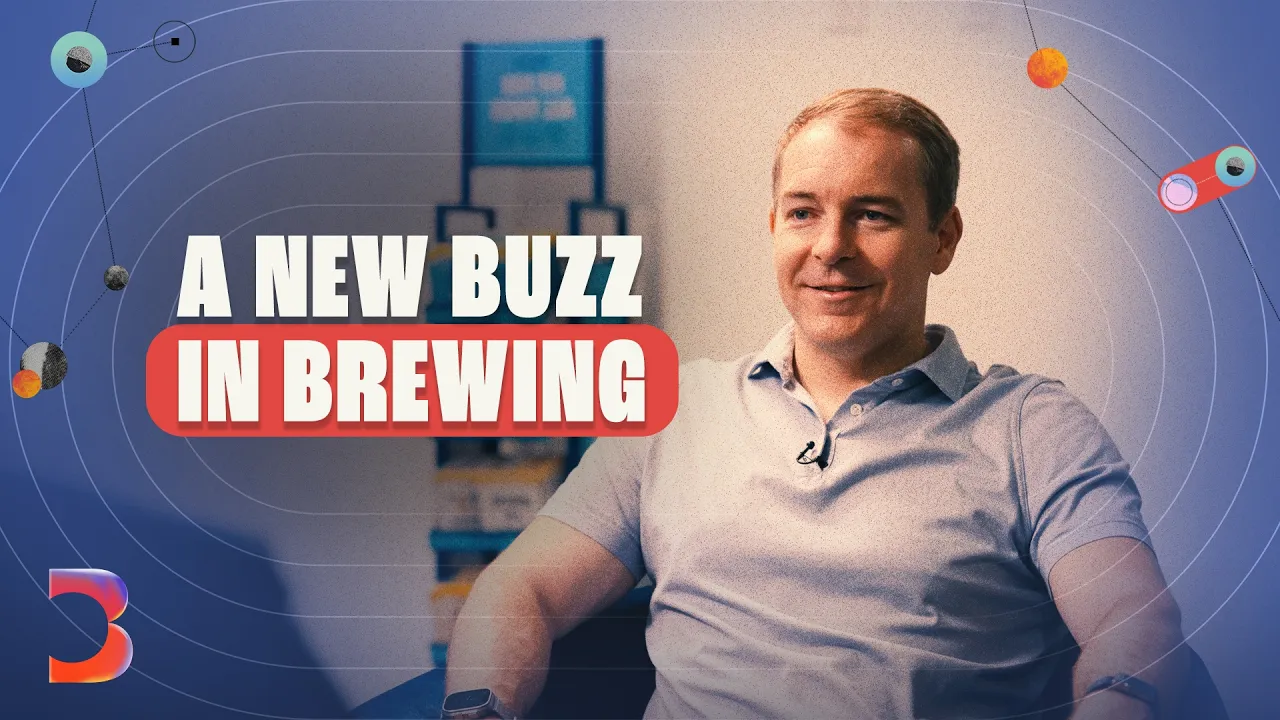
Bloomberg Originals
Non-alcoholic craft brewing expands the broader beer industry rather than cannibalizing alcohol sales because proprietary recipes and grassroots sampling convert lapsed drinkers at a retention rate exceeding 75%.
AI-assisted summary of Inside Athletic Brewing’s Plan to Shake Up the Beer Industry | Quantum Marketing — original source. Check the original for full context.
Source published:
Key ideas
- Athletic Brewing helped transform non-alcoholic beer from a $100 million niche into an industry generating over $1 billion annually, while still retaining significant runway with national awareness at ~25% and retail distribution under 40%. (14:08)
- The brand functions as a net category expander rather than a simple substitute: over 30% of non-alcoholic beer buyers had not visited the beer aisle in six months, and post-trial retention surpasses 75%. (15:31)
- Rather than relying on subtractive dealcoholization methods that compromise aroma and flavor, Athletic developed a proprietary, first-principles brewing process backed by over 50 sensory checks per tank. (4:58)
- Early growth bypassed traditional ad spend and celebrity endorsements, scaling through Kevin Kelly's '1,000 True Fans' model with over 250,000 face-to-face consumer interactions recorded in Q1 alone. (17:43)
Detailed notes
## Background Published on YouTube by Bloomberg Originals on October 7, 2026, this episode of Quantum Marketing features marketing executive Raja Rajamannar interviewing Athletic Brewing CEO Bill Shufelt. According to the page description, the episode unpacks how Athletic Brewing transformed non-alcoholic beer from a peripheral compromise into a mainstream craft movement by prioritizing quality, wellness, and consumer participation.
## TL;DR Athletic Brewing co-founder and CEO Bill Shufelt details how his personal decision to stop drinking revealed an absence of premium non-alcoholic options, inspiring him to rethink NA brewing from first principles. By replacing subtractive dealcoholization with a proprietary process that preserves natural craft flavor, Athletic reframed alcohol-free beer from an apologetic compromise into an aspirational badge. The brand unlocked rapid adoption through grassroots sampling at endurance race finish lines, overcoming deep-seated consumer skepticism and achieving retention rates exceeding 75%. Rather than seeking to eliminate traditional alcohol, Athletic Brewing positions itself as a positive-sum brand unlocking mindful moderation across entirely new drinking occasions.
## Atmosphere & style The discussion combines polished corporate analysis with an authentic, grounded founder narrative, matching Raja Rajamannar's structured marketing frameworks with Bill Shufelt's candid startup reflections. Watching the exchange feels like an inside look at modern brand-building, transitioning smoothly between the grit of solo parking-lot sampling runs and the scientific precision of brewery sensory rooms. The overall tone is earnest, disciplined, and optimistic, focusing on long-term cultural transformation rather than Silicon Valley hype or flashy disruption.
## Bulletin - [14:08](https://www.youtube.com/watch?v=cvv5iPwKRyQ&t=848s) Athletic Brewing helped transform non-alcoholic beer from a $100 million niche into an industry generating over $1 billion annually, while still retaining significant runway with national awareness at ~25% and retail distribution under 40%. - [15:31](https://www.youtube.com/watch?v=cvv5iPwKRyQ&t=931s) The brand functions as a net category expander rather than a simple substitute: over 30% of non-alcoholic beer buyers had not visited the beer aisle in six months, and post-trial retention surpasses 75%. - [04:58](https://www.youtube.com/watch?v=cvv5iPwKRyQ&t=298s) Rather than relying on subtractive dealcoholization methods that compromise aroma and flavor, Athletic developed a proprietary, first-principles brewing process backed by over 50 sensory checks per tank. - [17:43](https://www.youtube.com/watch?v=cvv5iPwKRyQ&t=1063s) Early growth bypassed traditional ad spend and celebrity endorsements, scaling through Kevin Kelly's '1,000 True Fans' model with over 250,000 face-to-face consumer interactions recorded in Q1 alone.
## Key takeaways - [02:14](https://www.youtube.com/watch?v=cvv5iPwKRyQ&t=134s) Bill Shufelt became 'customer zero' after quitting alcohol during ultramarathon training, discovering an absence of quality alternatives while attending 150 finance dinners annually. - [04:08](https://www.youtube.com/watch?v=cvv5iPwKRyQ&t=248s) Athletic discards legacy notions of 'sobriety' as clinical and outdated, reframing non-alcoholic beer around performance, wellness, and social inclusion without compromise. - [04:58](https://www.youtube.com/watch?v=cvv5iPwKRyQ&t=298s) Conventional subtractive dealcoholization strips away beer's aroma and body, prompting Athletic's founders to spend nine months developing a proprietary brewing method from scratch. - [04:58](https://www.youtube.com/watch?v=cvv5iPwKRyQ&t=298s) Custom draft systems in bars and restaurants provide low-friction sensory proof-of-concept, addressing the category's primary barrier: consumer preconceptions of poor taste. - [07:59](https://www.youtube.com/watch?v=cvv5iPwKRyQ&t=479s) The name 'Athletic' was intentionally crafted as an aspirational badge and a clear bar call, allowing patrons to order without leading with the negative framing of 'non-alcoholic.' - [09:45](https://www.youtube.com/watch?v=cvv5iPwKRyQ&t=585s) Early marketing prioritized grassroots endurance athletes and fitness trainers over costly celebrity deals, securing organic endorsements from trusted wellness figures. - [11:24](https://www.youtube.com/watch?v=cvv5iPwKRyQ&t=684s) Finish-line sampling at Spartan Races and Ironmans capitalized on venues where alcohol was banned, while refining a quick pitch centered on craft flavor, 25 calories, and five carbs. - [14:08](https://www.youtube.com/watch?v=cvv5iPwKRyQ&t=848s) Despite non-alcoholic beer scaling to a $1 billion market, Athletic faces growth hurdles, operating with national brand awareness around 25% and retail distribution below 40%. - [15:31](https://www.youtube.com/watch?v=cvv5iPwKRyQ&t=931s) Athletic delivers a retention rate above 75% and expands the total beer category, as more than 30% of its purchasers had lapsed from the beer aisle for six months or longer. - [15:31](https://www.youtube.com/watch?v=cvv5iPwKRyQ&t=931s) The company avoided contract brewing to preserve total operational control, utilizing an 'onion philosophy' where deeper scrutiny of its facilities and team reinforces credibility. - [17:43](https://www.youtube.com/watch?v=cvv5iPwKRyQ&t=1063s) Executing on Kevin Kelly's '1,000 True Fans' concept, Athletic prioritizes unscalable, in-person field engagement, connecting with over 250,000 attendees at live events in a single quarter. - [19:44](https://www.youtube.com/watch?v=cvv5iPwKRyQ&t=1184s) Athletic views the market as positive-sum rather than anti-alcohol, with many core customers also drinking traditional beer but choosing zero-proof options during training, weeknights, or work lunches.
## Detailed walkthrough ### [00:00](https://www.youtube.com/watch?v=cvv5iPwKRyQ&t=0s) Rethinking Beer and the Non-Alcoholic Frontier
For generations, beer has carried far more meaning than merely the beverage inside the glass. It has been deeply woven into the social fabric—central to celebrations, sporting events, and everyday gatherings. However, shifting consumer habits are prompting a fundamental reevaluation of alcohol consumption. This raises an essential cultural question: can beer still maintain its defining social role if alcohol is removed from the equation?
Athletic Brewing Company was founded on the belief that it can. Founded in 2017, the company set out not to treat non-alcoholic (NA) beer as a second-class compromise, but to rebuild it around craft quality, full flavor, and social inclusion. Marketing expert Raja Rajamannar sets the stage by highlighting how modern marketing has moved far beyond the traditional model of buying attention and pushing a controlled message. In today’s era of "quantum marketing," brands must leverage data science, behavioral economics, and real-time consumer interactions to reshape entire categories. Rajamannar sits down with Athletic Brewing co-founder and CEO Bill Shufelt to dissect how the company evolved into the leading non-alcoholic beer brand in the United States.
```mermaid flowchart LR accTitle: Evolution of Non-Alcoholic Beer Marketing accDescr: Diagram showing the shift from traditional alcohol marketing to Athletic Brewing's modern quantum marketing approach. subgraph Traditional["Legacy Model"] direction TB T1["Alcohol as Necessary Anchor"] --> T2["NA as Apology / Compromise"] end subgraph Modern["Athletic Brewing Approach"] direction TB M1["Focus on Craft & Flavor"] --> M2["Social Inclusion Without Stigma"] M2 --> M3["Category Creation & Leadership"] end Traditional ==> Modern ```
---
[02:14](https://www.youtube.com/watch?v=cvv5iPwKRyQ&t=134s) Customer Zero: Bill Shufelt’s Personal Catalyst
Bill Shufelt’s journey began roughly thirteen years ago while training for his first ultramarathon. In preparation for the race, he decided to stop drinking alcohol for a month. The impact was immediate and dramatic: he describes it as "the biggest life hack I'd ever discovered," initiating a virtuous cycle of sustained energy and performance. Through that experiment, Shufelt realized that alcohol had been acting as an invisible "ceiling" on everything he pursued in life, prompting him to quit drinking entirely.
Living in New York City and working in finance, Shufelt faced the friction of that choice firsthand. His professional routine included attending 150 broker and research dinners a year, alongside weddings, bachelor parties, and dinners with his wife. He quickly discovered that if you were not ordering an alcoholic drink, "there was no other side of the menu." That stark absence made him "customer zero" with a deeply authentic pain point. Rajamannar validates this observation, noting that as a lifelong teetotaler, he has constantly observed how deeply alcohol is embedded into professional and social rituals, making non-drinkers feel left out.
- Global alcohol consumption has steadily dropped following a temporary surge during the COVID-19 pandemic. - Shufelt recognized that macro health and wellness trends were still in their "early innings," creating an opening for high-performing, moderation-focused alternatives.
---
[04:08](https://www.youtube.com/watch?v=cvv5iPwKRyQ&t=248s) Breaking Social Stigma and Redefining Sobriety
From its inception, Athletic Brewing operated under the guiding ethos of "without compromise"—a standard applied equally to the liquid and to the social experience. In the United States, Shufelt observed a pervasive sense of anonymity and shame around abstaining from alcohol. Unlike many international cultures where opting out of a drink involves zero friction, American social settings historically imposed an uncomfortable stigma, requiring people to justify their choices.
Athletic set out to dismantle that barrier so consumers no longer feel forced to declare themselves as either a "drinker" or a "non-drinker." In Shufelt's view, "the word sobriety is dead," dismissing it as an outdated, clinical label that does not reflect the modern, wellness-oriented consumer who simply seeks balance and high performance.
---
[04:58](https://www.youtube.com/watch?v=cvv5iPwKRyQ&t=298s) Reinventing the Brewing Process from First Principles
Historically, the non-alcoholic beer space was treated as a monolithic, lager-only category operating under the assumption that all consumers wanted the exact same taste profile. Most conventional methods relied on taking fully brewed beer and removing the alcohol after the fact—a subtractive process that strips away flavor, body, and delicate aromas. When Shufelt met co-founder and head brewer John Walker, they established that removing alcohol after fermentation ruined the integrity of the product. Walker laid down a firm rule: he would never sell a product unless it was genuinely great beer, regardless of alcohol content.
The founders started from first principles, setting aside legacy methods to brew from scratch. Operating out of Gatorade jugs for nine months, they produced hundreds of pilot batches to invent an entirely proprietary process that brews beer with negligible alcohol from the start, preserving all natural essences, hops, and malt profiles. This breakthrough allowed Athletic to scale into a 150,000-square-foot flagship brewery while expanding beyond lagers into an extensive variety of craft styles—including IPAs, golden ales, and dark brews. This breadth of choice dramatically widened the consumer aperture.
```mermaid flowchart TD accTitle: Brewing Philosophy Comparison accDescr: Flowchart contrasting the subtractive legacy brewing approach with Athletic's additive first-principles approach. subgraph Legacy["Traditional NA Production"] L1["Standard Full-Strength Brew"] --> L2["Subtractive Dealcoholization"] L2 --> L3["Loss of Aroma, Body, and Terpenes"] end subgraph Athletic["Athletic Brewing Method"] A1["Proprietary Fermentation Process"] --> A2["Retain All Natural Essences"] A2 --> A3["World-Class Flavor Across Multiple Styles"] end ```
- Athletic developed custom tap systems to serve non-alcoholic beer on draft in bars and restaurants. - Offering draft pours removes purchase friction, allowing skeptics to take a risk-free sample before committing to a six-pack or twelve-pack. - The company's primary consumer hurdle remains the historical preconception that non-alcoholic beer tastes poor, making sensory proof-of-concept critical.
---
[07:59](https://www.youtube.com/watch?v=cvv5iPwKRyQ&t=479s) Branding as a Badge: The Power of "Athletic"
Rajamannar points out that Athletic Brewing sells a premium beverage rather than an "apology for beer." Shufelt agrees, emphasizing that consumers should feel proud holding the can with the label turned outward—wearing it as an aspirational badge rather than attempting to hide it. This philosophy directly informed the company’s name. Selecting the moniker took extensive deliberation; Shufelt needed a name that was memorable, worked globally, and served as a quick, unmistakable bar call.
Having spent years struggling to order non-alcoholic beers in loud, crowded venues, Shufelt wanted to eliminate the awkwardness. He envisions a future where patrons no longer start interactions with the negative framing of "non-alcoholic," but simply walk up to the bartender and ask, "Do you have Athletic, and what kind do you have?" By leading with the brand name rather than the absence of alcohol, Athletic reframes the entire interaction around taste and lifestyle.
---
[09:45](https://www.youtube.com/watch?v=cvv5iPwKRyQ&t=585s) Grassroots Storytelling and Athlete Alignment
To turn this vision into a movement, the brand relies on narrative storytelling that builds emotional equity around an active, healthy lifestyle. Rather than limiting the message strictly to competitive athletics, the brand creates space for consumers to see their personal routines reflected in the product.
To communicate this authentic story on an early startup budget, Shufelt bypassed expensive celebrity endorsement deals. Instead, he targeted grassroots endurance athletes, local fitness trainers, and Ironman competitors—figures whom everyday fitness enthusiasts already trusted for training and wellness advice. Many of these athletes were actively searching for a competitive performance edge, making them natural organic evangelists who intuitively understood why premium, alcohol-free beer fit into a high-performance routine.
[11:24](https://www.youtube.com/watch?v=cvv5iPwKRyQ&t=684s) Grassroots Sampling and Overcoming Consumer Skepticism
To get the brand off the ground without an advertising budget, Bill Shufelt focused entirely on grassroots sampling, asking himself where he could place free beer into thousands of people’s hands every weekend. He reached out directly to race directors across New England, offering to energize their finish lines with a tent, a smile, and hundreds of ice-cold cans. This proposition was especially compelling for events hosted at venues like high schools, where traditional alcohol brands were strictly barred. Early partnerships with endurance organizations like Spartan Race and Ironman quickly opened doors to entire race series. In the early days, the strategy ran purely on physical horsepower rather than capital, with Shufelt spending entire weekends driving across the region with a car full of coolers.
When Raja Rajamannar asks whether handing out non-alcoholic beer at finish lines met initial friction or resistance, Shufelt admits that early product-market fit was far from effortless. He recalls driving five hours to an event, setting up a tent with 1,000 cans on ice, and watching runners walk straight past for an entire hour without a single person approaching the booth. Desperate to break the ice, Shufelt would walk out from behind the booth, mingle into the crowd, and pretend to be an enthusiastic spectator: *"Does anyone know where this guy is? Like, this looks amazing! Like, I want to try one. Do you think I can just go grab one from the cooler?"* Invariably, curious runners would line up right behind him.
These early roadblocks became an invaluable testing ground for Athletic’s brand messaging. Shufelt realized he had only a five- to ten-word window to hook an exhausted runner walking past. He honed an ultra-concise pitch centered on taste, health, and refreshment: *"You guys like to try free non-alcoholic beer? It's only 25 calories, five grams of carbs."* Once consumers took a sip, the initial hesitation evaporated, with skepticism consistently turning into disbelief that a non-alcoholic beverage could deliver genuine craft flavor.
[14:08](https://www.youtube.com/watch?v=cvv5iPwKRyQ&t=848s) The Sensory Room and Category Expansion Challenges
Inside Athletic Brewing's dedicated sensory room, Shufelt demonstrates the rigorous quality control that underpins their production. The brewing and quality teams evaluate every batch over 50 times across the lifespan of a single tank. Sampling a beer alongside Rajamannar, they break down the profile: mildly bitter, mildly sweet, and layered with distinctive aromas of citrus, grapefruit, and orange.
```mermaid flowchart TD accTitle: Athletic Brewing Growth and Funnel Challenges accDescr: Diagram illustrating the expansion of the non-alcoholic beer category alongside Athletic Brewing's awareness and retention metrics.
subgraph CatGrowth["Category Trajectory"] A["10-Year Category Base:<br/>$100 Million"] --> B["Current NA Market:<br/>Over $1 Billion Annually"] end
subgraph BrandReach["Athletic Brewing Reach"] C["National Brand Awareness:<br/>~25%"] D["National Retail Distribution:<br/>Under 40%"] end
subgraph ConversionFunnel["Conversion & Retention"] E["Trial via Sampling & Grassroots"] --> F["Best-in-Class Retention:<br/>>75% (3 out of 4 stay)"] G["Lapsed Drinker Influx:<br/>>30% absent from beer aisle for 6+ months"] --> F end ```
Over the past decade, Athletic Brewing has helped propel non-alcoholic beer from a sleepy $100 million niche into an industry generating over $1 billion annually. Despite this explosive trajectory, Athletic faces significant hurdles in consumer awareness and retail penetration. Rajamannar notes that the challenge extends far beyond convincing shoppers to choose another label; it requires completely reframing legacy beer culture.
- **Market Growth:** Non-alcoholic beer has expanded tenfold over the last decade, crossing $1 billion in annual revenue. - **Brand Awareness:** Athletic’s nationwide awareness hovers around 25%. - **Retail Distribution:** National footprint currently remains below 40%. - **Sensory Protocol:** Every tank of beer undergoes more than 50 separate sensory evaluations before release.
[15:31](https://www.youtube.com/watch?v=cvv5iPwKRyQ&t=931s) High Retention, Brand Authenticity, and the Onion Philosophy
When asked how marketing can fundamentally change drinking habits, Shufelt points to Athletic’s conversion metrics. More than three out of four consumers who try Athletic continue buying it, meaning customer recruitment is the company's central objective. Furthermore, syndicated data reveals that over 30% of shoppers buying non-alcoholic beer had not stepped foot into the general beer aisle for the previous six months. Rather than simply cannibalizing traditional alcoholic craft sales, the brand is expanding the overall pie by pulling completely lapsed drinkers back into the category.
To turn initial trials into long-term loyalty, Shufelt emphasizes radical transparency and operational independence. Athletic deliberately avoided contract brewing, instead constructing its own manufacturing facilities to oversee total quality control with full-time company employees. Shufelt compares Athletic to an "onion": while many modern corporate brands are superficial concepts that dissolve upon closer inspection, Athletic is structured so that the deeper a consumer peels back the layers, the more respect they develop for the business.
Driving mass awareness remains a slow, steady discipline. Shufelt candidly notes that if he steps into a restaurant in his own hometown, there is still roughly a 70% chance the patrons have never heard of Athletic. Rather than chasing short-lived social media gimmicks or attempting to sound *"funnier and funnier every year,"* the brand relies on steadfast message discipline and authentic community presence.
- **Retention Rate:** Exceeds 75% (over 3 in 4 consumers stay with the brand after trying it). - **Category Expansion:** Over 30% of non-alcoholic beer aisle shoppers were inactive in the beer aisle for at least six months prior. - **Operational Strategy:** Full-time staff and proprietary breweries over contract brewing and outsourcing.
[17:43](https://www.youtube.com/watch?v=cvv5iPwKRyQ&t=1063s) "Doing Unscalable Things": Scaling Through 1,000 True Fans
The foundational marketing insight behind Athletic Brewing is simple: *"to be the best part of people's day every day."* The company aims to inhabit high-affinity occasions—post-run celebrations, casual meals, and evening wind-downs—without imposing the physical fatigue or hangover associated with traditional alcohol. While increasing revenue has enabled the brand to invest in national television and digital advertising campaigns, Shufelt insists that mass-media assets will never replace on-the-ground engagement.
Shufelt embraces the startup maxim of "doing unscalable things," drawing heavily on technologist Kevin Kelly’s concept of "1,000 True Fans." Handing out cans at a single road race may appear unscalable on any individual afternoon, but compounding those efforts over weeks, quarters, and years creates massive reach. In the first quarter of the year alone, Athletic team members engaged face-to-face with over 250,000 consumers at real-world events. That direct enthusiasm from brewery staff creates a durable, personal connection that broadcasts outward into broader culture.
- **Direct Engagement:** Over 250,000 face-to-face interactions conducted by the Athletic team at live events during Q1 alone. - **Guiding Philosophy:** Kevin Kelly’s "1,000 True Fans" framework, scaling organic word-of-mouth through hyper-engaged brand advocates. - **Core Positioning:** Celebrating everyday achievements without hindering wellness or lifestyle goals.
[19:44](https://www.youtube.com/watch?v=cvv5iPwKRyQ&t=1184s) Rethinking Competition and Redefining Beer Culture
Addressing the competitive environment, Shufelt asserts that Athletic's primary benchmark is itself, rather than a crusade against the broader beer market: *"We're not trying to bring back prohibition, so we're not trying to kill alcohol, but we are trying to make moderation accessible."* A significant portion of Athletic's core base also drinks traditional alcohol but chooses non-alcoholic craft beer on weeknights, during work lunches, or during athletic training when alcohol would otherwise be off the table.
Viewing the market as positive-sum, Shufelt sees boundless headroom to unlock brand-new occasions and welcome demographics who had historically opted out of beer entirely. On the corporate side, Athletic now squares off against legacy multi-national conglomerates that are aggressively funding their own zero-proof alternatives. Competing at that scale requires unmistakable brand identity, consistent product availability, and distinct appeal across domestic and international markets. As the industry broadens, Athletic’s continued growth relies on moving in tandem with a broader generational pivot toward mindful consumption.
## Notable quotes > [02:14](https://www.youtube.com/watch?v=cvv5iPwKRyQ&t=134s) the biggest life hack I'd ever discovered — Bill Shufelt
> [02:14](https://www.youtube.com/watch?v=cvv5iPwKRyQ&t=134s) there was no other side of the menu — Bill Shufelt
> [04:08](https://www.youtube.com/watch?v=cvv5iPwKRyQ&t=248s) without compromise — Bill Shufelt
> [04:08](https://www.youtube.com/watch?v=cvv5iPwKRyQ&t=248s) the word sobriety is dead — Bill Shufelt
> [07:59](https://www.youtube.com/watch?v=cvv5iPwKRyQ&t=479s) apology for beer — Raja Rajamannar
> [07:59](https://www.youtube.com/watch?v=cvv5iPwKRyQ&t=479s) Do you have Athletic, and what kind do you have? — Bill Shufelt
> [11:24](https://www.youtube.com/watch?v=cvv5iPwKRyQ&t=684s) Does anyone know where this guy is? Like, this looks amazing! Like, I want to try one. Do you think I can just go grab one from the cooler? — Bill Shufelt
> [11:24](https://www.youtube.com/watch?v=cvv5iPwKRyQ&t=684s) You guys like to try free non-alcoholic beer? It's only 25 calories, five grams of carbs. — Bill Shufelt
> [15:31](https://www.youtube.com/watch?v=cvv5iPwKRyQ&t=931s) funnier and funnier every year — Bill Shufelt
> [17:43](https://www.youtube.com/watch?v=cvv5iPwKRyQ&t=1063s) to be the best part of people's day every day — Bill Shufelt
> [19:44](https://www.youtube.com/watch?v=cvv5iPwKRyQ&t=1184s) We're not trying to bring back prohibition, so we're not trying to kill alcohol, but we are trying to make moderation accessible. — Bill Shufelt
## Mentioned Athletic Brewing Company, Bill Shufelt, John Walker, Kevin Kelly, Raja Rajamannar, Bloomberg Originals, Ironman, Spartan Race
## Video description Athletic Brewing helped move non-alcoholic beer from the margins to the mainstream. In this episode, Raja Rajamannar meets with Chief Executive Officer Bill Shufelt to unpack how reinventing a product by focusing on craft, wellness and participation can change consumer perceptions and create demand for an emerging category.
-------- Like this video? Subscribe: http://www.youtube.com/Bloomberg?sub_confirmation=1
Get unlimited access to Bloomberg.com for just $1.99 your first month: https://www.bloomberg.com/subscriptions?in_source=YoutubeOriginals Bloomberg Originals offers bold takes for curious minds on today’s biggest topics. Hosted by experts covering stories you haven’t seen and viewpoints you haven’t heard, you’ll discover cinematic, data-led shows that investigate the intersection of business and culture. Exploring every angle of climate change, technology, finance, sports and beyond, Bloomberg Originals is business as you’ve never seen it.
Subscribe for business news, but not as you've known it: exclusive interviews, fascinating profiles, data-driven analysis, and the latest in tech innovation from around the world.
Visit our partner channel Bloomberg News for global news and insight in an instant.
[Source](https://www.youtube.com/watch?v=cvv5iPwKRyQ)