EU Migration Pacts Trigger Sub-Saharan Border Dragnets and Civil Unrest
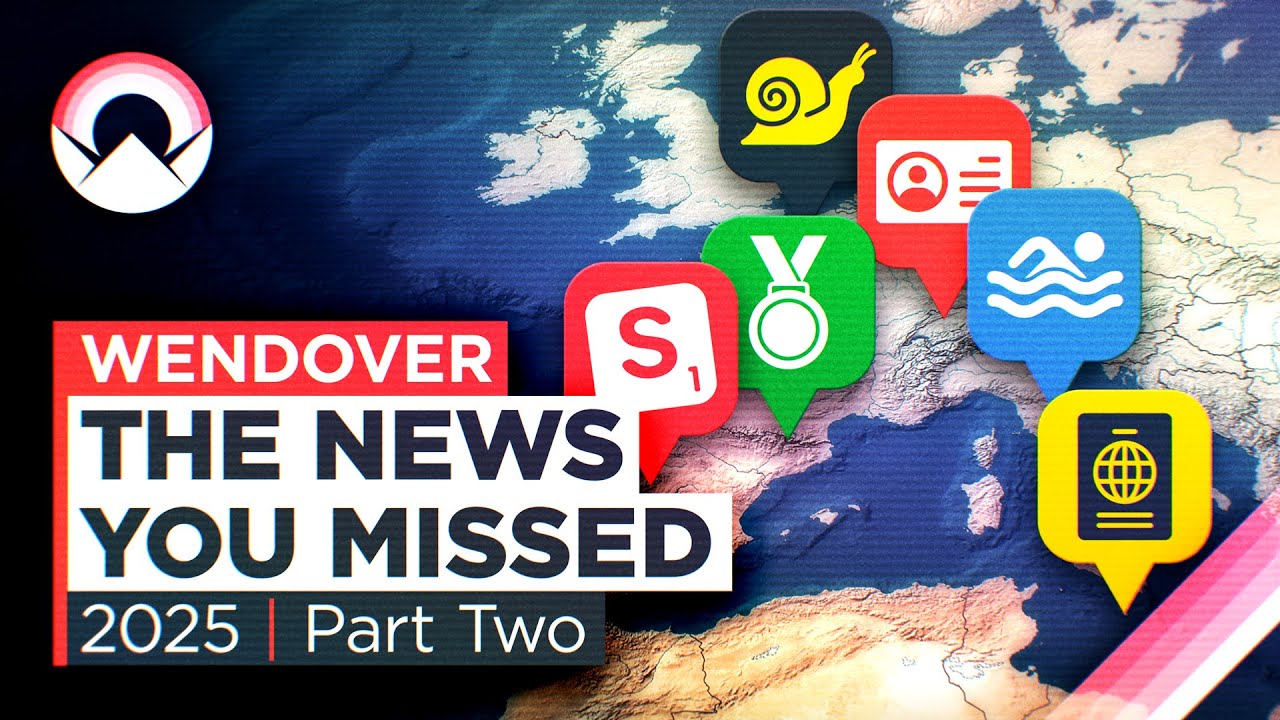
Wendover Productions
Massive financial partnerships with the European Union are destabilizing developing nations by forcing aggressive domestic security crackdowns that spark unprecedented grassroots protests and economic volatility.
AI-assisted summary of One Piece of News From Every Country in the World (Pt 2) — original source. Check the original for full context.
Source published:
Detailed notes
## Background Published on December 31, 2025, by Wendover Productions on YouTube, this video completes a massive project to deliver one piece of news from every country in the world across 193 UN-recognized nations. The description invites viewers to try Brilliant for free for 30 days to support interactive STEM learning.
## TL;DR This segment chronicles a wide array of geopolitical, environmental, and social developments spanning Europe, Africa, and the Middle East. It covers democratic victories in Moldova and human rights crises in Tanzania, alongside infrastructure milestones like Egypt's Grand Mega-Museum and Ethiopia's Renaissance Dam. Additionally, the walkthrough highlights complex regional challenges including military coups in Madagascar, resource disputes in the Netherlands, and ongoing conservation conflicts in Southern Africa.
## Atmosphere & style The presentation maintains a highly structured, analytical, and fast-paced narrative style characteristic of a comprehensive global news digest. Host Sam Denby balances the gravity of violent political upheavals and economic crises with moments of lighter regional irony, such as historic Scrabble wins and bizarre local heists. The resulting tone feels both authoritative and sweeping, leaving the audience with an intense, panoramic view of a rapidly shifting international landscape.
## Key takeaways - [00:00](https://www.youtube.com/watch?v=LU58bHm7GlE&t=0s) A major volcanic eruption occurred near Iceland's Blue Lagoon, forcing a full evacuation of the immediate area. - [00:48](https://www.youtube.com/watch?v=LU58bHm7GlE&t=48s) Norway's Parliament passed controversial legislation opening previously protected wild rivers to potential damming for hydropower development. - [01:35](https://www.youtube.com/watch?v=LU58bHm7GlE&t=95s) Finland and Denmark enacted national-level cell phone bans in schools due to declining educational outcomes and over-digitization. - [03:30](https://www.youtube.com/watch?v=LU58bHm7GlE&t=210s) A massive 8.8 magnitude earthquake struck off Russia's far eastern coast, triggering a volcanic eruption at Bezymianny after 600 years of dormancy. - [10:10](https://www.youtube.com/watch?v=LU58bHm7GlE&t=610s) The European Union's supreme court ruled Malta's 'Golden Passport' citizenship-by-investment program illegal. - [13:36](https://www.youtube.com/watch?v=LU58bHm7GlE&t=816s) The United States government blacklisted Chinese-owned Wingtech, prompting the Dutch government to briefly take direct operational control of semiconductor company Nexperia. - [15:35](https://www.youtube.com/watch?v=LU58bHm7GlE&t=935s) The United Nations Security Council voted to accept Morocco's 2007 autonomy proposal regarding the disputed Western Sahara territory. - [16:25](https://www.youtube.com/watch?v=LU58bHm7GlE&t=985s) A civilian humanitarian aid flotilla bound for Gaza was struck by an airborne drone bomb off the coast of Tunisia. - [17:48](https://www.youtube.com/watch?v=LU58bHm7GlE&t=1068s) Burkina Faso, Mali, and Niger abruptly withdrew from the International Criminal Court, accusing it of unfairly targeting African leaders. - [18:54](https://www.youtube.com/watch?v=LU58bHm7GlE&t=1134s) Cape Verde, along with Uzbekistan and Jordan, made history by qualifying for the FIFA World Cup for the first time. - [20:16](https://www.youtube.com/watch?v=LU58bHm7GlE&t=1216s) Guinea sent its first mined shipment of iron ore to China from the massive $20 billion Simandou iron ore project. - [21:56](https://www.youtube.com/watch?v=LU58bHm7GlE&t=1316s) A massive fire destroyed over 60% of Accra's historic Kantamanto Market, a major global hub for secondhand clothing processing. - [23:19](https://www.youtube.com/watch?v=LU58bHm7GlE&t=1399s) Equatorial Guinea partnered with Chevron in a $690 million energy deal to develop the Asang Gas Project and counter declining output. - [25:54](https://www.youtube.com/watch?v=LU58bHm7GlE&t=1554s) Prime Minister Abiy Ahmed officially inaugurated the controversial $5 billion Grand Ethiopian Renaissance Dam (GERD) on the Blue Nile. - [27:30](https://www.youtube.com/watch?v=LU58bHm7GlE&t=1650s) Gabon withdrew from a long-standing maritime agreement with the European Union to protect its tuna fisheries from being plundered. - [30:51](https://www.youtube.com/watch?v=LU58bHm7GlE&t=1851s) The United Kingdom agreed to return sovereignty of the Chagos Islands to Mauritius while retaining its military presence on Diego Garcia. - [31:41](https://www.youtube.com/watch?v=LU58bHm7GlE&t=1901s) An elite branch of the military backed a Gen Z youth movement in Madagascar, escalating protests over public utility cuts into a full coup d'état. - [32:31](https://www.youtube.com/watch?v=LU58bHm7GlE&t=1951s) Zimbabwe distributed an initial $311 million in land reparations to white farmers as part of a broader deal to restore international funding. - [33:28](https://www.youtube.com/watch?v=LU58bHm7GlE&t=2008s) Namibia observed its very first official Genocide Remembrance Day, marking the 1908 closure of imperial German concentration camps. - [34:28](https://www.youtube.com/watch?v=LU58bHm7GlE&t=2068s) Botswana slashed its economic growth projections to near zero due to a structural market shift caused by the rise of lab-grown diamonds.
## Detailed walkthrough ### [00:00](https://www.youtube.com/watch?v=LU58bHm7GlE&t=0s) Volcanic Disruptions in Iceland and Economic Shifts in the Irish Atlantic
Tourism in Iceland has seen an massive explosion over the past few decades, but this year the phrase nearly took on a literal meaning. A major volcanic eruption occurred not far from the internationally renowned Blue Lagoon. While opening fissures and spewing lava are far from a novelty in the "land of fire and ice," the proximity of this particular event forced a full evacuation of the immediate area. Seeking to prevent a panic that could cripple the travel sector, the nation's tourism board moved quickly to assure the public that the volcanic activity would have zero implications for the capital city or the operation of the international airport.
Meanwhile, further south in the Northern Atlantic, the tourism economy faced a entirely different type of crisis. For years, the presence of humpback whales just off the coast of Ireland served as the financial bedrock for Cork whale-watching outfits. Recently, however, these marine giants have become increasingly rare and difficult to spot, dealing a devastating blow to local business. The crisis culminated this year with a prominent local whale-watching company closing its doors permanently. Activists note that the whales have simply migrated elsewhere in pursuit of food, pointing to the empty waters as a clear sign that the government is failing to protect its marine ecosystems from relentless overfishing.
[00:48](https://www.youtube.com/watch?v=LU58bHm7GlE&t=48s) Border Tensions in the English Channel and Norway's River Dilemma
The year 2025 has brought intense political scrutiny regarding how to police and manage the English Channel. British Prime Minister Keir Starmer took the direct step of authoring a letter to France’s president, urgently requesting French assistance to prevent small migrant boats from departing their coastlines bound for the United Kingdom. This diplomatic push represents a direct bid to stem the flow of refugees and asylum seekers making the perilous crossing. With nearly 40,000 arrivals recorded in 2025 alone, the migration issue has rapidly escalated into a massive political vulnerability for the newly formed Labour government.
Further north, Norway's reputation for deep environmental consciousness faced a complicated internal challenge. In 2025, the Norwegian Parliament passed controversial legislation opening previously protected wild rivers to potential damming for hydropower development. The policy has sparked fierce national debate. On one side, proponents champion the move as a major victory for low-carbon energy production. On the other side, fierce critics point out the inherent contradiction of the policy, arguing that damming and effectively destroying pristine, wild river ecosystems "hardly resembles anything green or renewable to begin with."
[01:35](https://www.youtube.com/watch?v=LU58bHm7GlE&t=95s) Security Blunders in Sweden and the Digital Divide in Nordic Classrooms
Tracking the precise movements of Sweden's Prime Minister, Ulf Kristersson, unexpectedly required nothing more than a bit of curiosity and a standard fitness app. An investigative report by a Swedish newspaper revealed that journalists could easily map the PM's preferred jogging routes and frequent travel destinations simply by monitoring the public Strava profiles of his personal security detail. The revelation was labeled an obvious and embarrassing security blunder, serving as a stark public reminder of how seemingly innocent social media sharing can inadvertently create critical national security breaches.
Simultaneously, a philosophical shift regarding technology took root in nearby classrooms. In both Finland and Denmark, policymakers enacted national bans on cell phones in schools this year. For countries that consistently rank at the absolute top of global metrics for public education and overall citizen happiness, some found it surprising that a classroom phone ban had taken this long to materialize. Policymakers justified the sweepingly strict measures by citing declining educational outcomes, rampant youth self-esteem issues, and the over-digitization of daily life.
- The phone bans in both Finland and Denmark were enacted at the absolute national level rather than being left to local school districts.
[02:20](https://www.youtube.com/watch?v=LU58bHm7GlE&t=140s) Estonia's AI Ambitions and Baltic Security Measures Against Russian Threat
Estonia has chosen to chart the exact opposite course of its Nordic neighbors when it comes to classroom technology, opting to embrace cell phones as legitimate educational tools. With the official launch of its "AI Leap 2025" initiative, the country is aggressively integrating artificial intelligence into its school systems to optimize learning outcomes. As a nation that has quietly and steadily climbed the global education rankings, this bold embrace of AI is viewed internationally as a radical experiment, but domestically it is treated as a completely logical progression.
Other Baltic states focused their educational and public resources on a much more pressing geopolitical threat: Russian interference. In Latvia, the state intelligence and security service took the unusual step of publishing an official field guide for the general public to help them identify and report potential Russian spies. In a similar vein, Lithuania's military collaborated directly with the national education department to launch an ambitious training initiative. Recognizing that Russia has rapidly matched Ukraine's drone manufacturing and battlefield capabilities, Lithuania established a goal to train 22,000 citizens in comprehensive drone skills, including assembly and piloting.
- The Latvian spy-spotting guide explicitly advised citizens to watch out for and report classic stereotypes, including individuals lingering near critical infrastructure, unkempt tourists, and overly talkative, nosy strangers. - Lithuania's drone program is designed to catch participants early, offering formal introductory classes to children starting at just 8 years old, alongside plans to open multiple dedicated drone training centers.
[03:30](https://www.youtube.com/watch?v=LU58bHm7GlE&t=210s) Siberian Earthquakes, Political Maneuvers in Belarus, and Corruption in Ukraine
Russia generated severe international anxiety this July when a massive 8.8 magnitude earthquake struck just off its far eastern coast, instantly triggering widespread tidal wave alerts across the Pacific basin. Beyond the seismic waves, scientists believe the intense energy of the quake may have played a direct role in triggering a dramatic volcanic eruption at the remote Bezymianny volcano in Russia's Far East. While the eruption occurred far from major population centers—resulting in minimal structural damage—it fascinated geologists due to its sheer historical rarity, as the volcano had lain completely dormant without erupting for roughly 600 years.
On the geopolitical front, the authoritarian regime in Belarus made headlines by releasing 52 political prisoners. While the release initially appeared to counter the repressive trends of the increasingly dictatorial state, international observers quickly dismissed it as a transparent ploy by the Alexander Lukashenko regime to secure relief from crippling international sanctions. The prisoners were released directly to Lithuania, but rights groups notes that 52 individuals represent merely a tiny fraction of the more than 1,000 political prisoners swept up by Belarusian authorities over the last 5 years.
Meanwhile, a deeply divisive political scandal rocked war-torn Ukraine, a country desperately trying to maintain internal stability. President Volodymyr Zelenskyy found his political apparatus heavily entangled in serious corruption allegations brought forward by the nation's independent anti-corruption bureaus. The investigators allege that high-ranking government officials have been pocketing illegal kickbacks channeled from the state-owned nuclear energy company. The unfolding scandal has severely undercut government credibility both at home and abroad, forcing the resignation or flight of several of Zelenskyy's closest and most important political aides.
[04:55](https://www.youtube.com/watch?v=LU58bHm7GlE&t=295s) Moldova's Pro-West Victory and Poland's Schengen Border Crackdown
Moldova explicitly signaled its geopolitical alignment during this year’s pivotal parliamentary elections. The country's pro-West, pro-EU Action and Solidarity Party secured a sweeping, decisive victory at the polls. The resounding win serves as a powerful public rebuke to aggressive Russian campaigns aimed at pulling the former Soviet state back into Moscow's orbit. The election followed severe accusations of rampant Russian meddling, which reportedly included illicit operations attempting to buy the political alignment of Orthodox priests using direct cash payments and lavish vacation packages.
Further west, the open-border principles of the European Union faced a severe practical test along the German-Polish border. Historically maintaining an entirely open frontier under the Schengen Agreement, Poland broke protocol this year by initiating temporary emergency measures to heavily police its border crossings with Germany. The sudden enforcement followed a wave of intense right-wing protests within Poland, alongside political claims that irregular immigrants were streaming into the country unchecked after passing through Germany. Though technically permissible under specific EU emergency clauses, the move has placed visible strain on the unity of the Schengen zone.
[05:41](https://www.youtube.com/watch?v=LU58bHm7GlE&t=341s) Archeological Treasures in Czechia and a Grassroots Cancellation in Slovakia
A routine outdoor excursion turned into a life-altering event in the Karkonosze Mountains of the northwestern Czech Republic. While wandering through a local forest, a group of unsuspecting hikers stumbled upon an extraordinary, centuries-old treasure trove hidden in the ground. Recognizing the historic importance of their find, the hikers immediately handed the entire cache over to a local university this April, where archeological researchers are currently working to piece together the backstory of how such immense wealth was buried there roughly 80 to 100 years ago.
- The recovered Czech treasure horde contained 598 pristine gold coins and 10 thick gold bracelets. - The total financial value of the recovered historical valuables is estimated to be worth approximately $650,000.
Just across the Morava River, Slovakia found itself embroiled in a modern cultural conflict regarding how to handle a scheduled summer appearance by American rap icon Kanye West. Slated to headline a major summer hip-hop festival, the artist encountered an immediate wall of local resistance. A powerful grassroots movement to cancel the gig rapidly gained momentum in early May, sparked directly by West's release of a song titled after a notorious Nazi greeting. A petition protesting the concert garnered thousands of signatures within days, ultimately forcing festival organizers to yield to public pressure and cancel the performance entirely.
[06:29](https://www.youtube.com/watch?v=LU58bHm7GlE&t=389s) Budapest's Record Pride March and Romania's High-Stakes Election Relief
In Hungary, the year 2025 marked the historic 30th anniversary of the Budapest Pride parade, turning the city into a theater of political defiance. Operating under the shadow of Prime Minister Viktor Orbán’s strict legislative ban on LGBTQ+ representation, the march rallied an unprecedented crowd. An estimated 100,000 demonstrators flooded the streets of the capital, transforming the parade into the largest Pride event in the city’s history. The massive turnout functioned simultaneously as a joyous celebration of the country's LGBTQ+ community and a brave, highly visible stand against the entrenched right-wing government.
A similar political sigh of relief echoed across the continent as Romania reported its highly anticipated national election results this May. The high-stakes election drew the anxious attention of the entire European Union and NATO apparatus, as early stages of the process were thrown into chaos when a prominent far-right candidate was barred from the ballot due to confirmed Russian interference. Ultimately, the political center held: a moderate, centrist mayor emerged victorious, defeating a challenging coalition of a former soccer ultra and a hard-right ultra-nationalist in a cycle where the final tally was momentarily contested.
[07:15](https://www.youtube.com/watch?v=LU58bHm7GlE&t=435s) Bulgarian Espionage in London and Greece's Controversial 13-Hour Workday
A sensational espionage trial in London exposed the intricate and dramatic realities of modern Russian spying operations. This March, six Bulgarian nationals went on trial under serious espionage charges, with prosecutors demonstrating that the individuals were operating as active agents for Moscow. The ring's highly specific objective was to track down and discover the private telephone numbers of Ukrainian soldiers who were actively training on advanced Western air defense systems. The high-profile trial concluded with sentences of up to 14 years, though the proceedings captivated the public equally for its salacious subplots, revealing a tangled web of lies, systemic deception, and an unresolved love triangle among the Bulgarian operatives.
Meanwhile, daily life in Greece ground to a complete halt this October as a massive, multi-sector general strike paralyzed everything from public education to national transportation networks. The working class launched the strike in a desperate bid to block a highly controversial, pro-business labor law introducing a legal 13-hour workday. Despite the fierce civil unrest, the legislation successfully passed through Parliament. Defying broader European labor trends toward shorter hours, this new law joins legislation passed last year allowing an elective 6-day workweek in the private sector, cementing Greece's reputation as one of the least attractive labor markets within the European Union.
[08:08](https://www.youtube.com/watch?v=LU58bHm7GlE&t=488s) North Macedonia's Nightclub Tragedy and the Future of EU Enlargement
North Macedonia's domestic outlook remains heavily burdened by economic flight, particularly among its under-25 demographic, as thousands of young citizens regularly emigrate to neighboring states in search of viable careers. The vulnerability of this fragile youth population was highlighted in a sudden national tragedy when the roof of an unlicensed nightclub caught fire. The resulting inferno killed 59 people—the vast majority of them young partygoers—and left another 155 injured. The catastrophe sent shockwaves of grief through the tight-knit Balkan nation of just 2 million people, prompting intense scrutiny over local safety enforcement.
Against this backdrop, the European Union published its highly anticipated annual enlargement report, assessing the viability of candidate nations. Albania and Montenegro currently lead the pack, with official documentation suggesting they could achieve full EU entry as early as 2030. Albania's formal accession talks are projected to wrap up by the end of 2027, thanks to widely praised domestic reforms targeting systemic corruption. However, the existing 27-country bloc noted that other hopeful candidates have severely faltered, with both Georgia and Serbia taking measurable steps backward. Serbia in particular faced harsh criticism for aggressive state crackdowns on free speech and rising hostility toward journalists covering anti-government protests, driving its press freedom metrics to their lowest point in over two decades.
[09:05](https://www.youtube.com/watch?v=LU58bHm7GlE&t=545s) Separatist Pressures in Bosnia and Croatia's Transnational Garbage Crisis
The incredibly complex political framework of Bosnia and Herzegovina is facing renewed strain. Established under the Dayton Accords in the 1990s to bring an end to the bloody Bosnian War, the nation relies on a fragile balance of power, splitting a single federal government into two distinct sub-entities: the Federation of Bosnia and the Serb Republic, the latter housing the country's ethnic Serb minority which makes up roughly one-third of the total population. This tenuous peace was rattled during a snap election this year when voters elected a hardline separatist leader to the territory's top executive position. The election followed the forced removal of the previous Serb Republic leader, who was ousted after being found guilty of deliberately violating established peace policies; however, his replacement by a close ideological ally ensures that separatist friction will dominate the region leading into the 2027 general elections.
Simultaneously, the world-famous coastal resort city of Dubrovnik, Croatia, found itself battling an environmental crisis originating from outside its borders. Already struggling to manage its own severe waste management issues—as a resident population of just 42,000 residents must absorb over 4.5 million overnight tourist stays annually—the historic city is now literally inheriting the trash of its neighbors. This winter, thousands of pounds of raw plastic waste washed ashore, blanketing Dubrovnik's iconic pristine beaches.
- Based on distinct language markings on the discarded plastic packaging and known regional oceanic currents, Croatian officials believe the garbage drifted directly from Albania. - To combat the recurring issue, local authorities announced long-term plans to deploy advanced satellite monitoring to track and intercept waste slicks at sea before they can make landfall.
[10:10](https://www.youtube.com/watch?v=LU58bHm7GlE&t=610s) Eurovision Boycotts, Malta's Illegal Passports, and Monaco's High Luxury
The upcoming 2026 Eurovision Song Contest is already mired in severe geopolitical controversy. At least four prominent participating nations—Ireland, Spain, Slovenia, and the Netherlands—have officially announced a total boycott of the event. The national broadcasters of these countries united in demanding the total exclusion of Israel, stating they will refuse to take the stage because the contest's governing body permitted Israeli participation despite its ongoing military actions in the Gaza war. Conversely, the microstate of San Marino confirmed it will not participate in the boycott; despite failing to win a single contest across 14 historical appearances, local residents are highly optimistic that their 2026 entry, DJ Gabry Ponte, might finally secure their first victory.
Concurrently, a major legal hammer fell on Malta's controversial financial schemes. The European Union's supreme court officially ruled Malta's lucrative "Golden Passport" program entirely illegal. The program allowed wealthy non-residents to directly purchase full Maltese citizenship for a cash payment of €750,000 and a residency requirement of just 12 months. Because a Maltese passport automatically granted individuals the unconditional right to live and work anywhere across all 27 EU nations, critics long argued the scheme provided a seamless back door for corrupt billionaires and nefarious international actors.
- Malta vigorously defended the program before the court, noting that the passport scheme had generated over €1.4 billion in capital, which provided crucial infrastructure investment for the small island economy.
In contrast to Malta's legal woes, the ultra-wealthy principality of Monaco leaned further into its elite reputation by launching a dazzling new high-society event. The city-state hosted the inaugural "Grand Prix de la Haute Joaillerie," an ultra-exclusive jewelry design competition that handed out eight prestigious awards for breathtaking craftsmanship. The ceremony drew the absolute pinnacle of global luxury houses, with iconic brands such as Tiffany & Co., Louis Vuitton, Boucheron, Bulgari, Chanel, Chopard, and Dior all walking away as official recipients.
[11:33](https://www.youtube.com/watch?v=LU58bHm7GlE&t=693s) Rome's Plan for the Tiber, Austria's Remilitarization, and Marriage Equality
A friendly spirit of municipal rivalry has spurred a monumental environmental pledge from the Mayor of Rome. Inspired directly by Paris's massive, high-profile cleanup of the Seine River for the 2024 Olympic Games, Rome's leadership officially declared that the historic Tiber River will be fully swimmable within 5 years. Local residents regularly swam in the Tiber up until the 1960s, when extreme industrial and urban pollution forced a permanent ban on human contact. Reversing more than six decades of neglect is projected to cost billions of euros, with engineering teams noting that the vast majority of the modern river pollution is driven by dense concentrations of invisible microplastics.
Further north, the protracted war between Russia and Ukraine has shattered long-standing defense policies. In a dramatic departure from its historical post-WWII stance on disarmament, Austria announced it is doubling its national military budget over the next 7 years, aggressively scaling up defense spending to exceed 2% of the nation's total GDP. While Austria remains strictly non-NATO, the federal government stated that the realities of an enduring Eastern European land war, combined with massive military build-ups in neighboring states, left the country with no choice but to systematically prepare for escalating continental threats.
- Liechtenstein made progressive history by officially becoming the 22nd European nation to fully legalize same-sex marriage, an overhaul taking effect on January 1st. - The landmark marriage legislation passed through the Parliament of Europe's fourth-smallest country with an almost entirely unanimous vote, upgrading previous laws that only recognized limited registered partnerships.
[12:34](https://www.youtube.com/watch?v=LU58bHm7GlE&t=754s) Swiss Digital ID Debates, a Luxembourg Royal Tragedy, and Germany's Military Draft
Switzerland's electorate narrowly approved a national referendum to establish official electronic identification cards, stepping closer to an integrated digital wallet. The new digital IDs will be hosted directly on citizen smartphones. The policy passed despite fierce pushback from privacy advocates and wary voter coalitions who expressed deep anxieties over surrendering sensitive personal information to state databases, alongside valid warnings regarding potential cyber security breaches and the inherent social inequity facing elderly or low-income residents who do not own modern smartphones. To soothe these public anxieties, proponents emphasized that traditional physical ID cards will remain fully operational and available to anyone who wants them.
In Luxembourg, the grand ducal family plunged into deep mourning following the tragic death of Prince Henri's second cousin, Prince Frédérik, who passed away at the young age of 22. The young royal succumbed to a devastatingly rare genetic disease caused by a severe mutation within his BCKDK gene. First diagnosed with the aggressive illness at the age of 14, Prince Frédérik famously dedicated the entirety of his remaining years to using his royal platform to raise millions in research funding and drive international public awareness toward complex mitochondrial diseases.
Meanwhile, Germany is actively seeking ways to rebuild its severely depleted military reserves in response to the growing security threat posed by Russia. Following a intense parliamentary debate this year, Berlin ultimately decided against reinstating compulsory, mandatory military conscription. Instead, German defense officials will implement a revamped "voluntary conscription" framework. Under this system, all young men reaching adulthood will be legally required to officially register their medical availability and overall willingness to serve; women will also be actively evaluated for voluntary positions. The government explicitly warned that if voluntary enrollment fails to meet required troop quotas, a return to mandatory military call-ups will be placed back on the table.
[13:36](https://www.youtube.com/watch?v=LU58bHm7GlE&t=816s) The Tech Cold War Over Dutch Semiconductors
The intense, ongoing economic war between the United States and China over global semiconductor supremacy fought a critical, high-stakes battle on Dutch soil this year. The primary flashpoint centered directly around the prominent microchip manufacturer Nexperia, which is headquartered in the Netherlands. The United States government triggered the crisis by placing Nexperia’s parent company—the Chinese-owned tech conglomerate Wingtech—directly onto an official trade blacklist, explicitly citing severe American national security concerns regarding Chinese access to critical intellectual property.
Echoing these intense security alarms, the Dutch government took the extraordinary step of briefly taking over direct operational control of Nexperia to prevent the vital semiconductor sector from grinding to a sudden halt. The intervention provoked an immediate and aggressive countermeasure from Beijing; China retaliated by implementing sweeping, highly restrictive export controls on raw semiconductor materials, a geopolitical maneuver that has already sent shockwaves through European industrial supply chains.
[13:58](https://www.youtube.com/watch?v=LU58bHm7GlE&t=838s) Europe's Vaping Crackdown and the Great French Snail Heist
Laws aimed at limiting and prohibiting smoking and vaping are spreading rapidly around the globe. Belgium made history by becoming the first European Union country to ban disposable vapes, a landmark regulation that officially took effect on January 1st. The country has established highly ambitious goals for its public health sector, aiming to entirely snuff out the number of new smokers to zero by the year 2040. Officials view this newly enacted law as a critical, foundational step toward making that smoke-free future a reality.
Meanwhile, in France, a bizarre and highly targeted heist left a local family business reeling. Thieves managed to break into the company's headquarters and steal more than 990 pounds of snails, the culinary delicacy popularly known as escargot. The massive gastropod robbery left the family business out at least $100,000. The French consumer market devours an astonishing 37 million pounds of snails annually, with consumption figures skyrocketing as the winter holidays approach and the delicacy takes center stage on festive menus. Because of this seasonal surge, law enforcement officials believe the thieves had been carefully scoping out this particular business well in advance to strike right before its most profitable season.
* **Belgium Vape Ban Date:** January 1st. * **Belgium Public Health Goal:** Reduce new smokers to zero by 2040. * **French Snail Theft Metrics:** Over 990 lbs of snails stolen, valued at a minimum of $100,000. * **National Snail Consumption:** France consumes 37 million pounds of snails every year.
[14:48](https://www.youtube.com/watch?v=LU58bHm7GlE&t=888s) Athletic Microstates and Portugal's Tightening Visas
The Games of the Small States of Europe is a unique, biennial sports competition that closely resembles the Olympics but operates on a much smaller scale. In 2025, the tiny nation of Andorra hosted the 20th edition of these games. The event enforces strict entry requirements: only sovereign European countries with fewer than 1 million residents are permitted to participate. Despite the small size of the nations involved, the event drew a large crowd, with more than 1,000 athletes traveling to the microstate for the summer games.
In stark contrast to these microstates, Portugal is proving to be anything but small anymore, driven by a massive demographic shift. The country's foreign-born population has tripled since 2019, an influx fueled for years by historically lax citizenship requirements and an incredibly accessible residency-by-investment scheme. However, the golden days of these "golden visas" are officially slowing down. Portugal has implemented a strict new citizenship requirement raising the mandatory residency period for most applicants to at least 10 years, doubling the previous five-year standard. The only exceptions are for applicants originating from the EU or a Portuguese-speaking country, whose requirement is instead rising to seven years. This policy shift deeply impacts hopeful immigrants and sends shockwaves through the domestic real estate and investment sectors that have long been propped up by the passport program.
* **Andorra Small States Games:** 20th edition hosted in 2025, requiring participant populations under 1 million; featured over 1,000 athletes. * **Portugal Foreign Population Growth:** Tripled since the year 2019. * **New Golden Visa Timelines:** Non-EU/non-Portuguese speaking applicant requirements raised from 5 years to 10 years; favored nations raised to 7 years.
[15:35](https://www.youtube.com/watch?v=LU58bHm7GlE&t=935s) The Multilingual Scrabble Shock and the Western Sahara Breakthrough
A lively contingent of international wordsmiths descended upon a hotel in Granada, Spain, for the highly anticipated Spanish World Scrabble Championships. The tournament, which featured 150 fierce competitors representing 20 different countries, ended in absolute shock. The top prize was taken home by Nigel Richards, a Malaysian-born New Zealander who shockingly does not even speak Spanish. Richards secured his stunning victory through an extraordinary ability to memorize thousands of words in the Spanish language despite not knowing what any of them actually mean.
On the geopolitical front, a territorial dispute that has dragged on for more than 50 years over the Western Sahara may finally be drawing to a close. The territory, which is roughly the size of Great Britain and borders Morocco and Algeria, has been a source of intense conflict ever since Spain withdrew from the region in the 1960s. Following the Spanish withdrawal, both the kingdom of Morocco and a local rebel group known as the Polisario Front claimed ownership of the land. However, a major breakthrough occurred when the United Nations voted to accept a 2007 autonomy proposal submitted by Morocco. The Security Council's formal acceptance means the region can move forward with developing its own local legislative, executive, and judicial authorities, while ultimately remaining under overarching Moroccan sovereignty.
* **Spanish Scrabble Championship Attendance:** 150 competitors from 20 nations. * **Winner:** Nigel Richards, a Malaysian-born New Zealander with no Spanish language comprehension. * **Western Sahara Dispute Duration:** Lasted for more than 50 years since Spain's exit in the 1960s. * **UN Approved Framework:** Based on Morocco's 2007 autonomy proposal.
[16:25](https://www.youtube.com/watch?v=LU58bHm7GlE&t=985s) Mediterranean Maritime Tensions and Humanitarian Friction
Drama unfolded off the coast of Tunisia when a civilian flotilla delivering much-needed humanitarian aid to war-torn Gaza was struck by a bomb carried by an airborne drone. The flotilla had previously generated significant international news coverage because famous climate activist Greta Thunberg had been traveling aboard the vessels. However, she was not on board at the exact time of the strike. Tunisian officials quickly denied any state responsibility for the explosion, claiming instead that the fire on the boat had broken out entirely on its own.
Further out at sea off the coast of Libya, a severe diplomatic fracture occurred as more than a dozen non-governmental organization (NGO) rescue vessels formally suspended all operational cooperation with the Libyan Coast Guard. The Libyan maritime agency receives significant financial backing and funding from the European Union, which expects the coast guard to intercept migrant boats bound for European shores. The NGOs are fiercely pushing back, declaring that the coast guard is completely illegitimate as a search and rescue organization. Instead, the groups are labeling the agency a "violent regime enabled by the EU." They cite rampant violence documented during maritime interceptions and point to the inhumane conditions present at the detention camps where intercepted migrants are subsequently taken.
[17:05](https://www.youtube.com/watch?v=LU58bHm7GlE&t=1025s) Cairo’s Mega-Museum Opening and Sudan's Dual Crises
After more than two decades in the making, a massive $1 billion museum claiming the title of the world’s largest archaeological facility finally opened its doors just outside of Cairo, Egypt. The Grand Egyptian Museum is a sprawling testament to ancient history, covering an immense 470,000 square meters—which translates to roughly 5 million square feet. The facility features a breathtaking collection of more than 50,000 historical items open for public viewing.
South of Egypt, the nation of Sudan is trapped in a devastating double crisis. On top of a brutal, ongoing civil war, public health officials are actively waging a desperate battle against a massive cholera outbreak. The medical crisis has seen more than 100,000 cases and 2,500 deaths recorded so far. The challenges of executing successful medical interventions are severely exacerbated by a catastrophic lack of basic infrastructure and essential medical supplies, both of which have been thoroughly decimated by the ongoing domestic violence. International health groups are frantically working to contain the disease's spread across international borders to prevent a wider, unmanageable epidemic from taking hold in an already deeply struggling region.
* **Grand Egyptian Museum Stats:** Cost $1 billion, took over 20 years to build, spans 470,000 square meters (5 million sq ft), and houses over 50,000 items. * **Sudan Cholera Toll:** Over 100,000 cases and 2,500 deaths recorded amidst the civil war.
[17:48](https://www.youtube.com/watch?v=LU58bHm7GlE&t=1068s) Prince Harry’s Conservation Controversy and the Sahel’s ICC Exit
Prince Harry found himself entangled in conservation politics through his role on the board of African Parks, a prominent wildlife conservation group operating in Chad. The Chadian government briefly cut off all formal ties with the organization this year, citing severe concerns regarding organizational mismanagement. However, the fractured relationship was quickly reinstated after the charity provided fresh assurances to leadership and was subsequently granted administrative oversight over several of Chad's critical national parks. This marks the second set of public allegations involving African charities levied against Prince Harry within a single year, highlighting the broader, deeply complex uncertainties that arise when foreign non-profits are left to operate critical natural resources for developing countries in need.
Simultaneously, a major political shift occurred in the Sahel region as three countries—all recently taken over by military juntas—abruptly dropped out of the International Criminal Court (ICC). Burkina Faso, Mali, and Niger announced their exit, stating that they would henceforth monitor and enforce peace entirely internally. Roughly 125 nations are formal members of the ICC, and this recent trio of high-profile withdrawals was accompanied by sharp, bitter criticisms. The exiting juntas accused the court of unfairly targeting African leaders, publicly branding the international judicial body "an instrument of neocolonialist repression." This claim is heavily backed up by historic data, as all but one of the court's 33 cases since its founding have involved an African country. Conversely, defenders of the court argue that the ICC is simply trying to hold egregious human rights violators accountable in a region that unfortunately encounters a high volume of them.
* **African Parks Dispute:** Involved Prince Harry's board seat and national parks in Chad. * **Sahel ICC Withdrawals:** Burkina Faso, Mali, and Niger exited the 125-country body. * **ICC Case Statistics:** 32 out of 33 cases since the court's founding have targeted African nations.
[18:54](https://www.youtube.com/watch?v=LU58bHm7GlE&t=1134s) Mauritanian Deportations and Historic World Cup Qualifiers
The tangible effects of a massive $248 million migration partnership signed between the European Union and Mauritania have begun to take effect, manifesting as mass deportations across the African nation. Widespread reports of aggressive raids and strict enforcement actions have emerged from Mauritanian towns, resulting in hundreds of human smuggling rings being successfully broken up by authorities. Over recent decades, Mauritania grew into a major transit hub for undocumented immigration into the EU from across the African continent, a geographical reality driven by its close maritime proximity to Spain’s Canary Islands.
In happier news, the island nation of Cape Verde made sports history by becoming the second smallest country in the entire world to ever qualify for the FIFA World Cup. The historic feat was sealed after the national soccer team defeated Eswatini in a thrilling October match. Boasting a population of just 525,000 people, Cape Verde is bested in low population size only by Iceland, which previously held and still holds the record as the least populated country to qualify. Other notable first-time qualifiers joining the fray for the highly anticipated upcoming 2026 World Cup include Uzbekistan and Jordan.
* **EU-Mauritania Deal Value:** $248 million partnership targeting migration routes to the Canary Islands. * **Cape Verde Population:** 525,000 residents, making it the second-smallest World Cup qualifier behind Iceland. * **Other 2026 World Cup First-Timers:** Uzbekistan and Jordan.
[19:37](https://www.youtube.com/watch?v=LU58bHm7GlE&t=1177s) Senegalese Travel Bans and Anti-Corruption Protests in The Gambia
The sports world faced political friction when a strict travel ban prevented the Senegalese women’s national basketball team from traveling to the United States for a scheduled 10-day training camp. Forced to adapt, the team moved the entire training camp back to Senegal to prepare for the Women’s AfroBasket, Africa's premier continental championship. Though Senegal has emerged victorious at the tournament several times in the past, Nigeria ultimately ended up winning the championship title this time around.
In neighboring Gambia, political ghosts of the past sparked fresh unrest. Former Gambian President Yahya Jammeh ruled the nation with an iron fist from 1994 until 2017 before being dramatically ousted during the historic Gambian Revolution. This year, highly controversial state sales and mounting public concerns over corruption brought thousands of passionate young protesters back out into the streets of the capital. Observers called the demonstrations the single largest youth protest in the country's entire history. The massive turnout vividly demonstrates a growing, deep-seated concern among citizens that corruption remains entrenched in power, even under the nation's new leadership.
* **Senegal Basketball Camp:** A 10-day U.S. training camp was canceled due to a travel ban and relocated domestically. * **The Gambia Political Context:** Yahya Jammeh ruled 1994–2017; current demonstrations are noted as the largest youth protest in national history.
[20:16](https://www.youtube.com/watch?v=LU58bHm7GlE&t=1216s) Guinea-Bissau’s Grassroots Art Biennial and Guinea’s $20 Billion Mine
In a remarkable display of cultural independence, Guinea-Bissau successfully pulled off its very first art biennial. The country famously possesses zero formal art galleries and lacks a single dedicated art school, yet a passionate group of five visionary local artists managed to organize a comprehensive show featuring 50 diverse artists representing 17 countries. The exhibition ran for a full month in the nation's capital city of Bissau. Alongside the printed and visual art on display, the organizers hosted live musical performances to round out the cultural celebration. Even more remarkably, the entire operation was funded and executed completely without government financial assistance.
Right next door, a monumental economic milestone was reached in Guinea. The world's largest known deposit of iron ore, sitting at a staggering 2.8 billion tons, is located deep within the country's mountains. Following decades of exhausting bureaucratic planning and heavy investment from both local and international parties, the very first mined shipment of ore was officially sent off to China. The massive $20 billion Simandou iron ore project is being widely touted as a historic venture that could completely change the economic future of the West African country. However, that future is complicated by the heavy financial paycheck that Guinea must now give back to China, which invested significantly in building out the massive physical infrastructure required to make the mine's operations possible.
* **Guinea-Bissau Art Biennial:** Organized by 5 independent artists; ran for 1 month in Bissau featuring 50 artists from 17 countries with $0 in government funds. * **Simandou Iron Ore Project:** $20 billion valuation; exploits a 2.8 billion-ton deposit via heavy Chinese infrastructure investment.
[21:05](https://www.youtube.com/watch?v=LU58bHm7GlE&t=1265s) Influencer Jailed in Sierra Leone and Liberia’s House Expansion Debate
An international free-speech controversy erupted in Sierra Leone when a prominent social media influencer holding dual Canadian and Sierra Leonean citizenship was arrested early in the year. The arrest stemmed from a video she originally posted back in 2023, which featured a detailed 25-minute critique aimed squarely at the country's president and first lady. The influencer, Hawa Hunt, was dramatically detained by authorities on live television and has been jailed ever since. She is facing two criminal counts of "transmitting insulting messages via computer system," a charge enacted under strict, controversial cybersecurity laws instituted by the state in 2021. Hunt is currently being held in a facility in Freetown, and reports regarding her poor prison conditions have garnered widespread international attention, prompting human rights organizations like Amnesty International to publicly call for her immediate release.
Meanwhile, the Liberian government is wrestling with shifting domestic populations and has proposed adding 14 additional seats and 14 new electoral districts to its House of Representatives. Government officials argue this legislative expansion is a necessary change that will allow lawmakers to better serve the public. However, the bill must still be approved by the president, and critics are strongly arguing against it, claiming that Liberia simply does not have the necessary state funding to support the creation of these new districts. Interestingly, lawmakers are concurrently reviewing a separate bill that would actually decrease the salaries of currently sitting politicians.
* **Sierra Leone Detention:** Hawa Hunt jailed in Freetown under 2021 cybersecurity laws for a 25-minute critique from 2023. * **Liberia Legislative Proposal:** Recommends adding 14 seats/districts to the House of Representatives while simultaneously debating a lawmaker salary cut.
[21:56](https://www.youtube.com/watch?v=LU58bHm7GlE&t=1316s) Political Turmoil and Crushed Economies in Côte d'Ivoire and Ghana
Côte d'Ivoire's 83-year-old president, Alassane Ouattara, was sworn into office for a controversial fourth term this year. Ouattara secured nearly 90% of the vote in a violent election cycle that left 11 people dead and saw some 1,600 individuals arrested for protesting the electoral process. Citizens loudly proclaimed that the elections were fundamentally unfair, pointing out that Ouattara’s two primary political opponents were barred from running entirely. As a physical testament to his lengthy rule, Ouattara leaves behind a legacy symbolized by a new 1,320-foot (421-meter) tall building that now officially ranks as the tallest building in all of Africa.
In neighboring Ghana, tragedy struck the economic heart of the capital. The famous Kantamanto Market in Ghana is one of the world's largest secondhand markets, housing over 30,000 individual shops. This year, a massive, widespread fire tore through the venue, burning more than 60% of the entire market to the ground. The market plays a massive role in global clothing recycling, receiving more than 15 million pieces of secondhand clothing every single week, primarily sent from Western countries looking to repurpose used or unsold apparel. The market employs more than 30,000 people, and nearly a full year after the devastating blaze, local merchants are still actively repairing and rebuilding their livelihoods.
* **Côte d'Ivoire Election Toll:** 11 dead, 1,600 arrested; Alassane Ouattara won ~90% of the vote. * **Africa's Tallest Building:** Built in Côte d'Ivoire, measuring 1,320 feet (421 meters) tall. * **Kantamanto Market Fire:** Destroyed over 60% of a 30,000-shop market that processes 15 million garments weekly.
[22:46](https://www.youtube.com/watch?v=LU58bHm7GlE&t=1366s) African Dynasties in Togo and a Thwarted Coup in Benin
Togo continues to be ruled by fourth-term President Faure Gnassingbé, who took over the executive role from his father in 2005. His father had previously held the presidency since 1967, making their family the longest-running political dynasty in all of Africa. However, incredibly low voter turnout for municipal elections held this year clearly demonstrates that Togolese citizens are rapidly losing all faith in the democratic process. Gnassingbé previously transitioned the government into a parliamentary system back in 2024, a structural change that many critics slammed as an obvious authorial power grab. This year's extreme voter apathy, subsequent public protests, and the heavy-handed government crackdown that followed suggest the residents' suspicions are likely correct.
Right across the border in Benin, a group of military soldiers attempted to launch a violent coup d'état, attacking prominent institutional buildings in a plot that was quickly thwarted by state officials. The surprise coup attempt came just ahead of a presidential election scheduled for April. The violence shocked regional experts who had previously viewed Benin as a beacon of stability compared to its neighbors, which collectively endured nine military takeovers between 2020 and 2023. In a dramatic display of regional military assistance, neighboring powerhouse Nigeria flew in fighter jets at the explicit request of the Beninese government to successfully stave off the takeover attempt.
* **Togo Political Dynasty:** Continuous rule since 1967; transitioned to a parliamentary system in 2024. * **Benin Coup Attempt:** Occurred ahead of the April presidential election; suppressed with the help of Nigerian fighter jets. * **Regional Context:** Neighboring Sahel/West African states experienced 9 successful military takeovers between 2020 and 2023.
[23:39](https://www.youtube.com/watch?v=LU58bHm7GlE&t=1419s) Cameroon’s Nonagenarian Rule and Equatorial Guinea’s Gas Cash Injection
Cameroon stands out as a country that has managed to avoid any successful coup attempts, but it has done so by keeping a single person in power for seven consecutive terms. At 92 years old, Paul Biya was sworn in yet again, retaining his title as the oldest president in the entire world and the second longest-serving leader in Africa. Once more, local residents have loudly accused the national election process of being thoroughly fraudulent and corrupt. Biya officially did away with all constitutional term limits back in 2008, but looking toward the country's future, his advanced age may prove to be a much more limiting factor than the law.
In Equatorial Guinea, economic shifts are taking place under the sea. Facing diminishing output from its legacy natural gas fields, the country inked a massive $690 million deal with American energy giant Chevron to develop the offshore Asang Gas Project. Equatorial Guinea’s total oil output peaked back in 2010 and has steadily dwindled ever since. However, this massive new injection of foreign cash is highly anticipated to bring a badly needed injection of output and energy production along with it.
* **Cameroon President Age:** Paul Biya is 92 years old, serving his 7th term after abolishing term limits in 2008. * **Equatorial Guinea Energy Deal:** A $690 million agreement with Chevron for the offshore Asang Gas Project to counter a decline ongoing since 2010.
[24:20](https://www.youtube.com/watch?v=LU58bHm7GlE&t=1460s) Russian Influence in the CAR and Treason Charges in South Sudan
All eyes are turning toward the Central African Republic (CAR) as it approaches a highly anticipated late-December election. President Faustin-Archange Touadéra is set to run for office once again, but the political scene is heavily dominated by Russia, which has been aggressively wielding soft and hard power through its notorious Wagner mercenary group. The mercenary agency was originally enlisted by the CAR government back in 2017 to maintain domestic security in exchange for lucrative access to local mineral rights. Today, international officials are deeply worried about Russia’s ever-increasing role in domestic politics and its overt propping up of Touadéra’s executive position.
Meanwhile, intense political tension in South Sudan—the world’s youngest country—made global headlines when its vice president was abruptly placed under house arrest and subsequently charged with treason and murder. Vice President Riek Machar serves as the head of the main political party in opposition to the president, but he had been formally appointed to his government post by the president as part of a critical 2018 peace deal that successfully ended the nation's bloody civil war. Consequently, Machar's dramatic 2025 arrest places the country's continued peace in an incredibly tenuous spot. While the political fallout has stopped short of triggering a renewed, full-scale civil war, targeted violence has risen sharply between the two feuding political factions.
* **CAR Election & Wagner Presence:** Faustin-Archange Touadéra running in late December; Wagner mercenary group embedded since 2017. * **South Sudan Political Crisis:** Vice President Riek Machar arrested in 2025 on treason/murder charges, threatening the 2018 civil war peace deal.
[25:08](https://www.youtube.com/watch?v=LU58bHm7GlE&t=1508s) Shipping-Container Prisons in Eritrea and Djibouti’s Undersea Hub
In Eritrea, a surprising humanitarian development occurred when 13 individuals—including a former Olympic athlete—were suddenly released from prison. The prisoners had been detained without any formal trial for 18 long years in connection with a past attempted assassination of a presidential adviser. Because Eritrea routinely ranks near the absolute bottom of almost all global human rights indicators, the sudden release caught the international community by surprise. The mere fact that all 13 individuals managed to survive nearly two decades of confinement is considered a major feat, given that the notorious prison holding them is reportedly constructed of little more than 20 repurposed shipping containers.
To the south, Djibouti announced major plans to further solidify its status as one of the most technologically well-connected nations in the Horn of Africa. The government unveiled a major extension of the DARE 1 undersea fiber-optic cable. The advanced cable system will run off the eastern coast of the African continent, stretching all the way down to Madagascar and South Africa. The massive infrastructure project is designed to provide significantly lower latency connections while offering vastly improved network resiliency. As one of the more politically stable countries in Eastern Africa, this expansion furthers Djibouti’s strategic position as the primary undersea cable hub for the entire region.
* **Eritrea Prisoner Release:** 13 people freed after 18 years without trial; held in a facility made of 20 shipping containers. * **Djibouti Telecommunications:** Extension of the DARE 1 undersea cable down to Madagascar and South Africa.
[25:54](https://www.youtube.com/watch?v=LU58bHm7GlE&t=1554s) Ethiopia's Renaissance Dam and Somaliland's Airspace Sovereignty
In Ethiopia, a massive and highly ambitious engineering project finally came to full fruition. Prime Minister Abiy Ahmed officially inaugurated the Grand Ethiopian Renaissance Dam, a mega-structure that holds back the waters of the Blue Nile. The move has caused immense frustration and diplomatic pushback from downstream neighbors Egypt and Sudan, who fear for their water security. The controversial project originally began construction back in 2011 and cost the nation roughly $5 billion to complete. For an Ethiopian domestic market currently facing absurdly high fuel prices alongside an increasingly large consumer fleet of electric vehicles, the promise of stable, highly abundant, and cheap domestic power is an incredibly exciting prospect.
Directly to the east, inside the internationally recognized borders of Somalia, sits the internationally unrecognized breakaway republic of Somaliland. This year, Somaliland made its firm stance on its own independent sovereignty crystal clear to the world. The breakaway government began strictly denying entry to any foreign nationals attempting to travel into the territory using visas issued by the federal government of Somalia, while simultaneously reaffirming its absolute military and administrative control over its own airspace. This aggressive diplomatic move comes at a time when Somaliland is actively working to court political favor and formal diplomatic recognition from the United States.
* **Grand Ethiopian Renaissance Dam (GERD):** Initiated in 2011, cost $5 billion, dams the Blue Nile; officially inaugurated by PM Abiy Ahmed. * **Somaliland Sovereignty Push:** Reclaimed airspace control and banned Somalia-issued visas to pressure the U.S. for recognition.
[26:42](https://www.youtube.com/watch?v=LU58bHm7GlE&t=1602s) Kenya's Fair Trade Tea Rebel and Uganda’s New York Inspiration
Kenya produces a massive share of the world’s commercial tea, but this year, the nation decided to completely upend its traditional supply chain. The Kenyan government issued a directive telling local tea factories to immediately quit working with the Rainforest Alliance—the famous global organization symbolized by a green frog sticker that seeks to promote more sustainable farming practices worldwide. The Kenyan government alleges that local farmers simply are not making living wages under the alliance's framework. Authorities claim that the incredibly high financial fees required to work with the alliance are ultimately being paid out of the pockets of the poor local growers rather than being absorbed by wealthy international consumers.
Across the border, the year 2025 served as a beautiful glimmer of hope for Uganda’s politically frustrated youth and democracy advocates, courtesy of an election result that took place thousands of miles away. While domestic democracy currently hangs on by a thin thread inside Uganda, an inspiring and highly improbable political victory was achieved in New York City by one of their own. The newly elected Mayor of New York City, Zoran Mamdani, spent the first seven years of his childhood growing up in Uganda. His historic progressive victory and anti-establishment message have left everyday Ugandans incredibly hopeful that similar political messaging can eventually be utilized to enact true democratic change back home.
* **Kenya Tea Industry Shift:** Government ordered factories to cut ties with the Rainforest Alliance over unfair financial burdens on local growers. * **Ugandan Diaspora Victory:** Zoran Mamdani, who spent his first 7 years in Uganda, was elected Mayor of New York City.
[27:30](https://www.youtube.com/watch?v=LU58bHm7GlE&t=1650s) Rwanda Expels Its Colonizer and Gabon Tears Up the EU Fishing Pact
For well over a hundred years, Belgium has maintained a continuous, heavy diplomatic presence within the borders of Rwanda. However, that century-old relationship completely shattered following recent Belgian calls for the European Union to levy harsh economic sanctions against Rwanda over its alleged military support of the violent M23 rebel group operating in the neighboring Democratic Republic of the Congo. In retaliation, the Rwandan government officially expelled all Belgian diplomats and completely cut off formal diplomatic relations with its former colonizer. Rwandan officials publicly slammed the nation's former rulers, citing the move as a necessary response to stop blatant Belgian attempts to "sustain its neocolonial delusions."
Also proudly flexing its national sovereignty in the face of European power this year was Gabon. Following the nation’s very first legitimate democratic election after enduring a grueling, 50-year-long family dictatorship, the newly elected Gabonese government made a major economic announcement. Gabon revealed that it would be officially withdrawing from a long-standing maritime agreement with the European Union that historically gave European commercial vessels unfettered access to the nation's highly lucrative coastal fisheries.
* **Rwanda-Belgium Rupture:** Rwanda expelled all Belgian diplomats, terminating a century-old diplomatic presence over M23 rebel sanction disputes. * **Gabon Post-Dictatorship Move:** Canceled an exclusive coastal fishing agreement with the EU following its first democratic election in 50 years.
[28:06](https://www.youtube.com/watch?v=LU58bHm7GlE&t=1686s) Marine Protection Wins and Drug-Resistant Simulations in Central Africa
Gabon has taken a significant geopolitical and ecological step by ending its fishing agreement with the European Union. While this represents bad news for Europe's tuna producers, the previous arrangement was widely criticized as a lopsided deal for Gabon; it brought very little revenue into the country while allowing its fisheries to be systematically plundered. Tearing up the contract is therefore seen as a major positive milestone for the country's fledgling democracy. Meanwhile, the neighboring island nation of São Tomé and Príncipe also focused heavily on its coastal waters in 2025, making its first-ever public commitment to marine protection. The government has established eight separate protected coastal zones, banning specific destructive fishing practices and severely limiting others. For a nation that relies deeply on fish for daily sustenance and small-boat fishing for local employment, setting these boundaries was vital to counteract dropping fish populations and declining marine biodiversity.
Further inland, the Republic of Congo teamed up with the World Health Organization (WHO) to tackle the deadly, growing threat of drug-resistant infections, which plague sub-Saharan Africa more than any other region on earth. To combat this crisis, they conducted a highly realistic simulation tracking a fictional, drug-resistant pathogen emerging within the population. Local health officials and WHO teams rushed to track, report, and "snuff out" the outbreak as quickly as possible to refine their real-world emergency response capabilities.
- **Gabon:** Canceled an EU fishing agreement that plundered its tuna fisheries with minimal financial return. - **São Tomé and Príncipe:** Protected eight coastal water zones, banning or limiting fishing practices to restore biodiversity. - **Republic of Congo:** Conducted a joint emergency simulation with the WHO to track and neutralize drug-resistant pathogens.
[29:05](https://www.youtube.com/watch?v=LU58bHm7GlE&t=1745s) Conflict in the DRC and Public Health Triumphs in Burundi
The volatile security situation in the eastern Democratic Republic of the Congo (DRC) offers reasons for both cautious hope and deep pessimism. A peace deal brokered by the United States between the Congolese government and the M23 rebels initially brought a momentary reduction in violence as the rebel group advanced west. However, as the months ground on, both sides failed to implement the specific steps they had agreed to. The fragile peace shattered entirely in early December when a new offensive brought back full-scale fighting. While both factions still claim to be loosely committed to ending the conflict, they continue to commit acts of violence and largely ignore the framework of the American-backed agreement.
Fleeing this persistent bloodshed, tens of thousands of Congolese refugees have crossed the border into Burundi. Despite the strain of a refugee crisis, Burundi celebrated an historic medical milestone in 2025 by becoming officially validated by the WHO for eliminating trachoma. Trachoma is a bacterial eye infection categorized as a neglected tropical disease. While these types of diseases are treatable, they inflict devastating public health impacts on impoverished countries and demand a tightly coordinated, multi-year response to fully root out. Eliminating its very first neglected tropical disease marks a massive victory for Burundi’s national public health infrastructure.
- **DRC:** A US-brokered peace deal collapsed in early December after both the government and M23 rebels failed to implement agreed terms, sparking a renewed full-scale offensive. - **Burundi:** Received official WHO validation for eliminating trachoma, marking the country's first successful eradication of a neglected tropical disease.
[30:00](https://www.youtube.com/watch?v=LU58bHm7GlE&t=1800s) Tanzania's Democratic Collapse and Breakthroughs in Island Conservation
In Tanzania, the outlook for democracy, free and fair elections, and political dissent went "from bad to worse" during a tumultuous election year. The oppressive political shift began when popular opposition candidates running against the incumbent President, Samia Suluhu Hassan, were barred or arrested. The crackdown escalated to the systematic detention of outspoken critics before eventually devolving into outright state-sponsored violence. Following an improbable election victory where President Hassan reportedly secured 97% of the vote, Tanzanian police allegedly killed 1,000 protesters who rose up in the wake of the highly problematic results.
In stark contrast, the nearby island nation of Seychelles experienced a heartening environmental comeback. Conservationists celebrated the successful hatching of 13 out of 18 giant tortoise eggs, injecting new hope that innovative intervention techniques can save the species from the brink of extinction. As home to one of only two giant tortoise species left on Earth, alongside 400 other endemic species, Seychelles has rapidly transformed into a premier global hotbed for cutting-edge conservation methodology.
- **Tanzania:** President Samia Suluhu Hassan claimed a highly contested 97% election victory amid opposition arrests; subsequent police crackdowns left an estimated 1,000 protesters dead. - **Seychelles:** Successfully hatched 13 of 18 giant tortoise eggs using new targeted conservation interventions.
[30:51](https://www.youtube.com/watch?v=LU58bHm7GlE&t=1851s) Infrastructure Overhauls in Comoros and the Chagos Islands Handover
The volcanic archipelago of Comoros, which is exceptionally rich in biodiversity and endemic species but has traditionally been cut off from global trade, has signed a monumental deal to alter its economic trajectory. The nation is welcoming over $130 million in funding from the World Bank, the Islamic Development Bank, and a coalition of international boosters. The capital injection will fund a comprehensive modernization of the country's major ports with up-to-date infrastructure. Experts believe these upgrades will allow the isolated island nation to finally flourish as a major logistics hub bridging Africa and Asia, while simultaneously boosting its appeal as a tourist destination.
Meanwhile, a decades-long sovereignty dispute involving Mauritius finally came to a close. In May, the United Kingdom announced that it would hand sovereignty of the Chagos Islands back to Mauritius, more than half a century after the UK split the archipelago away from the newly independent nation. However, the historic handover came with a major geopolitical compromise: the UK retains its strategically crucial military presence on the island of Diego Garcia through a newly brokered 99-year lease agreement.
- **Comoros:** Secured over $130 million from the World Bank and Islamic Development Bank to modernize its maritime ports. - **Mauritius:** Regained sovereignty of the Chagos Islands from the United Kingdom after a 50-year dispute, while granting the UK a 99-year lease on the Diego Garcia military base.
[31:41](https://www.youtube.com/watch?v=LU58bHm7GlE&t=1901s) Madagascar's Gen Z Coup and Terrorist Threats in Mozambique's Wilderness
Driven to the brink by chronic water and power cuts, the youth of Madagascar decided they had finally had enough. What began in late September as a series of earnest demonstrations organized by Madagascar's Gen Z quickly snowballed into a massive political movement. The momentum shifted entirely when an elite branch of the national military decided to back the youth movement. By mid-October, a full-scale coup d'état was underway. The political upheaval sent the country's former president fleeing into exile and resulted in the installation of a military colonel into the presidential office of one of the world's poorest nations.
On the mainland, Mozambique's massive Nyasa Wildlife Reserve—a sanctuary roughly the size of Switzerland and one of Africa's most critical safe havens for threatened species—faced an existential crisis. ISIS terrorists launched targeted attacks against a safari camp and a military training center located within the reserve. Although the Mozambican army deployed rapidly to secure the area, the incursions threaten to severely undercut decades of meticulous conservation work. Because the massive reserve operates completely without fences, conservationists rely heavily on a physical presence to deter poachers, an objective that has become nearly impossible as surrounding towns are evacuated due to terrorism.
- **Madagascar:** A Gen Z-led protest over failing utilities escalated into a mid-October military coup, forcing the president to flee and putting a military colonel in power. - **Mozambique:** ISIS terrorist attacks on a safari camp and training center in the Switzerland-sized Nyasa Wildlife Reserve forced local evacuations, threatening decades of conservation work.
[32:31](https://www.youtube.com/watch?v=LU58bHm7GlE&t=1951s) Zimbabwe’s Land Reparations and Fatal Elephant Conflicts in Malawi and Zambia
Zimbabwe began rolling out its first batch of unique, highly anticipated reparation payments to white farmers who were dispossessed of their properties by the government in the early 2000s. An initial $311 million is being distributed to roughly 400 farmers, representing a small subset of the 4,000 individuals who lost land. This rollout is just the opening phase of a massive $3.5 billion compensation package originally agreed upon in 2020. To ensure the government does not default on these commitments, the IMF and the World Bank have strategically held back international development funding until Zimbabwe successfully services this domestic debt.
Concurrently, human-wildlife conflict has reached a boiling point in neighboring Malawi and Zambia. In 2022, Malawi’s Kasungu National Park made headlines by introducing 263 elephants to its preserve. Three years later, adjacent villages are suing the park authorities, claiming the roaming elephants have killed at least 10 people, injured numerous others, and left local populations living in a constant state of terror. The villagers are legally demanding protective fencing around 167 communities alongside immediate financial compensation for damages. In Zambia, a similar tragedy struck when wild elephants attacked and killed an American and a New Zealander who were on safari in Luangwa National Park. Even though professional guides attempted to thwart the charging animals, they were unable to deter them, highlighting reports that female elephants can become exceptionally dangerous when protecting their young.
- **Zimbabwe:** Distributed $311 million to 400 white farmers as part of a larger $3.5 billion compensation package mandated by international financial institutions. - **Malawi:** Local villagers filed a lawsuit against Kasungu National Park after introduced elephants killed 10 people, demanding fencing for 167 villages. - **Zambia:** A tragic safari incident in Luangwa National Park resulted in the deaths of an American and a New Zealander by a charging elephant.
[33:34](https://www.youtube.com/watch?v=LU58bHm7GlE&t=2014s) Displacement in Angola's Railway Projects and Genocide Remembrance in Namibia
Angola’s potentially transformative infrastructure ambitions hit a major public relations hurdle following the release of an independent non-governmental organization (NGO) report. The revitalization of the Lobito Atlantic Railway, heavily backed by both the United States and the European Union, is designed to link Angola’s mineral-rich internal mines directly to the Atlantic coast, promising massive economic ramifications. However, the NGO report revealed that an estimated 6,500 people will be displaced by the railway's construction. This finding threw cold water on the international excitement, prompting an EU spokesperson to publicly reaffirm that they will keep a close eye on the project's socio-economic impacts before releasing further financial support.
South of the border, Namibia solemnly observed its very first Genocide Remembrance Day on May 28th. The date was deliberately selected to commemorate May 28th, 1908, the historical day when imperial Germany finally ordered the closure of all Southwest African concentration camps. Speaking at the memorial events, Namibia's president called for national patience and unity. The state continues to actively seek formal reparations from Germany for the estimated 100,000 deaths resulting from the brutal colonial genocide of the Ovaherero and Nama people.
- **Angola:** An NGO report revealed that the US/EU-backed Lobito Atlantic Railway project will displace 6,500 people, prompting stricter Western oversight. - **Namibia:** Commemorated its first official Genocide Remembrance Day on May 28th, honoring the 100,000 victims of the 1908 German colonial genocide.
[34:28](https://www.youtube.com/watch?v=LU58bHm7GlE&t=2068s) Diamond Downturns in Botswana and Climate Resilience in Eswatini
Botswana's financial officials were forced to slash the nation's projected economic growth estimates for the year to almost zero. As the world’s largest diamond producer by value, Botswana's less-than-enthusiastic economic performance reflects a permanent structural shift in the global gemstone economy rather than a temporary market correction. The rapid rise of lab-grown diamonds, which offer cheaper and more ethical alternatives for global consumers and laborers alike, means Botswana can no longer rely solely on natural stones and must aggressively diversify its economy to survive.
In response to the extreme droughts and rampant wildfires that have rocked southern Africa over the last few years, regional leaders decided to centralize their environmental strategies. The brand-new Center of Excellence on Drought Resilience has been officially headquartered in the Kingdom of Eswatini. This specialized center is tasked with producing cutting-edge academic research, working directly with regional stakeholders, and acting as a primary collaborative hub where international NGOs, global bodies, and neighboring nations can coordinate responses to southern Africa's worsening water crisis.
- **Botswana:** Reduced economic growth projections to near zero due to the disruptive rise of lab-grown diamonds impacting the global natural diamond trade. - **Eswatini:** Selected as the host nation for the new Center of Excellence on Drought Resilience to combat regional water shortages and wildfires.
[35:11](https://www.youtube.com/watch?v=LU58bHm7GlE&t=2111s) Water Politics in Lesotho and a South African Military Scandal
The massive Lesotho Highlands Water Project, which aims to supply vital water reserves to South Africa’s industrial heartland of Johannesburg, is making steady progress toward its final 2029 completion date. However, the project is generating intense local friction. Small towns in Lesotho located near the construction sites are protesting poor water quality and criticizing a severe lack of transparency regarding forced relocations and subsequent financial compensation. Local groups are taking their grievances directly to the African Development Bank, which is helping fund the infrastructure but has seemingly failed to enforce fair and transparent human rights guidelines.
While South Africa is busy importing water from its neighbor, it has unexpectedly been exporting rogue troops. Despite the absolute lack of any official international military agreement between Russia and South Africa to provide manpower for the war in Ukraine, South African journalists broke a shocking investigative story exposing three of their own citizens trapped on the front lines fighting for Russia. It was revealed that a total of 17 South African soldiers ended up in the combat zone. The trapped mercenaries claim they were deliberately tricked into signing contracts by a South African parliament member—who is also the daughter of former President Jacob Zuma—named Duduzile Zuma-Sambudla. Admitting no legal guilt but swiftly resigning from her official position, the controversial politician has long vocally supported Russia's geopolitical cause from afar.
- **Lesotho:** Local communities appealed to the African Development Bank over forced relocations and degraded water quality caused by the Lesotho Highlands Water Project. - **South Africa:** An investigative report revealed 17 South African nationals were tricked into fighting for Russia in Ukraine, a scheme tied to the resignation of MP Duduzile Zuma-Sambudla.
[36:07](https://www.youtube.com/watch?v=LU58bHm7GlE&t=2167s) Broadening Global Knowledge and Empowering Lifelong Learning
The presenter concludes the sweeping global journey, noting that they have officially delivered "one piece of news from every country in the world." The ultimate goal of this exhaustive enterprise was to assist viewers in expanding their personal knowledge bases so they understand at least a snippet of ongoing events across all 193 UN-recognized nations. Acknowledging that viewers who made it all the way to country 193 clearly value continuous education, the host recommends checking out the video's longtime sponsor, Brilliant, to keep that momentum going.
Sharing a personal anecdote, the creator admits that they did not excel at mathematics during their school years, which left them feeling like quantitative skills were a major blind spot in an otherwise broad knowledge base. Learning math independently always felt significantly harder than self-studying history or geography—until they discovered Brilliant. The platform offers highly meticulously crafted, personalized courses featuring interactive problem-solving exercises that break down complex STEM concepts. Users can start at any skill level and progressively level up until they comfortably comprehend mind-bending subjects like number theory, data analysis, computer science, and the concept of infinity. Designed to easily fit into a busy day via a mobile app, Brilliant allows users to make meaningful progress on lofty learning goals while riding the bus or waiting for a meeting. Viewers can explore the platform for free for 30 days by visiting brilliant.org/wendover, and the sponsor is additionally offering a 20% discount on an annual premium subscription.
## Notable quotes > [00:48](https://www.youtube.com/watch?v=LU58bHm7GlE&t=48s) hardly resembles anything green or renewable to begin with.
> [16:42](https://www.youtube.com/watch?v=LU58bHm7GlE&t=1002s) violent regime enabled by the EU
> [18:25](https://www.youtube.com/watch?v=LU58bHm7GlE&t=1105s) an instrument of neocolonialist repression
> [21:19](https://www.youtube.com/watch?v=LU58bHm7GlE&t=1279s) transmitting insulting messages via computer system
> [27:52](https://www.youtube.com/watch?v=LU58bHm7GlE&t=1672s) sustain its neocolonial delusions
> [30:00](https://www.youtube.com/watch?v=LU58bHm7GlE&t=1800s) from bad to worse — Sam Denby
> [36:07](https://www.youtube.com/watch?v=LU58bHm7GlE&t=2167s) one piece of news from every country in the world — Sam Denby
## Mentioned Blue Lagoon, Keir Starmer, Labour, Schengen Agreement, Ulf Kristersson, Strava, AI Leap 2025, Bezymianny, Alexander Lukashenko, Volodymyr Zelenskyy, Action and Solidarity Party, Karkonosze Mountains, Kanye West, Viktor Orbán, Budapest Pride, Dayton Accords, Eurovision Song Contest, DJ Gabry Ponte, Golden Passport, Grand Prix de la Haute Joaillerie, Tiffany & Co., Louis Vuitton, Boucheron, Bulgari, Chanel, Chopard, Dior, Tiber River, Prince Henri, Prince Frédérik, BCKDK, Nexperia, Wingtech, Games of the Small States of Europe, Nigel Richards, Polisario Front, United Nations Security Council, Greta Thunberg, Libyan Coast Guard, European Union, Grand Egyptian Museum, Prince Harry, African Parks, International Criminal Court, FIFA World Cup, Yahya Jammeh, Simandou, Hawa Hunt, Amnesty International, Alassane Ouattara, Kantamanto Market, Faure Gnassingbé, Paul Biya, Chevron, Faustin-Archange Touadéra, Wagner group, Riek Machar, DARE 1, Abiy Ahmed, Grand Ethiopian Renaissance Dam, Rainforest Alliance, Zoran Mamdani, M23, World Health Organization, Samia Suluhu Hassan, World Bank, Islamic Development Bank, Diego Garcia, ISIS, Nyasa Wildlife Reserve, IMF, Kasungu National Park, Luangwa National Park, Lobito Atlantic Railway, United States, Center of Excellence on Drought Resilience, Lesotho Highlands Water Project, African Development Bank, Duduzile Zuma-Sambudla, Jacob Zuma, Brilliant, Sam Denby, Tristan Purdy, Christine Benedetti, Alexander Williard, Sara Stoltman, Gabriel Ferreras, Austin Glass, Kate Ermolenkko, Manni Simon, Dony Bullen, Simon Buckmaster
[Source](https://www.youtube.com/watch?v=LU58bHm7GlE)