SpaceX Taps Apollo for $40 Billion Debt Deal to Buy Nvidia AI Chips
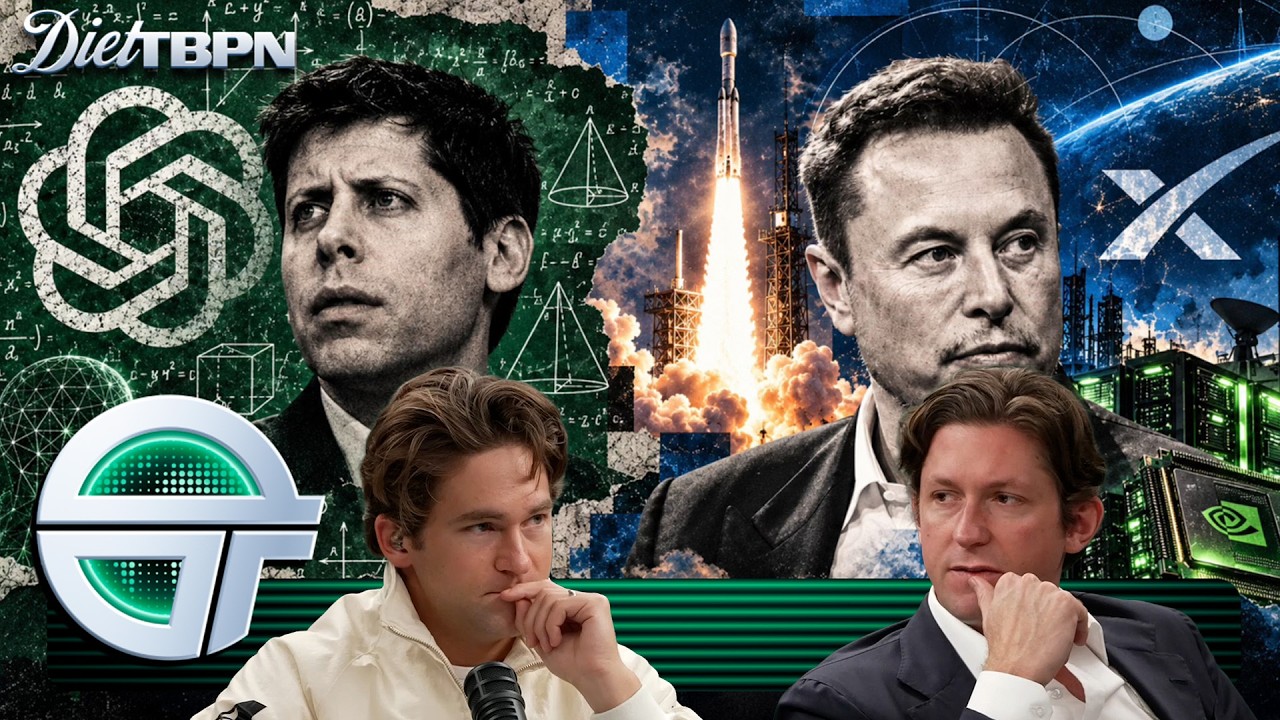
OpenAI Math Breakthroughs, SpaceX’s $40B Nvidia Deal, Quant Firms Hiring Idea Guys | Diet TBPN — TBPN

TBPN

As artificial intelligence commoditizes technical calculation through verifiable rewards, firms find their enduring competitive edge shifting toward qualitative human judgment and emotional intelligence.

AI-assisted summary of OpenAI Math Breakthroughs, SpaceX’s $40B Nvidia Deal, Quant Firms Hiring Idea Guys | Diet TBPN — original source. Check the original for full context.

Source published:

Key ideas

  • OpenAI reported benchmark results spanning 722 mathematical manuscripts, spotlighting how Reinforcement Learning with Verifiable Rewards (RLVR) creates asymmetric breakthroughs in math and code while subjective domains stall. (8:50)
  • SpaceX is reportedly structuring a $40 billion financing package—backed by Apollo and PIMCO—to acquire Nvidia's Vera Rubin architecture, pitching orbital compute using a minimalist two-page deal memo. (19:39)
  • Open-source suite Artcraft released local clones of Adobe Creative Cloud apps, demonstrating that while desktop tools can be replicated, cloud-based inference APIs like Generative Fill remain Adobe's core defensive moat. (4:24)
  • Quantitative hedge fund AQR Capital reports shifting hiring toward philosophy, history, and liberal arts graduates as AI commoditizes pure technical analysis, leaving emotional intelligence and creative thesis generation as competitive differentiators. (22:40)

Detailed notes

## Background Published on YouTube by TBPN on October 8, 2026, Diet TBPN is a 30-minute condensed daily edition of the live tech talk show hosted by John Coogan and Jordi Hays. According to the description, the program recaps high-level technology developments across AI math milestones, massive infrastructure deals, creative software disruption, and shifts in Wall Street labor.

## TL;DR The hosts break down key developments in AI and enterprise tech, starting with open-source desktop clones of Adobe Creative Cloud, OpenAI's benchmark breakthroughs in verifiable mathematics, and the friction between autonomous AI coding agents and Apple's macOS permission architecture. They examine reports of SpaceX securing a $40 billion debt package led by Apollo to purchase Nvidia Vera Rubin chips, driven by an irreverently brief two-page pitch memo. Finally, the episode examines quant hedge funds recruiting liberal arts 'idea guys' as technical skills get commoditized by AI, the reality of data center construction labor, and the monetization prospects of car-window digital billboards.

## Atmosphere & style The episode moves with a fast-paced, irreverent Silicon Valley energy that pairs sharp industry analysis with deadpan, internet-native humor. Coogan and Hays banter effortlessly with each other and their production crew, moving between absurd comedic touchstones—like championing a 'Golden Retriever mindset' or joking about pledging Mao Zedong in Greek life—and nuanced breakdowns of private credit underwriting. It feels like an authentic, inside-baseball morning show for tech operators, balancing genuine intellectual curiosity about superintelligence with a refusal to take tech hype too seriously.

## Bulletin - [08:50](https://www.youtube.com/watch?v=vZgDOjFJDCg&t=530s) OpenAI reported benchmark results spanning 722 mathematical manuscripts, spotlighting how Reinforcement Learning with Verifiable Rewards (RLVR) creates asymmetric breakthroughs in math and code while subjective domains stall. - [19:39](https://www.youtube.com/watch?v=vZgDOjFJDCg&t=1179s) SpaceX is reportedly structuring a $40 billion financing package—backed by Apollo and PIMCO—to acquire Nvidia's Vera Rubin architecture, pitching orbital compute using a minimalist two-page deal memo. - [04:24](https://www.youtube.com/watch?v=vZgDOjFJDCg&t=264s) Open-source suite Artcraft released local clones of Adobe Creative Cloud apps, demonstrating that while desktop tools can be replicated, cloud-based inference APIs like Generative Fill remain Adobe's core defensive moat. - [22:40](https://www.youtube.com/watch?v=vZgDOjFJDCg&t=1360s) Quantitative hedge fund AQR Capital reports shifting hiring toward philosophy, history, and liberal arts graduates as AI commoditizes pure technical analysis, leaving emotional intelligence and creative thesis generation as competitive differentiators.

## Key takeaways - [04:24](https://www.youtube.com/watch?v=vZgDOjFJDCg&t=264s) Open-source suite Artcraft has created functional local clones of Adobe's major applications, including Photoshop and Premiere Pro, under open-source licenses. - [04:24](https://www.youtube.com/watch?v=vZgDOjFJDCg&t=264s) Cloud-hosted machine learning inference serves as Adobe's primary architectural moat against local decompilation and cloning, since features like Generative Fill cannot be executed locally. - [04:24](https://www.youtube.com/watch?v=vZgDOjFJDCg&t=264s) Creative software demand is bifurcating between prompt-based generative models for casual generation and deep industrial desktop apps required for multi-hour professional editing. - [08:50](https://www.youtube.com/watch?v=vZgDOjFJDCg&t=530s) AI benchmark advances are heavily concentrated in mathematics and code because Reinforcement Learning with Verifiable Rewards (RLVR) provides ground-truth correctness that subjective human domains lack. - [10:00](https://www.youtube.com/watch?v=vZgDOjFJDCg&t=600s) Accelerated mathematical problem-solving represents a form of narrow superintelligence rather than generalized human-like intelligence, creating an asymmetric, spiky frontier. - [11:31](https://www.youtube.com/watch?v=vZgDOjFJDCg&t=691s) macOS Gatekeeper security sandboxing introduces permission friction that blocks autonomous coding agents, making a decompiled or script-accessible OS harness increasingly desirable. - [16:30](https://www.youtube.com/watch?v=vZgDOjFJDCg&t=990s) Ilya Sutskever's caution against overvaluing raw intelligence underlines that operational success in AI startups hinges more on human negotiation and strategy than pure theoretical math. - [19:39](https://www.youtube.com/watch?v=vZgDOjFJDCg&t=1179s) SpaceX is leveraging its BBB investment-grade rating to access conservative pension and insurance capital for a massive $40 billion hardware acquisition of Nvidia Vera Rubin systems. - [20:00](https://www.youtube.com/watch?v=vZgDOjFJDCg&t=1200s) Elon Musk's commitment to Nvidia chips serves as an operational bridge while in-house silicon initiatives at Tesla and Intel manufacturing partnerships develop. - [22:40](https://www.youtube.com/watch?v=vZgDOjFJDCg&t=1360s) Quantitative hedge funds are prioritizing qualitative thinkers and liberal arts graduates because AI is rapidly commoditizing algorithmic modeling and technical problem-solving. - [24:46](https://www.youtube.com/watch?v=vZgDOjFJDCg&t=1486s) Adopting classical, visually appealing architecture for data centers could significantly reduce community opposition and NIMBY resistance to physical AI infrastructure. - [24:46](https://www.youtube.com/watch?v=vZgDOjFJDCg&t=1486s) Community critiques labeling data center construction jobs as merely 'temporary' overlook the standard cyclical nature of the skilled trades and infrastructure development. - [28:12](https://www.youtube.com/watch?v=vZgDOjFJDCg&t=1692s) Aftermarket hardware like Holo Glass enables commuters to turn car windows into digital ad billboards, offering potential passive income that offsets vehicle commute expenses.

## Detailed walkthrough ### [00:00](https://www.youtube.com/watch?v=vZgDOjFJDCg&t=0s) Prime Time Review + The Road to Christmas

The episode kicks off with a humorous film critique of *Prime Time*, the new Robert Pattinson feature directed by Lance Oppenheim (known for the docuseries *Ren Faire*). Mimicking the ultra-succinct review style of Tyler, the host deadpans that the audio was good, the video was good, Act 1 and Act 2 were good, the acting was good, and the lighting, cinematography, and set design were all good—summarizing it simply as a "good movie."

Bringing crew member Scott into the conversation, the discussion turns into a genuine appreciation of the film’s distinctive craft. Scott and the hosts break down the visual aesthetic, noting that Oppenheim shot the film in a vintage 4:3 aspect ratio across 23 different camera models from that era, creating blown-out highlights, intense grain, and an immersive texture that felt surprisingly like an IMAX presentation despite the boxy frame. The narrative framing casts television host Chris Hansen as the antagonist in a stylized, complex, and somewhat heavy-handed investigation into his controversial career and legacy. Throughout it all, Robert Pattinson delivers an electric performance, described as being in pure "fighting form" and a complete "flow state."

Transitioning to the studio segment, the hosts announce the "Road to Christmas" countdown: exactly 78 days remain until Christmas. They reflect on their previous day's deep dive with the Christmas Tree Farmers Association of America, highlighting the mechanics of the live Christmas tree industry. The guest on that episode had memorably dismissed artificial PVC trees as "toilet brushes," prompting commentary from viewers defending the affordability and multi-year economics of faux trees. The hosts urge listeners to donate to Trees for Troops (treesfortroops.org), joking that early Anthropic employees sitting on massive 3:1 corporate matching programs should "back the truck up" and throw down $100 million so every military service member can have a 40-foot, White House–style live tree.

[04:24](https://www.youtube.com/watch?v=vZgDOjFJDCg&t=264s) Adobe’s Open-Source Clones + Is Creative Software in Trouble?

The hosts pivot to a major shockwave rippling through tech and creative communities: a new open-source suite called Artcraft (`getartcraft.com`). Billed as free, open-source reimplementations of Adobe's flagship creative suite built from scratch, the platform appeared on social media timelines as a total "truth nuke" for creative professionals. The suite maps directly to Adobe's software stack under alternative branding:

| Artcraft Suite Tool | Adobe Equivalent | Primary Functionality | |:--- |:--- |:--- | | **PhotoCraft** | Adobe Photoshop | Raster image editing and manipulation | | **VectorCraft** | Adobe Illustrator | Vector graphics and illustration | | **FilmCraft** | Adobe Premiere Pro | Non-linear video editing | | **LightCraft** | Adobe Lightroom | Photo processing and color grading | | **PrintCraft** | Adobe InDesign *(approx.)* | Desktop publishing and layout | | **EffectCraft** | Adobe After Effects | Motion graphics and visual effects | | **DesignCraft** | Adobe InDesign / XD | UI/UX and digital publication design |

After downloading and testing PhotoCraft, the host notes that while it remarkably replicates core local editing features, it quickly runs into the boundaries of modern desktop software. Today's Photoshop relies heavily on cloud compute and server-side machine learning models for features like Generative Fill (which evolved beyond legacy Content-Aware Fill to run on remote fine-tuned models). Because those server APIs cannot simply be decompiled or cloned locally, those AI-driven features fall flat on local open-source ports.

This architectural dynamic reveals a crucial shift in the software landscape: cloud-hosted, inference-heavy AI services now function as defensive moats against local decompilation. While casual users can bypass Adobe entirely by generating memes or quick composites in seconds via prompts in ChatGPT, deep production workflows—such as logging eight continuous hours inside Premiere Pro or After Effects—still mandate industrial-strength desktop software that cannot yet be replaced by natural language prompts.

```mermaid flowchart TD accTitle: Creative Software Disruption Paths accDescr: Flowchart illustrating how professional and casual Adobe workflows diverge across Artcraft clones and AI prompt tools.

subgraph DesktopWorkflow ["Desktop Software Layer"] A["Artcraft Clones (PhotoCraft, FilmCraft)"] B["Native Adobe Creative Cloud"] A -.->|"Local tools cloned"| B end

subgraph MoatLayer ["Cloud Infrastructure Moat"] B --> C["Server-Side Generative Fill & Inference APIs"] A -.->|"Fails to replicate"| C end

subgraph UserDemand ["Bifurcated User Demand"] D["Casual / Meme Tasks"] -->|"1-minute prompt"| E["ChatGPT / Generative AI"] F["Professional 8-Hour Workflows"] -->|"Deep tooling needed"| B end ```

[08:50](https://www.youtube.com/watch?v=vZgDOjFJDCg&t=530s) OpenAI’s Math Results + Is This Superintelligence?

The conversation shifts to the broader technological frontier, contrasting slow real-world automation against the hyper-acceleration taking place within purely virtual environments. The hosts point to OpenAI's newly revealed mathematical reasoning benchmarks, which surfaced solutions across 722 manuscripts addressing historically unsolved mathematical problems. While press coverage broadly hailed the milestone with headlines implying artificial intelligence had "solved math," tech analysts have scrutinized the unevenness of the achievement.

The hosts bring up an analysis by economist Joshua Gans on Substack, alongside a theory posed by François Chollet, creator of the ARC-AGI benchmark. Chollet posited that the current "jagged frontier" of AI progress is heavily concentrated in domains like advanced mathematics and programming. Because code and mathematical logic can be evaluated with complete certainty, systems can be pushed arbitrarily far using Reinforcement Learning with Verifiable Rewards (RLVR). Conversely, non-verifiable domains—those dependent on subjective taste, physical embodiment, or messy, human-generated training sets—face severe data bottlenecks and are advancing at a far slower, plateauing pace.

- **722 manuscripts**: The scale of mathematical problem sets and papers analyzed in the latest benchmark discussion. - **RLVR (Reinforcement Learning with Verifiable Rewards)**: The core training paradigm enabling breakthroughs in math and code, where ground-truth correctness can be mathematically validated without human labeling.

[10:00](https://www.youtube.com/watch?v=vZgDOjFJDCg&t=600s) Superintelligence, RLVR, and the Shape of Machine Intelligence

The discussion digs into whether the steady, rapid performance gains seen in math and coding represent a true increase in general intelligence ($g$) driven by reinforcement learning with verifiable rewards (RLVR), or if it merely reflects continuous, massive injections of human data into pre-training. This distinction feels less like standard "feel-y AGI" and much more like genuine superintelligence: no human in history, not even Albert Einstein grinding around the clock, has ever been able to solve this volume of advanced math problems at this speed.

At the same time, the hosts observe that the resulting capability is extremely "spiky." Society keeps trying to mold machine intelligence into a familiar human-shaped general framework, yet the models repeatedly break out in strange, disproportionate directions due to the specific synthetic and verifiable environments they are trained in. Ultimately, the semantic debate over definitions matters far less than wrestling with the near-term consequences of these asymmetrical capabilities.

[11:31](https://www.youtube.com/watch?v=vZgDOjFJDCg&t=691s) Apple vs. AI Agents: Could AI Decompile and Rewrite macOS?

Ben Thompson's Stratechery piece, *"Apple and the Hacker's Future,"* highlights the friction between agentic software and Apple's rigid security model. Thompson argues that building software via AI agents is vastly more exciting than "praying Apple delivers the right API and that third-party developers don't suck." However, running local agents hits a wall on macOS: every time an agent writes and launches a subsidiary script or mini-app on a Mac mini, macOS pops up a permission gate asking for explicit user approval to touch the desktop, network, or file system—mirroring the sandboxed privacy model of iOS. Thompson's ideal workflow requires a coding harness that inherits and passes down overarching user permissions without constant manual intervention.

```mermaid flowchart TD accTitle: AI Agent Permissions Bottleneck on macOS accDescr: Diagram contrasting current macOS security popups with the agentic harness proposal.

subgraph Current ["Current macOS Behavior"] A["AI Coding Agent"] -->|"generates"| B["Sub-script / Micro-app"] B -->|"requests file/network access"| C{"macOS Gatekeeper"} C -->|"blocks & prompts"| D["Manual User Pop-up Approval"] end

subgraph Proposed ["Agentic / Decompiled Target"] E["Root Coding Harness"] -->|"granted master clearance"| F["Generated Scripts"] F -->|"inherits root permissions"| G["Automatic File & Network Execution"] end ```

This friction fuels the bull case for Linux on the desktop: the historical downside of Linux—such as having to troubleshoot drivers or adjust volume settings through obscure command-line arcana—evaporates when users can simply instruct an LLM prompt to fix system issues directly.

This leads to a larger provocation: if LLMs are already decompiling classic games like *Halo*, *Call of Duty: Modern Warfare 2*, and *Minecraft*, alongside complex desktop tools like Adobe Photoshop, how far are we from pointing an AI model at macOS itself? Decompiling macOS could allow users to patch out intrusive security gates and recompile a bespoke operating system tailored for agentic autonomy. While critics might compare this to jailbreaking an iPhone—where users lose official support—the dream scenario for power users would be a decompiled system that still spoofs Apple's servers well enough to retain iMessage, iCloud, and ecosystem hardware advantages.

- Decompiled software experiments have already spawned wild crossover mods, including users porting *Halo* mechanics into *Modern Warfare 2* and dropping tactical nukes inside a decompiled *Minecraft* engine. - Despite the broader "SaaS-pocalypse" narrative (Adobe's stock dropping 3% to 5% over recent days, 10% over the month, and roughly 33% over the prior year), users are not yet abandoning Creative Cloud subscriptions en masse for raw decompiled alternatives.

[16:30](https://www.youtube.com/watch?v=vZgDOjFJDCg&t=990s) Ilya Sutskever's Warning and the "Golden Retriever Mindset"

Marking the two-year anniversary of TBPN (founded in October 2024), the hosts revisit a philosophy they coined early on: the **Golden Retriever Mindset**—summarized tongue-in-cheek as "be hot, friendly, and dumb." Pre-dating the lookism/looksmaxxing trend, the core idea is simple: 1. Maintain high physical fitness. 2. Be genuinely warm and never make enemies. 3. Never insist on being the smartest person in the room.

This attitude directly addresses Ilya Sutskever's 2023 warning: *"If you value intelligence above all other human qualities, you're going to have a bad time."* Although the pipeline from International Mathematical Olympiad (IMO) gold medalists to high-profile startup founders remains strong, the day-to-day reality of running an AI frontier company—such as Scott Wu leading Cognition—looks far more like high-stakes poker than math theorem proving. Real-world execution demands deal-making, elite hiring, product judgment, and organizational strategy. Business doesn't work like an imaginary firm that just pays a room of math geniuses to crack twelve billion-dollar equations a year to hit growth targets.

The hosts push back against a poetic quote from AI researcher Rune, who cautioned: *"Do not let yourself be reduced to the status of an audience at a magic show, uncomprehendingly clapping as machine intelligence creates parcels of astounding knowledge."* Far from feeling insulted, the hosts embrace being an audience member. Sitting back, being blown away by an incomprehensible magic trick without needing to pick apart how the illusion works, is an enjoyable and valid way to witness superintelligent mathematical breakthroughs.

[19:39](https://www.youtube.com/watch?v=vZgDOjFJDCg&t=1179s) SpaceX's $40 Billion Debt Package for Nvidia Hardware

The scale of AI compute investment reaches another high-water mark with reports that SpaceX is preparing a massive $40 billion capital raise specifically to fund high-end chip purchases from Jensen Huang's Nvidia. The proposed financing structure outlines: - Approximately **$10 billion** in direct bank loans. - Roughly **$30 billion** in investment-grade debt. - Private capital titan **Apollo Global Management** slated to lead the financing effort and syndicate the debt to a broad institutional base.

[20:00](https://www.youtube.com/watch?v=vZgDOjFJDCg&t=1200s) SpaceX’s $40B Nvidia Deal & The Two-Page Deal Memo

The hosts break down reports surrounding SpaceX’s massive $40 billion financing plans to purchase Nvidia hardware for its expanding AI initiatives. Lenders including PIMCO and Apollo were among the selective group in talks to fund the debt. Crucially, SpaceX holds an investment-grade BBB credit rating—the second-lowest investment-grade tier—which permits pension and insurance funds to participate in the debt offering, whereas institutional mandates severely restrict them from buying junk-rated paper. Elon Musk publicly committed to building exclusively on Nvidia’s upcoming Vera Rubin architecture, praising it as the best AI computer available. The hosts analyze this as a strategic short-term concession—effectively "kissing the ring"—even as Musk pursues internal silicon development through TeraFab, Tesla's in-house chip efforts, and manufacturing agreements with Intel.

```mermaid flowchart TD accTitle: SpaceX AI Debt Financing Flow accDescr: Flowchart illustrating how SpaceX leverages investment grade rating to raise debt for Nvidia hardware. subgraph Capital ["Institutional Capital"] PIMCO["PIMCO / Apollo Lenders"] Funds["Insurance & Pension Funds"] end subgraph Structure ["Debt Vehicle"] Rating["BBB Credit Rating<br/>(Investment Grade)"] Memo["2-Page Deal Memo<br/>(Outer Space Graphics)"] end subgraph Deployment ["Hardware Infrastructure"] NVDA["Nvidia Vera Rubin Chips<br/>($40B Allocation)"] SpaceX["SpaceX AI & Orbital Compute"] end Funds --> Rating PIMCO --> Rating Rating --> Memo Memo --> NVDA NVDA --> SpaceX ```

The most comical detail to emerge from the funding talks is the deal memo distributed to potential investors. Rather than a dense financial model, prospective backers reportedly received a concise two-page memo featuring pictures of outer space with an arrow pointing out that the company intended to build data centers somewhere out in the universe. An investor balked, wondering, "How are we supposed to take that to IC [Investment Committee]?" The hosts argue that for a straightforward $40 billion chip acquisition, sophisticated private credit shops can back-of-the-envelope the underwriting themselves, noting that after delivering massive historical upside, Elon Musk has simply "earned the right to have a shorter than average memo."

- **Financing Participants**: PIMCO and Apollo approached for structured debt financing. - **Credit Rating**: SpaceX’s BBB rating opens doors to conservative insurance and pension capital. - **Hardware Architecture**: Public commitment to Nvidia’s Vera Rubin platform despite long-term Tesla/Intel custom silicon strategies. - **The Deal Memo**: A concise two-page document utilizing space diagrams indicating orbital data center ambitions.

---

[22:40](https://www.youtube.com/watch?v=vZgDOjFJDCg&t=1360s) Wall Street Wants “Idea Guys,” Not Just Quants

Turning to Wall Street labor trends, the conversation shifts to quant hedge funds pivoting toward non-technical talent. The hosts riff on a post by Nick Pressler poking fun at the hiring shift: introducing a new hedge fund "qual" or "vibe specialist" named Jaden who "won a local poetry competition in Bushwick." Despite the satire, the observation reflects a verified report from AQR Capital (Applied Quantitative Research). The firm noted that as artificial intelligence rapidly commoditizes analytical and technical problem-solving, hedge funds and top technical firms are actively recruiting liberal arts graduates, philosophers, historians, and generalist thinkers.

AQR’s investor letter poses the central question facing modern finance and business schools: what remains a durable differentiator once AI matches or surpasses human technical capacity? AQR’s conclusion is that creativity and emotional intelligence will provide the true edge. The hosts draw a parallel to the earlier concept of the "Golden Retriever" mindset—warm, high-EQ communicators who can navigate human systems and generate unconventional hypotheses. One host notes that many of the most successful hedge fund managers historically held philosophy or history degrees, allowing them to spot non-consensus macro patterns—like European monetary union developments—that pure math formulas missed.

- **AQR Stance**: Analytical parity via AI shifts durable competitive advantage toward qualitative reasoning. - **Target Profiles**: Philosophy majors, liberal arts graduates, and big-picture generalists over pure quantitative modelers. - **Core Edge**: High emotional intelligence (EQ) and creative thesis generation outlast raw algorithmic calculation.

---

[24:46](https://www.youtube.com/watch?v=vZgDOjFJDCg&t=1486s) Beautiful Data Centers & The “Temporary Jobs” Debate

The hosts highlight the public aesthetic debate surrounding compute infrastructure after an image circulated purporting to be a lavish European data center designed like Versailles. While the image initially sparked enthusiasm that industrial data hubs could replace blighted warehouse aesthetics with classical French architecture, it quickly picked up Community Notes on X. The image was actually a prank posted by a Mistral co-founder alongside their "Le Chonk" model announcement, depicting a historic train station in France rather than server racks. Still, the hosts insist the concept is valid: community pushback against data center expansion would soften dramatically if developers built classical monuments instead of utilitarian grey boxes.

```mermaid flowchart LR accTitle: Data Center Labor and Aesthetic Perceptions accDescr: Diagram mapping the narrative contrast between public infrastructure aesthetics and blue-collar labor realities. subgraph Aesthetic ["Infrastructure Design"] Plain["Standard Concrete Warehouse"] --> Pushback["Local NIMBYism"] Classical["Classical / Versailles Architecture"] --> Acceptance["Community Buy-In"] end subgraph Labor ["Construction Realities"] Criticism["'Data Center Jobs Are Only Temporary'"] Reality["'Every Construction Job Is Temporary'"] Criticism --> Reality end ```

The hosts then pull up a viral man-on-the-street interview with a construction worker building a massive facility in Homer City. When asked about community critics who dismiss data centers because construction jobs are "only temporary" until the facility goes live, the worker offered an instant reality check: "Every job in my field is temporary." The hosts celebrate the quote as an undeniable, genius perspective on physical labor cycles that ivory-tower commentators regularly misunderstand. The discussion takes brief comedic detours through Greek life ("rushing Mao Zedong next semester with 1.4 billion people in my pledge class") and a reflection shared by Midjourney founder David Holz on 1920s massive electrical generator photography, admiring how early-century electrification looked as wildly futuristic as modern AI concept art.

- **Mistral Prank**: Viral "Versailles data center" revealed to be a historic French railway station. - **Homer City Soundbite**: Construction worker dispels the temporary-job critique by pointing out all project-based trades are inherently transient. - **Electrification Parallels**: Historical photographs of 1920s generator infrastructure mirrored against modern AI compute buildouts.

---

[28:12](https://www.youtube.com/watch?v=vZgDOjFJDCg&t=1692s) Car-Window Billboards & Getting Paid to Commute

The final segment highlights a novel hardware startup product called Holo Glass, an aftermarket DIY system that transforms standard car windows into outward-facing digital advertising displays. The setup packages an off-the-shelf digital projector with a custom window mount and mobile software, allowing drivers to project high-definition video advertisements—or personal media like *PAW Patrol*—directly onto their side glass while stuck in traffic. Controlled through an iPhone app, users can run static signs, animations, or dynamic campaigns.

The hosts analyze the economics of suburban commuting turned into ad real estate. While the hardware unit retails for around $300, ad earnings depend heavily on geographic routing and viewer demographics:

| Variable | High-Value Route (e.g., Sand Hill Road) | Standard Commuter Route (e.g., General Metro) | |:--- |:--- |:--- | | **Audience Profile** | Venture capitalists, tech executives | General commuters | | **Ad Content** | B2B enterprise software, high-ticket luxury | Broad consumer goods | | **Monetization Metric** | Premium CPM / High AOV conversion | Standard localized impressions | | **Payback Window** | Estimated accelerated breakeven | ~6 months at traditional rooftop taxi rates |

The hosts conclude that if the device can pay back its $300 upfront cost within six months by mirroring rooftop taxi display inventory rates, suburban drivers can essentially turn their daily gridlock into passive cash flow, effectively "getting paid to commute." The episode wraps with a call to leave five-star ratings on Apple Podcasts and Spotify and subscribe to the daily newsletter at TBPN.com.

## Notable quotes > [00:00](https://www.youtube.com/watch?v=vZgDOjFJDCg&t=0s) toilet brushes

> [04:24](https://www.youtube.com/watch?v=vZgDOjFJDCg&t=264s) truth nuke

> [11:31](https://www.youtube.com/watch?v=vZgDOjFJDCg&t=691s) praying Apple delivers the right API and that third-party developers don't suck. — Ben Thompson

> [16:30](https://www.youtube.com/watch?v=vZgDOjFJDCg&t=990s) be hot, friendly, and dumb.

> [16:30](https://www.youtube.com/watch?v=vZgDOjFJDCg&t=990s) If you value intelligence above all other human qualities, you're going to have a bad time. — Ilya Sutskever

> [16:30](https://www.youtube.com/watch?v=vZgDOjFJDCg&t=990s) Do not let yourself be reduced to the status of an audience at a magic show, uncomprehendingly clapping as machine intelligence creates parcels of astounding knowledge. — Rune

> [20:00](https://www.youtube.com/watch?v=vZgDOjFJDCg&t=1200s) kissing the ring

> [20:00](https://www.youtube.com/watch?v=vZgDOjFJDCg&t=1200s) How are we supposed to take that to IC?

> [20:00](https://www.youtube.com/watch?v=vZgDOjFJDCg&t=1200s) earned the right to have a shorter than average memo.

> [24:46](https://www.youtube.com/watch?v=vZgDOjFJDCg&t=1486s) Every job in my field is temporary.

> [24:46](https://www.youtube.com/watch?v=vZgDOjFJDCg&t=1486s) rushing Mao Zedong next semester with 1.4 billion people in my pledge class

> [28:12](https://www.youtube.com/watch?v=vZgDOjFJDCg&t=1692s) getting paid to commute.

## Mentioned Prime Time, Robert Pattinson, Lance Oppenheim, Ren Faire, Tyler, Scott, Chris Hansen, Christmas Tree Farmers Association of America, Trees for Troops, Anthropic, Artcraft, PhotoCraft, Adobe Photoshop, VectorCraft, Adobe Illustrator, FilmCraft, Adobe Premiere Pro, LightCraft, Adobe Lightroom, PrintCraft, Adobe InDesign, EffectCraft, Adobe After Effects, DesignCraft, Adobe XD, ChatGPT, OpenAI, Joshua Gans, François Chollet, ARC-AGI, Ben Thompson, Stratechery, Apple, macOS, iOS, Linux, Halo, Call of Duty: Modern Warfare 2, Minecraft, TBPN, Ilya Sutskever, Scott Wu, Cognition, Rune, SpaceX, Nvidia, Jensen Huang, PIMCO, Apollo Global Management, Elon Musk, Vera Rubin, TeraFab, Tesla, Intel, Nick Pressler, AQR Capital, Mistral, Le Chonk, David Holz, Midjourney, Holo Glass, PAW Patrol

## Video description Sign up for TBPN’s daily newsletter at TBPN.com

Diet TBPN delivers the best of today’s TBPN episode in 30 minutes. TBPN is a live tech talk show hosted by John Coogan and Jordi Hays, streaming weekdays 11–2 PT on X and YouTube, with each episode posted to podcast platforms right after.

Described by The New York Times as “Silicon Valley’s newest obsession,” the show has recently featured Mark Zuckerberg, Sam Altman, Mark Cuban, and Satya Nadella.

TBPN is made possible by: Ramp - https://ramp.com Public - https://public.com Cisco - https://www.cisco.com Console - https://www.console.com CrowdStrike - https://www.crowdstrike.com Figma - https://www.figma.com MongoDB - https://www.mongodb.com NYSE - https://www.nyse.com Railway - https://railway.com Shopify - https://www.shopify.com/

Follow TBPN: https://TBPN.com https://x.com/tbpn https://open.spotify.com/show/2L6WMqY3GUPCGBD0dX6p00?si=674252d53acf4231 https://podcasts.apple.com/us/podcast/technology-brothers/id1772360235 https://www.youtube.com/@TBPNLive

Chapters: 00:00 Prime Time Review + The Road to Christmas 04:24 Adobe’s Open-Source Clones + Is Creative Software in Trouble? 08:50 OpenAI’s Math Results + Is This Superintelligence? 11:31 Apple vs. AI Agents + Could AI Rewrite macOS? 16:30 Ilya’s Warning + The “Golden Retriever” Mindset 19:39 SpaceX’s $40B Nvidia Plan + The Two-Page Deal Memo 22:40 Wall Street Wants “Idea Guys,” Not Just Quants 24:46 Beautiful Data Centers + The “Temporary Jobs” Debate 28:12 Car-Window Billboards + Getting Paid to Commute

[Source](https://www.youtube.com/watch?v=vZgDOjFJDCg)

中文简报

SpaceX拟借力Apollo敲定400亿美元债务交易以采购Nvidia AI芯片 随着人工智能通过可验证奖励使技术计算日趋大宗商品化,企业发现其长久的竞争优势正转向定性的人类判断力与情商。 主持人剖析了AI与企业科技领域的关键进展,首先是Adobe Creative Cloud的开源桌面级替代软件、OpenAI在可验证数学基准测试上的突破,以及自主AI编程代理与Apple macOS权限架构之间的冲突。随后,他们审视了有关SpaceX在Apollo牵头下敲定400亿美元债务融资以采购Nvidia Vera Rubin芯片的报道,该交易仅由一份极其精简的两页推介备忘录推动。最后,本期节目还探讨了随着技术技能被AI商品化,量化对冲基金转而招募文科“创意人才”的现象、数据中心建设劳动力的现状,以及车窗数字广告牌的商业变现前景。 OpenAI公布了涵盖722篇数学手稿的基准测试结果,凸显出基于可验证奖励的强化学习(RLVR)如何在数学和编程领域带来非对称突破,而主观领域则停滞不前。 (8:50) 据报道,SpaceX正在Apollo和PIMCO的支持下筹划一项400亿美元的融资方案,以采购Nvidia的Vera Rubin架构,并通过一份极简的两页交易备忘录推介其轨道计算构想。 (19:39) 开源套件Artcraft发布了Adobe Creative Cloud应用的本地克隆版本,这表明桌面工具虽然可以被复制,但像Generative Fill这样基于云端的推理API仍然是Adobe的核心防御护城河。 (4:24) 量化对冲基金AQR Capital表示,随着AI使纯技术分析变得高度同质化,其招聘方向正转向哲学、历史和文科毕业生,情商与创造性的核心论点构想因而成为竞争的差异化优势。 (22:40)

Reading summary

As artificial intelligence accelerates mathematical discovery and threatens traditional software moats, the frontier of competitive advantage is pivoting toward qualitative human reasoning, high-stakes capital allocation, and physical infrastructure buildouts. Open-Source Clones and Software Moats (4:24) The emergence of Artcraft—an open-source project cloning Adobe's core desktop applications such as Photoshop and Premiere Pro—highlights shifts in software defensibility. Testing of PhotoCraft revealed that while local raster editing tools can be replicated, modern desktop suites increasingly rely on cloud-hosted inference models, such as Adobe's Generative Fill. Because remote server APIs cannot be decompiled locally, cloud infrastructure serves as a primary defensive moat against local alternatives. Asymmetrical AI Progress and Mathematical Superintelligence (8:50) OpenAI's recent benchmark surfacing solutions across 722 manuscripts on historically unsolved mathematical problems illustrates what François Chollet describes as AI's 'jagged frontier.' Breakthroughs remain heavily concentrated in coding and mathematics because Reinforcement Learning with Verifiable Rewards (RLVR) provides unambiguous ground truth for evaluation. In contrast, subjective or embodied domains progress far more slowly due to data bottlenecks. AI Coding Agents Clash With Desktop Sandboxing (11:31) Ben Thompson notes that autonomous coding agents hit friction on macOS, where security protocols demand repeated user permissions whenever agents generate subsidiary scripts. This dynamic fuels interest in Linux for power users and sparks speculation about decompiling operating systems to bypass security gates while retaining cloud services like iMessage. LLMs are already decompiling titles like Halo and Minecraft, but enterprise desktop platforms have not yet seen widespread defections. Massive Capital Scaling and Orbital Ambitions (19:39) Reports indicate SpaceX is seeking a $40 billion financing package—structured as roughly $10 billion in bank loans and $30 billion in investment-grade debt led by Apollo Global Management and PIMCO—to purchase Nvidia hardware, specifically the upcoming Vera Rubin architecture. Elon Musk has publicly committed to this deployment despite pursuing internal chip initiatives like TeraFab. Investor presentations reportedly included an audacious two-page memo highlighting future data centers in outer space. Quantitative Commoditization and the Non-Technical Edge (22:40) As artificial intelligence automates mathematical and technical tasks, quantitative finance firms such as AQR Capital are actively recruiting liberal arts, history, and philosophy graduates. AQR argues that qualitative thesis generation, high emotional intelligence, and non-consensus macro thinking will outlast pure algorithmic modeling as durable differentiators. This mirrors the host's 'Golden Retriever Mindset'—an intentional emphasis on interpersonal warmth, fitness, and judgment over raw technical intelligence in executive environments. Across software development, quantitative finance, and compute hardware, rapid algorithmic advances are shifting strategic value toward physical infrastructure access, regulatory navigation, and qualitative human creativity rather than pure computational prowess.

Detailed notes — zh

## Background 本期内容由科技脱口秀频道 TBPN(由 John Coogan 与 Jordi Hays 主持)于 2026 年 10 月 9 日发布在 YouTube 平台。根据节目简介,本期为 30 分钟精简版(Diet TBPN),汇集了当天关于 OpenAI 数学突破、SpaceX 拟斥资 400 亿美元采购英伟达芯片、以及顶级量化基金开始招募文科“想法型人才”等硬核科技与金融热点。 ## TL;DR 节目首先从开源项目对标 Adobe 创意套件切入,指出专业软件的核心壁垒已转向云端 AI 算力,并深入探讨了 OpenAI 借助 RLVR 在前沿数学领域取得的突破及智能体在操作系统层面的权限摩擦。随后,主持人分析了 SpaceX 拟通过 400 亿美元债务融资采购英伟达芯片的宏大计划,戏谑其仅凭一张指向宇宙的“两页纸”备忘录便能撬动机构资金。接着,讨论聚焦于量化先锋 AQR Capital 为何在 AI 自动化浪潮下转而大举招募具备直觉与情商的历史、哲学系通才。最后,节目围绕凡尔赛宫风格数据中心的趣闻、一线建筑工人的“临时工”哲理,以及利用 Hollow Glass 车窗投影赚取通勤费用的赛博朋克硬件展开了趣味盘点。 ## Atmosphere & style 整场节目充斥着浓厚的美式硅谷极客氛围,节奏紧凑明快,在嬉笑怒骂与无厘头幽默之间游刃有余。两位主持人默契十足,既能自嘲“金毛犬心态”并戏谑马斯克简陋的融资备忘录,又能瞬间无缝切换至技术架构分化与华尔街宏观交易的硬核研判。观听体验如同一场信息密度极高却毫不严肃的硅谷炉边闲聊,兼具对超级智能前沿的推演震撼与面对荒诞现实的松弛笑意。 ## Bulletin - [08:50](https://www.youtube.com/watch?v=vZgDOjFJDCg&t=530s) OpenAI 凭借解决多达 722 篇前沿学术级数学难题引发热议,基于可验证奖励的强化学习(RLVR)推动机器智能在具备自动验证闭环的领域形成爆发式超级智能,但也凸显出依赖现实常识的非形式化任务增长放缓的“参差前沿”。 - [19:39](https://www.youtube.com/watch?v=vZgDOjFJDCg&t=1179s) SpaceX 正在就一项规模高达 400 亿美元的债务融资进行深入谈判,计划由阿波罗全球管理牵头并依靠 BBB 投资级评级引入养老金等长线资本,资金将全盘押注英伟达最新的 Vera Rubin 架构以扩张 AI 数据中心基建。 - [04:24](https://www.youtube.com/watch?v=vZgDOjFJDCg&t=264s) Artcraft 等开源项目像素级复刻了 Adobe 核心套件,但由于无法调用依赖云端服务器的生成式填充等前沿微调模型,表明专业软件的核心护城河已彻底从本地代码转向云端算力与专有 AI 推理。 - [22:40](https://www.youtube.com/watch?v=vZgDOjFJDCg&t=1360s) 量化投资巨头 AQR Capital 公开转向招聘文科背景的“想法型人才”,并指出在 AI 迅速将纯数学与代码工程商品化的未来,创造力与情商直觉才是人类难以被算法替代的持久护城河。 ## Key takeaways - [04:24](https://www.youtube.com/watch?v=vZgDOjFJDCg&t=264s) 开源项目对 Adobe 核心套件的逆向工程虽能复刻单色填充等本地功能,但无法复刻云端“生成式填充”等模型推理,标志着软件厂商的护城河已转向云端 AI 算力与模型微调体系。 - [04:24](https://www.youtube.com/watch?v=vZgDOjFJDCg&t=264s) 生成式 AI 正在导致创意工作流分化:轻量用户只需用自然语言 Prompt 即可替代 20 分钟的基础修图,而重度剪辑师长达数小时的高精度工作流短期内仍无法被简单 Prompt 颠覆。 - [08:50](https://www.youtube.com/watch?v=vZgDOjFJDCg&t=530s) 弗朗索瓦·肖莱提出的“参差前沿”理论指出,AI 在拥有编译器或确定真值检验的数学与代码领域能够借助 RLVR 产生自博弈爆发,而在依赖人类现实数据采集的通用领域则遭遇平台期。 - [10:00](https://www.youtube.com/watch?v=vZgDOjFJDCg&t=600s) OpenAI 在海量数学难题上的极高吞吐量已超越历史上任何单个人类科学家,但这种智能呈现出非对称的“尖刺状”(spiky),更适合被称为特定维度的机器智能而非全面的人类通用智能。 - [11:31](https://www.youtube.com/watch?v=vZgDOjFJDCg&t=691s) Ben Thompson 指出 macOS 严格的沙盒与繁琐的授权弹窗严重阻碍了 AI 本地智能体调用工具的自动化流程,智能体亟需底层代码运行框架的全局继承权限。 - [11:31](https://www.youtube.com/watch?v=vZgDOjFJDCg&t=691s) 操作系统生态面临重构机遇:大模型的自然语言配置能力有望彻底消除 Linux 的命令行门槛,使其成为理想的智能体平台;而反编译 macOS 虽能规避权限限制,却面临脱离 iCloud 等苹果生态的风险。 - [15:00](https://www.youtube.com/watch?v=vZgDOjFJDCg&t=900s) 在单纯智商不再稀缺的时代,正如 Ilya Sutskever 所警示的,科技行业正推崇保持友善与谦逊的“金毛犬心态”,因为顶尖创业与团队管理本质上是复杂的社会化博弈,而非单纯解数学题。 - [19:39](https://www.youtube.com/watch?v=vZgDOjFJDCg&t=1179s) SpaceX 计划通过 100 亿美元银行贷款与 300 亿美元投资级债券筹资 400 亿美元采购英伟达芯片,BBB 信用评级使其得以顺利吸纳保险公司与养老金等保守的长线受限资金。 - [20:00](https://www.youtube.com/watch?v=vZgDOjFJDCg&t=1200s) 马斯克虽公开盛赞英伟达 Vera Rubin 架构以获取当前紧缺算力,但仍在推进特斯拉自研芯片与 TeraFab 代工布局;其两页纸极简融资备忘录依托于资本市场对其过往交付记录的高度信任。 - [22:40](https://www.youtube.com/watch?v=vZgDOjFJDCg&t=1360s) 顶级量化基金 AQR Capital 认为软件和常规分析已被严重商品化,因此打破传统纯数学偏好,转而招聘学历史与哲学的通才,以利用其多元的人文框架提供独特的宏观对冲直觉。 - [22:40](https://www.youtube.com/watch?v=vZgDOjFJDCg&t=1360s) AQR 明确提出创造力与情商是在 AI 时代建立差异化竞争优势的核心支柱,这两种特质是人类在算法全方位赋能背景下最持久的阿尔法来源。 - [24:46](https://www.youtube.com/watch?v=vZgDOjFJDCg&t=1486s) 针对外界对数据中心建设岗位“仅具短期临时性”的质疑,一线建筑工人指出建筑工程行业的工种天然皆为项目完工即走,借此贬低算力基建创造的经济价值在逻辑上并不成立。 - [28:12](https://www.youtube.com/watch?v=vZgDOjFJDCg&t=1692s) 售价约 300 美元的微型车窗投影设备 Hollow Glass 将私家车变为动态移动广告牌,在硅谷沙丘路等高价值通勤路段展示高 CPM 广告,展现了极低门槛的赛博朋克式通勤变现模式。 ## Detailed walkthrough ### [00:00](https://www.youtube.com/watch?v=vZgDOjFJDCg&t=0s) 《黄金时段》影评与“圣诞之路”倒计时 节目开场,主持人模仿知名博主 Tyler 的极简点评风格,对刚刚在影院观看的罗伯特·帕丁森(Robert Pattinson)主演新片《黄金时段》(Prime Time)进行了一番幽默调侃:“画面很好,声音很好,第一幕很好,第二幕很好,演技很好,打光与摄影也很好,所以总的来说,这是一部好电影。” 随后制作团队的 Scott 也加入热烈讨论。大家一致认为该片的视觉风格极具冲击力:整部电影采用复古的 4:3 画幅,配合极强的噪点与高光过曝,营造出一种类似 IMAX 的震撼质感。该片由曾执导纪录片《文艺复兴集市》(Ren Faire)的兰斯·奥本海姆(Lance Oppenheim)掌镜,全片破天荒地动用了 23 台不同型号的复古摄像机,以此向当年的电视转播质感致敬。影片深入探讨了知名主持人克里斯·汉森(Chris Hansen,以主持《捉拿捕食者》闻名)的职业生涯及其受到的公众评价,片中甚至将汉森塑造成了一个带有反派色彩的人物,直面他当年在调查中“是否跨过界限”的伦理争议。主持人盛赞帕丁森演技爆发,已然进入了彻底松弛且强大的“心流状态”(flow state)。 紧接着,节目切入传统保留环节——TBPN“圣诞之路”倒计时。距离圣诞节还有整整 78 天。两位主持人回顾了前一日对美国圣诞树种植者协会(Christmas Tree Farmers Association of America)的深度专访,称其揭示了整个圣诞树产业链的运转以及保鲜技术。受访者将人造塑料圣诞树辛辣地讽刺为“马桶刷”(toilet brushes),引发弹幕大笑。主持人也为慈善机构 Trees for Troops 呼吁募捐,甚至开玩笑喊话早期 Anthropic 员工:“如果你们公司提供 1 比 3 的捐款配资,赶快倒车拉一卡车钱出来,砸个一亿美元!让每位前线官兵家里都能立起白宫级别的 40 英尺参天大树!” ### [04:24](https://www.youtube.com/watch?v=vZgDOjFJDCg&t=264s) Adobe 开源克隆潮与创意软件的真正护城河 话题转向科技圈热点。科技分析师本·汤普森(Ben Thompson)近期在 macOS 上尝试“氛围编程”(vibe coding)开发应用时被各种系统权限折磨得苦不堪言,但时间线上更重磅的“深水炸弹”则是针对 Adobe 帝国的反向工程风暴。一个名为 Artcraft(getartcraft.com)的项目声称通过反编译与从零重写,推出了 Adobe 核心创意套件的免费开源克隆版本: - **PhotoCraft**:对标 Photoshop - **VectorCraft**:对标 Illustrator - **FilmCraft**:对标 Premiere Pro - **LightCraft**:对标 Lightroom - **PrintCraft** 与 **DesignCraft**:对标 InDesign - **EffectCraft**:对标 After Effects 主持人实测了 PhotoCraft,承认许多核心本地工具已经被像素级复刻,但同时也指出了开源克隆的核心局限:**现代专业软件真正的壁垒已经转移到了云端与 AI 算力**。传统的 Photoshop 功能如单色填充或基于局部像素融合的内容感知填充(Content-Aware Fill)可以离线运行,但 Adobe 近期主打的“生成式填充”(Generative Fill)则是重度依赖服务器端微调模型(如 Nano Banana 等)的云端推理服务。反编译工具根本无法调用这套后端体系。 这引发了关于“软件消亡论”的深层辨析:当纯本地代码能够轻易被反编译或开源重构时,依赖高算力云端推理反而为软件厂商构筑了坚固的商业护城河。此外,对于轻量级的普通用户而言,以往需要打开 Photoshop 操作 20 分钟的拼图或加字工作,现在直接用 ChatGPT 敲一行自然语言 Prompt 在一分钟内就能搞定;而对于需要花整整 8 小时泡在 After Effects 或 Premiere Pro 里的重度剪辑师,开源替代品或简单的 Prompt 依然无法取代精细的工作流。 ### [08:50](https://www.youtube.com/watch?v=vZgDOjFJDCg&t=530s) OpenAI 数学突破:RLVR 是否正在推高“参差前沿”? 软件智能的分化折射出当下 AI 发展的核心分水岭:凡是能够在纯虚拟封闭环境中自循环验证的任务,其进化速度快得惊人;而任何需要触碰物理世界、依赖人类数据飞轮的领域,演进则极其缓慢。 两位主持人重点讨论了 OpenAI 最新披露的高难度数学求解成果。尽管通稿仅含糊提及涵盖“极其广泛的领域”,但背后涉及多达 722 篇学术手稿级的前沿未解难题,被舆论戏称为“AI 已经把数学给解决了”。 ```mermaid flowchart LR accTitle: AI 发展双轨分化逻辑 accDescr: 对比 RLVR 驱动的自循环验证领域与依赖人类现实数据领域的进展差异 subgraph FastTrack["快速爆发轨道:虚拟验证闭环"] A["高难度领域: 数学 / 代码"] --> B["RLVR (可验证奖励强化学习)"] B --> C["合成数据无限自博弈"] C --> D["能力边界无限向外推"] end subgraph SlowTrack["平缓增长轨道:现实数据瓶颈"] E["非形式化领域: 常识 / 物理交互"] --> F["依赖人类标注与采集数据"] F --> G["遭遇现实数据飞轮瓶颈"] G --> H["模型性能稳步但平缓改善"] end ``` 针对这项突破,ARC-AGI 创造者弗朗索瓦·肖莱(François Chollet)提出了极具洞察力的理论:目前 AI 能力表现出的这种“参差不齐的前沿”(jagged frontier),其核心推力来自**基于可验证奖励的强化学习(RLVR,Reinforcement Learning with Verifiable Rewards)**。在数学与代码这类拥有明确逻辑真值和编译器检查的领域,模型可以通过自动验证奖励无限自推演,甚至摆脱人类数据供给;而在无法进行程序化验证、高度依赖人类生成经验与现实常识的领域,模型的泛化能力虽然仍在稳定进步,但其增长曲线却明显放缓并出现平台期瓶颈。 ### [10:00](https://www.youtube.com/watch?v=vZgDOjFJDCg&t=600s) 超级智能初现与机器智能的“尖刺”特性 OpenAI 在数学基准上取得的突破引发了对于智能本质的深层讨论。当前模型性能的稳步提升,究竟是基于规则强化的强化学习(RLVR)推高了核心通用智力($g$ 因素)带来的副效应,还是仅仅因为持续大规模注入的全新人类训练数据?这个问题的答案关乎整个技术路线的走向。 对于主持人而言,这与其说是感受到了通用人工智能(AGI),不如说是一个感受到了“超级智能”(Superintelligence)的时刻。人类历史上从未有任何个体能够以如此高的水准、在如此短的时间内攻克海量极端复杂的数学谜题——即便是爱因斯坦日夜钻研也无法企及这种吞吐量与速度。然而,这种能力呈现出极其尖锐的“尖刺状”(spiky):它在特定数学与代码环境中表现得无与伦比,但在其他维度却并未同步进化。主持人指出,用“机器智能”(Machine Intelligence)来形容更为恰当,因为人类总是试图将这种新型智能生硬地套入人类通用认知框架中,但由于训练环境的特性,它往往在某些极端领域突飞猛进,打破了常规的人类认知模式。 ### [11:31](https://www.youtube.com/watch?v=vZgDOjFJDCg&t=691s) 智能体困境:反编译 macOS 还是倒向 Linux? 围绕智能体(Agentic AI)在实际操作系统中的落地瓶颈,科技分析师 Ben Thompson 在其 Stratechery 专栏文章《Apple and the Hacker's Future》中展开了探讨。当前核心的摩擦在于:用户让 AI 智能体在 Mac Mini 或本地电脑上生成一段新软件后,该软件若要访问桌面保存文件或连接网络,macOS 就会频繁弹出类似 iOS 的权限请求弹窗,强行要求用户手动点击同意。虽然严格的沙盒与权限隔离在隐私层面无可挑剔,但对于智能体自动化而言却是巨大阻碍。Ben Thompson 希望能在更高的抽象层级上操作,赋予底层的代码运行框架(Coding Harness)统一的继承权限,让 AI 编写的派生工具直接享有智能体本身已被授予的访问权限。 ```mermaid flowchart TD accTitle: macOS vs Linux 面对 AI 智能体的生态分歧 accDescr: 对比 macOS 繁琐的权限弹窗与通过反编译或 Linux 自然语言接口解决智能体执行摩擦的可能路径。 subgraph Problem ["当前 macOS 摩擦"] A["AI 智能体编写本地工具"] --> B["调用桌面 / 网络资源"] B --> C{"macOS 弹窗拦截"} C -->|"手动点击授权"| D["工作流中断"] end subgraph SolutionMac ["macOS 极客思路"] E["反编译 macOS 内核"] --> F["AI 深度补丁安全模块"] F --> G["继承智能体全局权限"] G -.->|"风险"| H["可能失去 iCloud / iMessage 支持"] end subgraph SolutionLinux ["Linux 替代路径"] I["Linux 操作系统"] --> J["纯自然语言 Prompt 驱动"] J --> K["AI 自动修复驱动 / 配置"] K --> L["无摩擦原生自动化"] end ``` 这种矛盾引发了对未来操作系统形态的思考: - **Linux 的利好逻辑**:过去 Linux 桌面端难以普及的根本痛点在于琐碎的反人性操作(例如改个音量、配个显卡驱动都需要敲复杂的命令行)。而在 AI 时代,用户只需通过自然语言 Prompt 就能让大模型自动诊断并修复驱动、调整底层配置,一举抹平了 Linux 的交互门槛,使 Linux 成为构建全自动智能体环境的理想温床。 - **反编译 macOS 的脑洞**:从游戏界反编译《光环》(Halo)、《使命召唤:现代战争2》(Modern Warfare 2)和《我的世界》(Minecraft),到 Photoshop 等 Adobe 生产力工具被破解,未来极客们甚至可能利用 AI 直接反编译并重新构建 macOS。通过剔除繁琐的权限验证、修改内核级安全机制,用户既能享受苹果出色的硬件生态,又能获得完全自由的定制系统。但这一构想面临极大的现实挑战:一旦被苹果官方检测为越狱或未授权系统,设备很可能会失去 iCloud 同步、iMessage 通信等核心苹果生态服务。 ### [15:00](https://www.youtube.com/watch?v=vZgDOjFJDCg&t=900s) 软件无限可塑性与金毛犬心态(Golden Retriever Mindset) 尽管 Adobe 等传统 SaaS 巨头的股价在过去一年遭遇了约 33% 的腰斩,引发市场对“SaaS 灭绝(Sasspocalypse)”的恐慌,但目前并未发生大规模取消 Creative Cloud 订阅的浪潮。软件正迈入一个“无限可塑”的时代,只要有模型加持,黑客便能随意定制系统底层,但大部分主流用户目前仍处于早期观望状态。 借着 TBPN 节目开播两周年的契机(节目始于 2024 年 10 月),两位主持人重温了他们过去提出的“金毛犬心态”(Golden Retriever Mindset): - **核心处事哲学**:总结为“保持高颜值、友善、装傻”(be hot, friendly, and dumb)。在科技领域,注重身体健康与外表管理,为人处世保持绝对的友善、不树敌,切忌在任何场合自命为“全场最聪明的人”。 - **伊利亚·苏茨克维(Ilya Sutskever)的警告**:早在此前,Ilya 就曾公开警示过,如果你将“人类智力”置于所有其他人类品质之上,你的日子将会非常难过。现实正印证这一点:单纯的智商已不再是绝对护城河。 - **IMO 冠军与创业现实的反差**:从国际数学奥林匹克竞赛(IMO)金牌选手到 AI 初创公司创始人的路径(如 Cognition 创始人 Scott Wu)虽然耀眼,但创始人日常面对的核心工作根本不是解数学题,而是极高风险的德州扑克博弈——包括商业谈判、招聘顶尖人才、制定公司战略、产品工程落地等一整套复杂的社会化能力。企业不可能靠“一年解出 12 道百亿美金的数学题”来维持运营。 节目中还调侃了加密/AI 圈博主 Rune 关于“不要沦为魔术表演中盲目鼓掌的观众”的言论。主持人幽默反驳称,自己非常享受当一个纯粹的“魔术观众”,在台下为超强数学模型的问世由衷赞叹,完全不需要非得去拆穿魔术背后的每个机巧。 ### [19:39](https://www.youtube.com/watch?v=vZgDOjFJDCg&t=1179s) SpaceX 拟筹资 400 亿美元采购英伟达芯片 随着前沿 AI 对算力需求的恶性膨胀,基础设施军备竞赛推向了新的巅峰。SpaceX 正在计划筹集高达 400 亿美元的资金,用于向黄仁勋(Jensen Huang)执掌的英伟达采购大规模尖端计算芯片。 - **融资结构**:这项重磅债务融资计划包括约 100 亿美元的银行贷款,以及 300 亿美元的投资级债券。 - **牵头机构**:知名私募资本巨头阿波罗全球管理(Apollo Global Management)预计将牵头此次融资行动,并负责向更广泛的公开市场投资者推销这笔庞大债务。 - 这笔巨额资金流动进一步表明,顶尖科技巨头对算力芯片与数据中心基础设施的资本开支(CapEx)正在突破常规维度的极限。 ### [20:00](https://www.youtube.com/watch?v=vZgDOjFJDCg&t=1200s) SpaceX 筹集 400 亿美元英伟达大单与“两页纸”投资备忘录 PIMCO(太平洋投资管理公司)等多家顶级借贷机构正在就为 SpaceX 提供数十亿美元融资进行深入谈判,以支持其庞大的数据中心投资计划。由于 SpaceX 拥有 BBB 信用评级(仅比垃圾级高出一档的次低投资级评级),大型保险公司和养老金等机构资金能够直接买入其债务;相比之下,这些长线资金通常极少配置高收益的垃圾债。虽然阿波罗全球管理(Apollo)和 PIMCO 对此拒绝置评,但此举进一步巩固了 SpaceX 与英伟达之间的深度联盟。马斯克此前明确表态,将在其 AI 基础设施中全盘押注英伟达最新的 Vera Rubin 架构,称其为“目前最优秀的 AI 计算架构”,并极度看重双方的全面伙伴关系。 主持人笑称,马斯克公开称赞英伟达其实只是当下极具战略眼光的“亲吻权戒”(kiss the ring)。在底层布局上,他依然在推进自研芯片,包括通过特斯拉研发专用芯片、布局 TeraFab 以及与英特尔展开代工合作。更具戏剧性的是那些曾被 SpaceX 接洽过的潜在出资人透露的细节:SpaceX 发来的融资备忘录(Deal Memo)竟然只有区区两页纸,上面印着外太空的图片,外加一个醒目的箭头指向宇宙深处,声称公司打算“在宇宙的某个角落建造数据中心”。面对投资人“这种备忘录怎么向投资委员会(IC)交差”的抓狂反应,主持人们调侃道:既然是拿 400 亿美元买显卡,底层的设备残值与计算回报大家心里早有一本账,你自己就能口算出来;马斯克这些年的战绩证明了只要把钱给他、“信任过程”(trust the process)就行,他现在完全配得上一份只有两页纸的备忘录。 - **借贷与信用评级**:BBB 投资级评级让受严格风控约束的养老基金和保险机构能合法买入其债务,绕开了垃圾债额度限制。 - **架构选择**:马斯克高调宣布全面绑定英伟达下一代 Vera Rubin 架构,但背地里依然在推进 TeraFab 与自研芯片路线。 - **两页极简备忘录**:包含一张太空图和一个指向宇宙的数据中心箭头,逼得机构风控团队只能靠自己做草稿纸测算(back-of-the-envelope underwriting)。 --- ### [22:40](https://www.youtube.com/watch?v=vZgDOjFJDCg&t=1360s) 量化基金开始招聘“想法型人才”,文科生迎来春天 量化投资巨头 AQR Capital(Applied Quantitative Research)近期发布的一则致投资者信在业内引发热议:这家以纯数学和硬核算法著称的机构,竟然开始大举招募具备敏锐直觉的“想法型人才”(Idea Guys)、文科毕业生以及通才,而非传统的纯量化工程师。节目引述了关于这股趋势的行业讨论:过去硅谷坚信软件会被商品化、代码至上,但如今顶级量化基金正在转向聘用学历史、哲学的毕业生。主持人指出,很多拥有哲学或历史学位的人在宏观对冲基金里如鱼得水,正是因为他们拥有差异化的观察框架——比如深度研读过欧洲历史的人,在理解现代欧元区危机的演变路径时往往具备比纯数学家更深刻的直觉。 AQR 在公开信中直面了一个核心命题:在人工智能已经超越人类大部分分析与技术能力的时代,各行各业以及商学院里,到底什么才算得上“持久的差异化竞争优势”?AQR 给出的答案打破了传统量化交易的刻板印象:**创造力(Creativity)与情商(Emotional Intelligence)**。AQR 指出,并不是因为这两项特质完全对 AI 免疫,而是在 AI 赋能的未来世界里,人类唯有在这两项能力上才能建立长期护城河。两位主播借机打趣道,现在去华尔街拿百万年薪的秘诀,可能是在布鲁克林(Bushwick)赢得一场本地诗歌大赛,并顺从当下的“金毛寻回犬”(Golden Retriever)心态——极致的情绪价值与创意直觉才是硬通货。 ```mermaid flowchart TD accTitle: AQR Quant Strategy Evolution accDescr: Diagram showing how AQR Capital shifts hiring focus from pure quantitative skills to liberal arts and intuition under AI automation. subgraph Legacy["传统量化核心"] A["纯数学与统计分析"] B["高频工程与代码实现"] end subgraph AIImpact["AI 时代颠覆"] C["AI 自动化分析能力"] D["技术与代码被高度商品化"] end subgraph NewMoat["AQR 新护城河"] E["创意能力 (Creativity)"] F["情商与直觉 (EQ & Intuition)"] G["通才/历史/哲学视角"] end Legacy --> AIImpact AIImpact --> NewMoat ``` --- ### [24:46](https://www.youtube.com/watch?v=vZgDOjFJDCg&t=1486s) 凡尔赛宫风格数据中心与建筑工人的“临时工”哲学 节目随后探讨了算力基建的审美问题。欧洲近期流传出一张号称是新型欧洲数据中心的建筑渲染图,外观美轮美奂、宛如法国凡尔赛宫。主播惊呼:“要是美国阿比林(Abilene)的数据中心也能建得像凡尔赛宫一样,关于数据中心的社会争议将完全不同!”虽然随后该推文被 Community Notes 标注出真相——这实际上是 Mistral 联合创始人在发布新模型“Le Chonk”时开的玩笑,原图其实是法国的一座老火车站——但这种“把凡尔赛宫改造成数据中心,然后复制粘贴到全美各个社区”的设想引发了极高的共鸣。 紧接着,节目切入了一段前线记者的真实街采。当记者在 Homer City 的数据中心施工现场询问一名建筑工人对当前算力建设浪潮的看法时,记者提出质疑:“大家都在说这种工作只是暂时的,只有建设期需要工人,建好之后怎么办?”那名工人轻描淡写地回应道:**“嘿,我们这个行业里的每一份工作本来就都是暂时的啊。”** 这一神回复让现场记者哑口无言。主播们惊叹这是“天才级的底层洞察”——所有建筑项目本来就是建完即走,用“岗位具有临时性”来贬低数据中心基建完全是逻辑不通。 话题随后短暂转向关于 1920 年代现代电网建设老照片的讨论。看着一百年前工人们围绕在巨大的发电机组旁劳作,画面极具未来主义工业美感,让人惊觉过去的工程浪潮与今天的算力基建有着一脉相承的震撼力。 --- ### [28:12](https://www.youtube.com/watch?v=vZgDOjFJDCg&t=1692s) 车窗变身数码广告牌:通勤赚回油钱的赛博朋克现实 节目最后介绍了一款名为 **Hollow Glass** 的 DIY 消费硬件产品。该设备由一个微型投影仪、专用支架和控制系统组成,硬件售价在 300 美元左右,能够直接贴装在任何车型的车窗玻璃上,将普通的侧窗变成半透明的高清数码广告屏。用户既可以在车窗上循环播放自己手机里的定制视频,也可以接入移动广告网络,在日常通勤时向路人展示商业广告,以此赚取流量分成。 主播们针对这套系统的商业闭环与变现逻辑展开了算账讨论: - **受众决定收益**:如果车主每天开着一辆带有车窗屏幕的特斯拉 Cybertruck 或捷豹 Type 01 穿梭在硅谷沙丘路(Sand Hill Road),屏幕上投射的是针对风险投资人(VC)的高客单价金融或企业服务广告,其有效每千次展示成本(CPM)和每用户平均收入(ARPU)将极为可观;但若是在低消费能力地区,转化率和回报率就会大打折扣。 - **回本周期预测**:相比在出租车顶安装昂贵的传统顶灯广告箱,这套 300 美元的小设备门槛极低。只要在洛杉矶这类严重拥堵的大都市通勤,哪怕每天只赚取少量分成,通常在 6 个月内就能收回硬件成本。 - **“通勤即赚钱”**:在回本之后,每日堵在早晚高峰的漫长旅途就直接变成了被动收入来源,相当于开车上班反而有人给开工资。节目在对这一极具“赛博朋克”气息的创意的一阵笑声中落下了帷幕。 ## Notable quotes > [00:00](https://www.youtube.com/watch?v=vZgDOjFJDCg&t=0s) 画面很好,声音很好,第一幕很好,第二幕很好,演技很好,打光与摄影也很好,所以总的来说,这是一部好电影。 — John Coogan / Jordi Hays > [00:00](https://www.youtube.com/watch?v=vZgDOjFJDCg&t=0s) 如果你们公司提供 1 比 3 的捐款配资,赶快倒车拉一卡车钱出来,砸个一亿美元!让每位前线官兵家里都能立起白宫级别的 40 英尺参天大树! — John Coogan / Jordi Hays > [04:24](https://www.youtube.com/watch?v=vZgDOjFJDCg&t=264s) 现代专业软件真正的壁垒已经转移到了云端与 AI 算力。 > [15:00](https://www.youtube.com/watch?v=vZgDOjFJDCg&t=900s) 保持高颜值、友善、装傻(be hot, friendly, and dumb)。 — John Coogan / Jordi Hays > [16:30](https://www.youtube.com/watch?v=vZgDOjFJDCg&t=990s) 如果你将“人类智力”置于所有其他人类品质之上,你的日子将会非常难过。 — Ilya Sutskever > [15:00](https://www.youtube.com/watch?v=vZgDOjFJDCg&t=900s) 不要沦为魔术表演中盲目鼓掌的观众。 — Rune > [24:46](https://www.youtube.com/watch?v=vZgDOjFJDCg&t=1486s) 要是美国阿比林(Abilene)的数据中心也能建得像凡尔赛宫一样,关于数据中心的社会争议将完全不同! — John Coogan / Jordi Hays > [24:46](https://www.youtube.com/watch?v=vZgDOjFJDCg&t=1486s) 嘿,我们这个行业里的每一份工作本来就都是暂时的啊。 — 施工现场建筑工人 ## Mentioned TBPN, John Coogan, Jordi Hays, Scott, Robert Pattinson, Prime Time, Lance Oppenheim, Chris Hansen, Christmas Tree Farmers Association of America, Trees for Troops, Anthropic, Ben Thompson, Stratechery, Artcraft, PhotoCraft, VectorCraft, FilmCraft, LightCraft, PrintCraft, DesignCraft, EffectCraft, Adobe, Photoshop, Illustrator, Premiere Pro, Lightroom, InDesign, After Effects, OpenAI, François Chollet, ARC-AGI, Apple, macOS, Linux, Ilya Sutskever, Scott Wu, Cognition, Rune, SpaceX, Nvidia, Jensen Huang, Apollo Global Management, PIMCO, Elon Musk, Vera Rubin, Tesla, Intel, AQR Capital, Mistral, Le Chonk, Homer City, Hollow Glass, Cybertruck, Jaguar Type 01 ## Video description Sign up for TBPN’s daily newsletter at TBPN.com Diet TBPN delivers the best of today’s TBPN episode in 30 minutes. TBPN is a live tech talk show hosted by John Coogan and Jordi Hays, streaming weekdays 11–2 PT on X and YouTube, with each episode posted to podcast platforms right after. Described by The New York Times as “Silicon Valley’s newest obsession,” the show has recently featured Mark Zuckerberg, Sam Altman, Mark Cuban, and Satya Nadella. TBPN is made possible by: Ramp - https://ramp.com Public - https://public.com Cisco - https://www.cisco.com Console - https://www.console.com CrowdStrike - https://www.crowdstrike.com Figma - https://www.figma.com MongoDB - https://www.mongodb.com NYSE - https://www.nyse.com Railway - https://railway.com Shopify - https://www.shopify.com/ Follow TBPN: https://TBPN.com https://x.com/tbpn https://open.spotify.com/show/2L6WMqY3GUPCGBD0dX6p00?si=674252d53acf4231 https://podcasts.apple.com/us/podcast/technology-brothers/id1772360235 https://www.youtube.com/@TBPNLive Chapters: 00:00 Prime Time Review + The Road to Christmas 04:24 Adobe’s Open-Source Clones + Is Creative Software in Trouble? 08:50 OpenAI’s Math Results + Is This Superintelligence? 11:31 Apple vs. AI Agents + Could AI Rewrite macOS? 16:30 Ilya’s Warning + The “Golden Retriever” Mindset 19:39 SpaceX’s $40B Nvidia Plan + The Two-Page Deal Memo 22:40 Wall Street Wants “Idea Guys,” Not Just Quants 24:46 Beautiful Data Centers + The “Temporary Jobs” Debate 28:12 Car-Window Billboards + Getting Paid to Commute [Source](https://www.youtube.com/watch?v=vZgDOjFJDCg)

Source quotes

[0:00] John Coogan / Jordi Hays: 画面很好,声音很好,第一幕很好,第二幕很好,演技很好,打光与摄影也很好,所以总的来说,这是一部好电影。 [0:00] John Coogan / Jordi Hays: 如果你们公司提供 1 比 3 的捐款配资,赶快倒车拉一卡车钱出来,砸个一亿美元!让每位前线官兵家里都能立起白宫级别的 40 英尺参天大树! [4:24] 现代专业软件真正的壁垒已经转移到了云端与 AI 算力。 [15:00] John Coogan / Jordi Hays: 保持高颜值、友善、装傻(be hot, friendly, and dumb)。 [16:30] Ilya Sutskever: 如果你将“人类智力”置于所有其他人类品质之上,你的日子将会非常难过。 [15:00] Rune: 不要沦为魔术表演中盲目鼓掌的观众。 [24:46] John Coogan / Jordi Hays: 要是美国阿比林(Abilene)的数据中心也能建得像凡尔赛宫一样,关于数据中心的社会争议将完全不同! [24:46] 施工现场建筑工人: 嘿,我们这个行业里的每一份工作本来就都是暂时的啊。

Source quotes

[0:00] toilet brushes [4:24] truth nuke [11:31] Ben Thompson: praying Apple delivers the right API and that third-party developers don't suck. [16:30] be hot, friendly, and dumb. [16:30] Ilya Sutskever: If you value intelligence above all other human qualities, you're going to have a bad time. [16:30] Rune: Do not let yourself be reduced to the status of an audience at a magic show, uncomprehendingly clapping as machine intelligence creates parcels of astounding knowledge. [20:00] kissing the ring [20:00] How are we supposed to take that to IC? [20:00] earned the right to have a shorter than average memo. [24:46] Every job in my field is temporary. [24:46] rushing Mao Zedong next semester with 1.4 billion people in my pledge class [28:12] getting paid to commute.

Original transcript

[0:00] - First off, I got a little movie review for you. I saw a movie yesterday. I went to the theater and I saw "Prime Time." And I wanted to, yeah, oh, okay. I want to review from those on the production team who have seen "Prime Time," the new Robert Pattinson film. But I thought I would try and take you on sort of a a film critique, a journey with a review that sort of channels the way Tyler reviews movies. So here's my review today. of prime time. It was good. The audio was good and the video was good. Act 1 was good. Act 2 was good. And the acting. And the acting was good. The acting was good. And the... lighting and the cinematography was good, and the set design was good. So overall, I would say it's a good movie. Strong review. Pretty good. That was a good review. Pretty good. What do you guys think? You liked it? Let's get Scott up here. I saw that movie. Yeah? You liked it? I thought it was great. How cool was the frame? It felt like I was watching IMAX format, but it was just 4:3. They used 23 different cameras on that movie. The cinematography was crazy, right? And the highlights blown out and there was so much grain. It was way too stylized for the Chris Hansen movie. Oh yeah, it was so stylized. I had no idea where any of this would like where these ideas came from. It feels like they were just pulling from every different camera from that era. Yeah, it was really really cool. Well, Lance Oppenheim. There we go. Lance Oppenheim, he does documentaries. Have you seen Ren Faire? Oh, yeah, yeah, yeah. That's right. That's right. Okay, cool. Yeah. But yeah, really, really fun, you know, creative way to throw back to like the way people watch TV at that time. Yeah. Four by three. I like that. I like that Chris Hansen was kind of like the antagonist the entire time. Yeah. It's a complex investigation of his career and the way he's remembered. Did he go too far? It feels like a little bit heavy handed. Like it's pretty clear. Yeah. The vision. It doesn't fully leave you open to make your own judgment. But you, of course, can. which I thought was a nice touch. And Robert Pattinson is just in fighting form. - Yeah, he's in a flow state. - He's just in flow state, yeah, he's really good. Anyway, we clearly were teasing it But of course we have the TBPN Road to Christmas countdown ready for you. Let's let you know. Let's remind everyone. There are 78 days until Christmas. Get ready. Get ready. If you missed it, yesterday we did an interview, a deep dive into the Christmas Tree Farmers Association of America, understanding everything from how the Christmas tree industry is structured Christmas tree alive. And if you watch any tech or business content this week, it's got to be that. It's got to be that. It's got to be that. It's got to be that. It was highly recommend that you donate. I made a donation yesterday. Trees for troops.org. Give whatever you can. They also do company matching. So if you work at a company that matches donations. IF YOU'RE AN EARLY ANTHROPIC EMPLOYEE AND THEY MATCH THREE TO ONE, Back the truck up. Throw down 100 mil. Come on, let's do it. Let's get every troop must have the biggest tree possible, a 40-footer. I want a White House-style tree in every troop's home. That would be amazing. But he had some harsh words. For the plastic tree industry, he called them toilet brushes, which was hilarious. I'd never heard that slur for those plastic trees before, but he had it ready to go, which I enjoyed. And I noticed some people in the comments saying, hey, look, I understand that a real tree is better, but not everyone can afford a real tree. And the economics of a plastic tree just sometimes make more sense for certain people. brand new expensive tree. Anyway, Ben Thompson's going through a bunch of frustrations over Mac OS, he's vibe coding, building apps, the apps need permissions, we've talked about this, the agentic era, but yesterday, There was a post that hit the timeline that was pretty crazy, a sort of truth nuke for the Adobe crowd. Someone decompiled the... basically every Adobe product. Artcraft, getartcraft.com, capable tools for artists, and you can download for free all sorts of different [5:00] tools that they have, and they basically cloned... What kind of tools? Yeah. Photoshop, Premiere Pro, It feels like they can do a lot. I'm not exactly sure if they decompiled everything in the Adobe ecosystem, but listed here is PhotoCraft, which is clearly Photoshop, VectorCraft, which is Adobe Illustrator, FilmCraft, which is Premiere Pro, LightCraft, which is Lightroom, PrintCraft. Effect craft, which looks like After Effects, and then design craft, which is, I think, in design. More crafts are on the way. And so it says, Adobe products re-implemented from scratch, free and open source. And this is pretty crazy. There have been open source competitors to Photoshop for a long time. They've always lagged a lot. I downloaded the Photoshop decompilation, Photocraft, used it a little bit, not Bad, pretty remarkable how many tools did make it over. It actually doesn't have everything that you would expect. Some of the really cool features of modern Photoshop are actually AI and they run on the server. So if you want to patch a hole, you've always been able to fill it in with a full color. You've also been able to do content aware fill where it has a basic algorithm that looks at the colors of the pixels around the textures and tries to blend that in. but it can be a little, it's like pretty hallucinatory. And then recently Adobe launched AI fill. I forget what it's called. It's not content aware fill. It's some generative fill. I think they call it generative fill. And that of course runs on the server, usually uses Nano Banana, or they have a couple fine-tuned models. And that feature, because it's server-side, doesn't work. So there's this interesting thing where like, yeah, you're in the death of software. You can just decompile everything. But at the same time, I probably want my software to run on the server. I need services. So all the investments that software makers made in providing, like, inference-heavy tooling actually sort of creates a little bit more of a moat. Obviously, the moats are decreasing, but there still is something where if I were doing heavy-duty Photoshop use, PhotoCraft would not be a perfect substitute for my workflow. For some people, they'll be like, yeah, this is actually perfect. But you've always been able to download an illegal copy of Photoshop. less illegal, maybe? It's unclear. It's unclear because it's probably... Yeah, has Adobe responded yet? I don't know, but it's going to be fun to watch the open source decompilation community duke it out with all the tech companies. Yeah, the interesting thing is there's been so many reasons to not buy Adobe for so long, just given that historically, I would think of an idea for Photoshop this or I wish I had somebody handy that could just Photoshop this. Now you just... you get there with a prompt. Yeah. Especially for these sort of less professional use cases. Totally. Tools sort of stick around if it's like you need to lock in and do like a full day of work. Like there's no substitute yet for like... If you were going to be spending eight hours in After Effects or eight hours in Premiere Pro, you're probably not going to be able to replace that with a prompt. But if it's like... oh yeah, you want to just like, you know, composite two images together for a meme or add some text, a prompt is going to get you there. And it would have been 20 minutes of work in Photoshop. Now it's... one minute of work in ShotGPT. or any other tool. And so the Obviously, we're seeing like these two spikes of intelligence right now. Anything that can be done in a purely virtual environment is accelerating extremely quickly. Anything that touches like the real world or requires human data or requires like this flywheel, that's much slower. And the OpenAI math results like show a similar story. We can talk about that more later, but I'm sure most people saw it. It's a pretty crazy result. What is the what is the highlight, the high level? It's like 70 different problems, right? I think the full number is 722 manuscripts. And so it's kind of hard to like, how do you delineate like an actual problem? Yeah. Yeah, there's like a massive list of unsolved problems. Yeah. The press release just calls it a broad range. It's like we solved math. It's interesting. There's a good Josh Gans article analysis on Substack that we can read through later. And Francois Chollet, the creator of RKGI, broke down a theory of what's going on with this big jump in progress and what it means for overall generalization. He said, "What if the jagged frontier is mainly math plus code, which you can push arbitrarily far with reinforcement learning with verifiable rewards, RLVR, and everything else starts to plateau because it's still bottlenecked by human-generated data. Model performance in non-verifiable areas has kept improving steadily, although [10:00] be it much slower than for math and code. But is that steady improvement a side effect of a higher G, the general intelligence, itself driven by RLVR, or only a function of the amount of new human data getting injected into training, which is still continually happening on a massive scale? A lot of things depend on the answer to this question. And so this is a less of a fieldy AGI moment, and more of a field of super intelligence moment, for me personally, because No human intelligence has ever been able to solve this many math problems this quickly at this level of mathematical ability. It has never happened in human history. It's beyond It feels like it's beyond... Einstein grinding on this or anyone else really. And so, It feels like it's something new, At the same time, it's very spiky. I still like the machine intelligence name because it has a different shape. And we're trying to mold the machine intelligence into something that slots in neatly into like a human, a general framework, but it keeps breaking out and spiking in these odd areas because of the... the ability to train in these environments. So the terminology debates are sort of irrelevant. There's clearly some near-term impacts that are worth working through. As I mentioned earlier, Ben Thompson has been working through these Mac OS. while he goes deeper in agentic AI. He wrote about this in a Stratechery post. called Apple and the Hacker's Future. He said, exciting than praying Apple delivers the right API and that third-party developers don't suck. And so he's talked about the frustration of you use an agent to build a piece of software, and that piece of software lives on your... Mac Mini or your computer and it needs to access the desktop to save files or it needs to access the network. And when you build a new piece of software, macOS says, hey, this is a This is a piece of software you're running. but you need to explicitly give it permissions. You have to click yes on the pop-up. We're all familiar with this from iOS. You download an app and it's like, can it send you notifications? Can it have your location? Can it get into your camera roll, right? Like these apps, even after you install them, they're very walled off for privacy reasons, which is great. But Ben wants to operate at a different level of abstraction, give a coding harness the ability to write software that then maintains the same level of approvals and access. and permissions that the overarching AI agent has been given. There's been this bull case for Linux. It's possible that we see more Linux boxes and maybe even Linux on the desktop because all of the downsides of Linux are offset by, oh, well, now you just have a prompt to interface with it instead of anytime. Getting, like, the volume changed in Linux is sometimes like a command line thing, and it's such a hassle. But if you have a prompt there, you can just say, oh, like, fix this driver, change this thing, and it'll just go do it. What's interesting is like, we went from like old games like Halo and Modern Warfare 2 and Minecraft being decompiled. and then Photoshop and some other Adobe software. And I'm wondering like, how far are we away from just straight up decompiling Mac OS? Because if you can decompile Mac OS, then you could potentially patch security features that you don't like, change that fact that every new application needs permissions granted explicitly, you could just go into the source code and recompile your new version of your operating system that's based on macOS. Now, clearly, Apple's not going to be happy about that. It's really complicated. But what do you think? Yeah, I mean, isn't that just like jailbreaking? Like your iPhone? We've been able to do that for a while, but no one does it because then you lose like a bunch of features. Yeah, I wonder I wonder how hostile Apple would be to that. Because is there a way to decompile, jailbreak Mac OS, and still appear to Apple servers as like, oh yeah, this is like a legit Mac OS install, and so we will still serve them iCloud, or we will still treat it as a viable iMessage recipient, which is like what people want. They want iMessage, they want the ecosystem, they want security updates, but then they also are at least the hackers in Ben Thompson's analysis. Sure, they'll love it, and they'll encourage it. [15:00] and they'll celebrate it. Yeah, but it does feel like it could be good for... the hackers' future in the Apple ecosystem. Like, if you can eventually just point an AI model and say, like, you know what? I don't like this about macOS, but I like everything else. Just change this feature at a very root level, and it goes and breaks in and does exactly what you want. Hackers could be like, yeah, okay, we're staying with macOS for a while, because the hardware is great. They obviously still have a huge hardware moat. But there are a whole bunch of other issues in the new world where software is infinitely malleable. you 3%, 5% over the last five days, 10% over the past month. I don't know. There's like an ongoing Sasspocalypse narrative. It's down 33% over the past year, but it doesn't seem like people are canceling their Creative Cloud subscriptions en masse because of this, but it'll be interesting to see where this goes. This is definitely like you've got to be – pretty early adopter-ish to be like, yeah, I'm running the decompiled version of this thing. And like, I modded my own Halo into modern warfare and I'm having fun with that. I did see someone got a nuke. In Modern Warfare 2 Minecraft Edition... Did you get a nuke? I did not drop a nuke. It seems like you did drop a nuke. I'm dropping a nuke right now. Uh-oh. Uh-oh. I feel like the sound effects are anticlimactic there. Okay, there we go. I guess it would be quiet. There we go. The truth nuke. It's been a good run. Goodbye, everyone. We'll be back in five seconds. John, do you value human intelligence above all other human qualities? No. I knew the answer to that already because we've been operating with the Golden Retriever Mindset. Yes, yes, the Golden Retriever Mindset. Two years ago we sort of coined this on the show. It's the two-year anniversary of TBPN, by the way. We started in October of 2024. There we go. Yeah, two years in. But, yes, the Golden Retriever mindset, be hot, friendly, and dumb. Something like that. This was pre-lux-maxing, but it was basically, like, focus on physical fitness, fitness, Don't make enemies. Be very friendly. And don't think you're the smartest person in the room. No one really likes to know it all, but also you're going to have a bad time if you, if you prize value, if you value intelligence above all other human qualities, you're going to have a bad time. That was Ilya Sutskiver in 2023. Yeah, it seems like that is playing out in real time, but There are still a whole bunch of other... and I don't know, people are, like, intelligence is still really important, obviously. It's just applied in so many different ways. It's just odd that, like, the IMO gold medalist to startup founder pipeline is super rich, and yet, the work of a Scott Wu at Cognition day to day does not look like solving IMO level. It looks like high stakes poker. Yeah, yeah, yeah. Deal making, hiring, strategy, implementation, product development. There's so many other things. It would be very funny if it was just like, oh, yeah, actually, like solving math problems is the most like if you can solve math problem, your company will make like a billion dollars. So you got to solve like 12 a year. So you got to just staff like a of mathematicians and like just be solving these and like Yeah, as long as, okay, how are you going to solve 20 of these math problems that get you a billion dollars each next year? Because we need to see growth. We need to underwrite these. It's a pretty high margin, but you've got to pay the mathematicians a lot. No, it's never really been – that's not the work, but it's all these – It's all these other human qualities that seem to be sticking around. Rune says, do not let yourself be reduced to the status of an audience at a magic show, uncomprehendingly clapping as machine intelligence creates parcels of astounding knowledge. All of this is for us to be understood by us, to Satan. our own curiosities. It's all really happening. Yeah, the good news here, the internal model that was used. Why is he taking shots at being an audience member at a magic show? That's like my favorite. Kind of a low blow. I'm like the number one audience member at a magic show. I love magic shows and I love being there. Being like, wow, this is amazing. That's the best. That's the best. I don't need to be the guy being like, oh, I figured out the magic trick. I know how it works. I just want to sit there and be off. And that's my experience today. I'm just like really impressive math. That's awesome. But I don't need to. We did it. I'm good. SpaceX looking to raise 40 billion to give to Jensen. Blockbuster debt deal is the latest sign of vast spending on chips and other infrastructure. The company is seeking to raise about $10 billion in bank loans and $30 billion in investment-grade debt to fund its Blockbuster chip order. Private capital group Apollo is expected to lead the financing effort and help sell the debt to a broad-based [20:00] - Investors. PIMCO was among a small group of lenders in talks to fund the deal. SpaceX financing plans underscore the vast sums that are being raised to pay for investment in data centers. Insurance and pension funds would be able to buy SpaceX's debt due to its BBB credit rating, the second lowest investment grade ranking. Such funds take much more limited positions in junk rated notes. Apollo and PIMCO declined to comment the deal would strengthen ties between SpaceX and NVIDIA after Musk vowed to double down on the group's technology for his AI technology. initiatives. It would also mark a win for NVIDIA as it contends with growing competition. from chip makers aiming to challenge its dominance in advanced semiconductors. We've decided to build exclusively on NVIDIA because we think the Verirubin architecture is the best architecture. We think it's the best AI computer, and we greatly value our close cooperation and partnership on many levels. That's interesting because that's only on the short term, right? Because he's still doing TeraFab. He's going to make his own chips. He's making his own chips at Tesla. And he has a deal with Intel for that. Yeah. So he's kind of just saying like – I think he recognizes like right now it's very strategic to just kiss the ring. Investors whom SpaceX had previously approached about financing its purchase said they only received a short two page deal memo. with pictures of outer space and an arrow pointing out that the company was going to build data centers somewhere in the universe. How are we supposed to take that to IC? One of the people said, sounds like a pretty good memo to me. I was laughing at this too, and then I was thinking like, It really is pretty simple. Like it's $40 billion, buy some chips. What is the value of the chips? How do you underwrite those? I mean, I guess you need more, but you can probably back of the envelope it yourself. But it is funny that the photos that we saw in the S1 made it into even the private credit side of the... of the deal making. You're exploring putting billions to work into AI infrastructure. you should probably be doing a lot of your own work on understanding the risks. Totally. How this could go wrong. Yeah. And I think that giving money to Elon and just sort of trusting the process has worked today. Yeah. And so he sort of earned the right to have... shorter than than average memo. I think at this point. What does Nick Pressler have to say? He says, look at him. That's my qual. You're what? You're qualitative. My vibe specialist. Look at him. You notice anything different about it? Look at his face. I'll give you a hint. His name is Jaden. He won a local poetry competition in Bushwick. Yeah, I'm sure of the vibe. This is based on real reporting here from AQR Capital. Quant firms are hiring idea guys, not quants. I've been skeptical about the whole software is commoditized. Ideas are the moat argument. But I've seen firsthand the best quant and technical firms in the world hire thinkers, liberal arts grads, and generalists. I predict the trend accelerates. I KNOW A LOT OF -- hedge fund guys who have... philosophy degrees and i'm kind of biased here i think based on the sample size but i know a lot of people like studied history and gone into uh investment investing and they brought a very differentiated lens to the practice and some of them did really well because of that because they were able to you know understand the way like the eurozone might develop more because they studied a crazy year of summer. . Yeah. So let's read this actual letter. The question being asked not only in finance, but also across industries and business schools is what remains a durable differentiator once AI has surpassed many of humanity's analytical and technical capabilities. Our answer is not what most people would expect to hear from a quantitative investor. Of course, AQR. What does AQR actually stand for? It's like Advanced Quantitative Research, I think. Yes. Is that right? Did I one-shot it? Applied. Applied Quantitative Research. No. we should know that our answer is not what most people would expect to hear from a quantitative investor when business school dean creativity and emotional intelligence that's What's going to get you the big bucks on Wall Street going forward? You've got to win that poetry competition in Bushwick if you want to get the big bonus. Not because these qualities are wholly immune to AI, but because in the age of AI, they are domains where people can develop a durable advantage. AQR said Golden Retriever Max. They agree. They agree. The time of the golden retriever is upon us. You're in Europe and you're building the data center. You've got to call Cisco. You've also got to procure... [25:00] Here are a beautiful, beautiful building because take a look at this European data center. Amazing. This solves so much. This is so good, right? This is what we want. This would change so many things if our... If we had a data center, if Abilene looked like Versailles, It's a completely different conversation. Jordy, do you disagree? I agree. I'm on to something, right? I agree. Give me credit here. Make, build Versailles as a data center. Actually, turn Versailles into a data center, then copy-paste it into every community. in America. I'm so confused because this image came out of a thread from the co-founder of Mistral, which he posted announcing Le Chonk, their new model yesterday. But then it's getting community noted, so I think he might have been just messing with. He was joking. Was he messing with people? Brutal. It seems like it's a... It's a train station in France. He pranked us. Well, it will be a data center soon. I think the traction on this post shows you that people want beautiful data centers and this is the future. A reporter was on the ground. Apparently inside a data center. They were asking one of the construction workers his thoughts on the current labor market. Let's pull this up. So when you hear data centers, what comes to mind? I'm working at Homer city building the new data center. People say it's only temporary. It's only when they're building it out. Then what happens? Hey, every job in my field is temporary. That's true too. Okay, I hear you, man. So when you hear data say this, what comes to mind? Yeah, the reporter's like, yeah, that's a good point, actually. Yeah, people haven't really said that before. Like, that's kind of a genius take. I don't know. I've never heard that. It's like, yeah, they're temporary, but every construction job is temporary. That's the whole point. Funny. Anyway, what if instead of Greek life, it was Chinese life? Yeah, bro, I'm rushing now. Zay Dong next semester. There's like 1.4 billion people in my pledge class. I thought that was just very funny. . Because we use the Greek alphabet. Chinese. David Holes shares reflecting on 1920s images of people working on massive generators for the electric... electrification of the modern world makes me realize that the past was wildly futuristic too. Seeing this was honestly depressing to me in some ways because... It felt like it feels in some ways like a mid journey image of And yet we were doing this over a hundred years ago. Um, and, uh, it really, uh, We don't know the full story. These guys could be LARPing. These could be LARPers, and this could all be cardboard. And they could be like, yeah, let's just – we've got to build something really cool and take a photo of it. And so they just built something huge, but it actually has no functional purpose. You don't know. You don't know. But I think it's real because we did get the electrification. We enjoy it every day. That's right. We did it. We created more ad space. You saw this? DIY device turns your car window into a digital billboard. They said it couldn't be done, but we did it. DIY system, it's called hollow glass, and it turns your car into a moving display. It can turn almost any car window into a digital display for ads. This is the future. It allows you to basically digitize the exterior of your windows to share content on the go, on the show. Hopefully we'll get them soon. You can literally pop it in, pop it out. We make them for all makes and models. If you're getting Jaguar type 01, Get a couple of these in there. Offset that cost. Run some ads. An app controls what you see from videos on your phone to a custom sign you can generate in seconds. Can you just blast Paw Patrol out for the other citizens sitting in traffic? Yes, yes. This is extremely cyber-pumped. If you're running this with the new Volari, with the Cybertruck, with the Jaguar Type 01, and you're just blaring ads, look at this. It attaches. That's just a full-on projector. This company's hilarious. It's like, that is just an off-the-shelf projector. And they're just selling you a projector and a mount and a software system. It's brilliant, John. It's brilliant. We love it. I was getting worried that there weren't going to be that many more ad inventory services. So what does it cost, and then what kind of revenue can you generate if you opt in to serving ads? It starts at about $300. I feel like this will math out. Maybe not in year one. The audience is what matters. So where are you driving this? Because if you're driving this around Sand Hill Road and you're advertising [30:00] a bunch of really high ticket items to venture capitalists. could be really high. AOV, really high ARPUV. But if you're driving it around someplace where people don't have as much disposable income, you're going to have a lot of money. you're not gonna be seeing the same CPA. - How much do you think somebody in a city like L.A. could make... on a daily basis. I don't know. Do they give any estimates? One dollar. I have no idea. I think that... I think it probably costs A lot more than that to run one of those taxi ads on the top of a roof on a per day basis. So I think the math could actually be pretty compelling, right? If you can basically pay back the unit in six months, and then from that point on, you're just getting paid to commute. I like it. Thank you for tuning in to TBPN today. It's been an honor. Leave us five stars on Apple Podcasts and Spotify. Sign up for a newsletter at tbpn.com, and we will see you tomorrow. Goodbye. Ciao.