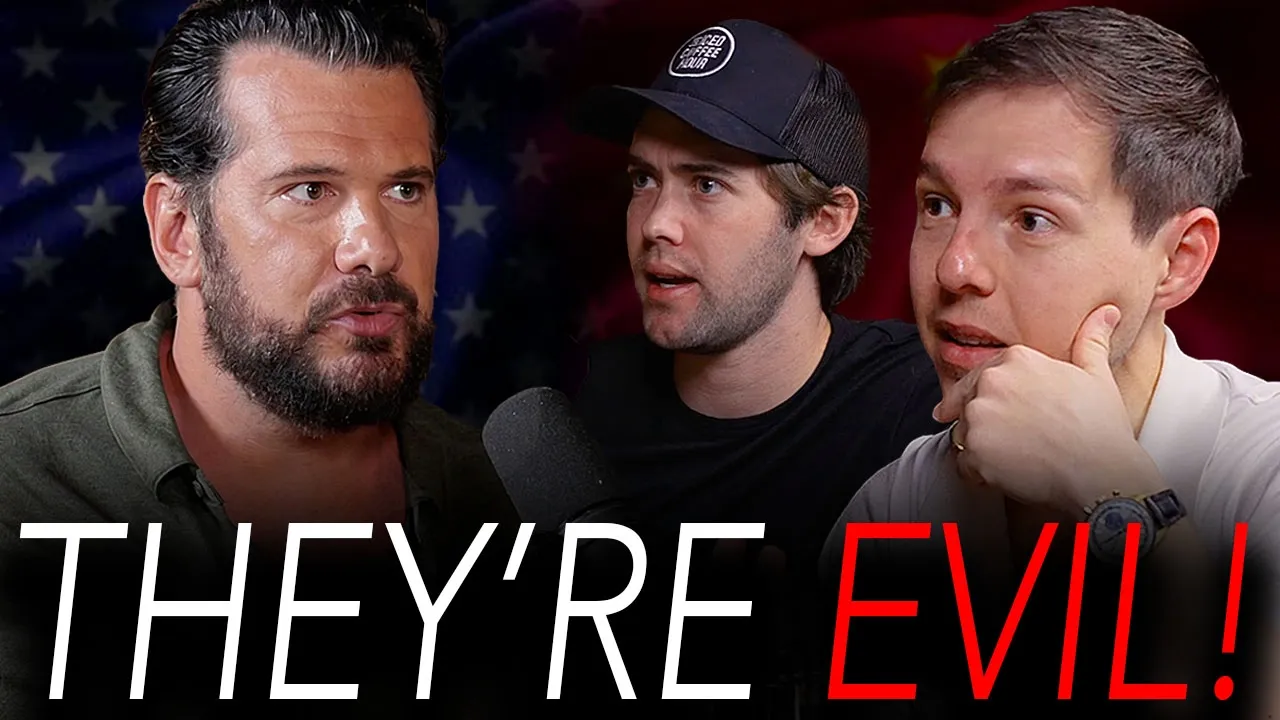
Steven Crowder reveals he rejected a 4-year, $50 million term sheet from The Daily Wire because it represented gross production revenue burdened with permanent ownership of his NIL and automatic pay cuts of up to 25% for Big Tech platform strikes. (75:17)
Crowder maintains an internal business structure funding 25 to 50 employees through an independent subscription model (Mug Club), generating an eight-figure gross run rate that relies 90% on subscriptions and only 10% on sponsorships. (58:26)
Following a costly, public divorce, Crowder warns against civil marriage contracts that economically incentivize the lower earner to file, advising prenups and spiritual commitments instead of state licensing. (127:18)
During an extensive public-figure tier list, Crowder awards S-tier rankings to Joe Rogan, Elon Musk, Tucker Carlson, Charlie Kirk, and Candace Owens, while relegating Bill Maher, Hasan Piker, and Alexandria Ocasio-Cortez to F-tier. (149:20)
Detailed notes
## Background
This interview was published on YouTube by The Iced Coffee Hour on October 4, 2026. Hosted by Graham Stephan and Jack Selby, the episode features conservative commentator and comedian Steven Crowder discussing who controls modern media and the economy, his departure from mainstream networks, business contracts, and free speech.
## TL;DR
In this extensive long-form interview, Steven Crowder breaks down the operational realities of independent conservative media, detailing why he walked away from Fox News and a $50 million term sheet from The Daily Wire over editorial control and platform penalties. Crowder elaborates on the business mechanics of his subscriber-funded Mug Club model, analyzes institutional market distortions in education and housing, and critiques Big Tech censorship under Section 230. The discussion also touches upon his personal life, including custody battles and prenuptial agreements, before concluding with rapid-fire questions and a comprehensive tier list evaluating prominent media figures and politicians.
## Atmosphere & style
The conversation carries a high-energy, candid, and combative tone that alternates between sharp industry cynicism and relaxed studio banter. Crowder drives the dialogue with rapid-fire comedic punchlines, theatrical impressions, and uncompromising rhetoric, while hosts Graham Stephan and Jack Selby ground the exchange with pragmatic financial probing and personal pushback. The atmosphere feels like an unvarnished insider tell-all, oscillating between high-stakes business strategy, courtroom reflections, and unfiltered backstage media gossip.
## Bulletin
- [01:15:17](https://www.youtube.com/watch?v=TtBS0cGQxX4&t=4517s) Steven Crowder reveals he rejected a 4-year, $50 million term sheet from The Daily Wire because it represented gross production revenue burdened with permanent ownership of his NIL and automatic pay cuts of up to 25% for Big Tech platform strikes.
- [58:26](https://www.youtube.com/watch?v=TtBS0cGQxX4&t=3506s) Crowder maintains an internal business structure funding 25 to 50 employees through an independent subscription model (Mug Club), generating an eight-figure gross run rate that relies 90% on subscriptions and only 10% on sponsorships.
- [02:07:18](https://www.youtube.com/watch?v=TtBS0cGQxX4&t=7638s) Following a costly, public divorce, Crowder warns against civil marriage contracts that economically incentivize the lower earner to file, advising prenups and spiritual commitments instead of state licensing.
- [02:29:20](https://www.youtube.com/watch?v=TtBS0cGQxX4&t=8960s) During an extensive public-figure tier list, Crowder awards S-tier rankings to Joe Rogan, Elon Musk, Tucker Carlson, Charlie Kirk, and Candace Owens, while relegating Bill Maher, Hasan Piker, and Alexandria Ocasio-Cortez to F-tier.
## Key takeaways
- [03:20](https://www.youtube.com/watch?v=TtBS0cGQxX4&t=200s) Crowder categorizes political opponents into 'Default Liberals' open to Socratic persuasion and dogmatic 'Institutional Propagandists' who must be publicly made an example of.
- [01:46](https://www.youtube.com/watch?v=TtBS0cGQxX4&t=106s) Mainstream media relies on theatrical staging and enforced ideological boundaries, illustrated by Crowder's suspension at Fox News for breaking split-screen illusionism.
- [17:41](https://www.youtube.com/watch?v=TtBS0cGQxX4&t=1061s) Nick Fuentes is characterized by Crowder as one of the sharpest, most structurally sound debaters he has faced due to detailed recall and willingness to debate openly.
- [40:55](https://www.youtube.com/watch?v=TtBS0cGQxX4&t=2455s) Sudden ideological shifts among commentators and politicians usually indicate commercial opportunism and click optimization rather than genuine philosophical epiphanies.
- [01:15:17](https://www.youtube.com/watch?v=TtBS0cGQxX4&t=4517s) Crowder rejected a $50 million offer from The Daily Wire due to punitive penalties tied to Big Tech censorship, which he argued forced creators into institutional self-censorship.
- [01:25:37](https://www.youtube.com/watch?v=TtBS0cGQxX4&t=5137s) Digital platforms exploit a regulatory loophole by claiming Section 230 liability shields as common carriers while censoring and curating speech like traditional publishers.
- [01:36:24](https://www.youtube.com/watch?v=TtBS0cGQxX4&t=5784s) Crowder argues free markets have reduced costs and boosted quality in competitive goods, whereas heavily subsidized sectors like healthcare and higher education have suffered runaway inflation.
- [01:39:46](https://www.youtube.com/watch?v=TtBS0cGQxX4&t=5986s) Housing supply gridlock stems from institutional property purchases, government-backed subprime distortions, and current homeowners locked into low 3% mortgage rates.
- [01:51:44](https://www.youtube.com/watch?v=TtBS0cGQxX4&t=6704s) Celebrity progressive activism is largely driven by Hollywood groupthink, industry incentives, and psychological guilt over rapid, unearned wealth.
- [02:07:18](https://www.youtube.com/watch?v=TtBS0cGQxX4&t=7638s) Crowder advocates for biblical household structures and warns against state marriage contracts, citing statutory divorce structures that financially reward the filing spouse.
- [02:25:58](https://www.youtube.com/watch?v=TtBS0cGQxX4&t=8758s) Tax reform should center on a flat 15% to 20% system without deductions, though Crowder notes politicians reject simplicity because tax code complexity enables vote-buying.
- [02:29:20](https://www.youtube.com/watch?v=TtBS0cGQxX4&t=8960s) Crowder evaluates media and political figures on technical mastery and leverage, assigning top rankings to Joe Rogan, Elon Musk, Tucker Carlson, and Candace Owens.
## Detailed walkthrough
### [00:00](https://www.youtube.com/watch?v=TtBS0cGQxX4&t=0s) Teaser and the "Iced Coffee" Dilemma
The episode opens with rapid-fire teasers capturing Steven Crowder’s signature combative style and uncompromising political stances. When asked if the political left is fundamentally right about anything that the right refuses to acknowledge, Crowder bluntly fires back, "Nothing." He describes how living inside an echo chamber creates massive blind spots, reveals that refusing to be politically correct has cost him "many tens of millions of dollars," and teases a pessimistic outlook on where America will be in ten years.
Sitting down at the studio table, Crowder immediately pokes fun at the podcast's premise, thanking the hosts for having him on *The Iced Coffee Hour* while pointing out the noticeable absence of any actual iced coffee. Jack Selby and Graham Stephan laughingly admit that the name was an offhand suggestion from early viewers that simply stuck, leaving them permanently locked into a brand they cannot change seven years later. Crowder jokes that he asked his producer, "Lane the Brain," whether the hosts just trapped themselves into an inventory nightmare, suggesting they should rebrand to "Your Beverage of Choice Hour" to manage expectations.
[01:46](https://www.youtube.com/watch?v=TtBS0cGQxX4&t=106s) Origin of "Change My Mind" and Leaving Legacy Media
Jack transitions into Crowder’s well-known *Change My Mind* series, recalling how he watched Crowder set up a folding table on college campuses to engage students in open-ended political, philosophical, and psychological debates. Jack asks how difficult it really is to change someone's mind. Crowder explains that the entire concept grew out of his frustration during his four and a half years at Fox News, where television producers prioritized theatrical artificiality over real conversation.
```mermaid
flowchart TD
accTitle: Legacy Media Debate vs Socratic Field Dialogue
accDescr: Flowchart contrasting 4-minute legacy cable TV panels with Crowder's Change My Mind campus conversations.
subgraph LegacyMedia["Legacy Media Model (Fox News Panels)"]
A["Segmented Quadrants (Fake Locations)"] --> B["Brevity Sacrificed for Filler"]
B --> C["Buy Up Airtime / Avoid Accountability"]
end
subgraph CampusDialogue["Change My Mind Model (Campus Setup)"]
D["Open-Air Folding Table / Sandwich Board"] --> E["Socratic Method & Rhetoric"]
E --> F["Audience Learns via Contrast"]
end
```
In television studios, producers would place panelists side-by-side in the same physical room while isolating them in separate screen quadrants to pretend one guest was in Washington, D.C. and the other in New York. Crowder recalls once getting suspended because he reached his hand across into his neighbor's camera frame and joked, "Hey, high five my quadrant," breaking the illusion for the viewers at home.
In stand-up comedy, brevity is the soul of wit—"if you can tell a joke in four words that you're telling in ten, do it in four." Legacy news debates operate in reverse: contributors are incentivized to burn through four or five minutes of airtime by rambling, repeating talking points, and avoiding accountability. Convinced that off-air discussions were vastly more compelling, Crowder wrote a book proposal centered on campus discussions. Every major conservative publisher flatly rejected it, demanding alarmist "doomsday books" about the Obama blueprint instead. After cable executives also rejected the pitch as a recurring segment, Crowder took the idea directly to the streets himself, initially strapping on a sandwich board when campuses refused to grant him event permits.
[03:20](https://www.youtube.com/watch?v=TtBS0cGQxX4&t=200s) Persuading the "Default Liberal" vs. Exposing the Dogmatist
When analyzing whether people's minds can actually be shifted, Crowder divides the public into two distinct camps:
* **The Default Liberal:** People who absorb their worldview by cultural osmosis through mainstream institutions, media outlets (ABC, NBC, CBS, CNN), and pop culture like "Rock Against Bush." Because their views are inherited rather than deeply scrutinized, they are often open to reconsideration when walked through standard rhetorical inquiries using the Socratic method.
* **The Institutional Propagandist:** Dogmatic activists and cultural gatekeepers who cannot afford to concede an inch because their entire status is staked on selling a narrative. Crowder asserts that you never change these people's minds; instead, the goal is to "make an example of them" and show how silly their arguments are so that observers watching in good faith can judge the merits for themselves.
[04:31](https://www.youtube.com/watch?v=TtBS0cGQxX4&t=271s) Gauging Good Faith and the Reality of Campus Encounters
Crowder notes that bad-faith participants usually telegraph their intentions long before they sit down at the table. Hostile posturing, shouting, and specific linguistic markers make their motives transparent: "If someone uses the word Latinx unironically," or immediately introduces themselves by announcing their pronouns, Crowder views it as an immediate signal of performative dogma.
Drawing an analogy from his martial arts training, Crowder recounts advice from his early Brazilian jiu-jitsu coach:
- "If you come and switch with me, I'm going to be switch with you."
- "You come up spicy, I'm going to be spicy."
Applying this to campus debates, Crowder matches the energy of whoever approaches the desk—granting patient respect to those who come in good faith, and meeting aggression with sharp wit.
When Jack asks whether any campus debates have ever shifted Crowder's own views toward the left, Crowder replies that the discussions have done the exact opposite. He recounts an emotional encounter during an affirmative action debate at the University of Texas at Austin (UT). A young Black woman of Ethiopian descent sat across from him and confessed that she believed she would never have been admitted to UT without affirmative action. Crowder asked about her SAT scores and high school GPA, discovering that her academic record was exceptional.
Crowder told her it was heartbreaking that she had been conditioned by the system to credit racial preference rather than her own hard work, leaving her in constant self-doubt about whether she truly belonged. Seeing that "prejudice of soft expectations" play out in real life cemented his belief that progressive institutional policies actively undermine individual self-esteem. While participants occasionally cite niche statistics or isolated foreign examples—such as pointing to social programs in small, homogeneous nations like Denmark—Crowder maintains that no student or debate partner has ever provided an argument compelling enough to alter his foundational political principles.
[08:05](https://www.youtube.com/watch?v=TtBS0cGQxX4&t=485s) What Is the Left "Right" About?
Jack presses Steven Crowder with a fundamental question: what is something the political left is right about that the right refuses to acknowledge? Crowder immediately fires back with a flat "Nothing." Jack challenges this, arguing that such an absolute stance alienates centrist, left-leaning voters. Logically speaking, Jack argues, when an educated nation is split with over a hundred million people on each side, both sides must have some merit; no single worldview can realistically be correct on every single matter. Crowder jokes that he certainly isn't infallible—admitting he had just caught himself slapping his hand on the table like the snowplow driver in *Home Alone*—but counters by asking how an entire political party like the DNC cannot find a single national figure willing to place any restrictions on abortion, or concede that a nine-month baby in the womb is indeed a baby.
When Jack clarifies that he is not talking about party machines like the DNC or RNC—which are driven by fundraising and political apparatus—but rather the broader left worldview held by everyday people, Crowder stands firm. He distinguishes between recognizing problems and proposing solutions:
- **Shared Problems vs. Divergent Solutions:** Both the left and the right agree that public education is broken, that government should serve the people better, and that wealth disparity is growing. However, Crowder argues that the left offers zero valid solutions. To wealth inequality, their answer is simply taking from one person to give to another; to education, throwing more money at a failing institution; and to constitutional rights, restricting the First and Second Amendments.
- **Tribalism and Disagreement:** Crowder explains he has been unapologetically conservative since age 12. While he might disagree with American Jews theologically, black American voters on certain topics, or billionaires on economic interests, he will still find areas of alignment with those groups as individuals. In stark contrast, he rejects the progressive left's structural solutions across the board.
[11:40](https://www.youtube.com/watch?v=TtBS0cGQxX4&t=700s) Good Ideas, School Choice, and Worldview Flaws
Crowder is asked what positive policies the political right actually brings to the table. He quickly lists border security, deporting illegal aliens, letting workers keep more of their hard-earned income, school choice, and safeguarding the First and Second Amendments. To illustrate how certain policies get needlessly tribalized in America, Crowder shares his upbringing in Quebec, Canada:
- In socialist Quebec, school choice was not a polarizing issue. If a family was willing to drive or put a kid on a bus, a student could attend any school regardless of geographic borders—a freedom he was shocked to find restricted by zip codes upon moving to the United States.
- He cites another cross-cultural example: in the UK and much of Europe, firearm suppressors are treated as polite manners to minimize noise pollution while hunting. In the United States, suppressors are demonized as cinematic assassin tools associated with mobsters and piano wire.
When pressed on where the right falls short, Crowder admits the right's messaging is often terrible, which is the primary reason he works in media. However, from a theoretical policy standpoint, he refuses to concede any core flaws in conservative philosophy. Anchoring his view in his Christian faith, Crowder explains that humans are inherently sinful and self-interested if left to their own devices, requiring redemption through Christ. Because human nature is inherently flawed, centralizing massive power into the hands of a small government bureaucratic elite—under the false assumption they will act like incorruptible priests—inevitably leads to disaster. A free-enterprise system, by contrast, operates under the assumption of human fallibility and structurally mitigates that damage.
```mermaid
flowchart TD
accTitle: Worldview Comparison on Human Nature and Power
accDescr: Contrasting the Christian conservative perspective on human fallibility with the progressive centralized government model.
subgraph Conservative ["Conservative Free Enterprise"]
A["Inherent Human Nature: Sinful & Self-Interested"] --> B["Decentralized Power & Markets"]
B --> C["Damage Mitigated / Power Checked"]
end
subgraph Centralized ["Centralized State Model"]
D["Factions Demand Broad Control"] --> E["Concentrates Power in Government"]
E --> F["Assumes Elite Bureaucrats Are Virtuous"]
F --> G["Corruption & Systemic Failure"]
end
```
[14:14](https://www.youtube.com/watch?v=TtBS0cGQxX4&t=854s) Liberal Theory, Oppressor vs. Oppressed, and Reasonable Voices
Jack shifts the focus to liberal theory itself, asking Crowder what he considers the strongest core belief of the left. Crowder answers without hesitation: **Marxism**. To truly understand modern leftism, Crowder argues, one must recognize that every issue is filtered through a rigid lens of "oppressor versus oppressed":
- **Success Viewed as Guilt:** In Marxist analysis, success and majority status are treated as proof of oppression. Wealthy people and white men are automatically cast as oppressors, while minority or marginalized groups are framed as the oppressed.
- **Contradictory Alliances:** Crowder argues this explains confusing phenomena like "Queers for Palestine." Despite the fact that LGBTQ individuals would face severe persecution under Hamas rule in Gaza, progressives fly both flags together because both are viewed as victim classes resisting dominant Western powers.
- **Selective Narratives:** He argues this framework explains why campaigns like "Stop Asian Hate" abruptly disappeared from progressive headlines once interracial crime data showed the perpetrators did not fit the desired oppressor narrative. The left, in his view, quickly discards useful groups whenever reality contradicts the narrative.
Crowder concludes that conservatives judge individual character and systemic freedom, whereas leftists reduce humanity to power dynamics. When asked who the most reasonable voice on the left is, Crowder laments that past figures like the late Alan Colmes—whose radio show Crowder used to guest on every Friday at Fox News—no longer represent the modern movement. Today, he argues, finding a reasonable leftist is nearly impossible because party loyalty demands lockstep adherence to extreme positions, such as supporting gender transitions for children and taking children away from parents who object.
Graham Stephan and Jack Selby pause the discussion to highlight sponsor Northwest Registered Agent, pointing out how unprofessional it looks when business owners operate using personal `@gmail.com` addresses. Northwest Registered Agent offers entrepreneurs free core identity services without requiring an LLC formation or paid purchases. These include a business website, custom domain, dedicated phone line, and professional email, ensuring that founders maintain full ownership of their assets and can present a credible brand identity right from launch.
[17:41](https://www.youtube.com/watch?v=TtBS0cGQxX4&t=1061s) The Toughest Person to Debate
Returning to political discussions, Steven Crowder addresses moderate figures, highlighting Piers Morgan as someone who, while occasionally annoying, will genuinely sit down, converse, and concede points despite their disagreements on issues like the First and Second Amendments. Crowder notes that true moderates are increasingly rare in today's media climate.
```mermaid
flowchart TD
accTitle: Debate Competitor Dynamic
accDescr: A comparison showing how intelligent and novice debaters impact an exchange.
subgraph Elite["Elite Opponents"]
A["Supple Rhetoric / Technical Depth"] --> B["Rigorous, disciplined clash"]
end
subgraph Novice["Novice Opponents"]
C["Wild, unpredictable tactics"] --> D["Injury / derailment (e.g., 'Jewish space lasers')"]
end
```
When asked whether debating an extremely intelligent person or an extremely stupid person is more difficult, Crowder readily chooses someone supremely intelligent. He rejects the label of being a formally trained debater himself, citing figures like Ben Shapiro or Andrew Wilson as much more technical. Using a combat sports analogy, Crowder explains that on the mats—whether in judo or Brazilian jiu-jitsu—you do not get injured by black belts, who control the pace so you can train again tomorrow; you get hurt by erratic white belts who grab and reef a leg without technique. Similarly, poorly informed debaters will throw completely wild, imaginary conspiracies like "Jewish space lasers," which derail substantive dialogue.
Crowder describes the psychological toll of debating by reflecting on a question he frequently poses to high-achieving guests like UFC champions, economist Thomas Sowell, and four-time World's Strongest Man Brian Shaw:
> "What are the harder losses to handle? Where you made a mistake—you zagged when you should have zigged... or you did everything right... and you still came up short, the opponent was better than you anyway?"
Most competitors agree that losing due to their own unforced error stings far more. Crowder notes that his worst outings stem from exhaustion, intense stress, or security disruptions. He recalls an infamous "Change My Mind" event in Austin, Texas, where Alex Jones suddenly rolled up in an armored vehicle shouting through a bullhorn, completely blowing up the permit and the event. When Crowder confronted him asking, "Alex, what the fuck?", Jones sheepishly replied that he just thought it would be funny. The two eventually bonded and became friends despite disagreeing on roughly 80% of issues.
[21:48](https://www.youtube.com/watch?v=TtBS0cGQxX4&t=1308s) Debating Nick Fuentes
Asked to name the most intelligent person he has faced, Crowder offers an answer he acknowledges will anger many: Nick Fuentes. While Crowder explicitly rejects Fuentes's worldview and remarks as abhorrent, he emphasizes that beneath the edgy clips and rhetoric, Fuentes presents a remarkably coherent, structured argument compared to others on the dissident right.
- **Fair Preparation**: Crowder made sure his production team told Fuentes upfront that he would not be ambushed; they aired his most infamous clips directly so he could address and contextualize them before engaging in debate.
- **Rhetorical Skill and Recall**: Beyond quick humor and charisma, Fuentes possesses sharp fact recall and understands how to keep opponents on their heels.
- **Willingness to Engage**: Having been cast out of mainstream conservative media institutions ("Conservative Inc." or "Big Con") since age 18, Fuentes consistently accepts invitations when challenged. While other commentators declined open invitations to sit down, Fuentes showed up and stood his ground, earning Crowder's respect for his willingness to debate in person.
[24:34](https://www.youtube.com/watch?v=TtBS0cGQxX4&t=1474s) Dream Debate Matchups: Candace Owens, Tucker Carlson, and Ben Shapiro
The discussion continues regarding political figures navigating long-form debates and public appearances. The hosts mention an appearance on Andrew Callaghan’s *Channel 5* involving Hunter Biden, remarking that some public figures succeed simply by saying yes to every invitation and utilizing humor to disarm interviewers. Steven Crowder notes that people often claim there is a "podcast version" of certain commentators who acts reasonable on outside platforms versus a more radical persona on their own show. Crowder recalls pressing one such guest on past statements regarding Joseph Stalin, only to find the guest consistent and willing to provide context rather than walk back his ideas.
```mermaid
flowchart TD
accTitle: Potential High-Stakes Political Debates
accDescr: Outline of proposed debates involving Candace Owens, Tucker Carlson, and Ben Shapiro as discussed by Steven Crowder.
subgraph ProposedDebate1["Crowder vs. Owens"]
A["DebateCon Offer: $30k"] --> B["Owens Declines"]
B --> C["Crowder Offers to Forfeit Fee to Owens"]
C --> D["Declined / Stalemated"]
end
subgraph ProposedDebate2["Carlson vs. Shapiro"]
E["Carlson Publicly Criticizes Shapiro"] --> F["Shapiro Accepts Debate Challenge"]
F --> G["Carlson Declines to Engage"]
end
```
When asked which debate he would most like to see or take part in, Crowder brings up a missed matchup with Candace Owens at DebateCon. Promoters offered him $30,000 to participate, but Owens declined the invitation. Crowder even offered to let her keep his $30,000 fee, but she still refused. While Crowder has no intention of chasing her down or raising hundreds of thousands of dollars just to secure the appearance, he still views it as an interesting prospect.
Turning to debates between third parties, Crowder points to a matchup between Tucker Carlson and Ben Shapiro, describing them as "two dogs staring [at] each other through the fence." Crowder stresses his personal rule of engagement: if you publicly chirp, insult, or call out another person—even an OnlyFans creator—you must step up and host or debate them when called out because you drew first blood. Crowder points out that while Carlson has openly insulted Shapiro, Shapiro has reportedly agreed to a debate while Carlson has declined. Though Crowder disagrees substantially with both commentators on various issues, he believes that public face-off would provide much-needed clarity for conservative audiences.
---
[26:47](https://www.youtube.com/watch?v=TtBS0cGQxX4&t=1607s) Life as Fox News’s Youngest Contributor
The hosts pivot to Crowder's early career at Fox News, noting that he became their youngest paid contributor around the age of 20 or 21. Crowder spent roughly four and a half years at the network, describing the experience as mixed: while people were kind to him, the institutional structure "sucked" creatively. Back in 2006, when his brother was one of the first 100 YouTube partners, Crowder was experimenting with online comedy. His first political video—shot in front of a blue bed sheet—was a spoof titled "Crazy Pizza Barn," where he satirized Planned Parenthood brochures using the persona of a slick used-car salesman wearing a bolo tie. That video hit 20,000 views, prompting Crowder to personally message and manually recruit his first 10,000 subscribers on YouTube, often targeting users who enjoyed political content by sharing his Michael Moore impression defending the Second Amendment.
Because conservative YouTube creators did not exist at the time, Fox News brought Crowder on simply because his style was novel. The network was not entirely sure what to do with him, but they knew they did not want a rival platform to snap him up. His contributor contract was essentially an exclusivity lock: he was paid so he could not appear on other broadcast networks. After holding his own during an appearance on *Red Eye* and an early Sunday debate on *Fox & Friends*, the producers made him a recurring fixture. He frequently debated Alicia Menendez—daughter of Senator Bob Menendez—on Sunday mornings with Tucker Carlson hosting. Eventually, Menendez's non-profit employers urged her to stop appearing, and Crowder realized his own future at the network was limited.
- Crowder manually solicited his initial 10,000 YouTube subscribers via direct messages around 2006.
- Fox News kept him under an exclusivity contract to prevent other television networks from booking him.
- Alicia Menendez frequently sparred with Crowder on Sunday editions of *Fox & Friends* hosted by Tucker Carlson.
---
[28:46](https://www.youtube.com/watch?v=TtBS0cGQxX4&t=1726s) Leaving Cable News Behind: The High School Politics of Media
As his tenure at Fox News wore on, executives frequently asked Crowder to tame his natural personality, telling him to put on a sports coat or a polo shirt and be "a little less rough around the edges." The creative mismatch became comically obvious when producers attempted to develop a comedy project with him. One elderly producer—whom Crowder jokingly compares to an Old Testament patriarch—pitched incorporating a roller-skating monkey wearing a diaper to boost entertainment value when Crowder's test segments were falling flat. Crowder, determined to produce substantive satire, knew the corporate network environment was doomed for him.
Crowder also ran headfirst into internal politics, which he characterizes as "the world's biggest high school." On one occasion, an influential producer lifted Detroit B-roll footage from Crowder’s independent YouTube channel—footage of the historic Packard Automotive Plant—and passed it off on-air as their own reporting. When Crowder complained that he funded his own field pieces out of pocket, management quietly warned him never to bring it up again because the offending party was in high standing.
When Crowder finally exited the network, *The Daily Beast* published a piece titled "The Unmaking of a Conservative Pundit," treating the 24-year-old’s departure like a professional obituary. Crowder framed the article and hung it on his office wall for years as motivation. Following the Fox split and a separate syndicated radio deal falling through, Crowder resolved to remain completely independent, refusing to ever rely on a legacy corporate paycheck again. While Fox never directly dictated lines to read on air, they frequently pressured talent away from specific topics—such as when Crowder mocked Mitt Romney during the 2012 Republican primary and publicly favored Rick Santorum’s appeal to Rust Belt working-class voters over Romney's perceived elitism.
[32:28](https://www.youtube.com/watch?v=TtBS0cGQxX4&t=1948s) Sponsors: MagBak and ZipRecruiter
The conversation pauses for a pair of brand sponsorships. First, the hosts highlight MagBak, noting that anyone investing over $1,000 into a new iPhone needs reliable protection. Beyond basic durability, the case features a built-in finger loop designed to prevent accidental drops when browsing late at night while lying down. Additional selling points include reinforced side grips, a dedicated camera button cutout, MagSafe and wireless charging compatibility, extra-strong magnets that let users stick their phone directly to metallic surfaces, and an integrated kickstand useful for FaceTiming, watching video content, or following cooking recipes. Listeners can use the promo code "ICED15" to receive 15% off their purchase.
The hosts then transition to ZipRecruiter, discussing how difficult it can be to find qualified job applicants who are genuinely passionate about an open role. ZipRecruiter streamlines hiring by prioritizing applicants based on qualifications and enthusiasm, including a feature that lets candidates submit a personal note explaining why they want the specific position. The platform holds top ratings on G2, and four out of five employers who post on the service find a quality candidate within their very first day.
[34:37](https://www.youtube.com/watch?v=TtBS0cGQxX4&t=2077s) Media Narratives and the Legacy of Andrew Breitbart
Turning back to the interview, the hosts ask Steven Crowder how major legacy media companies manage to control public narratives and dictate what is said. Crowder immediately points back to the late Andrew Breitbart and the early exposure of modern media collusion, specifically citing JournoList—an off-the-record, closed-circuit email list between journalists and figures inside the Obama administration. Leaks revealed that reporters from prominent publications, including Dave Weigel at *The Washington Post*, would coordinate narrative talking points, resulting in near-identical coverage echoing across legacy news outlets simultaneously.
Crowder remarks that mainstream giants like ABC, NBC, CBS, MSNBC, and CNN operate as virtually one and the same entity, leaving Fox News as the sole mainstream television counterweight. Growing up in Canada, Crowder had zero access to Fox News or conservative AM radio, joking that on a good day he had to drive close to the border hoping to pirate a faint AM signal out of Plattsburgh, New York, just to hear Rush Limbaugh. He found it absurd how the political left commanded virtually all of Hollywood and legacy news yet became furious that Limbaugh managed to single-handedly revive a dead broadcast medium like AM radio. When left-wing alternatives like Air America tried to compete on the airwaves, they collapsed because no one tuned in.
```mermaid
flowchart TD
accTitle: JournoList Coordination Pipeline
accDescr: Diagram illustrating how coordinated talking points flowed from political insiders through media networks down to the public.
subgraph S2["Media Outlets"]
B --> C["Major Networks & Press (ABC, NBC, CBS, WaPo, CNN)"]
end
subgraph S3["Public Narrative"]
C --> D["Synchronized Public Talking Points"]
end
```
Breitbart became deeply formative for Crowder’s career. Having begun child acting at age 12 in Canada and transitioning to stand-up comedy as a teenager, Crowder first heard Breitbart on Dennis Miller's radio show during the early internet era—back when streaming required loading audio through Flash players and GeoCities-era websites. Reaching out directly, Crowder was astonished when Breitbart spoke with him on the phone for 45 minutes "like I was a senator." Breitbart began distributing Crowder's early comedy videos across his site *Big Hollywood*, while Michelle Malkin shared them on *Hot Air*. Although Breitbart and Malkin had professional disagreements, Crowder praises them for never putting him in the middle of their internal fights.
- **JournoList:** A leaked, invite-only email distribution list of over 400 left-leaning journalists and academics that coordinated news spin and pushback against conservative stories during the 2008 election cycle.
- **Air America Radio:** A short-lived liberal talk radio network launched in 2004 that ultimately filed for bankruptcy due to low listenership and high overhead costs.
- **Big Hollywood:** The conservative entertainment and culture blog founded by Andrew Breitbart in 2008, where Crowder published his earliest political satire clips.
[36:55](https://www.youtube.com/watch?v=TtBS0cGQxX4&t=2215s) Media Hits, the Shirley Sherrod Case, and the Anthony Weiner Press Conference
Crowder details the immense toll that establishment media attacks took on Andrew Breitbart. Following the high-profile ACORN undercover sting with James O'Keefe and Hannah Giles, Breitbart was unfairly maligned over a video involving Shirley Sherrod, a Department of Agriculture official. Breitbart posted video of Sherrod speaking at an NAACP banquet describing how she once hesitated to help a white farmer, while the audience cheered. Breitbart made sure to explicitly write right beneath the clip—including exact timestamps—that later in the speech, Sherrod explained she realized her bias was wrong and that poverty was a matter of class, not race. However, cable news producers and hosts such as Bill O'Reilly and Glenn Beck lifted only the inflammatory snippet without Breitbart's context. When the administration pressured Sherrod to resign and the complete video surfaced, legacy networks blamed Breitbart for running "gotcha journalism." Rather than network editors taking responsibility, Breitbart was blacklisted from major shows for a prolonged period, which ate away at him emotionally.
Breitbart’s ultimate vindication came during the Anthony Weiner sexting scandal. Weiner had initially denied sending sexually explicit photos and messages to young women online, dismissing the story as a right-wing fabrication by Breitbart. When Weiner scheduled a major press conference at a Washington, D.C. hotel intending to deliver a statement claiming his family was being targeted by malicious conservative lies, Breitbart personally marched into the hotel. Crowder recalls bystanders shouting, "Andrew Breitbart's in the building!" Breitbart commandeered the podium moments before Weiner walked out, publicly warning that he possessed the receipts and photographs, but was holding back full release out of respect for Weiner's family while demanding a public apology for having his journalistic integrity smeared. Weiner was forced to abandon his speech, take the podium, and confess the truth on live television.
Crowder emphasizes that Weiner only felt confident enough to lie initially because he counted on every legacy media network blindly running cover for him against independent media. Reflecting on narrative manipulation, Crowder offers a rule of thumb for evaluating conspiracy theories: look at how many individual people must stay silent. Broad conspiracies like Area 51 require hundreds of low-level workers, like underground janitors, to keep secrets forever, which never holds up. By contrast, institutional media censorship does not require thousands of operatives; it is merely an informal alignment among half a dozen key executives. He points to the near-simultaneous deplatforming of Alex Jones across every major platform within 24 hours as an example of a coordinated corporate business decision rather than an impossible shadow conspiracy. When asked who is truly pulling the strings at the top, Crowder clarifies that it is not a solitary mastermind, but rather an "unholy amalgamate" combining the DNC establishment, the entrenched Beltway elite of New York and Washington, and synchronized legacy media executives who routinely mingle at the same social cocktail parties.
[40:55](https://www.youtube.com/watch?v=TtBS0cGQxX4&t=2455s) Media Herd Mentality and Shifting Principles
Steven Crowder explains that members of legacy media operate with massive collective blind spots because they all live in the same cultural bubble, attend the same private parties, and share an identical worldview. Whether dealing with Andrew Breitbart breaking the Anthony Weiner scandal—where mainstream outlets refused to make a basic phone call or ask for receipts—or overlooking Barack Obama's documented ties to radical figures like Bill Ayers, journalists tend to "move as a flock." Crowder cannot say for certain whether reporters deliberately cover for political allies or simply convince themselves that inconvenient stories are right-wing myths; the outcome remains that genuine investigative curiosity disappears whenever a story conflicts with their shared ideological narrative.
When asked whether prominent political media commentators espouse beliefs they do not actually hold, Crowder clarifies that while he avoids trying to judge personal motives, sharp inconsistencies usually expose insincerity. He points to the legal standard of a "flash of genius"—a clear, identifiable moment that explains a sudden transformation or invention. When a public figure shifts foundational principles without that kind of pivotal experience, it almost always points to political opportunism. He contrasts a woman who became a pro-life activist after a deeply personal emotional reckoning on his show with Mitt Romney’s sudden conversion when running for president:
> "Mitt Romney just said, 'No, I just thought about it.' It’s like, well, you were already Mormon. You were already allegedly a man of faith, right? So you already were supposed to have a foundational belief as to where life begins... That seems like it's political expediency."
Crowder observes that commentator flip-flopping—swinging from mainstream liberalism to conservatism and then abruptly jumping to "black-pilled" cynicism—is rarely driven by genuine revelation. Instead, the only real constant behind those sudden ideological swings is the continuous pursuit of online clicks and viral engagement.
---
[43:02](https://www.youtube.com/watch?v=TtBS0cGQxX4&t=2582s) Monetizing Ideology and Foreign Propaganda Campaigns
Addressing whether certain political viewpoints are inherently more lucrative, Crowder recalls that entering the digital political arena as an actor and stand-up comic initially brought only heavy financial losses. Long before he developed a large national following, his political statements caused him to lose both his talent agent and manager, had him banned from college campuses, and led to canceled comedy bookings. In that older legacy era, media survival required leaning reliably to the left or serving as an approved token conservative on panel shows where mainstream hosts could beat up on you just to manufacture the appearance of balance. Today’s fractured media landscape makes virtually any extreme profitable, allowing niche podcasts focused on fringe conspiracy theories to build viable business models alongside mixed martial arts shows.
```mermaid
flowchart TD
accTitle: Foreign Narrative Push via Social Media Bots
accDescr: Diagram illustrating how foreign bot campaigns push domestic anti-tech narratives while domestic competitors advance.
subgraph ForeignInfluence["Foreign Propaganda Campaign"]
A["Coordinated State Bots & CCP Accounts"] --> B["Anti-AI & Environmental Messaging on US Tech"]
B --> C["US Public Backlash & Local Resistance to Data Centers"]
end
subgraph RealityCheck["Domestic Reality"]
D["Foreign State Builds Data Centers at Record Speed"]
E["Suppression of US Tech Parity"]
end
C -.-> E
D -.-> E
```
The conversation turns to foreign governments financing narratives inside American media. Graham Stephan jokes about leaning into pro-China talking points for money, which leads Crowder to warn the editors not to cut the moment out because state-funded propaganda operations—whether from China, Qatar, Russia, Iran, or Israel—are documented facts. Addressing theories that foreign bot campaigns amplify anti-AI and anti-data center talking points to cripple American technological progress, Crowder confirms he has tracked official Chinese Communist Party accounts tweeting environmental warnings about American servers while China constructs computing facilities at record speeds. At the same time, he notes that critics should avoid dismissing genuine local community frustrations with data centers simply because foreign propagandists exploit those concerns.
Crowder also points to selective media coverage of foreign adversaries, highlighting coverage that praised Russian grocery stores and modern subway stations while omitting basic economic context:
- Reports celebrated Russian bread costing roughly 30% less than in the West while ignoring that average Russian salaries are approximately 98% lower.
- Media stunts portraying sanitized foreign infrastructure mimic staged scenes from the film *The Interview*.
- Sympathetic foreign reporting mirrors long-running left-wing romanticization of the communist Cuban regime.
---
[47:06](https://www.youtube.com/watch?v=TtBS0cGQxX4&t=2826s) Independence from Donors, Mug Club, and Political Dating Filters
Crowder reflects on how he deliberately insulated his production company from both platform control and high-dollar institutional donors. Recognizing early on that his material would provoke platform bans—functioning as an unwitting "pace car" for the demonetization wave that later hit creators across YouTube—he created the direct-to-consumer Mug Club subscription platform. Relying directly on paying subscribers kept him from depending on volatile YouTube advertising dollars or nonprofit political mega-donors who inevitably dictate coverage boundaries. Quoting comedian Patrice O'Neal’s observation that "at some point you owe," Crowder explains that big donors and corporate investors always enforce unspoken boundaries through soft power:
> "It's exerted in a soft way where you're just not allowed at the cool kids' table if you say the thing that you're not allowed to say. And then there's a cottage industry for that where now everyone just goes, 'See, we're not allowed to say, and it's all about the Jews,' and then some people, it's all about Iran, and neither one is accurate."
The talk turns to ideological gatekeeping in ordinary personal life. Jack Selby recalls how a prospective match on the dating app Hinge rescinded a connection after adding a post-match disclaimer telling conservatives not to speak with her. Selby jokes that if he looked like Channing Tatum, the user likely would have disregarded her own political test altogether. Crowder playfully counters that Selby is already a good-looking guy, teasing him that ignoring the woman’s written boundaries might have been the actual reason the connection fell apart.
[49:21](https://www.youtube.com/watch?v=TtBS0cGQxX4&t=2961s) Dating App Woes and the Reality of Las Vegas
Graham and Jack joke about dating tour dates versus romantic dates, leading Jack to share a story about a woman he matched with on a dating app. When she asked what he did for a living, he simply mentioned he makes YouTube videos. She reverse-image-searched his profile, discovered his finance channel, and complimented his work. However, she followed up by asking his opinion on featuring conservative voices on his podcast. When Jack explained that having diverse perspectives keeps content interesting and that he avoids dictating what the audience should think, she immediately told him it wouldn't work out and unmatched.
Steven teases Jack about whether he mentioned his height or wealth, prompting a playful exchange about attraction. Jack reflects on dating dynamics in Las Vegas, arguing that most attractive women there are transient visitors in town for a weekend party—often partying behind a DJ booth until 4:00 AM—rather than people looking to grab morning coffee. Steven points out that Jack built an elaborate scenario in his own mind and encourages him to have more confidence.
[51:40](https://www.youtube.com/watch?v=TtBS0cGQxX4&t=3100s) Parasocial Relationships and Boundary-Crossing Fans
Steven explains how difficult dating and everyday social life can be when someone has a public profile. He recounts a brief dating experience with a fan who knew every intimate detail of his life before he could even share it—such as the emotional story of putting his dog, Hopper, down. Because an audience watches creators for hours, fans often feel an unearned intimacy:
> "You're in a room and you're seeing faces that are completely new to you and these people think that you have an intimate relationship with them because they know you, and it causes them to act in a weird way."
Steven shares a bizarre interaction in a grocery store where an overly enthusiastic fan grabbed him from behind in the cereal aisle. After Steven agreed to take a picture, the fan placed a hand directly on Steven's hip and revealed that he too was carrying a firearm, leading Steven to back away and tell him to put it away. Jack and Graham compare this to their own experiences, noting that while their 95% male, business-oriented audience is generally polite, Jack once had a fan shake his hand for uncomfortably long while rubbing the back of his hand with an index finger, triggering a round of teasing between the hosts. Steven also points out that people often mistake his physical stature when only seeing him behind a desk, contrasting it with his colleague Gerald, who surprises onlookers by standing 6'5" and 260 pounds.
[55:31](https://www.youtube.com/watch?v=TtBS0cGQxX4&t=3331s) Which Politicians Cannot Be Bought?
Jack pivots the conversation to the influence of money in politics, asking Steven to name any politicians who genuinely do not care about money. Steven humorously suggests himself first, explaining that he naturally lives below his means, drove an old Ford for years because it had the same functional amenities (Apple CarPlay, heated and cooled seats) as a car owned by Bill Gates, and relies on friends and family to buy him things.
Moving to real political figures, Steven names Donald Trump as someone uniquely difficult to buy out of pure financial desperation, because he already had vast wealth before entering public office:
- **Financial independence:** Entering politics already wealthy reduces susceptibility to standard payoffs or special interest bribes.
- **Career sacrifice:** Stepping away from private business empires to run for office represented a genuine initial sacrifice, with media outlets even reporting losses of roughly $3 billion during his first term.
- **Commercial branding criticisms:** Steven admits he dislikes some of Trump's commercial ventures, such as licensing his name for gold sneakers and luxury watches, acknowledging Graham's counterargument that hawking branded products can look like an appetite for more money regardless of net worth.
[57:02](https://www.youtube.com/watch?v=TtBS0cGQxX4&t=3422s) Political Insider Trading and AOC's Net Worth
The discussion centers on corruption in Washington, contrasting blatant bribery—such as accepting private jet travel from Qatar—with the subtler practice of politicians shaping policy around their stock portfolios. Steven Crowder points out lawmakers who allow specific industrial subsidies to lapse while funding others, only to see their personal investments skyrocket, citing high-profile examples like Nancy Pelosi and Dan Crenshaw's lucrative tech trades. When asked whether Alexandria Ocasio-Cortez (AOC) is driven by money, Crowder and the hosts debate her public financial disclosures, which reflect a modest net worth and around $90,000 in stocks. While the hosts argue this proves wealth is not her primary objective, Crowder counters that poor money management does not equal a lack of interest in money. Instead, he argues that AOC prioritizes a different kind of capital altogether: attention. He jokes about her posting social media "thirst traps" to drive engagement, which leads into a crude, comedic tangent about female politicians' physical appearance.
[58:26](https://www.youtube.com/watch?v=TtBS0cGQxX4&t=3506s) The Mug Club Business Model and the Supplement Industry
Crowder explains how *Louder with Crowder* generates revenue. The company is funded almost entirely through its subscription membership program, Mug Club. Having launched on election night in 2016 and expanded when his content was demonetized on major platforms, Mug Club achieved the highest individual subscriber count in the independent political space, surging further during COVID-19 when the team produced two shows per day. However, Crowder anticipates subscription models will decline over time due to widespread "subscription fatigue," where audiences are burned out by endless Patreon, GoFundMe, and paywall demands, combined with the resurgence of digital piracy.
Because Crowder rejects roughly 95% of incoming sponsorship offers, he founded his own supplement venture to diversify his income. He derides typical male-enhancement and testosterone-booster advertisers, recounting a running game he plays with his producer Gerald where he guesses the ineffective filler ingredients on product labels before looking:
```mermaid
flowchart TD
accTitle: The Generic Supplement Pitch Breakdown
accDescr: Crowder's routine for identifying generic supplement formulas before pitching his own clinically dosed alternative.
subgraph GenericFormula["Generic 'Test Booster' Formula"]
A["Sponsor Pitch: 'Male Vita Test Boost'"] --> B["Predict Ingredients Without Looking"]
B --> C["Tribulus Terrestris"]
B --> D["Fenugreek"]
B --> E["Trace Minerals: Zinc & Magnesium"]
C & D & E --> F["Crowder: 'Bull crap that doesn't do anything'"]
end
subgraph CrowderAlternative["Crowder's Clean Alternative"]
G["In-House Brand: Only 2 Core Products"]
G --> H["Clinically Dosed Multivitamin"]
G --> I["Pure Creatine (Most Proven Supplement)"]
H & I --> J["Full Certificate of Analysis for Every Batch"]
end
F -.->|"Rejected In Favor Of"| G
```
Rather than peddling sham supplements, Crowder launched a brand carrying only two staple products: a clinically dosed multivitamin and creatine. Both come with transparent certificates of analysis showing the exact clinical dosages. Currently, Mug Club subscriptions make up approximately 90% of his revenue, with sponsorships and product sales accounting for 10%, though he intends for the physical product business to eventually replace subscription revenue as a sustainable staple.
- Mug Club launched during election night 2016.
- The show rejects approximately 95% of sponsor solicitations.
- The company's revenue is currently 90% subscription-based and 10% sponsorships/direct products.
- Crowder's supplement line relies on two foundational items: a clinical multivitamin and creatine, both backed by independent certificates of analysis.
The conversation pauses for a mid-roll advertisement for Shopify. The host warns aspiring entrepreneurs against taking on bloated employee overhead before securing their first sale. Drawing on personal experience launching five or six independent eCommerce stores prior to joining the podcast, the host highlights Shopify's pre-built themes and AI-powered store builder as the most effective route to launching an online storefront ahead of high-traffic shopping periods like Black Friday. Viewers are directed to `shopify.com/ich` to start a free trial.
[01:02:10](https://www.youtube.com/watch?v=TtBS0cGQxX4&t=3730s) Financial Philosophy and Team Management Mistakes
Returning to business operations, Crowder estimates his total head count is between 25 and 30 employees across remote and in-house staff, expanding to 40 or 50 individuals when warehouse and supplement distribution logistics are factored in. When asked about his personal finances, he admits he does not consider himself a financial guru; his core operating rule has always been to spend no more than 50% of his income and bankroll his life strictly on what is needed to survive. He keeps his personal capital in a broadly diversified, professionally managed portfolio of roughly 13,000 stocks and bonds targeting a standard 10% annual yield, only recently testing venture capital after being approached by a trusted peer.
Reflecting on his career, Crowder explains that commercial success was never the initial objective; rather, monetization was simply the engine required to fund his creative mission. Coming from an entertainment background influenced by late-night hosts like David Letterman and Conan O'Brien, he entered political commentary because he was exhausted by late-night comedy's uniform left-wing bias, while traditional conservative networks like Fox News told him that conservative audiences did not care for comedy.
Crowder identifies his single biggest business mistake: when he launched the company using only his personal savings, without external venture funding or non-profit donations, he paid his staff lavish salaries while taking nothing for himself. In doing so, he made the mistake of expecting his hired employees to match his intense personal drive and ownership mentality, overlooking the reality that as the founder, only he stood to gain the long-term payoff at the end of the road.
[01:04:52](https://www.youtube.com/watch?v=TtBS0cGQxX4&t=3892s) Leadership, Profit Sharing, and Building Media Alternatives
Steven discusses the personal burden of running a company, recalling early management lessons where he realized that as the boss, the buck stops entirely with him. Even with competitive salaries and profit sharing, expecting an employee to mirror an owner's 3:30 AM wake-up schedule and show up at 7:00 AM instead of 9:00 AM is unrealistic. When asked whether he currently makes more from investments or his media business, Crowder admits that purely on a financial level, he would earn significantly more if he abandoned daily production tomorrow, limited himself to a single weekly show, and returned to touring on the road.
What keeps him committed to the grind is the cause and the thrill of disrupting mainstream narratives. He points to his election coverage: in 2020 and the subsequent midterms, his team achieved some of the largest livestream audiences in the world, proving on platforms like Rumble that creators could build viable live alternatives outside of YouTube. Frustrated by network calls during the 2020 race—such as the premature call in Arizona that left him powerless despite hundreds of thousands of live viewers—Crowder invested heavily ahead of the 2024 election. His operation purchased access to the same wire services major television networks use and hired dedicated election analysts, enabling them to call states like Georgia and Michigan hours before legacy media, hitting within a single percentage point. For Crowder, proving that audiences no longer need to keep CNN running alongside their favorite podcast marks a fundamental shifting of the media landscape.
```mermaid
flowchart TD
accTitle: Evolution of Live Election Streaming Coverage
accDescr: Diagram tracing Crowder's election broadcast evolution from the 2020 controversies to independent calling capabilities in 2024.
subgraph S1["2020 Election Experience"]
A["Massive live audiences on YouTube and Rumble"] --> B["Legacy networks call Arizona prematurely"]
B --> C["Frustration: Inability to contest calls without data feeds"]
end
subgraph S2["2024 Election Capabilities"]
D["Acquired full wire service access"] --> E["Employed specialized in-house analysts"]
E --> F["Called Michigan & Georgia hours ahead of legacy networks"]
end
C --> D
```
He also contrasts his ambitions with behaviors he detests in Hollywood, citing Peter Dinklage—who played elves before publicly criticizing the casting of little people in similar roles—or Oprah Winfrey criticizing trash TV despite building her fortune on paternity tests. Crowder emphasizes that after finding success, creators have an obligation not to "pull the ladder up" behind them, making it crucial to leave fertile ground for up-and-coming talent rather than adopting the disheartening mindset he observes in parts of the modern political sphere.
[01:07:18](https://www.youtube.com/watch?v=TtBS0cGQxX4&t=4038s) Wealth, Business Valuation, and Workplace Generosity
When the conversation shifts to his personal financial desires, Crowder insists he lives simply, caring nothing for luxury cars, expensive watches, or designer clothes. His sole aspirational luxury is private aviation—what he calls "plane money"—purely because airports drain his energy, whereas having access to a private jet acts as a force multiplier for producing content, field investigations, and stand-up comedy tours. While Graham Stephan and Jack Selby discuss whether owning and operating a jet requires upwards of $10 million upfront and $2 million annually, Crowder points out that he went years without drawing a seven-figure income. Instead, he channeled nearly all company profits straight back into operations, employee salaries, health insurance, and 401(k) matching.
This lean personal compensation became a legal headache during a business valuation tied to lawsuits. The independent forensic valuator found it difficult to calculate the replacement cost of Crowder’s day-to-day role—concluding it would cost roughly $15 million to replace him as both on-camera talent and acting CEO. Because his personal salary was so low relative to his top-earning staff, the valuator initially suspected Crowder was hiding assets, unable to grasp that his second-in-command made almost as much as he did. Crowder jokes that his internal pay scale accidentally mirrors Bernie Sanders' idea that a CEO shouldn't earn more than five times their workers' pay; however, he believes such equity should stem from personal moral duty rather than state mandates. Treating his staff well functions as an active ministry:
> "I think that in your day-to-day life, you can show generosity with employees. You can show that, hey, this is commerce, but we can do it ethically and I care about you."
[01:09:45](https://www.youtube.com/watch?v=TtBS0cGQxX4&t=4185s) Generosity, Upbringing, and Perspective on Money
Crowder reflects on how wealth interacts with human character, noting an irony from his personal life: the two most generous individuals he has ever met were among the wealthiest, while the least charitable person he ever encountered was poor. To illustrate, he shares an anecdote about a wealthy friend who casually offered his private plane after Crowder was stranded—a friendship that ironically began after Crowder nearly got into a fist fight with the man's drunken attorney on an airport tarmac.
In stark contrast, Crowder recounts a memory from his early days as a struggling comic living with his manager in Queens. At the time, Crowder was nursing a cheap floor-model Gateway laptop with dead pixels and a broken disc drive, purchased at CompUSA because an even cheaper Acer machine had malfunctioned. Crowder accompanied his manager to purchase a customized Dell laptop for his manager's daughter heading off to college. Despite the father's immense pride and modest means, the daughter immediately opened the gift and complained that it was not "small and cute" like Crowder's cheap floor unit. Watching the father's crushed expression taught Crowder that gratitude stems from upbringing rather than income, cementing his belief that wealth merely amplifies whatever character already exists.
- Crowder rejects the classist idea that wealth equals malice, having met ultra-wealthy benefactors and covetous socialists alike.
- He does not classify himself as frugal, but explains he places minimal emotional weight on money itself, prioritizing generosity like paying for group dinners and funding shared experiences.
- Growing up in Montreal separated from extended family in the United States, plane tickets were an expensive barrier that often kept relatives apart for four or five years at a time.
[01:12:37](https://www.youtube.com/watch?v=TtBS0cGQxX4&t=4357s) Defining Success: Greyhound Stations, Frugality, and True Value
Steven Crowder reflects on the milestones that marked his transition into financial stability. For him, the earliest sign of "making it" was never having to set foot inside a Greyhound bus station again. Recalling grueling overnight layovers in gritty stations across Cleveland, Detroit, Pittsburgh, and Columbus—where he developed deliberate self-preservation strategies to avoid getting assaulted—Crowder emphasizes that simply being able to afford commercial airline tickets and fly his family members in without worrying about cost felt like a massive victory.
```mermaid
flowchart TD
accTitle: Practical Money vs Empty Consumerism
accDescr: Chart contrasting meaningful allocations of capital with hollow consumerist spending.
subgraph Meaningful["Meaningful Capital Deployment"]
A["Top-tier medical care<br/>(e.g., Mayo Clinic surgery)"]
B["Family security & travel"]
C["Retaining key talent & staff"]
D["Veterinary oncology for pets"]
end
subgraph Hollow["Hollow Consumerism"]
E["Luxury watches & status clothing"]
F["'Bugatti culture' & influencer flexing"]
G["Chasing earthly validation"]
end
```
Contrasting true frugality with mere wastefulness, Crowder points out his modest wardrobe and functional watch, explaining that he refuses to chase status symbols. Yet, he spends heavily where it truly matters: hiring veterinary oncologists for his sick dog, helping valuable employees relocate so they can stay with his company, or paying for specialized medical treatments. Having undergone life-altering surgery at the Mayo Clinic to treat a congenital defect—giving his heart a full, proper pump stroke for the first time in his life—he views money purely as a practical tool rather than a vehicle for clout. He expresses disdain for "Bugatti culture" and social media influencers who flaunt rented extravagance, reminding young viewers that earthly possessions cannot deliver genuine fulfillment.
- Early personal milestone: Affording airline travel instead of navigating unsafe overnight Greyhound bus hubs.
- Spending philosophy: Avoid superfluous purchases unless they tangibly improve life quality, such as Mayo Clinic healthcare or employee support.
- Moral conviction: As a Christian and free-market advocate, he rejects consumerist validation as hollow and fleeting.
---
[01:15:14](https://www.youtube.com/watch?v=TtBS0cGQxX4&t=4514s) Big Money in Politics and Fragmented Media Landscapes
The hosts transition into the sheer volume of money sloshing around modern political media, bringing up Rush Limbaugh’s historic $400 million syndication agreements and questioning whether a half-billion-dollar deal could exist today. Crowder casts doubt on that scale, explaining that the media ecosystem has become excessively fractured. Much like the era when Johnny Carson pulled Super Bowl–level television ratings every week because audiences had only three major broadcast networks, Limbaugh benefited from being a singular generational talent in an era of concentrated talk radio.
Crowder acknowledges that top-tier modern podcasters like Joe Rogan and the host of *Call Her Daddy* still command enormous multi-million-dollar paydays—comparable to or exceeding Tucker Carlson's reported $20 million annual contract at Fox News. However, Crowder distinguishes between low-overhead interview podcasts (where hosts sit across from each other with basic equipment) and production-heavy operations like *Louder with Crowder*, which fund multi-person investigative units, full writing rooms, and elaborate live broadcasts. While his personal income only crossed into the seven-figure mark a few years prior, the gross revenue generated by his media brand has sat comfortably in the eight-figure range.
---
[01:17:28](https://www.youtube.com/watch?v=TtBS0cGQxX4&t=4648s) The Truth Behind the $50 Million Daily Wire Offer
Crowder details his infamous decision to reject a $50 million, four-year term sheet from The Daily Wire, breaking down why the headline figure was misleading and structurally exploitative. The $50 million was not a direct personal salary; it was gross revenue intended to cover the salaries of more than 30 full-time staff members, set building, distribution, and overall production costs—an amount actually lower than what his operation was already generating independently. Crucially, the agreement demanded permanent ownership of his name, image, and likeness (NIL), across all distribution platforms, past content, and even future live stand-up comedy performances.
```mermaid
flowchart LR
accTitle: Daily Wire Proposed Contract Penalty Structure
accDescr: Flow diagram showing how platform suspensions triggered automatic fee reductions in the proposed contract.
A["Gross Term Sheet<br/>$50M over 4 Years"] --> B{"Platform Censorship Strikes"}
B -->|"YouTube suspension"| C["10% to 15% Fee Reduction"]
B -->|"Twitter suspension"| D["25% Fee Reduction"]
C & D --> E["Up to ~70% Instant Pay Cut<br/>(Applied to existing bans)"]
```
Crowder points to the contract's punitive fee reductions tied to Big Tech moderation:
- **YouTube Strikes:** A mandatory 10% to 15% reduction in total compensation for content suspensions.
- **Twitter Strikes:** A 25% automatic cut for platform suspensions.
- **Immediate Deficit:** Because Crowder's channels were already actively suspended across several Big Tech platforms at the time the offer was extended, signing the un-redlined deal would have slashed his contract value by roughly 70% from day one.
Crowder singles out CEO Jeremy Boreing (rather than Ben Shapiro or Texas financial backers Farris and Dan Wilks) as the architect of the terms, accusing the company of playing "dirty pool" behind the scenes. In Crowder's eyes, tethering a conservative creator's compensation to YouTube or Twitter compliance inherently pressured hosts to self-censor on contentious topics like election integrity or mRNA vaccines. Rebutting the hosts' suggestion that The Daily Wire was merely hedging its financial risk, Crowder insists the company knew his existing Mug Club subscriber base would have delivered a guaranteed profit on day one. He maintains that he would have rejected $100 million or even $200 million under the same terms, warning young creators never to sign away their autonomy or their names to institutional media networks.
[01:20:29](https://www.youtube.com/watch?v=TtBS0cGQxX4&t=4829s) Intelligence in Politics: Kamala Harris and the Internet Creator Parallel
The conversation shifts from corporate capture to raw competence, with Steven Crowder arguing that figures like Alexandria Ocasio-Cortez and Kamala Harris are fundamentally unintelligent rather than master strategists. When asked to estimate Harris's IQ, Crowder cuts straight to an explicit punchline about her early career, referencing former San Francisco mayor Willie Brown. Crowder claims Harris received an unelected city commission post after dating Brown, quipping that her resume was essentially built on personal favors and referencing Brown's candid public remarks about their past relationship. The hosts push back with playful skepticism, teasing each other's outfits—pausing briefly to banter about a sponsored Quince shirt—before Jack Selby admits he simply had not researched the topic enough to take a stance.
Crowder scoffs at their hesitation, mockingly asking whether they view the top earners on OnlyFans as members of Mensa. The hosts defend high-earning creators, pointing out that top OnlyFans performers often demonstrate exceptional marketing savvy, business acumen, and strategy if they manage themselves without agencies. Graham Stephan draws a parallel to Jake and Logan Paul, noting that while the public initially dismissed them as internet clowns, their behind-the-scenes work ethic, calculation, and operational execution proved they were remarkably sharp operators. Crowder concedes that he respects the Paul brothers' relentless drive, but insists that Harris genuinely lacks foundational intelligence.
[01:22:49](https://www.youtube.com/watch?v=TtBS0cGQxX4&t=4969s) Political Wisdom vs. Raw IQ: From Dan Crenshaw to George W. Bush
Crowder clarifies that he does not view everyone on the political left as unintelligent. He regards Bill and Hillary Clinton as brilliant, noting that "you have to be smart to get away with" what they have accomplished, whereas Joe Biden has clearly lost his edge, and Barack Obama was capable though somewhat overrated by media admirers. Turning to the political right, Crowder distinguishes between pure IQ and wisdom. He points to Representative Dan Crenshaw, whom he had hosted on his show following Crenshaw's high-profile appearance on *Saturday Night Live* with Pete Davidson. When Crowder pressed Crenshaw on whether the TAPS Act (Threat Assessment, Prevention, and Safety Act) effectively functioned as a federal red-flag gun law, Crenshaw deflected with political doublespeak and later dismissed critical audience members as unintelligent. Crowder considers turning on your own base the ultimate failure of wisdom, comparing it to an impatient father scolding a toddler for not knowing something the parent failed to teach.
By contrast, Crowder shares a parenting rule: teaching financial literacy early. By age three, his children could explain compounding interest—reciting that money grows the longer it stays in a piggy bank—in exchange for M&Ms. Surveying other Republicans, Crowder groups establishment figures like Paul Ryan, former Minnesota Governor Tim Pawlenty, and Mitt Romney into varying categories of unimpressive intellect or unearned wealth, noting Romney "started at on base three." Conversely, Crowder defends George W. Bush against caricatures of idiocy, praising his comedic timing, sharp instincts, and rapid reflexes:
> "Remember when he was dodging shoes and like he just had nicknames? Yeah, he was so fast. It was like a cat. He dodged and he'd just go around to the room and he'd be like 'Stretch, longer Stretch.' He would just have names 'cause that makes it easy to remember."
- **Dan Crenshaw Debate**: Crowder confronted Crenshaw over the TAPS Act and red-flag provisions; Crenshaw's dismissive reaction toward conservative listeners highlighted a lack of self-awareness.
- **Early Financial Lessons**: Crowder's children were taught the basic mechanics of compounding returns at three years old, earning candy rewards for explaining the concept.
- **Establishment Skepticism**: Crowder discounts the perceived business genius of figures like Mitt Romney due to inherited privilege, arguing that political pedigree often masquerades as intelligence.
[01:25:37](https://www.youtube.com/watch?v=TtBS0cGQxX4&t=5137s) Section 230, Digital Rights, and Platform vs. Publisher Accountability
When asked which critical issue receives far too little attention, Crowder points directly to the First and Second Amendments. In his view, all societal progress flows downstream from the First Amendment—the arena where ideas are debated and pressure-tested—while the Second Amendment exists to defend those rights. However, Crowder stresses that modern liberty must adapt beyond physical threats to address the digital sphere, where speech can be revoked instantly through algorithmic shadowbanning and arbitrary data control.
```mermaid
flowchart TD
accTitle: Platform vs Publisher Classification Under Section 230
accDescr: Visual breakdown of platform immunity versus publisher liability under federal law.
subgraph Platform["Common Carrier / Platform Model"]
P1["Neutral Carrier<br>(e.g., Telecom / Phone Utility)"] --> P2["Cannot censor or curate lawful speech"]
P2 --> P3["Immunity from user liability<br>(Section 230 Safe Harbor)"]
end
subgraph Publisher["Editorial / Publisher Model"]
E1["Curated Media Outlet<br>(e.g., NYT, CNN, Traditional Press)"] --> E2["Edits, filters, and promotes narratives"]
E2 --> E3["Full legal liability for defamation<br>(e.g., Nick Sandmann lawsuits)"]
end
Crowder argues that reforming Section 230 safe-harbor protections is essential. Under standard utility laws, a telecommunications provider like Verizon cannot cut off telephone service simply because a caller utters offensive speech; in return, the telecom carrier receives legal immunity for what users say across its lines. By contrast, traditional publishers such as *The New York Times*, *The Washington Post*, or CNN exercise editorial judgment, meaning they can be sued for libel and defamation, as illustrated by the substantial legal fallout from the Nick Sandmann coverage. Crowder contends that Big Tech firms exploit an unfair loophole by claiming Section 230 platform immunity while simultaneously policing user content like partisan publishers through hidden speech codes and algorithm suppression. He recalls his own high-profile 2019 demonetization controversy involving Vox Media and Carlos Maza, where legacy news outlets broadcast highlight reels isolating tame insult-comedy phrases—such as calling someone a "sprite" or a "gay Mexican"—to pressure Silicon Valley into manual censorship.
[01:28:21](https://www.youtube.com/watch?v=TtBS0cGQxX4&t=5301s) The "Vox Apocalypse" and Algorithmic Censorship
Steven Crowder recounts the origins of the infamous "Vox Adpocalypse" involving Carlos Maza, who hosted videos for Vox under the handle "Gay Wonk." Crowder explains that his show frequently critiqued video essays from Vox, Adam Ruins Everything, and John Oliver. In the Vox critiques, Crowder made disparaging quips mocking Maza’s persona, referring to him as a "lispy sprite" who sashays across the screen while pushing socialist economic ideas. While YouTube determined that the commentary did not violate their terms enough to warrant outright removal, the platform responded by completely demonetizing Crowder's channel and establishing a third regulatory category: "borderline content" guidelines.
```mermaid
flowchart TD
accTitle: Evolution of YouTube Speech Policies
accDescr: Progression from classic critique to platform demonetization and new speech restrictions.
subgraph Conflict["Initial Dispute"]
A["Critique of Vox Videos<br/>(Carlos Maza / 'Gay Wonk')"] --> B["Crowder Demonetized"]
end
subgraph PolicyShift["Policy Fallout"]
B --> C["Borderline Content Guidelines<br/>Introduced by YouTube"]
C --> D["Collateral Demonetization<br/>(History Channels, USSR docs)"]
D --> E["Corporate Media Buys YouTube Ads<br/>& Captures Algorithm"]
end
```
The resulting policy fallout triggered severe collateral damage across YouTube. History channels documenting the Soviet Stalinist regime were swept up and demonetized, negatively impacting the broader creator ecosystem. Crowder notes that when early creators joined YouTube to bypass legacy media gatekeepers, the space felt open. However, legacy media realized they were hemorrhaging influence, responded by pouring massive advertising budgets into the platform, and algorithmic preference shifted in their favor. Crowder laments that while legacy broadcast media was once governed by rigid FCC indecency standards—which at least allowed a predictable "cat and mouse" boundary game like Howard Stern played—digital creators have now self-censored into miniature FCC monitors. Self-described edgy comedians regularly bleep out benign terminology or avoid saying basic words to appease monetization algorithms.
Graham Stephan shares that he personally experienced this suppression on his channel, finding that he had to refer to global events as "the conflict in the Middle East" instead of explicitly saying "Iran war," because uttering "Iran war" consistently cut his video viewership in half.
[01:30:56](https://www.youtube.com/watch?v=TtBS0cGQxX4&t=5456s) Migrating to Rumble and the Cost of Independent Speech
Addressing Graham's example, Crowder argues that while sanitizing speech might preserve reach, maintaining uncompromising editorial independence is worth millions of dollars in sacrificed earnings. Graham and Jack Selby challenge whether Crowder could reach a broader, more moderate audience if he softened his language and did not alienate the political middle. Crowder rejects the premise, countering that mainstream audiences are not genuinely offended by straightforward terms like "Iran."
Crowder explains that he spent years attempting to maintain a foothold on YouTube to "reach the unreached," but eventually hit an ethical boundary: "I don't want to reach the unreached if I can't reach them with truth." The platform continually imposed political barriers that rendered honest reporting impossible, including restrictions on discussing sensitive subjects like suicide attempt rates among trans individuals. The final straw occurred ahead of the midterm elections, when Crowder's channel was hit with two strikes:
- **Hosting Kari Lake**: An interview during her political campaign.
- **Reporting CDC mortality tables**: Pointing out official CDC statistics showing that infant and toddler influenza fatalities during that flu season exceeded all cumulative COVID-19 infant deaths. Even though YouTube conceded the data was factual, they flagged the segment under the rationale that it might cause people to take COVID less seriously.
Facing excessive sanitization, Crowder transitioned his primary live broadcasts to Rumble and X, setting an 11:00 a.m. Eastern live-show schedule with unedited, real-time broadcasts that pull hundreds of thousands of concurrent live viewers, while retaining YouTube strictly as a distribution channel for edited clips. When asked to tally the financial cost of refusing to be politically correct, Crowder estimates the losses in the "many tens of millions of dollars," factoring in zero YouTube ad monetization across his main channel (5–6 million subscribers) and secondary bits channel (1–2 million subscribers), alongside missed audience growth.
[01:35:16](https://www.youtube.com/watch?v=TtBS0cGQxX4&t=5716s) Money in Politics and Generational Economic Realities
Turning to issues that are over-discussed yet impossible to resolve, Crowder singles out campaign finance and the perennial promise to eliminate "money in politics." Activists routinely demand the overturn of *Citizens United*, often without understanding the case’s legal origin—a documentary critical of Hillary Clinton that the Clintons attempted to suppress, prompting the Supreme Court to rule that corporations and associations retain free expression rights. Crowder points out that neither Democrats nor Republicans actually want money removed from the system. In Texas, for instance, Democratic candidate James Talarico was significantly outspending Attorney General Ken Paxton by roughly $35 million to $5 million.
The discussion transitions to whether younger generations are facing insurmountable economic hardships, and to what extent those difficulties stem from government policy versus individual choices. Crowder cautions against dismissive generalizations like "OK boomer," noting that younger people frequently mislabel anyone over thirty as an out-of-touch boomer. However, he acknowledges that valid systemic grievances exist regarding government entitlement structures and the economic reality facing younger Americans entering the economy.
- YouTube channel metrics pre-demonetization: 60 to 80 million views monthly (prior to YouTube Shorts).
- Total platform distribution penalty: Estimated 35% viewership sacrifice alongside tens of millions in gross ad revenue.
- Viewership benchmarks: Record live audiences during the 2020 election, surpassing 500,000 concurrent live viewers on Rumble during the 2024 election cycle.
[01:36:24](https://www.youtube.com/watch?v=TtBS0cGQxX4&t=5784s) Generational Wealth, Competition, and Financial Habits
The conversation turns to the economic divide between generations. Jack and Graham point out that young people pay heavily into entitlement programs like Social Security with little guarantee they will ever receive a payout. Conversely, older generations bought smaller homes (around 1,100 to 1,400 square feet) and endured mortgage interest rates as high as 12%.
```mermaid
flowchart TD
accTitle: Government Intervention vs Market Pricing
accDescr: Diagram illustrating how free market forces lower consumer goods prices while government subsidies inflate core life staples.
subgraph FreeMarket["Free Market Competition"]
A["Consumer Electronics & Goods\n(TVs, Smartphones, Groceries)"] --> B["Increased Competition & Volume"]
B --> C["Lower Relative Prices & High Utility"]
end
subgraph StateIntervention["Heavy Government Intervention"]
D["Higher Education & Subsidies\n(Federal Loans & Grants)"] --> G["Distorted Market Incentives"]
E["Housing Policies & Guarantees\n(Fannie Mae & Freddie Mac)"] --> G
F["Healthcare System & Mandates\n(ACA / Obamacare Subsidies)"] --> G
G --> H["Massively Inflated Living Costs"]
end
```
Crowder argues that Baby Boomers faced a fundamentally different competitive landscape. He contrasts past immigrant groups—such as Cubans fleeing Castro or dissidents defecting from the USSR, who integrated, opened small businesses, paid taxes, and overwhelmingly voted conservative—with today’s globalized tech market, where an educated domestic graduate finds themselves outsourced to lower-cost labor overseas:
> "One wanted to become a part of the great experiment that is America, was grateful. The other is an entitled... India is better, so I'm going to do the job and send the money to India."
At the same time, Crowder insists that younger people make poor personal finance choices. He notes studies showing young adults are four to eight times more likely to order from delivery apps like DoorDash. By contrast, he regularly saves money by making breakfast for dinner three nights a week at home. Both points can coexist: older generations can be out of touch with modern economic pressures, while younger Americans often falsely believe no other generation has ever endured hardship.
[01:38:06](https://www.youtube.com/watch?v=TtBS0cGQxX4&t=5886s) Why Everyday Tech Is Cheap While Core Staples Skyrocket
Crowder breaks into an impression of Ben Shapiro debating economics and Patrick Bet-David boasting about high-status metrics, before addressing a core libertarian insight: while consumer technology has plummeted in price and delivered supercomputer-level processing to everyone's pocket, critical life staples have spiraled out of control.
Crowder and Graham establish a clear comparison between sectors:
- **Free-Market Dominance:** Consumer electronics, mobile phones, televisions, internet access, and grocery distribution benefit from robust commercial competition, which drives down overall consumer costs relative to purchasing power.
- **Government Distortions:** Sectors heavily subsidized or regulated by the federal government—specifically higher education, housing, and healthcare—have become exorbitantly expensive.
Crowder asserts that universities overcharge because they know federal loans, grants, and taxpayer-backed scholarships ensure they get paid regardless:
> "Because if you don't overcharge for education right now, basically forcing someone to take out a loan, you're leaving money on the table because Uncle Sam makes that up."
[01:39:46](https://www.youtube.com/watch?v=TtBS0cGQxX4&t=5986s) Institutional Investors, Subprime Loans, and the 2008 Crash
The hosts debate what is driving the housing affordability crisis. Crowder points to institutional investors buying up large swathes of single-family housing in markets like Atlanta (where institutional penetration has reached near 25%), preventing first-time buyers from entering the market. Graham counters with data showing that mega-corporations own only about half a percent of the total residential rental market nationwide, arguing that the real gridlock comes from current homeowners locked into historically low 3% mortgage rates who cannot afford to sell and move.
Crowder links the structural instability of the housing market back to the 2008 financial crash and the concept of "predatory lending" depicted in *The Big Short*. He questions why any commercial bank would deliberately issue a home loan to someone who clearly could not repay it:
- A bank traditionally profits by lending money at interest and relying on steady, long-term amortization payments.
- Lenders abandoned these standards because federal policy, via government-sponsored enterprises (Fannie Mae and Freddie Mac), guaranteed a liquid secondary market to buy up subprime mortgages under political pressure to expand minority and low-income homeownership.
- Because lenders could offload bad loans immediately without carrying the default risk on their balance sheets, moral hazard took over.
- When borrowers defaulted on zero-down, 2% teaser-rate mortgages, foreclosure moratoria and government interventions prolonged the distortion instead of letting the market clear.
Crowder concludes that the exact same dynamic undermines modern American healthcare. Graham agrees, noting he personally pays $900 per month for a bare-bones catastrophic health insurance plan under the post-Affordable Care Act framework, illustrating how government subsidies distort consumer pricing across the board.
[01:44:00](https://www.youtube.com/watch?v=TtBS0cGQxX4&t=6240s) Government Meddling and the Young Generation's Cost of Living
Steven Crowder argues that the skyrocketing cost of living for young Americans is concentrated in sectors where competition has been crushed by heavy federal government interference: housing, higher education, and healthcare. While boomers dismiss younger complaints by pointing out that luxuries are cheap—noting that anyone can pick up a Cricket phone for four dollars or a Westinghouse television for $50 that used to run $1,500—Crowder asserts that the essentials are broken. He emphasizes that younger Americans have access to more information at their fingertips than any humans in history, yet they constitute the first generation that is "fatter, sicker, and dumber than those before them." While personal choices play a role, he stresses that conservatives and Republicans make a huge mistake by flippantly telling young people to simply pull themselves up by their bootstraps, because in reality, the deck is genuinely stacked against them regarding housing and education.
Graham Stephan counters by asking where this trajectory leads. If young people cannot afford basic life milestones, Graham's logical conclusion is that the government will inevitably raise taxes or penalize the wealthy to force prices down until people feel they have a fighting chance. Crowder pushes back against raising taxes, stating that the economic squeeze is further compounded by illegal immigration—estimating the unauthorized population anywhere from a low of 20 million to a high of 40 to 60 million—which puts immense strain on social safety nets and housing demand.
```mermaid
flowchart TD
accTitle: Broken Sectors vs Luxury Deflation
accDescr: Diagram illustrating how government interference inflates essentials while consumer tech gets cheaper.
subgraph Deflated["Consumer Goods (Competitive Market)"]
A["Smartphones ($4 Cricket)"]
B["Electronics ($50 Westinghouse TVs)"]
end
subgraph Inflated["Critical Life Sectors (Heavy Government Meddling)"]
C["Housing Supply & Institutional Buying"]
D["Higher Education & Subsidized Loans"]
E["Healthcare & Bureaucratic Monopolies"]
end
Deflated -->|"Cheap luxuries mask deep issues"| F["Economic Disconnect"]
Inflated -->|"Crushing Cost of Living"| F
```
[01:45:56](https://www.youtube.com/watch?v=TtBS0cGQxX4&t=6356s) Immigration, H-1B Visas, and Corporate Offshoring
Crowder outlines what he sees as necessary multi-pronged administrative solutions to restore balance to the economy. He praises executive actions restricting institutional investors from gobbling up single-family homes, stripping federal student loans away from degrees with little economic viability, curbing preferential home loans exploited by foreign visa holders, and ramping up deportations. Addressing criticisms from purists who feel the administration has not gone far enough, he asks, "Did you vote for perfect or did you vote for more than ever?" pointing to record ICE arrests and aggressive H-1B visa reforms.
To combat companies undercutting American workers, Donald Trump proposed a $100,000 fee on H-1B visas. Crowder explains the premise: if H-1Bs truly attract the "best and brightest" executive or engineering talent making $500,000 a year, a $100,000 surcharge should be negligible. When an initial attempt dropped overseas applications by 87% before being struck down by a Democratic judge, an executive workaround was implemented to apply fees across all new H-1Bs. When Jack Selby questions why corporations wouldn't simply offshore jobs directly rather than paying American workers, Crowder responds that while certain foreign supply-chain reliance makes sense—such as importing raw steel from Eastern European nations like Latvia or Lithuania when domestic mills cannot immediately spin up—importing millions of people to depress wages and wire remittances abroad guts domestic labor. Crowder characterizes this dynamic not as late-stage capitalism, but as "early stage socialism" driven by predatory corporate vultures who have abandoned the shopkeeper's ethos of creating honest value for consumers in order to squeeze portfolio margins.
- Low-to-high estimates of illegal immigrants cited between 20 million and 40–60 million, draining an estimated $100 billion to $400+ billion annually from taxpayers.
- Trump's proposed $100,000 fee on H-1B applications prompted an 87% decline in new overseas filings.
- Border inflows reportedly dropped by 94% following strict enforcement measures.
[01:50:14](https://www.youtube.com/watch?v=TtBS0cGQxX4&t=6614s) Practical Advice for Young People and the Community College Route
Turning the conversation to actionable steps, Jack asks what an everyday young person sitting in their bedroom can do right now to survive and get ahead without waiting for national policy reforms. Crowder lays out direct, pragmatic advice: spend less than you earn, consider going to trade school or community college, find inexpensive rent far outside major metropolitan centers, and make tough lifestyle sacrifices in the short term to build capital until opportunity strikes.
Jack shares his own experience, noting that community college is massively underrated; his first semester cost only $7 due to a local high school partnership before he leveraged California's TAG (Transfer Admission Guarantee) program to transfer into UC Santa Barbara (UCSB). While Jack jokes that the actual education was "horrible" and Crowder quips that for $7 the school sounded unaccredited, Jack highlights that basic general education prerequisites teach little of practical substance anyway, whether taken at a cheap local college or at Stanford. The segment winds down in banter, with Crowder observing that Jack rose like a "phoenix" out of community college and jokingly advising him to put Crowder's compliment—that he seems "sharp enough"—directly on his Hinge dating profile to guarantee zero matches.
[01:51:44](https://www.youtube.com/watch?v=TtBS0cGQxX4&t=6704s) Why Celebrities Take Strong Political Stances
Jack Selby asks why celebrities—ranging from Billie Eilish to other A-list and high-profile stars—consistently take aggressive political stances, wondering whether Hollywood institutions push an agenda through them or if the stars themselves feel a personal obligation or "karmic debt" to speak out. Steven Crowder responds that Jack's observation is partially right, but argues that a primary factor is that many entertainers are fundamentally unintelligent, insulated, and out of touch. He notes that within creative fields and modeling, people frequently achieve fame due to god-given natural beauty or innate artistic talent rather than a grueling grind of traditional business discipline.
Crowder asserts that historically in Hollywood, publicly declaring oneself a leftist carried only career benefits, whereas open conservatives faced legitimate blacklisting and risked becoming *persona non grata*. He recalls a specific moment watching *The Oprah Winfrey Show* while living in Canada during the era of Sean "Puffy" Combs's "Vote or Die" initiative, alongside guests like Cameron Diaz and Jake Gyllenhaal. Crowder recalls being stunned by a comment from Diaz, who argued that choosing not to vote was tantamount to endorsing sexual assault. Crowder explains that this realization pushed him toward conservatism because he concluded that representatives should not be chosen by uninformed voters who are merely pressured into the voting booth by celebrity campaigns.
- Crowder views celebrity political involvement as an exercise in groupthink that directly shields and boosts their entertainment careers.
- In his view, voting campaigns that demand universal turnout regardless of civic awareness incentivize politicians to cater to the least informed segments of the population.
---
[01:54:16](https://www.youtube.com/watch?v=TtBS0cGQxX4&t=6856s) Hollywood Guilt and Cultural Influence
The conversation shifts to why wealthy celebrities often champion socialist economic ideas even when politics has nothing to do with their craft. Jack and Graham suggest that taking progressive stances serves as an easy career accelerator, which Crowder agrees is a quick ticket to moving up the Hollywood ladder. Crowder contrasts the sudden fortune of performers with that of entrepreneurs who build companies from scratch—such as franchisees opening multiple Jack in the Box locations or renting manufacturing equipment. Because actors can jump from poverty to tens of millions of dollars without ever having to sign the front of a paycheck, manage overhead, or build a company, Crowder argues they often suffer from guilt and mistakenly assume everyone else's wealth is merely a matter of blind luck.
When Jack asks Crowder to summarize in a single sentence why the general public cares about celebrity political stances, Crowder points out that "everything is downstream from culture," emphasizing that American pop culture—not oil or iron ore—is the country's single largest export. When Jack asks what he would say to ordinary people who let celebrities dictate their political opinions, Crowder quips that they are likely women influenced by trends like *Eat, Pray, Love*, where people seek out romanticized spiritual experiences in places like India without understanding the ground realities.
---
[01:56:11](https://www.youtube.com/watch?v=TtBS0cGQxX4&t=6971s) Debate over India, Cultural Values, and Business
When Jack asks if Crowder has ever visited India, Crowder states that he has not and never will. He cites his fundamental dislike of the caste system, the concept of *jugaad* (which he interprets as a mindset that views exploiting loopholes and gaming systems as a virtue), and the prevalence of international call-center scams. Jack attempts to negotiate a hypothetical challenge, asking if a $3 million payout would convince Crowder to take a one-week vacation to India. Crowder jokes that he would star in a Bollywood film under that deal as long as he was supplied with ample bottled water and wet wipes. When Jack immediately tries to renegotiate the offer down to $2 million, Crowder teases him about haggling after a contract is struck, prompting Jack to jokingly invoke his own Jewish heritage.
Crowder asserts that contractors in North Texas have faced business disputes where clients attempt to renegotiate prices after construction finishes, claiming this stems from a broader ethical difference rooted in theological systems. Crowder argues that a karmic framework—where bad behavior is seen as self-contained or acceptable if one avoids immediate repercussions—contrasts sharply with Western Judeo-Christian beliefs regarding ultimate moral accountability before a creator. Jack directly pushes back against these generalizations, sharing that his personal and professional experiences working with Indian individuals have been overwhelmingly positive, making it difficult for him to accept Crowder's negative characterizations. Crowder clarifies that his criticism is aimed at the overarching worldview and cultural systems rather than a blanket judgment on every individual person.
[01:59:05](https://www.youtube.com/watch?v=TtBS0cGQxX4&t=7145s) Travel Pitches and Japanese Culture
The conversation opens with Graham Stephan and Jack Selby pitching an international travel show to Steven Crowder. Suggesting a trip to India as the only way to settle things, Jack envisions an episodic series titled *"A Grumpy Old Man Abroad in His 30s,"* where Crowder travels the world, sits down for meals across different cultures, films his unvarnished reactions, makes jokes, does impressions, and engages in mild debates. Crowder jokes that it would require $3 million to make him do an episodic series, and when asked what it would take for him to film in Japan, he jokes about having to eat a live frog smiling back at him.
Despite the humor, Crowder admits he genuinely wants to visit Japan, though he has never been. Graham describes visiting Japan and finding it incredible, yet openly observant of its insular nature. Graham mentions being turned away from bars because he was white, but remarks that he accepts it as the business owners' prerogative. Crowder agrees, comparing Japan's strict immigration policies to the United States:
```mermaid
flowchart TD
accTitle: Immigration Policy Comparison
accDescr: Visual flowchart comparing U.S. and Japanese approaches to immigration and culture as discussed by Crowder.
subgraph US["United States Approach"]
U1["Estimated ~40M undocumented immigrants"]
U2["Continuous political push to admit more"]
end
subgraph Japan["Japanese Approach"]
J1["Immigration restricted near 3% threshold"]
J2["Hard limit set: preserves homogeneous culture"]
J3["Quick deportations and distinct social norms"]
end
```
To illustrate Japan's cultural comfort with overt stereotypes, Crowder references MMA fighter Bob Sapp ("The Beast" from *The Longest Yard*), a 360-pound ripped Black fighter who became a massive celebrity in Japan. Sapp appeared on billboards and in commercials eating bananas; as Sapp recounted, the society did not hate him, but rather had zero filter regarding blunt ethnic caricatures. Crowder concludes that Japan remains a deeply homogeneous culture where "Japan is for the Japanese," and argues that an equivalent national standard should be treated as acceptable for America.
When Graham and Jack counter that Japan faces an economic decline and a collapsing birth rate that may ultimately force them to open up immigration and incentivize tourism to avoid dwindling away, Crowder expresses skepticism. Acknowledging that his off-camera producer ("Lane the brain") studied in Asia and knows far more about the region, Crowder argues that flooding the nation with third-world immigration is not the solution. He points to deeper systemic issues: a broken work-life balance and a cultural heritage stemming from the "samurai spirit" where individual life was subsumed under the collective.
As an example of this profound cultural divide, Crowder recounts watching a documentary about Japan's suicide forest (Aokigahara). He watched an outreach worker approach a man in a tent who admitted he was not doing well. The volunteer simply urged the man to think of his family, the man agreed, and the worker walked away hoping for the best, because Japanese culture remains deeply respectful of individual autonomy. Crowder remarks that the culture is so foreign it feels like another planet, though he would still prefer visiting Japan over India.
[02:02:41](https://www.youtube.com/watch?v=TtBS0cGQxX4&t=7361s) The Real Steven Crowder: Image vs. Reality
Jack asks how much of the persona seen on camera is actually the real Steven Crowder. Crowder answers that he is "the same guy, just turned up to an 11." He addresses public misconceptions, explaining that his comedy background dictates how he treats those he loves most: in a comedy gym, you relentlessly roast the people closest to you.
Crowder points out that his core circle has remained identical for decades:
- **Johnny Boy:** Works at the company and has been his best friend since age 12.
- **Gerald:** Close friend for over 20 years.
- **His father:** One of his best friends and someone he considers one of the funniest men alive.
- **Company retention:** Multiple employees have stayed with the company for 7 to 11 years.
He attributes negative public narratives about his workplace to a few disgruntled former employees, some of whom were fired with cause or struggled with drug addiction. While outsiders would likely find the internal banter shocking, Crowder views the tight-knit studio dynamic as the achievement he is most proud of.
When asked what the public gets most wrong about him, Crowder reveals that while people assume he constantly seeks conflict, he is privately shy and conflict-avoidant. He describes himself as a recluse outside of work, not out of misanthropy, but because he reserves all non-working hours for the small group of people who truly matter rather than going to industry parties or networking events.
When pressed on a fair criticism of his character, Crowder readily admits that everyone in his life constantly tells him to relax and dial down his intensity. He recalls being sent to a high school guidance counselor in Quebec at age 15—not for disciplinary infractions, drinking, or promiscuity, but because the administration thought he acted like a tightly wound "grumpy old man." Crowder had fired back at the counselor by enumerating his bleak routine:
> "Why am I so tightly wound? I don't know. Maybe because I don't see the sun for six months out of the year. When I get out of here and get in the 225 bus, it's already dark and I come back in the next day, do it all over again... Oh, wait. I've got four hours of homework when I go home. It's going to go on my permanent record and a government test here in Quebec, where 75% of us are going to fail and I'm not good at anything."
That counselor visit led the school to enroll him in a grappling club to manage his stress alongside at-risk youths headed for juvenile detention, sparking his lifelong involvement in Brazilian jiu-jitsu.
Regarding whether he is difficult to work with, Crowder explains that internal staff like Molly and Lane have to force him to take days off, whereas external parties might find him difficult simply because they operate on completely different creative wavelengths.
[02:05:46](https://www.youtube.com/watch?v=TtBS0cGQxX4&t=7546s) Politics, Compatibility, and Relationships
The conversation shifts to interpersonal relationships when Jack asks if someone can successfully date across political lines. Crowder draws a sharp distinction based on the nature of the relationship: casual dating across political divides is easy, but a serious, long-term marriage with children is not feasible without shared core values.
Crowder points to political strategist James Carville and his Republican wife Mary Matalin as a rare exception, arguing Carville views politics as an elite game. For ordinary families, however, Crowder asserts that political beliefs reflect fundamental moral values that parents must pass down to their children:
- **Casual flings:** Political differences are irrelevant.
- **Marriage and parenting:** Shared fundamental worldviews are mandatory.
- **Evolving views on compatibility:** Crowder notes that as he has aged, he has moved firmly toward traditional gender roles, rejecting modern culture's assumption of male-female interchangeability in favor of recognizing fundamental, biological differences between men and women.
[02:06:45](https://www.youtube.com/watch?v=TtBS0cGQxX4&t=7605s) The Biblical Family Ideal and Navigating Public Divorce
Steven Crowder outlines his core view of the family structure, calling the societal shift away from traditional roles "corrosive." Citing the biblical model where the husband is the head of the household and called to love his wife as Christ loved the church while she submits to him, he argues that the cultural ideal must remain a single-income home where the mother personally raises the children rather than outsourcing care to daycares or nannies. While acknowledging practical exceptions exist, he insists society must aim for that standard rather than normalizing two parents permanently absent from the home.
```mermaid
flowchart TD
accTitle: Crowder's Perspective on Divorce Court Realities
accDescr: Diagram illustrating how legal court outcomes contrast with public media narratives.
subgraph Legal["Court of Law"]
A["Under-Oath Findings"] --> B["No Infidelity Proven"]
A --> C["Extortion Claims Reviewed"]
C --> D["Custody Terms Finalized"]
end
subgraph Media["Court of Public Opinion"]
E["Public PR Campaigns"] --> F["Sensationalized Narratives"]
F --> G["Unsubstantiated Rumors"]
end
```
The conversation turns to Crowder's high-profile, contentious divorce. Asked what the public got right versus wrong, Crowder establishes a firm boundary, stating he refuses to litigate the details publicly because the other party is the mother of his children, and his overriding priority is ensuring his kids love, respect, and obey both parents. He remarks on the stark divide between public gossip and sworn court proceedings:
- He highlights that as a matter of court record under oath, he never committed infidelity, contrasting that with sensationalized online stories that read "like a Lifetime movie."
- He mentions a judge allowed what he characterized as an extortion-driven PR campaign to proceed, though he ultimately chose to drop related legal actions.
- He expresses deep gratitude to independent observers who took the time to review the actual court transcripts and records rather than accepting viral accusations at face value.
- He notes that while custody battles heavily disadvantage men—with fathers losing primary custody roughly 90% of the time—he managed to maintain an active role and did not forfeit primary custody.
---
[02:09:36](https://www.youtube.com/watch?v=TtBS0cGQxX4&t=7776s) Cultural Double Standards, the Lindsay Clancy Case, and Legal Biases
Crowder broadens the conversation about systemic prejudice against men by analyzing the case of Lindsay Clancy, a Massachusetts mother accused of strangling her three young children (ages five, three, and eight months). He expresses horror that public sympathy coalesced around the mother while media commentators and online observers blamed her husband. Despite evidence that the husband took paternity leave, worked remotely to support her, hired a nanny, and was out picking up prescriptions and dinner at the time of the killings, public opinion still accused him of not doing enough.
Crowder rejects explanations citing postpartum psychosis or overmedication, stating he is haunted by what the second child experienced watching the first child being murdered. He criticizes public figures like Candace Owens and Court TV polls where over 60% of respondents sympathized with Clancy, contrasting this sympathy with how society universally reviles male serial killers like Jeffrey Dahmer, John Wayne Gacy, or Ted Bundy. He argues this reflects a dangerous refusal to hold women accountable, paired with legal statistics showing women initiate around 70% of divorces for reasons rarely involving physical abuse or infidelity.
---
[02:11:18](https://www.youtube.com/watch?v=TtBS0cGQxX4&t=7878s) Marriage, Prenuptial Agreements, and State Incentives
Crowder confirms he did not have a prenuptial agreement in his own marriage, calling his experience an eye-opening lesson. He criticizes evangelical Protestant churches for discouraging prenups under the claim that preparing for divorce invites failure, comparing that mindset to the naive assumption that no spouse could ever harbor destructive or opportunistic motives:
> "Money and violence create clarity. Unfortunately, violence creates clarity as far as sides; money clarifies relationships where people say, 'Yeah, yeah, I'll do it for you,' and then money gets involved and you realize, wait a second, someone's intentions are a little bit different."
Crowder analyzes the structural problems embedded in state-sanctioned marriage:
- **Financial Disincentives:** Crowder describes civil marriage as the only state contract where the lower-earning party is financially rewarded for breaking the agreement, fueling a multibillion-dollar divorce industry.
- **The Kentucky Custody Precedent:** In Kentucky, where the law established a default presumption of 50/50 shared parenting time, divorce filings plummeted sharply because children could no longer be used as financial or emotional leverage.
- **The "Seatbelt" Analogy:** While Jack Selby compares a prenup to a car seatbelt—a sensible precaution you wear without expecting a car crash—Crowder agrees, adding that reasonable agreements ensure no party is left destitute while shielding both sides from predatory incentives.
- **Future Marriage:** When asked if he would ever marry again, Crowder answers without hesitation that he would enter a spiritual covenant before God, but remains deeply skeptical of signing another legal marriage contract with the state.
The hosts transition into a series of short-format, one-sentence questions to wrap up the interview.
Asked which political stance he has changed his mind on over the course of his career, Crowder immediately points to international trade. While he previously supported standard free-market trade orthodoxy, he shifted his perspective once he saw firsthand how globalist trade arrangements disadvantage domestic workers and result in profoundly unfair economic outcomes. The hosts then ask what belief he feels least certain about as the questioning continues.
[02:15:07](https://www.youtube.com/watch?v=TtBS0cGQxX4&t=8107s) Rapid-Fire Political Reflections and Practical Advice
The quick-fire exchange begins with Steven Crowder reflecting on his political commentary career. Asked whether he has ever seriously contemplated stepping away from politics, he admits he thinks about quitting "all the time." Covering daily politics has made him "less happy for large seasons" of his life, calling it a relentless "soul suck" because one is constantly confronted with the darkest sides of human nature, though he feels better equipped to handle the emotional toll now that he has matured. When asked about common debate failures, Crowder pinpoints operating from a false premise or leaning on obvious straw-man arguments as the most frequent errors. Looking back across his lifetime, he rates Donald Trump as the best president and Barack Obama as the worst, citing the corrosive long-term impact of Obama's policies.
Despite systemic frustrations, Crowder remains optimistic about America's trajectory over the next decade. When asked for life advice for young people struggling today, he sidesteps purely political prescriptions, focusing instead on psychological purpose and self-worth:
> "I think a lot of people are struggling with meaning and purpose, and that needs to come from self-esteem. There's only one way to actually generate, to create real self-esteem: Find something that you maybe have an aptitude for. Get really good at it. Get excellent at something. That will be the baseline for true self-esteem... and then biblically esteem others first. Serve others first."
[02:16:47](https://www.youtube.com/watch?v=TtBS0cGQxX4&t=8207s) Hypothetical Truth-Serum Questions for Famous Figures
The hosts propose a game where Crowder is granted a hypothetical truth serum to administer to prominent public figures, forcing them to answer one question with complete honesty. Crowder runs through the roster with a mix of satire, personal grievances, and dark humor:
- **Alexandria Ocasio-Cortez (AOC):** "Are those real?"
- **Tucker Carlson:** "Why the flip?"
- **Ben Shapiro:** "Why didn't you show up for the debate that we were going to have?" (Crowder clarifies that despite the friction, he still maintains respect for him).
- **Bernie Sanders:** "Taupe or bleach straightjacket?"
- **Nick Fuentes:** "Is there a world in which bridges could be built with people who've objectively wronged you? And is there a world in which you think that you could work alongside some people who would surprise folks? Or do you want to be doing what it is that you do forever?"
- **Hillary Clinton:** "Why'd you kill that guy?" / "Why'd you [kill] those guys?"
- **Elon Musk:** "Why Ashley St. Clair? Why didn't you see that one coming a mile away?"
- **Peter Thiel:** "Is your blood bag human like part-time or full-time? Are they salaried or is it like a contractor?"
[02:18:00](https://www.youtube.com/watch?v=TtBS0cGQxX4&t=8280s) Crowder Turns the Tables on Graham and Jack
With the main interview winding down, Crowder reverses roles and quizzes Graham Stephan and Jack Selby on their long-term business relationship. Graham recalls that they have worked together for roughly seven and a half years out of his decade-long YouTube career. Their partnership began when Jack sent an unprompted, eager email stating he "would do anything" for an opportunity at a moment when Graham was drowning in work. Crowder jokes that sending an "I'll do anything" email to a strange man sounds like an awkward romantic setup, quipping that the tactic "worked for Kamala Harris." Graham started Jack on menial administrative tasks, progressing to video editing and management, eventually making him an equal partner in their ventures.
Crowder asks if they have ever had massive blow-up fights. Jack explains they never blow up in anger, but he gets frustrated by Graham's technical blind spots and "general incompetence" with production setups—pointing out that Graham ran power cords over audio cables (creating line hum) and misconfigured the background framing. Graham fires back that Jack's biggest flaw is being "lazy," refusing to respond to texts promptly, and prioritizing "life balance" over relentless grind in his twenties. Jack defends himself, stating that while Graham might work harder in his shoes, he is deeply satisfied with his output and the channel's rapid growth.
Crowder points out how he intentionally played a psychological game on the two hosts:
```mermaid
flowchart TD
accTitle: The Loyalty Dynamic
accDescr: Diagram illustrating how external criticism unifies internal partners who banter and nitpick.
subgraph Internal_Dynamic ["Internal Working Dynamic"]
A["Jack critiques Graham's technical errors"] <--> B["Graham calls Jack lazy & work-life balanced"]
end
subgraph Crowder_Intervention ["Outside Provocation"]
C["Crowder piles on: 'Graham wins; calling someone lazy is soul-crushing'"]
end
subgraph Unified_Defense ["Immediate Mutual Defense"]
D["Jack steps back: 'I work hard, but Graham is great'"]
E["Graham defends Jack: 'We are equal partners'"]
end
Internal_Dynamic --> C
C --> Unified_Defense
```
Crowder remarks that by siding aggressively with Graham against Jack, he triggered an immediate protective response where both hosts sprang to defend each other. Crowder explains that this instinct illustrates genuine loyalty: outsiders hearing them bicker might assume a toxic work environment, but true partners will fiercely defend each other the moment an outsider joins the attack. Jack and Graham laugh, admitting that their bond is close enough that they still split cheap hotel rooms on travel days to save $250 to $300. Crowder empathizes, mentioning his childhood best friend of thirty years who writes comedy sketches for him; they used to split rooms until his friend's terrifying, apnea-like snoring made sharing a room physically unendurable.
[02:22:48](https://www.youtube.com/watch?v=TtBS0cGQxX4&t=8568s) Dating Advice for Jack and Maturing into Your Thirties
The conversation wraps up a running joke about Graham Stephan and Jack Selby rooming together and dealing with sleep apnea, with Crowder playfully remarking, "You two are a cute couple." Crowder then asks Graham about his earlier comment regarding Jack's priorities being out of whack. Knowing that Jack works relentlessly, Crowder wonders if Graham wants to see him settle down with a partner and what kind of woman he needs.
Graham shares his philosophy on relationships, arguing that Jack—who is 27 and about a month and a half shy of turning 28—should wait until he is at least 30 to pursue a serious relationship. Graham reasons that the caliber of person Jack could attract today is nothing compared to who he could attract in two years if he spends that time purely focused on expanding his career and building his wealth. Crowder dryly jokes that pointing out that a man becomes more attractive to women by becoming wealthier and more successful is considered "horrible misogyny" and "reeks of management" in modern discourse. Graham defends his perspective by explaining that between his twenties and turning thirty, his own priorities and identity shifted dramatically, and entering that decade allows a man to truly solidify who he is and know what he wants.
[02:24:02](https://www.youtube.com/watch?v=TtBS0cGQxX4&t=8642s) How Steven Crowder Became Conservative
Crowder counters that he personally has always been the exact same person and recounts the childhood incidents that cemented his conservative worldview. Growing up in Quebec, his first political epiphany came when he was 11 or 12 years old in a drama class led by a self-described communist teacher.
```mermaid
flowchart TD
accTitle: Crowder Childhood Political Epiphanies
accDescr: Two early school incidents that turned Steven Crowder toward conservatism.
subgraph DramaClass["Quebec Drama Class"]
D1["Teacher: Return all land to Native Americans"] --> D2["Crowder: 'Which ones? The Algonquins or Iroquois?'"]
D2 --> D3["Teacher labels question 'Right-wing'"]
D3 --> D4["Dad explains political spectrum; Crowder embraces label"]
end
subgraph DisarmamentClass["Nuclear Disarmament Lesson"]
N1["Teacher: U.S. must lead global nuclear disarmament"] --> N2["Crowder asks if Russia, China, France will comply"]
N2 --> N3["Teacher answers: 'Well, hopefully'"]
N3 --> N4["Crowder rejects logic: 'Stupidest thing I've ever heard'"]
end
```
The teacher claimed that all land should be given back to Native Americans. Having just walked out of a history class detailing the conflicts between the Algonquins and the Iroquois, young Crowder simply asked, "Well, which ones?" since the tribes had been at war with each other. Outraged, the teacher scolded him, calling the question "just so right-wing." When Crowder asked his father what that phrase meant, his father broke down the political spectrum. Crowder decided right then, "Okay, I'm that," and returned to class the following day to announce to his teacher that he was right-wing and did not want to return the land, sending her into a frenzy.
The second turning point occurred during a classroom discussion on nuclear disarmament. The teacher insisted that the United States needed to eliminate its entire nuclear stockpile because nukes could destroy the world multiple times over. When Crowder pressed her on whether hostile foreign powers like Russia, China, and France would follow suit, she admitted that there was no binding guarantee and merely offered, "Well, hopefully." Crowder decided on the spot that it was "the stupidest thing I've ever heard in my life." Shortly thereafter, receiving his first paychecks and having his father explain income tax deductions solidified his permanent shift to the right.
[02:25:58](https://www.youtube.com/watch?v=TtBS0cGQxX4&t=8758s) Fiscal vs. Social Conservatism and Political Corruption
Graham reflects on his own political stance, describing himself as fiscally conservative but socially liberal in the vein of Dave Rubin: he does not care what people do in their personal lives as long as it does not directly affect him, but he despises watching tax money get squandered on bloated bureaucracy, permits, and foreign expenditures. Crowder pushes back against the idea that fiscal and social conservatism can be neatly separated. He argues that government overspending on radical social programs is the natural byproduct of a "godless view of government" divorced from the constitutional constraints established by the Christian Founding Fathers. Without those guardrails, Crowder warns, taxpayers inevitably end up financing projects like "LGBTQ drag shows in Iraq."
Crowder also articulates his definition of deep-seated political corruption:
- **Redistribution as vote-buying:** Corruption is not simply embezzlement or enriching one's personal investment portfolio; it is promising an electorate "ill-gotten gain at the cost of someone else."
- **Institutionalized theft:** Crowder stresses that in any other circumstance, taking money from one person to hand to another without consent is a crime, yet politicians exploit it as the easiest mechanism to lock down a loyal voting base.
[02:27:47](https://www.youtube.com/watch?v=TtBS0cGQxX4&t=8867s) Tax Rates and the Flat Tax Debate
When Graham asks where the line falls between legitimate taxation and outright theft, Crowder points to economic data regarding historical revenue collection curves (referencing the Hauser's Law dynamic), noting that total tax revenue collected consistently settles between 16% and 21% of GDP regardless of top marginal rates. Beyond that range lies a severe point of diminishing returns. Morally, Crowder believes a fair tax rate would be 10%, but practically advocates for a flat tax rate.
Both agree that a simplified flat tax of 15% to 20%—with virtually no loopholes, write-offs, or bracket schemes—would be optimal. Graham emphasizes that such a system would treat someone earning $100 the exact same as someone earning $100 million, while allowing the entire tax code to fit onto ten pieces of paper. However, Crowder concedes it will never happen under the current political structure because the entire political industry and both political parties benefit from using the complex tax code to "rob Peter to pay Paul" to buy votes.
[02:29:20](https://www.youtube.com/watch?v=TtBS0cGQxX4&t=8960s) The Public Figures Tier List: Joe Rogan at 'S' Tier
Jack introduces an on-screen tier list, handing the mouse to Crowder to rank various prominent cultural and political personalities from "S" tier down to the lowest rank. Crowder clarifies the rules of engagement before placing anyone, refusing to rank people simply on whether he agrees with their personal ideologies. Instead, he decides to grade them on their effectiveness and mastery within their chosen professional fields.
Crowder starts by placing Joe Rogan straight into the **S-tier**:
- Crowder hails Rogan as a true pioneer of modern broadcasting and long-form podcasting.
- He recalls watching Rogan years ago from the den of his high school girlfriend's house when Rogan famously confronted Carlos Mencia on stage for stealing jokes.
- Crowder highlights that Rogan cited Dave Chappelle and regular *Louder with Crowder* guest Nick Di Paolo as his primary writing inspirations, underscoring Rogan's enduring comedic roots and unmatched cultural influence.
[02:30:22](https://www.youtube.com/watch?v=TtBS0cGQxX4&t=9022s) The Political Figure Tier List: AOC, Bernie Sanders, and Media Figures
Steven Crowder works through an interactive tier list of political commentators, politicians, and media personalities, grading them largely on their effectiveness in their chosen niche rather than purely on ideology. He puts Alexandria Ocasio-Cortez (AOC) in F tier, while placing Bernie Sanders in C tier. Crowder argues that while he vehemently opposes Sanders' socialist views, Sanders has done an effective job maintaining his brand: "He needs to maintain the lie. He needs to convince people that he's a man of the people even though he has three houses." Crowder quips that having one house means you are doing well, two is luxury, but with three houses, "nobody needs that," and one certainly does not get to claim to be a socialist.
Moving to conservative commentators, Crowder rates Ben Shapiro as A tier. Despite personal and philosophical disagreements, Crowder admits Shapiro excels at positioning himself next to business ventures, taking calculated risks, and generating massive revenue. Charlie Kirk gets an S tier placement simply because, as Crowder jokes, "there's no answer that would be even acceptable" without causing immense backlash. In contrast, Bill Maher receives an F tier. Crowder calls him fundamentally unfunny, accuses him of stealing three or four jokes from him over the years, and shares his annoyance that Maher's call screeners never let him on the show because they preferred figures like Tomi Lahren or S.E. Cupp.
Candace Owens is placed in S tier after Crowder weighs two standards: while he would give her an F if graded on political depth or cultural contribution, she deserves top marks for successfully pivoting to become the "next Oprah" and tapping into an audience composed mostly of stay-at-home true-crime fans. He notes how effectively she whitewashed her past as a liberal who was previously very pro-Israel. Destiny is brushed off as someone Crowder largely ignores and gets dropped next to Sanders in C tier. Don Lemon lands in D tier; though Crowder believes he deserves an F, he gives him slight credit because making fun of Lemon has brought him personal amusement.
| Figure | Tier Assigned | Crowder's Primary Rationale |
|:--- |:--- |:--- |
| Alexandria Ocasio-Cortez | F | Ineffective substance and hollow posturing. |
| Bernie Sanders | C | Effective at preaching populism despite owning three personal homes. |
| Ben Shapiro | A | Shrewd business mind; excellent at turning ventures into revenue generators. |
| Charlie Kirk | S | Pragmatic placement; any lower rating would cause severe outrage. |
| Bill Maher | F | Accused of joke theft; refused to book Crowder; rarely funny intentionally. |
| Candace Owens | S | Successfully created a massive non-political market of true-crime suburban moms. |
| Destiny | C | Largely ignored by Crowder; grouped alongside Sanders. |
| Don Lemon | D | Terrible journalism, but provided endless comedic entertainment to mock. |
[02:32:36](https://www.youtube.com/watch?v=TtBS0cGQxX4&t=9156s) Tech Titans, Governors, and Commentators: Musk to Nick Fuentes
Crowder assigns Elon Musk an S tier, remarking that it is nearly impossible to rank the world's richest man anywhere lower, even though he disagrees with Musk on numerous issues and jokes that someone with that much unilateral influence "could always potentially be the Antichrist." California Governor Gavin Newsom is noted as frustratingly effective at staying politically viable despite governing a poorly managed state. Hasan Piker receives an F tier, with Crowder pointing out that he generally ignores him, but citing an incident where Piker participated in an event in Cuba that allegedly caused a power outage at a local hospital.
Ohio Senator JD Vance gets placed in B tier as a promising figure Crowder likes but still holds reservations about. Jordan Peterson is ranked in A tier; Crowder calls him a genuinely good man whom he knew from Canada long before Peterson blew up in the United States, wishing him recovery through his family's personal health trials. Matt Walsh is slotted into B tier—a popular host whose views Crowder mostly shares, though Walsh lacks the equity and reach of Shapiro. Megyn Kelly also gets B tier, as Crowder feels uncertain about her political trajectory after she moved from advocating medical transitions for minors to right-leaning commentary, remaining a traditional media employee rather than a business owner.
Nick Fuentes receives an A tier. Crowder explains that although he disliked Fuentes for a long time and disagrees with most of his views, he respects that Fuentes built an audience as an independent outsider and willingly defends his beliefs on any platform willing to host him. Crowder then swiftly gives Barack Obama a D tier, calling him a "diversity hire." Piers Morgan is placed in B tier for mastering his lane as the "Maury Povich of YouTube."
```mermaid
flowchart TD
accTitle: Crowder's Commentary Tier List Logic
accDescr: Flowchart illustrating how Crowder categorizes political figures based on business acumen and audience capture versus traditional ideology.
subgraph Elite_Operators["S & A Tier: High Effectiveness & Autonomy"]
Musk["Elon Musk (S)<br>World's wealthiest; unmatched leverage"]
Owens["Candace Owens (S)<br>Pivoted to untapped true-crime audience"]
Shapiro["Ben Shapiro (A)<br>Top equity-builder & media strategist"]
Fuentes["Nick Fuentes (A)<br>Uncompromising outsider brand"]
Peterson["Jordan Peterson (A)<br>Authentic intellectual influence"]
end
subgraph Mixed_Performers["B & C Tier: Popular Employees & Moderates"]
Trump["Donald Trump (B)<br>S-tier immigration; mixed first term"]
Carlson["Tucker Carlson (S)<br>Survives scandals; evades hard pushback"]
Walsh["Matt Walsh (B)<br>Consistent message; lacks equity"]
Kelly["Megyn Kelly (B)<br>Employee status; shifted stances"]
Sanders["Bernie Sanders (C)<br>Sells populism with three homes"]
end
subgraph Underperformers["D & F Tier: Partisans & Antagonists"]
Obama["Barack Obama (D)<br>Dismissed as diversity figure"]
Lemon["Don Lemon (D)<br>Weak commentary; fun to mock"]
AOC["AOC (F)<br>Performative politics"]
Maher["Bill Maher (F)<br>Unfunny; accused of joke theft"]
Hasan["Hasan Piker (F)<br>Cuba concert controversy"]
end
```
[02:35:02](https://www.youtube.com/watch?v=TtBS0cGQxX4&t=9302s) Evaluating Donald Trump and Tucker Carlson
When evaluating Donald Trump, Crowder splits his record: on the issue of immigration, Trump ranks as an S tier, while the rest of his administration sits at a B tier. Looking at Trump's current standing, Crowder places him overall in the B tier, reflecting that his first three years in office were A tier and speculating he could climb back into A tier over time.
Turning to Tucker Carlson, Crowder asks which era is being judged—the bow-tie libertarian on CNN and CNBC, the primetime Fox News anchor, or the independent host today. Crowder initially suggests A tier, comparing Carlson to an undefeated boxing champion who deliberately avoids challenging opponents: Carlson beats up on soft targets like Ted Cruz or Mike Huckabee while avoiding guests who might expose his shifting stances. However, Crowder upgrades Carlson to S tier for showmanship, survival instincts, and the ability to reinvent himself after crises. Crowder notes that even when leaked text messages showed Carlson mocking Donald Trump and holding contempt for Trump's base, Carlson managed to reassert his dominance as an independent media force.
[02:36:46](https://www.youtube.com/watch?v=TtBS0cGQxX4&t=9406s) Podcast Wrap-Up and Episode Outro
Graham Stephan and Jack Selby thank Crowder for using their digital tier list interface, remarking how engaging extended tier list debates can be when creators provide genuine nuance instead of brief ratings. Crowder turns the critique back onto the hosts, grading Jack and Graham an "A-minus tier" as interviewers. He tells them they have great banter and complement each other well, noting that reaching S tier simply requires making their name universally synonymous with finance content on YouTube. Crowder admits he is usually evasive about doing guest appearances on external podcasts, but agreed to appear because finance creator Andrei Jikh ("the Brain") spoke very highly of them.
The hosts joke about Crowder's relationship advice, with Jack mentioning his struggles on dating apps like Hinge. Crowder recommends attending church or a synagogue to find a wife. Jack clarifies that he is ethnically Jewish but not observant, prompting Crowder to jokingly tell him to "accept Christ in church." Graham concludes the episode by thanking the crew, highlighting Chris Camillo for lending the "Sky House" studio space, and reminding channel members that the complete uncensored cut is available. The episode closes with a brief preview of an upcoming discussion on housing market data, national real estate price drops, and challenges facing first-time homebuyers.
- Crowder's host rating for Graham Stephan and Jack Selby: A-minus tier.
- Production location credit: Sky House, provided courtesy of investor Chris Camillo.
- Next episode teaser focus: Conflicting real estate metrics, declining new home builds, and the debate over whether an impending national housing price crash will benefit prospective buyers.
[02:38:54](https://www.youtube.com/watch?v=TtBS0cGQxX4&t=9534s) Preview of the Next Episode: The US Housing Market Warning
The episode concludes with a rapid-fire teaser for the upcoming show, diving straight into ominous parallels between the current housing market and historical downturns. A guest points out that existing home sales are currently hovering around 4 million units—a depressed volume roughly identical to the levels seen during the 2008–2009 financial crisis, widely considered the worst crash in eighty years. Compounding this stagnation, the disconnect between housing costs and median income has reached an unprecedented extreme: "The gap between what home buyers need to earn and what they actually make has never been wider."
The discussion moves to recent real estate anomalies defying the conventional wisdom of perpetual appreciation. When asked what the single most surprising development of the past three months has been, the guest highlights sudden, sharp value drops—pointing to instances where buyers purchased a home for $500,000 only to watch its value plummet to $400,000, an outcome consumers were repeatedly told was practically impossible. While property as an asset class remains fundamentally viable, it sits at historically expensive valuations, prompting a direct warning that "for the vast majority of people in the US, be very careful if you're buying." Though forecasters do not anticipate entire markets plunging by catastrophic margins like 65%, broader systemic declines across entire regions are actively on the table.
- Existing home sales sit near 4 million, matching the lows of the 2008–2009 Great Recession.
- The gap between required homebuyer income and actual earnings is at an all-time peak.
- Certain markets are already witnessing immediate $100,000 valuation drops on $500,000 purchases.
## Video description
Northwest Registered Agent: Level Up Your Business's Online Presence Today at https://www.northwestregisteredagent.com/ich
MagBak: Get 15% off of ANY product using code ICED15 at https://creators.magbak.com/theicedcoffeehour9tn
ZipRecruiter: Try ZipRecruiter for FREE at https://ziprecruiter.com/ICH
Shopify: If you’re ready to launch your business before Black Friday, go to https://shopify.com/ich to start your FREE trial
For sponsorships or business inquiries reach out to: icedcoffeehourpartnerships@gmail.com
Apply for The Index Membership: https://entertheindex.com/
For Podcast Inquiries, please DM @icedcoffeehour on Instagram!
Timestamps:
00:00:00 - Intro
00:01:46 - How To Change Anyone's Mind
00:08:05 - What Is the Left "Right" About?
00:16:28 - Sponsor: Northwest Registered Agent
00:17:41 - The Toughest Person To Debate
00:25:22 - Revealing the Fox News Contract
00:32:28 - Sponsor: Magack
00:33:41 - Sponsor: ZipRecruiter
00:34:37 - How Media Controls The World
00:43:02 - How Much Money There Is In Politics
00:55:31 - Which People Can't Be Bought?
01:01:02 - Sponsor: Shopify
01:02:10 - The Worst Business Mistake
01:15:17 - Why Steven Walked Away From $50M
01:20:33 - The Dumbest Person In Politics
01:25:37 - The True Cost of Free Speech
01:35:16 - Are Young People Financially Screwed?
01:40:00 - The 2026 Housing Crisis
01:51:52 - Why Celebrities Get Political
02:02:41 - The ACTUAL Steven Crowder
02:07:14 - Divorce, Prenups & Marriage
02:14:51 - Rapid Fire Questions
02:24:02 - How He Became Conservative
02:29:20 - The Tier List
02:38:37 - Next Episode Preview
*Some of the links and other products that appear on this video are from companies which Graham Stephan & Jack Selby will earn an affiliate commission or referral bonus. Graham Stephan & Jack Selby are part of an affiliate network and receives compensation for sending traffic to partner sites. The content in this video is accurate as of the posting date. Some of the offers mentioned may no longer be available.
In an interview on The Iced Coffee Hour, conservative commentator Steven Crowder argues that federal intervention has distorted core American economic markets, while defending his combative media career and ideological positions.
Market Distortions and Generational Cost Pressures
Crowder contends that while unhindered free markets drive down the prices of consumer electronics and mobile devices, heavy federal intervention and subsidies have inflated the costs of essential sectors: housing, healthcare, and higher education. He argues that universities routinely overcharge students because federally backed student loans guarantee institutions get paid regardless of outcome, saddling younger Americans with unmanageable debt.
Corporate Labor Practices and Immigration Policy (105:56)
Crowder defends protective labor policies, advocating for institutional barriers against foreign labor undercutting domestic wages. He supports proposals such as imposing a $100,000 fee on H-1B visas, arguing that if companies genuinely utilize the program to recruit irreplaceable elite talent earning top salaries, the surcharge should be manageable rather than prohibitive. Furthermore, he backs restrictions preventing institutional investors from buying single-family homes and urges increased deportations to relieve cost-of-living pressure on American workers.
Media Independence and Platform Deplatforming (90:56)
Reflecting on his transition from traditional cable networks like Fox News to independent digital distribution, Crowder claims that strict adherence to political correctness costs creators substantial income but safeguards essential editorial freedom. He notes his eventual departure from YouTube to Rumble occurred after receiving strikes for reporting official CDC influenza mortality tables and hosting political candidate Kari Lake, arguing that platforms operating under Section 230 protections censor speech while shielding themselves from the liabilities that regular publishers face.
Debate Tactics, Rhetoric, and Cultural Commentary (3:20)
Crowder categorizes public political debate participants into 'default liberals,' whose culturally absorbed views can be unpacked via Socratic questioning, and dogmatic activists, whom he argues must be publicly exposed rather than persuaded. In evaluating political peers and cultural figures, he rates Donald Trump as a 'B tier' overall but 'S tier' on immigration enforcement, places Joe Rogan and Tucker Carlson in 'S tier' for platform innovation and resilience, and ranks Hasan Piker in 'F tier.'
Crowder maintains an optimistic outlook for the long-term future of the United States despite systemic grievances, advising struggling young people to build genuine self-worth through acquiring specialized competence rather than waiting on structural political changes.
## Detailed walkthrough
### [00:00](https://www.youtube.com/watch?v=TtBS0cGQxX4&t=0s) 播客开场与“冰咖啡时间”名字的幕后趣闻
节目以一系列激烈的快问快答精彩集锦拉开序幕:当被问到“左翼有什么根本上是正确的、而右翼不愿承认的事”时,Steven Crowder 毫不留情地回答“一无所有”;面对“改变一个人的想法有多难”,他直言“看情况”;而谈及因不符合政治正确(PC)而损失的收益时,他表示损失已多达“数千万美元”。此外,针对未来 10 年对美国的前景是乐观还是悲观,他坦言“大家不会喜欢这个答案”。
集锦结束,主持团队热烈欢迎 Steven Crowder 来到《The Iced Coffee Hour》。Crowder 开玩笑吐槽,来到这个播客却根本没有“冰咖啡”喝。他透露自己进门前还问制作人 Lane(“Lane the Brain”),主持人是不是多年前脑子一热起了这个名字,结果后来发现每次录节目都得准备库存咖啡,把自己给彻底套牢了。主持人笑称百分之百被他说中了:频道名字虽然叫这个,但其实没什么深意,只是 7 年前观众觉得听起来顺耳就沿用至今,谁也没想到播客后来会做这么大。Crowder 称赞他们今天的成功全靠辛勤付出,并调侃以后干脆改名叫“自选饮品时间”(Beverage of Choice Hour)。
```mermaid
flowchart TD
accTitle: 对话者分类与应对策略
accDescr: 根据受众类型采取苏格拉底提问法或公开揭露驳斥的逻辑流向图
A["现场对话者分类"] --> B["默认型自由派 (Default Liberals)"]
A --> C["神话与宣传灌输者 (Ideologues / Purveyors)"]
subgraph Group1 ["默认受众"]
B --> B1["深受流行文化与主流媒体熏陶"]
B1 --> B2["善意沟通、缺乏不同视角"]
B2 --> B3["策略:苏格拉底提问法 (修辞引导认知)"]
end
subgraph Group2 ["意识形态宣传者"]
C --> C1["深度绑定立场、拒绝承认漏洞"]
C1 --> C2["尖叫敌对、使用特定流行术语"]
C2 --> C3["策略:公开驳斥 (当作典型反面教材)"]
end
```
### [01:46](https://www.youtube.com/watch?v=TtBS0cGQxX4&t=106s) “改变我的想法”(Change My Mind)与传统辩论的本质区别
主持人提到自己从高中末期、大学初期就通过 Crowder 的知名系列节目“改变我的想法”(Change My Mind)认识了他。该系列中,Crowder 会前往各大大学校园摆摊,挂上写有争议性观点的牌子,邀请路人坐下交流,由此引发了许多关于政治、哲学和心理层面的精彩讨论。主持人借此提问:要改变一个人的想法究竟有多难?
Crowder 回忆自己在福克斯新闻(Fox News)任职四年半的经历。当时电视新闻多采用多屏分格画面,即便嘉宾在同一个演播室,制作方也会刻意营造出两人分别身处华盛顿和纽约的假象。有一次,Crowder 因为开玩笑伸手跨过屏幕中线去跟旁边的嘉宾击掌而被停职,制片人指责他打破了观众对两地连线的幻想。在传统媒体辩论中,嘉宾的策略往往是尽量拖延时间、车轱辘话反复说、消解问责并假装高深;而 Crowder 从脱口秀中领悟到的则是“言贵精炼”(Brevity is the soul of wit)——能用 4 个词讲清楚的笑话绝不用 10 个词。传统电视节目几分钟的争辩毫无深度,因此他产生了去线下与普通人真实对话的想法。起初他向保守派各大出版社推销这一书籍提案,却遭到全盘拒绝,因为当时出版界只迷信批判奥巴马的“末日论书籍”;在线上提出这个策划案也没人看好,最终他只能自费挂上三明治广告牌走上街头去实践。
Crowder 强调,改变别人的想法取决于对方是哪类人:
- **默认型自由派(Default Liberals)**:这类人在成长过程中受主流媒体(如 ABC、NBC、CNN、CBS、CNBC)和流行文化(如当年的“反布什摇滚”)影响,只要不刻意涉足政治,默认立场就会偏左。他们并非怀有恶意,而是从未接触过其他视角。面对这类人,运用苏格拉底式的提问法(Socratic method),往往能促使他们反思并改变观点。
- **神话与宣传的灌输者(Purveyors of Propaganda)**:这类人已经与某种意识形态深度绑定,哪怕逻辑漏洞百出也必须硬着头皮兜售。对这类人,试图说服毫无意义,唯一的办法是在辩论中彻底拆穿他们,让旁观者看清其荒谬之处,从而为心存善意的听众树立理性的参照。
### [04:31](https://www.youtube.com/watch?v=TtBS0cGQxX4&t=271s) 如何识别沟通对象的诚意与平权法案的故事
在判断对话者属于哪一类人时,Crowder 表示有一些非常显眼的特征:例如情绪失控的尖叫、充满攻击性的举止,或是非反讽式地使用某些特定流行词汇(例如“Latinx”),抑或是一坐下来就主动声明人称代词(Pronouns)。他引用自己早年在巴西柔术(Jiu-Jitsu)白带时期的教练原则:“你对我温和,我就对你温和;你带刺而来,我也会带刺反击。”也就是说,他会根据对方的态度来匹配对等的气场,但无论如何,只要对方走上前,他都会首先报以尊重。
当被问及“是否有人在节目中改变过你的想法”时,Crowder 给出了出人意料的回答:坐在那张桌子前,不仅没有让他向左倾斜,反而让他变得“更加激进偏右”。他分享了在德克萨斯大学奥斯汀分校(UT Austin)录制关于“平权法案(Affirmative Action)存在种族歧视”主题时的心碎经历。当时一位埃塞俄比亚裔女大学生坐下来,表示如果不是因为平权法案,自己根本不可能考上这所大学。然而在 Crowder 追问她的 GPA 和 SAT 分数后,发现她的成绩极为优异,完全配得上录取资格。Crowder 当时对她说:
> “你必须明白,你完全配得上坐在这里。这与你的肤色毫无关系。如果你误以为自己全靠平权政策才被录取,不得不每天怀疑自己若是白人是否就考不上,那该有多可悲。”
看到那位女生脸上被怀疑主导的神情,Crowder 深受触动。他认为,除了通过自身努力达成目标外,没有其他途径能够真正建立健康的自尊心。这也让他坚信,制定这些制度的当权者心知肚明这些政策的害处,却依旧推行下去,这加深了他对左翼政策的抵触。尽管偶尔会有人提供新的数据或案例(例如拿人口规模类似罗德岛州、种族高度单一的丹麦来论证社会福利计划),但在制作人 Lane 的充分案头准备下,很少有人能拿出足以颠覆他核心世界观的论据。在谈话尾声,主持人提醒 Crowder 敲击桌子的细微声音可能会被麦克风收录,Crowder 则幽默地打趣回应,自己刚才其实是在敲摩斯密码。
### [08:05](https://www.youtube.com/watch?v=TtBS0cGQxX4&t=485s) 左派究竟在什么问题上是“对”的?
```mermaid
flowchart TD
accTitle: 左派与右派的世界观逻辑对比
accDescr: 展示左右两派在面对社会问题时如何从相同的现象识别出发,走向完全相反的解决路径与核心哲学。
subgraph Problem["共同观察到的现实问题"]
P1["公共教育体制崩溃"]
P2["贫富差距急剧拉大"]
P3["政府治理效率低下"]
end
subgraph LeftWing["左派解决逻辑 (马克思主义压迫框架)"]
L1["世界观:压迫者 vs 受压迫者"]
L2["方案:向富人夺取财富进行再分配"]
L3["方案:向失效体制投入更多资金"]
end
subgraph RightWing["右派解决逻辑 (自由企业与人性本恶框架)"]
R1["世界观:人性本恶,警惕权力集中"]
R2["方案:择校券随学生走 (School Choice)"]
R3["方案:减税、保障私有财产与宪法权利"]
end
Problem --> LeftWing
Problem --> RightWing
```
主持人向 Steven Crowder 抛出一个尖锐的问题:在右派不愿承认的前提下,左派究竟在哪一点上是根本正确的?Crowder 直截了当地回答:“毫无正确之处(Nothing)。”主持人随即提出异议,认为这种绝对化的言论会直接疏远温和派和中左翼选民——在数以亿计受过良好教育的美国人中,既然人口几乎对半分成两大阵营,逻辑上两边必然各有道理,不可能有人在所有事情上永远正确。Crowder 开玩笑承认自己确实会犯错(比如录制时拍桌子的动作就像《小鬼当家》里的铲雪老伯),但他话锋一转反问主持人:民主党全国委员会(DNC)如今甚至找不出任何一位全国代表愿意承认“怀胎九月的胎儿是一条生命”并主张设定任何堕胎限制,这难道具有合理性?
当主持人指出政党运作夹杂资金利益、不能代表普通中左翼选民时,Crowder 进一步澄清了自己的立场。他明确表示,如果讨论的是左派的世界观和独家见解,答案依然是“一无是处”。左右两派确实常常能识别出相同的社会问题——例如双方都承认公立教育体系已经崩溃、政府需要更好地为人民服务、贫富差距正在扩大;但两派在解决方案上完全背道而驰。他从 12 岁起观察周围环境便确立了保守主义倾向,他直言左派针对贫富差距唯一的药方就是“劫富济贫”,面对教育危机的唯一办法就是“向破败的体制砸更多钱”,在涉及宪法第一修正案和第二修正案时更是缺乏建设性方案。Crowder 强调,他并不是无脑维护建制派共和党人(许多共和党人同样“毫无用处”),但在政策理念上,左派的解法全盘皆错。
- Crowder 指出左派对社会痛点的解决路径单一:财富问题上靠掠夺分配,教育问题上靠追加预算。
- 他强调自己并不盲从政客或党派,并认为建制派共和党内充斥着无能之辈,但保守主义哲学本身无懈可击。
### [11:40](https://www.youtube.com/watch?v=TtBS0cGQxX4&t=700s) 保守主义的政策逻辑与教育、枪支的“非政治化”对比
讨论转向右派所提出的优秀理念时,Crowder 列举了一系列核心政策:关闭边境、驱逐非法移民、允许民众保留更多自己赚得的劳动成果、实施“教育券随学生走(School Choice)”的择校自由,以及坚定捍卫第一与第二修正案。为了说明许多在美国被高度政治化的议题在其他国家本是常识,他结合了自身在加拿大魁北克省的成长经历。魁北克虽然整体偏向社会主义,但在择校问题上却完全没有意识形态挂钩——只要学生愿意坐公车或开车通勤,就可以自由选择想去的高中。他刚到美国时十分震惊,发现公立教育居然被严格绑定在特定邮政编码(Zip code)上,并因此沦为政治博弈的战场。
Crowder 又以枪支消音器(Suppressor / Silencer)为例进行了跨国对比。在英国乃至欧洲大部分地区,猎人使用消音器被视为一种基本的礼貌,旨在减少噪音污染,完全不是政治争议议题。然而在美国,流行文化却将消音器妖魔化,让人联想到《教父》式的黑帮暗杀或深夜钢琴线勒杀。当主持人追问右派在政策上有什么需要反思或改进时,Crowder 坚持认为右派的世界观在理论上没有缺陷,右派真正落后并需要大力改进的仅仅是“信息传播与表达策略(Messaging)”,这也是他投身媒体领域的核心原因。
- 魁北克经验:择校权在当地属于非政治化议题,学生可凭意愿跨学区选择学校。
- 消音器对比:欧洲将消音器视作防止噪音扰民的礼仪工具,而在美国却被政治化为犯罪隐喻。
### [13:16](https://www.youtube.com/watch?v=TtBS0cGQxX4&t=796s) 人性本恶、基督教世界观与左派的马克思主义内核
Crowder 深入阐述了保守主义世界观的哲学与神学根基。作为一名基督徒,他深信人性本恶且生来自私,离开外部约束与基督的救赎,人无法自拔。正因人性不可靠,才必须通过分散权力来防范腐败;自由企业制度(Free enterprise)恰恰建立在承认人性自私与不完美的前提下,通过市场机制将这种潜在危害降至最低。相反,庞大中央集权政府的成立前提,是必须假设有一小群身居高位的官僚宛如“道德纯洁的祭司”,能够超越腐败去掌控所有人——在现实中这完全是空想。
当主持人要求用理论视角提炼左派思想的核心时,Crowder 一针见血地指出其底层逻辑就是“马克思主义”。理解当代左派所有荒谬现象的万能钥匙,就是“压迫者与受压迫者(Oppressor vs. Oppressed)”这一二元对立框架。在此框架下,成功者天然就是压迫者:富有即有罪,白人男性即有罪。这完美解释了为何会出现“酷儿支持巴勒斯坦(Queers for Palestine)”这种荒诞联盟——在现实中同性恋若去巴勒斯坦几天内就会丧命,但因为巴勒斯坦在巴以冲突中被定义为“弱者/受压迫者”,而性少数群体在西方也被定义为“受压迫者”,两者便在意识形态上捆绑在一起。同理,当“停止针对亚裔的仇恨(Stop Asian Hate)”运动发现跨种族犯罪统计中真实的加害者画像不利于维持受害者叙事时,该运动迅速被主流媒体边缘化。Crowder 总结道,保守主义依据个人的品格、制度与行为来评估问题,而左派则完全依据身份群体的受压迫标签来划分敌友。
| 比较维度 | 右派 / 保守主义世界观 | 左派 / 现代自由主义(新马克思主义)世界观 |
|:--- |:--- |:--- |
| **人性假设** | 人性本恶、自私,不存在完美之人 | 相信精英官僚拥有超然的道德,能公正再分配 |
| **权力架构** | 权力去中心化、限制政府、捍卫自由市场与个人产权 | 强化中央集权、依赖大政府干预与自上而下的政策管制 |
| **社会分析框架** | 基于个人品格、法治秩序、努力程度与契约精神 | 基于“压迫者 vs 受压迫者”的群体身份二元对立 |
| **对待成功的态度** | 成功是努力与价值创造的体现,应鼓励并保护财产 | 成功是剥削与特权的副产品,富有即具有原罪 |
- Crowder 回忆早年福克斯新闻(Fox News)的左翼辩论对手 Alan Colmes,称其为过去少数还能讲理的左派代表,并感叹如今在支持未成年人性转变等激进议题绑架下,左派阵营已很难找到讲理的对话者。
### [16:25](https://www.youtube.com/watch?v=TtBS0cGQxX4&t=985s) 商业工具赞助:Northwest Registered Agent
节目插播了赞助商广告。主持人提到,很多小微企业主在交流业务时,依旧在使用以 `@gmail.com` 结尾的个人邮箱,这在商业往来中显得不够专业。创业者为自己的事业付出了大量心血,至少应该为公司配置一个专属的商业邮箱。
赞助商 Northwest Registered Agent 提供了免费的基础商业套件。用户无需购买任何付费服务,甚至不需要通过他们注册有限责任公司(LLC),就能直接免费获得专用的商业电话线路、官方网站、域名以及企业邮箱。这一政策对初创团队极其友好,能让创业者在无需前期金钱投入的情况下建立专业的线上形象,停止向客户分发个人手机号和私人邮箱。此外,域名和网站的所有权完全归属于用户自身,未来随时可以自由迁移。
---
### [17:41](https://www.youtube.com/watch?v=TtBS0cGQxX4&t=1061s) 辩论对手:高智商对手与“不可预测的白带选手”
回到对谈,主持人问及左派阵营中是否还有能够讲理的人。Steven Crowder 提到了 Piers Morgan,称他大部分立场偏向自由主义,有时确实挺烦人——作为经常上他节目的朋友,Crowder 坦言在节目里往往会刻意避开宪法第一修正案或第二修正案这类敏感分歧。但 Piers Morgan 已经脱离了极左路线,愿意坐下来心平气和地对话,并在对方提出合理论点时大方承认。不过 Crowder 也感叹,如今政坛中真正自认为是温和派的人已经凤毛麟角。
随后,主持人抛出一个核心问题:“在辩论中,究竟是极度聪明的人更难对付,还是极度愚蠢的人更难对付?”
Crowder 斩钉截铁地表示,绝对是极度聪明的人更难应对。他谦逊地澄清自己并非受过科班训练的专业辩论家,真正的辩论技巧往往属于像 Ben Shapiro 或 Andrew Wilson 这类精于修辞体系的人,而自己更倾向于基于激情与坚定信念去坐下来交流。谈到愚蠢的对手,Crowder 借用了格斗运动(如柔道、摔跤等接触对抗类运动)打了个生动的比方:
> “你在跟黑带高手或职业选手实战对练(rolling)时通常不会受伤,因为彼此都清楚这是在模拟竞技,明天还要继续训练。真正让你受伤的往往是新来的‘白带’新手——他们一上来就发了疯似的死命硬拽你的腿。这种动作在正式比赛中赢不了,但能让你当场受伤、次日无法训练。”
在辩论场上也是如此,那些毫无章法的对手会突然抛出诸如“犹太太空激光武器”(Jewish space lasers)这类凭空捏造、毫无事实依据的荒诞阴谋论。面对这种无厘头的发言,辩者往往会愣在当场,因为大脑根本没有对虚构事件做过事实核验储备。不过 Crowder 认为,台下的观众大多数都能看穿这种胡言乱语的本质。
```mermaid
flowchart TD
accTitle: 对手类型与应对难点对比
accDescr: 展示面对高智商辩论者与不可预测的新手时所面临的不同挑战与反应机制。
subgraph SmartOpponent["面对高智商 / 资深对手"]
A["逻辑严密、论点扎实"] --> B["全面考验知识储备与心理素质"]
B --> C["高强度的思想交锋与攻防"]
end
subgraph FoolOpponent["面对极端愚蠢 / 白带新手"]
D["缺乏规则意识与基本事实"] --> E["突然抛出荒谬言论(如太空激光)"]
E --> F["场面短暂错愕,但观众能一眼看穿"]
end
```
---
### [19:17](https://www.youtube.com/watch?v=TtBS0cGQxX4&t=1157s) 失败的滋味与 Alex Jones 的装甲车插曲
当被问及职业生涯中最艰难的辩论是哪一场时,Crowder 开玩笑说是眼下这场录制,因为对面坐着两个人“夹击”他。随后他认真解释,自己每次坐下来与顶尖人物对谈前都会极度紧张。过去他的节目曾邀请过 UFC 重量级世界冠军、四次世界大力士冠军 Brian Shaw,以及他视为经济学英雄的 Thomas Sowell。面对这些各领域的巅峰人物,Crowder 常会问他们同一个困扰自己很久的问题:“哪种失败更让你耿耿于怀——是你自己犯了低级错误(本该向左却偏偏向右),还是你付出了所有努力、做足了准备,但对手单纯在当天比你更强?”
大多数顶尖高手(大约十分之七)给出的答案都是前者:因自己失误而输掉比赛最让人难受;若全力以赴后技不如人,反而更容易释怀。Crowder 坦言,自己最痛苦的录制经历,往往也是因为当时身体极度疲惫、心理压力巨大,或是现场突发了安保状况导致注意力被分散。
他回忆起在得克萨斯州奥斯汀录制“改变我的想法”(Change My Mind)活动时发生的一件荒诞事:
- 知名阴谋论主播 Alex Jones 当天开着一辆装甲车冲到现场。
- Jones 扯着大嗓门在车里疯狂咆哮,甚至直接对着扩音设备狂喷 Steven Crowder。
- 原本严肃的露天辩论秩序瞬间被完全打乱,录制不得不被迫终止。
事后 Crowder 直接质问 Alex Jones:“Alex,你搞什么鬼?我们好不容易拿到了活动许可,你跑过来大喊大叫毁了这一切。”结果 Jones 竟然一脸无辜地回答:“我只是觉得这样挺搞笑的,真抱歉……下次请你上我节目聊聊吧。”两人因此结为好友。Crowder 指出,虽然自己在 80% 的议题上都不同意 Alex Jones,但只要对方是出于诚意(good faith),坐下来沟通往往能化解敌意;而现实中确实也存在完全无法讲理、就算你身上着火也绝不会施以援手的人,但只有在穷尽了所有沟通可能之后,你才能真正分辨出谁是后者。
---
### [21:48](https://www.youtube.com/watch?v=TtBS0cGQxX4&t=1308s) 最聪明的对手:Nick Fuentes 与主流保守派的避战
当被问到自己交锋过“最聪明的人”是谁时,Crowder 给出了一个极具争议的答案:Nick Fuentes。
Crowder 承认很多人不会喜欢这个答案,甚至会对此感到愤怒。他强调,Fuentes 发表过许多自己彻底反对、甚至令人作呕的言论,但如果剥离掉那些哗众取宠的言辞和短视频切片,单看 Fuentes 的论述脉络,其逻辑连贯性远超当前许多“持不同政见的右翼”(dissident right)。
为了保证辩论的公平性,Crowder 在邀请 Fuentes 上节目时特意交代制作人提前沟通:
- 绝不搞突然袭击或暗算(sandbagging)。
- 制作团队会直接播放 Fuentes 在网络上最具争议、被切片传播最广的言论片段,给他当面解释与澄清的机会。
- 随后双方在平等的机制下就分歧展开交锋,并探讨未来的解决方案。
在第一次录制中,Fuentes 表现得非常克制且有礼貌;而到了第二次录制,辩论则变得更加自由、火药味十足。Crowder 分析道,Fuentes 之所以能屡屡让对手猝不及防,并不单是因为其在以色列议题上的激进立场或所谓的“Groyper 运动”,而是因为他在为自己的立场辩护时具备极高的辩论技巧与敏锐度。任何单凭情绪将他贬低为“白痴”的人,本质上都是在逃避正面交锋。
主持人追问,这种表现究竟是单纯依靠巧舌如簧的说服技巧,还是基于事实的硬实力?Crowder 认为两者兼而有之。很多政客虽然口才出众,但仔细推敲后会发现内容空洞;而 Fuentes 不仅语调风趣且极具缴械性,更拥有惊人的记忆检索能力(recall)。从 18 岁起,Fuentes 就被主流保守派体制(Conservative Inc. / Big Con)全面封杀排挤。Crowder 提到,自己曾多次邀请 Ben Shapiro、Tucker Carlson、Candace Owens、Mark Levin 等右翼名嘴同台,表示愿意为他们主持辩论或坐下来对谈,但最终只有 Fuentes 敢于应战。Crowder 强调,敢于站在擂台中央捍卫自己观点的人,无论立场如何,单就“敢于现身”这一点,便赢得了他的尊重。
### [24:34](https://www.youtube.com/watch?v=TtBS0cGQxX4&t=1474s) 辩论对手的台前与台后:Nick Fuentes 与梦想中的辩论对决
主持人提到 Andrew Callaghan 在《Channel 5》采访 Hunter Biden 的内容,并指出有些人看似对所有邀请都来者不拒,且极其善于用幽默感化解对方的敌意。Steven Crowder 随后谈到了 Nick Fuentes。外界经常批评 Nick 有“播客上的 Nick”和“自己节目里的真实 Nick”两种人格——在别人的节目上,他表现得通情达理、容易妥协;一旦回到自己的主场,言论就变得极端激进。Crowder 透露自己曾当面就这一点质问过 Nick,甚至当场念出 Nick 过往赞美斯大林的言论,问他是否回节目后就会推翻当下的说法。Nick 当时否认并解释了上下文。Crowder 评价认为,就目前所见,Nick 在观点阐述上保持了一致与坦诚,确实是个极难对付的硬核辩论对手。
当主持人询问如果有机会安排一场辩论,Crowder 最想看谁对决时,Crowder 坦言如果是自己上场,此前 DebateCon 曾出资 30,000 美元邀请他与 Candace Owens 辩论,他一口答应,甚至在得知 Candace 拒绝后提出把自己那份出场费也让给她,但对方依然拒绝;他表示自己不会像朋友 Andrew 那样为了追逐一场辩论去众筹 30 万美元。如果是在第三方之间挑选,他最期待看到 Tucker Carlson 与 Ben Shapiro 来一场面对面的交锋。
两者长期隔空交火,如同一道栅栏两边互相狂吠的狗。Crowder 强调,Ben Shapiro 已经明确公开应战,而 Tucker 尽管极度热衷于在言论上嘲弄和抨击 Ben,却始终拒绝正面接战。Crowder 分享了自己的做人准则:只要自己主动开口挑衅或讽刺了别人——哪怕对方只是一名 OnlyFans 主播——只要对方找上门要求对质,他就一定会提供平台接招,因为“是你先让人家见血的”,放话者必须承担兑现挑战的责任。
- DebateCon 开出 30,000 美元酬劳促成 Crowder 与 Candace Owens 辩论,Crowder 愿放弃出场费全额让给 Candace,遭对方拒绝。
- Crowder 坚持原则:凡是主动出言讽刺挑衅他人,一旦对方要求回应,就必须给对方登台辩论的机会。
---
### [26:47](https://www.youtube.com/watch?v=TtBS0cGQxX4&t=1607s) 福克斯新闻的独家合同与早期网络生涯
话题转向主流电视媒体。主持人指出 Tucker Carlson 出身于 Fox News,而 Crowder 在 20 多岁时也曾是 Fox News 最年轻的签约撰稿人(Paid Contributor)。Crowder 直言不讳地回忆那段长达四年半的经历“糟透了”,尽管台里的人对他态度客气。当时网络政治评论尚无现成路径,他的哥哥是 YouTube 最早的约 100 位官方合作伙伴之一,而 Crowder 也是早在 2006 年便开始将单口喜剧录像上传至网络。
早期的成名作是他在蓝床单背景前录制、恶搞二手车推销员风格读《计划生育联盟》(Planned Parenthood)宣传册的短片“Crazy Pizza Barn”,获得了约 20,000 次播放。当时 YouTube 上几乎没有保守派创作者,Crowder 为了积累最初的 10,000 个订阅者,不得不利用当时的私信功能逐一手动发消息拉人,推荐自己模仿 Michael Moore 谈论宪法第二修正案的短片。这种在 YouTube 上的新颖性吸引了 Fox News 的注意。
福克斯并不清楚该如何孵化网络新人,与他签约的核心动机是独家排他权——即“不求如何用好你,只求不能让别人得到你”。在合同约束下,Crowder 严禁在任何其他平台露面。他最初亮相于深夜节目《Red Eye》,随后在《Fox & Friends》参与周日固定辩论环节(经常由 Tucker Carlson 担任主持),对手包括新泽西州联邦参议员 Bob Menendez 之女 Alicia Menendez。然而,随着电视台不断要求他“穿上夹克或翻领衫”、“抹平身上的棱角”,Crowder 意识到体制内的电视制作根本无法容纳真正的自我。
离开 Fox News 后,《The Daily Beast》发表了一篇题为《一个保守派评论员的破灭》(The Unmaking of a Conservative Pundit)的文章,将当时仅约 24、25 岁的 Crowder 描绘成一颗彻底陨落的新星。Crowder 曾将这篇“职业讣告”装裱在办公室墙上激励自己。在经历了一次电台协议告吹后,他下定决心不再依赖任何机构发薪水,彻底走向独立创作之路。
```mermaid
flowchart TD
accTitle: Steven Crowder 从 Fox News 到独立媒体的演变历程
accDescr: 展现 Crowder 从早期 YouTube 创作、签约 Fox News 遭遇体制束缚,再到决定自立门户的过程。
subgraph Early["早期探索 (2006 - 约 2009)"]
A["个人脱口秀与政治恶搞视频"] --> B["蓝床单背景 'Crazy Pizza Barn'"]
B --> C["手动私信积累首批 10,000 订阅"]
end
subgraph FoxEra["Fox News 时期 (历时 4.5 年)"]
D["成为全台最年轻签约撰稿人"] --> E["签署独家排他协议限制对外露面"]
E --> F["《Fox & Friends》周日辩论固定嘉宾"]
F --> G["被要求收敛棱角、配合传统电视包装"]
end
subgraph Independence["独立发展之路"]
H["离开 Fox 并遭遇媒体唱衰报道"] --> I["电台合作告吹,遭遇职业低谷"]
I --> J["彻底摆脱平台依附,自建独立媒体王国"]
end
C --> D
G --> H
```
- 哥哥是 YouTube 早期前 100 位合作伙伴之一。
- 早期通过平台私信系统逐一手动邀请用户关注,积累首批 10,000 名订阅者。
- 曾在《Fox & Friends》常驻周日辩论席,对手为 Alicia Menendez。
- 合同核心条款为独家排他性,限制在其他媒体亮相。
---
### [29:31](https://www.youtube.com/watch?v=TtBS0cGQxX4&t=1771s) 荒诞的电视提案与幕后叙事操控
Crowder 爆料了传统电视台在创意转型时的脱节与荒唐。Fox News 当年曾试图为他开发一档喜剧节目,但成片质量极其糟糕。一位年过八旬、资历极深的老制片人在试镜受阻时,竟然极其认真地向他提议:“不如我们弄一只穿溜冰鞋的猴子来演吧?”甚至面对猴子随地排泄的后勤难题时,对方还建议“给它穿个优质纸尿裤”。这段插曲让坚持严肃内容输出的 Crowder 哭笑不得,也让他更看清传统电视制作思路与网络传播逻辑的巨大鸿沟。
在被问及电视台是否会限制言论时,Crowder 区分了两种情况:电视台“从不强行指使他说什么”,但会“明确示意某些话题最好闭嘴”。
1. **政治阵营的禁区:** 在 2012 年大选共和党党内初选(Barack Obama 对决 Mitt Romney 时期)阶段,候选人只剩 Mitt Romney、Newt Gingrich 与 Rick Santorum。Crowder 当时直言,如果一定要选,他偏向 Santorum,因为 Santorum 形象不那么精英化、在铁锈地带表现可能好过 Romney。这一言论立刻引起了高层不满。
2. **知识产权与职场霸凌:** 一位权势显赫的制片人兼出镜主播直接盗用 Crowder 在底特律拍摄废弃帕卡德汽车厂(Packard Plant)的 YouTube 原创视频素材,在电视节目中伪装成自己的实地探访。由于片中建筑在播出时已被拆除,Crowder 确凿抓到了盗用证据并提出抗议,然而管理层直接警告他:“我们明白你的意思,但奉劝你永远别再提这件事,因为那个人在台里地位稳固、深得高层赏识。”
Crowder 总结道,传统媒体内部就像一个“全世界最大的高中校园”,充斥着错综复杂的人际利益纠葛与派系站队。当时涉世未深、性格锋芒毕露的他,显然无法在这种论资排辈的官僚体制中妥协生存。
### [32:29](https://www.youtube.com/watch?v=TtBS0cGQxX4&t=1949s) 赞助商插播:MagBak 手机壳与 ZipRecruiter 招聘平台
主持人 Graham Stephan 与 Jack Selby 介绍了本期节目的两位赞助商。首先是手机配件品牌 MagBak,针对售价超过 1,000 美元的新款 iPhone 系列提供全面防护。除了支持 MagSafe 磁吸与无线充电、配备专属相机快门按键与强化防滑握把外,主持人特别提到了内置指环带(finger loop)的实用性——不仅能防止深夜躺在床上刷手机时手滑砸到脸上,还集成了一个坚固的支架,非常适合看视频、打 FaceTime 电话或在厨房做饭时查看食谱,其磁铁吸力也远超普通手机壳,可直接吸附在金属表面。结账时输入折扣码“ICED15”即可享受全场八五折。
随后,主持人介绍了招聘网站 ZipRecruiter。对于企业主而言,筛选既具备资质又真正对岗位有热情的候选人往往耗费大量精力。ZipRecruiter 的新功能允许合格候选人在投递时附上个人留言,阐述求职动机,让招聘方迅速锁定积极性最高的求职者。根据 G2 评分,ZipRecruiter 居招聘网站榜首,平台数据显示五分之四发布职位的雇主在第一天内就能获得高质量候选人,目前可通过专属链接免费试用。
- **MagBak 亮点**:内置防坠落指环带、超强磁吸附能力、一体化多角度支架、专属相机按键及 MagSafe 兼容性,优惠码为 `ICED15`(享 15% 折扣)。
- **ZipRecruiter 数据**:80%(4/5)的雇主在发布招聘需求的首日内即可收获符合资格的求职者。
---
### [34:37](https://www.youtube.com/watch?v=TtBS0cGQxX4&t=2077s) 媒体叙事操纵的源头:从 JournoList 到主流媒体的舆论垄断
回到对谈,主持人向 Steven Crowder 提问:各大媒体机构究竟是如何控制公众叙事并决定什么内容能够传播的?Crowder 提到了奥巴马政府时期的“JournoList”丑闻,这是早期揭露主流媒体系统性偏见的标志性事件。JournoList 本质上是一个闭环的电子邮件群组,奥巴马政府与包括《华盛顿邮报》(如记者 Dave Weigel)在内的主流媒体记者直接串通,政府向媒体下发统一口径(talking points),随后各大新闻网便步调一致地输出完全相同的叙事。在保守派媒体先驱 Andrew Breitbart 揭露这一机制之前,ABC、NBC、CBS、MSNBC 和 CNN 几乎是高度同质化的一体两面。
```mermaid
flowchart TD
accTitle: JournoList 舆论控制与传统媒体垄断结构
accDescr: 展示政治机构、主流媒体与反体制独立媒体之间的信息博弈流程
subgraph GovMedia ["建制派舆论机器 (JournoList 模式)"]
A["政治权力中心 / 民主党建制派"] -->|"内部闭门沟通 / 统一下发口径"| B["主流媒体闭环电邮组 (JournoList)"]
B --> C["各大主流电视网 (ABC / NBC / CBS / CNN / MSNBC)"]
C -->|"步调一致的单一叙事"| D["大众公众与传统受众"]
end
subgraph CounterVoices ["保守派反抗与新兴媒体"]
E["Rush Limbaugh"] -->|"重振 AM 调幅广播"| F["打破单向广播垄断"]
G["Andrew Breitbart"] -->|"Big Hollywood / 独立调查"| H["网络新媒体与受众直连"]
end
```
Crowder 回顾了自己在加拿大长大的经历。当时加拿大既没有福克斯新闻(Fox News),也没有美国式的 AM 调幅广播,他在天气好的时候开车靠近美加边境,才能勉强接收到来自纽约州普拉茨堡(Plattsburgh)电台的 Rush Limbaugh 广播节目。因此,当他后来看到主流自由派一方面垄断了几乎整个好莱坞娱乐业及各大电视网,另一方面却对福克斯新闻耿耿于怀时,感到非常荒谬。自由派在主流电视网全面占优的情况下,曾试图通过“美国广播(Air America)”对抗被 Rush Limbaugh 重新盘活的保守派 AM 广播阵地,但由于内容乏味而彻底失败。
---
### [36:00](https://www.youtube.com/watch?v=TtBS0cGQxX4&t=2160s) Andrew Breitbart 的兴衰恩怨:媒体圈的断章取义与安东尼·韦纳丑闻现场
Andrew Breitbart 对 Crowder 的职业生涯起到了至关重要的塑造作用。在进入政治评论圈之前,Crowder 从 12 岁起在加拿大当演员,十几岁开始表演单口喜剧。在 YouTube、Spotify 或 Pandora 尚未普及的年代,他通过网页 Flash 播放器在 Dennis Miller 节目中听到了 Breitbart 谈论文化阵地网站“Big Hollywood”。年轻的 Crowder 主动联系了 Breitbart,对方居然像对待一位联邦参议员一样,耐心地与他通了 45 分钟电话,并开始在 Big Hollywood 上分发 Crowder 于 2008 年制作的早期视频。
Crowder 亲眼见证了建制派媒体如何联手毁灭 Breitbart 的声誉。在轰动全美的 ACORN 卧底调查丑闻(由 James O'Keefe 和 Hannah Giles 调查)之后,Breitbart 成为保守派顶流,但随后遭遇了农业部官员 Shirley Sherrod 视频风波的致命暗算:
* **Shirley Sherrod 事件真相**:Breitbart 在网站上发布了她在全国有色人种协进会(NAACP)演讲的片段,视频中她提到自己曾不愿尽全力帮助一名白人农场主,台下观众爆发出欢呼。然而 Breitbart 在视频正下方用明确的时间戳注明,她在后文解释自己意识到这关乎阶级而非种族,并反思了这种狭隘。Breitbart 的重点在于批评 NAACP 现场观众对歧视性言论的喝彩。然而,福克斯新闻的剪辑师和主播(如 Bill O'Reilly 与 Glenn Beck)为了追求收视率,直接掐头去尾播放该片段,引发 Sherrod 被解雇。当完整语境曝光后,电视网高层拒不承认自身剪辑失误,反而将一切归咎于 Breitbart,称其搞“恶意陷阱新闻(gotcha journalism)”,导致他长期被主流媒体封杀。
* **Anthony Weiner 丑闻的惊天对决**:前国会议员 Anthony Weiner 曝出性丑闻后,主流媒体集体声称这是 Breitbart 炮制的假新闻。Weiner 在华盛顿特区一家酒店召开新闻发布会,准备在讲台上向全美宣称“这全是旨在摧毁我家庭的卑鄙抹黑”。千钧一发之际,有人在现场高喊“Andrew Breitbart 进大楼了”。Breitbart 径直走上发布会讲台抢下麦克风,公开声明:“我手里有全部照片,但为了保护他的家人,我不会公开发布;我现在要求你道歉并为我正名,因为你指控我撒谎。”随后被迫登台的 Weiner 只能当场撕毁演讲稿承认丑闻。
Crowder 感慨,Weiner 当初之所以敢公然撒谎,是因为他确信各大主流电视网都会无条件为他“抬轿子”、合力摧毁 Breitbart;若非 Breitbart 亲自携带确凿铁证硬闯现场,整个媒体系统就会强行确立虚假叙事。
---
### [39:40](https://www.youtube.com/watch?v=TtBS0cGQxX4&t=2380s) 阴谋论的试金石与统治全美经济与媒体的“巨型合体怪”
针对当下流行的各种阴谋论,Crowder 提出了一个判断真伪的核心检验标准:“要让这个阴谋运转起来,到底需要多少人参与且不走漏风声?”
> “就像 51 区的传言,难道连在地底下倒垃圾的清洁工都能保守秘密吗?涉及的人数太多,根本不可能没人泄密。但当你谈论大型科技公司审查或媒体叙事控制时,它其实只需要十来个人的电话会议就能搞定。”
他以 Alex Jones 被全网封杀为例说明,无论公众喜欢还是讨厌 Jones,各大科技巨头在 24 小时内完成协同封杀,根本不需要庞大的千人阴谋,只需要五六个核心高管通一通电话,基于维持特定叙事与商业利益做出决策即可。
当主持人追问“究竟是谁站在这一切的金字塔顶端发号施令”时,Crowder 表示并不存在某一个掌控一切的幕后黑手,而是一个**“不神圣的庞大合体怪(unholy amalgamate)”**。它像一个由民主党全国委员会(DNC)、左翼意识形态世界观、华盛顿特区环城公路内(the Beltway)的官僚政客、纽约金融精英以及主流媒体高层共同拼凑而成的巨型变形金刚。这群人在华盛顿和纽约的闭门鸡尾酒会上谈笑风生、利益互换,这也是 Crowder 坚决拒绝参加保守派政治行动会议(CPAC)等建制派社交名利场的原因,他直言自己宁可树敌,也不愿与这个腐败的社交圈子同流合污。
### [40:55](https://www.youtube.com/watch?v=TtBS0cGQxX4&t=2455s) 媒体的群体思维与“政治投机者”的转变
史蒂文·克劳德(Steven Crowder)深入剖析了主流媒体圈的盲点:从业者们往往待在同一个圈子里,出席相同的派对,共享高度同质化的世界观。这种群体思维导致整个行业在面对关键事件时像鸟群一样同进同退——无论是当面对安德鲁·布莱特巴特(Andrew Breitbart)爆料的安东尼·韦纳(Anthony Weiner)丑闻时认定对方在撒谎并拒绝核实,还是选择性忽略巴拉克·奥巴马(Barack Obama)自传中提及与争议人物的交集,他们都展现出了集体性的视而不见。
在谈到媒体中是否有并不相信自己说辞的伪善者时,克劳德表示自己尽量不去凭空揣测动机,但建议观众警惕那些立场反复无常、缺乏“顿悟时刻”(flash of genius)的人物。他以米特·罗姆尼(Mitt Romney)竞选总统时为例:罗姆尼一生都是共和党人,且身居摩门教信仰,理应有一套关于生命起点的底层哲学,但他在参选总统前却长期支持堕胎权,直到参选才突然宣布转为反堕胎立场,给出的理由却仅仅是“我重新思考了一下”。克劳德认为这种缺乏合理思想转变契机的摇摆就是纯粹的政治投机;而在自媒体时代,许多创作者从自由派突然变成保守派、再变成悲观消极的“黑丸派”(black-piller),其唯一的底层逻辑其实只有“追逐点击量”。
### [43:02](https://www.youtube.com/watch?v=TtBS0cGQxX4&t=2582s) 政治观点的变现价值与外国舆论渗透
政治立场的商业价值在不同时期发生了翻天覆地的变化。克劳德回忆自己最初作为单口喜剧演员和 YouTube 创作者起步时,涉足右翼内容完全是纯亏损行为——他因此失去了经纪人和代理人,被大学校园封杀,甚至巡演专场也被迫取消。但在如今去中心化的媒体格局下,任何小众领域(无论是说唱、硬核搏击还是阴谋论播客)都能实现盈利。过去传统媒体中只有左派或者作为陪衬的“受气包”右派才能生存,而现在任何阵营都能找到自己的变现方式。
```mermaid
flowchart TD
accTitle: 政治内容变现与资金影响路径
accDescr: 展示政治立场在媒体中通过海外渗透与非营利机构操控言论的路径图
subgraph ForeignFunding["外部地缘与国家资金"]
A["地缘政治诉求\n(中、俄、伊、以、卡塔尔)"] --> B["水军/算法/社媒叙事\n(如炒作AI耗能、美化别国生活)"]
end
subgraph NonProfitGuards["国内组织与财团操控"]
C["非营利机构捐赠者\n(两党大金主/智库)"] --> D["划定言论红线与边界"]
D --> E["受资助的内容创作者/媒体"]
end
subgraph IndependentModel["独立订阅模式 (Crowder方案)"]
F["摆脱YouTube广告与机构赞助"] --> G["建立 Mug Club 订阅制"]
G --> H["保持言论独立性与容错空间"]
end
```
谈及是否有势力在暗中注资推动政治宣传,克劳德指出包括中国、俄罗斯、伊朗、卡塔尔和以色列等国均在不同程度上施加外部影响力。针对杰克·塞尔比(Jack Selby)提到的“中国在社交媒体上制造 AI 数据中心破坏环境的舆论以拖慢美国技术发展”的说法,克劳德确认这并非空穴来风:不仅美国司法部和联邦调查局破获过相关水军网络,他自己也曾在 X(前 Twitter)上亲眼看到中国官方背景账号一边以破纪录的速度在国内建造数据中心,一边在海外大谈数据中心对环境的危害。然而他也提醒,不能将所有对现实环境受损表达不满的普通居民简单扣上“宣传工具”的帽子。
### [46:45](https://www.youtube.com/watch?v=TtBS0cGQxX4&t=2805s) 媒体背后的金主软控制与 Mug Club 的诞生
针对塔克·卡尔森(Tucker Carlson)此前拍摄莫斯科超市和地铁并引发争议的报道,克劳德直言其避而不谈俄罗斯普通人真实收入与物价匹配度的做法非常荒谬——即使面包便宜了30%,当地人的平均工资可能低了98%,这种为不实叙事背书的行为在左右两翼(如左翼为古巴政府辩护)都屡见不鲜。为了彻底规避这类资本对言论的操控,克劳德很早就建立了付费订阅社区“Mug Club”:
- 他意识到自己的言论随时会被平台封禁或取消广告分成(甚至自嘲在 YouTube 平台建立黄标机制前自己就充当了“安全配速车”)。
- 美国许多大型非营利组织背后都有金主,一旦越过设定的舆论边界,赞助资金便会瞬间撤走。
- 借用已故喜剧演员帕特里斯·奥尼尔(Patrice O'Neal)的话,“在这一行,你迟早得还债”;依靠捐款或大科技公司合约的内容创作者,注定要被迫配合游戏规则。
- 这种影响力是以“软性排挤”的方式存在的:一旦讲了违禁言论,你就无法再融入主流圈子。
在访谈尾声,话题短暂转向了政治立场在现代约会中的影响。杰克提到前两天在 Hinge 约会软件上匹配到一名女生,对方在个人资料备注文档中特意声明“保守派请勿匹配”,导致这次约会直接告吹;克劳德则调侃如果杰克长得像查宁·塔图姆(Channing Tatum),对方根本不会在意他的政治观点。
### [49:21](https://www.youtube.com/watch?v=TtBS0cGQxX4&t=2961s) 约会软件上的政治分歧与拉斯维加斯的约会生态
对话从演出档期的误会延伸到现实生活中的相亲约会。主持人分享了一段真实的交友软件经历:对方询问他的职业,他说自己制作 YouTube 视频;女方通过网络反向图片搜索找到了他的频道,并得知这是一个财经类内容账号。起初他还觉得女方调研能力很强,但紧接着对方发问:“你对播客里邀请持有保守派观点的人怎么看?”主持人回答,如果只邀请单一观点的人,节目会极其无聊,他不想代替观众去筛选什么该听、什么不该听。女方听后直接表示“那我们可能不合适”,随后果断取消了匹配。
大家开玩笑调侃主持人,问他有没有展示自己“又高又有钱”的优势。众人随即探讨起拉斯维加斯的女性群体与约会环境。主持人认为,拉斯维加斯的高颜值女性大多是流动人口,来度个周末就走,比如凌晨四点站在 DJ 台后面狂欢,而自己根本不想在周日早上九点约这类人喝咖啡。史蒂文·克劳德(Steven Crowder)打趣主持人缺乏自信,把整出“对方回套房陪 DJ、自己落寞喝咖啡”的剧本全在脑子里预演了一遍。
### [51:40](https://www.youtube.com/watch?v=TtBS0cGQxX4&t=3100s) 名气背后的单向亲密感与粉丝边界感缺失
史蒂文·克劳德谈到了公众人物约会的苦恼。他曾短暂尝试过,但很快发誓绝不跟狂热粉丝约会。他回忆某次约会时正想讲讲自己过去不得不给爱犬安乐死的伤感往事,结果女方立刻抢话接出狗的名字叫 Hopper,甚至对他的所有细节了如指掌。这种生活毫无隐私的状态剥夺了两人互相了解的乐趣,直接浇灭了浪漫氛围。克劳德指出,成名后会遭遇一种奇特的心理现象:公众单方面觉得自己与网红有着极其亲密的关系,但网红眼中对方完全是个陌生人。
这种边界感的丧失有时甚至会带来安全隐患。克劳德讲述了在超市杂货店遭遇的一幕:一名男粉丝突然从背后一把抓住他,吓得克劳德差点在麦片货架区把对方摔出去。随后该粉丝要求合影,手却不自觉地搭在克劳德腰间放枪的位置,还兴奋地念叨“原来你也带枪啊”,并撩起衣服展示自己的配枪,场面极度荒唐危险。主持人则表示,由于自己的财经节目观众 95% 是男性,大多数线下偶遇的粉丝都是理智的创业者或生意人;最奇怪的经历无非是握手时间太久,甚至有人用食指轻轻摩擦他的手背,引得现场一阵哄笑调侃。
- **体型落差与误解**:由于克劳德平时经常坐在直播桌前录节目,很多人误以为他身材矮小。在见面会上,当身高体型庞大的他以及身高 6 英尺 5 英寸(约 1.96 米)、体重 260 磅(约 118 公斤)的搭档杰拉尔德(Gerald)站起身时,现场粉丝经常当场倒吸一口凉气。
- **安保的真正考量**:线下挑衅的人通常不会构成大碍,真正需要专业安保防范的,是那些不声不响在暗处精密谋划的极端分子。
```mermaid
flowchart TD
accTitle: 单向亲密感带来的现实冲突
accDescr: 网红因内容公开产生虚拟亲密感,进而引发粉丝边界感丧失及现实碰撞。
subgraph Mindset["心理错位"]
A["公众人物公开生活与观点"] --> B["观众产生单向极度亲密感"]
end
subgraph RealityImpact["现实碰撞"]
B --> C["约会丧失探索感与神秘感"]
B --> D["线下偶遇缺乏身体边界感"]
D --> E["极端情况下触发安保警报"]
end
```
### [55:31](https://www.youtube.com/watch?v=TtBS0cGQxX4&t=3331s) 究竟哪些政客无法被金钱收买?
话题转向政治与金钱的关系:到底有没有哪个政客是真正不在乎钱的?克劳德半开玩笑地以自己为例,表示自己的物欲极低,买一辆旧福特开很多年,觉得它和比尔·盖茨的豪车一样有苹果 CarPlay 和座椅加热通风,根本没有什么物质能显著提升幸福感,很多时候甚至需要家人朋友硬塞给他买东西。
谈及主流政客,克劳德认为唐纳德·特朗普(Donald Trump)可能是最不容易被金钱收买的人之一,原因在于他参选前就已经实现了彻底的财富自由,放弃庞大商业帝国的管理权去竞选公职,本身就是巨大的个人牺牲。主持人对此提出质疑,认为钱多的人往往渴望更多,而且特朗普在第一任期后以及后续的各种授权变现让人觉得他依然极度在乎收益。克劳德坦言,虽然特朗普后期推出的金色球鞋、品牌手表等商业授权看起来确实很蠢且吃相难看,但若单论通过政治利益输送来“收买控制”一个人,特朗普的独立身家依然构成了极高的门槛。
### [57:02](https://www.youtube.com/watch?v=TtBS0cGQxX4&t=3422s) 政客内幕交易与 AOC 的关注度经济学
谈话从政界利用职务便利谋取私利展开。Steven Crowder 指出,真正恶劣的腐败往往是制度性的内幕交易:比如某些政客利用权力卡住某个项目的审批,或者任由某一行业的政府补贴失效,转而扶持另一行业,随后其股票投资组合就会诡异地暴涨。他直接点名了 Nancy Pelosi(南希·佩洛西)以及在科技股投资上“眼光奇准”的众议员 Dan Crenshaw(丹·克伦肖),认为资本利益驱动了政界的大多数人。
主持人随即询问激进派众议员 AOC(Alexandria Ocasio-Cortez,亚历山大·奥卡西奥-科尔特斯)是否同样受金钱驱动。Graham 提出,AOC 最近公开的财务报告显示其净资产甚至出现了缩水,持有的大约只有 9 万美元左右的股票,看起来她对金钱并没有那么强烈的欲望。Steven 则给出了不同解读:不能因为一个人不擅长理财,就证明她不在乎财富;在 AOC 看来,最值钱的硬通货是“关注度(attention)”。这也是为什么她会频繁在社交媒体上发布具有博眼球意味的“诱惑帖(thirst traps)”,比如一边给自己的肚子注射 HCG,一边掀起衣服对着镜头说“别看”。随后 Steven 顺势开启了一番无厘头的荤段子调侃,惹得现场一阵哄笑。
---
### [58:26](https://www.youtube.com/watch?v=TtBS0cGQxX4&t=3506s) 《Louder with Crowder》的变现逻辑与进军保健品行业
被问及《Louder with Crowder》究竟如何盈利时,Steven 透露节目绝大部分收入来自于其会员订阅服务“Mug Club”。早在 2016 年大选之夜该平台就已上线,后来由于他在主流视频平台频繁遭到黄标和撤除变现(demonetized),粉丝早已具备强烈的付费支持意识;特别是在疫情期间节目每天更新两期,订阅量更是迎来了爆发式增长。然而,Steven 敏锐地意识到“订阅疲劳(subscription fatigue)”正在席卷整个互联网,如今人人都在搞 GoFundMe、求粉丝打赏,再加上网络盗版死灰复燃,单靠纯内容订阅的商业模式在未来难以长期维持。
在赞助商方面,Steven 称自己拒绝了 95% 的广告投放,尤其对政治播客圈充斥的劣质男性促睾保健品深恶痛绝。他和搭档 Gerald 经常玩一个游戏:赞助商一旦递来产品,Steven 不看配方表就能猜出里面无非是蒺藜(Tribulus)、胡芦巴(Fenugreek)加上锌和镁等毫无实际功效的廉价成分。为了正面叫板这一充斥着忽悠的行当,Steven 创立了自己的保健品品牌:
- 极其克制地仅售两款产品:复合维生素(Multivitamin)与经过最充分科学验证的肌酸(Creatine)。
- 坚持全成分公开,全部附带第三方分析检测报告(Certificate of Analysis, COA),每项活性成分都达到临床有效剂量。
- 该业务本质上是“实物消耗品订阅”,以此逐步替代纯内容付费的 Mug Club 会员模式。
```mermaid
flowchart TD
accTitle: Steven Crowder 商业变现模式转型
accDescr: 展示从传统的纯内容会员订阅向实物保健品消耗模式的迁移路径
subgraph Phase1["传统收入结构(逐步淘汰中)"]
A["Mug Club 会员订阅 (绝大部分营收)"]
B["外部商业赞助 (~10%,淘汰率95%)"]
end
subgraph Problem["行业痛点与市场阻力"]
C["全网订阅疲劳 (Subscription Fatigue)"]
D["盗版重新泛滥 (Pirating)"]
E["劣质保健品行业忽悠泛滥"]
end
subgraph Phase2["新核心增长点"]
F["自建高透明度保健品品牌"]
F --> G["临床剂量复合维生素"]
F --> H["高纯度肌酸"]
I["转化为基于日常必需品的实体订阅"]
end
Phase1 --> Problem
Problem --> Phase2
```
---
### [01:01:02](https://www.youtube.com/watch?v=TtBS0cGQxX4&t=3662s) 赞助商插播:Shopify
播客团队在此插入了赞助商 Shopify 的宣传。Jack 与团队成员 Gavin 强调,在黑五(Black Friday)和假日购物季来临之际,创业者并不需要庞大的员工团队来迈出第一步。Shopify 提供了便捷的预建主题和 AI 建站工具,能让个人卖家在短时间内搭建起专业的在线商城,精准承接年终购物旺季的巨大流量红利。
---
### [01:02:10](https://www.youtube.com/watch?v=TtBS0cGQxX4&t=3730s) 团队规模、个人极简投资与创业早期最大的管理教训
回到访谈,Steven 透露目前他的团队规模在 25 到 30 多人之间,若算上保健品供应链和仓储物流分销团队,总人数接近 40 至 50 人。当主持人探讨起他犯过的最大商业错误时,Steven 坦白自己从骨子里就不是一个典型的商业奇才,他最核心的财富守则极其质朴:“支出永远小于收入”。在生活方式上,他长期只拿满足基本生存所需的微薄生活费,将大约 50% 甚至更多的结余完全投入市场:
- 资产配置非常简单:由专业财富管理公司打理的多元化投资组合,包含约 13,000 种股票和债券,表现类似指数基金,年化收益率在 10% 左右,每 10 年资产翻一番。
- 绝不沉迷个股挑选;近期仅因为对某位朋友极度信任,才象征性涉足了一点点风险投资(VC)。
聊到创业过程中的惨痛教训,Steven 强调自己的整个事业完全是自负盈亏、由个人储蓄一手拉扯起来的,从未拿过任何外部风险投资,也没有接受过非营利机构的政治资助。他在早期犯下的最大错误在于:**给员工开出了远超他自己个人薪水的高薪,并错误地强求雇员拥有与创始人完全相同的狂热与奉献精神**。当时他一厢情愿地认为高报酬就能换来绝对的投入,却忽略了雇员和创始人之间的本质差异——即使创始人当下不领薪水,最终守在彩虹尽头享受巨大股权估值和商业成功果实的,依然只有创始人自己。
### [01:04:52](https://www.youtube.com/watch?v=TtBS0cGQxX4&t=3892s) 团队管理的教训与打造独立媒体的使命感
史蒂文·克劳德(Steven Crowder)谈到自己作为管理者所吸取的教训。他曾以为如果自己凌晨 3:30 就起床工作,给员工开出高薪并让他们早晨 7:00(而不是 9:00)上班是合情合理的要求。但他很快意识到,“责任最终全在你一个人身上(the buck stops with you)”;即便公司提供利润分红,你也不能指望其他人拥有与创始人相同的投入度。当被主持人问及近期的收入主要来自投资还是商业运营时,克劳德直言,如果他明天彻底放弃当前的庞大团队与每日节目,改成每周只播一次,并重返巡回脱口秀舞台,他赚的钱其实会多得多。
但他选择维持现状,是因为“这个事业(the cause)对我至关重要”。真正能给他带来成就感与多巴胺刺激的,是打破主流科技垄断的格局。克劳德提到,在 2020 年大选以及之后的中期选举中,他们在 Rumble 等脱口秀和流媒体平台上做出了全球收视规模最大的大选之夜直播,成功证明 YouTube 并非观众唯一的选择。他回忆 2020 年大选之夜,当时主流媒体过早预测并公布亚利桑那州的选举结果,引发巨大争议,而他在直播间面对 25 万到 40 万同时在线的观众时,虽然明知数据根本对不上,却无能为力。
到了 2024 年大选,克劳德的团队全面升级:他们接入了主流大台所使用的所有即时新闻通讯电讯线路(news wires),并聘请了专属的数据专家来进行独立推断。最终,他们成为全球首个提前数小时预测出佐治亚州和密歇根州选举结果的平台,且误差在 1 个百分点以内。克劳德认为这是“真正的交接棒(changing of the guard)”,观众再也不必为了看选情而一边听网络播客、一边开着 CNN。同时,他猛烈抨击了娱乐界那些“过河拆桥(pulling the ladder up behind them)”的名人,比如彼特·丁拉基(Peter Dinklage)演完精灵等侏儒角色成名后反过来批评这些角色,或者奥普拉·温弗瑞(Oprah Winfrey)当年靠亲子鉴定狗血剧起家、成名后却摆出道貌岸然的姿态。克劳德表示,他永远不会把身后的梯子抽走,希望为后来者保留肥沃的土壤。
---
### [01:07:18](https://www.youtube.com/watch?v=TtBS0cGQxX4&t=4038s) 公司的财务重投、薪酬哲学与唯一物质渴望
谈到个人财富与物质追求时,克劳德表示只要家人得到妥善照顾、生活舒适即可。他对豪车、名表、名牌服饰毫无兴趣,唯一真正渴望的奢侈品是私人飞机。他解释说,机场是他全世界最讨厌的地方;曾经借用过朋友飞机的经历让他意识到,私人飞机是一个强大的“效率倍增器(force multiplier)”,能省下大量时间去拍摄调查报道、制作内容和做脱口秀。主持人探讨买一架飞机需要多少钱,提出或许要 5000 万美元资产,或是花 1000 万买机加上每年 200 万维护费。克劳德则表示并不需要那么多,只要有几百万或每年多赚 1000 万即可,但他认为自己短时间内根本达不到那个水平。
克劳德透露,直到两三年前,他的个人年收入才首次突破七位数(百万美元)。在那之前,所有的公司收入都被重新投入到业务中:为员工提供 401(k) 养老金匹配、全额医疗保险以及优厚的薪资。他在经历诉讼与商业纠纷时,曾有专业商业估值师对他公司的价值以及他个人的不可替代性进行核算。评估师发现,如果克劳德离开,光是找人替代他当时身兼 CEO 和多重职能的日常工作,一年就得花费 1500 万美元。评估人员甚至一度怀疑他隐藏了收入,因为报表上克劳德给自己开的薪水极低,与公司第二高薪员工的差距微乎其微。克劳德笑称,伯尼·桑德斯(Bernie Sanders)曾主张公司 CEO 薪水不应超过基层员工的 5 倍,而这种模式在自己的公司居然是真的。
- **薪酬与慷慨**:克劳德将善待员工、发放高薪视为一种日常“服事(ministry)”,认为商业完全可以合乎道德且充满善意,无需非得依赖免税的 501(c)(3) 慈善机构去作秀。
- **阶层偏见的破除**:他总结道,自己一生中遇到过最慷慨的两个人恰恰是最富有的富豪,而遇到过最吝啬的人反而是穷人。
---
### [01:09:58](https://www.youtube.com/watch?v=TtBS0cGQxX4&t=4198s) 金钱放大品性:一台有坏点的二手电脑与家庭故事
为了说明“财富与品格无关”的道理,克劳德分享了两个生活轶事。第一个是关于借他飞机的富豪:克劳德曾因赶时间险些在机场跑道上和对方的醉酒律师大打出手,事后他主动致电该富豪说明情况,对方反而豪爽地表示该律师喝醉了确实混蛋,两人因此结为好友。
随后,克劳德讲述了早年在纽约皇后区做脱口秀演员时的一段辛酸经历。当时他住在经纪人家里,自己在 CompUSA 买了一台极便宜的 Acer 电脑,因故障去换货时店里没库存,他便恳求店员把展示柜里一台屏幕满是坏点(dead pixels)、光驱也是坏的 Gateway 展示机换给他,因为那是他唯一买得起的东西。不久后,经纪人省吃俭用,满心欢喜地为即将上大学的女儿定制了一台 Dell 笔记本电脑,并精心包装成礼物。然而,当女儿拆开礼物时,第一句话不是感谢,而是抱怨:“这电脑怎么不像他的(指克劳德的 Gateway)那样又小又小巧可爱?”
看着那位父亲瞬间僵住且失望透顶的神情,克劳德感到无比心碎。这一幕让他彻底明白:“金钱只会放大一个人的品性格局(money amplifies character),它只是一面照妖镜,人的教养完全取决于成长环境。”这也是为什么他从未抱有阶级仇恨心态——他见过腰缠万贯却极为慷慨的人,也见过满口社会主义、平等口号,私底下却自私贪婪、锱铢必较的伪善者。最后克劳德谈到自己的金钱观,他并不觉得自己算“省钱抠门(frugal)”,而是自己对金钱本身没有太强执念,更看重生活体验。比如外出就餐他乐意买单,而童年在蒙特利尔长大的经历让他记忆犹新——当时因为机票昂贵,他每隔四五年才能去美国探望一次亲戚,因此金钱对他而言,最大价值始终在于连接与体验。
### [01:12:37](https://www.youtube.com/watch?v=TtBS0cGQxX4&t=4357s) 消费主义陷阱与真正的金钱价值
史蒂文·克劳德(Steven Crowder)谈及自己对财务成功的最初衡量标准:只要能把家人接过来、不再受地理距离限制,就是巨大的胜利。而更早的一个关键转折点,则是“这辈子再也不用踏进灰狗长途巴士站(Greyhound bus station)”。主持人提到加拿大环境温和的巴士站,克劳德反驳称那是加拿大,自己经历的是克利夫兰、底特律、匹兹堡以及哥伦布的通宵车站,当时甚至必须摸索出一套防身机制以防遭遇人身伤害。能够负担得起飞机票,对他而言是人生的重大跨越。
谈到消费习惯,克劳德自认崇尚节俭且绝不浪费。他戴着普通的平价手表,穿着不起眼的衬衫,但他愿意为了真正有价值的事物一掷千金——比如花重金给爱犬找肿瘤专家治疗,或者直接给提出因搬家而可能离职的优秀员工开出足以让他们留下的薪资。克劳德强调,自己虽然坚信自由企业制度(Free Enterprise),但极度厌恶消费主义文化。很多人误以为保守主义就是靠物质或名气去追逐幸福,但事实并非如此。在做任何重大消费前,必须问自己一句:“这东西能否切实提升生活品质?”对绝大多数消费品而言,答案都是否定的。
金钱能买到的真正价值,克劳德归结为健康与优质医疗资源。例如他曾前往著名的梅奥诊所(Mayo Clinic),由全球顶尖的专家操刀心脏手术,这让他人生中第一次体验到心脏完整有力搏动的感觉。相比之下,网络红人圈里充斥着虚假的“布加迪文化”(Bugatti culture),在克劳德看来毫无意义。作为一名基督徒,他告诫年轻人不要试图在这些必将消逝的世俗物质中寻找自我价值与幸福感。
---
### [01:15:14](https://www.youtube.com/watch?v=TtBS0cGQxX4&t=4514s) 政治媒体的商业变现与行业生态
当主持人问及政治领域的资金规模,并提起拉什·林博(Rush Limbaugh)当年高达数亿美元的合约、询问如今是否还有人能拿到5亿美元天价合约时,克劳德给出了否定答案。他解释称,当今媒体市场高度碎片化,不再像当年只有三大主流电视网、约翰尼·卡森(Johnny Carson)每晚的收视规模堪比现代超级碗(Super Bowl)的时代。
针对行业顶尖人物的估值,克劳德认为目前最有商业价值的或许是乔·罗根(Joe Rogan),即便罗根随着涌入播客赛道的人变多,受众也被稀释了一部分。主持人提及塔克·卡尔森(Tucker Carlson)此前年薪约2000万美元的高昂合约,克劳德指出,顶级播客(如《Call Her Daddy》或乔·罗根)的吸金能力甚至更胜一筹。不过,克劳德也指出了形式差异:许多播客仅需几个人支起摄像机就能开录,成本极低;而他的节目《Louder with Crowder》拥有一整个庞大的制作团队、重金支持的调查报道部门以及深度采访业务,运营成本完全在另一个量级。谈到拉什·林博,克劳德称赞其为不可复制的时代奇才,在传统媒介被认为濒死之际力挽狂澜,既做到了“最早”,也做到了“最好”。
---
### [01:17:28](https://www.youtube.com/watch?v=TtBS0cGQxX4&t=4648s) 拒绝 The Daily Wire 五千万美元合同的内幕
当主持人询问克劳德两三年前才迈入个人年入七位数(百万美元)门槛、此前是否赚得更多时,克劳德澄清,自己公司的总营收早已突破八位数(数千万美元),只是个人提成节奏不同。针对坊间盛传他拒绝了保守派媒体巨头 The Daily Wire 开出的“4年5000万美元”合约一事,克劳德首次深入拆解了拒绝的核心原因。
```mermaid
flowchart TD
accTitle: The Daily Wire 合同争议核心条款
accDescr: 展示克劳德拒绝 The Daily Wire 合同的三大核心争议点:全盘归属权、巨额封号罚款以及低估自身营收与粉丝价值。
subgraph DW["The Daily Wire 合同要约 (4年5000万美元)"]
direction TB
T1["权利买断条款<br/>永久买断全平台、渠道及个人肖像权(NIL)<br/>甚至包含线下现场演出的所有权"]
T2["大科技公司审查绑定罚金<br/>YouTube 停权罚款 10%-15%<br/>封禁罚款 25%,推特违规亦扣款"]
T3["实际商业价值不对等<br/>5000万总包需覆盖30+员工及分发制作<br/>低于克劳德团队自身现有营收"]
end
subgraph Decision["克劳德的立场与决定"]
direction TB
R1["拒绝出卖独立性<br/>不给年轻人立下恶性范本"]
R2["拒绝做大科技的提线木偶<br/>合同未红线修改既有封禁,签约即缩水70%"]
R3["坚决拒绝签字<br/>即便开价1亿至2亿美元也绝不妥协"]
end
T1 --> R1
T2 --> R2
T3 --> R3
```
克劳德指出,这笔所谓的“5000万美元”并不是发给他个人的薪水,而是包含了他30多名员工的薪资、内容制作与全渠道宣发的总包费用,这个数额甚至低于他团队当下的自主营收。最令他无法接受的是合同中的苛刻条款:
- **权利买断**:合同要求永久买断其所有平台账号、频道资产,以及涵盖线下现场表演在内的肖像权(NIL, Name, Image, Likeness)。这种全盘掠夺在好莱坞都闻所未闻,克劳德直言这违背商业伦理,更不能给年轻创作者树立这种签下“卖身契”的恶劣先例。
- **幕后实控人**:外界常误以为是本·夏皮罗(Ben Shapiro)在掌控全局,但克劳德澄清,实际掌权并操作这套苛刻条件的是首席执行官杰里米·鲍林(Jeremy Boreing),出资人则是来自得克萨斯州的两位幕后投资人。
- **大科技平台连带罚款**:合同明文规定,若创作者遭到大科技平台处罚将被扣减薪酬(例如每次遭到 YouTube 停权扣除 10% 至 15%,遭到封禁扣除 25%,推特受罚亦然)。克劳德愤怒地指出,在当时保守派常因质疑选举结果或对年轻人接种 mRNA 疫苗表达疑虑而遭到平台打压的背景下,这项条款实质上是在替大科技审查充当“执法打手”,迫使保守派创作者自我噤声。
- **既成事实不予红线修改**:在合同送达时,克劳德已经在各大平台遭到封号处理。按照该惩罚条款套算,这份5000万美元的合同在签约瞬间就会缩水 70%。当他要求对方划掉(Redline)这些不合理条款时,对方拒绝做实质退让。
克劳德回应了所谓“资方需要保障投资回报率”的说法:他坚称凭借自己庞大且忠诚的订阅读者群,对方几乎可以瞬间收回成本。他最后重申,拒绝合作根本不是金额的问题,哪怕对方开价1亿或2亿美元,只要附带剥夺肖像权与屈服于大科技审查的惩罚机制,他也绝不会妥协签字。
### [01:20:25](https://www.youtube.com/watch?v=TtBS0cGQxX4&t=4825s) 谁不是腐败,而是纯粹“愚蠢”?
对话从探讨政治人物是否纯粹缺乏智商切入。当被问到谁“并非腐败,而是医学意义上的愚蠢(clinically dumb)”时,Steven Crowder 毫不客气地点名了民主党人,称亚历山大·奥卡西奥-科尔特斯(AOC)智商低下,更直言卡玛拉·哈里斯(Kamala Harris)是个“白痴”。当主持人追问哈里斯的智商大致能有多少时,Crowder 甚至轻蔑地打趣暗示,并翻出她早年与旧金山前市长威利·布朗(Willie Brown)的桃色丑闻。他直指哈里斯之所以能获得未公开选举的城市委员会职位并一路走高,完全是因为她与布朗的私情;而布朗本人事后被问及此事时,态度也近乎无所谓地承认当年交往过很多女性,哈里斯只是其中之一。
```mermaid
flowchart TD
accTitle: 政治人物与公众人物认知分类
accDescr: 对左翼与右翼政治人物及网络创作者的智慧与智商进行的剖析架构
subgraph 政治人物分类
direction TB
L1["卡玛拉·哈里斯 (Kamala Harris)<br/>被指本质上缺乏智商,靠关系上位"]
L2["比尔/希拉里·克林顿 (Clintons)<br/>极度聪明且精于算计"]
L3["贝拉克·奥巴马 (Barack Obama)<br/>聪明但被过度神化"]
R1["丹·克伦肖 (Dan Crenshaw)<br/>缺乏自我认知与智慧,指责受众"]
R2["米特·罗姆尼 (Mitt Romney)<br/>出身优势,不具过人智慧"]
end
subgraph 网红经济对比
direction TB
C1["顶流创作者 (Jake & Logan Paul 等)<br/>镜头前看似鲁莽,背后极度精明且勤奋"]
end
```
针对这段八卦,主持人 Graham Stephan 和 Jack Selby 试图打圆场,表示自己对此没有深入研究,插科打诨地调侃起身上的赞助商衬衫(Quince)。随后双方顺势探讨起网红与智商的真实关系:许多人以为 OnlyFans 头部创作者或像杰克·保罗(Jake Paul)与洛根·保罗(Logan Paul)兄弟这类网络红人头脑简单,但实际上他们在幕后极其精明,不仅拥有恐怖的敬业精神(work ethic),而且在商业营销和算计上极其高明,绝不能单凭镜头前的形象低估其智商。
- Crowder 明确区分了政客间的智力差异:他认为克林顿夫妇极其精明(“必须足够聪明才能脱身”),乔·拜登(Joe Biden)显然不在状态,而贝拉克·奥巴马(Barack Obama)虽然聪明,但远未达到公众神化的高度。
---
### [01:23:06](https://www.youtube.com/watch?v=TtBS0cGQxX4&t=4986s) 政治人物的“缺乏智慧”与右翼阵营的反思
谈到右翼阵营中缺乏智慧的人士,Crowder 坦言自己不喜欢无差别扣帽子,但特别指出了得州共和党众议员丹·克伦肖(Dan Crenshaw)的案例。克伦肖在经历《周六夜现场》(SNL)皮特·戴维森(Pete Davidson)的独眼风波道歉后名声大噪,但后来受邀做客 Crowder 节目时,面对关于红旗法案(Red Flag Laws)及相关枪支管控法案(如 TAPS Act)的尖锐质询,克伦肖始终闪烁其词、大打官腔。当事后遭到保守派观众强烈反弹时,克伦肖反而公开斥责自己的听众“愚蠢”。
Crowder 认为,公开贬低自己的受众不是智商问题,而是极度缺乏“智慧(wisdom)”。他将这种行为比喻为一个父亲因为两三岁的幼儿不会做某事而对孩子大发雷霆——这完全是为人父母者的失职和无能。谈到这里,Crowder 还分享了一个育儿趣事:作为理财播客的听众会喜欢的细节,他从孩子三岁起就教他们理解“复利(compounding interest)”的概念,孩子们知道钱放在存钱罐里时间越长就会变得越多,回答正确后便能换得一颗 M&M 巧克力豆。
- **右翼代表性政客评价**:Crowder 认为保罗·瑞安(Paul Ryan)、蒂姆·波兰蒂(Tim Pawlenty)以及米特·罗姆尼(Mitt Romney)等人缺乏真才实学;罗姆尼虽然身价不菲,但不过是“生在三垒”的富家子弟。
- **关于乔治·W·布什(George W. Bush)**:Crowder 认为小布什并不像外界描绘的那样愚蠢,他敏捷地躲避飞鞋以及善于给每个人起外号的举动,反而在某种程度上体现了其独特的沟通智慧。
---
### [01:25:37](https://www.youtube.com/watch?v=TtBS0cGQxX4&t=5137s) 言论自由与第230条(Section 230)平台改革
在探讨当今被严重忽视的核心议题时,Crowder 直言所有重大问题本质上都是“第一修正案(言论自由)和第二修正案(自卫权)的派生品”。第一修正案确保伟大思想能够被公开辩论和压力测试,第二修正案则是保护这些权利的最终防线。然而在当今数字时代,强权不再单纯通过物理手段掠夺资产,而是利用数据、算法屏蔽与封杀来剥夺普通人的发声渠道,因此数字权利的保护迫在眉睫。
| 类别 | 平台(Platform / 公共事业性质) | 出版商(Publisher) |
|:--- |:--- |:--- |
| **法律责任** | 享有免责保护(如《第230条》避风港原则),不对用户言论承担法律责任 | 对刊发内容承担完全的法律与诽谤责任 |
| **内容干预** | 中立传输,不审核合法言论(如威瑞森 Verizon 电话网络) | 主观编辑、筛选、推广或压制特定观点 |
| **当前科技巨头现状** | 享受着平台免责保护,逃避虚假信息或诽谤的连带诉讼责任 | 实际利用算法进行内容干预、设立歧视性社区准则并随意封号 |
Crowder 深入剖析了《通信规范法》第230条(Section 230)。他指出,类似电信巨头 Verizon 这样的公共事业网络,用户即便发表仇恨言论,运营商也不能随意切断服务,同时运营商也依法享有免责保护。然而,以 YouTube、Meta 为首的科技巨头长期以来“两头通吃”:它们享受着平台级别的免责保护,却暗中行使出版商的特权,通过不透明的算法审查和封禁持有特定立场的创作者(例如在代词使用或保守派议题上)。Crowder 回忆起自己被 YouTube 取消收益分成(demonetize)的经历,当时甚至有媒体机构(如 Vox)与平台深度捆绑,制作他在节目中言论的剪辑集锦施压平台进行制裁。他坚决主张必须彻底改革第230条:科技企业要么做一个纯粹中立的平台,要么作为出版商承担审查与虚假陈述应负的全部法律责任。
### [01:28:21](https://www.youtube.com/watch?v=TtBS0cGQxX4&t=5301s) Vox 冲突、边缘内容政策与创作者的“自我审查”困境
Steven Crowder 回顾了引发轩然大波的“Vox 启示录”(Vox Apocalypse)事件。当时,Vox 制作了一系列视频,由一位公开出柜、自称为“酷儿”(Queer)且网名为“Gay Wonk”的主持人主持。Crowder 的节目经常批判 Vox、*Adam Ruins Everything* 和 John Oliver 的观点。在反驳其视频中的社会主义言论时,Crowder 会顺带插科打诨,用调侃的语气说:“如果你们只是因为屏幕上走过一个大舌头的小精灵(lispy sprite),就盲目支持社会主义或认为这些经济模式行得通……”YouTube 判定这些言论并未违反直接封禁的条款,但随后取消了他频道的广告变现,并因此出台了第三类新规——“边缘内容政策”(Borderline Content Guidelines)。此举引发广泛连锁反应,甚至波及并封禁、黄标了许多讲解斯大林政权等历史题材的科普频道,导致母公司股价大幅下挫。
随着传统媒体意识到自己正在失去对舆论的控制,他们开始向 YouTube 大举砸钱投放广告,算法也迅速偏向传统机构的内容。在传统的广播电视时代,内容受联邦通信委员会(FCC)的监管,规则虽然滑稽(例如可以打擦边球说某些粗话,但不能说排泄秽语),但就像 Howard Stern 当年玩猫鼠游戏一样,界限相对固定。然而在当今的新媒体生态中,情况反而急转直下:如今人人都在扮演自己的 FCC。甚至连标榜叛逆叛逆的“坏小子”脱口秀演员,在视频里都不得不主动给正常词汇消音或打码。创作者们仅仅因为害怕算法黄标,连讨论婴儿性别时提到某些生理词汇都要避开。
主持人在一旁深有感触地补充道,在很长一段时间里,为了避免算法限流,他在做节目时甚至不敢直呼“伊朗”或“伊朗战争”,只能委婉地称为“中东冲突”;只要他在视频里提了“伊朗战争”,播放量就会直接腰斩。
### [01:30:56](https://www.youtube.com/watch?v=TtBS0cGQxX4&t=5456s) 坚守言论代价数千万美元:为何放弃 YouTube 全面转战 Rumble
面对主持人关于“是否可以通过稍微收敛、迎合红线来保住数千万更广泛受众”的疑问,Crowder 坚决表示不同意。在他看来,中间派观众绝不会因为听到了“伊朗”这样的中性名词而被冒犯;退让只会让审查的底线不断后移。Crowder 承认自己过去也坚信过“要留在平台上接触未被触达的人群”,但当平台限制到了无法讲真话的程度,这一逻辑就彻底破灭了。
他以自己的遭遇举例:在 YouTube 历史上最火爆的 2020 年大选直播之后,到了 2022 年中期选举前夕,他的频道直接遭遇两道红线警告(Strikes)并被停播:
1. 第一条红线是因为邀请了当时正在竞选亚利桑那州州长的 Kari Lake 做客直播。
2. 第二条红线则更为荒谬:他们引用并展示了美国疾控中心(CDC)的官方数据图表,指出在当年流感季,婴幼儿死于普通流感的数量比整个新冠疫情期间该年龄段死亡总数还要多。YouTube 审核人员承认数据本身完全属实,但判定这“可能会导致公众不再严肃对待新冠”,因此直接下发警告。
这一刻让 Crowder 彻底清醒:如果为了留在平台必须把内容稀释到谎话连篇的地步,他宁可不接触这群观众。这促使他决定将完整直播节目全盘迁移至 Rumble 和 X。现在他的模式非常复古:工作日美东时间上午 11:00 进行纯粹、没有任何安全网的现场直播,屏幕上直接放着实时 CNN 信号,不搞任何花招;而 YouTube 只用来发布剪辑片段。
- **放弃 YouTube 的商业代价**:在全盛期(Shorts 推出之前),Crowder 的主频道月播放量可达 6,000 万至 8,000 万次。
- **直接损失估算**:目前主频道(500万至600万订阅)和副频道(100万至200万订阅)的广告变现收入完全为零。若加上留在 YouTube 持续直播可能带来的约 35% 额外受众增长及其商业衍生,他保守估计自己因拒绝政治正确而损失了数千万美元。
- **态度总结**:在他眼里,能够畅所欲言、用真实数据讲话的自由,其价值远胜过这几千万美元。
### [01:35:16](https://www.youtube.com/watch?v=TtBS0cGQxX4&t=5716s) 政治资金神话与年轻一代的财富困境初探
谈及政客和公众讨论最多、但 Crowder 认为根本无法解决的“假大空”议题时,他直指“政治资金问题”(Money in Politics)。许多人呼吁推翻最高法院关于“联合公民诉联邦选举委员会案”(Citizens United)的判决,但大众甚至根本不知道该案件的起因是一部反希拉里·克林顿(Hillary Clinton)的纪录片遭到克林顿阵营的封杀,法院最终裁定即使是企业也享有言论表达权。Crowder 直言,无论左派还是右派,台面上喊着要把资金赶出政治,背地里谁也不想放弃金钱优势。例如在德克萨斯州,民主党候选人 James Talarico 在竞选支出上以大约 3,500 万美元对 500 万美元的巨大优势压制 Ken Paxton,但最终依然赢不了。把“消灭政治献金”当竞选口号的人完全是在开空头支票。
主持人随后将话题转向如今深感前途渺茫的美国年轻人:“对于觉得现在越来越难出人头地的年轻一代,这种情况多大程度上归咎于他们自己,多大程度上要怪政府?”
Crowder 坦言自己内心十分矛盾。一方面,他反感那些动辄嘲讽“行了吧,婴儿潮一代”(OK, Boomer)的懒惰心态——许多被年轻人攻击的对象其实才 34 岁左右,根本不是婴儿潮世代。但另一方面,他也承认年轻人的抱怨并非全无道理,如果从社会保障制度(Social Security)等客观经济现实来看,当前的社会结构确实给他们堆积了巨大的系统性负担。
### [01:36:24](https://www.youtube.com/watch?v=TtBS0cGQxX4&t=5784s) 两代人的竞争差距与消费习惯
对话围绕年轻一代面临的经济困境展开。有人提到,婴儿潮一代(Boomers)常抱怨当年的房贷利率高达 12%,住的房子也只有 1100 到 1400 平方英尺,因此老一辈总认为年轻人只需要“更有竞争力一些”。但 Steven Crowder 指出,老一辈当年的竞争环境完全不同:老一代面对的移民多为古巴裔或苏联叛逃者,他们踏上美国土地时亲吻泥土、热爱这个国家、开设餐馆、按时纳税,并在政治上压倒性地倾向保守派和共和党;而如今,一名年轻人辛苦读书拿到优秀学位,却要面对离岸外包的残酷竞争——公司会说“印度的成本更划算,所以这份工作外包出去,钱流向印度”。
```mermaid
flowchart TD
accTitle: 世代竞争环境对比
accDescr: 对比婴儿潮一代与现代年轻人在移民背景与劳动力竞争上的核心差异。
subgraph Boomers["婴儿潮一代面对的竞争"]
A1["冷战/古巴移民"] --> A2["融入美国体制并创立实业"]
A2 --> A3["本地就业与财富留存"]
end
subgraph Modern["现代年轻人面对的竞争"]
B1["全球化与离岸外包"] --> B2["高学历人才直面海外低成本"]
B2 --> B3["岗位与资金流向海外(如印度)"]
end
```
然而,Steven 也直言年轻人自身确实需要做出更好的财务决策。数据显示,年轻人点外卖(如 DoorDash)的频率是过去的 4 到 8 倍,而他自己至今仍坚持在家做饭,每周至少有三天把早餐当晚餐吃,既便宜又美味。他总结道,两件事同时成立:老一辈确实脱离实际,不理解当下年轻人面临的真实艰难;而年轻人也常常误以为自己经历的苦难是历史上前所未有的。
随后,现场还开玩笑模仿起了 Ben Shapiro 和 Patrick Bet-David(PBD)的语速与口吻,调侃交友软件 Hinge 上的个人简介风格以及辩论时的招牌动作。
---
### [01:38:36](https://www.youtube.com/watch?v=TtBS0cGQxX4&t=5916s) 自由市场与政府干预:为什么日常消费品便宜而生活必需品暴涨
在探讨商品物价时,大家梳理了自由市场与政府管制的差异:
- 依靠自由市场竞争的消费品(电视、智能手机、互联网、日常杂货)在算力和实用性大幅飞跃的同时,价格显著下降,手机的算力甚至超过了当年登月时的 NASA。
- 关乎民生根本的三大必需品——**住房、教育、医疗**,价格却一路失控暴涨。
Steven 分析认为,高等教育学费飞涨的根本原因在于联邦政府的过度干预。正是因为政府提供了源源不断的高额助学贷款、补贴和奖学金,大学如果不把学费定到离谱的高位,就等于把“山姆大叔”白送的钱留在了桌上。政府的兜底政策彻底扭曲了市场机制,导致学费失控。
针对住房问题,Steven 指出大型机构投资者涌入单家庭住宅市场,导致亚特兰大等部分地区的机构持有比例高达近 25%,直接挤压了年轻首次购房者的空间。Graham Stephan 对此提出不同看法,认为全美范围内超大型机构持有的租赁住房仅占总量的约 0.5%;但 Steven 补充说明,租赁市场与首套房购置市场不能混为一谈,租金虽然因供应增加(如奥斯汀等地)有所回落,但特定区域内 25% 的机构买盘确实彻底锁死了首套房买家的入场机会。此外,现存房主普遍锁定了 3% 的超低利率形成“黄金手铐”,导致二手房市场极度缺乏房源。
---
### [01:41:04](https://www.youtube.com/watch?v=TtBS0cGQxX4&t=6064s) 次贷危机真相与医疗成本失控
回顾 2008 年次贷危机(电影《大空头》所描绘的背景),Steven 探讨了自己转向保守主义的核心诱因之一:所谓的“掠夺性贷款”(Predatory Lending)。从传统商业逻辑来看,银行业务模式是借出资金并赚取利息,没有任何正常机构会自愿把钱借给明知无法偿还的借款人。
```mermaid
flowchart LR
accTitle: 次贷危机背后的政府激励机制
accDescr: 说明房利美与房地美如何通过政府担保促使商业银行发放次级贷款。
A["政府政策倡导<br>(平权与购房指标)"] --> B["房利美与房地美<br>提供二级市场担保"]
B --> C["商业银行零首付/<br>2%低息放贷"]
C --> D["银行立即打包转售贷款<br>转移坏账风险"]
D --> E["违约激增但断供房滞留<br>扭曲自由市场出清机制"]
```
然而在房利美(Fannie Mae)、房贷美(Freddie Mac)以及政策压力下,政府以促进公平和帮助低收入/少数族裔购房为名,承诺为这些不合常理的高风险贷款提供兜底收购市场。商业银行意识到无论贷款人资质如何,只要放贷后转手卖掉即可套现且零风险,最终导致了零首付、2% 利率等荒谬产品的泛滥。当这些债务人违约时,正常的法拍出清机制又被政府法令严重延缓。
- 归根结底,无论是失控的高等教育学费还是 2008 年的房地产泡沫,若没有政府资金介入破坏经济学常识,银行业和高校都无法在自由市场中维持这种不可持续的定价与借贷模式。
- 谈及第三大项医疗保健时,主持人也深有感触地感叹如今的医疗体系令人崩溃:仅仅购买一份只涵盖灾难性大病(Catastrophic)的基础医保计划,每个月就要自费掏出高达 900 美元,这正是政府通过《平民医疗法案》(Obamacare)深度干预后的典型产物。
### [01:44:00](https://www.youtube.com/watch?v=TtBS0cGQxX4&t=6240s) 政府干预与年轻人的生活成本困境
Steven Crowder 深入剖析了为何如今的年轻一代在财务上举步维艰。他指出,那些由于政府高度介入而缺乏充分自由竞争的行业——尤其是住房、高等教育和医疗保健——几乎完全受到联邦层面的操控,彻底摧毁了年轻美国人的生活质量并推高了生活成本。相比之下,消费电子产品变得极其便宜(比如 4 美元的 Cricket 手机,或是如今只需 50 美元、过去却要卖 1500 美元的 Westinghouse 电视),但这根本无法弥补核心生活成本的飞涨。政府总是试图以“解决问题”的名义过度插手,结果却让局面越来越糟。
婴儿潮一代(Boomers)常常对年轻人不以为然,抱怨说:“我们当年连智能手机都没有。”Crowder 直言这种对比是脱节的:虽然现在的年轻人手握智能手机,接触到了人类历史上最庞大的信息库,却沦为历史上“更胖、更病态、更愚蠢”的一代,这固然反映出某些糟糕的个人选择,但生活成本的激增却是不可辩驳的客观事实。他呼吁保守派和共和党人必须正视年轻人的这一痛点,绝不能仅凭一句轻描淡写的“拉起你的靴带靠自己”(Pull yourself up by your bootstraps)敷衍了事,因为在房产和教育两大赛道上,现实筹码确实对年轻人极为不利。
```mermaid
flowchart TD
accTitle: 核心生活成本上升逻辑
accDescr: 展示政府干预导致核心领域成本飙升并影响年轻人负担能力的链条
subgraph GovernmentFailure ["政府过度干预的领域"]
H["住房市场 (Housing)"]
E["高等教育 (Education)"]
M["医疗保健 (Healthcare)"]
end
subgraph Consequences ["对年轻一代的影响"]
C["核心生活成本飞涨<br/>生活质量遭破坏"]
S["反衬:消费电子便宜<br/>(电视、廉价手机) 无法解决生存难题"]
end
H --> C
E --> C
M --> C
C --> S
```
---
### [01:45:16](https://www.youtube.com/watch?v=TtBS0cGQxX4&t=6316s) 移民政策、劳动力市场与制度性改革
当 Graham Stephan 追问唯一的出路是否只能是针对富人加税或进行惩罚性调节以平抑物价时,Crowder 坚决反对加税的思路。他强调,加剧成本危机的另一大深层推手是非法移民——数量在 2000 万到 6000 万之间,较为可靠的上限预估约为 4000 万人——这不仅挤占了社会保障网络福利,更对基层资源造成了巨大压力。Crowder 肯定了当前政府推行的一系列多管齐下的政策组合拳:
- **打击机构炒房**:出台禁令限制机构投资者批量收购单户住宅(Single-Family Housing)。
- **房贷与签证资格审查**:限制特定签证持有者获取优惠购房贷款,防止外部资金涌入囤积房产。
- **斩断劣质教育贷款**:停止为无就业价值的学位(例如性别研究专业)提供联邦政府贷款资助,从源头上削减虚高学费。
- **遏制非法移民与廉价劳动力**:打击非报税的黑工输入,减少纳税人每年承担的 1000 亿至 4000 多亿美元的财政负担。
在讨论 H-1B 签证政策时,Crowder 提到唐纳德·特朗普(Donald Trump)曾提议对 H-1B 签证征收每年 10 万美元的费用。他反驳了外界对该政策的批评:如果 H-1B 的初衷真是吸纳顶尖精英(比如年薪 50 万美元的高管),企业绝不会在乎这 10 万美元;而这一提议直接导致海外新申请量锐减了 87%。尽管该规定一度被民主党法官裁定无效,但政府随即通过变通方案,将其全面应用于所有新办的 H-1B 申请。
---
### [01:48:05](https://www.youtube.com/watch?v=TtBS0cGQxX4&t=6485s) “早期社会主义”与离岸外包的真实代价
针对 Jack Selby 提出的疑问——“如果设立高门槛,企业难道不会直接把业务外包到海外吗?”——Crowder 剖析了外包与劳工引入的本质区别。他承认在特定原材料短缺时离岸采购是合理的(例如美国本土无法瞬间重启匹兹堡钢厂时,从拉脱维亚、立陶宛等东欧国家进口钢材以维持本土家具厂或仓储业的运转),但将资质平平的廉价劳工成批引入国内、取代本土工人并把侨汇寄往海外,则是彻头彻尾的剥削。
Crowder 直言,这种现象并不是“晚期资本主义”(Late-stage capitalism),而是“早期社会主义”(Early-stage socialism)。在这种体系下,企业丢失了最本真的商业契约精神:
- 传统小店经营者与消费者之间存在心照不宣的契约——以合理价值换取客户自愿买单并持续回头。
- 如今的秃鹫资本(Vulture companies)却肆意将曾经用心打磨的产品作为牺牲品打包进投资组合,为了迎合股东压榨利润而忽视对消费者的真正服务。
- 解决住房、教育和医疗成本的关键前置条件,就是切断无休止的劳工涌入;而相关举措已成功将非法入境规模压低了 94%。
---
### [01:50:14](https://www.youtube.com/watch?v=TtBS0cGQxX4&t=6614s) 普通年轻人的自救指南与社区大学的调侃
对于深处时代泥潭、没有能力改变宏观政策的普通年轻人,Crowder 给出了具体且接地气的个人发展建议:
- 恪守“支出必须少于收入”的原则。
- 优先选择技校(Trade school);如果人生方向未定,就先去读社区大学(Community college)。
- 学会推迟满足感:租住更便宜、离城市更远的居所,缩减开支并积累原始储蓄,在机会来临时果断出手。
Jack Selby 随之附和,表示社区大学被严重低估了。他分享了自己的亲身经历:因为高中与当地社区大学有合作项目,他第一学期的学费仅仅花了 7 美元。Crowder 听闻后打趣道:“那听起来像是个没经过正规认证的野鸡大学。”Jack 笑称虽然教育质量确实一塌糊涂,但他通过加州大学转学保证协议(TAG 项目)成功跳槽进入了加州大学圣塔芭芭拉分校(UCSB),完成了学业蜕变。两人随即插科打诨,Crowder 夸赞 Jack 看起来“挺聪明的”(Sharp enough),还开玩笑建议 Jack 把这句话当成名牌写在约会软件 Hinge 的个人资料里,以此吸引女生。
### [01:51:44](https://www.youtube.com/watch?v=TtBS0cGQxX4&t=6704s) 名人为何热衷于政治表态:好莱坞的名利场与阶级内疚
节目中,主持人向 Steven Crowder 抛出一个问题:为什么像 Billie Eilish 以及各类好莱坞一线大牌明星,总是要在政治上表明如此强烈的立场?究竟是好莱坞作为体制在背后推动某种议程,还是这些明星本身怀有一种偿还“业力之债”的心态?
Steven Crowder 认为这个提问切中要害,并直言不讳地指出了其中的几个核心原因。首先,在他看来,许多明星在智力上并不出众,很多人纯粹是靠老天赏饭吃——例如出众的镜头感和外貌,就像模特行业一样,并不需要深厚的工作伦理或智力积累。他们在生活中脱离现实、处于温室之中。其次,好莱坞长期以来存在着明显的“集体思维”与黑名单制度:公开支持左派或民主党候选人只会给职业生涯带来纯收益,而公开支持保守派则会直接成为“不受欢迎的人”(persona non grata)。
```mermaid
flowchart TD
accTitle: 好莱坞明星政治表态的底层驱动机制
accDescr: 展示外貌天赋、行业顺从激励、财富愧疚感如何共同驱动好莱坞明星倒向左派立场。
subgraph Origin["天赋与行业环境"]
A["依赖外貌与镜头感<br/>脱离实际生活"]
B["行业奖励左派立场<br/>打压保守派声音"]
end
subgraph Psychology["心理与晋升诉求"]
C["暴富缺乏实业根基<br/>产生'阶级愧疚感'"]
D["逢迎主流政治正确<br/>谋求事业顺位晋升"]
end
subgraph Outcome["公开政治输出"]
E["高调背书左派主张<br/>推动流行文化议题"]
end
A --> C
B --> D
C --> E
D --> E
```
Crowder 回忆起一段令他记忆犹新、甚至促使他走向保守主义的往事:当年他在加拿大收看奥普拉秀(The Oprah Winfrey Show),当时 Cameron Diaz、Jake Gyllenhaal 以及当时的 P. Diddy 正在宣传“不投票就等死”(Vote or Die)运动。P. Diddy 当时发表了关于萨拉·佩林(Sarah Palin)和韩国的地缘政治暴论,而 Cameron Diaz 甚至在节目中宣称“如果不去投票,就等于说你赞成强奸合法化”。这番极端的言论让 Crowder 当场震惊,心想绝对不能让这类对政治毫无概念的人去左右选票。
Crowder 进一步分析指出,许多演艺界人士之所以富有却推崇社会主义理念,是因为他们从一无所有到坐拥数千万美元,并不像开连锁快餐店或出租工程设备的实业家那样真正签过发薪支票、承受过创业的艰辛。这种突如其来的巨额财富让他们产生了一种愧疚感,盲目地认为别人贫穷只是因为运气不好。为了自我救赎并顺带在职业阶梯上向上爬,他们便选择最省事的方式——发表顺应体制的政治口号。
- **流行文化的文化霸权**:当被问及公众为何在意明星的政治言论时,Crowder 表示“一切政治都是文化的下游”,而流行文化正是美国最大的出口商品,影响力远超石油或铁矿石。
- **粉丝群体的跟风现象**:针对那些政治观点受明星操控的受众,Crowder 戏谑地表示这往往是容易受感性潮流驱使的人群,并拿《美食、祈祷和恋爱》(Eat, Pray, Love)等作品引发的盲目文化追捧来打趣。
---
### [01:56:11](https://www.youtube.com/watch?v=TtBS0cGQxX4&t=6971s) 针对印度的文化偏见、商业习惯争议与世界观碰撞
话题随后戏剧性地转向了印度。主持人指出 Crowder 在往期节目中频繁提及对印度的负面看法,并追问需要什么条件才能让他踏足印度。主持人打趣提出是否可以支付 300 万美元雇他去印度度假一周,Crowder 开玩笑回应称如果真有这笔钱,只要保障充足的瓶装水和湿纸巾供应,他甚至愿意去参演宝莱坞电影,或者拍成一档自己痛不欲生的真人秀系列。不过当主持人试图将价格压到 200 万美元时,两人随即展开了一番围绕讨价还价的幽默调侃。
玩笑过后,讨论切入了更为严肃的文化与商业伦理层面:
- **商业履约与“Jugaad”心态**:Crowder 提及在得克萨斯州北部等地的商业往来中,部分建筑承包商反映在房屋建造完工、合同签署后,有时会遭遇对方利用各种借口二次压价的情况。他批评了将钻营漏洞、占便宜视为智慧的所谓“Jugaad”实用主义思维,并认为这违背了契约精神。
- **全球电信诈骗与道德约束**:Crowder 提出了极为犀利的指责,称全球相当大比例的信用卡与电信诈骗窝点集中在该地区。他试图从宗教世界观的差异来解释这种现象,认为在缺乏基督教式的末日最终审判、仅依赖业报轮回的世俗化理解下,某些人可能会觉得只要现世能够捞取利益,即使身处所谓的炼狱也无所谓,从而缺乏对绝对道德底线的敬畏。
- **主持人的不同视角与反驳**:面对 Crowder 尖锐的文化批评,主持人当即提出了不同看法,明确表示自己与印度人合作的经历全部都非常棒、令人赞叹,因此很难对他们产生任何负面认知。Crowder 随后补充澄清,自己并非针对每一个具体的印度个体,而是聚焦于其国家层面的社会制度、流行风气以及特定世界观对全球所产生的影响。
### [01:59:05](https://www.youtube.com/watch?v=TtBS0cGQxX4&t=7145s) “三十多岁的老顽固环游世界”与日本的同质文化
主持人开玩笑建议 Steven Crowder 应该拍一个旅游节目,名字就叫《三十多岁的老顽固在国外》(A Grumpy Old Man Abroad in His 30s),记录他周游世界、与不同文化背景的人共进晚餐、在饭桌上辩论、讲笑话以及做各种滑稽模仿。主持人打趣问他在日本要做什么,Crowder 回应称大概是“吃一只看着我笑、还活着的青蛙”。话题随即转入日本社会的现实状况。主持人提到去日本旅游时被那种极致的排外所震撼:许多酒吧和店铺会堂而皇之地拒绝接待白人,甚至直接把外国人赶出去,但主持人表示这毕竟是人家的地盘和生意,可以理解。
Crowder 赞同这种界限感,并以此对比美国的移民现状:美国目前约有 4000 万非法移民,政界还在呼吁放宽准入;而日本当外国人口比例达到 3% 时,整个社会就拉响警报并收紧大门。Crowder 举了综合格斗选手 Bob Sapp(外号“野兽”,曾出演电影《最长的一码》)的例子:这位重达 360 磅、浑身肌肉的黑人巨汉在日本极为罕见,甚至被广告商安排在巨幅广告牌上吃香蕉,完全不存在美国语境下的种族政治敏感,因为日本人并没有恶意,只是毫无顾忌地保留自己的刻板印象。Crowder 认为日本是一个彻头彻尾的同质化文化(homogeneous culture),奉行“日本是属于日本人的”,他觉得这种捍卫本土文化的态度如果发生在外界也理应被接受。
- **移民数据对比**:美国非法移民数量估算达 4000 万人且政界仍要求放宽;日本在外国人口占比仅约 3% 时便坚决收紧移民限制并严格遣返。
- **代表性案例**:前 NFL 球员兼综合格斗选手 Bob Sapp 因其 360 磅身躯与极致肌肉线条在日本成为文化奇观,甚至代言充满原始刻板印象的吃香蕉广告,日本社会对此毫无争议。
---
### [02:00:49](https://www.youtube.com/watch?v=TtBS0cGQxX4&t=7249s) 日本的经济困境、自杀森林与文化隔阂
主持人指出日本并非没有代价:其经济长期处于停滞甚至衰退期,加上严重的低生育率危机,长远来看若不开放移民或大力提振旅游业,整个国家可能会逐渐萎缩。Crowder 坦言团队里的 Lane 曾留学亚洲、对日本极为熟悉,自己不敢妄下定论,但他坚决不认为“引入大量第三世界移民”能够解决日本的问题。
Crowder 分析,日本真正的根源在于严重扭曲的“工作与生活平衡”,以及一种根植于武士道精神的生死观——个体的生命价值往往让位于集体利益,这种逻辑被彻底渗透到了职场与家庭之中。主持人顺势分享了自己观看日本青木原树海(自杀森林)纪录片的经历:一名志愿者在森林中巡逻试图劝阻自杀者,发现帐篷里有人企图轻生时,巡逻员只是平静地上前问“你还好吗?想想你的家人”,对方回答“我会想的”之后,巡逻员便礼貌离开,不再强行干预。Crowder 强调,这种对他人极端选择的冷漠与尊重,体现了一种西方人完全无法理解的文化隔阂,“对我们来说陌生得就像来自另一个星球”。
---
### [02:02:41](https://www.youtube.com/watch?v=TtBS0cGQxX4&t=7361s) 真实的 Steven Crowder:镜头内外与人际圈层
当被问及“镜头前的 Steven Crowder 到底有几分是真实的”时,Crowder 回答镜头前的人就是他自己,只是“把音量旋钮拧到了 11 档”(The same guy just turned up to an 11)。他解释,外界对他的误解大多源于离职的前员工,其中不乏有吸毒问题或因正当理由被开除的人。在真实的团队内部,他的工作氛围类似于脱口秀演员聚集的喜剧健身房(comedy gym)——越是要好的朋友,平时越会无底线地开玩笑和互相嘲讽。
Crowder 强调,他团队的核心成员流动率极低:助理兼好友 Johnny Boy 从 12 岁就与他相识,搭档 Gerald 相识 20 年,父亲也长期在团队共事,许多普通员工的在职时间长达 7 到 11 年。他认为公司的内部凝聚力是自己最骄傲的资产,但他也承认,由于私下开玩笑尺度极大,如果外人贸然踏入摄影棚,很可能会被那些尖锐的笑话吓得落荒而逃。
```mermaid
flowchart TD
accTitle: Steven Crowder 的人际圈层与公众认知差异
accDescr: 展示 Crowder 在公众形象、内部团队与私人生活中的三种不同状态及互动方式。
subgraph Public["公众视角 (Public View)"]
A["镜头前形象: 攻击性拉满到 11 档"]
B["外部误解: 好斗、挑起冲突、恶劣老板"]
end
subgraph Internal["核心团队 (Internal Team)"]
C["喜剧健身房文化: 极度紧密、无底线互损"]
D["高留存率: Johnny Boy 认识自12岁、Gerald 20年、员工长达7-11年"]
end
subgraph Private["私下生活 (Private Life)"]
E["性格本底: 害羞、回避冲突、极度宅 (Recluse)"]
F["时间分配: 拒绝社交应酬,仅留给少数核心亲友"]
end
Public -.->|"被离职员工片面传播"| Internal
Internal -->|"筑起信任壁垒"| Private
```
---
### [02:03:52](https://www.youtube.com/watch?v=TtBS0cGQxX4&t=7432s) 少年时期的焦虑症、巴西柔术与自我反思
被问到人们对他最大的误解是什么时,Crowder 直言是“认为他热衷于寻求冲突”。他透露自己私底下其实相当害羞且“极度回避冲突”,之所以显得像个隐士(recluse),并非反社会,而是因为他不愿将精力浪费在无意义的社交派对与人脉拓展上,下班后的时间全盘留给最亲近的少数人。
谈及对自己最中肯的批评,Crowder 承认是身边所有人都在劝他“放松一点、别那么紧绷”。他回忆自己在魁北克读高中时才 15 岁,滴酒不沾、没有任何不良性行为,却被强制送去见心理辅导员,理由仅仅是学校觉得他“活得像个暴躁的小老头”。当时辅导员问他为何神经如此紧绷,Crowder 当场反驳:
> “为什么紧绷?我在这儿一年有 6 个月见不到太阳;从学校出来坐上 225 路公交车天就已经黑了;明天还得回来把这一切重来一遍;回家还有 4 个小时作业;魁北克全省统考有 75% 的人会不及格;而且我觉得我什么都不擅长,完全不知道自己这辈子能干嘛。”
正是因为这种极度的焦虑,学校最终安排他加入了高中的摔跤与巴西柔术俱乐部。俱乐部里除了他,全都是没有父亲管教、随时可能进少管所的边缘少年,而他只是因为“心理压力过大”才被塞了进去,却由此误打误撞找到了人生的发泄出口。
---
### [02:05:46](https://www.youtube.com/watch?v=TtBS0cGQxX4&t=7546s) 政治立场差异与两性兼容性
针对“政治观念迥异的人能否在一起约会”的问题,Crowder 做出了严格区分:如果是露水情缘或短期炮友,政治立场完全无所谓;但如果要建立长期的严肃关系、步入婚姻并组建家庭,答案是“绝对不行”。
虽然有像民主党战略家 James Carville 与其共和党妻子 Mary Matalin 这样的特例,但 Crowder 认为 Carville 只是把政治纯粹当成一场顶级竞赛在玩,常人根本无法效仿。他强调,婚姻的核心不是两个人的观念妥协,而是未来要向孩子灌输何种核心价值观。随着年龄增长,他对择偶“兼容性”的认知发生了彻底转变:他更加笃信传统的性别分工(traditional roles),坚信男人与女人在本质上存在不可磨灭的生理与心理差异,现代社会所鼓吹的“两性可相互替代性”(interchangeability)在他看来是完全行不通的错误理念。
### [02:06:45](https://www.youtube.com/watch?v=TtBS0cGQxX4&t=7605s) 传统家庭理想与公众离婚风波
史蒂芬·克劳德(Steven Crowder)首先阐述了他对传统家庭模式的坚定立场。他认为现代社会脱离传统结构的做法具有破坏性,并引用圣经定义指出,男人是家庭的领袖,应当像基督爱教会那样爱妻子,而妻子在家庭事务中也应顺从。在他看来,理想的育儿模式是单收入家庭,由母亲全职在家陪伴孩子成长,而不是双职工家庭将幼儿托付给日托所或全职保姆。克劳德承认现实中存在例外,但他强调整个社会应当以这种传统模式为理想目标。
随后,主持人直接提到了克劳德经历的那场引发舆论哗然的公开离婚案,询问大众在整个事件中究竟看对了什么、看错了什么。克劳德明确表示,自己绝不会公开讨论前妻的细节,因为对方是他孩子的母亲。除了最初公开承认正在办理离婚外,他从未在公开场合为自己进行细节辩护,目的就是为了让孩子们能够同时尊重并爱戴父母双方。他坦言,自己作为在法庭宣誓记录中从未出轨的人,却目睹了一场被法官认定可作为敲诈诉讼继续进行的公关抹黑战,这一过程让他深刻体会到了公众舆论法庭与司法实际审理之间的巨大鸿沟。
克劳德指出,舆论往往倾向于相信脱离事实的狗血桥段,甚至把现实脑补成类似电视电影里的家庭悲剧,但法庭的实质记录完全是另一回事。他由衷感谢那些亲自调阅法庭公开记录、进行尽职调查的人。虽然一段关系的破裂往往涉及多方责任,但他最在乎的底线是:两个孩子必须能够顺服并深爱他们的父母,无论公众舆论如何喧嚣,他都不希望自己的辩解给孩子带来额外伤害。
### [02:09:04](https://www.youtube.com/watch?v=TtBS0cGQxX4&t=7744s) 司法体系偏见与林赛·克兰西案引发的反思
谈及经历这场人生变故后学到了什么,克劳德直言,这让他彻底看清了现有法律体系的偏袒与弊端。作为男性,没有在离婚中失去主要监护权是非常罕见的,他对此心存感激,因为全美大约 90% 的监护权案件都完全倾向于女方。为了说明社会对母亲与父亲的双重标准,克劳德深入剖析了轰动一时的林赛·克兰西(Lindsay Clancy)杀子案:
```mermaid
flowchart TD
accTitle: 克兰西案引发的双重标准反思
accDescr: 展现克兰西案中丈夫的付出与社会舆论依然偏袒施暴者的荒谬逻辑
subgraph HusbandsEfforts["丈夫做出的努力"]
A["请陪产假并全职在家工作"]
B["聘请保姆协助育儿"]
C["案发当天外出取药、买饭"]
end
subgraph PublicReaction["舆论的双重标准"]
D["指责丈夫『做得还不够多』"]
E["Court TV 调查中超60%网民认为女方无罪"]
F["完全回避对残忍罪行的追责"]
end
HusbandsEfforts --> D
D --> E
E --> F
```
克劳德梳理案情后指出,没有任何证据表明克兰西的丈夫有过任何不忠或失职行为。相反,这位丈夫不仅休了陪产假,还特意转为居家办公以便分担育儿,为家里请了保姆,甚至在惨剧发生当天,他外出就是为了帮妻子取药和买饭。然而,部分公众和媒体仍把矛头指向他,指责他“做得不够”。克劳德愤怒地质问:难道整个西方社会真的有如此大比例的人陷入了盲目袒护女方的疯狂之中?连 Court TV 的民调中都有超过 60% 的受访者认为杀害三个亲生骨肉的克兰西无罪,保守派评论员坎迪斯·欧文斯(Candace Owens)甚至也声称其绝对无罪。
克劳德直言,自己根本不想探讨所谓的产后抑郁、制药公司责任或丈夫的过错,因为他脑海中挥之不去的是那个年仅三岁、眼睁睁看着母亲杀害兄弟并自知将是下一个受害者的二胎孩子。克劳德感叹,社会对待杀害子女的女性居然充满同情,而历史上从未有男性排队为达默(Jeffrey Dahmer)、盖西(John Wayne Gacy)或邦迪(Ted Bundy)等连环杀手开脱,这种极其扭曲的道德天平充分展示了当下社会的危机。
### [02:11:18](https://www.youtube.com/watch?v=TtBS0cGQxX4&t=7878s) 婚前协议的重要性与婚姻法律陷阱
当被问及当年是否签署了婚前协议时,克劳德苦笑着坦白自己并未签署,并直言公众应该能猜到自己如今的教训。针对播客中常被提及的婚前协议话题,克劳德坚决主张每一对即将步入婚姻的人都必须签署婚前协议。他批评了福音派新教教会长期以来的错误教条——认为签署协议是“提前为婚姻失败做准备”;他反驳道,若不签协议,同样可以被看作是在“为日后洗劫对方财产做准备”。
克劳德用一句话总结了自己的感悟:“金钱与暴力不幸地能让人看清现实”("money and violence creates clarity")。金钱能瞬间试探出人性的真实意图,揭开海誓山盟背后的真实算盘。他援引了一系列触目惊心的数据来说明当前婚姻法律制度的系统性崩塌:
- **离婚主动权**:在美国,高达 70% 的离婚诉讼是由女方主动提起的。
- **离婚原因**:肉体家暴和出轨并不是离婚诉讼中列举的最主要原因。
- **家暴比例**:单方面的单向家庭暴力中,女性对男性施暴的现象远比想象中普遍,其中同性女伴侣群体中的家暴比例更是高居榜首。
- **虐待风险**:单亲母亲家庭中虐待儿童的概率比父亲高出整整 48%。
克劳德总结道,自己虽然是一个充满缺陷、脾气乖僻的保守派基督徒,坚信传统核心家庭是西方文明的基石,但他现在绝不可能建议任何一个年轻有为的成功男性在没有婚前协议的情况下走入婚姻。如今的婚姻早已不再仅仅是“在上帝面前的神圣誓约”,而是掺杂了由各州法律监管的民事商业合同——它也是世界上唯一一个收入较低的一方在违约时能获得巨大经济奖励的合同,并由此滋生了一个价值数十亿美元的离婚法律产业链。
为了进一步论证这一点,克劳德提到了肯塔基州的司法改革:该州立法将离婚后的默认抚养权直接设定为 50/50 平分,结果该州的离婚申请率随即出现断崖式下跌。他指出,这直接证明了此前大量女性在利用“争夺子女抚养权”作为经济敲诈男方的筹码,一旦这个筹码被法律剥夺,恶意离婚的动力便大幅减弱。主持人随后也赞同婚前协议就像“汽车安全带”,系上它不是为了撞车,而是为了防范无法预知的风险。克劳德补充道,合理的婚前协议完全可以做到公正体面,绝非要把任何一方逼入绝境。被问及未来是否还会结婚时,克劳德明确表示:在上帝面前立约是可能的,但至于是否还会与国家体制签署法律婚约,他持极大的怀疑态度。
### [02:14:51](https://www.youtube.com/watch?v=TtBS0cGQxX4&t=8091s) 快问快答:贸易观念的转变
随后,播客进入快问快答环节,主持人要求克劳德用一句话简短作答。
- **哪项政治观念发生了根本改变**:国际贸易(自由贸易)。克劳德回答道,当他亲眼看清全球贸易体系对本土工人与产业有多么不公平时,他彻底改变了原本全盘支持自由贸易的保守派立场。
### [02:15:07](https://www.youtube.com/watch?v=TtBS0cGQxX4&t=8107s) 快问快答:辩论盲区、总统评价与自我价值感
在被问及是否曾认真考虑过彻底退出政治圈时,Steven Crowder 毫不犹豫地回答:“一直都在想。”他直言,常年报道政治让他在人生的很长一段时间里都感到更加不快乐,直到后来心理逐渐成熟,才拥有了应对这些负面情绪的能力;政治完全是一个“吸食灵魂的漩涡”(soul suck),因为置身其中经常会目睹人性最阴暗的一面。谈到人们在辩论中最常犯的错误,Crowder 认为并非缺乏技巧,而是“基于错误的前提展开论证”(operating off of a false premise),或者妄图通过竖立稻草人谬误来蒙混过关。
对于历任美国总统的看法,Crowder 评选唐纳德·特朗普(Donald Trump)为自己有生之年见过的最佳总统;而在谈到最差总统时,他指出比尔·克林顿(Bill Clinton)虽有家庭伦理层面的争议,但在政策破坏性上,贝拉克·奥巴马(Barack Obama)的政策更具“腐蚀性”(corrosive)。尽管政治环境恶劣,他对美国未来十年的前景依然保持乐观。针对年轻人如何找到人生意义与目标的提问,Crowder 给出了非政治性的建议:他认为真正的自尊(self-esteem)无法凭空产生,唯一的途径是找到自己有天赋的领域,深耕并做到极致;唯有确立了自身能力的基准,再践行圣经中“先服务他人、敬重他人”的原则,才能建立稳固的自我价值感并以此立足社会。
- **是否考虑退网**:经常考虑,政治领域会让人直面人性至暗时刻,极其消耗心神。
- **辩论核心败笔**:基于错误前提建立论据,或误以为稻草人谬误能行得通。
- **最佳与最差总统评价**:最佳为唐纳德·特朗普,最差为政策影响腐蚀深远的贝拉克·奥巴马。
- **给年轻人的建议**:自尊必须建立在真才实学之上——挑选一项擅长的事做到极致,并用这项技能谋生同时服务他人。
---
### [02:16:47](https://www.youtube.com/watch?v=TtBS0cGQxX4&t=8207s) 吐真剂提问:政界与媒体名人的终极盘问
主持人假设如果有一种“吐真剂”能让对方百分之百诚实回答,问 Crowder 会向名单上的各位政商名人提出什么问题。面对这番趣味拷问,Crowder 展现了他标志性的讽刺幽默与犀利调侃:
| 提问对象 | Crowder 设想的必答问题 | 语境与调侃内涵 |
|:--- |:--- |:--- |
| **亚历山德里亚·奥卡西奥-科尔特斯(AOC)** | “那些是真的吗?”(Are those real?) | 经典的无厘头挑衅与恶趣味调侃 |
| **塔克·卡尔森(Tucker Carlson)** | “你为何突然态度大反转?”(Why the flip?) | 质问其媒体立场与保守派理念的突变 |
| **本·夏皮罗(Ben Shapiro)** | “我们原本定好的辩论,你为什么没现身?不过老兄,我依然非常尊重你。” | 追问早前未能成行的公开辩论争议 |
| **伯尼·桑德斯(Bernie Sanders)** | “穿灰褐色还是漂白款的束缚衣?”(Taupe or bleach? Straight jacket.) | 调侃其激进社会主义立场的疯癫 |
| **尼克·富恩特斯(Nick Fuentes)** | “是否存在一种可能,与那些曾真正伤害过你的人冰释前嫌?你能否想象有朝一日与一些出人意料的人并肩作战,还是说你打算永远把现在的把戏玩下去?” | 针对其极右翼割裂立场与对抗策略的质问 |
| **希拉里·克林顿(Hillary Clinton)** | “你为什么要杀那个人?为什么是他们?” | 影射克林顿家族长期流传的政治阴谋论 |
| **埃隆·马斯克(Elon Musk)** | “生到某个阶段就实在太多了。为什么是阿什利·圣克莱尔(Ashley St. Clair)?为什么你连这都没提前料到?” | 针对其生育观及私人圈子花边八卦的吐槽 |
| **彼得·蒂尔(Peter Thiel)** | “你的‘活人血包’是兼职还是全职?他们拿固定年薪还是按外包合同工结算?” | 讽刺硅谷富豪注射年轻血液以求延缓衰老的都市传说 |
---
### [02:18:00](https://www.youtube.com/watch?v=TtBS0cGQxX4&t=8280s) 幕后兄弟情:Graham 与 Jack 的创业搭档互损
在快问快答告一段落后,Crowder 顺势反客为主,探究 Graham Stephan 与 Jack Selby 之间的搭档关系。两人回顾了合作渊源:七年半前,Jack 主动给 Graham 发了一封愿意“做任何事情”的自荐邮件求职;Crowder 随即打趣调侃“千万别随便给陌生男人发‘我愿意做任何事’,不过这招在卡玛拉·哈里斯(Kamala Harris)身上确实奏效了”。Graham 回忆起当年事务繁忙,便将一些琐碎的杂活交给了 Jack,随后逐步升级到视频剪辑与邮件处理,最终两人发展成了持股平等的商业伙伴。
```mermaid
flowchart TD
accTitle: Graham and Jack Partnership Dynamics
accDescr: Diagram illustrating the collaboration journey, mutual banter, and defensive loyalty between podcast hosts Graham and Jack.
subgraph Origin["合作建立与发展"]
A["Jack 发送求职邮件<br/>(声称愿意做任何事)"] --> B["从杂活与剪辑做起"]
B --> C["7年半深度共事<br/>成为平权商业合伙人"]
end
subgraph Dynamic["日常相处与互怼模式"]
C --> D["Graham 挑剔工作细节<br/>(布线错误/画面黑边)"]
C --> E["Jack 吐槽 Graham 偏执<br/>(工作狂/缺乏生活平衡)"]
end
subgraph Loyalty["外压之下的内部忠诚"]
D & E --> F["外部挑拨或攻击介入"]
F --> G["瞬间放下分歧一致对外<br/>极度亲密所带来的信任与默契"]
end
```
谈及两人是否曾爆发过激烈争吵,Jack 坦言两人从未真正翻脸,因为彼此熟知并接纳对方的所有优缺点。Jack 忍不住抱怨 Graham 在某些设备操作上的毛病,例如架设布景时缺乏常识导致背景穿帮出现黑边、将电源线直接压在音频线上引发杂音等;Graham 则反唇相讥,指责 Jack 工作拖拉、不回短信,在二十几岁正该全力拼搏的黄金期却盲目追求“工作与生活平衡”。Crowder 敏锐地从中挑唆,假意顺着 Graham 的话头批评 Jack“懒惰是致命伤”,结果引起了 Graham 本能的防御——两人立刻默契地站在一起回护对方。Crowder 笑称这是他施展的心理学“巫术”,并高度评价这种在内部随意互损、但一旦有外人介入便会誓死捍卫彼此的深厚忠诚。
这种深厚的搭档情谊也延伸到了极度节俭的旅行日常中:即便两人早已实现了财富自由,这次前往达拉斯录制节目时,由于凌晨一点才抵达酒店,为了省下两三百美元的房费,他们依然毫不介意地挤在一间双人房里。Crowder 对此深有共鸣,并分享了自己与相识于12岁、担任首席喜剧编剧的挚友兼搭档的相处模式。两人曾经也像亲兄弟一样同住一室省钱,但最终不得不分开就寝,原因是他那位搭档睡觉时打鼾声震耳欲聋,甚至夹杂着严重的睡眠呼吸暂停症(sleep apnea),“听起来就像人随时要在物理层面上死过去一样”,场面极其惊悚又令人哭笑不得。
### [02:22:48](https://www.youtube.com/watch?v=TtBS0cGQxX4&t=8568s) 感情生活建议与婚姻价值观
三人先是半开玩笑地调侃彼此的生活状态与健康问题(包括睡眠呼吸暂停让合住一室的伙伴提心吊胆),随后话题转向了 Jack Selby 的感情与人生优先级。Graham Stephan 指出 Jack 目前一心扑在工作上,并认为他应该等到 30 岁再考虑结婚定下来。Jack 反问自己才 27 岁(即将满 28 岁),为何要等?Graham 解释道,如果 Jack 在接下来的两年里全神贯注于事业发展,届时无论是自身身价还是见识都会迈上全新台阶,因而能匹配到更优秀的伴侣。
Steven Crowder 一针见血地指出,在当今语境下,这种“男人更有钱、更成功就会对女性更有吸引力”的务实大实话往往会被扣上厌女或过于世俗的帽子。Graham 则进一步补充,从个人成长来看,人在 20 多岁和 30 岁时的成熟度截然不同;跨过 30 岁门槛后,一个人的三观与真正渴望的生活方式才会真正定型,这有助于在感情中做出更成熟、更清晰的选择。
---
### [02:24:02](https://www.youtube.com/watch?v=TtBS0cGQxX4&t=8642s) Steven 如何走上保守派之路:童年时期的两堂启蒙课
Steven Crowder 回顾了自己从童年起就从未动摇过的政治光谱起点,并分享了令他彻底倒向保守派的两段经典童年轶事:
1. **戏剧老师的“归还印第安人土地”论**:
在加拿大魁北克念书时(约 11、12 岁),一位信仰共产主义的戏剧老师在课堂上宣称“我们应该把所有的土地都还给美洲原住民”。刚下完历史课的 Steven 当场反问:“究竟还给哪一个部落?”因为历史上的阿尔冈昆人(Algonquins)和易洛魁人(Iroquois)彼此常年征战残杀。老师顿时语塞,气急败坏地斥责他这种想法“太右翼了”。当时不知右翼为何物的 Steven 回家询问父亲,父亲为他详细梳理了政治光谱,Steven 听后立即表示认同,并在次日回到学校坦承:“我就是右翼,而且我绝不支持归还土地。”
2. **反核武教师的“单方面裁军”幻想**:
另一位老师极力主张全面核裁军,描绘了核武器毁灭地球的恐怖场景。Steven 询问具体路径,老师称美国应该率先单方面销毁全部核武库。Steven 追问:“那其他拥有核武的国家,比如俄罗斯、中国和法国,他们也会跟着销毁吗?”老师只能回答“希望如此”。Steven 顿时感到这种盲目的善良和单边妥协简直是“平生听过最愚蠢的言论”。
这两件事让少年时代的 Steven 彻底看清了左翼理想主义脱离现实逻辑的荒谬本质,随后在领到人生第一笔工资、被父亲科普税收制度后,他更加坚定了自己的保守派立场。
---
### [02:25:58](https://www.youtube.com/watch?v=TtBS0cGQxX4&t=8758s) 财政保守与社会自由的矛盾:税收本质与政治腐败
Graham Stephan 坦言自己长期遵循“财政保守、社会自由”的观念——只要不侵害他人利益,别人做什么他并不在乎;但每当面对巨额税单,或是看到申请建房许可所缴纳的资金经过层层官僚机构流失、最终用于各种荒唐的海外意识形态项目时,他就深感痛心。Steven 批评了这种将社会议题与财政问题割裂的看法,指出两者密不可分:
- 政府之所以滥发福利、挥霍财政,根本原因在于其背离了立国先贤所设立的宪政界限与道德框架。
- 放弃了对政府职能的严格约束,纳税人的血汗钱必然会被挪去资助与民生毫无关系的社会实验项目。
针对两党不负责任的借贷与支出,Steven 给出了他对“政治腐败”的核心定义:政治腐败不仅仅是个人贪污公款或操纵投资组合,更在于“政客通过剥夺一方的合法财富来许诺给另一方不义之财,以此收买底层基本盘选票”。这种“劫彼以济此”(Rob Peter to pay Paul)的行为在任何其他场合都是违法甚至抢劫,但在政治中却被包装为慈善,是政客维持权力的最快途径。
---
### [02:27:47](https://www.youtube.com/watch?v=TtBS0cGQxX4&t=8867s) 税率哲学与单一税制(Flat Tax)
在讨论到税率究竟应该维持在多少才不属于“合法抢劫”时,Steven 与 Graham 探讨了单一税制的可能性:
| 讨论维度 | 核心观点与依据 |
|:--- |:--- |
| **拉弗曲线视角** | 历史数据表明,政府无论如何调整所得税阶梯,实际总税收收入占经济的比重往往稳定在 16% 至 21% 的区间内;超过该临界点便会出现收益递减。 |
| **道德税率** | Steven 认为从道德与宗教传统来看,10% 左右的税率是最理想的界限。 |
| **税制改革构想** | 两人均极力赞成推行 **15% 至 20% 的单一税(Flat Tax)**,取消繁复的阶梯税率与大部分避税漏洞,让税法典简短到能印在 10 张纸内;资本利得可考虑略低以避免重复征税。 |
| **现实阻碍** | 两人一致悲观地认为单一税绝无可能落地。两党政客都依赖复杂税制中的利益输送和避税漏洞来购买选票并维持庞大的税务游说产业链。 |
---
### [02:29:19](https://www.youtube.com/watch?v=TtBS0cGQxX4&t=8959s) 名人段位榜(Tier List):Joe Rogan 稳坐 S 级
主持人端出了一份囊括各界政界名人与媒体人的评级图(Tier List),邀请 Steven 使用鼠标直接拖拽评级(从 S 到 F)。
```mermaid
flowchart TD
accTitle: Tier List 评价标准筛选
accDescr: Steven Crowder 在给名人打分时拒绝单纯依据政治立场,而是根据各人在其专业领域的开拓性与专业实力进行评估。
A["Tier List 评级"] --> B{"评判维度选择"}
B -->|"排除"| C["个人喜好 / 政治立场一致性"]
B -->|"采纳"| D["在其所选领域的专业造诣与影响力"]
D --> E["首位候选人: Joe Rogan"]
E --> F["直接归入: S 级 (S-tier)"]
```
Steven 明确表态,由于列表中包含了不同意识形态的人士,他拒绝仅仅以“政治立场是否契合”来打分,而是以各人“在其专业领域的专业能力与开创性成就”为标准:
- **Joe Rogan 率先被放入 S 级**:Steven 盛赞 Rogan 为播客行业的绝对先驱。他回忆早在高中时代自己就坐在当时女友的房间里看 Rogan 主持的节目,见证了他公开声讨抄袭笑料的喜剧演员 Carlos Mencia 的名场面。
- Steven 还特别提到,Rogan 曾点名将 Dave Chappelle 与 Nick Di Paolo 视为喜剧创作的灵感源泉,而常驻 Steven 节目的 Nick Di Paolo 也是这一领域的宗师级人物。
### [02:30:22](https://www.youtube.com/watch?v=TtBS0cGQxX4&t=9022s) 政治与媒体名人梯队排名(Tier List)
节目进入尾声的趣味梯队打分(Tier List)环节,Steven Crowder 针对多位政治家和媒体红人逐一给出了犀利甚至毫不留情的评判:
- **AOC(Alexandria Ocasio-Cortez)**:毫不犹豫给到 **F 级**。
- **伯尼·桑德斯(Bernie Sanders)**:Crowder 给到 **C 级**。他指出 Bernie 维持人设相当成功——尽管自己坐拥三套房产,却依然能让大众相信他是“人民代言人”。Crowder 调侃道:“拥有一套房说明你过得不错,两套房算是奢侈,但坐拥三套房谁也用不上,而且你绝对没资格再自称是个社会主义者。”
- **本·夏皮罗(Ben Shapiro)**:评为 **A 级**。虽然 Crowder 在诸多问题上与他政见不合,但承认 Shapiro 在商业运作和变现上眼光精准,擅长将业务捆绑运作并成为核心创收引擎。
- **查理·柯克(Charlie Kirk)**:直接归入 **S 级**。Crowder 笑着表示虽然自己喜欢 Charlie,但不得不给最高等级,因为放其他任何档次都会引来粉丝暴怒。
- **比尔·马赫(Bill Maher)**:果断扔进 **F 级**。Crowder 吐槽 Bill Maher “连歪打正着都不曾搞笑过”,并爆料对方节目至少抄袭过自己三四个段子。Crowder 调侃自己当年一直想上该节目,但对方的电话筛选人员看不上他,讽刺道:“毕竟我可没有 Tomi Lahren 或 S.E. Cupp 那种‘思想泰斗’级别的高度。”
- **坎迪斯·欧文斯(Candace Owens)**:评定较为复杂。Crowder 认为,如果从政治学识或文化对话贡献来考量,她只有 **F 级**;但如果从她个人的定位追求来看,她堪称 **S 级**。她瞄准的是“下一个奥普拉(Oprah)”,开辟了全新的受众蓝海,其观众有 80% 是居家看真实罪案的家庭主妇而非硬核政治选民。更厉害的是,她成功洗白了自己曾是常年自由派、极度亲以色列并曾去西墙参访的历史。
- **Destiny 与 哈桑·皮克(Hasan Piker)**:Crowder 直言 Destiny 属于他平时直接无视的人,因此扔在 C 级跟 Bernie 并列。至于 Hasan,Crowder 直接给 **F 级**,原因是他在古巴举办演唱会类狂欢活动时甚至导致了当地医院停电,期间还有人丧生。
- **唐·柠檬(Don Lemon)**:排在 **D 级**。Crowder 承认按照水准他配得上 F,但因为“打脸他实在太有意思了”,给生活带来了不少娱乐价值,所以勉强放宽到 D。
- **埃隆·马斯克(Elon Musk)**:位列 **S 级**。作为世界首富,很难给别的档次;但 Crowder 也幽默提醒,如此权势滔天的人身上总让人隐隐嗅出“敌基督(Antichrist)”的潜在可能性。
- **加文·纽森(Gavin Newsom)**:Crowder 认为他治理下的加州一团糟,但单论政治包装手腕居然还能让人觉得他是个凑合的州长,确实有两把刷子。
- **J.D. 万斯(J.D. Vance)**:放入 **B 级**。Crowder 表示目前看到的印象不错,但自己仍抱有保留和顾虑,还需继续观察。
- **乔丹·彼得森(Jordan Peterson)**:稳稳放在 **A 级**。Crowder 表达了对 Peterson 的极高敬意,提到在 Peterson 赴美爆红前就因加拿大渊源上过自己的节目,并真诚祝福他与家人的健康状况早日好转。
- **马特·沃尔什(Matt Walsh)**:评为 **B 级**。虽然他赞同 Walsh 大部分言论且节目火爆,但 Walsh 在媒体机构中缺乏 Shapiro 那样的股权支配地位。
- **梅根·凯利(Megyn Kelly)**:评为 **B 级**。Crowder 认为她政治立场变化过大,从过去支持儿童性别转换转变为如今的右翼立场,让人捉摸不透;加上她始终属于高级雇员而非自立门户的老板。
- **尼克·富恩特斯(Nick Fuentes)**:如果以在其选定赛道的生存与影响力来衡量,Crowder 给到 **A 级**。尽管 Crowder 长期极度反感其很多观点,但佩服他是彻底的局外人、自成一派,且敢于在任何愿意接待他的舞台上舌战群儒。
- **贝拉克·奥巴马(Barack Obama)**:被 Crowder 嘲讽为“多元化聘用(Diversity Hire)”,给出 **D 级**。
- **皮尔斯·摩根(Piers Morgan)**:评为 **B 级**。Crowder 戏称他是“YouTube 时代的莫里·波维奇(Maury Povich,著名狗血脱口秀主持人)”,在制造戏剧冲突方面极其出色。
- **唐纳德·特朗普(Donald Trump)**:Crowder 认为就目前而言综合放在 **B 级**。如果单论移民政策他是 **S 级**,第一任期的前三年也能达到 **A 级**,未来还有上升空间。
- **塔克·卡尔森(Tucker Carlson)**:最终评为 **S 级**。Crowder 犀利指出,Carlson 极其精明,就像拳击赛场上擅长避开强硬对手的拳王一样,他回避一切能让他当场难堪或真正挑战他的嘉宾,同时抹平自己的过去(早年系领结的自由意志主义者、CNN 和 CNBC 时期、私下泄露的鄙视特朗普选民的短信)。尽管立场多变,但单论作为一名生存能力极强、长盛不衰的主持人,他配得上顶格评价。
---
### [02:36:47](https://www.youtube.com/watch?v=TtBS0cGQxX4&t=9407s) 节目收尾、主持人打分与下期预告
测评结束后,Crowder 与 Graham Stephan、Jack Selby 交流起 Tier List 视频形式的魅力。Crowder 认为网上许多打分视频只扔出级别而不做任何背景解释,毫无看点;如果能花一个小时逐一举例分析,观众会非常买账。
谈及本期两位主持人,Crowder 当场给他们打出了 **A- 级**。Graham 听后有些受宠若惊,坦言录制中原本还担心节奏太跳跃、表现不够好。Crowder 鼓励道,要想迈入 S 级,他们的名字必须成为整个财经领域不可动摇的代名词,但目前两人的搭档互补效果已经极其出色。Crowder 透露自己平日极度抗拒上外部节目,这次完全是因为好友 Layah Heilpern 的极力推荐,才发现两位确实是正派优秀的年轻人。
录制在关于情感与信仰的幽默调侃中走向结束。得知 Jack 依然单身且在用 Hinge 约会后,Crowder 建议他少用软件,不如去教堂碰碰运气。面对具有犹太血统背景的讨论,Crowder 半开玩笑地催促他们“皈依基督”。随后,Graham 感谢了场地提供者 Chris Camilo 以及 Sky House 空间,并致谢了频道会员。
片尾短暂切入下期精彩预告:关于 2026 年美国房地产市场的激烈交锋。主持人与嘉宾围绕“房价暴跌究竟是刚需首购族的福音,还是现有业主的灾难”展开了火药味十足的推演。
### [02:38:54](https://www.youtube.com/watch?v=TtBS0cGQxX4&t=9534s) 下期预告:美国房地产市场的严峻危机与隐忧
在本期节目的尾声,播客切入了下期嘉宾关于美国宏观经济与房地产市场走向的深度预告。对话开门见山地指出,当前美国成屋销售量(existing home sales)已经下滑至约 400 万套左右的低位,这一水平几乎与 2008 至 2009 年那场“八十年来最严重的金融风暴”时期持平。更令人担忧的是,购房者为了能够负担一套住房所需达到的收入门槛,与他们实际拿到手的薪资水平之间,其差距已经拉大到了前所未有的历史极值。
谈及过去三个月中最令人震惊的市场现象时,嘉宾提到有买家以 50 万美元高位购入的房产,如今价值已跌落至 40 万美元——而此前很多人一直被灌输“房价不可能出现这种跌幅”的观念。面对“现阶段到底谁该买房、谁不该买房”的拷问,对话给出的建议非常直接:对全美绝大多数普通民众而言,当前入场必须保持高度警惕。尽管房产本身作为资产类别没有问题,但从历史基准来看,目前的价位依然处于极端昂贵的区间。嘉宾们进一步讨论了未来市场的调整幅度,虽然全盘暴跌 65% 的极端情况概率极低,但整个市场出现普遍性深度回调已在所难免,甚至连主持人都感叹若真出现剧烈跌幅“那简直太疯狂了”。
- **成屋销售数据**:目前全美成屋销售量徘徊在 400 万套左右,与 2008–2009 年次贷危机期间的谷底水平相当。
- **购买力脱节**:购房所需收入与居民实际收入之间的脱节程度创下历史新高。
- **资产缩水案例**:部分区域已出现房产从 50 万美元跌至 40 万美元的显著回撤案例。
## Video description
Northwest Registered Agent: Level Up Your Business's Online Presence Today at https://www.northwestregisteredagent.com/ich
MagBak: Get 15% off of ANY product using code ICED15 at https://creators.magbak.com/theicedcoffeehour9tn
ZipRecruiter: Try ZipRecruiter for FREE at https://ziprecruiter.com/ICH
Shopify: If you’re ready to launch your business before Black Friday, go to https://shopify.com/ich to start your FREE trial
*𝗖𝗢𝗡𝗡𝗘𝗖𝗧 𝗪𝗜𝗧𝗛 𝗨𝗦*
𝗜𝗚: https://www.instagram.com/icedcoffeehour
𝗝𝗔𝗖𝗞: https://www.instagram.com/jlsselby
𝗚𝗥𝗔𝗛𝗔𝗠: https://www.instagram.com/gpstephan
𝗖𝗹𝗶𝗽𝘀 𝗖𝗵𝗮𝗻𝗻𝗲𝗹: https://www.youtube.com/c/TheIcedCoffeeHourClips
𝗫.𝗰𝗼𝗺: https://x.com/TheICHpodcast
𝗧𝗶𝗸𝗧𝗼𝗸: https://www.tiktok.com/@theicedcoffeehour
𝗦𝗽𝗼𝘁𝗶𝗳𝘆: https://open.spotify.com/show/5c2uoXBQkOjIiCOf60jJj7
𝗔𝗽𝗽𝗹𝗲: https://podcasts.apple.com/us/podcast/the-iced-coffee-hour/id1515070058
For sponsorships or business inquiries reach out to: icedcoffeehourpartnerships@gmail.com
Apply for The Index Membership: https://entertheindex.com/
For Podcast Inquiries, please DM @icedcoffeehour on Instagram!
Timestamps:
00:00:00 - Intro
00:01:46 - How To Change Anyone's Mind
00:08:05 - What Is the Left "Right" About?
00:16:28 - Sponsor: Northwest Registered Agent
00:17:41 - The Toughest Person To Debate
00:25:22 - Revealing the Fox News Contract
00:32:28 - Sponsor: Magack
00:33:41 - Sponsor: ZipRecruiter
00:34:37 - How Media Controls The World
00:43:02 - How Much Money There Is In Politics
00:55:31 - Which People Can't Be Bought?
01:01:02 - Sponsor: Shopify
01:02:10 - The Worst Business Mistake
01:15:17 - Why Steven Walked Away From $50M
01:20:33 - The Dumbest Person In Politics
01:25:37 - The True Cost of Free Speech
01:35:16 - Are Young People Financially Screwed?
01:40:00 - The 2026 Housing Crisis
01:51:52 - Why Celebrities Get Political
02:02:41 - The ACTUAL Steven Crowder
02:07:14 - Divorce, Prenups & Marriage
02:14:51 - Rapid Fire Questions
02:24:02 - How He Became Conservative
02:29:20 - The Tier List
02:38:37 - Next Episode Preview
*Some of the links and other products that appear on this video are from companies which Graham Stephan & Jack Selby will earn an affiliate commission or referral bonus. Graham Stephan & Jack Selby are part of an affiliate network and receives compensation for sending traffic to partner sites. The content in this video is accurate as of the posting date. Some of the offers mentioned may no longer be available.
[Source](https://www.youtube.com/watch?v=TtBS0cGQxX4)
Original transcript
[0:00] What is something that the left is
[0:01] fundamentally right about that the right
[0:03] does not want to acknowledge?
[0:05] >> Nothing.
[0:07] >> Get the OUT OF MY FACE.
[0:09] >> AND WHO THE HELL LETS you back on THIS
[0:11] CAMP?
[0:12] >> GOOD LUCK BECAUSE THEY DON'T GIVE UP.
[0:14] >> How difficult is it to change someone's
[0:16] mind?
[0:18] >> Depends.
[0:19] >> You
[0:22] have plenty of friends. I'm fine having
[0:23] a few enemies. They're all in the same
[0:24] room. They're all going to the same
[0:26] parties. And when they all share the
[0:28] same worldview, it's a blind spot.
[0:30] >> How much money have you lost by not
[0:33] being PC?
[0:35] >> Many tens of millions of dollars.
[0:37] >> I've had people say that I was a hate
[0:38] speaker because I said soccer was I do.
[0:41] I think so.
[0:42] >> What political beliefs have you changed
[0:43] your mind on?
[0:44] >> I don't know that anyone has ever
[0:45] actually convinced me to take a more
[0:48] left position.
[0:48] >> Optimistic or pessimistic about America
[0:51] in 10 years?
[0:51] >> People aren't going to like this answer.
[0:57] Steven Crowder, thank you so much for
[0:58] coming on the ice coffee hour.
[0:59] >> Thank you for having me on the ice
[1:01] coffee hour without iced coffee. By the
[1:03] way, I apologize.
[1:04] >> I was wondering if you were going to
[1:05] have it and I was like, "Hey, do you
[1:07] think I turned to Lane the brain, my
[1:09] producer, I said, "Do you think like
[1:10] they just got locked into this where
[1:11] they were having an idea some I know ice
[1:13] coffee hour and then you realized you
[1:15] always had to have inventory and you're
[1:16] locked in?"
[1:17] >> That is 100% true. Yeah. So, like people
[1:21] think that it like the name means
[1:22] something. It hardly means anything and
[1:25] it was just our viewers said, "Hey, we
[1:26] kind of like this. It's kind of got a
[1:27] ring to it." We signed up for it and we
[1:29] can't change it now cuz it's been like 7
[1:31] years.
[1:31] >> We had no idea the podcast would be this
[1:33] big.
[1:33] >> Oh, that's what everybody says. Oh, stop
[1:35] it. You guys worked your ass off. This
[1:36] didn't just happen by I didn't know it
[1:38] was going to be this
[1:39] >> work. Yeah, I know. But, you know, maybe
[1:41] just going forward you should call it
[1:42] like your beverage of choice hour
[1:44] because people will be expecting ice
[1:46] coffee.
[1:46] >> That would be New Tonic. Shout out Chris
[1:48] Williamson. I love a New Tonic. But
[1:49] anyways,
[1:50] >> boy. I first found out about you in late
[1:53] high school, early college from the
[1:54] Change My Mind series. You would go tour
[1:56] college campuses, put up a sign that
[1:58] said change my mind, and have some
[2:00] really fascinating political and
[2:02] sometimes philosophical or psychological
[2:04] discussions. I'm curious, how difficult
[2:07] is it to change someone's mind?
[2:09] >> It's not that difficult if you
[2:11] categorize them as two separate people.
[2:13] So, I was at Fox News for four and a
[2:15] half years and everything was like a
[2:16] quadrant view, you know, and we would be
[2:18] in the same room sometimes. Like imagine
[2:19] us all here, but they're like, "We want
[2:20] to make it seem like you're in DC and
[2:21] you're in New York." Where one time I
[2:23] got suspended because I the guy was
[2:25] sitting next to me and I said, "Hey,
[2:26] high five my quadrant." And I reached
[2:28] into his and the producer like you can't
[2:29] do that cuz people thought you were in
[2:30] different cities. So in comedy and
[2:32] stand-up comedy, if you can tell a joke
[2:34] in four words that you're telling in 10,
[2:36] do it in four. Brevity is a soul of wit.
[2:39] With debates that are on air on legacy
[2:41] media, it was about buying up as much
[2:43] time as you could, repeating the same
[2:45] point or saying nothing. It's about
[2:47] eliminating accountability, uh, sounding
[2:50] smart, but buying up time. And I, and
[2:52] you do it for like four minutes, 5
[2:54] minutes. And I said, "Well, these are
[2:55] not as interesting as the conversations
[2:57] that I have off air." I actually wrote a
[2:59] book, pitched it. It was turned down by
[3:01] every major conservative publisher. They
[3:02] said, "Absolutely not. No one's ever
[3:04] going to want to read this. We want the
[3:06] Obama blueprint was big. Like, we want
[3:07] doomsday books right now. That's what
[3:09] sells." I pitched the idea as a segment.
[3:11] I pitched the idea to do it online. No.
[3:14] So, I just went out and did it. The
[3:15] first time I did, I think was in a
[3:16] sandwich board because we couldn't
[3:18] actually get a permit to go anywhere.
[3:19] You'll have a conversation with someone
[3:20] and they'll go, "Well, I I never really
[3:22] thought of that." But there are two kind
[3:23] of separate groups of people. This was
[3:24] the book treatment that I wrote. There
[3:26] are those who are default liberal less
[3:29] so today. But back in the day when we
[3:31] were raised, right, it was Rock against
[3:33] Bush, uh, you know, symbol on all the
[3:35] Republicans. It was ABC, NBC, CNN, CBS,
[3:38] CNBC. I came up under Andrew Breitbart
[3:40] where everything was left. In other
[3:41] words, if you were not politically
[3:43] active, but you were going to take the
[3:44] default position according to what you
[3:47] watch, what you listen to, you would be
[3:48] a liberal. Those people, their minds can
[3:50] be changed quite often. And we see it
[3:52] quite a bit. And that's the change my
[3:54] mind is kind of that jiu-jitsu trick
[3:55] where it's like, well, actually, I'm
[3:56] changing your mind by just using the
[3:58] Socratic method. It's not debate, it's
[4:00] rhetoric. There's a separate group of
[4:01] people, people who are uh the purveyors
[4:05] of the myth of the propaganda where they
[4:07] cannot acknowledge if it doesn't hold
[4:09] water because they're so bought in they
[4:11] have to sell it anyway. Those people you
[4:13] don't change their mind. Those people
[4:14] you make an example of them. Make them
[4:16] look silly as stupid as possible so that
[4:19] the people who are approaching in good
[4:20] faith hear the best argument. But I do
[4:23] think that's the most valuable skill in
[4:24] the political space is being able to
[4:26] recognize the two different kinds of
[4:28] people and which one you're most likely
[4:30] dealing with.
[4:31] >> How quickly could you tell what side
[4:33] they're on?
[4:33] >> Well, it depends. Like if they have a
[4:34] nose ring and blue hair, that's a dead
[4:35] giveaway.
[4:36] >> A dead giveaway as to what?
[4:37] >> Uh that I don't like them, that I'm not
[4:40] going to enjoy my time. If they're
[4:42] screeching, um they're always
[4:44] >> Can What is a What's the difference
[4:45] between a screech and like a reasonable
[4:47] kind of scream?
[4:48] >> Yeah. Uh well, it's usually demonic
[4:50] presence that like like if they're
[4:51] yelling, "We are Legion," you're like,
[4:52] "Well, I probably want to stay away from
[4:53] that." Um, no, it's it's uh you can tell
[4:56] when someone approaches you
[4:58] aggressively. So, one of my first
[4:59] coaches in jiu-jitsu, he one time uh
[5:02] when I was a white belt, he said, "So,
[5:04] we have a rule, okay? If you come and
[5:07] switch with me, I'm going to be switch
[5:09] with you. You come up spicy, I'm going
[5:12] to be spicy." Meaning, he matches
[5:14] intensity.
[5:15] >> Uh and that's what I kind of learned.
[5:17] So, you gauge it. based on how they're
[5:19] approached. They're dead giveaways like
[5:20] buzzwords. If someone says uh if they
[5:22] use the word Latinx unironically,
[5:24] they're an If they come in and
[5:28] they immediately say like, "Hi, my
[5:29] name's Sandra and my pronouns are," you
[5:31] know, but you still you still have to be
[5:33] respectful, but it gives you a pretty a
[5:34] good idea how it's going to go. So, it
[5:37] it's it's always individual, but it's
[5:39] not that hard to see people approaching
[5:41] something in good faith, especially if
[5:42] you treat them respectfully. I always
[5:45] treat people respectfully when they
[5:46] approach. Did anyone change your mind?
[5:48] >> You know what's funny is if anything,
[5:50] people ask me this, if anything, sitting
[5:51] down made me more radically right. So, I
[5:54] will tell you this, like I've had my
[5:55] heart broken at Changed My Minds. Uh,
[5:58] one that really sticks out is
[5:59] affirmative action is racist changed my
[6:00] mind at UT. And there was a girl who sat
[6:02] down. I believe she was Ethiopian. And
[6:04] she said, "Well, I wouldn't be here at
[6:06] UT if not for affirmative action." And I
[6:08] asked a few follow-ups. I said, "Well,
[6:10] like what were your SAT scores?"
[6:11] Something like that, GPA, X. And they
[6:12] were stellar. Mhm.
[6:14] >> And I said, "Well, that's that's really
[6:16] sad to me." I said, "Because you need to
[6:17] know. You absolutely deserve to be here.
[6:19] The fact that you're black that you're
[6:21] has nothing to do with it. And if you
[6:23] think that's why you're here, that must
[6:24] be terrible to do you doubt as to
[6:26] whether you'd be here if you were a
[6:28] white person." And she kind of you could
[6:29] see on her face she was living in a life
[6:32] dominated by doubt. And it's one thing
[6:33] to read about that on a page, the
[6:35] prejudice of soft expectations. It's
[6:37] another thing to see someone who's lived
[6:39] their life that way because there's no
[6:41] way to truly develop self-esteem outside
[6:44] of getting really good at something or
[6:45] accomplishing something. If there's a
[6:46] way, I don't know about it. And so, I've
[6:48] had my heart broken where I go, "Wow,
[6:50] the people who've actually instated
[6:52] these policies, um, they know better.
[6:55] They know that this is what's going on,
[6:56] but they don't care anyway." So, that's
[6:58] where, so if anything, it's made me more
[6:59] radical. I can't really think of any
[7:02] that have
[7:03] >> more brought forth stronger rhetoric,
[7:05] like better facts, maybe knew something
[7:07] that you didn't know, a more recent
[7:09] study.
[7:10] >> Oh, sure. Yeah. People who brought forth
[7:11] information, sure. Um, but you know, new
[7:13] information doesn't on the spot change
[7:15] your worldview or fundamental
[7:16] principles. So, if someone brings forth
[7:17] some new information, like, well, in
[7:18] this case, this social program worked
[7:20] really well in uh Denmark. You're like,
[7:22] well, congratulations. It's entirely
[7:25] white and about the size of Rhode
[7:26] Island. We can make social programs work
[7:27] there, too. But we're talking about a
[7:28] country of 300 something million people.
[7:30] So there can be some new information.
[7:32] It's pretty rare. Um thanks to people
[7:34] like lay the brain. I've I've always
[7:36] done preparation because I think it's a
[7:38] disservice to just go and talk um
[7:40] without being prepared. Yeah, they'll
[7:42] present some some things definitely to
[7:44] think about, but I don't know that
[7:45] anyone has ever actually convinced me to
[7:47] take a more left position.
[7:49] >> Can I say this real quick? Uh could you
[7:50] be careful about tapping the because I
[7:52] think it'll be picked up by the mic.
[7:53] >> I'm sorry.
[7:54] >> Yes, no problem.
[7:55] >> I was actually tapping Morse. Uh, this
[7:57] is like
[7:57] >> this will be the behind the scenes. I'm
[7:59] I'm morsing security.
[8:02] >> This guy has better hair than me.
[8:05] >> So, what is something that the left is
[8:07] fundamentally right about that the right
[8:09] does not want to acknowledge?
[8:10] >> Nothing.
[8:11] >> It's got to be something.
[8:12] >> Yeah.
[8:12] But the problem is when you say
[8:14] something like that, you completely
[8:16] alienate all of these people that are
[8:17] like left leaning center that are just
[8:20] going to say, "Oh, like what are the
[8:21] chances that let's say half of a a a
[8:25] educated American population are
[8:27] completely diluted?" Like what are the
[8:30] chances there? I just think logically
[8:32] speaking, if we're split and there's a
[8:34] hundred something million people that
[8:35] believe one thing, 100 something million
[8:37] people that believe the other thing, and
[8:38] there's educated people on both sides,
[8:40] that there must be merit to it. Like you
[8:42] can't be the person that's just right on
[8:44] everything.
[8:44] >> I'm not saying I'm the person who's
[8:45] right on everything for I've made like a
[8:47] ton of mistakes probably right now. I
[8:48] mean, you know, I was slapping my hand
[8:50] down like I was the the the snow plower
[8:52] in in Home Alone. You know what I mean?
[8:54] Like that was a mistake. But um well,
[8:56] let me ask you this flip side of that.
[8:58] Um, how do you have an entire political
[9:01] party, there's not one member of the
[9:03] DNC, not one national member of the DNC,
[9:06] Democratic Party, who will say that
[9:08] there should be any limitations on that
[9:09] than a 9-mon 9-month baby in the womb is
[9:12] a baby. Is there is there validity to
[9:14] that?
[9:14] >> But that is the DNC and they they need
[9:17] to work together and that's different
[9:18] from people that can just be the average
[9:21] everyday voter that's leftleaning
[9:22] center. like they don't need to
[9:24] subscribe to somebody because you could
[9:25] say the DNC RNC they have money funneled
[9:27] into them. There's other situations at
[9:29] play.
[9:29] >> Yeah, I see the question. I thought you
[9:30] meant from a worldview the prison left
[9:32] RNC. I mean like
[9:33] >> No, not DNC RNC. I mean leftism. As far
[9:35] as the left worldview, nothing. They're
[9:36] right about nothing. Now, as far as
[9:38] presenting something exclusive uh about
[9:41] which they've provided insight, the
[9:42] answer is still nothing. If it's
[9:44] identifying a similar problem that the
[9:47] right identifies, see, I'm doing it
[9:49] again. I'm see there's a mistake.
[9:50] >> Uh it's really easy. I screwed up. I tap
[9:52] the table. Uh it's really easy to say,
[9:55] "Well, yeah, we find common ground."
[9:56] Like, for example, the left says public
[9:58] education is broken. Okay, but so do we.
[10:01] The left says, uh, we need a government
[10:02] that works better for the people. Well,
[10:04] so do we. The left recognizes that
[10:06] there's, uh, growing wealth disparity.
[10:09] Well, so do people on the right. And by
[10:10] the way, I don't shy from this. Like, I
[10:12] think there's a case for tribalism. And
[10:14] I don't mean Republican. There are
[10:15] plenty of Republicans who are useless.
[10:16] But I am conservative. I am
[10:19] rightleleaning. and I have been since I
[10:20] was 12 years old since I've observed the
[10:22] left everywhere that I've been. So, we
[10:24] can identify the same problems, but as
[10:26] it relates to the solution, I am
[10:27] literally going to disagree with the
[10:29] left on everything there. There's no
[10:32] solution to wealth inequality from the
[10:34] left outside of take from someone to
[10:36] give to someone else. There's no
[10:37] solution from the left on education
[10:39] aside from throw more money into a
[10:41] system that's broken. There's no
[10:42] solution from the left as it deals with
[10:44] second amendment rights, first amendment
[10:45] rights. That actually would be something
[10:47] I could agree with. So when people say
[10:48] this stuff now, they go, "Man, they just
[10:50] want us left versus right, so we don't
[10:52] focus on the elites, man." I go, "Well,
[10:54] hold on a second. There are Jews, for
[10:56] example, that's a really popular topic
[10:57] right now, like the Jews, right? Tied
[10:59] your shoes together and you're going to
[11:00] trip when you fall getting off the
[11:01] chair." I probably disagree with uh
[11:04] American Jews on most things, certainly
[11:07] theologically, but not everything. I
[11:10] probably disagree with most black
[11:12] American voters on a lot, but not
[11:14] everything. I probably disagree with a
[11:18] lot of billionaires or millionaires on a
[11:20] good amount of if we're categorizing
[11:21] them this way.
[11:22] >> I am going to disagree with the left's
[11:24] proposed solution in this country on
[11:27] everything.
[11:29] >> And I just think that clarity for me is
[11:30] important. I don't shy away from it. I I
[11:32] I still will sit down and and have these
[11:34] conversations. I mean, I'm the guy who
[11:36] does. But what good ideas coming from
[11:37] the left? Really? Like what good ideas
[11:39] coming from the left today?
[11:40] >> What are the good ideas coming from the
[11:42] right?
[11:43] >> Closing the borders. deporting illegal
[11:44] aliens who are here, allowing people to
[11:46] keep more of what they've earned, uh
[11:48] allowing school choice, just a really
[11:49] easy one, attaching the voucher to the
[11:51] student as opposed to putting it
[11:52] directly in a school. Now, there's
[11:54] actually an interesting kind of maybe
[11:55] answer to your question where I was
[11:57] raised in Canada in Quebec, which is a
[11:59] socialist, it's not political, the idea
[12:02] of school choice. So, I went to a
[12:04] school, a high school that in the United
[12:06] States I would not be able to go to cuz
[12:08] if you're willing to drive, get on a
[12:10] bus, you can choose your school. It was
[12:12] very new to me when I came to the United
[12:13] States. Go, wait a second, I have to go
[12:14] to one school based on a zip code and
[12:17] it's politicized here. So, for example,
[12:19] in the UK, I think most of Europe,
[12:22] suppressors, silencers are not a
[12:24] political issue if you're a hunter. It's
[12:26] considered noise pollution. It's
[12:28] considered polite to use a suppressor.
[12:29] But here, everyone thinks that it's
[12:30] going to be, you know, Mr. Corleone
[12:32] says, "Hello, bu in the middle of the
[12:33] night. Are you going to with the piano
[12:34] wire?" No. So, there are issues that are
[12:36] not political that have been politicized
[12:37] here that maybe aren't right, left. I
[12:40] can't think of anything valid from the
[12:41] left as far as the right. I mean, all of
[12:43] those immigration, school, taxes, second
[12:46] amendment, first amendment.
[12:47] >> What do you think the right could be
[12:49] improving on then?
[12:50] >> I mean, the right could always improve
[12:52] on the messaging. Like that's the reason
[12:53] I'm here.
[12:54] >> But what about from a policy
[12:55] perspective? Because the messaging I
[12:56] feel like is also sort of like a you're
[12:58] kind of pushing off the actual answer to
[13:00] the question because like that's it's
[13:03] saying that there's nothing like
[13:04] inherently wrong or fundamentally wrong
[13:06] or from a from a uh a theory perspective
[13:09] incorrect.
[13:10] >> The Republican party, the administration
[13:11] or the right-wing worldview because I
[13:13] just don't I don't find any flaw with a
[13:14] right-wing worldview.
[13:16] >> I just don't I think it's the right one.
[13:18] I mean, nothing is perfect, right? But
[13:19] that's kind of built into a right-wing
[13:21] worldview. In other words, as a
[13:24] Christian, uh I believe that human
[13:26] beings are inherently sinful and selfish
[13:27] if left to our own devices. That's why
[13:29] we need a God greater than us to redeem
[13:31] us. Uh and I don't believe there can be
[13:32] any redemption outside of Christ. I
[13:34] don't say that to offend anybody. That's
[13:36] what all Christians primarily believe.
[13:38] Um so in order to mitigate that, I don't
[13:41] want to centralize that power assuming
[13:43] that a small subset are going to be
[13:45] inherently virtuous like those in
[13:47] government. M
[13:47] >> the only way that a large centralized
[13:50] government can work is if you believe
[13:53] people are so bad if left to their own
[13:55] devices that these people, these sort of
[13:58] priests, they can get it right and
[14:00] they'll be beyond corruption. So as far
[14:02] as a world view, the sinful nature, the
[14:06] flawed nature, the selfish nature of
[14:07] human beings is built into a free
[14:09] enterprise system where that damage is
[14:10] mitigated, which is why I'm just I'm
[14:12] just right leaning.
[14:14] >> So let's let's distill it down to this
[14:15] then. If it's the theory of the left and
[14:19] not the the the policy prescriptions
[14:22] being proposed by them, but let's just
[14:24] say more liberal theory, what is the
[14:26] strongest belief of liberal theory?
[14:30] >> Marxism.
[14:31] >> Marxism.
[14:32] >> That is the that is the most valid
[14:33] >> viewing everything if you want to
[14:35] understand the left and I've talked
[14:37] about this and I we right away got into
[14:39] politics. I know we're going to discuss
[14:40] some other things, but I'm I'm I'm happy
[14:41] to do this is um
[14:44] okay, pick any issue, right? I'm sure
[14:46] we've all seen this like queers for
[14:48] Palestine. It's funny, right? Because if
[14:51] those queers went to Palestine, it would
[14:52] be men for a week. It's silly. How do
[14:55] you have a Palestinian flag next to a
[14:58] rainbow flag rash? It makes no sense. It
[15:01] does make sense when you understand
[15:02] Marxism. They view every single
[15:04] individual issue through the lens of
[15:07] oppressor oppressed. An oppressor is
[15:09] just the byproduct of success of
[15:12] whatever gains you've made. That's why
[15:14] if you're wealthy, you're bad. If you're
[15:16] a white male, you're bad. So, in this
[15:18] country, trans oppressed, LGBTQ
[15:21] oppressed. In the Israeli uh conflict
[15:24] with Palestine, oh well, they're less
[15:26] successful, so they're oppressed.
[15:27] Remember the stop Asian hate campaign
[15:29] that went away really quickly when we
[15:31] found out who was committing the actual
[15:32] hate crimes against Asians. Black
[15:34] Americans doesn't mean all black
[15:35] Americans just as far as interracial
[15:37] crime statistics. They discard useful
[15:41] minorities if it doesn't help them
[15:42] perpetuate that narrative. Pick any
[15:44] topic and I'll show you. You want to
[15:45] understand it? Look at it through the
[15:46] lens of who's the oppressor, who's the
[15:49] oppressed. That's how they see
[15:50] everything. And I don't hate someone for
[15:53] being more successful than me. I don't
[15:55] hate someone for being part of a larger
[15:58] majority group than myself. That's the
[16:00] fundamental difference is we view um
[16:02] individuals and character and systems
[16:04] and they view oppressor oppressed.
[16:06] >> So who is the most reasonable person on
[16:08] the left then?
[16:09] >> So back in the day it would have been
[16:10] people like Alan Combmes, you know, at
[16:12] Fox News. Um I used to do his show uh on
[16:14] Fridays. Today it'd be pretty tough.
[16:16] It's pretty tough where you have people
[16:18] have to follow lock step with yet
[16:19] transitioning kids and taking them away
[16:21] from parents if it's not affirmed. Like
[16:23] I think that's absolute insanity.
[16:25] >> And I think it's insane. By the way,
[16:26] when an owner gives me their email
[16:28] address and it ends ingmail.com, like
[16:30] you put all this work into a business,
[16:32] at least just go and get a business
[16:34] email.
[16:34] >> Yeah. Because when someone looks you up,
[16:35] you want them to find a website, see
[16:37] what you do, and have an easy way to
[16:38] reach you. And our sponsor, Northwest
[16:40] Registered Agent, actually gives you
[16:42] everything you need to set that up for
[16:43] free. We're talking about a dedicated
[16:45] business phone line, website, domain,
[16:47] and email. And you don't have to be a
[16:49] paying customer to get any of it. You
[16:51] don't have to purchase anything from
[16:53] Northwest or even form an LLC,
[16:56] >> which is absolutely huge if you're just
[16:58] getting started because you can get your
[16:59] business online and stop giving out your
[17:01] personal email and phone number before
[17:02] you've paid for anything.
[17:03] >> Even better, but you own your domain and
[17:05] website. So, if you ever want to move
[17:07] them elsewhere, you can. They want to
[17:08] help you get started, support you as you
[17:10] grow, and keep you independent. So,
[17:12] these free identity services are
[17:14] available even if you never buy anything
[17:16] else from them. So, if you're still
[17:17] handing out that Gmail address, using
[17:19] your personal phone number for business,
[17:21] or don't have a website, just go to
[17:23] northwestregisteredagent.com/ic
[17:26] to get started. Again, all these
[17:28] services are free. You don't have to be
[17:30] a paying customer to get them. That is
[17:31] northwestregisteredagent.com/ic
[17:34] or click the link down below in the
[17:36] description to get started with
[17:37] Northwest Free Identity Services. Thank
[17:39] you, Northwest Registered Agent, for
[17:40] sponsoring this episode.
[17:41] >> Yeah, transitioning kids and taking them
[17:43] away from parents if it's not affirmed.
[17:45] Like I think that's absolute insanity,
[17:47] >> right? But if we had to pick,
[17:48] >> probably like a Pierce Morgan cuz he's
[17:50] like he's mostly liberal. He's just kind
[17:52] of annoying. And I say this as a friend
[17:54] of his who does his show all the time.
[17:55] Like I try and avoid the Second
[17:57] Amendment with him or the First
[17:58] Amendment. But he's he's more
[17:59] reasonable. He's parted ways with the
[18:00] left and he'll actually sit down and
[18:02] have a conversation and concede some
[18:03] good points. So there are people like
[18:05] him out there. There really aren't many
[18:07] though. There aren't many people who
[18:09] identify as moderate. Sure.
[18:10] >> Who would you say is harder to debate?
[18:12] someone extremely intelligent or someone
[18:15] extremely stupid.
[18:16] >> No, I'd definitely say someone supremely
[18:17] intelligent as far as and I'm no skilled
[18:20] debater by the way. Like I said, this is
[18:21] this is rhetoric. I wasn't trained up in
[18:22] it. There are people out there who are
[18:24] far better
[18:25] >> than me in debate. People like Ben
[18:26] Shapiro, people like Andrew Wilson.
[18:28] >> I'm really kind of sitting down and
[18:29] having a conversation.
[18:30] >> And you can see that I I believe what I
[18:33] believe passionately, so I'm willing to
[18:34] defend the position. People who are
[18:36] really stupid. Do any of you do any
[18:37] sports or like any combat sports? Mm-m.
[18:40] >> So, you don't get hurt like in, let's
[18:43] say, judo or wrestling or just you don't
[18:45] get hurt rolling with a black belt or a
[18:47] pro. You get hurt rolling with someone
[18:48] who's new
[18:49] >> because at a certain point you're going,
[18:51] "Okay, we're trying to mimic competition
[18:52] combat, but we want to come back and
[18:54] train tomorrow." Whereas the white belt
[18:55] just comes in and like just grabs your
[18:57] leg and reefs it. You know what I mean?
[18:59] It wouldn't win a fight, but it can hurt
[19:00] you, so you can't train the next day. So
[19:03] often new people can kind of be spazzy
[19:05] and they'll just throw something at you
[19:06] like, "Yeah, but what about Jewish space
[19:08] lasers?" You're like, "I I wasn't ready
[19:11] for that because it's imaginary."
[19:13] >> So that can throw you for a loop, but um
[19:15] again, I think most people kind of see
[19:16] it for what it is.
[19:17] >> Who's been your toughest debate?
[19:19] >> Oh, all of them.
[19:20] >> Is there one that stands out?
[19:22] >> I mean, this right now, cuz there's two
[19:23] of you, and it's kind of a little bit uh
[19:24] a little bit of a girl. I feel honored.
[19:26] >> No, no, I'm I'm joking. I um
[19:29] you know one thing for me is is I I
[19:31] always get very nervous um before any
[19:34] type of sitdown. So I've had like UFC
[19:36] heavyweight champions on. I had Thomas
[19:37] Solon who was you know like for me a
[19:39] hero and as far as an economist,
[19:41] >> Brian Shaw, the world's strongest man
[19:42] like four times. So I've had people on
[19:43] the show who are excellent
[19:45] >> and um I've asked them a question that
[19:48] often stumps them and it's one that I
[19:50] really want the answer to. I said, 'What
[19:52] are the harder losses to handle where
[19:57] you made a mistake, you zagged when you
[20:00] should have zigged or you went right
[20:01] when you should have gone left? Does
[20:03] that eat at you more than you did
[20:05] everything right? You put in all the
[20:07] work, you slept right, you ate right,
[20:08] you know, you did debate prep correctly,
[20:10] and you still came up short, the
[20:12] opponent was better than you anyway. And
[20:14] they always take a little while to
[20:16] answer, but I'd say probably like seven
[20:18] out of 10 times they go, "Now the one
[20:21] the one where I made a mistake because I
[20:23] can kind of accept that I gave it my all
[20:25] and someone else was better cuz maybe
[20:27] they were just better that day." So I
[20:29] would say really the the most difficult
[20:31] ones are ones where I go back and maybe
[20:33] I was really tired or stressed or there
[20:36] was like a security issue so my brain
[20:38] was somewhere else. One time when I was
[20:39] doing a a change my mind in Austin, Alex
[20:42] Jones showed up in an armored vehicle
[20:43] and yelled at the top of his lungs,
[20:45] Steven Crowder, me. So, it wasn't so
[20:48] much a debate, but that was like, well,
[20:49] we're done here. This is no longer going
[20:51] to be a sit down with anybody. That's
[20:53] how we became friends, actually. And I
[20:54] think probably one thing that I have
[20:56] going for me is I speak to everyone
[20:58] pretty similarly. And I just said,
[21:00] "Alex, I mean, I'm sure you can add." I
[21:02] said, "Alex, what the fuck?" He goes,
[21:04] "What?" I said, "You just we have this
[21:06] permit and we're there." You just yelled
[21:07] at the top of your lungs that I what's
[21:10] he's like I just thought it would be
[21:11] funny. I'M LIKE OKAY but now we can't do
[21:13] what we came here to do. He's like oh
[21:15] I'm sorry I just I just thought it'd be
[21:16] funny and you know we'll have you on the
[21:17] show and talk about it and we became
[21:20] >> friends after and I disagree with him on
[21:21] probably 80%. Again assuming someone's
[21:23] acting in good faith. If you sit down
[21:25] and talk with people you would be amazed
[21:27] at what you can accomplish and I think
[21:29] it's really important because there are
[21:31] people with whom you can't reason. There
[21:34] are people where it doesn't matter and
[21:36] and they wouldn't lift a finger to help
[21:38] you if you were on fire. And you can
[21:40] only know who those people are if you
[21:42] really have exhausted every opportunity,
[21:44] every possibility. I'd have to think
[21:45] about who's been the toughest uh debate.
[21:48] >> Who's been the most intelligent person
[21:49] you've debated?
[21:51] >> People aren't going to like this answer.
[21:53] Nick Fuentes.
[21:54] >> Really?
[21:54] >> Yeah. Nick Fuentes is a sharp kid. He's
[21:56] a sharp kid. And and the reason why I
[21:58] also say that because because he came on
[22:00] a second time, too. first time people
[22:02] thought was too friendly. But I also
[22:05] understand um where he's coming from.
[22:07] You understand this was a kid and by the
[22:09] way he's wrong and he said some things
[22:11] that are borns and I don't mean jokes
[22:13] just views that I completely disagree
[22:15] with. But if you separate some of the
[22:17] rhetoric if you sell uh separate some of
[22:19] the um you know the oneliners the clips
[22:21] from what he communicates it's actually
[22:24] far more coherent than a lot of people
[22:26] sort of on the the Marxist dissident
[22:29] right right now. But I I always make
[22:31] sure to never sandbag people. So I made
[22:34] sure my producer told him like, "Look,
[22:36] this is not going to be an unfair
[22:37] debate. Uh Stephen is going to play your
[22:40] clips, you the most clipped moments so
[22:43] that you can address them and you can
[22:44] see where you actually disagree and then
[22:45] he's going to ask you about a path going
[22:47] forward." He said, "Okay, we did it."
[22:51] And he was respectful. It was fair. And
[22:53] the next time he came on, it was a
[22:54] little more free flow and it got pretty
[22:55] heated. Uh, I think there's a reason and
[22:58] it's not just because of his views on
[23:00] Israel. It's not just because of, you
[23:02] know, whatever the Groper war, things
[23:03] like that. I think he can catch people
[23:05] flatfooted because he's very good at
[23:07] arguing his position. Whether you think
[23:09] it's a terrible position or not, anyone
[23:11] who dismisses him and just says, "Wow,
[23:12] he's an idiot." That's someone who who
[23:15] doesn't want that matchup.
[23:16] >> How much of that though is just
[23:17] technical skills and that you're really
[23:19] good on your facts versus just being
[23:21] really persuasive? It seems like some
[23:24] people just they're they're wrong, but
[23:26] they have really good speaking skill
[23:28] skills.
[23:28] >> That's true. You can make up for it. Uh
[23:30] like there are a lot of people who will
[23:31] sound great and then you and then you're
[23:33] sitting like, "Wow,
[23:35] he didn't say anything, you know." Um
[23:38] both are are relevant. I wouldn't say
[23:40] with Nick, he's a funny guy. It's
[23:41] disarming, but he also has very good
[23:44] recall. Uh and he's able to he's also
[23:47] been in the thick of it. I mean, since
[23:48] he was 18, this kid was boxed out from,
[23:50] you know, Conservative Inc. or big con,
[23:52] whatever you want to call it. And you
[23:53] could say rightfully so, but I mean I
[23:56] invited on my show, for example, I've
[23:58] had Ben Shapiro on the show about like a
[23:59] dozen times. And at one point I said,
[24:01] "Hey, Ben, Tucker, Candace, Levin, Nick,
[24:06] anyone. I'll host a debate between you
[24:08] or I'll have a conversation with you."
[24:11] Nick answered the call and I respect
[24:14] people who who do show up. That doesn't
[24:15] mean you're going to debate every single
[24:16] person with, you know, a random Twitter
[24:18] avatar from Bangladesh, but uh he's
[24:20] willing to stand in the pocket and and
[24:22] defend it and and for that I respect him
[24:25] and I would say he is he is tough. I
[24:26] would say that he's clever. Uh and
[24:28] outside of that, that's one that really
[24:29] sticks out to me. He's done a good job
[24:32] lately. Like I saw that he went on
[24:34] Andrew Callahan's show, uh Channel 5
[24:37] with uh Hunter Biden, so I thought that
[24:39] was interesting. It seems like he says
[24:40] yes to virtually everything and he does
[24:42] a great job disarming people with
[24:44] comedy. So he's a he's a funny and
[24:46] interesting case to observe.
[24:48] >> Well, what people will say about him and
[24:49] I asked him about this is they say
[24:50] there's podcast Nick and then there's
[24:53] real Nick right on his show. So he'll go
[24:55] on someone else's show and he'll be far
[24:56] more amendable to a reasonable point of
[24:58] view and then he goes on his show and
[25:00] he's more radical. Well, I asked him
[25:01] about that
[25:02] >> and I said, "Well, you're saying this
[25:03] now, but" and I read him his quotes
[25:06] about Stalin. I said, "Are you going to
[25:07] go back on your show and switch?" He
[25:08] goes, "No, no." and he explained the
[25:10] context and as far as I' I've seen he's
[25:12] he's been consistent and he's been he's
[25:14] been fair about it. So if you were to
[25:16] ask me who's someone who I think uh will
[25:18] give anyone a tough day out definitely
[25:20] someone like him.
[25:22] >> If you could have one debate happen, who
[25:24] would you want to debate?
[25:25] >> I don't know. That's a tough one. Two
[25:27] other people. Cuz I say if it was me,
[25:28] they asked me to debate Candace Owens at
[25:30] this debate con thing. They said, "We'll
[25:32] pay you 30,000." I said, "Okay, sure."
[25:34] They said she said no. Uh and I said,
[25:36] "Well, she can have mine." Uh, and then
[25:38] she still said no. Um, so that's one
[25:41] that I'm not going to chase her around
[25:42] and and like my friend Andrew raise
[25:44] $300,000 because I've done enough of
[25:45] these. Uh, but that would be one that I
[25:48] think is interesting.
[25:49] >> Um, outside of that I I don't know. It
[25:52] would be interesting just to see Tucker
[25:53] and Ben just because they've kind of
[25:55] been two dogs staring each other through
[25:57] the fence and Ben says he wants to do
[25:58] it.
[25:59] >> Um, I think he's genuine in that. And
[26:01] here's the thing for me, and I don't
[26:04] this is unfair toward toward Tucker, and
[26:06] I don't want to be divisive here because
[26:07] I know people line up on one side or the
[26:08] other, but Tucker has no problem
[26:10] insulting and calling out Ben. Now, I
[26:13] have a rule. If I insult or call you
[26:14] out, even if you're like an Only Fans
[26:16] chick, and you say, "Hey, that's not
[26:17] fair." And you ask to be in I I'll host
[26:18] you because I'm the one who drew first
[26:21] blood, even if it was meant to be funny.
[26:22] To me, if you're going to snip, you're
[26:24] going to chirp at somebody. Well, you
[26:26] also have to make that walk and answer
[26:27] the call. seems from what we know Ben
[26:30] has said yes whether you agree with him
[26:32] or not and and Tucker has declined. So
[26:34] that's one that I would probably like to
[26:36] see if only because I think it might
[26:38] provide some clarity. Um and I don't
[26:40] agree with either one of them uh on
[26:42] everything. I disagree with both of them
[26:44] probably in a substantial amount but but
[26:46] you know I I do have respect for them.
[26:47] >> What's interesting is that Tucker came
[26:49] from Fox and you used to work for Fox.
[26:51] What was that contract like when you
[26:53] worked there? Uh,
[26:55] >> you were actually the youngest paid
[26:56] contributor at Fox, right, at 29 years
[26:59] old.
[27:00] >> Yeah, it sucked. I mean, they were very
[27:02] nice to me to be fair, but I was there
[27:03] for like four and a half years. Um,
[27:06] >> you know, like when people there's that
[27:08] whole like, are we there yet? Well,
[27:09] there was no there yet. So, early on,
[27:11] like if you look at the early YouTube
[27:12] videos I did, the first ones I did were
[27:14] 2006. My brother was actually one of the
[27:16] first, I think, 100 YouTube partners.
[27:18] >> And then the political videos that I did
[27:20] were just sort of taking standup videos.
[27:22] The first one with a blue bed sheet in
[27:24] the background was crazy pizza barn
[27:26] where I just read from Planned
[27:27] Parenthood there cuz they read like bad
[27:29] used car sales I'm offering quality at
[27:32] affordable prices and a little bolo tie
[27:34] and that got like 20,000 plays and I
[27:36] manually added the first 10,000
[27:38] subscribers that I had because you could
[27:40] message them back then
[27:41] >> there were no conservatives but there
[27:43] were some channels so I thought hey you
[27:45] like this channel you might like my
[27:47] video on the second amendment doing an
[27:48] impression of Michael Moore. Okay.
[27:50] >> They brought me on at that point because
[27:51] it was it was very novel.
[27:53] >> There were no conservatives sort of on
[27:55] YouTube. Um they didn't know what they
[27:56] wanted to do with me. They just knew
[27:57] that they didn't want anyone else to
[27:58] have me. So really what the contract was
[28:01] was I couldn't appear anywhere else. I
[28:03] think what happened was they brought me
[28:05] on. There was a show called Redeye and
[28:06] then they brought me on Fox and Friends
[28:08] and it was for a debate and it should
[28:09] have been a layup for them and I just
[28:11] kind of gave him a tough time. So, they
[28:13] started feeding me more debates where I
[28:15] actually had a debate on Fox and Friends
[28:16] every Sunday for a while and Tucker
[28:18] would often host that uh with Alicia
[28:21] Menendez, Bob Menendez's daughter, you
[28:23] know, the senator who's been like
[28:24] stashing gold and I don't know where he
[28:25] is now, probably in an orange jumpsuit.
[28:27] And then at a certain point, they told
[28:28] her like, "Yeah, you probably shouldn't
[28:29] do these debates anymore." She like
[28:30] worked for a nonprofit. They told her to
[28:32] stop. So, I was there doing that for a
[28:34] while, but I kind of knew there wasn't
[28:37] really a future. Like, they would ask me
[28:39] to put on a jacket or a polo. They're
[28:42] like, "Ah, could you just like be a
[28:43] little less rough around the edges?" You
[28:44] know, kind of ask me to not be me. And
[28:46] that was a really tough I will tell you,
[28:48] I had this um it's funny enough, I had
[28:50] this framed for a very long time in my
[28:52] office until my friend said, "You
[28:54] shouldn't have this," and got rid of it.
[28:56] But it was a Daily Beast article when I
[28:58] left Fox News, the unmaking of a
[29:00] conservative pundit. I was like 24 or 25
[29:04] and it was basically my professional
[29:06] obituary about how everything is done
[29:08] and this rising star and it's over and
[29:11] it was after that and after I had a
[29:13] radio deal fall through where I just
[29:15] said you know what I'm never going to be
[29:16] beholden to anyone else for a check
[29:18] again and win lose or draw. I'm going to
[29:19] go do this by myself. So I'm very
[29:21] thankful to Fox News and there were a
[29:23] lot of people there who were great. The
[29:25] contract is exclusivity where they just
[29:27] don't want certain people to appear
[29:29] somewhere else which makes sense. Yeah,
[29:31] >> they don't often know how to develop it.
[29:32] I mean, I'll give you this one thing. At
[29:33] one point, they were working with me to
[29:35] do a like kind of a comedy show, but it
[29:38] was not very funny. And there was a
[29:42] producer, an older guy, and I'm talking
[29:44] he was like 85, but like
[29:46] three-year-olds, like Old Testament
[29:47] Abraham type. I don't even know how that
[29:48] happens. And he had an idea of a monkey
[29:50] on roller skates. Like when the screen
[29:52] test stuff wasn't working, he's like,
[29:53] "You know what would be great? We have
[29:55] like a monkey."
[29:56] >> I actually think that would be good.
[29:58] >> People would watch it. You think so
[29:59] until you have to go through the
[30:01] logistics and the monkeyy's going to be
[30:02] everywhere. She like, "Well, let's have
[30:03] a better
[30:05] diaper. Oh my gosh, I like that even
[30:07] more."
[30:07] >> I was too much of a Puritan where I
[30:09] wanted to actually have content, but I
[30:10] was like, "Okay, this probably isn't
[30:12] going to
[30:12] >> probably isn't going to work."
[30:14] >> Take that idea.
[30:14] >> Actually, I will say in this setup, I
[30:16] mean, you have plenty of space. This is
[30:17] like Tim have it going on the entire
[30:19] Yeah, we could set up a halfpipe and
[30:21] just be like kind of going back and
[30:22] forth the whole time.
[30:23] >> You could teach it to like pickpocket,
[30:24] hey, have some iced coffee. You steal
[30:26] their gold bars. Everyone has a gold
[30:27] sponsorship now. So, could Fox then tell
[30:30] you what to say and what not to say? Was
[30:32] that
[30:32] >> No.
[30:33] >> They allowed you to speak freely on
[30:34] whatever you want to.
[30:35] >> Well, okay. There were two parts to your
[30:38] question there. Uh, tell me what to say.
[30:41] Never. Tell me that this may not be
[30:44] something good to talk about. Yeah.
[30:46] >> What were those things?
[30:48] >> Criticisms I will say maybe of certain
[30:49] people like during during the uh Barack
[30:51] Obama that that second election against
[30:52] Mitt Romney. I mean, I made fun of him a
[30:55] lot and I've made fun of Donald Trump a
[30:57] lot. I've made fun of everybody a lot.
[30:58] Uh, but they didn't like it. And at that
[31:01] point, I think it got down. The choice
[31:02] was like him, Genrich, and Santorm. And
[31:04] I think at that point, I said, you know
[31:05] what? If I have to choose, I guess I'd
[31:07] choose Santorm because I think he'd
[31:08] probably do better in the Rust Belt than
[31:09] Mitt Romney. He's seen as less elitist.
[31:12] >> They didn't like that. And then there
[31:13] was one where
[31:15] I won't give you the name, but someone
[31:16] at Fox News was a producer and would
[31:18] produce themselves on air segments
[31:21] and uh they would take things that I had
[31:25] done like on my YouTube channel and then
[31:27] produce it on air. And I knew it when
[31:28] there was a segment where this host
[31:31] presented as though they had gone to
[31:32] Detroit uh and some of the footage was
[31:35] the old Packard plant and I knew that
[31:37] the area on camera was my footage
[31:39] because that area was no longer there.
[31:40] And I actually complained. I was like,
[31:42] "Look, like, you know, I'm just like
[31:44] this kid who's a contributor, but you
[31:45] know, I create this content on my own on
[31:47] YouTube and I pay for it and I'd like to
[31:49] be able to come on and talk about it cuz
[31:50] I don't make my entire living from the
[31:52] contributorship." And it's kind of tough
[31:54] if you have a producer and they said,
[31:56] "We see that. We understand that, but I
[31:58] wouldn't ever bring that up again cuz
[31:59] that person is, you know, in uh in very
[32:02] good graces here." And I was like, "Oh,
[32:05] okay." So, stuff like that. It was
[32:06] certain more interpersonal stuff like
[32:08] the world's biggest high school. And by
[32:10] the way, I was a kid. I didn't know how
[32:11] to navigate it. I went and I was
[32:12] probably bombastic like this guy's a hey
[32:15] looks like someone took a on your
[32:16] head. Whatever it is, you know, there's
[32:17] a comment coming in. So, I'm sure I
[32:19] rubbed a lot of people the wrong way.
[32:20] Uh, you know, as I often do.
[32:22] >> How do some of these media companies
[32:23] control the narrative of what gets out
[32:25] there and what people say? But before we
[32:27] go into that, speaking of media, you
[32:29] probably been seeing the new iPhone
[32:30] everywhere. And if you've spent over
[32:32] $1,000 on one, you probably want to
[32:35] protect it.
[32:35] >> Exactly. And our partner, Magack, has
[32:37] cases for all of the new iPhones,
[32:39] including the iPhone Duo that everyone
[32:41] is talking about. But what I personally
[32:43] like is it does way more than just
[32:44] protect your phone. It adds so much
[32:47] capability to it. Like this built-in
[32:48] finger loop, by the way, it's
[32:49] incredible. You just slip your finger
[32:50] through it and now it's not going to
[32:52] fall on my face. When I'm scrolling late
[32:55] at night and half asleep and I'm like
[32:57] trying to balance my phone, I drop it
[32:58] and it hits my nose and it actually kind
[33:00] of hurts. I haven't dropped my phone
[33:02] since the finger loop. This is
[33:03] incredible. It's just one of those
[33:04] features that you don't really think
[33:05] about until you use it and then you just
[33:07] can't stop wondering why all phone cases
[33:09] don't have it.
[33:10] >> Exactly. And it also has extra grips, a
[33:12] dedicated camera button, and it still
[33:14] works with Mag Safe and wireless
[33:15] charging.
[33:16] >> Plus, the magnets are way stronger than
[33:18] a normal case, so you can stick your
[33:19] phone to a metal surface and it just
[33:21] stays there.
[33:21] >> And there's a built-in kickstand, which
[33:23] is perfect for when you're watching
[33:25] videos, FaceTiming, or keeping a recipe
[33:27] up on the counter while you're cooking.
[33:28] So, if you just got the new iPhone or
[33:30] you want to upgrade the case that you
[33:32] already have, get 15% off of any Mag
[33:34] product using code ic 15 with the link
[33:37] down below in the description. Again,
[33:39] that's code iced 15 for 15% off any Mag
[33:42] product. Now, finding a good phone case
[33:44] is pretty straightforward, but finding a
[33:46] good person to hire that takes a little
[33:48] more work. You want someone who's
[33:49] qualified, but also someone who actually
[33:52] wants the job. And that's where our
[33:53] partner, Zip Recruiter, is there to
[33:55] help. On Zip Recruiter, you don't need
[33:56] to take a random chance on whoever
[33:58] applies. Qualified candidates can add a
[34:00] personal note to tell you why they're
[34:01] interested in the job, so you can see
[34:03] the most motivated people right away.
[34:04] Even better, right now, you can try all
[34:06] of this for free at ziprecruiter.com/ic.
[34:10] Plus, Zip Recruiter has a new feature
[34:12] that shows you the most interested,
[34:13] qualified candidates first, so you meet
[34:15] the right people faster. It's no wonder
[34:17] that Zip Recruiter is the number one
[34:18] rated hiring site based on G2. Zip
[34:21] Recruiter makes it easy for amazing
[34:22] candidates to get your attention. Four
[34:24] out of five employers who post on
[34:25] Ziprecruiter get a quality candidate
[34:27] within the first day. So try it for free
[34:28] at ziprecruiter.com.
[34:31] That is ziprecruiter.com.
[34:34] Meet your match on Zip Recruiter. How do
[34:36] some of these media companies control
[34:38] the narrative of what gets out there and
[34:40] what people say?
[34:41] >> Do you guys remember uh Journal List
[34:43] when Andrew Breitart was around?
[34:45] >> This was the first sort of smoking of
[34:47] media bias as an example. Um, and I'm
[34:50] going by wrote here, so please forgive
[34:52] me if I don't get it all all correct,
[34:53] but it was basically a closed circuit
[34:55] email list with the Obama administration
[34:57] directly going to journalists. And I
[34:59] remember there were people in the
[35:00] Washington Post, I really I distinctly
[35:01] remember Dave Wel was in there where it
[35:03] was leaked that they would give them
[35:04] talking points and then you'd see these
[35:06] people in the media all issue the same
[35:08] talking points. Andrew Breitbart has
[35:10] sort of highlighted that. So ABC, NBC,
[35:13] CBS, MSNBC, CNN, they're kind of all one
[35:16] and the same. Fox News was the one
[35:18] exception. Now, I was raised in Canada
[35:19] where we didn't have Fox News. We didn't
[35:21] even have AM radio. I was lucky if on a
[35:24] good day, I could pirate a station on my
[35:26] radio from Platsburg, New York, if I
[35:28] drove close enough to the border to hear
[35:29] like Rush Limbbo or something like that.
[35:32] >> So, I wasn't really starruck when I went
[35:33] into Fox News, but I always thought it
[35:35] was funny. I'm like, well, you guys have
[35:37] everything not named Fox News and you
[35:40] complain about Fox News. I'm like, you
[35:41] guys have the entire entertainment
[35:42] industry in media. And basically Rush
[35:45] Limbbo sort of revived this dead medium
[35:48] AM radio and then all of a sudden you
[35:50] guys want to have equal time on AM radio
[35:51] and they tried it with was it radio
[35:53] America or Air America and it sucked. No
[35:54] one listened to it. So I noticed there
[35:56] was a real strangle hold on media and
[35:58] then that happened. I watched this was
[36:00] very important for me. So Andrew
[36:02] Breitbart was very formative for me.
[36:04] Before that I was just an actor and a
[36:06] comic. I started acting when I was 12 in
[36:08] Canada and started doing standup when I
[36:09] was a teenager and I heard Andrew
[36:11] Breitbart on the Dennis Miller show and
[36:14] this is when I would listen online.
[36:15] Remember back then before YouTube or
[36:17] like uh for Spotify or Pandora, you'd
[36:20] like go to a website, you open a flash
[36:22] player,
[36:22] >> you're like, "Yeah, Geio Cities."
[36:24] Dennis, Angel Fire, uh,
[36:26] >> and he was talking about this thing, Big
[36:28] Hollywood,
[36:29] >> and I just tried to find him and looked
[36:31] them up. And he spoke with me for like
[36:33] 45 minutes,
[36:34] >> like I was a senator,
[36:36] >> and he just started posting my videos.
[36:38] If you go back and watch the original
[36:40] videos in 2008, you'll see like at the
[36:41] end it says big Hollywood.
[36:44] Uh, just as a thank you to him and hot
[36:46] air. That was Michelle Malin's thing.
[36:48] >> And they didn't get along that well, but
[36:49] they never put me in the middle of it,
[36:50] which I'm very appreciative of and I'd
[36:51] like us to go back to. Disagreements are
[36:53] good. Character assassination isn't. But
[36:55] I watched Andrew Breitbart. He was the
[36:57] bell of the ball with the Acorn scandal,
[37:00] right? James O'Keefe, Hannah Giles. And
[37:02] then what happened is he got screwed by
[37:04] hosts. I believe it was Shirley Sherrod.
[37:07] She was the Department of uh Department
[37:10] of Agriculture, Interior, something like
[37:12] that. And he ran on his website this
[37:15] clip of her speaking at the NAACP. And
[37:18] she said, you know, and then I I
[37:19] realized that the white farmer wanted
[37:21] help. and I did not help him as much and
[37:23] the audience cheers.
[37:24] >> Now, Andrew Breitbart posted this clip,
[37:27] but right underneath it, he he writes,
[37:29] "Now, later on in this video with a time
[37:31] code, she goes on to explain that she
[37:33] realized it wasn't about white versus
[37:35] black, but it was about class." So, her
[37:38] humanity got the better of her. But the
[37:40] NAACP audience cheering the racist act
[37:44] didn't know that right at that point.
[37:46] So, he contextually was appropriate.
[37:48] Bill O'Reilly, I think Glenn Beck, and
[37:49] some hosts ran it. They just ran her
[37:52] saying, "I did not help the white
[37:53] farmer." They go, "Despicable." And so
[37:55] she got fired and they blamed Andrew.
[37:57] And then when it came out that she later
[37:59] on said, and of course I realized that
[38:01] that was wrong. They go, "I can't
[38:02] Andrew. This is the kind of gotcha
[38:04] journalism we don't want." And they he
[38:06] was persona, but he didn't make the
[38:07] mistake.
[38:08] >> It was editors on the shows who didn't
[38:10] want to take accountability. So he
[38:12] wasn't allowed back for a long time. And
[38:14] I watched that and I watched it slowly e
[38:17] away at him. And then the Anthony Weiner
[38:20] scandal happened where he was, you know,
[38:23] uh other women who were uh not his wife.
[38:25] They may or I don't know if they were
[38:26] underage, but they were young. And
[38:27] Andrew Breitbart got this story and
[38:30] everyone was just saying, "Well, you
[38:32] can't trust that it's Andrew Breitbart.
[38:33] This is a fake scandal." There was a
[38:35] press conference Anthony Weiner was
[38:36] hosting at a hotel in DC. He's there at
[38:39] the podium and he's about to go out and
[38:40] say, "And these awful smears designed to
[38:42] destroy my family. We will pursue them.
[38:44] It's all false." And Andrew Breitbart
[38:47] was there. And people will tell you,
[38:48] they said, "Andrew Breitbart's in the
[38:50] building." Yelled it out and he took
[38:52] that podium and he said, "I have the
[38:54] pictures here, but for the sake of his
[38:56] family, I don't want to reveal them
[38:57] publicly, and I want you to apologize. I
[38:59] want you to clear my name because you
[39:01] said that I lied about this." And
[39:03] Anthony Weiner has to take the stage
[39:04] after that.
[39:05] >> Oh, wow.
[39:05] >> Tear up his speech. I'm sorry. It's
[39:08] true. He was ready to destroy that man's
[39:10] life. Now, that doesn't just happen
[39:12] because Anthony Weiner is some charmer.
[39:14] It happens because he knows that every
[39:16] single network will carry that water and
[39:19] destroy that man's life. And if he
[39:21] didn't have the receipts,
[39:24] they still would have believed Anthony
[39:25] Weiner. And that's wow. One man against
[39:27] the entire system. So, that's how they
[39:29] control it. Because if Anthony Weiner
[39:30] says it's a lie, they all said it's a
[39:33] lie. Andrew Breitbart's a liar. They
[39:35] didn't ask him. They didn't reach out to
[39:37] Andrew. So, I've saw that firsthand. And
[39:40] so, I always say like as far as a
[39:41] conspiracy, a good litmus test because
[39:44] now conspiracies are all the rage,
[39:46] right? Some of them are true.
[39:47] >> I think especially since co a lot of
[39:49] people feel shell shocked. Some of them
[39:51] aren't. A good test is how many people
[39:53] have to be involved for this to work.
[39:55] So, like you know, Area 51, what the
[39:58] janitor who's keeping the trash
[40:00] underground, right? Like it's too many
[40:01] people to not talk. When you talk about
[40:04] big tech censorship or media, it's
[40:06] really just a conference call of 10
[40:08] people like Alex Jones. Agree, disagree,
[40:10] love them, hate them. It just needed to
[40:12] be a call between about six people to
[40:14] say, "Yeah, we're going to deplatform
[40:15] them." And it all happened within 24
[40:16] hours. That's not a conspiracy. That's a
[40:18] business decision that makes sense for
[40:20] people to preserve a narrative. That's
[40:21] how
[40:22] >> So, who do you think is at the top of it
[40:24] all then?
[40:25] >> Like, who are the the people that are
[40:26] calling the shots?
[40:27] >> Well, I I don't think there's one person
[40:29] at the top. I think it's this unholy
[40:32] amalgamate. um this unholy sort of giant
[40:35] transformer of DNC, leftist worldview,
[40:39] people in the beltway in New York, NDC,
[40:42] and those in media. I mean, I I've been
[40:44] there. That's also why I don't go to
[40:46] even like CPAC or places like that.
[40:48] They're all having cocktail parties and
[40:50] a certain point like no no cocktails. I
[40:51] have plenty of friends. I'm fine having
[40:53] a few enemies. Um they're all in the
[40:55] same room. They're all going to the same
[40:56] parties. It's you can see it with your
[40:59] own eyes. And when they all share the
[41:00] same worldview, it's a blind spot. So, I
[41:03] don't know if they were all like, "Well,
[41:05] absolutely Andrew Breitbart must be
[41:06] lying to the point that we're not going
[41:07] to even make a phone call and ask for a
[41:09] receipt." Or if they all just said,
[41:11] "Hey, Weini's our guy." Or if they all
[41:13] just said, you know, Barack Ob sure,
[41:15] Barack Obama, uh, people are saying that
[41:17] he, you know, did with a convicted
[41:19] domestic bills and he's written about it
[41:21] in his own book, but we're just going to
[41:23] ignore it. Do they believe that it's a
[41:25] myth or do they not pursue the truth? I
[41:27] don't know. But they all move as a
[41:29] flock.
[41:30] >> Who in media do you think espouses
[41:33] beliefs that they do not even believe?
[41:35] >> I don't know. I I I I try to stay out of
[41:37] the business of ascribing motive. Um I I
[41:41] always say again from a viewership
[41:43] perspective, from a viewer their
[41:45] perspective, if someone is very very
[41:47] inconsistent where it seems like their
[41:49] foundational principles have shifted um
[41:52] and they go back and forth, it's and
[41:54] they don't have a flash of genius
[41:55] moment. Like a good example is Mitt
[41:57] Romney when he was running for
[41:59] president. He was a pro guy even though
[42:02] he was a Republican his whole life and
[42:05] then when he ran for president he's like
[42:06] no I'm pro-life now. Okay. Why? Cuz I've
[42:10] actually changed my mind. I had someone
[42:11] come on the show later on who changed
[42:13] her when I said you're going to you're
[42:14] going to meet your son in heaven one day
[42:16] and she became a pro-life activist but
[42:18] she didn't know beforehand. Mitt Romney
[42:20] just said you know I I no I just thought
[42:22] about it. It's like well you were
[42:23] already Mormon. You were already
[42:24] allegedly a man of faith, right? So, you
[42:27] already knew these things. You already
[42:28] were supposed to have a foundational
[42:29] belief as to where life begins. Whether
[42:31] someone agrees with it or not, this
[42:33] should be dictated to him by his self-p
[42:35] profofessed faith. And it didn't his
[42:37] whole life. He didn't have a good
[42:38] reason, that seems like it's political
[42:40] expediency. So, if someone switches, and
[42:42] it's a legal term, flash of genius,
[42:44] right? There's a moment we find out when
[42:46] great inventions are created that it can
[42:48] usually be traced to a moment, and it's
[42:50] actually used as a standard often in
[42:52] court. someone who just goes, "Ah, I was
[42:54] a liberal, but now I'm a conservative.
[42:57] Ah, now I'm a black pillar." It's like
[42:59] the only thing consistent is pursuing
[43:01] clicks. And you see that a lot.
[43:02] >> Are some political opinions more
[43:04] profitable to have?
[43:05] >> Oh, yeah.
[43:06] >> What's the most profitable and what's
[43:08] the least profitable?
[43:09] >> Well, it's changed quite a bit. So, when
[43:11] I uh got into it, again, coming in as an
[43:14] actor in a standup doing stuff on
[43:15] YouTube, it was only a cost. Um, I lost
[43:18] my manager. I lost my agent. I was
[43:21] banned from colleges. Um, I had dates
[43:24] that were rescended. All of this, this
[43:26] is before I was even really known.
[43:27] That's different now because media has
[43:30] sort of fractured, right? So, so both
[43:32] can be profitable. Once upon a time, you
[43:34] could only exist in the media landscape,
[43:36] the legacy media landscape, if you
[43:38] leaned left or if you were a permissible
[43:41] sort of token right person, right? who
[43:44] would sit down at a panel and, you know,
[43:45] they'd beat your ass a little bit and
[43:46] then say, "Hey, weren't we balanced?"
[43:48] Um, now there's a way to pursue any type
[43:52] of niche, you know, like whether it's
[43:53] mumblecore rap. I mean, it's profitable
[43:55] to have like a crazy conspiracy theory
[43:58] podcast for the same reason it's uh more
[44:00] profitable now to have a mixed martial
[44:01] arts podcast.
[44:02] >> But there's certain money within
[44:04] different sectors that like funnel money
[44:06] probably for propaganda reasons to, you
[44:09] know, push out some sort of a narrative.
[44:10] Like are there certain beliefs that you
[44:13] think are there's a lot of money in that
[44:14] are profitable to have? Because Graham
[44:16] is trying to figure out what beliefs he
[44:17] should take on.
[44:18] >> Is that Yeah. Yeah. Yeah. Is that what
[44:20] >> I want to know what this says after he's
[44:22] going to Oh, I love China so much. Oh,
[44:25] so good to China.
[44:27] >> So much China. Better than United
[44:29] States. A red book.
[44:30] >> Uh do not edit that out. I don't care if
[44:32] YouTube says it's not friendly. Uh there
[44:34] is obviously foreign influence.
[44:36] >> Um and by the way, that's true for all
[44:39] governments. It's true for Israel.
[44:41] There's validity there. It's certainly
[44:43] true for Qatar, for China, if you run
[44:46] the numbers. Um,
[44:47] >> are they like the literally the
[44:48] countries sending
[44:49] >> money? So, I I heard and this is a
[44:53] conspiracy on Twitter or X that China is
[44:58] giving us this propaganda about AI data
[45:00] centers and how AI is bad and how AI is
[45:03] uh, you know, horrible for the
[45:04] environment and this and that. uh just
[45:06] for them to be able to get a leg up on
[45:09] AI.
[45:09] >> Yeah.
[45:10] >> I don't know if that's a a thing, but if
[45:12] it is, how are they getting it out
[45:13] there? Is it through like shorts? Is it
[45:15] like
[45:17] >> Tik Tok was a big thing? So, I've been
[45:18] banned from Tik Tok for a long time. Uh
[45:20] now, to be fair, we did have a segment
[45:22] called Tik Tok, please ban me where I
[45:24] would just take 30 seconds per show, you
[45:26] know, oh, Xi Shining Ping has a small,
[45:28] did you know, and just be a bunch of
[45:29] facts. They didn't ban me when I did
[45:30] that because they knew there were too
[45:32] many eyeballs on it. They banned me in
[45:33] the dead of night once I got bored of
[45:34] the segment, but absolutely they do uh
[45:36] they're willing to fund um propaganda. I
[45:39] mean, if you think that Iran, Russia,
[45:41] China, Israel, if you think that they're
[45:43] not picking sides or fights in these
[45:44] global affairs, I mean, you're you're
[45:46] silly. With China, the data center
[45:48] thing. So, I know that that's true. Not
[45:51] just because whatever the uh I think it
[45:53] was the FBI or it was the DOJ who said
[45:55] that they found a big bot ring. I know
[45:57] it because I've followed direct uh CCP
[46:01] accounts on X that have said data
[46:04] centers are so bad for the environment
[46:05] while they build data centers at record
[46:08] speed over there. Right? So I can see
[46:09] that with my own eyes.
[46:10] >> Now that is not to say and here's the
[46:12] problem. The messaging problem is if you
[46:14] say this is all propaganda. Well that
[46:17] doesn't take into account the person who
[46:19] lives in a neighborhood where maybe a
[46:20] data center has been a serious problem
[46:22] or a blight for them. So you can't
[46:24] dismiss everyone as a tool of
[46:27] propaganda. And in some cases, they may
[46:29] have been convinced by the propaganda
[46:30] and not know it. But yeah, we certainly
[46:32] see a lot of that. I mean, you saw that
[46:34] with the pro-Russia propaganda at one
[46:36] point, like, look, they have great
[46:37] grocery stores. Uh, look at the subway.
[46:39] You know, it's like it's like the
[46:40] interview where it's a fake town. It's
[46:42] not a real Tucker Carlson to like shill
[46:44] for the grocery stores.
[46:45] >> I have no idea. I know that he didn't
[46:47] include the average income of a Russian
[46:49] and what they would and wouldn't be able
[46:50] to afford. It's like, hey, look, this
[46:51] loaf of bread is 30% less. and their
[46:53] salary is 98% less. You know, to me,
[46:56] it's really weird when you see people
[46:58] like propping up something that we know
[46:59] is false. Uh I mean, you see it from the
[47:02] left, too, with like the the communist
[47:03] Cuban government. We just saw that. So,
[47:05] yeah, there there is an incentive. I
[47:07] will say this, I'm kind of insulated
[47:08] from it. And by that, I mean, early on,
[47:12] I was like, okay, the stuff that I'm
[47:13] saying is probably going to probably
[47:15] going to get me banned or, you know,
[47:16] demonetized wasn't a term at that point.
[47:19] Sorry. I kind of set the I was the pace
[47:21] car for the rest of you guys on YouTube.
[47:23] So that's when I created Mug Club, a
[47:24] subscription thing where I was like,
[47:25] "Okay,
[47:26] >> I don't want to be beholden to YouTube
[47:28] advertising dollars." Um, I was very
[47:30] clear with my audience as I did that and
[47:32] I never wanted to be beholden to
[47:34] nonprofits. So, I will say this. There
[47:36] are definitely a lot of major nonprofits
[47:39] in the United States, both on the left
[47:42] and on the right, where if you go beyond
[47:45] those guard rails, those donors just
[47:48] aren't going to show up. And the truth
[47:50] is in this industry, you owe. Patrice
[47:53] O'Neal said this like at some point you
[47:56] owe. And so if someone else is funding
[47:58] it, if someone else is donating it, if
[47:59] it's a nonprofit, but it's an investor,
[48:01] it's really a donor, they are going to
[48:03] have some expectations. And that's why
[48:05] I've avoided that. And that's why I'm
[48:07] kind of an island for better or worse.
[48:09] Uh the same thing if you're getting a
[48:10] lot of deals directly through some of
[48:12] these big tech companies, you do have to
[48:13] play ball. So that's how the influence
[48:15] is sort of exerted. It's exerted in a
[48:17] soft way where you're just you're just
[48:19] not allowed at the cool kids table if
[48:21] you say the thing that you're not
[48:23] allowed to say. And then there's a
[48:24] cottage industry for that where now
[48:26] everyone just goes, "See, we're not
[48:27] allowed to say and it's all about the
[48:29] Jews." And then some people, it's all
[48:30] about Iran. And neither one is accurate.
[48:32] >> It's interesting you mentioned you had
[48:33] some dates rescended because I actually
[48:34] had that happen to me literally two
[48:36] nights ago. I was on Hinge. I had
[48:39] matched with someone. And then if you
[48:40] match with someone on Hinge, you can add
[48:42] a note to your profile. And so like it
[48:45] says, you've matched with them, but
[48:46] before you start talking to them, you
[48:48] need to read their note. and their note
[48:49] was like, you know, if you are
[48:52] conservative or this or that, like then
[48:53] don't even match with me. I don't even
[48:55] know. I didn't really read it. Anyways,
[48:56] I
[48:57] >> Well, maybe that's why you're losing
[48:58] dates.
[48:59] >> You're like, I was She's like, well, he
[49:00] just doesn't listen at all. He doesn't
[49:02] read my profile.
[49:02] >> I mean, I don't even know what it was
[49:04] about, but it's like, hey, if you have a
[49:05] note like that or just some sort of note
[49:07] in general, include it in the profile
[49:08] instead of something that only appears.
[49:10] Because if you actually wanted to use it
[49:11] as a filter, then use it as a filter.
[49:14] I guarantee you if I look like Channing
[49:16] Tatum, she'd be like, I don't care.
[49:19] So that's
[49:20] >> But you're a good-looking guy. I didn't
[49:21] mean those dates. I meant I meant
[49:22] performance dates.
[49:23] >> But I meant like stand up dates, tour
[49:26] dates.
[49:27] >> YOU'RE JUST LIKE, "OH MAN, romantic
[49:30] differ like the panda at the zoo that
[49:33] needs to get lucky."
[49:34] >> But it happens. And it's crazy because
[49:36] like this literally the girl, she asked,
[49:38] "Oh, what do you do for a living?" I was
[49:39] like, "Wow, I make YouTube videos." And
[49:40] then she apparently reverse image
[49:42] searched my profile, found it online,
[49:45] went to it cuz I asked like, "How did
[49:46] you?" And she's like, "Oh, yeah. I saw
[49:48] that you did YouTube. You know, your
[49:49] your channel is interesting. It's about
[49:51] finance. I was like, well, how did you
[49:52] know that? She explained the whole
[49:53] thing. Okay. And then, so obviously
[49:54] kudos to her. She did a re she did
[49:56] really well research. That's right.
[49:57] >> And then after that, she said, you know,
[50:01] what's your opinion on having some
[50:03] people with, you know, conservative
[50:04] opinions on your podcast? And I was
[50:05] like, well, it'd be pretty boring if I
[50:07] only brought on people with one opinion,
[50:09] right? Like, I'm not the person that's
[50:11] going to determine what the audience
[50:13] should or should. Like, I I want to
[50:15] bring on everybody. I think it's
[50:16] interesting. And then she was like,
[50:17] "Yeah, this is probably not going to
[50:18] work out." And she's like, "For that
[50:20] reason, I'm going to unmatch." Like, no.
[50:22] What
[50:22] >> was she Was she attractive or no?
[50:26] >> It would be funny if I said no. But
[50:28] yeah, I mean, she was she was pretty,
[50:30] but I didn't feel like I had lost
[50:31] anything, you know, like attraction
[50:34] wise. Like I didn't think I didn't think
[50:35] it was a hu But
[50:36] >> Did you tell her how tall you were? Cuz
[50:37] you're a tall guy.
[50:38] >> I'm a tall guy, but
[50:39] >> did you tell her that you're wealthy?
[50:40] >> Tall drink of water.
[50:41] >> Cuz if you said I'm tall and wealthy,
[50:42] that wouldn't care. I that's what you
[50:45] may think, but she seemed to be very,
[50:47] you know, stuck in that way, which I
[50:49] thought was interesting. Granted, is she
[50:50] attractive? She's okay. But she was in
[50:53] Vegas and Vegas is low. So in Vegas, she
[50:56] was hot.
[50:57] >> So in Vegas now,
[50:58] >> Vegas, you're saying women are not
[50:59] attractive in Vegas.
[50:59] >> Yes.
[51:00] >> Really?
[51:00] >> Yes.
[51:01] >> This is all the show.
[51:02] >> A lot of them are transient. So you have
[51:04] like
[51:04] >> not
[51:06] they're migrating through.
[51:07] >> Yeah. You get people in for a weekend,
[51:09] they don't count. The attractive the
[51:11] attractive women that are in Vegas, from
[51:12] my granted, there are some people that
[51:14] are attractive that live in Vegas, but a
[51:16] lot of the attractive ones, they come
[51:17] in, they, you know, stand behind the DJ
[51:20] at 4 in the morning early on a Sunday.
[51:23] It's like, do I want to go get coffee
[51:24] with them at 9:00 a.m.? Probably not.
[51:26] You know, I'd rather them go back to
[51:28] their suite, you know, with the DJ and
[51:30] like, you know, stay up.
[51:31] >> You built this whole situation up in
[51:32] your mind, man. Man, like this is very
[51:33] like they're going back to the swing
[51:35] with a DJ and here I am with my stupid
[51:36] coffee in the morning. You got to have
[51:38] more confidence. But it's kind of be
[51:40] tough to date highrofile cuz I went
[51:42] through that. It was very very brief
[51:43] >> and I determined like oh man I don't
[51:45] want to date any I don't want to date
[51:46] someone who's a super fan cuz I went on
[51:48] a date with someone great girl just to
[51:49] be clear.
[51:51] But you know I'm meeting a stranger and
[51:53] she knew everything about me and I'm
[51:54] like you know this one time I'm telling
[51:56] a story about like the time I had to put
[51:57] my dog down. Oh yeah with Hopper and she
[51:59] knew it. I'm like
[52:00] >> oh well there's this one time that she's
[52:01] like oh yeah yeah that. and she knows it
[52:03] because, you know, my my life is kind of
[52:04] an open book. And I was like, well, this
[52:05] is this is weird.
[52:07] >> Like, you know, this is kind of the
[52:08] leadup to the to the kiss good night,
[52:11] you know, the peek, but I don't want the
[52:12] peek because I don't get to have the
[52:14] conversation. You know, everything about
[52:15] me. And that's the one thing that's
[52:16] weird about about fame um or perceived
[52:19] fame is we're going to study this one
[52:22] day. You're in a room and you're seeing
[52:24] faces that are completely new to you and
[52:27] these people think that you have an
[52:29] intimate relationship with them because
[52:30] they know you and it causes them to act
[52:33] in a weird way. Like a big thing with
[52:35] security is not just people who who who
[52:37] hate me and try to meth though that
[52:38] happens a lot. Sometimes you'll get fans
[52:40] who have like no sense of of boundaries.
[52:43] I had a guy I was at a grocery store who
[52:45] came up and asked for a picture. First
[52:47] off, he grabbed me and I almost launched
[52:49] him in the cereal aisle. He like grabbed
[52:51] me from behind. He's like, "What is
[52:52] wrong with you?" He's like, "I just
[52:53] grabbed you." You know, I was like,
[52:54] "Okay, yeah, take a picture." And he
[52:55] went take a picture and he my was on my
[52:58] hip and he was like, "Oh, you're
[52:59] backing." I'm like, "The f don't grab a
[53:01] man's you are are you are you
[53:04] functionally?" He was like, "Oh, well,
[53:06] you know, I just thought it'd be funny
[53:07] cuz I have a too." And he shows it. I'm
[53:09] like, "Put that. Put that away." Oh my
[53:10] gosh.
[53:11] >> So, you'll get these people. It's really
[53:12] weird. Dating, I would imagine, has to
[53:14] be has to be tough, but you're a
[53:16] good-looking guy.
[53:17] >> We have a different audience. Our
[53:19] finance audience is the most
[53:20] >> 95% male. So, it's not like it's really
[53:23] doing me any favors.
[53:23] >> But even then, of of the men, it's
[53:25] always like entrepreneurs, business
[53:28] genres,
[53:28] >> of the men.
[53:30] >> Of the 95%.
[53:32] >> Not that doesn't matter.
[53:33] >> I'm just saying everyone that we've met
[53:35] so far has been
[53:36] >> Men matter too.
[53:37] >> Men matter.
[53:38] >> Extremely normal. Like we've never
[53:41] really had any like weird One guy shook
[53:43] my hand for too long and that was
[53:44] probably the worst of it. and he's used
[53:46] his index finger, kind of rubbed the
[53:47] back of his hand for me.
[53:49] >> Oh, no. That's a signal. Yeah, it's a
[53:51] signal that he's a he's a bottom.
[53:52] >> But that's unfortunate. You guys are
[53:55] going to compete for that position for
[53:56] For me. What's interesting
[53:57] >> for you? Look, he came to play. All
[53:58] right.
[53:59] >> For me, what's interesting is like a lot
[54:00] of the times they'll come up, hey, love
[54:01] the podcast. Don't want to bother you.
[54:03] That's it. Which is amazing. Like people
[54:05] are very respectful. I think it might be
[54:06] a little bit different.
[54:07] >> No, no. I will say generally they're
[54:09] very, very good. I will say I've had
[54:10] very limited bad interactions. Um, which
[54:14] I guess and I don't know if I should say
[54:15] this, but the perception is that I'm a
[54:17] much smaller guy than I am, I think, cuz
[54:19] people see me at a desk.
[54:20] >> And uh,
[54:21] >> no, but you're always hunched over at
[54:22] the desk. What?
[54:24] >> Go ahead. Go right ahead, man. This is
[54:25] your favorite thing to talk about.
[54:27] >> We're back at men in the bottom thing.
[54:28] By the way, it's okay. All lifestyles
[54:29] are, you know, look, one time I was with
[54:31] uh, so I'm a relatively big guy and I
[54:33] think the perception that I'm smaller
[54:34] and Gerald is huge
[54:36] >> and one time I was there and there was a
[54:38] guy, I don't know, it was like a meet
[54:39] and greet or something. And I was
[54:40] sitting down and someone went like I
[54:42] stood up and he went like, "Oh, I didn't
[54:44] know." Or some something to that. I
[54:45] could hear him.
[54:46] >> And then you'll have to bleep this. And
[54:47] I hate to use words of invade. It's so
[54:48] funny. Gerald stood up and I heard the
[54:49] guy go
[54:51] cuz he's like 6'5,
[54:53] >> 260.
[54:54] >> And sometimes people have no idea like,
[54:56] oh, these are real people and how they
[54:58] navigate the real world. And it's just a
[55:00] different perception. It meets reality.
[55:02] And sometimes it makes for you have to
[55:03] allow for the fact that it's the first
[55:04] time they're meeting someone like that
[55:06] guy rubbing the back of your hand,
[55:08] >> you know,
[55:08] >> very gently. probably he probably like
[55:11] walked through that multiple times in
[55:12] his mind like this is going to be good
[55:13] for me. This is going to this is a good
[55:14] move.
[55:15] >> It's going to pan out well.
[55:16] >> Yeah. But no, they're generally um great
[55:19] uh in person because usually people who
[55:21] who talk crap and stuff. I had I have
[55:22] had a few negative interactions. Um the
[55:24] ones you're concerned with are the
[55:25] people who you don't hear from who you
[55:27] know who plot and that's the reason for
[55:29] the security that we have to have.
[55:31] >> Which politicians do you think truly do
[55:33] not care about money?
[55:34] >> Probably myself. Um in the sense that
[55:37] like I mean you can ask them. I I I
[55:40] literally have to have my family members
[55:42] or friends, they will buy something for
[55:44] me because I just I I go, "Is this going
[55:47] to measurably improve my life?" No. Like
[55:49] I drove an old Ford for a very very long
[55:50] time. And in my mind, I'm like, I pretty
[55:52] much have all the same stuff in this car
[55:54] that Bill Gates has. Like, okay, I've
[55:57] got I've got whatever Apple Play, I've
[55:59] got uh cooled, heated seats. Like, the
[56:01] answer is very few things measurably
[56:02] improve your life. As far as
[56:04] politicians, you know, the ones who the
[56:06] one who's probably the least able to be
[56:08] bought would be someone like a Donald
[56:10] Trump because he already has financial
[56:12] independence. And I think there's some
[56:13] value in that.
[56:14] >> But that doesn't mean that you can't
[56:16] want more. Like there's some people who
[56:18] have that,
[56:19] >> but still it's like, well, I have 100
[56:20] million billion.
[56:22] >> Not wanting to get rich.
[56:23] >> Yes. But it would seem like a stage of
[56:26] his life impact his net worth.
[56:27] >> It was a meaningful sacrifice for him to
[56:29] leave running his businesses to run for
[56:31] office. That's something unique about
[56:33] him. I feel like he's made more money in
[56:34] office than he has his entire career in
[56:36] business.
[56:37] >> Now the second term, but remember the
[56:38] first term they were like, "Look, he
[56:39] lost $3 billion." Remember that was the
[56:41] big thing they were championing in the
[56:42] media. So, um, yeah, you could argue now
[56:44] and there's some things that he
[56:45] definitely does. I'm like, "Well, that
[56:46] was stupid." Selling whatever gold shoes
[56:47] or you know, whatever watches.
[56:50] >> Yeah, not a fan of that. But I'm just
[56:52] saying as far as someone who can't be
[56:54] bought and sold like
[56:55] >> but it seems like that's an example
[56:56] though of him being bought and sold if
[56:58] he's licensing his image for a watch or
[57:02] like putting his face which is clearly
[57:04] AI that he's l like
[57:06] >> or taking a jet from Qar. It's it's all
[57:08] bad. What I'm talking about is people
[57:10] who allow something to be built or maybe
[57:12] for example allow some kind of a subsidy
[57:14] to lapse for one industry while they
[57:16] provide it to another and you see their
[57:18] portfolio skyrocket. You know, we all
[57:20] know like the Pelosis of the world or
[57:21] Dan Krenshaw had a few really smart uh
[57:24] big tech investments. I don't really
[57:26] know of anyone else in this space. A lot
[57:27] of people are driven by that.
[57:29] >> Would you say AOC is driven by money?
[57:32] >> Didn't she recently put out her
[57:33] financial reports and net worth like has
[57:36] gone down?
[57:36] >> It's pretty bad. It was pretty bad.
[57:38] >> Just because she's she's stupid with
[57:39] money, that doesn't mean that she
[57:41] doesn't care about money. I mean, she
[57:42] lives in a nice
[57:43] >> to me. It seems like she doesn't care
[57:44] about money though. Not necessarily.
[57:46] >> Did she report her net worth? She had
[57:47] like 90k in stocks or something like
[57:49] that.
[57:49] >> Yeah, it wasn't it wasn't great, but to
[57:51] me that signals that you just don't have
[57:54] zero importance.
[57:55] >> Maybe she doesn't. She decided that the
[57:56] currency most valuable is attention.
[57:58] That's why she's posting the thirst
[57:59] traps like I'm doing my HCG shot and
[58:01] nobody look while I lift up my shirt.
[58:03] Not a big fan, but you know the bitties
[58:05] are fine.
[58:08] What? We're not allowed to say that
[58:10] she's got a nice set. Nancy Pelosi has a
[58:12] nice set. She's like 95. Would you?
[58:15] Would I? Would I? Well, no. cuz I have a
[58:16] lady. But would I objectively say, "Hey,
[58:20] it makes sense that someone would
[58:21] motorboat Pelosi." Yeah. I mean, I
[58:23] wouldn't I wouldn't begrudge them for
[58:24] it.
[58:26] >> So, how do you how does Louder with
[58:28] Crowder make money?
[58:29] >> Uh, it's almost So, it's almost entirely
[58:31] from subscriptions.
[58:32] >> Okay.
[58:33] >> Uh, from Mug Club. So, we have the
[58:35] single highest uh like individual
[58:37] subscriber rate of anyone out there. And
[58:38] that's because we launched at election
[58:40] night 2016. And then, of course, being
[58:42] demonetized, it was already something
[58:44] people were aware of. And so we saw more
[58:45] signups during co we did two a days. Now
[58:47] I will tell you this I see that going
[58:49] away because now people have
[58:51] subscription fatigue.
[58:52] >> Yeah.
[58:52] >> And and I get it like everyone now has a
[58:55] GoFundMe hit this tip jar and that's why
[58:57] you know we have all these sponsors
[58:58] coming in and the answer is no for me
[59:00] 95% of the time. Um so that's why I
[59:03] created a company because supplements
[59:05] are some of the biggest sponsorships
[59:06] right in this space. And I play a game
[59:08] with Gerald where he'll go okay this new
[59:10] sponsor wants to come in. It's like male
[59:12] vita test boost. I go, "Okay, don't show
[59:14] me the label." I go, "Don't show me the
[59:15] label. I want you to look at the back."
[59:17] Let me guess. Tribulus. He goes, "Yep."
[59:19] And I go, "Fenugreek." "Yep." "Is that
[59:21] minerals in there?" "Zinc?" "Yeah."
[59:23] "Mesnesium." And I know it's the same
[59:24] bull crap that doesn't do anything.
[59:26] >> So, finally, I just created a company.
[59:28] We sell two things. We sell multivitamin
[59:30] and we sell creatine because it's the
[59:31] most proven supplement. And that's
[59:32] effectively like a deacto subscription,
[59:34] but it's the best multivitamin on the
[59:36] planet. And when I say that, I mean
[59:37] objectively, it all has a certificate of
[59:39] analysis. Every ingredient is listed.
[59:41] every ingredient that would have
[59:42] clinical uh like a meaningful effect is
[59:44] used at that clinical dose and people
[59:46] can go and pull a certificate and see
[59:47] that that's exactly what's in there.
[59:48] It's what I've had to take for 15 years.
[59:50] And I'm like, "Okay, we're going to move
[59:52] away from subscriptions where you're
[59:53] just paying for the content because
[59:55] pirating is making a comeback, but
[59:57] provide some staples that people are
[59:59] already using. They want something they
[60:00] can trust." That's a big thing is
[60:02] authenticity and trust. like it's it's a
[60:04] supplement company that offers very few
[60:06] things, but the same way we do the show
[60:08] where every claim we make, we make the
[60:10] references publicly available cuz you
[60:12] want to talk about the big scam
[60:13] industries out there. It's it's not just
[60:15] media, but supplements are a big one,
[60:17] cosmetics are a big one, um medicine in
[60:20] general, like how many ads do you see of
[60:22] like this was my hair and it's a cube
[60:24] ball. It's like no and it's a Chia Pet,
[60:26] right? You're like a come on. So, uh
[60:27] that's where we make the vast majority
[60:29] of our revenue.
[60:30] >> You make more money from that. Not right
[60:32] now, but it will it will be. We're we're
[60:34] going to over time replace
[60:36] subscribership mug club where the more
[60:38] people who can sign up to just use
[60:39] products that will improve their life.
[60:41] Great. Uh but yeah, it's all
[60:44] subscriptions and then I'd say 10%
[60:47] sponsorships and that's increased since
[60:49] I started my own company. It's the only
[60:50] other company I've ever created and it's
[60:52] really a screw you to the supplement
[60:53] industry. That's the only reason for it.
[60:55] >> How is the supplement business doing?
[60:57] >> It's doing really well.
[60:58] >> How big is your business? How many
[61:00] employees do you have now? But real
[61:01] quick before we get that answer, if
[61:03] you're watching this,
[61:04] >> get out of my seat, dude. What are you
[61:06] doing? If you're watching this thinking
[61:07] about starting a business of your own,
[61:09] you don't need a whole team of employees
[61:11] because they can be a hassle, Gavin, to
[61:13] get your first sale.
[61:14] >> Exactly. And with Black Friday and the
[61:16] holiday shopping season coming up, now
[61:17] is the best time to get everything set
[61:19] so that you're ready when people start
[61:21] shopping. That's why we love our
[61:22] partner, Shopify. I've personally used
[61:24] Shopify a bunch of different times.
[61:25] Before I was working with Graham on the
[61:27] podcast, I had set up probably five or
[61:29] six different Shopify stores and I sold
[61:31] everything. If I could figure it out,
[61:34] you can, too. If you have a product that
[61:36] you want to sell online, you should
[61:37] absolutely use Shopify because it is the
[61:40] easiest way to start making real sales.
[61:42] And now, their pre-built themes and AI
[61:44] site builder can help you create a
[61:46] professional storefront without having
[61:47] to hire someone to build the website.
[61:49] And launching before Black Friday means
[61:51] you can take advantage of the extra
[61:52] online traffic when more people are
[61:54] online shopping and ready to buy. If
[61:55] you're ready to launch your business
[61:57] before Black Friday, just go to
[61:58] shopify.com/ica
[62:00] to start your free trial. That is
[62:02] shopify.com/ic.
[62:04] Again, go to shopify.com/ic
[62:07] today to hear your first.
[62:10] How big is your business? How many
[62:11] employees do you have now?
[62:13] >> Well, it depends because we have some
[62:14] people remote. So, it's it's anywhere
[62:15] from 25 to like 30ome. But then if you
[62:18] include like a supplement like okay the
[62:20] distributor it's probably closer to 40
[62:21] 50 I don't know
[62:23] >> what do you think is the biggest
[62:24] business mistake that you've made.
[62:26] >> You want to talk mistakes?
[62:28] I am not really um a business guy. I I
[62:32] know enough to spend less than what
[62:35] comes in. So that's pretty cool.
[62:37] >> Do you have a ratio like how little you
[62:39] spend versus what comes in?
[62:41] >> Like 50%. For the longest period of my
[62:44] life, I literally just took what I
[62:46] needed to survive and everything else
[62:48] was invested.
[62:49] >> Invested into what?
[62:50] >> I just have, it's really simple. I have
[62:51] a diversified portfolio, kind of like an
[62:53] index fund that doubles every 10 years.
[62:55] >> What's been your best investment?
[62:56] >> That's pretty much the only investment.
[62:58] And then, you know,
[62:59] >> which stock?
[63:00] >> Oh, I don't I wouldn't even tell you the
[63:01] stock. It's like 13,000 stocks and bonds
[63:02] in there and it just, you know, has
[63:04] about a 10% yield. I don't really think
[63:06] you're doing I thought you said it acts
[63:08] like an
[63:08] >> Well, it it kind of does. Yeah. It's
[63:10] just it's a money managed, you know,
[63:11] account. um outside I just did some VC
[63:14] stuff for the first time like uh in this
[63:17] last couple of months and the only
[63:18] reason I did it is because the guy who
[63:20] approached me I really trust so I just
[63:21] did it on his word. I'm like look I
[63:22] don't even know about this industry. If
[63:23] you tell me that you believe it and it's
[63:25] worth trying I will. Outside of that I
[63:28] will say reinvesting in the business and
[63:30] and seeing where the puck is going. For
[63:32] me the finances were always a way to
[63:36] keep the cause going. And I know that
[63:39] sounds like I'm an idologue and I'm on a
[63:40] finance podcast. But I created what I do
[63:42] because it didn't exist. Like when I was
[63:45] at Fox, it was like conservatives don't
[63:46] like comedy. I wrote the changed my mind
[63:48] like no people aren't going to sit down
[63:49] and watch that. I said well that's what
[63:50] I want. I grew up watching Letterman. I
[63:52] grew up watching Conan, right? I grew up
[63:54] watching comedy. I was like well the
[63:55] problem is you get sucker punched in the
[63:56] face every time you tune in to something
[63:58] because they're far left. I didn't grow
[64:00] up watching Fox News. I happened to be
[64:02] more right leaning. And it was so novel,
[64:05] like I said, that early on I hated they
[64:06] would label like conservative comedian.
[64:08] It's like I'm a comic who happens to be
[64:11] really more of an actor at that point.
[64:13] And now it's sort of a cottage industry.
[64:14] As far as mistakes, I'll tell you the
[64:16] one that I definitely made was early on
[64:19] um in paying my employees like far more
[64:22] than I would take as a salary, right?
[64:24] Because this was all bankrolled
[64:25] >> from my savings account.
[64:27] >> So I've not taken on any investors, no
[64:29] other nonprofit dollars. Um it's always
[64:32] been what we generate. So I took nothing
[64:34] and paid employees significantly more,
[64:37] but I could really, you know, I was
[64:38] really believed in it. And so I expected
[64:40] people
[64:42] wrongfully to be as passionate about it
[64:45] as I was when they were employees. And
[64:47] even though I was making no money,
[64:49] ultimately I'm the one who kind of sees
[64:50] the pot of gold at the end of the
[64:52] rainbow. So if I'm up at 3:30, I think
[64:54] it's like a reasonable request, like
[64:55] since you're making a really good salary
[64:57] to to be in at 7 as opposed to 9. And so
[65:01] um I I learned my lesson that way where
[65:03] I was like, "Oh no, wait a second. This
[65:05] buck really stops with you and you can't
[65:07] expect anyone else even if you give
[65:08] them, you know, profit sharing in the
[65:10] company, which we do."
[65:10] >> As of recently, are you making more from
[65:12] investing or from your business?
[65:14] >> The truth is, I would make more if I
[65:17] quit all this tomorrow, did a once a
[65:19] week show, and like got back on the road
[65:21] doing shows. I'd make a lot more. Um but
[65:24] again, the cause matters to me. That's
[65:26] what gets me excited is like for example
[65:28] a big thing election night 2024. So
[65:31] before that we had like the these and I
[65:33] don't say this to to pat myself on the
[65:34] back but we had the biggest election
[65:35] streams on the planet uh 2020 and even
[65:39] the midterms on Rumble outside of
[65:40] YouTube. So for me I get that dopamine
[65:42] hit where it's like you know what let's
[65:44] help create an alternative where there's
[65:45] a real live viewership where YouTube
[65:47] isn't the only game in town. That really
[65:49] inspired me. the night of the election
[65:51] in 2020. Remember Arizona where they
[65:53] called it way too early and there was a
[65:55] lot of controversy and I was like,
[65:57] "Well, that doesn't make sense." I
[65:58] remember being live on air with whatever
[66:00] it was a quarter million people, 400,000
[66:02] people watching going, "That doesn't
[66:04] that doesn't add up,
[66:06] >> but I I can't do anything about it."
[66:09] >> Well, then in 2024, we had all the same
[66:11] news wires that they had to actually
[66:13] call states, and we had additional
[66:15] specialists so that we could make
[66:16] inferences. And so we were the first
[66:18] place on earth to call I believe it was
[66:20] Georgia and Michigan by a few hours and
[66:22] we were within one percentage point
[66:24] >> and that to me I'm like wow this was a
[66:26] real changing of the guard. You don't
[66:28] need to tune in to your favorite
[66:30] podcaster online but still have CNN up
[66:32] to call the states.
[66:33] >> Yeah. Um, and that's the kind of thing
[66:35] that inspires me where it's, okay,
[66:37] what's next? And how do we One thing I
[66:39] hate too that you see a lot in the
[66:40] entertainment industry is um, you'll see
[66:43] people like Peter Dinklage, you like
[66:45] you'll see him like he'll play an elf
[66:47] and then he'll he'll climb that ladder
[66:49] and he'll pull it up behind him like,
[66:50] "Well, I think it's wrong for people to
[66:52] make small people elves." It's like,
[66:53] "Well, yeah, but you did that for a very
[66:55] long time." Or like Oprah who was like,
[66:57] "Ah, all this smud out there." It's
[66:59] like, "You literally had paternity
[67:00] tests. Like, you did that." So I never
[67:02] want to pull the ladder up behind me. I
[67:04] want to make sure that we leave some
[67:05] fertile ground for other people to do it
[67:07] because there's been such a large
[67:08] coalition and so much momentum which is
[67:10] why this
[67:11] >> this Marxist right thing is is so uh I
[67:14] would say disheartening to people. So
[67:16] that's what motivates me me more as far
[67:18] as uh finances. I I don't know. It
[67:22] probably I' I'd have to check it out for
[67:23] me if I if I know that um my family's
[67:25] taken care of that I'm comfortable. Uh
[67:28] there's like the only other thing is I
[67:29] would like a plane. So, like there's
[67:31] nothing else that I want. I don't care
[67:32] about cars. I don't care about watches,
[67:34] clothes. But having had friends who had
[67:37] planes that let me borrow it, airports
[67:39] are my least favorite place on earth.
[67:40] I'm like, man, this would be a force
[67:41] multiplier where I could do more
[67:43] content, more investigative videos, more
[67:45] standup. So, it's like none of it
[67:47] matters unless it's plane money. And I
[67:49] just don't foresee that happening.
[67:50] >> How much more money do you have to make
[67:51] to buy a plane?
[67:53] >> A lot.
[67:54] >> Like do you think you need what, like 50
[67:56] million bucks to buy a plane?
[67:57] >> No, you don't need that. You would
[67:58] probably just need a few million bucks.
[68:00] >> Yeah, it seems like 10 million to buy a
[68:02] nice plane plus 2 million a year to run.
[68:04] >> No, no, but 50 million. You can do it
[68:05] for less than that.
[68:06] >> Yeah, but how much? But if you make an
[68:08] extra 10 million a year, I mean, there's
[68:10] your plane.
[68:11] >> Yeah.
[68:12] >> I don't think you realize I when I say
[68:13] reinvested into the business up until
[68:15] several years, I mean, I never once had
[68:17] a seven figure year
[68:19] >> until when?
[68:20] >> Call it two or three years. And that's
[68:22] the collective of all my revenue. I just
[68:25] would reinvest it and pay. We have a
[68:27] 401k match. We have health insurance.
[68:29] Everyone gets paid well. Uh but in my
[68:31] mind, the reason that this happened is
[68:33] because we had a business valuator
[68:35] >> going through some some issues and
[68:37] lawsuits.
[68:38] >> And it ended up being pivotal in the
[68:40] suit because the business valuator had
[68:41] to determine how much the business was
[68:42] worth and they know how much I was worth
[68:45] uh in the business. Meaning if I wasn't
[68:47] there, what it would cost to replace me.
[68:49] >> And they basically said, "You wouldn't
[68:50] be able to find anyone to do it."
[68:52] >> Like literally would cost you $15
[68:54] million because at that point I was CEO.
[68:56] At that point, I was also doing all
[68:57] these other jobs. And I was like, "Huh?"
[68:59] It was so bad. They thought I was hiding
[69:01] money. Like, "Well, okay, this is your
[69:03] salary on paper, but where you I'm like,
[69:04] "No, no, that's what I take." They go,
[69:07] "But this is what your next highest paid
[69:08] employee makes." I go, "Yeah." So,
[69:10] that's what's funny is when Bernie says
[69:12] the highest paid employee or CEO at a
[69:14] company shouldn't make more than five
[69:15] times. That's actually real at my
[69:18] company. Um, but I just don't think it
[69:20] should be enforced. I think people
[69:22] should be generous. I think people
[69:23] should treat their employees well cuz I
[69:25] see that as ministry. I really do. I
[69:27] don't think you need to be siphoned off
[69:28] in a church in a 501c3 and toss around
[69:31] the offering plate and look, I have a
[69:32] picture of me in Zambia where, you know,
[69:34] we've given them some chickens who will
[69:35] hatch. I think that in your day-to-day
[69:37] life, you can show generosity with
[69:40] employees. You can show that, hey, this
[69:41] is this is commerce, but we can do it
[69:43] ethically and I care about you. And I
[69:45] had people who did that with me. The two
[69:46] most generous people I've ever known in
[69:49] my life, funny enough, are the two
[69:51] wealthiest people. And the least
[69:53] charitable person I ever met was poor.
[69:58] The guy who lent me a plane, right? He's
[70:00] just a guy who just like
[70:01] >> I was like, "Man, I can't make this cuz
[70:02] I have to." He goes, "Well, you want to
[70:04] borrow my plane?"
[70:05] >> And there's a long story behind that.
[70:06] I've told I almost literally got into a
[70:08] fist fight with his lawyer on the tarmac
[70:09] and we became friends because I called
[70:11] him. I was like, "I almost I almost
[70:12] kicked your lawyer's ass." He was like,
[70:14] "Oh, yeah. when he gets drunk, he's he's
[70:15] a so thanks. We became friends after
[70:17] that. He's like, "Thanks for calling
[70:18] me." I had uh someone who uh I was um
[70:23] okay, my manager and I used to kind of
[70:26] live at his house. This is in Queens.
[70:28] >> And I had an Acer, remember Acer
[70:30] computers, the really cheap ones. So, I
[70:31] got it at Comp USA and it didn't work.
[70:34] And I went back to Compusa. I said,
[70:35] "Hey, like this doesn't work." They
[70:36] said, "Well, we don't have anymore. We
[70:37] can't return it." I said, "Could I just
[70:38] have that gateway?" Like, "Well, that's
[70:40] way more expensive." I said, "Just give
[70:41] me the floor model. Can I have that?"
[70:42] They said, "Well, that has a bunch of
[70:43] dead pixels." I said, "Okay, that's
[70:44] fine." So, they gave me a gateway with a
[70:46] bunch of dead pixels, but it was pretty
[70:48] small. Then I was with my manager and he
[70:50] was buying his daughter uh a computer
[70:53] for college.
[70:54] >> Mhm.
[70:54] >> And they weren't super well off. And I
[70:57] went with him cuz during the day as a
[70:59] comic, right, you're either writing or
[71:00] you're just doing whatever. I'll go with
[71:01] you. And he got a Dell. And back then
[71:03] you'd kind of customize your Dell. And
[71:05] he was like, "Oh, I think I think I
[71:07] think she'll like that. I think this
[71:08] will be really good for." And he was
[71:10] really happy about it. And he had it
[71:11] like put in a gift box. And I remember
[71:14] when she opened it up, uh, he he was so
[71:18] excited and she said the first thing,
[71:22] "Oh, well, it's not small and cute like
[71:25] his." And I've got this gateway with
[71:29] broken pixels. It was a store model.
[71:31] That was all I could afford. The disc
[71:32] drive that we used to have, it didn't
[71:34] even work. Mhm.
[71:35] >> And I just remember seeing her dad's
[71:36] face like it's like, you know, when a
[71:40] dog brings you a bird and then doesn't
[71:42] realize that you're disappointed. I even
[71:43] fake it. I'm like, "Good for you. Get it
[71:45] off me." And I just remember going,
[71:46] "Wow, it doesn't it's all it really does
[71:49] depend on how you were raised." And
[71:51] money amplifies character. It provides
[71:54] clarity. So, I don't have that classist
[71:57] mindset because I've met people who were
[71:58] incredibly wealthy, who were
[72:00] unbelievably generous, um, and they
[72:02] didn't have to be. And I've met people
[72:05] who often are left-leaning and espouse
[72:08] socialism and equality who are
[72:11] clutching, wrenching, covetous old
[72:13] sinners.
[72:14] >> Have you always been frugal?
[72:16] >> I wouldn't say I'm frugal.
[72:17] >> Okay.
[72:17] >> I would say um I don't have a lot of
[72:19] value for money personally. Um like for
[72:22] me it's about experience. So if I go out
[72:24] to dinner, it's great. I want to I want
[72:25] to cover that. Uh I you know when I grew
[72:27] up I wasn't able to see a lot of my
[72:29] family. I was raised in Montreal. My
[72:31] family was in the United States and I
[72:33] had relatives who I saw maybe once every
[72:34] four or five years because you know a
[72:35] plane ticket was expensive.
[72:37] >> Yeah.
[72:37] >> I had a few markers whenever I can get
[72:40] my family in and basically there's no
[72:42] geographic bar. That's a big win. My
[72:44] first big win was if I never have to set
[72:47] foot in a Greyhound bus station again
[72:50] then I'll have partially made it because
[72:52] I don't know if you've spent neither one
[72:54] of you have ever spent time in a
[72:54] Greyhound bus station. Have you?
[72:56] >> I haven't actually.
[72:58] >> Then you know it's not a safe place to
[72:59] be. It was for me. I I went to Canada
[73:02] and there's a great greyhound there.
[73:03] >> Okay. All right.
[73:04] >> Everyone was so friendly.
[73:05] >> Maybe in Canada. I'm talking Cleveland.
[73:08] >> No.
[73:08] >> Uh I'm talking Detroit, Pittsburgh,
[73:10] Columbus on an overnight where I had a
[73:12] system to make sure that I didn't, you
[73:13] know, get physically. But when I said,
[73:16] >> "All right, I if I never have to do a
[73:18] Greyhound bus again,
[73:19] >> uh meaning I can afford a flight," that
[73:21] was a big thing for me. Um when uh I was
[73:24] able to, you know, fly family in or
[73:25] help, that was a big thing for me. So,
[73:28] uh, frugal in the sense that this
[73:30] shirt's not very expensive. This watch
[73:31] isn't, but it keeps time just as well.
[73:33] >> Uh, but I've also paid inordinate sums
[73:36] of money, for example, on health care
[73:39] for my dog cuz I'm able to, you know,
[73:41] able to take him to an oncologist. So,
[73:44] um, or able to help employees where I
[73:45] had employees who were like, uh, I don't
[73:48] know if I'll be able to do this because
[73:49] I need to move. Well, how much would it
[73:50] take for you to stay? So, I think
[73:51] there's a difference between frugal and
[73:53] and just, you know, not being wasteful.
[73:56] And I I really it's funny because I'm
[73:58] truly a free enterpriser, but I really
[74:00] do hate the consumerist culture. So if
[74:02] there are people out there who are
[74:03] conservative, but they're conservative
[74:05] because they think that they're going to
[74:06] find happiness in things, it's or fame,
[74:09] it's just not. It really is not the
[74:12] case. And ask yourself before you ever
[74:14] make a major purchase, hey, is this
[74:17] going to measurably improve your life?
[74:21] And the answer to most things is no. And
[74:25] so if it's no, to me it's superfluous
[74:27] and I focus on what matters.
[74:28] >> What else improves your life that money
[74:30] can buy?
[74:31] >> Health um you know access to to better
[74:35] doctors um you know or whether it's some
[74:38] people trainers um treatments like being
[74:41] able to go to Mayo and have the surgery
[74:43] that I had because the best person in
[74:44] the world was able to do it there. That
[74:46] was really helpful. You know to actually
[74:48] have a my heart beat a full stroke for
[74:50] the first time in my life was a big
[74:52] deal. So it is a tool. It's a valuable
[74:54] tool,
[74:55] >> but in this sort of, you know, Bugatti
[74:57] culture and influencer culture where
[74:59] most of it is fake, that is truly
[75:01] meaningless. It truly is. And I see a
[75:03] lot of young people pursuing that. And
[75:06] um, yes, I'm a free enterpriser, but I'm
[75:07] a Christian before that. And it's like,
[75:09] do not try and find your happiness or
[75:12] your worth in these earthly things
[75:13] because it all goes away.
[75:14] >> How much money is there in politics?
[75:17] Like, we've seen some $400 million deals
[75:20] with Rush Limba. Do you think anyone
[75:22] today could get paid $500 million?
[75:25] >> I don't know um if it's possible for the
[75:28] same reason that like top 40 isn't what
[75:29] it used to be. Like you're not going to
[75:30] have a Johnny Carson number as far as
[75:33] you know basically what's modern day
[75:34] Super Bowl is closer to what Johnny
[75:35] Carson would get every night cuz there
[75:36] were three networks. But you can find
[75:38] people who can do really well. I mean
[75:40] it's also a matter of scale, right? I
[75:42] mean look at how successful you guys are
[75:44] and the budget that goes into this and
[75:46] how much
[75:47] >> Oh, this is not a budget.
[75:48] >> Well, that's what I'm saying. Yeah. Jack
[75:50] and I staying at the embassy suites.
[75:52] >> Well, that was the most expensive thing
[75:54] about this entire building that you ever
[75:55] stayed.
[75:56] >> Maybe the maybe the flights. The
[75:57] flights.
[75:58] >> Well, it beats Super Eight with
[75:59] bulletproof glass as you check in. But
[76:01] >> Oh, we've stayed there, too.
[76:02] >> Have you? Yeah.
[76:03] >> Tell the roaches I say. Hi. I had that
[76:05] in Shamberg, Illinois. Um, yeah. So, I I
[76:08] will say that uh probably not just cuz
[76:11] media is more fractured.
[76:12] >> Who do you think is the most valuable?
[76:15] >> I don't know. I I I don't I mean
[76:17] probably the person who did probably Joe
[76:18] Rogan, you know, and even he's probably
[76:20] seen lower less viewership or
[76:22] listenership just because more people
[76:23] have gotten into the space.
[76:24] >> I mean Tucker Carlson his contract I
[76:27] think was like $20 million per year
[76:29] which is pretty insane. I mean that's
[76:30] like you know and
[76:31] >> yeah but it's less than podcast a lot of
[76:33] podcasters make
[76:34] >> less than you tell me which podcasts
[76:37] make
[76:38] >> people like Rogan. People like the
[76:39] caller daddy um or at least it's
[76:41] comparable you know there there are
[76:42] plenty of people out there who who make
[76:44] a lot. Now, it's also different with
[76:45] what I do. It's also quite a bit
[76:47] different because the staff that we
[76:48] have, the budget, what goes into it, and
[76:50] interviews and the investigative
[76:51] journalism unit, but people just sitting
[76:53] down with a camera, which is very common
[76:54] in the podcast space, like you don't
[76:56] need as many employees. So, yeah, I
[76:58] think people can do well, but the Rush
[77:00] Limbbo thing, that really is kind of a
[77:02] generational talent. He took a medium
[77:04] that people thought was dead. He was the
[77:06] only person there. So, he was first and
[77:08] he was also best.
[77:09] >> Yeah.
[77:10] >> You can be first or you can be best.
[77:11] Every now and then you get someone who's
[77:12] both, and he was both. So now knowing
[77:15] that you only cracked like the seven
[77:17] figure mark maybe two or three years
[77:19] ago, I had assumed that you were making
[77:20] a lot more for a long time before that.
[77:22] >> Personally, as far as my income, as far
[77:24] as revenue,
[77:25] >> yes, well into the well, yeah, eight
[77:27] figures.
[77:28] >> Then was it difficult because you you
[77:30] famously declined an offer from the
[77:32] Daily Wire for $50 million over four
[77:35] years. Was it difficult to turn that
[77:36] down?
[77:37] >> Yeah, it's difficult to turn 50 million
[77:39] down. Now, again, that's actually not
[77:40] that it's actually less than the revenue
[77:42] we make.
[77:44] Uh, so as far as total revenue, that was
[77:46] total revenue, that wasn't a contract to
[77:47] me. That was for the 30 plus employees.
[77:50] That was for all of the distribution.
[77:53] That was for all the production that
[77:54] goes into it. That was to to take
[77:56] everything and it would be ownership of
[77:58] all platforms, channels, name, image,
[78:00] likeness forever, and including even
[78:03] live performances, which I mean, even in
[78:05] Hollywood, they don't do that. So, it
[78:07] was just it was a no. Um, and uh there
[78:10] are a lot of reasons. I don't I don't
[78:11] want young people to sign that. You
[78:12] shouldn't sign away your name, image,
[78:14] and likeness. Like, that's not standard
[78:15] in Hollywood. Even though they do
[78:17] unethical things in Hollywood, and it
[78:18] shouldn't be standard in this space. You
[78:20] have a contract for the allotted time
[78:22] that you're there.
[78:23] >> Was that the main obstacle within the
[78:25] contract?
[78:25] >> There were quite a few. And there were
[78:26] some personal things behind the scene
[78:27] that were really dirty pool that I that
[78:29] I won't get into that he knows and I
[78:30] know.
[78:31] >> Who is he?
[78:32] >> Jeremy Boring. Yeah,
[78:34] >> that's also kind of a misconception that
[78:36] Ben Shapiro was running it. He he
[78:37] wasn't. It was
[78:38] >> Nor was it his money. It was two other
[78:40] guys actually from Texas who who put the
[78:41] money up for that. Um, in that if people
[78:44] go back to it, it had a penalty
[78:47] and the penalty was for example for
[78:49] every YouTube uh suspension you're
[78:51] penalized I don't it was like 15% or
[78:53] 10%. Not banned then you were penalized
[78:56] 25%. for every Twitter suspension. So,
[78:59] two things there. Right away, that
[79:01] forces
[79:03] right-leaning commentators to play ball
[79:05] according to big tech, who at the time
[79:07] were removing people for questioning
[79:09] election results, who at the time were
[79:11] removing people for saying, you know
[79:12] what, if you're a young, healthy
[79:13] 20-year-old, maybe the maybe the mRNA
[79:15] injection doesn't make sense. So, doing
[79:17] the bidding of big tech deacto was a
[79:19] problem. also was never redlined where
[79:21] the contract 50 million you would
[79:23] immediately reduce it by 70% because I
[79:24] was suspended from all of those
[79:26] platforms.
[79:26] >> So I sent it back said like hey you got
[79:28] to redline this like because I'm already
[79:30] suspended
[79:31] >> and there's no we just no. So there are
[79:34] a multitude of reasons, but the real
[79:36] reason is um I don't want people to be
[79:39] signed into those types of contracts out
[79:40] there. And I think now people
[79:42] unfortunately people have taken that now
[79:43] and they go I've seen people say it's a
[79:45] Jew contract Ben Shapiro. It's like it
[79:47] has nothing to do with that. It's people
[79:49] have a way of doing business in my view.
[79:52] It's unethical to do that. It's not
[79:54] standard. Um and it was a it was a no
[79:56] for me. But I wasn't the one who
[79:57] mentioned them first. It was them.
[79:58] >> Isn't that them just ensuring though
[80:01] that they make a return on their
[80:02] investment? Like if they're going to
[80:04] supposedly invest, you know, tens of
[80:06] millions of dollars. They just want to
[80:07] make sure that, hey, we're not paying 50
[80:09] and just
[80:10] >> we know we get 10 back.
[80:12] >> No, they were they were going to
[80:13] immediately make the money back and they
[80:14] knew it
[80:15] >> just with our subscribers.
[80:16] >> So, you think they should have offered
[80:17] more money?
[80:17] >> No. No, I would I would have turned down
[80:19] 100 million. I would have turned down
[80:20] 200 million if it was still the owning
[80:22] name, image, likeness with those
[80:23] penalties. My big issue was the
[80:25] ownership and um the penalties on behalf
[80:28] of big tech
[80:29] >> who is not corrupt but just clinically
[80:31] done. I mean, the obvious answer, you
[80:33] talked about AOC. She's an unintelligent
[80:35] person. Camala Harris. She's an idiot.
[80:38] >> If you were to estimate Kamla's IQ, what
[80:41] would it be?
[80:42] >> Job.
[80:44] That's how she got ahead.
[80:46] Willie Brown, you guys know this, right?
[80:47] The mayor.
[80:47] >> Yeah, I've heard about
[80:48] >> No, no, no, no, no, no, no, no. There's
[80:50] no You spent too much time on You have
[80:52] hinge brain.
[80:52] >> No, no, no. What are you talking about?
[80:53] Cuz I I know exactly what I've heard
[80:55] about.
[80:57] >> Oh, stop it.
[80:58] >> I don't get off your high horse. I no
[81:00] honestly I've never heard of this defend
[81:03] you and your Selma.
[81:04] >> I just care about 70s Africanamean shirt
[81:07] that only you can pull off for some
[81:08] reason.
[81:09] >> This is a sponsor. This is Quint.
[81:10] >> It's very nice. I wish I could pull it
[81:12] off but I would look like a homos.
[81:14] >> You look very fetching. No, he just
[81:17] don't. That's your friend. He's when all
[81:19] this goes away when all this glamour
[81:21] goes away this warehouse. Well, he has a
[81:23] wife. He's going to be the one who's
[81:24] there for you.
[81:25] >> That's why you're able to
[81:26] >> I got your Kamala Harris got ahead.
[81:28] Willie Brown, you know, she got her. It
[81:30] was like a city commission position
[81:32] unelected.
[81:34] She filletated him. And how do I know?
[81:36] Because when he was asked about it, he
[81:38] was like, his answer was basically like,
[81:39] I don't know. I banged a lot of at that
[81:41] time. She was one of them. Her her cover
[81:45] letter, her resume was
[81:52] >> what?
[81:52] >> Now, I'm not going to neither agree or
[81:54] disagree because I'm not researched on
[81:55] this topic.
[81:56] >> Yeah. So, do your own research. But I
[81:59] did hear about that obviously a lot. I
[82:00] personally just don't I I guess I just
[82:03] didn't care enough to like like
[82:04] >> What do you guys You guys think that the
[82:05] Only Fans top 10 is a Mensa conference.
[82:07] What's What's happening here? You all
[82:09] know what I'm talking Okay.
[82:10] >> Well, actually, no. We have had on some
[82:11] of the Only Fans like top performers.
[82:13] Few of them are incredibly intelligent
[82:15] >> because at a certain point it's not just
[82:17] about looks, it's also about how you can
[82:18] market yourself and if they don't have
[82:20] an agency that's represent now and I'm
[82:21] not trying to, you know, say they're
[82:22] geniuses or anything, but I'm not trying
[82:24] to discredit their intelligence if they
[82:26] did happen to employ very unique
[82:28] marketing strategies.
[82:29] >> Oh gosh. Yeah. Like a lot of people
[82:31] thought Jake and Logan Paul were dumb.
[82:34] Like the idiots and they would look at
[82:36] them on YouTube, oh anyone could do
[82:38] that. But like you see behind the
[82:39] scenes, they're so calculated. They are
[82:41] so smart. their work ethic is through
[82:42] the roof and I see that and I'm like,
[82:44] "Oh, yeah." No, they know what they're
[82:46] doing.
[82:46] >> Yeah, I do I do respect their work ethic
[82:48] for sure. Kamal Harris, to answer your
[82:50] question, I think I think she's a
[82:51] fundamentally unintelligent person. Um,
[82:53] and I don't say that about everyone on
[82:54] the left, by the way. A lot of them are
[82:56] very smart. Clintons are very smart. You
[82:57] you you have to be smart to get away
[82:59] with people. Joe Biden obviously is not
[83:01] very sharp. Barack Obama, I think, was
[83:04] smart. I don't think he was as smart as
[83:05] people made him out to be.
[83:06] >> What about people on the right who are
[83:09] dumb? I I feel bad saying these things
[83:11] because some of them like Dan Krenshaw
[83:13] is not dumb, but I've never met anyone
[83:16] who um it's almost like the self-aware
[83:18] bone like God forgot it in his body. So,
[83:22] I got flack when I had him on because he
[83:25] was pretty popular at this point. It was
[83:26] after SNL, you know, the Pete Davidson
[83:28] thing, the one eye one eye joke and he
[83:30] went on and Pete Davidson apologized,
[83:33] but he was on the show and he had been
[83:35] on a few times and I asked him about the
[83:36] taps act as it relates to control and he
[83:38] gave me a political answer. I said, "So,
[83:40] you know, how does this how is this
[83:40] different from red flag laws?" He said,
[83:42] "Well, the taps act." And he gave this
[83:44] whole double speak. I said, "Sounds to
[83:46] me a lot like red flag laws." and he
[83:48] just kept talking around and around and
[83:50] then afterwards when he ended up getting
[83:52] flack for it, he would condemn his
[83:55] audience as as dumb. And that's I think
[83:57] a that I think is is not a sign of
[84:00] unintelligence but lack of wisdom to
[84:02] insult your audience. It's kind of like
[84:05] to me a father getting mad at their
[84:09] toddler. It's like that's a reflection
[84:11] of you. I don't mean like getting upset
[84:13] cuz they're not listening, but I mean
[84:14] getting mad at like the kid doesn't know
[84:15] how to do something. Like whenever my
[84:18] child doesn't know how to do something,
[84:20] I go, "Oh my god, I can't believe I
[84:21] didn't teach them this." Oh, wow. They
[84:23] should know about this. And by the way,
[84:25] you'll like this as a financial podcast.
[84:27] Since my kids were three, they could
[84:29] answer what compounding interest was.
[84:31] >> I say, "What happens if you leave that
[84:32] in the piggy bank for it grows the
[84:35] longer I leave it?" And what's that
[84:36] called? Compounding interest. Now, can I
[84:39] have an Eminem? You're like, "Yes, you
[84:40] can."
[84:41] >> So, uh, I think there's a real lack of
[84:43] wisdom from some people because they're
[84:44] out of touch. As far as unintelligent on
[84:47] the right, I mean, there are obvious
[84:49] ones, you know, like the Paul Ryan's of
[84:51] the world, you know, like uh like Tim
[84:53] Palenty was one at one point in time. I
[84:56] don't think Mitt Romney is very smart,
[84:57] and I know you can say he's worth a
[84:58] whole lot, but I mean, he started at on
[85:00] base three. So, there are definitely
[85:03] people on both the left and the right
[85:04] who are not particularly intelligent,
[85:06] but I I try to gauge it more by wisdom.
[85:08] It's funny when it's someone who's
[85:10] really dumb. Uh but that's just so old
[85:12] hat. Like, I don't think George W. Bush
[85:14] was the idiot they tried to make him out
[85:16] to be. I really don't. Um I think he's
[85:18] actually pretty funny, that guy. I mean,
[85:20] remember when he was dodging shoes
[85:21] >> and like he just had nicknames? Yeah, he
[85:24] was so fast. It was like a cat. He
[85:26] dodged and he just go around to the room
[85:28] and he'd be like stretch longer stretch.
[85:31] He would just have names cuz that makes
[85:32] it easy to remember.
[85:33] >> Um and I don't think Barack Obama was as
[85:36] smart as people say he was.
[85:37] >> What's an issue that isn't really talked
[85:40] about that you think needs to be
[85:41] discussed more? Well, for me, everything
[85:43] is is downstream from the first
[85:45] amendment and second amendment because
[85:47] the first amendment is how all great
[85:49] ideas take hold, are discussed, are
[85:52] pressure tested, and the second
[85:53] amendment is how they're defended. But
[85:55] that needs to expand a bit more now
[85:57] because we're not just talking about a
[85:59] period of time where people come and
[86:00] take your stuff with uh people come and
[86:02] take your stuff with data, right? And
[86:04] they shut you down and they eliminate
[86:05] your voice. So, we do need uh probably
[86:08] extension of of of digital rights on
[86:09] that front. Section 230 was something I
[86:11] was on top of for a long, long time. And
[86:13] by the way, people go, "Isn't that big
[86:15] government?" No, for me it's just
[86:16] section 230. For people who don't, I'm
[86:18] sure you guys are familiar. Safe harbor
[86:19] laws. And it's less of an issue because
[86:21] you have Rumble and because you have X
[86:22] now. But at one point in time, right,
[86:25] YouTube, Google, Facebook, Instagram,
[86:28] Twitter, Tik Tok, Snap were all left. If
[86:31] you didn't use the right pronouns, you
[86:32] were you were removed. You were banned.
[86:34] So, it's changed a little bit now. But a
[86:36] lot of these companies, they benefit for
[86:38] people who don't know section 230 as
[86:39] public utilities. Meaning if if I'm on a
[86:41] cell phone and it's Verizon and I say
[86:44] ring ring, hey, don't we hate blacks or
[86:47] whatever? Uh Verizon can't take me off
[86:49] their service because it's utility,
[86:51] right? And that also shields them from
[86:52] liability, whatever is done through
[86:54] their services because it's not their
[86:56] doing. Section 230 affords that those
[86:58] safe harbor laws to these platforms like
[87:02] YouTube and social media where they're
[87:05] supposed to be neutral. The problem is
[87:06] when they start editing. The problem is
[87:07] when they enforce speech codes where
[87:09] they are acting as a publisher. So the
[87:10] New York Times is liable or the
[87:12] Washington Post. I mean we saw with Nick
[87:14] Sandman, right? The I think with CNN
[87:15] they lost hundreds of millions of
[87:17] dollars allegedly. We don't know the
[87:18] final suit. They can't just go out and
[87:20] flat out lie. They're held responsible
[87:22] because they're a publisher, right?
[87:24] They're held responsible for it. But
[87:25] when YouTube says this is allowed and
[87:27] this isn't allowed and by the way
[87:28] through an algorithm we are going to
[87:30] promote certain speech and we're going
[87:31] to create certain guidelines and ban
[87:33] people for speech but not tell them what
[87:35] it is to me it's just either you're a
[87:38] publisher in which case you can choose
[87:39] to edit comments and speech
[87:42] >> or you're a platform in which case
[87:44] outside of the parameters of the law you
[87:46] can't that needs to be reformed. I think
[87:49] >> it's probably just with open source just
[87:52] open source uh probably open s I can't
[87:55] say it opensource code with how their
[87:57] algorithms dictate the content
[87:59] >> maybe now but back in the day there was
[88:01] an actual meeting like when I was
[88:02] demonetized and YouTube was co-producing
[88:05] something with Vox where there was a
[88:08] highlight reel of any whatever and the
[88:10] worst thing I said was was gay Mexican
[88:12] and I called someone a sprite which like
[88:14] and I'm seeing that on CNN like a
[88:15] highlight reel.
[88:16] >> What does it mean to be a sprite? It's
[88:17] an old term for fairy, lightening the
[88:19] loafers, homos.
[88:21] >> Uh someone you'd find on Grinder. And uh
[88:24] it was this guy who hosted these Vox
[88:26] videos and he just happened to be gay.
[88:28] And his his his handle was gay Wonk. And
[88:31] he identified as queer. And I would say,
[88:34] you know, so we would criticize all Vox
[88:35] videos, all of them, by the way. And
[88:36] also like Adam Ruins Everything or John
[88:38] Oliver, whoever it is. This guy just
[88:40] happened to be the host for Vox. And so,
[88:42] you know, I'd throw in like, and if you
[88:44] are simply going to support socialism or
[88:46] think that these economies are working
[88:47] all because some lispy sprite sachets
[88:50] across your laptop screen, it was things
[88:51] like that. And uh they couldn't remove
[88:54] me because it wasn't a violation, but
[88:56] they demonetized me. And then they
[88:57] created the third set of guidelines,
[88:59] right? Uh what they call the uh
[89:01] borderline content guidelines. So, that
[89:04] was the Vox apocalypse. And their their
[89:06] stock took a nose dive as a result
[89:08] because it resulted in demonetizing a
[89:09] bunch of History Channels as well.
[89:11] history channels covering the covering
[89:13] the Stalinist regime. And that's why,
[89:16] isn't it? One thing I will say cuz you
[89:17] guys, how long have you been doing this
[89:18] show?
[89:19] >> Seven years.
[89:20] >> Seven years. I've been on YouTube for
[89:21] 10.
[89:22] >> Okay, so there you go. You guys are some
[89:23] of the some of the OGs doing it. And now
[89:24] you guys are seeing the fruits of your
[89:25] labor. Good for you. Back then it was
[89:28] cool cuz we could sort of sidestep
[89:29] media, right? It's like, okay, there's
[89:31] no gatekeeper.
[89:32] But it actually got worse. Two reasons.
[89:34] Once traditional media realized, wait a
[89:36] second, we're losing our grip. They dump
[89:38] a whole bunch of money into advertising
[89:40] on YouTube and the algorithms favor a
[89:41] lot of their crap. And then the other
[89:43] thing is we used to be regulated in
[89:45] legacy media by like the FCC and it was
[89:47] really silly. Like you could say, "Hey
[89:50] guys,"
[89:52] but you couldn't say his or you could
[89:55] say this is bull but you couldn't say
[89:57] that bull took a because it was
[89:59] scatological, right? But you kind it was
[90:00] a game of cat and mouse like Howard
[90:02] Stern, you know, before he went to
[90:03] satellite was like I'm kind of on a
[90:05] line, I'm kind of not. And we thought
[90:06] when we went to new media that'll go
[90:08] away. But now everyone has become the
[90:11] FCC where you have comedians who are
[90:14] identifying as bad boys blanking out
[90:17] words, not even censoring words like or
[90:20] or
[90:23] think of how sensorship, think of how
[90:26] bad it's become. We're just covering a
[90:28] topic, but I don't want my video to be
[90:30] demonetized. So I don't want to say the
[90:33] of the baby was male because some
[90:35] algorithm says it's demonetized and it's
[90:37] really really made
[90:39] >> for a while. I had to say the conflict
[90:42] in the Middle East instead of saying
[90:45] Iran or instead of saying Iran war,
[90:48] >> right?
[90:48] >> The conflict in the Middle East,
[90:50] >> right?
[90:50] >> Just to get around that because I
[90:51] noticed every time I said Iran war, my
[90:53] video would get half the views.
[90:55] >> Yes.
[90:55] >> So stop saying that.
[90:56] >> Well, okay. So you ask me this goes back
[90:57] to the money question.
[90:58] >> Yeah. Uh to me it's worth it to have the
[91:01] bulk of my viewership right on Rumble.
[91:03] Still be many tens of thousands of
[91:05] people live. I'm very grateful. But it
[91:06] would be higher if we continued growing
[91:08] YouTube. But to be able to say Iran
[91:10] >> to to be able to say these uh jihadi
[91:13] hajis to be able to say that to be able
[91:15] to say I don't I don't want to get you
[91:17] in trouble, but
[91:19] >> whatever it is to be that's worth
[91:21] millions of dollars to me. Don't you
[91:22] think that maybe you could spread your
[91:24] message more effectively if you kind of
[91:28] towed the line a little more carefully
[91:29] that you could still get your message
[91:30] across to many tens of millions of more
[91:32] people?
[91:32] >> You'd be warmer to those who are still
[91:34] kind of stuck in the middle.
[91:36] >> No, I wouldn't be warmer to those who
[91:37] are stuck in the middle. I don't think
[91:38] those people are offended by the word
[91:39] Iran.
[91:40] >> Uh
[91:41] >> but the other word
[91:42] >> Okay, but the point is but that's not
[91:43] but yeah, but now we're moving the
[91:44] goalpost, right? If you can't say Iran,
[91:46] we have a problem. Now, I will say this.
[91:49] I believed what you believed for a very
[91:51] long time, which is why I fought to
[91:52] always keep my stuff on YouTube. Now, I
[91:54] still do, but it's clips and I let
[91:56] people know if you want to watch the
[91:57] full show. We're It's kind of retro
[92:00] where weekdays 11:00 a.m. Eastern, we're
[92:02] live without a net.
[92:04] >> It's TV Guide kind of set viewing,
[92:06] remember, like TV guide, to all that
[92:08] stuff.
[92:09] >> We have a huge live viewership because
[92:11] people want to tune in. They feel like
[92:12] they're a part of something authentic,
[92:14] something that's actually going on,
[92:15] right? That's why we have CNN on the
[92:16] screen, so people can see what's going
[92:17] on live. nothing up our sleeve. So, I do
[92:19] that there and then we upload clips to
[92:22] YouTube. But for the longest time, I was
[92:23] willing to stream to YouTube until I
[92:25] said, and based on your logic, you want
[92:27] to reach the unreached. Yes.
[92:29] >> But there was a crossover point where I
[92:31] said, I don't want to reach the
[92:32] unreached if I can't reach them with
[92:34] truth.
[92:35] >> And YouTube made it unfeasible in my
[92:37] particular line, not so much with
[92:39] finance, but politically, uh, to reach
[92:41] them with truth. when you can't discuss
[92:43] the attempted rate of trans individuals.
[92:46] I don't know if you know we were
[92:47] suspended
[92:48] going right so 2020 biggest election
[92:51] stream of all time and then 2024 was
[92:54] bigger on Rumble like over half a
[92:56] million concurrent live viewers but in
[92:57] that midterm uh we were suspended right
[93:01] before the midterm for two reasons. One
[93:04] we hosted Carrie Lake who was running
[93:06] for office in that midterm. The other
[93:09] suspension, two strikes, was we quoted
[93:12] the CDC and showed the CDC where we
[93:15] said, "So, um, there are more flu deaths
[93:19] in infants and toddlers just this flu
[93:22] season than all of COVID combined." Now,
[93:25] I've never said that CO didn't exist.
[93:27] I've never said that people who are
[93:28] older or people who are diabetic are not
[93:30] at increased risk. The point I was
[93:32] making was wouldn't it be interesting if
[93:34] we could discuss this honestly that this
[93:36] novel virus for some reason obviously
[93:39] targets the old and the infirmed but
[93:41] young people are not at risk in the same
[93:43] way they are the flu and we had the CDC
[93:45] tables that was a strike because I said
[93:47] yeah it's all correct but it may cause
[93:50] people to not take CO as seriously
[93:52] that's when I said okay who am I
[93:54] reaching people what am I reaching them
[93:56] with at this point it gets to the point
[93:58] where it would be so watered down that
[94:00] for me it was a bridge I wasn't willing
[94:02] to cross and and that's why we migrated
[94:04] people uh to Rumble and and I think that
[94:07] also played a big role you know Rumble X
[94:09] I think people seeing um some exodus and
[94:12] seeing that there needed to be
[94:13] alternatives uh if we if I had just
[94:15] played along and everyone else did I I
[94:17] think YouTube would still have a
[94:18] strangle hold on it.
[94:19] >> How much money have you lost by not
[94:22] being PC?
[94:24] >> Well, okay, you could run the numbers.
[94:27] So when we were on YouTube like we had
[94:29] months that were 60 80 million plays on
[94:30] you this is pre-shorts
[94:32] >> um now zero monetization none and that's
[94:35] not including the bits channel. So the
[94:37] main channel has somewhere between five
[94:38] and six and then bits is between one and
[94:40] two but whatever the monetization is you
[94:43] could take that take that right off the
[94:44] top and then probably take
[94:47] would we say it's fair to say if I was
[94:49] streaming there I kept building a 35%
[94:51] increased viewership over migrating to
[94:53] Rumble something like that. So take that
[94:55] and the revenue generated from that. So
[94:57] many many tens of millions of dollars. I
[95:00] would I would wager conservatively.
[95:01] >> Yeah.
[95:01] >> Yeah. That sounds about tens of
[95:03] millions.
[95:03] >> Yeah.
[95:03] >> But it's worth it to me to say, just to
[95:05] use your example, Iran.
[95:07] >> Mhm.
[95:07] >> Just to say, hey, you know what? Kids
[95:09] are more at risk of the flu than CO. We
[95:11] made that decision. We did it during CO
[95:13] too when they said shut down. We said,
[95:15] we're doing two a days.
[95:16] >> What do you think is a policy that is
[95:18] discussed too much that you think is
[95:20] just not a problem whatsoever? Uh, well,
[95:22] I'll tell you one that is discussed a
[95:24] lot and is never going to be fixed as
[95:25] money in politics.
[95:27] People are like, you have to overturn
[95:29] Citizens United, which a lot of people
[95:31] don't even know what that was. That was
[95:32] an anti-Hillary Clinton documentary and
[95:33] the Clintons tried to stop it from being
[95:35] released. And so, the court ruled that,
[95:36] well, the people who made this, even
[95:37] though it's a corporation, they're
[95:38] people. They're allowed to express their
[95:39] point of view. So, that opened up money
[95:41] and politics, but the left and the right
[95:42] both want money in politics. I mean, the
[95:44] left will say that here in Texas,
[95:46] Terico, who by the way, book it, is not
[95:48] going to win. He's outspending Paxton
[95:50] right now. I think it's like 35 million
[95:52] to five. So that's one issue that people
[95:54] discuss and they use it as an issue to
[95:56] run on like and I'm going to get money
[95:58] out of politics.
[95:59] >> No, you're not pressing
[96:01] >> for young people in America today who
[96:03] feel like it's harder to get ahead.
[96:06] >> How much of that is their own fault
[96:08] versus the government?
[96:09] >> It's a very good question and I will
[96:12] tell you I have two minds about this
[96:14] because the okay boomer thing is really
[96:16] lazy. People go like, "Okay, boomer."
[96:18] It's like, "Well, hold on a second. That
[96:20] guy's like that guy's like 34. He's not
[96:21] a boomer." But there is a valid argument
[96:23] to be made like if you look at social
[96:24] security and you look at some of the
[96:26] entitlement programs and how we're
[96:28] paying in, but it's very unlikely to pay
[96:29] out to us.
[96:30] >> But it also doesn't take into account
[96:32] that that generation, you know, they
[96:33] were looking at 12% rates on their
[96:35] mortgages, right? They were looking at
[96:37] 11,400
[96:39] foot homes.
[96:40] >> So, they also didn't have to compete
[96:42] like they'll go, "You should just be
[96:43] more competitive." Kind of kind of what
[96:45] you just said. But here's the
[96:46] difference.
[96:47] If you take boomers and you take the
[96:48] immigrants that they were dealing with,
[96:50] uh let's just take some examples like
[96:52] Cubanameans, okay, and maybe like people
[96:55] defecting from the USSR was very
[96:57] different. They come in Cuban Americans
[96:59] kiss the soil, go, I love you. I want to
[97:02] be American. I'm happy to be here. Open
[97:04] up a restaurant, pay their taxes, vote
[97:06] Republican, vote conservative. By the
[97:08] way, overwhelmingly that's very
[97:10] different from a young person who goes
[97:12] to school, gets the degree, it's really
[97:13] good, the best in his field, and someone
[97:14] comes in and goes, "Yes, but India is
[97:16] better, so I'm going to do the job and
[97:18] send the money to India." It's a very
[97:20] different competitive environment. One
[97:22] wanted to become a part of the great
[97:24] experiment that is America was grateful.
[97:26] The other is an entitled
[97:28] >> but the other thing what changed
[97:30] >> is financial decisions young people do
[97:32] need to make better. You know, I've read
[97:34] studies that they're anywhere from four
[97:35] to eight times as likely to use Door
[97:36] Dash. Well, that didn't exist back in
[97:38] the day. I mean, I still eat at home. I
[97:40] still eat breakfast for dinner at least
[97:42] three times a week. A, it's delicious.
[97:44] B, it's cheap. So, two things can be
[97:47] true. Boomers are a little bit out of or
[97:49] older generations are out of touch with
[97:51] some of the difficulties that younger
[97:52] Americans are facing. And younger
[97:54] Americans think that no one else has
[97:55] faced hardships in the way that they
[97:57] have. Now, the matter of policy, two
[97:59] separate things, because often I heard
[98:01] Ben Shapiro on your show, I think was on
[98:02] this show. You had him on twice.
[98:04] >> It might have been Patrick Bet David's
[98:05] show. We had him on twice.
[98:06] >> Like, my man, give me a 50% chance.
[98:08] What's the chance of you doing this
[98:09] better than somebody with younger?
[98:10] >> You're actually,
[98:11] >> hey, look, man. That's because I saw on
[98:12] hinge. I saw you're the guy with big
[98:13] biceps, but I'm the guy with bigger
[98:14] biceps. Congratulations. I have a 75%
[98:16] chance of getting a more on hinge.
[98:17] >> You got to speak a little slower to do.
[98:20] >> No, I'm not going to speak slower
[98:21] because look, I'm a Syrian. I'm a
[98:23] Christian. But the thing is I'm 6'4 and
[98:25] I'm sexy.
[98:26] >> Let me tell you a story.
[98:27] >> Yeah. Let me tell you something. Let me
[98:29] tell you I knew this guy back in the
[98:31] day.
[98:31] >> I knew this guy. He was the guy, man.
[98:33] Yeah. Um I so it might have been on this
[98:36] show where you said well the technology
[98:38] that you have right your phone you have
[98:40] more computing power than NASA that's
[98:41] true you do have a lot of conveniences
[98:44] what we have seen change is consumer
[98:47] goods so TVs phones things like that uh
[98:50] access to groceries that's become
[98:52] significantly uh less expensive for
[98:55] young Americans so that is true the
[98:56] libertarian argument right where there's
[98:58] competition
[98:59] the flip side of that is staples that
[99:02] are very important housing
[99:04] school, healthcare has become what much
[99:07] more expensive I think. Would we agree
[99:09] on that kind of fundamental premise?
[99:10] >> Yes.
[99:11] >> Okay. So then you have to ask why?
[99:13] >> Well, of those phones, TV, power,
[99:18] internet, cable, okay, versus schooling,
[99:21] housing, which one do you think has
[99:23] allowed a free market approach to take
[99:26] place more? Of course, consumer goods,
[99:27] there's more competition. Mhm.
[99:29] >> schooling, you can directly attribute it
[99:31] to the federal government and all these
[99:32] grants and these scholarships, right?
[99:34] Because if you don't overcharge for
[99:36] education right now, basically forcing
[99:38] someone to take out a you're leaving
[99:39] money on the table because Uncle Sam
[99:41] makes that up.
[99:41] >> Correct.
[99:42] >> So the policy has screwed education
[99:44] costs and they are out of control.
[99:46] Housing. Well, what do you think happens
[99:48] when you allow institutional investors
[99:51] to come in and buy up all the single
[99:52] family housing units? Now, like in an
[99:54] area Atlanta, I think it's close to 25%.
[99:57] that screws young people out of buying a
[99:59] house.
[100:00] >> Because I'll push back on that one
[100:01] because corporations purchase so few
[100:04] houses out there. I did a whole segment
[100:06] on this that it was like half a percent
[100:08] of the entire rental market were these
[100:10] mega corporations.
[100:12] >> Well, rental is not the same thing. Rent
[100:14] rent prices have come down because
[100:17] that's a volume game. They've created
[100:18] more and that's actually like Austin for
[100:20] all the hobopiss is a great example of
[100:22] rent actually coming down. We're talking
[100:24] about people buying a first-time home.
[100:26] Now, it is also uh residentially
[100:28] dependent. So, let's say like like
[100:30] Atlanta, Georgia is a really bad one.
[100:32] >> Um I think
[100:33] >> Atlanta's one of the higher ones we're
[100:35] talking
[100:35] >> 25%. That affects the market. That
[100:37] blocks people out.
[100:38] >> But but outside of that, the housing
[100:40] prices are really just a lot of people
[100:42] locked in at 3% and they're not selling
[100:44] and they can't afford to buy anything
[100:45] else and you have so few inventory
[100:48] first-time buyers right now because of
[100:49] that getting the other people are in
[100:52] golden handcuffs where they can't buy
[100:53] something else. Right now, that again
[100:55] goes back to this is one of the reasons
[100:57] I can tell you the reason that I'm
[100:58] conservative. I can tell you the three
[100:59] things that made me pretty conservative.
[101:01] But one of them later on in life was the
[101:04] term predatory lending. Remember that
[101:05] movie, The Big Short?
[101:06] >> And you watch it. It's a great film. But
[101:08] none of it makes sense when you go,
[101:10] well, wait a second. So this goes to the
[101:12] housing. So they were bundling subprime
[101:14] and okay,
[101:16] but why would these businesses give out
[101:19] mortgage, give out home loans to people
[101:21] who they know couldn't pay it back? Let
[101:23] me ask you this. Let's just walk through
[101:25] this logically like like we're all five.
[101:27] >> How do banks make money when they lend
[101:29] you when you take a loan?
[101:30] >> They sell their loan.
[101:32] >> Well, they don't before. Let's go really
[101:33] traditional. They you borrow money from
[101:35] a bank. They borrowed at a cheaper rate
[101:37] and
[101:37] >> you pay them back with interest, right?
[101:39] Correct. You pay them back more over
[101:40] time, right? So, you get the loan now.
[101:42] Okay.
[101:43] >> So, let's apply that logic. Why would
[101:45] the bank
[101:46] >> in a predatory way lend to someone who
[101:49] cannot pay it back? Well, I mean my
[101:51] answer would be because they sell the
[101:52] loan before the loan comes due. So
[101:54] they're not the one
[101:56] >> that's partially also it was required of
[101:58] them when you look at right you had
[101:59] DoddFrank Fanny May Freddy Mackure Sure
[102:01] >> and they said you have to this is the
[102:02] name of equity justice right so you have
[102:04] to give these people home no money down
[102:06] >> required
[102:07] >> 2% oh yeah yeah no it was
[102:10] >> being Fanny and Freddy basically said if
[102:13] you give us these loan terms we will
[102:15] guarantee that there's a marketplace to
[102:16] buy those loans right and so as long as
[102:18] you just fit
[102:19] >> where there otherwise wouldn't be
[102:20] >> correct
[102:20] >> where there otherwise wouldn't be if
[102:22] Uncle Sam didn't come in and say hey by
[102:23] the way none of this makes econ economic
[102:24] sense, but will foot the bill. So, it
[102:26] became a free-for-all.
[102:27] >> It didn't force banks that they had to
[102:29] lend. It was just banks could lend
[102:31] because they could sell the loan.
[102:32] >> Well, there's column A and there's
[102:33] column B. There also was pressure to
[102:35] give to first-time home buyers, minority
[102:37] home buyers, those who are more at risk,
[102:39] those who are less likely to get first
[102:40] homes, right? Where they would get
[102:42] better rates, like almost no money down,
[102:43] >> but that was only because they could
[102:45] sell them. All banks knew is that, hey,
[102:47] if I get this loan, I sell it really
[102:48] quick.
[102:49] >> All right. I did. That's not all they
[102:50] knew, but let's take let's take yours as
[102:52] a majority for granted. Okay, there's no
[102:54] world in which that occurs without a
[102:56] meddling government. The bank goes, "Can
[102:58] you afford 20% down? Here's your rate."
[103:01] Now, what happened when the people who
[103:03] put no money down and had a 2% rate?
[103:05] What happened when they didn't pay and
[103:07] it should have been foreclosed upon?
[103:08] >> They were allowed to stay in those homes
[103:10] for much, much much longer. Now, usually
[103:12] the market would correct itself. They'd
[103:14] be out. Someone else who can put the
[103:16] money down would be in. The point that
[103:18] I'm making is
[103:19] >> and there are Yes, there are multitude
[103:20] of factors. I'm distilling it for time.
[103:22] >> Yeah. Sure. Sure. Either way, I think we
[103:23] both agree that wouldn't happen without
[103:25] Uncle Sam coming in, banks wouldn't lend
[103:27] that money to people who can't pay it.
[103:28] >> Correct.
[103:29] >> Just like schools could not charge
[103:31] something that by definition is
[103:33] unaffordable unless there were
[103:34] scholarships and grants.
[103:36] >> So you look at that, you look at okay
[103:38] mortgages or sorry homes, you look at
[103:40] school, you look at healthare. Anyone
[103:43] want to say that healthcare hasn't
[103:44] included overly encroaching government?
[103:46] >> That one has been horrible. I pay $900 a
[103:50] month
[103:51] >> for the plan. It's the basic plan that
[103:53] just covers catastrophic
[103:54] >> even though now there's a public option.
[103:56] >> What is that? Just feel that's
[103:57] Obamacare, right? It's a public option
[103:59] that's subsidized basically for people
[104:00] who don't have money where they go on
[104:01] the market. It's usually terrible, by
[104:03] the way. They want it to be fully
[104:04] public. But the point is these are not
[104:06] industries where competition has
[104:08] thrived. These are industries that have
[104:09] been almost entirely controlled and
[104:11] manipulated to the federal government.
[104:12] And they are the ones that have
[104:14] absolutely destroyed the quality of life
[104:17] and increased the cost of living for
[104:19] young Americans. It's not the fact that
[104:21] they can get a Cricut phone for four
[104:23] bucks. It's not the fact that they can
[104:24] get a Westinghouse TV, you know, for $50
[104:27] that would have once upon a time cost
[104:29] 1,500. It's homes. It's education. It's
[104:33] uh it's healthcare. And these are
[104:34] industries where you have had overly
[104:36] meddling government in trying to solve
[104:37] the problem. Their solution is they'll
[104:39] make it better. They've only made it
[104:41] worse. So the reason I say this is to
[104:43] there's a disconnect where boomers go
[104:45] well I didn't have a smartphone and I
[104:47] that's true
[104:48] >> and the fact that you have access to
[104:49] right those phones in front of you more
[104:51] information than ever in the history of
[104:53] humanity right and we have the first
[104:55] generation that is fatter sicker and
[104:58] dumber than those before them that's
[105:00] indicative of bad choices and young
[105:02] people could probably make better
[105:03] choices but the cost of living is a
[105:05] legitimate concern and conservatives and
[105:07] Republicans would do well to listen to
[105:10] that and not just say pull yourself up
[105:12] by your bootstraps because the deck is
[105:14] stacked against them a little bit as far
[105:15] as homes and as far as education.
[105:16] >> So, where do you see this going? Because
[105:18] with everything that you just said, my
[105:20] only logical conclusion to this is
[105:23] probably they got to raise taxes.
[105:26] >> No, no, no.
[105:27] >> That that's probably where it's going is
[105:29] they got to raise taxes or they have to
[105:32] find a way to bring down costs
[105:33] substantially by penalizing a certain
[105:35] group. Yeah.
[105:36] >> Probably the wealthy. just to bring down
[105:38] prices enough so everyone else feels
[105:40] like they have a chance.
[105:41] >> Well, also by the way that compounds
[105:42] this is is I I will add uh you know
[105:45] anywhere from low-end 20 to 60 million
[105:48] high-end legitimate is 40 million
[105:50] illegal aliens. That adds a lot too,
[105:52] especially when they can get social
[105:53] safety net benefits. So, this is one
[105:56] thing where this administration, far
[105:59] from perfect, uh has done a lot. They've
[106:02] made great strides when you look at
[106:03] their ban on institutional investors
[106:04] buying up single family housing unit.
[106:06] >> That's got to be performative though.
[106:07] Well, when you look at uh people who are
[106:09] here on certain visas, not actually
[106:10] getting those preferential uh home loans
[106:12] because people are coming in using them,
[106:14] buying up houses, having multiple
[106:15] properties, when you look at education
[106:17] where the government is no longer
[106:19] basically going to offer loans for
[106:20] useless gender studies degrees, right?
[106:22] That cuts the head off of the beast. And
[106:24] when you look at deportations and
[106:26] stopping the mass importation of third
[106:30] world labor, often people who are off
[106:32] the books who don't pay taxes and cost
[106:34] the taxpayer anywhere from a hundred
[106:37] billion to 400 plus billion dollars a
[106:40] year. That multi-pronged approach and no
[106:43] one has done more on solving the
[106:45] immigration crisis in this
[106:46] administration. Is it perfect? No. But
[106:48] when people say this is betrayal, I go
[106:50] wait a second. Did you vote for perfect
[106:52] or did you vote for more than ever?
[106:54] Because July there were more ICE arrests
[106:57] than ever. H-1Bs, Donald Trump said
[106:59] $100,000 a year fee. So based on what
[107:02] you guys just said, right, this would be
[107:03] fair. Hey, you need compete, be more
[107:05] qualified. So the idea, the premise has
[107:08] been with H-1Bs, we're bringing the best
[107:10] and the brightest, right? Brain drain.
[107:11] Well, if that's the case and it's a
[107:12] $500,000 year CEO, $100,000 fee
[107:15] shouldn't mean all that much. It's not.
[107:17] We saw reduction by 87% of new
[107:20] applications from overseas, meaning
[107:21] outside the US, H-1Bs.
[107:23] >> Court struck it down. Democrat judge
[107:25] said you can't do that. So he did a
[107:27] workaround where now it applies to all
[107:28] new H1Bs. That's significant for
[107:31] Americans banning. Is it any one thing?
[107:33] No, but it's all these collection.
[107:34] >> It stops the company just from hiring
[107:36] overseas. They don't need someone
[107:38] necessarily here. Why don't they just
[107:40] hire overseas then?
[107:41] >> Hey, by the way, really quick. If you
[107:43] want extra content just like this, as
[107:45] well as early access and a bonus post
[107:47] show posted every single week, feel free
[107:49] to join as a channel member to get
[107:51] immediate access to all of that, as well
[107:53] as early access to everything else that
[107:55] we post along with priority responses to
[107:57] all of your comments. So, if that sounds
[107:59] cool, feel free to join. Would love to
[108:01] have you on board. Thanks so much. We'll
[108:03] get back to the podcast now.
[108:05] >> Stops the company just from hiring
[108:07] overseas. They don't need someone
[108:08] necessarily here. Why don't they just
[108:11] hire overseas then? You mean why don't
[108:12] they just offshore all their work? Well,
[108:14] sometimes they will and sometimes there
[108:15] are ways that that makes sense, but
[108:16] that's not what was taking place. What
[108:18] was taking place and to the tune of
[108:19] many, many millions of people and
[108:21] billions of dollars were people being
[108:22] imported here, sending their remittances
[108:24] out of this country who were not any
[108:26] more qualified than Americans, taking
[108:28] the jobs and doing it for less. And if
[108:30] they want to off there are some areas,
[108:32] by the way, where offshoring makes
[108:33] sense. So, for example, if like we had a
[108:36] steel shortage, I believe at one point
[108:37] in time where, you know, you're not
[108:38] going to overnight Pittsburgh turn it
[108:40] back on. uh you might need to get it
[108:42] from I think Eastern European countries
[108:43] not just China did a lot of steel like
[108:45] Latvia, Lithuania, whatever those
[108:46] places. Uh that makes sense because then
[108:49] you can keep the American let's say
[108:50] furniture or warehouse manufacturer you
[108:52] can keep them in business. It doesn't
[108:54] make sense to bring people in to do jobs
[108:56] that American have done everything right
[108:58] to earn simply for cheaper so that
[109:01] someone can squeeze out more profit for
[109:03] shareholders. That's what I think it's
[109:05] not latestage capitalism, it's early
[109:07] stage socialism where we have lost and I
[109:10] say this as a free enterpriser. I say
[109:11] this as a conservative, but a shopkeeper
[109:14] selling something to somebody, right?
[109:16] There's there's an unwritten contract of
[109:19] this is going to give you enough value
[109:21] that you will be willing to pay it and
[109:22] hopefully come back. The problem is
[109:24] you'll see a lot of these vultures,
[109:26] these vulture companies come in and just
[109:27] go, you know what, we'll take a loss on
[109:29] this one and it'll become a part of a
[109:30] portfolio even though it's a product
[109:32] that actually mattered to people, right?
[109:34] We've lost this sense of actually
[109:36] serving the consumer. That's a big
[109:38] problem. But going back to the cost of
[109:40] living, both have a case and I feel like
[109:42] they're talking past each other.
[109:44] technology has improved people's quality
[109:46] of life for sure with luxury items and
[109:48] conveniences and by the way items that
[109:50] also I mean you talk about health care
[109:52] like individually a Fitbit right
[109:54] individually something or ranging that
[109:56] you were talking about which I threw
[109:57] mine in the trash cuz I don't need
[109:58] something to tell me I'm dying every
[110:00] morning uh but housing education and all
[110:03] of that is exa and of course uh
[110:05] healthcare all of that is exacerbated by
[110:07] immigration it it takes addressing that
[110:10] and the first thing to do was address
[110:11] the inflow of immigration and that
[110:13] stopped by 94%.
[110:14] >> What about for the average person
[110:16] though? What could they do to better
[110:17] their lives? Assuming that they're not
[110:19] going to, you know, change the whole
[110:21] United States. They're just a a guy
[110:23] sitting in a bedroom. It's like, what do
[110:25] I do today?
[110:26] >> Spend less than you make. Go to a trade
[110:28] school. If you don't know what you want
[110:29] to do, go to a community college. Make
[110:31] some sacrifices now. Live further
[110:33] outside of town. Get a smaller home or
[110:34] find really inexpensive rent. Do that
[110:37] for a while. Save up and then use the
[110:39] opportunity when it avails itself. It
[110:41] doesn't mean it's going to solve the
[110:42] problem because they've gotten some
[110:43] they've gotten some tough breaks, but
[110:44] that's what individuals can do to
[110:46] improve their lives.
[110:46] >> I will say community college is
[110:48] extremely underrated. I went and I think
[110:50] the first semester of my community
[110:51] college was like $7 because there was
[110:53] like a program with my like local high
[110:55] school and the local community college
[110:56] got super cheap.
[110:58] >> The education is horrible. But, you
[111:00] know, I skip college.
[111:02] >> Yeah. Skip college can also all of your
[111:05] your prerequisites anyways. You're not
[111:07] going to really learn anything. It's not
[111:08] going to teach you anything whether you
[111:10] do it at a community college or whether
[111:11] you do it at Stanford. Sorry, Stanford.
[111:13] >> Those seven bucks. I will say I would
[111:14] look into that. It sounds like your
[111:15] community college was not accredited.
[111:17] >> Well, it got me into UCSB.
[111:19] >> Okay. Well, good. So, you're like a
[111:20] phoenix.
[111:21] >> Yeah. I
[111:22] >> You rose from the community college.
[111:23] >> Yeah. Well, they had a tag program.
[111:25] California tag program. Go from
[111:26] community college to UC school.
[111:28] >> Okay.
[111:29] >> But horrible education, I will say.
[111:30] >> Well, you seem sharp enough.
[111:31] >> All right. Thank you. Um,
[111:33] >> put that on your hinge.
[111:35] >> That you called me sharp enough.
[111:36] >> Yeah. Put that your hinge should just be
[111:37] me like Anything that could get me zero
[111:41] matches that for men have it like Dennis
[111:44] uh you forgot to say the magic word go
[111:46] he's sharp enough he's sharp enough
[111:48] >> I should match with him yeah I think
[111:50] that that would not help my cause why do
[111:52] celebrities like Billy Isish or just all
[111:55] the other people the A-listers the
[111:57] s-listers like why do they take such
[111:59] strong political stances
[112:02] >> is that is that Hollywood as an entity
[112:04] like pushing a certain agenda through
[112:06] those people or is it like something
[112:09] else like they're just they're just very
[112:10] passionate. They feel like they like
[112:11] some sort of karmic debt that they need
[112:12] to pay back.
[112:13] >> That's actually very insightful and
[112:14] you're partially right. Uh a couple
[112:16] things. First off, many of them are very
[112:17] stupid. And I mean that many of them are
[112:20] fundamentally unintelligent people. Uh
[112:22] when you look at the entertainment
[112:23] industry, a lot of people basically
[112:24] they're successful because of a gift God
[112:26] gave them. They look good on camera,
[112:28] right? They're attractive. Think
[112:29] modeling. A lot of talent when you're
[112:31] talking about creative arts is not
[112:33] always work ethic based. Sometimes it
[112:35] is. So many of them are fundamentally
[112:37] unintelligent. They're insulated.
[112:38] They're out of touch. Then you look at
[112:40] the entertainment industry. For the
[112:41] longest time, it was only a net benefit
[112:43] to come out as a leftist. You were
[112:44] persona. There was an actual blacklist.
[112:46] If you were a conservative, that was a
[112:48] real thing. It's been well documented.
[112:50] But it would help your career if you
[112:51] came out and you endorsed a Democrat
[112:53] candidate, right? It was absolutely
[112:54] group think. I mean, I remember this
[112:56] clear as day. This is one of the things
[112:57] that made me conservative. I was
[112:58] watching Oprah in Canada and it was
[113:00] Cameron Diaz. I want to say Jake
[113:02] Gyllenhaal. Someone will be able to go
[113:03] pull this on YouTube. And P. Diddy back
[113:05] then. Then I think he was still Puff
[113:06] Daddy. I don't know if it was Puff
[113:07] Daddy, Puffy, whatever. And it was vote
[113:09] or die. Vote or die. And he did a video
[113:11] like man what's Sarah Palin going to do
[113:13] about South Korea. It's like you
[113:16] mongaloid South Korea. Like but people
[113:18] just go vote. I want everyone to vote.
[113:20] And Cameron Diaz said if you don't vote
[113:21] guys, it's like saying you want legal.
[113:24] This was on Oprah at that point. She
[113:25] said that.
[113:26] >> She said that. She said that. I'm really
[113:28] close. That's a quote verbatim. Someone
[113:29] can go fact check. She said it's like
[113:31] saying you want to be legal. And then I
[113:33] went, "OH MY GOSH, I DON'T WANT THESE
[113:35] people voting.
[113:37] I don't want them voting at all because
[113:39] then representatives are going to
[113:41] represent them. I want people voting who
[113:44] proactively want to vote." But this was
[113:46] a whole campaign. It was only a You
[113:48] think they're going out there because
[113:49] they really believe in this. No, they're
[113:51] functionally, but it was helpful to
[113:53] their career. On the flip side, any
[113:55] person who came out and would endorse or
[113:57] support a conservative, boom, persona
[113:59] non grat. So that's what it is. But then
[114:01] you have other people that seem to take
[114:02] it one step further where they're
[114:04] constantly pushing some sort of
[114:05] political agenda even though it has
[114:07] nothing to do with their actual
[114:09] professional career in Hollywood. And
[114:10] I'm curious for those, do you think that
[114:12] it's the same thing? Like they're
[114:14] continuing to get like the spoils of
[114:16] being
[114:16] >> it's the combination of of being
[114:18] unintelligent of the incentive and
[114:20] godlessness.
[114:21] >> You know what it is? It's the equivalent
[114:22] of the job.
[114:26] >> What are we talking about here?
[114:28] >> Well, anytime he says that, I'm all
[114:29] ears.
[114:30] >> Go ahead. expand on that. Expand
[114:32] >> move it's basically moving yourself up
[114:34] on the career ladder. Yes.
[114:36] >> Uh the quick and dirty
[114:37] >> with the quick and dirty is just hey
[114:39] let's uh you know say this thing say
[114:42] it's same thing as like the job.
[114:44] >> Yeah. No, exactly right. It helps it it
[114:46] only helps your career and and then it's
[114:48] the same reason where you look at like
[114:49] how are these actors so wealthy but
[114:50] they're like basically socialists. Tell
[114:52] you where you don't see that. You don't
[114:53] see that with people who built up a
[114:54] business. A lot of actors, a lot of
[114:56] these artists, they go from nothing to
[114:57] boom, you have tens of millions of
[114:59] dollars. They didn't actually have to
[115:01] sign the fronts of checks. They didn't
[115:02] have to build a business. And so, they
[115:04] often have this guilt where they assume
[115:06] everyone was as lucky as they were. It's
[115:07] not the same as a guy who, you know, I
[115:09] don't know, opens up a ser a bunch of
[115:11] Jack in the Box, you know, franchises or
[115:13] rents manufacturing equipment. He knows
[115:15] the work that went into it. Someone like
[115:16] Cameron Diaz didn't do that. And so, she
[115:19] has a bunch of money. She feels guilty
[115:20] about it. She's dumb and she wants to
[115:21] advance her career. Next question. If
[115:22] you could answer in one sentence, why do
[115:24] you think people care about what
[115:25] celebrities political opinions are? What
[115:27] would it be?
[115:28] >> Because everything is downstream from
[115:29] culture. And so, um, that's our biggest
[115:32] export in the United States. It's not
[115:34] iron ore, it's not oil, it's pop
[115:37] culture.
[115:38] >> What would you say to the individuals
[115:39] that have their political beliefs
[115:41] determined by celebrities? If they're
[115:43] listening right now,
[115:44] >> um, I'd say they're probably a girl.
[115:48] >> See, this is exactly No, but I How am I
[115:51] going to get a life, man? What? Like
[115:52] what? When I say this, he doesn't
[115:54] support me, by the way. He he said, he
[115:57] said I'm a total he doesn't agree with
[115:58] me whatsoever, but I would say they're
[115:59] probably a girl. I mean, think about
[116:00] Eat, Pray, Love. You have people who
[116:01] went to India because they thought it
[116:02] was a spiritual experience until they
[116:04] saw half the country crapping in the
[116:06] streets,
[116:07] >> right? And they all came back with
[116:08] violent diarrhea. Like it's really
[116:10] spiritual.
[116:11] >> Have you been to India?
[116:12] >> I have not and I will not. My brother,
[116:14] >> I think that could be a unique
[116:15] experience for you because you've
[116:16] consistently brought up India and
[116:18] obviously I've also
[116:18] >> I hate it.
[116:20] >> Not all Indians. I just hate the I hate
[116:22] the cast system. I hate the godless
[116:24] void. I hate uh I hate jagod. The idea
[116:27] that using the system is actually
[116:29] virtuous if you're able to use loopholes
[116:30] and get away with it.
[116:31] >> What would it take for you to go to
[116:32] India?
[116:33] >> Is there is is there something someone
[116:35] could ever say
[116:36] >> take this continent getting nuked?
[116:38] >> Could I pay you $3 million to go on a
[116:41] vacation to India?
[116:43] >> You will see me in the very next
[116:44] Bollywood film. So long as it is so long
[116:46] as it's like a oneweek stay and you send
[116:49] me with a good supply of water and wet
[116:50] wipes.
[116:51] >> Okay. So Indians out there, if you have
[116:54] money and you are watching this right
[116:55] now and you want to open up Steven
[116:57] Crowder's mind to India, all it takes is
[117:00] three would you do two?
[117:01] >> Now you're changing the deal.
[117:02] >> Okay.
[117:03] >> That's very Indian of you. You're
[117:04] negotiating after you're like I don't
[117:06] know. Three minute. I don't know. Two or
[117:07] three is the same. I
[117:09] >> I'm Jewish. So you know it's the same
[117:11] kind of cut from the same. But
[117:13] >> you're a tall Jew. Oh, stop it. You
[117:15] Thank you. Uh, so anyways, $3 million,
[117:18] that's all it takes to even crowd
[117:20] >> before tax to be clear.
[117:21] >> Yeah. I mean, no, I I probably wouldn't.
[117:24] If you actually did it, there was a
[117:25] GoFundMe, I would do it like as a series
[117:26] because it would be probably I would be
[117:28] miserable.
[117:28] >> That would be the most viral content
[117:31] that I thought I think it's actually
[117:32] worth it.
[117:32] >> To see you go to an Indian beach would
[117:35] be I would love that. I I think people
[117:37] don't understand this too
[117:39] >> with with the Indian and and have you
[117:40] ever done business you ever done
[117:42] business with Indians.
[117:44] >> Yeah.
[117:45] >> Yeah. So in what happens often is is
[117:47] part of their thing is they will
[117:48] negotiate after a contract is done. Not
[117:50] all but I have had many businesses here
[117:52] because there have been many in the
[117:53] North Texas area where they've actually
[117:54] had to take certain precautions because
[117:56] you will build a house and then they try
[117:57] and haggle after and say that something
[117:58] isn't right. Here's the reason why
[118:00] though.
[118:01] >> Virtually all of the world's credit card
[118:03] scams, all of them come from that area
[118:05] of the world. How does that happen? It's
[118:06] a mathematical impossibility. Unless
[118:08] there's a spiritual rot, not all
[118:10] Indians. I'm talking about the
[118:12] foundational worldview with Hinduism.
[118:14] And with that belief, you are in heaven
[118:16] or hell, right? It's karma. Well, what
[118:18] do you think that says to someone who's
[118:20] gotten by behaving horribly and screwing
[118:23] everyone else, but they've actually line
[118:24] their pockets like, "Well, if this is
[118:25] hell, sign me up. This is as bad as it
[118:27] gets." It's not the same as ultimately
[118:29] you'll be judged by the final creator
[118:32] and accountable and answerable to him
[118:35] for your deeds and for your life. Not
[118:38] how do you feel about it, it's you're
[118:39] going to burn for it. And that's why we
[118:41] look like America and that place looks
[118:43] like India.
[118:43] >> I've just had nothing but amazing
[118:45] experiences working with people from
[118:47] India.
[118:47] >> Okay.
[118:48] >> Like but so it's hard for me to say
[118:50] anything negative because my perception
[118:53] What's up?
[118:53] >> There are plenty of great Indians. I'm
[118:54] not saying I'm talking about the
[118:55] country, the world view, and its effect
[118:58] on the world.
[118:59] >> That's what I'm talking about. Not every
[119:01] single individual Indian. I'm sure if
[119:02] there's, you know, a few Indians out
[119:03] here in an apartment complex and they're
[119:04] going to a church, they want to take a
[119:05] dip, I have no problem with that.
[119:06] >> I think you got to go to India.
[119:08] >> All right.
[119:09] >> It's the only way to settle.
[119:10] >> Three million and it become episodic.
[119:12] >> I think you should do
[119:13] >> a grumpy old man abroad in his 30s. I
[119:15] would love to see you just traveling the
[119:17] world having dinner with different
[119:18] cultures and just you filming it and you
[119:20] could kind of, you know, debate a little
[119:22] bit and make a few jokes and a few
[119:24] impressions.
[119:25] >> What would it take for you to do this
[119:26] >> in Japan? Eating a frog while it's
[119:28] smiling at me still alive.
[119:30] >> Make them both tasty. Uh, just weird.
[119:33] No, I would like to go to Japan.
[119:34] >> Have you been to Japan?
[119:35] >> No, I haven't been to Japan.
[119:36] >> It is incred.
[119:38] Yeah, I I want to go to Japan. I'd like
[119:40] to go to every everything about it. I
[119:42] remember visiting and just thinking,
[119:43] "This place is perfect.
[119:44] >> It's so racist.
[119:46] >> Perfect." Oh, yeah. We were openly
[119:48] discriminated against multiple times
[119:49] going into bars where they say, "Oh,
[119:51] yeah. They kicked me out cuz I'm white."
[119:52] Oh, yeah. Trying to be black.
[119:53] >> And And it's just But but part of me is
[119:56] like, you know, I It's their business.
[119:57] It's, you know, whatever they want. And
[119:59] And I'm
[120:00] >> Exactly. Right. Like here we're talking
[120:02] about, let's let's round it. Call it 40
[120:04] million illegal aliens. People like, "We
[120:05] need to let more." In Japan, it got to
[120:06] 3%. They were like, "This is a problem.
[120:09] No more." And they just like we're done
[120:11] with immigration. Have you seen how they
[120:13] just deport those people? So there's a
[120:14] guy named I'm a big mixed martial arts
[120:16] fan. There's a guy named Bob Sap known
[120:17] as the beast. He was in the longest
[120:18] yard. Big black guy just he's like 360
[120:21] lbs with a six-pack just ripped. And uh
[120:24] he was a fighter in Japan and it was
[120:26] such a novelty for a big black guy. They
[120:28] just had him on a billboard like a
[120:29] commercial with him eating bananas like
[120:31] a big black man eating banana like a
[120:35] no one had a problem with it. And he was
[120:36] like man they don't hate me. They're
[120:37] just okay with these stereotypes. So
[120:39] when people say that, yes, it's an
[120:41] entirely homogeneous culture. They set a
[120:43] hard limit on immigration and Japan is
[120:46] for the Japanese. I just think it should
[120:48] be okay when America does it,
[120:49] >> but their economy is not doing the best,
[120:51] right? It's not. I mean, so they've been
[120:53] in a decline. So couldn't that also
[120:55] >> couple of news will make that happen.
[120:57] >> Couldn't that we also just say like,
[120:58] hey, maybe their system's not working
[121:00] like long term, they got to make a
[121:02] pretty substantial change.
[121:03] >> We have a real birth rate problem, too.
[121:04] >> Yes. So they have to open up, I think,
[121:06] for immigration.
[121:08] uh incentivize a lot of tourism.
[121:10] Otherwise, they're just gonna slowly
[121:13] dwindle away.
[121:14] >> I don't want to be out of my depth here
[121:15] because Lane the brain is over there
[121:17] like he studied in Asia and he has like
[121:19] he only Asian women will do. So, he
[121:21] knows everything about Japan. So, if I
[121:23] say something that's incorrect, he's
[121:25] going to be fuming at me in the car on
[121:26] the way back. But, uh yeah, they
[121:28] probably need to make some changes. I
[121:29] don't think that opening it to a bunch
[121:30] of third worlders uh is is going to be
[121:32] the solution. But, they do have a birth
[121:33] rate problem. They do have a work life
[121:35] balance problem. A big part of it is I
[121:37] don't really value life to the same way
[121:39] that we do here. I mean, it sort of
[121:40] extends from that samurai spirit where
[121:42] it was more important to the collective
[121:44] where your life wasn't as valuable. And
[121:46] then you apply that in the work space.
[121:48] You apply that sometimes um in the
[121:50] family space. I mean, that's why they
[121:51] have
[121:52] >> forest which I one day, this was awful.
[121:54] I was by myself watching a documentary
[121:56] in this forest. And I was not in a good
[121:58] headsp space when I did this. And then
[122:00] I'm like, why am I watching this
[122:01] documentary in this forest? And there's
[122:02] this guy who goes around this forest
[122:05] trying to stop people all. It's not
[122:06] graphic or anything, okay?
[122:07] >> But he just goes in. There's like
[122:08] there's a guy in a tent
[122:10] >> and he's like talking to the camera like
[122:11] you dude like I think this guy's going
[122:13] to himself and he just goes up to the
[122:15] tent and his whole effort is he's like
[122:17] uh how are you? The guy's like not good.
[122:21] You know in the tent he's like think of
[122:22] your family. He's like I will. Okay. He
[122:26] walks away. He's like so hopefully he
[122:28] don't himself. And I'm like, this is all
[122:30] they do because they're still respectful
[122:31] of your choice. Correct. So, it's a
[122:33] deeply respectful culture that is so
[122:36] foreign to us, it might as well be
[122:37] another planet. Um, but I certainly
[122:39] would rather go to Japan than India.
[122:41] >> How much of the Steven Crowder that
[122:43] appears on camera is actually Steven
[122:45] Crowder?
[122:46] >> The same guy just turned up to an 11.
[122:48] Um, I mean, there there will be some
[122:50] misconceptions, too. Like the thing is
[122:52] if you've ever worked like been in a
[122:54] comedy gym um the people who I'm closest
[122:56] with are the people I give the hardest
[122:58] time and vice versa like if you were to
[122:59] read private text between my be so my
[123:02] best friends are my friend Johnny Boy
[123:04] who works for me I've known him since I
[123:05] was 12 Gerald for 20 years my dad uh
[123:08] we've always just been really close he's
[123:10] one of the funniest guys I know still
[123:12] same best friends and the retention rate
[123:14] that we have at our company we have
[123:15] people who have been there for 11 years
[123:16] 7 years so the misconceptions actually
[123:18] come from you know uh disgruntled
[123:21] employees, people who, you know, were
[123:23] either in some cases drug addicts, fired
[123:25] with cause. What people don't hear about
[123:27] is uh the wonderful culture, which is
[123:30] honestly what I'm most proud of at the
[123:31] the company because I get to go and and
[123:33] be around people who are fantastic, but
[123:35] that means that the stuff we do and say
[123:37] to each other as a comedy outlet would
[123:41] probably be shocking. uh with people who
[123:43] are coming in. You know, if you guys go
[123:45] and visit the studio, we'll be
[123:46] incredibly polite because otherwise, you
[123:49] know, you'd probably run out and
[123:51] rightfully so.
[123:52] >> What do people get most wrong about you?
[123:54] >> Did I seek conflict? I'm actually pretty
[123:57] shy. Uh conflict avoidant in my private
[124:01] life. Um
[124:03] yeah, I just thought someone would would
[124:05] need to do it. But I'm, you know, it
[124:06] also lends itself to what's a correct
[124:08] perception of me being recluse. It's not
[124:11] because I'm antisocial. Um, I love
[124:13] people. I just when I'm not working, my
[124:15] my time is reserved for the people, you
[124:18] know, who really matter. So, that's why
[124:19] you don't see me at a lot of functions
[124:20] and networking.
[124:21] >> And what's a fair criticism of yourself?
[124:23] >> A fair criticism would definitely be
[124:25] like everyone in my life and like
[124:28] telling me to relax, be a little less
[124:30] intense. I was sent to a high school
[124:32] guidance counselor,
[124:34] not because I was a problem child, not
[124:35] because I've never touched a never
[124:37] touched a sip of alcohol, never slept
[124:39] with anybody uh in high school. Uh but
[124:43] they sent me because they were like,
[124:44] "He's just like a grumpy old man. He's
[124:46] just like a" and he's like 15. And I
[124:48] went there and they said, "Why are you
[124:50] so tightly wound?" But I had an answer.
[124:52] I said, "Why am I so tightly wound?" I
[124:54] don't know. Maybe because I don't see
[124:55] the sun for 6 months out of the year.
[124:57] But when I get out of here and get in
[124:58] the 225 bus, it's already dark and I
[125:00] come back in the next day, do it all
[125:02] over again for something that doesn't
[125:04] seem like it's going to apply. Oh, wait.
[125:05] I've got four hours of homework when I
[125:06] go home. It's going to go on my
[125:08] permanent record and a government test
[125:09] here in Quebec, but 75% of us are going
[125:11] to fail and I'm not good at anything. I
[125:13] don't know what I'm going to do for the
[125:14] rest of my life. And that's how I found
[125:16] jiu-jitsu. They put me in the high
[125:17] school grappling club. So, it was kids
[125:18] who had no dads,
[125:20] right? Next stop juvie and me. And it
[125:23] was just because they thought I was too
[125:24] stressed out. Do you think you're
[125:26] difficult to work with?
[125:27] >> To outsiders? Yes. To people within the
[125:30] company? No. To people within the
[125:32] company? Actually, people like Molly and
[125:33] Lane. They're the ones going, "Hey,
[125:34] we're not going to let you come in
[125:35] today. Just take the day off." But, uh,
[125:38] to people outside of the company, and I
[125:41] don't even necessarily know that would
[125:42] be difficult. It's just we're not
[125:44] necessarily in the same line of work.
[125:46] >> Is it possible for someone to date
[125:48] someone with different political beliefs
[125:50] than they have?
[125:51] >> Depends on how you're framing it. If you
[125:52] mean to have a casual relationship,
[125:54] sure. I mean, you could be with a fat
[125:56] chick and do that. Uh, if you're talking
[125:58] about meaningful relationship,
[126:02] no. No. How can you raise your
[126:04] >> Where do you draw the line?
[126:06] >> I'm talking about someone who's going to
[126:07] be your wife,
[126:08] >> you know, your long-term partner. No. I
[126:10] mean, you have like James Carville, who
[126:11] I guess is an exception, but that's
[126:12] because to him, like politics is a game,
[126:14] and he's one of the best at it. But, uh,
[126:16] no, I don't think so. And I I mean I'm
[126:18] sure there are exceptions, but I
[126:20] wouldn't set my life up with someone who
[126:22] doesn't share the values because it's
[126:23] not about your individual values. It's
[126:25] what do you what do you imbue to those
[126:28] into those kids?
[126:29] >> Has your view of compatibility changed
[126:31] as you've gotten older?
[126:33] >> Yes.
[126:35] >> How so?
[126:36] >> I certainly believe more in traditional
[126:38] roles that men and women are
[126:40] fundamentally different. I always
[126:42] believe that. But this
[126:43] interchangeability that we've applied uh
[126:45] to society at large has been corrosive
[126:48] and I don't think it's very good. I
[126:50] think that uh you know it's a biblical
[126:52] definition that the man is the head of
[126:53] the household is to love his wife as
[126:55] Christ loved the church but she is to
[126:57] submit to him in all things. I think
[126:58] that single inome households with a mom
[127:02] taking care of the children as opposed
[127:04] to paying a caretaker. And I understand
[127:05] there are exceptions. Not everybody does
[127:07] this but that's the ideal. And as a
[127:10] society, we need to strive for the ideal
[127:12] situation for rearing children. And it's
[127:14] not two parents out of the house and the
[127:16] kids in daycare and then being raised by
[127:18] a nanny. Another thing is that you've
[127:21] also gone through a very public divorce.
[127:24] Now, I I think that just to do by right
[127:27] by our viewers, I think I need to ask
[127:29] like what do you think people got right
[127:31] and what do you think people got wrong
[127:32] about that situation? Well, I'm I'm not
[127:34] going to talk about that because that's
[127:36] the mother of my children. And um you
[127:38] know, I've never uh address it beyond
[127:41] acknowledging that it was happening
[127:42] publicly or defended myself. Um
[127:47] but I want their I want those kids to
[127:49] respect their mother and their father.
[127:51] Um, it was a very rude awakening though
[127:54] to be one of the few people who as a
[127:56] matter of record in court under oath
[127:58] never cheated, never and to see the kind
[128:01] of PR campaign that a judge ruled was
[128:04] allowed to continue as an extortion
[128:05] suit. Uh, which I dropped. Um, there
[128:08] were some people out there who did some
[128:10] due diligence and kind of actually
[128:11] pulled what happened in court. Uh, I
[128:14] never address it, but to them I'm
[128:15] forever grateful because there's there's
[128:16] the the court of public opinion. And
[128:18] there's the court would actually happen
[128:19] and it takes it takes multiple parties
[128:22] to make something like that fail. But
[128:23] beyond that, I want those kids to to be
[128:26] obedient and to love both parents.
[128:27] >> So what happened there specifically
[128:30] between like the court of public opinion
[128:31] and what actually happened in court?
[128:32] What was the resolution between that?
[128:34] >> Well, there was no resolution. You just
[128:36] have people believe things that aren't
[128:37] so. M
[128:38] >> this as a matter of record uh Ben Court
[128:41] never cheated never
[128:43] uh but you have people who believe that
[128:45] you know it's like a Lifetime movie and
[128:46] someone was being pushed down a flight
[128:47] of stairs. So yeah um maybe someday but
[128:51] uh what's most important is is that
[128:52] those kids love both their mom and their
[128:54] dad. Um and neither one is perfect. Uh
[128:57] but only one really voiced a lot on that
[129:01] publicly and it wasn't myself and I'd
[129:02] rather keep it that way. Did you learn
[129:04] anything going through something like
[129:06] that about relationships or about life
[129:08] about yourself? Some very valuable
[129:10] lesson going through such an intense and
[129:12] life-changing experience
[129:14] >> that I guess could you know you could
[129:16] share for someone to learn?
[129:18] >> Uh I definitely learned a lot about the
[129:20] about the system and how it exists. And
[129:22] so uh not losing you know giving up
[129:25] primary custody to another party that's
[129:27] very rare for a man. I'm very grateful
[129:28] for that. but knowing how 90% go one way
[129:32] and and and seeing other fathers out
[129:35] there who may be flawed. Like you see
[129:36] this with Lindsey Clancy right now,
[129:38] people saying, "Well, I think and it
[129:39] took me a while where I had to really
[129:41] search. There's no evidence that this
[129:42] guy ever cheated. There's no evidence
[129:44] that this guy ever did anything wrong.
[129:46] As a matter of fact, he took paternity
[129:47] leave. Uh he actually worked from home
[129:50] so that he could be more present. He got
[129:51] her a nanny. He would go pick up
[129:52] prescriptions the day that she planned
[129:55] to her children. He was picking up
[129:57] prescriptions and bringing home food.
[129:58] And people still go, he didn't do
[130:00] enough. I think the husband did it on no
[130:03] basis other than we don't want this
[130:06] woman who her children to be
[130:08] accountable. And this may be
[130:09] uncomfortable for people, but I have
[130:12] talked about this one quite a bit and I
[130:14] think it's been a wakeup call where
[130:15] people go, has this large of a
[130:17] percentage of Western women always been
[130:20] this crazy? Like there was that court TV
[130:22] poll with a lot and 60s something
[130:23] percent said she was not guilty. I mean,
[130:25] Candace said that she was absolutely not
[130:27] guilty. I'm not even willing to
[130:30] entertain the discussion of postpartum
[130:33] insert whatever here pharmaceutical
[130:35] companies the husband because I can't
[130:38] get out of kid number two. That's all I
[130:43] think about. I didn't sleep for nights.
[130:46] We want to talk about how she felt and
[130:48] how maybe he picked up Chinese food when
[130:49] he should have picked up dominoes.
[130:51] Imagine being kid number two. I think it
[130:53] was a five, a three-year-old, and a
[130:54] seven-month-old. Well, your mom's
[130:57] your brother and you're next.
[131:01] And we're talking about whether she was
[131:03] taking.
[131:06] That to me is a very strong statement as
[131:07] to where we are as a society and it's
[131:10] coming from one half. You didn't see any
[131:11] men line up to support Dmer or Gayy or
[131:15] Bundy and I hope I hope we reverse
[131:18] course.
[131:18] >> Did you have a prenup?
[131:20] >> No. And what have you learned going
[131:22] through that experience?
[131:24] >> You can guess.
[131:26] >> This is a this is a it's a actually
[131:29] quite a common discussion we have on
[131:31] this podcast specifically.
[131:32] >> I think people should have prenups.
[131:34] >> Yeah.
[131:34] >> I think people should absolutely have
[131:35] prenups. And people say, and this is a
[131:36] big failure of the evangelical
[131:38] Protestant church, like, well, you don't
[131:39] need a prenup cuz you're planning for
[131:41] you're planning for the marriage to
[131:42] fail. Well, you could just as easily go,
[131:44] okay, you're planning you're planning to
[131:46] to fleece. It's the same thing like
[131:48] going back to Lindsay Clancy. They go,
[131:49] well, he didn't do enough. Let's just
[131:50] apply that exact same mindset to her.
[131:52] You think she was doing enough?
[131:55] You think she just one day her three
[131:57] children or do you think she was
[131:58] probably a wife and mom too and everyone
[132:01] turned up cuz boy gee golly she has
[132:03] access to all the health care in the
[132:04] world and she doctor shops maybe she
[132:07] wasn't doing enough. So I think yeah
[132:09] prenup prenup uh I will say money
[132:13] and violence creates clarity
[132:15] unfortunately creates clarity as far as
[132:17] sides money clarifies relationships
[132:20] where people say yeah yeah I'll do it
[132:21] for you and then money gets involved and
[132:22] you realize wait a second someone's
[132:24] intentions are a little bit different
[132:25] >> that's interesting
[132:26] >> yeah I think uh and I think when you
[132:27] understand that you know up to 70% of
[132:29] divorce filings in this country are are
[132:32] are women and you understand that uh
[132:35] physical and infidelity are not the top
[132:37] reasons listed I think when you look at
[132:39] the fact that uh domestic oneway
[132:41] domestic is far more common from women
[132:43] to men. It's most common between lesbian
[132:45] couples. This is well documented and
[132:47] that a single mother household a single
[132:49] mother is 48% more likely to a child
[132:51] than a father. I think we have a broken
[132:53] system. I really do. And I think the
[132:55] fact that the outrage is over a prenup.
[132:57] This is what I say. I am a very very
[133:00] flawed and prickly uh conservative
[133:04] Christian who believes that marriage and
[133:06] family, the nuclear family is the
[133:09] foundation and bedrock of Western
[133:10] society. That's why Marx and Black Lives
[133:13] Matter and socialists have tried to tear
[133:15] it down. It's in their charter. I think
[133:17] it's super important. And it's hard for
[133:19] me to advocate that a young successful
[133:21] man get married without a prenup.
[133:24] >> What do you do with that? It's no longer
[133:25] a religious thing. there's a covenant
[133:27] with God and then there's a there's a
[133:29] legal contract in the state and it's the
[133:32] only contract where one side that that
[133:35] earns the lesser financially is
[133:37] incentivized to break it and it's a
[133:38] multi-billion dollar industry. Now I'll
[133:40] tell you this one other example is in
[133:41] Kentucky they switch custody default to
[133:44] 50/50 meaning like we're not going to
[133:46] argue over that unless there's obviously
[133:49] >> it starts automatically with 5050
[133:50] custody and you saw divorce filings go
[133:52] down significantly. People will say it
[133:53] was part of a larger trend in other
[133:54] states, but not to the degree that
[133:56] Kentucky saw that sharp decline. You
[133:58] know why? It was lost as a leverage
[133:59] point. I think people don't like to face
[134:01] the fact that too often, not all, women
[134:04] will use children as leverage against
[134:08] the father and it's very common in the
[134:09] court system. I used to be a little bit
[134:11] iffy on prenups kind of like mostly
[134:13] against it and then as time has passed
[134:16] I've kind of come around to them because
[134:18] I think likening them to a seat belt is
[134:21] somewhat applicable. It's like you get
[134:23] into a car you don't expect to get in a
[134:25] car crash, you're driving your car, you
[134:27] know you're safe. Then there are so many
[134:29] other variables that you can't
[134:30] necessarily account for. So it's like
[134:32] you may as well wear your seatelt.
[134:33] >> Yeah. Plus your bank account grew, so
[134:35] that makes sense.
[134:36] >> True.
[134:36] >> And you know with what's going on on
[134:38] Hinge, I don't blame you. But no, I
[134:39] think I think it absolutely makes sense
[134:41] and it's uh there are ways to also do
[134:42] them reasonably. Um where it's no one
[134:44] wants to leave anybody destitute.
[134:46] >> Would you get married again?
[134:47] >> Covenant before God. Yeah.
[134:49] >> With the state? Don't know.
[134:51] >> All right, Stephen. We have some
[134:52] rapidfire questions for you now. Give us
[134:55] like a one-s sentence response and uh
[134:57] and let's let's hear what you got to
[134:59] say.
[134:59] >> All right.
[134:59] >> What political belief have you changed
[135:01] your mind on?
[135:02] >> International trade. When I saw how
[135:04] unfair it was,
[135:05] >> what belief are you least certain about
[135:07] today? Probably same one. International
[135:09] trade. That's a big one.
[135:10] >> Has there ever been a moment where you
[135:12] seriously considered stepping away from
[135:13] politics?
[135:14] >> Yes.
[135:15] >> When?
[135:16] >> All the time.
[135:17] >> Has covering politics every day made
[135:19] your life better or worse?
[135:20] >> Uh less happy for large seasons of my
[135:23] life until I u more maturely became
[135:27] equipped to handle it. But it is a it is
[135:29] a soul suck because you see the darkest
[135:31] of humanity sometimes.
[135:32] >> What's the biggest mistake people make
[135:33] when debating?
[135:34] >> Probably should ask a super skilled
[135:36] debater. But I I think uh operating off
[135:38] of a false premise is probably the big
[135:41] one. False premise or straw man thinking
[135:43] it'll work.
[135:45] >> Who's the best president of your
[135:47] lifetime?
[135:48] >> Of my lifetime? Donald Trump.
[135:50] >> Worst president of your lifetime.
[135:52] >> Well, you could say, you know, the Bill
[135:54] Clinton because of family people, but
[135:55] probably Barack Obama as far as his
[135:57] policy being corrosive.
[135:58] >> Optimistic or pessimistic about America
[136:00] in 10 years?
[136:02] >> Optimistic.
[136:03] >> What's one piece of advice you'd give to
[136:04] a young person watching? If it was about
[136:06] anything, doesn't have to be political,
[136:07] could be philosophical, could be
[136:08] psychological, could be anything. What
[136:10] do you think they need help with?
[136:11] >> I think a lot of people are struggling
[136:13] with meaning and purpose, and that needs
[136:16] to come from self-esteem. There are only
[136:18] there's only one way to actually
[136:20] generate to create real self-esteem.
[136:22] Find something that you maybe have an
[136:25] aptitude for. Get really good at it. Get
[136:28] excellent at something.
[136:31] That will be the baseline for true
[136:33] self-esteem because you'll understand
[136:34] that you can get good at something and
[136:36] then biblically esteem others first.
[136:39] Serve others first. Get really, really
[136:41] good at something and find out how you
[136:43] can use that something to make a living
[136:45] but also serve others. So, we have this
[136:47] list of people and I want to know if you
[136:50] could ask them a question and they had
[136:52] to be 100% honest with the answer. So,
[136:55] like they could not lie.
[136:56] >> Yeah.
[136:57] >> You had some serum that you could give
[136:59] to them. What question would you ask
[137:02] AOC?
[137:03] >> Are those real?
[137:04] >> Tucker Carlson.
[137:06] >> Why the flip?
[137:07] >> Ben Shapiro.
[137:08] >> Well, why didn't you show up for the
[137:09] debate that we were going to have? I
[137:11] still have a ton of respect for you, my
[137:12] man.
[137:13] >> Bernie Sanders.
[137:14] >> Taupe or bleach? Straight jacket.
[137:17] >> Nick Fuentes.
[137:18] >> Is there a world in which bridges could
[137:21] be built with people who've
[137:24] objectively wronged you?
[137:27] Uh, and is there a world in which you
[137:30] think that you could work alongside some
[137:31] people who
[137:34] would surprise folks? Or do you want to
[137:36] be doing what it is that you do forever?
[137:38] >> Hillary Clinton.
[137:39] >> Why'd you kill that guy?
[137:41] >> Why is the question? Yeah, that's that's
[137:43] the question that you would have for
[137:44] her.
[137:44] >> Yeah. Why'd you those guys?
[137:46] >> Elon Musk.
[137:47] >> At a certain point, it's too too many.
[137:49] Why Ashley Sinclair? Why didn't you see
[137:51] that one coming a mile away? Peter Tail,
[137:54] >> is your blood bag human like part-time
[137:57] or full-time? Are they salaried or is it
[137:59] like a contractor?
[138:00] >> Do you have any questions for us?
[138:02] >> Oh my gosh, I have so many questions for
[138:04] you guys.
[138:04] >> Flip it. Cuz whatever you ask right now,
[138:06] all we're going to do to end it is a
[138:07] tier list and then we're done. So So you
[138:09] have you have the field now.
[138:11] >> Yeah. You've been doing YouTube for 10
[138:12] years and you have been
[138:14] >> on I've been working with him for what,
[138:15] eight and a half?
[138:16] >> Seven.
[138:17] >> Seven and a half. Yeah. Jack sent me an
[138:19] email.
[138:19] >> He sent you an email.
[138:20] >> He sent me an email wanting to work.
[138:21] said he would do anything and it just
[138:23] happened to be at a time where I was had
[138:25] so much on my plate and I gave Jack some
[138:27] very menial work.
[138:29] >> I thought you were gonna say it happened
[138:30] to come at a time you were horny.
[138:32] >> Um
[138:32] >> I'll do anything.
[138:33] >> Yeah, I was say that's a date. By the
[138:35] way, don't do that again. Don't send the
[138:37] guy a stranger. I'll do anything.
[138:38] >> Well, you know, who knows? It worked for
[138:40] someone else.
[138:40] >> It did. It worked for Camala Harris and
[138:42] she would have been the example as a
[138:43] first female.
[138:44] >> Listen, he did a great job and then I
[138:45] was like, what else could I give him?
[138:47] and it was some editing work and then it
[138:49] was some emails and it slowly
[138:51] progressed.
[138:52] >> Have you guys ever had like a big blow
[138:54] up fight and then resolved it?
[138:55] >> We've never had a big blow up fight. We
[138:57] had one not necessarily a fight because
[139:00] we don't get angry at each other. The
[139:02] things that make me angry about Graham I
[139:04] would say is his general incompetence
[139:06] with certain things and
[139:09] >> Mike I mean you set up the set and
[139:11] everything set up incorrectly.
[139:13] >> Nothing was set up incorrectly.
[139:14] >> Take that from him. Give him a shot.
[139:15] Nothing. I know what he's he he thinks
[139:17] I'm lazy. Yeah.
[139:18] >> So, it's like like the thing is once you
[139:20] become so close with someone, you know
[139:23] them and you accept them for all of the
[139:24] things that they have that are good and
[139:26] all the things that they have that are
[139:27] bad. Okay?
[139:27] >> You know, and so Graham and I are at
[139:29] this point where like I can be 100%
[139:30] honest with them. He could be 100%
[139:31] honest with me. Like the fact that he
[139:34] didn't realize that if we had a dynamic
[139:35] shot in the background, then we'd have a
[139:37] black bar going through this thing. like
[139:39] the fact that he set up the audio and he
[139:41] had a power cable running over the audio
[139:43] cables which will causeing I knew that.
[139:46] >> Well, how come when I checked it? See,
[139:47] like I have to check all of his work
[139:48] because if I don't then we can have an
[139:50] issue like that.
[139:51] >> Who signs the fronts of checks between
[139:53] you, right?
[139:53] >> No, we're equal partners.
[139:55] >> You're equal partners technically. I
[139:57] think
[139:57] >> that seems like a mistake. He just on
[139:58] you for like a minute and a half
[139:59] straight on me.
[140:01] >> He's lazy and he doesn't respond to text
[140:04] messages and I think his priorities are
[140:06] a little out of whack. He likes uh life
[140:08] balance, which I think as a 20some
[140:11] there's no life balance. Just like dig
[140:13] dig in. We have a unique opportunity
[140:15] here. We got to work really really
[140:16] really hard. And then when he's 35, he
[140:18] could uh you know take his foot off the
[140:20] gas a little bit. That's all
[140:21] >> that actually though that is the Trump
[140:23] that's the that's his version of the you
[140:24] play ball like a girl. You're like this
[140:26] this cable and this should be USBC and
[140:28] he's just like he's a lazy. He wins.
[140:31] >> Why does he win?
[140:32] >> Oh, just because that's soul crushing.
[140:34] >> What? What is
[140:36] >> lazy? I'm saying like, you know, doing
[140:38] cable configuration wrong. Well, I don't
[140:40] I don't think that I don't think I'm
[140:42] lazy. I think that like
[140:44] >> I I can see the fact that I could
[140:45] 100,000% work harder and if he was in my
[140:48] shoes, he would 100% be working harder
[140:50] than I am. But I'm not disappointed with
[140:52] the progress that we've made. I think
[140:53] we're doing a really good job. And I do
[140:54] work hard. And so, like, I don't feel
[140:56] incomplete. I actually feel very
[140:58] satisfied with with my with my level of
[141:00] work and my contributions.
[141:02] Did you see how I just wizarded you guys
[141:04] like a wizard?
[141:05] >> No, I didn't see that.
[141:06] >> Okay. So, you crapped on him. Yeah. And
[141:08] then you crapped on him and all I did
[141:09] was like, "Man, you were better at your
[141:10] crapping." And you were like, "No, no,
[141:12] no." Then you defended him and he
[141:13] defended you and you guys have made up.
[141:16] >> Well, we've we've never been in at
[141:17] >> odds. But, but this is not like a new
[141:19] thing.
[141:19] >> No, but what I'm saying is, see, just
[141:21] just the thing, right? Cuz you ask about
[141:23] being difficult to work with, insiders,
[141:24] outsiders. You crept on him, he crept on
[141:27] you, and then I threw my lot in with
[141:30] him, and you immediately defended. you
[141:32] to start team. I don't want you to start
[141:33] attacking him.
[141:34] >> No, that's the point. That's how you
[141:35] should be. That's how I know you two
[141:37] guys are that's loyalty, right? But to
[141:39] the outside of like, how could you guys
[141:40] say that about each other? But if
[141:42] someone else comes in, you're going to
[141:43] defend your bully and you're going to
[141:44] defend far worse about each other. And
[141:48] then people think it's serious. So we
[141:50] scaled back on it. We're like half
[141:51] joking.
[141:52] >> It's almost impossible to be so close
[141:54] when we're traveling to Dallas. And even
[141:57] yesterday, Graham was like, "Hey, we're
[141:59] doing a hotel. Do you want to share
[142:00] room?" We could save the money
[142:02] >> and we could save like we're still like
[142:04] at that spot. Not necessarily like
[142:06] financially. I'm just saying we're still
[142:07] at that spot where like we're
[142:08] comfortable enough to be like like we
[142:11] travel all the time. We spend all this
[142:13] time together. It's impossible for us to
[142:14] not have
[142:15] >> relationship 250 bucks cuz we're getting
[142:17] in at 1:00 a.m. We're just waking up in
[142:19] the morning. We could save like 300
[142:21] bucks just for going to bed. my best
[142:23] friend who works for me. He's like my
[142:24] other Ed. He's the first It's the first
[142:26] time I've had other comedy writers. I
[142:27] had to write every single sketch that
[142:29] you guys have seen for a very long time.
[142:30] And I've known him since I was 12. Um,
[142:33] and I love him. He's very much like a
[142:35] brother to me. Uh, we used to share
[142:36] rooms, but his snoring, it sounds like
[142:38] he's actually dying,
[142:40] >> like physically dying. Like the snore
[142:42] gets really loud like
[142:44] >> and then apnea, right?
[142:45] >> He swears that it's not.
[142:46] >> It is.
[142:47] >> But, uh,
[142:48] >> that's sleep apnnea. So, I was like, "We
[142:50] can't do the same room anymore because I
[142:51] just wasn't able to sleep cuz I was
[142:53] worried about my friend dying." So, you
[142:55] two uh you two are a cute couple.
[142:56] >> Thanks.
[142:57] >> Uh, anything else?
[143:00] >> You say his priorities out of whack. Is
[143:01] that as far as him like I I know
[143:03] working, but would you like to see him
[143:04] cuz you you have a family. Would you
[143:05] like to see him find a lady? What kind
[143:07] of lady do you think he needs?
[143:08] >> On the same page there.
[143:09] >> Yeah, we're on the same page. A part of
[143:11] me thinks he should wait a little
[143:12] longer. He's 28. I think by the time
[143:14] he's like
[143:16] >> what?
[143:16] >> I'm 27.
[143:18] >> 20. You're going to be 28 in like a
[143:19] month and a half.
[143:20] >> Okay.
[143:20] >> So, I think if he waits to 30, I think
[143:23] the person he could get today, you can
[143:25] get an even better person in two years.
[143:27] >> How?
[143:28] >> Uh I think Jack focusing that time on
[143:31] his career is going to elevate and
[143:33] expand him in other ways that I think
[143:35] will No, it's
[143:37] >> he's going to be more attractive to a
[143:38] woman because he'll be wealthier and
[143:39] more successful.
[143:40] >> That's sure. But I mean, is that not a
[143:43] >> Oh, no. Well, that's considered a
[143:44] horrible misogyny and and right now and
[143:46] they're like people will say that that
[143:47] reeks of management.
[143:48] >> Here's the thing. I also think cuz I
[143:50] knew myself in my 20s, my priorities,
[143:52] everything has changed dramatically by
[143:54] the time I was 30.
[143:55] >> Okay.
[143:55] >> And so I feel like you just solidify who
[143:57] you are as a person. You really know
[143:59] what you want, what's important. I think
[144:01] that helps.
[144:02] >> Yeah. I've pretty much always been the
[144:04] same. You want me to tell you those
[144:05] quick stories of how I became
[144:06] conservative?
[144:07] >> Okay. Couple of them. One was I had a a
[144:10] communist drama teacher uh and she at
[144:12] one point said that we should give all
[144:14] the money back to Native Americans. I've
[144:15] told a story on my show and uh I had
[144:17] just come from history class in Quebec.
[144:19] The primary ones were the Alangquins and
[144:20] the Uriccoy. And uh she said, "We should
[144:22] give all the land back to Native
[144:23] Americans." I said, "Well, which ones?"
[144:27] And she I said, "Well, which ones?"
[144:29] Because they were at war with each
[144:30] other. And she goes, "That's so that's
[144:31] just that's just so right-wing." Didn't
[144:33] know what it meant. I was 11 or 12. I
[144:35] went home to my dad. I said, "What does
[144:36] it mean rightwing?" He said, 'Who said
[144:38] that?' I said, 'My communist drama
[144:40] teacher.' He said, 'Oh, well, this is
[144:41] what it means. And he explained to me
[144:42] the political spectrum. And I said,
[144:43] 'Okay, I'm that.' And I went back the
[144:45] next day and I said, 'By the way, I'm
[144:46] I'm right-wing and I don't want to give
[144:48] the land back. And she was like, she
[144:50] went absolutely nuts. The other one was
[144:51] I learned uh about nuclear disarmament.
[144:54] I had a teacher saying, you know,
[144:55] nuclear disarmament is what we need to
[144:56] do. And I was a kid and I was I didn't
[144:58] have all the information. I said, well,
[144:59] what is that? She said, well, nukes can
[145:00] destroy the world x times over. I said,
[145:03] okay,
[145:03] >> that's terrible. She said, yeah, so we
[145:06] need to disarm. I said, "Okay, so how do
[145:08] we do that?" She said, "Well, America
[145:09] needs to get rid of its nuclear
[145:10] arsenal." I said, "Okay, and then
[145:12] everyone else is going to."
[145:14] And she said, "Well, you know,
[145:16] hopefully." I said, "No, but there's
[145:17] like an agreement that everyone would do
[145:18] it cuz you said America should get rid
[145:21] of them." She said, "Yeah." I said,
[145:23] "What other what other countries have
[145:24] nuclear weapons?" And I remember her
[145:26] answer like like Russia, China. And she
[145:28] said, "France." Cuz that stuck out to
[145:30] me. I said, "Okay, so Russia, China, and
[145:32] France, after the United States gets rid
[145:34] of all their nuclear weapons, they will
[145:35] get rid of theirs, too." She said,
[145:37] "Well, hopefully." I said, "This is the
[145:39] stupidest thing I've ever heard in my
[145:41] life." That made me conservative.
[145:44] >> Those two things were the starting point
[145:45] where I was like, "This is ridiculous."
[145:47] And then I got my first checks and my
[145:49] dad explained to me how taxes work, but
[145:51] just as a kid, I was like, "Wait, what?
[145:52] What?" It just defied logic. And uh I've
[145:55] been right leaning ever since. See, I've
[145:58] always been fiscally conservative,
[146:00] socially liberal.
[146:01] >> Okay, Dave Rubin,
[146:02] >> it's true. I don't care what people do.
[146:05] If it doesn't affect me directly, I
[146:07] really don't care. But when it comes to
[146:10] when I see like owing tax, I I huge tax
[146:14] bill coming up in a week and I'm just
[146:17] thinking, oh my gosh, it's all the stuff
[146:19] that it just gets wasted on. And I'd
[146:21] love more accountability when it comes
[146:22] to that.
[146:23] >> Yeah. And when I see some spending or
[146:25] when I pull a permit to build something
[146:28] and I see where's that money going,
[146:31] >> it's just it's gone.
[146:32] >> Going to fund some transgender Sesame
[146:35] Street in Yemen through an
[146:36] >> It's not even that. It's just it it
[146:37] funnels through these different things
[146:39] and then by the time it lands in the
[146:41] it's like a penny is goes
[146:43] >> in the final resting spot of that
[146:45] dollar.
[146:46] >> I used to be that way until you realize
[146:47] that they're inextricably tied. that the
[146:48] overspending and all the social programs
[146:50] and social justice uh that comes with a
[146:52] godless view of government without the
[146:54] original parameters and it will never be
[146:56] fixed until we say this is the
[146:57] legitimate purview of government as
[146:59] identified by the founders a deeply
[147:01] Christian nation uh otherwise you're
[147:03] going to end up funding LGBTQ drag shows
[147:05] in
[147:06] >> Iraq just seems like both sides equally
[147:08] spend money they don't have just because
[147:10] it's not their money and they could keep
[147:13] doing it.
[147:13] >> Yeah. Well, that's my definition of
[147:14] political corruption. Uh I know that the
[147:16] I think we kind of uh glanced past that
[147:20] but uh yeah is it's not just about you
[147:22] know embezzling money or growing your
[147:24] portfolio. It's promising a constituency
[147:27] the um promising them ill gotten gain at
[147:30] the cost of someone else because it's
[147:32] immoral. It's in any other scenario
[147:34] illegal. It's never considered
[147:36] charitable to take someone's money and
[147:37] give it to someone else when it's not
[147:38] yours. But it's the fastest way to
[147:40] guarantee a baseline voter base. And uh
[147:43] I think that is the definition of
[147:45] political corruption. I'm going to take
[147:46] from him to give to you.
[147:47] >> What do you think the tax rate should
[147:48] be? When does it cross the line from
[147:51] like taxes to just that's theft.
[147:53] >> If you were going to do it um uh in a
[147:56] data-driven way, you could look at law
[147:58] and that shows us as far as pretty much
[148:00] total tax revenue collected, right?
[148:02] There's a curve where it actually
[148:03] doesn't change. It's been pretty
[148:05] consistent. I think the number is
[148:06] between 16 and like 21% and the revenues
[148:10] regardless of what you tax as far as
[148:12] income end up being pretty comparable.
[148:14] So there's a curve if you were to look
[148:15] at it data-wise where there's a point of
[148:17] diminishing returns. We could just start
[148:18] and pick there. Morally I would say 10%.
[148:21] But that's a conversation for another
[148:23] day.
[148:24] >> Would you support a flat tax?
[148:25] >> Yes.
[148:26] >> Do you think that could ever happen?
[148:28] >> Probably not because it's too easy to
[148:29] buy votes by promising uh to rob Peter
[148:31] to pay Paul.
[148:33] But yeah, I think I think that makes
[148:35] sense. I absolutely think it's what
[148:36] would be fair and what was considered
[148:38] reasonable for a very very long time.
[148:40] >> Yeah, I would love to see just a flat 15
[148:42] to 20% tax. Like no brackets, just just
[148:44] everyone pays the same. If you make a
[148:46] hundred bucks, you pay the same as 100
[148:47] million. Uh maybe you could argue
[148:50] capital gains is, you know, a few
[148:51] percent below because that money's
[148:53] already been taxed. Just something flat.
[148:55] >> I would love tax code to be able to fit
[148:57] on 10 pieces of paper.
[148:58] >> No, I agree. You know what? Okay, call
[149:00] it a 15% uh flat tax with a very very
[149:03] few write- offs and loopholes. There you
[149:04] go. Easy. It's not going to happen. Uh
[149:07] and that's one where you could say it's
[149:08] not going to happen because of both
[149:09] sides. That's where I would agree. I
[149:10] hate the both sides, man, but feel like
[149:13] I should be wearing puli and a peace
[149:14] symbol. But in that case, too many
[149:16] people stand to gain from that entire
[149:18] industry.
[149:18] >> Yeah.
[149:19] >> All righty. So, we have a tier list.
[149:20] Just go ahead and give us your general
[149:22] thoughts on the people on this list and
[149:23] then put them highest ranking is S.
[149:26] Lowest rank. Do
[149:26] >> you want to do it with the actual mouse
[149:27] cursor?
[149:28] >> Yeah. Yeah. just click on it and drag
[149:29] it.
[149:29] >> Okay, so here's my question. Is this
[149:32] tier list based on um my support for
[149:35] them, how much I agree with them, or how
[149:37] effective they are at, you know, their
[149:40] chosen endeavor.
[149:42] >> I would like just say it's general broad
[149:44] thoughts about that as that person as an
[149:46] individual.
[149:47] >> Yeah, I can't do that because so the
[149:48] problem is you have people in there who
[149:50] are conservative who aren't. So I don't
[149:51] want to just put them down there because
[149:52] I don't share their views. So it' be at
[149:54] their chosen field of work. And by the
[149:55] way, it's not all the same thing. So, as
[149:57] far as Okay, let me give you the easy
[149:58] ones right off the bat. Joe Rogan would
[150:00] be S-list because he was a pioneer. I
[150:03] remember watching uh sorry, I'm doing
[150:06] I'm reaching across here. Uh I remember
[150:08] watching him from my then high school
[150:10] girlfriend's den when he uh had a show
[150:13] and he called uh Carlos Manita task. And
[150:16] by the way, he referenced two
[150:17] inspirations for writing comedy. Dave
[150:19] Chappelle and Nick Depollo. Nick Depal's
[150:21] on the show all the time. He's one of
[150:22] the best comedians working. Funniest man
[150:24] alive. AOC F tier because she's
[150:28] uh Bernie Sanders. I'll go, you know
[150:30] what?
[150:32] >> I'll go C tier because he's done this.
[150:34] He's done a pretty effective job. He
[150:36] needs to maintain the lie. He needs to
[150:38] convince people that he's a man of the
[150:39] people even though he has three houses.
[150:41] >> Now, you know, one house you're doing
[150:44] pretty well. Two houses is luxury. Three
[150:46] houses, nobody needs that. And you
[150:47] certainly don't get to be a socialist.
[150:49] Uh Ben Shapiro.
[150:52] Ben Shapiro would definitely be um a
[150:55] tier at his again I disagree with him on
[150:57] a whole lot but at his chosen endeavor
[150:58] and taking sort of picking his spots and
[151:01] being adjacent to businesses and then
[151:04] playing a role so that they become uh
[151:07] major revenue generators and also
[151:10] playing a role in that. Okay, he's good
[151:11] at that. Um, Charlie Kirk, you just have
[151:14] to say S cuz there's no answer that
[151:16] would be even acceptable. Even though I
[151:17] like Charlie Kirk, but if I put him
[151:18] anywhere else, someone's going to be
[151:19] really mad. Uh, Bill Maher Ftier because
[151:23] Bill Maher has never been funny
[151:25] accidentally and he's ripped off at
[151:26] least three or four jokes from myself
[151:28] and I never made it onto his show
[151:29] because his call screener uh, you know,
[151:31] didn't like. I'm not the intellectual
[151:33] titan of Tommy Lauren or SE cup, but uh,
[151:36] I really wanted to be on his show. Uh,
[151:38] Candace Owens.
[151:40] Oh my gosh. She here's the thing. If
[151:43] you're going to talk about being
[151:44] educated politically or adding value to
[151:47] the uh cultural dialogue, it would be F.
[151:50] If you're going to grade her based on
[151:51] what she is seeking to achieve, which is
[151:54] like be the next Oprah. And she's
[151:56] basically created a whole new market.
[151:58] Like 80% of her viewership is, you know,
[152:00] stay at home true crime moms, not
[152:02] political. She's been pretty effective
[152:03] at that. And she's been pretty effective
[152:05] at whitewashing that. She was a
[152:06] careerlong liberal and you know um very
[152:08] pro- Israel and uh went and uh visited
[152:11] the wall. So I'll put her on S tier
[152:13] because she has created a whole new
[152:14] market. Destiny I don't he's just kind
[152:16] of someone I ignore. So I'll just put
[152:18] him right there next to Bernie. Uh Don
[152:21] Lemon, you know what? He deserves F tier
[152:24] because he's the worst, but he's just so
[152:25] fun to beat up. And I don't mean
[152:28] physically that um you know, he's
[152:30] brought me some enjoyment in my life,
[152:31] Don Lemon. So, I'm going to put him
[152:33] right there on uh I'll put him on D. Uh
[152:36] Elon Musk. Well, it's pretty hard to
[152:37] take the richest man alive and put him
[152:40] with anything other than S tier, even
[152:41] though, you know, I disagree with him on
[152:43] a whole lot.
[152:44] >> And someone that powerful could could
[152:46] always potentially be the Antichrist.
[152:48] I'm not saying for any specific reason.
[152:49] It's just all his potential.
[152:50] >> Gavin Newsome. Oh my gosh. Gavin
[152:52] Newsome. Um
[152:54] pretty effective at what he does because
[152:56] his state is awful. Uh but for some
[152:59] reason, people think that he's actually
[153:00] passable governor. Uh, Hassan
[153:03] again is just kind of someone that I
[153:04] generally ignore, but I'm going to put
[153:06] him on F tier because people died while
[153:08] he was uh there doing that whole concert
[153:11] shindig in Cuba and it caused a power
[153:13] outage at the local hospital. JD Vance I
[153:16] will put on B. Don't know enough about
[153:18] him uh yet, but I like what I see. I
[153:21] still have some concerns with him.
[153:22] Jordan Peterson uh definitely should go
[153:25] a tier. I hope he gets better uh and I
[153:28] hope that his um you know his issues
[153:30] with his family clear up. Um, but I mean
[153:32] I hope his health issues that he's going
[153:33] through with his family. There's nothing
[153:35] wrong with his family to be clear. And
[153:36] he's been on the show. He was on the
[153:37] show before he ever appeared in the
[153:38] States cuz I knew him from Canada.
[153:40] Really, really good guy.
[153:41] >> Uh, Matt Walsh.
[153:44] I mean, I don't know if I put him on
[153:47] B tier. I mean, I guess B tier because
[153:49] he's not as big as Ben Shapiro and
[153:51] doesn't have like the equity stake in
[153:52] it, but he's obviously a very popular
[153:53] show. I agree with most of what he says.
[153:56] Megan Kelly. Um h
[154:02] that's a tough one because she went from
[154:03] advocating transing children to you know
[154:06] like now being right leaning and so I
[154:08] just never really know where she lines
[154:09] up. Um and she also doesn't employ
[154:12] herself. She's still kind of
[154:13] consistently been an employee. So I'll
[154:15] put her on B tier. Nick Fuentes. Again,
[154:17] if the if the standard here is how
[154:20] effective are they in their chosen
[154:21] endeavor,
[154:23] >> whether you like him or not, and for the
[154:25] longest time, I really really really did
[154:26] not like him. And I disagree with him on
[154:28] a whole lot. He chose to be an outsider
[154:33] and did it his own way. And he will
[154:35] stand and defend his views with anyone
[154:38] who will host him. So, I'm going to give
[154:40] him, you know, but he, you know, he
[154:41] hasn't he hasn't reached the level that
[154:44] he would like to. So, give him a tier.
[154:45] Barack Obama, uh, Dtier diversity hire.
[154:49] Pierce Morgan, I'll put him as a C.
[154:53] You know what? I'll put him I'll put him
[154:54] as a B because in he's chosen to be the
[154:56] the, you know, the Mory Povich of
[154:59] YouTube and at that he's really good.
[155:02] Donald Trump. Um,
[155:05] gosh,
[155:09] immigration S tier. The rest of his
[155:11] presidency B. So, I'll take Donald Trump
[155:14] and I will put him honestly probably
[155:17] at a B tier at this moment in time. If
[155:20] it was just his first term, A tier the
[155:22] first three years. It remains I willing
[155:25] to bet that he's probably going to be up
[155:26] there at a tier at some point. Tucker
[155:28] Carlson. Um, well, which Tucker Carlson?
[155:31] The Fox News bow tie libertarian. Tucker
[155:33] Carlson. Tucker Carlson today.
[155:38] H.
[155:45] I mean, I will say this. As far as
[155:48] hosting people and completely evading
[155:50] anyone who would hold him to account or
[155:51] challenge him in any way, shape, or
[155:53] form, you know, like a champion who
[155:55] ducks tough fights, Tuck Tucker Carlson
[155:57] is a tier because it's really easy to
[155:59] beat up on Ted Cruz or Huckabe
[156:01] >> or sorry, S tier. I'd put him on S tier
[156:03] as far as hosting a show and making it
[156:05] uh again erasing your past. uh where if
[156:08] people look to go, well, this is
[156:09] remarkably inconsistent and avoiding
[156:11] hosting anyone who would actually hold
[156:13] your feet to the fire. That's what he's
[156:15] chosen to do. It's what is uh most
[156:18] beneficial to him. And he's also, by the
[156:20] way, a good host. There's a reason he's
[156:21] done it for a very long time. I mean,
[156:22] >> he was at CNN and that felt he was at
[156:24] CNBC and then, you know, Fox News
[156:26] Weekend, Fox News. The guy, I will say
[156:28] this, like Nick Fuentes, the guy is a
[156:30] survivor. And I do have to give him that
[156:33] credit. After he went through and his
[156:34] texts were leaked, that he hated Trump
[156:36] and he despised the Trump votership and
[156:38] he, you know, his elitist came out, he's
[156:40] managed to stick around and be pretty
[156:42] effective with it. Doesn't mean that I
[156:43] agree with him, but you know, I have to
[156:44] respect what he's done. So
[156:46] >> cool.
[156:47] >> Thank you so much.
[156:48] >> I didn't expect to do that with a mouse
[156:50] pad and stuff. That was fun.
[156:51] >> Yeah,
[156:51] >> you should make a video like that. I
[156:53] really think Tier
[156:56] >> Yeah, I They like people like tier list
[156:57] but there's so much crap out of there
[156:59] guys like S tier or Btier no explanation
[157:01] you're like wait why am I watching this
[157:02] >> but but you could you could do that for
[157:03] like an hour and talk like over everyone
[157:06] and give examples people that love it
[157:09] >> I will say as far as hosts you guys
[157:12] right now
[157:14] >> a minus tier
[157:15] >> really I was worried we didn't do a
[157:17] great job today cuz I felt we bounced we
[157:19] bounced around we we
[157:21] >> I'll take a tier okay
[157:22] >> yeah I definitely would I think that you
[157:23] guys know to get to S tier it's going to
[157:25] be like your name needs to be synonymous
[157:26] in the, you know, you need to be like
[157:27] the guys in the finance space, but I do
[157:29] think you're pretty good. I think you
[157:30] two work really well off of each other.
[157:32] >> Thank you. Thanks.
[157:33] >> Cool. I really appreciate it.
[157:34] >> No, I usually don't like like I know
[157:37] it's pretty evasive. I don't usually do
[157:39] a lot of other programs.
[157:40] >> Uh but also uh lay the brain really
[157:43] speaks highly of you and uh
[157:45] >> you're two uh brain. You're two uh two
[157:47] decent guys. I hope you find the lady.
[157:49] Hinge probably not the best place.
[157:50] >> Where is Grinder
[157:52] >> Church? But you're Jewish synagogue. I
[157:54] don't go to I I'm like ethnically
[157:56] Jewish, but I'm not, you know, never
[157:58] really.
[157:58] >> All right, then accept Christ in church.
[158:02] >> I've been to church.
[158:04] >> You do the first half. We'll talk about
[158:06] that often.
[158:07] >> Guys, thank you so much for watching.
[158:09] >> All of your things will be linked down
[158:11] below in the description. Thank you for
[158:12] the goodie bags. You brought over these
[158:13] goodie bags. Appreciate it, man.
[158:14] >> Thank you to Chris Camilo for letting us
[158:16] use this space. This is called Sky
[158:18] House. So, if you want any information
[158:20] on that, it's linked down below in the
[158:21] description. Thank you for editing this
[158:22] episode. Thank you to everybody.
[158:24] >> The goodie has been a mess.
[158:25] >> Oh, and thank you, by the way, to our
[158:27] channel members who get access to this
[158:29] completely uncensored. So, all of your
[158:31] naughty words, you guys could be
[158:33] watching it.
[158:34] >> Mhm.
[158:35] >> I'm fine with it.
[158:36] >> Thanks, guys. Till next time.
[158:37] >> I would argue the negative data if
[158:39] you're a first-time home buyer is good.
[158:40] It's bad if you're an existing owner.
[158:42] >> What if you are wrong?
[158:44] >> Not going to lie, I am pulling for a
[158:46] national home price crash. New home
[158:47] construction that's down while the cost
[158:50] of those homes and most everything else
[158:52] these days is up.
[158:53] >> What does this tell you about the
[158:54] greater US economy? Existing home sales
[158:56] are around 4 million. That's about what
[158:59] they were in 2008 2009 during the worst
[159:02] financial crash in 80 years.
[159:04] >> The gap between what home buyers need to
[159:07] earn and what they actually make has
[159:10] never been wider.
[159:11] >> What out of everything you've seen in
[159:12] the past 3 months is the most surprising
[159:14] thing? Someone bought a house for 500.
[159:16] It's now 400. You know, we were told
[159:18] that that's like not possible. Who
[159:20] should buy a house and who should not?
[159:23] So, for the vast majority of people in
[159:25] the US, be very careful if you're
[159:27] buying.
[159:27] >> Property is fine except uh it's pretty
[159:30] darn expensive by historical standards.
[159:33] >> I don't think we're going to see entire
[159:34] markets go down 65%. I think we'll see
[159:37] entire markets go down.
[159:39] >> That I mean, that would be insane.
[159:41] >> Yeah.
[159:43] Heat.