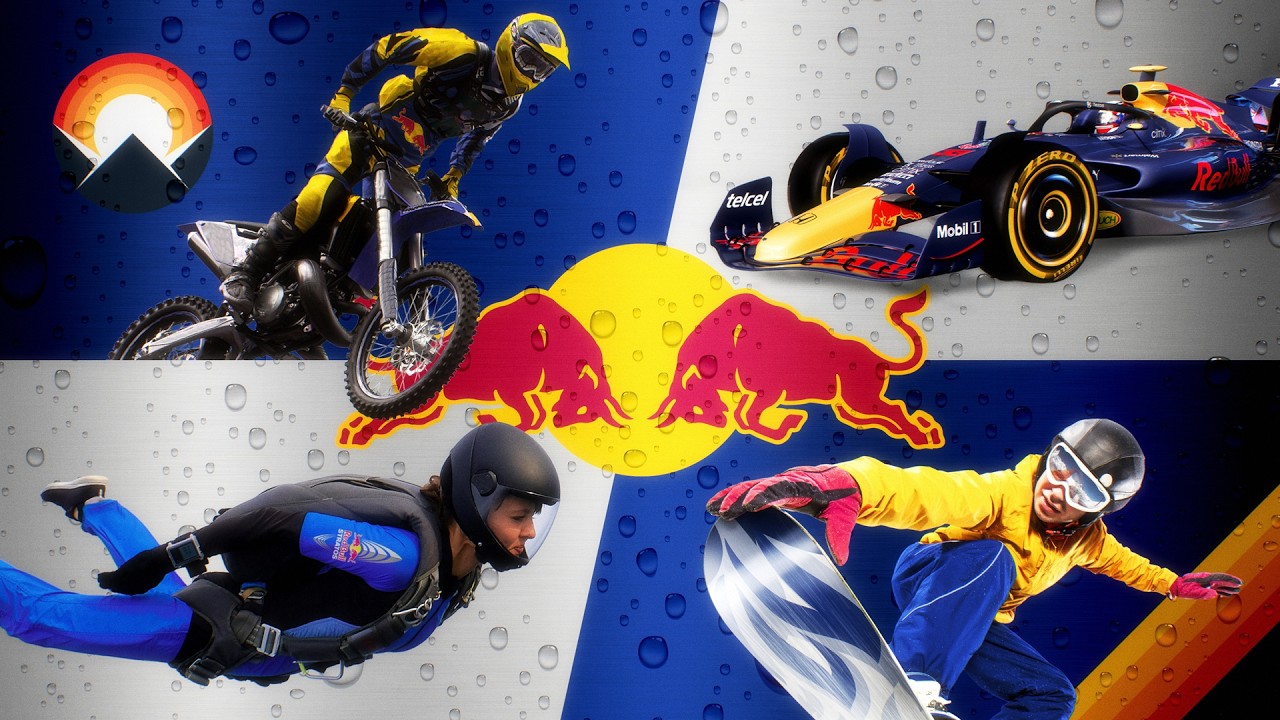
Red Bull Caps Product Lines, Outsourced Plants to Fuel Marketing Machine
Wendover Productions
The energy drink giant maintains an ultra-simplified 17-flavor menu and outsources its entire manufacturing pipeline to channel nearly all revenue into high-stakes sports sponsorship.
## Background
Published on YouTube on February 24, 2026, by Wendover Productions, this video explores the global empire built by the energy drink brand Red Bull. The page description provides promotional links to the video streaming platform Nebula—including a 50% discount code for an annual subscription—alongside social media handles and production credits for the video.
## TL;DR
The video breaks down how Red Bull built a dominant global beverage empire by structuring itself as a marketing entity rather than a traditional manufacturing company. Operating from a small Austrian town and outsourcing its manufacturing to three highly integrated facilities, the company funnels its massive revenues directly back into marketing. It revolutionized sports sponsorship by moving away from mainstream leagues to back elite individual athletes in niche action sports, eventually establishing its own definitive championships and buying into Formula 1. Finally, the video transitions into promoting a new Nebula Original series called Day Pass, highlighting the platform's independent creator ecosystem.
## Atmosphere & style
The presentation is analytical, deeply researched, and authoritative, offering an insider-style deep dive into corporate strategy and sports marketing history. It feels fast-paced yet meticulous, blending a fascination for Red Bull's unconventional corporate choices with a grounded critique of its public health impact and marketing genius. The concluding segment shifts into an enthusiastic, peer-to-peer recommendation as the creator passionately pitches a personal passion project within a creative sanctuary for digital artists.
## Key takeaways
- [00:00](https://www.youtube.com/watch?v=gokC5fXEM00&t=0s) For every $3 can of Red Bull purchased by a consumer, only $0.09 is spent on the actual liquid, while $1 is allocated directly toward marketing to drive future sales.
- [00:00](https://www.youtube.com/watch?v=gokC5fXEM00&t=0s) Red Bull maintains an ultra-simplified and highly restricted product menu of just 17 variants, contrasting sharply with competitor Monster Energy's 150 seasonal and regional flavors.
- [00:00](https://www.youtube.com/watch?v=gokC5fXEM00&t=0s) Red Bull outsources all its drink manufacturing to the Rauch fruit juice company, utilizing highly integrated production sites alongside Ball Corporation can plants in Austria, Switzerland, and Phoenix, Arizona.
- [02:00](https://www.youtube.com/watch?v=gokC5fXEM00&t=120s) Dietrich Mateschitz conceptualized Red Bull after discovering the massive financial success of functional energy drinks in Asia while working as an international marketing manager for Blendax toothpaste.
- [02:00](https://www.youtube.com/watch?v=gokC5fXEM00&t=120s) Red Bull GmbH was established as a $1 million joint venture to reformulate Thailand's Krating Daeng into a premium, carbonated soda tailored for Western palates.
- [02:00](https://www.youtube.com/watch?v=gokC5fXEM00&t=120s) Initial international expansion was heavily restricted by European regulators who banned the beverage due to health concerns regarding its taurine content.
- [04:50](https://www.youtube.com/watch?v=gokC5fXEM00&t=290s) The establishment of the EU Single Market in 1993 eliminated trade barriers and allowed Red Bull to rapidly scale its geographic distribution across Europe.
- [04:50](https://www.youtube.com/watch?v=gokC5fXEM00&t=290s) Red Bull established its athlete sponsorship model in 1985 by paying Formula 1 driver Gerhard Berger $10,000 to carry a branded water bottle, initiating a psychological loop linking the brand with peak performance.
- [06:55](https://www.youtube.com/watch?v=gokC5fXEM00&t=415s) To maximize a limited early budget, Red Bull avoided expensive mainstream sports leagues and focused on sponsoring elite individual athletes in high-risk, visual niche action sports.
- [06:55](https://www.youtube.com/watch?v=gokC5fXEM00&t=415s) Red Bull fundamentally restructured niche sports by creating and funding premier events like the Cliff Diving World Series and Red Bull Rampage, standardizing the sports around their own branded rules.
- [09:42](https://www.youtube.com/watch?v=gokC5fXEM00&t=582s) Red Bull entered mainstream global motorsport by purchasing Ford's failing Formula 1 team infrastructure for a symbolic single dollar at the end of 2004.
- [09:42](https://www.youtube.com/watch?v=gokC5fXEM00&t=582s) Under the leadership of Christian Horner and Adrian Newey, Red Bull Racing transformed into a dominant Formula 1 powerhouse, capturing multiple Drivers' and Constructors' Championships.
- [13:11](https://www.youtube.com/watch?v=gokC5fXEM00&t=791s) Nebula funds original, creator-driven content like 'Day Pass' through a paywalled subscription model designed to eliminate the click-chasing algorithmic incentives of ad-supported platforms.
## Detailed walkthrough
### The Tiny HQ of a Simple Beverage Giant
When a consumer purchases a can of Red Bull for roughly $3, only about 9 cents of that price goes toward the actual liquid inside the can. The remaining amount is funneled into "everything else," which in Red Bull's case constitutes an astronomical sum. A small portion of that revenue funds the company's global headquarters, which is completely divorced from typical corporate norms. Rather than occupying a major or even minor metropolitan area, the headquarters is nestled in Fuschl am See, a tiny Austrian mountain town boasting just one supermarket, two coffee shops, one bank, and one globally recognized beverage empire.
The physical footprint of this multinational headquarters is remarkably modest, taking a mere three minutes to walk from one side of the property to the other. It is bounded casually by an insurance broker, residential homes, and a small hotel, completely lacking walls, fences, or gatehouses. The public is even free to stroll through its gardens. This unusual setup lacks any grand strategic corporate logic; instead, co-founder Dietrich Mateschitz simply loved the town of Fuschl, valued the privacy and outdoor access it provided, and chose to live there.
This small-scale operation makes sense when analyzing Red Bull's ultra-simplified product lineup. Unlike its closest competitor, Monster Energy—which sells an estimated 150 seasonal, regional, and co-branded variants at any given time—Red Bull sells a highly restricted menu. Their entire lineup consists of their traditional flavor, a sugar-free variant, a zero-sugar version, and 14 fruit-flavored "Editions," distributed in a few select sizes. Furthermore, Red Bull does not manufacture its own drinks. In its cash-strapped early days, Mateschitz leveraged his connections within the small Austrian business community to convince the Rauch family, owners of an Austrian fruit juice company, to handle production. Today, the scale has expanded, but the arrangement remains unchanged: most of the world's Red Bull is produced by Rauch in Ludesch, Austria, collocated with a Ball Corporation plant that manufactures Red Bull’s bespoke cans. A mirrored setup exists just over the border in Switzerland with its own Rauch factory, Ball plant, and direct highway/rail access. Until 2021, every single can of Red Bull globally came from these two Alpine sites, until they replicated the exact setup a third time in Phoenix, Arizona, to serve their largest market, the United States.
* **The 9-Cent Rule:** Only $0.09 of a $3 can of Red Bull goes toward manufacturing the beverage.
* **Product Lineup:** Red Bull maintains a strict 17-product lineup compared to Monster Energy's estimated 150 variants.
* **Manufacturing Triad:** Production is limited to three highly integrated Rauch/Ball Corporation facilities located in Ludesch (Austria), Switzerland, and Phoenix (Arizona).
* **The "Everything Else" Dollar:** For every can sold, $1 goes directly toward convincing consumers to buy another one.
From Toothpaste to the Birth of a Western Red Bull
From its very inception, Red Bull was structured as a marketing entity rather than a traditional drinks company. Before co-founding the business, Dietrich Mateschitz worked as a marketing manager for a line of toothpaste at the consumer goods multinational Blendax. This role frequently took him to Asia during the 1970s and 1980s, where energy drinks were already a booming, widespread phenomenon despite being virtually unknown in the West. As corporate lore tells it, Mateschitz was sitting at the bar of the Mandarin Oriental in Hong Kong, chatting with travelers and flipping through an issue of *Newsweek*, when he discovered an article revealing that Japan's single largest taxpayer was Lipovitan, an energy drink manufacturer. Despising his corporate job and sensing an immense fortune, Mateschitz tracked down TC Pharmaceutical Industries, the Thai manufacturers of a functional drink called Krating Daeng, which translates to "Red Bull" in English.
The Austrians struck a deal with the Thai manufacturer, with each party investing $500,000 into a new entity called Red Bull GmbH. The mission was to reformulate and rebrand the product for Western palates. Krating Daeng was traditionally sold in small glass bottles and downed quickly like a medicinal shot, prioritizing function over flavor. Mateschitz spent years tweaking the formula to make it taste "less like medicine and more like soda." He added carbonation, dialed back the intense sweetness, introduced a hint of acidity, and upscaled the packaging into a distinct 250ml aluminum can. After a grueling process to secure regulatory approval for the novel product, Red Bull officially launched on April 1, 1987, in Austria. Mateschitz positioned it as an elite, premium beverage, charging far more than standard sodas. He personally went from bar to bar to convince bartenders to stock it, leading to its early adoption as a popular nightlife mixer for vodka and Jägermeister.
* **Initial Joint Venture:** Dietrich Mateschitz and his Thai partners each invested $500,000 to launch Red Bull GmbH.
* **First-Year Sales:** Red Bull sold 1.2 million cans in its first full year of operation (1987), followed by 1.7 million cans the second year, quickly achieving profitability.
* **The Regulatory Roadblock:** Expansion was initially choked by European regulators wary of taurine, an additive lacking long-term consumption data. While Hungary and Slovenia permitted sales, wealthy Western European markets blocked it for years, with France holding out until 2008.
The 1993 EU Single Market Windfall and the First Athlete Deal
Red Bull’s global expansion received a massive stroke of luck on January 1, 1993, when the European Union launched its single market. This monumental shift removed internal trade barriers, decreeing that a product approved in one EU member state was generally cleared for sale across the entire bloc. While localized caveats slowed things down in certain regions, the 1993 liberalization triggered an explosive expansion of Red Bull's geographic footprint. However, grassroots, bar-by-bar marketing was no longer viable for a market of this scale; Mateschitz needed a massive megaphone.
The blueprint for Red Bull’s revolutionary marketing strategy had actually been formed years prior, in the late summer of 1985 at the Austrian Grand Prix (held at the circuit now known as the Red Bull Ring). Mateschitz had approached a midfield Austrian Formula 1 driver named Gerhard Berger, who was in his second season and strapped for cash. Mateschitz pitched his crazy idea of selling caffeinated soda to the masses and offered Berger a meager $10,000 to carry a branded water bottle around the F1 paddock. Berger accepted, becoming the very first of what would become thousands of storied Red Bull athletes. The resulting imagery established a powerful psychological loop: a high-performance athlete drinks this beverage to operate at the peak of their discipline, creating a subconscious association between Red Bull and ultimate performance. When everyday consumers wanted to perform, they bought a $3 can, fueling the financial engine to repeat the cycle.
Transforming Niche Sports into Branded Marketing Empires
Operating initially on a moderate budget, Red Bull could not afford to sponsor top-tier talent in mainstream sports. Instead, Mateschitz focused heavily on niche, underdeveloped, and highly visual action sports centered around adrenaline and risk. Crucially, Red Bull bypassed sponsoring entire leagues or teams, choosing instead to back elite individual athletes. They selected peerless masters of their crafts, such as Jessica Fox, the definitive premier canoe slalomist with three Olympic gold medals and four world titles, and freestyle motocross rider Robbie Maddison, who shocked the world in 2007 by breaking the motorcycle jump world record with a 322-foot (98-meter) landing—a distance even Evel Knievel had deemed impossible. In larger sports, they hunted for high-visibility anomalies like cyclist Tom Pidcock, who commands massive attention by uniquely competing at the absolute top of both road cycling and mountain biking.
As its marketing budget grew, Red Bull graduated from simply sponsoring athletes to fundamentally restructuring entire sports. Mainstream sports rely on rigid governing bodies like FIFA or the International Tennis Federation to dictate rules and organize championships. Niche sports often lacked this infrastructure, leaving competitions fractured and clunky. Red Bull stepped into these vacuums, launching the best-funded events with the largest prize pools in the world. They created the definitive championships for sports, such as the Cliff Diving World Series, the preeminent freeride mountain biking event Red Bull Rampage, and the big air kiteboarding spectacle Red Bull King of the Air. By doing so, they naturally standardized these sports around their own rules and formats, ensuring that the most captivating, high-stakes moments in action sports were permanently seared into the public consciousness right next to a Red Bull logo.
* **Robbie Maddison's Record:** Red Bull sponsored Maddison's historic 2007 motorcycle jump of 322 feet (98 meters).
* **The Athlete Support Network:** Red Bull entices elite talent by offering living stipends, travel budgets, entry fee reimbursements, and elite training complexes staffed by top-tier sports scientists and rehab trainers in Austria and Los Angeles.
Buying Into Formula 1 for a Single Dollar
Eventually, the Red Bull marketing machine accumulated enough capital to conquer a major global sport, making an entry into Mateschitz’s true passion—Formula 1—inevitable. The perfect opportunity arose when Ford decided to exit the sport at the end of 2004. Ford was bleeding hundreds of millions of dollars annually, and losing races was actively damaging its image as a car manufacturer. Because entering F1 as a brand-new team required a grueling and lengthy application process, buying an existing team was the most efficient route. Eager to shed its financial liabilities, Ford sold its entire team infrastructure—including its factory, staff, and existing engine contract—to Red Bull for the symbolic price of just one dollar.
Red Bull poured massive capital into the team, hiring a legendary winning combination in team principal Christian Horner and masterful aerodynamicist Adrian Newey. The investment paid off spectacularly. By 2009, the team won its first Grand Prix, and in 2010, they secured both the Drivers' and Constructors' Championships, kicking off a dominant four-year championship streak. This marked the first of two golden eras for the team, the second of which netted an additional four drivers' and three constructors' titles. F1's massive global reach gave Red Bull unparalleled international visibility.
> "Red Bull truly flipped the script on how marketing works. Rather than creating a fictional narrative involving their product to play on TV, they manufactured real-world moments displaying or implying their product at use..."
By constructing a legitimate athletics machine to manufacture jaw-dropping real-world moments, Red Bull cemented its place as something far greater than a beverage company. While its contribution to global public health via sugar and caffeine consumption is highly debatable, its funding has undeniably revolutionized niche sports and transformed the lives of thousands of athletes. To both its athletes and its fans, Red Bull is viewed not as a soda brand, but as an enduring cultural institution, achieving a position of market supremacy where everyone else is merely trying to emulate them.
Introducing Day Pass and the Nebula Ecosystem
The speaker enthusiastically announces a brand-new show they created out of a personal desire to watch it: *Day Pass*. The concept features Jason from the popular channel *Not Just Bikes* as he explores various cities with a singular mission: to squeeze every ounce of value out of a local transit system's day pass. Jason's journey requires him to ride every single form of public transportation a given city offers, checking out the area's most compelling sights along the way. The speaker draws a creative parallel to culinary television, noting that if "Anthony Bourdain can do a travel show through the lens of food, surely one of the internet's pre-eminent public transit reviewers can do it through the lens of transit." They express genuine enjoyment for the project and confidently predict that the average Wendover viewer will share that appreciation.
*Day Pass* represents just one example of the numerous Nebula Originals available on the platform. These longer, higher-budget, and highly innovative projects are directly funded by Nebula's paywalled business model. The platform is intentionally engineered to provide a superior sanctuary for creators' finest work by completely removing the click-chasing algorithmic incentives typical of ad-supported video sites. Instead, Nebula replaces those pressures with a pure incentive to build projects so exceptionally good that audiences willingly stay subscribed month after month.
Despite being a premium, paywalled service, the speaker emphasizes that it is remarkably affordable. By using a specific promotional link, viewers can secure a massive discount on an annual subscription, making it a fraction of the cost of mainstream streaming giants, some of which are nearing that exact price point on a per-month basis. Beyond *Day Pass*, a subscription unlocks a diverse catalog of exclusive Wendover projects. These include deeply researched environmental documentaries, high-stakes game shows, and live comedic debates, all while directly funding a healthier economic model for independent digital artists.
- **Featured Creator:** Jason from *Not Just Bikes*.
- **Show Premise:** Navigating a city to ride every available form of public transit using only a local day pass.
- **Pricing & Promotion:** A 50% discount is available via `nebula.tv/wendover`, reducing the total cost to just $30 for an entire year.
- **Exclusive Wendover Projects Mentioned:**
- *The Colorado Problem*: A documentary exploring the water crisis transforming the American West.
- *The Getaway*: A social deduction game show featuring a major twist.
- *Abolish Everything*: A comedy debate show filmed live in front of an audience in New York City.
## Notable quotes
> Red Bull truly flipped the script on how marketing works. Rather than creating a fictional narrative involving their product to play on TV, they manufactured real-world moments displaying or implying their product at use...
> Anthony Bourdain can do a travel show through the lens of food, surely one of the internet's pre-eminent public transit reviewers can do it through the lens of transit.
## Mentioned
Red Bull, Monster Energy, Rauch, Ball Corporation, Dietrich Mateschitz, Blendax, Newsweek, Lipovitan, TC Pharmaceutical Industries, Krating Daeng, Red Bull GmbH, European Union, Gerhard Berger, Red Bull Ring, Jessica Fox, Robbie Maddison, Evel Knievel, Tom Pidcock, FIFA, International Tennis Federation, Cliff Diving World Series, Red Bull Rampage, Red Bull King of the Air, Formula 1, Ford, Christian Horner, Adrian Newey, Day Pass, Jason, Not Just Bikes, Nebula, Nebula Originals, Wendover Productions, The Colorado Problem, The Getaway, Abolish Everything
Wendover Productions argues that Red Bull operates less as a traditional beverage manufacturer and more as a media and sports empire, relying on an outsourced, high-margin drink to fund real-world athletic spectacles that drive consumer demand.
Outsourced Manufacturing and Streamlined Beverage Operations
Red Bull's commercial model relies on a highly simplified, asset-light production system. When a consumer buys a $3 can, only about $0.09 covers the liquid inside, while approximately $1 is dedicated to marketing. Unlike competitor Monster Energy's estimated 150 regional, seasonal, and co-branded variants, Red Bull limits its entire catalog to 17 items: the original flavor, sugar-free and zero-sugar options, and 14 fruit Editions.
The company does not produce its own beverages. Manufacturing is entirely outsourced to the Austrian fruit juice company Rauch and packaging partner Ball Corporation across three mirrored facilities: Ludesch (Austria), Switzerland, and Phoenix, Arizona (added in 2021). This lean operational footprint is mirrored in its modest corporate headquarters in Fuschl am See, Austria—an open, fence-free campus chosen primarily because co-founder Dietrich Mateschitz wanted to reside in the quiet Alpine town.
Adapting Asian Energy Tonics for Western Expansion
The brand emerged after Mateschitz, then a Blendax toothpaste marketing manager traveling in Asia, discovered that Japan's top corporate taxpayer was energy drink maker Lipovitan. Recognizing untapped Western demand, Mateschitz partnered with TC Pharmaceutical, makers of Thailand's medicinal shot Krating Daeng. Each partner invested $500,000 to establish Red Bull GmbH.
Mateschitz spent years reformulating the uncarbonated tonic into a carbonated soda with reduced sweetness and added acidity, packaged in a distinctive 250ml aluminum can. Following regulatory delays over taurine, Red Bull launched in Austria on April 1, 1987, targeting bars as an upscale mixer for vodka and Jägermeister. The drink sold 1.2 million cans in its first year and 1.7 million in its second. While several European nations delayed approval—with France barring it until 2008—the January 1, 1993 establishment of the European Union Single Market dismantled internal trade restrictions and triggered rapid geographic expansion.
Institutionalizing Niche Sports and Athlete Sponsorships
Lacking the capital to sponsor mainstream leagues, Red Bull initially promoted its beverage through individual athletes in extreme, high-visibility disciplines. The strategy began in 1985 when Mateschitz paid Austrian Formula 1 driver Gerhard Berger $10,000 to carry a branded bottle, forging an association between the drink and peak physical performance. The company subsequently backed elite performers in under-commercialized sports, including multi-discipline cyclist Tom Pidcock, slalom canoeist Jessica Fox, and motocross rider Robbie Maddison, who landed a record-setting 322-foot (98-meter) jump in 2007.
Rather than merely sponsoring existing competitions, Red Bull exploited governance vacuums in fragmented action sports by establishing and funding its own premier tournaments, such as the Cliff Diving World Series, Red Bull Rampage, and Red Bull King of the Air. By writing the rules, funding the prize pools, and offering athletes stipends and dedicated training facilities in Austria and Los Angeles, Red Bull positioned its brand at the center of high-risk action sports culture.
Formula 1 Expansion and Spectacle-Driven Marketing
As revenue expanded, Red Bull acquired Ford's underperforming Formula 1 team for a symbolic single dollar at the end of 2004, assuming its factory, personnel, and engine contracts. Led by team principal Christian Horner and aerodynamicist Adrian Newey, Red Bull won its first Grand Prix in 2009 and captured four consecutive Drivers' and Constructors' Championships between 2010 and 2013, followed by a second era yielding four additional drivers' and three constructors' titles.
This investment completed Red Bull's inversion of conventional marketing. Rather than purchasing standard television commercials, the company built an athletic apparatus that manufactures genuine competitive moments, using world-class sports achievements to project brand authority across the globe.
The source observes that while Red Bull's public health impact regarding caffeine and sugar consumption remains debatable, its marketing investments have systematically reshaped niche sports and established the brand as a self-sustaining cultural institution rather than a simple beverage vendor.
精炼阅读摘要
Wendover Productions 指出,红牛(Red Bull)的本质并非传统饮料制造商,而是一家以极限营销为核心的商业帝国,其通过极致精简的外包生产链节约成本,并将巨额收入投入高风险体育与文化符号的塑造中,成功将一罐廉价汽水包装为象征顶级运动表现的文化图腾。
轻资产外包与畸高的营销成本结构
红牛的商业运转模式与常规跨国消费品巨头截然不同。在消费者花费约3美元购买的一罐红牛中,内部液体成分的实际生产成本仅约为0.09美元,而每卖出一罐就有高达1美元被直接回流至市场营销,用于刺激消费者的下一次购买。其全球总部并未设在国际大都会,而是坐落于奥地利仅有一家超市的小镇富施尔(Fuschl am See),占地极小且无任何围墙或门禁,完全源于联合创始人 Dietrich Mateschitz 对当地私密与自然环境的个人偏好。与竞争对手 Monster Energy 动辄维持约150种季节、区域和联名变体不同,红牛全球仅销售传统风味、无糖版、零糖版及14种水果风味在内的17款固定产品组合。
更为关键的是,红牛自身并不直接设立生产线。自创立初期起,Mateschitz 便借助商业人脉联合奥地利果汁生产商 Rauch,由其全权负责液体配制与灌装,并紧邻易拉罐制造商 Ball Corporation 建立协同工厂。截至2021年之前,全球消费的红牛几乎全部由位于奥地利卢德施(Ludesch)和瑞士边境的两处高集成基地供应;直至2021年,红牛才在最大市场美国亚利桑那州菲尼克斯复制了第三处相同模式的联合作业厂区。这种极度集约且彻底外包的供应链,使红牛能将绝大部分公司资源集中于品牌运营。
配方西方化改造与单一体制红利
红牛的诞生脱胎于跨文化商业模式的移植。联合创始人 Dietrich Mateschitz 早年在跨国日化企业 Blendax 担任牙膏营销经理期间频繁出差亚洲,在香港文华东方酒店翻阅《新闻周刊》时,偶然获悉日本最大的纳税企业竟然是功能饮料品牌力保美达(Lipovitan)。意识到西方市场的空白后,Mateschitz 找到了泰国功能饮料“红牛”(Krating Daeng)的母公司 TC Pharmaceutical,双方各出资50万美元组建了 Red Bull GmbH。
针对原本装在小药瓶内、口感苦甜且注重药用功能的泰国配方,Mateschitz 花费数年将其改良为充气、降糖、略带酸味并采用250毫升细长铝罐包装的高档汽水。1987年4月1日红牛在奥地利面世,首年即售出120万罐,次年售出170万罐并实现盈利。尽管起初因成分中的牛磺酸缺乏长期食用数据而遭遇西欧多国监管阻拦(法国甚至一直禁售至2008年),但1993年1月1日欧盟单一市场的建立彻底打破了内部贸易壁垒,使红牛依托跨国流通许可迅速席卷欧洲市场,迫切需要从草根夜店推广转向大规模的品牌扩音器。
签约顶级个体与定义小众极限赛事
红牛革命性的体育营销蓝图始于1985年奥地利大奖赛。当时 Mateschitz 向年轻拮据的 F1 车手 Gerhard Berger 支付了1万美元,要求其在围场内携带红牛标识的水壶,从而首次确立了品牌的核心心理暗示:顶尖运动员饮用该产品以维持竞技巅峰,普通人若渴望卓越表现亦应购买这罐3美元的饮料。受制于早期预算,红牛避开了成本高昂的主流联赛整体赞助,专注于缺乏资金但视觉冲击力极强的单人高危极限项目,签约各领域无可争议的代表人物,如3枚奥运金牌得主皮划艇名将 Jessica Fox、2007年创下322英尺(约98米)摩托跳跃世界纪录的 Robbie Maddison,以及兼顾公路车与山地车的跨界名将 Tom Pidcock。
随着资金雄厚,红牛不再满足于被动赞助,转而直接填补小众运动缺乏正规管理机构的制度空白。红牛自筹高额奖金创办了悬崖跳水全球系列赛(Cliff Diving World Series)、自由骑山地车超级赛事 Red Bull Rampage 和大腾空风筝冲浪赛 Red Bull King of the Air。红牛凭借赛事制定者的身份统一了比赛规则与竞技形态,将最具观赏性的高风险极限瞬间与红牛标志进行了深度绑定。此外,红牛还在奥地利和洛杉矶为签约运动员建造了配备顶尖运动科研与康复师的高性能训练中心,提供全方位的津贴与保障支持。
一美元接盘F1与真实瞬间的造浪法则
在积累了足够的资本势能后,红牛在2004年底抓住了进军最高规格赛事 F1 的绝佳契机。当时福特汽车(Ford)因连年承担数亿美元亏损且战绩不佳损害品牌形象,急于退出 F1 围场。为了规避繁复漫长的新车队准入程序,红牛以象征性的1美元价格全盘接盘了福特旗下车队的厂房、员工体系及发动机合同。红牛随后斥巨资聘请领队 Christian Horner 与空气动力学大师 Adrian Newey,在2009年斩获首个分站冠军,并在2010至2013年间史无前例地包揽了连续四年的车手与车队双料世界冠军,此后又开创了获得4次车手与3次车队冠军的第二段黄金期。
Wendover Productions 总结指出,红牛彻底颠覆了传统的商业营销逻辑:它不再依靠在电视广告中虚构产品故事,而是亲自构建高水平的竞技体育实体,在现实世界中“制造”出运动员使用该产品的极限瞬间。这种营销战略令红牛在赛车与极限运动领域扎下深厚根基,使其品牌认知远超普通含糖碳酸饮料。
红牛凭借独特的轻资产外包与极限赛事运营,从一罐成本仅9美分的汽水成长为无人能复制的全球文化机构。尽管高糖与高咖啡因消耗对全球公共健康的长期影响仍存在巨大争议,但其资金投入不可否认地彻底重构了小众极限运动产业,并深刻改变了数千名职业运动员的生存格局。
Detailed notes — zh
## Background
本视频由知名知识科普频道 Wendover Productions 于 2026 年 2 月 24 日发布在 YouTube 平台。视频简介提供了该团队主导的独立流媒体平台 Nebula 的半价订阅链接与自制节目推荐,并列出了详细的幕后采编、动画制作团队名单及社交媒体联络方式。
## TL;DR
视频深入剖析了红牛如何以极致的轻资产模式构建起庞大的商业帝国:单罐售价约 3 美元的红牛,实际液体灌装成本仅 9 美分,其极简的产品矩阵全部外包生产,省下的庞大资金则全力注入营销飞轮。联合创始人马特希茨将泰国传统机能药饮本土化改造为碳酸苏打水,抓住 1993 年欧盟单一市场建立的制度红利撕开监管缺口,并开创性地将品牌与“极限竞技、高性能表现”深度绑定。通过长期押注小众极限运动单体天才、自创赛事成为事实上的行业管委会,乃至以象征性的 1 美元收购车队铸就 F1 冠军王朝,红牛彻底颠覆了消费品营销逻辑,从一家饮料厂商蜕变为不可替代的全球体育图腾。
## Atmosphere & style
全片保持了 Wendover 标志性的商业剖析风格,叙事严密流畅、逻辑环环相扣,配合生动的动画与图表呈现出极具信息密度的视听质感。从开篇揭秘“9美分制造成本”的惊人反差,到创始人游击地推、1美元逆袭 F1 围场的传奇历程,解说在冷静克制的商业洞察与极限运动的肾上腺素狂热之间巧妙平衡,给观众带来一种智力解谜般畅快淋漓的沉浸体验。
## Bulletin
- [00:00](https://www.youtube.com/watch?v=gokC5fXEM00&t=0s) 一罐售价约3美元的红牛,实际生产与灌装成本仅为9美分(约占3%),其余绝大部分资金被重新注入体育营销与赞助,构建起自我强化的商业飞轮。
- [01:19](https://www.youtube.com/watch?v=gokC5fXEM00&t=79s) 红牛采取极致的轻资产运营,全量代工由奥地利果汁巨头劳赫与波尔制罐包办,仅维持约17款核心单品,与竞品怪兽能量多达约150种单品的庞杂策略形成鲜明对比。
- [06:17](https://www.youtube.com/watch?v=gokC5fXEM00&t=377s) 1993年欧盟单一市场的正式确立打破了此前因牛磺酸安全担忧造成的西欧各国立法审查阻碍,成为红牛从奥地利走向欧洲全域爆发式扩张的关键转折点。
- [10:54](https://www.youtube.com/watch?v=gokC5fXEM00&t=654s) 瞄准小众极限运动缺乏统领性组织的权力真空,红牛通过创办最高规格标杆赛事自下而上重塑行业标准,成为悬崖跳水、山地车等领域事实上的官方管理机构。
- [12:34](https://www.youtube.com/watch?v=gokC5fXEM00&t=754s) 2004赛季末红牛以象征性1美元接盘福特旗下巨亏的捷豹F1车队,依托纽维与霍纳的组合成功开辟出两度统治车手与车队总冠军的F1双重王朝。
## Key takeaways
- [00:00](https://www.youtube.com/watch?v=gokC5fXEM00&t=0s) 成本结构极端倒挂:一罐3美元红牛的实际灌装生产成本仅9美分,约97%的收入全额流向了营销推广、渠道分销及运营等环节。
- [00:00](https://www.youtube.com/watch?v=gokC5fXEM00&t=0s) 总部反常规隐于乡村:红牛全球总督府未设在大都市,而是坐落在奥地利宁静小镇滨湖富施尔,园区无围栏门禁,完全基于创始人迪特里希·马特希茨的个人居住偏好。
- [01:19](https://www.youtube.com/watch?v=gokC5fXEM00&t=79s) 极简产品矩阵策略:红牛仅依靠原味、无糖及约14种风味款(总计约17款核心SKU)支撑全球百亿美元级商业版图。
- [01:19](https://www.youtube.com/watch?v=gokC5fXEM00&t=79s) 全制造流程深度外包:红牛自身不拥有任何灌装厂,长期深度绑定奥地利劳赫(配方灌装)与波尔公司(专属定制铝罐),直到2021年才在美国菲尼克斯复刻第三处基地。
- [03:40](https://www.youtube.com/watch?v=gokC5fXEM00&t=220s) 跨文化产品重塑:马特希茨将泰国天丝医药的小药瓶浓缩药饮Krating Daeng,改造为充气碳酸、降糖提酸并以250ml细长铝罐包装的现代功能苏打水。
- [03:40](https://www.youtube.com/watch?v=gokC5fXEM00&t=220s) 早期极端场景游击推广:创业初期的红牛深耕酒吧夜场调酒、大学考试周以及夜班出租车驿站等高疲劳场景进行派样地推,迅速实现盈利造血。
- [06:17](https://www.youtube.com/watch?v=gokC5fXEM00&t=377s) 监管僵局与制度红利突围:因牛磺酸成分早期面临西欧各国的严苛禁令,1993年欧盟单一市场商品互认机制的生效彻底撕开了西欧主流市场的准入缺口。
- [07:32](https://www.youtube.com/watch?v=gokC5fXEM00&t=452s) 体育营销心智图腾确立:1985年以1万美元低价赞助奥地利F1车手格哈德·伯格,开创了将红牛与“顶尖运动员、极限竞技、高性能表现”深度绑定的认知飞轮。
- [09:13](https://www.youtube.com/watch?v=gokC5fXEM00&t=553s) 单体运动员赋能体系:红牛避开昂贵的全队赞助,专挑极限与跨界顶尖奇才(如杰西卡·福克斯、汤姆·皮德科克),并在奥地利与洛杉矶建立顶级运动科研训练中心提供全套保障。
- [10:54](https://www.youtube.com/watch?v=gokC5fXEM00&t=654s) 自办赛事定义行业秩序:红牛切入缺乏官方统领的小众领域,自主打造红牛悬崖跳水系列赛、红牛暴怒赛等顶级IP,从单纯赞助商跃升为事实上的运动管理者。
- [12:34](https://www.youtube.com/watch?v=gokC5fXEM00&t=754s) 1美元抄底顶级赛车入场券:2004年红牛以1美元象征性价格接盘连年垫底的捷豹F1车队,绕过繁琐的全新准入壁垒,并成功将其改造成统治级世界冠军王朝。
- [13:58](https://www.youtube.com/watch?v=gokC5fXEM00&t=838s) 营销范式的底层颠覆:红牛摒弃虚构的传统电视广告,选择在现实世界中亲手催生极限高光瞬间,将品牌升格为全球运动员与拥趸尊奉的体育机构与精神图腾。
## Detailed walkthrough
### [00:00](https://www.youtube.com/watch?v=gokC5fXEM00&t=0s) 3美元背后的秘密与隐于阿尔卑斯的小镇总部
如果你买下一罐红牛,通常需要支付大约 3 美元或等值的当地货币。然而在这 3 美元中,真正用于生产并灌装你所喝下那罐饮料的成本仅仅只有 9 美分;至于剩下的 2.91 美元,则全被投入到了“其他一切事物”当中。在红牛的世界里,这笔“其他开销”庞大得超乎想象。这笔钱中的极小一部分,用于维系红牛那座与众不同的全球总部——它既不在繁华的国际大都市,甚至不在任何一座普通城市,而是偏居于奥地利阿尔卑斯山麓的宁静小镇滨湖富施尔(Fuschl am See)。这个小镇全貌仅有一家超市、两家咖啡馆、一家银行,以及这家名震全球的跨国饮料帝国。
对于一个全球辨识度最高的商业品牌而言,红牛的总督府显得格外袖珍。步行从园区的一端穿行到另一端用不上 3 分钟,其四周被一家保险经纪公司、几栋寻常民宅以及一家小旅馆所环绕。这里既没有耸立的高墙、铁丝网,也没有戒备森严的警卫哨所,普通游客和公众甚至被允许在其花园林道中悠闲散步。选择在此安营扎寨没有任何宏大的商业战略逻辑,纯粹是因为红牛的联合创始人迪特里希·马特希茨(Dietrich Mateschitz)发自内心地钟情于富施尔:他渴望小镇赋予的私密宁静,沉醉于这里得天独厚的户外自然风光,他只想生活在这里。
- **产品零售均价**:单罐约 3 美元(或等值本币)。
- **实际饮料制造耗费**:仅约 0.09 美元(占比仅约 3%),剩余 97% 均流向营销、赞助、渠道及运营等。
- **总部地理位置**:奥地利萨尔茨堡州滨湖富施尔(Fuschl am See),以无门禁、无围栏的开放式花园园区著称。
---
### [01:19](https://www.youtube.com/watch?v=gokC5fXEM00&t=79s) 极简产品矩阵与完全外包的制造物流体系
红牛总部看似不可思议的微小体量,一旦对照其实际的企业运作架构,就变得顺理成章。剥离表象后,红牛在产品端是一家极其纯粹和简单的公司。其核心产品线屈指可数:经典原味红牛、无糖版(Sugar-free)、零糖版(Zero),以及大约 14 种不同果味与季节风味的传统/无糖版本;针对不同分销渠道和市场搭配数种不同容量的包装罐,这几乎就是红牛的全部身家。反观其身后体量略小但步步紧逼的对手怪兽能量(Monster Energy),后者不仅拥有海量细分口味、联名款、季节限定款以及地区专供版,产品线繁多到外界甚至无法统计准确数字,市面常驻单品粗略估计多达 150 种左右。
更颠覆常人认知的是,红牛自身甚至从来不生产任何一罐饮料。从创立之初,他们就将全量制造业务外包给了奥地利本土知名果汁企业劳赫(Rauch)。创业早期囊中羞涩的红牛无力建造专属生产设施,凭借奥地利紧密的商业圈层,马特希茨动用私人关系说服了劳赫家族接下代工订单。数十年来,这套合作模式除了规模成倍放大外未曾改变:全球绝大多数红牛仍然在阿尔卑斯山脉的阴影下由劳赫代工生产。其最大的生产基地位于奥地利卢德施(Ludesch),旁边紧邻全球制罐巨头波尔公司(Ball Corporation)的专属铝罐工厂(专门打造红牛标志性的细长型专属罐体),并通过直通的铁路与高速公路辐射全球物流;数英里之外跨越瑞士边境的另一处基地完全复刻了这套“劳赫代工灌装 + 波尔制罐 + 公铁联运”的配置。直到 2021 年,全球销售的每一罐红牛都仅出自这两处阿尔卑斯工厂,随后红牛才在其最大市场美国(亚利桑那州菲尼克斯郊区)原样复制了第三个联合基地。维持一个仅有 17 种核心配置的产品线以及两家深度绑定的制造伙伴绝非难事,这便解释了为何红牛绝大部分员工都不碰工厂与灌装,而是将精力全面倾注于每罐红牛收益中足足占去 1 美元的核心使命——“竭尽全力说服你买下一罐红牛”。
```mermaid
flowchart TD
accTitle: Red Bull Production and Logistics Flow
accDescr: 展现红牛极简的供应链与三处完全复制的生产枢纽架构
subgraph FactoryModel ["标准化生产制造枢纽 (三处复刻基地)"]
direction TB
CanMaker["波尔公司 (Ball Corp)<br/>定制红牛专属细长罐体"]
Bottler["劳赫果汁 (Rauch)<br/>配方调配与全量灌装代工"]
Transport["公铁多式联运系统<br/>高速公路通道与直连铁路线"]
CanMaker --> Bottler
Bottler --> Transport
end
subgraph ProductionSites ["全球三大核心制造基地"]
S1["奥地利 卢德施 (Ludesch)"]
S2["瑞士边境协同制造厂区"]
S3["美国 亚利桑那州菲尼克斯 (2021年投产)"]
end
FactoryModel -.-> S1
FactoryModel -.-> S2
FactoryModel -.-> S3
ProductionSites --> GlobalDist["全球极简产品矩阵分销<br/>(17款核心单品流向全球消费市场)"]
```
- **产品策略对比**:红牛仅维持约 17 种核心产品组合(原味、无糖、零度及 14 种风味款);竞品怪兽能量(Monster Energy)同时在售约 150 种。
- **代工与制罐核心伙伴**:液体灌装由奥地利果汁企业劳赫(Rauch)全权包办,罐体由波尔公司(Ball Corporation)专属定制供应。
- **全球生产节点演变**:2021 年前全球所有红牛仅依靠奥地利卢德施与瑞士两处比邻基地供应;2021 年在菲尼克斯启动第三处基地以辐射北美。
---
### [03:40](https://www.youtube.com/watch?v=gokC5fXEM00&t=220s) 从亚洲药饮到西方苏打:红牛的诞生与冷启动
红牛从孕育的第一天起,本质上就是一家披着饮料外衣的营销公司。在创办红牛之前,联合创始人迪特里希·马特希茨在跨国日化巨头 Blendax 担任营销经理,主要负责旗下一条牙膏产品线的海外推广。这份差事让他在上世纪 70 至 80 年代频繁往返于亚洲各国。当时功能性能量饮料在亚洲早已遍地开花、深入人心,但在欧美西方世界却几乎无人知晓。传奇故事始于马特希茨的一次出差:相传他在香港文华东方酒店的酒吧小酌,与过路旅人攀谈之余随手翻阅最新一期的《新闻周刊》(Newsweek),意外读到一篇报道——彼时日本本土纳税额最高的单一企业,竟是生产“利保他”(Lipovitan)能量饮料的大正制药。
受够了打工人枯燥生活的马特希茨渴望自立门户,亚洲能量饮料蕴含的巨大商业前景点燃了他的野心。他旋即顺藤摸瓜找上了泰国天丝医药保健有限公司(TC Pharmaceutical Industries),该公司正是当地风靡一时的机能饮料“红牛”(Krating Daeng)的制造商。嗅到千载难逢商机的马特希茨迅速与泰方达成协议:双方各自出资 50 万美元成立合资公司 Red Bull GmbH,马特希茨负责将这款产品重新调配、重塑品牌,推向西方消费者。当时的泰版“红牛”与大多数亚洲能量饮品一样,装在深色小玻璃药瓶中,喝起来如同浓烈药水,讲求一口闷下,其核心是提供抗疲劳功能而非追求口感。为了让西方受众接受,马特希茨耗费数年调整配方,将其从“药剂”改造为更适于啜饮的“汽水”:加入了碳酸气泡、降低了原本齁腻的甜度、注入一抹清爽酸味,并将容量升级为标志性的 250 毫升铝罐。
1987 年 4 月 1 日,在经历漫长且艰涩的食品监管准入审批后,重获新生的红牛正式在其大本营奥地利上架。马特希茨采取了高定价、稀缺感的溢价策略,单价远高于传统碳酸苏打水。他开启了一场极致的早期游击营销战:亲自登门走访一家又一家酒吧,游说酒保进货并将其包装成调酒神器,引导顾客将红牛与伏特加或野格(Jägermeister)混合饮用;每逢大学期末考试周,他亲自前往校园向焦头烂额的学生免费派发红牛;深夜则穿梭在夜班出租车司机聚集的出没点免费赠饮,专挑那些极度困顿却必须强行清醒的场景切入。配合新奇话题性引发的口碑发酵,红牛在奥地利迅速引爆:首个完整运营年卖出 120 万罐,次年攀升至 170 万罐,以惊人的速度跨越了创业者梦寐以求的盈利门槛。
- **创始人背景**:迪特里希·马特希茨(Dietrich Mateschitz),原德国 Blendax 牙膏国际营销经理。
- **初创资本与股权构架**:奥地利方与泰国天丝医药各注资 50 万美元组建 Red Bull GmbH。
- **产品本土化改造**:由泰国小药瓶装、无气、浓缩糖浆药饮改造为充气碳酸、降糖提酸的 250ml 啜饮型罐装功能饮料。
- **早期游击营销打法**:聚焦酒吧夜场(红牛特调)、高校备考周、夜班的士司机驿站等极端“抗疲劳”场景派样地推。
- **早期销量暴增**:首个完整业务年度销量 120 万罐,次年达到 170 万罐并迅速实现自我盈利。
---
### [06:17](https://www.youtube.com/watch?v=gokC5fXEM00&t=377s) 突破监管壁垒:欧盟单一市场带来的历史性转机
跨过创业初期的盈利门槛后,马特希茨的眼前只有下一个宏伟目标:全球化扩张。然而现实却给了他当头一棒——红牛遭遇了几乎无法逾越的法规铁壁。当时西方各国食品药品监管部门对能量饮料抱有极高警惕,核心卡点在于红牛配方中的关键成分“牛磺酸”(Taurine)。在 80 年代末至 90 年代初,缺乏关于人类长期高频摄入牛磺酸的权威医学科研背书,监管机构合理担忧其频繁饮用可能对人体构成潜在危害。除匈牙利与斯洛文尼亚率先亮起绿灯、让红牛得以有限试水外,西欧经济体量庞大、消费力更强劲的主流富裕国家均将其拒之门外,扩张进程几乎陷入死局。
转折发生在 1993 年 1 月 1 日,马特希茨迎来了堪称泼天富贵的历史性转机——欧洲联盟正式确立“单一市场”(Single Market)。成员国之间绝大部分贸易壁垒被一举拆除,欧洲内部经济体走向高度一体化。按照单一市场的流通原则,任何在一国获准合法销售的商品,原则上可在所有欧盟成员国内无缝流通销售。尽管部分国家设立了附加审查阻碍进入(法国甚至严防死守、旷日持久地拖延至 2008 年才最终向红牛开放国门),但整体而言,1993 年的贸易自由化彻底撕开了西欧市场的缺口。红牛在极短的时间内顺水推舟完成了西欧各国的铺货渗透,实现了销售网络在欧洲大陆的爆发式扩张。
- **核心合规壁垒**:食品添加剂牛磺酸(Taurine)因当时缺乏长期摄入安全性研究,遭遇西欧主流监管机构强力阻击。
- **最初突围市场**:奥地利本土之外,早期仅获准进入邻近的匈牙利与斯洛文尼亚。
- **关键历史转折点**:1993 年 1 月 1 日欧盟“单一市场”正式生效,激活成员国互认流通机制,红牛借政策红利席卷欧洲。
- **最严监管阻力**:法国因食品安全担忧长期维持禁令,直到 2008 年才最终完全对红牛放行。
---
### [07:32](https://www.youtube.com/watch?v=gokC5fXEM00&t=452s) 格哈德·伯格与红牛“高性能”体育营销帝国的起点
当全欧洲的市场大门轰然洞开,马特希茨过去的“单兵作战”式逐店拜访已远远跟不上野心,他迫切需要一种能瞬间击穿大众心智的营销扩音器。事实上,他早在数年之前就给出了这一终极答案。那是在 1985 年夏末的奥地利大奖赛(Austrian Grand Prix)期间,比赛在如今被称为“红牛环赛道”(Red Bull Ring)的意德灵赛道(Österreichring)举行。当时效力于中游车队、正在征战自己 F1 生涯第二个赛季的奥地利本土车手格哈德·伯格(Gerhard Berger)在围场遇到了马特希茨,后者极其唐突地上前向伯格推销自己构想中那款面向大众的含咖啡因苏打水。
马特希茨向伯格开出了 10,000 美元的赞助费——对于顶级一级方程式赛车赞助协议而言,这笔金额微薄得近乎冒犯;但当时的伯格确实囊中羞涩、急需资金支持,便点头答应了这桩交易。伯格的履约条款非常简单:在 F1 围场活动中随身携带带有品牌专属涂装的水壶,并在镜头前高频亮相。伯格由此成为红牛麾下成千上万传奇签约运动员中的“第一人”。这种合作产出了一系列极具视觉冲击力的照片:一位处于人类体能与驾驶极限的高性能运动员,日常饮用一款神秘的蓝色罐装能量饮料以维持其竞技巅峰状态。红牛正是借此将品牌信息悄然植入大众的潜意识深处——只要高性能极限运动员手持红牛的形象一次次在荧幕与画报中出现,观众便会在下意识里将红牛与“极致竞技、高性能表现”画上等号。当普通消费者在现实生活中需要超越自我、集中精力或挑战高压任务时,他们大脑中浮现的便是专业顶尖高手赖以提神的红牛。消费者随后掏出 3 美元买下单罐,而红牛则将其中稳稳抽出的 1 美元再次注入体育营销熔炉中,推动飞轮无休止地转动。彼时资金有限的红牛尚无力问鼎大众主流商业赛事的最高舞台,于是马特希茨掉转船头,率先押注于那些小众、自己深深痴迷且充满狂热激情的运动领域。
- **体育营销首个里程碑**:1985 年夏末意德灵赛道(现红牛环),奥地利 F1 车手格哈德·伯格(Gerhard Berger)成为红牛历史首位签约运动员。
- **首张赞助协议**:仅以区区 10,000 美元低成本锁定顶级车手围场专属水壶露出与形象代言。
- **核心心智塑造机制**:“顶尖运动员 = 高性能表现 = 饮用红牛支撑”三位一体,把能量饮料的物理提神功能彻底升格为追求极致的精神图腾。
- **商业飞轮模型**:单罐售出获利 3 美元 $\rightarrow$ 提留 1 美元再投入极限与体育赞助 $\rightarrow$ 持续加固高性能品牌光环 $\rightarrow$ 驱动更大规模销售。
### [09:13](https://www.youtube.com/watch?v=gokC5fXEM00&t=553s) 小众极限运动与顶级单体运动员赞助策略
红牛的营销目光始终精准锁定在那些充满肾上腺素、高风险且极具视觉冲击力的小众及欠开发运动上。不同于传统品牌热衷于砸钱赞助整个车队、大型联赛或官方赛事的做法,红牛几乎只把赌注押在个别顶尖运动员身上。他们的目标是在各个细分领域中挖掘出“最优秀的精英”,例如夺得三枚奥运金牌和四座世锦赛冠军的皮划艇激流回旋名将杰西卡·福克斯(Jessica Fox);或是自由式摩托车越野骑手罗比·麦迪逊(Robbie Maddison)——他在2007年创下了长达322英尺(约98米)的摩托车飞跃世界纪录,彻底打破了连传奇特技车手埃维尔·克尼维尔(Evel Knievel)都曾断言“绝不可能”的距离极限。
即使介入体量更大的运动项目,红牛也能巧妙运用杠杆放大资金效益,专挑那些极具辨识度和话题吸引力的跨界奇才。英国自行车手汤姆·皮德科克(Tom Pidcock)便是一个典范:他或许并非单一细分领域的绝对统治者,但他同时在高水准公路自行车与山地车越野两项几乎互斥的项目中名列前茅,既能在环法自行车赛上率先撞线,又斩获过奥运金牌。只要合约允许,他的装备上必然醒目地印着红牛的双牛标志。
为了牢牢吸引这些顶级天才,红牛提供的远不止丰厚的生活津贴、差旅预算和参赛费报销。他们在奥地利和洛杉矶等地斥巨资建立了一流的专属运动训练中心,配备了顶尖教练、运动科学家、营养师以及康复理疗师团队,甚至在各个专项运动的适宜场地设立资源充沛的集训营。这种全方位的专业支持系统,远远超越了那些小众运动通常所能提供的资源水准。
- **重点签约运动员**:
- 杰西卡·福克斯(Jessica Fox):皮划艇激流回旋领军人物,斩获3枚奥运金牌与4届世界冠军。
- 罗比·麦迪逊(Robbie Maddison):自由式摩托车越野手,以322英尺(98米)改写摩托车跳跃世界纪录。
- 汤姆·皮德科克(Tom Pidcock):兼具环法赛段冠军与奥运金牌的公路车/山地车双修选手。
- **职业支持网络**:在奥地利与洛杉矶设立顶尖运动表现中心,提供集训练、运动科研、营养补给与伤病康复于一体的顶级后勤保障。
### [10:54](https://www.youtube.com/watch?v=gokC5fXEM00&t=654s) 从赞助选手到定义运动:红牛成为赛事的实际“掌门人”
随着营销预算的滚雪球式扩张,红牛的影响力不再局限于赞助单个选手,而是开始自下而上地改造并定义整项运动。在主流大型体育项目中,通常有权威的管理机构统辖一切——比如足球界的国际足联(FIFA)、田径界的世界田联(World Athletics)以及网球界的国际网球联合会(ITF),它们制定规则、推行行业标准并主办世界顶级锦标赛。然而,绝大多数小众极限运动缺乏强有力的统一管理机构,各路民间团体各自为政、赛制互不兼容,导致顶层竞技水平与商业发展严重受阻。
红牛敏锐地抓住了这个权力真空。他们以雄厚的资金直接切入这些小众领域,主办资金最充裕、奖金最丰厚的大型赛事,瞬间将全球顶尖选手招致麾下。红牛的比赛迅速成为选手们规划整个赛季的核心目标,迫使整个行业主动调整竞技模式以适应红牛的规范,从而以一种“事实上的管理机构”的姿态自然达成了运动的标准化。
```mermaid
flowchart TD
accTitle: 红牛重塑极限运动的商业闭环
accDescr: 展现红牛从小众运动切入、创立赛事并最终实现品牌占领的逻辑链路
subgraph S1["发现市场真空"]
A["小众/极限运动缺乏官方统筹"]
B["赛事零散且规则不一"]
end
subgraph S2["红牛体系介入"]
C["巨资创办高规格标杆赛事"]
D["吸引顶尖选手并树立统一标准"]
end
subgraph S3["品牌深度烙印"]
E["成为事实上的世界锦标赛"]
F["极限高光瞬间与红牛标志绑定"]
end
A --> B
B --> C
C --> D
D --> E
E --> F
```
在悬崖跳水领域,红牛倾力打造的“红牛悬崖跳水全球系列赛”(Red Bull Cliff Diving World Series)已成为该项目公认的最高级别世界锦标赛;在自由骑山地车领域,“红牛暴怒赛”(Red Bull Rampage)是公认的行业天花板;在风筝冲浪界,“红牛空中之王”(Red Bull King of the Air)同样汇聚了最强阵容与最多媒体目光。无论是跑酷、扁带走钢丝还是耐力越野摩托(Enduro),红牛都占据着核心舞台中央。在世界上最具视觉张力的运动项目中,最具实力的运动员在最极限的危险关头,面对着满场的红牛红黄标志挑战极限——“在顶尖人类呈现最高水准表演的同时,两头红牛的图腾早已深深烙印在你的脑海之中”。
- **核心自办旗舰赛事**:
- 红牛悬崖跳水全球系列赛(Red Bull Cliff Diving World Series):悬崖跳水事实上的最高世界锦标赛。
- 红牛暴怒赛(Red Bull Rampage):自由骑山地车领域的顶级殿堂。
- 红牛空中之王(Red Bull King of the Air):极限大腾空风筝冲浪的标杆之战。
### [12:34](https://www.youtube.com/watch?v=gokC5fXEM00&t=754s) 象征性一美元收购车队:开启 F1 王朝的双重黄金时代
当资本积累达到足够体量时,红牛终于有底气涉足烧钱无底洞的主流运动领域。切入点的选择顺理成章:联合创始人迪特里希·马特希茨(Dietrich Mateschitz)一生挚爱的赛车巅峰——一级方程式赛车(Formula 1)。
恰逢此时,福特汽车正深陷 F1 泥潭。福特旗下的捷豹车队每年巨亏数亿美元且战绩惨淡,对于一家量产汽车巨头而言,在一项全球赛车运动中持续垫底无异于在向全世界宣称自己的造车技术不行,这让底特律的管理层忍无可忍,决定在2004赛季末彻底关停项目。由于国际汽联有着冗长繁琐的全新准入审批流程,直接接盘福特成为了红牛最便捷的入场捷径。面对一个持续烧钱的烫手山芋,福特最终开出了一个不可思议的象征性价格:**仅收 1 美元**,便将整支车队的资产打包拱手相让,包括全套基础设施、研发工厂、现有员工以及现成的引擎供应合同。
拿下车队资产后,红牛毫不吝惜地砸下巨额资金,并组建了由领队克里斯蒂安·霍纳(Christian Horner)与传奇空气动力学大师阿德里安·纽维(Adrian Newey)构成的黄金搭档。这笔豪赌迎来了惊人的回报:
- 2009年,车队斩获队史首个分站冠军;
- 2010年,他们便一举囊括车手世界冠军与车队车队总冠军头衔,开启了连续四年蝉联双冠的第一个黄金时代;
- 随后车队又迎来了第二段巅峰王朝,再次狂揽四座车手总冠军与三座车队总冠军奖杯。
尽管 F1 在某些国家并非第一大运动,但其无可匹敌的全球转播范围使其成为全球最受瞩目的顶级观赛体育联盟之一。尤其是在红牛赛车频频登顶领奖台的时刻,为品牌注入了难以计量的全球声量与崇高光环。
### [13:58](https://www.youtube.com/watch?v=gokC5fXEM00&t=838s) 营销范式颠覆:从卖能量饮料到成为无可替代的体育巨擘
红牛彻底颠覆了全球消费品营销的底层游戏规则。传统品牌习惯于在电视上编造虚构的故事短片来推销产品,而红牛选择在现实世界中亲手催生令人窒息的高光时刻,通过真实场景展示或暗示产品的超强能量。他们搭建起了一座横跨全球、专业性与声誉兼备的综合体育帝国内核,专为生产那些全世界观众翘首以盼的震撼瞬间。
客观而言,从公共健康的严苛视角审视,依靠推高全球咖啡因和糖分摄入量的能量饮料公司很难称得上给世界带来了纯粹的正面价值。然而,如果暂时将公共卫生争议搁置一旁,就竞技体育的发展而言,红牛对无数边缘领域的注入与推动确实实打实地改变了运动员的生存处境。为此,全球无数具有深远号召力与崇高威望的顶尖运动员,对红牛怀有着发自内心的敬意与感恩。在很多选手和铁杆拥趸眼中,红牛早已超越了一家普通的能量饮料制造厂商,而被尊奉为“一项不可磨灭的体育机构与精神图腾”。
这种机构化的深厚底蕴,历经数十年的淬炼,牢固奠定了红牛在行业内无与伦比的霸主地位:他们就是能量饮料的代名词,而市场上其他所有竞品,都不过是在亦步亦趋地模仿他们的影子。
### [15:10](https://www.youtube.com/watch?v=gokC5fXEM00&t=910s) 创作者支持与流媒体生态:Nebula 平台推荐与原创节目
在视频的尾声,主讲人谈及了他深度参与运营的独立流媒体平台 Nebula,并打趣道自己最近“稍微滥用了一点职权”,邀请来自知名频道“Not Just Bikes”的杰森(Jason)制作了一档自己梦寐以求的全新旅行节目《Day Pass》(日票漫游)。该节目的构想源于一种大胆的类比:如果安东尼·波登(Anthony Bourdain)能够以“美食”为视角走遍天下,那么作为全网顶尖公共交通评论者的杰森,完全可以透过“城市轨道与公共交通”的滤镜去重新丈量世界。《Day Pass》跟随杰森穿梭于各大都市,用一张当地公交日票挑战体验所有公共交通制式,并在换乘漫游的过程中探寻城市最迷人的风土人情。
这档节目正是 Nebula 海量高规格原创节目的一个缩影。平台采用付费订阅制模式,旨在让创作者摆脱依靠算法追逐点击率、迎合广告主的恶性激励机制,转而将所有精力投入到打造值得用户长期订阅的高品质长视频与纪录片中。通过专属优惠链接购买,用户能够以五折的特惠价格订阅,全年仅需 30 美元,远低于主流流媒体平台昂贵的月度开销。订阅者不仅可以观看《Day Pass》,还能畅享 Wendover 团队打造的多部独家原创大作:
- **《科罗拉多水危机》(The Colorado Problem)**:深入剖析美国整个西部正在经历的水资源短缺与地理生态变迁的深度纪录片。
- **《度假迷局》(The Getaway)**:融合了反转与烧脑悬疑的社交推理解密真人秀。
- **《废除一切》(Abolish Everything)**:在纽约现场观众面前录制、风格犀利幽默的辩论喜剧秀。
通过这一平台,观众在享受免受算法打扰的高品质独立创作内容的同时,也直接为创作者构建了更为健康自主的数字创意生态。
## Notable quotes
> [00:00](https://www.youtube.com/watch?v=gokC5fXEM00&t=0s) 真正用于生产并灌装你所喝下那罐饮料的成本仅仅只有 9 美分;至于剩下的 2.91 美元,则全被投入到了“其他一切事物”当中。
> [00:00](https://www.youtube.com/watch?v=gokC5fXEM00&t=0s) 选择在此安营扎寨没有任何宏大的商业战略逻辑,纯粹是因为红牛的联合创始人迪特里希·马特希茨(Dietrich Mateschitz)发自内心地钟情于富施尔:他渴望小镇赋予的私密宁静,沉醉于这里得天独厚的户外自然风光,他只想生活在这里。
> [01:19](https://www.youtube.com/watch?v=gokC5fXEM00&t=79s) 更颠覆常人认知的是,红牛自身甚至从来不生产任何一罐饮料。
> [01:19](https://www.youtube.com/watch?v=gokC5fXEM00&t=79s) 红牛绝大部分员工都不碰工厂与灌装,而是将精力全面倾注于每罐红牛收益中足足占去 1 美元的核心使命——“竭尽全力说服你买下一罐红牛”。
> [03:40](https://www.youtube.com/watch?v=gokC5fXEM00&t=220s) 红牛从孕育的第一天起,本质上就是一家披着饮料外衣的营销公司。
> [07:32](https://www.youtube.com/watch?v=gokC5fXEM00&t=452s) 只要高性能极限运动员手持红牛的形象一次次在荧幕与画报中出现,观众便会在下意识里将红牛与“极致竞技、高性能表现”画上等号。
> [10:54](https://www.youtube.com/watch?v=gokC5fXEM00&t=654s) 在顶尖人类呈现最高水准表演的同时,两头红牛的图腾早已深深烙印在你的脑海之中
> [12:34](https://www.youtube.com/watch?v=gokC5fXEM00&t=754s) 福特最终开出了一个不可思议的象征性价格:仅收 1 美元,便将整支车队的资产打包拱手相让,包括全套基础设施、研发工厂、现有员工以及现成的引擎供应合同。
> [13:58](https://www.youtube.com/watch?v=gokC5fXEM00&t=838s) 传统品牌习惯于在电视上编造虚构的故事短片来推销产品,而红牛选择在现实世界中亲手催生令人窒息的高光时刻,通过真实场景展示或暗示产品的超强能量。
> [13:58](https://www.youtube.com/watch?v=gokC5fXEM00&t=838s) 在很多选手和铁杆拥趸眼中,红牛早已超越了一家普通的能量饮料制造厂商,而被尊奉为“一项不可磨灭的体育机构与精神图腾”。
> [13:58](https://www.youtube.com/watch?v=gokC5fXEM00&t=838s) 他们就是能量饮料的代名词,而市场上其他所有竞品,都不过是在亦步亦趋地模仿他们的影子。
## Mentioned
红牛 (Red Bull / Red Bull GmbH), 迪特里希·马特希茨 (Dietrich Mateschitz), 怪兽能量 (Monster Energy), 劳赫 (Rauch), 波尔公司 (Ball Corporation), Blendax, 利保他 (Lipovitan), 大正制药, 泰国天丝医药保健有限公司 (TC Pharmaceutical Industries), Krating Daeng, 格哈德·伯格 (Gerhard Berger), 红牛环赛道 (Red Bull Ring / Österreichring), 杰西卡·福克斯 (Jessica Fox), 罗比·麦迪逊 (Robbie Maddison), 埃维尔·克尼维尔 (Evel Knievel), 汤姆·皮德科克 (Tom Pidcock), 国际足联 (FIFA), 世界田联 (World Athletics), 国际网球联合会 (ITF), 红牛悬崖跳水全球系列赛 (Red Bull Cliff Diving World Series), 红牛暴怒赛 (Red Bull Rampage), 红牛空中之王 (Red Bull King of the Air), 福特汽车 (Ford), 捷豹车队 (Jaguar Racing), 克里斯蒂安·霍纳 (Christian Horner), 阿德里安·纽维 (Adrian Newey), Nebula, Not Just Bikes, 杰森 (Jason), 安东尼·波登 (Anthony Bourdain), 《Day Pass》, 《科罗拉多水危机》(The Colorado Problem), 《度假迷局》(The Getaway), 《废除一切》(Abolish Everything)
## Video description
Get Nebula using my link for 50% off an annual subscription: https://go.nebula.tv/wendover
Watch the Logistics of X: https://nebula.tv/thelogisticsofx
Youtube: http://www.YouTube.com/WendoverProductions
Instagram: http://Instagram.com/sam.from.wendover
Twitter: http://www.Twitter.com/WendoverPro
Sponsorship Enquiries: wendover@standard.tv
Other emails: sam@wendover.productions
Reddit: http://Reddit.com/r/WendoverProductions
Writing by Sam Denby, Tristan Purdy, and Christine Benedetti
Editing by Alexander Williard
Animation by Vincent de Langen, Dominic Burgess, João Pessegueiro, Gabriel Ferreras
Illustration by Jasmine Wei
Sound by Manni Simon and Dony Bullen
Thumbnail by Simon Buckmaster
[Source](https://www.youtube.com/watch?v=gokC5fXEM00)
Red Bull truly flipped the script on how marketing works. Rather than creating a fictional narrative involving their product to play on TV, they manufactured real-world moments displaying or implying their product at use...
Anthony Bourdain can do a travel show through the lens of food, surely one of the internet's pre-eminent public transit reviewers can do it through the lens of transit.
Original transcript
[0:00] If you buy a can of Red Bull, you'll
[0:02] probably pay about $3 or your local
[0:04] currency's equivalent. 9 cents of that
[0:07] goes towards paying for actually making
[0:09] the beverage you consume. The rest goes
[0:11] towards everything else. And as you
[0:13] undoubtedly know, in Red Bull's case,
[0:16] everything else is a tremendous amount.
[0:19] Some slim portion of that $3 goes
[0:21] towards paying for this, the company's
[0:23] headquarters. And this company
[0:24] headquarters is so far from normal. It's
[0:28] not in a major city. It's not even in a
[0:30] minor city. [music] It's in the small
[0:32] Austrian mountain town of Fushani.
[0:35] This is a town with one supermarket, two
[0:38] coffee shops, one bank, and one globally
[0:41] known multinational beverage enterprise.
[0:44] For one of the world's most recognizable
[0:46] brands, it's a remarkably tiny global
[0:48] HQ. It'd take no longer than 3 minutes
[0:50] to walk from one side of the property to
[0:52] the other, and it's bounded by an
[0:54] insurance broker on one side,
[0:55] residential homes on another, and a
[0:57] small hotel on the third. It's got no
[1:00] walls or fences or gate houses. [music]
[1:02] In fact, the public is even permitted to
[1:04] stroll through its gardens. There's no
[1:06] great strategic logic behind this
[1:08] location. Rather, Red Bull's co-founder,
[1:10] Dietrich Matitz, just liked Foo. He
[1:14] liked the privacy it afforded and the
[1:16] outdoors it gave access to [music] and
[1:18] he wanted to live there. The
[1:19] headquarters's small scale may be
[1:21] surprising compared to the global
[1:22] stature of the company, but less so when
[1:24] considering its actual operating
[1:26] structure. After all, at its core, Red
[1:29] Bull is a pretty simple company. It
[1:32] sells its traditional flavor, a
[1:33] sugar-free variant, a slightly different
[1:35] zero sugar version, then 14 different
[1:38] configurations of traditional and
[1:39] sugar-free fruit flavored editions. Each
[1:41] of these is sold in a couple different
[1:43] sizes to fit different distribution
[1:44] channels and markets, but that's pretty
[1:47] much it. That's their entire product
[1:49] lineup. Compare this to their closest
[1:52] yet smaller competitor, Monster Energy,
[1:54] which sells [music] so many different
[1:55] variants, seasonal, co-branded, and
[1:57] regional flavors that there's not even a
[1:59] definitive count of how many different
[2:01] beverages they sell, though the rough
[2:03] estimate is around 150 at a given time.
[2:05] Adding to their simplicity, Red Bull
[2:07] doesn't even manufacture their own
[2:09] product. They contract Austrian fruit
[2:11] juice company Roush to do it for them.
[2:13] In their early days, Red Bull hardly had
[2:15] the money to set up dedicated production
[2:16] facilities, but as part of the small
[2:18] Austrian business community, co-founder
[2:20] Masashitz had connections to the Roush
[2:22] family and convinced them to handle it.
[2:25] Today, little has changed in this
[2:26] arrangement but the scale. But even
[2:28] then, most of the world's Red Bull is
[2:30] still manufactured in the shadow of the
[2:31] Alps and all of it by the Fruit Juice
[2:34] Company. Their largest manufacturing
[2:36] site is here in Ludesh, Austria. It's
[2:38] colllocated with a Ball Corporation
[2:40] factory who's contracted to make Red
[2:41] Bull's bespoke cans, not used for any
[2:44] other beverage. While the direct rail
[2:45] and highway access allows for easy
[2:47] onward distribution logistics, a similar
[2:50] setup is replicated mere miles away just
[2:52] over the border into Switzerland. It's
[2:53] got a Rous factory, a Ball Corporation
[2:55] plant, along with direct rail and
[2:57] highway access, too. Until 2021, every
[3:00] single can of Red Bull sold anywhere in
[3:02] the world came from one of these two
[3:04] sites until the company worked with
[3:06] Roush to start making product in Red
[3:07] Bull's biggest market, the US. So, the
[3:10] setup was replicated a third time in the
[3:12] outskirts of Phoenix, Arizona. Rous
[3:14] factory here, Ball Corporation plant
[3:16] here, rail access here, highway access
[3:19] there. Keeping a 17 product line with
[3:22] two manufacturing partners going just
[3:24] isn't that involved. Which explains why
[3:26] the vast vast majority of people at Red
[3:29] Bull do not deal with making Red Bull.
[3:32] Rather, they focus on what $1 of every
[3:35] Red Bull sale goes towards, convincing
[3:37] [music]
[3:38] you to buy a can.
[3:40] From its beginning, Red Bull was more a
[3:43] marketing company than a drinks company.
[3:45] Prior to co-founding it, Dietrich Master
[3:47] worked at a consumer goods multinational
[3:48] called Blendax as the marketing manager
[3:50] for one of their lines of toothpaste.
[3:52] This often took him to Asia and at the
[3:54] time the 70s and 80s energy drinks were
[3:57] already widespread across the continent
[3:59] despite being nearly unheard of in the
[4:01] west. On one of Massachusetts's trips,
[4:03] as the fable goes, he was sitting at the
[4:05] bar of the Mandarin Oriental Hong Kong,
[4:07] chatting with fellow travelers and
[4:08] flipping through the latest edition of
[4:10] Newsweek. Inside, he found an article
[4:13] highlighting that Japan's single [music]
[4:14] largest taxpayer was energy drinks
[4:16] manufacturer Lipoviton. Details get a
[4:19] bit fuzzy and conflicting on what
[4:21] exactly happened next. But what we know
[4:23] for sure is that Matashitz hated his
[4:25] job. He wanted to start his own company.
[4:27] And these [music] factors combined with
[4:28] his new awareness of the fortunes found
[4:30] in energy drinks brought him to TC
[4:33] Pharmaceutical Industries. The Thai
[4:35] manufacturers of a drink called Katting
[4:37] Dang, or in English, Red Bull. Sensing
[4:40] opportunity, the Austrians struck a deal
[4:42] with the Thai manufacturer. They'd each
[4:44] invest $500,000 into a new company, Red
[4:47] Bull GMBBH, [music] that'd reformulate
[4:49] and rebrand the product into one
[4:50] targeted at Western consumers. Cretting
[4:53] Dang, like most Asian energy drinks at
[4:55] the time, was sold [music] in small
[4:56] glass bottles and was intended to be
[4:58] consumed more as a shot. It was not
[5:00] about its taste, it was about its
[5:02] function. Matches spent the next few
[5:05] years reformulating this baseline into a
[5:07] drink intended more for sipping. He
[5:09] wanted something that tasted less like
[5:10] medicine and more like soda. So he added
[5:13] carbonation, reduced sweetness,
[5:15] introduced a touch of acidity, and
[5:17] expanded the default format into larger
[5:19] 250ml cans. Come April 1st, 1987, after
[5:23] a prolonged process gaining regulatory
[5:25] approval to sell the novel product, Red
[5:27] Bull hit store shelves in its new home
[5:30] country of Austria. It was initially
[5:32] positioned as premium and elusive, sold
[5:34] for far more than the average soda.
[5:36] Matches went around and convinced bars
[5:38] one by one to stock [music] it. Its
[5:40] novelty intrigues people and bartenders
[5:42] would push it as a mixer to work with
[5:44] vodka or Jerger. Matches also gorilla
[5:47] marketed it in the places and contexts
[5:49] he thought Red Bull would be most
[5:50] useful. He'd hand it out for free at
[5:52] university campuses during exam [music]
[5:53] weeks, businesses that late night taxi
[5:55] drivers frequented, anywhere where
[5:57] people would struggle yet want to stay
[5:59] [music] awake. All his efforts were
[6:01] compounded by strong word of mouth
[6:03] spread throughout the small country. The
[6:05] new product was splashy and it made for
[6:07] a good topic of conversation. In its
[6:09] first full year of operations, Red Bull
[6:11] sold 1.2 million cans. [music] Then it
[6:13] followed that up with 1.7 the next and
[6:16] quickly reached profitability, the
[6:17] hurdle every entrepreneur dreams of. But
[6:20] after jumping over this first hurdle,
[6:22] Matches only saw the next one. Red Bull
[6:25] had to expand in his mind, but he simply
[6:28] just wasn't allowed to. They were
[6:30] struggling to gain regulatory approval
[6:32] in any viable market as national
[6:34] regulators were wary to approve a
[6:36] product with torine in particular, a
[6:38] food additive that lacked any long-term
[6:39] consumption research, fueling legitimate
[6:41] fears that frequent consumption of it
[6:43] could be harmful. Hungary and Slovenia
[6:45] would allow it and the company did
[6:47] expand there, but the wealthier, larger
[6:49] markets to the west just wouldn't budge.
[6:51] But then Massachusetts just simply got
[6:54] incredibly lucky.
[6:56] On January 1st, 1993, the European Union
[6:59] launched its single market. Now, all
[7:02] member states would remove almost all
[7:04] trade barriers, meaning their economies
[7:06] would effectively morph into one. As
[7:08] part of this, every product approved for
[7:10] sale in one EU country was usually, with
[7:12] some caveats, approved for sale in all
[7:14] EU member countries. The caveats did
[7:17] slow launch in many of these markets,
[7:18] but as they were progressively sorted
[7:20] out, France was the last EU country to
[7:22] allow the company in in 2008. But all in
[7:25] all, Red Bull's prevalence expanded
[7:27] massively in a short period of time
[7:29] following the 1993 liberalization. Now
[7:32] they just needed to convince people to
[7:34] buy it. Going barto bar wouldn't work
[7:37] anymore. Matches had to find a way to
[7:39] get a lot of people to hear about Red
[7:41] Bull, but he had already actually come
[7:43] up with the answer. It was late summer
[7:45] 1985. The Austrian Grand Prix was on at
[7:48] the eye cream, now known as the Red
[7:50] [music] Bull Ring. Austrian driver
[7:52] Gerard Burgerer was in the midst of his
[7:54] second season picking up decent points
[7:55] in the midfield when a random guy,
[7:57] Dietrich Mastitz, walked up to him and
[8:00] pitched his novel business idea to sell
[8:02] caffeinated soda to the masses. Matosits
[8:04] offered $10,000 to Burger in exchange
[8:06] for carrying his drink around in the
[8:08] paddic using a branded water bottle and
[8:10] some other small obligations. And even
[8:12] though this was a borderline offensively
[8:14] small sum for a Formula 1 sponsorship
[8:16] deal, Burger genuinely needed the money,
[8:18] so he agreed. With this, he became the
[8:21] first of thousands upon thousands of
[8:24] storied Red Bull athletes. This deal
[8:27] produced images like this. These images
[8:30] were how Red Bull got its message out to
[8:32] the world. It was that this is a high
[8:34] performance athlete. Their job is to be
[8:36] the best at whatever they do, and they
[8:39] drink this beverage that helps them
[8:40] perform at that level. Every time a high
[8:43] performance athlete was pictured with a
[8:44] Red Bull logo, the subconscious of
[8:46] everyone that saw that image started to
[8:48] [music] associate Red Bull with
[8:50] performance. When those people wanted to
[8:52] perform, they would remember that Red
[8:54] Bull was what the professionals used to
[8:56] perform. Then they'd buy it, Red Bull
[8:58] would earn $3, and they'd use one of
[9:01] those to do this all again. Still at a
[9:03] somewhat moderate scale, Red Bull
[9:05] couldn't afford to sponsor the best of
[9:06] the best in the very biggest sports. So
[9:09] they started small into the sports that
[9:11] matches himself was fixated with and
[9:13] focused on having the biggest impact in
[9:15] niche and underdeveloped sports
[9:17] particularly those involving adrenaline
[9:19] risk-taking and highly visual moments.
[9:21] Importantly, Red Bull almost always
[9:23] sponsored individual athletes rather
[9:26] than teams, events or leagues. They
[9:28] focused on finding the best of [music]
[9:30] the best in whatever they do. Athletes
[9:32] like Jessica Fox. She's the world's
[9:35] definitive pre-minent canoe slamist,
[9:37] having earned three Olympic gold medals
[9:39] and four world championship titles. Or
[9:41] freestyle motocross rider Robbie
[9:43] Madison, who broke the motorcycle jump
[9:45] world record in 2007, surpassing a
[9:47] distance even evil conneal himself said
[9:49] was impossible in landing at 322 ft or
[9:52] 98 m. And even in bigger sports, the
[9:56] company developed strategies to compound
[9:57] their dollars' effects by finding less
[9:59] than preminent athletes who attracted
[10:01] disproportionate attention. Tom Pidcock,
[10:04] for example, is a cyclist who is not at
[10:05] the top of the top in any one
[10:07] discipline, but earns high name
[10:09] recognition based on the fact that he's
[10:11] near the top in both road cycling and
[10:14] mountain biking, an almost unheard of
[10:16] combination. He still crossed Tour to
[10:18] France finish lines in first and won an
[10:20] Olympic gold medal. And whenever he's
[10:21] contractually allowed to, he's wearing
[10:23] pieces of gear adorned with the Red Bull
[10:26] logo.
[10:27] In order to attract top tier talent, Red
[10:29] Bull not only offered a top tier package
[10:31] of living stipens, travel budgets, and
[10:33] entry- fee reimbursement, but they also
[10:35] built a network of top tier coaches,
[10:37] sport scientists, nutritionists, and
[10:39] rehab trainers housed in top-notch
[10:41] training centers in Austria and LA, or
[10:43] at well-funded training camps in
[10:44] whatever locations are relevant for a
[10:46] given sport. The degree of support their
[10:49] athletes get is often far, far above
[10:51] what is typical in the niche sports
[10:53] [music] they touch. But as marketing
[10:54] spend grew through time, Red Bull had
[10:56] the ability to compound its awareness
[10:58] through compounding [music] its
[10:59] influence in the chosen extreme splashy
[11:02] yet small sports. They started to not
[11:04] only sponsor individual athletes, but
[11:06] transform entire sports. You see, larger
[11:10] sports have governing bodies. FIFA for
[11:12] soccer, World Athletics for running, ITF
[11:14] for tennis. These institutions set
[11:17] rules, standards, [music] and put on
[11:18] high level, often championship
[11:20] competition in their respective domains.
[11:22] Niche sports often lack these governing
[11:24] bodies, meaning competition is clunky
[11:26] [music] with different groups working in
[11:28] different, sometimes incompatible ways,
[11:30] leading to a lack of progression and
[11:31] opportunities at the top end of each
[11:33] sport. Red Bull would enter these sports
[11:35] and produce the best funded events with
[11:37] the biggest prizes, immediately
[11:39] attracting top level talent, becoming
[11:41] the event they build their seasons
[11:42] around, and incentivizing those across
[11:44] the sport to make their style of
[11:46] competition compatible with the way Red
[11:48] Bull did things, naturally standardizing
[11:50] the sport. [music] In cliff diving, they
[11:52] produce the cliff diving world series,
[11:54] the definitive world championship for
[11:56] the sport. [music] In free ride mountain
[11:57] biking, the company puts on Red Bull
[11:59] Rampage, once again the preeminent event
[12:02] in the sport. The same goes for big air
[12:04] kite boarding with Red Bull King of the
[12:05] Air. The biggest athletes, the most
[12:07] media, the most attention. In parkour
[12:10] and slacklining and enduro and more,
[12:12] it's the same. Red Bull's events play a
[12:15] massive central role. This means that in
[12:17] many of the world's most visually
[12:19] interesting sports, the best athletes
[12:21] take their biggest risks producing the
[12:23] most captivating moments in front of a
[12:25] Red [music] Bull logo. People performing
[12:28] at their highest level while the Red
[12:30] Bulls are seared into your brain.
[12:34] Eventually, the energy drink company had
[12:35] accumulated enough money to have a big
[12:37] impact in a big sport. And the place to
[12:39] start was obvious. They'd compete in
[12:41] Maches's favorite sport. It was time to
[12:44] enter Formula 1.
[12:46] Conveniently, Ford was exiting it. They
[12:49] were losing hundreds of millions of
[12:51] dollars a year. They weren't winning,
[12:52] and corporate just no longer considered
[12:54] it worth it. Being bad at making cars
[12:57] was not exactly a strong marketing
[12:58] message for a car company. So, the team
[13:00] was slated to close up shop at the end
[13:02] of 2004. Formula 1, the league, wouldn't
[13:05] automatically allow new entrance without
[13:06] a lengthy application process. So, it
[13:08] was far easier for matches to buy Ford's
[13:11] team. And considering how much money it
[13:12] was losing, Ford offered it, including
[13:14] all its infrastructure like staff, a
[13:16] factory, and an engine contract for just
[13:19] a single dollar. Red Bull then invested
[13:22] a ton of money, hired a winning
[13:23] combination of team principal Christian
[13:25] her and aerodynamicist Adrien Nuie, and
[13:27] it worked. By 2009, they won their first
[13:30] race, and just a year after, they won
[13:32] both the drivers and the constructor's
[13:34] championships, starting a [music] 4-year
[13:36] streak of winning both. their first of
[13:38] two golden eras, the second including
[13:40] four drivers and three constructors
[13:42] championships. While Formula 1 might not
[13:44] be the biggest sport in many countries,
[13:46] its uniquely global reach still makes it
[13:48] one of the world's very biggest
[13:50] spectator sports leagues, driving just a
[13:52] simply massive amount of attention
[13:54] towards the words Red Bull, especially
[13:56] when they're winning. Red Bull truly
[13:59] flipped the script on how marketing
[14:01] works. Rather than creating a fictional
[14:03] narrative involving their product to
[14:04] play on TV, they manufactured realworld
[14:07] moments displaying or implying their
[14:09] product at use, they built a global,
[14:12] stunningly legitimate athletics machine
[14:14] to manufacture moments the world would
[14:16] crave to see. And they managed to do so
[14:18] while being a legitimate force for good.
[14:21] Red Bull, the overall company, hardly
[14:23] has a net positive for the world. It's
[14:25] hard to find merit in driving up
[14:26] caffeine and sugar consumption rates.
[14:28] But if you set the public health costs
[14:30] aside, there are many, many corners of
[14:32] the world of athletics where their
[14:34] influence has meaningfully improved the
[14:36] lives of athletes. For that, there are
[14:38] countless admirable, influential
[14:40] athletes who feel genuine goodwill
[14:42] towards the company. Their passions are
[14:44] better because of this energy drinks
[14:46] company. This means that plenty of
[14:48] people, both athletes and fans, don't
[14:50] think of Red Bull as an energy drinks
[14:52] company. They think of them as an
[14:54] institution. This institutionality has
[14:57] for decades now cemented Red Bull's
[15:00] position of market supremacy. They are
[15:03] the energy drinks company. Everyone else
[15:05] is just those who attempt to emulate.
[15:10] So, as many of you know, I'm pretty
[15:11] involved in helping run the streaming
[15:13] service Nebula. And recently, I very
[15:15] lightly abused my power to get someone
[15:16] else to make a show that I really wanted
[15:18] to watch. We're calling it Day Pass. And
[15:20] in it, Jason from Not Just Bikes goes
[15:22] around to various cities and attempts to
[15:24] get the very most out of a day pass
[15:26] through their local transit system by
[15:27] riding every form of public transit the
[15:29] given city has to offer and seeing some
[15:31] of its most interesting sites while
[15:32] [music] he's at it. We figured that if
[15:34] Anthony Bourdain can do a travel show
[15:35] through the lens of food, surely one of
[15:37] the internet's pre-minent public transit
[15:38] reviewers can do it through the lens of
[15:40] transit. I've been really enjoying it,
[15:42] and if you're the average window
[15:43] reviewer, I think you will, too. And
[15:45] this is just one of tons of Nebula
[15:47] originals. longer, higher budget,
[15:49] innovative projects made possible by the
[15:51] paidwalled business model of Nebula. The
[15:53] platform is designed to be a better home
[15:55] to creators' best work, removing the
[15:57] click- chasing incentives of an adup
[15:59] supported video platform and replacing
[16:01] them with the incentives to make
[16:02] projects so good that people stay
[16:04] subscribed for monthtomonth. Even if
[16:06] it's paywalled, it's really not that
[16:08] expensive. When you use our link,
[16:10] nebula.tv/wendover, TV/Wend Wendover,
[16:11] you'll get a whole 50% off a Nebula
[16:14] subscription, which brings the cost down
[16:16] to just $30 for the entire year. There
[16:18] are other streaming services that are
[16:20] approaching that per month. And on
[16:21] Nebula, you can watch all the exclusive
[16:23] projects that we at Wendover have made,
[16:25] like The Colorado Problem, a documentary
[16:27] about the water crisis reshaping the
[16:28] entire American West, or The [music]
[16:30] Getaway, a social deduction game show
[16:32] with a big old twist, or Abolish
[16:34] Everything, the comedy debate show
[16:35] filmed in front of a live audience in
[16:37] NYC. Once again, head over to nebula.tv/
[16:40] TV/Wendover to sign up for 50% off. And
[16:42] if you do, thank you because you're
[16:44] helping to both support Wendover and
[16:46] build a better creative ecosystem for
[16:48] independent digital creators.