Iran Blockade Triggers 60% Oil Price Spike on Shipping Insurance Shock
How the Iran War Spiked Oil Prices — Wendover Productions

Wendover Productions

The dramatic surge outpaced the 8% drop in physical supply because highly inelastic global demand and immediate maritime coverage cancellations legally halted Gulf tanker traffic.

AI-assisted summary of How the Iran War Spiked Oil Prices — original source. Check the original for full context.

Source published:

Detailed notes

## Background Published on April 17, 2026, on YouTube by the channel Wendover Productions, this video is written by Sam Denby and analyzed through comprehensive market data. The show notes feature links to an exclusive, risk-free 30-day money-back NordVPN sponsor deal alongside the channel's official social media profiles on Instagram, Twitter, and Reddit.

## TL;DR Following military strikes by the US and Israel, Iran retaliated by shutting down the Strait of Hormuz, causing a global oil price surge of 60% despite only an 8% contraction in the physical oil supply. While smaller Gulf nations like Bahrain, Qatar, and Kuwait suffered massive economic disruption due to their total reliance on the waterway, larger powers utilized pre-built bypass pipelines and secondary coastlines to divert crude exports. Commodity traders initially kept prices stable due to a comforting political narrative of a contained conflict, but a universal 72-hour emergency coverage cancellation by maritime insurance syndicates shattered this illusion, causing insurance premiums to skyrocket 10-fold and forcing a long-term geopolitical risk premium on global oil. Additionally, the video addresses digital fragmentation and state censorship in regions like the UAE, highlighting NordVPN as a solution for security and geo-blocking.

## Atmosphere & style The presentation is analytical, deeply structured, and authoritative, carrying the distinct investigative weight characteristic of a geopolitical documentary. It feels like an urgent yet sobering economic post-mortem, balancing bleak, high-stakes military escalations with the cold, mathematical reality of market mechanics. The host delivers the narrative with an objective, measured intensity that builds an emotional arc from initial global panic to a calculated understanding of systemic fragility, leaving the viewer with a lingering sense of permanent vulnerability regarding global supply chains.

## Key takeaways - Iran completely shut down the Strait of Hormuz to maritime oil traffic in retaliation for military strikes by the US and Israel. - The shutdown caused a 60% spike in global oil prices despite only reducing the global physical supply by about 8% in March 2026. - The complete halt of traffic through the Strait of Hormuz presented an existential crisis to Bahrain, Qatar, and Kuwait due to their 100% reliance on the waterway for exports. - The UAE and Iran developed mirroring infrastructure strategies by constructing overland bypass pipelines to ports outside the chokepoint (Fujairah and Jask, respectively). - Iraq's vital overland pipeline bypass through Kurdistan and Turkey is frequently rendered useless due to internal political friction between Baghdad and Kurdistan. - Saudi Arabia utilized its 750-mile East-West Pipeline terminating at the Port of Yanbu to move 5 million barrels per day, bypassing the conflict zone. - Global oil demand is incredibly inelastic (-0.1 short-term elasticity) because modern society offers no immediate, scalable substitutes for crude oil in commercial logistics and commuting. - Commodity traders act as a massive artificial force, driving short-term oil prices based on anticipated future supply-and-demand realities rather than physical oil availability. - Oil markets initially flatlined because traders assumed the conflict would remain limited, relying on precedents set by the Trump administration in Venezuela, Syria, and Iran. - The triggering of 72-hour war-risk insurance cancellation notices by global maritime syndicates served as the true structural turning point that halted tanker shipping. - Post-blockade war-risk insurance premiums skyrocketed over 10-fold, locking oil prices near $100 a barrel even as bypass pipelines began coming online. - [14:59](https://www.youtube.com/watch?v=5qjvluMnyAw&t=899s) The conflict shattered the long-standing market illusion of stability in the Persian Gulf, meaning geopolitical risk will permanently be priced into oil valuations, increasing costs for everyday consumers. - [15:42](https://www.youtube.com/watch?v=5qjvluMnyAw&t=942s) The internet remains highly fragmented globally due to state-enforced censorship, corporate regulations like GDPR, and commercial geo-blocking practices. - [15:42](https://www.youtube.com/watch?v=5qjvluMnyAw&t=942s) Using public Wi-Fi leaves personal data highly exposed to malicious actors, creating a significant security threat that requires encrypted VPN tunnels to mitigate.

## Detailed walkthrough ### The Reality of the Strait of Hormuz Shutdown

The complete shutdown of the Strait of Hormuz—the world's most critical maritime oil chokepoint—sparked immediate global panic, but the actual numbers tell a more nuanced story than the catastrophic headlines suggested. In retaliation for a series of military strikes carried out by the United States and Israel against targets inside Iran, the Iranian SEPA Navy issued a stark, chilling broadcast over VHF marine radio: "From now on, all navigating through the Strait of Hormuz is forbidden. No ship in every type is not allowed to pass from the Strait of Hormuz till next notice." To back up this aggressive declaration, the Islamic Revolutionary Guard Corps (IRGC) quickly deployed waves of anti-ship missiles and drones against any merchant vessels daring to transit the waterway, grinding commercial maritime traffic to an abrupt halt.

Prior to the outbreak of this conflict, roughly 20% of the entire world's petroleum supply transited through this narrow chokepoint. Yet, when analyzing the hard data from March 2026, global oil production only contracted by about 8%. Curiously, global oil prices did not mirror this single-digit supply dip; instead, they spiked by a massive 60%. This dramatic price surge represented an increase seven and a half times greater than the actual contraction in physical oil supply. This highly counterintuitive economic disparity can only be decoded by examining the underlying, deeply interconnected mechanisms of the global oil market.

---

The Vulnerable Wealth of the Gulf Nations

The Persian Gulf stands unrivaled as the core of global oil production, possessing the planet's largest crude reserves alongside the lowest physical extraction costs. This unique geographic lottery rapidly transformed the region into one of the densest concentrations of sovereign wealth on Earth. However, the closure of the Strait of Hormuz triggered vastly different economic realities for the nations lined along its shores. The smallest country on the waterway, Bahrain—a nation no larger in geographic footprint than the city of New York—remains the world’s 35th largest oil producer. Bahrain outputs approximately 200,000 barrels of oil per day, though its domestic economy has successfully diversified into manufacturing, financial services, and refining crude piped in from neighboring Saudi Arabia.

Slightly further up the production ladder sits Qatar, producing 1.3 million barrels per day. Much like Bahrain, Qatar diversified its economic exposure ahead of time by specializing heavily in natural gas; its massive Ras Laffan Industrial City single-handedly accounts for an astonishing 20% of the total global liquid natural gas (LNG) supply. Meanwhile, Kuwait represents the world's 10th largest oil producer, pumping out 2.6 million barrels a day. Unlike its neighbors, Kuwait features very little economic diversification, leaving its small national economy almost entirely dominated by and dependent on crude extraction. Because Bahrain, Qatar, and Kuwait are 100% reliant on standard oil tankers transiting the narrow Strait of Hormuz to export their products, the blockade presented an existential crisis, totally devastating their domestic economies. Globally, however, the damage was muted, as these three nations combined represent just 16% of total Gulf production, meaning their individual isolated losses wield minimal influence over global pricing.

---

Strategic Pipelines and the UAE-Iran Mirror Strategies

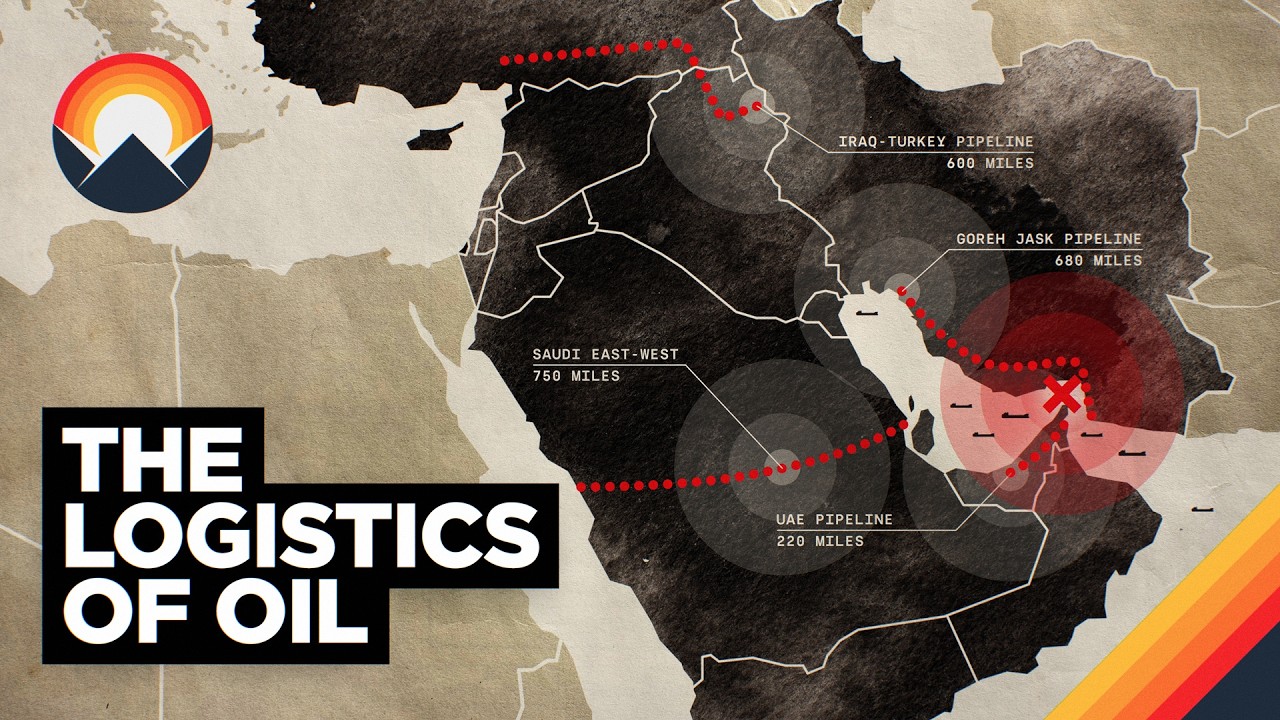
The larger oil powers in the Gulf found themselves in a much more resilient position due to decades of quiet strategic planning. The United Arab Emirates (UAE) produces roughly 4.1 million barrels of oil per day—more than Bahrain, Qatar, and Kuwait combined. Crucially, the UAE possesses a small coastline on the Gulf of Oman, sitting just outside the chokepoint. Recognizing that Iran had long threatened to close the 20-mile-wide strait using sea mines or targeted rocket attacks, the Emirati government began constructing a bypass pipeline in 2008. While public official statements focused on the routine time and cost savings of bypassing the waterway, the true geopolitical motive was an open secret. Before the war erupted, a portion of UAE oil was still loaded onto tankers at Das Island inside the Gulf, but a slim majority was already being funneled through the mainland pipeline to be loaded safely at the port of Fujairah.

Counterintuitively, Iran developed a nearly identical mirroring infrastructure strategy. As the world's seventh largest oil producer, Iran pumped 4.2 million barrels a day, exporting 90% of it from a single, hyper-concentrated terminal at Kharg Island. Because the Iranian shoreline is shallow, Kharg Island allowed deep-draft supertankers to dock and load to full capacity. However, fearing that its foreign adversaries might one day blockade the strait and choke off its own economic lifeline, Tehran constructed its own bypass pipeline terminating at the port of Jask outside the chokepoint. Though the Jask terminal was rarely used before the outbreak of active hostilities, analysts estimate it was immediately capable of handling 15% of Iran's normal export volume, with room for rapid expansion via infrastructure upgrades.

---

Iraq's Political Gridlock and Saudi Arabia's Red Sea Contingency

Iraq presents a highly volatile logistical case study. Possessing a tiny Gulf coastline, Iraq relies primarily on vulnerable offshore loading platforms to export the vast majority of its crude. It has no alternative maritime coastline, but it does possess a strategically vital overland pipeline running north into a port in Turkey. On paper, this infrastructure is a geopolitical masterpiece because it bypasses both the Strait of Hormuz and the Suez Canal—the latter having become an unreliable maritime trade route due to persistent drone and missile attacks on commercial shipping by Houthi rebels in Yemen. In reality, the Iraqi pipeline is frequently rendered useless by the nation's fragile internal politics. The line transits through the autonomous region of Kurdistan, which frequently quarrels with the central government in Baghdad over independent oil export rights, using control of the physical pipeline as political leverage. While the pipeline sat dormant for years, the reality of the Hormuz closure forced an emergency wartime agreement between Baghdad, Kurdistan, and Turkey, with expectations that the route could eventually scale up to 600,000 barrels a day, or roughly 15% of Iraq's pre-war export capacity.

Towering over the rest of the region is Saudi Arabia, the Gulf’s definitive oil titan. Saudi Arabia is the only regional power blessed with a secondary coastline along the Red Sea, which it leveraged to build a massive, highly capable logistical contingency network. Its 750-mile (1,200 km) East-West Pipeline was originally constructed in the 1980s during the height of the Iran-Iraq War. Although Iran never fully closed the strait during that historical conflict, both sides routinely attacked commercial tankers in the Gulf, prompting Riyadh to prepare for a worst-case scenario. While the East-West pipeline can naturally carry 5 million barrels a day—and could theoretically surge to 7 million barrels a day by converting its parallel natural gas line to transport crude—market analysts point out that the true bottleneck lies at its terminus at the Port of Yanbu, where tanker loading infrastructure maxes out at roughly 5 million barrels per day. Even with this infrastructure constraint, the sheer volume of diverted oil allowed Saudi Arabia to securely maintain its position as the world's third-largest oil producer despite the active maritime blockade.

- **Bahrain production:** 200,000 barrels per day (35th largest global producer). - **Qatar production:** 1.3 million barrels per day (Ras Laffan supplies 20% of global LNG). - **Kuwait production:** 2.6 million barrels per day (10th largest global producer). - **UAE production:** 4.1 million barrels per day (Bypass pipeline terminates at Fujairah). - **Iran production:** 4.2 million barrels per day (Main terminal at Kharg Island; bypass at Jask). - **Iraq bypass potential:** Up to 600,000 barrels per day via the Turkey-Kurdistan pipeline route. - **Saudi Arabia pipeline:** 750 miles long; can move 5 million barrels per day to the Port of Yanbu.

---

Price Elasticity and the Core Inelasticity of Oil

To comprehend why an 8% dip in physical oil supply could trigger an explosive 60% increase in market price, one must look to the fundamental economic principle of the "elasticity of demand," which maps the rigid mathematical relationship between a product's price and consumer demand. Everyday breakfast cereal, for example, is a highly elastic commodity. Because purchasing a specific brand of cereal is a non-essential luxury and a matter of pure consumer preference, price changes heavily dictate consumer behavior. Academic consensus calculations show that breakfast cereal has an average elasticity of demand of -3. This means that a minor 10% price increase will cause an immediate, sharp 30% drop in consumer demand, as shoppers effortlessly pivot to cheaper generic brands or alternative breakfast options.

[Image graph showing inelastic vs elastic demand curves]

Conversely, the global oil market operates under an entirely different, incredibly inelastic paradigm. Unlike breakfast cereal, modern society offers zero immediate, scalable substitutes for crude oil. Internal combustion engines require petroleum products to function, and the structural ways in which people use their vehicles are deeply locked in. In the United States, fully three-quarters of all personal vehicle travel is strictly non-discretionary, consisting of fixed, mandatory trips such as daily workplace commuting, grocery shopping, and transporting children to school. Even when assessing discretionary travel—like driving out to restaurants or embarking on weekend road trips—historical consumer data shows that rising gas prices rarely dissuade people from traveling. More critically, personal cars only account for roughly 25% of global oil consumption. The remaining 75% is consumed by commercial sectors like heavy freight trucking, shipping, and aviation. A commercial logistics corporation cannot simply pause operations because fuel costs rise; they absorb the cost and pass it forward. While long-term elasticity shifts as consumers eventually buy electric vehicles or alter their commutes, short-term historical data indicates oil has an elasticity of demand of roughly -0.1.

---

Commodity Traders and the Power of Market Narratives

The opening weeks of the military conflict in Iran did not perfectly match rigid economic formulas. An 8% reduction in global supply coupled with a 60% price spike mathematically signals an elasticity of demand of -0.13, which is close to the historical -0.1 benchmark but indicates a slightly under-reactive market. This real-world divergence is explained by the fact that the commodities market is driven by fallible human actors wielding immense financial influence: commodity traders. This powerful Wall Street sector generates profits by betting aggressively on where oil prices will move tomorrow, inadvertently becoming the largest artificial force driving the actual price of oil today. Using physical oil stockpiles and complex derivative instruments like futures contracts, these traders routinely move the market way ahead of actual supply-and-demand realities. If a consensus of traders collectively believes that global supply is about to choke off, they will immediately rush to buy physical crude and lease storage, which artificially forces short-term supply down and drives consumer prices up. This creates a psychological, self-fulfilling prophecy where short-term trading is less about actual physical oil and more about predicting what competing traders will do next.

Consequently, day-to-day market movements are dictated by a delicate dance between narrative and material reality. In the opening days of the Iranian conflict, the market's response to the shutdown of the planet's premier oil chokepoint was strangely quiet. The joint U.S. and Israeli airstrikes commenced in the pre-dawn hours of Saturday, February 28th, providing commodity traders with two full weekend days to digest the geopolitical implications while the global exchanges were closed. Yet, when trading opened on Monday, a full day of aggressive buying only nudged oil prices up a modest 6%. Tuesday brought an additional modest rise of less than 5%, and by Wednesday, the market flatlined entirely. This occurred even as international maritime insurance corporations were actively tearing up shipping policies and detailed accounts of drone strikes hitting tankers in the Gulf were splashed across global news networks.

---

The Trump Administration Precedent and the Insurance Shock

This initial market stagnation occurred because commodity traders were completely blinded by a comforting geopolitical narrative. In the early days of the conflict, a widespread consensus asserted that the fighting would remain a highly contained, short-term military operation. This belief was directly reinforced by the official public rhetoric coming out of Washington; the very second sentence of President Trump's initial press statement regarding the military intervention explicitly read: "Our objective is to defend the American people by eliminating imminent threats from the Iranian regime." Traders took this language at complete face value, looking back at a well-established history of limited actions by the administration.

Traders pointed to a series of historical precedents where the administration chose restricted military engagements over total war: * The targeted special operations campaign inside Venezuela to capture Nicolás Maduro. * The rapid surgical strikes leveled against localized ISIS positions in Syria following the tragic deaths of two American service members. * The June 2025 military operation inside Iran itself, where the U.S. deployed heavy bunker-buster munitions to specifically neutralize Iranian nuclear infrastructure without triggering a wider regional war.

Traders calculated that because full-scale foreign wars are deeply unpopular with the domestic electorate, and because Trump's campaign messaging had heavily attacked his political opponent for allegedly wanting to drag the country into a war with Iran, the administration would resist letting the crisis escalate. But then, cold reality shattered the narrative.

As Tehran began launching retaliatory salvos of cruise missiles and loitering munitions across the Middle East, every single major maritime insurance syndicate in London and globally issued simultaneous, emergency coverage cancellation notices. The math behind merchant shipping leaves absolutely zero room for un-insured risk: a modern Very Large Crude Carrier (VLCC) hull costs between $80 million and $130 million to build, and its dense cargo of crude oil holds a pre-war market value exceeding $130 million. No maritime shipping firm can shoulder a quarter-billion-dollar loss on a single voyage. While shipowners maintain permanent insurance policies for standard maritime hazards like groundings, fires, and accidental collisions, operations inside high-risk combat zones require specialized coverage overseen by the Joint War Committee—an elite body of major insurers that designates high-risk conflict zones like the coast of Venezuela, the Black Sea, the Red Sea, and the entire Persian Gulf. Crucially, these specialized war-risk policies feature a strict clause allowing underwriters to cancel coverage with a mere 72 hours' notice.

The universal triggering of these 72-hour cancellation notices was the exact structural turning point that forced commodity traders to look past political spin. Regardless of physical pipeline bypass capacities, the immediate bureaucratic reality meant it was legally and financially impossible for commercial oil tankers to move product out of the Gulf. As the opening days of the war stretched into weeks, select maritime insurers cautiously returned to write policies, but their exorbitant new terms only heightened market anxiety. The baseline cost of vital war-risk insurance skyrocketed over 10-fold, jumping from a pre-war rate of 0.1% to 0.25% of the total vessel value up to a staggering 3% per single transit. This massive, permanent premium penalty reflected a transformed reality where hypothetical security threats had become concrete costs. Throughout March, the true, stubborn intractability of the global oil disruption finally crystallized for market actors, sending oil prices soaring and holding them stubbornly near $100 a barrel—even as regional bypass pipelines slowly came online to patch the hole in physical supply.

[14:59](https://www.youtube.com/watch?v=5qjvluMnyAw&t=899s) The Illusion of Gulf Stability and Long-Term Market Impact

The illusion of stability in the Persian Gulf has been completely shattered. For years, as Gulf nations grew increasingly wealthy and highly developed, global markets fell into the comfortable belief that these countries were somehow geopolitically isolated from the chaos and tumult plaguing the broader Middle East. However, Iran's sudden ability to effectively shut down the entire regional economy overnight brutally exposed the frailty of that assumption. The reality is now undeniable: a continuous, uninterrupted supply of Gulf oil is no longer the guarantee that global markets once assumed it to be before the outbreak of the war.

Consequently, the market is highly likely to price this deep-seated geopolitical uncertainty into oil valuations for the long term. Until the Strait of Hormuz becomes entirely irrelevant to global oil logistics, the persistent anxiety surrounding its day-to-day operations will have far-reaching consequences. Everyday consumers across the globe will ultimately bear the financial burden, finding themselves "paying more at the pump" for the foreseeable future.

[15:42](https://www.youtube.com/watch?v=5qjvluMnyAw&t=942s) The Fragmented Internet and Cybersecurity Solutions

The internet is far less global than most people realize, a reality heavily illustrated by state restrictions and corporate regulations. A surprising prime example is the United Arab Emirates, which heavily restricts internet access by blocking popular communication platforms like FaceTime and WhatsApp calls, alongside any website deemed to violate their cultural and religious norms. Even traveling through Europe reveals a highly fragmented digital landscape; smaller, US-focused websites frequently block access entirely because they do not comply with stringent European GDPR regulations. Beyond state censorship and regulatory hurdles, everyday users regularly clash with standard geo-blocking practices enforced by mainstream streaming services.

To bypass these artificial digital borders, the narrator highlights the video's sponsor, NordVPN, which operates hundreds of servers worldwide to allow users to browse from virtually anywhere. However, the tool is framed as even more critical for everyday cybersecurity. Connecting to public Wi-Fi networks leaves personal data and user activity completely vulnerable to malicious actors who could be "watching every move you do." NordVPN mitigates this threat by establishing a secure, encrypted tunnel between the user and its servers. Furthermore, its Threat Protection Pro feature extends defense even onto secure networks by identifying and blocking scams, malware, and phishing sites.

- Independent testing has verified that NordVPN successfully detects at least 85% of phishing websites. - Viewers can access an exclusive discount package plus 4 additional months free by visiting the dedicated link: `[nordvpn.com/wendover](https://nordvpn.com/wendover)`. - The subscription service includes a risk-free 30-day money-back guarantee.

## Notable quotes > From now on, all navigating through the Strait of Hormuz is forbidden. No ship in every type is not allowed to pass from the Strait of Hormuz till next notice. — Iranian SEPA Navy

> Our objective is to defend the American people by eliminating imminent threats from the Iranian regime. — President Trump

> [14:59](https://www.youtube.com/watch?v=5qjvluMnyAw&t=899s) The illusion of stability in the Persian Gulf has been completely shattered. — Narrator

> [14:59](https://www.youtube.com/watch?v=5qjvluMnyAw&t=899s) For years, as Gulf nations grew increasingly wealthy and highly developed, global markets fell into the comfortable belief that these countries were somehow geopolitically isolated from the chaos and tumult plaguing the broader Middle East. — Narrator

> [14:59](https://www.youtube.com/watch?v=5qjvluMnyAw&t=899s) The reality is now undeniable: a continuous, uninterrupted supply of Gulf oil is no longer the guarantee that global markets once assumed it to be before the outbreak of the war. — Narrator

> [14:59](https://www.youtube.com/watch?v=5qjvluMnyAw&t=899s) Until the Strait of Hormuz becomes entirely irrelevant to global oil logistics, the persistent anxiety surrounding its day-to-day operations will have far-reaching consequences. — Narrator

> [14:59](https://www.youtube.com/watch?v=5qjvluMnyAw&t=899s) Everyday consumers across the globe will ultimately bear the financial burden, finding themselves "paying more at the pump" for the foreseeable future. — Narrator

> [15:42](https://www.youtube.com/watch?v=5qjvluMnyAw&t=942s) The internet is far less global than most people realize, a reality heavily illustrated by state restrictions and corporate regulations. — Narrator

> [15:42](https://www.youtube.com/watch?v=5qjvluMnyAw&t=942s) Connecting to public Wi-Fi networks leaves personal data and user activity completely vulnerable to malicious actors who could be "watching every move you do." — Narrator

## Mentioned Strait of Hormuz, Iranian SEPA Navy, United States, Israel, Iran, Islamic Revolutionary Guard Corps, IRGC, Persian Gulf, Bahrain, New York, Saudi Arabia, Qatar, Ras Laffan Industrial City, Kuwait, United Arab Emirates, UAE, Gulf of Oman, Das Island, Fujairah, Tehran, Kharg Island, Jask, Iraq, Suez Canal, Yemen, Houthi rebels, Kurdistan, Baghdad, Turkey, Red Sea, East-West Pipeline, Port of Yanbu, Wall Street, Trump, Venezuela, Nicolás Maduro, Syria, ISIS, London, Joint War Committee, Black Sea, FaceTime, WhatsApp, Europe, GDPR, NordVPN, Threat Protection Pro, Sam Denby, Alexander Williard, Sara Stoltman, Gabriel Ferreras, Austin Glass, Kate Ermolenkko, Manni Simon, Dony Bullen, Simon Buckmaster, Wendover Productions

[Source](https://www.youtube.com/watch?v=5qjvluMnyAw)

中文简报

伊朗封锁引发航运保险震荡,油价暴涨60% 由于全球需求极度缺乏弹性,加上海运承保的即刻取消在法律层面叫停了海湾油轮通行,此次油价的剧烈飙升远超实际供应8%的降幅。 在美以实施军事打击后,伊朗封锁霍尔木兹海峡作为报复,尽管实际石油供应仅减少8%,却引发全球油价飙升60%。巴林、卡塔尔和科威特等较小的海湾国家因出口完全依赖该航道而遭受巨大的经济冲击,而规模更大的国家则利用预建的绕行管道和次要海岸线来分流原油出口。大宗商品交易商起初因“冲突可控”这一令人宽慰的政治说法而维持价格稳定,但海运保险辛迪加普遍发布的72小时紧急取消承保通知打破了这一幻觉,导致保险保费暴涨10倍,并在全球石油价格中强加了长期的地缘政治风险溢价。此外,视频还涉及了阿联酋等地区的数字碎片化与国家审查制度,指出NordVPN是应对安全和地理封锁的解决方案。 作为对美以军事打击的报复,伊朗彻底阻断了霍尔木兹海峡的海上石油运输。 尽管此次封锁在2026年3月仅减少了约8%的全球实际石油供应,却导致全球油价暴涨60%。 霍尔木兹海峡通行的全面停摆对巴林、卡塔尔和科威特构成了生存危机,因为这些国家的出口100%依赖该水道。 阿联酋与伊朗制定了镜像般的基础设施策略,通过修建陆上绕行管道通往该瓶颈要道之外的港口(分别为富查伊拉和贾斯克)。 伊拉克经由库尔德斯坦和土耳其的关键陆上绕行管道,频繁因巴格达与库尔德斯坦之间的内部政治摩擦而陷入瘫痪。

Reading summary

Wendover Productions argues that a modest 8% decline in global oil supply during the Strait of Hormuz conflict sparked an outsized 60% price spike due to extreme demand inelasticity, commodity trader miscalculations, and an immediate collapse in maritime shipping insurance. Demand Inelasticity and Disproportionate Price Spikes When the Iranian military closed the Strait of Hormuz—a maritime chokepoint normally handling roughly 20% of global petroleum—March 2026 data indicated that worldwide production contracted by only 8%. Despite this single-digit contraction, crude prices surged by 60%, representing a price increase seven and a half times greater than the physical supply deficit. Wendover Productions attributes this disparity to the economic principle of elasticity of demand: unlike discretionary products like breakfast cereal, which exhibits an elasticity of -3, crude oil operates under an extreme short-term inelasticity of approximately -0.1 because society possesses no immediate, scalable substitutes. Commercial sectors such as heavy freight trucking, maritime shipping, and aviation consume roughly 75% of global oil and cannot pause logistical operations when fuel costs rise, forcing them to absorb and pass expenses forward. Similarly, non-discretionary personal driving—such as daily commutes, grocery trips, and school transport—accounts for three-quarters of U.S. personal vehicle travel. Because consumers and commercial logistics networks cannot immediately abandon internal combustion infrastructure, even slight physical deficits force severe, rapid price escalations to balance the market. Divergent Gulf Exposure and Bypass Capacities The shutdown generated starkly uneven economic fallout across Gulf producers based on their geographic exposure and alternative logistics. Bahrain (producing 200,000 barrels per day), Qatar (1.3 million barrels per day, alongside 20% of global liquefied natural gas supply), and Kuwait (2.6 million barrels per day) rely entirely on maritime tanker transit through Hormuz, causing severe disruptions to their domestic export revenues. However, because these three nations collectively represent just 16% of Gulf output, their isolated losses exerted limited pressure on global pricing. Conversely, larger Gulf producers insulated themselves using bypass pipelines constructed over previous decades. The United Arab Emirates diverted a slim majority of its 4.1 million daily barrels to Fujairah outside the strait, while Iran leveraged its mainland pipeline to Jask to handle an estimated 15% of its 4.2 million barrel-per-day production. Iraq activated emergency agreements between Baghdad, Kurdistan, and Turkey aiming to scale northern overland pipeline transit to 600,000 barrels per day. Towering over the region, Saudi Arabia diverted up to 5 million barrels per day through its 750-mile East-West Pipeline to the Red Sea, though its ability to expand exports was constrained by terminal loading bottlenecks at the Port of Yanbu. Trader Complacency and the Insurance Bottleneck Global oil pricing was further distorted by financial speculation and flawed market narratives. In the conflict's opening days, commodity traders assumed the confrontation would mirror prior limited actions by the Trump administration, such as operations in Venezuela, rapid strikes against ISIS in Syria, and targeted June 2025 bunker-buster strikes against Iranian nuclear sites. Persuaded by official statements that the military campaign had strictly defined objectives, traders initially nudged oil prices up only 6% before trading stalled entirely. This complacency unraveled once Iranian retaliatory missile and drone strikes prompted international maritime insurance syndicates to issue universal 72-hour cancellation notices on war-risk coverage. Because very large crude carrier hulls cost between $80 million and $130 million, and carried crude cargoes exceeding $130 million, commercial operators refused to risk un-insured transit. When select underwriters resumed issuing policies, war-risk premiums surged tenfold from baseline rates of 0.1%–0.25% up to 3% per transit. This regulatory and financial freeze legally halted commercial tanker transport out of the Persian Gulf, driving crude prices toward $100 per barrel even as regional pipeline alternatives gradually came online. Permanent Geopolitical Risk in Oil Valuations (14:59) Wendover Productions concludes that the confrontation destroyed the market assumption that wealthy Persian Gulf petrostates were insulated from regional conflict. Because Iran demonstrated the capability to paralyze regional energy transport overnight, analysts anticipate that markets will factor a persistent geopolitical risk premium into global valuations until the Strait of Hormuz becomes completely obsolete to regional logistics, resulting in prolonged higher fuel costs for global consumers. While regional bypass pipelines and diplomatic contingencies mitigated physical supply shortfalls, the analysis underscores that commercial logistics remain acutely vulnerable to maritime insurance mechanisms and trader sentiment. An unresolved challenge is whether Gulf nations can sufficiently expand bypass capacity and terminal infrastructure to fully insulate global energy markets from future chokepoint closures.

精炼阅读摘要

Wendover Productions指出,2026年3月霍尔木兹海峡遭封锁后,得益于海湾产油国的陆上绕行管线,全球石油供给仅下滑约8%;但受制于原油极低的需求价格弹性、大宗商品交易员的地缘误判,以及海上战争险停保与费率暴涨逾10倍的制度性休克,国际油价飙升了60%。 供给微降与油价暴涨的显著脱节 2026年3月,为报复美国与以色列对伊朗境内的军事打击,伊朗伊斯兰革命卫队海军封锁了霍尔木兹海峡,以反舰导弹与无人机切断商业航运。战前全球约20%的石油供应均需经由该狭窄咽喉运出,但数据显示当月全球实际原油供应仅萎缩了约8%,国际油价却剧烈跳涨60%,价格涨幅达到实体供应降幅的7.5倍。这一反直觉的经济背离,表明短期油价的形成远非单纯取决于物理开采量的变化。 分流管线对物理断供的战略缓冲 海峡关闭对海湾各国造成的影响高度分化,但大型产油国的陆上管线有效阻截了全球物理断供。巴林(日产20万桶)、卡塔尔(日产130万桶且占全球20%的液化天然气供应)及科威特(日产260万桶)因100%依赖油轮穿越海峡而遭受致命冲击,但这三国仅占海湾总产量的16%,不足以颠覆全球基本面。阿联酋(日产410万桶)早在2008年便兴建了通往海峡外富查伊拉港的绕行管线,战前已承载其过半出口;伊朗自身(日产420万桶)虽有90%原油集中于哈尔克岛终端,但其贾斯克港分流管线具备承担15%出口量的即时运力;伊拉克达成紧急战时协议,预期可通过途经库尔德斯坦至土耳其的管道日输送最多60万桶(约其战前运能的15%);沙特阿拉伯则依托全长750英里的东西向管道,向红海延布港转移原油,受制于延布港装运上限,其最大外运规模被锁定在每日约500万桶,但仍旧力保了全球第三大产油国的供应生命线。 刚性需求与极低价格弹性的放大效应 供需缺口与价格波动的巨大倍数源于原油极端缺乏弹性的经济属性。与需求价格弹性达-3(价格上涨10%导致消费骤降30%)且具备充足替代品的日常麦片不同,现代社会对原油缺乏短期内可规模化的替代方案。全球原油消耗中多达75%属于重卡货运、海运与航空等商业物流,相关企业无法停工,只能将成本直接向下游转嫁;即使在其余25%的私人乘用车领域,以美国为例,75%的出行属于上下班、采买物资和接送儿童等刚性非自由支配行程,高油价难以遏制日常通勤。原油短期历史需求弹性仅约-0.1,这意味着极小的供应缺口必须引发极度剧烈的价格飙涨才能强行出清市场。 交易员误判与战争险的制度性熔断 市场对封锁的最初反应异乎寻常地平淡。由于美以空袭发生在周六,交易员在开盘后轻信了特朗普政府“旨在消除迫切威胁”的官方表态,并结合美方此前在委内瑞拉抓捕马杜罗、叙利亚空袭ISIS以及2025年6月精准打击伊朗核设施等未引发全面战争的先例,押注冲突将局限于有限的手术式打击,导致首日油价仅微涨6%,随后数日甚至陷入停滞。然而,随着伊朗发射巡航导弹与自杀式无人机展开报复,伦敦联合战争委员会管辖下的全球主要海上保险辛迪加集体触发了72小时紧急取消条款。一艘超大型油轮(VLCC)船体价值达0.8亿至1.3亿美元,运载原油价值亦超过1.3亿美元,高达2.5亿美元的单航次无保险敞口彻底阻绝了商船出海。即便随后少数保险商重启承保,单次通航费率也从战前的0.1%–0.25%飙升逾10倍至3%,这种由制度与法务风险构筑的硬性瘫痪迫使交易员打破侥幸心理,将油价推升并坚挺在每桶近100美元的高位。 海湾稳定假象破灭与长期溢价 (14:59) 此次危机彻底击碎了长期以来全球市场认定海湾国家能够超然于中东动荡的稳定假象。伊朗在一夜之间瘫痪区域经济的能力表明,海湾原油的持续不间断供应已无法被视作确定前提。节目分析认为,在霍尔木兹海峡在物流逻辑上彻底失去重要性之前,这种深层的地缘政治不确定性将被长期计入油价定价中,全球普通消费者将在未来相当长一段时间内持续承受加油站终端的高额油价成本。 该节目论证了现代油价危机不仅取决于地缘冲突造成的物理开采缺口,更受到大宗商品交易心理、极度刚性的终端需求,以及海运战争险等金融法务机制的层层杠杆放大。不过,其关于高油价长期化前景的推论,高度建立在海峡替代管线存在物理扩容瓶颈、且美伊对抗常态化致使保险费率长期居高不下的假设之上。

Detailed notes — zh

## Background 该视频由 Wendover Productions(Sam Denby 编剧)于 2026 年 4 月 17 日发布在 YouTube 平台。视频简介主要包含了赞助商 NordVPN 的专属优惠与退款政策说明,并附带了制作团队名单及频道相关的社交媒体与商业联络信息。 ## TL;DR 在美以空袭引发伊朗封锁霍尔木兹海峡后,沙特、阿联酋等国的战略绕行管道发挥了缓冲作用,使全球原油实际断供幅度被控制在约 8%。然而,受制于商业运输与居民刚需出行对石油极低的需求价格弹性,全球油价仍在短时间内剧烈暴涨了 60%。大宗商品交易员最初因误信“有限冲突”叙事而反应迟钝,直到各大保险公司下达 72 小时撤回战争险的通告,才在合规层面彻底阻断油轮运输。随着战争险保费暴涨十倍及海湾地区绝对安全神话的破灭,不可逆的地缘政治风险溢价将国际油价长期钉在每桶 100 美元的高位。 ## Atmosphere & style 全片延续了 Wendover 标志性的严谨、客观与冷峻的深度分析风格,开篇便抛出“供应仅降 8% 但油价飙升 60%”的反直觉悬念吸引观众。叙事层层剥茧,从复杂的地理管道沙盘推演无缝切入交易员的心理博弈与海事保险的官僚合规条款,行文逻辑缜密且节奏紧凑。整期视频冷静理性却极具冲击力,让观众在俯瞰地缘风暴与宏观经济运作机制的同时,真切体会到全球现代能源供应链看似庞大实则命悬一线的脆弱感。 ## Bulletin - [00:00](https://www.youtube.com/watch?v=5qjvluMnyAw&t=0s) 霍尔木兹海峡全面断航后,全球原油实际供应仅萎缩约8%,但国际油价在极短时间内暴涨60%,价格涨幅达到供应收缩幅度的7.5倍之多。 - [05:44](https://www.youtube.com/watch?v=5qjvluMnyAw&t=344s) 沙特、阿联酋、伊拉克与伊朗凭借多条战略绕行输油管线分流了海湾核心运力,成功将海峡封锁造成的全球原油净断供率控制在个位数水平。 - [07:23](https://www.youtube.com/watch?v=5qjvluMnyAw&t=443s) 石油极其微弱的短期需求价格弹性(约-0.1至-0.13)叠加75%缺乏替代方案的商业运输与刚性通勤,迫使买家只能以极端溢价竞夺剩余产能。 - [12:46](https://www.youtube.com/watch?v=5qjvluMnyAw&t=766s) 联合战争委员会高危标记与海运保险商激活72小时单方面撤保权,从法律与合规层面逼停海运油轮,后续暴涨10倍以上的战争险费率将油价长期锚定在百美元高位。 ## Key takeaways - [00:00](https://www.youtube.com/watch?v=5qjvluMnyAw&t=0s) 伊朗伊斯兰革命卫队海军通过甚高频无线电与导弹、无人机打击全面封锁霍尔木兹海峡,瘫痪了战前承载全球20%原油运量的咽喉航道。 - [01:07](https://www.youtube.com/watch?v=5qjvluMnyAw&t=67s) 巴林、卡塔尔与科威特因缺乏绕行管线,原油及LNG出口100%受困于海湾内部,但因三国仅占波斯湾原油总产量的16%,对全球基准油价的决定权相对有限。 - [02:34](https://www.youtube.com/watch?v=5qjvluMnyAw&t=154s) 阿联酋早在2008年便前瞻性布局通往阿曼湾富查伊拉港的输油管道,战前已能将过半原油直接绕开霍尔木兹海峡装船,展现出极强的供应链韧性。 - [02:34](https://www.youtube.com/watch?v=5qjvluMnyAw&t=154s) 伊朗自身同样担忧出口受制,修建了通往阿曼湾贾斯克港的绕行管线,在危机期间已能转运其战前约15%的原油出口份额。 - [04:23](https://www.youtube.com/watch?v=5qjvluMnyAw&t=263s) 伊拉克通往土耳其杰伊汉港的北方管线因巴格达与库尔德自治区的长年利益争端而废弃,海峡危局倒逼三方达成重启协议,未来有望提供每日60万桶的绕运能力。 - [05:44](https://www.youtube.com/watch?v=5qjvluMnyAw&t=344s) 沙特依靠1200公里的东西横贯输油管道牢牢掌握战略主动权,尽管红海延布港码头装载瓶颈将实际运力压制在每日500万桶左右,仍稳住了全球供应底盘。 - [07:23](https://www.youtube.com/watch?v=5qjvluMnyAw&t=443s) 原油与高弹性消费品不同,在短期内极度缺乏需求价格弹性(理论值约-0.1,实测约-0.13),只能通过极端的价格暴涨强行削减需求以匹配受损产能。 - [08:59](https://www.youtube.com/watch?v=5qjvluMnyAw&t=539s) 全球原油消费中75%集中于无法轻易停摆的商业运输,私家车出行中也有75%属于通勤等刚性需求,短期内缺乏电动车等直接替代路径,强化了需求的绝对刚性。 - [08:59](https://www.youtube.com/watch?v=5qjvluMnyAw&t=539s) 大宗商品交易员群体通过期货衍生品与现货囤积主导短期盘面,油价走势因而演变为交易员彼此博弈与叙事共识的自我实现过程。 - [11:02](https://www.youtube.com/watch?v=5qjvluMnyAw&t=662s) 开战初期市场因轻信白宫“消除紧迫威胁”的官方措辞,并参照委内瑞拉与叙利亚等历史定点打击先例误判为局部有限冲突,导致前三日油价反应严重钝化。 - [12:46](https://www.youtube.com/watch?v=5qjvluMnyAw&t=766s) 各大海运承保商援引联合战争委员会评估并执行72小时内单方面撤回战争险条款,在行政与财务合规层面一举切断了波斯湾原油的合法出海途径。 - [14:07](https://www.youtube.com/watch?v=5qjvluMnyAw&t=847s) 复保后单次航程战争险费率较战前飙升逾10倍,达到船体总价值的3%左右,沉重的物流合规成本形成了短期内无法消退的价格底盘。 - [14:07](https://www.youtube.com/watch?v=5qjvluMnyAw&t=847s) 海湾产油国免于中东地缘动荡波及的“稳定神话”彻底粉碎,即便替代陆路运力逐步爬坡,永久计入的大宗商品地缘风险溢价仍将国际油价长久锚定在百美元高位。 ## Detailed walkthrough ### [00:00](https://www.youtube.com/watch?v=5qjvluMnyAw&t=0s) 霍尔木兹海峡封锁与超乎预期的油价暴涨 霍尔木兹海峡的全面关闭所带来的实际冲击,或许并不完全像外界最初预想的那样具有毁灭性。为了报复美以两国对伊朗境内的空袭,伊朗伊斯兰革命卫队海军(IRGC Navy)通过甚高频海洋无线电(VHF marine radio)发布了一条全球通告:"从现在起,禁止一切船只通行霍尔木兹海峡。在另行通知之前,任何类型的船只均不得通过霍尔木兹海峡。"("From now on, all navigating through the Strait of Hormuz is forbidden. No ship in every type is not allowed to pass from the Strait of Hormuz till next notice.")为了践行这一禁令,革命卫队迅速动用导弹与无人机袭击了那些试图强行穿越水道的商船,强硬而清晰的威慑迅速迫使整条航道的商业运输彻底瘫痪。 在战争爆发之前,全球大约20%的原油都需要经由这一咽喉要道运往世界各地。然而出人意料的是,在2026年3月海峡关闭之后,全球原油总产量实际上仅缩减了约8%。但与此形成鲜明反差的是,全球国际油价却在极短时间内暴涨了整整60%——价格涨幅几乎是实际供应收缩幅度的7.5倍之多。这种看似完全违背直觉的经济现象,背后隐藏着全球原油市场复杂的运行机制与地缘博弈。 - **断航宣告**:伊朗伊斯兰革命卫队海军通过VHF无线电对所有商业船只发出禁航令,并动用无人机和导弹打击过往船只以封锁水道。 - **关键数据对比**:战前霍尔木兹海峡承载全球20%的原油运输;2026年3月封锁后,全球石油供应仅萎缩约8%,但国际油价飙升了60%。 ### [01:07](https://www.youtube.com/watch?v=5qjvluMnyAw&t=67s) 困在海湾内的国家:巴林、卡塔尔与科威特的生存危机 波斯湾无疑是全球最重要的石油生产区域,这里不仅坐拥世界上最庞大的已探明原油储量,开采成本也是全球最低的,自然而然地演变成了全球财富最为集中的板块之一。然而,海峡的封锁对海湾内部不同国家的打击却截然不同。对于波斯湾面积最小的国家巴林而言——其国土面积甚至不比纽约市大——它依然凭借每日约20万桶的产量位列全球第35大产油国。尽管巴林经济通过炼化沙特原油、金融和制造业实现了较好的多元化,但依然深受地理位置的制约。 紧邻的卡塔尔每天产油约130万桶,其经济支柱早已转向液化天然气(LNG),其境内的拉斯拉凡工业城(Ras Laffan Industrial City)独自承担着全球20%的液化天然气供应。再看科威特,作为全球第十大产油国,其日产量达到260万桶,但该国经济严重缺乏多元化,几乎全盘依赖石油出口。对于巴林、卡塔尔和科威特这三个国家来说,霍尔木兹海峡的关闭带来的是一场近乎生死存亡的生存危机,因为它们100%依赖油轮穿越该海峡进行对外出口。不过,虽然这对三国本土经济造成了毁灭性打击,但由于它们加起来仅占波斯湾原油总产量的16%,因此对全球整体油价的定价影响相对有限。 - **巴林**:面积堪比纽约市,日产原油约20万桶(全球第35位),依赖沙特原油精炼、制造业及金融业,外运完全受阻。 - **卡塔尔**:日产原油约130万桶,其拉斯拉凡工业城供应全球20%的液化天然气,原油出口100%依赖海峡通道。 - **科威特**:日产原油约260万桶(全球第10位),经济结构单一,对海峡油轮通道的依赖度同样为100%。 - **全球影响**:三国虽然经济命脉被掐断,但合计仅占波斯湾总产量的16%,对全球油价波动的直接主导权较小。 ### [02:34](https://www.youtube.com/watch?v=5qjvluMnyAw&t=154s) 突破咽喉:阿联酋与伊朗的绕行管道布局 与困于内湾的小国不同,海湾地区其他主要产油国早已筹划了更为稳妥的退路。阿拉伯联合酋长国(UAE)的日产量约为410万桶,比前述三国总和还要多。至关重要的是,阿联酋在霍尔木兹海峡之外拥有面向阿曼湾的海岸线。尽管阿联酋大部分油田位于波斯湾内或沿岸,但早在2008年,阿布扎比就开始修建一条绕过海峡的原油管道。尽管当时官方声明大多强调该管道能节省出口时间和海运成本,但其真正的战略意图人尽皆知:霍尔木兹海峡最窄处仅约20英里宽,主航道更为狭窄,伊朗只需布设水雷或发射火箭弹就能轻易阻断航运。在战前,虽然阿联酋仍有相当一部分原油通过海湾内的达斯岛(Das Island)装船,但已有超过半数的份额通过这条管线输送到海峡外侧的富查伊拉港(Port of Fujairah),这使得阿联酋在海峡真正封闭时拥有极强的战略韧性。 令人意想不到的是,全球第七大产油国伊朗自身也采取了惊人相似的避险逻辑。战前,伊朗每日产油约420万桶,其中高达90%依赖波斯湾内的哈尔克岛(Kharg Island)终端出口,因为伊朗沿岸水深较浅,必须依靠管线将原油送往深水岛屿才能供超大型油轮满载停靠。但正如其他国家防备伊朗一样,伊朗也同样担忧自己的出口通道遭到敌对势力封锁。为此,伊朗修建了一条通往海峡外侧的戈雷-贾斯克管道。虽然战前位于阿曼湾一侧的贾斯克港(Port of Jask)极少投入实际满负荷运作,但现有基础设施已能承担战前约15%的正常出口份额,后续若经过技术升级,这一比例还能进一步提升。 - **阿联酋原油出口**:日产410万桶;战前已将超过半数原油通过管线绕过海峡,输往阿曼湾的富查伊拉港装载,达斯岛终端则处理剩余部分。 - **伊朗原油布局**:日产420万桶;战前90%集中在哈尔克岛码头出口,战时启用通往阿曼湾贾斯克港的绕行管线,目前可转运约15%的出口量。 ### [04:23](https://www.youtube.com/watch?v=5qjvluMnyAw&t=263s) 伊拉克的战略备选通道:纠缠于政治博弈的北方管道 伊拉克的处境则更为尴尬复杂。伊拉克在波斯湾的海岸线极其狭窄,几乎完全依赖海湾内的海上离岸浮动平台为超大型油轮装油。与阿联酋和伊朗不同,伊拉克在海峡之外没有本土海岸线。但在纸面规划上,伊拉克拥有一条战略地位甚至超越前两者的跨国管线——通往土耳其地中海港口杰伊汉(Ceyhan)的伊土原油管道。这条管道不仅能彻底绕过霍尔木兹海峡,更绕开了近年来屡遭也门胡塞武装袭击的红海与苏伊士运河咽喉。 然而在现实中,这条管道的运作一直饱受伊拉克国内复杂脆弱的政治关系拖累。管线必须穿过伊拉克北部的库尔德自治区(Kurdistan)。尽管库区名义上属于伊拉克的一部分,但拥有自己的自治政府,在诸多事务上形同独立国家。库区政府长期因独立对外出口石油的权力及利益分配问题与巴格达中央政府争吵不休,并将该输油管道视为地缘政治博弈的筹码。这导致近年来该管线大部分时间处于停摆废弃状态。直到霍尔木兹海峡关闭、危机迫在眉睫的数周后,巴格达、库区政府与土耳其三方才紧急达成重启协议。分析认为,这条路线若逐步恢复并扩大输送能力,未来有望提升至每日60万桶,相当于伊拉克战前出口总量的近15%。 - **伊拉克地理局限**:波斯湾海岸线狭小,主要依赖海上终端装船,无外部出海口。 - **伊土原油管道潜力**:直通土耳其杰伊汉港,兼顾避开霍尔木兹海峡与苏伊士运河的优势。 - **政治阻碍与重启**:由于巴格达与库尔德自治政府长年就原油收益权争端不休导致管线搁置;海峡全面封锁迫使三方达成妥协,预计外运能力可达60万桶/日(约占战前出口的15%)。 ### [05:44](https://www.youtube.com/watch?v=5qjvluMnyAw&t=344s) 沙特阿拉伯的红海生命线与全球供给实际受损程度 在整个海湾地缘棋局中,最具战略主动权的当属波斯湾真正的石油超级大国——沙特阿拉伯。沙特是海湾地区唯一同时拥有红海海岸线的国家。为了摆脱对霍尔木兹海峡的绝对依赖,早在上世纪80年代两伊战争爆发、双方展开针对油轮的“油轮战”(Tanker War)时,沙特就高瞻远瞩地修建了长达750英里(约1200公里)的东西横贯输油管道(East-West Pipeline)。当时海峡虽未被完全切断,但两伊的袭船战让沙特深刻意识到彻底封锁随时可能发生。 目前这条大动脉所能分流的实际运力极为可观:管道本身的设计运力高达每日500万桶,若将与之平行的天然气管线临时改造用于输送原油,理论上最大突增运能甚至可达到每日700万桶。不过行业分析师指出,真正的物理瓶颈不在于管道本身,而在于红海终点延布港(Port of Yanbu)的油轮码头装载能力,其实际承载极限可能限制在每日500万桶左右。即便如此,凭借这一条生命线,沙特在霍尔木兹海峡完全关闭的情况下,依然牢牢稳坐全球第三大产油国的交椅。 ```mermaid flowchart TD accTitle: Persian Gulf Pipeline Bypasses accDescr: Major pipeline bypass routes avoiding the Strait of Hormuz to keep crude moving globally subgraph Strait_Bypass["绕过霍尔木兹海峡的主要战略管道"] UAE["阿联酋油田"] -->|"阿布扎比管线"| Fujairah["富查伊拉港 (阿曼湾)"] Iran["伊朗内陆油田"] -->|"戈雷-贾斯克管线"| Jask["贾斯克港 (阿曼湾)"] Iraq["伊拉克油田"] -->|"北方管道 (经库区)"| Ceyhan["杰伊汉港 (土耳其/地中海)"] Saudi["沙特主要油田"] -->|"东西横贯管线 (1200 km)"| Yanbu["延布港 (红海)"] end subgraph Trapped_Producers["无绕行通道的受困产油国 (全靠海峡)"] Kuwait["科威特 (日产 260万桶)"] Qatar["卡塔尔 (日产 130万桶)"] Bahrain["巴林 (日产 20万桶)"] end ``` 综合来看,阿联酋、伊朗、伊拉克和沙特这四条战略管道合力释放了巨大的转运空间,极大地缓冲了霍尔木兹海峡断航对全球能源流通的致命冲击。此外,即便在革命卫队严密封锁下,仍有极少量油轮以“水滴渗透”的方式通行——其中绝大多数是转运伊朗自身原油或与伊朗盟友有深厚关联的船只。鉴于石油是一个完全一体化的全球大宗市场,只要这些原油最终进入流通,就会对国际基准油价形成向下的平抑压力。因此,尽管现实中的供给冲击非常剧烈,但实际断供情况远没有媒体惊悚头条所渲染的那么绝望。 - **东西管道规模**:沙特主干线长1200公里,额定日输送能力500万桶,若改造并行天然气管线理论上可激增至700万桶/日。 - **码头装载瓶颈**:红海延布港的终端吞吐能力目前是主要制约因素,实际有效出口被压制在约500万桶/日。 - **总体供给受损评估**:四大外运管道加之亲伊朗船只的暗中运输,使全球供应的实际净损失被锁定在8%左右。 ### [07:23](https://www.youtube.com/watch?v=5qjvluMnyAw&t=443s) 价格暴涨之谜:石油极其微弱的需求价格弹性 既然实际的全球原油供应仅下降了8%,为何全球油价会反常地暴跌式飙升60%?这一经济学现象可以通过“需求价格弹性”(elasticity of demand)来完全解释,它衡量的是价格变化与市场需求变动之间的敏感关系。以大众熟悉的早餐麦片为例,麦片通常是一种具有较高需求弹性的产品。消费者购买某特定品牌的麦片往往只是出于口味偏好而非生存刚需,学术研究表明其需求价格弹性约为 -3。这意味着价格每上涨10%,市场需求就会大幅骤降30%,因为消费者可以轻而易举地改买其他品牌,或者干脆选择燕麦粥、面包等其他早餐替代品。反之,如果产能不足,厂家每想削减30%的需求以匹配产能,仅需提价10%即可。 然而,原油市场的情况截然相反——石油是一种需求价格弹性极低(高度缺乏弹性)的典型商品。面对海峡封锁造成的8%供给缺口,市场唯一的调节机制就是通过价格飞涨来强行挤出同等比例的需求。但不同于早餐麦片,石油在现实生活中几乎不存在任何即时的直接替代品。目前全球绝大多数交通运输工具依然完全依赖内燃机,没有燃油就无法启动。更重要的是,人们的生活与出行习惯在短时间内极难改变:以美国私家车为例,多达四分之三的驾车出行属于刚性出行(non-discretionary),例如每日上下班通勤、去超市采购生活物资、接送孩子上下学等。即使在剩下的四分之一非刚性自驾出行中(如外出就餐、去健身房、周末公路自驾游),大多数消费者也绝不会仅仅因为加油站油价上涨就轻易放弃既定行程。消费者无法在几个月内瞬间换成电动车或重塑公共交通习惯,最终导致全球买家不得不以极其高昂的溢价,去抢夺那剩下的92%原油供应。 ### [08:59](https://www.youtube.com/watch?v=5qjvluMnyAw&t=539s) 石油需求的短期刚性与大宗商品交易员的叙事机制 在交通运输领域,私家车的燃油消耗仅占全球石油总使用量的约四分之一,其余绝大部分均流向商业运输。面对飙升的油价,货运卡车公司绝不可能直接停摆,它们所能做的唯有向客户加价转嫁成本;尽管涨价最终可能会抑制下游需求,但在短时间内根本无法立竿见影。长期而言,需求价格弹性固然存在——消费者可以换购电动汽车、缩短日常通勤距离,进而主动削减石油消费;但学术界回顾历史先例的研究表明,石油在短期的需求价格弹性仅在 -0.1 左右。伊朗战争爆发最初数周的数据大体印证了这一规律但略有偏差:全球石油供应萎缩了 8%,价格则暴涨 60%,推算出的短期需求弹性约为 -0.13。虽然与理论值十分接近,但依然显示出市场反应存在微调空间,就连埃克森美孚(ExxonMobil)的首席执行官也在非正式场合直言,他认为当前的油价其实比理应达到的水平偏低。 一个关乎全球命脉的大宗商品市场为何会出现反应不足?根本原因在于这个市场并非完美的理性机器,而是深受一群拥有巨大影响力且极易犯错的主观群体左右——大宗商品交易员。这一金融群体的主要盈利模式就是押注油价的未来走势,也正因如此,他们反倒成了主导当下油价波动的最大人为主力。通过现货石油采购与期货合约等金融衍生品的精巧组合,交易员往往能先于真实的供需变化推动盘面。例如,一旦他们认定供应即将紧缩且价格将上涨,便会蜂拥抢购原油现货入库封存,这反而直接加剧了短期现货紧缺并推高油价。当全行业大规模跟风时,交易便异化为一场自我实现的预言:大宗商品交易员在短期内真正博弈的,实际上是其他交易员会采取何种行动。这种击鼓传花让日常油价走势变成了“叙事”与“现实”的混合体——只要主流共识坚信油价必涨,油价往往就会上涨;反之,若众人看跌,盘面便随之下滑。 - 私家车仅占全球石油消费量的约 25%,其余 75% 均为缺乏短期替代方案的商业运输。 - 学术研究表明石油的短期需求价格弹性约为 -0.1;战争初期 8% 的供应收缩对应 60% 的价格拉升,实际隐含弹性为 -0.13。 - 埃克森美孚首席执行官公开表示当前油价低于其公允价值,印证了市场初期的迟钝反应。 ### [11:02](https://www.youtube.com/watch?v=5qjvluMnyAw&t=662s) 被误读的“有限冲突”:市场最初的迟钝反应 这种由叙事主导的交易心理,完美解释了战争打响之初金融市场令人匪夷所思的冷淡表现。当全球最核心的石油咽喉要道骤然封闭时,市场的初期波动竟显得异常温和。美国与以色列发起空袭的时间是2月28日周六凌晨,这意味着交易员们拥有整整两天的周末休市时间来消化地缘变局的严峻影响。然而,当周一全天交易结束时,国际油价仅温和上涨了约 6%;周二的涨幅甚至不足 5%;到了周三,尽管各大保险公司已开始陆续撤销保单,海湾地区商船遭遇无人机袭击的战报也频频传来,整个原油盘面却几乎走平。 ```mermaid flowchart TD accTitle: 冲突初期交易员叙事与市场实际演变 accDescr: 展示交易员误判有限冲突到保险撤销引发市场惊醒的完整传导过程 subgraph Narrative["交易员初期叙事误判"] A["美以发起军事打击<br/>(2月28日周六)"] --> B["白宫声称行动仅为消灭迫切威胁"] B --> C["锚定委内瑞拉/叙利亚等历史先例"] C --> D["市场预期为短期受控的有限行动<br/>周一仅涨6%,周三走平"] end subgraph Reality["地缘现实的残酷反弹"] E["伊朗跨区域发射导弹与无人机反击"] --> F["联合战争委员会标记高危区"] F --> G["主要海事保险公司下发72小时撤保令"] G --> H["官僚与合规壁垒逼停海湾油轮"] end D -.->|"现实击碎叙事幻想"| G ``` 市场之所以陷入麻痹,是因为交易员的决策一如既往地被政治叙事所蒙蔽。在开战最初几天,业内普遍沉浸在一种一厢情愿的信念中,认定这不过是一场局部的、短期的有限冲突。毕竟,特朗普总统在关于空袭的最初声明中第二句话就写道:“我们的目标是通过消除来自伊朗政权的紧迫威胁来保卫美国人民。”("Our objective is to defend the American people by eliminating imminent threats from the Iranian regime.")这句话在交易员看来,俨然是限定军事行动规模的明证。尽管本届政府的言论与实际行动往往存在脱节,但交易员依然选择按字面意思理解,并从一系列历史先例中寻找心理安慰:无论是此前在委内瑞拉抓捕尼古拉斯·马杜罗(Nicolás Maduro)的突袭、针对两名美军士兵遇害而在叙利亚打击极端组织“伊斯兰国”(ISIS)的报复行动,还是2025年6月美军投下掩体炸弹号称彻底摧毁伊朗核设施的打击,特朗普政府此前都严格将战火控制在有限范围内。加之对外战争在政治上向来不受选民欢迎,特朗普在竞选宣传中还曾指责政治对手会挑起对伊战争,这更强化了市场认为他不愿任由局势升级的预判。交易员选择轻信官方宣讲,直到残酷的现实迎头痛击。 - 美以联合打击于2月28日周六凌晨打响,为市场留出两个非交易日消化利空。 - 开盘后油价反应钝化:周一仅上涨 6%,周二涨幅低于 5%,周三在利空频出下基本持平。 - 交易员误判的核心依据在于特朗普的官方表态,以及过往在委内瑞拉、叙利亚及2025年6月对伊核设施定点空袭的有限规模先例。 ### [12:46](https://www.youtube.com/watch?v=5qjvluMnyAw&t=766s) 航运保险危机:联合战争委员会与 72 小时撤保令 当德黑兰方面开始向中东全境倾泻导弹与无人机还击时,全球各大海事保险公司几乎在同一时间发布了取消战争险的公开通告,这一举措瞬间击碎了市场的侥幸。一艘超大型油轮(VLCC)本身的造价与船体价值就高达 8,000 万至 1.3 亿美元,即便按照战前的油价计算,其单船运载的原油货物价值也轻松突破 1.3 亿美元。面对动辄数亿美元的单次航行资产,没有任何一家船东能够独自承担船毁人亡的毁灭性风险,投保因而成为远洋航运不可逾越的绝对前置条件。 在通常情况下,船东会为搁浅、碰撞、机械故障及火灾等几乎所有可预见的事故投保。但各大顶级保险机构联合设立了一个名为“联合战争委员会”(Joint War Committee)的独立评估组织,专门界定全球哪些海域处于高烈度武装冲突风险之中。近年来,委内瑞拉海岸、几内亚湾、黑海、红海以及伊朗周边水域均赫然在列。船舶一旦进入这些被标红的高危水域,就必须强制额外购买昂贵的战争险,以防范导弹、无人机、水雷等武器的直接打击。最致命的条款在于,保险公司拥有在 72 小时内提前通知并单方面撤销保单的法定权力。战争一爆发,所有主要海运承保商便毫不犹豫地激活了该条款,全线撤回战争险。这一行政与合规层面的急刹车,成为促使石油市场猛然惊醒的最关键拐点——哪怕海峡物理通道尚未彻底锁死,这种官僚层面的免责风暴也已在法律和财务上彻底切断了原油驶离波斯湾的可能性。 - 一艘超大型原油轮(VLCC)船体价值在 8,000 万至 1.3 亿美元之间,满载原油货值超 1.3 亿美元。 - 联合战争委员会(Joint War Committee)负责评定全球战争高危区域,涵盖委内瑞拉沿岸、几内亚湾、黑海、红海及伊朗周边水域。 - 保险公司依据合约行使 72 小时内单方面撤销战争险的权利,从合规层面上使海湾地区原油运输陷于瘫痪。 ### [14:07](https://www.youtube.com/watch?v=5qjvluMnyAw&t=847s) 破灭的“海湾稳定神话”与长期地缘风险溢价 随着危机从最初的数日演变成数周的漫长僵局,部分保险商虽然开始尝试重启承保,但这非但没有平抑市场恐慌,反而给原油交易员带来了更深层次的焦虑。复保之后的战争险费率暴涨了 10 倍以上,每单次航程的保费动辄飙升至船体总价值的 3% 左右,而战前数周这一费率仅维持在 0.1% 至 0.25% 的区间。由于原本停留在沙盘推演中的理论威胁已化作硝烟弥漫的实地打击,这一沉重到难以承受的航运溢价在短时间内绝无回落可能。进入3月份,全球原油供应链中东段受阻的不可逆性越发清晰,大宗商品市场也终于被迫作出了迟到但剧烈的价值重估。 ```mermaid flowchart LR accTitle: 海湾石油风险溢价长期化逻辑 accDescr: 说明替代航线扩容与长期地缘不确定性交织导致百美元高油价固化的机制 A["3月下旬部分陆路/管道<br/>绕行路线扩容"] --> C{"市场情绪对冲"} B["战争险保费暴涨10倍<br/>(船值3%/航次)"] --> C D["海湾绝对安全神话破灭<br/>伊朗证明可一夜瘫痪经济"] --> C C --> E["油价长期锚定在每桶100美元附近"] E --> F["全球终端加油站承受长期通胀压力"] ``` 即便到了3月下半月,部分陆路管道等绕行替代路线运力逐步爬坡,实际的供给缺口有所收窄,国际油价却依然死死焊在每桶 100 美元的高位附近反复震荡。市场逻辑已经发生质变:每当有微量供给恢复上线,交易员由于担忧冲突周期无限拉长而产生的恐慌情绪便会迅速将其抵消。维系多年的“海湾稳定神话”已然彻底粉碎。近年来,随着海湾各君主国财富的暴增与现代化的推进,国际资本曾盲目相信这些产油国可以在地缘政治层面与中东腹地的动荡彻底脱钩。然而,伊朗仅凭一己之力就在一夜之间瘫痪整个地区经济命脉的残酷事实,将这种幻觉击得粉碎。市场自此意识到,波斯湾原油的稳定供应绝非战前想象的那般理所当然,这种巨大的地缘不确定性将被长期计入大宗商品的风险溢价之中。只要霍尔木兹海峡尚未在全球能源物流中彻底失去其战略地位,这种笼罩在咽喉水道之上的阴云,就注定会让全世界的普通消费者在加油站持续付出昂贵代价。 - 战后战争险保费飙升超过 10 倍,单次航程保费占船体价值的比例从战前的 0.1%~0.25% 暴涨至约 3%。 - 3月下半月即便各类替代绕运管道发力、现货短缺规模缩减,油价仍持续徘徊在 100 美元/桶附近。 - 市场彻底打破海湾国家免受中东动荡波及的侥幸心理,中东石油的“安全溢价”将被永久性重新定价。 ### [15:42](https://www.youtube.com/watch?v=5qjvluMnyAw&t=942s) 赞助环节:数字边界与 NordVPN 网络安全防护 令人意想不到的是,即便是在阿拉伯联合酋长国这样极度富裕且现代化的国家,互联网访问同样受到严苛的监管与封锁。在阿联酋境内,用户无法直接使用 FaceTime、WhatsApp 语音通话或其他网络即时网络电话工具,任何被当局判定为违背其当地文化与宗教规范的网站也会被直接屏蔽。这恰恰印证了所谓“全球互联的网络”在现实中布满了人为割裂的数字边界。类似的壁垒在欧洲同样屡见不鲜:许多聚焦美国本土的中小型网站由于未能适配欧洲严格的通用数据保护条例(GDPR),导致身在欧洲的用户根本无法加载访问;而主流流媒体平台随处可见的地理版权封锁(Geo-blocking)更是让跨国浏览困难重重。本期视频的赞助商 NordVPN 正是化解上述数字壁垒的有效工具,其服务器网络遍布全球数十个国家的数百个节点,让用户能够跨越地域限制自由浏览网络。 比突破地域封锁更为关键的,则是它在网络安全防护层面的核心价值。当移动设备接入未受保护的公共 Wi-Fi 网络时,个人的通信数据与线上操作均处于极度脆弱的裸奔状态,潜伏在同一局域网内的恶意黑客随时可能实施中间人嗅探与监控。NordVPN 能够在用户的个人终端与高强度安全服务器之间搭建一条全程加密的专属数据隧道,彻底阻断任何第三方的窥探企图。此外,通过内置的“Threat Protection Pro”(威胁防护专业版)等进阶安全模块,即使在家庭等安全网络环境下,软件也能自动甄别并拦截恶意欺诈、钓鱼网站与木马病毒;经第三方独立测试验证,该系统针对各类钓鱼网站的识别拦截率高达 85% 以上。对于高频使用互联网的群体而言,这无疑是一项性价比极高且必不可少的数字安全防护装备。 - 阿联酋等国封锁了 FaceTime、WhatsApp 语音通话及大量涉文化宗教规范的站点,凸显互联网的地理割裂。 - 欧洲地区的 GDPR 合规壁垒与流媒体平台的地理版权限制(Geo-blocking)普遍影响跨国网络访问。 - NordVPN 的 Threat Protection Pro 经独立测试可拦截至少 85% 的网络钓鱼恶意站点。 - 官方合作优惠:访问 nordvpn.com/wendover 可获得独家折扣并附赠 4 个月额外时长,同时享受 30 天无理由退款保障。 ## Notable quotes > [00:00](https://www.youtube.com/watch?v=5qjvluMnyAw&t=0s) 从现在起,禁止一切船只通行霍尔木兹海峡。在另行通知之前,任何类型的船只均不得通过霍尔木兹海峡。 — 伊朗伊斯兰革命卫队海军 > [00:00](https://www.youtube.com/watch?v=5qjvluMnyAw&t=0s) 全球原油总产量实际上仅缩减了约8%。但与此形成鲜明反差的是,全球国际油价却在极短时间内暴涨了整整60%——价格涨幅几乎是实际供应收缩幅度的7.5倍之多。 — 萨姆·登比 > [01:07](https://www.youtube.com/watch?v=5qjvluMnyAw&t=67s) 对于巴林、卡塔尔和科威特这三个国家来说,霍尔木兹海峡的关闭带来的是一场近乎生死存亡的生存危机,因为它们100%依赖油轮穿越该海峡进行对外出口。 — 萨姆·登比 > [02:34](https://www.youtube.com/watch?v=5qjvluMnyAw&t=154s) 霍尔木兹海峡最窄处仅约20英里宽,主航道更为狭窄,伊朗只需布设水雷或发射火箭弹就能轻易阻断航运。 — 萨姆·登比 > [05:44](https://www.youtube.com/watch?v=5qjvluMnyAw&t=344s) 沙特是海湾地区唯一同时拥有红海海岸线的国家。为了摆脱对霍尔木兹海峡的绝对依赖,早在上世纪80年代两伊战争爆发、双方展开针对油轮的“油轮战”时,沙特就高瞻远瞩地修建了长达750英里的东西横贯输油管道。 — 萨姆·登比 > [07:23](https://www.youtube.com/watch?v=5qjvluMnyAw&t=443s) 面对海峡封锁造成的8%供给缺口,市场唯一的调节机制就是通过价格飞涨来强行挤出同等比例的需求。但不同于早餐麦片,石油在现实生活中几乎不存在任何即时的直接替代品。 — 萨姆·登比 > [08:59](https://www.youtube.com/watch?v=5qjvluMnyAw&t=539s) 大宗商品交易员在短期内真正博弈的,实际上是其他交易员会采取何种行动。这种击鼓传花让日常油价走势变成了“叙事”与“现实”的混合体——只要主流共识坚信油价必涨,油价往往就会上涨;反之,若众人看跌,盘面便随之下滑。 — 萨姆·登比 > [11:02](https://www.youtube.com/watch?v=5qjvluMnyAw&t=662s) 我们的目标是通过消除来自伊朗政权的紧迫威胁来保卫美国人民。 — 唐纳德·特朗普 > [11:02](https://www.youtube.com/watch?v=5qjvluMnyAw&t=662s) 在开战最初几天,业内普遍沉浸在一种一厢情愿的信念中,认定这不过是一场局部的、短期的有限冲突。 — 萨姆·登比 > [12:46](https://www.youtube.com/watch?v=5qjvluMnyAw&t=766s) 哪怕海峡物理通道尚未彻底锁死,这种官僚层面的免责风暴也已在法律和财务上彻底切断了原油驶离波斯湾的可能性。 — 萨姆·登比 > [14:07](https://www.youtube.com/watch?v=5qjvluMnyAw&t=847s) 伊朗仅凭一己之力就在一夜之间瘫痪整个地区经济命脉的残酷事实,将这种幻觉击得粉碎。市场自此意识到,波斯湾原油的稳定供应绝非战前想象的那般理所当然,这种巨大的地缘不确定性将被长期计入大宗商品的风险溢价之中。 — 萨姆·登比 > [15:42](https://www.youtube.com/watch?v=5qjvluMnyAw&t=942s) 在阿联酋境内,用户无法直接使用 FaceTime、WhatsApp 语音通话或其他网络即时网络电话工具,任何被当局判定为违背其当地文化与宗教规范的网站也会被直接屏蔽。这恰恰印证了所谓“全球互联的网络”在现实中布满了人为割裂的数字边界。 — 萨姆·登比 ## Mentioned 萨姆·登比 (Sam Denby), 唐纳德·特朗普 (Donald Trump), 尼古拉斯·马杜罗 (Nicolás Maduro), Wendover Productions, NordVPN, Threat Protection Pro, 伊朗伊斯兰革命卫队海军 (IRGC Navy), 埃克森美孚 (ExxonMobil), 联合战争委员会 (Joint War Committee), 库尔德自治区政府 (Kurdistan Regional Government), 胡塞武装, 伊斯兰国 (ISIS), 霍尔木兹海峡 (Strait of Hormuz), 波斯湾 (Persian Gulf), 阿曼湾 (Gulf of Oman), 红海 (Red Sea), 苏伊士运河 (Suez Canal), 富查伊拉港 (Port of Fujairah), 贾斯克港 (Port of Jask), 延布港 (Port of Yanbu), 杰伊汉港 (Port of Ceyhan), 哈尔克岛 (Kharg Island), 达斯岛 (Das Island), 拉斯拉凡工业城 (Ras Laffan Industrial City), 沙特东西横贯输油管道 (East-West Pipeline), 戈雷-贾斯克管道 (Goreh-Jask pipeline), 伊土原油管道 (Iraq-Turkey Pipeline), 超大型油轮 (VLCC), FaceTime, WhatsApp ## Video description Get Exclusive NordVPN deal + 4 months extra here → https://nordvpn.com/wendover It’s risk-free with Nord’s 30-day money-back guarantee! Youtube: http://www.YouTube.com/WendoverProductions Instagram: http://Instagram.com/sam.from.wendover Twitter: http://www.Twitter.com/WendoverPro Sponsorship Enquiries: wendover@standard.tv Other emails: sam@wendover.productions Reddit: http://Reddit.com/r/WendoverProductions Writing by Sam Denby Editing by Alexander Williard Animation by Sara Stoltman, Gabriel Ferreras, Austin Glass, and Kate Ermolenkko Sound by Manni Simon and Dony Bullen Thumbnail by Simon Buckmaster [Source](https://www.youtube.com/watch?v=5qjvluMnyAw)

Source quotes

[0:00] 伊朗伊斯兰革命卫队海军: 从现在起,禁止一切船只通行霍尔木兹海峡。在另行通知之前,任何类型的船只均不得通过霍尔木兹海峡。 [0:00] 萨姆·登比: 全球原油总产量实际上仅缩减了约8%。但与此形成鲜明反差的是,全球国际油价却在极短时间内暴涨了整整60%——价格涨幅几乎是实际供应收缩幅度的7.5倍之多。 [1:07] 萨姆·登比: 对于巴林、卡塔尔和科威特这三个国家来说,霍尔木兹海峡的关闭带来的是一场近乎生死存亡的生存危机,因为它们100%依赖油轮穿越该海峡进行对外出口。 [2:34] 萨姆·登比: 霍尔木兹海峡最窄处仅约20英里宽,主航道更为狭窄,伊朗只需布设水雷或发射火箭弹就能轻易阻断航运。 [5:44] 萨姆·登比: 沙特是海湾地区唯一同时拥有红海海岸线的国家。为了摆脱对霍尔木兹海峡的绝对依赖,早在上世纪80年代两伊战争爆发、双方展开针对油轮的“油轮战”时,沙特就高瞻远瞩地修建了长达750英里的东西横贯输油管道。 [7:23] 萨姆·登比: 面对海峡封锁造成的8%供给缺口,市场唯一的调节机制就是通过价格飞涨来强行挤出同等比例的需求。但不同于早餐麦片,石油在现实生活中几乎不存在任何即时的直接替代品。 [8:59] 萨姆·登比: 大宗商品交易员在短期内真正博弈的,实际上是其他交易员会采取何种行动。这种击鼓传花让日常油价走势变成了“叙事”与“现实”的混合体——只要主流共识坚信油价必涨,油价往往就会上涨;反之,若众人看跌,盘面便随之下滑。 [11:02] 唐纳德·特朗普: 我们的目标是通过消除来自伊朗政权的紧迫威胁来保卫美国人民。 [11:02] 萨姆·登比: 在开战最初几天,业内普遍沉浸在一种一厢情愿的信念中,认定这不过是一场局部的、短期的有限冲突。 [12:46] 萨姆·登比: 哪怕海峡物理通道尚未彻底锁死,这种官僚层面的免责风暴也已在法律和财务上彻底切断了原油驶离波斯湾的可能性。 [14:07] 萨姆·登比: 伊朗仅凭一己之力就在一夜之间瘫痪整个地区经济命脉的残酷事实,将这种幻觉击得粉碎。市场自此意识到,波斯湾原油的稳定供应绝非战前想象的那般理所当然,这种巨大的地缘不确定性将被长期计入大宗商品的风险溢价之中。 [15:42] 萨姆·登比: 在阿联酋境内,用户无法直接使用 FaceTime、WhatsApp 语音通话或其他网络即时网络电话工具,任何被当局判定为违背其当地文化与宗教规范的网站也会被直接屏蔽。这恰恰印证了所谓“全球互联的网络”在现实中布满了人为割裂的数字边界。

Source quotes

Iranian SEPA Navy: From now on, all navigating through the Strait of Hormuz is forbidden. No ship in every type is not allowed to pass from the Strait of Hormuz till next notice. President Trump: Our objective is to defend the American people by eliminating imminent threats from the Iranian regime. [14:59] Narrator: The illusion of stability in the Persian Gulf has been completely shattered. [14:59] Narrator: For years, as Gulf nations grew increasingly wealthy and highly developed, global markets fell into the comfortable belief that these countries were somehow geopolitically isolated from the chaos and tumult plaguing the broader Middle East. [14:59] Narrator: The reality is now undeniable: a continuous, uninterrupted supply of Gulf oil is no longer the guarantee that global markets once assumed it to be before the outbreak of the war. [14:59] Narrator: Until the Strait of Hormuz becomes entirely irrelevant to global oil logistics, the persistent anxiety surrounding its day-to-day operations will have far-reaching consequences. [14:59] Narrator: Everyday consumers across the globe will ultimately bear the financial burden, finding themselves "paying more at the pump" for the foreseeable future. [15:42] Narrator: The internet is far less global than most people realize, a reality heavily illustrated by state restrictions and corporate regulations. [15:42] Narrator: Connecting to public Wi-Fi networks leaves personal data and user activity completely vulnerable to malicious actors who could be "watching every move you do."

Original transcript

[0:00] The shutdown of the Strait of Hormuz was [0:02] not quite as bad as you probably [0:04] thought. It is true that in retaliation [0:07] for the US and Israel strikes in Iran, [0:09] the country's SEPA Navy broadcast the [0:11] following message over [music] VHF [0:13] marine radio. [0:14] >> From now on, all navigating through the [0:17] Strait of Hormuz is forbidden. No ship [0:20] in every type is not allowed to pass [0:23] from the Strait of Hormuz till next [0:26] [music] notice. [0:27] >> To back up that declaration, the Iran [0:29] Revolutionary Guard Corps attacked [0:31] vessels that dared try to transit the [0:32] waterway with missiles and drones, [0:34] sending a clear message to others, [0:36] grinding [music] traffic to a halt. It's [0:38] also true that 20% of the world's oil [0:41] passed through this choke point up until [0:43] the war. [0:43] >> [music] [0:44] >> But global oil production in March 2026 [0:47] actually only shrunk about 8%. Prices, [0:50] however, spiked a massive 60%, seven and [0:54] a half times more than the contraction [0:56] in supply. [0:58] This is perhaps counterintuitive, but [1:00] how this happened and what happens next [1:02] is [music] explained by the full [1:04] complexity of the global oil markets. [1:07] The Gulf is undoubtedly the world's most [1:10] important oil production region. It has [1:12] both the greatest reserves and the [1:14] lowest cost of production, making it no [1:16] surprise that it quickly developed into [1:17] one of the world's greatest [1:18] concentrations of wealth. The smallest [1:21] country on the waterway, Bahrain, no [1:23] larger than the city of New York, is [1:24] still the world's 35th largest oil [1:27] producer, outputting about 200,000 [1:29] barrels a day, even though its economy [1:31] is fairly well diversified away from oil [1:33] extraction. It focuses a good bit on [1:35] refining oil from Saudi Arabia, as well [1:37] as manufacturing, finance, and other [1:39] sectors. Neighboring Qatar is similar. [1:42] It's the next largest Gulf producer at [1:44] 1.3 million barrels a day, though it too [1:47] has diversified its economy by [1:48] specializing in natural gas production. [1:50] Its Ras Laffan Industrial City is [1:52] single-handedly responsible for 20% of [1:55] the world's liquid natural gas supply. [1:57] Then there's Kuwait, the world's [music] [1:59] 10th largest producer at 2.6 million [2:01] barrels a day. Though in this case, [2:03] there's little diversification. Oil [2:05] completely dominates the small country's [2:07] economy. These three nations, Bahrain, [2:09] Qatar, and Kuwait, were put in a tricky, [2:12] almost existential situation by the [2:13] closure of the strait as they're each [2:15] 100% reliant on oil tankers transiting [2:18] the waterway to export their product. [2:20] >> [music] [2:20] >> It was absolutely devastating to their [2:22] economies, but less so to the global [2:24] economy as they collectively [2:26] represent just 16% of Gulf oil [2:28] production. Their influence on global [2:30] prices is rather minimal. [2:33] The rest of the Gulf countries though [2:34] are in a very different, [2:35] >> [music] [2:35] >> more promising situation. The next [2:38] largest producer, the United Arab [2:39] Emirates, produces about 4.1 million [2:42] barrels a day, more than [music] the [2:43] previous three combined, but crucially, [2:46] it has a small coastline on the other [2:48] side of the strait. [2:49] >> [music] [2:49] >> Most Emirati production is in or near [2:51] the Gulf as that's where the oil [2:53] physically is, but in 2008, it started [2:55] building a pipeline. While official [2:57] government statements tended to focus on [2:58] the cost and time savings of exports [3:01] bypassing [music] the strait, the true [3:02] purpose was hardly a secret. Iran had [3:05] long threatened to shut down the Strait [3:06] of Hormuz, and the UAE knew they could [3:09] actually do it. [music] It's only 20 [3:11] miles wide, the shipping lanes are even [3:12] smaller, and all they'd have to do is [3:14] lay some mines or launch some rockets to [3:16] keep ships [music] from trying. Well, [3:18] before the war, a substantial portion of [3:20] the UAE's oil was loaded onto tankers at [3:22] Das Island, a slim majority was sent via [3:24] the pipeline and loaded at the port of [3:26] Fujairah, meaning the country was [3:27] already fairly [music] resilient when [3:29] this strategic threat came into reality. [3:32] Iran itself, the world's seventh largest [3:34] producer, has actually, [music] perhaps [3:36] counterintuitively, developed a very [3:38] similar strategy. Prior to the war, its [3:40] primary [music] export point was Kharg [3:42] Island. Like with the UAE and most of [3:44] its neighboring countries, the Iranian [3:46] Gulf shoreline is fairly shallow, so [3:48] this island, connecting to oil fields by [3:50] pipeline, allows large tankers to dock [3:52] [music] and load to full capacity. [3:54] Despite Iran's 4.2 million barrels a day [3:56] of production, 90% was exported via this [3:59] one terminal, an incredible [4:01] concentration. But just as other Gulf [4:03] countries were worried about Iran [4:05] shutting down the Strait of Hormuz, so [4:06] too was Iran for its foes, so it built [4:09] [music] its own pipeline to the other [4:11] side of the strait. The port of Jask was [4:14] rarely used in practice prior to the [4:15] war, but it's believed it could handle [4:17] about 15% of normal export flows with [4:20] existing infrastructure and more with [4:22] some upgrades. [4:23] Iraq, however, [music] is in a slightly [4:25] different situation. Its Gulf coastline [4:27] is tiny. It uses offshore platforms to [4:29] [music] load tankers that carry the vast [4:31] majority of its oil, but unlike the UAE [4:33] and Iran, it has no other coastline [4:35] beyond the strait. Instead, it has a [4:37] pipeline to a port in Turkey [music] [4:39] and on paper, this is hugely [4:41] strategically significant, perhaps even [4:44] more so than the UAE [music] and Iran's [4:46] pipelines. Not only does this bypass the [4:48] Strait of Hormuz, but also the Suez [4:50] Canal, which itself has been a spotty [4:52] trade route in recent years due to [4:53] attacks on ships by Houthis [music] in [4:55] Yemen. In practice though, Iraq's [4:57] pipeline is itself fickle thanks to the [5:00] country's tenuous politics. It's [music] [5:02] routed through the ethnically distinct [5:03] region of Kurdistan, which while part of [5:05] Iraq, has its own autonomous government [5:08] and in many ways acts as a separate [5:09] [music] state. Kurdistan's government [5:11] constantly quarrels with Baghdad over [5:13] whether it has the right to export oil [5:15] independently and uses the pipeline as [5:17] leverage, meaning the political winds of [5:19] the moment dictate whether this pipeline [5:20] [music] actually works in practice. Over [5:22] recent years, it's predominantly been in [5:24] a non-operative state, but this shifted [5:26] in response to the Strait of Hormuz [5:28] closure with an agreement made between [5:29] Baghdad, Kurdistan, and Turkey a few [5:31] weeks into the war. It's believed [5:33] [music] that in time, this route could [5:35] ramp up to 600,000 barrels a day, [5:38] representing close to 15% of pre-war [5:41] export totals. [5:42] Lastly, there's Saudi Arabia, the Gulf's [5:45] definitive [music] [5:46] oil production giant. It is the only [5:49] Gulf country with a Red Sea coastline, [5:51] and it's taken advantage of this to [5:52] build a massively capable contingency [5:55] plan. It's 750-mi 1,200-km [music] [5:58] east-west pipeline was built in response [6:00] to the Iran-Iraq War in the '80s, and [6:02] while Iran never closed the strait [6:04] during this conflict, [music] both it [6:05] and its enemy attacked tankers in the [6:07] Gulf, and Saudi Arabia believed a [6:09] closure could be a natural evolution of [6:11] the strategy. It's not entirely clear [6:13] exactly how much capacity [music] the [6:15] country could divert via this route. [6:16] While the pipeline itself can operate at [6:18] as much as 5 million barrels a day, and [6:20] could potentially surge to 7 million a [6:22] day by converting its parallel natural [6:23] gas line to carry crude as well, [music] [6:25] analysts believe the bigger constraint [6:27] is the tanker loading terminals at its [6:29] terminus, the Port of Yanbu, citing [6:30] perhaps just 5 million barrels a day of [6:32] capacity. Regardless, [music] that's a [6:35] tremendous amount of oil. So much so [6:37] that it still maintains Saudi Arabia's [6:39] spot as the world's third largest [6:40] producer despite the closure of the [6:42] strait. [6:44] Collectively, these four pipelines [6:46] provide considerable export capacity, [6:48] dampening the impact of the strait's [6:50] closure. And that's added to the fact [6:52] that even as Iran blockaded the strait, [6:54] a drip feed of tankers were getting [6:56] through. So far, these have [6:57] predominantly been those exporting [6:59] Iranian oil or linked to Iranian allies, [7:02] but regardless, [7:03] >> [music] [7:03] >> considering oil is a global market, the [7:05] supply these carry provides downward [7:07] pressure on global oil prices. While the [7:09] supply shock certainly has been bad, [7:12] when you add these all together, it's [7:14] potentially smaller than what the [7:15] headlines might imply. So, why does an [7:18] 8% contraction in supply lead to a 60% [7:21] jump in price? [7:23] Well, there's a concept in economics [7:25] called elasticity of demand. [7:27] Effectively, it's the relationship [7:28] between price and demand. For example, [7:31] breakfast cereal is typically a fairly [7:33] elastic product. Considering buying one [7:36] particular brand is not necessary, it's [7:38] just a preference, the price charged [7:40] influences people's decision-making a [7:42] good bit, at least on average. Academic [7:45] research has shown its average [7:46] elasticity of demand is -3, meaning a [7:49] 10% increase in prices will [music] lead [7:51] to a 30% drop in demand. Consumers will [7:54] just buy another brand or switch to [7:55] something else for breakfast. There are [7:57] plenty of substitutes. This also works [7:59] in the inverse. If there's too much [8:01] demand for a particular brand of cereal, [8:03] more than can be manufactured, then the [8:05] brand knows that they can raise prices [8:06] 10% for every 30% drop in demand they [8:09] want to induce, [music] thereby allowing [8:11] them to optimize revenue. [8:12] This concept also applies to the oil [8:14] market. In March, there was about an 8% [8:17] contraction in supply, so prices rose to [8:19] get rid of a corresponding amount of [8:21] demand. The problem, though, is that oil [8:23] is an incredibly inelastic product. [8:27] Unlike breakfast cereal, there's really [8:29] no immediate substitute for oil. [8:31] Internal combustion vehicles just simply [8:33] need oil to run. And the way vehicles [8:35] are used is hard to change, too. Among [8:37] personal vehicles, for example, 3/4 of [8:40] driving in the US is for [8:41] non-discretionary journeys like [8:43] commuting, buying groceries, dropping [8:44] kids off at school, etc. [music] [8:46] And even among discretionary trips, [8:48] heading out to eat, driving to the gym, [8:50] going on a weekend road trip, people [8:52] mostly won't let gas price increases [8:54] dissuade them from doing what they want [8:56] to do. Even if people learn to cut back [8:58] on driving or switch to public [8:59] transport, personal vehicles only [9:01] account for about a quarter of global [9:03] oil use. The rest is commercial, and a [9:05] trucking company certainly isn't going [9:07] to stop trucking because oil prices are [9:09] up. They'll charge more, which might [9:11] reduce demand eventually, but not in the [9:13] short term. Long-term elasticity of [9:15] demand is different. People will [9:17] eventually buy EVs, shorten their [9:18] commute, and make other choices that [9:20] reduce oil use, but in the short term, [9:22] academic research looking at historical [9:24] precedent suggests oil has an elasticity [9:26] of demand of around -0.1. [9:30] The opening weeks of the war in Iran [9:31] largely, but don't entirely mesh with [9:34] this. Its 8% contraction in supply and [9:37] 60% price increase implies a -0.13 [9:41] elasticity of demand. And while that's [9:43] close to what theory suggests, it's not [9:45] quite there. [9:47] Anecdotally, experts have backed up this [9:49] view. Even the CEO of Exxon has [9:51] effectively said he thinks prices are [9:53] lower than where they should be. But how [9:55] can a market under react? Well, this [9:58] market is not perfect. It has subjective [10:01] fallible actors of incredible influence, [10:04] otherwise known as commodity traders. [10:07] This finance sector makes its money by [10:09] betting on what oil prices will do in [10:11] the future and through that [music] are [10:12] one of the largest artificial influences [10:14] on how oil prices move today. Through a [10:17] combination of physical oil purchases [10:19] and financial instruments like futures [10:20] contracts, they move the market ahead of [10:23] the supply and demand induced moves. For [10:25] example, if they believe supply will [10:27] eminently contract and therefore prices [10:29] will rise, they'll all rush to buy [10:31] physical oil, store it for a moment, [10:33] contracting short-term supply and [10:35] raising prices. So, of course, when done [10:38] at scale, this becomes a self-fulfilling [10:40] prophecy where what commodity traders [10:42] are really betting on, at least in the [10:43] short term, is what other commodity [10:45] traders will do. The effect this has on [10:47] the market is that [music] the [10:48] day-to-day movements follow a mix of [10:51] narrative and reality. If a large [10:53] consensus [music] of traders believe oil [10:55] prices will rise, then oil prices will [10:58] generally rise. If they believe they'll [11:00] fall, they'll fall. [11:02] And this helps [music] explain this. In [11:04] the opening days of the conflict in [11:06] Iran, the market's reaction to the [11:07] closure of the single largest oil choke [11:09] point in the world was rather muted. The [11:12] US and Israeli strikes started in the [11:14] early hours of Saturday, February 28th, [11:16] meaning traders had two whole days when [11:18] the market was closed to reflect on its [11:20] implications. And yet, following a full [11:22] day of trading on Monday, prices had [11:24] only risen a fairly modest 6%. [music] [11:27] Tuesday's rise was less than 5%. Then [11:29] Wednesday, the market was effectively [11:31] flat, even as insurers were canceling [11:33] policies and more and more reports were [11:35] coming in of drone strikes on ships in [11:37] the Gulf. [11:38] What was happening was [music] that, as [11:39] they always are, commodity traders' [11:41] decisions were being influenced by [11:43] narrative. Among them, there was a [11:45] widespread belief in the opening days of [11:47] the war that it would be a limited, [11:48] short-term conflict. After all, the [11:51] second sentence [music] of President [11:52] Trump's initial statement about the [11:53] strikes read, "Our objective is to [11:56] defend the American people by [11:57] eliminating imminent threats [music] [11:58] from the Iranian regime." Which implies [12:00] a limited military operation. Despite [12:03] the frequent disconnect between what [12:04] this administration says and does, [12:06] traders took these statements at face [12:08] value, seemingly based on precedent. [12:10] [music] Whether it was the operation in [12:11] Venezuela to capture Nicolas Maduro, the [12:14] strikes on ISIS targets in Syria in [12:15] response to the killing of two US [12:17] service members, or the June 2025 [12:19] operation in Iran itself where the US [12:21] dropped bunker buster bombs to [12:23] supposedly [music] obliterate Iranian [12:24] nuclear assets, the Trump administration [12:26] had so far kept the scope of its [12:28] military campaigns limited. After all, [12:31] wars tend to be politically unpopular, [12:33] and Trump campaign messaging included [12:34] accusations that his opponent would [12:36] start a war in Iran, implying reluctance [12:39] to let the conflict escalate. So, [12:40] traders took the administration at their [12:42] word, but then reality happened. [12:46] You see, as soon as Tehran started [12:47] firing missiles and drones across the [12:49] Middle East, all the world's major [12:51] marine insurance companies almost [12:53] simultaneously published letters like [12:54] [music] this. This is a cancellation [12:56] notice for this insurer's war risk [12:59] insurance. The value of a very large [13:01] crude carrier ranges between 80 and 130 [13:04] million dollars, and even at pre-war oil [13:06] prices, its cargo is worth upward of 130 [13:10] million dollars. This means that ship [13:11] owners simply have to have insurance. [13:14] It's just too big of a risk for a single [13:16] company to bear independently. Owners [13:18] hold policies for just about every risk [13:20] imaginable: groundings, collisions, [13:22] breakdowns, fire. But, the major [13:24] insurers operate an independent body [13:26] called the Joint War Committee that [13:27] essentially decides which global regions [13:29] are at high risk for conflict. In recent [13:32] years, this has included places like the [13:33] coast of Venezuela, Gulf of Guinea, [13:35] Black Sea, Red Sea, and all the waters [13:38] near Iran. Within these areas, vessels [13:40] are effectively required to carry [13:42] additional war [music] risk insurance to [13:44] cover strikes by missiles, drones, [13:46] mines, and more. But crucially, these [13:48] policies can be canceled by the insurers [13:50] with 72-hour notice, [13:51] >> [music] [13:51] >> and this is exactly what all the [13:53] insurers did when the war started. This [13:56] was one of the biggest plot points that [13:57] woke the market up to the reality of [13:59] this disruption. Regardless of the [14:01] physical impediments, bureaucratic ones [14:03] made it functionally impossible for oil [14:05] to flow out of the Gulf. [14:07] As days turned into weeks, some insurers [14:10] started writing policies again, but if [14:12] anything, these gave the oil market more [14:14] reason for concern as the cost of war [14:16] risk insurance had gone up more than [14:17] 10-fold, often selling for around 3% of [14:20] the ship's value per journey rather than [14:22] the 0.1 to 0.25% in the [music] weeks [14:25] leading [14:26] up to the war. This makes for a massive [14:28] additional cost that is unlikely [music] [14:30] to subside soon since hypothetical [14:32] threats turned into reality. That's to [14:34] say, due to this and other changes, [14:37] progressively [music] [14:37] through March, the intractability of the [14:39] disruption to global oil flows came into [14:41] focus, and the market responded [14:44] accordingly. [14:45] Even as diversion routes ramped up in [14:46] the second half of March and the [14:48] contraction [music] in supply shrunk [14:49] smaller, oil prices continued to hover [14:51] near $100 a barrel. For every bit of [14:54] supply that came back online, traders' [14:56] sentiments appeared balanced in the [14:57] other direction by growing concern about [14:59] the potential length of the disruption. [15:01] The illusion of Gulf stability has been [15:04] shattered. Over recent years, as these [15:06] countries grew wealthier and more [15:08] developed, the market started to believe [15:10] that they were geopolitically isolated [15:11] from the tumult [music] in the broader [15:13] Middle East. Iran's ability to shut down [15:15] the entire region's economy overnight [15:17] demonstrated the frailty of that belief, [15:19] [music] and so So continued supply of [15:21] Gulf oil is not as guaranteed as markets [15:23] might have thought before the war began. [15:26] The market will likely price this [15:27] uncertainty in long-term. So until the [15:29] Strait of Hormuz is no longer relevant [15:31] for global oil logistics, the [15:33] uncertainty in its continued operation [15:35] will likely have the entire [music] [15:36] world paying more at the pump. [15:42] You might be surprised to learn that the [15:43] UAE is one of the countries that has [15:45] restricted access to the internet. You [15:47] can't use FaceTime, WhatsApp calls, or [15:49] other internet calling apps there. And [15:51] they also block access to sites that [15:52] they consider a violation of their [15:54] cultural and religious norms. This is [15:56] just one example of the internet not [15:58] being truly global. Another that I [16:00] encounter all the time while in Europe [16:02] is smaller US-focused [music] [16:03] sites not being accessible due to [16:05] non-compliance with GDPR regulations. [16:07] Then there's the one that almost [16:08] everyone does, geo-blocking on streaming [16:10] services. All these problems are ones [16:12] that our sponsor, NordVPN, solves. They [16:15] have hundreds of servers in countries [16:16] all around the world, so you can browse [16:18] the internet as if you're pretty much [16:19] anywhere you want. But I think the use [16:21] that's even more important is for [16:23] cybersecurity. When you connect to a [16:25] public Wi-Fi network, you're making your [16:26] data and activity vulnerable. Someone [16:28] could be on the other end watching every [16:30] move you do unless you use NordVPN. They [16:33] create an encrypted tunnel between you [16:35] and their secure servers, blocking out [16:37] bad actors. They also do so much more [16:39] even when you're on secure Wi-Fi through [16:41] tools like Threat Protection Pro. [16:43] NordVPN is able to detect and block [16:45] scams, phishing websites, malware, [16:47] [music] and more. For example, [16:49] independent testers found that it was [16:50] able to detect at least 85% of phishing [16:52] websites. If you're on the internet a [16:54] lot, I think NordVPN is a critical tool [16:57] that's well justified in time, [16:58] especially since it's pretty affordable, [17:00] especially if you use our link [17:02] nordvpn.com/wendover. [17:04] That'll get you an exclusive deal plus 4 [17:06] months extra, and they even have a [17:08] 30-day money-back guarantee, so give [17:10] them a shot at nordvpn.com/wendover.