Meta Cuts Teen Lawsuit Cost to $9.2 Billion, Traps TikTok and YouTube
Joseph Carlson After Hours
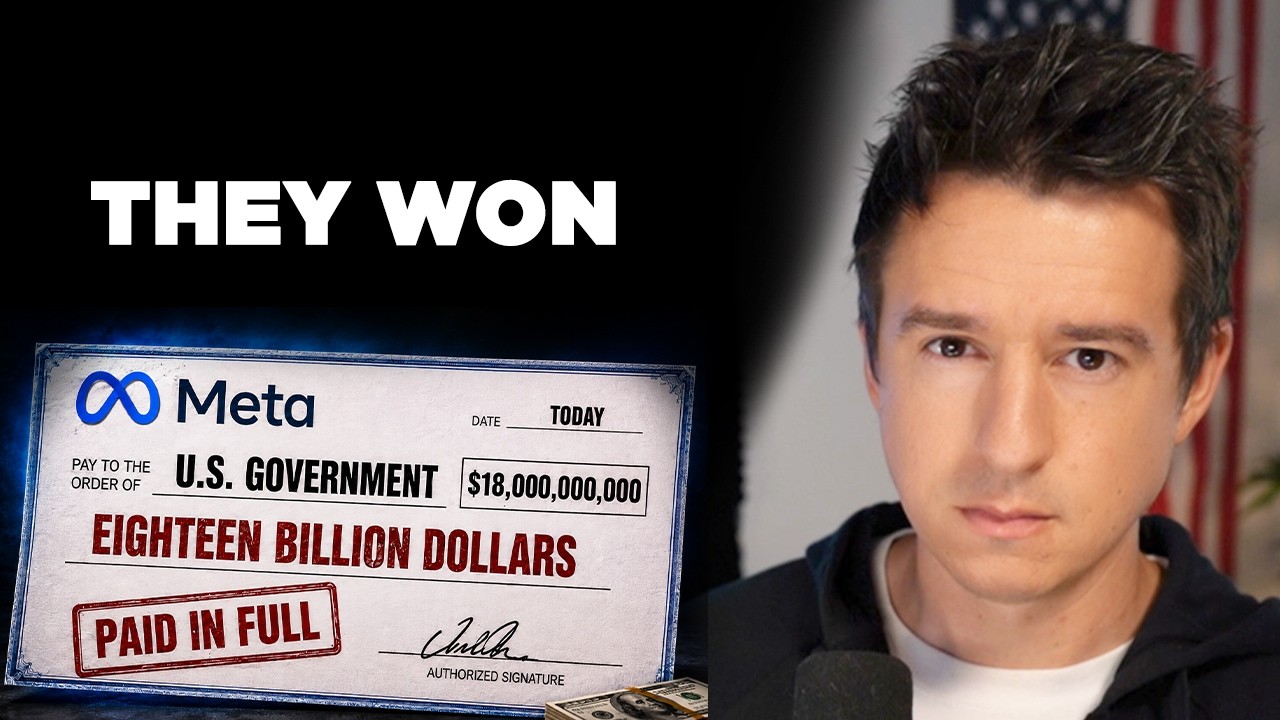
Meta turns an $18 billion headline settlement into a $9.2 billion net-present-value payout over ten years while forcing YouTube and TikTok to either accept a one-hour daily teen cap or fight state regulators.
Meta agreed to a headline $18 billion youth mental health settlement with 48 states, but installment terms and conditional triggers slash the real economic net present value liability to approximately $9.2 billion over a decade. (3:49)
Meta turned behavioral restrictions on teen accounts into an offensive weapon, setting new industry standards and trapping competitors YouTube and TikTok in a dilemma where joining would cap teen usage to one hour daily. (17:28)
A Wall Street Journal analysis criticized Microsoft for cloud opacity, noting the company reported 41% Azure growth while withholding actual dollar revenues, margins, and historical comparisons. (18:30)
Netflix is rumored to be exploring a third-party streaming hub model within the next six months to monetize distribution by allowing subscribers to add services like Peacock directly through its UI. (21:23)
Detailed notes
## Background
Published on YouTube by Joseph Carlson After Hours on August 26, 2026, this video examines Meta's legal settlement, Microsoft's reporting transparency, potential distribution shifts at Netflix, and SharkNinja's business execution. The description outlines the episode's agenda across these four core topics while highlighting Carlson's stock research platform, Qualtrim, alongside portfolio links and investment disclaimers.
## TL;DR
Joseph Carlson analyzes Meta's multi-state youth mental health settlement, arguing that the headline $18 billion penalty is an operational and economic victory that reduces real net present liability to roughly $9.2 billion over a decade while setting a competitive trap for YouTube and TikTok. He then validates a Wall Street Journal report detailing how Microsoft obscures Azure's specific revenues and margins despite offering detailed disclosures for legacy segments like Xbox. The episode also evaluates rumors that Netflix will transform into a third-party streaming aggregator within the next six months to monetize rival services. Finally, SharkNinja is awarded 'Win of the Week' for its category-agnostic engineering model and impressive long-term market outperformance.
## Atmosphere & style
The presentation carries a calm, analytical, and conversational tone focused on cutting through sensationalized financial headlines with fundamental business arithmetic. Carlson delivers his thesis with measured confidence, alternating between dissecting corporate legal maneuvering and expressing candid frustration over corporate opacity from giants like Microsoft. It feels like an intimate, pragmatic portfolio review that balances rigorous financial skepticism with genuine appreciation for strong product execution.
## Bulletin
- [03:49](https://www.youtube.com/watch?v=tGHctxz1fys&t=229s) Meta agreed to a headline $18 billion youth mental health settlement with 48 states, but installment terms and conditional triggers slash the real economic net present value liability to approximately $9.2 billion over a decade.
- [17:28](https://www.youtube.com/watch?v=tGHctxz1fys&t=1048s) Meta turned behavioral restrictions on teen accounts into an offensive weapon, setting new industry standards and trapping competitors YouTube and TikTok in a dilemma where joining would cap teen usage to one hour daily.
- [18:30](https://www.youtube.com/watch?v=tGHctxz1fys&t=1110s) A Wall Street Journal analysis criticized Microsoft for cloud opacity, noting the company reported 41% Azure growth while withholding actual dollar revenues, margins, and historical comparisons.
- [21:23](https://www.youtube.com/watch?v=tGHctxz1fys&t=1283s) Netflix is rumored to be exploring a third-party streaming hub model within the next six months to monetize distribution by allowing subscribers to add services like Peacock directly through its UI.
## Key takeaways
- [01:53](https://www.youtube.com/watch?v=tGHctxz1fys&t=113s) Settling the 48-state lawsuit eliminated catastrophic tail risks for Meta, such as a rogue judicial ruling forcing the divestiture of Instagram.
- [03:49](https://www.youtube.com/watch?v=tGHctxz1fys&t=229s) Meta is only obligated to pay $12.7 billion of the $18 billion headline figure unless TikTok and YouTube voluntarily join the settlement pact.
- [03:49](https://www.youtube.com/watch?v=tGHctxz1fys&t=229s) Spread over a 10-year installment schedule, the settlement's net present value is roughly $9.2 billion at an 8% discount rate, representing a modest cost against Meta's $228 billion trailing twelve-month revenue.
- [07:36](https://www.youtube.com/watch?v=tGHctxz1fys&t=456s) Meta reframed the settlement from an admission of wrongdoing into a proactive initiative where it partnered with state attorneys general to establish industry-wide teen safety standards.
- [08:50](https://www.youtube.com/watch?v=tGHctxz1fys&t=530s) Meta's public challenge for YouTube and TikTok to adopt identical rules shifts regulatory scrutiny and negative public relations onto its main video competitors.
- [10:13](https://www.youtube.com/watch?v=tGHctxz1fys&t=613s) The settlement introduces explicit underage product guardrails, including combined two-hour daily caps across Instagram and Facebook, night mode lockouts from midnight to 6:00 a.m., school-hours notification muting, and bans on cosmetic makeup filters.
- [14:41](https://www.youtube.com/watch?v=tGHctxz1fys&t=881s) Underage screen time restrictions will have negligible financial impact because adult users make up over 90% of Meta's 3.6 billion daily users and account for virtually all advertiser purchasing power.
- [14:41](https://www.youtube.com/watch?v=tGHctxz1fys&t=881s) Prioritizing parental trust and healthy habits mirrors the Costco model of customer retention, building durable lifetime brand equity over short-term engagement extraction.
- [17:28](https://www.youtube.com/watch?v=tGHctxz1fys&t=1048s) Under the settlement terms, if YouTube joins, teen daily limits drop to one hour, creating a competitive trap where Google must either handicap its platform or look indifferent to youth safety.
- [18:30](https://www.youtube.com/watch?v=tGHctxz1fys&t=1110s) Microsoft buries Azure metrics inside Intelligent Cloud without disclosing standalone dollar revenue, whereas Amazon cleanly breaks out AWS revenue, operating expenses, and margins.
- [18:30](https://www.youtube.com/watch?v=tGHctxz1fys&t=1110s) Microsoft provides granular reporting for peripheral business units like Xbox and LinkedIn while keeping investors in the dark on its core AI and cloud growth engine.
- [21:23](https://www.youtube.com/watch?v=tGHctxz1fys&t=1283s) Becoming a streaming aggregator would allow Netflix to monetize its 325 million subscriber distribution network by collecting revenue shares on third-party services like Peacock without incurring additional content costs.
- [21:23](https://www.youtube.com/watch?v=tGHctxz1fys&t=1283s) To succeed as a streaming hub, Netflix must preserve its clean, friction-free interface and avoid the cluttered paid rental model that degrades the Amazon Prime Video experience.
- [26:32](https://www.youtube.com/watch?v=tGHctxz1fys&t=1592s) SharkNinja operates as a consumer engineering think tank rather than a niche appliance maker, successfully entering diverse categories from air fryers to high-end hair styling.
- [28:04](https://www.youtube.com/watch?v=tGHctxz1fys&t=1684s) Demonstrating internal technological agility alongside multi-category retail expansion, SharkNinja's finance division created an internal AI tool to monitor profit margins in real time.
## Detailed walkthrough
### [00:00](https://www.youtube.com/watch?v=tGHctxz1fys&t=0s) Overview of the Settlement and Episode Lineup
Headlines across the financial and tech press are flashing alarming numbers: Meta has agreed to an $18 billion settlement and a slate of sweeping restrictions on teen accounts to resolve a massive federal trial brought by 48 states over youth mental health. On the surface, paying $18 billion and curtailing childhood app usage looks like an outright defeat. However, when examining the underlying mechanics of the deal, what Meta actually pulled off is a masterclass in tactical and strategic maneuvering. Rather than a disaster, this settlement represents an enormous win for Meta that brings regulatory clarity, locks in minimal economic impact, and places competitive pressure on rivals like TikTok and YouTube.
Beyond the deep dive into Meta's legal settlement, the episode previews several other major corporate developments:
- A Wall Street Journal report detailing how Microsoft appears to be obscuring critical numbers from investors, particularly around their mounting capital expenditures (CapEx) and financing structures.
- Netflix exploring an aggregator or "streaming hub" model, which could allow subscribers to add third-party services like NBC's Peacock directly through the Netflix user interface.
- Replacing the customary "Fail of the Week" segment with a "Win of the Week" focusing on appliance maker SharkNinja, highlighting its sustained innovation and execution since it was first highlighted on the channel a year prior.
[01:53](https://www.youtube.com/watch?v=tGHctxz1fys&t=113s) Investor Perspective and Transparency on Meta
Before unpacking the legal and strategic nuances, Carlson addresses his personal stake as an investor in Meta. Acknowledging that owning a stock naturally introduces the risk of personal bias, he stresses that objectivity remains paramount. Whenever portfolio companies encounter genuine distress or enter legally compromising situations that harm shareholder value, he has routinely voiced strong criticism and has sold out of positions when the core thesis deteriorated. In Meta's case, however, an objective examination of the legal resolution reveals that the panic in the headlines is completely disconnected from the financial and operational reality of the agreement.
In the legal world, settling a case is fundamentally an agreement reached outside of court to avoid the friction, expense, and unpredictability inherent in trial litigation. Settling does not equate to an admission of guilt; innocent parties frequently pay to end proceedings because even when a company holds a 90% or 95% probability of winning, jury and judicial outcomes remain volatile. An unpredictable judge could theoretically push for radical remedies, such as ordering the divestiture of Instagram. By choosing to settle, Meta definitively eliminated that existential tail risk.
[03:49](https://www.youtube.com/watch?v=tGHctxz1fys&t=229s) Deconstructing the Numbers: The True Cost to Meta
While mainstream media headlines prominently display an $18 billion penalty, the actual text of the agreement reveals crucial caveats that slash the real financial obligation:
```mermaid
flowchart TD
accTitle: Breakdown of Meta Settlement Financial Structure
accDescr: Visual flowchart tracing the nominal 18 billion dollar headline figure down to the real economic cost of approximately 9.2 billion dollars.
subgraph Headline["Headline Amount"]
A["$18.0 Billion Headline"]
end
subgraph Concessions["Conditional Structure"]
B["70% Base Obligation:<br/>$12.7 Billion"]
C["30% Contingent Obligation:<br/>$5.3 Billion<br/>(Only paid if TikTok & YouTube join)"]
end
subgraph EconomicReality["Economic Terms"]
D["10-Year Annual Installments"]
E["Discounted at ~8% Rate"]
F["Net Present Value:<br/>~$9.2 Billion"]
end
A --> B
A -.-> C
B --> D
D --> E
E --> F
```
Under the specific terms of the settlement, Meta is only obligated to pay 70% of the total amount upfront—amounting to $12.7 billion—unless TikTok and YouTube agree to join the settlement pact. For that remaining 30% ($5.3 billion) to be triggered, both rival platforms would have to voluntarily consent to pay a combined $5.3 billion to the states and enforce a strict default one-hour daily usage limit on underage users. Because those competing platforms are highly unlikely to hamstring their own user engagement willingly, Meta's actual commitment stands at $12.7 billion.
Furthermore, Meta is not handing over $12.7 billion as a lump-sum payment today, nor will they pay it next year. The payout is structured over a 10-year installment schedule. Factoring in the time value of money with an estimated 8% discount rate, the net present value of this liability drops to approximately $9.2 billion. Relative to Meta's financial engine—which produced $228 billion in trailing twelve-month revenue—a discounted liability of $9.2 billion amortized across a decade amounts to little more than a "speeding ticket." It represents a rounding error against Meta's massive operational cash flow and multi-hundred-billion-dollar CapEx outlays, while purchasing permanent legal and regulatory peace of mind.
[07:36](https://www.youtube.com/watch?v=tGHctxz1fys&t=456s) Regulatory Mandates and Turning Defense into Offense
The headline terms that caused the most anxiety among investors involved behavioral restrictions on underage users, specifically the implementation of mandatory app modifications and time limits, such as a two-hour cap. Regulatory interference in user interface and algorithmic engagement can easily impair monetization if poorly structured. Yet Meta's response to the agreement converts what could have been a damaging operational setback into a corporate masterstroke.
Rather than treating the restrictions as a punitive defeat, Meta public-relations messaging leaned into the outcome, framing the terms as an initiative they were already actively championing:
> "Ensuring teens have safe and productive experiences in our platform is an absolute imperative for Meta. We want to get this right for parents and teens, and that's why we've partnered with the state attorney general to set new industry standards."
Instead of accepting isolated culpability, Meta has used the settlement to define the new regulatory benchmark for the entire social media ecosystem. By partnering with state attorneys general to establish broad teen safety guidelines, Meta is aggressively positioning itself not as an outlier bad actor, but as the collaborative architect of new industry-wide standards that its rivals will eventually be pressured to adopt.
[08:50](https://www.youtube.com/watch?v=tGHctxz1fys&t=530s) Turning the Tables on TikTok and YouTube
Meta has managed to reframe industry standards entirely, seizing the moral high ground to put pressure on competing social media giants. In its public statement, Meta openly challenged its competitors: "Calling on TikTok and YouTube to join us. While this is an important step, the fact that teens move fluidly between dozens of apps a day, all platforms should empower parents to support teens by putting the same measures in place. Because we know that when teens are restricted on one app, they simply move to another. For meaningful progress to happen, we urge TikTok and YouTube to join us and the state attorney general in supporting this new standard to ensure teens use social media in healthy and responsible ways."
```mermaid
flowchart TD
accTitle: Meta Public Relations Strategy Shift
accDescr: Diagram showing how Meta pivoted from legal defendant to setting industry-wide standards and pressuring competitors.
subgraph Defense ["Prior Defensive Posture"]
A["Accused of harming teens"]
B["Facing major legal liability"]
end
subgraph Settlement ["Bipartisan State AG Settlement"]
C["Collaborative policy agreement"]
D["Implemented strict teen guardrails"]
end
subgraph StrategicHighGround ["Moral High Ground"]
E["Positioned as responsible leader"]
F["Calls out YouTube & TikTok to follow"]
end
A --> C
B --> C
C --> D
D --> E
E --> F
```
Meta completely flipped the public narrative. Rather than remaining on defense as a company accused of irresponsibly harming teenage mental health, it stepped forward as a collaborative partner alongside state attorneys general. By establishing these bipartisan baseline rules, Meta now asks competitors whether they care enough about teen well-being to follow suit: "Do you guys want to join us? Do you want to be responsible, too? Or do you not really care as much about teens' health? Do you not care as much as we do?"
[10:13](https://www.youtube.com/watch?v=tGHctxz1fys&t=613s) The New Teen Protections and Feature Limits
The settlement details comprehensive protections for underage accounts and hands far greater controls over to parents. The core change is a default daily two-hour time limit across Facebook and Instagram combined. Teens cannot override this limit without parental consent, and the tracking aggregates scrolling across both platforms—even recognizing when an individual is operating multiple accounts. While two hours per day on social media is already quite generous, having this ceiling as an out-of-the-box default is an excellent product adaptation. In practice, many parents may end up caving to teenagers begging for extra screen time and unlock the restriction, but having the structure available creates a healthier framework for the families that choose to use it.
Meta is also rolling out several UX curbs:
- **Night Mode:** A default lockout preventing users under 18 from using the apps between midnight and 6:00 a.m., cutting off late-night Instagram Reels binges.
- **School Hours Notification Muting:** Push alerts are silenced by default from 8:00 a.m. to 3:00 p.m. to prevent classroom distractions, only letting through direct messages and critical account security warnings.
- **Break Prompts:** Periodic notifications reminding teens to step away once they have been scrolling continuously for 15 minutes.
- **Non-Algorithmic Chronological Feed:** Underage users can opt out of personalized recommendation algorithms to view simple chronological posts from friends and family, with parents able to lock in this preference.
- **Autoplay Controls:** Gives users the ability to manually disable video autoplay to break infinite-scroll engagement loops.
- **Cosmetic and Makeup Filter Bans:** Prohibits extreme makeup filters in addition to existing bans on cosmetic surgery enhancement effects, preventing apps from promoting unrealistic physical expectations to youth.
These restrictions are appropriate specifically because they target minors. Imposing such rules on adults would represent gross government overreach—adults should be free to browse whatever they want at any hour—but for teenagers, these safeguards improve the product.
[14:41](https://www.youtube.com/watch?v=tGHctxz1fys&t=881s) An Investor Perspective: Brand Goodwill vs. Ad Dollars
Many stock market investors instinctively look at product restrictions through a negative lens, worrying that reduced teenage engagement and lower app addiction will hurt advertising revenues. This perspective is completely mistaken. Independent estimates show that teenagers generate a negligible portion of Meta's total ad revenue. Meta serves roughly 3.6 billion active users every day, and over 90% of them are adults. Adult users hold the discretionary income and actual purchasing power that commercial advertisers pay to reach.
```mermaid
flowchart LR
accTitle: Ecosystem Value Comparison
accDescr: Contrasting short-term monetization extraction with long-term customer relationship building.
subgraph HarmfulApproach ["Short-Term Extraction"]
A["5+ Hours Daily Teen Scrolling"] --> B["Marginal Ad Revenue Gains"]
B --> C["Damaged Brand & Regulatory Backlash"]
end
subgraph MetaStrategy ["Sustainable Ecosystem (Costco Model)"]
D["Guardrails: Time Limits & Night Mode"] --> E["Safer Environment & Parent Trust"]
E --> F["Durable Lifetime Brand Equity"]
end
```
Long-term investors should want companies to foster healthy, sustainable relationships with their customer base rather than milking users for unhealthy usage metrics. Operating like Costco—where the store treats shoppers with respect, resulting in long-term customer loyalty—creates durable value, whereas extracting engagement by keeping teenagers scrolling for five hours a day damages the brand.
By implementing these guardrails:
- Teens develop a healthier association with the platform.
- Parents feel secure letting their kids on Meta apps, whereas they still worry about limitless video binges on YouTube or TikTok.
- Regulators see Meta cooperating proactively rather than resisting child safety protocols.
- The company's true liability shrinks: a headline $18 billion penalty was negotiated down to a headline $12.7 billion paid out over a 10-year period, which translates to a net present value economic impact of only about $9.2 billion when evaluated using an 8% discount rate.
Paying what amounts to a $9.2 billion fine over ten years to re-architect its brand image, improve the core product for young users, satisfy regulators, and cast its chief rivals in an irresponsible light represents a massive strategic win for Meta.
[17:28](https://www.youtube.com/watch?v=tGHctxz1fys&t=1048s) Meta's Regulatory Masterstroke Against YouTube and TikTok
Meta managed to pull off a multi-layered win in its settlement agreement. First, they reduced a sensationalized financial penalty from the $1.3 trillion figure plastered across Fox News down to a comparatively minuscule $9 billion—"not quite the same"—while simultaneously improving their own product. Beyond the financial relief, Meta cleverly tied competitors YouTube and TikTok into the framework. By positioning themselves as proactive partners working alongside regulators to establish industry-wide ground rules for how social media apps should operate, Meta is now openly inviting YouTube and TikTok to join the pact.
The catch built into this invitation is a brilliant competitive trap. Under the agreement, if YouTube and TikTok join, the default daily time limit for teens drops from two hours down to just one hour. That means teens would, by default, only be allowed to watch YouTube for a single hour per day. Because YouTube will obviously never want to agree to a one-hour cap on its platform, Google will likely be forced to fight the agreement—making Google look like the bad guy on the outs with regulators rather than Meta. Crafting the settlement this way is an incredible strategic victory on Meta's behalf.
```mermaid
flowchart LR
accTitle: Meta's Regulatory Trap for Competitors
subgraph MetaMove["Meta's Settlement"]
A["Penalty cut from $1.3T to $9B"] --> B["Invites YouTube & TikTok to join"]
end
subgraph CompetitorDilemma["Google / YouTube's Dilemma"]
C["Accept: Teen default limit drops 2h to 1h/day"]
D["Refuse: Fight regulators & take PR hit"]
end
B --> C
B --> D
```
[18:30](https://www.youtube.com/watch?v=tGHctxz1fys&t=1110s) Microsoft Is Leaving Investors Flying Blind on Azure
A recent *Wall Street Journal* report argues that Microsoft is leaving investors "flying blind" on its AI business across three critical drivers of the AI future: cloud computing, capital expenditures, and its relationship with OpenAI. Take Azure, Microsoft's flagship cloud platform and primary growth engine, where management should provide clear financial visibility but instead keeps everyone in the dark. In its latest annual report for the fiscal year ending June 30th, Microsoft stated that Azure and other cloud services revenue increased by 41%, yet provided no actual dollar amount for that revenue, no figure for the prior year, and no expense or profit data. Instead, Microsoft buries Azure inside a broader segment called "Intelligent Cloud," forcing investors to guess where legacy software products end and true cloud growth begins.
Joseph admits he initially expected to disagree with the article, assuming the *Journal* was just launching unfair accusations against Microsoft, "but everything they say here is spot-on. It is dead accurate." This lack of transparency is a constant source of frustration for him and his team when building KPIs for Microsoft on his stock analysis platform, Qualtrim. What makes the opacity especially glaring is that rival cloud providers report their numbers cleanly, while Microsoft offers granular detail on minor divisions that investors barely remember exist:
| Company / Segment | Reporting Transparency | Disclosed Metrics |
|:--- |:--- |:--- |
| **Microsoft Azure** | Buried inside "Intelligent Cloud" segment; completely opaque | Percentage growth only (41% YoY); no dollar revenue, prior-year baseline, expenses, or margins |
| **Amazon Web Services (AWS)** | Reported cleanly as a standalone segment | Full sales, expenses, and profit margins disclosed |
| **Microsoft Xbox & LinkedIn** | Granular, detailed reporting | Extensive segment numbers for smaller businesses investors scarcely care about |
If you ask a typical investor what they think about Microsoft's Xbox business, their reaction is basically, *"Huh? Oh, yeah, Microsoft owns Xbox. That's right."* Yet Xbox gets granular reporting while Microsoft's most important business line doesn't even have its total revenue disclosed. While Microsoft likely withholds the data for strategic reasons—perhaps to avoid tipping off competitors—Amazon reports AWS numbers openly and is doing just fine, leaving Joseph hopeful that Microsoft will eventually add transparency.
[21:23](https://www.youtube.com/watch?v=tGHctxz1fys&t=1283s) Rumor: Netflix Becoming a Streaming Hub
Rumors are swirling that Netflix may evolve from a standalone streaming service into a broader "streaming hub" that hosts third-party services like Peacock or Fox One. Right now, Netflix is the largest streaming service in the world by far, boasting over 325 million subscribers and roughly 700 million viewers, yet it uses that massive distribution solely for its own original content and temporarily licensed library titles. Becoming a streaming hub would mean users could log into their Netflix account, see prompts to sign up for services like Peacock, Fox One, or HBO, and subscribe right inside the Netflix app. Billing would be bundled seamlessly using the payment details already on file—likely at a slight discount—and viewers could watch that third-party content directly inside the Netflix user interface without ever switching apps.
Competitors like Apple TV and especially Amazon Prime already operate on this model, allowing users to subscribe to add-on libraries like HBO and Starz, which highlights both the benefits and the pitfalls of the approach. Netflix is famous for having a sleek, easy-to-understand, premium interface where everything shown is included. On Amazon Prime, by contrast, it is frustrating to already pay for a Prime membership only to scroll through lists of movies and TV shows that require extra payment to rent, buy, or unlock via another subscription, making you feel like you aren't getting what you paid for. Joseph snorts at the idea of Netflix copying Amazon's cluttered approach, warning that mixing pay-per-view rentals into the main feed would be a "massive degradation" that would instantly make the app feel cheaper. Instead, Netflix should only allow full service sign-ups through its platform and tightly integrate the unlocked catalogs into the seamless Netflix experience, simply giving subscribers a bigger unified library.
The financial and strategic incentives for Netflix to make this leap are compelling:
- **Direct Distribution Monetization:** Currently, Netflix only makes money by charging for its own content. As a hub, smaller streaming services would pay Netflix and share subscription revenue, allowing Netflix to earn money simply by already being huge—without spending an extra dime on content creation.
- **Keeping Pace with YouTube in the Next Phase of the Streaming Wars:** Beyond Amazon Prime, YouTube has already moved past being just a creator portal to become a central TV aggregator hosting NFL games, the Oscars, and live events.
- **6-Month Outlook:** Becoming the central hub where people go to watch all television is the logical next phase of the streaming wars, and Joseph predicts Netflix will officially announce third-party service subscriptions on its platform within the next six months.
[26:10](https://www.youtube.com/watch?v=tGHctxz1fys&t=1570s) Win of the Week Intro: SharkNinja
Rather than ending the episode with a "Fail of the Week," Joseph decides to close on a positive note by highlighting a company that continues to impress him: SharkNinja. He first featured the business about a year earlier, on July 7th, 2025, noting the irony that on the surface it sounds like nothing more than a small consumer goods company making everyday household appliances.
[26:32](https://www.youtube.com/watch?v=tGHctxz1fys&t=1592s) Win of the Week: SharkNinja's Innovation Engine
SharkNinja might easily be dismissed as merely a manufacturer of random household trinkets or small kitchen appliances, but deeper research reveals one of the most inventive and creative consumer product companies in the world. Joseph recalls the thesis he shared in a video a year ago: walking into Costco, there is consistently a Ninja-branded air fryer sitting on the display pallets. The fundamental retail reality is that Costco only keeps items stocked if they are flying off the shelves; if products stop moving, the orders dry up immediately. Beyond the kitchen, SharkNinja has managed to make an unexpected leap into beauty items, rapidly gaining market share with hair styling and care tools. While transitioning from floor-cleaning vacuums to premium hair care might seem nearly impossible for a legacy appliance brand, SharkNinja pulled it off seamlessly.
```mermaid
flowchart TD
accTitle: SharkNinja Innovation Framework
accDescr: Diagram illustrating SharkNinja's process from identifying consumer problems to scalable products.
subgraph ProblemDiscovery["1. Problem Discovery"]
A["Identify Market 'White Space'"] --> B["Detect Unsolved Consumer Friction"]
end
subgraph IterationEng["2. Engineering Think Tank"]
B --> C["Cross-Disciplinary Inventors & Engineers"]
C --> D["Rapid Prototyping & Iteration"]
end
subgraph Execution["3. Scaled Delivery"]
D --> E["Affordable, High-Quality Mass Production"]
E --> F["Multicategory Retail Dominance<br>(Kitchen, Cleaning, Beauty)"]
end
```
The underlying takeaway is that SharkNinja should not be categorized strictly as a vacuum manufacturer, a beauty brand, or a kitchen appliance maker. Instead, the company operates as an engineering think tank—a collective group of inventors and problem solvers who relentlessly iterate on consumer pain points across completely unrelated sectors. This ongoing operational discipline has translated into explosive stock market performance. Year-to-date, the stock has gained 65%, and across the trailing five years, it is up an astounding 344%, thoroughly trouncing broad market benchmarks and the tech-heavy Invesco QQQ.
- SharkNinja's stock has risen 65% year-to-date and 344% over the past five years, handily outperforming the broader market.
- Demonstrates uncommon category mobility, transitioning successfully from floor care and vacuums into high-end beauty and personal styling.
[28:04](https://www.youtube.com/watch?v=tGHctxz1fys&t=1684s) Internal Ingenuity and the 37-Category Problem Solver
The company's focus on innovation is not confined strictly to consumer products; it permeates their internal operations as well. In an initiative that feels like it came out of left field, SharkNinja's finance division built an internal AI tool capable of monitoring company profitability in real time. Rather than waiting on cumbersome accounting processes that previously took weeks to finalize, management can analyze margins on the fly and adjust forward projections immediately. This internal technological agility gives the leadership team unprecedented clarity into the business's real-time financial trajectory.
A reflection shared by Neil, an 18-year veteran of the company who joined in 2007, summarizes the fundamental misperception that many public market investors have about SharkNinja. When Neil began, the firm was an North American-centric business focused on a single product category: steam mops. Over the subsequent 15 to 18 years, the business expanded into over 35 international markets and more than 37 distinct product categories. Retail partners constantly ask whether SharkNinja is a cleaning company or a kitchen appliance vendor. The internal realization is far simpler: SharkNinja is in the business of identifying "white space"—spotting consumer problems that legacy brands have left unsolved—and solving them with high engineering fidelity at mass-market prices. Because of this repeatable, iterative framework, Joseph considers SharkNinja an exceptional compounder to keep on his personal watchlist, intending to look for attractive entry points on market pullbacks.
- Began in 2007 as a single-category business focused on steam mops, expanding to over 37 product categories across 35 international markets.
- Implemented an internal real-time AI profitability tracking tool that cuts out weeks of accounting friction for forecasting.
- Joseph's investment strategy: Watching SharkNinja closely to buy on stock price dips.
## Notable quotes
> [07:36](https://www.youtube.com/watch?v=tGHctxz1fys&t=456s) Ensuring teens have safe and productive experiences in our platform is an absolute imperative for Meta. We want to get this right for parents and teens, and that's why we've partnered with the state attorney general to set new industry standards. — Meta
> [08:50](https://www.youtube.com/watch?v=tGHctxz1fys&t=530s) Calling on TikTok and YouTube to join us. While this is an important step, the fact that teens move fluidly between dozens of apps a day, all platforms should empower parents to support teens by putting the same measures in place. Because we know that when teens are restricted on one app, they simply move to another. For meaningful progress to happen, we urge TikTok and YouTube to join us and the state attorney general in supporting this new standard to ensure teens use social media in healthy and responsible ways. — Meta
> [08:50](https://www.youtube.com/watch?v=tGHctxz1fys&t=530s) Do you guys want to join us? Do you want to be responsible, too? Or do you not really care as much about teens' health? Do you not care as much as we do? — Joseph Carlson
> [17:28](https://www.youtube.com/watch?v=tGHctxz1fys&t=1048s) not quite the same — Joseph Carlson
> [18:30](https://www.youtube.com/watch?v=tGHctxz1fys&t=1110s) flying blind — Wall Street Journal
> [18:30](https://www.youtube.com/watch?v=tGHctxz1fys&t=1110s) but everything they say here is spot-on. It is dead accurate. — Joseph Carlson
> [18:30](https://www.youtube.com/watch?v=tGHctxz1fys&t=1110s) Huh? Oh, yeah, Microsoft owns Xbox. That's right. — Joseph Carlson
> [21:23](https://www.youtube.com/watch?v=tGHctxz1fys&t=1283s) massive degradation — Joseph Carlson
## Mentioned
Joseph Carlson, Meta, Facebook, Instagram, Instagram Reels, TikTok, YouTube, Google, Microsoft, Microsoft Azure, OpenAI, Xbox, LinkedIn, Amazon, Amazon Web Services (AWS), Amazon Prime, Netflix, NBC, Peacock, Fox One, HBO, Starz, Apple TV, NFL, Oscars, SharkNinja, Costco, Qualtrim, Wall Street Journal, Fox News, Invesco QQQ, M1, Neil
## Video description
Join Qualtrim, the stock analysis platform I built and use, and join over 13,000 other paying members: https://www.qualtrim.com/
00:00 Meta Strategic Victory In Lawsuit
18:30 Microsoft Is Hiding From Investors
21:23 Netflix May Offer Peacock Through It's Service
26:15 Win Of The Week: SharkNinja's Innovation
-Disclaimer
Some of the links below are affiliate links, I can earn money from them at no cost to you.
This content is not a solicitation, is not endorsed by M1, and was not reviewed by M1; the opinions expressed are solely those of the authors and do not reflect M1's views. Information presented is accurate as of the video posting date; for the most up-to-date information, please refer to m1.com. Before making any investment decisions, consult your personal investment, legal, and tax advisors, as this content is for informational purposes only and not intended as investment recommendations.
📚 My favorite Investing Books: https://amzn.to/3KwyIhG
📷 All the tech I use to record videos: https://www.amazon.com/shop/josephcarlson/list/2L5YMP4DFYA8O?ref_=cm_sw_r_cp_ud_aipsflist_aipsfjosephcarlson_FAKKKMYKF486ZR6H2DSQ
SOCIAL MEDIA
▀▀▀▀▀▀▀▀▀▀▀▀▀▀▀▀▀▀▀▀▀▀▀▀▀▀
🎥 More free content: https://www.youtube.com/channel/UCbta0n8i6Rljh0obO7HzG9A
🐦 I post random thoughts on Twitter too: https://twitter.com/joecarlsonshow
DISCLAIMER
▀▀▀▀▀▀▀▀▀▀▀▀▀▀▀▀▀▀▀▀▀▀▀▀▀▀
I am not a professional investor and have never claimed to be. I'm an amateur investor sharing my experience of what I've learned, where I have had success, and where I've had failures. I share my thoughts on investing and performance with transparency. My approach and goal to investing is to buy high-quality long-term investments in world-class businesses that I call "compounders". I view my investments as businesses, not as stocks. Before creating content on YouTube full time I worked as a senior-level programmer for 8 years. Over the years as a programmer, I compounded my knowledge of development. I take the same iterative learning approach to my study of investing. I study investing as a craft in the continual pursuit of being better. I will make mistakes in investment decisions from time to time. Results are not guaranteed. Please do not blindly follow me into any investments, and make sure your portfolio and investments are built around your specific income, risk tolerance, personality, timeline, and overall circumstances.
Joseph Carlson argues that Meta's $18 billion multi-state settlement over youth mental health represents a low-cost strategic triumph that removes existential legal risk while placing competitive pressure on rivals. The program also examines reporting opacity in Microsoft's Azure cloud division, rumors of Netflix becoming a streaming aggregator, and SharkNinja's multi-category execution.
Meta Settlement Economics and Account Protections (3:49)
Carlson contends that headlines highlighting Meta's $18 billion settlement misstate its true financial impact. Meta is legally committed to an initial base payout of $12.7 billion (70%), with the remaining $5.3 billion contingent on TikTok and YouTube joining the agreement. Paid out over a 10-year installment schedule, the settlement's net present value drops to approximately $9.2 billion when applying an estimated 8% discount rate. Relative to Meta's $228 billion in trailing twelve-month revenue, Carlson views this liability as an easily absorbable expense that eliminates catastrophic legal outcomes, such as a court-ordered divestiture of Instagram.
The agreement introduces mandatory account safeguards for users under 18, including a combined two-hour daily default cap across Facebook and Instagram, nighttime lockouts from midnight to 6:00 a.m., school-hours notification muting, 15-minute break prompts, and bans on extreme cosmetic filters. Carlson notes that these restrictions present minimal financial risk because teenagers generate a negligible portion of Meta's advertising revenue, while adult users constitute over 90% of the platform's 3.6 billion daily active users and hold the majority of discretionary purchasing power.
Strategic Regulatory Pressure on Competitors (8:50)
Rather than treating the restrictions as a defensive loss, Meta framed the settlement as an industry benchmark developed in partnership with state attorneys general, publicly challenging YouTube and TikTok to match the terms. Carlson argues this repositioning converts a legal penalty into a competitive trap for competing video platforms.
Under the pact's provisions, if YouTube and TikTok agree to participate, the default daily limit for minors drops from two hours to one hour across platforms. Because Alphabet is unlikely to accept a one-hour daily usage ceiling on YouTube, Carlson expects Google will be forced to resist the settlement terms publicly. This dynamic effectively shifts regulatory pressure and public scrutiny onto Meta's competitors while allowing Meta to market itself as a collaborative, safety-focused operator.
Opacity in Microsoft Cloud Disclosures (18:30)
Turning to enterprise technology, Carlson endorses a Wall Street Journal report stating that Microsoft leaves investors "flying blind" regarding its artificial intelligence business, capital expenditures, and relationship with OpenAI. Although Microsoft reported a 41% year-over-year revenue increase for Azure and other cloud services in its fiscal year ending June 30, it failed to disclose Azure's absolute dollar revenue, historical base, operating expenses, or profit margins.
Microsoft instead groups Azure within its broad "Intelligent Cloud" reporting segment. Carlson contrasts this lack of transparency with Amazon's standalone reporting for Amazon Web Services (AWS), which fully itemizes sales, operating expenses, and margins. He criticizes Microsoft for providing granular reporting for smaller divisions like Xbox and LinkedIn while obscuring the financial details of its primary growth driver.
Netflix Hub Strategy and SharkNinja's Execution (21:23)
Addressing digital media distribution, Carlson evaluates reports that Netflix is exploring an aggregator model that would host third-party services like Peacock and Fox One. Leveraging its base of over 325 million subscribers and roughly 700 million viewers, Netflix could collect distribution fees and revenue shares without taking on extra content production costs. Carlson predicts Netflix will officially announce third-party subscriptions within six months, though he warns that it must integrate full services cleanly rather than adopting Amazon Prime's cluttered pay-per-view rental format.
Closing with his "Win of the Week," Carlson highlights appliance maker SharkNinja as an agile engineering think tank rather than a niche hardware firm. Expanding from a single steam mop line in 2007 into over 37 categories across 35 international markets, the company has driven revenue across kitchen appliances and beauty care. Aided by an internal AI tool that tracks profit margins in real time, SharkNinja's stock has gained 65% year-to-date and 344% over five years, keeping the firm on Carlson's personal watchlist for market pullbacks.
While Carlson presents Meta's legal resolution as a strategic victory and predicts an aggregator pivot for Netflix, key questions remain unresolved. These include whether state regulators can successfully pressure YouTube and TikTok into equivalent concessions, whether Microsoft will address investor pressure for segmented Azure disclosures, and whether SharkNinja can sustain its rapid category expansion.
Source quotes
[7:36] Meta: Ensuring teens have safe and productive experiences in our platform is an absolute imperative for Meta. We want to get this right for parents and teens, and that's why we've partnered with the state attorney general to set new industry standards.
[8:50] Meta: Calling on TikTok and YouTube to join us. While this is an important step, the fact that teens move fluidly between dozens of apps a day, all platforms should empower parents to support teens by putting the same measures in place. Because we know that when teens are restricted on one app, they simply move to another. For meaningful progress to happen, we urge TikTok and YouTube to join us and the state attorney general in supporting this new standard to ensure teens use social media in healthy and responsible ways.
[8:50] Joseph Carlson: Do you guys want to join us? Do you want to be responsible, too? Or do you not really care as much about teens' health? Do you not care as much as we do?
[17:28] Joseph Carlson: not quite the same
[18:30] Wall Street Journal: flying blind
[18:30] Joseph Carlson: but everything they say here is spot-on. It is dead accurate.
[18:30] Joseph Carlson: Huh? Oh, yeah, Microsoft owns Xbox. That's right.
[21:23] Joseph Carlson: massive degradation
Original transcript
[0:00] We just got news that Meta won their
[0:02] lawsuit. Now, they didn't technically
[0:04] win, they actually settled. A settlement
[0:06] is when each party comes to an agreement
[0:08] and they make concessions and usually
[0:09] one side gets the better end of the
[0:11] agreement. In this case, the headlines
[0:13] look very scary. Meta is paying out $18
[0:16] billion in the dollars in the
[0:17] settlement. That's a lot of money. Plus,
[0:19] they're having to make lots of
[0:20] concessions and restrictions with
[0:22] childhood accounts. The headline numbers
[0:24] look scary and in fact, many people may
[0:26] look at this and think it's bad for
[0:27] Meta. But don't be mistaken. What Meta
[0:30] actually did here was a tactical,
[0:31] strategic victory. The nuances in this
[0:34] settlement are incredible and we'll be
[0:35] going over them in detail. What is Meta
[0:38] actually doing as a result of this
[0:40] settlement? What changes do they have to
[0:41] make to their app? How is TikTok and
[0:43] YouTube impacted by this? And as an
[0:46] investor in Meta, what does this mean
[0:47] for the future of the company? We'll be
[0:49] breaking it all down. Now, of course, we
[0:50] have some other news to get to. This
[0:52] article from the Wall Street Journal
[0:53] details how Microsoft is making it
[0:55] difficult for investors to understand
[0:57] what they're actually doing, what their
[0:59] CapEx costs are, what their financing
[1:01] costs are. We'll be looking at some of
[1:02] the accusations in this article. Netflix
[1:04] may become a streaming hub, meaning you
[1:06] may be able to sign up for services like
[1:08] Peacock through your Netflix interface.
[1:10] A lot of investors are confused whether
[1:12] or not this is a good or bad thing for
[1:13] Netflix. And then finally, instead of a
[1:15] fail of the week, I want to do a win of
[1:17] the week, which is SharkNinja, a company
[1:19] that I've talked about one time in the
[1:21] past about a year ago and I still today
[1:24] believe it's one of the most innovative
[1:25] companies in the world. We're going to
[1:27] be doing a little catch-up with the
[1:29] massive success of SharkNinja. So, we
[1:31] have a lot to cover in this episode and
[1:32] like always, if you enjoy this type of
[1:34] content, you can follow the show for
[1:35] free by subscribing to this channel.
[1:37] Also, the Joseph Carlson Show is on
[1:39] Apple Podcast and Spotify Podcast in
[1:42] video formats. If you want to see it
[1:43] there as well, you can follow there as
[1:45] well for free. And if you want even
[1:47] additional exclusive content, you can
[1:49] join qualtrim.com, which currently has
[1:51] 13,000 active members.
[1:53] Now, jumping into today. Before we jump
[1:56] into the Meta news and why I believe
[1:58] this was a decisive victory on Meta's
[2:01] part, I first want to disclose my
[2:03] personal investment in Meta. I think
[2:05] it's good to have transparency and show
[2:07] my stake in the company. I'm looking at
[2:09] things from an investor perspective,
[2:12] from the perspective of an owner of
[2:14] Meta. A lot of people say, "Well, Joe is
[2:16] a phones Meta, therefore he's biased on
[2:19] the results of this lawsuit." And I
[2:20] think that's a fair criticism to point
[2:22] out when you own a stock, you're more
[2:24] likely to have invested interest in it
[2:26] and potentially a bias and not being
[2:27] able to look at things objectively. But,
[2:29] I don't believe that's the case here. If
[2:31] Meta did have a bad outcome or one that
[2:33] I thought was truly concerning, I would
[2:36] say so, like I've done with many
[2:37] companies that I've owned and owned in
[2:39] the past. Many companies have had
[2:41] lawsuits or outcomes that I don't like
[2:43] and I expressed the concern in the
[2:45] outcome. So, this isn't a situation
[2:47] where I've never been critical of a
[2:48] stock I own. I'm frequently critical. In
[2:51] fact, I've sold stocks I've owned
[2:53] because I no longer want to own them
[2:55] because I believe things are going in
[2:56] the wrong direction. With Meta, I do not
[2:58] see that situation today. What I see
[3:00] with this lawsuit and this settlement is
[3:02] a strategic victory. Now, to make it
[3:05] clear, when I'm talking about victory,
[3:07] I'm talking about in terms from an
[3:08] investor. From a legal standpoint, Meta
[3:12] settled. Which settlements in lawsuits,
[3:15] it's kind of this vague term to just
[3:17] mean that they wanted to deal with
[3:19] things outside of court. So, the word
[3:20] settlement doesn't necessarily imply a
[3:22] guilty party. In fact, in many cases in
[3:24] our legal system, innocent parties will
[3:26] settle just to save time, hassle, money,
[3:29] stress of going through litigation, or
[3:31] the unpredictable outcome of a jury or a
[3:33] judge. You never really know what's
[3:34] going to happen in court even if you
[3:36] feel that you're completely not at
[3:37] fault. So, in this case, there's lots of
[3:39] reasons that companies could settle. And
[3:41] when I looked at the case with Meta, it
[3:43] became very clear why they agreed with
[3:45] this settlement. It is overwhelmingly in
[3:48] their favor. Now, if we look at the
[3:49] details of this settlement, it starts
[3:51] off by looking really bad. And I believe
[3:53] this is what a lot of investors are
[3:54] getting confused about. Meta is agreeing
[3:56] to pay $18 billion to the 48 states,
[3:59] bringing an end to the massive federal
[4:01] trial over social media's harm to
[4:03] teenagers.
[4:05] And they also mention that Meta is also
[4:07] making sweeping changes to its services,
[4:10] Facebook and Instagram, including
[4:12] implementing a 2-hour time limit to its
[4:14] apps.
[4:15] This looks real bad. Meta is paying $18
[4:18] billion, they're changing the time
[4:19] limit. So, all of that looks pretty bad
[4:21] until you keep reading a little bit more
[4:23] into the details.
[4:24] In a unique setup, Meta will pay out
[4:26] only 70% of the settlement amount unless
[4:29] TikTok and YouTube join in.
[4:32] And they also have to agree to a set a
[4:34] default 1-hour time limit a day on their
[4:37] apps for underage users and pay states
[4:39] roughly $5.3 billion between them. Meta
[4:42] will only pay the remaining 30% of its
[4:44] settlement, also $5.3 billion, if the
[4:47] two other companies agree to the terms.
[4:49] Oh, so now we get to the first big
[4:51] caveat. So, Meta is not paying $18
[4:53] billion, unlike the headlines that
[4:55] you're seeing. They're just not paying
[4:56] that today, again, unless TikTok and
[4:58] YouTube decide to restrict the amount of
[5:00] time teens can spend on their service,
[5:02] which I don't believe they're going to
[5:03] do, but we'll discuss that in a bit.
[5:05] Meta is really paying 70% of that
[5:07] number, which is $12.7 billion. So, this
[5:10] whole settlement from all these states,
[5:12] the big lawsuit, is $12.7
[5:14] billion.
[5:16] Now, let's just put this in context. We
[5:18] have Meta here,
[5:19] a company that generated in the trailing
[5:22] 12 months $228 billion.
[5:25] A high-margin, cash-producing,
[5:28] fast-growing, super-high-revenue
[5:30] company. $12 billion in and of itself is
[5:33] not a lot of money for Meta. Meta is
[5:34] spending hundreds of billions of dollars
[5:36] on capex. But there's another detail
[5:38] here that makes this even more favorable
[5:40] for Meta, another big caveat. Meta did
[5:42] not agree to pay the $12.7 billion up
[5:45] front. They're not paying it this year,
[5:47] they're not even paying it next year.
[5:48] They agreed to pay it in installments
[5:50] over a decade, 10 years. And that is
[5:53] incredibly favorable to Meta because
[5:55] there is a time value to money. We know
[5:57] that money today is worth more than
[5:59] money in 10 years. If you apply an 8%
[6:02] discount rate to this $12 billion over
[6:04] 10 years, it's more like $9.2 billion.
[6:08] So in real economic terms, Meta's paying
[6:10] about $9 billion. This is from a company
[6:13] that just did $228 billion in revenue in
[6:17] the trailing 12 months. This is
[6:19] otherwise known as a speeding ticket.
[6:21] It's a a slight bump in the road for
[6:23] Meta financially.
[6:25] It's not even it's something that they
[6:26] could round off and most investors
[6:29] wouldn't even notice. And investors may
[6:30] view this as just a a total loss. This
[6:33] is $9 billion economically speaking
[6:36] that's a complete loss for Meta, but
[6:37] that's not really the case. See, Meta
[6:39] got something out of this. They didn't
[6:41] just pay $8 billion, they are getting
[6:43] something in return. Meta has made a
[6:45] calculated decision. Meta has agreed to
[6:48] pay a small amount of money for legal
[6:49] stability, for regulatory stability, and
[6:52] to avoid the unknown outcome of going to
[6:54] trial. Anything can happen in trial.
[6:57] Even if Meta is 90% in the right or 95%
[7:00] in the right, there's always the chance
[7:02] that some judge could do something crazy
[7:04] and cause them to divest Instagram or
[7:06] something insane. It's unlikely, but
[7:09] Meta just made sure that won't happen.
[7:10] They just paid $9 billion to ensure that
[7:13] outcome can ever happen. And that makes
[7:14] perfect sense for Meta. They were most
[7:16] likely to win this case, but even so,
[7:18] they wanted to avoid the potential
[7:19] outcome and the uncertainty from going
[7:21] to trial. So they decided to pay this
[7:23] speeding ticket to end it. Now, the
[7:25] total amount of money that Meta is
[7:26] paying in this settlement over the next
[7:27] 10 years is somewhat negligible. It's
[7:30] not nothing, but it's not a lot of money
[7:32] and it won't impact Meta's intrinsic
[7:34] value or their long-term prosperity. The
[7:36] bigger concern for many investors,
[7:38] including me, was the sweeping changes
[7:40] to the app itself. Regulators have the
[7:43] power to change how apps work,
[7:46] restrictions on them, control how users
[7:48] are able to interact with the app. And
[7:50] there's things that they could do that
[7:51] are potentially very damaging to Meta's
[7:53] business if they make the app very
[7:54] ineffective. And there were a lot of
[7:56] changes that they made to the app as
[7:59] part of this agreement. But this is
[8:00] where things get even better for Meta. A
[8:03] lot of investors will read through this
[8:04] and see these changes as very damning
[8:06] for the company, that there's lots of
[8:08] restrictions, but I believe there's a
[8:09] different story going on here. Meta
[8:11] starts off by essentially framing this
[8:12] as something that they were already
[8:14] moving towards. They say, "Ensuring
[8:15] teens have safe and productive
[8:17] experiences in our platform is an
[8:18] absolute imperative for Meta. We want to
[8:21] get this right for parents and teens,
[8:23] and that's why we've partnered with the
[8:24] state attorney general to set new
[8:26] industry standards." The brilliant part
[8:28] with how Meta's framing this is they're
[8:30] not looking at it as though they're a
[8:31] unique issue. Meta believes strongly
[8:34] that every social media app, every large
[8:36] company app that affects teens should be
[8:39] regulated in somewhat similar fashion.
[8:42] And they are framing this as working in
[8:43] collaboration to set industry standards.
[8:46] No, this isn't just a lawsuit where
[8:48] Meta's making some concessions. This is
[8:50] a reframing of industry standards. And
[8:52] now Meta has the moral high ground to
[8:54] call upon other social media companies
[8:56] to join them in making their app safer
[8:58] for children.
[8:59] Calling on TikTok and YouTube to join
[9:01] us. While this is an important step, the
[9:03] fact that teens move fluidly between
[9:05] dozens of apps a day, all platforms
[9:08] should empower parents to support teens
[9:10] by putting the same measures in place.
[9:12] Because we know that when teens are
[9:13] restricted on one app, they simply move
[9:16] to another. For meaningful progress to
[9:18] happen, we urge TikTok and YouTube to
[9:20] join us and the state attorney general
[9:22] in supporting this new standard to
[9:24] ensure teens use social media in healthy
[9:27] and responsible ways.
[9:28] So now now Meta's saying, "Look, we're
[9:31] being responsible. We're agreeing to all
[9:32] these limitations. We're agreeing to all
[9:34] of these different things. And we're
[9:35] calling upon YouTube and TikTok.
[9:38] You guys have to join us now. So, Meta
[9:40] is completely shifting the conversation
[9:42] here. They went from a place where they
[9:43] are the ones being irresponsible,
[9:45] damaging teens, to now the ones saying,
[9:47] "Look, we're being very responsible. We
[9:49] are working in collaboration with the
[9:51] state attorney general. We set industry
[9:54] guidelines and standards that we've
[9:55] collaborated in a bipartisan agreement,
[9:57] and now we're calling upon YouTube and
[9:59] TikTok to join us." Do you guys want to
[10:01] join us? Do you want to be responsible,
[10:03] too? Or do you not really care as much
[10:05] about teens' health? Do you not care as
[10:07] much as we do?
[10:08] It's incredible the way that they've
[10:10] shifted this conversation through this
[10:12] settlement. They outline in detail the
[10:13] new protections for teens and stronger
[10:15] controls for parents. They say, for
[10:17] example, there's going to be a time
[10:19] limit. A default 2-hour daily limit that
[10:23] teens can only turn off with a parent's
[10:25] permission. This limit is cumulative
[10:27] across Facebook and Instagram, and time
[10:29] spent scrolling on both apps counts
[10:30] towards the total, including if we
[10:32] detect that someone has multiple
[10:34] accounts. Now, with this time limit,
[10:36] I actually, as a a parent, I think this
[10:38] is a good thing. I don't think teens
[10:39] should be on social media, especially
[10:41] Facebook and Instagram, for 2 hours a
[10:43] day. 2 hours is already pushing it. So,
[10:46] having a time limit of 2 hours by
[10:48] default that the parents can change, I
[10:50] think is excellent. It's an excellent
[10:52] product adaption. It is something that
[10:54] is needed in these type of products.
[10:56] Now,
[10:57] I am a little bit pessimistic here that
[10:59] I think most parents will immediately
[11:01] give in when their teenager complains
[11:02] that they want more time. So, I see them
[11:04] starting off with this daily 2-hour
[11:06] limit, teenager running into it,
[11:08] teenager complains to mom and dad, "Oh,
[11:10] just give me more time, just this one
[11:12] time."
[11:13] The mom gives in, unlocks the time
[11:15] limit, and then it's gone. So, I think
[11:16] for a lot of for a lot of families, this
[11:18] time limit's not going to last for long.
[11:20] But, in the case that a parent does want
[11:22] a restricted 2 hours per day on social
[11:24] media, this is a really good future.
[11:26] It'll create a better relationship with
[11:28] social media. This only stands to
[11:30] benefit Meta as a product. If you
[11:33] believe that products over a lifetime
[11:35] should benefit users and have positive
[11:37] engagement and positive results,
[11:39] then you don't want teenagers spending 5
[11:41] hours a day scrolling Instagram. That's
[11:44] not good for anyone. So, this is a
[11:45] restriction. Investors are viewing it as
[11:47] a negative thing when this will improve
[11:49] the relationship that teenagers have
[11:52] with Meta's products. How is that a bad
[11:54] thing? How is it a bad thing for Meta to
[11:56] have a better relationship with their
[11:58] teenager users than they do today? So, I
[12:00] don't view this as bad at all. I I think
[12:02] the time limit's completely fine. I
[12:03] think it only stands to benefit Meta as
[12:05] an investor, Meta as a company, and
[12:08] teenagers in the relationship with the
[12:10] company.
[12:11] We also have night mode, which is
[12:12] another thing that I think is very
[12:14] healthy. Night mode is a default block
[12:17] from our apps between midnight to 6:00
[12:19] a.m. So, teens under 18 can't be up in
[12:22] the middle of the night browsing
[12:23] Instagram Reels. How is that a bad
[12:26] thing? This is neither bad for Meta.
[12:28] It's not bad for them at all because it
[12:30] makes their products safer for their
[12:32] teenagers. It makes them have a better
[12:33] relationship with teenagers. It's better
[12:35] for parents, and it's better for the
[12:37] teens. Every single party benefits in
[12:40] this regulation. Every single one of
[12:42] them. Now, I want to be clear here. If
[12:44] these type of limits were put on for
[12:46] adults, I would have a very different
[12:48] tone. I would not be in favor of any of
[12:50] these type of limits on adults. Adults
[12:52] should be able to stay up and browse
[12:53] whatever they want whenever they want.
[12:55] But, these are teenagers. These are not
[12:57] adults. Having time limitations, having
[13:00] night time mode is a good thing.
[13:02] Notifications will be muted by default
[13:04] between 8:00 and 3:00 p.m. During those
[13:06] hours, teens will no longer receive push
[13:08] notifications except for direct messages
[13:11] and alerts about their account security
[13:12] and safe making it so that they don't
[13:14] have the notification pop up, that
[13:15] they're not distracted during school
[13:17] hours, I do not see as a negative thing.
[13:19] They'll also receive prompts to just let
[13:21] them know, "Hey, you spent 15 minutes on
[13:23] this. You know, think about doing
[13:24] something else or for a break." Because
[13:26] they don't want you to be in the habit
[13:27] of just continually scrolling forever.
[13:29] Teens will be able to choose a
[13:31] non-algorithmic feed. One that isn't
[13:33] personalized by recommendation systems
[13:35] as their default. They will periodically
[13:38] remind them of this option, and parents
[13:40] can choose to adjust their teens default
[13:42] experience and requirements in this
[13:43] setting. So, basically, they can just do
[13:45] a chronological feed. They can see
[13:47] what's been posted by their friends or
[13:48] family. They don't have to have the
[13:50] algorithmic defined feed. They have
[13:52] autoplay controls. Teens can now turn
[13:54] off the autoplay feature. Another thing
[13:56] they're doing for teen accounts is
[13:57] disabling cosmetic surgery and extreme
[14:00] makeup filters. In addition to our
[14:02] existing policy to block teens from
[14:03] using cosmetic surgery filters, we're
[14:06] we're now blocking teens from using
[14:07] extreme makeup filters.
[14:10] These are great changes for teens
[14:12] accounts. These are all positive things.
[14:15] We don't want teens believing that they
[14:17] have to have their faces plastered with
[14:19] makeup to look like the best-looking
[14:21] people. That's not That's not something
[14:23] we want to project to them. So, these
[14:25] type of changes, every single one of
[14:26] them, are things that make the product
[14:28] better for teenagers. Now, again, I
[14:30] would not be in favor of any of these
[14:32] for adults, and I think that would be a
[14:33] big overstep with the government to try
[14:35] to implement these type of regulations
[14:37] for adults. But, for teens, this is
[14:39] appropriate. Now, there's a lot of ways
[14:41] to look at these restrictions. One of
[14:42] them is just as a teenager, you could
[14:44] look at it from that perspective and say
[14:46] that this makes a much more healthy app
[14:48] for teens, which is just a good thing.
[14:50] Anything that's healthier for children
[14:52] and teens is a good thing.
[14:54] But, even from an investor perspective,
[14:56] if we change the frame from teenagers to
[14:58] the mindset of an investor, many
[15:00] investors look at this as a negative.
[15:02] That Meta is now becoming more
[15:03] restricted and more tied down, and teens
[15:06] won't be as addicted or engaged in the
[15:08] apps. Maybe they won't generate quite as
[15:09] much ad revenue. Investors are
[15:12] completely incorrect in that thinking.
[15:14] First of all, the amount of ad revenue
[15:15] that teenagers generate for Meta is
[15:17] incredibly low by every third-party
[15:19] estimate. Teens make up only a small
[15:21] portion of the overall user base. Meta
[15:23] literally has 3.6 billion users every
[15:25] single day. 90% plus of them are adults.
[15:27] And adults have the purchasing power.
[15:30] Adults are what most companies are
[15:31] advertising to. So, this is not going to
[15:33] impact Meta's advertising revenue to any
[15:36] meaningful degree whatsoever.
[15:38] But more importantly, when you're an
[15:39] owner of a company, when you're an
[15:41] investor, you want your customers have a
[15:43] good relationship with the company
[15:44] itself. Isn't that a novel idea? When
[15:47] I'm an owner of Costco, I like the fact
[15:49] that people like Costco. They like
[15:51] shopping there. They view it favorably.
[15:53] Costco treats their customer well. The
[15:55] customer really enjoys Costco. That's a
[15:57] symbiotic relationship. I wouldn't like
[15:59] it if Costco treated the customer poorly
[16:02] to try to churn out a little bit more
[16:03] money. That'd be a very poor decision by
[16:05] Costco. It would serve them in the short
[16:07] term, but not in the long term. These
[16:09] type of controls, these added controls
[16:11] for teens accounts, which are
[16:13] meaningful,
[16:14] they enhance and improve the
[16:15] relationship between teenagers and Meta
[16:18] products. It makes it safer, makes it
[16:20] better, makes it so that they'll view it
[16:22] more favorably. It also puts a lot of
[16:25] parents at more ease. They feel like
[16:27] they have more control over their
[16:28] teenagers. They don't have to worry
[16:29] quite as much about Meta products.
[16:31] Right now, they still have to worry
[16:32] about endless watch time on YouTube or
[16:34] TikTok, but not on Meta products. In
[16:36] fact, with all these additional
[16:38] controls, parents may actually feel that
[16:39] Meta products are better, more
[16:41] regulated, more safe, more responsible
[16:44] than the counterparts of YouTube and
[16:45] TikTok. So, this actually positions Meta
[16:47] in a much more favorable way when it
[16:49] comes from the perspective of teenagers,
[16:51] parents, and regulators. All of the
[16:53] relationships here should improve as a
[16:55] result of these regulations. And it also
[16:58] again pits YouTube and TikTok as the
[17:00] ones now being irresponsible. So, if we
[17:02] summarize why Meta really won here, they
[17:05] turned an $18 billion settlement into
[17:07] really a $12.7 billion one that's paid
[17:10] over 10 years, which has more of an
[17:11] economic impact of about 9.2 billion if
[17:14] you apply an 8% discount rate. So,
[17:16] they're paying a fine of a 9.2 billion
[17:19] dollars to make their app better for
[17:22] teenagers, to make it so that they have
[17:24] more sensible regulations for these
[17:26] accounts, to give parents more control.
[17:28] They simultaneously made their big fine
[17:31] go from 1.3 trillion dollars, that was
[17:34] the the big numbers plastered on Fox
[17:35] News, down to 9 billion dollars. That's
[17:39] not quite the same 1.3 trillion compared
[17:41] to 9 billion, not quite the same. They
[17:43] minimized the financial penalty to a
[17:46] minuscule amount. And at the same time,
[17:48] they improved their product. And then
[17:50] they also somehow tied YouTube and
[17:52] TikTok into the agreement. They
[17:54] positioned themselves as working with
[17:56] regulators to establish ground rules of
[17:58] how social media apps should run. And
[18:01] they're now inviting YouTube and TikTok
[18:02] to join them. If YouTube and TikTok join
[18:05] them, that 2-hour time limit per day by
[18:07] default goes to only 1 hour. Meaning
[18:09] that teens would only by default be
[18:11] allowed to watch YouTube for 1 hour per
[18:13] day. Obviously, YouTube is not going to
[18:15] want to do that. Google will likely
[18:17] fight that type of agreement, making
[18:20] themselves look like they're on the outs
[18:21] of regulators, not Meta. The way that
[18:24] Meta has been able to craft this
[18:25] agreement is incredible, and it's a
[18:27] strategic victory on their behalf. Now,
[18:29] let's go to move on. We get to another
[18:30] story here. This one is from The Wall
[18:32] Street Journal. They say that Microsoft
[18:33] is leaving investors flying blind on its
[18:36] AI business across three critical
[18:38] drivers of the AI future, cloud
[18:40] computing, capital expenditures, and its
[18:42] relationship with OpenAI. The company
[18:45] disclosures fall well short of what
[18:47] investors need. Take Azure, Microsoft's
[18:49] flagship cloud platform and primary
[18:51] growth engine. Management should provide
[18:53] clear financial visibility, but instead
[18:56] keeps everyone in the dark. Microsoft on
[18:58] its latest annual report said that Azure
[19:01] and other cloud service revenue
[19:02] increased by 41% during the fiscal year
[19:05] ending in June 30th. It gave no dollar
[19:07] amount for that revenue, nor the year
[19:10] earlier for that figure, nor any expense
[19:13] or profit data for Azure. Instead,
[19:15] Microsoft buries Azure inside a segment
[19:17] called Intelligent Cloud, forcing
[19:19] investors to guess where the legacy
[19:21] software products end and the real cloud
[19:23] growth begins. Now, I was expecting to
[19:25] disagree with this article. I was
[19:27] looking at it saying, "Oh, they're
[19:28] they're launching a bunch of accusations
[19:30] against Microsoft." Uh but everything
[19:32] they say here is spot-on. It is dead
[19:34] accurate. Microsoft is not They're
[19:36] they're not transparent with Azure's
[19:38] growth. A very very opaque For example,
[19:41] this is a a constant complaint I have
[19:43] when looking at the KPIs and trying to
[19:44] generate KPIs in Qualtrics for
[19:46] Microsoft. I have my team, we're trying
[19:49] to put together the most informative
[19:51] KPIs possible, and I wish there was an
[19:54] Azure one. And part of the reason this
[19:55] is frustrating is because basically all
[19:58] the other ones do report their cloud
[20:00] business. For example, Amazon does quite
[20:02] cleanly and clearly. By contrast, Amazon
[20:05] reports Amazon Web Services, the world's
[20:07] biggest cloud provider, as a stand-alone
[20:09] segment with sales, expenses, and
[20:11] margins disclosed. So, the Azure
[20:13] results, the Microsoft cloud results
[20:16] themselves, are completely opaque,
[20:19] they're obfuscated, we have no way to
[20:21] really know what they are.
[20:23] But by contrast, Microsoft has reported
[20:26] their Xbox numbers in granular detail.
[20:29] So, you have all the numbers about
[20:30] LinkedIn, Xbox, and all these smaller
[20:32] businesses that investors don't even
[20:34] care about. Uh investors are They have
[20:36] to be reminded that Microsoft owns Xbox.
[20:38] That's how much they care about it. If
[20:40] you If you ask an investor, uh what do
[20:42] you think about Microsoft's Xbox
[20:43] business? They'll go, "Huh? Oh, yeah,
[20:45] Microsoft owns Xbox. That's right."
[20:47] These are the ones that Microsoft gives
[20:49] lots of detail about. Granular reporting
[20:51] on these businesses. So, everything
[20:53] that's said here is true. It's a giant
[20:56] omission in reporting standards by
[20:57] Microsoft that their peers are doing. It
[21:00] is a a massive, in fact, the most
[21:02] important business line by Microsoft,
[21:04] and they're not even giving us the the
[21:05] numbers of revenue. They're not even
[21:07] giving us how much revenue Azure makes.
[21:09] And so, I would I would hope Microsoft
[21:12] changes this at some point. I know they
[21:13] have some strategic reason that they're
[21:15] not doing it. Maybe they don't want to
[21:17] give data to other companies.
[21:19] Uh but Amazon is reporting it and
[21:21] they're doing just fine. So, hopefully
[21:22] they add more transparency. Now, moving
[21:24] on, we get to some rumored news that
[21:26] Netflix may be turning into a platform
[21:29] where they host different streaming
[21:30] services like Peacock or Fox One.
[21:33] Now, being a streaming hub is different
[21:36] than just being a streaming service.
[21:37] Right now, Netflix is the biggest
[21:39] streaming service in the world by far
[21:41] with 325 million plus subscribers, about
[21:44] 700 million viewers. So, Netflix is
[21:47] completely massive. It has wide
[21:49] distribution. But so far, Netflix is
[21:51] only using its distribution for itself.
[21:54] It just has its own original content or
[21:56] shows that they license to have
[21:58] temporarily in their library. But
[22:00] everything that Netflix shows in the
[22:01] Netflix app is the Netflix library.
[22:04] And that's where a streaming hub would
[22:05] be different. With a proposed streaming
[22:08] hub, if Netflix goes down this path,
[22:10] that means that they'll have services
[22:11] like Peacock or Fox One or maybe many
[22:14] other services that you can sign up for
[22:16] through Netflix. So, you'd go on to
[22:18] Netflix, log into your account, you'd
[22:20] see a little thing that says, "Sign up
[22:21] for Peacock." or "Sign up for HBO." and
[22:23] you could pay for those services within
[22:25] the Netflix application. Those services
[22:28] and paying for them would use the
[22:29] payment details you already have with
[22:31] Netflix. It would just bundle the cost
[22:33] together.
[22:34] You would likely have some type of
[22:35] discount signing up for it through
[22:37] Netflix.
[22:38] And then you would also have some added
[22:40] convenience. Rather than going to the
[22:42] separate app to watch Peacock or Fox One
[22:44] or HBO or whatever the other streaming
[22:46] service is,
[22:47] you could actually watch their content
[22:49] within the Netflix user interface. So,
[22:51] it basically combine both streaming
[22:53] services together, making it so it's no
[22:55] longer just the streaming service
[22:56] Netflix, it is the streaming hub of
[22:59] Netflix with other streaming services
[23:01] content. Now, there are companies that
[23:03] are already doing this. Apple's trying
[23:05] to do it with their Apple TV service,
[23:07] and Amazon Prime is likely the biggest
[23:10] one trying to do this today. You can
[23:11] sign up for all different libraries like
[23:13] HBO and Stars within Amazon Prime.
[23:17] And that's where a lot of the cost and
[23:19] benefit comes into play. The downside is
[23:21] for Netflix is that one of the things
[23:23] they're known for today is having a very
[23:24] streamlined, very good user interface.
[23:27] It's very sleek, easy to use, easy to
[23:28] understand. And you don't have paid
[23:31] content mixed in to the library. It's a
[23:33] little bit frustrating when you go to
[23:34] Amazon Prime, which you're already
[23:36] paying for the Prime membership, and
[23:38] then you see a a list of movies and TV
[23:40] shows that you have to pay additionally
[23:42] to unlock or rent or buy, or you have to
[23:44] unlock different streaming services to
[23:46] watch those shows. So, that creates a
[23:47] bit of a frustration. It feels like
[23:49] you're not really getting what you paid
[23:50] for cuz you're paying for Amazon Prime,
[23:52] but you're now seeing shows that cost
[23:54] money within Amazon Prime service.
[23:57] And Netflix may run into the same
[23:59] problem if they did this and they did
[24:01] this poorly. I [snorts] don't believe
[24:03] Netflix should follow the path of Amazon
[24:05] Prime.
[24:06] They shouldn't list out videos that you
[24:07] can rent and movies you can watch if you
[24:10] pay for them in the Netflix interface.
[24:12] That would be a massive degradation in
[24:14] the way that Netflix works today. It'd
[24:16] make the the app instantly feel cheaper.
[24:19] It's not as clean or premium.
[24:21] What Netflix should do is allow you to
[24:23] sign up for other services through
[24:26] Netflix, and if you do, those services,
[24:28] all the free things on them, are tightly
[24:30] integrated into the Netflix experience.
[24:33] Imagine the Netflix user interface, but
[24:35] you simply just have a bigger and bigger
[24:36] catalog cuz you're paying for other
[24:38] services within Netflix. So, when I look
[24:40] at this news, I believe there is a path
[24:43] forward for Netflix to do this, and the
[24:44] incentive is very clear for them to
[24:46] become a hub. The reason why is because
[24:49] so far Netflix can only charge for their
[24:51] own streaming service. They can only
[24:53] make money for their own content. But if
[24:56] they became a streaming hub, they're now
[24:57] directly monetizing their massive
[24:59] distribution. Other smaller streaming
[25:01] services would pay money to be on
[25:03] Netflix. They would share in the revenue
[25:06] that they're making if anybody signs up
[25:08] through Netflix's platform.
[25:10] Netflix, in essence, could directly
[25:12] monetize their massive reach and their
[25:14] massive distribution. They could earn
[25:16] money without spending more money on
[25:18] content. They could earn money by just
[25:21] being big already. That's a very, very
[25:24] attractive route to go. I believe that
[25:26] Netflix will eventually go this route.
[25:28] They just have to do it right.
[25:30] I believe part of the reason, too, that
[25:32] Netflix is doing this is because there's
[25:34] other companies, not just Amazon Prime,
[25:36] but YouTube is already going this
[25:37] direction.
[25:38] YouTube is not just a content creator
[25:41] portal. They now have NFL games. They
[25:43] now have the Oscars. They now have live
[25:45] events. YouTube has aggregated a lot of
[25:48] TV on its platform. And I believe that's
[25:50] the next phase in the streaming wars.
[25:53] Not just creating content yourself, not
[25:54] just licensing it, but becoming the hub,
[25:57] the central place that people go to
[25:59] watch TV. I believe that's the next
[26:01] strategic move on Netflix's behalf. So,
[26:04] I would watch over the next 6 months. I
[26:06] believe Netflix will make an
[26:07] announcement that you'll be able to buy
[26:08] different services on their platform.
[26:10] Now, finally, in this episode, I didn't
[26:13] want to do a fail of the week. I wanted
[26:14] to end on a more positive note. And in
[26:16] this case, I believe it's a a company
[26:17] that continues to impress me that I want
[26:19] to highlight once again.
[26:21] About a year ago, in fact, this was July
[26:23] 7th, 2025, I highlighted Shark Ninja.
[26:27] And I highlighted it as a company that,
[26:28] ironically, it sounds just like a little
[26:30] consumer goods company. They make little
[26:32] trinkets in your kitchen. But if you
[26:34] really do research on Shark Ninja,
[26:36] you'll find that it's one of the most
[26:38] innovative, inventive, creative
[26:40] companies in the world. And the pace at
[26:42] which they're innovating should be
[26:44] studied because they are doing something
[26:46] right. I pointed this out when I did my
[26:48] research a year ago. And we'll just play
[26:49] a little a from that.
[26:51] Every time I go into Costco, I see a
[26:53] Ninja branded air fryer every single
[26:55] time. And the only reason that Costco
[26:56] keeps them on the shelves is because
[26:58] they keep selling. If they stopped
[27:00] selling, they would no longer they would
[27:02] no longer be ordering them back at
[27:04] Costco. Yeah, they also have a lot of
[27:06] beauty items. They're they're gaining
[27:07] market share in beauty, which is an area
[27:09] that I would not think Shark would be a
[27:11] part of. It seems like it'd be difficult
[27:13] to go from
[27:14] uh vacuums to hair products, but it
[27:16] seems like they're making that leap. And
[27:17] that's one of the things that's
[27:18] interesting about this company. Is the
[27:20] more that I study Shark Ninja, the more
[27:22] that I realize it is not a vacuum
[27:23] company, it's not a beauty company,
[27:26] not a home cleaning company, it's just
[27:28] an innovative company. It's just a group
[27:30] of inventors. All these inventors
[27:32] working together, engineers working
[27:34] together to solve any problems.
[27:36] And that's the way the company should be
[27:38] analyzed as a a think tank, a continual
[27:41] group of people working, iterating, and
[27:43] inventing solutions. When we look at the
[27:46] stock's performance since that video,
[27:47] it's been incredible. It's up 65%
[27:50] year-to-date. And in fact, if we zoom
[27:52] out to the past 5 years, it's up 344%.
[27:56] Shark Ninja has trounced the general
[27:58] market, trounced the QQQ. It's been an
[28:00] incredible outperformer. And it
[28:02] continues to it just continues to
[28:03] perform. Even reading about some of the
[28:05] things this company's doing, it's really
[28:08] impressive. And a lot of the things seem
[28:09] out of left field. Shark Ninja is
[28:11] building an AI tool to monitor
[28:13] profitability in real time. Their
[28:15] finance team is building this report so
[28:17] they can see their profitability in real
[28:19] time, shaving off weeks of cumbersome
[28:21] processes, and building a forecast. So,
[28:24] they're even inventive internally and
[28:26] making it so that they can see exactly
[28:27] what direct direction the company's
[28:29] going at any given time.
[28:31] When we look at different people that
[28:32] have been interviewed by this company,
[28:34] they say that most investors and most
[28:35] people view Shark Ninja all wrong. Neil
[28:38] says, "I've been with Shark Ninja for
[28:39] about 18 years. When I started in 2007,
[28:42] we were a one category company beginning
[28:44] with steam mops. We've grown from that
[28:47] one category to over 37. We were also
[28:50] very North American-centric at the time.
[28:53] Over the last 15 years, we've expanded
[28:54] to over 35 markets, bringing innovation
[28:57] and Shark and Ninja products to
[28:59] consumers worldwide. We get asked
[29:00] questions from retailers like, are you a
[29:03] cleaning company? Are you a kitchen
[29:04] company? What category are you in? And
[29:07] after a point, we realized that we're
[29:09] actually just a business of solving
[29:11] consumer problems. The thread that
[29:13] connects all the products is this. What
[29:15] is the white space? Is there a consumer
[29:17] problem that's not being solved in a
[29:18] category? SharkNinja will continue to
[29:21] grow rapidly as long as they stay on
[29:22] this iterative path of flexing their
[29:25] innovation muscles. Being able to
[29:27] iterate through defining problems,
[29:28] solving them, and making them solved at
[29:30] scale that's affordable for lots of
[29:32] consumers.
[29:33] Uh they they've done this over and over
[29:35] again. I think they're going to continue
[29:37] doing it in the future. So, this is a
[29:38] company that is on my watch list. I'll
[29:40] be looking for dips in SharkNinja.
[29:42] That's going to be it for this episode.
[29:43] See you in the next one.