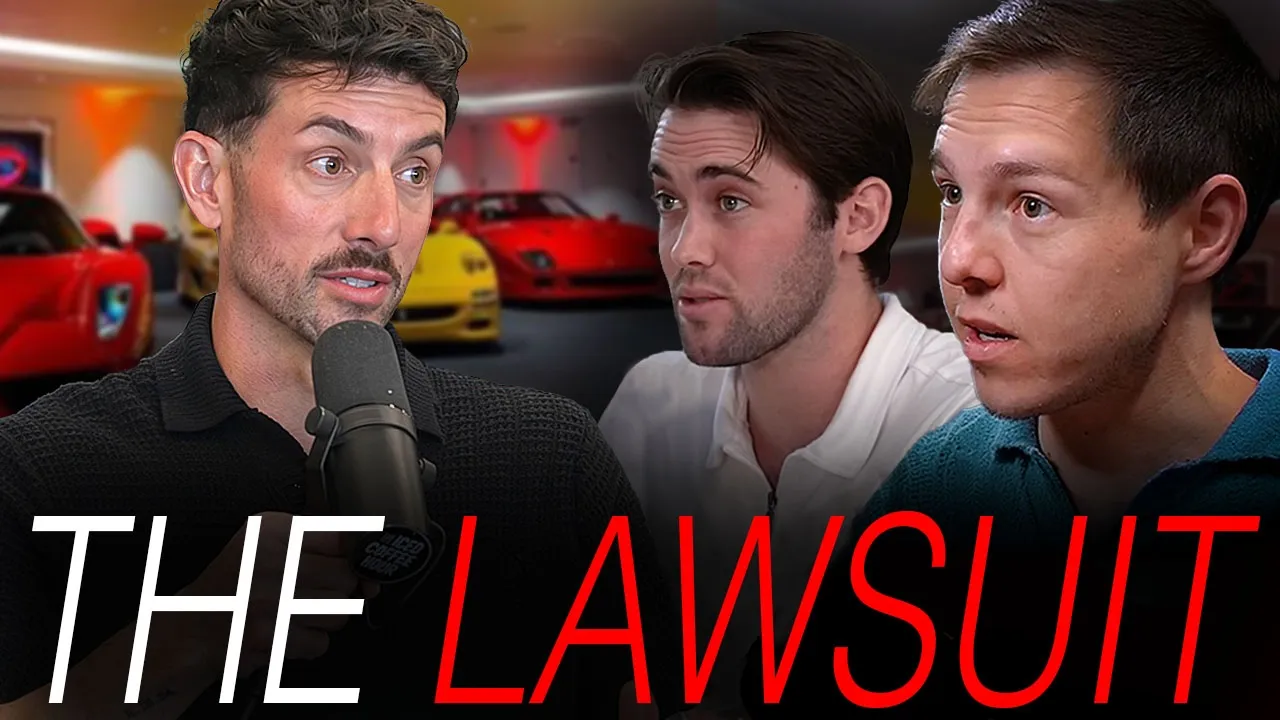
Hamilton Sees Hypercar Crash Looming as Italian Makers Mask Output
The Iced Coffee Hour
Hamilton contends that roughly 75% of the hypercar market is detached from reality due to dealer auction manipulation and underreported production by Italian automakers, predicting a severe market correction within 12 months as inventory overwhelms a thin buyer pool.
Steve Hamilton warns that nearly 75% of the hypercar market is in an unsustainable bubble inflated by fake bids, dealer manipulation, and manufacturers artificially underreporting production numbers. (0:00)
Hamilton scaled his aftermarket wheel and tire enterprise from a 2003 eBay drop-shipping operation into a 500-employee conglomerate exceeding $400 million in annual revenue. (6:29)
Owning multi-million-dollar exotics comes with severe downside risk, illustrated by Hamilton taking a $700,000 total loss on an unreliable Koenigsegg Regera that spent 22 of 24 months in repair shops. (20:18)
The early Bugatti Veyron represents the most undervalued exotic on the secondary market at $1.5M to $1.7M, trading well below its estimated $4M manufacturing cost. (38:55)
Hamilton walked away from a $1 billion private equity valuation offer for a 20% stake because of aggressive clawback terms requiring sustained 35% to 50% year-over-year growth. (97:38)
Detailed notes
## Background
Published on YouTube by The Iced Coffee Hour (hosted by Graham Stephan and Jack Selby) on September 6, 2026, this nearly two-hour interview features automotive entrepreneur and YouTuber Steve Hamilton of @TheHamiltonCollection. According to the video description and chapter index, the episode explores how Hamilton built a $500M business, the true monthly costs and downsides of owning a $30M+ car collection, dealer games and manufacturer lies in the hypercar bubble, a $25,000 HOA dispute, and his biggest financial mistakes.
## TL;DR
Steve Hamilton pulls back the curtain on the exotic car world and his own wealth, explaining how he scaled a wheel-and-tire eBay side hustle into a ~$500 million automotive aftermarket enterprise (including Custom Offsets and Fitment Industries) while amassing a $35M–$40M car collection. He warns that roughly 75% of the hypercar market is in an artificially inflated bubble driven by dealer games, proxy auction bids, and Italian manufacturers like Ferrari and Pagani lying about production numbers, while also exposing how influencers rent Bugattis for $60,000 a month to sell courses. Candid about his own costly missteps, Hamilton details losing $700,000 on a lemon Koenigsegg Regera, getting stuck guaranteeing a $1M+ lease after a failed Arby's franchise partnership, and suing his garage condo HOA over a $25,000 fine tied to a snow-jump stunt. Throughout, he contrasts the gatekeeping of wealthy collector circles with his own philosophy of radical generosity—donating nearly $1M in YouTube ad revenue to charity, letting fans and friends drive his hypercars, and walking away from a $1 billion pandemic private equity valuation due to predatory clawback terms.
## Atmosphere & style
The conversation feels disarmingly candid, grounded, and conversational, stripping away the usual velvet-rope pretension of ultra-wealthy car culture. Hamilton comes across as a self-deprecating, blue-collar-at-heart operator who is equally comfortable laughing about vulgar vanity plates and Zepbound weight loss as he is dissecting private equity multiple arbitrage and tariff headwinds. Graham Stephan and Jack Selby keep the pacing brisk and inquisitive, shifting smoothly from sharp financial interrogation to lighthearted brainstorming about viral YouTube stunts.
## Bulletin
- [00:00](https://www.youtube.com/watch?v=A0NHkpq0gx0&t=0s) Steve Hamilton warns that nearly 75% of the hypercar market is in an unsustainable bubble inflated by fake bids, dealer manipulation, and manufacturers artificially underreporting production numbers.
- [06:29](https://www.youtube.com/watch?v=A0NHkpq0gx0&t=389s) Hamilton scaled his aftermarket wheel and tire enterprise from a 2003 eBay drop-shipping operation into a 500-employee conglomerate exceeding $400 million in annual revenue.
- [20:18](https://www.youtube.com/watch?v=A0NHkpq0gx0&t=1218s) Owning multi-million-dollar exotics comes with severe downside risk, illustrated by Hamilton taking a $700,000 total loss on an unreliable Koenigsegg Regera that spent 22 of 24 months in repair shops.
- [38:55](https://www.youtube.com/watch?v=A0NHkpq0gx0&t=2335s) The early Bugatti Veyron represents the most undervalued exotic on the secondary market at $1.5M to $1.7M, trading well below its estimated $4M manufacturing cost.
- [01:37:38](https://www.youtube.com/watch?v=A0NHkpq0gx0&t=5858s) Hamilton walked away from a $1 billion private equity valuation offer for a 20% stake because of aggressive clawback terms requiring sustained 35% to 50% year-over-year growth.
## Key takeaways
- [00:00](https://www.youtube.com/watch?v=A0NHkpq0gx0&t=0s) The hypercar market is experiencing an artificial bubble driven by dealer games, simulated auction bids, and manufacturers fudging exclusivity figures.
- [06:29](https://www.youtube.com/watch?v=A0NHkpq0gx0&t=389s) Hamilton built a $500M automotive enterprise through drop-shipping, custom wheel-and-tire packages, and strategic bolt-on acquisitions like MAPerformance and Vivid Racing.
- [08:01](https://www.youtube.com/watch?v=A0NHkpq0gx0&t=481s) Monthly maintenance costs across Hamilton's $35M–$40M collection fell from $135,000 to between $20,000 and $50,000 after hiring an in-house technician.
- [09:26](https://www.youtube.com/watch?v=A0NHkpq0gx0&t=566s) Hamilton views hypercar purchases as break-even experiential assets rather than pure financial investments, purchasing allocations at MSRP and holding them for at least two years.
- [16:59](https://www.youtube.com/watch?v=A0NHkpq0gx0&t=1019s) All YouTube ad revenue from The Hamilton Collection is donated directly to charitable causes, totaling nearly $1,000,000.
- [24:09](https://www.youtube.com/watch?v=A0NHkpq0gx0&t=1449s) Heavy vehicle modifications consistently harm resale value, typically returning 80% or less of the capital invested into aftermarket parts.
- [35:55](https://www.youtube.com/watch?v=A0NHkpq0gx0&t=2155s) Massive straight-line electric acceleration has become commoditized by vehicles like the Tesla Model S Plaid, pushing hypercar collectors back toward analog, manual experiences.
- [38:55](https://www.youtube.com/watch?v=A0NHkpq0gx0&t=2335s) The 2006–2008 Bugatti Veyron represents the collector market's most undervalued asset relative to production limits and historical development costs.
- [40:45](https://www.youtube.com/watch?v=A0NHkpq0gx0&t=2445s) Electric hypercars suffer catastrophic depreciation, demonstrated by Hamilton's Rimac Nevera losing over half its $2.7M purchase value.
- [45:47](https://www.youtube.com/watch?v=A0NHkpq0gx0&t=2747s) Prospective supercar buyers should maintain a 1:1 ratio between annual net income and vehicle purchase price rather than relying on risky multi-thousand-dollar monthly financing.
- [45:47](https://www.youtube.com/watch?v=A0NHkpq0gx0&t=2747s) Online influencers routinely front hundreds of thousands in rental and lease fees to pose with hypercars they do not own to market courses and lifestyles.
- [01:04:56](https://www.youtube.com/watch?v=A0NHkpq0gx0&t=3896s) A viral snowboard stunt with Frankie Lapenna resulted in an unjustified $25,000 HOA condo fine, leading Hamilton to file a lawsuit and exit the property.
- [01:17:13](https://www.youtube.com/watch?v=A0NHkpq0gx0&t=4633s) A failed Arby's franchise partnership where Hamilton served as the sole commercial lease guarantor produced over $1,000,000 in downside liabilities.
- [01:22:59](https://www.youtube.com/watch?v=A0NHkpq0gx0&t=4979s) Hamilton reduced his real estate holdings from 75 units down to eight core commercial and personal properties worth $40 million to streamline his lifestyle.
- [01:27:33](https://www.youtube.com/watch?v=A0NHkpq0gx0&t=5253s) Geopolitical oil shocks and imported parts tariffs of 10% to 50% pose the largest macro threats to consumer aftermarket truck and automotive spending.
- [01:37:38](https://www.youtube.com/watch?v=A0NHkpq0gx0&t=5858s) Hamilton rejected a $200 million cash investment based on a $1 billion pandemic company valuation due to punitive clawback covenants risking 100% equity forfeiture.
- [01:40:31](https://www.youtube.com/watch?v=A0NHkpq0gx0&t=6031s) High-profile vehicle purchases often destroy creator wealth if audience metrics fail to scale alongside massive monthly debt payments.
## Detailed walkthrough
### [00:00](https://www.youtube.com/watch?v=A0NHkpq0gx0&t=0s) Teasers: The Supercar Bubble, Production Lies, and a $500M Empire
The episode opens with rapid-fire teasers foreshadowing the high-stakes financial and automotive discussions ahead. Steve Hamilton touches upon a staggering $16,250,000 figure and warns that the high-end auto market has created a "giant bubble that's about to burst." Automakers have chased profit margins by selling fewer, vastly more expensive vehicles, while secondary market valuations have been artificially inflated by "potential fake bids on Bring a Trailer and other stuff." Steve points out that nearly 75% of hypercars have skyrocketed in price—highlighting Ferraris that once started around $2 million and now fetch $7 million to $8 million—before flatly declaring that Italian manufacturers like Ferrari and Pagani routinely lie about their production figures.
The preview also offers glimpses into the grittier, humorous, and painful sides of extreme wealth: social media hustlers sneaking into his warehouse to film Forex courses while sitting inside his Lamborghini, a disastrous commercial investment in an Arby's franchise that went bust after a single year—leaving him stuck footing an $11,000 monthly lease—and tease of an impending multi-billion-dollar business exit within the next twelve to twenty-four months.
[01:07](https://www.youtube.com/watch?v=A0NHkpq0gx0&t=67s) The "Are You on Drugs?" Viral Video and Teleprompter Chaos
Graham Stephan and Jack Selby kick off the sit-down by addressing the elephant in the room: rumors that Steve had been awake for three days straight or on hard substances during a recent video. Viewers flooded the comments section with genuine concern, asking if he was on drugs and posting messages like, "Whatever you're going through, I hope you're okay." Rather than filtering or deleting the comments, Steve let them run wild because controversy feeds the YouTube algorithm. In person, he is noticeably calm and grounded, leading Graham and Jack to ask what actually happened behind the camera to make him look so unhinged.
Steve explains that two innocent factors collided to produce the manic appearance. First, he had recently lost significant weight through diet and portion control, making his face look roughly ten pounds leaner and more hollowed out. Second, he was forced to read from an unfamiliar teleprompter setup that was scrolling at a breakneck speed. Because the script was racing by, Steve was terrified that blinking would cause him to lose his place and ruin the take, resulting in a wide-eyed, intense stare with virtually no blinking. Steve describes himself as an absolute "Charlie Church like pure guy" who doesn't drink alcohol, let alone touch illicit drugs, though he jokingly concedes that "a drug addict would probably say the same thing."
The legal context of the clip added to the tension:
- The video was a carefully vetted legal announcement regarding a lawsuit Steve filed against his commercial condo association.
- The association's leadership operates out of a space merely 20 feet down from Steve's warehouse facility.
- Every word had to be legally airtight to prevent liability, making an unscripted take impossible and forcing him onto the high-speed teleprompter.
[03:19](https://www.youtube.com/watch?v=A0NHkpq0gx0&t=199s) The 15-Year Yo-Yo Diet and Taking GLP-1s (Zepbound)
Jack cuts straight to the core of Steve’s physical transformation, asking if he is taking GLP-1 medications. Steve openly confirms that he is on Zepbound, expressing relief and amusement that the topic surfaced within the first five minutes of the show. For fifteen years, Steve struggled with an aggressive yo-yo dieting cycle. He loved the ritual of feasting and eating massive volumes, so he would allow his weight to balloon up to 225 pounds, then summon sheer willpower to drop back down to 190 pounds on strict keto or calorie deficits.
Over time, his metabolism and lifestyle caught up with him. Early on, a single month of intense dieting bought him six months of guilt-free feasting. Eventually, the dynamic inverted: he had to diet for six grueling months just to earn a single month of unrestricted eating. Because he traveled frequently, home life turned into a miserable cycle of nonstop restriction, whereas vacations were treated as chaotic bingeing sessions.
When Steve finally consulted his physician hoping to maintain his weight without endless suffering, his doctor explained that GLP-1s are specifically intended to target binge eating impulses rather than serve merely as cosmetic fat burners. Since starting Zepbound—which he chose because it was FDA-approved—his food obsession dissipated:
- Instead of eating 10 cookies in a single sitting, he naturally stops after 3 or 4 feeling fully satisfied.
- His overall food consumption dropped by roughly 60%, allowing him to eat whatever he craves in moderation.
- He went through an initial adjustment phase marked by mild queasiness and heartburn.
- His weight dropped from 190 pounds down to a steady, stabilized 180 pounds, where he has remained for over a year.
- Steve and the hosts debate reports that up to 20% of the population may already be using GLP-1 compounds, whether through brand-name prescriptions or online telehealth pharmacies.
[06:29](https://www.youtube.com/watch?v=A0NHkpq0gx0&t=389s) Building a $500 Million Aftermarket Auto Empire
Graham shifts the conversation from health to business, noting that they are recording inside Steve's personal warehouse surrounded by an estimated $30 million worth of exotic and hypercars. Steve recounts how his entire automotive conglomerate trace back to his mother's apartment in 2003, when he was just a 19-year-old kid looking for an edge in the market. He realized that early drop-shipping had not yet bridged the gap between traditional wheel manufacturers and the emerging consumer internet.
Steve persuaded local and regional wheel suppliers to open distributor accounts with him. He listed their inventory online, fulfilled orders via drop-shipping, and reinvested the margins into stocking physical inventory to unlock steeper volume discounts. Recognizing another market vacancy, he became the very first merchant on eBay to mount and balance tires directly onto wheels, delivering complete, ready-to-install packages straight to customers' doorsteps.
```mermaid
flowchart TD
accTitle: Evolution of Steve Hamilton's Automotive Business
accDescr: Flowchart tracing Steve Hamilton's business growth from eBay drop shipping in 2003 to a half-billion-dollar aftermarket conglomerate.
subgraph Phase1["Foundational E-Commerce (2003)"]
A["Mom's Apartment Startup"] --> B["Wheel Drop-Shipping"]
B --> C["First to Mount & Balance Wheel/Tire Sets on eBay"]
end
subgraph Phase2["Direct-to-Consumer Brands"]
C --> D["Mr. Wheel Deal (First Owned Storefront)"]
D --> E["Custom Offsets (Truck Enthusiasts)"]
D --> F["Fitment Industries (JDM & Euro)"]
end
subgraph Phase3["Scale & Strategic Acquisitions"]
E & F --> G["Suspension & Performance Expansion"]
G --> H["MAPerformance (Acquired 2020)"]
H --> I["Vivid Racing (Acquired 2025)"]
I --> J["$500M+ Annual Sales / 500 Employees"]
end
```
To break free from eBay’s platform fees and customer ownership limitations, Steve launched his first standalone direct-to-consumer platform, Mr. Wheel Deal. From there, he partnered with operators to create tailored lifestyle brands for specific automotive niches:
- **Custom Offsets:** Tailored specifically for the lifted and custom truck community.
- **Fitment Industries:** Focused squarely on JDM (Japanese Domestic Market) and European enthusiast platforms.
- **Performance & Suspension:** Expanded catalog offerings beyond aesthetic wheel fitment into functional chassis and powertrain upgrades.
- **Strategic Acquisitions:** Acquired MAPerformance in 2020 and Vivid Racing in 2025 to solidify market dominance across modern aftermarket platforms.
- **Current Scale:** Today, the parent enterprise generates roughly $500 million ($0.5 billion) in annual revenue with an internal team of approximately 500 employees.
[08:01](https://www.youtube.com/watch?v=A0NHkpq0gx0&t=481s) What the Car Collection Costs Every Month
Steve explains that his core enterprise remains predominantly a wheel and tire business, which supports his massive automotive passion. When Graham points out that the collection previously cost roughly $135,000 per month, Steve clarifies that the earlier figure included heavy modifications and upgrades. Running costs have since dropped to roughly $20,000 to $50,000 a month. That reduction came from selling off several maintenance headaches and bringing in a dedicated mechanic who works about 20 hours a week, swiftly turning repairs around at a fraction of standard dealership rates. Additionally, a larger share of the fleet now consists of brand-new vehicles covered under manufacturer warranties.
```mermaid
flowchart TD
accTitle: Collection Maintenance Flow
accDescr: Diagram showing how vehicle types and maintenance strategy affect monthly upkeep costs.
subgraph Fleet["Collection Makeup"]
A["Classic Muscle (Daytona, Superbird)"]
B["Modern Hypercars (Porsche, Bugatti)"]
C["Electric Hypercar (Rimac Nevera)"]
end
subgraph Maintenance["Upkeep Operations"]
D["In-House Mechanic (20 hrs/week)"]
E["Factory Warranties"]
end
subgraph Cost["Monthly Spend"]
F["$20,000 - $50,000 / month (Down from $135k)"]
end
A -->|"Frequent leaks & breakdowns"| D
B -->|"Ironclad reliability"| F
C -->|"Periodic software & tech service"| D
D --> F
E --> F
```
When asked which cars are the hardest to keep running, Steve immediately points toward classic muscle rather than modern exotic machinery. When his team takes out a convoy of six classic cars, it is typical for two or three to break down during the drive. His Dodge Charger Daytona and Plymouth Superbird are notorious repeat offenders for oil leaks and mechanical failures. By comparison, modern hypercars from Porsche and Bugatti are completely "ironclad." His Rimac Nevera requires somewhat more attention and service than other modern exotics in the garage, yet remains reasonably reliable relative to classic metal.
- **Previous burn rate:** ~$135,000 per month (inclusive of major aftermarket modifications).
- **Current burn rate:** ~$20,000 to $50,000 per month.
- **Maintenance strategy:** Hired an in-house mechanic for 20 hours a week to handle rapid turnaround repairs locally.
- **Worst offenders:** Classic Mopar platforms (Daytona and Superbird) due to chronic mechanical faults and fluid leaks.
---
[09:26](https://www.youtube.com/watch?v=A0NHkpq0gx0&t=566s) Fake Bids, Dealer Games, and Market Bubble Warnings
Steve’s collection is currently valued between $35 million and $40 million, driven upward by an aggressive run-up in hypercar market prices over the previous twelve months. For instance, his Koenigsegg Jesko was purchased for $3.5 million and is now fetching around $6 million on the open market, while his Plymouth Superbird surged from a $600,000 car to closing sales between $900,000 and well over $1 million. Despite these gains, Steve views his garage as "happiness investments, not for financial investments," an attitude that routinely frustrates Tommy, his collection manager. Over his entire history of buying and selling cars, Steve estimates he is roughly at break-even.
He expresses deep skepticism regarding the sustainability of current hypercar pricing, describing market conditions as the textbook definition of an asset bubble. He points to questionable market activity, including dealer-to-dealer games and suspected fake bidding on digital platforms like Bring a Trailer. He has observed instances where automotive manufacturers step in at auction to prevent negative public comps: if hammer prices trend too low, brands suddenly attach last-minute factory warranties to prop up interest, or deploy proxies to bid values back up. After speaking with another collector who owns over $100 million in exotic cars and plans to liquidate into the rally, Steve warns that a painful market correction could arrive within a year once inventory overloads the thin buyer pool.
- **Koenigsegg Jesko:** Purchased for $3.5 million; market comp sitting near $6 million.
- **Plymouth Superbird:** Climbed from ~$600,000 up to $900,000–$1,000,000+.
- **Manufacturer auction tactics:** Adding sudden warranties or running proxy bids to preserve public auction comps.
- **Market outlook:** Highly skeptical of price spikes, anticipating an inventory glut and correction within 12 months.
---
[12:11](https://www.youtube.com/watch?v=A0NHkpq0gx0&t=731s) Ordering at MSRP and Happiness Investments
To hedge against secondary-market swings, Steve altered his purchasing approach three years ago to order brand-new vehicles directly from manufacturers at sticker price (MSRP). Because top-tier allocations often appreciate by $2 million to $3 million the moment they roll off the delivery truck, securing factory allocations delivers immediate equity without paying dealer premiums. Maintaining these allocations requires honoring unspoken industry etiquette: keeping each vehicle for at least two years rather than flipping immediately for a windfall.
Manufacturers continue granting Steve direct access because of his visibility and restraint from quick-flipping. He secured a Hennessey model at sticker that commands a significant premium, and McLaren corporate awarded him an allocation for an upcoming limited model (such as the 788HS/special series) rumored to command double its window sticker on delivery. Because Steve purchases cars based purely on styling, performance, and the sheer joy of driving, he rarely monetizes those paper windfalls by cashing out.
---
[13:12](https://www.youtube.com/watch?v=A0NHkpq0gx0&t=792s) The "Yes Mentality," Bugatti Chiron Keys, and a Totaled Senna
Jack and Graham highlight Steve’s trademark generosity and bias toward immediate action. The evening prior, Steve hosted Graham’s "The Index" mastermind group at his garage, casually turning over the keys to a dozen high-dollar exotic vehicles—representing an estimated $20 million in machinery—and telling everyone to pick a car and follow him to dinner. Graham and Jack were handed the keys to Steve's Bugatti Chiron without hesitation. Jack describes the Chiron as "the best by miles," distinct from any other supercar he has ever operated.
Steve explains that giving 12 to 15 people the memory of driving a hypercar for the first time offers tremendous upside that easily outweighs the low probability of a catastrophic road incident. He views incidental wear and tear as an unavoidable cost of enjoying machinery. Accidents, however, can occur: during a drive to a celebration dinner after his YouTube channel crossed one million subscribers, someone pulling out of his neighborhood pulled straight into oncoming traffic, resulting in a T-bone collision that totaled Steve's McLaren Senna. While insurance fully covered the vehicle payout, the carrier immediately dropped him afterward, triggering a grueling search to establish a new commercial insurance policy. Despite the logistical headaches, Steve remains committed to lending out his cars to friends and enthusiasts whenever the situation permits.
The hosts wrap up an endorsement for Northwest Registered Agent, highlighting their free domain and website setup designed to give new businesses an immediate online presence. A key selling point emphasized is that they cover domain renewals so owners never risk accidentally forfeiting their web address—a frustrating mistake Graham personally experienced in the past. Additional perks include bypassing automated AI customer service bots in favor of real human support over the phone, complimentary SSL security on every plan, and a transparent pricing model without second-year rate hikes.
[16:59](https://www.youtube.com/watch?v=A0NHkpq0gx0&t=1019s) The "Yes" Mentality and Giving Back
Jack asks Steve whether his defining entrepreneurial edge comes from an aggressive "yes mentality" and the near-zero lag between making a decision and taking action. Steve explains that while a snap decision might not always mean blindly saying yes, being able to quickly calculate risk and opportunity is vital for entrepreneurs. His instinct to share his wealth stems directly from his childhood:
> "I grew up with nothing and I always tell the story about how... we were at a car show and my wife wanted to sit in a Corvette and she was 15, I was 16 and the guy wouldn't let her sit in it and I'm like this is crazy... So that kind of birthed the idea like if I'm ever successful and able to have something like this in abundance like I'm going to share it with people."
Jack observes that it is unusual for someone who built their fortune slowly over two decades to be so relaxed about letting strangers touch and drive multi-million-dollar exotics, as self-made founders typically become fiercely protective of their capital. Steve reflects that for his first 15 years in business, he lived exceptionally conservatively relative to his earnings. That changed in 2018 when he bought his first supercar, a Lamborghini Aventador:
- **2018 Lamborghini Aventador:** Sparked the realization of how much joy exotic cars bring to regular fans, inspiring him to offer strangers test drives.
- **McLaren 720S & Porsche 911 GT3 RS:** Added shortly after to amplify the mission of making dream cars accessible.
- **YouTube Launch & Charitable Giving:** Stepping back from day-to-day operations gave him the bandwidth to start *The Hamilton Collection* channel to broadcast this mission; every single cent generated by the channel has been donated, totaling nearly $1,000,000 to charity.
[19:35](https://www.youtube.com/watch?v=A0NHkpq0gx0&t=1175s) The Real Downsides of a Mega-Car Collection
Despite the rewards, owning an exotic fleet comes with persistent friction. The most aggravating operational issue is maintenance: Steve points out that at any given moment, three to five of his cars are stuck in service shops.
On a social level, public visibility turns the collection into an open target for constant requests. Steve finds himself fielding endless demands from people asking to borrow exotics, including high schoolers from California genuinely expecting him to ship a multi-million-dollar Bugatti across the country for prom night. Dealing with twenty such requests a day during school dance season becomes exhausting, turning his profile into an unwelcome magnet for people seeking handouts.
```mermaid
flowchart TD
accTitle: Realities and Downsides of Exotic Fleet Ownership
accDescr: Diagram illustrating the operational headaches and social burdens of managing a massive supercar collection.
subgraph Operations["Fleet Realities"]
A["Massive Exotic Collection"] --> B["Continuous Maintenance"]
B --> C["3 to 5 Cars in Service at All Times"]
end
subgraph Demands["Public Exposure"]
A --> D["Extreme Public Visibility"]
D --> E["Daily Requests for Cars & Cash"]
E --> F["Unrealistic Demands (e.g., Shipping a Bugatti for Prom)"]
end
```
[20:18](https://www.youtube.com/watch?v=A0NHkpq0gx0&t=1218s) Buying Cars for Others and the $700,000 Koenigsegg Nightmare
When asked about the most generous act he has done with cars, Steve recalls an accident where a woman driving a beat-up vehicle worth under $5,000 T-boned his McLaren Senna. Recognizing that insurance would only cut her a meager $2,000 check for the totaled wreck, Steve simply went out and purchased her a brand-new $40,000 Hyundai. Buying vehicles has become his signature way of expressing care, having bought more than 20 cars for friends and family members. His all-time favorite vehicle to gift is the Lexus NX, praising its driving experience, user interface, and value when fully loaded examples could be had under $40,000.
Turning to his worst automotive purchase, Steve names his Koenigsegg Regera without hesitation. Despite warnings from friends, he bought one, only to experience an ownership nightmare:
- **Downtime:** The vehicle was inoperable or in the shop for roughly 22 out of the 24 months he owned it.
- **Total Financial Loss:** Beyond the manufacturer covering certain warranty repairs, Steve paid roughly $200,000 out of pocket for maintenance and took a $500,000 depreciation haircut when selling it, totaling a $700,000 loss.
- **The Core Defect:** He met with Christian von Koenigsegg to address the hostility, moving their relationship "from 0% to like 10%." Steve attributes the Regera's unending breakdowns to early production models acting like rushed prototypes with severe wiring harness flaws. A single frayed wire inside the car's electrical "nervous system" caused phantom shorts that repeatedly fried window motors and electronic components.
Steve adds that the car he drives the least is his Acura NSX. After widebodying, twin-turboing, and installing air suspension on the build, the car sat completely un-driven by him for six months post-completion. He admits he simply does not care for JDM cars and only built it for YouTube content, echoing a sentiment shared with fellow creator Mat Armstrong about the trap of buying cars solely for the channel.
[24:09](https://www.youtube.com/watch?v=A0NHkpq0gx0&t=1449s) The Failed Liberty Walk Investment and Modding Pitfalls
Steve explains the hard lesson behind buying vehicles purely because you expect them to pull strong numbers on YouTube: don't buy something just because you think it will do well. Instead, buy what you genuinely enjoy, because authentic passion shows on camera and translates into views. The modified Liberty Walk car he bought was treated as a "channel investment," but it turned out his demographic didn't care to see it. On top of that, he had zero personal interest in actually driving it.
He notes that with some sponsor help, he still sank around $50,000 into the build. It has been sitting up for sale for four months. He listed it at $120,000 and would let it go for maybe $110,000, which he considers a bargain for a completely unique slammed Liberty Walk build. However, when asked whether heavy aftermarket modifications increase a car's resale value, Steve is blunt: in the current market, people want stock vehicles. When you dump $50,000 to $100,000 into aftermarket widebody kits and tuning, you are lucky to recover 80% of that outlay—more often than not, heavy modifications actively hurt resale value. Since the car had been sitting untouched for six months with zero desire to get behind the wheel, Steve knew it was time to part ways: the moment a car sits for a month without him wanting to drive it, it goes.
- Mod investment: ~$50,000
- Listing price: $120,000 (would take $110,000)
- Market reality: Heavy modifications typically hurt resale value; stock is preferred by most buyers.
[25:11](https://www.youtube.com/watch?v=A0NHkpq0gx0&t=1511s) Ferrari Culture, "Boring" Hypercars, and the Raw Thrill of Loud Machines
Looking around the garage, the hosts point out that Steve barely owns any Ferraris—aside from a Ferrari GTC4Lusso replacement. Steve elaborates on the brand's distinct culture, noting that while he does not mean it negatively, the typical Ferrari owner operates in an entirely different world from his own personality. They are often distinguished figures willing to play the manufacturer's games—buying 20 entry-level cars just to qualify for the next limited hypercar allocation and attending all the official rallies. That mindset runs counter to who Steve is.
```mermaid
flowchart TD
accTitle: Hypercar Curation Shift
accDescr: Visual breakdown of why Steve is selling refined hypercars in favor of loud, raw machines.
subgraph Outgoing["Sold / Parting With: Too Refined"]
A["Bugatti Chiron Super Sport"]
B["Rimac Nevera"]
OutReason["'Boring' • Over-refined • Whisper quiet • Content exhausted"]
A --- OutReason
B --- OutReason
end
subgraph Incoming["Future Collection: Loud & Raw"]
C["Hennessey Venom F5"]
InReason["Sounds like '60s muscle • Loud • Huge wings • Aggressive flame-spitting"]
C --- InReason
end
```
That same aversion to refined perfection explains why Steve parted with his Bugatti Chiron Super Sport and is selling his Rimac Nevera. He acknowledges how absurd it sounds to call the world's fastest top-speed car (the Chiron) and the quickest accelerating car (the Rimac) "boring," but he insists they are. They are whisper quiet, hyper-refined, and excessively comfortable. Steve prefers violent, visceral, loud machines like the Hennessey Venom F5, which sounds like an aggressive 1960s muscle car, shoots flames, sports a massive wing, and feels rowdy on the road.
[26:41](https://www.youtube.com/watch?v=A0NHkpq0gx0&t=1601s) Liquidating the Chiron for Windermere Reserve
When reminded that just two years earlier he had named the Bugatti Chiron Super Sport the one car he would keep over everything else, Steve laughs. Beyond the car becoming boring to drive and exhausting its YouTube content potential, he sold it because he needed substantial liquidity to fund a massive real estate development in Florida: Windermere Reserve.
Steve plans to live in Central Florida near Windermere for most of the year. When looking for high-end car storage in the area, he couldn't even find a basic, dingy 5,000-square-foot industrial building. Recognizing a massive shortage, he decided to develop a luxury car condo community himself. Sourcing the land required pursuing off-market parcels, dealing with eccentric sellers, and navigating high-stakes attorney meetings when the deal nearly collapsed. The transaction was ultimately finalized and notarized in Denmark with the assistance of local followers who met him at the American embassy so he wouldn't miss the closing deadline.
- Project website: `windermerereserve.com`
- Target scale: 70 to 80 luxury car condo units
- Anticipated pricing: Around $1,000,000 per unit
- Early traction: Over 250 interested email inquiries with virtually zero advertising
[27:53](https://www.youtube.com/watch?v=A0NHkpq0gx0&t=1673s) Designing the "Country Club for Cars"
Steve critiques the current state of car condos across the country, describing most developments as glorified, tan-colored asphalt storage unit complexes devoid of greenery, life, or usable amenities. For Windermere Reserve, he envisions a true "country club for cars":
- Exterior architecture inspired by the sleek car condos at Circuit of the Americas (COTA) in Austin, Texas.
- Lush landscaping featuring nature trails, a boardwalk, and extensive greenery instead of wall-to-wall asphalt.
- A private clubhouse with a resort-style pool and strong social community areas.
- Multi-story floor plans featuring ground-floor vehicle bays, loft spaces with kitchenettes and lounge seating, optional third-story overnight living quarters, and rooftop patio balconies.
Jack points out that similar units being built in Henderson, Nevada, command anywhere from $600,000 to $1.5 million. Steve emphasizes that car condos offer developer upside because they do not require the costly finishes, complex plumbing, and full appliance packages of standard residential homes—they are essentially upscale warehouses with functional lofts that automotive enthusiasts are eager to customize.
[30:38](https://www.youtube.com/watch?v=A0NHkpq0gx0&t=1838s) Content Exhaustion and Steve's "Lifer" Mindset
Steve reflects on the dual nature of hypercar ownership when running an automotive media business. Cars like the Bugatti Chiron Super Sport and Rimac Nevera serve as content engines, but eventually, their narrative utility runs dry: the Rimac beats every competitor in a drag race, the Bugatti runs out of novel challenges, and the content peaks.
When that happens, Steve finds himself neglecting them. If he catches himself driving a multimillion-dollar hypercar merely because a month has passed and it needs its battery maintained rather than out of pure excitement, he knows the spark is gone. He compares this to his broader psyche: while he is a permanent "lifer" when it comes to his family, wife, and kids, his relationship with material assets is totally detached. He can obsess over an exotic machine one day and cleanly detach, sell it, and redirect the capital into the next venture without looking back.
The conversation pauses for a sponsor read from Gusto. The host discusses how much he dislikes managing back-end paperwork, payroll taxes, benefits, and compliance tasks for a small media business. Gusto provides an all-in-one platform covering automated payroll, direct deposits, tax filings, health benefits, 401(k) plans, and workers' compensation, along with direct access to certified HR professionals when complex staffing situations arise.
[32:14](https://www.youtube.com/watch?v=A0NHkpq0gx0&t=1934s) Sponsors: Gusto and Upwork
Jack and Graham wrap up their sponsor message for Gusto, highlighting how straightforward the platform is for onboarding and payroll. Graham notes that once existing company data is transferred, setup is remarkably quick. Users pay nothing until running their first payroll, after which Gusto charges a flat monthly fee with unlimited payroll runs and no hidden costs. Having recently brought on their very first full-time employee, Graham shares how the platform handled everything from tax registrations and employee benefits to the mandatory legal compliance posters required on office walls. When Jack jokingly asks, "Am I allowed to take a lunch break?", Graham deadpans, "Absolutely no." They point out that Gusto is ranked number one on G2's highest satisfaction products list for 2026, trusted by more than 500,000 small businesses, and offers three free months of payroll to listeners who sign up.
Transitioning to their next sponsor, Upwork, Jack discusses the inherent stress of growing a business when endless tasks pile up that a founder cannot handle alone. Upwork bridges that gap by connecting companies with top-tier freelancers across software development, AI implementation, marketing, graphic design, and business operations. Using Upwork Business Plus, clients gain access to the top 1% of talent on the platform, backed by AI-powered curation that provides a shortlist of vetted candidates in under six hours. Graham emphasizes that contracts and payments are housed in a single dashboard—eliminating the headache of chasing loose invoices—and notes that over 170,000 freelancers on the platform maintain five-star ratings.
[34:32](https://www.youtube.com/watch?v=A0NHkpq0gx0&t=2072s) Forever Cars and Inflated Hypercar Valuations
Jack asks Steve Hamilton if there is any car he has owned that he feels an enduring, lifelong attachment to. Steve points directly to his 1967 Chevrolet Chevelle, a car he has kept since his children were tiny. It has survived four separate engine swaps, and he considers it a permanent fixture in his life. Alongside the Chevelle, Steve names his McLaren 765LT and his Hennessey Venom F5 as vehicles he expects to keep forever due to the special dealer relationships, personal memories, and raw driving thrills attached to them.
When Jack asks which cars have seen valuation increases that defy belief, Steve states that roughly 75% of the entire hypercar market feels detached from reality. He points to the Porsche 918 Spyder with the Weissach Package, which now commands between $5 million and $6 million, noting ruefully that he sold his own for $2 million just a year and a half prior. However, Steve finds the Ferrari LaFerrari market even more baffling. While Ferrari claims to have manufactured only around 900 units total, Steve notes that automotive tracking registries indicate actual production numbers between 1,100 and 1,200 cars. He remarks that Italian manufacturers—particularly Ferrari and Pagani—appear to fudge their production caps:
> "The website tells a story that the Italians lie about production numbers... They're producing 1,200 LaFerraris. They were like around 2 million I think to start, and those are 7 or 8 million now for a LaFerrari. And it's just crazy to me when there's over 1,000 of these. How is that even possible?"
```mermaid
flowchart TD
accTitle: Market Price Disconnect for Hypercars
accDescr: Chart illustrating Steve Hamilton's critique of hypercar valuations relative to production numbers.
subgraph ProductionVsPrice["Production Volume vs. Secondary Market Pricing"]
LF["Ferrari LaFerrari"] -->|"Claimed: ~900 units<br/>Estimated Actual: ~1,100–1,200 units"| LFPrice["Valuation: $7M–$8M<br/>(Up from ~$2M MSRP)"]
BV["Bugatti Veyron (2006–2008)"] -->|"Actual Build: ~350–400 units<br/>Held World Record"| BVPrice["Valuation: $1.5M–$1.7M<br/>(Severely Undervalued)"]
end
```
[35:55](https://www.youtube.com/watch?v=A0NHkpq0gx0&t=2155s) Ferrari's EV, Soulless Tech, and the Shift Back to Analog
Jack brings up a recent auction where a new Ferrari EV concept commanded $40 million. Steve brushes it off, speculating that it was simply an ultra-wealthy buyer looking to make a tax-deductible charitable donation and capture positive press clout, who would have spent that $40 million regardless of what car crossed the block. Steve expresses personal disdain for the design and reveals that his experience with the Ferrari SF90 Stradale was equally hollow. He ranks the SF90 in his top three least favorite cars he has ever owned, calling it completely "soulless" and cluttered with unnecessary digital gadgets and screens. When Jack and Graham mention that Jeremy just bought an SF90 and filmed an unveiling video, Graham notes that on paper its 0-to-60 acceleration numbers look blistering. Steve laughs off straight-line performance stats:
> "So is a Model S. You can go get a Model S Plaid used for $45,000 and it'll smoke that... If you want fast, just go get a Tesla."
Steve argues that the hypercar horsepower arms race has hit a dead end because mainstream cars are eroding their advantages. He references the new Corvette hybrid, which delivers world-class performance for $250,000—a tenth or fifteenth of the price of a Bugatti. Because multi-million-dollar exotics can now be beaten in straight-line acceleration by electric sedans and mid-tier American sports cars, Steve believes the ultra-wealthy segment is demanding a return to visceral, analog driving machines. He highlights the newly announced Hennessey Blackbird, which features an 800-horsepower naturally aspirated engine, zero digital intrusions, and a gated six-speed manual gearbox. Jack asks whether hybrid fatigue explains why older supercars spiked—such as the Lamborghini Aventador surging when the hybrid Revuelto was launched. Steve agrees, suggesting that boutique manufacturers will increasingly offer manual, naturally aspirated cars at a premium, much like Porsche has done and Pagani began years ago with the manual Utopia.
[38:55](https://www.youtube.com/watch?v=A0NHkpq0gx0&t=2335s) Why the Bugatti Veyron Is the Most Undervalued Car
When Jack asks Steve to identify the single most undervalued car in the current market, Steve answers without hesitation: the original 2006–2008 Bugatti Veyron.
- **Price Disparity:** Early Veyrons still trade hands between $1.5 million and $1.7 million. By contrast, Lamborghini Aventador SVJs trade around $1.5 million despite having well over a thousand units produced.
- **Rarity and Pedigree:** Bugatti built only roughly 350 to 400 original Veyrons total. It shattered and held the world production car top-speed record and originally cost Volkswagen an estimated $4 million per unit to engineer and build, while being sold new for $2 million.
- **Fair Value Estimate:** Steve asserts that relative to the rest of the inflated market, an early Veyron's baseline value should easily sit at $5 million.
- **Warranty and Maintenance:** While maintenance has a scary reputation, Bugatti now offers an extended warranty (roughly $250,000 for four years of full coverage), giving collectors a predictable ownership cost.
Graham poses a hypothetical: if an investor had $1.5 million and had to choose between putting it into the S&P 500 or buying a pristine Bugatti Veyron, what should they do? Steve explains that if the buyer treats it purely as a buy-and-hold garage asset—parking it without driving it or adding mileage—the Bugatti could easily outperform the market over a 3- to 5-year horizon: "Legit, go buy—if you have $15 million, go buy 10 Veyrons, let them sit in your garage. I think you're going to come out far more ahead in 3 to 5 years." However, if the owner plans to drive it, accrued mileage and service overhead will eat away at returns, and they might even grow bored since more thrilling driver's cars exist at that price point. Jack asks Steve which specific Veyron trim represents the absolute best investment grade, and Steve begins breaking down the rarity of the open-top convertible variants as the discussion continues.
[40:45](https://www.youtube.com/watch?v=A0NHkpq0gx0&t=2445s) The Hypercar Market, Selling Early, and Electric Supercars
Steve Hamilton analyzes what is currently happening with top-tier collector cars, pointing out that special editions always appreciate the fastest. A Bugatti Veyron Super Sport is already trading north of $3 million, while rare Porsche 918 Weissach packages command significant premiums. He cites an Enzo painted yellow rather than standard Rosso Corsa that easily brings 50% more. Mentioning a specific spec owned by Supercar Ron that Ron purchased around $2 million, Steve predicts it is worth roughly $3 million today and could potentially hit $8 million in five years.
The hosts bring up Ed Bolian, joking that whatever Bolian purchases seems to be proved right five years later. Steve laughs, noting that he often buys the exact same winners—such as the Ferrari LaFerrari and Porsche 918 Spyder—but his mistake is selling them too early: "I sell them like right around what I paid for them and maybe I make a little bit of money, but again... they're not financial investments for me."
When asked what is underrated outside of Bugatti, Steve remarks that the McLaren Senna would have been his pick a year ago, but it surged from $1 million to $3 million over twelve months. In his view, 95 out of every 100 hypercars on the market are currently overvalued. For someone looking in the $250,000 range:
- **Porsche 911 GT3 RS:** Best for absolute reliability and track-focused driving.
- **McLaren 720S or 750S:** Best overall driving experience, usability, UI, and tuning potential.
When asked whether electric supercars hold any investment promise, Steve delivers a flat "No." His Rimac Nevera serves as prime evidence: he paid roughly $2.7 million all-in with taxes, yet the highest offer he has received despite trying hard to sell is around $1.3 million. Although he admits the Nevera could eventually become the McLaren F1 of the 2020s decades down the road because it set every performance record, he refuses to park millions in a depreciating asset for ten years. Steve averages a two-year holding period per car and drives them roughly 5,000 miles a year—putting 10,000 to 12,000 miles on hypercars across a 20-car stable, a pace unheard of for garage-queen collectors.
---
[43:45](https://www.youtube.com/watch?v=A0NHkpq0gx0&t=2625s) Koenigsegg Drama and McLaren Loyalty
Asked which manufacturer he has lost respect for, Steve surprises the hosts by defending Koenigsegg. While his Jesko had scary early failures—including brake fluid leaks and gyro failures that were documented on his channel—Koenigsegg immediately flew factory technicians to his garage multiple times to resolve everything. Unlike his Koenigsegg Regera, which would completely brick and shut down, the Jesko remains drivable even if minor bugs crop up, allowing him to wait until regular service intervals.
```mermaid
flowchart TD
accTitle: Koenigsegg Regera vs Jesko Reliability
accDescr: Comparison between Steve Hamilton's Regera failures and Jesko support experience.
He expresses amazement that Koenigsegg has survived as a company given their historical unreliability, attributing their survival to brilliant marketing, extreme technological innovation, and an intensely loyal fan base. Having publicly "crashed out" on them nine months prior, he notes his tone has softened: "Build me a great car and I will be your biggest advocate." When asked what single brand he would pick if he could only drive one for the rest of his life, he names McLaren over everything else due to their dynamic profile, sheer fun factor, and usability.
---
[45:47](https://www.youtube.com/watch?v=A0NHkpq0gx0&t=2747s) Income Ratios and the "Course Guru" Hypercar Rental Scheme
Discussing the true cost of entering supercar ownership, Steve breaks down what it takes to purchase a $250,000 McLaren. With financing running between $5,000 and $7,500 a month on a five-to-six-year loan, a buyer should comfortably generate at least $250,000 in clean annual income without excessive personal debt. He argues for a rough 1:1 ratio between annual income and the total value of the vehicle, meaning a buyer looking at a $3 million Bugatti Chiron should realistically be netting around $3 million a year.
```mermaid
flowchart LR
accTitle: Course Guru Hypercar Cornering Scheme
accDescr: How dealers and influencers manipulate values and use ultra-expensive short-term leases.
A["Dealer / Investor corners Chiron supply"] --> B["Lists cars at astronomical fake prices"]
B --> C["Rents car for 3-6 months @ $60k/mo"]
C --> D["Online guru shoots course promo content"]
D --> E["Influencer gains clout & sells course"]
E --> F["Car returned / vanishes 4 months later"]
```
This leads into how exotic car dealers and course sellers distort the marketplace:
- **Cornering Rare Inventory:** Wealthy flippers or specialty dealers acquire three or four Bugatti Chirons—effectively controlling the thin domestic supply—and list them at absurdly inflated asking prices to artificially move market comps.
- **Predatory Short-Term Leases:** Rather than selling, they lease these vehicles to online influencers for $60,000 per month on three-to-six-month contracts.
- **Selling the Illusion:** Course sellers front up to $500,000 purely as a marketing expense. They flood social media with content showing the Chiron, sell forex or business courses under the pretense that they bought it with trading profits, and hand the car back once the campaign ends.
- **Parasite Influencers at the Garage:** Steve frequently catches random visitors filming fake lifestyle videos inside his collection. He has had to throw out individuals shooting videos in his Lamborghini bragging about Forex trading wins. He even had to warn his team member, Henry, after noticing opportunistic guests repeatedly asking to take out the Aventador just to harvest clout clips for their personal feeds: "Don't use my 20-plus years of earnings to flex and fake what you're doing."
[49:06](https://www.youtube.com/watch?v=A0NHkpq0gx0&t=2946s) Supercar Leases, Course Creators, and Manufacturer Deposits
The conversation dives into how online course sellers and influencers use exotic cars as marketing props to manipulate their audience. Steve explains that an influencer might put down $250,000 to $500,000 and pay an absurd monthly rate—around $60,000—just to hold a high-end supercar for six months. During that window, they milk it for every bit of content and clout possible to drive sales for their courses and double their subscriber counts. Dealerships and leasing companies happily play along, keeping sticker prices artificially inflated because they can continually recycle these vehicles through back-to-back high-dollar leases while ordinary viewers assume the creator bought a $4 million to $5 million Bugatti outright.
Graham points out that many of these agreements are essentially sales structured as leases so the drivers can write off the entire payment while quietly attempting to build equity. However, when the term ends and the car's market value drops—for instance, sliding from $2 million down to $1.8 million—the lessee is on the hook for the difference out of pocket. Steve admits he mostly pays cash for his fleet, though he did take out a $1.5 million lease on his Koenigsegg Jesko to manage cash flow fluctuations.
Outside of that single vehicle, his entire existing collection is fully owned, though manufacturers hold enormous sums of his capital for unbuilt orders. Steve reveals that between $5 million and $7 million of his money is locked up in manufacturer deposits. Koenigsegg has held a $300,000 deposit for his Gemera for six years, and Tesla has held $50,000 for the second-generation Roadster since around 2018 or 2019. While he feels confident the cars will eventually be delivered—noting the Jesko took five years—he laments that manufacturers pay zero interest on long-held deposits, meaning a $50,000 sum that ought to have doubled to $100,000 over eight or nine years will only ever return its nominal face value if canceled.
[51:55](https://www.youtube.com/watch?v=A0NHkpq0gx0&t=3115s) McLaren's Momentum and Low-Depreciation Porsches
When asked which manufacturer he is most bullish on regarding continuous innovation and delivery execution, Steve singles out McLaren. Despite not wanting to sound biased, he praises McLaren's aggressive release cadence, vibrant bespoke color palettes, driving excitement, and speed. He placed a deposit on his McLaren W1 roughly a year and a half prior and expects delivery within two years, while his McLaren 750S (or tailored high-spec order) is arriving just six to seven months after putting money down in an outrageous, head-turning custom specification.
For buyers seeking minimal depreciation and long-term value retention, Steve unconditionally recommends the Porsche 911 GT3 RS:
- **Historic Reliability and Value**: Every iteration since roughly 2007 has held or exceeded its original MSRP while offering bulletproof mechanical reliability.
- **New vs. Previous Generation**: The newest GT3 RS models trade between $350,000 and $400,000 (often $100,000+ over sticker), while a 2019 991.2 generation sits around $250,000.
- **The Driving Reality**: Steve has owned two 991.2 GT3 RS models (one in Lizard Green, followed by a Miami Blue example) and notes that outside of updated aerodynamic bodywork, the 2019 car provides roughly 90% of the driving dynamics of the brand-new model, making it nearly indistinguishable in a blind test.
```mermaid
flowchart TD
accTitle: Exotic Car Strategy Decision Tree
accDescr: A comparison between chasing content clout versus capital preservation when buying high-end performance cars.
subgraph Clout["Content & Clout Strategy"]
A["Hypercar Leases / Allocations"] --> B["High Monthly Outflow: up to $60k/mo"]
B --> C["Leverage for Course Sales & Subs"]
C --> D["Risk: Diminished Value Shortfall"]
end
subgraph Preservation["Capital Preservation Strategy"]
E["Porsche 911 GT3 RS (991.2 or New)"] --> F["Acquisition at or near MSRP"]
F --> G["Exceptional Mechanical Reliability"]
G --> H["Value Retained or Appreciated"]
end
```
[53:40](https://www.youtube.com/watch?v=A0NHkpq0gx0&t=3220s) Extended Warranties and Rating Graham's Garage
Addressing extended warranties, Steve shares an unexpected deal he received on his Ferrari LaFerrari: a full two-year drivetrain warranty for $30,000 on what was then a $3 million car. Spending 1% of the car's value for two years of complete peace of mind was an obvious choice that signaled Ferrari's internal confidence in the powertrain, though Steve sold the car before ever needing to submit a claim. Generally, he views extended warranties as overpriced markups unless a buyer has stretched their budget to buy an exotic car they could not otherwise afford to repair if a catastrophic failure left it stranded in the garage.
The conversation turns personal as Jack asks Steve to rate Graham's current car collection on a scale of 1 to 10. Steve rates Graham's garage a solid 7:
- **What It Takes to Hit a 9**: Steve jokes that jumping from a 7 to a 9 requires another "$30 million," explaining that collection value balances clout, drivability, and financial appreciation.
- **Graham's Stable**: Graham still owns his Ford GT and a 2010 Tesla Roadster, which is one of only 26 original Roadsters finished in factory yellow.
- **The Tesla Roadster Dilemma**: Graham hoped the rare Roadster would climb past $200,000, but general market prices have hovered around $40,000 to $60,000 (with rare specs slightly higher). Graham recently poured $15,000 into shipping the Roadster to Seattle for a complete battery overhaul, yet he admits he rarely drives it because parking logistics turn moving cars in and out of his garage into an exhausting chore.
- **The Clout Factor**: Steve argues that creators must balance positive messaging with sheer viewer spectacle, asserting that if Graham wants to inject genuine crowd-pleasing clout into his fleet, he needs to add a Lamborghini or a modern McLaren.
[57:14](https://www.youtube.com/watch?v=A0NHkpq0gx0&t=3434s) Clout Cars vs. Oddballs: Skipping Lamborghinis for Rare Machines
The conversation turns to what cars actually project influence versus what car enthusiasts personally appreciate. If someone has a $250,000 budget and cares purely about social media clout, Graham points out that a Lamborghini Huracán or an Aventador is the obvious answer. Aventador prices have fluctuated wildly—dropping below $300,000 before COVID, skyrocketing up to $350,000 and even $400,000 during the pandemic boom, before finally correcting back around the $300,000 mark.
Steve makes it clear that he actively dislikes traditional "clout cars." Once a vehicle becomes ubiquitous on social media and everyone begins buying it, he completely loses interest. Instead, he gravitates toward the oddballs and unicorns that almost no one else owns. On YouTube, only a handful of automotive creators have a Ford GT, virtually no one has an original Tesla Roadster, and practically nobody possesses a Lotus Evora GTC.
Steve highlights unique restomods and niche track cars currently catching his attention, including his upcoming build:
- **TWR Supercat:** Built on a Jaguar XJS platform. While donor XJS cars with naturally aspirated V12s can be picked up for just $15,000 to $20,000 due to their terrible unreliability, TWR widebodies the chassis and transforms it into a supercharged, 500,000-plus-dollar machine. Steve appreciates that it is a fully bespoke, striking vehicle that nobody else across social media has.
- **BAC Mono:** Purchased from Houston Crosta in Las Vegas. Standard non-Type R models sit in the upper $100,000s, while the Type R climbs into the high $200,000s. Steve considers it an immensely fun, driver-focused experience, with the single drawback that it cannot carry a passenger.
Graham and Jack highlight the challenges of bringing business ideas to life and introduce Shopify as an all-in-one platform for entrepreneurs. Graham explains that starting an e-commerce business is straightforward when Shopify provides every tool needed right out of the box, including an AI site builder, polished design templates that eliminate the need to hire web designers, and Shop Pay—a streamlined checkout tool with one-tap repeat purchasing that directly reduces cart abandonment.
Jack shares his personal background, noting that before working with Graham, he launched roughly six different Shopify stores while pursuing e-commerce full-time. He emphasizes that he knows numerous people who generated significant income through the platform. The hosts note that Shopify powers everything from global household brands like Mattel and Gymshark to first-time sellers, and they direct listeners to start a free trial at shopify.com/ich.
---
[01:00:23](https://www.youtube.com/watch?v=A0NHkpq0gx0&t=3623s) Pushing the DMV's Limits: Innuendos, Vanity Plates, and Caroline Shirley
Jack shifts the conversation to Steve's notorious collection of custom license plates, asking how he manages to get such absurd plates approved by the state. Steve reveals that he deals so often with the Illinois Secretary of State's office that he knows the reviewing official by name: Caroline Shirley. He frequently receives formal inquiries or phone calls demanding explanations for his submissions.
When Caroline questioned what "THC BBC" meant, Steve cheekily explained that "THC" stood for The Hamilton Collection and "BBC" stood for "Big Black Cadillac," asking with a straight face, "What else would it mean?" The DMV rejected the explanation, forcing him to surrender the plate after it initially slipped through. Undeterred, Steve and his team rely on modern slang and double entendres that middle-aged bureaucrats might miss. On his Lamborghini Revuelto, they managed to pass "BB E," which phonetically reads as BBC. On his McLaren Senna, they registered "HUGE WANG," referring ostensibly to the car's massive rear wing while slipping past the censors.
Steve jokes that the collection has a running obsession with wiener jokes, born out of the classic stereotype that exotic car owners are overcompensating:
- **Small Pee Pee:** Placed on his Rezvani.
- **Small D:** Assigned to their Ferrari GTC4Lusso, which serves as the team's official crew and errand car. Steve recalls sitting at a red light in the Ferrari while girls in the car behind them burst into laughter after spotting the plate, leaving him feeling thoroughly humbled.
- **Other Plates on Display:** A wall of retired plates features designs like "COP LOVER," a reversed plate, "CRACKED," and "AURA."
- **The Ultimate Rejection ("GTA IRL"):** The plate Steve most wanted was "GTA IRL" (Grand Theft Auto In Real Life), poking fun at the running internet comment that his garage looks like a real-life video game lobby. When Caroline demanded an explanation, Steve scrambled to find an acronym website that omitted the video game reference, claiming it was just an innocent shorthand. She conducted further research, saw through the excuse, and flatly rejected it.
---
[01:03:31](https://www.youtube.com/watch?v=A0NHkpq0gx0&t=3811s) The Practical Daily Fleet: Why a Hypercar Collector Drives Electric
Despite owning millions of dollars in roaring V10, V12, and hypercar exotics, Steve reveals that his daily driving habits are surprisingly practical. If forced to keep only one single vehicle out of his entire collection, his daily driver—a Tesla Cybertruck—would be his top choice because of its supreme drivability. In fact, nearly every driving member of his household drives an EV:
- **Steve:** Tesla Cybertruck
- **Oldest Son:** Tesla Model 3
- **Son Jack (approaching driving age):** Tesla Model X
- **Wife:** Lucid Gravity
Steve and Graham explain that the convenience, modern tech, and reliability of electric vehicles make them superior for daily use. With modern Full Self-Driving hardware (2022 and newer), Steve can activate autonomous driving right out of his driveway, navigate an hour through heavy stop-and-go Chicago traffic, and have the car park itself directly in a destination lot. Graham adds that the lack of mechanical maintenance is a huge relief. Steve notes that Tesla's completely impersonal service model—where you buy online, pick up the car without talking to a human, and rely on on-screen video tutorials—can feel strange, but it works seamlessly when the product is that efficient.
---
[01:04:40](https://www.youtube.com/watch?v=A0NHkpq0gx0&t=3880s) Trouble with the HOA: Frankie Lapenna's Neighborhood Stunt
Graham brings up a recent viral controversy where an online stuntman flipped over one of Steve's exotic cars, triggering a massive clash and a $25,000 fine from his local Homeowners Association (HOA). Steve sets the stage by identifying the collaborator behind the stunt: Frankie Lapenna, the wildly popular TikTok creator known for his prosthetic "big booty" character and over-the-top physical comedy stunts.
[01:04:56](https://www.youtube.com/watch?v=A0NHkpq0gx0&t=3896s) The Snow Stunt and the $25,000 HOA Fine
Steve Hamilton recounts the origin of his feud with his garage condo's HOA, which started with a stunt arranged by Frankie, an accomplished stunt performer who has remarkably never injured himself despite doing extreme stunts. Because there was no local snow left, Frankie literally shoveled snow into his truck in Michigan the night before and drove it down to build a ramp right outside Steve’s window. Frankie spent five to six hours testing the setup thoroughly and safely before performing a low-speed jump on a snowboard being towed by Steve’s Koenigsegg. Steve considers the stunt relatively mild—a "two out of 10" compared to Frankie’s usual insanity—and during the entire six-hour prep and shooting window, nobody from the HOA came outside to complain or say a word.
Shortly after, the HOA caught wind of the footage and demanded that the video not be published. Steve explained that Frankie runs his own independent YouTube channel, drove all the way from Michigan, and put significant time and resources into the project:
> "I'll let him know, but he's his own channel... I can't tell you not to post it."
Frankie decided to post the video anyway. Fearing that their insurer would either raise rates or drop the property entirely, the HOA levied a massive $25,000 fine against Steve. Steve notes that under the bylaws of the HOA agreement, they are not allowed to issue fines exceeding $250 without twisting obscure language. Believing the penalty was completely groundless, Steve refused to pay and threatened to take them to court. In response, the board offered to reduce the fine to $5,000, but attached a catastrophic catch: if their insurance carrier ever dropped them, Steve would be held personally liable in perpetuity for all lost revenue from their annual car shows.
```mermaid
flowchart TD
accTitle: The HOA Escalation Flow
accDescr: Diagram illustrating the escalation from Frankie's snow stunt to the HOA's legal demands and Steve's response.
subgraph Stunt["The Stunt"]
A["Frankie hauls snow from Michigan"] --> B["Snow ramp built; Koenigsegg pulls snowboard"]
B --> C["Video published to YouTube"]
end
subgraph Retaliation["HOA Retaliation"]
C --> D["HOA levies $25,000 fine (bypassing $250 cap)"]
D --> E["Board offers reduction to $5,000 fine"]
E --> F["Catch: Steve liable for $185k/yr car show losses + filming ban"]
end
subgraph Counter["Steve's Counteraction"]
F --> G["Drafts formal lawsuit complaint"]
G --> H["Gives HOA 2-week review window before filing"]
H --> I["Puts condo unit up for sale"]
end
```
[01:06:55](https://www.youtube.com/watch?v=A0NHkpq0gx0&t=4015s) Car Show Hypocrisy, Filming Bans, and HOA Politics
The HOA claimed their car shows generate $185,000 a year in profit—a practice Steve finds distasteful and contrary to the ethos of The Hamilton Collection. Steve pointed out the absurdity of the HOA's counteroffer: reducing a $25,000 fine in exchange for exposing him to $1 million to $2 million in potential liability if insurance ever lapsed. He highlighted the glaring hypocrisy of the board worrying about his controlled stunt while running car shows where crowds of children walk past moving supercars, kids crash golf carts into electrical junction boxes, and mechanics perform open engine work underneath trucks in the parking lot.
To make matters worse, the HOA added a clause specifically prohibiting Steve from filming outside his premises. Filming cars entering and leaving the facility is essential to his content production and business model, and no other resident had such a restriction imposed on them. Steve attributes the crackdown to a personal vendetta held by two or three vocal members of the eight-person board:
> "I think these are tiny-wienered guys that just don't like that we have a social media channel that's done really well because of our awesome followers... they just have a chip on their shoulder about us."
This prompts a round of banter across the table, with Jack and Graham joking about whether Steve should just show them his own credentials to prove they belong to the same "tiny wiener brethren" and drop the dispute with a handshake.
[01:09:37](https://www.youtube.com/watch?v=A0NHkpq0gx0&t=4177s) Spending $100K on Principle and Putting the Unit on the Market
Turning back to the legal battle, Steve explains his current strategy. Rather than filing the lawsuit immediately, he had his attorney draft a comprehensive legal complaint and serve it to the HOA board with a two-week review window. The board can review the evidence, realize the gravity of the legal fight ahead, and choose to drop or reasonably settle the fine—or face an active lawsuit. Steve has already spent $25,000 in legal fees and has no qualms about spending significantly more:
> "I will spend $100,000 to remedy a $5,000 issue if I think I've been extremely wronged just to prove a point to people."
When Jack asks whether his peace of mind is worth more than dragging out an argument over a minor issue, Steve counters that succumbing to the HOA sets a dangerous precedent. If he rolls over, the board could weaponize fines against him for innocent occurrences, such as chirping a tire around a corner. Graham relates to the situation from his experience with an HOA in Las Vegas, noting that when someone with substantial resources fights back against an overreaching board, it acts as a protective shield for other community members who cannot afford legal representation. Ultimately, Steve reveals that he refuses to stay where he is unwanted; he is putting his garage condo unit up for sale and moving on.
[01:12:37](https://www.youtube.com/watch?v=A0NHkpq0gx0&t=4357s) Community Toxicity and the Move to Florida
Steve Hamilton touches on the social friction inside car garage communities. While there are plenty of genuinely good people, he points out an undercurrent of petty gossip and condescension. In contrast to many who keep their garages locked away and act superior toward those who are less fortunate, Hamilton makes it a point to share his spaces: allowing fans to sit in the cars, hosting local community events, and even letting the HOA use his facility for their Christmas party two years ago completely free of charge. Witnessing affluent members look down on and talk behind the backs of everyday working people repulses him, describing that dynamic as outright "toxic."
As he expands and builds out his new garage facilities in Florida, his primary objective is to cultivate an entirely different atmosphere built on unity, generosity, and openness. While owners have the right to do whatever they please with their vehicles and units, he believes the core culture should champion kindness and sharing. Ultimately, this ongoing cultural friction is a driving factor behind his desire to gradually pull away from his current garage community.
[01:13:32](https://www.youtube.com/watch?v=A0NHkpq0gx0&t=4412s) Detachment from Money and Shifting Financial Mindsets
Jack and Graham ask Steve about his detachment from money, noting that he often makes choices disconnected from pure return on investment—such as his willingness to spend $100,000 on legal fees out of pure principle over a $5,000 issue. Steve explains that while he still notices costs (such as a $25,000 retainer to file a legal complaint feeling steep), his psychological relationship with money has dramatically shifted over the past five years relative to his net worth and income:
- **Travel habits:** Up until around 2020, he flew economy class exclusively because he could not justify paying more just for larger seats. Today, he flies first class roughly twice as often as economy, knowing the expense won't meaningfully hurt him financially.
- **Home maintenance & contractor pricing:** In the past, he would meticulously gather three competing bids and negotiate over minor sums. Recently, when facing a list of twenty deferred maintenance tasks on his five-year-old home, he hired a familiar contractor to epoxy his foundation for $3,000 without haggling over $500, recognizing that the income matters far more to the worker's family than to his own balance sheet.
- **Selective scrutiny:** He still scrutinizes areas where he possesses deep operational knowledge, such as auto transport. With an extensive logistics network, if a carrier quotes $4,000 to haul a car to California when he knows the true market rate is $2,000, he will immediately decline and use another vendor.
[01:15:34](https://www.youtube.com/watch?v=A0NHkpq0gx0&t=4534s) Over-Tipping and Staying Rooted in Blue-Collar Values
The turning point toward generous everyday spending was sparked by his wife, Caroline. While Steve considered a 20% restaurant tip to be generous—well above the typical 15% to 18% standard—he watched her regularly tip 40%. When reflecting on how hard servers work for an all-in wage of $20 to $30 an hour, he decided to completely overhaul his own tipping approach:
- **Baseline restaurant tipping:** He now tips between 50% and 100% across the board. The absolute minimum he leaves is 20%, which is reserved strictly for atrocious service.
- **Casual diners & Waffle House:** He expresses deep affection for Waffle House, noting that he naturally relates much better to blue-collar workers than white-collar crowds. Regardless of whether a check is only $50, he always hands the staff a $100 tip as a direct way to give back to hardworking people.
[01:17:13](https://www.youtube.com/watch?v=A0NHkpq0gx0&t=4633s) The $1M+ Financial Blunder: Investing in an Arby's
When asked to reveal his biggest hidden financial mistake, Steve immediately brings up a disastrous investment in an Arby's franchise:
```mermaid
flowchart TD
accTitle: Arby's Franchise Failure and Lease Liability Flow
accDescr: Diagram illustrating how Steve entered the Arby's franchise, its failure, and the ongoing lease obligations.
subgraph Partnership ["Deal Setup"]
A["2 Operating Partners<br>(Pitched & managed concept)"]
B["Steve Hamilton<br>(Personal guarantor & financial arm)"]
A --- B
end
subgraph Failure ["Operations & Collapse"]
C["12-Year Commercial Lease Signed"]
D["Franchise fails after ~1 year"]
E["Partners file personal bankruptcy"]
C --> D
D --> E
end
subgraph OngoingBurden ["Financial Fallout"]
F["Steve left paying $11,000/month"]
G["Landlord rejected $200k buyout offer"]
H["Subtenant placed (~6 mos ago)<br>Steve remains liable on back end"]
F --> G
G --> H
end
Looking back with disbelief, Steve admits he never even cared for the fast-food chain. Two partners approached him with an opportunity where they would run operations if he provided the financial backing and personally guaranteed a 12-year commercial lease. Within roughly a single year, the restaurant went under:
- **The financial fallout:** Both operating partners declared bankruptcy, leaving Steve completely on the hook for roughly ten remaining years of lease obligations at $11,000 per month. Factoring in rent escalations, his total out-of-pocket downside exceeds $1,000,000.
- **Landlord friction:** Knowing Steve had substantial liquidity to weather the full term, the landlords flatly rejected his offer of a $200,000 upfront buyout (nearly two full years of rent).
- **Sublease risks:** Although he secured a subtenant roughly six months ago to take over the payments, he remains the underlying lease guarantor. Even if the sublessee were to default, Steve remarks that he would struggle emotionally to sue them or his bankrupt former partners, knowing he has far more wealth and wishing to avoid using his financial muscle purely for punishment.
[01:20:22](https://www.youtube.com/watch?v=A0NHkpq0gx0&t=4822s) Accountability, Business Partnerships, and the Arby's Disaster
Steve Hamilton reflects on the lingering fallout of a failed Arby's franchise and why he decided to shoulder the financial burden rather than squeeze his partners. Even though the partners were the primary driving force behind the venture, he knows they have significantly less money than he does. An ongoing drain of $10,000 might sound substantial, but in the grand scheme of his wealth, "it's not impacting me that bad." He chose to ride it out and relieve their financial pressure, even though they dragged him into the mess in the first place. Graham Stephan identifies with this sentiment, noting that whenever he has lost money in partnerships, he resists blaming the other party: the buck ultimately stops with him for agreeing to enter the deal. Steve agrees wholeheartedly, admitting he acted as a "yes man" when he easily could have walked away. The franchise wouldn't have moved the needle on his lifestyle anyway; it was supposed to be another leg to stand on, but turned out to be a "broken leg."
```mermaid
flowchart TD
accTitle: The Anatomy of a Bad Franchise Deal
accDescr: Visual breakdown of why Steve Hamilton ended up footing the bill for the failed Arby's venture.
subgraph Mindset["Decision-Making Pitfalls"]
A["Partners pitch Arby's"] --> B["Steve acts as 'yes man'"]
B --> C["Franchise underperforms & fails"]
end
subgraph Outcome["Accountability & Resolution"]
C --> D["Partners lack capital to cover losses"]
D --> E["Steve absorbs $10k ongoing hit"]
E --> F["Protects partners & accepts final responsibility"]
end
```
When Jack Selby asks point-blank why the franchise failed, Steve deadpans: "Because it's Arby's." Jack laughs and questions whether anyone around Steve warned him before he jumped into the fast-food brand. Steve admits he should have known better, confessing that while he enjoys their plain roast beef sandwiches and curly fries, Arby's sits around "number 57 on the list of fast food" he would ever choose. In fact, he hasn't eaten Arby's in five years and never stepped inside his own location after the initial grand opening. Pushed on whether he would ever visit one again, Steve jokes that he would only stop there if he were starving on an empty stretch of highway where the only alternatives were Subway or Chipotle—both of which he detests. This sparks a humorous debate over food poisoning, E. coli outbreaks, and the merits of Taco Bell, which Steve unabashedly prefers because "Taco Bell will clean you out" like a physical cleanse.
[01:22:59](https://www.youtube.com/watch?v=A0NHkpq0gx0&t=4979s) Steve's Actual Portfolio and Unwinding Real Estate
Addressing how his net worth is actually distributed today, Steve admits his holdings might surprise people because they are heavily weighted toward stock in his primary business and cars. Jokingly calling himself an idiot for pouring cash into depreciating automotive assets, he clarifies that he still maintains significant real estate holdings. While he owned around 75 doors at his peak, he has pared his portfolio down to roughly eight properties worth approximately $40 million. Although some carry mortgages, they hold substantial equity. Beyond that, he holds around $1 million in public equities and trust accounts for his children.
Steve explains that his decision to liquidate a massive portion of his real estate, along with seven Pet Supplies Plus stores and the failed Arby's, was entirely driven by a desire to de-stress. Looking back, he struggles to understand how he mentally juggled all those moving parts. Because his primary wheel and tire business grew so valuable, he no longer needed supplemental income streams: "Even if crap hits the fans now and everything went away, like I have enough to live comfortably on for the rest of my life." Unlike his car hobby—where breaking even is the realistic best-case scenario—real estate was an exceptional financial winner for him:
- **Contrarian Timing:** He aggressively acquired properties during market corrections between 2009 and 2012, picking up homes for $135,000 that later fetched around $350,000.
- **Value-Add Strategy:** He targeted tired, dingy apartment complexes in prime locations, waited for tenant turnover, fully renovated the units, and boosted rents substantially.
- **Cap Rate Arbitrage:** Understanding that commercial multifamily values are driven by net operating income traded at 6% to 8% cap rates, he forced appreciation regardless of overall property age.
- **In-House Construction:** He kept three full-time carpenters on payroll to turn units rapidly, allowing him to double his purchase price on exits while putting down as little as 10% initially.
[01:25:24](https://www.youtube.com/watch?v=A0NHkpq0gx0&t=5124s) Delegation, Leadership, and Automotive Industry Headwinds
When asked whether he regrets dividing his attention instead of pouring 100% of his energy into scaling the wheel business, Steve rejects the premise. His core company has always received his primary focus and bandwidth, leaving secondary projects for the margins of his time. With roughly 500 employees, five co-owners, and an experienced C-suite, the business does not depend on him for daily micro-management. Steve views his role similarly to how high-level founders operate: serving as the conceptual "idea guy" who digs into the trenches during early development phases before empowering a competent team to execute the vision. He highlights a recent UI/UX overhaul of their e-commerce storefronts where his creative direction was executed cleanly by the development staff.
Turning to current business performance, Steve addresses the severe headwinds hitting the automotive aftermarket, including tariffs and macroeconomic instability:
- **Historical Expansion:** The enterprise sustained unbroken 35% to 50% year-over-year revenue growth for almost two decades.
- **The COVID Spike:** Business exploded in 2020, producing an eye-popping 70% growth rate during peak pandemic demand.
- **The Post-Stimulus Hangover:** As government stimulus dried up, the company experienced an unprecedented contraction, dipping roughly 4% in 2022.
- **Current Run Rate:** After weathering that correction period for a couple of years, growth has stabilized into the mid-single digits—a respectable pace that nonetheless feels jarring for an executive accustomed to decades of runaway compounding.
[01:28:12](https://www.youtube.com/watch?v=A0NHkpq0gx0&t=5292s) Industry Headwinds, Macro Shocks, and Factory Wheel Designs
Steve Hamilton reflects on the macroeconomic and cultural shifts squeezing the aftermarket wheel and tire industry. Across the board, he observes fewer automotive enthusiasts than before, forcing companies to battle aggressively for market share amid tightening disposable income. He cites Walmart's recent earnings—barely up 2%, marking their worst quarter in a long stretch—as evidence of broader consumer strain. For Hamilton's business, it feels like an unexpected shock surfaces every six months right after they think they have cleared the hurdles: "Oh great, tariffs just hit that just raised prices 10 to 20 to 50%. Now we got to deal with that. Oh great, we just bombed Iran. Oil prices are high. What is the first demographic that stops buying when oil prices hit? Truck owners. What is our biggest source of revenue? Truck owners."
Beyond geopolitical and inflationary shocks, wheels are fundamentally a discretionary, ancillary luxury purchase. While Hamilton does not view the economy as fully broken, the market does not feel like it used to. Furthermore, vehicle manufacturers have radically improved original equipment manufacturer (OEM) designs. His Cadillac Escalade-V came from the factory with 22-inch black chrome wheels that looked so sharp he felt zero urge to replace them. Facing these headwinds, Hamilton's strategy has been adapting, targeting untouched market segments, and retooling operational focus over the past year.
[01:29:46](https://www.youtube.com/watch?v=A0NHkpq0gx0&t=5386s) Replicas, Private Labels, and $400M+ M&A Multiple Arbitrage
When asked whether overseas manufacturers rip off his designs and sell them at half price, Hamilton laughs that this dynamic defines the wheel sector entirely. While his own proprietary lines—such as Anthem Off-Road and Anovia Wheels—rarely suffer direct copy-pasting, visual differentiation remains brutal when millions of SKUs saturate the market. A prominent subset of the industry consists of "rep" (replica) brands that launch lines directly mirroring high-end designs, underselling the originals, and capturing high sales volumes.
Addressing company financials, Hamilton reveals that revenue will surpass $400 million this year, bolstered by deliberate mergers and acquisitions to capture private equity multiple arbitrage. A $100 million firm operating at an 8% profit margin receives a substantially smaller valuation multiple than a $500 million company operating at the identical 8% margin. While Hamilton feels counting acquired companies toward company growth numbers feels "like cheating" compared to pure organic single-digit growth, private equity firms value bolt-on acquisitions at roughly 80% of organic growth because roll-up integration is the core PE playbook.
```mermaid
flowchart LR
accTitle: Multiple Arbitrage Through Strategic M&A
accDescr: Flowchart demonstrating how acquiring smaller businesses increases overall enterprise valuation multiples.
subgraph Scale ["Portfolio Expansion"]
A["Core Business<br/>$350M Revenue"] --> B["Bolt-On Acquisitions<br/>Targeted Brands"]
B --> C["Combined Firm<br/>$400M+ Revenue"]
end
subgraph Valuation ["Multiple Arbitrage"]
C --> D["Expanded Market Base<br/>Unified Supply Chain"]
D --> E["Higher PE Multiple<br/>(Valued at ~80% of Organic)"]
end
```
- **Anthem & Anovia**: Proprietary brands within the portfolio that retain unique designs despite widespread copycat brands in the broader wheel market.
- **Top-Line Growth**: Pushing north of $400 million in annual revenue through organic expansion coupled with strategic bolt-on acquisitions.
- **Multiple Arbitrage**: Scaling to $500 million expands exit multiples significantly over standalone $100 million operators at the same 8% profit margins.
- **Private Equity Valuation**: Bolt-on revenue growth is valued by PE firms at roughly 80% the value of organic growth.
[01:31:32](https://www.youtube.com/watch?v=A0NHkpq0gx0&t=5492s) The Workload Reality: 55 to 100-Hour Weeks
Hamilton breaks down how he allocates his working hours. He spends 10 to 15 hours each week on The Hamilton Collection YouTube channel, largely consisting of travel and filming. The rest of his standard 55-hour work week is dedicated to high-level email project management, meetings, and deep supply chain negotiations. Hamilton personally negotiates with major suppliers to achieve cost of goods sold (COGS) reductions while structuring mutual expansion plans, emphasizing that when the owner of a 500-person company calls directly, suppliers take the conversation far more seriously.
While 55 hours feels balanced enough to protect dedicated family time with his wife, Hamilton insists that elite business success periodically demands brutal work sprints. He is currently working 70-hour weeks to execute on supply chain renegotiations. Reflecting on operational crises, he recounts the spring of 2020 when their warehouse came close to collapse: Hamilton worked 100-hour weeks, including the entirety of Mother's Day, to personally stabilize operations. "I'm sorry, Caroline," he recalls telling his wife, noting that if he had not stepped onto the warehouse floor to grind through the breakdown, the entire company would not exist today.
[01:34:08](https://www.youtube.com/watch?v=A0NHkpq0gx0&t=5648s) Tech Platform Overhauls and the Path to an Exit
Hamilton explains that while ownership knows the valuation number required to sell the company, they have deliberately held off because major digital initiatives are about to launch. Unlike conventional wheel distributors, Hamilton’s company operates as an integrated marketing and technology powerhouse, employing a 30-person development and AI team alongside a 40-person marketing department.
The business is releasing a total overhaul of its UI/UX—its first ground-up redesign in eight years. The new platform introduces guaranteed vehicle fitment, frictionless purchasing flows, and conversational natural-language AI search inspired by Cars.com. Rather than clicking through clunky drop-down menus for several minutes, customers can enter conversational queries (such as specifying a 2005 Hummer H2 under a certain mileage in black) and see matching wheel packages instantly. Hamilton projects that rolling out these proprietary tools over the next one to two years will push company value to their desired exit threshold, teasing an additional unannounced project that he believes could become a billion-dollar standalone idea.
[01:35:48](https://www.youtube.com/watch?v=A0NHkpq0gx0&t=5748s) Business Cycles and Plans After Selling
Steve Hamilton breaks down the recent operational phases of his company. Following a period of contraction where the focus was entirely on stabilizing the ship, repairing the foundation, and shutting down speculative growth initiatives, the business transitioned into a more balanced posture through 2024 and 2025 by cautiously piloting new initiatives. By late 2025 and 2026, the strategy swung aggressively back onto offense: roughly 80% growth and 20% stability. After surviving years of conservatism to guarantee survival, the team has spent the last 12 to 18 months working on high-upside growth projects, entering an exhilarating stretch where "the fruits of our labor will be utilized soon."
When asked what comes after an eventual sale, Hamilton points out that private equity firms and investment bankers at industry conventions make one thing clear: any buyout deal will require an employment agreement locking him in for two to four years. He has zero objections to that. He genuinely loves what he does and never wakes up dreading the workday because selling enthusiast automotive parts—aftermarket wheels and performance exhaust systems—is inherently fun compared to boring commodities like screws or gaskets. Looking at a 4-to-6-year horizon with the company, his post-exit dream is simple: buying a Florida beach house, moving down permanently, and leaning harder into passion projects. The last time he took a step back, he earned his pilot’s license and launched his YouTube channel; after an exit, he would likely dedicate more time to producing consistent content, acknowledging that while YouTube will never match his enterprise revenue, it delivers pure enjoyment and an easier pace of life.
```mermaid
flowchart TD
accTitle: Business Strategy Progression
accDescr: The strategic shifts of Steve Hamilton's automotive aftermarket business from contraction to aggressive growth.
subgraph Defense ["Defensive Phase"]
A["Contraction & Stabilization<br/>• Fix the foundation<br/>• Freeze growth projects"]
B["Measured Growth (2024–2025)<br/>• Test selective projects<br/>• Maintain risk control"]
end
[01:37:32](https://www.youtube.com/watch?v=A0NHkpq0gx0&t=5852s) The YouTube Channel's Real Impact on the Tire Business
Operating *The Hamilton Collection* on YouTube has delivered massive dividends for Hamilton's underlying wheel and tire business, despite the inherent risk that flaunting extraordinary wealth could spark public backlash. He believes the channel has succeeded because viewers recognize his down-to-earth demeanor. He describes himself as a normal, "goofy, quirky guy that likes to fart," someone who wants to share his passion and connect with viewers on the level rather than put on airs.
Beyond goodwill, YouTube dramatically expanded commercial reach by bridging relationships with high-profile creators that his corporate team could never previously access:
- Partnering and running sponsorships with mega-creators like WhistlinDiesel and Cleetus McFarland.
- Deepening existing collaborations with the C-Boys and working with automotive builders like Emelia Hartford.
- Monetizing unsold inventory slots by self-promoting his own brands (directing viewers directly to Fitment Industries: "buy from fitmentindustries.com if you need some wheels and tires").
[01:38:38](https://www.youtube.com/watch?v=A0NHkpq0gx0&t=5918s) Frugality, Clothes, and the $1B COVID Valuation Trap
Despite controlling tens of millions in hypercars, Hamilton remains aggressively frugal about everything outside of travel, experiences, and vehicles. He laughs pointing out that he is literally wearing host Graham Stephan's pants after showing up in shorts that were entirely unsuited for filming ("crotch shot city"). His standard attire consists of off-the-rack Nikes, a $40 Abercrombie shirt, and a $60 watch. He despises flexing personal appearance through expensive clothing, preferring to look like any average guy walking the street while reserving his capital for driving world-class machinery.
```mermaid
flowchart LR
accTitle: Steve Hamilton Valuation vs Clawback Danger
accDescr: Analysis of the pandemic-era private equity buyout offer and the clawback trap.
PE --> Cash
Cash --> Clawback
Clawback -->|If Targets Missed| OutcomeLoss
Clawback -->|Decision: Walk Away| OutcomeAvoided
```
Reflecting on financial security, Hamilton remembers earning $6,000 in his first month of running his business—an amount equivalent to his entire prior year's income. True security solidified during the pandemic e-commerce boom when businesses were being awarded 20x multiples. One private equity firm placed a $1 billion valuation on his operation, tendering an offer of $200 million for a 20% stake. However, the fine print contained predatory clawback provisions demanding sustained 35% to 50% year-over-year growth across the subsequent five years. Recognizing that missing those targets would legally forfeit 100% of the company for that initial $200 million, Hamilton walked away, dodging what would have been a catastrophic short sale of his life's work.
[01:40:31](https://www.youtube.com/watch?v=A0NHkpq0gx0&t=6031s) Financial Literacy Among Automotive YouTubers
When asked which car YouTuber is the worst with their finances, Hamilton initially jokes that it's himself, pointing out that his channel actively degrades vehicle values:
- Customizing and aggressively tracking rare cars racks up mileage and reduces their collector premium.
- Putting excessive wear on vehicles under *The Hamilton Collection* banner instantly knocks off at least 5% in value.
Turning to other creators, Hamilton notes that most automotive YouTubers rely on content as their primary source of income. He points out that The Stradman (James) suffered a massive financial misstep when purchasing a Koenigsegg Agera. Saddled with an estimated $30,000-per-month payment, James could not flip the car, absorbed heavy losses, and discovered the ultra-expensive hypercar failed to drive any more views than his standard Lamborghinis.
Evaluating who manages money best, Hamilton differentiates between car-flipping acumen and holistic business wealth:
- **Houston Crosta (Royalty Exotic Cars):** Exceptionally sharp at buying low and hunting deep discounts, refusing to overpay or undersell.
- **Supercar Ron:** Backed by substantial primary business ventures outside of media, keeping his channel secondary.
- **Tim Burton (Shmee150):** Highly disciplined, privately reinvesting in real estate and portfolio assets, acknowledging that hypercar collections cannot be funded solely on standard AdSense rates.
- **Manny Khoshbin:** Pure real estate titan whose vehicular investments remain subordinate to a massive property portfolio.
The conversation closes with Graham marveling at how wildly inaccurate internet estimations are: a casual search estimated Custom Offsets' annual revenue at a mere $15 million, with automated odds rating the likelihood of the business generating $350 million at virtually "0 to 1%."
### [01:43:28](https://www.youtube.com/watch?v=A0NHkpq0gx0&t=6208s) Business Metrics, Online AI Data, and The Hamilton Collection
The conversation opens with a clarification regarding Steve Hamilton's business footprint. While Custom Offsets is one of many brands under his corporate umbrella and drives roughly $200 million in top-line revenue—acting as the single biggest traffic driver—all the channels combined push revenue north of $400 million. Steve notes how bizarre it is that external estimates and AI search summaries often misrepresent their scale so drastically, often quoting a meager 1% to 2% margin or tiny revenue numbers.
Graham Stephan and Jack Selby point out that AI scrapers continuously digest podcast transcripts and video captions. Graham jokes that within two months of recording this conversation, the search engines will update their answers. Jack brings up how absurd the common internet rumor is that the business only generates $5 million to $10 million, pointing out that a quick Google search reveals a 300,000-square-foot warehouse, which alone would absorb that entire revenue figure in basic facility overhead. The hosts reflect on how AI tools like ChatGPT used to scrape Reddit for casual forum chatter, which led to wildly distorted summaries, though modern LLMs are rapidly becoming smarter as they consume comprehensive podcast discussions and high-value primary sources.
### [01:44:49](https://www.youtube.com/watch?v=A0NHkpq0gx0&t=6289s) The YouTube Crossroads: Storytelling vs. the Algorithm
Steve transitions to discussing the state of his YouTube channel, The Hamilton Collection, noting that he feels they are currently at a critical crossroads. In the YouTube ecosystem, platform trends and algorithmic priorities change every three to six months. Hamilton applies a ruthless business mindset to the channel, holding regular "come to God" meetings with his production crew whenever viewer numbers slide. Whenever views languish in the trenches for a couple of months, they deliberately revamp their format to create breakout hits.
Recently, Hamilton drew massive inspiration from UK creator Mat Armstrong, calling him the greatest automotive storyteller on YouTube right now. Emulating Armstrong's narrative style gave Steve's channel a major performance boost, but he feels they have hit a ceiling in subscriber acquisition.
```mermaid
flowchart TD
accTitle: YouTube Content Retention Dilemma
accDescr: Comparison between multi-part episodic narratives and all-in-one car delivery videos.
subgraph MatArmstrong["Mat Armstrong Format (High Sub Growth)"]
A["Episodic Narrative Journey"] --> B["Multi-Part Build Series"]
B --> C["Cliffhanger Ending"]
C --> D["Viewer Hits Subscribe"]
end
subgraph HamiltonFormat["Hamilton Current Format (Low Sub Growth)"]
E["All-in-One Video"] --> F["Full Spec, Build, Factory Visit & Delivery"]
F --> G["Complete 1-Year Journey Delivered Instantly"]
G --> H["Viewer Satisfied Without Subscribing"]
end
```
The fundamental problem lies in video pacing:
- Mat Armstrong constructs serialized, multi-part rebuild series where viewers hit "Subscribe" because the journey remains unresolved.
- The Hamilton Collection was packing a year’s worth of work—spec visits, factory walkthroughs, and delivery—into a single standalone upload, inadvertently eliminating the viewer's incentive to subscribe for the conclusion.
### [01:45:56](https://www.youtube.com/watch?v=A0NHkpq0gx0&t=6356s) The Pressure of Growth: Quitting vs. Daily Consistency
For Steve, YouTube is strictly a hobby secondary to his massive automotive businesses, yet his hyper-competitive nature prevents him from treating it casually: "I have to win at it on both facets. I have to get good views and I have to have high sub count or I'll stop."
He debates whether it is time to walk away on a high note, having reached 2.2 million subscribers over four and a half years in an intensely saturated niche. When Mat Armstrong stayed with Steve for three days during Monterey Car Week, they discussed the unforgiving demand for cadence. Audiences rarely possess an attention span longer than a week. While outlier channels like WhistlinDiesel can vanish for a month and instantly pull 5 to 10 million views, the dominant standard set by creators like C-Boys TV, Mat Armstrong, and Cleetus McFarland relies on weekly or bi-weekly uploads that build a passionate cult following. Currently uploading once every three weeks, Steve acknowledges that moving to a bi-weekly or weekly schedule would demand far deeper personal involvement.
Graham challenges Steve's fixation on subscriber tallies, arguing that he is obsessing over the wrong metric:
- Sub counts are largely vanity numbers that do not move the financial or audience needle.
- YouTube has even run platform tests experimenting with hiding sub counts on mobile interfaces, prioritizing thumbnails, titles, and pure viewer satisfaction over channel scale.
- Growth is driven by broad thematic appeal, high-converting Shorts, and high-profile creator collaborations. Steve validates this by sharing that appearing on Cleetus McFarland's channel instantly yielded 30,000 new subscribers in seven days.
### [01:49:14](https://www.youtube.com/watch?v=A0NHkpq0gx0&t=6554s) Brainstorming High-Stakes Viral Content
The conversation shifts to viral mechanics and the power of genuine human emotion over polished hypercar tours. Jack references the iconic video where David Dobrik scraped the underside of Steve's supercar, which triggered massive viral discussion because of the sheer cringe and organic shock value. Steve notes that the more frequently he films out in public, the more spontaneous drama and controversy naturally occur.
Graham pitches a straightforward video format guaranteed to generate millions of views across both long-form videos and YouTube Shorts:
- Screen everyday, expressive individuals and place them behind the wheel of multi-million-dollar exotic cars.
- Film an 80-year-old grandmother stepping into an extreme machine like the Hennessey Venom F5, capturing her unfiltered shock when the engine roars to life.
- Film a 19-year-old girl who has never driven a manual transmission trying to navigate a clutch in a $2 million supercar.
Steve is intrigued, connecting the concept to Mat Armstrong’s advice that the best automotive content comes from pursuing heartfelt passion rather than purely chasing algorithmically optimized cars. Steve shares an idea he has been turning over in his head: locating a family in need or an individual battling stage 4 cancer and surprising them with a dream build or an unforgettable experience in the exact car they have always longed to see.
[01:51:03](https://www.youtube.com/watch?v=A0NHkpq0gx0&t=6663s) Brainstorming YouTube Formats: Replicas, Swaps, and Cheap Beaters
Steve pitches a content idea he has been mulling over: tracking down a classic car—such as a 1969 Ford Mustang Mach 1—filming the process of finding the right people, fixing the car up, and concluding the video by letting them experience it. Graham immediately pushes back from an algorithmic standpoint, warning that heartwarming restoration projects rarely pop off on YouTube unless the creator is doing them purely out of passion. Viewers coming to Steve's channel specifically crave hypercars. Instead, Graham argues, the algorithm strongly favors cheap-car chaos: going on Facebook Marketplace, buying a beat-up $6,000 Mercedes-Benz S-Class down the street without knowing what is wrong with it, haggling on camera, and driving it until it inevitably breaks down. Jack chimes in that extreme engine swaps also pull massive views, like taking a $1,500 beater and shoehorning a monster engine into it, or doing the reverse.
Steve reveals that he actually had conversations with automotive YouTuber Mat Armstrong about doing an engine swap on his Koenigsegg Regera. Mat was receptive to the concept of dropping an LS1 engine into the Koenigsegg, which would have made the notoriously finicky hypercar far more reliable and drivable. Mat has always considered Koenigsegg the holy grail of builds, but wrecked examples are virtually impossible to acquire. Graham suggests another proven formula: taking an authentic supercar—like a real Lamborghini Diablo—and placing it head-to-head against a replica kit car, framing the video around rising valuations making the original too precious to drive. Jack mentions the classic format of driving for Uber in a hypercar, though Graham points out that stunt has been beaten to death across YouTube, noting that even Royalty Exotic Cars recently did an Uber video with a Pagani.
```mermaid
flowchart TD
accTitle: YouTube Content Strategy Matrix
accDescr: Brainstorming high-performing versus low-performing car video formats for YouTube.
subgraph HighAlgo["High Algorithmic Appeal"]
C["Cheap Marketplace Beaters\n($6K S-Class driven until it breaks)"]
D["Absurd Drivetrain Swaps\n(LS1 dropped into a Koenigsegg)"]
E["Real vs. Replica Shootouts\n(Lamborghini Diablo vs. Kit Car)"]
F["Stunt Timers\n(Loud exhaust: How long until pulled over?)"]
end
```
[01:53:06](https://www.youtube.com/watch?v=A0NHkpq0gx0&t=6786s) The Hypercar Pigeonhole and Finding a Unique Formula
Steve admits that YouTube has reached an exhausting saturation point where creators have pushed every extreme, leaving him wondering what kind of weekly series he can reliably produce. At present, his channel functions largely like secondary vlog content—jumping haphazardly between drag races, taking new car deliveries, and garage updates. While he feels fortunate to have built a following despite an inconsistent upload style, he recognizes that his audience expects multi-million-dollar exotics. Graham counters that viewers watch primarily for Steve's personality rather than purely the machinery, suggesting lighthearted, mindless formats like installing an absurdly loud exhaust and putting a stopwatch on screen to see how many minutes it takes to get pulled over by the police: *"The more mind-numbing it is, the less people have to think, the better it's going to do."*
The conversation turns to out-of-touch luxury specs. Graham laughs about a viral video of an elderly couple speccing a Rolls-Royce or Bentley, where the wife nonchalantly justified a $70,000 interior wood trim package with *"Oh honey, it's only $70,000. That's really not that bad."* While that closed a complete story arc, Steve explains that he is at a creative crossroads. Graham cautions him against simply copying what other creators do, emphasizing that Steve has a rare advantage: massive personal capital and direct access to an elite collection. Steve agrees, explaining that while he could theoretically buy a wrecked Bugatti and rebuild it, audience members would instantly dismiss it as a knockoff of Mat Armstrong. He would rather craft an entirely original concept or execute an existing idea far better than anyone else, while grappling with the reality that straying too far from hypercars risks alienating his core subscriber base.
- Steve notes that attempting a full rebuild channel would fail because he lacks the mechanical wrench time that makes Mat Armstrong's channel authentic.
- Graham observes that while YouTube algorithms originally test new uploads against existing subscriber habits, truly compelling storytelling can still transcend niche boundaries.
[01:56:33](https://www.youtube.com/watch?v=A0NHkpq0gx0&t=6993s) Channel Wrap-Up, Collection Tour Sneak Peek, and Next Episode Teaser
Graham wraps up the interview and directs channel members to an exclusive, comprehensive walkthrough where Steve guides them through his full vehicle stable. A rapid teaser highlights several crown jewels of the garage:
- An ultra-rare supercar with only 10 examples produced worldwide, of which roughly 4 reside in the United States.
- A tuned machine that violently backfires and shoots flames out the exhaust when shifting into second gear.
- A brand-new delivery being unveiled to Graham and Jack on camera prior to any public announcement.
- A historic racing machine credited with being the first car to break the 200 mph lap barrier in NASCAR.
- An exotic featuring a canopy roof mechanism that raises up entirely like a futuristic "Jetson spaceship."
Graham and Jack express their gratitude to Steve for hosting them the previous night, giving members of their Index group the opportunity to get behind the wheel of cars they would otherwise never experience. Graham highlights how incredible it was to ride along and take the driver's seat of Steve's Porsche 911 GT3 RS.
The episode closes with a teaser for the subsequent guest, who delves into financial markets, cultural turning points, and major tech stock trades:
- Proclaiming that the release of *Grand Theft Auto VI* represents a "magical moment for our culture."
- Focusing his primary stock trade around Take-Two Interactive.
- Watching broader market dips closely with plans to heavily leverage back into positions over the coming months.
- A news flash noting Elon Musk's ascent as the world's richest person crossing into trillionaire territory.
[01:58:42](https://www.youtube.com/watch?v=A0NHkpq0gx0&t=7122s) Next Episode Teaser: The Wealth Gap, Financial Illiteracy, and Looming Economic Risks
The episode concludes with a dramatic teaser previewing the upcoming guest and discussion, centering on systemic flaws in the modern economy, growing wealth disparity, and pervasive financial illiteracy. The discussion kicks off with the blunt assertion that "the system is rigged," posing the existential question of just how large the wealth gap can become before the entire structure collapses under its own weight. The speaker cautions that throughout history, every civilization that has risen has ultimately fallen due to an unsustainable, growing divide between the rich and the poor. Compounding this structural divide is a widespread lack of basic personal finance knowledge—over 40% of Americans are completely unfamiliar with standard financial tools such as Roth IRAs, money market accounts, and high-yield savings accounts. As the teaser highlights, the financial apparatus benefits from this ignorance: "It is profitable to keep you financially stupid," alongside a culture where most people "would rather look rich than be rich."
The preview shifts into a rapid-fire exchange regarding contrarian market strategies and catastrophic macroeconomic vulnerabilities. When asked if they hold any investing philosophy that mainstream thinkers would reject, the guest confirms they do, noting that "Warren Buffett would hate that." The dialogue turns toward the greatest unseen threats facing the broader economy, zeroing in on runaway government obligations: the national debt is approaching roughly $40 trillion, while the country continues spending approximately $2 trillion a year that it does not have. While some techno-optimists claim that artificial intelligence will spark an unprecedented surge in productivity—theoretically rendering the ballooning debt burden irrelevant—the guest pushes back against blind faith in unproven economic miracles, reflecting: "I can't predict the future. All I can do is look at history. And while history doesn't exactly repeat itself, it does rhyme."
- **Civilization collapse and inequality:** Historical cycles show that extreme wealth concentration has repeatedly precipitated the downfall of major empires.
- **Financial literacy deficit:** More than 40% of the public does not know how foundational savings vehicles—like high-yield savings accounts, money market accounts, and Roth IRAs—work.
- **Debt and deficit trajectory:** The U.S. faces roughly $40 trillion in national debt while continuing to run an annual deficit of around $2 trillion.
- **The AI productivity debate:** Sifted arguments explore whether AI-driven productivity gains can outgrow national debt obligations, contrasted against historical lessons of fiscal overreach.
## Notable quotes
> [00:00](https://www.youtube.com/watch?v=A0NHkpq0gx0&t=0s) giant bubble that's about to burst. — Steve Hamilton
> [16:59](https://www.youtube.com/watch?v=A0NHkpq0gx0&t=1019s) I grew up with nothing and I always tell the story about how... we were at a car show and my wife wanted to sit in a Corvette and she was 15, I was 16 and the guy wouldn't let her sit in it and I'm like this is crazy... So that kind of birthed the idea like if I'm ever successful and able to have something like this in abundance like I'm going to share it with people. — Steve Hamilton
> [34:32](https://www.youtube.com/watch?v=A0NHkpq0gx0&t=2072s) The website tells a story that the Italians lie about production numbers... They're producing 1,200 LaFerraris. They were like around 2 million I think to start, and those are 7 or 8 million now for a LaFerrari. And it's just crazy to me when there's over 1,000 of these. How is that even possible? — Steve Hamilton
> [35:55](https://www.youtube.com/watch?v=A0NHkpq0gx0&t=2155s) So is a Model S. You can go get a Model S Plaid used for $45,000 and it'll smoke that... If you want fast, just go get a Tesla. — Steve Hamilton
> [38:55](https://www.youtube.com/watch?v=A0NHkpq0gx0&t=2335s) Legit, go buy—if you have $15 million, go buy 10 Veyrons, let them sit in your garage. I think you're going to come out far more ahead in 3 to 5 years. — Steve Hamilton
> [45:47](https://www.youtube.com/watch?v=A0NHkpq0gx0&t=2747s) Don't use my 20-plus years of earnings to flex and fake what you're doing. — Steve Hamilton
> [01:06:55](https://www.youtube.com/watch?v=A0NHkpq0gx0&t=4015s) I think these are tiny-wienered guys that just don't like that we have a social media channel that's done really well because of our awesome followers... they just have a chip on their shoulder about us. — Steve Hamilton
> [01:12:10](https://www.youtube.com/watch?v=A0NHkpq0gx0&t=4330s) I will spend $100,000 to remedy a $5,000 issue if I think I've been extremely wronged just to prove a point to people. — Steve Hamilton
> [01:28:12](https://www.youtube.com/watch?v=A0NHkpq0gx0&t=5292s) Oh great, tariffs just hit that just raised prices 10 to 20 to 50%. Now we got to deal with that. Oh great, we just bombed Iran. Oil prices are high. What is the first demographic that stops buying when oil prices hit? Truck owners. What is our biggest source of revenue? Truck owners. — Steve Hamilton
> [01:45:56](https://www.youtube.com/watch?v=A0NHkpq0gx0&t=6356s) I have to win at it on both facets. I have to get good views and I have to have high sub count or I'll stop. — Steve Hamilton
> [01:53:06](https://www.youtube.com/watch?v=A0NHkpq0gx0&t=6786s) The more mind-numbing it is, the less people have to think, the better it's going to do. — Graham Stephan
## Mentioned
Steve Hamilton, Graham Stephan, Jack Selby, Caroline Hamilton, Christian von Koenigsegg, Mat Armstrong, Frankie Lapenna, WhistlinDiesel, Cleetus McFarland, The Stradman, Houston Crosta, Supercar Ron, Tim Burton (Shmee150), Manny Khoshbin, Emelia Hartford, David Dobrik, Warren Buffett, Elon Musk, The Hamilton Collection, The Iced Coffee Hour, Custom Offsets, Fitment Industries, Mr. Wheel Deal, MAPerformance, Vivid Racing, Anthem Off-Road, Anovia Wheels, Windermere Reserve, Bring a Trailer, Northwest Registered Agent, Gusto, Upwork, Shopify, Zepbound, Ferrari, Ferrari LaFerrari, Ferrari SF90 Stradale, Ferrari GTC4Lusso, Ferrari Enzo, Koenigsegg Jesko, Koenigsegg Regera, Koenigsegg Gemera, Koenigsegg Agera, Bugatti Chiron, Bugatti Chiron Super Sport, Bugatti Veyron, Rimac Nevera, McLaren Senna, McLaren 720S, McLaren 750S, McLaren 765LT, McLaren W1, McLaren F1, Porsche 911 GT3 RS, Porsche 918 Spyder, Lamborghini Aventador, Lamborghini Revuelto, Lamborghini Diablo, Hennessey Venom F5, Hennessey Blackbird, Pagani Utopia, Tesla Model S Plaid, Tesla Roadster, Tesla Cybertruck, Lucid Gravity, Ford GT, 1967 Chevrolet Chevelle, Plymouth Superbird, Dodge Charger Daytona, TWR Supercat, BAC Mono, Arby's, Pet Supplies Plus
## Video description
Northwest Registered Agent: Level Up Your Business's Online Presence Today at https://www.northwestregisteredagent.com/ich
Gusto: Try Gusto for FREE for 3 months at https://gusto.com/ICED
Upwork: Post your job free at http://upwork.com/COFFEE and connect with top talent to grow your business.
Shopify: Stop waiting for permission to build something. Your next revenue stream starts free at https://shopify.com/ich
For sponsorships or business inquiries reach out to: icedcoffeehourpartnerships@gmail.com
Apply for The Index Membership: https://entertheindex.com/
For Podcast Inquiries, please DM @icedcoffeehour on Instagram!
00:00:00 - Intro
00:01:07 - "Are you on dr*gs?"
00:06:29 - Making $500M In Business
00:08:05 - What the car collection costs every month
00:10:08 - Fake bids, dealer games, and "this is a bubble"
00:15:57 - Sponsor: Northwest Registered Agent
00:16:59 - The Downsides Of Owning $30M+ Cars
00:21:19 - The $700,000 Koenigsegg Regera mistake
00:25:11 - Why he has no Ferraris and sold the Bugatti Chiron
00:31:25 - Sponsor: Gusto
00:33:09 - Sponsor: Upwork
00:34:28 - Are Car Companies LYING About Numbers?!
00:38:55 - The most undervalued car in the world
00:45:30 - How much you need to make to afford a McLaren
00:51:55 - Zero-depreciation cars and extended warranties
00:56:45 - Clout cars vs. cars nobody else has
00:58:52 - Sponsor: Shopify
01:00:23 - How he gets CRAZY license plates
01:04:35 - The HOA fined him $25,000
01:17:13 - His biggest financial mistake: an Arby's
01:22:59 - What his portfolio actually looks like
01:27:33 - Tariffs, oil prices, and industry headwinds
01:34:08 - How close he is to selling the company
01:40:31 - Which car YouTuber is worst with money
01:43:08 - TEASER NEXT EPISODE
*Some of the links and other products that appear on this video are from companies which Graham Stephan & Jack Selby will earn an affiliate commission or referral bonus. Graham Stephan & Jack Selby are part of an affiliate network and receives compensation for sending traffic to partner sites. The content in this video is accurate as of the posting date. Some of the offers mentioned may no longer be available.
汉密尔顿称意大利车企瞒报产量,顶级超跑市场崩盘在即
Hamilton认为,由于经销商操纵拍卖以及意大利汽车制造商瞒报产量,约75%的顶级超跑市场已脱离现实;随着库存压垮本就稀少的买家群体,他预测未来12个月内市场将出现严重回调。
Steve Hamilton揭开了豪车圈及其个人财富的内幕,阐述了他如何将最初在eBay兼职做轮毂和轮胎的小生意,逐步扩展为年营收约5亿美元的汽车后市场企业(包括Custom Offsets和Fitment Industries),并积攒了价值3500万至4000万美元的汽车收藏。他警告称,在经销商操弄手段、拍卖托盘以及Ferrari和Pagani等意大利制造商隐瞒真实产量的推波助澜下,约75%的顶级超跑市场正处于人为制造的泡沫之中,同时他还揭露了网红每月花费6万美元租用Bugatti来卖课的乱象。Hamilton还坦诚谈及自己代价惨重的失误,包括在一辆故障不断的Koenigsegg Regera上亏损70万美元、在Arby's加盟合作失败后被迫为逾100万美元的租约承担担保责任,以及因雪地飞车特技面临2.5万美元罚款而起诉其车库公寓业主委员会(HOA)。在此过程中,他将富豪收藏家圈子的排外壁垒与自己极度慷慨的处事哲学进行了对比——他将近100万美元的YouTube广告收入捐给慈善机构,让粉丝和朋友试驾自己的顶级超跑,并因严苛的追讨条款拒绝了疫情期间私募股权开出的10亿美元估值收购方案。
Steve Hamilton警告称,受虚假竞拍、经销商操纵以及制造商人为瞒报产量的影响,近75%的顶级超跑市场正处于不可持续的泡沫之中。 (0:00)
Hamilton将他的后市场轮毂和轮胎业务从2003年的eBay一件代发模式,发展为拥有500名员工、年营收超过4亿美元的集团企业。 (6:29)
拥有价值数百万美元的豪车伴随着巨大的下行风险,例如Hamilton在一辆质量堪忧的Koenigsegg Regera上承受了70万美元的净亏损,该车在24个月的持有期内有22个月都在维修厂。 (20:18)
早期Bugatti Veyron在二级市场的售价为150万至170万美元,远低于其约400万美元的预估制造成本,是二级市场上被低估最严重的豪车。 (38:55)
由于协议中包含要求公司每年维持35%至50%同比增长的严苛追讨条款,Hamilton拒绝了一份针对20%股权给出的10亿美元私募股权估值收购要约。 (97:38)
Reading summary
Entrepreneur and collector Steve Hamilton argues that much of the exotic car market is an artificial bubble sustained by understated manufacturer production caps, speculative bidding, and promotional influencer leasing schemes. Drawing from his experience building a $400 million aftermarket automotive enterprise, Hamilton contrasts internet illusions of wealth against the operational overhead, liability risks, and strict commercial discipline required to run high-value fleets and businesses.
Hypercar Market Distortions and Unreported Production Caps (34:32)
Hamilton asserts that up to 75%—and perhaps 95 out of every 100—hypercars on the secondary market are overvalued. He highlights the Ferrari LaFerrari as an example of artificial scarcity, stating that tracking registries record between 1,100 and 1,200 examples worldwide despite Ferrari claiming a production cap of roughly 900. Hamilton contends that Italian manufacturers like Ferrari and Pagani systematically misreport production totals to protect high valuation premiums.
He also points out that exotic dealers and online course creators distort secondary market values. Speculators corner thin inventory pools of models like the Bugatti Chiron to list them at artificial prices, while creators lease them for three to six months at rates near $60,000 monthly to project wealth and sell courses before returning the cars. In contrast, Hamilton views the 2006–2008 Bugatti Veyron as substantially undervalued at $1.5 million to $1.7 million, projecting that its engineering pedigree and limited volume of under 400 units warrant a baseline value closer to $5 million.
Fleet Cost Management and the Depreciation of Modifications (8:01)
Managing a high-end exotic fleet involves persistent operational friction, with three to five vehicles routinely stuck in service. To control these overhead costs, Hamilton reduced his monthly collection expenses from $135,000 down to between $20,000 and $50,000. He achieved this by selling off maintenance-heavy vehicles, keeping new acquisitions under factory warranty, and employing a dedicated technician for 20 hours a week to handle repairs at a fraction of dealership labor rates. To protect capital, he focuses on securing new allocations directly from manufacturers at sticker price (MSRP), while honoring the industry norm of holding vehicles for at least two years to maintain manufacturer relationships.
Hamilton also cautions against treating aesthetic or performance modifications as investments. Sinking $50,000 into a widebody Liberty Walk build resulted in an asset that sat unsold for months below build cost. He notes that aftermarket modifications typically penalize vehicle resale value by 20% or more because collectors strongly favor factory-stock condition. For everyday transportation, Hamilton bypasses exotics completely, relying on practical electric vehicles like the Tesla Cybertruck.
Scaling an Aftermarket Conglomerate and Rejecting Clawback Buyouts (6:29)
Hamilton’s core enterprise traces back to 2003, when he began drop-shipping wheels from his mother's apartment and became the first eBay merchant to deliver pre-mounted and balanced wheel-and-tire packages. That venture expanded into an aftermarket conglomerate generating over $400 million in combined revenue, anchored by Custom Offsets at roughly $200 million. During the pandemic e-commerce boom, the company received a private equity buyout offer based on a $1 billion valuation that offered $200 million upfront for a 20% stake. Hamilton rejected the deal after identifying a punitive clawback provision: failing to sustain 35% to 50% year-over-year growth would have forced the complete forfeiture of the founders' equity.
After weathering a 4% market contraction following the end of government stimulus, as well as recurring margin shocks from tariffs and inflation, Hamilton restructured his workload. Delegating operational oversight to a 500-person workforce and an executive team, he concentrates on direct supplier negotiations and a digital platform overhaul featuring conversational AI search, positioning the company for a planned exit within 12 to 24 months.
Garage Culture Conflicts, Personal Liability, and Bad Partnerships (64:56)
Adopting an aggressive 'yes mentality' shaped by growing up in poverty, Hamilton routinely shares his collection with fans and friends, even after an incident where a McLaren Senna was totaled in a collision and subsequently dropped by its insurer. However, this public visibility created conflict with his garage condo HOA. Following a video where a stunt performer was towed on a snowboard behind Hamilton’s Koenigsegg, the board issued a $25,000 fine and attempted to ban commercial filming on the property. Frustrated by exclusionary garage cultures, Hamilton is developing Windermere Reserve in Florida, designing it as an amenity-focused car country club with living lofts, green space, and open access.
Hamilton also stresses personal accountability for commercial errors. After personally guaranteeing a 12-year commercial lease for an Arby's franchise that collapsed within a year, he was left paying an $11,000 monthly obligation when both operating partners declared bankruptcy. Rather than pursuing his partners legally, he absorbed the ongoing liability, treating it as an expensive lesson in undisciplined partnership approval.
Hamilton's experiences illustrate the sharp divide between curated social media portrayals of supercar ownership and the operational realities of maintaining capital. While his core business prepares for a potential tech-driven exit, his reflections demonstrate the legal liabilities, inflated valuations, and commercial discipline underlying both the collector car market and large-scale e-commerce operations.
Source quotes
[0:00] Steve Hamilton: giant bubble that's about to burst.
[16:59] Steve Hamilton: I grew up with nothing and I always tell the story about how... we were at a car show and my wife wanted to sit in a Corvette and she was 15, I was 16 and the guy wouldn't let her sit in it and I'm like this is crazy... So that kind of birthed the idea like if I'm ever successful and able to have something like this in abundance like I'm going to share it with people.
[34:32] Steve Hamilton: The website tells a story that the Italians lie about production numbers... They're producing 1,200 LaFerraris. They were like around 2 million I think to start, and those are 7 or 8 million now for a LaFerrari. And it's just crazy to me when there's over 1,000 of these. How is that even possible?
[35:55] Steve Hamilton: So is a Model S. You can go get a Model S Plaid used for $45,000 and it'll smoke that... If you want fast, just go get a Tesla.
[38:55] Steve Hamilton: Legit, go buy—if you have $15 million, go buy 10 Veyrons, let them sit in your garage. I think you're going to come out far more ahead in 3 to 5 years.
[45:47] Steve Hamilton: Don't use my 20-plus years of earnings to flex and fake what you're doing.
[66:55] Steve Hamilton: I think these are tiny-wienered guys that just don't like that we have a social media channel that's done really well because of our awesome followers... they just have a chip on their shoulder about us.
[72:10] Steve Hamilton: I will spend $100,000 to remedy a $5,000 issue if I think I've been extremely wronged just to prove a point to people.
[88:12] Steve Hamilton: Oh great, tariffs just hit that just raised prices 10 to 20 to 50%. Now we got to deal with that. Oh great, we just bombed Iran. Oil prices are high. What is the first demographic that stops buying when oil prices hit? Truck owners. What is our biggest source of revenue? Truck owners.
[105:56] Steve Hamilton: I have to win at it on both facets. I have to get good views and I have to have high sub count or I'll stop.
[113:06] Graham Stephan: The more mind-numbing it is, the less people have to think, the better it's going to do.
Original transcript
[0:00] How about it?
[0:02] >> 16 million $250,000.
[0:06] >> I think this is a [music] giant bubble
[0:08] that's about to burst. The American auto
[0:10] market has gone high-end, making more
[0:13] profits [music] by selling fewer,
[0:14] pricier cars. And what's caused these
[0:17] values to go up [music] so much?
[0:18] >> Potential fake bids on Bring a Trailer
[0:20] and other stuff.
[0:24] >> What's a car that you can't believe how
[0:25] expensive [music] it's gotten? 75% of
[0:27] all of the hypercars right now, but a
[0:29] lot of Ferrari, they were around two
[0:30] million, I think, to start, and those
[0:31] are seven or eight million dollars now.
[0:33] The Italians lie about production
[0:34] numbers. [music]
[0:35] >> Really?
[0:35] >> Ferrari was one, Pagani was one, and
[0:37] there are probably others. People would
[0:38] come in here and then I'd see them like
[0:40] sitting in my Lamborghini talking about
[0:41] like, here's how I invest money in
[0:43] Forex.
[0:44] >> No way.
[0:45] >> I invested in a an
[0:48] >> Wow.
[0:48] >> It failed after like one year. [music]
[0:50] So, I'm still paying $11,000 a month for
[0:52] that lease.
[0:53] >> How much have you explored selling the
[0:54] company recently? One of the things I
[0:56] have I think is could be the next
[0:57] billion dollar idea.
[0:59] >> Are you [music] serious?
[1:00] >> We're going to get really close in the
[1:02] next one to two years.
[1:07] This is Steve Hamilton and welcome back
[1:08] to the Iced Coffee Hour podcast, y'all.
[1:11] I am excited to be here. Steve, I've
[1:13] heard you've been up for 3 days
[1:14] straight. What's up with that?
[1:16] >> Uh, let's just say a lot of coffee and a
[1:18] lot of
[1:19] >> high on life, huh? [laughter]
[1:20] >> Oh, yeah. I mean life. Yes.
[1:21] >> Okay. We need to know what was going on
[1:23] in that video. There were so many
[1:25] comments saying, "You look like you've
[1:26] been doing some
[1:28] >> Yeah.
[1:28] >> or drugs or something."
[1:30] >> People were genuinely concerned. They're
[1:31] like, "Whatever you're going through, I
[1:33] hope you're okay."
[1:34] >> And it's one of those where like you're
[1:36] looking at the comments and you're like,
[1:37] "This is helping feed the the view
[1:38] machine." So like, you just don't hide.
[1:40] And and we really don't hide comments
[1:42] either. But yeah, you're right. Like I
[1:43] looked at myself in that video. And I'm
[1:44] like, first of all, I've lost some
[1:46] weight. Like I've been really focused on
[1:48] like portion control and eating better
[1:50] and and getting my body fit. So, it
[1:52] doesn't help that my face is 10 lbs
[1:54] thinner. Second of all, I was using a
[1:56] teleprompter. So, that was like the
[1:57] really bad thing. And the teleprompter
[1:59] was set way too fast. Like, I talk fast
[2:01] and the teleprompter was going like 40
[2:04] words a minute. So, I'm like I'm like if
[2:06] I blinked once,
[2:07] >> you would miss the
[2:08] >> I lost I lost the word. I was out of
[2:10] track. I had to start over again. So,
[2:12] and then whatever else. I don't know.
[2:13] Maybe I just maybe I was really
[2:15] energetic that day or something. But, of
[2:17] course, like I'm like literally the most
[2:18] Charlie Church like pure guy. Like I
[2:20] don't I don't even drink alcohol. I
[2:22] don't do drugs. But like but a drug
[2:24] addict would probably say the same thing
[2:25] like no I don't do. So there's there's
[2:27] no way to defend that other than to just
[2:29] acknowledge that yeah I did look up. But
[2:32] absolutely not the case.
[2:33] >> It was hilarious. Dude, we were talking
[2:34] with the Strive man about it and like I
[2:36] could not stop laughing like it looked I
[2:39] mean it looked very real. But you look
[2:42] healthy like seeing you in person in
[2:44] person. You're much calmer
[2:46] >> blink in person. But it definitely was a
[2:49] high energy video. And the problem is we
[2:51] don't usually use a teleprompter. Like
[2:52] it's it's rare unless I'm doing an ad
[2:53] because I don't know if you guys use
[2:55] teleprompterss for ads, but it's tough
[2:56] to remember a minute long script. And uh
[2:59] but that was a a very like legally video
[3:02] where we're suing the association who
[3:04] happens to be 20 ft down from me. And I
[3:06] had to like I had to be very particular
[3:07] about the way that I worded things. So I
[3:09] definitely was using a teleprompter.
[3:11] >> Is like the combination of being like a
[3:13] very like eccentric like wealthy person.
[3:15] I don't know. It was it just got me. We
[3:17] have to know though.
[3:18] >> Yeah.
[3:19] >> Are you on GLP1s?
[3:20] >> Yes, I am. Yeah. Yeah. Yeah. Yeah. So,
[3:22] let me let me tell you.
[3:23] >> Okay.
[3:24] >> It's funny cuz I was like I was like, is
[3:26] this going to get brought up? And you
[3:26] guys bring it up [laughter] 4 minutes
[3:28] into the conversation.
[3:29] >> Not quite intended, but
[3:31] >> So, I did really well with like managing
[3:32] my diet. I I was on this yo-yo diet for
[3:35] the course of my entire life. Basically,
[3:37] I would get up to 225 lbs because I
[3:39] loved eating. Like, that was the goal.
[3:40] I'm like, "All right, I'm light again.
[3:42] I'm going to get up to 225. I'm going to
[3:43] eat whatever I want. And then when I got
[3:44] up to 225, I'm going to diet again and
[3:46] get down to 190. And I did that for 15
[3:48] years. I could diet. I have no problem
[3:50] with it. I would be super excited when I
[3:52] got to 190 because that meant I got to
[3:53] eat again. Problem was it would take me
[3:56] uh 1 month to diet and then I could
[3:58] feast for 6 months. And then it started
[4:00] being 3 months to diet, then I could
[4:01] feast for 3 months. And it kind of
[4:03] inverted where it was taking me 6 months
[4:04] to diet and then I'd get a month of
[4:07] feasting. So I'm like, how can I I mean,
[4:09] I have the discipline to do this. So I I
[4:11] actually spoke with my doctor and I'm
[4:13] like, this is what it is. was like, "I
[4:14] love to eat and and like I eat a lot
[4:15] when I eat." And he's like, "That's
[4:17] actually what GLP1s are for." He's like,
[4:19] "They're not necessarily a diet drug.
[4:21] They just control the binge eating
[4:23] portion of it. Like they cut that binge
[4:24] out." And he's like, he's like, "You're
[4:26] actually a good candidate." And I'm
[4:27] like, I I thought he was going to talk
[4:28] me out of it and I just had to keep
[4:30] doing this yo-yo diet. So, like what the
[4:32] GLP1 allows me to do is I go eat
[4:34] whatever the hell I want. I just eat
[4:36] less. I eat 40% of what I would eat and
[4:38] I eat whatever I want. Used to I know I
[4:41] had like four cookies last night at
[4:42] dinner.
[4:42] >> [laughter]
[4:43] >> But but like that filled me like maybe
[4:45] before it would have been 10.
[4:46] >> See that sounds something that I need.
[4:49] It sounds exactly
[4:50] >> I feel like everyone needs that though.
[4:52] >> I I have the exact same thing where like
[4:54] like if I really try like I can diet.
[4:56] The problem is like on a random occasion
[4:58] I just binge like crazy. Like if there
[4:59] are cookies in front of me, chips are
[5:01] like my my biggest nightmare because
[5:02] I'll just keep going going going.
[5:04] >> And it was it was becoming like I was I
[5:06] was basically dieting on when I was
[5:08] home. So I probably have like a 5 or 6:1
[5:11] home to vacation ratio. So I would come
[5:13] home and and I would just have to diet
[5:15] and eat and then I would go on vacation
[5:16] and eat whatever I want. And it would
[5:17] make home dreaded. It would make it
[5:19] horrible. I was just ketoing non-stop
[5:21] here. And it was just horrible. And like
[5:24] it's almost like
[5:25] >> it wasn't for me to lose weight. It was
[5:26] just so that I could eat whatever I want
[5:28] and maintain where I was at. So yeah, I
[5:30] started taking it when I was at like
[5:31] 190. I when you get used to it, it's a
[5:34] little tough at first. Like there's some
[5:35] heartburn. There is some queasiness that
[5:36] where you just innately will eat less.
[5:38] So I dropped like another 10 lbs and
[5:40] that's why I look a little bit lighter
[5:41] than I did. Um but I've just kind of
[5:42] stayed there for a year. I've stayed at
[5:44] like 180 lbs.
[5:45] >> Wow. And so what what is it?
[5:47] >> Zbound. It was the only one that's
[5:48] actually uh uh FDA approved at the time
[5:51] and I think they approved like the pill
[5:52] now. So that's the only one that's that
[5:54] one's been around for about 10 years.
[5:56] Who knows? Like hopefully I don't die of
[5:57] some crazy cancer in 10 years because of
[5:59] this. But like 20% of the population is
[6:01] on a GLP1. So
[6:03] >> 20% of the population
[6:04] >> that's what they said if you Google it
[6:05] like it's it's because there's
[6:07] >> I don't know because I also heard 20% of
[6:09] women are on only fans that are
[6:11] collegeaged and it seems like 20% is
[6:14] across 20% of adults are doing something
[6:16] >> when I talk to like the small populace
[6:18] of people that that are around like it's
[6:20] shocking how many people just don't
[6:21] admit to doing it and there's so many
[6:22] like basementies that provide it really
[6:27] cheap where there's probably a large
[6:29] percentage of the people of that 20%
[6:30] that are just getting it online and
[6:32] don't
[6:33] So for those unfamiliar with who you
[6:34] are, how do you describe what you do?
[6:36] We're in a warehouse right now. It's
[6:38] probably $30 million for the cars. Yeah.
[6:40] So I started started something out of my
[6:42] mom's apartment. Basically like it it's
[6:44] all about identifying opportunities or
[6:46] or differentiating somehow, right? So in
[6:49] 2003 when I was 19, I basically realized
[6:52] that there was a a bridge that needed to
[6:55] be created between wheel manufacturers
[6:56] and the internet. like drop shipping was
[6:58] in its infancy and didn't really exist
[7:00] amongst a lot of different like
[7:02] categories of product. So, I filled that
[7:04] gap in at the time. And I know drop
[7:05] shipping is stupid prevalent now and and
[7:07] everyone tries to do it, but back then
[7:10] it wasn't. So, I would go in and talk
[7:11] wheel manufacturers into selling to me,
[7:13] this 19-year-old kid, and then I would
[7:15] go list them on the internet and then
[7:17] drop ship them. And eventually, really
[7:19] quickly, I started stocking them because
[7:20] I can get better deals. From there, it
[7:22] was like, I'm going to add tires into
[7:24] the mix. So, we were the first people to
[7:25] ever mountain balance tires on eBay,
[7:27] offer full wheel and tire packages. And
[7:29] then I realized I needed to get off of
[7:31] eBay and create my own brand. So, we
[7:32] went and created uh Mr. Wheel Deal. That
[7:34] was our first like e-commerce platform.
[7:36] From then it was just creating other
[7:38] brands that like segment other portions
[7:40] of the market. Um with partners, we
[7:42] launched Custom Offsets, which is like
[7:43] Truck Heavy, Fitment Industries, which
[7:45] is JDM Euro. Then we started selling
[7:47] suspension performance. Then we started
[7:49] acquiring other companies uh like MA
[7:51] Performance in 2020, Vivid Racing in
[7:53] 2025. So fast forward to today, it's
[7:55] about a half a billion in sales each
[7:57] year. Um we've got around 500 employees
[7:59] and and we pretty much sell everything,
[8:01] but we're still very much a wheel entire
[8:03] company. Wheels are are dominantly what
[8:04] we do.
[8:05] >> And obviously you have a very strong
[8:06] passion for cars. Last time we spoke,
[8:08] you said that your cars were costing you
[8:10] about $135,000 per month. I'm curious,
[8:12] how has that changed?
[8:14] >> It depends on the month. Uh, I would say
[8:16] that 135 included like modifications
[8:18] that we would make and those are pretty
[8:20] heavy. I think it's probably a little
[8:22] bit better than that. We've gotten rid
[8:23] of some of the lemons of the collection
[8:25] and and I hired a mechanic actually here
[8:27] that works about 20 hours a week. He is
[8:30] an amazing human actually and he just
[8:32] fixes stuff rapidly and really
[8:34] amazingly. So, he's cheaper. He gets my
[8:36] stuff done faster. I I think I'm
[8:37] probably at I don't know 20 to 50k a
[8:40] month at this point. That's not bad. No,
[8:41] it's very and and a lot of them are
[8:43] newer cars now, so they're under
[8:44] warranty.
[8:44] >> What's the most difficult car to
[8:46] maintain?
[8:47] >> Let's look around. [laughter]
[8:49] That is a great qu. I mean, it's it's
[8:50] like the lump sum of everything is the
[8:52] classics. Anytime we take we like to
[8:55] roll deep. You guys saw that last night,
[8:56] right? So, we'll take six classics out
[8:58] and two to three of them will be broken.
[9:00] Uh so, it's like and especially the
[9:01] Mopar stuff. Like my Daytona and the
[9:03] Superbird are just notorious for oil
[9:05] leaks and breaking and being problems.
[9:07] of the Supra and hypercars, like your
[9:09] Porsches, your Bugattis are ironclad.
[9:11] Um, I would say that God, we we have a
[9:14] good assortment of vehicles. Like my
[9:16] Ramac has been a little bit problematic.
[9:18] Like it's still really good compared to
[9:19] what I had, but that that one's probably
[9:21] of what I have left, that one's probably
[9:23] a little bit more serviced than other
[9:25] cars, but it's still pretty reliable.
[9:26] >> In terms of the total value, I heard you
[9:28] recently say it's valued at about $30
[9:30] million. How much has that gone up in
[9:32] the last year? It'd be hard to quantify,
[9:34] but like it's very possible that
[9:37] it's $ 35 to $40 million. Like my Yesco
[9:40] I paid $3.5 million for those are going
[9:42] for six. Even my Superbird that was a
[9:44] $600,000 car a year ago, those I've seen
[9:46] those roll for 900 to a million plus. If
[9:49] there was a time to sell, it's probably
[9:50] now. But like these I have such a great
[9:52] spread of cars right now that it's just
[9:54] I got to roll with it. Like I don't buy
[9:55] them for investments. I buy these cars
[9:57] for for happiness investments, not for
[9:58] financial investments. And that drives
[10:00] Tommy who manages my collection crazy.
[10:01] Overall, have you net made money or lost
[10:04] money buying cars?
[10:05] >> Probably really close to break even if I
[10:07] had to guess.
[10:08] >> And what's caused these values to go up
[10:10] so much?
[10:11] >> Who knows? Uh they say that there are
[10:13] like some dealerto-deer things happening
[10:15] that seem suspicious like potential fake
[10:17] bids on bring a trailer and other stuff.
[10:19] Uh who I know that auto manufacturers
[10:22] like help at auction if they see that
[10:23] the value of their car is going too low.
[10:26] they will suddenly throw in like a
[10:27] warranty last minute and then if that
[10:29] doesn't work, they will have one of
[10:31] their minions go and bid. Like this is
[10:33] this is I don't want to even say
[10:34] unsubstantiated because like I I feel
[10:36] like I've verified a lot of this before
[10:37] and I've seen it I've seen it all happen
[10:39] in the real world, but like I'm talking
[10:41] to this guy that has a 100 plus million
[10:43] dollar collection and he's like I'm
[10:45] reassessing my collection. like I'm
[10:46] seeing how high these cars are going for
[10:47] and that makes me want to start selling
[10:49] and profiting. And I'm like if he's
[10:51] thinking that if I'm if I'm struggling
[10:53] to be like I I I want to I don't even
[10:54] know if I want to bring another hyper
[10:55] car into the collection. Like that that
[10:57] feels like the the very epitome and the
[11:00] very definition of a bubble. Like when
[11:03] does it pop? When do when does everyone
[11:05] start selling and and uh overload the
[11:07] market with inventory? And then and then
[11:10] is there is it ripe for buyers that are
[11:12] willing like me where they start seeing
[11:13] the price go down to I don't know it it
[11:16] feels very suspicious what's happening
[11:18] right now.
[11:18] >> What some people are saying is that the
[11:20] people buying these cars spending a
[11:21] million dollars are not the type to need
[11:23] to sell it. And so if they overpay they
[11:25] might just keep it and it's forever off
[11:27] the market. And the people selling are
[11:29] really the ones who bought it cheap
[11:31] years ago, not the people buying today.
[11:33] >> I hear that. But there's there's still a
[11:35] very limited pool of buyers. Like
[11:38] there's there's a lot of these hyper and
[11:40] supercars. Nothing like, you know,
[11:42] there's probably more Ford Mustangs in
[11:43] one model year than there are all hyper
[11:45] cars combined, but like there's still
[11:47] not that big of a buyer pool with this.
[11:49] Like I just don't I don't believe that
[11:51] because I've seen it through co like
[11:53] we've seen available buyers and
[11:56] >> and I I can't it just doesn't make
[11:58] sense. Like it something something's
[12:00] off. I don't know how else to explain
[12:02] it, but I feel like if you're watching
[12:05] this now, watch it back in a year and
[12:07] let's see where the market's at and
[12:08] something strong tells me that there's
[12:10] going to be a big correction.
[12:11] >> So, what's your plan moving forward? Are
[12:12] you going to be buying or selling any of
[12:14] your cars? You said you don't want to
[12:15] sell. Yeah.
[12:16] >> But what is what's your plan?
[12:17] >> So, the great thing is like everything
[12:19] in our channel, like there's been a lot
[12:21] of luck. Like often times I realize that
[12:24] I'm playing chess without even knowing
[12:25] I'm playing chess. like I I just do
[12:27] things and then I realize well I'm like
[12:29] really glad that I did that 6 months or
[12:30] a year ago. We've started shifting to
[12:32] buying new cars and ordering a lot more
[12:34] new cars over the last 3 years. And so
[12:37] the benefit of that is I'm getting these
[12:38] cars at Sticker MSRP and the moment that
[12:41] I get them they're worth $2 to $3
[12:42] million worth but more. But we've
[12:44] already established this relationship
[12:46] with manufacturers. So they're
[12:47] continuing to allow us to buy them in
[12:48] MSRP. And by and large I keep the cars
[12:50] for at least 2 years. So, like the
[12:52] Hennessy, you buy it sticker and that
[12:54] specific model I know would go over what
[12:55] I paid for it. Uh, McLaren corporate was
[12:58] kind enough to give me the 788HS that's
[13:00] coming out and I heard that those are
[13:02] selling for double sticker. The problem
[13:03] is again they're all happiness
[13:05] investments. So, like I buy them because
[13:07] they look cool, they perform cool and so
[13:10] I don't get to utilize that often times.
[13:12] Do you think that part of that abundance
[13:15] and like yes mentality that you've had
[13:17] as an approach to life has actually made
[13:19] you more money or like how does that
[13:21] express itself in like real world terms?
[13:23] Because my experience of you and knowing
[13:25] your story also, I mean, last night we
[13:27] had, you know, Graham's group, the
[13:28] index. They came out here and you were
[13:31] like, "Oh yeah, everyone hop in a car.
[13:32] We're going to take a dozen of these, 15
[13:34] of these all to go to a place and like
[13:36] just hop in the car. It doesn't matter."
[13:38] And we're driving like $20 million
[13:40] probably worth of cars and you don't
[13:41] care. You're just I was in a Model 3 say
[13:44] yes to everything. Like the YouTube
[13:46] channel was like, "Yeah, let's do it."
[13:47] Like you want to collab? Yes, let's do
[13:48] it. It's just like a yes to everything.
[13:50] >> Yeah. Even for us, you gave Jack and I
[13:52] the Bugatti Chiron keys.
[13:54] >> All right, Jack has the Bugatti. The
[13:56] best. The best by so much. I I I didn't
[14:02] I didn't want to say it was the best
[14:03] just because it's worth five times more.
[14:06] More than five times more than anything
[14:07] else that we've driven, but it truly is
[14:11] the best by miles.
[14:13] >> And you said, "Here you go. You could
[14:14] just take it out."
[14:15] >> Yeah.
[14:15] >> Be safe.
[14:16] >> It's It's the net positive like for
[14:18] everything.
[14:20] I just
[14:21] I don't want to say for you guys maybe
[14:23] not change because your group are guys
[14:24] that are a little bit more wealthy like
[14:26] they they could probably afford a super
[14:28] hyper car. Maybe not a hyper car. Maybe
[14:29] some of them. I don't know. I don't know
[14:30] them well enough but like
[14:31] >> probably all of them but but I just gave
[14:34] Perfect. I just gave all of them
[14:37] experience that they they may not be
[14:38] able to have. They they maybe they're
[14:40] not the the greatest.
[14:40] >> It was a lot of their first times ever
[14:42] driving super.
[14:43] >> Oh, there we go. There we So, so we got
[14:45] to have what 12, 15 people go experience
[14:48] a brand new super or hypercar for the
[14:49] first time. And the risk for me was
[14:52] maybe something gets broken which will
[14:54] happen in the course of everyday
[14:55] driving. Really the big risk is an
[14:57] accident or spinning out or but like the
[14:59] probability of that happening I think is
[15:00] is really low and even though one of
[15:03] your friends was really speeding you got
[15:04] a ticket but but
[15:05] >> allegedly
[15:06] >> yeah allegedly speeding. So, it's it's
[15:09] just like it impacted these people so
[15:11] positively and my risk I think was
[15:13] relatively low for what everyone else
[15:16] got in return. So, that's that's kind of
[15:18] the mentality there, I guess.
[15:19] >> Have you ever had an accident like that?
[15:21] >> Yes, we had someone pull right out of my
[15:23] neighborhood when we were going to do a
[15:25] celebratory dinner for hitting a million
[15:26] subs on the channel and just pulled
[15:28] right into traffic and some lady t-boned
[15:30] um him and wrecked my McLaren Senna.
[15:32] Insurance covered it, but they dropped
[15:34] me later. So, that was a whole battle
[15:35] trying to find out how to find new
[15:37] insurance and getting that resolved.
[15:39] Bunch of little things have happened.
[15:41] Um, rarely it's negligence. Usually,
[15:43] it's just like chance. And so, as long
[15:46] as it's not negligent, it's totally fine
[15:48] and I'll keep lending the cars out and
[15:50] letting people enjoy them. So, do you
[15:51] think what makes you different and
[15:52] uniquely successful is the yes mentality
[15:55] and just overall action? It seems like
[15:57] there's very little time between like
[15:59] deciding you're going to do something
[16:00] and actually doing it. 6 years in, we
[16:02] finally got the domain iced coffee
[16:04] hourpodcast.com and the only reason it's
[16:07] still available is really just pure
[16:09] luck. Someone could have bought the
[16:10] domain for like 12 bucks and we'd be
[16:13] negotiating with a stranger to buy your
[16:15] own name. That's exactly why we've
[16:16] partnered with Northwest Registered
[16:18] agent. With their free domain and
[16:19] website offer, your business has a home
[16:21] online from day one and they will cover
[16:23] the renewal when your domain expires, so
[16:25] you don't have to worry about losing it.
[16:26] I've personally lost a domain because I
[16:28] forgot to pay it again. It really
[16:30] sucked. Plus, you don't have to fight
[16:31] through four AI bots anytime you have a
[16:34] question because Northwest has real
[16:35] humans ready to pick up the phone. And
[16:37] every plan comes with SSL security so
[16:40] your site stays safe no matter what you
[16:42] pay. And there is no secondyear rate
[16:44] hike. So if you want to lock down your
[16:45] own domain before someone else does,
[16:47] click the Northwest registered agent
[16:49] link down below in the description to
[16:50] get started.
[16:51] >> Again, all you got to do is click the
[16:52] Northwest registered agent link down
[16:54] below in the description to take
[16:55] advantage of their free domain and
[16:57] website offer. So, do you think what
[16:59] makes you different and uniquely
[17:01] successful is the yes mentality and just
[17:03] overall action? It seems like there's
[17:05] very little time between like deciding
[17:07] you're going to do something and
[17:08] actually doing it. [laughter]
[17:10] >> Well, that's that's what makes an
[17:11] entrepreneur a great entrepreneur is is
[17:13] the ability to make a snap decision.
[17:14] Like that that I've read a bunch. Um is
[17:16] that snap decision always? Yes. Like
[17:18] yes, you can do it. That may not be what
[17:20] makes a great entrepreneur, but I think
[17:22] that I'm just able to make that
[17:23] calculation like quick. Like I that
[17:26] that's kind of the way my heart is. Like
[17:27] I grew up with nothing and I always tell
[17:29] the story about how my we were at a car
[17:30] show and my wife wanted to sit in a
[17:31] Corvette and she was 15, I was 16 and
[17:33] the guy wouldn't let her sit in it and
[17:35] I'm like this is crazy. Like what is she
[17:36] going to do by sitting in your Corvette?
[17:38] So that kind of birthed the idea like if
[17:40] I'm if I'm ever successful and able to
[17:42] have something like this in abundance
[17:44] like I'm going to share it with people.
[17:45] So it's it's more just like it's less
[17:47] about it is about the net positive
[17:49] decision but it's more just like what
[17:51] what does it cost me? Why not why not
[17:52] let someone sit in the car? Why not set
[17:54] someone let someone drive in the car?
[17:55] like it's it's fun and exciting for
[17:56] them. Um I just I just don't care. I
[17:59] guess it's fine. Like if something gets
[18:01] hurt or damaged, what what does it
[18:02] matter?
[18:03] >> Yeah. But what's what's odd to me is
[18:05] you've grown your wealth. I mean
[18:06] relatively slowly. You've been working
[18:07] on this business like you said since you
[18:09] were 19 and a lot of the times the
[18:10] people that acquire their wealth slowly
[18:12] are very protective of their wealth
[18:14] because they know how hard it is to to
[18:16] grow a dollar.
[18:17] >> Yeah. For the first 15 years, I was very
[18:19] I lived very conservatively like ju
[18:22] relative to other income that people
[18:23] have in their homes and their cars. I I
[18:25] was very conservative. It wasn't until I
[18:28] bought my first Lamborghini Aventador in
[18:29] 2018, so I was 15 years in business. And
[18:32] uh and I realized how well it kind of uh
[18:37] how much people loved it, like how much
[18:38] they enjoyed it. And I'm like, this is
[18:39] kind of cool. Like people love this
[18:41] Aventador. They're they want to sit in
[18:43] it. And I'm like, go drive it. Go
[18:44] experience it. like if this is something
[18:46] you you won't experience in your life,
[18:47] like you should. What is it? What harm
[18:49] is it to me if you go drive this thing
[18:50] for 2 miles? And so that kind of started
[18:53] the mission. Then I bought a McLaren
[18:54] 720S. Then I bought a Porsche GT3S and
[18:56] allowed me to kind of amplify the
[18:58] mission. And then I kind of stepped away
[18:59] from work for a little bit and started
[19:01] the YouTube channel because I had time.
[19:03] And that really allowed me to like
[19:05] loudspeaker amplify the mission, buy
[19:06] more cars. And so like the whole mission
[19:08] behind the channel is to do just that.
[19:10] It's go to charitable shows, share the
[19:12] cars with the community. Every cent that
[19:15] this channel has made to date has been
[19:16] donated. We've donated almost a million
[19:17] dollars to charity at this point. Like
[19:19] that's that's just the way that I'm
[19:21] wired. And I think it has helped. It's
[19:23] certainly helped along the way in
[19:25] business, but like I'm not always just a
[19:27] yes man. Like I know people tend to take
[19:29] advantage of you when you do that,
[19:30] right? But like and that has happened to
[19:32] me plenty in my life, but I also know
[19:33] when to pull back as well.
[19:35] >> What are some of the downsides to owning
[19:37] so many cars like this? It drives me
[19:39] crazy that there's always three to five
[19:41] in service. Like I I can't stand
[19:44] how often we have to maintain and fix
[19:46] them. Um people constantly ask to to
[19:51] drive them, which again is part of our
[19:52] mission, but like every day like I got I
[19:54] got a kid from California saying, "Hey,
[19:56] can I borrow a car for prom?" And like
[19:57] he's serious. And I'm like, "I can't
[19:59] ship you a Bugatti to California for you
[20:02] to go to prom." Like there's there's
[20:03] weirdly unrealistic expectations. and in
[20:06] my heart like I want to help these
[20:07] people, but like there's 20 of those a
[20:08] day, especially around dance season. So,
[20:10] it it kind of puts you on this podium
[20:12] for everyone to see you and then I think
[20:14] more people kind of come to you as a
[20:16] source for for money.
[20:18] >> What's the most generous thing you've
[20:19] done with your cars?
[20:20] >> The first thing that came to mind is
[20:21] when that lady t-boned the McLaren
[20:23] Senna, she had a really lousy car. It
[20:26] was sub $5,000 car and like I knew that
[20:29] her insurance would probably give her or
[20:31] my insurance would probably give her a
[20:33] $2,000 check for whatever the value was.
[20:34] So, I just went and bought her a car.
[20:36] Um, I went and bought her like a brand
[20:38] new $40,000 Hyundai. Wow.
[20:39] >> That's my thing is and and I'm not going
[20:41] to go into like specifics, but my thing
[20:42] is kind of buying people cars. I've
[20:44] bought probably 20 plus cars for people
[20:46] in my family and my friend group and um
[20:49] that's since that's what we do. Like, I
[20:51] love cars. I think that's the way that I
[20:53] like to show my love for those that that
[20:56] need it.
[20:56] >> What's your favorite car to buy for
[20:58] somebody?
[20:59] >> The Lexus NX. I've bought several of
[21:01] those. like it's just like this perfect
[21:03] size SUV and Lexus has such good UIX,
[21:06] such good driving experience. I don't
[21:08] have one now, but I've always loved
[21:09] Lexus and I think that's such a great
[21:11] car and they were they used to be like 5
[21:12] years ago they were like 37 grand. So
[21:14] it's like this SUV Lexus that was almost
[21:16] fully loaded just from factory for
[21:18] sub40.
[21:19] >> What's your least favorite car you have
[21:21] ever owned?
[21:22] >> There's a few, but pro I mean definitely
[21:24] my Koig Zegreggera. Christian and I we
[21:26] had a meeting at Care. Uh it was just
[21:28] me, Tommy, Christian, and his son. And I
[21:29] think we went from 0% to like 10%. Which
[21:34] we're certainly not where we were
[21:35] before, but
[21:36] >> I just that car I if I could go back and
[21:38] we made a really funny short form about
[21:40] it and me doing like an interstellar
[21:41] thing. Like if I could go back I was
[21:43] warned by everybody not to buy that car
[21:44] and I'm like I'm like how bad could this
[21:46] how bad could a car be? Like I've I've
[21:48] had everything at this point but it was
[21:49] in the shop almost the entirety of my
[21:51] ownership.
[21:51] >> So what were the cover to cover
[21:53] ownership costs, financials and just
[21:55] general like experience owning a
[21:56] Koigseg? So Koex did help me along the
[21:59] way, but like I don't care how much you
[22:00] help me if my car is bricked 22 out of
[22:02] 24 months. Like I appreciate it, but it
[22:04] doesn't matter if you're paying for my
[22:06] car to be serviced for 3 months and then
[22:07] I get it back for 3 days and it has to
[22:09] go back in the shop. Like thanks, but no
[22:12] thanks. But I probably came out of
[22:13] pocket another 200 grand on top of that
[22:15] and then I took a $500,000 loss selling
[22:17] it. So 700 grand.
[22:19] >> The current owner of the Koig, what's
[22:21] their experience like?
[22:21] >> I saw it in California. I don't know who
[22:23] owns it, but I know that it sat in the
[22:25] dealer for a while, I think, getting
[22:26] serviced and fixed, whatever. And and I
[22:28] guess it did fine on a rally out there
[22:30] and maybe they put a few hundred miles
[22:32] on it, which I was shocked cuz I didn't
[22:34] I didn't even abuse that thing. I drove
[22:35] it gently cuz I'm like, I want to get 50
[22:37] miles out of this so it doesn't break.
[22:39] >> Why keep breaking?
[22:40] >> I' I've talked about the Koig a lot and
[22:42] I'm trying not to like crap on the guys.
[22:43] is I had a good productive conversation
[22:45] with Christian, but I think the first
[22:48] maybe 25% of them just were very
[22:50] prototype like like they released
[22:52] essentially a prototype to the public
[22:53] and they had wiring demons. They had
[22:55] just all kinds of issues and
[22:59] uh one little fray in like a wire can
[23:01] can be impossible for them to detect.
[23:03] They can keep fixing things that they
[23:05] think cause it, but they're not the root
[23:06] cause. So, it just keeps shorting out
[23:08] other things. And and that was kind of
[23:10] the problem with mine was there were
[23:12] things like window motors that just kept
[23:13] breaking. And I don't know if that was
[23:14] because of some freight or issue, but
[23:15] like there were also other constant
[23:17] things that just broke and broke and
[23:18] broke and broke. But I think at the core
[23:20] of the issue I I think was like the
[23:22] wiring harness, the general wiring I I'm
[23:25] told was very sloppy and bad early on
[23:27] and and that's like the that's like the
[23:29] vertebrae, the nervous system of the
[23:31] car. So if that's bad, like what can you
[23:35] expect from a vehicle? Which car do you
[23:37] drive the least out of all of your cars?
[23:39] >> Uh, I always have to like look at them.
[23:41] I mean, the NSX there. I I I haven't
[23:43] driven it once, but
[23:44] >> You've never You haven't driven it once?
[23:45] >> Not since the We We rebuilt it. I drove
[23:47] it when I bought it, but it was like not
[23:49] widebodied, twin turboed, air ride, so I
[23:52] have I have yet to drive it. Like, I
[23:53] just don't like JDM cars. They're not my
[23:54] thing.
[23:55] >> How come you haven't driven it now,
[23:56] though?
[23:57] >> How long has it been like operational?
[23:59] >> Um, 6 months. [laughter]
[24:01] >> Not once. You're not curious.
[24:03] >> It It's one of those cars where you buy
[24:04] it for the channel. Like I was talking
[24:06] with Matt Armstrong and he said that he
[24:07] said it perfectly like don't buy a car
[24:09] because you think it'll perform well.
[24:10] Like just buy something that you enjoy
[24:12] and and it'll show your passion will
[24:14] show through it and it should perform
[24:16] well for you on the channel. Like that
[24:17] was that was a a channel investment and
[24:20] like it's not our it's not like what our
[24:22] demographic wants to see and I thought
[24:23] it would be and it was just a mistake
[24:24] and I just don't want to drive it.
[24:26] >> How much have you put into it?
[24:27] >> We had some help but probably like 50
[24:29] grand. It wasn't horrible.
[24:30] >> What are you going to do with it?
[24:31] >> I it's been up for sale for like 4
[24:32] months. That's a very unique car. What
[24:34] are you listing it for?
[24:35] >> 120 right now.
[24:36] >> What's the lowest you would take?
[24:38] >> Maybe 110.
[24:39] >> It has a lot. I mean, it has it's it's
[24:41] worth every penny of that. Like there's
[24:43] none of these that exist with a Liberty
[24:44] Walk slammed. Like,
[24:46] >> does that add value? I feel like people
[24:47] right now just want stock cars.
[24:49] >> By and large, when you do stuff like
[24:50] that, I don't think it adds value. I
[24:52] think you typically spend 50 to 100 and
[24:54] you get 80% of that if you're lucky,
[24:56] right? So, not really. No,
[24:59] >> it probably hurt me.
[25:00] >> I just can't believe you haven't driven
[25:01] it once. It's been here for 6 months. No
[25:03] desire. Zero desire. And that's when I
[25:05] sell stuff. Like when when I'm looking
[25:06] at a car and I'm like, I haven't driven
[25:07] that for a month and I have no desire to
[25:09] drive it. Then it's time for it to go.
[25:11] >> You know, it's also interesting. I just
[25:12] noticed you have no Ferraris in here.
[25:13] >> I have one.
[25:14] >> You have the one F.
[25:15] >> Yeah. Yeah. Actually, it's the GTC which
[25:17] replaced the GTC for Luso.
[25:19] >> Uh I think Ferrari is like a different
[25:22] culture of of people. And I don't mean
[25:23] that in a bad way. I just think that
[25:26] like a Ferrari owner is different from
[25:28] everything else. Like they're very like
[25:30] distinguished people. This is not every
[25:32] Ferrari owner, but like typically when I
[25:34] think of it and what I what I see out
[25:35] there is they're distinguished. They'll
[25:37] play that game with Ferrari and go buy
[25:39] 20 cars so they can get Ferrari's next
[25:41] hypers series. They will attend all the
[25:43] rallies. Um and it's just like not very
[25:46] counter my personality. We used to have
[25:48] I had a Bugatti Shiron SS that I sold.
[25:50] I'm selling my Ramac. Like we're getting
[25:52] rid of boring cars. And it's crazy to
[25:54] say that like a Ramac, the quickest car
[25:56] in the world is boring or the Bugatti
[25:58] the highest top speed in the world, but
[26:00] they are. They're like they're too
[26:01] refined, they're too comfortable,
[26:02] they're too quiet. Um I like I like loud
[26:06] cars like the Hennessy Venom. It's just
[26:08] it sounds like a ' 60s muscle car. It's
[26:10] loud, insane, fast,
[26:12] >> bold colored,
[26:13] >> huge spoiler.
[26:14] >> It's so aggressive,
[26:20] bro. This thing does not defrost. Woo!
[26:22] Oh, it's there's fire.
[26:25] >> Like that's the future of the
[26:26] collection. I mean, it wasn't even two
[26:28] years ago last time we spoke and I asked
[26:30] you if you could keep one single car
[26:32] aside from Daily Drivers, which one
[26:34] would it be? And you're like, "Uh,
[26:35] probably the Bugatti Chiron SS."
[26:36] [laughter]
[26:37] And now here we are and you've sold the
[26:40] car. Why did you sell the car?
[26:41] >> It was boring, but I also needed cash to
[26:44] build a big project that we're doing.
[26:46] So, we're building a big car condo
[26:48] community in Florida, right in Central
[26:49] Florida near Windermir. And that's going
[26:51] to be where I live in the future for the
[26:53] majority of the year. And I'm looking
[26:55] around at trying to find somewhere for
[26:57] my cars to be stored and there's
[26:59] nothing. I'm like, I'm trying to find
[27:01] this crappy 5,000t industrial building.
[27:03] I don't care how old it is, how dingy it
[27:05] is. And there's nothing. And I'm like,
[27:07] man, if I could just find land and and
[27:10] build something like I could probably
[27:12] make some pretty good money on this and
[27:13] solve a big problem within the
[27:14] community. And I think that's how a lot
[27:15] of my other business ideas and ventures
[27:17] came along was just solving a problem
[27:18] for myself. And so we were lucky and
[27:20] blessed enough to find some land. One of
[27:22] the parcels wasn't even for sale. We
[27:24] just went and met with some very
[27:25] eccentric sellers, talked him into it,
[27:27] had a bunch of come to God meetings with
[27:28] the attorney when it almost fell apart
[27:30] last minute. Ended up closing in Denmark
[27:32] cuz we got a clear to close and I'm
[27:34] like, I'm not going to let this deal
[27:35] slip out of my hands. Like, I will go
[27:36] find some followers that will help me
[27:38] meet, they met me at the embassy, uh,
[27:40] helped me sign and notorized documents
[27:42] and we got it done. So, I have the land.
[27:44] I have the whole project that I'm going
[27:46] to present to the city. They seemed very
[27:47] warm about the idea. I just need to get
[27:49] their thumbs up and then we break ground
[27:50] and and build this community. So, what
[27:51] exactly is the idea?
[27:53] >> Well, the first problem was that there
[27:54] just is no place to store cars down
[27:55] there, right? That's the biggest
[27:56] problem. The second problem is that the
[27:58] vast majority of car condos in the world
[27:59] are like are ugly. Like this community,
[28:01] I actually think is actually one of the
[28:03] top tier ones, but it's there's no real
[28:05] greenery. When you get behind that gate,
[28:07] there's no vegetation, no plants. It's
[28:09] all just asphalt. The buildings are tan.
[28:11] They look like they look like storage
[28:13] units. They don't look like car condos.
[28:15] So, and then they don't have a great
[28:17] club element. like they built some goofy
[28:19] 5:00 tower that's like 1930s theme
[28:21] that's very fancy and bougie and and
[28:22] nobody ever uses it. So I'm like I want
[28:25] to build something that has nature
[28:27] trails, a boardwalk, a lot of vegetation
[28:29] that's beautiful. I want to build a
[28:31] clubhouse that's that's private,
[28:33] welcoming though and has a pool and uh
[28:37] and then have a strong sense of
[28:38] community and and make the car condos
[28:40] like the exteriors look like I I took
[28:42] inspiration from Kota. Uh it's the
[28:44] Circuit of the Americas in Austin. They
[28:46] have beautiful exterior on their car
[28:48] condos and so taking a lot of
[28:49] inspiration from that but trying to make
[28:50] it even better than that. So just
[28:52] elevating the experience. We're we're
[28:54] kind of calling it a country club for
[28:56] cars basically.
[28:58] >> Do you have to apply to like buy one of
[29:00] the places? Like do you have to match
[29:02] the demographic?
[29:03] >> Yeah. I mean, you have to have enough
[29:04] income. Like, these will be probably
[29:05] around a million dollars a unit. And
[29:07] it's uh it's windmir reserve.com
[29:10] is where you can go sign up. And I have
[29:12] this is the only the second time I've
[29:14] really publicly talked about it other
[29:15] than our video. And I have 250 um like
[29:18] emails of interest and I have maybe 70
[29:21] to 80 condos that we're going to do. So,
[29:22] I'm really pumped about how much
[29:24] interest has come.
[29:25] >> I love the idea.
[29:26] >> But you know what? They're building them
[29:27] now in Vegas.
[29:28] >> What? In Henderson. These car condos.
[29:30] and they're selling for anywhere from
[29:32] 600 grand on the low end to about one
[29:34] and a half on the high end depending on
[29:35] the square footage. They're just like
[29:36] this. It's like open at the bottom with
[29:38] a little loft and you can like speck it
[29:40] out.
[29:40] >> I think it's a huge opportunity and
[29:42] people love them because you're not
[29:44] building a house with like multiple
[29:46] bathrooms, a full-blown kitchen, all
[29:49] these appliances, bedrooms. It's like
[29:51] it's a warehouse with a loft. It's
[29:53] really easy to construct and car people
[29:55] >> just are so excited for it.
[29:57] >> And the loft can have like we'll have
[29:58] kitchenets in our loft. We'll actually
[30:00] put, but it's not full-blown crazy
[30:03] kitchen. It's it's the light version,
[30:04] right? And then a little seating area.
[30:06] And we're hoping to do third storys so
[30:08] that people can stay overnight. And then
[30:10] the designer even suggested like above
[30:13] the third story to have a a balcony or
[30:15] like a seating area up top, like a
[30:17] rooftop patio. And I'm like, that would
[30:19] be phenomenal. That's a pretty minimum
[30:20] cost option. So, we're we're trying to
[30:22] make these as big and amazing as
[30:24] possible. And you know, that's that's
[30:26] something that when I move down there,
[30:28] that's a community I want to be a part
[30:29] of. That's that's the goal. It's
[30:30] something that I'm excited to go to and
[30:32] and enjoy with other people.
[30:34] >> So, what changed with the Chiron in the
[30:36] last year and a half and now?
[30:38] >> There's a point where like you also just
[30:40] get all the content like a lot of these
[30:42] cars are bought because a I enjoy it,
[30:43] but b we need to create a content
[30:45] machine out of them. And we kind of did
[30:46] everything that we could with that. Same
[30:48] with the Ramac. The Ramac just beats
[30:49] everything. So, like those two cars,
[30:51] it's just there's not much more you can
[30:53] do. And then and then I just stopped
[30:54] driving it because there's more fun,
[30:56] loud, raw cars in here to drive. So, it
[30:59] just sat here and then I realized, gee,
[31:01] it's been a month since I've driven the
[31:02] Bugatti. I should probably go drive it.
[31:03] Like, that's why I'm I'm going to drive
[31:05] it. It's because it's sat for a month,
[31:07] not because I want to drive it. So, it's
[31:10] just the psyche of my brain. Like, I
[31:12] there there are some things that like
[31:14] I'm a lifer with. My wife, of course, my
[31:17] kids, like I will always be endeared,
[31:20] love be with them, but then some things
[31:22] I can just lose interest in immediately
[31:24] and move on to the next thing.
[31:25] >> Is there a single car that you have been
[31:28] a lifelong like endearer of it? Running
[31:31] the podcast is honestly an absolute
[31:32] blast between filming with guests,
[31:34] travel, YouTube strategy. It is all
[31:36] super fun. But there is one thing that I
[31:39] cannot stand and that is back-end
[31:41] paperwork. No joke, if I have to even
[31:43] touch anything related to payroll taxes
[31:45] or benefits, it just puts me in an awful
[31:47] mood. Which is exactly why we use
[31:48] today's sponsor, Gusto. For those
[31:50] unaware, Gusto is an online payroll and
[31:52] benefits software that's built for small
[31:54] businesses. It's all-in-one, remote
[31:56] friendly, and incredibly easy to use so
[31:58] that you could pay, hire, onboard, and
[32:00] support your team from anywhere. It
[32:01] handles payroll, tax filing, direct
[32:03] deposits, health benefits, 401k, workers
[32:05] comp, all of the stuff that I do not
[32:07] want to think about. And if you ever hit
[32:09] a tough HR situation, you get direct
[32:11] access to certified HR experts.
[32:13] Switching is super easy, too. You just
[32:14] transfer over your existing data and you
[32:16] are up and running fast. And best of
[32:18] all, you won't pay a scent until you run
[32:19] your first payroll. After that, it's one
[32:22] flat monthly price with unlimited
[32:24] payroll runs, so there's no hidden fees.
[32:26] We actually just hired our first ever
[32:27] full-time employee, and Gusto helped out
[32:29] with literally everything from the notes
[32:31] we have to put up on the walls for legal
[32:33] compliance to all of the taxes,
[32:35] benefits, everything. Am I allowed to
[32:37] take a lunch break?
[32:38] >> Absolutely no. Anyways, Gusto is also
[32:41] ranked number one on G2's highest
[32:42] satisfaction products list for 2026 and
[32:45] over 500,000 small businesses trust it.
[32:47] So try Gusto today at gustto.com/iced
[32:52] and get 3 months free when you run your
[32:54] first payroll. Again, that is 3 months
[32:56] of free payroll at gustto.com.
[33:01] One more time, gustto.com/ic
[33:07] or just click the link down below in the
[33:09] description. And running a business can
[33:11] be one of the most rewarding things that
[33:12] you end up doing, but it can also be
[33:14] extremely stressful. There's always
[33:16] millions of things to do, but you can't
[33:18] possibly do them all yourself. And
[33:20] that's why we're so excited to be
[33:22] partnering with Upwork. Upwork is where
[33:24] businesses find highly skilled freelance
[33:25] professionals for specialized work from
[33:27] software development and AI
[33:29] implementation to marketing design and
[33:31] business operations. With this, you
[33:32] could browse profiles, review past work,
[33:34] and get help scoping the role so you
[33:37] know exactly what you're getting into
[33:38] before you commit to anyone.
[33:40] >> With Business Plus, you can access the
[33:41] top 1% of talent on Upwork. AI powered
[33:44] shortlisting delivers a curated short
[33:46] list of top freelancers matched to your
[33:48] goals in under 6 hours. No endless
[33:50] searching required. Plus, contracts and
[33:51] payments all live in one place, so
[33:53] you're not chasing invoices while you're
[33:54] trying to run the company. I've
[33:56] personally used Upwork, and it genuinely
[33:57] makes the entire process easier. The
[33:59] value of your business is in the value
[34:01] of the people that work on it on a daily
[34:03] basis. And if you're not constantly
[34:05] looking for new talent on Upwork, what
[34:07] are you doing? Signing up is free and
[34:08] posting a job takes minutes. On top of
[34:10] that, over 170,000 freelancers on the
[34:12] platform hold five-star ratings, so
[34:14] you're hiring someone with a verified
[34:16] track record. So to get started, visit
[34:18] upwork.com right now and post your job
[34:21] for free. That is upwork.com to connect
[34:23] with top talent ready to help your
[34:25] business grow. Upwk.com.
[34:28] Once again, upwork.com or just click the
[34:30] link down below in the description. Is
[34:32] there a single car that you have been a
[34:35] lifelong like endearer of it?
[34:37] >> Yeah, my Chevel. Uh I've had that since
[34:39] my kids were tiny and it's been through
[34:41] four engines. Um I just I love my 67
[34:43] Chevel. I think I'll my McLaren 765LT
[34:46] and my Hennessey Venom. I think those
[34:47] are cars that I will have forever
[34:48] because they're so special to me. I have
[34:50] such special relationships with with
[34:52] either ownership or with local dealers
[34:55] and they're just such thrilling and
[34:57] exciting cars.
[34:57] >> What's a car that you can't believe how
[34:59] expensive it's gotten?
[35:00] >> 75% of all of the hypercars right now,
[35:03] but I would say the 918 is 5 to6 million
[35:05] for the Weiss. Like I sold mine for two
[35:07] a year and a half ago. The Laaf Ferrari,
[35:09] that one's insane to me. So they alleged
[35:10] that they produce 900 of these cars, but
[35:12] realistically if you go to certain
[35:14] websites, there's 1,100 to,200
[35:17] production. Like I haven't verified
[35:19] this. I've only just went and seen Well,
[35:20] I mean, I've visually verified it, but I
[35:23] can't go and physically verify the VINs
[35:24] on the cars, but like in my opinion, the
[35:26] website tells a story that the Italians
[35:28] lie about production numbers on really
[35:31] Ferrari was one, Pagani was one, and uh
[35:34] and there are probably others, but those
[35:35] were two big ones. And they're producing
[35:38] 1,200 LaFerraris. They were like around
[35:42] 2 million I think to start. And those
[35:43] are those are 7 or 8 million now for a
[35:45] La Ferrari. And it's just crazy to me
[35:47] when there's over a,000 of these. How
[35:49] how is that even possible? Like it's a
[35:52] fun car, but it's just insane to me that
[35:54] they're going for that much money.
[35:55] >> What about the new Ferrari EV that just
[35:57] sold for $4 million? Yeah, that that I
[36:00] my gut says that that was just a a guy
[36:03] that had $40 million that he was going
[36:04] to donate anyway and it helped him get
[36:06] some positive news and some some clout
[36:09] and he was going to do it. Whatever that
[36:11] car was that was going through, he was
[36:12] going to bid $40 million. I I hate the
[36:14] the new EV though. Like I already didn't
[36:16] really like Ferrari and seeing that
[36:18] thing that's that's ugly. And I had the
[36:20] SF90 recently and it's it's like the
[36:22] most soulless. That was probably top
[36:24] three for least favorite cars. Yeah.
[36:27] Like I hated it. it. Too many gadgets
[36:29] and gizmos in it. Is
[36:30] >> that what Jeremy just bought?
[36:31] >> Jeremy just bought that like a day ago.
[36:34] He posted the video. We'll put it up
[36:35] here. Him pulling the uh thing off the
[36:39] car,
[36:40] >> showing it. When you look at the numbers
[36:42] of like 0 to 60, it's really fast. It's
[36:46] got a lot of It looks cool.
[36:48] >> So is a Model S. [laughter] You can go
[36:50] get a a Model S Plaid used for $45,000
[36:52] and it'll smoke that. Like if if that's
[36:55] if you want fast, like just go get a
[36:57] Tesla. If you want like I think the the
[37:00] d uh the dynamic of the the hyper and
[37:03] supercar is turning very much analog now
[37:04] because they're getting beat. Like the
[37:06] Corvette just beat every car that exists
[37:09] and it's $250,000. Like in America, we
[37:12] just built this hybrid car that nothing
[37:14] can compete with. Like why even go for
[37:16] speed records at this point? Why why be
[37:18] Bugatti? Why what matters if you can get
[37:20] beat by a car a tenth or a 15eenth of
[37:22] your price? Now, now they're figuring
[37:24] out, okay, we have to be we have to be
[37:26] different. How can we how can we get
[37:27] that like ultra rich segment and and
[37:30] it's becoming analog. Yeah. Hennessy
[37:32] Blackbird just came out and it's 800
[37:34] horsepower naturally aspirated motor,
[37:36] nothing digital in it, gated six-speed
[37:38] transmission. That's I think that's the
[37:40] wave of the future with cars.
[37:42] >> So, don't you think that's one of the
[37:43] reasons why some of the older cars have
[37:45] spiked so much in value is purely
[37:46] because the new ones are kind of
[37:48] >> Yeah. Like the Aventador went crazy
[37:50] because the Revoltto is hybrid. But the
[37:52] problem is what happens when they all
[37:54] start saying, "Okay, we're not going to
[37:55] do hybrid anymore. We're going to do G."
[37:56] What happens to all those cars that
[37:58] spiked because manufacturers started
[38:00] shifting to hybrid? Like it Lamborghini
[38:02] is going to potentially revert back to I
[38:06] I was talking more about hypercar
[38:08] manufacturers when I said analog, but
[38:09] like the supercar manufacturers are
[38:10] going to follow. They have to
[38:11] differentiate themselves again. They're
[38:12] going to get beat by every other car out
[38:14] there, too. So, I think that they they
[38:16] may revert back to naturally aspirated.
[38:18] >> Wouldn't they just do what Porsche is
[38:19] doing and just offer both? like if you
[38:21] want the six-speed gated, it's going to
[38:23] be
[38:23] >> x amount more like you overpay now and
[38:26] they could upsell that.
[38:27] >> And even the Hennessy Blackbird does
[38:28] offer like an automatic they offer a
[38:30] slightly less analog experience with
[38:31] their automatic transmission, but like
[38:33] John was he's like, well, if you want to
[38:35] order that, he's like, well, we don't
[38:36] expect a lot of them. Like, if you want
[38:38] to be that guy, you can order it. So, I
[38:40] think even some of the new real analog
[38:41] ones are going to be even the Pagani
[38:43] Utopia was like a I was shocked that one
[38:44] was announced like 3 years ago, four
[38:46] years ago, and and they offered the
[38:47] six-speed manual transmission and
[38:49] hypercar that time, too. So maybe that
[38:51] was kind of the beginning of that
[38:52] happening and Pagani got on on it super
[38:54] early.
[38:55] >> So what cars do you think are
[38:56] undervalued?
[38:57] >> Bugatti Veyron by far. They're still 15
[39:00] to $17 million for the 06 to08 and I
[39:03] don't see how that car is like that car
[39:04] did break a top speed record held it for
[39:06] a long time and it's a I think it cost
[39:09] them $4 million to build each of those
[39:10] cars and they were selling them for two
[39:12] at the time. Um they are a little bit to
[39:14] maintain but there's enough of them out
[39:17] there where I think people have figured
[39:18] out how to how to get it done. Bugatti
[39:19] offers it offers an extended warranty
[39:21] for I think 250 that'll cover it for 4
[39:23] years. I'd have to check the numbers on
[39:24] that, but it's a criminally underrated
[39:26] car that they built. I mean, I told you
[39:27] they built,200 of those LaFerraris. They
[39:29] built I think 350 or 400 of the Veyrons
[39:32] and they're 1.5 million. It's shocking
[39:33] to me that they're that cheap.
[39:35] >> What should they be selling for in your
[39:37] >> If everything else is where they're at,
[39:39] the Veyrons starting price should be $5
[39:41] million. I think it's criminally
[39:43] underrated. And then you have the SVJs
[39:44] that are another criminally overrated
[39:46] car where those are a million and a half
[39:47] and they built a thousand plus those.
[39:49] It's just I don't understand the market.
[39:51] >> Let's say someone has $1.5 million to
[39:54] invest and they have a choice between
[39:57] the S&P 500 or the topnotch Bugatti.
[40:01] >> Yeah.
[40:02] >> What would you recommend?
[40:03] >> It depends. Are they strictly looking
[40:04] for a financial investment or haven
[40:08] where they're going to park that Veyron?
[40:09] They're not going to drive it. They
[40:10] don't care about the enjoyment of it.
[40:11] Then then I might say actually Veyron is
[40:13] the move really
[40:14] >> like legit go buy if you have $15
[40:16] million go buy 10 Vayuns let them sit in
[40:18] your garage. I think you're going to
[40:20] come out far more ahead in 3 to 5 years
[40:22] with that. If you're going to drive it
[40:24] then there's then there's mileage that's
[40:26] going to hurt value a little bit. You're
[40:27] going to have to maintain it. Um if you
[40:31] buy it to drive it you're also maybe
[40:32] going to get bored of it. There's more
[40:34] thrilling cars for that much money. So
[40:36] strictly as an investment. Yeah, that
[40:37] might be your best one. How many miles
[40:39] like walk us through in your opinion
[40:40] what would be the best investment
[40:42] Bugatti?
[40:42] >> You have to get into like their
[40:43] convertible model or like their or their
[40:45] Veyron SS. Those have already kind of
[40:47] went up in value. They're I think
[40:48] they're north of three. But just like
[40:50] with any other car, the most special
[40:52] variant seem to be the one that
[40:53] increased the most. The 918 YOX seem to
[40:55] go a lot higher. If there's some goofy
[40:58] Enzo that's a yellow instead of, you
[41:00] know, the super common red, that one
[41:01] garners 50% more. So, I I would have to
[41:04] say some of their their later later
[41:06] models if you're willing to spend a
[41:07] little bit more. Um there's a beautiful
[41:09] Veyron uh Supercar Ron had a beautiful
[41:12] spec and I forget which one is I even
[41:13] drove his um but like that one was in my
[41:16] opinion the most beautiful spec and I
[41:17] think he paid around two. It's probably
[41:18] already worth three now and in 5 years
[41:20] that one might be worth eight.
[41:21] >> It seems like whatever Ed Bolian buys,
[41:23] give it five years and he's always
[41:26] right.
[41:26] >> Yeah. Oh, nice. It it's it's largely the
[41:28] case with me too. I just sell them
[41:29] before I before like I had the
[41:31] LaFerrari, I had the 918. Like I've had
[41:33] a lot of cars that have really gone up
[41:36] in value and I sell them like right
[41:39] around what I paid for them and maybe I
[41:41] make a little bit of money, but again
[41:42] it's not they're not financial
[41:44] investments for me.
[41:44] >> So what else besides the Bugatti that
[41:46] you think is underrated?
[41:48] >> Would have said the Senna a year ago,
[41:49] but that one went from $1 million to $3
[41:51] million over the course of a year.
[41:52] Everything is overvalued right now, man.
[41:54] Like there's there's five cars for every
[41:57] 95 that 95 are overvalued, five are
[42:00] probably undervalued. I McLaren 720,
[42:03] 750. People always ask me if I have like
[42:05] 250K, what what car uh should I get? And
[42:08] I'm like, if you want reliability and
[42:10] and a very fun driving experience, get a
[42:12] Porsche GT3S. If you want relative
[42:15] reliability and you want the most fun
[42:17] possible experience, in my opinion, it's
[42:18] the McLaren 720 or the 750. like they're
[42:21] highly tunable, extremely good UI
[42:23] driving experiences. They're just such
[42:25] fun cars.
[42:26] >> So, do you think any EV supercars have
[42:28] any collectibility right now?
[42:30] >> No. No. The Ramak is the prime example.
[42:32] Like, I can't sell that. Like, in order
[42:34] to sell that, I'd have to be about half
[42:35] of what I paid. I paid like 27 all in
[42:37] with taxes. The highest offer and I've
[42:39] tried very hard is like 13 on that car
[42:41] right now. Those are and and that's a
[42:44] car where I think when the market has
[42:46] gone broadly EV like that is a car that
[42:49] might that might be the the F1 of the
[42:52] '90s that's worth 20 million like maybe
[42:54] that Ramac is the 5 $10 million car in
[42:57] the future because it broke all these
[42:58] records like it was the very first
[43:00] electric broadly built hypercar but I I
[43:03] I'm not going to sit around for 5 or 10
[43:05] years on that car to get that value out
[43:06] of it. I would argue that that is going
[43:08] to be the future collectible because
[43:10] you're selling it and it seems like you
[43:12] get these cars early but then you sell
[43:14] them early and as soon as you sell them
[43:16] two three years later they spike.
[43:17] >> Yeah. And but but I don't want to hold
[43:19] on to them for two more years and and
[43:20] not drive them.
[43:22] >> I don't know. It's just it just doesn't
[43:24] make sense. I got they got to be fun. I
[43:26] got to drive them. I have to utilize
[43:27] them. And we put a lot of miles on these
[43:29] cars. Like I mean every when I sell
[43:31] these cars, my average holding period
[43:33] for these cars is probably two years.
[43:35] And the average mileage when I sell them
[43:36] is probably 10 to 12,000 m, which is
[43:38] insane for a hyper car. Like 5,000 m a
[43:40] year when you have
[43:42] >> 20 cars in your collection is insane.
[43:45] >> Which car manufacturer have you
[43:46] completely lost respect for?
[43:48] >> I think everyone thinks the answer is
[43:49] Koigse, but I actually respect them
[43:51] because like if if Let me just talk
[43:53] about that. Like the Yesco they
[43:54] delivered had some very big problems
[43:57] early on. We put a video how it like
[43:59] leaked brakes. the the the gyro was not
[44:01] working, but like they took really good
[44:03] care of it in that first month. They
[44:06] flew tech out multiple times. They did a
[44:08] lot of work on it and it's actually been
[44:09] surprisingly ironclad in the last three
[44:12] or four. There's some small issues with
[44:13] it now, but like I can still drive it as
[44:15] long as I can drive a car. I'm super
[44:17] happy with it. Like the Reggera would
[44:19] brick and and it would shut off. Like
[44:20] you can't drive it. The Yesco has some
[44:22] small issues, but I can drive it. I can
[44:23] wait until the big service to get that
[44:25] stuff addressed. I'm happy as a camper
[44:27] with that stuff. Um, but like there is
[44:29] there's one manufacturer that came to
[44:31] mind and I can't I can't actually even
[44:33] public uh publicly bash them because
[44:35] there was like a deal that we worked out
[44:36] but which sounds crazy but it's a small
[44:38] one and it's it's irrelevant at this
[44:40] point.
[44:40] >> Or which manufacturers are you surprised
[44:42] that they even still exist?
[44:43] >> That would be Koigseg. Like it's it's
[44:46] with all the problems that they had,
[44:48] they just have such great branding and a
[44:50] loyal following base that like their
[44:52] their amazing marketing, branding, and
[44:53] innovative tech is really helping lead
[44:57] them. But usually if you if you build a
[45:00] product that that breaks a lot and is
[45:01] notoriously unreliable, like for
[45:03] consistently for a long period of time,
[45:05] that's the end. But but they've they've
[45:07] gotten better. They've built really cool
[45:08] cars and they've gotten better and
[45:09] they've turned it into more reliable
[45:11] companies. So somehow they rode that
[45:12] that long wave and and like I want them
[45:14] to succeed. I've always said like,
[45:15] "Build me a great car and I will be your
[45:17] biggest advocate." And and my my tone is
[45:19] already very different than it was 9
[45:21] months ago and I crashed out on them.
[45:23] And uh and so like I I want to be their
[45:25] advocate. I want this Yesco to continue
[45:26] to perform well cuz then I will I will
[45:28] be a positive vocal advocate for them.
[45:30] >> If there was one car manufacturer that
[45:33] you could only ever drive for the rest
[45:34] of your life, what would it be?
[45:35] >> McLaren. I love I love my Hennessy. It's
[45:37] my favorite car in the collection, but
[45:39] McLaren is they just build the the like
[45:41] the broad profile of all their cars is
[45:44] just they're the most fun cars. They're
[45:46] the best cars in my opinion.
[45:47] >> How does someone know they have enough
[45:49] money to be able to buy a McLaren? Like
[45:51] is there a a net worth or an income?
[45:54] >> I mean, net worth is one thing, right?
[45:55] Like cuz a lot of my money is tied up in
[45:57] my company. Like, but but like
[45:59] disposable, let's say, let's talk about
[46:00] like income annually. I mean, you can
[46:02] get that McLaren for probably you're
[46:05] probably like 75 five grand to $7,500 a
[46:07] month. And so you need to I mean, if
[46:09] you're taking a five six year loan on a
[46:11] 250k car, even if it's 5 grand a month,
[46:14] that's that's a pretty steep payment. So
[46:16] you really need to be making at least 2
[46:18] to 250 a month, but not have not be
[46:21] crazy over leverage with house and other
[46:23] stuff. Like probably the value of the
[46:24] car is is what your annual income.
[46:27] >> So you need to be making like $3 million
[46:29] a year. No, he he meant to say a month
[46:31] >> for hyper for a hypercar. Maybe. Yeah.
[46:33] >> Well, he just
[46:33] >> No, he said 250,000 a year.
[46:35] >> Well, 250 250.
[46:37] >> That's per year.
[46:37] >> 250? Yeah, maybe. Maybe it's 1:1 is
[46:40] where you should be. A 1:1 ratio. If
[46:42] you're going to have a a Bugatti Chiron
[46:44] at $3 million, you probably should make
[46:46] around the same of what that car is
[46:48] worth. You should, but that that's a
[46:50] good bridge into the leasing thing.
[46:52] Like, there's guys out there that are
[46:53] that are like, I just learned a lot of
[46:56] this and it's crazy to me. And I think I
[46:57] think this might be what's manipulating
[46:59] market values too where they can just go
[47:01] list cars really really really high and
[47:04] set the market or a lot of them are even
[47:06] buying all of the inventory. So it's
[47:08] like I'm going to go and buy all of the
[47:11] Bugatti Shirons that exist. I'm going to
[47:13] list them stupid high. So I'm the only
[47:15] one in the country selling them cuz
[47:18] inventory is scarce right now. Um and so
[47:20] I'm going to I'm going to be the guy
[47:21] that has all four of these. I'm going to
[47:22] set the market at whatever it is and I'm
[47:25] going to continue actually getting these
[47:27] people in on three to four month leases.
[47:29] So, I'm going to charge them $60,000 a
[47:31] month uh for their car so they can go
[47:33] use it for their course program or
[47:36] whatever it is. There's stupid amount of
[47:38] this happening right now.
[47:39] >> And then they go and they go and make it
[47:41] look like these cars are very
[47:43] affordable. They help go push their
[47:44] courses and those course people get a
[47:48] lot of followers, a lot of influence
[47:49] from what happens and then the car
[47:51] disappears like 4 months later.
[47:53] >> Have you had people that sell courses
[47:54] approach you to try to rent your cars?
[47:56] >> It's not anybody well-known, but all the
[47:59] time people would come in here and then
[48:00] I'd see them like sitting in my
[48:01] Lamborghini talking about like here's
[48:03] how I invest money in Forex and I'm like
[48:05] no way that I hate that I will not
[48:07] allow. So, like I will I will kick them
[48:09] out of my you I'm like don't use my
[48:12] don't use my 20 year plus years of
[48:13] earnings to to flex and fake what you're
[48:16] doing. There's nothing more that drives
[48:18] me crazy than people trying to use my
[48:19] collection for their own laring
[48:21] essentially, right? They're using my
[48:22] collection for their clout. Uh I'm more
[48:24] than happy to share the cars with
[48:26] anybody that wants a fun experience, but
[48:27] there's plenty of people that come in
[48:29] here and do that and I'm like, "You got
[48:30] to get out." And some of them try to get
[48:32] close with my my team and then you'll
[48:34] realize like I don't realize it right
[48:35] away and then I'm like why is this guy
[48:37] frequently asking you to go out in the
[48:38] Aventador Henry? Like why is why is he
[48:40] hanging out with you a little bit more
[48:42] than usual? Like why am I starting to
[48:43] see videos of him like flexing stuff on
[48:46] on his page with my cars and and that's
[48:48] a problem.
[48:48] >> So in terms of the leasing, how exactly
[48:51] does that work in the back end?
[48:53] >> What I heard is they put a lot of money
[48:54] up front. Like they're they're basically
[48:56] not putting an investment in the in the
[48:59] car. or they're getting nothing out of
[49:00] the car. It's it's I'm willing to go
[49:02] spend a half a million dollars over the
[49:03] course of 3 to 6 months because it's
[49:06] going to double my sub count and it's
[49:07] going to drive significantly more volume
[49:09] in people that sign up for the course.
[49:12] So, it's it's I think some of these
[49:13] people are putting up $250 to $500,000
[49:16] down than they're paying 60 grand. I
[49:18] heard it's some absurd amount of money
[49:20] and then they get it for six months and
[49:22] they just get as much usage and content
[49:24] as they can out of it. So, what that
[49:26] does is it allows these guys to keep
[49:28] listing the cars really high because
[49:30] they know that they're just going to
[49:31] lease the cars and and perceptually to
[49:33] the public, wow, Bugattis are $5 million
[49:36] or $4 million now. Wow, this this guy
[49:38] that sells classes can afford one of
[49:40] these. Uh, and and then they just keep
[49:43] like doing leases in the background and
[49:44] then you just turn the car in after.
[49:46] >> So, my understanding was that these
[49:48] leases were actually kind of sales
[49:49] structured as leases. So you'd be able
[49:51] to write off all the payment, but
[49:52] they're building equity in the car.
[49:54] >> And then because they technically do own
[49:56] the car,
[49:58] >> they are responsible for the diminished
[50:00] value at the time they go and give that
[50:02] to someone else. So if the car goes from
[50:03] 2 million to 1.8, they have to come out
[50:05] of pocket the 1.8 or they continue
[50:08] making payments.
[50:08] >> I wish I knew how these were structured.
[50:10] I've done leases like that myself. I
[50:11] don't have any. Actually, I do have a
[50:13] lease. I have a lease on my uh my Yesco.
[50:15] I basically went and I the other $1.5
[50:17] million I had es and flows of cash. I
[50:20] had to go take a lease out on that. But
[50:21] I I pretty much own all of these in cash
[50:24] with the exception of that 1.5. I don't
[50:26] think I have any other lease on anything
[50:28] that's here right now. But I had a lot
[50:29] of money output for cars on order. I
[50:31] have 5 to7 million that manufacturers
[50:34] have been sitting on for up to years and
[50:37] years and years. The JRA, they've had my
[50:38] I think 300k deposit for 6 years now.
[50:41] And so sometimes, yeah, I'll be like,
[50:43] okay, there's there's not infinite
[50:44] money. I need to go bridge the gap. And
[50:47] so I I know those those are structured
[50:48] that way. I don't know how these other
[50:50] guys are structuring it cuz it sounds
[50:52] very different to me. But yeah, these
[50:54] other ones uh are are structured
[50:56] intelligently where it's essentially a
[50:57] lease to own and and because it says
[50:59] it's a lease, you're allowed to write it
[51:00] off, right,
[51:01] >> for tax purposes because it's harder to
[51:03] write off an actual financed car. I
[51:05] guess
[51:05] >> yes,
[51:06] >> the government scrutinizes that a lot
[51:07] more and people don't usually pass that
[51:08] sniff test.
[51:09] >> If you have a deposit to purchase a car
[51:12] for six years, that's $300,000. What do
[51:15] you think of the chances of you actually
[51:16] getting that car? Hi. Hi. But like the
[51:19] Roadster I've had on deposit for like
[51:22] >> what when did they do those deposits?
[51:23] 2018 or 19. I've had that one. I've had
[51:25] they've had 50k of my money forever. I
[51:27] think they're going to deliver it,
[51:28] right? And but I think the real question
[51:30] is
[51:31] >> what if they don't? Do they pay you
[51:32] interest on your money? And they
[51:34] probably don't, right? Like that 50
[51:35] should be 100 after 8 or 9 years. That
[51:38] should be 100k of my money. If they give
[51:40] me just my 50k back, that's a problem.
[51:42] But I think it's high probability. They
[51:43] have never had an auto manufacturer not
[51:46] deliver the Yesco I waited 5 years for
[51:48] but they got it to me. Um most car
[51:51] manufacturers are actually probably a 2
[51:53] to threeear window. It's it's not short.
[51:55] >> Which car manufacturer are you most
[51:57] bullish on? Like you think that they're
[51:58] going to continually stay on the cutting
[52:00] edge and put out better and better and
[52:01] better cars.
[52:02] >> I think I think McLaren is like I I'm
[52:04] I'm not trying to like I'm not trying to
[52:07] put them on this pedestal, but like they
[52:10] are releasing a lot of really cool cars.
[52:13] is they have a big color palette that
[52:15] they offer. They're fun and exciting
[52:16] cars. They're quick. I put uh money down
[52:19] on my W1 a year and a half ago, I think,
[52:21] and and it'll get it delivered in sub 2
[52:23] years. Uh my 78HS that they just
[52:25] launched a month ago. I think I'm going
[52:26] to have that six seven months after.
[52:28] Stupid 67. Um 6 7 months after I put the
[52:32] money down. And my spec is insane. It's
[52:34] the most bold crazy spec we've ever
[52:35] done. But I think it's the coolest spec
[52:37] I have ever done in my life. And like I
[52:39] hate to say it, but but that I hate to
[52:41] like sound like a broken record, but
[52:42] McLaren is doing it right right now.
[52:44] >> What would you recommend for someone who
[52:45] wants as little depreciation as
[52:47] possible?
[52:47] >> Porsche GT3S, everyone since like ' 07
[52:51] has maintained whatever their MSRP is or
[52:53] above it, and they're highly reliable.
[52:55] That is the best car if you want
[52:57] something that's reliable, that's going
[52:58] to hold its value, and that's going to
[52:59] deliver a fun experience.
[53:00] >> Is there a certain year that's going to
[53:02] be better than others?
[53:03] >> Um, I think the newest year, if you can
[53:05] get one, it's sticker. Of course, that's
[53:06] it. cuz those are still going like a 100
[53:07] plus above sticker. But I really like
[53:10] the the 2019 the 9112. Uh it's one I've
[53:13] had two of. I had the lizard green and I
[53:14] have a Miami blue weak now. And it's one
[53:17] that's just stuck to its value. Like
[53:19] it's just hell. Actually, it's a little
[53:21] higher than it was, but they're still
[53:23] affordable. Like the the newest model
[53:25] are like 350 to 400. The older model
[53:27] from 19 are like 250, but they drive
[53:31] near the same. Like they're 90% the same
[53:34] car. The newer one just has somewhere
[53:35] arrow and looks different. But like if
[53:36] you blindfolded me and put me in either
[53:38] car, it'd be hard for me to
[53:39] differentiate the driving experience.
[53:40] >> Is it ever worth it to buy the extended
[53:42] warranty?
[53:43] >> In some cases, the LaFerrari, they
[53:45] offered me a 2-year full drivetrain
[53:47] warranty for $30,000. This was on a $3
[53:49] million car at the time. So 1%, I think
[53:52] that you would do, you know, if you have
[53:54] a $100,000 car and they say, "For
[53:56] $1,000, we'll give you piece full peace
[53:57] of mind for two years." Of course you
[53:59] would do that. That I was the most
[54:00] shocked by the That shows how much they
[54:03] must believe in that car. Uh may maybe
[54:05] that car has been very reliable and mine
[54:07] was too. So
[54:08] >> did you ever use the 30,000?
[54:10] >> I don't think I had to. I think I sold
[54:12] it before I could before I could do it.
[54:14] But by and large extended warranties I
[54:17] think I think it really depends on the
[54:19] price. But I feel like they're usually a
[54:20] little bit too over inflated and but
[54:22] like if you're that supercar guy that's
[54:24] that's buying a car beyond your means
[54:26] and and if that thing breaks and it's
[54:27] going to sit in your garage for 6 months
[54:28] because you can't fix it, then yeah, you
[54:30] should probably find a way to work that
[54:31] into financing. What other cars do you
[54:33] believe are going to be going up in
[54:34] value a lot over the next 10 years?
[54:36] >> I mean, everything's already gone up. I
[54:38] think it's more about what's going
[54:39] >> to figure out what car he should buy.
[54:42] He's really
[54:42] >> What a buy. What do you think about
[54:43] Graham's current collection? If you were
[54:45] to rate it
[54:46] >> one to 10, what would you rate it?
[54:48] >> I mean, it's phenomenal. I' I'd give it
[54:50] a a seven.
[54:52] >> Like, it's it's great.
[54:53] >> What could take it to a nine?
[54:55] >> Uh $30 million.
[54:57] >> Really? It would take 30 million to go
[54:59] from a seven to a nine. Yeah, it it's
[55:01] the battle between like how do you value
[55:03] your collection? Is it is it is it
[55:05] clout? Is it drivability? Or is it
[55:07] strictly just what's going to increase
[55:08] the most in value? And for me, it's like
[55:11] candidly, it's it's clout and
[55:12] drivability are the two most important
[55:14] things that you you have to have for a
[55:16] YouTube channel. Uh because
[55:18] >> So, you think his collection's a little
[55:19] boring? Maybe.
[55:20] >> I think it's fun. You still have the
[55:21] Ford GT, right?
[55:22] >> I do.
[55:23] >> Yeah. That's that's a phenomenal car.
[55:24] >> Ford GT Tesla Roadster 2010, which may
[55:27] or may not be for sale. still debating
[55:29] that.
[55:30] >> And those haven't really popped either.
[55:31] They're still going for 40 to 60, right?
[55:33] >> Uh, depends on the Mine is one of 26
[55:36] that was ever made in yellow. So, it's
[55:37] the rarest color.
[55:39] >> Those overall have sold more
[55:42] >> just because of the color itself. So,
[55:44] I'm guessing it's a little more than
[55:46] that, but yeah, I was I was hoping that
[55:48] car would be a $200,000 car.
[55:50] >> Yeah.
[55:50] >> And it has not reached that.
[55:51] >> It's got to get there. It has to get
[55:53] there. There's there's so few of those
[55:54] built relative to the S, the X,
[55:55] especially the three and the Y. Like
[55:57] that's that's a car with that's a car
[55:58] I've been following on Bring a Trailer
[56:00] for a year now. I'm waiting for the
[56:00] right one to go through and buy one.
[56:02] It's funny that maybe we should talk
[56:02] about after. Uh
[56:03] >> I would I would 100%. I just I just
[56:06] spent 15 grand shipping this thing to
[56:09] Seattle.
[56:10] >> They did a new like, you know, internals
[56:12] of the the battery, shipped it back. So
[56:15] I just spent money on this thing.
[56:17] >> Ah. So you're like, I still want to sell
[56:18] it.
[56:18] >> It is pristine. It's I never drive it. I
[56:21] was talking to a lot of these guys. I'm
[56:22] like, I never drive the cars cuz they
[56:24] work from home. If I do drive, it's
[56:26] usually for like a podcast or a podcast
[56:29] guest or Jack and I are driving to LA
[56:31] and like sometimes Jack will drive a few
[56:33] times. I'll drive so it's not often and
[56:36] then I sit there and I have to shuffle
[56:37] cars to like get one out of the garage
[56:39] like that. Like imagine you have to get
[56:40] that car out in the corner. You have to
[56:42] shuffle the whole thing and like eh I
[56:44] may as well just not drive it.
[56:45] >> It's a total pain. It it depends like
[56:48] clout is important. If you're if you're
[56:50] on YouTube, there's a certain level of
[56:52] clout and recognition that you want to
[56:53] have, right? Like there's there's always
[56:55] an element of I want to I want to be
[56:57] known. I want to be public. But you hope
[57:00] that you can spread a good message and
[57:01] connect people and deliver something
[57:02] awesome to people. Like if you can do
[57:03] both of those, which you guys do well,
[57:05] then then it's a win-win. So like you
[57:07] got to bring like a Lamborghini to the
[57:09] collection. Like that's that is the that
[57:11] is the pinnacle clout car for someone
[57:13] that's I did mention a McLaren and then
[57:14] a Porsche GT3S if I had 250 but if you
[57:17] have 250K and clout is your most
[57:19] important thing which I know you didn't
[57:20] say that was but like that's the car
[57:22] when you throw a Huracan in the mix or
[57:24] you can get a an Aventador maybe around
[57:26] I don't know what the Aventadors have
[57:27] popped to but
[57:28] >> 300.
[57:29] >> Oh they're still okay good cuz pre-COVID
[57:30] they got sub 300 during CO they went up
[57:32] to 350 even up to 400 and then I think
[57:34] they corrected themselves. So,
[57:36] >> it's really an Aventador, a Huracan,
[57:39] that's that's kind of the best clout.
[57:42] >> I don't like I don't like the clout cars
[57:44] cuz as soon as a lot of people have them
[57:46] are like, "Oh, you have this car." I
[57:48] don't like it. Too many people have
[57:50] something. I just I'm not into it. I
[57:52] like the cars that no one else has it.
[57:54] No one else
[57:55] >> on YouTube really besides like a few car
[57:57] guys have the Ford GT. Almost no one has
[58:00] a Tesla Roadster. I think I'm the only
[58:01] one. And then almost no one has the
[58:03] Lotus Evora GTC. like no one. So, I like
[58:06] the the oddballs
[58:08] >> and and like the TWWR Super Cat that I
[58:10] have in order is one of those. A J it's
[58:11] a Jaguar XJS that has a naturally
[58:14] aspirated V12 in it. You can get one of
[58:16] those cars, the XJS's for 15 to $20,000,
[58:19] which is it's because they're so
[58:21] terribly unreliable. But then TWWR takes
[58:23] them and wide bodies them and makes them
[58:24] into this like supercharged beast
[58:26] machine. And and for me, they're they're
[58:28] still like $500,000 plus dollars, but
[58:31] it's such a cool and unique looking car.
[58:33] When you say that, for me, I think
[58:34] that's my car of the one that nobody has
[58:36] on social media that really is just
[58:38] going to be thrilling and fun. I get to
[58:39] spec myself. And then the BAC Mono that
[58:42] I bought that from Houston Cross right
[58:43] there in Vegas. Uh, and like that's a
[58:45] car that's, you know, upper 100s for the
[58:47] non-type bar. The Type R is upper 200s.
[58:49] And that's a really fun and unique car.
[58:51] You just can't have a passenger in it.
[58:52] >> I noticed on a lot of these cars, too,
[58:54] you have really incredible license
[58:56] plates. And I'm so curious how you're
[58:58] able to get these plates. Now, I got to
[59:00] say, everyone's had that one business
[59:01] idea that they've been just sitting on
[59:03] for way too long. And taking that first
[59:05] step is usually where the idea stops,
[59:08] but getting started is actually very
[59:10] straightforward when today's sponsor,
[59:12] Shopify, handles it for you. Literally
[59:14] everything that you need to start
[59:15] selling is included and ready to go from
[59:17] day one. You can launch a store in just
[59:19] a few simple steps, and their AI site
[59:21] builder and design templates mean it
[59:22] actually looks good without hiring
[59:24] anybody. And when your first customer is
[59:26] ready to pay, Shop Pay is literally the
[59:28] easiest checkout on the entire market.
[59:30] So more of them actually finish the
[59:31] purchase. Plus, when they come back,
[59:33] their details are already saved. It's
[59:35] one tap and they're done.
[59:36] >> I've actually personally set up probably
[59:38] six different Shopify stores before I
[59:40] worked with Graham. That was the
[59:41] business I was pursuing. I know so many
[59:43] people that have made so much money on
[59:45] Shopify selling products. So, I would
[59:47] highly recommend if you're not doing
[59:49] anything right now and there's something
[59:50] you've always wanted to sell, it's not
[59:52] an if, it's a when. Shopify is the only
[59:55] answer. Truly, it is the best platform.
[59:58] I would highly recommend it. Shopify
[59:59] powers millions of businesses worldwide
[60:02] from household names like Mattel and Gym
[60:04] Shark to people launching their very
[60:06] first store. So, if you're ready to hear
[60:07] the of your first sale today, head over
[60:09] to shopify.com/ic
[60:12] to start your free trial today. That's
[60:13] shopify.com/ic.
[60:16] One more time, that is shopify.com/ic
[60:18] or click the link down below in the
[60:20] description to get started today. I
[60:22] noticed on a lot of these cars, too, you
[60:23] have really incredible license plates,
[60:25] and I'm so curious how you're able to
[60:27] get these plates. I
[60:28] >> I know that the lady's name at the
[60:30] Illinois Secretary of State is Caroline
[60:32] Shirley. I only know this because I
[60:34] always get a letter from her or a call
[60:36] on, "What does this mean? What does THC
[60:38] BBC mean?" And I'm like, "Oh, it's the
[60:41] Hamilton collection and in BBC it means
[60:43] big black Cadillac." I'm like, "What
[60:44] else would it mean?" And she's like,
[60:45] "Nope." And [laughter] I had to turn it.
[60:47] That was one that slipped through and I
[60:48] had to turn it in. I think that we try
[60:50] to use like modern lingo where the the
[60:54] one that I think a lot of the people
[60:55] that make the decisions are like 30 40
[60:57] something people like myself.
[60:59] >> We did BBC on the Revoltto BB. We must
[61:02] have some obsession with BBC. We told
[61:04] you about our mascot here. Um and it's
[61:06] BB E and that one slipped through even
[61:08] though when you say it it's BBC.
[61:10] >> So I think it's just being creative and
[61:12] sneaky. Huge wang on the McLaren Senna.
[61:15] They probably didn't even know what that
[61:16] meant, but like a wang means a wiener.
[61:20] >> And then everything is wiener related,
[61:21] isn't it? Small.
[61:22] >> What's the obsession with wieners?
[61:24] [laughter]
[61:24] >> I don't know. I think it's cuz it's
[61:26] everyone always assumes you have like a
[61:27] small wiener. So, we're like we're
[61:29] either saying no, we have a big wiener
[61:31] or we're saying we're affirming yes, it
[61:33] is. So, we did small pee pee on my
[61:35] Resani. We did small D on my Ferrari.
[61:38] That's my crew car. So, I put the small
[61:39] I remember we were in our crew car. The
[61:41] Isn't it funny? the Ferrari GTC4 uh Luso
[61:44] is our crew car, but that's what they
[61:45] drive to run errands. And like I
[61:46] remember seeing these girls behind us
[61:48] just like snickering and laughing and I
[61:50] felt like so humbled because they're
[61:53] laughing cuz my license plate says we
[61:55] all have a small
[61:56] >> I can't believe that you're able to get
[61:57] away with that.
[61:58] >> Me neither. There's the wall of license
[62:00] plates over there. Like I'm I'm looking
[62:01] at all of these. Cop lover. Yeah, that
[62:03] one that one was that one makes sense.
[62:05] Um the box one backwards like they
[62:07] didn't catch that. I don't know if you
[62:08] saw that one. The third from the right
[62:10] on the top one. Oh, no. I didn't see
[62:11] that. Uh, was it cracked?
[62:13] >> Yeah. Uh, cracked. That was for the
[62:15] Yeah, there's a small pee one. Small D
[62:18] is up there. Aura
[62:20] >> the Aura makes sense. That one's not
[62:21] that bad. There's been some interesting
[62:23] ones that are still on the vehicles.
[62:24] >> What's the one you wished you could have
[62:26] gotten that they denied?
[62:27] >> Oh, GTA IRL. That I'm like Grand Theft
[62:30] Auto in real life. I'm like cuz everyone
[62:32] always says bros live in like Grand
[62:34] Theft Auto garage in real life or Forza.
[62:36] So, we're like, ah, that would be a
[62:38] great license plate. GTA IRL and they
[62:40] denied it. Like she asked me, she's
[62:42] like, "What is GTA?" And I had to find a
[62:44] website that didn't show that it meant
[62:45] Grand Theft Auto. I tried to I I had to
[62:47] go to a website that just showed the
[62:48] acronym and I'm like, "Here, it's it's a
[62:50] video game called GTA." And she must
[62:53] have done more diligence. And she's
[62:54] like, "Nope, not happening." [laughter]
[62:57] >> I didn't think that would be like bad.
[62:59] >> Yeah. Of all of the ones, that's the one
[63:01] that gets rejected.
[63:02] >> I know. And that one would have been so
[63:03] cool to have in here. But
[63:05] >> you're going to have everyone now going
[63:06] to their state's website to try to get
[63:08] GTA IRL.
[63:09] >> They should. And hopefully they can get
[63:11] it. Hopefully their state passes cuz I
[63:12] think it's reasonable.
[63:13] >> If it's in Nevada, I think you should
[63:15] get it.
[63:16] >> Why me? What about you? Six cars.
[63:19] >> I don't want to put that on like a Tesla
[63:20] Model 3.
[63:21] >> It'd be even funnier on Model 3.
[63:23] >> What about [laughter]
[63:25] >> my 2000? Like
[63:27] >> $3,000 Model.
[63:28] >> I'm going to look for it. I'm going to
[63:29] look for it. Okay. If it's available,
[63:30] I'll get It's funny you say Tesla cuz
[63:32] like my daily is a Cybert truck and if I
[63:33] had to keep one car it's it's that out
[63:35] of all of the cars. I love it's very
[63:37] drivable, right? And then my son has a
[63:38] Model 3. My other son Jack who's about
[63:40] to be driving has a Model X. My wife has
[63:41] a Lucid Gravity. Like I have this whole
[63:43] collection of loud wild cars and every
[63:45] one of us that drive in the house have
[63:47] an electric car.
[63:48] >> Why is that?
[63:49] >> Because they're just so much more
[63:50] convenient. The tech is so good.
[63:51] Especially in a tech I mean you have
[63:53] >> Yeah, I love it. It's just so reliable
[63:56] >> and the auto has gotten crazy good in
[63:58] the last year. If you have the new
[63:59] hardware from 22 on up,
[64:01] >> it's I'm leaving my driveway, clicking
[64:03] it on, going an hour into the city and
[64:05] stop and go traffic all the way to my
[64:07] destination and it's parking me in a
[64:08] parking lot like insane.
[64:09] >> It's also really nice for me not to have
[64:11] the maintenance on it.
[64:12] >> Even when you It's there's so much less
[64:14] parts for them to have to fix. And even
[64:16] when you do, you just go drop it off and
[64:17] they get it done.
[64:17] >> No, they come to your house now.
[64:18] >> Oh yeah, sometimes. Yeah,
[64:19] >> it's incredible.
[64:20] >> We we had some bigger jobs that they had
[64:21] to do, but you drop it off, you don't
[64:23] have to see a human, which is kind of
[64:24] weird. Tesla's very anti- personal
[64:26] communication. And it's like, "Cool. You
[64:28] want to buy a car? Order it online. Oh,
[64:29] you ready to pick it up? We're going to
[64:30] have it parked in a spot for you. Click
[64:32] your screen for a video if you need to
[64:34] learn anything." That's I'm like, "Very
[64:35] impersonal, but I guess if you're that
[64:38] good of a company, you don't need to be
[64:39] personal."
[64:40] >> So, I saw recently one of your videos,
[64:42] you're doing a flip. Yeah.
[64:43] >> The guy flipped over one of the cars and
[64:45] the HOA was upset and you made this
[64:47] whole response to the HOA. What
[64:49] happened? What's the current status of
[64:50] that?
[64:50] >> So, Frankie Laenna, he's the guy on
[64:52] TikTok that has the big booty and and
[64:53] does every stunt known to man. and he
[64:56] just came here and he practiced for he
[64:58] actually imported snow from Michigan
[65:00] because there was no snow left here
[65:01] right outside of my window. He built the
[65:03] snow ramp. He was testing it safely for
[65:05] like 5 to 6 hours. Test runs, test runs,
[65:07] test runs. And then he finally took the
[65:10] Koigg pulling the snowboard and and he
[65:12] jumped it low speed.
[65:15] Very very like like two out of 10 in
[65:18] terms of what he's done. Like he's a
[65:20] very talented stunt man. He says he's
[65:21] never injured himself in any stunt,
[65:23] which I find crazy cuz some of the stuff
[65:24] he does is is a 10 out of 10, like an
[65:26] insanity. And the HOA didn't like it.
[65:30] No, nobody came out to say anything
[65:31] during that 6-hour period. Uh but
[65:34] somehow they caught wind of it, even
[65:36] though people come in and out of this
[65:37] community all the time. The HOA is feet
[65:39] away from my door after they're like,
[65:42] "We don't want him to post a video of
[65:43] it." And I'm like, "I'll let him know,
[65:46] but he he's his own channel. Like, he
[65:48] spent a lot of time and resources doing
[65:49] that. He drove out of here from
[65:51] Michigan. He had to he had to spend the
[65:52] night prior like shoveling snow into his
[65:54] truck. I'm like, I'll let him know, but
[65:55] I can't promise anything. And then I
[65:58] conveyed that to him, but I'm but he
[66:00] still posted it, which I told him like
[66:02] at the end of the day like it's your
[66:04] decision. Like I can't tell you not to
[66:05] post it. And like I still love Frankie.
[66:07] He's a good dude and he's been an
[66:08] advocate for me as I battle with the
[66:09] HOA. But they really didn't like that.
[66:11] And so they they're worried that it was
[66:14] going to increase their insurance costs
[66:16] or their insurance was going to drop
[66:17] them. and like it's still been 6 months
[66:20] and no word from insurance like
[66:22] nothing's happened and they so they find
[66:25] me $25,000 and like according to the
[66:27] stipulation of the HOA agreements like
[66:29] they can't really find me above and
[66:30] beyond 250 and they're trying to pull
[66:32] some caveat in the language there that
[66:36] they're able to go claim this $25,000
[66:38] and then but it was all it was all total
[66:41] BS. So I said there's no way I'm going
[66:44] to pay that fine like I'm just not going
[66:46] to pay it. I'll sue you guys. And I I
[66:48] just didn't agree with it. And so they
[66:51] they then reduced it to 5K, which I
[66:53] thought was cool. But then they're like,
[66:55] >> but if our insurance does drop us,
[66:57] you're responsible for all of our lost
[66:58] car show revenue for in perpetuity. Like
[67:01] >> and they said they make $185,000 a year
[67:03] from their car shows,
[67:04] >> which I think is crazy that they're
[67:05] profiting off of car shows cuz that's
[67:07] it's very counter Hamilton collection.
[67:09] >> How do they profit from the car shows?
[67:10] >> Well, they charge a lot of money and
[67:11] they they do bring a lot of people into
[67:12] here. Okay.
[67:13] >> Uh that's that's really the gist of it,
[67:15] right? So, so I'm like, I'm not going to
[67:17] what am I going to be on the hook for 10
[67:19] years of lost car show revenue? Like,
[67:20] that's insane. You you took it from
[67:21] $25,000 to 1 to2 million potential
[67:24] dollars. And who's to say that you lost
[67:26] insurance because you're holding car
[67:28] shows. You have cars weaving in and out
[67:30] of hordes of children and people. You
[67:32] have golf carts that crashed into
[67:34] electrical junction boxes that were
[67:35] driven by kids. Like, the amount of
[67:37] exposure. You have guys fixing cars in
[67:39] your parking lot. You got a guy sitting
[67:41] under a truck uh fixing
[67:43] >> that be more threatening to their
[67:44] insurance. That's what I'm saying.
[67:46] >> Well, it depends who's filming it
[67:47] really. Yeah. You don't want the Great
[67:49] point about that. Don't let me forget
[67:50] about. So, one of the stipulations was I
[67:52] also can't film something. Nobody else
[67:55] has a stipulation to. So, I'm like that
[67:57] sounds kind of damaging to me because
[67:59] that's my business. Like, we film here
[68:01] all the time. We intro videos. We're
[68:02] doing stuff. And they said, "You can't
[68:04] film." I think it was outside of the
[68:05] premises, but like we drive our cars out
[68:07] of here. Like, that's that is a primary
[68:10] uh traffic and uh cash driver to the
[68:13] business. And it's crazy like why why
[68:15] why can't I film me driving in a car out
[68:17] of your community? What harm is that
[68:19] doing? Really? They just have a personal
[68:21] vendetta against me. That's what I
[68:22] genuinely think it is. I think these are
[68:24] tiny weenered guys that uh just don't
[68:27] like that we have a social media channel
[68:29] that it's done really well because of
[68:31] our awesome followers and uh they just
[68:34] have a chip on their shoulder about us.
[68:35] I don't know. I don't know what it is.
[68:37] >> How many people are in this HOA? It's I
[68:39] think the board has like eight people
[68:41] >> and so these guys all just agreed most
[68:43] likely that they just want to come after
[68:44] you basically.
[68:45] >> I think there's like two or three that
[68:46] are really anti-Hamilton collection and
[68:49] and they're the guys with the tiniest
[68:51] wieners.
[68:52] >> Was the wiener tiny because of the jump
[68:54] or was it always tiny?
[68:55] >> I think it was always tiny. I'm pretty
[68:57] sure it was always really really tiny.
[68:59] >> That's what caused
[69:01] the exposed as tiny,
[69:03] >> I suppose. Yeah, there there's
[69:04] [clears throat] something they're trying
[69:05] to overcompensate for. But but aren't we
[69:07] all trying to overcompensate for
[69:08] something as I sit behind a $30 million
[69:10] car collection?
[69:11] >> You should be brothers in
[69:12] [clears throat] arms with them.
[69:12] >> I should. Yeah. The tiny the tiny wiener
[69:14] brethren.
[69:15] >> Yeah.
[69:15] >> Do they know your wiener is just as
[69:17] tiny? [laughter]
[69:18] >> I'll have to show them one day and we'll
[69:20] find out.
[69:21] >> All of a sudden all the fees dropped.
[69:23] [laughter]
[69:24] >> Tomorrow they're like, "Listen, man.
[69:26] We're fine. We had no idea you're one of
[69:28] us."
[69:28] >> The small wiener dab up. It's a special
[69:30] one that I'll have to maybe I'll have to
[69:32] show you guys. You'll have to we'll have
[69:33] to see first.
[69:34] >> That's incredible. [laughter] So, are
[69:35] you how are you going to solve the
[69:36] situation?
[69:37] >> Uh, I mean, they just got served with
[69:39] well, not served. I just sent them the
[69:41] complaint. So, it's like this this phase
[69:43] of you send them the full legal
[69:45] complaint, but I haven't filed it yet. I
[69:46] let them review it for 2 weeks. They can
[69:48] they can see how much work and effort we
[69:50] put into the complaint, and they can
[69:51] make a decision if they want me to go
[69:54] ahead and officially sue them. Um, they
[69:56] just won't respond or they won't agree.
[69:58] uh or they can reduce and either drop
[70:00] the fine or reduce it to something
[70:02] that's like of this earth and that will
[70:04] close the matter. So, I think they have
[70:06] days left to reply to me and then I'll
[70:09] just sue them. I don't I've already
[70:10] spent $25,000 in legal fees. Sounds
[70:12] great. Like I'm like a guy that will
[70:14] >> if if I feel like I've been wronged. I
[70:16] will spend it sounds stupid and I don't
[70:17] mean it to sound arrogant, but like I
[70:19] will spend $100,000 to to remedy a
[70:21] $5,000
[70:23] um issue if I think I've been extremely
[70:25] wronged just to prove a point to people.
[70:27] It's rare that I have to do it.
[70:28] >> But isn't your peace of mind and just
[70:30] going about your day worth more than
[70:32] like the the
[70:33] >> This is his peace of mind.
[70:35] >> This is Yeah. I'm just saying but like
[70:37] you're fortunate enough to have like so
[70:39] many great things going on where it's
[70:41] like if it's a little inconvenience
[70:43] today. It's like not the end of the
[70:46] world and life goes on and sure they
[70:48] might have gotten one up on you but like
[70:50] >> in the big picture, you know,
[70:52] >> I would agree if if I got a ticket in
[70:54] some city in California and I was doing
[70:55] this, but I have to deal with this
[70:57] community and these people every day.
[70:58] So, like
[70:59] >> I don't want to set a precedent by being
[71:01] the guy that that just bowed down to
[71:02] them and paid the fine because what are
[71:04] they what are they going to do if
[71:06] something else small happens? Like if I
[71:08] mistakenly chirp the wheels taking a
[71:10] corner out of here, are they going to
[71:11] find me $50,000? Uh because I skidded a
[71:15] little bit turning like I think it sets
[71:17] a dangerous precedent by succumbing to
[71:19] them. And I also think they genuinely
[71:20] there's malice and they genuinely have
[71:22] it out for me. So it'd be different if
[71:24] the situation was different. And if I if
[71:26] I genuinely if I crashed into a building
[71:28] and they wanted to find me and I had to
[71:31] pay for the damage, that's fine. But no,
[71:33] no harm was caused to any people, any
[71:35] property, it was cleaned up. Nobody came
[71:37] out here during the 6-hour period. We've
[71:39] done stunts like this in my unit outside
[71:41] of the unit. Frankie has filmed before.
[71:44] No verbal anything. So like we've we've
[71:46] already set a precedent that we do stuff
[71:48] like this. Also, I think to defend the
[71:50] people that may have access to less
[71:52] resources because I'm kind of thinking
[71:54] I'm a member of an HOA where I live in
[71:55] Vegas. Yeah. And let's just say the HOA
[71:58] started
[71:59] >> being really aggressive with fees or
[72:01] doing some things that I kind of
[72:02] disagree with. Maybe I didn't
[72:03] necessarily have the resources to fight
[72:04] it, but someone else in the community
[72:06] did. I feel like, okay, [clears throat]
[72:07] wow. Like now I feel a little bit more
[72:08] protected or insulated from some sort of
[72:10] like
[72:12] >> governor around me trying to like
[72:14] exercise control or like you know I
[72:17] would say too much power.
[72:18] >> Agreed. Yeah. So may maybe we'll help
[72:20] other people within the community and
[72:21] maybe some people are advocating for us
[72:23] to win this because it means they'll be
[72:26] better protected in the future. For
[72:27] sure.
[72:27] >> Would it ever get to a point where you'd
[72:29] have to move?
[72:30] >> I'm I'm listing this unit up for sale
[72:32] anyway. Like I don't I don't want to be
[72:35] I don't want to be part of a community
[72:36] where I feel unwelcomed. There's plenty
[72:37] of good people in here, but like there's
[72:40] also a lot of back talk that happens.
[72:41] Like I don't I think by and large we do
[72:44] very good for the community. Like it's
[72:47] kind of what we do is counter to what a
[72:48] lot of people in there do. Now a lot of
[72:49] people do share their garages. They're
[72:50] kind, but like not everybody. We share
[72:52] them. We let people sit in the cars. Um
[72:54] we let people use this unit for various
[72:57] events. We've even let the HOA use this
[72:58] for a Christmas party like 2 years ago.
[72:59] Like I didn't charge them anything. like
[73:01] that's just what we do. And a lot of
[73:03] these people are condescending to people
[73:06] that are less fortunate and they talk
[73:08] about those people behind their backs
[73:09] and they refer to them as it's just it's
[73:12] it's toxic and and I don't want to be
[73:15] part of a culture like that. I think as
[73:18] I'm building this in Florida, like my
[73:19] message is like unity, be open. Like
[73:21] people can do what they want with their
[73:22] cars and their units, but like at the
[73:24] end of the day, they should be willing
[73:25] to share, be open, be kind to people.
[73:28] And so I'm hoping that that's a fresh
[73:29] start. I can very much see me pulling
[73:31] away from this community.
[73:32] >> At what point do you think your
[73:33] detachment from money started? Because
[73:36] it seems like you don't make a lot of
[73:37] decisions based solely off of like ROI.
[73:40] Like you were saying, you'd spend
[73:41] $100,000 in order to fight a $5,000
[73:44] thing just based off of principle. Was
[73:46] it a financial thing? Was it a mentality
[73:48] thing?
[73:48] >> There's there's multiple layers to that.
[73:51] >> I would say like I always flew regular
[73:54] class up until like 2020 and I'm just
[73:57] like why? what benefit does it give me
[73:59] sitting in the big seats? And then now
[74:02] I'll now I'll kind of it's probably 2
[74:04] to1 ratio first class to to regular
[74:06] class and that's more in relative to
[74:08] income like that that's not going to
[74:10] hurt me going spending this money on I I
[74:11] think about it and I'm like god this
[74:13] lawyer is kind of he's kind of charged
[74:14] me like 25 grand up to this point just
[74:16] to file a legal complaint feels
[74:17] expensive. So I am I am scrutinizing
[74:19] that and there is a point where if I'm
[74:21] 300 grand into this I'm like yeah I kind
[74:23] of messed up. I shouldn't have done
[74:24] this. I don't think it's going to get
[74:26] there at all. I think we've done most of
[74:27] the work up front, but but like there is
[74:30] a very different mindset that I have
[74:31] than I did 5 years ago where where I'm
[74:33] like I have 20 a list of 20 things to do
[74:35] on my house right now. Um we've been in
[74:38] it for 5 years and I realized there's a
[74:39] lot of maintenance that I need to do.
[74:40] I've kind of shuttered and back in the
[74:42] day it'd be a couple things at a time
[74:44] and I'd get three quotes for everything.
[74:45] I'd be bargaining and I'm just going to
[74:47] like I'm just going to one guy that I've
[74:48] used in the past. I'm not even really
[74:50] scrutinizing the guy and I'm just at the
[74:52] point where I'm like, "This guy's not
[74:55] making as much money as I am. He's He
[74:56] wants $3,000 to epoxy the foundation of
[74:59] my house. Like, I'm not going to nickel
[75:01] and dime him for another $500. I just
[75:02] don't care. Like, I'll just give him the
[75:03] $3,000. It'll make him It'll make him a
[75:06] better person. It'll give him more
[75:07] income." And I just like I'm not really
[75:09] scrutinizing a lot of things. There is
[75:11] some stuff I scrutinize where I'm very
[75:12] close. And I know like shipping
[75:14] carriers, I have an abundance of
[75:16] shipping carriers that we have
[75:16] accessible to us. I know what it cost me
[75:18] to ship a car to California. If someone
[75:20] comes in at $4,000, I'm going to be
[75:21] like, that's too expensive. Like, I can
[75:23] use 10 other carriers and and get this
[75:25] for two grand, but the mindset has
[75:28] definitely changed over the last 5 years
[75:29] on I just don't care as much. I do care.
[75:32] I just don't care as much.
[75:34] >> Was it an intentional thing or was it
[75:35] more of a subconscious change that kind
[75:37] of just gradually started changing and
[75:39] then you observed it later? And and like
[75:41] I said, was it like a number thing or
[75:43] how did you know you were there?
[75:44] >> I don't know. Oh, I think it was I think
[75:45] it was gradual. But I remember my wife,
[75:48] we were at a restaurant and she's like
[75:50] she's tipping like I always tip 20%. And
[75:52] I'm like that's I still think that
[75:53] that's a that's slightly above. I don't
[75:55] think everyone tips 20, but that that's
[75:57] probably in in the realm of the average
[75:58] it's toward the high end of average. So
[76:00] it's still
[76:00] >> I would say average is probably 15 to
[76:02] 18%.
[76:02] >> Got it. So So yeah. So exactly it's on
[76:04] the high end of of the average, right?
[76:05] And then there's 25 30 and then she's
[76:08] writing like 40% tips and I'm like
[76:09] Caroline like it feels like but then I'm
[76:12] like well this this server is probably
[76:14] making 20 to $30 an hour all in if
[76:17] they're lucky and they're really doing
[76:19] the majority of the work. Like we should
[76:21] be compensating these people better. So
[76:23] So like that was kind of one of the
[76:25] triggers that changed the mindset. And
[76:26] so now the tip is 50 to 100% no matter
[76:28] where I go unless the service if the
[76:30] lowest I'll leave is 20 and the service
[76:32] has to be atrocious for me to leave 20.
[76:35] Uh, but everywhere else it's it's 50%
[76:37] that I go. And if it's if it's like a
[76:39] cheap place like a Waffle House, I
[76:40] always leave them 100 bucks. So if it's
[76:41] a $50 check, I love Waffle House. I love
[76:44] the people there are just a different
[76:46] breed of people. And I love like I'm
[76:48] like a blue collar person type of guy.
[76:50] Like I I will I'd rather hang out with a
[76:53] bunch of blue collar folk than than
[76:55] white collar folk all day long. Um I
[76:57] don't know why. I just feel like they're
[76:59] far more relatable to me. And so if my
[77:01] check's 50 bucks a waffle, they're
[77:03] getting 100 bucks no matter what. And so
[77:05] that it's just there's just been little
[77:07] things that I've made realizations along
[77:09] the way that it's it's my way of kind of
[77:11] giving back the best that I can.
[77:13] >> What's been your biggest financial
[77:14] mistake that most people don't know
[77:16] about?
[77:16] >> I
[77:18] invested in a an Arby's and I'm like why
[77:23] the fudge did I invest in an Arby's? I
[77:25] don't even really care for Arby's. Like
[77:27] who says I want to go to Arby's tonight?
[77:29] Nobody. Nobody says that. All of the
[77:31] fast food restaurants like Arby's.
[77:34] >> Why Arby's?
[77:35] >> They had those good like it was like a
[77:36] pulled beef something or other like a
[77:39] barbecue.
[77:40] >> Ate it.
[77:40] >> I know
[77:41] >> it's it's been over 10 years.
[77:42] >> Like 1990. I don't mind Arby's, but like
[77:46] I need to make sure that I'm not
[77:48] necessarily passionate, but that like I
[77:49] I really like what it is that that I'm
[77:52] doing. And I had two partners that
[77:54] basically had this deal all lined up and
[77:56] they just needed like a financial arm.
[77:57] They were going to operate and run it.
[77:58] And I'm like cool. like they pitched the
[78:00] world to me and they're like, "You just
[78:02] got to" And so the problem with that is
[78:04] that it's like a 12-year lease that I
[78:06] signed up for and the RB's failed very
[78:07] quickly. Uh and they it failed after
[78:10] like one year. So I'm still paying
[78:12] $11,000 a month for that lease for the
[78:15] next like seven years. And
[78:16] >> are you serious?
[78:17] >> Can you subleasase it?
[78:18] >> I I did sub lease it now. I I was paying
[78:20] that forever and I finally found a
[78:21] subleasy about 6 months ago, but there's
[78:24] no even and that's the other thing.
[78:25] >> But you're basically the guarantor of
[78:27] that lease. So if they leave now, you're
[78:30] responsible again for the payments.
[78:32] >> Yeah. Exactly.
[78:32] >> Until they find someone else.
[78:34] >> Unless I want to sue the sub cuz they're
[78:35] they're also tied to me. But like I
[78:37] almost don't have the heart.
[78:39] >> I don't like it's crazy to say this, but
[78:42] like I hate my landlords because of
[78:44] that. Like I I asked them for a buyout.
[78:46] I'm like, "Let me give you $200,000.
[78:48] That's almost two years of lease." And
[78:51] they they realize that I'm such a cash
[78:52] cow and that I can afford and ride this
[78:54] out for 10 years that there's like
[78:56] there's nothing. They they refused to
[78:58] offer a bio, which is just such so
[78:59] crappy of people to do that in my
[79:01] opinion. I don't even think I could sue
[79:03] these guys that are leasing from me now
[79:05] if they decided to I hope they're not
[79:06] watching cuz like I'm said I'm creating
[79:09] a bad foundation here, but like
[79:10] >> I just don't think I don't think I could
[79:12] be like I'm going to go after you.
[79:13] >> Uh because I there's a good chance I
[79:15] have more than them and it just doesn't
[79:16] seem fair to do that.
[79:19] I think I would just
[79:20] >> I think so because like just because you
[79:22] have more than them does like they still
[79:25] probably have more than a lot of other
[79:27] people. Yeah. And so like as long as
[79:28] you're past kind of that critical mass
[79:30] like a lot of people will use their
[79:32] money to like exercise their power,
[79:35] >> you know, like in good ways and bad
[79:36] ways.
[79:37] >> Sure.
[79:37] >> And so it's a decision for you, you
[79:39] know, use it to exercise good or
[79:41] >> Yeah. I don't know. It's tough. It's
[79:44] tough with that. But that was probably
[79:45] it cuz think about that over the long
[79:47] term, right? $10,000 a month times at
[79:49] the time 10 more years of payments and
[79:51] they escalate rent escalations too. So
[79:53] I'm I'm a million dollars plus in the
[79:54] whole
[79:55] >> What about the other people who did the
[79:56] Arby's with you? Are are they shipping
[79:58] in?
[79:59] >> Bankruptcy, nothing. No, not at all.
[80:00] >> How's your relationship with them?
[80:02] >> I don't hate them. Like I don't I don't
[80:04] like them. I don't really talk to them
[80:05] unless I need tax info from four years
[80:07] ago that uh might have gotten misplaced
[80:09] or something, but like I wish them the
[80:12] best. I would never open a business with
[80:14] them again. Um, but
[80:17] like
[80:19] and that's another example like I I
[80:20] could sue them and go after them, but
[80:22] like I know that they have significantly
[80:24] less than I do. So like what what even
[80:26] though they were the driving force
[80:27] behind doing it, like what good? It's
[80:29] not going to this 10 grand sounds like a
[80:31] lot of money, but at the end of the day,
[80:32] it's not impacting me that bad. So I'll
[80:35] just ride it out and I'll make their
[80:36] lives easier even though they brought me
[80:38] into this mess.
[80:39] >> See, my mindset has always been because
[80:41] I've gone into business with people and
[80:42] lost. Yeah. And as much as I would want
[80:46] to blame like oh it's because of them
[80:48] and they did this and at the end of the
[80:50] day like I was also the one who like
[80:52] decided to like I made the decision to
[80:54] do that and that's on me and I can't you
[80:57] know even though I think they might be
[80:59] more respon I was the one the buck stops
[81:02] with me at the end of the day and like I
[81:03] just got to live with that.
[81:04] >> Yeah. And I I'll still be accountable
[81:05] like I I could have said no. I could
[81:07] have said no and and part of it might
[81:09] have been me being a yes man. Uh and
[81:10] that's why I got stuck in this mess.
[81:12] Would the Arby's have changed my life at
[81:14] the time? Absolutely not.
[81:15] >> It just felt like another leg to stand
[81:17] on when in fact it was a a broken leg.
[81:20] It wasn't a good leg. But I'm but I'm
[81:22] with you. Like I I have accountability
[81:24] towards it as well. And that's probably
[81:25] driving some of the reason why I'm just
[81:27] footing it and dealing with it.
[81:29] >> Why did the Arby's fail? Because it's
[81:31] Arby's. [laughter]
[81:32] >> Did you not think this in the beginning?
[81:35] It's like, yo, it's an Arby's. Like did
[81:37] no one did you have anyone you you
[81:39] talked to and they just said, "Dude,
[81:41] this is Arby's we're talking about."
[81:43] >> I know. I know. I know. I should have I
[81:44] should
[81:44] >> Do you like Arby's?
[81:46] >> Like I like their roast beef sandwiches.
[81:48] Just their plain beef and their curly
[81:49] fries are delicious, but like it's
[81:51] number like 57 on the list of fast food
[81:54] that I'm going to go to. So,
[81:56] >> when's the last time you had Arby's?
[81:58] >> 5 years ago. [laughter]
[82:00] I never even [gasps] I never even went
[82:01] to my Arby's after You never went to it?
[82:03] >> Not after it opened. and I went to when
[82:05] they were like doing their grand
[82:06] opening, but like after that, I'd never
[82:07] visited it.
[82:08] >> Would you go to another Arby's or is it
[82:10] forever ruined?
[82:11] >> If I was super hungry and there was like
[82:13] no exit for the next 10 miles and this
[82:15] exit only had an Arby's and like a
[82:17] Subway and a Chipotle cuz I hate
[82:19] Chipotle and Subway. If it was like
[82:21] those three, then I'd go to Arby's.
[82:23] >> Why do you hate Chipotle and Subway?
[82:24] >> They're disgusting.
[82:26] Like it smells
[82:27] >> I can't stand Subway. I get sick every
[82:30] time I go to Chipotle and it just
[82:32] >> yet ecoli when you go to Chipotle.
[82:34] >> What's that?
[82:34] >> E. coli.
[82:35] >> I don't know. I hope not. I just really
[82:37] >> Oh, that's the new That's the new thing.
[82:40] >> Yes. Yes. I love Taco Bell, which makes
[82:42] no sense cuz Chipotle is better than
[82:44] >> I actually think in terms of flavor,
[82:46] Taco Bell is much better than Chipotle
[82:47] and Subway. I think people go to Subway
[82:49] because they think it's healthy and
[82:50] people go to Chipotle because it is
[82:52] healthy.
[82:52] >> Yeah, that's fair. And Taco Bell will
[82:54] clean you out.
[82:55] >> So, that's also flushes the system.
[82:57] >> Yes.
[82:57] >> It's like a cleanse. It is good.
[82:59] >> Yeah.
[82:59] >> So, what does your portfolio look like
[83:01] today?
[83:02] >> You'd be surprised. It's It's largely
[83:04] stock in my company and cars. Like I I'm
[83:07] an idiot where I I bought depreciating
[83:09] assets. I still have quite a bit of
[83:11] property that I own. I probably have I
[83:13] mean I sold at one point I had like I
[83:16] don't know 75 doors, but now I I think I
[83:20] own eight properties. And so there's
[83:22] there's still I don't know $40 million
[83:26] worth of property that I have. But I I
[83:28] have mortgages on some of that, but I do
[83:29] have a lot of equity. I have my cars. I
[83:32] have significant value in my business.
[83:34] And then I have very limited amounts in
[83:36] stocks and like probably a million
[83:39] dollars in stocks and the kids stuff.
[83:41] >> Why'd you sell your real estate?
[83:43] >> Stre like de-stressing. Part of that was
[83:44] the Arby's closed. I sold seven pet
[83:46] Supplies Plus stores that I had. I sold
[83:48] a lot of my properties. I look back and
[83:50] I don't know how I managed all of that
[83:51] stuff. Like mentally, I just don't want
[83:54] that much stress. We've created enough
[83:56] value in the in the wheel businesses
[83:58] where I don't I don't need all of those
[84:00] other legs to stand on. Even if crap
[84:02] hits the fans now and everything went
[84:05] away, like I have enough to live
[84:06] comfortably on for the rest of my life.
[84:07] So I'm like, why am I still filling my
[84:09] life with all of these stressors when
[84:12] I'm okay now? So it just sold it.
[84:15] >> Did you end up making money in real
[84:16] estate when all sudden?
[84:17] >> Yeah, I made money on like I've I've
[84:18] been really good with real estate. Like
[84:19] the opposite of cars, where I broke even
[84:21] I break even on cars. I've done very
[84:22] well with real estate. I bought do so
[84:24] well in real estate?
[84:25] >> Just timing. Like I don't I would uh do
[84:30] most of my purchases around a big market
[84:31] correction. So I I did a lot of
[84:33] purchases from like 09 to 12 where I'm
[84:36] buying $135,000 houses that I later sold
[84:38] for like 350. They're old, dingy
[84:41] apartments in nice areas. So I
[84:44] essentially would wait till someone
[84:45] moved out. I'd make the unit real nice
[84:46] and then rent it for significantly
[84:47] higher. And and apartment buildings get
[84:49] their valuation out of the percent of
[84:51] income that you make. Sure, some people
[84:54] might be like, "Okay, that apartment
[84:55] building million is a million dollars.
[84:55] That doesn't make sense. It's too high."
[84:56] But like really, it's just most people
[84:58] look for a 6 to8% cap rate. And if I can
[85:02] create significant more rent income,
[85:04] then it it just increases the value of
[85:06] the building, even if the building is in
[85:08] the same shape that it was
[85:09] theoretically, right? So, I would go I I
[85:11] had a team of I actually had three
[85:13] carpenters on staff that we would go in
[85:15] and fix up properties full-time. Uh
[85:17] because I again I had a bunch of
[85:18] properties at the time and then the I
[85:20] would sell the buildings for like 2x of
[85:22] what I paid and I would only put you
[85:23] know 10%.
[85:24] >> If you could go back in time, do you
[85:26] think it would have been wiser to just
[85:27] focus all of your efforts on the wheel
[85:28] business?
[85:29] >> No, cuz that didn't take away and um
[85:31] that stuff didn't really take away from
[85:32] it. I I always my business gets all of
[85:34] my attention first and then everything
[85:37] else is secondary. So I will I will work
[85:39] to the bone on the primary business and
[85:41] then I will fill in the gaps of time
[85:43] with the other stuff. You don't think
[85:44] that you could deliver higher returns
[85:46] though using that extra time to think of
[85:48] more ideas with the wheel business?
[85:50] >> We have such a big and great and
[85:52] competent team. I mean a lot of guys are
[85:54] five to 10 to like we have 500 people. I
[85:56] have a full seuite. I have I'm one of
[85:58] five owners. Like we have a lot of
[86:00] really brilliant great minds at our
[86:01] organization. So like I can I can
[86:04] brainstorm and come up with ideas and we
[86:06] have a fabulous team that can execute
[86:08] them. And I'm not like putting myself on
[86:09] the same plane at all as Elon because he
[86:11] is he is a brilliant guy. But like
[86:12] that's that's kind of his his method,
[86:14] right? Like he he comes up with the
[86:16] idea. He he is intimately involved with
[86:18] the team in the early stages and from
[86:19] what everything everything that I've
[86:20] read and I've heard then it then he
[86:22] empowers the team to go and do it. Like
[86:23] he's the idea guy. He'll be boots on the
[86:26] ground and in the trenches when he needs
[86:28] to be, but then he trusts his team to go
[86:30] and develop and create wacky new crazy
[86:32] ideas that change society. I'm again I'm
[86:35] not comparing myself to that, but like
[86:36] in a small you're basically the same
[86:38] thing.
[86:38] >> A micro Yeah. I'm basically in a small
[86:40] micro way where I'm one trillionth of
[86:42] his net worth. Um that would only put me
[86:44] at a dollar so maybe not. But uh in my
[86:46] in my own micro way I try to like
[86:47] emulate that like I I help be one of the
[86:51] idea guys. We have a lot of really
[86:53] phenomenal ideas rolling out um on our
[86:56] websites. We just did a new UIX revamp
[86:57] that I think is brilliant and my team
[87:00] took a lot of my advice and direction on
[87:03] a lot of the projects and they executed
[87:04] it very very nicely.
[87:05] >> How is your business doing now with
[87:06] tariffs? Hey, by the way, really quick.
[87:09] If you want extra content just like
[87:11] this, as well as early access and a
[87:13] bonus post show posted every single
[87:15] week, feel free to join as a channel
[87:17] member to get immediate access to all of
[87:19] that, as well as early access to
[87:21] everything else that we post along with
[87:23] priority responses to all of your
[87:25] comments. So, if that sounds cool, feel
[87:27] free to join. Would love to have you on
[87:28] board. Thanks so much. We'll get back to
[87:30] the podcast now. How is your business
[87:32] doing now with tariffs?
[87:33] >> There's so many headwinds in the
[87:34] automotive businesses. like we you know
[87:37] we we grew 35 to 50% for almost 20
[87:40] straight years. There was a COVID
[87:41] correction when stimulus money ran out
[87:43] and just a lot where we shrunk for it's
[87:46] crazy to go from 35 to 50. Actually the
[87:48] in 20 I think we grew 70%. Uh and then
[87:51] to to go from that and then you have
[87:54] 2022 where you're down like 4%. I'm like
[87:56] it's so weird. It was
[87:58] >> usually you think it'd be like okay you
[87:59] only grew 20% or 15 but you go down
[88:02] after that just very strange correction
[88:04] period. So that happened for a couple
[88:05] years and then the last few years we've
[88:07] been up like mid single digits which
[88:09] also is kind of hard to to deal with and
[88:12] I think that that's kind of like I think
[88:15] that's been very large industrywide. I
[88:18] think there are slightly less
[88:19] enthusiasts than there were. So it's you
[88:21] got to fight harder to get some of that
[88:22] market share. Um I think there's less
[88:24] disposable income. I think Walmart just
[88:26] reported their they were still up 2% but
[88:28] they just reported their worst quarter
[88:30] in quite some time that just came out a
[88:32] few days ago. I think it seems like
[88:33] there's something like that that comes
[88:34] up every 6 months where we're like,
[88:35] "Cool.
[88:37] >> We're in the green. We're in the clear.
[88:39] We can expect some growth. Oh great,
[88:41] tariffs just hit that just raised prices
[88:42] 10 to 20 to 50%. Now we got to deal with
[88:45] that. Oh great, we just bombed Iran. Oil
[88:47] prices are high. What is the first
[88:49] demographic that stops buying when oil
[88:51] prices hit?" Truck owners. What is our
[88:53] biggest source of revenue? Truck owners.
[88:55] So it's like it's like you keep getting
[88:57] like hit. I I'm thankful that we're
[88:59] growing given market constraints and
[89:01] conditions
[89:02] >> and wheel and tires are like an largely
[89:05] wheels are like ancillary spends.
[89:07] They're
[89:07] >> they're luxury spends and so in I don't
[89:11] think we have a down economy by by any
[89:12] means, but it doesn't feel like
[89:15] >> it doesn't feel the same that it did
[89:17] back in the day. like people I don't I
[89:19] don't feel like people are as prone to
[89:20] customize their vehicles with
[89:23] manufacturers are delivering much nicer
[89:25] wheels with with vehicles like my
[89:26] Escalade V had 22-in black chrome wheels
[89:29] in it. I'm like I don't even want to
[89:30] change these. These look nice and
[89:32] there's a lot of cars that look like
[89:33] that. So there's just constant headwinds
[89:34] and as a business owner you have to
[89:36] learn how to adapt to that. Uh attack
[89:38] different market segments and I think
[89:40] we're we've done a lot of that focus in
[89:43] the last year and that's going to start
[89:44] paying us dividends in the coming year.
[89:46] Do you ever get knockoffs coming from
[89:48] China where they basically just see your
[89:50] design and just say, "Oh, we could we
[89:52] could do the same thing." And then they
[89:53] offer it like half the price.
[89:54] >> That's like the wheel industry in a
[89:55] nutshell. Like that's it's of our own
[89:57] proprietary brands. We have three
[89:59] Anthemovia. Not really. There's not
[90:02] really people like just copy pasting
[90:04] them, but there's it's so hard to
[90:06] differentiate a wheel when there are a
[90:07] million plus different SKs. M
[90:09] >> but there are plenty of brands that that
[90:10] are what they call rep brands where they
[90:12] launch a whole new like line of five
[90:13] wheels and they're basically just
[90:15] replicas of other wheels from other
[90:17] manufacturers and they just sell them a
[90:19] lot cheaper and they do really well.
[90:20] >> And so has your revenue basically
[90:22] probably stayed around the same then
[90:23] since the last time we spoke? I think
[90:24] you said it was at 350.
[90:26] >> We've acquired companies so we're like I
[90:28] think we're going to be north of 400
[90:29] this year. And the crazy thing is like
[90:32] you know about like multiple arbitrage
[90:33] where you buy companies and the more
[90:35] companies you buy if you can integrate
[90:36] them well you get a bigger multiplier
[90:39] right a multiplier on $und00 million
[90:40] company at 8% profit is lower than a
[90:43] multiplier at a $500 million company at
[90:45] 8% profit because people are attracted
[90:47] to bigger companies that are profitable.
[90:49] So we've done some of that with a few of
[90:51] the acquisitions and and that's helped
[90:52] us get north of I don't count when I say
[90:54] single mids singledigit growth I don't
[90:55] count that free bolt-on growth. If you
[90:57] count the free bolt on growth, it's
[90:58] double digit. But to me, that feels like
[90:59] cheating.
[91:00] >> Um when you're like, well, we grew 10%.
[91:02] But we bought we bought uh some of that
[91:06] last year. Like that that feels like
[91:08] cheating. But honestly, in the PE world,
[91:10] they don't like they value that. From
[91:12] all the conversations I've had, it's
[91:13] valued about 80% as strongly as organic
[91:16] natural growth. Like they actually see a
[91:17] lot of value in you acquiring and
[91:19] bolting because that's what P firms do.
[91:20] they they try to buy a plethora of
[91:23] companies, combine them in some cases or
[91:24] or encourage companies that they buy to
[91:26] buy other companies to create value. So,
[91:30] it's definitely a strategy of ours to
[91:31] keep doing that.
[91:32] >> What does your day-to-day look like?
[91:33] Like, how much are you working and what
[91:35] are you working on?
[91:35] >> I put about 10 to 15 hours a week into
[91:37] my YouTube channel and a lot of that's
[91:40] travel and other stuff. I My day is very
[91:42] much spent like meeting with people. I
[91:45] do get in the trenches on supply chain.
[91:47] I enjoy talking to a lot of our
[91:49] suppliers, especially our big ones, and
[91:50] negotiating with them and making sure
[91:52] that we have COGS reduction, but also
[91:55] grow them as a result where it's a a
[91:58] good symbiotic relationship. Um, I man I
[92:00] kind of manage those projects throughout
[92:02] the day where I check in on stuff. Um,
[92:04] but it's it's a lot of like email
[92:06] project management. Like my my email
[92:08] inbox is is my day-to-day. And the great
[92:10] thing about that is I can be flexible
[92:12] and kind of cut it up throughout the day
[92:13] to get it done. But it's it's really
[92:16] like just getting tasks tasks done on
[92:20] email, meeting with people in person,
[92:21] and video meetings.
[92:22] >> So, you work a lot.
[92:23] >> Yeah, I probably still put 55 hours in a
[92:26] week, which it is not a for me that's
[92:28] not a lot, but that
[92:29] >> for the average person, I think that's a
[92:30] lot, but for me that it feels balanced
[92:32] because I can integrate a lot of family
[92:33] time into that and time with my wife. Do
[92:35] you think that you need to be putting in
[92:37] 55 plus hours and and go through very
[92:40] aggressive
[92:43] work phases where you're putting in
[92:44] like, you know, 70 80 hours a week in
[92:47] order to be this successful?
[92:49] >> Absolutely. Yeah. And I and I actually
[92:50] do like I say that but actually right
[92:51] now I'm probably in that 70 hour phase
[92:54] because I'm I'm meeting with a lot of
[92:56] new suppliers and that's a lot of work
[92:58] to meet with them to follow up with them
[93:00] to make sure we're doing the tactics
[93:02] that we said would grow them um to
[93:04] implement price changes like my team
[93:05] does in the background but I'm like
[93:07] quarterbacking a lot of this. They like
[93:09] it really helps when the owner of a 500
[93:12] person company is on the phone with
[93:13] these suppliers. like it it carries a
[93:15] lot of weight in in their perception and
[93:18] and what can get done to grow them. So
[93:20] when I do that those are the 70 plus
[93:22] hour weeks but they they grow sales and
[93:24] they significantly reduce our cost of
[93:25] goods sold. So like absolutely but there
[93:28] are other times where um you're solving
[93:30] like production problems or other issues
[93:32] like our warehouse almost fell apart in
[93:35] 2020. I think I was the only one that
[93:37] could rescue it. I hate to say it but I
[93:38] had to go out there. I was working
[93:39] 100hour weeks. I worked Mother's Day all
[93:41] Mother's Day. I'm like, "I'm sorry,
[93:43] Caroline." And she understood it because
[93:44] she is the greatest human alive, but I
[93:45] had to work that entire day. And like,
[93:47] if I hadn't done that, I don't think we
[93:48] exist right now. So, there are times
[93:50] where you have to do it just because
[93:52] you're at a critical crossroads, uh,
[93:55] make or break, and then there are times
[93:56] where you see opportunity, and you can
[94:00] sit back and kind of not work that much
[94:01] and not utilize all the opportunity, or
[94:03] you can be like, if I work 80 hours, I'm
[94:05] going to get significant growth out of
[94:07] this. And anytime there's that
[94:08] opportunity, I will take it. How much
[94:10] have you explored selling the company
[94:11] recently?
[94:12] >> I would say like we we know what value
[94:14] we want and we don't think we're there,
[94:15] but we think we're close. And I feel
[94:16] like I I legit have been saying that for
[94:18] two years because we we're still getting
[94:19] that singledigit growth. All I need to
[94:21] do like we have a great foundation. All
[94:24] I need to do is I think that once we
[94:26] implement some of these huge projects
[94:27] that we've worked, we have a team of 30
[94:29] different web developers, AI people.
[94:31] Like we're we're unlike I think most
[94:33] wheel companies. Like most wheel guys
[94:35] don't have 40 team 40 people in market.
[94:36] Okay, we are for all intents and
[94:38] purposes a tech company and a marketing
[94:39] company that happen to sell automotive
[94:41] parts and these guys have been hard at
[94:43] work on a lot of these big projects and
[94:45] I think as these launch we're going to
[94:48] get really close in the next one to two
[94:49] years. So I
[94:50] >> So but you can't say what these what
[94:51] these projects are.
[94:52] >> I really can't but the UIX is was a huge
[94:55] we hadn't updated our UIX in like 8
[94:57] years which is insane. And it's just
[94:59] such a cleaner flow that like offers
[95:02] guaranteed fitment. It just it's really
[95:04] a seamless floaty to put for you to put
[95:06] wheels and tires on your vehicle. You
[95:07] feel very confident about what you
[95:08] bought. You get a huge easyto read
[95:10] assortment. We have AI filtering which
[95:12] is really neat. I got inspired by
[95:13] cars.com where you can just type in 2005
[95:15] Hummer H2 less than 30,000 mi black. You
[95:17] just type all that in free form and then
[95:19] it just filters you right to that. And
[95:20] I'm like this is
[95:21] >> I love that.
[95:22] >> This is crazy. It's so much otherwise
[95:24] you do drop downs. You'd have to do
[95:25] filtering beyond it. Like it'd be it'd
[95:27] be 2 minutes to get to those results
[95:29] before and now it's instant. So, we
[95:31] implemented a lot of that that filtering
[95:32] and that tactics in our wheel store and
[95:34] it's just some great tools like that
[95:36] that increase usability and some of the
[95:39] stuff we have are going to vastly one of
[95:41] the things I have I think is could be
[95:42] the next billion dollar idea and I I
[95:44] can't talk about it now but we're just
[95:46] I'm really excited because during those
[95:48] shrinking years it was about stability
[95:50] fixing the foundation turn off all
[95:51] growth projects the two years after that
[95:53] call it 2425 it was more like implement
[95:55] some growth projects but nothing too
[95:57] crazy late 25 26 has been about okay
[96:00] cool 80% growth 20% stability like we're
[96:02] stable we're good. So this is the
[96:05] exciting time when everybody is working
[96:06] on growth projects and we've only that's
[96:09] 12 to 18 months of that where prior to
[96:11] that it was all stability and and
[96:13] conservativism just to make sure that we
[96:15] were going to be good. So this is this
[96:17] is the exciting time when we know that
[96:18] the fruits of our labor will will be
[96:20] utilized soon.
[96:21] >> And what would you do after you sell it?
[96:23] >> I think that I'll be locked up in an
[96:24] employment agreement. I'll always I'll
[96:26] always meet up with investment makers
[96:27] and they I get invited to conventions
[96:29] all the time and I'll go to some of them
[96:30] and I feel like the the PE guys that
[96:32] talk to me make it very clear I'll need
[96:34] to stick around with the organization
[96:36] for 2 to four years and I'm fine with
[96:37] that. Like
[96:38] >> I I love doing what I'm doing. There's
[96:40] there's genuinely not a day that I wake
[96:42] up where I dread it cuz like I think
[96:43] what we do is so fun. Um it's it's
[96:45] enthusiast automotive parts. Like it's
[96:47] wheels. People love wheels, exhaust
[96:48] systems. Like it's not I'm not selling
[96:51] like screws um or like gaskets. Like
[96:54] it's fun stuff. I think no matter what,
[96:56] I'm still with the company, call it 4 to
[96:57] 6 years. Totally fine with that. But I
[96:59] think I go get a beach house in Florida.
[97:02] I think I permanently moved to Florida
[97:04] and just
[97:06] do more things that I'm excited about.
[97:09] Like the last time I stepped away from
[97:10] the company a little bit, I got my
[97:11] pilot's license. I started my YouTube
[97:13] channel. Maybe it's focusing more on the
[97:14] YouTube channel. Like I know that
[97:16] there's a onetoone correlation with
[97:18] YouTube subgrowth uh and consistent
[97:20] videos. Like may maybe it's doing that.
[97:23] It probably is doing that. Uh, focusing
[97:25] more on YouTube, which sounds crazy cuz
[97:27] that's not going to drive much revenue,
[97:29] but yeah, just living life easier.
[97:32] >> How much do you think your YouTube
[97:34] channel has affected your tire business?
[97:37] >> I think it's been a really positive
[97:39] thing. Like there's always risk where
[97:41] people see you're expos like your wealth
[97:43] is exposed and and you might get an
[97:45] adverse reaction, but I think people see
[97:48] the mission of the channel. They know
[97:49] that like I'm a good guy. I'm I
[97:51] genuinely like I don't want to like toot
[97:53] my own horn, but like I I think I
[97:54] present as a humble guy and I really try
[97:56] to be nice and kind to everybody and and
[97:57] I think people see like what you see on
[97:59] YouTube is is who I am. Like I'm a
[98:00] goofy, quirky guy that likes to fart and
[98:02] I just like to communicate and level
[98:04] with people and share my stuff. Like
[98:05] that's just the way that I am. And I
[98:07] think people see the true me and that
[98:08] helps. It's also connected us with a
[98:10] bunch of influencers that we advertise
[98:11] on that we didn't we could not even
[98:13] touch before. the Whistland Diesels of
[98:15] the world, the Cletus McFarland's we
[98:17] already had a relationship with the Seab
[98:18] Boys, but it strengthens that. Like
[98:19] there's a lot of the Amelia Hartford,
[98:21] like there's a lot of people that are
[98:22] willing to work with us because of of
[98:24] this connection and it's opened up a lot
[98:26] of doors for us
[98:27] >> and then I can advertise whenever we
[98:29] don't have an ad partner on a video.
[98:31] Like I'm going to I try to integrate,
[98:32] hey guys, buy from fitmentindustries.com
[98:34] if you need some wheels and tire. That's
[98:35] where I got my wheels. I'll try to plug
[98:37] that whenever I can.
[98:38] >> What are you still frugal about?
[98:40] >> Like I'm an experienced guy. So if it's
[98:42] this is it's kind of anything that's not
[98:44] travel experience or car like I'm
[98:48] wearing your pants. [laughter]
[98:52] >> I showed up here in shorts and it was
[98:54] crotch shot crotch shot city. So like my
[98:56] shoes are just regular Nikes. My shirt
[98:58] is an Abberroi shirt that was $40. Like
[99:01] my watch is a $60 watch. Like really
[99:05] it's it's my clothing and the way that I
[99:07] present myself I'm very frugal about.
[99:09] Like I don't I don't need to look like I
[99:11] I I hate people that just flex the way
[99:14] that they look. Even though I'm driving
[99:16] in cars, it feels like contradictory,
[99:17] but I I just want to walk around and
[99:19] look like I'm a normal guy, but also go
[99:21] enjoy time in hypercars. So, it's
[99:23] probably my clothing and how I present
[99:25] myself.
[99:26] >> At what point do you think you felt
[99:28] financially secure? I mean, when you
[99:30] grow up with nothing, like my first
[99:33] month of doing this, I made I think
[99:35] $6,000 my first month, and that's what I
[99:37] had made the probably the prior year.
[99:39] Uh, so like it just felt I felt really
[99:41] good about what even though there were
[99:43] many points along the way where it's
[99:44] like if I took this one path, we ceased
[99:46] to exist. And I and I always took the
[99:48] right path, but like I felt really good
[99:54] right away. However, when we started
[99:56] getting business valuations during the
[99:57] COVID time frame when all everyone was
[100:00] 20x and one of the companies valued us
[100:02] at at a billion dollars at that time, I
[100:04] feel pretty financially secure
[100:05] [laughter] right now. Uh when they're
[100:07] throwing out billion and one of them
[100:08] even offered us like a 20% stake, so
[100:10] they offered us a $200 million, they get
[100:12] a 20% stake. However, the clawback like
[100:15] they expected 35 to 50% growth and we're
[100:17] like in our minds we're like well we're
[100:18] going to do that like we can do that but
[100:20] they would have owned 100% of my company
[100:22] at that $200 million cuz they would have
[100:24] clawed back every bit of it. Uh we
[100:26] wouldn't have hit their growth targets
[100:27] over the next 5 years. So I'm glad we
[100:29] didn't do it. Yeah.
[100:29] >> Cuz we would have short sold ourselves.
[100:31] >> What car YouTuber is the worst with
[100:34] money? [laughter]
[100:35] >> Steve Hamilton. Honestly,
[100:38] >> I don't think yourself.
[100:39] >> Okay. Um but it really is me. Um,
[100:42] >> why would you say you're bad with money?
[100:45] >> I think I think you have a great
[100:46] collection that's gone up in value quite
[100:47] a bit. Like I would say you're actually
[100:49] pretty smart.
[100:49] >> I'm modifying these. We're putting way
[100:51] too many miles on them. We're like we're
[100:54] doing stupid stuff. Like the channel
[100:56] hurts the values of the cars. It if it's
[100:58] a Steve Hamilton car like that that
[101:00] inherently drops at 5% at least.
[101:01] >> But I think you're good with money. Like
[101:02] I think of all the car YouTubers who am
[101:04] I not necessarily who will have the most
[101:06] because obviously you will have the most
[101:08] because of your business and all that,
[101:09] but like who's going to have a higher
[101:10] growth rate? I think you're gonna
[101:12] probably have the highest like net worth
[101:13] growth rate.
[101:14] >> Maybe I think that they're all they all
[101:16] have to be. Most of them this is their
[101:18] primary business, right? Like the Matt
[101:20] Armstrongs of the world. Houston does
[101:22] have a like this his channel is very
[101:24] secondary to what he does, but I think
[101:25] he's really good about his cars. He buys
[101:27] them cheap. He tries to buy stuff off.
[101:29] I'm like, "No, bro. I'm not going to I'm
[101:30] not going to buy that car from you for
[101:31] that much money. That's insane. I'm not
[101:33] going to sell this car to you for that
[101:34] little money." But he like finds the
[101:36] deals. Like Stradman does his best. I
[101:38] don't know that anyone's bad. I'm trying
[101:39] to think like Shmei is really focused on
[101:41] his stuff. I mean Stradman always talks
[101:43] about the rugg era his Koenigseg that
[101:44] was on the podcast that we did with him
[101:46] that was one of it. So I love James and
[101:49] Stradman but I know he's made some bad
[101:51] financial investments much like we have
[101:53] and so he's the one that comes to mind
[101:55] because most recently he's the one that
[101:56] that stuck out the most in that Aggera
[101:58] example. He couldn't sell it. He lost a
[102:00] lot of money. He thought it would be a
[102:01] good thing for his channel, but he gets
[102:02] as much views out of the Lamborghini.
[102:04] And that that put him in a lot of I
[102:06] think it was a $30,000 a month payment
[102:08] on that thing. And so maybe James.
[102:11] >> Who's the best?
[102:13] >> I mean, probably probably Houston Costa.
[102:15] >> What makes him so good with money?
[102:17] >> Cuz he's cheap. We're talking about just
[102:19] on cars, right?
[102:20] >> Yeah.
[102:21] >> Yeah. He's like
[102:22] >> No, I I don't think we're talking just
[102:23] on cars. I think we're talking
[102:24] >> I thought we were talking about like car
[102:25] who is best investing in cars. Who is
[102:27] who has the most financial literacy in
[102:29] like
[102:29] >> Yeah. But they're all to do with cars at
[102:31] the end of the day.
[102:31] >> Yeah. If we're talking about cars. Yeah.
[102:33] But if we're talking about financial
[102:34] literacy, it'd have to be like a if I
[102:38] can't include myself, it'd have to be
[102:39] like a Supercar Ron who's he's got a
[102:41] decent sized channel, but he's he's not
[102:42] as known as Straman. Like cuz it'd have
[102:44] to be a business guy first, right? I
[102:46] know Shmee does his own thing with real
[102:47] estate, but he's very I feel like he's
[102:49] very private about what he does behind
[102:50] the scenes. But I know that his channel
[102:52] like I know what YouTube pays and I know
[102:54] you can't afford his collection value
[102:57] with YouTube revenue alone. So like he
[103:00] must be it's really who has the like
[103:03] Manny Koshman. It's it's really who
[103:06] channel is secondary.
[103:08] >> Like I literally did a Google search.
[103:10] Not that I believe this Google search at
[103:11] all. And I was just like oh how much
[103:12] money do you think custom offsets makes?
[103:14] And it was like uh probably like $15
[103:16] million. And I was like
[103:18] >> topline
[103:19] >> uh it just said 15 million. Oh, weird.
[103:21] >> And then I said like, "What do you think
[103:22] of the chances that this business makes
[103:24] $350 million in revenue?" It said 0 to
[103:26] 1%.
[103:28] >> Custom Offsets is is about that's one of
[103:31] the many brands and I think that one
[103:32] drives about $200 million of topline. So
[103:36] again, all of the channels combined do
[103:37] the north of 400,
[103:39] >> but custom office is our biggest driver
[103:42] of traffic. But yeah, it sounds like
[103:43] even if you had asked 200 million, I
[103:45] probably would have told you 1 to 2%. It
[103:46] would have been wrong. But I don't know
[103:47] why that like why that shows up so
[103:49] incorrectly.
[103:50] >> Well, the more I talk like I'm talking
[103:51] about it now. So AI I bet you if you
[103:53] check they they read everything. They
[103:56] they analyze every video. The more uh
[103:58] input that you give to the AI machine,
[104:00] the better that it does. And they're
[104:01] probably going to scrape this video and
[104:02] in two months you'll probably look it up
[104:03] and it'll say
[104:04] >> but even so we spoke about this in the
[104:05] last podcast that we did. Yeah. Well, I
[104:07] mean we threw around some numbers and
[104:09] stuff and and for me it was just absurd
[104:11] that it was it was that incorrect. And
[104:14] then I I just did a simple Google
[104:15] search. It's like a 300,000 foot
[104:17] warehouse. I'm like, there's just no way
[104:18] that a business makes like5$10 million
[104:20] has a 300,000.
[104:22] >> No chance. Yeah. It would be absorbed.
[104:23] All of that would be absorbed in just
[104:24] building costs, right? So,
[104:26] >> until just recently, it was pulling from
[104:28] Reddit. Chat GBT actually just stopped
[104:31] doing that, which is crazy.
[104:32] >> Oh, did they? That was their like
[104:33] primary source.
[104:34] >> They were pulling a lot from Reddit.
[104:36] >> I I read about that. I remember them
[104:38] touting that they're going to be doing
[104:40] that. And even Google, I think, does
[104:42] that as well, especially for reviews and
[104:43] other stuff.
[104:44] >> Yeah. AI is getting stupid smart though.
[104:47] >> Is there anything that you wanted to
[104:48] discuss?
[104:49] >> I think for YouTube we're at a
[104:50] crossroads right now. Like we are I
[104:53] think it's worth talking about like
[104:56] YouTube changes every 3 to 3 to 6 months
[104:59] and we have to constantly have come to
[105:00] guide meetings and we do that and we're
[105:01] always able to change the the style of
[105:04] our content. If you use a very business
[105:07] mindset, you can do really well on
[105:08] YouTube. There's a lot of people that
[105:09] channel kind of fizzles out and we've
[105:10] always rode those storms and done really
[105:13] well and it feels like we're largely at
[105:14] a crossroads right now where we pivoted.
[105:17] Um took huge inspiration from Matt
[105:18] Armstrong. He he is a the greatest
[105:20] storyteller on YouTube, probably the
[105:22] greatest automotive influencer right
[105:23] now. And so we started telling stories
[105:25] on our YouTube videos and it's done
[105:27] really really well for us. But we feel
[105:29] like we've hit that ceiling of
[105:31] subscriber penetration where where we
[105:33] need to either shift the content that
[105:35] we're doing to be more like how do you
[105:36] like Matt Armstrong's are multi-part
[105:38] series. They they bring people in people
[105:40] people hit the subscribe button because
[105:41] the journey is unfinished. We are giving
[105:43] people something that took a year to do
[105:47] to build spec visit factory do a car all
[105:49] in one video. So we're not really giving
[105:51] them a reason to hit that subscribe
[105:53] button because we're giving them too
[105:54] much. Why does the subscriber count
[105:56] matter? This is just my own my own
[105:58] personal thing is like this is my
[106:00] YouTube channel is secondary to me. It's
[106:02] it's a hobby, but I have to win at it on
[106:05] both facets. I have to get good views
[106:07] and I have to have high sub count or
[106:09] I'll stop. And I've always said that to
[106:10] them like I will and and I'm at a point
[106:12] right now where where we we've always
[106:14] turnaround views. If views get in the in
[106:16] the trenches, which they'll do for two
[106:17] months, we'll sit down, we'll revamp,
[106:19] and we always get the we'll have banger
[106:20] videos come out. If you want to grow
[106:22] your subscribers, the best thing that
[106:24] you have to do is unfortunately like
[106:25] play the game. But playing the game is
[106:26] sometimes not very fun at all. Like that
[106:28] means you have to make YouTube shorts
[106:30] that like that like and if you want to
[106:32] do more then subscribe and like and you
[106:34] have to like
[106:34] >> so close to the entire purpose of the
[106:37] short is to get subscribers. Like people
[106:39] do that and they can get over a million
[106:41] subscribers from one effective short but
[106:43] then again that's just like not very
[106:44] fun.
[106:45] >> But they've throttled even that. I think
[106:46] that shorts growth was tremendous for
[106:49] two years and we still have high
[106:51] performing shorts and I don't think that
[106:52] they're the sub machine that they used
[106:54] to be. So like that was a pivot a year
[106:56] ago. It's or or two years ago. It was
[106:58] okay. YouTube YouTube is really pushing
[107:00] shorts. They're really giving subs from
[107:01] that. So let's put a lot of focus on
[107:02] high quality consistent that. But I I
[107:05] think that they've really dethrottled
[107:07] that. And so now it's now I think I know
[107:10] what I need to do. But the reason why
[107:12] I'm at a crossroads is and Matt
[107:13] Armstrong stayed with us at Monterey for
[107:15] 3 days and and he is a great inspiration
[107:18] and it's like I need to be I've always
[107:21] been told I need to be consistent but
[107:22] consistency I didn't realize how
[107:23] important it was for sub count. I I
[107:26] started looking up an AI talking to him.
[107:28] It's like the attention span is barely
[107:30] more than a week. Some people have beat
[107:32] this like the whistle and diesels of the
[107:33] world still get 5 to 10 million views a
[107:35] video and sometimes you won't drop one
[107:36] for a for a month right but but there's
[107:38] still significant importance in being
[107:40] consistent weekly. The Sea Boys are
[107:41] pinnacle example of it. Matt Armstrong
[107:43] pinnacle example where Cletus McFarland
[107:46] great example where like they have this
[107:47] cult following and it's because they're
[107:49] so consistent and they stay true to
[107:51] their viewers. So I have to be more
[107:52] involved in the channel. I have to start
[107:53] posting every two we do every 3 weeks.
[107:55] Every two weeks and then every week. So
[107:57] I'm actually at a crossroads where it's
[107:59] am I going to stop my channel? Are we
[108:00] going to go out where I feel like we're
[108:01] kind of at a peak on top. We've done
[108:03] really well over the course of four and
[108:05] a half years to get to 2.2 million subs,
[108:07] right? I think that's great in the
[108:09] YouTube world, especially in something
[108:10] that's overcrowded with automotive
[108:11] influencers. So, it we're having a come
[108:14] to God meeting tomorrow. It's it's how
[108:16] do we get to this how do we get to this
[108:18] increased subcount?
[108:19] >> Yeah, I'll tell you sub count does not
[108:21] matter at all. I think you're I think
[108:23] you're focused on the wrong metric. It's
[108:25] like all these other things matter and
[108:26] you're focused on the one thing that
[108:28] does not matter. It's not going to move
[108:30] the needle. That's you're you're putting
[108:32] all your attention on the wrong place.
[108:33] >> I agree. Viewership is more important,
[108:35] right? But also, YouTube is now starting
[108:37] to test in certain phones removing the
[108:39] sub count entirely where you just see
[108:43] >> the video, a thumbnail, title.
[108:46] >> It doesn't matter how many subs you
[108:47] have. They're moving away from that.
[108:48] They're really just pushing the best
[108:49] content possible,
[108:50] >> which which makes sense. And I think
[108:52] we're delivering much better content.
[108:54] >> The only way to do it, in my opinion, if
[108:55] you want to grow the channel, is making
[108:58] broader topics that appeal to more
[109:00] people,
[109:01] >> doing more shorts, and more
[109:03] collaborations.
[109:04] >> Collabs. I I agree with I agree with all
[109:06] of that. I think we continue nailing
[109:07] down storytelling. Collabs are huge. We
[109:09] went on Cletus' channel and got 30,000
[109:12] subs over the course of a week. It was
[109:13] insane.
[109:14] >> So, I think that also the the one moment
[109:16] that really sticks out to me was you
[109:18] with David Dori
[109:19] >> scraping your car. I mean, that was
[109:21] probably the best thing to happen to the
[109:23] channel cuz I remember everyone was
[109:25] sharing that and talking about it. So
[109:27] unfortunately, the more you like do that
[109:29] sort of stuff, like shocking content,
[109:31] but then it's a game of like you just
[109:33] keep spiraling further and further down
[109:36] >> and people force it. Like the more that
[109:38] I shoot though, the more that that
[109:40] stuff's going to pop up. The more that
[109:41] I'm out creating content, the more
[109:43] controversy, other stuff like that.
[109:44] >> I got I got a great This is a banger
[109:46] video for you.
[109:48] >> You put people behind the wheel of these
[109:50] car for the first time, but you screen
[109:53] them ahead of time to make sure they're
[109:54] going to have a good reaction. And some
[109:55] people are just terrible on camera, but
[109:57] like imagine you get
[109:59] >> a 19-year-old girl behind this car who's
[110:01] never driven stick before and it's just
[110:04] you get a reaction driving a $2 million
[110:06] car. Like stuff like that is so
[110:09] appealing to every because everyone
[110:10] would be curious like what's the
[110:12] reaction putting a grandma like I'm
[110:14] talking she's 80 years old. 80 years old
[110:17] in the Hennessy.
[110:18] >> Yeah, it sounds
[110:19] >> and she sits in there and you turn it on
[110:20] and she her eyes light up. What the is
[110:23] this is like that sort of stuff like
[110:26] wholesome stuff that just people would
[110:28] genuinely want to tune in and as a short
[110:30] that could easily get 5 to 10 million
[110:32] views easy.
[110:33] >> Oh yeah, for sure. A short. Yeah, that
[110:35] that's a shorts machine.
[110:36] >> But it's also long form of like we're
[110:38] going to get a few people in these cars
[110:39] in the middle of like everything else
[110:41] that you're doing. Well, when Matt Matt
[110:43] had told me like it's less important
[110:45] about the like when he stopped focusing
[110:46] on cars that he thought would do good
[110:49] and just started focusing on cars that
[110:50] he wanted to get, it made me think like
[110:52] and I don't know if this is the right
[110:53] idea, but like I'm wondering if we if we
[110:56] go find a family in need or someone that
[110:59] is like stage 4 cancer and there's
[111:02] always a car that they wanted to have.
[111:03] It's a 69 Mustang Mach 1. It's
[111:05] something. And then we tell the story of
[111:07] us finding the people, finding the car,
[111:10] uh, fixing up whatever needs to be done,
[111:12] and then the second portion of the video
[111:14] is us sharing it with them, letting them
[111:15] experience that.
[111:16] >> Unfortunately, that's not going to do
[111:18] well for the algorithm unless that's
[111:19] something that you genuinely just want
[111:21] to do anyway, and it's spreading the
[111:22] message. But I would not ever look at
[111:24] that as like that's good for the
[111:25] channel. I don't think
[111:26] >> people want to see hyper.
[111:28] >> What would do better is if you go on
[111:29] Facebook Marketplace and you say, "We're
[111:31] going to find the cheapest car and see
[111:33] what happens." Yeah.
[111:36] >> Slass Mercedes down the street. It's
[111:38] $6,000. We have no idea what's wrong.
[111:40] Let's just show up and see you
[111:44] like haggle a deal and then you see how
[111:47] far it goes until it breaks. Like that
[111:49] would do well for views
[111:51] >> or putting like putting like a horrible
[111:53] engine in a hypercar or like vice versa.
[111:56] Like getting like the cheapest car like
[111:57] a $1,500 car and putting like the
[111:59] craziest engine.
[112:00] >> We were going to work with Matt on
[112:01] swapping out the drivetrain on the
[112:02] riggera. who was warm to it and uh
[112:05] putting like an LS1 in my Koenigseg
[112:07] which would have made it a very drivable
[112:08] car but I'm like that would probably
[112:10] been really good for him, really good
[112:12] for us cuz he's always said the Koenig
[112:14] is the end all be all. Like he's like I
[112:15] want to get a Koigseg but you can't find
[112:17] them wrecked for whatever reason you
[112:19] just can't get your So that would have
[112:21] been a good one. Anyway,
[112:22] >> oh another one these do well is uh let's
[112:24] just say you have a real Lamborghini
[112:25] Diablo. Yeah,
[112:26] >> you get a replica and you see just how
[112:29] good of a replica that one is compared
[112:31] to the real thing and you could frame it
[112:33] like these cars been going up in value
[112:35] too much and now I don't want to put
[112:36] miles. So, we're going to find a replica
[112:38] version of it and just piece that thing
[112:39] together. People are so fascinated by
[112:41] replicas
[112:42] >> that I've seen do well as well as like
[112:45] you people call an Uber and you pick
[112:46] them up as an actual Uber driver in
[112:49] hypercars.
[112:49] >> We we looked at that too.
[112:51] >> It's been overdone though. I don't think
[112:53] it
[112:55] virgins just did one with a Pagani.
[112:59] Everything has to be extreme now on
[113:00] YouTube. That's the thing. Like
[113:01] everybody has done everything to the max
[113:03] to the extreme. So it's so hard
[113:06] >> to do anything at this point. I I'm just
[113:08] trying to find something that is
[113:09] relatable. Like the me going and buying
[113:11] a 69 Mustang Mach 1 is not relatable to
[113:13] our viewers cuz they want to see hyper
[113:14] and supercars, right? And I and I agree
[113:16] with that. I'm trying to think like what
[113:17] is a series that I can do weekly where
[113:20] everything we do now is like sub channel
[113:21] stuff. Like taking a car delivery is our
[113:23] our content is very inconsistent. Like
[113:24] we're doing drag races and then we're
[113:26] taking car delivery. Like a lot of
[113:27] people don't find success in being very
[113:29] inconsistent in the type of content
[113:31] they're putting out, but we've been
[113:32] lucky to find success.
[113:33] >> Yeah. But yours is personality based. I
[113:34] feel like I watch your channel more so
[113:36] for you than like the car. So I think
[113:39] you make it focused on you. Another
[113:40] concept would be putting a really loud
[113:42] exhaust and seeing how long it takes you
[113:45] until you get pulled over [laughter]
[113:46] >> and just you have a timer at the bottom.
[113:48] It's like, "All right, we're 20 minutes.
[113:50] 22 minutes it took us. Let's see if we
[113:52] could beat that record." People would
[113:53] love that stupid stuff.
[113:56] >> Yes, it is.
[113:56] >> Like, oh, and by the way, for YouTube,
[113:58] unfortunately, the more mind-numbing it
[113:59] is, the less people have to think, the
[114:01] better it's going to do.
[114:02] >> Agreed. Yeah. Yeah. Agreed. It's good.
[114:05] Good advice. You guys should drop a
[114:07] comment below if if there's any series
[114:09] or recurring thing you guys would love
[114:10] to see on the channel. Just let me know.
[114:11] I'll read I'll read each and every one
[114:12] of these comments.
[114:13] >> It could be specking Graham and Jack's
[114:15] new Rolls-Royce Phantom.
[114:17] >> Let's go.
[114:18] >> Think of all the views we get.
[114:20] >> I already did that and we did it on a
[114:21] mansery. It did really well, actually.
[114:23] >> Yeah. I saw one video of an old couple
[114:25] recently specking out this Rolls-Royce
[114:28] or it was a Bentley or it was something
[114:29] and they got it delivered
[114:31] >> and it was it was because it was so out
[114:33] of touch though, but it got millions of
[114:35] views when the wife's like, "Oh, I don't
[114:37] know. I kind of like the purple over the
[114:38] the blue and we want this headliner."
[114:41] She's talking about the the wood inserts
[114:43] on the thing. Oh honey, it's only
[114:46] $70,000. That's really not that bad. And
[114:48] he's like, "No, that's not that
[114:50] >> unrelatable and out of touch." Yeah.
[114:52] >> But it was great. But then they got it
[114:53] delivered and she talks about how much
[114:54] she loves her like Rolls-Royce or
[114:56] something like that.
[114:57] >> She She closed a good story arc.
[114:59] >> She did.
[115:00] >> So stuff like that.
[115:01] >> Yeah. We just feel like we're at a
[115:02] crossroads and so we're going to figure
[115:04] it out.
[115:05] >> I'm sure that you will. The only thing
[115:06] that I would
[115:07] >> say is like I would hesitate to see what
[115:09] someone else is doing and how they're
[115:11] finding success with like a specific
[115:12] thing and like trying to do that cuz I
[115:14] think that you're also in a very unique
[115:16] position of having access to the capital
[115:18] that you have access to like the
[115:20] collection that you have. I do think it
[115:21] would be great if you could come up with
[115:22] your own unique thing.
[115:24] >> Yeah. And I'm like I could go buy a
[115:25] wrecked Bugatti and build it, but then
[115:26] then everyone's going to say you're
[115:28] trying to be Matt Armstrong and I'm not
[115:29] I don't have the time to go fix that. So
[115:31] like it's it's not as even as genuine.
[115:32] Like he's good at what he does. He's a
[115:34] talented guy. He's relatable. And so
[115:36] yeah, you're right. I agree 100% on
[115:37] that. It has to be something new. Just
[115:38] like a business idea. Like if it is
[115:40] something that someone's doing, do it
[115:41] way better. Otherwise, find something
[115:43] new and unique that will engage viewers.
[115:45] So that's that's the decision right
[115:46] there. could do something like a like a
[115:48] pimp my ride for like a high schooler or
[115:51] something like that. Like they bring in
[115:52] their car, you know that they're like a
[115:53] car fanatic or like you do it for a
[115:55] subscriber and you like make it a really
[115:56] cool
[115:57] >> like the pimp my ride concept.
[115:58] >> We would do even the Mustang Mach idea I
[116:00] gave was for a subscriber. I just
[116:02] >> I don't know if if it doesn't test well
[116:03] with your initial viewers then it
[116:05] doesn't it typically won't perform well
[116:07] at all. Right. Like your initial viewers
[116:09] are the loyal super hypercar. I'm like
[116:11] pigeonhold in this. It needs to be super
[116:14] hyperai related or it won't do well with
[116:16] my first subset of viewers and then
[116:17] YouTube is very unlikely to expand it.
[116:19] >> That's not necessarily true. No, the
[116:21] algorithm will test it originally with
[116:23] your viewers, but a good video generally
[116:25] will do well.
[116:26] >> That's fair.
[116:27] >> So, but yeah, it it may just not perform
[116:29] with the the types of people that you
[116:31] may want it to perform with,
[116:32] >> which I'm okay with.
[116:33] >> So, thank you so much for coming on the
[116:35] podcast. And for all the channel members
[116:37] out there, Steve is going to be giving
[116:39] us a full tour of his entire collection
[116:42] here, showing you the ins and outs. So
[116:44] for all of the channel members out there
[116:45] that is now live, it's fun. You know
[116:48] what? In fact, we're going to put a
[116:50] little teaser right here.
[116:51] >> These turned more heads than anything
[116:53] else in the collection. There's 10 in
[116:54] the world, maybe four of them in the
[116:56] USA. We also tune this. It pops whenever
[116:59] you shift [music] and go in the second
[117:00] gear. It just pop and shoots fire. I
[117:03] haven't even made my delivery public
[117:05] yet. So, you guys are [music] actually
[117:06] the first to really see that. And so,
[117:07] these are the first cars to ever break
[117:09] the 200 mph lap barrier at NASCAR. One
[117:11] of the neatest cars in the collection.
[117:12] [music] The whole top pops up like a
[117:14] Jetson spaceship.
[117:18] >> For anyone who's not subscribed to you,
[117:20] by the way, we'll link to all of your
[117:21] info down below in the description. Go
[117:23] and we got to get your subscriber count
[117:25] up. [laughter] It doesn't matter. But
[117:27] for everyone watching, seriously, go and
[117:28] subscribe. It's really cool content. And
[117:30] you were so generous, by the way, with
[117:31] us last night with the Index link down
[117:34] below in the description,
[117:36] >> but for allowing us to go and like drive
[117:37] these cars and experience it. For a lot
[117:39] of these people,
[117:40] >> um, they've never driven a car like this
[117:44] even close.
[117:45] >> Uh, maybe one Andy, Andy has, but
[117:47] besides Andy,
[117:49] >> it's such a cool experience. And, uh,
[117:51] for me, too, to be able to like even be
[117:52] in the passenger seat or to drive the
[117:54] GT3 RS was insane. So, I really
[117:56] appreciate that.
[117:57] >> Appreciate you guys for coming out.
[117:58] >> Cool. Thanks again. until next time.
[118:00] >> I think GTA is a magical moment for our
[118:04] culture.
[118:04] >> So, what's your biggest trade coming up
[118:07] >> like is going to do phenomenal.
[118:10] >> What about
[118:11] >> I'm not excited about I don't own any
[118:14] right now, but I still think the main
[118:17] trade is on take two.
[118:19] >> What are your thoughts on
[118:20] >> I love to see falling here. I don't know
[118:23] when I'm going to make my big move to
[118:25] heavily lever back into it, but it's
[118:27] probably going to happen at some point
[118:29] in the next few months.
[118:32] [music]
[118:37] >> Elon Musk, the world's richest [music]
[118:39] person, has also become the world's
[118:40] first trillionaire.
[118:42] >> The system is rigged. At what point
[118:44] though does the wealth gap get so big
[118:46] that all of a sudden something has to
[118:48] break? [music] And every civilization
[118:50] that has rose has fallen because of a
[118:54] growing wealth gap.
[118:55] >> Over 40% of us are unfamiliar with Roth
[118:57] IAS, money market [music] accounts, and
[118:59] high yield savings.
[119:00] >> It is profitable to keep you financially
[119:03] stupid. Most Americans today would
[119:05] rather look rich than be rich.
[119:06] >> Do you have an investing [music] belief
[119:08] that people would disagree with?
[119:09] >> Yeah. Have Warren Buffett would hate
[119:12] that.
[119:12] >> So, what do you think is the biggest
[119:13] risk for the economy [music] that no one
[119:15] is going to see coming? Right now, we
[119:17] have about $40 trillion of [music]
[119:19] national debt. We are spending about $2
[119:21] trillion a year that we don't have right
[119:24] now. Some people say that [music] AI is
[119:26] going to boost productivity to the point
[119:28] where all of a sudden the national debt
[119:30] is not going to matter as much as it
[119:32] does today.
[119:32] >> I can't predict [music] the future. All
[119:33] I can do is look at history. And while
[119:36] history doesn't exactly repeat itself,
[119:37] it does rhyme.
[119:42] Heat.
[119:50] [music]