Dr Dray Warns Hidden Skin Inflammation Keeps Dark Spots Active
Dr Dray
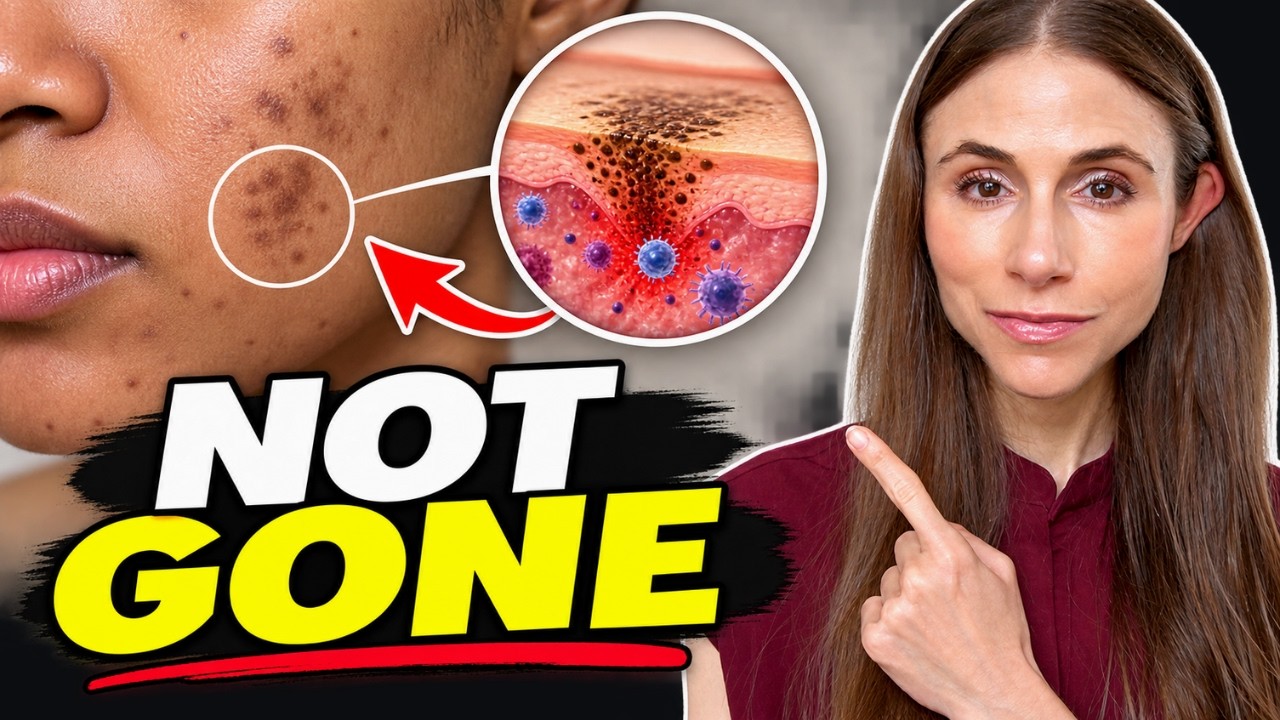
Dark marks persist after acne and eczema because microscopic inflammation continues driving melanocytes under seemingly clear skin, meaning halting maintenance therapy or layering harsh brighteners only worsens discoloration.
AI-assisted summary of Why Your Hyperpigmentation Won’t Go Away | Dermatologist Explains — original source. Check the original for full context.
Source published:
Key ideas
- Post-inflammatory hyperpigmentation (PIH) frequently coexists with subclinical, microscopic inflammation that persists beneath the skin surface even after primary lesions appear fully healed. (0:00)
- In melanin-rich skin, erythema often manifests as purple, slate gray, or brown rather than visible red, causing active inflammation to be easily overlooked during standard clinical observation. (4:00)
- Prematurely stopping acne or eczema maintenance regimens upon visible clearing allows residual inflammation to continue stimulating melanocytes and entrenching dark marks. (6:00)
- Tinted sunscreens formulated with iron oxides are necessary for stubborn hyperpigmentation because standard UV filters fail to block high-energy visible blue light, a recognized driver of melanogenesis. (16:20)
Detailed notes
## Background Published on YouTube on August 13, 2026, by board-certified dermatologist Dr Dray, this video examines why post-inflammatory hyperpigmentation often coexists with ongoing, microscopic inflammation even when the skin appears clear. The video description highlights how persistent inflammation from conditions like acne, eczema, and contact dermatitis perpetuates dark marks—particularly in darker skin tones where redness is obscured—while outlining the hazards of product overload, mechanical trauma, and unverified at-home devices alongside clinical solutions like Tri-Luma and tinted sunscreens.
## TL;DR Dr. Dray explains that post-inflammatory hyperpigmentation (PIH) is rarely just an inactive surface stain, as subclinical inflammation often smolders beneath seemingly healed skin, particularly in deeper complexions where erythema presents as purple, brown, or invisible tones. Halting acne or eczema treatments prematurely allows this underlying activity to continuously stimulate melanocytes, while aggressive product-hopping, picking, and at-home microneedling or IPL devices inflict additional trauma that worsens pigment. True clearance requires extinguishing the inflammatory driver beneath the surface, exemplified by prescription formulas like Tri-Luma that integrate a mild steroid to calm irritation alongside pigment inhibitors. A successful regimen hinges on sustained maintenance therapy for primary conditions, an ultra-minimalist skincare routine, and daily tinted sunscreen formulated with iron oxides to block visible light.
## Atmosphere & style The presentation carries Dr. Dray's characteristic clinical, no-nonsense authority paired with dry wit and grounded pragmatism. Her pacing is unhurried and educational, systematically dismantling viral cosmetic trends, product-chasing consumerism, and risky at-home gadgets with calm, reasoned explanations. The viewing experience feels like an intimate, reassuring consultation with a seasoned dermatologist who cuts through marketing hype to champion biological simplicity, barrier respect, and clinical patience.
## Bulletin - [00:00](https://www.youtube.com/watch?v=DYqU1VIR3pw&t=0s) Post-inflammatory hyperpigmentation (PIH) frequently coexists with subclinical, microscopic inflammation that persists beneath the skin surface even after primary lesions appear fully healed. - [04:00](https://www.youtube.com/watch?v=DYqU1VIR3pw&t=240s) In melanin-rich skin, erythema often manifests as purple, slate gray, or brown rather than visible red, causing active inflammation to be easily overlooked during standard clinical observation. - [06:00](https://www.youtube.com/watch?v=DYqU1VIR3pw&t=360s) Prematurely stopping acne or eczema maintenance regimens upon visible clearing allows residual inflammation to continue stimulating melanocytes and entrenching dark marks. - [16:20](https://www.youtube.com/watch?v=DYqU1VIR3pw&t=980s) Tinted sunscreens formulated with iron oxides are necessary for stubborn hyperpigmentation because standard UV filters fail to block high-energy visible blue light, a recognized driver of melanogenesis.
## Key takeaways - [00:00](https://www.youtube.com/watch?v=DYqU1VIR3pw&t=0s) The term 'post-inflammatory' is misleading because active inflammatory cascades routinely persist under the skin long after surface redness or bumps subside. - [04:00](https://www.youtube.com/watch?v=DYqU1VIR3pw&t=240s) High baseline melanin alters light scattering, masking active erythema as subtle dusky brown or purple tones and making naked-eye assessment of inflammation unreliable. - [01:35](https://www.youtube.com/watch?v=DYqU1VIR3pw&t=95s) Product overload and aggressive active layering backfire by causing cutaneous barrier disruption, which acts as 'fuel on the fire' for melanocyte stimulation. - [06:00](https://www.youtube.com/watch?v=DYqU1VIR3pw&t=360s) Acne maintenance therapies, such as retinoids and azelaic acid, should not be halted when blemishes flatten because they suppress microscopic inflammation and microcomedone formation. - [08:06](https://www.youtube.com/watch?v=DYqU1VIR3pw&t=486s) Managing inflammatory dermatoses like atopic dermatitis often requires proactive, tapered anti-inflammatory therapy on clinically clear skin to fully clear silent tissue inflammation. - [11:43](https://www.youtube.com/watch?v=DYqU1VIR3pw&t=703s) Mechanical manipulation, such as picking and squeezing blemishes, drives trauma deeper into the dermis and dramatically elevates the risk of persistent PIH. - [12:29](https://www.youtube.com/watch?v=DYqU1VIR3pw&t=749s) At-home microneedling and IPL energy devices present significant hazards for darker skin tones due to poor precision and thermal injury risks that readily trigger rebound hyperpigmentation. - [14:11](https://www.youtube.com/watch?v=DYqU1VIR3pw&t=851s) The Kligman formula (Tri-Luma) incorporates the mild corticosteroid fluocinolone acetonide specifically to suppress subclinical inflammation and mitigate the irritancy of hydroquinone and tretinoin. - [16:20](https://www.youtube.com/watch?v=DYqU1VIR3pw&t=980s) Visible light, specifically high-energy visible blue light, directly induces long-lasting pigmentation in melanin-rich complexions, necessitating iron oxide-containing sunscreens for adequate protection. - [17:50](https://www.youtube.com/watch?v=DYqU1VIR3pw&t=1070s) Resolving persistent dark marks requires treating the underlying inflammatory 'gasoline' rather than attempting to bleach pigment on irritated or actively inflamed skin. - [18:52](https://www.youtube.com/watch?v=DYqU1VIR3pw&t=1132s) Discoloration is clinically diverse and not always standard PIH or melasma; atypical presentations may stem from conditions such as Voigt's (Futcher's) lines or other distinct pigmentary patterns.
## Detailed walkthrough ### [00:00](https://www.youtube.com/watch?v=DYqU1VIR3pw&t=0s) Rethinking "Post-Inflammatory": The Hidden Inflammation Beneath Dark Spots
The term post-inflammatory hyperpigmentation (PIH) is commonly used to describe the stubborn dark marks left on the skin after an insult such as acne, eczema, an injury, or an allergic reaction. However, the prefix "post-inflammatory" can be deceptively misleading. It encourages the assumption that the primary inflammatory event has entirely concluded, leaving behind only a passive cosmetic stain that needs fading. In reality, active, microscopic inflammation frequently continues lurking beneath the skin surface long after the initial lesion seems clinically healed.
This hidden activity presents a major challenge in melanin-rich skin tones. Individuals with deeper complexions are not only physiologically more prone to PIH, but their cutaneous inflammatory signs are far less visually obvious. Erythema—the redness caused by increased microvascular blood flow during an inflammatory surge—is easily spotted in fair skin, but presents entirely differently against higher baseline melanin. Relying purely on visual redness severely underestimates the extent of ongoing disease, obscuring the fact that the underlying pathology is still driving pigment production.
[01:35](https://www.youtube.com/watch?v=DYqU1VIR3pw&t=95s) Triggers of PIH and the Trap of Product Overload
Any insult that traumatizes, irritates, or inflames the cutaneous barrier can provoke PIH. Common triggers span a broad spectrum of clinical and environmental sources: - Inflammatory dermatoses like acne vulgaris, atopic dermatitis (eczema), contact dermatitis, and rosacea - Physical injuries, including insect bites, excoriation, and habitual skin picking or squeezing - Procedural trauma, such as in-office or at-home light-based energy devices and cosmetic procedures
In deeper skin tones, PIH is not only more noticeable and widespread, but it also persists far longer. Once the primary bump or rash subsides, patients routinely assume the disease is gone and shift their focus to targeting the dark spots. This shift often triggers a frenzy of product-hopping. As Dr. Dray jokes, "in the span of me filming this video, there'll be 200 new ones that get launched in the next 5 to 10 minutes." Consumers rush to layer an endless carousel of pigment-lightening agents, such as topical retinoids, hydroquinone, tranexamic acid, azelaic acid, and kojic acid.
While these actives are clinically proven, piling on new, potentially sensitizing formulations frequently backfires. Applying irritating topicals onto tissue that already harbors subclinical inflammation functions as "pressing the gas pedal on unwanted pigmentation." The resulting contact irritation sparks a fresh wave of melanocyte hyperactivity, locking the patient into a frustrating, self-perpetuating cycle.
```mermaid flowchart TD accTitle: The Vicious Cycle of Subclinical Inflammation and Hyperpigmentation accDescr: Flowchart illustrating how hidden inflammation combined with product irritation exacerbates pigment production.
subgraph TriggerPhase ["Initial Insult"] A["Inflammatory Skin Event<br/>(Acne, Eczema, Trauma)"] --> B["Surface Lesion Clears<br/>(Erythema & Bumps Fade)"] end
subgraph HiddenPhase ["Subclinical Activity"] B --> C["Ongoing Inflammation<br/>Lurking Beneath Surface"] C --> D["Persistent Pigment Production<br/>(PIH)"] end
subgraph IrritationCycle ["Treatment Backfire"] D --> E["Aggressive Product Hopping<br/>(Multiple Actives & Lighteners)"] E --> F["Barrier Disruption & Skin Irritation"] F -->|"Presses the Gas Pedal"| C end ```
[04:00](https://www.youtube.com/watch?v=DYqU1VIR3pw&t=240s) Subclinical Inflammation: Why the Naked Eye Deceives in Deeper Skin Tones
Emerging dermatologic evidence reveals that inflammation and hyperpigmentation do not proceed in an orderly, linear handoff where one finishes before the other begins. Instead, active inflammation frequently overlaps with the emergence and persistence of pigment. When skin that looks to the naked eye like an isolated, static brown mark is evaluated with objective bioengineering instruments or histological biopsies, tissue samples routinely show dense infiltrates of active inflammatory cells directly within the pigmented zone.
The optical physics of melanin explain why clinical examinations often miss this phase: - **Altered Light Scattering:** High concentrations of epidermal melanin change how visible light reflects off hemoglobin and dermal structures. - **Atypical Color Presentation:** Instead of appearing bright red, erythema and underlying inflammation in skin of color often manifest as shades of purple, slate gray, or dusky brown. - **The Brown-on-Brown Dilemma:** When inflammation manifests as brown, differentiating between active erythema and true melanin deposit becomes virtually impossible with the naked eye. - **Completely Silent Inflammation:** In many instances, there is no discernable color shift at all; active inflammation remains completely masked beneath the pigment.
While this does not mean every single hyperpigmented spot warrants a targeted anti-inflammatory prescription, understanding that inflammation can quietly endure changes the entire strategy for managing chronic discoloration.
[06:00](https://www.youtube.com/watch?v=DYqU1VIR3pw&t=360s) Acne Maintenance: Why You Shouldn't Abandon Topicals When Skin Clears
Acne serves as a clear example of why stopping therapy too early compromises pigment clearance. A patient undergoing treatment may see their painful inflammatory cysts, pus bumps, open comedones (blackheads), and closed comedones (whiteheads) completely flatten out, leaving behind only post-acne dark marks and subtle textural irregularities. The immediate impulse is often to declare the acne cured, abandon the acne regimen, and switch all effort toward lightening agents.
This approach overlooks the fact that acne vulgaris is a chronic inflammatory disorder. Even when the epidermal surface appears calm, the pilosebaceous units beneath maintain an inflammatory baseline capable of continually stimulating surrounding melanocytes. Dermatologists consistently stress remaining on maintenance therapy—whether topical retinoids, benzoyl peroxide, azelaic acid, or systemic options like oral antibiotics or isotretinoin: - **Preventing Recurrence:** Continuous maintenance keeps microcomedones from developing into inflammatory breakouts that trigger new PIH. - **Suppressing Deep Disease:** Consistent therapy treats the invisible, subclinical inflammation still simmering under flat spots. - **Dual-Action Synergy:** Many frontline acne topicals pull double duty. Topical retinoids accelerate cell turnover and disperse melanin, while azelaic acid directly inhibits tyrosinase (the key enzyme in melanin synthesis) alongside its anti-inflammatory and antibacterial properties.
Halting maintenance therapy removes these protective mechanisms, leaving the door wide open for persistent inflammation to keep the dark spots entrenched.
[08:06](https://www.youtube.com/watch?v=DYqU1VIR3pw&t=486s) Lingering Inflammation in Eczema, Contact Dermatitis, and Rosacea
The exact same underlying mechanisms occur across other inflammatory skin conditions, including atopic dermatitis, contact dermatitis, and rosacea. In an acute eczema flare, a patient treats the area until the severe pruritus (itching), oozing, weeping, and barrier stinging resolve. Seeing that the skin appears structurally intact, many stop using their medicated topicals immediately.
However, microscopic inflammation routinely persists long after sensory symptoms and surface scaling vanish: - **Subclinical Eczema Activity:** Quitting treatment the moment skin looks clear leaves quiet inflammatory pathways active, continuing to stimulate melanocytes and deepening post-eczema pigmentation. - **The "Proactive" Topical Steroid Approach:** To combat this, dermatologists often recommend continuing a topical corticosteroid (or steroid-sparing anti-inflammatory) on clear, "normal-appearing skin" for an additional one to two weeks following an acute flare. - **Treatment Duration:** Tailoring the taper period to the initial severity ensures that invisible inflammation is fully extinguished, stopping it from quietly maintaining chronic discoloration.
[09:16](https://www.youtube.com/watch?v=DYqU1VIR3pw&t=556s) The Hidden Battles of Contact Dermatitis and Subclinical Inflammation
Identifying the underlying cause of contact dermatitis presents a major clinical challenge. The hardest hurdle is often pinpointing the exact offending allergen and then uncovering every single place it exists across your daily environment. The culprit is not always an obvious skincare product or cosmetic; it frequently hides in nail care formulations or in a staple product you have trusted for years that underwent an unannounced manufacturer reformulation swapping in a sensitizing ingredient. Occupational exposures compound the problem, as people routinely become allergic to ingredients in their personal products that overlap with materials they are mandated to handle at work.
Because of this constant, low-grade exposure, contact dermatitis turns into an ongoing battle beneath the surface. Dr. Dray emphasizes a core truth: "clear skin does not always mean that you don't have ongoing active disease lurking beneath the surface of the skin." Even if the surface displays no overt rash, inflammatory signaling can persist silently and continue feeding pigment production.
[10:09](https://www.youtube.com/watch?v=DYqU1VIR3pw&t=609s) Why Overcomplicating Skincare Backfires on Pigmentation
When dealing with stubborn hyperpigmentation, the instinctive response is to take aggressive action. People assemble elaborate routines featuring at-home peels, exfoliating acids, physical scrubs, vitamin C serums, topical retinols, specialized brightening toners, and weekly masks—often chasing recommendations from social media videos. Instead of fading discoloration, layering so many potent actives compromises the skin barrier and triggers acute irritation.
Once the barrier is disrupted, those products actively drive the very pigmentation they were bought to treat. In deeper skin tones, the resulting inflammation rarely manifests as bright erythema or obvious redness; instead, it whispers through subtle symptoms like tightness, dryness, flaking, stinging, itching, or heightened sensitivity. Dr. Dray stresses that products are not always the answer, reiterating her philosophy of maintaining an ultra-simple baseline:
- **The non-negotiable minimalist core**: Cleanse, moisturize, and apply sunscreen. - **The risk profile of multi-step routines**: Every additional active introduces a new vector for barrier breakdown, irritation, and subsequent post-inflammatory darkening. - **The risk-averse approach**: When treating pigmentation, simplicity minimizes the chances of aggravating melanocytes.
[11:43](https://www.youtube.com/watch?v=DYqU1VIR3pw&t=703s) The Compulsion to Pick and the Fallacy of "Getting the Gunk Out"
Picking and squeezing blemishes is another major driver of lingering dark marks. Many people squeeze pimples under the mistaken belief that extracting the contents will accelerate healing. Dr. Dray refutes this directly: you are not helping the skin heal; you are simply inflicting mechanical trauma. That mechanical force drives deeper inflammation into the tissue, worsening the acne lesion and virtually guaranteeing persistent, dark post-inflammatory hyperpigmentation (PIH).
For many, picking is an unconscious coping mechanism tied to anxiety and stress. Dr. Dray notes that she has created a dedicated guide on skin picking disorder featuring a comprehensive behavioral coping program. Overcoming the compulsion demands active, deliberate behavioral effort, but breaking the habit is mandatory if you want discoloration to fade.
[12:29](https://www.youtube.com/watch?v=DYqU1VIR3pw&t=749s) The Dangers of At-Home Microneedling and IPL Devices
Dr. Dray warns sternly against using at-home procedural tools, noting that while she receives pushback in the comments, more dermatologists on social media are finally echoing these concerns. At-home microneedling rollers and pens pose extreme risks, particularly for melanin-rich skin. While professional microneedling performed in a controlled clinical setting can be effective, consumer devices lack the precision, engineering caliber, and sanitary control of medical-grade equipment. The resulting micro-tears routinely trigger unwanted hyperpigmentation. Dr. Dray rejects the notion that complications only arise because consumers "didn't follow the online social media tutorial right and they're stupid"; the devices themselves are inherently high-risk for pigment-prone individuals.
At-home Intense Pulsed Light (IPL) gadgets carry comparable dangers. Though marketed under the guise of gentle light therapy for hair removal or evening out skin tone, IPL is not a targeted laser; it emits broad, scattered wavelengths of high-intensity light. On deeper skin tones, at-home IPL can easily burn the epidermis, leading to severe thermal injury and recalcitrant hyperpigmentation.
[14:11](https://www.youtube.com/watch?v=DYqU1VIR3pw&t=851s) The Tri-Luma Rationale: Why Kligman's Formula Contains a Steroid
The gold standard prescription therapy for stubborn melasma and hyperpigmentation is the Kligman formula, commercially known as Tri-Luma. Patients are frequently alarmed to discover that this cream incorporates a topical corticosteroid alongside pigment fighters, wondering why a steroid belongs on facial skin given potential long-term adverse effects.
```mermaid flowchart TD accTitle: Tri-Luma Triple Combination Mechanism accDescr: Diagram illustrating how fluocinolone, hydroquinone, and tretinoin work synergistically in Tri-Luma to eliminate pigment and control irritation.
subgraph Actives["Tri-Luma Triple Combination"] HQ["Hydroquinone"] TRET["Tretinoin"] FLUO["Fluocinolone Acetonide 0.01%"] end
subgraph Actions["Mechanisms of Action"] T1["Inhibits Tyrosinase (Pigment Production)"] T2["Accelerates Epidermal Turnover & Halts Enzymes"] T3["Suppresses Lingering & Active Inflammation"] T4["Blocks Retinoid & Hydroquinone Irritation"] end
HQ --> T1 TRET --> T2 FLUO --> T3 FLUO --> T4
T1 & T2 & T3 & T4 --> OUT["Effective Pigment Clearance Without Triggering Rebound PIH"] ```
The combination is carefully engineered so that each component complements and buffers the others:
- **Hydroquinone**: Serves as a direct tyrosinase inhibitor, blocking the rate-limiting enzyme responsible for synthesizing melanin. - **Tretinoin**: Accelerates epidermal cell turnover to shed accumulated pigment while simultaneously applying the brakes to pigment-producing pathways. - **Fluocinolone acetonide (0.01%)**: A mild corticosteroid that directly suppresses melanogenesis and extinguishes subclinical inflammation lingering from primary skin disorders like acne. Crucially, Dr. Albert Kligman realized that hydroquinone and tretinoin are notoriously irritating molecules capable of inducing irritation-induced rebound hyperpigmentation. Adding a gentle "whiff of steroid" neutralizes that irritation, allowing the other two actives to work at maximum potency without backfiring.
[16:20](https://www.youtube.com/watch?v=DYqU1VIR3pw&t=980s) Sun Protection, Visible Light, and Iron Oxides
Diligent sun protection is an absolute, non-negotiable requirement for resolving hyperpigmentation. Ultraviolet (UV) radiation delivers a double hit to the skin: it directly upregulates melanocyte activity while simultaneously instigating an inflammatory cascade. Furthermore, solar radiation emits broad-spectrum visible light, particularly high-energy visible (HEV) blue light, which is now recognized as a potent trigger of long-lasting pigmentation in darker skin tones.
Because standard chemical and untinted mineral filters do not sufficiently block visible light, dermatologists specifically advise using tinted sunscreens for melasma and PIH. The iron oxides used to create the cosmetic tint serve a vital photoprotective function by creating a physical barrier against blue light. Dr. Dray underscores that "there's no such thing as unwanted pigmentation that was helped by unprotected sun exposure"—unshielded daylight will unfailingly aggravate dark marks from multiple angles.
[17:50](https://www.youtube.com/watch?v=DYqU1VIR3pw&t=1070s) Treating the "Gasoline": The Final Clinical Takeaway
Addressing hyperpigmentation requires shifting focus away from surface discoloration alone and targeting the silent driver underneath. Dr. Dray compares inflammation to gasoline: trying to wipe away the dark pigment while leaving inflammatory pathways active is futile because the fuel feeding the fire is never removed.
Even when the skin surface appears completely calm and clear, microscopic inflammation often continues smoldering underneath. To successfully resolve hyperpigmentation:
- Do not assume that an absence of redness means an absence of disease, especially in melanin-rich skin. - Eliminate avoidable sources of friction, trauma, and irritation, including mechanical picking, aggressive at-home microneedling, and overly elaborate skincare routines. - Strictly adhere to daily broad-spectrum, tinted sun protection. - Consult your dermatologist to confirm appropriate treatment durations; maintenance regimens must often be sustained long after visible clearing to keep underlying disease activity fully suppressed.
[18:52](https://www.youtube.com/watch?v=DYqU1VIR3pw&t=1132s) The Need for Ongoing Care and Wrap-Up
Beneath the surface, skin is often still recovering even if things look clear on top; as Dr. Dray points out, "it's not all sunshines and rainbows down there," meaning active management and maintenance treatments are frequently required to keep underlying inflammation from quietly persisting. She directs viewers to explore the extensive catalog of related content across her channel, which covers various forms of melasma and general hyperpigmentation in deeper detail.
She also highlights that hyperpigmentation is not a monolith strictly limited to post-inflammatory marks or melasma. For viewers dealing with less common or atypical presentations, she has dedicated videos exploring rarer conditions, including Voigt's lines (also known as Futcher's lines) and other distinctive pigmentary disorders. Viewers who have received an unusual diagnosis are encouraged to search her channel archive for targeted breakdowns. Wrapping up the session, she leaves her audience with her signature parting advice to like, share, subscribe, and above all, never forget sunscreen.
- **Underlying Inflammation:** Even when blemishes appear resolved, subclinical inflammatory processes can linger beneath the skin's surface, necessitating consistent maintenance therapy. - **Differential Diagnoses:** Dark patches are not always standard post-inflammatory hyperpigmentation or melasma; pigmentary disorders can encompass distinct physiological patterns like Voigt's lines (Futcher's lines) and rarer dermatological conditions.
## Notable quotes > [01:35](https://www.youtube.com/watch?v=DYqU1VIR3pw&t=95s) in the span of me filming this video, there'll be 200 new ones that get launched in the next 5 to 10 minutes. — Dr. Dray
> [01:35](https://www.youtube.com/watch?v=DYqU1VIR3pw&t=95s) pressing the gas pedal on unwanted pigmentation — Dr. Dray
> [08:06](https://www.youtube.com/watch?v=DYqU1VIR3pw&t=486s) normal-appearing skin — Dr. Dray
> [09:16](https://www.youtube.com/watch?v=DYqU1VIR3pw&t=556s) clear skin does not always mean that you don't have ongoing active disease lurking beneath the surface of the skin. — Dr. Dray
> [11:43](https://www.youtube.com/watch?v=DYqU1VIR3pw&t=703s) Getting the Gunk Out
> [12:29](https://www.youtube.com/watch?v=DYqU1VIR3pw&t=749s) didn't follow the online social media tutorial right and they're stupid — Dr. Dray
> [14:11](https://www.youtube.com/watch?v=DYqU1VIR3pw&t=851s) whiff of steroid — Dr. Dray
> [16:20](https://www.youtube.com/watch?v=DYqU1VIR3pw&t=980s) there's no such thing as unwanted pigmentation that was helped by unprotected sun exposure — Dr. Dray
> [18:52](https://www.youtube.com/watch?v=DYqU1VIR3pw&t=1132s) it's not all sunshines and rainbows down there — Dr. Dray
## Mentioned Dr. Dray, Dr. Albert Kligman, Tri-Luma, Kligman formula, Hydroquinone, Tretinoin, Fluocinolone acetonide, Azelaic acid, Tranexamic acid, Kojic acid, Benzoyl peroxide, Isotretinoin, Iron oxides, Voigt's lines (Futcher's lines), YouTube, Amazon
## Video description Hyperpigmentation is not always simply a dark mark left behind after inflammation. In this video, board-certified dermatologist Dr. Dray explains why post-inflammatory hyperpigmentation (PIH) may sometimes coexist with ongoing inflammation, even when the skin appears clear on the surface.
This is particularly important for people with darker skin tones, where inflammation and erythema may be less visually obvious. Dr. Dray explains how persistent inflammation from acne, eczema, contact dermatitis, rosacea, and other inflammatory skin conditions can contribute to stubborn hyperpigmentation and why treating the underlying condition is an important part of improving dark spots.
The video also covers why constantly trying new skincare products can backfire, how irritation can worsen hyperpigmentation, why picking and squeezing acne can lead to darker marks, and why caution is needed with at-home microneedling and IPL devices.
Dr. Dray also discusses the rationale behind the Kligman formula and Tri-Luma, including why fluocinolone acetonide is combined with hydroquinone and tretinoin, and how its anti-inflammatory properties can help limit irritation while contributing to the overall treatment approach.
Finally, the video explains why sun protection is essential for hyperpigmentation and melasma, including the potential benefits of tinted sunscreens containing iron oxides for visible light protection.
Topics covered
• Post-inflammatory hyperpigmentation and ongoing inflammation • Hyperpigmentation after acne and eczema • PIH in darker skin tones • Why inflammation may be difficult to see • Acne maintenance treatment and dark spots • Eczema, contact dermatitis and rosacea • Skincare irritation and hyperpigmentation • Picking and squeezing acne • At-home microneedling risks • At-home IPL and hyperpigmentation • Kligman formula and Tri-Luma • Hydroquinone, tretinoin and fluocinolone • Tinted sunscreen and iron oxides • Visible light and hyperpigmentation • How to prevent worsening dark spots
TIMESTAMPS
0:00 Introduction: Is PIH Really "Post-Inflammatory"? 1:35 What Is Post-Inflammatory Hyperpigmentation? 4:00 Can Dark Marks Hide Ongoing Inflammation? 6:00 Why This Matters for Acne 8:06 Eczema, Contact Dermatitis and Rosacea 10:09 Why Trying Too Many Products Can Backfire 11:43 Why You Shouldn't Pick or Squeeze 12:29 Risks of At-Home Microneedling and IPL 14:11 Why Does Tri-Luma Contain a Steroid? 16:20 Sunscreen and Visible Light Protection 17:50 Final Takeaway
If you're struggling with stubborn hyperpigmentation, acne dark spots, melasma, or post-inflammatory hyperpigmentation, this video explains why treating pigment alone may not always address the underlying problem.
The key takeaway is that clear-looking skin does not always mean that inflammatory activity has completely resolved. Consistent treatment of the underlying skin condition, avoiding unnecessary irritation and trauma, and diligent sun protection can all play an important role in managing hyperpigmentation.
#Hyperpigmentation #PostInflammatoryHyperpigmentation #PIH #DarkSpots #AcneDarkSpots #Melasma #Skincare #Dermatologist #DrDray #HyperpigmentationTreatment #Acne #Eczema #Sunscreen
FTC: This video is not sponsored. Links are commissionable, meaning I may earn commission from purchases made through links.
💜Shop my Amazon store https://o.bttn.io/0BwiPWFIZLG 💜Follow me on liketoknowit https://www.liketoknow.it/drdrayzday 💜Social media Instagram @drdrayzday Pinterest https://www.pinterest.com/drdrayzday/ Facebook @DrDrayzDay Twitter: @drdrayzday Tiktok: @drdrayzday
Disclaimer: This video is not intended to provide diagnosis, treatment or medical advice. Content provided on this Youtube channel is for informational purposes only. Please consult with a physician or other healthcare professional regarding any medical or health related diagnosis or treatment options. Information on this Youtube channel should not be considered as a substitute for advice from a healthcare professional. The statements made about specific products throughout this video are not to diagnose, treat, cure or prevent disease.
[Source](https://www.youtube.com/watch?v=DYqU1VIR3pw)