Adapalene Rivals Tretinoin on Wrinkles With Less Irritation, Dray Says
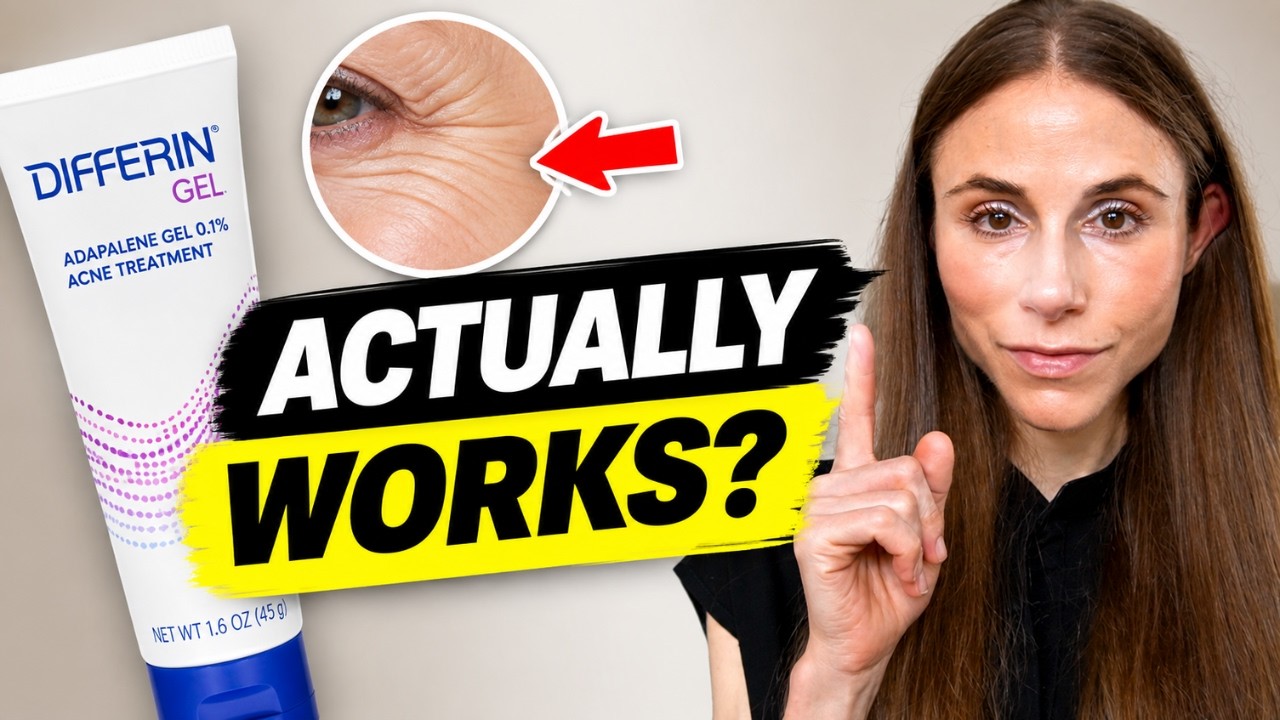
Can Adapalene Really Prevent Wrinkles? Dermatologist Q&A — Dr Dray

Dr Dray

Over-the-counter adapalene stimulates collagen comparably to prescription tretinoin while drastically reducing inflammation and pigmentation risks, making regulated acne gels a superior anti-aging alternative to cosmetic retinoids.

AI-assisted summary of Can Adapalene Really Prevent Wrinkles? Dermatologist Q&A — original source. Check the original for full context.

Source published:

Key ideas

  • Adapalene demonstrates clinical non-inferiority to tretinoin for photoaging in comparative trials, making regulated over-the-counter 0.1% gel a well-tolerated, collagen-boosting alternative that minimizes irritation and hyperpigmentation risks. (11:56)
  • Neither PRP nor PRF replaces structural volume loss, meaning neither treatment can duplicate the effects of dermal fillers or fat grafting for prominent under-eye hollows and deep smile lines. (0:25)
  • The widespread rule against combining copper peptides with direct acids or vitamin C is contradicted by cosmetic formulators, who confirm modern peptide serums are fully stabilized against chemical deactivation. (4:32)
  • Using skincare past its expiration date risks microbial contamination and severe skin irritation as preservative systems fail, making complex moisturizers unsafe to use past their printed shelf life. (1:29)

Detailed notes

## Background Published on YouTube by board-certified dermatologist Dr. Dray on August 15, 2026, this Q&A installment answers community questions pulled from her previous video's comment section. According to the page description, the episode covers topics such as PRP versus PRF for volume loss and hair loss, adapalene versus tretinoin for anti-aging, red light therapy beds, copper peptide stability, lipomas, skincare expiration dates, and medical management of seborrheic dermatitis.

## TL;DR Dr. Dray clarifies that while PRP and PRF can stimulate collagen, they cannot replace lost structural volume for under-eye hollows and lack standardized protocols for hair loss. She debunks myths around copper peptides deactivating when paired with acids, warns against using expired skincare formulations, and highlights why at-home red light devices outperform vague spa beds. Evaluating anti-aging retinoids, she explains that over-the-counter adapalene is a reliable, lower-irritation alternative to tretinoin, before outlining evidence-based strategies for chronic seborrheic dermatitis ranging from medicated washes to roflumilast and low-dose isotretinoin.

## Atmosphere & style The video maintains a brisk, authoritative, and clinical yet conversational bedside manner. Dr. Dray delivers no-nonsense, pragmatic assessments with dry humor—readily dismissing overhyped hundred-dollar moisturizers and playful viewer habits of skipping chapters only to ask answered questions. It feels like an unvarnished, science-first consultation that strips away beauty marketing myths in favor of biological mechanisms and cost-conscious dermatological advice.

## Bulletin - [11:56](https://www.youtube.com/watch?v=l30kQh-VdwI&t=716s) Adapalene demonstrates clinical non-inferiority to tretinoin for photoaging in comparative trials, making regulated over-the-counter 0.1% gel a well-tolerated, collagen-boosting alternative that minimizes irritation and hyperpigmentation risks. - [00:25](https://www.youtube.com/watch?v=l30kQh-VdwI&t=25s) Neither PRP nor PRF replaces structural volume loss, meaning neither treatment can duplicate the effects of dermal fillers or fat grafting for prominent under-eye hollows and deep smile lines. - [04:32](https://www.youtube.com/watch?v=l30kQh-VdwI&t=272s) The widespread rule against combining copper peptides with direct acids or vitamin C is contradicted by cosmetic formulators, who confirm modern peptide serums are fully stabilized against chemical deactivation. - [01:29](https://www.youtube.com/watch?v=l30kQh-VdwI&t=89s) Using skincare past its expiration date risks microbial contamination and severe skin irritation as preservative systems fail, making complex moisturizers unsafe to use past their printed shelf life.

## Key takeaways - [00:25](https://www.youtube.com/watch?v=l30kQh-VdwI&t=25s) PRP and PRF stimulate localized collagen production to improve surface crepiness and skin thickness, but they cannot restore lost structural fat or bone in under-eye hollows and smile lines. - [01:29](https://www.youtube.com/watch?v=l30kQh-VdwI&t=89s) Skincare expiration dates reflect the finite lifespan of preservative systems; once expired, formulas face microbial contamination, separation, and oxidation. - [01:29](https://www.youtube.com/watch?v=l30kQh-VdwI&t=89s) While pure waterless petrolatum remains stable for long periods, multipurpose ointments containing ceramides and hyaluronic acid are vulnerable to degradation past expiration. - [02:49](https://www.youtube.com/watch?v=l30kQh-VdwI&t=169s) Clinical evidence for PRP and PRF in androgenetic alopecia is hindered by a lack of standardized preparation protocols, injection depths, and treatment schedules. - [04:32](https://www.youtube.com/watch?v=l30kQh-VdwI&t=272s) Theoretical claims that copper peptides deactivate vitamin C or chemical exfoliants do not occur in stabilized formulations, though layering multiple actives still elevates irritation risks. - [06:34](https://www.youtube.com/watch?v=l30kQh-VdwI&t=394s) Full-body red light therapy beds at gyms and spas lack calibrated dosing and sufficient proximity to target tissues, making targeted at-home masks or helmets more reliable. - [09:18](https://www.youtube.com/watch?v=l30kQh-VdwI&t=558s) Low-level laser therapy functions as an effective adjunct to minoxidil for mild-to-moderate androgenetic alopecia, but it cannot restore hair follicles miniaturized over decades. - [10:26](https://www.youtube.com/watch?v=l30kQh-VdwI&t=626s) Lipomas are encapsulated collections of mature fat cells that cannot be dissolved with topical treatments or at-home remedies, requiring surgical excision or liposuction. - [11:32](https://www.youtube.com/watch?v=l30kQh-VdwI&t=692s) Expensive luxury moisturizers centered on niacinamide offer no clinical advantage over affordable drugstore alternatives formulated with the same active ingredients. - [11:56](https://www.youtube.com/watch?v=l30kQh-VdwI&t=716s) Clinical trials indicate adapalene 0.3% is non-inferior to tretinoin 0.05% for photoaging and collagen synthesis, providing comparable results with substantially less cutaneous irritation. - [11:56](https://www.youtube.com/watch?v=l30kQh-VdwI&t=716s) Because adapalene carries a significantly lower irritancy profile than tretinoin, it carries a much lower risk of triggering post-inflammatory hyperpigmentation in melanin-rich skin. - [11:56](https://www.youtube.com/watch?v=l30kQh-VdwI&t=716s) Regulated over-the-counter adapalene gel provides a standardized active concentration, unlike cosmetic retinol and retinaldehyde products that often conceal ingredient stability and percentages. - [17:03](https://www.youtube.com/watch?v=l30kQh-VdwI&t=1023s) Azelaic acid does not stimulate hair growth or relieve scalp follicular conditions because its activity remains largely confined to the superficial stratum corneum. - [17:36](https://www.youtube.com/watch?v=l30kQh-VdwI&t=1056s) Seborrheic dermatitis requires continuous maintenance via antifungal cleansers, reserving short courses of topical steroids or calcineurin inhibitors for acute inflammatory flares. - [18:26](https://www.youtube.com/watch?v=l30kQh-VdwI&t=1106s) Advanced medical management of stubborn seborrheic dermatitis includes roflumilast foam to calm inflammation and low-dose oral isotretinoin to downregulate hyperactive sebaceous glands.

## Detailed walkthrough ### [00:00](https://www.youtube.com/watch?v=l30kQh-VdwI&t=0s) Welcome and Q&A Playlist Navigation

Dr. Dray welcomes viewers back to the Saturday installment of her Q&A series, where she answers audience questions left in the comments of the previous weekend's video. She reminds everyone that all of these sessions are archived in her Q&A playlist for easy browsing and that every video includes timestamps, making it simple to jump straight to a specific answer for a specific question.

[00:25](https://www.youtube.com/watch?v=l30kQh-VdwI&t=25s) PRP vs. PRF for Under-Eye Hollows and Smile Lines

Addressing a viewer's question about how PRP (platelet-rich plasma) and PRF (platelet-rich fibrin) compare to dermal fillers or fat transfer for under-eye hollows and smile lines, Dr. Dray breaks down what these blood-derived treatments actually accomplish. Both PRP and PRF work by isolating components from a patient's own blood and injecting them back into the skin, with the ultimate goal of potentially stimulating collagen production. Under the eyes, this boost in collagen can secondarily diminish the appearance of dark circles simply by thickening the skin, while also improving overall skin texture, smoothness, and elasticity.

However, she emphasizes a critical limitation: neither PRP nor PRF actually replaces lost volume the way dermal fillers or fat transfer do. Because of this, they will not fix deep wrinkles that are present at rest. While they can help with surface crepiness and small fine lines, they cannot correct smile lines or restore the structural volume needed to address them. Similarly, prominent under-eye hollows and certain types of dark circles are driven by lost volume, lost or displaced fat, and bone loss—none of which PRP or PRF can replace.

| Treatment Aspect | PRP & PRF (Platelet-Rich Plasma / Fibrin) | Fillers & Fat Transfer | |:--- |:--- |:--- | | **Mechanism** | Isolates blood components and re-injects them into skin to potentially stimulate collagen | Directly replaces lost structural volume | | **What It Improves** | Skin thickness (reducing some dark circles), texture, smoothness, elasticity, crepiness, fine lines | Lost volume, lost or displaced fat, bone loss appearance, deep static wrinkles | | **Effect on Under-Eye Hollows & Smile Lines** | Does not replace volume needed for prominent hollows or smile lines | Directly addresses volume deficits in hollows and smile lines |

[01:29](https://www.youtube.com/watch?v=l30kQh-VdwI&t=89s) Skincare Expiration Dates and CeraVe Healing Ointment

A viewer asks whether there is any real harm in using skincare products past their expiration date, specifically mentioning a tub of CeraVe Healing Ointment they are reluctant to throw out. Dr. Dray answers with a firm yes: it is generally not recommended to use expired skincare products because the preservative system breaks down over time and has its own finite lifespan. Once that preservative system fails, the formula is vulnerable to microbial contamination, physical separation, and oxidation. Consequently, the stability of the active ingredients is severely compromised—meaning the beneficial ingredients can no longer penetrate the skin or work properly, and the degraded product becomes significantly more irritating.

```mermaid flowchart LR accTitle: Consequences of an Expired Skincare Preservative System accDescr: Flowchart showing how preservative failure leads to contamination, separation, and oxidation, resulting in ineffective ingredients and skin irritation. subgraph Breakdown["Formula Breakdown"] A["Preservative System Expires"] --> B["Contamination Risk"] A --> C["Formula Separation"] A --> D["Oxidation & Instability"] end subgraph Impact["Impact on Skin"] B --> E["Increased Skin Irritation"] C --> F["Ingredients Cannot Penetrate or Work"] D --> E D --> F end ```

Dr. Dray notes an exception for plain ointments like pure petroleum jelly: because they are waterless systems, they do not require preservatives, making them low-risk and giving them a very long shelf life. However, CeraVe Healing Ointment contains more than just petroleum jelly—it is formulated with additional ingredients like ceramides and hyaluronic acid. Because it is unclear to what extent those extra components remain stable past the printed expiration date, she advises against taking the gamble: "I wouldn't run the risk. Personally, I understand not wanting to sacrifice them, but generally speaking, it's not recommended to use expired products for those reasons."

[02:49](https://www.youtube.com/watch?v=l30kQh-VdwI&t=169s) PRP vs. PRF for Androgenetic Alopecia

Turning to hair loss, Dr. Dray evaluates the use of PRP and PRF for androgenetic alopecia, where blood-derived components are injected into the scalp to stimulate healthy hair growth. She describes the clinical evidence behind this approach as "interesting" rather than solid, even though PRP is widely offered and commonly recommended for pattern hair loss (while PRF is less common and can be considerably more expensive). The core problem is a lack of rigorous studies establishing true efficacy, proper dosing, and a standardized clinical protocol.

Because there is no universal protocol, patients encounter wide variability from provider to provider regarding how the PRP is isolated, the depth of the injections, and the frequency of sessions. While those technical details might seem minor to a consumer, Dr. Dray stresses that they matter immensely because dermatologists cannot reliably predict how well the treatment will work, how it stacks up against standard hair-loss therapies, or what the long-term expectations are. Without large-scale randomized controlled trials, patient outcomes remain unpredictable:

- **Maintenance and Cost:** People who do see positive results from PRP or PRF for androgenetic alopecia generally require ongoing maintenance treatments, making it an expensive commitment. - **Mixed Efficacy:** While many patients find the injections very helpful, in some cases the treatment does nothing at all. - **Potential Worsening:** In other reported cases, the injections may actually contribute to a worsening of the androgenetic alopecia.

[04:32](https://www.youtube.com/watch?v=l30kQh-VdwI&t=272s) Using Copper Peptides Alongside Acids and Vitamin C

Addressing a wave of questions from her previous Q&A about whether copper peptides are altered or ruined when layered with acids or vitamin C in the same skincare routine, Dr. Dray debunks one of the skincare community's most persistent myths. Shoppers are frequently handed a "laundry list" of ingredients they should supposedly never pair with copper peptides, yet she points out that there is no objective evidence supporting these restrictions. In fact, when you speak directly to the cosmetic formulators who create copper peptide serums, they are baffled by how widespread this claim has become and confirm that "the formulations are stabilized. They are not compromised or degraded when applied alongside other skincare products, no matter the ingredients."

She explains that while the theoretical chemistry—such as copper compromising the stability of ascorbic acid (vitamin C)—makes sense when written out on paper, it simply does not play out that way in real-world application on human skin. Still, Dr. Dray offers a practical caveat that applies to any multi-step routine: layering more products together inevitably increases the risk of skin irritation. She acknowledges that brands like The Ordinary explicitly warn consumers not to mix copper peptides with certain actives, but suspects those warnings exist simply to keep customers from over-layering and irritating their skin rather than because the ingredients actually deactivate one another.

[06:34](https://www.youtube.com/watch?v=l30kQh-VdwI&t=394s) Red Light Therapy Beds for Hair Loss, Rosacea, and Skin Cancer

A viewer with hair loss, rosacea, sun damage, and a history of removed basal cell skin cancers and melanoma in situ asks whether red light therapy beds could help any of these conditions—and what to look for in a high-quality bed. Dr. Dray begins by outlining the general benefits of red light therapy: it reduces inflammation, boosts collagen production for skin rejuvenation, improves blood circulation, and enhances cellular metabolism. That metabolic boost is thought to be a key reason red light therapy is so helpful for androgenetic alopecia, as it essentially "jump-starts the hair follicle cells to get back into the growing phase."

When it comes to full-body red light therapy beds or panels frequently marketed at spas and gyms, however, she calls the setup "a little bit loosey-goosey." Unlike targeted devices, spas and gyms rarely provide clear parameters on dosing or how much effective light actually reaches the target tissue. While consumers often assume lying in a bed or standing in front of a large panel must be superior, there are no solid studies supporting that assumption, and physics dictates that greater distance from the light source decreases the likelihood of achieving a targeted, specific effect on the skin or scalp. For each of the viewer's specific concerns and device options, she breaks down the clinical reality:

- **Hair Loss and Rejuvenation:** Hair growth for androgenetic alopecia is one of the most well-established uses of red light therapy, alongside general skin rejuvenation. - **Rosacea:** Theoretically, red light's anti-inflammatory properties could help calm rosacea, though its boost to blood circulation might paradoxically trigger flushing in some individuals; moreover, Dr. Dray notes she is not aware of any large clinical trials evaluating red light therapy specifically for rosacea. - **Skin Cancer and Photodynamic Therapy (PDT):** Red light therapy *alone* will not treat non-melanoma skin cancers. However, in dermatology clinics, red light is frequently paired with a topical photosensitizing agent in a medical procedure called photodynamic therapy (PDT). Dr. Dray considers PDT an underrated and under-discussed treatment in public skincare forums—it is excellent for treating extensive sun damage that leads to skin cancers while offering a bonus photo-rejuvenation effect, and she directs viewers to her dedicated video on PDT to learn more. - **At-Home Masks and Helmets vs. Spa Beds:** Rather than using questionable gym or spa beds, she recommends looking into at-home red light therapy masks and helmets from reputable brands that actually publish data on their devices, as these sit close to the target area and are a much more reliable bet.

[09:18](https://www.youtube.com/watch?v=l30kQh-VdwI&t=558s) Low-Level Laser Therapy for Hair Loss: When It Works and When It Fails

Low-level laser therapy (LLLT) devices designed for home use have a substantial amount of clinical evidence backing their efficacy for androgenetic alopecia, and new data continues to be published. Dr. Dray notes that patients frequently leave comments mentioning that their dermatologist dismissed at-home red light caps or devices as a "complete waste of time." She explains that whether a device is useless depends entirely on individual context: the specific diagnosis of hair loss and the severity or chronicity of the condition. If a patient presents with advanced, extensive androgenetic alopecia that has progressed over decades, an at-home low-level laser device is very unlikely to be a game-changer. Conversely, individuals who intervene early in the disease process are far more likely to achieve noticeable results.

Therefore, a provider's remark that red light is useless might be true for that specific patient's advanced stage, but broadly speaking, strong scientific support exists for using LLLT in mild-to-moderate androgenetic alopecia. It works best not in isolation, but as an adjunctive treatment layered alongside established therapies like minoxidil.

- **Target Candidate:** Individuals with mild-to-moderate androgenetic alopecia who begin treatment early. - **Therapeutic Role:** Adjunct therapy combined with standard medical treatments (e.g., minoxidil). - **Limitation:** Ineffective for long-standing, severe, or extensive follicle miniaturization.

---

[10:26](https://www.youtube.com/watch?v=l30kQh-VdwI&t=626s) Lipomas: Why Home Remedies Do Not Work

Addressing questions on whether lipomas can be dissolved or cleared at home, Dr. Dray clarifies what lipomas actually are: benign, non-cancerous collections of mature fat cells. Because they are enclosed fat collections beneath the skin surface, no topical cream, lotion, or at-home device can eliminate them. The only effective treatment is physical surgical excision or extraction performed in a clinical setting by a dermatologist or surgeon. In certain instances, depending on the size and anatomical location, providers may use liposuction.

While lipomas themselves typically pop right out once the overlying incision is made, the difficulty often stems from the surgical site. A frequent example is a forehead lipoma. The forehead is an exceptionally vascular anatomical region, making surgical intervention more involved. In addition to wound healing considerations, forehead excisions frequently produce dramatic postoperative bruising—often draining downward to cause extensive "raccoon eyes." Ultimately, Dr. Dray emphasizes that surgical intervention is the only viable path: "There's nothing you can do at home to get rid of them."

---

[11:32](https://www.youtube.com/watch?v=l30kQh-VdwI&t=692s) OneSkin Face Lotion Review

When asked for her thoughts on OneSkin Face Lotion, Dr. Dray offers an unsparing assessment: "I think it's a $100 niacinamide-containing lotion for the face." She questions why anyone would pay that price point when thousands of well-formulated niacinamide moisturizers are widely available at drugstores, Target, or other mass retailers for $5, $15, or $20. She attributes the luxury positioning of the product strictly to marketing and advises viewers to save their money.

---

[11:56](https://www.youtube.com/watch?v=l30kQh-VdwI&t=716s) Adapalene 0.1% vs. Tretinoin for Anti-Aging

Addressing whether adapalene 0.1% is proven to combat wrinkles as effectively as tretinoin, Dr. Dray emphasizes the realities of dermatological research. There are surprisingly few large, well-funded, well-powered clinical trials investigating the anti-aging benefits of topical retinoids because research sponsors lack financial incentives to fund them. Tretinoin remains the historical "gold standard" primarily because it is the oldest retinoid molecule, has accumulated the most literature over decades, and holds FDA approval specifically for photodamage. Adapalene, by contrast, is a newer third-generation retinoid whose use for photoaging is considered off-label.

```mermaid flowchart TD accTitle: Retinoid Comparison for Anti-Aging accDescr: Visual flowchart contrasting tretinoin, adapalene, and cosmetic retinoids.

subgraph Rx["Prescription Standard: Tretinoin"] T["Tretinoin"] --> T_Pro["FDA approved for photoaging"] T --> T_Con["High irritation & PIH risk"] end

subgraph OTC_Med["Standardized OTC: Adapalene"] A["Adapalene (0.1% - 0.3%)"] --> A_Pro["Significantly lower irritation"] A_Pro --> PIH["Safer for deeper skin tones / PIH"] A --> A_Data["Biopsy shows boosted collagen"] A --> A_Reg["Regulated, consistent OTC gel formula"] end

subgraph Cosm["Cosmetic Alternatives: Retinol & Retinal"] C["Retinol / Retinaldehyde"] --> C_Var["Unstandardized formulations"] C --> C_Opaq["Opaque percentages & stability issues"] end ```

The clinical studies comparing adapalene directly to tretinoin for photoaging are small, and they evaluated prescription-strength adapalene 0.3% against tretinoin 0.05% rather than over-the-counter 0.1%. These trials demonstrated that adapalene is non-inferior to tretinoin, showing comparable cosmetic improvements as well as objective histological evidence of increased collagen production on skin biopsies (though tretinoin showed slightly better statistical metrics on periorbital fine lines in one study). Dr. Dray argues that while 0.1% was not the concentration tested in those specific trials, it is illogical to assume it does nothing; lower concentrations of tretinoin remain therapeutic over longer time horizons, and the same principle applies to adapalene.

Dr. Dray frequently recommends adapalene over tretinoin for practical clinical reasons: 1. **Significantly lower irritancy profile:** Large comparative studies show adapalene is far better tolerated than tretinoin. This makes it an ideal retinoid for individuals prone to post-inflammatory hyperpigmentation (PIH), particularly those with deeper skin tones, where inflammation triggers stubborn dark marks. 2. **Accessible over-the-counter availability:** In the United States, 0.1% adapalene gel (Differin, La Roche-Posay, Neutrogena, or generic store brands) can be purchased without a prescription. 3. **Formulation reliability compared to cosmetic retinoids:** When consumers seek non-irritating alternatives to tretinoin, they often gravitate toward cosmetic retinol or retinaldehyde. However, cosmetic formulations vary drastically in quality, penetration, stability, and transparency (often concealing percentages). Adapalene is a standardized, regulated topical medication. If a user does not see results from adapalene, it is due to their biological response, not a defective cosmetic vehicle.

---

[17:03](https://www.youtube.com/watch?v=l30kQh-VdwI&t=1023s) Azelaic Acid for Scalp Irritation and Hair Growth

In response to whether azelaic acid can relieve scalp irritation and stimulate hair growth, Dr. Dray remarks that while theoretically plausible, it lacks direct scientific backing. Azelaic acid exhibits well-documented anti-inflammatory properties, which in theory could benefit the follicular environment by reducing inflammatory pathways that undermine follicle vitality. However, she expresses strong skepticism that azelaic acid penetrates deep enough to localize within the hair follicle itself. Its therapeutic actions occur predominantly at the surface of the skin and stratum corneum, with no evidence that it stimulates follicular regeneration or boosts deep structural collagen.

---

[17:36](https://www.youtube.com/watch?v=l30kQh-VdwI&t=1056s) Medical Management of Seborrheic Dermatitis

Seborrheic dermatitis is a chronic, relapsing condition that requires an ongoing, consistent management strategy rather than a one-time cure. For classic scalp and non-scalp presentations (such as the central face, brows, or chest), Dr. Dray outlines the standard therapeutic blueprint:

- **Medicated Shampoos / Washes:** Regular cleansing utilizing active anti-dandruff and antifungal agents. Rotating or sticking to single proven actives such as ketoconazole, selenium sulfide, zinc pyrithione, or coal tar. - **Topical Corticosteroids:** Reserved strictly as needed for acute flare-ups, applied for brief windows of 1 to 2 weeks to calm severe erythema and scaling without inducing steroid-related skin atrophy. - **Topical Calcineurin Inhibitors:** Non-steroidal prescription options such as tacrolimus or pimecrolimus ointment/cream, which effectively suppress localized inflammation without the side effects associated with continuous topical steroid use.

[18:26](https://www.youtube.com/watch?v=l30kQh-VdwI&t=1106s) Prescription Treatments and Future Horizons for Seborrheic Dermatitis

Continuing the discussion on managing stubborn seborrheic dermatitis, Dr. Dray covers targeted prescription options for calming cutaneous inflammation. While these therapies are highly effective, they tend to be significantly more expensive and frequently demand insurance prior authorization. A notable modern tool in this space is roflumilast foam (Zoryve), a PDE4 inhibitor that has proven exceptionally beneficial, particularly for seborrheic dermatitis affecting the scalp. Dermatologists also routinely deploy prescription antifungal creams, ointments, or compounded combinations designed to reduce the frequency and severity of inflammatory flare-ups.

Dr. Dray emphasizes that seborrheic dermatitis remains a chronic condition without an outright cure. While some patients find that the disease eventually "burns out," it commonly recurs in cycles triggered by psychological stress or seasonal shifts. For particularly severe or recalcitrant cases, low-dose oral isotretinoin (Accutane) at 10 to 20 milligrams daily can yield impressive improvements. Isotretinoin actively shrinks abnormally enlarged sebaceous glands, cutting down on excessive sebum production (seborrhea), which acts as a primary fuel source for the condition.

Looking toward future treatments, Dr. Dray expresses genuine excitement about the therapeutic potential of topical clascoterone (marketed as Winlevi for acne). Because clascoterone directly inhibits androgen receptors in the skin to curb androgen-driven sebum synthesis, investigating it for seborrheic dermatitis makes strong clinical sense. Furthermore, ongoing clinical trials are evaluating topical clascoterone (breezula formulation) for androgenetic alopecia; if granted FDA approval for the scalp, broader on-label clinical experience could clarify whether it concurrently clears stubborn scalp flaking—since ordinary dandruff is simply seborrheic dermatitis localized to the scalp.

- **Roflumilast (Zoryve) foam:** A topical PDE4 inhibitor offering substantial relief for inflammatory scalp seborrheic dermatitis. - **Low-dose Isotretinoin:** Prescribed off-label at 10–20 mg/day to downregulate hyperactive sebaceous glands and curb excess oiliness. - **Topical Clascoterone:** An antiandrogen that inhibits sebum overproduction, presenting an intriguing future target for both seborrheic dermatitis and hair loss.

[20:00](https://www.youtube.com/watch?v=l30kQh-VdwI&t=1200s) Outro and Navigating Channel Playlists

Dr. Dray wraps up the Q&A session, letting viewers know that part two will go live the following day. She encourages the audience to take advantage of the channel's organized playlists rather than searching aimlessly. Viewers frequently submit recurring questions across comment sections, unaware that comprehensive guides already exist in dedicated topical libraries.

These curated playlists include deep dives into hair and scalp disorders, acne treatments, all variations of vitamin A derivatives—ranging from over-the-counter retinol and retinal to prescription tretinoin, tazarotene, and trifarotene (Aklief)—as well as specific playlists addressing itchy skin disorders and the relationship between diet and dermatological health.

Dr. Dray reminds viewers that her videos include chapters and timestamps for easy reference, though she playfully nudges viewers to watch episodes in full. She notes with mild amusement that viewers who constantly jump around often post questions in the comments that were answered directly in the segments they skipped: "Well, maybe you should have watched the whole video." She signs off with her customary channel sign-off: urging everyone to give the video a thumbs-up, subscribe, and never forget their daily sunscreen.

## Notable quotes > [01:29](https://www.youtube.com/watch?v=l30kQh-VdwI&t=89s) I wouldn't run the risk. Personally, I understand not wanting to sacrifice them, but generally speaking, it's not recommended to use expired products for those reasons. — Dr Dray

> [04:32](https://www.youtube.com/watch?v=l30kQh-VdwI&t=272s) the formulations are stabilized. They are not compromised or degraded when applied alongside other skincare products, no matter the ingredients. — Dr Dray

> [06:34](https://www.youtube.com/watch?v=l30kQh-VdwI&t=394s) a little bit loosey-goosey. — Dr Dray

> [06:34](https://www.youtube.com/watch?v=l30kQh-VdwI&t=394s) jump-starts the hair follicle cells to get back into the growing phase. — Dr Dray

> [09:18](https://www.youtube.com/watch?v=l30kQh-VdwI&t=558s) complete waste of time. — Dr Dray

> [10:26](https://www.youtube.com/watch?v=l30kQh-VdwI&t=626s) There's nothing you can do at home to get rid of them. — Dr Dray

> [11:32](https://www.youtube.com/watch?v=l30kQh-VdwI&t=692s) I think it's a $100 niacinamide-containing lotion for the face. — Dr Dray

> [20:00](https://www.youtube.com/watch?v=l30kQh-VdwI&t=1200s) Well, maybe you should have watched the whole video. — Dr Dray

## Mentioned Dr Dray, CeraVe, CeraVe Healing Ointment, The Ordinary, OneSkin, OneSkin Face Lotion, Differin, La Roche-Posay, Neutrogena, Zoryve, Winlevi, Accutane, Aklief, Platelet-Rich Plasma (PRP), Platelet-Rich Fibrin (PRF), Copper Peptides, Vitamin C (Ascorbic Acid), Red Light Therapy, Photodynamic Therapy (PDT), Low-Level Laser Therapy (LLLT), Minoxidil, Adapalene, Tretinoin, Retinol, Retinaldehyde, Azelaic Acid, Ketoconazole, Selenium Sulfide, Zinc Pyrithione, Coal Tar, Roflumilast, Isotretinoin, Clascoterone, Tazarotene, Trifarotene, Androgenetic Alopecia, Rosacea, Basal Cell Carcinoma, Melanoma in Situ, Lipoma, Seborrheic Dermatitis

## Video description In this Q&A video, dermatologist Dr. Dray answers audience questions about PRP vs. PRF, anti-aging retinoids, red light therapy, hair loss, seborrheic dermatitis, copper peptides, lipomas, azelaic acid, skincare expiration dates, and more.

Dr. Dray discusses how PRP and PRF compare with dermal fillers and fat transfer for under-eye hollows and smile lines, as well as what is currently known about PRP and PRF for androgenetic alopecia. She also explains whether adapalene 0.1% can help with anti-aging and how the evidence compares with tretinoin.

Other topics include red light therapy beds for hair loss, rosacea, and sun damage, whether copper peptides can be used alongside acids, what to do about lipomas, and whether azelaic acid can help scalp irritation or hair growth.

The video also covers skincare expiration dates, thoughts on OneSkin moisturizer, and practical treatment options for seborrheic dermatitis.

0:00 Intro 0:25 PRP vs PRF for Under-Eye Hollows and Smile Lines 1:29 Skincare Expiration Dates: Can You Use Expired Products? 2:49 PRP vs PRF for Androgenetic Alopecia 4:33 Copper Peptides and Acids: Can You Use Them Together? 6:33 Red Light Therapy Beds: Hair Loss, Rosacea & Sun Damage 10:26 Lipomas: Can They Be Removed at Home? 11:32 OneSkin Face Lotion Review 11:56 Adapalene 0.1% for Anti-Aging vs Tretinoin 17:03 Azelaic Acid for Scalp Irritation & Hair Growth 17:36 Best Treatments for Seborrheic Dermatitis 20:00 Outro

This video is for educational purposes and does not replace individualized medical advice from a dermatologist.

FTC: This video is not sponsored. Links are commissionable, meaning I may earn commission from purchases made through links.

💜Shop my Amazon store https://o.bttn.io/0BwiPWFIZLG 💜Follow me on liketoknowit https://www.liketoknow.it/drdrayzday 💜Social media Instagram @drdrayzday Pinterest https://www.pinterest.com/drdrayzday/ Facebook @DrDrayzDay Twitter: @drdrayzday Tiktok: @drdrayzday

Disclaimer: This video is not intended to provide diagnosis, treatment or medical advice. Content provided on this Youtube channel is for informational purposes only. Please consult with a physician or other healthcare professional regarding any medical or health related diagnosis or treatment options. Information on this Youtube channel should not be considered as a substitute for advice from a healthcare professional. The statements made about specific products throughout this video are not to diagnose, treat, cure or prevent disease.

[Source](https://www.youtube.com/watch?v=l30kQh-VdwI)

中文简报

Dray表示阿达帕林抗皱媲美维A酸且刺激更低 非处方阿达帕林刺激胶原蛋白生成的效果与处方药维A酸相当,同时能大幅降低炎症与色素沉着风险,这使得受监管的祛痘凝胶成为优于美妆类维A酸衍生品的抗衰老替代选择。 Dray医生澄清,虽然PRP和PRF可以刺激胶原蛋白生成,但它们无法针对眼下凹陷补充流失的结构性容积,且在治疗脱发方面缺乏标准化方案。她辟谣了铜胜肽与酸类搭配会失活的传言,警告不要使用过期的护肤品配方,并指出为何家用红光仪优于参数不明的水疗美容床。在评估抗衰老维A酸类产品时,她解释说非处方阿达帕林是维A酸可靠且低刺激的替代品,随后概述了针对慢性脂溢性皮炎的循证应对策略,涵盖从药用洗剂到罗氟司特及低剂量异维A酸等多种方案。 在对比试验中,阿达帕林在改善光老化方面展现出对维A酸的临床非劣效性,这使得受监管的0.1%非处方凝胶成为一种耐受性良好、能促进胶原蛋白生成的替代品,并能最大限度降低刺激和色素沉着风险。 (11:56) PRP和PRF均无法弥补结构性容积流失,这意味着对于明显的眼下凹陷和深层法令纹,这两种疗法都无法复制真皮填充剂或脂肪移植的效果。 (0:25) 针对普遍认为铜胜肽不能与直接酸或维生素C混用的说法,化妆品配方师予以反驳,证实如今的胜肽精华液已完全具备抗化学失活的稳定性。 (4:32) 使用超过保质期的护肤品会因防腐体系失效而带来微生物污染和严重皮肤刺激的风险,这使得配方复杂的保湿霜在超过标注的保质期后便不再安全。 (1:29)

Reading summary

Dr. Dray evaluates common dermatological interventions and skincare practices, emphasizing that clinical efficacy depends on biological mechanism, formulation stability, and disease stage rather than commercial claims. She highlights adapalene as an accessible, low-irritation retinoid alternative, clarifies the structural boundaries of treatments like PRP and red light, and outlines evidence-based protocols for chronic conditions. Adapalene as an Accessible Anti-Aging Alternative (11:56) While tretinoin remains the historical gold standard and the only retinoid molecule with FDA approval for photoaging, Dr. Dray explains that adapalene offers a compelling clinical alternative. Although large, well-funded anti-aging trials for retinoids are scarce, small comparative studies demonstrated that prescription-strength adapalene 0.3% is non-inferior to tretinoin 0.05%, showing comparable cosmetic improvements and histological evidence of increased collagen on skin biopsies, despite tretinoin achieving slightly better statistical metrics on periorbital fine lines. She argues that lower over-the-counter concentrations like 0.1% remain therapeutic over longer periods, mirroring how low-dose tretinoin functions. Dr. Dray frequently recommends adapalene because of its significantly lower irritancy profile, making it a safer option for individuals prone to post-inflammatory hyperpigmentation, particularly those with deeper skin tones. Additionally, regulated over-the-counter 0.1% adapalene gels provide consistent, standardized dosing. This contrasts sharply with cosmetic retinol or retinaldehyde products, which frequently obscure active concentrations, suffer from variable vehicle stability, and exhibit unpredictable penetration. PRP and PRF Limitations in Aesthetics and Alopecia (0:25) Platelet-rich plasma (PRP) and platelet-rich fibrin (PRF) isolate autologous blood components to stimulate localized collagen production, which can improve skin thickness, texture, elasticity, and fine crepiness. Under the eyes, this thickening may secondarily diminish dark circles. However, Dr. Dray stresses that neither PRP nor PRF replaces lost structural volume. Consequently, neither treatment can correct smile lines, deep static wrinkles, or prominent under-eye hollows driven by fat displacement and bone resorption, which require dermal fillers or surgical fat transfer. For androgenetic alopecia, Dr. Dray characterizes the clinical evidence for PRP and PRF as preliminary rather than definitive. The therapies lack standardized clinical protocols, leading to wide practitioner-to-practitioner variability in isolation techniques, injection depths, and treatment frequencies. Because randomized controlled trial data remains limited, patient outcomes are unpredictable: while some individuals respond well but require costly ongoing maintenance, others experience no improvement, and some report accelerated hair loss. Realistic Parameters for Low-Level Light Therapies (6:34) Low-level laser therapy (LLLT) and red light devices can reduce cutaneous inflammation, enhance cellular metabolism, and stimulate hair follicles to re-enter the anagen growth phase. Dr. Dray notes that clinical utility depends heavily on disease stage: at-home LLLT devices have substantial evidence supporting their use as an adjunctive therapy alongside minoxidil for mild-to-moderate androgenetic alopecia, but they offer negligible benefit for individuals with long-standing, severe follicular miniaturization. Regarding device formats, Dr. Dray cautions against full-body red light beds or panels found in gyms and spas, citing uncalibrated dosing and excessive distance from target tissues. She recommends closely fitted at-home helmets or masks from brands that publish device specifications. Furthermore, red light alone does not treat rosacea or skin cancer; however, in dermatological clinics, red light is effectively combined with topical photosensitizers in photodynamic therapy (PDT) to clear precancerous sun damage while delivering secondary photo-rejuvenation. Skincare Formulation Integrity and Combining Actives (1:29) Dr. Dray debunks the common belief that copper peptides are inactivated when layered with direct acids or vitamin C. Cosmetic formulators confirm that modern copper peptide serums are chemically stabilized and remain intact when applied alongside other active ingredients. While theoretical chemistry suggests ascorbic acid could interact with copper, this antagonism does not occur in real-world topical use. Manufacturer warnings against mixing them likely serve to prevent consumer barrier irritation from excessive product layering rather than true chemical degradation. Conversely, Dr. Dray strongly advises against using expired skincare formulations. Over time, preservative systems break down, exposing the product to microbial contamination, phase separation, and chemical oxidation that compromises ingredient penetration and spikes irritancy risks. While pure, waterless petroleum jelly maintains an exceptionally long shelf life without preservatives, complex barrier ointments like CeraVe Healing Ointment contain ceramides and hyaluronic acid that degrade unpredictably past the expiration date. Evidence-Based Approaches to Scalp and Tissue Conditions (17:36) Structural and follicular scalp conditions require interventions tailored to their tissue depth. Dr. Dray explains that lipomas are encapsulated collections of mature fat cells that cannot be dissolved by topical creams or home remedies; they require surgical excision or clinical liposuction. Similarly, while azelaic acid possesses anti-inflammatory properties, there is no scientific evidence that it penetrates deeply enough into the hair follicle to stimulate growth. For seborrheic dermatitis, Dr. Dray outlines a long-term management strategy for what is an incurable, relapsing inflammatory condition. Routine control relies on active antifungal and anti-dandruff shampoos (such as ketoconazole, zinc pyrithione, selenium sulfide, or coal tar), supplemented during acute flares by brief 1- to 2-week courses of topical corticosteroids or non-steroidal topical calcineurin inhibitors. Recalcitrant cases may benefit from roflumilast (Zoryve) foam or off-label low-dose oral isotretinoin (10–20 mg daily) to suppress hyperactive sebaceous glands, while topical androgen receptor inhibitors like clascoterone represent a promising future therapeutic class. Dr. Dray emphasizes that successful dermatological treatment requires matching therapies to anatomical realities—such as distinguishing volume loss from skin texture or surface application from follicular depth—while relying on regulated formulations, consistent sun protection, and realistic timelines over marketing trends.

Source quotes

[1:29] Dr Dray: I wouldn't run the risk. Personally, I understand not wanting to sacrifice them, but generally speaking, it's not recommended to use expired products for those reasons. [4:32] Dr Dray: the formulations are stabilized. They are not compromised or degraded when applied alongside other skincare products, no matter the ingredients. [6:34] Dr Dray: a little bit loosey-goosey. [6:34] Dr Dray: jump-starts the hair follicle cells to get back into the growing phase. [9:18] Dr Dray: complete waste of time. [10:26] Dr Dray: There's nothing you can do at home to get rid of them. [11:32] Dr Dray: I think it's a $100 niacinamide-containing lotion for the face. [20:00] Dr Dray: Well, maybe you should have watched the whole video.

Original transcript

[0:00] Well, hey guys. Welcome back to the [0:02] Saturday part of the Q&A. Uh, I'll be [0:06] answering the questions that you guys [0:07] left in last weekend's video. And as [0:09] always, these are saved in the Q&A [0:12] playlist. You can go back and watch [0:14] ones. And they all have timestamps in [0:16] them. Okay? So, if you want a specific [0:18] answer to a specific question, then [0:21] check the timestamps because they are [0:23] there in all of these videos. Can you [0:25] talk about PRP versus PRF for under eye [0:28] hollows and smile lines? How do they [0:30] compare to fillers or fat transfer? PRP [0:33] stands for plateletri plasma and PRF [0:35] stands for plateletri fibbrin. Both of [0:38] these isolate components from your blood [0:40] and inject them back into your skin. End [0:43] result is potentially improving collagen [0:45] production. Secondarily under the eyes [0:47] that can somewhat diminish the [0:49] appearance of dark circles just by [0:51] thickening the skin. This approach can [0:53] also help to improve skin texture, [0:56] smoothness, elasticity. However, it [0:58] doesn't actually replace loss volume [1:01] like filler or fat transfer. So, it's [1:03] not going to address deep wrinkles that [1:06] are present at rest. These techniques [1:08] can improve crepiness, little fine [1:10] lines, but they're not going to improve [1:12] smile lines per se. And they're not [1:14] going to replace lost volume, lost fat, [1:17] displaced fat, or bone loss, as all are [1:21] factors that contribute in prominent [1:23] under eye hollows. Some types of dark [1:25] circle. And then of course, they're not [1:27] going to replace the volume necessary to [1:29] address smile lines. Can you talk about [1:31] the expiration dates on products? I have [1:33] a tub of Caravee healing ointment that [1:35] is out of date, but I don't want to [1:36] throw it out. Is there a problem using [1:38] products once they are past their [1:39] expiration date? Yes. So, it's generally [1:41] recommended not to use expired [1:43] skinincare products due to compromise [1:46] over time of the preservative system and [1:48] that has an expiration to it. And once [1:50] the preservative system goes, well, not [1:52] only is the product now at risk for [1:54] contamination, it can separate out. And [1:56] of course, the ingredients, their [1:58] stability is significantly compromised. [2:01] The formula can oxidize. Not only can it [2:03] be significantly more irritating, the [2:05] ingredients that you're hoping to derive [2:06] benefit out of will not work or cannot [2:09] work properly. They can't get into the [2:11] skin and they can be significantly more [2:13] irritating. Plus, you have the risk of [2:15] contamination. That being said, [2:17] ointments in general, such as plain [2:20] petroleum jelly, pretty low risk. They [2:22] are waterless systems, so they actually [2:25] don't require preservatives, so they [2:27] have a very, very long shelf life. That [2:29] being said, Caravee healing ointment has [2:32] more than petroleum jelly. It has [2:34] ceramides, hyaluronic acid. So to what [2:36] extent those remain stable in the [2:38] formula after the expiration date, I [2:40] wouldn't run the risk. Personally, I [2:42] understand not wanting to sacrifice [2:44] them, but generally speaking, it's not [2:46] recommended to use expired products for [2:48] those reasons. What are your thoughts on [2:50] PRP versus PRF for androgenetic [2:53] alopecia? So again plateletri plasma and [2:56] platelet rich fibbrin they use [2:57] components isolated from your own blood [2:59] and in this case they are introduced [3:01] back into the scalp and the idea here is [3:04] that they're going to stimulate healthy [3:06] hair growth and the evidence for this [3:08] approach is interesting. It's not that [3:12] solid despite it being widely offered [3:14] and commonly recommended for [3:16] androgenetic alopecia at least in the [3:18] case of PRP. PRF is not as common and it [3:21] can be a lot more expensive. We don't [3:23] have good studies to establish efficacy, [3:27] dosing, and the right protocol. So, [3:29] you're going to find a lot of [3:30] variability from provider to provider as [3:32] far as how they're isolating the PRP, [3:34] the depth they're injecting it, the [3:36] frequency of injections, all of these [3:37] little factors that for the consumer is [3:40] like, okay, what does that matter? It it [3:41] really does matter because we can't say [3:44] to what extent this works, how good it's [3:46] going to work in comparison to standard [3:49] treatments, how it compares to standard [3:51] treatments, what the long-term [3:52] expectations are. For the most part, it [3:55] seems as though people who do derive [3:56] benefit from this for androgenetic [3:58] alopeesia, whether it be PRP or PRF, [4:00] they require ongoing maintenance [4:03] treatments. So, it can be a bit costly [4:05] to you. But many people do find it to be [4:08] very, very helpful. But in some cases it [4:10] doesn't do anything and in other cases [4:12] it might actually contribute to [4:14] worsening of the androgenetic alopecia. [4:16] It's thought there have been cases of [4:17] that happening. So again there's just so [4:19] much variation when it comes to PRP or [4:22] PRF as far as dosing and things like [4:25] that. There no good randomized control [4:27] trials with large sample sizes to really [4:30] say for sure. I thought copper peptides [4:32] were altered if used with acids in the [4:34] same routine. So, I noticed a lot of [4:35] questions similar to this in my last Q&A [4:37] video about uh confusion around using [4:40] copper peptides with either vitamin C or [4:42] other ingredients. And you'll often be [4:45] told that you shouldn't use these with [4:46] and you'll be given a laundry list of [4:48] ingredients you should never use them [4:50] with. There's really no actual objective [4:52] evidence that you can't use them [4:54] together. And when you talk to the [4:55] cosmetic formulators who make the copper [4:57] peptide serums, they're like, "This is [4:59] not a problem. The formulations are [5:02] stabilized. They are not compromised or [5:05] degraded when applied alongside other [5:07] skin care products, no matter the [5:09] ingredients. They don't really [5:10] understand why this has become such a [5:12] widespread claim that people make. And [5:15] so, in other words, there are no hard [5:17] and fast rules that say you cannot use [5:19] certain ingredients with copper [5:21] peptides. the idea that, for example, [5:24] copper compromises the stability of [5:26] ascorbic acid. When you write it out on [5:28] paper, that makes sense. But it just [5:30] doesn't end up bearing out in real world [5:32] use when applying to the skin. It's much [5:34] different. And so, it seems as though [5:36] it's fine. That being said, you know, [5:38] the more things you choose to use in [5:40] your skincare routine, it just increases [5:42] the likelihood of irritation. So, always [5:44] keep that in mind when it comes to these [5:46] questions around is it safe to use [5:48] product X, Y, and Z with product X, Y, [5:51] and Z. The answer is pretty much always [5:52] the same. Safe, sure, but you're going [5:54] to increase the likelihood that you [5:56] develop irritation by using more [5:58] products. Not everyone will develop [5:59] irritation. There's no way to to judge [6:01] that for sure. But when it comes to [6:03] copper peptides, evidence backing up the [6:05] claim that you can't use it alongside [6:07] think, and trust me, I know brands like [6:08] The Ordinary, they specifically say [6:10] don't use this with X, Y, and Z, but [6:12] there's really nothing to substantiate [6:16] that claim. I think they just don't want [6:17] consumers to get excessively irritated, [6:19] which is fine. Um, but I don't think [6:22] it's because the ingredients are [6:24] actually truly compromised. Uh, at least [6:27] that has has ever been shown in a [6:28] meaningful way when used with other [6:31] things. I think it just increases the [6:32] likelihood of irritation. What are your [6:34] thoughts on red light therapy beds? I [6:36] have hair loss, rosacea, sun damage. [6:38] I've had basil cells, skin cancers [6:40] removed, also melanoma, and situ [6:42] removed. Will red light therapy help [6:43] with any of these? If so, what do I look [6:45] for in a place that has a good quality [6:47] bed? So in general, red light therapy [6:49] can be very helpful for reducing [6:51] inflammation. It can help improve [6:53] collagen production. Hence, it can be [6:54] useful for sort of skin rejuvenation. It [6:57] also can improve the metabolism of [6:59] cells. That's thought to be actually [7:01] part of the reason why it um is is very [7:04] helpful or can be very helpful for [7:05] androgenetic alopecia. It kind of jumpst [7:07] starts the hair follicle cells to get [7:09] back into the growing phase. It improves [7:11] circulation, blood flow. But when it [7:13] comes to the beds, I think you find [7:15] these often times marketed uh in spas [7:19] and things like that. And there it's a [7:21] little bit loosey goosey because it's [7:23] not clear the dosing and the extent of [7:26] actual effective light that you're [7:28] getting to where you need to. I think [7:30] people believe that oh um it must be [7:32] better to be in like a bed or in front [7:34] of a panel. And in reality, we don't [7:36] have good studies on that. And we know [7:38] that the greater the distance, the [7:40] decrease in likelihood that you'll get a [7:42] more targeted specific effect. So I [7:44] would question the red light beds in [7:47] general that you might be offered. Say a [7:50] lot of times gyms are offering these. I [7:51] noticed at least when it comes to skin [7:53] or hair benefit. Now I mentioned the [7:55] hair benefits. It's probably one of the [7:56] most wellestablished. Also red light [7:58] therapy can be great for um [8:00] rejuvenation. Now you mentioned rosacea. [8:02] In theory it can help rosacea because of [8:04] the anti-inflammatory effects. Although [8:06] it does increase circulation that might [8:08] trigger flushing for some, but we don't [8:10] have any actual trials on rosacea red [8:12] light therapy that I'm aware of these [8:14] big trials. And then when it comes to [8:17] skin cancer, do you know many [8:18] non-melanoma skin cancers? While red [8:20] light therapy alone is not going to [8:22] address them, red light therapy is often [8:24] paired with a photosensitizer and a [8:26] treatment known as photodnamic therapy [8:28] to treat skin cancer. So it can be [8:30] utilized in that regimen specifically as [8:33] part of photodnamic therapy. I have a [8:35] whole video on photodnamic therapy. You [8:37] need to watch that so you learn more [8:39] about how it works especially for skin [8:41] cancers. I think it's kind of underrated [8:43] actually and uh under discussed we'll [8:46] say in the general public skin care [8:49] discussion forums of things because as a [8:52] treatment modality. It's great for [8:53] extensive sun damage that leads to skin [8:56] cancers, but it also kind of gives you a [8:57] little bit of a photo rejuvenation [8:59] effect as well. You can buy at home uh [9:01] red light therapy masks and helmets for [9:04] hair growth, for rejuvenation and those [9:07] certainly can be effective and there are [9:09] many reputable brands out there that [9:11] actually publish on their devices and [9:14] they have a good reputation and so those [9:16] are um a better bet and they have been [9:18] shown to be effective treatment [9:20] modalities especially when it comes to [9:21] androgenetic alopecia. There's quite a [9:23] bit of evidence to say that red light [9:25] therapy at home, the the at home [9:27] low-level laser therapy devices, they [9:29] can be very helpful for androgenetic [9:31] alopecia and more research continues to [9:34] come out. So, um you know, I I've gotten [9:36] some comments over the years of [9:37] recommending this that your derm told [9:39] you that it was a complete waste of time [9:41] and it might be a complete waste of time [9:43] depending on a the hair loss diagnosis [9:45] that you have or the extent of [9:47] androgenetic alipcia. So if your [9:49] androgenetic alipcia is very extensive [9:51] and it's been going on for a very long [9:53] time, the likelihood that low-level [9:55] laser therapy at home, like one of those [9:57] devices, changes the game for you is is [9:59] very low in comparison to someone who's [10:01] earlier on, they're much more likely to [10:03] get better results. So when your [10:05] provider told you that, oh, this is a [10:08] waste of time. It could be a waste of [10:10] time for you. But generally speaking, [10:11] there is good evidence to recommend [10:13] low-level laser therapy at home for [10:15] androgenetic alopecia for those whose [10:17] androgenetic alopecia is on the mild to [10:20] moderate side and as an adjunct to estab [10:23] other established androgenetic alopecia [10:25] treatments like minoxidil. Can you [10:27] address lipomomas and how to get rid of [10:29] them at home or in the doctor's office? [10:31] Lipomomas are benign, meaning [10:33] non-cancerous little growths of fat [10:36] cells. And the only way to remove them [10:38] is to see a dermatologist or other [10:41] healthcare provider and have them cut [10:43] out surgically. There's nothing you can [10:44] do at home. There's no cream, there's no [10:47] lotion, there's no gadget that will get [10:49] rid of them. Some providers might also [10:52] employ lipo suction depending on the [10:54] location and what you know the overall [10:56] extent cuz they can be kind of tough to [10:59] get out depending on where they are. [11:00] Like for example, a lot of people will [11:02] develop one here on the forehead and [11:04] that can be a challenging area just to [11:06] remove. The lipoma itself once you get [11:08] in there pops right out. But then you [11:10] know you have to deal with the healing [11:12] site and everything and that can be [11:13] straightforward or you know like I said [11:15] on the forehead it can be a bit more [11:17] [clears throat] involved. You can get a [11:18] lot of bruising because this is a very [11:20] vascular territory and most people get [11:22] like raccoon eyes of bruising after [11:25] after that cuz it all kind of drains [11:26] down. Uh yeah, it's surgical correction [11:29] and there's nothing you can do at home [11:31] to to get rid of them. What do you think [11:33] of One Skin Face Lotion? I think it's a [11:36] $100 nycinomide containing lotion for [11:38] the face moisturizer. What is there [11:40] about that that is any different from [11:42] any of the thousands of nycinomide [11:45] containing moisturizers on the market [11:47] that you can get for 20 bucks, 15 bucks, [11:51] five bucks, any drugstore, Target. I [11:53] mean, I just it's all marketing [11:56] essentially. I would not go for that. [11:57] Can you safely and surely say that [11:59] adapylene is proven to be helpful for [12:01] anti-aging? Is it as effective as [12:03] tininoan? I'm talking about 0.1%. [12:06] Honestly, there's not a ton of studies [12:08] on anti-aging and topical retinoids, [12:11] frankly. But, you know, tininoan is like [12:13] the gold standard. It's the oldest [12:14] topical retinoid. It has the most [12:16] research, but people are not really [12:18] actively doing very good research, [12:21] wellont controlled, well-powered studies [12:23] on the anti-aging benefits of different [12:25] topical retinoids. Why? There's not the [12:27] motivation. There's not the research [12:28] funding. It's probably never going to [12:30] happen. Um, so if you're going to go see [12:33] a dermatologist and you're going to want [12:35] a prescription retinoid for anti-aging [12:37] purposes, they're likely going to [12:38] prescribe you treadone because it's sort [12:40] of established as the gold standard, not [12:42] because it's necessarily most powerful, [12:44] most effective, most robust, but because [12:46] it's got the most data behind it. It's [12:48] FDA approved for that. So that's what [12:50] they're going to go with. It's it's not [12:51] off label for anti-aging. Adapine, on [12:54] the other hand, would be considered off [12:55] label. Now, what's the evidence? Again, [12:57] not super robust. Nowhere near as much [13:00] data for adapylene as we do for tren [13:02] it's in newer drugs so you're not going [13:04] to have the same amount and like I said [13:06] people are not researching this in any [13:08] real rigorous way sometimes you get a [13:10] study here and there but they're always [13:11] very small including the ones that we [13:13] have on adapene the ones we have on [13:15] adapine don't actually look at 0.1% they [13:17] look at 0.3% and compare it to 0.05% 05% [13:21] tininoan. Now these studies show that it [13:24] is not inferior to tininoan. They can [13:26] lead to the same results. There are some [13:29] statistical differences between the two [13:31] and that I think adapylene was not as um [13:33] impressive for wrinkles around the eyes [13:35] in one study. But again these studies [13:37] are really small and so it's kind of [13:39] hard to draw meaningful conclusions. In [13:42] other words, but uh I will say that in [13:45] addition to showing many of the same [13:47] benefits, they actually showed [13:48] objectively on biopsy and improvement in [13:50] collagen production. If you're going to, [13:52] like I said, if you're going to go to a [13:53] provider, they're most likely going to [13:55] pro um prescribe you tininoan. The [13:57] reason I'm always bringing up adapylene [13:59] is a because it is a lot less irritating [14:02] in comparison to tininoan. That is an [14:04] established fact. That doesn't mean that [14:06] everyone who uses adapylene finds it [14:08] less irritating but it is you know in [14:10] large studies of groups of people [14:12] adapylene is almost always less [14:14] irritating and so that can make it a [14:16] better choice uh for some people who are [14:19] excessively irritated by topical tenino [14:21] especially if you are inclined to [14:23] post-inflammatory hyperpigmentation. You [14:25] really want to be very very on top of [14:28] doing everything possible to minimize [14:30] the risk of uh inflammation in the skin. [14:33] It's a key driver for stubborn [14:35] hyperpigmentation, especially in deeper [14:37] skin tones. So, adapylene can be a great [14:39] option here, not only for the anti-aging [14:42] effect, but topical retinoids do address [14:44] unwanted pigmentation as well. So, [14:46] adapylene in those cases can be a really [14:48] great um option. It's also, at least [14:50] here in the United States, a lot more [14:52] accessible for many people. It's you can [14:54] buy the 0.1% strength without a [14:57] prescription. There's really no reason [14:58] to just assume that 0.1% because it [15:01] wasn't used in the studies can't [15:03] possibly be effective because we know [15:05] all ranges of tininoan that we have [15:07] lower percentages are as effective. So [15:09] it might take longer to get to the [15:11] results. But at the end of the day, [15:13] there's really no solid reason to be [15:15] like, "Oh, that's not what they used. [15:17] Can't possibly work." When it's the same [15:19] drug um and we know it can be effective [15:22] for other things. So, I still think it's [15:24] a lot more evidence-based and [15:26] consistent. The other reason why I [15:28] continue to recommend it is it is a [15:30] consistent formula. There's not going to [15:32] be variation from adapylene that you buy [15:34] over the counter from brand to brand, [15:36] retailer to retailer. You know, there's [15:38] differing adapylene, but Lar Ro Pose, I [15:40] think, also has their own adapylene. I [15:42] think Neutrogena has one and different [15:45] stores, Walmart, you can buy generic [15:47] versions as well. Same thing. You don't. [15:49] In other words, when you buy adapylene [15:50] and use that for anti-aging, you don't [15:52] have to worry about is this a good [15:53] formula? Was it formulated correctly? [15:55] Because it's pretty standardized. As [15:57] opposed to a lot of people who are [15:59] especially seeking an alternative to [16:01] tininoan that is less irritating, we'll [16:03] go with a cosmetic retinol or cosmetic [16:05] retinaldihide. And while those likewise [16:07] can be as effective for the anti-aging [16:09] thing, they are a lot more v there's a [16:12] lot more variation there and a lot less [16:14] um transparency as far as the efficacy [16:16] of the overall formula. like many of you [16:18] have pointed out that you don't feel [16:19] comfortable with some of these because [16:20] they don't necessarily tell you the [16:22] percentage which I've pointed out I [16:24] don't think necessarily uh rules those [16:27] off the table but efficacy will boil [16:29] down to the overall formulation but what [16:30] I'm getting at is at least you could try [16:32] adapylene and know that you were trying [16:34] something that the formula was correct [16:36] and and and good and uh you know you [16:38] might not get the results that you are [16:40] hoping for from it and in which case it [16:42] has nothing to do with the formula [16:44] versus retinol or retinaldahhide you [16:46] might try one and say, "Oh, it didn't do [16:49] anything for me." But maybe it's cuz the [16:51] formula wasn't that great in the long [16:52] [laughter] run, and it has nothing to do [16:54] with the ingredient not working, per se. [16:56] Adapene, it's a medication, so it's a [16:58] lot more standardized, and it's [16:59] available here in the US without a [17:01] prescription. So, for some people, it's [17:02] just going to be a lot more accessible. [17:04] Could azelleic acid help scalp [17:06] irritation, and encourage hair growth? I [17:09] mean, it's theoretically possible. It's [17:10] just not something that's been studied. [17:12] Azelleic acid is anti-inflammatory, [17:14] which could help with um scalp health [17:16] and cutting down on inflammation that [17:19] compromises follicle health ultimately. [17:21] But to what extent is actually going to [17:23] localize within the follicle? I'm [17:25] doubtful. Azelleic acid exerts its [17:28] benefits mostly at the surface of the [17:30] skin. You know, it's not like leads to [17:32] collagen boosting or anything of that [17:33] sort. It's possible, but no one's really [17:36] looked. In other words, what is the best [17:38] way to deal with seabriic dermatitis? a [17:40] consistent plan of uh ongoing management [17:43] usually revolving around alternating or [17:46] using one at the very least uh topical [17:49] anti-dandruff shampoo ingredient or [17:52] shampoo like ketoconazol, selenium [17:55] sulfide, zinc pythion, colar uh is you [17:59] know assuming you're speaking of seig [18:01] dermatitis on non-scalp sites regular [18:04] cleansing with one one of these and the [18:07] use of topical steroids as needed. did [18:10] for um one to two weeks when you have a [18:12] flare up. Very common approach to [18:15] managing seiaic dermatitis. Other [18:17] treatments, other medications would [18:19] include a topical uh topical calcinurine [18:22] inhibitor such as tacrolymus or [18:24] pimprolamus. These help to control the [18:26] inflammation in the skin. They're more [18:28] expensive and they often require some [18:30] sort of uh prior authorization letter. [18:33] Then you have now uh refluat uh foam uh [18:38] which is a PTE4 inhibitor um and that is [18:42] very helpful at least for scalp sever [18:44] dermatitis for sure. You also have [18:46] prescription antifungal creams, [18:48] ointments, any combination of the above [18:51] to control and reduce the number of [18:53] flare-ups. But it's a chronic skin [18:55] condition. There's not really a cure. [18:57] For some people it does burn out but it [18:58] tends to flare up when you get stressed [19:00] out. Some people's flares seasonally. [19:03] Also, a lot of people get good results [19:05] with 10 to 20 milligrams of isotininoan [19:08] a day. Isotrrenino aka Accutane does uh [19:11] shrink abnormally enlarged oil glands [19:13] and cut down on the serriia, the [19:14] oiliness, which ultimately is a big [19:16] driver of the disease. I'm excited and [19:19] and hopeful that we'll get studies in [19:21] the future looking at topical classerone [19:24] aka wind levy for sebriic dermatitis [19:27] because that targets androgen mediated [19:30] increases in sebum productions sounds [19:34] very promising. We may get if the [19:36] studies continue to go well, we may get [19:39] a FDA approval for the use of um [19:42] classical scotarone topically for [19:44] androgenetic alipcia on the scalp in [19:46] which case we might start gathering more [19:48] data once we start using it there in a [19:51] more um [clears throat] on label fashion [19:53] if if and when that comes to fruition. [19:55] Probably give some insight into is the [19:57] dandruff improving? Dandruff is seated [20:00] dermatitis on the scalp. All right, [20:02] guys. That about wraps up this Q&A. [20:05] Thank you so much. Come back tomorrow [20:07] for part two. Again, I will save this [20:09] video along with all of the others are [20:11] saved in the skincare Q&A playlist. [20:14] Check out my playlists. I always get [20:16] questions about different things. And I [20:18] usually have like three or four videos [20:20] on the topic already. And many of them [20:22] are cataloged in playlist. Like I have a [20:24] playlist dedicated to hair with hair [20:25] loss disorder videos. I have a playlist [20:28] dedicated to acne. I have a playlist [20:30] dedicated to all things retinol, retina, [20:34] tininoan, tesarot, triferitine, all of [20:36] the vitamin A related questions. I have [20:39] a playlist on itchy skin, a playlist on [20:42] diet and skin. So definitely check those [20:45] out collated in these playlists. And if [20:47] you don't know about them, you're [20:48] missing out on high yield files, if you [20:51] will, of videos from me. Again, these [20:53] are all timestamped, too, so you don't [20:55] have to surf around to find the part of [20:58] the video you're looking for. Although, [21:00] I always encourage people to watch the [21:01] entire video because I find that people [21:03] who must skip around a lot, they tend to [21:05] ask questions in the comments that are [21:07] addressed in the video. So, it's like, [21:09] well, maybe you should have watched the [21:10] whole video. Anyways guys, uh thank you [21:13] so much for your questions. If you like [21:15] today's video, give it a thumbs up, [21:16] share it with your friends, and as [21:18] always, don't forget sunscreen and [21:19] subscribe. I'll talk to you guys [21:21] tomorrow. Bye. [music] [21:36] [music] [21:39] Heat.