Sunscreen Layers Drive 80% of Skincare Pilling, Clinical Study Shows
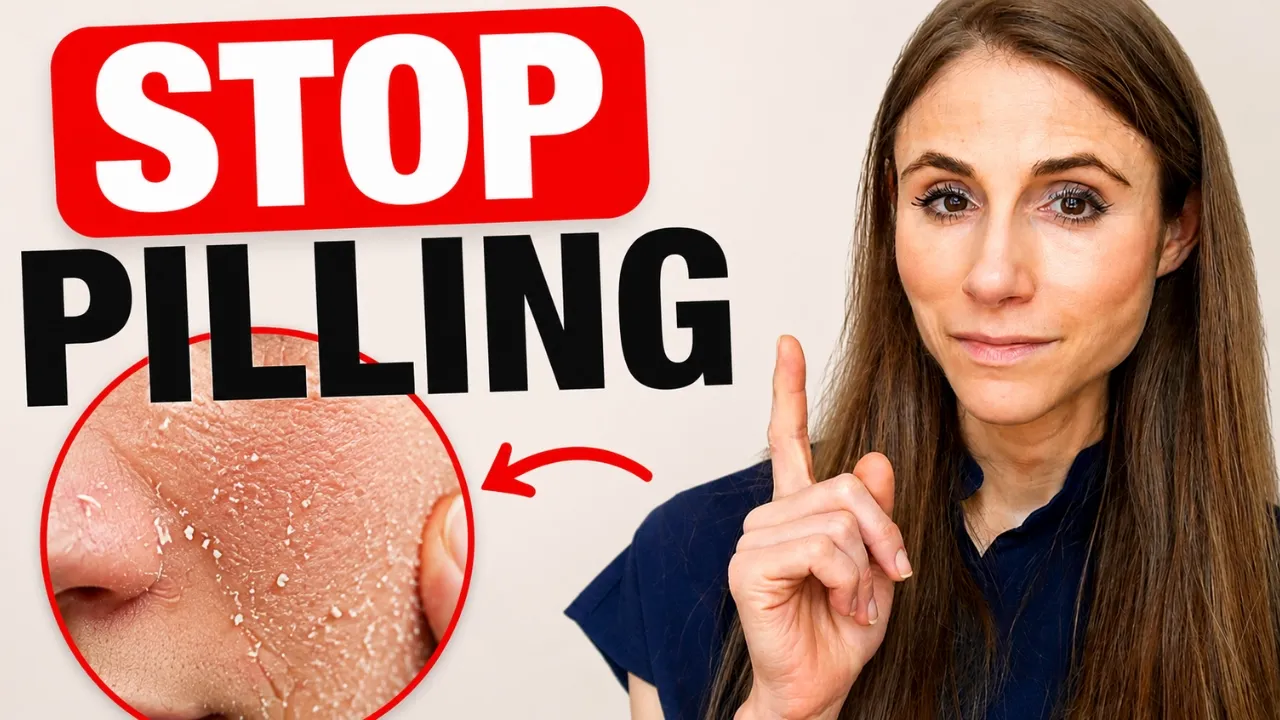
Dr Dray
Rubbing sunscreen over moisturizers disrupts protective UV film formation and causes most pilling, requiring users to eliminate underlying layers and press formulas into skin.
AI-assisted summary of Why Your Skincare Is Pilling (And How to Stop It) — original source. Check the original for full context.
Source published:
Key ideas
- A clinical study revealed that sunscreen is the primary driver of skincare pilling, accounting for approximately 80% of observed pilling occurrences when layered over base products. (3:00)
- Pilling is heavily influenced by individual skin biology, occurring significantly more often on skin characterized by lower hydration, lower sebum levels, higher pH, and smoother measured texture. (4:50)
- Physical application technique directly impacts film stability: linear back-and-forth rubbing generated the highest rate of pilling, whereas patting or pressing minimized product shearing. (7:23)
- Unexpectedly, applying foundation over sunscreen reduced or resolved existing pilling events, likely due to added hydration and film-forming agents binding the underlying layers. (11:31)
Detailed notes
## Background Published on YouTube by board-certified dermatologist Dr. Dray on August 18, 2026, this video examines why skincare products ball up or flake on the face and how to prevent it. Drawing on a clinical study, the presentation reviews the role of individual skin biology, product layering, application mechanics, and the reasons why sunscreen is the most frequent culprit behind pilling.
## TL;DR Dr. Dray breaks down clinical research investigating why skincare products pill, revealing that sunscreen applied over existing layers accounts for roughly 80% of observed pilling events. The research demonstrates that individual skin parameters—such as lower hydration, reduced sebum production, and higher pH—predispose skin to pilling just as much as formulation incompatibility. Furthermore, friction from linear and circular rubbing significantly shears setting films compared to gentle patting or pressing motions. While pilling may not necessarily negate the absorption of standard active serums, it severely compromises the uniform barrier required for sun protection. To resolve the issue, she advises simplifying morning routines, applying sunscreen directly to bare skin if necessary, and refining application technique rather than skipping sunscreen.
## Atmosphere & style The presentation carries Dr. Dray's signature evidence-based, clinical, and approachable demeanor, cutting through internet skincare myths with scientific pragmatism. The narrative moves logically from personal annoyance to scientific breakdown and actionable advice, punctuated by dry humor as she addresses audience fears about product reviews. It feels like an educational, demystifying consultation that replaces the guesswork of complex beauty routines with practical dermatological common sense.
## Bulletin - [03:00](https://www.youtube.com/watch?v=NvJ3AIUW9X0&t=180s) A clinical study revealed that sunscreen is the primary driver of skincare pilling, accounting for approximately 80% of observed pilling occurrences when layered over base products. - [04:50](https://www.youtube.com/watch?v=NvJ3AIUW9X0&t=290s) Pilling is heavily influenced by individual skin biology, occurring significantly more often on skin characterized by lower hydration, lower sebum levels, higher pH, and smoother measured texture. - [07:23](https://www.youtube.com/watch?v=NvJ3AIUW9X0&t=443s) Physical application technique directly impacts film stability: linear back-and-forth rubbing generated the highest rate of pilling, whereas patting or pressing minimized product shearing. - [11:31](https://www.youtube.com/watch?v=NvJ3AIUW9X0&t=691s) Unexpectedly, applying foundation over sunscreen reduced or resolved existing pilling events, likely due to added hydration and film-forming agents binding the underlying layers.
## Key takeaways - [00:56](https://www.youtube.com/watch?v=NvJ3AIUW9X0&t=56s) Skincare pilling occurs when cosmetic formulations ball up or flake across the skin's surface rather than setting into a cohesive film. - [02:03](https://www.youtube.com/watch?v=NvJ3AIUW9X0&t=123s) A clinical study evaluating 528 women with a history of pilling found that approximately 41% experienced pilling during standardized multi-step application testing. - [03:00](https://www.youtube.com/watch?v=NvJ3AIUW9X0&t=180s) Sunscreen was identified as the greatest culprit behind pilling because its polymers and film-forming agents must establish an unbroken surface layer that is easily disrupted. - [04:50](https://www.youtube.com/watch?v=NvJ3AIUW9X0&t=290s) Product pilling is not merely a cosmetic formulation defect, but a dynamic interaction involving the user's specific skin hydration, oiliness, pH, and texture. - [06:07](https://www.youtube.com/watch?v=NvJ3AIUW9X0&t=367s) Adding extra hydrating serums or heavy moisturizers under sunscreen to counter dry skin often backfires, creating excessive slip and worsening pilling. - [06:07](https://www.youtube.com/watch?v=NvJ3AIUW9X0&t=367s) There are no universally incompatible ingredient pairings; product interactions vary significantly depending on vehicle types, emulsion bases, and skin traits. - [07:23](https://www.youtube.com/watch?v=NvJ3AIUW9X0&t=443s) Linear back-and-forth rubbing causes the most friction and pilling, functioning like an eraser that shears setting films off the skin. - [07:23](https://www.youtube.com/watch?v=NvJ3AIUW9X0&t=443s) Mineral sunscreens containing zinc oxide or titanium dioxide tend to pill more frequently than chemical filters because they require more mechanical pressure to spread. - [09:07](https://www.youtube.com/watch?v=NvJ3AIUW9X0&t=547s) Rigid wait times between routine steps lack clinical evidence, but letting viscous or wet layers settle before applying sunscreen helps prevent physical disruption. - [10:18](https://www.youtube.com/watch?v=NvJ3AIUW9X0&t=618s) While active skincare serums that pill may still partially absorb, sunscreen pilling directly compromises the uniform barrier required for reliable UV protection. - [11:31](https://www.youtube.com/watch?v=NvJ3AIUW9X0&t=691s) Layering foundation over sunscreen significantly decreased pilling episodes in clinical testing, counter to the belief that makeup inherently disrupts sunscreen films. - [12:59](https://www.youtube.com/watch?v=NvJ3AIUW9X0&t=779s) The same skincare product can perform seamlessly on one individual and pill heavily on another due to variations in epidermal barrier biology and surface oils. - [13:34](https://www.youtube.com/watch?v=NvJ3AIUW9X0&t=814s) Simplifying the morning routine by applying sunscreen directly to a clean face can resolve pilling, as modern sunscreens already contain moisturizing vehicle bases. - [13:34](https://www.youtube.com/watch?v=NvJ3AIUW9X0&t=814s) While cutting down the amount of serum or cream applied reduces pilling, sunscreen volume must never be decreased below the recommended amount needed to reach labeled SPF. - [13:34](https://www.youtube.com/watch?v=NvJ3AIUW9X0&t=814s) Pilling should never prompt skipping sunscreen entirely; instead, consumers should adjust application technique or remove underlying skincare steps.
## Detailed walkthrough ### [00:00](https://www.youtube.com/watch?v=NvJ3AIUW9X0&t=0s) What Is Skincare Pilling?
Board-certified dermatologist Dr. Dray introduces the frustrating and common issue of skincare pilling: that annoying moment when applying a serum or moisturizer, following it with sunscreen, and getting ready for foundation, only to find small balls or flakes rolling up across the skin. People often worry that their expensive products are simply wiping away, failing to absorb, or becoming completely ineffective, wondering what causes it and how to prevent it.
Dr. Dray explains that pilling occurs when a skincare or cosmetic formula balls up or flakes on the skin's surface, behaving "sort of like well the pills of lint or material that form on an old sweater." While there is surprisingly little scientific literature on pilling due to the overwhelming variety of cosmetics, constantly changing formulations, and diverse skin types, she highlights an illuminating new study that specifically investigated product incompatibility, individual skin traits, and application techniques.
[02:03](https://www.youtube.com/watch?v=NvJ3AIUW9X0&t=123s) The Study Breakdown
Dr. Dray walks through the clinical setup of the newly published study, which recruited 528 female participants in China aged 20 to 49 with Fitzpatrick skin phototypes II through IV. A key inclusion criterion was that all participants self-identified as having previously experienced skincare pilling, meaning researchers deliberately evaluated an affected cohort rather than individuals who had never had the problem. Overall, roughly 41% of participants experienced pilling during the testing.
The investigators established a thorough baseline by evaluating physiological skin parameters before testing: - Skin hydration - Skin oiliness and sebum production - Skin surface pH - Skin texture - Transepidermal water loss (TEWL) - Desquamation (the medical term for skin flaking or shedding)
Participants then systematically applied layered skincare routines—beginning with various product bases, followed by sunscreen, and concluding with foundation—while researchers monitored each step for pilling events and categorized the participants' physical application techniques.
```mermaid flowchart TD accTitle: Skincare Pilling Study Protocol accDescr: Sequence of physiological testing and tiered product application evaluated in the research study.
subgraph Baseline ["Baseline Measurements"] A["Assess Skin Characteristics<br/>(Hydration, Sebum, pH, Texture, TEWL, Desquamation)"] end
subgraph Testing ["Layering & Application Tracking"] B["Step 1: Base Skincare Products<br/>(Serums / Moisturizers)"] C["Step 2: Sunscreen Application<br/>(Track Application Method & Pilling)"] D["Step 3: Foundation Application<br/>(Track Pilling Events)"] end
A --> B B --> C C --> D ```
[03:00](https://www.youtube.com/watch?v=NvJ3AIUW9X0&t=180s) Sunscreen Was the Biggest Culprit
The study’s standout finding was that sunscreen was the absolute greatest driver of skincare pilling. Researchers documented hundreds of pilling events during sunscreen application alone. In stark contrast, foundation layered over skincare produced substantially fewer issues: approximately 80% of all observed pilling occurrences took place when sunscreen was smoothed over another skincare base.
Dr. Dray clarifies that this does not mean sunscreen is defective or that people should stop wearing it, emphasizing that sunscreen remains one of the most critical steps in any skincare routine. Rather, sunscreens are uniquely formulated to build a uniform, protective film across the skin to block ultraviolet radiation. When additional products and mechanical friction disrupt this film, the formula easily balls up. Sunscreen ingredients—such as mineral particles, polymers, and film-forming agents—heavily influence dry-down behavior. The researchers observed that inorganic filters like zinc oxide and titanium dioxide may clash with underlying water-based formulas. However, the study did not pinpoint any single "villain" ingredient guaranteed to pill on every user, though Dr. Dray notes this aligns with her personal experience of encountering more pilling with mineral sunscreens than with chemical filters.
[04:50](https://www.youtube.com/watch?v=NvJ3AIUW9X0&t=290s) The Role of Skin Characteristics
A crucial insight from the research is that skincare pilling is not purely a product formulation defect; the recipient's underlying skin biology plays an enormous role. Because skin is an active, dynamic surface rather than an inert canvas, individual variations in lipid content, hydration, pH, and cell turnover heavily dictate whether products adhere or pill.
According to the study, participants who experienced product pilling consistently presented with distinct baseline skin qualities: - Lower skin hydration levels - Lower sebum (oil) production - Higher skin pH - Smoother measured skin texture
Dr. Dray cautions viewers against oversimplifying these findings into absolute rules: dry skin does not guarantee pilling, nor does oily skin make someone completely immune. Nevertheless, it demonstrates why a sunscreen that works flawlessly during one of Dr. Dray's product reviews might still pill on someone else's skin.
[06:07](https://www.youtube.com/watch?v=NvJ3AIUW9X0&t=367s) Layering Fallacies: Dry Skin and Product Pairing
A common reaction among people with dry skin is to pile on extra moisturizers or rich serums beneath sunscreen to offset dryness, assuming that extra moisture will stop the flaking. Dr. Dray warns that adding more layers often backfires, creating a "perfect storm" for severe pilling.
The study tested multiple types of skincare bases under sunscreens and discovered that no single base was universally responsible for sunscreen pilling. The notion that "product A plus product B equals pilling" is an oversimplification. The real interaction depends on a complex interplay of polymer types, emulsifiers, oils, water volume, mineral concentrations, dry times, and individual skin traits. Consequently blanket claims online declaring that you should "never use this serum under that sunscreen" fail to account for how differently identical pairings perform across different individuals.
[07:23](https://www.youtube.com/watch?v=NvJ3AIUW9X0&t=443s) How You Apply Your Products Matters
Beyond products and skin chemistry, the physical technique used to apply formulas plays a massive role in pilling. Researchers categorized four primary application motions: - Patting - Pressing - Circular rubbing - Linear (back-and-forth) rubbing
The highest frequency of pilling occurred with rubbing, particularly back-and-forth linear rubbing. Dr. Dray likens this friction to rubbing an eraser over paper until rubber shavings roll up—once a formula begins setting into a film, friction shears it off the surface.
She recommends abandoning vigorous rubbing or facial massage in favor of gently distributing the product and lightly patting or pressing it in with the finger pads. She also points out that mineral sunscreens with zinc oxide or titanium dioxide naturally require far more effort and pressure to spread smoothly than fluid chemical filters, which may explain why mineral sunscreens are so frequently implicated in pilling.
[08:53](https://www.youtube.com/watch?v=NvJ3AIUW9X0&t=533s) Waiting Between Layers
Dr. Dray turns to one of the most widely debated pieces of skincare advice: whether consumers need to wait a specific number of minutes between layers before applying their next product.
[09:07](https://www.youtube.com/watch?v=NvJ3AIUW9X0&t=547s) Waiting Between Products and Application Dynamics
Dr. Dray addresses the common internet advice instructing people to wait exactly 30 seconds after applying moisturizer before putting on sunscreen, exclaiming, "Oh my gosh, where are they coming up with these?" While giving skincare products time to settle makes theoretical sense to reduce pilling, the study she reviewed did not establish any specific waiting period as an evidence-based preventative measure. What can be reasonably deduced, however, is that both the number of product layers and how wet the skin remains between those layers strongly influence the likelihood of pilling.
To illustrate, she contrasts two distinct layering routines. In one scenario, someone applies a thick, viscous, slippery, water-based hydrating serum, immediately follows it with a mineral sunscreen, and rubs vigorously back and forth; this combination is a prime recipe for pilling. In the contrasting scenario, someone applies a thin, water-based liquid that is not overly viscous, quickly pats it into the skin, and then carefully applies a chemical sunscreen with gentle, precise technique. These differing product textures, moisture levels, and application approaches collectively explain why one method balls up while the other applies seamlessly.
[10:18](https://www.youtube.com/watch?v=NvJ3AIUW9X0&t=618s) Does Pilling Mean Your Products Aren't Working?
When products start balling up, people naturally wonder whether their skincare is completely failing to penetrate or if their sunscreen is useless. For non-sunscreen active products, pilling does not automatically mean that the beneficial ingredient failed to absorb into the skin; it simply leaves the exact degree of penetration unknown. The study itself did not test or measure product performance, ingredient delivery, or overall UV protection values under pilling conditions.
However, when it comes to sunscreen, Dr. Dray firmly warns that pilling should be assumed to degrade efficacy. Sunscreen must form an unbroken, uniform protective film across the skin to shield against UV radiation. If vigorous rubbing produces visible little balls, that material is either sunscreen rolling right off the skin or sunscreen that never adhered in the first place. The result is an uneven, patchy layer that cannot deliver the advertised protection.
```mermaid flowchart TD accTitle: Impact of Pilling on Skincare vs Sunscreen accDescr: Flowchart contrasting how product pilling affects standard non-sunscreen skincare penetration versus sunscreen film integrity and UV protection.
subgraph StandardSkincare["Non-Sunscreen Products"] A["Active Serum / Moisturizer Pills"] --> B["Active ingredients may still absorb partially"] B --> C["Performance impact is unquantified but possible"] end
subgraph SunscreenLayer["Sunscreen Application"] D["Sunscreen Balls Up / Pills"] --> E["Protective film disrupted into patches"] E --> F["Compromised, uneven UV protection"] end ```
[11:31](https://www.youtube.com/watch?v=NvJ3AIUW9X0&t=691s) The Surprising Effect of Foundation on Sunscreen Pilling
A frequent question Dr. Dray receives is how to apply makeup over sunscreen without disrupting the sun protection layer. Conventional wisdom suggests that piling foundation over an already vulnerable sunscreen would pull up the product and worsen pilling. Surprisingly, the study found the exact opposite: applying foundation over sunscreen actually reduced the total number of pilling events. Out of hundreds of observed sunscreen pilling episodes, the vast majority decreased or resolved entirely once foundation was smoothed over the top.
Dr. Dray cautions viewers not to treat this as an ironclad excuse to slap foundation over every bad sunscreen application, noting that the researchers themselves could only speculate on why this happened. Potential explanations include: - Film-forming ingredients in the foundation may create a secondary barrier that helps bind and anchor the sunscreen layer down. - Added hydration from the foundation formula might help the underlying sunscreen adhere better to the stratum corneum. - Foundation ingredients may interact chemically or physically with the layers underneath to smooth out the overall film.
[12:59](https://www.youtube.com/watch?v=NvJ3AIUW9X0&t=779s) Why the Same Product Pills for One Person but Not Another
Viewers often confront Dr. Dray after buying a product she reviewed favorably, frustrated because it pilled on their face: "Dr. Dray reviewed this skincare product and claimed it caused no pilling... Is she a liar?" She jokingly reassures the audience, "I'm not," but explains that product reviews must be taken with a grain of salt because individual skin biology varies drastically.
Personal physiological factors alter how formulas behave: - Variations in sebum production (oiliness vs. dryness) - Baseline skin hydration levels - Individual skin surface pH - Texture and epidermal barrier differences
A product that settles perfectly on one person's face can easily ball up on someone with different surface chemistry and moisture levels.
[13:34](https://www.youtube.com/watch?v=NvJ3AIUW9X0&t=814s) Practical Dermatology Tips to Eliminate Skincare Pilling
To proactively minimize pilling, Dr. Dray lays out actionable adjustments to routine design and physical application:
1. **Keep the routine simple:** Strip down excessive steps instead of applying seven separate layers beneath sunscreen. If pilling is persistent, try applying sunscreen directly to a clean, bare, dry face. Sunscreens are already formulated in moisturizing lotion, cream, or hydrating gel bases that curb transepidermal water loss; many are functionally moisturizers with UV filters. Serums are fine if they work, but they are unnecessary if they trigger product friction. 2. **Use less product—except for sunscreen:** While dispensing smaller amounts of toners, serums, and creams stops excess product from balling up on the surface, this rule must never be applied to sunscreen. People frequently under-apply SPF, which causes sun protection to fail. A generous layer is mandatory to achieve the labeled SPF rating. 3. **Allow products to settle using common sense:** While there is no universal waiting window, local climate dictates dry time. In humid environments, products take much longer to dry down naturally without heat or airflow, requiring more patience before the next layer. 4. **Modify application technique:** Ditch aggressive back-and-forth circular rubbing. Instead, gently spread products in a single direction, pat them into the surface, or press them down with the palms. 5. **Pinpoint product combinations:** Pilling is frequently an issue of chemical incompatibility between specific formulations rather than a single bad product. 6. **Never abandon sunscreen:** If an SPF formula pills, modify or remove the serums and moisturizers underneath first, or refine the application technique, before discarding a sunscreen you otherwise enjoy.
[16:02](https://www.youtube.com/watch?v=NvJ3AIUW9X0&t=962s) Study Limitations and Final Takeaway
Dr. Dray highlights several key caveats about the research. The study evaluated a cohort of women aged 20 to 49 from China who had a documented history of experiencing skincare pilling. Because the participants were preselected for having pilling-prone routines or skin, the findings cannot be assumed to apply universally across all demographics, skin types, or cosmetic formulations. Furthermore, the researchers did not isolate single, specific ingredients responsible for causing pilling.
Despite these limitations, the roughly two-year-old paper represents an important early step in understanding the science of pilling. Dr. Dray emphasizes that more research is needed to evaluate different ethnic populations, formula textures, and specific wait-time variables. She closes by reminding viewers that skincare pilling is extremely common and frustrating, encouraging them to share which product combinations tend to ball up on their skin, and signs off with her signature farewell: "don't forget sunscreen and subscribe."
## Notable quotes > [00:00](https://www.youtube.com/watch?v=NvJ3AIUW9X0&t=0s) sort of like well the pills of lint or material that form on an old sweater. — Dr. Dray
> [06:07](https://www.youtube.com/watch?v=NvJ3AIUW9X0&t=367s) perfect storm — Dr. Dray
> [06:07](https://www.youtube.com/watch?v=NvJ3AIUW9X0&t=367s) product A plus product B equals pilling — Dr. Dray
> [06:07](https://www.youtube.com/watch?v=NvJ3AIUW9X0&t=367s) never use this serum under that sunscreen — Dr. Dray
> [09:07](https://www.youtube.com/watch?v=NvJ3AIUW9X0&t=547s) Oh my gosh, where are they coming up with these? — Dr. Dray
> [12:59](https://www.youtube.com/watch?v=NvJ3AIUW9X0&t=779s) Dr. Dray reviewed this skincare product and claimed it caused no pilling... Is she a liar? — Dr. Dray
> [12:59](https://www.youtube.com/watch?v=NvJ3AIUW9X0&t=779s) I'm not — Dr. Dray
> [16:02](https://www.youtube.com/watch?v=NvJ3AIUW9X0&t=962s) don't forget sunscreen and subscribe. — Dr. Dray
## Mentioned Dr. Dray, China, Zinc oxide, Titanium dioxide, YouTube, Amazon, LikeToKnowIt, Instagram, Pinterest, Facebook, Twitter, TikTok
## Video description If your skincare keeps pilling, this video from dermatologist Dr. Dray explains why it happens and how to stop those annoying little balls and flakes from forming on the skin. New research suggests that pilling is influenced not only by the products being used, but also by skin hydration, oiliness, pH, skin texture, product layering, and application technique.
The study discussed in this video found that sunscreen was the biggest promoter of pilling, particularly when applied over another skincare product. The research also found that rubbing products into the skin, especially with back-and-forth or circular motions, was associated with more pilling.
Dr. Dray discusses what skincare pilling actually means, whether pilling indicates that skincare is not absorbing, why the same sunscreen may pill on one person but not another, whether you should wait between skincare products, and how to apply sunscreen without disrupting the protective film.
The video also explains why simplifying a skincare routine, using appropriate amounts of product, allowing products to settle, and gently spreading or pressing products into the skin may help reduce pilling.
TIMESTAMPS:
0:00 Introduction 0:56 What Is Skincare Pilling? 2:03 The Study 3:00 Sunscreen Was the Biggest Culprit 4:50 Your Skin May Also Play a Role 6:07 Dry Skin Doesn't Necessarily Mean You Need More Products 7:23 How You Apply Your Products Matters 8:53 Should You Wait Between Products? 10:18 Does Pilling Mean Your Products Aren't Absorbing? 11:31 What About Foundation? 12:59 Why Does the Same Product Pill for One Person but Not Another? 13:34 Tips for Stopping Skincare Pilling 16:02 What This Study Doesn't Tell Us 17:XX Final Takeaway
KEY TOPICS: skincare pilling, skin pilling, sunscreen pilling, why does my sunscreen pill, how to stop skincare pilling, how to stop sunscreen from pilling, skincare layering, sunscreen application, skincare routine, skincare mistakes, product pilling, makeup pilling, foundation pilling, skincare products balling up, sunscreen balling up, skincare not absorbing, dry skin, skin hydration, skin pH, skincare application technique, dermatologist skincare advice.
Pilling does not necessarily mean that a skincare product is ineffective or that you have chosen the wrong products. The interaction between the formulation, your skin, the amount applied, the products underneath, and your application technique can all play a role.
Most importantly, pilling is not a reason to skip sunscreen. If sunscreen is causing pilling, changing the products underneath it and adjusting application technique may help.
If you've experienced skincare pilling, Dr. Dray would love to know which products tend to pill for you and what tricks have helped.
Subscribe for evidence-based dermatology, skincare reviews, ingredient explanations, sunscreen advice, and practical skincare tips.
This video discusses research findings for educational purposes and is not a substitute for individualized medical advice.
FTC: This video is not sponsored. Links are commissionable, meaning I may earn commission from purchases made through links.
💜Shop my Amazon store https://o.bttn.io/0BwiPWFIZLG 💜Follow me on liketoknowit https://www.liketoknow.it/drdrayzday 💜Social media Instagram @drdrayzday Pinterest https://www.pinterest.com/drdrayzday/ Facebook @DrDrayzDay Twitter: @drdrayzday Tiktok: @drdrayzday
Disclaimer: This video is not intended to provide diagnosis, treatment or medical advice. Content provided on this Youtube channel is for informational purposes only. Please consult with a physician or other healthcare professional regarding any medical or health related diagnosis or treatment options. Information on this Youtube channel should not be considered as a substitute for advice from a healthcare professional. The statements made about specific products throughout this video are not to diagnose, treat, cure or prevent disease.
[Source](https://www.youtube.com/watch?v=NvJ3AIUW9X0)