REMEDY Hydrating Serum Review: Does It Actually Work?
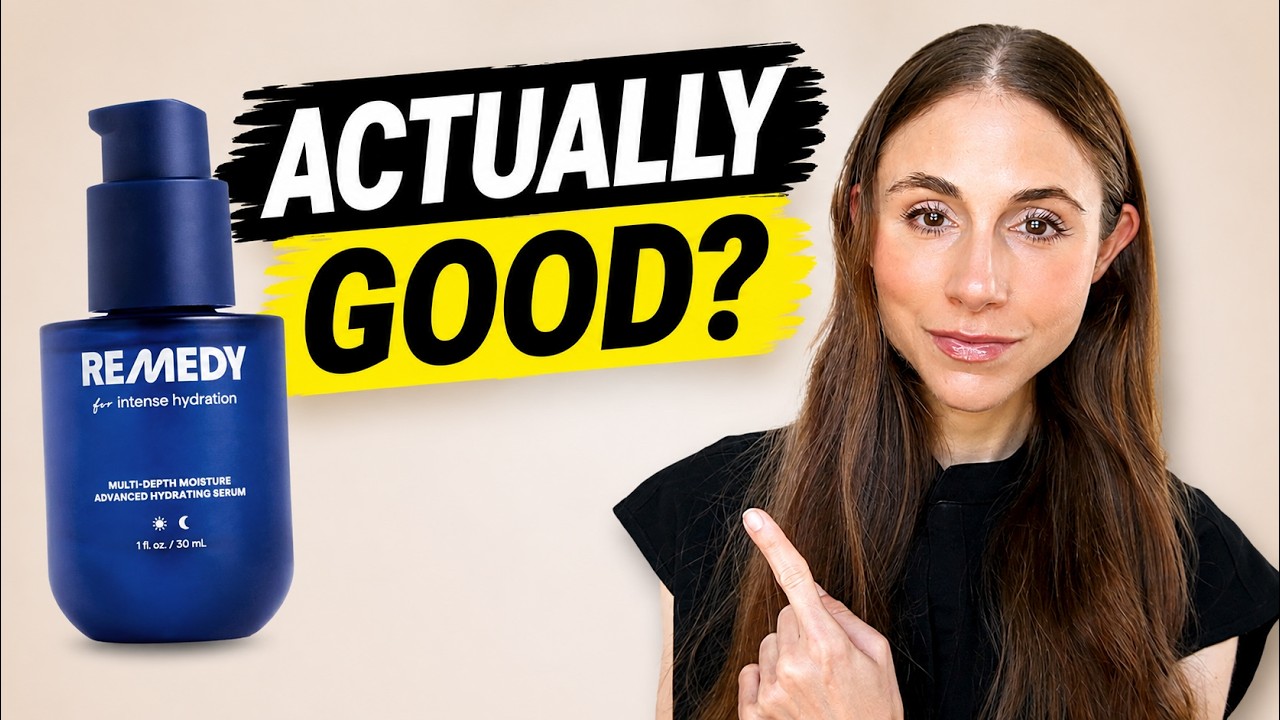
Dr Dray
AI-assisted summary of REMEDY Hydrating Serum Review: Does It Actually Work? — original source. Check the original for full context.
Source published:
Key ideas
- REMEDY Multi-Depth Moisture Advanced Hydrating Serum blends high-value hydrators—including glycerin, ectoin, polyglutamic acid, and peptides—into an accessible formula priced between $17 and $20 per ounce. (14:46)
- Applying non-irritating hydrating serums to the orbital area at least 1 mm from the lash line is safe for meibomian glands and effectively plumps dehydration lines. (0:00)
- Topical peptides such as acetyl hexapeptide-8 do not penetrate neuromuscular junctions or mimic injectable Botox, with clinical wrinkle reductions stemming primarily from transient surface hydration. (7:13)
- Social media 'skin flooding' routines involving multiple layered toners and essences increase contact dermatitis risks, whereas a single dime-sized portion of an effective humectant serum provides sufficient hydration. (12:18)
Detailed notes
## Background Published on YouTube by dermatologist Dr Dray on August 19, 2026, this video reviews the REMEDY Multi-Depth Moisture Advanced Hydrating Serum. According to the page description, Dr Dray evaluates the product's formulation—including ingredients like glycerin, ectoin, polyglutamic acid, peptides, and superoxide dismutase—as well as its texture, layerability with retinoids and sunscreen, irritation risk, and value at its $17 to $20 price point.
## TL;DR Dr Dray reviews the REMEDY Multi-Depth Moisture Advanced Hydrating Serum, praising its lightweight, non-greasy texture and efficient barrier support driven by glycerin, ectoin, and polyglutamic acid. She demystifies skincare marketing around topical peptides and ferments, explaining that fine line reduction stems from temporary surface plumping rather than structural collagen changes or Botox-like muscle relaxation. Noting its minimal irritation risk, she highlights how effectively it buffers retinoid dryness and bridges seasonal weather transitions without resorting to excessive 'skin flooding' routines. At roughly $17 to $20 per bottle, she deems it REMEDY's best serum release to date and suitable across diverse skin types.
## Atmosphere & style The video embodies Dr Dray’s trademark clinical, no-nonsense delivery, pairing methodical cosmetic chemistry analysis with dry, witty critiques of marketing hype and selective scientific studies. It feels educational, grounded, and refreshingly restrained, progressing systematically from sensory first impressions to ingredient-by-ingredient breakdowns and practical routine advice. The viewing experience is reassuring and pragmatic, stripping away viral skincare trends in favor of sensible, barrier-focused dermatological advice.
## Bulletin - [14:46](https://www.youtube.com/watch?v=VLH7oQHDBk0&t=886s) REMEDY Multi-Depth Moisture Advanced Hydrating Serum blends high-value hydrators—including glycerin, ectoin, polyglutamic acid, and peptides—into an accessible formula priced between $17 and $20 per ounce. - [00:00](https://www.youtube.com/watch?v=VLH7oQHDBk0&t=0s) Applying non-irritating hydrating serums to the orbital area at least 1 mm from the lash line is safe for meibomian glands and effectively plumps dehydration lines. - [07:13](https://www.youtube.com/watch?v=VLH7oQHDBk0&t=433s) Topical peptides such as acetyl hexapeptide-8 do not penetrate neuromuscular junctions or mimic injectable Botox, with clinical wrinkle reductions stemming primarily from transient surface hydration. - [12:18](https://www.youtube.com/watch?v=VLH7oQHDBk0&t=738s) Social media 'skin flooding' routines involving multiple layered toners and essences increase contact dermatitis risks, whereas a single dime-sized portion of an effective humectant serum provides sufficient hydration.
## Key takeaways - [00:00](https://www.youtube.com/watch?v=VLH7oQHDBk0&t=0s) The serum provides balanced hydration without leaving a heavy, sticky, or suffocating residue on the skin. - [00:00](https://www.youtube.com/watch?v=VLH7oQHDBk0&t=0s) A single dime-sized portion adequately covers both the face and neck, extending the working lifespan of the bottle. - [00:00](https://www.youtube.com/watch?v=VLH7oQHDBk0&t=0s) Orbital fine lines can be visibly softened by restoring surface water content, though this effect does not reflect structural collagen rebuilding. - [04:41](https://www.youtube.com/watch?v=VLH7oQHDBk0&t=281s) Glycerin serves as a proven workhorse humectant capable of significantly reducing transepidermal water loss when formulated at effective concentrations. - [04:41](https://www.youtube.com/watch?v=VLH7oQHDBk0&t=281s) Ectoin offers anti-inflammatory and barrier-protective benefits that help buffer skin against retinoid-induced irritation. - [04:41](https://www.youtube.com/watch?v=VLH7oQHDBk0&t=281s) Polyglutamic acid functions both as a potent moisture-binding humectant and as a breathable protective surface film. - [07:13](https://www.youtube.com/watch?v=VLH7oQHDBk0&t=433s) Beta-glucan supports natural enzymatic desquamation by keeping epidermal water reserves sufficiently replenished. - [07:13](https://www.youtube.com/watch?v=VLH7oQHDBk0&t=433s) Lactobacillus ferment delivers soothing conditioning agents and antioxidants rather than restoring live bacterial colonies to the skin microbiome. - [07:13](https://www.youtube.com/watch?v=VLH7oQHDBk0&t=433s) Topical peptides lack the ability to relax dynamic facial muscles or match the clinical outcomes of injectable neurotoxins. - [10:43](https://www.youtube.com/watch?v=VLH7oQHDBk0&t=643s) Antioxidants like superoxide dismutase offer secondary free-radical defense but cannot substitute for broad-spectrum sunscreen. - [10:43](https://www.youtube.com/watch?v=VLH7oQHDBk0&t=643s) Visible light exposure from screens and electronic devices delivers a negligible dose compared to solar radiation and requires minimal consumer concern. - [12:18](https://www.youtube.com/watch?v=VLH7oQHDBk0&t=738s) Multi-step 'skin flooding' regimens elevate the risk of allergic contact dermatitis compared to streamlined, single-step hydration. - [13:41](https://www.youtube.com/watch?v=VLH7oQHDBk0&t=821s) The hydrating serum demonstrates very low irritation potential, avoiding the tightness and irritation associated with the brand's copper peptide serum. - [13:41](https://www.youtube.com/watch?v=VLH7oQHDBk0&t=821s) The lightweight humectant vehicle bridges seasonal transitions when falling humidity causes skin tightness before heavier winter balms are tolerable. - [14:46](https://www.youtube.com/watch?v=VLH7oQHDBk0&t=886s) Priced between $17 and $20, the product offers high cosmetic elegance suitable for dry, oily, combination, and rosacea-prone skin. - [15:40](https://www.youtube.com/watch?v=VLH7oQHDBk0&t=940s) Dr. Dray identifies the Hydrating Serum as REMEDY's top serum release to date, ranking it alongside their Cleansing Balm as a brand standout.
## Detailed walkthrough ### [00:00](https://www.youtube.com/watch?v=VLH7oQHDBk0&t=0s) First Impressions, Application, and Eye Area Use
Dr. Dray introduces the REMEDY Intense Hydration Multi-Depth Moisture Advanced Hydrating Serum. Having reviewed many products from REMEDY in the past—some proving to be hits and others misses—she discloses right away that this bottle was gifted to her with no obligation to review and without any payment involved. Her immediate observation is the serum's finely tuned texture: it manages to be exceptionally lightweight without feeling thin and watery, avoiding the useless sensation where one wonders *"what is this actually doing?"* At the same time, it completely skips the suffocating, heavy, or greasy residue found in many heavier moisturizers, striking an ideal balance that delivers enduring hydration.
Because of this unique weight-to-hydration ratio, she considers it ideal for seasonal transitional periods. Whether dealing with sudden cold snaps or lingering heat and humidity, it will not trap sweat, feel oppressive, or trigger overheating. It simultaneously supports the skin barrier against the moisture depletion caused by shifting weather, back-to-school stress, and disrupted sleep schedules. Furthermore, a little goes a surprisingly long way: just a single dime-sized drop covers both her entire face and neck without requiring multiple pumps, signaling that the bottle will last considerably longer than typical runny serums.
Addressing application around the eyes, Dr. Dray dispels common fears about treating the orbital zone. She points out there is no real evidence that standard, non-irritating skincare products cause meibomian gland dysfunction, provided one avoids placing them within a millimeter of the lash line. Because this formula contains gentle hydrators rather than aggressive actives, she regularly applies it around her eyes. She observed a distinct reduction in fine lines—clarifying that it is not erasing deep structural wrinkles or regenerating collagen, but rather instantly plumping dehydration lines by restoring surface water volume. This surge in moisture evens out the skin tone, leaves a radiant finish, and cuts down on underlying sensitivity by giving essential skin barrier enzymes the water they need to function.
```mermaid flowchart TD accTitle: Hydration and Skin Barrier Pathway accDescr: Chart illustrating how proper topical hydration supports barrier enzymes and smooths fine lines. A["Topical Hydration (REMEDY Serum)"] --> B["Restores Surface Water Content"] B --> C["Plumps Dehydration Fine Lines"] B --> D["Supports Skin Barrier Enzymes"] D --> E["Optimizes Natural Desquamation"] D --> F["Reduces Barrier Sensitivity & TEWL"] ```
[04:41](https://www.youtube.com/watch?v=VLH7oQHDBk0&t=281s) Deep Dive into Key Hydrators: Glycerin, Ectoin, and Polyglutamic Acid
Turning to the ingredient list, Dr. Dray notes a lineup of personal favorites: glycerin, ectoin, polyglutamic acid, beta-glucan, *Lactobacillus* ferment, superoxide dismutase, acetyl hexapeptide-8, and palmitoyl tripeptide-5. Starting with glycerin, she praises it as an evidence-based workhorse humectant with an outstanding reputation. While inexpensive—to the point that Dr. Dray sometimes uses plain vegetable glycerin directly on her skin—formulating with high concentrations of glycerin actually limits transepidermal water loss (TEWL) and maintains moisture far longer than standard humectants.
She is equally enthusiastic about ectoin, an extremolyte produced by bacteria to survive harsh conditions. On the skin, ectoin provides hydration alongside anti-inflammatory and antioxidant defense. While theoretical claims suggest ectoin protects against UV radiation and pollution, Dr. Dray emphasizes its immediate clinical utility: mitigating irritation when using topical retinoids. By buffering dryness and preserving barrier integrity, it helps users tolerate retinoids comfortably, which promotes long-term consistency.
The formula couples these hydrators with polyglutamic acid, an ingredient Dr. Dray frequently champions. Polyglutamic acid functions both as a potent humectant and as a protective, breathable film former over the surface of the stratum corneum:
- **Dual-Action Moisture**: Glycerin draws deep water into the tissue while polyglutamic acid forms a weightless veil over the top. - **Barrier Shield**: The resulting protective barrier helps stem transepidermal water loss and restricts external irritants from penetrating compromised skin.
[07:13](https://www.youtube.com/watch?v=VLH7oQHDBk0&t=433s) Soothing Agents, Ferments, and Peptide Realities
Next in the formula is beta-glucan, a soothing agent commonly found in treatments for sensitized or compromised skin. Beyond its calming properties, beta-glucan assists in the temporary plumping effect by maximizing epidermal water reserves. This hydration directly aids desquamation—the skin's natural exfoliation mechanism—by keeping enzymatic maturation rates on track, which produces visibly smoother texture over time. Dr. Dray also touches on *Lactobacillus* ferment, addressing the widespread marketing myth that ferments restore the live skin microbiome. Rather than providing living flora, ferments act as enriched fractions of conditioning agents and soothing antioxidants that support the environment of the barrier.
Finally, she addresses the inclusion of two peptides: acetyl hexapeptide-8 (commonly known as Argireline) and palmitoyl tripeptide-5. She is quick to debunk the persistent marketing pitch that acetyl hexapeptide-8 serves as "Botox in a bottle":
- **Topical vs. Injectable Limits**: Topical peptides cannot penetrate to the neuromuscular junction to paralyze muscles or relax dynamic expression lines like botulinum toxin. - **Observed Surface Smoothing**: Any clinical reduction in wrinkle depth from topical peptide application largely stems from surface hydration or transient cosmetic plumping. - **Palmitoyl Tripeptide-5**: While often billed as a collagen booster in anti-aging literature, the evidence rests primarily on cell-culture dish models funded by cosmetic manufacturers. Most human cosmetic trials evaluate whether fine lines look less visible, which is readily achieved through simple hydration without any true, measured surge in structural collagen production.
[10:00](https://www.youtube.com/watch?v=VLH7oQHDBk0&t=600s) Realistic Expectations for Peptides
Dr. Dray reflects on the state of scientific claims in skincare marketing, remarking that brands often present selective findings without having to paint the full methodological picture required by prestigious peer-reviewed journals like *Nature Medicine*. She adds with dry humor that while back in the day rigorous science was required for publication, "nowadays, I don't know because it seems like a lot of fluff is getting published and then retracted, but I digress."
Turning to peptides as a category, she explains that while she personally enjoys using them and finds that they generally assist with skin hydration and moisture retention, she maintains realistic expectations. Peptides are a welcome addition to a formula, but she cautions against overpaying for them or believing they will deliver dramatic, Botox-like structural transformations. If a formula featuring peptides is exorbitantly priced, she will not go out of her way to buy it, regarding them as a beneficial moisture-supporting inclusion rather than a miracle worker.
[10:43](https://www.youtube.com/watch?v=VLH7oQHDBk0&t=643s) Superoxide Dismutase and Environmental Defense
Moving to superoxide dismutase, Dr. Dray highlights that REMEDY seems particularly fond of incorporating this antioxidant enzyme across their product range. As an antioxidant, superoxide dismutase functions to neutralize damaging free radicals before they can degrade crucial structural proteins, lipids, and DNA within the skin. However, she points out a vital caveat: the real-world antioxidant efficacy of any topical product depends entirely on the stability and vehicle of the overall formulation, which is impossible to gauge purely from the ingredient list.
She stresses that no antioxidant serum can ever substitute for sunscreen, which remains the single most essential barrier against ultraviolet radiation. Sunscreen is not an impenetrable "shield of armor"—some UV radiation inevitably penetrates—so wearing an antioxidant underneath provides an extra safety net against secondary oxidative damage. Dr. Dray also reminds viewers that standard sunscreens do not block visible light unless they are tinted with iron oxides. While visible light from the sun can contribute to signs of aging (particularly in deeper skin tones), she dispels the common fear regarding electronic screens: the blue light emitted from phones and computers represents a miniscule dose compared to solar exposure and is not worth stressing over.
```mermaid flowchart TD accTitle: Daytime and Nighttime Routine Flow accDescr: Flowchart illustrating how the REMEDY hydrating serum integrates into morning and evening skincare routines. subgraph AM["Morning Routine"] A1["Gentle Cleanse / Splash"] --> A2["REMEDY Hydrating Serum<br/>(Dime-Sized Amount)"] A2 --> A3["Broad-Spectrum Sunscreen<br/>(Antioxidant + UV Defense)"] end
subgraph PM["Evening Routine"] P1["Cleanser"] --> P2["Topical Retinoid"] P2 --> P3["REMEDY Hydrating Serum<br/>(Barrier Support)"] P3 --> P4["Optional Heavy Cream<br/>(If Needed Seasonally)"] end ```
[12:18](https://www.youtube.com/watch?v=VLH7oQHDBk0&t=738s) Routine Integration and the Myth of Skin Flooding
Dr. Dray shares that her personal testing experience with the REMEDY Hydrating Serum has been overwhelmingly positive. The product layers smoothly across both morning and evening routines without pilling. At night, she applies it alongside her topical retinoid to provide supplemental barrier reinforcement. In the morning, she applies it directly before sunscreen, noting that it absorbs rapidly and leaves behind a lightweight, imperceptible protective layer without feeling sticky, greasy, or heavy.
She points out that because transepidermal water loss (TEWL) naturally accelerates overnight, skin frequently appears dull, dehydrated, and haggard upon waking. Applying this serum immediately plumps and hydrates the face, effectively serving to "perk the skin up" before sun protection goes on. Furthermore, Dr. Dray pushes back against the social media trend of "skin flooding"—the practice of layering six or seven toners, essences, and serums in succession. While skin flooding is wildly popular online, piling on excessive products dramatically spikes the odds of contact dermatitis. She praises this serum for delivering deep, long-lasting hydration in a single, simple step using only a dime-sized amount.
[13:41](https://www.youtube.com/watch?v=VLH7oQHDBk0&t=821s) Irritation Potential and Seasonal Skincare Shifts
Evaluating the safety profile, Dr. Dray classifies the product as possessing a very low irritation potential. While she clarifies that no topical formula is ever 100% hypoallergenic or guaranteed irritation-free for every human being, this formula excludes fragrance and common sensitizers, making it well tolerated across sensitive skin types. She draws a sharp contrast between this product and REMEDY’s Copper Peptide Serum, recalling that the copper peptide formula left her face feeling uncomfortably tight, dry, and irritated almost instantly. This hydrating serum retains many of the beneficial humectants and barrier-supportive ingredients she admired in the copper formula, but without the irritating side effects.
Dr. Dray notes that the serum arrives at an ideal moment for seasonal skincare transitions: - As late summer fades into autumn and winter, daily schedules accelerate with work and school, leaving less time for elaborate regimens. - Ambient humidity levels drop, causing increased skin tightness before individuals feel ready to jump straight into suffocating, heavy night balms. - A well-formulated, lightweight humectant serum bridges the seasonal gap by restoring skin comfort without clogging pores. - It translates a theoretically impressive ingredient deck into genuine clinical performance on the skin.
[14:46](https://www.youtube.com/watch?v=VLH7oQHDBk0&t=886s) Pricing, Accessibility, and Skin Type Suitability
Priced between approximately $17 and $20 for a one-ounce bottle, Dr. Dray considers the serum exceptionally reasonable and cost-effective. Considering that the formula contains higher-end, cosmetically elegant actives like ectoin, polyglutamic acid, and peptides, the sub-$20 price point makes it an accessible alternative to luxury barrier serums. Because only a dime-sized portion is required per application, a single bottle provides substantial longevity.
In terms of skin type matching, she considers it versatile enough to meet anyone's current barrier needs, whether an individual presents as dry, oily, or combination. The serum delivers sustained moisture content without imposing a greasy film that might deter oily complexions, and nothing in the ingredient list gives her pause regarding inflammatory skin conditions such as rosacea.
- **Price:** $17–$20 per 1 fl oz / 30 ml bottle. - **Key Ingredients Featured:** Polyglutamic acid, ectoin, peptides, glycerin, superoxide dismutase. - **Finish:** Weightless, plump, non-filmy, non-greasy. - **Skin Compatibility:** Dry, oily, combination, acne-prone, and rosacea-prone skin types.
[15:40](https://www.youtube.com/watch?v=VLH7oQHDBk0&t=940s) Final Verdict and Brand Standouts
In her concluding assessment, Dr. Dray declares the Hydrating Serum to be REMEDY’s best serum release to date. While she found their antioxidant serum acceptable and thoroughly disliked the copper peptide formula, this hydrating iteration stands out as her clear favorite due to its superior cosmetic elegance and noticeable plumping effects. Across the brand's entire catalog, she ranks this serum alongside their Cleansing Balm—whose packaging and spreadability she praises—as her top recommendations.
She also touches on the brand's Keratosis Pilaris (KP) line, noting that she surprisingly enjoyed both the KP Body Scrub and the KP Body Moisturizer. While early iterations of the KP moisturizer felt somewhat lightweight in past reviews, she observed that the current packaging houses a much richer, heavier formulation that she intends to repurchase for winter body care.
Dr. Dray closes by encouraging viewers to leave honest product feedback in the comment section. She reveals an insider industry truth: brand development teams regularly monitor YouTube comment threads to gauge genuine consumer experiences. Speaking candidly about what irritates the skin versus what performs well provides actionable data that influences future product formulations. She signs off with her signature farewell: "sunscreen and subscribe."
## Notable quotes > [00:00](https://www.youtube.com/watch?v=VLH7oQHDBk0&t=0s) what is this actually doing? — Dr. Dray
> [10:00](https://www.youtube.com/watch?v=VLH7oQHDBk0&t=600s) nowadays, I don't know because it seems like a lot of fluff is getting published and then retracted, but I digress. — Dr. Dray
> [07:13](https://www.youtube.com/watch?v=VLH7oQHDBk0&t=433s) Botox in a bottle — Dr. Dray
> [10:43](https://www.youtube.com/watch?v=VLH7oQHDBk0&t=643s) shield of armor — Dr. Dray
> [12:18](https://www.youtube.com/watch?v=VLH7oQHDBk0&t=738s) perk the skin up — Dr. Dray
> [15:40](https://www.youtube.com/watch?v=VLH7oQHDBk0&t=940s) sunscreen and subscribe. — Dr. Dray
## Mentioned Dr. Dray, REMEDY, REMEDY Multi-Depth Moisture Advanced Hydrating Serum, REMEDY Cleansing Balm, REMEDY KP Body Moisturizer, REMEDY KP Body Scrub, REMEDY Copper Peptide Serum, Nature Medicine, YouTube, Glycerin, Ectoin, Polyglutamic Acid, Beta-Glucan, Lactobacillus Ferment, Superoxide Dismutase, Acetyl Hexapeptide-8, Argireline, Palmitoyl Tripeptide-5
## Video description Dermatologist Dr. Dray reviews the REMEDY Multi-Depth Moisture Advanced Hydrating Serum, a lightweight hydrating serum formulated with glycerin, ectoin, polyglutamic acid, beta glucan, peptides, Lactobacillus ferment, and superoxide dismutase.
In this review, Dr. Dray discusses the serum's ingredients, texture, hydration benefits, how it performs under sunscreen, whether it works well alongside topical retinoids, its use around the eyes, potential benefits for fine lines and dehydrated skin, irritation potential, and whether the approximately $17 to $20 price point makes it worth considering.
The serum provides lightweight hydration without a greasy or heavy finish and may be particularly appealing for combination skin, dehydrated skin, people using topical retinoids, and anyone looking for additional skin barrier support during seasonal changes.
REMEDY Multi-Depth Moisture Advanced Hydrating Serum: https://amzlink.to/az0DjxuKN15y0
REMEDY Cleansing Balm https://amzlink.to/az0XC7VEm69hu
REMEDY KP Body Moisturizer https://amzlink.to/az0BsNF1A1rkZ
REMEDY KP Body Scrub https://amzlink.to/az0bQGnni9olM
TIMESTAMPS
0:00 REMEDY Multi-Depth Moisture Advanced Hydrating Serum Review 0:29 First Impressions and Texture 4:03 Ingredients 4:41 Glycerin 5:36 Ectoin 6:45 Polyglutamic Acid 7:13 Beta Glucan 7:52 Lactobacillus Ferment 8:34 Acetyl Hexapeptide-8 9:19 Palmitoyl Tripeptide-5 10:43 Superoxide Dismutase 12:18 Dr. Dray's Experience With the Serum 13:41 Irritation Potential 14:17 Why This Serum Is Good for Seasonal Changes 14:46 Price 15:01 Who Might Like This Serum 15:40 Final Thoughts
The formula combines several well-known hydrating and skin-supportive ingredients, including glycerin, ectoin, polyglutamic acid, beta glucan, peptides, Lactobacillus ferment, and superoxide dismutase. Dr. Dray also explains what these ingredients can realistically do for the skin and why topical peptides should not be compared to injectable Botox.
The review also discusses using a hydrating serum with retinoids, how hydration can temporarily improve the appearance of fine lines and wrinkles, and why maintaining skin barrier function can make an active skincare routine more comfortable and sustainable.
As always, individual results can vary, and no skincare product is guaranteed to work for everyone. Introducing new skincare products one at a time can make it easier to identify irritation or sensitivity.
The product featured in this video was gifted with no obligation to review it and no payment was received. Dr. Dray's opinions are entirely her own.
#Skincare #Dermatologist #SkincareReview #HydratingSerum #Hydration #DrySkin #DehydratedSkin #SkinBarrier #AntiAgingSkincare #FineLines #Peptides #Ectoin #Glycerin #PolyglutamicAcid #BetaGlucan #Retinoid #Retinol #SensitiveSkin #REMEDY #serumreview
FTC: This video is not sponsored. Links are commissionable, meaning I may earn commission from purchases made through links.
💜Shop my Amazon store https://o.bttn.io/0BwiPWFIZLG 💜Follow me on liketoknowit https://www.liketoknow.it/drdrayzday 💜Social media Instagram @drdrayzday Pinterest https://www.pinterest.com/drdrayzday/ Facebook @DrDrayzDay Twitter: @drdrayzday Tiktok: @drdrayzday
Disclaimer: This video is not intended to provide diagnosis, treatment or medical advice. Content provided on this Youtube channel is for informational purposes only. Please consult with a physician or other healthcare professional regarding any medical or health related diagnosis or treatment options. Information on this Youtube channel should not be considered as a substitute for advice from a healthcare professional. The statements made about specific products throughout this video are not to diagnose, treat, cure or prevent disease.
[Source](https://www.youtube.com/watch?v=VLH7oQHDBk0)