Wayve CEO Sees Automakers Surviving Robotaxis in Hybrid Fleet Shift
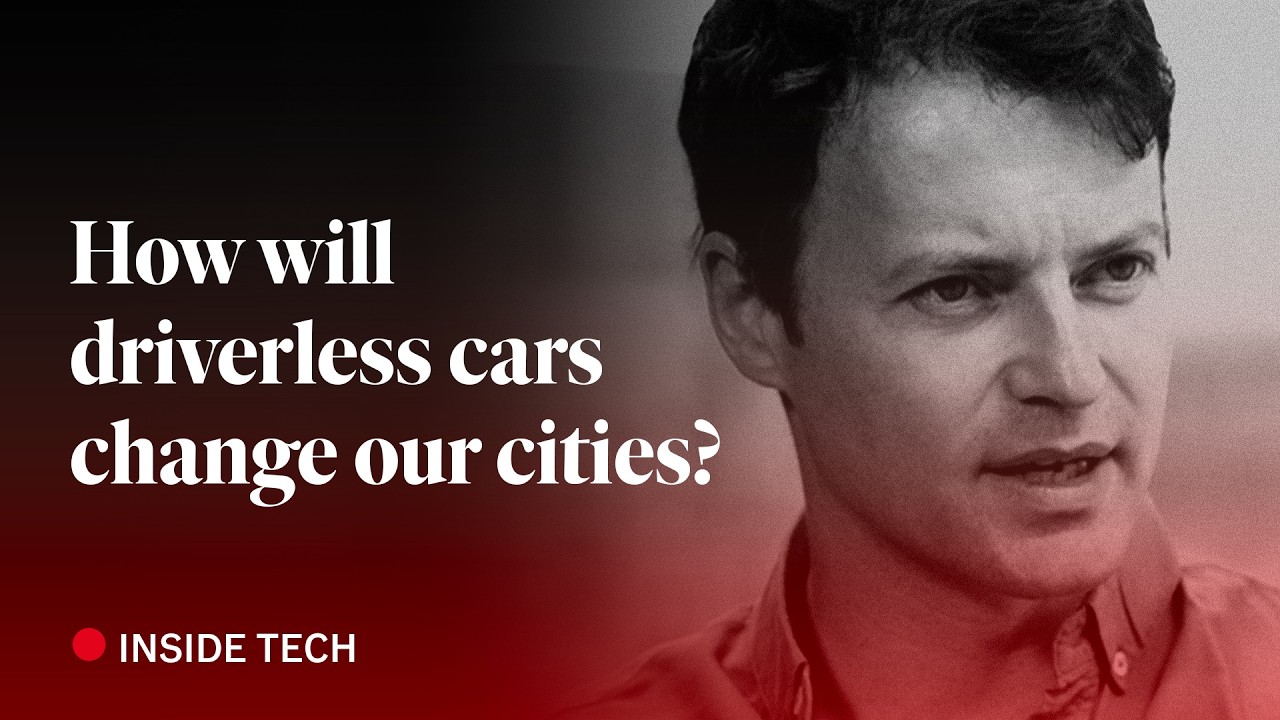
The Economist
Wayve chief Alex Kendall says peak-demand economics will force autonomous operators into hybrid fleets, preserving traditional automakers even as sub-$1-per-mile rides reclaim urban real estate.
AI-assisted summary of How will driverless cars change our cities? | The Economist — original source. Check the original for full context.
Source published:
Key ideas
- Automotive manufacturers will remain essential in an autonomous era because building vehicles at scale is an established industrial feat producing around 60 million passenger cars annually. (0:44)
- The most capital-efficient ride-hailing model will be a hybrid network, combining commercially owned robotaxis for consistent baseline demand with flexible human drivers to absorb peak surges without stranding capital. (0:44)
- Autonomous travel costs falling below $1 per mile will trigger massive urban demand surges and reshape dense metropolitan transport. (2:12)
- Autonomous systems will free up urban real estate—such as parking in London that covers ten times the area of Hyde Park—while eliminating speed bumps and traffic lights through predictive vehicle-to-vehicle communication. (3:42)
- Beyond passenger transit, physical AI will automate labor across freight, logistics, and manufacturing, impacting physical sectors that account for approximately 65% of global GDP. (3:42)
Detailed notes
## Background Published on YouTube by The Economist on August 13, 2026, as part of the 'Inside Tech' series, this video features AI writer Alex Hern interviewing Alex Kendall, CEO of British autonomous vehicle startup Wayve. The segment investigates whether human car ownership will disappear in favor of centralized robotaxi fleets and explores how autonomous vehicles could fundamentally reshape the architecture and daily life of cities.
## TL;DR Wayve CEO Alex Kendall rejects the notion of an outright winner between private car ownership and autonomous robotaxi fleets, arguing that both will persist alongside traditional automakers' immense manufacturing scale. To manage severe peak demand swings without holding depreciating idle assets, Kendall envisions hybrid networks that blend commercial robotaxis with flexible human-driven vehicles. As autonomous travel costs drop below $1 per mile, cities will transform dramatically: vast areas currently dedicated to parking can be converted into parks and housing, interior cabin layouts will be reimagined for work or leisure, and physical infrastructure like speed bumps and traffic lights can be phased out. Ultimately, Kendall frames autonomous driving as part of a broader wave of physical AI that will automate labor across material industries comprising 65% of global GDP.
## Atmosphere & style The conversation has a crisp, probing journalistic energy, sparked by Hern's direct challenges regarding commercial tensions and incremental tech rollouts. Kendall responds with measured, analytical poise, defusing false dichotomies using hard manufacturing numbers and fleet economics before pivoting into an expansive, forward-looking vision. The exchange feels grounded yet inspiring, steering clear of empty Silicon Valley hype to deliver a pragmatic, visually evocative blueprint of future urban life.
## Bulletin - [00:44](https://www.youtube.com/watch?v=7CNlGweeN90&t=44s) Automotive manufacturers will remain essential in an autonomous era because building vehicles at scale is an established industrial feat producing around 60 million passenger cars annually. - [00:44](https://www.youtube.com/watch?v=7CNlGweeN90&t=44s) The most capital-efficient ride-hailing model will be a hybrid network, combining commercially owned robotaxis for consistent baseline demand with flexible human drivers to absorb peak surges without stranding capital. - [02:12](https://www.youtube.com/watch?v=7CNlGweeN90&t=132s) Autonomous travel costs falling below $1 per mile will trigger massive urban demand surges and reshape dense metropolitan transport. - [03:42](https://www.youtube.com/watch?v=7CNlGweeN90&t=222s) Autonomous systems will free up urban real estate—such as parking in London that covers ten times the area of Hyde Park—while eliminating speed bumps and traffic lights through predictive vehicle-to-vehicle communication. - [03:42](https://www.youtube.com/watch?v=7CNlGweeN90&t=222s) Beyond passenger transit, physical AI will automate labor across freight, logistics, and manufacturing, impacting physical sectors that account for approximately 65% of global GDP.
## Key takeaways - [00:00](https://www.youtube.com/watch?v=7CNlGweeN90&t=0s) The tension between licensing autonomy to traditional automakers and supplying robotaxi fleets will resolve in both models coexisting rather than one eliminating the other. - [00:44](https://www.youtube.com/watch?v=7CNlGweeN90&t=44s) Automakers hold indispensable manufacturing expertise, producing around 60 million passenger vehicles each year worldwide. - [00:44](https://www.youtube.com/watch?v=7CNlGweeN90&t=44s) The global passenger car fleet exceeds one billion vehicles, dwarfing ride-hailing networks like Uber, which operates around 10 million drivers globally. - [00:44](https://www.youtube.com/watch?v=7CNlGweeN90&t=44s) Building an exclusively autonomous fleet sized for peak demand creates unsustainable financial inefficiencies due to idle, depreciating assets during off-peak hours. - [00:44](https://www.youtube.com/watch?v=7CNlGweeN90&t=44s) Hybrid dispatch models leverage the asset-light nature of human drivers to absorb demand peaks while keeping robotaxis running at high continuous utilization. - [02:12](https://www.youtube.com/watch?v=7CNlGweeN90&t=132s) Autonomous technology is expected to drive urban transit costs below $1 per mile, accelerating dense city adoption and reducing private car ownership. - [03:42](https://www.youtube.com/watch?v=7CNlGweeN90&t=222s) Removing human driving controls allows vehicle interiors to be reconfigured into mobile offices, face-to-face lounges, or sleeping compartments. - [03:42](https://www.youtube.com/watch?v=7CNlGweeN90&t=222s) Reliable compliance with speed limits by autonomous fleets removes the need for physical speed bumps, cutting vehicle wear and braking energy losses. - [03:42](https://www.youtube.com/watch?v=7CNlGweeN90&t=222s) Vehicle-to-vehicle communication can eventually render static traffic lights obsolete, reducing intersection congestion and engine idling. - [03:42](https://www.youtube.com/watch?v=7CNlGweeN90&t=222s) Urban land dedicated to parking, which in London spans ten times the size of Hyde Park, can be reclaimed for public parks and housing. - [03:42](https://www.youtube.com/watch?v=7CNlGweeN90&t=222s) Removing on-street vehicle parking boosts pedestrian safety and correlates with increased commercial retail turnover. - [03:42](https://www.youtube.com/watch?v=7CNlGweeN90&t=222s) Municipal transit will shift from large, fixed-schedule buses toward frequent, on-demand autonomous micro-transit shuttles. - [03:42](https://www.youtube.com/watch?v=7CNlGweeN90&t=222s) Physical AI has broad macroeconomic implications across physical industries, which represent approximately 65% of global GDP.
## Detailed walkthrough ### [00:00](https://www.youtube.com/watch?v=7CNlGweeN90&t=0s) Private Ownership vs. Centralized Robotaxis: Picking a Winner
Alex Hern opens the discussion by putting Wayve CEO Alex Kendall on the spot about an inherent commercial tension at the heart of his company. On one side, Wayve licenses its autonomous driving technology to traditional car manufacturers who firmly believe—and have built their businesses on the premise—that they will continue selling private vehicles to millions and billions of individuals over the next 50 to 100 years. On the other side, Wayve sells to robotaxi operators whose entire long-term vision rests on the total elimination of private car ownership in favor of sleek, centralized fleets of purpose-built autonomous vehicles.
Hern forces the dilemma, demanding that Kendall pick a winner between the two visions: will people still privately own vehicles once autonomous technology reaches maturity and steering wheels become obsolete, or are we heading toward a future where personal car ownership vanishes entirely and people simply press a button to summon a ride whenever they need one?
[00:44](https://www.youtube.com/watch?v=7CNlGweeN90&t=44s) Why Car Manufacturers and Hybrid Fleets Are Here to Stay
Kendall refuses to take the bait, declaring that the actual answer is "both." He explains that regardless of whether a vehicle is personally owned or part of a shared autonomous fleet, it still has to be engineered and manufactured. Building vehicles at scale is exceptionally difficult: the global automotive industry manufactures around 60 million passenger cars each year, a staggering manufacturing feat that established automakers have perfected over a century. Those manufacturers are not going anywhere because their industrial capacity and expertise remain indispensable.
```mermaid flowchart TD accTitle: Fleet Utilization and the Hybrid Dispatch Model accDescr: Diagram illustrating how hybrid networks combine commercially owned robotaxis with human-driven vehicles to manage peak demand. subgraph FleetDynamics["Ride-Hailing Fleet Demand"] Base["Base Demand<br/>(Consistent All Day)"] Peak["Peak Surges<br/>(Rush Hours & Events)"] end
subgraph Operations["Dispatch Network"] Robo["Commercially Owned Robotaxis<br/>(High utilization base load)"] Human["Human-Driven & Flex Vehicles<br/>(Asset-light peak absorption)"] end
Base --> Robo Peak --> Human Robo --> Eff["High Asset Efficiency<br/>No stranded capital"] Human --> Eff ```
Furthermore, Kendall points to the sheer disparity in numbers between personal vehicles and ride-hailing services. Today, Uber has roughly 10 million drivers globally, whereas the world's total passenger car fleet exceeds one billion vehicles. Even if ride-hailing were to explode by one or two orders of magnitude, a massive consumer car market would still endure. In the short to medium term, Kendall expects robotaxis to be deployed in commercially owned fleets, but he argues that the most efficient networks will actually be hybrid combinations of robotaxis and human-driven cars:
- **Handling demand spikes:** Ride-hailing is an intensely "peaky" business; building out an entirely robotic fleet large enough to satisfy peak demand would leave companies saddled with deeply underutilized, depreciating capital assets during the rest of the day. - **The Uber model advantage:** Human-driven platforms succeed because they are asset-light—drivers bring their own vehicles onto the network when demand and earnings surge, effortlessly smoothing out operational peaks.
[02:12](https://www.youtube.com/watch?v=7CNlGweeN90&t=132s) Reshaping the Urban Fabric: Beyond the Status Quo
Hern challenges this hybrid picture, arguing that it sounds too much like Waymo's current incremental impact—simply slotting Level 4 autonomy into existing traffic flows without really disrupting how cities look or operate. To Hern, it seems implausible that the fundamental fabric of society would stay the same if human drivers gradually disappeared from the streets. He presses Kendall on what everyday life would actually feel like in a neighborhood like North London once human driving drops away.
Kendall clarifies that he is not predicting the status quo will remain unchanged. He anticipates a major shift toward ride-hailing as autonomy drives the price of travel down below $1 per mile, which will trigger massive demand surges in dense urban centers like London. While private ownership will decline, the real transformation will come from unlocking new form factors, operational models, and architectural possibilities that reconfigure the vehicle and the city itself.
[03:42](https://www.youtube.com/watch?v=7CNlGweeN90&t=222s) Reclaiming Cities and Physical AI Across the Real Economy
Once human supervision is no longer required, Kendall expects the interior design of vehicles to undergo a complete reinvention. Designers can reconsider whether passengers should sit facing the direction of travel or face one another, turning cabin space into a roving infotainment studio, a mobile office meeting room, or a private sleeping compartment. Beyond the cabin, eliminating human error unlocks radical urban design efficiencies:
- **Speed bumps and wear:** Because autonomous systems reliably obey speed limits, physical speed bumps can be eliminated, dramatically cutting energy consumption lost to constant braking and acceleration while minimizing vehicle wear and tear. - **Intelligent traffic management:** Advanced vehicle-to-vehicle communication will eventually replace rigid traffic lights, ending inefficient intersection idling. - **Reclaiming parking real estate:** In London alone, parking lots consume an area equivalent to ten times the size of Hyde Park; driverless efficiency allows those spaces to be transformed into public green parks and housing. - **Vibrant retail corridors:** Studies demonstrate that stripping on-street parking from commercial streets increases retail turnover, making streets significantly more pedestrian-friendly, interactive, and safe for vulnerable road users. - **Micro-transit:** Mass transit can evolve away from large, infrequent buses toward smaller, highly frequent, on-demand autonomous shuttles.
Kendall concludes by zooming out beyond personal transport. Physical industries represent roughly 65% of global GDP, encompassing freight delivery, logistics, manufacturing, healthcare, and domestic labor. Just as generative AI is granting people enormous leverage in cognitive and knowledge work, physical AI will take over laborious tasks in the material world—giving society unprecedented leverage over time and "freeing up our time for what matters most."
## Notable quotes > [00:44](https://www.youtube.com/watch?v=7CNlGweeN90&t=44s) both — Alex Kendall
> [00:44](https://www.youtube.com/watch?v=7CNlGweeN90&t=44s) peaky — Alex Kendall
> [03:42](https://www.youtube.com/watch?v=7CNlGweeN90&t=222s) freeing up our time for what matters most. — Alex Kendall
## Mentioned Alex Hern, Alex Kendall, Wayve, The Economist, Inside Tech, Uber, Waymo, North London, London, Hyde Park
## Video description Driverless cars promise to do more than replace the person behind the wheel. If the technology works, it could reshape the look and feel of cities. On Inside Tech Alex Hern, The Economist’s AI writer, asks Alex Kendall, chief executive of Wayve, a British start-up, whether humans will still own cars in the future and what cities will look like if vehicles can drive themselves.
#AI #autonomouscars #tech
0:00 - Will we still own cars in the future? 0:44 - Why manufacturers aren’t going away 2:12 - How driverless cars will change cities 2:46 - AI in the physical world
Watch the full show: bit.ly/3S8y6pw Sign up to the Insider newsletter: https://econ.st/4nOyzIb
Subscribe to The Economist: https://www.economist.com/subscribe Download our app: https://www.economist.com/get-the-app
Follow The Economist on Instagram: https://www.instagram.com/theeconomist/ Follow The Economist on Facebook: https://www.facebook.com/TheEconomist Follow The Economist on X: https://x.com/TheEconomist
[Source](https://www.youtube.com/watch?v=7CNlGweeN90)