Taliban Emir Outmaneuvers Moderates to Cement Curbs on Afghan Women
The Economist
Supreme Leader Hibatullah Akhundzada maintains absolute control over Afghanistan by deploying a dedicated Kandahar security force to suppress internal Taliban dissent against his bans on female education and employment.
AI-assisted summary of What’s life like as a woman under the Taliban? | The Economist — original source. Check the original for full context.
Source published:
Key ideas
- Five years into Taliban rule, women and girls face sweeping repression, with secondary education barred and only an estimated 10% of girls receiving schooling through informal religious madrasas. (0:00)
- Supreme Leader Hibatullah Akhundzada governs via escalating unilateral decrees from Kandahar, including a measure effectively legalizing child marriage by defining a girl's silence as legal consent. (3:44)
- A deep internal divide exists between moderate Taliban officials in Kabul and Akhundzada's Kandahar faction, though the emir maintains dominance through a dedicated, IRGC-style military force. (5:27)
Detailed notes
## Background Published by The Economist on YouTube on August 14, 2026, this video features South Asia bureau chief Tom Sasse discussing his 1,000-kilometer road trip across Afghanistan alongside editor-in-chief Zanny Minton Beddoes and expert panelists. According to the description, the program examines life for women and girls five years into Taliban rule, highlighting bans on education beyond age 11–12, exclusion from public life, and the effective legalization of child marriage.
## TL;DR Five years after the Taliban's return to power, Afghan women and girls face an intensely repressive environment marked by strict dress codes, mass workplace purges, and bans on secondary education that leave only an estimated 10% accessing formal classes through private madrasas. Supreme Leader Hibatullah Akhundzada continues to govern from Kandahar through an escalating series of decrees—including provisions where a girl's silence constitutes consent for marriage—overriding widespread internal dissent among rank-and-file Talibs and Kabul administrators. Despite quiet opposition within the regime and heartbreak among ambitious young women, Akhundzada secures his absolute authority through an elite, loyal security force akin to Iran's IRGC, leaving little hope for near-term reform.
## Atmosphere & style The presentation carries an analytical, somber, and deeply unsettling tone, contrasting sober journalistic reporting with heart-wrenching firsthand accounts. It captures the palpable dread and quiet courage within clandestine Kabul classrooms, where articulate teenage girls reflect on their shattered ambitions of becoming doctors and lawyers. The emotional arc moves from the quiet despair of daily life under crushing decrees to a chilling structural explanation of how a reclusive cleric enforces absolute, unyielding control across the nation.
## Bulletin - [00:00](https://www.youtube.com/watch?v=foNQymBqnDA&t=0s) Five years into Taliban rule, women and girls face sweeping repression, with secondary education barred and only an estimated 10% of girls receiving schooling through informal religious madrasas. - [03:44](https://www.youtube.com/watch?v=foNQymBqnDA&t=224s) Supreme Leader Hibatullah Akhundzada governs via escalating unilateral decrees from Kandahar, including a measure effectively legalizing child marriage by defining a girl's silence as legal consent. - [05:27](https://www.youtube.com/watch?v=foNQymBqnDA&t=327s) A deep internal divide exists between moderate Taliban officials in Kabul and Akhundzada's Kandahar faction, though the emir maintains dominance through a dedicated, IRGC-style military force.
## Key takeaways - [00:00](https://www.youtube.com/watch?v=foNQymBqnDA&t=0s) Women in Afghanistan are required to obscure their faces in public, often resorting to surgical masks alongside traditional niqabs to meet modesty mandates. - [00:00](https://www.youtube.com/watch?v=foNQymBqnDA&t=0s) Women have been systematically purged from higher education and public life, with female university faculty removed and private-sector employment growing precarious. - [00:00](https://www.youtube.com/watch?v=foNQymBqnDA&t=0s) The nationwide ban on girls' secondary education remains deeply unpopular across Afghan society, leaving approximately 90% of adolescent girls without schooling. - [01:31](https://www.youtube.com/watch?v=foNQymBqnDA&t=91s) Internal reporting indicates that a majority of rank-and-file Talibs privately oppose the ban on girls' education but lack the power to challenge the emir's authority. - [02:27](https://www.youtube.com/watch?v=foNQymBqnDA&t=147s) Private religious madrasas have become the only available avenue for secondary learning, though tuition costs exclude the majority of families. - [02:27](https://www.youtube.com/watch?v=foNQymBqnDA&t=147s) Students in clandestine institutions express intense despair, recognizing that their credentials will likely not lead to professional employment as doctors or lawyers. - [03:44](https://www.youtube.com/watch?v=foNQymBqnDA&t=224s) Emir Hibatullah Akhundzada rules through a ratchet of hardline decrees that progressively strip female autonomy rather than through standard legislative procedures. - [03:44](https://www.youtube.com/watch?v=foNQymBqnDA&t=224s) A recent decree effectively legalizes child marriage by codifying the principle that a girl's silence constitutes legal consent. - [04:35](https://www.youtube.com/watch?v=foNQymBqnDA&t=275s) True executive power resides in Kandahar rather than the ministries in Kabul, with Akhundzada operating as a reclusive cleric who avoids public appearances. - [05:27](https://www.youtube.com/watch?v=foNQymBqnDA&t=327s) Akhundzada has created a specialized, well-compensated military force with shared Kandahari ties, operating similarly to Iran's Islamic Revolutionary Guard Corps to secure his power. - [05:27](https://www.youtube.com/watch?v=foNQymBqnDA&t=327s) Over five years of internal debate, Akhundzada has defeated internal Taliban dissenters by exiling or intimidating vocal critics into silence.
## Detailed walkthrough ### [00:00](https://www.youtube.com/watch?v=foNQymBqnDA&t=0s) The Everyday Restrictions on Afghan Women and Girls
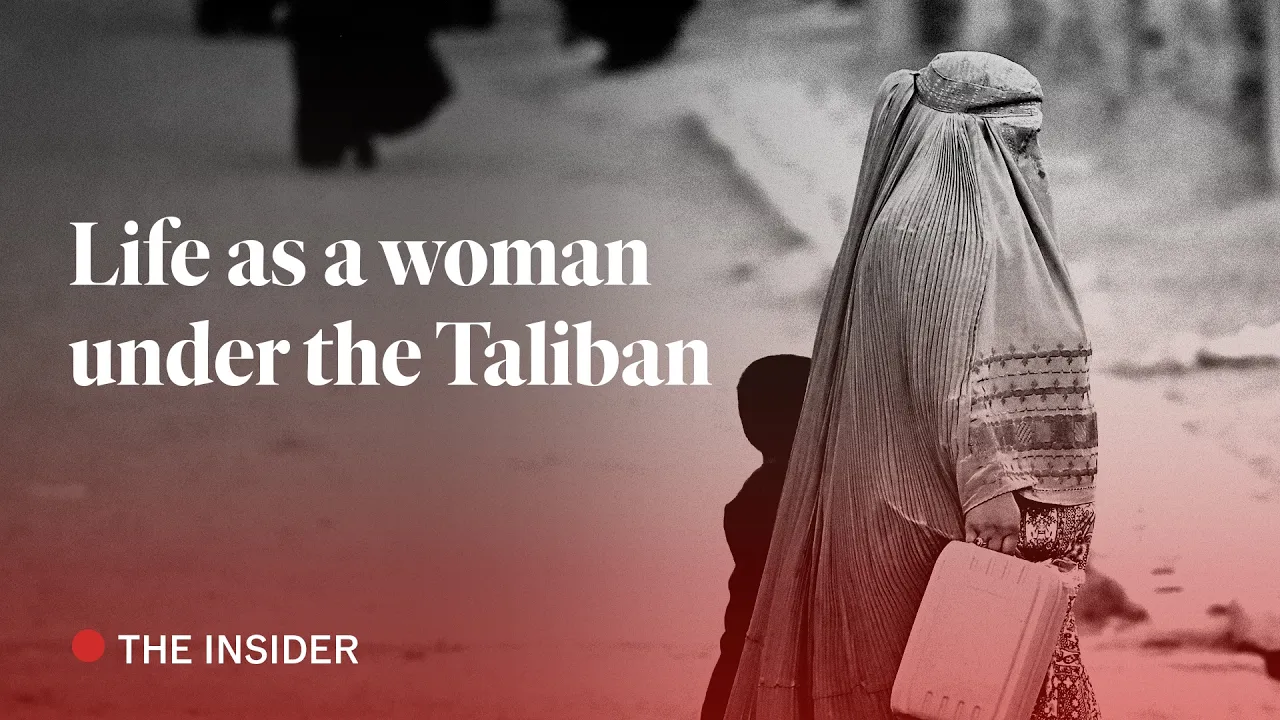
Life for women in Afghanistan under the Taliban has become an intensely restrictive reality. On public streets, the shift is stark and visible: women are required to dress in deeply conservative attire with their faces obscured. While some wear a traditional niqab, many have adopted COVID-style surgical masks as a practical means of complying with the regime's modesty mandates. Women have also been systematically pushed out of public life, higher education, and the formal workforce. One university professor recounted that his entire department had been systematically cleared of female colleagues. While some women still manage to work discreetly within the private sector, doing so has grown increasingly precarious and difficult.
The ban on girls attending public secondary schools remains the most controversial and widely felt restriction within Afghan society. The policy is deeply unpopular across the population. Because transparent administrative data does not exist, obtaining verifiable figures is difficult, but estimates from people on the ground suggest that only about 10% of Afghan girls are currently receiving any formal secondary education. That small minority relies on an informal, privately run network of religious madrasas. For the vast majority of women and girls, the atmosphere is utterly bleak, leaving them with little optimism for the future.
[01:31](https://www.youtube.com/watch?v=foNQymBqnDA&t=91s) Internal Fractures and Inside a Clandestine Kabul Madrasa
The hardline stance on female education is not universally celebrated within the Taliban itself. While Supreme Leader Hibatullah Akhundzada and his ultra-conservative Kandahar faction are intent on shuttering women and girls out of public life, other factions within the movement privately favor reopening schools. Based on accounts gathered on the ground, a majority of rank-and-file Talibs actually oppose the emir’s school ban, yet they find themselves powerless to overturn his orders, leaving private madrasas as an imperfect, underground workaround.
Visiting one such girls' madrasa in Kabul revealed the palpable fear and courage surrounding female education. Staff and students were intensely anxious about the presence of a foreign journalist, requiring strict anonymity to safeguard the site:
- **Secretive operation:** Staff operated under extreme tension to avoid drawing scrutiny or closure by Taliban authorities. - **Economic barriers:** Students expressed gratitude for their classes, but lamented that most of their friends could not afford tuition, while acknowledging that their hard-won credentials might never lead to recognized employment. - **Unexpected fluency:** The students, aged around 16 and 17, immediately dispelled the need for an interpreter by conversing in articulate, fluent English. - **Shattered ambitions:** Several teenagers spoke openly about their lost dreams of becoming doctors and lawyers. One student recalled how her parents kept assuring her that by the time she finished her studies, conditions would improve; she concluded despairingly, "I don't think everything will be okay. I don't have any hope for the future."
[03:44](https://www.youtube.com/watch?v=foNQymBqnDA&t=224s) The Ratchet of Decrees and De Facto Child Marriage
Rather than ruling through standard legislative processes, Emir Hibatullah Akhundzada governs through an escalating sequence of hardline decrees that function like a ratchet, progressively stripping away female autonomy:
```mermaid flowchart LR accTitle: The Ratchet Mechanism of Taliban Decrees accDescr: Diagram illustrating how supreme decrees issued from Kandahar strip female freedoms and leave moderates powerless. subgraph Kandahar["Kandahar (The Emir)"] A["Hibatullah's Hardline Decrees"] end subgraph Restrictions["Societal Impact"] B["Secondary Education Ban"] C["Purging of Workplaces"] D["Child Marriage Law<br/>('Silence is Consent')"] end subgraph Reaction["Response"] E["Western Outrage"] F["Moderate Talibs Silenced"] end A --> B A --> C A --> D D --> E D --> F ```
Among the most damaging recent measures is a decree effectively legalizing child marriage. The law establishes the deeply troubling principle that a girl's silence constitutes legal consent to marriage. While each decree ignites predictable international outrage in the West, moderate elements within the Taliban administration feel entirely incapable of arresting this continuous erosion of rights.
[04:35](https://www.youtube.com/watch?v=foNQymBqnDA&t=275s) The Reclusive Emir in Kandahar
The concentration of executive power in Afghanistan is centered not in the formal ministries of Kabul, but in the southern stronghold of Kandahar. Hibatullah Akhundzada operates as an elusive, reclusive figure who stays confined within a network of heavily secured compounds. He never visits Kabul, rarely appears before the broader public, and has virtually no authenticated recent photographs in circulation.
Unlike previous Taliban leaders who established credibility on the battlefield or moved among tribal communities, Akhundzada is purely a religious cleric. His directives supersede the administrative apparatus in Kabul because he maintains sufficient backing from hardline factions to enforce unquestioning compliance. His detachment from daily life in Afghanistan leaves him isolated from the realities of the country he nominally heads, yet his word remains absolute law.
[05:27](https://www.youtube.com/watch?v=foNQymBqnDA&t=327s) The Kabul-Kandahar Rift and the Five-Year Horizon
The deepening rift between the administrative leadership in Kabul and the ideological circle in Kandahar represents the central fault line in Afghan politics over the coming five years. Despite widespread private dissatisfaction among senior officials, Akhundzada has consistently outmaneuvered internal dissent through several specific mechanisms:
- **Dedicated security apparatus:** Akhundzada has formed a specialized, well-compensated military force recruited largely from Kandahar, bound to him through shared ethnic and social ties, functioning much like Iran's Islamic Revolutionary Guard Corps (IRGC). - **Suppression of debate:** Across five years of continuous internal debate regarding girls' education, the emir has triumphed in every confrontation, either forcing vocal internal critics into exile or silencing them into compliance. - **Sustainability doubts:** While widespread resentment persists across Afghan society and within the ranks of the Taliban itself, Akhundzada's monopolization of armed force and religious authority leaves him firmly in command of Afghanistan's immediate future.
## Notable quotes > It’s been five years since Taliban rule descended on Afghanistan.
> The regime is one of the world’s most repressive for women and girls: girls are barred from education beyond the age of 11-12; women are banned from most jobs and public life, and the Taliban have passed a law which has, in effect, legalized child marriage.
> [00:00](https://www.youtube.com/watch?v=foNQymBqnDA&t=0s) What’s life like as a woman under the Taliban?
> [01:31](https://www.youtube.com/watch?v=foNQymBqnDA&t=91s) The secret Taliban divide about women’s rights
> [02:27](https://www.youtube.com/watch?v=foNQymBqnDA&t=147s) What Tom heard on his visit to a madrassa
> [02:27](https://www.youtube.com/watch?v=foNQymBqnDA&t=147s) I don't think everything will be okay. I don't have any hope for the future. — Afghan student
> [03:44](https://www.youtube.com/watch?v=foNQymBqnDA&t=224s) The new laws making life worse for women in Afghanistan
> [04:35](https://www.youtube.com/watch?v=foNQymBqnDA&t=275s) Who is Hibatullah Akhundzada and how strong is his grip on power?
> [05:27](https://www.youtube.com/watch?v=foNQymBqnDA&t=327s) When will things get better for Afghan women and girls?
## Mentioned The Economist, Taliban, Afghanistan, Tom Sasse, Zanny Minton Beddoes, Hibatullah Akhundzada, Kabul, Kandahar, Islamic Revolutionary Guard Corps (IRGC)
## Video description It’s been five years since Taliban rule descended on Afghanistan. The regime is one of the world’s most repressive for women and girls: girls are barred from education beyond the age of 11-12; women are banned from most jobs and public life, and the Taliban have passed a law which has, in effect, legalized child marriage.
Tom Sasse, The Economist’s South Asia bureau chief, has just returned from a 1,000km road trip inside Afghanistan. He joins Zanny Minton Beddoes, editor-in-chief, and a panel of expert journalists to discuss what the country is like today and whether there’s any hope that life for women and girls will improve any time soon.
#afghanistan #taliban
00:00 - What’s life like as a woman under the Taliban? 01:31 - The secret Taliban divide about women’s rights 02:27 - What Tom heard on his visit to a madrassa 03:44 - The new laws making life worse for women in Afghanistan 04:35 - Who is Hibatullah Akhundzada and how strong is his grip on power? 05:27 - When will things get better for Afghan women and girls?
Watch the full show: http://bit.ly/4wtFom8 Sign up to the Insider newsletter: https://econ.st/4nOyzIb
Subscribe to The Economist: https://www.economist.com/subscribe Download our app: https://www.economist.com/get-the-app
Follow The Economist on Instagram: https://www.instagram.com/theeconomist/ Follow The Economist on Facebook: https://www.facebook.com/TheEconomist Follow The Economist on X: https://x.com/TheEconomist
[Source](https://www.youtube.com/watch?v=foNQymBqnDA)