Bessent Buys Yen to Shield US Treasuries From Carry-Trade Unwind
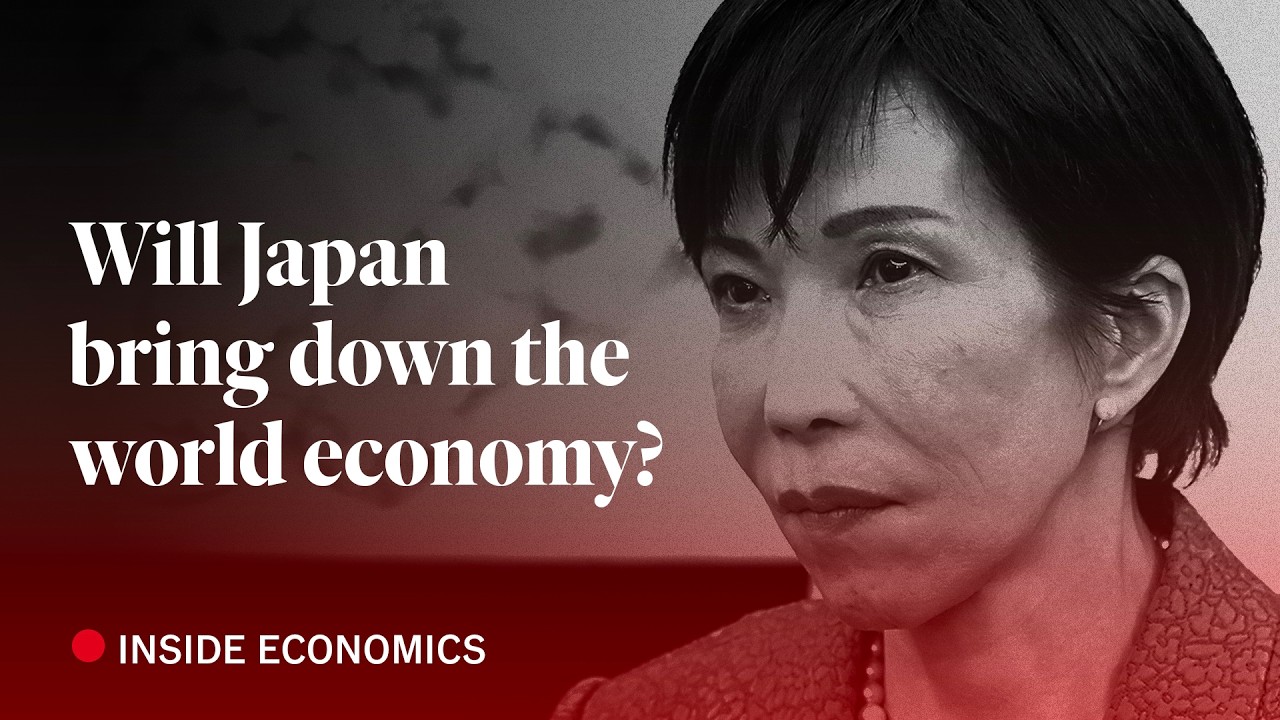
The Economist
Rising Japanese interest rates threaten to force liquidations across US Treasuries and tech stocks, but Tokyo's vast foreign reserves and coordinated US intervention make a systemic crash unlikely.
AI-assisted summary of Will Japan bring down the world economy? | The Economist — original source. Check the original for full context.
Source published:
Key ideas
- For the first time in nearly three decades, the United States joined Japan in coordinated currency intervention to defend the Japanese yen. (0:00)
- US Treasury Secretary Scott Bessent intervened by purchasing 5 to 10 billion yen using euros rather than US dollars, theatrically disclosing the plan via a handwritten notepad. (0:00)
- The Bank of Japan has raised benchmark rates to around 1%, with market consensus projecting further hikes to 1.25%–1.5% as inflation remains above 2% for roughly four years. (3:19)
- As the largest foreign holder of US Treasuries, an abrupt Japanese repatriation of capital threatens to spike American borrowing costs and destabilize global asset valuations. (4:53)
Detailed notes
## Background Published on YouTube by The Economist on August 19, 2026, this video examines the global economic risks stemming from Japan's severely weakened currency and its massive foreign asset holdings. Following an unprecedented joint currency intervention by the United States and Japan, editors Henry Curr, Josh Roberts, and Ethan Wu explore whether the unwinding of decades of ultra-low Japanese interest rates could trigger an international financial crisis.
## TL;DR After US Treasury Secretary Scott Bessent executed an unusual joint intervention to prop up the historically weak yen, the panel analyzes the systemic dangers of Japan's shifting monetary environment. For decades, rock-bottom domestic interest rates made the yen the premier funding vehicle for the global carry trade, channeling capital into US Treasuries, American tech equities, and Asian markets. However, rising domestic inflation and rate hikes from the Bank of Japan threaten to force a massive, disorderly unwinding of these leveraged positions. While cross-border deleveraging could shock stretched asset valuations and elevate US borrowing costs, the experts conclude that substantial foreign reserves and bilateral policy tools may keep the transition manageable if managed gradually.
## Atmosphere & style The discussion carries the polished, intellectually incisive atmosphere typical of The Economist, pairing rigorous macroeconomic analysis with dry, urbane wit. The dynamic among Henry Curr, Josh Roberts, and Ethan Wu resembles an engaging editorial boardroom debate, where technical breakdowns of financial plumbing are punctuated by sharp observations about political theatricality. Instead of leaning into alarmism, the conversation maintains a measured, pragmatic tension, weighing genuine structural vulnerabilities against the competence of modern central bankers.
## Bulletin - [00:00](https://www.youtube.com/watch?v=QBorPsQpEzU&t=0s) For the first time in nearly three decades, the United States joined Japan in coordinated currency intervention to defend the Japanese yen. - [00:00](https://www.youtube.com/watch?v=QBorPsQpEzU&t=0s) US Treasury Secretary Scott Bessent intervened by purchasing 5 to 10 billion yen using euros rather than US dollars, theatrically disclosing the plan via a handwritten notepad. - [03:19](https://www.youtube.com/watch?v=QBorPsQpEzU&t=199s) The Bank of Japan has raised benchmark rates to around 1%, with market consensus projecting further hikes to 1.25%–1.5% as inflation remains above 2% for roughly four years. - [04:53](https://www.youtube.com/watch?v=QBorPsQpEzU&t=293s) As the largest foreign holder of US Treasuries, an abrupt Japanese repatriation of capital threatens to spike American borrowing costs and destabilize global asset valuations.
## Key takeaways - [00:00](https://www.youtube.com/watch?v=QBorPsQpEzU&t=0s) The United States executed an unprecedented joint currency intervention with Japan to halt the yen's slide to four-decade lows. - [00:00](https://www.youtube.com/watch?v=QBorPsQpEzU&t=0s) US Treasury Secretary Scott Bessent purchased yen using euros, intentionally publicizing the move through a visible handwritten note at a cabinet meeting. - [01:24](https://www.youtube.com/watch?v=QBorPsQpEzU&t=84s) The joint intervention followed a unilateral $73 billion currency intervention by Tokyo in May alongside persistent official jawboning. - [01:24](https://www.youtube.com/watch?v=QBorPsQpEzU&t=84s) A weak yen has shifted from an export advantage to a major political and economic liability, driving up domestic import costs, consumer inflation, and overtourism friction. - [01:24](https://www.youtube.com/watch?v=QBorPsQpEzU&t=84s) Prime Minister Sanae Takaichi, historically a monetary dove, moderated her opposition to interest rate hikes as the currency slump escalated into a political emergency. - [03:19](https://www.youtube.com/watch?v=QBorPsQpEzU&t=199s) According to The Economist's Big Mac index, the yen remains one of the world's most undervalued currencies due to decades of near-zero and negative interest rates. - [03:19](https://www.youtube.com/watch?v=QBorPsQpEzU&t=199s) Ultra-low Japanese interest rates established the yen as the global financial system's primary funding currency for the multi-trillion-dollar carry trade. - [03:19](https://www.youtube.com/watch?v=QBorPsQpEzU&t=199s) Sustained Japanese inflation above 2% has prompted the Bank of Japan to raise policy rates to around 1%, threatening the viability of carry trade spreads. - [04:53](https://www.youtube.com/watch?v=QBorPsQpEzU&t=293s) Japan acts as the largest foreign creditor to the US, meaning forced liquidation of US Treasuries to repatriate cash would directly inflate American borrowing costs. - [04:53](https://www.youtube.com/watch?v=QBorPsQpEzU&t=293s) Decades of cheap yen financing have acted as the 'world's ATM', spilling into US technology equities, broader Asian markets, and global risk assets. - [06:04](https://www.youtube.com/watch?v=QBorPsQpEzU&t=364s) Elevated US equity valuations and fractured cross-border capital flows exacerbate the systemic risk of an abrupt, uncoordinated yen carry trade unwind. - [06:04](https://www.youtube.com/watch?v=QBorPsQpEzU&t=364s) Japan's massive foreign exchange reserves and vast cross-border assets provide substantial ammunition to cushion against a disorderly systemic collapse. - [06:04](https://www.youtube.com/watch?v=QBorPsQpEzU&t=364s) The market tremor of August 2024 demonstrated that while carry trade adjustments spark sharp volatility, core market plumbing remains resilient under coordinated intervention.
## Detailed walkthrough ### [00:00](https://www.youtube.com/watch?v=QBorPsQpEzU&t=0s) Scott Bessent’s Plan to Buy Billions of Yen
Henry Curr opens the discussion by focusing on Japan's outsized influence on the global financial architecture and the recent, unprecedented joint intervention in currency markets. For the first time in roughly three decades, the United States joined Japan in actively defending the Japanese currency. Josh Roberts explains that US Treasury Secretary Scott Bessent intervened aggressively by purchasing substantial amounts of yen to halt its ongoing slide.
Roberts highlights two unusual aspects of this intervention. First, Bessent executed the purchases using euros rather than US dollars. Second, the disclosure was handled with what Roberts jokingly calls "high camp theatricality." The public learned the scale of the operation because Bessent allowed a photographer at a cabinet meeting to snap a picture of his handwritten notepad. The note contained a single line item: *"To do: Buy Japanese yen (JPY) 5 to 10 billion."* As Roberts remarks, the moment was so calculated and performative that "you couldn't get more theatrical unless you kind of paid Patti LuPone to kind of belt it from the rooftops."
[01:24](https://www.youtube.com/watch?v=QBorPsQpEzU&t=84s) Why Does US Intervention Matter?
Ethan Wu emphasizes that the US intervention represents a dramatic escalation of defense efforts that Japan had already been conducting largely on its own. The joint move followed a massive $73 billion unilateral intervention executed by Tokyo in May, alongside persistent attempts by Japanese finance officials to jawbone markets into stabilizing the exchange rate.
Wu points out that the domestic economic calculus around a weak currency has reversed fundamentally. Historically, a weak yen was celebrated in Tokyo because it enhanced export competitiveness for major Japanese multinationals. Today, it has become an acute political and economic liability. A slumping currency inflates import costs, pinches ordinary household consumption, fuels domestic inflation above the Bank of Japan's 2% target, and spurs severe backlash over "overtourism." Even Sanae Takaichi, the Prime Minister of Japan and a longtime monetary dove who once dismissed interest rate hikes as "stupid," has had to moderate her tone as the currency slide deteriorated into a political emergency. For the United States and the broader world, stability matters because Japan's financial plumbing is deeply interwoven with global capital, most notably through the US Treasury market.
[03:19](https://www.youtube.com/watch?v=QBorPsQpEzU&t=199s) Why the Yen Is Weak and the Mechanics of the Carry Trade
Curr notes that according to *The Economist*'s Big Mac index, the yen stands as one of the most undervalued currencies in the world, trading far below levels implied by fundamental purchasing power. This persistent undervaluation stems from decades of rock-bottom domestic interest rates. Facing protracted deflation and sluggish growth, the Bank of Japan anchored interest rates near zero or in negative territory (-0.1%), turning the currency into the premier funding vehicle for global capital.
```mermaid flowchart LR accTitle: The Yen Carry Trade Mechanism accDescr: Flow diagram showing how investors borrow cheap yen to invest in higher-yielding overseas assets.
subgraph Funding["1. Funding Source"] BOJ["Bank of Japan<br/>(Historical: -0.1% / Current: ~1%)"] Borrow["Borrow cheap Japanese Yen"] BOJ --> Borrow end
subgraph Allocation["2. Global Reallocation"] Invest["Invest in High-Yield Assets Overseas"] Borrow -->|"Convert & Deploy"| Invest end
subgraph Targets["3. Target Assets"] UST["US Treasuries"] Tech["US Tech Equities"] Asian["Global & Asian Equities"] Invest --> UST Invest --> Tech Invest --> Asian end ```
Investors borrow cheaply in yen to finance investments in higher-yielding assets abroad, pocketing the spread in a maneuver known as the yen carry trade. However, that dynamic is shifting rapidly: - Japanese headline inflation has now remained above 2% for approximately four years. - The Bank of Japan has exited negative rates, pushing the policy benchmark to around 1%. - Market consensus anticipates further rate hikes toward 1.25% to 1.5% later in the year. - As domestic borrowing costs rise, the economic foundation of this multi-trillion-dollar carry trade threatens to unravel.
[04:53](https://www.youtube.com/watch?v=QBorPsQpEzU&t=293s) Why America Should Be Worried About Japan
Josh Roberts explains why US officials, including Scott Bessent, have legitimate reason to intervene. Japan is the single largest foreign creditor to the United States and the biggest overseas holder of US Treasuries. If Japanese investors or institutions are forced to liquidate Treasury holdings to repatriate cash, US yields would spike, directly inflating American borrowing costs.
Beyond Treasuries, market participants have long treated Japan as the "world's ATM." Cheap yen credit has not only financed sovereign bond purchases, but has also poured into Japanese equities, broader Asian markets, and high-flying US tech stocks. If rate hikes raise the cost of servicing yen-denominated debt, forced deleveraging could trigger broad, correlated sell-offs across major global asset classes.
[06:04](https://www.youtube.com/watch?v=QBorPsQpEzU&t=364s) Will Japan Bring Down the Global Financial System?
Turning to the central question—whether Japan could trigger a global financial crash—Roberts acknowledges that without an orderly, gradual unwinding, the risks are substantial. The global financial system already suffers from severe structural vulnerabilities: - Stretched equity valuations, particularly in US tech stocks, leave markets exposed to deep drawdowns, sitting at valuations far higher than during the market tremor two summers earlier (referencing the market volatility of August 2024). - Cross-border capital flows are already fragmenting inward along geopolitical fault lines, which could accelerate unpredictably if a funding shock occurs. - The optimistic path involves a slow, quiet reduction of Japan's consolidated overseas balance sheet positions across successive mild episodes until the systemic leverage dissipates.
Wu offers a more counterbalancing, reassuring perspective. He argues that while the scale of the position is intimidating, modern authorities possess powerful tools to combat crises: - The Japanese government maintains an enormous stock of foreign exchange reserves and vast cross-border asset holdings that can be monetized or redeployed to cushion the currency. - When carry trades suffered an abrupt tremor in August 2024, significant market volatility ensued, but core market plumbing did not break, proving it was a manageable stress test rather than a repeat of the 2008 Global Financial Crisis or the pandemic crash. - Coordinated support between Tokyo and Washington provides a strong backstop.
Wu tempers his optimism with a historical caveat: while people in the late 1980s were similarly complacent before Japan's massive asset bubble burst, sovereign authorities still retain deep competence in firefighting acute panics, "even if they're not always good at making good decisions when things aren't in crisis."
## Notable quotes > [00:00](https://www.youtube.com/watch?v=QBorPsQpEzU&t=0s) To do: Buy Japanese yen (JPY) 5 to 10 billion. — Scott Bessent
> [00:00](https://www.youtube.com/watch?v=QBorPsQpEzU&t=0s) you couldn't get more theatrical unless you kind of paid Patti LuPone to kind of belt it from the rooftops. — Josh Roberts
> [01:24](https://www.youtube.com/watch?v=QBorPsQpEzU&t=84s) stupid — Sanae Takaichi
> [04:53](https://www.youtube.com/watch?v=QBorPsQpEzU&t=293s) world's ATM — Josh Roberts
> [06:04](https://www.youtube.com/watch?v=QBorPsQpEzU&t=364s) even if they're not always good at making good decisions when things aren't in crisis. — Ethan Wu
## Mentioned Henry Curr, Josh Roberts, Ethan Wu, Scott Bessent, Sanae Takaichi, Patti LuPone, Bank of Japan, US Treasury, The Economist, Big Mac index
## Video description Japan’s yen recently hit its lowest level in four decades. America swooped in to help stabilise the currency, but the intervention brought only a temporary reprieve.
Japan’s vast hoard of financial assets means that problems in its economy can reverberate across the globe. Could Japan trigger a global financial crisis? Henry Curr, Josh Roberts and Ethan Wu, three of The Economist’s economics and markets experts, will consider what Japan’s predicament means for the world.
#japan #markets #finance #usa #economy
00:00 - Scott Bessent’s plan to buy billions of yen 01:24 - Why does US intervention matter? 03:19 - Why is the yen so weak? 03:56 - The yen carry trade, explained 04:53 - Why America should be worried about Japan 06:04 - Will Japan bring down the global financial system?
Watch the full show: http://bit.ly/45xaNci Sign up to the Insider newsletter: https://econ.st/4nOyzIb Subscribe to The Economist: https://www.economist.com/subscribe Download our app: https://www.economist.com/get-the-app
Follow The Economist on Instagram: https://www.instagram.com/theeconomist/ Follow The Economist on Facebook: https://www.facebook.com/TheEconomist Follow The Economist on X: https://x.com/TheEconomist
[Source](https://www.youtube.com/watch?v=QBorPsQpEzU)